Monthly
Pacific Islands Monthly
fďf
• Boom time on Norfolk Island • Chaos in West Irian
March, 1967
30 Aust. cents • Three shillings • 70 US cents • 50 French Pac. frcs.
Registered at G.P.O., Sydney, for transmission by post as a newspaper.
Kingston, Norfolk Island
OUR COVER: With its browsing c«: long-abandoned convict ruins and son lent atmosphere, it is hard to imagine ■ this scene is only a stone's throw f the centre of Kingston, the "administri' capital" of Norfolk Island and t landing place. Norfolk also has a 'V mercial capital"—Burnt Pine—hub ot< present brisk prosperity (see p. 1« Photo: Courtesy, Dept, of Territoriesa
Advertisements & other items, pp. 2-8 (6 items)
March, 1967 Pacific Islands Month!
M Taa
.A 2367 67
There may be fairies
the hattam af ye
But you’ll have to look. Papua/New Guinea is a jungle-garden, full of twists and surprises and contrasts of time. TAA’s Ann Travaire, Australia’s leading women’s travel adviser has planned a most comprehensive and relaxing tour of the Territory.
With specially trained tour hostesses and the luxury of TAA air travel added to the arrangements.
Off the beaten track you’ll go. By launch along the coast. Take in a cocoa plantation. A scenic flight to Madang. Another launch trip. Native children singing, send you on your way in your TAA aircraft to Mt. Hagen. By coach into primitive parts of the land, where you’ll see some of the most primitive people of the world.
Market day. A native ‘Sing Sing’. A flight to Goroka. Then to Lae. Bulolo and the pine mills. And back to Port Moresby.
So this is the land the twentieth century nearly forgot. You won’t.
For details of Ann Travaire’s regular tours of the Territory, contact your nearest Travel Agent or TAA.
m TAA
' P way
holidays
mm VB Ml us
FAM
OR $1 *%
Victoria
Bitter
Drink a beer that’s really beer Victoria Bitter. Enjoy its clean, keen, cold taste. Linger over its full-bodied sparkle and get a lift that makes you glad you’re thirsty. Victoria Bitter is a man’s drink which refreshes like nothing else can. Try it. You’ll understand, at once, why Australians and people the world over who know good beer drink “Vic”.
BREWED BY THE FAMOUS CARLTON & UNITED BREWERIES LTD., MELBOURNE.
ITS AUSTRALIA'S
INDEED THE WORLDS BEST BEER.
C.B 437-48
Marmie says:
Young lions roar
for Marmite,
the appetite builder
Finicky eaters soon become hearty eaters when you give them Marmite. On toast. As a hot drink. Blended into your cooking. Marmite is an excellent source of Vitamin B, helps to build vitality while it sharpens their appetites. It’s the little extra something Marmite has.
HEALTH FOODS
THE WONDERFUL FAMILY OF
0
SANITARIUM
FT; ITT! ; i.
*r: '■'l M 3.6
BURNS PHILP (SOUTH SEA) CO. LTD.
GENERAL MERCHANTS AND SHIPOWNERS
SHIPPING, CUSTOMS AND FORWARDING AGENTS
Fiji:
SUVA.
LEVUKA.
LAUTOKA.
LABASA.
SAVU SAVU.
BA.
SIGATOKA.
TAVUA.
ROTUMA ISLAND.
TAVEUNI.
BRANCHES
Samoa:
APIA.
PAGO PAGO.
Tonga:
NUKUALOFA.
HAAPAI.
VAVAU.
NORFOLK ISLAND
NIUE ISLAND.
AGENTS FOR:
QUEENSLAND INSURANCE CO. LTD.
BURNS PHILP TRUST CO. LTD.
SHELL COMPANY (P. 1.) LTD.
OVERSEAS AGENTS
BURNS, PHILP Cr CO. LTD., Sydney.
BURNS, PHILP Cr CO. LTD., London.
BURNS PHILP CO. OF SAN FRANCISCO
SHIPPING AGENCIES
• The New Zealand Shipping Co. Ltd. • Shaw Saviil & Albion Co. Ltd. • Port Line Ltd. • Bank Line Ltd. • General Steamship Corporation Ltd. • Blue Star Line • Cunard Line • Compagnle des Messageries Maritimes • British India Steam Navigation Co. Ltd. • Royal Interocean Lines • Nederland Line Royal Dutch Mail/Royal Rotterdam Lloyd.
EXCLUSIVE DISTRIBUTORSHIPS INCLUDE
• AKAI TAPERECORDERS
• DUNLOP PRODUCTS
• EPIGLASS PRODUCTS
• FERGUSON TRACTORS
• HELENA RUBENSTEIN
• HITACHI ELECTRONICS
• HOLDEN VEHICLES
• JOHNSON'S WAXES
• ROLEX WATCHES
• REVLON COSMETICS
• PENTAX CAMERAS
• SUNBEAM APPLIANCES
INTERNATIONAL AIR TRANSPORT ASSOCIATION REPRESENTATIVES for
QANTAS EMPIRE AIRWAYS LTD. :: AIR NEW ZEALAND UNION DE TRANSPORTS AERIENS :: ALITALIA PAN AMERICAN AIRWAYS
ASSOCIATED COMPANIES
BURNS PHILP (NEW HEBRIDES) LTD.
AUTOMOTIVE SUPPLIES CO. LTD.
CORRIE & CO. LTD. • NARAIN FURNITURE CO. LTD
SPECIALISED SERVICES
EXPERT ADVICE ON WORLD AND LOCAL TOURS
TRAVEL SHIPPING FORWARDING CUSTOMS
FORMALITIES INSURANCE.
REGISTERED OFFICE: SUVA, FIJI
Code Address; "BURNSOUTH"
FOR
IMPROVED
COFFEE
CROPS
High coffee yields depend on correc supplies of nutrients to the plant, am Complete Fertilizer RUSTICAIS-15-1! is especially recommended to ensun fruitful trees on potash-rich soils. I provides simultaneously nitrogen phosphoric acid, potash and importarr trace elements. RUSTICAIS-15-15 pro motes uniform fruit growth and ripen ing, thus improving quality. RUSTICA 15-15-15 is climate-proof packed, easil; stored and spread, and its highly con centrated nutrients make it economics in transport, storage, and spreading
RUSTICA
i
RUSTICA MEANS MORE PROFIT
For supplies of fertilizers manufactured by RUH R-STICKSTOFF AG, Bochum, West Germany, an r for information, write to: Theo Thomas & Co. Pty. Ltd., Rainau Plantation, P. O. Box 84, Kokopo, T. P. & N. <x
■& m #?_
r. rim
I ill i
A ss 9K f aH * •v
Neu# McCORMICK 0/1
IB W INTERNATIONAL 40" I
NEW IH SPEED AMPLIFIER GIVES 2 GROUND SPEEDS IN EVERY GEAR!
Lever upmore power!
Lever downmore speed?
Simply move a lever up for more power (27% more). Or down for more speed (37% extra). Change on-the-move without shifting gears. Without declutching, without loss of engine or pto speed or power. The IH Speed Amplifier works as simply as that, giving you 16 forward speeds and 4 reverse speeds.
More safety, plus fast-working efficiency The 434 Speed Amplifier model gives safe engine braking in every gear (in both high and low range). Farming with 434 becomes more efficient, faster and safer.
New 434 gives more of everything else, too More steering ease . . . more engine pull from the powerful 4-cylinder diesel . . . more accessibility for daily maintenance . . . more ground clearance (ISV2 inches) . . . more constant hydraulic power (pump independent of clutch, transmission and pto driven from engine).
TWO MODELS: Speed Amplifier model with 16 forward speeds and 4 reverse; Regular model with 8 forward speeds.
FOR FURTHER INFORMATION, CONTACT:
PAPUA: Steamships Trading Co. Ltd., Port Moresby.
SOLOMON ISLANDS: Solomon Motors Ltd., Honiara.
NEW GUINEA; N.G.G. Trading Co., Lae.
Steamships Trading Co. Ltd., Rabaol.
New Guinea Goldfields Ltd., Wau.
Hagen Autoport, Mt. Hagen.
Auto Repairs, Banz.
TAHITI: Hintze & Company, Papeete.
NEW CALEDONIA: Agence Automobile, Noumea.
NEW HEBRIDES: Kerr Bros. Pty. Ltd., Sydney.
FIJI: Niranjan's Service Station, Suva.
H1964/PIM
YOU
NAME IT
You name it and Smirnoff Vodka does wild things with it.
Like? Orange juice (Smirnoff makes it a swinger) tomato juice (watch it kick up its heels). Cocktails proper? With Vermouth it makes a martini that’s more of a martini than a martini is. It’s called a Vodkatini.
SMIRNOFF
DOES IT
6728
1
CIFIC ISLANDS MONTHLY MARCH, 1967
2
MARCH. 1967 PACIFIC ISLANDS MONTH
3
CIFIC ISLANDS MONTHLY MARCH, 1967
4
MARCH, 1967 PACIFIC ISLANDS MONTH
Pacific Islands
Monthly
Owned And Published By
Pacific Publications Pty. Ltd.,
29 ALBERTA ST. (G.P.O. BOX 3408', SYV
Telephones: 61-9197, 61-7101, 61-436
Telegraphic Address: PACPUB, Sydney*
Chief Executives
Managing Director: R. W. Robson.
General Manager: Selwyn Hughes.
Book Publishing Division
Editor; Judy Tudor.
Pacific Islands Monthly
Editor: Stuart Inder.
Assistant Editor: Robert Langdon
Branch Offices
Melbourne: Newspaper House, 247 Collinr Tel.: 63-7053.
Fiji: Pacific Publications (Fiji) Ltd., Fiji j Building, 20 Gordon Street, SUVA, Tel.: 2.S Fiji Times Office, Vidilo Street, LAUTO Tel.: 60-422.
Papua-New Guinea: Pacific Publications i Pty. Ltd. Representatives: Mrs. Joan C P.O. Box 16, PT. MORESBY (Tel.: 2504); , Pat Robertson, P.O. Box 227, LAE; Mr.
Simpson, P.O. Box 154, RABAUL (Tel.; 2
Representatives
New Zealand: J. D. Whitcombe, C.P.O.. 2229, Queen Street, Auckland. Tel.: 766 Hawaii: C. C. Spencer, 203 Yap Bldg., Waialae Ave., Honolulu. Tel.: 77553E United States: Mrs, A. L. Craib, 1631 Avenue, Oakland, California, 94621.!
Tel.: LOckhaven 8-1201.
United Kingdom; S. R. Warman, Candlll House, 116-126 Cannon Street, London, Tel.; Mansion 3674/7.
H. A. Mackenzie, 4A Bloomsbury So* London, W.C.1. Tel.; Holborn 3779'
Agents
All main trading firms and stores ; in the Pacific Islands.
Pacific Publications Pty. Ltd, is the Auslti agent for THE FIJI TIMES.
Subscription Rates:
Australia: 30 cents Aust. or 3/- ($3.60 ( or 36/- for 12 months). New Zealamr British Commonwealth South Pacific Territi Tonga, New Hebrides and Western Samoas local currency (36/- local currency per am Elsewhere in the South Pacific: 50 P Pacific francs or 70 US cents (600 FI Pacific francs or $8.00 US posted per am Posted to USA, $8.00 US per annum, f to the UK and all other countries: £S?
"Pacific Islands Monthly" is air-freightt all subscribers and agents in the South P. q copies to other areas go by surface mn
Advertisements & other items, p. 8 (1 item)
6
MARCH, 1 9 6 7 PACIFIC ISLANDS MONTH
In This Issue
Leral
i UK Ideas for Islands 9 i Books on Pacific 96 ppine Copra Prices 142
>K Islands
mal Currency Plans 11 thly Magazine Revived 20 c on Epic Drift Voyage 95 arrow Hermit's Book 97 Direct from UK 107 ’ Minister Appointed 136 anned Trimaran Washed Ashore .. 20 Bowden's Visit 25 icil Rejects Common Roll 33 s Pickering 35 Game Fishing 36 I for Landless 37 ain Cook Relic Found 51 g Nature's Remedies 85 i in the Spotlight 87 ss Ship Passengers 103 Ship for Lau Service 107 I Required from Yachtsmen ... 115 icy Tourist Office 125 it Future Seen for Timber 141 •ral Survey 142
Ich Polynesia
Banknotes 11 jrnor in Marquesas 37 s-Tahiti Road 47 a of the South Seas 49 jstant School's Centenary 51
Airfield for Moorea 123 New Hotel for Tahiti 135 Air New Zealand Service 135
Gilbert And Ellice Islands Colony
"Bright Lights" of Betio 29 New Postage Stamps 49 "Moana Raoi" to be Sold 109 Medals for Explosives Men 136
New Caledonia
New Banknotes 11 Swimming Star's New Record 35 South Pacific Games 39, 49
New Hebrides
New Banknotes 11 Strange Wall May be Spanish Relic 12 Possibility of Income Tax 19 Conditions at Vanua Lava 49 Whales Sighted 105 Developments in Tourism 127 Weird Artifacts 131
Niue
Decimal Currency Plans 11 Interest in Passionfruit 142
Norfolk Island
Brisk Prosperity 16 Ken Prentice 17 Sir Francis Chichester 109
Papua-New Guinea
Sportsman of the Year 10 Anglican Society of St. Francis 19 Traffic Signs 20
Wunung Land Claim 25 School Fees 39 Boggy Roads Problem 45 A Language for New Guinea 53 Dangerous Weapons in Villages ... 57 Minister on Mining Royalties 69 Another "Lost Tribe" 69 It Never Rains—lt Pours 85 25th Anniversary of War 89
Rabaul Shipping Mishaps 101
New Ship on Run 105 Lae Wharf Facilities 105 Kieta, Wewak Wharfs 109 Air Service to Far East 125 Mining Rights on New Britain 142 "Watch-Dog" on Public Money 143 Palm Oil Industry 144
Pitcairn Island
Two Big Shipments 105
Solomon Islands
Long-Flying Tern 19 Crayfish Plan Fails 143
Tonga
Town Plan for Nukualofa 10 Decimal Currency 11 Duke for Coronation 27 Interest in Boxing 39 New Assistant Bishop 136 Five-Year Development Plan 136
South Pacific Commission
New Job for Mr. Forsyth 19
West Irian
Visit to Sukarnapura 61 Plebiscite "Will be Held" 61
Western Samoa
General election 11, 20 Decimal Currency Plans 11 Sight for Blind Man 19 Explosives for Asau 105 Pictorial Series 118 Tourism Conference 121
DEPARTMENTS: Tropicalities, 19; Letters to the Editors, 49; To The Point, with ercy Chatterton, 53; Planters' Digest, 71; From the Islands Press, 76; Magazine action, 85; New Books, 95; Shipping, 101; Cruising Yachts, 113; Travel, 117; ’eople, 136; Business and Development, 141; Produce Prices, 145; Shipping, Airways Schedules, 146; Deaths of Islands People, 153.
Advertisements & other items, p. 10 (1 item)
Qrnotts
Triple-wrapped packets
FAMOUS
Biscuits
mm : .:r. ■ ■ :: r.
I*.::. :::UUi\:sSs ...
V \ * N <9 Os a >r I o o v
. . . for extra energy
There is no Substitute for Quality
Britain Seeks New Wa Ys Of
Running Its Island Realm
• And it would like Australia and New Zealand to help
By the Editor
Britain has been doing some serious “homework” on the possibility of forming the small Pacific groups of islands into viable trading and political associations. And it would very much like Australia and New Zealand to lend a hand in the task.
HIS was revealed in Sydney in February by Mr. Herbert wden, Britain’s Secretary of State Commonwealth Affairs, who is 0 responsible for colonial affairs.
Mr. Bowden spoke frankly of tain’s problems in the South Seas, 1 stressed that Australia and New aland could have a part to play helping Britain in this part of the rid.
Fie told a news conference that tain felt independence could come its colonies only if they could tain themselves, and also if they nted independence. ‘Fiji has a new constitution and think it wise to let the posi i there run as it is,” Mr. Bowden 1. ‘lf there was a general view in for independence then we should r e come to a decision.
But independence is almost im sible in most of Britain’s other sessions in the Pacific. There are people living on one island—Pit ‘n—and what can you do with t?”
New idea
At. Bowden said Britain was ex imenting with a new idea for a nber of small groups within the nmonwealth to form viable assod ms, and this sort of association ;ht be possible within the Pacific a.
We will, of course, consult fully h New Zealand and Australia on it is happening within this area,” said.
Questioned on the details, Mr. vden said he could not say “which itories we are looking at at the ment; I can’t be categorical as it Id upset or disturb people. But are doing our homework and we examining the matter very sely.”
Reporter: Have you in mind a customs union, or a customs and political union?
Mr. Bowden: The association would be a trade and a political one.
A trade one would not be so dif ficult, but a political union would be harder to achieve, and this would be worsened by sparsely dispersed territories.
Reporter: Would help from Aus tralia and New Zealand be vital to such an association?
Mr. Bowden: We would very much like them to take part. It’s a Com monwealth problem.
Asked whether he had discussed this particular matter with the Aus tralian Government since his arrival, Mr. Bowden said he had had a great number of talks with the Govern ment on many matters and it would not be fair to say what had or had not been discussed.
Much UK aid
British colonies, said Mr. Bowden, got a considerable amount of aid from Britain, and Fiji, for instance, “would not last five minutes if Britain did not subsidise its sugar industry. (See also p. 25, for Mr. Bowden’s statements in Suva).
Mr. Bowden was also asked whether he had had an opportunity to discuss Australia’s reason for re fusing Fiji’s application in February for a government-to-government loan of £F3.6 million.
Mr. Bowden replied that he had and he was satisfied Australian min isters realised that the loan “was a very important thing for Fiji— for it would be bad if Fiji’s develop ment plans were upset at the moment for lack of money”.
He believed that other ways of assistance were under discussion and he was content to leave it there, Mr. Bowden’s statement gave added
strength to the view held by Canberra observers that Fiji probably will get its much-needed loan money, but in another form. It may be invited to raise it publicly in Australia.
No precedent
Australia refused the application because she has never previously given a government-to-government loan.
Mr, Bowden’s comments on Britain’s South Seas problems, and the rejection of the Fiji loan (which caused resentment in Fiji) came in a month in which South Pacific affairs got more than their usual space in Australian and New Zealand news papers.
Their usual space in Australia is not much—and, in fact, Mr. Bowden’s comments on Islands matters were not published at all. But Australians did hear about: • A statement in Auckland by the Cook Islands Minister of Internal Affairs, Mr. T. A. Henry (who is a son of the Premier), that the Cooks, Fiji, Tonga and Western Samoa were interested in forming a Pacific common market, and it was hoped that the heads of the four govern ments would come together to discuss it. This followed a meeting of the Pacific Islands Produce Secretariat in Suva which Mr. Henry attended. • A call by crusading Australian clergyman, the Rev. Alan Walker, for Australia to extend greater economic and educational aid to the people of the South Pacific. He made the call after visiting Tonga. He also declared, “Australia once sent
Mr. Bowden
missionaries to Tonga but today Christian Tonga could well send missionaries to semi-pagan Australia.” • A statement by the Australian Prime Minister, Mr. Harold Holt, following a talk with the NZ Prime Minister, Mr. Holyoake, in Te Anau, NZ, that he was “very interested to learn of the constitutional develop ments which have occurred in the territories, formerly Trust territories of New Zealand,” he added: “Some of these territories in this general area are of such interest to us that I thought it would be useful, and I suggested this to Mr. Holyoake, that at some point of time, not neces sarily this year but at a time con venient to us, we should take a look at the people to see how they are faring in the new situations which have arisen from their constitutional processes.”
This rather wandering comment of Mr. Holt’s was blown into a full scale “Australia will lead in the Pacific” story in some Australian newspapers, and from there circulated abroad.
But Mr. Holt said nothing to justify the suggestion that Australia would become suddenly and especi ally interested in South Pacific affairs, and certainly nothing is hap pening in Canberra to support any such contention.
Officers of the Prime Minister’s Department said Mr. Holt had no im mediate plans to visit the Islands, and with his present commitments he probably wouldn’t be able to manage such a visit until next year.
More ASPTAP money
The only concrete Australian de velopment in recent months (apart from the refusal of the Fiji loan) has been the decision to increase the annual contribution to the Australian South Pacific Technical Assistance Plan (ASPTAP) from $50,000 to $lOO,OOO. This increase was fore shadowed early last year, when it was stated that the fund would be in creased as more ways were found to spend it.
The money is being used to give technical aid to the British South Pacific territories, and is a small but worthwhile scheme.
But more help is needed on a larger scale. More important, Aus tralia has to become more involved with the problems of the South Pacific territories and recognise finally that world political patterns have changed.
Where once a viable economy was the factor which decided whether or not a territory could become inde pendent, today small territories are demanding and getting independence
under the patronage of the bigger powers. Without that patronage, without the funds that continue to be given them in various forms of aid, they would go under.
This is Britain’s problem in the South Pacific. With former colonial territories all over the world depend ing on her for aid, she finds herself saddled with scattered South Pacific islands in an area which is rightly an Australian and New Zealand re sponsibility.
Mr. Bowden in February, was in fact, saying (and he carefully chose his words so as not to ruffle feelings) that it was more than time that Aus tralia and New Zealand—and par ticularly Australia—took their respon sibilities seriously.
He was saying that if a customs union could tie these territories to gether then Australia and New Zea land should help organise it. That if money were needed (and it is) then Australia and New Zealand should supply it. That if political guidance were required (and it certainly is) then Australia and New Zealand should give it.
For a man with his reputation for bluntness, it must have been difficult for the British Secretajy for Com monwealth Affairs to make himself sound as friendly as he did.
Advertisements & other items, p. 11 (1 item)
9
ACIFIC ISLANDS MONTHLY— MARCH, 1967
Sportsman of
the year
Bruce Richter, 11-year-old mem ber of the sporting Richter family of Port Moresby, received some well-merited recognition in Feb ruary when he was nominated P-NG’s “Sportsman of the year”
This will entitle him to go to Canberra, along with the nom inees from each Australian State, where the Australian Sportsman of the Year will be chosen by the Sportsman’s Association of Aus tralia.
Following impressive perform ances at the South Pacific Games in Suva and Noumea, Bruce has become known to Pacific sports men as an outstanding sprinter.
But to the people of Papua- New Guinea he is one of the best all-round sportsmen ever pro duced in the territory—good at cricket, basketball and Rugby, be sides athletics. He is also secretary of the Port Moresby Amateur Athletic Association. JIM
Huxley.
town-planned
Nukualofa to be town-planned
A TOWN planning team from Auckland University, has completed a visit to Tonga. Prefer T. Kennedy, Professor of Archij ture at the university, led the tea assisted by senior lecturer Mr.
Dart, and a lecturer in t»J planning, Mr. M. Pritchard, botH Auckland. Professor Kennedy his assistants spent their three in Nukualofa under the auspices: the South Pacific Commission, Auckland University and the Tom Government, and will report to < Government of Tonga on propo for the balanced development of : capital.
It was fortunate that Profea Kennedy’s team happened to bes hand to approve the siting, in ti overall plan, of a new post offices Nukualofa, to cost £T30,000. artist’s impression of the two st»J building shows an attractive struo in reinforced concrete, with large windows. It will certainly reK; the congestion at the present famn building on the waterfront, wv has served as Customs, Treasury, .
Post Office.
Advertisements & other items, p. 12 (1 item)
10
MARCH, 1967 PACIFIC ISLANDS MONTHI
eight Pacific territories
New currency plans for eight Pacific territories
People in eight South Pacific territories will have the job of getting accustomed to new currency soon following the changeover to decimal currency in Tonga, the Cook Islands, Niue and Western Samoa, and with the introduction of new )anknotes in the four French territories.
EW decimal notes and coins to begin replacing £sd in Tonga on ril 3 arrived in Nukualofa early February aboard the MV Waimate. fhe new unit of currency will be pa’anga, equal to one Australian lar. This will be divided into 100 iti (cents).
'here will be notes in denomina is of one-half, one, two, five and pa’anga; and coins in denomina is of one pa’anga, 50 seniti, 20, five, two and one seniti. tecause of a machine breakdown he Royal Mint in London, where new coins are being minted, the pa’anga coins could not be iped with the main consignment the Waimate. But they are ex ted to reach Nukualofa before Day on April 3. d present, Tonga uses its own knotes and Australian coins. Its ency is on a par with that of tralia. l Nukualofa report says that the n traders in Nukualofa will have :ial cashiers in their shops from Day to change the old currency he new, and that customers will isked to convert their cash before ing purchases.
Cook Islands change
i the Cook Islands, where New and currency is used, plans are and to change over from pounds, ings and pence some time after 1 Zealand does so on July 10. he tentative changeover date is ust 1, but no final decision had i announced when PIM went to s. ew Zealand’s new coins will all ' the effigy of Queen Elizabeth II me side. The 50c, 20c, 10c and oins will be of cupro-nickel; the nd Ic, of bronze. soc coin depicts Captain k’s bark Endeavour and Mt. iont; the 20c, a kiwi; the 10c, a iri carved head; the sc, a tuatara ird); the 2c, two golden kowhai ers; and the Ic, a stylised fern
The secretary of the New Zealand Decimal Currency Board, Mr. J.
Searle, visited Rarotonga in December to give lectures on the new currency and to distribute booklets in Maori.
Subsequently, with the same object, he visited the New Zealand territory of Niue.
Niue will change to decimal cur rency on the same day as New Zea land, but there will be no dual currency period, as there has been in Australia or will be in New Zealand.
This is because Niue (population: 5,200) is so small that it is possible to recall all old currency from circulation and replace it immediately with the new notes and coins.
Nevertheless, there is an estimated £lOO,OOO in circulation on the island —or hidden under mattresses and in other safe places.
Western Samoan plans
Western Samoa, which now uses its own banknotes and New Zealand silver, will also change over to decimal currency on July 10. The cur rency will then become all-Samoan.
The new unit of currency will be the tala (dollar), which will be on a par with the New Zealand dollar.
The cent will be called sene.
The Royal Mint in London is minting the new Samoan coins in denominations of 1,2, 5, 10, 20 and 50 sene; and $190,000 worth of these coins are expected in Apia by DC Day. At the same time, the Bank of Western Samoa, which is the issuing authority, will have $2 million worth of banknotes from New Zealand ready to issue in denominations of one, two and 10 tala. Later, there will be notes in denominations of five and 50 tala.
The four French territories in the Pacific—New Caledonia, French Polynesia, Wallis and Futuna, and the French side of the Anglo-French New Hebrides—are to have new banknotes soon issued by the Caisse Centrale de Co-operation Economique in France.
In the past, the issuing authority has been the Banque de ITndo-Chine
—one of the few private organisations in the world still issuing and con trolling the currency of an entire territory.
The Caisse Centrale operates under the strict eye of the Governor of the Banque de France, and has an office in Noumea.
Mr. Jacques Giscard d’Estaing, a high financial authority of the French Government and a cousin of the former Gaullist Minister of Finance, was recently in Noumea to organise the banknote changeover.
The notes issued by the Banque de ITndo-Chine are of the same design for all territories, but those intended for New Caledonia and Wallis and Futuna bear the word “Noumea”; those for the New Hebrides are stamped “Nouvelles Hebrides”; and those for French Polynesia carry the word “Papeete”.
The larger denominations of the notes are approximately octavo in size, or, in the words of a recent visitor to New Caledonia, “almost as large as a news sheet”.
PlM’s Noumea correspondent says that no details of the new notes have been announced, but the old notes will be withdrawn gradually as the new notes go into circulation.
The new issuing authority will also conduct limited business such as short and medium-term loan dis counting.
A report from Tahiti says that the new notes will be smaller than the old ones.
Samoan election
Upsets in Western Samoan election
Prime Minister Mataafa and all his Cabinet except the Minis ter of Education, Papalii Poumau, retained their seats in Western Samoa’s general election on February 25.
With 539 votes, the Minister of Finance, Mr. G. F. D. Betham, retained one of the two indivi dual voters’ seats. Mr. Peter Paul (587 votes) won the seat of the late Mr. F. C. F. Nelson.
Upsets included the defeat of the chairman of the Public Ac counts Committee, Afoafouvale Misimoa, and Tufuga Efi, son of the late Head of State, Tupua Tamasese.
Parliament will meet soon to elect a Prime Minister—almost certainly Mataafa —for the next three years. The new PM will select eight Cabinet Ministers. • See also ‘Matai by the truck load,” p. 20.
Advertisements & other items, p. 13 (1 item)
11
CIFIC ISLANDS 31 ONTHLY MARCH, 1967
relic of “lost” Spanish city of 1606
New Hebrides jungle find may be relic of “lost” Spanish city of 1606
By Robert Langdon
A mysterious stone wall, which may be a relic of a Spanish expedition to the Pacific of 360 years ago, has been found in dense tropical bush on the island of Espiritu Santo, New Heb rides.
THE wall is near the coast of Big Bay, about three miles east of the River Jordan, where an expedition under Captain Pedro Fernandez de Quiros, a Portuguese by birth, founded the city of Nueva Jerusalen (New Jerusalem) in May, 1606.
No traces have previously been found of this city, which was the second earliest attempt at European settlement in the South Pacific. (Men dana, in the Solomons, was first in 1595).
Thus, if the wall was part of New Jerusalem, it is a discovery of major historical interest.
The appearance of the wall suggests that it originally formed part of a stockade, which the Spaniards are known to have built to protect themselves against the hostile natives of the area.
In the days of Quiros, the country in the vicinity of New Jerusalem was thickly inhabited. But diseases have since decimated its population.
Today it is an empty, lonely land, seldom visited either by Europeans or New Hebrideans. It is for this reason, and because of the dense vegetation, that the wall has escaped detection for so long.
The wall was discovered in January by a 36-year-old Australian, Mr. Ted Hebblewhite, of Sydney.
Collecting copra
Mr. Hebblewhite was then work ing for Burns Philp and Co. in the town of Santo, and had trekked some 25 to 30 miles across the Sakau Peninsula of Espiritu Santo to Big Bay on an errand for his firm. (See map p. 15.) His errand was to try to intercept the Burns Philp trading ship Trudy, which was collecting copra in the bay, but which was required for an urgent charter job in Santo.
Mr. Hebblewhite, who has now returned to Australia, casually men tioned his discovery of the wall to me in Sydney in late February after I had met him several times.
For fear of being “made a goat”, as he put it, he had not intended to say anything publicly about it until an American archaeologist, Dr.
Richard Shutler, who is working in the New Hebrides, had examined his find.
Mr. Hebblewhite told me that K set out for Big Bay from Ho Harbour about midday on Nea Year’s Day. He was equipped withi knapsack of provisions, a camen a compass, and a groundsheet, an he had a young New Hebridean a guide.
His guide turned back, by agrea ment, after going half way; and second New Hebridean guide, wK joined him at a bush village, dt likewise towards dusk for fear of th darkness.
Mr. Hebblewhite, however, press*?
The picture at left above shows Pedro Fernandez de Quiros, the founder of New Jerusalem at Big Bay, and his flagship "San Pedroy Pablo" as they appear on a new Pitcairn postage stamp. At right is a New Hebrides Condominium Government survey party working in the area where Mr.
Hebblewhite found the strange wall.
Mr. Hebblewhite
Stone wall, stone steps
)n until making camp at 7 o’clock; but he went on again it 10 when heavy rain set in. He reached the rocky, iouth-eastern shore of Big Bay about 4.30 next morning, md continued round the southern coast towards a village vhere he expected to find the Trudy. (The weather vas too hazy for him to see whether the Trudy was it the village or not). T UUI ...
About five in the afternoon. Mr. Hebblewhite cached the mouth of the River Jordan, which is roughly n the centre of the southern coast of Big Bay.
The river was running a banker at the time because >f the rains of the previous night; and as he was mable to cross it, he made camp on the bank, hoping o ford it in the morning. His supply of food, by this ime, had almost run out.
In the morning, the river was still in flood. So Mr. iebblewhite retraced his steps along the coast in the iope of finding a bush track leading to a native village, vhere he could get food.
“After trying two tracks without success,” Mr. Hebble vhite told me, “I took a third, which led me to a large bearing— the site of an abandoned native vegetable gar len.
“Behind the clearing, amid thick vegetation, I found he remains of several stone steps and the stone wall.
“The ruins were 175 to 200 yards from the beach; ibout 2i to three miles from the River Jordan; and a hort distance from the mouth of another, smaller river, vhose name is unknown to me.
Surprised
“I was surprised to see the ruins at that particular pot, because they were obviously of European origin, 'et there seemed to be no good reason for them to be here.
“However, it didn’t occur to me at that stage that hey might have anything to do with Quiros. For one hing, I was too intent on getting something to eat; and or another, I was not sufficiently familiar with the listory of the Quiros expedition to know where his settle nent had been.
“It was not until I got back to Santo a few days later— missed the Trudy in the bay and had to walk back, ather hungrily, to Hog Harbour—that Brian Kidney, the ocal manager of Burns Philp, suggested the possible Quiros link to me.
“About a week after this, I returned to Big Bay by hip to retrieve my camera and some other equipment hat I had left behind.
“It was on this second visit that I took some pictures >f the ruins I had discovered. I used a time exposure m a couple of occasions to get myself in the pictures
Before taking these pictures of the strange wall at Big Bay, Mr. Hebblewhite cleared away a number of trees that had fallen across it. The dense tropical bush seen in the top picture is between the wall and the sea, 175 to 200 yards away. The fact that nothing is growing on the “inside" of the wall suggests that there is a stone floor below the jungle debris. After 360 years, the debris could be several feet thick. If so, this would explain why the wall, which appears to have been part of a fortress, is now so low (centre picture). The bottom picture shows how neatly the stone has been cut around the openings, and how the openings narrow to slits on one side. Such openings in a fortress are called embrasures.
Spaniards sought southern continent
ar purposes of comparison, as I was lone at the time.”
Mr. Hebblewhite told me that store taking his shots, he had cleared way a number of trees that had dlen across the wall.
The wall was about 25 feet long, 15 iches wide and four to five feet high, ith two apertures eight or nine feet part and two feet from the top.
The wall was made of coral rocks ;mented together with mortar of >me kind, and the rocks were jnerally irregular in shape. But round the apertures, they had been lirly neatly cut and squared.
The apertures were about 15 inches piare on one side of the wall, arrowing to slits about six inches ide (by 15 inches deep) on the ther, the beach side.
Mr. Hebblewhite said that the one steps he had found were also a the beach side —about 10 yards om the wall and leading up to it juare on.
He added that a local New Hebri ean he had questioned knew nothing f the wall’s history, except that it ad been there as long as his parents auld remember.
The idea that the wall may once ave been part of a fortress had not ccurred to Mr. Hebblewhite when he )ld me his story.
But it struck me immediately he escribed the two apertures to me and lowed me his pictures of them. (The openings answer precisely to
the definition of “embrasure” in old time military parlance—i.e., “an opening in a rampart or fortified wall, with sides bevelled, so that the aperture is wider inside than out side, through which guns, etc., can be fired.”) Subsequent research in the seven known narratives of the Quiros ex pedition (all of which have been translated into English and published) revealed that the Spaniards did erect a fortress at New Jerusalem, and that the site of their city was some where in the vicinity of Mr. Hebble white’s discovery.
Started from Peru
The narratives describe how the Quiros expedition left Callao, Peru, in three ships on December 21, 1605, to try to discover an unknown con tinent that was thought to exist in the South Pacific.
The commander of the expedition, a devoutly religious man, also hoped to conquer the unknown land for the glory of God and Christendom.
Sailing westward for four months, sighting and touching at a few islands here and there, the Spaniards finally reached the Santa Cruz Islands, south of the Solomons. From there, they continued southwards, and as the double chain of islands now known as the New Hebrides came in sight, each overlapping the other as far as the eye could see, Quiros be came convinced that he had found the continent he sought.
He named the new land La Australia del Espiritu Santo (Southern Land of the Holy Ghost).
This has since been shortened to Espiritu Santo or simply Santo, and now applies only to the largest island in the New Hebrides.
On May 3, 1606, the three Spanish ships entered a large bay on the northern side of Espiritu Santo, which Quiros called Bay of St. Philip and St. James. This is the bay now known locally as Big Bay.
The bay is very deep, with few good anchorages; but the Spaniards found one in the south-eastern corner of it.
According to one of the Spanish chroniclers, Juan de Iturbe, the anchorage was “almost a stone’s throw from a small river, which they called El Salvador”. There was also a larger river, two (Spanish) leagues to the west, which was called the Jordan.
The anchorage was thus in the vicinity of Mr. Hebblewhite’s wall— the River El Salvador corresponding with the one whose name was un known to him.
Quiros and a party of 40 arque
(Continued p. 154)
This map of Big Bay, with the north at the bottom, was drawn by a leader of the Quiros expedition, Captain Don Diego de Prado y Tovar. The place where the Spaniards anchored —in the south-eastern (top left hand) corner of the bay—was called Puerto de la Vera Cruz (Port of the True Cross). It is near that anchorage that the strange wall was found.
busiers went ashore for the first time May 4, 1606, to find a spot to a J? r * g f° r further exploration work. There were other excursions ashore on succeeding days.
The natives, who were numerous, did not take kindly to the new comers, especially after a few arquebuses were fired and blood was let.
So the Spaniards—in the words of Fray Martin de Munilla—decided "to make a stockade on shore and to cut down trees, making a clear ing for greater security against the natives”.
Fray Martin recorded that the stockade was built on May 9, 1606, and that it was fortified with “sturdy stakes and earthworks with loop holes”.
“Everything was well made and fortified,” he said.
The only other chronicler to leave a description of the stockade was the chief pilot, Caspar Gonzalez de Leza.
He tells how 40 arquebusiers and 30 shield bearers put up a house “in the best manner they could . . . for the corps de garde.” The building had a sail for a roof, and “there was great vigilance kept [in it] on account of the great number of natives.”
Following the erection of the stockade, Quiros grandiloquently took possession of La Austrialia del Espiritu Santo, as far south as the South Pole, in the name of the Church, the Pope and the King of Spain.
End of New Jerusalem
With equally long-winded phrases, he formally founded the city of New Jerusalem and appointed all sorts of high-sounding officials to run it.
He also made every member of his expedition—Negro cooks and all —Knights of the Order of the Holv Ghost, and gave them crosses of blue taffeta to wear on their chests.
There were fireworks, religious processions, high masses and much beating of drums.
But New Jerusalem never really got going; and there is no documen tary evidence that any permanent building was erected apart from the stockade.
On May 28, 1606—after a stay of only 25 days— most of the Spaniards became violently ill through eating poisonous fish. Eleven days later they abandoned New Jerusalem and La Austrialia del Espiritu Santo for good.
Quiros ship sailed back across t Pacific to Mexico via California. TB of his second-in-command, Luis Vs de Torres, passed through what now known as Torres Strait at reached the Philippines.
Nearly 170 years passed befo the next European visitor, the ce; orated Captain Cook, sailed into B Bay and checked off such landman ot the Spaniards as he could identiii A century later, Big Bay was st; so little frequented by Europeat that Cook s account of the area coc tmued to be the main source of i formation for the South Pacific sat ing directories of the time.
The area is little better knov to white men even today.
As Professor A. J. (Jock) Marsh; wrote in his book, The Blw Musketeers, in 1937: “Few nui visit Big Bay. The crew of the a inter-islander see the great grim gu for a few hours every two month missionaries come—and always go whilst traders of scanty scrupll nowadays make rare visits. The; are spasmodic trips of inspection H the district officer, peregrinations il occasional wandering scientists. .
Doubt about relics
Referring to the Spaniards’ visn Professor Marshall said: “Quir« relics remain undiscovered. It doubtful if any ever existed and, i any case, more than three centuries o Yora (Jordan) floods, earthquake; hurricanes and torrential tropic dowi pours would scarcely permit the sui vival of any structure the Spaniaro would build during their brief stay.., Stone, though, is an extremel durable thing, and lasts much bette than some people would give credit for.
Look at the Pyramids! Look s the Coliseum in Rome!
Look at Mr. Hebblewhite’s wall If that is not a relic of the long gone Spaniards, what is it?
Footnote : Without having seen the photographs, Mr. H. E. Maude, Pra fessorial Fellow in the Department a Pacific History at the Australian National University and author of . paper on “Spanish Discoveries in th*i Central Pacific”, told me he thoughr it was highly likely that the wall anoi stone steps found by Mr. Hebblewhitn were relics of Quiros’ New Jerusalem' Many stone buildings of the native inhabitants of the Pacific, which wen still in existence, were built mucH earlier than 1606, he said.
Advertisements & other items, pp. 14-17 (4 items)
12
MARCH, 1967 PACIFIC ISLANDS MONTHL
14
MARCH, 1967 PACIFIC ISLANDS MONTHL
Morris
HEDSTROM
LIMITED
HEAD OFFICE: SUVA, FIJI
LONDON OFFICE
Morris Hedstrom Limited Candlewick House, 116/126 Cannon St.,
LONDON, E.C.4.
AUSTRALIAN REPRESENTATIVE
W. R. Carpenter & Co. Ltd. (Merchandise Division) the A.&N.Z. Building 68 Pitt Street, Sydney
REGISTERED CABLE ADDRESS:
DEUAABA—SUVA, MORRISHED—LEVUKA, CAMOHE
SYDNEY, SUVAMARK—LONDON, MORRISCO
NUKUALOFA, DEUBA —APIA, CODES: ALL
For Friendly Service and complete satisfaction it's Morris Hedstrom Ltd. in General Merchants Produce Buyers Importers and Exporters
Ship Owners
Plantation Owners Commission and Insurance Agents
AGENTS & DISTRIBUTORS FOR:
Adhesive Tapes, Ltd.
Bush Radios, Ltd.
Bowater—Scott Corporation, Ltd.
China Navigation Co.
John Dewar Gr Sons, Ltd.
Electrolux Limited.
Evinrude Outboard Motors.
Ford Motor Co.
General Electric Co. Ltd.
Goodyear Tyre & Rubber Co.
Guinness Exports, Ltd.
Medley, Thomas Gr Co. Ltd.
Imperial Chemical Industries, Ltd.
Matson Navigation Company.
Mobil Oil Australia Pty. Ltd.
Max Factor Gr Co. Inc.
Napier Bros. Ltd.
Parker Pen Company.
Ransomes, Simms Gr Jefferies, Ltd.
Rootes, Ltd.
Smiths English Clocks, Ltd.
Tanqueray Gordon & Co. Ltd.
Taubmans, Ltd.
Yorkshire Imperial Metals Ltd.
Morris Hedstrom Limited are
LLOYD'S AGENTS
in Fiji and Samoa
FIJI - SAMOA - TONGA
15
ACIFIC ISLANDS MONTHLY MARCH, 1967
Brisk prosperity has come
Goodbye , leisurely ways!
Brisk prosperity has come to Norfolk Island
From Merval Hoare on Norfolk Island It’s a case of hurry if you want to visit Norfolk Island to catch something of the leisurely atmosphere of island life. For this atmosphere is disappearing as the island moves forward in a phase of unprecedented prosperity.
NORFOLK had its convict era with mass misery highlighted by rebellions and executions. Then came more than 100 years of peace—if not plenty—following the arrival of the Pitcairners in 1856. And now it’s in the tourist era.
Recent publicity overseas has brought a large number of new settlers and a record number of tourists to this isolated spot in the Pacific.
There are more people to build shops, guest houses and motels, more people to cater for tourists, and more tourists to use the accommodation and spend money in the shops.
So Norfolk, which in 1961 had a population of 884 and 978 visitors, in 1966 had a population of 1,152 and 6,178 tourists. But for the currency restrictions imposed on New Zealanders travelling overseas and the recent Qantas strike, the island would have had even more visitors in 1966.
Before World War 11, Norfolk had no tourist industry to speak of, but the laying of the airstrip in the early 1940’s provided an air link with the mainland and opened up possibilities of a thriving tourist trade which are now being realised. At present Qantas planes fly in from the mainland daily.
Islanders outnumbered
The influx of settlers and tourists and the associated prosperity are, to
a degree, changing Norfolk.
Mainlanders outnumber the Islanders. Hire-cars and motor scooters overrun the island day in and day out. Shops and blocks of flats cover up some of the empty spaces as the building boom started around 1964 continues apace. And some of the shops catering for
visitors are open seven days a week.
There is full employment on the island today. Many people formerly engaged in seasonal work have been drawn into regular employment to maintain their present standard of living, which, indeed, is higher than ever.
People do not gossip on the roads as often as they did 10 years ago. It would be foolish to linger around the corner of New Cascade Road and Taylors Road these days, because the traffic there is often thick and fast.
Although the speed limit in this area is 25 miles an hour, it’s amaz ing how many people drive through at 40.
Superb views
True, the scenery is still something to write home about. Towering dark green pines stud the landscape in every direction; the sea foams up against the precipitous cliffs ringing most of the island and crashes whitely on the reef at Kingston; colourful birds haunt the valleys.
But there is a plan to build a new coast road on the east side of the island which will link up with the existing road running from Kingston through to Headstone on the west coast and on to Anson Bay.
Then people will be able to driv right round the island.
The views will be superb and thi scenic drive deservedly popular. Bu some of the loveliest and mo« secluded spots will be cut through bd the main highway.
However, this road is still in thrl planning stage and is not expectes to become a reality for at least twv years.
Faith in Norfolk’s future has bees shown by business groups who haw recently invested heavily in new enter prises.
The South Pacific Hotel, whies opened in December, is one sues venture. This large hotel stands ii green parkland among stately pin© and offers accommodation of standard not previously to be had oc the island.
The managing director, Mr. Trevco Collard, says that at present thd guests are mainly Australians, biu
Norfolk Island's newest hostelry is the South Pacific Hotel, which opened in December. Its accommodation is the best on the island. -Photo: Tim Woods.
Norfolk Island's Adminstrator, Mr. Re Marsh.
°w fishing plan
jkings are coming in steadily from er countries, Jood accommodation was once icult to get on Norfolk but this 10 longer the case. from the South Pacific the nd has three other large hotels, fhere are also a number of guest ises, flats and holiday cottages, ny of these are brand-new and 1-appointed, Accommodation Proprietors lociation formed last year has as i of its aims the healthy develop nt of the island’s accommodation ustry.
Flying plan
dr. Don Reidpath, managing ;ctor of Norfolk Enterprises Ltd., plans for an aviation service rating scenic flights for tourists, s a pilot-training scheme.
Jut Australia’s Department of Civil iation will not grant approval to y an aircraft for the service—a v 1967 Cessna 172—from Coffs rbour to Norfolk Island on the und of long exposure over water, io Mr. Reidpath is still trying to rk out a way to get his service ted.
Another industry which is about to started is fishing, for which a fish lory, being built at Cascades by rfolk Island Processes Ltd., was ring completion in February, n January the first of the com y’s aluminium fishing boats, the itai, arrived from Sydney and has :e undergone trial runs, fhe crew of this vessel will consist local fishermen, and local women 1 be employed in the factory’s king department.
Norfolk Island Processes Ltd. has assured market in Australia for its zen fish.
Opportunists
slot everyone is enthusiastic about ne of the latest commercial pro ts, which, in general, are in the ids of newcomers, iome people regard the owners of new shops and businesses as Dortunists who have come to the ind with the intention of making quick fortune and leaving.
Fhis was the feeling that prompted : previous council in 1965 to re nmend that persons other than •rfolk Islanders must be resident the island for five years before ting up any business other than a tst house, private hotel or agri- Itural project; and that persons dung to start in business within it period should apply to the Ad
ministrator, who would refer the matter to council. These recom mendations did not become law, but the same feeling that prompted them lingers on.
Bound up with the island’s pro gress are increasing land transactions.
The number of land transactions, for the year ending June, 1966, was 212 —an increase of 61 on the previ ous year.
There are still farms, building blocks and good areas of grazing land for sale, but in keeping with the
times, prices are high.
Many residents with leased land are patiently waiting for the con version of leasehold land to freehold which was mooted several years ago, but the necessary legislation has not yet been passed.
The Minister for Territories re cently approved a draft Land (Sub division) Ordinance and as council has stressed the need for urgency, land laws may soon be up to date.
As Norfolk is only a small place,
(Continued p. 155)
:annot accommodate an unlimited riber of people. Consequently, re has been some concern about d being bought by persons who /c not been accepted as residents. 3y notices in the Government zette, the Administration has ified the public that the purchase land —including the transfer of a own lease to which official ?roval has been given—will not in ;lf create any right to permanent idency.
Applicants for permanency must vc an independent income $l,OOO a year in the case of a gle person and $1,500 for a irried couple, plus a reserve ain s t contingencies. Additional alifications include character re ences, a health certificate and a ;st X-ray as proof of freedom »m tuberculosis.
Norfolk still gets a generous hand t from the Commonwealth Gov iment in the form of a grant, but ; amount allotted is falling slightly.
In 1964 it was £33,700; the fGi ving year it was reduced by £3OO d last year it had fallen to $66,000 13,000).
The continuing healthy state of the and’s economy will no doubt bring rther reductions in the Common :alth grant.
Topping the island’s list of money inners are the attractive postage imps now being issued regularly. ;venue from this source during 65-6 totalled $172,233.
Customs duty for the same period ought in $85,054. Some of this aney came from duty levied on s “duty-free” goods sold in the i “duty-free” shops catering especi ly for tourists.
These articles, as a matter of in rest, have a low duty imposed i them, and the term “duty-free” used by retailers to boost sales.
Liquor profits
Norfolk’s liquor is still imported >lely by the Administration and ofit on sales from the Liquor Bond another good source of revenue, or the period under review (1965- 3), this amounted to $40,784.
The Accommodation Proprietors’ ssociation recently asked the coun -1 to reduce the cost of liquor sold i its members to enable them to :tail it in their guesthouses at rices comparable with the Bond’s rices.
The Chamber of Commerce, at its February meeting, carried a motion recommending that public bar licences be issued and that the council be informed of their wishes in this re spect.
However, these proposals are not expected to be favoured by council.
One reason is that their inclusion in the new ordinance could channel useful revenue away from the public purse.
The Administration’s major ex penditure at the moment is on education. This is a programme in which the Administrator, Mr. Reg Marsh, a former school teacher, is keenly interested.
Additional accommodation is be ing built for new teachers, and a class assembly block will be erected at the school.
The administrator and council also have plans to develop Philip Island as a tourist attraction; and there is no doubt that this colourful island, with its abundance of bird life, would be of great interest to visitors.
But first it will be necessary to make a suitable landing place and cut a road up the steep cliffs sur rounding the island.
Political changes
Politically, things are changing too.
When Mr. Marsh took office nine months ago he suggested to the Council the creation of committees of economic affairs and social affairs, in addition to the existing works and finance committees.
This was done and the four com mittees have since handled a pro digious amount of work.
The present council is probably the busiest ever. The administrator,
who is chairman of the council, likewise maintains a full schedule.
Norfolk citizens are aware of the changes taking place and the faster pace of life, and from time to time voices are raised in the council and letters appear in the weeklv roneoed newspaper The Norfolk Islander, calling for the preservation of “the island way of life”.
This traditional feature—unhurried and unsophisticated—has a definite appeal to Mainlanders wishing to get away with it all, and it has be come an important commodity locally now that it is marketable.
Complaint over hoardings
In 1965 a number of residents petitioned the council on the sub ject of hoardings—complaining that they defaced the beauty of the island and asking that something be done about them.
Some of the offending signs, in turn, were defaced by persons un known. But today hoardings are accepted: they have become part of the landscape.
An obvious incompatibility exists between the former leisurely atmos phere and the brisk prosperity geared to tourism that is part of Norfolk life today.
To arrest the deterioration in the island way of life it would be neces sary to limit the number of visitors and stifle business expansion.
In short, it would be necessary to turn back the clock, which can’t be done.
The "Maitai", the aluminium fishing boat which arrived at Norfolk Island for Norfolk Island Processes Ltd., in January, is seen here undergoing trials off the island.— Photo: Tim Woods.
He's the man who
started it
The man who started the “duty free" business on Norfolk Island is New Zealander Ken Prentice, who settled on the island with his wife and family in 1952— attracted by its mild climate and free-and-easy atmosphere.
Ken saw the possibilities of a fortune in importing Eastern and Continental goods under the favourable, almost duty-free condi tions available under the Norfolk Customs ordinances, and opened his home as a “duty-free” shop in 1956.
Nowadays Ken has a large store in Burnt Pine, a shop in the South Pacific Hotel, a power station which supplies the power for the hotel, and a rental car business.
In Auckland he runs a travel service featuring Norfolk and the Overseas Travellers Duty-free Store. And he has a shop on the cruise ship “Oriental Queen”.
Ken Prentice's store is one of the first places tourists head for when they arrive on Norfolk Island. Its fame has spread far and wide, probably because of its catchy slogan. A notice over the door says it's "the shop where you go broke saving money". Ken (pictured) served in the NZ Navy in World War II. -Photos: Tim Woods.
Advertisements & other items, pp. 19-20 (2 items)
17
&CIFIC ISLANDS MONTHLY MARCH. 1967
Pea-Beu
There is no Stronger, Safer,
more Powerful killing
Insecticide
than Pea-Ben!
Survival of Insect Pests is not possible with
this Powerful new aerosol spray
Pea-Beu contains the safest of all insect killing substances (ingredient) known, yet the strongest, most effective killing substance to all insect pests.
Pea-Beu contains no poisonous active ingredients to harm delicate tissues or to irritate the nose or lungs and is guaranteed safe to spray near food or where food is stored, and near children and pets.
The immunity to Pea-Beu by flies, mosquitoes, cockroaches, spiders, fleas, moths, bugs, silverfish, ants, in fact all household insect pests, is unknown.
The powerful fume-action’ ’ of the pleasantly perfumed Pea- Beu, penetrates deep into every crack and crevice, killing all insect pests and retains its killing effectiveness long after spraying.
Pea-Beu is the most concentrated aerosol insecticide which means that it is much more effective than any other and its use in the home is most economical although it costs slightly more.
Pea-Beu
Available at chemists and leading stores.
Tropicalities
The outcome of a recent review of finances in the New Hebrides is being awaited by local citizens with a degree of trepidation. It’s being freely suggested that some form of income-tax may at last be introduced, or at the least, that the already heavy import and export duties might be increased.
review was authorised by the • British Administration in the intly-managed British and French rritory. It was conducted by an ex rt in colonial finance and an onomics expert from Oxford Uni rsity. Both men were brought out 3m England especially for the sur y.
In the first instance information is collected on the New Hebrides onomy and an effort was made to termine the capacity of the economy pay income-tax.
British officers conducting the sur y were closeted in a top floor of z Condominium finance department Vila and their activities were rouded in secrecy.
Apart from official records infor ation was collected from all ;tions including the private sector,
traders, planters and people working in temporary capacities.
The French Administration were aware of the presence of the two British economic inquirers and many French nationals were subject to scrutiny. One of the British officers spent a week visiting stores, traders, and planters in the Santo area.
The survey is not likely to be made public immediately, of course. And some old hands think that nothing will come of the report, even if it does happen to realise the worst fears of the general populace. To start with, any attempt to increase the local financial burden must have the approval of both administrations.
Secondly, with the spread of local government in the New Hebrides, there has been a rapid increase in the financial burden placed on those living in the areas covered by local government ordinances.
There is a head tax, and other charges. For example, in some areas dogs must be licensed for a fee.
But perhaps the old hands are in dulging in wishful thinking. Perhaps the New Hebrides will, after all, join the civilised army of income-tax payers.
New province of
Anglican society
AS predicted in February’s PIM, a new province of the Anglican Society of St. Francis has been formed in the South Pacific.
This province will take in all Franciscan work in Papua-New Guinea and Australia, as well as any further developments by the society in the South Pacific.
This is the first independent pro vince to be established outside Eng land, from where all Franciscan work in these parts has until now been administered.
Elections are now under way for the first Father Minister of the new province and its first chapter, or gov erning body.
The decision to form the inde pendent province was specially cabled from England following talks in Papua between the head of the Order, Brother David, and senior friars in the territory and in Australia.
Now, the eyes
have it
r TALLY blind for many years, 67-year-old Fritz Betham, of Apia, returned from Japan in Feb ruary able to see colours and the shape of things with glasses.
Mr. Betham befriended Yoshichika Iwasa, one of the many Japanese anthropologists to come to Western Samoa in recent years, when he visited Samoa in 1961.
After a Japanese doctor examined Mr, Betham’s eyes and said he might regain his sight if operated on in Japan, Iwasa and other Japanese wishing to promote friendship between Samoa and Japan raised the money to enable Mr. Betham to go to Japan for two operations. He had previ ously been operated on elsewhere without success.
He regained his sight after two operations in November, performed
FOR BEIRUT: Career diplomat, Mr. W. D.
Forsyth, 58, who completed his second term as Secretary-General of the South Pacific Commission at the end of last year, is to be Australia's first Ambassador to the Lebanon. He will open an embassy in the capital, Beirut. Mr. Forsyth's ap pointment was announced early in Feb ruary. There had been some talk earlier that he might succeed Sir John Crawford as Director of the Research School of Pacific Studies at the Australian National University, Canberra. Sir John is to become vice-chancellor at the ANU late this year. No replacement for him in Pacific Studies has yet been named.
by Assistant Professor Masatoshi Fukuda and physician Kanjiro Masuda, of the Tokyo L T niversity Hospital’s ophthalmologic depart ment.
The removal of the bandages over his eyes and the recovery of his sight was covered in a special television programme beamed from his hospital room.
Matai —by the
truckload
THE upholders of the dignity of Samoan custom and tradition have had something to worrv about in the recent election campaign for Western Samoa’s Parliament.
The elections were on February 25.
Voting for the 45 representatives of Samoan electorates is restricted to matai.
But holders of traditional titles have the right to create lesser serv ing titles. In some districts a race developed between candidates to see how many new titles they could create among their supporters before the rolls closed.
The situation reached lud’iarous proportions in the Vaisigano No. 1 constituency, represented in the pre
vious parliament by Tufuga Efi, son of late Head of State, Tupua Tamasese.
In the general election of 1964 this district had 125 registered matai. In the by-election in which Tufuga Efi was elected in 1965 the number had increased to 139. This year the dis trict has over 1,000 registered matai.
Apia officials report that trucks were sent out to pick people off the road and take them in for registra tion as matai. A large number of the new matai are women—something that was previously quite rare.
A number of chiefs complained to Prime Minister Mataafa about what they considered to be an affront to the dignity of the /oa-Samoa. But it appears that little can be done about it.
The problem could, perhaps, be solved by applying a remedy sug gested by Mataafa himself some years ago, before most people fore saw the present situation.
Mataafa wanted to give everybody a vote but restrict representation to matai. This was strongly opposed by Tamasese.
An ironic twist to the story is that Tufuga Efi lost his seat because of the collapse of Samoan custom that his father fought so strongly to uphold.
Inch left police
on wrong foot
THE small matter of one inch led to a Port Moresby motorist beat ing a traffic “rap” recently. The man was charged with failing to stop at a “stop” sign His defence in a plea of not guilty was that the Papua and New Guinea Motor Traffic Regulations require letters on “stop” signs to be nine inches high. The letters on the sign he was alleged to have ignored were only eight inches high.
Police withdrew the charge.
In February PIM (p. 33), a Port Moresby correspondent pointed out that signs erected often did not fit the requirements of regulations.
Look! No hands!
A DESERTED trimaran, washed ashore recently in the Lau Islands of Fiji, appears to be the missing Wasakish which went adrift in the Marquesas last July, (see p. 115).
The trimaran came ashore at Nasa qalau, on the north coast of Lakeba, on February 27. Reports from the Lau group gave its name as Welsh Risk.
If the trimaran is the Wasakish, it has done about 2,700 miles unmanned in seven months—surely a record of some kind.
another (leg)
One good tern deserved another (leg)
Going through his mail one morning recently, the District Commissioner for the BSIP Central District, Mr. James Tedder, came across a dried leg and a metal ring. The leg was that of a tern; the ring was from far-off Washington, DC.
It turned out that two Russell Islanders, Paul Kamoia and Alec Lotau, had been fishing when they noticed a group of terns near the water’s edge. Paul swam underwater to where the birds were standing, and speared one before they flew away.
A ring on its leg showed that it had flown all the way from Washington, which must be at least 9,000 miles away.
Mr. Tedder said later that he was sending the ring back to the appropriate authority.
Advertisements & other items, p. 21 (1 item)
19
ACIFIC ISLANDS MONTHLY MARCH, 1967
O.B.E. For Outstanding
Cook Islander
Mr. Araitia Tepuretu, a Raroton gan, has been made an Officer of the Order of the British Empire, Civil Division. He received the award in the New Year's Honours List.
Mr. Tepuretu, aged 74, holds "mataiapo" (sub-chief) rank and is the president of the Kotou Nui, an organisation of land-owning nobi lity. He served with the New Zea land Army in World War I and was badly wounded in France.
He was president of the Cook Islands Returned Servicemens' As sociation for 26 years.
Mr. Tepuretu introduced soccer football to Rarotonga in 1912, and later, Rugby football and lawn tennis. In 1963, he went to Fiji as manager of .he Cook Islands team at the First South Pacific Games.
He was president of the Raro tonga Sports Association for 12 years, a deacon of the London Mis sionary Society Church for 25 years, member of Rarotonga's Church Council for 25 years, and as sembly member of the Cook Islands Christian Church for 15 years. He has donated land to the Govern ment for roads and other essential public amenities.
Hibernation
Cook Is. Paper
Comes Out Of
Latest in the ever-grow\ stream of Islands newspape< newsletters, etc., is the Co Islands Review, a monthly mar
zine, published by the Deps
ment of Social Development
Rarotonga.
IT is not really a new publication is the resurrection of a magazs bearing the same name, which v first published in December, 195 and which appeared irregularly u;i May, 1961, when it went il hibernation.
The Cook Islands Premier, I Albert Henry, says in a messages the first (January) issue of the m series that publication of the Revw has been resumed to give Co' Islanders a better knowledge Government activities.
The Review will also help keep 7,000 Cook Islanders in New ZealsJ informed of what is happening ; their homeland.
Radio sets scarce
Mr. Henry says that the Co' Islands are already served by Ras Rarotonga and the daily Co' Islands News, but radio sets scarce in the outer islands and 1 the News is restricted to a sim sheet in those islands, it can:c always give a full coverage to o rent events.
“It is important that the peoo of the Cook Islands understs] Government policy and the decisid that are made as a result of U policy,” he adds.
The January issue of the Revu\ comprising 44-pages, was distribuu free.
Printed in English and Maori,.! contained a message from the HP Commissioner, Mr. L. J. Da T £ feature articles on housing, agrioi ture, local history and decimal ca rency, news from Rarotonga and 1 the outer islands, and local adv/1 tising.
On the cover, the issue is descriHi as “Vol. 7, No. 6,” which v probably make a few librarians hd and there throw up their arms in c»o sternation until they realise that ■ new Review continues the number* of the long hibernating old one.
Advertisements & other items, pp. 22-26 (5 items)
20
MARCH, 1967 PACIFIC ISLANDS MONTHII
21
CIFIC ISLANDS MONTHLY MARCH 1967
No other spread
at any price
has more goodness
for your family than
ETA Table Margarine.
[ere’s why
ergy: No other spread at any food value satisfies appetites too. ce is a better source of energy Vitamins: ETA is a good source of tn ETA. vitamins A and D. trition:No other spread has more Quality: ETA is a wholesome food tritive value than ETA —and its made from carefully processed ingredients and is foil wrapped to preserve its goodness. Blends smoothly for cooking, too.
When you change to ETA you keep the change.
« I
'WML
'■m.
New! Easy-toopen can
Double your coffee enjoyment...
Add Carnation Evaporated Milk. Creamy Carnation makes every cup of coffee richer, tastier.
That’s because Carnation Evaporated Milk is twice as rich as ordinary milk. Try Carnation next time you have coffee.
It’s so simple to use. Just punch and pour, stir and enjoy.
Carnation ... the milk ( froni contented cows'.
Enjoy natural tasty foods
while you cut down saturated fats
* m ■ % *V / Hi* Take these three pleasant steps to positive health while you enjoy tasty, flavourful foods: Miracle Table Margarine, Miracle Safflower Oil and Praise Mayonnaise- Jtural poly unsaturated foods.
Why cut down on saturated fats? Many doctors associate serious ailments with fatty deposits (cholesterol) in the bloodstream, built up in part y the absorption of saturated : ats. Prudent medical opinion suggests that it’s wise to lance the diet by substituting poly-unsaturates. These can lower the level of blood lolesterol which is thought to be associated with serious ailments. Now-enjoy fried foods, salads, richly spread read and toast without worry.
3 steps
to cut down
saturated fats
Step 1: Use Miracle' poly unsaturated table margarine. Naturaltasting, spreads straight from the fridge. Developed after years of research and hospital testing.
Mi
ACle
Miracle
28H.K.KT
Step 2: For deep frying, pan frying and salad dressing, use ‘ Miracle'’
Safflower Oil. Its pure, golden polyunsaturated goodness is sealed in a can for freshness.
Step 3: For cold dishes, garnishes, savouries, snacks, use "Praise”the finest mayonnaise you’ve ever tasted-poly-unsaturated. of course
12 OZ, WET
* - '*■ CyMeniAot
get away
from the everyday...
swing over to
cool clean Consulate
for that surprising extra it gives you
CONSULATE
THE ONLY VIRGINIA MENTHOL CIGARETTE
ANOTHER FINE PRODUCT OF ROTHMANS OF PALL MALL (AUSTRALIA) LIMITED
22
MARCH 1967 PACIFIC ISLANDS MONTHLJ
23
'CIFIC ISLANDS MONTHLY MARCH, 196
UN won't push Fiji around
—Mr. Bowden says so
From a Suva correspondent With two of the British Government’s top brass declaring in unambiguous terms that there are no plans for pitching Fiji headlong into the welter of independency, the people of the colony—the people as distinct from the politicians—can rest easily in their beds or on their mats.
WICE within six months, the ruling head of the British lonial affairs has stopped off in i while on a tour of Common alth countries and assured the ony that Britain has no further ms for constitutional change in i.
With the wild men of the United tions Committee of 24 shouting t for immediate independence for i, without in many cases knowing at or where Fiji is, most people in i have been nervously anticipating /isit from the United Nations —to followed the day after by com te independence, and then what? >Jow they can get on with their js. There’ll be no pandering to United Nations, no immediate ctions on a common roll, no sweep changes and no independence. . Bowden says so.
Vlr. Herbert Bowden is Secretary State for Commonwealth and lonial Affairs.
Vlr. Fred Lee was the last of the :retaries of State for the Colonies. stayed several days in Fiji last gust during a tour of the South
Pacific. After he left, the Colonial Office was merged with the Common wealth Office and Mr. Bowden be came his successor.
Mr. Lee made no bones about the Committee of 24.
“We are not in any way bound to honour the committee’s resolu tions,” he said in Suva. He also told the colony that, so far as the con stitution was concerned, “we have no further changes in mind.”
New pressures develop
That quieted fears till the end of the year when the winds blowing from Lake Success again whistled for independence for Fiji.
Now, in more direct fashion—in a “This is Fiji that was” tour lasting 48 hours—Mr. Bowden has stressed that the question of independence is a matter for the people of Fiji and for no one else.
During a hectic 24 hours in Suva -—February 12-13—Mr. Bowden had talks with members of the Govern ment—that is, with representatives of the Alliance—and also a talk with
Mr. A. D. Patel, leader of the opposition Federation Party, and two of his lieutenants.
Following this he fitted a half-hour news conference into his tight schedule, attended by reporters from every newspaper and news sheet in the colony with the exception of the Federation Party’s two journals—they boycotted it as they did the one with Mr. Fred Lee.
It was hardly a Press conference.
It was more like questions time in the Commons. Questions had been invited days before Mr. Bowden arrived. At the conference sheets of paper containing the questions were handed round and PRO Jack Hackett read each out in turn as Mr. Bowden dealt with them. There was no free for-all, and no atmosphere—only a take-it-or-leave-it air.
Perhaps it was the best thing, for the Secretary of State possibly man aged to cover more ground in the half hour, and what he said will satisfy the timid ones who are afraid Britain will walk out of Fiji.
Mr. Bowden was not evasive.
There was no mincing of words and, no doubt, he had told Mr. Patel exactly the same thing—that if at any given moment the people of Fiji as a whole—not the political parties— should go to Britain through the gov ernment and say “We want con stitutional change”, Britain would be prepared to look at it.
And again—for United Nations digestion—“We think the question of independence for Fiji, as to when it should come and at what speed it should come, is a matter between us and the Fiji Government, and we don’t feel that we should be pushed, hustled or forced into a precipitate decision”.
He didn’t think much of the idea that the United Nations should send a fact-finding mission to Fiji. He saw
Mr. Lee
value in such a visit, he said, and ded: “What more can a United itions’ mission tell us than we, the itish Government and the Fiji Gov iment together, can find out?”
Mr. Bowden didn’t seem as scorn of the Committee of 24 as Mr. e, who said he thought they were ing in the wrong century, but the 1 result was the same.
On other matters, Mr. Bowden ;ured Fiji that the UK Govern ;nt would continue with its ancial aid.
He arrived at a figure of £l4 per ad of Fiji’s population in aid last ir as against 2/- a head in India. >st of it was in the £5,000,000 ich, he said, Britain paid for Fiji’s ?ar through the Commonwealth gar Agreement over and above the rid market price. The rest, ,500,000, was a direct grant for /elopment purposes. The same lount, he assured the reporters, uld be forthcoming next year.
He gave reporters the feeling that promises were not the specious ;-of-the-poll promises of the pro sional politician, and that he would what he said.
Mr. Bowden, Welsh-born but like •. Lee a local boy who has made od and come up from the lower lelons of socialism, looks more like sank manager.
While one may have called Mr. e “Uncle Fred”, no one would feel e calling Mr. Bowden “Uncle irbert”.
What he said, the assurances he vt, can all apply, obviously to ier places, to the Gilbert and Ellice
Islands Colony, the Condominium of the New Hebrides, the Solomons and the rest of the shrunken colonial empire.
One thing everybody noticed. Not on any of his pictures, not for a second at the news conference, did Mr. Bowden smile.
Perhaps, it was because he was just recovering from the flu’, or be cause of the oppressive humidity of a Fiji summer day. Or was it perhaps something to do with the job?
Mr. Lee came to Fiji last August, after having toured the Gilberts, and the Ellices, and the Solomons and the New Hebrides. He must have gathered
volumes of experience to help him in the task of running the colonial left-overs.
But he was no sooner back home with his souvenirs unpacked than Prime Minister Harold Wilson abolished his job, shoved the colonies into Mr. Bowden’s portfolio and put Uncle Fred out to grass in the paddocks of the Duchy of Lancaster, which is a sinecure.
What Mr. Bowden perhaps ponder ing over his future, wondering if he will have his job changed when he gets back, and thus harden what is already crystallised in some people’s minds, that these global outings are the perks that go with the job?
Another New Guinea Land Claim
r EW BRITAIN natives will challenge ownership of part of mung Plantation, Jacquinot Bay, 'ore the Commissioner for Land les in Rabaul in early March.
Phis is one of a number of claims it have been made by New lineans in the New Britain area in ent years. Others are being de oped.
Lhe Jacquinot Bay people are iming that a large strip of the ntation foreshores, 50 metres deep, still native-owned, never having ;n sold with the rest of the pro *ty. This foreshore piece is the ;sent site of all the plantation ildings including the homestead.
Wunung, also known as Unung (as
the “w” is silent), is owned by the P-NG Administration, but it has been leased since 1952 by Mr. Harry Bode.
Mr. Bode is a former Commissioner for Works in the British Solomons.
Mr. and Mrs. Bode have been on leave in Australia in recent months, during which they have assisted the Administration’s defence by obtaining information on the prewar lease from retired New Guinea Government hands, including a former Director of Lands in NG, Mr. Pat Holmes; Assistant Director of P-NG Lands, Mr, Tony Anthony; the man who surveyed the land in 1932, Mr. Brook Webb (now all living in Sydney); and Mr. Ted Taylor, former District Officer, now of Ballina, NSW.
Advertisements & other items, pp. 27-28 (3 items)
25
ICIFIC ISLANDS MONTHLY MARCH. 1967
26
MARCH, 1967 PACIFIC ISLANDS MONTHL
Braybon Bros.
BRAYBON -
LISTER POWERED DIESEL SETS
IB Illustrated: 6 KVA Unit. (available as) it Manual Start ★ Electric Start ★ Remote Control it Fully Automatic Self regulating self exciting BRAYBON diesel electric sets are manufactured in capacities from 2 KVA to 25 KVA as standard stock units—larger alternator supplied to order. Features include: • High motor starting capacity • Fully impregnated windings for tropical conditions • Battery charging panel and control switch • Self regulating and self exciting • All Australian construction.
May we give you a quote ?
Braybon Bros.
PTY. LIMITED
27-33 WASHINGTON STREET, SYDNEY
DISTRIBUTORS: Steamships Trading Coy. ltd., Papua/N.G.
Duke of Kent for Tonga coronation
Tonga coronation
It was announced from Buck ingham Palace in February that the Queen had invited the Duke of Kent , accompanied by the Duchess, to be her personal representative at the coronation of Tonga’s King Taufa’ahau in Nukualofa in July.
Nukualofa’s Dateline Hotel is already fully booked for the coronation, as is Beach House which will be taken over by the Press.
One hundred and fifty beds have been offered at the Mormon College, Leahona, several miles out of town, and it is intended to run frequent buses from there.
Some people have been ap proached to accommodate visi tors in private homes.
Advertisements & other items, pp. 29-30 (3 items)
27
ACIFIC ISLANDS MONTHLY MARCH. 1967
Burns Philp Trust
Even the most thoughtful husband may have to be reminded of a most important duty. However, his wife could be at fault if it never occurs to her to ask “Have you made a Will?” and “Who is your Executor?” Both questions are of equal importance because every Will depends on its Executor to turn words into actions.
The most thoughtful men—and women, too—appoint a professional Executor. They are confident that there is no better way to provide maximum protection for property and people. Bums Philp Trust, a professional Executor, is at your service. Ask for a free, 20-page brochure at the nearest B.P. Branch. The business affairs of Islands residents, however, are the exclusive responsibility of Trust Officers at Head Office. A senior Trust Officer visits Papua-New Guinea every few months.
If you need advice at once, you are invited to write to Bums Philp Trust. No obligation at all.
BURNS PHILP TRUST
COMPANY LIMITED
Executor • Administrator • Trustee Attorney • Agent.
Head Office: 7 Bridge Street, SYDNEY.
Telegrams: "BURNSTRUST”, SYDNEY.
Also Registered Offices at Melbourne, Brisbane, Port Moresby (Papua), and Vila (New Hebrides).
Canberra Agent: BURNS PHILP TRUSTEE COMPANY (CANBERRA) LIMITED.
Suite 11. Landtrust Building, East Row, CANBERRA CITY, A.C.T. 9.H92
RidKidneysof
Poisons&Adds
If you suffer from Rheumatism, Sleepless Nights, Leg Pains, Backache, Lumbago, Nervousness, Headaches and Colds.
Dizziness, Circles Under Eyes, Swollen Ankles, Loss of Appetite or Energy, you should know that your system is being poisoned because germs are impairing the vital process of your kidneys.
Ordinary medicines can’t help much, because you must kill the germs which cause these troubles, and blood can’t be pure till kidneys function normally.
Stop troubles by attacking cause with Cystex—the new scientific discovery which starts benefit in 2 hours. Cystex must prove entirely satisfactory and be exactly the medicine you need or money back is guaranteed. Get Cystex from your chemist or store today.
SODA WITH A SPARK - ! F Fill a Sparklets syphon with water, add a pinch of bicarb., screw in a Sparklets bulb...now you're ready to go! You've got enough fresh tingling soda for everyone's drinks, both long and short. Try Sparklets soda with fruit squash. When you run out, just make some more soda on the spot —always keep a spare box of bulbs handy. And Sparklets soda is bubbling fresh, costs so little.
Sparklets syphons
Available at all good stores THE BRITISH OXYGEN CO. LTD., LONDON N. 17,
Mm
MiM
If you cough, wheeze, can’t breathe or sleep well due to Asthma, Catarrh or Bronchitis attacks, get MENDACO from your chemist or store today.
MENDACO works through the blood and bronchial tubes to dissolve and remove offending phlegm congestion. Then your cough is curbed, you can breathe freely, sleep like a baby, and regain natural energy.
Satisfaction or money back is guaranteed. Save this notice.
Mczena
OickiyCuibed
Don't let ugly, disfiguring Plmplea, Eczema, Acne, Ringworm, Psoriasis, Blackheads or Itching, Cracking, Peeling, Burning SKln Troubles make life miserable and spoil your fun.
Don’t be embarrassed and feel Inferior because of a bad skin.
Now every chemist has a new American Hospital Discovery called Nixoderm that stops the Itch In 7 minutes, kills germ* and fungus and in 24 hours begins to heal the skin cl£«?, soft and smooth. No matter how long vou have suffered or what you have tried, get Nixoderm from your chemist to-day under positive guarantee to return your money if not entirely satisfied.
28
MARCH, 1967 PACIFIC ISLANDS MONTHLT
Geic's Outer Islanders
Flock To The "Bright
Lights" Of Tiny Betio
Prom a Tarawa correspondent Except for the people of the Gilbert and Ellice Islands Colony and the Americans who fought there during World War 11, few people, as yet, are familiar with the name of Betio
(pronounced Bay-she-oh).
LOOK up any atlas you like, look up any gazeteer, and you will irobably find that the existence of letio has not even been recognised ti the outside world.
But Betio is real enough, for, since he war it has become to the people if the Gilbert and Ellice Islands Colony what Suva is to Fiji, what •apeete is to French Polynesia, or t'hat Port Moresby is to Papua-New Juinea.
It is the chief port and commercial entre of the GEIC, and, for that eason, a place of “bright lights”, /hich continually attract more and lore people from the outer islands.
Betio, indeed, has grown so big hat it now has the dignity of a town ouncil, which, in December last year, iassed a series of by-laws in an ffort to control and regulate its rowth.
Two square miles
And Betio’s growth certainly needs ome controlling, for unlike Suva, ‘apeete, Port Moresby and any other sland capital, Betio has no more han two square miles in which to xpand.
The reason for this is simple
enough, for Betio is only an islet some 2i miles long by 800 to 1,200 yards wide on average.
Situated at the south-western end of Tarawa Atoll, it has developed into its present state largely because the Japanese occupied it, built an air strip there, and strongly fortified it during World War 11.
In late November, 1943, Betio became the scene of one of the fiercest and bloodiest battles of the war when northward-sweeping United States forces attacked and captured it.
This was the famous Battle of Tarawa.
Good anchorage
The Americans immediately re stored the Japanese-built airfield on Betio and built a new bomber strip; while British administrative officers, who had landed with the Americans, re-established civil government in the colony.
After the war, there was a good deal of official shilly-shallying about where the colony’s administrative headquarters should be, and it was not until 1952 that it was decided to site them on neighbouring Bairiki Islet.
However, by this time the Colony
Co-operative Wholesale Society and other commercial interests had in vested a lot of capital in Betio, and they stayed there, as did the District Commissioner and his staff.
Betio, in any case, had superior advantages as a port, as it is the nearest islet to the entrance to Tarawa lagoon, and has a good an chorage.
Nowadays, administrative offices and facilities of one sort and another are spread all the way from Betio to Bonriki Islet at the south-eastern corner of the atoll.
Through the construction of two causeways in 1963, it is possible to drive all the way from Bonriki to Bairiki, a distance of 20 miles.
Betio, however, is isolated except by boat. But that does not detract from it in the eyes of the Islanders, who flock to it from the outer islands in the same way as outer islanders in other parts of the Pacific have been flocking to their capitals.
Simple life
To understand what Betio means to the people of the GEIC, one must first consider what life is like on the outlying islands.
On these islands everyone exists on a coconut and fish diet, supple mented by taro and babai (pandanus palm nuts), with an occasional chicken or pork feast.
Very few islands have roads and consequently motor vehicles, with the
Relics of the fierce battle that raged on Betio for several days in November, 1943, are still in evidence on Betio.
This Japanese gun is one of them.
Bikes are 'carry-alls'
exception of a few of the larger islands where the co-operative societiu operate trucks for the collection o copra and distribution of cargo 1 the village branches.
On these islands the roads, of corn mud, soon become pot-holed witi consequential wear and tear o vehicles.
The bicycle is the carry-all of tH islands, and I have seen some fanj tastic loads being carried by cyck and even ridden with them. The mo:c memorable was a pig which ws riding on the crossbar with its from trotters over the lamp. The ridel had no need for a bell!
The village stores’ usual stock com prises the basic necessities, such s rice, flour, salt, etc.—most of strewn on the floor of the crude teWs huts.
The stores open at the whim of thri storeman, and as the Gilbertese shoe on a meal-to-meal basis, there i likely to be a demand for the ston to open from dawn to dark.
All in all it is a simple life, fas from the maddening throng, but fen all its apparent idyllic nature economic pressures make themselve felt.
On the one hand, land is severe!! limited; and, on the other, the peopll increase steadily in numbers, as thr birthrate, allied with a better survives rate brought about by better medics care, is beginning to make the Resh dent Commissioner feel like the old woman who lived in a shoe.
We thus find conditions forcing thr overcrowded people in the outes islands to seek relief and employment! at colony headquarters on Tarawa.
Employment opportunities
As Betio is the main port of entni for the colony, all heavy cars, trucks and food arrives them from overseas to be offloaded for distribution to all the other islands.
In addition, Betio is the collection and dispatch point for the colony’;' l copra—an average of 6,000 ton:r being picked up in four to six loadd per year.
There is therefore employment opc portunities for labourers unloading! and loading copra from the outer: islands and also discharging overseas* vessels.
This employment is such that ili alternates between periods of intense; activity using the maximum available) labour to almost complete stagnation: r and we all know the saying that “thei Devil soon finds work for idle hands”
“The Bright Lights of Betio” is a lomewhat sarcastic term used by Europeans on Tarawa, yet it is per laps more apposite than they realise, n contrast with the other islands, Setio must seem to be a veritable Broadway to the Islanders.
There is electric power 24 hours i day, and many an Islander spends lappy hours switching on and off this niracle of instant light.
There are two open-air cinemas >ffering a choice of entertainment :very day of the week and twice on Sundays. To people who may never lave seen the “movies” at all until hey came to Betio, all this is heaven md no more to be wondered at than he rabid “watch-anything-as-long-as t-moves” TV addict in NZ, Australia >r Britain,
Plenty of merchandise
There are some 10 or 12 stores m Betio, from the “giant” Wholesale Society to the humble mronron, or amily store.
In the Wholesale Society store, here is a selection of upwards of 1,000 items of merchandise—food, Nothing, tools, outboard motors, fisti ng gear, radios, watches and motor cycles. (What a status symbol the notor cycles are, especially with ilenty of chromium plating and at east two rear vision mirrors!) Betio people have a choice of at east three cafes, including Bong Kum Cee Brothers’ Chinese restaurant, vhich rivals Sydney’s Haymarket area hop suey joints.
Bong will provide a delicious chow nein or steak a la Australian for >ne or 100; and one thing you can )e sure of is that there will be too nuch to be able to eat it all.
Last, but by no means least, there ire the bars where Australian beer s served “in the can”.
Nei Binobino is the most prominent bar. It is open on three sides—the bar has to be somewhere—and the tables and form are just like a Victorian beer garden.
The volcano-like heap of silver, green and blue cans outside the bar every morning is a pretty (nauseating) sight.
Unfortunately, the number of “drunk and incapable” rises in direct ratio to the heap of cans, and at least ensures a steady supply of prisoners for such tasks as cleaning grease traps and pulling up the meagre grass from outside the police station.
ProblGm of / bubuti /
All the foregoing is routine in some other parts of the Pacific, but what makes the urbanisation of Betio such a problem is the Gilbertese custom of bubuti.
Under this custom of family fellowship, if you have two bananas and your wife’s cousin twice removed asks to share them, it would be most shameful not to give him (or her) at least one of the two bananas.
Consequently, if a relative turns up on Betio and bubutis accommodation,
it matters little that you already have 20 people living in a hut about 10 feet square. Everyone moves up a bit more, Thus life on Betio is becoming quite a squeeze, particularly as the end nearest to Bairiki is only about 100 yards wide for at least a half to three-quarters of a mile. The normal population is about 1,500 men, women and children, War loft itc crarc dr 15 5Ld 5 The entire tree population was devastated during the Battle of Tarawa in 1943. Consequently, palm growth is comparatively new; but much of this is stunted because the B ro “ nd was compacted to make the wartime airstrip, Present estimates of population are conservatively put at 4,500. Natural food supplies are totally inadequate for this number, and, what is more important, water supplies are always at . a critical level after only a month w ' ,h ° ut ram—and this in an area whlch c ?n go. a whole year without measurable rainfall.
Sanitation, too, presents a problem, not only on the score of excremental
The quonset huts of the war years are still prominent features of the landscape in the vicinty of Betio wharf (left). The ship alongside the wharf is the Wholesale Society's "Moana Raoi", which arrived in Suva re cently for survey prior to being sold and replaced by a larger ship (see p. 109). Below is the Bairiki end of the Andersen causeway, which joins Bairiki to neighbouring Eita Islet.
disposal, which seriously imperils the already critical water supply, but overcrowded huts represent the fuel for an epidemic conflagration.
The Medical Department is well aware of these conditions and fights a relentless battle against apathy and constantly endeavours to educate the people in hygiene methods. But it can only nibble at the problem.
At present, the shortage of housing is so acute that the Public Works Department is performing a minor miracle in making two houses grow where one grew before.
How? By putting up another house in everyone’s garden.
This isn’t particularly difficult as many of the houses occupied by Europeans take a grossly dispropor tionate amount of land, as they were laid out when space was not a prob lem.
But in most cases, the Europeans are glad to have less ground to pay a “gardener” to keep clean, particu larly as 100 coconut trees are not their idea of a garden.
Much good work, incidentally, is being done to build houses in per manent materials such as coral brick and cement, with alum roofing.
These houses, perhaps, would not appeal to authoress Nancy Phelan,
who spoke enthusiastically of the Islanders’ thatch and teba huts in her excellent book Atoll Holiday.
But the truth is that the native huts need constant repairs; they harbour everything that creeps, crawls or flies; and, above all, they cannot provide water catchment, as do the permanent houses with their corrugated roofs and galvanised gutters.
And in this colony without a river or stream, every gallon of stored water is a triumph.
Yet despite everything the authori ties are doing, Betio still has too few houses; too many people chasing too
few jobs; not enough water, and too much beer, Considering all this, the wonder is not that there is so much petty crime, but that there is so little, What is the solution to the prob lem of Betio?
The only one, in my view, is to reduce the population of the islet by half—to return to their home islands all those people who have neither work nor suitable accommodation, Although one would deplore a permit system for people in their own land, it seems that this is the only possible method of control.
Advertisements & other items, pp. 32-34 (2 items)
A Beautiful Skin
Advertisement-
all Your Life
Margaret Merril, Beauty Skin Care Consultant.
A smooth, flawless skin is one of the fundamentals of beauty.
You were born with this priceless asset, and today it is possible for you to hold and keep it all your life, for scientists have discovered a tropical fluid with remarkable properties that can preserve and revive the youthful splendour of your skin.
For generations now, women have learned the paramount lesson that care and encouragement are very necessary to the skin if it is to stay young and beautiful.
The naturally fine, petal-soft complexion of childhood is sustained through the early years by a consummate supply of natural skin oils. In the fullness of time, however, the skin matures and the body processes slow down, and this is where science steps in with a solution to the problem of skin deterioration. Through the aid of this tropical moist oil, the perfect conditions under which your childhood skin blossomed are re-created to maintain a superbly supple, unlined complexion.
A lovely skin depends on a balanced supply of natural elements to the sub-surface cells, and this moist oil has a particularly important “isotonic” action, an ideal osmotic pressure that penetrates deep down where the skin is reborn and where the replenishing fluids are most needed.
This moist oil enables the skin to absorb nutritive oils easily and thoroughly because it is “peeled” of the sealing elements present in ordinary oils. You can discover the value of this aspect by dipping a rose stem in conventional oil before placing it in a vase of water.
The rose, rendered powerless to mm absorb life-giving fluid, will gradually fade and die, but not so in the isotonic solution; a significant indication indeed that your complexion will benefit tremendously from this unique “peeled” beauty fluid that affords such an unparalleled propensity for rapid, uninhibited assimilation.
Y our complexion will rapidly acquire a flower-like bloom because the moist oil not only stimulates and replenishes the plasma colloids (tiny water carriers of the skin) from within, but brings into operation an external, hygroscopic action which attracts and draws in moisture from the atmosphere, overcoming dehydration of the epidermal skin and ensuring that the complexion is completely “proofed” against the formation of wrinkles.
Smoothed over the face as an invisible powder-base, the moist oil prevents make-up and impurities from penetrating and clogging the pores, encourages cosmetics to blend beautifully and stay matt, nourishes and brings back the attributes of an exquisitely lovely complexion.
The moist oil is known in Britain as oil of Ulay, in America and other parts of the world as oil of Olay. In the Pacific Islands, it is available from chemists as oil of Ulan. Everywhere, beautifying Ulan oil is being acclaimed as a means for women to gain lovelier complexions at any and every age of beauty.
Ha rpic
toilet cleanser rv with septic tanks
1 LB.8 0Z.NET
ECONOMY SIZE
THE
PERFUMED
TOILET
CLEANSER
gives you o
cleon snorkling
toilet
KILLS GERMS
SAFEGUARDS YOUR FAMILY
SAFE WITH SEPTIC TANKS
A RECKITT & COLMAN PRODUCT
For trade enquiries: Reckitt & Coiman Pty. Ltd., Wharf Road, West Ryde, N.S.W., Australia.
Cables: Reckitts, Sydney.
Ha rpic
atci TOILET cleanser f/ with septic tanks
1 LB. NET
FAMILY SIZE
RC5P
Rejects Common
Suva City Council
Roll Proposal
Suva City Council decided recently that it did not want a common roll system of election for council seats.
Six members voted for a common roll and nine against.
At present, elections are held on separate Fijian, Indian and European rolls and there is a system of nominating members to represent minority groups.
The council was asked by the Secretary for Fijian Affairs and Local Government for its views on a pro posal by the Lautoka Town Council that all reference to race should be deleted from the electoral rolls in municipal elections.
With four members voting against, the Suva council approved a resolu tion that the franchise for municipal elections should be amended to follow the system of classification for the Legislative Council electoral rolls. This system provides separate rolls for (a) Fijians and other Pacific Islanders, (b) Indians and (c) members of other races.
Advertisements & other items, pp. 35-36 (1 item)
Turners Supply Company Limited
TURNERS & GROWERS LTD.
AUCTIONEERS FRUIT & PRODUCE MERCHANTS
AUCKLAND, NEW ZEALAND
WE SPECIALISE IN THE EXPORT TO THE TROPICS
OF NEW ZEALAND PRODUCE, POTATOES, ONIONS.
APPLES AND FRUITS IN SEASON
All Inquiries to our Export Organisation:
Turners Supply Company Limited
Box, 1370 Cables Auckland. N.Z. “Tusco”, Auckland
HOT WATER
FOR
BATHS & SHOWERS
WITH
KEROSINE-OPERATED
BATH HEATER
The Challenger, kerosine-operated, bath heater gives you gas or electric hot water luxury, for low cost installation and operation.
For full details contact:
EVERYDAY PRODUCTS PTY. LTD.
105 Reserve Road, Artarmon, N.S.W.
NAME ...
ADDRESS
Jliajl
NEDLLOYD LINES
MANAGERS : NEDERLAND LINE - ROYAL DUTCH MAIL - AMSTERDAM
ROYAL ROTTERDAM LLOYD ROTTERDAM
REGULAR SAILINGS BY FAST, MODERN, CARGO VESSELS
from CONTINENTAL PORTS via PANAMA to
PAPEETE, APIA, NUKUALOFA, SUVA and NOUMEA
from CONTINENTAL PORTS and U.K. via SUEZ to PORT MORESBY, HONIARA, RABAUL, LAE and MADANG other ports called at subject to sufficient inducement
heavy-lift facilities—refrigerated space—cargo deeptanks
excellent passenger accommodation
Ets. Donald Tahiti, Papeete.
W. R. Carpenter & Co., Suva.
For further particulars apply to agents Nelson & Co. Ltd., Burns Philp (South Sea) Co. Ltd., Apia. Nukualofa.
Wm. Breckwoldt & Co., Burns Philp (New Guinea) Ltd., Honiara. Port Moresby & Lae.
Agence Maritime Pentecost, Noumea.
New Guinea Company Ltd., Rabaul & Madang.
I*. l*iiu - I *||J- - I A I |J— -I AilJ— I A I 1-I—,,
GENERAL
FOODS
...bring you the good things in life! ***
•S'W'S
m *»*»$«* Httm ★ Good things like Bluebird Potato Chips. American processed, salted, greaseless. The crisp, crunchie potato chips. Bluebird — another quality General Foods product.
Trade enquiries to General Foods Corporation (N.Z.) Ltd., P.O Box 722, Auckland, N.Z.
The spotlight's
on Olive
THE sports focus is on lean, lithe Olive Pickering, the 12year-old from Fiji who in Aus tralia recently broke the New South Wales country records in the under-12 220 yards medley, under-12 110 yards freestyle, and under-14 110 yards backstroke.
Olive was called a coming Olympic champion by Australia’s Dawn Fraser, who added, “I only wish she could swim for Australia.”
Dawn described Fiji’s little fish as “rapidly approaching the class of American’s wonder child, Susan Peterson.”
Susan Peterson is 13, and Olive turned 12 the first week in February.
With already a stack of cups, shields, medals and certificates to her credit, the fresh-faced, seem ingly happy-go-lucky Olive came back from Australia with five gold and four medals to add to her collection.
She has been swimming since she was four years old, now rarely displays nerves, refuses to rest be fore carnivals and is refreshingly unspoilt.
Bob Kennedy, her coach in Suva, shows another light to hei character: “She is a person appreciative of hard work, and be lieve me, when you train six miles a day to win, you appreciate what you earn.”
Olive used to train four miles
a day before she went to Aus tralia, when she increased it to six and has continued with it since.
Olive’s present aim is to break the minute for the 100 metres free style. John Bown, in Australia, predicts she will achieve this in two years.
Her best time to date is 66 seconds, which she recorded in the NSW State Championships.
Olive has reached her present peak by swimming under Bob Kennedy’s direction during the past 18 months.
In Australia she trained under John Bown, who is enthusiastic about her potential, and who, thoughtfully, sends Olive and her parents newspaper clippings when ever her photograph or achieve ments are featured in the Aus tralian Press.
Despite the publicity, she is an unaffected youngster, with a natural charm which makes her a winner in the personality field.
She has an older brother, Albert 14, an enthusiastic but not a competitive swimmer, and a younger sister, Ailsa, aged six, who repeatedly asserts: “I’m go ing to beat you one day, Ollie.”
Family of eight
The daughter of Mr. and Mrs.
Gus Pickering, Olive was first taught to swim by her mother, Fanny. Fanny Pickering was the eldest of a family of eight chil dren, brought up in the country by a fond but strict grandmother, who was a perfectionist. Time and time again the young Fanny had to repeat her chores until they were done to the grand mother’s liking.
Fanny taught herself to swim, and after she married Gus Pickering and had her family, a position as caretaker of the Suva Sea Baths became vacant. With the position went the use of the caretaker’s cottage, no mean in ducement in a low-wage city such as Suva, so Fanny herself applied
for the job to help out the family finances.
To qualify she set to and gained her Life Saving Certificate.
Later, as caretaker, she had opportunities to watch topline swimmers and coaches at work in the baths, and thus when she de cided to teach the four-year-old Olive to swim Olive got some ex cellent coaching from her mother.
“She was an energetic child who was never still,” says Mrs. Picker ing. “I knew she would have to swim or else drown.”
The ghost of Fanny’s grand mother smiled approvingly when the mother set to and taught the child to swim correctly. In her coaching Mrs. Pickering even went so far as to tie with handkerchiefs Olive’s now much-d iscu s s e d fingers.
“Opening my fingers when I swim is a habit I just can’t break,” says Olive, with a grin.
Her mother tried valiantly to prevent her forming the habit and Bob Kennedy uses elastic bands in his efforts to break it, but so far to no avail. Underneath Olive’s recurring grin and relaxed manner lies so much determination it is surprising she has not con quered the habit.
Now there’s talk of Olive get ting a scholarship to enable her to go to Australia for education, in which case she’ll swim for that country.
“It would be a wonderful oppor tunity for her,” says her mother, and Olive, who enjoyed herself hugely in Australia, would love to go. —Beryl Cates, in Suva.
Marie-Jose Kersaudy, the 12-year old New Caledonian girl who won seven gold medals at the recent South Pacific Games in Noumea, arrived in Australia in February to take part in various championships.
At North Sydney on February 15 she set a new French under-13 record when she swam 400 metres freestyle in 4m. 59.6s better than her Games record
Olive Pickering
Game Fishing Business
Head Of Uk Carpet Firm
Moves Into Fiji's Big
From Bob Hawkins in Suva Predicted as a threat to New Zealand’s Bay of Islands’ big-game fishing industry, the reef-strewn waters of Fiji are now being explored by a company which has already invested £50,000 in the Colony and plans a further £25,000.
rPHE company was formed by a Scots-born carpet manufacturing tycoon, Mr. Harold Dutfield, who, until eight years ago, had travelled no further afield from the United Kingdom than its off-shore deep-sea fishing grounds.
Mr. Dutfield—Harry to his fishing friends from the North Sea to North Island—holds half of the company’s £50,000 paid-up share capital.
He still owns its first operating vessel, the Susan Jane 11, valued, fuffy-rigged, at over £20,000. But thjs will soon be sold to the company, Marlin Investments (Fiji) Ltd.
The word “marlin” has come to mean the South Pacific, sparkling
waters and fighting fish, to Mr.
Dutfield, who, for years, contented himself with the lesser offerings of Britain’s waters, He might never have visited the South Pacific if the New Zealand Government had not let Britain know *bat It had room for another carpet factory.
In New Zealand
Already firmly established as head of Britain’s famous Axminster Carpets Ltd., Mr. Dutfield looked into the suggestion and took the plunge.
He visited New Zealand for the first time in 1959, and with years of
fresh and, salt-water fishing in Britain behind him, it was inevitable that hti should visit New Zealand’s Bay oc Islands.
His first marlin, a 285-pounden probably played an important pan in his decision to make a go of j carpet-making concern in New Zealand.
Initially he called it Overseas Carpets Ltd., but today it is Marlin Carpets Ltd.
Fiji remained a mystery to Mn Dutfield, despite annual trips from the UK to New Zealand from 1959 onwards, until two years ago.
Then he stopped off for four on his way to Auckland and fisheo out of Korolevu with Mr. Graham Wallace in Mistress.
The fishing was great and he cur his New Zealand stay that year to spend a further four days in Fiji.
"A lot better"
He was back in Fiji last yean accompanied by his son, for another fishing holiday with Mr. Wallace, thisi time on the Sereniwai.
“I have confirmed that fishing in Fiji is a lot better than in the Bay of Islands,” Mr. Dutfield told m©i recently, as he eagerly helped to rig his Susan Jane II for a voyage to Yanuca—her maiden voyage in Fij:[ waters.
It is from Yanuca, soon to b©( Fiji’s most exciting holiday resort.! that Marlin Investments will operates Besides the Susan Jane, th©i company will use a sleek-lined big-* game fishing launch to be named) Fleet Lady. This is being built atrx Miller’s boatyard, Suva.
Keeping an eye on the company’s'
Mr. Dutfield with his certificate o[?] membership of the International Gam[?] Fishing Association.
The 45 ft "Susan Jane II", which ar rived in Suva in January.
[?]ome fine craft
derations is another British business lan, Mr. Mike Connell, who will ; manager of the company at anuca.
Until a few months ago Mr. onnell lived in England where he ivned half a dozen fishing trawlers, hich were used for commercial fish ig during the winter and for game shing charters in the balmier lonths.
Mr. Connell, still only 42, will live ith his wife Daphne and son Jastair, aged 23, in a house to be uilt on Yanuca Island.
And if all goes well for Marlin ivestments, “we’ll be here for keeps”, e says.
Fine craft
When Susan Jane 11 arrived at uva from London on the Otaio early i January, she was acclaimed by lany an experienced seafarer as one f the finest craft of her type ever ) grace the waters of Fiji.
Susan Jane II was built 18 months go by a renowned English West Countryman, Mr, Percy Mitchell, at levagissey, Cornwall.
Her design was the result of a lending of his and Mr. Mitchell’s leas.
She is 45 feet long, 13 ft 9 ins. cross the beam and has a draft of ft 6 ins. She is powered by twin 'arsons Barracudas, each of 86 hp, dth a 2-1 reduction. She cruises at ine knots and has a maximum of 1.
Mr. Connell says; “ Susan Jane’s lull is built on the lines of a raditional West Country fishing boat, /hich has proven over many lundreds of years to be one of the nost suitable types of hull in all /eathers.
“Some of her lines are ‘fined’ to i yacht finish’.”
The Susan Jane is equipped with l Norwegian “sonar-type” depth ounder which provides a 360-degree vatch.
Locates fish
But the secondary service the equipment provides appeals more to he fishermen.
It can locate, count and measure the size of fish up to several hundred yards.
The Fleet Lady, being built at Miller’s, will be 43 ft long with a 14 ft beam and 3 ft 9 in. draft. She will have similar equipment to the Susan Jane 11.
Powered by twin Cummins
Vultures, each with 177 hp, Fleet Lady will be the slickest big-game fishing vessel in Fiji.
Hotel Services Ltd., which is build ing the Yanuca Island resort, has granted Marlin sole concession rights for big-game fishing, water skiing, sail and glass-bottomed boating.
Under construction at Miller’s, in addition to the Fleet Lady, are two ski-boats and one glass-bottomed boat to give Marlin an initial fleet of five vessels.
£5O for day
To take out Marlin’s cruiser or launch for a day’s big-game fishing will cost £5O, according to Mr.
Connell.
The only other expense fishing parties will incur will be the pro vision of food and drinks.
The Susan Jane II fishes four at a time and the Fleet Lady will fish two heavy and two light rods simultaneously.
But both boats will take a dozen people comfortably.
Local investment in the Marlin project is small, although about 10 Fiji residents hold shares in the company.
Great interest, however, has been shown by people in Britain who are eager to invest their money over seas, according to Mr. Dutfield. « The Governor of French Poly nesia, Mr. Jean Sicurani, paid an official visit to the Marquesas Islands in February. On Nukuhiva, he looked into town planning problems at Taihohae, the principal port, which, according to the Papeete Press, “will play an important role in the future of the Marquesas in the field of tourism”.
Mr. Connell
Co-Operative Action
Provides Land For
Fiji's Landless
From a Suva correspondent Five years ago 19 Indian farmers and their families were given notice to quit their farms in the Nabaka area of the
Sigatoka Valley, one of Fiji’s few
rich arable areas.
THEIR land was to revert to “Native Reserve”, and unless a near-miracle happened they would be homeless.
No near-miracle did happen unless you could describe the action those Indians took as a near-miracle.
What they did was to forsake their usual isolationism and to form a co operative society to buy a stretch of 453 acres to give them their own permanent homes.
By doing so they lit a beacon to point the way for other land-hungry settlers.
Their idea has caught on and the land-purchase co-operative movement is spreading in Fiji with the aid of the colony’s Co-operative Depart ment, which has moved in fast to spread the gospel of co-operation among the landless, and to clip the wings of the loan vultures and land speculators.
Now. other groups, small and large, European, Indian and Fijian, all with an ambition to own their own land as the common denomina tor, are casting around for land available for purchase.
Thriving concern
The Fiji co-operative settlements are societies of individuals who form themselves into co-operative societies to provide themselves with negotiat ing strength and a pooling of re sources to raise money to buy the land.
The Nabaka farmers formed their society with the help of landless brothers and sons and, 38 strong, they put down the purchase price of £B,OOO and moved in.
Their 453 acres were divided into plots of about 12 acres each, and the members of the society moved in after balloting for them. The average cost of the plots was between £230 and £250.
Nine acres went to providing land for a school and a recreation ground
and market. New roads followed, and by June, 1963, the community was a thriving concern.
In less than two years they had banished for ever the threat of be coming homeless serfs and had become a settlement of small capitalists—but with a difference.
The Co-operative Department, quick to see the pitfalls, had drawn up a “constitution” under which the society owned the land, not the members.
Ownership of shares in the society gave the members the right to occupy the land, but not to dispose of it.
The success of the Nabaka farmers’ venture was repeated soon after wards at Drasa, near Lautoka, where
27 sugar cane farmers were faced with an ultimatum from two land lords—to buy the land or get off.
Seizing on the idea of the Nabaka pioneers, they borrowed £65,000 from the Sugar Price Stabilisation Fund Board, raised another £12,000 between them, and bought nearly 2,000 acres.
Land sharks
The Co-operative Department took a very quick hand in the deal as there was danger of the land being bought by land sharks, share croppers and the like, and the farmers would have been ousted or at the mercy of new landlords.
“So far,” says Mr. Shardha Nand,
the Acting Deputy Registrar of C operatives, “the members have prow their ability to live under strii financial discipline and are success fully translating the idea of mutm self-help into a reality.”
Other landless farmers have sinr co-operated to buy the land undb their feet to provide a roof ow their heads.
Farmers in the Sigatoka Valid only recently emulated their neigs hours example and successfully closed a deal; and, at the time i writing, 40 men on the island .
Ovalau were waiting to draw lots id plots of land in the lovely valle' of Lovoni, in Ovalau’s long-des; volcanic crater.
Multi-racial
The 40 members of the Lovoic Valley Land-Purchasing Co-operativi Society have formed a body whio is unique in Fiji. It is a multi-racii land-owning unit of 16 landles Fijians, 14 Europeans and pan Europeans, and 10 Indians, whose formation could mark an importau milestone in Fiji’s road into tH future.
The unit is raising more thas £B,OOO to buy land from Mom Hedstrom Limited at about £4/2.; an acre—the cheapest freehold lam in Fiji.
Its members will grow fres vegetables for Ovalau, where suo
articles—home-grown—have alway
been scarce.
Another land-purchasing co-operr tive society is currently waiting fo a clearance from a governmen department before settling a dej involving £250,000-worth of land no far from Suva.
All this spells hope for the lano hungry people of Fiji and the gov< ernment recognises its importance bd making laws to control the new units —not so much to confine them tt their own narrow sphere, but tt protect their land from the sharks.
No member of a unit will be abll to sell the land, or his share, anr nobody, not even the law itself, wili be able to take over his share foD debt.
Taking the long view of all thisi Mr, Shardha Nand sees flourishin.r groups of economically-educated im dependent farmers who have learm the benefits of co-operation as an instrument of progress, better farim ing, better business and better living “They will have achieved these,, he says, “with maximum efficiency; at minimum cost”.
Advertisements & other items, p. 40 (1 item)
KINKELDER Spraying Equipment
Produced by Leading European Specialists in Plant Protection There is a model for
PLANTATION,
EVFPY CROP '
K 1 BUDGET and
Most makes of Tractors With the "KINKELDER" LOW VOLUME mist blowing system you can SAVE UP TO 40% on your Spraying Costs— Write for free brochure describing this system to: Sole Distributors for Pacific Islands —
KERR BROTHERS PTY. LIMITED
4 O'Connell Street, Sydney.
P.O. Box 3838, G.P.0., Sydney. Cable Address: "Carefulness".
Established Cable Address:
1870 "WEYSEAS, SYDNEY”
Place yourselves in the hands of Specialists for your requirements in
FRESH FRUIT & VEGETABLES
POTATOES & ONIONS
★ We invite your inquiries WEYMARK & SON (Overseas) Pty. ltd.
14-18 STEAMMILL STREET, SYDNEY, N.S.W.
scheme for
[?]-NG upset over scheme for school fees
From a Port Moresby correspondent It’s one of those things which eryone is for in theory, but lich almost everybody seems to
against in practice—the
urging of fees for school equip
snt in Papua-New Guinea.
OBJECTIONS centre round two * main points: lack of proper tice of the scheme and the collec n methods involved.
So far at least three influential urches in the Territory—Roman itholic, Lutheran and Anglican— ve publicly expressed opposition to rtain aspects of the scheme; and the Administration tries to enforce > scheme its way it could very well ;ate real strife.
Yet the churches are all in favour people being required to pay for dr children’s school equipment, hat, then, has gone wrong?
The whole thing appears to be an ample of what the Anglican Bishop New Guinea, the Rt. Rev. David md, describes as Administration am-handedness”.
Though it is officially denied, there :ms to have been a breakdown in -ordination between Administration partments at an early stage.
Last September the decision to in duce equipment fees was an unced in the House of Assembly. :ter that, nothing was heard until 2 end of the year when the ABC oadcast a story which they’d dug i themselves, but which wasn’t ard by everybody.
Information too vague
The first that many Administration ,d Church educationists knew iout it was when Treasury circulars gan arriving for district education mmittees. The circulars were just gue enough to pose assorted un iswered queries, but they did make clear that native primary and condary pupils were now to pay larges for equipment (Europeans e already responsible for providing eir own equipment) and that achers would collect the money.
The reaction from at least one unmittee was prompt and terse— ey declined to collect any fees this ;ar because of inadequate notice.
Then a more audible protest came from the Anglican Church just as the P-NG Education Department con firmed that teachers would have to collect $1 from primary students and $3 from secondary students.
Since then the department has issued a longer, explanatory circular which elaborates on the scheme and answers some of the barrage of ques tions and protests provoked by earlier events. Yet the main bone of con tention still remains: teachers must collect fees. Many Administration teachers as well as the churches pro test at this.
Chief objections are that collecting money for equipment puts teachers in a wrong relationship with their chil dren; they are in an awkward position if public money is lost or stolen while in their charge; and it could for some constitute a severe tempta tion.
Is there a better scheme?
In fairness, the Administration has, almost from the start, recognised that the use of teachers in this capacity is “not entirely satisfactory” and that there may have to be safe guard amendments to the scheme.
The Administration also says that if anyone can think of a better way of collecting the money, it will consider the proposal.
The churches have asked that the scheme be deferred for a year to give time for it to be properly worked out, for it seems to have been im provised piecemeal as ideas and prob lems have developed. If nothing else, it is surely reasonable that it might be deferred until after a meeting of the Educational Advisory Board which, incredibly, seems not to have been consulted.
Both Administration and churches are represented on this board, which is a suitable body to thrash out problems.
All-in-all, it’s been another ex ample, like the Public Service pay rates and the Bougainville mining business, where the Administration lead-up has been seriously at fault, thus obliterating the good intentions.
Tonga hopes for boxing glory
From a Nukualofa correspondent Interest in boxing is high in Tonga, and almost every radio in the kingdom was tuned to the Clay world title fight recently. Tonga has had some success in the past, and dreams of greater glory in the future.
Currently Tongans are hopeful of seeing the Tongan-born New Zealand lightweight champion, Manoel Santos, carry his success further and annex the British Empire title. Previous Tongan challengers for this coveted prize have been Kitione Lave, in the heavyweight division, and Johnny Halafini in the lightweight. Neither was successful, although both are still rated in the top ten in Britain.
Recently Santos outpointed Australian welterweight champion Carmen Rotolo, in one of a series of preparation fights.
On March 15 in Wellington, NZ, Santos will meet Bunny Grant, of Jamaica, the present British Empire champion, and all Tonga will follow the results of this most important fight of his career.
A promising youngster in the amateur field is 16-year-old Joey Santos, brother of Manoel, at present in New Zealand. Already Auck land boxing circles are saying that Joey is showing more promise than Manoel at a comparable stage in his boxing career.
Games side effect?
Statistics released in Noumea recently have brought to light an unsuspected benefit from the South Pacific Games of last December.
There were about 20 fewer cases of drunkenness before the courts last year than in 1965, and December had the least number for any month of the year.
The low December figure is put to the credit of the Games.
But it is not known whether the local boozers were more interested in the Games than quaffing the cup that cheers, or whether the local constabulary was too busy handling traffic snarls to catch up with the boozers. —Fred Dunn.
Advertisements & other items, pp. 41-42 (3 items)
39
ACIFIC ISLANDS MONTHLY MARCH, 1967
40
MARCH, 1967 PACIFIC ISLANDS MONTH LJ
Brownbuilt
FACTORIES OFFICES FIATS
XTRA
. ' r Si ";x:
SMARTNESS
STRENGTH
ECONOMY
BROWNBUILT VERSATILITY ALLOWS
COMPLETE FREEDOM OF DESIGN!
with Brownbuilt
ROOF DECKING
best for all industrial and commercial applications!
Consider these big Brownbuilt benefits in commercial and industrial building; unique vertical rib design gives greatest strength. Exclusive Button-Punch fixing ensures permanent stability. Strong, light weight, Brownbuilt needs less structural framework. Keeps installation costs down. Allows broad, unsupported spans, wider purlin spacings. Shops, offices, factories, schools, flats, halls, churches. You name it—Brownbuilt roofs it. And does a better job everytime!
Brownbuilt Roof Decking is the perfect choice for every roofing need.
LOSS
Brownbuilt
LIMITED
METAL SECTIONS DIVISION
• MOROBE CONSTRUCTIONS LIMITED
Saraga Street, Six Mile, Port Moresby, PAPUA.
D. C. WATKINS LIMITED
Angau Drive, Boroko, T.N.G. • JOHN STUBBS & SONS (PAPUA) LIMITED Lawes Road, Port Moresby, PAPUA.
• FIJI REDDY CONSTRUCTION CO. LTD.
Box 80, G.P.0., SUVA.
n m su T Ro % I
BB.PB
NETS ii
Avenue of trees in memory of the fighting New Guineans
Pictures
DRETTY Susan Knight, 10, and Maiu Lei, 8, in February did 1 their bit towards a project which will give Port Moresby a 10 mile avenue of trees in honour of New Guineans who fought in World War II. When grown the trees, which are 40 ft apart, will bear the names of New Guineans who served. The avenue will stretch from Jackson’s Airport to Hanuabada Village, and will thus pass right through town. First trees were planted by the P-NG Administrator, Mr. David Hay, former members of Papuan and New Guinea battalions, and Moresby schoolchildren such as Susan, who is a pupil of the Murray Barrack school, and Maiu, who goes to the Hohola school.
The pictures on these two pages were taken at recent social gatherings of the Polynesian Association of Sydney, a meett ing place for Islanders. At left, attractive Nauruans (Mrs.) Pamela Scriven and Miss Ronica Bill, who were in Sydney on holi days. In the centre picture below, three younger members of well-known families of Apia, Western Samoa—Misses Ingrio von Reiche, Teuila Annandale and Ingrid'' brother, Michael von Reiche.
At left, a smiling group of the Pickering family of Fiji. Centre, sporting a Fiji bula shirt, is Mr.
Harry Pickering, and with him are his nephews, Mr. William Pickering and Mr. Harry Pickering (right).
Mr. William Pickering is with his wife.— These and other photos on these two pages are by Tele- Photos, Sydney.
Above, charming Miss Olive McComber, of Fiji, and at right, Mr. and Mrs. Hopkins, who now live in Sydney, where Mr.
Hlopkins is a school teacher. His wife Formerly Miss Lena Maclynn, of Nadi, Fiji.
Above left, Nauruan policemen Derog Sloura and John Olsson, who have been ttending a course at the Police Training College in Sydney, and above right, brothers Harry and Holger Johansen, with [?] friend, Miss Penny Kessey, all from Fiji, Holger, a sportsman, now works as a postal clerk in Sydney where he is also a popular boxing instructor with one of the Police Boys' Clubs. At right, all from Noumea, Miss Guyere, Mrs. Guyere, Mrs.
Rolland and her cousin Mr. Alec Holland, and Mrs. Mercier, of Bora Bora, French Polynesia.
Above, travellers from London who re cently found themselves in Papua-New Guinea en route to China are Mr. Peter Johncock and Miss Elizabeth Williams, here photographed in Port Moresby by Chin H. Meen. At right, an impressive ceremony conducted by Bishop D. Stuyven berg at the Holy Cross Church, Honiara, BSIP, when the Rev. Father Michael Aike (kneeling) became the first British Solomon Islander to be ordained in the Roman Catholic Church. Father Aike comes from Maiaita. —Photograph by Ted Marriott.
The largest group of West Samoan students to leave for New Zea land under the NZ Government Scholarship Programme was fare welled in Apia recently. Seen from left in this picture are: front, Maka S. Sapolu, Aloilima Anesi, Lotovale Tu'ugasala, Tavale M.
Matai'a. Second row: Violeti lati, Louisa Wendt, Niusila Matatumua,
Flora Netzler, Moana So'onalole, Henrietta Fido, Elizabeth Peterson Rose Warren, Manutagi Mana, Serita Sasa, Kolose Kolose, Tautiagas Senara. Back: Pisao Mulitalo. Perelini Sili, Jerome Amoa, Eddi Rasmussen, Rex Brighouse.—Photo: "Samoana".
Advertisements & other items, pp. 43-46 (3 items)
41
PACIFIC I S,L A N D S MONTHLY MARCH, 1967
43
ACIFIC ISLANDS MONTHLY MARCH, 1967
44
MARCH, 1967 PACIFIC ISLANDS MONTHL
vexing, boggy problem
New Guinea's roads become vexing, boggy problem
From a Lae correspondent
Communications in Papua and New Guinea, always a topic of importance, have been more than ever in the news over the last few months.
'HE Highlands Highway, which attracted much publicity follow l the official opening of the Kassam ss section, has recently been scribed as the “biggest Administra n bungle in the territory”, and a ritory newspaper, in an editorial aded “Highway Chaos”, charged it nobody would accept the blame r the highway’s failings.
This major road linking the coast th the interior naturally receives ich publicity, but the fact is that »a d building and maintenance •oughout Papua-New Guinea is one the great problems of develop ing The Public Works Department ector, Mr. Jim Burns, freely admits ; difficulties faced by his depart ing and by the Commonwealth ;partment of Works which shares th PWD the task of road construc n and maintenance. Mr. Burns ints out that instability of soil is e of the main factors affecting con uction; heavy rainfall resulting in sh floods is another.
The whole country in recent >nths has received above average nfalls, and this has damaged roads lich in many cases were not signed to take the weight of traffic w passing over them. Particularly the Highlands, roads have been veloped from what were not long o merely foot tracks; with no 3per survey having been carried t by the field officers who pushed ;se early roads through—usually th no equipment other than picks d shovels.
These were “kiap” roads, originally ended to hasten and simplify the ,k of bringing law and order to a dely scattered population. As tiers moved in the kiap roads were nproved” to take light four-wheel ive vehicles of the Land-Rover )e. Then a few trucks appeared, [lowed by more and heavier hides. The roads could not stand s sort of traffic.
Now that heavy equipment is avail
able long sections of Highlands roads are being re-routed and rebuilt. The cost of the work is immense but the problem of soil instability remains, and already criticism has been levelled at the design of some of the new sections. In some instances these new roads are being built by large contracting firms.
In the Gazelle Peninsula of New Britain the biggest problem is scouring and erosion of roads which are mainly pumice dirt. Hundreds of thousands of dollars have been spent in the constant grading of the peninsula’s considerable road network.
Recommendations from local officials and residents for a planned programme of sealing were long ignored, but now work is belatedly going forward on the sealing (at a very modest rate) of “country” roads.
Already big savings are being made in maintenance funds, and Administration transport officers at Rabaul report a marked drop in repair bills for official vehicles, and a greater
9 Some of the most difficult country in the world for road builders is to be found in the
rugged New Guinea Highlands
(below, photographed near Daulo
Pass). Rain causes frequent slips.
But new equipment is now being brought into use to improve them. usage rate —because of the reduced trip times—for vehicles using the sealed roads.
Recent heavy rains in the Gazelle Peninsula cut a number of unsealed roads and communications were interrupted for some 48 hours in some places. It is unusual for a month to pass in Papua-New Guinea without news of serious road damage or a bridge washed away.
These happenings pose a problem of another nature —provision of finance from an already strained budget to carry out immediate repairs and restore communications.
Even Port Moresby, green, but soggy, after record rainfalls so far in 1967 is having road troubles—to the amazement (and amusement) of New Guinea residents.
One of the first research projects to be undertaken by staff and students in the civil engineering school of the newly established P-NG Institute of Higher Technical Education is likely to be on P-NG soil structure. Pro fessor John Lavery (Professor of Civil Engineering at Queensland Uni versity), a member of the institute’s council and who recently received the
JE for his work in the field of civil gineering, is known to be very en to see research into this field veloped at the institute.
Meanwhile the problem facing ghlands residents probably rdest hit of all —seems to have sn magnified by the decision of th Trans Australia Airlines and isett-MAL to take their Bristol lighters out of territory service. ie airlines claim that these aircraft, lich are more costly to operate in DC3’s, have in the last 12 mths had insufficient work to make :m economic. The decision led to ter accusations by farmer organisa ns in the Highlands, but the air es stood firm, Ihere seems no doubt that the [ministration’s switch to an all-cash ge for its employees cut down istically on the charter work offer ! to airlines. With fewer aircraft the Highlands cheap-rate back irters to shift coffee to the coastal rts are today less frequent.
But with bank-ups of as many as heavy transports on the Highlands ?hway recently, reports are starting come in of pilfering, and some rchants are known to be reverting air movement of stores. So it ms a vicious circle, fhe Administration has called con ences. Works officials forecast ther difficulties with the Highlands »hway, but say periods when the id is closed will be kept to a limum. But as reports continue to ne in of trouble on sections of id previously regarded as “safe”, re is not very much confidence these statements.
Ml this points out the urgent need the Administration to study the •blem on a territory-wide basis, ilure to make real use of the valu e local knowledge of persons out p the Administration is often a ious omission.
Fhe time might be ripe for a review the decision to exclude the private tor from District Planning Com ttees.
Advertisements & other items, pp. 47-48 (3 items)
45
ACIFIC ISLANDS MONTHLY MARCH. 1967
46
MARCH, 1967 PACIFIC ISLANDS MONTHL.
Cheezpop & Chickpop
**.«■■***'> mm mm I I I i ■*
The happiest fun-foods
Cheezpop and Chickpop are great fun. Crisp . . . crackling . . . salty and flavoursome . . . pals to drinks . . . waken your palate . . . sharpen your taste for every frosty sip. Next party, snacktime or barbecue, nibble on Cheezpop or Chickpop. Or both.
They’re pop-pop-popping good fun.
For trade enquiries: Reckitt & Colman Pty. Ltd., Wharf Road, West Ryde, N.S.W., Australia. Cables: Reckitts, Sydney.
A RECKITT & COLMAN PRODUCT
' HBi6;a
Trans-Tahiti Road Rian
Preliminary survey work on the ambitious proposal to build a road through the rugged, mountainous, rarely-penetrated interior of Tahiti is to begin soon.
One possible route is along the Punaruu and Papenoo Valleys.
Actual work will not begin until 1968. The plan to build the road was announced in Tahiti by General de Gaulle last September.
Advertisements & other items, pp. 49-50 (3 items)
47
iCIFIC ISLANDS MONTHLY MARCH, 1967
R-E-L-A-X
PRE-ASSEMBLED PLUMBING SUPPLIES
The Sear & Gunn Group of companies are known as Manufacturers of high quality plumbers and builders’ hardware, specialising in prefabricated plumbing that reduces costs and is supplied to you pre-tested for trouble-free installation.
We would welcome enquiries for pre-fabricated plumbing for Housing Projects, Motels, Hotels and Hospitals, etc. Quotes quickly supplied on a C.I.F. basis.
SEAR AND GUNN SALES PTY LTD.
44 Hotham Parade, Artarmon, N.S.W., Australia
A member of the S. & G. Group of Companies.
R-E-L-A-X
in Big City Comfort
( Wherever you are in the Pacific)
IN INVITING FOAM-RUBBER UPHOLSTERED
LOUNGE CHAIRS FROM
MILLERS LIMITED
From their headquarters in Suva Millers are constantly shipping to islands in the Pacific, items of furniture ranging from expertly - sewn cushions to luxurious lounge suites. Convertible divans, cupboard units . . . whatever you require can be made to order by Millers 7 experienced craftsmen. And don't forget MILLERS stock a delightful range of Fijian raintree in tables, trays, bowls and novelties. f| H
SUVA C
G.P.O. Box 296, Suva.
I Corned Beef Corned Mutton Meatreat Sheep and Lamb Tongues Braised Steak Pat Dripping Pat Lard Sandwich Pastes Lamb and Green Peas Steak and Kidney Pudding Kegged Meats Frozen Meats Smallgoods Bulk Dripping and Lard
THE CHOICE
OF THE ISLANDS
‘PALM’
AND
Salisbury
CANNED MEATS
SPECIALLY PACKED FOR THE PACIFIC ISLANDS
WESTFIELD FREEZING CO. LTD.
Postal Address : Private Bag, C.P.0., Auckland, N.Z. Cables "FILALORA", Auckland.
PRICE LISTS FORWARDED ON APPLICATION
48
MARCH, 1967 PACIFIC ISLANDS MONTHL'
The Editons' Mailbag
Land And The L.M.S.
Sir,—Paul Mason asks, apropos of nd tenure in New Guinea, what the MS was doing in 1890 when the oita people of Port Moresby were lling their land ( PIM, Jan., p. 37).
I wouldnt know, I wasn’t born. But can give a pretty fair guess. My less is that in 1890 the LMS was >ing told exactly what Bishop rniay was being told in 1966—that e Church mustn’t interfere in >litics.
Percy Chatterton
augere, >rt Moresby, P-NG.
South Pacific Games
Sir, —I have just received the nuary PIM with its very fine South icific Games coverage, all handled ry diplomatically and based on fact.
Just one small point. You’d better irrect the name of the Fiji girl squalified in the women’s 80 metres irdles. It was Elinor Phillips, not na Mitchell.
As a suggestion, what about an tide on Alan Scott, of Fiji? He is without doubt the driving force hind athletics in both Suva and oumea.
Both Tony Bowditch and I are still lining, and if we are up to standard 1969 then we’ll attempt to make e Nauru team again.
R. T. Morgan-Morris
auru.
Editor’s Note: Our thanks to long stance runner Morgan-Morris for >inting out our slip over the 80 stres hurdles disqualification, and ir apologies to Iona Mitchell for •ongly disqualifying her in the ption to our picture on p. 24 of nuary PIM —although we had our cts right in the accompanying story.
Sarka Of The South Seas
Sir, —I have just had the joy of ading Robert Langdon’s delightful tide on Sarka of the South Seas in e December issue of Pacific Islands onthly. I could not be more ithusiastic. It is perfect.
Mr. Edward Williams, of Buffalo, as kind enough to send me his copy that I could see the article just it appeared.
I happen to be the daughter of aydon Jones, referred to in the e story. My father’s sister, Grace,
was the wife of Charles Sarka.
Today (January 27) is her 90th birthday, and how proud I shall be to show her the story, which, I under stand, has already brought several visitors to the Black Gallery in Madison Avenue [where an exhibition of Sarka’s water colours opened in December].
My mother went to Samoa in 1895, and, as a child, I spent hours and days looking at the fascinating pictures in two great red volumes she brought back from that adventure.
The family has Robert Louis Stevenson’s copy of Goethe and Bret Harte—and each year I make a ceremony of opening my Christmas cards with his tortoise shell letter opener, all of which were given to my mother on that long ago voyage.
Catherine H. Jacobs
New York City, USA.
New Postage Stamps
Sir, — Your article on the prolifera tion of new postage stamps in the South Pacific {PIM, Feb., p. 11) omitted to mention that the Gilbert and Ellice Islands Colony is to bring out three new ones this year to commemorate the colony’s new con stitution and 75 years under the British flag. There will be three denominations—3c, 10c and 35c.
Stamped-Out
Betio, Tarawa.
Conditions At Vanua Lava
Sir,—I was interested to read the views of the geologist, Mr. Arthur Warden, in your February issue (p. 86) in the article accompanying my piece entitled, “Four years among the sulphur deposits of Vanua Lava”.
Regarding Mr. Warden’s report on the sulphur deposits, I am in agree ment with it generally.
I also agree with him about the virulence of the mosquitoes on the east coast of the island.
I remember walking behind a very fussy VIP from Paris, who had come out to see how the Compagnie Coloniale des lies Banks—as Sola plantation was known—was going.
He was a fat man, and soon his nice silk shirt was sticking to his back.
Then the “mozzies” hit him! And his white shirt was black with them.
I have seen the “mozzies” so thick
that the islanders—not having fou arms—could not cut copra.
Regarding what Mr. Warden saij about the mangrove swamps at Vanin Lava being the haunts of crocodiles all I can say is that the Whitforo settled in the Banks Group aroum 1890, and up to when I left then in 1934, no puk-puks were ev©' sighted. Maybe an odd one couIIj have been blown away from Vanikoro.
Doug Askev
Samarai, Papua.
Schools In Tahiti
Sir, —I have read with gres; interest Robert Langdon’s articld “Tahiti’s School Centenary Was 5t Years Too Late” ( PIM , Dec., p. 804 As a member of the Eglisj Evangelique de Polynesie Francais and as editor of our church’s monthlli French newspaper, allow me to tes you that Mr. Langdon’s reactioc seems to me fully unjustified. evidently thinks that on September 17, 1966, we celebrated our centenan as if the Protestant school work ii Tahiti had started only with thl French missionaries. This is not so< The centenary we have been spealt ing of was of the French-speakins Protestant schools in Papeete. W/ have never forgotten that ttri missionaries of the L o n d o < Missionary Society had started schoo* work in Polynesia long before thd year 1866.
In the August, 1966, issue o our paper Notre Lien, one of our co-editors wrote: “The first Protestan, schools in Tahiti started 150 yean) ago. . . . The British mission didnn want to “anglicise” but to evangelis the Tahitians, and biblical culture i the biggest heritage of that time o pioneers”.
A little book which was publishes for the centenary carries the titEJ Centenaire des Ecoles Protestants Francoises (Centenary of the French Protestant Schools). But this didnn prevent the author writing a firsi chapter dealing with “The Britisa Period —The LMS’s T a h i t i a Schools”.
In that chapter one may rea<£ among other things: “It is a thinn which too many people ignore thsi French schools came after half century of teaching in Tahitian. I would be unfair at the beginning m this booklet not to pay homage to thd LMS missionaries whose work estabJ
ished the Tahitian language through he translation of the Bible (1809- [835) and gave to thousands of fahitians the opportunity to read and vrite in their mother tongue”.
As you see, we are not altogether inaware of our history! I have felt he desire to let you know this so that four readers may have a right mpression about what has actually ieen our centenary, and I will be very hankful to see this letter published in four magazine.
Giovanni Conte
iditor, Notre Lien, iglise Evangelique de Francaise, ’apeete, Tahiti.
Editor’s Note: We are delighted to lear that the work of the British missionaries has not been brgotten in Tahiti, especially as none >f the reports from Tahiti on which article was based gave any ndication that anyone connected with he centenary celebrations had spoken >f, or even knew that the LMS had istablished schools in Polynesia long >efore the one whose centenary was «lebrated in September. On Sep ember 14, for example, the Papeete laily, Le Journal de Tahiti, published i front-page story headed simply ‘Centenary of Protestant Schools”. In his it was stated: “One hundred rears ago next Saturday, the first °rotestant school in the territory was naugurated”. On September 19, Le Journal de Tahiti said in a report on he centenary celebrations: “The pro :eedings commemorating the centenary of Protestant schools began in Saturday morning with the renam ng of the Rue Perotte, which, from low on, will bear the name, of the l ounder of those schools, Charles V i e n o t. The phrase “ French Protestant schools” has not been used n any report we’ve seen.
Advertisements & other items, pp. 51-52 (2 items)
49
ACIFIC ISLANDS MONTHLY MARCH, 1967
New Way
Advertisement
To Reduce
A tablet specially designed for sweet tooths that aids in weight reduction is now available.
You can now slim and stay slim by taking one or two tablets after the main meal each day to dispel and neutralise the fatty unsaturated content of the food eaten and lessen body weight until normal.
Excessive weight, besides robbing one’s youth and beauty, soon leads to the risk of development of high blood pressure, hypertensive heart disease and circulative, coronary, and internal disorders. A sensible diet of lean meat, fish, fruit and vegetables, avoiding excesses of sugary and starch content foods and the use of poly-unsaturated oils in the preparation of food, together with Mevon Extract tablets each day is the safe and easy way to reduce excess weight.
These Mevon Extract tablets quickly sweeten the breath, hasten digestive processes of all foods and contribute to a healthier, happier enjoyment of daily living. They are so easy to take and are sucked like a sweet. These Mevon Extract tablets do not need a doctor’s prescription and are available at most leading pharmacies.
AIRVIEWS OF
NEW ZEALAND
Photographs of every district . , . also pictorial ground scenes. Representative views of South Pacific Islands.
Pictures supplied for use in books or feature articles —send for price list.
WHITES AVIATION LTD.
C.P.O. Box 2040, Auckland, New Zealand.
forminex
VERSATILE ALL-PURPOSE POLYURETHANE
PAINT ON PLASTIC
mflormineH
;i GLOSS
I c OIO“ R 0R
r V Meet Mr, Forminex At Your Hardware Store
FORMINEX POLYURETHANE COATING
Give a luxurious finish to all types of surface interiors, timber floors, furniture, kitchen cupboards, cement floors, etc.
FORMARINE: For boats, swimming pools, skis, homes, etc.
SPECIAL INDUSTRIAL COATINGS for all industries. In clear and 20 attractive colours.
FORLINYL: For vinyl and lino floors—never needs polishing.
Other famous Forminex products include: Paint Stripper, Brush Kleen, Dewaxer, Thinners.
VARNISH: In clear and timber shades.
NEW FORMINEX ONE CAN: For timber floors and furniture.
Available throughout the South Pacific from: ROBERT GILLESPIE NEW GUINEA PTY. LTD., BROWN & WOOD LTD., BURNS PHILP & CO. LTD., GILLMAN & CO. (AUST.) PTY. LTD., NELSON & ROBERSTON PTY. LTD., STEAMSHIPS TRADING CO. LTD., W. R. CARPENTER & CO. LTD., ISLAND PRODUCTS PTY. LTD., NEW GUINEA CO. LTD., MORRIS
HEDSTROM LTD., HOME DECORATORS PTY. LTD.
Cook relic found
A piece of cloth said to have been bartered by Captain Cook to people of Tongatapu, Tonga’s main island, has turned up in Suva. The cloth was attached to a letter written in 1918 by the then Acting Premier of Tonga, U. Tugi.
The letter was in a chest of Fiji Museum exhibits which turned up in the Chief Secretary’s Office. The chest became mislaid during World War II when many exhibits from the Fiji Museum were moved to an air raid shelter for safe-keeping.
Advertisements & other items, pp. 53-54 (2 items)
Qp/u&oecC
LOCK UP WITH
Otv 201 206
for top security
Don’t take risks when your valuable
and often irreplaceable possessions are
at stake. Invest in a first class padlock—
a Lockwood—for “top security”.
Up to 78,000 different key combinations
ensures that only your key will open your padlock. The shackles are of casehardened steel or all brass, and are
available in various lengths. Most
Lockwood pin-tumbler padlocks can be
“master-keyed”.
night latches.
Sturdy, reUable mechamam. Available with or without »nib. Nos. 100. 201 and 206 illustrated.
STREAM LA TC *j ES *. finill i»aa Many popular durablc &mshj.
No. 21 > ihustraled. No. 200 ~Nar rostilo" also available.
*JJ CYLINDER MORTK
ri 1 locks. a P hn“ ion ’ dop€n ability, socurit; Moving parts , 0 i brass Over 30 ai Plications in ai Av »«labl. •. master-key* ,y, toni
PNEUMATIC CLOSER NO
401. For all doors op to 40 lbs. weight.
NO*. 300, 300/101 LATCw
Sturdy. Attractv * • Can be •ntbbed from in- • ide - 300/101 exterior 'ever handies.
NO’* 403, 404 HYDRAULIC
CLOSERS.
For all doors. Brackets and arms for every mstalk-ion.
OGDEN INDUSTRIES PTY. LIMITED
Edward Street, Huntingdale, Victoria. manufacturers of cylinder locks in the Southern Hemisphere,
WHAT'S THE DIFFERENCE?
in electric-power plants
On the surface you might think any rated power plant will do the job. But look deeper and you'll find the Dunlite range of generating plants has by far the greatest degree of perfection, reliability and performance you've ever known. Dunlite guarantees greater economy, greater safety in use, easier maintenance.
IT PAYS TO KNOW
DUNLITE
Buyers prefer the reputation for dependability Dunlite has earned over the past 30 years. Major users such as Government Departments, the Fighting Services, Heavy Industries, P.M.G, like the assured long life and trouble-free performance, the conservative rating, the sheer precision of Dunlite 'single unit' plants and their ability to stand up to continuous running.
Dunlite make the largest range of electric power plants in Australia-enlarged even further by the introduction of the first Australian designed and produced Brushless Alternator units for engine driven and wind driven plants. Ask your Dunlite distributor to tell you why property and plantation owners continue to look to Dunlite for low cost, dependable, trouble-free per formance. He knows all the reasons.
Manufactured by
DUNLITE ELECTRICAL CO. PTY. LTD
21-27 Frome Street, Adelaide, S.A.
Cables/Telegrams: "DUNLITECO", ADELAIDE.
Distributed by Rura| Services Pty. Ltd., 65 Ipswich Road, Woolloongabb Brisbane.
Steamships Trading Company Ltd., Port Moresby.
N.G.G. Trading Company Ltd., Lae.
New Britain Electrical Co., Rabaul.
Colyer Watson (N.G.) Ltd., Goroka.
52
MARCH, 1967 PACIFIC ISLANDS MONTHL
To The Point
With
Percy
Chatterton
In the days before the coming of the white man, the people of the Motu villages to east and west of what is now Port Moresby used to mount an annual trading expedition to the Gulf of Papua. Sea-going vessels were built up from three or more huge dugouts lashed side by side. It was these vessels, not the little outrigger canoes commonly so miscalled by Europeans nowadays, which were the lakatoi, or more correctly lagatoi.
rHE object of the exercise was two fold; first, to trade pots for sago; nd second, to obtain new canoe ogs, not readily to be obtained in he sparsely forested country round ’ort Moresby.
These new logs were built into the agatoi alongside the old ones, so hat a craft which set out as a rimaran might easily return as a aulti-hulled vessel. One of the last agatoi to go out from Hanuabada eturned with sixteen logs built into t, and was consideraly wider than t was long.
The lagatoi sailed west at the end f the season of the south-east trade rinds, and returned three or four nonths later during the season of the lorth-west monsoons; and the sago rought back tided the Motu people iver the hungry season which often receded the yam harvest.
A bye-product of the Hiri, as this xpedition was called, was a trade anguage which was used by the Motu raders in conversing with their ustomers in the Gulf villages—a rude language made up in the main if Motu words fitted into something
A language for New Guinea
approaching a “Gulf” type of gram mar and syntax.
In the early days of European settlement and administration, this language was adopted by the Royal Papuan Constabulary, which drew its recruits from many different tribal groups, as a lingua franca, in con sequence of which it became known as “Police Motu”.
It was also the language which the Motu people taught to the Europeans who first settled among them; for after all these too were foreigners, and probably just as incapable of learning to talk properly as the sago eaters of the Gulf.
In fact, early missionaries found it quite difficult to persuade their informants to teach them the true Motu language; and even as late as the 1920 s a few old men in Hanua bada insisted in addressing me in Police Motu, however strenuously their embarrassed grandchildren, who
were my pupils, nudged them and prompted them in hoarse whispers to speak the real language to me.
With the increasing sophistication and urbanisation of the Mo t u villages, the hiri was gradually abandoned, and it is now many years since the last lagatoi was built. And with the merging of the old Royal Papuan Constabulary into the Royal Papua and New Guinea Constabulary, in which New Guineans predominate, Motu gave way to Pidgin as the language of the police.
But Police Motu has survived as a lingua franca throughout the length and breadth of Papua, serving the same function here that Pidgin serves in the Trust territory. It varies a bit from place to place, as Pidgin does, but the varying forms are at least as mutually intelligible as are the variant forms of Pidgin.
Motu booklet
Many years ago I was persuaded to write a booklet called A Primer of Police Motu. To one who had been for a long time a student of the real Motu language this was rather a distressing experience; and subsequently I was never very gratified when people to whom I was introduced exclaimed brightly “Oh, you’re the man who wrote the little red book”.
Time went by, and in the process of re-printing the little red book be came a little grey book, in which
These lakatoi or lagatoi, leaving Port
Moresby on their annual trading voyage to the western deltas of the Gulf of Papua, were photographed in the early 'thirties.
Open official ears!
3rm it has recently gone out of rint.
On the whole this very minor opus ras well received, but on one oc asion a man complained that it was )0 difficult, and asked me if I Duldn’t produce something simpler.
On learning that he was a member f the staff of what is now called le Department of District Admin tration (I can’t remember which of s numerous aliases was being used t the time), I said that I could rovide him with a simple one-lesson lurse.
I did. It consisted of three English mtences with their Police Motu juivalents. The sentences were: Come back tomorrow.
Come back next week.
Go home and wait till we send for IU.
“This,” I said bitterly, “is all the lotu you need to know for your b.”
This wasn’t quite fair, of course; it our local Assistant District Officer tid I were a little estranged at le time. Nevertheless, if only a nail part of what I am told by apuan constituents who come to my ame to pour their troubles into their [HA’s ear are true, these phrases e still fairly frequently heard ound district and sub-district offices.
Have they gone mad?
This is not necessarily the kiap’s iult. The more I see of the fantastic ly multifarious duties which POs id ADCs have to cope with, the [ore surprised I am that they don’t ) mad. Perhaps they do. This is an tractive hypothesis which would fit >me of the observable facts pretty ell.
But somehow, somewhere, there lould be someone whose primary b it is to listen and to explain; to iswer the “hows”, whats” and vhys” of native people bewildered y the multiplicity of regulations and ic complexity of procedures.
It is encouraging to note that our 2W Administrator has spoken force dly of the need for better com mnication between Administration fficials and the public, and has said tat this communication must be “a vo-way street”. He has spoken of le need for open office doors and pen official ears.
This is fine. But not much will ime of it, unless on the other side f the office door there is someone ith time to listen, and with patience
to listen to people who are not very articulate and who find it hard to express themselves.
And it must be someone who knows the answers, not the most recently recruited clerk in the outside office.
THE footpath which passes my house has been full of children this week as the primary schools re open. Next week high school pupils will swell the throng. Over a thousand young Papuans go to school within a quarter of a mile of my home.
In Port Moresby the District Education Office and the head teachers of schools have a hectic
time during the first few weeks of the academic year, trying to fit in all the children seeking schooling; trying, too, to separate the sheep from the goats—the sheep being those who, with their parents, are genuine town dwellers, and the goats those who have come in from the rural areas to camp with big brothers, cousins, uncles or more distant relatives in the hope of securing the better chance of climbing the educational ladder which they believe the towfi schools offer.
In Port Moresby most of the sheep, and some of the more nimble goats, will be lucky. But looking at the tef
itory as a whole, the picture is not 0 rosy.
In 1967, not more, and probably ess, than, 50 per cent, of the ter itory’s school-age children will secure laces in the territory’s schools. It 5 estimated that 210,000 children dll be in school (140,000 in Mission ehools and 70,000 in Administration nes).
The total number of eligible hildren is variously estimated at gures ranging from 400,000 to 00,000.
There are not enough class-rooms, ot enough teachers, and not enough loney. In many villages, no children t all will receive schooling. In others iere will not be enough places for 11 the children.
This year, for the first time, itelligence tests, of the “perfor lance test” type already used by le Pacific Islands Regiment for ssting its recruits, will be used 1 separate the six-year-olds who will e given the opportunity of receiving formal education from those who fon’t even have a chance of putting ieir feet on the bottom rung.
Grim as it sounds, this is better lan selection by chance, which is the lethod which has been in vogue to ate; and so long as it is done on le grounds of educational necessity nd not as a capitulation to the conomists I am all for it.
A vacuum to fill
Shall we ever catch up? Will we ver achieve the ideal of universal rimary education, even if the conomists allow us to continue to herish this ideal? In the foreseeable uture, almost certainly not.
Some say that we shall have all iur work cut out to keep pace with tie natural increase in the population nd prevent the proportion of ducated to uneducated from slipping »ack further and further below 50 ier cent.
However, we need to be careful low we use the words “educated” nd “uneducated”. Children in rural *apua and New Guinea who do not eceive a formal western-type educa ion do not, in fact, grow up un seated.
They receive what has survived of he traditional education of their fore athers; but in many places this has vorn a bit ragged, and in most has lecome inadequate as a preparation or life in a fast changing world.
Fortunately there are signs that, laving at last recognised that Mr.
Hlasluck’s vision splendid of “univ ;rsal literacy in English” was, after ill, a mirage, the Administration is
awake to the fact that there is a vacuum to be filled.
For instance, the editors of the Papua and New Guinea Journal of Education have this to say: “On the positive side, it may now be that if there is a more realistic appraisal of what can be accomplished in the immediate future in terms of formal education, it will become practicable to examine more closely some useful alternatives to formal schooling”.
Well said. But will anything be done?
ALL this has a very definite bearing on the debate which breaks out periodically on the question of a national language. In the light of the hard facts of the educational situation, those who advocate English as a candidate must mean something quite different from what I mean by the term “national language”.
By national language I mean a language in which the common people of the territory, or a very
substantial proportion of them, can not only engage in the chit-chat of the market place, but can also com municate to one another their thoughts and aspirations, Beyond contradiction English is, for P-NG, the only possible choice as a language of learning, of the professions, and perhaps of the legislature. .
It would be very convenient if it could become the national language too; particularly convenient, of course, for those Britishers who are averse to trying to master foreign languages, and who have an obsession that any foreigner can understand English if only one shouts it at him loudly enough.
But can you have a national language which in the foreseeable future only half, or less of the population will have any chance of learning at all, and in which many of those will not get beyond the chit-chat stage? (Over)
earning Indonesian
Some of the armchair experts unter this objection by saying that s rest of the population will be jght English by means of radio or evision. I wonder how many of ese experts have, in fact, tried to irn a foreign language through e of these media.
I have. For some time now I have en trying to learn Indonesian from series of taped lessons originally oadcast as radio lessons. It is a ry good series indeed; I don’t think at those who devised it could have me better. .
On my side, I have approached it th a background of literacy in iglish and in two Papuan languages, th bearing considerable affinities structure, and some in vocabulary, th Bahasa Indonesia. I have also pplemented the lessons with a study textbooks and other reading matter Indonesian.
I am enjoying it and making some ogress. But I doubt whether by is method alone I shall ever get r beyond the chit-chat stage.
I also have some background in iching English to Papuans. And if yone is going to tell me that it is ssible to teach completely illiterate ipuans and New Guineans English radio, my answer is going to be 0 rude to print in this column.
Language lessons
Television may be another matter, have never had the opportunity of mpling televised language lessons, I am not going to stick my neck it.
But is it at all likely that we shall er be able to afford a territory-wide [evision service? And even if that irdle were surmounted, two further oblems remain: the technical oblem of maintaining television ts in working order throughout the igth and breadth of the territory; id the human problem of holding e viewer-listeners’ interest and illingness to concentrate after the >velty has worn off.
What then will be the answer? 1 udder to think that it might be dgin; but that is the purely tem iramental reaction of a “Papuan”.
Although the psychological value : a “national” language in pro ofing a sense of unity may be con ierable, it should not be assumed at it is absolutely necessary to ive one single language in order to :hieve mutual understanding. 1 have attended many meetings of apuans at which a number of
speakers have each spoken in their respective mother-tongues and have been well understood by each other and by the audience in general.
Papuans show considerable versatility in understanding other languages which they are unable or unwilling to speak. And in the House of Assembly, a number of members have no difficulty in understanding speeches in English, Pidgin and Motu without the aid of the translaters, even though when they get up to speak they may prefer to stick to the language in which they feel most articulate.
Of one thing I am sure. It will not
be the intellectuals of Waigani who will determine this issue. It will be the common people of the villages who will decide for themselves in what language or languages they will interchange their thoughts and ideas.
And in my experience they are pretty hard to push around.
Waigani, for those who might not know it yet, is the native name which has been chosen to designate the location just outside Port Moresby on which the University of Papua and New Guinea is to be built. One hopes that there is no prophetic significance in the fact that it was originally the name of a swamp.
Advertisements & other items, pp. 56-62 (4 items)
Haig
PLAIN AND
SELF RAISING
FLOUR.
CUk
ESTABLISHED 1868
Agents for Fiji, Tonga and Samoa: C. SULLIVAN (PACIFIC ISLANDS) LTD., Suva, Fiji
«w Barm
ttaosoi
FOR A SURE
KILL OF ALL
HOUSEHOLD
INSECT PESTS,
COCKROACHES.
A product of: Scotts Detergents (A'asia.) Pty. Ltd., Botany, N.S.W., Aust.
Trade Enquiries:
TILLOCK & CO. PTY. LTD.
don't be vague
• • • ask for
Haig
the oldest name
in SCOTCH WHISKY
B.WS3
famous since 1627 PM64
BURNS PHILP (New Hebrides) LTD.
REGISTERED Office: VILA, NEW HEBRIDES
Branch office at SANTO
Exporters, Importers and General Merchants
Commission, Shipping and Custom Agents
Representatives for BURNS PHILP TRUST CO. LTD., QUEENS- LAND INSURANCE CO. LTD., and LLOYD’S OF LONDON, Agents for SOCIETE DES PETROLES SHELL DES ILES FRANCAISES DU PACIFIQUE, and numerous overseas manufacturers of all classes of merchandise.
Sydney Agents: BURNS, PHILP & CO. LTD., 7 Bridge St.
San Francisco Agents: BURNS-PHILP CO. OF SAN FRANCISCO INC., 311 California St.
London Agents: BURNS, PHILP & CO. LTD., 35 Crutched Friars, E.C.3.
€ t/t
HELLABY’S
CANNED MEATS
ff
CROWN
PACIFIC
ARROW
m t-f Ns: i IB
HEILAgy
m CO
f 4 P
AUSTRALIA'S LARGEST
GLASS MERCHANTS
& MIRROR
MANUFACTURERS
• Sheet, Figured Rolled and Plate Glass: Cut-to-size or in Case lots. • “Armourplate” Glass. • Structural Glass. • Spandrel Glass. • Solar Insulation Glass. • Glare Reducing Glass. • Anti-Glare and Heat Absorbing
Glass.
• Multiple Glazing Units.
• Safety Glass.
★ We
GLASS DIVISION
• Laminated & Toughened Glass. • Diffuse Reflection Glass. • Glass Blocks. • Glass Louvre Blades.
• Brilliant Cutting.
• Sandblast Decoration. • Stone Engraving. • Glass Bending. • Roof Lights. • Glazing Bars.
• Mirror Fitting Sundries.
cut to any size, shape or
• “Copperbak” Mirror cut-to-size
and in stock sizes. • Gold framed Wall Mirrors. • Unframed Wall Mirrors. • Cheval and Vanity Mirrors. • “Golden Ray” and “Platnum”
Mirrors. • “Triple Tone” Mirrors. • “Glitterlite” Flexible Mirrors. • Antique Mirror. • One-Way Vision Mirrors. • Mirror for Industry.
design.
SHOPFITTING DIVISION
• Shop Fronts and Interiors • Club, Hotel & Cafe Interiors • Architectural Metalwork • Detailed Joinery • “Permalock" Partition Component Parts • “Penciline” Partitioning • Crush Bars and Kick Plates • Counter Screens and Grilles • Show Cases and Counters • Metal Mouldings Shopfronts and Interiors can be • “Kawneer” Aluminium Sections • Entrance Doors and Screens • "Armourplate” Doors • Metal Nosing • Metal Letters • "U-rect-it” Store Equipment • "System Abstracta” Display Fittings • Glass & Shop Fitting Trade. Tools, Hardware & Supplies prefabricated for installation by others
BUILDING MATERIALS DIVISION
• "Formica” Decorative Laminate • "Formica” Engraving Material • "Bangor" Sliding Door Tracks • “Masonite” and "Masonite” Products • "Cowdroy" Track and Accessories for sliding glass doors and windows • "Cowdroy” Cupboard and Door Tracks • “Lidco” Track for sliding glass doors and windows • "Lidco” Multiframe aluminium extrusions and accessories • “Pyneboard” and "Caneite” • "Vinlon” Rigid Vinyl Roofing and Sheeting • “Blu-line” Insect Gauze • “Clip-on” Stainless Steel Fly Screens • “Naco” Adjustable Louvres • "3M” Contact Adhesives.
ORDERS AND
ENQUIRIES THROUGH THE GENERAL MERCHANTS IN YOUR AREA.
CATALOGUES AND PRICE LISTS AVAILABLE.
AQUALITE SHOWER SCREENS
17 types to select from, clear, obscure, coloured and “Armourplate” glass with sandblast, colour filled or brilliant cut designs in chrome plated brass or aluminium frames.
F 0113.94
J}.'iiancli rJCife
WITH ROB WALSH
UNSTR1N&
10 URBDW
B AO MAI
WELCOhtS
CftSE-fUL wRRR<° r4
YOU ME,
now mow SURlKfc BRGRtftl £ Local government councillors in the Southern Highlands of Papua-New Guinea have been asked to regulate the carrying of dangerous weapons by native villagers. They have been asked to approve a model rule which calls for arrows to be tied in bundles when being carried, spear points to be hooded, bows unstrung, and axes and knives carried in bags.
The principal officer for local government, Mr. K. R. Williamson, said in Port Moresby in January that the rule had been prepared following a series of bloody tribal clashes between village groups in the Southern Highlands.
In the worst of these 10 villagers were massacred as they slept in revenge for the arrow killing of a man, his wife and child two weeks earlier.
Mr. Williamson said local government councils could amend the rule if they wished to include other clauses. One suggested amendment was to prohibit the carrying of any weapons on certain days. Mr. Williamson added that councillors had already approved a number of model rules prepared for them, including regulations for road maintenance and marriage settlement.
KRAFT
Kmun*
r^AIMUT
■ : purrs b m- K
Kraft
3% Just look at all the good things
KRAFT brings you from
Australia, the sunshine country!
Toasted cheese sandwiches. Strawberry Conserve on scones. Vegemite* on your breakfast toast. These are just some of the wonderful ideas you’ll enjoy when you buy fine Australian foods from Kraft. And these foods contain all of nature’s health-giving nourishment . . . help build strong and healthy bodies. Always look for Kraft, and know you’re buying the very best. {kraf™ for good food and good food ideas Reg’d Trade Mark
KR39O/A
EXPORTERS
to the Pacific Islands!
BRECKWOLDT & CO.
PTY. LTD.
324 Pitt Street, Sydney
Box 5027, G.P.0., Sydney. Cable Address, "BREWO", Sydney.
Pacific-Islandsßranches:
P.O. Box 222, RABAUL/New Guinea
P.O. Box 409, PORT MORESBY/T.P.N.G.
P.O. Box 185, MADANG/T.N.G.
P.O, Box 1, LAE/T.N.G.
P.O. Box, KIETA, BOUGAINVILLE.
P.O. Box C 5, HONIARA/8.5.1.P.
P.O. Box 47, APIA/Western Samoa Head Office:
BRECKWOLDT & CO., HAMBURG/GERMANY.
Offices at: Milan, London, Antwerp, Kuala Lumpur, Bangkok, Hong Kong.
Enquiries from Australian Manufacturers invited.
WM. BRECKWOLDT & CO.
i
Pour the mix
Into this
Dairy Frost
machine...
In this can is Dairy Frost mix.
It needs no storage refrigeration!
No mixing.
•V* 1 M m .»> V. i ♦ ♦V* w>»V< Famous M 100 Counter model.
then lift the lever
and dispense
extra thick Frosty Shakes H
or soft serve cones
Simple. Moneymaking!
Thick shakes earn big money.
With this Dairy Frost combination, they’ve never been easier to make.
Everything’s done. The mix is super-pasteurised.
Rich and creamy.
No storage refrigeration needed! No mixing.
No preparation. Nothing to be added.
It’s packed in I gallon cans.
It stays pure and fresh until it’s needed.
The Dairy Frost dispenser is fully automatic.
It’s easy to clean, simple to operate and engineered for a long, trouble-free life. You can rely on that.
It’s made by the largest manufacturer and distributor of thick-shake and soft serve machines in the Southern Hemisphere.
It’s worthwhile getting the full facts about Dairy Frost mix and Dairy Frost dispensers.
Write to the Export Department.
They’ll tell you all you want to know. FfOSt pty.ltd. 13 South Street, Rydalmere, N.S.W. Phone 638-0401.
55
ACIFIC ISLANDS MONTHLY-MARCH, 1967
58
MARCH. 1967 PACIFIC ISLANDS MONIHLH
59
ACIFIC ISLANDS MONTHLY MARCH, 1967
Shops, Perplexed People,
A Ghost Town Of Empty
Military Splendour
The article which follows was written by a non- Australian who recently visited Indonesia and West New Guinea. He has no political or business affiliations, but wishes to remain anonymous to avoid the possibility of embarrassing any private individuals or Indonesian Government officials with whom he had contact during his stay in Indonesia and West New Guinea.
Three years after the Indonesian takeover, West New Guinea's capital has become . . .
From a special correspondent I have just had the nightmare experience of seeing a country in the throes of economic chaos. I have also seen an emerging, primitive people in utter perplexity at the sight of a power which has stepped in, ostensibly to guide them to a happier future, but which has so far brought them little but the empty shells of grandiose buildings and even more grandiose
promises.
[N short, I have had a little insight into West Irian, formerly known is West or Dutch New Guinea, which Indonesia took over some three years igo. More particularly, I have been laving a look at West Irian’s capital, Sukarnapura, formerly called lollandia.
“Are you taking your own food vith you?” a casual acquaintance isked me when he learned that I iroposed to visit Sukarnapura. “The ihops are empty, you know.”
I passed this off as the sort of exaggeration that one hears in any s acific Islands territory where the ipeaker has temporarily been unable o buy colour film or his favourite irand of cigarettes.
In any case, as I explained, I was »oing to stay at the better of the wo hotels, where the tariff was equivalent, at the official rate of exchange, to nearly SAB a day.
The hotel, I decided on reaching sukarnapura, must have been a ielightful place four years ago, and n many ways it still is, for it is far nore suited to the climate and to gracious living than any of the hotels n Papua-New Guinea.
Unfortunately, of the five electric sockets with which my room and its verandah were provided, only one lad a bulb in it; and no more were ;o be had.
The running water was off on my
arrival and was off every following day for periods of hours, usually just when most needed. So also was the town’s electricity, some nights from six until about eight, and on other nights from eight or nine until some unknown time in the middle of the night—in all cases without warning.
Meat served once
Breakfast at the hotel consisted of rice gruel; lunch was rice with either egg-plant or beans or cucumber plus about an ounce of curried fish or a hard-boiled egg. Dinner was a varia tion of the same items.
Of 12 meals served, meat was provided only once, and this consisted of small shreds of some animal’s stomach—but not a sheep’s, if that is what tripe is.
Once a banana was served for dessert.
A pot of pre-sweetened tea without milk was served on the verandahs of each room once during the morning and once during the afternoon.
This is an exact and full account of the food available in what was once a first-class hotel and still is the best in the place.
Let there be no misunderstanding.
The management and staff did every thing within their power for the guests.
In fact, all officials and all private
individuals with whom I had any contact at all were courteous, friendly and obliging.
The situation is simply beyond control. The food is not there, and now that enormous reserves of capital have been squandered, it will be a long, long time before imports can be built up again.
Like abandoned town
After my first meal, I strolled down to the town to get something more to eat, either in the market or in shops or restaurants. This was where I had my second shock.
Sukarnapura is like an abandoned town on an old worked-out gold digging.
Perhaps a third of the shops have been given up by the proprietors in despair and are simply padlocked, bare shells. As for the rest—and I had plenty of time to make in ventories—l do not think that their entire stock-in-trade would fetch $2OO if offered at auction, (Over)
Pitiful inventory
Certainly it would look pitiful in even the smallest store at Koki, Port Moresby’s market.
I can give an exact list of the stock to be bought in all the combined shops of Sukarnapura: Two or three gross of tiny plastic flowerpots with plastic flowers, some plastic toy hunt ing horns, two or three dozen paint brushes, a dozen or so rusted kitchen or bush knives, several dozen boxes of women’s talcum powder, some “black-market” local cigarettes at the official equivalent (believe it or not) of $2 a packet of 20 and, sometimes, little dobs of sweetmeats apparently made of grated coconut and grated, cooked taro or the like, coloured pink.
Little else available
Name anything else you like, from chewing gum or “lolly water” to shirts or pants or cameras or film or radio sets or suit cases or flour or sugar or tea or any groceries at all —and you won’t find it, with one exception.
One shop had a small pile of reject canned goods—squashed or bloated or rusted tins, with labels half-torn or missing.
They appeared to be mostly tins of beans or other vegetables. Probably the tins of bully-beef had gone long before.
In the market on most days you had to be early to buy bananas, and I never saw more than a total of five pineapples.
I paid the official equivalent of $1 for a hand of bananas. All market prices were on the same scale.
Was it any wonder then that the hotel manager could not provide more for his guests than he did?
Now, this is where the catch lies: The “official equivalent”.
In a country in financial collapse, nothing to do with money makes any sense, and most transactions are by barter. There are three different rates of exchange for the Indonesian rupiah, one of them quite favourable to the tourist.
However, the West Irian rupiah is something different again, and in theory cannot be interchanged for the Indonesian rupiah except through a bank and under special conditions.
The West Irian rupiah is theoretically a guilder, at 10 to the £ sterling approximately, and all official prices are on this basis.
Thus, the hotel tariff is 33 rupiah a day; and food that is rationed and
drawn from Administration stores, such as rice, is also priced on this basis.
But as there are no general goods in the country and nothing to spend one’s money on, the prices of such things as can be bought on the open market (and I have listed them as far as Sukarnapura is concerned) have risen to fantastic levels —prices that bear no relation to the prices of “official objects” such as rationed rice or hotel tariffs or air fares, for example.
Fantastic prices
The daily cost at the best available hotel is the same as 3i packets of execrable cigarettes in the shops.
The price of the flight from Sukarnapura to Biak is the price of 15 packets.
It is as if you could fly from Port Moresby to Lae for $4.50! (This is reckoning on the basis of the cost of cigarettes or of hands of bananas at the P-NG price level).
The hotel proprietor is thus obviously unable to provide much more than rice for his guests at 33 West Irian rupiah per day, yet his tariff is fixed by the government and cannot be changed.
A government employee, however, can draw clothing, food, cigarettes and numerous other perquisites, within limits at very reasonable prices. Drawn from the government, a packet of cigarettes, even imported ones, costs little more, even on official rates, than in Australia, while clothing that he can draw is extremely cheap.
He can buy motor-scooters at a reasonable price and stay in the best available hotel. Nine-tenths of the guests at the hotel mentioned were Administration servants, and of these fully half were West Irian by race, and mostly young men in minor Administration posts. The higher officials lived in the large number of charming houses left by the Dutch Administration.
Deadweight
Politically, therefore, the Indo nesian Government is ensuring for itself the material satisfaction at least of the most advanced and most vocal of the indigenous population.
A further political weapon (though this may be two-edged) is the enormous deadweight of the police and army.
In an impoverished little town with empty shops and run-down capital equipment, it was nauseating and—even to a foreigner—oppressive and intimidating to see smart police and military barracks wherever one turned.
Day after day, and all day long, military convoys raced up and down the winding roads of the hilly town, sirens screaming.
They were preceded by white painted jeeps with military police and guns at the ready. Then came the top brass in luxurious limousines, then bren-gun carriers and heavy military trucks, all loaded with fully armed soldiers or police.
There was no limitation of funds
there! Nothing but the smartest and the newest in the way of vehicles, uniforms and equipment—and all this in a ghost town of empty shops, broken and dusty windows and perplexed New Guineans from the bush, looking for something different from plastic babies’ toys or painters’ brushes to spend the money on they had earned by lugging bananas in to sell.
But, of course, if the United States and Russia vie with each other to pour money into the country for military purposes, presumably the money must be spent for military purposes, even though its by-effects are to cow and intimidate the indigenous population and cause con cern and anxiety to Indonesia’s neighbours.
Success possible
These were the facts as observed.
The surveillance by military and political police, however, was such that I did not think it either safe for myself or fair to my interlocutors to put any too penetrating questions to any of the numerous people to whom I spoke—and these included Indonesians, West Irians and foreigners resident in the country.
Nevertheless, the situation seems to be such that if Indonesia can over come its present economic collapse
"UNO, don't sell us like animals!" said these posters in West New Guinea just before the Indonesian take-over in 1962.
You don't see these demonstrations now, but the feeling is there underneath.
Rioting "possible"
(which is not sudden, but has been developing steadily and continuously ever since independence), it might succeed in winning over the people of West Irian to acceptance of con tinued union with Indonesia.
In many ways, the censensus of West Irians and foreigners whom I spoke to was that some cards had been well played.
A great deal of attention has been paid to educational and health services—even though shortage of personnel has meant that many of the new establishments are grossly under manned, while the economic chaos has meant pitiful supplies of materials.
There is, moreover, great dis satisfaction among the people about shortages, and rioting is regarded as a possibility.
As far as “race relations” are con cerned, Indonesia does not seem to have provided itself with a tenth of the headaches that this sore point has given Australia.
Living accommodation and general standards of living would at least appear to be based purely and simply on the status of the individual ad ministration officer.
Without going into too many pain ful details, the situation in this respect would be the same in Papua-New Guinea if the chief hotels of Port Moresby had at least as many Papuans residing in them as Aus tralians, and if the desirable resi dences of Boroko were occupied by as many Papuans as expatriate staff.
No liquor problem
A further source of difficulty noticeable in P-NG that is con spicuous by its absence in West Irian is the liquor problem.
Indonesia, as a basically Mohammedan country, frowns on the use of alcohol, and, except for expatriate personnel, does not drink.
With no example to emulate, there fore, and with severe restrictions and enormous prices surrounding the whole complex of alcohol-drinking, it is not surprising that I saw no drunkenness nor, indeed, evidence of drinking at all.
There seems, on the other hand, to be no proselytising on behalf of Islam. The Protestant and the Catholic churches in Sukarnapura were full on Sundays while the mosque was a very unobtrusive, little affair.
Of course, like everybody else in Indonesia these days, missionaries have to watch their step.
At present there is an atmosphere of tension, caution and even fear in all circles such as I have never felt since visiting Nazi Germany before the war.
Tense atmosphere
In fact, in such a tiny place as Sukarnapura, I felt infinitely more anxiety-ridden than at any time in Germany, where one had to be very obtrusive indeed to attract any official interest among the vast population
and among the huge number of foreign visitors and residents.
Because of this, I was very correct in all my behaviour in Sukarnapura.
I followed currency regulations so far as I could find my way through the maze of them; I never took my cameras out of my suitcase; I never asked anyone any dangerously in discreet questions. Yet I have seldom felt so relieved as when I walked up the steps into a TAA plane and found myself theoretically, at least, on Australian soil and able to look forward to a full stomach again and
to puff at some Virginian cigarettes
at 30 Australian cents a packet!
Plebiscite “will be
held in WNG"
Indonesia’s Foreign Minister, Mr. Adam Malik, recently denied foreign Press reports that Indo nesia did not intend to hold a plebiscite in West New Guinea to enable the people to decide their own political future.
Indonesia agreed to hold the plebiscite when it signed an agreement with the Dutch in 1962, witnessed by the United Nations. The plebiscite was to be held before 1969.
The London “Times” and other papers reported early in December that Indonesia’s Minister for Internal Affairs, Lieut.-General Basuki Rachmat, had formally renounced his country’s pledge to hold a plebiscite in a statment to the Indonesian Parliament. He was reported to have said that the people of West New Guinea did not want a plebiscite.
However, a newsletter issued by the Indonesian Embassy in Canberra on December 28 quoted Mr. Malik as saying that the foreign Press had wrongly interpreted Lieut.- General Rachmat’s statement.
Indonesia would abide by its agreement to hold a plebiscite, Mr. Malik added.
Advertisements & other items, pp. 64-70 (2 items)
really trying.
How to successfully
brighten your out-
door life, without
really trying.
* s mmrn d i ■# The hardest part will be to believe that exterior painting could be so easy.
For one thing both “Lo Gloss” and “Spruce” will cover all exterior surfaces.
Galvanised iron, masonry, timber, fibro.
No need to cart home three different paints and risk getting three different colours —unless you want them.
Both “Lo Gloss” and “Spruce” are highly resistant to mould, tropical sun and rain.
What else about them is hard to believe? They let you finish the job in half the time —“Lo Gloss” with an elegant sheen, “Spruce” with a gloss. Afterwards you just wash the brushes in water.
How long can you expect them to last? Many people who have applied “Lo Gloss” properly, say it gives them an extra five years’ protection over all other exterior gloss paints.
And “Spruce” lasts just as long as “Lo Gloss” because they’re both acrylicbased.
BM A. 4368. LG/SPR.I
THE STEEL TUBE AGE
Steel tube Is, almost without exception, the best way to convey things. Oil, gas, chemicals, wires, voices and water —all can be carried equally well.
Steel tube Is, also, a most versatile structural medium, especially suited to humid climates with its resistance to corrosion when ends are properly sealed.
Stewarts and Lloyds are also distributors for galvanised Iron, electrodes and welding equipment—John Valves and Saunders Diaphragm Valves.
STEWARTS AND LLOYDS
(DISTRIBUTORS) PTV. LIMITED
For enquiries and supplies, contact any of the following merchants: New Guinea: Burns Philp, Steamships Trading, Island Products Ltd., New Guinea Co., Rabaul Metal Industries.
Fiji Agent: Burns Philp (S.S.) Co. Ltd., Suva.
If it s a
BETTER RUM
you're wanting...
frigate
•terproof, underproof, m #/* Sj <uarts, pints and 5 02. flasks OfMCffO N W F. 4.6 a ttocooooray 7777rrrr?Kl5a2jGS22IZ
Specialising in Pacific Islands
Insurances
FIRE • MOTOR VEHICLE • MARINE • HULLS AND CARGO
• EMPLOYER'S LIABILITY.
Bonds —in accordance with Administration Ordinance —COPRA insured from drier to buyer—and all other classes arranged at lowest current rates.
Established Agencies throughout the Territory of Papua and New Guinea.
RABAUL, T.N.G. —Managing Agents: New Guinea Co., Ltd. Island Representative: J. V. Marten, Rabaul Branch.
SUVA, FlJl —Colony of Fiji Branch Office: McGowan's Building, Margaret Street, Suva. Branch Manager: L. M. Rolls.
SOUTHERN PACIFIC INSURANCE CO., LTD.
Head Office: The Wales House, 66 Pitt Street, Sydney.
Fibrock eaves help protect this shady terrace. Notice Fibrock Shadowpanel on walls.
Modern designers use Fibrock
Asbestos Cement Flat Sheet under eaves
it looks neat and saves money because it does not need painting.
Fibrock is quickly and easily fixed, it won’t rust, is rot proof and resists fire.
SIZES:
Flat Sheets— lengths 3' to 10'; widths I', 1' 6", 2', 3', 4' Fibrock Tilux —6' x 3', 6' x 4', 7' x 3', 7' x 4', 8' x 3', 8' x 4' Here’s a colourful lining for bathrooms, laundries, kitchens and feature walls
Fibrock
TILUX
Choose from 5 marble pattern colours, 2 weave pattern colours. ★ Tilux is a strong, durable lining.
Your Fibrock suppliers are
TERRITORY BUILDING SUPPLIES, PORT MORESBY
MADANG BUILDING SUPPLIES, MADANG
ROBERT GILLESPIE PTY. LTD., RABAUL
MORRIS HEDSTROM LTD., FIJI, TONGA, SAMOA
ASSOCIATED BUILDING SUPPLIES LTD., LAE
«s
MATERIALS
Made in Australia by CSR Building Materials Division of The Colonial Sugar Refining Co. Ltd.
-Help fjW In iiU helh\
BABY NEEDS THIS HELP
TO KEEP HAPPY & WELL!
Unhappy babies can t tell you what makes them cry with pain and discomfort. Even the most attentive mother sometimes is at a loss to know how to comfort her little one. So frequently it’s teething trouble that causes crankiness, feverishness and other distressing symptoms. You can relieve these troublsome upsets by giving your baby Fisher’s Teething Powders. Since 1876 mothers all over Australia have found Fisher’s Teething Powders the most effective and soothing aid to baby’s sore gums, digestive disturbances and intestinal upsets due to teething. The original Formula is further improved in accordance with the latest medical knowledge.
Another great virtue of Fisher’s Teething Powders is their safety. They do not contain Calomel, Opiates, Bromides or any harmful substances. Even if the babe by mischance should eat several they could do no harm. ’
By giving your baby a Fisher’s Teething Powder as needed, you not only keep the little one happy and well, but save yourself all those upsets and nervous tensions that beset a mother when her baby suffers distress. Be sure to get a supply of Fisher’s Teething Powders from your chemist or store. Only 2/6 or 25c. for 20. If you have any difficulty buying Fisher’s Teething Powders write direct to Fisher & Co. Manufacturing Chemists, 17 May Street, St. Peters, N.S.W., Australia.
Wf/£N THCRSS NO £UCrRfC
ComtfcH6aA& W ... jWWm
iiiu
pMoUctr~
Pi/MPl£Wpe/n! I. RON I t S%Z%/ £TOV£Tr£ Australia's best selling non-electric Iron! For reliability, ease of handling, and excellence of quality at a low price, you can't beat the HANDI. It's simplicity itself to operate—NO PUMPING IS REQUIRED. IT'S IMPOSSIBLE TO OVERFILL THE FUEL TANK and one filling does approximately 2 hours effortless ironing. Attractively finished in nickel plate. Spare parts always available.
The PORTABLE OUTDOORS COOKER at a sensible price!
Twin independent burners for fast cooking. Twin tanks for double capacity. Steel case, when opened, acts as triple-wind shield. Rustproof. Noisy or silent burners as required. Small or large porcelain enamel ovens also available separately. HANDl—the lowest priced QUALITY Twin Burner Portable!
Better buy HANDI! Available at leading stores or direct from manufacturers: — lIUMfII WADIfC j Com P° R°ad, Rocklea, phone 472121 llHlllll WWK llv Wy-M BRISBANE QUEENSLAND AUSTRALIA
D apua new guinea printing co. ply. ltd.
All Types Commercial Job Printing and Paper Ruling Stationery Requirements Mail Orders Invited Rubber Stamp Suppliers Papua New Guinea Printing Co. Pty. Ltd.
P.O. Box 633, Cables & Telegrams: Port Moresby Printer Port Moresby
Drambuie
PRINCE CHARLES EDWARD'S LIQUEUR
More and more people are asking for the historic liqueur from Scotland.
The ancient recipe for Drambuie includes old Scotch whisky, heather honey and delicate herbs Ji Wm
DRAMBUII
★ SULLIVAN EXPORT SERVICE *
C. SULLIVAN (EXPORT) PTY. LTD.
66 PITT STREET, SYDNEY
(Corner of O'Connell and Pitt Streets) Telephone: BL 5071 (6 lines). Telegrams and Cables: CHASULL, Sydney.
C. SULLIVAN (Q'LAND) PTY. LTD.
318 Adelaide Street, Brisbane Telephone: 84958. Telegrams and Cables: CHASULL, Brisbane.
C. SULLIVAN (N.Z.) LTD.
Windsor House, Queen Street, Auckland Telephone: 43-307. Telegrams and Cables: CHASULL, Auckland.
Offices ot: LONDON, SAN FRANCISCO,
AND AT SUVA AND LAUTOKA, FIJI;
RABAUL AND LAE, NEW GUINEA.
GILLESPIE'S
Gillespie’s Anchor Flour is milled from selected high quality Australian wheats and is entoleted for purity. Its consistent high quality has made it the best-known, most asked-for brand of flour in the Islands. (Entoletion is a special purifying process which reduces the risk of insect infection.)
NCHOR
FLOUR
GILLESPIE BROS. PTY. LTD., ANCHOR FLOUR MILLS, SYDNEY. Cable Address: Gillespie, Sydney.
GILLESPIE BROS. (Q'LD.) PTY. LTD., Albion, Brisbane.
63
PACIFIC ISLAN D S MONTHLY MARCH, 1967
land royalties
What the Minister said about land royalties
From a Port Moresby correspondent The Commonwealth Govern ment has agreed to pass into law the controversial P-NG House of
Assembly bills guaranteeing
native landowners a five per
cent, share of royalties payable
from mining operations on their
land.
THE Minister for Territories, Mr.
C. E. Barnes, announced this in Canberra and Port Moresby on Feb ruary 6. It is an important decision, md means that P-NG has been granted a principle of ownership not illowed to landowners within Aus ralia. The principle will apply only ;o native held land.
The controversial amendments to he bill were moved in the House ast November by Mr. Paul Lapun, nember for Bougainville ( PIM, Jan., >. 7).
Mr, Barnes said the amending irdinances, provided that landowners n the territory would receive five per rent, of royalties payable from min ng operations on their land. Such layments would be in addition to irovisions already made for the pay nent of occupation fees for land iccupied for prospecting or mining imposes and also for the payment if compensation to landowners for my damage done to the land in the rourse of prospecting or mining.
Best interests
Mr. Barnes said the Government itill believed that it would be in the jest interests of the territory, for all oyalties payable under the Mining Ordinances to be paid into the central Ferritory Treasury. Nevertheless the jovernment accepted that the sub itance of the amending ordinances vas strongly influenced by the raditions and customs of the ndigenous people in relation to land.
The amendments did not place in ioubt the general principle that nineral resources belong to the leople as a whole.
The Government, in the light of he views expressed in the course of he House debate, would accept the übstance of the amendments on the ?asis that the proportion of royalty
payable to landowners would not be subsequently increased beyond the five per cent, now proposed, and looked to the House to give its full backing to the Administration in ensuring that the Bougainville copper project, and any other major mining projects in the territory, could go ahead.
Mr. Barnes said royalties would not be available to people holding Administration leases (the terms of which express reserved mineral rights to the Administration) or owners of freehold land granted before Aus tralian administration of Papua or New Guinea.
Still more new people
Two crocodile hunters, Ray White house and Jim Harris, who struck trouble in the western district of Papua have located a strange group of people previously uncontacted by the Administration.
The people, members of the Duamin clan, live on the edge of a 100 ft cliff above the Bamu River, near Mount Bosavi —one of most primitive areas left in the territory.
Advertisements & other items, pp. 71-72 (1 item)
Bart
M
ARC WELDERS
ENGINE DRIVEN PORTABLES
PETROL OR DIESEL
Select from these models: • 275 amp with Holden • 275 amp with Perkins 4-107 • 400 amp with Holden • 400 amp with Perkins 3-152 • 225 amp D.C. 3 K.V.A. 230 V. A.C.
Power with Wisconsin Engine.
Write for details:
HOBART BROTHERS (AUST.) PTY. LTD.
P.O. Box 62, Marrickvilie, N.S.W.
Cable: HOBAUST, Sydney. Phone: 51-8891.
THERE’S AN APEX BELT
FOR EVERY PURPOSE
For obligation-free Advisory
Service contact: —
APEX BELTING (N.S.W.) PTY. LTD.
APEX HOUSE, 496 KENT STREET, SYDNEY.
Phone: 26-6938.
Apex Products are available from leading stockists throughout New Guinea and Papua.
Belting
OPERATING COMPANY Cf
FOR HOPKINS ODLUM LTD.
Branches and representatives throughout Australia.
Interested in
BOREHOLE PUMPING
This is one you
MUST SEE!
The
low
highly
cost
efficient
□OOD
ft O
BOREHOLE
PUMP
houo pumps Mono-Lift Borehole Pumps are made and
warranted by Mono Pumps (Australia) Pty.
Ltd. Australia's best known makers of
Self-priming Pumps and Pumping equip-
ment.
You’ll save all ways with a Mono-Lift Borehole Pump, because Mono-Lift uses the simplest and most efficient of all pumping mechanisms to:— ★ Minimise Price. ★ Cut maintenance. ★ Simplify installation. ★ Reduce horsepower. ★ Yield more water for every dollar of price and unit of horsepower.
How does Mono do it? . . . By adapting the wellknown principle of Rotor/Stator operation to borehole usage.
The result? ... A simple unit which requires only the wear-resistant rotor and stator element to be immersed at the bottom of the bore. All other drive mechanism locates at ground level, and Mono-Lift achieves full efficiency from minimum horsepower, without the need for pistons, buckets or other wear-creating moving parts.
Stainless steel drive shaft. All sizes from 100 to 10,900 g.p.h.; up to 400 ft. total head. Supplied complete with electric motor and V-drive; available also for petrol, diesel or tractor drive.
: MONO PUMPS (AUSTRALIA) PTY. LTD.
Head Office; Lower Dandenong Road, Mordialloc, Victoria. 90 5211 Please send full particulars of your MONO-lift Bore Hole Pumps.
MAIL COUPON I Name
A . . . I Address .
Agents enquiries invited. i Tick here □ if you are a trader interested in securing the Monolift franchise.
Digest
Pacific
Planters '
Poisonous Weeds
IT is always worth remembering that while a weed may be poisonous in one country, it can quite easily be harmless in another.
And again, the toxicity of the plant can vary under different conditions even in the same country.
Some plants are toxic when they are young only. Noogoora burr is an example as it is toxic in the two-leaf stage only. Other plants become toxic when they are mature or flower ing, others when they are withered or dried.
A period of drought often results in the strength of the poison in a plant. Johnson grass has been found in some countries to become poison ous if it is young and it becomes stunted in growth due to drought.
Crowsfoot grass can give the same type of poisoning if there is rapid young growth following a dry spell.
Even though a plant is considered poisonous it is rarely the entire plant which is toxic. Dumb Dane, for instance, is harmless except for the sap and in many others only the seeds are dangerous.
Soil governs to a great extent the amount of poison a plant has in it.
Lantana will be more poisonous in some areas than in others.
Most poisonous plants are bitter and unpleasant for the animal to eat so there is little to fear while stock feed on good pastures and in familiar country. However, an animal moved to a new place where there are many unfamiliar poisonous weeds, and there is insufficient grass, can well become poisoned.
Poor pasture is the usual cause of plant poisoning, the animal eating the harmful plant through hunger.
It is thus easy to see why animal poisoning is more common after drought.
Some plants are so poisonous they cause death or trouble after only a small amount has been eaten.
Examples of these are Star of Bethlehem and rattlepod.
In more usual cases the animal must eat a good deal of the poisonous weed over a period of time before symptoms appear. Most poisonous
weeds are not harmful if a little bit is eaten over a long period.
The presence of a few poisonous weeds in a paddock is no cause for alarm. But, plant poisoning should be considered if the animal becomes sick in an area where the grass is poor because of heavy weed infesta tion, drought or poor soil.
Veterinary advice is best where plant poisoning is suggested.
But here is a rough guide to the symptoms: Severe diarrhoea often with blood and also vomiting and evidence of pain. Slobbering, which is often accompanied by other symptoms such as tremors. Slobbering may occur if an irritant plant has been eaten, in which case no other symptoms appear and there may be blisters in the mouth. Dumb Dane can act as such an irritant. Nervous disorders which can show up as twitching and be followed by circling, tremors or lameness. These may lead to tetanus-like spasms, paralysis, bloat and death.
In some islands of the Pacific sunburn is the commonest result of plant poisoning. It can be caused by
See your vet.
lantana, and because of liver damage the animal’s skin goes hard and cracked, becomes sunburnt, and causes the animals much distress.
Sudden death can be caused by such plants as castor bean, rattlepod, Noogoora burr, thorn apple.
It must be stressed that advice from a vet. should be sought because of the danger of confusing plant poisoning symptoms with those of other diseases.
And veterinary assistance will be necessary to determine treatment for plant poisoning, as it varies according to the plant causing the trouble.
For common lantana poisoning, keep the animals in the shade, and dose with Epsom salts —i lb for one year old cattle, \ lb for two year olds, 1 lb for cows and li lbs for bullocks. Mix the salts with two pints of water and force the animal to drink it. Call the vet.
The best cure for all types of poisoning is prevention. Eradicate any poisonous weeds you know of.
Pasture Improvement
In The Islands
AN old saying of cattlemen is “half the breeding goes down the throat”, which in effect means, no matter how good the stock, it is finally only as good as the feed provided allows it to be.
Pasture improvement continues to expand in most progressive Pacific territories, for it is becoming plain everywhere that there is value in taking steps to get more nutritious fodder from the field.
Pasture improvement also means an appreciable rise in soil fertility level and improved soil moisture con ditions and erosion control. The economic advantage of the land’s increased carrying capacity is obvious.
Aiming to increase carrying capa city through pasture improvement is the first aim of many farmers, yet this should be not the first, but the eventual aim.
Even while the pasture develop ment programme is under way, results can be expected in the way of increased production, but at the same time no increase in stock numbers is really practicable at this stage.
With the sowing of better species, fertilisation and pasture management, the number of stock carried can be increased, on the average by 50 to 200 per cent., or perhaps more.
When planning to improve pastures, it must be remembered that profitable stock nutrition means a
proper balance between grasses and legumes. Legumes, as a class, are richer in protein and mineral content than grasses, and by adjusting the proportion of grasses and legumes in a pasture a balanced ration may be obtained.
Nitrogenous foodstuffs are very necessary to growing animals, and those producing meat and milk, and these foodstuffs are easily and cheaply fed as legumes.
Neither legumes alone, nor grasses alone, form an ideal pasture. An ideal pasture should contain roughly 60 per cent, grass and 40 per cent. legumes.
Present natural pastures can be improved without the introduction of
better grasses or the application of fertilisers by using legumes capable of supplying a reasonable amount of high quality feed while thriving on relatively poor soils. An example of this is the introduction of such legumes as Townsville lucerne and Brazilian lucerne into existing pad docks of Nadi blue, Batiki blue, Guinea grass, etc.
Improvement in this manner does not provide the greatest possible gross return from a given area of land, but it will considerably increase the quality of the native pasture, and may possibly be the more economical method where finance is a major consideration, The usual method is thorough
Pastures to use
cultivation, followed by plantings of superior species of grasses and the legumes which combine best with the grass used. The use of fertilisers at planting is recommended, and in oculation of the legume seed is es sential.
For Fiji, Congo grass, Signal grass and Koronivia grass with such legumes as Glycine, Centro, Wina, and Peruvian Vaivai are suggested.
The most successful pastures in New Guinea might be Guinea grass, Elephant grass, or in the wetter areas —Nora grass, combined with Siratro, Peuraria, or Calapo.
Pastures should be top dressed regularly with fertiliser and in the early years of pasture establishment annual dressings are desirable. The top dressing means a greater amount of protein being available because growth of leguminous plants is as sisted. The grazing period is length ened and while grass growth is assisted weed growth is discouraged.
When to fertilise
The time for applying fertiliser is of great importance. Application at the correct time means that the full benefit from the soluble plant food in the superphosphate will be obtained in the shortest possible time; ap plication at the wrong time results in far too gradual improvement.
Results depend, in the long run, on the rainfall following application.
In planning pasture improvement there is no consideration more im portant than provision of adequate subdivision for the proposed pasture areas. In its absence, control of grazing and the spelling of pastures for seeding and other purposes will be impossible.
The improvement programme should be carefully planned, bearing in mind the availability of funds, the present amount of labour and equip ment and the immediate and final objectives of the programme.
One common error is to begin pasture improvement on the poorest land within the property. Under all circumstances, the areas which will respond most readily to improvement should be the first to be improved.
More nutritious feed will be avail able quicker and this will result, naturally, in quicker returns on the money invested.
If in doubt contact the local staff of your Department of Agriculture.
On Agricultural
Useful Handbook
Extension Work
"Extension in Rural Communities", by A. H. Saville, is the latest in the useful series of Oxford Tropical Handbooks.
Mr. Saville, extension training officer in Sarawak's Department of Agriculture, describes the steps necessary to set up and maintain an agricultural extension service, whose aim, he says, is to "teach people living in rural areas how to raise their standard of living by their own efforts, using their own resources and materials, with a minimum of assistance from govern ment."
According to Mr. Saville, an ef fective extension service acts as a connecting link between the research service of a department of agriculture and the farming community.
But, he says, extension officers must not impose their will, or govern ment policy, on the people they serve.
They must live among them, as friends, counsellors, and teachers, finding out their problems and encouraging them to adopt a positive attitude towards their difficulties.
(Extension In Rural Com
MUNITIES Oxford University Press. $3.48.)
Advertisements & other items, pp. 73-77 (1 item)
Kopi
more cocoa
with
Kopi controls Black Pod of cocoa. Applied once every three or four weeks at the beginning of the rainy season, Kopi increases yields by 20 per cent, and produces healthy top quality cocoa beans.
For further information and supplies contact Mr. A. H.
Cates, P.O. Box 89, Suva, Fiji, or Amalgamated Chemicals (N.S.W.) Pty. Limited, P.O. Box 59, Bankstown, N.S.W., Australia.
KOPI
from
Our man in Suva
will solve your
weed and pest problem
If weed or pest infestation is your problem talk to lan Rodger.
He’ll show you the right IWD application equipment and a wide range of proven products. For example ★ Weedone 57 and Weedone Standard for weeds in Sugar Cane. ★ Phytazol D for chemical drains clearance. ★ Weedar 77 and Stam E-34 for weed control in Rice. ★ Nuvan for fly and mosquito eradication. ★ Sprayrite Spraying Machinery.
Contact your Weedone distributor or our Technical Sales Representative lan G. Rodger, 23-996 Suva, Box 79, Suva, Fiji. Now!
M □ 227 11 lIRt
iuon uiniKinsDoui ltd <^EDogl
NEW PLYMOUTH, NEW ZEALAND.
fresh ... sparkling ... cooling
RESCH’S
SPECIAL EXPORT
PILSENER
Specially brewed for tropical climates ... never affected by even the hottest temperatures . . . refreshing . . . cooling .. . invigorating.
cm Turn grass into lawn easier with a ’67
SCTA
Obtainable from: SUVA MOTORS LTD., Suva, Lautoka.
ISLANDS PRODUCTS LTD., Port Moresby.
NEW GUINEA CO. LTD., Rabaul, Madang, Lae, Kavieng, Kokopo, Mt. Hagen, Goroka.
Just what you’d expect from
the world’s largest manufacturer of
Outboard Motors. The best spare parts
organization in the Pacific!
Lorengau
WEST
IRIAN
NEW
PAPUA \
WELLE
QUEENSLAND
This is where you buy spare parts for
JOHNSON & EVINRUDE Outboard Motors.
TERRITORY OF PAPUA AND
NEW GUINEA
KAVIENG: • Burns Philp (New Guinea) Ltd.*Kavieng Slipway & Workshop.*New Guinea Company Ltd.
KIETA • Whitney & Green.
LAE •Burns Philp (New Guinea) Ltd,* New Guinea Company Ltd.
• Steamships Trading Company.
LORENGAU *Manus Transport.
MADANG; • Burns Philp (New Guinea) Ltd,* New Guinea Company Ltd. • Steamships Trading Company.
PORT MORESBY:* Burns Philp (New Guinea) Ltd. • Island Products Ltd. • Steamships Trading Company, RABAUL: • Burns Philp (New Guinea) Ltd.* New Guinea Company Ltd, • Steamships Trading Company.
SAM ARAL* • Burns Philp (New Guinea) Ltd.* Steamships Trading Company.
WEWAK: • Burns Philp (New Guinea) Ltd*Catholic Mission of the Divine Word.* Wewak Taxi Service.
PACIFIC ISLANDS
GlZO*British Solomon Trading Co.
HONIARA *British Solomon Trading Co.* Solomon Motors.
NAURU: • Capelle & Partner. • Jenetta Store.
NORFOLK ISLAND *lrvine Building Supply Centre, • K. A. Prentice & Company.
NOUMEA:*Agence Alma. Pacific Motors.
PORT VlLA*Pentecost Pacific S.A.
SANTOS:* Pentecost Pacific S.A.
©OUTBOARD MARINE AUSTRALIA PTY.
LIMITED 84 Canterbury Road, Bankstown, Sydney, New South Wales, Australia.
Super silent Caroma cisterns, proven in over 150,000 homes carry the seal of approval of the Design Council of Australia. Approved by Authorities in every State. :
IliP
Lcjantli] b
(§/j linrfeethj
for fomebof
MATCHING TOILET SEATS
TOILET ROLL HOLDERS
SHOWER HEADS
SAN ITARYWARE
Trade Enquiries to:— , -
CAROMA SALES PTY. LTD.
83 Sydenham Rd., Marrickville, Sydney, N.S.W. 51 1341 C
From the Islands Press
Sex! ... Sex! ... Sex!
Now that we have your at tention, we wish to advise that S.
Fuhrmann has for sale, 1956 Morris Minor Convertible, good running order, £ll5 or $230 or best offer.
Apply: Flat 3D or Engineering Office. Tel. 226 .—“F0r Sale” notice in “Pinnacle Post”, Nauru.
WITH 27 road deaths in Port Moresby last year—an in crease of 16 on 1965—it is time compulsory periodical roadworthy tests were introduced.
The courts have become stricter with actual driving offences. In the public interest it is to be hoped they will clamp down on drivers of unroadworthy and unregistered cars.— Editorial in the “South Pacific Post,” Port Moresby.
FIGURES released by the Economic Development De partment showing a 47 per cent, increase in visitors last year and predicting a 60 per cent, increase this year leave no doubt that, as predicted over recent years, Western Samoa’s visitor industry is on the verge of spectacular growth. . .
This growth brings many oppor tunities for a better economic life, but it also presents many chal lenges. The number of hotel rooms, access to places of interest, transportation, entertainment and general visitor facilities must grow along with visitor numbers.
Not the least problem is to clean up Apia and to rid the country of the unsightly and un sanitary faleuila [over-o ce a n toilets] that despoil what should be one of the most beautiful coast lines in the world.
Tourism undoubtedly presents Western Samoa with great oppor tunity, but full consideration has not yet been given to the work and planning that will bring the country its fullest benefits.— Editorial in “Samoana”, Apia.
THERE seems to be such a lot of criticism about tourist in vestments on the island that it would be a good time to consider just how many Norfolk Islanders do benefit from the tourist in dustry.
On a conservative estimate,
there are 36 Norfolk Islanders and their families who benefit directly from tourism. Apart from this number the majority of other Norfolk Islanders benefit in some way from the influx of capital that tourism has brought and will continue to bring to the island.
It must be disheartening to those men and women who have invested their savings in the island to hear themselves referred to as “speculators who are taking the cream of the island,” Persons who invest £50,000 on facilities to cater for tourism have many years of hard work ahead of them be fore they recoup their original investment. . .
To date the measure of their success is partly mirrored by our improved standard of living. If these investments fail and tourism slumps, there will be many Nor folk Islanders forced to leave their homeland. —Editorial in the “Nor folk Islander”.
A RECENT report on tourist matters spoke of two forms of nuisance which the growing tourist trade has spawned in Fiji.
One is the crowd of touts who swarm round visitors, forcing cards on them and frying to per suade them to patronise particular traders.
The other is what the report called “political taxi-drivers,” or those who deliberately bombard passengers with biased and in accurate political propaganda.
Two additional nuisances which might have been listed are “shoe shine” boys who pester pedestrians in Suva streets, and youngsters who snatch parcels away from shoppers and then demand pay ment for carrying them.
The unhappy thing about all four forms of nuisance is that they are perversions of what could be useful and valued ser vices which would help to make a visit to Fiji pleasant and en courage people to come again and persuade their friends to do like wise.—Editorial in the “Fiji Times,” Suva.
BECAUSE of the current grave shortage of duplicating paper (which is unlikely to be relieved for some months) and because
of greatly increased production costs, it has been found necessary to temporarily reduce the circula tion of Colony Information Notes (the weekly newsletter of the Gilbert and Ellice Island Colony Administration).
The circulation has now reached 2,000 copies weekly and produc tion of an average sized edition now requires approximately 30 reams of paper. Duplicating paper ordered some time ago from the United Kingdom has not been received, and it is unlikely that it can arrive in the Colony before March.
Meanwhile, circulation will be reduced to 1,000 copies weekly and the distribution to depart ments on Tarawa and the Whole sale Society has been halved.— Public notice in “Colony Infor mation Notes,” Tarawa.
DISEASES of the heart were responsible for 28 of the 153 reported deaths in American Samoa in 1966, according to Harold Bernshock, hospital ad ministrator. This made heart disease the No. 1 killer in Ameri can Samoa last year.
The next four most common causes of death were: Senility or deaths resulting from ill-defined or unknown causes (19); infancy diseases (16); cancer (13); pneumonia, including influenza and bronchitis (11); and accidents, all forms (10). — News item in the “Daily Bulletin”, Pago Pago.
WHETHER intentional or not, one of the most annoying practices of those of you who call at the Post Office, is to literally slobber all over the counter and have a “jack” at what somebody else is doing. If it has nothing to do with you, get lost and wait for your turn.
Repeated reproach appears to have no effect at all, and it has become necessary to place this notice in the Tohi Tala Niue, So the next time you have business at the Post Office and there happens to be somebody there still doing his business, keep your distance until he has finished. Twiddle your thumbs or something to keep yourself amused, but keep your nose out of other people’s business.— Public notice from the Post master in “Tohi Tala Niue”, Niue.
Advertisements & other items, pp. 78-86 (3 items)
76
M A. R C H . 1967 - PACIFIC ISLANDS MONTHLY
Trading Company Ltd.
)epartment Stores Cholesale & Retail Merchants Aotor Vehicle Distributors automotive & Engineering Supplies tuilders’ Hardware )ffice Supplies & Equipment Shipowners Shipping Agents Stevedores 'ustoms & Forwarding Agents nsurance Agents 'ravel Agents Slipway Proprietors Marine Engineers Jeneral Engineers lefrigeration Engineers Sheet Metal Fabricators ndustrial Gas Manufacturers 'old Stores lartage Contractors Juarry Masters lubber Planters loflfee Planters )opra Planters locoa Planters )offee Processors awmillers 'imber Merchants )owelling Manufacturers aerated Water Manufacturers lotel Proprietors
REPRESENTING
bel Exptrs. & Imptrs. Pty. Ltd.
Welding Equip.) ;an D'Albret/Orlane (Cosmetics). . V. Appleton Pty. Ltd.
Jaco Louvres). .R.C. Engineering Pty. Ltd. (Mesh), ustralian Hardboard Export Co. ty. Ltd. aim Paints Limited.
I Tit I
wsmm
BE u 11 m B.A.S.F. (Fertilizers).
Beaufort (Air Sea) Equipment Ltd.
Bonds-Wear Pty. Ltd.
Braemar Engineering Co. (O’ld.) Pty. Ltd.
James Buchanan & Co. Ltd.
Butterick & Vogue Patterns.
Center Products Ltd. (Door Equip.) Chivas Brothers Ltd. (Chivas Regal).
Cottees Ltd.
Cyclax (Australia) Pty. Ltd.
Cyclone K-M Products Pty. Ltd.
Dexion (Australia) Pty. Ltd.
Dinmore Pottery Pty. Ltd.
Email Ltd. (Electrical Appliances).
Eterna S.A. (Swiss Watches).
Fesq & Co. Pty. Ltd. (“Red Mill" Rum).
Hanimex Pty. Ltd. (Photographic).
Thomas Hardy & Sons Ltd. (Wines).
Hawker De Havilland Marine.
Honda Motor Co. Ltd.
John Lysaght (Aust.) Ltd.
National Art Metal Co. Pty. Ltd.
Oliver Sportsgoods Ltd.
Outboard Marine (Australia) Pty. Ltd.
Peters Arctic Delicacy Pty. Ltd.
Petersville (Export) Pty. Ltd.
Phoenix Biscuit Co. Pty. Ltd.
Pioneer Chemical Pty. Ltd.
Prince Motors.
Ramset Fasteners (Aust.) Pty. Ltd.
Revel Industrial Products Ltd. (Furniture).
R. J. Reynolds Tobacco Co. (U.S.A.).
Rolls Royce of Australia Pty. Ltd.
Rootes Motors Overseas Ltd.
Ruston & Hornsby (Aust.) Pty. Ltd.
Sher Power Tools Pty. Ltd.
S. Smith & Sons (Australia) Pty. Ltd.
Spartan Paints Pty. Ltd.
Tecalemit (Australasia) Pty. Ltd.
Victa (Export Division) Pty. Ltd.
Villiers (Aust.) Pty. Ltd.
Sidney Williams & Co. (Pty.) Ltd.
Wormald Bros. (Aust.) Pty. Ltd.
Wunderlich Limited. ■■
HEAD OFFICE: PORT MORESBY, PAPUA
CABLE STEAMSHIPS ALL PORTS
TELEX 115 PORT MORESBY, P.O BOX 74
RANCHES IN: MADANG*POPONDETTA* LAE* RABAUL»SAMARAI»GOROKA*MOUNT HAGE
TRADE ENQUIRIES:
AUSTRALIA
STEAMSHIPS TRADING COMPANY LTD
A.S.L. HOUSE 171-175 CLARENCE STREET, SYDNEY
TELEPHONE 29-6166
CABLE ‘‘STEAMIES” SYDNEY TELEX 20076
GREAT BRITAIN
PORTMAN WHOLESALE & OVERSEAS) LTD
40 DUKE STREET, LONDON W.l
YOU
BETTER DEAL
WITH
D
IF YOU WISH TO
DEAL BETTER
with the manufacturers of the wide range of commodities listed on the opposite page.
A AMbltl bccK
ARMSTRONG CROWN SEALS
ALCAN'S HOUSEHOLDWARE
ARTZNER'S FOIE GRAS
B
BALMORAL CIGARS
BAXTER'S STONECRUSHERS
BERKEL'S SCALES
BUSH ESSENCES
BELGIAN MATCHES
BALLOGRAF BALLPOINT PENS
BAYER'S PESTICIDES
BENECKE'S PLASTICS
BOECKEL'S ALSACE WINES
BOUDEN DRYCHARGED BATTERIES
BOSAL EXHAUST SYSTEMS
BUSHMAN SAWS
BORDEAUX WINES
BANKO AXES
BESS TOILET PAPER
C
C F G. PLYWOOD
COW BRAND GHEE
CAMELIA SANITARY NAPKINS
CITO CAREZZA SANITARYWARE
CASSIN'S FRENCH WINES
CORINTHIAN READY-MADE DOORS
CROWNBOARD HARDBOARD
COOPER'S TOOLS
L
LA33IC 3 U A I 5
LINDNER PIANOS
MILLARS' CONCRETE MIXERS
MIREILLE'S SAUSAGES
MMEISTER SEWING MACHINES
MIEDEMA'S AGRICULTURAL EQUIPMENT
MOTALA'S STAINLESS STEEL SINKS
MIROX LOUVRE GLASS
MOLKENBOER'S DRESS MATERIAL
N
NORDEX HARDBOARD
NIEMEYER'S TOBACCOS
NIESCHER'S BISCUITMAKING MACHINERY
NOVA ELECTRIC IRONS
OBERG'S FILES
PERMACEM CEMENT PAINTS
PERSTORP LAMINATED PLASTIC SHEETS
PARRAMORE TOOLS
PPERFONIT ACOUSTICS
PROBA CANNED VEGETABLES
PULLMAX MACHINERY
PIONJAR DRILLING EQUIPMENT
PRODENTA TOOTHPASTE
PAPER SERVIETTES
DANISH "DAK" SAUSAGES
DAIHATSU VEHICLES
DACORA CAMERAS
DEJA FURNISHING FABRICS
DELAS FRENCH WINES
DANISH CLOTHES PEGS
E
ERDAL SHOE CREAM
ELGA WELDING ELECTRODES
EYEWITNESS SHEFFIELD CUTLERY
ESCACRYSS ACOUSTIC TILES
EMBORG'S DEEPFROZEN FISH
FFRATELLI ONOFRI'S BUTANE GAS STOVES
FUNKE'S RYE BREAD, HONEY BARS
GG.S.K. BED SHEETS/PILLOW CASES
GOTTSCHALK'S CANVAS MATERIALS
H
HEMPEL'S MARINE PAINTS
HERMLE'S CLOCKS
HOLDER TRACTORS
HUSQVARNA SEWING MACHINES
HONGKONG RUBBER SHOES
HART'S KITCHENWARE
HOLZHER WOODWORKING MACHINERY
HSINCHO LOUVRE AND WINDOW GLASS
I
ITMA TOOLS
ILSE'S GERMAN FURNITURE
JAMIN'S CONFECTIONERY
JJORZALINO BEACH TOWELS
JUPITER KITCHEN APPLIANCES
JABOULET VERCHERRE'S WINES
KING ERIK CIGARILLOS
KATRINITE HARDBOARD
DE KUYPER LIQUEURS
RUINART CHAMPAGNE
RITTER'S HOUSEHOLD APPLIANCES
RIMMEL COSMETICS
|% REMPLOYS INNERSPRING MATTRESSES
RADIUM LATEX'S "PERFOLATEX" MATTRESSES
SWANTEX POPELINE
SUNCHARM CANNED SOFT DRINKS
SIMPLALUX KNOCKDOWN FURNITURE
SIEGAS BOTTLE COOLERS
STEINBOCK FORK LIFTS
SSTENMAN'S BUILDERS' HARDWARE
SPLENDOR ELECTRIC LAMPS
SWEDISH STAINLESS STEEL HOUSEHOLD WARE
SIGLA GLASS
SUPRA KNAPSACK SPRAYERS
SANITAS TOILET PAPER
SCHOLTEN'S TEXTILES
T
TINTAWN MATTING
TREWHELLA EQUIPMENT (JACKS, MONKEY
GRUBBERS, etc.)
TABLELINEN AND SERVIETTES
U V
UYTTEWAAL'S COCKTAIL ONIONS, GHERKINS, etc.
VALMA'S AUTO CLEANSING MATERIALS
VORWERK'S FLOOR POLISHERS, CARPETS, VACUUM
CLEANERS, ETC.
VERKADE'S BISCUITS
VIBROBLOCK BLOCKMAKING MACHINERY
WIRE NETTING
WALLACE'S SCOTCH
WIKSFORS' SPADES
W WILLIAMS' WHEELBARROWS
WASUM'S GERMAN WINES
WEYROC CHIPBOARD
WHITE ASH CIGARS
Z
ZEV BRUSHWARE
2-12 CARRINGTON STREET, SYDNEY. Cable Address: "DEMKAY", Sydney.
Robert Hutchinson has a name for making the very best flours, sharps and meals Robert Hutchinson has many years of know-how in producing quality flours, sharps and meals.
These products are brought to you in jute, calico and hessian sacks, flour and meal also being available in drums. An important feature of Hutchinson flours and sharps is that they are entoleted, a process ensuring outstanding keeping qualities even under the most adverse conditions.
Write Robert Hutchinson for full details: ■ Baker's Flour ■ Wheaten Sharps ■ Wheaten Meal ■ Biscuit Flour ■ Cake Flour ■ Hutmill Stock & Poultry Food.
Robert Hutchinson Limited
RHST
Hartington Street, Glenroy, Victoria, Australia. Telephone 306-7261. Telegraph “Hutmiir
THE
CHINA NAVIGATION COMPANY LTD.
OF LONDON
*** *** w m.s. “YOCHOW sailing from Hong Kong.
PROVIDES A COMPREHENSIVE
PACIFIC ISLANDS SERVICE
Regular service from Japan DIRECT to Lae anu
Port Moresby by “Kweilin” and “Chekiang.”
Monthly service from Japan and Hong Kong to New Guinea and Papuan ports. Noumea and Honiara by “Yochow.” “Yunnan” & “Ninghai,” with regular calls at Santo & Vila, returning to Japan direct. • Monthly service from Japan and Hong Kong to Fiji DIRECT by “Kwangtung,” “Kwangsi,”
“Norman” and “Nanchang,” returning to Japan via New Zealand, Manila, Hong Kong and Shanghai. * Fortnightly service—Sydney, Brisbane to Pori Moresby and Samarai by “Shansi” and “Soochow.” Monthly service from Melbourne, Sydney and Brisbane DIRECT to Port Moresby, then Manila.
Keelung and Hong Kong by “Changsha” and “Taiyuan.” • Monthly service from main Australian ports to Rabaul, Lae and Madang DIRECT, then Hong Kong, Okinawa, Japan by “Woosung,” “Wenchow” and “Wanliu.” • Passages available on all sailings except ‘Wenchow,” “Wanliu” and “Woosung.”
PAPUA and NEW GUINEA: Steamships Trading Co. Ltd.. Port Moresby, Samarai, Lae, Madang, Rabaul.
WEWAK: Burns Philp (New Guinea) Ltd.
KAVIENG: New Guinea Co. Ltd.
NEW CALEDONIA: Etablissements Ballande, Rue de L’Alma, Boite Postale 18, Noumea. 8.5.1. P.: British Solomons Trading Co. Ltd., Honiara.
NEW HEBRIDES: Les Comploirs Francais des Nouvelles-Hebrides, Vila and Santo.
FIJI: Morris Hedstrom Ltd., Suva, Lautoka, etc WESTERN SAMOA: Morris Hedstrom Ltd., Apia.
TONGA: Morris Hedstrom Ltd., Nukualofa and Vava’u.
TAHITI: Etablissements Donald. Papeete.
JAPAN: Butterfield & Swire (Japan) Ltd., Tokyo, Yokohama. Osaka. Kobe and Nagoya.
EASTERN MANAGERS: Butterfield & Swire. 9 Connaught Rd., Central. Hong Kong.
General Agents in Australia
SWIRE & YUILL PTY. LTD.,
8 Spring Street, Sydney. 27-4701.
Choose your
size from
the
Electrolux
new economy line
a \ o Full range of model: Low priced Economic to run Luxuriously equippeo Efficient Renowned for reliability
NEW COMPRESSOR REFRIGERATORS
For homes with electricity. These elegant models are fitted with extremely economical cooling units which compress electricity costs to the minimum.
KEROSENE REFRIGERATORS
For perfect cooling in non-electrified areas. Electron lux kerosene refrigerators are completely silent ano have no moving parts to wear out. e*- r D s & The iiew Electrolux economy line offers you a full range of refrigerators which caters for everybody—with both compressor modelsl that really economise on electricity and kerosene models.
There s a wide range of sizes, all beautifully equipped, with plenty of space for food and large bottles. You'll find exactly whaih you need in the size that you want—in the Electrolux new economy line.
Distributed by:
W. R. CARPENTER & CO. LTD
and their agents,
ISLAND PRODUCTS LTD
PORT MORESBY.
E. V. LAWSON, Honiara
NEW GUINEA CO. LTD
RABAUL, MADANG, LAE, KAVIENG, KOKOPO
BURNS PHILP (N.H.) LTD., Vila, Santo
Hyster is today's best lift truck, offering better performance with greater economies than any other truck in the business. 99
HYS T E R
V v A D D \phone your Hyster dealer.
Hyster Australia Pty. Ltd., Ashford Avenue, Milperra, N.S.W.
ill i ■
Player’s
GOLD LEAF
indisputably
the top
selling
cigarette...
nothing
succeeds
like Quality
The same exclusive blend of the world’s finest Virginia tobaccos that has made Player’s GOLD LEAF a top selling cigarette in England, has been matched right here to make Player’s GOLD LEAF the top selling cigarette in the Territory. Buy a pack today and discover the difference Player’s GOLD LEAF makes to your smoking enjoyment.
one of the great
' cigarettes
X2lsc-l/66
83
ACIFIC ISLANDS MONTHLY MARCH, 1967
everyday
Using Nature's remedies for everyday ills
By Jane Gregor, in Suva
As naturally as a European would go to the medicine chest for an aspirin tablet, so the Fijian nips off into the bush and picks himself a leaf or two to cure his ills.
i LTHOUGH this practice goes back i. into the mists of time, it is just ; widespread and as matter-of-fact part of Fijian life today as ever it as. Fijians and part-Europeans, as ell as many of the older Kai-Vitis, rear by Nature’s remedies for the 'eryday ills of the family.
For instance, a Fijian friend of ine coming to visit me one day, alked in with a bunch of small, ;ht-green, rounded leaves.
“I saw them by your garden path,” e said, “and they’re just what I :ed.”
She asked for boiling water and ade an infusion of the leaves. The suiting liquid she drank.
“Very good for my sore stomach,” she said, with obvious delight.
The Fijian name of the plant was totodro. Being no botanist, I have been unable to discover either its English equivalent or its Latin name, but the leaves looked, to my untrained eye, not unlike wild violet leaves.
Vast catalogue
Stimulated by this experience, further inquiries led me to discover a vast catalogue of remedies obtained straight from nature, and, what is even more amazing, taken almost straight—often simply crushed in cold water, sometimes boiled, or, in the
case of stems or bark, scraped and pounded.
The whole art of curing ills by using the medical properties of the plants around you is known as drau ni kau, which means “leaves of the trees”.
At one time this meant specifically black magic, but today, although it can still have this connotation, it is generally used in the sense of nature healing or, shall we say, white magic.
Certainly, to the European newly encountering the subject, there is a hint of magic in the work of the wise men and women who practise the more advanced cures. And in the powerful massage, masi-masi, which I, myself, have experienced.
Following an operation some 10 years ago, I continually suffered backache with little relief from a variety of treatments.
But, recently, a part-European friend brought along to the house an elderly Fijian woman famed locally for her healing skills. She had the shrewd, small eyes of a monkey and although a bulky woman her hands were remarkably slim and fine.
While we talked, the “witch doctor”, as my friend designated the old lady, eyed me closely. Smoking almost non-stop, and enjoying a glass of beer, she asked various questions about my past medical history; my friend acted as interpreter.
“She will only be able to help if you truly believe she can do so,” I was told, “and if you will do as she says in every way.”
I agreed to this.
First, the three of us sat upon a mat; a small packet of kava powder
The presentation of a yaqona root is frequently made an occasion of high ceremony in Fiji, as in this instance when the Fiji Battalion presented a large root to the Governor of Fiji on returning from Malaya in 1956.
Photo: Rob Wright.
as placed between us while a prayer as offered up by the Fijian woman.
Then she gave me a cursory ex nination pressing particularly •ound the spot where the pain was ost marked. A few more questions ere asked. Then the old lady ■unted and got to her feet.
“Yes,” my friend nodded. “She inks she can help you. Go with sr.”
Into the bedroom we went, the d lady first pausing at the bath iom to wash her hands.
Soon, the whole of my body below e waist was being smoothed with ented coconut oil and the slim, own fingers began digging and mnding into me.
Both my back and my front were ven a thorough going over and I as hard put to it not to let out me undignified yells, but at the end some 20 minutes massage I had to Imit I felt less “knotted-up” than lual.
For the next two days the massage as given again and I was also given i assortment of pounded leaves hose juices I drank; it was not an ipleasant draught ... fresh and rthy ... tasting, in fact, rather ce a garden smells after fain.
I have to be honest; my backache considerably lessened.
Help for childless
There are many tales of the powers these “witch-doctors”. I have heard >w childless women have come om as far afield as New Zealand here every conventional help had iled, and the treatment by a Fijian ise woman has often enabled them have the babies they wanted.
An interesting sidelight is that these d women can often correctly pre ct the sex of the coming child. But ey won’t tell how they know!
Generally, the “witch-doctors” are Dmen, and the remedies for women’s irticular complaints are many, ime of them, incidentally, are kept ry strictly secret.
There are men with the knowledge nature-cures, too. One near Suva reputed to be exceptionally skilled deep massage.
Sprains, torn ligaments, rheumatic tins, are all cured by his skilful igers. Both men and women “witch >ctors” seem to have an excellent lowledge of anatomy and a tremend is self-confidence when it comes to sating their fellows.
Generally, the higher skills are ;reditary and kept within the family. ) far as my inquiries have led, there ems little practice of actual surgery, ;hough boils and abscesses are lanced ith splinters of bamboo or glass. In iys gone by, umbilical cords were
f The preparation of kava (yaqona) for ceremonial drinking is a business that Fijians always take great pains with.
Here it was being prepared by men of Malomalo for a visit by the Governor. —Photo: Rob Wright. so cut by bamboo, circumcision as carried out by the same instru ent, and no doubt emergency opera ans were attempted in times of real ;ed.
But what strikes the inquirer into ie Fijians’ remedies is the totally iselfconscious daily use of them by rery family.
Just as most country children in urope grow up knowing that a sting om a nettle will be eased if it is ibbed promptly by a leaf from the nghbouring dock plant, so every ijian seems to be born knowing a >od deal of the healing properties of e bushes and trees of his native nd.
Cure for dysentery
Dysentery is, in one form or lother, a widespread disease in this imp climate. Its Fijian name is ilou ni wai, meaning Spirit of the r ater, and the Fijians believe that breeds in the swamps and w-lying, damp places.
There are few of them who do not iffer its miseries every now and *ain.
But do they go to the chemist for cure? No, they simply drink an [fusion of the candle-nut (mulo ulo) tree. They also know that for ising an attack of neuralgia, there’s athing like mulo-mulo bark boiled i sea-water.
Fijian women quickly give their lildren papaw juice for upset omachs, adding a few of the seeds they suspect a vermifuge (drug » expel intestinal parasitic worms) needed.
And if they want an antiseptic, lere is a borage-like leaf called ote-bote to which they turn. There re a variety of laxative plants— a vuti being a mild one and moli ana another. There are soothing lices for inflamed eyes and there a tree whose twigs make splendid eaners and polishers for teeth.
A friend of mine habitually goes ito the garden and pulls a little ark from a shrub which I’ve so far een unable to identify or name, his she boils to produce a bright red quid which, in various dilutions, le administers to any of her brood ho may be in need of a tonic.
It has an astringent taste and looks ery like some of those spring-time >nics we are accustomed to buy •om our pharmacists. It seems to ave precisely the same effect, too, erking up a jaded appetite and
putting back some zing into the patient.
There is a wealth of nature lore stored in the everyday health practices of a Fijian. Some of it— a very little—has been recorded over the years.
But I hope that one day some learned soul will compile a detailed treatise on the Fijians’ folk-medicine, for it is a fact that European doctors freely accept that there are native cures for cases which they, in their up-to-date hospitals— vale ni mate or “house of death” to the older Fijians —have been unable to treat.
More of us might then know just which leaves to pick from which tree or bush and so enjoy that state of shining good health which is so en viable a characteristic of the Fijians.
It Never Rains - It Pours
TWO native tribes living in what is almost certainly the wettest spot in the South Pacific have been advised to pack up their belongings and move out.
The 4,500 tribesmen live in the Kol and Extended Mengen districts of East New Britain (New Guinea), which last year had a rainfall of 450 inches.
At Pomio recently, the East New Britain District Commissioner, Mr. Harry West, told 150 village leaders representing the tribesmen that they could never hope to raise their living standards above bare sub sistence level if they stayed where they were.
He advised them to take their people to an Administration resettle ment area at Nakanai, on the west coast of New Britain, where land for 5,000 people was being prepared on the fringe of an area set aside for a new palm oil industry.
The Adminstration would arrange transport and lend them money to develop leaseholds.
Mr. West’s plea followed the discovery by a Government patrol into the Mengen area that more than 60 per cent, of the children under five were seriously underweight because heavy rains had washed out the food gardens.
The Administration has been sending special shipments of rice, canned meat, fish, and other protein foods into the area.
Advertisements & other items, pp. 87-88 (2 items)
85
ACIFIC I S I- A N D S MONTHLY MARCH. 196 7
are treated like beauty queens-
:?r a / f. ■/: h* f <£ liii II ■ tv-
In Australia - dairy cows
that is why Australian Butter and Cheese are famous for goodness, energy and flavour Selective breeding and scientific feeding of Australia’s dairy herds, plus the golden sunshine and rich pastures of an ideal dairying climate make the big difference in the flavour and food value of Australian dairy foods. Australian Butter and Cheese are processed by modern, hygienic equipment and strict controls ensure perfect quality.
Australian butter is full of energy, flavour and vitamin A goodness. It is a health food that only Nature can provide. Australian cheese is a concentrated food—full of protein, rich in calcium.
It is available in many types, to suit every taste.
For energy, goodness and flavour, buy Australian Butter and Cheese.
Trade enquiries to: Australian Dairy Produce Board, 406 Lonsdale Street, Melbourne, Victoria, Australia.
USTRALIA
spotlight
Kava gets in the spotlight
By a staff writer
Kava, otherwise known as ava, awa, kawa and yaqona, has been an essential part of the religious, ceremonial and medicinal life of the South Pacific Islands for centuries.
WHEN Europeans first came to the Pacific, it was drunk throughout Polynesia and in many parts of Melanesia. Nowadays, however, it has virtualy been abandoned in Hawaii, French Polynesia and the Cook Islands, and it is less used in Samoa than it was formerly.
But one cannot go far in Fiji without seeing it, drinking it, or hearing about it, and it is still extensviely used in Tonga. In Fiji, there is always a bowl of it in the Villages, in many stores and in town offices.
Kava is prepared for drinking from the root of a bush, Piper methysticum. Classically, the pre paration is done by chewing the root and spitting the macerated remains into a bowl, where they are diluted and strained.
Normally, years go by without anyone paying any particular at tention to the subject of kava and kava-drinking. Recently, however, kava has been in the spotlight be cause: • An American scientist has discovered that the principle in gredient of kava has a soothing effect on rats. • A Fijian chief has forbidden villagers under 50 to drink kava. • The South Pacific Com mission has issued a technical in formation circular in which the medicinal properties of kava are discussed.
The US scientist who has been trying kava on rats is Dr. Joseph P. Buckley, of the University of Pittsburgh. He and his assistants have isolated the chief ingredient of the kava root from which the drink is made. They have dubbed it K-l.
Recently, Dr. Buckley injected K-l into what he called “mean rats”—rats that were so wild that
they couldn’t be held without heavy gloves.
One shot of K-l and the bit ing, scratching rats became docile, Dr. Buckley reported. “What’s more,” he said, “they could still walk along a rotating rod with out losing their balance. And they suffered no hangover”.
Dr. Buckley added: “Maybe this explains why the South Sea Islanders who take kava lose their anger and feel peaceful and happy.”
The Fijian chief who has banned people under the age of 50 from drinking kava lives in the village of Viseisei, near Nadi.
According to a Fiji Govern ment news bulletin, the chief is reported to have imposed the ban after consulting the village council.
The reason given—an odd one by the sound of it—is that “the drinking of yaqona by young people hinders the progress of Fijian village life”.
The South Pacific Commission circular which discusses the medicinal value of kava is a re print of an article on the “Evaluation and Effectiveness of Ancient Hawaiian Medicine”, by F. L. Tabrah, MD, and B. M.
Eveleth, MD. The article origin ally appeared in the Hawaii Medical Journal for January- February, 1966.
The article says that the effect of drinking 15 grams of rootstock of Piper methysticum in half a pint of water is “to pleasantly paralyse, at the cord level, sensory transmission”.
Subsequently, the article con tinues, “a euphoric state develops, during which the mind remains clear; the drinker is tranquil and friendly, and refuses to be an noyed; and finally, if the dose is enough, sleep ensues. Several hours of dreamless sleep follow; the drinker awakes feeling marvellously well, and no hang over occurs”.
The article says that besides being drunk for pleasure, kava has been widely used in New Guinea during tattoo procedures as an anodyne (pain reliever) and that it was used by ancient Hawaiian medical men to control pain.
It adds that kava is used com mercially at present as a bladder sedative, but that there is a need for further clinical investigation of kava as an anodyne, muscle relaxant and ataractic (tran quilliser).
Advertisements & other items, p. 90 (1 item)
Dewar’s
it never varies
iS 50G. U
l? . •*
SOCOU
pfilt Mrf** 1 *| A ll
the
scotch to
be seen
with
*LD ScOTCHjSS!^!
I '•ohuDf >ewc
O,ST *
ISons LtdJ
Plant Survey Begun
On behalf of the South Pacific Commission, two scientists. Dr.
Jacques Barrau, and Mr. H. Pardee, began a preliminary survey last year of medicinal plants traditionally used in the South Pacific. Dr. Barrau, a former Executive officer for Economic Development in the SPC, is now assistant director of the Museum National d'Histoire Naturelle in Paris.
Mr. Pardee is from Yale University.
At the South Pacific Conference in Lae in 1965, delegates requested the SPC "to gather information on medicinal plants existing in the ter ritories, and, if possible, to collect samples for identification and analysis, bearing in mind the pos sibility of introducing and using these plants in the practical field".
It's 25 Years
Since The War
Came To Ng
By Jim Huxley
January 21 this year (the day
I wrote this article) was the 25th anniversary of the day that civilians on the New Guinea mainland went to war with
Japan.
1 REMEMBER the day well. It was a Wednesday. Japanese Zeros swooped on the coastal towns of Lae and Salamaua, bringing destruction and death with their strafing, while others flew over the mountains to Bulolo.
At Bulolo, they destroyed Bulolo Gold Dredging Ltd.’s three tri motored Junker aircraft, which were parked on the airstrip.
A high-flying Japanese recon naissance flying-boat had flown over Bulolo the previous Friday, no doubt taking pictures.
One of the Junker pilots, Bertie Heath, and his crew, had time to get out of their plane before the Zeros attacked, and from a nearby slit trench they watched the destruction of the aircraft and its cargo—mainly a shipment of good Victorian lager. (Mr. Heath has given up flying long since, but has retained his interest
War's forgotten men
beer—he’s a dispatch clerk at the mth Pacific Brewery at Lae).
While the mainland towns were ing attacked, the Japanese were moping on Rabaul, which they ptured from an Australian garrison, inforced by “C” Company of the ew Guinea Volunteer Rifles.
Hundreds of male civilians, who id stayed behind in Rabaul when eir women and children were acuated some weeks earlier, were unded up and interned. Most lost eir lives before the war was over -many of them in the ill-fated ontevideo Maru.
On the mainland things didn’t ippen as quickly as in Rabaul and her island centres. After the “quick t” raids by the Zeros on January I, life became reasonably quiet ;ain, and there was time to get e “troops” organised.
Members of the NGVR (whose •Idiering had previously been con led to Friday night parades and eekend bivouacs) were quickly obilised. I was one of them.
On the morning the Zeros attacked, had just got to sleep after doing night shift on one of the three gold edges working at Bulwa in the ulolo Valley.
Soon after a panic-stricken house >y woke me up, I was told to report i Bulolo Gold Dredging’s mess hall, here, I and other members of the GVR were sworn in as full-time ddiers on active service.
It wasn’t long before most of the her non-natives in the area were in e NGVR as well.
Among the new recruits were hinese, Malays, mixed race people, id some missionaries, who were ven the choice of joining up or
spending the rest of the war in an internment camp.
The recruits were told that their call-up was legal, but it was learned later that it was not. Anyway, the makeshift NGVR became more than 500 strong and was used as the nucleus of what was known as the Kanga Force. Other members of this force were about 200 men of the 2/5 Australian Independent Company, who had been flown up from Forster, Victoria.
A 23-year-old Western Australian, Major Fleahy, was sent in to take over as commander. He was pro moted to Lieut.-Colonel, to give him seniority over the NGVR’s Major Bill Edwards and Major Ted Jenyns, Edwards’ second-in-command.
The NGVR on the mainland split up three ways. Headquarters company stayed in the Bulolo Valley at Bulwa (later it was moved into the scrub at nearby Reidy’s Creek), at Bulolo and Wau, “A” Company, under Capt. Ted Mainwaring, moved to the Nadzab- Markham River area at the back of Lae; and “B” Company, under Capt.
“Umph” Umphelby, moved to
Salamaua, Mubo and the Black Cat to keep watch on the Salamaua front.
Scattered over the rest of the country were others of the unit who worked independently until eventu ally linking up with one company or another.
Expected Japanese landings came at Salamaua and Lae in the early hours of March 8.
Kanga Force did very little hand to-hand fighting at first, but it did later on.
Its main function in the beginning was to harass the enemy, keep him guessing, and keep supplying forward scouts and coastwatchers in the area.
This went on until the night of June 29, 1942, when the first Allied offensives—small as they were —took place at Salamaua and Heath’s Plantation, near Lae.
Taken by surprise
Troops of Kanga Force, especially at Salamaua, caught the enemy by complete surprise in these offensives and inflicted heavy casualties.
This action was the culmination of many months of hard work in the jungle, with food, by this time, run ning short, no mail from home, and little encouragement from Kanga Force headquarters in Wau.
All the way with the Kanga Force were the New Guinea natives, who were either forced into service or who volunteered to go with their pre war employers.
My own personal servant, Inogu, from Vanimo, never left my side.
Very little recognition has been to such New Guineans, although the native units which were later formed have been feted.
Four of the “forgotten men” who come especially to mind were civilian stretcher bearers, who carried wounded out of Mubo under mortar fire.
This is a reconstructed version of a Japanese Zero. It was put together by an Australian on New Ireland a couple of years ago from two shot-down Zeros.
The Administrator of New Guinea, Sir Walter McNicoll, inspects a guard of honour of the New Guinea Volunteer Rifles in Rabaul before the war with Japan broke out.
Advertisements & other items, pp. 91-94 (5 items)
89
ACIFIC ISLANDS MONTHLY MARCH, 1967
90
MARCH, 1967 PACIFIC ISLANDS MONTHL'
protection
, rn i %
when
the heat’s
n n I an v time m I U11 y the tropics J
you need
the better
protection
of...
Johnson wax
for your
floors
In hot and humid climates— floors need the extra protection of
Johnson rapid-dry
wax products!
(With beauty that
shines right thru.)
Johnson Wax,
39 Mentmore Ave.,
Rosebery, N.S.W.
liquid
SUPER SIUCOK
lino and cork floors
(PINT
LOWED SEEK MEOlCAl
new!
oiohnson
Beauliflor
CLEANING
WAX
!KS Durosil dry-cleans your wood and lino floors as it waxes in protection against mildew, then buffs to a proud shine. Durosil's special dry-cleaning action dissolves dirt and rubber heel marks. vj* f m/tri Hilly lo/i rnfi.
'hi/ln Hlnhhitrti grem$% dm. ruhhrr ht-rf maria. rlr.. * *•*/, it ml trolrr nrruhhimg * #«• 1 t' iUiMd/Viirr/f ) r/iNWMHf**" 1 ,^ S w °oo. £ 16 fl azs 92% speciality cleaning solvents.
Shifts stubborn greasy dirt, rubber heel marks, etc., that soap and water scrubbing won’t budge. Beautiflor dry cleans as it waxes forr"
HCW
j ohnsonsTW* 1 Glo-Coat, the familyproof floor care, shines itself to a softly glowing shine and buffs up again and again.
That’s because Glo-Coat has 25% more wax.
The big-value polish.
JW4802A
WE ARE BUYING AGENTS
Since
1890 W. S. TAIT & Co. Pty. Ltd.
22 Jamison Street, Sydney, N.S.W.
POSTAL ADDRESS: Box 5315, G.P.0., Sydney.
TELEGRAPHIC ADDRESS: "Success", Sydney.
FOR PROMPT, CAREFUL AND
EXPERT ATTENTION TO
REQUIREMENTS OF
MERCHANTS IN
THE PACIFIC
& ima »
in the
Pacific of:
REGARDLESS OF THE
PRODUCT, OR THE
ORIGIN, WE
CAN SUPPLY
CANNED FISH
BISCUITS
GROCERIES
DRIED PRAWNS
STOVES
TORCHES
TOOLS
EDIBLE OILS
PAPER PRODUCTS
YOUR
NEEDS.
"FULDA" Tyres '"AAYNOR" Cordials "ROWCO" Scrubcutters "SEBEL" Steel Furniture "RIVIERA" Casual Shoes
"MISS MUFFET" Jams
"NOBEL" Intercom Phones 'HOADLEVS" Confectionery "FAIRWAY" Fibreglass, Lifebuoys,: Rafts, etc.
'PLASTEVIC" Vinyl Antifouling Painr
AND
STAINLESS STEEL SINKS
KEROSENE IRONS
KEROSENE REFRIGERATOR!:
OREGON TIMBER
TOYS
TEXTILES
BLANKETS
SACKS
CIGARETTES
WE SELL ON WORLD MARKETS
Coffee • Cocoa • Shell • Copra, etc.
SPECIALISTS IN ALL FAR EAST GOODS
W. £ 7. (£*/«) Ptu.
22 Jamison Street, Sydney, N.S.W.
POSTAL ADDRESS: Box 5315, G.P.0., Sydney.
TELEGRAPHIC ADDRESS: "Taltco", Sydney.
WE ARE SELLING AGENTS
91
ACIFIC ISLANDS MONTHLY MARCH, 1967
92
MARCH, 1967 PACIFIC ISLANDS M O N T H L T
Yesterday
Things were pretty quiet in the Pacific this month 20 years ago. The biggest news was the inauguration of weekly trans-Pacific air services by Australian National Airways and Pan-American Airways. ANA’s route was Sydney-Fiji- Canton Island-Honolulu-San Francisco. Pan-Am’s was the same except that a call was also made at New Caledonia.
OTHER items in PIM for March, 1947, were: A NOUMEA air company had been given permission to set up a regular service between New Caledonia and the New Hebrides.
Its ultimate aim was to link New Caledonia with Tahiti via the New Hebrides and Wallis Island. The company was Societe Francaise de Transposes Aeriens du Pacifique Sud.
THE South Pacific Commission, which was one month old, was preparing to set up a tem porary headquarters in Sydney.
TRADE was booming in many parts of the Pacific. Fiji was to get an extra £Stg.3/5/- a ton for sugar, which would bring in an extra f5tg.750,000 a year; Western Samoa was selling plenty of cocoa beans and copra; and Tahiti was doing well out of mother-of-pearl shell, vanilla beans and, of all things, shark’s livers. Papua and New Guinea, however, were not doing so well. Lack of labour and transport were to blame.
THE P-NG Administration was steadily extending its rule over the highlands of central New Guinea. Headquarters for the central district had been set up at Goroka, in the Bena Bena country, and reports said tea and quinine were to be produced be tween the Ramu Watershed and Mt. Hagen.
THE betrothal of two Tongan princes, Crown Prince Tupouto’ a-Tungi and Prince Fatafehi Tu’ipelehake, to two Tongan girls was announced. The girls were Mata’aho ’Ahome’e, 21, and Melenaite, 22, respec tively. Tungi is today King Taufa’ahau and his brother is Premier.
ON the coast of Peru, a party of Norwegians was preparing for the epic voyage of the raft Kon Tiki. Led by Thor Heyerdahl, the voyagers hoped to prove that
the ancient Polynesians could have drifted to their islands from Peru—rather than from Asia, as was generally accepted.
TRANS-PACIFIC freight ship ping services were almost back to 1939 standards. The Canadian-Australasian Line, Union Steam Ship Company, Matson Line and W. R. Carpenter (Canada) Ltd., all had ships ply ing between Pacific ports. Most of their ships carried some passengers.
Mr. Harrison Smith, Well
known for the great variety of fruit-bearing trees and plants he collected on his own estate in the Vaiari district of Tahiti, had died in Tahiti after a long illness.
He was in his mid-seventies,
A Correspondent On
Mangaia, Cook Islands, was anxious to get some of the giant Bermuda onions of Tahiti because the home-grown onions were too mild. “Unless imports are forth coming, no improvements in the local stews are possible”, he said.
A PETITION signed by 46 Samoan chiefs, praying for self-government for a united Samoa (Western and American Samoa) had come before the Trusteeship Council of the United Nations in New York. PIM said the Samoan people appeared determined to press on with their demand for “an ever-increasing measure of self-government”.
A N old-time resident wrote from Edie Creek: “Transportation is difficult owing to the roads being closed by landslides. Cargo handling at Lae is bad, the customs shed is a shambles and postal arrangements are very
poor. If it were not so in convenient perhaps it would be funny”.
SOME Sydney wharf labourers, unloading a consignment of candlenuts from the East Indies, thought the nuts looked appetis ing; so they drank the milk from the nuts. Very soon 15 wharfies “bit the dust”, PIM said. All of them became intoxicated and then violently ill; three were hospita lised and one went blind for an hour. “It opens up new and excit ing possibilities for consistent Islands drinkers,” PIM added.
LARGE numbers of new cars, particularly British, were arriving in Fiji. But American cars were in greatest demand be cause Fiji, like Australia and New Zealand, wanted big cars with full-width tracks and plenty of power. Dealers couldn’t get enough American cars, while they were unable to sell all their British cars.
The death of Captain Viggo Ras mussen, famous South Seas sailor and trader for more than 50 years, was among the news reported in PIM for March, 1947. Captain Viggo (his sur name was seldom used) had died at Penryhn Island in the Cooks in his seventies.
Born in Denmark, he went to sea at an early age and reached Tahiti in 1896. He moved to the Cooks 10 years later and remained there until his death. He was Resident Agent at Penrhyn from 1936 to 1945.
Captain Viggo figured in several books on the Eastern Pacific by Robert Dean Frisbie, Nordhoff and Hall, etc.
In this picture, he is seen at Penrhyn with his second wife and three sons.
Advertisements & other items, pp. 95-96 (3 items)
93
ACIFIC ISLANDS MONTHLY MARCH, 1967
94
MARCH, 1967 PACIFIC ISLANDS MONTHLT
Nopfesv
CUT
OPERATING
m .. « *>. :*. ? *■ ¥'
WITH
Nopfesv
FARM
EQUIPMENT
The result of many years' desig experience and exhaustive tes ing, the Napier range of qualit implements helps to get any jc done faster. . . more effectivei . . . with minimum horsepowe: Running costs are reduced too because Napier implements an designed to work continuous! in the toughest conditions Lengthy stoppages for mainten ance are out . . . Napier stay on the job.
MOUNTED DISC PLOUGH
(3-Furrow Model Illustrated) Manufactured in 2,3, 4,5, 6 an 7-disc units with 26-inch or 28-inc discs. The Napier Mounted Die Plough is suitable for attachment t most popular makes of tractors.
ROW CROP PLANTER
DOZER BLADE
These self-contained units consist of a row crop planter box with a selection of plates available for planting maize, peanuts, peas, etc. and a fertilizer box of 701 b. capacity. 6ft. and 7ft. 6in. blades are available. Blades can be lifted 21ins., set at a maximum angle tilt of 15° and at a maximum blade angle of 30°.
MOUNTED DISCER
Available with 12, 14, 16 or 1) discs of 20in. or 22in. dia. Thi overhead gang frames have a higl; degree of strength and feature easu of adjust, and extra trash clearance implements Dealers in the Pacific Islands: NEW GUINEA CO. LTD.- New Guinea
ISLAND PRODUCTS LTD.- Pap ua
N. JOHNSTON & CO.- New Caledonia
MORRIS HEDSTROM LTD.— Tonga
Fiji, Western Samoa
BURNS PHILP (NEW HEBRIDES) LTD.
—New Hebrides.
The Month's New Reading
Story Of Epic
Drift Voyage
In Open Boat
The Month's New Reading
On the morning of October
4, 1963, we were all going
uietly about our business at the
acific Islands Monthly office
hen a telephone call came from r ila, which set our pulses beat ig somewhat faster than usual. call was from our old friend, L Reece Discombe, Vila’s in ffatigable handyman and its nearest iproximation to a public informa- Dn bureau.
Reece had the details of a thrilling ory. Three starving, emaciated en had just arrived in Vila from rromanga after surviving a voyage f a couple of thousand miles in an ien boat with little food or water.
The men were Cook Islanders, who ad been sailing between Rakahanga id Manihiki when their boat was riven off course in a storm.
Originally, there had been seven of lem, but three had died on the Dyage, and one had succumbed soon [ter reaching Erromanga.
The leader of the three survivors Reece did not get the name right at
the time) was Teehu Makimare, 32.
The others were Toka Tube, 36, and Tupou Papai, 38. Both Toka and Tupou had been nearly blind through lack of food when they had struggled ashore at Pt. Narevin on Erromanga’s east coast.
Reece had a few other brief details.
But the three men were too weak to tell much of their ordeal. Almost immediately on reaching Vila, they had been admitted to Paton Memorial Hospital.
Unsuccessful search
During the few brief minutes that Reece spoke on the phone, I mentally filled in a few gaps in his story.
I remembered that, a month or two previously, we had published a para graph in PIM, recording that some Cook Islanders had disappeared in a boat off Manihiki.
I remembered two or three stories in The Fiji Times about an unsuccess ful search for their boat by a flying boat from the RNZAF base at Laucala Bay, Fiji.
I recalled reading in the Cook Islands News that the missing men were regarded as dead and that a fund had been opened for their “widows” and dependants.
All these details, when verified, expanded and combined with Reece Discombe’s facts provided material for a fascinating newspaper story.
But it was obvious that we, a monthly news magazine, could not hope to keep the story to ourselves until our next issue was published in about a fortnight. So, on Reece’s behalf, we got in touch with one of the Sydney afternoon papers, the Daily Mirror, and passed the story on to them.
The Mirror people had our story in time for their noon edition, and splashed it all over their front page —much to the consternation of the rival paper, the Sun, which had no means of getting the story from Vila because the telephone circuit by then was closed. This was the first report published of the castaways.
Recovered
Teehu Makimare and his com panions eventually recovered from their ordeal, and were flown home.
The story that Reece Discombe had helped to publicise eventually came to the attention of an English journalist, Barry Wynne, who— apparently with the backing of a London newspaper—flew to Raro-
[?]e three survivors of [?]e drift voyage from [?]anihiki to Erromanga photographed by Reece scombe soon after eir arrival in Vila. The
[?]cture appeared on
M's cover for Nov ember, 1963. A similar [?]cture, taken at the me time, appears in Barry Wynne's book.
tonga to interview the three voyagers to obtain material for a book.
Subsequently, the Royal Humane Society of New Zealand awarded a gold medal to Makimare for his leadership and courage on his epic voyage; and the Royal Humane Society of Great Britain gave him its 1964 Stanhope Medal for Bravery— the highest yearly award for bravery in the British Commonwealth.
For the latter award, Makimare was flown to London in December, 1965, to receive his medal from the Duke of Gloucester. He was also presented to the Queen. Simul taneously, one of the London Sunday newspapers began serialising Barry Wynne’s book which was called The Man Who Refused to Die.
Book Society choice
In June last year, Wynne’s book became the alternative choice of the Book Society for that month.
Copies of the book have now reached Australia. It is a short (158page) book, which tells in detail what The Guardian, of London, has described as “one of the most re markable sea stories of all time”.
It is told in simple, but often exciting language; and it is one of those books, which, once started, is hard to put down.
There are only one or two things to carp at, Reece Discombe gets no credit for three pictures of the survivors which he supplied; and the author seems to have made no effort to check on the authenticity of several geographi cal names mentioned in his narrative.
Dillon’s Bay, Erromanga, for example, has come out as Tallons Bay. Tanna (or what is apparently meant to be Tanna) has come out as
Tauna.-
RL.
(The Man Who Refused To Die.
Souvenir Press. $2.65.)
Advertisements & other items, p. 97 (1 item)
95
ACIFIC ISLANDS MONTHLY MARCH, 1967
Several new Pacific
books out soon
Several new books on the Pacific Islands are due to make their appearance in the next few months, and work is well in hand or is planned for two or three others.
A NOTABLE feature of the forth coming books is the large number emanating from the Depart ment of Pacific History at the Aus tralian National University, Canberra. • Mr. Kenneth Bain, a former Secretary to Government in Tonga, has written a new book on Tonga, which will be published by Hodder and Stoughton, London, on July 4 to coincide with the coronation of Tonga’s King Taufa’ahau in Nukua lofa. The book will be called The Friendly Islanders.
Advance publicity says it is “a delightful blend of fact, folklore and fantasy, through which runs a stimu lating vein of humour”.
The book will be illustrated mainly by photographs taken by Fiji’s PRO photographer, Rob Wright, and his son Rob Wright, Jr.
Mr. Bain, who is now head of the South Pacific Office in Fiji, was the author of the official record of the visit to Tonga in 1953 of Queen Elizabeth and the Duke of Edinburgh. • Jim Sinclair, whose Behind the Ranges has just been published by Melbourne University Press (PIM, Feb., p. 96), has recently completed a biography of the New Guinea explorer Jack Hides. • Angus and Robertson, Sydney, are to publish a paperback version of Eric Feldt’s classic of the Pacific war, The Coast Watchers. It will be the first Australian paperback edition. • A book on Western Samoa by Professor J. W. (Jim) Davidson, Professor of Pacific History at the Australian National University, Canberra, is due to be published by Oxford University Press, Melbourne, later this year. The book is entitled, Samoa mo Samoa, and sub-titled, “The Emergence of the Independent State of Western Samoa”.
Its theme is the changes in Western Samoa’s political structure, thought and activity as a result of contact with the Western world.
The author, besides being a historian, was a leading participant in many of the events leading up to
Western Samoa’s independence si years ago. Among other things, hi helped to frame the country’s presen constitution. • Two research fellows at thi ANU, Dr. Derek Scarr and Di< Dorothy Shineberg are to bring ou books based on their doctorate theses Dr, Scarr’s is a history of the Westen Pacific High Commission. Dr. Shin© berg’s concerns the sandalwood trad: of the New Hebrides. • The Australian National Unr versity Press will publish the firs books in its Pacific History series; Among the titles to appear soon an A Bibliography of Fiji, Tonga am Rotuma, compiled by P. A. Snovw and The Works of To’unga (a Coot Islander), edited by Dr. R. G. an* Marjorie Crocombe, of Port Moresby' • Another Pacific book to be puhf lished soon by Oxford University Press, Melbourne, is a collection co nine papers by Mr. H. E. Maude of Canberra.
Mr. Maude, is Professorial Fellow in Pacific History at the ANU. Beforn that he held several important postt;
Professor Davidson
the British Colonial Service in s South Pacific and was Executive Ticer for Social Development in the uth Pacific Commission.
The nine papers in Mr. Maude’s iok are all concerned with the scovery and development of the icific. They range in subject from 2 identification of the discoveries the 16th century Spanish explorers the Gilbertese resettlement scheme the Phoenix Islands in the ’thirties a scheme in which the author was rsonally involved. • The 10th edition of the Pacific lands Year Book will be published Pacific Publications Pty. Ltd. later is year. The new edition will corporate all the old features, bl ading the invaluable Who’s Who the Pacific Islands, which was pub hed for the first time in the ninth ition.
The Pacific Islands Year Book has en the only comprehensive guide all aspects of life in all the Pacific lands since the first edition was pub hed in 1932. • Another new book on New uinea, which will be out in a few jeks, is anthropologist Kenneth E. ;ad’s The High Valley. This is an itobiographical account of two ars in the Central Highlands. The iblishers are Allen and Unwin. • A new dictionary of the Gil rtese and Ellice Islands languages being prepared by Mr. Panapa mapa, formerly headmaster of the liriki Primary School, Tarawa, with e assistance of Mr. Kitiseni Lopati, the GEIC Secretariat. The ctionary is to be printed and pub ;hed by the Gilbert Islands ■otestant Church. • Mr. Austin Coates has been (mmissioned by the Corona Library write a book on the three Western icific High Commission territories— e BSIP, New Hebrides and Gilbert id Ellice Islands Colony. The book ill deal with the history, customs id traditions of the people, and will so be an up-to-date guide to the iree territories.
Mr. Coates is expected to visit the iree territories from Hong Kong be reen May and July. The cost of ie project will be met from Colonial evelopment and Welfare funds.
Neale, tells his story
Suwarrow’s hermit, Tom Neale, tells his story
Anybody who has been reading PIM regularly these past few years should have a pretty fair idea of who Tom Neale is.
His story has been running as a sporadic serial in our pages ever since September, 1952, when we recorded that Tom, with only a tom-cat for company, was leaving Rarotonga aboard the Cook Islands trading vessel Mahurangi to live a solitary life on isolated, uninhabited Suwarrow Atoll.
IT seems,” our September, 1952, report said, “that Tom Neale, well-known in Tahiti and the Cook Islands, has, for some considerable time, cherished an ambition to live alone on the Cooks’ loneliest atoll.
“Lately, the Administration granted him permission to go there at his own risk, accepting no responsibility for hurricanes, ghosts, peritonitis, and home-sickness that may beset the lone philosopher. There will be no means of communicating with the outside world, except by smoke signal; and Suwarrow’s nearest neighbour, Manihiki, lies over 200 miles away. , . .”
PI M’s first report of Tom Neale’s solitary life on Suwarrow came almost immediately on the heels of the one saying he was going there, for Tom had only been installed in his new home 24 hours when a Dutch yacht, Onrust, happened to put in there. The yacht duly cleared the atoll of its “accumulation of mail”— one letter.
Visit by helicopters
From that time onwards, PIM pub lished a report about Tom every time any other yacht happened to drop in on him, which, though not often, served to remind people that he was there.
In June, 1954, we reported that Tom had left the atoll in the Rannah at his own request and had returned to Rarotonga.
Two years later, there was a report that he had returned to Suwarrow as an Administration overseer with a team of mother of pearl shell divers, and that he had stayed on the atoll for a couple of months.
Later again, we recorded that he had gone back to Suwarrow again in a similar capacity in June, 1960; that the party of shell divers had re mained on the atoll until the follow ing November; and that Tom had stayed on alone after their departure.
It was not long after Tom’s second
solitary sojourn began that he made the world’s headlines.
A couple of helicopter pilots from USS Glacier landed on the atoll in the course of an exercise, and found to their astonishment that the place was inhabited by “a stark naked white man”.
This story published in the Press, with all sorts of other startling and garbled details added, resulted in an English journalist, Noel Barber, visiting Suwarrow to write a series of articles for the London Daily Mail.
Subsequently Tom had even more visitors, in the shape of yachtsmen, than he had had before.
Finally. Tom decided to abandon his atoll for good; and in March, 1964, we reported that “Suwarrow’s Crusoe” had returned to the civilisa tion of Rarotonga.
Since then, we hear, he has moved
i to Panama; and the latest news is at he has published a book about s Suwarrow experiences entitled An land to Oneself.
The book appears to owe a lot to e practised hand of some pro ssional writer (possibly Noel arber), but it is so well executed at to read it is to recapture the dldhood thrill of reading Robinson rusoe.
On AAoorea
In it, Tom explains how he first ent to the Islands in his teens as a ting in the New Zealand Navy, and aw he bought his way out after four ;ars “because of a nagging desire see more of the world than the ief glimpses we obtained beyond e confining, narrow streets of the >rts where we docked”.
For the next few years, he andered from island to island, doing Id jobs, planting, and working on ter-island tramps.
Eventually, he settled on Moorea. was there that he first met the merican writer Robert Dean Frisbie id the well-known Islands schooner :ipper Andy Thompson, who were • strongly influence him to aspire to s solitary life on Suwarrow.
Andy persuaded Tom to move om Moorea to Rarotonga, where j again met Frisbie; Frisbie infected om with his own enthusiasm for iwarrow, which was the subject of is book Island of Desire.
In 1945, Tom had his first glimpse : Suwarrow when Andy Thompson died there in the Tiare Taporo in hich Tom had been signed on as igineer.
Shopping list
Seven more years passed before om found a means of going there >r good—in the Cook Islands trader fahurangi.
The passage cost him £3O, which ft him £49 to fit himself out for is solitary life Tom’s description of the pains he >ok to fit himself out—of the lought he put into his shopping list -sets the tone of his book.
Every item was of immense impor mce. He could not go without Dpper nails. He had to find a way
of preventing his tea from going fusty. It was essential to have a crowbar, etc., etc.
Subsequently, when he arrived at the island of his heart’s desire, every little aspect of life became invested with the same sort of importance.
The catching of fish; penning of fowls; the cooking of food; the wash ing up; the improvisation of this and that—all demanded and received great attention.
Wild pigs
Tom found, indeed, that there were so many things to do that he even got behind-hand with his reading and never seemed to have time to repair odds and ends around the house, or even to do a little mending.
Then there were wild pigs to be killed so that he could make a garden; and finally, after 10 months (for Tom makes no mention of the Dutch yacht Onrust ) his first visitors.
On paper, by the time these first visitors turn up, Tom has filled 132 pages of his book; and by the time he leaves Suwarrow, because of a back injury, at the end of his first spell, he has filled 56 more.
Up to this point (except for the non-mention of the Onrust), Tom’s
book seems to record accurately and fully the main features of his life.
But from then on—probably be cause the details tend to spoil the An Island to Oneself theme —the book cannot be regarded as factual history to quite the same extent.
Tom makes no mention, for example, of his visit to Suwarrow in 1956 as overseer with the pearl shell divers. In fact, he claims that “six frustrating years” passed before he was able to go there again.
Later on in the book, he makes no mention of the visit to his island of Danny Weil’s yacht Yasme 111, which was so well fitted with radio that the Cook Islands News was able to interview Tom over the airwaves (. PIM, Dec., 1962, p. 119).
Tom also neglects to mention the visit of the yacht West Wind, which called at Suwarrow early in 1963 {PIM, April, 1963, p. 114).
These omissions in no way detract from the interest of Tom’s book. But if you know about them, they make you feel that, in the second half, at least, the book is more like the fiction of Robinson Crusoe than the real life of Defoe’s model, Alexander
Selkirk.
RL.
(An Island To Oneself. Collins.
$3.85.)
Suwarrow or Suvarov?
Suvarov?
Although Tom Neale’s atoll appears on most maps as Suwar row, and is pronounced by many people “Sue-worrow”, its correct pronunciation is “Suvarov”. The atoll was discovered in 1814 by Captain Lazarev of the Russian ship “Suvarov”, which bore the name of a famous Russian general. In those days and for a
long time afterwards, English
speaking people were not as familiar with Russian names as they are now, and Russian “v’s” were generally transliterated as “w’s”. Polish “v’s” came out the same way—as in “Warsaw”, which the French know more accurately as Varsovie.
In Tom Neale’s book, Suwar row is always spelt Suvarov. —
RL.
Advertisements & other items, pp. 99-100 (2 items)
97
ACIFIC ISLANDS MONTHLY MARCH, 1967
family’s health
L
DISJN
OXFORD
PIHEOCLEEN
- A MTISEPTtC
iLLi J
How
PINE-O-CLEEN
protects your
family’s health
It’s a mighty germ killer!
Use it as an antiseptic for bathing cuts and scratches that can easily become infected. (A 2% solution of Pine-O-Cleen kills even typhoid germs in 2 minutes.) Always use Pine-O-Cleen in bathrooms, sinks, drains, garbage cans. It’s unequalled as a disinfectant too.
And, you’ll enjoy the way its clean, fresh, pine-y fragrance lingers. You’ll see full instructions for the uses of Pine-O-Cleen on the bottle. Be safe!
Give your family the sure protection of Pine-O-Cleen.
Pine-O-Cleen best selling disinfectant in Australia.
For Trade Enquiries: Reckitt & Colman Pty. Limited, Wharf Road, West Ryde, N.S.W., Australia.
Cables: Reckitts Sydney.
A RECKITT & COLMAN PRODUCT
Is Your Biography Ix The
“Pacific Islands Year Book”?
REVISION has started on the Who’s Who section of the next edition of the Pacific Islands Year Book. Some months ago proofs of all biographies from the last edition were sent to the persons concerned for revision. Most of these have now been returned, but a number have not.
If you have not yet returned your corrected biography; or if you did not receive a proof sheet for correction, WOULD YOU PLEASE LET US HAVE CORRECTIONS, BY AIRMAIL, AT ONCE.
In many cases, failure to get corrections back is the result of retirements of expatriate personnel who have returned to live in their home countries, presumably without leaving forwarding addresses.
Judging by our experience, “return to sender” mail that comes out of all Islands territories must constitute something of a record —although it is not always easy to understand how a man who has given 30 years of his life to a specific Territory, and who reached the head of his organisa tion, can sometimes be completely “unknown” to that organisation a few months after his retirement.
Because the first Who’s Who section in the 9th edition of the Pacific Islands Year Book was experimental, it was not as comprehensive as we would have wished. We hope to make it more so in the next edition, to be published this year. We will, therefore, be happy to consider suggestions for additions—just send the correct name and address and some indication of who the person is. We will take it from there.
The first Who’s Who contained about 1,400 biographies of people of all races living or working in the Pacific Islands, plus persons not normally living in the Islands who had contributed politically, scientific ally, culturally or through commerce to the Islands.
All communication should be addressed to The Editor, Pacific Islands Year Book, GPO, Box 3408, Sydney, New South Wales.
Advertisements & other items, pp. 101-102 (2 items)
99
ACIFIC ISLANDS MONTHLY MARCH. 1967
Hong Kong
TAIKOO DOCKYARD
SHIP AND ENGINE BUILDERS AND REPAIRERS
I m. m .s&i \w - £* 5h% V.
SigK rrr --5 mm I ■ I ■ V :- : ■ lliilil I
AUSTRALIA:
SWIRE & YUILL PTY. LTD.
"Swire House", 8 Spring St.,
SYDNEY
Representatives:
NEW GUINEA
BURNS PHILP (NEW
GUINEA) LTD.
PORT MORESBY
NEW ZEALAND:
W. F. HAMILTON & CO. LTD.
Lunns Road, Middleton,
CHRISTCHURCH
Enquiries welcome—either direct or through our representatives.
Cruising Yachts
Pacific Shipping And
Rabaul shipping mishaps show need for tighter regulations
From a Rabaul correspondent
The year 1967 has started badly for small ships operating out of Rabaul, and it seems that it is high time for a general overhaul of coastal shipping regulations in Papua-New Guinea.
REGULATIONS are needed that \ will allow a good deal of eedom of operation and will suit >cal conditions, but which will also aarantee maximum safety and can e readily enforced.
Small ships operating out of :abaul, which have come to grief so ir this year are: • The 16 ft cabin launch Ambess, r hich foundered in rough seas be veen the Gazelle Peninsula on anuary 5. Thirteen people are known a have drowned (PIM, Feb., p. 103). • The 20 ft motor launch Leo, 'hich was carried into the open sea nth seven people aboard on January 6 while travelling the 18 miles from labaul to the Duke of York Islands, he seven people on board, with little aod and no water, drifted 300 miles a the Solomons.
• The coastal cargo vessel Loatta, which was burned to the water line when a fire broke out while she was moored near a Rabaul slipway on January 22. o The Leilani, another coastal vessel with the same owners, which broke down on February 3 near Cape St. George, at the bottom end of New Ireland, and had to be towed to Rabaul. It was the second time the ship had broken down in a month.
The Ambess disaster occurred when the launch, which was owned by a Watom Islander and was in the charge of a teenage Tolai lad, was swamped in very rough seas while returning to Watom Island from the New Britain mainland.
The magnitude of the disaster was not clear for some days, nor was the total number of passengers who had
been in the launch at the time of the mishap.
Many people swam ashore when the vessel was swamped and Rabaul police experienced great difficulty in ascertaining the full passenger list.
Exhaustive inquiries eventually re vealed that more than 40 people had crowded into the launch. Moreover, the police found that less than an hour before the tragedy another 16footer, also grossly overloaded, had made the trip.
The Ambess was not registered with the marine authorities, hence it was not liable to the normal regula tions governing the operations of coastal vessels.
It is certain that no proper life-, saving equipment was carried.
It is equally certain that lifesaving equipment is not carried by most of the other small launches that ferry passengers between Watom, the Duke of York Islands and the New Britain mainland.
Tolai leaders expressed their con cern at the tragedy during a meeting of Gazelle Peninsula Local Govern ment Council and decided to ask the Administration to find means immedi ately of regulating the number of passengers carried in small vessels operating between Rabaul and off-, shore islands.
The councillors said they were
Simpson Harbour, Rabaul.
vund unharmed
ware of the problems of adequately [dicing regulations, but they still felt lat action was necessary.
The seven people aboard the Leo hen she was carried out to sea on muary 26 were found unharmed on omai Island, a remote island off uin, Bougainville, on February 9.
They had drifted 300 miles in 11 iys with only 20 cans of fish (but d tin opener), 25 lb of raw rice, id no water.
A massive sea and air search of aters around Rabaul had failed and e seven people, comprising an old oman, four men and two children, ere considered drowned.
Heavy seas were running at the ne.
According to preliminary reports, e engine of Leo failed three miles om Rabaul and the launch was Tried out to sea.
After 11 days under a blazing sun, e launch was washed ashore at omai Island at 6 p.m. on February The crew and passengers were dis ivered by an agricultural officer, jter Steele, on an infrequent patrol the island from Buin.
They were taken to Buin aboard eele’s yacht and were to be flown ick to Rabaul on the first available rcraft.
Their launch was a write-off.
111-fortune
111 fortune has dogged the owners the coastal ships Loatta and dlani. The Loatta, of 250 tons, id been lying at anchor for some seks awaiting a berth on a Rabaul ipway and had moved close to e slipway only 24 hours before e was gutted.
Nothing was salvaged from the ip, which burned fiercely for several >urs. Her charred hull rests in a w feet of water.
The only person on the ship when e broke out was a New Guinean atchman who rowed ashore in a ngy to give the alarm.
However, by the time Rabaul fire igade reached the scene, the Loatta as alight from stem to stern and yond saving.
No cause of the fire was apparent, marine board of inquiry will in stigate the fire.
Only a few hours before the loss the Loatta, her owners received 3rd that their other vessel, the nlani, was adrift in the Solomon ;a with an engine breakdown.
She later got under way and reached Rabaul under her own power.
Less than two weeks later the same vessel again broke down and was towed to Rabaul.
Fiji Acts On Excess
Passengers
The Fiji Government is to legislate for stiffer penalties for carrying excess passengers, following a recom mendation from the 1964 Safety-at- Sea Commission headed by Mr.
Justice Knox-Mawer.
The commission was set up after the Kadavulevu disaster in which 89 of the 92 people on board lost
their lives. The ship, grossly over loaded, capsized and sank in the Koro Sea while on the way from Nairai to Suva (PIM, May, 1964, p. 95).
The Attorney-General, Mr. Justin Lewis, explaining a bill to amend shipping regulations, said existing pro visions had proved inadequate in practice, and were to be replaced by more comprehensive provisions “carrying a more realistic penalty to ensure against infringement”.
The Government proposes a fine not exceeding £5O for breaches, with additional fines, not exceeding £2O, for each excess person.
An offender may also be sent to
101 for a period not exceeding six lonths, and may be fined and nprisoned.
Picking up excess passengers at ight after leaving port with no more lan the legal number of passengers as been widely practised in Fiji in ic past.
It took a disaster of the magnitude f the Kadavulevu to raise a cry for litable action against it.
Orean Ships For
Evuka
A fleet of five Korean fishing ships ill be stationed at Levuka, Fiji, ader contract to the Pacific Fishing o. to fish for tuna.
The first of the five, the Nanhei 51, arrived in January, and was ton out in the fishing grounds.
With the addition of the Korean ups, the Pacific Fishing Co. has lore than 20 fishers based at Levuka.
Ew Ship For New
Uinea-Australia Run
The Kariander Line has bought its »urth ship for the Australia-New uinea run. It is a 264 ft ship with speed of 13 knots and a capacity : 3,000 tons. Called Saidor, after e port of Saidor between Madang id Lae, the ship was formerly used the European trade. Her name ien was Kon Ring.
Beginning in March, Saidor will ipplement the regular service be /een Sydney, Brisbane and Port Moresby provided by the company’s her ships, Sletholm, Sletfjord and irang.
Her master will be Captain Charles [acDonald, of Sydney, a former SW Maritime Services Board senior lot, and, since last year, master of e Sarang.
Ig Shipments For
Itcairn Island
Two unusually large shipments of ail and people arrived at Pitcairn land late last year.
On November 30, the ships Port uebec and Rakaia reached the island ith its second biggest mail delivery -40 bags. This rivalled the record of ) bags brought by a steamer during r orld War 11.
On December 9, 20 people, the rgest party of people to disembark the island from one ship since 156, arrived in the liner Ceramic. his beat the previous record set by
the Rangitoto in November, 1952, when 17 people arrived from Auck land.
The party in the Ceramic consisted mainly of Pitcarners returning home after short visits to New Zealand for vacations and medical treatment.
There was also a representative of the Crown Agents in England, Miss J. Toombs, who was to gather ideas for a new set of Pitcairn postage stamps.
Footnote: As far as PIM knows, the largest group of people to dis embark at Pitcairn at one time were the Pitcairners (the exact number does not seem to have been recorded) who returned to the island in the ship Charles Daggett in 1831 after an unsuccessful attempt to settle in Tahiti. Eighty-seven Pitcairners were involved in the Tahiti settlement scheme; 17 died; and a number returned in ships other than the Charles Daggett.
New Life For
"Viti"
The former Fiji motor-ship Viti sailed from Whangarei, North Auck land, early in February to become a refrigerated cargo ship in South-East Asia.
Now known as the Audrey B, she has been registered in Panama and will sail under the Panamanian flag.
For many years she lay derelict at an Auckland wharf. A writ against the ship was cleared in January.
Lae Wharf Facilities
"Abused"
A report by a special committee on wharf conditions at Lae charges some importers in Lae and the High lands with abusing the storage facilities.
The committee was set up after a public meeting in Lae in October, 1966.
The members, Messrs. P. D. W, Stedman, J. Moorhouse and R.
Phillips, said in their report that the only way to remedy cargo congestion at the wharf was to increase demurrage rates.
The committee also stated that: • It was clear that no funds would be available to improve the wharf storage position before 1968. • The increase in tonnage handled throungh Lae severely taxed the present facilities, ® The section of the community most vitally effected should examine every facet of cargo handling and their own record to see how changes could be brought about. 9 There was no tangible evidence to show that the present space avail able for storage on the wharf was inadequate, provided cargo was cleared quickly. • Unsystematic piling of cargo made it difficult for importers to identify their goods and remove them.
Explosives For Asau
The United States Antarctic supply vessel Private John R. Tolle arrived in Apia at the end of January with 1,000 squid bombs and 50 cases of gelignite from New Zealand to blast an entrance to a new deep water wharf at Asau on Savaii.
As a gesture of goodwill to Western Samoa, the United States bore the cost of the trip, estimated at over £lO,OOO.
The squid bombs were towed to Asau by barge in three shipments.
A team of New Zealand Navy divers is to carry out the blasting work at Asau, (over)
The Kariander Line has a new ship, "Saidor", to go on the Australia-New Guinea run (see below).
C Ship Rescues
Inese Seamen
Ihe 10,000-ton ship Triaster, longing to the British Phosphate mmissioners, picked up 18 seamen January 26 from the 80-ton inese fishing boat Anfon, which s drifting helplessly in big seas i high winds, some 270 miles east Honiara, BSIP.
Die Anfon was disabled and began sink when she broke a crank ift the previous day while fierce clone Dinah was raging.
Phe Triaster took the rescued sea n to Geelong, Victoria.
Phe Anfon foundered.
*Ect Shipping Service
0M Uk To Rarotonga
Phe Otaio arrived at Rarotonga ect from London in January with ;r 300 tons of sheet piling and A channel for Rarotonga’s Avatiu *bour. There were also 48 tons of nforcing steel, 55 tons of galvanised el pipe, Land Rovers and Mini ikes for the PWD, and almost 300 ;es of whisky. [t was the second direct consign nt from the UK to Rarotonga ce the advent of internal self /ernment.
Hie first was in August last year en the Shaw Savill Line’s Persic ived with a cargo of tin plate for md Foods Ltd. and a similar cargo the Otaio’s for the PWD. ( PIM, it., 1966, p. 101).
Panese Release Drift
Ttles In Pacific
lapanese tuna fishing vessels crating in the vicinity of Hawaii /e been dropping drift bottles over ard recently in an effort to study Tents in the area.
The bottles are being released der a programme sponsored by : Federation of Japan Tuna Fisher in’s Co-operative Associations.
Bottles have also been released off : west and east coasts of Australia 1 adjacent to New Zealand.
All areas are fished for tuna by 5 Japanese longline fleet.
Two types of plastic bottles are id. One is cylindrical, about 7 dies high and 3 inches in diameter, is red and white and has a yellow i. The other bottle is rectangular, out 6 inches long and 3 inches de. It is red and blue and also has yellow cap. Both bottles carry mbered postcards.
Persons finding the bottles on the aches are requested to fill out i postcard and return it to the US ireau of Commercial Fisheries □logical Laboratory, Honolulu,
THE Uluilakeba (head of Lakeba), built in Japan for the Lau Province of Fiji, arrived in Suva on her delivery voyage on Feb ruary 4.
She is owned by the Maritime Shipping Co-operative Association, which in turn, is owned by Lau Province, as principal shareholders, and various co-operative societies in the Lau Group.
The Uluilakeba is expected to trade between Suva and Lau ports.
Captain Don Wendt, who has had extensive marine experience in Fiji, will be master.
The ship has accommodation for 10 saloon passengers, and can carry about 70 deck passengers.
A crowd of about 2,000 welcomed the Uluilakeba when she arrived at the King’s Wharf (top picture).
About 300 women from Lau performed the traditional “cere” (welcome) ceremony, which included the presentation of gifts of tabua, masi, mats, clothing material and oil for officers and crew of the ship.
The “cere” ceremony is performed when a ship arrives from overseas for the first time.
The lower picture shows the women pouring oil over two members of the crew, while others prepare gifts for presentation.—Photos: Stan
Whippy.
I/Loana Raoi" To
: Sold
The GEIC Wholesale Society ship oana Raoi (232 net tons) arrived Suva in February for a pre-sale rvey.
The ship was advertised for sale PIM in January (p. 110), The crew which sailed the Moana wi to Suva left later for Hamburg Germany to take over her replace mt, also the Moana Raoi.
They expect to reach Tarawa on e delivery voyage in May.
The new Moana Raoi will be about ice as big as the old one, and will rry a crew of 30.
Captain E. V. Ward, a former aster of the old Moana Raoi, will master of the new ship.
Eta Wharf Almost Finished,
Ewak's Starts Soon
The $400,000, 218 ft by 38 ft wharf r Kieta, Bougainville, is to be lished in April, and transit sheds e expected to be erected on it by iptember. It is Bougainville’s first rerseas wharf. Most of Bougain- Ile’s annual 16,000 tons of copra handled through Rabaul, but 50 ir cent, of it is expected to be indled through Kieta in future.
Test piles are to be driven in April r Wewak’s new $500,000 wharf, be 150 ft by 40 ft. Designs will : finalised when the results of the st piles have been tabulated, inimum depth of water will be > ft.
)L0 Yachtsman Passes
.Ose To Norfolk Island
English yachtsman Sir Francis bichester, who set out from Sydney the end of January on the second g of his solo voyage round the □rid in his 53 ft yacht Gipsy Moth r , passed somewhat closer to Lord owe Island and Norfolk Island than ; originally intended {PIM, Feb., 17).
Sir Francis had only been gone om Sydney a couple of days when : ran into a fierce cyclone that most capsized his boat. The cyclone tused him to abandon his plan to ?ad for Cape Horn via the south r New Zealand and to go via the irth of New Zealand.
His new course took him less than )0 miles from Lord Howe Island id Norfolk, where he made aviation story 36 years ago by landing there a Gipsy Moth aircraft en route om Auckland to Sydney. The ipsy Moth was the first plane to iuch down at the two islands.
As Sir Francis sailed past Norfolk i Gipsy Moth IV on February 9,
;re was an exchange of radio jssages between the sea and the ore.
Sir Francis set the ball rolling by riding his best wishes to all his old ends on the island and to anyone 10 remembered him when he landed > plane there in 1931. He regretted at he could not call at the island, it said he had a job to do and had get on with it.
Later that day, the Administrator, r. Reg Marsh, sent Sir Francis the setings of the people of Norfolk, as congratulations on his recent ighthood.
Sir Francis replied that he was lighted and moved to receive the Iministrator’s message.
H)Io Operator
Ist Overboard
The radio operator on the Tongan ssel MV Aoniu was lost overboard the early hours of February 10.
The Aoniu was steaming from moa towards Vavau when, shortly ;er midnight, the third officer re rted that he thought he heard a out as if a man was falling over ard.
The ship’s course was reversed to ver her own track.
An immediate search aboard re aled that the radio operator was ssing, but a thorough search of the ja proved unsuccessful.
The radio operator was Tali lukeiaho, married with a family jident on Tongatapu. He was in > mid-thirties.
4D A Few Brief
Ems
• Mr. R, Speary, formerly master the Tonga tug, Hifofua, resigned me weeks ago and is to take up a ister’s appointment with Burns lilp (SS) Co. Ltd., at Suva. • Captain Peter Hough, who has en Acting Harbour Master in Fiji ice the retirement of Captain E. L. mes last year, has been appointed the newly-created post of Assistant rector of Marine and Senior arbour Master. • Captain R. L. Stringer, formerly ief officer in the Malaysia, has been pointed shipping inspector in the irine division of the Department of ade and Industry in Papua-New ainea. • Mr. C. F. Kerr, a harbour pert made available to the GEIC der the Australian South Pacific chnical Assistance Programme, rived in Tarawa in February for a o-week stay. Mr. Kerr was to make survey of the layout of the port at Betio.
In The News This Month
Aireymouse Ambess Anfon Aoniu Apogee Aquitaine Audrey B Awahnee Bounty Carronade Ceramic Flyd Gipsy Moth IV Bella Hifofua Highlight Innisfail Kadavulevu Korsar Kulani Laurabada Leilani Leo Loatta Malaysia Mariner
Moana Raoi Nanhei 261 Okeanos One Step Otaio Narval Niuvakai Persic Port Quebec Private John R. Tolle Rakaia Rangitoto Saidor Sarang Sletfjord Sletholm Strider Triaster Tzu Hang Uluilakeba Viti Wanderlure II Wasakish White Squall Youth
Advertisements & other items, pp. 103-106 (4 items)
101
’ACIFIC ISLANDS MONTHLY— MARCH, 1967
Garbles.
*l*atys"T
Pfc'f: I i 9 wmmm^ti:^
JLLJ
iW. K FAUABU TWOMEY
Leper Mission vessel operating in the Solomon Islands
Powered by
GARDNER 6L38 Marine Diesel Engine 6 Cylinders. 150 B.H.P. at 1000 R.P.M. .. Fitted with 2:1 Reducing Gear /i
at every
port . . .
Economy, reliability and exclusive power-to-weight, power-tospace design of Gardner Marine Diesel Engines puts them in the forefront in ports throughout the world.
Va
Garbles.
MARINE PROPULSION
MARINE AUXILIARY
The Gardner 6LX Marine Propulsion Diesel Engine. 110 B.H.P. at 1,300 R.P.M., 485 Ib/ft. torque at 1,100 R.P.M, Fuel consumption .324 pints per 8.H.P./HR.
DIESEL
For Immediate Delivery
A wide range of engines for marine applications.
Ratings from 28 to 230 B H.P.
Choose from: FIVE LW SERIES Engines TWO L3B Series Engines The 6LX Series Engine Gardner offers a range of engines virtually custom built for every type of craft —new or old. Full specifications are available from: Sole Agents for N.S.W., Papua, New Guinea and South West Pacific Islands
FERRIER & DICKINSON
PTY. LTD.
Telegrams: "FERREOUS", Sydney
SALES SERVICE SPARE PARTS:
Herbert Street, Artarmon, N.S.W., Australia.
Telephone: 43-1215
POSTAL ADDRESS:
P.O. Box 21, Artarmon, N.S.W., Australia.
From Ocean Liner to Outrigger Canoe:
Through Our World Contacts We Can Arrange the Sale or Purchase of Most Types of Vessels.
• SALVAGE CONTRACTORS
• SHIP AND CARGO SURVEYORS
• NAUTICAL ADVISORS, COMPASS ADJUSTERS
• ADMIRALTY CHART AGENTS
• SHIP, LAUNCH AND YACHT BROKERS
• NAVIGATION TUITION!
We Arrange Delivery of Vessels and Sell NAUTICAL BOOKS,
SEXTANTS, COMPASSES, and LIFESAVING EQUIPMENT.
“Anything to do with Ships and
NAVIGATION FOR YACHTSMEN
This correspondence course by Captain G. W. Dunsford, M.I.N. (Master Mariner —Square Rigged) has been completely revised. It teaches Ocean and Coastal navigation. Quick, accurate and simple methods, an interesting course beautifully bound and complete with chart instruments, etc. Special Australian Supplement on local coastal navigation. ☆
TRANS PACIFIC MARINE LTD.
P.O. Box 3269, Auckland, C.l. N.Z.
Cables: "PACMARINE" Auckland.
INTRODUCING FOR 1967
Wos}
i.
Super Twii
400 There's more power in every $ you spend on British Anzac outboard motors. $152.8 $197.C
COMPETITION.
"A" CLASS 9,000 rpm 250 c.c.
Weight 90 lb. $544.
"B" CLASS 9,000 rpm 350 c.c.
Weight 90 lb. approx. $6OO.
Sales Tax Not Included That's why British Anzani means more horsepower M your money!
More: you get proved reliability and a wide range o outboard motors to choose from.
PILOT 30. 3 b.h.p. water cooled. 360 degrees pivot. Weight 29 lb SUPER SINGLE 50. 5 b.h.p. water cooled. 360 degrees pivot. Weight 48 lb SEA TWIN 65. 6.5 b.h.p. water cooled.
Forward, neutral, and reverse gears.
Weight 58i lb SPORT TWIN 180. 18 b.h.p. water cooled, thermostat controlled.
Forward, neutral, and reverse gears.
Weight 82 lb SUPER TWIN 400. 40 b.h.p. water cooled, thermostat controlled.
Forward, neutral, and reverse gears.
Weight 130 lb $349. $477.9. $704.8.
SUPER TWIN 400.
ELECTRIC 40 b.h.p.
water cooled, thermos t a t controlled.
Forward, neutral, and reverse gears. Weight 130 lb. $738.61. r Please write for further details and pamphlets to:
W. KOPSEN & CO. PTY. LTD.
326-328 Kent Street, Sydney. Phone 29-6331
PLEASE NOTE. The
above prices as shown are correct.
Those published in January, 1967, issue are Sydney retail prices.
I I
NAME
I ADDRESS
P.1.M./March ■ML
Pilot
30
103
CIFIC ISLANDS MONTHLY MARCH, 1967
104
MARCH, 1967 PACIFIC ISLANDS MONTHL
Thar They Blow
The “Aquitaine ”, the 62 ft touring vessel of the French Administration in the New Hebrides, encountered a school of whales travelling southwards during a voyage round Malekula in January. Two of the whales were longer than the “Aquitaine".
Those on board were able to film their movements for about half an hour.
Advertisements & other items, pp. 107-114 (7 items)
105
ACIFIC ISLANDS MONTHLY MARCH, 1967
106
MARCH, 1967 PACIFIC ISLANDS MONTHLIT
Millers Limited
MARINE & GENERAL ENGINEERS
BOILERMAKERS FOUNDRYMEN
BOAT-BUILDERS SHIP-REPAIRERS
A VESSELS UP TO 500 TONS GROSS CAN BE FITTED OUT AND OVERHAULED AT OUR WHARF AND
OUR SHIPWAY CAPABLE OF ACCOMMODATING
VESSELS UP TO 100 FT. IN LENGTH AND 70
TONS DEADWEIGHT.
Modern Machinery Largest Work Shops in Colony Providing Efficient Service
MILLERS LIMITED
P.O. BOX 296, SUVA, FIJI
Electrolux
Kerosene
Deep Freezer
Electrolux kerosene-operated deep freezer conserves up to 100 lb. dry weight of pre-frozen packaged foods for many weeks in tropical ambient temperatures as high as 100 deg. Fahr. (38 deg. Cent.) or even higher, provided there is a drop at night. Even fresh foods (meat, game, fish, vegetables, butter, etc.) may be kept for several weeks or many times longer in C 80 than in an ordinary refrigerator.
Uses no ice or electricity. The Electrolux C 80 operates anywhere by kerosene, economically and with high efficiency.
Anywhere
in the
Tropics .
9 V % V \ mm 4*^ i I Jr % M > 5* IP NEW GUINEA CO. LTD. ISLAND PRODUCTS LTD Rabaul, Madang, Lae, Kavieng, Kokopo.
Port Moresby
BURNS PHILP (N.H.) LTD.,
Vila, Santo.
E. V. LAWSON LTD.
Honiara.
S. E. TATHAM
& Co. Pty. Ltd.
MELBOURNE, AUSTRALIA
m % 1 G.P.O. Box 8, Cables “SET Telephone 60-1125
SOME OF THE FIRMS
WE REPRESENT ARE
Sunshine Biscuits Sunrise (Confectionery) Flamenco (Instant Coffee) Cremota (Quaker Oats, Jets) Marchants (Canned Soft Drinks) Hancock’s (Spaghetti, Cereals) Melbourne Canning (Jams, Bleach) Water Wheel (Flour, Sharps, Wheat) General Food Corporation (Twisties) Edward Zorn (Margarine, Cooking Fats) Macßobertson’s (Chocolates, Confectionery) Rodd (Cutlery) Palm (Mattresses) Esteel (Cookware) Vendolux (Cafe Bars) Warner-Drayton (Fans) Mitchell's (Abrasives) Regent (Swiss Watches) Gainsborough (Furniture) Austramax (Pressure Lamps) Preservene (Soap Products) Charles Tims (School Requisites) Ascow and Philadelphian (Shirts) Lawn Chair and Tubco (Garden Furniture) Sunrise Lustretone (S.S. Sinks, Plumbers’ Supplies) Electronic Industries (Electrical Household Appliances)
DIRECT ENQUIRIES WELCOMED
Associate Company
S. E. TATHAM (FIJI) LTD.
Suva, G.P.O. Box 671.
Lautoka, P.O. Box 366
EXPORT AGENTS
PACIFIC ISLANDS
AGENTS
Australian buying and shipping agents for the Gilbert and Ellice Islands Colony Wholesale Society \ i i
SINCE 1924
W. H. GROVE & SONS LTD.
Established 1896
Island Merchant's
16-18 FANSHAWE STREET, AUCKLAND
Telegraphic and Cable Address: “Grove”, Auckland. P.O. Box 490, Auckland, New Zealand Entrust your requirements to the firm with more than 60 years' practical experience in the Island trade.
REPRESENTING MANUFACTURERS
THROUGHOUT FIJI, SAMOA, TONGA, NEW HEBRIDES, NEW CALEDONIA, SOLOMON ISLANDS, SOCIETY ISLANDS, COOK ISLANDS, NIUE, PAPUA,
NEW GUINEA, ETC.
SHIPPERS OF ALL CLASSES OF NEW ZEALAND MANUFACTURES AND PRODUCE SPECIALLY PREPARED FOR THE ISLAND TRADE WE HANDLE ALL KINDS OF ISLAND PRODUCE IN FIJI as: W. H. GROVE & SONS (FIJI) LIMITED
Increased POWER Greater RELIABILITY and PERFORMANCE
idol CRAMMOND CTR 66 TRANSCEIVER
IT'S all NEW! and features
★ Fibreglass printed circuit boards for reliability. * Silicon Transistors.
SILICON Transistors, the latest advance in solid state circuitry providing GREATER RUGGEDNESS . . . GREATER
RELIABILITY.
. . . You'll like the New Styling, too!
2-TONE BAKED ENAMEL FINISH
• For all Marine and Land based services where reliable long distance communication is essential. • Size 13 in. x 17 in. x 8 in., Weight 30 lbs. 12 or 24 Volts DC.
• P.M.G. APPROVAL.
Transmitter input power 70 watts —50 watts Aerial Power. Tuniii meter, plus tuning light for ease of transmitter tuning. 5 transmits channels —Receiver tunable 2-10 Megacycles and Broadcast Band wi> crystal locking provision on 5 channels. Full 3 Watts Receiver Aucb Power.
Automatic Noise Limiter. Full reverse polarity protection. Low battes drain. Gimbal Mounting Bracket. Fibreglass Whip Aerials and bases Model CTR 66 L for services restricted to 25 Watts Aerial Power.
CRAMMOND
ill
Mnfg. Co. Pty. Ltd.
463 VULTURE STREET, EAST BRISBANE,
QUEENSLAND. AUSTRALIA.
ALL ENQUIRIES DIRECT OR SEE YOUR LOCAL CRAMMOND AGENT
AUTHORISED
MOST
EXPERIENCED
FIBERGLASS
FIRM IN THE
SOUTHERN
HEMISPHERE!
We have everything in Fiberglass—and the know how!
Write for FREE pamphlets on Fiberglass sheathing and
"ARMOURGLASS"!
We are at present appointing local agents in the South Pacific and would welcome enquiries.
THOUSANDS OF SATISFIED
CUSTOMERS
(A/asia.) Pty. Ltd., Willoughby, N.S.W., Australia Fiberglass is here for GOOD!
BUILD YOUR OWN BOAT
from a J. H. YOUNG Easily Built BOAT PLAN Craft of all types and sizes. 2/- 12 page catalogue from:
J. H. YOUNG BOATS LTD.,
P.O. Box 8, Birkenhead, N.Z.
"PIVER"
(the only truly ocean tested and proved)
TRIMARAN - YACHTS
SAFE COMFORTABLE FAST
UNSINKABLE
Write for valuable free book on sailing, handling, amateur building, loading, rigging, 100 illustrations, etc., and brochure on designs and price lists. (End. 75c mailing expenses.) $1.50 Airmail.
INTERNATIONAL TRIMARAN
INDUSTRIES (AUSTRALASIA)
"Rysdyk House", Pacific Highway, Gosford, N.S.W.
Sole Builders for S.E. Asia — Pacific —A ustralasia (Covered by International Copyrights and Patents)
FOR SALE OR CHARTER
"ISLANDER II"
Formerly "Captain Heath", Brisbane, in survey Western Australia coast trade.
Mast and derrick available. Suitable for tuna fishing, trading or factory ship, etc.
Wooden vessel 107 ft. 9 in. x 22 ft. 6 in., 180 tons, excellent condition, 330 H.P.
Crossley, auxiliary Ruston, accomodate 15.
HUNT BROS., 41 Tuscan St., Rossmoyne, Western Australia. Phone; 69-3434.
For an up-to-date coverage of new and current plantation equipment. 1966-67 Edition
"POWER FARMING TECHNICAL ANNUAL"
Price: $2.50 post free.
Available from: "POWER FARMING", Box 1813, G.P.0., Sydney, Aust.
The Pacific Islands Society
Box 2434, G.P.0., Sydney.
Phone: 59-1778.
A social and cultural centre for those interested in the Pacific Islands.
Regular meetings and social gatherings, with lectures, are held at the Feminist Club Rooms, 7th Floor, 77 King St., Sydney, on the last Thursday of each month, at 8 p.m.
IS"™
BROCKHOFF
Whatever the occasion
there’s one to please you
w „, -"^ finestbiscuits .
There’s a biscuit to please you, whatever the occasion.
Here arc a few to choose from!
"Sf BROCKHOFF :
CRACKER’nCHEESE
Two tender crackers sandwiched together with a mellow cheese filling. An instant snack from the bright blue pack.
MOOWOW “*
Peanut
Crisp
RAIS
LUNCHEON
IP i
TARTAN
•’ WOOLHOff •
CLIX
A tender golden crisp cracker that tastes as if it is already buttered. The cracker you can eat by itself, or with savouries or dips.
BROCKHOff
mm
EDINBURGH
SHORTBREAD
Made in the true Scottish tradition with fresh eggs, sugar and rich dairy butter.
BROCKHOff
Savoury Shapes
SAVOURY SHAPES
These delicious, one-bite ready-made savouries are ready to serve anywhere, in the convenient tray pack.
CRACKER’nCHEESE SALADA
Salada
• 02. MET
o*to crimp by % m A crisp, light, golden cracker to enjoy with all meals and snacks. The slight touch of salt brings out the full flavour of all spreads, toppings, & cheese.
Australia’s finest biscuits baked oven-crisp by Brockhoff.
Wrapped in MXXT/A, the most moistureproof ’Cellophane’ in the world.
Look for the baker on the packet.
ARNOTT, BROCKHOFF, GUEST Pty. Ltd
53-71 Huntingdale Rd., Burwood, E. 13, Victoria, Australia.
Cables 4 Brockbick’ Melbourne.
Telephone 28 2888 i
107
ACIFIC ISLANDS MONTHLY MARCH, 1967
108
MARCH. 1967 PACIFIC ISLANDS MONTHL
110
MARCH, 1967 PACIFIC ISLANDS MONTHL
111
ACIFIC ISLANDS MONTHLY MARCH, 1967
Cruising Yachts
• APOGEE, 30 ft yacht, with r. A. Eddy, of Newport, Virginia, to leave Sydney for the Great irrier Reef and New Guinea as on as Mr. Eddy can find a girl jwmember.
“Td like a girl aged about 20 10 is interested in sailing to ac mpany me back across the Pacific,” told RIM.
Mr. Eddy bought Apogee for J 513,500 on the Hudson River in id-1963. He gave up his job in a rail weapons research company and s been sailing the Caribbean and 2 Pacific ever since.
“I’ve been on my own most of 2 time, though I sailed with a girl rough most of Polynesia in 1964 d last year I had a mate for a ort spell in the New Hebrides.”
Last June in Fiji waters Apogee t Namena reef, south of Vanua vu, but was not badly damaged.
Mr. Eddy told us that the friend st people he had met on his p were at Aitutaki, Cook Islands.
“There are about 3,000 islanders i the island and a dozen whites,” went on.
“I was so overstocked with oranges d vegetables when I left I didn’t ink Apogee would move off the ach.” • KORSAR, 40 ft double-ended anolulu cutter, arrived at Pago igo on January 27 from Honolulu, i board were Mr. and Mrs. Keith ibler who said their last stop was )ra Bora.
Korsar will remain in Pago Pago itil the end of the hurricane season d then return to Honolulu, via ji- The cutter, a German war prize, is bought by Mr. Kibler in England, e sailed her to Honolulu and has iled extensively in her since. This Mrs. Kibler’s first trip. • FLYD, 30 ft ketch from Fal outh, England, hit the breakwater Okahu Bay, Auckland, on January and was pounded by waves before :ing towed to the Harbour Board pway.
It was the end of a 58-day trip 3m Rarotonga for its owner-skipper, r. Rusty Webb, of Birmingham, ngland. Mr. Webb has been sailing e world since he left Falmouth in ovember, 1965.
He was caught in heavy weather on the Rarotonga-Auckland trip and lost his maimast and mizzen.
He plans to refit Flyd in Auckland and then sail for Fiji, Tonga and other Pacific ports. • INNISFAIL, 45 ft Australian ketch, reached Russell, New Zealand, on January 27 after a nine-day trans- Tasman crossing from Sydney.
Skippered and built by an Aus tralian engineer, Peter Kenny, 43, and with a crew of four, Innisfail is heading for San Francisco, via Raro tonga and French Polynesia.
Seven days of the Sydney-Russell leg were spent under storm canvas and Innisfail was caught in a beam sea for six hours near the New Zea land coast. 9 YOUTH, 35 ft South Australian steel-hulled sloop, reached Niue on November 27 after a 600-mile trip from Palmerston Island, Cook Islands.
On board were skipper-owner Allan Quigley, of Adelaide, three other Australians. Jim Mohoupt, Ron Kirby and Ray Weldon, and two Americans, Chuck Clark and Bill Legler.
After a cruise in north Queensland waters, Youth arrived in Rarotonga from New Zealand last September (RIM, Oct.. 1966, p. 115). Her plans then were to visit Tahiti, Tonga and Fiji. • HIGHLIGHT, 35 ft New Zea land trimaran, reached Sydney on January 13 from Lord Howe Island.
Aboard were John and David Glennie of Blenheim, NZ, who have been cruising the Pacific since May, 1965.
They planned to return home from Sydney.
• La Belle Sole, 64 Ft
German-built motor ketch, with owner Mr. R. Franson, his wife, two children, and Teppy Angermeyer, an Ecuadorean from the Galapagos Islands, arrived in Sydney, on February 18.
La Belle Sole, which is registered in Los Angeles, has been cruising the South Pacific for the past 12 months.
The ketch arrived in Suva in October (RIM, Nov., p. 113).
The Fransons expect to stay in Sydney about a month before heading for New Guinea. • O KEAN OS, 39 ft staysail schooner in which Joe and Benita Pachernegg roamed the Pacific for four years or so has been sold in Sydney.
The buyer was an Australian, Roger Bartlett.
On January 31, Bartlett and a crew left Sydney, heading east. But in late February they were back in Sydney.
The Pacherneggs have not abandoned their plan to get a larger boat. But, meantime, Benita is work ing as a nurse in Sydney and Joe is operating the old Laurabada between Lae and Port Moresby for Steam ships Trading Company, Benita will join Joe in early March.
They think they might even build a boat in cement. • STRIDER Los Angeles yacht with Robert and Charlene Heacock, was still in Suva waiting out the hurricane season in February. • AIREYMOUSE, yacht, owned by Jean and Allan Batham, of the British Virgin Islands, will be in the Pacific at the end of the year. The Bathams plan to sail her to New Zealand and Australia.
She was formerly White Squall.
The Bathams bought her from Ross Norgrove, of Auckland. • KULANI, a yacht, was reported to have become a total loss on Manihi Atoll, Tuamotus, early in February.
Its crew were being looked after by the local people.
No other details were available when RIM went to press. • WANDERLURE 11, 73 ft motor yacht, left Vila on February 5 for Santo. Wanderlure is owned by Carl and Eleanor Heintz, who are making a voyage round the world with their two daughters, an American navi gator, a Tahitian crewman, and a Fijian crewman.
The yacht arrived in Suva in late December from St. Petersburg,
"Okeanos"
Florida, via the Caribbean, Panama San Francisco, Hawaii, Tahiti ind Samoa (PIM, Feb., p. 113). • NARVAL, 35 ft cutter, owned >y a retired American, Lt.-Col. >avid Erlenkotter, was in Gladstone, Queensland, in December after a rip from Fiji.
Narval left Honolulu in November, 965, for a cruise across the Pacific o Australia (PIM, Dec., 1965, p. 15).
Alan Eddy of Apogee told PIM in tydney in February that Mr. Erlen :otter had flown back to Hawaii to ecruit a crew to sail home. • HELL A, 45 ft Australian sloop, cached Papeete last November to iegin a cruise of the Polynesian slands.
On board were her Melbourne iwner, Mr. G. Jakubenko, his wife ilse, daughter Hella and a crewman, )on Mossman.
Hella left Melbourne early last 'ear for a trip to the Pacific Islands ind Vancouver (PIM, Mar., 1966, >. 112). • WASAKISH, a trimaran owned >y Glen Mac Lean, has been reported ost off Nukuhiva, Marquesas.
Tahiti’s bi-monthly Reef magazine aid in its latest (November-Decem >er) issue that Glen and a companion cached Nukuhiva after a trip from Mexico.
“The two spent the night of July 18 ashore before setting off for Fahiti,” the magazine said. “Wasakish vas left anchored in a little bay.
“They awoke the next morning to ind Wasakish had apparently dragged ier anchor into deeper water and legotiated the pass all alone during he night.”
In December, Wasakish still hadn’t >een heard of and Glen and his crewman were passing an enforced vacation on Nukuhiva. • MARINER, 31 ft sloop sailed 3y Noel Stroud, took refuge at Bundaberg, Queensland, on February 15 from a cyclone moving off the Queensland coast. Mariner was head ing for Sydney from New Caledonia.
Mr. Stroud skippered a Chinese unk, One Step, on a cruise of the Pacific Islands in 1965, filming under water documentaries (PIM, July, 1965, p. 109).
• Carronade, 32 Ft Aus
:ralian cutter, left Sausalito, Cali fornia, in January for a cruise of French Polynesia and the Cook [slands before attempting a passage around Cape Horn to Ushuaia in Argentine Patagonia.
On board were Andrew Wall, skipper, Des Kearns and Bob Nance, all Australians from Sydney.
Carronade left Sydney on March 21, 1965. • TZU HANG, 46 ft Sydney-built ketch, with Miles and Beryl Smeeton, left San Francisco in January for Greenland, via Panama.
The Smeetons have made many long voyages in the South Pacific over
the past 15 years. They sailed from Japan through the Aleutians to Vancouver, British Columbia, before reaching California to begin their Greenland trip. • AWAHNEE, 52 ft ferro-cement cutter, has reached Hawaii from Pago Pago with Dr. Robert Griffith, his wife Nancy, and 12-year-old son Reid.
The Griffiths completed their second circumnavigation in Novem ber when they reached Pago Pago (PIM, Jan., p. 121). It was the first round the world trip by a small ferro cement boat.
PIM reader Charles A. Borden, who has just brought out a book on small ship voyages called Sea Quest, tells us in a note from Sausalito, California, that sailors around the world are interested in Dr. Griffith’s reports on ferro-cement for small ocean cruising craft.
“This type of construction is very little known in the Pacific area out side Australia and New Zealand,” he says. “If it proves, as Bob Griffith claims, to be successful for small craft hulls, it may well become the answer to the poor man’s dreams of ocean cruising.”
The Griffiths, incidentally, were in California in January. 9 MERIDAN, 44 ft cutter, which we last reported in Rabaul in October, 1962, is now in Jacquinot Bay, New Britain, preparing for a trip to the Mediterranean.
Meridian’s owner. Richard Stafford, has been managing Mr. Henry Bode’s 800-acre copra plantation, Wunung.
Advertisements & other items, pp. 115-116 (2 items)
113
ACIFIC ISLANDS MONTHLY MARCH, 1967
top of
in py
HIGH SPEED jZ
•2
top of
the tree
ICI
. . . that’s ICI Sporting Ammunition.
Tops for accuracy — tops for reliability — tops for hard hitting power and all round peak performance.
There’s an ICI cartridge for every shooter, whether it be ICI shotgun cartridges for dense, even patterns and economy, ICI rimfires for hard hitting accuracy and reliability, ICI centrefire for heavier game, or ICI slugs and pellets for lots of fun at low cost Get with the top shooters — load up with the top ammo
ICI
as*
SPORTING
AMMUNITION
1C I
Visiting Yachtsmen
Bond Required From
In Fiji
Yachtsmen visiting Fiji in future will be required to put up a bond of £lOO on first arrival in the Colony, irrespective of the size of their yachts, or number of crew.
The bond will not be released till the yacht has left Fiji waters, and will be forfeited if the Government has to incur expenditure on repatriat ing a crew member or for any similar reason.
The bond may be in cash, or in the form of a guarantee by a bank or a person of substance. The owner, or the master if there is no owner in Fiji, will be required to put up the bond.
The Principal Immigration Officer, who is also the Commissioner of Police, has discretion to insist on a larger bond if he considers it war ranted.
Advertisements & other items, pp. 117-118 (1 item)
Coronet Boats Pty. Ltd.
CORONET BOATS offer superbly designed and finished craft from 21 feet to 30 feet. Powerful seagoing Day-cruisers for the sports-fisherman or equally seaworthy Cabin Cruisers with practical and beautiful appointments. Built in fiberglass to highest possible specifications by Scandinavian craftsmen.
Performance sufficient to win the "Best All-round Boat" prize in the 1964 Cowes- Torquay ocean race. Seaworthiness in tradition of transatlantic voyaging.
Powered by Volvo Penta inboard/outboards and priced from $5,500.
CORONET BOATS PTY. LTD.
31-33 Hume Street, Crows Nest, Sydney.
Cables: "SEAGOING", Sydney.
im ill vf i , f
LONDON
BOMBAY
up and go: International
AIR-INDIA flies you by daylight through Sydney, Perth, onwards across the world. Where does AIR-INDIA go? 27 fascinating, far-away cities with enchanting names: Paris, Tokyo, Bombay, Moscow, London, New York (AIR INDIA crosses the Atlantic both ways daily). Everywhere AIR-INDIA’s princely service remains unique. The genuine hospitality ... the gourmet cuisine . . . the sumptuous comfort of Boeing 707 jetliners. Go international with AIR-INDIA soon!
AiR-/NDiA
the airline that treats you like a Maharajah Ove. 34 years' flying experience Suva Office: Victoria Parade, Suva (Tel. 25561 also 25646) Nadi Office: Terminal Building Nadi Airport (Tel. 72344) With BOAC and Qantas 12611 AlBB.l
Sydney, Hub City Of The South Pacific, Continues To |
SYDNEY, HUB CITY OF THE SOUTH PACIFIC, CONTINUES TO GROW, AS THIS NEW AERIAL PICTURE OF THE DOWN-TOWN SECTION SHOWS. CURVE OF THE NEW HOTEL WENTWORTH, .
CENTRE FOREGROUND, COMPARES WITH THE CIRCULAR I AUSTRALIA SQUARE BUILDING RISING IN THE BACKGROUND.
It Will Be Sydney S Tallest.
travel
A Regular Rim Department
Reporting News Of South
Seas Tourism And Travel
From The Inside
The placid atmosphere of a Sunday morning stroll along Apia's famous main street.
Friendly Samoa
11/HAT are the people like who " live in Western Samoa, the mly fully independent Polynesian lation? A recently issued book et produced by the Western Samoan Government sums them jp this way: “The Samoan is the purest surviving Polynesian type.
He is conservative and unspoiled.
In character the Samoan is a person with a reputation of being upright and dignified, is friendly
Photographs: Bruce Moss, Tele-Photos, Ronald Rose.
to visitors but expects his cus toms to be respected. The majority of Samoans can be seenr living their lives in their tra ditional native fashion almost en tirely unaffected by contact withr another civilisation.” There is some publicist’s licence in thatt passage, but very little. Nobody* who goes to Samoa can fail toe enjoy this small emerging Pacific nation and its people. Thee Samoans have not been overawedt by modern civilisation—they\ have merely adapted it to thein needs. Their politics are unique..
Samoans are home among thein fales, and big white churches;; and even those astonishing, < ricketty over-the-water latrines..
West Samoa is now beginning toe encourage visitors, as the article; opposite tells. But the Samoans < don’t want visitors in such num bers that they will put heavy \ pressures on the Samoan way ofl life. So in fact their new drive; for tourists is something of an i experiment, and nobody will 1 watch its development more than i the friendly Samoans themselves. .
Mrs. Ana Kelemete, of Apia, is a partner in a firm of Samoan public accountants..
the tourist dollar
W. Samoa sets out to woo the tourist dollar
By a staff writer
The independent State of Western Samoa, after a lot of self-analysis, has finally taken a lead in claiming a share of the growing South Pacific tourist market—and done it in such a way that it is likely to keep its friends in the area.
has organised a “Heart of 5 Polynesia” tourist conference to >egin in Apia on May 29. The conerence is designed to find ways and neans of attracting visitors into what he organisers describe as the Polynesian triangle”—Western and kmerican Samoa, and Tonga.
Specialist speakers will talk on such übjects as visitor development for he area, promotion, the Governnent’s role in tourism, and transport md hotel problems. Conference hairman is Mr. G. F. D. Betham, Vestern Samoa’s Minister for "inance and Economic Development.
Travel people and publicists have >een flooded with publicity and irochures about the triangle in , e< r ent including 3 letter fro™ ’rime Minister Fiame Mataafa, which ays there is little question that Central Polynesia will become a najor visitor destination area” and hat the May conference has been lesigned to focus attention on islands vhich offer visitors “the opportunity o participate in an authentic Polylesian culture”.
This approach is obviously deiigned to weld the three territories ogether as one handy tourist unit md better enable them to compete vith Tahiti, which most people con-
-m w T|T k I
M. C( W M
sider to be “the only authentic Poly nesia”—thanks to the years of brain washing by promoters. And the terri tory will also compete with Fiji, which has built an image as “the crossroads of the Pacific”, The “Heart of Polynesia” image will build up the local people as the “purest surviving Polynesian type, conservative and unspoiled”.
Publicity is already claiming that majority of Samoans live their j- yes j n “ t jj e traditional native fashion almost entirely unaffected by contact with another civilisation”, , . .. W l ster " S j*T a has T de " u self the spearhead of the new drive because * he "° u " try ™ stearn , more money ' And 11 a,ready has a P rett V impressive ‘"crease in travellers, Recent tourism figures released by the Director of Economic Develop ment, Mr. A. Gerakas (who is secre tary of the tourist conference) show that: • The number of tourists visiting Apia last year rose by 47 per cent.
• Nearly 13,000 tourists will prob ably spend about £NZ2OO,OOO in 1967. • An enigmatic fact about the type of tourist visiting Western Samoa is. that his or her average age is 37, lower than for other areas.
Other signs of tourist development are: Following completion in 1966, liners can now tie up at Apia’s deep water wharf. When the Oriental Queen and the Queen Frederica called recently they brought over 1,300 cruise passengers in a week. The Sit mar Line, and P and O will include Apia in cruises this year and next year.
The Western Samoa Hotel Com pany Ltd., has been formed to de velop hotel facilities. The govern ment has invested £NZ6O,OOO in the scheme. The first step will be the expansion of the State’s oldest hotel, the Hotel Casino. A minimum of 35 air-conditioned rooms will be added to the present building.
Aggie Grey’s Hotel, Western Samoa’s biggest, is being enlarged.
Hawaii travel experts who made a two-week tour of Western Samoa in late 1965 predicted a 120 per cent, increase in visitors over the next five years and recommended building a SUS 1,600,000 tourist hotel in the Lefatu area, eight miles from Faleolo airport.
No decision has been made on this proposal since then but the May
Prime Minister Mataafa
A feature of Western Samoa's Inde pendence celebrations each year is horse-racing, which has much in common with country meetings in Australia or New Zealand.
Photo: "Samoana".
meeting is certain to discuss the hotel! again.
One of the experts, Mr. W. Collins*, said in 1965 Western Samoa had ae big advantage over Fiji, where plan ning was not in evidence, to planr proper resort areas and facilities fon tourists.
The May conference is being held! on the eve of celebrations fon Samoa’s fifth anniversary of indepen dence, and large numbers of visitorsg are expected for this.
Independence was attained onr January 1, 1962, and for three daysg every year since Western Samoa hasa celebrated in June because thes weather is better.
Western Samoa was a Germanr colony and then a League of Nations mandated territory administered by\ New Zealand and, finally a UNI trusteeship territory, also administered! by NZ.
The first day’s celebrations aree marked by big marches and in Apia, bands play, speeches aref delivered and the Prime Minister! raises the flag. The spectacular! fautasi (longboat) race takes places the second day and thousands crowd! the foreshores to watch. A smaller! boat race, the tutulas, follows withr all-female crews.
Hotel tariffs
Horseracing, athletics, weightlifting,, tug-o-war, volleyball are on the final I day in Apia Park.
For visitors planning to go to< Western Samoa for this year’s cele brations, June 1-3 (and it is a worth while excuse) here is a quick run down of facilities: Aggie Grey’s Hotel by May will I have 90 rooms, two-thirds of which i are air-conditioned and 25 have i private baths and hot water. Aggie’s < is known for its home-like hospitality \ and the friendliness of the owner and I hostess, Aggie Grey, who is some- ■ thing of a tourist attraction herself! !
Tariffs range from SUSIO for a j single room, SUSI 6 a double room, . and SUS 17.50 for single air- • conditioned rooms and 5U526.50 for • double air-conditioned rooms. These : prices are daily rates and include all 1 meals plus afternoon tea.
The Casino Hotel was built in i 1911 by a German firm and is found i on the western side of Apia.
It has 30 rooms and 35 air- ■ conditioned rooms are being added I under the Hotel Company scheme : mentioned earlier. There is no hot :
ater in each room but hot water is /affable in community shower )oms.
Tariffs are single rooms, SUS 7; ?üble rooms, SUSI 4; single rooms ith private showers, SUSIO; double K>ms with private shower, SUS2O; If-contained cottages are available om SUS 9 for single and SUS2O ir double rooms.
Two big travel agencies operate in r estern Samoa —Retzlaffs’ Tour and ravel Services Ltd., and the Gold ar Travel Bureau.
Retzlaffs’ offer four local tours— ie east coast of Upolu, to colleges id plantations, the west coast of polu to Mulifanua and a boat trip • Savaii.
Gold Star provides tours around polu with its own cars and drivers; tese include Stevenson’s tomb, alefa Falls and Falelatai village.
A fully-equipped motor-powered ihing boat is available for hire to g-game fishing enthusiasts. Cost: US4S a run.
Apia’s airport, while unable to andle the big jet airliners of trans acific carriers, receives regular fights / Western Samoa’s airline, Poly- Airlines, with DC3s and twice eekly visits from Fiji Airways from iva with Herons.
Polynesian Airlines connects Apia lily with Pago Pago in American imoa where travellers can pick up PanAm jet which will take them > the US or Australia. The Western imoan airline also runs to Tonga on mdays (and returns Mondays) and • Nadi, Fiji, on Mondays, Wednes lys and Fridays. The Wednesday ght is via Wallis Island.
For people coming to Western imoa for three days or less no -rmit or visa is needed, but a pass 3rt is. Those wishing to stay for longer period must obtain a visa r permit to enter through the con ilar offices of the Governments of ew Zealand or Britain.
Advertisements & other items, p. 124 (1 item)
Yorkshire Insurance
ENGLAND—U.S.A.—EUROPE—CANADA—SOUTH AMERICA
SOUTH AFRICA—JAPAN
Australian International TRAVELCENTRE Pty. Ltd. will arrange steamer and air reservations on all principal services for travel anywhere.
BOOK NOW FOR 1967 AND 1968
STEAMER AIR RAIL MOTOR COACH RESERVATIONS COMPLETED Individual itineraries —a speciality—prepared FREE.
Tour Planning, Maps and Brochures Supplied.
Book Now With
AUSTRALIAN INTERNATIONAL TRAVELCENTRE PTY. LTD.
Carlton Centre, 55-63 Elizabeth Street, Sydney, N.S.W.
Phone: 25-6875 (six lines) Cables; 'TRAVAUST'
OFFICIAL PASSENGER BOOKING AGENTS
THE
YORKSHIRE INSURANCE
CO. LTD.
(Incorporated in England)
Australian Control Office: 20 Queen St., Melbourne. Manager for Australia: H. N. Crawley.
ALL CLASSES OF INSURANCE
Including FIRE • ACCIDENT • GUARANTEE • MOTOR • WORKERS • MARINE PAPUA AND NEW GUINEA BRANCH: James Arcade, Cuthbertson Street, Port Moresby.
Manager, J. L. Walters.
CHIEF ISLAND REPRESENTATIVES
Port Moresby, James Services Pty. Ltd.; Rabaul, A.S.P. (N.G.) Ltd.; Lae, W. J. Smyth; Madang, C. Sidaway; Manus, Edgell & Whiteley Ltd., Honiara, 8.5.1. P., E. V. Lawson, Ltd.; Suva, Williams & Gosling Ltd.; Noumea, R. Laubreaux; Norfolk Island, Martin's Agencies; Apia, E. A. Coxon & Co.
, V-A .»* S"i . m v *
KEEP YOUR COPIES OF
"PIM" INTACT
Folder is neat and
handy
A folder in which you can bind 12 copies of “Pacific Islands Monthly” yourself. The folder —similar to the illustration alongside—has a dark green plastic cloth cover with “Pacific Islands Monthly” in gold letters on the back. It will keep your copies of “P.1.M.” in their original condition and make a handy reference library of Pacific Islands affairs. A handsome addition to any library.
Price £l/-/- or $2.00 Aust.
$3.00 U.S. post free
PACIFIC PUBLICATIONS PTY. LTD.
29 Alberta Street, Sydney, N.S.W., Australia.
(Box 3408, G.P.0., Sydney.)
Airfield For Moorea
Contracts to build an airstrip at Lake Tamae on the north-eastern corner of Moorea were reported to have been let in Tahiti recently. The plan is to build a 700-metre paved airstrip tor light aircraft that could be extended to take larger planes.
An air service between Tahiti and Moorea (10 miles away) was in augurated in 1964 with an eight passenger Gruman Goose amphibian aircraft which landed in Paopao Bay.
At present the only communication between the two islands is by daily launch.
Advertisements & other items, pp. 125-126 (2 items)
Book Your Travel
YOUR NEXT LEAVE
Modern up to the minute homes at Palm Beach, Avalon, Newport, Church Point, Mona Vale, etc., available to Island Residents for Holidays. Write for information to; —
J. T. STAPLETON PTY. LTD.
ESTATE AGENTS,
133 PITT STREET, SYDNEY. 25-5305, 25-1737
or any of the Branch Offices located at Mona Vale, Newport, Avalon, Palm Beach.
Book Your Travel
through N. & R.
☆ We offer a comprehensive travel service covering steamer and air reservations on all principal services for travel anywhere: Pacific Islands, Australia, England, U.S.A., Europe, Canada, South America, South Africa, Japan.
Tour planning, maps and brochures supplied and individual itineraries can be supplied free of charge.
No service fee charged.
Book now through:
Nelson & Robertson Pty. Ltd.
197 Clarence St., Sydney. Phone 29-2871 288 Stanley St., South Brisbane. Phone: 4-3793 Cable: "IVAN", Sydney and Brisbane.
New Guinea Representatives: RABAUL TRADING CO. PTY. LTD., Rabaul, Lae, Madang.
We created this for the We created this as a modern tribute; world’s most experienced airline to ancient Greece This one has a bit of both and a substantial
character of its own
The Day-date combines the rugged precision of the GMT- Master with the elegance of the King Midas from the Benvenuto Cellini collection (a limited edition of men’s watches... inspired by the works of Cellini... very expensive).
And the Day-date has distinctive features of its own. The Geneva-made Oyster case is hewn from a solid block of gold or platinum. The bracelet, also in solid gold or platinum, is designed specially for the case. The movement has won the highest possible distinction for
pW T
/ m precision and qualitya chronometer can normally obtain. A calendar shows the date and the day of the week spelt out in full.
The Day-date is available only in gold or platinum and is quite possibly the most brilliant timepiece in the world today. Wear it when you fly your jet to the conference at Brasilia, swim off your yacht in the Aegean, or address the United Nations.
With a Rolex on your wrist, you have entire worlds in your hands. ■§ When a man has a world in his hands, you expect to find a Rolex on his wrist ROLEX
GENEVA
Rolex watches are available through Burns Philp (South Seas) Co. Ltd., Suva, Lautoka and branches throughout the Fiji Islands and the South Pacific. In New Guinea through Burns Philp (New Guinea) Ltd., Port Moresby and all branches in Papua/New Guinea.
124
MARCH, 1967 PACIFIC ISLANDS MONTHL
[?]hat P-NG—Far
[?]st Service still [?] in air!
By a staff writer
Another chapter in the long ga of “Who-will-run-an-air rvice - between - New-Guinea d - the - Far-East - and len - will - it - be” was written February when the Australian
rline Ansett-ANA applied to
e Australian Government for licence to run Boeing 727’s tween Port Moresby and anila. f asked to be able to operate the service weekly from July, when isett’s Electras on the Sydney-Port >resby route will be replaced with 7’s.
This is not the first time that Ansett 5 made such an application.
But Qantas, which at one time did srate a service between Sydney and : Far East via Port Moresby, has d applications in even before Ansett, d general feeling in aviation circles that Ansett’s application has no pe of succeeding.
Observers are mystified as to the ison why Ansett is pressing its plication.
Operation of a Manila run would sate a precedent, for Ansett would :ome an international airline com ing against Qantas, and Australia uld have two international airlines its hands. The Commonwealth not likely to permit this.
A Port Moresby-Manila run by 7’s would likely be uneconomical d may need a government subsidy, e long haul could result in reduced yloads on the sector.
Airport problems
Qantas first applied more than two irs ago to operate through Port on a Sydney-Hong Kong Jte. This was set aside because rt Moresby’s Jackson’s airstrip was >ught unsuitable to handle the eing 707 jets Qantas wanted to use. sts on the strip were carried out DCA last year.
Recently Qantas considered using jctras, with an international con uration, on such a service. Since > Electras would have no airport >blems the service could be estab led quickly (PIM, Dec., p, 137),
and P-NG people have asked for early relief.
But a new development, which has come only in recent weeks, is that Qantas has decided to sell its Electras and phase out its lighter Boeing 707- 138’s over the next couple of years.
This means the larger 707-338’s will be the only Qantas aircraft available for a service through Port Moresby.
Although no official announcement is expected for a few weeks, DCA appears to have made up its mind that Qantas will be given permission to fly the 707’s on the Sydney-Port Moresby-Hong Kong route just as soon as airport extensions can be made.
But nobody seems able or willing to predict when the first 707 will make the flight, and the chances are that P-NG people will have a further long wait ahead of them before the territory is connected with the Far East. a Mr. R. L. Gribble, who is retiring after having been Govern ment Printer in Fiji since 1960, is to open an office of the Fiji Visitors Bureau in Sydney—about May.
Advertisements & other items, pp. 127-128 (2 items)
travel
125
A C I F I C ISLANDS MONTHLY MARCH, 1967
Zeiss Sunglasses
UU
ZEISS
Fight Glare Strain
and Eye Strain
with ZEISS UMBRAL
ZEISS SUNGLASSES
"ZEISS UMBRAL" sunglasses absorb irritating rays (infrared and ultraviolet).
They protect and soothe the eyes in conditions of extreme glare strain.
Their sherry-like lens tint goes particularly well with sun tan. They do not distort colour values. They increase the visual sharpness of the eyes in glare conditions. Latest style Ladies' and Gents' Frames.
Ask for "ZEISS UMBRAL”
Suncastle Brand Distributing Agents for CARL ZEISS PTY. LTD., Sydney.
WM. BRECKWOLDT & CO.
RABAUL • PORT MORESBY • LAE • MADANG • HONIARA
PROUDS (FIJI) LIMITED
The Triangle, Suva, Fiji
it ■ IS S=s
Linking the
PACIFIC
ISLANDS
with...
EUROPE, WEST INDIES,
NEW ZEALAND, AUSTRALIA and STH. AFRICA
One Class liners, Southern Cross (20,000 tons) and Northern Star (24,000 torts) air-conditioned with the latest in amenities.
Regular sailings approximately every six weeks via Panama Canal and South Africa,' calling' at a selection of the following ports: Fiji, Rarotonga, Tahiti, Acapulco, Balboa, Curacao, Trinidad, Barbados, Miami (Pt. Everglades), Bermuda, Lisbon, Southamp* ton, Las Palmas, Cope Town, Durban, Fremantle, Melbourne, Sydney, Wellington, Auckland.
For full particulars apply > Kji—Any branch or agency of Burns Philp (South Sea Co. Ltd.) Cable Address: Burphil Tahiti Messagerles Maritime* Papeete, Cable Address: Messagerie Papeete.
SHAW SAVILL LINE
r„ l *3L ;* The Islands Choice For Cabin & Other Types Of Biscuit Manufacture SMALL & SHATTELL PTY. LTD., 41-49 Johnston St., Fitzroy, Melb., Vic., Australia WRITE US FOR INFORMATION ON ITEMS OF FOOD MACHINERY
850 tourists in one day
—and the New Hebrides is ready for more
Prom a Vila correspondent About 850 cruise passengers from the Chandris Line cruise ship Queen Frederica disembarked for the day in Vila, Slew Hebrides, on January 27. It was a gala day for the town, vith the visitors outnumbering the entire resident European Dopulation. It was the first time that so many tourists had
arrived together.
VREFUL planning by tourist
agencies and enthusiastic help on part of the New Hebrideans yed that enchanting tours could easily and smoothly arranged, n though it had been thought that il facilities might be strained, dthough it is sometimes thought isadvantage that there is no deep wharf in Vila, the tourists, com ashore by launch, enjoyed their Lirely view of the pastel-coloured ses climbing the hillside, across placid water of the bay. linibuses and taxis were waiting ;ake the visitors through the town the surrounding copra planta is to the lagoon at Erakor, where rigger canoes met them. In the x>n, you can see coral and bril t starfish through 30 ft limpid er on the way to Erakor village.
Visits to Mele, Fila
)ther taxis took passengers to the age of Mele, whose inhabitants had n working for weeks beforehand, iring an area (which had not been ired in living memory) on which ises of coconut fronds and bam . benches were built for the benefit the visitors. A tiny island nearby, ch can be reached on foot at tide, made a kingdom for a day some of the visitors, hher passengers from the Queen derica visited Fila Island, in Vila hour, where the people are of ynesian descent, in contrast to > s t New Hebrideans, who are lanseians.
'he Fila Islanders, proving again immense hospitality of the New brideans, built an arch with a at “welcome” sign over their little arf, and girls with garlands greeted passengers.
Jome passengers, who decided not join the organised tours, spent the r in Vila’s Chinese shops, where isistor radios, Japanese cameras I tape recorders are as cheap as iwhere in the Pacific.
Others, having asked at the tourist office for advice on how to spend the day, went to the top of Klem’s Hill for the magnificent view of Vila harbour, or to see the wild seas and the lighthouse at Pango Point.
New runway
The passengers from the Queen Frederica are among the growing numbers of tourists who are finding their way to the New Hebrides.
These numbers are expected to in crease even more before long, now that Vila has a new hard surface run way at Bauerfield, capable of taking jet aircraft.
The airstrip was used for the first time on January 23 when a Heron aircraft of Fiji Airways touched down there.
Fiji Airways will begin a twice
weekly jet service from Nadi to Honiara via Vila and Santo later this year after it takes delivery of a Hawker Siddeley 748 twin turbo prop airliner.
This will enable it to cater for more than three times as many passengers as its Herons can handle —36 compared with 11. The Hawker Siddeley will also reduce flying time considerably.
There have also been suggestions that the French airline UTA may eventually put on bigger planes on its Noumea-Vila-Santo service than its present Herons and DC4’s.
Until now, because of the limita tions of the air service, most tourists to the New Hebrides have come by ship from either Australia or New Zealand.
There are regular cruises from Australia every three weeks by
There was nothing arti ficial or specially manufactured about the out rigger canoes which took tourists from the “Queen Frederica" out over the coral at Erakor Lagoon in January.
The outriggers were the self same ones that the local New Hebrideans use themselves for travelling about in and fishing. In some of the more sophisticated parts of the Pacific, such real life touches in tourism are vanishing fast.
ssageries Maritimes and every ; weeks by Burns Philp; and three sssageries Maritimes passenger go ships pay week-long visits to New Hebrides on their way every weeks between Sydney and irseilles via Panama, fhe number of cruise ships—of China Navigation Co., Chandris le, Cogedar Line, etc.—has in ased steadily in recent years, n 1967, about 6,000 tourists are >ected to visit the New Hebrides ship. rhrough passengers entering and ving the New Hebrides on the ae ship are not required to pre it travel documents. But other itors must have a valid passport, visa unless they are British or mch, a smallpox vaccination tificate, and a return or onward ket to another country.
Pourists usually spend two or three in and around Vila, a sleepy onial town, set in the curve of a ignificent bay, with superb views sr the changing colours of the sea.
Although Vila lies in the tropics, itors in the cool season (from iril to October) are often surprised find that they must sleep under blanket, and that, although it is t generally too cold to swim at dday, the daytime climate is quite figorating.
The rest of the year, the pace of i is slower, with the temperature >und 80 deg., but still pleasant.
Casual clothes
Men wear shorts and Hawaiian irts in the daytime, and slacks and nilar shirts in the evening.
Women wear shorts, even in town, bright cotton prints, usually of ihitian inspiration.
The informality of the clothing is lected in friendly informality in ery aspect of life.
Visitors are usually interested to id that they are in the only con minium in the world, and enjoy the /id contrasts between sophisticated ench, staid British and exotic icific Islanders.
The medley of races gives a special arm to an evening spent dancing ider the stars near the thatched ofs of Vila’s night clubs.
It is fun to enjoy the French mbiance” and at the same time ive the convenience of finding that rtually everyone speaks English.
The multiplicity of currency is nusing and confusing. Australian Hinds, Australian dollars, French
cific francs all circulate together i payment is often made in a con ►meration of them all.
In the Post Office, to make it rder, there is another fictional trency, the gold franc, just for mps. This fiction, along with the e designs of New Hebrides stamps, viously appeals to collectors, since : sale of stamps is most profitable i could count as one of the New ;brides’ major exports!
Two hotels
Hotel accommodation is good, hough not really of international
Iss.
The Hotel Vate, built in 1964 to ;er for the increasing tourist ffic, is in the centre of town, and s 22 rooms with bath and toilet about SAB single and SAII double • the room only.
The Hotel Rossi is just across the id on the waterfront. It has a randah lounge built out over the i with a fine view of the harbour, ere are 12 rooms with shower and let at about SA6 single or SAB üble for room only.
Both hotels have restaurants with e French cooking—described by Dorters visiting the New Hebrides it year with General de Gaulle “some of the best cooking in the
Pacific”. Prices vary according to the Visitors’ choice, from about 5A1.70 upwards. There is a wide choice of good French wine.
At La Pagode, Vietnamese and Chinese dishes are served to order.
In the past five years, Vila has acquired most modern amenities.
There is a chemist shop, a bookshop, and a hairdresser who charges city prices (5A3.40 for a shampoo and set) but whose results are dis tinguished enough to justify the prices, French perfumes, cosmetics and wines are found in elegant display in the shops, and for the visitor shopping is fun because of the inter national atmosphere and the vestiges of quaint colonialism. j n t jj e biggest store in Vila, Comptoirs Francais des Nouvelles- Hebrides, you can buy everything, from liqueur-filled chocolates and Christian Dior lipsticks to cement mixers and farm machinery, Vila’s museum is the Cultural Centre, where there is a collection of stuffed birds, mats, skulls, prim itive carvings and a few shells. (The New Hebrides is a shell collector’s paradise and the exhibition in the museum does not really do justice to what can be found), If the visitor finds his interest in the early history of the New Hebrides is aroused, he can browse in the Cultural Centre’s library, which has a collection of books on the subject, long out of print and difficult to find elsewhere.
And if his visit to the Cultural
entre whets his appetite for prim ve art, he should visit the Tourist nquiries Office, further along the aterfront, where ritual masks and figies, of the kind once used in the iremonies concerned with promotion . a new rank in the village hierarchy, e for sale.
To some these weird objects are erely hideous, for others they have strange and compelling fascination, rices are reasonably low, SAS for mask for instance.
At present tours in Vila are only -ganised when a ship is in harbour, he half-day tour to Erakor (as ak e n by some of the Queen redericrfs passengers) costs SAS; lat to Fila, SA3.
Varied scenery
Many travellers, but usually the aunger ones, make the all-day ex irsion round the island of Efate.
The road is fairly rough, and at >me points watercourses must be >rded, so it does not appeal to those ho like to take things in comfort, ut it is an interesting trip with smarkably varied scenery for the lort distance.
A trip which can be arranged for nail groups through the Tourist nquiries Office in Vila is by sail ig canoe to the island of Lelepa ff the north coast of Efate.
It is an hour’s drive from town, ver the mountains behind Vila, up dem’s Hill, and on to Lelepa land ig. From there it is about an hour’s iil to the island, with its sleepy bite village and friendly New lebrideans. A handful of sweets isures popularity with the children.
On Lelepa are some magnificent ives, in which some ancient picto raphs have recently attracted the ttention of a French archaeologist.
Many tourists take a day trip to Tanna, a lush green island south of Vila, which is connected with it by Air Melanesia, the New Hebrides internal airline.
The trip enables visitors to see Mount Yasur, one of the most accessible active volcanoes in the world, ,and the pagan Tannese, who go about their everyday business in traditional grass skirts.
One of the best ways to spend a longer holiday in the New Hebrides is on board the Manutai, Burns Philp’s “seagoing store”, which goes on month-long cruises to 65 anchor ages in the islands. The fare is about $4 a day.
It provides a wonderful oppor tunity to meet the New Hebrideans in their own primitive villages.
Young and athletic visitors should
walk for four or five hours into the interior of Malekula to visit the Big Nambas, a people who have forgotten nothing of the Stone Age, and ac quired little from their contacts with civilisation.
The trip on the Manutai can be broken at any of the islands with an airfield, from which the tourist can return to Vila or Santo by plane.
To cater for the growing number of tourists to the New Hebrides, the Chamber of Commerce has re cently produced an informative brochure and has established the Tourist Enquiries Office, mentioned above.
In addition, representatives from the New Hebrides recently visited both Sydney and Fiji to meet travel agents and tell them what the New Hebrides has to offer; and Mr.
Marvin Plake, executive director of the Pacific Area Travel Association visited the New Hebrides for the first time.
On Efate, the main island in the New Hebrides and site of Vila, the New Hebrideans have long been wearing Western clothes. But in other parts of the Condominium, particularly on the big islands of Espiritu Santo and Malekula, some of the people are only just getting around to it. The picture at right, showing various degrees of acceptance of Western dress (or undress) was taken on Malekula in September last year at the opening of Lamap airfield, on the south-east side of the island. The natives are Big Nambas, whose territory is on the north-west side of Malekula. To reach Lamap, they had to travel some 40 miles. The lower picture shows the verandah lounge at the Hotel Rossi in Vila, one of the most popular eating and meeting places in the New Hebrides. The lounge is built over Vila Harbour.
Advertisements & other items, pp. 129-132 (4 items)
travel
127
CIFIC ISLANDS MONTHLY-MARCH, 1967
128
MARCH, 1967 PACIFIC ISLANDS MONTHL
Enjoy the
-Advertisement
Stop Summon
Wrinkles
XJave a complexion of milk;: -11. loveliness free from summer wrinkles ... a chin and neck-lini that is youthfully smooth ami elegant by nightly skin vitalizing Smooth a film of vitalizing Ulan night cream over your fac: and neck, using a gentle upwarr and outward movement of thi fingers. This rich beauty crearr will feed nourishing dementi into the skin cells to effective! ! prevent wrinkle-dryness and pra mote the youthful softness ano beauty so necessary to a lovel' complexion . . . . Margaret Merrii
m
Enjoy the
latest in
CONNIE FRANCIS & HANK WILLIAMS, JR.,
SING GREAT COUNTRY FAVOURITES Blue,
Blue Day; Bye, Bye, Love: Mule Skinner Blues; Send Me The Pillow You Dream On; Singing The Blues: and others (Stereo) 5E.4251 Mono E. 4251 $4.50 FIRST OF THE FAMOUS Dear John Letter (Jean Shephard): Divorce Me C.O.D. (Merle Travis); Foolin’ Around (Buck Ovens); Coin’
Steady (Faron Young); Gone (Ferlin Husky); Humpty Dumpty Heart (Hank Thompson); One Has My Name, The Other Has My Heart (Jimmy Wakely); Right or Wrong (Wanda Jackson); Shotgun Boogie (Tennessee Ernie Ford); Smoke, Smoke, Smoke (Tex Williams): There’s a New Moon Over My Shoulder (Tex Ritter); Young Love (Sonny James) T. 2275 $4.50
HANK WILLIAMS GREATEST HITS Cold, Cold
Heart; Jambalaya; Kaw-Liga; Your Cheatin’
Heart: Settm’ The Woods On Fire; There’ll Be No Teardrops Tonight: and others Hank Williams, Country & Western E. 3918 $4.50 JUST BETWEEN THE TWO OF US I’ll Never Be Fooled Again: Let’s Be Sweethearts Again; A Little Heartache- You and Me; You Can Say That Again: and others Rick & Thel Carey, Countrv & Western 3305X.7743 $4.50
MGM MILLION SELLERS. COUNTRY & WESTERN
Volume 1: Gonna Find Me A Bluebird; Half- Breed (Marvin Rainwater): Walking Down the Road, Grin & Bear It (Jimmy Newman); Your Cheatin’ Heart; Cold, Cold Heart; Lovesick Blues (Hank Williams). Guitar Boogie (Arthur Smith)- Once More (Osborne Bros.); You Take The Table & I’ll Take the Chairs (Bob Gallion); Life Gets Tee-Jus Don’t It (Carson Robinson); Star Spangled Heaven (Conway Twitty) MGM-02.7590 $4.50
NAT MARA & HIS TAHITIANS “PEEPING
AT PAPEETE’’ Orohena (Mountain Legend); Poe Taire (Tahitian Flower); I Vini Vini Vana Vana (Tahitian Girls); Tipi Tipe (Tubai My Beloved Island) Rarotonga “Tonga” Drums; A.E.1.0. (Drinking Song); Tiare (Flower Song); Tau Tare Iti (Tahitian Love Song); Morere Iti E (Tahitian Lullaby); Pana Pana Drums; Manuhoe Maa Anani (Life in Early Tahiti); Pee Pee Te Peue (Love Song); Toerau (Trade Wind)- Drums of Foone. VIKING 12” L.P. MONO
VP.9B 54.50.
BILL WOLFGRAMME & HIS ISLANDERS “TOMI
TOMI” Tomi Tomi; Hawaiian Love; Kohala Marsh; Beyond the Reef; Kalina Waltz; On the Beach at Waikiki; In the Royal Hawaiian Hotel: Hula Love; Hawaiian Paradise: How Do You Do; I Found A Little Grass Skirt: Farewell Blues’
VIKING 12” L.P. MONO VP.115 $4.50
KEN LEMON, Vocalist “THIS HOMBRE CALLED
I LEMON” Blue Berry Hill; Don’t Forbid Me; Don't Tell Me Your Troubles: Driftin’ Along; Four Kinds of Lonely: He’ll Have to Go; I’m Leaving Town; In A Mansion Stands My Love; King of the Road; Oh, Lonesome Me: Pearly Shells; Sea of Heartbreak. VIKING 12” L.P.
MONO VP.172 $4.50
JIMMIE RODGERS, VocaLst “15 MILLION SEL-
LERS” Are You Really Mine; Bimbombev: Honeycomb: I’m Never Gonna Tell; Joshua Fit the Battle O’ Jerico; Just A Closer Walk With Thee; Kisses Sweeter Than Wine; Make Me a Miracle: Oh Oh. I’m Falling In Love Again; Ring-A-Ling- ALario; Secretly; Waltzing Matilda; The Wizard: Woman From Liberia. ROULETTE
12” L.P. MONO R. 25179 $4.50
THE TAMANI GIRLS with THE HENRY PURCELL TRIO “BULA MAI VITI” (WELCOME TO FIJI) Lufu Na Yakavi; Na Yalo Rarawa; My Tani; Isa Lei. VIKING 7” E.P. MONO VE.SB $1.35 EDDIE LUND * HIS TAHITIANS (Recorded in Tahitn “TAHITI . . . MON AMOUR” Taku Moe E: Toku Tokaringa: Pekahi: Totara Tamure. VI-
KING 7” E.P. MONO VE.BO $1.35
PEPE & THE RAROTONGANS “COOK ISLANDS
SONGS FESTIVAL” Do You Understand? (Marama Koe): Searching For You (Kim Ae Tamo); Never Let Us Part (Kia Kope Taua e Tatakake): I Love You (Kau Inangaro Au La Koe). VIKING 7”
E.P. MONO VE.IIO $1.35
MAIL ORDERS —PLEASE ADD POSTAGE
pry cro.
416 GEORGE ST, SYDNEY • 251641
PALINGS BRANCHES AT BANKSTOWN, NEWCASTLE, WEST MAITLAND, GOULBURN,
WOLLONGONG. ALBURY. ORANGE. TAMWORTH, LISMORE.
NP172.82
The Pacific Islands Socii
Box 2434, G.P.0., Sydnry.
Phone: 59-1778.
A social and cultural centre for th interested in the Pacific Islands.
Regular meetings and social gatherin with lectures, are held at the Pemir Club Rooms, 7th Floor, 77 King i Sydney, on the last Thursday o: et month, at 8 p.m.
Introducing
CORRASCOPE FlUv
in Beautiful Colon
50 ft. (8 mm.) 100 ft. (16 mm.)
200 DIFFERENT SUBJECT
Japan Hong Kong Philippines Veitnam Bangkok Singapore Borneo Ceylon India Tehei Greece France Italy Spc Switzerland Netherlands Engl® U.S.A. Panama Peru Bolii Honolulu Tahiti Fiji; Etc.
Catalogues Upon Reauest
FILMO DEPOT
313 Marina House, Hong Kong.
What a wonderful way to see fascinating, friendly
FIJI !
All year round you’ll find Fiji a wonderful holiday resort, and where better to enjoy it to the fullest than as a special guest of NORTHERN HOTELS!
Tariffs are planned to fit your budget—luxury suites, self-contained “Bures” or comfortable rooms —they’re yours to choose.
At fabulous KOROLEVU BEACH HOTEL—the resort that made Fiji famous— at the air-conditioned CLUB HOTEL, Suva, or at NANDI, LAUTOKA, TAVUA, BA RAKI RAKI and SIGATOKA, wherever you travel around Viti Levu, the main island in the Fiji Group, you’ll find a warm welcome at a NORTHERN HOTELS hotel. Discuss your tour with your travel agent, he will be happy to make all arrangements, or if you prefer, write to us direct— NORTHERN HOTELS LTD., BOX 285, SUVA, FIJI
KARLANDER NEW
GUINEA LINE LTD.
MILFORD HAVEN ROAD, LAE, N.G. TELEPHONE 2381
Regular cargo vessels trading between
Australia, Papua, New Guinea and
Solomon Islands.
■r >
SPECIALISING IN CONTAINER SERVICES
Agents:
PORT MORESBY—STEAMSHIPS TRADING CO. LTD.
RABAUL—RABAUL TRADING CO. LTD.
WEWAK—KARLANDER NEW GUINEA LINE LTD.
MADANG—B. J. BACK PTY. LTD.
LAE—N.G.G. TRADING CO. LTD.
HONIARA—E. V. LAWSON LTD.
Managing Agents:
F. H. STEPHENS PTY. LTD.
5 MACQUARIE PLACE, SYDNEY, NEW SOUTH WALES,
AUSTRALIA. TELEPHONE 27-8311
If you think your
pictures look good
in black and white,
•3 m jm. . m Kodachrome
TRANS PA R ENCY
PROCESSED BY
imagine them in colour!
If you want prints in bright, living colour, sharp and clear then Kodacolor film is the one for you.
If you’d rather see colour slides projected life-size in the same bright living colour— then Kodachrome film is the right choice.
Both films are made in sizes to fit most popular cameras.
And both give you excellent indoor pictures with flash.
With both films the colours you see through the viewfinder are the colours you'll get. Red is red. Blue is blue. Green is green.
Remember Kodacolor film is a colour negative film for prints. Kodachrome film for slides.
Available from Kodak Dealers throughout the Islands.
oxo
KODAK (Australasia) PTY. LIE 379 George Street, Sydney.
travel
129
ACIFIC ISLANDS MONTHLY— MARCH, 1967
Weird Artifacts
For Sale
Weird artifacts made by New Hebrideans who still go about virtually naked are among the items available for visitors to the New Hebrides who like to take home "something a little different".
The artifacts shown here were made by members of two of the Condominium's 40 native co operative societies. Such artifacts are exported to Australia and the United States besides being sold locally.
At left are two members of the 300-member Lawa Co-operative Society, of South Malekula, with a couple of colourful masks which are made from papier-mache.
The tree fern figure (centre) was made by the Fonam Co-operative, of North Ambrym. And the model led skull and stone carving, held by the New Hebridean at right, are more products of the Lawa Co-operative.
Of the 40 New Hebridean co operatives, 36 are supervised by the British Administration's Co operatives Officer, Mr. Tom Laing, and four by a French official.
At December 31 last year, their total membership was 2,600 adult males; and their total capital, SABO,OOO. Their estimated turnover for 1966 was $500,000.
Advertisements & other items, pp. 133-136 (4 items)
travel
131
CIFIC ISLANDS MONTHLY MARCH, 1967
132
MARCH, 1967 PACIFIC ISLANDS MONTHL.
Fubnmmi
(Advertisement)
Beautify
Your Hair
Your hair will be alive withe highlights and exquisite beauty. It will look clearer and more youthful, free of alll dulling film and glowing withe rich deep-down tones and lustres when shampooed with the modern: ‘Peek-In’ Glow shampoo bys Delph.
m The Tilley Stormhght is built for action . . . in all working conditions. One filling of \\ pints of kerosene gives twelve hours of brilliant, unfailing, light.
For economical everyday use, and in emergencies, . rely on the a
k Tilley Stormlight. M
K. WITHERINGTON
McGowan Buildings, SUVA, FIJI.
fUBNMMi
Vigour Remewed
WITHOUT OPEfUTION
If you feel old before your time or suffer from nerves, brain and physical weakness, you will And new happiness and health in an American medical discovery which restores youthful vim and vigour quicker than gland operation. It is a simple home treatment in tablet form, discovered by an American doctor. Absolutely harmless and easy to take, but the newest and most powerful Invigorator known to science. It acts directly on your glands, nerves and vital organs, builds new, Eure blood, and works so fast lat you can see and feel new body power and vigour in 24 to 48 hours. Because of its natural action on glands and nerves, your power and memory often improve amazingly.
And this amazing new gland and vigour restorer, called VI- Btlm, has been tested and proved by thousands in America, and is now available at all chemists here. Oet Vl-Sttra from your chemist to-day. Put it to the test. See the big improvement in 24 hours. Taks the full bottle under the guarantee that it must make you full of vim, vigour and energy, and feel 10 to 20 years younger, or money back. fr» ri ■ • To restore
Vi-Stimxs 4
m iiv f
■IX I
QANTAS EMPIRE AIRWAYS LIMITED, with AIR INDIA, AIR NEW
Only Qantas offers you
so many flights to London!
so many routes to fly!
so many cities to see on the way!
If you’re flying to London, call in a specialist.
Qantas. Or ask your Travel Agent. He’ll tell you that Qantas is the specialist in swift, direct jet flights to London and that only Qantas offers four ways to fly there: via Singapore, via the U.S.A., via Hong Kong, via Mexico. He’ll also tell you about the splendid choice of spectacular cities there are to see on the way at no extra airfare. Enjoy that immense Qantas sense of hospitality, as wide as the world Qantas flies to.
AUSTRALIA'S ROUND-WORLD AIRLINE
GE3ZIZ]3
45 YEARS OF DEPENDABLE SERVICE
ZEALAND , 8.0.A.C. and S.A.A.
Q4.44.6<
LP's $11.50 Beethoven Piano Trio (Menuhin Family) $5.75 Boris Godounov (Highlights) .. $5.75 J. Sutherland sings "Noel Coward" $5.25 Vienna Chamber Music Festival 4 LP's $23.00 "Semiramide" Rossini compl. (J.
Sutherland) 3 LP's $17.25 Golden Voice of Sena Jurinac $5.75 Mozart REQUIEM (Kertesz) Vienna Philharm $5.75 High Tide and Green Grass Stones) "This is Love" Al Martino Frank Sinatra "Swings Easy"
"50 Guitars in Love (Rolling $5.75 $5.25 $2.95 (Tommy Garrett) $5.25 "All Together Now" (Rolf "Russ Hour" (Russ Conway) Beatles Greatest Hits, Vol. 2 Harris) $5.25 $5.25 $5.25 All records available in mono or stereo (please state when ordering).
Prompt service and safe arrival guaranteed.
Latest pamphlets dispatched at your request. No charge.
Postage charge up to 3 lb. is 80c.
Large collection of country and western records available. $5.25 Strauss Waltzes (Mantovani) . $5.25 Songs in the Saddle (Slim Dusty] $5.25 Hank Wiliams' Life Story (Soundtrack) $5.25 "Come the Day" (The Seekers) $5.25 Broadway Spectacular (Stanley Black) $5.25 Sounds from the Sea (Massed Bands of the Royal Australian Navy) $5.25 "Evergreens" Gladys Moncrieff $5.25 All records available at The House for Better Music
437-439 GEORGE STREET, SYDNEY. 29 7111
133
ACIFIC ISLANDS MONTHLY MARCH, 1967
m# mr I
JL 4UH' w M.
Tahiti To Go Up
New Hotel For
On Historic Site
Tahiti, which already has
ibout a dozen tourist hotels, is o get a new one soon at Faharaa, a magnificent site about miles east of Papeete. rAHARAA, a steep headland about 250 ft high, overlooks Matavai Jay, where Wallis, Cook, Bligh and >ther early European explorers an chored and where much of the darlon Brando version of Mutiny on he Bounty was filmed. Taharaa also commands a spectacular view of the icighbouring island of Moorea.
The new hotel, to cost about SUSS nillion, will be built with French md American capital. It will be in style, with 200 air conditioned rooms in 10 low tiers climbing the face of the promontory fom sea level to the plateau at the op.
In effect, the hotel will be 10 toreys high. But as each storey vill be separate from the next, local milding regulations, limiting the leight of buildings to two-thirds of l coconut tree, will not be infringed.
Fast lifts will take guests from the >ottom of the headland to the plateau it the top, where the reception desk, cwimming pool and restaurant for tOO guests will be situated.
American president
The hotel will be built by a "rench-registered company, Societe -loteliere de Taharaa, of which Mr. bseph M. Long, of San Francisco, is resident. Mr. Long is reported to lold 60 per cent, of the shares. The )ther shareholders are Pan American World Airways (27 per cent.) and he French airline, UTA (13 per The Intercontinental Hotel Cor mration, a subsidiary of PanAm, will ■un the hotel. It will be the second lotel under its control in the South Pacific —the other being the Pago Pago Intercontinental in American Samoa.
Architects for the hotel are Wimberly, Whisenand, Allison and Fong, of Honolulu, and Michel Prevot 3f Tahiti. Both American and French :ontractors will take part in the con struction, which is to be co-ordinated by Swinerton and Walberg, of San Francisco.
Messrs. Wimberly, Whisenand, Allison and Tong were the designers of the Pago Pago Intercontinental, the new 108-room hotel at Yanuca Island, Fiji, and the Hotel Tahiti in Papeete.
Work on the Taharaa is due to begin in April. The hotel is expected to take its first guests towards the end of 1968 or early in 1969.
A TOTAL of 16,200 tourists visited Tahiti in 1966 against 14,830 in 1965, 10,406 in 1962 and 1,472 in 1959. Last year’s total was about 1,800 lower than had been expected.
The average length of stay of each tourist was also lower than in the previous year—6i days compared with seven; and the amount of money spent by them was less—397 million French Pacific francs compared with 407 million in 1965.
The island’s high prices are seen as one of the main causes of the falling revenue from tourism.
AIR NEW ZEALAND will resume services to Tahiti in November.
By extending the flights through the French territory to Los Angeles, this will give it a second route across the Pacific to North America.
The airline now operates twice weekly from Sydney through Auck land and Honolulu to Los Angeles.
It also plans to resume its DCS jet service from Auckland through Sydney to Singapore in October or November. The actual date will de pend on delivery of its two new DCBs, due to become available later this year.
When its second trans-Pacific route
opens, Air NZ will be again operat ing to Tahiti for the first time in three years.
In 1951 it was the first airline to introduce scheduled commercial flights there, using Solent flyingboats on its Coral Route through Fiji, Western Samoa and the Cook Islands.
Subsequently operated by Electras, this service was withdrawn in 1964.
The DCBs with which Air NZ will resume the service will leave Sydney at 6.15 p.m. on Sundays and operate from Auckland direct to Papeete and on to Los Angeles. The south-bound flights on this route will leave Los Angeles at 8 p.m. on Fri days and reach Sydney at 10.5 a.m. on Sundays.
This service will bring the airline’s island destinations in the Pacific to six—Hawaii, Fiji, American Samoa, New Caledonia, Norfolk and Tahiti.
Air New Zealand is also studying the possibilities of a direct air link between Auckland and Pago Pago.
Pago Pago is growing in significance as an important airport serving the traffic between Western Samoa and New Zealand. It is at present served by Air New Zealand with DCS flights from Auckland through Fiji.
Captain Waliis, the European dis coverer of Tahiti, called the site of Tahiti's newest hotel "Skirmish Hill" because it figured in a battle be tween his men and the Tahitians soon after his arrival in Matavai Bay in 1767. Captain Cook later called the site One Tree Hill, and it was by that name that it was known for some years. An engraving of the battle of "Skirmish Hill" (reproduced
above) appeared in Hawkesworth's
"Voyages" in 1773. The new hotel site was thus one of the first places in Tahiti to be pictured in a book.
People
• The Archbishop of Melbourne’s son, the Rev. Theodore Woods, has arrived in Papua-New Guinea to be gin work with the Anglican Church there.
Initially, he will act as principal of St. Aidan’s teacher training college at Dogura, the big cathedral station on the Papuan coast.
Father Woods was previously in Papua as a layman for a year in 1959-60, when he taught at the Anglican Martyrs’ School near Pop ondetta. • Mr. G. Pitkeathly has been appointed Senior Education Officer in the British Service in the New Hebrides. Mr. Pitkeathly was formerly Chief Education Officer in the Gilbert and Ellice Islands Colony, • Mr. Albert Henry, who was admitted to Auckland Hospital on January 23 for a medical examina tion for a stomach complaint ( PIM, Feb., p. 15), was discharged early in February. No operation was neces sary.
He was to return to Rarotonga by air at the end of February. • Mr. Joseph Konesane Fuimaono, a Western Samoan, has qualified as master of laws at the University of Canterbury, New Zealand. He will spend a year or two in New Zealand to gain practical experience in law before he returns to Apia. • Mr. B. L. Officer has been ap pointed Deputy Director of Lands in Fiji. Formerly chief surveyor and valuer, Mr, Officer succeeds Mr.
R. H. Regnault, who was appointed Director of Lands following the retirement of Mr. D. T. Lloyd. • Canon Fine Halapua, of Tonga, has been appointed Assistant Bishop in the Diocese of Polynesia, and Bishop Suffragan of Nukualofa.
Canon Halapua, a dedicated and much respected worker, was born in 1930; educated at Tonga College and the Ordination School, Wailoku, Fiji.
Before entering the church, he was a master and subsequently senior master at St. Andrews School, Nukualofa. In 1952 he become head master of that school. Canon Halapua has been Vicar of Tonga since 1962 and was appointed Honorary Canon of the Diocese in 1964. Canon and Mrs. Halapua have a family and two of their sons are theological students.
• Mr. Tupui Henry, son of the Cook Islands Premier, Mr. Albert Henry, has been appointed Minister of Internal Affairs in the Cook Islands Cabinet.
He was recently elected to fill the Mauke seat in the Cook Islands Legislative Assembly ( PIM, Feb., p. 136). This brought the number of members of the Henry family in the Assembly to four, as the Premier’s sister, Mrs. Marguerite Storey, is Speaker, and a nephew, Mr. Geoffrey Henry, is a member for Aitutaki. • The United Nations regional representative in the South Pacific, Mr. Alexander P. Hixon, and Mrs.
Hixon, flew to Nukualofa from Apia in mid-February on a familiarisation visit to the kingdom. • A further step forward in Tonga’s five-year development plan was the arrival in the kingdom re cently of Dr. Vincent Liyanage, of Ceylon. He has been appointed by the Food and Agricultural Organisa tion of the United Nations to take up the position of project leader of the coconut rehabilitation scheme.
He graduated BSc from London University in 1945 and obtained his Doctorate in Genetics at Manchester in 1953. Dr. Liyanage has had ex perience with the Ceylonese Rehabili tation Scheme and has been botanist and divisional head of the Coconut Research Institute of Ceylon. • Former Papuan rubber planter Colin Sefton, who now lives in Syd ney, is getting about on crutches fol lowing a street accident in which he was knocked down by a car. • Mrs. John Kaputin, of Port Moresby, in February was making a three-week visit to Perth to see her parents. Husband John is with the East-West Center in Honolulu.
• The “Samoanisation” of Wester Samoa’s Public Service continues t gain momentum as educations standards reach graduate level. R(. cently three high posts previously hel by expatriates have been filled by loc* personnel.
Herbert Clark, a former scholar ship student and now a qualifies solicitor, has been appointed legs: officer; the chief accountant in th Treasury Department is now Dax Betham, who is still in his thirties and the post of Financial Secretan has been given to John Wendt. Mi Wendt will replace Dr. P. P. Hellet who will retire on April 1, • Mr. Bill Beatty, Australian author and feature writer was a passenger in the Canberr when she called at Nukualofa re cently. Although strictly a writer cr Australiana, after a few hours ashore seeing the sights and meeting people he said that he could easily be lurei; back to this part of the Pacific fa a much longer stay. • The Most Rev. Victor Foley* who became the first Roman Cathohi archbishop of Suva last July, has res signed because of ill-health. Archr bishop Foley is at present in England staying with his sister, Mrs. Jl Morecroft, in Kent, where he wax born.
Archbishop Foley went to Englanoj as a young priest in 1937 and wax consecrated bishop in 1944.
Father L. Hannan has been electee vicar capitular of the Archdiocese o< Suva and will be in charge until thxj appointment of a new archbishop. • Dr. C. P, Hoyt, manager o:c the United Nations-South Pacific] Commission rhinoceros beetle projec: since its inception in 1964, ha:x resigned to take up a position in New Zealand.
Medallists: T[?]
George Medal [?] been awarded to t[?] British Army me[?] Major H. P. Qua[?] rough (pictured) a Sergeant H. E. Cool who last year clear about 100 tons bombs and she[?] from Japanes bunkers on Bet Islet, Tarawa (P[?] April, 1966, p. 8 The medal work awarded in each ca[?] for disposal work Betio and at Penan
Malaya.
Advertisements & other items, pp. 139-142 (2 items)
Crown
b V: 0 2
TOYOTA SOO
r I IS Toyota offers something for everyone: a full-sized luxury car; a lively, economy-minded compact; and an all-out economy car.
Your own circumstances will advise you which model, or models, to look into. In any event, they’re at the Toyota dealer nearest you.
JAPAN'S LARGEST AUTO MAKER
TOYOTA MOTOR
:CORONA
•V DISTRIBUTORS; NEW GUINEA & PAPUA; THE PORT MORESBY FREEZING CO., LTD.. MARY ST., PORT MORE^BY d PAPUA FIJMSLAND; AUTOMOTIVE SUPPLIES CO., LTD., P.O. BOX 143, LAUTOKA AMERICAN SAMOA; BURNS PHILP (SOUTH SEA) CO., LTD.. PAGO PACO WESTERN SAMOA, BURNS PHILP (SOUTH SEA) CO.. LTD., APIA GUAM; RICKY’S AUTO CO.. P.O. BOX 1458, AGANA
jn a i I 52 3S 35 n Jo -1. ■a*
Flour that's
MILLED
FRESH
SM
'pjf? *
.iji ;i*i i
Kcnj
when called for by
your shipping agent
<=> S« w is *r V ft % 1 % > * Milled fresh—when called for—then packed in clean, strong sacks or drums. That’s the reason why Mungo Scott’s have the largest output of any mill in Australia.
Mungo Scott’s skilled laboratory staff put to practice, every modern method to ensure you receive the finest quality entoleted flour.
Since 1894 . . . Mungo Scott “a good firm to do business with.”
We pride ourselves on documentation.
MUNGO SCOTT PTY. LTD.
Bakers Flour Sharps Meals Cake Flour Biscuit Flour Sponge Flour fM Summer Hill, NS.W., Australia Cable & Telegraphic SUPERB Sydney R8A9483
<*- .•A
TEA TIME
Enjoy the fresher, livelier flavour!
There’s nothing so refreshing as a cup of Kinkara Tea! Kinkara has a fresher, livelier flavour ... and you can enjoy it often because Kinkara gives you more cups to the pound. Kinkara has been preferred in Australia for over 60 years... try it and you’ll see why so many families "start the day well with Kinkara”.
KINKARA
tea Now available in quarter
pound
packs
the fresher, livelier tea
I
eating Jellies ever!
made in minutes—
they’re “fast dissolving!”
UlothiM Choice:
Just watch the kids go for these fresh fruity flavours of Mother’s Choice jellies. You’ll love them too. Mother’s Choice Jellies are Superfine for fast dissolving. They mix in minutes - make a whole pint from every pack.
True fruit flavours . . . Raspberry, Strawberry, Lime, Lemon, Orange, Pineapple, Port and Tropical Fruit.
Which one would you like today?
Enjoy these wonderful Mothers Choice Jellies with all your desserts.
And be sure to try Mother’s Choice Spatiish Delight and Mother’s Choice Flummery too.
They’re delicious! orange ® *' t
FLAVOUR if ;
SSOLV
fSr
a.
WK r-
S&HI
' mm I I si ■ ! 7 -, . a :: "
lii
w m
freshen
up down
south
Lazy, lazy you. Another mountain to be climbed, another fish to be caught, another show to be seen and you just sitting there! Savouring the cool, green comfort of a shady oak the year-round spring-fresh crispness of New Zealand air.
Yet here’s the beauty of a New Zealand holiday! You can tramp the forests of Fiordland or survey them lazily from a launch. Catch / \ massive fighting trout in a mountain lake or feed tame ones at Rotorua.
Ride the “wild west” gold trails of Central Otago or watch a rodeo from a deck chair. And enjoy your holiday, either way, because you stay so cool.
AIR NEW ZEALAND’S service, too, is refreshingly different. Its service, comfort, cuisine make the perfect start to a perfect holiday.
Talk New Zealand soon to your travel agent or AIR NEW ZEALAND office.
ANZ6SII
association with QANTAS and 8.0.A.C
139
> A C I F I C ISLANDS MONTHLY MARCH 1967
future money-earner
Business and
XDevelop>mexit
Timber seen as Fiji's biggest future money-earner
By a staff writer
Fiji’s Conservator of Forests, Mr. G. Watkins, visited Australia in February to gather information to help him give Fiji’s disorganised timber industry a new deal.
Ie is currently engaged in a series of moves designed to strengthen [ sections of the industry—millers, lolesalers and builders —and at the me time safeguard Fiji’s forests.
He is handling things in two phases -a short-term five-year plan covering •66 to 1970 and a long-term plan follow. The short-term plan is signed to remedy the colony’s im ediate ills in the timber industry.
The worst of these ills are too many wmills and no proper marketing or ;atment arrangements.
Fiji has more than 60 mills, when should be supporting about 20.
Many of its existing mills are small id inefficient, engaged in wasteful impetition with each other—selling rect and cutting prices to get busi es.
Oregon imported
At their present rate of cutting, r. Watkins believes they would cut it the colony’s resources by the end the century merely by attempting meet local consumption.
But despite these local activities, iji still imports a third of its timber ;eds in the form of Oregon from anada.
Local builders generally prefer the egon and, of course, the Fiji un iting firms are happy to continue lying and selling it. Oregon needs treatment.
To raise the depressed local in istry there must be an assured sup y of new timber for cutting, in cident millers must be weeded out, iere must be proper treatment for cal softwoods to enable them to impete competitively with the im plied Oregon, and there must be ■ganised non-throat cutting market [g arrangements.
Fiji is meeting the first requirement / increased reafforestation. It plans > replant 4,000 acres a year by
1970 (compared with 500 acres a year in 1950) and is well on the way.
The figure for 1966 was 3,800 acres planted, and Mr. Watkins sees no dif ficulty about reaching this target.
The replanting is half softwood and half hardwood—mainly pine species and Honduras mahogany. All
are growing exceptionally well.
This replanting figure has been estimated on the basis that Fiji’s annual consumption of timber will increase from 7 cubic feet a person to 14 cubic feet by the end of the century.
Requirement number two will be met by ordering that mills be licensed, and that certain minimum require ments be met before licences are granted. The mills are being given two years to reorganise to meet the
licensing requirements, and un
doutedly the inefficient mills will not survive.
The treatment of the timber and the organisation of the marketing are being tackled together. The Oregon
importers—mainly the big trading
firms in Fiji—have agreed to put in treatment plants and take over market ing of local timbers.
This will give them the income they will lose when Oregon imports eventually are stopped—for the ban on Oregon is an important part of the reorganisation. It will not be done suddenly, but Oregon imports will be allowed to taper off as local wood takes over. One treatment plant is already under construction.
Mr. Watkins and his team know that there is no use banning Oregon unless the local timbers can do the job, and they are satisfied that the local ones can with proper treat ment.
“Oregon is a fine timber—there can be no disputing that,” says Mr.
Watkins.
“Nobody is attacking Oregon. But Fiji has kauvula and a wide range
of other species which can replace Oregon with the right treatment.
“Local builders have been pre judiced against these timbers, but they can be treated to give better protection against insects and decay than Oregon has in Fiji, and these timbers have less knots than Oregon has. Treatment is the answer.”
A change in Fiji building regula tions, resulting in local timbers be ing stipulated, will also help the changeover from imported timbers to local ones.
Building regulations, timber utilisa tion and research are some of the things Mr. Watkins has been look ing at in Australia. He plans to ex pand Fiji’s utilisation section.
He also plans to find out in this next five years just what forests Fiji has. A team from the Directorate of Overseas Surveys, England, will prove the forests in exact figures and also, incidentally, allow the local de partment to know the best place foi sawmills to operate. The first man from this team has recently arrived in Fiji.
"Challenging and exciting"
The team will mark out permanent forests, for Fiji is also looking for protective as well as productive re serves. And for nature reserves near towns.
All this will be done in the first five years.
It is the long-term plan that especi ally excites Mr. Watkins, and enables him to regard his present job, which
he has held since 1964, although he has been in Fiji seven years, as “one of the most challenging and exciting forestry jobs in the world”.
In the long term Mr. Watkins be lieves that Fiji’s quick growing species could mean the building up of timber as Fiji’s biggest industry—bigger than copra, sugar or tourism.
He is excited about the nearness of markets for paper pulp, and the grow ing need of paper in Asia.
He is hopeful of encouraging a combine to establish a paper pulp factory in the colony, and an export industry in mahogany, sawn timber and veneers.
Logs won’t be exported, for this way you are exporting material that could be used to employ labour at home.
“But how right are we in our assessment of Fiji’s forestry potential?” asks Mr. Watkins. “To find out we have asked the UN Special Fund for help, and the first three men arrive in March on the preliminary investigation. If we are right, and there is the export potential we think there is, then we will involve ourselves in a second five-year plan from 1970-75.”
Copra prices up
-and down
Philippine fm prices firmed early in February to around £Stg.6B/10/- a ton, or about £3 better than the average price of £65/10/for January.
However, there was a sudden drop to £67/1/8 on January 10, and on the present weak market prices could go lower, although it is unlikely that the average for February will fall be low the January level.
The chairman of the P-NG Copra Marketing Board, Mr. lan McDonald, said in Port Moresby on February 28 that the market had reacted in line with the general weakness in US soyabeans.
To a great extent the immediate trend of oilseed prices would depend on what moves were made by soya bean producers in the US—whether they would sell at present prices (in which case there would almost cer tainly be a further price decline), or whether they would continue to hold, as they are doing at present. ‘There are a number of other un certain factors in the market, not the least being current international political developments such as peace moves in Vietnam,” Mr. McDonald said.
“These could mean more steadiness, and, particularly in the case of copra, whether or not supply pressure of
closely competing commodities such as US lard or USSR sunflower will be kept up.
“Generally, it appears that there will not be any marked change in present trends over the next month or two, but improved demand, par ticularly in stock meals, might bring about a moderate recovery in prices.”
Interest in Niue
passionfruit
THE factory manager of Sunripe Products Company, of Auckland, visited Niue recently to investigate the economics of a local passionfruit industry.
Some passionfruit is already being grown by the Agriculture Department at Fonuakula, but if an industry was started some 50 acres of passionfruit would have to be cultivated.
A passionfruit industry is just another of the industries which the Niue Government is interested in trying to attract to develop the island.
Recently an expert on honey ar rived to see if the current small honey industry could be expanded.
Exports from Niue are generally low. Banana exports fluctuate be tween 5,000 and 7,000 cases a year, though limes are a continuing export and papaws have recently been exported in special containers— each papaw being individually packed as an experiment, as papaws don’t travel well and Niue is a little too far from the market in New Zealand by the indirect route the Tofua takes.
In addition, some boxes of the vi, or Tahitian pear, have been sent out recently.
Kumaras, which used to be a big export to New Zealand, have been restricted in the last year or two because of the discovery of the kumara weevil.
Niue basketware provides a steady income, but it is a cottage industry.
Copra is the main export and it is on this that the recently established Economic Development Board is con centrating.
Fiji mineral survey
brings results
NEARLY three-quarters of Fiji had been geologically mapped by the end of last year.
A summary of progress by the colony’s Geological Survey Depart ment says that planning is now being mainly devoted to the development of outstations and marine transport for mapping the outlying islands; further development of laboratory facilities for expanded geo-chemical
work and rock analysis; the expansii of the gold mining industry by surfa* exploration; and broadening the bar of the mineral industry by encours ing major exploration companies visit Fiji.
Several major exploration cok panics have been informed of a wea mineralised area of about 800 squs miles in the south-east of the ms island of Viti Levu.
This has resulted in specific pn posals for active exploration beil made to the Mining Board.
One large Australian exploratia company is already operating in Vs Levu.
P-NG turns down
US mining firm
A UNITED STATES compan the American Smelting and R! fining Company has been refused © elusive prospecting rights over a 7* square miles area in the Bainings dl trict of New Britain, near Rabaul..
This was stated in the P-NG Geo eminent Gazette of February 16..
The P-NG Administrator, M D. O. Hay, commenting on the i fusal next day, said the compan had failed to convince the Admin’i tration of the worth of its prosper ing programme.
The 700 square miles sought I the American Smelting and Refiniii Company is adjacent to an area whiti was declared a mining reserve by tlj Administration about six months a@ The reserve was declared aftf native villagers handed in ro« samples containing copper to th local member of the House Assembly, Mr. Roy Ashton, (Pl} June, 1966, p. 142).
Mr. Hay said American Smeltiii still had the right to prospect in tlj area by virtue of a prospecting p© mit granted by the P-NG miniij warden, Mr. H. J, McKenzie, las last year.
Mr. McKenzie granted the perm after discussions with representative of the people from six villages the permit area, known as the Bail ings.
The people told him that thoi would be quite happy to have tlj company prospect for copper on th© land and exploit any deposit foundt
W. R. Carpenter's
profit lower
W. R. Carpenter Holdings Lto island trader, which has record of 23 successive annual iii creases in net profit, earned a slight! lower net profit in the half-year t
cember 31, 1966, than in the last months of 1965.
Directors announced the lower >fit in an addendum to the com ny’s interim report issued in late bruary. [ncome from investments which are 'd mostly by the parent company, s fully maintained, they said. [n the interim report, the directors d they were holding interim r idend at per cent.
They expected group profits for the 1 year to June 30 would be “satis :tory”.
At the annual meeting last wember, the chairman, Mr. R. B. rpenter, warned that the company ght not be able to maintain its 55-66 earning rate in the current it.
He said the main reason for this s low copra income because of >ught conditions in New Guinea.
However, merchandise sales out e Australia had been maintained i cocoa prices were at the highest r el quoted over the last three irs.
hoiseul makes
onus issue
Hoiseul Plantations Ltd.,
New Guinea and Solomon ands plantation owner, made a e-for-one bonus issue of its dollar ires to shareholders on January 31.
This doubled capital to $1,800,000.
Directors said the bonus issue Dught issued capital more into e with earnings. In 1966 the earn ; rate of profits was 43.8 per it. The dividend was 18 per cent, t year and 27 i per cent, in 1965.
Another Long-Time
Bp Man Retires
Mr. James Burns (son of the founder, the late Sir Jame§ Burns) has retired from the position of managing director of Burns Philp & Co. Ltd., which he had occupied for 44 years. He now is 85, He re mains chairman of the company.
Mr. Joseph Mitchell, now In his nineties, retired last year from the post of general manager, after 75 years in the BP service.
The Burns-Mitchell control of the BP organisation extended qver a long period of phenomenal growth, probably without parallel in Austra
lian history.
Advertisements & other items, p. 143 (1 item)
141
ACIFIC ISLANDS MONTHLY MARCH, 1967
P-NG "watch dog" keeps an eye
eye on public's money
From a Port Moresby correspondent Papua-New Guinea alone among South Pacific territories has an active parliamentary public accounts committee designed as a watch-dog on the spending of public money. It takes evi dence on oath and in public.
THE committee was established late ia 1965 following growing public dissatisfaction with the operations of the territory’s Public Works Depart ment, An elected member of the House of Assembly moved for a select committee to investigate the department’s activities.
That astute politician Dr. John Gunther, who was government leader in the House at that time (he’s now Vice-Chancellor of the P-NG Uni versity) came up with one of his famous political horse deals. He suggested that a general public ac counts committee be established in stead—and the House agreed. Ex perienced politician Don Barrett, of New Britain, became chairman, and still is. Mr. Barrett is a planter.
Studied in Canberra
Mr. Barrett spent some time in Canberra studying the workings of the Federal Parliament’s joint com mittee on public accounts, and at an impressive inaugural meeting of the P-NG committee all departmental heads heard the chairman outline the history of accounts committees and how his own committee proposed to function.
It followed that one of the first tasks of the committee should be to study the operations of the depart ment which was indirectly the cause of its birth. When the inquiry opened into the Public Works De partment it soon became evident that the accounting set-up was far from satisfactory.
As the senior administrative officer of the department strove to justify the shortcomings, the questioning committee members discovered that there were no printed instructions covering accounting procedures and that each region and district through out the territory probably followed its own devices!
Further questions revealed that a
revised and up-to-date procedure to cover the whole of the department’s activities had in fact been prepared and passed to the department four months before the hearing.
At this disclosure the committee— perhaps exceeding its legal authority —demanded a target date for installa tion of the new accounting system.
The department capitulated, set a target, and in the main met it. The territory’s chief auditor later reported a considerable improvement in the department’s accounting, and the committee felt its radical action had been vindicated.
A surprising revelation about housing of Public Works employees came in Lae when a Works official disclosed that a temporary employee had been accommodated at an hotel for three years, his bill subsidised by the Administration. The same witness did not know where some
Mr. Barrett
of the New Guinean officers employed by the department lived—certainly the Administration did not house them.
The Public Works Department was again unfavourably in the news when the committee did a “lightning” in vestigation into spending in the 1965- 66 financial year. Head office officials admitted that an over-spending of $lOO,OOO in the road maintenance vote for the New Guinea Highlands region was not known until after June 30, 1966, when the financial year ended. A somewhat reluctant Treasury official admitted that his own department was equally in ignorance.
Reddest face at the lightning in quiry was that of the Secretary for Labour, Mr. D. Parrish, who had been asked whether his department bore in its vote the costs of the Administration’s advocate at the lengthy arbitration hearing into local officers’ salaries.
“No,” said Mr. Parrish. “But, I’m sorry, yes,” said the Treasury official present at the hearing. “It has been decided that your department will bear these costs.”
Someone had forgotten to pass along the message!
Report accepted
First major report tabled in the House of Assembly by the commit tee was one on the Department of Education. To get first-hand evi dence for this report the committee had taken evidence in Port Moresby and 10 other centres, visited nu merous Administration and mission schools and received many written submissions.
The report was accepted by the House. It called for the people to carry a greater share in the financial burden of education, and one direct result is the recently announced sys tem of charging direct fees for pri mary and secondary schooling (see P- 39).
Another of the committee’s re commendations which will no doubt get attention by the Administration is one to have secondary students at Administration boarding schools contribute more towards their up keep, just as those at most missions schools do. The committee com mented that it had found it impos sible to arrive at an accurate figure for the cost of keeping one student for one year at an Administration school, because of varying methods of assessing costs, and because of the odd system operating in the ter ritory of absorbing all airfreight costs to Highlands centres in a general vote. This means that a pound of rice
is the same price in Mount Hagen as it is at coastal Lae.
In its investigations into educa tion the committee noted that stan dards of building design had been set so low that structural weaknesses had appeared before some buildings were completed, and they had to be modified. No allowance had been made for climatic conditions so that the same design was used for the cold Highlands as for the humid coastal areas, with obvious disadvan tages.
Perhaps the most obvious bungle was noted at Goroka and Lae, where dormitory blocks were completed with built-in wooden bunks. But these were removed as soon as the buildings were handed over, and two-decker steel bunks were installed.
Works officials estimated that at least S2OO per dormitory was thus wasted, but nobody seemed to know why there had not been closer liaison between departments. The accounts committee thought it was all a poor show.
This question of housing has s interested the six committee member (who include two Government menr hers of the House) that they are noc engaged in a full-scale investigatioc of the subject, together with tende and supply.
The committee seems to have di:i covered so far that the Administrs tion pays more attention to housim for its overseas officers than it do©» for New Guinean officers, and rm doubt this will be stressed in tbi report. The committee has criticises the delay in setting up a Housim Commission, as recommended by thi World Bank report, and it is likeli that a bill establishing the commissioc will be introduced before long at meeting of the Assembly.
Mr. Barrett says he is satisfied thsi his committee is serving a worth while purpose, and that disclosure already made, and the committees detailed reports, will do somethinn towards increasing the Administra tion’s efficiency. There can be lit® reason to doubt it.
Advertisements & other items, p. 145 (2 items)
143
ACIFIC ISLANDS MONTHLY MARCH, 1967
plan fails
BSIP crayfish
An attempt to start a crayfish industry in the BSIP with the 71 ft Australian prawn trawler Sensation has failed.
The Sensation, fitted with refrigeration units, arrived in the Solomons a few weeks ago with its owner, Mr. Douglas Kirby [PIM, Feb., p. 107).
Mr. Kirby said that despite initial enthusiasm for the scheme by Solomon Islands fishermen at Rennell and Bellona, the iilanders were not interested enough to collect the crayfish.
He still believed there were sufficient crayfish to sustain a profitable industry in the BSIP.
Mr. Kirby was to return to Australia with the Sensation and put the boat up for sale.
Palm Oil Industry
For P Nc At Last
THE P-NG Administration and an overseas firm, Harrisons and Crosfield (ANZ) Ltd., will be equal partners in a major palm oil enterprise in the Cape Hoskins area of New Britain.
P-NG’s House of Assembly ap proved the plan on February 28 for the Administration and the firm to spend $1.25 million each on the venture.
The Administration will build an access road from the palm oil plantation area to the coast, con struct wharfs and finance the establishment of 500 smallholder blocks. Harrison and Crosfield will provide an oil mill.
The scheme was officially con firmed last July in Canberra {PIM, Aug., 1966, p. 148) and the Administration advertised for a lessee partner.
Agricultural experts believe the palm oil industry could become as important to the territory as cocoa and copra within the next 10 to 15 years. The Administration expects exports to add about $3 million a year to export earnings by the early 19705.
The agreement calls for the planting of 2,500 acres of palm
oil in five years and 4,000 acres in 10 years.
About 500 smallholder settlers will move from the New Guinea mainland to New Britain and be allocated 15 acres each in the Cape Hoskins area.
Each smallholder will be re quired to use eight acres for oil production and seven acres for subsistence farming.
Palm oil is used for industrial purposes—candles, soap and for the hardening of steel—and as an edible oil.
PIM urged the setting up of a palm oil industry in the South Pacific as far back as its eighth issue, when it said the Pacific administrations should take a look at the industry in West Africa {PIM, March, 1931, p. 2).
In February, 1943, PIM again urged that the palm oil industry could be of great value to the Islands.
It said on that occasion: “More than 10 years ago PIM published details of the valuable oil-palm of West Africa, which was then being introduced to the Nether lands Indies and Malaya, and Pacific territories administrations were urged to take an interest in this new development in planting.
“Nothing was done; not one administrative official displayed the slightest emotion. It is little satisfaction now to say, ‘I told you so’.”
Produce Prices
nless otherwise stated, quotations are Australian currency. Aust. $ equals oximately 8/- Stg., NZ, or W. Samoa; Fiji: 10/- Tonga: 5.381 Ceylon :es; 98 Pac. Frs.; 5U51.125.)
Copra
.PUA-NEW GUINEA:—AII production elivered to Copra Marketing Board, rolled by six members, including three ters’ representatives: and the board ts distribution and sales, and makes lents to the producers. Production mainly to (a) Unilever, in UK, (b) ralia for local consumption, (c) ling-mill in Rabaul, and (d) Japan jlus as available). Prices generally with ruling rate in Philippines, with liums for hot-air dried.
NG Board’s purchase prices for copra ered main ports from March 1 are Air Dried, $l2O per ton; PMS, $ll7 ton; Smoke-Dried, $ll5 per ton, JI: —The Fiji Coconut Industry Board the prices to be paid for Fiji i on a formula based on that for ppines copra, and taking into account ht, taxes, selling costs, shrinkage, The copra must be graded at centres uva. Levuka. Lautoka. Savusavu and uni. Prices in Suva to Mar. 5 were; grade, £FS2; second grade, 7; third grade, £F3B/5/-. A scale (eductions has been established for i delivered to grading centres other Suva. 3STERN SAMOA: Official Copra d takes all production, sells same makes payments to producers. It mainly to Abels Ltd., NZ crushers, the open market. Local price re y was £NZS6/12/6 first grade. )NGA: Sales are under Government :01. Part of production goes to pe, under arrangement with Unilever rolled by Philippines prices, and part o open market. iLOMON IS.: All production marketed
through official BSI Copra Board, at prices based on Philippines rate. Output goes to Unilever, UK; to Australian crushers: and the balance on to the open market. Latest prices, in Jan., were: Ist grade, $120; 2nd grade, $116; 3rd grade, $lO6 per ton, BSIP ports (Honiara, Yandina and Gizo).
GILBERT AND ELLlCE:—Production marketed in Europe through official Copra Board, at prices based on Philippines rates less freight, etc. The Copra Board subsidises the price at $67.20 per ton for first grade.
NEW HEBRIDES: —Official price on Dec. 20 was about $7O (7,000 Pac.
Francs). French price in Jan. was 855 francs per metric ton, c.i.f., Marseilles.
COOK IS.: —Copra goes to Abels, Ltd., of Auckland, who operate the only NZ copra crushing mill. Price paid is average London price for previous three months, less handling charges. Prices for next quarter, Jan.-Mar., have been fixed, subject to freight adjustment, at £NZSO/9/- Ist grade, £NZ49/4/standard grade—both per ton, f.0.b., Rarotonga.
Other Produce
COCOA:—lslands prices are usually based on the rates for Ghana cocoa.
On Feb. 27 these were approx. £ 5tg.232/10/- per ton, Mar.-May, c.i.f., Sydney.
On Feb. 27, Quote No. 1; In store Rabaul, export quality $5OO per ton, ex wharf Sydney, $545. Quote No. 2: Best quality, ex-wharf Sydney, $525, in store NG ports $465 (for UK, Continent and USA shipments).
W. SAMOA; —Latest prices quoted in Sydney, on Feb. 15 were: Grade 1, £ Stg.3os, grade 2, £ 5tg.277/10/- per ton, f.0.b., Apia.
COFFEE.—P.-N.G.: Feb. 24, Quote No. 1, good quality A grade 40.5 c per lb; B grade 39.5 c; C grade 37.5 c, c.i.f., Sydney.
Quote No. 2, AA grade 38c per lb, f.0.b.; A 37c; B 36c; PB 35c; X 35c; Native X 34c, f.o.b.
Approximate overseas coffee prices were reported on Jan. 25 as: Uganda Robusta £Stg.237 per ton, Feb.-June, f.0.b., Mombasa; Mataari £ 5tg.435, c. and f.; Sannani £ Stg.4ls, c. and f.; Hodeida No. 1 £Stg.39s; Indonesian Robusta, API Special £Stg.262, API £ Stg.2so, AP2 £Stg.226, APIO £ 5tg.236 per ton, c. and f.
PEANUTS. —P.-N.G.: Sydney agents re ported Jan. 24, f.0.b., Lae; Kernels— white Spanish 15c lb.
RUBBER.—P.-N.G. price is based on Singapore rate, which on Feb. 24 was: Prompt shipment 55% Straits cents per lb, c.i.f. (17.49 c Aust.); Mar. shipment 55% Straits cents per lb (16.59 c Aust.); Apr. shipment 56 Vs Straits cents per lb (16.83 c Aust.).
VANILLA BEANS.—Victor Karp Tulk & Co., Sydney, reported on Jan. 24: Prices are: white and yellow label processed, standard packs, $5.30, green label, $5.20, c.i.f., Sydney.
RICE (Aust.): Prices, until May, 1967, are—P.-N.G.: Dried brown rice, 112 lb bags, $l2l per ton, f.o.w. Sydney or Melbourne. Vitamin enriched white rice, 112 lb bags, $134 per ton, f.o.w. Other Pacific Islands: Polished white or dried brown rice, $142 per ton, f.o.w.
PEARL SHELL. —Quotations for Aus tralian M.O.P. Shell on Jan 24 by Sydney independent shell agents were; Sound $1,650 per ton, D $l,lBO, E $670, EE $470 (in store Sydney). Cook Islands: Penrhyn £NZ32O (approx.), f.0.b., Raro tonga.
TROCHUS.—Sydney buyers indicated the following quotations to Islands pro ducers; Jan. 24 Papua $l6O-$lBO per ton; N.G., 8.5.1.—5150-$l7O per ton, f.o.b.
Islands ports.
GREEN SNAIL SHELL. —Sydney buyeri quoted: Feb. 24, No. 1, Ist grade, $490, f.o.b. Islands ports, 2nd grade, nom., $240 on wharf, Sydney. No. 2, $440 (best quality), on wharf, Sydney.
Crocodile Skins. On Jan. 24
Sydney buyers quoted for 12 in. and over, first grade quality as follows: P.-N.G.— $2.90 per in., f.o.b. P-NG ports, small scale (salt water); large scale (fresh water) $l.BO per in. 8.5.1. $2.90 (small scale) del. Sydney.
PAPUAN GUM: $l9O per ton, del.
Sydney: New Guinea graded gum $lB5 per ton, f.0.b., New Guinea ports.
BECHE-DE-MER: Chang Sing Loong Co., Suva, quote F 2- (4 in. to 7 in.) to F3/- (9 in. to 11 in.) lb for well processed commercial varieties.
SHARK FINS: Chang Sing Loong Co., Suva, offers F4/6 per lb for well-dried fins of commercial quality. ICEP Pty. Ltd., 22 Taylor St., North Curl Curl, Sydney, quote 65c to 85c lb., ex-store Sydney, according to quality.
London and US Quotations
COPRA: LONDON, Feb. 23, Philippines, in bulk, SUSIB9 (equal to £Stg.66/3/-) per long ton, c.i.f., UK/Nth. European ports. Malayan 1% c.i.f. UK/Nth. Euro pean ports, UQ. NEW YORK: Feb. 23, Philippines, c.i.f., Pacific Coast ports, nom. $U5167.50 per short ton. CEYLON: Spot, 1,055 Rupees per long ton.
Coconut Oil: London, Ceylon, 1%
in bulk, £Stg.lo7 per ton, c.i.f., UK/Nth.
European ports.
Rubber: London, Jan. 20, Spot
18Vad Stg. lb; Feb. shipment 17-11/16d Stg. lb; Apr. shipment 18V2d Stg. lb.
Exchange Rates
Jl.—Through BANK OF NSW, ANZ K, BANK OF NZ and THE BANK BARODA LTD. Australia on Fiji, ; £F100: Buying, $A221.73; Selling, 6. Fiji-London, basis £ Stg.loo: :F112; S. £FIIO/15/-. NZ-Fiji, basis
1100: B. £Flll/11/9; S. £Fiio/4/3.
Estern Samoa. Through Bank
WESTERN SAMOA. Australia on Samoa basis £WS100: B. $A246.67; £ A 249.08. W. Samoa-NZ, basis
1100: B. £ Ws99/11/3; S.
3100/10/-. Fiji-W. Samoa, basis
3100: B. £Fio9/17/6; S. £Fiii.
Samoa-London, basis £Stg.loo: B.
3100/1/3: S. £Wsioi/10/-.
)Rfolk Is. And Papua-New
VEA. —Australian currency used; no ange payable in transactions with ralia.
Tench Pacific Colonies.—Pacific
cs (CPF) are used in New Cale a. New Hebrides, and Fr. Polynesia.
NCH BANK (Comptoir National ompte de Paris, Sydney, in Jan. , quoted: Selling, Noumea, 98 Pac. cs to S Aust.; Papeete 98 (nom.) francs to $ Aust.; 247 Pac. francs ■ Stg., approx. 90 Pac. francs to US $: nea 18 Pac. francs to 1 French c (conversion rate: 1 Pac. franc Is 0.055 French franc). Paris-London: ng 13.79 francs to £Stg.
Stock Market
Sydney
Oil And Mining Shares
(Quotations are in Australian Dollars
Sa2 = £ Al.)
Sydney Stock Exchange share price in dex for “Ordinaries” on Feb. 24 was 284.46, on Jan. 23, it was 334.38.
Jan.23 Feb. 24 Bali Plantations . .
Seller .52 3.93 Seller Burns Philp ... 3.95 Burns Philp (SS) 4.10 b 4.15 Camalec b .54 .55 Carpenter, W, R. . . 2.21 2.22 Choiseul Plntn. . . 6.40 3,00
C.S.R. Co
2.87 2.83 Dylup Plantations .60 .62 Fiji Industries . . . 2.60 2.42 Hackshall’s ... 1.35 1.37 Kerema Rubber . . .25 .25 Koitaki Rubber . . 1.50 1.48 Lolorua Rubber . . .50 .50 Makurapau Plntn. . .50 .45 Mariboi Rubber . . .35 .36 Plantation Holdings . .35 b .33 Queensland Insurance 4.20 b 4.05 Rubberlands ... .30 .30 Sogeri Rubber . . . b .58 .70 Sthn. Pac. Insurance 2.20 1.75 Steamships Trading . 1.06 1.00 Watkins Consolidated .45 .48
Jan.23 Feb.24
C.R.A. . . .
s 5.30 s 5.28 Emperor . . . s .43 s .40 N.G.G. Ltd. . s .54 s .50 Oil Search s .18 s .16 Pac. I. Mines s .55 s .50 Papuan Apin. s .16 s .19 Placer Dev. .
S29.00 S28.60
Advertisements & other items, p. 147 (1 item)
145
CIFIC ISLANDS MONTHLY MARCH. 1967
Shipping, Airways
Information
Shipping Timetables
• PIM's shipping and airways schedules are revised each month just before publication from infor mation supplied by the shipping and airways companies. Detailed information on ships' sailing dates should be obtained from shipping agents.
Brisbane - Sydney -
West Ng - Indonesia
The P.N. Djakarta Lloyd Shipping Company operates a monthly cargo service between Indonesia, West New Guinea and East Australian ports, with the Pilar Regidor.
Details from John Manners and Co. (Aust.) Pty. Ltd., general agents, 4 Bridge St., Sydney (27-9164).
Sydney - Fiji
The CSR Company operates a passenger/cargo service, usually with the MV Rona, departing Sydney every three to four weeks for Suva and Lautoka.
Details from Colonial Sugar Refining Co.
Ltd., 1 O’Connell St., Sydney (2-0515).
SYDNEY - FIJI - TONGA - SAMOA Union Steam Ship Co. maintains a six-weekly cargo service with the Waimate from Sydney to Lautoka, Suva (including transhipments for Vavau and Niue), Nukualofa and Apia with return to Sydney via Fiji ports, Auckland and Tauranga.
Details from Union Steam Ship Co. of NZ Ltd., 247 George Street, Sydney (2-0528); or other branches and agents.
Sydney - Fiji - Uk
Chandris Line vessel Australis main tains a two-monthly passenger service from Sydney via New Zealand and Fiji to Southampton, and return via Suez to Sydney.
Details from Chandris Line, 135 King Street, Sydney (28-2451).
Sydney ■ Fiji - Vancouver
Pacific Shipowners Ltd., of Suva, normally operate a passenger-cargo ser vice three times yearly with the Lakemba calling at Sydney, Melbourne, Suva, Lautoka, Honolulu, Vancouver.
Details from American Trading and Shipping Co. Pty. Ltd., 19 Bridge Street, Sydney (27-4147).
Sydney - Geic - Honolulu
Columbus Lines of New York, operate approximately monthly passenger-cargo sailings from West Coast, USA (with occasional calls at Tahiti) to Australia and New Zealand, returning via Tarawa, Gilbert and Ellice Islands Colony (includ ing transhipments for Mauritius) and Honolulu to Los Angeles.
Details from American Trading and Shipping Co. Pty. Ltd., 19 Bridge Street.
Sydney (27-4149).
Sydney - New Caledonia -
New Hebrides - Fr. Polynesia
Messageries Maritimes Line passenger cargo vessels, Tahitien and Caledonien from Marseilles, via West Indies and Panama, call regularly at Papeete, Taiohae (Marquesas Group), Vila Noumea and Sydney, and return by same route.
Polynesie maintains three - weekly passenger sailings between Sydney, Noumea, Vila and Santo.
Details from Messageries Marltlmes, 2 Young St., Sydney (27-2654).
SYDNEY - NZ - FIJI - HAWAII -
Canada - Usa
P. and O. Lines passenger vessels call approximately monthly at Auckland, Suva and Honolulu on eastbound and westbound voyages between Sydney and Vancouver, San Francisco, Los Angeles, occasional calls are made at Pago Pago and Nukualofa.
Details from P. and O. Lines of Aust.
Pty. Ltd., 55 Hunter St., Sydney (2-0317), or travel agents.
SYDNEY - NZ - FIJI - TAHITI -
Panama • Uk
Southern Cross and Northern Star passenger vessels each make four round the-world voyages per year, from Southampton. UK, alternatively via South Africa and Panama, generally calling at Sydney, Wellington, Rarotonga, Papeete and Fiji (Southern Cross only).
Details from Shaw Savill Line, 8a Castlereagh St., Sydney (28-1828).
Sydney - Nz - Tahiti -
Panama - Usa
Holland-America Line passenger vessel Maasdam leaves Sydney twice a year for Panama and USA, calling at Wellington and Papeete.
Details from Europe-Canada Line, cnr.
Bridge and Pitt Sts., Sydney (27-6432).
Sydney - Norfolk Is. -
New Caledonia
Jacques del Mar (owned by Societe Maritime Caledonienne, Noumea), makes a regular three weekly passenger-cargo voyage from Sydney or Melbourne to Lord Howe Is., Norfolk Is., New Cale donia (Noumea).
Details from F. H. Stephens Pty. Ltd., 5 Macquarie Place, Sydney (27-8311).
Sydney ■ Norfolk Is. - New
Hebrides - Bsi
MV Tulagi (passenger-cargo) leaves Sydney about every six weeks for Norfolk Is., Vila, Santo, Honiara and BSI ports.
Details from Burns, Philp and Co. Ltd., 7 Bridge Street, Sydney (2-0547).
Sydney - Papua ■ New Guinea
Burns Philp passenger/cargo vessels maintain regular services from the Aus tralian East coast to New Guinea ports.
Bulolo maintains a six-weekly service from Sydney and Brisbane to Pt. Moresby, Samarai, Lae, Madang and Rabaul.
Braeside sails every eight weeks from Melbourne, Sydney and Brisbane to Pt.
Moresby, Lae, Madang, Wewak, Kavieng, Rabaul, Port Moresby, Sydney.
Malekula maintains a seven-weekly service from Sydney and Brisbane to
Pt. Moresby, Lae, Madang, Lombn Lorengau, Rabaul and Bougainville po Moresby maintains a seven-wei* service from Sydney and Brisbane to < Moresby, Samarai, Rabaul, Kaviei Wewak, Madang, Lae, Port Moresby.
Montoro sails every eight weeks f:l Melbourne and Sydney to Pt. Moreie Samarai, Rabaul, Kavieng, Wew Alexishafen, Madang, Lae and Moresby.
Details from Burns, Philp and Co. U 7 Bridge Street, Sydney (2-0547).
China Navigation Co. Ltd. vesa Soochow and Shansi provide a regv fortnightly passenger-cargo service fil Sydney to Brisbane, Pt. Mores; Samarai and Sydney, sailing from SydE every second Monday.
Details from China Navigation Co. I (Swire and Yuill Pty. Ltd., genu agents), 8 Spring St., Sydney (27-470!( Karlander New Guinea Line cas vessels Sletfjord, Sarang and Slethc leave Sydney approx, weekly for P ports, calling at Brisbane, Pt. Mores; Rabaul, Lae, Madang, Wewak, Kiti Honiara, and occasionally Gizo.
Details from Karlander NG Line H. Stephens Pty. Ltd., agents), Macquarie Place, Sydney (27-8311).
Sydney - P-Ng~- Far East
Austasia Line’s passenger/cargo vesi?
Australasia and Malaysia run montt between Australian ports (turn ron at Melbourne) and Singapore, via Moresby and Djakarta.
Details from Blue Star Line (Aui Pty. Ltd., 32-34 Bridge St., Sydii (27-1271).
Australia-West Pacific Line vess< maintain a regular passenger/cajs service to Port Moresby, Lae, Madas Rabaul, thence to Taiwan, Hong Kong e Manila; returning to Australia via Madas Rabaul and Lae.
Details from Wilh. Wilhelmsen Agem 13 Bridge St., Sydney (27-6301).
China Navigation Co. Ltd. cargo vess< Woosung, Wenchow and Wanliu c monthly at Rabaul, Lae and Madang their way north from Melbourne, Sydri and Brisbane to Hong Kong, Okinawa s Japan.
China Navigation Co. Ltd. vess; Changsha and Taiyuan provide a montlf passenger-cargo service calling at Moresby when northbound between A, tralia, Manila, Keelung and Hong Koo Details from China Navigation Co. U (Swire and Yuill Pty. Ltd., genes agents), 8 Spring St., Sydney (27-47011 Dominion Far East Line vessels Pram Drake and George Anson maintiJ monthly passenger-cargo services Sydney and Janan (via Manila. Ho] Kong and Formosa), return via Guam as Rabaul.
Details from H. C. Sleigh Ltd., I York Street, Sydney. Tel. (2-0253).
Sydney - Tahiti - Uk
handris Line vessel Ellinis maintains regular passenger service every two iths from Sydney via New Zealand and ieete to Southampton, and return via z to Sydney. letails from Chandris Line, 135 King jet, Sydney. Tel. 28-2451.
Europe - New Guinea -
Bsip, Geic
ederland Line Royal Dutch Mail and al Rotterdam Lloyd operate a service ry six weeks from the Continent and don via Suez to Port Moresby, Honiara Tarawa (alternating each voyage), »aul, Lae, Madang, Alexishafen, vak, Sukarnapura. Biak, Manokwarl Sorong.
Europe - Tahiti - New
Caledonia - Australia
[essageries Maritimes vessels •quisien, Malais, Mauricien and Maori, monthly between France and New land, via Panama Canal, calling at eete and Noumea. [essageries Maritimes passenger-cargo jels Vivarais, Vanoise. Velay, Ventoux Vosges run monthly between France Noumea via Panama Canal and Aus ia. From Sydney, vessels go to Noumea; irn to France via Brisbane and them Australian coastal ports, letails from Messageries Maritimes, oung St., Sydney (27-2654).
UROPE - TAHITI - W. SAMOA -
Tonga - Fiji - N. Caledonia
regular passenger/cargo service every ;e weeks from the Continent and UK, Panama, to Tahiti, Fiji and New edonia, calling at Western Samoa and iga every second voyage, is operated itly by Nederland Line Royal Dutch il and Royal Rotterdam Lloyd. letails from Royal Interocean Lines, George St., Sydney (2-0573).
Far East - Fiji
ihina Navigation Co. Ltd. vessels angsi, Norman, Nanchang and angtung operate a monthly passenger go service from Japan and Hong Kong thwards to Fiji direct, returning to an via New Zealand and Far Eastern ts.
FAR EAST - FIJI - NZ - SYDNEY ioyal Interocean Lines operate a ithly passenger-cargo service with the manuk, Tjitarum and TJiliwong from ig Kong and Singapore to Fiji and calling at Suva and Lautoka, and irning via the Philippines. )etails from Royal Interocean Lines, George St., Sydney (2-0573).
Far East - P-Ng
!hina Navigation Co. Ltd. vessels eilin and Chekiang maintain a regular ithly passenger/cargo service from ian direct to Lae and Pt. Moresby, nee Tasmania, Melbourne and mantle.
FAR EAST ■ P-NG - BSI - NEW
Hebrides - New Caledonia
;how Yunnan and Nlnghai maintain Tilna Navigation Co., Ltd., vessels nonthly cargo service from Japan and ag Kong southwards to Wewak, Rabaul, vieng, Madang, Lae, Samarai, Pt.
• PlM's shipping and airways timetables are correct to time of publication.
Moresby, with regular calls at Honiara, Santo, Vila and Noumea returning to Japan direct.
Details from China Navigation Co. Ltd (Swire and Yuill Pty. Ltd., general agents), 8 Spring St., Sydney (27-4701).
JAPAN - SAMOA - TONGA - FIJI • N. CAL. - N. HEB. - BSI The Daiwa Navigation Co. Ltd. runs a monthly passenger/cargo service from Japan via Guam to Apia. Pago Pago Suva, Lautoka, Noumea, Vila, Santo and Honiara.
New Zealand - Cook Is.
NZGS Moana Roa (40 passengers) makes approximately monthly voyages from Auckland (NZ) to Rarotonga (Cook Islands), with calls at Niue and some other Cook Islands when cargo warrants.
Details from NZ Department of Island Territories. Wellington (Tel. 45-117) or any office of Union SS Co. of NZ, Ltd.
NZ - FIJI - TONGA - SAMOA Union Steam Ship Co. passenger/cargo vessels Tofua and Matua depart from Auckland alternately every two weeks for Fiji, Tonga and Samoa.
Tofua maintains a service every four weeks from Auckland to Suva. Pago Pago.
Apia. Niue. Vavau, Nukualofa, Suva, and return to New Zealand (usually Auckland).
Matua maintains a service every four weeks from Auckland to Lautoka, Apia, Ha’apai. Nukualofa, Suva, and re turn to New Zealand (usually Auckland).
Details from Union Steam Ship Co. of NZ, Quay and Commerce Sts., Auck land. (Tel.: 49-430).
New Zealand - Tahiti
New Zealand Shipping Co. Ltd. vessels Ruahine, Rangitoto and Rangitane operating between NZ and UK, via Panama, make a call every two months at Tahiti, northbound and southbound Details from NZ Shipping Co. Ltd.
Customhouse Quay, Wellington, NZ.
Tonga - Fiji - Australia
The Tonga Copra Board vessel Niuvakai operates a six-weekly passenger cargo service from Melbourne and Sydney to Lautoka, Suva, Apia and Nukualofa.
Details from Burns Philp and Co. Ltd., 7 Bridge Street, Sydney (B 0547).
Tonga - Fiji - Samoa
Tonga Shipping Agency operates a cargo and passenger service between Nukualofa and Fiji (Suva, Lautoka Ellington, Rotumai with MV Aoniu. Calls are also made as required at Apia (W.
Samoa) and Pago Pago (Am. Samoa).
Turn-round in Suva is usually two days, and the agents there are Morris Hedstrom, Ltd.
UK - PANAMA - SAMOA - FIJI The Fiji Direct Service is maintained by Conference vessels, sailing at regular monthly intervals out of London, via Panama, for Apia, Suva and Lautoka.
Bethell, Gwyn and Co. Ltd., act as Load ing Brokers in London.
Uk-Panama-Tahiti-Australia
Cogedar Line vessel Flavia, operates a passenger service regularly from Southampton, via Panama and Papeete to Sydney.
Details from agents; H. C. Sleigh, 115 York St., Sydney. Tel. B 0253.
UK - PAPUA - NG - BSI Bank Line onerates a monthly direct service from Europe to Pt. Moresby, Samarai. Lae. Madang. Wewak, Kavieng.
Rabaul and Honiara, occasionallv extend ing to Tarawa, GEIC, and other Pacific Islands.
Details from Bank Line (A/asia.) Pty.
Ltd., 269 George St.. Sydney (27-2041).
Usa - American Samoa - Fl.L
Australia
Matson-Oceanic Line operates monthly passenger-cargo service fromi Angeles with the Sonoma, Sierra Ventura. Terminal ports, in Austn vary with cargoes offering. Vessels at Sydney. Brisbane, Melbourne, Pago Pago, Papeete (occas.) and HI lulu.
Details from Matson Lines. 50 Yo St.. Sydney (27-4272).
Usa - Australia
Pacific Australia Direct Line’s veie Parrakoola, W.R. Lundgren, Goonaws and Boogabilla maintain a monthly sen from West Coast Nth. American pj to Sydney, Melbourne and Adels: occasionally calling at Honolulu, S and Lautoka.
Details from agents: Birt and Comp (Pty.) Ltd., 2 Castlereagh Street, Syo (2-0313), USA - PACIFIC PORTS - NZ -
Sydney - Usa
Matson Line vessels Mariposa Monterey maintain a regular service ex three weeks from San Francisco and Angeles to Bora Bora, Papeete, Rarotox Auckland, Sydney, and return via Noun Suva, Niuafoou, Pago Pago and Honco to San Francisco.
Details from Matson Lines, 50 Yo Street, Sydney (27-4272).
Usa - Tahiti • Australia
Farrell Lines passenger-cargo shipsa US Atlantic Coast-Panama-Sydney sen make three-weekly calls at Tahiti southbound voyages.
Details from Wilh. Wilhelmsen Ages 13 Bridge St., Sydney (27-6301).
USA - TAHITI - SAMOA - FIJI
New Caledonia
Pacific Islands Transport Line’s ves Thorsgaard and Thor I maintain appn mately monthly services from West Of Nth. American norts to Papeete. H Pago, Apia, Suva, Lautoka, Noun occasionally Vila, Santo, and return.
Details from agents: Birt and Compq (Pty.) Ltd., 2 Castlereagh Street. Sycb (2-0313).
Advertisements & other items, pp. 148-150 (3 items)
146
MARCH, 1967-PACIFIC ISLANDS MONTH LI
147
& C I F I C ISLANDS MONTHLY MARCH, 1967
Daiwa Line
DIRECT MONTHLY SERVICE
JAPAN/SOUTH PACIFIC
M.V. "TAHITI MARU" V-ll
Dep. JAPAN February 27.
GUAM March 5.
APIA March 18.
PAGO PAGO March 19.
SUVA March 22.
LAUTOKA March 23.
NOUMEA March 26. ‘VILA March 28.
SANTO March 29. * Subject to cargo inducement.
Heavy lift, reefer space and passenger accomodation available.
SUBJECT TO ALTERATION WITH OR WITHOUT NOTICE.
Next sailing—M.V. “Fiji Maru". V-13, end March, 1967.
The Daiwa Navigation Co., Ltd.
OSAKA: "DAILINE" TOKYO: "FUNEDAILINE"
AGENTS:
GUAM: Atkins, Kroll (Guam) Ltd.
APIA: Burns Philp (South Sea) Company, Ltd.
PAGO PAGO: B. F. Kneubuhl.
NUKUALOFA: Tonga Shipping Agency.
SUVA: Banno Oceania Ltd.
LAUTOKA: Banno Oceania Ltd.
NOUMEA: Agence Maritime Pentecost.
SANTO: South Pacific Fishing Co. (N.H.) Pty. Ltd.
VILA: Burns Philp (New Hebrides) Ltd.
HONIARA: British Solomons Trading Company Ltd.
PAPEETE: Etablissements Baldwin.
UNION STEAM SHIP CO. OF N.Z.
UNITED
Serving the Pacific for nearly 100 years.
Regular Sailings by Modern Vessels
From Sydney to Lautoka, Suva (including transhipments for Vavau and Niue), Nukualofa and Apia.
Also from Auckland to Lautoka, Suva, Pago Pago, Apia, Niue, Vavau, Nukualofa and from New Zealand to Port Moresby direct.
Ship your cargo by a Union Company Vessel.
BRANCHES AT ALL MAIN AUSTRALIAN, NEW ZEALAND AND ISLAND PORTS.
Airways Timetable
Trans Pacific Services
Sydney - Brisbane - Honolulj
North America
By QANTAS (with 707’s) Sun.: Dep. Sydney 0900, air. Brisbd 1015, dep. 1100, arr. Honolulu I 2340, dep. Sun. 0100 for San Francii; arr. 0740.
Sun.: Dep. San Francisco 1000, Honolulu 1310, dep. 1415, arr. M Mon. 1830, dep. 1900, arr. Brisbd Mon. 2040, dep. 2125 for Sydri arr. 2235.
SYDNEY - FIJI - HAWAII - USA* By QANTAS (with 707’s) Thurs., Sat.: Dep. Sydney 0900, arr. NT 1450, dep. 1535, arr. Honolulu WV Fri. 2340, dep. Thurs., Sat. 0100, i San Francisco 0740.
Thurs., Fri., Sun.: Dep. Sydney 900, arr. Nadi 0050, dep. 0135, arr. lonolulu 0940, dep. 1050, arr. San Francisco 1730. (Extends to Vancouver tit. weeks Mar. 10, 24, Apr. 7, 21, tc.).
Wed., Sat.: Dep. Sydney 1900, arr. ladi 0050, dep. 0135, arr. Honolulu 1940, dep. 1050, arr. San Francisco 730 (to New York. London).
Wed., Fri.: From New York, dep. lan Francisco 2000, arr. Honolulu 1310 dep 2359, arr. Nadi Wed., Fri., lun. dep. 0500, arr. Sydney 0715. 3. Thurs., Sat., Sun.; Dep. San ■’rancisco 2000, arr. Honolulu 2310, lep. 2359, arr. Nadi Thurs., Sat., .lon., Tues. 0415, dep. 0500, arr.
Sydney 0715. (From Vancouver via San Francisco alt. weeks Mar. 11, 25, Ipr. 7, 21, etc.). rs Sat.: Dep. San Francisco 1000, irr. Honolulu 1310, dep. 1415, arr. Nadi ’’ri., Sun. 1830, dep. 1915, arr. Sydney 5130. , .
International Dateline is crossed be ;ween Nadi and Honolulu.)
Sydney ■ Fiji - Tahiti -
Mexico
By QANTAS (with 707’s) i.: Dep. Sydney 1000, arr. Auckland 1445, dep. 1545 for Papeete, arr. Sun. 2240*, dep. 2340 for Acapulco, arr. (lon. 1130, dep. 1230 for Mexico City, irr. 1315.
L: Dep. Sydney 2000, arr. Nadi )150, dep. 0235 for Papeete, arr. Wed. )850. dep. 2230 for Acapulco, arr.
Ihurs. 1020, dep. 1120 for Mexico City, irr. 1205 (to Nassau, Bermuda, London). s.: Dep. Mexico City 2210, arr. (Vcapulco 2300, dep. 2359 for Papeete, arr. Wed. 0410*, dep. 0510 for Auck land, arr. Thurs. 0855, dep. 1000 for Sydney, arr. 1105. (from London, Bermuda, Nassau); Dep. Mexico City 2210 for Acapulco, arr. 2300, dep. 2359, arr. Papeete Sun. 0410, dep. 0510 for Nadi, arr. Mon. 0750, dep. 0835 for Sydney, arr. 1050.
Asterisk indicates technical stop only.) DNEY - HAWAII - USA via FIJI,
Nz Or Am. Samoa
By Pan American Airways
(with 707’s) is., Fri., Sun.; Dep. Sydney 1730 (arr.
Nadi 2320, dep. 2359), Honolulu arr.
Tues., Fri., Sun. 0805, dep. 1000 for Los Angeles, arr. 1655. n.: Dep. Sydney 1730 for Pago Pago (arr. Mon 0140, dep. 0230), Honolulu arr. 0835, dep. 1000 for Los Angeles, arr. 1655. ars. Sat.: Dep. Sydney 1530 for Auck land (arr. 2010, dep. 2115) for Honolulu arr. Thurs., Sat. 0745, dep. 1000 for Los Angeles, arr. 1655. i.. Wed., Fri.; Dep. Los Angeles 2100 for Honolulu, Nadi, arr. Tues., Fri., Sun. 0545, dep. 0645, and Sydney, arr. 0900.
Dep. Los Angeles 2100 for Honolulu, Pago Pago, arr. Sun. 0540, dep. 0640, and Sydney, arr. Mon. 0930. es., Thurs.; Dep. Los Angeles 2100 for Honolulu, Auckland, arr. Thurs. 0815, dep. 0900 for Sydney, arr. 1000.
SYDNEY - N. CALEDONIA - FIJI -
Tahiti - Usa
Ta-French Airlines (With Dcb’S)
;d.: Dep. Sydney 0940 for Noumea, arr. 1320, dep. 1435 for Nadi, arr. 1720, dep. 1805 for Papeete (cross Dateline) arr. 0020, dep. 1000 for Los Angeles, arr. 1950.
Sat.: Dep. Los Angeles 0100 for Papeete, arr. 0725, dep. Sun. 0700 for Nadi (cross Dateline) arr. Mon. 0940, dep. 1025 for Noumea, arr. 1120.
Fri.: Dep. Noumea 1435 for Nadi, arr. 1720, dep. 1805 for Papeete (cross Dateline) arr. 0020, dep. 1000 for Los Angeles, arr. 1950.
Thurs.; Dep. Los Angeles 0100 for Papeete, arr. 0725, dep. Fri. 0700 for Nadi (cross Dateline) arr. Sat. 0940, dep. 1025 for Noumea, arr. 1120, dep. 1235 for Sydney, arr. 1430. (NOTE; Flights from Sydney to Noumea and return are operated in association with Qantas.) SYDNEY - NEW ZEALAND • FIJI •
Hawaii - Canada
By Canadian Pacific Airlines
(with DCB’s) Alt. Fri.: Dep. Sydney 1800, arr. Nadi 2355 Fri., dep. 0040 Sat., cross Inter national Dateline, arr. Honolulu 0850 Fri., dep. 1010 for Vancouver, arr. 1735, dep. Fri. 1900 for Amsterdam.
Mon., Wed., Sat.: From Amsterdam — various times.
Wed. flight: From Amsterdam, arr.
Vancouver 1550, dep. 1800, arr. Hono lulu 2145, dep. 2245, cross Inter national Dateline, arr. Nadi 0305, dep. 0345 for Sydney, arr. 0600. (Alt. Fri. to Auckland, arr. 0640).
NOTE; Canadian Pacific also operate a weekly non-stop service from Toronto to Honolulu.
Wed.: Dep. Toronto 1625 for Honolulu, arr. 2115 Wed.
Sun.: Dep. Honolulu 1845 for Toronto, arr. 0840 Mon.
New Zealand - Tahiti - Usa
By Pan American Airways
(with 707’s) Thurs. Dep. San Francisco 1400 for Honolulu, dep. 1815 for Papeete, arr. 2340.
Fri.: Dep. Papeete 0130 for Honolulu, arr. 0650, dep. 0900 for Los Angeles, arr. Fri. 1555.
Sat.: Dep. San Francisco 2200, dep. Los Angeles 2359 for Papeete, arr. Sun. 0615, dep. 0700 for Auckland, arr.
Mon. 1050.
Mon.: Dep. Auckland 2359 for Papeete arr. Mon. 0655, dep. 0800 for Los Angeles, arr. Mon. 1750 and San Francisco, arr. 2005.
Australia-New Zealand
Brisbane - Auckland
QANTAS/AIR-NZ (with 707’s, DCB’s and Electras) Three times weekly, both ways.
Brisbane - Wellington
AIR-NZ (with Electras) One service weekly, both ways.
Melbourne - Auckland
QANTAS/AIR-NZ (with Electras) Four times weekly, both ways.
Melbourne ■ Christchurch
QANTAS/AIR-NZ (with Electras) Five times weekly, both ways.
Melbourne - Wellington
AIR-NZ (with Electras) Three times weekly, both ways.
Sydney - Auckland
QANTAS/AIR-NZ (with 707’s and DOS’s) Daily, both ways.
BOAC (with 707’s) Twice weekly, both ways.
PAN AMERICAN (with 707’s) One service weekly, both ways.
Sydney - Christchurch
QANTAS/AIR-NZ (with DCB’s and 707’s) Daily, both ways.
Sydney - Wellington
QANTAS/AIR-NZ (with Electras) Daily both ways.
Australia-Pacific Islands
Sydney - Fiji
AIR-INDIA (with 707’s) Tues.; Dep. Sydney 1000, arr. Nadi 1555.
Wed.: Dep. Nadi 0730, arr. Sydney 0945.
NOTE; Prom April 1 the arrival times in Nadi and Sydney will be 10 minutes earlier.
Sydney - Lord Howe Is.
AIRLINES OF N.S.W. (with Sandringham Flying-boats) Frequent services from Rose Bay Base each week. Departure time is depen dent on time of high tide at Lord Howe Island.
Sydney - New Caledonia
QANTAS/UTA (with 707’s) Fri.: Dep. Sydney 1100 for Noumea (arr. 1430), dep. 1545 for Sydney, arr, 1735.
SYDNEY - N. CALEDONIA - FIJI - NZ
Uta-French Airlines (With
Caravelle) Tues.: Dep. Noumea 1200 for Sydney, arr. 1420, dep. 1600 for Noumea, arr. 1955.
Wed.: Dep. Noumea 0930 for Auckland, arr. 1320, dep. 1500 for Noumea, arr. 1705.
Sat.: Dep Noumea 1435 for Nadi, arr. 1735, dep. Sun. 1025 for Noumea, arr. 1140.
Sydney - New Zealand - Fiji
BOAC (with 707’s) Mon., Fri.: Dep. Sydney 0900, arr. Auck land 1345, dep. 2130, arr. Nadi 0020 (Tues., Sat.).
Tues. Sat.: Dep. Nadi 0505, arr. Auck land 0755, dep. 0930, arr. Sydney 1035, thence London via Singapore.
Sydney - Norfolk Is.
QANTAS (with DC4’s) Mon., Wed., Sat.: Dep. Sydney 0800, arr, NI 1445. Flight extends NI-Auckland- NI. ( See “NZ —Pacific Islands”).
Tues., Thurs., Sun.; Dep. NI 1445, Sydney, arr. 1845.
Sydney - Papua ■ New Guinea
Trans Australia Airlines and Ansett-ANA operate from Sydney to Lae and return with Electras.
Northbound
TAA; Daily exc. Tues., Sun.: Dep. Sydney 2340, arr. Brisbane 0110, dep. 0155, arr.
Pt. Moresby 0600, dep. 0650, arr. Lae 0740. „ J Ansett-ANA; Daily, exc. Wed., dep. Sydney 2345, arr. Brisbane 0115, dep. 0200, arr. Pt. Moresby 0605, dep. 0655, arr, Lae 0745.
Southbound
TAA; Daily, exc. Wed., dep. Lae 0930, arr. Pt. Moresby 1020, dep. 1100, arr.
Brisbane 1455, dep. 1530, arr. Sydney 1705.
Ansett-ANA: Daily, exc. Thurs., dep. Lae 0900, arr. Pt. Moresby 0950, dep. 1030 arr. Brisbane 1425, dep. 1500, arr’
Sydney 1635.
Old. - Papua-New Guinea
TAA (with Fokker Friendships) Thurs.: Dep. Townsville 1300, arr. Cairns 1720’ dep 1500, arr ‘ Pt ' Moresb y Pt - M °resby 1445, arr. Cairns 1705, dep. 1800, arr. Townsville 1855.
Cairns-Pt. Moresby-Cairns
ANSETT-ANA (with Fokker Friendships) Fri is4 l s ep ' Cairns 1330, arn Pt Moresb y Pt Moresb y 1625, arr. Cairns 1840, dep. 1920, arr. Townsville 2015.
New Zealand-Pacific Is.
Nz - Fiji
AIR-NZ (with DCS’s and Eiectras) Tues.. Thurs., Sun.: Dep. Auckland 2130 arr. Nadi 0020.
Wed.: Electra dep. Auckland 1000, arr Nadi 1355.
Wed., Sat.: Electra dep. Auckland 2030 arr. Nadi 0025.
We o7ss ri ' : DeP ' Nadi ° 505, arr- Auckland Sun., Thurs.: Electra dep. Nadi 0505 arr. Auckland 0900.
M °l22o DeP ' Nadi ° 930, arr ‘ Auckland M °n > Fri-, flights ex-Auckland and Tues..
BOAC ghtS ex ‘ Nadi are °P era ted by Wed.: Electra dep. Nadi 1500, arr. Auck land 1855.
Nz - Fiji - Am. Samoa
AIR-NZ (with DCS’s) Sun.: Dep. Auckland 2130. arr. Nadi 0020 Mon. Dep. Nadi 0200, cross Inter national Dateline, arr. Pago Pago Sun 0445.
Sun.: Dep. Pago Pago 0715, cross Inter national Dateline, arr. Nadi Mon. 0815.
Dep. Nadi 0930, arr. Auckland 1220.
Nz - Hawaii - Usa
AIR-NZ (with DCS’s) Wed., Fri.: Dep. Sydney 1500, arr. Auck land 1945, dep. Auckland 2100, arr Honolulu 0720, dep. 0900, arr Los Angeles 1555.
Wed., Fri.: Dep. Los Angeles 2000, arr.
Honolulu 2315, dep. 0030, arr. Auck land 0715 Fri - Sun ’ dep. Auckland 0900, arr. Sydney 1005.
Nz - New Caledonia
AIR-NZ (with Eiectras) Fri.: Dep. Auckland 1315 for Noumea arr. 1540.
Fri.: Dep. Noumea 1645 for Auckland arr. 2105.
Nz - Norfolk Is.
AIR-NZ (by Qantas DC4’s) (Charter) Mon.. Wed., Sat.: Dep. NI 1600, Auckland arr. 1945.
Tues., Thurs., Sun.: Dep. Auckland 1030. arr. NI 1330.
Nz - Tahiti
Uta-French Airlines (With Dcs’S)
Fri.: Dep. Auckland 1430 for Papeete (cross Dateline) arr. Thurs. 2115.
Thurs.: Dep. Papeete 0900 for Auckland (cross Dateline) arr. Fri. 1230.
Inter - Territory Services
Fiji - Gilbert & Ellice Islands
FIJI AIRWAYS LTD. (with Herons) Fri.: Dep. Suva 0745, arr. Nadi 0825, dep 0910, Funafuti, arr. 1305. Sat., dep.
Funafuti 0700. Tarawa, arr. 1140.
Sun.: Dep. Tarawa 0630, Funafuti, arr. 1130, dep. 1230, Nadi, arr. 1625, dep. 1655, Suva, arr. 1735.
Fiji - New Hebrides • Bsi
FIJI AIRWAYS LTD. (with Herons) Mon.. Thurs.: Dep. Suva 0900, Nadi, arr 0940, dep. 1025. Vila, arr. 1300. Next day (Tues. or Fri.) dep. Vila 0900, Santo, arr. 1015, dep. 1045, Honiara, arr. 1440.
Wed., Sat.: Dep. Honiara 0630. Sam arr. 1025, dep. 1055, Vila, arr. 12S dep. 1235, Nadi, arr. 1705, dep. 17r Suva, arr. 1815.
Fiji - Tonga
Fiji Airways Ltd. (With Dos’S)
Thuns- Dep. Nadi 0615. arr. Sw 0700, dep. 0800, arr. Nukualofa 12iS Dep. Nukualofa 1245, arr. Suva 144 dep. 1600, arr. Nadi 1645.
Details from Fiji Airways Ltd., VictOK Parade, Suva.
Fiji - Western Samoa
FUI AIRWAYS LTD. (with Herons) Sat.. Dep. Nadi 0615, arr. Suva 070' dep. 0750, cross Dateline, arr. An Fn. 1300.
Fri.t Dep. Apia 1350, cross Dateline, as Suva Sat. 1700, dep. Sat. 1730, ai Nadi 1815.
Hawaii - Am. Samoa - Tahiti
By Pan American Airways
(with 707’s) Tues.; Dep. Honolulu 1000, arr. Pago Pan 1410, dep. 1500, arr. Papeete 1850.
Tues.: Dep. Papeete 2230, arr. Pago Paii 0735' ° O40 ’ d6P ‘ ° l30 ’ arr ' HonoluL
New Caledonia - New Hebridi
Uta-French Airlines (With Dc4’S
and Herons) Tues.: Dep. Noumea 0800. arr. Vila 095 c dep. Vila 1035, arr. Santo 1150, de c 1330, arr. Vila 1445, dep. 1515, an Noumea 1710.
Sat.: Dep. Noumea 0800, arr. Santo 1041 dep. 1110, arr. Vila 1225, dep. 140 C arr, Noumea 1555.
New Caledonia - Wallis Islam
Uta-French Airlines (With Dc4’S)
Monthly service (second Wednesday) Wed. (Feb. 8): Dep. Noumea 0800, an Wallis 1530.
Monthly service (following Friday) Fri.: (Feb. 10): Dep. Wallis 1000, ar- Noumea 1530.
P-Ng - Solomons
TAA (with Fokker Friendships and DCS’s) Alt. Tues.: Dep. Lae (DCS) 0600 fro Rabaul, Buka, Munda, Yandins Honiara, arr. 1620 (Feb. 7, 21, etc.L Alt. Wed.: Dep. Honiara (DC3) 0730 fen Yandina, Munda, Buka. Rabaul, Lae. arr. 1545 (Feb. 8, 22, etc.), Alt. Tues.: Dep. Lae (Fokker) 0845 foa Rabaul. Buka, Munda, Honiara, arr 1630 (Jan. 3, 17, etc., then weekly td Feb. 14).
Alt. Wed.: Dep. Honiara (Fokker) 0715 foe Munda, Buka, Rabaul. Lae. arr. 123 K (Jan. 4, 18, etc., then weekly to Felt! 15).
P-Ng - West Ng
TAA and Garuda Indonesian Airways? using DCS’s, run services between La*i and Sukarnapura Both services art fortnightly.
Tahiti - Honolulu
Uta-French Airlines (With Dcs’S)
Sat.: Dep. Papeete 1000. arr. Honolulu 1530, dep. Sat. 1700, arr. Papeete; 2230.
Tahiti - Usa
Uta-French Airlines (With Dcb’S)
Wed.: Dep. Papeete 1000. arr. Los Angeles:' 1950, dep. Thurs. 0100, arr Papeete 0725.
Fri.: Dep. Papeete 1000, arr. Los Angeles?. 1950, dep. Sat. 0100, arr. Papeetea 0725.
I American Airways (With 707’S)
rs • Dep. San Francisco 1400, dep. lonolulu 1815, arr. Papeete 2340.
Dep. Papeete 0130, arr. Honolulu i»ri. 0650, dep. 0900, arr. Los Angeles ,555 Fri. • Dep. San Francisco 2200, dep. Los ingeles 2359, arr. Papeete 0615 Sun. ■ Dep. Papeete 0800, arr. Los Angeles don. 1750, arr. San Francicso Mon. 1005.
W. Samoa - Am. Samoa
Polynesian Airlines Ltd.
(with DCS) ■ Dep. Apia 0445, 0515, 1600; Mon. ind Thurs.; 0800; Tues., Fri.: 0800, L 600: Sat.: 0800, 1300. • Dep. Pago Pago 0615, 0645, 1715; vion. and Thurs.: 0915; Tues., Wed., r’ri.; 0915, 1715; Sat.: 0915, 1415.
W. Samoa - Tonga
Polynesian Airlines Ltd.
(with DCS) .: Dep. Apia 0800, arr. Tonga Mon.
Lll5. . • o i.: Dep. Tonga 1215, arr. Apia Sun. 1530.
Samoa - Wallis Island - Fiji
Polynesian Airlines Ltd.
(with DCS) is.: Dep. Apia 1030, arr. Nadi 1345 Wed. i s.- Dep. Apia 1030, arr. Wallis 1115 Thurs., dep. 1145, arr. Nadi 1445 Thurs. .: Dep. Nadi 0815, arr. Wallis 1130, dep. 1215, arr. Apia 1500 Fri. d.: Dep. Nadi 1445, arr. Apia 2015 Tues.
Internal Services
Fiji
FIJI AIRWAYS (with Herons, Drovers, and DCS’s) Suva-Nadi-Suva: Daily.
Suva-Labasa-Suva: Mon., Wed., Thurs., Sun.
Suva-Savusavu-Matei-Suva; Mon.
Suva-Matei-Savusavu-Suva: Sat.
Suva-Labasa-Matei-Labasa-Suva: Tues., Fri.
Suva - Labasa - Savusavu - Labasa - Suva: Sat.
Suva - Savusavu - Labasa - Savusavu - Suva; Tues., Wed., Thurs., Fri., Sun.
Details from Fiji Airways Ltd., Victoria Parade, Suva.
French Polynesia
RAI (with DC4 and Bermuda Flying-boats) Papeete-Moorea-Papeete: Mon., Tues., Thurs., Sat.
Papeete - Raiatea - Bora Bora; Mon., Tues., Wed., Thurs., Fri., Sat., Sun.
Papeete - Huahine - Raiatea - Bora Bora: Thurs.
Bora Bora-Raiatea-Papeete; Daily.
Bora Bora - Raiatea - Huahine - Moorea - Papeete: Thurs.
Bora Bora-Rangiroa-Papeete: Thurs.
Details from RAI, Quai Bir Hakeim.
Papeete, or any UTA office.
Guam - Us Trust Territory
Trust Territory Air Service
(with SAl6’s and DC4’s)
Guam-Marianas
Guam - Saipan - Rota - Guam; Mon., Wed. (DC4i.
Guam - Rota - Saipan - Guam; Tues., Sat. (DC4).
Guam - Saipan - Guam; Thurs., Fri. (DC4).
Guam-Carolines
Guam-Yap-Koror: Thurs. (DC4).
Koror-Yap-Guam: Fri. (DC4).
Guam - Yap - Koror - Yap - Guam: Sun. (DC4).
Guam-Carolines-Marshalls
Guam-Truk-Kwajalein: Tues. (DC4).
Kwajalein - Majuro - Kwajalein - Truk - Guam; Wed. (DC4).
Truk - Ponape - Kwajalein; Tues. (SAI6).
Kwajalein - Ponape - Truk: Wed. (SAI6).
New Caledonia
TRANSPAC (with Heron and/or Aztec) Noumea - Mare - Noumea: Mon., Tues., Thurs., Fri.
Noumea - Lifou - Noumea; Mon., Tues., Wed., Fri., Sat.
Noumea - Ouvea - Noumea: Mon., Thurs., Sat.
Noumea-Isle of Pines-Noumea; Daily.
Noumea-Thio-Noumea; Daily.
Noumea-Houailou-Noumea; Dally, Noumea-Poindimie-Noumea; Daily.
Noumea-Hienghene-Noumea; Daily.
Noumea-Kouaoua-Noumea; Daily except Sun.
Noumea - Kone - Voh - Koumac - Voh - Kone-Noumea: Mon., Wed., Fri., Sat.
Noumea - Tontouta - Noumea: Charter only.
New Hebrides
Air Melanesia
(New Hebrides Airways and Hebridair) (with NHA Drover and Aztec) M °«V , V il a - Lamap* - Norsup - Santo - Walaha - Longana - Walaha - Santo - Lamap * -Norsup-Vila.
Tues.: Vila-Tanna-Vila.
Wed.: Vila - Lamap - Norsup* - Santo - Norsup*-Lamap-Vila.
Thurs.: VUa - Epi* - Longana - Walaha - Vha, to ' Walaha - Longana - Epi* - Fri.: Vila-Tanna-Vila.
Fortnightly: Tanna - Aneityum - Tanna (Feb. 10, 24, etc.).
Sat.: Vila-Epi-Vila. (with Hebridair Dornier) Regular services from Vila to Pentecost Tongoa, Futuna and Banks Islands should resume by March, 1967.
NOTE: Walaha and Longana are on Aoba; Lamap and Norsup are on Malekula asterisk represents optional stop Details from Air Melanesia, Vila, or local agents.
Papua - New Guinea
Operated by TAA
Lae-Rabaul-Lae (Fokker
Friendships and DCS) Daily (exc. Wed.): Lae-Rabaul.
Daily (exc. Mon., Wed.); Rabaul-Lae.
Port Moresby-Daru (Twin Otter)
Sat.: Pt. Moresby -Dam - Balimo - Pt Moresby.
Mon., Pri.: Pt. Moresby - Daru - Pt Moresby.
Pt. Moresby-West Papua
(Twin Otter) Tues., Fri.; Pt. Moresby-Kerema-Baimuru- Kerema - Pt. Moresby. Reservations beyond Kerema subject to administra tion requirements.
Pt, Moresby-East Papua
(Twin Otter) Tues.: Pt. Moresby - Gurney - Misima - Gurney-Pt. Moresby.
Wed.: Pt. Moresby-Gurney*-Pt. Moresby * Launch connects at Gurney to and from Samarai on Wed. only
Lae-Madang-Wewak-Manus
KAVIENG-RABAUL (Friendships) Mon., Thurs.: Lae - Madang - Wewak - Manus-Kavieng-Rabaul.
Mon.: Rabaul-Kavieng-Manus-Wewak
, (exc - Wed.): Lae-Madang-Wewak.
S?®* W ed-): We wak-Madang-Lae.
Mon., Wed., Thurs.: Kavieng-Rabaul.
Mon., Tues., Fri.: Rabaul-Kavieng. w* A * AU k L '™ W IREL AND (Beechcraft) Fn.. Rabaul-Namatanai-Rabaul.
Central Highlands (Dcs)
Mon.: Madang - Baiyer R. - Hagen - Banz-Minj-Goroka-Lae.
Tues : Lae - Goroka - Minj - Banz - Mt- Hagen - Baiyer R. - Madang.
Wed : Madang - Wabag - Hagen - Banz - Minj-Goroka-Lae.
Fri., Sat.: Lae-Goroka-Madang-Wewak Thurs.: Lae - Goroka - Minj - Banz -
Hagen-Wabag-Madang.
Tues., Sat.: Mt. Hagen-Goroka-Lae SUI V;* L * e * Goroka - Minj - Banz - Mt. Hagen-Madang.
PT. moresby-highlands
(Dcs)
En - : Mt - Hagen - Pt. Moresby - Mt. Hagen.
Pt. Moresby-Popondetta-Lae
(Dcs)
Sat.: Pt. Moresby-Kokoda (opt.)-Popon detta-Garaina-Lae.
SaU: Lae - Garaina - Popondetta - Kokoda (opt.)-Pt. Moresby.
Pt. Moresby-Bulolo-Lae (Dcs
and Twin Otter) Thurs.: Pt. Moresby-Bulolo-Lae.
Thurs.: Lae-Bulolo-Pt. Moresby.
Sat.: Pt. Moresby-Wau-Bulolo-Lae.
Sat.: Lae-Bulolo-Wau-Pt. Moresby.
Pt. Moresby-Wau-Bulolo
(Twin Otter) Sun.; Pt. Moresby - Wau - Bulolo - Pt Moresby.
Madang-Goroka-Lae (Dcs)
Tues.; Lae - Goroka - Minj - Banz - Hagen - Baiyer R. - Madang.
Mon.: Madang - Baiyer R. - Hagen - Banz-Minj-Goroka-Lae.
Pt. Moresby-Goroka-Madang (Dcs)
Pri., Sun., Tues., Thurs.: Madang-Goroka- Pt. Moresby-Goroka-Madang.
Lae-Rabaul-Lae (Dcs)
Tues Thurs.. Fri., Sat., Sun.: Lae-RaW K.V,Vc Sat -’r Sun -’ Tues - Thurs - : Rabaul-:- Thurs.. Lae - Finschhafen - o Gloucester - Talasea - Hoskinn Jacqumot Bay-Rabaul.
Rabaul - Jacquinot Bay - Hoskiii Talasea - Kandrian - Cane Gloucesti Finschhafen-Lae.
Rabaul-Buin-Rabaul (Dcs)
Mon., Wed., Fri.: Rabaul - Nissan (optional Fn. onlyi Buka-Wakuu Kieta - Buin - Kieta - Buka - Nis is. (optional Mon. only) - Rabaul..
Rabaul-Talasea-Rabaul (Dcs) <
SaL: Rabaul - Jacquinot Bay - Hoskin Talasea.
Sun.: Talasea-Hoskins-Rabaul.
Tues.: Rabaul-Hoskins-Talasea Thurs.: Talasea - Hoskins - Jacqult Bay-Rabaul. q
Papuan Airlines Pty. Ltd.
(with DCS’s and Piaggios) Mon.: Dep. (DCS) Pt. Moresby-Popc detta-Kokoda-Pt. Moresby. (Piaggio) Pt. Moresby-Rorona (op;c Aroa (opt.)-Kairuku (opt.)-Bereiii Woitape - Tapini - Bereina - Kairu (opt.)-Aroa (opt.)-Rorona (opt.)- Moresby. (Piaggio) Pt. Moresby - Tapinlt Woitape (opt.)-Pt. Moresby.
Tues.: (DCS) Pt. Moresby - Popondetta Kokoda-Pt. Moresby. (DCS) Pt. Moresby - Daru - Balinn Daru-Pt. Moresby. (Piaggio) Pt. Moresby-Cape Rodn»i Paili (opt.)-Pt. Moresby. (Piaggio) Pt. Moresby - Woitape Tapini-Pt. Moresby. (Piaggio) Pt. Moresby-Rorona (op: Aroa (opt.) - Kairuku - Bereina - ] Moresby. (DCS) Pt. Moresby-Mt. Hagen-1- Moresby. (DCS) Pt. Moresby - Gurnt (Samarai) - Pt. Moresby.
Wed.: (DCS) Pt. Moresby - Kokoda Popondetta-Pt. Moresby. (Piaggio) Pt. Moresby - Tapini Woitape-Pt. Moresby. (Piaggio) Pt. Moresby-Rorona-Aroa Kairuku-Pt. Moresby. (DCS) Pt. Moresby - Bereina - I Moresby.
Thurs. (Piaggio): Pt. Moresby - Woitape Tapini-Pt. Moresby. (Piaggio) Pt. Moresby-Rorona (opt.; Aroa (opt.) - Kairuku - Bereina Kairuku (opt.)-Pt. Moresby.
Alt. Thurs. (Feb. 9, 23, etc.): (DCC Pt. Moresby - Popondetta - Wanigelaf Vivigani - Losuia - Popondetta - H Moresby.
Alt. Thurs. (Feb. 2, 16, etc.): (DCS) H Moresby - Popondetta - Losuia Vivigani-Popondetta-Pt. Moresby.
Fri.: (DCS) Pt. Moresby - Popondetta - E Moresby. (DCS) Pt. Moresby - G u r n es (Samarai)-Pt. Moresby. (Piaggio) Pt. Moresby-Cape Rodne’!
Paili-Pt. Moresby. (Piaggio) Pt. Moresby - Tapini Woitape-Pt. Moresby. (Piaggio) Pt. Moresbv-Rorona-Arot( Kairuku-Pt. Moresby. (DCS) Pt. Moresby - Bereina - P- Moresby.
Sat.: (DCS) Pt. Moresby - Popondetta Kokoda-Pt. Moresby. (Piaggio) Pt. Moresby - Woitape Tapini-Pt. Moresby.
• PlM’s shipping and airway schedules are correct to tirm of publication.
SETT-MAL (with DOS’s and Piaggios) n.; Rabaul-Lae-Rabaul.
Madang-Lae.
Lae-Goroka-Madang.
Goroka-Pt. Moresby. „ , , Pt. Moresby - Bulolo - Lae - Bulolo - Pt. Moresby.
Lae-Wewak-Vanimo-Wewak.
Madang-Momote-Kavieng-Rabaul.
Lae-Mt. Hagen.
Mt. Hagen-Goroka-Lae.
Mt. Hagen - Wapenamanda - Wabag - Mt. Hagen.
Mt. Hagen-Goroka-Mt. Hagen.
Mt. Hagen-Madang.
Mt Hagen-Mendi-Mt. Hagen.
Wewak-Maprik-Angoram-Wewak.
es.: Rabaul-Lae-Rabaul.
Wewak - Madang - Lae - Goroka - Madang-Wewak.
Rabaul - Kavieng - Momote - Wewak - Madang-Goroka-Lae.
Madang - Mt. Hagen - Banz - MinJ - Goroka. ...
Mt. Hagen - Erave - Kagua - lalibu - Mt. Hagen.
Mt. Hagen-Goroka-Lae-Mt. Hagen.
Wewak - Lumi - Nuku - Wewak -
Hayfield-Yangoru-Wewak.
Wewak-Telefomin-Ambunti-Wewak.
Wewak-Angoram-Wewak.
Mt. Hagen - Goroka - Kainantu - Goroka-Mt. Hagen.
Mt. Hagen-Mendi-Mt. Hagen. sd.: Rabaul-Lae-Rabaul.
Lae-Madang-Wewak.
Madang-Lae.
Lae-Goroka-Madang.
Wau - Bulolo - Lae - Goroka - Madang - Wewak - Momote Kavieng - Rabaul.
Goroka - Pt. Moresby - Bulolo - Lae - Bulolo - Pt. Moresby.
Wewak-Lae, Wewak - Angoram - Maprik - Wewak.
Mt. Hagen - Goroka - Lae - Goroka - Mt. Hagen.
Mt. Hagen-Mendi-Mt. Hagen.
Mt. Hagen - Wapenamanda - Wabag - Mt. Hagen. iurs.; Rabaul - Kavieng - Momote - Wewak-Madang-Goroka-Lae-Wau.
Mt. Hagen-Mendi-Mt. Hagen.
Wewak - Hayfield - Yangoru - Wewak.
Mt. Hagen-Goroka-Mt. Hagen.
Wewak-Aitape-Dagua-Wewak.
Wewak-Vanimo-Tadji-Wewak.
Wewak-Angoram-Wewak.
Wewak-Ambunti-Wewak. 1.: Rabaul-Lae-Rabaul.
Madang-Lae.
Wau - Bulolo - Lae - Madang - Wewak-Momote-Kavieng-Rabaul.
Pt. Moresby-Bulolo-Lae-Goroka.
Wewak - Lae - Goroka - MinJ - Banz - Mt. Hagen.
Madang - Mt. Hagen - Banz - MinJ - Goroka-Madang.
Mt. Hagen-Pt. Moresby.
Mt. Hagen - Erave - Kagua - lalibu - Mt. Hagen.
Mt. Hagen-Tari-Mt. Hagen.
Mt. Hagen - Goroka - Lae - Mt.
Hagen - Wapenamanda - Wabag - Mt. Hagen.
Lae - Madang - Wewak - Tadji - Vanimo-Wewak.
Rabaul-Kavieng-Rabaul.
Mt. Hagen-Mendi-Mt. Hagen.
Mt. Hagen-Goroka-Mt. Hagen.
Wewak - Lumi - Nuku - Wewak - Hayfield - Yangoru - Wewak - Angoram-Wewak. it.: Rabaul-Lae-Rabaul.
Wewak-Madang-Lae-Madang.
Rabaul - Kavieng - Momote - Wewak - Madang-Goroka-Lae.
Goroka-Lae-Goroka.
Pt. Moresby-Mt. Hagen.
Mt. Hagen - Goroka - Lae - Goroka - Mt. Hagen.
Mt. Hagen - Mendi - Mt. Hagen.
Mt. Hagen-Goroka-Mt. Hagen.
Port Moresby-Goroka.
Solomon Islands
MEGAPODE AIRWAYS (with Apache and Dove) (NOTE: See P-NG-Solomons timetable under Inter-Territory Services for connecting flights.) Honiara-Auki (Malaita)-Honiara: Tues,.
Fri.
Honiara-Yandina (Russell Is.)-Honiara: Thurs.
Honiara - Yandina (Russell Is.) - Sege - Munda, and return: Wed.
Honiara-Kira Kira-Honiara: Wed.
Honiara-Munda (New Georgia)-Barakoma (Vella La Vella) -Munda-Honiara; Fri.
Honiara - Yandina - Munda - Barakoma - Munda-Yandina-Honiara; Mon.
Honiara-Avu Avu-Honiara; Thurs.
Details from Megapode Airways. PO Box 103. Honiara. BSIP.
Pt. Moresby-Goroka.
Advertisements & other items, pp. 150-154 (5 items)
148
MARCH, 1967 PACIFIC ISLANDS MONTHIf
149
ACIFIC ISLANDS MONTHLY MARCH, 1967
Pacific Islands Transport Line
Owners: Thor Dahls Hvalfangerselskap A/S—Sandefjord, Norway.
Motor Vessels "THORSGAARD" and "THOR I"
Regular Freight and Passenger Services between Pacific
Coast Ports of U.S.A. and Canada
and
TAHITI - SAMOA - TONGA - FIJI - NEW CALEDONIA
NEW HEBRIDES
GENERAL STEAMSHIP CORPORATION LTD,
General Agents 1 Bush Street, San Francisco 4, California, U.S.A.
APlA—Burns Philp (South Sea) Company, Ltd.
PAPEETE Agence Maritime Internationale Tahiti.
PAGO PAGO—G. H. C. Reid & Co.
NOUMEA—Etablissements Ballande.
SYDNEY—Birt & Co. (Pty.) Ltd.
SUVA—Burns Philp (South Sea) Company, Ltd.
LAE/RABAUL—Burns Philp (New Guinea) Ltd.
PORT VILA Comptoirs Francais de Nouvelles Hebrides.
AUSTRALIA-WEST
PACIFIC LINE
inking - M.V. "SAMOS’
PACIFIC ISLANDS
with the FAR EAST and AUSTRALIA
\NAGING AGENTS IN AUSTRALIA: WILH. WILHELMSEN AGENCY PTY. LTD., 13-15 Bridge St., Sydney. Phone. 27 6301. ■anch Office at Melbourne: 51 William St. Phone; 61-3031.
JSTRALIAN AGENTS: Brisbane & Adelaide—Gibbs, Bright & Co. Pty. Ltd. . Tcl - nH Products Ltd LAND AGENTS: Madang, Lae and Rabaul (New Guinea)—New Guinea Co. o ores . Corporation LR EASTERN AGENTS: Japan—Dodwell & Co. Ltd. Hong Kong, Manila and Taipei Evere P
FIJI DIRECT SERVICE
VIA PANAMA
Regular Sailings every four weeks
London to Suva & Lautoka
Through Bills of Lading to LABASA - LEVUKA • APIA ■ PAGO PAGO
NUKUALOFA . VAVAU . NIUE
For further particulars apply to BETHELL, GWYN & CO LTD. BURNS PHILP Beaufort House, Gravel Lane. (SOUTH SEA) CO. LTD.
London, E.l. Suva
151
ACIFIC ISLANDS MONTHLY— MARCH, 19 67
152
MARCH, 1967 PACIFIC ISLANDS MONTHL
Deaths Of Islands People
Captain S. B. Smith Captain Stephen Smith, well-known master of several inter-island ships in Fiji, died on February 19 when he fell from the roof of his house, while he was inspecting paintwork. He was 56.
Captain Smith was a member of a Vanua Levu family, and spent almost all his working life at sea.
Ships of which he was master in cluded the first Komaiwai, Adi Keva, Tuvalu, Altair and Tui Cakau.
He leaves a widow and nine children.
Lolohea Waqairawai, BEM Lolohea Waqairawai, BEM, the first Fijian woman to be educated overseas and who played a big role in the social development of Fijian women, died at Suva on February 18, aged 74.
She was the daughter of the late Rev. Maikeli Ratu, of Narewa, Nadi, and was born at Natuatuacoka, Navosa, while her father was resi dent minister there.
After her primary education in Fiji she was further educated in Aus tralia —at the Manly Public School, Sydney Girls’ High School and Syd ney Teachers’ College.
She taught at various Methodist mission schools in Fiji from 1914 till her retirement in 1950.
Lolohea became a welfare officer after her retirement, and spent much time travelling, mostly in the interior of Viti Levu, organising mothercraft courses and child welfare work.
From 1924 she was one of the leaders in the soqosoqo vakamarama,
which is now the biggest women’s organisation in Fiji.
She was awarded the British Empire Medal in 1948 for outstanding public service, and in 1953 she received the Queen’s Award for meritorous service to the community.
Mrs. Judy Fallon Mrs. Judy Fallon an Australian journalist and author of Pacific Panto mime, one of the few recent books ■in English on New Caledonia, was found dead in her London flat on February 12. She was 50.
Mrs. Safua Sisa A Suau woman, who made a big contribution to the work for womens progress in Papua-New Guinea, died at Kwato, near Samarai, P-NG, in February. , She was Mrs. Safua Sisa, aged about 50, born at Kwato.
After she was widowed about nine years ago, Mrs. Sisa started work as a teacher at Kwato.
Later she joined the Department of District Administration in Port Moresby, helping to look after an Administration hostel for girls. Four years ago she became a welfare assistant at Kaugere Welfare Centre.
Mrs. Sisa had many interests and encouraged other women to accept leadership work.
Captain E. J. Stephens
Captain Eric John Stephens, a pioneer aviator in New Guinea, who helped fly nearly 200 people out of inland aerodromes in New Guinea while under attack from Japanese bombers in early 1942, died in Lae recently. He was 71.
He was awarded a civil commendation for bravery for “saving a large number of people from capture”. His last trip was in the “Faith of Australia”, the late C. T. P. Ulm’s famous monoplane.
Captain Stephens was born in
Western Australia. He won the Distinguished Flying Cross in World War 1 as a member of the Australian Flying Corps.
He arrived in New Guinea in the early 1930’s and formed the Stephens' Aviation Company to operate a Wau-Salamaua goldfields cargo run in 1936.
He used two DH61’s, a DH50 and a Handley-Page Hercules, which he flew from Perth to Port Moresby in April, 1936.
In 1937, his company won a contract for a passenger, mails and cargo service from the New Guinea goldfields to Madang.
The company lost three planes in crashes between 1938 and 1941.
Captain Stephens left the territerritory after the war, but returned in 1959 to take up farming near Mumeng, south of Lae.
He left a widow and five children.
Mrs. C. L. C. Kronfeld Mrs. Clara L. C. Kronfeld, wife of Mr. Sam Kronfeld, of Auckland, whose family was long connected with Tonga and Samoa, died after a short illness in Auckland Hospital on January 19.
There are still many relatives and friends of the Kronfelds in the Islands.
Both Mr. and Mrs. Kronfeld were born in Vavau. Her father was man rvrjH i h " re tbe German firm,
Dh & Pg.
Campbelltown Ceremony
A group of old friends was at the graveside of Mrs. Gordon Thomas, Campbelltown, NSW, on February 19, when the ashes of her husband, Gordon ("Tolala" of PIM), were interred in her grave. The service was conducted by the Rev. Harry Robinson, a former Angau chaplain, and now of Campbelltown and Camden. Gordon Thomas died last year.
Advertisements & other items, p. 155 (1 item)
153
ACIFIC ISLANDS MONTHLY MARCH, 1967
Fulfilled Her
Dead Lae Girl
Dreams
Michelle Nizette, a Lae girl, whose two burning ambitions In life were to become a teenager and to go to boarding school, died in the Chapel of St. Anne's School, Townsville, on January 31, shortly after her two ambitions had been fulfilled.
Michelle, who was born in Lautoka, Fiji, was burdened with a serious heart complaint all her life, but her parents' policy was to let her lead as normal a life as possible. Accordingly she was sent from Lae to Townsville to enrol at St. Anne's. She died there 32 hours later.
Michelle had had her 13th birth day three weeks earlier.
Michelle's parents have lived in Lae for the past 10 years. Previously, they were in Fiji. Her father is a life assurance consultant.
She is survived by a sister, Deborah, and three brothers, Peter, Mark and Philip.
Her funeral was held at Lae on
February 3.
Advertisements & other items, pp. 156-157 (2 items)
New Hebrides jungle discovery
154
New Hebrides jungle discovery (Continued from p. 15)
MARCH, 1967 PACIFIC ISLANDS MONTHLY
■asperity comes
155
■asperity comes i Norfolk Is. (Continued from p. 17)
ACIFIC ISLANDS MONTHLY— MARCH, 1967
Index to Advertisers
Adam Industries .18 30, 49 a • ... , , 12 . 8 / 1 32, 158 Air India International .. 116 Arnott, Brockhoff, Guest Pty.
&haiMce :: 8
BALM Paints Ltd 62 Bethel I, Gwyn & Co. Ltd. 152 Braybon Bros. Pty. Ltd. . . 26 Breckwoldt & Co. Wm. .. 59 British, The Oxygen Co. Ltd. 28 British Solomons Trading Co.
B Ltd. 159 British Tobacco Co. (Aust.) „ Ltd - 84 Brownbuilt Ltd 40 Brunton & Co 54 B.P. .. 3, 27, 54, Cov. iii Cadbury-Fry-Pascall Pty. Ltd. 158 Carlton & United Breweries Carpenter, W. R. & Co Ltd.
Carnation Co. Pty ’ Ltd 22
engirt;*;; iff
cir 0 B n u d ild R ing'°Ma?eri'ais " "2 ystex 28 Dairy Frost Pty. Ltd. ... 60
Daiwa Shipping Line .. .. 147 Demka Pty. Ltd 78 79 Dewars Scotch Whisky . .. 88 Drambuie Liqueur Co. . .. 67 D’unlite Electrical Co. Ltd. .. 52 Everyday Products Pty. Ltd. 33 Perrier & Dickinson Pty.
Ltd 102 Fiberglass (A/asia.) Pty. Ltd. 11l Filmo Depot Ltd 128 Fisher & Co 66 Forminex Pty. Ltd. .. 50 Frigate Rum 63 General Foods Corporation (N.Z.) Ltd 34 Gilbey, W. & A., Ltd. .. 6 Gillespie Bros. Pty. Ltd. . . 68 Grove, W. H. & Sons Ltd. 110 Haig, John & Co. Ltd. .. 54 Handi-Works Co. . * 66 Hellaby, R. & W„ Ltd. .. 55 Hobart Bros. (Aust.) Pty. Ltd 69 Hunt Bros HI Hutchinson, Robert Ltd. .’.’ 80 Hyster Aust. Pty. Ltd. .. 83
1.C.1.A.N.Z. Ltd 114
Industrial Products Pty. Ltd. 75 International Harvester Co. . 5 Johnson, S. C. & Son Pty.
Ltd 90 Johnston, J. Stanley .. ..134 Kerr Bros. Pty. Ltd 38 Kodak (A/asia.) Pty. Ltd. .. 130 Kopsen & Co. Pty. Ltd. .. 104
Kraft Foods Limited .. .. 58 Lane's Pty. Ltd 7] Marrickville Holdings Ltd. . 21 , 23. 139 Mendaco 28 Miners Ltd V 47 106 Mono Pumps (Aust.) Pty.
Ltd 70 Montres Rolex S.A 124 Morris Hedstrom Ltd. .. 14 Mungo Scott Pty. Ltd. ! 138 Napier Bros. Ltd 94 Nederland Line & Royal Rotterdam Lloyd .. .. 34 Nelson & Robertson Pty.
Ltd Nicholsons Pty. Ltd. . 128 Nissan Motor Co. Ltd 160 Nixoderm 28 Northern Hotels Ltd. .. !.’ 129 N.S.W. Timber Industries Pty. Ltd in O'Brien, Frank G., Ltd. .. 56 Ogden Industries Pty. Ltd 51 Outboard Marine Aust. Pty Ltd 74 Pacific Islands Transport Line 150 Pacific Publications Pty.
Ltd 122, 156 Pacific Islands Society ..' 128 P.-N.G. Printing Co. Pty. Ltd. 67 Qantas 134 Qld. Insurance Co. Ltd. .. 158 Reckitt & Colman Pty. n J-td 32, 46, 98 Ruhr Stickstoff, AG .. 4 Rothmans of Pall Mall (Aust.) Ltd 24
Sanitarium Health Food Co Scotts Detergents (A/asia.j Pty. Ltd. ..
Sear & Gunn Sales Pty. Ltd’.
Shaw Savill & Albion Co.
Ltd j Small & Shattell Pty. Ltd ’' T Southern Pacific Insurance Co. Ltd Stapleton, J. 1., pty. Ltd.’.' I Steamships Trading Co.
Ltd. .. m m 11 Stephens, F. H., Pty. Ltd T & Lloyds (Dist.) Sullivan (Export) Ltd. ’!
Swire & Yuill Pty. Ltd. ..
T.A.A. .. , . (t ( cov, Taikoo Dockyard ... ir Tait, W. S. & Co. P/L . lath am, S. E., & Co. P/L II Tilley Lamp Co. ..
Tooth & Co. Ltd. . .
Toyota Motors Sales Co. Ltd’, ll Trans Pacific Marine Ltd. . 11 Turners Supply Co. Ltd.
Union Steam Ship Co of N.Z. Ltd. .. .. .. .. i.
Victa Mowers Vi-stim ’ i; Watkins-Dow, Ivon, Ltd. .. ] Westfield Freezing Co. Ltd * Weymark Pty. Ltd : Whites Aviation Wild (Aust.) Pty. Ltd. !! 1* Wilhelmsen, W., Agency T»/L li Yorkshire Insurance Co. Ltd 12 Young, J. H. Boats Ltd. .. IT Zeiss, Carl, Pty. Ltd 12
Advertisements & other items, pp. 158-164 (7 items)
156
MARCH, 1967 PACIFIC ISLANDS MONTHLXi
Poor Fellow, He Forgot To Renew!
You, too, might end up doing something like this if you forget to renew your subscription to "PIM".
To: Pacific Publications Pty. Ltd., Box 3408, G.P.0.,
SYDNEY.
Please send me air-speeded copies of "Pacific Islands Monthly" for □ 1 year □ 2 years.
I enclose my remittance of For subscription rates, please see page 6
NAME
ADDRESS
(Block letters please) Please tick this space if you are a new subscriber Q
BOOKS, MAGAZINES, ETC.
BOOKS FOR ALL. Let me know your requirements. My terms are the best and you will get prompt and personal service.
Highest prices paid for any Pacific literature. Specialist in library supply.
Bryan Hood. 8.A.. Dip. N.Z.L.S., International Bookseller, 29. Corn St.. Witney.
Oxon, England.
ALL BOOKS AND JOURNALS ON AUS-
TRALASIA AND THE PACIFIC BOUGHT
AND SOLD. Catalogues issued and sent free on application. Correspondence invited. Berkelouw, 114 King St., Sydney.
Telephone: 28-7874.
FOR SALE. Complete run of “Pacific Islands Monthly - ’ from January, 1950, to date, available from deceased estate.
Excellent condition, apart from a few figures written on front covers of some issues. What offers? Apply to GT, Box 3408, G.P.0., Sydney.
Classified Advertisements
Per line, 50c Aust.; Minimum rate, 4 lines.
STAMPS & COINS
HIGHEST PRICES paid for Island stamps and all kinds of philatelic covers. P. Lee, P.O. Box 1000, Canberra City, A.C.T., Australia.
TOP PRICES PAID FOR ISLAND
STAMPS. Current issues, old accumulations (used or unused), covers, collections.
Seven Seas Stamps Pty. Ltd., Sterling Street, Dubbo, N.S.W., Aust.
STAMPS & COINS purchased at highest prices: Lists available—Aust., N.Z., FIJI & Pacific, Papua-N.G., Australian States.
Send 1/- Postal Note. P. Downie, 94 Elizabeth St.. Melbourne. Vic, WANTED TO BUY. Used Stamps of Pacific Islands in any quantity cash by return mail. Petterd’s Stamp Depot, Box 221 C, G.P.0., Hobart, Tasmania.
WANTED TO BUY
NATIVE ARTIFACTS, shields. masks, figures. Primitive and ceremonial objects.
H. M. Lissauer, 17 Burns St.. Elwood.
Melbourne, Australia.
AUTHENTIC. New Guinea and other Pacific Islands primitive tribal ceremonial artifacts. Prompt payment for genuine objects. “Advertiser”, Box 2241. G.P.0., Sydney.
BUTTERFLIES and moths. Buy or exchange. From New Guinea, Solomon Islands, Indonesia and other Pacific Islands. W. W. Thrasher, R.D.. Route 2.
Box 44, Garrettsville, Ohio, 44231, U.S.A.
HOLIDAY
ACCOMMODATION
SUN, SURF, HOLIDAY. New 8 storey luxury home units. Ocean front, one block from shops, large pool, full service optional, covered car park, elevator, realistic tariffs. Sahara Court, Surfers Paradise, Q’ld.
SYDNEY, Waverley. Holiday flat, suit small family. £ll/11/- weekly, including gas electricity, linen. Write: Mrs. Kenny, Box 667, P. 0., Griffith, N.S.W.. Aust.
TRADE ENQUIRIES
MAIL ORDER, Whatever you might want from Hong Kong (Photographic and Cine Equipment, Transistor Radios. Household Appliances, Chinese Brocades, Plastic Flowers, Cultured Pearls, etc.) we can supply you. Right prices and personal care assured. Please write us for quotations. Filmo Depot Ltd., 313 Marina House, Hong Kong. Established in Hong Kong since 1936.
HAND MADE FISH NET. Giving nylon size mesh, depth length. Price quote, other goods supplies. Mercantile Co., Box 131, Hong Kong.
POSITION WANTED
YOUNG married pilot NZCP seeks flying position. Anything, anywhere considered.
Some amphibious twin experience. Please reply: Mr. P. Clements. 270 Victoria Ave., Auckland, New Zealand.
FOR SALE
•DEN’S BOAT DESIGNS. The weh
own Naval Architect, Cecil E. Boden, s compiled two excellent Boatbuilding oks for the amateur builder. One is manual on Boatbuilding, the other a sign Book describing and pricing over a hundred boats to build. These books i be yours for $A3.00 Including stage. 3 Rawson Place, Sydney, N.S.W., stralia.
•NCRETE BLOCK MACHINE. Blocks,
gs edgings, screen-blocks, garden •ol’s. Make them all with 4-at-once ichine. Hundreds a day. Only SASI, iers from SA2I. Send for leaflets. Forest rm Research, Londonderry, N.S.W.
EETS. 30 ft steel diesel workboat, lit 1965. £2,000. 45 ft chine workboat, ilt 1960. in survey, 2 way radio, etc., 5,250. New 59 ft carvel general purpose at, nearing completion, 180 h.p. new ;sel installed, big deckhouse, suit cargo, rsonnel or towing, heavily built, 10 ots on trials, 2 way radio, sounder, chor gear, etc., £15,750. Fleets, Rowe’s lg., Edward St., Brisbane, Aust.
AMOAN SONGS OF LOVE AND
LNCING”. 33-1/3 LP record containing of the most melodic Samoan songs— :orded in Apia. £2/10/- Samoan rrency, post paid. Samoa Records, P.O. x 139, Apia, Western Samoa.
IPBROKERS (AUCKLAND) LIMITED,
le & Purchase Brokers for Island ssenger and Trading Craft, Tugs, (hters, and Pleasure Craft. Cables: bipsates”. Box 1679, Auckland.
IMPLETE Cool Room and Ice Making aipment. All materials are in excellent adition. Full details write: Box 59, D., Ryde, N.S.W., Aust.
NURSERY
MBERLOST NURSERIES. Specialising Dendrobium Orchids —Hibiscus and usual exotic plants. Free lists posted inquiry:—Limberlost, P.O. Freshwater, irns, N.Q., Australia. Fully illustrated page catalogue. Air Post—7sc.
PUBLIC NOTICE
HALERS and collectors have advertised r old papers of historical or literary terest; also artifacts and scientific ecimens. Items such as these may nstitute national cultural property as fined in the National Cultural Property reservation) Ordinance 1965. The ustees of the Museum have respon- >ilities under this Ordinance to preserve d protect cultural property, export of lich from the Territory is prohibited less a permit is obtained, lere are heavy penalties for breaches the Ordinance. Any person desiring send out of the Territory any national Itural property is advised to consult e nearest District Commissioner or :dress their enquiries to the Public useum, P.O. Box 635, Port Moresby, •rritory of Papua and New Guinea.
Fifth Edition
HANDBOOK OF P-N.G.
Completely revised and enlarged.
It is a reference book for businessmen, travellers, schools, universities and libraries. Government departments, tourists and territory residents. The latest edition contains full details of the structure of the administration including the names of officials, and, of special importance, a summary of the major political developments in the territory.
Price: $2.00 Aust., plus postage, 20c British Commonwealth, 35c Foreign, $2.75 U.S. posted.
From your bookseller or
PACIFIC PUBLICATIONS PTY. LTD.,
29 Alberta Street, Sydney (G.P.O. Box 3408).
Rambler's
Guide to
Norfolk Island
A visitor's guide to historic Norfolk Island by an island resident, Mrs.
Merval Hoare, who takes the reader with maps and charts on a stimulating tour of every point of interest on this second-oldest British settlement in the South Seas. Price 78c Aust., plus 7c postage (12c foreign) or $l.OO U.S., post free.
Available from:
Pacific Publications Pty. Ltd.
29 Alberta Street (G.P.O. Box 3408),
Sydney.
No other chocolate can possibly give you
THAT CREAMY, CREAMY
CADBURY TASTE!
V Nothing else has got that Cadbury taste because there’s a glass and a half of pure, fresh, full-cream milk in every half-pound of Cadbury’s Dairy Milk Chocolate. Another good reason for saying
MDB/2FC/5
THE BIGGEST SELLING BLOCK CHOCOLATE IN AUSTRALIA
Advertisement
Lemons
For Beauty
TO keep your skin clear ano fair you need the natural cleansing and bleaching tonic oil lemons. Ask your chemist for a bottle of lemon Delph, the latest type skin freshener useo by beautiful women throughout the world. Lemon Delph makes the complexion, neck anc shoulders fair and lovely as iii melts out plugged pores, closes them to a beautifully fine texture. Lemon Delph freshenen is excellent for a quick cleanse or to quell a greasy nose. A little brushed on the hair aften your shampoo will give it the glamour of sparkling diamonds.
This is a luxury skin freshener cleanser and tonic.
QUEENSLAND
INSURANCE
CO. LTD.
(Incorporated 1886 in Australia)
Assets Exceed $40,000,000.
Head Office:
QUEENSLAND INSURANCE
BUILDING, 80-82 PITT STREET,
SYDNEY.
Specialists in South Sea Fire,
Marine & Accident Insurance Apply to:— FlJl—Branch Office, Suva: R.
Quartermaine, Manager and at
LAUTOKA BA LEVUKA
LABASA
Burns Philp (South Seas) Co.
Limited.
Resident Officer at Lautoka' S. D. Sharma.
NOUMEA—W, Johnston.
VlLA—Burns Philp (New Hebrides.
Limited.
SANTO—Burns Philp (New Hebrides) Limited.
PAPUA & NEW GUINEA
PORT MORESBY—D. J. Granter,
Manager for Papua & New Guinea.
PORT MORESBY—SAMARAI—LAE
—MADANG—RABAUL—
KAVIENG.
Burns Philp (New Guinea) Limited.
Resident Officer at Rabaol; R. P. Hiley.
Resident Officer at Lae; J. D. Maclean,
HONIARA (8.5.1. P.):
Wm. Breckwoldt & Company.
PAGO PAGO:
Burns Philp (South Sea) Co. Ltd.
OTHER SOUTH SEA ISLANDS:
Burns Philp (South Sea) Co. Ltd.
Also at any of the Company’s Offices in Australia or N.Z.
BRITISH SOLOMONS TRADING CO. LTD.
P.O. BOX 94, HONIARA
GUADALCANAL
GIZO
WESTERN SOLOMONS
AUKI.
MALAITA.
Wholesale and Retail Merchants, Shipowners, Airline,
Shipping, Customs and Insurance Agents. Importers and Exporters of all Island Commodities and Produce.
CABLES: "TRADE"
OVERSEAS AGENTS:
AUSTRALIA:
D. A. Gubbay Pty. Ltd., 149 Castlereagh Street,
SYDNEY.
JAPAN:
Mitsui & Co., P.O. Box 822,
TOKYO.
U.S.A.;
Burns Philp Company, 311 California Street,
SAN FRANCISCO.
UNITED KINGDOM:
Morris Hedstrom, Candlewick House, Cannon Street, LONDON.
INTERNATIONAL AIR TRANSPORT ASSOCIATION REPRESENTATIVES FOR:
Qantas T.A.A. Ansett-A.N.A. Fiji Airways U.T.A. 8.0.A.C.
AGENTS FOR THE FOLLOWING;
Alitalia Lufthansa British Motor Corporation Shell Oil Co.
Messageries Maritime British Phosphate Commission Honda Scooters and Motorcycles Pacific Islands Transport Line Shaw Savill & Albion Co. Ltd.
Philips Electrical Co.
Royal Interocean Lines Canon Cameras Johnson Outboard Motors 8.5.1. P. Copra Board China Navigation Co. Ltd.
Burns Philp & Co. Ltd.
Bank Line Ltd.
Time and Life International Karlander Line (Gizo) P.O. Orient Line Daiwa Line Holland Australia Line C.S.R. Building Materials Mikimoto Pearls Toshiba Radios, etc.
Rolex Watches Noritake China Coseley Prefab. Buildings Alfred Grant (Real Estate) EMAIL Limited Longines Watches Fordson Tractors McCulloch Chain Saws A.M.P. (Life Insurance) Yorkshire Insurance (Sub-Agents) Weston Electronics Sitmar Line Lloyds Triestino Bteck & Decker Pty. Ltd.
MMM (Aust.) Pty. Ltd.
Hoover Ltd.
Hawker De Havilland Fitwear Knitwear Cyclone Products Klinkii Plywood Dewars Whisky Gordons Gin Martell Brandy Tooheys Brewery Long Life Milk Little Ships Boat Finishes Selleys Products Taft Industries A.N.Z. Bank (Gizo) Lloyd's of London
WILD
HEERBRUGC
Write for descriptive literature:
WILD (AUSTRALIA) PTY. LTD.
291-295 Sussex Street, Sydney. 'Phone; 26-6945 65 Flemington Road, North Melbourne. 'Phone: 304451
Your level
under a jeep!
Don't worry, it is still ready for use. The new elegant plastic container can withstand pressure of up to 1,400 kg. (over U ton).
Thus the small Wild Levels NKOI and N 10 are now even better protected against possible damage, especially on construction sites.
For the highest requirements specify WILD surveying instruments with Swiss precision.
The small tilting level Wild NlO, fully protected in its modern plastic container.
Efficient economical
transportation
for
higher profits
- ssiiii mm iiii This functionally-designed general-purpose truck has all the rugged, sturdy qualities which have made NISSAN trucks the choice of efficiency-minded businessmen the world over. Where quick loading and unloading, ready access and rapid turnaround, are the deciding factors, the NISSAN JUNIOR leads the field. The 2 ton load capacity is adequate for the great majority of hauling requirements, and steady, dependable service at high speeds and low, in stop-andgo city traffic as well as on the highway keeps your costs dow and your profits rising. Brigh comfortable driver’s compar ment, with extra-wide-angle vis bility and human-engineere placement of instruments an controls means safe, reliabl operation.
NISSAN
JUNIOR
NISSAN MOTOR CO., LTD./Tokyo, Japan I NISSAN I DISTRIBUTORS—Territory of Papua & New Guinea: Papua: Boroko Motors & Transport Pty. Ltd. P.O. Box 102, Port Moresby. New —— Guinea: New Guinea Co., Ltd. Lae, Madang, Goroka & Mt. Hagen. New Britain, New Ireland area; Rabaul Garage Ltd. Rabaui. Fiji: Suva Motors Ltd. P.O. Box 34, Suva.
D D
i)(NEW guinea;^
D ffT p nn 3rm
AHA
m£h iW
ana
v GENERAL MERCHANTS,!
& CUSTOMS l)
Nr AGENTS
Head Office: Port Moresby, Papua
Cable Address: BURPHIL.
AGENTS FOR:
Burns Philp Trust Co. Ltd.
Queensland Insurance Co. Ltd.
Lloyds of London Stewarts & Lloyds Distributors Pty. Ltd.
Shell Company (Pacific Islands) Ltd.
OVERSEAS AGENTS:
Bums Philp & Co. ltd., all Australian States Burns Philp & Co. Ltd., London Burns-Phiip Co. of San Francisco Inc.
TRADE INQUIRIES INVITED
SHIPPING AGENTS FOR:
Bank Line Ltd.
Burns Philp & Co. Ltd.
Cogedar Line Campagnie Des Messageries Maritimes Crusader Shipping Co. Ltd.
Cunard Steamships Co. Ltd.
Nederland line Royal Dutch Mail P. & O. Orient line Royal Rotterdam Lloyd The Indo-China Steam Navigation Co. Ltd.
AIR LINE AGENTS FOR:
Ansett-A.N.A.
Trans-Australia Airlines Qantas Empire Airways International Air Transport Representatives
TRAVEL DEPARTMENT:
Consult our experienced personnel for planning world wide travel.
DISTRIBUTORSHIPS
INCLUDE:
Beresford Pumps Briggs & Stratton Engines British Paints Buckingham & Carnatic Textiles Canon Cameras "Cecoco" Machinery Conditionaire Air Curtain Doors International Majora Paints "John" Valves Joseph Lucas Electrical & C.A.V. Equipment Land Rovers & Rover Cars Massey-Ferguson Tractors and Equipment Mikimoto Pearls National Radios & Appliances Noritake Chinaware Pioneer Chain Saws Rover Power Mowers Sunbeam Appliances Tempair Air Conditioners Vauxhall Cars & Bedford Trucks
EXPORTERS OF:
Coffee & Cocoa Beans, Peanuts, Rubber & Trochus Shell.
BRANCHES ond SHOPPING
CENTRES:
PAPUA: Port Moresby, Boroko, Samarai, Popondetta and Daru NEW GUINEA: Rabaul, Kokopo, Kavieng, Lae, Wewak, Madang, Goroka, Wau, Buiolo, Kainantu and Mt. Hagen.
W.R.CARFENTER & CO.LTD
S r J u %- * ★
GENE
ERCHANTS
For more than 50 years the W. R. Carpenter Group has brought progress and service to the Pacific Islands—as wholesalers and retailers; as buyers of island produce such as copra, coffee and cocoa beans; and by creating industries and facilities which have contributed to the economic development of the area.
The Group is a buyer of merchandise from world markets, and holds many valuable agencies. These include • ELECTROLUX • NISSAN/DATSUN • DEWARS WHISKY • FORD • GORDON'S GIN • VICTA MOWERS
• EVINRUDE OUTBOARD MOTORS • CHRYSLER
Associated companies of tH Group in the Pacific Islam include:
PAPUA/NEW GUINEA
Island Products Limited New Guinea Company Limited Coconut Products Limited Boroko Motors & Transport Pty. Ltd.
FIJI
W. R. Carpenter & Co. (Fiji) Ltd} Morris Hedstrom Limited Island Industries Limited Suva Motors Limited
W. R. CARPENTER & CO. LTD.
HEAD OFFICE: 68 PITT STREET, SYDNEY, N.S.W., AUSTRALIA
CABLE ADDRESS:
"CAMOHE"
TELEPHONE;
25-5421.
LONDON OFFICE:
116-126 CANNON STREET,' E.C.4.
157
• A C I F I C ISLANDS MONTHLY MARCH. 1967
158
MARCH, 1967 PACIFIC ISLANDS MONTHL
159
ACIFIC ISLANDS MONTHLY— MARCH, 1967
Published by PACIFIC PUBLICATIONS PTY, LTD., 29 Alberta Street, Sydney. (Telephone: 61-9197). Wholly set up and nrlnted
nrlnted in Australia by the Sydney and Melbourne Publishing Co. Pty. Ltd., 29 Alberta Street. Sydney.
I C 1 F I C Islands Monthly March, 1967
Page scans (164)
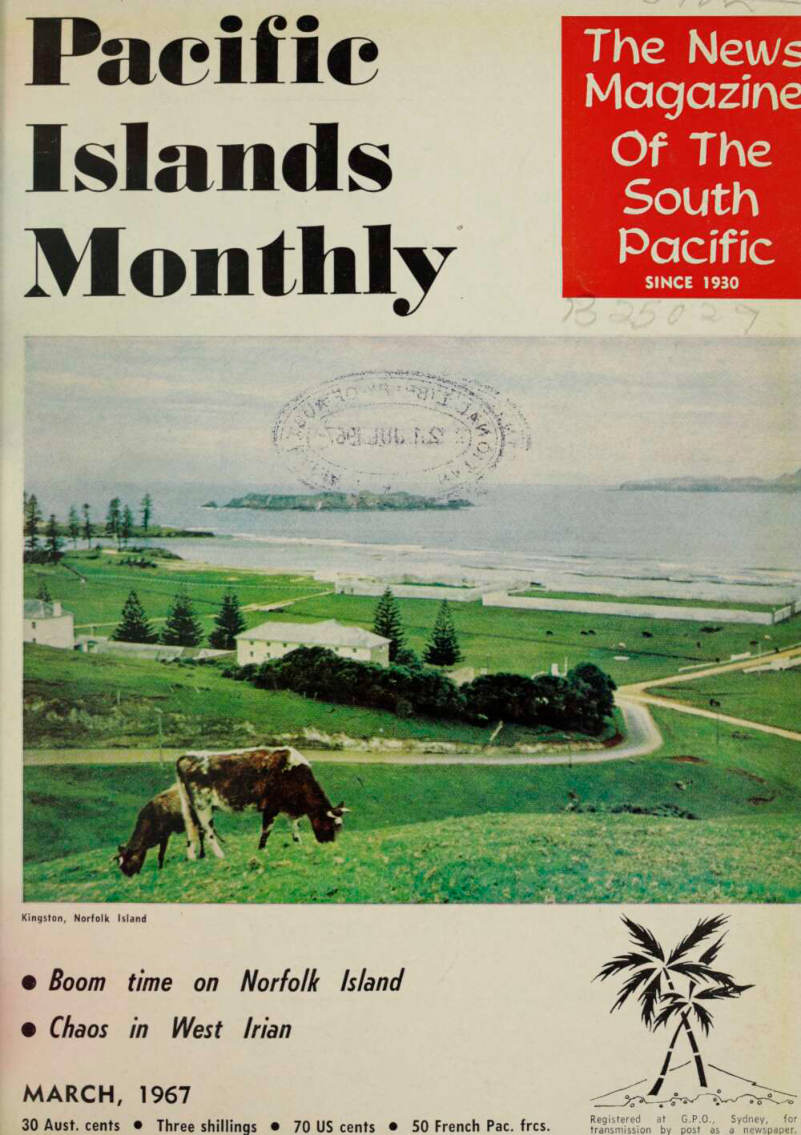 1
1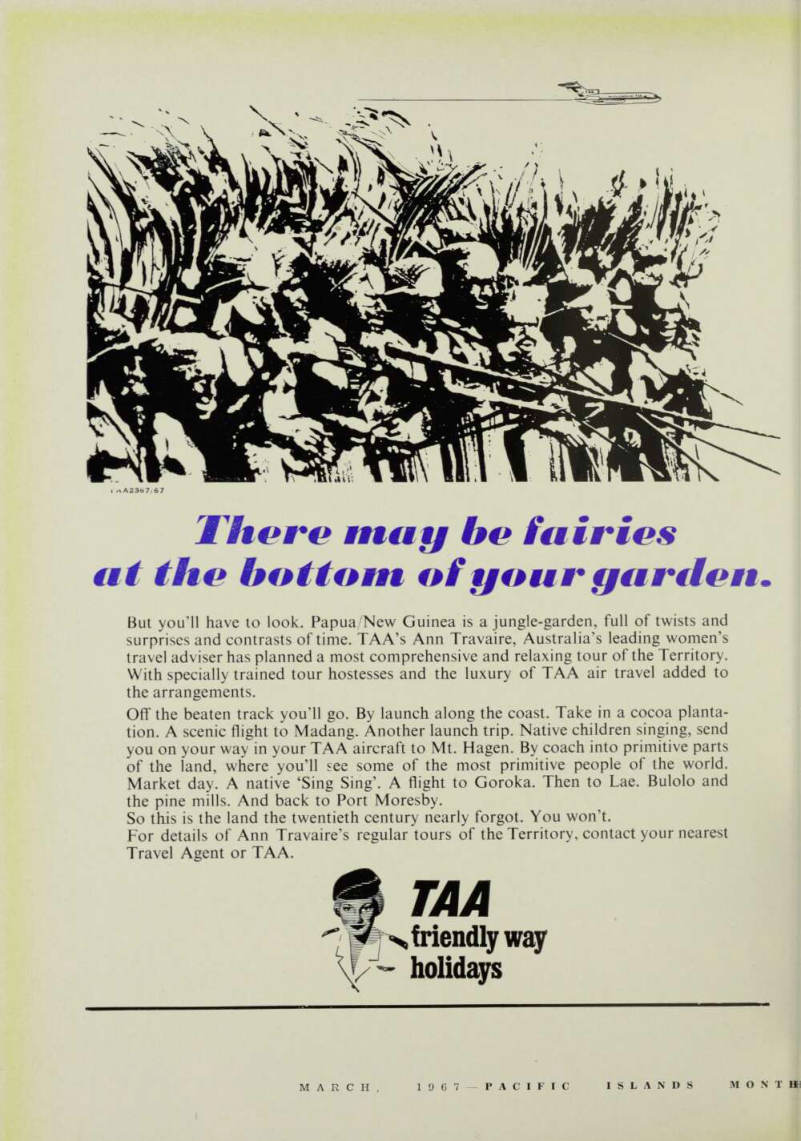 2
2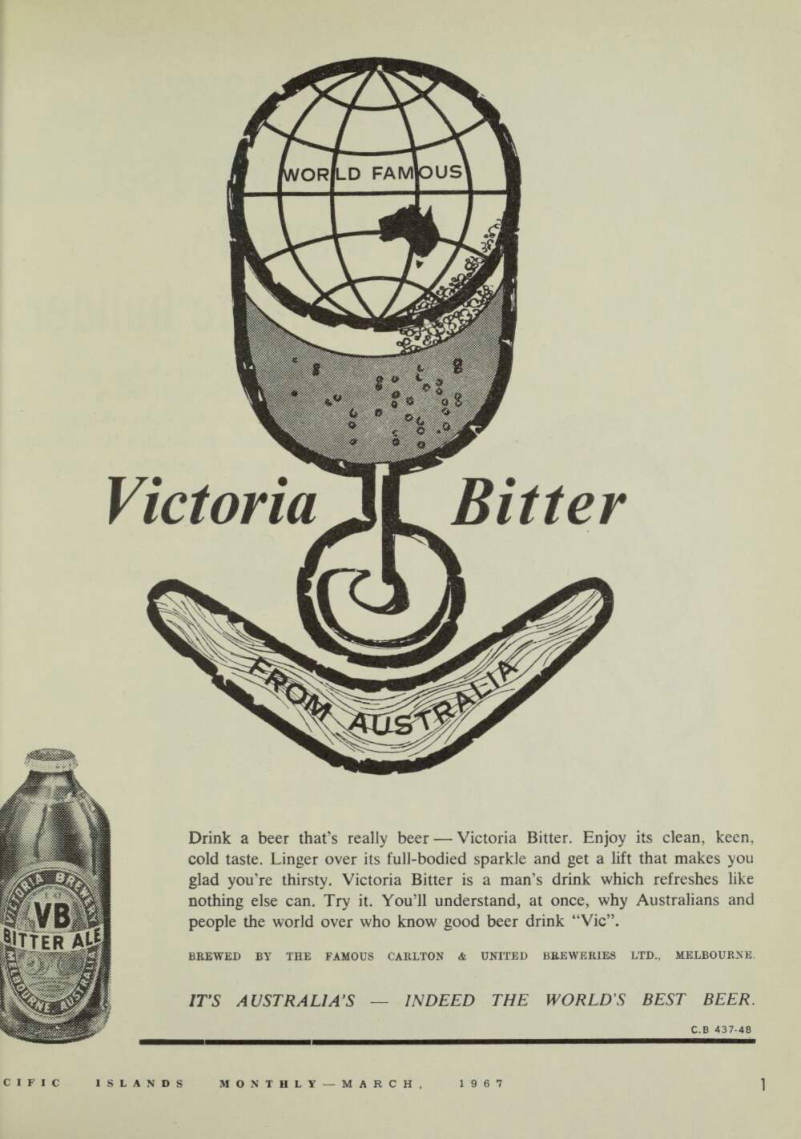 3
3 4
4 5
5 6
6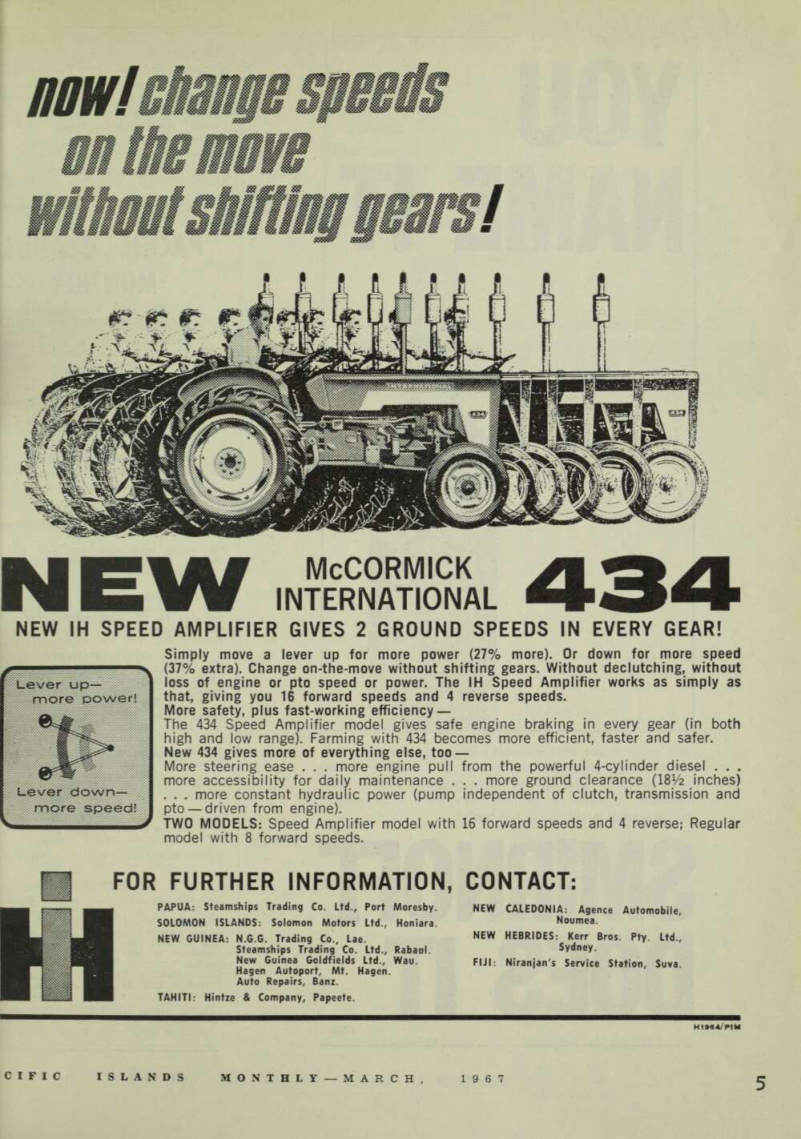 7
7 8
8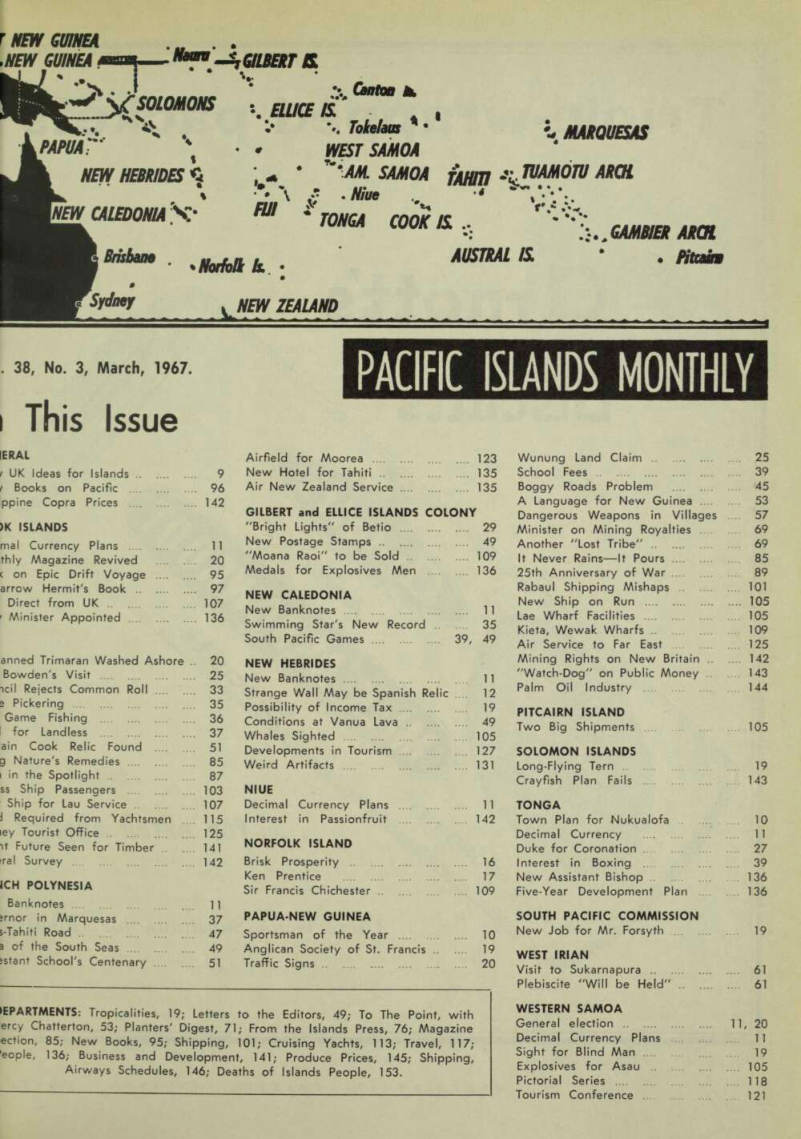 9
9 10
10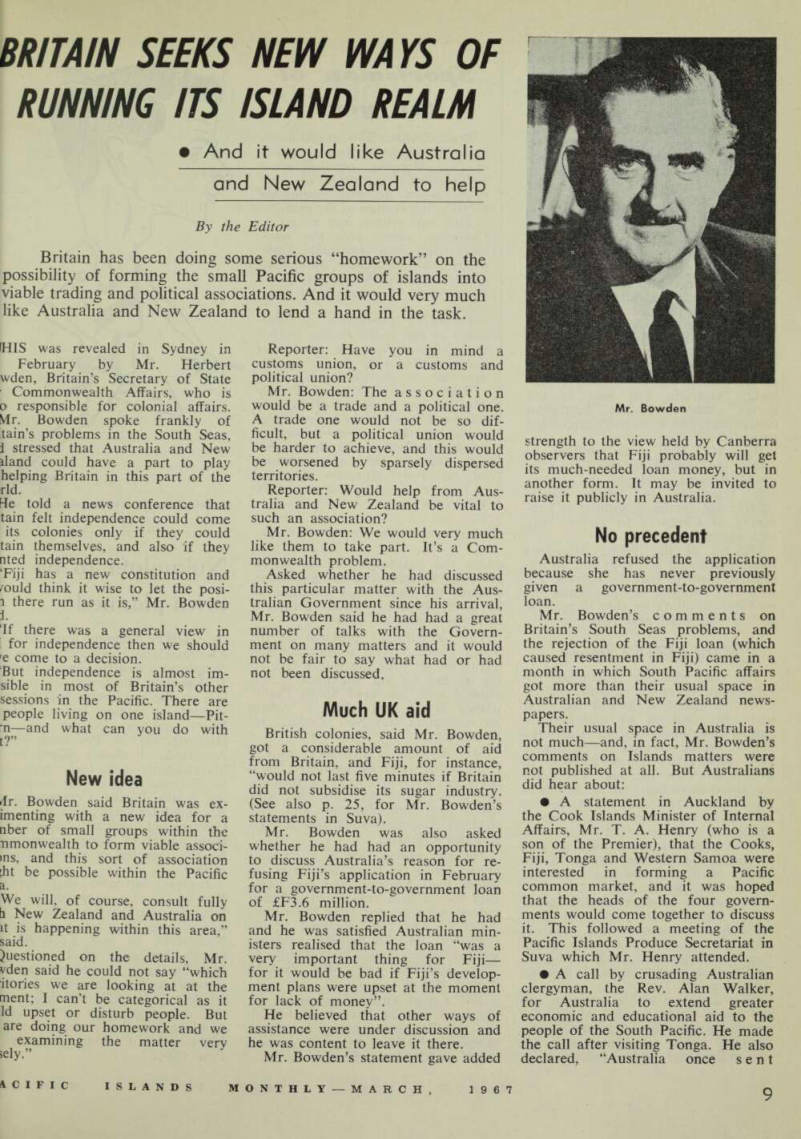 11
11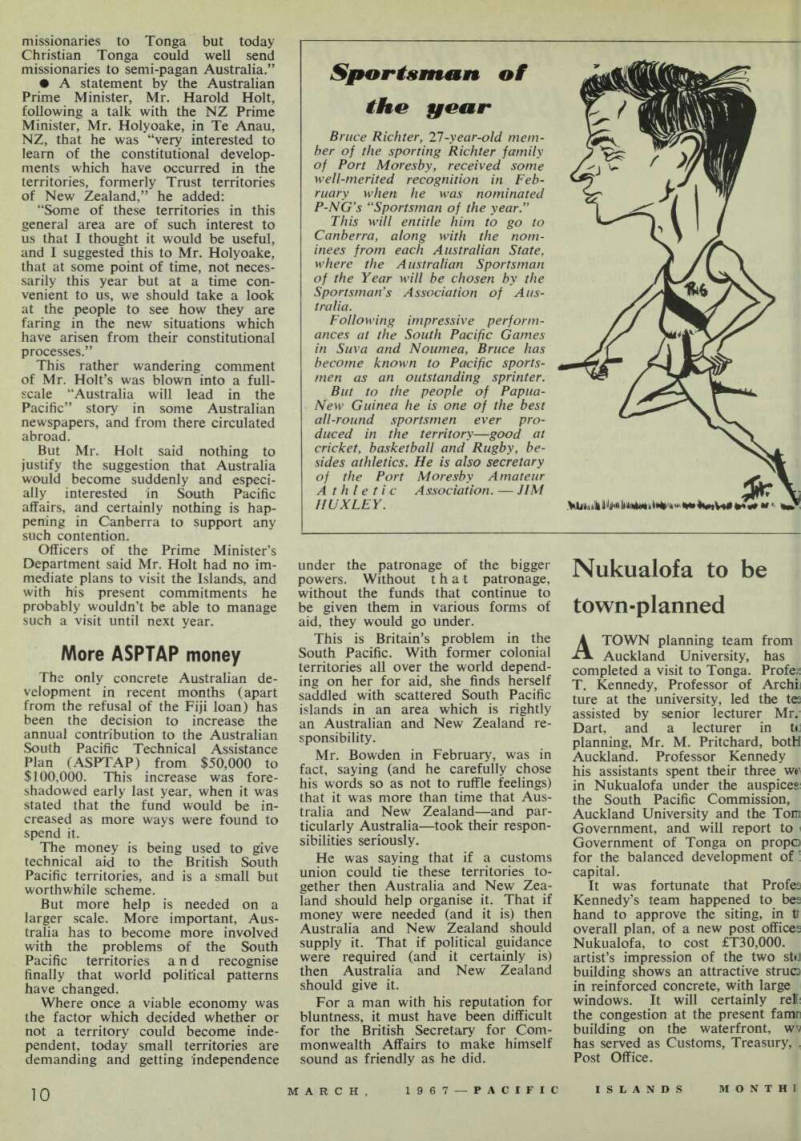 12
12 13
13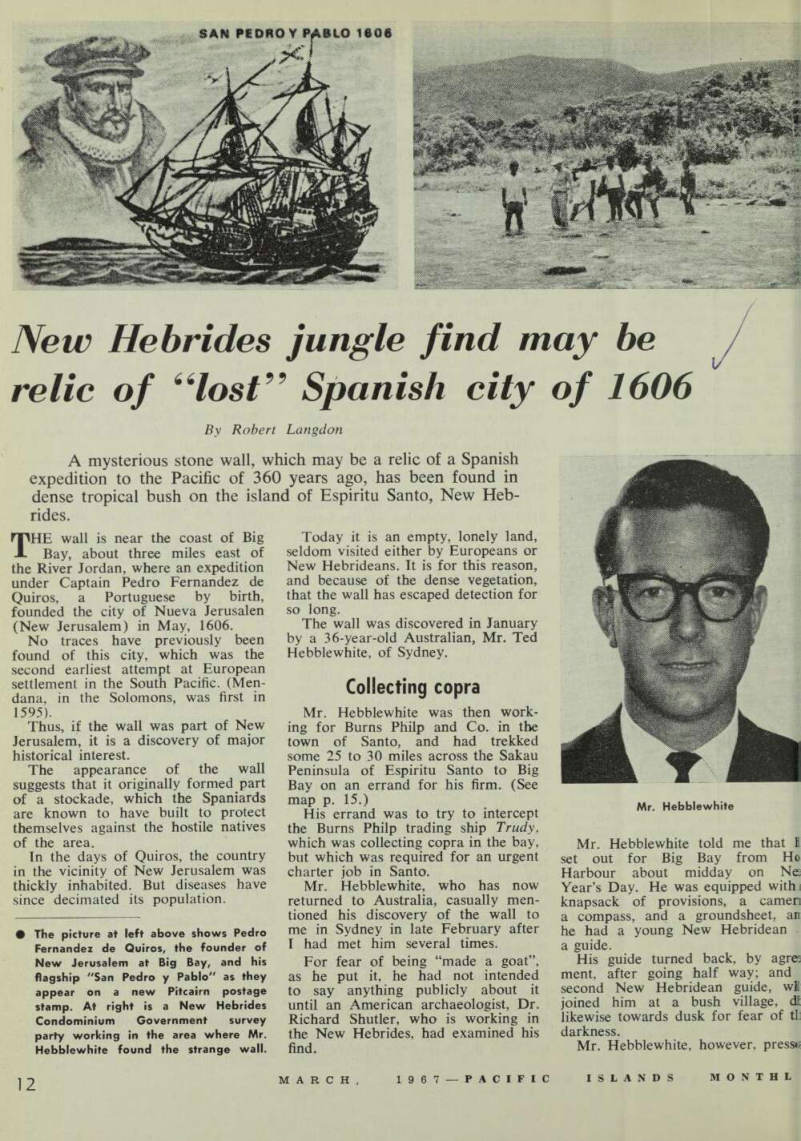 14
14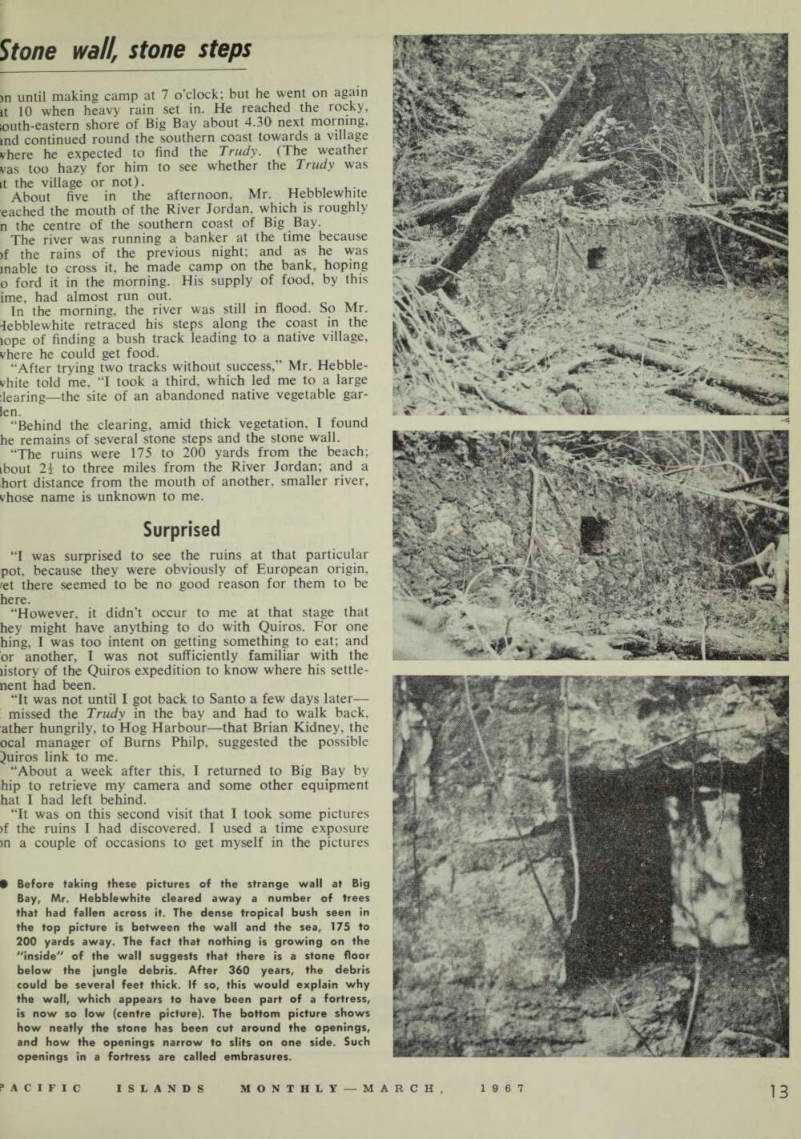 15
15 16
16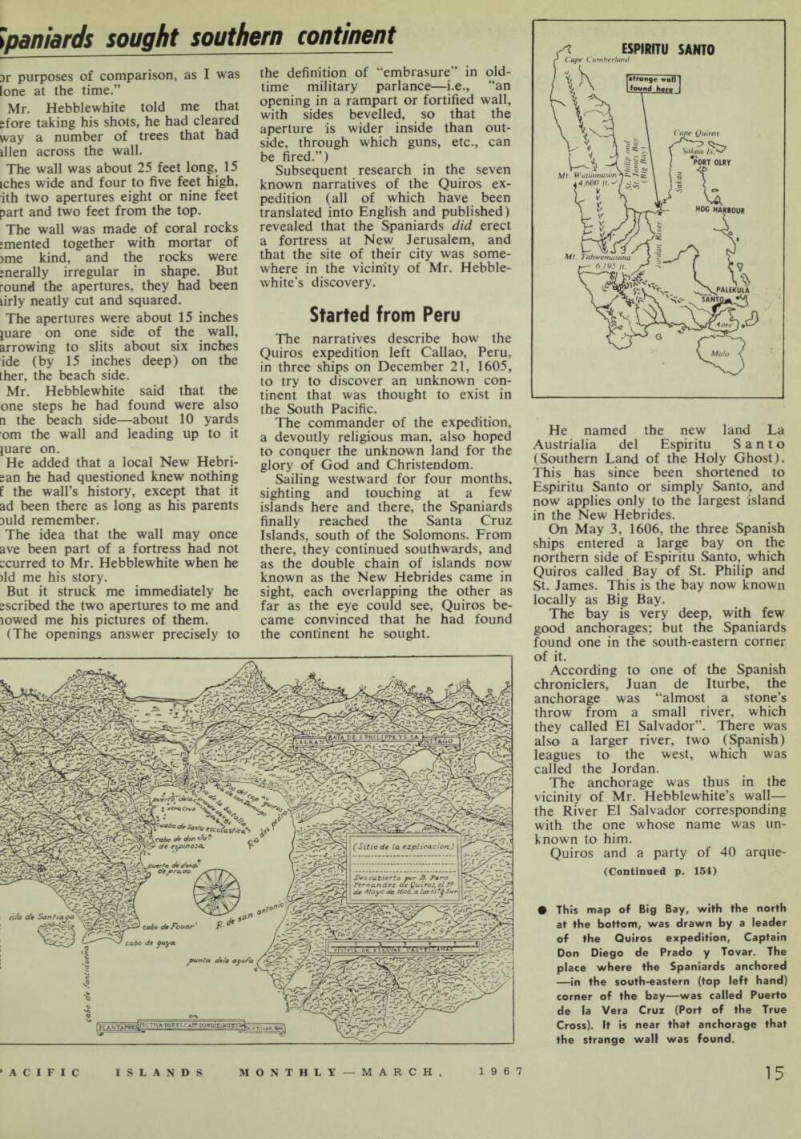 17
17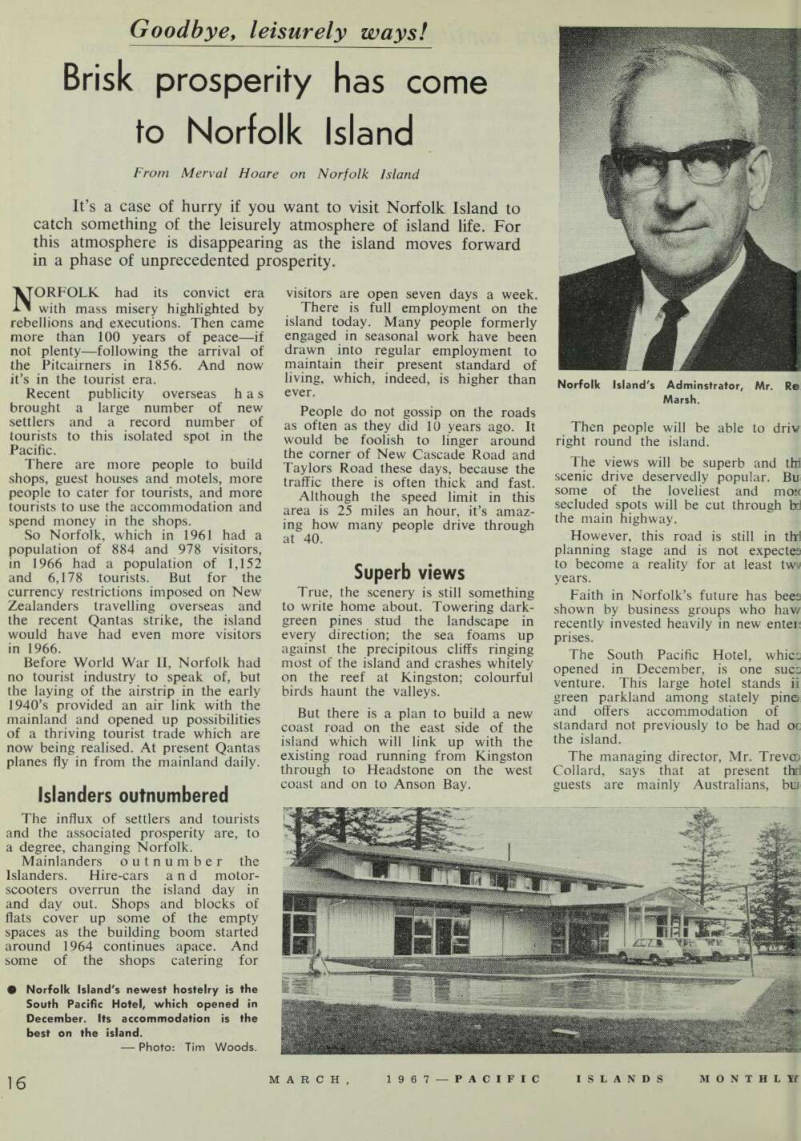 18
18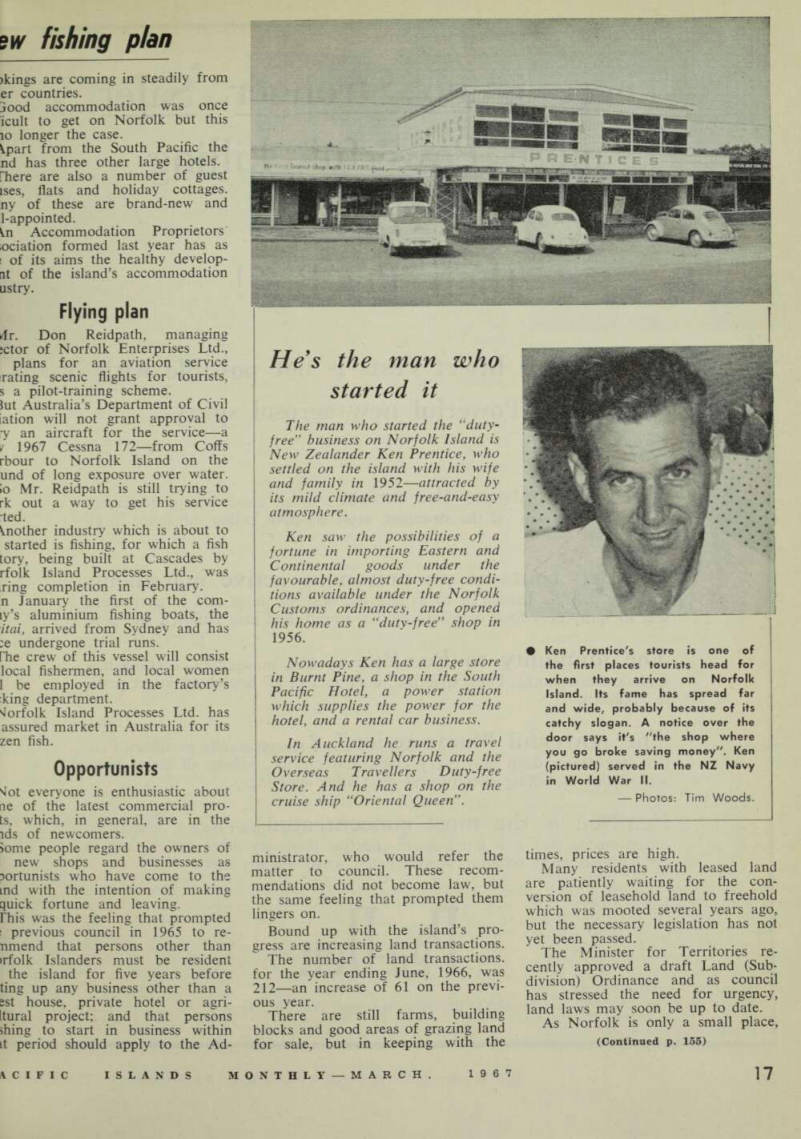 19
19 20
20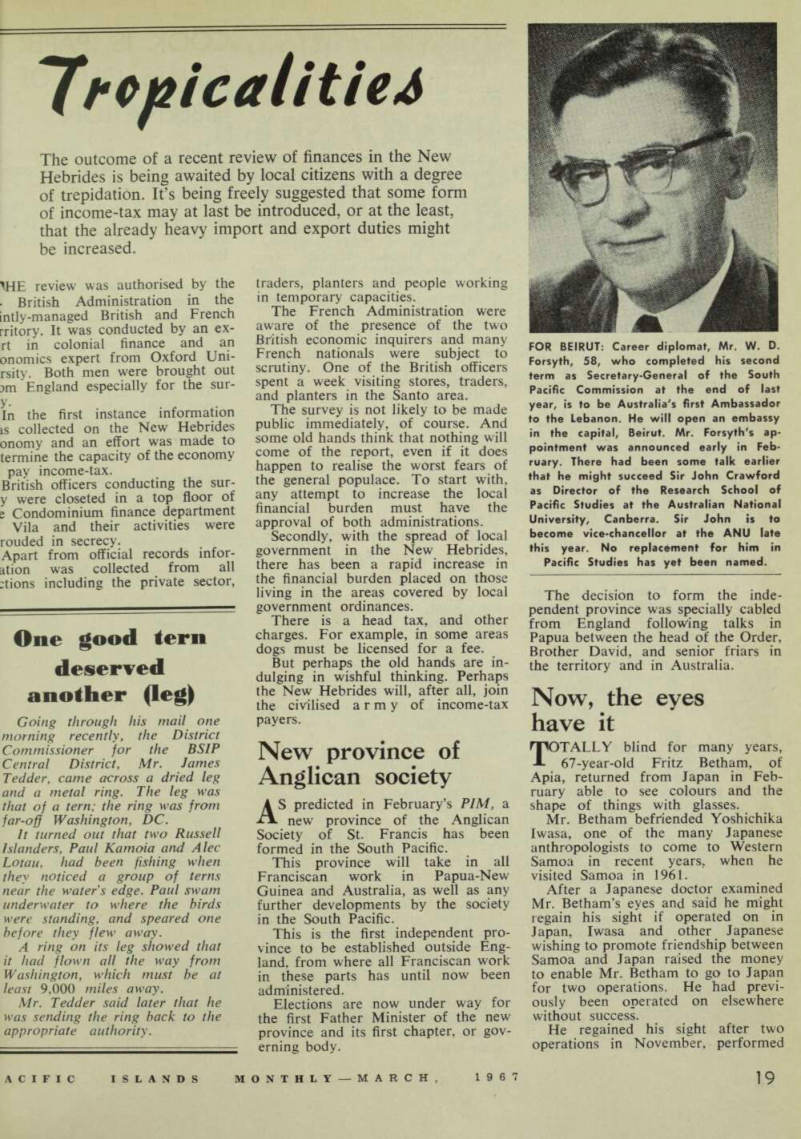 21
21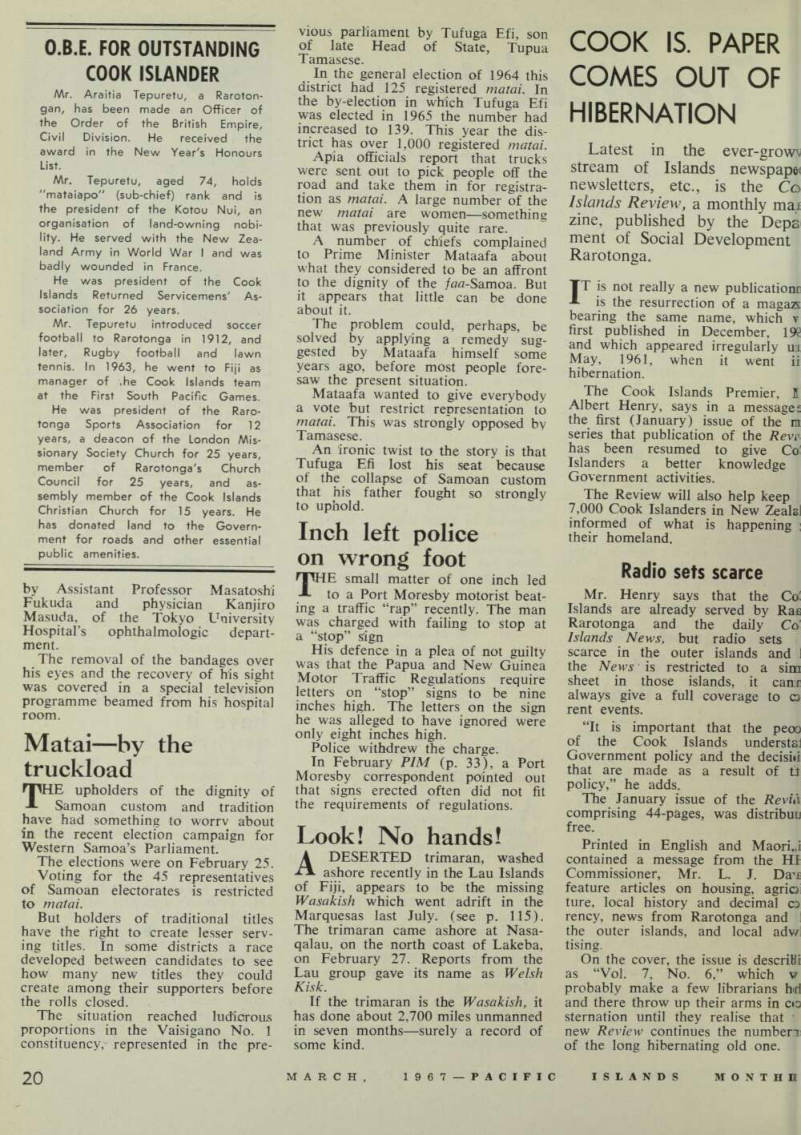 22
22 23
23 24
24 25
25 26
26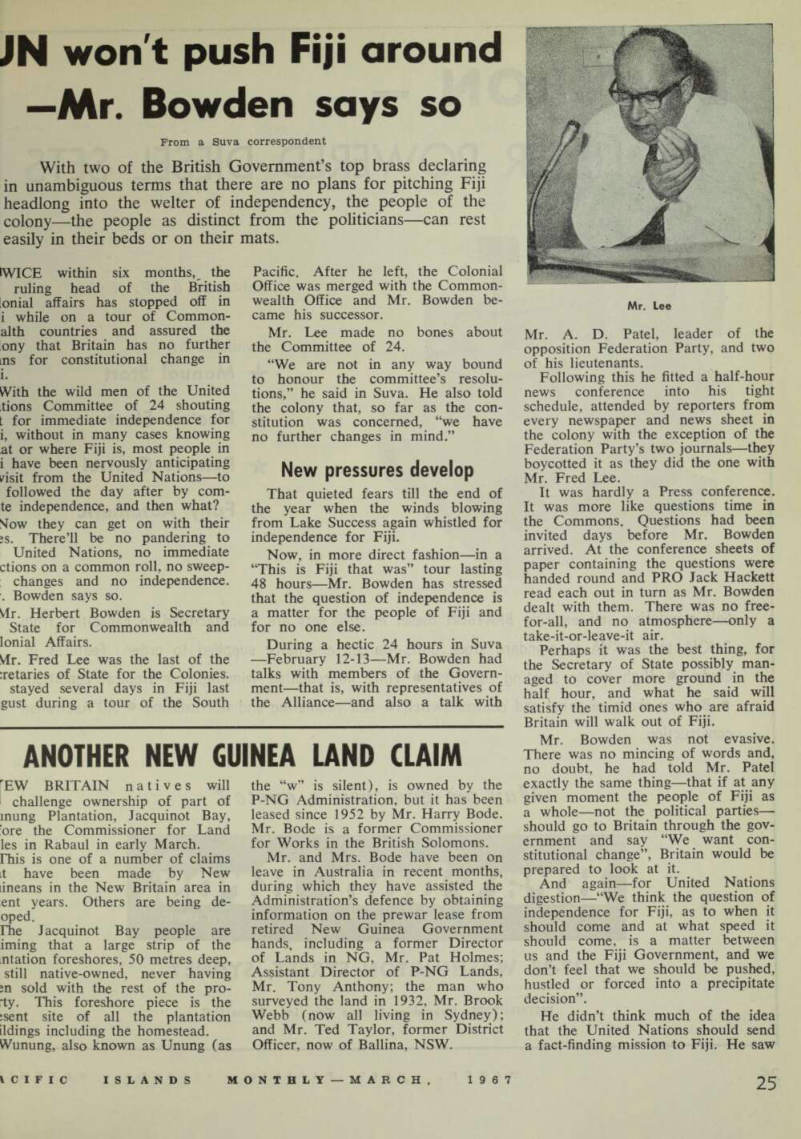 27
27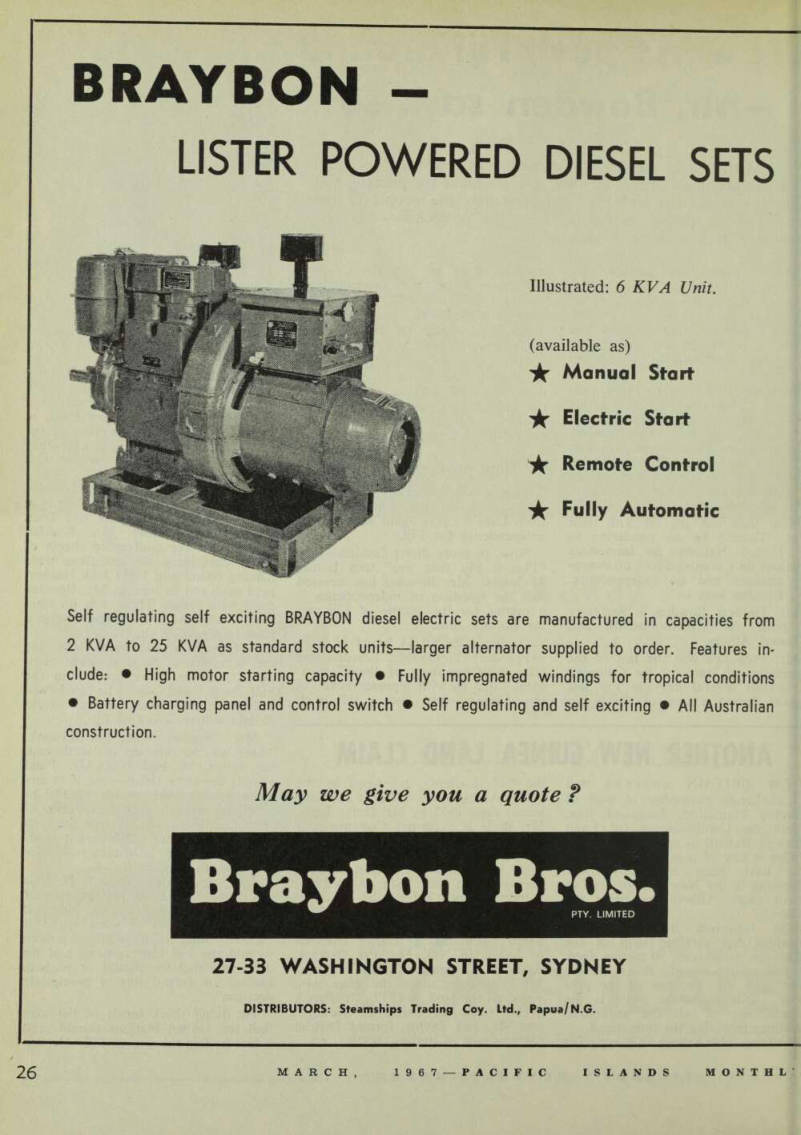 28
28 29
29 30
30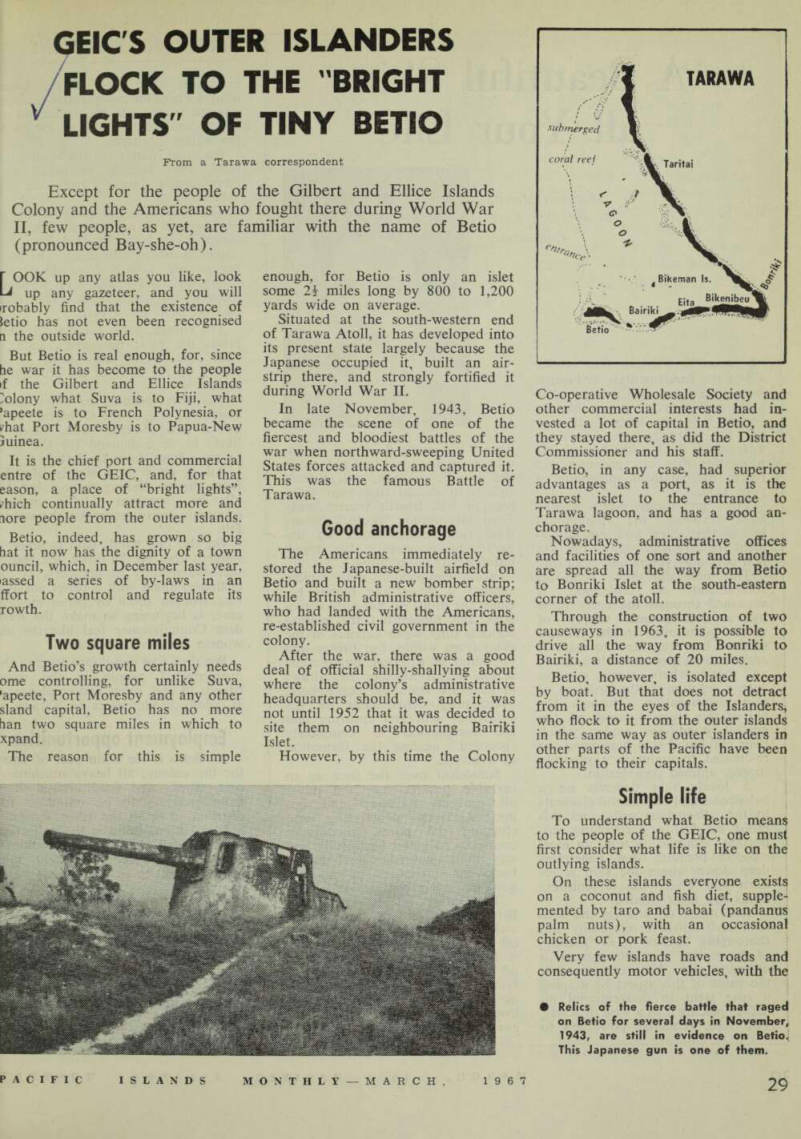 31
31 32
32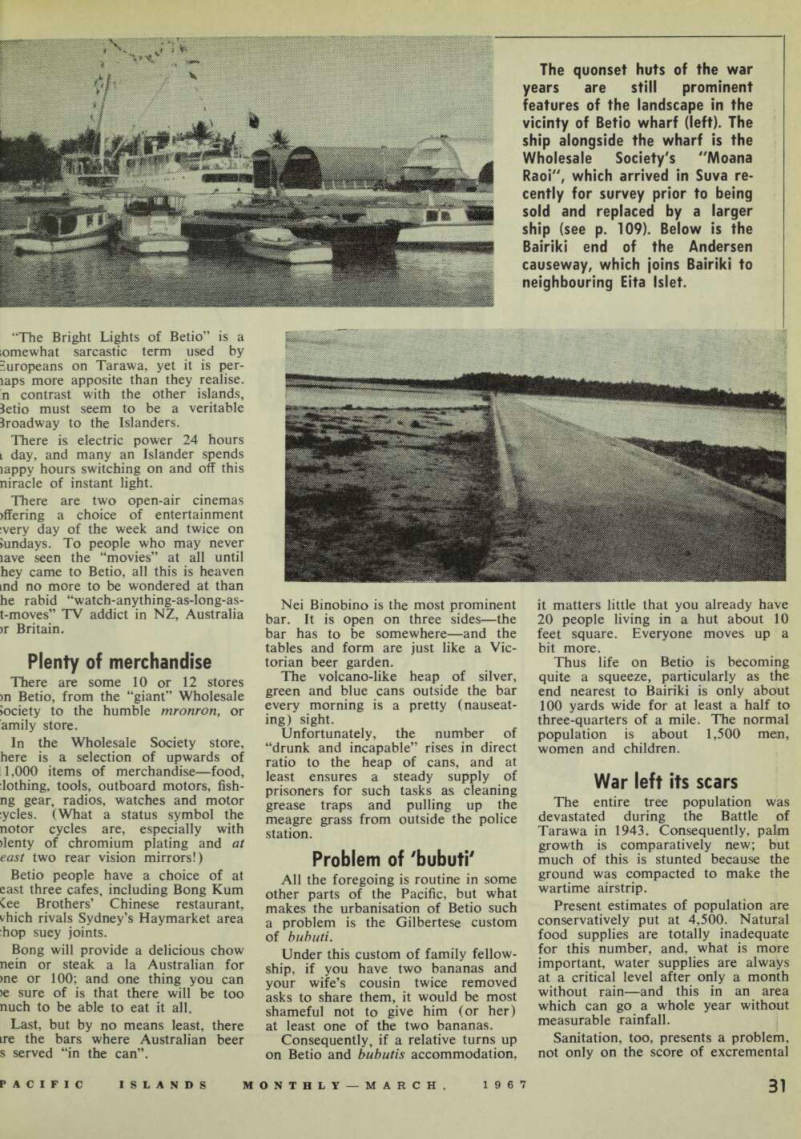 33
33 34
34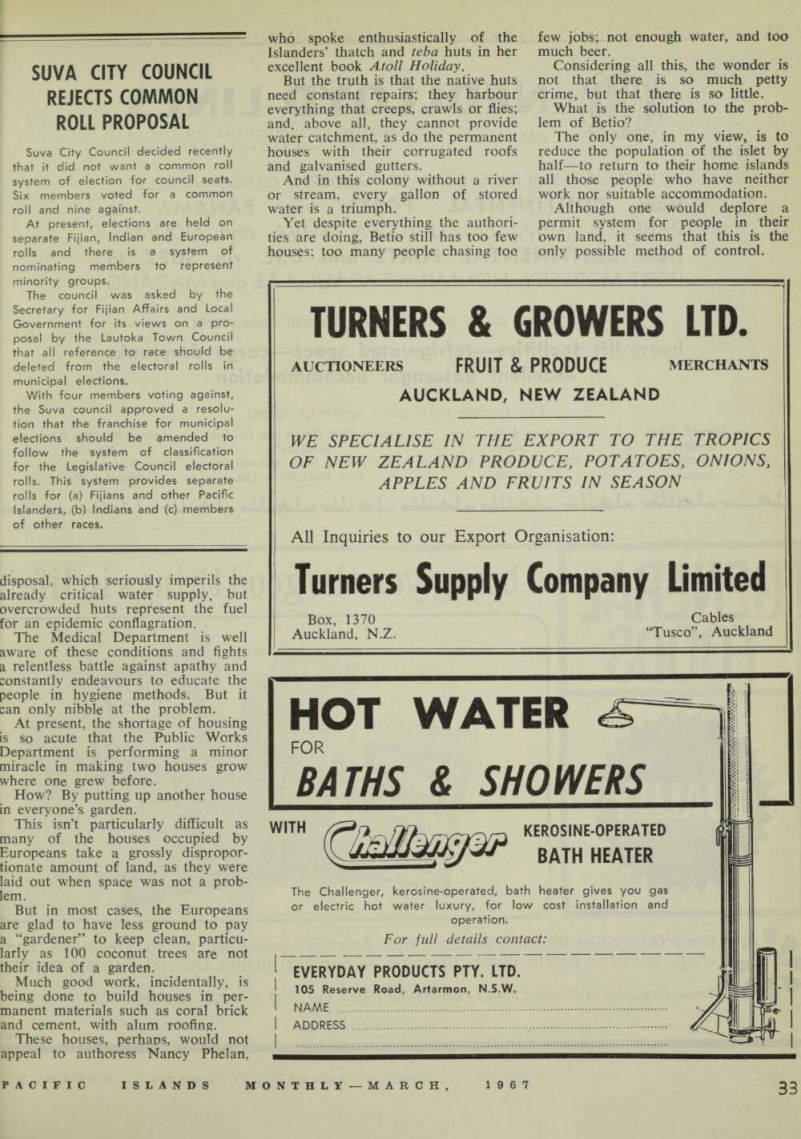 35
35 36
36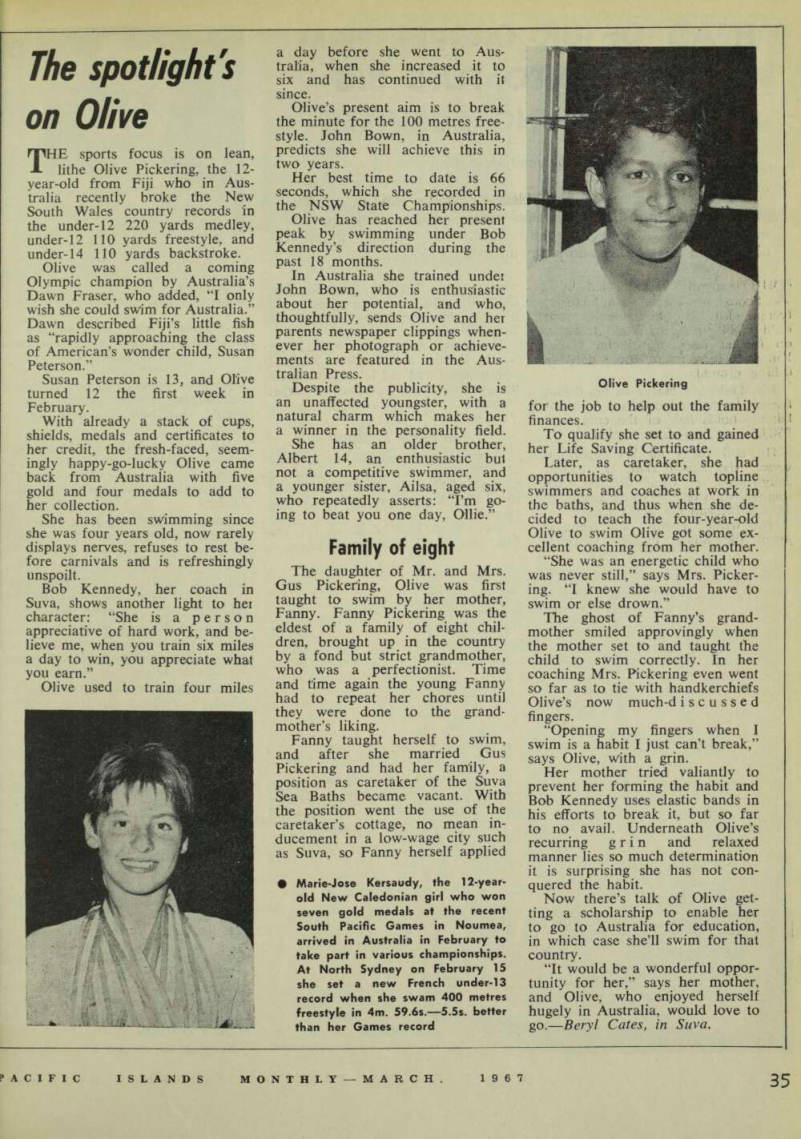 37
37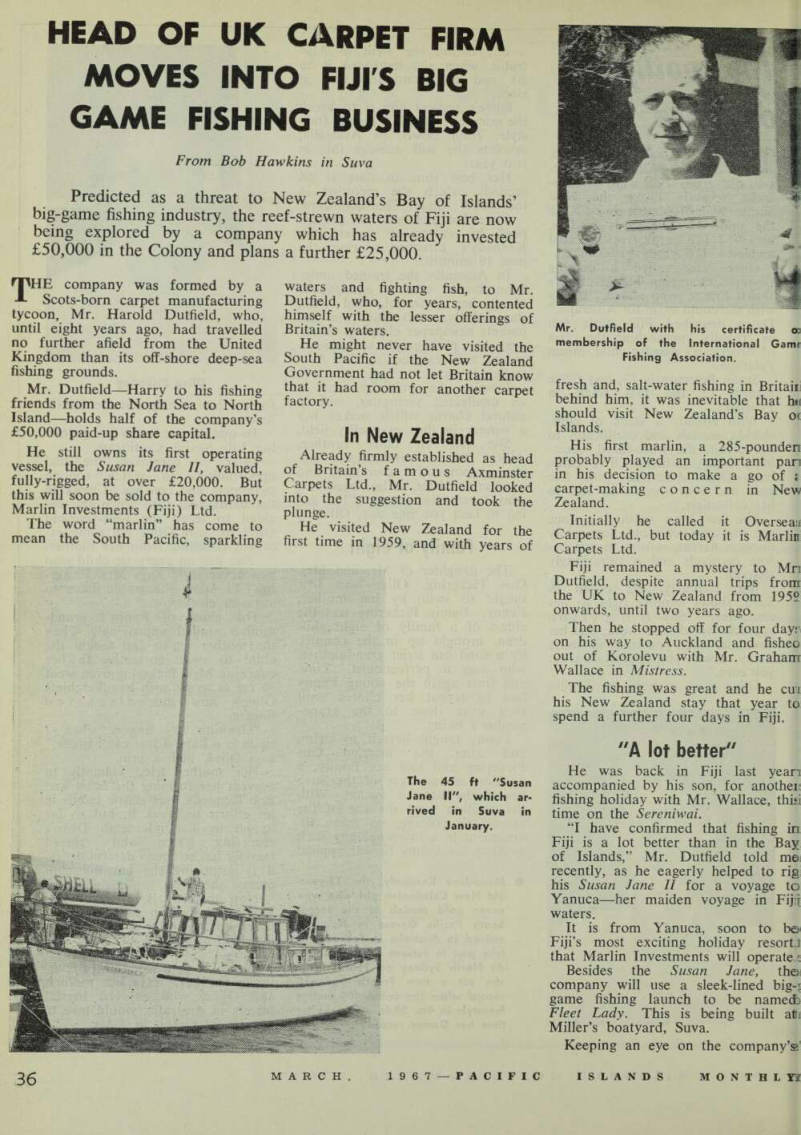 38
38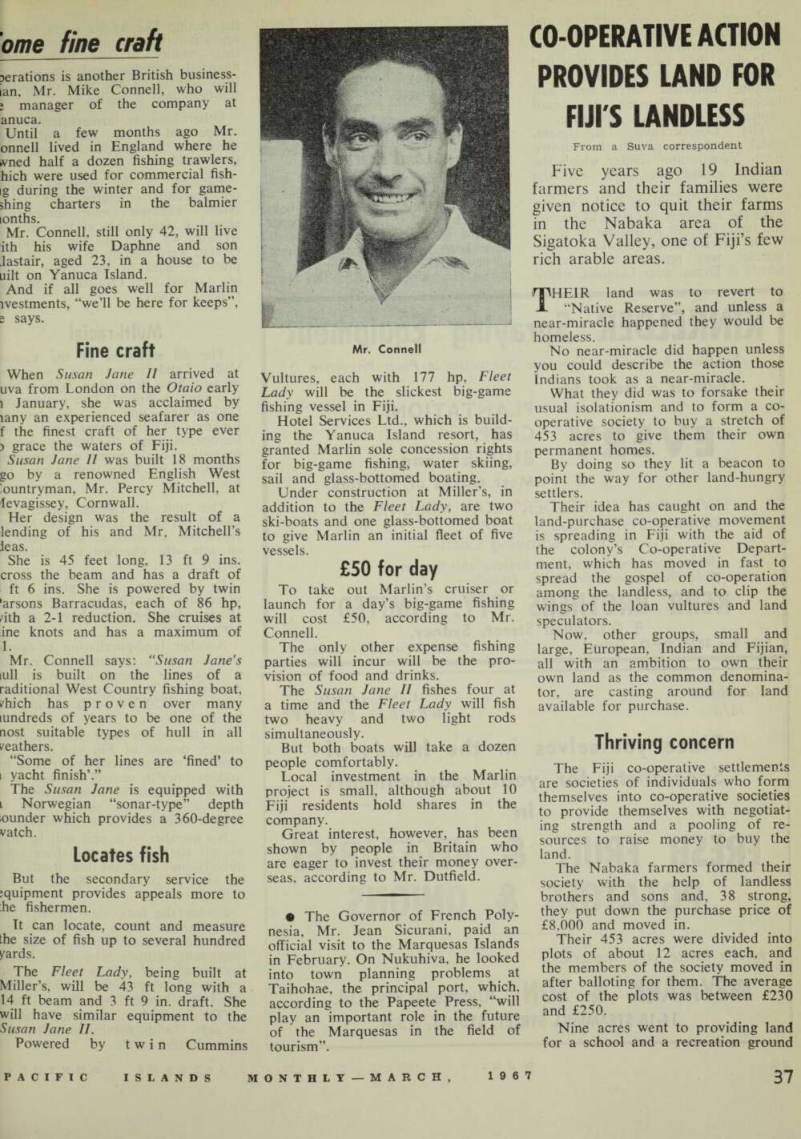 39
39 40
40 41
41 42
42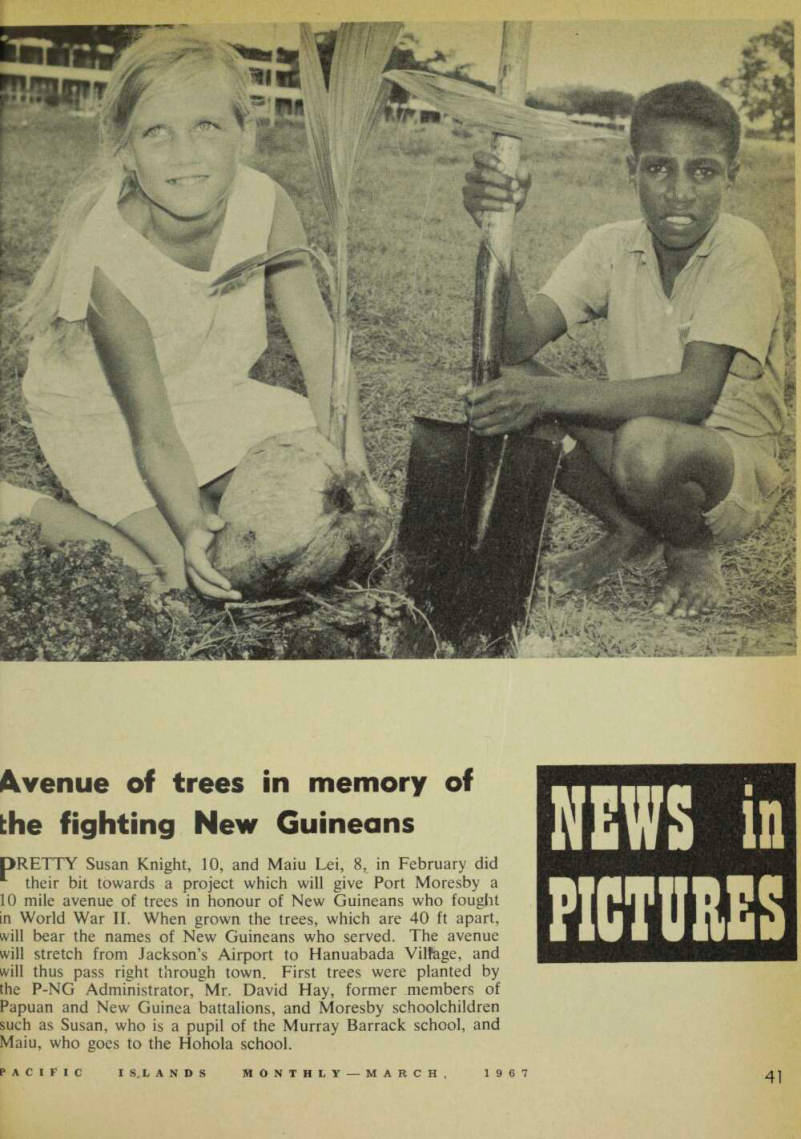 43
43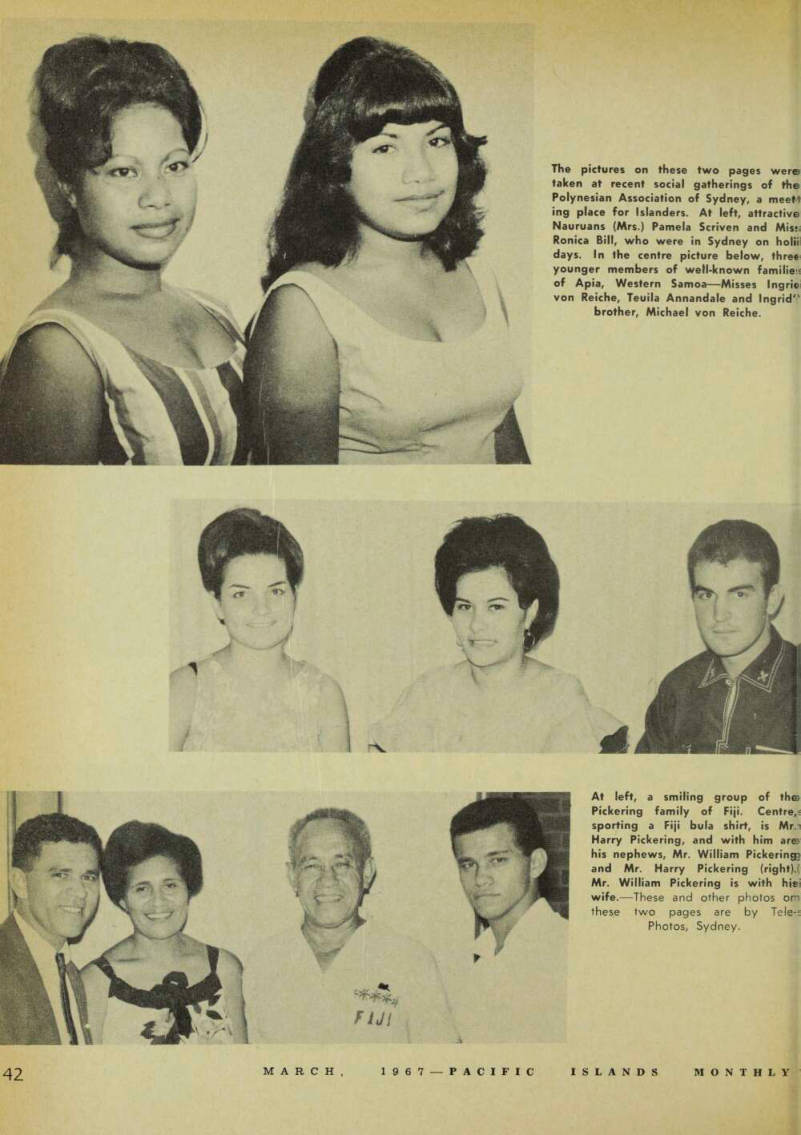 44
44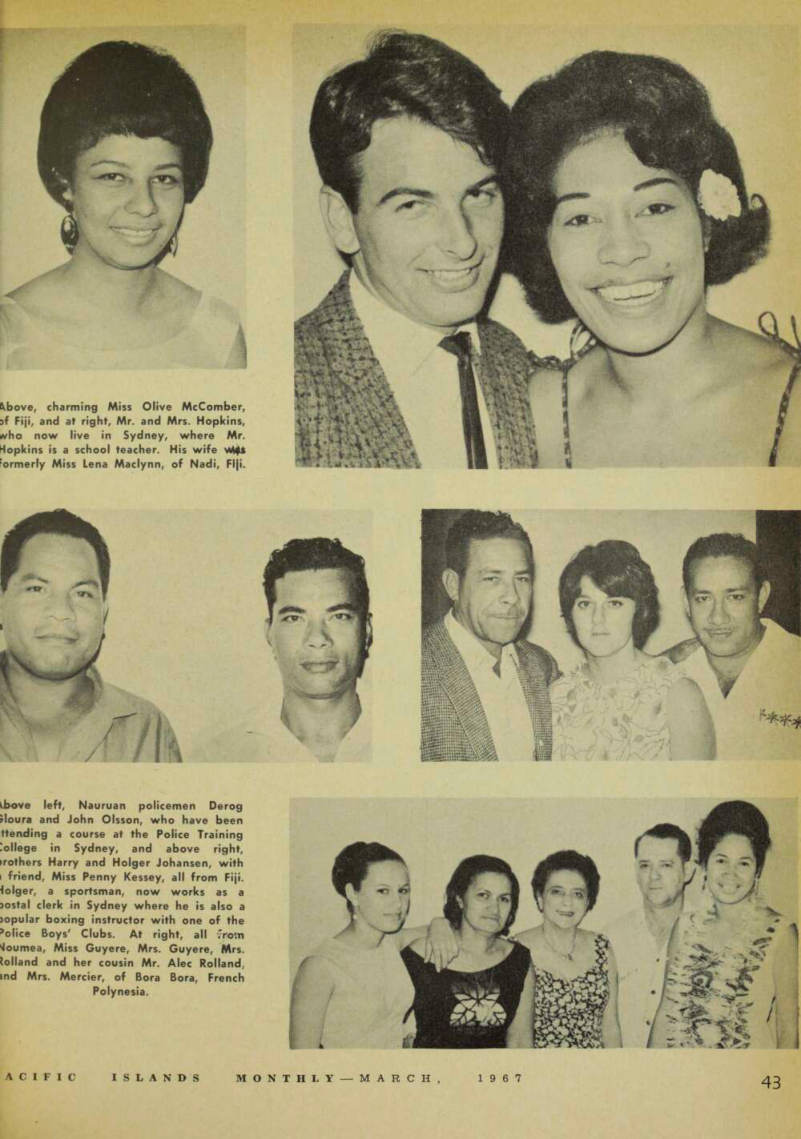 45
45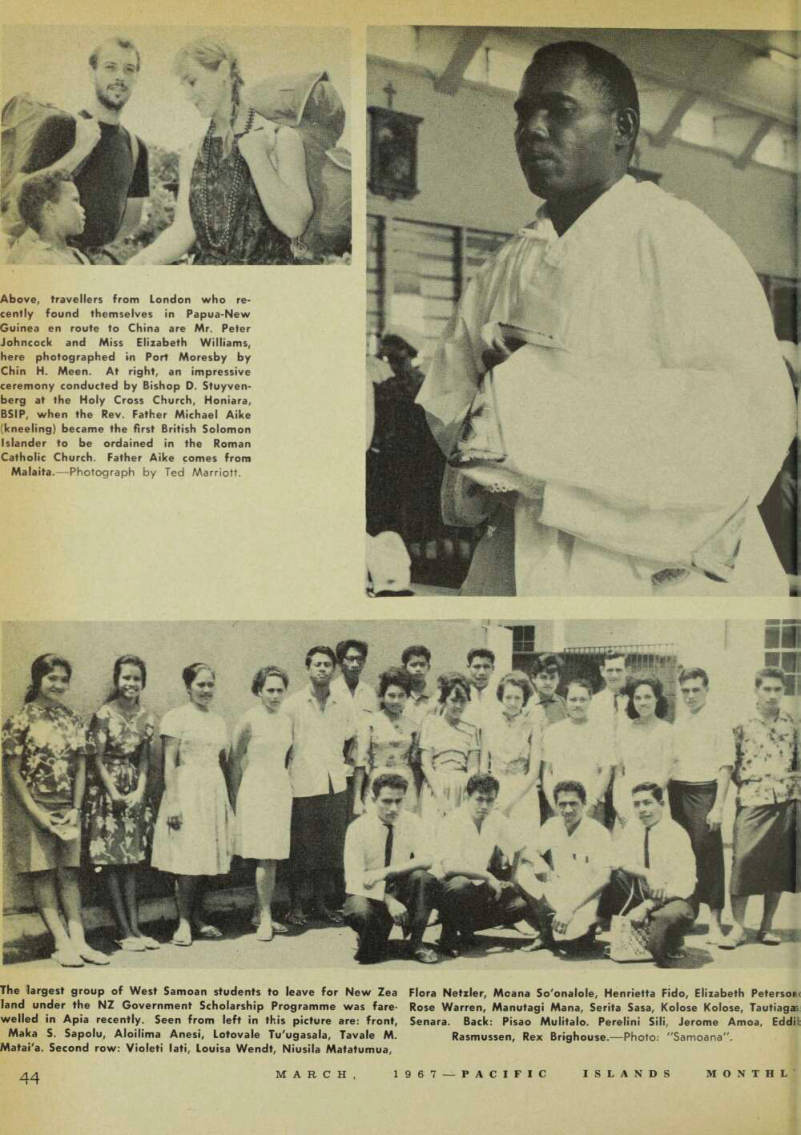 46
46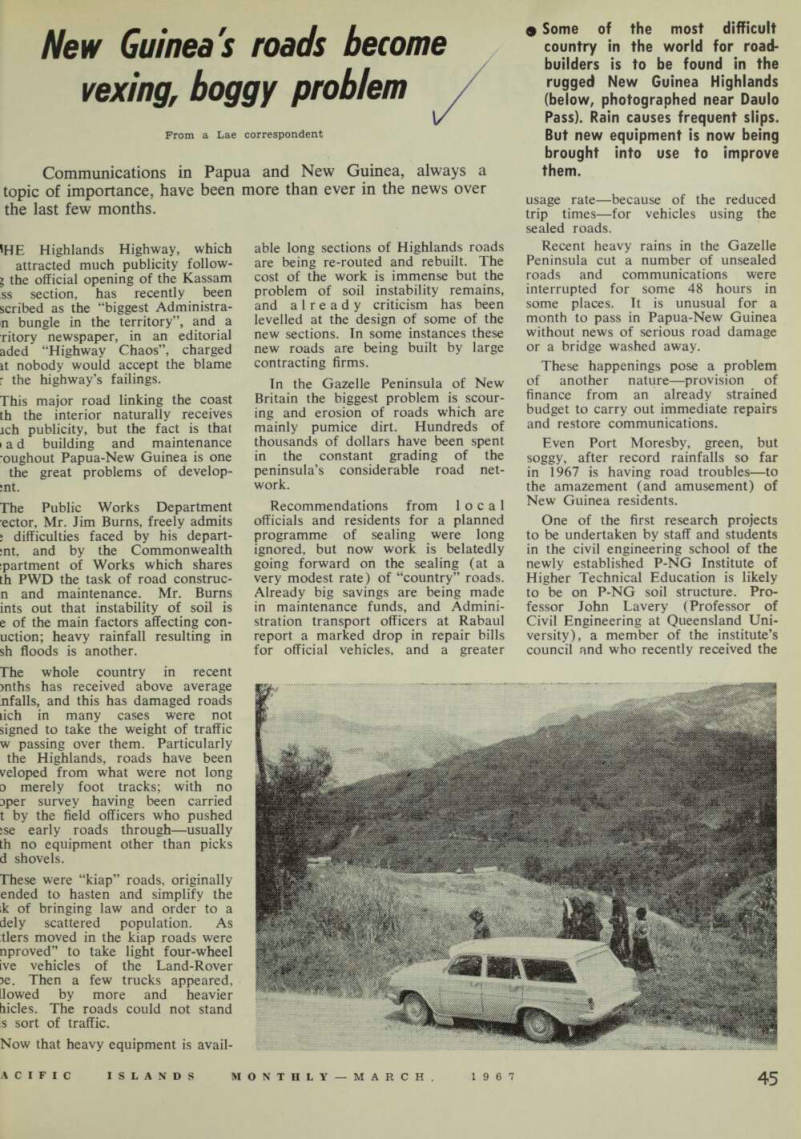 47
47 48
48 49
49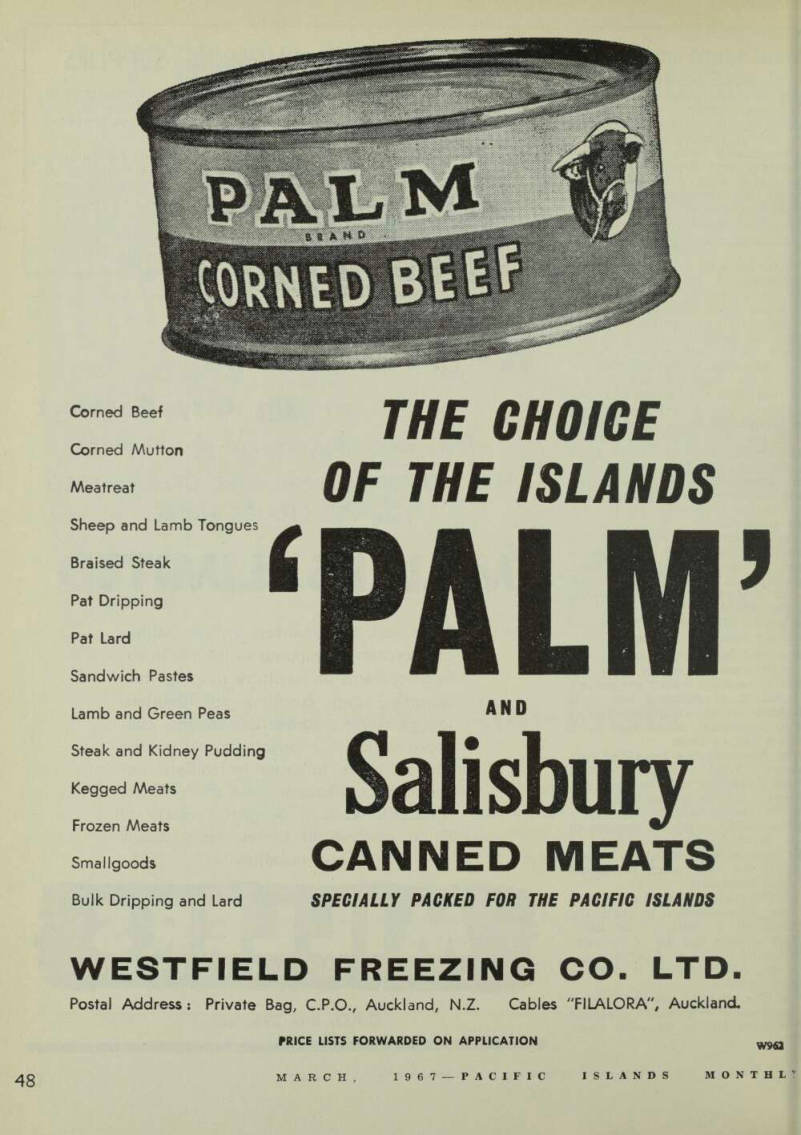 50
50 51
51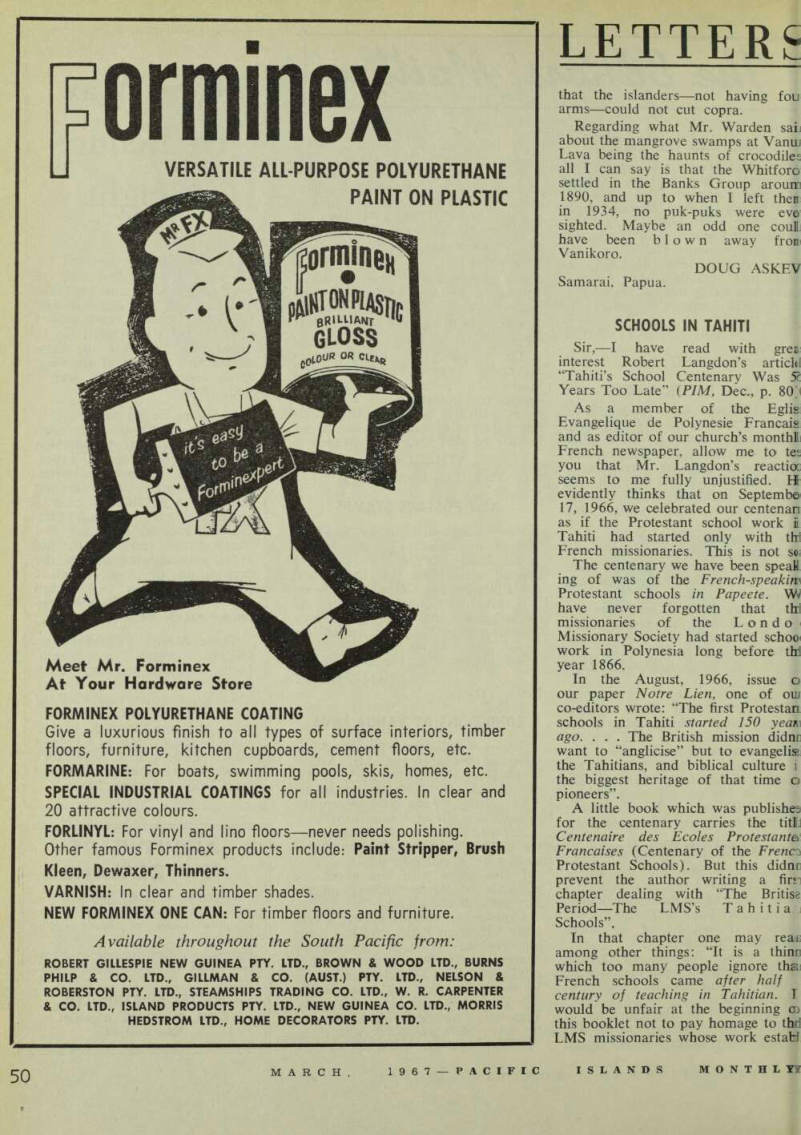 52
52 53
53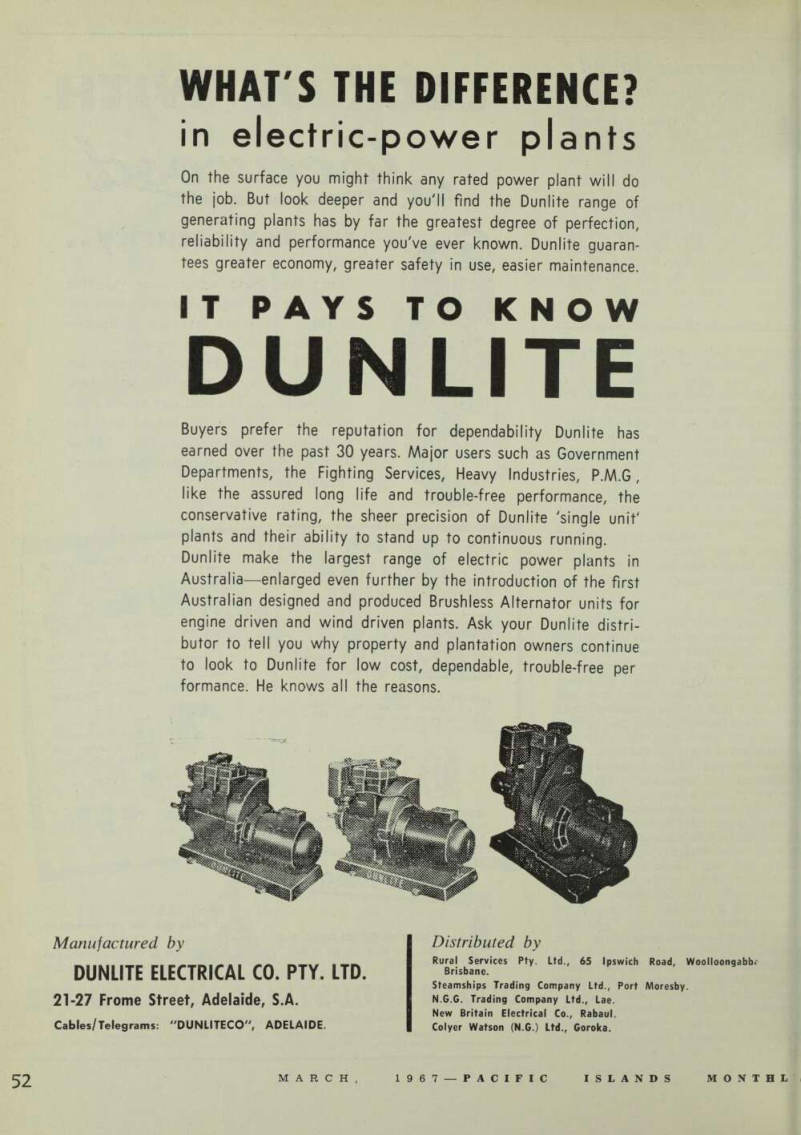 54
54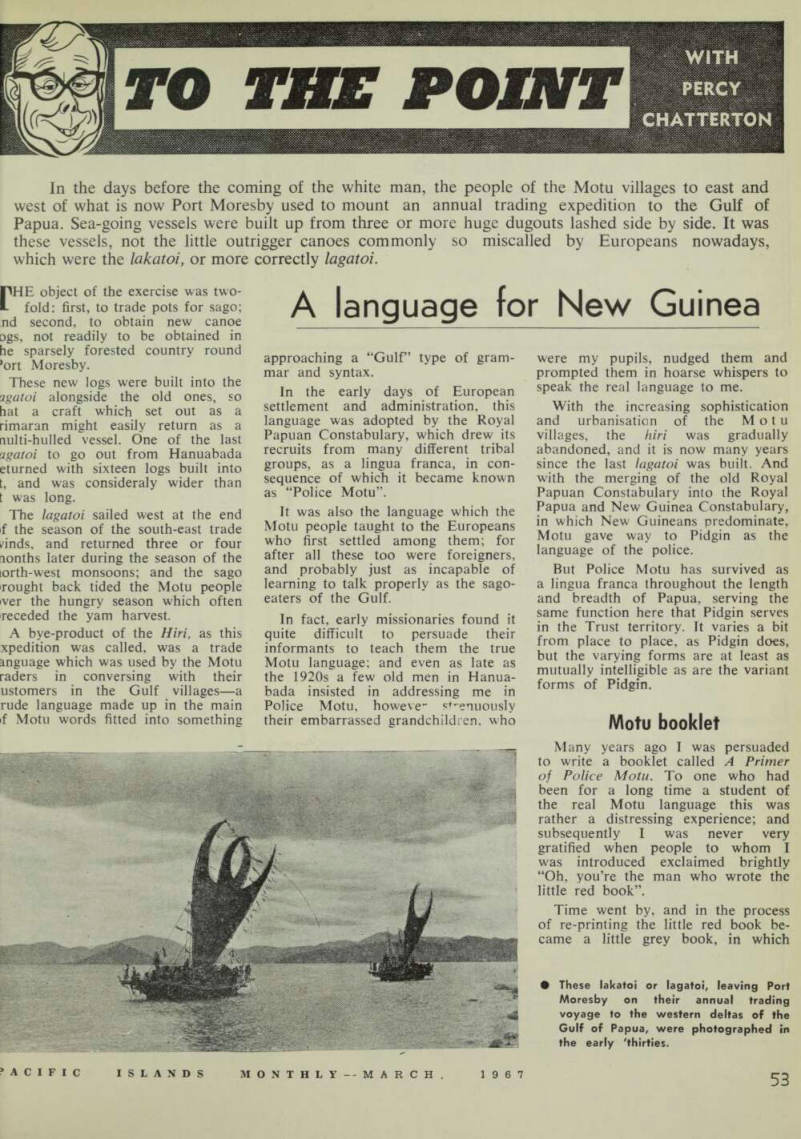 55
55 56
56 57
57 58
58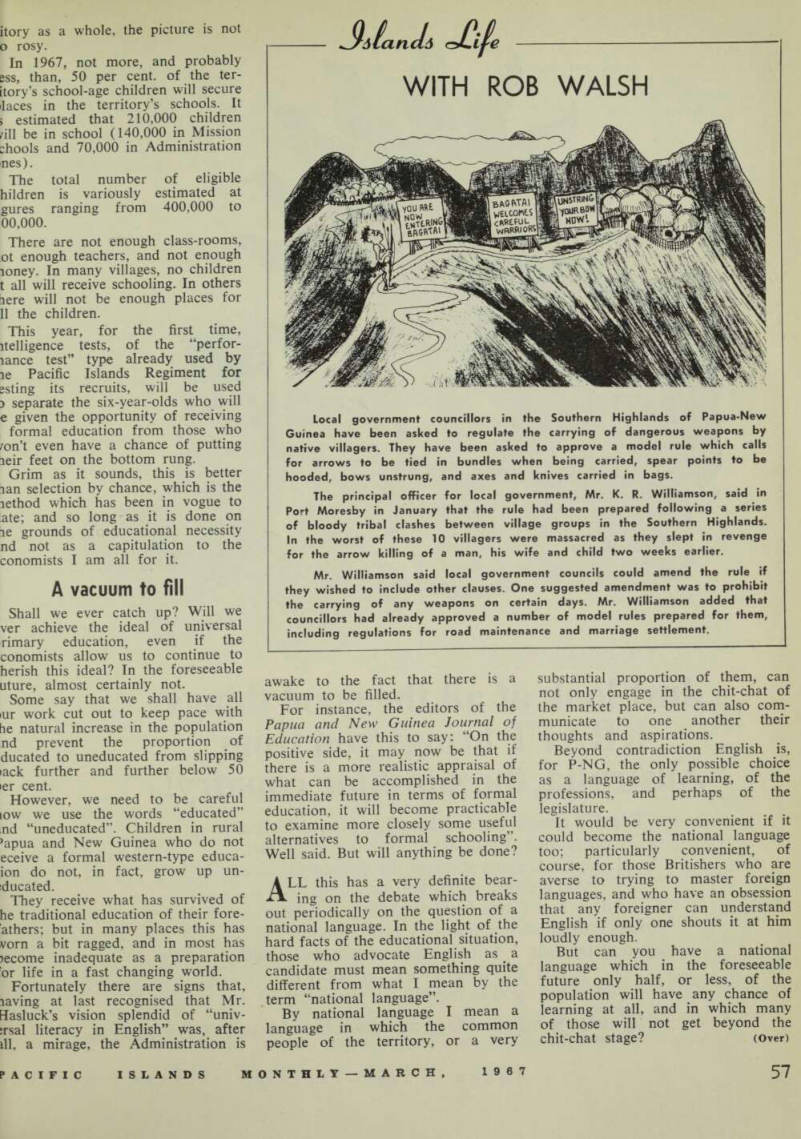 59
59 60
60 61
61 62
62 63
63 64
64 65
65 66
66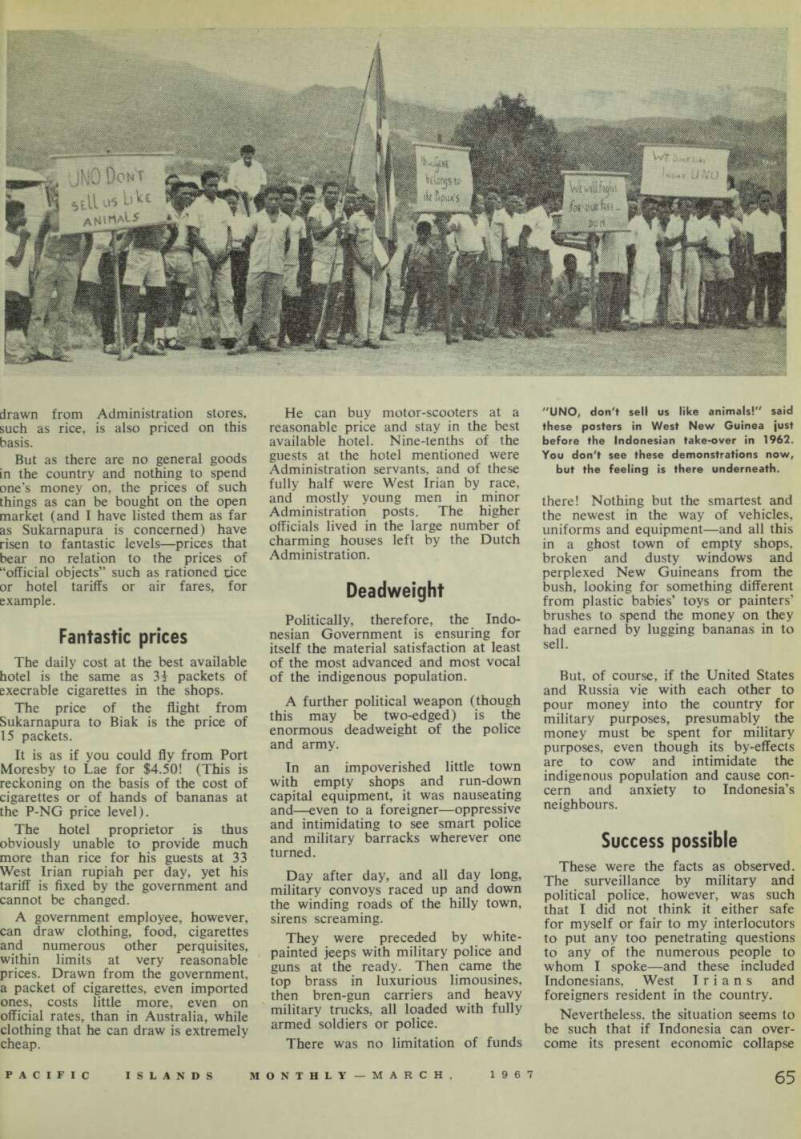 67
67 68
68 69
69 70
70 71
71 72
72 73
73 74
74 75
75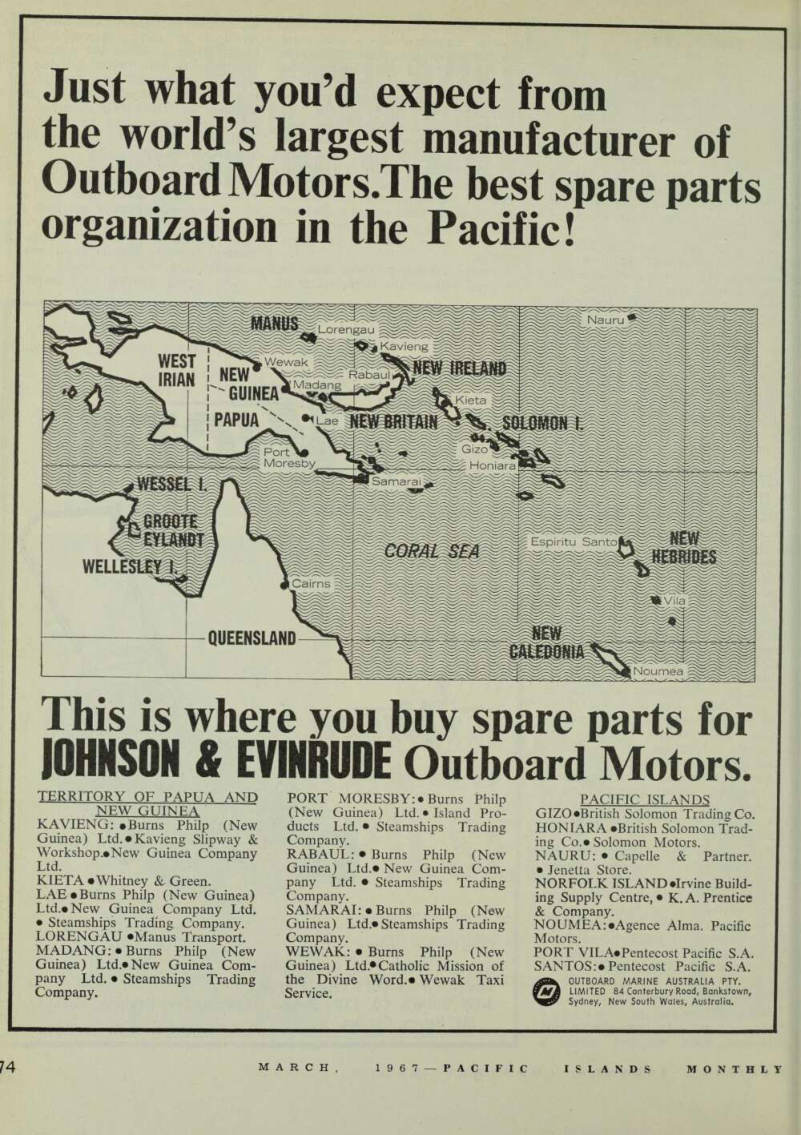 76
76 77
77 78
78 79
79 80
80 81
81 82
82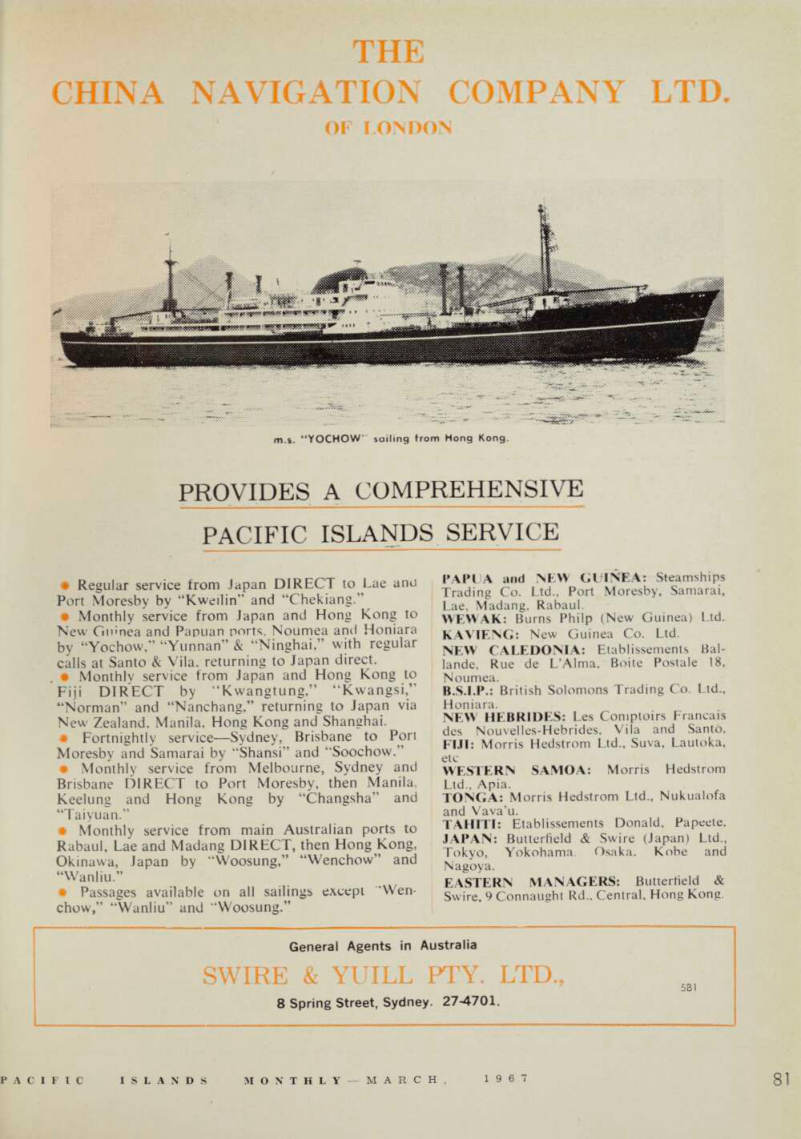 83
83 84
84 85
85 86
86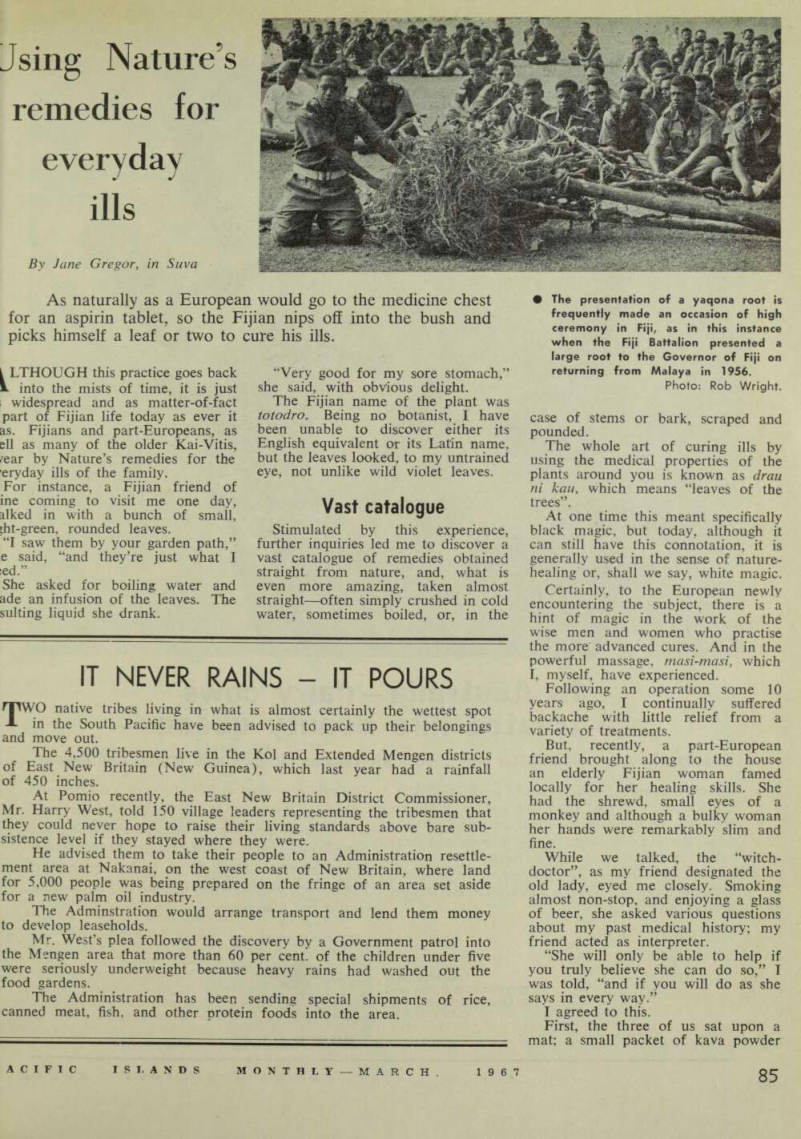 87
87 88
88 89
89 90
90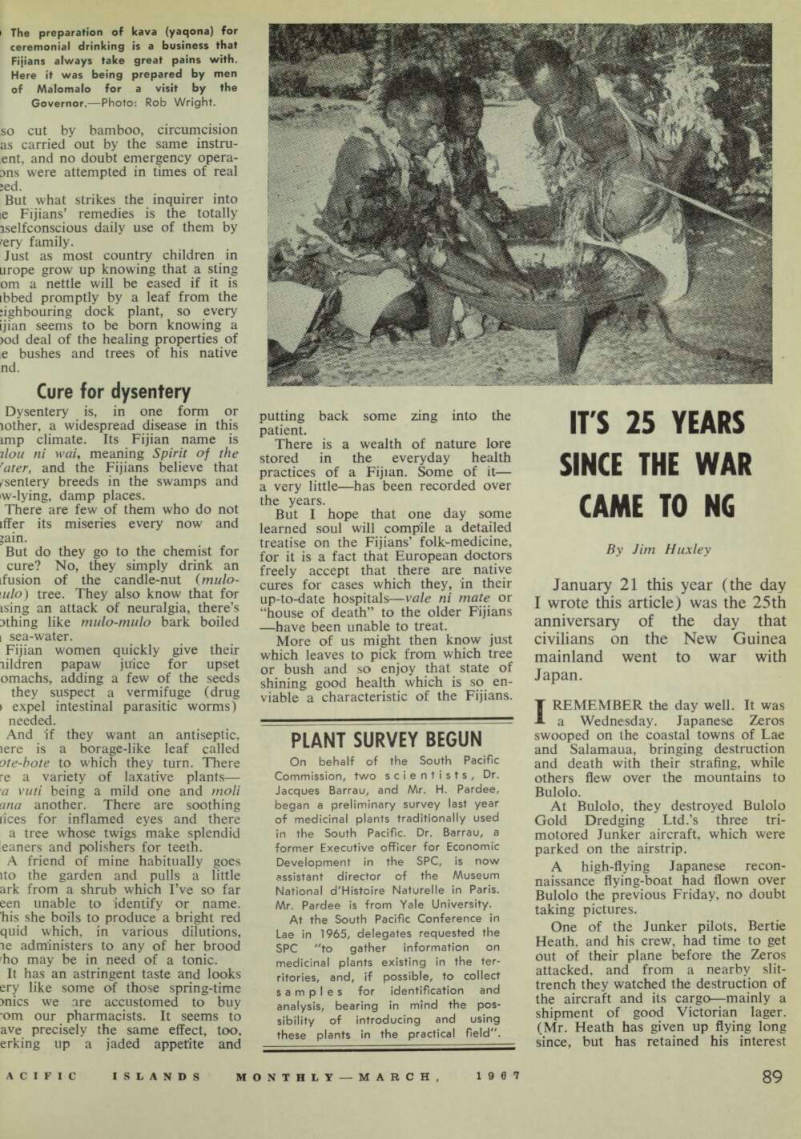 91
91 92
92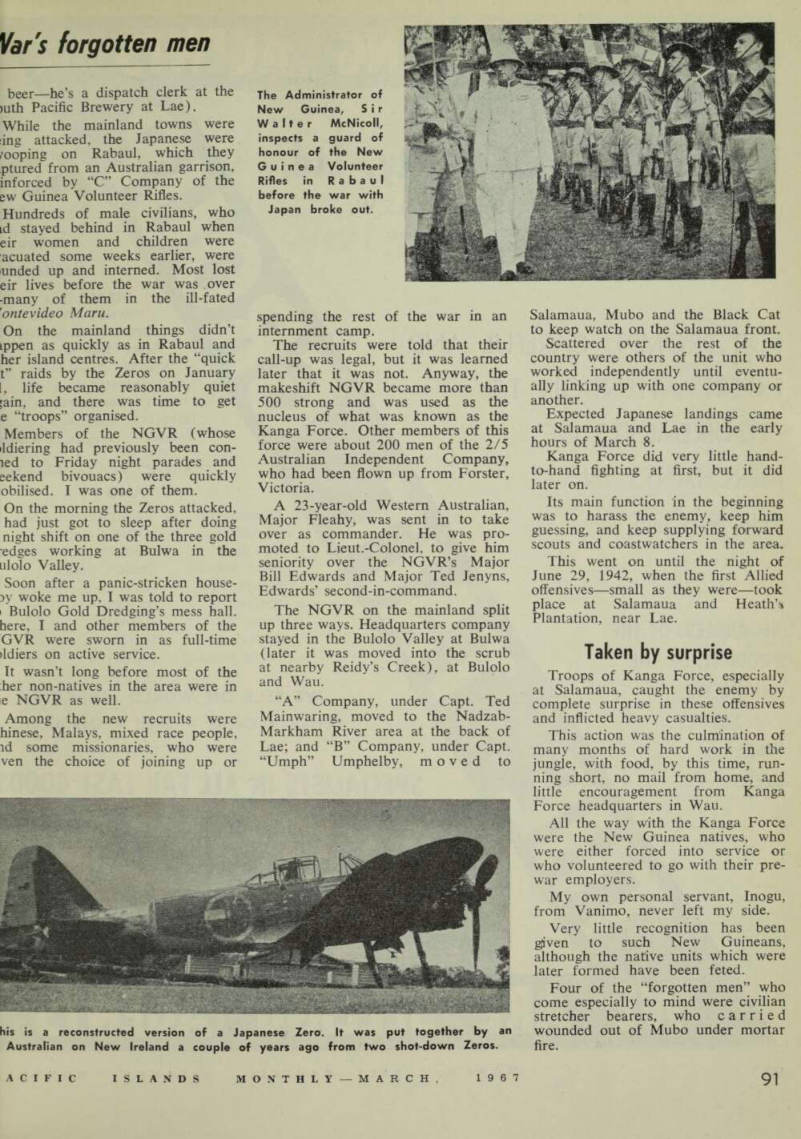 93
93 94
94 95
95 96
96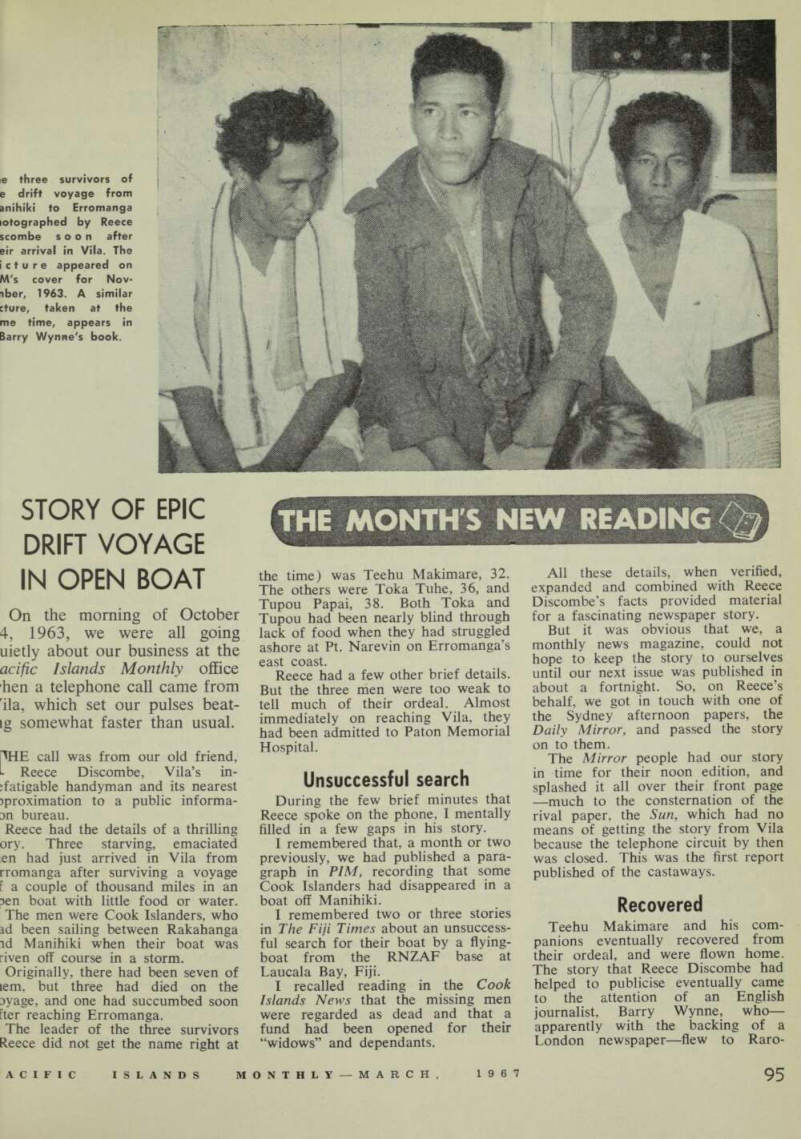 97
97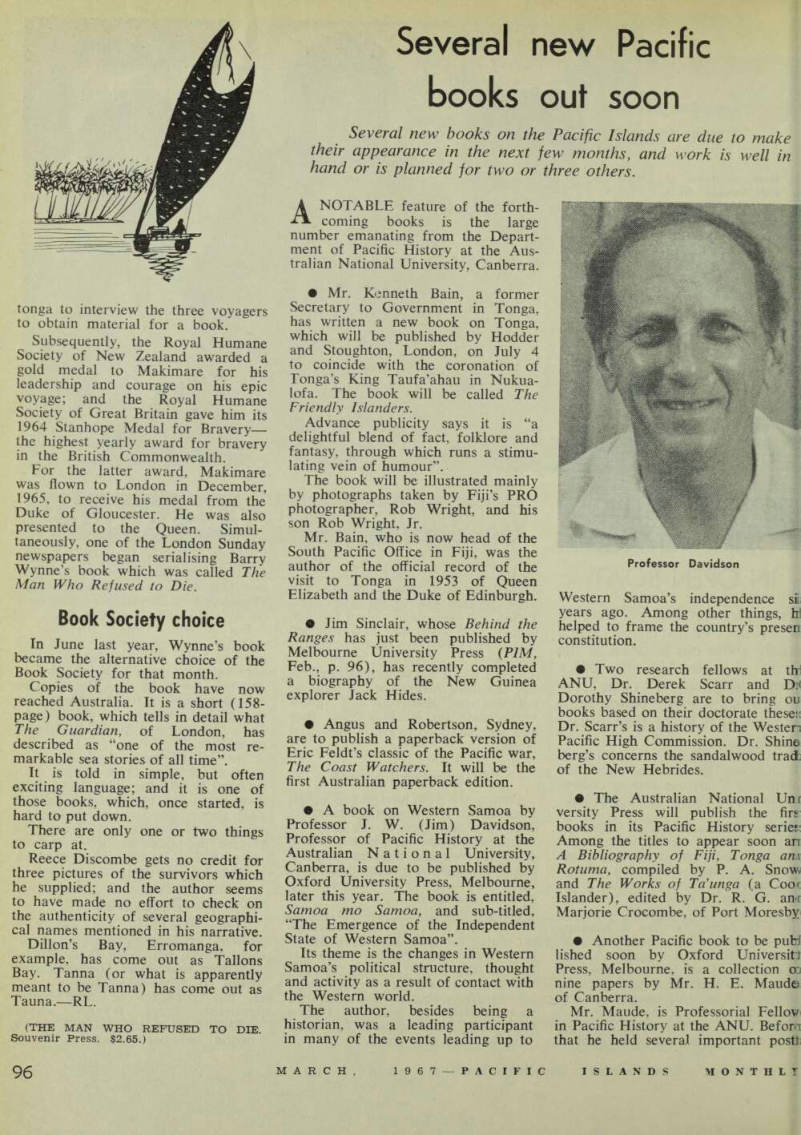 98
98 99
99 100
100 101
101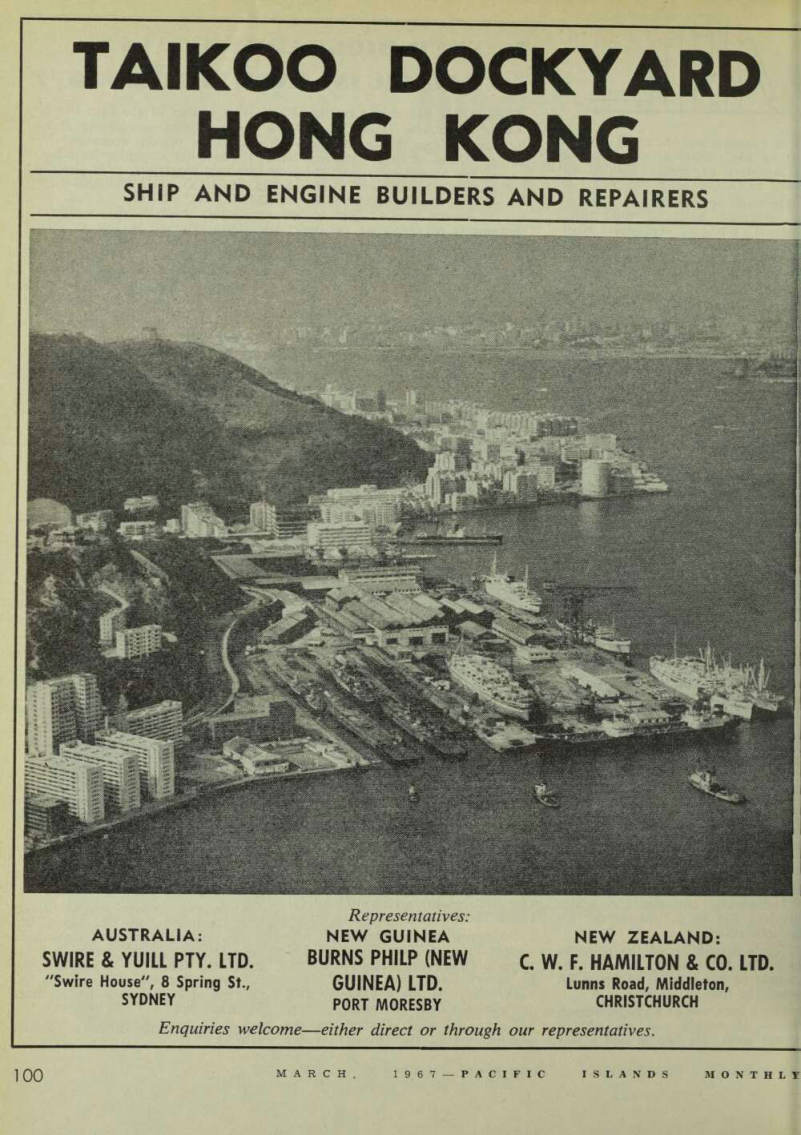 102
102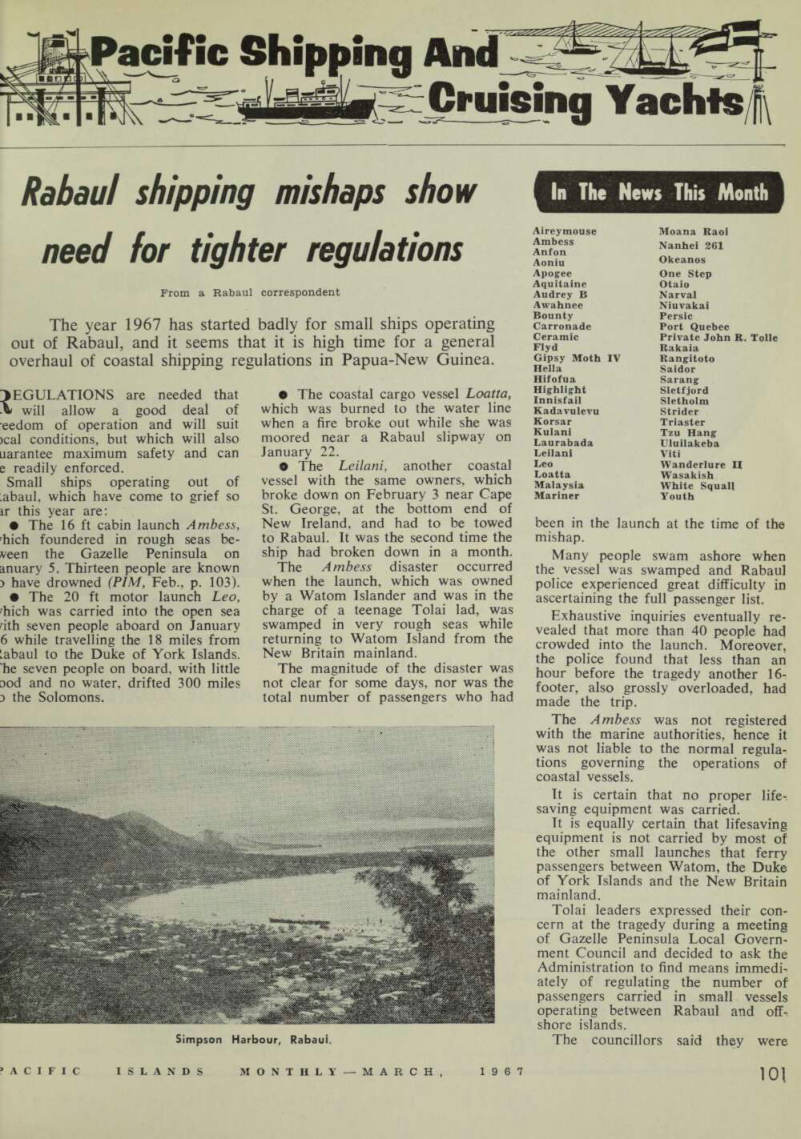 103
103 104
104 105
105 106
106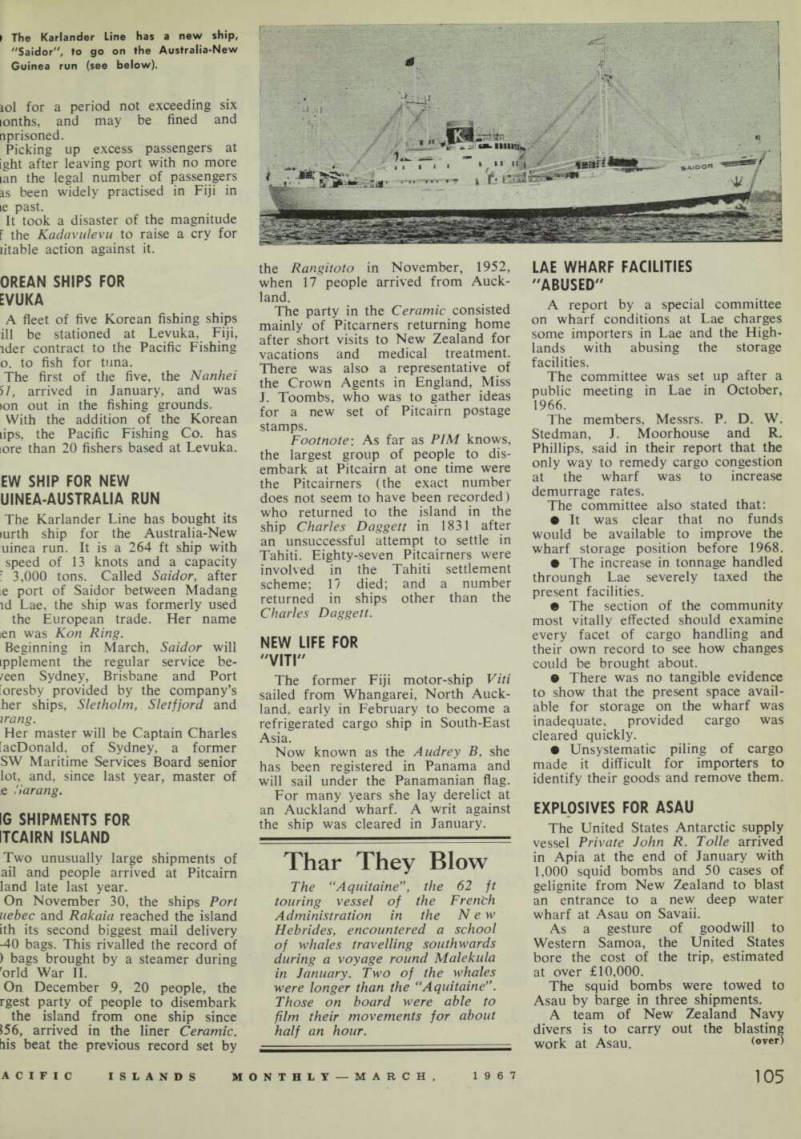 107
107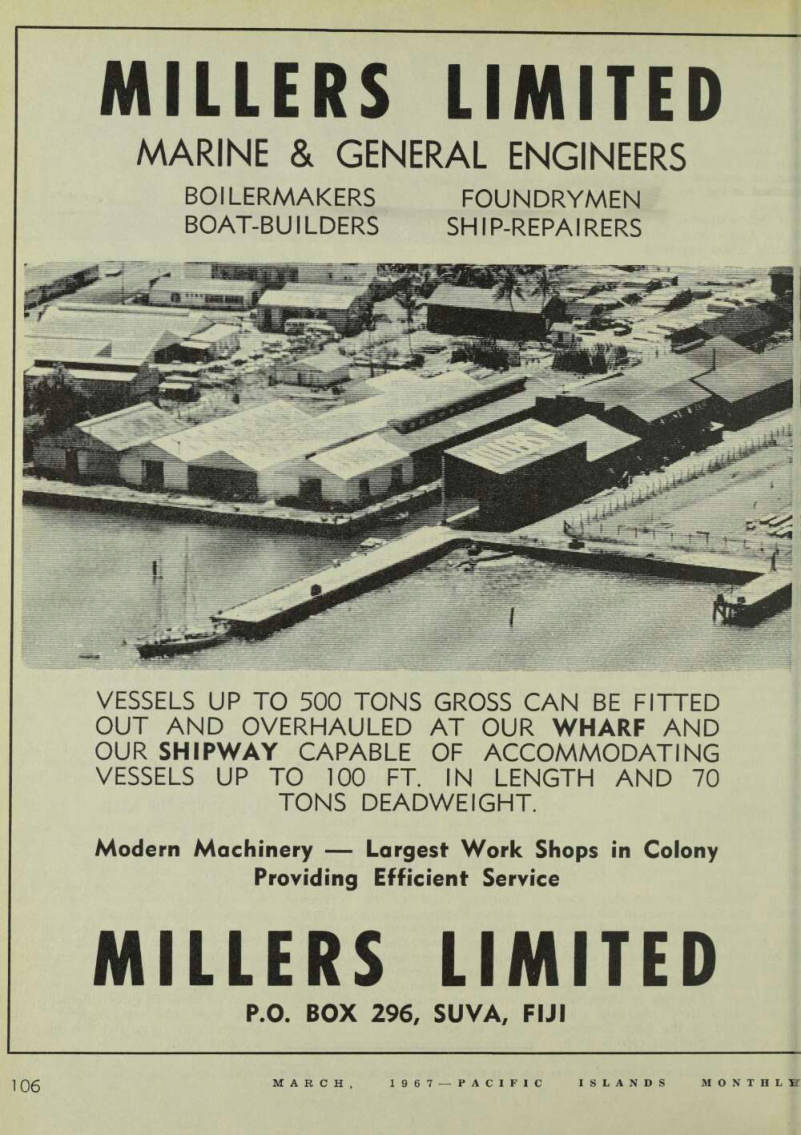 108
108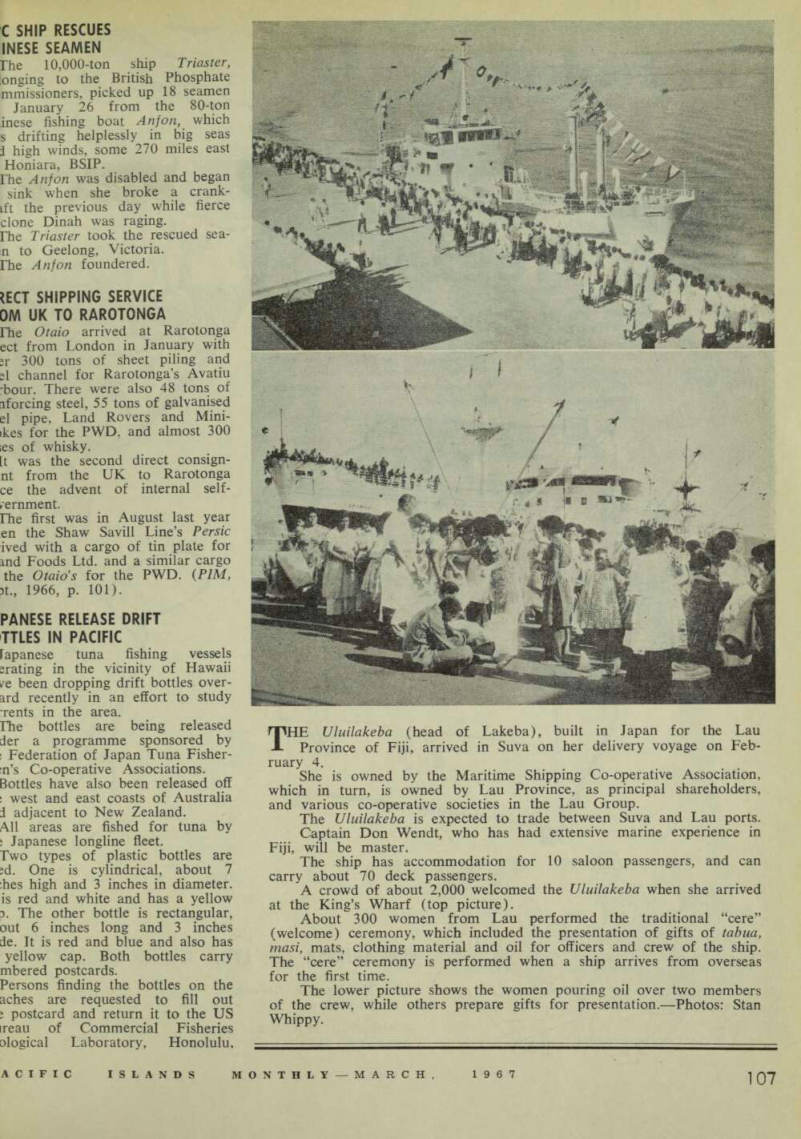 109
109 110
110 111
111 112
112 113
113 114
114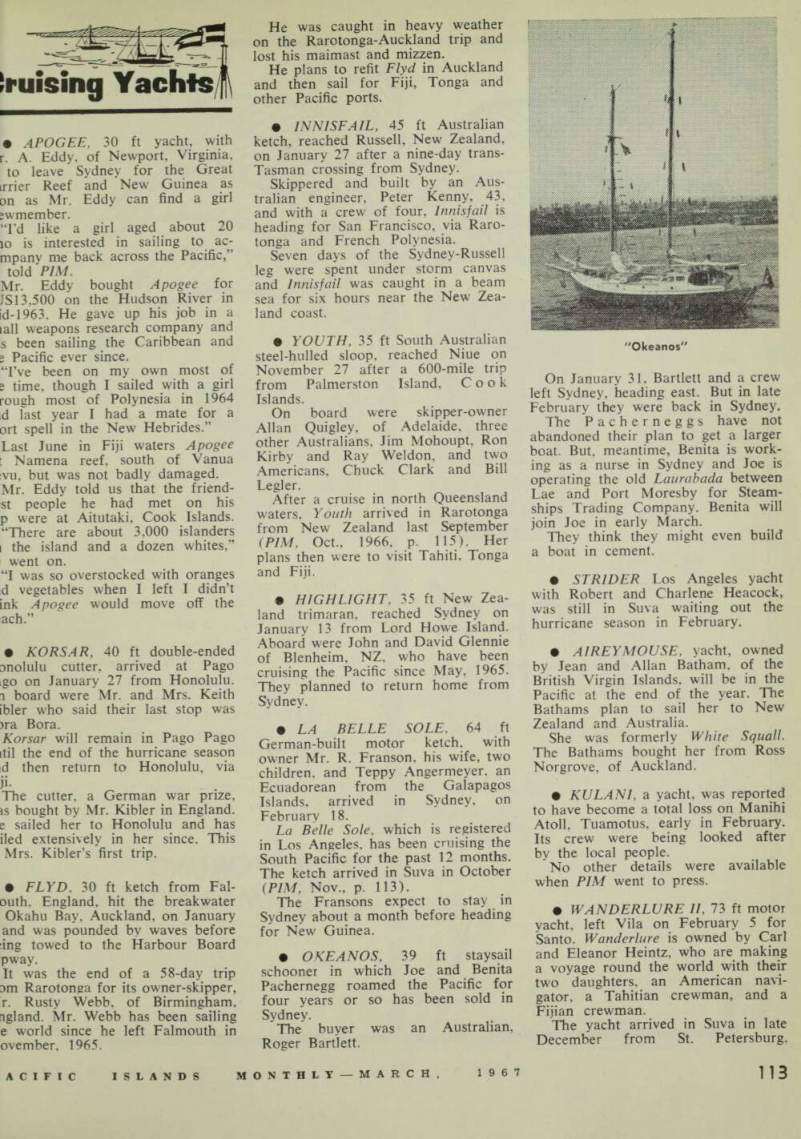 115
115 116
116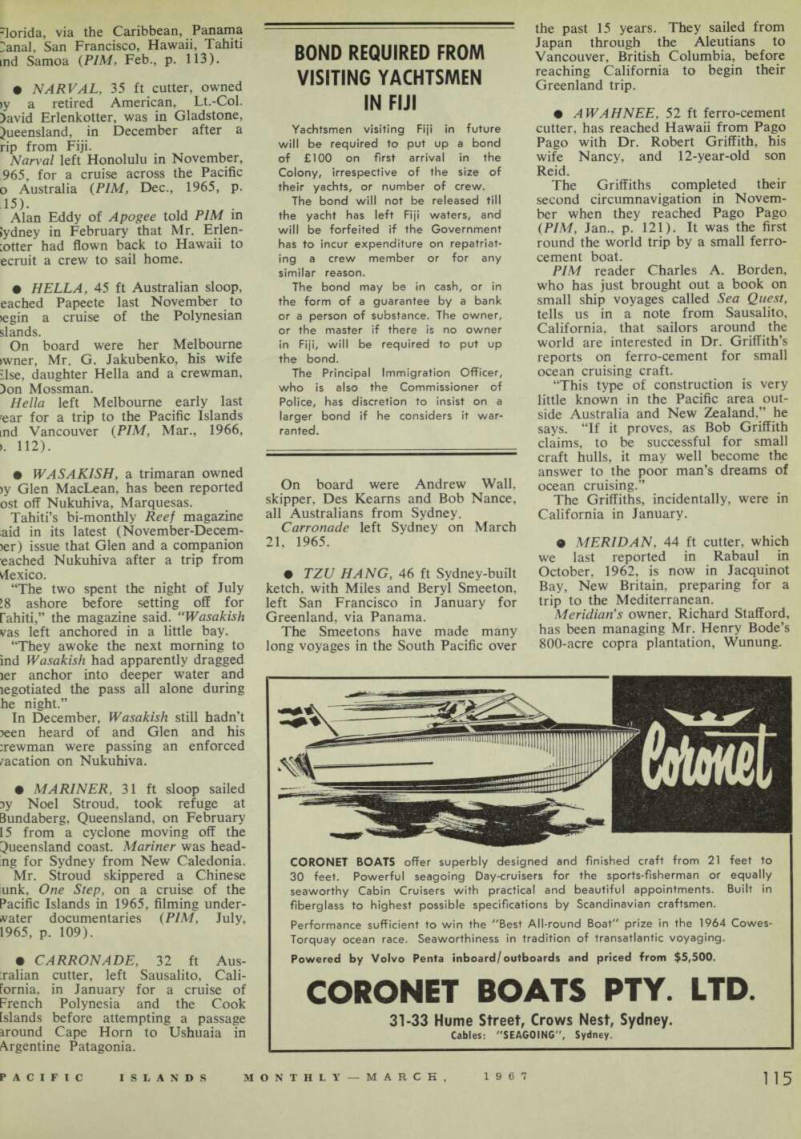 117
117 118
118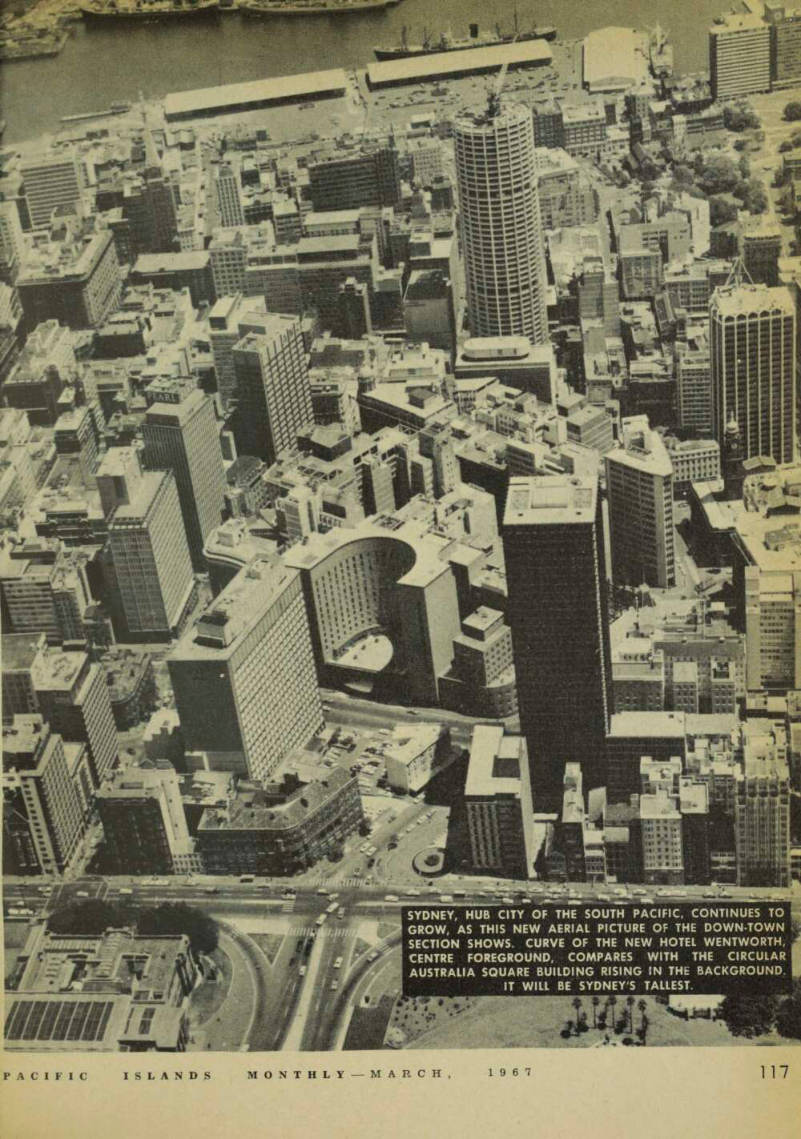 119
119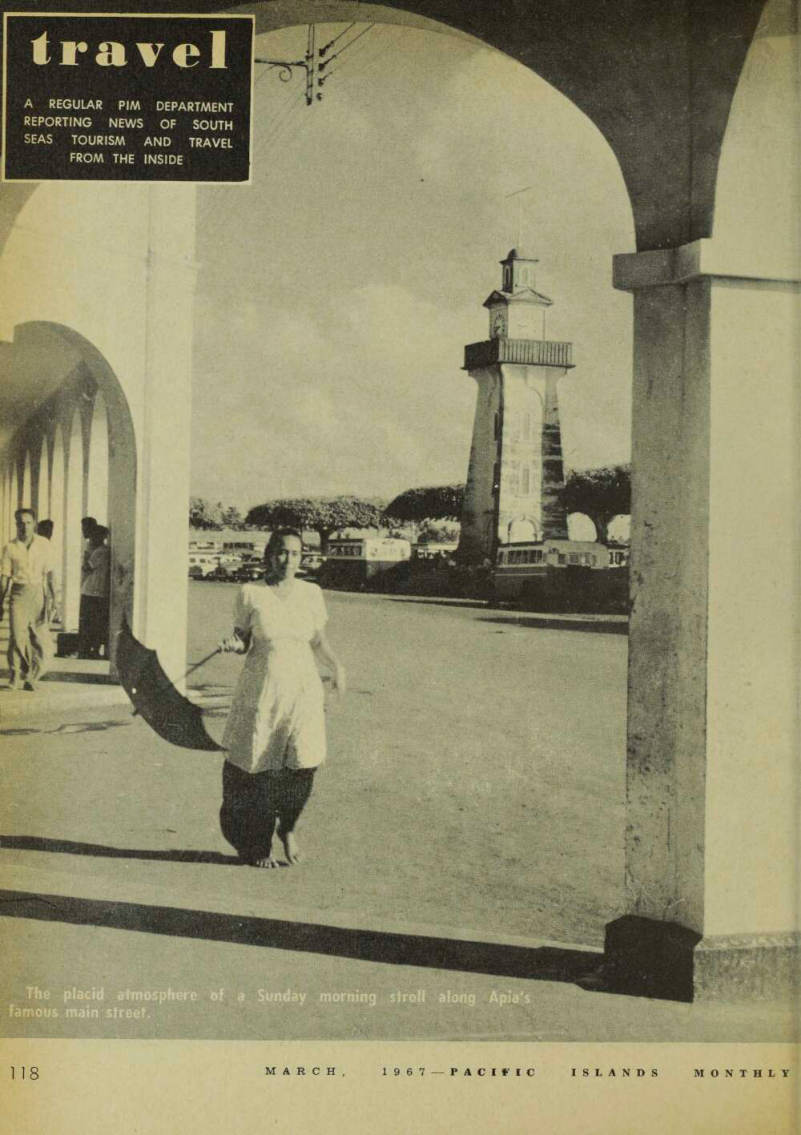 120
120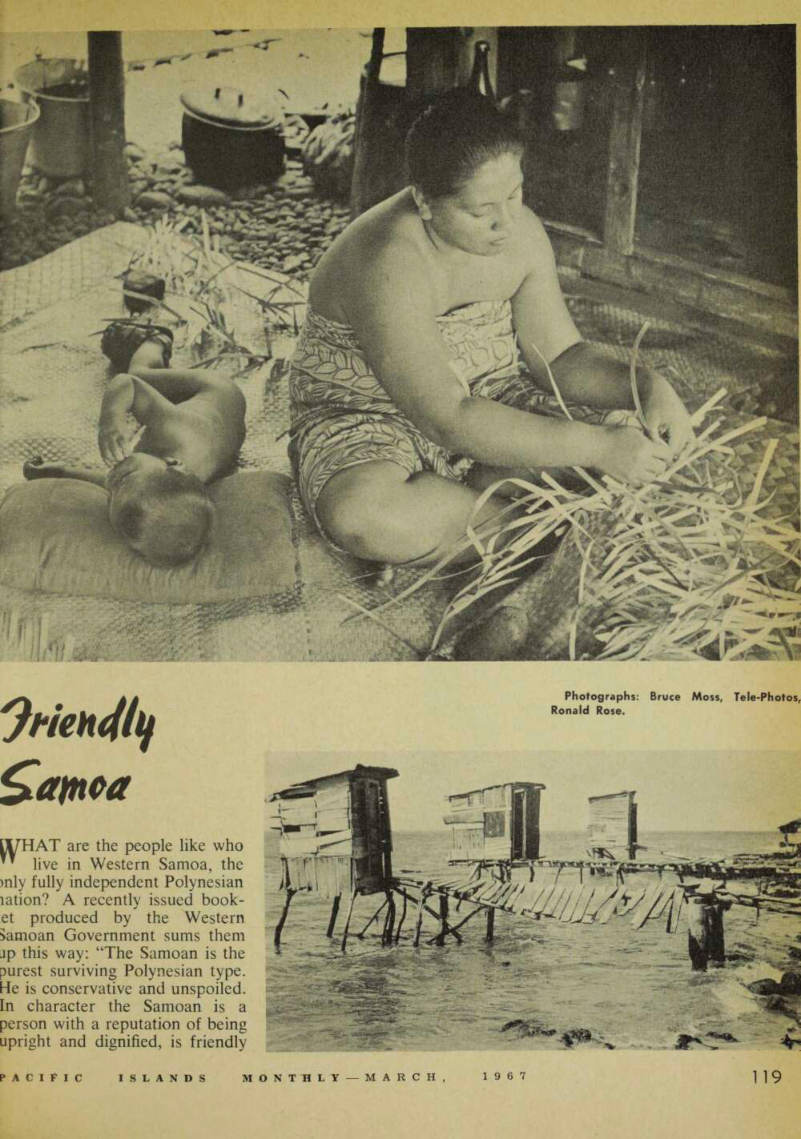 121
121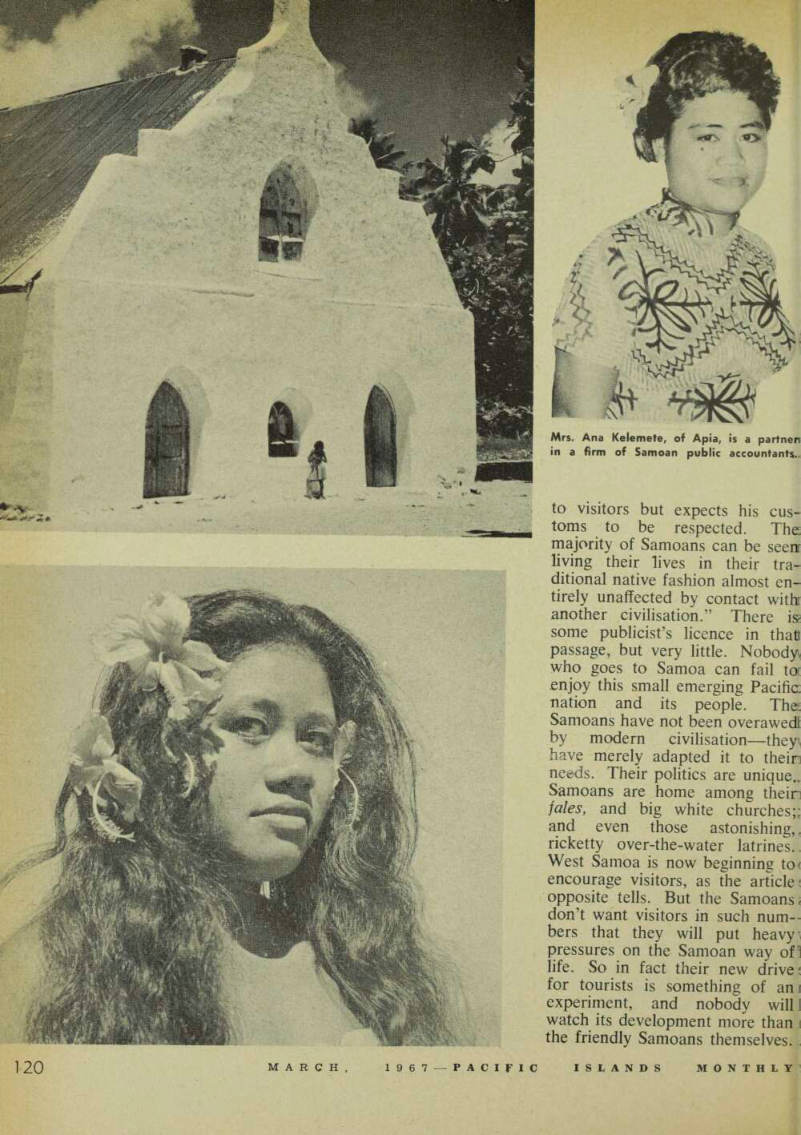 122
122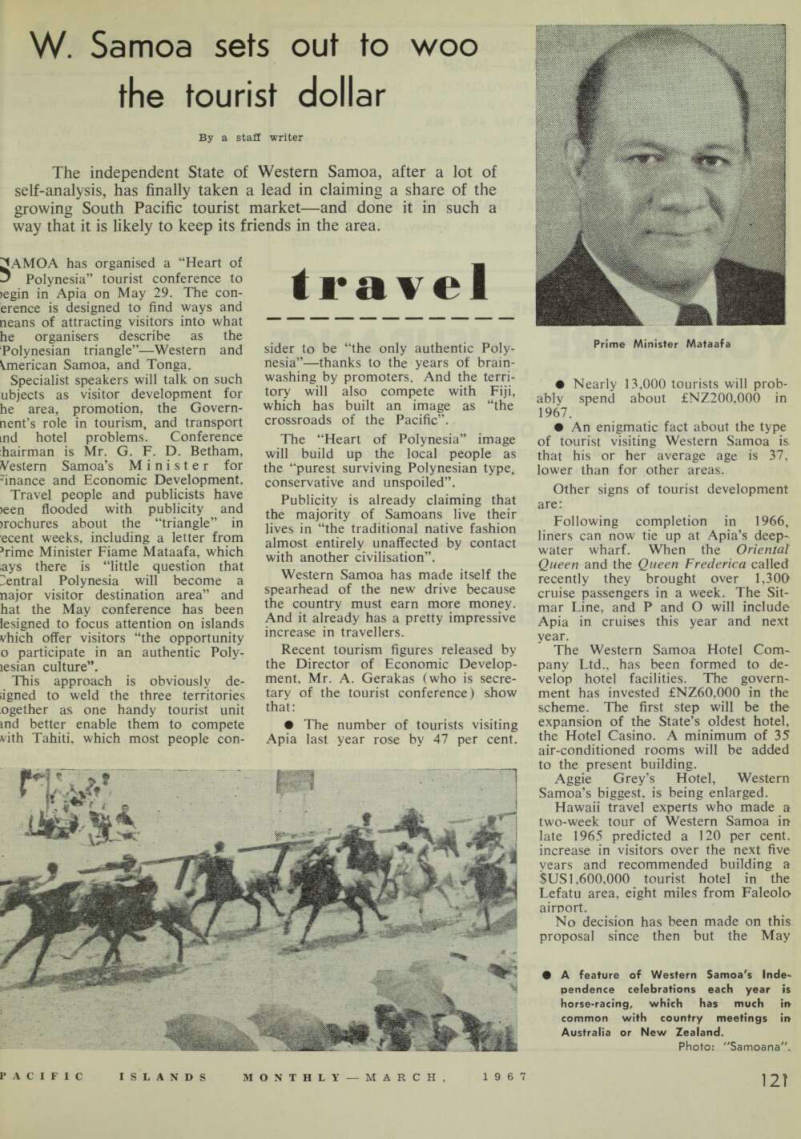 123
123 124
124 125
125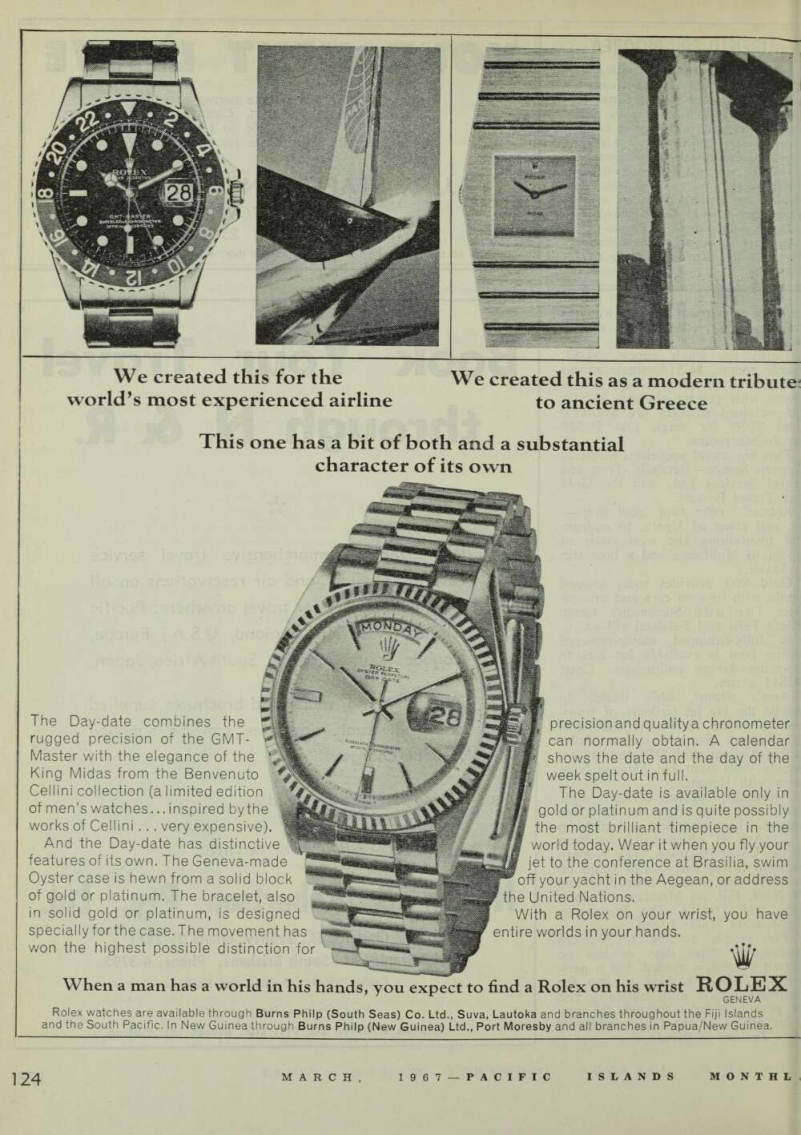 126
126 127
127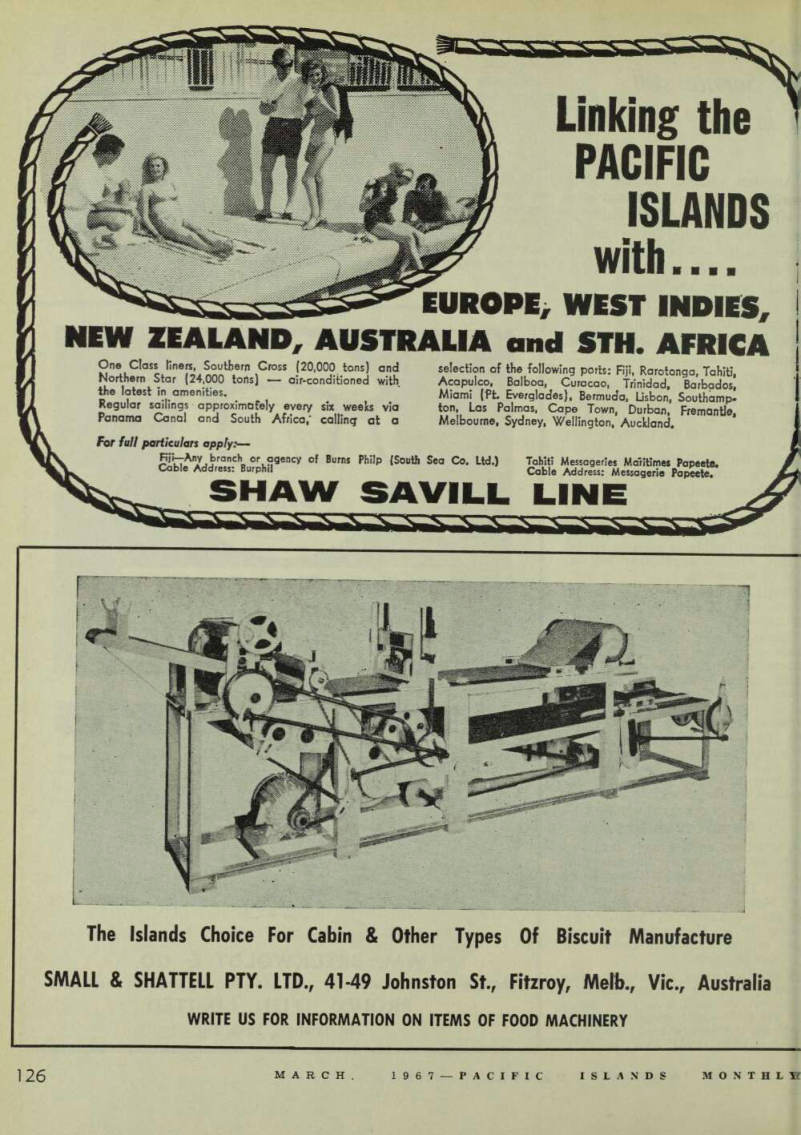 128
128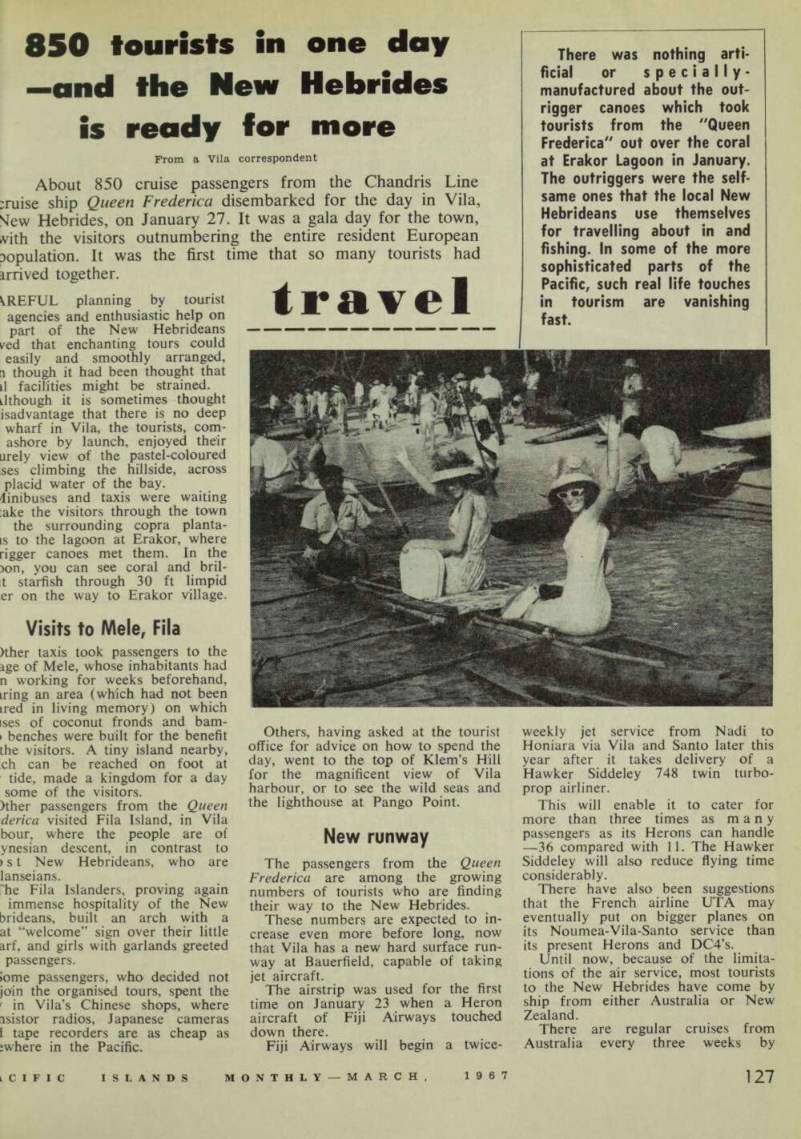 129
129 130
130 131
131 132
132 133
133 134
134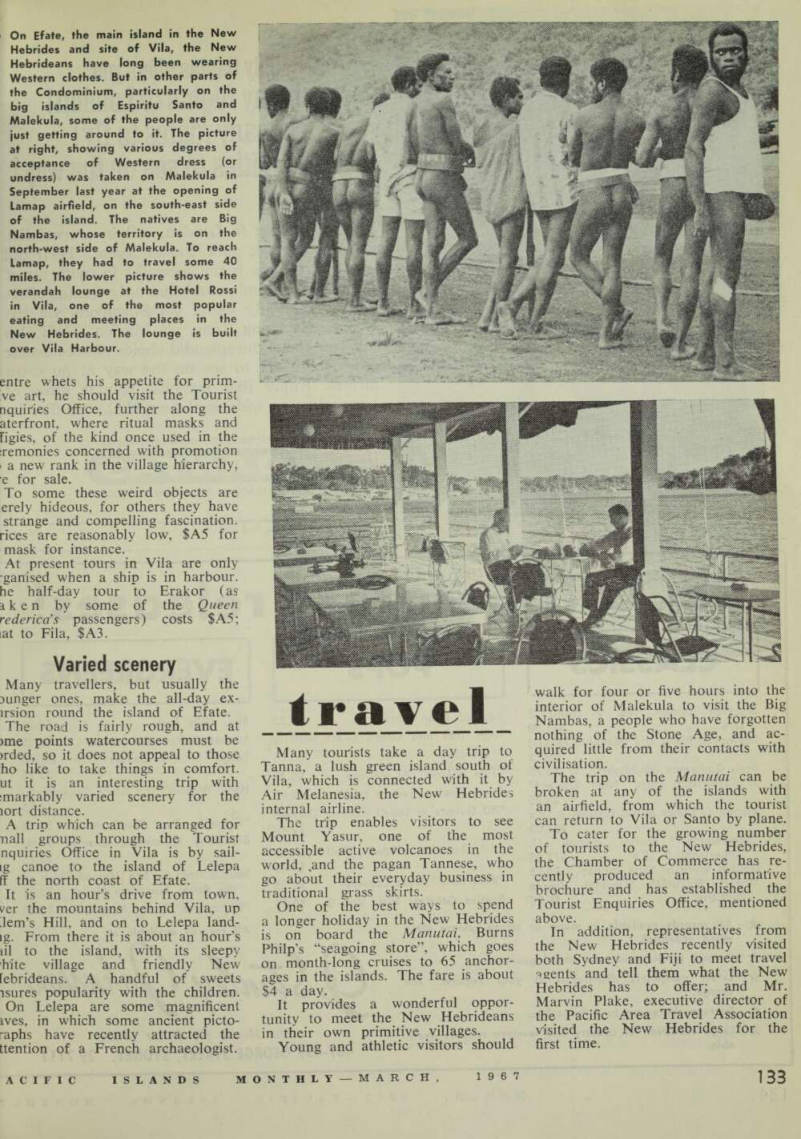 135
135 136
136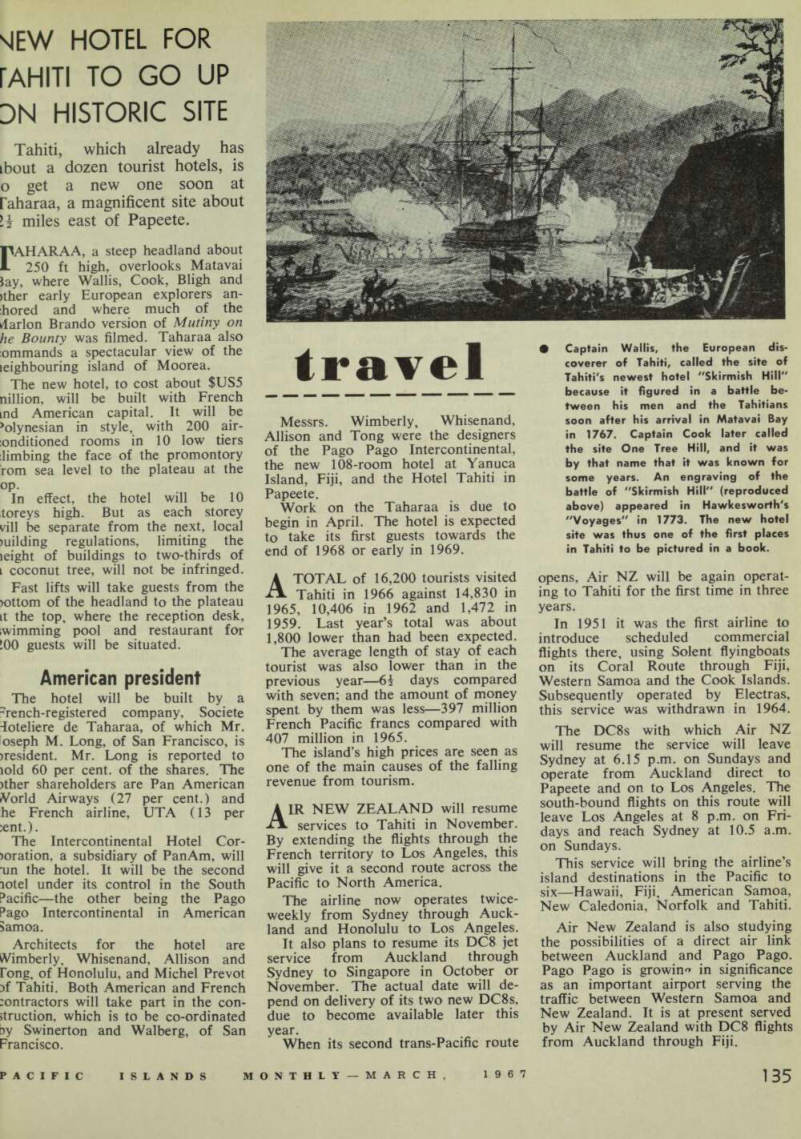 137
137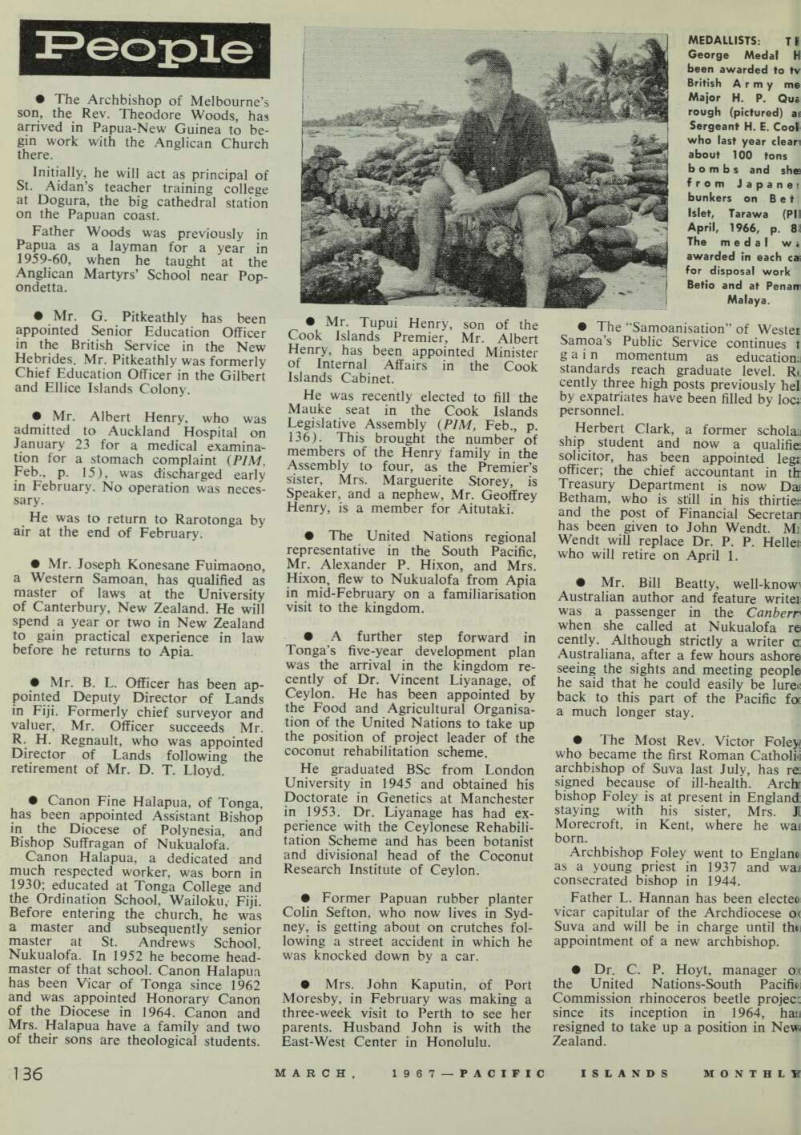 138
138 139
139 140
140 141
141 142
142 143
143 144
144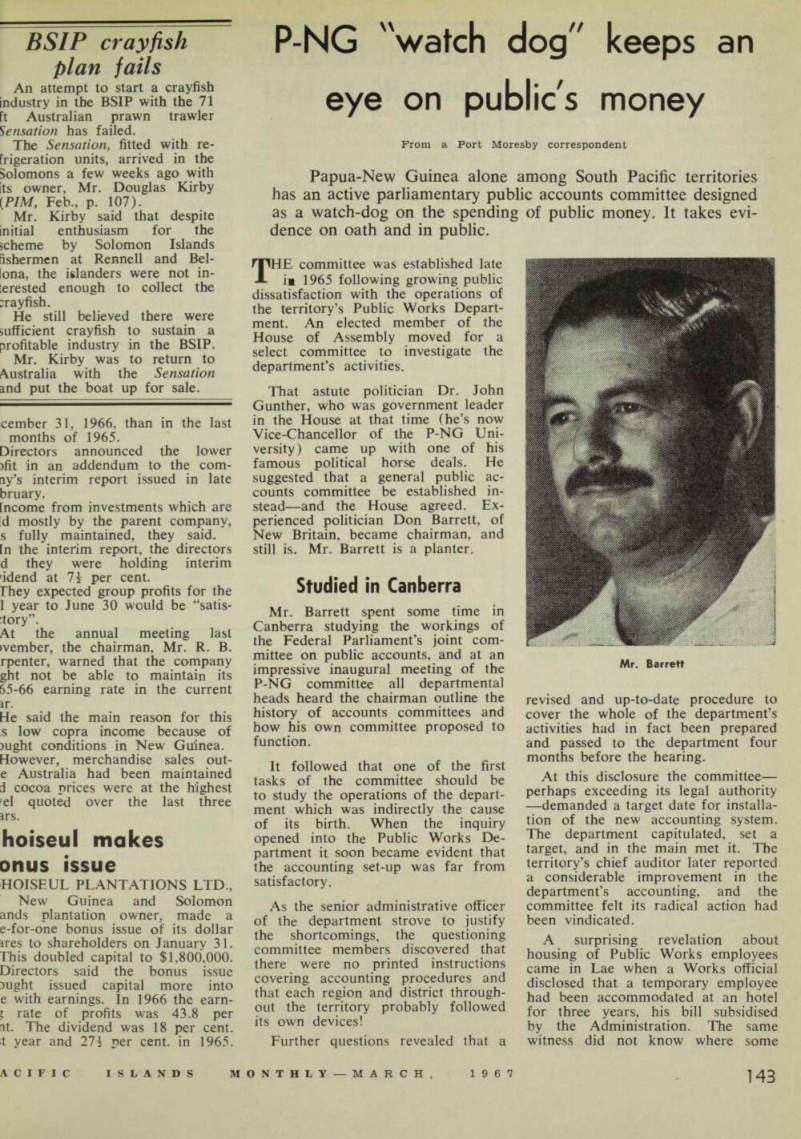 145
145 146
146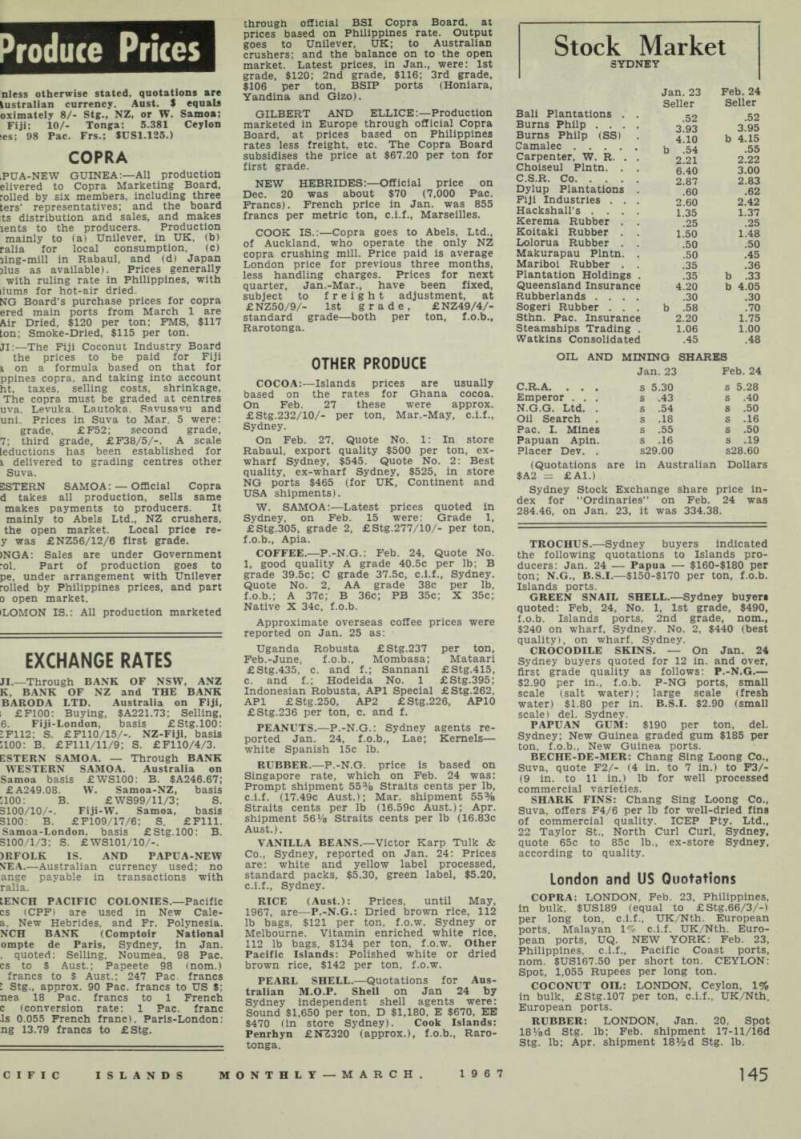 147
147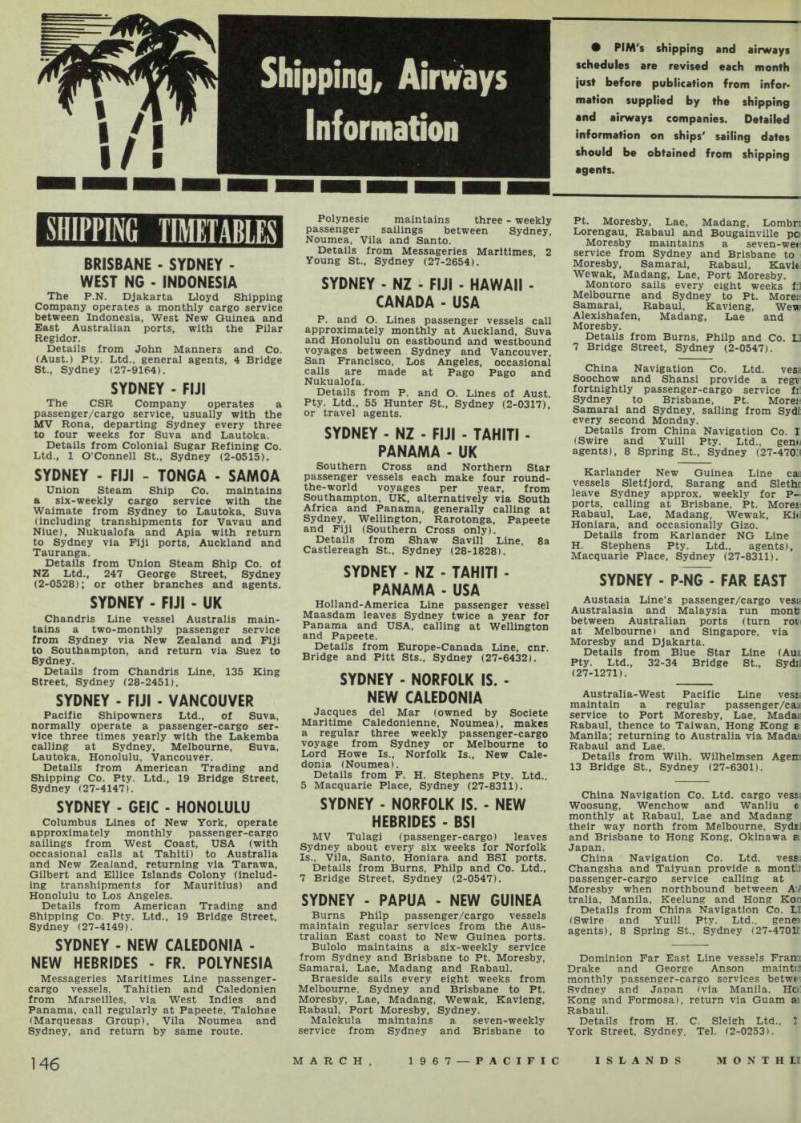 148
148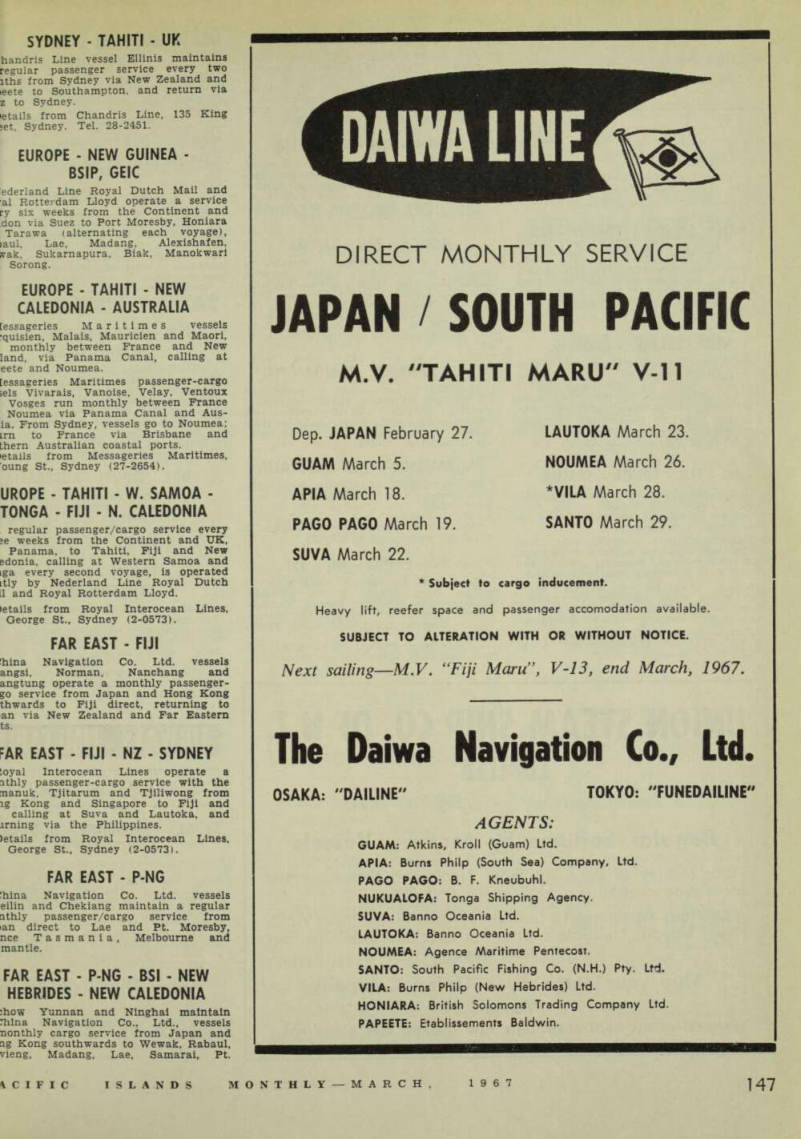 149
149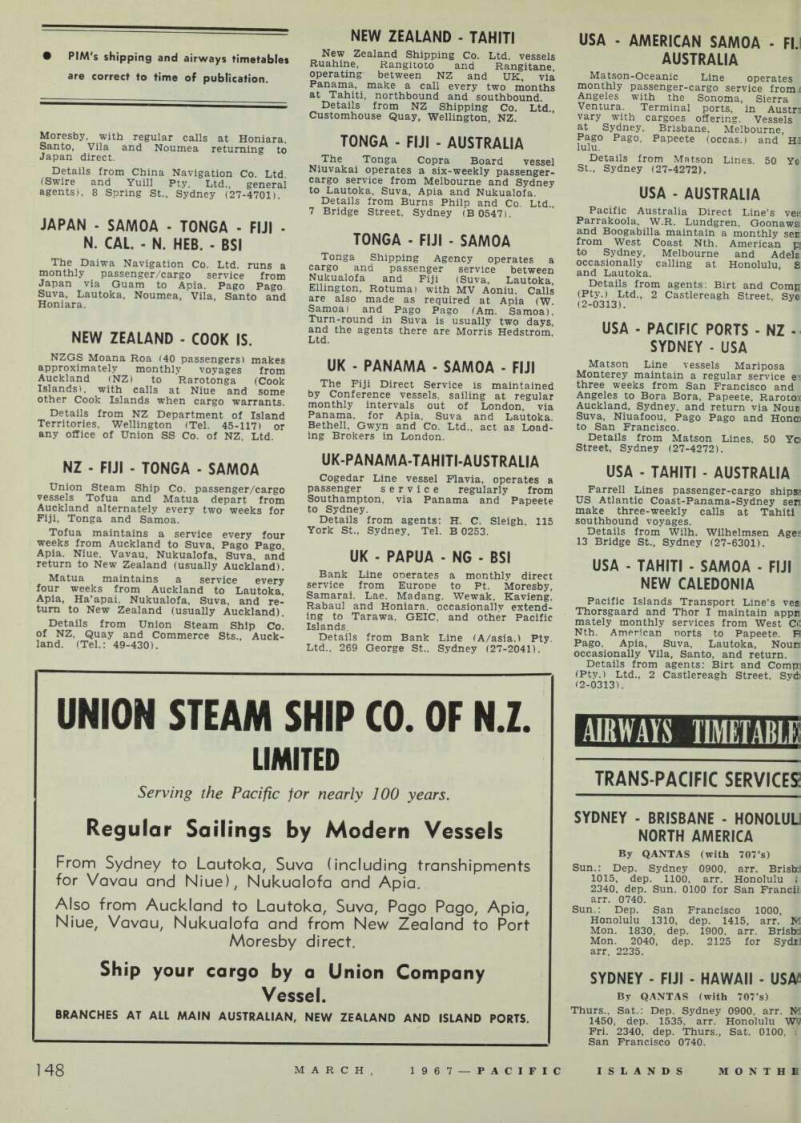 150
150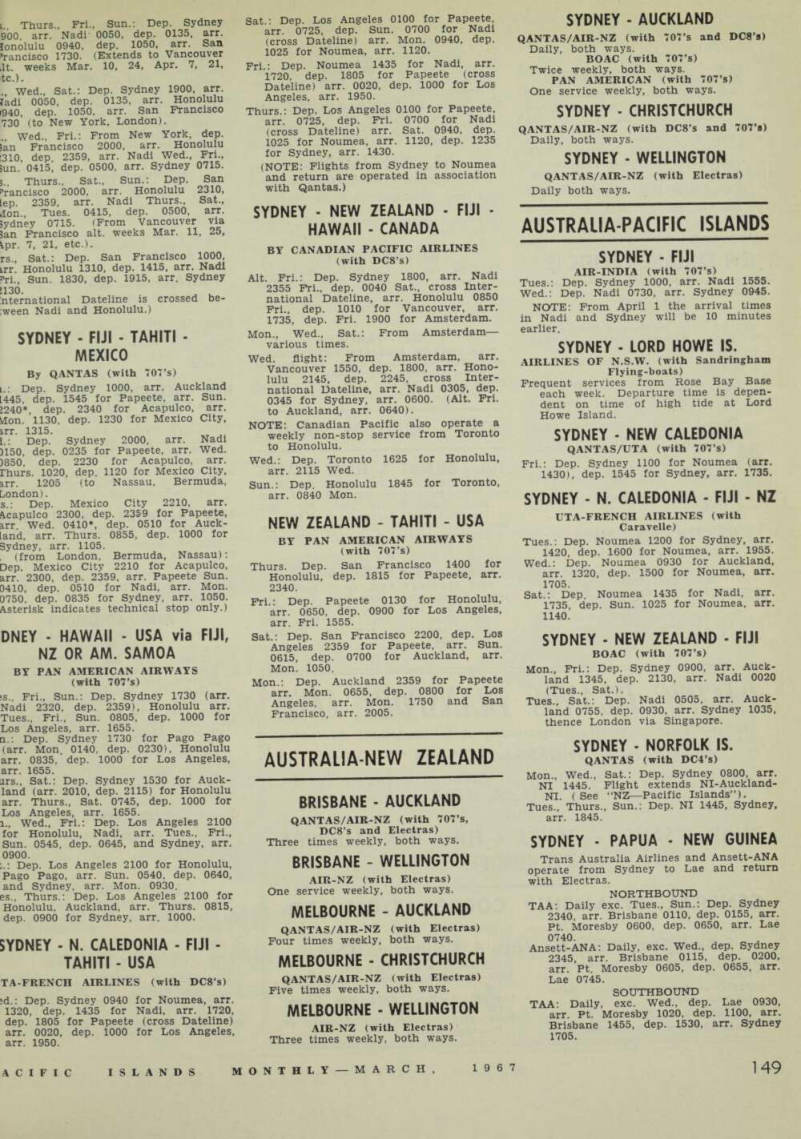 151
151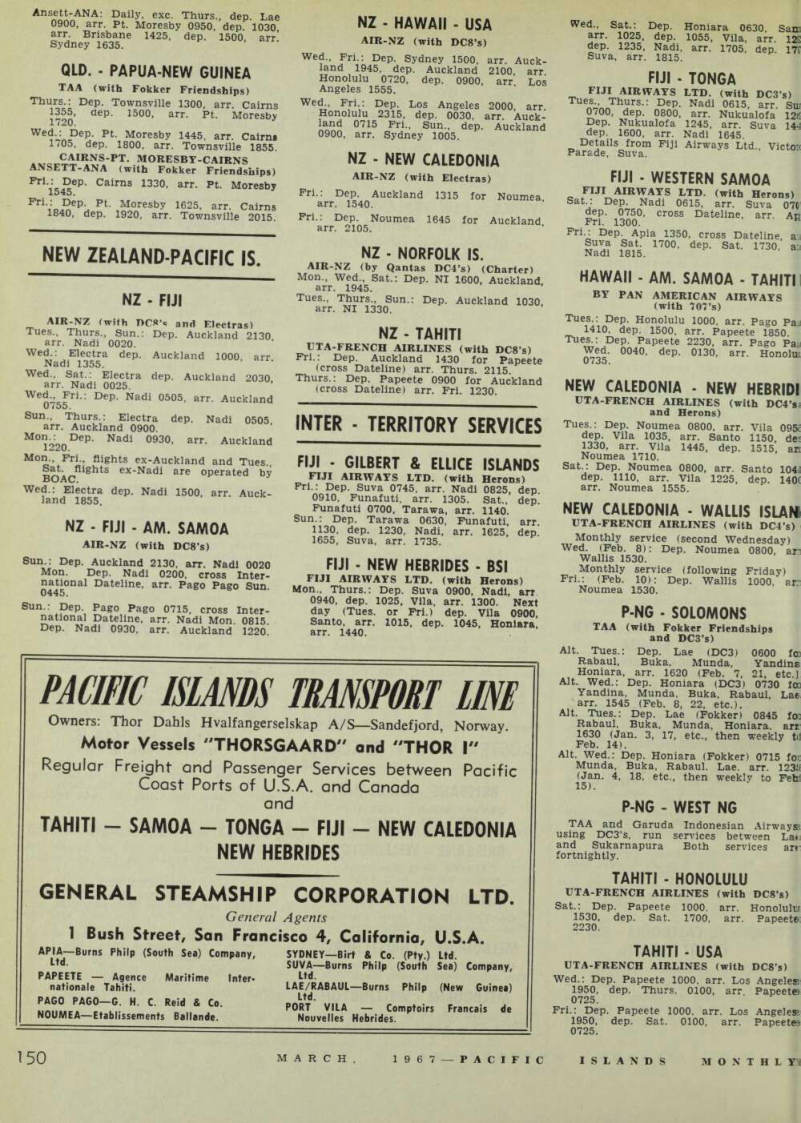 152
152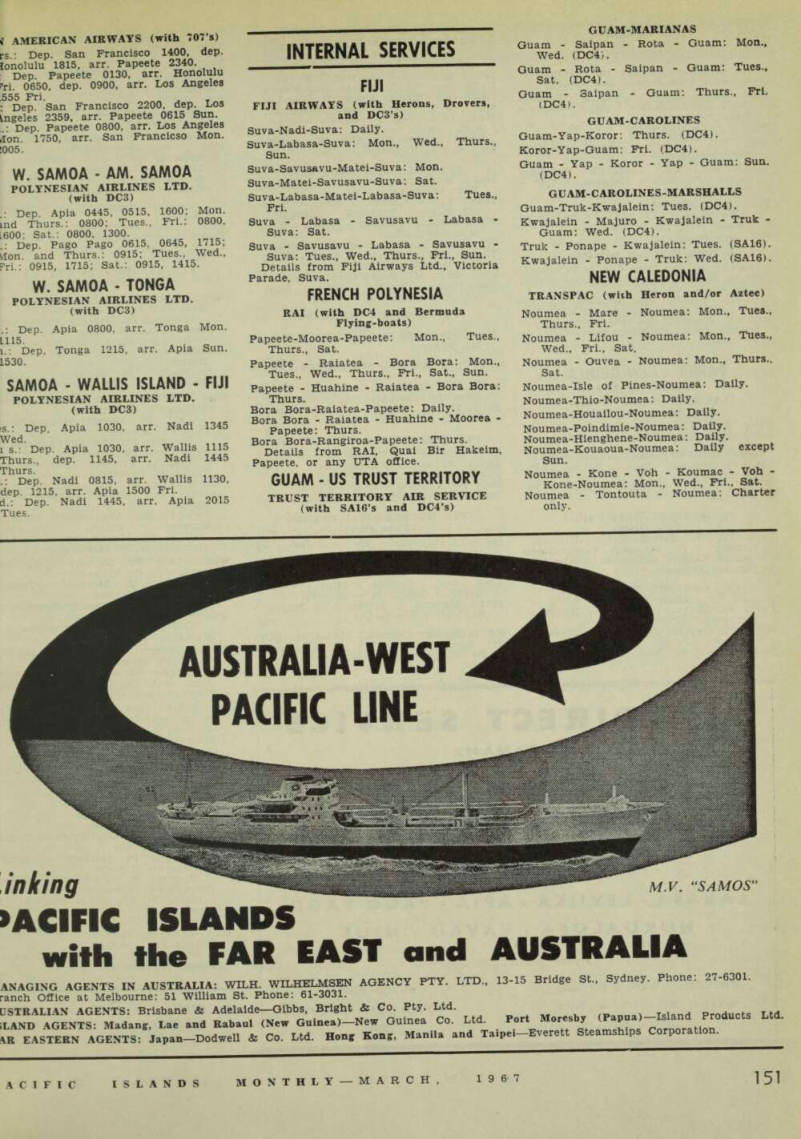 153
153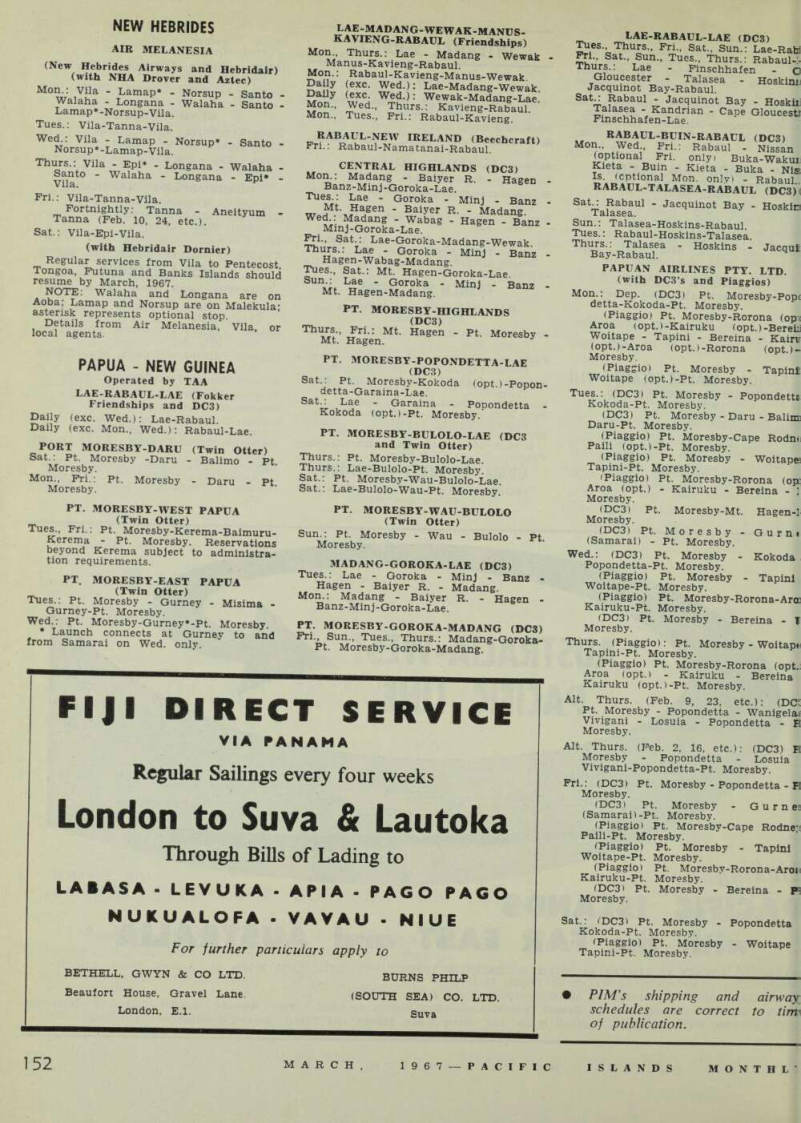 154
154 155
155 156
156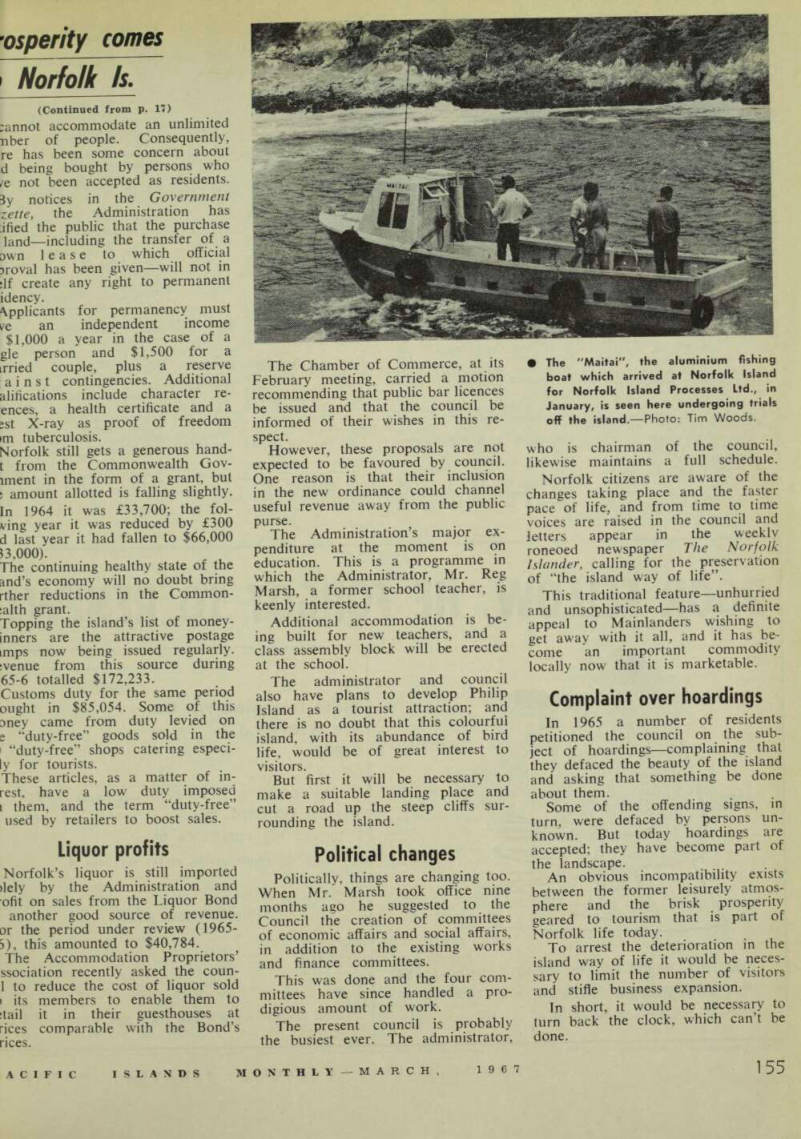 157
157 158
158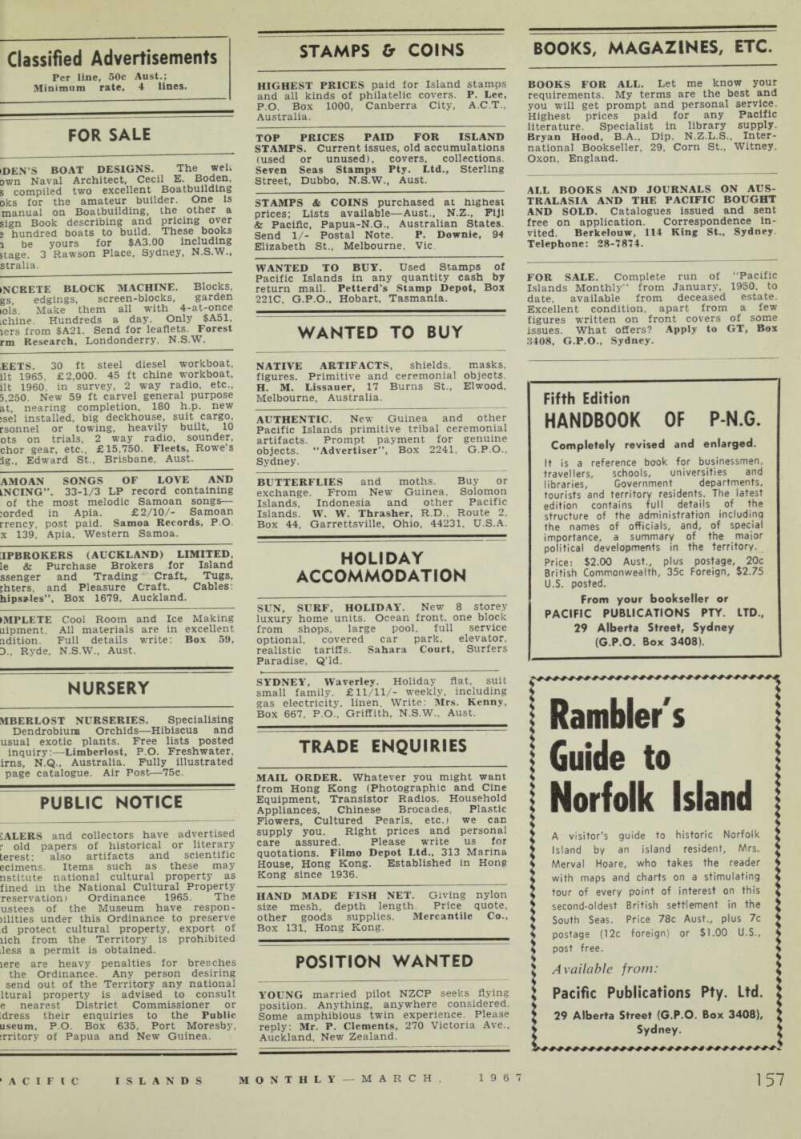 159
159 160
160 161
161 162
162 163
163 164
164