Pacific
Islands Monthly
The Neu/s Magazine Of The South Pacific
Since 1930
Big Business
In Islands
Stamps
3Aol Scandal
Shocks New
Caledonia
February,
1967
30 Aust. cents Three shillings 70 US cents 50 French Pac. frcs.
tered at G.P.0., Sydney, for nission by post as a newspaper.
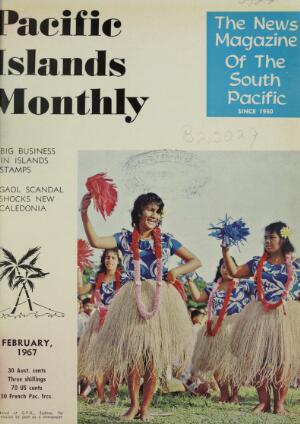
OUR COVER: It looks as if it's Tahiti! perhaps Rarotonga, Bora Bora or Aitut But the scene is, in fact, Nauru, Australian-administered phosphate isl« The girls were celebrating the open of the island's Legislative Council year. Photo; Australian News Information Bureau.
Advertisements & other items, pp. 2-8 (7 items)
February, 1967 Pacific Islands Monthi
fleet is twin-engined
Now TAA’s entire Sunbird
Twin engines mean greater dependability, and that's pretty important in Papua/New Guinea. Now, no matter where you fly in the Territory, you’ll have the double dependability of twin engines.
The twin-engined TAA Sunbird fleet now at your service numbers six aircraft types Friendships, DOS's, Twin Otters, Bristols, Aztecs and Beechcraft.
TAA’s all twin-engined fleet is the result of a continuing multi-engined fleet policy ... a policy of increased service to all peoples of the Territory.
For flight or charter bookings contact your Travel Agent.
Or call TAA: Port Moresby 2101 ■ Madang 78, 268 ■ Rabaul 2567 ■ Lae 2311 Goroka 8 ■ Mt. Hagen 4 ■ Wewak 103 Fly the Friendly Way
TAA
SUNBIRD SERVICES
TA A 1 704/66
rn > * I ■ «•
Players
GOLD LEAF
indisputably
die top
selling
cigarette...
nothing
!succeeds
like Quality
The same exclusive blend of the world’s finest Virginia tobaccos that has made I Player’s GOLD LEAF a top selling cigarette in England, has been matched right here to make Player’s GOLD LEAF the top selling cigarette in the Territory. Buy a pack today and discover the difference Player’s GOLD LEAF makes to your smoking enjoyment.
one of the great
cigarettes
X2ISC-1 / 6 6
Mothers 1
Give your children the B Group Vitamins
they need for energy - every
Give them VEGEMITE! It's absolutely delicious spread on toast or in sandwiches. And just one teaspoonful supplies half their daily requirement of the B Group Vitamins, the energy vitamins their bodies can’t store up. It's so easy to ensure that your family stays happy, healthy and bouncing with vitality, when you give them VEGEMITE every day!
VEGEMITE is pure concentrated yeast extract, the richest natural source of the B Group Vitamins. for good food and good food ideas
KRAFT
‘Reg d Trade Marks TTmnirrnTiTmniTTm
KRAFT
irr m 06 m m mi m m m >3? m.
BURNS PHILP
GENERAL MERCHANTS AND SHIPOWNERS
SHIPPING, CUSTOMS AND FORWARDING AGENTS
Fiji:
SUVA.
LEVUKA.
LAUTOKA.
LABASA.
SAVU SAVU.
BA.
SiGATOKA.
TAVUA.
ROTUMA ISLAND.
TAVEUNI.
BRANCHES
Samoa:
APIA.
PAGO PAGO
Tonga:
NUKUALOFA.
HAAPAI.
VAVAU.
NORFOLK ISLAND
NIUE ISLAND
AGENTS FOR:
QUEENSLAND INSURANCE CO. LTD.
BURNS PHILP TRUST CO. LTD.
SHELL COMPANY (P. 1.) LTD.
OVERSEAS AGENTS
BURNS, PHILP Cr CO. LTD., Sydney.
BURNS, PHILP Cr CO. LTD., London.
BURNS PHILP CO. OF SAN FRANCISCO
SHIPPING AGENCIES
• The New Zealand Shipping Co. Ltd. • Shaw Savill & Albion Co. Ltd. • Port Line Ltd. • Bank Line Ltd. • General Steamship Corporation Ltd. • Blue Star Line • Cunard Line • Compagnle des Messageries Maritimes • British India Steam Navigation Co. Ltd. • Royal Interocean Lines • Nederland Line Royal Dutch Mail/Royal Rotterdam Lloyd.
EXCLUSIVE DISTRIBUTORSHIPS INCLUDE
• AKAI TAPERECORDERS
• DUNLOP PRODUCTS
• EPIGLASS PRODUCTS
• FERGUSON TRACTORS
• HELENA RUBENSTEIN
• HITACHI ELECTRONICS
• HOLDEN VEHICLES
• JOHNSON'S WAXES
• ROLEX WATCHES
• REVLON COSMETICS
• PENTAX CAMERAS
• SUNBEAM APPLIANCES
m i¥r
e wrappe
pica
« * s noTT nice & m & \ * *■ * ¥*** V 2^ a ri .
Arnott’s Nice Biscuits Crisp and sugar-sprinkled Arnott’s Lemon Crisp Biscuits With tangy lemon centres
slice
TOgHg
Tor^9 e ,
•So. mm m
whwtmmi
shbei>d|®J
Arnott’s Orange Slice Biscuits Tangy orange cream in biscuit sandwich Arnott’s Shredded Wheatmeal Biscuits Golden-grain goodness for morning tea.
H 699
; Blscujlt
POUND
HALF
Arnott’s MILK ARROWROOT Biscuits All-day energy for children a favourite with all the family. m Arnott’s SAO Biscuits Ideal for snacks, suppers or between meals. c* Arnott’s SCOTCH FINGER Biscuits Chunky and butter-rich, with the true shortbread flavour. * Arnott’s CHEESE JATZ Biscuits Crisp as could be with a fine cheese flavour perfect for entertaining.
There is no Substitute for Quality
% % *tmznzf o r*AOt lm
Condensed
ib»*P
SWEE
■ Hi . 8* ( -•
NEW
CARNATION
PRODUCT!
Now you can enjoy Peacock Full Cream Sweetened Condensed Milk... a top quality condensed milk made by the producers of Carnation Evaporated Milk. It’s on sale at your local store at a value-for-money price.
1
CIFIC ISLANDS MONTHLY— FEBRUARY, 1967
2
FEBRUARY, 1967 PACIFIC ISLANDS MONTHS
3
CIFIC ISLANDS MONTHLY FEBRUARY, 1967
4
FEBRUARY, 1967 PACIFIC ISLANDS MONTH
5
CIFIC ISLANDS MONTHLY FEBRUARY, 1967
Pacific Islands
Monthly
Owned And Published By
Pacific Publications Pty Ltd
29 ALBERTA ST. (G.P.O. BOX 3408), SYD
Telephones: 61-9197, 61-7101, 61-436'<
Telegraphic Address: PACPUB, Sydney
Chief Executives
Managing Director: R. W. Robson.
General Manager: Selwyn Hughes.
Book Publishing Division
Editor: Judy Tudor.
Pacific Islands Monthly
Editor: Stuart Inder.
Assistant Editor; Robert Langdon
Branch Offices
Melbourne: Newspaper House, 247 Collins; Tel.: 63-7053.
Fiji: Pacific Publications (Fiji) Ltd., Fiji T 1 Building, 20 Gordon Street, SUVA, Tel.: 25c Fiji Times Office, Vidilo Street, LAUTOH Tel.: 60-422.
Papua-New Guinea: Pacific Publications (II Pty. Ltd. Representatives: Mrs. Joan Cat P.O. Box 16, PT. MORESBY (Tel.; 2504); , Pat Robertson, P.O. Box 227, LAE; Mr. S Simpson, P.O. Box 154, RABAUL (Tel.: 25
Representatives
New Zealand: J. D. Whitcombe, C.P.O 2229, Queen Street, Auckland. Tel.: 760 C Hawaii: C. C. Spencer, 203 Yap Bldg . "
Waialae Ave., Honolulu. Tel.: 7755385 United States: Mrs. A. L Craib, 1631 Avenue, Oakland, California, 94621.
Tel.: LOckhaven 8-1201.
United Kingdom: S. R. Warman, Candles House, 116-126 Cannon Street, London, E; Tel.: Mansion 3674/7.
H. A. Mackenzie, 4A Bloomsbury Squ London, W.C.I. Tel.: Holborn 3779
Agents
All main trading firms and stores in the Pacific Islands.
Pacific Publications Pty. Ltd. is the Austr* agent for THE FIJI TIMES
Subscription Rates:
Australia: 30 cents Aust. or 3/- ($3.60 A or 36/- for 12 months). New Zealand,, British Commonwealth South Pacific Territoc Tonga, New Hebrides and Western Samoa; ; local currency (36/- local currency per annr Elsewhere in the South Pacific: 50 Frn Pacific francs or 70 US cents (600 Frn Pacific francs or $B.OO US posted per annr Posted to USA, $B.OO US per annum. Po to the UK and all other countries: £Stg "Pacific Islands Monthly" is air-freighterv all subscribers and agents in the South Pao copies to other areas go by surface man
Advertisements & other items, p. 8 (1 item)
6
FEBRUARY, 1967 PACIFIC ISLANDS MONTH LJ
In This Issue
Neral
i Business in Stamps 11 mds Policemen (pictorial series) ... 21 w Year Honours List 33 OPA Prizes 69 :>ks for Islanders Learning English .. 97 dy of Rainfall in Pacific 97 ;earch on Cone Shells 109 3t. Cook Memorial Expeditions ... 11l |her Copra Prices 142 3t. Gillespie Pty. Ltd. Sold 142
Lerican Samoa
happy Samoans (letter) 51 re Tourists 131
Ok Islands
>ert Henry in Hospital 15 dy of Tuna Possibilities 61 >dmer" Breaks Down 107 I I Swimmer's Success 16 jor Problems for Government ... 25 w Suva Buildings 27 prentices', Managers' Courses ... 65 dent Charcoal 69 rine Department Functioning 107 ight, Passenger Rates Up 107 uman Gets First Sea Certificate ... 109 mging Face of Suva (pictures) ... 117 iw Zest Needed in Tourism 121 m Plane for Fiji Airways 127
Gilbert And Ellice Islands Colony
Resident Commissioner's Functions ... 19 Training Vessel 105 Ship Sold to BSIP 107 Tourism Study 125
New Caledonia
Nouville Prison Scandal 15 New Aircraft for Transpac 133 Interest in "Niaouli" 142
New Hebrides
Red Cross (letter) 51 Vanua Lava Sulphur Deposits 85, 86 Hiu's Prehistoric Michaelangelo 91 Captain Athol Rusden 101
Niue
New Steps Forward 39
Norfolk Island
Noted Yachtsman's Nostalgia 17 No Nobbs in Nobbs Store Now ... 33 "Morayshire" Picture Sought 39 Duty Free Shops 135
Papua-New Guinea
New Administrator 9, 19 1969 Port Moresby Games 16 Disillusionment Over Pensions 16 Famous Patrol Post Closes 17 Back to Days of St. Francis 19 Worsening Road Toll 33
Wartime Plane Wreck Found 35 Hands Off the Parish Pump! 45 Book by J. P. Sinclair 95 13 Die in Rabaul Tragedy 103 Japanese for Shipbuilding 105 Award for Moresby Seamen 107 Formosan Ship Wrecked 109 Jet Service for Port Moresby 133 International Bank Mission 142 Oil Search in New Britain 142 Income Tax for New Guineans 143 Bougainville Copper 143
Solomon Islands
Study of Sea Bed 59 Local Airways Record 67 Mendana's 400th Anniversary 89 Bosun's Night of Adventure 105 Ship Bought from GEIC 107 Crayfish Industry 107 Secondary Industries 141
South Pacific Commission
Crisis Year Looms 54
Tonga
London Trip for King 10 Swamp Land Reclaimed 33 More Tourists 131
United States Trust Territory
New Air Services Proposed 133 New Deputy High Commissioner ... 136
Western Samoa
Parliamentary Election 13 Economic Situation Improves 37 Five-year Development Plan 37 Minister Dead 37, 154 Move to Develop Hotels 125 Tourism Conference 125
DEPARTMENTS: Tropicalities, 16; To The Point, with Percy Chatterton, 45; Letters to the Editors, 51; Planters' Digest, 71; From The Islands Press, 76; Magazine Section, 85; New Books, 95; Shipping, 101; Cruising Yachts, 113; Travel, 121; People, 136; Business and Development, 141; Shipping, Airways Schedules, 146; Deaths of Islands People, 153.
Advertisements & other items, pp. 9-10 (3 items)
7
1 C I F I C ISLANDS MONTHLY FEBRUARY, 1967
8
FEBRUARY, 1967 PACIFIC ISLANDS MONTHI
higher profits
Efficient economical
transportation
for
higher profits
I sr- ■ ■* ■ *t*r ' j This functionally-designed general-purpose truck has all the rugged, sturdy qualities which have made NISSAN trucks the choice of efficiency-minded businessmen the world over. Where quick loading and unloading, ready access and rapid turnaround, are the deciding factors, the NISSAN JUNIOR leads the field. The 2 ton load capacity is adequate for the great majority of hauling requirements, and steady, dependable service at high speeds and low, in stop-andgo city traffic as well as on the highway keeps your costs down and your profits rising. Bright, comfortable driver's compartment, with extra-wide-angle visibility and human-engineered placement of instruments and controls means safe, reliable operation.
NISSAN
JUNIOR
INISSANI
NISSAN MOTOR CO., LTD./Tokyo, Japan DISTRIBUTORS-Territory of Papua & New Guinea: Papua: Boroko Motors & Transport Pty. Ltd. P.0. Box 102, Port Moresby. New Guinea: New Guinea Co., Ltd. Lae, Madang, Goroka & Mt. Hagen. New Britain, New Ireland area: Rabaul Garage Ltd. Rabaul. Fiji: Suva Motors Ltd. P.0. Box 34, Suva.
P-Ng; Mr. Hay Takes Over
backward look and a forward glance as . . .
[?]Ir Donald Steps Down In
By a staff writer
In the first week in January, Papua-New Guinea said good bye to Sir Donald Cleland, who had been Adminstrator for 14i years—l3i if you subtract the year Canberra kept him “acting”— and welcomed the new Administrator, Mr. David O. Hay.
4 the length of his administrator ship, Sir Donald was second only the doyen of them all, Sir Hubert irray, whose reign in Papua lasted im 1907 until he died, still in ice, in February 1940.
But in political and economic mge, Sir Donald’s era was the ist remarkable and this gave the ech-makers and prognosticators eral field-days in early January.
J robably the most remarkable thing all about the last 14 years, vever, has been the lack of per lal controversy that attended the ministrator —something that neither Sir Donald’s predecessors, Colonel K. Murray, nor the illustrious Sir bert, escaped. iven the machiavellian aspects of al political manipulation seemed come from subordinates, while the ministrator continued to stolidly up there at the top, apparently noved and unmoving. Yet, in w of his history before he became
Administrator, and the method of his appointment, it is hard to believe that this was really so.
From 1945 to 1951, Donald Mackinnon Cleland was director of the Federal Secretariat of the Liberal Party and it was largely due to his organisation that the Menzies Liberals swept Labour from power in 1949.
It was the new Australian Govern ment’s intention to reverse the process of socialisation that had been the policy of the Labour government in Papua-New Guinea, and their prime target was the then Administrator, Colonel Murray, who had been ap pointed in 1946 and reappointed for a further five years in 1949.
Getting rid of Colonel Murray did not prove easy, although the first Liberal Minister for Territories, Mr.
Percy Spender, tried hard and, although, as a step in the right direction, Mr. D, M. Cleland was appointed Assistant Administrator in 1951.
But what Spender failed to do, the next Territories Minister, Mr.
Paul Hasluck, did do in 1952, After what Colonel Murray later described as a year in which he had been sub jected to an organised war of nerves, Colonel Murray’s appointment was terminated in 1952 and Mr. Cleland appointed Acting Administrator.
The way in which this was done caused misgivings among many Ter ritorians who had a high personal regard for Colonel Murray and his wife (Colonel Murray’s policies, in retrospect, seem mild in comparison with what came later), and storms from the Labour opposition in Can berra.
Although the Liberals had had a landslide win in the 1949 elections, their austerity budgets (to right the economic blunders of the previous Labour administration) had produced a mini-depression in 1951-52 and their stocks were correspondingly down.
After his head
Labour confidently expected to win the next election and promised that the first head to roll would be that of Administrator Cleland.
In the event, Labour did not win (nor has it yet) and Mr. Cleland was confirmed in office. But those who expected a dynamic political leader were disappointed.
He never wielded a big stick nor indulged himself in a personality cult; his arguments, if any, with Canberra were not public.
He never attempted—as many in 1952 thought that he might— tear loose to play hell and break things.
In fact, on the surface, his period in office might be interpreted as a
Donald Cleland and Lady Cleland are piped to their aircraft by pipers from the Battalion, Pacific Islands Regiment, on their departure from Port Moresby in January. Sir Donald had been honorary colonel of the regiment since 1958.
Mr. Hay
Problems for new Administrator
straight attempt to translate Can berra policy into P-NG action.
How much Sir Donald (as he became in 1961) influenced Canberra, we don’t know, and unless he writes his memoirs and tells all, we probably never will.
Although in the context of the local scene, what he was likely to do or not do could be reasonably predicted, he played his cards close to his chest and there must be few people who can claim to know what he really thought.
He gave little that he did not want to give away to those purveyors of inside information—the Port Moresby Press corps.
Proudest achievements
It is, perhaps, significant that during the rounds of speeches that preceded his departure from office, he said that the two things that gave him the most personal satisfaction during his administratorship were the saving of Rabaul from extinction (early post-war plans were to abandon Rabaul and build a new town at Rapopo near Kokopo); and his decision to give the then District Commissioner of Eastern Highlands. Mr. lan Downs, £9,000, 100 picks and 100 shovels and the go-ahead to build the Highlands road.
Most people in a similar position would probably have pandered to what is currently fashionable and cited P-NG’s political advance as their finest achievement.
At his last Press conference in Port Moresby, Sir Donald, enigmatic as usual, reiterated that Australia would be there in P-NG as long as the people wanted it; that he did not see the next few years as critical, given a strong hand and wise policies; and that the territory had passed through its most critical period three years earlier when there was uncertainty about its future and capital investment seemed risky.
As a practical demonstration of his real feeling that the territory is a fit place for an ordinary citizen to live in, Sir Donald and Lady Cleland will make their home in Port Moresby after a six-month trip over seas. A new house is being built for them, high on a hill overlooking the sea.
Mr. David Hay was welcomed to the territory as Administrator at a public gathering in Port Moresby on January 9. In a long speech, which was taken as an indication of the
shape of things to come, he made several predictable points.
Continued Australian financial aid to the Territory is assured, he said; political changes will be made as quickly as Papuans and New Guineans want them; and economic development will be rapid.
In the following week he fore shadowed a form of ministerial government in the near future and an increase in local financial respon sibility in keeping with the Territory’s increasing contribution to the budget.
He foresaw, too, that if the emphasis is now to be put on economic development at a time when the indigenes are still not capable of handling all of it, it will mean a greater influx of overseas people and, in turn, a probable ag gravation of race-relationships.
What Mr. Hay did not say, but no doubt recognises, is that the next 14 years are likely to be far more difficult for him than those Sir Donald Cleland has just seen out.
The political changes since 1953 have been great, but none of them has been the result of any deep fundamental movement from the people themselves. All have been hammered into shape by non-natives and imposed from the top, with the people they were designed to eman cipate scarcely aware of what it was all about.
Changing situation
Although there have been crises, like the one of 1962, referred to by Sir Donald Cleland, which followed the Foot report and the Indonesian take-over in West New Guinea, they have been minor compared with the troubles that other formerly backward countries have suffered.
But the situation is now changing.
Mr. Hay inherits a House of As sembly with a native majority that has just begun to sniff the power chat it has; and a hard core of politicians, power-seekers and would be intellectuals in and out of the House who, while they do not re present the majority of the people (most of whom have never heard of them), could put an end to any orderly, political progress towards self-government.
In comparison with other Pacific territories, P-NG is potentially rich in natural resources; free grants from the Australian Government in the last 14 years have amounted to hundreds of millions of dollars; there is scope there for outside investment
and enterprise as there is in no oc South Pacific territory.
But because of these very fad: because of the size of the land of its population; because of stresses between traditional vil life and the sophisticated pa£ mentary democracy that has I established, there is also the potei; for chaos on a larger scale thar any other Pacific territory.
Mr. Hay brings to the tasld interpreting Papua-New Guineat Canberra and Canberra to the ritory an obvious capacity for gel: down to hard work, enthusiasm his experience as Australian arrr sador to the United Nations, w\ he met and worked with score:; representatives of emerging natica His appointment is regarded j good one. For the first time s? 1940, no political party has seer; to raise a squawk about the chosen for the post of Administrr Even the cynics wish him wel; a post that is likely to get toughea the years roll on.
• See also "From That to TH p. 19.
Advertisements & other items, p. 11 (1 item)
9
CIFIC ISLANDS MONTHLY FEBRUARY, 1967
Tongas king
London visit for Tongas king
King Taufa’ahau and Quee Mata’aho of Tonga will arriv in London on February 4 for four-week private visit.
The visit will begin some I months after the death of tP king’s mother, Queen Salote.
One of the purposes of tP visit is to order robes for tP king’s coronation, which will I held in the Royal Chape Nukualofa, on July 4—the king 49th birthday.
King Taufa'ahau
Advertisements & other items, p. 12 (1 item)
10
FEBRUARY, 1967 PACIFIC ISLANDS MONTH
Stamps, Stamps, Stamps
Everyone's Joining The
Philatelic Bandwagon
By a staff writer
Until the beginning of World War 11, about the only in dustries that anyone had dreamed up to keep the islands of the South Pacific on their economic feet were copra, coffee, cocoa, sugar, gold-mining, timber, phosphate, and vanilla.
SEN, in the year 1939, someone in the British Colonial Service the brilliant idea of issuing a of postage stamps for tiny, isola- Pitcairn Island (which had /iously used New Zealand stamps) nd, 10, the Great Postage Stamp astry of the South Pacific was n.
IM commented sourly when the Pitcairn stamps were mooted that r issue would be “a gentlemanly P against philatelists”. ut it predicted that every stamp .ctor in the world would soon ll k ~c ry a^ter the new stamps, t sf t . the , st ?^ ps . should bring in i £W°(m to £2*ooo IM’s prediction for Pitcairn id has more than come to pass e last 27 years, for Pitcairn is indulging in its gentlemanly ramp nst the world’s stamp collectors, is still making a lot of money of them ntil well after World War 11, urn Island was pretty well the
only South Pacific territory which deliberately made a business of its postage stamps, Nowadays, however, almost every territory has hopped on the philatelic bandwagon to rake in the stamp col lectors’ shekels. About the only ex ceptions are American Samoa (which uses US stamps), Nauru (which makes so much money out of phosphate that postal revenue is un important) and Niue (which has not woken up to the idea of money making stamp issues yet).
Even the most unlikely territories have blossomed forth with philatelic bureaus to keep the collectors and informed 0f ,heir forthcoming The Solomon Islands, with only six post offices, has just produced the first issue of a quarterly stamp magazine; the Fiji Post Office has its regular Philatelic Bulletin; and almost all the other territories produce a regular stream of literature ranging from attractive three-colour brochures from the New Hebrides to single
duplicated sheets issued by the Central Post Office at Tarawa, Gilbert and Ellice Islands Colony.
A perusal of this philatelic litera ture makes it clear that the various Islands administrations are constantly trying harder to snare more and more of the stamp collectors’ dis cretional dollars.
New definitive issues, commemora tive issues, and issues overprinted on one pretext or another seem to roll off the presses at the rate of about one a week these days, and the un initiated observer might well wonder who on earth is ever going to collect them all.
It seems, however, that the Islands have no need to worry about finding collectors to buy their stamps, so long as the stamps are attractive and “philatelically clean” (i.e., that thev are free of deliberate printing errors and there is no suggestion of the market being cornered with offi cial connivance, etc.).
At present, according to leading Sydney stamp dealers, Islands stamps are enjoying an unprecedented boom in popularity among collectors. This is because the South Pacific has previously been a largely neglected area; because its stamps are exotic and romantic in the eyes of most collectors; and because, in the case of some territories, it is still possible to obtain all the stamps ever issued
Part of any modern post office's duty when issuing a new stamp these days is to provide an attractive first day cover to go with it.
This design, printed in red, green and black, appeared on the first day cover put out by the New Hebrides recently for a new definitive issue.
These are two of the beautiful Nativity stamps issued by the Cook Islands in November. The 4d stamp depicts the "Adoration of the Wise Men" by Velasquez. The 10d is a reproduction of a painting with the same title by Hieronymus Bosch.
at a reasonable cost. (Norfolk Island, for example, has only been issuing stamps since 1947; while the first Tokelau stamps did not appear until 1948 and the first Papua-New Guinea stamps were issued as recently as 1952).
The dealers say that the issues of all the British territories in the South Pacific are “highly respected” because “no one can monkey with the Crown Agents”, and that the same can also be said about Western Samoan, and Papua-New Guinea and most other Islands stamps.
However, Tongan and Cook Islands stamps are not as popular as they used to be because word has spread among collectors that some issues have not been “philatelically clean”.
Tongan stamps, once the most popular of all, have slumped in popularity in recent years mainly be cause of ugly overprints and lack of advance publicity about new issues, which has enabled some people virtually to corner the market.
Orders cut
One Sydney dealer told PIM that he had cut his orders of Tongan stamps by 85 per cent., but even so, they were not selling quickly.
Another dealer said: “The Tongan stamps seemed to lose popularity from the time they issued those big round stamps on gold foil.”
The Cook Islands stamps have not fallen from grace quite as badly as the Tongan stamps, but there was a definite adverse reaction to them a year or so ago when collectors learned that, in the overprinting of an airmail series, a small aeroplane did not appear on some of the stamps, while on a few others, it was reported to be upside down. There were also irregularities in a series of Churchill commemorative stamps {PIM, June, 1966, p. 19).
Since then, however, the Cook Islands has made a strenuous effort to retrieve its good name in the philatelic world.
A few weeks before Christmas, the Cooks placed on sale five of the most beautiful stamps ever issued in the South Seas—a multicoloured series depicting five great Renaissance paintings by Fra Angelico, Hans Memling, Diego Velazquez, Hierony mus Bosch and Jusepe de Ribera. All the stamps depicted scenes of the Nativity. Their values ranged from Id to 1/6.
As an added attraction for collec tors, the stamps were printed in sheets of six, with a decorative motif in the margins conveying the Christmas
spirit of the series, and a line identifying the painting reproduced.
The Christmas stamps were to re main on sale until January 20 unless sold out beforehand.
Meanwhile, on January 12, a new series of six Cook Islands stamps commemorating the Second South Pacific Games in Noumea in Decem ber went on sale in values ranging from id to 2/3. And there was a new series of three stamps with a similar motif put out by Fiji in values of 3d, 9d, and 1/-.
New issues
Almost all the other territories were busy with new issues, too.
In the Gilbert and Ellice Islands Colony, three stamps were issued commemorating the 20th anniversary of the founding of the United Nations Educations, Scientific and Cultural Organisation (UNESCO). They depicted education (sc), science (10c) and culture (20c). The stamps are to be on issue for three months from December 1.
In the New Hebrides, six stamps —three in the English series and three in the French —were issued on December 1 to commemorate the 20th anniversary of UNESCO.
Then on January 24, the New
Hebrides issued two new five go franc stamps in the definitive sex; —one English and one French, T 1 is the fourth and last issue of new series to replace the 15 definitive issue. The new stain depict a white-collared kingfisher: bird known in almost every isls of the Condominium.
On Norfolk Island, as has b« the custom for the past few ye;; a new stamp with a Christmas m«j was issued at Christmas time. T stamp was designed by a local rn dent, Mr. Baker McCoy, and ss, are said to have been “beyond expectations”.
Norfolk Island is now plannr a new definitive issue ranging fn 1c to $l, featuring ships associas with the island’s history. It is hoj( to issue the first stamps next An As far as possible, the series ▼ be issued in chronological oro starting with the Resolution, the s in which Captain Cook discover the island on October 10, 1774. T Resolution will appear on the stamp.
The 2c stamp will show the vesj< Boussole and Astrolabe, which, unr the command of the French navigas La Perouse, passed Norfolk IshJ early in 1788.
New stamps from everywhere
Lieutenant Henry Ball’s ship the pply will appear on the 3c stamp, le Supply, a vessel of Australia’s rst Fleet, arrived at Norfolk Island >m Sydney in March, 1788, with jutenant P. G. King and party to ablish Norfolk’s first settlement.
Captain John Hunter’s ship Sirius 11 be shown on the 4c stamp. The ius, the flagship of the First Fleet, is wrecked on the reef at Kingston forfolk Island) on March 19, 90. All hands were saved, but 11 mths passed before they could be :en off the island.
Norfolk’s Official Secretary, Mr. J.
Cowap, is still seeking a drawing one of the most important ships the island’s history—the Moray re, which, in 1856, brought the cairners to Norfolk—so that a mp depicting that ship can be iigned (see also p. 39).
Flower stamps
?apua-New Guinea issued a set four attractive stamps featur flowers of the territory on cember 7 in denominations of 10c, 20c and 60c. The designs re prepared by Mrs. Demaris tree, of Lae. They showed the ucu n a novoguineensis (sc), :omanthe dendrophila (10c), ododendron maegregoriae (20c) I Rhododendron honori (60c). k series to mark the South Pacific mes in Noumea also came out in :ember.
V. set of five stamps commemorat the commencement of higher ication in Papua-New Guinea will issued on February 8. The stamps [ feature fine arts (1c), surveying ), civil engineering (4c), science ) and law (20c). fitcaim Island also commemorated foundation of UNESCO in member with an issue of three nps (id, lOd and 2/-) and in rch, it will issue a further five
stamps to mark the bicentenary of the discovery of what are known as the Pitcairn Islands ( PIM, Dec., p. 89).
In July this year, when decimal currency comes to Pitcairn, the present sterling values on the 13 stamps in the definitive issue will be overprinted in decimal values.
The Solomon Islands have been less active in issuing stamps than some of the other territories recently, but some big things are planned for the future.
The only recent issue was a series of three to commemorate the found ing of UNESCO. However, in Feb bruary, 1968, the BSIP plans to issue a set of four stamps to mark the fourth centenary of the discovery of the Solomons by Alvaro de Mendana.
It is also planning a new definitive issue to replace the current stamps, which have been overprinted since the change to decimal currency. The issue will probably come out early in 1968 to coincide with the end of the currency changeover period.
In Tonga, on December 16, an overprinted series of stamps went on sale to commemorate the first anniversary of the death of Queen Salote. The series was created by overblocking with metallic foils the entire residue of the Pan-Pacific and South-East Asia Women’s Association conference series, which was with drawn on December 31, 1964. The overprinted stamps were to remain on sale until January 31 unless previously sold out.
Tonga is also overprinting its present definitive series with decimal values for release in April when the kingdom changes over to decimal currency.
Fifth anniversary
Western Samoa marked its fifth anniversary of independence in January with the release of four stamps of 3d, Bd, 2/- and 3/- values.
Each value carries a portrait of a Cabinet Minister.
Western Samoa plans three other commemorative sets this year. They are the centenary of Muliniu’u (seat of parliament) in April; 21st anniversary of the South Pacific Health Service (September), and the Samoa Agricultural series (Novem ber).
A new definitive issue depicting birds will appear in July when the country changes over to decimal currency.
In addition to all the new stamps
mentioned above, there is a constant stream of attractively-designed and printed stamps emanating from the three French Pacific territories—New Caledonia, French Polynesia and Wallis and Futuna.
Many of these stamps are superior in appearance to those from the English-speaking Pacific territories.
But most collectors of Pacific stamps do not chase after them much.
They have a hard enough job keep ing up with the others—and judging by the way things are going, their job is going to get worse.
These four stamps, featuring famous ships associated with Norfolk Island, will form part of a new definitive issue for Norfolk Island to be released soon.
Advertisements & other items, p. 13 (1 item)
11
CIFIC ISLANDS MONTHLY FEBRUARY, 1967
Is Your Biography In The
“Pacific Islands Year Book”?
REVISION has started on the Who’s Who section of the next edition of the Pacific Islands Year Book. Some months ago proofs of all biographies from the last edition were sent to the persons concerned for revision. Most of these have now been returned, but a number have not!
If you have not yet returned your corrected biography; or if you dio not receive a proof sheet for correction, WOULD YOU PLEASE LEI US HAVE CORRECTIONS, BY AIRMAIL, AT ONCE.
In many cases, failure to get corrections back is the result oh retirements of expatriate personnel who have returned to live in their home countries, presumably without leaving forwarding addresses.
Judging by our experience, “return to sender” mail that comes ouj of all Islands territories must constitute something of a record—although it is not always easy to understand how a man who has given 30 years ox his life to a specific Territory, and who reached the head of his organisaj tion, can sometimes be completely “unknown” to that organisation a few months after his retirement.
Because the first Who’s Who section in the 9th edition of the Pacific Islands Year Book was experimental, it was not as comprehensive as we would have wished. We hope to make it more so in the next editionr to be published this year. We will, therefore, be happy to consider suggestions for additions—just send the correct name and address ano some indication of who the person is. We will take it from there.
The first Who’s Who contained about 1,400 biographies of peoplt of all races living or working in the Pacific Islands, plus persons not normally living in the Islands who had contributed politically, scientific: ally, culturally or through commerce to the Islands.
All communication should be addressed to The Editor, Pacific Islands Year Book, GPO, Box 3408, Sydney, New South Wales.
Advertisements & other items, p. 14 (1 item)
12
FEBRUARY, 1967 PACIFIC ISLANDS MONTHI
W. Samoan Election
Nominations closed in Apia on anuary 20 for a general election >r Western Samoa's parliament on abruary 25. Five candidates are ending for the two seats provided >r representatives of individual oters and 126 candidates are con ‘Sting the 45 Samoan seats.
Few people doubt that Fiame Vataafa will again be Prime Minister.
Advertisements & other items, pp. 15-16 (3 items)
13
CIFIC ISLANDS MONTHLY FEBRUARY, 1967
14
FEBRUARY, 1967 PACIFIC ISLANDS MONTHL
Morris
HEDSTROM
LIMITED
HEAD OFFICE: SUVA, FIJI
LONDON OFFICE
Morris Hedstrom Limited Condlewick House, 116/126 Cannon St.,
LONDON, E.C.4.
AUSTRALIAN REPRESENTATIVE
W. R. Carpenter & Co. Ltd (Merchandise Division) the A.&N.Z. Building 68 Pitt Street, Sydney
REGISTERED CABLE ADDRESS:
DEL MBA—SUVA, MORRISHED—LEVUKA, CAMOHE
SYDNEY, SUVAMARK—LONDON, MORRISCO
NUKUALOFA, DEUBA—APIA, CODES: ALL
For Friendly Service and complete satisfaction it s Morris Hedstrom Ltd. in
FIJI - SAMOA
General Merchants Produce Buyers Importers and Exporters Ship Owners Plantation Owners Commission and Insurance Agents
AGENTS & DISTRIBUTORS FOR:
Adhesive Tapes, Ltd.
Bush Radios, Ltd.
Bowater—Scott Corporation, Ltd China Navigation Co.
John Dewar Gr Sons, Ltd.
Electrolux Limited.
Evinrude Outboard Motors.
Pond Motor Co.
General Electric Co. Ltd.
Goodyear Tyre & Rubber Co.
Guinness Exports, Ltd.
Hedley, Thomas & Co. Ltd.
Imperial Chemical Industries, Ltd Matson Navigation Company.
Mobil Oil Australia Pty. Ltd.
Max Factor £r Co. Inc.
Napier Bros. Ltd.
Parker Pen Company Ransomes, Simms £r Jefferies, Ltd.
Rootes, Ltd.
Smiths English Clocks, Ltd.
Tanqueray Gordon Gr Co. Ltd.
Taubmans, Ltd.
Yorkshire Imperial Metals Ltd.
Morris Hedstrom Limited are
LLOYD'S AGENTS
in Fiji and Samoa
- TONGA
Sensational prison scandal
shocks New Caledonia
From Fred Dunn in Noumea A sensational prison scandal, with lurid details emerging nearly every day, kept New Caledonians agog and horrified throughout most of January.
IHE scandal involved the head warder and six of his assistants Noumea’s Nouville Prison, They i alleged to have brutally assaulted •ee prisoners after they escaped un the prison and were recaptured New Year’s Eve.
One of the prisoners, Marx sapin, 25, was so badly injured it a special plane was chartered fly him to Australia for medical atment. However, he died on the y and the plane returned to mmea.
When his body was laid out in i city morgue, hundreds of people sued to see it; and when his funeral s held next day, the cortege was If a mile long, despite pouring rain.
Meanwhile, the head warder, Henri mmelet, and his six assistants had ;n arrested and imprisoned, pend ! the laying of charges against m; and the administration of ►uville Prison was placed in the ads of the gendarmerie. Later, a a-man commission was appointed the government to investigate the ndal and conditions at Nouville lerally, Nouville Prison is on He Nou, a ge island which nearly landlocks iumea Harbour. The island is -orious in the annals of New ledonia, for it was there that ne 40,000 convicts, transported m France, were incarcerated in second half of last century
Recognised by shopkeeper
Arsapin and the two other prison involved in the assault case aped from the prison on Christ -5 Eve Phey were at large for nearly a ek, being recaptured 15 miles m Noumea after a shopkeeper ognised them and tipped off the idarmerie when they went into his re to buy food.
Hie three men had left a trail of )bed houses and stores behind m. Their intention had been to ich the Bay of Prony, get aboard nickel ship bound for Australia, 1 go from there to Thailand.
Arsapin’s companions had been serving short sentences at Nouville for stealing dynamite, car stealing and assault and battery. Arsapin, himself, was awaiting trial on a charge of having fired a shot at a Tahitian, who had thrashed him after finding him in bed with his wife.
The three escapees were returned to Nouville on New Year’s Eve. Pom melet and the other warders are alleged to have assaulted them three times that same night.
Bloodstained
Next morning, Pommelet gave some bloodstained clothing and a bloodstained blanket to a “trusty” prisoner and ordered him to burn it.
However, the trusty, having an errand in Noumea, took the blood stained articles to the Procureur- General, the highest judicial authority in New Caledonia, and told him what he knew of the assaults.
Meanwhile, a prison doctor from the mainland arrived at Nouville to make his daily visit, but Pommelet told him there was no case needing his attention.
Subsequently, the doctor was asked by the Procureur-General’s office to go back to Nouville to in vestigate the “trusty’s” story, and this led to the the three prisoners being hospitalised and to the arrest of Pommelet and his assistants.
The warders, ironically, were placed in the cells formerly occupied by the assaulted men while a juge d’instruction (magistrate) made a further investigation before laying charges against them.
Appalled
The doctors called to treat the injured prisoners were reported to be appalled by the extent of their injuries. Arsapin had apparently suffered critical damage to the kidneys; one of the other men had severe spinal injuries; and the third had three broken ribs.
By January 5, Arsapin was so ill that the authorities decided to fly him to Sydney for emergency treat ment.
He was placed aboard a French Navy DC-4 aircraft next day with a high-ranking doctor and a relative.
However, the plane had only gone about a third of the way when the doctor announced that Arsapin was dead. The plane then returned to Noumea.
News of Arsapin’s death caused a wave of public indignation in Noumea; and there was a sensational turn on the day of his funeral when a young French conscript, Francis Holzman, went to the juge d’instruc tion and asked to give evidence.
Holzman, it turned out, had been in Nouville Prison for some weeks
(Continued on p. 145)
»r a minor offence, and was in the >ll next to Arsapin at the time of ic assault.
He had seen part of the assault id had “heard it all”, and had lain . fear all night that the same thing ould be inflicted on him.
Holzman had been released from ison the morning after the assault id was due to be repatriated to ranee. However, the authorities iund his evidence so interesting that iey asked him remain in Noumea.
Following Holzman’s disclosures to ie authorities, a spate of lurid Dries appeared in the Press, giving ‘tails of the assaults. Some of these jparently emanated from Holzman.
It was stated, for example, that Dmmelet and the other warders ere drunk at the time of the assaults; at Arsapin’s hands were tied behind s back at one stage; and that Pom elet’s son had held an electric rch so that the assailants could see :tter to carry out their work.
On January 9, Noumea’s daily ranee Australe published a sensa >nal interview with Arsapin’s father, ho works at the mining centre of hio.
The father said that when he first saw his son on January 4, he was unconscious and his body shook intermittently with terrible spasms.
From time to time, his son regained consciousness, during which he told of his sufferings.
Spattered with blood
The son said that the warders had beaten him nearly all night and that he knew that they had done for him. Fie said that the walls of his cell were spattered with blood to a height of two feet.
The father declared that he had laid charges (not specified) with the Procureur-General and had retained a lawyer to defend his interests.
He said that at Nouville, Pommelet had been an all-powerful, untouch able king and that none had dared to speak against him. He added that some time before the assault, his son had complained to his sisters that he received only one good meal every three days and that, in between, he had to subsist on bread and water.
Other newspaper articles clamoured for an inquiry into the conduct of
New Caledonia’s prisons, and called for the head of the chief administ rator of the prison department (a high-ranking public servant from France).
The newspapers reproached him for lack of interest in and knowledge of his department, and claimed that he apparently did not know (as every one else did) that Pommelet and the other warders were frequently drunk, that prisoners were sometimes beaten, that life at the prison was more like that of infamous He Nou last century than a modern prison should be, that no effort was made to provide proper amenities for the inmates, and that men awaiting trial were thrown into the company of hardened con victs, etc., etc.
The commission of inquiry that was eventually appointed by the government to investigate the scandal consists of two members of the government council Mr. Arnold Daly, a European lawyer, and Mr.
Theophile Wakolo Puye, a Mela nesian. They have also been asked to recommend any desirable changes in the administration of the prison.
The commissioners are expected to take about a month to complete their inquiry and make their report. New Caledonians are awaiting the report with great interest.
Trip to hospital
for Mr. Henry
The Cook Islands Premier, Mr. Albert Henry, was admitted to Auckland Hospital on January 23, for a medical examination for a stomach ailment.
He said that after a recent illness he had been advised by the Director of Health for the Cook Islands, Dr. A. Guinea, to seek specialist opinion in Auckland.
“I am hoping ” he told the New Zealand Press, “that the specialist will say that I have been cured by the treatment 1 was given in the Cook Islands so that I can return by the end of the month”
Mr. Henry
Advertisements & other items, p. 17 (1 item)
15
ACIFIC ISLANDS MONTHLY FEBRUARY, 1967
Tropicalities
While plaintive post-mortems were still going on in January in some territories over where things had gone wrong at the Second South Pacific Games in Noumea in December, we were happy to note that some people were already getting a move on for the Third Games in Port Moresby in 1969.
THE fastest mover of them all was Fiji’s 11-year-old swimmer Olive Pickering, who won a silver and a bronze medal in the individual events in Noumea, plus two silvers in the relays.
Soon after the Noumea Games ended, Olive came to Australia to train under Casino coach John Brown and to take part in the New South Wales championships at Sydney’s Drummoyne Pool. She was soon setting a lively pace.
In the championships, Olive established a Fiji open record for the 200 metres medley with a time of 2m. 47.25. in her qualifying heat for under-12 women.
This was 2.35. better than the gold medallist’s time for the event in Noumea; 5.35. better than Olive’s own silver medal-winning time in Noumea; and 7.35. faster than her nearest rival in the Drummoyne Pool.
Her time in the final—2m. 51.55. was not quite so good, but good enough to win the event.
NSW record
Olive also won the under-12 100 metres freestyle in Im. 6.95., which established a New South Wales record.
In the under-12 100 metres back stroke, she came second in Im. 19.45. —l.4s. slower than the winner.
Olive later put in some outstanding performances in the NSW country championships, and finished up with five gold and four silver medals to take back to Fiji. (She could not leave Sydney as planned on January 31 because her passport was lost).
Several Sydney sports writers be came almost ecstatic over Olive’s performance. These included Aus tralia’s former Olympic champion.
Dawn Fraser, who predicted an out standing future for her.
Coach John Brown went as far as to say that Olive could be “one of the fastest swimmers in the world
Getting a move
on for the
Moresby Games
inside three years”—which should make her pretty hard to beat in Port Moresby.
Meanwhile, it was announced in Port Moresby that reclamation work would begin at the end of the month on the 28-acre Sir Hubert Murray Reserve, which is expected to be the main site for the Third South Pacific Games in 1969.
The District Commissioner of the Central District, Mr. R. T. Galloway, said that when established, the reserve would provide badly-needed sporting and recreation facilities for the public, and that it could be one of the most beautiful sporting com plexes in the world.
Few other sporting centres, he said, had such a picturesque setting, with a protected harbour on one side and high hills on the other.
Mr. Galloway said that trees were being grown by the P-NG Depart ment of Forests for transplanting when the reclamation work was com pleted and the landscape design was ready.
Every square foot of the reserve, of which three-quarters would be reclaimed land, would be planned to contain all the essentials of a world class park, including traffic access and parking areas.
Death note : 1967 was only a few hours old when one of Noumea’s leading Rugby players, Jean Pierre Bernanos, was shot dead by his wife.
Bernanos, a pastrycook, played Rugby for New Caledonia at the recent South Pacific Games. His wife shot him at point blank range after she returned from an all-night party.
Disillusionment
over pensions
EVERY now and then we Ir some disillusioned words fn some of Papua-New Guinea’s of public servants on the subject pensions and inflation.
The refrain is always much same.
“I am due for retirement im couple of months,” one of them ft us recently, “but I must keep
working.
“I have not got a home, anoi
aid not live on my miserable asion.
“What a fool I was ever to have ;en on superannuation. It seemed fine idea long years ago, and I ide sacrifices at times to keep up ! payments.
“But year by year, under inflation, i value has run out of the £’s I r e d—and now I can’t live on it.”
Hundreds of men and women, who /e the best years of their lives to vice in P-NG have learned the ne hard lesson —that what was rth, say, £l,OOO when they first inned for it 20 years ago is now [y £5OO, or less, in purchasing sver.
Fhis, of course, is true of all cash ings.
Which leads us to ponder on the t that although Australia spends [lions of dollars in P-NG each ir, it has never made any real ;mpt to compensate its public vants for the losses they have fered through something for which y are in no way responsible—
nely, inflation.
lostalgia for old
inding “grounds”
T his final Press conference in l Sydney on January 27 before ving on his non-stop, 15,000-mile around Cape Horn to England, managed to ask noted English ditsman Sir Francis Chichester if would like to have visited Lord iwe and Norfolk Islands during month-long stay in Sydney.
Sir Francis (he was knighted the y before he left Sydney) was the ;t man to land a plane at Norfolk d Lord Howe. TTie plane was a psy Moth fitted with floats; and ; year was 1931.
Sir Francis is now sailing solo round the world in his 53 ft yacht Gipsy Moth IV.
“Yes,” Sir Francis told us, “I wish I could have gone back to Norfolk or Lord Howe.
“Some of the best friends I ever made were in those islands. I loved the people there and remember many of them.
“There were the men who helped me repair my plane, and others who put me up for several days.
“But I am on a project now and I must stick to it. I’m running a little behind as it is—l would like to have got away in the middle of January.”
Sir Francis said he was as confident as he could be of rounding Cape Horn in Gipsy Moth IV and of sail ing up the Atlantic to England.
He hoped to reach the Horn after a 40-day passage from Sydney, via the south of New Zealand, and to arrive in Plymouth 70 days later to equal the 110-day times of the old clippers.
Sir Francis reached Sydney from England in 107 days in December ( PIM, Jan., p. 109). He sailed again on January 29.
Sydney Harbour came alive to see him leave. Thousands of people lined its reaches, hundreds of yachts and small boats escorted him to the Heads, and the radio, television and newpapers gave his departure an ex tensive coverage.
Noted patrol post
closes down
THE most beautiful lake in Papua, Lake Kutubu which few Euro peans have seen will be seen by even fewer in future. It will once more, after 30 years, become the sole
preserve of the 400 Fasu people who live around it and propel their dugout canoes over its deep water.
On January 13, Government officials completed the transfer and hauled down the flag of the patrol post. A new post has been opened at Orakana, about 15 miles away, which is accessible to about 4,000 people.
Kutubu’s usefulness began to fade in the mid-1950’s when Qantas with drew its Sandringham flying-boats that used to alight on the lake to take in supplies from Kikori in the course of a Port Moresby-Daru flight.
After the seaplanes went, a small land strip was made at Moro to supply Kutubu, but now it is not considered safe for regular service and is too costly to bring up to all weather condition.
The lake is a 10-12 mile expanse of turquoise-green water surrounded by hills and studded with small wooded islands. Its elevation is at about 3,000 feet and it is 100 miles inland from the Gulf of Papua.
In another context, in another country, it might become the resort of tourist who would be towed on water-skis in and out the islands on the lake; or would gape at Beaver Falls that have a spectacular drop over 200 feet and which you fly over about 45 miles from Kutubu.
It is a comforting thought, there fore, that at least this part of Papua- New Guinea is going to see fewer
Sir Francis Chichester
Francis Chichester's Gipsy Moth aircraft is brought alongside Cascade Pier, Norfolk Island, in 1931 after Chichester completed the first leg of his solo flight from New Zealand to Aus tralia. Chichester later landed at Lord Howe Island, where his plane was severely damaged in a storm. But after repairs, which took six weeks, he made it to Australia.
ivellers rather than more and is ilikely to take part in the great, omised tourist boom.
Ivan Champion and the late Jack ides are believed to have been the st Europeans to see Lake Kutubu len they flew over it in 1936. Ivan d his brother Claude later led /eral expeditions to it on foot and became an advanced police post in 37.
It was from there that patrols set it to discover the hundreds of imitive people living in the great ateaus of what today is known as ; Southern Highlands District.
Jews that doesn’t
et reported
|NCE or twice previously in these * columns, we have had occasion remark on, and even marvel at, j way the otherwise excellent news ters put out by the various Islands ministrations sometimes manage to ss recording the most startling news ms in their territories.
The latest instance of this to come der our notice concerns Colony formation Notes, the weekly neoed newsletter of the Gilbert and lice Islands Colony, which failed record an extremely important solution passed by the GEIC Ivisory Council last October.
The resolution suggested that the EIC Resident Commissioner should given the powers now exercised by 2 British High Commissioner for e Western Pacific in Honiara, so at he (the Resident Commissioner) >uld be directly responsible to the )mmonwealth Office in London.
This would mean a maior alteration the constitutional set-up which has isted in the Gilbert and Ellice
Islands ever since they came under the British Crown in 1892.
The text of the resolution stated: “That in view of the advance of the Colony in constitutional affairs, the link of the colony with the rest of the world by air service, and the need for direct consultation between the Colony Government and the Secretary of State, this council recommends that the powers and prerogatives of the High Commissioner should be re-examined by the Secretary of State; it being the council’s opinion that his statutory functions should now be transferred to the Resident Commissioner.”
Back to the days
of St. Francis
THE Anglican Society of St.
Francis, which has been working in Papua-New Guinea for the past eight years, is about to embark on a new experiment in those parts.
A few of its friars, who will live in a house to be built in the Port Moresby suburb of Hohola, are to go out and work in ordinary jobs.
As Franciscan friars have no money or other possessions of their own, the wages earned by each of them will go into a common pool and it is hoped that their house will be self-supporting.
Brother Geoffrey, who is in charge of the Franciscans’ territory work, says: “This venture, which seems so new, is in reality a return to St.
Francis’ own days, when brothers went out to earn their living. We are setting up the house in Hohola so that we can be closely identified with ordinary people who have to run their homes and work for their living”.
If the Hohola experiment is suc cessful, it may be introduced to other parts of Papua and New Guinea.
Meanwhile, other friars of the Franciscan houses already established at Koki and Jegarata, near Popon detta, will continue in the society’s traditional work of preaching, teach ing and social work.
The Hohola experiment is one of two important developments expected within the society this year.
The other is a plan to form an independent South Pacific province of the order. This would be the first self-governing province to be formed outside England, from where territory Franciscan life is at present admini stered.
The new province would take in Franciscan work in Australia and any future developments in the South Pacific, as well as Papua-New Guinea.
It would have its own elected Father Minister (or head) and governing body.
FROM THAT TO THIS: We were reminded of that old hymn about going from "Greenland's icy mountains to India's coral strand" when these two pictures came to us. One shows the new Administrator of Papua-New Guinea, Mr. David Hay, and his wife all rugged up for the blizzardly blasts of Bay City, Michigan, USA, in January, 1964, when Mr. Hay was Australia's High Commissioner in Canada and Ambassador to the United Nations. The occasion was the launching, performed by Mrs. Hay, of Australia's second guided missile carrier, HMAS "Hobart", The picture at right by Chin H. Meen shows Mr. Hay, in summer whites, inspecting a detachment of the Pacific Islands Regiment on his arrival in Port Moresby in January.
Wel-Known P-Ng
Man "Goes Finish"
Mr. Percy Cochrane, chief of thes division of broadcasts for Papua- New Guinea's Department of [?] Information and Extension Services, "went finish" at the end of [?] January after an association of nearly 20 years with broadcasting. He has returned to Sydney with his wife, writer Renats Cochrane, who has resigned from
the department's publications sec[?]
tion.
Mr. Cochrane went to the ter ritory in 1949 as senior broad[?] casts officer in charge of preparing the Administration's "Native
People Session", presented daily
over the ABC. His future plan? call for producing a book of plays tailored to the NSW secondary school syllabus and catching up with "a vast backlog of creative work".
Advertisements & other items, pp. 18-26 (5 items)
16
FEBRUARY, 1967 PACIFIC ISLANDS MONTH:
17
ACIFIC ISLANDS MONTHLY FEBRUARY. 1967
18
FEBRUARY, 1967 PACIFIC ISLANDS MONTHL
Feeling
ADVERTISEMENT
• Condensed from a research report issued by A.N.I.
Chemical Research ( Australia, United Kingdom, America and South Africa).
FEELING
THE
BITE AT
NIGHT
SINCE time immemorial, man has been plagued by the tiresome and, often dangerous, nocturnal activities of the mosquito, a pest recognised as the carrier of such dreaded diseases as malaria, yellow fever and dengue; and whose persistent attacks have had a hand in the winning of wars, deposing of monarchs and the digging of canals.
As a direct contrast to his bloodsucking mate, the innocuous male mosquito is content to wile away his days sucking the juice of fruit or vegetables.
Disease on the Wing Research has revealed that the female adult must obtain a ‘blood meal’ before she is able to propagate the species—and as a result there are few people in the world today (for the mosquito is as much at home within the Arctic Circle as she is in the Tropics) who can claim that they have not suffered a night of repeated buzzing, irritating attacks resulting in lack of sleep and itchy, bumpy skin in the morning. One of the great health problems still facing the Pacific Islands is malaria. Every year thousands of victims suffer at least one acute attack and in most instances more often.
How Malaria Spreads Malaria is caused by a microscopic organism which enters the blood stream and lives as a parasite on the blood cells. If a mosquito bites an m infected person some of the parasites are sucked in with the blood.
In about ten days these invade the salivary glands of the mosquito. When such a mosquito bites another victim it injects some of the infected saliva into his blood, and thus the cycle recommences.
This chain of man-mosquito-man can only be broken if the mosquito is killed.
Mosquitoes thrive in stagnant water, from which the larvae obtain bacteria, protozoa, etc., to feed upon and it is quite likely that there are several pockets of still water near your home that are the breeding grounds to several thousand mosquitoes. Water in old cans, blocked gutters, disused drains, old motor tyres, as well as stagnant pools are the main breeding places.
Although, by utilizing favourable wind currents, female mosquitoes are sometimes able to cover 25 miles in a night, it is the breeding ground of still water close to your home from which you suffer ‘the bite at night’.
Homing Aids
Generally, mosquitoes locate their blood meals by ‘homing in’ on a victim, in much the same way that an aircraft employs radar or radio beams for navigation. One method is by body heat, which results in convection currents fanning upwards and outwards from the subject, and which prove ideal ‘home aids’ for the female.
Vibration is the other ‘homing aid’.
In the female adult’s antennae there exists an organ termed ‘Johnston’s organ’ and its function is to register and record vibrations. This unique characteristic present in the femj allows her to ‘Home in’ on vibratio radiated by the human body. It; totally impossible to avoid attracti; a mosquito as we continually ses out impulse waves (talking, snoriii breathing), which act as a magne force to the bloodseeking femu adult. Yet if simple remedial ste are followed, your family can avo the bite at night.
Firstly, eliminate all stagnant wai pockets around your home, and th kill off mosquitoes in your home directing a few bursts of safe a£ effective wide ‘umbrella-spreadii Pea-Beu into curtaining and dark shadowed areas of the room whe female mosquitoes lurk.
Finally to enjoy undisturbed sle close the windows and doors of t bedroom and direct a few bursts safe Pea-Beu aerosol well into curtai ing and shadowed areas prior to ; tiring. Keep the room sealed for few minutes and all mosquitoes, flii moths, cockroaches, etc., present a wiped out. The pleasant perfun in Pea-Beu also delightfully refresH the room.
Powerful Pea-Beu, although killii insect pests ‘on the pattern as if ti premises had been fumigated’, guaranteed safe and non-poisonous it does not contain poisons such D.D.T., B.H.C. and Chlordane. Thi it is perfectly safe to use even wr children and food in the roox Pea-Beu is equally effective again all insect pests. None is immune the powerful killing action of Pea-Be Supplies of Pea-Beu are being dt tributed as quickly as possible to ; areas. Your local chemist or sto should be able to supply you.
f ■■ " - - :: :f . : -4 m i *■. it
tin?
r .
IDS
r
InteiSS
Intern
U»
tropex
racing /yacht tro er
FOULING
POULIN*
anti foul o<3
ANTI
AN
Only International
Anti-foulings
are good enough
for your boat
International Anti-Foulings will reduce your slipping time by nearly half! That’s why they’re used to protect over 90% off Australian-owned shipping. There’s an International Anti-Fouling for maximum protection under all conditions. International!
Tropex Anti-Fouling gives durable all-round protection in alll waters. International Yacht Racing Anti-Fouling gives positive protection with a minimum of drag for high-speed racing. Singapore Super Tropical Anti-Fouling has a tougher, improved! formula for long-life protection in heavy fouling waters.
Save money on maintenance and spend more time on the water!\ See your local marine dealer for the specialised protection oft International Anti-Foulings.
REG.
I* ADE 'IOTL MA * IC
INTERNATIONAL MAJORA PAINTS PTY. LTD.
PHILLIP STREET, CONCORD, N.S.W.
AUSTRALIAN UNIT OF INTERNATIONAL PAINTS LTD., THE WORLD'S LARGEST SUPPLIER OF MARINE PAINTS AVAILABLE FROM: Burns Philp (New Guinea) Ltd., Papua and New Guinea • Burns Philp (New Hebrides) Ltd., Vila, Santo • Burns Philp (South Seas) Ltd., Fiji, and all leading merchants in these areas.
IMP 551 PIM
fry crisp, fry clean, fry tasty— Everything fries better with Hi-FRI-the solid oil that melts like magic. : ' ! for richer taste, finer texture, bake it with MARVILLE— the margarine specially blended for cooking. 8 01 Kf* 27-279
X
XMS&iiiLSmi*
% f
Choice^
FLOUR
Mother’s Choice Plain Flour ... vitamin enriched, and entoleted for purity. Makes smoother, creamier sauces, batters and gravies. Mother’s Choice Plain Flour is marvellous for pancakes, too! In 2 lb. & 4 lb. packs.
Mother’s Choice Pure Semolina Suji... best for making Halua!
Available in 2 lb. packs and 7 lb. plastic bags.
Bub Me
plain
FLo »r *
z . "Oca .“■acD
rt b •v ns 52 n *0
Flour that's
MILLED
FRESH
m \,,.j ' •% MWi • *NW * T 1 fcor~i
when called for by
your shipping agent
m / m r 7*m *s * Milled fresh—when called for—then packed in clean, strong sacks or drums. That’s the reason why Mungo Scott’s have the largest output of any mill in Australia.
Mungo Scott’s skilled laboratory staff put to practice, every modern method to ensure you receive the finest quality entoleted flour.
Since 1894 . . . Mungo Scott “a good firm to do business with.”
We pride ourselves on documentation.
MUNGO SCOTT PTY. LTD.
Bakers Flour Sharps Meals Cake Flour Biscuit Flour Sponge Flour Summer Hill, NS W., Australia Cable & Telegraphic SUPERB Sydney
RBA94*
No other spread
at any price
has more goodness
for your family than
ETA Table Margarine.
Here’s why
Energy: No other spread at any price is a better source of energy than ETA.
Nutrition: N o other spread has more nutritive value than ETA —and its food value satisfies appetites too.
Vitamins: ETA is a good source of vitamins A and D.
Quality: ETA is a wholesome food made from carefully processed ingredients and is foil wrapped to preserve its goodness. Blends smoothly for cooking, too.
When you change to ETA you keep the change.
Margarine C 23
Margarine
AUSTRALIA
kV V i» 'l¥% ht.
X » "s as S.si * M f * >■ -I.Won -. 27.278
ts e€t/i
uwesam
20 I H m 592 1672 ■ ■ |W
19
ACIFIC ISLANDS MONTHLY FEBRUARY, 1967
Fiji's New Government Faces
Three major industries under strain
Some Massive Problems
By R. W. Robson
Fiji’s new Government, set up under the colony’s new constitution had been functioning for over three months at the end of January. My outstanding impressions of it are: —
• The single-minded purposeful ess with which porfolio-holders (so ar, they are called Members of the Executive Council—but they really re Ministers) have applied them ;lves to the little nation’s problems. • The difficult—almost appalling -problems with which Fiji is con •onted. Three are outstanding.
Three major headaches
The first problem, of course, is ver-population. There are now just n a half-million people in this rit i s h colony—around 250,000 idians, around 200,000 Fijians, the dance Europeans, part-Europeans id Chinese.
This is now more than the country m support, in comfort. Despite a /ely birth control campaign, the idians have a birthrate of just ider 40 per thousand per annum, id the Fijians about 30 per ousand. A well-balanced birthrate, ider modern hygienic conditions, is )-24 per thousand.
Consequently, the problem of eding Fiji’s half-million grows ever ore acute.
The second problem therefore is onomic. Fiji must produce more od, or more goods and services dch can be sold abroad in exchange r essential needs.
So the new Administration is now applying itself, almost frantically, to plans for the development of new industries, or background for same.
It is being cruelly handicapped by two overriding factors—namely, Fiji’s limited natural resources and the apparent reluctance of overseas in vestors to put new capital into any thing other than the tourist hotel industry (of which more later).
The third problem follows our in ability to solve the first two problems.
This is unemployment. There are not enough jobs for the oncoming mass of young people. That, in turn, creates social unrest. And social unrest, inevitably, breeds political trouble.
Little planning
The new Ministers are dealing with innumerable minor problems. But the majority, as can be understood, lead back to the colony’s three major headaches—too many people to be carried by the economic structure, at its present stage of develop ment; the country’s limited natural resources; and the fact that the development of those resources, any way, cannot be speeded up to take care of the present population without the introduction of much additional capital, and developmental know-how.
Much blame for this situation rests with the British Colonial Office, which governed Fiji for some 90 years. Until 1945, little attempt was made to plan the country’s politico economic future.
Too much need not be made of that—it was typical of colonial administration generally.
But immediately World War II was over, various thoughtful non-official observers noted the phenomenal birthrate of both Indians and Fijians, and saw what was coming.
Their representations to the Gov ernors and the Colonial Office were most urgent. I know I was frequently in Fiji, and I read much of their memoranda.
Bureaucratic pussy-cats
From 1930 onwards, I personally met all the Fiji Governors. Most of them could be written off as bureau cratic pussy-cats, ineffectual and in capable of positive planning.
But two of them, in my opinion, were impressed by the need for forthright, early action, to take care of the rapidly growing population.
They did their best—and their best produced valuable down-to earth plans and recommendations like the Bums and the Eve Reports—but nothing worthy of note was achieved.
Under the British system, each Governor (who needed at least two years to grasp Fiji’s needs) was in turn retired, complete with knight hood and pension, to an England that now was bedevilled with new ideo logies and the collapse of her once vast colonial empire, and could not care less about Fiji.
Fiji had five Governors inside two decades.
The new Fiji constitution, under which the Jakeway-Mara Govern
1959, the Burns Commission spent several weeks in Fiji preparing recommendations [?]the orderly development of Fiji. The commission comprised (from left) Mr. T. Y. atson, Sir Alan Burns (chairman), and Mr. A. T. Peacock. The commission produced a valuable report, but little was done to implement it.
Fiji's Governor, Sir Derek Jakeway
ment now is urgently at work, should have been introduced a couple of decades ago.
It was urgently sought, then, by Fiji interests, but there was no in dication that the idea even penetrated the heads of the Whitehall bureau crats.
The new Ministers should remember those facts. The colossal tasks with which they now are faced, could have been handled much more easily in the mid-fifties.
Not much more can be done with Fiji’s No. 1 problem—over-popula tion. Data from every Indian im plantation around the Indian Ocean, including India itself, indicate that the Indian reproduction rate is usually double that of Western Europeans.
It is no use putting pressure on ;he Fijians to reduce their birthrate, vhile that of the Indians remains so ligh. Already, there is sharp resent nent in the Fijian villages against the vay in which the Indian population las overtaken and outnumbered that )f the indigenous people.
Anyway, whatever way they come, here are half-a-million people; and he new Government’s prime respon ibility is to provide means by which hey can be fed, trained and imployed.
Leadership
A survey in January indicates that he people generally are happy about he way in which the Ministers have et themselves to work.
The colony was fortunate in having vailable for leadership a man like latu Mara—young, highly respected y all races, and with an alert, con tructive mind based on an English Jniversity education.
He has an impressive grasp of 'iji’s basic problems, accepts the eed for racial co-operation, and is ager for progress.
But Mara does not suffer fools ladly. So far he has shown ex tnplary patience in his encounters dth the few agitators and mal ontents which a section of the idian community sent into the new 'ouncil.
The country was fortunate, also, i having a young and strong rovernor in Sir Derek Jakeway at lis critical time of change-over. He, Iso. as a background guiding force, displaying patience and wisdom t handling his new team of Fijians, idians and Europeans, and in help ig them to shape policy.
Up to this writing—and contrary ► some expectations—the Jakeway lara combination is working very ell. That is reflected also in a good,
co-operative spirit among the departmental heads.
There have been important changes there. A new Chief Secretary in Mr.
G. P. Lloyd has replaced both Mr.
P. D. Macdonald and Mr. J. S.
Thomson (who acted for a long time and whose transfer to another colony was strongly opposed by Fiji); and Mr. R. H. T. Beaumont, long-time Police Commissioner (who was ill in New Zealand in January) has retired.
Despite the changes, the new government is functioning smoothly and impressively
Old industries tired /7
D . . „ But the economic situation calls for everything the new Ministers have ? a lee . wa / t 0 make up, and the development of new industries simply must be undertaken.
Take a glance at the old industries.
Hitherto, Fiji has moved and had its being on sugar production. The CSR Company of Australia intro duced the sugar industry, and main tains it efficiently. But among the world’s many crazinesses today is a vast over-production of sugar. The world price now is below the cost of production in even the cheapest labour countries, . As everyone knows, the Fiji sugar industry keeps going only because it is British—Britain, in association with US , A and certain other interests, buys «r!u rge * P r 9P? r , tlon °f Fiji s sugar, Without Britain s support today, the sugar industry would die—and Fiji Copra production is Fiji’s second industry—a long way back. The wor ld copra market is a chancy thing, but usually there is a offering which keeps coconut plant ing alive> could be P more coconut planting in Fiji—but it must be high-grade copra, and that in
New Buildings
In Suva
Quite a number of buildings have been going up in Suva lately. Among the more notable are the new General Post Office (above) which was officially opened on January 23, and the Wesley Church in Butt Street (right).
Photos: Rob Wright,
Judy Tudor.
volves far more technical training of Fijians and Indians than now is provided.
Next is gold-mining. Here is another headache. Over 6,000 people live at the Emperor gold-mining town of Vatukoula. There are vast reserves of good telluride ore there, but deep down; and the gold-mining company (Australian) for years has been re covering only enough gold to keep the industry functioning and pay a very modest dividend. Further development would not pay, with gold at its present fixed price. The company has been marking time for over 10 years.
Lately, the Government imposed new taxation (provident fund). The company has let it be known that it cannot carry the new costs. Either the Government must subsidise the industry to keep Vatukoula in existence (in the hope of a better gold price) or the mines may close down.
The new Government is still sweat ing over that one.
There are a few little, old in dustries, but in this situation they are not important.
Sugar is sick, copra is sluggish, ?old is semi-paralysed.
Tourism, pro and con
The government and people now ire turning eagerly to the vigorous lew tourist industry, established in he last 10 years, and, as evidenced >y the increasing number of first-class lotels, still growing.
The trouble is that no one knows ictually what it is worth. Tourists •ay their fares in Australia, or America, or New Zealand—Fiji gets lone of that—but they arrive in Fiji /ith money to spend on goods, ac ommodation, sightseeing. How much oes the average tourist leave behind?
Tourism now may be bringing in 5 million a year. If so, the industry akes second place to sugar. Un uestionably, tourism is helping Fiji’s nances just when they really need elp; it could double in value in the ext year or two; but it is no ermanent solution to Fiji’s employ lent problem.
New tourist hotels have been built icently at Ba and Nadi (Northern); ladi Airport (Tanoa); Suva (Out gger); and Taveuni. More are eing built at Yanuca (a very big reject); Savu Savu; Bay of Islands, ear Suva; and on an island off autoka (Castaway). Another big
one is announced for Suva city, near the GPU. These operations provide work for hundreds of artisans and labourers —but that kind of building is easing off.
Tourist money is spent mostly on hotels and transportation and on im ported goods bought from city re tailers. It is welcomed by the trader and the tax-gatherer, but it does not directly help the rural dwellers.
So the new Government, while en couraging tourism, is turning rather feverishly to an examination of other possible industries. (See “New zest badly needed in Fiji tourist industry”, P- 121).
New industries?
First in that category is afforesta ;ion. Far-reaching activities now are ifoot to earmark, in most of the irincipal islands, large areas classified is unfit for agriculture, but suitable : or tree-planting.
This calls for surveys, establishment )f camps, growth of trees for plant ng out, training of tree-planters. It :ould be a big and important indusry, ibsorbing a lot of labour, and creat ng an important national asset.
But afforestation like extended oconut planting, cattle-farming, :offee and cocoa cultivation, all of yhich are practicable and possible— leeds years of time and millions of noney, for successful establishment.
All are agreed that improved and xtended land communications must o hand-in-hand with agricultural nd pastoral development; and the
new Government promises better highways and more access roads.
There are hundreds of little valleys in Fiji which could support peasant families but which, even if available under existing land laws, are not accessible.
At present there is in Fiji a team of some 10 transportation experts (provided from overseas by UN and similar instrumentalities). They are making a thorough examination of the country, at little expense to Fiji.
Their report will guide the Government in the steps to be taken, in a scientific and effective way, to improve Fiji’s transportation systems.
Transportation comes under the administration of Mr. Charles Stinson, one of the most energetic and farsighted Ministers, and Suva’s former mayor. He believes that Fiji’s future development must include the early provision of a first-class arterial road between Suva and the Nadi-Lautoka area
Wanted: money and peace
7 r So far, so very good. If Fiji can get ahead with the economic development it wants, it can feed and house its half-million people adequately.
But here are the obstacles in its path, and all the ardent new Ministers recognise them:— • A great deal of money, for capital works, must be provided— much more than is now in sight, • If a solution of Fiji’s major problems is to be found, Fiji must have at least five years of racial cooperation and political peace. Otherwise, essential money and technical aid will not come in from overseas.
Skilled emissaries from Fiji have been knocking respectfully at chancellery doors in Canberra,
London and New York, but the money is not in sight— not in sufficient volume, anyway. Fiji, to really get going on essential capital works, needs from £2O to £3O million, It could come. There is much good will in the world for Fiji. But both governments and finance institutions cock a wary and thoughtful eye on Fiji’s political structure and history, How safe would the investment be? ... , .
rl|l3nS aim Indians
... in *“ at respect, is not easy to a ? ses s- There are those two un predictable races the Fijians, who for L th . e most P art stlll clm g lovingly to their communal villages, show little inclination for hard work and in dividual enterprise—and own most of and the Indians, who can exercise all the technical skills of Euro P ea n s a °d work hard but cannot get nearly enough land.
In politics, the Fijians generally accept the lead ership of their chiefs, who are conservative, content with things as they are, and work harmoniously with the Europeans. A respectable, and growing section of Fiji-born Indians also work agreeably with British officialdom—the new Indian Ministers have made a very good impression. But a large—no one really knows how large—section of the Indians are vociferously anti-European; and, whenever they get a chance, they howl alarmingly in the market place for “an independent Fiji based on a common roll”, which, of course, would place political power in the hands of the Indians.
So money-owners with millions available for investment are not rush ing into Fiji. They are interested,
Mr. Stinson
Most motorists in Viti Levu wish fervently that the excellent new section of tar sealed road recently completed in the Lami area of Suva, and near to the Bay of Islands, could be extended right round the island, thus eliminating many of the hazards and much of the discomfort encountered on the gravel roads, with alternating sections of dust and mud.— Photo: Rob Wright.
but they want to see more clearly the shape of things to come.
Memories of events in many, many ex-colonies are sharp in their minds.
What is Britain going to do with these remnants (Fiji is a remnant) of her once vast colonial empire?
That is what we all want to know.
That is why the new Fiji Government is being closely watched.
If Britain stands behind the new constitution —as she has promised— and the restless, ragged minority of Indian political agitators is kept in place, the new government could achieve something, and Fiji could become a sound investment and a happy little nation.
But a quiet period, for economic organisation and the establishment of harmonious racial relations, is vital.
That is what the potential investors are looking for. But it could be a period of belt-tightening. There is a lot of poverty in Fiji.
Union of Melanesia?
If only Britain, Australia, United States and New Zealand—with France, if she’d come, but without her, if not —would lift their eyes above Fiji, and survey the South Pacific, they surely could create a better Islands world than now exists.
Why cannot over-populated Fiji, the under-populated Solomons, the over-populated Gilbert and Ellice, and the under-populated New Hebrides, jointly representing enormous undeveloped natural re sources, be thrown together in one political union of some kind?
The control of that region, the training of its peoples for the jconomic development of such a anion, the creation of opportunities for the now thwarted Indians of Fiji and the crowded Micronesians of the 3ilberts, could be a worthwhile task for the South Pacific Commission, which has spent most of the last quarter-century twiddling its academic humbs more or less uselessly in Nfoumea.
Advertisements & other items, pp. 27-34 (6 items)
25
ACIFIC ISLANDS MONTHLY FEBRUARY, 1967
26
FEBRUARY, 1967 PACIFIC ISLANDS MONTHL
Braybon Bros.
BRAYBON -
LISTER POWERED DIESEL SETS
Illustrated: 6 KVA Unit. (available as) Manual Start Electric Start Remote Control Fully Automatic Self regulating self exciting BRAYBON diesel electric sets are manufactured in capacities from 2 KVA to 25 KVA as standard stock units —larger alternator supplied to order. Features include: • High motor starting capacity • Fully impregnated windings for tropical conditions • Battery charging panel and control switch • Self regulating and self exciting • All Australian construction.
May we give you a quote ?
Braybon Bros.
PTY. LIMITED
27-33 WASHINGTON STREET, SYDNEY
DISTRIBUTORS: Steamships Trading Coy. Ltd., Papua/N.G.
AUTHORISE
MOST
EXPERIENCE!
FIBERGLASS
FIRM IN THE
SOUTHERN
HEMISPHERE ■
We have everything in Fibe glass—and the know how!
Write for FREE pamphlets i Fiberglass sheathing and
"ARMOURGIASS"!
We are at present appoints local agents in the South Paci\ and would welcome enquirii
THOUSANDS OF SATISFIED
CUSTOMERS
(A/asia.) Pty. Ltd., Willoughby, N.S.W., Australia Fiberglass is here for GOO <
% % m
S. E. TATHAM
& Co. Pty. Ltd.
MELBOURNE, AUSTRALIA
P.O. Box 8, Cables “SET”
Telephone 60-1125
SOME OF THE FIRMS
WE REPRESENT ARE
Sunshine Biscuits Sunrise (Confectionery) Flamenco (Instant Coffee) Cremota (Quaker Oats, Jets) Marchants (Canned Soft Drinks) Hancock’s (Spaghetti, Cereals) Melbourne Canning (Jams, Bleach) Water Wheel (Flour, Sharps, Wheat) General Food Corporation (Twisties) Edward Zorn (Margarine, Cooking Fats) Macßobertson’s (Chocolates, Confectionery) Rodd (Cutlery) Palm (Mattresses) Esteel (Cookware) Vendolux (Cafe Bars) Warner-Drayton (Fans) Mitchell’s (Abrasives) Regent (Swiss Watches) Gainsborough (Furniture) Austramax (Pressure Lamps) Preservene (Soap Products) Charles Tims (School Requisites) Ascow and Philadelphian (Shirts) Lawn Chair and Tubco (Garden Furniture) Sunrise Lustretone (S.S. Sinks, Plumbers’ Supplies) Electronic Industries (Electrical Household Appliances)
DIRECT ENQUIRIES WELCOMED
Associate Company
S. E. TATHAM (FIJI) LTD.
\ 1
EXPORT AGENTS
PACIFIC ISLANDS
AGENTS
Australian buying and shipping agents for the Gilbert and Ellice Islands Colony Wholesale Society 1 1 1 Suva, G.P.O. Box 671.
Lautoka, P.O. Box 366
SINCE 1924
'Advertisement' A Beautiful Complexion all Your Life
A smooth, flawless skin is one of the fundamentals of beauty.
You were bom with this priceless asset, and today it is possible for you to hold and keep it all your life, for scientists have discovered a tropical fluid with remarkable properties that can preserve and revive the youthful splendour of your skin.
For generations now women have learned the paramount lesson that care and encouragement are very necessary to the skin if it is to stay young and beautiful.
The naturally fine, petal-soft complexion of childhood is sustained through the early years by a consummate supply of natural skin oils.
In the fullness of time, however, the skin matures and the body processes slow down, and this is where science steps in with a solution to the problem of skin deterioration.
Through the aid of this tropical moist oil, the perfect conditions under which your childhood skin blossomed are re-created to maintain a superbly supple, unlined complexion.
A lovely skin depends on a balanced supply of natural elements to the sub-surface cells, and this moist oil has a particularly important “isotonic” action, an ideal osmotic pressure that penetrates deep down where the skin is reborn and where the replenishing fluids are most needed.
This moist oil enables the skin to absorb nutritive oils easily and thoroughly because it is “peeled” of the sealing elements present in ordinary oils. You can discover the
value of this aspect by dipping a rose stem in conventional oil before placing it in a vase of water. The rose, rendered powerless to absorb life-giving fluid, will gradually fade and die, but not so in the isotonic solution; a significant indication indeed that your complexion will benefit tremendously from this unique “peeled” beauty fluid that affords such an unparalleled propensity for rapid, uninhabited assimilation.
Your complexion will rapidly acquire a flower-like bloom because the moist oil not only stimulates and replenishes the plasma colloids (tiny water carriers of the skin) from within, but brings into operation an external, hygroscopic action which attracts and draws in moisture from the atmosphere, overcoming dehydration of the epidermal skin and ensuring that the complexion is completely “proofed” against the formation of wrinkles.
Smoothed over the face as an invisible powder-base, the moist oil prevents make-up and impurities from penetrating and clogging the pores, encourages cosmetics to blend beautifully and stay matt, nourishes and brings back the attributes of an exquistely lovely complexion.
The moist oil is known in Britain as oil of Ulay, in America and other parts of the world as oil of Olay. In the Pacific Islands it is available from chemists as oil of Ulan. Everywhere, beautifying Ulan oil is being acclaimed as a means for women to gain lovelier complexions at any and every age of beauty.
light up your life with a...
SOUTHERN CROSS
4 STAR
GENERATING SET
best value in Australia!
★ FULLY AUTOMATIC
★ LOWEST OPERATING
COST
★ LONGER LIFE
★ FAMOUS SOUTHERN
CROSS ENGINE
Full range of sets available from I and If Kilowatt D.C. sets to 35 K.V.A. 3 phase A.C. Electric Power Units .. ft m It's just like city power switch on a light and your set starts; the last light to be switched off at bedtime stops the set a big convenience feature in the
SOUTHERN CROSS 2.9 K.V.A. and 6
K.V.A. Single Phase, 240 volt, A.C.
Generating Sets. Minimum voltage drop with changing loads gives you better performance and longer life from appliances.
Low operating cost is assured from the famous SOUTHERN CROSS Air-cooled Diesel Engines the most reliable power units made. In all you get better electrical output with a SOUTHERN CROSS Generating Set. Install this essential living necessity now !
BRISBANE: Cnr. Ipswich & Ashover Roads, Rocklea, Qld.
SYDNEY: 1 Grand Avenue, Granville, N.S.W.
NEW GUINEA DISTRIBUTORS—LAE: V. Bryant, Cnr 15th & 17th Avenue.
MADANG- J. Duncan. POPONDETTA; F. S. Maynard. PORT MORESBY: Lohberger Engineering, Lawes Road, P.O. Box 810. RABAUL: J. L. Chipper & Co.
MEET THE NEW
I INTERNATIONAL
C-LINE TRUCKS
The new C-Line trucks are big in performance and features. There are two new power-units, bigger capacity transmissions, brilliant new styling, adjustable seats with heavy-duty pleating —plus much more that’s new.
New International C-Line trucks are quality made to be the ideal trucks for work in the tropics.
See the new C-Line trucks soon!
I'#--'
FOR FURTHER INFORMATION, CONTACT;
INTERNATIONAL
TRUCKS
• SOLOMON ISLANDS: Solomon Motors Ltd., Honiara. • NEW GUINEA: NG G.
Trading Co., Lae; Steamships Trading Co. Ltd., Rabaul; New Guinea Goldfields Ltd., Wau; Goroka Motors Pty. Ltd., Goroka; B & G Motors, Wewak. • TAHITI: Mintze & Company, Papeete. • PAPUA: Steamships Trading Co.
Ltd , Port Moresby. e FIJI: Niranjan's Service Station, Suva. • NEW HEBRIDES: Kerr Bros. Pty. Ltd., Sydney. • NEW CALEDONIA: Agency Automobile, Noumea.
HI92P EPIM
27
ACIFIC ISLANDS MONTHLY FEBRUARY, 1967
30
FEBRUARY, 1 9 6 7 PACIFIC ISLANDS MONTHL
31
ACIFIC ISLANDS MONTHLY FEBRUARY, 1967
Now it's valuable
i/fORE than 300 acres of formerly useless swamp land in the Navu oku area of Tongatapu, Tonga’s nain island, will shortly be classified is one of the richest agricultural areas >n the island.
This follows a successful project o reclaim the area by planting it vholly with taro—at the rate of 11,560 plants to the acre.
The taro finds a good market both ocally and overseas, especially in American Samoa where taro is the itaple diet, and where little is now »rown.
No Nobbs In Old Store Now
kFTER being run by the Nobbs family for more than 80 years, Norfolk Island’s oldest store has passed into other hands—for the time being, at least. From January 13, the store was leased to Mr. A. J.
Graham, former manager of R. Hopkins Limited on Norfolk.
The business was previously run by Miss V. A. (Val) Nobbs and Mrs. C. L. (Kit) Donkin, who will now devote their time to a flourishing catering business they have built up.
The Nobbs’ store was founded in 1886 by Charles Chase Ray Nobbs in a convict building (now in ruins) under a large banyan tree on the corner of Bumboras and New Farm Roads. The store became known as CCR’s and sold everything from tacks to food, cement to women’s under clothing.
In 1902 the store was moved to its present site in New Farm Road, near Longridge Corner. The store, with its variegated supplies, was vital to the island’s early whaling ventures.
Today CCR’s still sells everything and will retain its name under the new management.
FOOTNOTE: The Nobbs families of Norfolk are all descended from George Hunn Nobbs, an Irish-born adventurer, who settled on Pitcairn in 1828 after a colourful career in the British and Chilean navies. He became an ordained pastor and was a leader of the Pitcairn community when it moved to Norfolk in 1856. He died in 1884—two years before CCR’s was opened.
Islands people
honoured
Mr. T. R. (Reid) Cowell, who has been in charge of the South Pacific Office, Suva, for several years, was awarded the Order of the British Empire in the New Year’s Honours list.
MR. COWELL, who joined the British Colonial Service in the early forties, recently retired to be come Assistant Registrar at the Aus tralian National University, Canberra.
Other Islands people to receive awards in the New Year’s Honours list are:
Fiji
MBE (Civil) —Mr. Desmond Singh, chairman of Ba Township Board; Sister Mary Herve, Fiji Leprosy Hos pital, Makogai.
MBE (Military)—Warrant Officer Isoa Vakaciwa, Fiji Military Forces.
Queen’s Police Medal —Senior Superintendent T. Hamilton, head of
Cid.
Norfolk Island
OBE —Mr. Frederick James Need ham, president of the Norfolk Island Tourist Bureau for 12 years and president of the Norfolk Island Council from 1960 to 1965, for ser vices to the community.
Papua-New Guinea
MBE (Civil) —Miss Morva Kek wick, matron-in-charge, St. Agnes Home for Girls, Port Moresby; Mrs.
Thelma May Price, Port Moresby, for services to the welfare of the people of Papua.
Solomon Islands
MBE (Civil) —William Arthur Ben nett, Assistant Broadcasting Officer,
Bsip.
British Empire Medal —Jabin Wara himiae. District Headman, Malaita.
Miss Morva Kekwick, who was awarded the MBE in the New Year's Honours List, has been a missionary with the Anglican Church in Papua for 30 years —first as housekeeper at Dogura, the cathedral station in the Milne Bay District, and later as matron of St. Agnes Home for Girls.
Advertisements & other items, p. 36 (1 item)
Victoria
m m
Miter
us LD
FAM
OR £ m
Victoria
Bitter
Drink a beer that’s really beer Victoria Bitter. Enjoy its clean, keen, cold taste. Linger over its full-bodied sparkle and get a lift that makes you glad you’re thirsty. Victoria Bitter is a man’s drink which refreshes like nothing else can. Try it. You’ll understand, at once, why Australians and people the world over who know good beer drink “Vic”.
BREWED BY THE FAMOUS CARLTON & UNITED BREWERIES LTD., MELBOURNE
ITS AUSTRALIA'S
INDEED THE WORLD'S BEST BEER.
C.B 437-48
Many Europeans To
Blame In Worsening
P-Ng Road Toil
From a Port Moresby correspondent The upsurge in traffic
accidents, which has already
reached alarming proportions in
such countries as the United States, Australia and Britain, is beginning to cause serious con cern in Papua-New Guinea’s two busiest towns, Port Moresby and Rabaul.
IN Port Moresby, a town of some thing over 30,000 people, 289 accidents were reported between June 1 and November 15. Of these 183 were classified by the police as major accidents, and there were 13 deaths.
Rabaul in the same period had 115 accidents —s 3 major ones.
Doubtless the great increase in the number of vehicles using urban and semi-urban roads has some bearing on the alarming accident rate.
However, it seems equally certain from an examination of accident records at Police Headquarters in Port Moresby that gross negligence on the part of some or many drivers is an important contributing factor.
Magistrates have commented on ex cessive speed and failure to stop at “stop” signs as being far too frequent occurrences.
There is often a tendency for ex patriates to suppose that most accidents are due to Papuan or New Guinean drivers.
These people, admittedly, are sometimes slow in their reactions and have a tendency on country roads to halt almost anywhere.
However, the records for six months of 1966 show that in both the Port Moresby and Rabaul police dis tricts, seven of the drivers involved in accidents were Europeans to every one native driver.
As vehicle registrations throughout the territory continue to increase, the accident toll will increase also unless stern and effective measures are taken.
Against the sombre background of an accident death rate in 1965 of 1.9 per 1,000 vehicles registered in Port Moresby and 2.2 in Rabaul, the territory’s 1966-67 budget provided only $2,000 for road safety.
Police officers in many centres complain at being unable to obtain road signs. Yet visitors to Port Moresby note a proliferation of elaborate “official cars on 1 y”, “visitors”, “no parking” and other signs around Administration head quarters at Konedobu, locally known as “Happy Valley.”
Even where signs are obtained and erected—often with the assistance of local residents the Motor Traffic Ordinance and its regulations are so muddled that legal advice is required to decide which section or regulation is to be regarded as the ultimate one.
And, of course, the signs made under contract and issued as official signs most often do not comply with the shape and dimensions laid down in the ordinance and regulations!
Why standard international signs have not been adopted and used throughout the territory is hard to understand.
In Rabaul, where a large percent age of New Guinean drivers are not literate in English, signs such as “dual carriageway—keep left” have little value.
Road safety
Doubtless, even some expatriate drivers would ponder the meaning of such delightfully Victorian instruc tions, and on being enlightened could be pardoned for wondering why the sign did not say “two-lane highway” in the first place.
A Road Safety Council exists in Papua-New Guinea and is aiming at teaching road safety to schoolchildren.
This, in itself, is excellent. But a much more immediate need is to educate drivers in road courtesy and the observance of the basic rules.
It is true that the present traffic code is outmoded and that copies are difficult to obtain.
But this does not excuse the flagrant breaches that occur daily in the major towns.
District Court magistrates in Port Moresby and Rabaul obviously share this view for they have warned that
traffic offenders will be dealt with harshly in future, with heavy fines and long periods of licence suspension.
Meanwhile in an attempt to stream line procedures for minor traffic offences, amendments were made to P-NG’s rather outdated Motor Traffic Ordinance at the November meeting of the House of Assembly to allow for “on the spot” fines for such offences as faulty lights.
But implementing such fines is still something of a problem, for the Police Department is ill-equipped to cope with the increasing traffic on urban roads and in the highly de veloped rural areas, and there is a shortage of trained traffic police.
Wartime plane
wreck found
Parts of an old plane and bones believed to be those of the pilot were found recently near Kokopo, on the Gazelle Penin sula of New Britain (P-NG). The plane is thought to be one which crashed during the war and is apparently either Australian or American.
An RAAF spokesman in Port Moresby said that such finds were becoming infrequent, and that the last reported find was more than 18 months ago.
Advertisements & other items, pp. 37-38 (1 item)
straight
m F 0 u Hq %1 'Saves chasing the little blighters 7 '
Tinned fish
tram sea
A Kasua villager in West New Britain ( P-NG ) sat down recently to a meal of imported tinned fish which he found in a sharks stomach.
He was one of a group of villagers who speared a 10 -ft shark while fishing. When the shark was being cleaned, an apparently well-preserved tin of fish was found inside the shark.
Colleagues of the villager who opened the tin and ate the fish told Radio Rabaul about the event —but neglected to say whether the shark was eaten, too.
Advertisement)
Beautify
Your Hair
Your hair will be alive with highlights and exquisite new beauty. It will look clearer and more youthful, free of all dulling film and glowing with rich deep-down tones and lustre when shampooed with the modern ‘Peek-In’ Glow shampoo by Delph.
GUARANTEED
for total eradication of
MOULD, FUNGI AND BACTERIA GROWTHS
“DENTOLITE” BACTERICIDAL AND
FUNGICIDAL PAINTS
Dentolite and Fungi-Check proved effective in hospitals, food factories, breweries, freezing works and private homes throughout New Zealand. (Testimonials on request.) Unique fungicidal action is guaranteed effective for three years thoroughly tested as effective after seven years. Write for free information. iwemoer Paint From all leading Advisory Service Paint Stores Group.
DENTON'S PAIRIS INZI OS
727 Great South Road, Penrose. P.O. Box 22-146, Auckland.
DENTON'S PAINTS LTD., BARKING, ESSEX, ENGLAND.
Distributed throughout
the SOUTH PACIFIC by
Messrs. W. H. GROVE &
SONS LTD., AUCKLAND.—
In FIJI—W. H. GROVE
& SONS (FIJI) LTD.—In
COOK ISLANDS—J. & P.
INGRAM LTD., RARO-
TONGA.
DJ
¥m P ; The Islands Choice For Cabin & Other Types Of Biscuit Manufacture SMALL & SHATTELL PTY. LTD., 41-49 Johnston St,, Fitzroy, Melb., Vic., Australia WRITE US FOR INFORMATION ON ITEMS OF FOOD MACHINERY
Western Somoa,
"Remarkable Economic
Recovery"
Better days ahead for Western Somoa, Minister says
From R. F. Rankin in Apia Western Samoa’s economy jhould make a “remarkable re covery” this year and tremend ous progress in the next five
according to the country’s
Minister of Finance, Mr. G. F. 0. Betham.
A LL indications are that, provided 1 the country suffers no further re erses such as the January hurricane if 1966, Mr. Betham is correct.
Despite the hurricane, 1966 ended ►n a far better note than ex acted. Copra production actually ncreased; cocoa earnings were well ip; and the only major loss was uffered by the banana industry.
Export figures for 1966 with the igures for 1965 in brackets were; >)pra, 14,019 tons worth £W5822,000 12,370 tons, £839,139); cocoa, ,723 tons worth £604,000 (2,991 ons, £454,466) and bananas, 61,970 ases worth £BO,OOO (481,565 cases, !609,873).
A vigorous replanting and new ►lanting programme in coconuts, ocoa and bananas is now well under /ay. This was greatly stimulated iy the devastation in plantations aused by the hurricane.
As a result agricultural production hould show spectacular and con inuing increases over the next few r ears.
Meanwhile, tourism is showing a
definite upward trend. To cope with the increase in visitors Aggie Grey’s Hotel is rapidly being expanded, and plans are afoot to upgrade the Casino Hotel this year (see also p. 125), Other factors likely to influence the economy favourably during 1967 are the commencement of opera tions by the US firm of Potlatch Forests Inc., which has undertaken to spend SUSS million in developing a timber industry on Savaii over the next five years or so; and the pos sibility of low interest loans for development from the newly formed Asian Development Bank, of which Western Samoa is a charter member.
Development plan
Meanwhile, a fi v e-year-develop ment plan for Western Samoa has been presented to the country’s par liament.
The plan, which fills 240 pages, was prepared by the Director of Economic Development, Mr. A.
Gerakas, with the assistance of a fellow United Nations economist, Mr. C. J. van Rees.
It states that by 1970 some 7,530 new jobs, requiring investment of £W56,320,000, will have to be created if the present population growth is maintained.
By 1985, some 36,490 new jobs re quiring investment of almost £32 million will have to be created.
Despite the awesome figures in volved, Mr. Gerakas states that with continued Government effort towards the promotion of industry and diversification of produce, the targets can be achieved.
He predicts that by 1975, tourist expenditure will total more than £1,320,000 making the tourist in dustry Western Samoa’s biggest single money earner.
The plan calls for Government borrowing over the next four years of £H million. Of this amount £515,000 will be used in educational development and £250,000 to estab lish a Government-operated develop ment bank.
The balance will be used in other projects in addition to the five-year programme.
Mr. Gerakas says that present credit facilities are hopelessly in adequate, so that many operations are forced to start on a “shoestrong”, and low agricultural productivity re sults from the meagre input of capital.
He points out that by ultilising re serves and savings now invested over seas, and by forcing insurance com panies to invest premiums within the country, almost £H million of additional capital could be injected into Western Samoa apart from out side capital.
MINISTER DEAD: Mr. F. C. F. Nelson, Western Samoa's Minister of Works, [?]ransport, Marine and Civil Aviation since [?]1957, died suddenly on January 5 after [?]isiting a dentist. He was 49. For an [?]utline of Mr. Nelson's career, see p. 154.
The fierce hurricane that devastated Western Samoa's banana plantations just over a year ago has stimulated a vigorous new planting programme.
Library Visits Were
Not For Culture
If Western Samoa is interested in attracting more tourists, it looks as if it will have to install more toilet facilities along the Apia waterfront.
When the Queen Fredericka, with 850 Australian and New Zealand tourists, visited Apia re cently, the tourists spent more time looking for toilets than they did for Samoan handicrafts and other shopping bargains.
Samoana reported that the tourists strained the toilets at the police station to the limit, and at the public library more people entered looking for a toilet than to look at the books.
Advertisements & other items, p. 40 (1 item)
■3Unlite
think POWER PLANTS
Whatever your power needs—for plantation, workshop, machinery, household appliances—there is a Dunlite power plant to exactly suit, specially built for a specific load capacity. For over 30 years Dunlite have been the makers of Australia's finest lighting and power plants—plants proven by years of service to provide extreme reliability, trouble-free economical service with ease of maintenance. The famous "single unit" design of Dunlite plants eliminates troublesome belts and couplings—providing greater safety because there are no exposed terminals or wires and no danger from belts or moving parts. Every Dunlite unit is fully run-in, thoroughly load tested, and is a ready-to-run, tropic proofed package unit with no special installation requirements.
The Dunlite brochure "10 Esentials" show step by step how to choose a power plant to exactly suit your needs. Ask your nearest distributor for a copy.
THINK
■3UNLITE
r n m 0 m
ENGINE OPERATED POWER PLANTS ® WIND
ALTERNATORS • BATTERY CHARGERS
Manufactured by
DUNLITE ELECTRICAL
CO. PTY. LTD.
21-27 Frome Street, Adelaide, S.A.
Cables/Telegrams: "DUNLITECO", Adelaide.
DRIVEN POWER PLANTS • BELT DRIVE! I
• GENERATORS • D.C. MOTORS
Distributed by Rural Services Pty. Ltd., 65 Ipswich Road, Woolloongabba Brisbane.
Steamships Trading Company Ltd., Port Moresby.
N.G.G. Trading Company Ltd., Lae.
New Britain Electrical Co., Rabaul.
Colyer Watson (N.G.) Ltd., Goroka.
steps forward
Niue takes some new steps forward
From a Niue correspondent The Niue Assembly has dis cussed and approved a scheme
whereby water supplies to
villages can be provided from
the deep well bores.
THE scheme involves the use of windmills and engines to draw ip fresh water and deliver it through jipes and storage tanks to a reticula ion system in the villages.
In each village there would be itandpipes every 300 feet so that no louse would be more than 150 feet Tom water.
It is not known what the exact cost if the scheme will be. But a favour ible reply has been received to an nquiry sent to the United Nations or assistance.
It is hoped that the cost will be plit three ways—one-third from JNICEF, one-third from the Govern nent of Niue, and one-third from he villages in the form of unskilled abour for digging trenches, laying )ipes, erecting tanks and so on.
It is expected that village councils, ret to be set up, will look after the vater supply. [N another step towards self govern ment, the local courtroom has ieen cut in half to provide office pace for the executive committee of he Assembly, The members will have a regular neeting on Mondays and will also ittend to the business of their port olios and be available to the public >n the same day.
A SHIPMENT comprising 140 lbs of siratro seeds, a tropical egume which was introduced to in 1962, has been sent to New Caledonia and the New Hebrides.
The Niue Agriculture Department lopes to build up seed production ind open up markets in other Pacific erritories.
A NYTHING is news on a small island like Niue—even the fact hat a tree fell to the ground in \vatele village recently.
It was not, perhaps, a very nomentous piece of news, but to the ishermen of Avatele, it was a disaster n its way.
The tree, a telie tree, was a land
mark to fishermen who used the landing place of Maiehi at Avatele.
In falling, the tree smashed across three canoes, damaging two irrepar ably. The fishermen were especially sorry because the fishing had been particularly good for a few days before the disaster and they are now landbound.
ANOTHER steel lighter has joined the Niue fleet. It has been named Maui-Tama after one of the ancient legendary folk of Niue, and has joined the other two, Sihamau and Mata-Kuhif.
Maui-Tama was named by Mrs.
Pat Rex, wife of the Leader of Government Business, at its recent launching, witnessed by the Resident Commissioner, members of the Administration, the Public Works Department staff and the boat builders.
A fourth steel lighter is being built.
THERE is still no news on when or if the Niue airfield will be constructed, but formalities for the acquisition of the land are largely completed.
Next to the airstrip is land obtained for a farm. It is planned that the proposed farm supply fresh milk for the island.
Picture sought of noted Norfolk ship
THE Norfolk Island Administration, which is featuring ships associated with Norfolk Island on its new definitive issue of postage stamps, has so far been unable to locate a picture of the most notable ship of all— —the “Morayshire”, which brought the Pitcairners to Norfolk Island in 1856. The Pitcairners were the pioneers of the present Norfolk settle ment. The “Morayshire", built of wood at Moulmein, Burma, in 1853 for D. Dunbar, of London, was chartered in Sydney for the Pitcairn- Norfolk job. Burns Philp’s senior skipper, Captain Brett Hilder, made an extensive search for a picture of the ship in 1956 so that he could design a postage stamp to commemorate the centenary of the Pitcairners’ arrival at Norfolk. However, he was unable to find one and he finished up using a picture of another Moulmein-built Dunbar ship, as the model for his stamp design. The design (which is reproduced above ) was not accepted, and the stamps that were issued for the centenary showed the Norfolk Island Seal and two Pitcairners landing. Captain Hilder’s design shows the “Morayshire ” (right) and HMS “Herald ” anchored off Kingston pier, with some of the Pitcairners coming ashore in boats.
The “Herald’, under Captain H. M. Denham, happened to be surveying at Norfolk Island at the time. Captain Denham stood on the pier to welcome the newcomers, despite rain which fell occasionally during the landing.
Advertisements & other items, p. 42 (1 item)
Brownbuilt
FACTORIES OFFICES FIATS EXTRA
cffll
SMARTNESS
STRENGTH
ECONOMY
BROWNBUILT VERSATILITY ALLOWS
COMPLETE FREEDOM OF DESIGN!
with Brownbuilt
ROOF DECKING
best for all industrial and commercial applications!
Consider these big Brownbuilt benefits in commercial and industrial building; unique vertical rib design gives greatest strength. Exclusive Button-Punch fixing ensures permanent stability. Strong, light weight, Brownbuilt needs less structural framework. Keeps installation costs down. Allows broad, unsupported spans, wider purlin spacings. Shops, offices, factories, schools, flats, halls, churches. You name it—Brownbuilt roofs it. And does a better job everytime!
Brownbuilt Roof Decking is the perfect choice for every roofing need.
Brownbuilt
LIMITED Hi
METAL SECTIONS DIVISION
• MOROBE CONSTRUCTIONS LIMITED
Saraga Street, Six Mile, Port Moresby, PAPUA.
• D. C. WATKINS LIMITED
Angau Drive, Boroko, T.N.G. • JOHN STUBBS & SONS (PAPUA) LIMITED Lawes Road, Port Moresby, PAPUA.
• FIJI REDDY CONSTRUCTION CO. LTD,
Box 80, G.P.0., SUVA.
BB.PB
BMs s m i SiiTc mote * t
Policemen Of
The Islands
ALTHOUGH there is not much serious crime in the South Pacific, each Islands territory has £ police force to maintain law anc order, control traffic, inspect pass ports, register this and that, and put on a show on ceremonial occasions; The uniforms of the various Islands forces are usually a reflection of the historical backgrounds of the territories, with possibly the whim of an early police commissioner shin ing through here and there.
One of these days, no doubt, some one will write a thesis on the rise of the Islands police forces and the development of the various uniforms, Meanwhile, here is a study in pic tures of the policemen of eight of the Islands territoris.
The one on the previous page is [?] sergeant in the Tongan police force pictured at the opening of Nukualofa's International Dateline Hotel late last year
At left is a member of New Cledonia's gendarmerie, which, excep[?] that it contains quite a number ot Melanesians, is virtually a carbon copy of the parent force in France.
Below (left) are four members ot the Cook Islands force, photographed several years ago; and to their right is a Nauruan policeman on point duty.
Fiji's policemen, seen above being inspected by the colony's Governor, Sir Derek Jakeway, are justly renowned for their smartness and colour.
Until a few years ago, they were also noted for their big mops of woolly hair. But "big hair" is now a thing of the past throughout the force—just as lap-laps and bare feet (lower left) are in the Papua-New Guinea Constabulary. The P-NG policeman's uniform gave way to shorts, shirts, long socks, puttees and boots (lower right) in 1964.
Policemen in the Gilbert and Ellice Islands Colony—like the Tongans, Fijians and Western Samoans —still prefer the lap lap style of uniform to shorts or trousers.
At left are mem bers of the New Hebrides Constabu lary in their dress uniforms being in spected by the French and British Resident Commissioners, Mr. J.
Mouradian (left) and Mr. C. H. Allan, respectively. The oc casion was the open ing of the budget session of the Con dominium Advisory Council in Vila last November. The New Hebrides Constabu lary consists of a British section (left picture) and a French section (in the white uniforms).
Photos in these pages are by Qantas, Rob Wright, P-NG Dept, of Information, Australian News and Information Bureau, Max Hayes.
Advertisements & other items, p. 46 (1 item)
Policemen of the Islands
To The Point
With
Percy
Chatterton
As an elected member of the House of Assembly of the Territory of Papua and New Guinea, I am tired of being told that I mustn’t be parochial in my outlook. I am not only tired of it. I resent it.
*OR one thing I resent the debase ment of a fine old English word, and I am not at all placated to find it the Oxford English Dictionary pports this debasement. For another, don’t think that it’s good advice.
After all, a parliamentary con tuency is a sort of parish, and its scted member has a duty to be con med for its welfare. In the case the P-NG House of Assembly, the ligenous members are in almost ery case natives of their “parishes”.
Unlike the situation in Australia or itain, where the “member” is all 5 often an outsider foisted on the ictorate by a party machine, here Papua-New Guinea he is gener y a son of the soil.
He was born and has grown to mhood in the electorate he now presents. He has lived among its ople and shared their way of life.
Sons of the soil
This may not continue to be so. lere may come a time when many the electorates will be represented members of an educated and phisticated elite who have grown ray from and no longer understand sympathise with the life of the lage or the resettlement area.
Whether the fact that they will be tter able to cope with the mass of per that accumulates on the parlia
jntarian’s desk will adequately
mpensate for this disability remains be seen.
Anyhow, at present our indigen es MHA’s are sons of the soil. They e deeply concerned for the welfare their people. And why shouldn’t ey be?
Of course, they mustn’t stop there —and they don’t. They must look beyond the welfare of their “parishes” to the welfare of the territory—and they do.
On the whole, I think that they do pretty well in balancing the needs of their own electorates against the needs of the territory as a whole.
Sneers about “parish pump politics” are quite uncalled for.
Incidentally, many members of the House would be only too thankful to have a few pumps in their parishes.
Most of their people don’t even have that much. They get their water from open wells and water holes, or run ning streams.
I repeat that most indigenous members do realise that they must look at things from a territoiy-wide viewpoint, and are doing their best to do this.
But to expect them to give a hearty “aye” to schemes which mean in effect that their kith and kin will be
Hands off the parish pump!
left to stagnate in poverty and squalor while others more fortunate in their terrain advance along the road to prosperity is to ask too much of human nature.
We need a dash of the parish pump in our politics to keep us human.
Especially just now, when our more cold-blooded economists are telling us that we must sacrifice everything to top-speed economic development.
Sentimental nonsense
Every effort must go into the de velopment of areas of maximum economic potential. Those of a lesser economic potential must be by-passed; the fact that they are inhabited by human beings with a yearning for a better way of life is of no importance.
Even the kids must be sacrificed.
The ideal of universal education is just sentimental nonsense.
What we need to do is to calculate in advance just how many doctors.
Not so many years ago, Port Moresby consisted only of the area dominated by Paga Hill (top right). Now it has spread on to and well beyond Tuaguba Hill (centre), and even this aerial picture taken well above Konedobu does not get it all in.
teachers, lawyers, engineers, sc veyors, accountants —and, of com economists—we shall need, and thr working backwards and allowing “wastage” at each stage, arrive at figure for the number of six-year-a we need to admit to the prep, clas of our primary schools to get tl output at the other end of the facte This sounds like a fairly diffic calculation, but no doubt the ell tronic computers can do it for And once we know what the nu ber is, it would be foolish sei mentalism to offer the benefits education to a larger number.
To be fair, our top territ* economists and educators are i quite so hard-boiled as this. But wh there are any around who advoc: such devilish doctrines, what I • is: Hands off the parish pump.
National unity
Nowadays, our administrators a politicians are loudly proclaming i need for “national unity”. What sometimes overlooked is the fact tl the churches have been quietly woi ing away for three-quarters of century in this field, beginning at t bottom, at village level, and world upward towards district, regional a national levels.
Perhaps this is a better way tackling the problem than starting at the top with a synthetic natioi anthem, and working downwards.: For many years I was responsil for guiding the life and work ofi group of village churches in an ai which covered several tribal a linguistic groupings.
Periodically, representatives of t village congregations came togetll at the local mission headquarters confer on their mutual problems, co-ordinate their work, and to pi united action.
During the day, they met in co ference. In the evenings, they their hair down by lamplight or fii light in the village street or t mission compound, singing, danci and miming, not as a single gra but village by village, each singi its own songs and dancing its o T ' dances to the enthusiastic applau of those who had already made thi contribution to the entertainment at those who were still awaiting thi turn to do so.
Was this unity? Or should tk all have been wearing Beatle ha dos and Hawaiian shirts and playit phony Polynesian music on Spanij guitars made in Japan? I think tH it was not only unity, but the b« sort of unity.
Of course, it’s possible to carry tl;
oca! rules
►rt of thing too far, as when at le stage it was found difficult to :omote inter-village netball, because ic women and girls of each village id their own local rules.
Talking of local rules reminds me [ a very odd one I once came across, [y predecessor on that particular ission station had been an en msiastic cricketer and also a jdicated gardener. The cricket ound was bordered on one side by lugh bush, and on the other by the issionary’s garden.
Under this gentleman’s coaching, cal cricket had reached a high andard. But his divided loyalty had d to the curious local rule to hich I have referred. A lusty dpe into the bush scored six. But similar swipe into the missionary’s irden put the batsman out.
Getting back to unity. My illus ation was drawn from the field 1 fun and games, but it does perhaps ake a point, or even two.
The first is that the only sort of lity likely to succeed amid such diversity of tribes and cultures as s have in New Guinea is one tiich accepts and uses this diversity, ping to find out how each group n make its appropriate contribu >n to the common good.
In the second place, there is plenty evidence from other parts of the arid to suggest that a unity im >sed from the top, or left as a gacy from colonial administration, unlikely to survive the strains and resses of independence. The only sting unity is one that grows )wards from village to district to gion to nation.
Not all my Papuan friends see eye eye with me on this. Many think at regionalism would be a ndrance to national unity. I believe at it could be a stepping stone to itional unity.
Delightful word
I have lost count of the number names proposed for the Territory, om Paradesia onwards. The one at intrigued me most was Newpap.
Tiat a delightful word!
Frankly, I don’t think that it ould do as the name of the one mdred-and-somethingth member of e United Nations. But as a de ription of some of the schemes wised by the Department of Terri ries it is superb.
For instance, what better code ime could be found for the latest lan for a reconstructed Public irvice than Newpap?
Papuans and New Guineans who
Filipino example
feel that with the coming of inde pendence the territory must have a lew name have perhaps been direct ing their gaze too exclusively oward Africa. They might do worse han look north instead of west.
Not long ago I had the privilege if meeting a charming woman eacher from the Philippine Islands.
Phis group of islands was discovered md colonised by the Spaniards, and lamed after a Spanish king—King Philip 11.
I don’t know what sort of a ruler ting Philip II was, but if only a fraction of what we read in our listory books is true, the Spaniards were, as colonisers, a pretty harsh md brutal lot.
Yet this highly educated Filipino ady, who was no doubt familiar with the history of her country, ippeared to find no embarrassment in alking about “my country, the s hilippine Islands”, and even spoke )f our national language, the Filo >ino language”, referring presum ibly to Tagalog, the principal ver lacular of the islands.
It seems to me that if the numer >us tribes which make up the popula ion of the independent Republic of he Philippines can get along as well is they do with the name given to hem by their Spanish discoverers, here should be no real difficulty in >ur making do with “New Guinea”.
As a dyed-in-the-wool “Papuan”, ’ shall naturally regret the passing )f the name “Papua”. But at least ve do all pronounce “New Guinea” n the same way.
How do YOU say it?
How do you pronounce “Papua”?
Do you say PAH-pooer? or Pah -s<DOer? or Parp-youer? Or Papp fouer?
Personally I say Pah-pooer, and in ieference to Melanesian practice 1 try to avoid throwing a strong stress an either syllable.
But I know one very distinguished erritorian who, after many years in ;he territory, still says Papp-youer, with the same sort of dogged de termination with which Winston Churchill insisted on calling his memies Narzies when everyone else was calling them Nahtzies.
As I say, we all pronounce “New Guinea” in the same way. And it’s an easy word for New Guineans to pronounce. In fact, it could easily be a New Guinean word.
When I was still a fledging terri torian, I was taken in hand by a bright young Hanuabadan who ex plained to me that “Papua” was the white man’s name for his country,
but that his own people’s name for it was “New Guinea”. He went on to explain that this name was made up of two Motu words —“niu”, mean ing “coconut tree”, and “gini”, mean ing “stand” and he pointed out that there were in fact a number of coco nut trees standing around on the very spot where we were.
I ventured to say that if this was so, the white man had chosen a very strange way of spelling the name.
“That’s true”, he replied, “but when you consider the strange way in which they spell many words in their own language, it’s not really surprising that they can’t spell our words properly.”
He had me there.
Resilient genius
One of the things which has always interested me when I have been travelling on the Papuan coast is the variety of objects which one sees serving as canoe anchors.
The traditional anchor was a heavy stone, but in these days a good heavy lump of scrap metal is often pre ferred.
Fly-wheels, gear-wheels, crank shafts, and numerous bits of iron mongery which only an engineer would be able to guess the use of, turn up at the end of a rope or chain in the bow of a canoe.
It’s rather saddening in a way to think of the bright hopes with which this shiny new machinery was im ported by shiny new companies with resounding names, only to be left to rust away in the bush until picked up by a passing Papuan for so ignominious an end.
I think that this anchor business is typical of the outstanding ability of Papuans and New Guineans in tak ing the inventions, and even the in stitutions, of the white man, and adapting them to their own purposes.
It is fascinating to speculate what will be the shape of things to come as the eager enthusiasm of the economists to build Utopia in New Guinea’s green and pleasant land meets the resilient genius of Papuans for adapting the trappings of the Western world to their own ends.
If I were responsible for planning induction courses for new overseas officers in the Public Service, I would make The Ugly American compulsory reading, and the screen version of Tea House of the August Moon re quired viewing.
What our Utopia is going to look like, we don’t know. But in the meantime: Hands off the Parish Pump. It may yet serve to keep us human in a land fit for robots to live in.
Advertisements & other items, pp. 48-52 (5 items)
46
FEBRUARY, 1967 PACIFIC ISLANDS MONTHL
Egozite |
PRICKLY
HEAT?
relief is swift with
ISOPHYL
(for adults) OR
EGOZITE
(for infants or young children) ask your family chemist!
EGO LABORATORIES PTY. LTD.
5566
AIRVIEWS OF NEW ZEALAND
Photographs of every district . . . also pictorial ground scenes. Representative views of South Pacific Islands.
Pictures supplied for use in books or feature articles —send for price list.
WHITES AVIATION LTD.
C.P.O. BOX 2040, AUCKLAND, NEW ZEALAND.
RAMBLER S GUIDE TO NORFOLK ISLAND
78c at bookstalls or from PACIFIC PUBLICATIONS PTY LTD., Box 3408, G.P.0., Sydney. (plus 7c postage).
orminex
VERSATILE ALL-PURPOSE POLYURETHANE
PAINT ON PLASTIC
s sh
|ormmeH
r r -• K brilliant
gloss
OR CLe^
V Meet Mr. Forminex At Your Hardware Store
FORMINEX POLYURETHANE COATING
Give a luxurious finish to all types of surface interiors, timber floors, furniture, kitchen cupboards, cement floors, etc.
FORMARINE: For boats, swimming pools, skis, homes, etc.
SPECIAL INDUSTRIAL COATINGS for all industries. In clear and 20 attractive colours.
FORLINYL: For vinyl and lino floors—never needs polishing.
Other famous Forminex products include: Paint Stripper, Brush Kleen, Dewaxer, Thinners.
VARNISH: In clear and timber shades.
NEW FORMINEX ONE CAN: For timber floors and furniture.
Available throughout the South Pacific from: ROBERT GILLESPIE NEW GUINEA PTY. LTD., BROWN & WOOD LTD., BURNS PHILP & CO. LTD., GILLMAN & CO. (AUST.) PTY. LTD., NELSON & ROBERSTON PTY. LTD., STEAMSHIPS TRADING CO. LTD., W. R. CARPENTER & CO. LTD., ISLAND PRODUCTS PTY. LTD., NEW GUINEA CO. LTD., MORRIS
HEDSTROM LTD., HOME DECORATORS PTY. LTD.
W. H. GROVE
& SONS LTD.
Established 1896
P.O. BOX 490, AUCKLAND,
NEW ZEALAND.
ISLAND
MERCHANTS
REPRESENTING
MANUFACTURERS
THROUGHOUT THE
PACIFIC ISLANDS
In Fiji as
W. H. GROVE & SONS
(FIJI) LTD.
Increased POWER Greater RELIABILITY and PERFORMANCI
m t • For all Marine and Land based services where reliable long distance communication is essential. • Size 13 in. x 17 in. x 8 in., Weight 30 lbs. 12 or 24 Volts DC.
• P.M.G. APPROVAL.
IT'S all NEW! and features
★ Fibreglass printed circuit boards for reliability. ★ Silicon Transistors.
SILICON Transistors, the latest advance in solid state circuitry providing GREATER RUGGEDNESS . . . GREATER
RELIABILITY.
. . . You'll like the New Styling, too!
2-TONE BAKED ENAMEL FINISH
Transmitter input power 70 watts —50 watts Aerial Power. Tur meter, plus tuning light for ease of transmitter tuning. 5 transmi channels —Receiver tunable 2-10 Megacycles and Broadcast Band v crystal locking provision on 5 channels. Full 3 Watts Receiver Au Power.
Automatic Noise Limiter. Full reverse polarity protection. Low batt drain. Gimbal Mounting Bracket. Fibreglass Whip Aerials and basii Model CTR 66 L for services restricted to 25 Watts Aerial Power.
CRAMMOND
Mi 1
Mnfg. Co. Pty. Ltd.
463 VULTURE STREET, EAST BRISBANE,
QUEENSLAND. AUSTRALIA.
ALL ENQUIRIES DIRECT OR SEE YOUR LOCAL CRAMMOND AGENT
SODA WITH A SPARKLE
a S Fill a Sparklets syphon with water, add a pinch of bicarb., screw in a Sparklets bu!b...now you're ready to go! You've got enough fresh tingling soda for everyone's drinks, both long and short. Try Sparklets soda with fruit squash. When you run out, just make some more soda on the spot —always keep a spare box of bulbs handy. And Sparklets soda is bubbling fresh, costs so little.
Sparklets syphons
Available at all stores THE BRITISH OXYGEN CO. LTD., LONDON N. 17.
Rid Kidneys of
Poisons&Adds
If you suffer from Rheumatism, Sleepless Nights, Leg Pains, Backache, Lumbago, Nervousness, Headaches and Colds, Dizziness, Circles Under Eyes, Swollen Ankles, Loss of Appetite or Energy, you should know that your system is being poisoned because germs are impairing the vital process of your kidneys.
Ordinary medicines can’t help much, because you must kill the germs which cause these troubles, and blood can’t be pure till kidneys function normally.
Stop troubles by attacking cause with Cystex—the new scientific discovery which starts benefit in 2 hours. Cystex must prove entirely satisfactory and be exactly the medicine you need or money back is guaranteed. Get Cystex from your chemist or store today.
LOCK UP WITH
tQe/IW&OcC
H
for top security ••
Don’t take risks when your valuable
and often irreplaceable possessions are
at stake. Invest in a first class padlock—
a Lockwood—for “top security”.
Up to 78,000 different key combinations
ensures that only your key will open your padlock. The shackles are of casehardened steel or all brass, and are
available in various lengths. Most
Lockwood pin-tumbler padlocks can be
“master-keyed”.
No
NIGHT LATCHES.
Sturdy, reliable mechamsm. Available with or without stub. Nos. iw. 201 and 206 illustrated.
STREAM LATCHES.
Many popular fumble fimahea.
No. 21 > illustrated. No. 200 “Narrostile" also available.
C y LINDEI , MORT|<
n LOCKS.
Precision. depen
1 lty > »ecurif ov inB parts sol brass Over 30 ai Plications in A v a i J a b 1« ‘master-key* ,y, tonj
PNEUMATIC CLOSER NO.
401. For all doors up to 40 4 lbs. weight. *
NO’. 300, 300/101 LATCH
Sturdy Attract. TCH 1 v * • Can be •nrbbed from in- 0J “•» exterior lever handies.
NO’s 403. 404 HYDRAULIC
CLOSERS.
For all doors. Brackets and arms for every install ion.
OGDEN INDUSTRIES PIT. LIMITED
Edward Street, Huntingdale, Victoria.
Largest manufacturers of cylinder locks in the Southern
Mm
MI!M
If you cough, wheeze, can’t breathe or sleep well due to Asthma, Catarrh or Bronchitis attacks, get MENDACO from your chemist or store today.
MENDACO works through the blood and bronchial tubes to dissolve and remove offending phlegm congestion. Then your cough is curbed, you can breathe freely, sleep like a baby, and regain natural energy.
Satisfaction or money back is guaranteed. Save this notice.
Fiery Eczema
QuicklyGurbed
Don't let ugly, disfiguring Flmples, Eczema, Acne, Ringworm, Psoriasis, Blackheads or Itching, Cracking, Peeling, Burning Skin Troubles make life miserable and spoil your fun.
Don’t be embarrassed and feel inferior because of a bad skin.
Now every chemist has a new American Hospital Discovery called Nixoderm that stops the itch in 7 minutes, kills germs and fungus and in 24 hours begins to heal the skin soft and smooth. No matter how long iou have suffered or what you ave tried, get Nixoderm from your chemist to-day under positive guarantee to return your money if not entirely satisfied.
47
ACIFIC ISLANDS MONTHLY FEBRUARY, 1967
48
FEBRUARY, 1967 PACIFIC ISLANDS MONTHW
50
FEBRUARY, 1967 PACIFIC ISLANDS MONTHLIf
The Editers' Maillag
A New Hebrides Red Cross
Sir, — The Condominium flies two flags and all things must be duplicat ed. Fair enough. But, when it comes to the Red Cross, with two separate French and British committees, each raking in whatever can be squeezed out of backward peoples, this is carrying things too far!
The Red Cross knows no nationa lity and, as far as people in the New Hebrides are concerned, it should remain that way—uncomplicated and un-political. If it is to be given a name, as most countries do to show that they are helping the good inten tions of the society and contributing their lot, then the Red Cross in our islands should be known as the New Hebrides Red Cross.
Perhaps our two governments are worried about dividing the spoils of a joint Red Cross should one or the other decide to move out. If so, then it would show a poor sporting spirit.
Surely, Britain and France are above quibbling over a few meagre hundred pounds which their respective Red Crosses are able to draw out of the public occasionally, when committee ladies find spare, energetic moments.
Madam X.
Santo, New Hebrides.
Unhappy Samoans
Sir, —I have waited for your November issue to see what kind of response Robert Langdon’s article on American Samoa “All That Glit ters . . would bring. The conflict ing views you published were well chosen; now may I add an additional two-bits worth?
Having been a serious student of the social and economic revolution in the South Pacific for two decades I can speak with some authority. For months I have lived on the tiny islands that make up a part of the Mariana, Marshall, Gilbert, Ellice and Samoan Groups. It has been difficult to stand back and see what my [the American] Government has done, albeit in good faith, to the simple unspoiled peoples of these areas.
The impact of our “giveaway pro grams” on the native population has resulted in tragic loss of interest.
In one case the native people have gone so far as to forget how to
maintain plantations for their own survival.
My real interest, however, has been the Samoas. My association with these people has been a very close one, going back to 1950.
Currently there are two Samoans living with me, going to school. It is my sincere desire to see that their education will help to bring some order out of the chaos that has come to their families during the past few years. Their education, I hope, will not only be from books and by rote, but also an education in the customs and morals of my people for, after all, if Samoa is to be a haven for the tourist, then the Samoan people must be prepared.
I speak their language well and am in daily contact and discourse with the largest “out of Samoa population” in the world.
It is obvious that the Samoan people are not happy with happenings in their country and to their culture and language. Futhermore, they are confused and don’t quite understand.
My leaders seem to forget the simplicity of their original way of life (not socially, incidentally) and they have no basic understanding of the ways of the people.
I am not a “tripper” either, but then who of us could be. when, even as an American citizen, I must prove a need to remain on the islands for more than 21 days and have to present a return trip ticket before landing? And this is the self-same
Educational TV, used almost universally in American Samoa, is not the answer to Samoa's problems, according to reader Jack H. Payne.
government my tax dollars are help ing to support.
How may I get the Governor’s ap proval for a stay of more than 21 days, when the Governor does not give such approvals. Mrs. Otto’s statement {PIM, Nov., p. 34) is correct. Those of us who really want to help and be a part of the orderly progress of the Samoans are not permitted to do it.
I, too, find it incredible that Governor Lee has been able to prevent criticism of his management of American Samoa for so long. He has, on the contrary, received a good press on the Mainland, and even articles like yours would not be favourably received by our editors.
Even in Washington it is difficult to find an understanding ear.
My wish is that those of us who are really interested in a planned, slow, understood-by-the-Samoans way of progress toward the 21st century could get our ideas into print, along with Lee’s.
It would be good if those who administer the Islands would spend more time studying history, and in particular our 50th State over the past 100 years, including the Office of Governor. There is overwhelming evidence of history repeating itself.
And what has happened to the Hawaiian, his native speech and way of life? How many of your readers have heard REAL Hawaiian music, seen real Hawaiian dancing or at tended a real native feast?
Even at the Polynesian Cultural Center, it has been doctored for the benefit of tourism, and in the country of Hawaii the native practices have completely vanished.
If the administration of the Samoans is, as it portends to be, interested in protecting the Samoan way of life, then the teachers such as Mr. Stoltz ( PIM, Nov. p. 34) had better get busy and change or we will have another proud, magnificient and truly self-sufficient people gone from our midst—and herein lies the real pity.
As modern man we can learn so much from those people who spent ages refining their way of life, free from outside influences.
They were happy; now it’s despair and anxiety, the great social sicknesses of our age, and educational television certainly is not the answer.
Jack H. Payne.
P.O. Box 664, San Francisco, California.
Profitable Reading
Sir, —Looking at our sea-sprayed, slightly mouldy-smelling and well thumbed copy of your invaluable publication. Pacific Islands Year Book, I can honestly wonder what we should have done without it on our 11-month cruise of the South Pacific.
My husband and I, as well as our children and crew members, have profited enormously by reading ahead about the groups and specific islands at which we have called on this voyage. We have never had less than 11 persons aboard our yacht, Sans Souci, during the trip, so try to imagine the last-minute grab and scramble to read about a certain island as soon as we sighted land!
The Year Book often gave help ful information not even included in the Sailing Directions for the area.
We have also enjoyed the Pacific
Islands Monthly very much and found it the only way to keep track of other cruising yachts and new friends we met along the way at various harbours and ports. And, of course, the news coverage of current events in the South Pacific gives one a better insight for understanding the ways in which it is growing and, perhaps regrettably, changing.
This is the final leg of our voyage, having left Honolulu on December 3 for San Pedro, California, our home port.
After calling at over 40 islands in the various groups we are already dreaming of some day revisiting the New Hebrides, where we had many interesting experiences and were pleasantly surprised at their beauty.
(Mrs.) Betty Schiff
Yacht Sans Souci At Sea, en route to San Pedro, California, USA.
Advertisements & other items, pp. 54-55 (1 item)
Nchor
• To Islands Cordial-makers . . . Pastryooks . .
FOLLOW THE EXAMPLE OF
Confectioners . Canners .
AUSTRALIA'S LEADING FOOD PROCESSORS
WHO FOR 30 YEARS HAVE CONSISTENTLY USED
GOLD BADGE
FINE QUALITY
ESSENCES and EDIBLE COLOURS
CO
BADGE
BRAND
AND
CO
LTD.
Samples are available for manufacturers We ore Flavouring Specialists producing highly concentrated soluble essences for the foot industries and invite your enquiries, either direct or through your usual buying channels.
KEITH HARRIS & CO. LTD
Sefton Road, Thornleigh, N.S.W Cables Kehar, Sydney 1015 Ann Street, Volley N.l, Qld Cables: Keharbris, Brisbane
A* s r m ►
GILLESPIES
Gillespie’s Anchor Flour is milled from selected high quality Australian wheats and is entoleted for purity. Its consistent high quality has made it the best-known, most asked-for brand of flour in the Islands. (Entoletion is a special purifying process which reduces the risk of insect infection.)
NCHOR
FLOUR
GILLESPIE BROS. PTY. LTD., ANCHOR FLOUR MILLS, SYDNEY. Cable Address: Gillespie, Sydney.
GILLESPIE BROS. (Q'LD.) PTY. LTD., Albion, Brisbane.
BURNS PHILP (New Hebrides) LTD.
REGISTERED Office: VILA, NEW HEBRIDES
Branch office at SANTO
Exporters, Importers and General Merchants
Commission, Shipping and Custom Agents
Representatives for BURNS PHILP TRUST CO. LTD.. QUEENS- LAND INSURANCE CO. LTD., and LLOYD'S OF LONDON, Agents for SOCIETE DES PETROLES SHELL DES ILES FRANCAISES DU PACIFIQUE, and numerous overseas manufacturers of all classes of merchandise.
Sydney Agents: BURNS, PHILP & CO. LTD., 7 Bridge St.
San Francisco Agents: BURNS-PHILP CO. OF SAN FRANCISCO INC.. 311 California St.
London Agents: BURNS, PHILP & CO. LTD., 35 Crutched Friars. E.C.3.
PLAIN AND
MLP RAISING
FLOUR.
€Uk fob 4#/
ESTABLISHED 1868
Agent* (or Fiji. Tonga and Samoa: C. SULLIVAN 'PACIFIC ISLANDS) LTD.. Suva. Fiji
Takes Over
Crisis Year Looms For
S.P.C. As New Secretary
By Stuart Inder
The 20th birthday of the South Pacific Commission and the arrival in Noumea of a new secretary-general early this year find the SPC at a point in its life when it has achieved .greater success in the South Seas than at any time, yet is faced with more serious problems.
THIS next year could be a crisis year, a year which decides whether the commission really comes of age.
The commission was born on February 6, 1947, as a result of an agreement signed in Canberra by Australia, France, the Netherlands, New Zealand, the UK and the US.
Its purpose was to “encourage and strengthen international co-operation in promoting the economic and social welfare and advancement of the peoples of the South Pacific region”, but as an advisory and con sultative body only.
The membership has changed little. The Netherlands left on December 31, 1962, following the loss of West New Guinea, and Western Samoa was admitted as a member on July 17, 1965, as a result of attaining independence.
TTiere have been some changes in the agreement and in various pro cedures since 1947, but the objects of the organisation have changed not at all. Political matters are still taboo, as they were 20 years ago.
Accepted
But in 20 years the SPC has be come generally accepted. There is not now the attitude of impatience to its work, and particularly to its travelling officers and experts, that there once was.
Busy public servants in the various Islands territories do not now run for cover when SPC men appear, or mumble rude comments to their col leagues about people with soft jobs.
Not generally.
The commission lately has been doing more competently what most of its member governments have always insisted it should be doing— offering worthwhile technical as sistance, and being a clearing house for territories seeking answers to social, economic and health problems commonly met with in the area.
The commission is saving the Islands time and money by investigat ing many of their problems for them, and virtually its only limitations are set by the reluctance or otherwise of territories to turn to the commission for help.
The commission each year discusses a growing number of proposals for technical meetings, seminars and training courses and selects those which it considers most useful.
In 1967 there are more than 20 courses or meetings arranged, includ ing courses in dental health, nutri tion, mental health, business methods., home economics, youth leadership, plant protection and animal hus bandry.
Technical meetings
There will be technical meetings to discuss the health problems of coral atolls, to discuss family plan ning, coconut and general agricul tural production, social welfare pro blems, South Seas trade relations, and the assessment of pupils for voca tional guidance.
Arrangements are being made to establish training schools in forestry, marine mechanics, and reef and marine fisheries.
A demographer is being appointed this year to help territories con duct and analyse censuses, and thus overcome one of the Pacific’s bigger worries—the lack of statistical in formation to enable effective plan ning to be carried out. A year or two ago a medical statistician was appointed.
The commission is continuing other work started earlier, such as the publishing of basic readers in English for schools, and work on environ mental sanitation, plant production and protection (including an in vestigation into the Rhinoceros beetle menace) urbanisation problems, fish eries, rat control and many more.
Of special practical interest an the experiments in the developmen of solar stills to supply drinkim water for small communities. Fiw territories are co-operating on this.
The budget for this year’s won totals £5tg362,793, which is sum marised this way:
The member governments provid money each year in these propoi< tions: Australia, 32 per cent.; US, 2< per cent.; UK, 17 per cent.; NZ, 1J per cent.; France, 14 per centf Western Samoa, 1 per cent.
Ratu K. K. T. Mara, of Fiji, who want more say for the Islanders in the SPO
Spc Income
Contributions from participating governments Grants from other organisations and from territories Funds available for re-vote Brought in from reserves Sale of publications Other income t 320,0(1 6,655 26,14 4.50 5.50
Total Income
362,79;
Spc Expenditure
Adminstration
Emoluments and Expenses of personnel Travel expenses and allowances Equipment, supplies and services 66,273 4,700 22,584 93,552
Work Programme
General activities Health Economic development ..
Social development Publications and library . 7,000 56,561 97,050 63,566 37,559 261,732
South Pacific Conference
South Pacific Conference, 1967 7,50
Total Expenditure
£362,79?
Not a lot of money comes from international agencies (FAO, UNESCO, etc.) but this generally suits the SPC membership, who rear that they could otherwise be swam ped by richer organisations and lose control of their projects. The SPC is a small organisation with limited funds, and huge amounts could not be spent easily.
A point, too (which has been dis cussed at meetings) is that America already puts a great deal of money into international organisations and if some of these funds were used more widely by the SPC, the US would in fact be contributing a dis proportionate sum to the work of the commission. Already its contribution is high compared to what it is reap ing from the SPC.
Much of the progress in technical aid has been made during the three year term of Mr. W. D. Forsyth as secretary-general. His term expired on December 31 and he is now back in Canberra with the Department of External Affairs. Greater co-operation has followed from the specialised agencies during his term.
A secretary-general is not, of course, a policy-maker. It is his function to carry out the policy of the commission as laid down by its members.
Australia's attitude
Nevertheless a secretary-general can steer the commission in many small ways, and leave an imprint on the whole organisation by the way he handles developing problems, and by the way he visualises the com mission’s role.
Undoubtedly Mr. Forsyth, an Aus tralian, has been in sympathy with Australia’s attitude to the SPC, which is that it is a technical as sistance body that should not ex pand in any other direction.
The new secretary-general, Sir Gawain Bell, may well take a wider view.
Sir Gawain was appointed as a result of Britain’s nomination, and Britain has been unhappy with many aspects of the commission. It feels that it is not keeping pace sufficiently with changing circumstances.
This attitude was brought into the open—although with far more force than the British Government itself would have done—at the South Pacific Conference in Lae, New Guinea, in July, 1965.
The man who did it was Ratu K. K. T. Maru, Leader of Govern ment Business (embryo Premier) in Fiji’s new Government.
Ratu Mara undoubtedly spoke for
the Islanders, as distinct from their metropolitan governments; and, as he said, the Islanders are the people who matter if the SPC is to have a future.
At Lae, Ratu Mara described the commission as “an exclusive club” for the metropolitan governments, which was out of date.
Each government was trying to inculcate the idea of self-government in its own territory, he said, yet it refused to have anything to do with politics in the SPC. It should be teaching politics.
"Fact of life"
“Politics is a fact of life and we cannot hide it or ignore it,” he said.
He, and others, pointed out that under the present agreement, quali fication for membership of the SPC was independence, but a number of territories did not want independence and thus they would have no say in SPC affairs.
The Cook Islands, which have internal self-government, are a case in point, and so is Fiji.
There isn’t any doubt that the leaders in Fiji and the Cooks regard themselves as equally responsible in
political matters, and in solving economic problems, as the leaders of independent Western Samoa, bolstered as it is by New Zealand.
Yet Western Samoa is a full member of the commission and also has voting rights at South Pacific Con ferences.
Ratu Mara wants some formula worked out to enable territories to have a greater say in what goes on in the commission—to be able to say what they think, even if that means talking politics.
There has been no significant changes in the Commission since that attack was launched in 1965.
At the 29th session of the SPC in Noumea last October Ratu Mara brought up the matter again, but was soon faced with a blank wall in France’s direction and gave up. The French do not want any enlarge ment in the role of the SPC.
What Ratu Mara needs is a lead from the most active members, Aus tralia and New Zealand, and he hasn’t been getting it.
They are ultra-conservative to the point of being dangerously narrow, and not until they widen their vision will there be any progress with the
The new Secretary- General of the SPC, Sir Gawain Bell, spent several days in Sydney and Can berra early in January en route to Noumea to take up his post.
He is seen here in Sydney with Lady Bell and daughters Amanda (left) and Cressida (right).
Another, married, daughter lives in England.
Dlitical problems the commission is ow facing.
America is anxious to help, but oesn’t know how. American deie ates come a long way to attend PC sessions, and always go away rustrated, wondering what their role 5. Their interests in the Pacific re not large and they don’t want d rock the boat any more than it i being rocked now. But they are nhappy.
Western Samoa has not been a lember long enough to have any olicy. It reflects the New Zealand iewpoint.
All the pushing has been done by tritain, and Britain will continue to iush. Like America, Britain is not □re exactly what must be done but : does know that changes must come, ,nd thinks they could be along the ines expressed by Ratu Mara.
When Britain’s last Secretary of fate for the Colonies, Mr. Fred Lee, isited the South Pacific a few months go ( PIM , Sept., p. 10) he tried to ;et greater co-operation in the British sector, and this has already ►orne some fruit.
Well primed
In Sydney last November, follow ng the October session in Noumea, op SPC delegates from Britain, New Zealand and Australia got their heads ogether to discuss exchange plans ind various other ways the commis lion could be made to work better or their own ends.
The meeting was strictly private.
Nothing emerged of shattering sig lificance, but it was a start. More ievelopments will follow, but it is mportant that Australia takes up Britain’s lead.
There isn’t any doubt that the new iecretary-general. Sir Gawain Bell, is well primed on British attitudes, and it is reasonable to assume that tie is sympathetic to them.
He is an extremely intelligent, widely experienced administrator with the easy manner and faultless social graces of the British diplomat.
In the time he spent in Canberra and Sydney en route to Noumea in lanuary he impressed a wide range of men connected with Islands affairs, including top businessmen, academics and old-hands.
“He listens,” as one man explained it, with some surprise.
Sir Gawain Bell will be secretary general when the SPC turns 21 next year. He is a man who might well help it come of age.
Advertisements & other items, pp. 56-60 (3 items)
54
FEBRUARY, 1967 PACIFIC ISLANDS MONTHL
56
FEBRUARY. 19 6 7 PACIFIC ISLANDS MONTHL
Cadbury's famous factory
■ El
BY MOUNTAIN AND SEA
Wonderful setting for wonderful chocolate!
Surrounded by lawns, trees and gardens, on a 246-acre promontory near Hobart, Tasmania, the Cadbury factory rests in a curve of the lovely River Derwent. Behind it, cloud-capped Mt. Wellington soars into the sky. The clear, pure air of this beautiful setting combines with tne finest ingredients, the most modern methods and machines to produce a host of products with traditional Cadbury quality. Not the least of these is Dairy Milk the biggest-selling block chocolate in Australia. o MDii/aFc/s
Nankor* Insecticide
LANOKIL
Fatal
to
Flies
Flies, spiders, cockroaches, lice, mites, fleas and other annoying insects are controlled efficiently and safely with long-lasting LANOKIL. This excellent general insecticide is suitable for use in homes, dairies, poultry sheds and abattoirs.
LANOKIL
Available from
P.O. BOX 89, SUVA, FIJI, or
P.O. BOX 59, BANKSTOWN,
N.S.W., AUSTRALIA
* x.M. —The Dow Chemical Company
Are you one of the men and women who “forgot” or put off making a Will last year? If you put your family’s future security first, you are going to see a Solicitor and instruct him to draw up a Will immediately. To protect all concerned, it should appoint a professional Executor whose ability to act can never be affected by illness, accident, absence, or pressure of his own business affairs.
Burns Philp Trust, a professional Executor, will make a very sound choice—experienced, energetic, understanding. For further information, ask for a free, 20-page brochure at the nearest B.P. Branch. The business affairs of Islands clients, however, are the exclusive responsibility of Trust Officers at Head Office. A senior Trust Officer visits Papua-New Guinea every few months. You are invited to write to Burns Philp Trust if you need prompt advice without any obligation.
BURNS PHILP TRUST
COMPANY LIMITED
Executor • Administrator • Trustee Attorney • Agent.
Head Office: 7 Bridge Street, SYDNEY.
Telegrams: "BURNSTRUST”. SYDNEY.
Also Registered Offices at Melbourne, Brisbane, Port Moresby (Papua), and Vila (New Hebrides).
Canberra Agent: BURNS PHILP TRUSTEE COMPANY (CANBERRA) LIMITED.
Suite 11, Landtrust Building, East Row. CANBERRA CITY, A.C.T. 9.^
THE
YORKSHIRE INSURANCE
CO. LTD.
(Incorporated in England)
Australian Control Office; 20 Queen St., Melbourne. Manager for Australia; H. N. Crawley.
ALL CLASSES OF INSURANCE
Including FIRE • ACCIDENT • GUARANTEE • MOTOR • WORKERS • MARINE PAPUA AND NEW GUINEA BRANCH: James Arcade, Cuthbertson Street, Port Moresby.
Manager, J. L. Wairers.
CHIEF ISLAND REPRESENTATIVES
Port Moresby, James Services Pty. Ltd.; Rabaul, A.S.P. (N.G.) Ltd.; Lae, W.J. Smyth; Madang, C. Sidaway; Manus, Edgell & Whiteley Ltd., Honiara 8.5.1. P., E V. Lawson Ltd.; Suva Williams & Gosling Ltd.; Noumea, R. Laubreaux; Norfolk Island, Martin s Agencies; Apia, E. A. Coxon & Co.
BABY NEEDS THIS HELP
TO KEEP HAPPY & WELL!
Unhappy babies can’t tell you what makes them cry with pain and discomfort. Even the most attentive mother sometimes is at a loss to know how to comfort her little one. So frequently it’s teething trouble that causes crankiness, feverishness and other distressing symptoms. You can relieve these troublsome upsets by giving your baby Fisher’s Teething Powders. Since 1876 mothers all over Australia have found Fisher’s Teething Powders the most effective and soothing aid to baby’s sore gnms, digestive disturbances and intestinal upsets due to teething. The original Formula is further improved m accordance with the latest medical knowledge.
Another great virtue of Fisher’s Teething Powders is their safety. They do not contain Calomel Opiates, Bromides or any harmful substances. Even if the babe by mischance should eat several they could do no harm.
By giving your baby a Fisher’s Teething Powder as needed, you not only keep the little one happy and well, but save yourself all those upsets and nervous tensions that beset a mother when her baby sutlers distress. Be sure to get a supply of Fisher’s Teething Powders from your chemist or store. Only 2/6 or 25c. for 20. If you have any difficulty buying Fisher’s Teething Powders write direct to Fisher & Co. Manufacturing Chemists, 17 May Street, St. Peters, N.S.W., Australia.
fresh ...
sparkling
cooling
RESCH’S
SPECIAL EXPORT
PILSENER
Specially brewed for tropical climates ... never affected by even the hottest temperatures . . . refreshing . , cooling ... invigorating.
RESCH’S
SPECIAL EXPORT
PILSENER
BP.MIIJPA
[?]N Scientists'
[?]Un For Porpoises
[?]Ea-Bed Quest
From a Honiara correspondent A party of American scientists board the United States research essel Machias have recently dis
overed some fascinating infor
aation about the sea bed in the icinity of the Solomons, while
providing local porpoises with
»lenty of harmless fun.
CHE scientists are members of a 19-man team from the Hawaii □stitute of Geophysics who have een taking part in the geophysical urvey of the Solomons, which has ieen going on for the past four ears.
The survey has involved authori ies and institutions of four different lations, and the cost of it is now pproaching $2,500,000.
Wobbling satellites
One of the factors behind the urvey was the discovery that satel ites were inclined to wobble (or uffer orbital perturbations) when assing over the Solomons. This icinted to gravity anomalies in the rea, which, besides indicating pos ibly interesting deposits of minerals, re also of basic scientific interest.
To investigate the anomalies, urveys of the earth’s crust in the lolomons area have been made by everal different methods—the latest >y the scientists from the Hawaii institute of Geophysics.
They have been financed by the JS Office of Naval Research and lave been working aboard the ships, \iachias, California and Taranui.
The principal aim of their project las been to determine the velocities 3f transmission of shocks of earth quake energy through the crustal and nantle rocks beneath the sea.
To this end, explosions are made n the sea every few seconds, as the ship follows a traverse, and the echoes from the bed of the sea are picked up by hydrophones and recorded in the form of a continuous profile.
The energy of the explosions is sufficient to reach the bottom of the sea and penetrate the sediment a few thousand feet before being reflected
back to the surface by hard layers of bedrock.
The explosions are produced by a Sparker unit, powered by a generator, which releases 5,000 joules of energy into the sea, forming a football-sized bubble of gas just below the surface.
The gas in the bubble is a mixture of hydrogen and oxygen, and the heat accompanying this rapid elec trolysis is sufficient to spark the ex plosive mixture, which, being con fined and producing water again as its end product, “implodes” rather than “explodes”.
Most of the energy then released travels down through the water in the form of a shock wave.
Eerie bubbles
As the bubbles of incandescent gas are only just below the surface of the sea, they can readily be seen, especially at night.
At that time, the sea for a distance of about 100 yards, the ship itself, and the clouds overhead are illumi nated by an eerie blue light.
Porpoises have been intrigued by the phenomenon and have played to within a foot or two of the blue bubble without any harm.
The Machias took a Sparker profile of the sea bed recently when she sailed the 4,000 miles from Hawaii to the Solomons.
This revealed an astonishing pic ture of the sea bed approaching the Solomons—sediment more than a kilometre deep for vast distances, with distinct basins here and there, erosion features on the rises and finally the sudden, steep rise of the
underlying rocks in a series of faulted steps, kilometres high, with the islands on top.
The Sparker profile and other data obtained by the Machias will, when “fed” to computers, help to explain why satellites wobble when passing over the Solomons —among other things.
The US research vessel "California" is seen here drying her sails at Point Cruz, Honiara. The "Machias" is alongside.
Photo: Ted Marriott.
Advertisements & other items, pp. 61-62 (2 items)
D
JEapua new guinea printing co. pty. ltd.
All Types Commercial Job Printing and Paper Ruling Stationery Requirements Mail Orders Invited Rubber Stamp Suppliers Papua New Guinea Printing Co. Pty. Ltd.
P.O. Box 633, Cables & Telegrams: Port Moresby Printer Port Moresby
Wunderlich is doing
wonderful things with
ALUMINIUM
SLIDING DOORS
Aluminium Sliding Doors give every room a better view give elegance to entrances will bring outdoors indoors and virtually double the size of your living areas—these are just a few of the wonderful things Wunderlich is doing with Aluminium Doors. Let them do wonderful things for you —be your home modern or traditional in design. Write for colourful literature today.
Head Office: 393 Cleveland Street, Redfern, Sydney, N.S.W., Australia.
Phone 69-0366.
60
FEBRUARY, 1967 PACIFIC ISLANDS MONTHL
Tuna, Japanese-Style,
Adventurous
French Raftsmen
Show How
It's Done
They've Been Catching
Tuna, Japanese-Style,
In The Cook Islands
From W. H. Percival in Rarotonga
Two adventurous Frenchmen from Tahiti, the brothers Michel and Alain Brun, have recently completed a 12-month survey of the commercial possibilities of long-line tuna fishing in Rarotonga waters.
THEY made the survey for a New Zealand company, Greggs Ltd., Dunedin, which has a fruit juice canning factory on Rarotonga operated by a subsidiary company, Island Foods Ltd.
It is believed that the Bruns have found enough fish in Rarotongan waters to make commercial fishing a success —a discovery that should be of great interest to the fish starved Rarotongans.
The Brun brothers are commercial fishermen with five years of scientific fisheries research behind them. They are also veterans of a couple of trans pacific Kon-Tiki style raft voyages.
They made a study of tuna migra tions in French Polynesia before coming to Rarotonga with the fishing boat Hakua Nui.
The Hakua Nui, which they sold to Island Foods Ltd., was built for them in Japan. The name, in Tahitian, means “big marlin,” a reference to a monster black marlin
which the Bruns caught 15 miles out of Papeete.
The marlin put up a terrific fight, and towards the end, when the brothers were trying to tie it to their boat, it smashed a big hole in the hull. Their boat, Puaotu, began to sink—and then their engine failed.
Luckily, an island schooner had appeared on the scene and two of the crew helped to make temporary repairs. Meanwhile the captain of the schooner had the marlin hoisted on board his ship.
It weighed 1,320 lb, which is a world record according to Michel Brun.
The brothers spent four years in experimental fishing out of Papeete with the Puaotu, then they went to Japan to learn long-line tuna fishing.
The Japanese, who invented the long-line technique, are still the only nation to use it successfully. It is a very difficult technique to master.
In Japan, three years’ training is required for ordinary seamen engaged
in this occupation. Technicians, officers and fishing masters must graduate from fisheries universities.
Michel, who married a Japanese, learned to speak Japanese fluently and even to read it, and this helped him greatly in mastering the long-line technique.
He claims that he and his brother are the only Europeans to have carried out long-lining successfully.
This they did out of Tahiti after they had navigated the Hakua Nui from Japan.
They invented and manufactured some of their gear, including an automatic long-line hauler. Their dedicated work paid off handsomely.
Hard work
In five months they caught twice as many tuna as 97 other Tahitian fishing boats combined.
In 1962, a report on their activities, with photographs of their boat and home-made gear, was published in Long-Line Fishing in the South Pacific, a publication by the Japanese Government’s Fishing Research Agency.
Long-line tuna fishing, as practised by Japanese fleets operating in the Pacific, is very hard work indeed.
And it is with the Bruns, too.
When the Brun brothers go long lining they start at 3 a.m. and often do not return to port before 9 p.m. —an 18 hour day.
In Tahiti, they sold their catches
The brothers Michel (left) and Alain Brun at Avatiu Harbour, Rarotonga, with their fishing launch "Hakua Nui", which was built for them in Japan.
The name means "big marlin" in the Tahitian language.
to a local trader who retailed them at prices well below those for frozen fish imported from New Zealand.
Sometimes they catch very rare fish. One of the rarest was a Lophotes capellei which was sent to a South African museum. Others were the first “big eye” tuna caught in the Cook Islands, and the first lampris.
The two brothers have shared an adventurous past.
In Tahiti 10 years ago, they teamed up with the late Eric de Bisschop, an almost legendary French seaman, famed for his voyages in a variety of strange craft.
The Brun brothers helped de Bisschop to build a bamboo raft in which they set out for Chile to try to prove de Bisschop’s theory that the early Polynesians had made two way voyages between Polynesia and South America.
They were near Juan Fernadez island, only 600 miles or so from Valparaiso, when they were struck by a terrific hurricane.
A radio message to Valparaiso brought the Chilean frigate Baquedano to their aid.
The Baquedano took the raft’s crew aboard and the raft in tow. But the raft foundered some time later after covering 7,500 miles in 200 sailing days.
The Brun brothers are convinced that the Tahiti Nui could have reached Valparaiso easily if the hur ricane had not overtaken them.
Second voyage
One experience of this sort would have been enough for most men, but Eric de Bisschop, although in his mid-sixties, was determined to at tempt a similar voyage from Peru to Tahiti.
Aided by Alain (but not Michel) Brun and some other young adven turers, he built a new raft of Chilean cypress logs, which was named Tahiti Nui 11.
The voyage began in mid-February, 1958, when the raft was towed 10 miles from the Chilean coast and set adrift.
Forty-one days later it reached Callao, Peru, from where it set off for Polynesia in mid-April.
A week after leaving Peru the radio failed. Months later the raft became so waterlogged that the deck ing sank three to four feet below the surface and the crew had to sit on top of the deckhouse. A much
smaller raft was then constructed from empty water tanks and the best remaining timber, and Tahiti Nui II was abandoned.
Storms drove the new raft off course and adverse winds and tides bedevilled the crew.
Finallly, with their food and water almost gone and their position desperate, they decided to try to land at Rakahanga Atoll, in the Northern Cooks. They sighted this island at 5 p.m. on August 30, 1958, after covering about 5,700 miles.
Waves carried them on to the reef at 8.30 that evening. The raft cap
sized on the reef, pinning them beneath it, but following waves broke it up, allowing all but de Bisschop to struggle clear. De Bisschop received fatal head injuries in the accident.
A few days later, a French mine sweeper, took the survivors and de Bisschop’s body home to Tahiti, where Alain Brun was reunited with his brother.
Alain later providedd much of the information for Bengt Danielsson’s book From Raft to Raft, telling the story of the South America-Raka hanga voyage.
Advertisements & other items, pp. 64-66 (1 item)
brockhoff
try these new, deugious.
Afferent biscuits from
DIFFERENT Blb«~u..^
brockhoff
Whatever the occasion
Whatever the occasion
there’s one to please you . the wonderful range of delicious Make friends with tii are s 0 ma ny biscuits from rod ■ from the most ingredients. Brockhoff wholesome, 6 AustraU a’s finest biscmts.
There’s a biscuit to please it vou , whatever the occasion Here are a few to choose from.
Q
CRACKER ’n CHEESE
Two tender crackers sandwiched together with a mellow cheese filling. An instant snack from the bright blue pack.
00 THUMPS
n BROCKHOFF
f BROCKHOFF
Peanut Crisp E ■ L.
*; RAISIN
m.
LUNCHEON
► i
TARTAN
piped edge Shorted* sac XMorr •
CLIX
A tender golden crisp cracker that tastes as if it is already buttered. The cracker you can eat by itself, or with savouries or dips.
BROOQOff
EDINBURGH
SHORTBREAD
Made in the true Scottish tradition with fresh eggs , sugar and rich dairy butter.
BROCKHOfF
Savoury Shapes
SAVOURY SHAPES
These delicious, one-bite ready-made savouries are ready to serve anywhere, in the convenient tray pack.
I
SALADA
A crisp, light, golden cracker to enjoy with all meals and snacks. The slight touch of salt brings out the full flavour of all spreads, toppings, & cheese. & Australia's finest biscuits baked oven-crisp by Brockhoff.
Wrapped in MXXT/A, the most moistureproof ‘Cellophane’ in the world.
Look for the baker on the packet.
ARNOTT, BROCKHOFF, GUEST Pty. Ltd.
53-71 Huntingdale Rd., Burwood, E. 13 Victoria, Australia.
Cables ‘Brockbick’ Melbourne.
Telephone 28 2888
don't be vague
• • • ask for
Haig
the oldest name
in SCOTCH WHISKY
iaiss famous since 1627 PM64
THE STEEL TUBE AGE
Steel tube it, almost without exception, the best way to convey things. Oil, gas, chemicals, wires, voices and water —all can be carried equally well.
Steel tube Is, also, a most versatile structural medium, especially suited to humid climates with its resistance to corrosion when ends are properly sealed.
Stewarts and Lloyds are also distributers for galvanised Iren, electrodes and welding equipment—John Valves end Saunders Diaphragm Valves.
STEWARTS AND LLOYDS
(DISTRIBUTORS) PTY. LIMITED
For enquiries and supplies, contact any of the following merchants: New Guinea: Burns Philp, Steamships Trading, Island Products Ltd., New Guinea Co., Rabaul Metal Industries.
Fiji Agent: Burns Philp (S.S.) Co. Ltd., Suva.
V.v -
TROPICAL BUILDINGS
for PERSONNEL, PRODUCE
and PUBLIC UTILITIES
0 simple
:0' construction
minimum
f maintenance
easier to
transport
improved hygiene
TULLOCH Kingstrand buildings with their flexible modular design are readily adaptable to a wide variety of tropical building requirements. Their simple, economical method of construction, by local labour, and their immunity to corrosion, fire and Insect attack are also advantages in tropical areas.
The inherent strength of the construction method used and the minimum maintenance requirements make a TULLOCH Kingstrand building a proposition well worth investigating to meet your needs.
TULLOCH Kingstrand aluminium sheets reflect sun’s rays and tests show interior room temperatures are up to 10% cooler than buildings constructed of other materials.
Precision fabrication and standardisation of parts, together with step by step instructions and provision of all necessary tools, ensure minimum finishing cost.
The smooth surface finish of TULLOCH Kingstrand aluminium sheets will not harbour vermin or fungus; will not accumulate grease or dust; can be wiped clean with a damp cloth . . . ensure an easily maintained standard of hygiene.
HOUSES
STORES
Write tor comprehensive literature and technical information.
TULLOCH
building products division
TULLOCH LIMITED, Concord Rd„ Rhodes, N.S.W. 73 0477 SPECIALISTS Id METAL BUILDING MATERIALS
HOSPITALS
9$ & £ £ o * -A o» o Over 60 Years Experience as
SHIP OWNERS - ISLAND MERCHANTS -
IMPORTERS & EXPORTERS
Merchandise purchased For Clients From All Parts Of The World At Best Factory & Wholesale Prices.
Original invoices supplied—Quotations on request Cocoa Beans, Coffee, Trocas Shell and All Island Produce Sold On World Markets At Best Prices.
SOLE AGENTS FOR:
Skandia Diesel Engines.
Archimedes Outboard Motors.
Aster Canned Fish.
El Trust Shot Guns.
Avrika Axes.
New Hudson Bicycles.
DISTRIBUTORS OF;
Trade Blankets.
Bush Knives.
Cotton Piece Goods.
Rayon Piece Goods.
Copra Sacks.
And All Trade Requirements.
Take Advantage of Our Branch Office: NELSON & ROBERTSON PTY. LIMITED, Stanley Street, South Brisbane—Cables: “Ivan”, Brisbane. or our N.G. Representatives RABAUL TRADING CO. LIMITED, Rabaul and Lae, New Guinea—Cables: “Ivan”, Rabaul; “Ivan”, Lae.
NELSON and ROBERTSON PTY. LTD.
PLANTATION HOUSE, 197 CLARENCE ST. SYDNEY. BOX 5316 G.P.O.
Cables: “Ivan”, Sydney.
From Apprentice To
Manager, Fiji Licks
'Em Into Shape
From a Suva Correspondent
Fiji, like other territories,
albeit unwillingly, is heading for independence. But unlike some, she is making the paddles with which to paddle her own canoe.
THE paddles are the technical skills which frequently offset the mistakes of the politicians. They are being shaped mainly at Suva at the Derrick Technical Institute and in a wooden hut at the rear of the Labour Department.
The operation carries the typical civil servants’ label—Localisation Training. But there is no red tape about the job, which is being done by the Departments of Labour and Education.
It’s a kind of three-decked opera tion, with the Fiji Apprenticeship Scheme on the ground floor, schemes for training job supervisors in the middle, and training for management at the top.
Since the Apprenticeship Scheme was established in 1963, it has taken more than 500 registered apprentices under its wing.
Allowing for apprenticeship com pletions and terminations, it now
embraces nearly 400 apprentices in training from 33 different employers.
There is nothing hit and miss about the operation.
Training is controlled by the Ap prenticeship Council, which was set up by law in 1965.
In many remote villages in the bush, students burn the midnight kerosene with overseas correspon dence course lessons arranged by the Industrial Training Officer, Mr. Basil Townsend, who, for years, did much the same thing in Africa.
City-dwelling apprentices go to “night school”, a familiar sound in the United Kingdom, Australia and New Zealand, but a stranger to Fiji until now.
Employers are co-operating by allowing their apprentices time off during the day to go to the Derrick, which, in the last three years, has grown into the largest and most modern technical college in the South Pacific. As others attend evening classes, the institute is now running almost 24 hours a day.
Administration of the scheme and supervision of “on the job” training is done for the Apprenticeship Council by the Labour Department.
A boon for the apprentices, whose pockets are far from full, is a tool allowance scheme.
The apprentices have to buy trade tools from a list prepared by the council, and in return they qualify
Mr. Basil Townsend, Fiji's Industrial Training Officer.
for a Government tool allowance to offset the cost. In this way, the ap prentices build up worthwhile sets of tools for very modest outlays.
The Apprenticeship Council keeps them all on their toes with a hustling promotion programme which is devised to extend the scheme still further.
Employers, apprentices and schools are supplied with “digest” booklets which explain in basic terms the intricacies of the apprenticeship legislation.
There are apprenticeship exhibi tions —one vies with the cows for popularity at the Fiji Show —and “open” days at the technical institute, all designed to attract more ap prentices and more employers.
There are talks by Labour officials to school leavers and advisory panels which untangle the snags.
Many of the Colony’s top com mercial and industrial brass sit on the panels and keep them down to earth.
The Apprentices’ Council hands out certificates to apprentices who have successfully carried out their trade courses and apprenticeship contracts.
These, in time, will be the open sesame to a job in Fiji, rather than what obtains in many jobs at the moment —how low a wage the ap plicant is prepared to work for.
Holiday prize
Prize-giving schemes give another lift. One this year was a two-week working holiday in Australia.
To the teenagers of the Colony, many of whom have never been further than the city lights of Suva, such a prize is worth working for.
Apprenticeship training takes care of the tradesmen.
But who takes care of the floor boss, the foreman?
Thanks to the energies of the people in the Education Depart ment’s technical branch, plans will go into operation this year for technician training.
This will create a pool of the higher-level technicians and sub professional men needed to boss the tradesmen, for as in the factories and workshops elsewhere, the tradesmen will have little time for a boss who can’t teach them a thing or two.
The Labour Department has estab lished a “training within industry” (TWI) scheme which helps to develop the skills of the existing job super visors and the potential floor bosses.
This idea came in just over a year ago. It was successful from the start.
Already it has trained nearly 600 work supervisors in 60 courses in a wide variety of industries and Govern ment undertakings.
Most of the training has been done by training officers from the depart ment, but local firms, realising the value of the scheme, are now using training officers of their own — personnel specially trained through the department’s scheme for training the trainers.
TWI gives basic know-how in labour handling, work study, accident prevention, job instruction and a dozen other wrinkles the supervisor needs to know.
And, there’s nothing theoretical about the training. The courses are given on a firm’s own premises and are directly related to the supervisor’s own job and problems.
Where necessary they are given in any of the indigenous languages to make sure the lesson has gone home.
Follow-up visits are paid to super visors on the job, after training is finished, to help them in the practical application of the principles they have learned.
The courses have a psychological slant as well. They build up the boss’ ego—authority and prestige it’s called in civil servantese —and help him to acquire competence in being a boss.
With the growing influence of the trade unions in Fiji, how to be a boss takes on a new importance, for the need for diplomacy makes the job more complex.
The United States idea that train ing for management is essential is also being adopted in Fiji.
Early last year, the Government and various companies started the Fiji Management Forum.
Monthly meetings
Membership is restricted to managerial staff from industry and government. It meets monthly to discuss common management subjects and problems and is now firmly established.
It’s not just a talking shop for the boss who wants to bore the others with “When I was on my way to the Forum”.
It works as a sounding board for new ideas and news of what’s doing in industry abroad from visiting executives. It also provides a meet ing place where newly-appointed managers can be introduced, and for the ironing out of problems connected with managerial jobs.
There have been many talks at the forum on a wide range of topics such as work study, budgetary control, public relations, marketing and staff training.
It intends, too, to look further afield by obtaining affiliation in some form with an overseas institute of management.
This is a training within industry course for supervisors in session.
Photo: Rob Wright, Jr.
Advertisements & other items, pp. 67-68 (1 item)
Hellaby’S
m
CANNED MEATS v
" CROWN ”
PACIFIC
*RO Pf
ARROW
ft, HUUfiP R#
★ SULLIVAN EXPORT SERVICE *
C. SULLIVAN (EXPORT) PTY. LTD.
66 PITT STREET, SYDNEY
(Corner of O'Connell and Pitt Streets) Telephone: 8L5071 (6 lines). Telegrams and Cables: CHASULL, Sydney.
C. SULLIVAN (Q'LAND) PTY. LTD.
318 Adelaide Street, Brisbane Telephone: 84958. Telegrams and Cables: CHASULL, Brisbane.
C. SULLIVAN (N.Z.) LTD.
Windsor House, Queen Street, Auckland Telephone: 43-307. Telegrams and Cables: CHASULL, Auckland.
Offices at: LONDON, SAN FRANCISCO,
AND AT SUVA AND LAUTOKA, FIJI;
RABAUL AND LAE, NEW GUINEA.
He'd do better with a
HANDI
KERO-PET
Stormproof
LANTERN !
Twice as bright as electric light!
Don't put up with dim, eye-straining light get a HANDI Pressure Lantern for brilliant 300 candle-power lighting in your home, caravasr for fishing, boating ANYWHERE! gives you approximately 12 hours of brilliant lighting.
The HANDI is completely stormproof, easy, safe to use and one filling Beautifully finished, rustproofed. You can pay a lot more for a lantern, but you can't buy better.
AVAILABLE IN KEROSENE AND PETROL MODELS
Other HANDI quality products include: The HANDI Portable Twin- Burner Stovette and the HANDI Pumpless Petrol Iron. Ask for HANDI!
HANDI WORKS
/ \ / I I I / / ✓ Compo Road, Rocklea, Phone 47 2121
BRISBANE QUEENSLAND AUSTRALIA
Five-Figure Statistic
Megapode Airways, the pioneer Solomon Islands airline, which started operations three years ago with a De Havilland Dove aircraft, carried its 10,000 th passenger in December.
Sill AAaelilia, a carpenter with the BSIP Public Works Department, bought the 10,000 th ticket at Honiara for a flight to Kira Kira. The airline presented him with a transistor radio and a free return ticket.
Megapode Airways' chief pilot, Mr.
Harold Hall, says that at the present rate of development, the airline will carry its 20,000 th passenger in less than two years.
Advertisements & other items, p. 70 (1 item)
The Walpamur Co. (N.G.)
5& QU % r 3P A C^O
A symbol linked
with
Territory progress
Walpamur Paints are made, tested and proved In the Territory and distributed throughout the Pacific Islands.
The Walpamur Company, manufacturers of paint in the Territory, is proud of its association with Papua/New Guinea. As a secondary industry it plays a significant part in the development of the Territory into a prosperous and self-supporting country.
THE WALPAMUR CO. (N.G.)
LIMITED
LAWES HD., KONDOBU, PT. MORESBY
COLORAMIC Gloss and Satin Enamels IFCA the paint that kills all insects
School of Pacific
Prizes awarded at School of Pacific Administration
The R. W. Robson Prize for General Proficiency was awarded to Mr. C. Campbell, and the R. W.
Robson Prize for Law to Mr. K. A.
Bond, in the one-year certificate course for New Guinea patrol officers at the Australian School of Pacific Administration, Sydney, in December.
PATROL officers who received ASOPA certificates were: Bond, K. A. (credits in Anthro pology, Government and Law); Campbell, C. (credits in Anthro pology, Government and History); Cawthorn. W. A.; Gleeson, R. T.; Graham, W. L; Newton, T. (credits in Government and History); Plummer, A.; Riddell, R. B. (credits in Geology and History); Roberts, R. C. (credit in History); Sage, M.
P. (credits in Geology and History); Tatterson, P. L.; Treutlein, R. L.; Vass, G. C. (credit in Government); Wallace, K. A.; Warr, L. B. (credit in Geology); Wilson, P. E. (credit in Geology); Mundell, A.
New Guinea cadet education officers who have completed a two year course of teacher-training at ASOPA and have been awarded Cadet Education Officers’ Certificates are:— Allan, I. M.; Bailey, M. C.; Batterham, C. R.; Blount, N. A.; Burns, P. D.; Byrne, D. L; Cazabon, J. C.; Cluney, I. G.; Creighton, Miss J. J.; Degeling, P. J.; Edwards, Miss L. Y.; Egan, G. J.; Gillett, C. F.; Graham, Miss J. S.; Hagen, G. M.; Hart, Miss K.; Harwood, R. A.; Haysman, Miss P, A.; Hughes, A. L.; Hunter, B. T.; James, R. N.; Leah, J.; McArthur, B. N.; McDonald, Miss M. D.; MacGregor, D. R.; McKinnon, N. F.; McKinnon, P. L.; McVicar, Miss G. M.; Moore, N. G.; Muddle, Miss A.; Ng, F. K. F.; O’Keeffe, T. R.; Outram, Miss C. E Phillips, Miss A. M.; Pringle, Miss J. Rae, R.; Redman, M. K.; Richards, D. J.; Schmidt, Miss E. M.; Seeto, K. H,; Thomas, Miss C. R.; Turner, P. T.; Van Winden, A. • A piece of charcoal, unearthed at Sigatoka, Fiji, by two New Zea land archaeologists, has been carbon dated to 510 BC. This is the earliest settlement date yet established in Fiji,
Advertisements & other items, pp. 71-72 (2 items)
Lota
Specialising in Pacific Islands
Insurances
FIRE • MOTOR VEHICLE • MARINE • HULLS AND CARGO
• EMPLOYERS LIABILITY.
Bonds—in accordance with Administration Ordinance —COPRA insured from drier to buyer—and all other classes arranged at lowest current rates.
Established Agencies throughout the Territory of Papua and New Guinea.
RABAUL, T.N.G. —Managing Agents: New Guinea Co., Ltd. Island Representative: J. V. Harten, Rabaul Branch.
SUVA, FlJl —Colony of Fiji Branch Office: McGowan's Building, Margaret Street, Suva. Branch Manager: L. M. Rolls.
SOUTHERN PACIFIC INSURANCE CO., LTD.
Head Office: The Wales House, 66 Pitt Street, Sydney. f\o
Turn grass into lawn easier with a ’67 i
lOTA
Obtainable from: SUVA MOTORS LTD., Suva, Lautoka.
ISLANDS PRODUCTS LTD., Port Moresby.
NEW GUINEA CO. LTD., Rabaul, Madang, Lae, Kavieng, Kokopo, Mt. Hagen, Goroka.
CUT
OPERATING
WITH
m MV *»»* ** Mm Wf. ¥• m £ ? m m ■ :** A
FARM
EQUIPMENT
The result of many years' design experience and exhaustive testJ
ing, the Napier range of quality
implements helps to get any job done faster. . . more effectively . . . with minimum horsepowen Running costs are reduced tooc
because Napier implements are
designed to work continuously in the toughest conditions.
Lengthy stoppages for maintenr ance are out . . . Napier stay:’ on the job.
MOUNTED DISC PLOUGH
(3-Furrow Model Illustrated) Manufactured in 2,3, 4,5, 6 ami 7-disc units with 26-inch or 28-incl: discs. The Napier Mounted Disc Plough is suitable for attachment td most popular makes of tractors.
ROW CROP PLANTER
These self-contained units consist of a row crop planter box with a selection of plates available for planting maize, peanuts, peas, etc. and a fertilizer box of 701 b. capacity.
DOZER BLADE
6ft. and 7ft. 6in. blades are available. Blades can be lifted 21ins., set at a maximum angle tilt of 15° and at a maximum blade angle of 30°.
MOUNTED DISCER
Available with 12, 14, 16 or 1 discs of 20in. or 22in. dia. Thr overhead gang frames have a hig< degree of strength and feature easa of adjust, and extra trash clearance elements Dealers in the Pacific Islands: NEW GUINEA CO. LTD.— New Guinea
ISLAND PRODUCTS LTD
N. JOHNSTON & CO— New Caledonia
MORRIS HEDSTROM LTD. — Tonga
Fiji, Western Samoa
BURNS PHILP (NEW HEBRIDES) LTD.
—New Hebrides.
70
FEBRUARY, 1967 PACIFIC ISLANDS MONTHL
Digest
Pacific
Planters '
Choosing Banana
Suckers
SELECTING the right banana sucker at the right time is im portant to any banana planter and the choice is usually made when several suckers appear spaced evenly around the parent plant.
The sucker or follower selected is usually the sucker on the uphill side of the parent plant, and it is left to develop what is commonly termed the “straight follow through”.
The timing of desuckering, or the first pruning of unwanted suckers, depends largely on their rate of emergence. It is, however, generally carried out as soon as the line of succession is clearly defined.
Later a further crop of suckers may appear. These should be removed as soon as possible so that the selected follower and the parent plant may develop without competition for both moisture and plant foods.
Hints For Pineapple
Growers
IN areas of high rainfall successful pineapple growing can only be expected on adequately drained soils.
Clay loams and gravelly clays with tight subsoils are liable to water logging. Waterlogging leaves the way open for top rot and root rot which will account for heavy losses.
Recent experiments in Australia to assess the best pineapple planting material have produced some interest ing results.
There are four types of planting material used for pineapples. These are: • Tops—the crown of leaves sur mounting the pineapple fruit. • Slips—the shoots occurring on the fruit stalk. • Suckers—the shoots in the leaf axils lower down on the plant. • Butts—the stems of mature plants from which the fruit has been harvested.
From the experiments it was shown that growers should plant in the following order of preference:
1. Large slips, 2. Tops, 3. Small slips, 4. Small suckers, 5. Large suckers, 6. Butts.
Large slips were outstanding in all respects. They had the most rapid leaf and fruit growth and produced the largest fruit.
It is important to grade planting material into types when planting out large areas of pineapples. If the plantings are mixed the growth rates and harvest times will vary. Not only does this involve more labour, but smaller plants could suffer if there is competition for nutrients in the soil.
Large plants also tend to shade the smaller plants with their leaves.
Large plants also collect most of the rainwater. Asa result, the large material produces large plants, while the smaller material becomes stunted.
Diseases To Watch
For In Cucurbits
CUCURBITS, such as rockmelon, watermelon, cucumber and pumpkin, when grown in the tropics, show a susceptibility to attack by several diseases. These diseases reduce yields often drastically, and in extreme cases kill the plants.
Cucumbers and rockmelon plants are particularly prone to downy mildew which is more prevalent in humid areas. The downy mildew is caused by a fungus which produces spores abundantly in wet weather.
The spores are readily blown by the wind, and, when deposited on a suit able leaf, may germinate and penetrate through the leaf pores to establish new infections.
The first indication of downy mildew infection is the presence of small, pale-yellowish areas in the leaf, which enlarge and dry out to form brown, angular spots often delimited by the veins.
This angular shape is most notice able on cucumbers, while on rock melons it tends to be rather rounded.
The older leaves near the crown of the plant are the first to be affected.
When numerous infections occur on one leaf, the edges curl upwards and the leaf shrivels and dies.
Vegetable growers should ask dealers for seed varieties resistant to downy mildew, otherwise the use of fungicides will control the disease.
Sprays or dusts should be applied at weekly intervals. It is essential that a thorough coverage of undersurfaces as well as uppersurfaces of leaves be obtained since much of the infection occurs here.
POWDERY MILDEW is the most common and most easily recognised disease in cucurbits, and often occurs
Sulphur dusting
in association with downy mildew.
Cucumber, rockmelon, pumpkin, watermelon, marrow and squash are susceptible.
Like downy mildew, powdery mildew is often first observed near the centre of the plant, usually on the undersurfaces of leaves. Small, more or less circular, white, powdery patches are formed.
Eventually both leaf surfaces may be completely covered with a mealy, white coating of mildew. This causes shrivelling and premature death of the leaves. Stems and leaf stalks are also attacked.
Unlike downy mildew, the disease can flourish under comparatively dry conditions. The fungus also occurs on some weeds common in cucurbit growing areas. However, it is not yet sure if the same fungus attacks both vegetable and weed.
Resistant varieties of cucumber and rockmelons are advised but with other vegetables fungicides are re commended. If powdery mildew is the disease risk, dusting with sulphur is an efficient and economical means of control in pumpkin, watermelon, marrow and squash.
An added advantage of sulphur dusting is that it eradicates established mildew spots.
Dusting usually begins when the disease first appears and subsequent applications should be at 7 to 14day intervals, depending on weather and disease incidence.
FRUIT ROTS in rockmelons are often the cause of loss of fruit. Fruit rots are caused by a wide variety of fungi, with the weather playing a determining role.
Prompt harvesting and marketing are essential as ripening fruit is particularly susceptible. Care should be taken to avoid any bruising or similar damage to the skin of the fruit as this allows ready entry of the rot-producing organisms.
Troublesome Scab
In Horses
THERE is a particular scab formation on horses in the tropics which causes severe irritation, and which has been found to respond often to the application of lime sulphur.
The scab formation appears on areas of the neck, shoulders and legs.
It is belived that some kind of itch mite may cause the condition and spread it.
If sand rolls are used they should be changed regularly.
Skilled aid needed
The condition can usually be cleared up in three to four days by swabbing daily on affected areas with 0.1 per cent, lime sulphur (0.1 per cent, polysulphide sulphur).
Danger Of Milk
Fever In Cows
IF, when close to calving, a cow becomes recumbent, the danger of milk fever should not be over looked. Milk fever usually occurs within 72 hours after calving; some times shortly before calving, and oc casionally weeks after calving.
The disease is linked with an acute blood deficiency, which affects the central nervous system. Posterior paralysis results, then depression and coma.
In its early stages, the first signs to be noticed are an unsteadiness in the hind legs, and a tendency to wobble when walking. Muscle tremor is common.
In time the cow goes down, and is unable to rise. Her ears droop, her muzzle becomes dry and consistent with her lack of muscle tone, she becomes constipated and cannot pass her urine.
The cow loses interest in her calf, has no appetite for food and water, and gradually her coma deepens. Her respirations become slower and her heart sounds become fainter.
Despite the term “milk fever”, in most typical cases the temperature is normal or subnormal.
If the case is severe and allowed to progress too far, the cow will lie extended on her side. Generally they are bloated as well, and often regurgitate paunch contents into their mouth, which may or may not be inhaled into the lungs, causing pneumonia.
Skilled veterinary attention is necessary, and it pays handsome dividends to have a valuable cow up on her feet in a matter of minutes after calving.
As long ago as 1897, Danish veteri narians found that milk fever could be cured by pumping air into the udder of affected cows. This simple method was so effective that it was widely used.
The udder was inflated with air by means of a boiled teat catheter and a pumping device after proper cleansing of the udder and teats. A bandage was tied at the end of each teat to retain the air, and removed 3 to 4 hours later to prevent pressure necrosis.
The air pumping method forced the milk, and therefore the calcium, to be re-absorbed into the blood stream.
Following the discovery that milk fever was due to a blood calcium deficiency, calcium gluconate was found to give safer, quicker results.
With the old method of treatment, there was always the possibility of introducing infection to the mammary gland or causing the flare up of an existing dormant mastitis.
Today, injections of calcium boro gluconate have almost completely
superseded the old form of treatment, although both may still be used in very stubborn cases.
The dose usually used is 2i oz of calcium borogluconate as a 20 per cent, solution although the dose varies according to the district and the symptoms.
Never drench a cow suspected of milk fever. Muscles that control swal lowing are affected with the com plaint and it is easy to accidentally pour the drench into the lungs causing pneumonia.
Advertisements & other items, pp. 73-77 (1 item)
OlandsMadfYqun&
The UNITED
Insurance Co. Ltd.
(Inc. in New South Wales) de
ISHtO
FIRE, MARINE AND ACCIDENT
INSURANCES EXPERTLY
ARRANGED
PAPUA AND NEW GUINEA
Lae Branch: 18a Central Ave., Lae.
G. V. Spurrier, Manager.
Port Moresby Office: Cuthbertson Street.
J. A. V. McVean, Resident Inspector.
FIJI
Branch; McGowan Building, Cnr. Margaret and Gumming Sts., Suva.
N. B. Goodall, Manager.
OlandsMadfYqun&
Vigour Renewed
WITHOUT OPERATION
If you feel old before your time or suffer from nerves, brain and physical weakness, you wID find new happiness and health in an American medical discovery which restores youthful vim and vigour quicker than gland operation. It is a simple home treatment in tablet form, discovered by an American doctor. Absolutely harmless and easy to take, but the newest and most powerful Invlgorator known to science. It acts directly on your glands, nerves and vital organs, builds new.
Bure blood, and works so fast lat you can see and feel new body power and vigour in 34 to 48 hours. Because of its natural action on glands and nerves, your power and memory often Improve amaxlngly.
And this amazing new gland and vigour restorer, called Tl- Stim, has been tested and proved by thousands In America, and Is now available at aB chemists here. Oet Yl-Sttm from your chemist to-day. Put it to the test. See the Mg improvement in 34 hours. Taka the full bottle under the guarantee that It must make you full of vim, vigour and energy, and feel 10 to 30 years younger. «r money back. f r« a • To restore
Vi-Stim^
FOR
IMPROVED
CANE
CROPS
In the development of organic material, sugar cane needs plenty of nitrogen and potash, both nutrients promoting assimilation and thereby contributing to the formation of sugar. They encourage the development of strong stems and pure juice. Nitropotash RUSTICA 20-0-20 is an ideal sugar cane fertilizer in areas where phosphoric acid fertilizers are cheap. The favourable combination of nitrate and ammonium nitrogen contributes to rapid initial growth and also ensures lasting effect. Nitropotash RUSTICA is climate-proof packed, and its high nutrient content saves costs in transport, storage, and spreading. \
RUSTICA
RUSTICA MEANS MORE PROFIT
For supplies of fertilizers manufactured by R UH R-STICKSTOFF AG, Bochum, West Germany, and for Information, write to: Theo Thomas & Co. Pty. Ltd., Rainau Plantation, P. 0. Box 84, Kokopo, T. P. & N. G.
If it's a
BETTER RUM
you're wanting... ff**.
frigate
Overproof, underproof, in quarts, pints and 5 oz. flasks „ BLENDED AND BOTTLED BY JOHN WALKER AND SONS LTD. f.«.« its 6/ended
KINKELDER Spraying Equipment
EVERY
Produced by Leading European Specialists in Plant Protection There is a model for
PLANTATION,
CROP,
BUDGET and Most makes of Tractors With the "KINKELDER" LOW VOLUME mist blowing system you can SAVE UP TO 40% on your Spraying Costs — Write for free brochure describing this system to: Sole Distributors for Pacific Islands —
KERR BROTHERS PTY. LIMITED
4 O'Connell Street, Sydney.
P.O. Box 3838, G.P.0., Sydney. Cable Address: 'Carefulness'
QUEENSLAND INSURANCE CO. LTD.
Assets Exceed $40,000,000. (Incorporated 1886 in Australia) Head Office: QUEENSLAND INSURANCE BUILDING. 80-82 PITT STREET, SYDNE 1 Specialists in South Sea Fire, Marine & Accident Insurance Apply to:— FIJI —Branch Office, Suva; R. Quarter maine, Manager and at
LAUTOKA, BA, LEVUKA, LABASA—Burns
Philp (South Seas) Co. Limited. Resident Officer at Lautoka: S. D. Sharma.
NOUMEA —W. Johnston. , , , 4 VILA Burns Philp (New Hebrides) Limited. . , SANTO —Burns Philp (New Hebrides)
PAPUA ed & NEW GUINEA, PORT
MORESBY —D. J. Granter, Manager for Papua & New Guinea.
PORT MORESBY. SAMARAI,
MADANG, RABAUL, KAVIENG —Bl
Philp (New Guinea) Limited. Resit Officer at Rabaul: R. P. Hiley. Reside Officer at Lae: J. D. Maclean.
HONIARA (8.5.1. P.): Wm. Breckwoldt Company.
PAGO PAGO: Burns Philp (South Se Co. Ltd.
OTHER SOUTH SEA ISLANDS: Bur
Philp (South Sea) Co. Ltd.
Also at any of the Company’s Offices Australia or N.Z.
BREWO BUSH KNIVES No. 625
SUPERIOR
QUALIT:/ .
gjj INSUPERABLE
TWO LION BRAND
exclusively sold by:
Wm. Breckwoldt & Co.
RABAUL MADANG PORT
P.O. Box 222. P.O. Box 185. MORESBY Tel.: 2143 P.O. Box 409.
HONIARA APIA
P.O. Box C 5. P.O. Box 47.
Tel: 84 Tel: 76-3 R
LAE
P.O. Box 1.
KIETA
P.O. Box.
SYDNEY
G.P.O. Box 5027.
Tel: 61-7110
Our man in Suva
will solve your
weed and pest problem
If weed or pest infestation is your problem talk to lan Rodger.
He’ll show you the right IWD application equipment and a wide range of proven products. For example ★ Weedone 57 and Weedone Standard for weeds in Sugar Cane. ★ Phytazol D for chemical drains clearance. ★ Weedar 77 and Stam E-34 for weed control in Rice. ★ Nuvan for fly and mosquito eradication. ★ Sprayrite Spraying Machinery.
Contact your Weedone distributor or our Technical Sales Representative r lan G. Rodger, 23-996 Suva, Box 79, Suva, Fiji. Now! □ □
iuon uihtmiis
NEW PLYMOUTH. NEW ZEALAND.
- I . r 3N* /
SEDOS
For over 80 years Australia's leading supplier of
BILLIARDS & SNOOKER
TABLES &
EQUIPMENT
Heiron & Smith are suppliers of Billiards and Snooker Tables in various sizes and accessories t o Australia's leading clubs and orivate homes.
For further particulars write to:
HEIRON & SMITH
The Billiards People. 122-4 LIVERPOOL ST., SYDNEY, N.S.W.
TURNERS & GROWERS LTD.
AUCTIONEERS FRUIT & PRODUCE MERCHANTS
AUCKLAND, NEW ZEALAND
WE SPECIALISE IN THE EXPORT TO THE TROPICS
OF NEW ZEALAND PRODUCE, POTATOES, ONIONS,
APPLES AND FRUITS IN SEASON
All Inquiries to our Export Organisation:
Turners Supply Company Limited
Box 1370 Cables Auckland, N.Z. “Tusco”, Auckland
From the Islands Press
IAM concerned at the lack of wisdom displayed in the policy of allowing indiscriminate migra tion to New Zealand by Cook Islanders, as it has serious re percussions both for New Zealand and the Cook Islands.
Due to the excessive emigration, the islands of the group are be coming increasingly depleted of those sections of the population which are vital for their survival and advancement.
On my recent visit to my home island, Aitutaki, I was alarmed by the exceedingly large numbers of people who had migrated to New Zealand. Approximately 400, of a population just exceeding 2,500 in 1963, had sailed for New Zealand, and most of these were in the younger age group.
This excessive loss of the youth ful population undermines the hopeful future of Aitutaki and the remaining islands of the group.
It is regarding this aspect that some form of restriction should be placed on emigrants between the ages of 15 and 25.
As a Cook Islander I am aware that Cook Islanders are legally New Zealanders and are therefore entitled to enter the country, but it is surely in our interest that depopulation of our islands should be avoided.— Letter from a Cook Islander in the New Zealand Press, reprinted in the “Cook Islands News”, Rarotonga.
AUSTRALIA’S newly-announced
policy to allow coloured technicians to enter the territory [of Papua-New Guinea] for limited periods will be welcomed by all those who want to see industry and technology move at a faster rate here.
So long as it means that new skills and increased efficiency will be passed on to natives then it is a move to be commended.
In many industries, it is probably the only way that the country will be able to get the necessary specialised knowledge.
With the general full employ ment in Australia, despite a recent setback, the territory is not likely to be able to attract the required skills from there . . .
The danger in the new policy,
of course, is that the new arrivals will try to avoid returning to their homelands and might establish an additional multi-racial society through inter-marriage.
Officially, at least, the Govern ment now seems satisfied that safeguards in selection and limited terms of employment will avoid the problems experienced in such places as Fiji and Mauritius.— Editorial in the “South Pacific Post”, Port Moresby.
THERE is need for a fresh ap proach to the question of regulating shopping hours.
Fiji’s present system of fixing rigid limits for opening and closing and varying these only by a ponderous system of occasional relaxation or extension in special circumstances suits an unenterpris ing trader very well, because it confines his more lively competitor to the same straitjacket of time and prevents him from seeking ways of meeting the particular needs of customers and adapting service hours to these needs.
It is curious that the strongest opponents of flexibility in trading hours are often to be found among the ranks of those who trumpet most loudly the virtues of private enterprise. They should be the first to welcome release from the shackles of fixed trading hours.— Editorial in “The Fiji Times”, Suva.
TIME is running out on us. The [United States] Trusteeship of the Pacific Islands is wearing out as a political arrangement. The people of these islands have a sense of their identity and direc tion in this modern world. To continue a people indefinitely as wards or political dependents is inconsistent with our common belief in self-determination ...
Statement by High Commissioner W. R. Norwood in the “Micro nesian Reporter”, Saipan, Mariana Islands.
ONLY through racial integration can one nation be formed in Fiji. Even the Federation leaders at times speak of racial unity and formation of one nation to con tinue their leadership. But they work against unity . . .
Multiracially, Mr. A. D. Patel [leader of the Federation Party] cannot continue his leadership.
That is why he is making a show of being a leader by calumniating the country of Fiji and the Indian community by forming an Indian group.
The leader of the Federation should change his political policy with time. If he is unable to quit his obstinate habits, then the Indian farmers and the workers should put him out from leader ship, otherwise he will ruin them in protecting the business class.— Editorial in “Kisan Mitra”, Hindu stani weekly, Lautoka, Fiji.
THIS newssheet has purposely not reported accidents and near-accidents that have occurred in recent months because it has been felt that such reporting would not benefit our community. But such accidents, nearly all occurring on Friday nights on the way home from clubs, have not passed unnoticed by the com munity. Soon someone is going to be killed.— Editorial in the Lord Howe Island “Signal”’.
ALL Tutuila residents will miss the symbolic beauty of the gigantic Christmas star atop Mount Alava this year. Last year the coastguard vessel Cape Pro vidence reported seeing it clearly from far out to sea, and an ad miring tourist from a holiday Matson liner commented that it “looked like the original Christmas star all over again.”
The star cannot be erected this year because over the intervening 365 days the wires, sockets and bulbs have been stolen.— News item in the “Daily Bulletin”, Pago Pago.
THE Condominium postmaster has been informed by mem bers of the Advisory Council that government mail bags are often used in some islands for carrying copra. Some people even cut the bags open and use them as canvas covers.
The Condominium postmaster asks any person who sees a mail bag being used in this manner to report the incident to the nearest post office, police office or district agent.— ltem in the “British Newsletter”, Vila, New Hebrides.
LAST October (p. 72), a PIM staff writer suggested that, because of a current world short age of natural sulphur, the time might again be ripe to investigate the commercial possibilities of the sulphur deposits on Vanua Lava Island in the Banks Group of the New Hebrides.
The article pointed out that the Vanua Lava deposits had been known to exist for more than 80 years; that an attempt was made to exploit them round the turn of the century; and that although various people had surveyed the deposits since then —usually re porting on them enthusiastically— no one had yet been able to turn them into money.
The article quoted one visitor, T. J. McMahon, as recording in the early 1920’s that Vanua Lava was “one huge mass of pure sulphur from ocean shores to summit;” that the sulphur was everywhere and seemingly illimi table; that a golden mist pervaded the air because of it; and that the island’s waterfalls were like “flashing gold," etc., etc.
The article attracted quite a deal of attention, possibly be cause of the extravagance of Mr.
McMahon’s language. One man, a New Hebrides hand, came into PlM’s office to ask if we knew who might be interested in ex ploiting the sulphur because he was interested in going into partnership with them.
Another man wrote from Noumea expressing interest; while the Senior Government Geologist in the New Hebrides, Mr. Arthur Warden . buttonholed PlM’s As sistant Editor about the article when he visited Vila in December.
A fourth reader, Mr. Doug Askew, found the article so in teresting that he forthwith sat down at his typewriter to indite an epistle about it.
Mr. Askew, who now lives at Samarai, Papua, spent four years on Vanua Lava in the thirties in vestigating the commercial pos sibilities of the sulphur deposits; and he claims that, even after all these years , he is “still the best informed bloke extant about those damn deposits".
Mr. Askew’s gossipy views about Vanua Lava are set out in the ac companying article. Also on these pages are the views of Mr.
Warden.
Advertisements & other items, pp. 79-86 (1 item)
Trading Company Ltd.
Department Stores Wholesale & Retail Merchants Motor Vehicle Distributors Automotive & Engineering Supplies Builders’ Hardware Office Supplies & Equipment Shipowners Shipping Agents Stevedores Customs & Forwarding Agents Insurance Agents Travel Agents Slipway Proprietors Marine Engineers General Engineers Refrigeration Engineers Sheet Metal Fabricators Industrial Gas Manufacturers Cold Stores Cartage Contractors Quarry Masters Rubber Planters Coffee Planters Copra Planters Cocoa Planters Coffee Processors Sawmillers Timber Merchants Dowelling Manufacturers Aerated Water Manufacturers Hotel Proprietors
REPRESENTING
Pty. Ltd.
Abel Exptrs. & Imptrs. (Welding Equip.) Jean D’Albret/Orlane (Cosmetics).
N. V. Appleton Pty. Ltd. (Naco Louvres).
A.R.C. Engineering Pty. Ltd. (Mesh).
Australian Hardboard Export Co.
Pty. Ltd.
Balm Paints Limited.
L f 1 // m I n B.A.S.F. (Fertilizers).
Beaufort (Air Sea) Equipment Ltd.
Bonds-Wear Pty. Ltd.
Braemar Engineering Co. (O’ld.) Pty. Ltd.
James Buchanan & Co. Ltd.
Butterick & Vogue Patterns.
Center Products Ltd. (Door Equip.) Chivas Brothers Ltd. (Chivas Regal).
Cottees Ltd.
Cyclax (Australia) Pty. Ltd.
Cyclone K-M Products Pty. Ltd.
Dexion (Australia) Pty. Ltd.
Dinmore Pottery Pty. Ltd.
Email Ltd. (Electrical Appliances).
Eterna S.A. (Swiss Watches).
Fesq & Co. Pty. Ltd. (“Red Mill" Rum).
Hanimex Pty. Ltd. (Photographic).
Thomas Hardy & Sons Ltd. (Wines).
Hawker De Havilland Marine.
Honda Motor Co. Ltd.
John Lysaght (Aust.) Ltd.
National Art Metal Co. Pty. Ltd.
Oliver Sportsgoods Ltd.
Outboard Marine (Australia) Pty. Ltd.
Peters Arctic Delicacy Pty. Ltd.
Petersville (Export) Pty. Ltd.
Phoenix Biscuit Co. Pty. Ltd.
Pioneer Chemical Pty. Ltd.
Prince Motors.
Ramset Fasteners (Aust.) Pty. Ltd.
Revet Industrial Products Ltd. (Furniture) R. J. Reynolds Tobacco Co. (U.S.A.).
Rolls Royce of Australia Pty. Ltd.
Rootes Motors Overseas Ltd.
Ruston & Hornsby (Aust.) Pty. Ltd.
Sher Power Tools Pty. Ltd.
S. Smith & Sons (Australia) Pty. Ltd.
Spartan Paints Pty. Ltd.
Tecalemit (Australasia) Pty. Ltd.
Victa (Export Division) Pty. Ltd.
Villiers (Aust.) Pty. Ltd.
Sidney Williams & Co. (Pty.) Ltd.
Wormald Bros. (Aust.) Pty. Ltd.
Wunderlich Limited.
HEAD OFFICE: PORT MORESBY, PAPUA
CABLE STEAMSHIPS' ALL PORTS
TELEX 115 PORT MORESBY, P.O BOX 74 BRANCHES IN: MADANG*POPONDETT A • LAE* RABAUL*SAMARAI»6OROKA (VIOUNT HAG
AUSTRALIA GREAT BRITAIN
NY LTD.
SYDNEY
TRADE ENQUIRIES:
STEAMSHIPS TRADING COMPANY LTD
A.S.L HOUSE 171-175 CLARENCE STREET,
TELEPHONE 29-6166
CABLE "STEAMIES" SYDNEY TELEX 20076
PORTMAN WHOLESALE & OVERSEAS) LTD
40 DUKE STREET, LONDON W.l
Choose your
size from
the
Electrolux
a \ o v oP.
new economy line
Full range of models Low priced Economic to run Luxuriously equipped Efficient Renowned for relic bility
NEW COMPRESSOR REFRIGERATORS
: or homes with electricity. These elegant models are Itted with extremely economical cooling units which impress electricity costs to the minimum.
KEROSENE REFRIGERATORS
For perfect cooling in non-electrifled areas. Electrolux kerosene refrigerators are completely silent and have no moving parts to wear out.
IB & Ca he new Electrolux economy line offers you a full range of refrigerators which caters for everybody—with both compressor models lat really economise on electricity and kerosene models. here s a wide range of sizes, all beautifully equipped, with plenty of space for food and large bottles. You'll find exactly whai ou need in the size that you want—in the Electrolux new economy line.
Distributed by:
W. R. CARPENTER & CO. LTD
and their agents,
NEW GUINEA CO. LTD.
RABAUL, MADANG, LAE, KAVIENG, KOKOPO
BURNS PHILP (N.H.) LTD., Vila, Santo
ISLAND PRODUCTS LTD
PORT MORESBY.
E. V. LAWSON, Honiara
Electrolux
Kerosene
Deep Freezer
Electrolux kerosene-operated deep freezer conserves up to 100 lb. dry weight of pre-frozen packaged foods for many weeks in tropical ambient temperatures as high as 100 deg. Fahr. (38 deg. Cent.) or even higher, provided there is a drop at night. Even fresh foods (meat, game, fish, vegetables, butter, etc.) may be kept for several weeks or many times longer in C 80 than in an ordinary refrigerator.
Uses no ice or electricity. The Electrolux C 80 operates anywhere by kerosene, economically and with high efficiency.
Anywhere
in the
Tropics .
9 i i /I % /A lm ''4 % I \ m
NEW GUINEA CO. LTD.
Rabaul, Madang, Lae, Kavieng, Kokopo.
BURNS PHILP (N.H.) LID.,
Vila, Santo.
ISLAND PRODUCTS LTD
Port Moresby
E. V. LAWSON LTD.
Honiara.
V
HONO KONG
MANILA •
• i O*
THE CHINA NAVIGATION
COMPANY* PROVIDES A
COMPREHENSIVE PACIFIC
ISLANDS SERVICE
• Regular service from Japan, DIRECT to Lae and Port Moresby, by “Kweilin” and “Chekiang.” • Monthly service from Japan and Hong Kong to New Guinea and Papuan ports, Noumea and Honiara by “Yochow,” “Yunnan” and “Ninghai,” with regular calls at Santo and Vila, returning to Japan direct. • Monthly service from Japan and Hong Kong to Fiji, DIRECT, by “Kwangtung,” “Kwangsi,” “Norman” and “Nanchang,” returning to Japan via New Zealand, Manila, Hong Kong and Shanghai. • Fortnightly service—Sydney, Brisbane to Port Moresby and Samarai—by “Shansi” and “Soochow.” • Monthly service from Melbourne, Sydney and Brisbane, DIRECT to Port Moresby, then Manila, Keelung and Hong Kong, by “Changsha” and “Taiyuan.” • Monthly service from main Australian ports to Rabaul, Lae and Madang DIRECT, then Hong Kong, Okinawa, Japan, by “Woosung,”
“Wenchow” and “Wanliu.” • Passages available on all sailings except “Wenchow,” “Wanliu” and “Woosung/”
PAPUA AND NEW GUINEA: Steamships Trading Co. Ltd., Port Moresby, Samarai, Lae, Madang. Rabaul.
WEWAK: Burns Philp (New Guinea) Ltd. KAVIENG: New Guinea Co. Ltd.
NEW CALEDONIA: Etablissements Ballande, Rue de L’Alma. Boite Postale 18, Noumea. 8.5.1. P.: British Solomons Trading Co. Ltd., Honiara.
NEW HEBRIDES: Les Comptoirs Francais des Nouvelles-Hebrides, Vila and Santo FIJI: Morris Hedstrom Ltd., Suva, Lautoka, etc.
WESTERN SAMOA: Morris Hedstrom Ltd., Apia.
TONGA: Morris Hedstrom Ltd., Nuku’alofa and Vava’u TAHITI: Etablissements Donald, Papeete.
JAPAN: Butterfield & Swire (Japan) Ltd., Tokyo, Yokohama. Osaka, Kobe and Nagoya.
EASTERN MANAGERS: Butterfield & Swire, 9 Connaught Rd., Central, Hong Kong.
General Agents in Australia
SWIRE & YUILL PTY. LTD.
8 Spring Street, Sydney. 27-4701 *A British Company incorporated within the United Kingdom.
SERVICE ROUTES
SOOCHOW
“KWANGTUNG” “KWANGSI” “NANCHANG” “NORMAN”
“KWEILIN’
CHEKIANG’
“YOCHOW” “YUNNAN” “NINGHAI”,
“WENCHOW” “WANLIU” “WOOSUNG”
“CHANGSHA’
LAUTOKA^
SUVA
XATIENO
*.*• • V X
...HONIARA
BABAUL
*•/ w. / • \ .V :V • V* ••• \ • •
SANTO
\« I*
VILA
vV \'
NOUMEA
»v.
Wi I • •I* •'A • ••
AUCKLAND
r *
WELLINGTON
HOBART
3J Robert Hutchinson has a name for making the very best flours, sharps and meals Robert Hutchinson has many years of know-how in producing quality flours, sharps and meals.
These products are brought to you in jute, calico and hessian sacks, flour and meal also being available in drums. An important feature of Hutchinson flours and sharps is that they are entoleted, a process ensuring outstanding keeping qualities even under the most adverse conditions.
Write Robert Hutchinson for full details: a Baker's Flour ■ Wheaten Sharps ■ Wheaten Meal ■ Biscuit Flour a Cake Flour ■ Hutmili Stock & Poultry Food.
Robert Hutchinson Limited
Hartington Street, Glenroy, Victoria, Australia. Telephone 306-7261. Telegraph “Hutmili"
w
S.VV*
W v# O' o^ o* 0 9.° $\ 6 »► f 9* \v> \>< fc\ 6 S* v?^ * nH \V' 6 e ★ Length sorted bundles save tallying costs ★ Monthly deliveries \ Tit \ •< -r 4 -i l-e .
The big two are Here!
Pelers
and
Dutch Jug
Both from the rich dairying area of Northern N.S.W.
p OWDEBEp
net AUSTRALIA TS
p Oe*J EIGHT 318 MAKES 16 ITD
ERS CREAMERIES (GRAFTON) pT
Peters Famous Full Cream Powdered Milk—delicious for drinking—ideal for cooking.
Yes! The fresh taste of Peters Powdered Milk will delight you.
The most economical milk money can buy .
B »o*’
Jl I ca l
0|i u >, A :
%!S5 * A
tow;
Turn water into NON-FAT skim milk with Dutch Jug Crystals. Dissolve instantly in cold water —high in protein, vitamins and minerals. Also available . . . 56 lb. bags of Peters Full Cream Milk. 28 lb. bags of Dutch Jug Crystals.
FOREMOST CONSOLIDATED PTY. LTD.
P.O. Box 22, Redfern, N.S.W., Australia.
Cable Address: "FOREMILK". Redfern.
deposits of Vanua Lava
Four years among the sulphur deposits of Vanua Lava
By Doug Askew
I was intensely interested in the article by PI M's staff writer on the Vanua Lava sulphur deposits (PIM, Oct., p. 72). He must have carried out quite a bit of research, and he wins my compliments for having done a very good job. But he hasn’t got the full story.
THAT blurb by T. J. McMahon in the Sydney Mail of 1921 was just a lot of fanciful nonsense writ ten under the stimulation of Square Face gin. That gin was only 3/- per large bottle in those days—as it was even in my time on Vanua Lava, which was from 1930 to 1934.
If I remember correctly, McMahon was engaged by old “Captain” Whit ford, of Kwakea, Vanua Lava, to survey the island’s deposits, and the old man and his family always believed that there was a fortune in “them thar hills,” thanks to McMahon.
Survey
All the same, do not decry those deposits. There is a lot of 99.7 per cent, sulphur over a large area on the surface, which looks most spectacular, plus hundreds of active fumaroles and lakes of boiling mud and sulphur.
I got involved in investigating these deposits when Mr. B. Dunstan, chief geologist for the Queensland Govern ment, and Mr. F. C. Richards, a metallurgist from Mount Morgan, hired me in Noumea in 1930 to go to Vanua Lava to do the “spade work’* for a survey that they proposed to make.
I had been working up till then for a timber company which had just folded up; and I went off to Vanua Lava to engage labour, cut a road up to the sulphur around Mt. Suretamati, and establish a base camp. My salary was £6 a week!
Some two months later Messrs.
Dunstan and Richards arrived at the Whitfords’ place in the La Perouse, and the big job then was to get them to the top of Suretamati.
As both of them were well up in years, they were dead game. But they had no idea of what they were up against, for the deposits were about 3,000 ft up from the beach at
Hundreds of active fumaroles (holes emitting fumes and vapour) are a feature of the Vanua Lava landscape. This is one of them.
Sulphur Deposits
"Not Worth
Exploiting"
By Robert Langdon
Vanua Lava’s sulphur de posits are too difficult of access, too difficult to extract, and too small in extent to be worth exploiting commerci ally, according to Mr. Arthur
Warden, Senior Geologist in
the Geological Survey in Vila,
who examined the deposits in 1963.
THIS is also the opinion of Dr.
C. V. G. Phipps, lecturer in economic geology at Sydney University, who evaluated the deposits for D. J. Gubbay and Co., of Santo, in 1962.
Mr. Warden told me in Vila in December that when he visited Vanua Lava, he saw only 30 mounds of native sulphur, the largest of which were about eight feet high and 12 feet in diameter at the base.
These were distributed over an area of hot ground extending about a quarter of a mile along the northern side of the Sulphur River and about 200 yards up the slope.
Vents at summit
Gas and steam issued from vents at the summits of these mounds, around the mouth of which the sulphur had crystallised.
“It is on account of this mode of occurrence that it seems im probable that the sulphur may occur in quantity at depth, as has been suggested,” Mr. Warden said.
“The sulphur crystallises as the gas cools in contact with the atmosphere, building up mounds above the ground. Below the surface crust in many places is an emulsion of mud and boiling water.
“Dr. Phipps inadvertently put his foot through this crust when he visited the deposit and incurred extensive burns.
“It is evident that the sulphur present below ground level occurs in solution or in the escaping gas and not in the form of a solid deposit.”
Mr. Warden said that the
statement by T. J. McMahon, quoted in PIM in October, that Vanua Lava was “one huge mass of pure sulphur from ocean shores to summit” was presumably meant to be taken figuratively rather than literally.
He also thought that the quoted figure of 15,000 tons was an “extremely optimistic” estimate for the size of the island’s surface deposits; and he saw all sorts of barriers to exploiting such deposits as do exist.
Labour, he said would have to be brought in from other islands; a large capital outlay would be required to build a cableway to the coast over extremely rugged terrain; and lighters or special loading gear would be required because, except for Sola on the south side of Port Patteson, there was no spot on the eastern coast which was not exposed to the south-east trades.
Malarial
Mr. Warden pointed out also that Vanua Lava was far from free of tropic ailments, and he made it clear that it was no place for cissies.
“Vanua Lava is malarial,” he said. “The mosquitoes are parti cularly virulent along the east coast, where operations would be staged if the deposits were worked, especially in the fringing man grove swamps, one of the rare haunts of crocodiles in the New Hebrides.
“Moreover, Vanua Lava con tains some of the most rugged terrain in the Group. The slopes of Suretamati, the main mountain peak in the north of the island, are incised by deep radial gorges.
“Rainfall is higher than in most of the islands of the Group, pro bably exceeding 200 inches a year.
“It gives rise to even deeper vegetation than elsewhere in the New Hebrides. A meshwork of creepers festoon the trees and form a matting over the forest canopy in places.
“The vegetation is so thick that it took a Geological Survey field party 15 minutes per 100 yards over long stretches to cut tracks beyond the head streams of the Sulphur River.”
In short, Mr. Warden gave the thumbs down for mining sulphur on Vanua Lava, and he indicated that the locals would almost certainly be sticking to copra for the time being.
Nalglatac, and there was some pre rugged country in between.
In those days for me, this was jj a stroll. I was only 31 then and had been scarping around t mountains in Gippsland, Vaniko and New Caledonia for the previo 10 years as a timber cutter.
Carrying a 60 lb pack I could the climb up from the beach— miles—inside an hour, and run do’< again in the afternoon with my nat:; helpers for another load of supplies?
It was a different matter when I we up there with my sponsors, Mess Dunstan and Richards. It took whole day to do the trip, and I Ir visions of them passing out on t way up. But what with pushi behind, and pulling on the hands a£ knees sections, we got there.
Impatient
(I guess I was a somewhat ii patient young chap in those dai But now when I think of it all* wouldn’t feel so confident mys? about getting up there without a f«: stops to “admire the view”).
When we arrived, I introduc them to the kunai- roofed shac. boiled the billy, and had a meal o of tins.
Then the rains came—it rains abo 300 days a year up there—and whc we retired to our respective can stretchers, it dripped steadily throut the reed roof.
I can still recall Richards sittii up with his umbrella over him 100 ing like Hamlet’s ghost.
Two days of that dampened tt exploratory spirits of Richards as his partner, and they departed, nev to be seen again, leaving me like s shag on a rock for nine monti without any wages.
In Noumea, incidentally, the tv:
(from previous page)
icn had shown me a document, or tie, which they had got from some Id woman in Melbourne, showing tat the natives of Vanua Lava, and articularly Nalglatac village, had fid all their rights to the sulphur rea.
It was a typical agreement ot lose days—so many bolts of red dico, a keg of nails, etc., and (1 m still remember it) a framed Drtrait of Queen Victoria.
Syndicate
A couple of years after the unstan-Richards episode, I was down i Sydney, where I got involved with syndicate called the Pacific Minerals development Company, and I went ack to Vanua Lava with promises f a manager’s job, plus shares in te company.
I sank hundreds of prospecting Dies containing black sulphur for ic syndicate; and I had to supply ly native workmen with rubber sea Dots for the job because of the heat.
The boots, though, didn’t give them luch protection when a jet of steam mrted out on their backsides.
At weekends, the natives would il take off for the village of falglatac and leave me alone on uretamati. But sometimes I would et fed up and make the big trek own the hills, through five miles of langroves, and all the way round ort Patteson to where my wife (one f Frank Whitford’s daughters) and aughters were stationed at Sola lantation, which belonged to “Tibby” lagen.
Pacific Minerals’ venture on Vanua ,ava must have cost at least £5,000 efore it fizzled out. Then BHP came ito the game in 1934, sending up ne of their mining engineers, K. C.
'hurch, to investigate the pos ibilities.
He camped with me for about two weeks, on the edge of the deposits, and didn’t feel very comfortable at nights with the ground pulsating underneath his bamboo bed.
That was the end of the general interest in sulphur, for by 1934 it was only worth about £5 per ton, and the job of mining it, and getting it down to Nalglatac Bay for ship ment would have been prohibitive.
Some time after Church’s visit, the deposits caught fire and all that could be seen from across the bay were huge clouds of smoke. I made a special trip to Nalglatac, where the natives were very frightened, and went up to the top.
The whole area was ablaze with streams of molten sulphur rolling downhill into the river, where it solidified in great slabs.
There were also thousands of dead birds scattered all over the place, evidently caught by the fumes.
The only reason I can give is that it was all started by a lightning strike.
My final farewell to the Vanua Lava sulphur came in about August, 1934, when I took off in the old Makambo for Vila to catch the Morinda to Sydney.
When I got there, I went down with a dose of blackwater fever, which, if I had contracted it two weeks earlier, would have been the end of me.
Despite everything, Vanua Lava and its sulphur deposits still have an enormous attraction for me, and trying to get them out is the only proposition that I would like to tackle again.
I should mention, though, that there is more than just sulphur on top of Vanua Lava. There are vast beds of ochres, for example. I dis covered a waterfall at 2,000 ft which was the confluent of two streams running over beds of red and blue ochre—it was most impressive—and there is a great crater about 1,500 ft deep.
When I first saw this, it was half full of water flowing out through a hole in the side, and the Nalglatac natives said there was a patch of hot water out at sea off their village.
Yet when I saw the crater again it was dry and I walked on the bed of it and it was covered with great slabs of kaolin.
Vanua Lava is a strange place.
Doug Askew (left) and his team of native workmen are seen here at a camp site on the edge of a crater on Vanua Lava's main mountain range, which rises to more than 3,000 ft. The crater was about 600 ft deep.
Doug Askew, his wife, and young twin daughters lived in this shack on Nalglatac Beach in their early days on Vanua Lava. "It was not so good to come home to at night," Doug says.
Advertisements & other items, pp. 88-90 (3 items)
86
FEBRUARY, 1967 PACIFIC ISLANDS MONTHL
88
FEBRUARY, 1967 PACIFIC ISLANDS MONTHL
beautifully...
Someone’s beating
the mould
... and beating moisture
and steam, scuffing
and chipping, too.
It could be you.
m All houses have internal problems which differ from room to room. Dulux “Spring” and “Super-Enamel” are just what the Doctor would order.
Both flow easily over most surfaces and, on repaint jobs, hide existing colours beautifully.
On new wall surfaces you don’t need undercoats and sealers—only “Spring” and often just one coat will do.
A tough, mould-resistant finish is something you can expect with each. But you can also expect the hard glossy finish of “Super-Enamel” to defy bathroom, kitchen and laundry conditions.
But since this glossy finish contrasts so nicely with the elegant plastic matt finish of “Spring” you’ll find yourself using “Super-Enamel” to protect internal architraves and skirting boards in all rooms.
But take extra care when choosing your “Spring” and “Super-Enamel” colours (there are hundreds).
A quick wipe-over with a cloth brings them up fresh and clean. And it could be that you’ll grow weary of your colour scheme before you need a “Spring” and “Super-Enamel” repaint. wm
8MA.4368.5/SE.
[?] Stormy Passage
Discoverer of the Solomons in 400th anniversary trouble
For Don Alvaro
De Menda
By a staff writer
In Honiara, capital of the ritish Solomon Islands Pro
jctorate, Captain Don Alvaro
e Mendana, the Spaniard who iscovered the Solomons in Feb jary, 1568, has always been
eld in pretty high esteem. At
;ast, I used to think that he was ecause of the number of places nd businesses named after him.
CHE main street, for example, is called Mendana Avenue; the >wn’s main hostelry is the Hotel lendana; there’s an electrical firm died Mendana Electrics; and there’s Iso a Mendana Enterprises (SI) td., which goes in for planting and isurance agency work.
But just as you can never tell a □ok by its cover, so you can’t really ;11 how many friends Mendana has i Honiara from the amount of attery he gets in the local nomen lature.
Memorial proposed
This is evident from a perusal of le minutes of the BSIP Legislative Council meeting in Honiara in >ecember, when almost every second lember got “stuck into” poor old lendana, even though there may lever have been any Solomon slands if it hadn’t been for him.
It all began when Mr. Macdonald Western Solomons) suggested that, s the 400th anniversary of Men lana’s discovery of the Solomons was oming up soon, Mendana should be ;iven “twice if not 10 times” the >rominence he now had, and that he government should contribute
“dollar for dollar” towards a fund to build some kind of memorial to him.
Mr. E. V. Lawson (Honiara) retorted that Mr. Macdonald’s sug gestion was “a load of rubbish,” and he said that if anyone was to build a monument to Mendana, the Spanish people should do it.
Mendana, Mr. Lawson added, was a “cruel and vicious man,” who came to the Solomons to enslave the people and enrich himself so that he could become a grandee back hom£.
Mr. Mariano Kelesi (North Malaita) agreed that Mendana was cruel. In fact, he said that all sailors who went to the Solomons were cruel.
But he respected Mendana for having put the Solomons on the world map, and he suggested that a statue should be erected to him at his land ing place at Point Cruz (Honiara).
The statue, Mr. Kelesi added, amid laughter, should have one arm point ing towards Malaita.
Father J. M. Wall, one of the nominated unofficial members, re buked Mr. Lawson for his “in temperate and unfair” views on Mendana, and added that he thought that a memorial fund would be sup ported by a number of local organisa tions.
However, Miss Lily Ogatina, a Solomon Islander representing the
Honiara's main street, Mendana Avenue, named after the discoverer of the Solomons, is one of the prettiest streets in the South Seas.
The street is lined with colourful flame trees.
Central Solomons, was not keen on the idea of the British putting up a memorial. Like Mr. Lawson, she thought that if anyone was to do anything about it, the Spaniards should; and she was all for dropping the whole problem into the lap of the Spanish Government.
The Chief Secretary, Mr. L. M.
Davies, was rather inclined to play down Mendana’s achievements when he spoke, although he said, in effect, that the government would give its blessing to anyone who wanted to commemorate the explorer in some way.
Mr. Davies said it was a fact that Mendana had given the Solomons their name; that he was the first European to have come to the islands as far as was known; and that he had died in Santa Cruz.
More remarkable
However, other people had come to the Solomons before Mendana did, and they had probably made even more remarkable voyages.
Mr. Davies went on to say that the government was not lacking in a sense of history and it would not deny any genuine feeling that there might be to commemorate the Spaniard’s voyage.
Nevertheless, he had been sur prised to hear Mr. Kelesi speak in favour of a commemoration, as he (Davies) had previously received a letter from him saying that none was necessary.
Mr. Davies wondered also whether any monument to the explorer should, in fact, be at Point Cruz when Mendana’s first landing had taken place on the island of Santa Isabel.
At this point, Mr. Davies took the skids from under any member who may have had hopes of the govern ment helping to pay for a Mendana memorial, for he said that although the government might give some “modest encouragement” to “any groups or organisations with the zeal and energy to get things done,” he did not think that this would be in the form of money.
Mr. Davies added that the govern ment proposed to commemorate Mendana’s discovery with a special issue of postage stamps—and with that, the debate on the subject closed and the council dispersed for Christ mas.
All in all, there doesn’t seem to be much chance at this stage of any statues going up to Mendana at Point Cruz or anywhere else—with or without the right hand pointing in the direction of Mr. Kelesi’s electorate.
Advertisements & other items, pp. 91-92 (3 items)
89
ACIFIC ISLANDS MONTHLY FEBRUARY, 1967
New Way
Advertisement-
To Reduce
tablet specially designed for sweet tooths that aids in weight reduction is now available.
You can now slim and stay slim by taking one or two tablets after the main meal each day to dispel and neutralise the fatty unsaturated content of the food eaten and lessen body weight until normal.
Excessive weight, besides robbing one’s youth and beauty, soon leads to the risk of development of high blood pressure, hypertensive heart disease and circulative, coronary, and internal disorders. A sensible diet of lean meat, fish, fruit and vegetables, avoiding excesses of sugary and starch content foods and the use of poly-unsaturated oils in the preparation of food, together with Mevon Extract tablets each day is the safe and easy way to reduce excess weight.
These Mevon Extract tablets quickly sweeten the breath, hasten digestive processes of all foods and contribute to a healthier, happier enjoyment of daily living. They are so easy to take and are sucked like a sweet. These Mevon Extract tablets do not need a doctor’s prescription and are available at most leading pharmacies.
The Pacific Islands Society
Box 2434, G.P.0., Sydney.
Phone: 59-1778.
A social and cultural centre for those interested in the Pacific Islands.
Regular meetings and social gatherings, with lectures, are held at the Feminist Club Rooms, 7th Floor, 77 King St., Sydney, on the last Thursday of each month, at 8 p.m.
fjf p J ' W M n
In Australia - dairy cows
are treated like beauty queens-
that is why Australian Butter and Cheese are famous for goodness, energy and flavour Selective breeding and scientific feeding of Australia’s dairy herds, plus the golden sunshine and rich pastures of an ideal dairying climate make the big difference in the flavour and food value of Australian dairy foods. Australian Butter and Cheese are processed by modern, hygienic equipment and strict controls ensure perfect quality.
Australian butter is full of energy, flavour and vitamin A goodness. It is a health food that only Nature can provide. Australian cheese is a concentrated food—full of protein, rich in calcium.
It is available in many types, to suit every taste.
For energy, goodness and flavour, buy Australian Butter and Cheese.
Trade enquiries to: Australian Dairy Produce Board, 406 Lonsdale Street, Melbourne, Victoria, Australia.
USTRALI
90
FEBRUARY. 1967—PACIFIC ISLANDS MONTHLT
Prehistoric
Who Was Hiu's
Michaelangelo?
By Robert Langdon
The work of a prehistoric artist, who painted handprints on the ceil ing of a cave at Hiu, New Hebrides —just as Michaelangelo painted madonnas on the Sistine Chapel ceil ing in Rome —has been “discovered” and described for the first time by an American archaeologist, Dr.
Richard Shutler.
HIU is the northernmost of the four small Torres Islands of the New Hebrides, which lie due north of the large island of Espiritu Santo.
The four islands have only a couple of hundred people. They were almost unknown to Europeans until about 60 years ago, and even today they are seldom visited.
Dr. Shutler, who arrived in the New Hebrides several months ago to continue an archaeological survey of the Group which he began in 1964, visited Hiu in the Melanesian Mission vessel Selwyn in mid- October with Archdeacon D. A.
Rawcliffe, who had seen the cave
paintings previously.
Dr. Shutler told me in Vila in December that he did not know when the paintings (pictographs) were first seen by Europeans, but he believed it was only a few years ago.
He said the cave containing the pictographs was on the northern most tip of Hiu, which is about 8 miles long by 31 across. It was of coralline limestone, about 25 to 30 feet above sea level, and with a large opening. The cave was 60 to 70 feet deep, and its ceiling was
about 70 feet high. Nearby was a larger cave with a smaller opening, which was full of bats.
Dr. Shutler said that about 12 sets of handprints—outlined in red ochre —were scattered over the wall and ceiling of the smaller cave.
About 75 Melanesians in Hiu’s only village, about four miles away, had no knowledge of the origin of the pictographs. But tradition had it that the artist (or artists) had used bamboo ladders to reach the ceiling.
Dr. Shutler said he did not know whether the red ochre used was obtainable on Hiu, but he had seen such material in the Banks Islands.
There was no way of dating the pictographs, but because of the geo logical nature of the cave, he doubted if they were more than 500 years old.
“The only thing we can say with certainty is that they are pre-Euro pean,” he said. “But they could be up to 3,000 years old, which is the earliest date for human settlement so far established in the New Hebrides.”
Dr. Shutler said that similar picto graphs had been discovered on Male kula and Lelepa Islands in the New Hebrides, and on Lifou in the Loyalty Group of New Caledonia Such pictographs were common to primitive peoples all over the world, and nothing could be deduced from them about settlement patterns in the Pacific.
However, Dr. Shutler said that the people on Aneityum, the southern most island in the New Hebrides, at tributed various petroglyphs on that island to a white race “belong time before.”
Because of flashlight trouble. Dr. Shutler was unable to obtain photographs of Hiu's pictographs. But he said they were similar to those seen here, which were found in a cave at Lifou, Loyalty Islands, in 1964.
Advertisements & other items, p. 94 (1 item)
Australia's largest selling
HOLBROOKS
r"
Worcestershire Sauce
makes the difference
Zesty! Tasty! Different. With a flavour all its own.
That’s Holbrooks Worcestershire Sauce. The most delectable sauce you’ve ever tasted.
It adds hearty good taste to roast meats, steaks and chops, fish, curry and game, adds rich new meaning to gravies. Makes a great appetiser in tomato juice. Holbrooks Worcestershire Sauce. Great Sauce.
Australia’s largest selling Worcestershire Sauce.
Try it. You’ll love it.
For trade enquiries: Reckitt & Colman Pty. Ltd., Wharf Road, West Ryde, N.S.W., Australia. Cables: Reckitts, Sydney.
A RECKITT & COLMAN PRODUCT
H8162A
Yesterday
The formation of the South Pacific Commission was the biggest news in PIM 20 years ago. Representatives of Great Britain, France, Holland, the US, Australia and New Zealand met in Canberra early in February, 1947, to establish the body.
Its headquarters were temporarily located in Sydney.
PIM commented : “The plan was good and the delegates’ will to accomplish something worthwhile was sincere and praiseworthy. But the conference opened amid nasty political discord and closed under the shadow of vast industrial turmoil.”
HERE are other items from PIM for February, 1947: A GROUP of 300 American soldiers was scheduled to leave Noumea on February 5. With their departure only a few men attached to war surplus disposals were left of the hundreds of thousands of Americans who had been stationed there during the war. rpONGA was talking about the A forthcoming marriage of Crown Prince Tupouto’a-Tungi.
No one knew who the bride-to-be was. Rumour linked the prince with several of Tonga’s most eligible noble ladies. The best bet was Halaevalu Mata’aho, who was then finishing up at a college in Auckland. (She, in fact, proved to be the bride and is now Queen Mata’aho. The prince is now King Taufa’ahau). r O armed Japanese had fired on an unarmed police party on Butaritari Atoll in the Gilberts —l5 months after the Japanese surrender. The Japanese later committed suicide.
Rarotonga looked forward to a brighter new year. Elec tricity was to be introduced at Avarua.
MONTH-LONG tourist visas for New Caledonia were to be issued through the French Con sulate in New Zealand. The RNZAF and Pan Am operated services from New Zealand to New Caledonia and Qantas from Australia to Noumea. No accom modation was guaranteed in New Caledonia and tourists were asked to hold return tickets.
VISITORS and tourists to Fiji were really roughing it, a Suva report said. They were be ing accommodated under “raw military conditions” near Nadi
because all hotel space at Suva was filled. Fiji’s 12 hotels housed at least 200 but they were half full of “permanents” and regular travellers filled the remaining rooms.
SEVERAL samples of “sly grog” were seized by police during the Christmas period in Nuku alofa. The growing local evil of distilling illicit liquor was said to be a legacy of the American occupation forces.
THE United States announced a move for control of the former Japanese mandated islands (the Carolines, Marianas and Marshalls). The US Secretary of State, General Marshall, said the US would ask the Security Council of the newly-formed United Nations for “strategic trusteeship” over the islands.
AN article on Pacific aviation carried a map with a “pro jected air route” into Niue from Tonga and Rarotonga. To day, however, Niue still has no airstrip.
“F>AREUS” —printed calico loin A cloths—were obtainable once again in the Cook Islands. A re port from Mangaia said that women had worn pareus in the ’twenties, but the fashion had later given over to elastic-sup ported knickers.
fpHE working week for Public A Works employees in Fiji was to be reduced from 48 hours to 44 hours, without loss of pay.
Dr. S. M. Lambert, An
American doctor who became famous as the conquerer of hook worm after many years research in the Pacific (particularly New Guinea and Fiji), had died in the US. He wrote a book, A Yankee In Paradise (also published as A Doctor In Paradise ) which was a fine account of life in the Islands.
HIGH prices of copra made many pockets heavy in Tonga and Christmas spending hectic in Nukualofa, Hundreds of people converged on shops and because of the overcrowding, several people were knocked down in the roadways by motor vehicles.
However, a shortage of goods dampened the crowd’s enthusiasm.
American yachtsman Dwight Long, who spent several months in the South Pacific in the 'thirties in the course of a world cruise in the "Idle Hour", had just acquired a new boat when PIM went to press this time 20 years ago. He had named the new boat "Timi" in memory of the Tahitian boy who was his shipmate in the "Idle Hour". The "Idle Hour" is seen here in New York after her world-girdling voyage, which Long described in a book. The picture first appeared in PIM in February, 1940.
Advertisements & other items, pp. 95-96 (3 items)
93
ACIFIC ISLANDS MONTHLY FEBRUARY, 1967
94
FEBRUARY. 1967 PACIFIC ISLANDS MONTH II
for quality
I ibsm
I ■ v? ,. • - IS
known the
world over
for quality
products
a Satchels and Brief Cases.
Hardwearing inexpensive leathergoods for millions of people the world over.
Luxurious Divan Sets and Spring Interior Mattresses.
Deep, durable comfort.
'W The spacious Gladstone Bag.
One of many fine Remploy Travel Bags.
I : Remploy also make a wide range of Industrial Protective clothing, and such commercial and household products as Tubular Furniture and Ironing Tables.
They are represented in the South Pacific by:-
DEMKA PTY. LTD.
SHELL HOUSE 2-12 CARRINGTON ST SYDNEY NEW SOUTH WALES AUSTRALIA
patrol work, old style
The Month's New Reading
Vivid account of New Guinea patrol work, old style
It’s an interesting commentary on the difficulties of the problem that the more knowledgeable a man is about New Guinea affairs, the less inclined he is to predict a timetable for the country’s political progress.
[N his autobiography Behind the L Ranges, J. P. Sinclair says luntly that “no one can state with ertainly what the future holds for le people of New Guinea, or for ie Australians who live there”. It i merely a hope of the Australians lat when self-government does come i New Guinea there will be a place ar them.
In the meantime, says Sinclair, uistralia is totally committed to the jrritory and has to do all it can to elp, “for there is little doubt that ;lf-government will come long before ie people in some of its primitive arts are ready for it”.
He does not pretend to know how ie more primitive people will lanage in the next few years of astened political advancement—what
the future holds for those living in what he calls the waste corners of the territory, geographically isolated, far from markets and often lacking in good arable land.
He does not know how the com bination of impossible communica tions, scanty population and bad terrain can be overcome.
Problems
He asks, “Should people be left alone, to maintain their way of life undisturbed? Should we concentrate our limited staff and resources on the development of the richer, more genial parts of the territory? What economic crops could be introduced that might overcome the formidable barriers to advancement that exist?”
Problems like this worry Sinclair still, as they have frequently in the past when he has found himself dealing with the affairs of primitive Highlanders or Kukukuku. He has sat for hours, he admits, worrying about the answers.
Sinclair has spent a big portion of his time in New Guinea helping to bring some civilisation to some of the waste corners, and he knows the problems.
He’s always been what is known as “a good field man” and the bush is his love, even though these days he is stationed in Lae, one of the bigger (if sometimes no more civilised) centres. No doubt he likes the independence of the bush, for he is an independent character, with great resource.
Sinclair’s autobiography deals with his early postwar patrols among the Kukukuku and the Duna, and it’s a fascinating and valuable record of the duties of a New Guinea patrol officer, written by one of the best of them.
Here is the patrol officer’s work in detail; here is an account of the patience, the intelligence and the capacity for hard work of men who have made it their business to find out what is behind the ranges of New Guinea.
Although it is a personal story, many well-known names are here —D. J. Clancy, B. B. Corrigan, A. L.
J. P. (Jim) Sinclair, author of "Behind The Ranges", is now Deputy District Com missioner at Lae. He is seen here in earlier
days on patrol.
Hurrell, W. W. Crellin, P.
Maloney, the Leahys, the Champion lan Downs, R. R. Cole.
It is the detail which makes tl book of special interest. It is in tl detail that we see why Sinclair is< good native man.
He writes extremely well, withcc exaggeration or unnecessary woro and his book quickly reflects tl purposefulness with which the po< war men went about their patn work.
As he says, the patrol work str goes on, but motor vehicles, he= copters, powered dinghies and me: patrol posts have reduced the nee for the long traversing patrols the kind he describes.
Most of the exploring has no been done. The Old New Guinea gone—helped on its way by men lii Sinclair.
An index, and many photogrape of the high quality we have come expect from J. P. Sinclair, mai Behind The Ranges a book for biu ing.—SI. (BEHIND THE RANGES. Melbouri University Press. $4.75.)
How to get on
The Johnsons, de Gaulles and Maos of the World War I generation still hold the top positions in government, business, science or trade union. But the youngest of them is 60 and the reins are therefore about to fall into the hands of the World War II generation. Or so thinks Walter Guzzardi Jr., the author of “The Young Executives’’.
He’s a member of the board of editors of American “Fortune”.
His book is based on confid ential interviews with “key men in dozens of blue-chip companies” and presents a profile of the youngish men who will soon be occupying the top executive positions. In exploring the field of corporate environment Mr.
Guzzardi also reveals how and why successful managers get ahead. Published by Mentor Executive Library. 75 cents.
Advertisements & other items, p. 97 (1 item)
95
ACIFIC ISLANDS MONTHLY— FEBRUARY, 1967
Distance Did I[?]
In “The Tyranny Of
DISTANCE ” 6y Geoffrey Blainey, Reader in Economic > History at the University ol Melbourne, we get a fascinating study of the impact and results. . that distance have had on Aus tralian history. It was distance j — 12,000 miles of it—that per suaded Britain to send the first convict settlers to Botany Bayi in 1788; it was distance from markets that inspired the first export industries — wool, gold and whaling. It was distance that allowed Australia to develop its largely masculine society in relative peace.
It may be distance—parti cularly distance from Britain— says the author, that will see. the rise of Australia in a new, role in the Antipodes.
This is not just a study of\ Australian history against a background of isolation and the means of overcoming it—trans portation. It is also a study of\ people—of the sailors, sealers „ whalers, aviators, camel-drivers K bullockies, railwaymen and truck\ drivers—who have had a vital role in defeating distance. Ai Sun Books original. $1.95.
Advertisements & other items, p. 98 (2 items)
96
FEBRUARY, 1967 PACIFIC ISLANDS MONTHL
Handbook
1,, mmsnmmmmmc a
Fifth Edition
I T
HANDBOOK
PAPUA
and
NEW GUINEA
is completely revised and enlarged.
It is a reference book for businessmen, travellers, schools, universities and libraries. Government departments, tourists and territory residents. The latest edition contains full details of the structure of the administration including the names of officials, and, of special importance, a summary of the major political developments in the territory.
Each district of Papua and New Guinea is treated separately and in detail, showing main centres, industries, roads, commercial houses, etc. There are clear maps of each district. Other sections deal thoroughly with the history, geography and people of the territory; commerce, trade and banking; law and justice; finance and taxation; primary and secondary industries; communications and transport; land and land policy.
15/000 names
A valuable section of the "Handbook of Papua and New Guinea" is the names, addresses and occupations of more than 15,000 non-native residents of the territory.
Tourist Section
The tourist guide, in line with the territory's fast tourist development, has been revised and enlarged. There is a full range of maps and an attractive full colour cover.
THE HANDBOOK OF PAPUA-NEW GUINEA
Sells for 5A2.00, plus postage, 20c British Commonwealth, 35c elsewhere, 5U52.75 posted.
Order from the publishers, or direct from Islands or Australian bookselles.
Pacific Publications Pty. Ltd.
Technipress House, 29 Alberta Street, Sydney (G.P.O. Box 3408). r * V n ■rv £
isSMSIS
For Islanders
A Flood Of Books
Learning English
Such a variety of books directed at Islands school pupils and their teachers is now coming from publishing houses that it is often difficult for teachers and parents to keep abreast.
iND yet the output may be x expected to increase still further > the Islanders become literate in nghsh.
The widening fields of employment i the Islands increasingly demand icility in the use of English, so 3oks on the teaching and learning F English are in great demand.
The varying ages and circumstances F those learning English as a second mguage present problems for achers, but many new and revised
textbooks are available on all aspects of language teaching.
Meeting the needs of two widely separated age groups learning English are two series. The first, The Pacific Series, planned by New Guinea teachers, is a new course designed to teach English to young children on the Primary T Syllabus in Papua-New Guinea and other Pacific territories whose mother tongue is not English, Complete with teachers’ notes, activity books, phonic cards, flash
cards, composition pictures and bright colourful readers, this series provides a wealth of active-participation material and method.
The subject matter is well-related to the children’s environment. The course is in three sections: Prepara tory year; first year (St. 1); and second year (St. 2).
OUP produce it at various prices. * * ♦ Another series, The Oxford Pro gressive English Alternate Course, is directed towards an older age group and those who, for a variety of reasons, have not reached an adequate standard of English.
There are four books based on an earlier proved series. They are comprehensive and thoroughly teach able in matter and method, the dif ficulties of students learning English as a foreign tongue being sympathetic ally appreciated and resolved.
The subject-matter of the reading texts chiefly concerns the way of life in Britain. There is no Pacific area flavour.
The teachers’ handbooks are an excellent feature of the series.
Also by OUP at various prices. * * * The series Peoples of the Pacific gives, in small compass, a good introduction to the peoples of Papua- New Guinea, Samoa and the Maoris of NZ, are well-illustrated, have clear maps, and would provide plenty of material for the lower primary classes.
The series is published by Longmans, Green and edited by Ernest Schubert.
A. H. and A. W. Reed’s Pacific Social Studies Readers deal with NZ, Fiji, Hawaii, Tahiti, Cooks and Samoa, each book containing a legend, an account of modern times.
On Nauru all school teaching is done in English, but most of the pupils speak Nauruan at home. Here a teacher at the Roman Catholic Mission school explains a point about the island's geography.
Photo: News and Information Dept.
ustrations, pupil activities and a mmary of facts. For juniors.
The Peoples series deals objectively ith the peoples; the other series yes a sense of kinship. jAround the topic of Dress is jven an account of life in several icific Islands. It is interesting read g for junior primary pupils. Dress part of the life in the Pacific Series
' Oup, 40C.
* * * The successful teaching of written imposition calls for lively motiva m, thorough discussion of the intent, and guidance in the use of itable words, phrases and structures be employed.
In The Outline Composition Book )UP, 60c), L. A. Hill gives students actice in writing composition in this ntrolled manner, using likely situa m-topics and a wide selection of eful phrases and words.
This book is preceded by others aling with “controlled composition” id leads to Free Composition Book -a graded course by the same author bich should produce admirable re- Its (OUP, 85c). * * * Bringing the fresh air of fun into e classroom, a large collection of mes adapted to the purpose of nguage teaching makes interesting ading, and shows that learning need )t be divorced from enjoyment.
A handy book containing 1,040 lall pictures provides a ready means teaching new words and flash sting certain aspects of vocabulary, lickly, usefully and competitively, be books, both published by OUP, e W, R. Lee’s Language-Teaching ames and Contests ($1.07) and L. . Hill’s A Picture Vocabulary for zachers (93c) and for Pupils (50c), * * * The provision of material on which i draw for practising sounds and laracteristic phonetic features of token English is well-arranged and bulated in A Practice Book of nglish Speech, and the availability I the bulk of the practice words on •amophone records increases the iefulness of this book. By Peter lacCarthy (OUP, $2.07). * * ♦ A sound introduction to the )ecialised English used in offices, usiness and administration is given i Clerical English Book 2 by G. .. Pittman (OUP, $1.15).
It also includes commercial ractice and simple economics; a lost useful book.
The author states that there is othing in the book that should be eyond the comprehension of any
student who has completed a mini mum of five years’ study of English.
This is a reasonable statement. * * * An interesting book indicative of the wide field of educational releases is Maori Lessons for the Cook Islands, by Taira Rere (NZ Islands Education Division). It is written “especially for people whose mother tongue is Maori”.
The book deals not only with the language, but with the culture of the the Maori people and should lead to a strengthening of pride of heritage.
It is directed towards teacher trainees. * * * To meet the demand for stories to be read for pleasure—the few exercises at the end will not spoil this—OUP produce a series entitled New Oxford Supplementary Readers, graded at six levels of language difficulty.
Grade 3 would enjoy Snow White and Other Stories; Grade 4, The Young Film-Makers; and so on.
The series is intended for learners of English in many countries, with a number of titles in each grade. It would appeal to children’s imagina tion and sense of adventure.
Prices vary, but about 30c.
The whole question of the effective use of the “reading-passage”, one of the constituents of non-mother-tongue teaching, is dealt with in Teaching and Reading Passage by D. C. Miller
(Oup, $1),
* * * Various phases of the life and times in Britain during the past 2,000 years—typical titles being A Round head Soldier and A Viking Raider— are given in “Peoples of the Past” series, suitable for middle and upper primary pupils.
This well-produced series easily creates an awareness of the link with the past for those of European descent. Additional titles relating to the Pacific area would be welcome.
(Oup, 37C)-
F. S. Topham.
A Book About Pacific Rain
complains about the weather, but fortunately there are some people who do something about it.
Among them are Dr. H. C. Brookfield and Doreen Hart, of the Australian National University, whose painstaking study, “Rainfall in the Tropical Southwest Pacific", is a valuable contribution to knowledge of weather patterns from West New Guinea to Fiji. Planters and small-ship operators, as well as residents, will find it useful to study the detailed rainfall figures from almost 1,000 stations.
Gatherers of rainfall statistics are made of dedicated stuff and even the non-specialist reader will appreciate the difficulties that must have been faced in collecting the information for this study.
Because of World War II and its aftermath there were 10-year gaps in recordings in many areas; in other areas recordings were made only during the brief life of mining camps and wartime bases.
There are few climatological stations operated by specially trained staff in the whole of the South Pacific, so that the bulk of the recording is still in the hands of amateurs.
“Efficiency varies greatly,” say the authors, “especially as some gauges are often read by native employees, and this happens most frequently when it is raining . . .” Thus more weather research is needed
in the South Pacific, not less.-
Rob W.
(RAINFALL IN THE TROPICAL SOUTHWEST PACIFIC. Australian National University Press, Canberra. SA3).
Advertisements & other items, pp. 99-102 (5 items)
97
ACIFIC ISLANDS MONTHLY FEBRUARY, 1967
98
FEBRUARY, 1967 PACIFIC ISLANDS MONTH L.
2>:
H£/A/>
*OOO
s i If you knew how much the words peak-nutrition meant to your baby’s health and happiness, you would always feed him Heinz.
Only Heinz peak-nutrition process gives baby more vitamins, more protein than any other brand!
Heinz gives your baby more to grow on
KEEP YOUR COPIES OF
"PIM" INTACT
Folder is neat and
handy
A folder in which you can bind 12 copies of “Pacific Islands Monthly” yourself. The folder —similar to the illustration alongside—has a dark green plastic cloth cover with “Pacific Islands Monthly” in gold letters on the back. It will keep your copies of “P.1.M.” in their original condition and make a handy reference library of Pacific Islands affairs, A handsome addition to any library.
Price £l/-/- or $2.00 Aust.
$3.00 U.S. post free
PACIFIC PUBLICATIONS PTY. LTD.
29 Alberta Street, Sydney, N.S.W., Australia.
(Box 3408, G.P.0., Sydney.)
Just what you’d expect from
the world’s largest manufacturer of
Outboard Motors.The best spare parts
organization in the Pacific!
Lorengau
WEST
IRIAN
NEW* Rabaui
' GUINEA
PAPUA \ •'Lae
Port'I# Moresby Honiara Espintu Santo
WELL
QUEENSLAND
This is where you buy spare parts for
JOHNSON & EVINRUDE Outboard Motors.
TERRITORY OF PAPUA AND
NEW GUINEA
KAVIENG: • Burns Philp (New Guinea) Ltd.#Kavieng Slipway & Workshop.#New Guinea Company Ltd.
KIETA • Whitney & Green.
LAE#Burns Philp (New Guinea) Ltd.# New Guinea Company Ltd. • Steamships Trading Company.
LORENGAU •Manus Transport.
MADANG: • Burns Philp (New Guinea) Ltd.# New Guinea Company Ltd. • Steamships Trading Company.
PORT MORESBY:# Burns Philp (New Guinea) Ltd. • Island Products Ltd. • Steamships Trading Company.
RABAUL; • Burns Philp (New Guinea) Ltd.* New Guinea Company Ltd. • Steamships Trading Company.
SAMARAI: • Burns Philp (New Guinea) Ltd.# Steamships Trading Company.
WEWAK: • Burns Philp (New Guinea) Ltd*Catholic Mission of the Divine Word.# Wewak Taxi Service.
PACIFIC ISLANDS
GIZO •British Solomon Trading Co.
HONIARA •British Solomon Trading Co.# Solomon Motors.
NAURU: • Capelle & Partner. • Jenetta Store.
NORFOLK ISLAND #Irvine Building Supply Centre, • K. A. Prentice & Company.
NOUMEA:#Agence Alma. Pacific Motors.
PORT VILA#Pentecost Pacific S.A.
SANTOS:# Pentecost Pacific S.A.
©OUTBOARD MARINE AUSTRALIA PTY.
LIMITED 84 Canterbury Road, Bankstown, Sydney, New South Wales, Australia.
99
ACIFIC ISLANDS MONTHLY FEBRUARY. 1967
100
FEBRUARY, 1967 PACIFIC ISLANDS MONTH LJ
Cruising Yachts
Pacific Shipping And Cruising Yachts
From Hats And
Hosiery To Running
Islands Ships
By a Staff Writer
New Hebrides shipowner Captain Athol Rusden, who once made women’s hats and hosiery in New Zealand,
is rapidly becoming some
thing of a tycoon in the Pacific Islands shipping world.
IN December and January, Captain Rusden added two new ships to his fleet, one of them being the big gest he has bought in nearly 20 years of buying and selling ships and yachts.
Captain Rusden’s new purchases are the 1,200-ton Colorado del Mar and the 414-ton Dutch-built ship Konanda.
The Colorado del Mar, Captain Rusden’s biggest ship to date, was bought in association with an Auck land businessman, Mr. Leo Moriarty, horn Noumea shipowner Captain E. J. Savoie.
The Colorado del Mar has recently been operating between Sydney and New Guinea. Before that she was mgaged in the Sydney-Noumea-Vila trade.
Captain Rusden plans to run the Colorado del Mar from Auckland to Noumea, Vila, Santo, Lautoka and back, carrying general cargo and timber.
Captain Rusden, who was in Syd ney in January, would not disclose to P IM the price paid for the Colorado del Mar. But he said he had paid EStg3s,ooo for the Konanda.
The Konanda was bought from he Pearl Kasper Shipping Company, if Nelson. New Zealand.
The Konanda will go into service let ween the New Hebrides, Noumea md Fiji after completing a charter iob in Queensland.
This run was previously operated by the Rusden ship Tuvalu, which is
now on charter to an American firm, United Geophysical, which is making a seismic oil survey in Cook Strait, New Zealand.
The Tuvalu, incidentally, ran aground near Honeycomb Rock, 35 miles north-east of Wellington, on January 11 while carrying 129 tons of high explosives.
Her hull was ripped open near the engine room, but all 13 crew members got ashore unharmed.
Besides the Colorado del Mar, Tuvalu, and Konanda, Captain Rusden owns three other motor vessels—the Darnley, Tui Cakau and Paulmarkson.
Both the Darnley and Tui Cakau, operating out of Vila, trade within the New Hebrides, although the Darnley has recently been in New Zealand for a refit.
The Paulmarkson, a 500-ton vessel which Captain Rusden named after his children, Paul, 8, Mark, 2, and Sonia, 3, is under charter to Inter national Geophysical (an ally of the multi-million dollar space equipment firm, the Texas Instrument Company) in Bass Strait, operating out of Port land, Victoria.
Formerly called the Holmbrae,
the Paulmarkson was bought for £5tg33,300 in mid-1966.
Captain Rusden told PIM that he wanted to consolidate his present services, particularly the Noumea- Auckland run, with the Colorado del Mar.
He had no plans for extending the runs further and, despite profitable chartering, he said he was more concerned with inter-island services.
“It’s no way to build up a busi ness by chartering my ships out all the time,” he added. “I lose too much valuable island trade if I don’t have a ship available for a job.”
Captain Rusden’s success as a Pacific shipowner stems directly from a spare-time interest in sailing before the war.
In those days, when he ran a factory which manufactured women’s hats and hosiery in Auckland, his home city, he sailed in yachts in Auckland harbour and along the New Zealand coast.
His interest in the Pacific began in 1947 when he sailed his 36 ft ketch Faith with a friend from Auck land to Tahiti and Hawaii.
Next he bought the 60 ft schooner Lady Stirling, and for some time, he sailed the Pacific in this, visiting all the major islands and a lot of the smaller ones.
In 1951, with a friend, he bought the luxury New Zealand schooner,
Captain Rusden
\New Golden Hind in an exchange deal with the Lady Stirling.
About a year later, the New [Golden Hind was sold for a re ported $U526,000 of Marshall Aid money to Messrs. Herve andd Cie, of Papeete.
The New Golden Hind was re named Artemise and was completely destroyed by fire at Raroia Atoll (Tuamotus) shortly afterwards.
In 1952 Captain Rusden went to England and bought the 121 ft motor ketch Philante 11, which he sailed via the Panama Canal to the Pacific.
He sold this in Noumea in July, 1953, for about £A10,700.
The Philante II suffered a similar fate to the New Golden Hind —she was wrecked on Lifu, in the Loyalties in 1955, by a hurricane.
About this time, with a couple of small trading ships, Captain Rusden started a cargo service in the New Hebrides and between Vila and Noumea.
In October 1959, he headed an Auckland syndicate to buy the Ton gan Government’s 90 ft ketch Aoniu, which, under the name Trade Winds, was resold to the French Administra tion in Vila in early 1961 for about £A 19,000
Two lost
The French renamed her Alize and ire still using her for administration work.
Captain Rusden’s next purchase was the 260-ton trader Sorana del Mar (ex Rosalie ). He used her to *arry petrol to Islands plantations intil she was burnt to the water line vhen her cargo caught fire off Santo n July, 1964.
About five months later, Captain Lusden lost another ship, the Nikau, m the reefs at the south of Tanna.
Since then, however, everything eems to have gone his way.
He bought the former Japanese ishing ship Asahi Maru No. 8 for a eported £13,000 towards the end of 964, altered her considerably, and esold her in the first half of 1965 o Conzinc Riotinto for £22,000.
Later in 1965, he earned a five igure fee for salvaging the fishing r essel Kuk Nam No. 5 from a reef >ff the coast of Santo.
Meanwhile, Captain Rusden had •ought the 260-ton motor ship Altair rom Morris Hedstrom in Suva, and te bought the Tui Cakau and Tuvalu rom the same source a few months ater.
Before another 12 months were •ut Captain Rusden had also bought he New Zealand coaster Holmbrae, riuch he has renamed Paulmarkson
and he had resold the Altair to a Santo businessman.
This left him with four ships.
Now, with the Colorado del Mar and Konanda, he has a round half-dozen.
Thirteen Lost In
Rabaul Tragedy
Thirteen of the 43 people aboard the 20 ft pinnace Ambess were lost when the vessel sank in a sudden squall between Rabaul and Watom Island, six miles away, on January 5. Twelve bodies had been recovered to January 12.
The pinnace was about three miles
from Rabaul when a big wave swamped the motor.
The pinnace was out of control and broadside to the swell when another wave sank it.
Natives on the shore at Nonga, near Rabaul, saw the pinnace sink and they put out in four canoes to rescue the survivors The canoes picked up 14 survivors and the body of a baby, aged 18 months, who drowned.
Seven others, including a 70-year old woman, managed to swim ashore and arrived at Nonga Base Hospital with the body of another baby, aged six months, who had also drowned. (Over)
Other survivors were in the shark nfested water for up to six hours icfore being picked up.
Apanese To Work On
►-Ng Shipbuilding Project
A joint company of Rabaul and apanese interests has been given ermission to bring 17 Japanese •clinicians into Papua-New Guinea ?r employment in a new shipbuild ig industry at Rabaul.
Twelve of the Japanese will be ranted permits to work in Rabaul litially for a maximum of two years.
The remaining five Japanese will be ranted employment permits for the uration of the period required to onstruct a slipway for the company.
The Japanese are the first to be dmitted to the territory under a :heme whereby technicians of any ice will be allowed in to work for eriods of up to two years (PIM, in., p. 8).
Raining Vessel
Eaves For G.E.I.C.
The training vessel Teraka, which as been bought for the proposed lerchant marine training school in le GEIC (PIM, Sept., p. 12), left ondon for Tarawa in December.
The Teraka, formerly the Nor egian ship Barcy, cost £5tg.92,000. he was converted for training pur oses in the yards of Messrs, horneycroft in Southampton,
Oriental Queen"
Eaves Pacific
The Toyo Yusen Line, of Japan, as withdrawn the Oriental Queen ■om the trans-Tasman service and acific Islands cruises.
The Oriental Queen, formerly the Australian coastal passenger ship '.animbla, was the only ship to rovide anything like a regular trans 'asman service after the USS Co. ithdrew the Monowai.
She made about 20 voyages each ear across the Tasman and on acific Islands cruises, carrying about 50 passengers each time.
She also made one trip a year to apan.
The cruise schedules generally took i Tonga, Fiji and New Caledonia, nd occasionally extended as far as ahiti.
The Oriental Queen went to Hong iong for dry-docking after her last 'acific cruise in January.
As far as the Australian agents, '• H. Stephens Pty. Ltd. were aware, lans for her future were uncertain.
However, it was thought that she light be used to carry pilgrims from louth-East Asia to Mecca.
Iji Marine Department
Iow Functioning
! Fiji’s new Marine Department is [>w functioning. The organisation of ie department is being built round larine staff who were formerly part I the Customs, Excise, Port and [arine Department.
The Safety at Sea Commission, hich sat in Fiji after the Kadavulevu isaster in April, 1964, recommended ie formation of a Marine Depart ient.
The Director of Marine, Captain J. Newport, has Captain Peter bugh, the Senior Harbour Master, ; his assistant in an acting capacity.
Three other senior marine officers ■e Captain J. L. Harrison, who is eputy Harbour Master at Suva, id Captains J. Moffatt and J. R. urline.
Captain Curline was appointed to is post early in January. He had •eviously worked in ships on the ustralian coast for 13 years, the st six as a master. He last visited iji in 1961, when he was second ficer in a USS Co. ship.
Eic Ship Sold To
Sip Government
The GEIC Colony Government has ild the 120 ft MV Ninikoria to the SIP Government for $lOO,OOO.
The BSIP Government has renamed ie ship Belama and will use her as touring vessel for the Western acific High Commissioner, The Belama carries eight cabin issengers and 70 deck passengers, id has a special suite for the High ommissioner.
Her new name means “frigate rd” in the Western Solomon nguage. This revives a link with ie Protectorate’s first Resident Com issioner, Mr. C. M. Woodford, hose first ship was named Belama.
The Belama arrived at Honiara icently after a five-day trip from arawa. Aboard was the super itendant of civil aviation in the r estern Pacific, Mr. E. E. E, Nielsen, ho has been investigating airfield tes in the Gilberts.
The GEIC Resident Commissioner ill use the BSIP ship Coral Princess i a touring vessel, pending delivery I a new ship.
Ruise Ship Will
All At Santo
The China Navigation Co’s Kuala umpur will call at Santo for the rst time on a Pacific holiday cruise i August 23. The cruise is one of vo the ship will make from New ealand to Pacific Islands this year.
On the first cruise the Kuala Lumpur will leave Wellington on July 22 for Nukualofa, Vavau, Apia, Suva and Noumea, and will arrive back at Wellington on August 13.
The second cruise will start from Auckland on August 15, and will take in Noumea, Santo and Suva, before arriving back at Auckland on September 2.
First Award For
Port Moresby Seamen
The first award covering seamen on ships operating out of Port Moresby came into operation on January 5.
The agreement, between the Port Moresby Workers’ Association and the Employers’ Federation of Papua- New Guinea, had been under negotia tion since July last year.
It directly affects about 160 people, and indirectly many more.
The agreement provides a variety of salary ranges. The salary provision for ordinary seamen is now $3.80 weekly for the first year and $4.20 weekly for the second year.
Masters (Grade A) now receive $10.50 weekly for the first year, $11.50 for the second year and $12.50 for the third year.
In addition, those people covered by the agreement will receive rations, accommodation and issues. There is a provision for an all-cash wage in certain circumstances.
The agreement provides two weeks’ annual leave and six days’ sick leave every year.
Two other seamen’s awards have been in force for some time in the Territory, one at Rabaul and one in Milne Bay.
Factory Ship For
Bsip Crayfish Industry
A former prawn trawler, the 71 ft Sensation has arrived in the BSIP for use as a factory ship for the pro tectorate’s new crayfish industry.
Brought from Australia, the Sensation is on charter to Solomon Islands Fisheries Ltd. Crayfish will be snap frozen and marketed through the Philadelphia firm of Woodward and Dickerson.
Cook Islands Trader
Breaks Down
The Bodmer, a 278-ton Cook Islands trawler, radioed for help early in January when she broke down 50 miles south of Manihiki.
The Banks Line vessel, Fleetbank, then 150 miles away and bound for the Panama Canal, steamed to the Bodmer's assistance and stood by her until her engineers could board her next morning.
As repairs could not be carried out at sea the Fleetbank took the Bodmer in tow for Tahiti.
Freight, Passenger Rates
Increased In Fiji
Fiji shipowners increased their freight rates and some passage rates on January 1 to cope with higher pay and new conditions of employ ment for seamen, and higher main tenance and operating costs.
The basic rate for general cargo and copra rose by 10/- a ton. The fares, where increased, were up by 10 to 25 per cent.
The companies and individuals concerned are the W. R. Carpenter shipping subsidiary, Island Transport Ltd.; Burns Philp (SS) Co. Ltd.;
The 12,500-ton liner "Kuala Lumpur", which will make two cruises to the Pacific this year, including a call at Santo, New Hebrides.
urley’s Shipping Agency; Hasan bza Shipping Co.; John Lum On; no-i-Lau Shipping Co. Ltd.; Princess pipping Co. Ltd.; Central Fijian reasury; D. Chung Shipping Co.; nited Shipping Co.; Paras Ram; arayan Sami; and G. Goulding.
Jcreased Research Into
Disonous Cone Shells
'Research into the venoms of ingerous cone shells of the South icific is to be stepped up at the niversity of Queensland this year.
The research will be carried out ider the direction of Dr. R. Endean, eader in Zoology, at the university, bo told PIM in a recent note that e Commonwealth Research Grants ammittee had provided $8,329 for e project.
Dr. Endean said: “We are con nced that only fish-eating Conidae one shells) present a serious threat humans. Of these. Conus geo aphus is undoubtedly the most ingerous and has been responsible r most, if not all, deaths stemming om stingings. u Conus tulipa is another dangerous ecies and has caused serious injury humans.
Dr. Endean said Conus striatus id Conus magus were “probably ingerous to man” and Conus catus id Conus stercusmuscarium should handled with care.
Tests had shown that the venoms the mollusc-eating types ( Conus xtile, Conus omaria, etc.), did not oduce serious systemic effects when jected into vertebrates.
Dr. Endean said he would be terested to hear from any PIM aders who could send him samples Conus geographus, Conus tulipa Conus magus.
Dtuman First To Get
Ew Sea Certificate
Rigamoto Nakaora, a Rotuman, is e first Pacific Islander to obtain the w Pacific Islands Master’s Certi :ate. He gained the certificate in e BSIP, where he is assistant arine training officer with the arine Department’s training ship, inadi.
Rigamoto is a son of the Rev. eorge Nakaora, president-elect of e Methodist Church in Fiji.
With the certificate he may take SIP ships to other Islands territories ithin a defined area.
The introduction of the certificate is recommended by the Fiji Safety Sea Commission of 1964.
Captain A. J. Newman, the Fiji
Director of Marine, said at the time that his department would eventually have such an examination, the object of which was to improve local safety conditions.
Captain Newman added that the move would be welcomed by ship owners in Fiji who had to secure the services of a fully-qualified foreign going master mariner whenever a ship had to be sent to Rotuma, or outside the Colony.
Yet Another Formosan
Master In Trouble
The master of a Formosan fishing boat, which was wrecked on a reef
near Tugala (Sudest) in the Louisiade Archipelago of Papua, on December 14, was found guilty on two charges at a court hearing at Bwagaoia, Milne Bay, in January.
The magistrate fined the master $2OO on a charge of making an illegal entry into a place other than a prescribed port; and $4O for operating in territory waters without a fisheries licence.
The master and 13 crew members of the ship, Wan Chang, are all Formosans.
They were rescued after their vessel foundered on a reef south-east of Sudest Island on December 14.
District Officer D. F. T. Permezel
oked after them at Misima, 100 iles away, pending the court hearing.
I Earlier, the vessel had entered edlick Lagoon in the Deboyne roup, Misima, and the crew fished.
The Administration has referred stails of the court case to Chinese mbassy officials at Canberra.
It is one of a number of such ises involving Formosan fishermen I come before territory courts in e past 12 months.
Hpt. Cook Memorial
(Peditions Make News
Two proposed expeditions to com emorate the 200th anniversary in »69 of Captain Cook’s first voyage Australia, New Zealand and the icific were in the news in January.
One of the expeditions has fallen rough because of lack of money.
This is the plan (announced in 'M in April, 1964, p. 97) to sail a plica of Captain Cook’s Endeavour am England to Australia in 1969- >.
In a statement in January, the MS Endeavour Trust said it had ceived only about 5A170,000 in mations and promises towards the needed to build the ship England. This was not enough to arantee the full price of the ship the builders.
The full cost of building and sailing e ship to Australia was originally ;imated at 5A376,500, but this had iw risen to $A700,000, the trust ded The trust recommended that funds ised so far be returned Captain Alan Villiers, an Aus ilian, who sailed a replica of the ayflower across the Atlantic in 56, was the originator of the new i deavour voyage plan.
Meanwhile, the New Zealand ?raid has reported that the New aland naval vessel Endeavour will ike a scientific expedition to the uth Pacific in 1969 to commem ate Cook’s voyage.
The Royal Society of New Zealand s gained permission from the NZ ival Board to use the Endeavour, uch bears the same name as Cook’s ip.
The aim of the 1969 trip will be extend the scientific knowledge which Sir Joseph Banks made iginal contributions.
The Royal Society of London, of uch Sir Joseph was once president, s been invited to select several itish scientists for the expedition.
The expedition will concentrate on Jas of immediate scientific interest, rticularly Tonga and the Cook ands. There will be nine or 10 ;w Zealand scientists and about
five British scientists.
The voyage is expected to finish on October 9, 1969, off Kaiti Beach, Gisborne, where Captain Cook first stepped ashore in New Zealand.
Brief Items
• Mr. O. Olsen, who was mate in the Tongan ship Niuvakai for for about 12 months, has been trans ferred to the Hifofua as master. • Landau, a new 60 ft vessel built by a Sydney firm, arrived at Honiara on December 4 to join the BSIP marine department fleet. She has cabins for six and deck space for 40. • Captain R. L. Stringer has been
appointed shipping inspector with the Marine Division of Papua-New Guinea’s Department of Trade and Industry.
Although stationed initially at Port Moresby, Captain Stringer will act as a relieving officer in various districts.
He was formerly chief officer of the MV Malaysia. • The RCS Nivanga, on charter to the GEIC Wholesale Society, completed her first trading trip from Tarawa to Majuro in the Marshall Islands in December. She off-loaded general cargo at Majuro. The venture could begin a new link between the GEIC and the US Trust Territory.
In The News This Month
Adi Lau Alize Altair Ambess Aoniu Asahi Maru No. 8 Apogee Astrocyte Belama Bodmer Bounty Calypso Clipper I Colorado del Mar Coral Princess Darnley Dove Endeavour Endeavour, HMNZS Faith Fortune Holmbrae Hifofua Highlight Innisfail Kadavuleu Kairos Kanimbla Karen Margrethe Konanda Kuala Lumpur Kuk Nam No. 5
Lady Stirling Lallaby Lanelau Malaysia Matatua Mayflower Monowai New Golden Hind Nikau Ninikoria Niuvakai Nivanga Nomad Oriental Queen Paulmarkson Philante II Ranadi Rehu Moana Runic Safari Too Schedar Sensation Si-Ti-Si Sorana del Mar Te Matangi Teraka Tiare Treasure Tui Cakau Tuvalu Valiant Wan Chang Wanderlure II
Advertisements & other items, pp. 103-106 (3 items)
101
ACIFIC ISLANDS MONTHLY FEBRUARY, 1967
102
FEBRUARY, 1967 PACIFIC ISLANDS MONTHL
Taikoo Dockyard
HONG KONG
SHIP AND ENGINE BUILDERS AND REPAIRERS
Siiiiill
LEFT:—
M .1. "PANGKOR"
BUILT FOR THE
KRIS SHIPPING CO.
OF MALAYSIA.
RIGHT:—
M.S. "KAREPO"
ONE OF TWO CARGO
SHIPS BUILT FOR
UNION STEAM SHIP
COMPANY OF NEW
ZEALAND LTD.
f ■■ '•■
AUSTRALIA:
SWIRE & YUILL PTY. LTD.
"Swire House", 8 Spring St.,
SYDNEY
General Representatives:
NEW GUINEA
BURNS PHILP (NEW
GUINEA) LTD.
PORT MORESBY
NEW ZEALAND;
C. W. F. HAMILTON & CO. LTD.
Lunns Road, Middleton,
CHRISTCHURCH
Enquiries welcome—either direct or through our
M. R. HORNIBROOK
(PTY.) LIMITED
SHIPBUILDERS
NEWSTEAD, BRISBANE, QLD.
s I Barge “Tom Welsby” built for Islands Transport Pty. Ltd.
Enquiries invited for Small Steel Ships and Barges. Dry Dock; Machine, Electrical and Woodworking Shops available.
PHONE: 51-1831
TELEX: 40358
GO BOATING WITH
W.KOPStN
< CO. f-TV. LTD.
Specialist's in Marine Equipment for the Pacific Area" SINCE 187'
NEW "KOPSEN"
WORKBOATS
Practically any size to order The New Look “KOPSEN” Workboat. • 2 ton storage space. • Plus 10 passengen • Beam approximately 8 ft., draft 2 ft. • Orr the best materials used—Many now in service Pacific. Diesel or petrol engine installed, to yoc choice. • A rugged workboat superbly but especially for Island conditions. 4
"VIRE" of Finland
The Ideal Yacht Auxiliary, Fishing Boat
Engine or Runabout Unit
6 H.P. FROM FINLAND:—
"BV" Direct Drive Mod $214.00 "BVK" Clutch Model $230.00 "BVR" Red & Rev. Gear Mod. $272.00 The most popular small boat engine in Australia and Pacific.
PUMPS
NEW KENT CLEARVIEW
SCREENS
WITH
CENTRE
MOTOR!
"C.Q.R."
ANCHORS
The anchor with the best holding capacity" $ 5.82 0 lb $ 8. 15 lb $15.72 20 lb SI 9.80 27 lb $24.98 35 lb $31.10 45 lb $42.55 80, 140, 170 lb.
"VORTEX" (Aust.)
Capacity 30 gallons per min.
Easily operated by hand.
"A BIG MOVER"
Price $64.65 "Kopsen Foot Pump" only SB.OO.
Capacity 4 gal. per min.
"HENDERSON"
(England)
Model "K"—(l2 gals per min.) Model "A" —(21 gals per min.) Model "TA"—(l4 gals per min.) 9 in. x 11 in. screen models with centt drive motor, $138.79. For optically cle= vision in all weather conditions try a Kes screen on your boat.
ANNOUNCING that we have now bee appointed
"BRITISH ANZANI 4
Agents for Australia and the Pacific Are
• WORLD - RENOWNED OUTBOARD
IDEAL FOR THE ISLANDS.
$33.02 $51.40 $41.73 NEW SL4OO TOILETS (Scotland) Now Available, $99.95.
"SEKURA" LIFEBUOYS
Convential round shape in white. 24 in., $13.28; 28 in., $19.00.
Horse shoe shape in air-sea rescue orange. 25i in., $14.49; 29* in., $23.97.
PAINTS
hecatta tacht paint A Full Range of "International" and "Regatta" Paints.
Prepared for the Islands Tropical conditions.
Other leading brands.
J m fc* yftf»
Bsip Bosun’S
Night Of
Adventube
In Cyclone
Syrillo Niniu, 19-year-old
bosun of the 25 ft Solomon Islands cutter Simon Gala, is a man with a story to tell
these days.
SYRILLO was swept out to sea in the Simon Gala in mid- November in the cyclone that hit Malaita, and at one stage he plunged overboard to free a fouled propeller.
He spent an hour in mountain ous seas, at times being battered against the side of the boat and at times being swept away almost out of sight of it. In the huge waves, he was sometimes higher than the mast and looking down on the boat.
The Simon Gain, which is owned by the Ganomela Fishing Co-operative, of Malaita, left Honiara for Takwa on November 12.
On board were her 4-man crew, 16 passengers and a cargo of cement. She first encountered the
cyclone at 4.30 p.m. on November 13 when the waves were some 15 ft high, and ran for shelter at Basakana Island (North Malaita), where the passengers were safely disembarked.
The cargo of cement was kept on board, and provided valuable ballast.
Syrillo decided to stay overnight at Basakana, but at 4 o’clock next morning the gale swept the vessel out to sea. Soon 30-ft high waves were breaking over the ship and the ship’s canoe was carried away —the tow rope becoming entang led in the propeller and stopping the engine.
It was at this point that Syrillo dived into the water.
It rained continuously through
out the night, and the gale was so strong at times that the ship’s mast lay almost flat on the water.
Much of the Simon Gain's equip ment, including life-jackets, life buoys and the navigation lights, was swept away.
When the canoe was washed up on Basakana, the stranded passengers feared that the ship had sunk When the storm abated, the Simon Gain, with her propeller freed, returned to Honiara under her own power for overhaul Syrillo Niniu gained his inner island bosun’s certificate in April, 1966, after a course at TS Ranadi, Kukum. • Syrillo Niniu and the cutter "Simon Galu" are pictured here by Ted Marriott.
Advertisements & other items, pp. 108-114 (7 items)
106
FEBRUARY, 1967 PACIFIC ISLANDS MONTHL
Choose from 30 Different Horsepower
The Rolls-Royce range of Marine Diese;
Ratings when you specify Rolls-Royce Marine Diesels From fishing vessels to pleasure craft, from tugs to floating cranes . . . Rolls-Royce has the engine, the power and the performance you specify. (Only the reliability remains the same unequalled).
PURSUIT RATINGS
Reserved for customs vessels, police launches, pleasure vessels and light high speed craft. The maximum power available for one hour in twelve. Not suitable for V.P. Propeller installations.
CONTINUOUS RATINGS
Maximum power available for workboats, fishing vessels and oceangoing yachts. The maximum power recommended for continuous running provided the engine is maintained in good operating condition and that fuel is to B.S. 2869 Class A.
HEAVY DUTY RATINGS
The maximum power available for cr tinuous running under arduous s adverse conditions such as tow boc and tug applications. N.B. These n ings are gross power at 29.5 in Hg§ 85° F.
ROLLS
ROYCE
ROLLS ROYCE OF AUSTRALIA
PTY. LIMITED
68-70 MARIGOLD ST.,
REVESBY, N.S.W.
N.S.W. Smith Markwell Pty. Ltd., 213-215 Kent Street, Sydney.
VIC. Rolls-Royce of Australia Pty. Ltd., 74 Fletcher Street, Essendon, W. 5, Vic.
QLD. Evans Deakin & Co. Pty. Ltd., Ryan House, Charlotte St., Brisbane.
S.A. Taylor’s Marine Sports Centre Pty. Ltd., 153 Grenfell St., Adelaide.
W.A. Dillingham Shipyards (W.A.) Pty.
Ltd., 1-9 Corkhill St., North Fremantle.
TAS. C. H. Smith & Co. Pty. Ltd., 16-22 Charles St, Launceston.
PAPUA
Steamships Trading Co. Ltd., Shipyard/771, Port Moresby, PAPUA, N.G. 8.5.1. P. Quan Hong Pty. Ltd., Bax 8.15, P. 0., Honiara.
HONGKONG AND WHAMPOA DOCK
COMPANY LIMITED
(Founded 1863 )
KOWLOON DOCKS, HONG KONG
SHIPBUILDERS
SHIP REPAIRERS
FIVE BUILDING BERTHS
FOUR DRY DOCKS
M.V. “Nivanga”. Twin Screw Passenger & Cargo Vessel for Government of Gilbert and Ellice Islands Colony. Delivered 1961.
Cable Address: Kowloondocks, Hong Kong.
Representatives in
AUSTRALIA
NEW ZEALAND
GOLLIN & CO., LTD.,
40-50 Clarence Street, Sydney. N.S.W.
PLUNKET & FALCONER LTD.,
64 Fort Street, Auckland, C. 1.
ENQUIRIES WELCOME
either direct or through our Representatives.
CAPTAIN W. L. KENNEDY
(Established 1931)
SHIPBROKERS, BUSINESS & REAL ESTATE
32-34 Bridge Street, Sydney
’Phone; 27 3797. Cables: “CAPKEN”, Sydney.
DIESEL CARGO VESSEL, built 1956, about 550 tons dwt., classed Lloyds, accommodation, crew and passengers. Very suitable Island Trading. Owners inviting offers.
CARGO VESSEL, built 1952, about 300 tons dwt., cubic 14,200 bale, diesel aft, 2 sets gear, one hold, one hatch, 5 tons refrigerated space. Lloyds special class just completed. Owners inviting best offers.
REFRIGERATED STEEL VESSEL, 58 ft x 17 ft, diesel, built 1961, 1,000 CU. ft refrig, space, echo sounder, radio, etc. £lB,OOO or reasonable offer.
STEEL FISHING VESSEL, 55 ft x 16 ft, suit minor conversion to trading vessel. 150 h.p. diesel, all new 1965. £12,500. 35 FT x 11 FT x 6 FT, fishing vessel, 90 h.p. diesel, ideal work or tow launch. £3,150.
NEAR NEW WORKBOAT, 27 ft x 9 ft 8 in., 4 cyl. diesel, all new less than one year, cabin and large cockpit. £3,250.
We shall be pleased to obtain independent surveys of any craft we offer and subsequently arrange delivery either on ship’s deck or sea as desired.
m a
BART
ARC WELDERS
ENGINE DRIVEN PORTABLES
PETROL OR DIESEL
Select from these models: • 275 amp with Holden • 275 amp with Perkins 4-107 • 400 amp with Holden • 400 amp with Perkins 3-152 • 225 amp D.C. 3 K.V.A. 230 V. A.C.
Power with Wisconsin Engine.
Write for details:
HOBART BROTHERS (AUST.) PTY. LTD.
P.O. Box 62, Marrickville, N.S.W.
Cable; HOBAUST, Sydney. Phone: 51-8891.
M,V. PAULA GAY
75-ft. General Purpose Vessel
Powered by
GARDNER BL3B Marine Diesel Engine
\ 200 B.H.P.
k Fltted Wlth 3:1 Reducing Gear & Heat Exchanger
Owner: Mr. J. A. THURSTON, RAB4UL.
Economy, reliability and exclusive power-to-weight, power-tospace design of Gardner Marine Diesel Engines puts them m the forefront in ports throughout the world.
GARffijpL
m m The Gardner 6LX Marine Propulsion Diesel Engine. 110 B.H.P. at 1,300 R.P.M., 485 Ib/ft. torque at 1,100 R.P.M. Fuel consumption .324 pints per 8.H.P./HR.
MARINE PROPULSION
MARINE AUXILIARY
DIESEL
ENGINES
For Immediate Delivery
A wide range of engines for marine applications.
Ratings from 28 to 230 B H.P, Choose from: FIVE LW SERIES Engines TWO L3B Series Engines The 6LX Series Engine Gardner offers a range of engines virtually custom built for every type of craft —new or old. Full specifications are available from: Sole Agents for N.S.W., Papua, New Guinea and South West Pacific Islands
FERRIED & DICKINSON
PTY. LTD.
Telegrams: "FERREOUS", Sydney
SALES SERVICE SPARE PARTS:
Herbert Street, Artarmon, N.S.W., Australia.
Telephone; 43-1215
POSTAL ADDRESS:
P.O. Box 21, Artarmon, N.S.W., Australia.
From Ocean Liner to Outrigger
Through Our World Contacts We Can Arrange the Sale or Purchase of Most Types of Vessels.
• SALVAGE CONTRACTORS
• SHIP AND CARGO SURVEYORS
• NAUTICAL ADVISORS, COMPASS ADJUSTERS
• ADMIRALTY CHART AGENTS
• SHIP, LAUNCH AND YACHT BROKERS
• NAVIGATION TUITION!
We Arrange Delivery of Vessels and Sell NAUTICAL BOOKS,
SEXTANTS, COMPASSES, snd LIFESAVING EQUIPMENT.
“Anything to do with Ships and Shipping”
NAVIGATION FOR YACHTSMEN
This correspondence course by Captain G. W. Dunsford, M.I.N. (Master Mariner —Square Rigged) has been completely revised. It teaches Ocean and Coastal navigation. Quick, accurate and simple methods, an interesting course beautifully bound and complete with chart instruments, etc. Special Australian Supplement on local coastal navigation. ☆
TRANS PACIFIC MARINE LTD.
P.O. Box 3269, Auckland, C.l. N.Z.
Cables: "PACMARINE" Auckland.
the man
who installed
this
CUMMINS
Diesel
44 years ago has
long since retired
Around the Sydney coastline, this 44-year-old Cummins engine (Model ‘F,’ ?y 2 h.p.) still performs perfectly in the fishing boat 4 Doreen ' seen below.
but the Diesel hasn’t!
Cummins Marine Diesels are built for a lifetime of reliable, efficient performance. Whether you cruise for pleasure or profit, Cumminstrained marine diesel engineers are on call to keep your engine in peak operating condition. Any time, anywhere, call on us for advice, maintenance, parts—and, in the years to come, a complete overhaul or rebuild.
For work boats or cruisers choose from 18 Cummins models 72 to 825 h.p.
Australian Distributors:
CUMMINS DIESEL SALES & SERVICE
(AUSTRALIA) PTY. LTD.
Head Office: Ferndell Street, South Granville, N.S.W. 632-0231 • Grafton, South Grafton 255 • Melbourne 546-8699 • Brisbane 68-2146 and Townsville • Adelaide 62-1936 • Perth 65-1144 • Launceston 26-2326 Factory: Cummins Diesel Australia, Maroondah Highway, Ringwood, Victoria
CSI7
107
ACIFIC ISLANDS MONTHLY FEBRUARY, 1967
108
FEBRUARY, 1967 PACIFIC ISLANDS MONTHL
109
ACIFIC ISLANDS MONTHLY FEBRUARY, 1967
110
FEBRUARY, 1967 PACIFIC ISLANDS MONTH
111
ACIFIC ISLANDS MONTHLY FEBRUARY, 1967
Cruising Yachts
• NOMAD, 49 ft New Zealand yacht, arrived in Sydney in mid- December from Vila, New Hebrides.
On board were the owner-builder Bryan Williams, his wife Pauline, ind their three children. The family is on a world cruise.
They left NZ last April and have since visited Rarotonga, Aitutaki, French Polynesia, Samoa and Fiji. • APOGEE, Mr. A. Eddy’s 30 ft >racht from Newport, Virginia, arrived in Sydney on January 3 from Vila and New Caledonia.
Apogee has sailed through the Caribbean and Pacific, with stops at ;he Galapagos, Tahiti, the Cook Islands, Tonga and Fiji, since leaving borne in mid-1963. • INNISFAIL, 45 ft ketch, left Sydney on January 15 for San Francisco, via South-West Pacific Islands, Tahiti and Hawaii.
The skipper is Peter Kenny, 43, an Irish-born engineer, who came to Australia after World War 11.
With him are three Australians, Michael Lane, lan Roche and Dick Williams, two Americans, Dick Knight and Dave Wenger, and a Canadian, Brian Smedley.
Kenny said before he left he ex pected the voyage to take about six months. • TREASURE, 45 ft cutter from Southampton, England, left Sydney on January 14 for Nelson, New Zealand, with John Guzzwell, his wife and their two small sons.
Treasure crossed the Pacific last year and was in Rarotonga last September {PIM, Oct., p. 115).
The Guzzwells intend to settle in New Zealand. • TE MATANGI, 35 ft Cali fornian ketch, which ran aground on Matahiva Atoll (Tuamotus) last July {PIM, Aug., 1966, p. Ill), has been abandoned by her American skipper, Jack Ferguson.
A few days after the stranding, high seas shoved the ketch 150 feet across the jagged coral making sal vage impossible.
When last we heard, Jack was still on the atoll with its 158 people, ex pecting to be picked up by the 40ft ketch Valiant.
Jack built Te Matangi himself and had been cruising the Pacific in her since 1955. He was sailing solo when the ketch was wrecked. • DOVE, 24 ft fibreglass sloop, with solo American yachtsman, Lee Graham, 17, and his cat aboard, left Honiara in mid-December for New Guinea.
Graham arrived in Honiara from Vila in November.
He left California in October, 1965, in the hope of becoming the youngest yachtsman to sail solo round the world. So far he has done about 7,500 miles.
After New Guinea he plans to sail to Darwin, South Africa, the Carib bean and through the Panama Canal to home. • WANDERLURE 11, 73 ft motor sailer, arrived in Suva late in December from St. Petersburg, Florida, via the western Caribbean, Panama Canal, San Francisco, Hawaii, Tahiti and Samoa.
She is owned by Carl and Eleanor Heintz who were to leave Fiji late in January to cruise north through the Banks and Solomon Groups to Madang.
They will then sail to Japan, and the Far East, across the Indian Ocean, and through the Mediter ranean to Florida.
Mr. and Mrs. Heintz finished a world tour about three years ago in Wanderlure I. • REHU MOAN A, 40 ft cata maran, skippered by New Zealand yachtsman Dr. David Lewis, left Durban for England at the end of December.
Rehu Moana started a round-the world trip from England in 1964, and was in the Pacific in 1965-66, Dr. Lewis and his family will sail back to England via Walvisbaai, Luanda, Sao Tome, the Cape Verde Islands, and the Azores. They expect to arrive in England in July.
The Lewis family will then leave for the Pacific again. Dr. Lewis has been offered a fellowship with the Australian National University, Can berra, doing research into ancient Polynesian navigation. He and his family will cruise from island to island for two years. • ASTROCYTE, 50 ft sloop, is in Suva for the hurricane season. She left Vancouver on June 17 on a round-the-world voyage which is ex pected to last two to three years.
The owner, Dr. Charles E. Gould, of Vancouver, built the yacht, and named it after a brain cell.
With him are his wife and Stewart McLaren.
After the hurricane season Dr.
Gould plans to sail for New Zealand, via Samoa and Tonga. • CALYPSO, 30 ft Queensland ketch, with Mr. Ron Mitchell and their son Ron, arrived at Lord Howe Island just before Christmas en route to New Zealand. The Mitchells are on a 12-month cruise of the South Pacific. • FORTUNE, 34 ft yacht, which made an 18-month cruise of the South Pacific in 1962-63, will sail the Caribbean this year.
Owner-skipper Dave Goffeney and his wife, Nellie, have had the yacht equipped with an after-cabin and a cutter rig in refitting for the Carib bean. • KAIROS, 32 ft steel-hulled German sloop, arrived at Durban on December 16 from Mauritius on a circumnavigation.
The owners, Mr. and Mrs. E. Koch, are thought to be the first German couple to attempt a circumnaviga tion.
From Port Moresby in June {PIM,
IN FROM NOUMEA: The 36 ft New Zealand cutter "Matatua", which has been cruising the Pacific since last April, was being refitted in Brisbane recently prior to sailing back to New Zealand via Sydney. "Matatua" (seen here off Kadavu, Fiji) is skippered by David Fletcher, with George and Kathleen Fletcher and Nigel King as crew. Their last cruise was a "fast and pleasant trip from Noumea".
Aug., p. 113), they sailed through Torres Strait and on to Christmas Island, Cocos and Mauritius.
The Kochs were caught in the tail •nd of the cyclone Angela when ap proaching Mauritius —the worst part of the trip so far.
The couple intended to continue their voyage—around the Cape and back to Hamburg—in mid-January.
• Karen Margrethe, 38 Ft
American yacht, sailed into Durban an December 7 with a Californian family, Fred Davenport, his wife, Virginia, and their 10-year-old laughter, Circe. They have spent the past six years on the Karen Mar ket he.
They left San Diego in April, 1960, md sailed via the Marquesas, Tahiti, Jora Bora, Samoa, Fiji, New Zealand, Australia, the Seychelles, Mombasa md Lourenco Marques to Durban.
The Davenports were surprised to ice Kurt and Pat Frost, of the Aus ralian yacht Safari Too, tied up at i Durban jetty. The families last met n Sydney when Kurt was building lis boat.
Circe will attend school in Durban or a year before the Davenports ail on around the Cape, through the anama Canal and on to Hawaii vhere they intend to settle. • SI-TI-SI, 42 ft block island :etch, has completed a circumnaviga ion which began in San Diego in .958. With Americans John and tfary Lavery, the ketch crossed the in 1965 from Sydney, calling it New Zealand, the Cook Islands, he Society Group, the Marquesas and lawai'i. • BOUNTY, 42 ft ketch, reached Apia in late December from Pago Aboard were Mr. and Mrs. jordon Johnson, a Californian :ouple, and their 18-month-old son locky.
Mr. Johnson left his job with a Californian telephone company last October, moved to Pago Pago with lis family, bought the Bounty, made sxtensive repairs to the ketch and et out on December 20 on the first tage of a Pacific cruise. It was a ong-awaited adventure.
Now, however, the family may lave to abandon their cruise as locky was sick thoughout the trip o Apia and he may have some nalady affecting his sense of balance.
A report from Pago Pago in early January said Mrs. Johnson was to ly back to the US with Rocky for a nedical examination.
• SCHEDAR, 26 ft sloop, sailed solo by Frank Capers, 28, a former United States Navy navigator, reached Sydney on November 22 after an 11-month trip of 7,000 miles from Japan.
Frank told RIM on arrival that he had called at Saipan, Truk, the eastern Carolines, Rabaul and Port Moresby en route.
“The trip was without major mishap, although I lost a terrible lot of gear,” he said. “Everything except the mast disappeared at one time or another.
“I didn’t see another yacht until I reached Rabaul. No one seems to sail to the United States Trust Territory.”
Frank has no definite plans for the future but hopes to stay in Australia for somt time. • CLIPPER I, 25 ft trimaran, reached Singapore on January 10 after making several stops in Indo nesian waters. Skipper Tom Corkill left Brisbane early last year and cruised the Barrier Reef, and then sailed north to Thursday Island, Darwin, Timor and Indonesia.
Next he intends to visit Java, Christmas Island, the Cocos, Mauri tius, Madagascar and Durban. • LALLABY, 52 ft Tasmanian ketch, was at Lord Howe Island in early January after a trip to Mid dleton Reef.
The Lallaby saw a trawler Maraenui from Palm Beach, Sydney, anchored at Middleton Reef. Her crew also reported that the wrecked Runic was showing considerable signs of decay.
Runic, a 13,387-ton Shaw Savill freighter, ran aground on the reef, 120 miles north of Lord Howe, on February 19, 1961, and was declared a total loss.
Ever since she has been a valuable source of scrap metal to anyone caring to go there. • HIGHLIGHT, 35 ft New Zea land trimaran, was still at Lord Howe Island in early January.
Advertisements & other items, pp. 116-118 (2 items)
Millers Limited
MARINE & GENERAL ENGINEERS
BOILERMAKERS FOUNDRYMEN
BOAT-BUILDERS SHIP-REPAIRERS
VESSELS UP TO 500 TONS GROSS CAN BE FITTED OUT AND OVERHAULED AT OUR WHARF AND
OUR SHIPWAY CAPABLE OF ACCOMMODATING
VESSELS UP TO 100 FT. IN LENGTH AND 70
TONS DEADWEIGHT.
Modem Machinery Largest Work Shops in Colony Providing Efficient Service
MILLERS LIMITED
P.O. BOX 296, SUVA, FIJI
Where Are You ?
Where are you, yachtsman? Where have you been? Where are you going next? For years, PlM's yachting columns have served as a post office to keep everyone interested in cruising yachts in touch. Why not drop us a line from your next port of call?
"PIVER"
{the only truly ocean tested and proved)
TRIMARAN - YACHTS
SAFE COMFORTABLE FAST
UNSINKABLE
Write for valuable free book on sailing, handling, amateur building, loading, rigging, 100 illustrations, etc., and brochure on designs and price lists. (End. 75c mailing expenses.) $1.50 Airmail.
INTERNATIONAL TRIMARAN
INDUSTRIES (AUSTRALASIA)
"Rysdyk House", Pacific Highway, Gosford, N.S.W.
Sole Builders for S.E. Asia — Pacific —A ustralasia (Covered by International Copyrights and Patents)
FOR SALE OR CHARTER
"ISLANDER II"
Formerly "Captain Heath", Brisbane, in survey Western Australia coast trade.
Mast and derrick available. Suitable for tuna fishing, trading or factory ship, etc.
Wooden vessel 107 ft. 9 in. x 22 ft. 6 in., 180 tons, excellent condition, 330 H.P.
Crossley, auxiliary Ruston, accomodate 15.
HUNT BROS., 41 Tuscan St., Rossmoyne, Western Australia. Phone; 69-3434.
Advertisement
Lemons
For Beauty
TO keep your skin clear and fair you need the natural cleansing and bleaching tonic of lemons. Ask your chemist for a bottle of lemon Delph, the latest type skin freshener used by beautiful women throughout the world. Lemon Delph makes the complexion, neck and shoulders fair and lovely as it melts out plugged pores, closes them to a beautifully fine texture. Lemon Delph freshener is excellent for a quick cleanse or to quell a greasy nose. A little brushed on the hair after your shampoo will give it the glamour of sparkling diamonds.
This is a luxury skin freshener, cleanser and tonic.
“Enjoying your stay in Paris, monsieur?’
“It's beaut!”
“You have visited the Louvre, Place de la Concorde, ies Tuiienes, the Bourse—non?”
“Yes— and the Lido, Crazy Horse Saloon, Folies-Bergere. Beaut little town, Paris!”
“You have seen Notre Dame, Place Vendome, Champs-Elysees, Rue de la Paix, non?”
“Yes —and Lapin Agile, Monseigneur, and the Moulin Rouge. A real beaut little town, Paris.”
“You have visited the left bank, non?” ‘No — l’m sticking with the right bank.”
“The right bank, monsieur?”
“Yes— the Commonwealth Trading Bank. 1 “Ah yes—we know it well. As you say—a beaut bank.”
■ A /
Linking the
PACIFIC
ISLANDS
with...
EUROPE, WEST INDIES,
NEW ZEALAND, AUSTRALIA and STH. AFRICA
One Class liners, Southern Gross (20,000 tons) and Northern Star (24,000 tons) air-conditioned with the latest in amenities.
Regular sailings approximately every six weeks via Panama Canal and South Africa,’ calling at a selection of the following ports: Fiji, Rarotonga, Tahiti, Acapulco, Balboa, Curacao, Trinidad, Barbados, Miami (ft. Everglades), Bermuda, Lisbon, Southampton, Las Palmas, Cape Town, Durban, Fremantle, Melbourne, Sydney, Wellington, Auckland. for full particulars apply: — Fiji—Any branch or agency of Burns Philp (South Sea Co. Ltd.) Cable Address: Burphil Tahiti Messageries Maritimes Papeete.
Cable Address: Messagerie Papeete.
SHAW SAVILL LINE
sssassssassssssssss
116
FEBRUARY. 1967 PACIFIC ISLANDS MONTHL
travel
The Changing
Face Of Suva
A Regular Rim Department
Reporting News Of South
Seas Tourism And Travel
From The Inside
JJJINCE 1952, when a fierce hurricane swept through Suva damaging and destroying buildings, -iji’s capital has been undergoing an :xtensive facelift.
Old hotels, shops and stores have lisappeared or have been refurbished; imber construction has given way to :oncrete and steel; and even multi storey buildings have come to town.
A big factor in the growth of new luildings is that the population has ncreased by 17,000 in the past 10 •ears, so that it now stands at 54,000, >r 80,000 if the surrounding urban ireas are taken into account. Another actor is the constantly expanding ourist trade.
So many changes have taken place n the last decade or so that an out ider, returning on a visit after a apse of several years, hardly re ;ognises the place.
The pictures by Rob Wright on this md the next three pages clearly ex ilain why.
Until only a few years ago, the Nubukalou Creek running past Morris Hedstrom's store in Suva was an evil-smelling waterway choked with debris (lower picture). Then, in 1964, a retaining wail and fill narrowed the creek; trees, shrubs and flowers were planted; and, 10, an eyesore was turned into a beauty spot.
Opposite, top, is the Fiji Times office in Suva, headquarters for many years of the colony's main English-language newspaper, as it was shortly before its demolition in 1955. Below is the corner site as it is today, with the modern Sabrina and Millett buildings making an attractive showing. The Fiji Times, meanwhile, is extending its premises at the rear of the two storey building, seen in the top picture.
In 1950, the shopping area opposite the fire station, with MacDonald's Hotel on the extreme left, looked rather like a set in a Western movie (above). Ten years later, the old shops and hotel were torn down and re placed by the modern Victoria Arcade (right).
The five-storey Colonial Mutual Lif Assurance Society's building is cun rently Suva's highest office building It was opened in December, 1965. is air-conditioned, fitted with alum nium sun-breakers to reduce heat an glare, and it has a modern lift. Th[?] building represents an investment [?] £F250,000. It stands on the site [?] the old Central Buildings (lower pi[?] ture), which were devastated by th[?] 1952 hurricane after standing for 4[?] years.
Advertisements & other items, pp. 120-122 (2 items)
118
FEBRUARY, 1967 PACIFIC ISLANDS MONTH LJ
120
FEBRUARY. 1967 PACIFIC ISLANDS MONTHL
Fiji's tourist industry
[?]fter the first fine rapture . . .
New zest badly needed in Fiji's tourist industry
By Judy Tudor
Except in Suva where they had a surfeit of cruise ships, the expected bumper tourist December in Fiji did not eventuate because of the long, irresponsible Qantas strike. Before Christ mas, beach resort hotels were virtually empty after wholesale cancellations that were costing the Colony an estimated £4,000 a day in lost overseas income.
N the long term, however, the . cynical attitude of some of Fiji’s atel operators, who appear to be lore interested in making a fast ack than in building up a reputation )r service, will do the industry lore harm than the 28 days’ airline rike.
The impression now gained by a ;teran of many visits to Fiji is that lat first fine rapture that gave the dlony a head-start in the Pacific jurist business has, for the moment, nyway, evaporated; that Fiji, erhaps, is entering the inevitable ark side of the vicious) circle of iternational tourism; that it has just bout reached the point where it has ecome the resort of the mob; where le discriminating who were attracted y its freshness and friendliness in le first place, are ready to seek new astures; where local standards slump nd the tourist is regarded as an nattractive anonymity, only there to e fleeced.
Yet, for good or evil, Fiji has never ceded its tourist more than it does ight now.
a ■ W* I
The world price for sugar, the Colony’s chief overseas income earner, has not been lower since 1932 and experts calculate that it will remain that way for the next two years. Furthermore, Fiji sugar-pro ducing areas have had two years of drought with consequent loss of pro duction.
Copra prices paid by the local Coconut Board rose in January but are std not S p ec tacular; banana pro duction was hit by a tropical storm (hat , ashed growing areas jn De C . em ber .„ ‘ _... . , ..
All that Fiji primary production needs to make the picture even more dismall is a real hurricane and, as there has been none for two years there is a real chance of something g°° d * n department between now ana Apnl, All this being so, Fiji is looking to
tourism to fill the economic gap and the stomachs of its ever-increasing population—and looking to it, in many ways, like a drowning man might look at a floating straw.
Five years ago, Fiji tourism was regarded as a profitable sideline in the economy of the Colony. Today, all sorts of economic hopes are being based on it, very often without the accompanying basic planning that will turn pipe-dreams into reality.
One of the greatest tourist successes in Fiji has been duty-free shopping on a long list of luxury items. Tourists swarm off every ship and plane, demanding to spend their money on cameras, radios, watches, etc. and short-term visitors are frequently interested in nothing else.
As in Aden, the country means nothing; these people see no further than the first shop full of duty-free goods.
New hotels
Also on the credit side, Fiji is getting at least three new hotels this year, each of which will supply new blood and some initial new pep to the industry.
The largest of these is the resort now taking definite shape at Yanuca
From Christmas Eve to January 10, Suva welcomed 12 cruise ships, all full of tourists with money to spend in the duty-free shops. The two liners seen here at the King's Wharf are the "Australis" (left) and "Fairstar". The Christmas and New Year invasion helped to cancel out the losses caused by the end-of-year Qantas pilots' strike which cost Fiji's tourist industry more than £4,000 a day. Tourist figures for November and December showed a drop for the first time for six years, but the graphs are expected to go up sharply again this year.
Photo: Stan Whippy.
land, eight miles on the Nadi side
f Sigatoka.
This is the largest single hotel terprise yet undertaken in Fiji and owned by the same American group at owns the Nadi Macambo.
It is expected that it will take its st guests about September this ar, and indications are that when ey move in they will be getting mething of world standard.
The name of the new hotel had not en announced in early January though educated guesses were that would be the “Royal Fijian”. Other lesses are that the cost of staying ere will be “£lO a day before you t”.
How much it costs isn’t very im »rtant so long as customers get lue for money—which a lot of istomers in Fiji today do not.
Foundations down
Yanuca is obviously being built r the carriage trade, American at at, and this in itself will be a easant change in the present trend Fiji, which is towards attracting e kind of people who, in another ood, patronise Queensland’s Gold oast.
On Queen’s Road, near Suva, the Lndations of the Bay of Islands otel were completed in January, lis hotel is being built by architect ilin Philp and a local group, along le the western reaches of Suva arbour.
As the name of the area indicates, is a picturesque one of calm waters
studded with heavily wooded islands (which provide shelter for Suva small-ships during the hurricane season).
As Mr. Philp has a flair for design ing buildings that fit their environ ment, his new hotel will no doubt take full advantage of its aquatic site.
Still unstarted in early January was a projected hotel alongside the present Grand Pacific Hotel in Suva.
It is to be built by Motels of Aus tralia and Trust Houses Ltd. of the UK, in a somewhat unexpected partnership.
UK Trust Houses run into scores all over England—beginning with the well-known Brown’s off Piccadilly in London—all with a late Victorian
flavour and ranging in standard from good to mediocre.
A Trust House usually conjures up visions of Sunday dinners of roast beef and Yorkshire pudding; and large-sized English “teas” that include slices of thin bread and butter, straw berry jam, plum cake and even boiled eggs.
Perhaps both Fiji and Trust Houses Ltd. will each learn something from the new venture into the tropical South Seas.
The plan is for a 135-suite hotel, and a new £400,000 company, Trave lodge (Suva) Ltd., has been set up to take care of it.
Food dearer
High on the list of debits in Fiji tourism, as it stands at present, are the overall poor quality of local cooking; paucity of places, outside of hotels, where you can get anything to eat at all; and poor service in many hotels because of inefficient control of staff.
Although Australians and New Zealanders are fairly used to being served inedible food outside their own homes, Americans are not. Much of the food that they get in Fiji must seem to them, therefore, to be part of a British anti-American plot.
In the two years since PIM last said anything on this subject, the only
[?]is is a partial view of the Bay of Islands, where a new hotel is being built. The hotel site is further round to the right.— Photo: Stinsons.
• Plans to build a hotel at Yanuca Island, near Sigatoka, have been in the air since 1959 when this aerial photo graph of Yanuca was first published in PIM. The hotel now being built there is on the point at the extreme right,— Photo: Rob Wright.
ig that has changed is the cost of ing in the Colony. That has gone while the standard of cooking remained stationary or has de orated —although, of course, there [occasional exceptions to this and is sometimes possible to get good d at modest cost, usually at the st publicised places.
Jttle effort is made to use local ds attractively, and when they are d. their cost is exorbitant. In uary when sweet pineapples could bought for 6d along the roadside ir villages, one slice of pineapple yed in a hotel could cost several lcs that amount. n mid-year, when Fiji could swim local orange and mandarin juice, el juice still comes out of the jorted can. It costs as much to a hotel banana in Fiji as it does London. \nd, in a country whose popula i is 50 per cent. Indian, there has : yet been one Suva citizen enter sing enough to set up a good, active, air-conditioned curry taurant which, with the right itment, could be a sure-fire tourist imick. fhere is, in fact, some of the most 1-awful curry in the world served Fiji and when someone does get iund to producing it for public isumption in the way it can be iduced, it no doubt will be done by Rumanian or a Lithuanian or some ier foreigner who has somehow naged to squeeze in through the i immigration net.
Tutside of the hotels, there are tually no restaurants of tourist ndard; while the snack bars, in ces like Suva, are either attached the big stores (and shut down en they do, including lunch-time),
or they can barely cope with the requirements of local office workers.
Even Papua-New Guinea, which is regarded as way down at the bottom of the list in the tourist sense, can do better than this with places like the Hibiscus or Room at the Top, in Port Moresby, where you can sit quietly with friends over a meal and a bottle of wine until late.
But perhaps the biggest problem of all in catering for overseas tourists is the tropical malaise that afflicts domestic staffs in Fiji—and elsewhere in the Pacific, of course.
These people are happy, pleasant, obliging and friendly, but they need constant supervision by key personnel with unlimited enthusiasm for their jobs and with a missionary zeal in carrying them out.
When key personnel, themselves, lose their steam and give up, in efficiency results and establishments that open with a bang can soon be reduced to a tired whimper.
The training, or recruiting overseas, of top hotel staff is going to be a number one priority if Fiji is not to become just another second-rate tourist trap.
Tourism in Fiji has already lost its simple amateur status.
What it needs most now is some
hard-headed professionalism—some
thing that is rarely home-grown.
Fiji is one of the biggest banana pro ducers in the Pacific, but local bananas bought in the hotels are by no means cheap. —Photo: Stan Whippy.
Advertisements & other items, pp. 123-126 (5 items)
121
ACIFIC ISLANDS MONTHLY FEBRUARY, 1967
122
FEBRUARY, 1967 PACIFIC ISLANDS MONTHL
A!R-India
pb How to be worldly-wise on one ticket Your AIR-INDIA ticket flies you by daylight through Sydney and Perth to the world. AIR-INDIA is international . . . it’s the airline that knows the interesting and unusual places you want to visit: Paris, Tokyo, Delhi, Moscow, London, New York (AIR-INDIA crosses the Atlantic both ways daily). AIR-INDIA knows the service you demand too: the artful, thoughtful attention of charming sari-sheathed hostesses . . superb gourmet cuisine ... the sumptuous comfort of Boeing 707 jetliners. May we reserve your ticket to the world?
the airline that treats you like a Maharajah Over 34 years’ flying experience Suva Office: Victoria Parade, Suva (Tel. 25561 also 25646) Nadi Office: Terminal Building Nadi Airport (Tel. 72344) With BOAC and Qantas 126 0 7 A189.86.1003c O
Prices are
in Hong Kong
New! BEU & HOWEI
SUPER 8 CINE and STILL CAMERA
8 and 16 MM SILENT and SOU
PROJECTORS, SLIDE PROJECTOI
SCREENS, etc.
POLAROID Land CAMERAS. Colo
pictures in 60 seconds, black sf white in 15 seconds!
CASTLE—B and 16 MM HOi
MOVIE FILMS.
Please write for catalogue and pricr Sole Agents
FILMO DEPOT
313 Marina House, Hong Kong.
HOWTO
HAVE AN
ADSTRAUAN
HOLIDAY FOR
UNDER $5!
Subscribe to Walkabout. Walkabout, Australia’* way of life magazine, takes you all round Australia and its territories 12 times a year. And, wherever you live, a year’s subscription costs under $5.
Walkabout makes an endlessly interesting gift for your friends (and we’ll enclose a gift card for you).
j" To WALKABOUT*""coITins "street, ]
i Melbourne, Victoria, Australia. i Please send Walkabout to: j Name ■
PLEASE PRINT
■ Address i Commencing date: SUBSCRIPTION RATES: New Zealand and Fiji: $3.85; other British Commonwealth countries: $4.35; other overseas countries: $4,75 (all including postage).
Pay by cheque or international money order. (All rates quoted in Australian Dollars.) msbh
PLAN YOUR
LEAVE
Let our experts show you how ta Include interesting stopovers orr your next visit by air to U.K.— Westward via Hong Kong, Bangkok, Athens, Rome and Paris or eastward via Papeete, Acapulco, Mexico City, Nasau and Bermuda.
Our complementary services include: • Air & Sea reservations throughout the; world. • Hotel bookings. • Compilation of itineraries. • Obtaining Visas. • Sightseeing tours. • Personal & baggage Insurance. • Hire or Rent-a-Car bookings. • Rail and bus reservations. • Supplies of brochures.
Write now to
AMTRACO
TRAVEL CENTRE
a division of American Trading andt Shipping Co. Pty. Ltd.
17/19 BRIDGE STREET,
SYDNEY.
Travel Manager: D. B. JONES.
Telegraphic Address: "Amtraco", Sydney.
The Company with the worh wide connections.
travel
123
ACIFIC ISLANDS MONTHLY FEBRUARY, 1967
124
FEBRUARY, 1967 PACIFIC ISLANDS MONTHL
Geic Tourism Study
Mr. Wells-Smith, a consultant on ourism appointed by the British Government, was due to visit the Gilbert and Ellice Islands Colony in ate January to survey the colony's ourist potential. Mr. Wells-Smith's tinerary included Funafuti, Tarawa, md Abaiang. The GEIC is eager to levelop a tourist industry because the phosphate deposits at Ocean Island, which now provide the colony with nost of its revenue, will be exhausted n about 10 years.
Hotels In
Move To Develop
Western Samoa
From R. F. Rankin in Apia A public company, the Western Samoa Hotel Company Ltd., has been formed to develop hotel facilities in Western Samoa under the auspices of the Department of
Economic Development.
INITIAL paid in capital for the project is an investment by the Government of £lO,OOO in 1966 and an additional £50,000 provided for in the 1967 development budget.
Additional capital will be raised locally and elsewhere by the sale of shares.
The first project of the new com pany will be the expansion and up grading of the Casino Hotel, which it will lease from Western Samoa Trust Estates Corporation.
Construction is expected to start this year on a minimum of 35 air conditioned rooms behind the present building.
Initial capitalisation of the hotel company will be 140,000 shares at 10/- per share.
The first four directors are Messrs.
A. Gerakas (Director of Economic Development), P. P. Heller (Financial Secretary), I. R. Lockie (Attorney- General), and Tuaopepe Tama, MP.
Tourism conference
Meanwhile, about 400 top travel industry executives have been invited to attend a Visitor Development Con ference in Apia in May.
The conference is being financed by local business and is being backed by the Western Samoan Government.
The purpose of the conference is to focus the attention of people con nected with the travel industry on “The Heart of Polynesia”.
A conference planning committee, under the chairmanship of Mr. Alec Macdonald, has already been set up.
Its members are Messrs. R. Dickinson, A. Gerakas, W. Topewell, E. F. Paul and T. Wood and Mesdames Mary Croudace, Aggie Grey and Billie Retzlaff.
Only about one in 10 of those invited is expected to be able to attend the conference, but the brochures sent out with the invita tions are expected to win publicity for Samoa’s tourist potential.
Advertisements & other items, pp. 127-128 (3 items)
travel
125
kCIFIC ISLANDS MONTHLY FEBRUARY, 1967
126
FEBRUARY. 1967 PACIFIC ISLANDS MONTH!
Dewar’s
it never varies 500,14 I; 'Hmi IB Ik fe Sk^v*" 500«I4 Pri«
the
scotch to
be seen
with
*U) SmrrH WHisC I *1)1) DewcllKsons ltd J I Ss2*
soon for Fiji Airways
New 40-passenger aircraft soon for Fiji Airways
By a Staff Writer
Fiji Airways Ltd., Fiji’s 15-year-old airline, will receive a timely boost in August with the delivery of its Hawker Siddeley 748 twin turboprop airliner.
r is hoped the plane will fill an embarrassing “equipment gap” in e airline and successfully replace DC3.
For over three years it has needed plane with, (1), bigger passenger ads than its five Herons; (2), the lility to operate from unsurfaced rstrips on its routes; and (3), suf fient range to cope with the widely spersed islands of the South tcific.
There were few commercial air aft suitable for the job but the four vners of the airline took a long ne to order the 748. One of them, ir New Zealand, agreed on the 18 only in the middle of last year.
Cruises at 300 m.p.h.
The contract to buy the 748 was gned in Suva last October by the meral manager of Fiji Airways, aptain A. J. R. Duffield, and the nation sales manager of Hawker i Havilland Australia Pty., Ltd., Mr.
K Price.
Actual cost of the plane is A 740,000 but another 40 per cent, m be added for spares, making the nal cost in the region of sAlm.
The new aircraft uses twin Rolls oyce dart turboprop engines and arries just over 40 passengers. It ruises at 300 mph, and is claimed ) be a good performer over distances elow 100 miles and up to 1,500 files. It can operate from a 3,000 t airfield, paved or unpaved.
Flight and engineer crews of Fiji Airways will be trained m England and Hawker Siddeley instruct© will go to Fiji.
The 748 first flew in June 1960 and entered airline service two years later. To date, 149 have been sold throughout the world, Fiji Airways is owned by four parties—Qantas, BOAC, Air New Zealand and the rn Government, Each have an equal fourth share but Qantas, since 1958, have managed
and virtually run the show with their own managers and maintenance men.
The first Fiji air service was started in July, 1930, with a Moth biplane equipped with floats. This lasted about a year. Then Fiji Airways Ltd. was set up in late 1932 by Guinea Airways Ltd., of Lae, NG. It, too, lasted only a year.
Pioneer Australian navigator Harold Gatty formed the present Fiji Airways as his private company in September, 1951. A Dragon Rapide began operating on Viti Levu and connected Suva with Nadi and Lautoka. This later extended to Labasa, on Vanua Levu.
Sold to Qantas
With the aid of a considerable Fiji Government subsidy, Gatty made a tidy profit for six years.
Gatty died in 1957 and his wife sold out to Qantas, after Qantas got the go-ahead from its owner, the Australian Government, and the other “interested party”, the Fiji Govern ment.
Qantas installed its own manager in Fiji and greatly expanded services from 1958 onwards. Qantas found the entire Rapide fleet had been retired and operations were carried out by De Havilland Drovers. From 1959-65 four-engined De Havilland Herons were aquired for Fiji Airways by Qantas and by 1966 five were flying.
A Beaver amphibian was bought in 1960. It wasn’t a success, and
This Is the aircraft that Fiji Airways will add to its fleet in August —a Hawker Siddeley 748.
Captain Duffield, manager of Fiji Airways.
i Airways, after great difficulty, inaged to re-sell it.
Domestic air services were extended Savusavu on Vanua Levu, and to itei and Ura on Taveuni.
Fhe services began to other Islands ritories. Fiji-Tonga, Fiji-Western tnoa, Fiji-BSIP, via Vila and Santo, i lastly, in July, 1964, Fiji-GEIC.
However the Herons were (and, if ;d, still are) capacity-restricted on jse regional routes. To Tonga, the /15 seat capacity squeezed up to , to Samoa nine and to the BSIP d GEIC dropped to eight seats.
Meanwhile BOAC and Air New aland bought into the company in luary, 1960, as equal shareholders, is move was followed, rather latedly, by the Fiji Government in arch, 1965.
This divided ownership makes un imous decisions very hard to get, rticularly when the men behind » scenes live in London, Canberra d Wellington.
The new faster, larger aircraft uldn’t turn up at a more opportune le. Pacific air travel is set for its »gest boost in years with airlines :pping up trans-Pacific flights and )AC starting trans-Pacific services is year.
Round trip
The 748 will give better services r those wanting to fly from Fiji to ;w Guinea or return, and it may possible in a few years to make round trip Fiji-New Hebrides lomons-Nauru-GEIC-Fiji.
A service to Nauru is needed.
While the 748 will not initially be le to land at Apia in Western moa because of airport limitations shouldn’t be too long before these e overcome.
Then there is the question of Pago ago in American Samoa. Fiji Air ays would dearly like landing >hts, particularly with its new achine coming up. However Pago ago services can only follow ap oval of the American Government.
The Fiji Airways fleet in 1967-68 expected to be; one HS. 748, one C 3 (chartered), three Herons and ae Drover.
When Qantas took charge, Fiji irways’ employees numbered 17, ith five pilots; now the score is 07, with 18 pilots. The change to t power from piston engines could ansform the airline into a big acific moneymaker.
Advertisements & other items, pp. 129-132 (5 items)
travel
127
ACIFIC ISLANDS MONTHLY FEBRUARY, 1967
128
FEBRUARY, 1967 PACIFIC ISLANDS MONTH LJ
Codis
7 ■j m
BAD HEADACHE?
SEVERE PAIN?
TAKE
CODIS
FOR
QUICK
RELIEF!
For severe pain you need a strong pain reliever. That’s why Codis is so often prescribed. Each Codis tablet is carefully compounded so that its aspirin content as well as its codeine content is soluble in water. Relief comes faster because Codis is quickly absorbed into the blood stream . . . and there is little chance of stomach upset.
Always keep Codis handy .
For Trade Enquiries: Reckitt & Colman Pty. Limited.
Wharf Road, West Ryde, N.S.W., Australia. Cables: Reckitts Sydney.
TOMust *i^V^ crtti
ASPIRIN Wiru
A RECKITT & COLMAN PRODUCT
ENGLAND—U.S.A.—EUROPE—CANADA—SOUTH AMERICA
SOUTH AFRICA—JAPAN
Australian International TRAVELCENTRE Pty. Ltd. will arrange steamer and air reservations on all principal services for travel anywhere.
BOOK NOW FOR 1967 AND 1968
STEAMER AIR RAIL MOTOR COACH RESERVATIONS COMPLETED Individual itineraries—a speciality—prepared FREE.
Tour Planning, Maps and Brochures Supplied.
Book Now With
AUSTRALIAN INTERNATIONAL TRAVELCENTRE PTY. LTD.
Carlton Centre, 55-63 Elizabeth Street, Sydney, N.S.W.
Phone: 25-6875 (six lines) Cables: 'TRAVAUST'
OFFICIAL PASSENGER BOOKING AGENTS
KARLANDER NEW
GUINEA LINE LTD.
MILFORD HAVEN ROAD, LAE, N.G.
TELEPHONE 2381
Regular cargo vessels trading between
Australia, Papua, New Guinea and
Solomon Islands.
I J
SPECIALISING IN CONTAINER SERVICES
Agents:
PORT MORESBY—STEAMSHIPS TRADING CO. LTD.
RABAUL—RABAUL TRADING CO. LTD.
WEWAK—KARLANDER NEW GUINEA LINE LTD.
MADANG—STEAMSHIPS TRADING CO. LTD.
LAE—N.G.G. TRADING CO. LTD.
HONIARA—E. V. LAWSON LTD.
Managing Agents:
F. H. STEPHENS PTY. LTD
5 MACQUARIE PLACE, SYDNEY, NEW SOUTH WALES,
AUSTRALIA. TELEPHONE 27-8311
wi &
There's more of both in ERIIMMORE
Erinmore makes friends in any company. Smokers welcome its good rich flavou Others; womenfolk especially, enjoy its distinctive aromi This comes from the century old blendin process, secret to the makers of Erinmore. No othf tobacco can give you so cool and sweet a smok<
ERINMORE
MIXTURE
EBW ERINMORE
FLAKE OR MIXTURE
TOBACCO
IN VACUUM TINS
MADE IN NORTHERN IRELAND BY MURRAY, SONS & CO. LIMITED, BELFAS"
MANUFACTURERS OF FINE TOBACCO SINCE 1810
travel
129
ACIFIC ISLANDS MONTHLY FEBRUARY, 1967
130
FEBRUARY, 1967—PACIFIC ISLANDS MONTH
[?]Isit Tonga,
More Tourists
[?]Merican Samoa
Big increases in the number
: tourists visiting American
unoa by air and Tonga by sea iring 1966 are revealed in
atistics released in January.
TINETEEN cruise ships brought i 14,581 passengers to Tonga in '66 for day-long or overnight stops mpared with 6,398 passengers ought by eight cruise ships in 1965.
The 145 planes which called at >nga in 1966 carried 1,418 inwards tssengers and 1,537 outwards pas ngers.
The Tongan weekly newspaper, hronicle, says even more tourists e expected in Tonga this year.
Twelve cruise ships have confirmed eir intention of stopping at Nukua fa in 1967 and other regular callers e expected to boost the number to ore than 20 ships.
American Samoa’s Office of Tour tn released figures which showed a ) per cent, increase in tourists from ovember to December. A tourist is sfined as anyone staying more than 1 hours.
Total arrivals by air in November imbered 386 (274 Americans) and rivals by air and sea in December ere 461 (303 Americans).
Effect of strike
The Director of Tourism, Fofo F. Sunia, said the Qantas strike msed some of the increase because any travellers from Australia had i stop in Pago Pago to make plane mnections to the US.
The Australians passing through merican Samoa more than doubled -from 29 in November to 60 in 'ecember.
The average length of stay of turists was three days in November nd four days in December.
The November and December gures represented a big rise on gures for the early months of 1966.
In February, 297 people visited unerican Samoa (217 were Ameri ans); in March 274 people arrived 182 Americans) and the May figure fas 281 (175 Americans).
The average stay for these three lonths was three days.
Advertisements & other items, pp. 133-134 (3 items)
travel
131
ACIFIC ISLANDS MONTHLY FEBRUARY, 1967
Sunburnt
o
SONGS
OF A
SUNBURNT
COUNTRY
... one of a wide
selection of popular
Country Western
Records
LIONEL LONG
LIONEL LONG
uu „ tL UWI , U ’SONG OF A SUNBURNT COUNTRY" Anzac Cove; Bold Jack Donahue; The Dying Stockman; The Lime Juice Tub; The Man from The Snowy River; My Country; The Note on the Woolshed Wall; The Springtime. It Brings on the Shearing; Out West; The Shearer’s Dream; Van Dieman’s Land; Waltzing Matilda. MONO
3305X.7733 STEREO 5CX0.7733 $4.50.
REG LINDSAY "ANOTHER COUNTRY & WESTERN SINGALONG A COLLEC- TION OF 33 SONGS INCLUDING I’m A Fool To Care; Singing The Blues; Along The Road to Gundagai; There’s A Gold Mine In The Sky; Red River Valley; She’ll Be Cornin’ Round The Mountain; Click Go The Shears; Waltzing Matilda; Heartaches By the Number; Tie Me Kangaroo Down Sport; Send Me the Pillow You Dream On, etc.
MONO 3305X.7746 STEREO 5CX0.7746 $4.50. , . . .
LONNIE LEE "A COUNTRY BOY AT HEART" Camptown Races; Cold, Cold Me; Kentucky; Little White Lies; Look Out. Heart; Old Shep: Skip To My Lou; Sydney Town, Take Me As I Am; Virginia Jane; The Waltz You Saved For Me; Wife-Tied; You.
MONO 0CLP.7637 STEREO 0C5D.7637 $4.50.
REMINISCIN' WITH WILF CARTER Wilf Carter Old Shep; The Fate of Old Strawberry Roan; Streamlined Yodel Song; My Swiss Moonlight Lullaby; Hang the Key On the Bunkhouse Door; My Little Grey-Haired Mother in the West; etc.
CAM.B3 $2.50.
ACCORDING TO MY HEART Jim Reeves According to My Heart; Don’t You Want to Be My Gal; Dont Tell Me; You'll Never Be Mine Again; I’ve Lived a Lot in My Time; If You Were Mine; Don’t Ask Me Why; etc. CAM.BS $2.50 THE ORIGINAL AND GREAT CARTER FAMILY The Carter Family Singing with Guitars and Auto Harp Diamonds in the Rough; God Gave Noah the Rainbow Sigh; Forsaken Love; The Grave On the Green Hillside; I’m Thinking Tonight of My Blue Eyes; Little Moses; Lula Walls; etc. CAM. 92 $2.50 THE SOUTHERN CANNONBALL Hank Snow I’m Movin’ In; Tangled Mind; Panamama; My Blue-Eyed Jane; Under the Double Eagle; Paving the Highway with Tears; The Southern Cannonball; Let Me Go, Lover; etc. CAM. 93 $2 50 GOOD 'N' COUNTRY Jim Reeves Don’t Let Me Cross Over; There’s a Heartache Following Me; The Talking Walls; Little Ole Dime; The World You Left Behind; etc
CAS/CAL7B4 $2.50
EDDIE LUND & HIS TAHITIANS "LURE OF TAHITI" Anaa E; Rai Tahiti Roa; Te Manu Pukarua; Pap'O; Piko Vau Ite Ruke; Te Moi Nei; Tangata Huruhura; Puaatoro; Hellaby; Patu Patu Ake; Vahini Arue; Chululu; Piko Noa. VIKING 12” L.P. MONO
VP.I4 $4.50
” FIJI MILITARY FORCES BAND & CHORUS" The Soldiers of the Queen; Balui Sisi Fijian Song; Thoughts Waltz; Kirisimasi Christmas; Isa Lei Fijian Farewell Song (Instrumental); Senikau Ni Bula Fijian Love Song; Fiji Battalion; The Jamboree March Me Bula Ga Ko Viti; Isle of Capri; Isa Lei (Vocal by FMF Male Chorus)
VIKING 12” L.P MONO VP.I9 $4.50
DAPHNE WALKER & GEORGE TUMAHAI with BILL SEVESI & HIS ISLANDERS "SEA BREEZE" Sea Breeze; Analani E; Waihi Moon, Tiger Shark; Lani Jo; My Lovely Hula Queen; Malihini Mele; Beyond Desire; Hilo Hattie; Polynesian Love Song; Lovely Hula Girl; Meama Chimes. VIKING 12” L.P. MONO VP.37 $4.50
MAIL ORDERS —PLEASE ADD POSTAGE
s : r pry
416 GEORGE ST, SYDNEY • 251641
338 GEORGE ST, SYDNEY* 252331
PALINGS BRANCHES AT BANKSTOWN, NEWCASTLE, WEST MAITLAND, GOULBURN,
WOLLONGONG. ALBURY, ORANGE, TAMWORTH, LISMORE.
NPI7I 8.2
■ Advertisement
Stop Summei
Wrinkles
TTave a complexion of milkt loveliness free from summw wrinkles ... a chin and neck-lin that is youthfully smooth am elegant by nightly skin vitalizing Smooth a film of vitalizin Ulan night cream over your fao and neck, using a gentle upwan and outward movement of tH fingers. This rich beauty creau will feed nourishing element into the skin cells to effectivel' prevent wrinkle-dryness and pro mote the youthful softness arc beauty so necessary to a lovel complexion . . . . Margaret Merrh
MICK SIMMONS
“The Home of Sport”
Sydney's Leading Sports Store
Everything for • Surfing and Spearfishing Equipment • Guns and Accessories • Baseball • Body Building • Boxing Apparel • Football (all codes) the Sportsman . . . • Golfing Requirements • Hockey • Ski Wear • Judo • Squash O Tennis • Cricket 137 King Street, Sydney. G.P.O. Box 4057, Sydney
A N Z
ANZ.4537 A
L_* WA
N-Z BANK CHEQUE ACCOUNTS
SAVINGS ACCOUNTS
AUSTRALIA AND NEW ZEALAND BANK UMITED-AUSTRALIA AND NEW ZEALAND SAVINGS BANK LIMITED V \ \
A COMPREHENSIVE AND PROGRESSIVE SERVICE
THROUGHOUT THE SOUTH WEST PACIFIC
IS PROVIDED AT THE FOLLOWING A.N.Z. BANK BRANCHES PORT MORESBY, Champion Parade. BOROKO (Sub-branch), Hubert Highway, Port Moresby.
LAE, Cnr. Coronation Drive and 7th Street. BANZ (Agency), Highland Farmers’ and Settlers’ Association Clubrooms.
MADANG, Kasagten Road. MOUNT HAGEN, Main Street. RABAUL, Mango Avenue. LAUTOKA, Naviti Street.
NADI (Agency), Queen’s Road, Lautoka. SUVA, Victoria Parade.
132
FEBRUARY, 1967 PACIFIC ISLANDS MONTHII
Port Moresby
Jet Aircraft For
Service Soon
Boeing 727 jet airliners, which
;an carry up to 116 people, will
>egin operating daily services
rom Sydney to Port Moresby
fom late March or early April.
rHE two Australian airlines, TAA and Ansett-ANA, announced his in January. At present, they use ilectras, which carry 81 people.
The new aircraft are expected to educe flying time between Sydney md Port Moresby by about two lours. The present flights take 61 lours.
There has been pressure for several rears to provide a faster, more com brtable service between Sydney, Brisbane and Port Moresby.
Each airline is expecting delivery >f a DC9 aircraft from the US in March, They will be the first pair of [2 DC9s ordered by the airlines.
The DC9s will be used on inter japital city routes in Australia and will allow the 727 s to be used on he Port Moresby run.
TAA and ANA plan to phase out he Electras from New Guinea and ise them on State internal runs, such is inner Queensland.
The delivery date for the DC9s vas originally October last year but he current boom in the US aviation ndustry because of the Vietnam war ielayed production.
NEW CALEDONIA’S internal air line Transpac recently put its bird Heron aircraft into service. The Mane was bought in France towards he end of last year.
This addition to the Transpac fleet ivill enable new services to be intro duced and others to be extended.
Besides its three Herons, Transpac has eight other planes ranging from two to five-seaters. This enables the airline to carry passengers to any point in New Caledonia where an airstrip exists.
Hawaiian airlines’ two top executives made a familiarisation tour of the Marianas and Palau Dis tricts of the United States Trust Territory in January.
The executives are Mr. J. H.
Magoon, J., president, and Mr. Jack
. Tobin, executive vice-president, heir visit followed their airlines’ ),000-mile survey of the territory May, 1966.
The airline proposes to link Hawaii id the territory via Majuro and wajalein in the Marshall Islands, ruk, Palau, Yap, and Saipan, then estward to Okinawa and Taiwan Formosa).
Hawaiian Airlines is one of several jriers which have expressed interest the trust territory’s forthcoming in tation to bid for the operation of i air transportation system. The rritory’s air service is now operated ider contract by Pan American Air ies.
TORFOLK ISLAND now has 20 N duty-free, or, strictly speaking, w-duty shops catering especially for urists. Three of these have branches the main hotels.
The duty-free stores, like most of e other shops on the island, are n by mainlanders. Norfolk’s three itcheries and three restaurants, how rer, are owned by Islanders.
During the Qantas strike in ovember-December, business on orfolk was noticeably quieter, and •me of the stores were practically npty most of the time.
But by early January the tourists ere pouring in again; the shops were isy, and holiday-makers were every here. Cars were frequently bumper i bumper around Burnt Pine corner id the Liquor Bond at Kingston did thriving trade.
After the temporary setback caused y the strike the island was booming »ain, fAPAN’S former wartime Navy i headquarters in Rabaul may be 3me a nightclub and major tourist ttraction.
A proposal has been put forward y Administration officer Mr. lan lilton at a Rabaul Chamber of Commerce meeting that the under round bunker used by the Japanese ip command be cleaned up and re amped to become a nightclub called Admiral’s Bunker”.
The bunker has a ceiling six ft igh and would hold 26 people seated t tables, Mr. Milton said.
Mr. Milton said the bunker was uilt of earthquake proof concrete nd is still in good condition. It 5 at present used by the New Guinea 'lub as a storeroom. The plan was pproved by the Chamber.
Advertisements & other items, pp. 135-137 (3 items)
Zeiss Sunglasses
YOUR NEXT LEAVE
Modern up to the minute homes at Palm Beach, Avalon, Newport, Church Point, Mona Vale, etc., available to Island Residents for Holidays. Write for information to: —
J. T. STAPLETON PTY. LTD.
ESTATE AGENTS,
133 PITT STREET, SYDNEY. 25-5305, 25-1737
or any of the Branch Offices located at Mona Vale, Newport, Avalon, Palm Beach.
on
ZEISS
Fight Glare Strain
and Eye Strain
with ZEISS UMBRAL
ZEISS SUNGLASSES
“ZEISS UMBRAL" sunglasses absorb irritating rays (infrared and ultraviolet).
They protect and soothe the eyes in conditions of extreme glare strain.
Their sherry-like lens tint goes particularly well with sun tan. They do not distort colour values. They increase the visual sharpness of the eyes in glare conditions. Latest style Ladies' and Gents' Frames.
Ask for “ZEISS UMBRAL”
Suncastle Brand r^CARL^i
ZEISS
Distributing Agents for CARL ZEISS PTY. LTD., Sydney.
WM. BRECKWOLDT & CO.
RABAUL
PORT MORESBY
LAE
MADANG
HONIARA
PROUDS (FIJI) LIMITED
The Triangle, Suva, Fiji
— lll A. ll -
NEDLLOYD LINES
MANAGERS • NEDERL AND UNE - ROYAL DUTCH MAIL - AMSTERDAM
ROYAL ROTTERDAM LLOYD ROTTERDAM
REGULAR SAILINGS BY FAST, MODERN, CARGO VESSELS
from CONTINENTAL PORTS vio PANAMA to
PAPEETE, APIA, NUKU'ALOFA, SUVA and NOUMEA
from CONTINENTAL PORTS and U.K, via SUEZ to PORT MORESBY, HONIARA, RABAUL, LAE and MADANG other ports called at subject to sufficient inducement
heavy-lift facilities—refrigerated space—cargo deeptanks
excellent passenger accommodation
Ets. Donald Tahiti, Papeete.
W. R. Carpenter & Co., Suva.
For further particulars apply to agents Nelson & Co. Ltd., Burns Philp (South Sea) Co. Ltd., Apia. Nukualofa.
Wm. Breckwoldt & Co., Burns Philp (New Guinea) Ltd., Honiara. Port Moresby & Lae.
Agencs Maritime Pentecost Noumea.
New Guinea Company Lto Rabaul & Madang.
f \
WALKABOUT
ff SX \
TWO-WAY RADIO COMMUNICATIOi
A small, but powerful, fully transistorised radio telephone for two-way communication on land or from ship to ship . . . two models available.
Model VPTIA-2-10 mcs up to 50 miles radius, more with larger aerial.
Model VPT3-27 mcs, 10 miles or more under line of sight conditions. (P.M.G. approved for use throughout Australia and New Guinea.) In hammertone finished steel cases with stout leather carrying cases, complete with whip aerial, crystals and
combination microphone—loudspeaker
with built-in “receive”-“transmit" switch, and standard long-life batteries.
V"
SUITABLE FOR Primary Producers Trailer Boat Owners • Building Constructors Ships and Fishing Craft • Surveyors Bushfire Fighting Brigades • Government Departments • Shire and Municipal Councils Sports and Recreation Societies Life Saving Clubs • TV Aerial Riggers, etc.
Walk about but keep in touch—with “Walkabout"
H f y
PAPUA & NEW GUINEA ENQUIRIES
R. A. SUTHERLAND,
P.O. Box 405, Port Moresby, Papua.
Other areas—mail coupon p[M
TO: WESTON ELECTRONICS PTY. LTD.
376 Eastern Valley Way, Roseville, N.S.W., Australia..
NAME
ADDRESS
What a wonderful way to see fascinating, friendly
FIJI !
All year round you’ll find Fiji a wonderful holiday resort, and where better to enjoy it to the fullest than as a special guest of NORTHERN HOTELS!
Tariffs are planned to fit your budget—luxury suites, self-contained “Bures” or comfortable rooms—they’re yours to choose.
At fabulous KOROLEVU BEACH HOTEL —the resort that made Fiji famous— at the air-conditioned CLUB HOTEL, Suva, or at NANDI, LAUTOKA, TAVUA, BA, RAKI RAKI and SIGATOKA, wherever you travel around Viti Levu, the main island in the Fiji Group, you’ll find a warm welcome at a NORTHERN HOTELS hotel. Discuss your tour with your travel agent, he will be happy to make all arrangements, or if you prefer, write to us direct— NORTHERN HOTELS LTD., BOX 285, SUVA, FIJI
Established Cable Address:
1870 “ WEYSEAS , SYDNEY"
Place yourselves in the hands of Specialists for your requirements in
FRESH FRUIT & VEGETABLES
POTATOES & ONIONS
★ We invite your inquiries WEYMARK & SON (Overseas) Pty. Ltd.
14-18 STEAMMILL STREET, SYDNEY, N.S.W.
Drambuie
PRINCE CHARLES EDWARD'S LIQUEUR
More and more people are asking for the historic liqueur from Scotland.
The ancient recipe for Drambuie includes old Scotch whisky, heather honey and delicate herbs
134
FEBRUARY, 1967 PACIFIC ISLANDS MONTH LJ
travel
135
ACIFIC ISLANDS MONTHLY FEBRUARY, 1967
People
• Mr. K. R. Bain, a new Zealander who is Secretary for Social Services in Fiji, has been appointed Britain’s commissioner on the South Pacific Commission. Mr, Bain has succeeded Mr. T. R. Cowell, who has retired. • Well-known Pacific hand, Mr.
Angus Mcßean, has recently been haying a look at various places in Asia before returning to Papua-New Guinea for a new assignment. Mr.
Mcßean has been in India, Ceylon, Malaysia and Singapore. A card from him to PIM , posted in Ceylon just before Christmas, said he might re turn to P-NG by way of Indonesia, Mr. Mcßean is well known through out the Pacific as an authority on handicrafts (he wrote a booklet on the subject for the South Pacific Com mission), a schoolteacher in the New Hebrides, and (most recently) a schoolteacher at Yule Island, Papua. • Crown Prince Tupouto’a, of Tonga, who has been living in Lon don for the past 12 months, was due to report to the Sandhurst Military Academy early in January. The Crown Prince has recently been reading up on military subjects for his entrance to the academy. • Mr. lan Cawte, who has been District Commissioner, eastern, BSIP, since 1962, is retiring on medical grounds. He has been on sick leave since last August. Mr. Cawte went to the Solomons from Nigeria and for a time he was Acting District Commissioner, Western Solomons. • The position of chief accountant in the Treasury of Western Samoa, previously held by an overseas officer, Mr. T. Lamb, has been filled locally.
Mr. Dan Betham has been promoted from accountant to chief accountant, and Lameko Gaee has been made accountant. • Fiji authoress Mrs. June Knox- Mawer visited the GEIC in December to gather material for a new book, magazine articles and BBC talks. • Papua-New Guinea has a new Anglican auxiliary bishop. He is the Venerable Bevan Meredith, who was made Archdeacon of northern New Guinea last December. He is due to be consecrated at St. John’s Cathedral, Brisbane, on February 26.
Archdeacon Meredith, who is 39, comes from New South Wales. He has been in the ministry only six years. Before being ordained he was
a teacher in Queensland for six years and at the Anglican Martyr’s School, near Popondetta, for five years. For the last four years he has been priest in charge of the new mission district in the primitive Managalas area of northern Papua, and pioneered the adjoining valley of the Upper Musa.
The new bishop will be based at Madang and will supervise the New Guinea mainland and islands. • Mr. Martin Mangan, newly ap pointed Deputy High Commissioner of the United States Trust Territory of the Pacific Islands, arrived in Saipan with his wife on January 7.
When Mr. Mangan accepted his new post, which had been vacant since January, 1966, he was Assistant Director of the Office of Territories, Department of the Interior, with special responsibility for the Trust Territory, Guam, Virgin Islands and American Samoa, • A Papuan doctor, Dr. Reuben Taureka, has been appointed Acting Assistant Director of Medical Services in Papua-New Guinea. Dr. Taureka, who is 38, was trained in Suva and graduated in 1952. He was previously District Medical Officer at Madang. • Mr. T. A. Henry, son of the Premier of the Cook Islands, Mr.
Albert Henry, has won a by-election for the Mauke seat in the Cook Islands Legislative Assembly. Mr.
Henry fills the seat vacated by Mr.
R. J. Dashwood, who resigned as a Cabinet Minister and as an Assembly member last year when he was charged with corruptly attempting to obtain a bribe while a Minister of the Crown. Mr. Dashwood later
lodged an unsuccessful appeal agair being struck off the roll on Mau ( PIM, Nov., 1966, p. 75). • The Deputy Governor of i Reserve Bank of Australia, Mr. J.
Phillips, flew to Papua-New Guin. in January to chair a meeting Rabaul of his bank’s advisory coo mittee on central banking. M Phillips also looked at savings as loan activities conducted by t Reserve Bank in Wewak, Mt. Hag and Madang. • Dr. H. H, Penny, former pn cipal of the Adelaide Teach© College, made a two-week visit P-NG in early January. Dr. Pern was invited to the territory to adw on the new Goroka Teachers’ Colie which will be the territory’s msi training centre for secondary teach© • Mr. G. J. McDonnell, a 34-ye;e old Bachelor of Engineering and! former manager of McDonnek Industries Ltd., has been appoint] Co-ordinator of Transport in Papu New Guinea. Mr. McDonnell, wv has had transport experience in Ghas and Nigeria, is expected to take his new post in Port Moresby befo Easter. • The Australian Minister ft Civil Aviation, Mr. R. C. Swan and the Director-General of Cii Aviation, Mr. D. G. Anderson, vw visit P-NG on February 6 to beg a week’s tour of major airwas centres in the territory. They vw confer with public bodies interest! in civil aviation. • The Rev. Sione Latukefu, Tongan Methodist minister, and ft wife Ruth are to move to Po' Moresby in April after the birth their first child, expected in Maro - The Rev. Sione has just compleU his Ph.D. thesis at the Australii National University, Canberra. H wife, formerly Dr. Ruth Fink, hd been lecturer in anthropology Sydney University until recent!!
The Rev. Sione has been appoint!
Lecturer in Social Disciplines at t! new P-NG University. His wife hri been appointed Senior Lecturer. • Dr. Pupuke Robati, of the Cote Islands, has passed his Diploma Public Health, a post-graduate couni at the Medical School of Otajr University, New Zealand. He is tit first Cook Islander to do so. HI Robati is a graduate from the School of Medicine and is tl! member for Rakahanga in the Cooc Islands Legislative Assembly.
Archdeacon Meredith
Advertisements & other items, pp. 138-142 (6 items)
136
FEBRUARY, 1967 PACIFIC ISLANDS MONTHL
137
ACIFIC ISLANDS MONTHLY FEBRUARY, 1967
Stout
n i —i —i n n M
DVNA
2vi: $
LAND
CRUISER
O.
Toyota offers something for everyone: a long-body, double-tire truck; pickup trucks; and a four-wheel drive, allpurpose vehicle. The work you have cut out for you will tell you which model, or models, to look into.
In any case, they’re at the Toyota dealer nearest you.
JAPAN’S LARGEST AUTO MAKER
TOYOTA MOTOR
S'?rc T ?n S: .xn W o G H INEA & PAPUA; THE PORT MORESBY FREEZING CO., LTD., MARY ST., PORT MORESBY. PAPUA FIJI ISLAND; AUTOMOTIVE ?niiTu Ic*?™. ’J/°‘ BOX 143 ’ LAUTOKA AMERICAN SAMOA; BURNS PHILP (SOUTH SEA,' CO.. LTD.. PAGO PAGO WESTERN SAMOA; BURNS PHILP bOUTH SEA) CO.. LTD.. APIA GUAM; RICKY’S AUTO CO., P.O. BOX 1458 AGANA
mm > c O >:
EENLI
m GTi i m gR n i O Z I L y 1 \ >* Ml O ► ■ - r :u I ■ I % m :: .
Greenlites are the only matches
in the world that light when wet... they're made for your part of the world Greenlites are tropical matches, waterproof. Ask for them.
Made in Australia by Bryant & May.
tZH'OUS FOR fine -
o| i I PT.6 FL OZ.FTA^E:
j Peanut butter
jm 02 NtT af^ L R.^ fflr mi sybs»
ETA
Mayonnaise
Srr iokehouse garlic-onion almonds Cook with Chefol Peanut Oil and seal in all the food’s natural juices. Choose Chefol for baking, frying and as a base for salad dressings.
The fresh-roasted Peanut flavour of ETA Peanut Butter makes it a real family favourite.
And it’s packed full of
fresh, health-giving
nourishment.
Smooth, creamy ETA Mayonnaise dresses up your salads, makes them taste delicious. Every time you serve salad, be generous with ETA Mayonnaise.
Anytime’s the time to enjoy top quality selected ETA Nuts. They’re so fresh, crisp and crunchy. ETA Salted Cashews, ETA Salted Peanuts, and many other fascinating varieties.
Product of ETA Foods Division of The Marrickville Holdings Limited Group an all-Australian Company
Look for the ETA label
and find top quality foods.
408/66
freshen
up down
south
azy, lazy you. Another mountain to 2 climbed, another fish to be caught, mother show to be seen and you ist sitting there! Savouring the cool, *een comfort of a shady oak the jar-round spring-fresh crispness of ew Zealand air. r et here’s the beauty of a New ealand holiday! You can tramp the )rests of Fiordland or survey tern lazily from a launch. Catch > massive fighting trout in a mountain lake or feed tame ones at Rotorua.
Ride the “wild west” gold trails of Central Otago or watch a rodeo from a deck chair. And enjoy your holiday, either way, because you stay so cool.
AIR NEW ZEALAND’S service, too, is refreshingly different. Its service, comfort, cuisine make the perfect start to a perfect holiday.
Talk New Zealand soon to your travel agent or AIR NEW ZEALAND office.
AIR NEW 2EAIAIHD
In association with QANTAS and 8.0.A.C.
NZ6SII
138
FEBRUARY 1967 PACIFIC ISLANDS MONTH
139
I C I F I C ISLANDS MONTHLY— FEBRUARY. 1967
140
FEBRUARY, 1967 PACIFIC ISLANDS MONTH
auguries" for BSIP
Business and
Developncient
New industries "encouraging auguries" for BSIP
Several new secondary industries which are expected to be in full production by the end of the year are “encouraging auguries” for the future of the Solomons, according to the Financial Secretary of the BSIP, Mr. T. Russell.
1/fR. RUSSELL said this in his J-l- “budget” speech at the BSIP legislative Council meeting in loniara in December.
He said there had been a “recognis ible surge forward” in secondary ndustries in the Solomons.
Beche-de-mer processing, rattan □rniture making and tyre retreading fere being, or had already been, stablished.
The Australian tobacco firm, W, D. nd H. O. Wills Ltd., intended to et up a factory in Honiara to make lug, cake and twist tobacco, and if lans went smoothly the factory fould be operating by June 30 this ear.
A new company, Solomon Islands 'isheries Ltd,, had also been formed 3 export crayfish tails.
Mr. Russell said timber exports hould take an upward leap this year nd the possibility of mining develop lent should be known.
Agriculture disappointing
Looking back on 1966, he said it fas a disappointing year for agri ulture.
Copra exports had fallen because f bad weather and lower pro uctivity, and prices had also drop ed. The London market price for opra in January, 1966, had been 195 a ton and only $152.70 in >ctober.
Cocoa production also fell, due to ie slump in the world market and eavy damage to crops on Malaita trough storm damage.
However, 371 tons of rice and 110 3ns of soyabeans were successfully arvested by Guadalcanal Plains Ltd.
The company’s herd of Hereford attle had increased to 360 and > Rice grown by Guadalcanal Plains Ltd. is here seen being sprayed prior to harvesting.— Photo: Ted Marriott,
, T , Lever s Pacific Plantations Pty. Ltd., had an estimated 5,050 beasts at the end of 1966.
Trial plantings of pepper were deemed satisfactory and marketable.
Mr. Russell said several concerns were looking for minerals in the Solomons.
International Nickel Ltd. had shipped 550 tons of ore to Canada for metallurgy treatment; Conzinc Riotmto of Australia Ltd. had completed a helicopter-borne geochemical survey of Choiseul and was now operating at Isabel; and the Department of Geological Surveys was probing traces of bauxite found at Kolombangara.
Mr. Russell said he was optimistic about the timber industry although only 742,000 cu. ft of logs had been exported last year against the 3,600,000 hoped for.
A sign of the sound basis of this
industry was the considerable interest in the development of a further tract of timber at Vangunu.
Mr, Russell said the protectorate had a trade deficit of $4,180,000 in 1966 compared with $1,180,000 the previous year and $1,320,000 the year before that.
Imports rose from $6,200,000 in 1965 to $7,665,000 in 1966 and exports fell from $5,010,000 in 1965 to $3,500,000 in 1966.
The increased 1966 deficit under lined the vulnerability of an economy dependant upon primary produce.
Food imports had increased from $1,031,000 in 1962 to $1,547,000 in 1966—a rise of 50 per cent.; and imports of beverages and tobacco had also doubled since 1962.
Sure sign
Mr. Russell said increased im ports of fuel and lubricants, manu factured goods, machinery and trans port equipment were a sure sign of increasing development.
Since 1962 imports of rice, flour, cigarettes, other tobacco products, fuel distillate, cement, galvanised iron and commercial vehicles had also increased.
Mr. Russell said exports during the past 12 months were a substantial disappointment.
The decline was attributable to falls in exports of copra (and copra
prices), timber, shells and crocodile skins. Cocoa was still low.
Meanwhile, the pattern of trade remained almost the same. Imports from Australia and the United Kingdom dropped slightly while imports from the US, Hong Kong and Japan rose. Exports went mainly to the United Kingdom, Japan and Australia.
Honiara, the capital city, was ex panding and its future looked bright.
The population of over 7,000 was growing, electricity consumption and vehicle registration had increased by 115 per cent, in five years and the tonnage handled by Honiara port had jumped from about 30,000 tons to 50,000 tons in the same period.
However, the need for housing lagged and the town council had asked experts to look at the situation.
International Bank
to see P-NG again
AMISSION from the International Bank for Reconstruction and Development will visit Australia and Papua-New Guinea in March.
Announcing this in mid-January, the Australian Minister for Territories, Mr. C. E. Barnes, said the mission would look at developments in P-NG since 1963 when a previous mission organised by the bank conducted a general economic survey.
Die report of the 1963 mission was accepted by the Australian Govern ment as a working basis for planning and much progress had been made in implementing the mission’s recom mendations.
Mr. Barnes said the mission would examine and discuss current develop ments in the Territory and a number of projects that might qualify for loans from the International Bank or its affiliate, the International Development Association.
In recent discussions between the Australian Treasurer, Mr. W.
McMahon, and the president of the International Bank, Mr. Woods, it was agreed in principle that P-NG would be considered for IDA finance.
There had, however, been no dis cussion of amounts it might be ap propriate for IDA to lend for projects in the territory. (The International Bank makes loans at rates of interest which are at present between 6 per cent, and 7 per cent., whereas IDA loans are interest free and carry only a small service charge).
Mr. Barnes said the bank team would include economists and experts in agriculture, transport and power.
Discussions would be held in Can berra and Port Moresby and possibly other centres in P-NG.
Mr. Barnes said projects which the mission considered to have pro spects of attracting financial support would be appraised later by the bank in accordance with its normal pro cedures.
To search for oil
in NG islands
THE Continental Oil Company of America is to search for oil and natural gas in New Britain and New Ireland.
It has been granted the first such permits ever issued in the two New Guinea islands.
The permits cover 9,000 square miles of central New Britain from Keravat to Wide Bay on the south coast and on the north coast of New Britain near Talasea.
The permit also covers 1,000 square miles of New Ireland between Kavieng and Namatani.
Japanese interest
in "niaouli"
Representatives of a Japanese company who visited New Caledonia in January have pro posed manufacturing paper pulp from New Caledonia’s paper bark tree.
The tree is known locally as niaouli, and its flower is the country’s national flower.
The Japanese proposed using 600 tons of the bark annually. They also suggested that medicinal oil might
also be made from the leaves of fl tree.
The distillation of niaouli essenr which is similar to eucalyptus oil, w once a flourishing industry in N«1 Caledonia, but competition from tr manufacturers of eucalyptus oil Europe, mainly Italy, eventual killed it.
The niaouli essence was originat marketed in Europe as gomenoill Gomen being the name of a Nil Caledonian village where it was fif produced.
Islands trading
firm sold
AFTER five years’ operation in tt hands of a receiver and a rep;c sentative of creditors, the well-knoT( Islands trading firm of Robe Gillespie Pty. Ltd., has been sold.) The company’s Sydney and BnJ bane offices were bought by D. &i Fowler (Australia) Ltd. in Deces ber, and its New Guinea office wj sold to N. E. Bames Trading O Pty, Ltd., Port Moresby, in Janua:r The new owners of the NJ
uinea company will retain the name obert Gillespie (New Guinea) Ltd.
Gillespie’s was put in the hands of receiver in February, 1962, after got into financial difficulties.
It was reported then that too little ose supervision, too much extended edit and the 1961 economic queeze” had caused the difficulties.
In July, 1962, a creditor, Mr. hades Allen Law, took over from e receiver as official manager of e company.
About two years ago the official anagership was terminated, and the impany continued operations under e control of Mr. Law and his son, hn, who were appointed managing rectors.
Mr. Law, a Sydney chartered ac mntant, told PIM that he and his n would remain in control in as ciation with a creditors’ committee itil the winding up of the com ny’s affairs was completed.
He said there would be an interim port and a first dividend payable to e-extension creditors in March, irther dividends would be payable er the next two years.
The company was established by r. R. Gillespie in 1941, when he ok over the business of Exporters y. Ltd., which was originally rmed in 1932. The original staff imbered three.
Rapidly expanding business in the mediate post-war years, partial ly in New Guinea, brought in its lin the need to establish another mpany, and in 1946 Robert illespie (New Guinea) Ltd. was unded with headquarters at Lae.
A branch was opened at Rabaul the same year, followed by further anches at Port Moresby (1953) and adang (1955).
irst income tax
>r New Guineans
'HE first pay period in 1967 brought for many Papuans and ;w Guineans their first introduction income tax.
At the November meeting of the ause of Assembly a bill was passed provide for payment of income t by all persons with a gross income more than $416 a year, or $8 a ;ek.
The impact of the new measure expected to be most felt in the ivns, where many skilled workers, ;rks, storemen, drivers, and others 11 now be liable for tax.
In rural areas there are fewer iployees who are in receipt of the sic figure.
However, the chief collector of tes has made it clear that rations
and accommodation provided by an employer are to be regarded as an emolument.
Employers may submit figures on cost of rations and accommodation for their employees for assessment and determination by the Taxation Branch, Where this is not done it seems likely that a general figure of $2 a week will be accepted.
Employers will be responsible to ensure that deductions are made from employees’ wages and such deductions are to be forwarded monthly to the chief collector of taxes.
However, recognising that a good deal is being asked of employers, many of them “small” men, the chief collector is considering applications for quarterly or half-yearly remit tances.
There has been no violent reaction to date, and it would appear that like numerous other measures touted as unpopular and trouble-provoking, the income tax provisions will be accepted quietly enough.
What is less clear is whether the measure will “catch” some or all of the self-employed Papuans and New Guineans whom it has long been contended are not contributing as they should.
Bougainville people
still stand pat
THE Administrator of Papua-New Guinea, Mr. David Hay, told a Press conference in Port Moresby on January 19 that proposed copper mining operations on Bougainville Island were still no more acceptable to the local people than they had ever been.
There had been no change in their attitude over recent months since a bill was passed in the House of As sembly granting landowners, on whose property copper was mined, a five per cent, share of royalties on the mineral.
Mr. Hay said Administration officers in the area were still working hard putting the Administration point of view to Panguna landowners and explaining the benefits they would derive from a profitable large-scale mining venture.
Conzinc Riotinto of Australia Ltd. is at present investigating reportedly huge deposits of copper in the Crown Prince Range, inland from Kieta in central Bougainville.
However, company spokesmen have made it clear that Conzinc Riotinto wants a firm assurance of the long term stability of their investment before they will go ahead with a venture of such magnitude.
It has been estimated officially that between $60 million and $100 million would be required for a large scale copper mining operation on Bougainville.
All land in the search area is owned by village groups of the Panguna tribe, who have consistently opposed Conzinc Riotinto’s right to search for, or mine, copper on their land.
Mr. Hay confirmed that the Administration intended to set up a broadcasting station at Kieta to beam special programmes to the Bougain ville people, but indicated it would be a matter of months before it was ready.
In a statement on January 25, the Roman Catholic Bishop of Bougain ville, Bishop L. L. Lemay, said that the Administration was now moving in the right direction towards solving the deadlock between itself, Conzinc Riotinto and the native landowners in central Bougainville.
Bishop Lemay said the native people must be given the opportunity to express their views on basic issues such as land, timber and minerals— the ground, what was on it, and what was underneath it.
“Enforcing Australian ordinances, no matter how appealing these are to us Europeans, will not solve ap parently opposite points of view on these three vital issues, wheareas discussions and patient explanation may succeed in doing so,” he said.
Advertisements & other items, p. 143 (1 item)
141
ACIFIC ISLANDS MONTHLY FEBRUARY, 1967
Better Prices
For Copra
The world copra market improved in December withS Philippine FM copra averaging i £Stg.63/17/6 per ton, comparer with the November average ok £Stg.sB/8/6.
January opened on a firm* note, and despite some fluctua h tions, the average for the montto could slightly exceed December's . average.
In Port Moresby on January ( 23, the chairman of the P-NGi Copra Marketing Board, Mr. law McDonald, said the oilseed. : market generally was full oft uncertainty, with the US soya bean complex again the crucial point.
There had also been a con siderable quantity of sunflowers oil available from the USSR and fish oil from South America and Norway.
Taken together, these seemed to provide the main reason fon the recent depressed prices inr most food oils and fats, and /ft was rather surprising to find copra and coconut oil an excep tion from the general downwards tendency.
Advertisements & other items, p. 144 (2 items)
142
FEBRUARY, 1967 PACIFIC. ISLANDS MONTH
Facial
(Advertisement)
BE FREE FROM
HAIRS
Safely — Permanently.
Effective Home Treatment by the new
COLLETTE
Devitalising Treatment kills the roots without affecting the skin.
Send for it TODAY £1 per bottle.
Posted in Plain Wrap.
COLLETTE LABORATORIES
9 Arcadia St., Coogee, N.S.W.
All replies to:
BOX 58, P.O.,
BEACONSFIELD, N.S.W.
25Th Birthday
Club Celebrates
rE New Guinea Women’s Club, of Sydney, celebrated its silver jubilee in December with a Christmas tree party on the 12th and a cocktail party on the 16th. The club was formed on April 10, 1941, and has met each Thursday morning at its
clubrooms, 77 King Street, Sydney,
since then. Prior to this date it had been working for the New Guinea troops as a Comforts Fund.
Donations totalling $384.90 were made to the club for the Christmas party.
Donors were: W. R. Carpenter & Co., $200; Mrs. U. Adams, Rabaul, Mr. and Mrs. C. Blake, Rabaul, Mrs. J. Birrell, Lae, Steamships Trading Co., Rabaul, each $2O; Burns Philp & Co. Ltd., Mrs. Bennett, Mrs. E. Good, Mrs. E. Laird, each $10; Mrs. L. Mansfield, Kokopo, New Britain, Mr. and Mrs. R. Paul, Rabaul, feach $5; Mrs. R. Allan, Rabaul, $4.70; “Pacific Islands Monthly”, Mrs. J. Ross, Mr. and Mrs. J. Dunbar Reid, each $4.20; Mrs. J.
Adams, Rabaul, Mrs. Sturgeon, each $4; Mrs. H. H. Page, $3.55; Mrs. E. Wauchope, $3; Mrs. Glover, Mrs. J. Hawnt, each $2.50: Mrs. C. Bennie, Mrs. R. Bates, Mrs.
Haviland, Mr. M. Lees, Mrs. A. Pattison, Mrs. Watt, each $2: Mrs. N. Smith, $1.50; Mrs. K. Robins, $1.30; Mrs. J. Ewen, England, $1.25; Mrs. W. Kelly, Mrs. H.
Whiteman, $l.
Advertisements & other items, p. 145 (1 item)
143
ACIFIC ISLANDS MONTHLY FEBRUARY, 1967
Produce Prices
(Unless otherwise stated, quotations are In Australian currency. Aust. $ equals approximately 8/- Stg., NZ, or W. Samoa; 9/- Fiji; 10/- Tonga; 5.381 Ceylon Rupees; 98 Pac. Frs.; 5U51.125.)
Copra
PAPUA-NEW GUINEA:—AII production is delivered to Copra Marketing Board, controlled by six members, including three planters’ representatives; and the board directs distribution and sales, and makes payments to the producers. Production goes mainly to (a) Unilever, in UK, (b) Australia for local consumption, (c) crushing-mill in Rabaul, and (d) Japan (surplus as available). Prices generally tally with ruling rate in Philippines, with premiums for hot-air dried.
P-NG Board’s tentative purchase prices for copra delivered main ports are: Hot-Air Dried, $143 per ton; FMS, $l4O per ton; Smoke-Dried, $138.98 per ton.
FIJI: —The Fiji Coconut Industry Board fixes the prices to be paid for Fiji copra on a formula based on that for Philippines copra, and taking into account freight, taxes, selling costs, shrinkage, etc. The copra must be graded at centres In Suva, Levuka, Lautoka, Savusavu and Taveuni. Prices in Suva to Feb. 5 were: First grade, £FSI; second grade, £F46/2/6; third grade, £F3B/5/-. A scale of deductions has been established for copra delivered to grading centres other than Suva.
WESTERN SAMOA: Official Copra Board takes all production, sells same and makes payments to producers. It goes mainly to Abels Ltd., NZ crushers, and the open market. Local price re cently was £NZS6/12/6 first grade.
TONGA: Sales are under Government control. Part of production goes to Europe, under arrangement with Unilever controlled by Philippines prices, and part on to open market.
SOLOMON IS.: All production marketed
through official BSI Copra Board, at prices based on Philippines rate. Output goes to Unilever, UK; to Australian crushers; and the balance on to the open market. Latest prices, in Jan., were; Ist grade, $120; 2nd grade, $116; 3rd grade, $lO6 per ton, f.0.b., BSIP ports (Honiara, Yandina and Gizo).
GILBERT AND ELLlCE;—Production marketed in Europe through official Copra Board, at prices based on Philippines rates less freight, etc. The Copra Board subsidises the price at $67.20 per ton for first grade.
NEW HEBRIDES:—Latest official price on Dec. 20 was approximately $7O (7,000 Pac. Francs). French price in Jan. was 855 francs per metric ton, c.i.f., Marseilles.
COOK IS.:—Copra goes to Abels, Ltd., of Auckland, who operate the only NZ copra crushing mill. Price paid is average London price for previous three months, less handling charges. Prices for next quarter, Jan.-Mar., have been fixed, subject to freight adjustment, at £NZSO/9/- Ist grade, £NZ49/4/standard grade—both per ton, f.0.b., Rarotonga.
Other Produce
COCOA: —Islands prices are usually based on the rates for Ghana cocoa.
On Jan. 25 these were approx. £ Stg.23l/5/- per ton, Mar.-May, c.i.f., Sydney.
On Jan. 24, Quote No. 1; In store Rabaul, export quality $4BB per ton, ex wharf Sydney, $520. Quote No. 2: Best quality, ex-wharf Sydney, $502, in store N.G. ports $457 (for UK, Continent and USA shipments).
W. SAMOA: —Latest prices quoted in Sydney, on Jan. 24 were: Grade 1, £ Stg.3o2/10/-, grade 2, £Stg.27s per ton, f.0.b., Apia.
COFFEE.—P.-N.G.: Jan. 24, Quote No. 1, good quality A grade 40c per lb; B grade 38c; C grade 35c. c.i.f., Sydney.
Quote No. 2, AA grade 42-44 c per lb, f.0.b.; A 35-37 c; B 33-35 c; PB 32c; X 33-35 c; Native X 32-35 c, f.o.b.
Approximate overseas coffee prices were reported on Jan. 25 as: Uganda Robusta £ 5tg.237 per ton, Feb.-June, f.0.b., Mombasa; Mataari £Stg.43s, c. and f.; Sannani £Stg.4ls, c. and f.; Hodeida No. 1 £Stg.39s; Indonesian Robusta, API Special £ 5tg.262, API £ Stg.2so, AP2 £Stg.226, APIO £Stg.236 per ton, c. and f.
PEANUTS. —P.-N.G.: Sydney agents re ported Jan. 24, f.0.b., Lae; Kernels — white Spanish 15c lb.
RUBBER.—P.-N.G. price is based on Singapore rate, which on Jan. 20 was: Prompt shipment 58% Straits cents per lb, c.i.f. (17.04 c Aust.); Feb. shipment 59% Straits cents per lb (17.22 c Aust.); Apr. shipment 60y4 Straits cents per lb (17.44 c Aust.).
VANILLA BEANS,—Victor Karp Tulk & Co., Sydney, reported on Jan. 24: Prices are: white and yellow label processed, standard packs, $5.30, green label, $5.20, c.i.f., Sydney.
RICE (Aust.): Prices, until May, 1967, are—P.-N.G.: Dried brown rice, 112 lb bags, $l2l per ton, f.o.w. Sydney or Melbourne. Vitamin enriched white rice, 112 lb bags, $134 per ton, f.o.w. Other Pacific Islands: Polished white or dried brown rice, $142 per ton, f.o.w.
PEARL SHELL.—Quotations for Aus tralian M.O.P. Shell on Jan 24 by Sydney independent shell agents were: Sound $1,650 per ton, D $l,lBO, E $670, EE $470 (in store Sydney). Cook Islands: Penrhyn £NZ32O (approx.), f.0.b., Raro tonga.
TROCHUS. —Sydney buyers indicate the following quotations to Islands pr ducers: Jan. 24 Papua $l6O-$lBO n ton; N.G., $l5O-$l7O per ton, f.o: Islands ports.
GREEN SNAIL SHELL.—Sydney buy* quoted: Jan. 24, No. 1, Ist grade, $4!: f.o.b. Islands ports, 2nd grade, non $240 on wharf, Sydney. No. 2, $440 (b*< quality), on wharf, Sydney.
Crocodile Skins. On Jan.
Sydney buyers quoted for 12 in. and ov> first grade quality as follows: P.-N.G,i $2.90 per in., f.o.b. P-NG ports, smc scale (salt water); large scale (fre water) $l.BO per in. 8.5.1. $2.90 (smt scale) del. Sydney.
PAPUAN GUM: $l9O per ton, ± Sydney; New Guinea graded gum $lB5 n ton, f.0.b., New Guinea ports.
BECHE-DE-MER: Chang Sing Loong Cl Suva, quote F 2- (4 in. to 7 in.) to FT (9 in. to 11 in.) lb for well process commercial varieties.
SHARK FINS: Chang Sing Loong Cl Suva, offers F4/6 per lb for well-dried fi: of commercial quality. ICEP Pty. Ltt 22 Taylor St., North Curl Curl, Sydnu quote 65c to 85c lb., ex-store Sydnu according to quality.
London and US Quotations
COPRA: LONDON, Jan. 23, Philippine in bulk, SUSIB6 (equal to £Stg.6s/18 A l per long ton, c.i.f., UK/Nth. ports. Malayan 1% c.i.f. UK/Nth. Eun pean ports, UQ. NEW YORK: Jan. !
Philippines, c.i.f., Pacific Coast port nom. SUSI6I. CEYLON: Spot, 1,045 Rupic per ton.
Coconut Oil: London, Ceylon, 1
in bulk, £Stg.lo7 per ton, c.i.f., UK/NT European ports.
Rubber: London, Jan. 20, Sri
18 Va d Stg. lb; Feb. shipment 17-11/E' Stg. lb; Apr. shipment 18 %d Stg. lb.
Exchange Rates
FlJl.—Through BANK OF NSW, ANZ BANK, BANK OF NZ and THE BANK OF BARODA LTD. Australia on Fiji, basis £F100: Buying, $A221.73; Selling, $A226. Fiji-London, basis £Stg.loo; B. £FII2; S. £FIIO/15/-. NZ-Fiji, basis
£Nz100; B. £Flll/11/9; S. £Fiio/4/3.
Western Samoa. Through Bank
OF WESTERN SAMOA. Australia on W Samoa basis £WS100: B. $A246.67; S. £ A 249.08. W. Samoa-NZ, basis
£Nz100: B. £Ws99/11/3; S.
£ WSIOO/10/-. Fiji-W. Samoa, basis
£ Ws100: B. £Fio9/17/6; S. £Fiii.
W. Samoa-London, basis £ Stg. 100: B.
£Wsioo/L/3; S. £Wsioi/10/-.
Norfolk Is. And Papua-New
GUlNEA.—Australian currency used; no exchange payable in transactions with Australia.
French Pacific Colonies.—Pacific
francs (CPF) are used in New Cale donia, New Hebrides, and Fr. Polynesia.
FRENCH BANK (Comptoir National D’Ecompte de Paris, Sydney, in Jan. 1966, quoted: Selling, Noumea, 98 Pac. francs to $ Aust.; Papeete 98 (nom.) Pac. francs to $ Aust.; 247 Pac, francs to £ Stg., approx. 90 Pac. francs to US $; Noumea 18 Pac. francs to 1 French franc (conversion rate: 1 Pac. franc equals 0.055 French franc), Paris-London: Buying 13.82 francs to £Stg.
Stock Market
(Quotations are in Australian Dolls
Sa2 = £Ai.)
Sydney Stock Exchange share price it dex for “Ordinaries” on Jan. 23 w? 334.38, on Dec. 16, it was 320.87.
Sydney
Dec. 16 Jan. 22 Seller Seller: Bali Plantations . .50 3.70 4.00 b .50 2.21 5.40 Burns Philp . . . .5c Bums Philp (SS) 3.9E 4.11 b .5c 2.2£ 6.41 Camalec ...
Carpenter, W. R. .
Choiseul Plntn. .
C.S.R. Co. . . .
2.87 2^85 .6c Dylup Plantations .62 Fiji Industries . . 2.24 2.® Hackshall’s . . . 1.30 1.31 .2S Kerema Rubber . .25 Koitaki Rubber . 1.50 1.5c .5c Lolorua Rubber . .50 Makurapau Plntn. .43 .5c Mariboi Rubber . .34 .3E Plantation Holdings .36 .3E Queensland Insurance 4.42 4.2E 3E Rubberlands . . . .35 Sogeri Rubber . . b .58 b .5: Sthn. Pac. Insurance b 1.60 2.2S Steamships Trading . 1.03 1.0C Watkins Consolidated .43 .41
Oil And Mining Shares
Dec. 16 Jan.231 s 5.08 s 5.30 Emperor . . . s .43 s .43 N.G.G. Ltd. . s .50 s .54 Oil Search s .10 s .18 Pac. I. Mines s .40 s .55 Papuan Apin. s .14 s .16 Placer Dev. . b26.90 S29.00
Advertisements & other items, pp. 146-147 (3 items)
144
FEBRUARY, 1967 PACIFIC ISLANDS MONTH
)lew Caledonia's prison scandal
145
(Continued from p. 15)
iCIFIC ISLANDS MONTHLY FEBRUARY, 1967
)lew Caledonia's prison scandal
Foods
GENERAL
...bring you the good things in life I Potat I ms m * ms Q Good things like Bluebird Potato Chips. American processed, salted, greaseless. The crisp, crunchie potato chips. Bluebird another quality General Foods product.
Trade enquiries to General Foods Corporation (N.Z.) Ltd., P.O Box 722, Auckland, N.Z.
A 4216
Shipping, Airways
Information
Shipping Timetables
• PIM's shipping and airways schedules are revised each month just before publication from infor mation supplied by the shipping and airways companies. Detailed information on ships' sailing dates should be obtained from shipping agents.
Brisbane - Sydney -
West Ng - Indonesia
The P.N. Djakarta Lloyd Shipping Company operates a monthly cargo service between Indonesia, West New Guinea and East Australian ports, with the Pilar Regidor.
Details from John Manners and Co. (Aust.) Pty. Ltd., general agents, 4 Bridge St., Sydney (27-9164).
Sydney - Fiji
The CSR Company operates a passenger/cargo service, usually with the MV Rona, departing Sydney every three to four weeks for Suva and Lautoka.
Details from Colonial Sugar Refining Co.
Ltd., 1 O’Connell St., Sydney (2-0515).
SYDNEY - FIJI - TONGA - SAMOA Union Steam Ship Co. maintains a six-weekly cargo service with the Waimate from Sydney to Lautoka, Suva (including transhipments for Vavau and Niue), Nukualofa and Apia with return to Sydney via Fiji ports, Auckland and Tauranga.
Details from Union Steam Ship Co. of NZ Ltd., 247 George Street, Sydney (2-0528); or other branches and agents.
Sydney - Fiji - Uk
Chandris Line vessel Australis main tains a two-monthly passenger service from Sydney via New Zealand and Fiji to Southampton, and return via Suez to Sydney.
Details from Chandris Line, 135 King Street, Sydney (28-2451).
Sydney - Fiji - Vancouver
Pacific Shipowners Ltd., of Suva, normally operate a passenger-cargo ser vice three times yearly with the Lakemba calling at Sydney, Melbourne, Suva, Lautoka, Honolulu, Vancouver.
Details from American Trading and Shipping Co. Pty. Ltd., 19 Bridge Street, Sydney (27-4147).
Sydney - Geic - Honolulu
Columbus Lines of New York, operate approximately monthly passenger-cargo sailings from West Coast, USA (with occasional calls at Tahiti) to Australia and New Zealand, returning via Tarawa, Gilbert and Ellice Islands Colony (includ ing transhipments for Mauritius) and Honolulu to Los Angeles.
Details from American Trading and Shipping Co. Pty. Ltd., 19 Bridge Street, Sydney (27-4149).
Sydney - New Caledonia -
New Hebrides - Fr. Polynesia
Messageries Maritimes Line passenger cargo vessels, Tahitien and Caledonien from Marseilles, via West Indies and Panama, call regularly at Papeete, Taiohae (Marquesas Group), Vila Noumea and Sydney, and return by same route.
Polynesie maintains three - weekly
passenger sailings between Sydney, Noumea, Vila and Santo.
Details from Messageries Marltlmes, 2 Young St., Sydney (27-2654).
SYDNEY - NZ - FIJI - HAWAII -
Canada ■ Usa
P. and O. Lines passenger vessels call approximately monthly at Auckland, Suva and Honolulu on eastbound and westbound voyages between Sydney and Vancouver, San Francisco, Los Angeles, occasional calls are made at Pago Pago and Nukualofa.
Details from P. and O. Lines of Aust.
Pty. Ltd., 55 Hunter St., Sydney (2-0317), or travel agents.
SYDNEY - NZ - FIJI - TAHITI -
Panama - Uk
Southern Cross and Northern Star passenger vessels each make four round the-world voyages per year, from Southampton, UK, alternatively via South Africa and Panama, generally calling at Sydney, Wellington, Rarotonga, Papeete and Fiji (Southern Cross only).
Details from Shaw Savill Line, 8a Castlereagh St., Sydney (28-1828).
Sydney - Nz - Tahiti ■
Panama - Usa
Holland-America Line passenger vessel Maasdam leaves Sydney twice a year for Panama and USA, calling at Wellington and Papeete.
Details from Europe-Canada Line, cnr.
Bridge and Pitt Sts., Sydney (27-6432).
Sydney - Norfolk Is. -
New Caledonia
Jacques del Mar (owned by Societe Maritime Caledonienne, Noumea), makes a regular three weekly passenger-cargo voyage from Sydney or Melbourne to Lord Howe Is., Norfolk Is., New Cale donia (Noumea).
Details from P. H. Stephens Pty. Ltd., 5 Macquarie Place, Sydney (27-8311).
Sydney - Norfolk Is. - New
Hebrides - Bsi
MV Tulagi (passenger-cargo) leaves Sydney about every six weeks for Norfolk Is., Vila, Santo, Honiara and BSI ports.
Details from Burns, Philp and Co. Ltd., 7 Bridge Street, Sydney (2-0547).
Sydney - Papua - New Guinea
Burns Philp passenger/cargo vessels maintain regular services from the Aus tralian East coast to New Guinea ports.
Bulolo maintains a six-weekly service from Sydney and Brisbane to Pt. Moresby, Samarai, Lae. Madang and Rabaul.
Braeside sails every eight weeks from Melbourne, Sydney and Brisbane to Pt.
Moresby, Lae, Madang, Wewak, Kavieng, Rabaul, Port Moresby, Sydney.
Malekula maintains a seven-weekly service from Sydney and Brisbane to Pt. Moresby, Lae, Madang, Lombrum, Lorengau, Rabaul and Bougainville ports.
Moresby maintains a seven-weeM service from Sydney and Brisbane to I Moresby, Rabaul, Kavieng, Wewa Madang, Lae, Port Moresby.
Montoro sails every eight weeks fro Melbourne and Sydney to Pt. Merest!
Samarai, Rabaul, Kavieng, Wews Alexishafen, Madang, Lae and I Moresby.
Details from Burns, Philp and Co. Ltd 7 Bridge Street, Sydney (2-0547).
China Navigation Co. Ltd. vessu Soochow and Shansi provide a regul. fortnightly passenger-cargo service fro Sydney to Brisbane, Pt. MoresH Samarai and Sydney, sailing from Sydnt every second Monday.
Details from China Navigation Co. Lli (Swire and Yuill Pty. Ltd., genen agents), 8 Spring St., Sydney (27-4701;.
Karlander New Guinea Line can vessels Sletfjord, Sarang and Slethoo leave Sydney approx, weekly for P-M ports, calling at Brisbane, Pt. Merest!
Rabaul, Lae, Madang, Wewak, Kieta ai Honiara (BSIP).
Details from Karlander NG Line ( H. Stephens Pty. Ltd., agents), Macquarie Place, Sydney (27-8311).
Austasia Line’s passenger/cargo vesss Makati runs monthly between Australii ports (turn round at Melbourne) ai Papua-New Guinea, calling at I Moresby, Rabaul, Madang and Lae.
Details from Blue Star Line (Aust.) Pi* Ltd., 32-34 Bridge St., Sydney (27-127!l
Sydney - P-Ng - Far East
Austasia Line’s passenger/cargo vessie Australasia and Malaysia run month between Australian ports (turn roui at Melbourne) and Singapore, via I Moresby.
Details from Blue Star Line (Ausa Pty. Ltd., 32-34 Bridge St., Sydna (27-1271).
Australia-West Pacific Line vessiE maintain a regular passenger/can service to Port Moresby, Lae, Madan Rabaul, thence to Taiwan, Hong Kong ai Manila; returning to Australia via Madan Rabaul and Lae.
Details from Wilh. Wilhelmsen Agemi 13 Bridge St., Sydney (27-6301).
China Navigation Co. Ltd. cargo vessia Woosung, Wenchow and Wanliu ca monthly at Rabaul, Lae and Madang their way north from Melbourne, Sydm and Brisbane to Hong Kong, Okinawa ar Japan.
China Navigation Co. Ltd. vessis Changsha and Taiyuan provide a month passenger-cargo service calling at I Moresby when northbound between Au. tralia. Manila, Keelung and Hong Koei Details from China Navigation Co. LV (Swire and Yuill Pty. Ltd., genet? agents), 8 Spring St., Sydney (27-4701/ Dominion Far East Line vessels Framr Drake and George Anson maintss: monthly passenger-cargo services betwes
ydney and Japan (via Manila, Hong ;ong and Formosa), return via Guam and abaul.
Details from H. C. Sleigh Ltd., 115 ork Street, Sydney. Tel. (2-0253).
Sydney - Tahiti - Uk
Chandris Line vessel Ellinis maintains regular passenger service every two lonths from Sydney via New Zealand and apeete to Southampton, and return via uez to Sydney.
Details from Chandris Line, 135 King treet, Sydney. Tel. 28-2451.
Europe - New Guinea -
Bsip, Geic
Nederland Line Royal Dutch Mail and oyal Rotterdam Lloyd operate a service re ry six weeks from the Continent and ondon via Suez to Port Moresby, Honiara • Tarawa (alternating each voyage), abaul, Lae, Madang, Alexishafen, r ewak, Sukarnapura, Biak, Manokwarl id Sorong.
Europe - Tahiti - New
Caledonia - Australia
Messageries Maritime! vessels arquisien, Malais, Mauricien and Maori, in monthly between Prance and New ;aland, via Panama Canal, calling at ipeete and Noumea.
Messageries Maritimes passenger-cargo sssels Vivarais, Vanoise, Velay, Ventoux id Vosges run monthly between France id Noumea via Djibouti, India, Ceylon id Australia. Prom Sydney, vessels go Noumea; return to Prance via Bris me and southern Australian coastal »rts.
Details from Messageries Maritimes, Young St., Sydney (27-2654).
EUROPE - TAHITI - W. SAMOA -
Tonga - Fiji ■ N. Caledonia
A regular passenger/cargo service every iree weeks from the Continent and UK, a Panama, to Tahiti, Fiji and New iledonia, calling at Western Samoa and inga every second voyage, is operated intly by Nederland Line Royal Dutch ail and Royal Rotterdam Lloyd.
Details from Royal Interocean Lines, >1 George St., Sydney (2-0573).
Far East - Fiji
China Navigation Co. Ltd. vessels wangsi, Norman, Nanchang and wungtung operate a monthly passenger irgo service from Japan and Hong Kong mthwards to Fiji direct, returning to ipan via New Zealand and Far Eastern 3rts.
FAR EAST - FIJI - NZ - SYDNEY Royal Interocean Lines operate a lonthly passenger-cargo service with the jimanuk, Tjitarum and Tjiliwong from bng Kong and Singapore to Fiji and Z, calling at Suva and Lautoka, and iturning via the Philippines.
Details from Royal Interocean Lines, 51 George St., Sydney (2-0573).
Far East - P-Ng
China Navigation Co. Ltd. vessels iweilin and Chekiang maintain a regular lonthly passenger/cargo service from apan direct to Lae and Pt. Moresby, lence Tasmania, Melbourne and remantle.
FAR EAST - P-NG - BSI - NEW
Hebrides - New Caledonia
China Navigation Co., Ltd., vessels r ochow, Yunnan and Ninghai maintain
a monthly cargo service from Japan and Hong Kong southwards to Wewak, Rabaul, Kavieng, Madang, Lae, Samarai, Pt.
Moresby, with regular calls at Honiara, Santo, Vila and Noumea returning to Japan direct.
Details from China Navigation Co. Ltd. (Swire and Yuill Pty. Ltd., general agents), 8 Spring St., Sydney (27-4701).
JAPAN - SAMOA - TONGA - FIJI - N. CAL - N. HEB. - BSI The Daiwa Navigation Co. Ltd. runs a monthly passenger/cargo service from Japan via Guam to Apia, Pago Pago.
Suva, Lautoka, Noumea, Vila, Santo and Honiara.
New Zealand - Cook Is.
NZGS Moana Roa (40 passengers) makes approximately monthly voyages from Auckland (NZ) to Rarotonga (Cook Islands), with calls at Niue and some other Cook Islands when cargo warrants.
Details from NZ Department of Island Territories, Wellington (Tel. 45-117) or any office of Union SS Co. of NZ, Ltd.
NZ - FIJI - TONGA - SAMOA Union Steam Ship Co. passenger/cargo vessels Tofua and Matua depart from Auckland alternately every two weeks for Fiji, Tonga and Samoa.
Tofua maintains a service every four weeks from Auckland to Suva, Pago Pago, Apia, Niue, Vavau, Nukualofa, Suva, and return to New Zealand (usually Auckland).
Matua maintains a service every four weeks from Auckland to Lautoka, Apia, Ha’apai, Nukualofa, Suva, and re turn to New Zealand (usually Auckland), Details from Union Steam Ship Co. of NZ, Quay and Commerce Sts., Auck land. (Tel.: 49-430).
New Zealand - Tahiti
New Zealand Shipping Co. Ltd. vessels Ruahine, Rangitoto and Rangitane, operating between NZ and UK, via Panama, make a call every two months at Tahiti, northbound and southbound.
Details from NZ Shipping Co. Ltd., Customhouse Quay, Wellington, NZ.
Tonga - Fiji - Australia
The Tonga Copra Board vessel Niuvakai operates a six-weekly passenger cargo service from Melbourne and Sydney to Lautoka, Suva, Apia and Nukualofa.
Details from Burns Philp and Co. Ltd., 7 Bridge Street, Sydney (B 0547).
Tonga - Fiji - Samoa
Tonga Shipping Agency operates a cargo and passenger service between Nukualofa and Fiji (Suva, Lautoka, Ellington, Rotuma) with MV Aoniu. Calls are also made as required at Apia (W.
Samoa) and Pago Pago (Am. Samoa).
Turn-round in Suva is usually two days, and the agents there are Morris Hedstrom, Ltd.
UK - PANAMA - SAMOA - FIJI The Fiji Direct Service is maintained by Conference vessels, sailing at regular monthly intervals out of London, via Panama, for Apia, Suva and Lautoka.
Bethell, Gwyn and Co. Ltd., act as Load ing Brokers in London.
Uk-Panama-Tahiti-Australia
Cogedar Line vessel Flavia, operates a passenger service regularly from Southampton, via Panama and Papeete to Sydney.
Details from agents: H. C. Sleigh, 115 York St.. Sydney. Tel. B 0253.
UK - PAPUA ■ NG - BSI Bank Line operates a monthly direct service from Europe to Pt. Moresby, Samarai, Lae, Madang, Wewak, Kavieng, Rabaul and Honiara, occasionally extend ing to Tarawa, GEIC, and other Pacific Islands.
Details from Bank Line (A/asia.) Pty.
Ltd., 269 George St., Sydney (27-2041).
USA - AMERICAN SAMOA - FIJI ■
Australia
Matson-Oceanic Line operates a monthly passenger-cargo service from Los Angeles with the Sonoma, Sierra and Ventura. Terminal ports, in Australia, vary with cargoes offering. Vessels call at Sydney, Brisbane, Melbourne, Fiji, Pago Pago, Papeete (occas.) and Hono lulu.
Details from Matson Lines, 50 Youj St., Sydney (27-4272), USA - PACIFIC PORTS - NZ -
Sydney - Usa
Matson Line vessels Mariposa a£ Monterey maintain a regular service eve' three weeks from San Francisco and E Angeles to Bora Bora, Papeete, Rarotonu Auckland, Sydney, and return via Nounur Suva, Niuafoou, Pago Pago and HonohfJ to San Francisco.
Details from Matson Lines, 50 Youj Street, Sydney (27-4272).
Usa - Tahiti - Australia
Farrell Lines passenger-cargo ships US Atlantic Coast-Panama-Sydney sem make three-weekly calls at Tahiti southbound voyages.
Details from Wilh. Wilhelmsen Agem 13 Bridge St., Sydney (27-6301).
USA - TAHITI - SAMOA - FIJI -
New Caledonia
Pacific Islands Transport Line’s vesss Thorsgaard and Thor I maintain approc mately monthly services from West Cosi Nth. American ports to Papeete, Pas Pago, Apia, Suva, Lautoka, Noumea, as return.
Details from agents: Birt and Compas (Pty.) Ltd., 2 Castlereagh Street, Sydn (2-0313).
Advertisements & other items, pp. 148-150 (3 items)
146
FEBRUARY, 196 7 PACIFIC ISLANDS MONTHL
147
ACIFIC ISLANDS MONTHLY FEBRUARY, 1967
Daiwa Line
DIRECT MONTHLY SERVICE
JAPAN SOUTH PACIFIC
M.V. "FIJI MARU" V-12
Dep. JAPAN January 31.
GUAM February 5.
APIA February 17.
PAGO PAGO February 18.
SUVA February 21.
LAUTOKA February 22.
NOUMEA February 25. -VILA February 27.
SANTO February 28. *HONIARA March 2. * Subject to cargo inducement.
Heavy lift, reefer space and passenger accommodation available.
SUBJECT TO ALTERATION WITH OR WITHOUT NOTICE Next sailing — M.V. “Tahiti Mam”, V-11, end February, 1967.
The Daiwa Navigation Co., Ltd.
OSAKA: "DAILINE'
TOKYO: "FUNEDAILINE"
AGENTS:
GUAM: Atkins, Kroll (Guam) Ltd.
APIA: Burns Philp (South Sea) Company, Ltd.
PAGO PAGO: B. F, Kneubuhl.
NUKUALOFA: Tonga Shipping Agency.
SUVA: Banno Oceania Ltd.
LAUTOKA: Banno Oceania Ltd.
NOUMEA: Agence Maritime Pentecost.
SANTO: South Pacific Fishing Co. (N.H.) Pty. L' ‘ VILA: Burns Philp (New Hebrides) Ltd.
HONIARA: British Solomons Trading Company Ltd.
PAPEETE: Etablissements Baldwin.
UNION STEAM SHIP CO. OF N.Z.
LIMITED
Serving the Pacific for nearly 100 years.
Regular Sailings by Modern Vessels
From Sydney to Lautoka, Suva (including transhipments for Vavau and Niue), Nukualofa and Apia.
Also from Auckland to Lautoka, Suva, Pago Pago, Apia, Niue, Vavau, Nukualofa and from New Zealand to Port Moresby direct.
Ship your cargo by a Union Company Vessel.
BRANCHES AT ALL MAIN AUSTRALIAN, NEW ZEALAND AND ISLAND PORTS.
Airways Timetables
Trans Pacific Services
Sydney - Brisbane - Honolulu
North America
By QANTAS (with 707’s) Sun.: Dep. Sydney 0900, arr. Brisbae 1015, dep. 1100, arr. Honolulu Sic 2340, dep. Sun. 0100 for San Prancisn arr. 0740.
Sun.: Dep. San Francisco 1000, as Honolulu 1310, dep. 1415, arr. Ns Mon. 1830, dep. 1900, arr. Brisbae Mon. 2040, dep. 2125 for Sydn«j arr. 2235.
SYDNEY - FIJI - HAWAII ■ USA By QANTAS (with 707’s) Sat.: Dep. Sydney 0900, arr. Nadi 14L dep. 1535, arr. Honolulu Wed., F 3 2340, dep. Thurs., Sat. 0100, arr. Sc Francisco 0740.
Tues., Thurs., Fri., Sun.: Dep. Sydm 1900, arr. Nadi 0050, dep. 0135, as Honolulu 0940, dep. 1050, arr. Sc Francisco 1730. (Extends to Vancouw alt. weeks Feb. 10, 24, Mar. 10, 2 etc.).
Mon., Wed., Sat.: Dep. Sydney 1900, a;f Nadi 0050, dep. 0135, arr. Honoltf 0940, dep. 1050, arr. San Francis. 1730 (to New York, London).
Mon., Wed., Fri.: From New York, del San Francisco 2000, arr. Honolui 2310, dep. 2359, arr. Nadi Wed., Pr r Sun. 0415, dep. 0500, arr. Sydney 07:i Tues., Thurs., Sat., Sun.: Dep. SE Francisco 2000, arr. Honolulu 23:1 dep. 2359. arr. Nadi Thurs., Saa Mon., Tues. 0415, dep. 0500, a:* Sydney 0715. (From Vancouver v San Francisco alt. weeks Feb. 11, £ Mar. 11, 25, etc,).
Sat.: Dep. San Francisco 1000, a;f Honolulu 1310, dep. 1415, arr. Neb
PlM’s shipping and airways schedules are correct to time of publication.
Pri., Sun. 1830, dep. 1915, arr. Sydney 2130. (International Dateline is crossed be een Nadi and Honolulu.)
Sydney - Fiji - Tahiti -
Mexico
By QANTAS (with 707’s) m. Dep. Sydney 1000, arr. Auckland 1445, dep. 1545 for Papeete, arr. Sun. 2240*, dep. 2340 for Acapulco, arr.
Mon. 1130, dep. 1230 for Mexico City, arr. 1315. 5d.: Dep. Sydney 2000, arr. Nadi 0150, dep. 0235 for Papeete, arr. Wed, 0850, dep. 2230 for Acapulco, arr.
Thurs. 1020, dep. 1120 for Mexico City, arr. 1205 (to Nassau, Bermuda, London). ies.: Dep. Mexico City 2210, arr.
Acapulco 2300, dep. 2359 for Papeete, arr. Wed. 0410*, dep. 0510 for Auck land, arr. Thurs. 0855, dep. 1000 for Sydney, arr. 1105. t. (from London, Bermuda, Nassau): Dep. Mexico City 2210 for Acapulco, arr. 2300, dep. 2359, arr. Papeete Sun. 0410, dep. 0510 for Nadi, arr. Mon. 0750, dep. 0835 for Sydney, arr. 1050. (Asterisk indicates technical stop only.) fDNEY - HAWAII - USA via FIJI,
Nz Or Am. Samoa
By Pan American Airways
(with 707’s) es., Fri., Sun.: Dep. Sydney 1730 (arr.
Nadi 2320, dep. 2359), Honolulu arr.
Tues., Fri., Sun. 0805, dep. 1000 for Los Angeles, arr. 1655. in.: Dep. Sydney 1730 for Pago Pago (arr. Mon. 0140, dep. 0230), Honolulu arr. 0835, dep. 1000 for Los Angeles, arr. 1655. nrs., Sat.: Dep. Sydney 1530 for Auck land (arr. 2010, dep. 2115) for Honolulu arr. Thurs., Sat. 0745, dep. 1000 for Los Angeles, arr. 1655. n. Wed., Fri.: Dep. Los Angeles 2100 for Honolulu, Nadi, arr. Tues., Fri., Sun. 0545, dep, 0645, and Sydney, arr. 0900. t.: Dep. Los Angeles 2100 for Honolulu, Pago Pago, arr. Sun. 0540, dep. 0640, and Sydney, arr. Mon. 0930. es., Thurs.: Dep. Los Angeles 2100 for Honolulu, Auckland, arr. Thurs. 0815, dep. 0900 for Sydney, arr. 1000.
SYDNEY - N. CALEDONIA - FIJI -
Tahiti - Usa
Ta-French Airlines (With Dcb’S)
!d.: Dep. Sydney 0940 for Noumea, arr. 1320, dep. 1435 for Nadi, arr. 1720, dep. 1805 for Papeete (cross Dateline) arr. 0020, dep. 1000 for Los Angeles, arr. 1950. t.; Dep. Los Angeles 0100 for Papeete, arr. 0725, dep. Sun. 0700 for Nadi (cross Dateline) arr. Mon. 0940, dep. 1025 for Noumea, arr. 1120.
I.; Dep. Noumea 1435 for Nadi, arr. 1720, dep. 1805 for Papeete (cross Dateline) arr. 0020, dep. 1000 for Los Angeles, arr. 1950. urs.; Dep. Los Angeles 0100 for Papeete, arr. 0725, dep. Fri. 0700 for Nadi (cross Dateline) arr. Sat. 0940, dep. 1025 for Noumea, arr. 1120, dep. 1235 for Sydney, arr. 1430. (NOTE: Flights from Sydney to Noumea d return are operated in association th Qantas )
SYDNEY - NEW ZEALAND - FIJI -
Hawaii ■ Canada
By Canadian Pacific Airlines
(with DCB’s) Alt. Fri.: Dep. Sydney 1800, arr. Nadi 2355 Fri., dep. 0040 Sat., cross Inter national Dateline, arr. Honolulu 0850 Fri., dep. 1010 for Vancouver, arr. 1735, dep. Fri. 1900 for Amsterdam.
Mon., Wed., Sat.; From Amsterdam — various times.
Wed. flight: From Amsterdam, arr.
Vancouver 1550, dep. 1800, arr. Hono lulu 2145, dep. 2245, cross Inter national Dateline, arr. Nadi 0305, dep. 0345 for Sydney, arr. 0600. (Alt. Fri. to Auckland, arr. 0640).
NOTE: Canadian Pacific also operate a weekly non-stop service from Toronto to Honolulu.
Wed.; Dep. Toronto 1625 for Honolulu, arr. 2115 Wed.
Sun.: Dep. Honolulu 1845 for Toronto, arr. 0840 Mon.
New Zealand - Tahiti - Usa
By Pan American Airways
(with 707’s) Thurs. Dep. San Francisco 1400 for Honolulu, dep. 1815 for Papeete, arr. 2340.
Pri.: Dep. Papeete 0130 for Honolulu, arr. 0650, dep. 0900 for Los Angeles, arr. Fri. 1555.
Sat.: Dep. San Francisco 2200, dep. Los Angeles 2359 for Papeete, arr. Sun. 0615, dep. 0700 for Auckland, arr.
Mon. 1050.
Mon.; Dep. Auckland 2359 for Papeete arr. Mon. 0655, dep. 0800 for Los Angeles, arr. Mon. 1750 and San Francisco, arr. 2005.
Australia-New Zealand
Brisbane - Auckland
QANTAS/AIR-NZ (with 707’s, DCB’s and Electras) Three times weekly, both ways.
Brisbane - Wellington
AIR-NZ (with Electras) One service weekly, both ways,
Melbourne - Auckland
QANTAS/AIR-NZ (with Electras) Four times weekly, both ways.
Melbourne - Christchurch
QANTAS/AIR-NZ (with Electras) Five times weekly, both ways.
Melbourne - Wellington
AIR-NZ (with Electras) Three times weekly, both ways.
Sydney - Auckland
QANTAS/AIR-NZ (with 707’s and DOS’s) Daily, both ways.
BOAC (with 707’s) Twice weekly, both ways.
PAN AMERICAN (with 707’s) One service weekly, both ways.
Sydney - Christchurch
QANTAS/AIR-NZ (with DCB’s and 707’s) Daily, both ways.
Sydney - Wellington
QANTAS/AIR-NZ (with Electras) Daily both ways.
Australia-Pacific Islands
Sydney - Fiji
AIR-INDIA (with 707’s) Tues.: Dep. Sydney 1000, arr. Nadi 1555.
Wed.; Dep. Nadi 0730, arr. Sydney 0945.
Sydney - Lord Howe Is.
AIRLINES OF N.S.W. (with Sandringham Flying-boats) Frequent services from Rose Bay Base each week. Departure time is depen dent on time of high tide at Lord Howe Island.
Sydney - New Caledonia
QANTAS/UTA (with 707’s) Fri.: Dep. Sydney 1100 for Noumea (arr. 1430), dep. 1545 for Sydney, arr. 1735.
SYDNEY - N. CALEDONIA - FIJI - NZ
Uta-French Airlines (With
Caraveile) Tues.: Dep. Noumea 1235 for Sydney, arr. 1430, dep. 1600 for Noumea, arr. 1955.
Wed.: Dep. Noumea 0930 for Auckland, arr. 1320, dep. 1500 for Noumea, arr. 1705.
Sat.: Dep. Noumea 1435 for Nadi, arr. 1735, dep. Sun. 1025 for Noumea, arr. 1140.
Sydney - New Zealand - Fiji
BOAC (with 707’s) Mon., Pri.: Dep. Sydney 0900, arr. Auck land 1345, dep. 2130, arr. Nadi 0020 (Tues., Sat.).
Tues., Sat.; Dep. Nadi 0505, arr. Auck land 0755, dep. 0930, arr. Sydney 1035, thence London via Singapore.
Sydney - Norfolk Is.
QANTAS (with DC4’s) Mon., Wed., Sat.: Dep. Sydney 0800, arr.
NT 1445. Flight extends NI-Auckland- NI. (See “NZ—Pacific Islands’’).
Tues., Thurs., Sun.: Dep. NI 1445, Sydney, arr. 1845.
Sydney - Papua - New Guinea
Trans Australia Airlines and Ansett-ANA operate from Sydney to Lae and return with Electras.
Northbound
TAA: Daily exc. Tues., Sun.; Dep. Sydney 2340, arr. Brisbane 0110, dep. 0155, arr.
Pt. Moresby 0600, dep. 0650, arr. Lae 0740.
Ansett-ANA; Daily, exc. Wed., dep. Sydney 2345, arr. Brisbane 0115, dep. 0200, arr. Pt. Moresby 0605, dep. 0655, arr.
Lae 0745.
Southbound
Ansett-ANA: Daily, exc. Thurs., dep. Lae 0930, arr. Pt. Moresby 1020, dep. 1100, arr. Brisbane 1455, dep. 1530, arr. Sydney 1705.
Ansett-ANA; Daily, exc. Thurs., dep. Lae 0900, arr. Pt. Moresby 0950, dep. 1030, arr. Brisbane 1425, dep. 1500, arr.
Sydney 1635.
NOTE: The Ansett-ANA service from Sydney to Lae and return will operate daily to the above schedule to Feb. 12.
Old. ■ Papua-New Guinea
TAA (with Fokker Friendships) Mon.; Dep. Townsville 1300, arr, Cairns 1355, dep. 1500, arr. Pt. Moresby 1720.
Wed.; Dep. Pt. Moresby 1445, arr. Cairns 1705, dep. 1800, arr. Townsville 1855.
Cairns-Pt. Moresbt-Cairns
ANSETT-ANA (with Fokker Friendships) Fri.: Dep. Cairns 1330, arr. Pt. Moresby 1545.
Fri.: Dep. Pt. Moresby 1625, arr. Cairns 1840, dep. 1920, arr. Townsville 2015.
New Zealand-Pacific Is.
Nz - Fiji
AIR-NZ (with DCS’s and Electras) Mon., Tues., Thurs., Fri., Sun.; Dep.
Auckland 2130, arr. Nadi 0020.
Tues., Wed.: Electra dep. Auckland 1000, arr. Nadi 1355.
Wed., Sat.; Electra dep. Auckland 2030, an. Nadi 0025.
Tues., Wed., Fri., Sat.: Dep. Nadi 0505, an. Auckland 0755.
Sun., Thurs.: Electra dep. Nadi 0505, arr. Auckland 0900.
Mon.; Dep. Nadi 0930, an. Auckland 1220.
Mon., Fri., flights ex-Auckland and Tues., Sat. flights ex-Nadi are operated by
Boac.
Tues., Wed.: Electra dep. Nadi 1500, an.
Auckland 1855.
Nz - Fiji - Am. Samoa
AIR-NZ (with DCS’s) Sun.: Dep. Auckland 2130, an. Nadi 0020 Mon. Dep. Nadi 0200. cross Inter national Dateline, an. Pago Pago Sun. 0445.
Sun.: Dep. Pago Pago 0715, cross Inter national Dateline, an. Nadi Mon. 0815.
Dep. Nadi 0930, an. Auckland 1220.
Nz - Hawaii - Usa
AIR-NZ (with DCS’s) Wed., Fri.: Dep. Sydney 1500, arr. Auck land 1945, dep. Auckland 2100, an.
Honolulu 0720, dep. 0900, arr. Los Angeles 1555.
Wed., Fri.: Dep. Los Angeles 2000, arr.
Honolulu 2315, dep. 0030. an. Auck land 0715 Fri., Sun., dep. Auckland 0900, an. Sydney 1005.
Nz - New Caledonia
AIR-NZ (with Electras) Fri.: Dep. Auckland 1315 for Noumea, an. 1540.
Fri.: Dep. Noumea 1645 for Auckland, an. 2105.
Nz - Norfolk Is.
AIR-NZ (by Qantas DC4’s) (Charter) Mon., Wed., Sat.: Dep. NI 1600, Auckland, an. 1945.
Tues., Thurs., Sun.; Dep. Auckland 1030, arr. NI 1330.
Nz - Tahiti
Uta-French Airlines (With Dcs’S)
Fri.: Dep. Auckland 1430 for Papeete (cross Dateline) an. Thurs. 2115.
Thurs.; Dep. Papeete 0900 for Auckland (cross Dateline) an. Fri. 1230.
Inter - Territory Services
Fiji - Gilbert & Ellice Islands
FIJI AIRWAYS LTD. (with Herons) Pri.: Dep. Suva 0745, arr. Nadi 0825, dep. 0910, Funafuti, arr. 1305. Sat., dep.
Funafuti 0700. Tarawa, arr. 1140.
Sun.: Dep. Tarawa 0630, Funafuti, arr. 1130, dep. 1230. Nadi, arr. 1625, dep. 1655, Suva, arr. 1735.
Fiji - New Hebrides - Bsi
FIJI AIRWAYS LTD. (with Herons) Mon., Thurs.; Dep Suva 0900, Nadi, an 0940. dep, 1025 Vila. an. 1300. Next day (Tues. or Fri.) dep. Vila 0900, Santo, an. 1015. dep. 1045, Honiara, an. 1440.
Wed.. Sat.; Dep, Honiara 0630, Santo, an. 1025, dep. 1055, Vila, an. 1205, dep. 1235, Nadi an. 1705. dep. 1735, Suva, an. 1815.
Fiji • Tonga
Fiji Airways Ltd. (With Dcs’S)
Tues., Thurs.; Dep. Nadi 0615, an. Suva 0700, dep. 0800, arr. Nukualofa 1200.
Dep. Nukualofa 1245, an. Suva 1445, dep. 1600, an. Nadi 1645.
Details from Fiji Airways Ltd., Victoria Parade, Suva.
Fiji - Western Samoa
FIJI AIRWAYS LTD. (with Herons) Sat.: Dep. Nadi 0615, an. Suva 0700, dep. 0750, cross Dateline, an. Apia Fri. 1300.
Fri.: Dep. Apia 1350, cross Dateline, an.
Suva Sat. 1700, dep. Sat. 1730, an.
Nadi 1815.
HAWAII - AM. SAMOA - TAHITI I
By Pan American Airways
(with 707’s) Tues.: Dep. Honolulu 1000, air. Pago Pai* 1410, dep. 1500, arr. Papeete 1850.
Tues.: Dep. Papeete 2230, arr. Pago Pai* Wed. 0040, dep. 0130, arr. Honoluo 0735.
New Caledonia - New Hebridi
Uta-French Airlines (With Dc4’Sa
and Herons) Tues.: Dep. Noumea 0800, arr. Vila 0958 dep. Vila 1035, arr. Santo 1150, d« 1330, arr. Vila 1445, dep. 1515, ar.
Noumea 1710.
Sat.: Dep. Noumea 0800, arr. Santo 10# dep. 1110, arr. Vila 1225, dep. 1403 arr. Noumea 1555.
New Caledonia - Wallis Islaw
Uta-French Airlines (With Dc4’S)(
Monthly service (second Wednesday) Wed. (Feb. 8): Dep. Noumea 0800, an, Wallis 1530.
Monthly service (following Friday) Fri.: (Feb. 10): Dep. Wallis 1000, an Noumea 1530.
P-Ng ■ Solomons
TAA (with Fokker Friendships and DCS’s) Alt. Tues.; Dep. Lae (DCS) 0600 Id Rabaul, Buka, Munda, Yandinc Honiara, arr. 1620 (Feb. 7, 21, etc.; Alt. Wed.; Dep. Honiara (DCS) 0730 Id Yandina, Munda, Buka, Rabaul, Lac arr. 1545 (Feb. 8, 22, etc.).
Alt. Tues.; Dep. Lae (Fokker) 0845 fd Rabaul, Buka, Munda, Honiara, an 1630 (Jan. 3, 17, etc., then weekly • Feb. 14).
Alt. Wed.: Dep. Honiara (Fokker) 0715 fd Munda, Buka, Rabaul. Lae. arr. 122! (Jan. 4, 18, etc., then weekly to Fes 15).
P-Ng - West Ng
TAA and Garuda Indonesian using DCS’s, run services between Lji and Sukarnapura Both services a;* fortnightly.
Tahiti - Honolulu
Uta-French Airlines (With Dcs’S) (
Sat.; Dep. Papeete 1000, arr. Honoluli 1530, dep. Sat. 1700, arr. Papeeis 2230.
Tahiti ■ Usa
Uta-French Airlines (With Dcs’S) (
Wed.; Dep. Papeete 1000, arr. Los Angehl 1950, dep. Thurs. 0100, arr. Papeeis 0725.
Fri.: Dep. Papeete 1000, arr. Los Angehl 1950, dep. Sat. 0100, arr. Papeeis 0725.
Pan A3Ierican Airways (With 707’Sa
Thurs.: Dep. San Francisco 1400, de;s Honolulu 1815, arr. Papeete 2340.
Fri.: Dep. Papeete 0130, arr. Honoluli Fri. 0650, dep. 0900, arr. Los Angehl 1555 Fri.
Sat.: Dep. San Francisco 2200, dep. Lol Angeles 2359, arr. Papeete 0615 Sunx Mon.: Dep. Papeete 0800, arr. Los Angehl Mon. 1750, arr. San Francicso Moic 2005.
W. Samoa - Am. Samoa
Polynesian Airlines Ltd.
(with DCS) Sun.: Dep. Apia 0445, 0515, 1600; Moic and Wed.: 0800; Tues., Thurs., Frih 0800. 1600; Sat.: 1330, 1600.
Sun.; Dep. Pago Pago 0630, 0700. 17151 Mon. and Wed.: 0915; Tues., Thurs- Fri.: 0915, 1715; Sat.: 1445. 1715.
W. Samoa - Tonga
Polynesian Airlines Ltd.
(with DCS) in.: Dep. Apia 0815, arr. Tonga Mon. 1130. on.; Dep. Tonga 1230, arr. Apia Sun. 1545.
I. SAMOA - WALLIS ISLAND - FIJI
Polynesian Airlines Ltd.
on., Fri.: Dep. Apia 1015, arr. Nadi 1330 Tues. and Sat. ed.: Dep. Apia 1015, arr. Wallis 1100 Thurs., dep. 1130, arr. Nadi 1430 Thurs. :i.: Dep. Nadi 0900, arr. Wallis 1210, dep. 1240, arr. Apia 1530 Thurs. lies., Sat.: Dep. Nadi 1445, arr. Apia 2015 Mon. and Fri.
Internal Services
Fiji
riJI AIRWAYS (with Herons, Drovers, and DCB’s) iva-Nadi-Suva: Daily. iva-Labasa-Suva; Mon., Wed., Thurs., Sun. iva-Savusavu-Matei-Suva: Mon. iva-Matei-Savusavu-Suva: Sat. iva-Labasa-Matei-Labasa-Suva: Tues., Fri. iva - Labasa - Savusavu - Labasa - Suva: Sat. iva - Savusavu - Labasa - Savusavu - Suva: Tues., Wed., Thurs., Fri., Sun.
Details from Fiji Airways Ltd., Victoria irade, Suva.
French Polynesia
RAI (with DC4 and Bermuda Flying-boats) Papeete-Moorea-Papeete: Mon., Tues., Thurs., Sat.
Papeete - Raiatea - Bora Bora: Mon., Tues., Wed., Thurs., Fri., Sat., Sun.
Papeete - Huahine - Raiatea - Bora Bora: Thurs.
Bora Bora-Raiatea-Papeete: Daily.
Bora Bora - Raiatea - Huahine - Moorea - Papeete: Thurs.
Bora Bora-Rangiroa-Papeete: Thurs.
Details from RAI, Quai Bir Hakeim, Papeete, or any UTA office.
Guam - Us Trust Territory
Trust Territory Air Service
(with SAlG’s and DC4’s)
Guam-Marianas
Guam - Saipan - Rota - Guam: Mon., Wed. (DC4).
Guam - Rota - Saipan - Guam; Tues., Sat, (DC4).
Guam - Saipan - Guam: Thurs., Fri. (DC4).
Guam-Carolines
Guam-Yap-Koror: Thurs. (DC4).
Koror-Yap-Guam: Fri. (DC4), Guam - Yap - Koror - Yap - Guam: Sun. (DC4).
Guam-Carolines-Marshalls
Guam-Truk-Kwajalein: Tues. (DC4).
Kwajalein - Majuro - Kwajalein - Truk - Guam; Wed. (DC4).
Truk - Ponape - Kwajalein: Tues. (SAI6).
Kwajalein - Ponape - Truk: Wed. (SAI6).
New Caledonia
TRANSPAC (with Heron and/or Aztec) Noumea - Mare - Noumea: Mon., Tues., Thurs., Fri.
Noumea - Lifou - Noumea; Mon., Tues., Wed., Fri., Sat.
Noumea - Ouvea - Noumea: Mon., Thurs., Sat.
Noumea-Isle of Pines-Noumea: Dally.
Noumea-Thio-Noumea; Daily.
Noumea-Houailou-Noumea; Daily.
Noumea-Poindimie-Noumea: Daily.
Noumea-Hienghene-Noumea: Dally.
Noumea-Kouaoua-Noumea; Daily except Sun.
Noumea - Kone - Voh - Koumac - Voh - Kone-Noumea; Mon., Wed., Fri., Sat.
Noumea - Tontouta - Noumea: Charter only.
New Hebrides
Air Melanesia
(New Hebrides Airways and Hebridair) (with NHA Drover) Mon.: Vila - Lamap* - Norsup - Santo - Walaha - Longana - Walaha - Santo - Lamap*-Norsup-Vila.
Tues.; Vila-Tanna-Vila.
Wed.; Vila - Lamap - Norsup* - Santo - Norsup*-Lamap-Vila.
Thurs.: Vila - Epi* - Longana - Walaha - Santo - Walaha - Longana - Epi* - Vila.
Fri.; Vila-Tanna-Vila.
Fortnightly: Tanna - Aneityum - Tanna (Feb. 10, 24, etc.).
Sat.; Vila-Epi-Vila.
(with Hebridair Dornier) Regular services from Vila to Pentecost, Tongoa, Futuna and Banks Islands should resume by March, 1967.
NOTE: Walaha and Longana are on Aoba; Lamap and Norsup are on Malekula; asterisk represents optional stop.
Details from Air Melanesia, Vila, or local agents.
Papua - New Guinea
Operated by TAA
Lae-Rabaul-Lae (Fokker
Friendships and DCS) Daily (exc. Wed.): Lae-Rabaul.
Daily (exc. Mon., Wed.): Rabaul-Lae.
Port Moresby-Daru (Twin Otter)
Sat.: Pt. Moresby -Daru - Balimo - Pt.
Moresby.
Mon., Fri.; Pt. Moresby - Daru - Pt.
Moresby.
Pt. Moresby-West Papua
(Twin Otter) Tues., Fri.: Pt. Moresby-Kerema-Baimuru- Kerema - Pt. Moresby. Reservations beyond Kerema subject to administra tion requirements.
Pt. Moresby-East Papua
(Twin Otter) Tues.: Pt. Moresby - Gurney - Misima - Gurney-Pt. Moresby.
Wed.: Pt. Moresby-Gurney*-Pt. Moresby. • Launch connects at Gurney to and from Samarai on Wed. only.
Lae-Madang-Wewak-Manus
Kavieng-Rabaul (Dcs)
Mon., Thurs.: Lae - Madang - Wewak - Manus-Kavieng-Rabaul.
Mon.: Rabaul-Kavieng-Manus-Wewak.
Mon., Thurs., Fri.: Lae-Madang-Wewak.
Daily (exc. Mon., Thurs.): Wewak - Madang-Lae.
Mon., Wed., Thurs.: Kavieng-Rabaul.
Mon., Tues., Fri.: Rabaul-Kavieng.
RABAUL-NEW IRELAND (Beechcraft) Fri.: Rabaul-Namatanai-Rabaul.
Central Highlands (Dcs)
Mon.: Madang - Baiyer R. - Hagen - Banz-Minj-Goroka-Lae.
Tues.: Lae - Goroka - Minj - Banz - Mt. Hagen - Baiyer R. - Madang.
Wed.: Madang - Wabag - Hagen - Banz - Minj-Goroka-Lae.
Fri., Sat.: Lae-Goroka-Madang-Wewak.
Thurs.: Lae - Goroka - Minj - Banz - Hagen-Wabag-Madang.
Tues., Sat.: Mt. Hagen-Goroka-Lae.
Sun.: Lae - Goroka - Minj - Banz - Mt. Hagen-Madang.
Pt. Moresby-Popondetta-Lae
(Dcs)
Sat.: Pt. Moresby-Kokoda (opt.)-Popon detta-Garaina-Lae.
Sat.: Lae - Garaina - Popondetta - Kokoda (opt.)-Pt. Moresby.
Pt. Moresby-Bulolo-Lae (Dcs
and Twin Otter) Thurs.; Pt. Moresby-Bulolo-Lae.
Thurs.; Lae-Bulolo-Pt. Moresby.
Sat.: Pt. Moresby-Wau-Bulolo-Lae.
Sat.: Lae-Bulolo-Wau-Pt. Moresby.
Pt. Moresby-Wau-Bulolo
(Twin Otter) Sun.: Pt. Moresby - Wau - Bulolo - Pt.
Moresby.
Madang-Goroka-Lae (Dcs)
Tues.: Lae - Goroka - MinJ - Banz - Hagen - Baiyer R. - Madang.
Mon.: Madang - Baiyer R. - Hagen - Banz-Minj-Goroka-Lae.
Pt. Moresby-Goroka-Madang (Dcs)
Fri., Sun., Tues., Thurs.: Madang-Goroka- Pt. Moresby-Goroka-Madang.
Lae-Rabaul-Lae (Dcs)
Tues., Thurs., Fri., Sat., Sun.; Lae-Rabaul.
Fri., Sat., Sun., Tues., Thurs.: Rabaul-Lae.
Thurs.: Lae - Finschhafen - Cape Gloucester - Talasea - Hoskins - Jacquinot Bay-Rabaul.
Sat.: Rabaul - Jacquinot Bay - Hoskins - Talasea - Kandrian - Cape Gloucester - Finschhafen-Lae.
Rabaul-Buin-Rabaul (Dcs)
Mon., Wed., Fri.: Rabaul - Nissan Is. (optional Fri. only) Buka-Wakunai- Kieta - Buin - Kieta - Buka - Nissan Is. (optional Mon. only) - Rabaul.
Rabaul-Talasea-Rabaul (Dcs)
Sat.; Rabaul - Jacquinot Bay - Hoskins - Talasea.
Sun.: Talasea-Hoskins-Rabaul.
Tues.; Rabaul-Hoskins-Talasea.
Thurs.: Talasea - Hoskins - Jacquinot Bay-Rabaul.
Papuan Airlines Pty. Ltd.
(with DCS’s and Piaggios) Mon.: Dep. (DCS) Pt. Moresby-Popon detta-Kokoda-Pt. Moresby. (Piaggio) Pt. Moresby-Rorona (opt.)- Aroa (opt.)-Kairuku (opt.)-Bereina-
Woitape - Tapini - Bereina - Kaim (opt.)-Aroa (opt.)-Rorona (opt.)-- Moresby. (Piaggio) Pt. Moresby - Tapinil Woitape (opt.)-Pt. Moresby.
Tues.: (DCS) Pt. Moresby - Popondettsc Kokoda-Pt. Moresby. (DCS) Pt. Moresby - Daru - Balinsr Daru-Pt. Moresby. (Piaggio) Pt. Moresby-Cape Rodnx Paili (opt.)-Pt. Moresby. (Piaggio) Pt. Moresby - Woitapei Tapini-Pt. Moresby. (Piaggio) Pt. Moresby-Rorona (on Aroa (opt.) - Kaimku - Bereina - Moresby. (DCS) Pt. Moresby-Mt. Hagen- Moresby. (DCS) Pt. Moresby - Gurn (Samarai) - Pt. Moresby.
Wed.; (DCS) Pt. Moresby - Kokodae Popondetta-Pt. Moresby. (Piaggio) Pt. Moresby - Tapinll Woitape-Pt. Moresby. (Piaggio) Pt. Moresby-Rorona-Arr Kairuku-Pt. Moresby. (DCS) Pt. Moresby - Bereina - Moresby.
Thurs. (Piaggio): Pt. Moresby - Woitan Tapini-Pt. Moresby. (Piaggio) Pt. Moresby-Rorona (oph Aroa (opt.) - Kairuku - Bereina* Kairuku (opt.)-Pt. Moresby.
Alt. Thurs. (Feb. 9, 23, etc.): (DO I Pt. Moresby - Popondetta - WanigeliJ Vivigani - Losuia - Popondetta - Moresby.
Alt. Thurs, (Feb. 2, 16, etc.): (DCS) Moresby - Popondetta - Losuia j Vivigani-Popondetta-Pt. Moresby.
Fri.: (DCS) Pt. Moresby - Popondetta - ■ Moresby. (DCS) Pt. Moresby - Gurn (Samarai)-Pt. Moresby. (Piaggio) Pt. Moresby-Cape Rodm Paili-Pt. Moresby. (Piaggio) Pt. Moresby - Tapinlt Woitape-Pt. Moresby. (Piaggio) Pt. Moresby-Rorona-Am Kairuku-Pt. Moresby. (DCS) Pt. Moresby - Bereina - Moresby.
Sat.; (DCS) Pt. Moresby - Popondetta; Kokoda-Pt. Moresby. (Piaggio) Pt. Moresby - Woitapei Tapini-Pt. Moresby.
ANSETT-MAL (with DOS’s and Piaggii Mon.: Rabaul-Lae-Rabaul.
Madang-Lae.
Lae-Goroka-Madang.
Goroka-Pt. Moresby.
Pt. Moresby - Bulolo - Lae - BuloLl Pt. Moresby.
Lae-Wewak-Vanimo-Wewak.
Madang-Momote-Kavieng-Rabaul.
Lae-Mt. Hagen.
Mt. Hagen-Goroka-Lae.
Mt. Hagen - Wapenamanda - Waba* Mt. Hagen.
Mt. Hagen-Goroka-Mt. Hagen.
Mt. Hagen-Madang.
Mt. Hagen-Mendi-Mt. Hagen.
Wewak-Maprik-Angoram-Wewak.
Tues.: Rabaul-Lae-Rabaul.
Wewak - Madang - Lae - Goroks; Madang-Wewak.
Rabaul - Kavieng - Momote - Wewas Madang-Goroka-Lae.
Madang - Mt. Hagen - Banz - Mina Goroka.
Mt. Hagen - Erave - Kagua - lalib'c Mt. Hagen.
Mt. Hagen-Goroka-Lae-Mt. Hagen.
Wewak - Lumi - Nuku - Wewaki Hayfield-Yangoru-Wewak.
Wewak-Telefomin-Ambunti-Wewak.
Wewak-Angoram-Wewak.
Mt. Hagen - Goroka - Kainantu - Goroka-Mt. Hagen.
Mt. Hagen-Mendi-Mt. Hagen, red.: Rabaul-Lae-Rabaul.
Lae-Madang-Wewak.
Madang-Lae.
Lae-Goroka-Madang.
Wau - Bulolo - Lae - Goroka - Madang - Wewak - Momote Kavieng - Rabaul.
Goroka - Pt. Moresby - Bulolo - Lae - Bulolo - Pt. Moresby.
Wewak-Lae.
Wewak - Angoram - Maprik - Wewak.
Mt. Hagen - Goroka - Lae - Goroka - Mt. Hagen.
Mt. Hagen-Mendi-Mt. Hagen.
Mt. Hagen - Wapenamanda - Wabag - Mt. Hagen. burs.: Rabaul - Kavieng - Momote - Wewak-Madang-Goroka-Lae-Wau.
Mt. Hagen-Mendi-Mt. Hagen.
Wewak - Hayfield - Yangoru - Wewak.
Mt. Hagen-Goroka-Mt. Hagen.
Wewak-Aitape-Dagua-Wewak.
Wewak-Vanimo-Tadji-Wewak.
Wewak-Angoram-Wewak.
Wewak-Ambunti-Wewak. ri.: Rabaul-Lae-Rabaul.
Madang-Lae.
Wau - Bulolo - Lae - Madang - Wewak-Momote-Kavieng-Rabaul.
Pt. Moresby-Bulolo-Lae-Goroka.
Wewak - Lae - Goroka - MinJ - Banz - Mt. Hagen.
Madang - Mt. Hagen - Banz - MinJ - Goroka-Madang.
Mt. Hagen-Pt. Moresby.
Mt. Hagen - Erave - Kagua - lalibu - Mt. Hagen.
Mt. Hagen-Tari-Mt. Hagen.
Mt. Hagen - Goroka - Lae - Mt.
Hagen - Wapenamanda - Wabag - Mt. Hagen.
Lae - Madang - Wewak - Tadji - Vanlmo-Wewak.
Rabaul-Kavieng-Rabaul.
Mt. Hagen-Mendi-Mt. Hagen.
Mt. Hagen-Goroka-Mt. Hagen.
Wewak - Lumi - Nuku - Wewak - Hayfield - Yangoru - Wewak - Angoram-Wewak. it.: Rabaul-Lae-Rabaul.
Wewak-Madang-Lae-Madang.
Rabaul - Kavieng - Momote - Wewak - Madang-Goroka-Lae.
Goroka-Lae-Goroka.
Pt. Moresby-Mt. Hagen.
Mt. Hagen - Goroka - Lae - Goroka - Mt. Hagen.
Mt. Hagen - Mendi - Mt. Hagen.
Mt. Hagen-Goroka-Mt. Hagen.
Port Moresby-Goroka.
Solomon Islands
MEGAPODE AIRWAYS (with Dove) *OTE: See P-NG-Solomons timetable under Inter-Territory Services for connecting flights.) oniara-Auki (Malaita)-Honiara: Tues., Fri. oniara-Yandina (Russell Is.)-Honiara; Thurs. (Fortnightly. Feb. 2, 16, etc.), oniara - Yandina (Russell Is.) - Sege - Munda, and return; Wed. (Fortnightly, Feb. 1, 15, etc.). oniara-Kira Kira-Honiara: Wed. (Fort nightly, Feb. 8, 22, etc.). oniara-Munda (New Georgia)-Barakoma (Vella La Vella(-Munda-Honiara: Fri. (Fortnightly, Feb. 3, 17, etc.), oniara - Yandina - Munda - Barakoma - Munda-Yandina-Honiara: Mon. and every second Pri. (Feb. 10, 24, etc.), oniara-Avu Avu-Honiara: Thurs. and every 4th Sat. (Feb. 25, etc.).
Details from Megapode Airways, PO ox 103. Honiara. BSIP.
Pt. Moresby-Goroka.
Advertisements & other items, pp. 150-154 (5 items)
148
FEBRUARY, 1967 PACIFIC ISLANDS MONTHL
149
ACIFIC ISLANDS MONTHLY FEBRUARY, 1967
150
FEBRUARY, 1967-PACIFIC ISLANDS MONTHL
Pacific Islands Transport Tine
Owners: Thor Dahls Hvalfangerselskap A/S—Sandefjord, Norway.
Motor Vessels "THORSGAARD" and “THOR 1“
Regular Freight and Passenger Services between Pacific
Coast Ports of U.S.A. and Canada
and
TAHITI - SAMOA - TONGA - FIJI - NEW CALEDONIA
NEW HEBRIDES
GENERAL STEAMSHIP CORPORATION LTD.
General Agents 1 Bush Street, San Francisco 4, California, U.S.A.
APlA—Burns Philp (South Sea) Company, SYDNEY —Birt & Co. (Pty.) Ltd.
Ltd.
PAPEETE Agence Maritime Inter- SUVA—Burns Philp (South Sea) Company, nationale Tahiti.
PAGO PAGO—G. H. C. Reid & Co.
NOUMEA—Etablissements Ballande.
LIU.
LAE/RABAUL —Burns Philp (New Guinea) Ltd.
PORT VILA Comptoirs Francais de Nouvelles Hebrides.
AUSTRALIA-WEST
PACIFIC LINE
«aK3£S»• i I l lUWOH '<r~.r> : 'v ' • vt>Aw . A * * v- N yWjtt.
inking
PACIFIC ISLANDS
with the FAR EAST and AUSTRALIA
M.V. “SAMOS"
[ANAGING AGENTS IN AUSTRALIA: WILH. WILHELMSEN AGENCY PTY. LTD., 13-15 Bridge St., Sydney. Phone: 27-6301. ranch Office at Melbourne: 51 William St. Phone: 61-3031.
CSTRALIAN AGENTS: Brisbane & Adelaide—Gibbs, Bright & Co. Pty. Ltd.
SLAND AGENTS: Madang, Lae and Rabaul (New Guinea)—New Guinea Co. Ltd. Port Moresby (Papua)—lsland Products Ltd AR EASTERN AGENTS: Japan—Dodwell & Co. Ltd. Hong Kong, Manila and Taipei—Everett Steamships Corporation.
FIJI DIRECT SERVICE
VIA PANAMA
Regular Sailings every four weeks
London to Suva & Lautoka
Through Bills of Lading to LABASA - LEVUKA - APIA - PAGO PAGO
NUKUALOFA - VAVAU - NIUE
For further particulars apply to BETHELL, GWYN & CO LTD. BURNS PHILP Beaufort House, Gravel Lane, (SOUTH SEA) CO. LTD.
London, E.l. Suva
152
FEBRUARY, 1967 PACIFIC ISLANDS MONTH II
Deaths Of Islands People
Mr. E. W. Rowlands Mr. E. W. Rowlands, a pioneer gold prospector in New Guinea and the discoverer of the Kainantu gold field, died in Brisbane on December 27, aged 69.
After gaining mining experience in Queensland Mr. Rowlands went to New Guinea in 1927 to look for gold.
He found the Kainantu field in February, 1929, and mined there until 1948 except for a four-year break in the NGVR in the Markham River area.
Mr. Rowlands was one of the first Australians to penetrate the Highlands. He always worked by himself. About 1948 a fall of rock broke his leg and he returned to Brisbane until the leg healed. He mined at Wabag until 1960 when he retired because of ill-health.
Mr. Rowlands was unmarried. He left two sisters in Queensland.
Sister Marie Gerard Sister Marie Gerard, a Roman Catholic missionary who spent 60 years in the New Hebrides, died in Vila in December.
She arrived in the Condominium in 1907. Between 1928 and 1948 worked at the French hospital in Santo. She then moved to the Mont martre Roman Catholic Mission in Vila.
Mr. J. S. Rennie Mr. Jack Stevenson Rennie, a member of the Fiji Department of Agriculture for many years, died in Auckland on December 7, aged 64.
He was a keen sportsman, and excelled at cricket. As a soldier he reached the rank of major, and in the early months of World War II he was seconded to Tonga for mil itary duties.
He left Fiji to live in Auckland when he retired a few years ago.
Father Stephen Dargas
The death occurred at Vunapope, near Rabaul, in January of an out standing Roman Catholic priest, Father Stephen Dargas, who worked for 41 years in the territory. He was 68.
Father Dargas went to New Britain in 1924 shortly after the massacre of nine inhabitants of a mission station in the Bainings by hostile natives.
Father Dargas worked in the area despite dangers and almost single
handley established a new mission station at Kamanakamp.
Built like an ox and tremendously powerful, Father Dargas won the respect of primitive tribes by his courage and fortitude.
During the war he was a prisoner of the Japanese at Vunapore and later at Ramale.
His physique made him the target of much hostility, and the depriva tions and hardships of prison camp life undermined his health.
After the war he went to Anir Island, off the coast of east New Ireland, where he founded a mission station and worked for four years.
Two years ago he became the superior of the community at Ulamona.
Mr. A. A. Wright Mr. Arthur Alban Wright, an administrative officer in Fiji for many years, died in England on January 4, aged 80.
He went to Fiji in 1912 and left in 1936, when he was appointed Administrator of St. Vincent.
He served in many areas in the Colony, in a variety of posts.
Mr. Wright was also a member of the Executive and Legislative Councils.
Mr. H. Gow Mr. Harold Gow, an employee of Burns Philp (SS) Co. Ltd. for more than 50 years, died at Apia on January 13, aged 74.
He started as an assistant super cargo in the Induna in the GEIC, and when he retired he was manager of the company’s Apia branch.
He managed the Suva and Levuka branches of Burns Philp in the late 1930’s and in World War II Mr Gow married an American nurse, Miss Frances Rogers, who served in Fiji during World War 11.
He won the military medal while serving with the AIF in World War I, and was awarded the OBE in 1962.
Mr. George Burnett Mr. George (Jock) Burnett, chief engineer on the Burns Philp vessel Tulagi, died in Sydney on January 6 aged about 60.
The Tulagi had arrived in Sydney the previous day after a trip to the
Bsip.
Mr. Burnett, who was born in Scotland, left the Union Steam Ship Company in 1936 to join Burns Philp. Before the war he served as
second and third engineer on the Neptuna and the Merkur. During the War he was on the Macdhui (until she was sunk by the Japanese in Port Moresby) and chief engineer on the Morinda.
He switched to the Bulolo about 1948 and had been chief engineer of the Tulagi for the past eight years.
A former skipper of the Tulagi, Captain Frank Sadler, said in a tribute: “Jock was immensely popular with everybody on board, and had many friends throughout the islands.”
Mr. Burnett is survived by his wife, who lives in Sydney, and a married daughter, Margaret.
Mr. F. C. F. Nelson Mr. Frank Clemens Frederick Nelson, Western Samoa’s Minister of Works, Transport, Marine and Civil Aviation since 1957, collapsed and died in Apia on January 5. He was 49.
His death occurred as he was about to leave hospital after visiting a dentist.
Mr. Nelson was one of the best known and most popular politicians in Western Samoa.
His funeral, at the Roman Catholic Cathedral, Mulivai, was the biggest ever seen in Apia. All shops closed as a mark of respect.
Mr. Nelson was born in Apia in 1917 and educated at the Marist Brothers School and Sacred Heart College, Auckland.
He was employed by New Zealand Reparation Estates from 1947 to 1950 and was secretary of O. F. Nelson and Co. from 1950 to 1955.
He was elected to Parliament as a representative of Individual Voters in 1954 and three years later was made a member of the Executive Council with the same portfolios he held at the time of his death.
Mr. Nelson was keenly interested in sport. He was chairman of the Apia Rugby Union Management Committee; a foundation member and president of the Western Samoa Amateur Sports Federation; and he played an instrumental part, as Western Samoa’s representative at the 1959 South Pacific Conference in Rabaul, in recommending that the South Pacific Games be established.
Western Samoa’s Prime Minister Mataafa described him as “a hard working member of Cabinet, always prepared to do his best to serve his country and fellow men”.
“We have lost an honest and fearless leader, a model citizen, and a friend,” he added.
Archdeacon R. Hodgson Archdeacon Reginald Hodgson, who worked with the Malanesian Mission in the Solomons and New Hebrides from 1916 to 1924, died in New Zealand late last year.
He worked first in the Banks Islands and then at Siota before starting Pawa Boys’ School in the Solomons.
Rev. Roger Tempest
The Rev. Roger Tempest, who worked for the Melanesian Mission from 1917 to 1935, died in Suffolk, England, recently. Mr. Tempest was warden of the theological college at Siota, BSIP, from 1926 to 1935.
Mr. F. V. Dunstan Mr. Francis Vivian Dunstan, man ager of the Nausori branch of Morris Hedstrom Ltd. in Fiji for many years, and his wife, were killed in a motoring accident in South Australia on New Year’s Day.
Mr. Dunstan, who was 75, was well known among the commercial and farming community in the Rewa Valley.
Mr. and Mrs. Dunstan left Fiji several years ago, on Mr. Dunstan’s retirement.
Their son, Mr. Donald Dunstan, is South Australia’s Attorney-General.
Mr. R. N. Caldwell Mr. Robert Nixon Caldwell,, former Fiji District Commission and Deputy Secretary for Fiji Affairs, died in Suva on aged 78.
Mr. Caldwell, born in Fiji, worf for the USS Co. in Suva for see years before joining the Governmr in 1906.
In World War I he was a memi of the NZEF which occupt Western Samoa in 1914, and fn 1915 to 1919 he was a South Ws Borderer. He reached the rank major and was awarded the Militl Cross.
Mr. Caldwell and the late Ratu Lala Sukuna were credited with c: ceiving the idea of using the Fijis latent knowledge of bushcraft guerilla fighting and commando un during the Pacific War. Origins the intended role was defensive case the Japanese invaded Fiji.
But as this never materialised! sample party of Fijian guerillas w> sent to the American Command J the Solomons. They acquitted the selves so well that ultimately two ; battalions, a commando group s a dock company, saw service in Solomons campaign.
As a District Commissioner I Caldwell served in many parts of H After he retired in 1953 he joiii the boards of W. R. Carpenter j Co. (Fiji) Ltd. and two subsidian Suva Motors and Island Transp<( In 1959 he served for a term as chi man of the Transport Control Bos He was buried at sea with : military honours. He left a wid»l a son and two daughters.
Archdeacon A. E. Teall Archdeacon A. E, Teall, who t with the Melanesian Mission in New Hebrides and Solomons fn 1921 to 1959, died in Wales I October.
He began as a district priest, t then headmaster of Vureas Bo School, Vanua Lava, New Hebrio and from 1935 to 1959 he v Archdeacon of Southern Melanesia
Advertisements & other items, p. 155 (1 item)
153
ACIFIC ISLANDS MONTHLY FEBRUARY, 1967
Leader at Battle
of Tarawa dies in U.S.
General Holland M. Smith, who led the costly but successful US Marine assaults against the Japanese at Tarawa Atoll in the Gilberts in November, 1943, died in January in the US aged 84.
The Battle of Tarawa was one of the bloodiest and fiercest of World War 11. US Marines went ashore in assault waves at Betio Islet to encounter a withering crossfire from entrenched Japan ese.
In three days of fighting 1,026 Marines were killed and 2J557 wounded. But about 4,000 Japan ese, virtually the whole garrison, were also killed and the atoll was taken.
General Smith, who was known as “Howling Mad” Smith, also led US Marine assaults against the Japanese at Saipan and Iwo Jima. For his Tarawa victory he was deemed “the father of modern amphibious warfare”.
Ceremony For Late
Gordon Thomas
The friends of the late Mr. Gordoc Thomas ("Tolala", of PIM), who die* last August, are invited to a ceremonr at the Church of England cemetery Campbelltown, NSW, at 3 p.m. oc Sunday, February 19, when Mi l Thomas' ashes will be interred in hii wife's grave. Officiating clergymae will be the Rev. Harry Robinson former chaplain with ANGAU.
Advertisements & other items, pp. 156-157 (3 items)
154
FEBRUARY, 1967 PACIFIC ISLANDS MONTH
155
CIFIC ISLANDS MONTHLY FEBRUARY, 1967
for sale
POSITION WANTED
TOURIST RESORT MANAGEMENT. Young
married man, experienced resort development management California, Caribbean, desires similar position. Experienced skindiving, sailing. Reply: “ASM”, c/- Box 3408, G.P.0., Sydney.
HOLIDAY
ACCOMMODATION
SUN, SURF, HOLIDAY. New 8 storey luxury home units. Ocean front, one block from shops, large pool, full service optional, covered car park, elevator, realistic tariffs. Sahara Court, Surfers Paradise, Q’ld.
NURSERY
LIMBERLOST NURSERIES. Specialising in Dendrobium Orchids —Hibiscus and unusual exotic plants. Free lists posted on inquiry: —Limberlost, P.O. Freshwater, Cairns, N.Q., Australia. Fully illustrated 40 page catalogue Air Post—7sc.
TRADE ENQUIRIES
MAIL ORDER. Whatever you might want from Hong Kong (Photographic and Cine Equipment, Transistor Radios. Household Appliances, Chinese Brocades, Plastic Flowers, Cultured Pearls, etc.) we can supply you. Right prices and personal care assured. Please write us for quotations. Filmo Depot Ltd., 313 Marina House, Hong Kong. Established in Hong Kong since 1936.
EXPORT SURPLUS STOCK. Price 30 per
cent, below par suits, clothing, footwear, radios, umbrellas, watches, rattanware.
Import Sharkfin, fungus shell. Johnson Young Co., Box 432, Hong Kong.
WANTED TO BUY
NATIVE ARTIFACTS, shields, masks, figures. Primitive and ceremonial objects.
H. M. Lissauer, 17 Burns St., Elwood, Melbourne, Australia.
FOR SALE
FLEETS. 30 ft steel diesel workboat, built 1965, £2,000. 45 ft chine workboat, built 1960, in survey, 2 way radio, etc., £5,250. New 59 ft carvel general purpose boat, nearing completion, 180 h.p. new diesel installed, big deckhouse, suit cargo, personnel or towing, heavily built, 10 knots on trials, 2 way radio, sounder, anchor gear, etc., £15,750. Fleets, Rowe’s Bldg., Edward St., Brisbane, Aust.
"SAMOAN SONGS OF LOVE AND
DANCING”. 33-1/3 LP record containing 14 of the most melodic Samoan songs— recorded in Apia. £2/10/- Samoan currency, post paid. Samoa Records, P.O.
Box 139, Apia, Western Samoa.
SHIPBROKERS (AUCKLAND) LIMITED.
Sale & Purchase Brokers for Island Passenger and Trading Craft, Tugs, Lighters, and Pleasure Craft. Cables: "Shipsales”, Box 1679, Auckland.
Classified Advertisements
Per line, 50c Aust.; Minimum rate, 4 lines.
STAMPS Cr COINS
P PRICES PAID FOR ISLAND
AMPS. Current issues, old accumulations led or unused), covers, collections, ren Seas Stamps Pty. Ltd., Sterling ■eet, Dubbo, N.S.W., Aust.
AMPS & COINS purchased at highest ces; Lists available —Aust., N.Z., Fiji Pacific, Papua-N.G., Australian States, id 1/- Postal Note. P. Downie, 94 sabeth St.. Melbourne. Vic.
LNTED TO BUY. Used Stamps of :ific Islands in any quantity cash by urn mail. Petterd’s Stamp Depot, Box C, G.P.0., Hobart, Tasmania.
OOKS, MAGAZINES, ETC.
L BOOKS AND JOURNALS ON AUS-
ALASIA AND THE PACIFIC BOUGHT
D SOLD. Catalogues issued and sent ; on application. Correspondence In- ;d, Berkelouw, 114 King St., Sydney, ephone; 28-7874.
OKS FOR ALL. Let me know your uirements. My terms are the best and i will get prompt and personal service, [best prices paid for any Pacific rature. Specialist in library supply. r an Hood, 8.A., Dip. N.Z.L.S., Interional Bookseller, 29, Corn St., Witney, in, England.
PEN FRIENDS
iNTED. Penfriends interested in hanging stamps. Any Pacific Islands, letters answered. Mr. J. R, Schubert, i. Box 43, Milang, South Australia, s. Ivy Broadbent, Strathalbyn, South itralia. Mrs. Pauline Perry, Milang, ith Australia. Miss Karen Perry, ang, South Australia. Miss Lorna erington, Strathalbyn, South Australia.
Barry Turner, No. 13, Tindara Ave., idsor Gardens, Adelaide, South Auslia.
FOR SALE (ConO
BODEN’S BOAT DESIGNS. The well
known Naval Architect, Cecil E. Boden, has compiled two excellent Boatbuilding Books for the amateur builder. One Is a manual on Boatbuilding, the other a Design Book describing and pricing over one hundred boats to build. These books can be yours for $A3.00 including postage. 3 Rawson Place, Sydney, N.S.W., Australia.
CONCRETE BLOCK MACHINE. Blocks,
flags, edgings, screen-blocks, garden stools. Make them all with 4-at-once machine. Hundreds a day. Only SASI, others from SA2I. Send for leaflets. Forest Farm Research, Londonderry, N.S.W.
crane for sale
'JJNUSUAL opportunity to
purchase HARMAN Model 9C rubber mounted slewing crane with 40' + 20' jib, IN
PERFECT CONDITION. Max-
imum load at 65° is 4 tons.
This equipment is now surplus to requirements and will be sold at written down cost.
For full details please contact :
MR. R. STEIN
P.O. Box 470, North Sydney, Australia.
Wanted For Lease
COPRA PLANTATION
PLANTER with over 20 years' actual experience in copra cocoa tea coffee —rubber and allied cultures desires to lease copra plantation in New Guinea or Solomon Islands.
Positions held: Manager, General Manager, and Managing Director in charge of plantations and processing— administration budgeting estimation—supplies, and staff.
Experience in West Africa, India, Ceylon, China, Malaya, N.E.1., New Guinea, and Solomon Islands.
Replies please address to: "CHL", C/- "Pacific Islands Monthly", Box 3408, G.P.0., Sydney, Aust.
Index to Advertisers
Adams Industries . 18, 29, 36, 89, 115, 132 Air India International . .. 122 Air New Zealand 140 Amtraco Travel Centre . . 124 A. N.Z. Bank Ltd 132 Arnott, Wm. Pty. Ltd. . . 4, 5 Australian Dairy Produce Board 90 Aust. International Travel Centre Pty. Ltd 129 Aust. Walkabout Magazine . 124 BALM Paints Ltd 88 Bethel I, Gwyn & Co. Ltd. 152 Braybon Bros. Pty. Ltd. . . 26 Breckwoldt & Co. Wm. . . 74 British Oxygen Co. Ltd. . . 49 British Tobacco Co. Aust.
Ltd 1 Brockhoff Biscuits Pty. Ltd. 62 Brownbuilt Ltd 40 Brunton & Co 53 B. ... 3, 53, 57, cov. iii Bryant & May Pty. Ltd. . . 138 Cadbury-Fry-Pascall Pty. Ltd. 56 Carlton & United Breweries Ltd 34 Carnation Company Pty. Ltd. 6 Carpenter, W. R. & Co. Ltd. 78, 79, cov. iv Carreras (Overseas) Ltd. . . 159 Classified Advertisements . . 155 Collette Laboratories .. .. 142 Colonial Sugar Refining Co.
Ltd., The 158 Commonwealth Bank .. ..116 Crammond Radio Co 48 Cummins Diesel Sales & Service (Aust.) Pty. Ltd. 112 Cystex 50
Dairy Frost Pty. Ltd 160 Daiwa Shipping Line .. .. 147 Denton's Paints (N.Z.) Ltd. . 36 Dewars Scotch Whisky . .. 126 Drambuie Liqueur Co. Ltd. . 135 Dunlite Electrical Co. Ltd. .. 38 Ego Laboratories Pty. Ltd. . 46 Ferrier & Dickinson Pty.
Ltd 110 Fiberglass (A/asia.) Pty. Ltd. 28 Filmo Depot Ltd 124 Fisher & Co 58 Foremost Consolidated Pty.
Ltd 84 Forminex Pty. Ltd 47 Frigate Rum 73 Gillespie Bros. Pty. Ltd. .. 52 Grove, W. H. & Sons Ltd. 48 General Foods Corp. (N.Z.) Ltd 145 Haig, J., & Co. Ltd 63 Hand! Works Pty. Ltd. .. 66 Harris, Keith, & Co. Ltd. . . 52 H. J. Heinz Co. (Aust.) Ltd. 98 Heiron & Smith 75 Hellaby, R. & W., Ltd. .. 65 Hobart Bros. (Aust.) Pty.
Ltd 109 Hongkong & Whampoa Dock Co. Ltd 108 Hornibrook, M. R. (Pty.) Ltd 103 Hunt Bros 115 Hutchinson, Robert Ltd. .. 82 Industrial Enterprises Ltd. . 30 International Harvester Co. 32 International Majora Paints Pty. Ltd 20
Kennedy, Captain W. L. .. 109 Kerr Bros. Pty. Ltd 73 Kopsen & Co. Pty. Ltd. .. 104 Kraft Foods Limited .. 2 Lane's Pty. Ltd 56 Marrickville Holdings Ltd 21, 23, 139 Mendaco 50 Mick Simmons 132 Millers Ltd 114 Morris Hedstrom Ltd 14 Mungo Scott Pty. Ltd. . . 22 Murray, Sons & Co. Ltd. .. 130 Napier Bros. Ltd 70 Nederland Line & Royal Rotterdam Lloyd .. .. 134 Nelson & Robertson Pty. Ltd. 64 N.G. Aust. Line . . . . 80, 81 Nicholsons Pty. Ltd 131 Nissan Motor Co. Ltd. .. 8 Nixoderm 50 Northern Hotels Ltd 135 N.S.W. Timber Industries Pty. Ltd 115 N.Z. Forest Service .. .. 83 Ogden Industries Pty. Ltd. 50 Outboard Marine Aust. Pty.
Ltd 100 Pacific Islands Society, The 89 Pacific Islands Transport Line 150 Pacific Publications Pty.
Ltd 46, 96, 99, 155 P.-N.G. Printing Co. Pty. Ltd. 59 Qld. Insurance Co. Ltd. .. 73 Reckitt & Colman Pty.
Ltd 92, 128 Remploy Pty. Ltd 94 Ruhr-Stickstoff AG ... 72 Rolls-Royce of Aust. Ltd. .. 106
Rothmans of Pall Mall (Aust.) Ltd 2 Shaw Savill & Albion Co.
Ltd IT Small & Shattell Pty. Ltd. .. C Southern Pacific Insurance Co. Ltd 6 Stapleton, J. T., Pty. Ltd. . 13 Steamships Trading Co.
Ltd J.
Stephens, F. H., Pty. Ltd. .. 12 Stewarts & Lloyds (Dist.) Pty. Ltd 6 Sullivan (Export) Ltd. . .. 6 T.A.A cov.
Taikoo Dockyard 10 Tait, W. S. & Co. P/L .. 15 Tatham, S. E„ & Co. P/L 2 Tooth & Co. Ltd £ Toyota Motors Sales Co. Ltd. 13 Trans Pacific Marine Ltd. .. IT Tulloch Ltd 6 Turners Supply Co. Ltd. .. 7 Union Steam Ship Co. of N.Z. Ltd U United Insurance Co. Ltd. . 7 Victa Mowers 6 Vi-stim 7 Walpamur Co. (NG) Ltd., The 6 Watkins-Dow, Ivon Ltd. . . 7 Weston Electronics Pty. Ltd. 1C Weymark Pty. Ltd 1C Whites Aviation * Wilhelmsen, W., Agency P/L l| Wunderlich Limited .. 6 Yorkshire Insurance Co. Ltd. d Zeiss, Carl, Pty. Ltd 1C
Advertisements & other items, pp. 158-164 (8 items)
156
FEBRUARY, 1967 PACIFIC ISLANDS MONTHL
Poor Fellow, He Forgot To Renew!
You, too, might end up doing something like this if you forget to renew your subscription to "PIM".
To: Pacific Publications Pty. Ltd., Box 3408, G.P.0.,
SYDNEY.
Please send me air-speeded copies of "Pacific Islands Monthly" for □ 1 year □ 2 years.
I enclose my remittance of For subscription rates, please see page 6
NAME
(Block letters please)
ADDRESS
Please tick this space if you are a new subscriber □
WE ARE BUYING AGENTS
V. S. TAIT & Co. Pty. Ltd.
Since 1890 22 Jamison Street, Sydney, N.S.W.
POSTAL ADDRESS: Box 5315, G.P.0., Sydney.
TELEGRAPHIC ADDRESS: "Success", Sydney.
DR PROMPT, CAREFUL AND
XPERT ATTENTION TO
EQUIREMENTS OF
MERCHANTS IN
HE PACIFIC
lea
Sole
Distributors
in the
Pacific of:
Aw "FULDA" Tyres r '"MYNOR" Cordials "ROWCO" Scrubcutters "SEBEL" Steel Furniture "RIVIERA" Casual Shoes
"MISS MUFFET" Jams
"NOBEL" Intercom Phones "HOADLEYS" Confectionery "FAIRWAY" Fibreglass, Lifebuoys, Rafts, etc.
'PLASTEVIC" Vinyl Antifouling Paint
AND
EGARDLESS OF THE
RODUCT, OR THE
RIGIN, WE
UN SUPPLY
DUR
EEDS.
CANNED FISH
BISCUITS
GROCERIES
DRIED PRAWNS
STOVES
TORCHES
TOOLS
EDIBLE OILS
PAPER PRODUCTS
STAINLESS STEEL SINKS
KEROSENE IRONS
KEROSENE REFRIGERATORS
OREGON TIMBER
TOYS
TEXTILES
BLANKETS
SACKS
CIGARETTES
■4t
WE SELL ON WORLD MARKETS
Coffee • Cocoo • Shell • Copro, etc.
SPECIALISTS IN ALL FAR EAST GOODS
W. £ T. (Sales) Pty,. £&.
22 Jamison Street, Sydney, N.S.W.
POSTAL ADDRESS: Box 5315, G.P.0., Sydney.
TELEGRAPHIC ADDRESS: "Taitco", Sydney.
■■ *v« ' ■ m mm m CSR Vinylflex Floor Tili
cool and colourful
Save money, lay your own Vinylflex Tiles.
Easy-to-follow instructions are packed with your tiles. . . . and so easy to keep clean. Choose from 53 colouj and 7 attractive patterns. CSR Vinylflex Floor Tiles be long-lasting, easy to maintain, rot-proof and unaffechJ by tropical conditions.
csr Vinylflex
FLOOR AND WALL TILES
Ask for a free colour brochure EXP-FTl6a
<& Right around the world
CRAVEN FILTER KING SIZE
MADE IN ENGLAND
/* ft I V
CRAVEN
VIRGINIA
The perfect balance between filter and fine Virginia tobacco for that smoother cleaner taste
In this can Is Dairy Frost mix.
It needs no storage refrigeration!
No mixing.
Pour the mix
into this
Dairy Frost
machine...
m ;♦»» ♦v.v »> »>y* Famous M 100 Counter model.
then lift the lever
and dispense
extra thick Frosty Shakes "
or soft serve cones
Simple. Moneymaking!
Thick shakes earn big money.
With this Dairy Frost combination, they’ve never been easier to make.
Everything’s done. The mix is super-pasteurised.
Rich and creamy.
No storage refrigeration needed! No mixing.
No preparation. Nothing to be added.
It’s packed in I gallon cans.
It stays pure and fresh until it’s needed.
The Dairy Frost dispenser is fully automatic.
It’s easy to clean, simple to operate and engineered for a long, trouble-free life. You can rely on that.
It’s made by the largest manufacturer and distributor of thick-shake and soft serve machines in the Southern Hemisphere.
It’s worthwhile getting the full facts about Dairy Frost mix and Dairy Frost dispensers.
Write to the Export Department.
They’ll tell you all you want to know. 25|||yy
PTY.LTD.,
13 South Street, Rydalmere, N.S.W. Phone 638-0401.
lead Office: Port Moresby, Papua
Cable Address: BURPHiL
AGENTS FOR:
Burns Philp Trust Co. Ltd.
Queensland Insurance Co. Ltd.
Lloyds of London Stewarts & Lloyds Distributors Pty. Ltd.
Shell Company (Pacific Islands) Ltd.
OVERSEAS AGENTS:
Bums Philp & Co. Ltd., all Australian States Burns Philp & Co. Ltd., London Burns-Philp Co. of San Francisco Inc.
TRADE INQUIRIES INVITED
SHIPPING AGENTS FOR:
Bank Line Ltd.
Burns Philp & Co. Ltd.
Cogedar Line Campagnie Des Messageries Maritimes Crusader Shipping Co. Ltd.
Cunard Steamships Co. Ltd.
Nederland Line Royal Dutch Mail P. & O. Orient Line Royal Rotterdam Lloyd The Indo-China Steam Navigation Co. Ltd.
AIR LINE AGENTS FOR:
Ansett-A.N.A.
Trans-Australia Airlines Qantas Empire Airways International Air Transport Representatives
TRAVEL DEPARTMENT:
Consult our experienced personnel for planning world wide travel.
DISTRIBUTORSHIPS
INCLUDE:
Beresford Pumps Briggs & Stratton Engines British Paints Buckingham & Carnatic Textiles Canon Cameras "Cecoco" Machinery Conditionaire Air Curtain Doors International Majora Paints "John” Valves Joseph Lucas Electrical & C.A.V. Equipment Land Rovers & Rover Cars Massey-Ferguson Tractors and Equipment Mikimoto Pearls National Radios & Appliances Noritake Chinaware Pioneer Chain Saws Rover Power Mowers Sunbeam Appliances Tempair Air Conditioners Vauxhali Cars & Bedford Trucks
EXPORTERS OF:
Coffee & Cocoa Beans, Peanuts, Rubber & Trochus Shell.
BRANCHES and SHOPPING
CENTRES:
PAPUA; Port Moresby, Boroko, Samarai, Popondetta and Daru NEW GUINEA: Rabaul, Kokopo, Kavieng, Lae, Wewak, Madang, Goroka, Wau, Buloio, Kainantu and Mt. Hagen.
lIIIIIImIII
3HCI ?ING CENTRE
WR.CARPENTER & CO.LTI
M
GENER
\ * J A ir
RCHANTS
For more than 50 years the W. R, Carpenter Group has brought progress and service to the Pacific Islands—as wholesalers and retailers,- as buyers of island produce such as copra, coffee and cocoa beans; and by creating industries and facilities which have contributed to the economic development of the area.
The Group is a buyer of merchandise from world markets, and holds many valuable agencies. These include • ELECTROLUX • NISSAN/DATSUN • DEWARS WHISKY • FORD ® GORDON'S GIN • VICTA MOWERS
* EVINRUDE OUTBOARD MOTORS • CHRYSLER
Associated companies of Group in the Pacific Isla include:
PAPUA/NEW GUINEA
Island Products Limited New Guinea Company Limited Coconut Products Limited Boroko Motors & Transport Pty. Ltd.
FIJI
W. R. Carpenter & Co. (Fiji) L Morris Hedstrom Limited Island Industries Limited Suva Motors Limited
W. R. CARPENTER & CO. LT
HEAD OFFICE: 68 PITT STREET, SYDNEY, N.S.W., AUSTRALIA
CABLE ADDRESS:
"CAMOHE"
TELEPHONE:
25-5421.
LONDON OFFICE:
116-126 CANNON STREET, E.C.4.
157
ACIFIC ISLANDS MONTHLY FEBRUARY. 1967
158
FEBRUARY, 1967 PACIFIC ISLANDS MONTH!
159
CIFIC ISLANDS MONTHLY FEBRUARY, 1967
Published by PACIFIC PUBLICATIONS PTY. LTD., 29 Alberta Street, Sydney. (Telephone; 61-9197). Wholly set up and printed
printed in Australia by the Sydney and Melbourne Publishing Co. Pty. Ltd., 29 Alberta Street, Sydney.
Lcific Islands Monthly February, 1967
Pacific Islands M O N 1 H L X -February, 1967
Page scans (164)
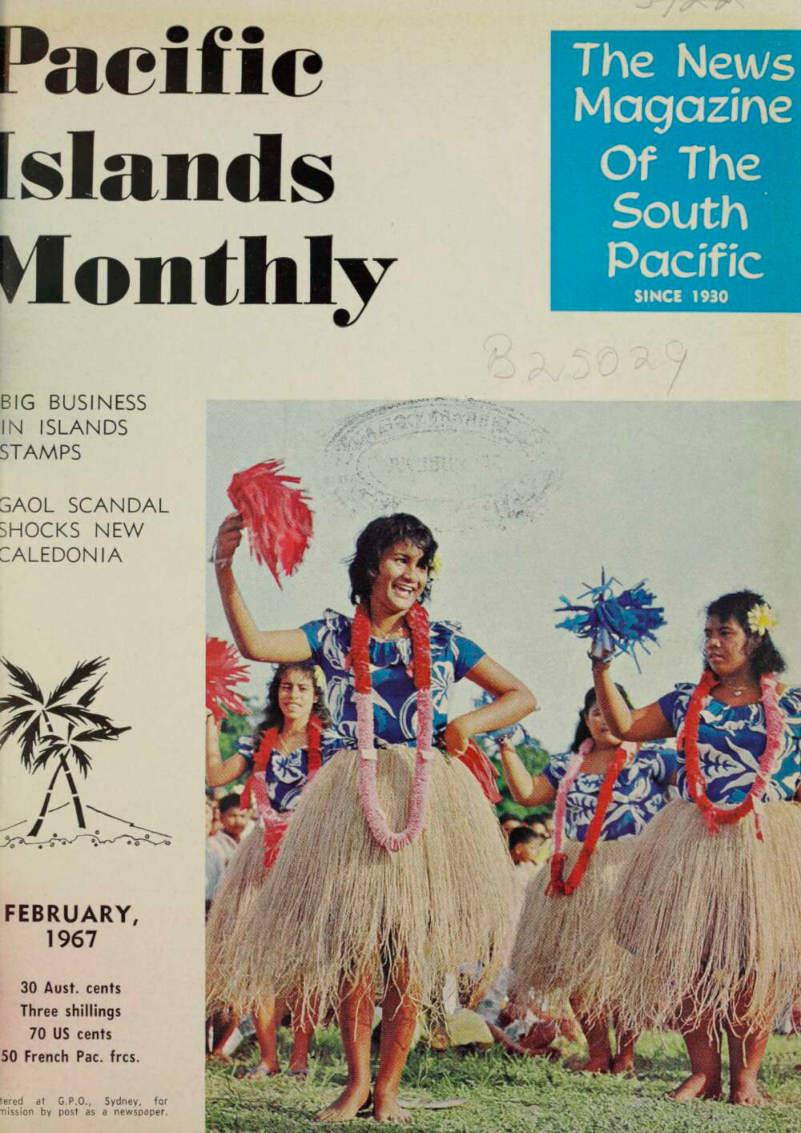 1
1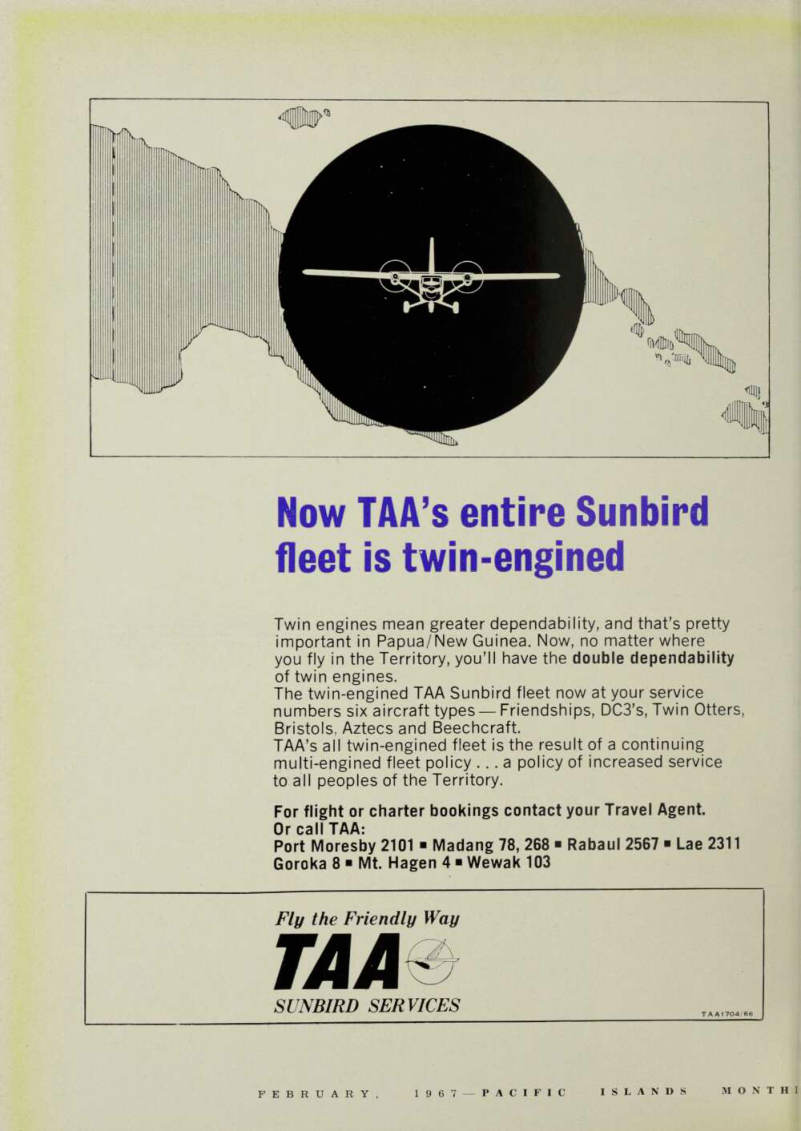 2
2 3
3 4
4 5
5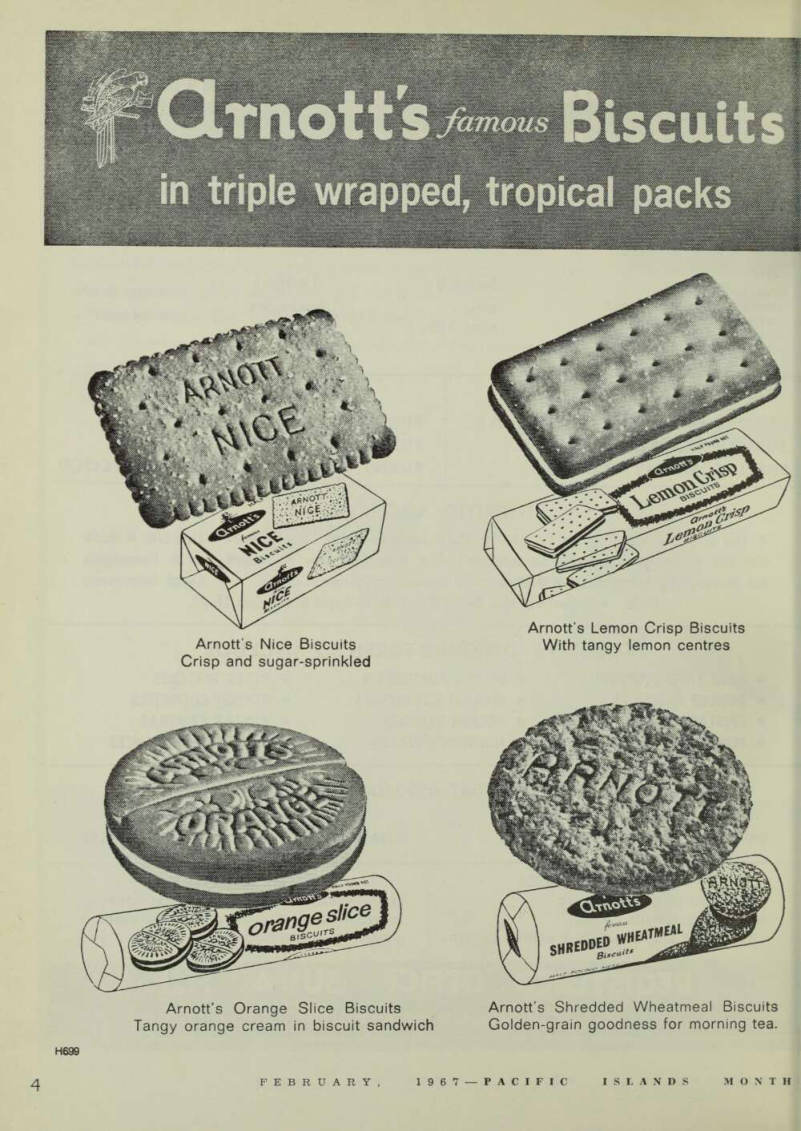 6
6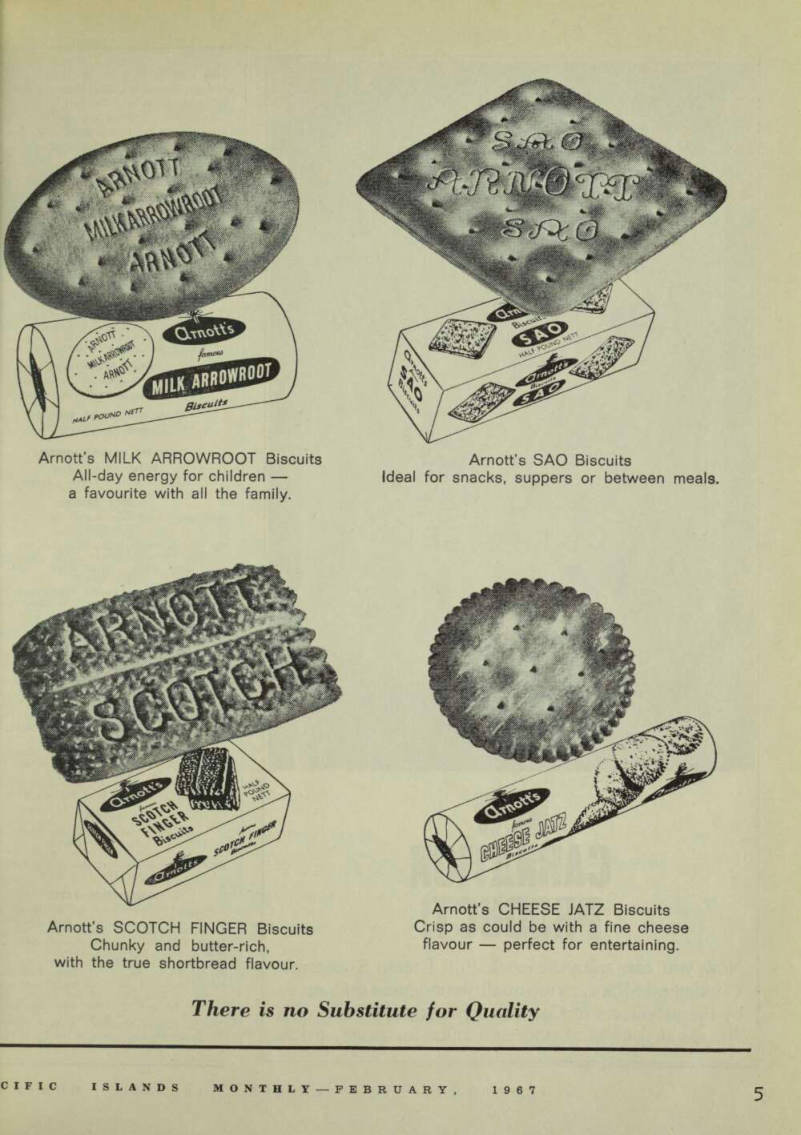 7
7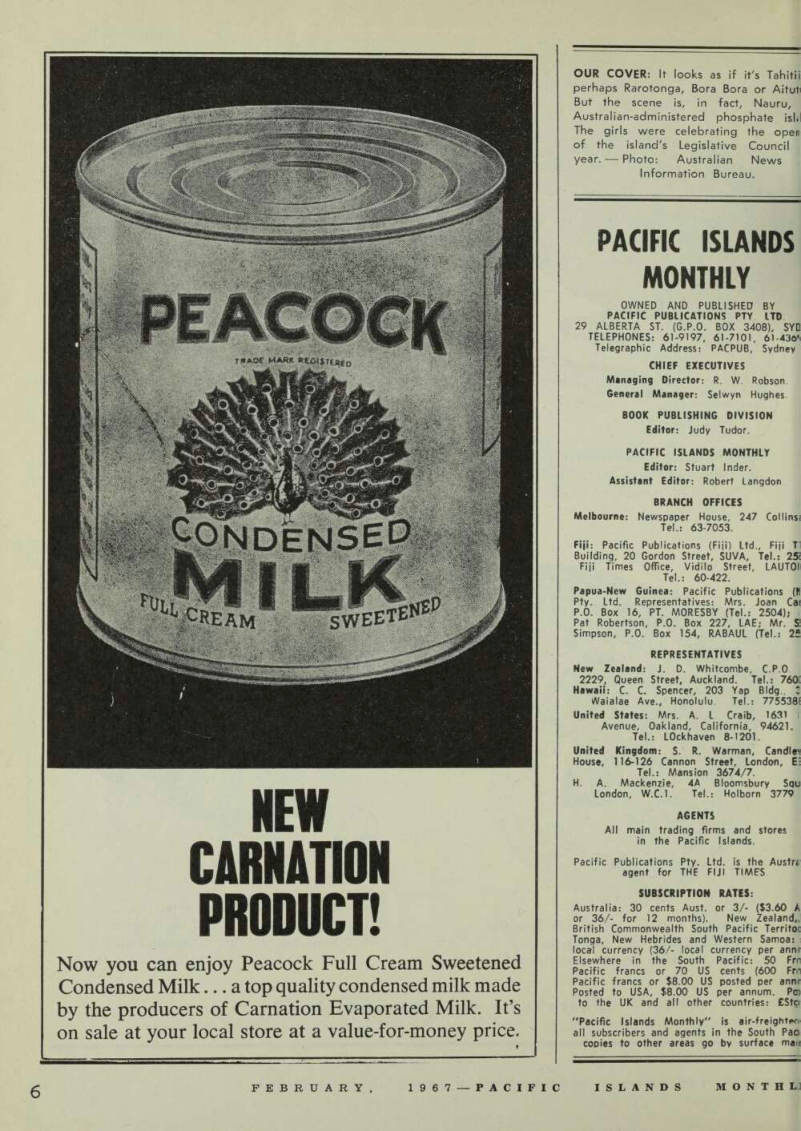 8
8 9
9 10
10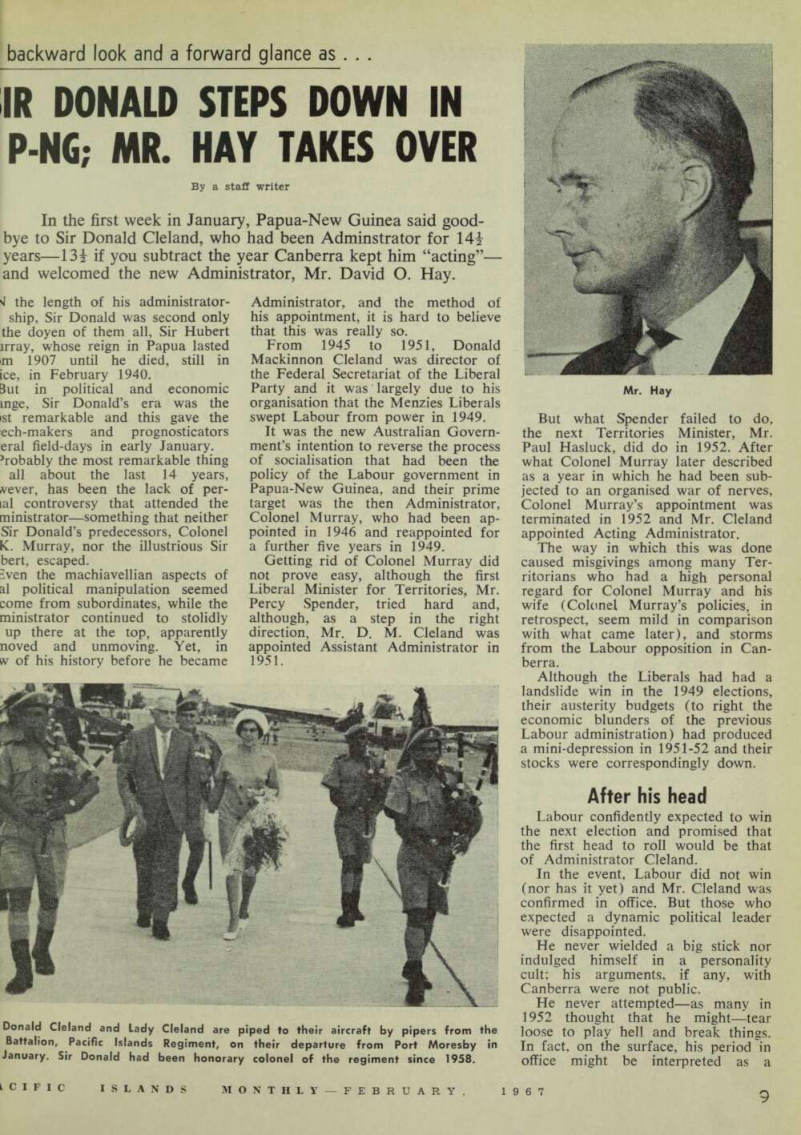 11
11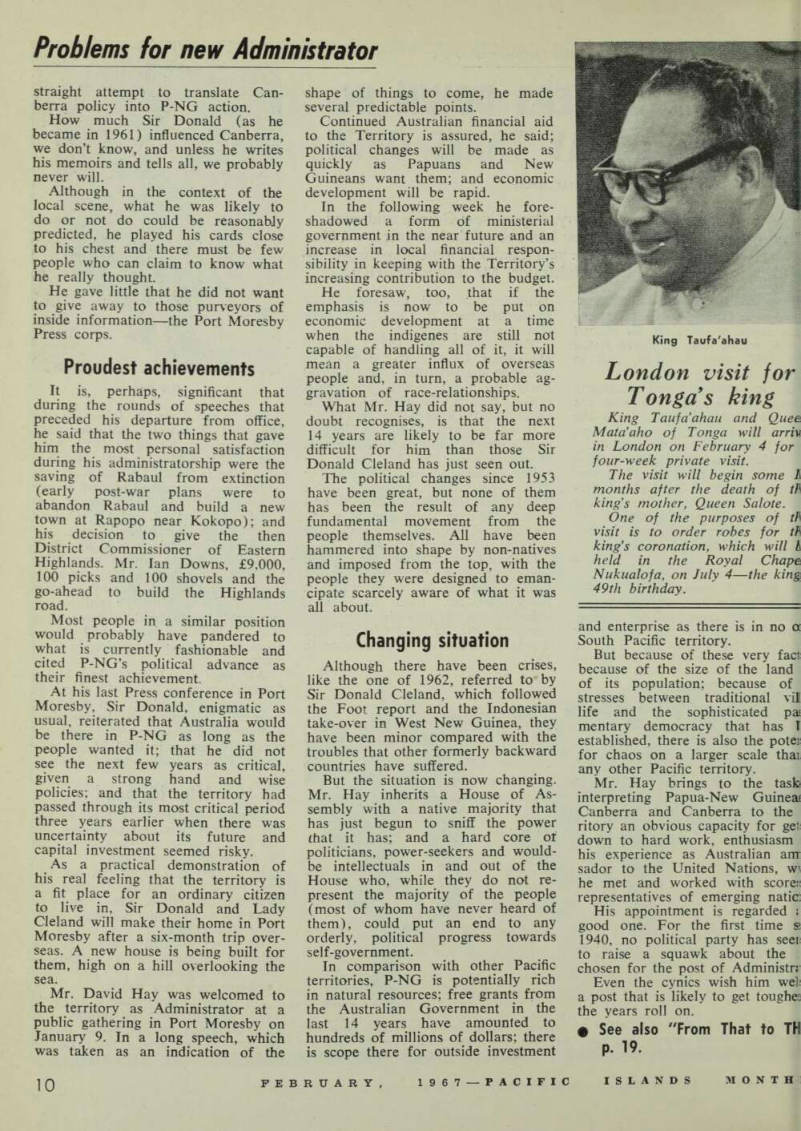 12
12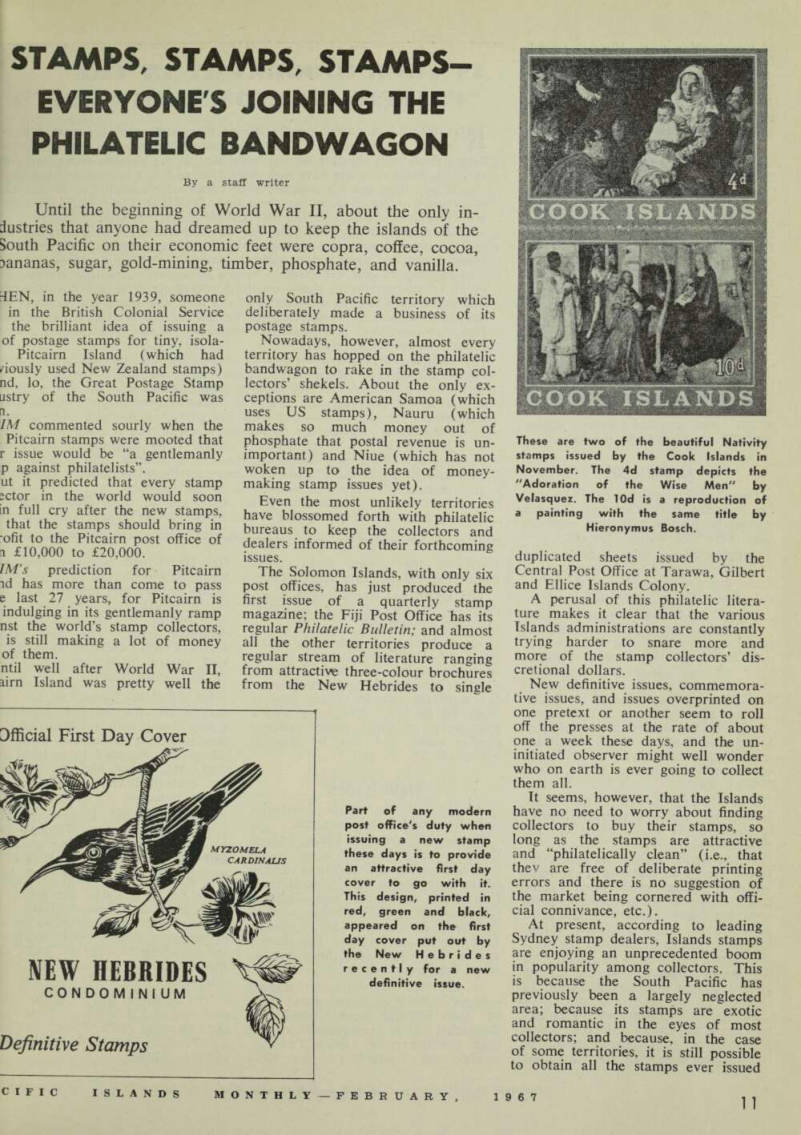 13
13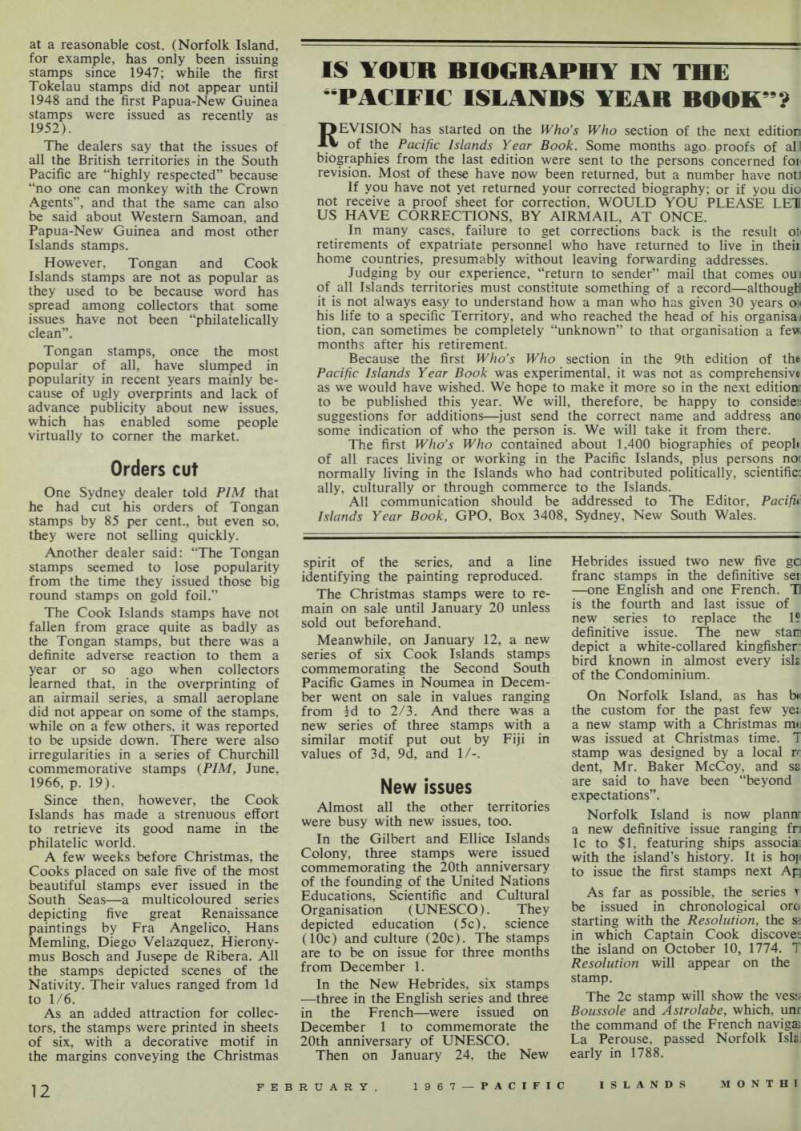 14
14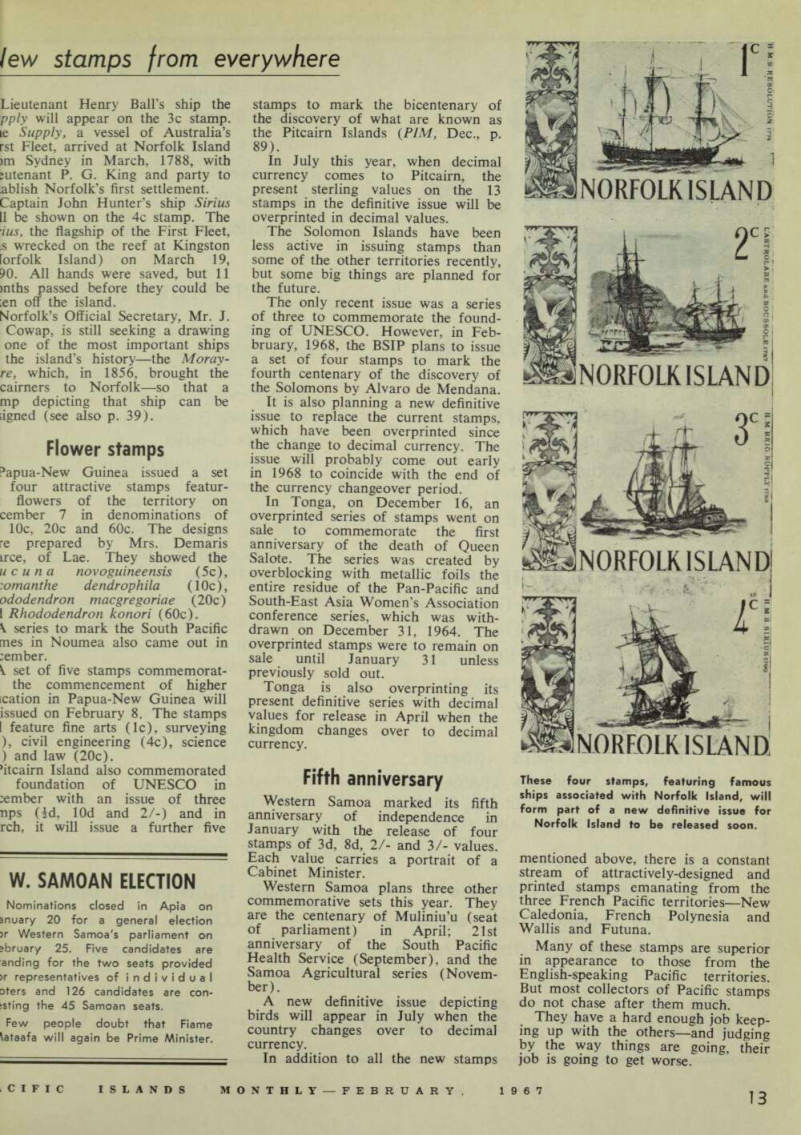 15
15 16
16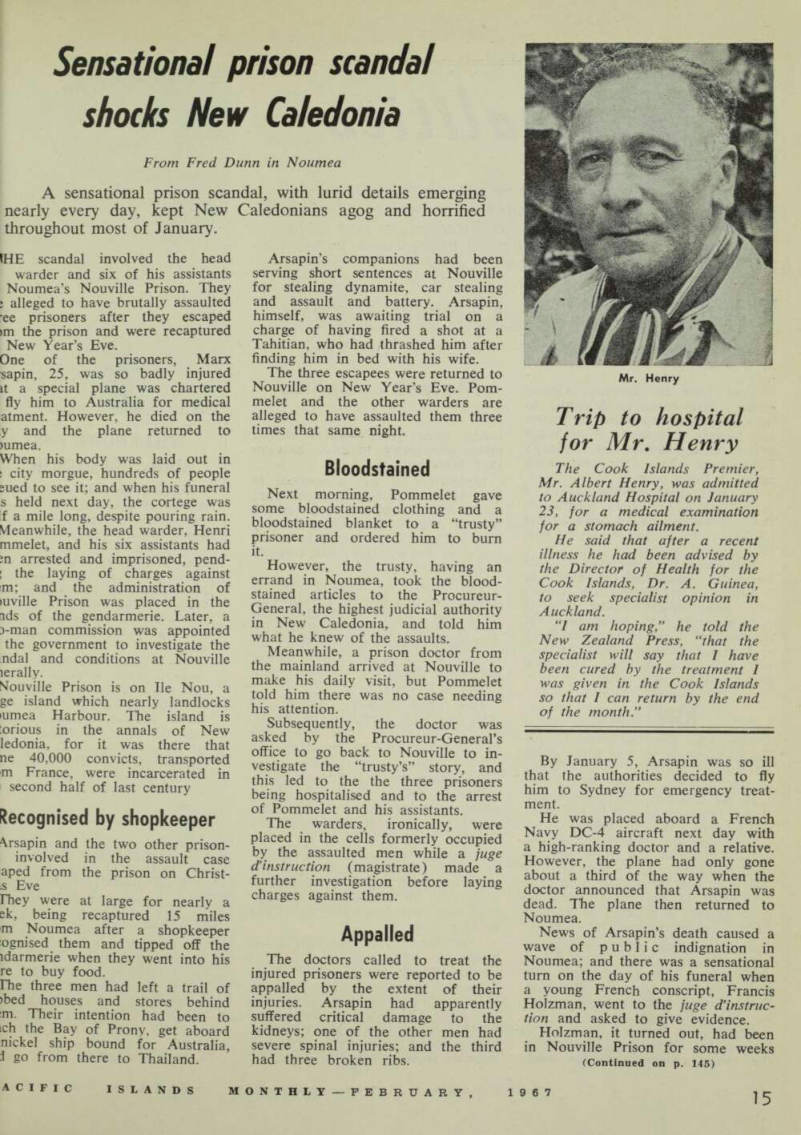 17
17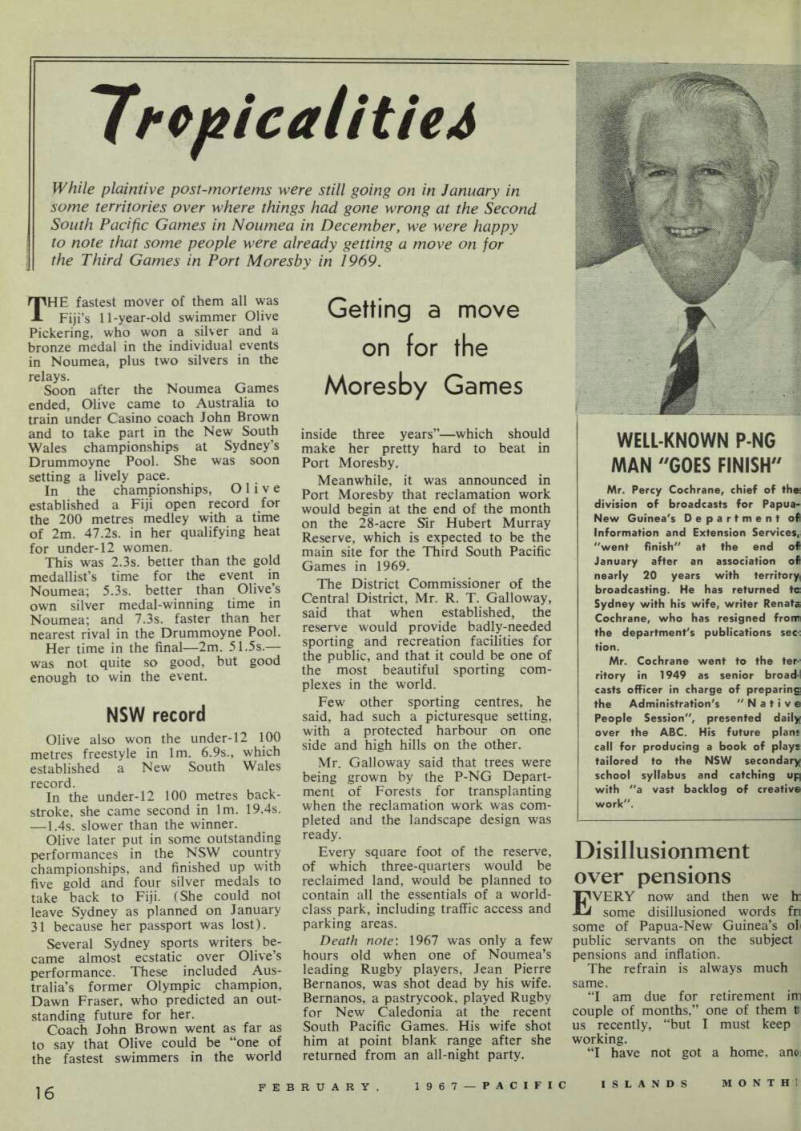 18
18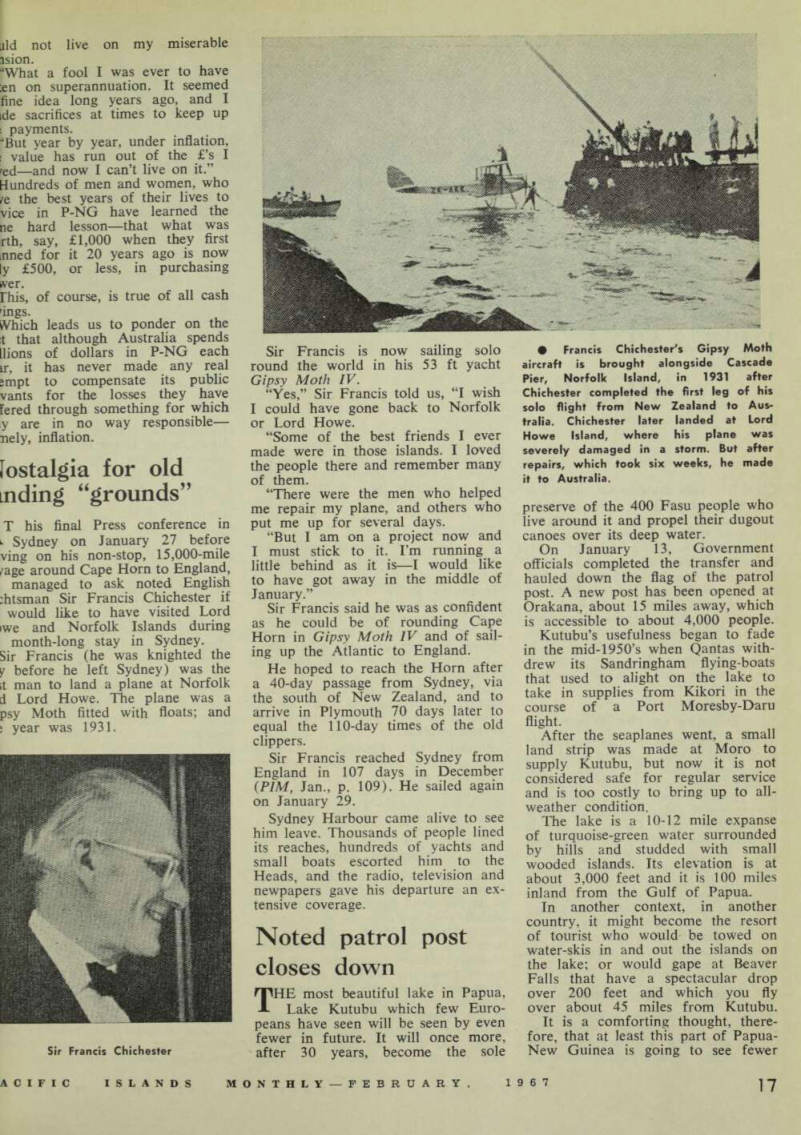 19
19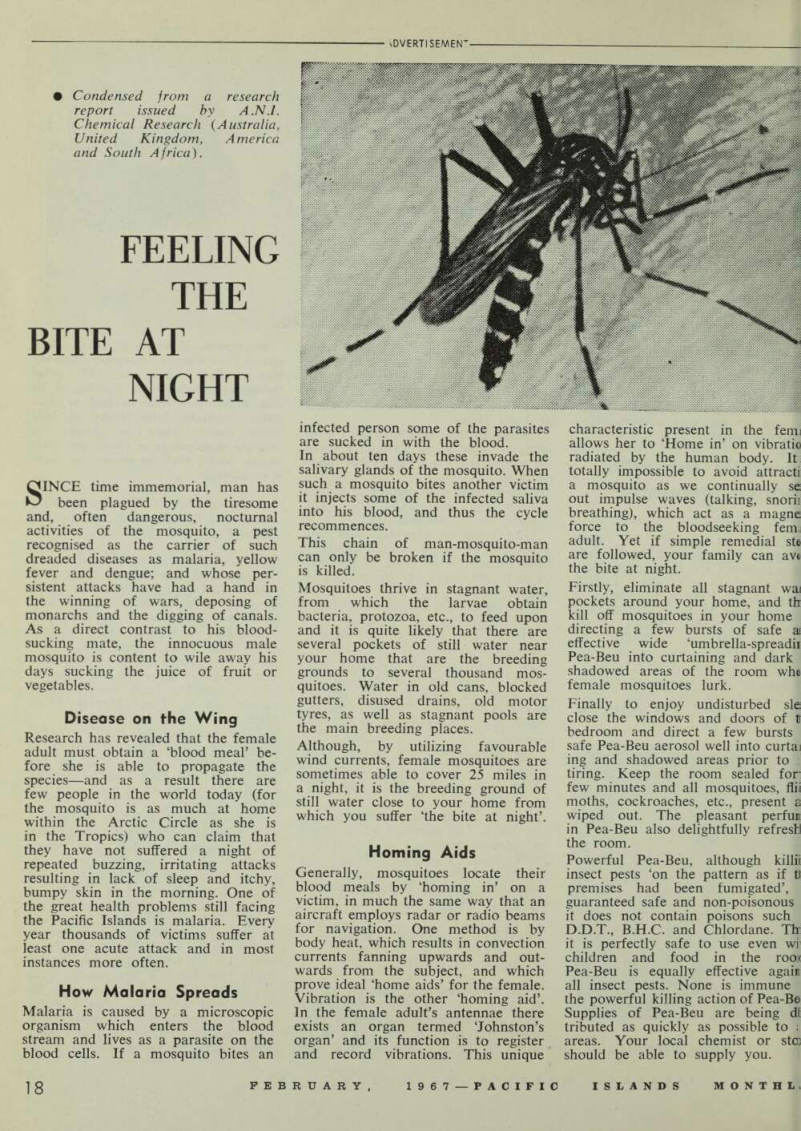 20
20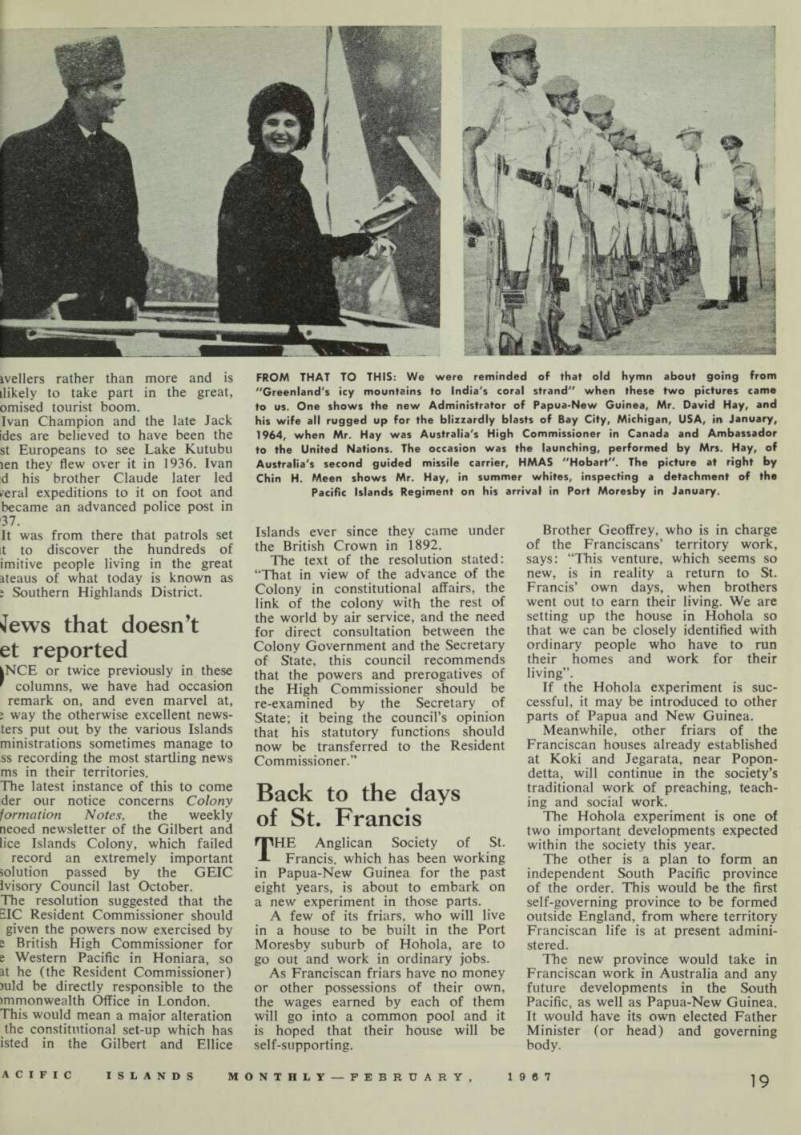 21
21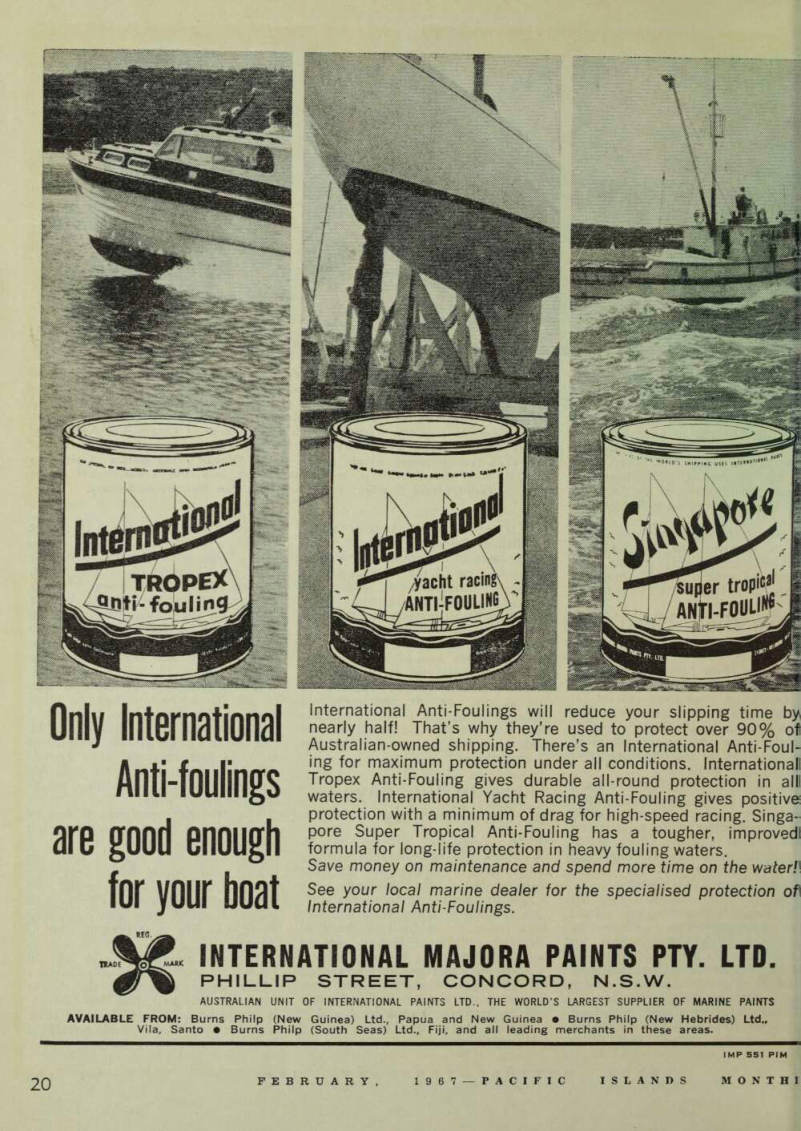 22
22 23
23 24
24 25
25 26
26 27
27 28
28 29
29 30
30 31
31 32
32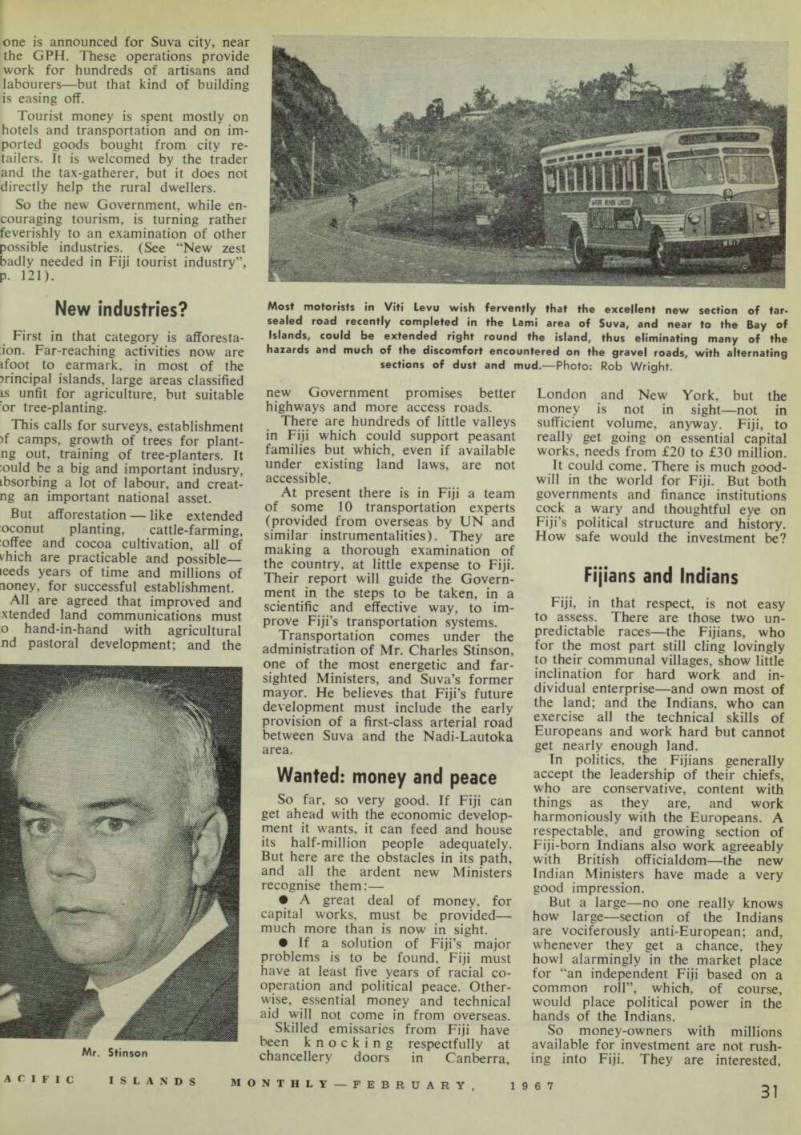 33
33 34
34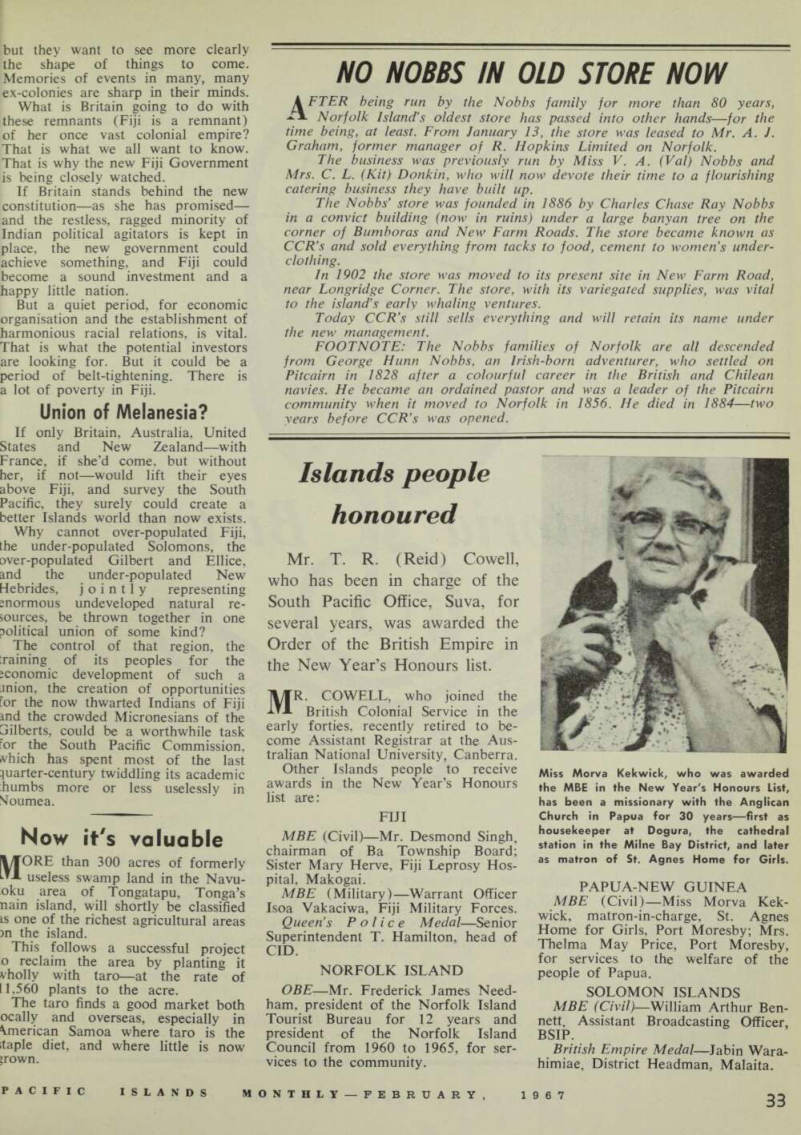 35
35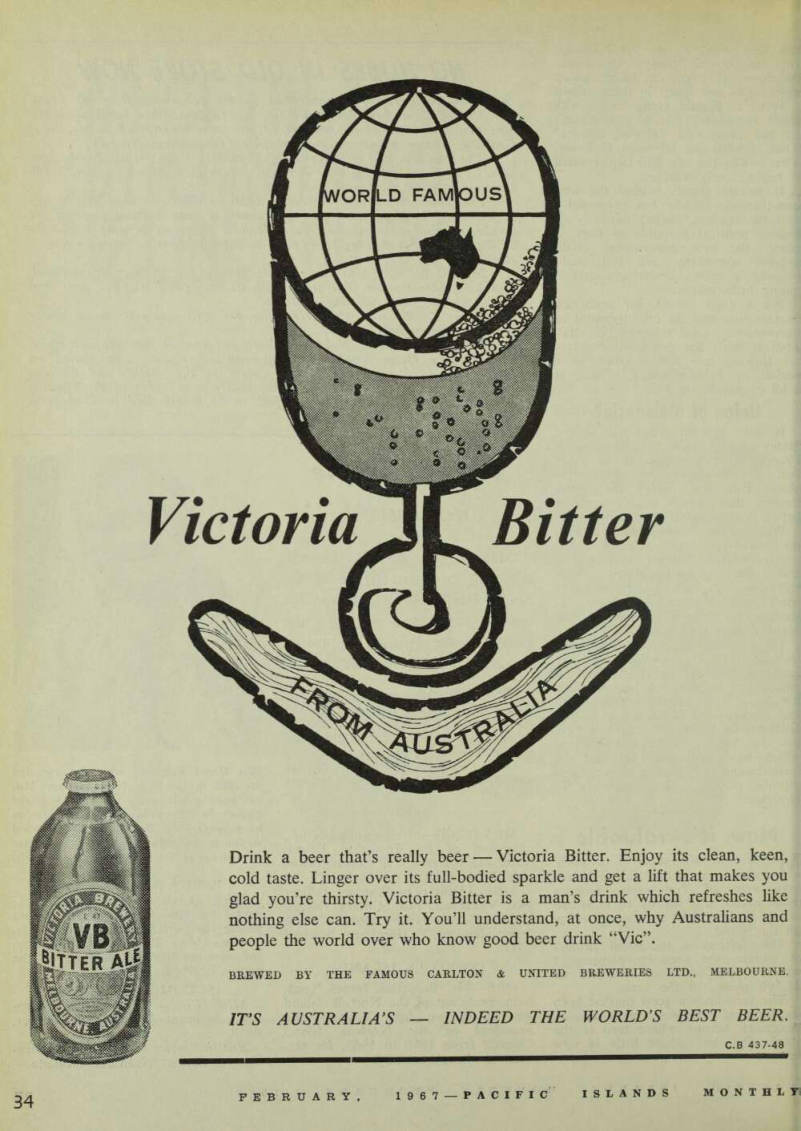 36
36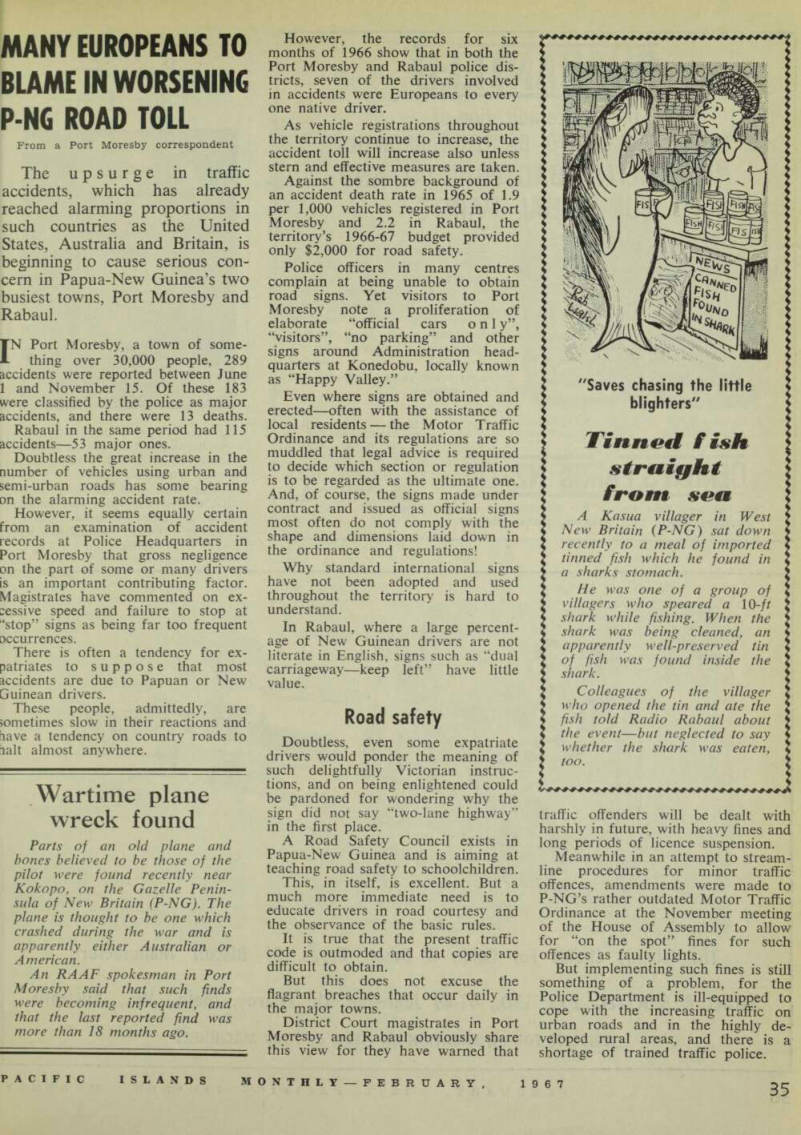 37
37 38
38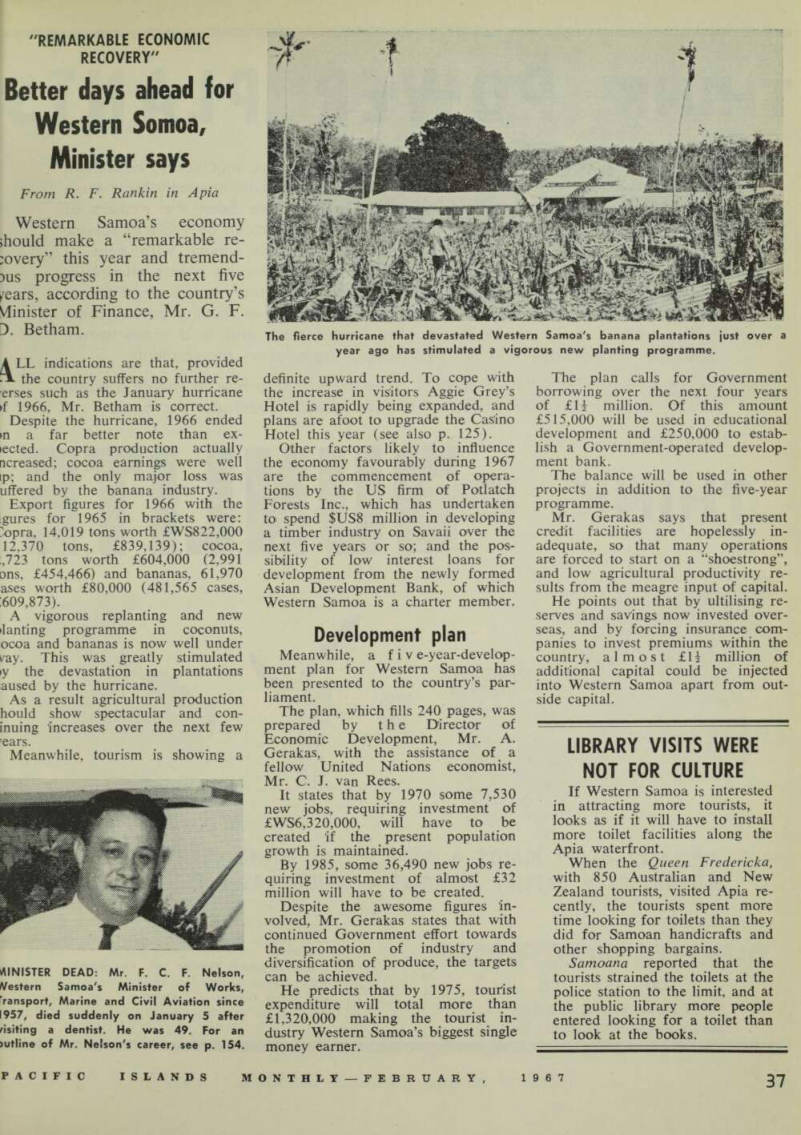 39
39 40
40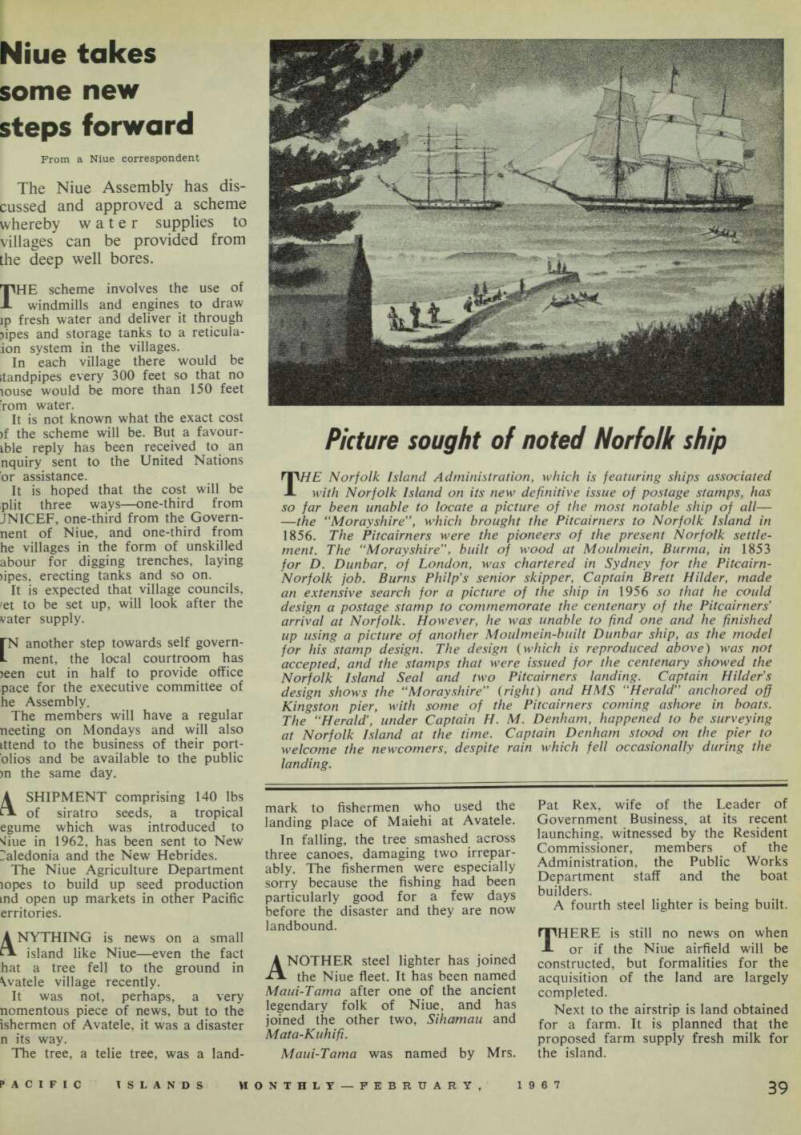 41
41 42
42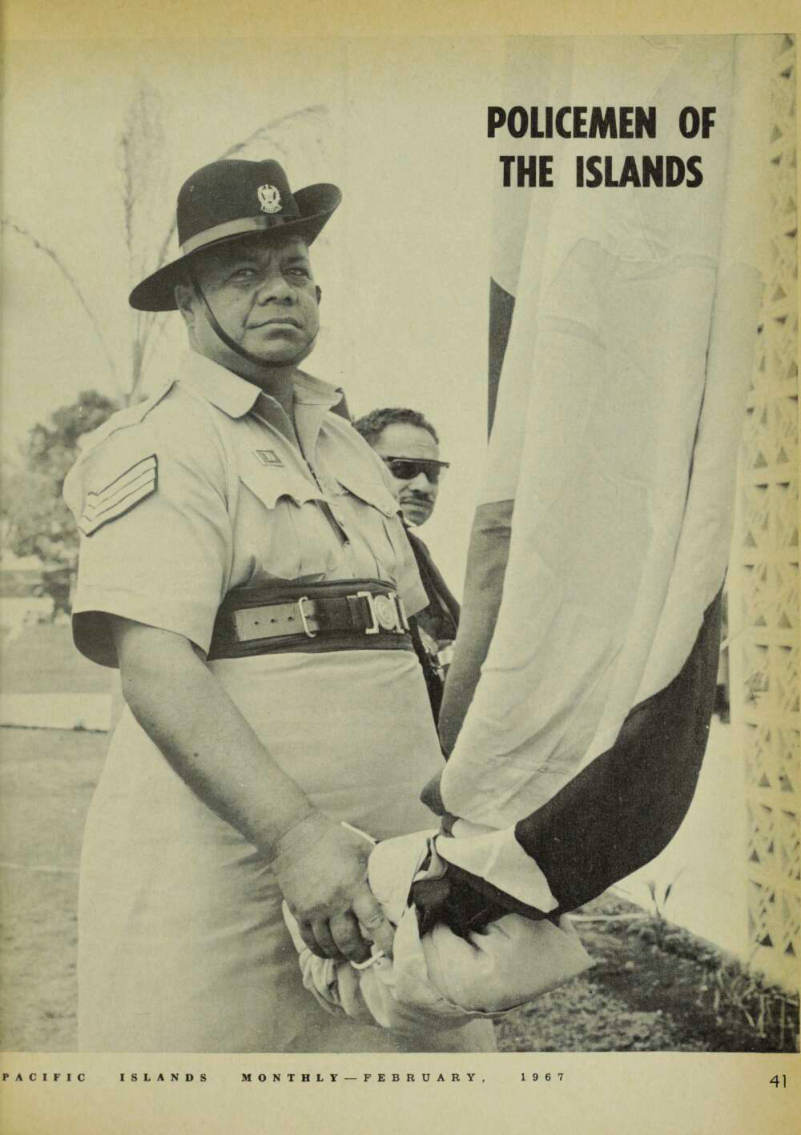 43
43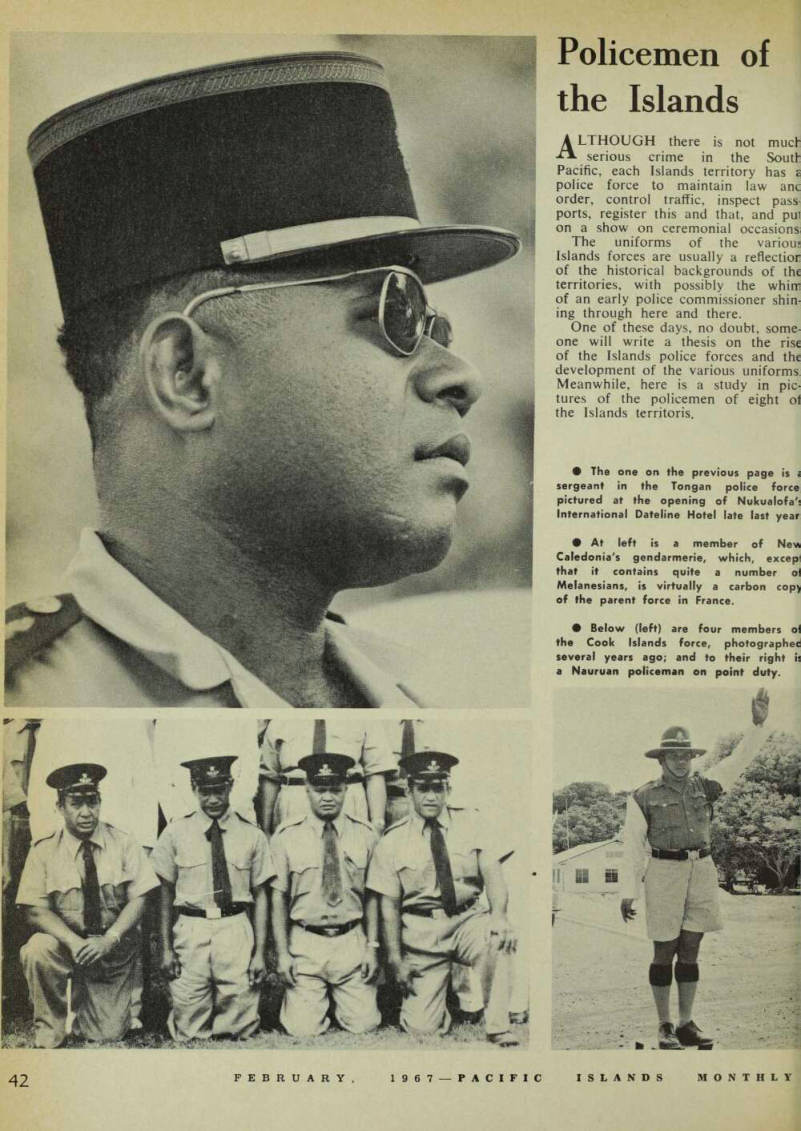 44
44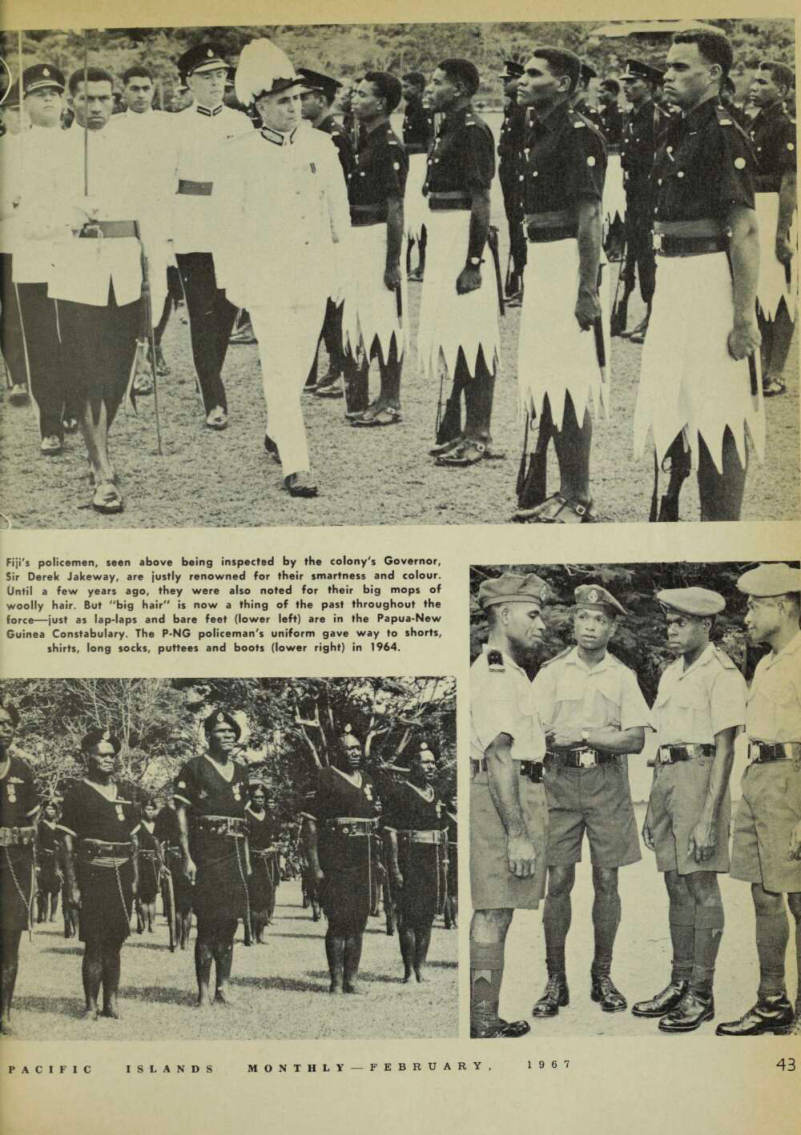 45
45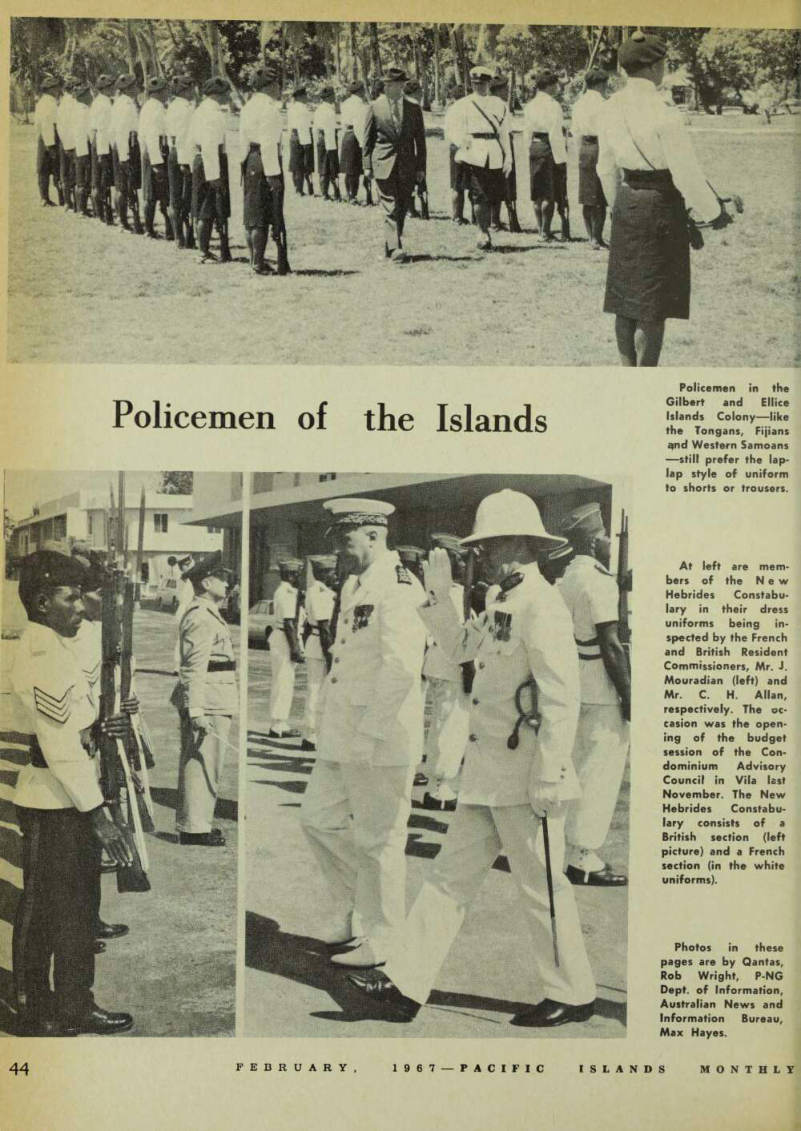 46
46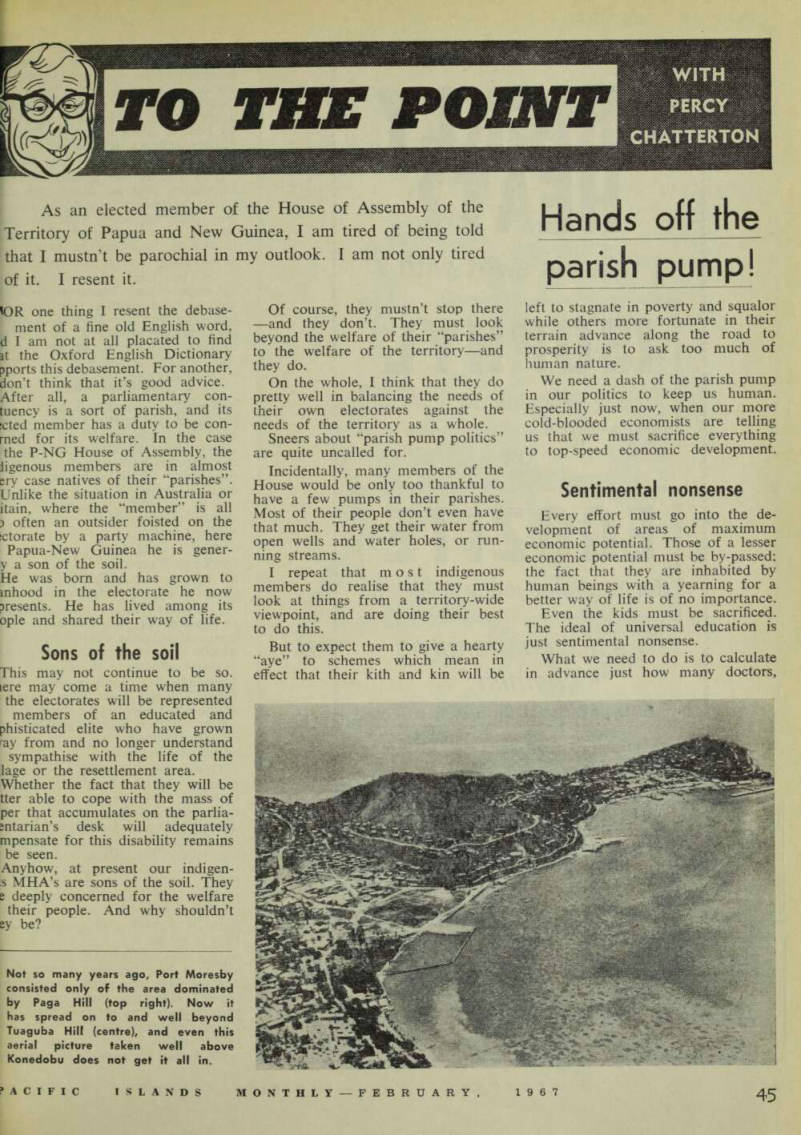 47
47 48
48 49
49 50
50 51
51 52
52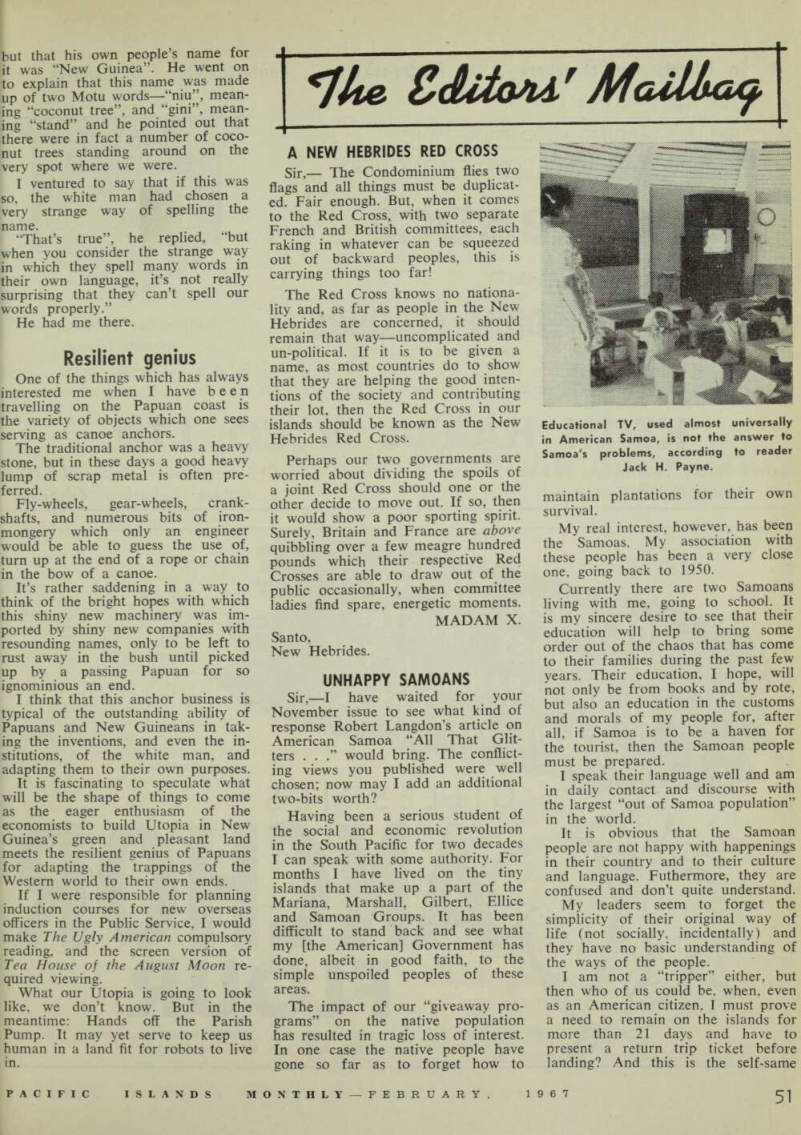 53
53 54
54 55
55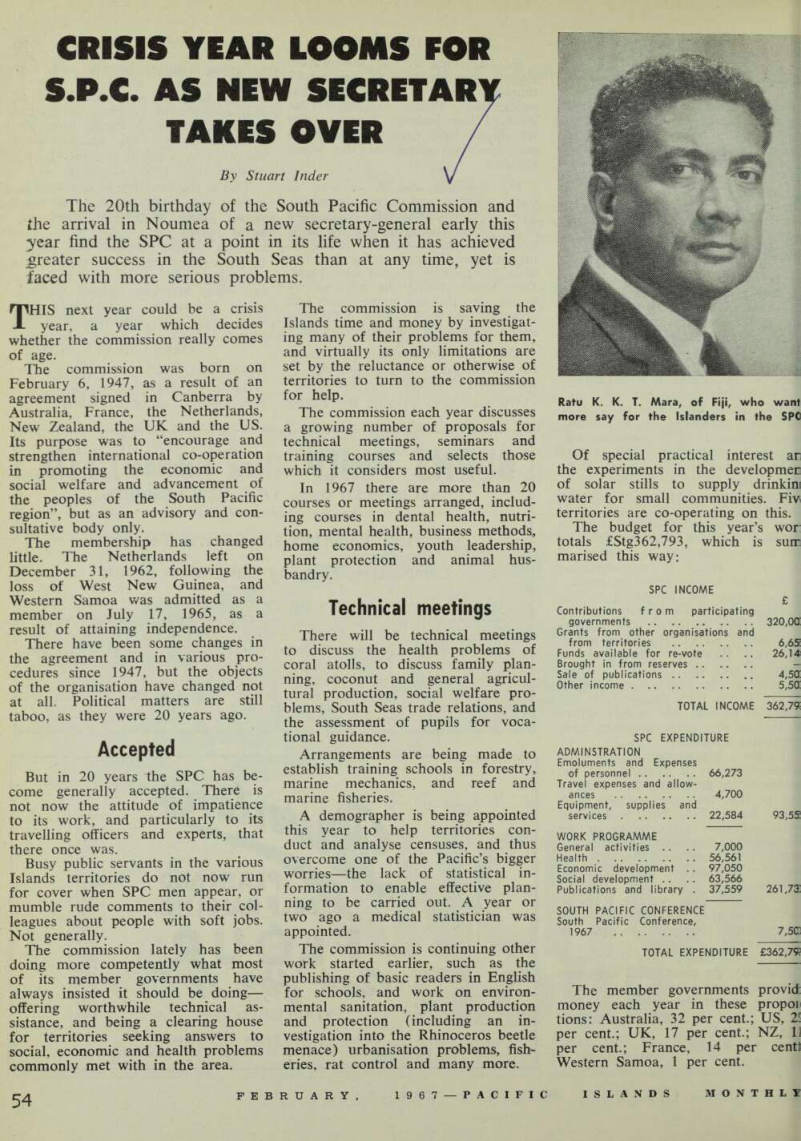 56
56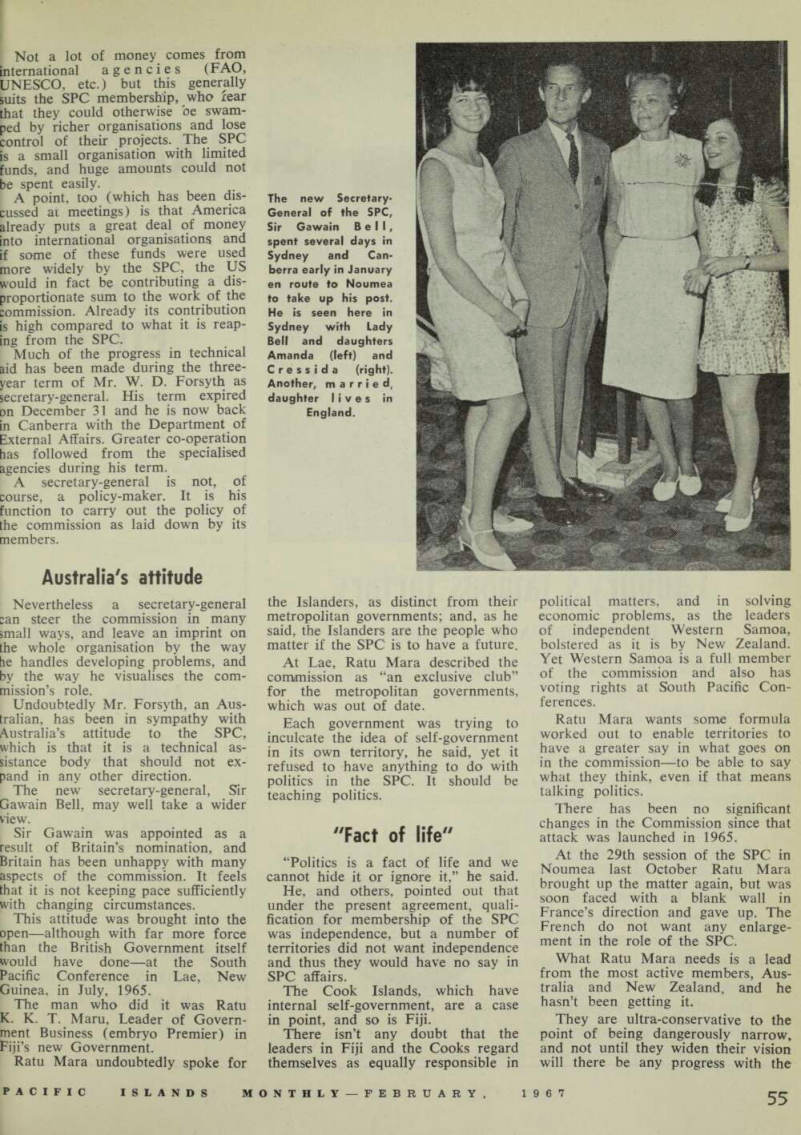 57
57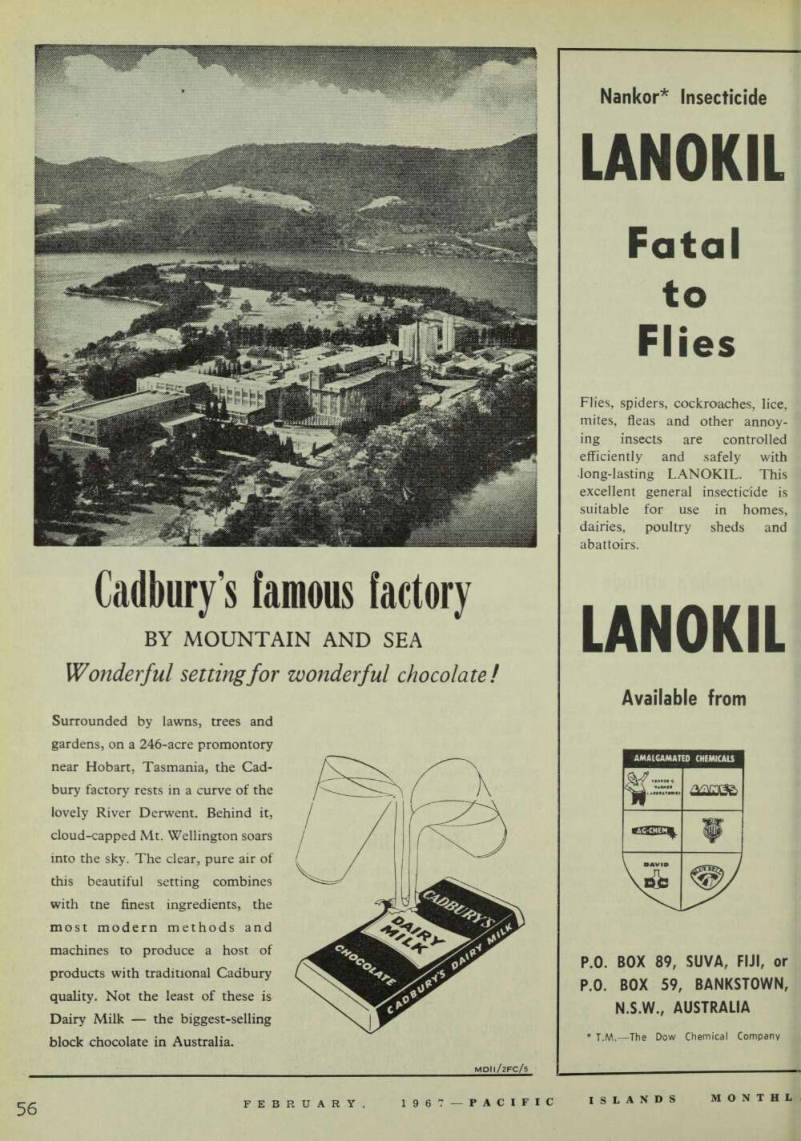 58
58 59
59 60
60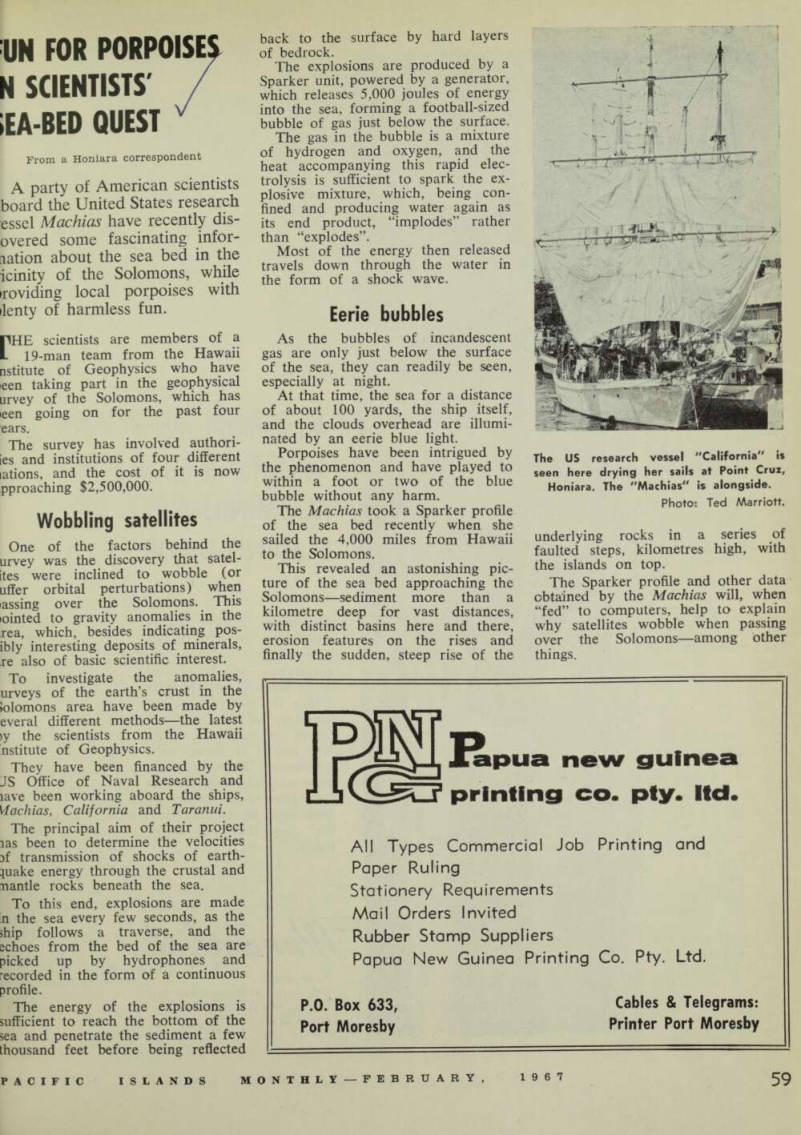 61
61 62
62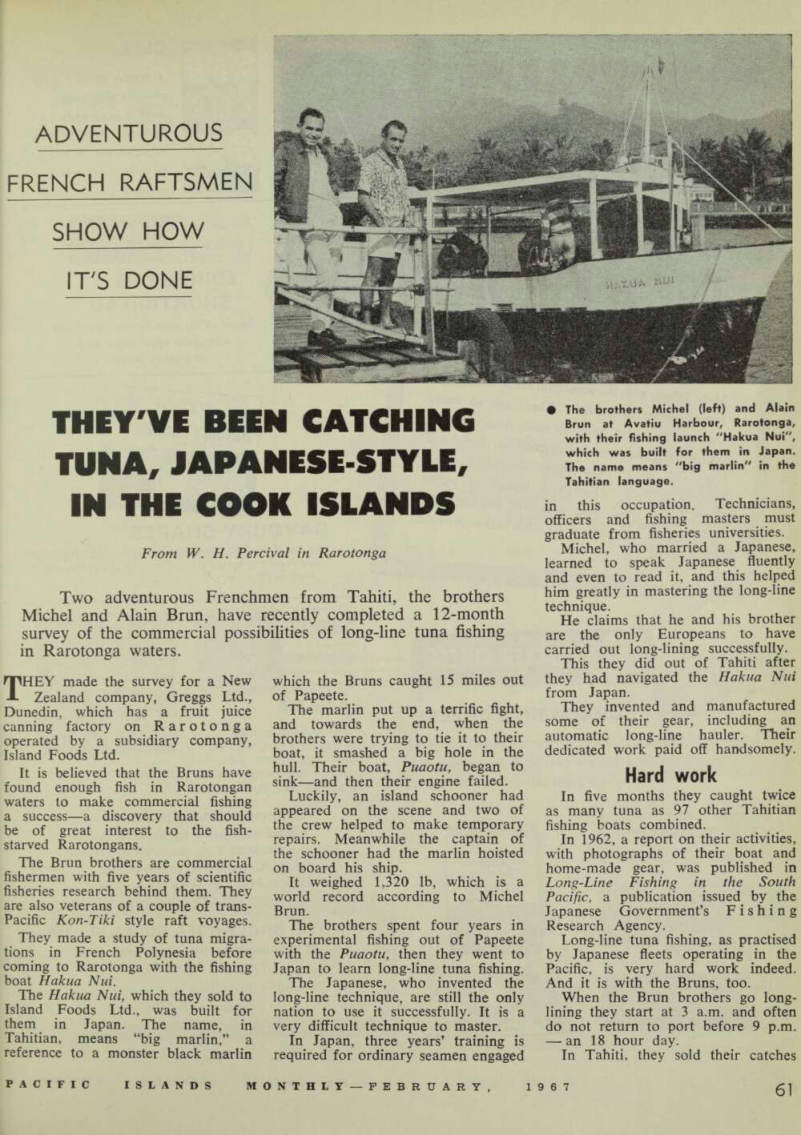 63
63 64
64 65
65 66
66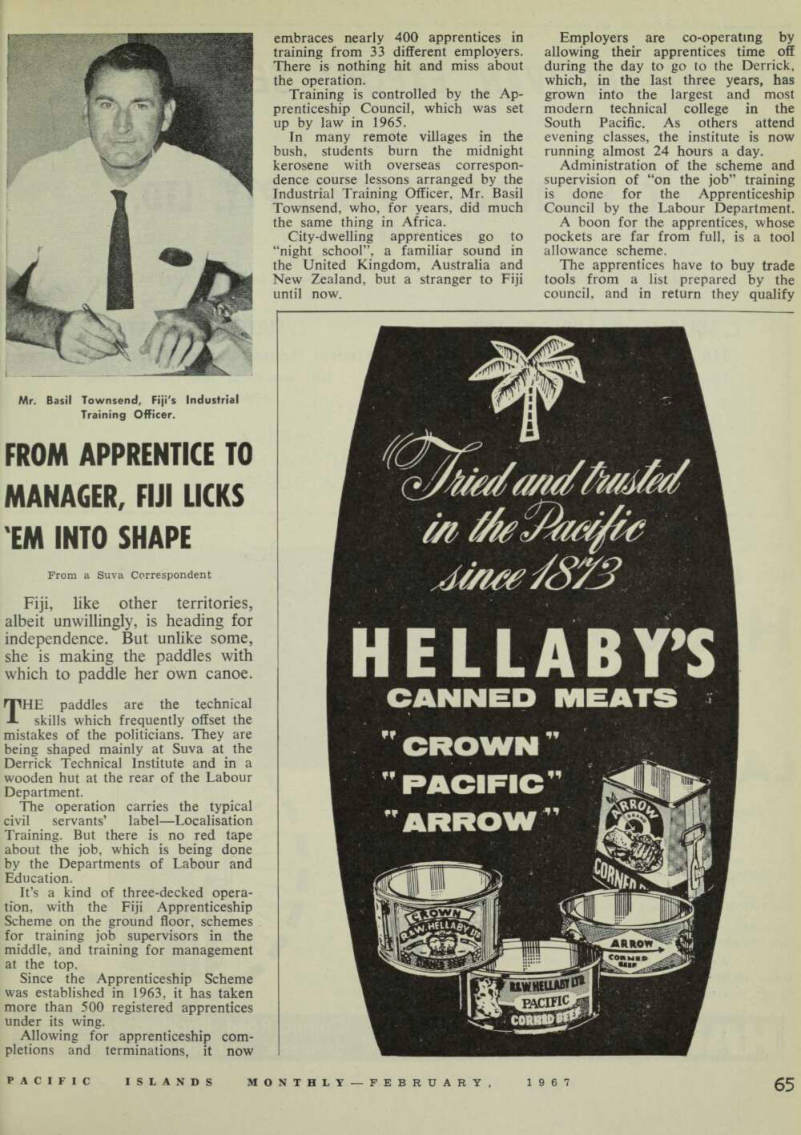 67
67 68
68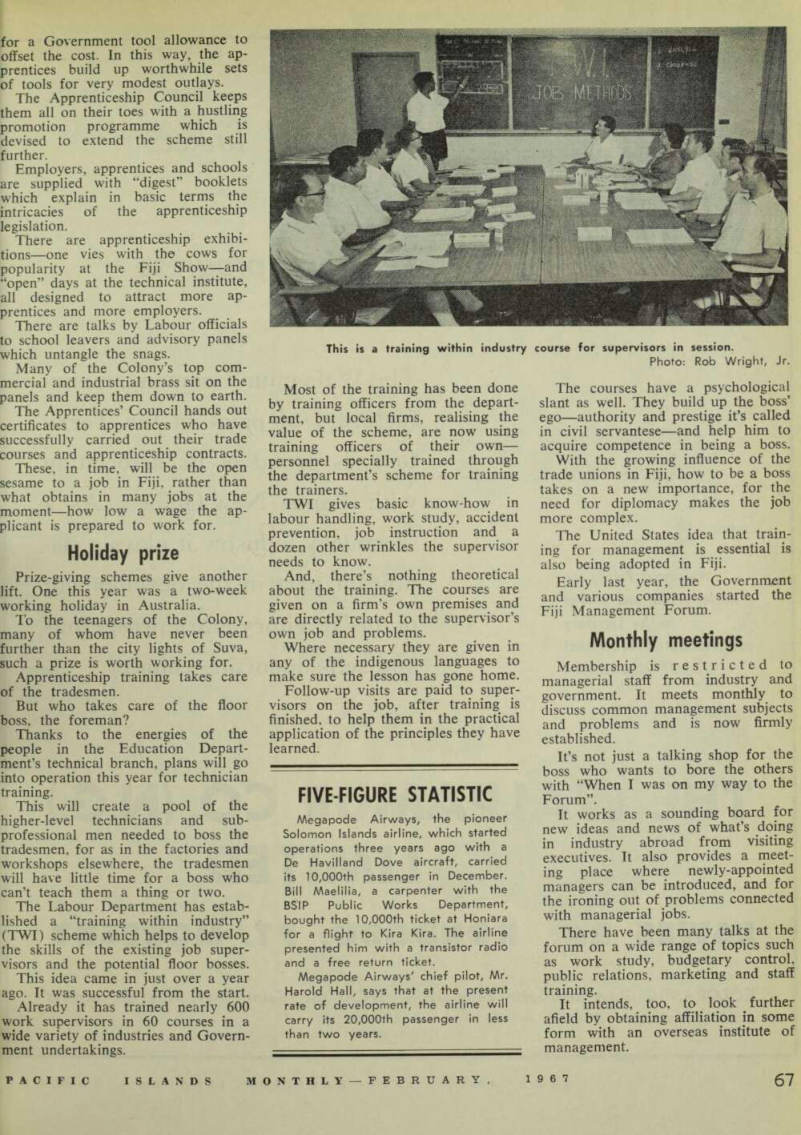 69
69 70
70 71
71 72
72 73
73 74
74 75
75 76
76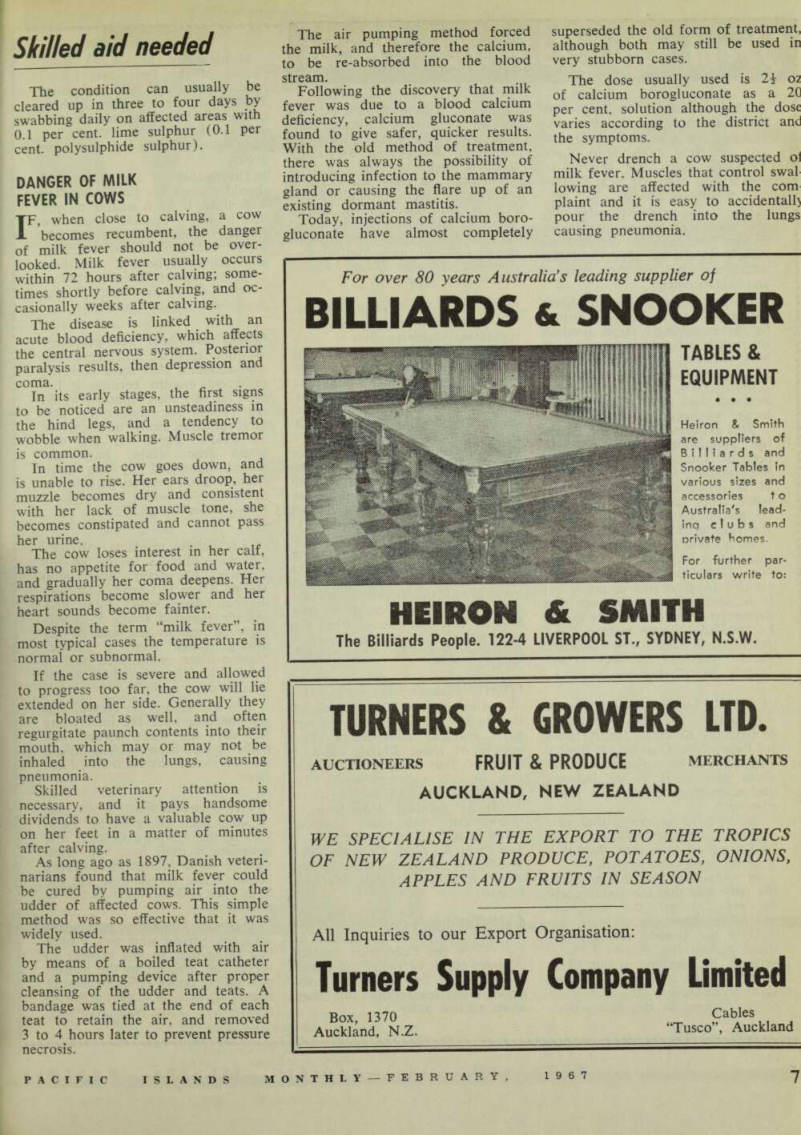 77
77 78
78 79
79 80
80 81
81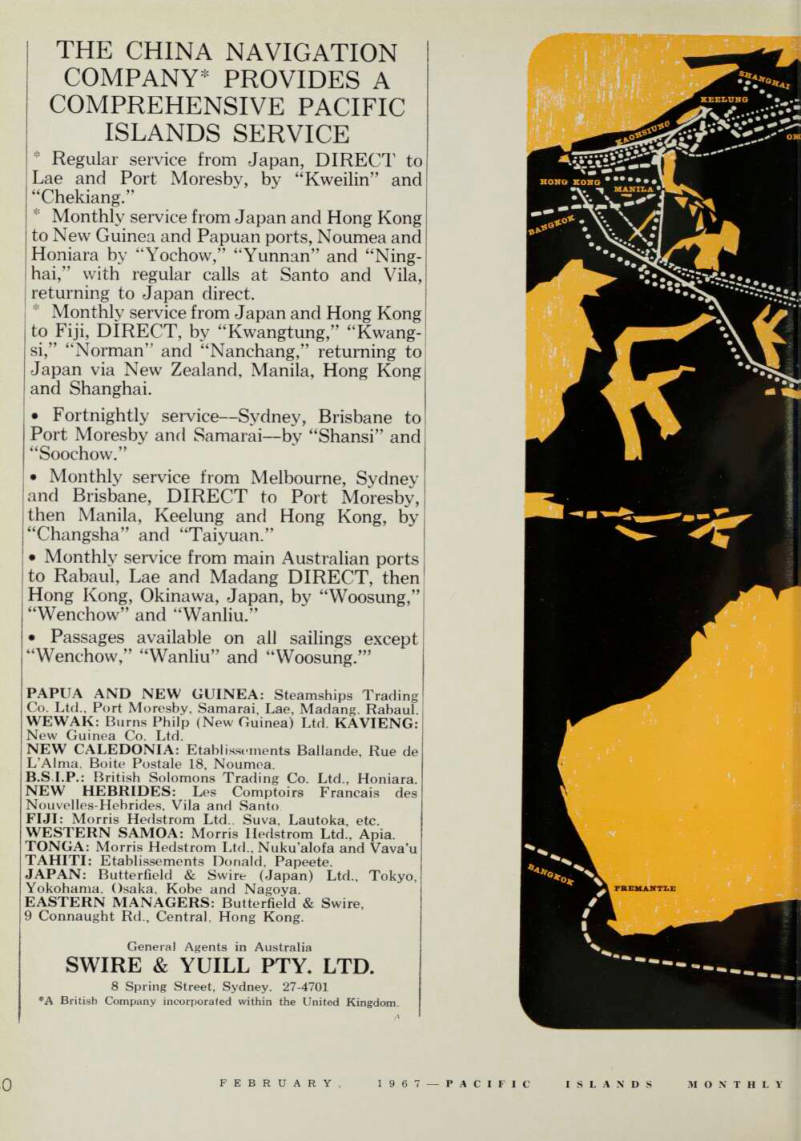 82
82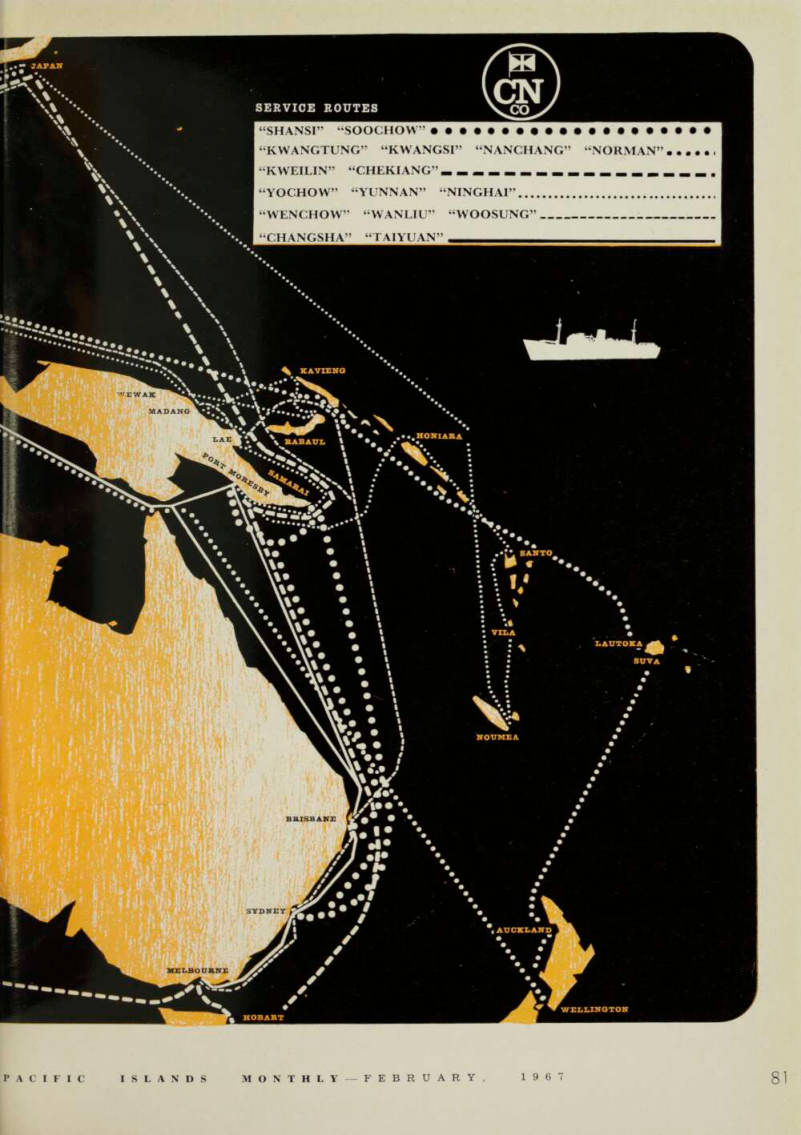 83
83 84
84 85
85 86
86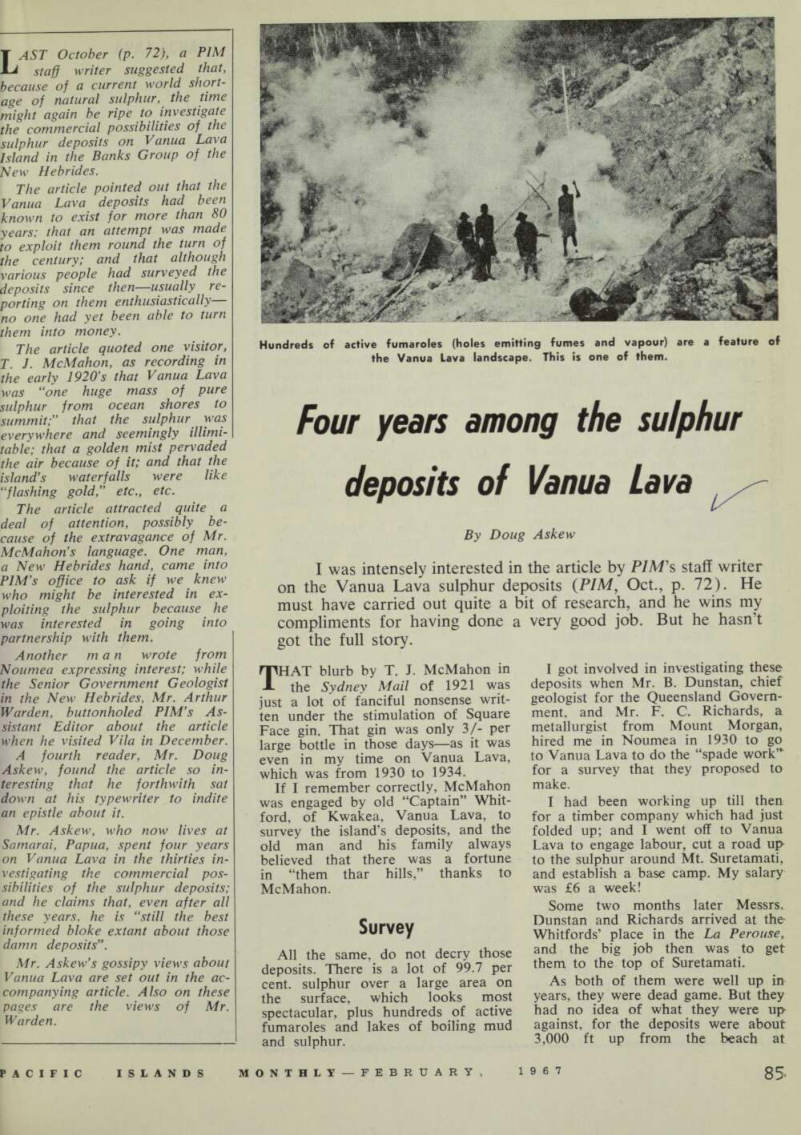 87
87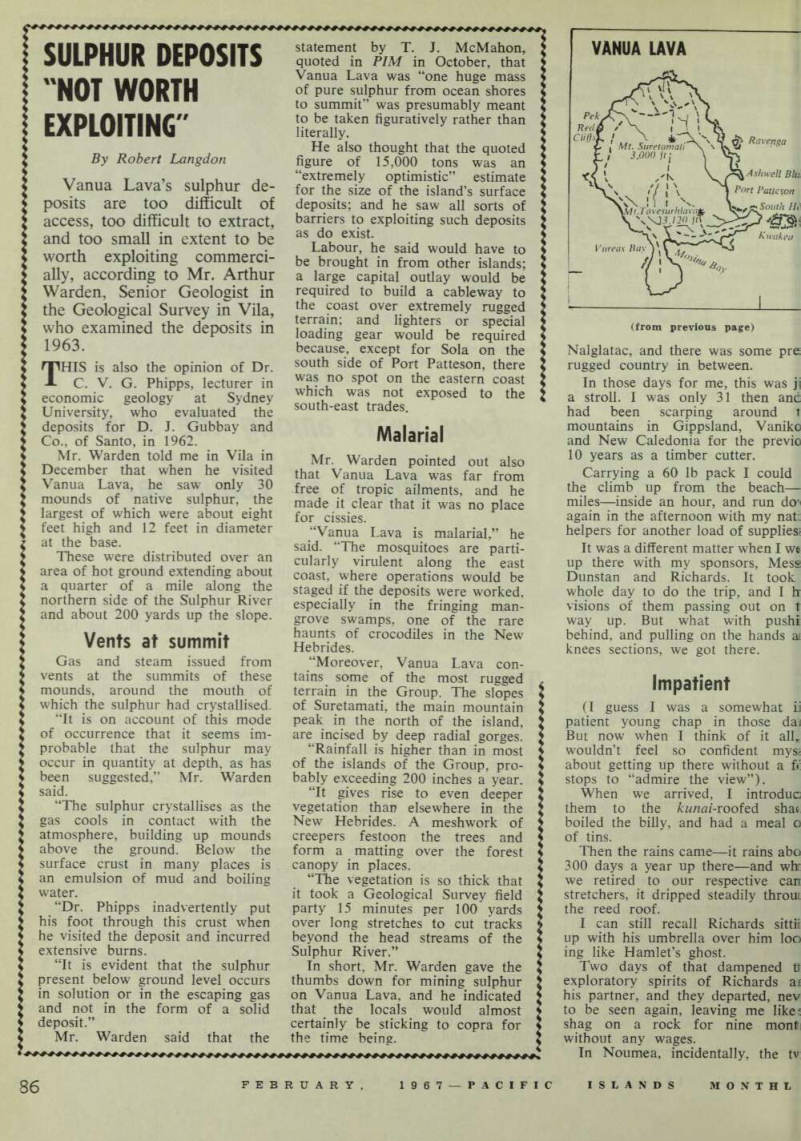 88
88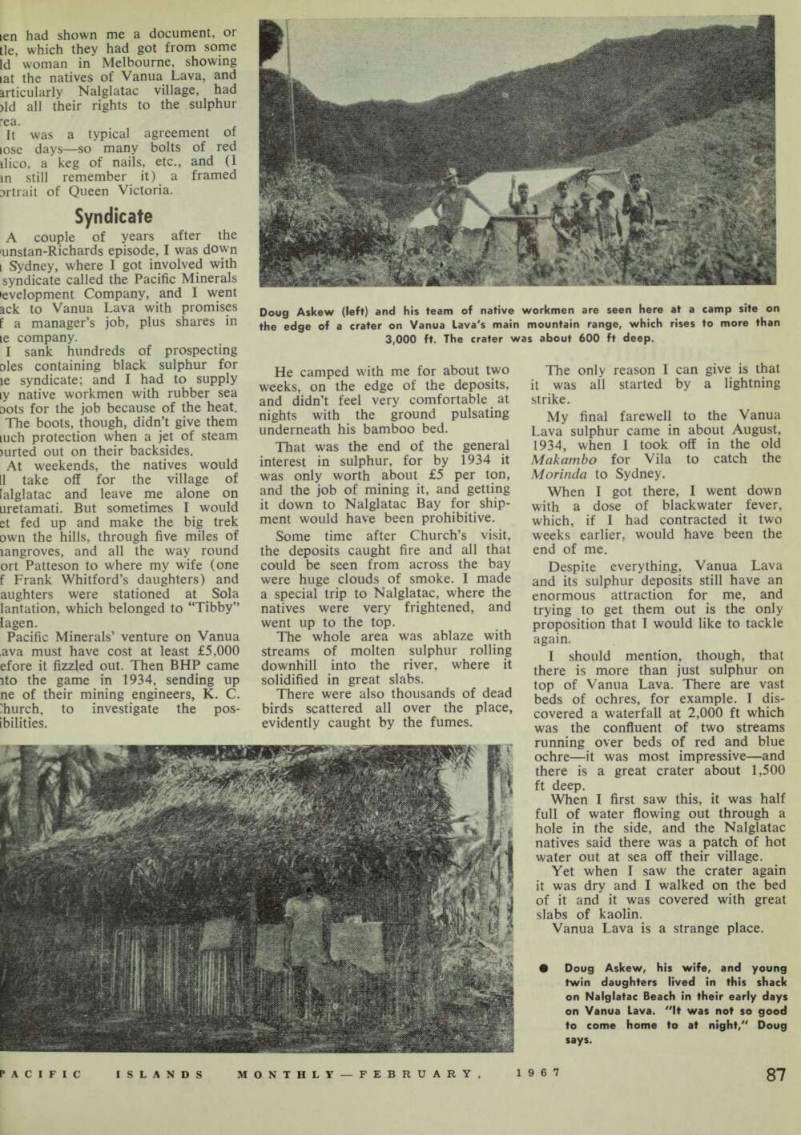 89
89 90
90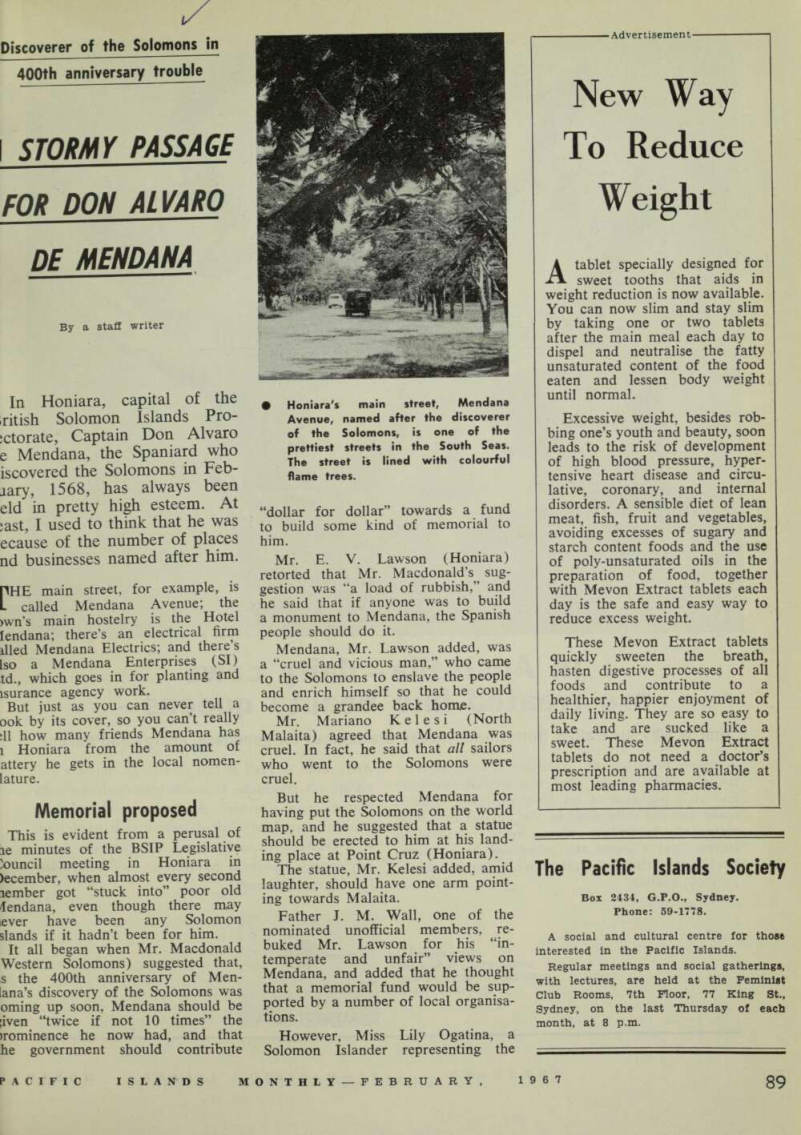 91
91 92
92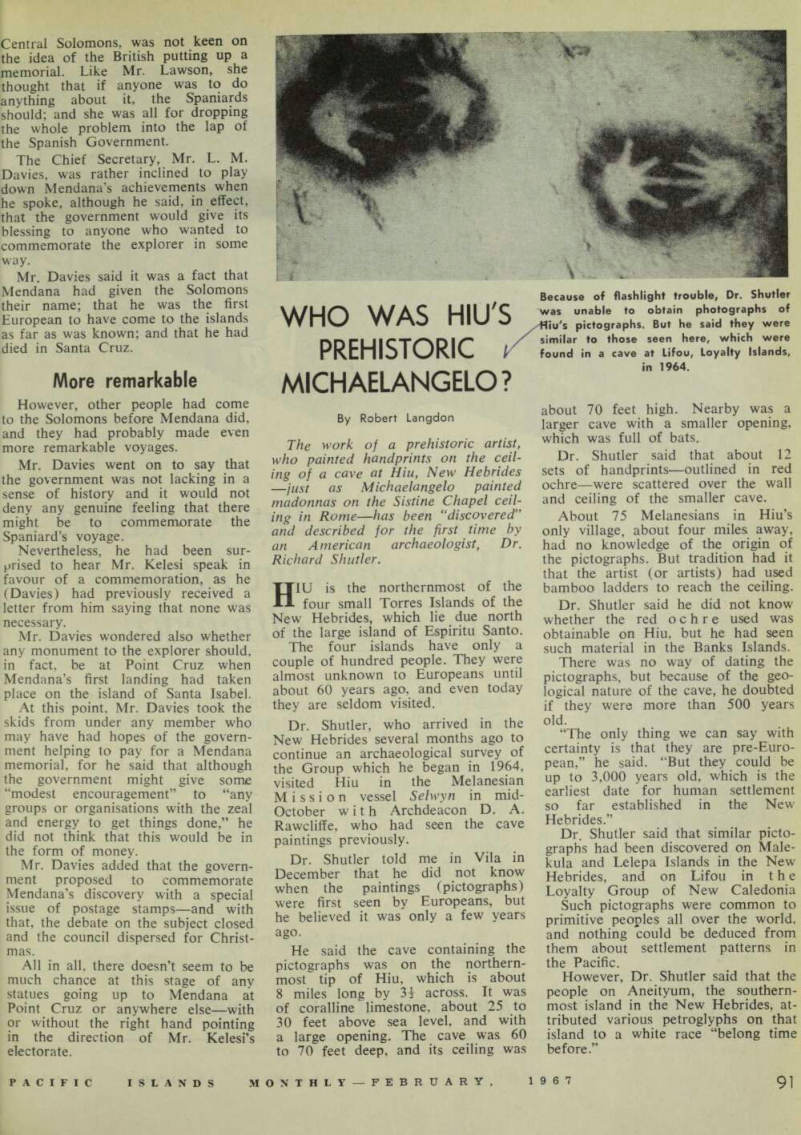 93
93 94
94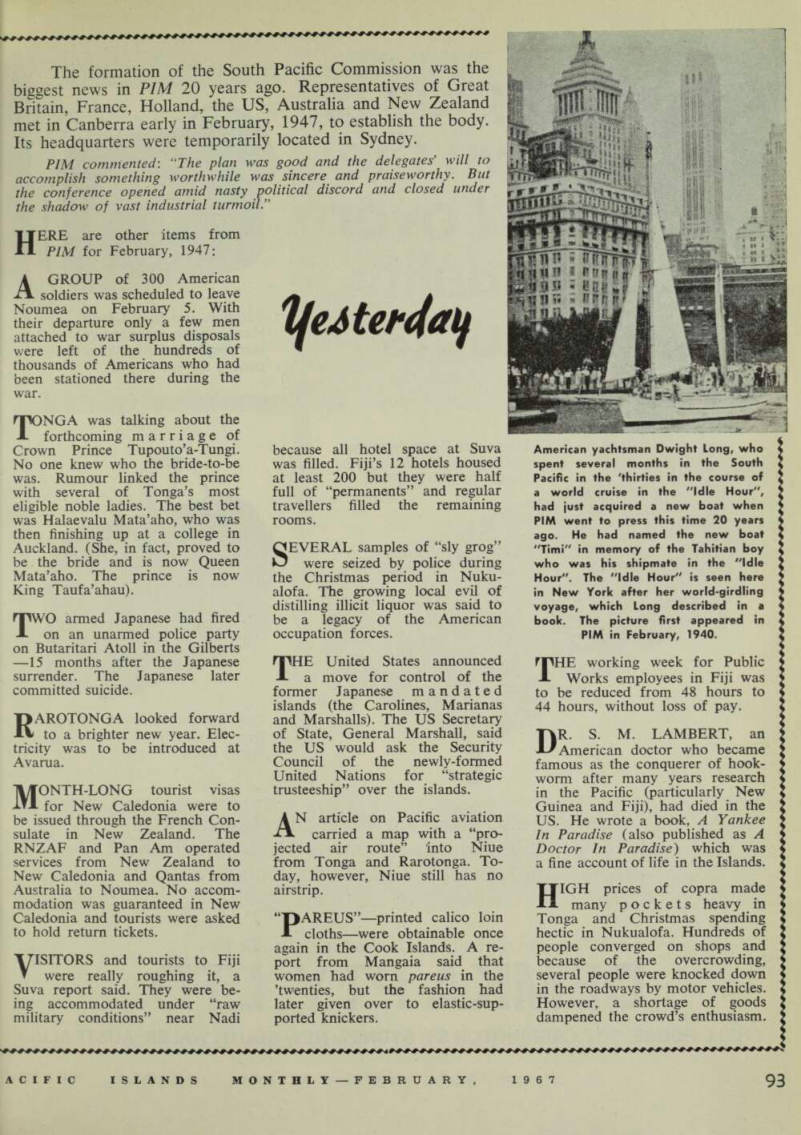 95
95 96
96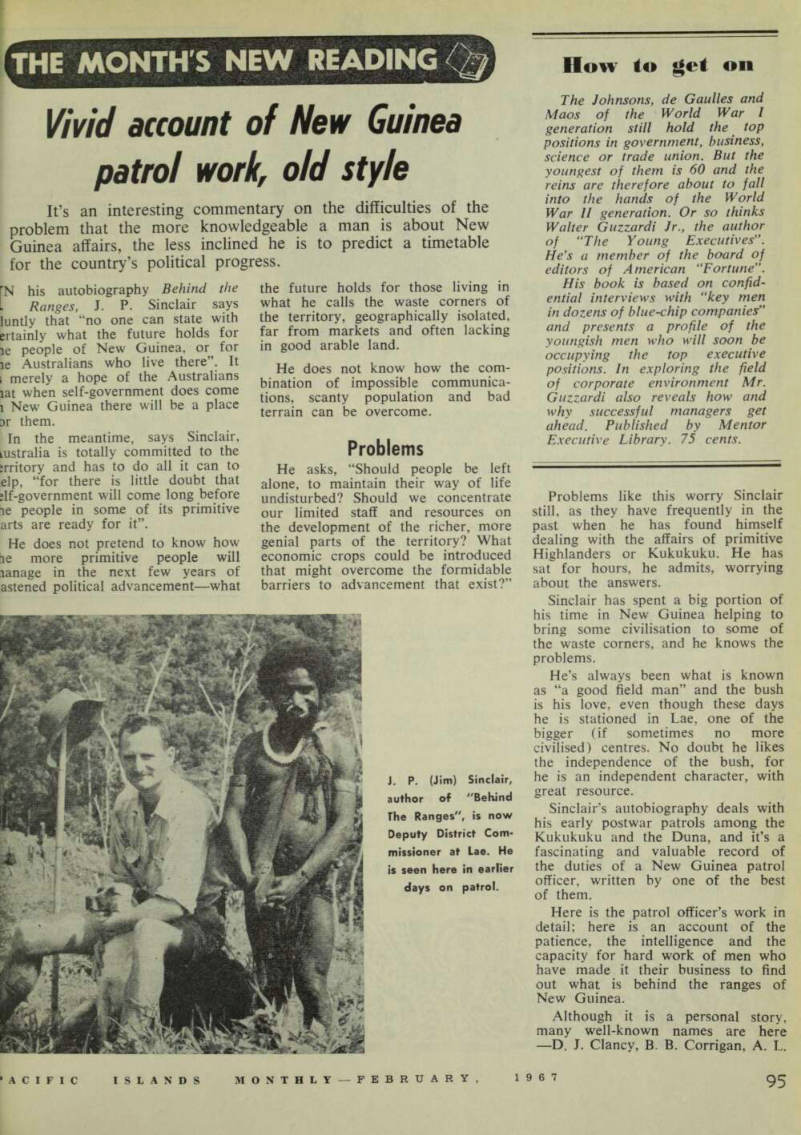 97
97 98
98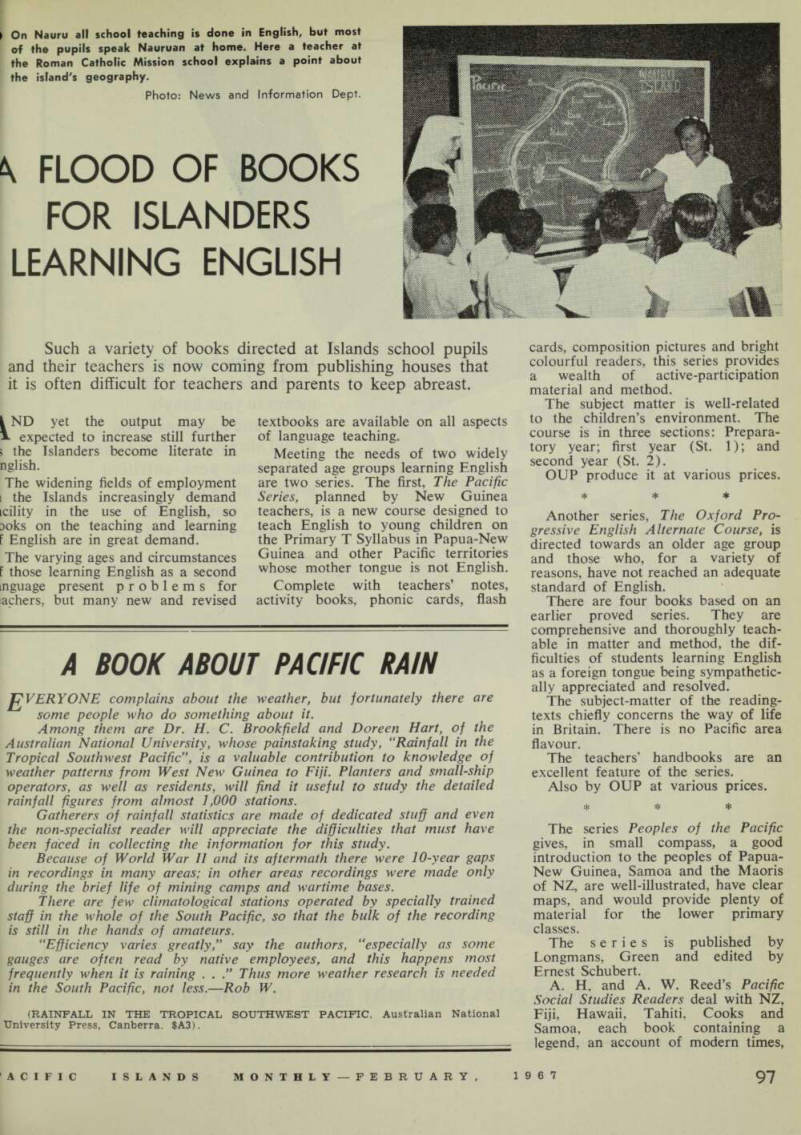 99
99 100
100 101
101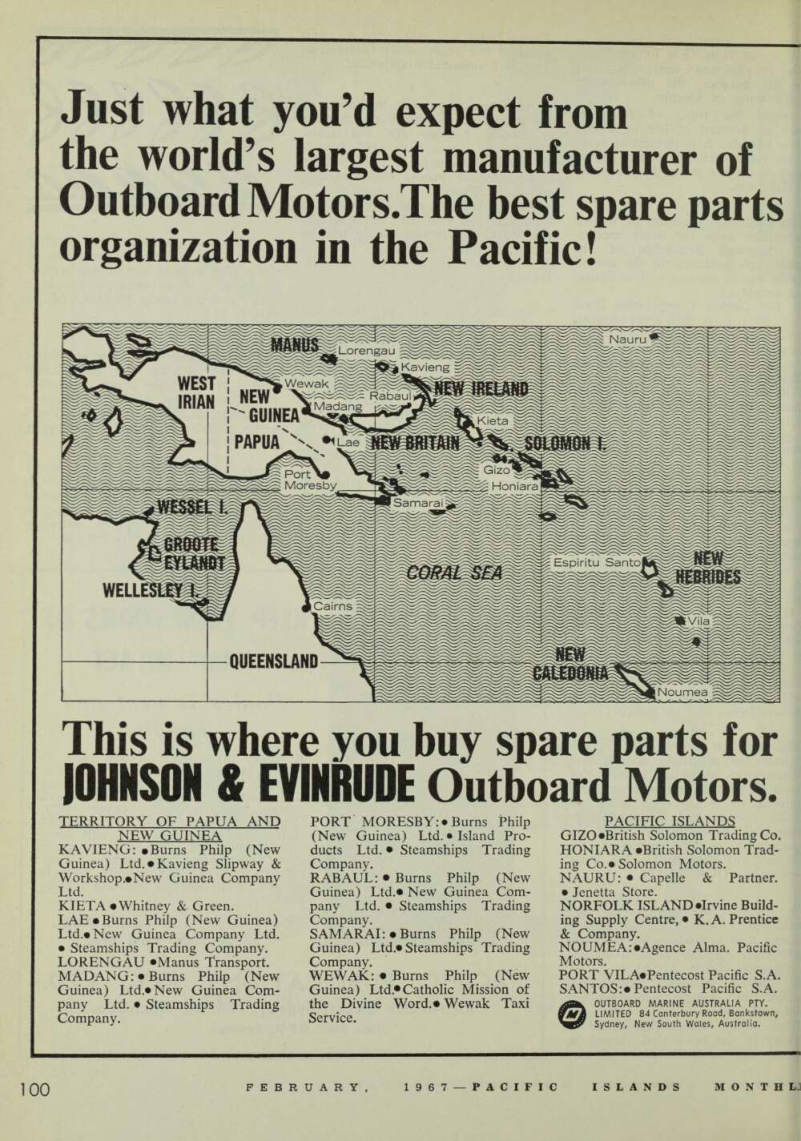 102
102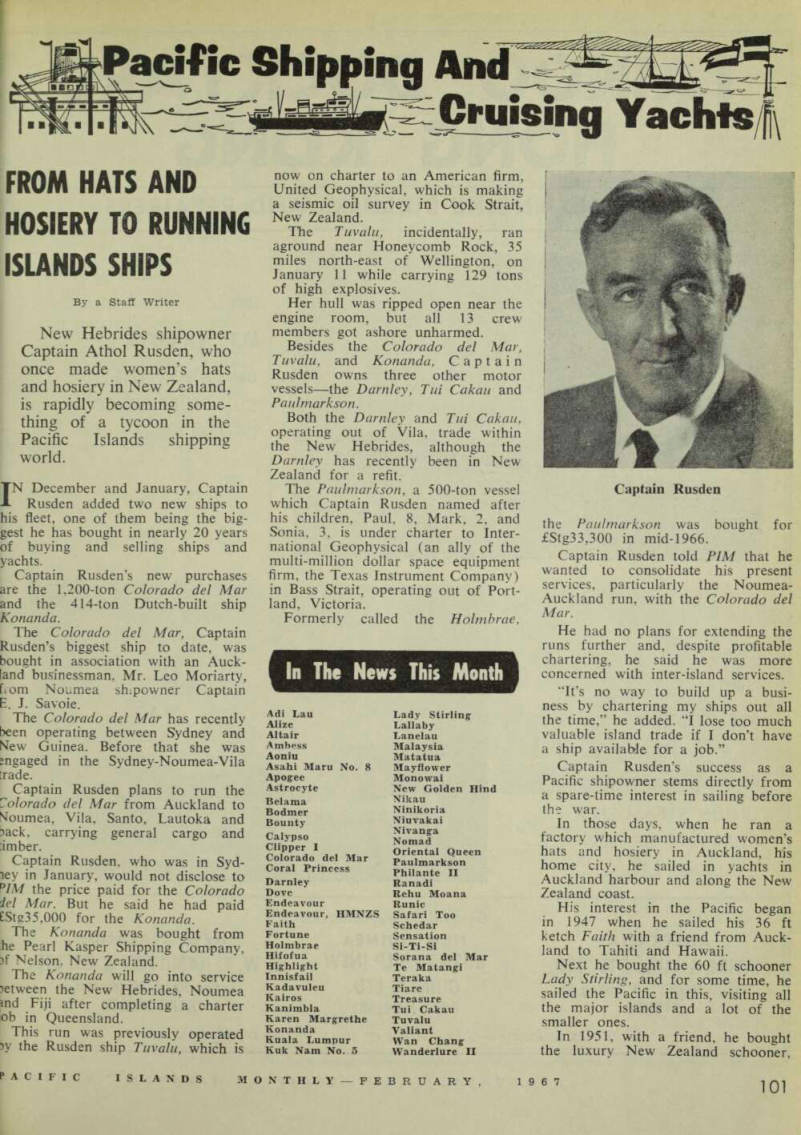 103
103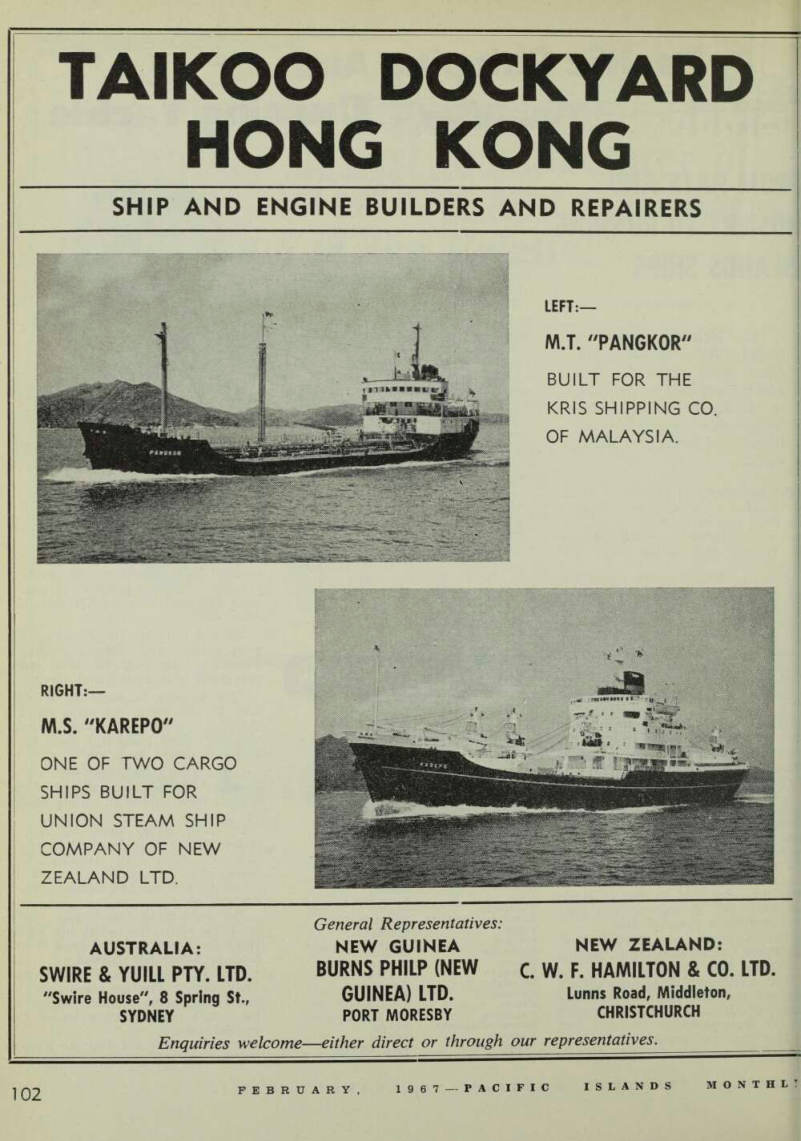 104
104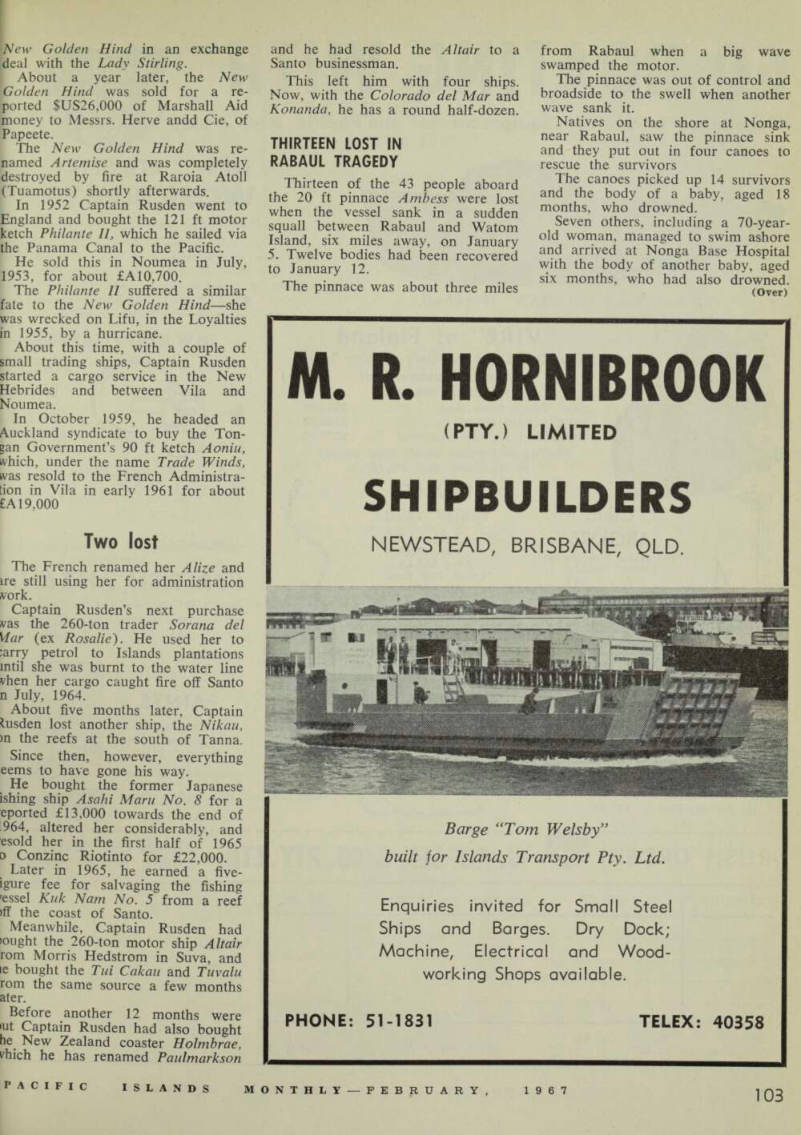 105
105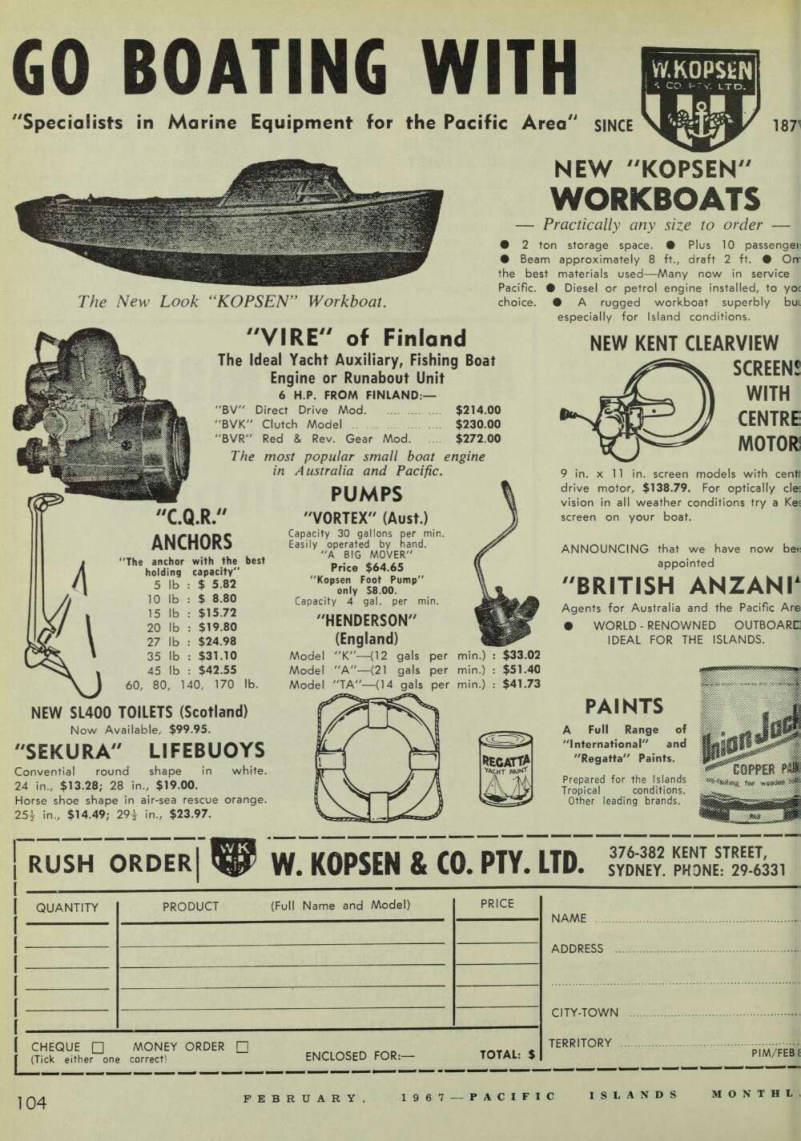 106
106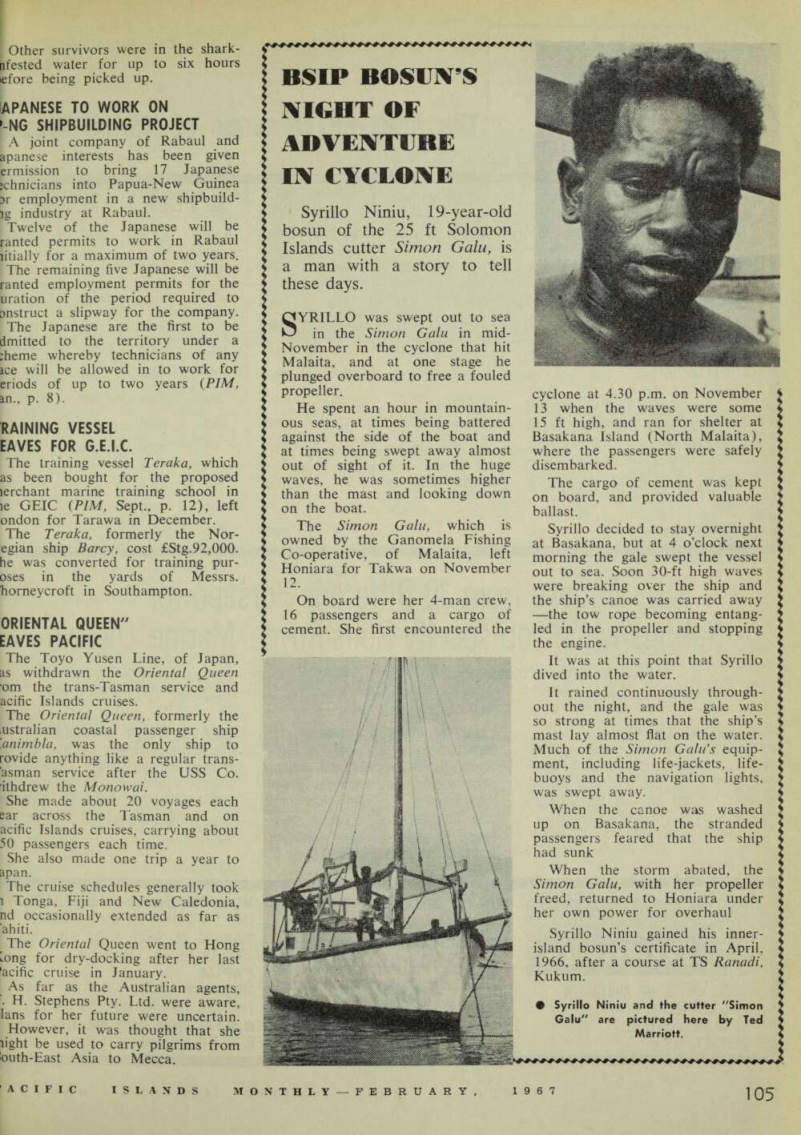 107
107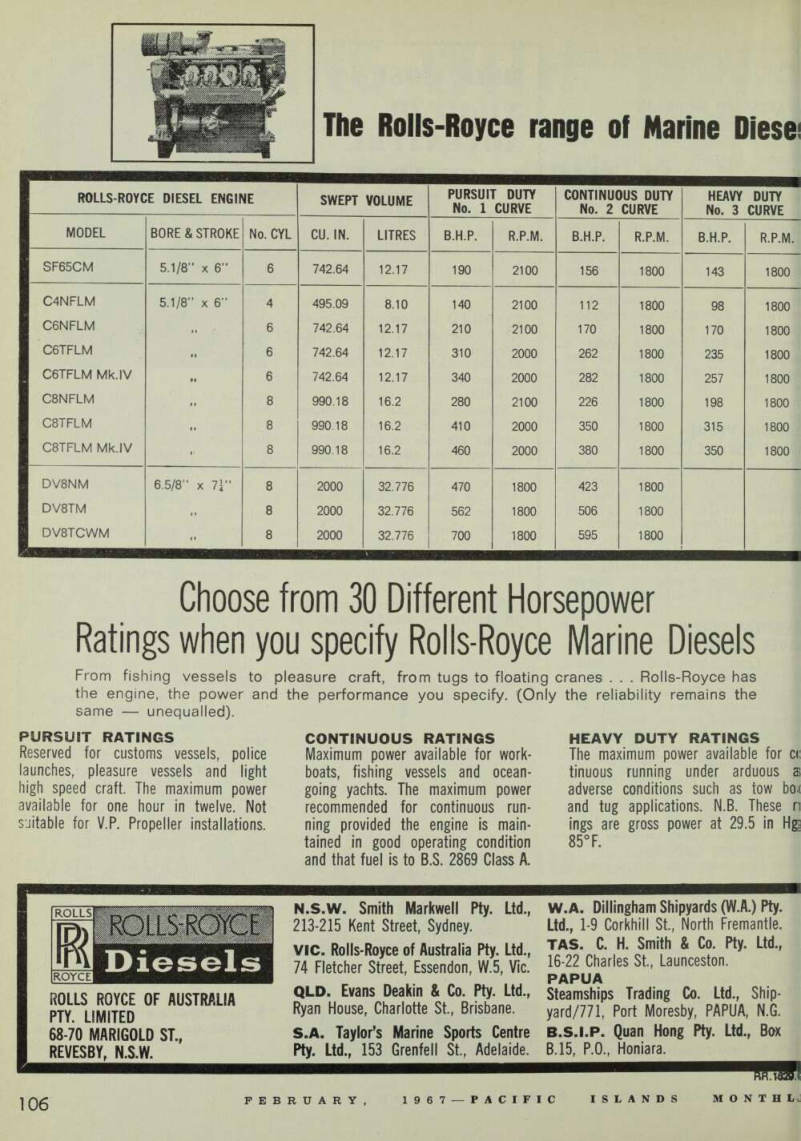 108
108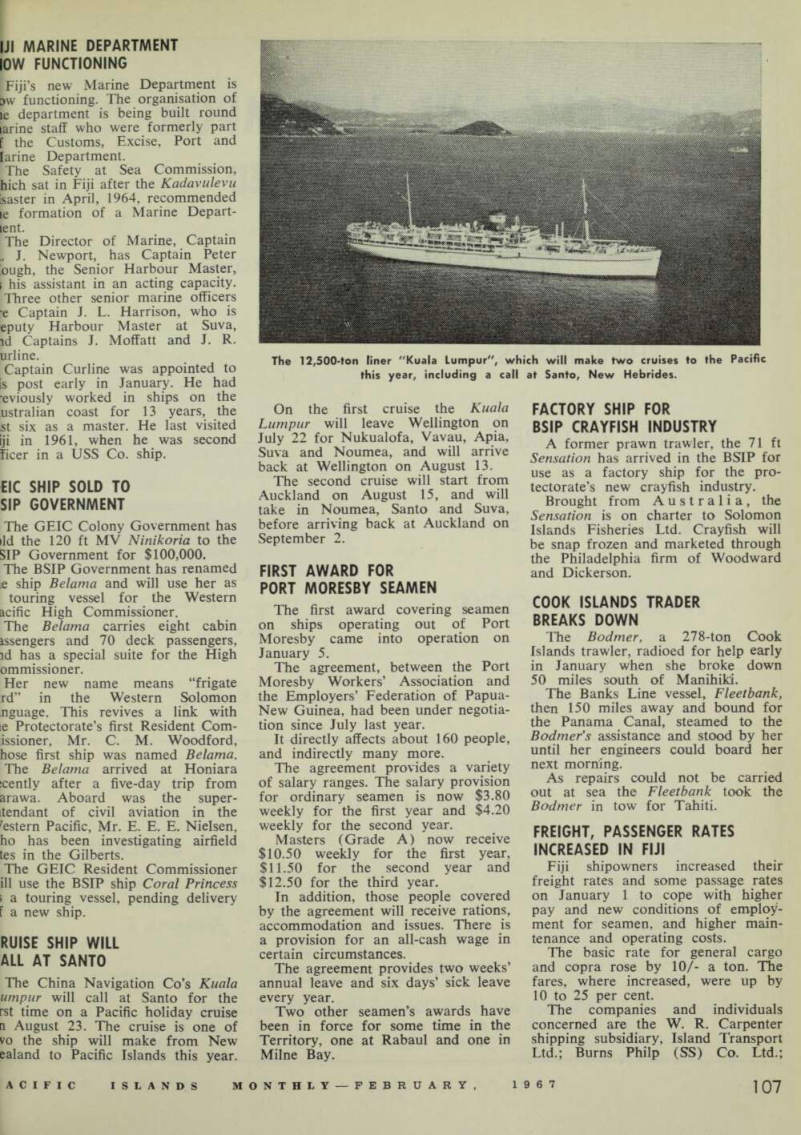 109
109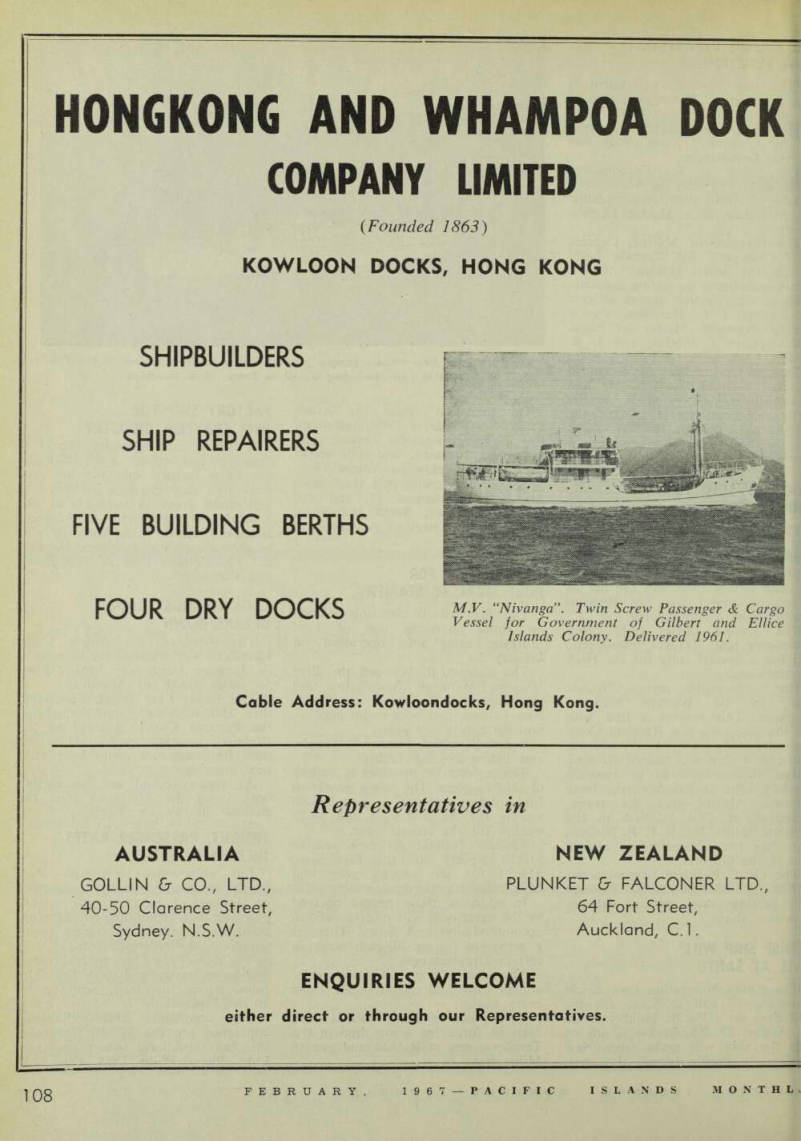 110
110 111
111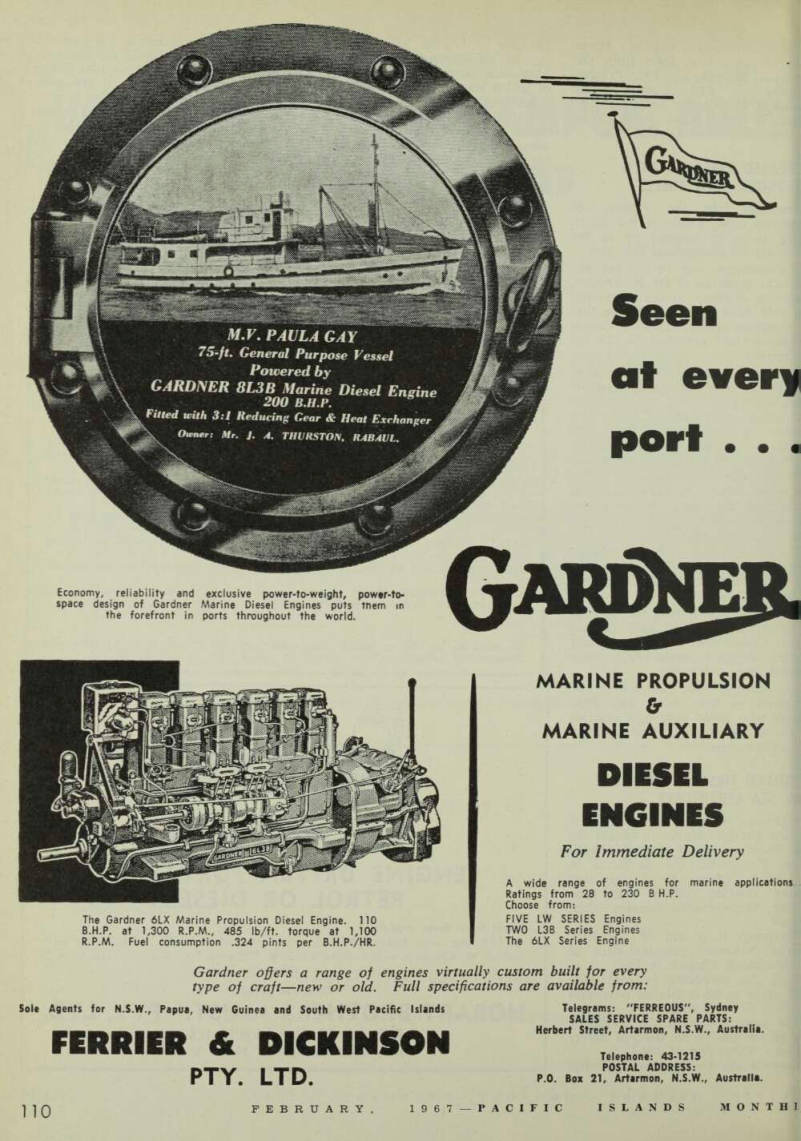 112
112 113
113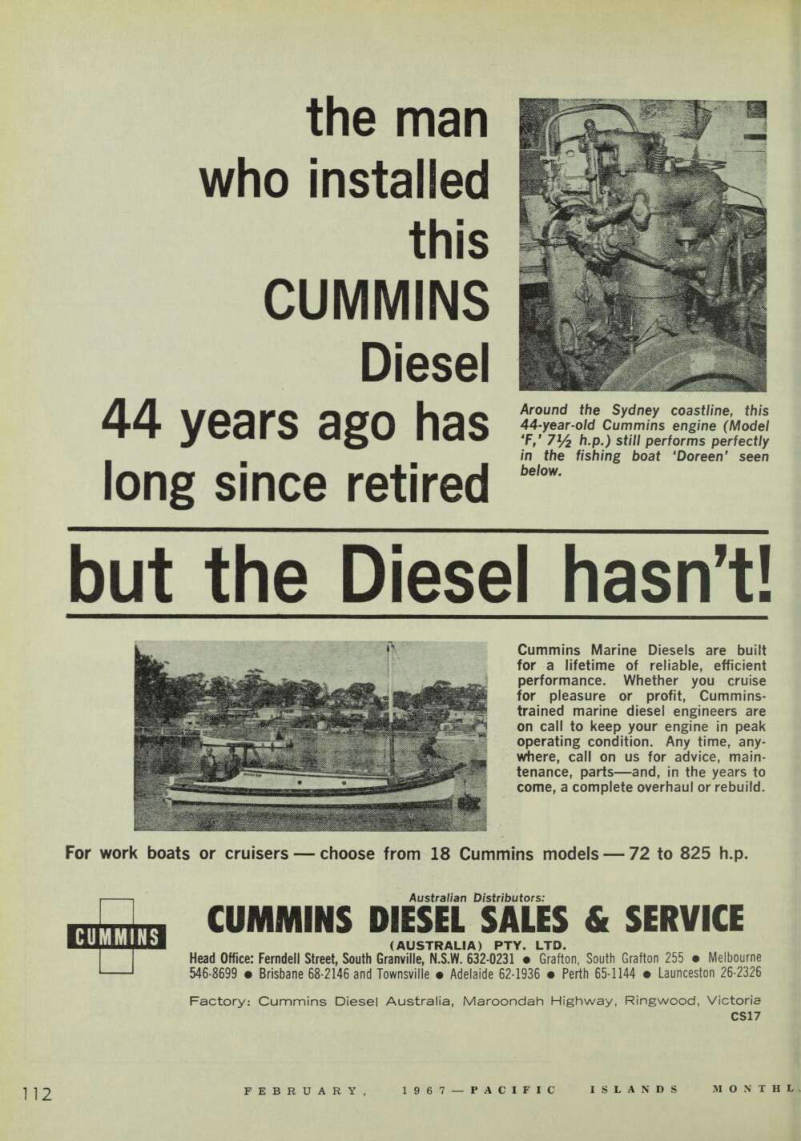 114
114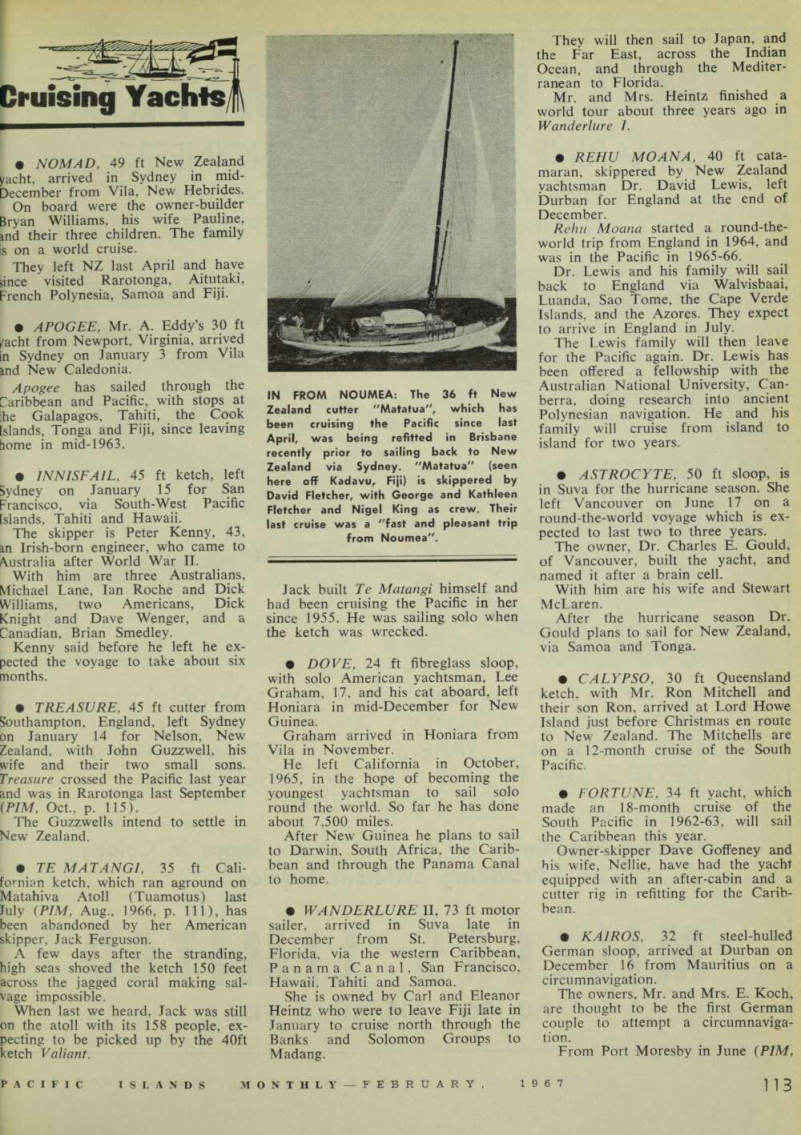 115
115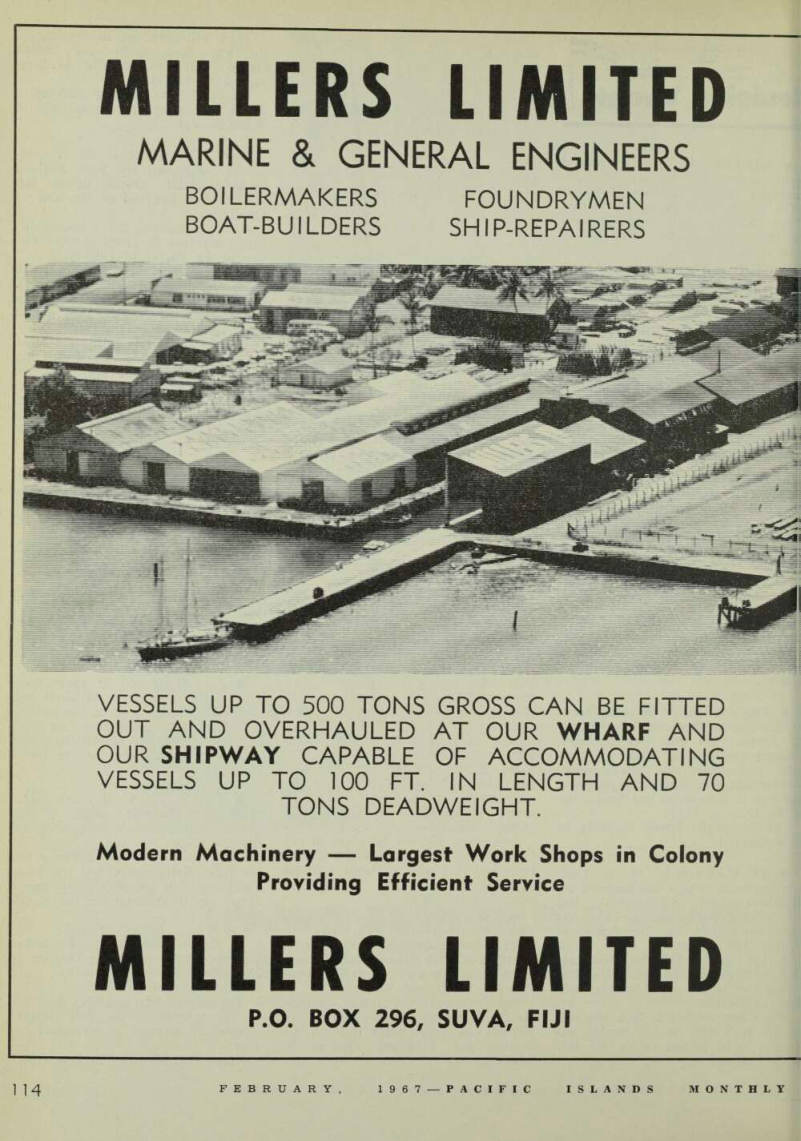 116
116 117
117 118
118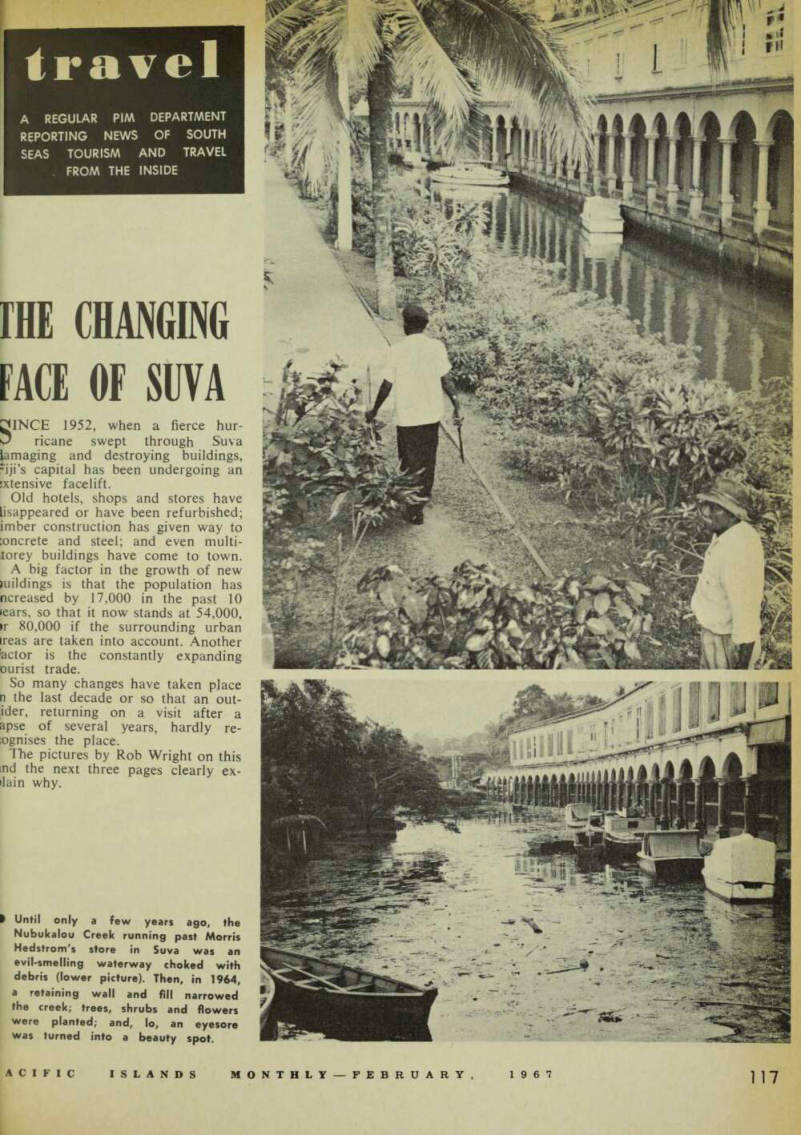 119
119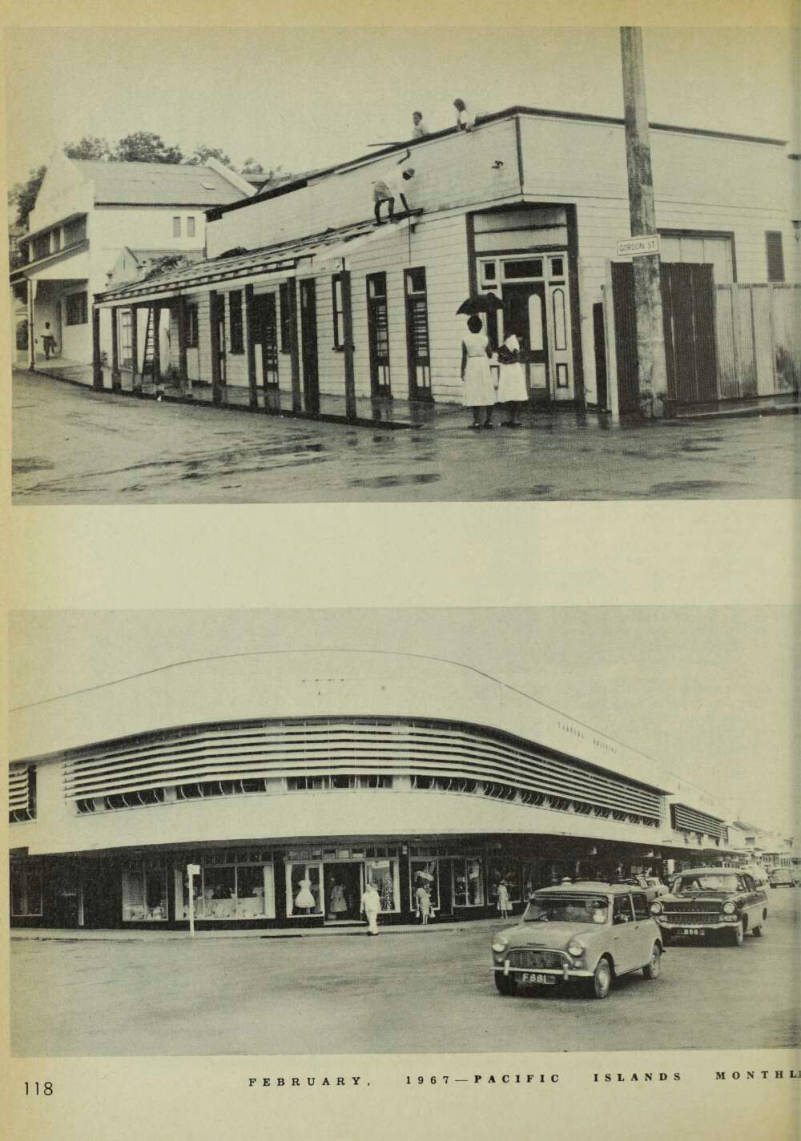 120
120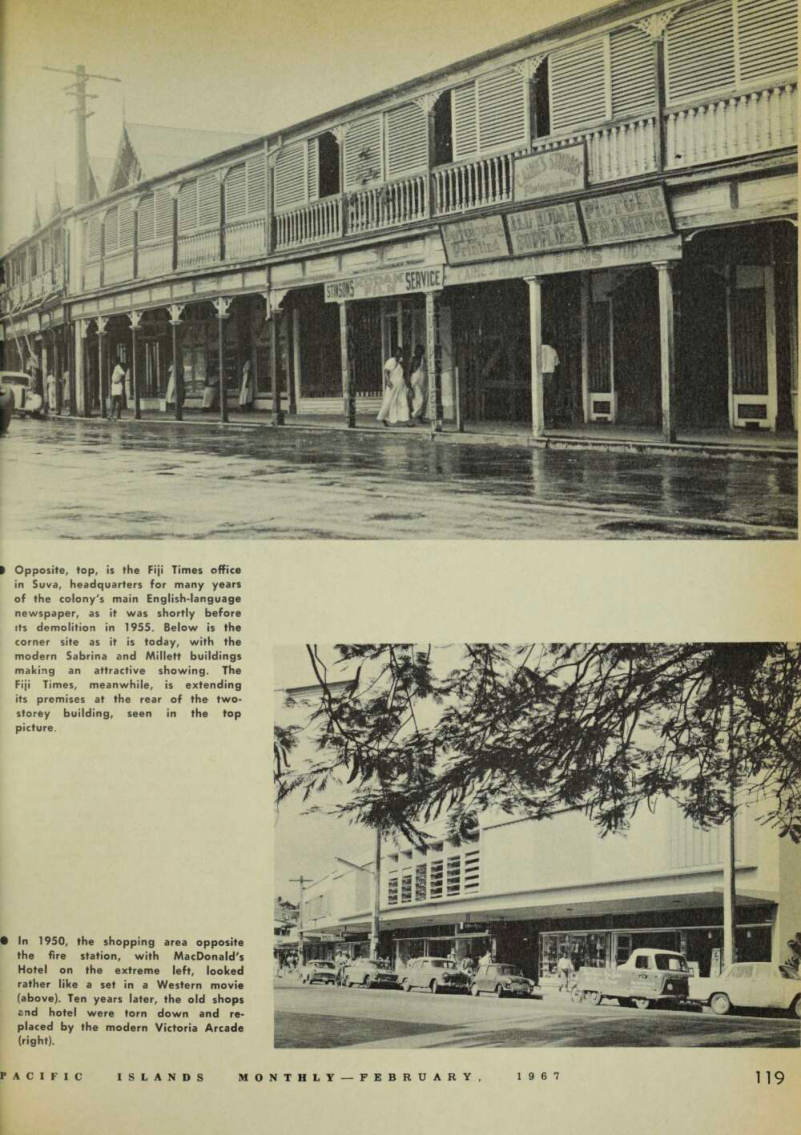 121
121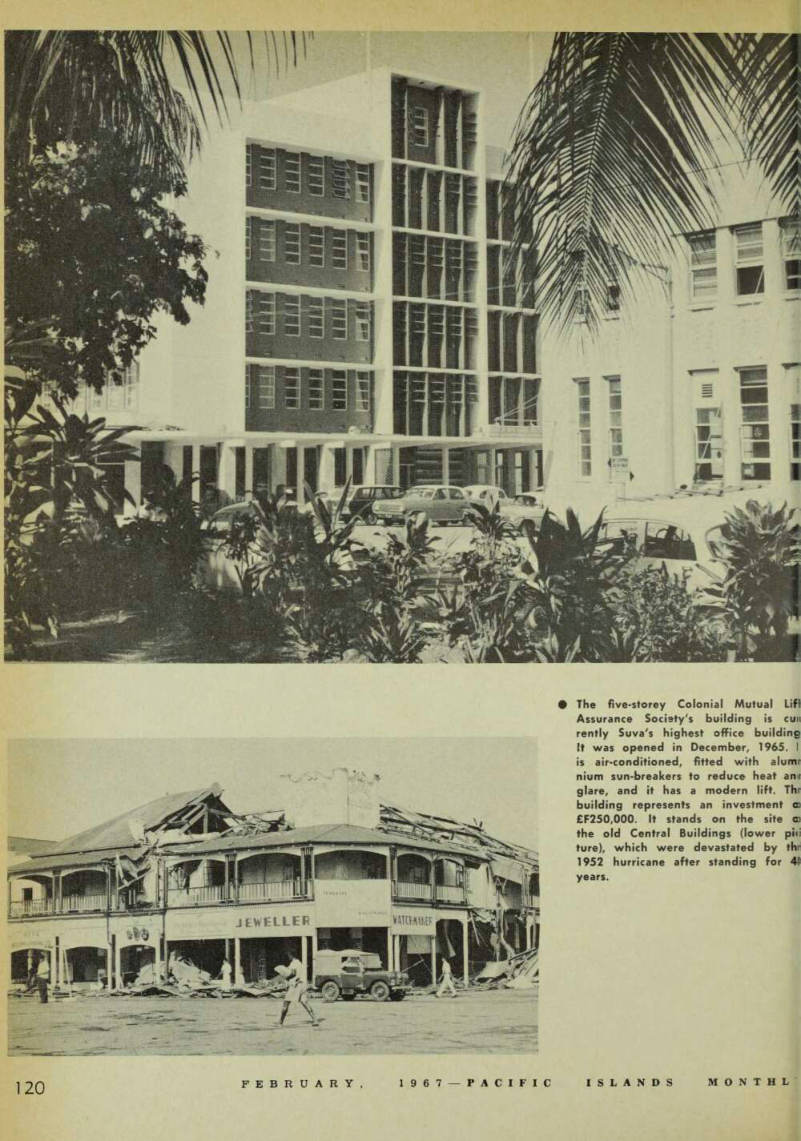 122
122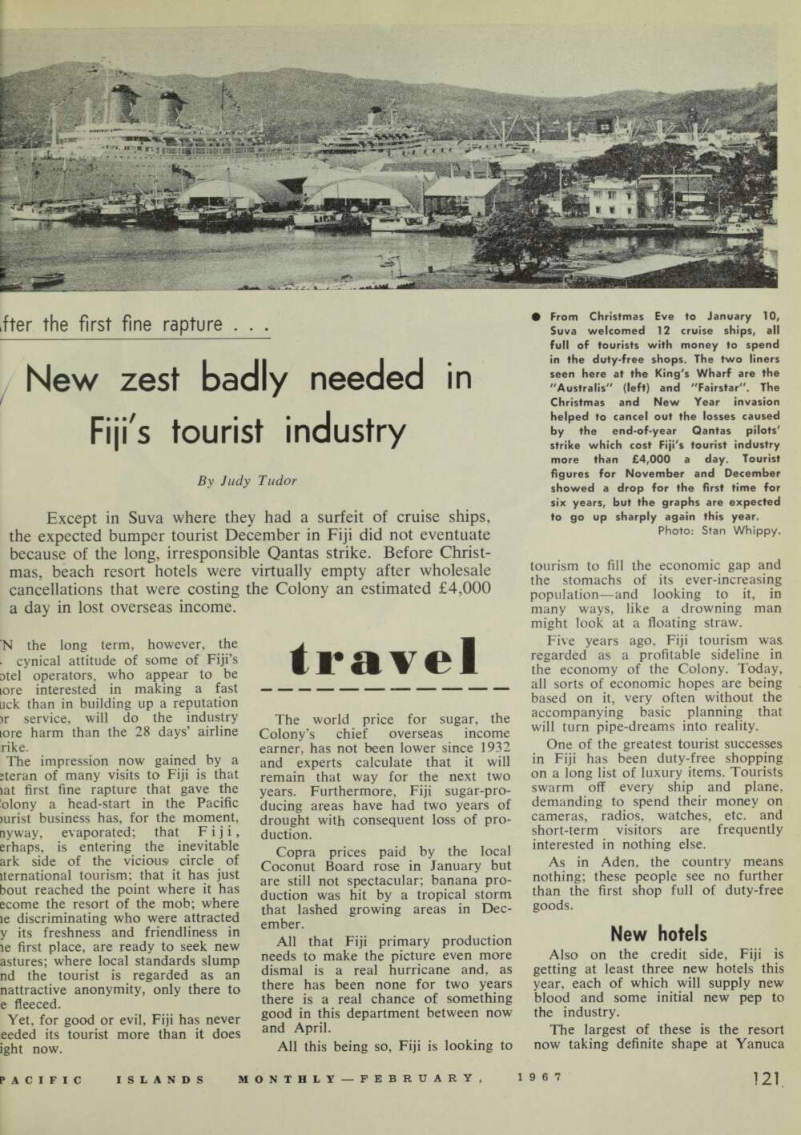 123
123 124
124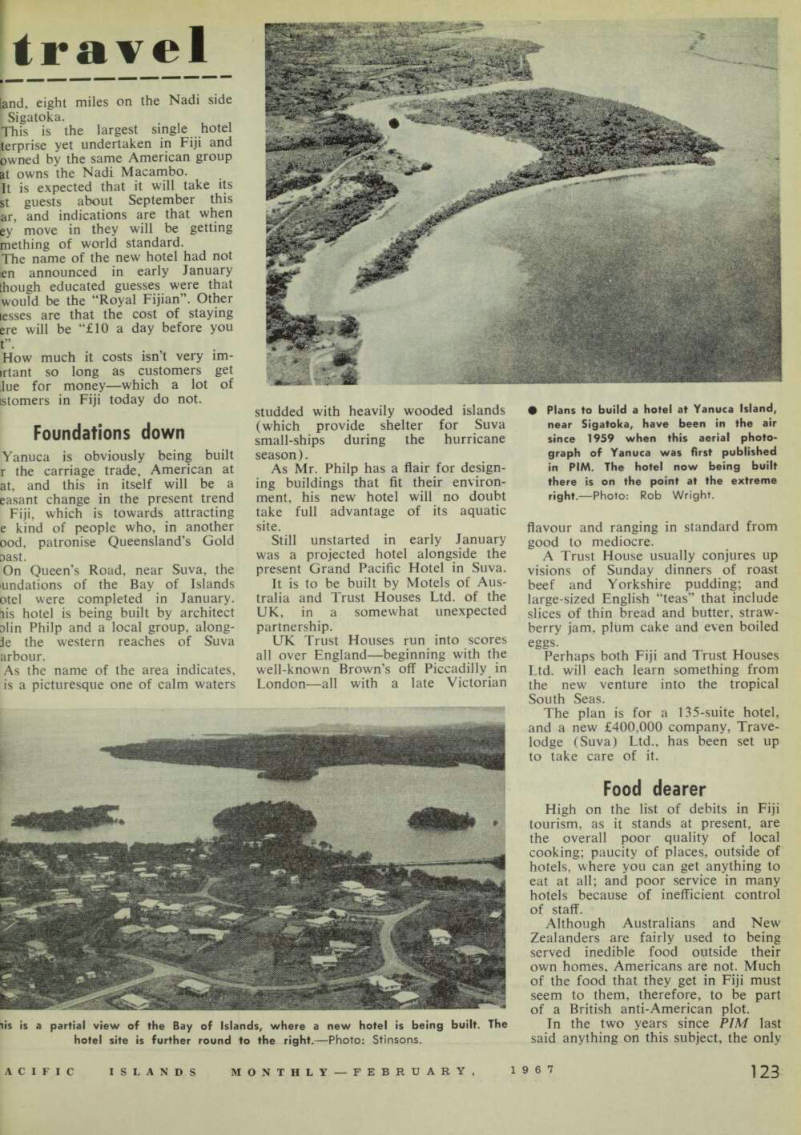 125
125 126
126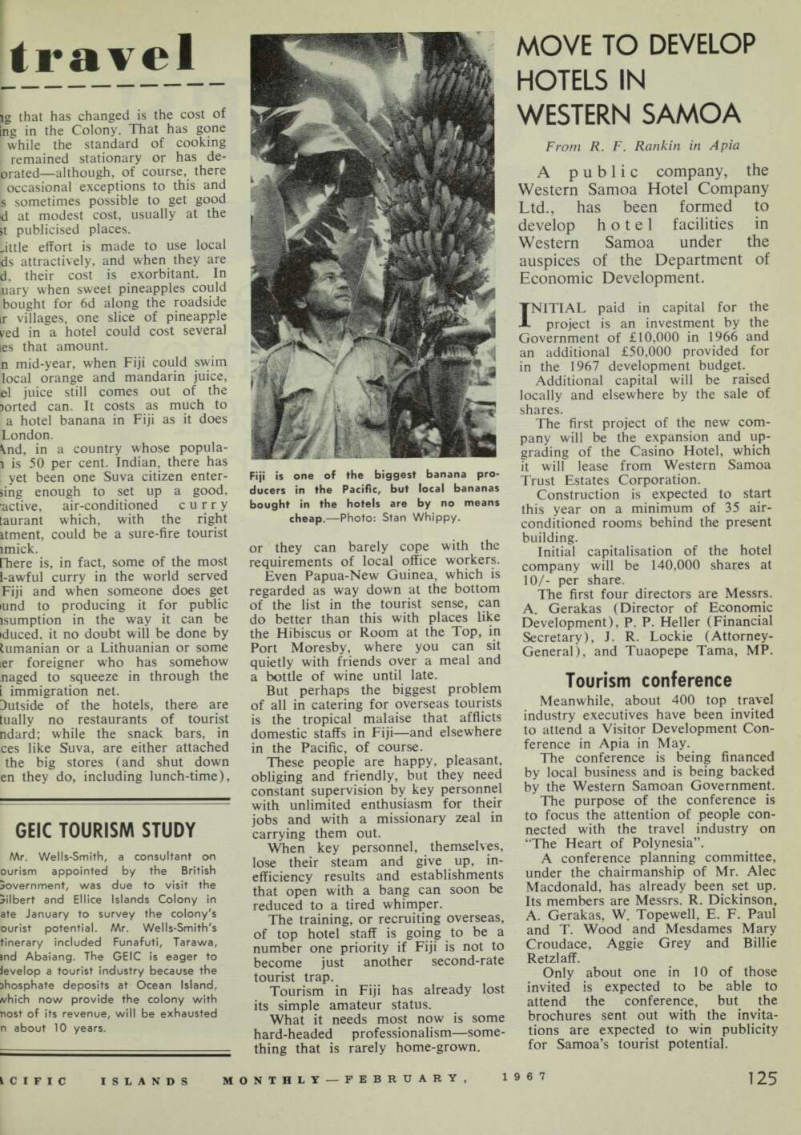 127
127 128
128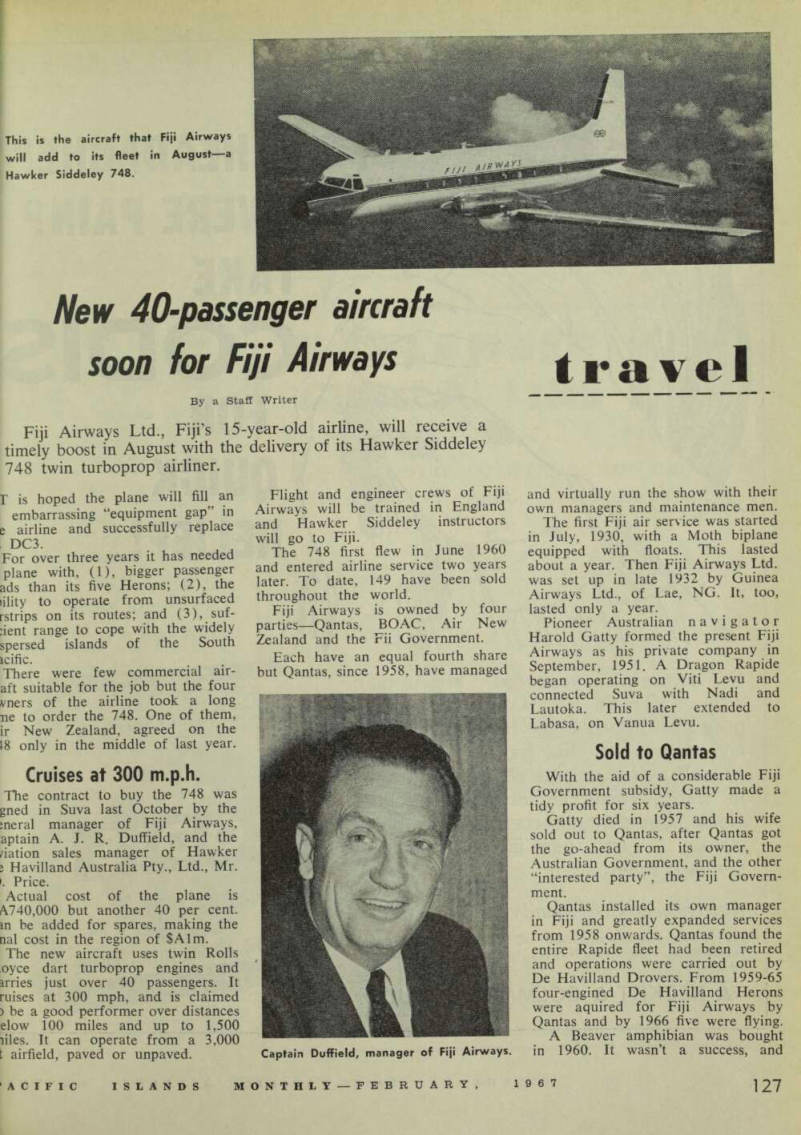 129
129 130
130 131
131 132
132 133
133 134
134 135
135 136
136 137
137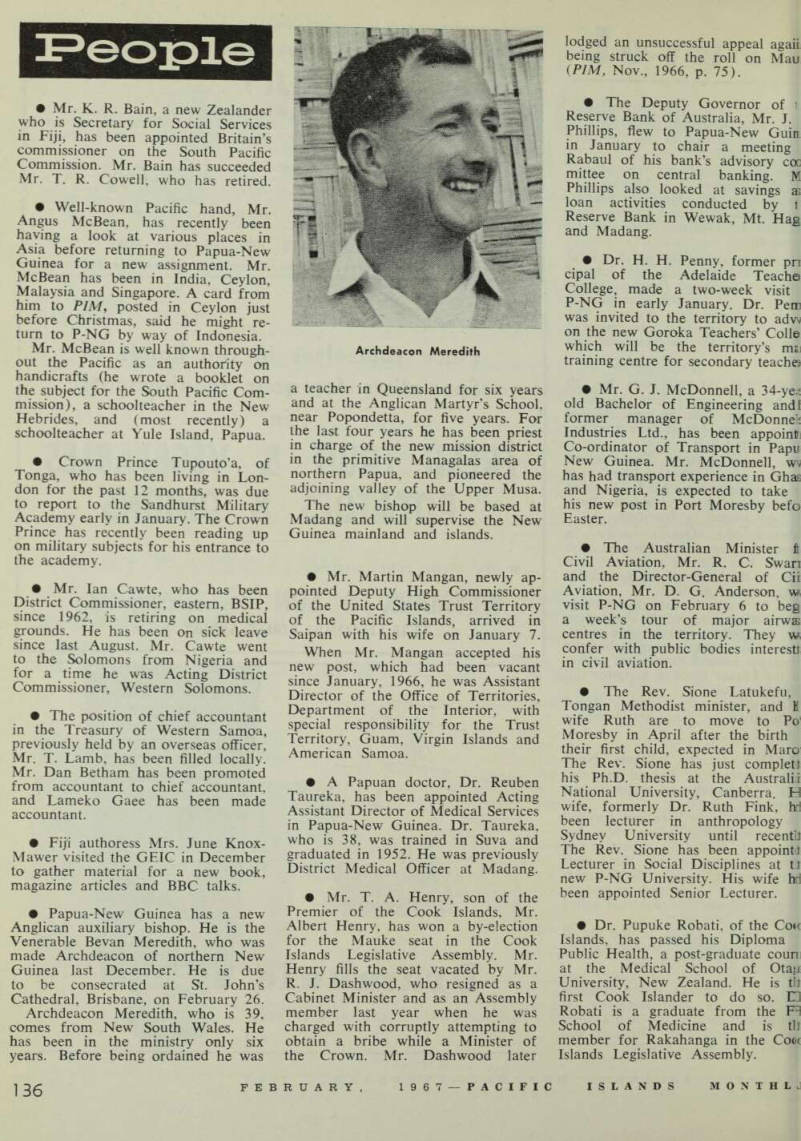 138
138 139
139 140
140 141
141 142
142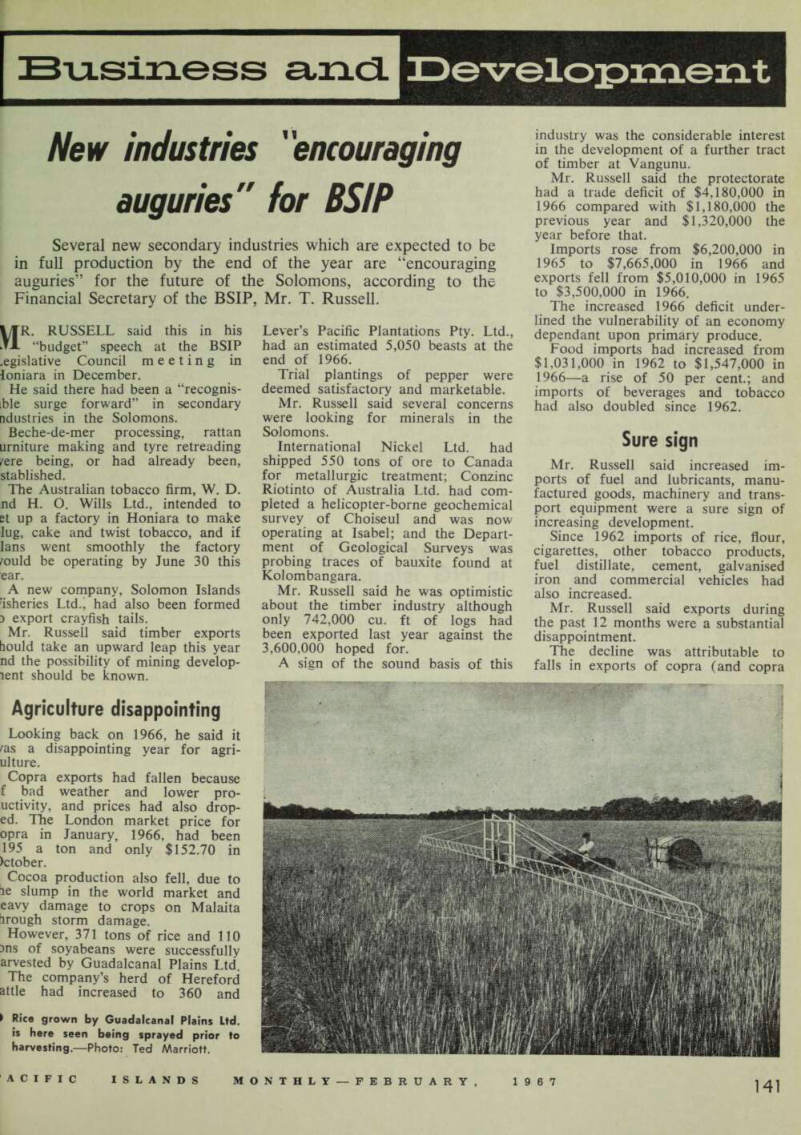 143
143 144
144 145
145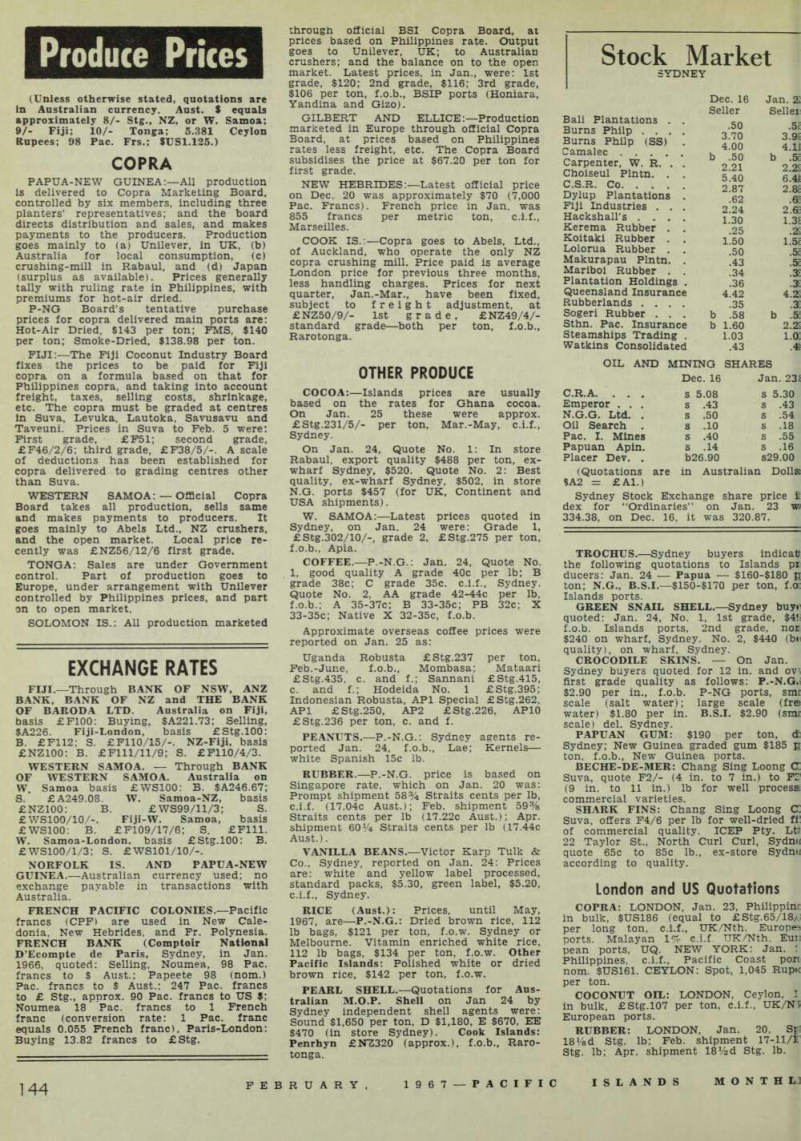 146
146 147
147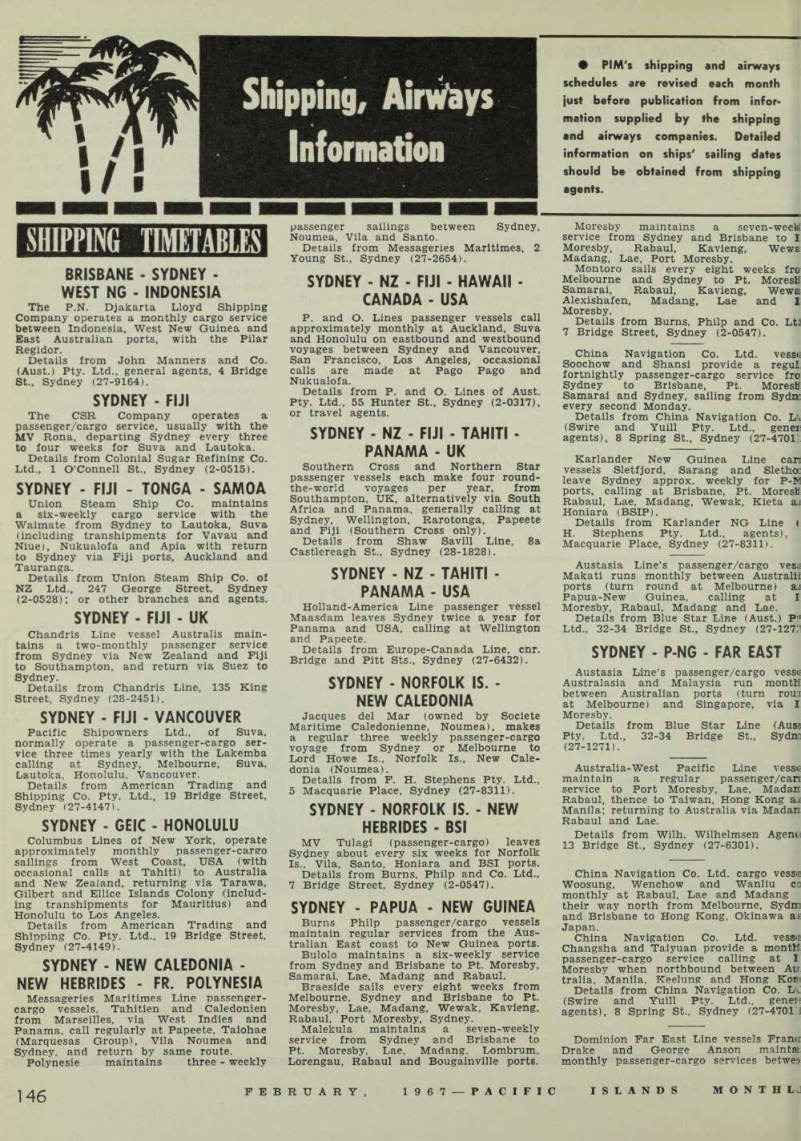 148
148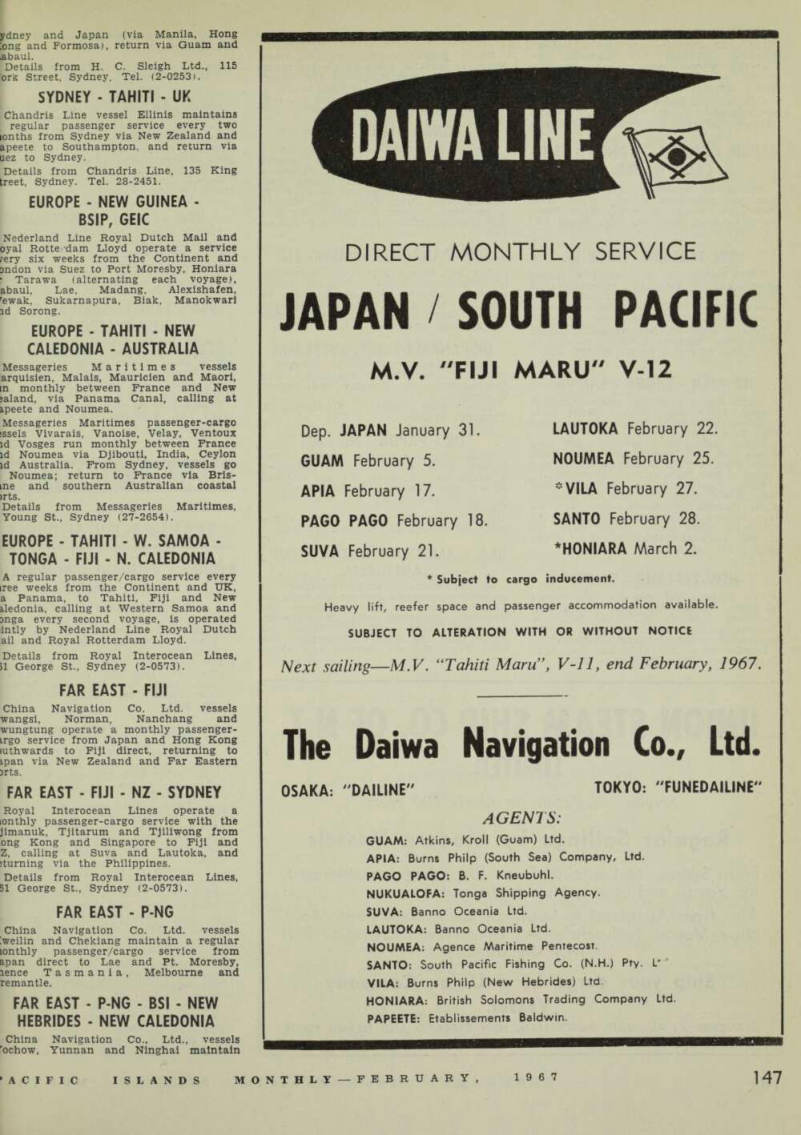 149
149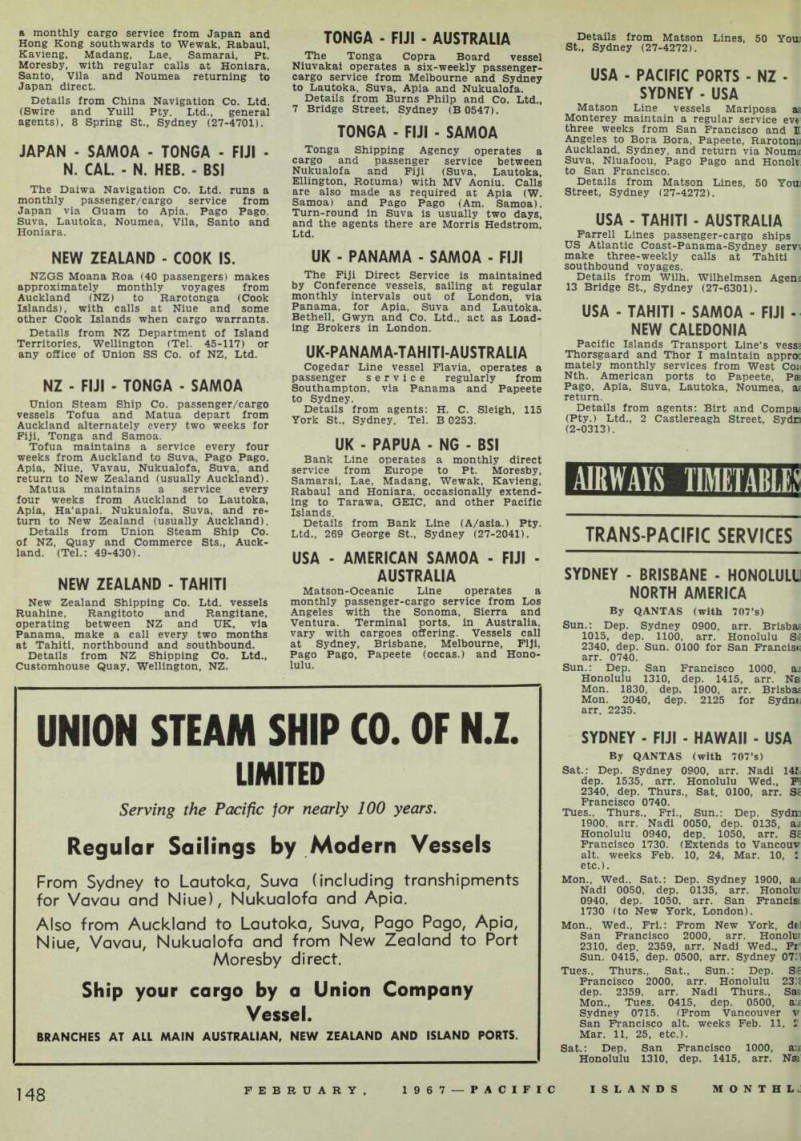 150
150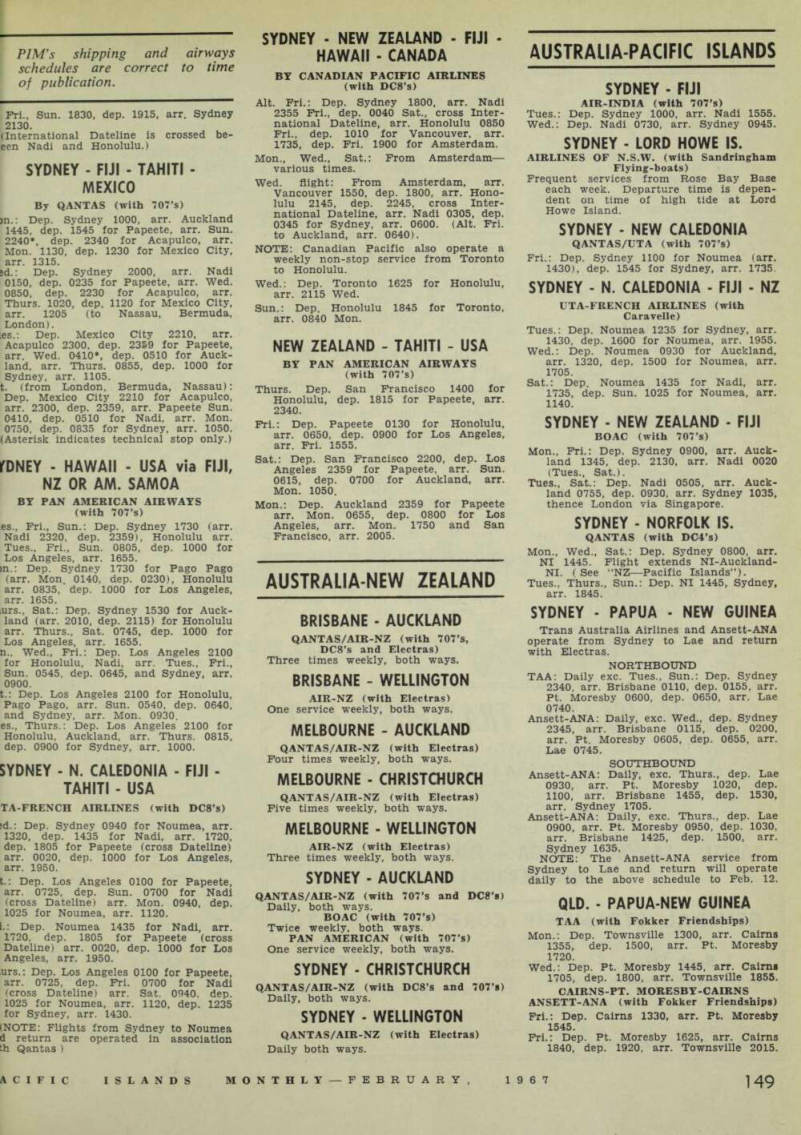 151
151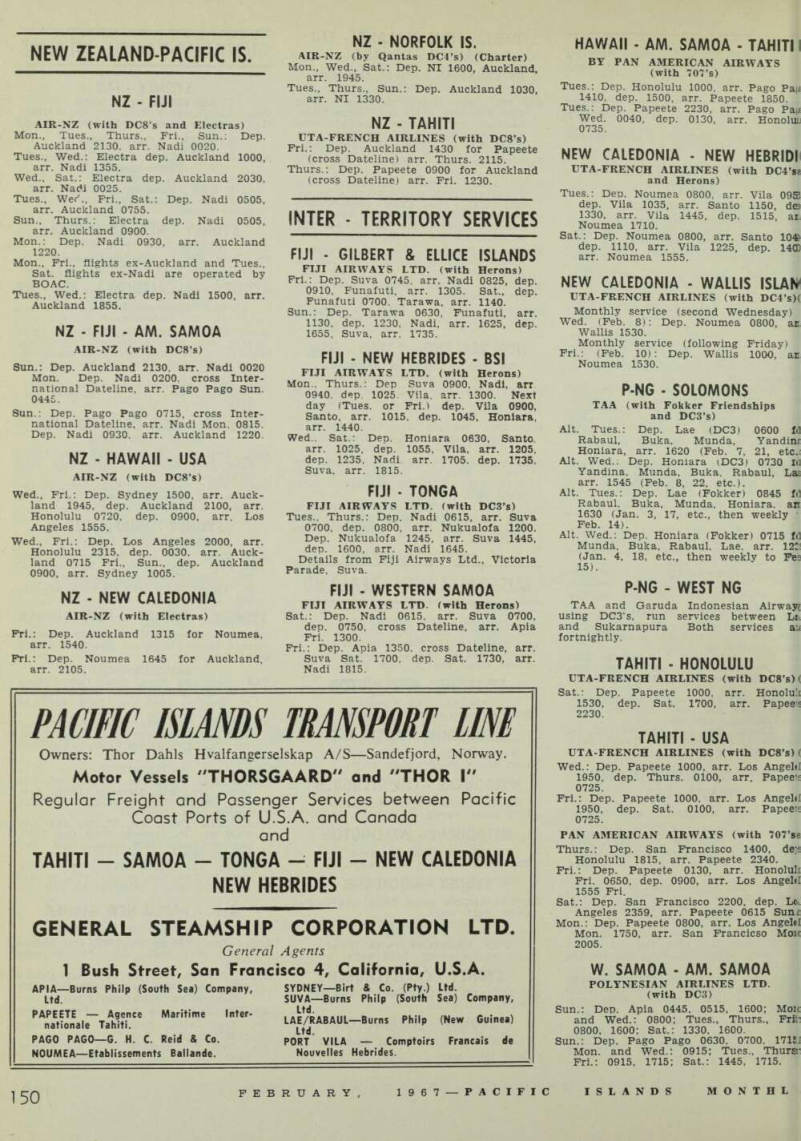 152
152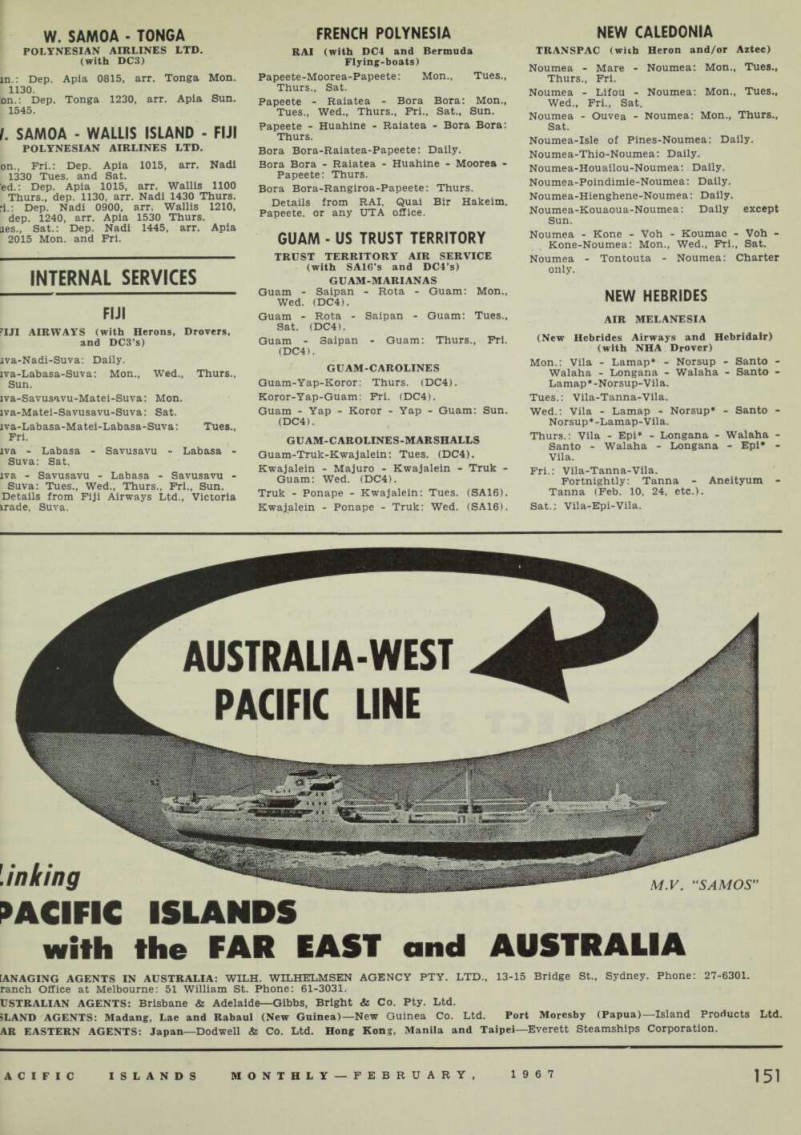 153
153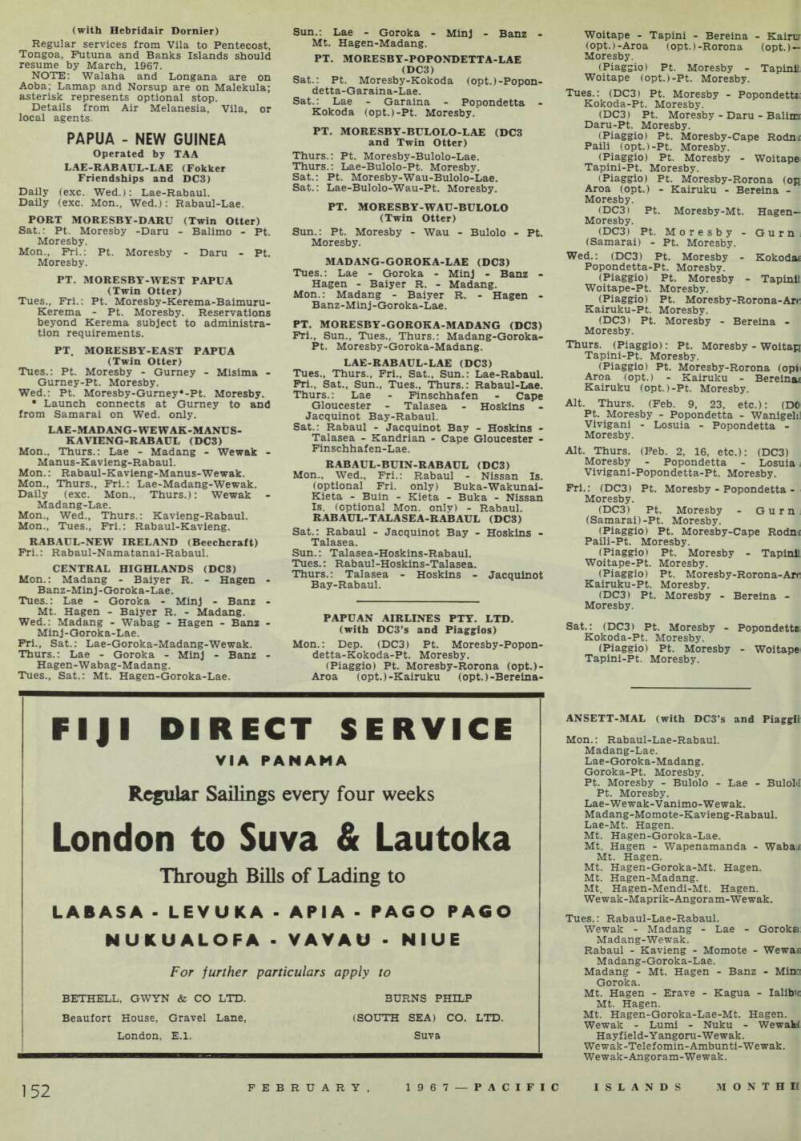 154
154 155
155 156
156 157
157 158
158 159
159 160
160 161
161 162
162 163
163 164
164