Monthly
Pacific Islands Monthly
August, 1966
30 Aust. cents Three shillings 70 US cents 50 French Pac. frcs.
The News Magazine Of The South Pacific
Established 1930
Registered at G.P.0., Sydney, for Transmission by post as a newspaper.
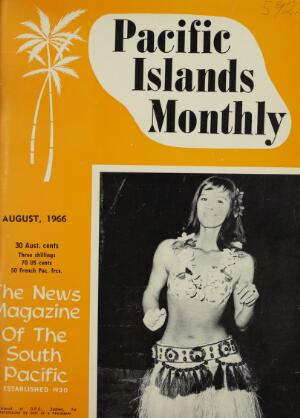
THE COVER: Down-to-earth air hoste' with UTA-French Airlines, Miss Jarmi Prokop, helped put sparkle into the Bastil Day celebrations in Suva in July with th Tamure. Being a Tahitian, Miss Proko knows all about it. She stopped off i Fiji between flights for the French Nation.
Day celebrations.
Advertisements & other items, pp. 2-6 (1 item)
Six days a week (our normal schedule)
TAA "Bird of Paradise’
Six days a week (our normal schedule) TAA ‘Bird of Paradise’ services between the Territory and Australia are daily except Monday — five Mark II Electras plus one Friendship every week.
Electras. Big. Powerful, Fast. Smooth. Slice two hours from the Territory/Australia trip.
And the comfort. Ever flown ‘Bird of Paradise’? Like being in a luxury hotel. (At about four hundred miles an hour.) And the pampering Like roasted breast of chicken, for example. And vintage wines. Tropical fruit salad and cream. Coffee. Liqueurs. And extra-special hostess service.
You want a book or magazine to read? Fine. Or maybe get your head down for a while?
Our aircraft are very easy to nap in.
You can spoil yourself like this six times a week in both directions.
So go on. Indulge yourself on our ‘Bird of Paradise.’ Life is for living.
Talk to your nearest Travel Agent. Or TAA: Port Moresby 2101 ■ Lae 2311 ■ Rabaul 2567 Madang 78, 268 ■ Goroka 8 ■ Mt. Hagen 4 ■ Wewak 103 Fly TAA
the Friendly Way
TO OPERATE EFFICIENTLY
YOUR EQUIPMENT
NEEDS
POWER
Whatever your power needs—for plantation, workshop, machinery, household appliances —there is a Dunlite plant to exactly suit, specially built for a specific load capacity. The Dunlite range includes petrol, diesel, kerosene operated plants, stationary, mobile, portable, with manual, remote control, or automatic starting. Proven by years of service to provide extreme reliability, trouble-free, economical service and ease of maintenance. Every unit is fully run-in, thoroughly load tested . . . and is a ready-torun package unit with no special installation requirements. i ii H u ★ A range of over 200 models AC & DC — single & 3-Phase capacities 1 to 75 KVA
DUNLITE —
FOR OVER 30 YEARS MAKERS OF AUSTRALIA'S
FINEST POWER PLANTS LEADERS IN DESIGN
AND DEVELOPMENT PIONEERS IN RESEARCH
Ask for free literature on any power requirement
NEW!
DUNLITE BRUSHLESS ALTERNATORS
• Self exciting • Self regulating • Self protecting • Tropic proofed Years ahead in design —the first brushless alternator designed and manufactured in Australia! Completely maintenance free — eliminates all the usual wearing electrical surfaces. With the absence of contact brushes the only wearing parts in the alternator are the large, heavy-duty ball races. Simple in design, ruggedly constructed, completely self contained. Available as belt-driven unit or incorporated in a Dunlite famous "single unit" engine operated plant, direct from factory or your nearest distributor.
Manufactured by
DUNLITE ELECTRICAL CO. PTY. LTD.
21-27 Frome Street, Adelaide, S.A.
Cables/Telegrams: "DUNLITECO", Adelaide.
Distributed by Rural Services Pty. Ltd., 65 Ipswich Road, Woolloongabba, Brisbane.
Steamships Trading Company Ltd., Port Moresby.
N.G.G. Trading Company Ltd., Lae.
New Britain Electrical Co., Rabaul.
Colyer Watson (N.G.) Ltd., Goroka.
i * m m nice & w Arnott’s NICE Biscuits Crisp and fine in texture, lightly sprinkled with sugar. m mm o *> V Arnott’s LEMON CRISP Biscuits A mixture of sweet and savoury a slightly dry biscuit with a tangy lemon cream.
wH eatmeal
SHREDDED WHEATMEAL
Biscuits Arnott’s ORANGE SLICE Biscuits Orange cream between tasty vanilla biscuits.
Arnott’s SHREDDED WHEATMEAL Biscuits Wholesome crunchy goodness and the flavour of new wheat.
mm Biscuits Arnott’s MILK ARROWROOT Biscuits All-day energy for children a favourite with all the family.
Si- ’
Arnott’s SAO Biscuits Ideal for snacks, suppers or between meals.
Arnott’s SCOTCH FINGER Biscuits Chunky and butter-rich, with the true shortbread flavour. * Arnott’s CHEESE JATZ Biscuits Crisp as could be with a fine cheese flavour perfect for entertaining.
There is no Substitute for Quality
M141
As the Lisbon Lemon said to the Indian Tonic GILBEY’S IS SUCH A GREAT INTERNATIONAL GIN WHY Ml * vv, r/y S 2760 V
Pacific Islands
Monthly
Owned And Published By
99 a, P R ?^ F a ,C c? UBL,CATIONS PTY. ITD., 29 ALBERTA ST. (G.P.O. BOX 3408) SYDNEY
Telephones: 61-9197, 61-7101, 61-4369
Telegraphic Address: PACPUB, Sydney. '
Chief Executives
Managing Director; R. W. Robson.
General Manager: Selwyn Hughes.
Book Publishing Division
Editor: Judy Tudor.
Pacific Islands Monthly
Editor: Stuart Inder.
Assistant Editor: Robert Langdon.
Branch Offices
Melbourne; Newspaper House, 247 Collins St Tel.; 63-7053.
Fi|i: Pacific Publications (Fiji) Ltd., Fiji Times 8 i , . 1 .. d,n n 3' 20 Gordon Street, SUVA, Tel.: 25601 Fi|i Times Office, Vidilo Street, LAUTOKA Tel.: 60-422.
Papua-New Guinea: Pacific Publications (N.G.) oX - „ Ltd - Representatives: Mrs. Joan Carter R-0- n ß ° x 16 > PT. MORESBY (Tel.; 2504); Miss Pat Robertson, P.O. Box 227, LAE; Mr. Steve Simpson, P.O. Box 154, RABAUL (Tel.: 2547).
Representatives
New Zealand: J. D. Whitcombe, C.P.O. Box 2229, Queen Street, Auckland. Tel.: 76056 Hawaii: C. C. Spencer, 203 Yap Bldg., 3465 Waialae Ave., Honolulu. Tel.: 775538.
United States: Mrs. A. L. Craib, 1631 80th Avenue, Oakland 21, California.
Tel.: LOckhaven 8-1201.
United Kingdom: S. R. Warman, Candlewick House, 116-126 Cannon Street, London, EC4 Tel,: Mansion 3674/7.
H. A. Mackenzie, 4A Bloomsbury Square London, W.C.I. Tel.: Holborn 3779.
Agents
All main trading firms and stores in the Pacific Islands.
Pacific Publications Pty. Ltd. is the Australian agent for THE FIJI TIMES.
Subscription Rates:
Australia: 30 cents Aust. or 3/- ($3.60 Aust or 36/- for 12 months). New Zealand, all British Commonwealth South Pacific Territories, Tonga, New Hebrides and Western Samoa: 3/local currency (36/- local currency per annum).
Elsewhere in the South Pacific: 50 French Pacific francs or 70 US cents (600 French Pacific francs or $B.OO US posted per annum).
Posted to USA, $B.OO US per annum. Posted to the UK and all other countries: £Stg.2.
"Pacific Islands Monthly" is air-freighted to all subscribers and agents in the South Pacific; copies to other areas go by surface mail.
In This Issue
Vol. 37. No. 8, August, 1966
General
Church Preparations for Independence 30 BP's Joseph Mitchell Retires 41 Behind the Bomb 61 R. L. Stevenson Relics to be Restored 91 The Art of J. J. Hilder 95 New Edition of "Bounty" Journal ... 95 Copra Outlook Bright 147
American Samoa
The Way to Chaos 10 Policemen Walk off Job 17 Rose Atoll Makes the News 85 High Prices at New Hotel 127
Cook Islands
Premier on Postage Stamps 10 Death of Boy Boxer 16 Another Henry for Rarotonga 25 Near Famine on Pukapuka 27 Fewer Calls by "Moana Roa" 11l
Fiji
Legco Session 13 Labasa Hotel Extensions 15 Rabi Islander in Sydney 18 Drunkenness Problem 19, 52, 53 Oldest Part-European 25 Legislative Council Elections 34 Mission on Higher Education 55 Tobacco Statistics 59 New Beetle Invasion 65 Development Plan 71 Captain James Retires 109
"Dampier" Completes Survey 109
Government Charters Catamaran ... 109 "Fiji Times" Expansion 145 Warning on Sugar 147
French Polynesia
Sarka, the Painter 59 Behind the Bomb 61
Gilbert And Ellice Islands Colony
Apathy over New Constitution 12 Ocean Island Phosphate 18 Fanning Is. Developments 20 Stamp Causes Loss of Face 31
New Caledonia
Drinking Water from the Sea 51 Noumea Harbour Under Fire 111 More Air-Links with Australia 113
New Hebrides
Fire Disaster on Makura French Takeover Opposed 17 New Stamp Issues 33 Little Help for Planters 58 Joint Broadcasting Service 86
Norfolk Island
Commemorative Stamps 33 New Council 44 Centenary of Melanesian Mission 89
Papua-New Guinea
New Administrator Death of Gordon Thomas 9 Fluoridated Water for Moresby 18 Helicopter Crashes 18 First Cairn on New Border 20 New Approach to Wider Education 27 Kings and Queens in the Trobriands 27 Highest Experimental Station 40 Highlands Air Services 47
Tolai Wrist-Whipping Ceremony 55 Hanging of Ludwig Schmidt 55 Anglican Mission Gets PRO 61 Trobriands Before the Pill 87 Ship for Native Federation 105 Illegal Visitors in Fead Islands 107 NZ Jet Boats on Sepik HI ABC's 25th Anniversary 117 Territory Tourism "Unnecessary” 121 Gateway Hotel 123 Japanese Furniture Manufacture 141 Palm Oil Industry 148
Pitcairn Island
Mechanisation Brings New Look 75 Royal Honour for Magistrate 76
Solomon Islands
Education Weaknesses 45 Boy on a Turtle 45 Fishing Boats Converted for Ice 107 Mission Ship Dedicated 107 Big Bauxite Discovery 147
Tonga
Too Many Illegitimate Children 9 Development Plan 11 New Stamps 83 King's Coronation 36 "Captain Cook's" Tortoise 59 "Niuvakai" Extends Service 107 New Factories 147 Islands Market for Vegetables 148
United States Trust Territory
Copra Prices Down 147
Western Samoa
Outside Investment Badly Needed 7 Stamp Sales 33 Judge Honoured 67 Restoration of Vailima 91 Where Hospitality is Cheap 129 New Planes for PAL 130 Newspaper to Change Hands 145
DEPARTMENTS; Topicalities, 25; Planters' Digest, 39; Letters to the Editors, 55; From the Islands Press, 69; Magazine Section, 85; Yesterday, 93; New Books, 95; Shipping, 105; Cruising Yachts, 113; Travel, 121; People 135; Business and Development, 141; Shipping, Airways Schedules, 150; Deaths of Islands People, 157.
Advertisements & other items, p. 8 (1 item)
Milled
'V U 32 2? 23 35 3m. >»v
Flour that’s
FRESH
when called for by
z **&%?' Tf'* ’ v |l ~. i: Ml *TJ i O f «
your shipping agent
&V Milled fresh—when called for—then packed in clean, strong sacks or drums. That’s the reason why Mungo Scott’s have the largest output of any mill in Australia.
Mungo Scott's skilled laboratory staff put to practice every modern method to ensure you receive the finest quality entoleted flour.
Since 1894 . . . Mungo Scott “a good firm to do business with.’
We pride ourselves on documentation.
Bakers Flour Sharps Meals Cake Flour Biscuit Flour Sponge Flour Summer Hill, N.S.W., Australia Cable & Telegraphic SUPERB Sydney R8A948
Outside Investment Badly
Needed In Run-Down
Western Samoa
By Robert Langdon
After 4h years of independence, Western Samoa's economy has become so run down that unless the country can generate some new energy and drive from within and obtain some new capital from without, the situation will become progressively worse.
THIS was the conclusion I came to after a brief visit to the country in July.
You don’t have to be an economist to see that the country has more or less come to a standstill.
All the way from Faleolo Airport to Apia (20 miles), you see hundreds and hundreds of people, but few of them doing anything. The road you travel on is a pot-holed bone-shaker, badly in need of repair. The bus you travel in is ancient.
When, at last, the bus finally gets you to Apia, you are likely to be astonished —or, at least, surprised— at the town’s ramshackle appearance.
Buildings are dilapidated and in need of paint. The main road —along what used to be “The Beach” before the reclamation project—is no better than the one from the airport, and possibly worse.
Most of the offices and shops are gimcrack affairs, badly in need of paint. The shops are pitifully short of goods. Business is slack. Vegetable-
sellers sit for hours at a time with out anyone buying anything. News paper vendors personally solicit your custom. Taxi drivers converge on you three at a time in the hope of getting a fare.
If you happen to take a taxi, you find to your surprise that you can drive the whole length of Apia for only 2/-, which gives you a fair idea of the low cash income of most of the people. (The average wage, I was told, is 12/7 a day. Samoan currency is on a par with sterling).
The present state of Western Samoa’s economy stems mainly from a declining income from the country’s three chief export crops— copra, bananas and cocoa.
Exports Hit
Copra exports have either diminished or have stood still oyer the past 4i years because of the ageing of plantations, the ravages of rats and the rhinoceros beetle, the failure to replant, and the failure to check jungle growth.
The banana industry has been hit by bunchy top disease and the devastating hurricane that swept the Central Pacific in January this year.
Cocoa exports have also dropped because of hurricane damage, and they have been bringing in less be cause of a fall in world prices.
The Government plans to devote large sums of money to reviving, im proving and increasing the country’s agricultural production in a five-year development plan which is due to be published by the Economic Develop ment Department in September.
This plan will include a major coconut replanting scheme to replace the ageing trees planted by the Ger mans some 70 years ago.
However, the replanting scheme will have little effect on the economy before the mid-1970’5, and like all other schemes in the field of Samoan agriculture, the success of it will
depend on rousing the languid, work shy Samoans to carry it out. (The Germans, when they planted the existing coconut groves, had to import labour from the Solomons and China —and even then, they had to administer quite a few floggings to keep their workmen on the job).
Apart from the climate and a don’t think-about-tomorrow philosophy, the Samoans are inhibited from working any harder than they can help by the matai system of land tenure, which denies them, to a large extent, the fruits of their own labours.
The matai system could be the ulti mate stumbling block for the Govern ment in its efforts to attract capital from overseas.
The Government’s Economic De velopment Department estimates that Western Samoa will need outside in vestment of £32 million by 1985 merely to maintain the present standard of living.
36,500 Jobs Needed
It calculates that 36,500 jobs will have to be provided by 1985, and that the population by then will have doubled from its present figure to 268,000.
At present, the Government is actively seeking overseas capital for three projects; • A timber industry on Savaii, Western Samoa’s largest island. • A large plantation block on Savaii. • A 100-bed hotel to give a lift to the country’s barely-started tourist industry.
Negotiations have been going on for some months between the Govern ment and an American corporation, Potlach Forests Inc., on the exploita tion of Savaii’s timber resources; and
Western Samoa's Minister of Finance, Mr. G. F. D. Betham.
Prime Minister Mataafa of Western Samoa.
Western Samoa’s Prime Minister Mataafa and Minister of Finance, Mr.
G. F. D. Betham, flew to the United States for further talks in mid-July.
Potlach is seeking a lease that would enable it to extract 50 million board feet of logs from Savaii annually. Its initial investment would be U 552,550,000, and it would out lay a total of $lO million over the following five years.
Mr. Andrew Gerakas, the UN appointed head of the Economic De velopment Department, believes that the Potlach investment would trans form Savaii, which now has only about 40,000 people compared with nearly 100,000 on the much smaller main island of Upolu.
“Potlach would produce most of the timber for local requirements as well as for export,” he says. “This would help our trade picture consider ably because our imports in 1965 were worth £300,000. ‘The Potlach investment would open up new areas for agriculture on Savaii it would improve the reading system; assist in providing water and power, and operate the new harbour at Asau.
Boost For Savaii
‘This would be a tremendous boost to the development of Savaii. It would make an urban area of Asau, which is now just a sleepy village.
Asau, in fact, would become the biggest settlement in Western Samoa outside Apia.”
Mr. Gerakas is also enthusiastic about the possibilities of a long oblong block of Government-owned land on Savaii, which the Govern ment is prepared to lease as a planta tion for 60 years to any overseas organisation capable of developing it.
Called Lata, the block is of 11,760 acres. It rises from sea-level to eleva tions higher than 3,000 ft and is mainly covered with forests of mill able timber.
According to a prospectus issued by Mr. Gerakas’ department, the Lata block is “geographically suitable for a variety of agricultural pursuits such as cattle-raising, and a number of crop cultivations such as coconuts, cocoa, bananas, macadamia, pine apples and annato”. It would be especially suitable for “specialised cattle-raising and coconut planting”.
Mr. Gerakas’ department calculates that at the end of three years the Lata block could be producing 200,000 cases of bananas (a quick crop) worth £250,000; and it says that at the end of 15 years, copra, cattle and mac adamia nuts could be bringing in nearly a million pounds a year.
The 100-bed hotel for which the
Government is seeking overseas in vestment is a recommendation of a group of American consultants who made a survey of Western Samoa’s tourist potential last year.
The consultants recommended that a resort-style hotel should be built at Cape Lefatu, near Faleolo Airport, at the Western end of Upolu. But the Government appears to favour a commercial hotel in or near Apia.
Originally, the Government was firmly against the growth of tourism in Samoa on the ground that it would have an adverse effect on the lives of the people.
But there was a change of policy early last year, and legislation has since been pushed through Parlia ment to help the industry develop.
Leases For 60 Years
An Enterprises Incentives Act gives hotels and supporting industries a five-year tax holiday on the im portation of building materials, etc., and it relieves them of taxes on dividends for a similar period. These exemptions may be extended for a further five years if the Government considers them desirable.
In addition, an alteration to the Alienation of Customary Lands Act has made it possible for people in the tourist industry to lease land for up to 60 years.
The Government has also tried to foster the tourist industry by: • Joining the Pacific Area Travel Association. • Producing a booklet on Western Samoa for distribution to travel agencies in the United States, Aus tralia and New Zealand. • Allocating £40,000 this year and £60,000 next year for investment in the 100-room hotel project.
Some businessmen in Apia con demn the government’s desire to in vest in the hotel venture. They say that the government knows nothing about running a hotel; that overseas interests are more likely to come forward with the money to build one if they know they will not be subjected to government interference; and that the government could easily get back in taxes what it now hopes to get back in dividends.
Certainly, the government does not seem to have made much headway in attracting hotel builders so far; and it could be that before long it will have to review its position again.
As tourism appears to be Western Samoa’s best hope of pulling itself out of the financial doldrums quickly, it seems to me that the sooner the government does something to get things moving in that direction the better.
New Guinea
New Man For
The Top In
By Judy Tudor
The appointment of Mr. D
O. Hay, CBE, DSO, as Ad
ministrator of Papua and New Guinea in succession to Sii Donald Cleland surprised everyone, including those whc have flown the highest kites in the last six months. Mr. Hay is a distinguished rather than a public figure and he has spent most of the last 15 years out of Australia serving his country in SE Asia and North America.
THE announcement of his ap pointment was made in Can berra on July 21, only about a week after his name was first mentioned publicly as a possibility.
Mr. Hay is a personal friend of Mr. Dudley McCarthy, present Aus tralian Minister to the United Nations, who is a New Guinea “old hand”. It was at a lunch given by Mr. McCarthy, in the members’ dining room in the United Nations building in New York, that I met Mr. Hay briefly at the end of 1963.
He appeared to me to be a man with a very pleasing personality and a
Mr. David Hay
wide interest in Pacific and international affairs.
At this time the UN Committee on Colonialism was having a lot to say about Fiji and Mr. Hay was interested in getting the background of that country.
He then combined the two posts of High Commissioner in Ottawa, which he had held since 1961, and Ambassador to the UN, but shortly afterwards the ambassadorship became a full-time appointment. He returned to Australia as First Assistant Secretary, Department of External Affairs, at the end of 1965.
Considering the difficulty the Australian Government has had in getting a successor to Sir Donald Cleland, Mr. Hay is a lucky choice.
He should do very well in the territory. Sir Donald retires on December 31.
Mr. Hay was born in Corowa, NSW in 1916 and is married with two sons, aged 21 and 16. He joined the Public Service in 1939 but wfthin a year had enlisted in the 7/A Tnfsntrv Rn ATF as a nrivate h s service fn the Western Desert* Gree« Ceylon and New Guinea he attained the rank of major. (As a memento of his NG service he has an airstrip named after him—Hayfield, just west of Maprik).
After he returned to the External Affairs Department he continued as a citizen soldier and, with the rank of lieut.-col., commanded 3 Infantry Bn. CMF in 1948-49.
Perhaps when he is installed as
Administrator he will revert to being lieut.-col. Military titles seem to be traditional in New Guinea (although Papua, before the war, had a Judge and a Mr.). If this were a UK ter ritory the solution would be simple, of course. Mr. Hay would become Sir David before the end of this year; but the Australian Government, which hands knighthoods out to retired pubkeepers and politicians with a free hand, can bring itself to create knights in Papua-New Guinea only once every 20 years or so.
This is the first time that P-NG h as a diplomat for an Admini strator but at the present stage of t h e territory’s development the skills Q f a diplomat will probably be very US eful. Particularly the skills of this diplomat, who has spent so many years in contact with the represen tatives of emerging nations. • ton . p.xrr, , ay f r p«tipr mnr J but he shortly as a refresher-course but he ?" d ,t is S mto the bl § bungalow called GOVem ™nt House until the new . y ear ' W u hen » h /V d ° o.aleXs and ? c . on ‘ rast ' he P late ' g,ass and steel of New York ' Government House, Port Moresby, is basically the same building where Sir Hubert Murray lived in austerity for so long. It has been extended and redecorated in latter years but it still is no palace. The Hays will, however, inherit a very pleasant hill top garden that has been the special care of Lady Cleland.
Too Many Illegitimate Children, Too
Much Guinea Grass, King Says
The kingdom of Tonga has too many illegitimate children and too much guinea grass, according to Tonga’s monarch, King Taufa’ahau.
In an address to open the kingdom’s Legislative Assembly in late June, he called on the people to do something about both.
The king said that with a population of 76,000, Tonga had 340 people to the square mile, compared with 370 in India.
“It is obvious, therefore, that we must seriously consider the introduction of family planning,” he said. “We must also reduce to zero the present rate of illegitimate births. Children born of such a union are severely handicapped, their births being against the precepts of Christianity, whilst they are generally brought up without proper parental control, and do not, because of their situation, receive the educational advantages of average children, with the result that in the majority of cases they become a burden on the community. This is one of the major problems facing the kingdom at the present time . .
Referring to agriculture, the king recalled that a few years ago the Tonga Copra Board had chartered a Fiji Airways aircraft to survey the coconut industry from the air.
“It is my wish,” the king continued, “that you, Mr. Speaker, and the members of this House, could fly in one of these aircraft and see for yourselves the situation in Tonga at the present time. You would see that the major forms of growth throughout this island are not coconuts or bananas, but guinea grass.”
Gordon Thomas,
Ng's Veteran
Talk-Talker,
Passes On
In the early hours of August 1, at Concord Repatriation Hos pital, Sydney, death at last claimed Edward Llewllyn Gordon Thomas —Tolala. PIM thereby lost a long-time contri butor and a valued friend. The South-west Pacific lost its fore-' most chronicler of pre-1914 history. He was 76.
HE had been in hospital for the previous month, but had, in fact, been in increasingly poor health since September, 1945, when he emerged from three years’ internment by the Japanese in Rabaul. He had lived in semi-retirement at Campbelltown, NSW, since then.
In this last decade his physical contact with the world around him constantly diminished, but he had crowded sufficient variety into his early years to cover a whole life span. In his latter years he was able to live on these memories better than most and through his “Talk-Talk” column in PIM, he created new friends, new interests and his own
Gordon Thomas
niche in the continuing pageant of New Guinea affairs.
He was an American by birth— born in Chicago on January 5, 1890.
His father was an Army man, but the family seems to have had its roots in Canada rather than the United States.
The young Gordon Thomas, after he had completed his education in London, Wiesbaden (Germany), and Switzerland, began a newspaper career on the family newspaper The Camrose Mail, in Alberta. He’later worked on the Vancouver Mail, but by the time he was 20 he was off to Australia.
In 1911, he took a job as printer for the Methodist Mission that then had its New Guinea headquarters in the Duke of York Islands.
New Guinea was then a German possession, and it was at this period that he formed contacts with German officials and colonists, many of which he retained to the end.
What little has been recorded, in English, of this German period in New Guinea has come mainly from Gordon Thomas, especially through his “Talk-Talk” column in PIM.
He left the mission in 1912 and went trading for the German firm of HASAG, one of the three big firms of German New Guinea. At that time, HASAG was an amalgamation of H. R. Wahlen interests and those of Queen Emma.
In 1913, Gordon changed com panies again, going to Bougainville or the Australian company, Choiseul Plantations Ltd.
He served in the ATF in France during World War I. When he re turned to the territory, he was editor of the Rabaul Times, the local weekly.
for two periods, 1925-27 and 1933-42.
The rest of his years in the territory were spent in trading, plantation management, overseeing, and as an assistant oil driller at Matapau, in the Sepik District, when NG oil-search was centred there.
When the Japanese invaded Rabaul m January, 1942, over 300 civilians were trapped there. They were eventually shipped away to Japan on the Montevideo Maru which was sunk with all hands before she reached her destination.
Prisoner Of Japanese
For reasons of their own the Japanese retained half-a-dozen of the civilians in Rabaul to work as rouse abouts at the freezer and power station. Gordon Thomas was one of these and therefore escaped the fate of his friends, although the mental and physical effects of this internment he was to carry to the end of his life.
He has left a long, unpublished manu script about this period that is one of the more unusual records of the war in New Guinea.
Between the wars, under the pseudonym of Don Gordon, he wrote innumerable magazine articles, a book of verse (Echoes of the South Seas), and a novel (Tropic Equa tions).
He married in 1912. Mrs. Thomas died in Sydney in 1961.
Gordon Thomas will be mourned by friends all over the world and by constant readers of his PIM “Talk- Talk”. PIM, without Tolala’s memoirs of the “German times”, his occasional lapses into Victorian senti mentality and his mild arguments with the post-World War II genera tion of experts, won’t be the same.
Way To Chaos In American Samoa
A M si atlhnn.H SA !i! OA f y ready to receive independence, US Zt°% d ° r < the S l at , US j° f an or B anise d territory, according to the US U A n ff Secretary of the Interior, Mr. John A. Carver. said A “Tn eS r Smg J h fi Se c at€ Interior Committee on July 21, Mr. Carver T f regard the Samoans as ready for full self-government in the sense of independence or statehood would be irresponsible.
Ihe self-government status of an organised territory will come to S r Z°“ « "ff but a,this moment to accord the Guam would result in chaos and disservice to Samoa ” [On Guam, the people are United States citizens, and legislation S eXP^f Cted r t 0 be , passed soon to enable them to elect their own governor l Mr Carvers statement to the Interior Committee followed a tele vision interview in Pago Pago in June in which Ihe sa?d that the US n 7 ior ’ SteW S rt L * Udall > was determined tobring of AmeriTafsaZa m,i ° mli,y ° tke T In mme TV „ interview,American Samoa’s Governor H Rex L nZ rhL A™™™ Samoa "ouldprobably have an elected governor and citizenship in the not too distant future”.
Postage Stamps:
Cook Is. Premier
Replies To Critics
Issues of stamps from th Cook Islands were at all time under full and complete Goverr ment control and were made i accordance with Governmer policy, the Cook Island
Premier, Mr. Albert Henr}
said in a letter to PIM in July.
MR. HENRY was commenting o an article in the June issue c PIM, p. 19, in which it was state* that philatelic journals in New Zea land and Australia had become in creasingly concerned over the Coo!
Islands Government’s expressed polic 1 of deliberately exploiting world stamj collectors to obtain revenue.
Mr. Henry said he did not propos* to enter into any controversy, but ii case any stamp collector should b< misled by the type of article fron which PIM quoted, he wished to state that: • As with all Government activ ities, the utmost care is taken to pre vent any dishonest dealings or the obtaining of stamps without authority, and since public monies are involved the fullest audit is at all times taken, • Any collectors interested in Cook Islands stamps can at all times fully and completely rely upon the integrity of the Cook Islands Govern ment and if they so wish may write to the Cook Islands Government or the Philatelic Bureau at Rarotonga and any reasonable request for in formation will be attended to from official sources. • Statements of criticism and emotional outbursts from unofficial sources should at all time be ignored by those people who wish to obtain and act on reliable information. • Governments, of course, are considered fair game for criticism and where this is unreasonable and abusive it merits the only treatment possible, that is to ignore it. • On July 14, a USAF Boeing jet air tanker-refueller made an emer gency landing at Christmas Island, with two engines out of action. Re placements were to be flown to the island from Hickham Air Force Base.
Meanwhile, the plane’s officers and crew were being cared for by USAF personnel based on Christmas Island.
Five-Year Plan To Pull
Tonga's Finances Together
By a Staff Writer
A five-year development plan for the years 1965-70, aimed mainly at revitalising Tonga’s economy, was published in Nukualofa on July 1.
THE plan is the first of its kind in Tonga. Its chief accent is on re habilitating the coconut industry, and reorganising and modernising agri cultural services. It is also intended to expand and improve social services “in harmony with population growth”.
The total estimated cost of the plan is nearly £2i million, an unprece dented figure for development in Tonga.
Of this sum, £279,190 was spent before 1965-66.
The Tonga Government already ex pects to be able to raise nearly £2 million of the total amount required.
It expects to obtain £956,000 from local resources and £987,500 ex ternally. A total of £687,500 of the external funds will come from Britain —£437,500 by grant under the Colonial Development and Welfare Scheme and £250,000 as a loan for the Nukualofa wharf. The remain ing £300,000 of overseas funds is expected to be in the form of further grants.
About 65 per cent, of the financial resources available under the plan will be devoted to economic projects; 23 i per cent, will go on social ser vices; and the remainder on adminis trative services.
The heaviest spending will be in 1966-67, for which the plan calls for £519,450.
The biggest single items in the plan are: Coconut replanting scheme,
£232,000; development of Agriculture Department, £100,000; new hospital for Nukualofa, £250,000; deepwater Nukualofa wharf, £514,000; road construction, £213,000.
The plan was prepared by Mr. W.
J. R. Pincott, a British Government official, who arrived in the kingdom last December to advise on the imple mentation of a development pro gramme.
The plan appears to have come into being as a result of the British Government’s concern over the alarming deterioration in Tonga’s financial affairs since 1958.
Restraining Hand
In that year, a new treaty of friend ship between Britain and Tonga re moved the restraining hand of the British consul in Nukualofa from Tonga’s purse strings and gave the Tongan Government full control over its own finances.
An exceptionally adverse trade balance (£408,080) occurred in that same year; and except for modest favourable balances in 1959 and 1960, there has been a progressive deterioration in the trade pattern ever since. (Before 1958, back to the end of the war, Tonga had always had favourable trade balances.) The report on the development plan says that this deterioration is ac counted for “to some extent” by de
velopment spending, and by declining copra exports.
The report says that Tonga’s smaller copra production (10,000 tons in 1964 compared with an average of 17.000 tons in 1953-61) has been attributed to the 1961 and 1963 hurri canes. But there are other contribut ing factors such as the non-replace ment of over-age coconut palms, droughts, rodent damage and in adequate extension and advisory ser vices.
A systematic rehabilitation of the coconut industry is therefore a vital priority.
It is estimated that 35 per cent. (20,000 acres) of Tonga’s coconut plantations need to be replanted to replace over-age palms and those de stroyed by hurricanes.
It is also proposed to increase the acreage under coconuts by 20,000 to 25.000 acres, thus bringing the total acreage to 75,000-80,000 acres. Tonga should then be able to produce up to 28,000 tons a year.
A detailed programme has yet to be drawn up for the expansion and reorganisation of the Agriculture De partment, but it is hoped that surveys to determine livestock and forestry potential can be carried out.
Emphasis everywhere is placed on the urgent need for the individual Tongan to use his land to the best advantage. With this end in view, the plan provides for the creation of an agricultural credit scheme. A revolving fund will be set up, from which farmers will be able to obtain loans for agricultural development.
The loans will bear interest at reason able rates. At present there are no private sources in Tonga from which
• One of the main features of Tonga's five year development plan is a new deep-watar wharf for Nukualofa to replace the existing one seen in this fine aerial picture by Rob Wright.
credit for agricultural purposes cai be obtained.
The report says that the new deep water wharf at Nukualofa (on whicl work is already well advanced) wil greatly improve the port’s capacity to handle ocean-going ships and wil allow for more efficient handling o cargoes generally.
The wharf is expected to be openec in October, 1967. Large cruise ship; will then be able to berth, insteac of standing out in the bay, and large cargo ships will no longer have tc load and unload Tongan cargo ir Fiji. Freight costs and handling charges will thus be reduced.
The chief reason for the road de velopment programme is to improve “agricultural crop extraction facili ties”. However, if additional funds become available, roads to beaches will be improved for the benefit of tourists.
The new hospital planned for Nukualofa will be a two-storey build ing of concrete block construction, with room for 200 patients. It will replace the existing hospital.
Ha apai will also have a new hospital.
New Schools
In the educational field, a new government secondary school will be built at Vavau; technical training facilities will be made available; and a new teachers’ training college and many more primary schools will be provided.
Several government departments, including the Premier’s Office, are to have new buildings; and there are to be new administrative offices in Ha’apai and Vavau.
The existing Premier’s Office in Nukualofa will be converted into a national museum and archives.
The development plan also pro poses the establishment of a statutory water board for Nukualofa and the reticulation of pure water in the town.
The introduction of the plan, ac cording to Mr. Pincott, could be the turn in the economic tide for Tonga.
But he says that great care is still needed to keep the balance of pay ments problem under control, and that, as far as possible, development funds should be spent on local sup plies and services to reduce the strain on foreign exchange.
Mr. Pincott emphasises that Tonga’s economic recovery depends ultimately on the people of Tonga themselves— that they must produce more for ex port if they want to maintain and improve their living standards.
Gilbertese Unmoved By British Plan
British Plan For "Ellice In Wonderland"
Prom a Tarawa Correspondent The proposals for constitutional changes in the Gilbert and Ellice Islands Colony, which were published in Tarawa m June and which are designed to give the local people a greater voice in their own affairs, have either gone un noticed or have evoked little interest among the various sections of the community on Tarawa.
fpHE effect of the announcement about the proposals has been comparable to someone climbing to the top of the Sydney Opera House and throwing a pebble into the Harbour—l doubt if the pebble even reached the water.
Despite the Colony Govern ment’s sincere efforts to rouse the local people’s interests in self-gov ernment, it seems to me that the people have no understanding of self-government, nor do they aspire towards it.
This must be almost a unique attitude in this day of nationalistic demands from emergent people to throw off the shackles of oppressive colonialism.
Neither the Gilbertese nor the Ellice Islanders seem aware that Britain has given clear warning that she intends to pull out of her Pacific territories in the not too distant future.
Lack of communications be tween Tarawa and the 30-odd other islands of the colony is the main stumbling block.
Even on Tarawa, the idea of in dependence seems such a remote possibility that few of the Gil bertese or Ellice Islanders have given it much thought.
This, of course, isn’t really sur prising in people who give little thought to tomorrow, let alone to 10 years’ time.
As for European reaction, this has been scarcely less apathetic than that of the local people.
The general impression appears to be that as it will take some time for the new set-up to be organised, the present Europeans (who are of a fairly high average age) will not see much of the new era.
Consequently, no one is very concerned about it, although many agree that it’s about time that the local people took on
greater responsibilities in conduct ing their own affairs.
In talking to such of the Ellice Islanders as have taken an interest in the new proposals, I have de tected a sense of fear (common to all minority groups) that they will become the poor relations in the proposed House of Represent atives, where they would have only four elected members out of 23.
It is understandable that they think their views will have little sympathy in a predominantly Gil bertese house.
I cannot speak of what is being said down in Funafuti [the main island in the Ellice group], but on Tarawa the Ellice people are deeply suspicious of Gilbertese in tentions under self-government.
I believe this suspicion is grounded in age-old prejudice rather than in fact.
Yet if and when independence comes, I think the people of the Ellice Group will seek their own independence from the Gilberts, and will look to Fiji or Samoa for an outlet for their only product —copra.
Certainly, some realignments are almost inevitable in any new scheme of things.
The colony, as at present con stituted, is as cumbersome as its name and as even Britain cannot effectively control such a widely scattered assortment of islands, it is scarcely likely that a newly independent nation could do so.
This brings me to mention that there appears to have been abso lutely no response to the govern ment’s request for possible new names for the Gilbert and Ellice Islands Colony.
The best I can suggest at pre sent is Ellice in Wonderland. And how about Ta-ra-wa Boom-de-ay as the title for a new national anthem?
Fiji Clears The Deck For
Vital New Elections
From a Suva Correspondent Having opened with a sizzle of fireworks, Fiji’s Legislative Council ended its three years of fife at 3.30 p.m. on July 27, in a spate of sentimental oratory.
SPREAD over 11 days, the meeting was the longest session of the pre sent council, which has now dissolved.
Fiji will hold new elections in Sep tember under a brand new constitu tion which will give the Legislative Council for the first time a majority of unofficial members. These will be Fiji’s first “home rulers”.
The oratory in the closing 60 minutes of the July meeting was at times almost maudlin. It was like an Irish wake without the liquor, as tributes were poured all over the dying council.
The Fijian elected member for the northern constituency, Josua Rabu kawaqa, praised the official members for their integrity. Unlike the sup porters of home rule in other British possessions who hasten to get rid of their erstwhile rulers, Josua asked them to stay in Fiji. There, he hoped, they would be happy.
The honourable European member for the southern constituency, Mr.
Peter Kearsley, commenting on pro ceedings which he said were “tinged with sadness”, was lyrical about the probity of Fiji’s expatriate civil ser vants. Although Fiji, he said, got generous handouts from Britain the most precious thing it received from the old country was the “integrity of the men of the overseas civil service”.
For these men, added Mr. Kearsley dramatically, “this was their finest hour!”
Embarrassed
Even the imperturbable Attorney- General, Mr. Justin Lewis, who was acting as Speaker, looked embarrassed at this.
The Financial Secretary, Mr. Harry Ritchie, made a plea which will find an echo in many hearts when he pro posed that in the next council the time of individual speakers on both sides of the House be limited. Spokes men should be appointed for particu lar subjects.
In this council as usual there were those who wanted a say on every subject, who vapoured on through the turgid 11 days. No doubt some
of the extra gas in this session was due to the fact that the most impor tant election in Fiji’s history is on the horizon and members were busy electioneering.
The short-lived sizzle at the begin ning was brought about by the un precedented step of unofficial mem bers in opposing the first readings of both the Customs Bill and the Agri cultural Landlord and Tenants Bill.
Members wanted both bills postponed for further thinking, but the Govern ment steamroller went over the “noes”.
Unofficial Mutiny
The Government’s reason for re fusing postponement was valid. It didn’t want important matters to be come political footballs, as they would become if left until after the elections.
The unofficial mutiny did not cause the dissension one would have ex pected, and generally there was sweet reasonableness throughout the meet ing, with a minor exception or two.
Certainly the Government bent over backwards, short of full retreat, 1 to please the unofficial members: They arranged several adjournments! to smooth out with the unofficials a few of the rougher patches in both of the bills. This happened behind closed doors.
More than 30 amendments almost rewrote the controversial Customs Bill and, during the committee stage of the Landlord and Tenants Bill, the Attorney-General was up and down like a jack-in-a-box proposing 34 agreed amendments.
The Hard Pill
The hardest pill that the unofficials had to swallow in, the Customs Biff was the clause which laid it down that in a Customs offence guilty knowledge, or intent, had not to be proved.
Under pressure the Government made an amendment. If they had not, the bill would have provided ari astounding exception to the British law which says a person is innocent until proved guilty.
Among the wide changes the bill will bring about is the reversion to
Mr. Kearsley
New Post In NZ
Mr. John Wisdom, a well known and well-liked figure in the Pacific travel world, has recently been transferred from Suva to Auckland to become Air New Zealand’s manager for the Pacific Islands and North America. Mr. Wisdom, who was born in Suva 45 years ago, had been Air New Zea land’s Pacific Islands manager in Suva since 1958. He joined the airline in Suva in 1951.
the FOB system of assessing duty, and the adoption of a revised system of classifications. The bill went through on the voices.
The Landlord and Tenants Bill also went through without any trouble, although with much amendment. It was one of the most important measures to come before the council.
Its main ingredient was land tenure, and for the first time an effort was made to unravel the tangled skein of Fiji land laws. Land is a racial matter in this colony.
The bill affected lease land, includ ing the land belonging to the Fijian land-owning unit, which comprises more than 80 per cent, of all Fiji land.
Security For Tenants
The bill is designed to give all tenants security of tenure for 10 years, with an opportunity of two further extensions each of 10 years— -30 years in all. The Director of Agriculture, Mr. K. J. Garnett, said this was sufficient time for anybody to get value out of his tenancy. A tribunal will decide on the renewal of the lease after the first 10 years.
The bill fixes the maximum rent at six per cent, of the market value of the land. It protects the owner against
a bad tenant, and a tenant against a bad landlord.
The council rejected perpetual leases, which Indian members wanted.
But one excellent innovation was the provision of regulations to deal with rapacious landlords involved in share cropping abuses.
The Member for Social Services, Mr. A. D. Patel, both praised the bill and pointed out some of its weak nesses. Mr. Patel’s companion on the Government benches, Member with out Portfolio James Madhavan, had something critical to say about Fijian custom.
Fijian Semesa Sikivou rose in his wrath at this and castigated both members—Mr. Patel for allegedly in dulging in acrobatics by supporting the bill and criticising it at the same time, and Mr. Madhavan for his “im pudent” reference.
More Than 20 Bills
There was quite some verbal activity, with members quoting parables. Semesa Sikivou said some thing about rats in the jungle attack ing the feet of the soldiers and Mr.
C. A. Shah, a member of Mr. Patel’s Federation Party, told the story of a big black gorilla which used to play to the gallery with a peanut. The analogy wasn’t very clear.
When it was all over, and the bill went through, the Attorney-General spoke nothing but the truth when he
said the Government had undergone a difficult exercise in navigation, avoiding rocks strewn by Fijians, Indians, tenants and landlords.
Altogether more than 20 bills were presented at the meeting, most of them amending measures and none causing very much trouble. They ranged over a wide field, including education, protection of birds, coast ing laws, trustees of estates, assur ance, township boards, markets, the Supreme Court, arms and ammu nition, pearl shell, pensions and immi gration.
The longest debate was on the new Development Plan, which may cost more than £11,000,000 and is ex pected to start Fiji on the road to prosperity.
Everyone had something to say about it. If the Government had accepted all the suggestions made for improving the plan the cost would have trebled. The Government stressed that the scheme was only a plan, that it wasn’t claimed it would turn Fiji into a paradise, and that investigations into Fiji’s potential were the vital prerequisite (see “Blue print For Paradise”, p. 71).
Towards the end of the council’s sitting when three new motions were added to the agenda, it was thought that the fireworks would now finally go off. But they didn’t.
Mr, S. M. Koya was responsive for two of the motions, one askin" for an inquiry into the hardships of
FOR VANUA LEVU TRAVELLERS: A new annex built off the Grand Eastern Hotel at Labasa, on Fiji's second largest island, Vanua Levu, provides first class accommodation for travellers. Situated close to the river, the block has three well-furnished double bedrooms each complete with tiled bathrooms, etc., and air-conditioning. The fourth section in the block is a comfortable suite. Labasa is an important sugar town.
Photo: Rob Wright.
the cane farmers, and the other asking for changes in the land registration laws to allow Fijian land-owning units to. become registered proprietors under the provisions of the Land , (Transfer and Registration) Ordi nance.
That one, could have been the spark to the powder barrel. The , changes he proposed could alter the position of Fijian land regula tions, and even allow the land-owning -units to dispose of their land, or, at ’;ijeast, jt to transfer agency from the Land Trust Board to a private ..person. .Whatever the motive for the motion, Mf. Koya readily agreed to . withdraw it after Ratu Penaia Ga'rihau, the Secretary for Fijian and Local Government, had .given ah Assurance that a legal expert coming To Fiji. s would look into the “suitability” of existing land ordi nances’.
The motion about the cane farmers’ •hardships brought a lengthy debate,
mainly filled with propaganda, and came to nothing also. The Govern ment insisted from the start that it should be defeated, and that any complaints should be addressed to the Sugar Board, which, after all, was one reason why the board was formed.
The third mqtion, introduced by Mr. Kearsley, must have been an em barrassment to Mr. P. D. Macdonald, Fiji’s Colonial Secretary and former Acting Governor. Mr. Kearsley did not name him, but there was no doubt ih anybody’s mind as to the ■ target, b ' :mr.
Public Service A/lotion
The motion read; ‘ v That in a the opinion of this council the appoint ment to the Public Service. Commis sion of either a sitting’ member fof this council, or a serving member of the Public Service, or a retired civil servant ’ within two years of his re tirement,‘-Wduld be wrong in prin ciple.”
The sting was in the last “or”.
Mr. Macdonald, who will retire shortly, has been named for the post of chairman of the Public Service Commission.
Mr. Kearsley’s main argument was that the London conference of last year had agreed that civil servants could not be members of the Public Service Commisison until two years after their retirement, and a vote against his motion would therefore be an attack on the constitution.
The Government replied it would have agreed to the motion if the motion had referred to appointments to be made after the introduction of the constitution. As it was, the ap pointment was constitutional.
Mr. Kearsley refused to accept a proposed amendment by the Attorney- General that such an appointment “would be wrong in principle after the new constitution came into force”.
But the Government amendment to the motion went through, and that W that.
Advertisements & other items, p. 16 (1 item)
Hedstrom
MORRIS
LIMITED
HEAD OFFICE; SUVA, FIJI
LONDON OFFICE
Morris Hedstrom Limited Candlewick House, 116/126 Cannon St.,
LONDON, E.C.4.
AUSTRALIAN REPRESENTATIVE
W. R. Carpenter & Co. Ltd. (Merchandise Division) the A.&N.Z. Building 68 Pitt Street, Sydney
REGISTERED CABLE ADDRESS:
DEUMBA—SUVA, MORRISHED—LEVUKA, CAMOHE
SYDNEY, SUVAMARK—LONDON, MORRISCO
NUKUALOFA, DEUBA—APIA, CODES: ALL
For Friendly Service and complete satisfaction it's Morris Hedstrom Ltd. in
General Merchants
Produce Buyers
Importers and Exporters
Ship Owners
Plantation Owners Commission and Insurance Agents
AGENTS & DISTRIBUTORS FOR:
Adhesive Tapes, Ltd.
Bush Radios, Ltd.
Bowater—Scott Corporation, Ltd China Navigation Co.
John Dewar £r Sons, Ltd.
Electrolux Limited.
Evinrude Outboard Motors.
Ford Motor Co.
General Electric Co. Ltd.
Goodyear Tyre & Rubber Co.
Guinness Exports, Ltd.
Medley, Thomas Gr Co. Ltd.
Imperial Chemical Industries, Ltd Matson Navigation Company.
Mobil Oil Australia Pty. Ltd Max Factor £r Co. Inc.
Napier Bros. Ltd.
Parker Pen Company Ransomes, Simms £r Jefferies, Ltd.
Rootes, Ltd.
Smiths English Clocks, Ltd.
Tanqueray Gordon & Co. Ltd Taubmans, Ltd.
Yorkshire Imperial Metals Ltd.
Morris Hedstrom Limited are
LLOYD'S AGENTS
in Fiji and Samoa
FIJI - SAMOA - TONGA
Fiji Councils
New And Old Fiji Councils
Fiji’s Legislative Council, which was dissolved in July, comprised 27 members—lB un official and nine official. Three of the unofficials were “Members”, with the task of supervising a number of government depart ments. With three other un officials they were members of the Executive Council.
As these unofficials were re quired to vote with the Govern ment, or resign, the Government was ensured of a majority.
The 18 unofficial members were made up of six Europeans, six Indians and six Fijians.
After the elections to be held between September 26 and October 8, there will be 36 unofficial members and four officials. All but nine of the unofficials will be elected from Fijian, Indian and European rolls and by the Council of Chiefs. The remaining nine will be elected by cross-voting in three constituencies.
Fiji’s new constitution has not yet been promulgated.
Death Of A
Boy Boxer
In the Cook Islands, self-governing New Zealand territory west of Tahiti, boxing has always had a keen follow ing. It was no surprise that at the first South Pacific Games at Suva in 1963 the Cook Islanders, despite their small numbers, gained two gold and two silver medals in the ring.
ItTARTIN MITCHELL, aged 14, was a boxer in the Cook Islands’ tradition. Although only in his second year of boxing he was a promising mem ber of the Avatiu Boxing Club, Rarotonga, fighting as a paperweight at 7 st 4 lb. Martin’s father had been a boxer, and his two brothers, Rima and Remo, were also members of the club, fighting as a light weight and middleweight.
Also with the club was Charlie Teei, aged 12, who had the same experience as Martin and who fought at 7 st 7 lb. Charlie’s grandfather, Tita Enoka, had been a very well-known boxer.
At the championship tournament at Rarotonga Martin and Charlie were matched, and were putting on a fine display. By the third round Martin was winning on points, but then he stopped a punch which sent him to the mat, where he was counted out.
Martin had to be assisted from the ring. He was taken to hospital, and there he died.
Boxing- Death Ooourrs -
In the boxing matches held at the Empire theatre last night, the tragic accidental death of Martin ( Mati ) Mitchell of Parekura appears to have been caused.
During a paperweight bout between Martin Mitchell and Charlie Enoka, both aged 11, Martin, was punched to the jaw and fell unoonoioua. He was rushed to the hospital where he died.
The funeral of Martin Mitchell will be held this afternoon at L p,m.
The " Cook Islands News ” deeply regrets this tragic event, and our sympathies go to Martin’s family and friends.
—From “The Cook Islands News”, Rarotonga The cause of death was uncertain, but a corres pondent reported ‘it was possibly due to a fracture of the upper cervical vertebra”.
At the funeral next day, paid for by the Boxing Association, boy boxers were pall-bearers and Charlie was one of those who wept.
The championship tournament was postponed for a week as a mark of respect for the dead boy boxer.
When it resumed, there was an opening prayer and one minute’s silence for Martin.
Martin’s death was the second boxing fatality in the Cooks, as far as anybody could remember. Matia Dean, a married man in his twenties, was killed about 1943.
The death of 14-year-old Martin has brought very little anti-boxing reaction from the Cook Islands’ public. The championship tournament resumed with a full attendance.
Advertisements & other items, p. 18 (1 item)
16
AUGUST, 1966 P AC I FI O I SLA NDS MONTHLY
American Samoa's
Policemen Walk
Off The Job
About nine o’clock on the morning of July 12, 60 out of the 89 men in American Samoa’s tiny police force went on strike.
HAVING assembled near the Executive Office and Court House, they shambled down what passes for a main street in Pago Pago and sought an interview with the Commissioner of Public Safety, Mr. Dewey Allen.
Through a spokesman, they told Mr. Allen and the Attorney-General, Mr. Al. Gergely, that they (a) wanted more pay; (b) felt that Mr.
Allen did not treat them with sufficient respect; (c) did not wish to attend the training sessions after working hours that Mr. Allen re quired them to do, and (d) did not wish to work under Mr. Allen.
After Mr. Gergely told them that Mr. Allen (a Hawaii police admini strator) would be retained in his post, the policemen refused to report for duty.
First Case
In a territory where there is no provision in the constitution for in dustrial action, it was the first case of industrial action over wages and conditions on record.
The government’s first reaction was to dismiss the strikers; and it actually advertised for recruits to replace the disgruntled men. Meanwhile, boy scouts were called in to guard public buildings.
The government eventually changed its tune about dismissing the strikers after a legislative investigation committee, which held a day-long hearing, recommended that any of the strikers who wished to return to work should be accepted back on the force.
Ten days after the walk-out, the official daily bulletin reported that 35 of the strikers were back at work, that seven had resigned and 10 had been discharged.
This, it said, left 17 positions to be filled ( PlM’s arithmetic makes it 25) and that more than 160 applications had been lodged to fill the vacancies.
The bulletin added that some of the applicants for the force would be hired “in the near future”.
HELP FOR HOMELESS. An Anglo-French relief party at work on the island of Makura, in the New Hebrides, where 60 people were made homeless in July after a fire wiped out the island's only village. The fire was caused by a kerosene lamp. The relief party took emergency supplies from Vila. Leader is Mr. John R. Todd (second left). Representing the Red Cross is Mrs. Rosemary Leaf. Mr. M. Carlo, of the French District Agency staff, Vila, is at left. — New Hebrides official photo.
Strong Reaction To Reports
Of New Hebrides Plan
Newsagency reports from London and Paris in July sug gested that Britain might be proposing to hand over its half interest in the New Hebrides Condominium to the other partner, France. The reports said that British and French officials intended to discuss such a proposal at forthcoming talks in London.
BY the end of July there had been no confirmation or denial of the report. In Canberra, Australian Government officials said they knew nothing of any such moves and didn’t believe the reports were accurate Nevertheless there was an immediate Press and radio reaction in Australia against any move to hand over British interests in the New Hebrides to the French, and Britain was left in no doubt as to how such a decision would be accepted.
The Australian Broadcasting Commission in Sydney gave top position in its nationally-broadcast news review session to the following radio commentary by Mr. Ten Usher, editor and publisher of The Fiji Times Suva*
I would like to preface what I have to say with a pretty big “if”, If Britain were to hand over con trol of the New Hebrides entirely to the French without first finding out the wishes of the people of the ter ritory, and without consulting the various non-French interests in advance, it would cause serious worry indeed here, and among various other British dependent ter ritories in the Pacific because it would be a sellout of a disgraceful and shocking type.
But our experience in Fiji, and the experience of the people in the Solomons and Gilbert and Ellice Islands Colony, makes us look with a good deal of suspicion on this sug gestion that Britain is intending to sellout in this way. In our case
there has been full consultation before any constitutional changes have been made, and the wishes of the peoples of the territories concerned of all races have been sought and have been listened to.
I don’t think there is much doubt that Britain would like to withdraw from the New Hebrides, and it is entirely conceivable that there is a good deal of fire behind the smoke.
"Clumsy System"
This condominium idea is a pretty clumsy system of government, with different sets of laws, different languages, different courts, different police forces, costly duplication of officials—all standing on their dignity and wanting to preserve their own status —all in a very small area of land.
It is not an efficient system of government. I had an experience of this just after the war when an RNZAF Catalina in which I was travelling ran on to a reef in Vila Harbour.
We ran on to the reef because there was no beacon marking it.
There was no beacon because the one that had been there a year or so before had been destroyed in a storm and the British and French
officials hadn’t been able to decide who should put it back again! It’s this sort of thing that leads to facetious comments about pando monium in the condominium.
But once a government is involved in a. combined show like this, it can’t just withdraw overnight without causing a lot of complications. Some trading companies, for instance, are on a British register and some on a French. The British companies are not going to spend money on capital works (and one of them, I know, is just now planning a new store at Vila) if their legal system is sud denly to be thrown into the melting pot.
They will want to know about overseas staff. If the French are in complete control they may want to put restrictions on the entry of staff from non-French countries, because they have done so elsewhere in the Pacific. Would there be special taxation and special licensing restric tions imposed on non-French enter prises? This has happened elsewhere.
Not Easy To Work With
Would tariff barriers be raised against goods from non-French sources? A number of Pacific regional air services call at the New Hebrides airport. Would landing rights be preserved? These are some of the many questions that would be posed.
I think it is fair to say that South Pacific governments and peoples have often found the French not particularly easy to work with. In the South Pacific Commission, for instance, France has fairly often found itself the odd man out. Their disregard of protests from a good many parts of the pacific about the Mururoa Atoll atomic tests hasn’t exactly been reassuring.
So I would hope very much that if Britain should find it necessary to withdraw from the New Hebrides she will not do so without some solid safeguards for the welfare and the preservation of the legitimate interests of the non-French people involved.
Helicopter Crashes
A Sikorsky helicopter on charter to the Conzinc Riotinto organisation for mineral research crashed into a building during take-off near Kieta, Bougainville, NG, on July 28. The pilot was only slightly injured. The loss of the Sikorsky is a serious blow to the exploration programme, as it carried heavy equipment and supplies to the mountain teams.
Fluoridated Water
Port Moresby Gets Fluoridated Water
Port Moresby’s water supply is now being fluoridated. The system began operating On July 25. Port Moresby is the first New Guinea centre to get such a supply.
Fluoridation is at the tropical level of .7 parts per million.
Chairman of the territory’s fluoridation committee, Dr. D.
E. Barmes, said residents cur rently taking fluoridation tablets should cease to do so, as they would receive no benefit from them.
He said introduction of fluoridation at various levels around the world had reduced dental decay by as much as 60 per cent.
Moves to fluoridate Moresby’s water supply began in 1962 when samples revealed a deficiency in fluoride content in the water.
Legislation was passed through the House of Assembly after a short debate.
Popondetta has also applied for fluoridation.
Rabi Spokesman
Speaks Out
By a Staff Writer
In Sydney in July to discus the best way of obtaining a large share of the phosphate cake, th Rev. Tebuke Rotan gave Aus tralians some fascinating fact about life on the island of Rab
in the Fiji Group.
RABI is owned and occupied b the Banabans, the people o Ocean Island, who resettled there e masse in 1945.
Tebuke is manager of the Rat Island Council and replaces an officia called a Banaban Adviser, the last o whom left last year when the Bana bans told the Fiji Government tha he must go. In Sydney, Tebuke an< Rabi’s legal adviser, Mr. M. Saunders of Suva, had talks with a Sydney firn of economic consultants,, Philij Shrapnel and Co. The consultant have prepared the case which th< Banabans will advance when the thre< British Phosphate Commissior partners, the GEIC Government anc the Banabans get together at a con ference in Wellington in late Augusi to discuss phosphate royalties.
Press Conference
Tebuke said at a Sydney news con ference arranged by public relations consultants, Eric White and Associ ates, that the Banabans received only 5/- a ton royalty for Ocean Island phosphate, while the GEIC Govern ment received a tax of 29/- a ton, The Banabans were thus taxed at a rate of 17/- in the £.
He said the GEIC Government had amassed nearly £BOO,OOO from the phosphate royalties, and would use it to provide income after the phosphate deposits were exhausted in about 15 years. The Banabans would get none of it. The Banabans, “the real owners of the phosphate”, had accumulated only £70,000, and this was in the period before the war.
“The Banaban people have been forced to live in conditions bordering on poverty,” said Tebuke. ‘They are not in‘ a position *to develop the island, educate their children, or plan for the future.”
Tebuke said the Banabans thought they were old enough to run their own affairs but the Fiji Government wanted “to keep ruling”.
“Banabans want to retain their
identity as Banabans and that is why we decided a few months ago not to register on the Fiji electoral roils for the new elections,” he said. “We are in the Fiji Colony now and we can’t run away, but we hope we can run everything ourselves eventually.”
Tebuke said that when the Bana bans got a proper share of the phos phate money—as they hoped to do following the Wellington conference —there would be a meeting of Banaban landowners to decide how to invest it. Their economic advisers would examine the island’s resources and determine what form develop ment should take to create a viable economy.
Tebuke said neither the GEIC Gov ernment nor the Fiji Government had ever told the Banabans the facts they were entitled to know as landowners of Ocean Island. What the Banabans had learned over the years had come from the pages of PIM and the Banabans had become fed-up with this official neglect.
"Sacked The Adviser"
The news conference really sparkled when Tebuke got on to the subject of the Rabi people’s annoyance with the Banaban Adviser and with the Fiji Government.
He gave in detail his story of the troubles of March last year, when police had to be called to Rabi. When PIM reported the event last September (p. 16) the Fiji Government put out a statement denying it.
This time the Sydney newspapers gleefully reported the events under such headings as “Island Revolt!”
“We sacked the adviser,” said Tebuke. “He told us he had to do a job for the government as well as for us (although we paid his salary) so we said we would have to chase him out.
“We got together with our spears, 500 strong. I was appointed to be the leader although I didn’t want to do this. But I got my spear, too.”
Tebuke said the meeting decided to tie up the adviser, Paul Laxton, and put him in a boat for the main land, as the people didn’t want any more advisers (“Mr. Laxton, though, was a very nice man. We had no quarrel with him,” said Tebuke).
The meeting decided (“having clapped hands three times, as is the custom”) to “kill all those Bana bans who supported Mr. Laxton.”
“About 50 men sided with Mr.
Laxton, but 20 went into the bush.
Thirty had to decide whether to stay with Mr. Laxton or be killed. All but one decided to side with us.”
Tebuke told how the meeting then
decided to kill the one man supporting the adviser, and how at this stage he had stepped in and forbidden any kill ing. ‘They nearly speared me then, be cause I had disobeyed their custom,” explained Tebuke. “We had all clapped three times to agree with the decision, you see. But I was a mem ber of the church and there wasn’t to be any killing. They said they would agree, so long as we got rid of the adviser.”
Tebuke said a District Officer and police had come from Savusavu while the meeting was going on (the meeting had lasted from 10 a.m. to 7 p.m.). But the police took no action when they realised there was only a few of them against 500 islanders.
"No More Advisers"
Tebuke said the adviser had left some weeks later and that he himself was now in fact filling that post.
There would be no more outside ad visers.
The Banabans felt there was good hope of achieving their aim of a fair phosphate deal.
Said Tebuke: “The conference in Wellington will be the first time we Banabans have been invited to take part in discussions about our own share of the money from our own land.”
Added a questioner; “But what did your church say when they heard about your leadership of this army on Rabi?”
Tebuke: “Oh, they did not like it very much. They sacked me for a week!”
Rev. Tebuke Rotan, in Sydney in July.
To Solve Fiji's
'More Police Work' To Solve Fiji's Drink Problem
More activity by the police, and adequate fines in the courts, would soon stamp out the cur rent wave of drunkenness in Suva, the managing director of Northern Hotels, Fiji, Mr. David Ragg, said in July.
MR. RAGG was commenting on reports and correspondence on the problem published in The Fiji Times (and reported in this issue of PIM, p. 52). Drunkenness is a con troversial matter in Fiji at present.
In a letter to PIM Mr. Ragg, whose company operates a chain of Fiji hotels, said he couldn’t see why licensees or barmen should be selected as culprits.
“Of course the barman is told he cannot and must not serve a drunken person,” said Mr. Ragg. “But any thing he does to carry this instruction into effect is completely nullified when friends can, and do, buy drink and pass it along anyway.
“The hotel licensee is also not so negligent or unconscious of his duties or of the problem. Most licensees do regularly police their bars and employ men solely for this purpose.
“In fairness to hotel licensees, it should be stated that intoxicating liquor can be and is easily obtainable from the many off-licences where liquor may be purchased hours before the bars are opened.
“The immediate problem can, I believe, be overcome by co-operative effort, particularly by the enforce ment of the law, but this requires better police supervision and support than have been available in the past.
“If prowl cars or black marias cruised the areas at critical periods and were available to promptly re move offenders to the cells and adequate fines were imposed on convicted offenders be they drunks or licensees—hotel and off-licence holders—or their servants—the cur rent wave of drunkenness would soon, in my opinion, die out.
“The majority of the Fijian drinkers behave themselves and it is only a very small percentage that is causing all the trouble. It is this conspicuous and objectionable minority which requires drastic and understanding from all concerned, not the whole race.”
The Air Ace Comes
To Fanning Island
Fanning Island, 1,150 miles south of Honolulu, nearly got into the air age in 1936, when an emergency strip was pre pared for, but was not used by, the late Sir Charles Kingsford Smith.
TUVENTY-SIX years later, another A strip was laid down on the island for the use of either British or US planes at the time of the H-bomb tests on neighbouring Christmas Island.
However, it turned out that the strip was not needed at that time, and it was not until Saturday, July 16, that a plane landed on it, thus becoming the first plane to touch down on the island.
The event occurred at 11.10 a.m.
The plane was a twin-engine Piper Aztec, owned by a Honolulu corpora tion, Pan Pacific Aero Inc., which is run by Dr. Martin J. Vitousek.
The plane was piloted from Hono lulu by a retired United Airlines pilot, Captain Felix P. Jones, who has 27,000 hours to his credit. Dr.
Vitousek acted as navigator, although he is an accomplished pilot himself.
Also on board were Mr. Frank J.
Callender, assistant director of the University of Hawaii Research Cor
poration, and Dr. Vitousek’s wife Paige.
The flight took seven hours and 10 minutes, but would have taken far less had the crew not “buzzed”
Washington Island (75 miles to the north-west) for the sake of the manager of the copra plantation on that island, Mr. William Frew, who had just returned there, married, from furlough.
Washington Island, with a total land area of three square miles, is held in fee simple by Fanning Island Plantations Ltd., a subsidiary of Burns Philp and Co. Ltd., of Sydney.
Fanning Island, which has a land area of 13 square miles, is also owned by Fanning Island Plantations Ltd.— except for a 40-acre site on which Cable and Wireless Ltd. operated a repeater cable station from 1902 to December, 1963.
Crown Land
The 40-acre cable station area is Crown land oyer which the Govern ment of the Gilbert and Ellice Islands Colony has control. However, the buildings on the land—the cable station and former employees’ houses —are owned by Cable and Wireless, and these have been up for sale for 5A150,000, or best offer, since early 1964.
It was an interest in the cable station property on the part of the University of Hawaii and the Scripps Institute that brought the Piper Aztec to Fanning Island on July 16.
Captain Jones said that the strip was “very much better” than many he had had to use in Hawaii and else where.
The strip is known locally as Fils Field. This is both a play on the Christian name of the local manager of Fanning Island Plantations Ltd., Mr. Phil Palmer, and a name created from the initials of the company.
In a note to PIM from Fanning Island on the arrival of the Piper Aztec, Mr. Palmer indicated (but did not say in so many words) that the
University of Hawaii and the Scrip Institute were well advanced negotiations to acquire the cat station property.
Mr. Palmer said; “When the Ui versity of Hawaii and Scripps Institu get down to business, the present 2 strip will get a lot of use. But pla are being laid for a much larger lan ing ground nearer the old cab station that will be able to hand heavy cargo aircraft.
“The Honolulu-Fanning direct a link is a great thing for this islan and Dr. Vitousek’s skill and initiatr are warmly regarded here.”
Two of the buildings on the former cable station property Fanning Island.
Mark New Border
First Cairn To Mark New Border
A first marker to define the border between Papua-New Guinea and Indonesian West New Guinea was set in place in July near Wutong village, on New Guinea’s north coast.
The new marker, a pyramid shaped concrete block, cuts into the Australian territory of New Guinea about 250 yards inside the old border agreed upon by Australia and the Dutch admin istration of West New Guinea.
A concrete cairn marks the old line.
Wutong village and mission station still remain entirely in
P-Ng.
The marker will be the first of six set in place along the border between the north coast and the Star Mountains by mid- September. Another eight will later be erected between the Star Mountains and the south coast.
Indonesian and Australian survey teams have been working on the border marking since the end of June.
The Australian team is led by Mr. John Macartney and the Indonesian team by Dr. J.
Sunarjo.
Advertisements & other items, pp. 22-26 (2 items)
Hawaiian Islands^,
20 deg
. KINGMAN REEF
-PALMYRA ISLAND
• WASHINGTON ISLAND
Equator
FANNING ISLAND
* CHRISTMAS
ISLAND
k CmUAH
Every day there are so many ways to use and enjoy
NESTLE’S IDEAL MILK
- S Q S >|s fp r~ w w * iWi '^m-y
k CmUAH
: «W » **
thrilling
new taste
surprises
in milk
chocolate
ggf#
» A:
f SITLIUIXL
I MILK
LIIOCOLATL
SLPLHI LXL
MILK
(1!()(’()LATL
SLPLHMXL
MILK
Cl i( )COLATL
SLPLHMXL
MILK
CHOCOLATE
Peanut Brittle Fresh peanuts set in creamy toffee in Superfine Milk Chocolate Chip-o-Mint Lots and lots of tangy chips of crunchy mint in Superfine Milk Chocolate Pineapple Ripple Big juicy chunks of real pineapple in Superfine Milk Chocolate
It’s good when it’s signed
Candied Orange Delicious pieces of candied orange in Superfine Milk Chocolate
MELBOURNE, AUSTRALIA
I Introducing a brand new version of economy
The TOYOTA 800
am 5 •m The new Toyota 800 offers much more than just fewer stops at the petrol pump. Beginning with an honest 55 mpg, it gives you economy through and through.
The 800 cc, four-cycle, two-cylinder, air-cooled engine provides economy of motion. Fewer parts mean fewer things to go wrong. And this remarkably efficient powerplant will let you cruise all day long at a heady 60mph.
Economy of movement is found in the Toyota 800’s suspension. Torsion bar springs are on the front, and the weight is balanced front and rear for greater stability and agility.
There’s economy of design in the way the Toyota 800 looks, too. Call it a simple styling concept beautifully executed. Comfort abounds for driver and passenger alike, and no car in its class has more luggage space.
All in all, the new Toyota 800 is quite a car economically speaking.
TOYOTA 800
JAPAN’S LARGEST AUTO MAKER
TOYOTA MOTOR
DISTRIBUTORS: NEW GUINEA & PAPUA; THE PORT MORESBY FREEZING CO.,LTD., MARY ST., PORT MORESBY, PAPUA/FIJI ISLAND; AUTOMOTIVE SUPPLIES CO.,LTD., P.O. BOX 143 LAUTOKA AMERICAN SAMOA; BURNS PHILP (SOUTH SEA) CO.. LTD.. PAGO PAGO WESTERN SAMOA; BURNS PHILP (SOUTH SEA) CO., LTD., APIA GUAM; RICKY’S AUTO CO., P.O. BOX 1458, AGANA
1592
RICH CHOICE TOBACCOS
KING SIZE
Tropicalities
One of the silliest pieces of legislation ever passed in Papua-New Guinea, or in any other country, will come into effect on August 18. This is the Gaming (Playing Cards) Ordinance of 1965.
UNDER this ordinance no one in the territory will be able to im port playing-cards without the per mission of the Commissioner of Police.
The manufacture of playing-cards or anything that can be substituted for them is also unlawful.
Nor can anyone lawfully play cards on public premises that have not been licensed for playing by the Com missioner of Police at an annual fee of $5. Cards can be played on pri vate premises providing that the pack itself has been hired or borrowed from a place that has been licensed.
This half-baked piece of legislation was introduced as a private member’s bill by a New Guinean member of the House of Assembly last year be
cause he was of the opinion that the love of gambling was the root of all evil in native communities. Although it was at first regarded by most Terri torians as something of a joke, he got sufficient support from other native members and a few European mem bers to have it passed. A later at tempt to have the legislation repealed in the House was not successful.
All legislation passed by the House has to receive the assent of the Ad ministrator, or, in certain circum stances, the Governor-General of Aus tralia. It was expected by many people that this assent would not be given, as it has not been given to other much more important and sane legislation. But it was assented to in July and thus in August will become law.
Many Territorians now believe that it will be one of those laws that lie unused in the statute books—some thing like the New South Wales law that existed until recently to insist on neck-to-knee bathing suits on public beaches.
But this remains to be seen. In any event, while it is law, even if largely unhonoured, it can be invoked at any time now or in the distant future, perhaps under circumstances not con templated by the member who framed the legislation in 1965.
He Remembered
The Old Fiji
WHEN Mr. John Francis Byrne died in Fiji in late June at the age of 96, he was believed to be the oldest part-European in the colony.
He lived all his life on the Koro togo coast, between Sovi Bay and Sigatoka. His neighbours referred to him affectionately as “Mr. Stay- Put”. He lived in a little house hidden in the bush on Mosala Point, near the old cemetery, overlooking the mouth of the Sigatoka River.
Mr. Byrne’s father, James Byrne, born in Newark, New Jersey, was a sailor on an American whaler. While the ship lay in Sovi Bay one day in
1863, he had a blazing row with the mate, and that night he slipped ashore, and hid in the bush until the whaler left. The village chief took a liking to the lad and he settled into the village. He married a Fijian woman from Namosi, and their son was named John Francis.
The Byrnes, father and son, re mained all their lives on that coast, planting cotton, trading, running cattle and running cargo boats, and always closely associated with the coastal Fijians. The son in 1902 married another part - European, Sophie Pucell, daughter of Alfred Pucell, a well-educated Englishman who had settled in Viti Levu; and they had two very good-looking children—John Byrne, who is now a departmental manager in the Morris Hedstrom store in Sigatoka, and Amy who married Herbert Murray.
Mrs. Amy Murray, now nearly 60, and a widow, is still a handsome woman. The Byrnes once owned a lot of land, but sold it cheaply.
Mr. J. F. Byrne did not go seeking adventure—it came to him.
In those early days, the Fijians in the mountains behind the coast were cannibals and raiders, and dangerous, Mr. Byrne’s father on one occasion led the United States consul from Levuka (the old capital) up into a hill village. He overheard the vil lagers deciding that the consul should provide a good meal, and they plotted to capture him. Mr.
Byrne’s father got the official away after a lively fracas.
On another occasion, when Mr.
Mr. J. F. Byrne, with his wife (background) and daughter, Mrs. Murray, on the steps of their house.
Byrne lived on his farm at Mosala Point, the hill-men came down in force and carried off all his livestock as the family escaped along the beach to Sigatoka.
Mrs. Murray, while we were talk ing to her the other day, walked to the garden’s edge and pointed down at a large pond beneath a cliff.
“That’s where they threw their pots and dishes and other household goods before they ran,” she said.
Mrs. Byrne is now 84, sick and blind. She has many memories of the long years she has spent on the Sigatoka coast with “Mr. Stay-Put”.
New Guinea Sells
A Wider View
THE New Guineans looking at the big photographs in the accom panying picture are being brainwashed by a new Australian Government ap proach to their wider education. The photographs were on display at the recent Goroka Show, where they created wide interest especially among schoolchildren.
They show pictures of familiar territory scenes, which are compared with similar scenes in Australia. Thus a picture of New Guinea’s biggest metropolis, Port Moresby (population about 30,000) is put alongside a picture of Sydney (population two million), a Port Moresby street scene is shown alongside one of a Canberra street. Various New Guinea workers are shown alongside similar workers in Australia.
Similar exhibits are to become a
feature of publicity in the territory and they will be shown in schools, councils, administrative buildings— anywhere they are likely to get an audience. Thinking behind the dis plays is that many territory people have no conception of Australia or its 11 million people. They think of Australia simply in terms of the people from Australia who live and work in the territory.
An extension of the same scheme is a new series of big framed posters with the theme “Nu Gini Bisnis”.
About 30,000 copies of these posters are to be displayed throughout the territory. They show, with the aid of pictures, what Australia is at tempting to do in marketing New Guinea produce overseas.
Says the message, “Gavman bilong Australia i lusim plenti moni long salim tok long pipal long Australia, na Japan, na Amerika, na Inglan”. (The Australian Government is spending a lot of money on publicity in Australia, Japan, America and England.) Territories Department says it doesn’t have to lusim plenti moni on the exhibits themselves, as they and the “comparative” displays are cheap to prepare and are not meant to be returned to Australia.
Only One Queen
For The Trobriands
THE ghost of Cyril Cameron, who died in March after 50 years as a copra planter on Kitava, in the Trobriands, Papua, walked through
New Guinea’s House of Assembly at its recent meeting. Cameron was known by Europeans, facetiously, as King Cam—a term to which Papuan Lepani Watson objected.
Lepani, who represents the Tro briands, told the House that when “a European lady” who had lived in the Trobriands some time ago died, she had been called the “Queen of the Trobriands”. Recently when “a man who had lived in the Tro briands for a long time and who was respected died, he was called the King of the Trobriands”. This sort of thing only seemed to happen in the Trobriands, said Lepani, and the people didn’t like it.
“We know only the Queen of England. The people cannot under stand these announcements of kings and queens of the Trobriand Islands.”
He added, naming no names: “At one time an announcement was made that a person who had lived for 52 years in the Trobriands had never married and this surprised us because we knew how many children he had.
I would not be surprised if nothing has been left to these children . . .
We think that a person is a married person if he produces children. It is our custom.”
Food Famine In
The South Seas
THE idyllic South Seas are not, of course, overflowing with milk and honey, and the latest island to prove the point is Pukapuka, 1,250 isolated acres in the Cook Group.
Pukapuka’s 700 inhabitants are cur rently facing a near famine.
The hurricane of last January, and heavy rains which had arrived beforehand, flooded taro swamps,
New Guineans get some "wider education" at the Goroka Show. Top photograph shows Port Moresby, the lower one Sydney.
Lepani Watson
and what taro had not already rotted in the ground was swept away. More than 2,000 taro roots reached the island on March 1, but taro takes up to 14 months to mature so part of the population moved to food reserve lands on the islets of Motu Kotawa and Motu Ko. The islets are normally uninhabited. Pukapuka school was closed.
Although fish has been plentiful, in July the people were compelled to eat coconuts which had been reserved for next season’s copra production.
The Moana Roa reached the atoll on July 7 and found the islanders without flour, rice, sugar, or taro, and meanwhile a radio appeal made by Premier Albert Henry to the Rarotongan public resulted in the formation of the Pukapuka Relief Fund, with money and food publicly subscribed.
Donations for the fund came in even from little Niue, a New Zealand territory 300 miles east of Tonga, which has also donated generously in recent times to Western Samoa and the Tokelaus.
The fund was to buy flour, rice and sugar. It \vas to have been put aboard the trading vessel Abatere for Pukapuka before the end of July.
Samoa, Too
While the Cook Islands were closing the food gap, the people of Western Samoa in July were also engaged in the same activity. Distri bution of emergency food supplies from the New Zealand Red Cross and the World Food Programme, following the same January hurricane, were well under way and the whole procedure has been going more smoothy than had been expected earlier.
Handling by committees in Samoa had caused complaints about unfair distribution, but these diminished when distribution came directly under the control of Prime Minister Mataafa, and the secretary of the Relief Committee, Mr. R. F. Betham.
By mid-July enough food had been distributed to give every man, woman and child in the territory 2i lb of rice, 5f lb of flour, one tin of meat and three tins of milk, and there was more food yet to be dis tributed.
By September it is expected that Samoa’s main cash income crop of bananas will be once more producing and the need for emergency aid will be passed. However the World Food Programme is now considering a scheme of continuing aid, aimed at rehabilitating the plantations. Food will be supplied in lieu of wages for plantation owners and workers.
For Rarotonga
Henry The Fourth For Rarotonga
Since the Cook Islands began moving towards internal self government a couple of years ago, the political stage in Raro tonga has become rather like a book of plays by William Shakespeare—full of Henrys of one sort and another.
Mr. Albert Henry is Premier and Minister for Overseas Affairs, Finance, Justice, Aviation, Ship ping, Immigration, Emigration, Tourism, Economic Develop ment, Labour and Employment.
The Speaker is Mr. Albert Henry’s sister, Mrs. Marguerite Story. One of the members for Aitutaki in the Legislative Assembly is Mr. Henry’s nephew, Mr. Geoffrey Henry.
And now Mr. Tepua Henry, Mr. Albert Henry’s son, has been appointed to the position of public relations and liaison officer between the Cook Islands Gov ernment and the people. Mr.
Tepua Henry, who has been living in New Zealand, left for Rarotonga at the end of June with his wife and three daughters.
Advertisements & other items, pp. 28-32 (1 item)
Heavy Duty Diesel Electric Sets
RED
COCOA / COFFEE
DRYING PLANTS AS
POWERED 8V "BRAYBON"
DIESEL EIECTRfC SETS
ills
HEAVY DUTY DIESEL ELECTRIC SETS
• SELF REGULATING
• SELF EXCITING
• COMPACT
• FLANGE MOUNTED
• TROPIC PROOFED
• ECONOMICAL
• GUARANTEED
The illustrated Braybon/Ruston air cooled fan ventilated diesel plants are manufactured for application where reliable economical power is required for plantations, properties, etc., to operate electric motors, lighting, heating, power tools, pumps, transceivers, domestic appliances and such equipment. These plants ave been engineered to give lasting reliable power with absolute minimum of maintenance. Each component is liberally rated for operation in high ambient temperatures, and Alternators are guaranteed for a period of 12 months. Braybon power plants are installed and operating also in the Antarctic Region for the Australian Government as well as throughout the Pacific Islands. Plants can be supplied for off standard voltages and frequency. We manufacture both petrol and diesel sets A. C. and D. C. from 1 to 100 KVA capacity.
MANUFACTURED by BRAYBON BROS. SS
27-33 WASHINGTON STREET, SYDNEY - PHONE: 61 6853 (4 LINES) TELEGRAMS: "BRAYBONIAN," SYDNEY.
DAIRY FROST PTY. LTD.
These fully automatic high volume continuous Dairy Frost freezers can now dispense both Extra Thick Frosty Shakes and Dairy Frost soft serve from the one machine. This is achieved with the new Super Pasteurised Twin Mix. Minimum effort is required with these machines, as they have been designed for rush trading turnover. New Creamy Super Pasteurised Canned Mix is available in half gallon cans ... ready for use. Because of super pasteurisation, refrigeration is not necessary until the can is opened. New and slightly used machines obtainable at reasonable prices.
V Above: Famous Mloo Counter Model.
Does not require 3-phase wiring, and can be plugged into normal 3-pin power point.
Right: large 4” floor model for greater output.
Both machines can be used for either Extra Thick Frosty Shake or Soft Serve.
'NO REFRIGERATION NECESSARY
j~ DAIRY FROST PTY. LTD., 13 South Street, Rydalmere, N.S.W. Phone 638 0401. ~* I Please send me full details of the extra profits 1 can earn with an Extra Thick Frosty Shake installation.
I
I NAME...
I
I ADDRESS
I
(BLOCK LETTERS)
STATE.
\dvertisement
Pest Proof your Home
the Safe Way
T>ACIFIC Island homes are continually confronted by the A irritating menace of flies, mosquitoes, cockroaches and innumerable other insects, which invade the home to present a dangerous threat to your family’s good health. It is in the interests of Public Health to ensure that homes are effectively
proofed against disease-carrying insect pests.
Flies are recognised by leading entomologists as the carriers of such dread diseases as typhoid, dysentry, tuberculosis, cholera and possibly hepatitis. Their favourite haunts are fresh manure heaps and garbage cans, and the germs of these diseases may be carried into your home on their hairy bodies or through their digestive systems. Simply by walking over a surface or using the proboscis like a straw, a fly deposits or transfers bacteria onto uncovered food or drink.
The mosquito is another very prevalent pest. Although the male is generally harmless, the female of the various species is known throughout the world for spreading malaria, yellow fever, dengue and other diseases. Because mosquitoes are particularly active in hot weather, Territorian householders should take steps to ensure that there are no likely breeding spots in or around the yard, such as tree hollows, old cans, in fact anything filled with stagnant water, all are favoured by the mosquito.
Fortunately, the discomforts of insect invasion can now be safely controlled and eliminated, thanks to the accidental discovery made by a dedicated young scientist some years ago. His experiments were to reveal that a particular powder, although quite harmless to humans, was a powerful killer of all types of insects and of great value in ‘insect-proofing’ premises over long periods.
When sprinkled into drawers, cupboards and other areas where cockroaches may be lurking, Pea-Beu cockroach powder is the safe, quick and easy method of destroying the roach population in your home.
Continued chemical research by A.N.I. Laboratories in England, America and Australia in the insecticide field resulted in the development of a powerful liquid spray with a unique ‘umbrellaspreading’ action which penetrates every nook and cranny. Because this insecticide does not contain poisons such as DDT, BHC, and Chlordane, it cannot harm the lungs and has been classified by authorities in countries where the laws governing insecticides are strict as a ‘safe’ insecticide. Because Pea-Beu aerosol spray is safe and non-poisonous, it can be used in the house with complete safety even with young children and food in the same room. Flies, mosquitoes, cockroaches, bugs and other insect pests are quickly eliminated with safe Pea-Beu aerosol spray and it is proving of immense value to Pacific Island householders. Regular spraying with safe, fresh, pleasantly perfumed Pea-Beu aerosol, which is now obtainable from chemists and stores, will combat the Pacific Islands’ pest invasion. *«* Condensed from a recent report issued by A.N.I. Chemical Research, England, Australia, U.S.A. and Africa.
(Advertisement) A smooth, elegant neck is soon
attained by using vitalizing
cream every night. Cream nightly and once a week wrap a towel, wrung out in hot water, round the neck for a few minutes before creaming. This will help the Ulan vitalizing night cream to add moist nourishment and a lovelier milky bloom to the skin.
RAMBLER'S GUIDE TO
NORFOLK ISLAND
78c at bookstalls or from Pacific Publications Pty. Ltd., Box 3408, G.P.0., Sydney (plus 7c postage).
I ptona
AUSTRALIA'S
CHOICEST
CANNED FRUITS
Peaches, Pears, Apricots, Fruit Salad, Two Fruits. il!jSS=T= RgAs
ED CLING PEACHES':
Church Moves Are
'Preparations For
Independence'
By Kevin Hilferty, Editor of “The Catholic Weekly”, Sydney.
The creation in July of an in
dependent hierarchy of arch
bishops and bishops in the South Pacific is a major development for the Roman Catholic Church in this part of the world.
TEN former mission vicariates apostolic have become dioceses in their own right and three have been elevated to archdioceses—Suva, Noumea and Papeete.
Pope Paul created three new ecclesiastical provinces, each includ ing suffragan dioceses, and at the same time promoted the incumbent Vicars-Apostolic to archbishops, in three instances, and to bishops.
The new Archbishops are Arch bishop Foley, SM, Suva; Archbishop Maze, SSCC, Papeete; and Arch bishop Pierre Martin, SM, Noumea.
The new ecclesiastical provinces are: SUVA: The Archdiocese of Suva (formerly the Vicariate of Fiji); the Dioceses of Apia (formerly the Vicariate of Samoa and Tokelau);
Tarawa (formerly the Vicariate of the Gilbert Islands).
NOUMEA: The Archdiocese of Noumea (formerly the Vicariate of New Caledonia); Diocese of Vila (formerly the Vicariate of the New Hebrides); Diocese of Wallis-Futuna (formerly the Vicariate of the Wallis and Futuna Islands).
PAPEETE: The Archdiocese of Papeete (formerly the Vicariate of the Tahiti Islands); Diocese of Taiohae (formerly the Vicariate of the Marquesas Islands).
The new Diocese of Tonga (for merly the Vicariate of Tonga and Niue) is to be immediately subject to the Holy See.
The new Diocese of Rarotonga (formerly the Vicariate of the Cook Islands) is to be a suffragan diocese of Wellington, New Zealand.
The territories of Southern Oceania formerly were vicariates apostolic— the bishops who administered them were regarded as vicars for the Holy See in Rome, and all were subject to the jurisdiction of the Vatican’s congregation for the Propagation of the Faith.
Now they are bishops and arch bishops in their own right, and their new titles are, in effect, a declaration by the Church that the territory is no longer considered “missionary”, in the old sense. The bishops will now have a greater degree of autonomy.
In time they and the European clergy will be replaced by local leaders.
The new arrangement is also re garded as a preparation for the time when more of the Island territories
Archbishop Foley, of Suva, photographed in July after the announcement from Rome. — Photo: Nitan.
move towards independence—although this would be more likely to apply to the 12 mission vicariates and pre fectures of Papua-New Guinea and the Solomon Islands.
An announcement on the creation of a hierarchy in these two terri tories has been expected for some time, and it should be made soon (PIM, July, p. 9).
The Vatican decision to elevate the status of the Pacific territories is in line with its action in other parts of the world. In recent years most of the territories of Africa have become residential dioceses with African car dinals, archbishops and bishops, and there are now only a handful of vicariates and prefectures in that continent.
Guam Led The Way
Last year the vicariate of Guam in the Marianas became the Diocese of Agana, a suffragan see of the Arch diocese of San Francisco, although the Caroline and Marshall Islands still remain a mission vicariate.
There was another precedent last December when the eight vicariates of Thailand became residential sees (two of them with archbishops).
Although they are no longer re garded as mission territories, the Pacific dioceses will still need a good deal of outside assistance.
The creation of Pacific dioceses was suggested as far back as the last century and the process of creating them has been under way for some time. In 1959 it was proposed that
some of the vicariates be raised to dioceses, but the idea was dropped until all could be ready.
In an article in the Vatican’s newspaper Osservatore Romano Monsignor Edoardo Pecoraio, an official of the Congregation for the Propagation of the Faith, said the new changes would lead “to a wider co-operation among the various ecclesiastical territories which have until now been in minimal contact with each other in spite of the fact that they have many pastoral prob lems in common”.
The new dioceses had been created “perhaps sooner than anticipated, be cause of quick transformations taking place in those distant regions”. He cited increased air travel, which made the islands more accessible, as one of the reasons for the transformation.
Out of a total population of a little under one million people in the territories concerned, some 215,000 are Roman Catholics. The proportion of Roman Catholics varies from 100 per cent, of the civil population (in the Wallis and Futuna Islands) to less than 10 per cent, in Fiji. • Film star Marlon Brando, with Tahitian friend Miss Terita Teriipaia, was in Pago Pago and Apia in July, In Apia the pair stayed at Aggie Grey’s Hotel. Mr.
Brando these days spends a lot of time at a house he has at Punaauia, outside Papeete.
And Bishops
New Archbishops And Bishops
The new Oceania bishops and archbishops are: Archbishop Pierre Martin, SM, of Noumea, born in Paris in 1910.
He was ordained in 1939 and con secrated a bishop in 1957.
Bishop Ludovicus Juillard, SM, of Vila, was born in Couban, France, in 1912, ordained in 1936, and consecrated in 1955.
Bishop Michael Darmancier, SM, of Wallis-Futuna was born in Izieux, France, in 1918, or dained in 1946 and consecrated in 1961.
Archbishop Victor Frederick Foley, SM, of Suva was born in Sandgate, England, in 1909. He was ordained in 1936 and conse crated in 1944.
Bishop George H. Pearce, SM,
of Apia, was born in Boston, USA in 1921, was ordained in 1947 and consecrated in 1956.
Bishop Pierre Guichet, MSC, of Tarawa, was born in Saint-Hilaire de Clisson, France, in 1915, was ordained in 1946 and consecrated in 1961.
Archbishop Paul Maze, SSCC, of Papeete, was born in Pleyen, France, in 1885, was ordained in 1910, and consecrated in 1939.
Bishop Louis B. Tirilly, SSCC, of Taihoae, was born in Guilvinec, France, in 1912, was ordained in 1937, and consecrated in 1954.
In Rarotonga, Bishop Hendrik J. C. M. De Cocq, SSCC, a Picpus Father, was born in Til burg, Holland, in 1906, ordained in 1931 and consecrated in 1964.
Bishop John H. M. Rodgers SM, of Tonga, was born in Wal lace ville, New Zealand, in 1915.
He was ordained in 1940 and consecrated in 1954.
Causes Loss
Fivepenny Stamp
Of Face
From a Tarawa Correspondent There is a fuss over the five penny Gilbert and Ellice Islands stamp. A GEIC man living in Fiji says he is embarrassed be cause the stamp makes the islanders appear to be backward, and he wants it redesigned.
THE stamp he complains about has recently been overprinted as an eight cent stamp. Predominantly crimson, it features a local girl in an orange dress drawing water from a well.
In the July 8 issue of the official GEIC newsletter, Colony Information Notes, the islander, signing himself Suvavou, of Suva, says: “On one of our busiest days my fellow colleagues from other Pacific territories showed me one of our stamps, with a design of a lovely young woman standing on the un protected edge of a well, presumably trying to draw water out of it.
“lliey made such sarcastic remarks about the significance of well-water in the villages, that I devoted my
The new GEIC stamp, originally 5d and now overprinted 8c.
precious time to express my opinion on this stamp.
“The simple drawing on our stamp reflects the standard of living in our islands. A glance at that particular stamp leaves no doubt in the minds of people of hygienic places as to our ways of living. It shows that we are still backward as far as village hygiene is concerned.
“The well has no cover and its surrounding wall is only a few inches above the ground. It has no sloping away drainage. This type of well structure is against the rules of health.
“How can we expect to live happily in healthy conditions, if one of the basic needs of man, i.e., water, is not well provided, protected and dis tributed to our homes?
“Undoubtedly, the designer of this particular stamp draws this simple and attractive design according to his or her understanding of how we obtain our water, and as an on-the spot eye-witness of the whole affair.
I don’t intend to criticise the designer (because he or she may be right in his or her motive in designing this), and I don’t blame the ignorant villager. But I, am just wondering what the Medical Department has done to improve village hygiene. Has the department concerned taken any active measures to promote and main tain good health in our villages?
“Do the doctors and assistant health inspectors visit the villages and ad vise the local authority and/or the indigenous population on how to pro tect themselves from disease? Or are they too busy to leave their hos pitals and dispensaries to visit the villages, for a few hours in a week or a month? Are the village people too lazy to keep up with health measures which the doctors instruct them to do?
“No wonder the South Pacific Commission statistics on infant mor tality rate show a shockingly high figure in the Colony; and no doubt, water is one of the predisposing or precipitating factors, if not the main factor. Prevention is better than cure.
“I don’t intend to disgrace the Medical Department on its public health measures, but to ask a few questions which are consciously in the minds of so many keen observers.
“I would be very grateful if the authority concerned with stamp de signing would reconsider its design.”
Samoa Handles Its Own
WESTERN Samoa has decided to continue handling its postage stamp sales and not hand them over to outside agents. American business men Messrs. Finbar Kenny and Burt Todd had discussions with Samoan
officials in Apia recently, and an Apia correspondent says they offered the Samoan Government a lucrative contract if they could handle the issue of Samoan stamps.
In view of Western Samoa’s need of ready cash there was strong sup port for the American proposals among some local officials, but Western Samoa’s Director of Post Office, Mr. Ernest Betham, said he was confident Samoa could develop its own stamp business.
Sales of Samoan stamps have shown a steady increase since the country became the first independent Poly nesian nation, in 1962. Sales over the last four years have been £5tg.24,000 (1963) £32,500 (1964), £33,000 (1965), and an expected £40,000 this year “We are working to a long-term stamp policy, aiming at annual sales of £100,000,” said Mr, Betham.
New Issues
THE New Hebrides Condominium will issue a new definitive series on August 15, four World Health Organisation stamps on September 20, and six UNESCO stamps on December 1. There will be First Day Covers for each series.
The six definitives (three British and three French), are five gold cents (showing manganese loading), 25 gold cents (a fish), and one gold franc (a bird). The WHO stamps (two British and two French) are 25 gold cents and 60 gold cents, and show the WHO headquarters building; the
UNESCO stamps (three British and three French) are 15 gold cents, 30 gold cents and 45 gold cents. They show three aspects of the organisation.
Western Samoa, in September, plans to release a special hurricane relief stamp. The current independence 8d stamp will be overprinted “Hurricane Relief 6d”. Portion of the revenue will go towards rehabilitating planta tions devastated during the January 29 hurricane.
Norfolk Island on August 23 will issue two commemoratives, at 5d and 25c, to celebrate the centenary of the establishment of the Melanesian Mission on the island. See photo graphs at left.
The Gilbert and Ellice Islands Colony will also bring out a WHO issue on September 20. Stamps will be 3 c and 12c, and have the common design showing the new building.
First Day Covers are available.
Tongan Overprints
STAMP collectors generally have been looking askance lately at some of the postage stamps emanat ing from the Pacific Islands, which is hardly surprising.
The latest series to be issued by the Tonga Post Office must surely be one of the ugliest to be put out by any country for many a day.
The series marks the centenary of Tonga’s Tupou College. It has been produced by overprinting a series issued in 1961 to celebrate the 75th anniversary of the postal service.
The original series depicted ships, an aeroplane, the post office in Nukualofa and Tonga’s first postage stamp.
It was not a particularly elegant series, as the colours were harsh browns, blues, purples, etc.
It is a decidedly less elegant series now, with the words “1866-1966, Tupou College” or “1866-1966, Tupou College & Secondary Education” over printed on the original designs, plus, in some cases, the word “air mail”, a new denomination, and the old denomination crudely X-ed out.
No doubt the Tongan Government will reap a new harvest of orders from unsuspecting stamp collectors around the world.
But one of these days—and PIM predicts that it won’t be long—the world’s stamp collectors will jack up against cheap and unsightly issues of this kind. And Tonga’s Post Office will only be able to sell its postage stamps to one kind of person—the local who wants to send a letter to somebody else.
New Norfolk Island stamps. See "New Issues".
Advertisements & other items, pp. 34-36 (1 item)
Wormolas
In the Service <
Wild precision microscopes are ideal for research or routine laboratory work.
The outstanding optical quality and versatile design have enhanced the worldwide reputation of these Swiss instruments. A basic unit can be adapted to all techniques of modern microscopy with the wide range of accessories always available.
WILD
HEERBRUGG
WILD (Australia) PTY. LTD.
291-295 Sussex Street, SYDNEY. 26-6945. 65 Ffemington Rd., NTH. MELBOURNE, Vic. 30-4451.
AGENTS IN ALL STATES
X cm •* * w .
CATTLEMEN!
LIVESTOCK PARASITES
ARE YOUR PROBLEM
WORMOLAS
IS YOUR ANSWER!
Six years of extensive trials have earned new Wormolas the reputation of an approved stock medicine. Formulated by Dr. G. P. Kauzul, who spent 20 years studying The Parasite Problem in Livestock, at Sydney University, Wormolas nourishes the animal, and by building up its resistance, it subsequently protects.
C. SULLIVAN (Export) PTY. LTD.
66 Pif-t Street 1 , Sydney, N.S.W. Box 3373, G.P.0., Sydney.
By sterilizing the parasite eggs, it reduces the risk of further contamination to other livestock in the pasture. Made in block form, as a lick, Wormolas contains molasses and vitamins, evenly dispensed with anthelmentics, and thus ensures regular, even dosing.
who lives in a round house at the bottom of a tall mountain on the big island of New Guinea.
He has a father called Big Chimbu and a mother called Bigger Chimbu, and lots of little brothers and sisters. His brothers and sisters make him so cranky that he goes out and finds a
Meet
tittle
Ch'mtu
• • • Kokomo Bird to be his friend.
And what 1 happened?
Nancy Curtis’ inimitable drawings, in full colour and black and white, tell the story gaily in Little Chimbu, a bright new book for children. It will be available soon, in plenty of time for Christmas-giving. They’ll love it!
And while on this subject of new books, all those children who enjoy Little Chimbu will want to say thanks to their parents by reminding them that Many A Green Isle, a new book by Judy Tudor, will be in the bookshops about the same time. It’s for grownups. A colourful, entertaining commentary on real life in the Islands, by a writer who has seen it all from the inside. She steps on some toes, too!
LITTLE CHIMBU will sell for $1.95, plus 8c postage, and MANY A GREEN ISLE for $3.50, plus 10c postage, from the publishers. Or you may order direct from Islands or Australian booksellers. You can order now.
Pacific Publications Pty. Ltd Box 3408, G.P.0., Sydney.
Simmering
Fiji's Political Pot Is Now Simmering
From a Suva Correspondent With the general elections foi
Fiji’s new Legislative Council
only a couple of months away,
the political pot is beginning to
simmer slightly. Mr. A. D.
Patel’s Federation Party is very
active, particularly at week
ends, around the villages.
AND he has thrown away any pretence of wanting a rappoche ment with the Europeans. There are those who say the influence of his party is growing and that the Fed eration Party candidates will sweep the board.
There are those who say the opposite—that the Indian man-in-the street is becoming nervous of the effects that the Federation Party’s diatribes against the Europeans and the Fijian chiefly system might have on their future position in the country.
At any rate, the party had a couple of jolts in July through a couple of defections of two prominent members —Mr. K. B. Singh, who, for years, has had a large following at Nausori, and barrister-solicitor Mr. R. I.
Kapadia, one of the youngest mem bers of the Suva City Council.
"Conscience"
Mr. Kapadia, a vice-president of the Suva branch, resigned on July 11 and wrote to the party: “I am unable to continue to associate myself with the Federation Party and at the same time do justice to my conscience.”
Two days later Mr. Singh revealed he had resigned from the party some time ago because the party’s general policy and undemocratic tactics were creating an atmosphere of hostility, especially against the Indian people.
He added that he could not be asso ciated with the party “when its activ ities and the utterances of its prin cipal officials continue to widen the differences between races.”
Some of the utterances of the party’s officials have included this from Mr. Patel at a public meeting: “If the Indians are to gain from ‘yes sir, yes sir’, then why is it that they are still slaves today even after doing ‘yes sir, yes sir’ for 90 years? For 90 years, the Indians have been say
ing that the Government is our mother and father. Even then, what are the children getting?
“For this reason we should re member that independence will come to Fiji and it will come whether any one wants it or not. But to take that independence on our shoulders we will have to make our shoulders strong.
“We have to see whether the in dependence will come with the face of a goddess or with the face of a demon covered with blood.”
The party’s propaganda sheet, the Pacific Review, has been pouring out columns of invective against the Euro peans and the Fijian chiefs. The articles have been signed with a Fijian name—Saimone Lagakale, de scribed as of the London School of Economics.
Who Is He?
Nobody has ever heard of a Saimone Lagakale at the London School of Economics, and none of the Fijians in London has ever met him or heard of him.
Possibly Indians are feeling some what uneasy over the Federation Party’s policy because of the warning Ratu K. K. T. Mara put out in July in his position of president of the Alliance, the league of all those bodies opposed to the Federation Party and in favour of close liaison between all the races in Fiji.
Ratu Mara’s speech was an appeal to the Indian people, an offering of an olive branch, an offer of a partner ship in the future running of the country. There was a sting in the tail of his speech.
Ratu Mara called on the Indians to try to settle their own differences and work as one body within the alliance.
Fijians "United"
“We Fijians are ready now,” he said. “We are united, as we have always been, and we offer the hand of friendship and co-operation. Do not, please, keep us waiting.
“A hundred and thirty years ago we accepted Christianity as one.
Ninety years ago we accepted the cession of our land as one, and now the Fijian Association has accepted the idea of full co-operation with the Alliance as one.
“You have a chance which has never occurred before in our history, and which may perhaps, if now neglected, never happen again.”
The Alliance published its policy statement the day after Ratu Mara
made his speech. It was anything but revolutionary. But then, nobody in the Alliance is revolutionary.
The first sentence in the statement proclaimed the belief that the loyalty of the people of Fiji to the Crown was unshakeable and that Fiji, under whatever form of Government, ought to remain a member of the British Commonwealth.
It also supported the agreed de cisions of the London constitutional conference of last year and then went on to list the things it supported.
There were 12 of them, of which the most important was the belief that Fiji needed a land policy clearly stated and understood by all.
“We recognise the paramount in terests of the Fijian people as chief landowners and we shall foster the agricultural enterprise of the other communities as well,” said the Alliance.
It also declared that the farmer needed security of tenure and capital on easy terms, and the amenities of water, power and health services.
The points that the Alliance made about the need for a scientific forest policy, the need for watching taxation and Government spending, support for trade and industry, tourism and travel and the importance of working for the extension of health and specialist services, could have come from any politician’s election address anywhere.
What the Alliance didn’t stress was what it was against It probably had no need. It’s certainly against the Federation.
Advertisements & other items, pp. 37-38 (1 item)
Drambuie
Advertisement
Beautify
Your Hair
Your hair will be alive with highlights and exquisite new beauty. It will look clearer and more youthful, free of all dulling film and glowing with rich deepdown tones and lustre when shampooed with the modern “Peek-ln” glow shampoo by Delph.
FOR YOUR SUBSCRIPTION FORM FOR
PACIFIC ISLANDS MONTH! Y
SEE THE BACK PAGt,
<1 - More and more people are asking for the hiitonc liqueur from Scotland.
The ancient recipe for Drambuie includes old Scotch whisky, heather honey and delicate herbs
Drambuie
PRINCE CHARLES EDWARD’S LIQUEUR
HI
sDRAMBUtI
QUEENSLAND
INSURANCE
CO. LTD.
(Incorporated 1886 in Australia)
Assets Exceed £20,000,000.
Head Office:
QUEENSLAND INSURANCE
BUILDING, 80-82 PITT STREET,
SYDNEY.
Specialists in South Sea Fire,
Marine & Accident Insurance
Apply to:— FIJI —Branch Office, Suva: R.
Quartermaine, Manager and at
LAUTOKA BA LEVUKA
LABASA
Burns Philp (South Seas) Co.
Limited.
Resident Officer at Lautoka* S. D. Sharma.
NOUMEA—W. Johnston VlLA—Burns Philp (New Hebrides* Limited.
SANTO—Burns Philp (New Hebrides) Limited.
PAPUA & NEW GUINEA
PORT MORESBY—D. J. Granter,
Manager for Papua & New Guinea.
PORT MORESBY—SAMARAI—LAE
—MADANG—RABAUL—
KAVIENG.
Burns Philp (New Guinea) Limited.
Resident Officer at Rabaul; R. P. Hiley.
Resident Officer at Lae?
J. D. Maclean.
HONIARA (8.5.1. P.);
Wm. Breckwoldt & Company.
PAGO PAGO:
Burns Philp (South Sea) Co. Ltd.
OTHER SOUTH SEA ISLANDS:
Burns Philp (South Sea) Co. Ltd.
Also at any of the Company’s Offices in Australia or N.Z.
Advertisement
Lemons
For Beauty
TO keep your skin clear and fair you need the natural cleansing and bleaching tonic of lemons. Ask your chemist for a bottle of lemon Delph, the latest type skin freshener used by beautiful women throughout the world. Lemon Delph makes the complexion, neck and shoulders fair and lovely as it melts out plugged pores, closes them to a beautifully fine texture. Lemon Delph freshener is excellent for a quick cleanse or to quell a greasy nose. A little brushed on the hair after your shampoo will give it the glamour of sparkling diamonds.
This is a luxury skin freshener, cleanser and tonic.
Tongan Coronation
Next July Tipped As Date For Tongan Coronation
From Robert Langdon in Nukualofa.
The coronation of King Taufa’ahau Tupou IV of Tonga will probably be held on July 4 next year—the king’s 49th birthday, according to well-informed sources in Nukualofa.
THE coronation ceremony will take place in either the Royal Chapel or the Centennial Church in Nuku alofa.
The crowning will be performed by the president of the Free Wesleyan (Methodist) Church in Tonga, the Rev. G. C. Harris, MA.
Ceremonies and festivities as sociated with the coronation will probably last a week. These will include an installation ceremony with elements of Tongan, Samoan and Fijian tradition dating back to the 16th century.
It is not yet known whether the installation ceremony will precede or succeed the actual coronation.
King Taufa’ahau Tupou IV will be the third Tongan sovereign to be crowned by a papalangi Methodist minister. The other monarchs were the king’s mother, Queen Salote Tupou 111, and his grandfather, King George Tupou 11.
If July 4 proves to be the date for the coronation, it will mean that the ceremony will take place more than 19 months after the death of Queen Salote on December 16 last year.
By contrast, Queen Salote’s corona ton, which was held on October 11, 1918, was only seven months after the previous sovereign’s death.
The reason for the long delay in the present case is said to be the king’s wish to visit England before the coronation. He is also said to want to avoid having separate cele brations for his coronation and birth day.
Tongan Lore
A committee is expected to be formed soon to make arrangements for the coronation. This committee will no doubt include the Hon.
Ve’ehala, Keeper of the Palace Records since 1944, who is an expert on Tongan lore.
Ve’ehala recently submitted a 180page report on coronation procedures to the Premier, Prince Tuipelehake.
He has been gathering informa tion on the subject since the 1950’5, as it was then realised that when the next coronation took place few people would be alive who would remember the previous one.
The late Queen Salote, herself, provided Ve’ehala with numerous details; others were gathered from old people who had witnessed the 1918 ceremony.
Much of Ve’ehala’s report con cerns the installation ceremony.
In the case of Queen Salote, this took place on the lawn beside the Royal Palace two days before the coronation was held in the Royal Chapel.
J. S. Neill says in his book Ten
Queen Salote at her coronation in 1918.
The photograph was supplied by August Hettig, of Nukualofa.
Years in Tonga that in the installa tion ceremony, the Queen sat on a specially prepared dais under a canopy decorated with palms and garlands. A food offering was made, the kava root was presented, and kava was made in the traditional manner.
“After the kava had been drunk and the food distributed, speeches were made acknowledging the right of Queen Salote to rule over her people,” Neill said.
A feature of the installation ceremony is that the sovereign makes three affirmations: • To give the best of the products of the reef to the Tuitonga (ancient sacred king of Tonga) and to the Tui Kanokupolu (ancient temporal king). • To give the best of the pro ducts of the land to the Tuitonga and the Tui Kanokupolu. • To divide the land among the people and work it for the benefit of all Tonga.
The first two affirmations are now purely symbolic as the present king is a descendant of the Tui Kanoku polu line of temporal kings; and his great-great-great-grandfather, King George Tupou I, who founded the present dynasty in 1845, was invested with the dignities of the old sacred king on the death of Laufilitonga in 1865.
On the other hand, the third affirmation on the distribution and working of land is considered by the Tongans of immense importance.
This is scarcely surprising in a country which has only 259 square miles of land, all of which is owned by the Crown, although large estates are divided among the country’s 33 hereditary nobles.
King Taufa'ahau, of Tonga.
Advertisements & other items, pp. 39-40 (1 item)
Music opens the door to a richer,
more rewarding life, it builds character, responsibility and leadership in the individual as in the community >rm World-famous brass instruments by MERIT AS are now available separately or as complete sets at special export prices send for full details without delay!
'Hitiiii pry: 1.114
416 GEORGE STREET. SYDNEY. PHONE 25-1641
YOU GET THE BEST AT NICHOLSON’S
10 top reasons
w hv a wise man buys
INTERNATIONAL
&>414 1. Comes complete and ready for work and includes as regular equipment: Lights, swinging drawbar, large 13.6 —2B rear tyres, self sealing coupling and IH Differential Lock. 2. Eight forward speeds and two reverse. 3. “Vary-Touch” automatic draft and position control. It saves you time. 4. Dual category linkage. 5. 545 r.p.m. Power take off. 6. Self-energising disc brakes. 7. Four cylinder 40 h.p. diesel engine. 8. The most modern design and driver comfort in the Pacific. 9. Simple maintenance and servicing. 10. Spare Parts readily available throughout the Pacific.
ONLY THE INTERNATIONAL A-414 40 H.P.
TRACTOR OFFERS YOU SO MANY
MONEY-SAVING ADVANTAGES IN THE ONE
ALL-ROUND MACHINE.
& m 2S 2 N< • •#
VERSATILE
* A 44
THE FARMER’S
FRIEND
& at For further information contact SOLOMON ISLANDS: Solomon Motors Ltd.
NEW GUINEA: N.G.G. Trading Co., Lae.
Honiara.
Steamships Trading Co. Ltd., Rabaul.
New Guinea Goldfields Ltd., Wau.
Goroka Motors Pty. Ltd., Goroka.
B & G Motors, Wewak.
NEW HEBRIDES: Kerr Bros. Pty. Ltd., Sydney.
NEW CALEDONIA:
Noumea.
Agency Automobile, TAHITI: Hintz & Company, Papeete.
PAPUA: Steamships Trading Co. Ltd., Port Moresby.
FIJI: Nirajan's Service Station, Suva.
HI636EPIM
Digest
Pacific
Planters '
Treating Maize
Against Disease
rO types of maize are generally grown in the Pacific—yellow maize, which is excellent as a poultry feed; and white maize, which finds its way on to dinner tables.
Rust is the most serious disease maize suffers in the tropics, and although Tuxpeno has some resis tance to it, the search is going on for even more resistant varieties.
There is no other form of control.
Maize depends on nitrogen fertilisa tion for success in most areas. It is advisable to apply one cwt. of urea per acre six weeks after planting, and a second application of one cwt. three weeks after that.
If the crop is planted on poor hill soils two cwt. of superphosphate should be applied in addition to the urea. Superphosphate is best applied at seed-sowing time.
Care should be taken when apply ing the urea, for it has a burning effect on plant leaves, particularly if they are wet.
The corn earworm is known in almost all corn-growing areas of the world, and it causes considerable damage to Pacific crops. It feeds on the young seeds at the tip of the cob and allows fungus disease to enter, which results in rot.
The earworm usually attacks the plant two to five days after the silks emerge. Control can be achieved by dusting each silk with 2 per cent.
DDT powder which can best be applied with a small stiff paint brush. This operation is worth while only if the crop is grown for selling as green corn.
Army worms often appear after floods. They can damage maize con siderably, even to the extent of eating off the leaves. They may be controlled by spraying with one ounce of DDT 20 per cent, emulsion per gallon of water.
Blight is quite common and causes large regular yellow streaks on the leaves. This is not serious and can be controlled by treating the seed with mercury dust.
Weed Control With
Chemicals
DESPITE the giant strides made in weed control with chemicals, and the growing popularity of chemicals for farm use, chemical treatment is not the panacea for all weed control problems that some people would lead farmers to believe.
Chemical control should be sup plemented with mechanical control.
The two combined provide excellent results.
An example of this was shown recently when mechanical disturbance of skeleton weed growth followed by spraying increased the effectiveness of the spray.
Research work is currently going on to assess the most effective ways that mechanical control can be combined with chemical control.
Conservative estimates put the cost of weeds to American agriculture at SUSS,OOO million, to Canadian agriculture at S5OO million, and to Australian agriculture at $lOO mil lion.
Its anyone’s guess what the loss is to Islands agriculture, but no doubt it is extremely high.
The Value Of
Selective Herbicides
HERBICIDES, when properly used, alter, inhibit or terminate the growth of weedy plants. Some herbicides kill all plants or at least the plant parts with which they come in contact, but selective herbi cides have been designed to attack one type of weed only and to leave others unaffected by the spray.
The value of selective herbicides is being realised more and more in the tropics.
There are many theories concern ing the reasons why herbicides kill or injure plants, but precise informa tion is difficult to find.
It is known that the slightest dis ruption in enzyme reactions has a marked influence on the growth and development of the plant.
For example, Dalapon, a grass killer, reduces the production of one of the B vitamins, and this vitamin is an essential part of a co-enzyme system.
Substituted urea and tria z i n e herbicides block photo-synthesis, but the actual cause of death probably is not starvation. Certain herbicides block an essential step in the respiration cycle, while others coagulate protein or alter in some way the normal pattern of growth.
The surface of a leaf is covered with a waxy material called a cuticle and this forms something of a barrier
to the entry of herbicides into plants by way of the leaf pores. For this reason surfactants are added to many herbicides to help penetration.
A herbicide applied to leaves and stems may penetrate the waxy covering, enter through the leaf pores, and then move to the food or water conducting tissue, and then to other parts of the plant.
Sometimes the herbicide is absorbed and inactivated by cells in the leaf, and sometimes it may remain on the leaf surface and never enter the plant. The herbicide 2,4-D appears to be absorbed and held more in the cell walls of grass than of broad leaved plants. This factor is probably important in its selectivity.
Absorption of soil-applied herbi cides is through root hairs, and through the cortex cells just behind the root cap. Movement of soil-ap plied herbicides into the plant and to other parts of the plant is with water, and factors which favour rapid growth of plants also favour rapid absorption of herbicides.
Soy Beans For
Pig-Feeding
SOY beans are widely used for pig feeding throughout the world, particularly in the United States.
In Queensland tests recently carried out on soy beans showed that the meal that remains after the extraction of oil—soy bean oil meal—contains 45 to 50 per cent, protein.
The raw beans are not a suitable form of protein, but when cooked or heat-treated they are satisfactory.
The Queensland trials indicated that steam cooking was the best process—the steaming period to be 60 minutes.
After steaming, the beans should be dried by spreading them on shallow trays for a few days. When dried the beans can be hammer milled, as trials have shown that a minor amount of unhammered beans „ goes through the pig undigested.
One commercial company in Brisbane is subjecting soy beans to a heat and pressure treatment to produce a full fat soy bean meal, mainly for their own stockfoods.
Both the boiled beans and full fat meal produce fatter pigs than the soy bean oil meal, due no doubt to the high fat conent of unextracted beans.- - Experiments suggest that the use of soy beans in pig feeding is not dependent on oil extraction. Ex pansion of the soy bean industry in the Solomons, for instance, could provide a valuable protein food ir respective of any demand for soy bean oil.
Control Of Algae
In Ditches
rpHE use of Phygon for the control -!■ of algae in channels and ditches is becoming more popular in the Islands, but as it is not yet known what effects Phygon has on stock, it is unwise to use the chemical for the control of algae in drinking troughs.
The normal approach to the problem of algae in drinking troughs, dams and tanks is the use of either copper sulphate (bluestone) or bleaching powder (chloride of lime).
The recommended rates for use of these chemicals are: • Bluestone: One part per mil lion, i.e., 1 lb of bluestone for each 100,000 gallons or 1 oz per 6,000 of water. The bluestone should be dis solved in warm water before being added to the algae-infested water. • Bleaching powder is used at the rate of 2 oz per 1,000 gallons or 12 lb per 100,000 gallons. This chemical should also be dissolved in a small quantity of hot water before being used.
These strengths are considered to be safe for use by humans or stock, although the bleaching powder may impart a slight taint. It is important that the chemicals be thoroughly mixed into the water to obtain the maximum effect.
Highest Experimental Station
In The South Seas
ANEW agricultural experiment station now being esablished at Tambul, in the Western Highlands of New Guinea, is believed to be the highest such station in the South Seas. The station lies in the Kaugel Valley at a height of 7,350 feet, and is close to Papua’s highest mountain, Mt, Giluwe, which occasionally has snow.
Work at the station will concentrate on pyrethrum but will not be con t fined solely to pyrethrum. It will cover a wide field, and include ex periments to develop suitable frost resistant food crops and to determine the best strains of pasture for high altitude areas.
The initial programme calls for a permanent staff of two agronomists and a field supervisor, with more officers working at the station on an intermittent basis. It is planned to make the station a base for agrono mists working on experiments throughout the Western and Southern NG Highlands, and comprehensive laboratory facilities for visiting specialists will eventually be installed.
In charge at present is Mr. Terry Quinlan, a Department of Agriculture agronomist.
Advertisements & other items, pp. 41-42 (1 item)
Tordon
New aid
to land
clearing
TORDON
50-D Controls problem weeds such as elephantopus, prickly solanum (devil's fig), hibiscus burr, lantana and guava.
Also outstanding as a Tree killer, under tropical conditions.
Available from —
ibSb
P.O. BOX 59,
BANKSTOWN,
AUSTRALIA.
P.O. BOX 89,
SUVA, FIJI.
Attn.: A. CATES.
* t.M.—THE DOW CHEMICAL CO.
You Need a
TROPIC
BREED
• EARLY MATURITY
• HEAT RESISTANCE
• TICK RESISTANCE
THEN BREED
DROUGHTMASTERS
Enquiries: The Secretary,
DROUGHTMASTER STUD BREEDERS'
SOCIETY,
P.O. Box 12, Townsville, Central Old.
PLANTERS!
For an up-to-date coverage of new and current plantation equipment. 1966-67 Edition
"POWER FARMING TECHNICAL ANNUAL"
Price: $2.50 post free.
Available from: "POWER FARMING", Box 1813, G.P.0., Sydney, Aust.
The UNITED
Insurance Co. Ltd.
(Inc. in New South Wales)
FIRE, MARINE AND ACCIDENT
INSURANCES EXPERTLY
ARRANGED
PAPUA AND NEW GUINEA
Lae Branch: 18a Central Ave., Lae.
G. V. Spurrier, Manager.
Port Moresby Office: Cuthbertson Street.
J. A. V. McVean, Resident Inspector.
FIJI
Branch; McGowan Building, Cnr. Margaret and Gumming Sts., Suva, N. B. Goodall, Manager.
Notable South Seas Era
R. W. Robson Looks Back
Over 50 Years
Notable South Seas Era Ends With Joseph Mitchell's Retirement
The retirement in July of Joseph Mitchell from the general managership of Burns Philp & Co. Ltd—on his 92nd birthday and after 75 years of service with “the Big Firm” — goes close to marking the end of a South Pacific Islands era, and a unique bit of colonial history.
r began about 80 years ago, and it is ending in this turbulent period of international politics, which followed World War 11. Joseph Mitchell has seen nearly all of it.
It was an era in which strong men, equipped with little beyond enterprise and imagination, went into the undeveloped islands and created for themselves active organisations of trading and planting, shipping and finance; and, while thus creating riches, brought a number of tropical South Seas groups under the Union Jack.
When first I saw the Islands they were all—except for the bits held by French and German imperialists— marked red on the maps, as part of “the Empire on which the sun never sets”.
After that, —more than 50 years ago—l met many of the trader pioneers, Here are some I especially remember: • Joseph Mitchell and P. T. W.
Black (who most fittingly has taken the place of Mr. Mitchell) —both of whom, with “young James Burns”, were the trusted lieutenants of BP’s founder, Sir James Burns. • Sir Maynard Hedstrom, founder of Morris Hedstrom Ltd., a square built Scandinavian who never ceased planning and creating. • Sir Walter Carpenter, a hawk nosed Australian who ranged all over the South Pacific, and established W. R. Carpenter & Co. Ltd., now directed by his sons as a multi-million
dollar concern, with multi-hundred interests. • Ivan Nelson, another Scandi navian sea-rover who established Nelson & Robertson Ltd. as an all purpose development corporation, • “Tibby” Hagen, a big French man with a big blond beard, who operated from New Caledonia, but whose interests were so widely spread that once a cablegram lodged in London, addressed simply “Tibby, South Pacific”, found him within a few hours. • O. F. Nelson, still another Scandinavian pioneer, who created a trading empire in Samoa in the German days, and subsequently fought military bureaucrats with such vigour that the New Zealanders
deported him, while his clever daughters kept the big corporation going in Polynesia. • “Cappy” A. S. Fitch, who took the leaking old Queenscliff from Tasmania to found in Papua a coastal trading station—that today is Steamships Trading Co. Ltd., another million-dollar concern with stores and plantations and ships.
Other names from that memorable period come crowding to mind—the doughty Bunting Brothers, of Papua; H. E. Snell and red-headed Vivian Crisp, able lieutenants respectively to Hedstrom and Fitch; the New Zealanders Donald and Groves, who pioneered big trading in Eastern Polynesia; W, S. Tait, who cut a big swath in his day in the Melane sian traffic.
No Holds Barred
Most of them are dead—Mitchell, Fitch and Crisp are in retirement— but all, without exception, left behind memorial corporations which keep their memories green and respected.
Joseph Mitchell knew them all.
Probably, at one time or another, he fought with most of them.
Competition was keen—the famous “BP tentacles” were on every South Seas island, and on many north of the equator—and no holds were barred.
Much pioneering had been done in the South Seas by individual planters and traders before BP’s led
(Continued on p. 44)
• From his office at Bridge Street, Sydney, Mr. Mitchell ruled the Burns Philp empire for nearly half a century.
Burns Philp's new general manager, Mr. P. T. W. Black.
the big fellows in; but it was the corporations which really set the colonialist ball a-rolling.
The pattern generally was similar.
They began with a trade-store, ex changing European goods for simple products, like copra and shell. Then they got a ship, for two-ways trans port. Then they got more stores, and more ships. Then they acquired plan tations; and stores and ships and plantations serviced each other.
Within 50 years, up to World War 11, those enterprises had grown into mighty complexes, covering activities which probably were never thought of in the beginning.
The big Australian corporations, for example, which shape so large a proportion of Islands trade and industry, not only buy and sell: they also own and operate plantations and factories, transport and com munications, insurance companies, warehouses, finance companies, hotels, shipyards—in fact, anything that will feed one into the other.
They may make nothing out of a trucking service, for example, but they get compensation in selling petrol from the station which they own. They may sell a line of manu factured goods at a price which literally staggers the small traders who compete with them; but they
are getting their profit from the factory which makes the goods. The water carriage of copra may not pay; but they “get it back” from the profits of the plantations which they own.
'Colonialism' v. 'Nationalism'
Very clever men control these vast complexes which play—or have played—so large a part in South Pacific Islands trade and industry.
The measure of their success is seen in the quotations of their shares in the stock exchanges. But times are changing.
Writers and politicians have cursed these big corporations with the bell, book and candle of economic creeds which have emerged in public dis cussions of national affairs around the world. The operations of the big companies, they say, are in the head and front of colonialism. And colonialism now is a dirty word.
We oldsters—who have watched world developments over 50 years— do not agree. Private enterprise, under the thrust of the profit motive, has established great and healthy nations all across the world, in areas which otherwise would still be merely the hunting-grounds of barbarians.. . .
But that may be left aside. Since the rise of “nationalism” it has be come the subject of endless dis putation.
The trend of the times probably was seen by the directors of South Pacific corporations long before politicians and Press began attacking colonialism. Otherwise, why has there been this trend of the corporations’ enterprise and investment away from the Islands?
Cautious
They still invest, and they still operate, but their operations now are cautious and restrained, com pared with what they were.
Today, if the corporations were chopped out of the Islands altogether most of them still would enjoy profits made by their interests now established in old-established countries.
Islands governments still plead for big investments by the corpora tions in local industries. At the same time, with ears attuned to the pro-nationalist clamour, the public policies of Islands governments are increasingly shaped towards the encouragement of the individual planter, trader and industrialist, rather than the big corporation.
It is indeed the end of an era.
Little wonder if the corporations’ directors proceed warily!
Advertisements & other items, pp. 44-45 (2 items)
m
MFI3S with MFS6O Toolbar t W1F175 with MF6S Disc Plough MFI6S with MF3S Loader
THE RUGGED NEW BREED
Today’s most advanced
tractors.
One is ideal for you!
You can expect a lot from these tractors. They have a lot to give. Such as 42.9 PTO HP from the MFl3s’s 3 cyl. diesel engine —55.6 PTO HP from the MFl6s’s and 63.9 PTO HP from the MFl7s’s 4 cyl. diesel engines. Plenty of lugging power here at rock-bottom operating costs.
All have the increased capacity Ferguson system that gives more hydraulic power for greater implement lift and fast, accurate response. When you need more traction, weight is automatically transferred from the implement to the rear wheels. Multi-power 12 forward speed shift on the move, spring-suspension comfort diff. lock, power steering . . . everything you need is available to these tractors. What’s more they’re matched with the biggest range of equipment in the business. So don’t settle for an ordinary tractor. See your MF distributor and test drive the rugged new breed, now!
MASSEY-FERGUSON
World's Largest Manufacturer of Tractors
HI M
MFIGS with MFS Earth Scoop 4 MFI3S with MFS2I Blade ft y' MFI3S with MFSI2 Transporter New Hebrides Condominium Agence Pentecost Santo and Vila
See your Massey-Ferguson Distributor
Fiji, Tonga, Western New Caledonia Papua and New Guinea British Solomon Islands Tahiti Samoa Meto, Noumea Burns Philp R. C. Symes Pty. Ltd. Ets. Donald, Papeete and other Sth. Pacific territories (New Guinea) Ltd. Honiara, Guadalcanal Burns Philp (Sth. Sea) Co. Ltd.
43
ACIFIC ISLANDS MONTHLY AUGUST, 1966
His Rule: Never
Talk Politics
Joseph Mitchell, retiring at 92 after a lifetime’s participation in Pacific commerce, must have some pretty clear ideas on the future of the big fellows’ enter prises in the Islands, under the wave of nationalism that is sweeping across the South Pacific.
But, as BP’s general manager, he never talked politics. Probably, he will carry that admirable rule into retirement.
All his friends hope that “Joe” will make the century.
Maybe by then, he will have before him the spectacle of in dependent national governments functioning in New Guinea, the Solomons, Nauru, the Gilberts, and all those other politically ambitious places, all trying to cope with the problems of finance and development. That should make him talk.
At the same time, I think, those other 1880-1940 pioneers of South Pacific trade, develop ment and “colonialism” will be
turning in their graves.-
Rwr.
For Norfolk's
Plenty Of Work
New Council
From a Norfolk Island Correspondent The vital matter of a harbour for Norfolk Island is to be considered by the new Norfolk Island Council.
THE new Administrator, Mr. Reg Marsh, referred to it when he swore in the new councillors at Kings ton on July 20. Norfolk Island, 900 miles east of Sydney, has no harbour —and ships must stand off the island in all weathers.
In July, 1964, the old council re jected plans for the extension of the Kingston pier at a cost of £25,000, or alternatively the construction of a harbour to the east of the pier, inside the lagoon, at a cost of £130,000.
Mr. Marsh told the new council that there had probably been no alternative to rejecting the earlier proposals, be cause of the high estimate of cost.
There had been excessive specifica tions and the investigators had failed to take advantage of features which could produce a more effective and less costly harbour for smallcraft in volved in commercial and sporting game fishing.
In his address to council, Mr.
Marsh said important additions to council work will be establishment of committees for social affairs and economic affairs, in addition to the present ones of works and finance.
The proposed Social Affairs Com mittee would consider the welfare of young people and senior citizens, education, and the foundation of a Norfolk Island Institute to collect and safeguard historical documents and articles. The replacement by a proper museum of the so-called museum at Kingston, which contains a meagre collection of exhibits, would also come within the scope of this com mittee.
The Committee for Economic Affairs would be concerned with the production and marketing of primary produce, the development of the fish ing industry, the reticulation of electricity and tourism.
The new councillors are Albert Bathie, Richard Bataille, Charles Evans, Kenneth Nobbs. Gregory Quintal, John Quintal, Wilfred Ran dall and John Ryves. Five of the eight—Messrs. Bathie, Bataille, Evans, G. Quintal and Randall—have served on previous councils.
Report Exposes Weaknesses
In Solomons Education
A report on the development of technical education in the British Solomon Islands Protectorate caused so much em barrassment to the protectorate government recently that it hesitated for some time before reluctantly making the report public in June.
THE report is one of the first to be made under the Australian South Pacific Technical Assistance Plan, which was launched last November as a South Seas Colombo Plan (PIM, April, p. 61).
It was prepared by Mr. J. M.
Carswell, Senior Assistant Director of the New South Wales Department of Technical Education, who visited the Solomons several months ago.
The gist of the report is that technical education is desperately needed in the Solomons, but that the present standard of general education is so low that few students are equipped for it.
As a result, the general level of workmanship in the protectorate is low; economic development is being retarded by a shortage of competent technical personnel; and there are insufficient qualified people to fill positions in Government departments and industry.
Mr. Carswell recommended that a residential technical college be established at Honiara for both full and part-time students.
This college would; • Accept primary school leavers for pre-vocational courses to equip them for trade training.
O Teach trade training.
O Groom a small number of the brighter students for study at uni versities and institutions overseas.
Overseas Courses
It could also take over some existing training courses, teach some subjects for other training schools, and carry out adult vocational train ing.
Mr. Carswell said the BSIP would have to make use of courses in over seas countries for many years to obtain qualified engineers, tech nicians, graduate teachers for secondary and technical education and other highly qualified clerical and administrative staff.
It would also have to send students
overseas for training in trades where the annual intake was too small to warrant a local course.
However, there was a big demand for basic courses in the building, electrical and mechanical trades.
Mr. Carswell said the present low standard of workmanship was “a direct result of existing conditions”.
Limited Education
“Most of those now in the trades entered with only a limited primary school education and there are very few with any secondary education at all,” he said.
“The primary school system has many deficiencies, not the least of which is the fact that the teachers themselves have had little education and no training whatsoever in scientific principles.
“Science and technology are of another world, and a lad with five.
six, or seven years of primary educa tion has not even started to think in terms of cause and effect.
“There is nothing in his home environment to help him, and he is
Solomon Island police recruits have their own sea-water swim ming pool. It's in the grounds of the police club at Rove, near Honiara, and it's for the exclusive use of the police force and their families. These youngsters take a happy plunge.
Photo: BSIP Information.
divorced from most of the problems of a mechanical age, which are commonplace with boys brought up * n „ more highly developed countries.
“It would be completely unrealistic to expect such a person to enter a trade, where the basic thinking is related to cause and effect, and with little or no formal training to become a tradesman.
“With little understanding of the reasons for carrying out certain operations, he tends to do exactly as he is told and if the communications are faulty the result may be disastrous.”
Long-Term Project
Mr. Carswell warned that it would be a long-term project, with few short cuts available, to raise the general level of competence to a desirable standard.
In the initial stages the training college would have to do the best it could with the human material available, but steps should be taken to ensure that there was a steady improvement in the educational level of entrants to the courses.
Mr. Carswell said he considered secondary education was a key factor in the development of technical education in the BSIP.
But it had become apparent early in the survey that not enough people had secondary education to meet the requirements.
On present planning it was expected that the annual intake into the secondary schools would not exceed 265 between 1966 and 1972.
But it was expected that the annual demand by employers for pupils with two or more years of secondary schooling would be about 350.
Advanced Course
Mr. Carswell recommended that 20 students who had completed the pre-vocational course be selected each year for an advanced course of three years.
These students would be brought to matriculation standard and sent overseas for further study, particu larly in degree or diploma courses in engineering, or on shortened apprenticeship courses.
Mr, Carswell said: “If it is to be accepted that the protectorate should not allow a situation to continue where all positions above tradesman level are either filled by expatriate staff or not filled at all, then the proposed advanced course assumes considerable importance as one of the necessary stages in an overall plan to remedy the position.”
The Boy On
The Turtle
ANEW version of the boy-on-a dolphin story has been re ported from the Russell Islands.
Villagers from Kurumulun found three turtles and four sharks in their catch when they used the Kuarao method of fishing at Kovilok Reef. While the men speared the fish a 14-year-old boy climbed on the back of one of the turtles.
But the turtle pushed through the coconut leaves which had trapped the fish, and swam out to sea, with the boy still onboard.
A man named Luke jumped into a canoe and paddled after them.
He managed to rescue the boy and kill the turtle.
Later the boy was said to be none the worse for his unexpected ride—and he enjoyed the turtle for supper. —News item in “BSIP News Sheet”, Honiara.
Advertisements & other items, p. 48 (1 item)
Cadbury’s famous factory
BY MOUNTAIN AND SEA
Wonderful setting for wonderful chocolate!
Surrounded by lawns, trees and gardens, on a 246-acre promontory near Hobart, Tasmania, the Cadbury factory rests in a curve of the lovely River Derwent. Behind it, cloud-capped Mt. Wellington soars into the sky. The clear, pure air of this beautiful setting combines with the finest ingredients, the most modern methods and machines to produce a host of products with traditional Cadbury quality. Not the least of these is Dairy Milk the biggest-selling block chocolate in Australia. o
Airlines Fail To
Meet The Challenge
In Ng Highlands
Prom a Highlands Correspondent Even with the impending in troduction of a jet service be tween Australia and Lae, and with turbo-prop internal services but a few months off, Terri torians feel that air services in the New Guinea Highlands leave much to be desired.
MOST regular air services remain over-booked, and there is little chance of relief from the turbo-props because of the lack of radio naviga tion aids throughout the territory.
The public have been getting a “take-it-or-leave-it” attitude from airline staffs, and nobody is interested in passenger welfare. Although Mendi, in the Southern Highlands, has now had a regular air service for almost three years, the Mendi air port has no terminal building of any description, and passengers sit around and wait out the inevitable delays in dust or rain. There are no toilet facilities and women with child ren must rely on the hospitality of the locals.
At Goroka airport, in the Eastern Highlands, only one airline provides toilets for its passengers and neither offers refreshments.
We still have our quota of our old “side-saddle” DC3s—unlined,
without sound-proofing, with the remains of the previous cargo con signment on the floor. They are cold beyond belief on the clear mornings of the Highlands, with draughts and every other conceivable discomfort.
We don’t like the side-saddle, but we love the dependable DC3’s.
Gone are the friendly days when one could ask an urgent favour of a pilot. It’s considered bad form these days to talk to the paying customers.
The main airlines, TAA and Ansett-MAL, are largely under the thumb of the Federation of Air Pilots, an Australian body which at present has a new log of claims before the airlines for consideration.
The log seeks $6,000 a year for first officers and up to $lO,OOO for DC3 captains, plus fringe benefits, including free accommodation, elec tricity, transport, meals when on duty (you name it). And eight trips per day would be the limit. Thus a pilot flying from Goroka or Mt.
Hagen could have his eight landings over by, say, 10 a.m. daily, for a productive flying day of one hour and 15 minutes.
Pilots are continually moving to have the already much-reduced gross weight of the DC3s reduced even further, so the days of the DC3 are growing shorter and she will probably be priced out of business.
Collaborating with the pilots in pricing out the DC3s is the Depart ment of Civil Aviation, which has all but closed Wau airstrip to DC3
Loading of a TAA Otter in the Highlands of New Guinea. The Otters, left over from Qantas days in the territory, are being replaced by Canadian Twin Otters.
movements. Wapenamunda and Wabag must come next.
The big bogey is the much exaggerated “single engine perfor mance” stipulation. That is, should an engine fail below a certain speed during the take-off can the aircraft make a safe landing on the remain ing engine?
At Wau it seems unlikely due to the slope of the airfield, but then only a mathematical giant could calculate the chances of an engine failing during those critical 15 seconds, and the safety record of the DCB’s in New Guinea is as high as anywhere else.
The modern turbo-props, such as the envisaged Fokkers, suffer from the same complaint—thin air—and presumably they will also be restricted in their gross weights from the outset.
Skyvans
Ansett-MAL has bought the Short Skyvan to replace the present much used but uneconomical Piaggio and some other light aircraft. Another turbo-prop, short haul, short strip aircraft, the Skyvan will have to prove itself in the territory. Reported to carry about 3,800 lbs of cargo, or up to 19 passengers, the first three aircraft are expected in New Guinea toward the end of the year.
TAA have placed their faith in the de Havilland Canadian Twin Otter, of similar size and performance to the British Skyvan, to replace their aged normally aspirated Otters, a left-over from Qantas days. Both types priced at over $120,000 will have to be utilised a lot more than the present Piaggios and Otters to do justice to balance sheet and public alike.
But perhaps there is hope for the Highlanders yet. There have been recent voices raised in the House of Assembly calling for a local air licensing authority which could take
into account local conditions in the granting of airline and charter licences, instead of having all this decided in Melbourne.
And the new Directorate of Trans port will take an interest in airlines.
In June the Administration was calling for applications for a Co ordinator of Transport, who is to be appointed to head this new directorate.
The co-ordinator, who will be responsible to the Administrator, will establish a separate Department of Transport. This department was re commended by the World Bank
One of the new Short Brothers' Skyvans on order by both the Papuan airline Patair and Ansett-MAL in New Guinea.
Report, which pointed out that it is important at this stage of the ter ritory’s development that the problems of road and air transport, ports and shipping be considered as a whole.
The report said the Department of Transport would have the job of preparing programmes to meet the transport requirements of shippers, consumers and government departments; the administration of legislation relating to transport in dustries which are subject to the authority of the P-NG Administration; liaison with Commonwealth depart ments (including, obviously, DCA); and provision of advisory services to transport users and carriers.
It is not suggested that the new Transport Department be involved in operations but it could be the nucleus of a local airline licensing authority taking into account local conditions, and it will have an air transport officer concerned with civil aviation.
It is worth pointing out that the World Bank Report felt there was a shortage of small aircraft in the territory and that the control of independent operators of small air craft may have been too restrictive.
Small Aircraft Important
The report said, “By its low initial cost and operational flexibility the small aircraft has an important role under territory conditions; it is often the only medium of communication with isolated posts; it is the only air transport medium which can assure any degree of service frequency of points of low traffic volume; It provides a useful supplement to
scheduled services, especially where only indirect routings exist; and, it provides a rapid means of visiting a number of points for an admini stration officer or a businessman who cannot be tied to a fixed schedule.
“While recognising that schedule services require a degree of pro tection, the mission recommends that the position of the light aircraft operators should be reviewed; the independent carriers should be given more expansion opportunities; and the introduction of new aircraft and the establishment of subsidiary bases should be encouraged.”
Highlanders especially are await ing this brave new aviation world.
Mr. Levestam For Nz
• H. A. Levestam, one of the few surviving public servants of the New Zealand regime in Western Samoa, will leave the country in August to go into private business in New Zealand. Mr. Levestam joined the New Zealand Public Ser vice 33 years ago. He went to Western Samoa in 1952 and has been Secre tary to the Government for the past eight years. His successor as Secre tary is Lauofo Meti, who has been his understudy for several years.
Lauofo is Western Samoa’s com missioner on the South Pacific Com mission.
Advertisements & other items, pp. 49-52 (1 item)
Most
£ 1.
AUTHORISED
EXPERIENCED
FIBERGLASS
FIRM IN THE
SOUTHERN
HEMISPHERE I
We have everything in Fiberglass—and the know how!
Write for FREE pamphlets on Fiberglass sheathing and
"ARMOURGLASS"!
We are at present appointing local agents in the South Pacific and would welcome enquiries.
THOUSANDS OF SATISFIED
CUSTOMERS
(A/asla.) Pty. Ltd., Willoughby, N.S.W., Australia Fiberglass is here for GOOD!
W. S. TAIT &
Established 1890
22 JAMISON ST., SYDNEY
G.P.O. Box 5315, Sydney Telegraphic: "Success", Sydney.
FOR PROMPT, CAREFUL AND EXPERT ATTENTION
TO REQUIREMENTS OF MERCHANTS AND TRADERS
THROUGHOUT THE PACIFIC
SOLE DISTRIBUTORS IN THE PACIFIC
Canned Fish Biscuits Groceries Sacks Coffee 'NOBEL" Intercom Telephones 'SEBEL" Steel Furniture FAIRWAY" Fibreglass, Lifebuoys etc.
PLASTEVIC" Vinyl Antifouling Paint.
"BREVILLE" Elec. Hair Clippers & Curlers, etc.
"WALTER GREGORY" Aerosol
Insecticidal toiletry, etc.
"SAWMASTER" Woodworking Machinery "FULDA" Tyres S.S. Sinks Lawn mowers Cookers all types Fish Lines
AND
Torches Paper Products Pharmaceuticals Furniture Toys Textiles Blankets
WE SELL ON WORLD MARKETS
Cocoa Shell Copra etc.
Address
22, JAMISON STREET, SYDNEY
G.P.O. Box 5315, Sydney.
Telegraphic: ~T AITCO, / Sydney.
S PTY. LTD
Specialists in
Hong Kong Clothing
Turn grass into lawn easier with a
|f !CTA
Obtainable from: SUVA MOTORS LTD., Suva, Lautoka.
ISLANDS PRODUCTS LTD., Port Moresby.
NEW GUINEA CO. LTD., Rabaul, Madang, Lae, Kavieng, Kokopo.
YOUR LOCATION DECIDES THE MOST ECONOMIC FUEL HUE'S A "CHULA” TO DO IDE JOB “CHULA” COPRA DRYERS are the result of 60 years experience in thebuilding of coconut processing machinery.
The range meets the needs of most sizes and types of plantation • produces good quality hotair dried Copra • free from interruption by weather • without risk of fire • operated by a minimum labour force. ALL “CHULA” DRYERS AND MACHINES are well constructed of only top grade material, inspected during manufacture, tested before despatch, protected in transit and delivered in crates of readily portable sizes. “Chula” Dryers and machines normally give 30-40 years efficient service with a very small need tor replacements.
“CHULA” OIL FIRED DRYERS
Require no attendance during the drying period. Additional chamber units can be fitted to increase capacity. Available in 9 sizes.
P
“CHULA” SOLID FUEL DRYERS
Burns wood, Coconut Shell, Coconut Husk. Careful Stoking and Air Damper Controls maintain a steady temperature. No smoke contamination of Copra. Available in 2 sizes. •
“CHULA” NATURAL
DRAUGHT DRYER Requires no Prime Mover and uses Solid Fuel.
Dries other produce such as Cocoa and Coffee. Operates In practically any location.
"CHULA" DESICCATED COCONUT MACHINERY. The range
comprises a Dryer, Parer, Disintegrator, and a Sifter or Grader.
The Dryer is available for Solid Fuel or oil. All can be driven separately or from a form of Line Shafting by any type of Prime Mover. The "Chula" Desiccated Coconut Producing Plant meets the modern demand for hygiene. The process is continuous in its operation and produces Dried Desiccated Coconut at the rate of 150 lb per hour.
TYNESIDE FOUNDRY (1953) LTD.
ST. PETER’S FOUNDRY, WALKER ROAD, NEWCASTLE UPON TYNE, ENGLAND.
Please write for full details and the name of your nearest agent .
Drinking Water
From The Sea
An experimental solar still was scheduled to be set up at Lifou, Loyalty Islands, in mid- July. The purpose is to distill sea water into something more drinkable by means of a still actuated by the heat of the sun.
Mr. G. L. Chan, sanitary engineer with the South Pacific Commission, was to visit Lifou in July to supervise the installa tion of the still.
Research on the development of the scheme is being pursued in collaboration with the Uni versity of California.
Advertisements & other items, pp. 53-54 (1 item)
Hellaby’S
€ A m
Jmw/STS
CANNED MEATS
ff
CROWN
PACIFIC
ARROW
.-Vro. >3l in HEUAfiy m CO
Super silent Caroma cisterns, proven in over 150,000 homes carry the seal of approval of the Design Council of Australia. Approved by Authorities in every State.
legnnthjmjm,
fffjnrrrfrdlij
fer fomob of Jib tinotion
MATCHING TOILET SEATS
TOILET ROLL HOLDERS
SHOWER HEADS
|S AN ITARYWARE
Trade Enquiries to:—
CAROMA SALES PTY. LTD.
83 Sydenham Rd., Marrickville, Sydney, N.S.W. 51 1341
Fijians Is
Drunkenness Among Fijians Is Causing Alarm
By a Staff Writer
An urgent plea by the secre
tary of the Fiji YWCA, Miss
Ruth Lechte, that something be done to reduce drunkenness among Fijian men, was given
prominence by The Fiji Times in
July. If something is not done,
said Miss Lechte, “a great
tragedy” could overtake" the
Fijians.
ALARM is justified. There has been an appalling increase in drunken ness among young Fijian men since everyone was given free access to liquor bars a few years ago.
The evil will not be removed by new laws and regulations. It is not peculiar to Fiji. It is a growing problem in New Guinea, where re strictions on the drinking of alcohol were recently removed.
A proportion of Fijians are harmless, moderate drinkers; but far too many, under the influence of alcohol, become noisy, drunken hood lums, a public menace and a great nuisance to the police.
Retailers Must Help
A Fiji Times writer said that it would be a waste of time to introduce new rules directed to the Fijians.
Greater control must be obtained either by securing the co-operation of the retailers of liquor in the better policing of their bars, or by re imposing the former restrictions on Fijians, or by introducing some form of total prohibition of liquor sales.
The newspaper advocates an appeal by the Government to the hotel licensees for their co-operation in effectively policing their liquor bars.
Licensees will not like the idea, but unusual measures are needed to cope with the problem.
Most hotel owners in Fiji are good citizens, who must see the growing evil as plainly as anyone. If they all accepted responsibility for controlling the sales of liquor to Fijians, and co operated with the police in that re spect, the menace could be reduced.
Police then would not deal only with drunken Fijians in the bars and streets. They would trace the trouble back to indiscriminate sales of liquor
over the bars or through “bottle sections”, and the licensees would have to answer for it.
The Fiji Times writer says that the alternatives are simple. These are either to keep the Fijians out of the bars altogether, or close them up; or permit the progressive ruin of a large section of the Fijian race.
Why not fine every drunken Fijian found in a public place, including the liquor bars, and make it a rule that the fine be paid by the licensee who last supplied liquor to the drunk?
Liquor Problem
Sidelights On Fiji's
From a Suva Correspondent PUTTING it bluntly, most Fijians cannot “hold their liquor.” In fact, when under the influence they are more likely than not to release stored-up inhibitions in violence.
The stories told at the “drunks’ parade” at the Suva Magistrate’s Court on Saturday and Monday morn ings are a good pointer to what the Fijian is like when intoxicated.
The Liquor Act, when amended in 1962, provided very severe penalties for drunkenness, with fines ranging up to £lOO, and imprisonment for perhaps the second or third offences.
The courts have not been slow in imposing these apparently harsh pen alties, but with little effect.
One of the most pathetic side-issues is the weekly “wives’ parade” in the industrial areas of Suva and Lautoka, and in other bigger towns, when their husbands are paid.
They have learned from bitter ex perience that unless they get in early their husband’s weekly pay is likely to be spent in the nearest liquor bar so that there is nothing left to buy food for themselves and children.
Under the 1962 law, liquor bars must close from 2 p.m. to 4 p.m.
The Government was warned of what was likely to happen on Saturday afternoons, but ignored the advice.
City Council Perturbed
Now, just before Saturday after noon closing time the Fijians throng the bottle stores and buy liquor to meet their needs for a couple of hours, until the bars open again.
Drinking parties in open spaces are a common sight in Suva and Lautoka on Saturday afternoons, even though this may be illegal. A crowd of drinkers once chose the grounds of the Holy Trinty Cathedral in Suva for their Saturday afternoon drinking.
The Suva City Council held a special meeting on July 15 to discuss
drunkenness and disorderliness in Suva, but appeared unable to offer a solution.
It expressed alarm at the situation, and decided to ask the Government to set up an expert committee to analyse the problem and make recom mendations.
The Commissioner of Police will be asked for stricter policing of the supply of liquor to intoxicated per sons, and hotel interests for stricter compliance with the liquor laws by their staffs.
There are racial aspects of this problem. It is the Fijians who are creating the trouble, not the Indians or Europeans.
Indians, too often, are assaulted
by drunken Fijians—evidently an ex pression of an antipathy which, when sober, they would not disclose.
It is easy to criticise in this matter; it is not easy to provide a constructive answer. Total prohibition is being advocated by some, but history has shown that such a measure always brings more problems than it solves. • Mr. H. K. Nair has been appointed a magistrate in Fiji. Mr.
Nair, who is 42, was bom in Ba and qualified as a barrister and solicitor in Tasmania. Since 1964 he has worked in Sydney as a legal officer in the NSW °nt of Labour and Industry.
Advertisements & other items, pp. 55-56 (1 item)
For all your Canvas Goods
Made to measure —made to last
FREE QUOTATIONS AND ADVICE
MILLERS LIMITED, Suva & Lautoka, Fiji
G.P.O. Box 296, Suva. Cables: "Lumba", Suva
\ /> c* •«* Qq Now uses for Asbestos- Cement . . . available In : ;;£S> latest designs.
WUNDERLICH
is doing wonderful things with
ASBESTOS-CEMENT
Rebuilding—renovating—then thanks to the wonderful things Wunderlich is doing with Asbestos-Cement—renowned products such as corrugated roofing, walling, flat and profile sheeting are available —for fast and economical construction.
Wunderlich Asbestos-Cement products contribute to the protection of your home —in a most efficient, economical —and unobtrusive manner.
Free wallet of exciting Home Plans available
LTD
Visit Showrooms: 393 Cleveland Street, Redfern. 69-0366.
WUNDERLICH ASBESTOS-CEMENT PRODUCTS—AVAILABLE FROM AUTHORISED HARDWARE STORE* AND TIMBER MERCHANTS THROUGHOUT NEW SOUTH WALES.
ACB34
The Editors' Mailbag
On Being Well-Informed
Sir, —A Suva correspondent (PIM, June, p. 27) laments being able to find “only one man who had been interviewed” by the Morris Mission on Higher Education in the South Pacific. Your correspondent claims that “a large proportion of the population, even the usually well informed, had no idea that the mission had ever been in Fiji”; and that the mission “did not, like the P-NG Commission on Higher Educa tion, seek the views of the general public and few residents of Fiji other than officials were asked for their views”.
Shame on your Suva correspondent and on the usually well-informed. A two-column caption in the November 8, 1965, issue of The Fiji Times said; “Education Mission Seeks Submis sions”. Those who read on received this invitation: “The Higher Educa tion Mission to the South Pacific is seeking written submissions within its terms of reference”. After listing the members of the mission and its terms of reference, the news item concluded: — “The mission would welcome written submissions on matters within its terms of reference. They should be sent, in duplicate, to the Secretary, Higher Education Mission, Laucala Bay, Suva, not later than Friday, November 26.
“The mission hopes that education and local authorities, commercial organisations and persons concerned about the provision of higher educa tion and training facilities in the South Pacific region, will take this opportunity to express their views to it.”
Similar radio publicity was given by the Fiji Broadcasting Commission.
Your correspondent will that in the Morris Report, the mission records its thanks, inter alia, to members of the Legislative Council, senior officials of no fewer than ten national, state and territorial admini strations and to “a considerable range of organisations, firms and individuals who showed no less kindness and helpfulness”.
A list, given in Appendix I of the report, of specific submissions made to the mission, shows 15 separate categories of persons or organisations.
In addition, the mission studied 60 reports and other documents made available to it in Fiji, the British Solomon Islands Protectorate, the
New Hebrides, Papua-New Guinea, Western Samoa, Tonga, the Gilbert and Ellice Islands Colony, and by the University of Hawaii; together with a large variety of technical and miscellaneous papers. One of them was the Pacific Islands Monthly!
K. R. Bain.
Secretary Social Services, Government Building, Suva,
Wrist-Whipping Ceremony
Sir, —In answer to D. J. Rumsey, who wants to know the significance of the Tolai “wrist-whipping” ceremony (PIM, May). The ceremony is called lebe (ler-ber) which means a strong fighting man. It has no significance other than it boasts the strength of the participants. There is a song ( malira ) with words to this end, but it is rarely sung during the game. However, I’m told that it is often sung while the canes are being cut.
The canes used are cut from the goragoro plant, somewhat similar to the lawyer cane in appearance. It has a glossy-dark-green skin, but it is soft and pithy in the centre. After the canes are cut the skin is scraped with a piece of glass and they are left to dry for about 30 mins. Lime is then rubbed on the canes giving them the appearance of old sticks.
The “drugged or drunk” ap pearance Mr. Rumsey described is due to betel or alcohol and has no bearing on the game of lebe, as no pain is involved. I have played lebe on a few occasions, and only once did it leave a mark. On the skin of a Tolai this would not be visible.
M. S. Russell.
Rabaul, New Guinea.
Tongan Representative
Sir, —I thought your paper might be interested in this fine young girl from Tonga, who is currently with us at the University of Hawaii. She is Miss Aiona Fakalata. Last year she graduated with her BA degree and is currently doing post-graduate work in Education. She graduated from Ardmore Teachers’ College, in New Zealand, after which she joined the staff at the Tonga Teachers’
College.
In August, 1963, she was in Fiji participating in the South Pacific Games when word came through of her prospective studies here in
Hawaii, and she continued on from Fiji to Hawaii. After graduation last year she was sent by the East-West Center to the US mainland, where she did graduate work at the Uni versity of Wisconsin and Brigham Young University in Utah.
The East-West Center is an in stitution designed to promote peace through understanding. Miss Fakalata has certainly contributed the best of the fine cultures of the Pacific.
She radiates the warmth of the Islands wherever she goes.
As the public relations officer for the students of the Center, I com mend her very highly as news for your paper.
Miss Tin Myang Thong
from Burma East-West Center, University of Hawaii, Honolulu.
Hanging Of Schmidt
Sir, —I was interested to read “Tolala’s” comments in July PIM about Ludwig Schmidt who was the only white man ever to be hanged in New Guinea. “Tolala” well re members the execution [in 1936] at Rabaul, as I do, although I was not present at it.
I was closely associated with the three trials of Schmidt leading to his execution for wilful murder. At the time, I was a member of the staff of the Department of District Services and Native Affairs, which is now District Administration, and was at tached to the District Office, Rabaul, during which time part of my duties was to act as official interpreter at the Supreme Court whenever in session.
The preparation of the cases
Miss Aiona Fakalata
against Schmidt and subsequent trials involved me for three months, firstly at the Crown Law Department (now Department of Law) and then in the Supreme Court, Thus I came to know well, details of the atrocities committed by Schmidt. In actual fact, there were many charges of wilful murder sworn against him, and eventually he was brought to trial in the Supreme Court on three of them.
He was tried and found guilty three times, and was sentenced to death on three separate occasions, probably being the only person of any race to be sentenced to death three times in succession in New Guinea.
My impression then, as it is now, was that I wholeheartedly agreed with the remarks of the presiding judge, the late Chief Justice Wanliss, when sentencing Schmidt. He said, “If ever a man deserves to be hanged,
you do”.
Hal Evans.
Turramurra, NSW.
Death Of W. G. Mackay
Sir, —I have noted in both the June and July PI M’s no mention of the death of Mr. William George Mac Kay. This, most people con sider, a very bad error on your part for he was a very well-known and loved identity of Fiji. In fact, he helped build this colony. And there are many people in Fiji whom W.
G. Mac Kay has helped in many, many ways. I hope you will rectify this mistake. Needless to say, Mr.
Mac Kay had been a subscriber to PIM since it began.
(Mrs.) E. M. Beddows
Suva, Fiji. • PIM concurs with Mrs.
Beddows’ view of the late William Mac Kay, whose death on May 23 occurred too late for inclusion in June, PIM. An obituary was set in type for July, but due to an error it failed to find its allotted space in the magazine. The mistake is rectified in this issue.
The New Hebrides Scene
Sir, —Not much has been said in PIM about the New Hebrides lately.
Readers are wondering whether we have been shelved in the forgotten file.
A prominent member of the public threatens to resign from the Port Council. Understandable, as his position on the council is purely of an advisory nature, and whose “advice” generally goes unheeded.
This applies to other advisory
councils with nominated members exceeding elected ones. The chosen few appear ornamental and a cover-up for a shoddy display of democracy.
More “advisers” are soon to be required for a Santo Town Council, to be presided over by District Agents with other officials as members.
Those who are able to think for themselves are against this move, except for some non-permanent set tlers who may aspire to a tem porary seat of prominence during such meetings.
An official once said, “We are never here long enough or have enough time to quite understand the problems of planters”. True. Those holding responsible positions, with New Hebrides’ destiny in their fumbling hands, may be likened to migratory birds, here today, gone tomorrow.
However, planters are sometimes remembered during flowery speech making events, reminding us that the New Hebrides depends mainly on agriculture. Yet, very little help is extended to make the agriculturist feel that his presence is appreciated or even required!
The planter is alarmed and con fused by the ever-increasing number of officials and departments. As a result, more taxes have been imposed to choke the planter during a time when labour is expensive and produce markets are low.
About 50 years ago it was intended that local governments be set up to protect the people against exploiters.
Today, with abundantly staffed French, English and Condominium governments, we are in dear need of a special and possibly “fourth government”, to save us from being exploited by all three!
Madame X.
Santo, New Hebrides.
The April Cover
Sir, —On PlM’s April cover ap peared one of my pictures. The picture is indeed of a Melanesian child. The photo was taken by me on Oct. 23, 1965 at Mataniko’o Village, Guadalcanal, on my first trip into the wonders of the tropical jungle.
Jorgen Lundberg.
Honiara, British Solomons. • PIM in April described Mr.
Lundberg’s striking picture as being of a “Melanesian child in the Solomons”. In June, the Solomons’ chief information officer, Mr. D. W.
Tudor-Pole, said the photo was taken in the New Hebrides. Correspondence is now closed!
"Captain Cook's" Tortoise
Sir, —Acting on a suspicion aroused by the illustrated size of “Tui Malila” in your June issue, I checked with the Auckland Museum [where “Captain Cook’s” Tongan tortoise was taken after his death recently].
They confirm that he is of a species formerly found on the Seychelles Islands, in the Indian Ocean, Galapagos tortoises grow con siderably larger than the one pic tured, often weighing between three and four hundred pounds.
B. J. Parkinson.
Auckland, NZ.
Sarka The Painter
Sir, —In recent issues of PIM I have noted articles on Gauguin and on Maugham, as they are remembered in the South Seas. These were of considerable interest, especially the latter, since I was reading Moon and Sixpence with a class at the time PIM arrived here.
It would be interesting to see if any of ydur contacts have any remembrances or information on a painter named Sarka (sometimes called Sarka of the South Seas), He arrived at Papeete at the time of Gauguin’s death and remained a number of years there.
Recently a cache of his pictures has been unleashed through a New York art dealer and has been at tracting some attention. I have had some fine contacts with the family, and I know that they will be interest ed in hearing anything that is to be said about this member of their clan.
I have certainly enjoyed PIM and have tried to get others interested in the South Seas through this magazine, which, incidentally, I purchased as an adjunct to a stamp collection devoted to some of the South Sea islands.
Edward A. Williams.
Nichols School, Amherst and Colvin Sts,, Buffalo, New York,
Usa.
Fiji Tobacco Statistics
Sir, —I refer to the article on the Fiji tobacco industry ( PIM, July, pp. 138-139). There are four small errors that I would like to bring to your attention. The statistics pro vided in the first paragraph after the heading “Imports Drop” on p. 139 could be misleading. The following figures are taken from the official trade report for Fiji for 1955 and 1965.
In 1965, in addition to both Fiji Tobacco Co. Ltd. and Carreras of Fiji Ltd., together having manufac
tured 320,689,000 cigarettes, my com pany manufactured 30,000 lb of cigarette and pipe tobacco in vacuum sealed tins, in Fiji.
You have incorrectly shown the retail price of Lion cigarettes as 9d for 10 whereas in fact this brand sells for 7d for 10.
In the second last paragraph of the article on p. 139, the rate of produc tion of cigarettes is shown as 14,000 cigarettes a minute, whereas produc tion in the range of 1,000-1,500 per minute is the normal.
F. J. Makin,
Manager.
Fiji Tobacco Co. Ltd., Suva.
1955 1965 lb lb Tobacco u n manufactured. 56,658 649,468 Cigars and cheroots 644 2,390 Cigarettes . 272,989 12,348 Tobacco manufactured . 130,963 3,893 461,254 668,099
Advertisements & other items, pp. 58-62 (3 items)
what’s
the di
no r
and other
WP U 3
The fact that it’s MADE in the Territory makes all the difference. Walpamur has developed its paints in the Territory especially for Territory conditions with a powerful mould-resisting fungicide additive which ensures troublefree finish and outstanding durability.
WALPAMUR QUALITY PAINTS INCLUDE
Walpamur Coloramic Gloss Enamel Walpamur Coloramte Satin Enamat Walpamur Latex Flat Wall Finish Quick-drying Treadwell Floor and Ravine Paint Nevarust Roof and Structural Paint Exterior and Interior Undercoats Sealers Primers for Wood and Metal —Anti Fouling Paint Made in New Guinea by
THE WALPAMUR CO. (N.G.) LTD.
LAWES ROAD, KONEDOBU, PORT MORESBY Phone 4420. P.O. Box 106, Port Moresby COtOURSpa
Advertisement
How To Cherish
A Lovely Complexion
Margaret Merril Beauty Skin Care Consultant A beautiful complexion retains its exquisite texture and youthful smoothness when it is cherished with basic beauty-care. Here is some advice to help you preserve a soft, dewy complexion and to gain greater loveliness than you ever thought possible.
A Beauty Facial Probably the most popular of all inexpensive face-packs for a dry and delicate skin is the one made with an egg.
All that is needed is to beat the egg well until it is fluffy and looks like lightly whipped cream. Then add a dessertspoon of tropical moist oil of Ulan. Spread this pack evenly over your face and neck, leave for fifteen minutes and rinse off with cold water. You will be amazed how your complexion will reflect a new, youthful loveliness.
Beauty Tonic
f|\) keep your skin clear and fair and to tone and condition A your complexion to a new clarity and fine grained texture, saturate a cotton wool pad in lemon Delph skin freshener and gently press to the face and neck. The beautifying properties of lemons in the Delph freshener help stimulate the surface cells, clear out stubborn blemish-inducing and pore-clogging particles, smoothing and refining the complexion to a new beauty. To protect and nourish the new milky loveliness, smooth on a film of moist Ulan oil.
Beauty for the Mature Years mowards maturity, cherish your skin with special nourishment A and moisture to smooth away wrinkle-dryness and keep facial lines at bay. Each evening work a layer of rich Ulan vitalizing night cream into the face and neck, massaging it with the fingertips in small, circular movements that spiral upwards and outwards.
For daytime care give your skin the nourishing and beautifying benefits of isotonic oil of Ulan.
HOLBROOKS
OLIVES, ONIONS,
GHERKINS
Holbrooks
Stuffed Olives
Holbrooks cocktail onions are grown in Holland, packed plump, pickled perfect. The olives, plain or stuffed with red pimento, are vacuum fresh, clean tasting. Holbrooks gherkins, the world’s finest, are crisp and flavoured with spices and herbs. Serve all three at parties and with salads.
For Trade Enquiries: Reckitt & Colman Pty. Limited, Wharf Road, West Ryde, N.S.W., Australia
A RECKITT & COLMAN PRODUCT
HP6B3
s tINcVlf J 4 S. E. Tatham & Co. Pty. Ltd.
414 COLLINS STREET, MELBOURNE, AUSTRALIA
Cables; “SET” Telephone: 60-1125 Australian Buying & Shipping Agents for Gilbert & Ellice Islands Colony Wholesale Society
Pacific Islands Agents
For many leading Australian Manufacturers of
• CONFECTIONERY • BISCUITS
• CANNED MEATS • FLOUR & RICE
• MILK PRODUCTS • SOAP PRODUCTS
etc., etc.
Resident Representatives in
PAPUA and NEW GUINEA
FIJI, TONGA and SAMOA
BRITISH SOLOMON ISLANDS
GILBERT & ELLICE ISLANDS
FRENCH TERRITORIES
Associate Company
S. E. TATHAM (Fiji) LTD.
Suva G.P.O. Box 671 Lautoka P.O. Box 366
Our watchword is SERVICE!
Marmie says:
Young lions roar
for IVlarmite,
the appetite builder
Finicky eaters soon become hearty eaters when you give them Marmite. On toast. As a hot drink. Blended into your cooking. Marmite is an excellent source of Vitamin B, helps to build vitality while it sharpens their appetites. It’s the little extra something Marmite has.
THE WONDERFUL FAMILY OF
i
HEALTH FOODS
0
SANITARIUM
M 3.6
59
PACIFIC TSLANDS MONTHLY AUGUST, 1966
60
AUGUST, 1966 PACIFIC ISLANDS MONTHL£
Anglicans Get
And The P-Ng
Their Own
"Voice"
• When Prince Charles visited the Anglican Mission in Papua in May newsmen found that covering his tour was tough work because of Press restrictions made at the request of Palace officials. Here the mission’s recently appointed public relations officer, Miss Susan Young, explains her job.
From Susan Young, in Port Moresby Almost exactly a year ago I was with the British forces in
Borneo, making what I by then
knew to be my last major trip as aviation correspondent for a
big group of English provincial
newspapers.
WITHIN six months I planned to go over to “the other side” of journalism—that is, I would become a public relations officer.
Up to that time I had had the average newspaperman’s cheerful contempt for PRO’s, but in Borneo I watched the armed services information officers closely, in the hope of pick ing up some useful tips before starting my new job with the Anglican Mission in New Guinea.
In one important respect the job has proved to be much easier than I had expected: New Guinea in general and the mission in particular are simply stiff with stories. It has not been necessary to stoop to the pitifully peurile paragraphs that characterise some organisations’ public relations work.
Stories Get Out
The chief difficulty in a place like New Guinea is, of course, getting the stories out into the wider world.
Communications being what they are (or rather are not) in the territory, stories are sometimes unavoidably dated by the time they reach news papers and radio stations.
But at least the stories do get out and whenever possible I try to produce the news “sooner than now” —that is, I try to work to the same sort of time schedule as I would have to in England, say, or Aus tralia.
Understandably my activities are regarded with a certain amount of
suspicion in some circles. But I think that before long this new arrange ment will turn out to be of con siderable benefit to mission and newsmen.
The post of public relations officer is a new appointment for the mission.
It is the idea of the Bishop of New Guinea, Bishop David Hand.
I have arrived in New Guinea at a critical time for the territory and therefore for the mission too, since the Church is, or ought to be, inextricably bound up with the life of this huge island.
As the birth pangs of a new nation begin, so the mission is attempting to keep pace with, and sometimes to lead, the rapid changes now taking place in the territory.
It’s part of my job to keep people in touch with what the mission is doing in keeping pace.
But apart from this my job also involves keeping the people in the diocese informed; eventually we hope to produce some sort of diocesan newspaper or newsletter.
75th Anniversary
This year especially promises to be a memorable one for the mission.
For a start, the mission celebrates its 75th anniversary in August, when it commemorates the landing of the first Anglican missionaries at Kaieta, near the big cathedral station of Dogura in eastern Papua. A visitor for this occasion is expected to be the Most Rev. Philip Strong, for many years the Bishop of New Guinea, and now Archbishop of Brisbane.
Another notable event was the visit of Prince Charles in May. It was perhaps unfortunate that he came before we had had a chance to establish my job properly, for there is no doubt that the circum stances surrounding the visit pro duced ill-feeling in some newspaper quarters—almost all of it, I believe, due to misunderstanding which could have been avoided had I known the people concerned better than I did.
There’s one other thing: far too many people seem to think of missionaries as being a bunch of cranky do-gooders, mere pedlars of superstition. I shall be happy if, through my job, I can show missionaries for what they are sane and sensible people dedicated to their calling and to the people of the territory.
The Christian missions’ share of Papua-New Guinea’s expenditure on education “is not merely unfair, but positively immoral” in the opinion
of the Bishop of New Guinea, David Hand.
Bishop Hand attacks the education grant in an article in the July issue of the New Guinea, Quarterly, published by the Council on New Guinea Affairs.
He says that of about Si 1-million a year spent on education in Papua- New Guinea only about $3 million goes to the missions for equipment and grants-in-aid.
“The truth is,” he says, “that the authorities are trading on the missions’ dedication to their cause, on their ability to raise funds from Church people and to attract the
sort of teachers, who, when neces sary, are prepared to work for practi cally nothing.”
Bishop Hand says that relations between the missions and the Admini stration are remarkably good, parti cularly at the higher levels, but there is tension, caused partly by the underlying differences in philo sophy but more obviously by grievances over such problems as financial assistance and educational standards. The missions, he adds, ought to receive funds “better suited to the status of a partner with the Administration, rather than a poor relation”.
Behind the bomb
As France continues its series of nuclear explosions in French Polynesia, the people of Tahiti—the main island in the territory— are not quite so sure whether establishment of the nuclear testing centre is a good or a bad thing. Is the present wave of prosperity artificial, or are there real dangers—both economical and physical— in the situation?
BUILDING programmes as sociated with the nuclear project, together with a big build up of Tahiti’s tourist industry, have already brought un precedented prosperity to many of the 80,000 Polynesians through out the territory. Life has been completely transformed for almost everyone in French Polynesia.
From being a largely agri cultural community, where the production of copra was the main industry, French Polynesia has become a land of building workers, working for wages. So many men have been lured from the land to work on construction jobs associated with the nuclear project that the agricultural industry has fallen into chaos, and it will probably be many years before it recovers. If it ever does.
The main works programmes have been in Tahiti and on the four atolls of Hao, Tureia, Fangataufa and Mururoa, in the Tuamotus, where the tests started on July 3 (and will continue until September).
The Polynesian workmen who have been attracted to work on the various projects have come from all parts of French Poly nesia, but particularly from the outer islands where life has always been hard. Frequently, on leaving home, they have taken their families with them as far as Tahiti, and on finishing their work on the construction projects, they are inclined to stay there. The result is that Tahiti has become faced with housing, health and social problems that it never had before. These problems are likely to grow worse during the next year or so as more and more workers return from the nuclear testing sites.
A recently established Tahitian tourist board is implementing a five-year plan for the development of tourism ( PIM, July, p. 23).
The plan is designed to create more work opportunities. New airfields and a big road building programme are two important parts of the plan.
But capital for tourist develop ment, especially American, is becoming very shy and there are local doubts as to whether the industry can now be built up fast enough to take up the slack left by the completion of the atomic testing centre.
Have the locals been encouraged to live above their means? There is discontent developing among the Tahitians, with anti-French sentiments already evident. An economic recession could touch off trouble.
Although there has been little talk of fall-out fears in the past, lately more Tahitian spokesmen have expressed apprehension.
Tahitians now are dividing their history into two periods—Before the Bomb and After the Bomb. ☆ ☆ ☆ AS France goes ahead with its series of nuclear tests the US Government has just paid compensation to 86 victims of radiation exposure caused by America’s Bikini Atoll test of March, 1954.
Beneficiaries or their heirs have been paid SUS 10,490 each— making a total of about SUS 1million distributed to sufferers from the effects of Bikini ash.
Four of the recipients are children who were born a few months after the detonation, and whose mothers were among those affected by the blistering, wind blown ash which sifted down on Rongelap following the hydrogen bomb test on Bikini, about 90 miles west of Rongelap, Beneficiaries under 21 years of age are to have all but a small amount of the sum put in trust.
US Trust Territory officials have been giving the people advice in the best way of using the money from their nuclear windfall.
Five new patients suffering from a thyroid complaint caused by exposure to radiation were recently flown from Rongelap to America for treatment.
Advertisements & other items, pp. 64-66 (1 item)
are treated like beauty queens-
If % ms •y ■n / *1 m mm = 55^ ■ ■ ■ ■ m
In Australia - dairy cows
that is why Australian Butter and Cheese are famous for goodness, energy and flavour Selective breeding and scientific feeding of Australia’s dairy herds, plus the golden sunshine and rich pastures of an ideal dairying climate make the big difference in the flavour and food value of Australian dairy foods. Australian Butter and Cheese are processed by modern, hygienic equipment and strict controls ensure perfect quality.
Australian BUTTER is full of energy, flavour and vitamin A goodness. It is a health food that only Nature can provide. Australian CHEESE is a concentrated food—full of protein, rich in calcium.
It is available in many types, to suit every taste.
For energy, goodness and flavour, buy Australian Butter and Cheese.
Trade enquiries to: Australian Dairy Produce Board, 406 Lonsdale Street, Melbourne, Victoria, Australia.
AUSTRALIA
R pua new guinea printing co. ply. ltd.
All Types Commercial Job Printing and Paper Ruling Mail Orders Invited Rubber Stamp Suppliers Papua New Guinea Printing Co. Pty. Ltd.
P.O. Box 313, Port Moresby Cables & Telegrams: Printer Port Moresby
Hit in
at Overproof, underproof, in quarts, pints & 5 oz. flasks.
its
best
'""ifript?
IVs blended BLENDED AND BOTTLED BY JOHN WALKER AND SONS LTD.
P2038<l
I mm m ii i II IP .: -■ ■■ ■
W. H. GROVE
& SONS LTD.
Established 1896
P.O. BOX 490, AUCKLAND,
NEW ZEALAND.
ISLAND
MERCHANTS
REPRESENTING
MANUFACTURERS
THROUGHOUT THE
PACIFIC ISLANDS
In Fiji as
W. H. GROVE & SONS
(FIJI) LTD.
You can Depend on CRAMMOND
CTR 25
TRANSISTOR POWERED
TRANSCEIVER
P.M.G. approved throughout Australia Papua and New Guinea Width: 17 in.
Height; 10 in.
Depth; 11 in.
Weight; 30 lbs.
Designed and Engineered by
CRAMMOND RADIO
MNFG. CO. PTY. LTD.,
463 Vulture Street,
BRISBANE, QUEENSLAND.
Territory Distributors
AMALGAMATED ELECTRONICS LTD.
PORT MORESBY
Comic Opera, Irony
In Fiji's Latest Beetle Invasion
From John Carter in Suva The rhinoceros beetle, wager of incessant warfare against the coconut industry all over the world, has caught its enemies
napping in Fiji.
THE beetle, against which Fiji has struggled for many years in the faint hope of containing it to areas well away from the main copra centres of the Colony, has landed on yet another Fiji island and nobody knew until late June.
The invasion took place more than 12 months ago, the experts say, and it has managed to breed three gene rations of the pest without detection.
The island, small but with a thousand acres of coconut palms on it, is Vatulele, 20 miles south-east of Sigatoka, off the main Fiji island of Viti Levu, So serious is the beetle’s onslaught on Fiji’s copra industry, that the laws have been tightened up. Severe penal ties are laid down for infringement of the regulation requiring all ships coming from infected areas to be inspected and certified free of in fection before going to clear areas.
Thousands of palms are climbed and inspected for the beetle every week, and thousands of beetles, grubs and eggs are destroyed month by month.
So far, the invasion hasn’t reached the most important centres of the industry on Vanua Levu, Taveuni and the Lau Group. .The beetle was first discovered in Fiji in 1952 when several colonies were found near Suva. Till then, it was only talked about as an inhabi tant of Samoa.
Advance By Ship
Its flight is limited to about eight miles, but borne on the wings of a strong wind the distance it can cover is anybody’s guess. Its main mode of travel, however, is by ship and by ship it has made its remorseless advance.
Despite the regulations and the day-to-day forays against it, no one m Fiji really believes that the beetle can be kept out of the copra centres.
What several Directors of Agricul ture have graphically called the “fatal
leap” is bound to come, the expects say. Their only hope is to keep the fatal day as far away as possible.
Iromcally, the Government has assisted in the latest invasion.
The Department of Agriculture’s senior entomologist, Mr. G. Swaine, reported m June that the beetle had apparently been taken to the island in bags of kumalas (sweet potatoes) sent there for emergency relief after the hurricane in February last year, as the original infestation was esti-
mated to have occurred 12 to 14 months ago and had apparently spread simultaneously along the en tire east coast of the island.
The beetle seems to have worked hard since landing on Vatulele.
Searchers unearthed 60 adult beetles, 600 eggs and 1,500 grubs, and signs of feeding were present on new growth throughout the 1,000 acres of bearing palms.
Mr. Swaine’s report says: “A rapid increase in numbers of the beetles
can be expected, as there is a great deal of breeding material in the form of palms felled or killed where they stand by the hurricane, as well as many palms which have been felled during the thinning of groves under the coconut subsidy scheme. There are also fears of damage to 600 acres of newly-planted palms.”
Islanders Knew
When the Government officials ar rived on the island to organise the
counter-attack, they found that the islanders apparently already knew about the beetle’s presence.
The Director of Agriculture was told that they had kept quiet because they were reluctant to call in the Coconut Pests and Diseases Board “as there appeared to be a fairly widespread belief on the island, and in other areas, that a visit by mem bers of the board’s staff seemed to result in a heavy build-up of infesta tion”.
Gilbert and Sullivan, no doubt, could have made something out of that.
Mr. Garnett said: “This is a dan gerous belief. The board exists to assist copra planters. But if it is called in after infestation has occurred and
when a build-up is almost certain to follow, it is inevitable that it appears that more beetles are present after their arrival than before.
“Furthermore, the board’s inspec tors are highly trained and ex perienced operators who search for and find beetles and grubs in greater areas and larger numbers than the village people who have no experience with the pest.”
Many people think that because of the carelessness of skippers of local vessels who neglect to get a certificate of cleanliness after leaving infested areas, and because of the inertia of villagers who fail to clean up their villages and allow beetles to breed in the rubbish, the beetle has a ready made fifth column wherever it launches an attack.
Advertisements & other items, pp. 67-68 (1 item)
Coleman
FROM THE FOREST
TO THE USER...
only the most modern methods of production and processing are used.
These factors ensure that top quality building and moulding timbers are available to you from:—
THE PACIFIC LUMBER CO. LTD.
P.O. Box 161, Suva. Cables "Paclum", Suva
Brilliant light in
all weathers .
Coleman
Kerosene LANTERNS
Robert Gillespie's bring to the Pacific Islands Coleman's lightweight lanterns. These popular brand-name lanterns maintain a steady, dependable light in high winds and torrential rains. Triple nickel-plated with brass founts.
Two models available: No. 237—up to 500 c.p,; No. 249—up to 300 c.p. . . . both tested to 200 lb. pressure.
Quick to light . . . just preheat with methylated spirits.
No need to repump each time lantern is lit . . , the positive shut-off valve keeps pressure in the fount. Easily serviced and spare parts readily available.
Representatives for the Pacific Islands:
ROBERT GILLESPIE PTY. LTD.
22 Young St., Sydney. 334 Queen St., Brisbane.
Cable: "Robergiir.
ROBERT GILLESPIE (N.G.) LTD.
Rabaul, Port Moresby, Lae, Madang.
PEARCE & CO., LTD., Suva.
*\ L
Cot
I Si i 4
PROTEIN
VITAMINS
HEIN*
BABY"
FOODS
(l) Other cooking methods lose vital nourishment (2) Heinz peak-nutrition process (3) All Heinz Baby Foods are cooked holds vitamins and protein by this exclusive process
Heinz peak-nutrition Baby Foods
give your baby
more to grow on—
more vital nourishment!
♦ (AUSTRALIAN PATENT No. 210136)
f BABY
[foods]
j&t’MTihYoii'i I
Judge
Honour For Judge
Judicial history was made in Western Samoa in July when for the first time a Samoan judge presided over a sitting of the Land and Titles Court.
At the suggestion of the Chief Judge, New Zealander P. L. Molineaux, 50-year-old Senior Samoan Judge Meleisea Folitau is to continue to preside over all Wednesday morning sessions. His work will be supervised by the Chief Judge, who has up till now been president of the court.
Meleisea (pictured) could pos sibly be appointed first Samoan President.
The appointment of a Samoan president of the Lands and Titles Court will consider ably speed up its proceedings as it will eliminate the need for English interpretation.
A graduate of Avele College and a former school teacher, Meleisea was appointed Samoan judge in 1957. He holds a high title from the district of Falealili.
Advertisements & other items, pp. 69-70 (1 item)
Flour,
PLAIN AND
SELF RAIS I NO
d&k fob i#/
ESTABLISHED 1868
Agents for Fiji, Tonga and Samoa; C. SULLIVAN (PACIFIC ISLANDS) LTD., Suva, FIJI
KINKELDER Spraying Equipment
Produced by Leading European Specialists in Plant Protection There is a model for
EVERY
PLANTATION,
CROP,
BUDGET and Most makes of Tractors With the "KINKELDER" LOW VOLUME mist blowing system you can SAVE UP TO 40% on your Spraying Costs— Write for free brochure describing this system to: Sole Distributors for Pacific Islands —
KERR BROTHERS PTY. LIMITED
4 O'Connell Street, Sydney.
P.O. Box 3838, G.P.0., Sydney. Cable Address: "Carefulness".
• To Islands Cordial-makers . . . Pastryooks . . . Confectioners . . . Canners . . .
FOLLOW THE EXAMPLE OF
AUSTRALIA'S LEADING FOOD PROCESSORS
WHO FOR 30 YEARS HAVE CONSISTENTLY USED
GOLD BADGE
FINE QUALITY
ESSENCES and EDIBLE COLOURS
BRAND
AND
CO.LTD.
Samples are available for manufacturers We are Flavouring Specialists producing highly concentrated soluble essences for the food ■ industries and invite your enquiries, either direct or through your usual buying channels.
! KEITH HARRIS & CO. LTD.
Setton Rood, Thornleigh, N.S.W 1015 Ann Street, Valley N.l, Qld.
Cables Kehar, Sydney Cables: Kebarbris, Brisbane
ARS
ED
the
GILLESPIE S
Gillespie’s Anchor Floor is milled from selected high quality Australian wheats and is entoleted for purity. Its consistent high quality has made it the best-known, most asked-for brand of flour in the Islands. (Entoletion is a special purifying process which reduces the risk of insect infection.)
HCHOR
FLOUR
GILLESPIE BROS. PTY. LTD., ANCHOR FLOUR MILLS, SYDNEY. Cable Address: Gillespio, Sydney GILLESPIE BROS. (Q'LD.) PTY. LTD., Albion, Brisbane.
From the Islands Press
ASSUMING that the new wharf will attract more cruise ships, it is about time something was done to ensure that the com munity gets the maximum benefits from such visits. The truth, un palatable though it may be, is that nobody wants a lot of tourists poking their noses around the place unless they are going to spend some money. If Samoa is going to make a success of the tourist industry then this country has to provide tourists with the opportunity of spending their money and, most important, make this experience as enjoyable and worthwhile as possible for the visitor. . . .
Without greater effort at public relations and evidence of better planning for cruise ship visits, tourism is going to continue .to generate as little enthusiasm and additional cash as the visit of last week. Editorial in “Samoana”, Apia, Western Samoa.
ALL scientists agree that every test of a nuclear weapon increases the radiation being absorbed by our bodies. Radio active dust falls to earth and passes into our bodies whenever we eat vegetables or drink milk.
Because of the bomb tests already carried out no child any where in the world can drink milk that is free from radio-active poison.
Although our voice would have been no more than a squeak on the international level why was it that the last [Norfolk Island] Council did not lodge a protest against the coming French nuclear tests in the South Pacific? —Editorial in “The Norfolk Islander".
THERE is little pleasure in paying money to see a film only to have everything ruined by filthy-mouthed louts who pollute the atmosphere with their obsceni ties. Would it be possible for the police to combine duty with pleasure now and again and direct officers to sit among the audience in the front stalls and “book” some of these offenders?
I’m sure a few prosecutions with some salutary sentences handed out would help to clear the air of our cinemas.
Many tourists visit the cinemas here and many occupy the cheaper seats—for atmosphere, probably.
As several have later complained, the atmosphere has been anything but pleasant and they have gone away shocked at the language used by many boys—and men. . ..
Letter from Meta Hussain, in “The Fiji Times”, Suva.
THE newly-formed Port Moresby Housewives’ Association is having difficulty handling the large number of shopping com plaints from housewives.
Four hints below given by the Housewives’ Association should be an aid to housewives with shopping problems: • Become familiar with the usual price of goods and question any changes; • Refuse to take any inferior quality goods; • Examine all packaged goods before you leave the shop and return immediately any damaged or inferior goods, © If you fail to get satisfactory attention then write to the sec retary of the Housewives’ Asso ciation.—News item in the “South Pacific Post”, Port Moresby, Papua.
APART from public servants, workers in shops and drivers, there is no law [in Western Samoa] providing for the number of hours per week that should be worked or for the payment of overtime; there is no law provid ing for holiday pay, sick pay or retirement allowance; there is not even a minimum wage; there is no restriction on the employment of children; there are no laws enforcing safety regulations, and the degree of compensation pro vided for workers under the ordinance of 1960 may be gauged from the fact that if a worker is killed in the course of his employment leaving no depen dents, the employer is liable for funeral and medical expenses not exceeding £l5. If the deceased worker leaves dependents the em ployer is liable only to a minimum of £lOO or a maximum of three years’ earnings of £750, which ever is the less.
If a worker feels he is being victimised or has a legitimate grievance, he has no option but to get out and join the growing pool of unemployed.
There are, in fact, few places in the world, where conditions are so favourable for the exploitation of the worker as they are in this country.— Editorial in “Samoana", Apia.
TO all those “Jack Brabham” speedsters who roar around the visitors’ quarters corner; please slow down! You may have no children—but we would like to keep ours alive! Thank you.— Letter from “Worried Parent" in “Pinnacle Posf’, Nauru.
TO the girl who rides a large motorcycle and combs her hair as she passes by each morning, the next time you do this may be the last.— Letter in the “Cook Islands News”, Rarotonga.
SIR, —I was so pleased to see a copy of the BSIP News Sheet . I have such happy memories of the Protectorate, which seemed to me to be as near perfect as any place can be.
My friends in the islands will, however, agree with me that they cannot stand still. At present the Parliament of Great Britain is responsible for the islands, but it has always been our belief in this country that people are hap piest when they govern them selves. Of course we have to learn how to do this and as the countries of the Commonwealth have advanced in skill and ability so the Mother Country has given them parliaments and administra tions of their own. Now nearly all parts of the Commonwealth are self-governing, and the freedom to manage their own affairs which the British Parliament began to give more than a hundred years ago has spread all over the world.
Soon it will be the turn of the British Solomon Islands to govern themselves. Let no one tell me that the islanders are slower or less able to learn than any people in the world. It is to teach them and help them that my fellow countrymen go and live among them.— Part of a letter in the “BSIP News Sheet”, Honiara, from Sir William Robson-Brown, British Conservative MP.
Advertisements & other items, p. 72 (1 item)
Simple Snack Idea!
—with Kraft Cheddar Cheese
Cheese Omelette For each omelette beat two eggs lightly, adding a pinch of salt and pepper. While beating the eggs, heat a little butter in a frying pan. When hot pour in the e £g s - Cook, stirring lightly with a fork, pushing the set egg into the centre of the pan. Then sprinkle 2 oz. of shredded Kraft Cheddar Cheese down the middle of your omelette slip it to the edge of the pan, fold in half and serve immediately delicious!
A wholesome, hearty snack you can make in minutes, and you know it’s good because it’s made with Kraft Cheddar Cheese.
KRAFT
for good food and good food ideas.
It takes a whole gallon of fresh, creamy milk to make every pound of KRAFT Cheddar Cheese!
Blueprint For A
Fijian Paradise
From a Suva Correspondent It all began with the Bolsheviks after the great famine, which killed millions of Russians. The millions who survived were restive and the Reds had a problem on their hands. So, they produced the first Five-Year Plan—and ifs been a favourite pursuit of Governments ever since.
NOW Fiji’s Government has pro duced a new Five-Year Plan of development, which will cover the period between now and 1970. Un like many others of its ilk, it is pretty well down-to-earth. That is, if one bears in mind the wise words of Robbie Burns anent mice and men, Fiji’s planners are cautious, how ever. None of their previous plans bore out the promise contained in their pages.
And this one has a very formidable hurdle to clear—a self-governing Fiji.
Perhaps that’s one reason for the timing of the plan, a kind of gesture to the people of Fiji from the Colonial Office: “Here’s a blueprint for paradise and you’re on your own”. ' The plan was published on July 1 in five blue-backed volumes. One is a review of the whole scheme, probably for those mildly interested in the mechanics of the thing; and there are four others—education and health, agriculture and forestry, com munications and public utilities, and public expenditure.
Over To Tourism, Timber
For the first time—and it’s the most striking thing about the plan— emphasis has been shifted from the colony’s two traditional main sources of income, sugar and copra, to tourism and forestry.
That is one indication of some realistic thinking. Sugar, which is these days often a plaything of politics, occupies a lower place at the planners’ table and, perhaps, the inexorable flight of the rhinoceros beetle towards Fiji’s main copra areas has coloured thinking more than somewhat.
The exploitation of Fiji’s forestry potential has hardly begun, say the planners, and the same goes for tourism. The planners, looking into their crystal, see, in the year 2000, tourists bringing £35,000,000 into the
colony and lumberjacks transmuting Fiji’s wood into £100,000,000-worth of gold.
Sugar, estimated to be worth £20,000,000 by then, lags far behind.
The coconut industry is expected to yield only £4,600,000 over the next 12 to 15 years. Bananas, attended by a crop of “ifs”, are expected to yield an income of £50,000 a year.
A Rich Uncle!
It has taken two years to prepare the plan and, as has been pointed out already, it is based on estimates of cost which are already out of date.
There was a government wage award in March which will have affected the position more than a little, and soon the colony’s Provident Fund will dip into the pockets of the people.
The plan proposes capital expendi-
ture of £20,000,000 in the next five years; and this will be increased by £1,800,000 —if the rich uncle abroad can afford it.
Here is where most of the money will go: Agriculture £580,000; agricultural subsidies £1,343,000; land develop ment £690,000; education £2,068,000; medical services £2,523,000; roads £3,396,000; postal and telegraph services £2,395,000; water supplies £1,259,000, and government build ings £1,567,000.
The details of what Fiji is to do with the money, and what it may expect the money to produce, are contained in three of the blue books.
And who foots the bill? The tax payers of Fiji will find £2,800,000
Fiji's Governor, Sir Derek Jakeway
Fiji's new Five-Year Plan shifts the emphasis to tourism—a realistic approach. Fiji has many beaches like this one, photographed from one of the rooms of the Reef Lodge Hotel, on the Sigatoka coast.
of the £20,000,000. The rich uncle (United Kingdom Colonial Develop ment and Welfare Fund) will supply £7,700,000. Local loans are expected to raise £5,550,000, and overseas loans £3,650,000. But one must point out that the political climate in Fiji will be something all investors will be watching.
Other sources of revenue are expected to yield £BOO,OOO.
In all this planning there is much conjecture, and the planners admit that, before work can begin on translating their blueprints into work ing models, research and surveys are needed.
It is assumed, also, that Fiji’s population will increase from its present 450,000 to 1,200,000 by the year 2000, and that alongside it the national production will also rise from about £50,000,000 to about £350,000,000.
Urgent Road Need
This means an annual in national income of six per cent., which is an increase in the per capita income from the present £lOO to £3OO.
This estimate, the planners admit, is an ambitious figure. It is certainly optimistic if, within the next five years, Fiji runs its own affairs.
The planners, in their blueprint for tourism, are pinning their faith on a fairy godmother flying in from somewhere —the World Bank maybe or the United Nations—and handing them about £8,900,000 to spend on a new motor road between Suva and Nadi.
They say nothing about it in the plan, but it is known that approaches to outside bodies have so far been unsuccessful.
But if that fairy godmother should materialise then, as surely as day follows night, almost the whole of the Queen’s Road coast—the Coral Coast somebody has named it— would blossom into a tourists’ paradise.
"Diversification"
A United Nations team is due here shortly to survey Fiji’s land, sea and air communications and transport.
The team will pay particular atten tion to the Suva-Nadi Road. So, who knows—the money may be forthcoming.
Research is also urged into all sorts of crops, as diversification of agriculture is a big thing with the planners. They want the experts to take a look at rice, bananas, coco nuts, cocoa, coffee, groundnuts, roots,
oil palms, pastures, livestock, minor crops, and also fisheries.
Last year, American Samoa culled 12,000,000 American dollars out of the sea. But Fiji may have cooked its goose in that direction by handing over so much of the fishing industry to the Japanese.
By 1970, it is hoped, there will be 6,850 acres of softwoods and 11,625 acres of hardwoods planted.
Alongside the planting, it is hoped there will be research into the uses of local timbers, and the develop ment of botanical gardens at the forestry centre of Colo-i-Suva.
Mineral Wealth
Mining companies will be asked to take a look at the country’s mineral wealth. It might be that the first company to spend money on prospecting will get any plums that are going, as the planners advise that only experienced companies be in vited, and that fragmentation should be avoided.
Here, again, the review may be already out of date. Japanese mining companies are planning to mine copper deposits near Udu Point, on Vanua Levu, and the Japanese have about £400,000 already invested in manganese mines.
Probably believing that health is wealth, the plan looks for an ex pansion of the colony’s medical services, with new hospitals at Labasa, Savusavu, Sigatoka and Lautoka.
The university suggested by the recent survey team will be the biggest leap forward in the educational field; but Director of Education Gordon Rodger hopes to get his idea adopted of “middle” schools—an extension of scholastic training for those who don’t fit into the secondary system.
Academics will give way to prac tical courses as the planners attempt to persuade the younger generation that white-collar jobs are not the best way to earn a living.
Among the utilities, water supplies come high in the list, with a pro posed extension of Suva’s supply; and post offices, new telephone exchanges, more radio telephones to outer islands and outside territories, will take a large slice of the cake. * * * That then is a brief sketch of Fiji’s latest Five-Year Plan—the third five-year plan in less than 10 years—which doesn’t mean that, in the past, five-year plans were squeezed into half the time. No, other planners came along with more ideas.
Advertisements & other items, pp. 74-76 (1 item)
Baby Needs This Help
TO KEEP HAPPY & WELL!
Unhappy babies can’t tell you what makes them cry with pain and discomfort. Even the most attentive mother sometimes is at a loss to know how to comfort her little one. So frequently it’s teething trouble that causes crankiness, feverishness and other distressing symptoms. You can relieve these troublsome upsets by giving your baby Fisher’s Teething Powders. Since 1876 mothers all over Australia have found Fisher’s Teething Powders the most effective and soothing aid to baby’s sore gums, digestive disturbances and intestinal upsets due to teething. The original Formula is further improved in accordance with the latest medical knowledge.
Another great virtue of Fisher’s Teething Powders is their safety. They do not contain Calomel, Opiates, Bromides or any harmful substances. Even if the babe by mischance should eat several they could do no harm.
By giving your baby a Fisher’s Teething Powder as needed, you not only keep the little one happy and well, but save yourself all those upsets and nervous tensions that beset a mother when her baby suners distress. Be sure to get a supply of Fisher’s Teething Powders from your chemist or store. Only 2/6 or 25c. for 20. If you have any difficulty buying Fisher’s Teething Powders, write direct to Fisher & Co. Manufacturing Chemists, 17 May Street, St. Peters, N.S.W., Australia.
FIRST QUALITY
i
maVJTF
For further particulars contact:
WM. BRECKWOLDT & CO.
RABAUL—P.O. Box 222. Tel.: 2143
MADANG—P.O. Box 185.
PORT MORESBY—P.O. Box 409.
HONIARA—P.O. Box C 5. Tel.: 84
APIA—P.O. Box 47. Tel.: 76-3 R SUVA—P.O. Box 369. Tel.: 3254
SYDNEY—G.P.O. Box 5027. Tel.: 61-7110
New Caledonia and New Hebrides please contact
H. M. S. WRIGHT
B.P. 352. Tel.; 3506, Noumea, New Caledonia y *
YOUR NEXT
LEAVE
Modern up to the minute homes at Palm Beach, Whale Beach, Avalon, Newport, Church Point, Mona Vale, etc,, available to Island Residents for Holidays. Write for information to:—
J. T. STAPLETON
PTY. LTD.
ESTATE AGENTS,
133 PITT STREET, SYDNEY.
25 5305, 25 1737 or any of the Branch Offices located at Mona Vale, Newport, Avalon, Palm Beach.
Safe Mosquito Spray
* J Uf[
fIYfIWG
ml mm W' Non-Toxic Hadabug Hadabug kills mosquitoes, flies . . . all insects, yet is safe to use around children, food, and pets. Pleasantly scented, it is perfect for the bedroom.
JOHNSTON’S HADABUG
BURNS PHILP CO. LTD.
Madang, Pt. Moresby, San Francisco.
Because Taubmans Butex is tested
in the tropics...
taubmans
Bute*
high gloss
it’s the perfect house paint for you It's true .. . ! Samples of Taubmans Butex heavy tropical winds and checked con- High Gloss are continuously tested on spe- tinuously for any signs of deterioration. This cial tropical exposure farms. How does this testing has been going on for years now work? Butex is painted onto boards and so you can be sure Butex won’t mildew, will exposed to hot tropical sun, high tropical hold its gloss longer, and resist cracking humidity, hard tropical rains, harsh salt- better than any other high gloss house paint.
BETTER BUY BUTEX. TROPICAL TESTS PROVE IT GIVES MAXIMUM PROTECTION AND LONGER LASTING GOOD LOOKS TO A TROPICAL HOME. AVAILABLE FROM WELL KNOWN DISTRIBUTORS IN FIJI, TONGA, SAMOA, BRITISH SOLOMON ISLANDS, NEW GUINEA, PAPUA, NEW HEBRIDES.
Road Lengthened
Mechanisation
Brings New Life
To Pitcairn
Life has taken on a new look for the people of Pitcairn Island, all because of two tractors which were landed on the island last year ( PIM, May, 1965, p. 73).
NOW the island has a road which is going further every month and plans are being made on Pitcairn as they have never been made before.
There are hopes that an electricity supply can be extended to every house on the island, plans for irriga tion dams, and the possibility of establishing a broadcasting station and a co-operative store.
These developments are envisaged under a plan for 1966-68, which Ratu George Uluilakeba, executive officer of the South Pacific Office in Suva, discussed with the Island Council during a recent visit to the island.
The South Pacific Office is re sponsible for the administration of Pitcairn.
The 1966-68 plan is centred around the new road, the first part of which —from the landing at Bounty Bay to the settlement on the cliff above —was opened last year with the aid of the two tractors.
The road is steep and can only be used in good weather, so the islanders now want to buy a stone-crusher to improve it.
Road Lengthened
Since the beginning of the year the road has been pushed ahead a further 66 chains, and although it had not been thought possible to build one to West Harbour on the north-west end of the island, this has now been done.
The road has opened up some arable pockets of land which the islanders could not previously reach with their wooden wheelbarrows.
Wheels are becoming increasingly important on the island. In addition to the two tractors, there are two motor-cycles which arrived last January, and almost all of the 20-odd schoolchildren have a bicycle.
Three more motor-cycles are on order, and a landrover-type vehicle may also be bought.
Meanwhile, Pitcairn’s economy has been lifted from the doldrums of a few years ago and is now fairly sound.
Although the only passenger ships to call are the Shaw Savill ships Gothic and Ceramic, which arrive at six-weekly intervals, the islanders have found a thriving market for their carved wood souvenirs on the ships of the American “Deep Freeze” expedition to the Antarctic which call fairly frequently.
Souvenirs are also exported to the United States and other parts of the world.
The sale of postage stamps con-
tinues to play an important part in Pitcairn’s economy, and every new issue finds a steady demand in the philatelic world.
Problems
The power scheme, however, pre sents its problems. The islanders will have to find a trained man to run it and maintain the machinery, It is hoped that the power scheme may bring some of the young Pit cairners back from New Zealand.
A few of these people, who migrated to New Zealand a year or two back, have already returned be
forfTe d m li£e in New Zea,and Experiments are being made on dams which can be used for irriga tion. It is hoped to launch a pilot plan, and if this is successful then a bigger plan will follow.
Despite a fairly high rainfall, the island is still prone to water shortages, for there is a fast run-off.
A reafforestation scheme, a major project for the replanting of the inland valleys, has been launched.
With these plans either in hand or under active consideration, Ratu George considers that the islanders are now really looking ahead. “Progress is slow but sure,” he said.
Advertisements & other items, pp. 77-78 (1 item)
Electro Motion (Export) Ltd.
Now Offer "A Comprehensive Export Service Under One Roof"
to all our friends abroad
If you are purchasing machinery in U.K. or on the Continent we can assist as follows: VALUATIONS • SURVEYS • DISMANTLING • COLLECTION RECONDITIONING • PACKING • SHIPPING • EXPORT
DOCUMENTATION, ETC.
(All arranged by our own Staff and Transport) YOUR INSTRUCTIONS REGARDING MACHINES WILL BE TREATED
AS IF THEY WERE OUR OWN.
Our Reasonable Fees Make Our Facilities A "MUST".
Details from: —
ELECTRO MOTION (EXPORT) LTD.
161 Barkby Road, Leicester, England Telephone: 66341 (5 lines). Cables: Elmotion Leicester.
Established Cable Address:
1870 "WEYSEAS, SYDNEY ”
Place yourselves in the hands of Specialists for your requirements in
FRESH FRUIT & VEGETABLES
POTATOES & ONIONS
★ We invite your inquiries WEYMARK & SON (Overseas) Pty. Ltd.
14-18 STEAMMILL STREET, SYDNEY, N.S.W.
THE STEEL TUBE AGE
Steel tube Is, almost without exception, the best way to convey things. Oil, gas, chemicals, wires, voices and water —all can be carried equally well.
Steel tube Is, also, a most versatile structural medium, especially suited to humid climates with its resistance to corrosion when ends are properly sealed.
Stewarts and Lloyds are also distributors for galvanised Iron, electrodes and welding equipment—John Valves and Saunders Diaphragm Valves.
% STEWARTS AND LLOYDS
(DISTRIBUTORS) PTV. LIMITED
For enquiries and supplies, contact any of the following merchants: New Guinea: Burns Phi Ip, Steamships Trading, Island Products Ltd., New Guinea Co., Rabaul Metal Industries.
Fiji Agent: Burns Philp (S.S.) Co. Ltd., Suva.
TURNERS & GROWERS LTD.
AUCTIONEERS FRUIT & PRODUCE MERCHANTS
AUCKLAND, NEW ZEALAND
WE SPECIALISE IN THE EXPORT TO THE TROPICS
OF NEW ZEALAND PRODUCE, POTATOES, ONIONS,
APPLES AND FRUITS IN SEASON
All Inquiries to our Export Organisation:
Turners Supply Company Limited
Box, 1370 Cables Auckland, N.Z. “Tusco”, Auckland
Royal Honour For Pitcairn Leader
Pitcairn Leader
11/’HEN Acting Lieutenant Fletcher ** Christian rose up against Cap tain Blight aboard His Majesty’s Ship Bounty on April 28, 1789, he not only put himself offside with the British Crown, but he brought dis honour on the whole of the Christian family.
The sins of the arch-mutineer have hung vaguely over the Christian family—particularly the Christians of Pitcairn Island—ever since. But now, it seems, all has been forgiven, In the Birthday Honours List this
year, Her Majesty Queen Elizabeth II was graciously pleased to make one of Fletcher Christian’s direct descendants, John Lorenzo Christian, a Member of the Order of the British Empire.
Mr. Christian, MBE, has been magistrate at Pitcairn Island for 11 of the past 15 years.
His citation says: “Shortly after Mr. Christian’s second term of office began in 1959, the way of life on Pitcairn changed completely. The passenger vessels on the run from London to New Zealand, which had been calling regularly at the island for 40 years, were re-routed and the social and economic consequences caused much emigration from Pitcairn to New Zealand, “In the six years from 1959 to 1965, the natural population of Pitcairn fell from about 140 to only 80. The loss was most severe in able-bodied men and women.
“The remaining members of the community responded to the threat of extinction by successfully embark ing on successive programmes of de velopment and by adopting reform of the local government structure and other measures to strengthen them selves and help advancement.
“This response, which amounted to a minor social revolution, could not have been made so quickly and pain lessly without patient and tactful leadership, which was supplied by Mr.
Christian.
“It is a measure of Mr. Christian’s love of his home and recognition as a leader that the response was made to the leader of Pitcairn.”
Mr. Christian, bv the way, is ex pected to retire from public service at the end of this year. Since 1918, he has held the posts of court assessor, chairman of the Internal Committee, constable, and chief magistrate (now called island magis trate).
John Christian, MBE
Advertisements & other items, pp. 79-86 (1 item)
Steamships Trading Company Ltd.
General Merchants, Wholesalers and Retailers, Shipowners, Shipping, Customs, Insurance Agents, Stevedores, Sawmiilers Shipwrights and Engineers, Aerated Water Manufacturers, Cold Stores, Rubber, Coconut and Cocoa Planters.
HEAD OFFICE: PORT MORESBY, PAPUA
BRANCHES IN :
MADANG POPONDkTTA LAE RABAUL
SAMARA! GOROKA MOUNT HAGEN
REPRESENTING
SHIPPING:
The China Navigation Co. Ltd.
The Karlander Line
AIRWAYS:
Ansett-A.N.A.
Trans-Australia Airlines Ansett-M.A.L.
INSURANCE:
National Mutual Life Association of Australasia Harvey Trinder (N.G.) Ltd. (Insurances at Lloyd's of London)
AUTOMOTIVE & MACHINERY DIVISION:
Armstrong-Holland Pty. Ltd.
British Seagull Co. Ltd.
Carrier Air Conditioning Pty. Ltd.
Crosley Brothers Ltd.
Deutz Plant & Equipment (Aust.) Pty. Ltd.
International Harvester Co. of (Aust.) Pty. Ltd.
Mono Pumps (Aust.) Pty. Ltd.
Outboard Marine International Prince Motors Ltd.
Rootes Ltd. (Export Division) Villiers Engineering Co. Ltd.
Willys-Overland Export Corp.
SHIPYARD & ENGINEERING DIVISION:
Beaufort (Air-Sea) Equipment Ltd.
Hong Kong Steel Ropes Ltd.
Matthews Fire Alarm Pty. Ltd.
Orange Steel Tank Co. Pty. Ltd.
Rolls-Royce of Australia Ltd.
Sidney Williams & Co. (Pty.) Ltd.
FREEZER & COLD STORE:
Farbwerke Hoeghst A.G.
J. C. Hutton Pty. Ltd.
International Canners Pty. Ltd.
Peters-Arctic Sales Division
MERCHANDISE DIVISION
A.R.C. Engineering (N.S.W.) Pty. Ltd.
Burnie Board & Timbers Pty. Ltd.
Braemar Engineering Co. (Q'ld.) Ltd.
Black & Decker Power Tools Central Agencies —Coates Cottons Cyclax Cosmetics Cyclone Company of Aust.
Dinmore Pottery Daymond Rotary Hoists Email Westinghouse Electrical Eterna Watches Fesq & Co. Red Mill Rum Gillespie Bros. Flour Glenloth Wines, South Aust.
Hanimex Photographic Equipment Hecla Electrical Products Henry York Fertilisers 1.C.1. Plantation Requirements Julius Marlow Shoes James Buchanan's Whiskey John Lysaght (Aust.) Ltd.
Lightburn & Co. Ltd.
Mildura Wines Minnesota Mining & Manufacturing (Aust.) Ltd.
Mobil Oil Aust. Ltd.
N. V. Appleton Louvres Oliver Sportsgoods Ltd.
Phoenix Biscuits Pope Products Ltd.
Reynolds Tobacco, Camel Cigarettes Ramset Engineering Spartan Paints Ltd.
Swift & Co. Ltd., Heatane Gas Taubmans Exports Pty. Ltd.
Turnbull Distributors, Water Sports Goods Taikoo Sugar Thomas Hardy Tintara Wines United Chemical Weedicides Wunderlich Ltd.
AERATED WATER FACTORY:
Jusfrute Ltd.
COFFEE & COCOA MACHINERY:
E. H. Bentall & Co. Ltd.
SYDNEY BRISBANE LONDON
BUYING ENQUIRIES : Nelson & Robertson Pty. Ltd., Nelson & Robertson Pty. Ltd., Whiteaway, Bickley & Bell Ltd., 197 Clarence Street. Sydney. Stanley Street, South Brisbane. 4-7 Chiswell St., London, E.C.I.
N YLEX 1 WAVE LOCK’
REINFORCED VINYL
a remarkable new protective covering that outlasts conventional materials ■■l t * m Boat coverings, awnings, hatch covers, sailbags, sea anchors.
There’s no limit to the marine uses of Nylex-'Wavelock’— the revolutionary covering material that simply shrugs off salt and spray, and outlasts conventional coverings every time. ‘Wavelcck’ is rot-proof, shrink-proof, and won’t mildew under the worst conditions. ‘Wavelock’s’ unique construction-super-tough Nylon mesh laminated between it 2 layers of vinyl is the reason why it is so strong, yet so light in weight. And nothing sets off your small craft as smartly as ‘Wavelock’s’ attractive range of colours! Easy to keep clean, too —just wash it over.
Available in 4 grades, with a strength to suit every application.
Moulded Products (Australasia) Limited Export Division, 165 Cremorne Street, Richmond, Victoria, Aust.
' *'<■ m
fr i
f *** y'l r I m* Distributed by
W. H. GROVE & SONS LTD.
PO BOX 3718, AUCKLAND, N.Z.
W. H. GROVE & SONS (FIJI) LTD.
PO BOX 281, SUVA, FIJI
S. 0. SVENNSON (N.G.) LTD.
PO BOX 508
PORT MORESBY
NEW GUINEA
A 4 li ■ ' :: ; 1 .
BR EMk
/MTQK
mum
The fast thrilling world of Jet Boals—at your fingertips in a Hamilton Turbocraft. Jet 30, Jet 41 and Jet 51: three lively, fleeting jets. Easy to handle, economical to run for work or pleasure. Whip through 180-degrec turns in the boat’s own length, at lop speed! Race wide open over only inches of water. Jet Units eliminate the propellor, rudder, shaft, bearing and steering gear, all parts that cost big money. Take a slice of man-sized power, on water, in a Hamilton Turbocraft. Hamilton Jet Units fit team wav sneed to your boat 100. Hamilton’s also market: Marine engines mobile ■ floor cranes, loaders,diggers, excavators, hydraulics, * {brake presses! Turther information on all Hamilton products is available froirlT" ci6 C. W. F. HAMILTON ft CO. LTD ■ , "
■WSA
709 Christchurch. -New Zealand - . - Mi
THE CHINA NAVIGATION
COMPANY* PROVIDES A
: COMPREHENSIVE PACIFIC
ISLANDS SERVICE
• Regular service from Japan, DIRECT to Lae and Port Moresby, by “Kweilin” and “Chefoo.” • Monthly service from Japan and Hong Kong to New Guinea and Papuan ports and Noumea by “Yochow,” “Yunnan” and “Ninghai,” with regular calls at Honiara, Santo and Vila, I returning to Japan direct. • Monthly service from Japan and Hong Kong to Fiji, DIRECT, by “Kweichow,” “Kwangsi,”
“Norman” and “Nanchang,” returning to Japan via New Zealand, Manila, Hong Kong and Shanghai. • Fortnightly service—Sydney, Brisbane to Port Moresby and Samarai—by “Shansi” and “Soochow.” • Monthly service from Melbourne, Sydney and Brisbane, DIRECT to Port Moresby, then Manila, Keelung and Hong Kong, by “Changsha” and “Taiyuan.” • Monthly service from main Australian ports to Rabaul, Lae and Madang DIRECT, then Hong Kong, Okinawa, Japan, by “Woosung,” i “Wenchow” and “Wanliu.” • Passages available on all sailings except “Wenchow,” “Wanliu” and “Woosung.”’
PAPUA AND NEW GUINEA: Steamships Trading Co. Ltd.. Port Moresby, Samarai, Lae, Madang, Rabaul WEWAK; Burns Philp (New Guinea) Ltd. KAVIENG: New Guinea Co. Ltd.
NEW CALEDONIA: Etablissements Ballande, Rue de L Alma, Boite Postale 18, Noumea. 8.5.1. P.: British Solomons Trading Co. Ltd.. Honiara.
NEW HEBRIDES: Les Comptoirs Francais des Nouvelles-Hebrides, Vila and Santo.
FIJI: Morris Hedstrom Ltd., Suva, Lautoka. etc.
WESTERN SAMOA: Morris Hedstrom Ltd.. Apia.
TONGA: Morris Hedstrom Ltd., Nukualofa and Vava’u TAHITI: Etablissements Donald, Papeete.
JAPAN: Butterfield & Swire (Japan) Ltd., Tokyo, Yokohama, Osaka. Kobe and Nagoya.
EASTERN MANAGERS: Butterfield & Swire, 9 Connaught Rd., Central, Hong Kong.
General Agents in Australia
SWIRE & YUILL PTY. LTD.
8 Spring Street, Sydney. 27-4701 *A British Company incorporated within the United Kingdom A 2
SERVICE ROUTES
“SHANSI” “SOOCHOW”
“KWEICHOW” “KWANGSI” “NANCHANG” “NORMAN’
“KWEILIN” ‘‘CHEFOO
“YOCHOW” “YUNNAN” “NINGHAI”,
“WENCHOW” “WANLIU” “WOOSUNG”
“CHANGSHA” “TAIYUAN”
\ \ KAVI ISO
k:*;V V-VaS
\babaul * « V \v
.•..HONIARA
N iN * v : • a %•
SANTO
\m V %•
VILA
I •
NOUMEA
• • \.v w.
I • •I* • fa V • ••
LAUTOXA^i
SUVA
I AUCKLAND
WELLINGTON
\l(V' 5S^ \t^ G O* e.
O'
ft\ G
v : ep 6* -st V'j f 9*
tAW V
ft\ G
nH a SP' * \?ph w r^Li-t sH c^> o'* v 6 e ★ Length sorted bundles save tallying costs ★ Monthly deliveries r\% ixtlj m. if* 2651
H ■ X ■■i ' . -- ,■ s ' . ; Robert Hutchinson has a name for making the very best flours, sharps and meals Robert Hutchinson has many years of know-how in producing quality flours, sharps and meals.
These products are brought to you in jute, calico and hessian sacks, flour and meal also being available in drums. An important feature of Hutchinson flours and sharps is that they are entoleted, a process ensuring outstanding keeping qualities even under the most adverse conditions.
Write Robert Hutchinson for full details: ■ Baker’s Flour ■ Wheaten Sharps ■ Wheaten Meal ■ Biscuit Flour ■ Cake Flour ■ Hutmill Stock & Poultry Food.
Robert Hutchinson Limited
RH97 Hartington Street, Glenroy, Victoria, Australia. Telephone 306-7261. Telegraph “Hutmiir
Hyster is today's best lift truck, offering better performance with greater economies than any other truck in the business. v s m D D \phone your Hyster dealer.
Hyster Australia Pty. Ltd., Ashford Avenue, Milperra, N.S.W.
HA83.84
Sweet, Forgotten Rose
Atoll Makes The
News At Last
By Robert Langdon
In the late 16th and early 17th centuries, when God-fearing Spaniards such as Alvaro de Mendana and Pedro Quiros picked their way across the largely unexplored Pacific, numerous islands appeared on the map which clearly betokened the re ligious fervour of their discoverers.
SANTA YSABEL, Espiritu Santo and Santa Cruz are a few examples of these names that still survive.
A century and a half later, when the British explorers sailed into the Pacific one after another, the map became peppered with the names of kings, queens, dukes, noble lords and top Admiralty brass—King George 111 Island, the Sandwich Islands, Lord Howe Island and so forth.
The reason for names of this kind was that the hard-headed Britishers believed that a little flattery would keep them in well with the people who paid and patronised them.
The French explorers, who fol lowed such Britishers as Byron, Wallis, Carteret, Cook, Bligh and Vancouver, were different again.
Gallic and gallant to their boot straps, they thought more of their women than they did of their saints or their paymasters. So, whenever they came across a bit of land that didn’t have a name as far as they were concerned, their minds were apt to turn to the sweets of love.
Goddess Of Love
Unfortunately for romance, there were not many lands or islands left to discover by the time the gallant Frenchmen really got into the ex ploring business. So examples of their kind of nomenclature are not as numerous as the others.
Three examples that do come to mind are La Nouvelle Cythere (Bougainville’s name for Tahiti), Adelie Land in Antarctica, and Rose Atoll in American Samoa.
La Nouvelle Cythere was so named because everything in Tahiti reminded Bougainville of Cytherea, the Greek goddess of love. (The Romans knew her as Venus).
Adelie Land received its name from Captain J. S. C. Dumont d’Urville, who was a sort of latter-day
Captain Cook (French variety). The name honoured his wife, from whom the task of Pacific exploration kept him separated for many long years. (It has since become the identifying tag for a species of penguin, also).
Rose Atoll commemorates Rose Freycinet, intrepid wife of the ex plorer Louis Freycinet, who—dis guised as a man—was smuggled aboard his ship Uranie in Toulon in 1817, and illicitly accompanied him on a four-year voyage round the world.
Although Rose Atoll had been seen and named Vayle Eyland by the Dutch navigator Roggeveen about a century earlier, it was not marked on Freycinet’s charts, and he recorded it as a new discovery on passing it on October 21, 1819.
His wife was wildly excited at the honour of having “a little point of the globe” named after her, and she wrote to a friend that day that although “the envious might perhaps call it only an islet,” it could have been fatal to the expedition if they had chanced to come upon it in the night.
Freycinet, himself, wrote many years later, when the question of his wife’s illegal voyage with him was no longer a live issue, that he had named Rose Atoll “from the name of someone who is extremely dear to me”.
If Rose Atoll had then had, or had since had, any permanent native inhabitants, there is little doubt that its native name would long since have superseded the gently feminine one that Freycinet gave it—as has mercifully happened with most of the Spanish and English names.
However, the atoll has never had much attraction for human inhabi tants, as there are only two minute islets on its reef above high water level.
Sea Birds, Lizards
One of these, called Rose Islet* is 350 yards long by 250 yards wide.
The other. Sand Islet, is only 200 yards by 50. They are the homes of numerous sea birds, lizards and native rats.
The larger islet is about 11 feet above sea level at its highest point.
But it actually seems higher, as it is thickly covered by a stand of buka
A close-up view of Rose Islet and its Pisonia thicket on Rose Atoll. The photograph is from "American Polynesia" by Edwin H. Bryan, Jr.
Rose Atoll—from "American Polynesia" by Edwin H. Bryan, Jr.
trees {Pisonia grandis), plus a few coconut palms.
A party from the United States Exploring Expedition of Commodore Wilkes made the first recorded landing on Rose Atoll in 1839, and spent a day investigating its natural history.
Twenty-one years later, Theodore Weber, of the German firm of J. C.
Godeffroy and Company, bought the right to establish a coconut plantation on the atoll from the Tui Manu’a (chief of the Manu’a Islands) and actually stationed a caretaking Samoan family there for several years. But nothing seems to have come of the plantation idea; nor of a fishing scheme which the Godeffroy company also started.
As Rose Atoll is 80 miles from Tau Island, the easternmost of the Manu’a Group, and 140 miles east of Tutuila, the main island of Ame rican Samoa, it is not surprising that the early Naval governors of Ame rican Samoa did not bother much about it.
However, in 1920, Commander W. J. Terhune thought it sufficiently important to pay it a visit and put up a concrete monument with the inscription: “Rose Island, American Samoa. Trespassing prohibited, Warren J. Terhune, Governor, January 10, 1920”. From then on.
Rose Atoll was officially visited about once a year.
By an executive order of President Franklin D. Roosevelt of February 14, 1941 (10 months before Pearl Harbour), Rose Atoll was declared a Naval defence area, and foreign planes and ships were prohibited from visiting it.
As far as is known, no such planes or ships ever did visit it—or even thought of doing so. So Rose Atoll survived the war unscathed.
Lease Sought
Since then, its history, if it has had any, has been so unspectacular that PIM has been able to ignore its existence year after year.
Now, however, the atoll can be ignored no longer. It is in the news — in Pago Pago, at any rate.
The cause of the excitement is an inquiry from a 42-year-old retired Los Angeles furniture manu facturer, Eric Schiff, who wants to know if the American Samoan Government will lease the atoll to him “for as long as possible” so that he can build a get-away-from-it-all, Polynesian-style retreat.
Mr. Schiff arrived in Pago Pago in late June in his 91 ft ketch Sans Souci, along with his wife, their five children, a doctor, his wife, and three crewmen.
He told the Government that if he were allowed to lease the atoll, he and his family would pursue a leisurely life of painting, fishing, swimming, reading and so on.
To build a house on the island, they would bring a power boat or helicopter to Pago Pago to ferry supplies and building materials across; and once installed Mr. Schiff would assume all responsibilities for his own welfare.
The Territorial Secretary, Mr.
Owen S. Aspinall, told Mr. Schiff to submit a formal application for a lease; and Pago reports say that no action is expected on this before the end of the year.
Pacific Cruise
Meanwhile the Schiffs and Sans Souci are continuing a cruise through the South Pacific, which will take them to Tonga, Fiji and the New Hebrides, before they head north again for Honolulu and Los Angeles.
As they sail about, with the sea breezes in their faces, the American Samoan Government, presumably, will be “processing” their application for a Rose Atoll lease.
This, no doubt, will involve the consideration of many factors, in cluding, perhaps, such weighty matters as: (a) Are the Schiffs sufficiently self-sufficient to have— — No need for a companion in their retreat To whom to whisper solitude is sweet . , .? (b) Do the Schiffs want to live on Rose Atoll merely because they like the name? Or is it true to say in their case that a Rose {Atoll) by any other name Would smell as sweet . . .?
The Samoan name for Rose Atoll is Muliava, meaning “the end of the reef”.
New Hebrides To Go
Go On The Air
The British and French Administrations in the New Hebrides are to begin a joint broadcasting service on August 2. The service was suggested at a meeting of the New Hebrides Advisory Council last December.
Present plans are for 45minute broadcasts each day from Tuesday to Friday.
These will be the first broad casts to be made from the New Hebrides, other than of shipping and weather information.
Advertisements & other items, p. 88 (1 item)
Qlahdsmadeybunfi
THE
YORKSHIRE
INSURANCE
CO. LTD.
(Incorporated in England)
ALL CLASSES OF
INSURANCE
Including
Fire Accident Guarantee —Motor Workers Marine
PAPUA AND NEW GUINEA BRANCH
James Arcade, Cuthbertson St., Port Moresby.
Manager, J. L. Walters.
CHIEF ISLAND REPRESENTATIVES
Port Moresby . . . E. A. James & Co.
Rabaul A.S.P. (N.G.) Ltd.
Lae W. J. Smyth Madang . . . Rabaul Trading Co. Ltd.
Manus ... Edgell & Whiteley Ltd.
Honiara, 8.5.1. P. . . E. V. Lawson, Ltd.
Suva ... Williams & Gosling Ltd.
Noumea R. Laubreaux Norfolk Island . . . Martin's Agencies Apia E. A. Coxon & Co.
QLAHDSMADEYbUNfi
Vigour Renewed
WITHOUT OPERATION
If you feel old before your time or suffer from nerves, brain and physical weakness, you will find new happiness and health In an American medical discovery which restores youthful vim and vigour quicker than gland operation. It Is a simple home treatment In tablet form, discovered by an American doctor. Absolutely harmless and easy to take, but the newest and most powerful Invlgorator known to science. It acts directly on your glands, nerves and vital organs, builds new, pure blood, and works so fast that you can see and feel new body power and vigour In 24 to 48 hours. Because of Its natural action on glands and nerves, your power and memory often improve amazingly.
And this amazing new gland and vigour restorer, called VI- Stlm, has been tested and proved by thousands In America, and is now available at all chemists here. Get Vl-Stlm from your chemist to-day. Put It to the test. See the big Improvement in 24 hours. Taka the full bottle under the guarantee that it must make you full of vim, vigour and energy, and feel 10 to 20 years younger, or money back.
In The Trobriands
Before ‘The Pill ’
By Basil Hall
In pubs and clubs and on back verandahs where the old hands sit and yarn, a perennial discussion concerns the way in which the Island girls contrive to have their cake and eat it.
THEORIES differ, but conclusions reached are much the same.
Somehow or other, village teenagers seem able to be as promiscuous as they like without fear of con sequences.
It may be a matter of mis carriage, abortion, sterility or some sort of contraceptive practice, and I only add my two penn’orth because the recent death of C. B. Cameron (King Kam of Kitava) has reminded me that, when half in fun, we started something in the Trobriand Islands before World War 11, he was in it too.
It began at a mission station in Milne Bay on the north-east tip of Papua, where the authorities were worried about what appeared to be a falling birth rate.
Couples married in the church were not having the families expected, and there was reason to believe that the Wise Women were on the job again.
Vine-like Creeper
Suspicion in this case was sup ported by a length of vine-like creeper, which, when boiled, was said to produce a liquid that did the trick.
Just how was unknown, but as the first bit of tangible evidence to come my way, I offered to submit the plant to the University of Mel bourne for an opinion.
With some help from their opposite numbers in Brisbane, the specimen was finally identified as Desmodium dependens blume, a legume growing in North Queens land, New Guinea and the New Hebrides.
Preliminary tests showed that an infusion of the leaves did cause contraction in the uterus of non pregnant guinea pigs, and, although that was not much to go on, it was a trifle more than the great
Austrian anthropologist, Bronislaw
Malinowski, offers by way of ex planation.
Malinowski, who arrived in Aus tralia in 1914, was interned as an
enemy alien on the outbreak of war, but was released on the intervention of Sir Hubert Murray to carry on his work in Papua.
What he subsequently wrote about the peoples of the Trobriands re ceived world-wide attention.
Like everyone else, Malinowski was struck by the precocious habits of the young islanders, but remained convinced that they knew nothing of any chemical or mechanical means of guarding against conception. In fact, he said, they had only the haziest notion of how conception came about.
Malinowski was not so certain about the incidence of abortion.
The natives told him about the properties of certain plants; and, like the rest of us, he heard of the manual means employed such things as sliding down a coconut palm, a poultice of hot stones, and several other unpleasant forms of treatment. Yet no one seemed to have seen those things being done, and for a time we wondered whether the answer had been found at Milne Bay.
Money-spinner
The number of people who followed the fortunes of the guinea pigs increased as the story went the rounds.
I used to be stopped in the street and asked for news, and it became evident that, if hopes were justified, we had a money-spinner as certainly as an off-shore gas strike.
It was at that stage that I cut Cameron in, for, living alone on Kitava, the second largest island in the Trobriands, he knew a great deal about the Trobriand people and their way of life. But he wouldn’t have a bar of the Desmodium tale.
His version was that the girls in local villages pinned their faith on a coastal plant with a white flower named gavagava, the leaves of which, when picked and soaked in salt water taken at low tide, could be relied upon to keep them out of trouble.
It was a bitter brew, but every girl on the island took a pre cautionary dose before a party, and the only thing to watch was the state of the tide when the water was collected.
As Cameron explained: “Native magic differs in different parts of Papua. On the north-east coast, the specific is the main consideration.
On Kitava it is the incantation.
Everybody knows the specific or plant used. , . .”
"Nursery Governess"
According to the same source, it was customary for parents inflicted with a run of female childen to. turn one of them into a sort of nursery governess, capable of help ing out with her sister’s offspring.
This was a variation of the same theme, for gavagava juice was not an abortant, but induced sterility.
Treatment began at about 10 years of age, girls chosen being dosed at monthly intervals for periods of four months at a time.
After an interval of six months or so, a similar course of treatment was imposed, the result being a seven-year spell of infertility, with no side effects whatever.
I never heard what happened to the guinea pigs. The war came along and if anyone rode around in a Rolls Royce it wasn’t me.
There has been no noticeable change in the customs of the Trobriand Islanders either. They are still a pleasant, friendly people who have never heard about The Pill.
Trobriand Islands dancers.
Advertisements & other items, p. 90 (2 items)
88
ISLANDS MONTHLY
AUGUST, 1966 PACIFIC
Ssssa*
fresh ... sparkling ... cooling
RESCH’S
SPECIAL EXPORT
PILSENER
Specially brewed for tropical climates . . . never affected by even the hottest temperatures . . . refreshing . , . cooling . . . invigorating.
SSSSa*
The Meco PEE 500 C conversion unit is a revolutionary machine. Today, your requirements for fresh water—purer than tap water—can be met. Operated entirely by 240 volt electricity, this model produces 400 gallons per day of pure, sparkling drinking water from the sea, or any saline, brackish lake or bore water source. This remarkable development means private residences, hotels, sea-going yachts—can now have fresh water constantly.
The cost is very reasonable, and there’s a machine size for every need.
Because it is purer than tap water, Meco water is ideal for boiler feed.
For further details contact:
Mauri Brothers & Thomson Ltd.
Sydney 2 0227 Melbourne 64 2011 Brisbane 4 1041 Adelaide 51 2916 Perth 28 2451 Hobart 3 3749 Auckland, N.Z. 594 442
Norfolk Is.
Remembers Its
Links With
The Mission
• Norfolk Island in August will celebrate the centenary of the establishment of the Melanesian Mission on the island—yet the mission has not been there now for more than 40 years. In this article, PlM's Norfolk Island correspondent, Merval Hoare (the author of "Rambler's Guide to Norfolk Island") gives the back ground to this event in the island's history.
By Merval Hoare
Establishment of the mission on Norfolk Island is an im portant date for both the church and the islanders, because for the first time the mission had established its headquarters in the south Pacific Islands. Previously it had done its work from headquarters in St. John's College, Auckland.
Archbishop marcus loane, of Sydney, will visit Norfolk for the celebrations in August. The Norfolk Island Administration will issue a 5c and a 25c commemora tive stamp on August 23, the anniversary of the signing of the mission grants in 1866.
The mission received 99 acres free, and bought another 933 acres at £2 an acre, for the establishment of a training school, and for the head quarters of the first Bishop of Melanesia, Bishop John Coleridge Patteson. The grant was signed by Sir John Young, who was Governor of New South Wales and of Norfolk Island.
It had all started several years previously in Auckland with Bishop George Augustus Selwyn, who had been consecrated first Bishop of New Zealand in 1841. It was his task to extend his commission to the Pacific Islands.
In 1848, after establishing the church in New Zealand, he turned his attention to the Melanesian part of his diocese; touring the New Hebrides
and the Solomon Islands in 1849 and returning with five Melanesian students.
A year later the Australasian Board of Missions was formed and the Melanesian Mission was adopted by the Australian and New Zealand Colonies.
Climate Too Severe
As time went by, the Bishop found that the New Zealand climate was too severe for his Pacific students, accustomed as they were to the tropics. His thoughts turned towards Norfolk, where, in the early 1850’s, preparations were being made to close the island’s penal settlement and to receive the Pitcairn Islanders, whose own home was becoming over crowded.
Bishop Selwyn visited Norfolk at the end of 1853 in HM brig Victoria, and was very favourably impressed with the island. In England the following year he placed before the Pitcairn Island Committee—then con cerned with the transfer of the Pitcairners a proposal for the
Pitcairners and the mission to share the island for 10 years. The com mittee rejected the scheme, and another attempt made by the Bishop in 1857 to gain a footing on Norfolk was also unsuccessful. But by 1866 there had been a change in govern ment policy which resulted in land for the mission being granted, and thus the mission’s activities began in earnest.
In October that year the mission ship Southern Cross brought the Rev.
J. Palmer and 16 Melanesian lads to settle on the new mission land.
The station was named in honour of St. Barnabas, on whose feast-day the site was selected.
The mission grew to be a large concern, with homes for missionaries and students, a printing house, school and a store. By the turn of the century there were more than 200 students and a large staff of Euro pean and Melanesian missionaries.
The trained students took the Gospel to the Islands.
The Norfolk Islanders had at first opposed the establishment of the mission on what they considered to be their land. But later they changed
Inside the famous St. Barnabas Chapel, Norfolk Island, where the centennial celebrations will be held in August. It was completed in 1880.
their attitude, and some trained, as missionaries while others were em ployed at the mission.
But the mission remained separate from the Norfolk community, which had its own pastor, the Rev. George Hunn Nobbs and its own church at Kingston. However, from 1871 on it contributed to the cost of a medical officer and later shared the expenses of a subsidised shipping service and helped with public works.
It was probably natural that with the expansion of the Melanesian Mission’s work in the South Seas that Norfolk Island should become less suitable as a site for a training school. The mission needed to move far further to the north to become more closely involved with Pacific affairs. Following World War I headquarters was moved to the Solomons, the transfer being com pleted in 1920.
One of the mission’s best known sons is missionary-author Dr. C. E.
Fox, who was ordained at Norfolk in 1903 and who is still living in the Solomons, aged 85.
St. Barnabas Chapel, where the centennial celebrations will be held in August, is a fine stone church completed in 1880. It was dedicated as a memorial to that first bishop, Bishop Patteson, who was killed by the natives of Nukapu, in the Solomons, in 1871. [All that now remains on Norfolk of the large Melanesian establish ments are the fine chapel, the vicarage and a house once occupied by Bishop Cecil Wilson. A few beautiful and exotic trees are still standing in the vicinity of the chapel.—Editor].
Advertisements & other items, p. 92 (1 item)
selling
i®lS i ■ & n i ■ Pi
£.lll
m I ■ r P P :>■ 1 P i i m i .:4,.
I m p P''; I mm 11 . ?P i ML.
H il f:,VB , /- '"Pi m ' i
Player’s
GOLD LEAF
indisputably
the top
selling
cigarette...
nothing
succeeds
like Quality
i: I hi II The same exclusive blend of the world’s finest Virginia tobaccos that has made Player’s GOLD LEAF a top selling cigarette in England, has been matched right here to make Player’s GOLD LEAF the top selling cigarette in the Territory. Buy a pack today and discover the difference Player’s GOLD LEAF makes to your smoking enjoyment.
one of the great
Pyr\ cigarettes
i II X2lsc-l/66
Relics To Be
R. L. Stevenson
Restored
THE restoration of two relics of Robert Louis Stevenson’s sojourn in the Pacific from 1888 until his death in 1894 began in two widely separated localities early in June.
In Western Samoa, workmen began restoring Vailima, Stevenson’s home just outside Apia, which was badly damaged in January’s hurricane {PIM, March, p. 81).
And in Everett, Washington State, on the Pacific seaboard of the United States, members of the local Kiwanis Club began shovelling tons of sand and mud out of what now remains of the 82 ft schooner Equator, of RLS fame, in an effort to refloat and possibly restore her.
Repair work on Vailima, which is said to be still as solid as when it was built, is expected to cost about £17,000. It will involve restoration
of the front upstairs lounge, the roof, and the downstairs timber flooring; and extensive interior painting (be cause of delays in shielding the in terior from the weather).
The complete restoration of the Equator, if it is ever accomplished, will be a much more difficult and expensive job, as the hulk is holed and has been bogged in sand and awash in Puget Sound for some years.
The Equator, which Stevenson described as a “pigmy trading schooner”, was built in California in 1888.
She was chartered to Stevenson and his entourage in 1890 for a voyage from Honolulu to the Gilberts, and it was in that ship that the Stevensons reached Samoa.
After leaving the South Seas, the Equator served as a fishing boat in the northern Pacific. Then, with her masts chopped off and engines in stalled, she began a long career as a tug.
In 1923, the Equator went aground on shoals off the Washington coast, but was refloated with hundreds of empty oil drums.
Finally, she came to rest at the Snohomish River jetty in front of Everett, where the attempts began in June to free her from a prison of sand.
If the Kiwanis Club can get the ship refloated, plans are to tow her to another part of Everett and pull her out of the water.
But nobody has any definite ideas on what to do next as a complete restoration job is estimated to cost about SUS 100,000.
Meanwhile, an old PIM reader, Captain Fred K. Klebingat, of San Francisco, is making inquiries all over the world to try to find out what became of the Equator's skipper in Stevenson’s time, Captain Edwin Dennis Reid.
Has anyone any clues?
Norfolk Island as it is today, looking down on Kingston, with Nepean Island in the background. The ruins of the old gaol are on the shore.
Members of the Everett Kiwanis Club shovel sand and mud from the "Equator".
Photo: Jim Leo in the "Everett Herald".
Advertisements & other items, p. 94 (1 item)
pressure-preserved KUNKU
PROTECTED AGAINST TERMITE
AND OTHER ATTACKS
New TanaHth V' treated
pressure-preserved KUNKU
(the high-quality New Guinea Plywood)
RESISTS: TERMITES • DECAY
WEATHER • INSECTS ■ VERMIN
f. 1 A e°
®SURE
w> k
PROTECTED AGAINST TERMITES, FUNGUS, INSECTS, WEATHER,DECAY
KLINKII DURAPLY handles, works and feels
just like untreated KLINKII with additional ad-
vantages particularly for exposed positions.
KLINKII DURAPLY is odour-free, dry, clean,
paintable and finishable.
HIGHLY RECOMMENDED FOR TROPIC,
COASTAL, AND MARINE AREAS.
Wherever performance of untreated plywood is
restricted USE KLINKII DURAPLY.
AUTHORISED DISTRIBUTORS
NEW GUINEA
Burns Philp (N.G.) Ltd. —all branches. Steamships Trading Co. Ltd. —all branches. New Guinea Co. Ltd. all branches. A. H. Bunting —Goroka. Peter England—Angoram.
PACIFIC ISLANDS
Morris Hedstrom Ltd., Suva. Morris Hedstrom Ltd., Apia. Burns Philp (South Sea) Co. Ltd., Fiji. Burns Philp (New Hebrides) Ltd., Vila. W.
S. Tait & Co. Pty. Ltd., Santo.
PAPUA
Burns Philp (N.G.) Ltd. all branches.
Steamships Trading Co. Ltd . all branches. Island Products Ltd., Port Moresby.
A PRODUCT OF COMMONWEALTH NEW GUINEA TIMBERS LTD.
BOUGAINVILLE
Steamships Trading Co. Ltd., Rabaul.
New Guinea Co. Ltd., Rabaul. Burns Philp (N.G.) Ltd., Rabaul.
D.P.2
Yesterday
As the issue of PIM for August, 1946, went to press Papua and New Guinea planters and traders were indignant about the Australian Government's handling of war surplus disposals. Earlier in the year, Canberra had given assurances that the Administration and returning territorians would have first choice of goods sold by Commonwealth Disposals but a meeting of ex-servicemen in Rabaul, on August 6, protested that the Government had not kept its promise, and that large quantities of goods had been sold to outside buyers.
OTHER items from that issue of 20 years ago were: — TRANS-PACIFIC air transport was still having teething troubles 10 months after the end of the Pacific war. The American and Australian Governments had been negotiating for some months on reciprocal landing rights but still had not reached agreement.
Pan American Airways com menced San Francisco to Auck land flights in early June but these were later dropped when all Constellation aircraft were grounded due to a series of ac cidents with these planes in the United States. In Fiji the relative merits of Nadi and Nausori as an international airport were still being discussed. Air services from New Zealand to Fiji, Western Samoa, Tonga and the Cook Islands were being operated by the Royal New Zealand Air Force.
THERE were proposals for Australian National Airways to use the big wartime airfield at Nadzab, in NG’s Markham Valley, as a stop-over on a planned Sydney - Manila air service. It was understood that this service would later be operated by BOAC—as a joint venture for Britain, Australia and New Zealand. (Nadzab has only recently been reconstructed as an RAAF staging strip).
AS far as PIM was concerned a most important piece of news in August was that Mrs.
Judy Tudor, of the editorial staff, had received a permit from the Australian Department of Ex ternal Territories to visit Papua and New Guinea in September.
No PIM representative had been permitted to visit the Australian territories since the war. They had always been refused because Mr.
Ward, Minister at the time, had objected to PlM’s outspoken views on his approach to New Guinea affairs.
A LIMITED number of Japan ese workers had been per mitted to return to Angaur Island in the Palau Group to mine phosphate rock for fertiliser for Japan. The Palau Group was formerly part of the Japanese mandated territory of the Marshalls and Carolines.
PROPOSALS to undertake the manufacture of plaster and cement sheets, makita nut board and makita nut “wood flour” in Suva, Fiji, had been put forward by an Australian, Mr. J. T. Col lins. There was a steady overseas demand for “wood flour” as a base in the manufacture of plastics and it was thought that Fii would have a valuable new export—if the makita nuts proved suitable for the purpose.
CALIFORNIAN business
interests, had been agitating in Washington for the State Department to seek fishing bases in the South Pacific so that Ame rican fisheries could exploit the untapped tuna resources of the area. One of the leaders of the movement to secure fishing bases, Dr. W. Chapman, of the Califor nian Academy of Sciences, pointed out that the seas surrounding the Gilberts, Masquesas, Fii, Tonga, Cooks, Samoa and Tuamotus, had never been touched as far as tuna fishing was concerned. (A large tuna fishing and canning industry is now based in Pago Pago, Ame rican Samoa, using Japanese fisher men).
THREE young Fijian chiefs were to go Oxford to com plete their studies. They were Ratu Edward Cakobau, Ratu Penaia Ganilau and Ratu Mara. The first two had been selected for special training for appointment
in the Colonial Administrative Service and Ratu Mara was to read for a degree in economics.
The three were to go into residence at Wadham College, where Ratu Sir Lala Sukuna had been an undergraduate 30 years previously.
MAIN topic of interest in the Solomons was the acquittal of a part-European trader, John McDonald, of charges of col laborating with the Japanese, recruiting native labour for them and being instrumental in the handing over of grounded Ame rican pilots to the Japanese in the Shortland Islands group, northern Solomons. McDonald’s main defence lay in the production of documents proving that in the eyes of the Government he was regarded as a native and not as a European.
Employees of the British Phosphate Commission on Nauru were having a difficult task in the reconstruction of phosphate workings and equip ment after the Japanese occupa tion of the island. The Japanese had taken all the good steel from the cableways buildings, bins and cantilever and incorporated it in their pill-boxes and underground fortifications. Rehabilitation was further hampered by lack of skilled labour. The Gilbertese labourers on Nauru were soon to depart for home and 800 Chinese workers were to replace them.
This photograph of the monument erected at the start of Papua's famed Kokoda Trail was taken 20 years ago by Mrs. Judy Tudor. The monument still stands.
Advertisements & other items, p. 96 (1 item)
Generating Set
nSf 5
light up your life with a...
SOUTHERN CROSS
GENERATING SET
STAR
best value in Australia!
★ FULLY AUTOMATIC
SLOWEST OPERATING
COST
★ LONGER LIFE
* FAMOUS SOUTHERN
CROSS ENGINE
Full range of sets available from I and It Kilowatt D.C. sets to 35 K.V.A. 3 phase A.C. Electric Power Units It's just like city power switch on a light and your set starts; the last light to be switched off at bedtime stops the set a big convenience feature in the
SOUTHERN CROSS 2.9 K.VA and 6
K.V.A. Single Phase, 240 volt, A.C.
Generating Sets. Minimum voltage drop with changing loads gives you better performance and longer life from appliances.
Low operating cost Is assured from the famous SOUTHERN CROSS Air-cooled Diesel Engines the most reliable power units made. In all you get better electrical output with a SOUTHERN CROSS Generating Set. Install this essential living necessity now !
SOUTHERN
CROSS
MACHINERY
PTY. LTD
BRISBANE: Cnr. Ipswich and Ashover Roads, Rocklea, Qld.
SYDNEY: 1 Grand Avenue, Granville, N.S.W.
NEW GUINEA DISTRIBUTORS:
LAfc: V. Bryant, Cnr. 15th and 17th PORT MORESBY: T. F. Leonard, Lawes Avenue. Road.
POPONDETTA: F. S. Maynard. WESTERN K. D.
MADANG: J. Duncan. Pryde, Banz,
The Month's New Reading
The Art Of J. J. Milder
In the bad old days before 1066 and all that, when England was being invaded by the red-bearded Vikings, there seem to have been a few stout-hearted fellows about who rejoiced in the name of Hilder.
ONE such fellow is recorded in a saga to have been ‘‘shouting in the din” in the year 1015 when Olaf fought the Danish king of London in the Battle of London Bridge.
One Hilder, John, was mayor of Winchelsea in 1404, another, a parsonical gentleman, published a book on marriage in 1653; and several became artists of one kind or another.
There were, of course, black sheep among them; and one of them, wear ing the broad arrow of His Majesty’s Government, reached New South Wales as early as 1800.
Other, more respectable Hilders arrived in Australia in 1835; and another lot, headed by Henry Hilder, reached Brisbane in 1876.
Henry Hilder got a job with the railways at Toowoomba, about 100 miles west of Brisbane, and it was there on July 23, 1881, that his wife gave birth to her ninth child, Jesse Jewhurst Hilder.
In 1909, three years after he found he was suffering from consumption, J. J. became a professional artist; and from then until his death in 1916, at the age of 37, he painted prolifically, mainly in water colours, as he moved around Australia in search of health.
Reproductions of some of them were published in colour in a catalogue for a memorial exhibition of the artist’s work three months after his death. And more were pub lished in The Art of J. J. Hilder in 1918.
Now, to mark the fiftieth an niversary of his dea t h, and an Australia-wide exhibition of his work, J. J.’s younger son Brett has brought out a most attractive volume called The Heritage of J. J. Hilder, containing reproductions of 30 of his father’s water colours.
Besides the reproductions, the book contains notes on the artist’s life in particular and the Hilder family in general; notes on all the other Hilders who have achieved fame as artists; a list of all known examples of J. J.
Hilder’s works and their current owners (where known), and a bibliography of writings on J. J.
Brett Hilder, who has put the book together, is well known in the Pacific as a sea captain, PIM profilist, designer of Islands postage stamps, etc. etc.
In a note to PIM on his book, he says: “I should like to hear from any Islands people who know the whereabouts of J. J. Hilder paintings.
Although too late for inclusion in this book, in the list of paintings and
owners, I’m continuing to record
additional paintings”.
The number of paintings listed in the book is 424.—RL.
(The Heritage Of J. J. Hilder.
Ure Smith, Sydney. $10.50; postage 31 cents. Sole distribution in New Guinea by the author.)
Captain Brett Milder
New Edition Of " Bounty " Journal
French-speaking people with an interest in Tahiti, the Societe ■T des Oceanistes in Paris has done a valuable job in recent years by publishing translations of important books in English on the early history of that island that are now hard to come by.
The latest translation of this kind is of the Journal of James Morrison, which was first published in English in 1935 in a limited Golden Cockerell Press edition.
Morrison, the boatswain’s mate of the Bounty on her famous voyage to Tahiti in 1788-90, was a many-sided man—a seaman, boat-builder, classical scholar, writer, anthropologist, lawyer, naturalist and parson all rolled into one.
Although he appears to have taken no active part in the mutiny against Captain Bligh, he remained in the Bounty after the mutiny and was subsequently branded by Bligh as one of the worst of the mutineers, if not their chief adviser.
Arrested in Tahiti in 1791, Morrison was taken back to England and court-martialled, where he was condemned to death but pardoned by the king.
About half of his journal is a controversial account of his and his shipmates’ life from the time the Bounty left England until the court martial. The rest is a detailed description of Tahiti and of the manners and customs of its inhabitants in Morrison’s time. The journal is a fascinating document on both counts.
The translation into French has been done by Bertrand Jaunez— not from the much-amended original journal in the Mitchell Library, Sydney, but from the “cleaned-up” Golden Cockerell Press version. The translation therefore perpetuates the shortcomings of the GCP edition.
Rolf du Rietz, a Swedish specialist on Bounty matters, has contri buted a four-page note on the journal’s history, which is debatable on one or two small points.—RL. (JOURNAL DE JAMES MORRISON. Societe des Oceanistes, No. 16, Musee de I’Homme. Paris. Price not available.)
Inoke Sails The South Seas
Children’S Books
Although Inoke Sails the
South Seas, by Ronald Rose, be
longs to the Collins series of picture books designed for the sub-teens group we see many adult visitors to Fiji buying the book.
INOKE lives on Naviti, the largest of the Yasawas, that lie like a screen 30 or 40 miles off the north west coast of Viti Levu. The islands are unspoiled, peopled only by Fijians whose main contact with Europeans is through the tourists that cruise through the group on local ships based at Lautoka.
The lives of the schoolboy Inoke and his friends and family are there fore largely uncomplicated by out side pressures and the author is able to present a pretty idealistic picture of South Seas life—as, indeed, life in the Yasawas can still be.
Inoke goes to the village school and helps in the communal tasks in the village but his ambition is to go to sea—an ambition he finally attains through a friend who runs a cutter to carry copra and bananas to the market on the mainland.
The narrative is slight—just suf ficient to hold the very excellent photographs together—but the effect is so good that the book will delight everyone who has had a glimpse of this part of the world as well as many who have not.
Ronald Rose, who is a senior
officer with Australia’s Department of Territories, took time off to col lect this material on Naviti. He has written other more serious books about Polynesians in New Zealand and Samoa and about the Australian aborigines, but this is the first time we have seen the full scope of his colour photography.—JT.
(Inoke Sails The South Seas
Collins. $A2.60.)
Where Are The Cattle
GONE, by Una Rothwell, is a thoughtful, well-written story, suitable for the early teens, of life on a Queensland cattle station, told through a young city boy, Don Peters. Good plot and genuine atmo sphere (the author was brought up on a Queensland property) make a worthwhile novel.—Sl.
(Where Are The Cattle Gone.
Angus and Robertson. $A1.95).
Things to make and do, by Fleur Ellis, is a good book for a rainy day. It is especially good for children who like to make things and use their hands a lot. There are dolls, puppet theatres, paper stand ups, mobiles, dolls’ furniture, cork models, miniature rock-gardens, etc.
There are plenty of drawings. So if you want something to do on a rainy day buy Things to Make and Do.—Dl (11).
(Things To Make And Do.
Horwitz, distributed by Ure Smith Pty.
Ltd. $A1.00.)
Inoke, the hero of Ronald Rose's new book "Inoke Sails the South Seas", catches a turtle in the Yasawas. The photograph, in full colour, appears on the cover of the book, reviewed on this page.
Australian
Religion In
41 Varieties
Disguised by an undistin
guished and off-putting title,
Tess Van Sommers’ Religions in Australia is clinically factual and at the same time manages to be
exceedingly interesting.
A CCORDING to the author’s count there are 41 different sects operating in Australia, not all of them Christian. On the Christian side they range from Anglicans to Molo kan Christian Holy Spiritual Jumpers.
On the non-Christian front there are Baha’is, Buddhists, Moslems, Jews, Sikhs and others.
Although she has confined herself to how the various sects operate in Australia this book is a pretty good run-down of 41 varieties of religion, none of which originated on that continent.
A number of the more off-beat religions arrived in Australia from that fertile spawning ground of such phenomena, the United States. Others had their origins further afield—such as the Molokan Christian Holy Spiritual Jumpers who went to Aus tralia from Russia via Los Angeles in 1964. They are descendants of a group that broke away from the Russian Orthodox Church three hundred years before after a schism over ritual.
Persecution
In Russia the adherents of the new sect were persecuted from time to time by the Orthodox Church and were sustained in their efforts only by prophets who predicted that they would eventually be give a sign to move out of Russia to seek anew land ordained by God. The sign did not come until the end of the 19th century and between 1900 and 1912 over 4,000 of them left Russia for the United States, settling chiefly in California where there are now 20.000 adherents.
Many of the Molokans believed that this was only a stage on the way to the Far East and the small group that migrated to Australia
(they have settled near Bunbury, W.A.) believe that this is another staging place.
The Christian Holy Spiritual Jumper part of their name derives from the fact that in moments of spiritual ecstacy they believe the Holy Spirit descends upon them and makes them jump for joy.
Australia also has the Brethren (in five varieties) Christian Israelites, followers of the House of David and of the so-called Father Divine. There are others who prefer their prophets to be Persian, such as the followers of Baha’i or Meher Baba; or to get their messages from outer space like the adherents of Shalam,
Some Are "Comfortable"
It seems obvious, generally speak ing, that the more orthodox your religion, the more comfortably it sits.
One may be an Anglican, or a Roman Catholic, a Presbyterian or a Baptist and live a pretty normal life. But most of the far-out sectarian thought is as all embracing—and about as comfortable—as sinking up to one’s neck in wet concrete.
Probably the greatest impact this catalogue of faiths has on the reader who is not deeply committed to any religion is the terrifying realisation of the diversity of human thought and purpose that has produced these 41 varieties.
When men who all profess to be Christians can fight to the death over lines of dogma; or can remove them selves across oceans and continents so that they don’t have to breathe the same air as compatriots who worship God a little differently, one begins to wonder how, under Heaven, we are ever going to get nations to live peacefully together on the same globe.
Some of the material in this book was first published in the Australian magazine Pix. It has been greatly
extended.
JT.
(Religions In Australia. Rigby.
$A4.50.)
Making It
Clearer
“Trying To Understand People” and “Clearer Thinking”, are two useful paperbacks by well-known Australian lecturer A. E. Mander, the first on psychology and the second on logic. They are designed as an introduction for laymen, and are clearly written from a practical viewpoint.
Both arp published by Ure Smith Pty. Ltd., and sell for SAI each.
Advertisements & other items, p. 99 (1 item)
Islands Life
WITH ROB WALSH
"All right, so your letter to the UN got us an airstrip!
So who gets us an island?"
Australiana Reprinted
With the renewed interest in Aus tralian in recent years it is not surprising that Australian publishers are now turning to reprints of early works. The latest reprints are Miles Franklin’s ,( My Brilliant Career”, and “Up the Country”, and Barbara Baynton’s “Bush Studies”.
U p the Country was originally published under the name of Brent of Bin Bin in 1928, when it was acclaimed as a literary monu ment to the squattocracy.
Miss Franklin was born near Tumut, NSW, in 1879 and died in Sydney in 1954. My Brilliant Career, published in 1901, was the first of her novels. She banned its re publication for 10 years after her death—not because of any demerits in the book (although certainly her
later books showed more depth) but because the novel was taken as autobiography. Her true auto biography was not published until after her death, but My Brilliant Career certainly was based on some of her experiences.
Henry Lawson’s preface to My Brilliant Career, written in England in 1901 is still as apt a description of the work: “One dull afternoon I started to read the manuscript. I hadn’t read three pages when I saw what you will no doubt see at once—that the story had been written by a girl.
And as I went on I saw that the work was Australian—born of the bush. I don’t know about the girlishly emotional parts of the book —I leave that to girl readers to iudge; but the descriptions of bush life and scenery came startlingly,
painfully real to me, and I know that, as far as they are concerned the book is true to Australia—the truest I ever read.
“She is just a little bush girl barely twenty-one yet, and haj scarcely ever been out of the bush in her life. She has lived her book and I feel proud of it for the sake of the country I came from, where people toil and bake and suffer and are kind; where every second sun burnt bushman is a sympathetic humourist, with the sadness of the bush deep in his eyes and a brave grin for the worst of times, and where every third bushman is a poet, with a big heart that keeps his pockets empty.”
Up the Country was the first in the Brent of Bin Bin series of squatter novels—the literature which was the final realisation of her early promise.
Bush Studies was first published in 1902—and was written by Barbara Baynton while in her thirties. She died in 1929. She published only one other book, of no account, and both books were concerned ex clusively with observations of her childhood and her youth in the bush.
Born in the bush, Barbara Baynton had several husbands, plenty of money and lived most of her life in the cities, including London. Her short bush stories were the product of her early years, before she got the things she wanted. A pity she
stopped writing.-
SI.
(Up The Country, Sa3: My
Brilliant Career, Sa3; Bush
STUDIES, $A2.50. All published by Angus and Robertson.)
Reporting South-
East Asia
SINCE 1947 roving Australian journalist Denis Warner has been reporting competently, often brilliantly, the South-East Asian scene from the Australian viewpoint. The problems of Indonesia, Malaysia, Vietnam, Cambodia, Laos, Thailand, or New Guinea—Warner has had, in those years, something note worthy to say on all of them. The best of these pieces have now been collected together and published in book form, Reporting South-East Asia. They make a valuable hand book of background information, bringing into focus this vital area at an interesting period in its
political life.-
SI.
{Reporting South-East Asia.
Angus and Robertson Ltd. $A4.50.)
Advertisements & other items, p. 100 (1 item)
Australian
HOW TO
HAVE AN
HOLIDAY FOR
UNDER $5!
Subscribe to Walkabout. Walkabout, Australia’s way of life magazine, takes you all round Australia and its territories 12 times a year. And, wherever you live, a year’s subscription costs under $5.
Walkabout makes an endlessly interesting gift for your friends (and we ll enclose a gift card for you). j To WALKABOUT, 18 Collins Street, i Melbourne. Victoria, Australia, i Please send Walkabout to: \ I I ! Name i i
I PLEASE PRINT i
■ Address
Commencing date:
SUBSCRIPTION RATES: New Zealand and Fiji: $3.85; other British Commonwealth countries: $4.35; other overseas countries: $4.75 (all including postage).
Pay by cheque or international money order. (All rates quoted in Australian Dollars.) Mssll
New Edition Of
Popular Treatise
On Fish
Because almost everyone who
lives along Australia’s long
coastline is a fisherman at one time or another and is curious to know more about the fish (if any) he catches, there has always been a steady demand for the late T. C. Roughley’s authoritative treatise Fish and Fisheries of Australia.
FRST published in 1952 and reprinted at regular intervals since then, the book contains detailed but easy-to-read descriptions of every fish to be found in Australian waters, plus information on such matters as commercial fishing' methods, fish canning, trout fishing, sharks and their products, big-game angling and underwater spear-gun fishing.
The descriptions of the fish are enhanced by numerous illustrations in colour, which make them easy to identify.
The latest edition of Mr.
Roughley’s book has been completely revised throughout with the assis tance of the Australian Marine Sciences Association, and several new chapters have been added.
The new chapters include one on fisheries research by Dr. G. L, Ke steven, assistant chief of the CSIRO Division of Fisheries; and two on crayfish and related families, and on molluscs by Dr. J. M.
Thomson, secretary of the Marine Sciences Association.
Other experts have contributed fresh material to the chapters on big-game angling, underwater spear gun fishing, and trout fishing.
Another innovation is that com mercial catch figures, the minimum legal lengths of fish, and weight records of Australian fish have been removed from the general text and placed in appendices at the end of the book, so that they are easy to get at.
However, the publishers point out that “no substantial alteration of the text has been attempted, so that Roughley’s individual style is retained”.
In short, the latest edition appears to have all the old virtues and quite
a few new ones.-
RL.
(Fish And Fisheries Op Aus
TRALIA. Angus and Robertson. $A7.50.)
Timely Handbook
On Tea Growing
|7K)R the many people in New m. Guinea and Australia who are now engaged in, or associated with, the commercial production of tea in the Mt. Hagen area, the Oxford University Press has just produced a most valuable handbook.
Called Tea Growing, the book is one of OUP’s tropical handbooks.
Others in the series concern coffee growing, beekeeping, tea manu facture, coconut growing, extension in rural communities, farming as a business and plant life in West Africa.
The author of Tea Growing, C.
R. Harler, was also the author of the handbook on tea manufacture.
His new book begins with a
description of the tea plant, and goes on to consider such matters as climate, soils, propagation of the tea plant, tea nurseries and transplanting, bush formation and pruning, pluck ing, manuring, management of tea soils, irrigation, shade trees and green crops, pests and diseases, and labour needs.
The author says: “The account of the growing of tea which follows is dealt with against the background of the pioneer planting days. . . .
“The facts regarding field opera tions in tea planting now extend over such a wide range of conditions, from Georgia, USSR, lat. 43 deg. N, to Corrientes, Argentina, lat. 27 deg.
S, that the most suitable type of bush and the best field procedure can be predicted for any tea country.’' (TEA GROWING. Oxford University Press. $A4.25.)
Advertisements & other items, pp. 101-102 (1 item)
BURNS PHILP (New Hebrides) LTD.
INTERNATIONAL CHAOS
The international scene presents a picture of doubts, fears and uncertainties as mankind lives in dread of global war.
WHAT IS THE FUTURE FOR MANKIND?
GOD HAS CLEARLY DECLARED IN THE BIBLE THAT: In the last days there will be a time of great trouble (Joel 3:9-17).
Men's hearts will fail for fear (Luke 21:25-26).
Send coupon for FREE booklet:
"GOD'S PLAN WITH MAN"
Name: Address: Post to; BIBLE MISSION, P.O. Box 40, SEVEN HILLS, N.S.W., AUSTRALIA (A Free Bible Study Course is also available.)
BURNS PHILP (New Hebrides) LTD.
REGISTERED Office: VILA, NEW HEBRIDES
Branch office at SANTO
Exporters, Importers and General Merchants
Commission, Shipping and Custom Agents
Representatives for BURNS PHILP TRUST CO. LTD., QUEENS LAND INSURANCE CO. LTD., and LLOYD’S OF LONDON, Agents for SOCIETE DES PETROLES SHELL DES ILES FRANCAISES DU PACIFIQUE, and numerous overseas manufacturers of all classes of merchandise.
Sydney Agents: BURNS, PHILP & CO. LTD., 7 Bridge St.
San Francisco Agents: BURNS-PHILP CO. OP SAN FRANCISCO INC., 311 California St.
London Agents: BURNS, PHILP & CO. LTD., 35 Crutched Friars, E.C.3.
You too can join the proud owners of the famous Datsun Bluebird, now a popular favorite in over 60 countries of the world.
It gives you much more in dependable transportation because it incorporates the finest automotive engineering and craftsmanship of Nissan .;. largest passenger car maker and exporter in the Orient.
DATSUN
Bluebird
V
Sjjsufi
m Japan’s Largest Exporter of Automobiles NISSAN MOTOR CO., LTD./Tokyo, Japan DISTRIBUTORS-!.P.N.G: Boroko Motors & Transport Pty. Ltd. P.O. Box 102, Port Moresby/New Guinea Co., Ltd. P.O. Box 74, Lae/Rabaul Garages Ltd., P.O. Box 390, Rabaul. Fiji: Niranjans Auto Port Limited, P.O. Box 450, Suva. American Samoa: B, F. Kneubuhl, Pago Pago, Tutuila. Western Samoa: H. & J. Retzlaff, P.O. Box 195, Apia. New Zealand: Wilton Motor Body Co. Ltd., P.O. Box 1072, Auckland.
Paperbacks
Best of the Paperbacks
Fact:
Fontana Golf Book, By Louis
T. Stanley. A much-reprinted, illus trated manual designed to improve your skill or start you off on the game. Tuck it into your golfing jacket next time you drive down the fairway. (Fontana, 60c.)
Ring Of Bright Water And
The Rocks Remain, By Gavin
Maxwell. Two classics, the second a sequel, about a man who kept otters in the Western Highlands of Scotland, written by the man who kept them. Warm, unique accounts of nature. (Pan illustrated, each 80c.) JUTLAND, by Captain Donald Macintyre. Detailed re-creation of the 1916 sea battle between the British and German fleets, and a fascinating postmortem into the rights and wrongs of the British controversy which followed it. A most readable naval history. (Pan illustrated, 80c.) DAWN OF D-DAY, by David Howarth, explains what happened to the first wave of the Second Front.
Told through the eyes of about 30 men who took part in various units of that vast operation. (Fontana.)
Flynn Of The Inland, By
lon Idriess. The story of John Flynn and his Australian Flying Doctor Service, first published in 1932, and now in Pacific Books at 60c.
PHOTOGRAPHY, by Philip Got lop, ARPS, FRSA, is an illustrated Pan Original on all aspects of picture taking, developing and printing.
There’s a useful chapter on photo graphy in tropical climates, particu larly dealing with formulas. (80c.) SEX, by young biologist Susan Michelmore, is a clinical outline of sexual reproduction, produced as part of a new Pan Science Series. Facts without flame. (80c.)
The Living World, By Dr. C.
L. Duddington. Pan Science Series.
Animals and plants and how they’ve evolved. There’s a chapter on shells, the seashore and sea creatures, and another on the current state of
knowledge on heredity. ($1.15.)
LOUIS PASTEUR, another in the Pan Science Series. Dr. John Mann covers Pasteur’s career, stressing his research achievements and what they have meant to the world. (60c.)
You And Your Brain, By
Judith Groch. Information and mis information on how the brain works. (Pan Science Series, 80c.)
Drown Proofing, By Fred
Lanoue, outlines a survival technique of staying afloat indefinitely without tiring in deep water, regardless of age, ability to swim, or state of dress.
The method has been taught widely in US colleges. (Pan illustrated, 60c.) Fiction:
While The Billy Boils.
Pacific Books are publishing Henry Lawson’s famous stories in two volumes under the original title, and this is Series One, totalling 31 stories. (60c.)
The Pan Jack London.
Comprises The Call of the Wild, and 17 of Jack London’s short stories, with an introduction by A. Calder- Marshall. Good value at 80c.
Journey Into Fear, The
Mask Of Dimitrios And The
NIGHT-COMERS, are perhaps Eric Ambler’s best-read chillers. (Fontana, all 60c.)
The Venetian Affair, By
Helen Maclnnes, is a fat serving of Maclnnes’ mystery with the usual satis fying Maclnnes backgrounding, this time in Venice. (Fontana.)
Cheetah's
Domain
Live, die, kill and get killed!
Such is nature in the raw. This will always be brought home forcibly to those who visit the vast expanses of the African bush” says Desmond Varaday in “Gara Yaka's Domain”.
The book is an account of Varaday's life on a Southern African reserve with the cheetah Gara Yakah, her wild lover and two cubs. It will remind many readers of the success ful Elsa and her lion cub series, also from the same publisher. fPHE relationship between Varaday and the cheetah, which he has reared from a cub, helps provide a fascinating insight into the life of this vanishing species. We watch as she rears her two cubs and with her wild mate, Romeo, teaches them to hunt and survive.
Through expert bushcraft the author is able to watch, for the most part unobserved, many remarkable scenes of animal life—two buffaloes shattering a pride of lions, killing two and putting the rest to flight* a pack of baboons combining to drive off a leopard; and a lioness, out lawed by her pride and on the verge of starvation, dragged down by the bush Viet Cong—the hyenas.
The book is illustrated with excellent photographs.—Rob W. fGARA, YAKA’S DOMAIN. Collins London. $A3.15.)
Advertisements & other items, pp. 103-106 (1 item)
New Guinea
ON SALE NOW! ==
Don’t Miss Reading . . .
Education and The Missions . . . David Hand Race Relations Albert Maori Kiki Sukarno—An Appraisal Ron Witton
ALL IN THE LATEST ISSUE OF
NEW GUINEA
and Australia, The Pacific and South-East Asia $2 PER ANNUM (50 CENTS PER COPY) At Your Bookstall, or from the Distributing Agents: THE SYDNEY & MELBOURNE PUBLISHING CO. PTY. LTD. 29 Alberta Street, Sydney (Box 1813, G.P.0.). i
CUMMINS Service the Seaboard
\OUT WITH THE OLD
\\ ' ■ r wW\
IN WITH THE NEW
CUMMINS
DIESEL
No matter WHAT the trouble may be or WHEN it occurs, we expect our customers to call us whenever they need service. We The Cummins NH-220-M 165 b.h.p. inline marine have built our reputation on giving prompt, expert assistance diesel engine illustrated here will repower this the kind that keeps your CUMMINS Marine Diesel operating fishing boat. profitably. Remember ANY TIME is the right time to call us! % n
CUMMINS
□ Australian Distributors
CUMMINS DIESEL SALES & SERVICE
(AUSTRALIA) PTY. LTD.
Head Office: Ferndell Street, South Granville, N.S.W. 6320231 Melbourne 546 8691 Brisbane 682146 I Adelaide 62 1936 Perth 65 1314 Launceston 6 2326 Townsville 9 3287 Grafton, South Grafton 255
TAIKOO DOCKYARD
HONG KONG
SHIP AND ENGINE BUILDERS AND REPAIRERS
»n
LEFT:—
M.T. "PANGKOR"
BUILT FOR THE
KRIS SHIPPING CO.
OF MALAYSIA,
UNDERGOING TRIALS
PRIOR TO BEING
HANDED OVER TO
OWNERS.
RIGHT:—
M.S. "KAREPO"
ONE OF TWO CARGO
SHIPS BUILT FOR
UNION STEAM SHIP
COMPANY OF NEW
ZEALAND LTD.
Mi
AUSTRALIA:
SWIRE & YUILL PTY. LTD.
"Swire House", 8 Spring St.,
SYDNEY
General Representatives:
NEW ZEALAND:
C. W. F. HAMILTON & CO. LTD.
Lunns Road, Middleton,
CHRISTCHURCH
M.V. PAVLA GAY
75-ft. General Purpose Vessel
Powered by
GARDNER BL3B Marine Diesel Engine
200 B.H.P.
Fitted with 3:1 Reducing Gear & Heal Exchanger k Owner: Mr. J. A. THURSTON, RABAUL. A
at every
port • . .
Economy, reliability and exclusive power-to-weight, power-tospace design of Gardner Marine Diesel Engines puts them in the forefront in ports throughout the world. * The Gardner 6LX Marine Propulsion Diesel Engine. 110 B.H.P. at 1,300 R.P.M., 485 Ib/ft. torque at 1,100 R.P.M. Fuel consumption .324 pints per 8.H.P./HR.
MARINE PROPULSION
MARINE AUXILIARY
DIESEL
ENGINES
For Immediate Delivery
A wide range of engines for marine applications.
Ratings from 28 to 230 B H.P.
Choose from: FIVE LW SERIES Engines TWO L3B Series Engines The 6LX Series Engine Gardner offers a range of engines virtually custom built for every type of craft —new or old. Full specifications are available from: "Sole Agents for N.S.W., Papua, New Guinea and South West Pacific Islands
FERRIER & DICKINSON
PTY. LTD.
Telegrams: "FERREOUS", Sydney
SALES SERVICE SPARE PARTS:
Herbert Street, Artarmon, N.S.W., Australia.
Telephone; 43-1215
POSTAL ADDRESS:
P.O. Box 21, Artarmon, N.S.W., Australia.
Cruising Yachts
Pacific Shipping And
New Ships For South Seas
New ships on the South Pacific scene are the main news this month.
r O have been acquired by the Australia - West Pacific Line, which operate services between Aus tralia and Japan, and the Far East, Australia and P-NG and the Far East and Australia via P-NG. One of the new ships has now been delivered and the second is due in the next month or two.
The Chandris Line has bought a one class ship and at Ballina, NSW, a new 70 ft ship has been launched for the New Guinea operatives.
Two New Ships
For A-Wp Line
The Australia-West Pacific Line took delivery of a new ship, the Andros, at Madang on July 14. The Andros then sailed direct for Japan to enter the Japan-Australia service.
The Andros and her sister ship, the Lemnos, which is yet to be delivered, are both likely to call at Islands ports between Japan and Australia, but this is not expected to happen for some months, according to an Australia- West Pacific spokesman.
The Andros sailed from London to Madang under charter to the Ned lloyd (Dutch) Line, who handed her over to her owners.
Both ships, of 7,114 tons, were built at Gothenburg in Sweden, and are named after Greek islands in the Aegean Sea.
Each is 440 ft long and 60 ft wide, and has a cargo capacity of 419,450 cubic feet, including 54,350 cubic feet of refrigerated cargo space.
They can carry 625 tons of bulk liquids. They have twin hatches,
which will speed up the loading and discharge of cargo.
Their speed is 171 knots.
They are equipped to carry con tainer and pallet cargo.
To help prevent damage to cargo, the ships are fitted with flume tanks, which minimise roll in heavy seas.
Another Ship For
Pacific Cruises
The Chandris Line has bought the 22,500 ton Queen Fredrica, a one class ship, which will make several Pacific cruises.
The first cruise is scheduled to leave Sydney on December 22, and will last 23 days. The Pacific ports on the itinerary are Nukualofa, Apia, Suva and Noumea.
A 16-day cruise will leave Sydney on January 14, and a 21-day cruise on January 31.
P-Ng Federation's
New Ship Launched
A new 70 ft ship, built in Aus tralia for the Federation of Native Associations Ltd., of Papua-New Guinea, was launched at Ballina, NSW, on July 12, by Mr. E. Graham, P-NG Registrar of Co-operatives.
The new vessel Papua, is to take over the route of the Federation’s first ship, Hiri, from Abau to Beara, in the Gulf district. The Hiri will operate in Milne Bay waters.
The hull of the Papua has been designed so that she will be able
The two new sister ships for the Australia-West Pacific Line, "Lemnos" (left) and "Andros".
to go over sand bars at Kerema and Toaripi.
A crew of four Papuans was scheduled to sail the $130,000 vessel from the dockyard at Ballina, New South Wales, to Port Moresby in August.
Ice-Packed Holds
For Bsip Fishing Vessels
Solomon Islands fishing boats are now being modified to keep the catches packed in ice while at sea.
This will enable them to stay at sea longer and thus improve the hauls.
The first vessel to have the hold converted for ice sailed from Honiara recently and stayed out for six days.
It is an F-class vessel, belonging to the Gonamela Fishing Co-operative.
The bottom of the hold was con creted over and the sides lined with plastic foam as insulation for the ice. Wooden boxes to hold up to 50 lb of fish were also installed to ease handling and storing of the catch.
The hold accommodates about H tons of fish as well as a ton of ice.
In future the ice for the fishing fleet will be made by the Honiara Central Fish Marketing Association when the new ice-making plant at the fish market is put into operation.
"Esmeralda" Loses
Man Overboard
A sixteen year-old apprentice seaman Luis Chavez, of Chile, was lost overboard from the Chilean naval barque Esmeralda, near Manus island, New Guinea, on July 12.
Officers aboard the Esmeralda, which is on a training voyage from Chile to Australia and New Zealand, reported the accident when the vessel berthed in Rabaul on July 16. The ooy was seen to fall from a lifeboat luring routine daytime manoeuvres in a calm sea. Esmeralda circled, but he boy had already gone under, and lis body was not found even after i 24-hour search.
Under the command of Captain Roberto Kelly, Esmeralda is carry ng 279 personnel, including 42 officers recently graduated from the Chilean Naval Academy.
More Ng Arrests
Captain and crew of the Formosan ishing vessel Gin Shing Yiclc in uly were charged with having llegally entered the Fead Islands, -00 miles north-east of Rabaul, NG. fhe case was adjourned to Sohano, Bougainville, on a date to be fixed, ’olice Inspector Ron Curtis, of Rabaul, arrested the captain and he 11 crew members after a radio
message that the vessel was anchored off the Feads. Illegal visitors are common in that area.
"Raratalau" Dedicated
For Sda Mission
The Raratalau, the first ship ever built in Papua-New Guinea especially for export, was dedicated at Rabaul late in June by Pastor Cyril Pascoe, of the Seventh-day Adventist Mission.
The 45 ft Raratalau was built by the Toboi Shipbuilding Co., Rabaul, and will be based at Malaita, in the BSIP. She will join five other SDA ships on general mission work.
Raratalau means “Shining Light”.
"Niuvakai" Extends
Service To Apia
Apia has been added to the list of ports the Tonga ship, Niuvakai, will visit on her trading trips between the Pacific Islands and Australia.
She called at Apia for the first time on the outward run from Australia in May, and since then the decision has been made to include Apia per manently on the trader’s itinerary.
Her ports of call on voyages from Nukualofa in future will be Malau (Fiji), Melbourne, Sydney, Suva, and Apia.
She was due at Malau late in July
to pick up a cargo of timber from Melbourne.
The Niuvakai, since May, has been under charter to the GEIC Government and Burns Philp, carry ing and repatriating labour between , the Gilberts and the Line Islands plantations.
Yacht Founders On
Tuamotu Reef
The Valfreya, a 36 ft motor yacht, went aground on a coral reef in the Tuamotus, about 280 miles north east of Tahiti in May while virtually on the last leg of a journey from England to New Zealand.
The crew, comprising John Cordiner, his wife, Jan, and son Jonathan, 18, lost all their posses sions, but managed to salvage some flares, one of which they used to light a fire. They used the others to send out signals for help.
TTiey were rescued by the in habitants of a nearby island, and then had to wait 32 days for a copra boat to take them to Papeete.
The Cordiners spent seven days in Papeete waiting for money from London to buy air tickets to fly to New Zealand, where they intend to settle.
After the yacht struck the reef the Cordiners escaped over the sharp coral to an island.
Captain James Retires
From Fiji
The Fiji Harbour Master, Captain E. L. (Jimmy) James, retired at the end of July after 16 years in the colony, first as Assistant Harbour Master.
He became the Fiji Harbour Master in 1958, succeeding the late Captain E. W. Harness.
Australian-born Captain James started his seafaring career in 1936
with Burns Philp ships operating between Australia and New Guinea, the Solomons and the Far East.
With his wife he will settle in Sydney or Perth.
"Dampier" Finishes
Fiji Survey
The Royal Navy survey ship, HMS Dumpier, which has been in Fiji waters for about eight months, left Suva for Singapore on July 10 and will not return.
She finished marine surveys which had been started by her predecessor, HMS Cook.
It has been reported that two
smaller ships and a hydrographical unit will be permanently based in Suva for survey work.
Catamaran On Charter
To Fiji Government
The Fiji Government has chartered a 40 ft catamaran, Doubloon, for work in the Lau group. The Doub loon is owned and skippered by Captain John Littler, 55, a former officer of the Royal Canadian Navy.
Captain Littler said the Doubloon would carry Government officers to Lau, and help in communications in outer Lau. It would also carry out reef reconnaisance work.
The Doubloon left Auckland in
Captain E. L. James, who has retired from Fiji.
the Auckland-Suva yacht race, but had to turn back twice, once with a broken rudder, and next when the crankshaft broke.
She did the journey to Fiji in nine days, about the same time as the winning yacht, Fidelis.
Captain Littler visited Suva in 1958 when he was commanding HMCS Ontario, a 6 in gun cruiser.
He served in several British and Canadian warships in World War 11, and his last post before retirement was as Chief of Staff to the Com manding Officer, Naval Divisions, Hamilton, Ontario.
His wife, Elizabeth, and two New Zealand friends, Mr. and Mrs. Barry McFadzean, sailed in the Doubloon to Fiji.
"Moana Roa" Calls
To Be Reduced
The number of visits by the New Zealand Government motor vessel, Moana Roa, to the outer islands of the Cook Islands group is to be reduced substantially, says the an nual report of the NZ Department of Island Territories tabled in the NZ Parliament on July 13.
The decision was made, the report says, following a review in October 1965 of the vessel’s operation and subsequent discussions with the Cook Islands Government. Owing to bad weather and frequency of calls to the outer islands it was not pos sible to undertake more than 10 trips during the past year, and the annual working loss had increased from £41,369 to £61,520.
Eleven trips will now be made iach year. Not only will overhead charges be spread, but the more egular calls to Auckland and Raro onga will improve freight and pas ;enger earnings.
The Mona Roa was commissioned n November 1960 and has provided
the only regular surface connection between New Zealand and the Cook Islands.
Nz Jet Boats
On Ng's Sepik
Jet boats have penetrated well beyond the normal limits of naviga tion in one of the tributaries of the Sepik River in New Guinea. They rode easily over some of the most dangerous rapids in the territory.
The NZ manufactured jets, the first of their kind in P-NG, are used by the Bureau of Mineral Resources to take in a geological field party and equipment for a regional mapping survey in the Sepik River area and one of the southern tributaries. One jet is 22 ft long and two are 16 ft long.
The boats were delivered to Madang in May and sent by sea to Angoram. From there they carried the party and equipment to a base camp about 100 miles from Angoram on the Yuat River.
The 22 ft boat is capable of carry ing a payload of more than 3,000 lb at 30 mph. The remarkable manoeuvrability and shallow draught of the boats enabled them to pene trate more than 45 miles beyond the normal navigational limit.
In August the boats will be driven by sea to the Mambara River in the Northern District, after which they will return to the Sepik area.
Noumea's Harbour
Under Fire—Again
PlM’s Noumea correspondent, Fred Dunn, reported in July that “the annual Press onslaught” on the condition of the port of Noumea was at present under way. Each and every paper in town had attacked the present condition of the port and its wharves. Adjectives from
One of the New Zealand jet boats ap proaches the second major rapids in the Yuat Gorge during a mapping survey of the Sepik River area by the Australian Bureau of Mineral Resources in New Guinea. This one is named "Puk-Puk" (crocodile).
chaotic to catastrophic had been employed.
Dunn reported: One paper said the Oriental Queen, which was here early July with 300 New Zealand “pilgrims”, had stuck in the mud for a time while struggling to get into a narrow berth.
Another paper states that the Pilots’
Association has written a letter of protest against the condition of the port, stating that each time they berth it is the result of a herculean effort.
Noumea’s Bulletin du Commerce, seldom given to headlines or rash statements, declares that the situation is heading for catastrophe. It quotes the report of an engineer-specialist who was invited to inspect the wharf at Noumea. He was stupified to see the condition of the steel pilings and was “unable to state why the whole quay did not callapse into the sea”.
The Bulletin’s article concluded with, “We find hundreds of millions of francs for sport [the South Pacific Games being held in December].- Can’t some money be found to save the Noumean wharves on which the economy of the country depends?”
In The News This Month
Andros Bachelor’s Wife Barlovento Besa Cook Corsair II Crewcut Dampier Doubloon Dove Esmeralda Falcon Fidelis Gin Shing Yick Hiri Kahutara Kairos
Lemnos Moana Roa Moorea Niuvakai No Buts Ontario Oriental Queen Papua Porpoise Puk-Puk Queen Fredrica Raratalau Rufus L Tatariki Tolukatea Valfreya Wind Wagon
Advertisements & other items, pp. 108-114 (4 items)
106
AUGUST, 1966 PACIFIC I S L A N " 4? MONTHLY
Hongkong And Whampoa Dock
COMPANY LIMITED
{Founded 1863 )
KOWLOON DOCKS, HONG KONG
SHIPBUILDERS
SHIP REPAIRERS
FIVE BUILDING BERTHS
FOUR DRY DOCKS
I *’ ... mm msmm . - M.V. “Nivanga”. Twin Screw Passenger & Cargo Vessel for Government of Gilbert and Ellice Islands Colony. Delivered 1961.
Cable Address: Kowloondocks, Hong Kong.
t
CAPTAIN W. L. KENNEDY
(Established 1931)
SHIPBROKERS, BUSINESS & REAL ESTATE
32-34 Bridge Street, Sydney
’Phone: 27 3797. Cables: “CAPKEN”, Sydney.
TWIN SCREW DIESEL CARGO VESSEL, carry around 200 tons, large hatch single hold. Well maintained, good accommodation, £23,000. ’
PASSENGER FERRY, 107 x 22, carry 310 persons, wood copper sheathed, 330 h.p. diesel, 10/11 knots. In survey, £25,000.
CAR /19,. VESS !' L ’ 105 x 22 > 320 h -P- diesel aft, large hatch hold, 130 tons dwt on 4,000 cu. ft. diesel winch. In survey, £20,000.
STEEL LANDING BARGE, 65 x 19, 2 Gray marine diesel engines recently overhauled, hull good condition, £12,600.
FISHING VESSEL, suitable carry cargo, 55 x 18, twin diesel engines. ES radio. Built 1956. Excellent condition throughout, £8,500.
We can offer a new 66 FT. WOODEN VESSEL under construction. Suitable accommodation for passengers. Builders could quote to finish to buvers requirements. J CARGO VESSEL, about 60 ft. wooden, copper sheathed, good deck accommodation, trade store, winch and derrick, 6L3 Gardner diesel, £6 300 HEAVILY BUILT WORK LAUNCH, 32 x 12. H.D. Lister diesel, large cockpit. 3 berths, toilet, galley, E.S., radio, £4,000.
ATTRACTIVE WORK LAUNCH, 27.6 X 9.6, 30 h.p. diesel, 2 berths, toilet galley, E.S. and radio, cockpit 13 ft. long, £2,850.
We shall be pleased to obtain independent surveys of any craft we offer and subsequently arrange delivery either on ship’s deck or sea as desired.
JOHN ILUNGWORTH & ASSOC.
36, North Street, Emsworth, Hants, ENGLAND
YACHT DESIGNERS, SURVEYORS, BROKERS,
EXPORT AGENTS
There is nothing better than the best British yacht equipment and we maintain an Export Department under the personal supervision of Commander J. G.
Batchelor which will be glad to act as buying Agent for items of equipment, alloy masts and sails for individual yachtsmen and builders. All items invoiced at U.K. List prices ex-works and every order, large or small, will receive personal attention.
We have an extensive library of stock designs and are always glad to design to order.
I- 2.''" *PF , I
GLOS
MA in m Wm m
Only Interlux Marine Gloss
is good enough for your boat
When maintenance takes a big slice out of your boating pleasure that’s the time to change to a marine paint that outlasts all others. Interlux Marine Gloss. Only Interlux Marine Gloss Is good enough to protect over 90% of Australian shipping. Craft of all designs and sizes, subjected to all conditions. Interlux Marine Gloss is right for your boat. The tougher, more durable gloss withstands the ravages of salt air and sea. The brilliant lustre and beauty of your boat stays for years.
So International Paints give you two things: the world’s best marine gloss, and more time to spend on the water boating and having fun. Makes sense?
TEAOt
INTERNATIONAL MAJORA PAINTS PTY. LTD.
PHILLIP STREET, CONCORD, N.S.W.
AUSTRALIAN UNIT OF INTERNATIONAL PAINTS LTD., THE WORLD’S LARGEST SUPPLIER OF MARINE PAINTS AVAILABLE FROM: Burns Philp (New Guinea) Ltd., Papua and New Guinea • Burns Philp (New Hebrides) Ltd., Vila, Santo • Burns Philp (South Seas) Ltd., Fiji, and all leading merchants in these areas.
IMP.S.PIM
From Ocean Liner to Outrigger Canoe:
Through Our World Contacts We Can Arrange the Sale or Purchase of Most Types of Vessels.
• SALVAGE CONTRACTORS
• SHIP AND CARGO SURVEYORS
• NAUTICAL ADVISORS, COMPASS ADJUSTERS
• ADMIRALTY CHART AGENTS
• SHIP, LAUNCH AND YACHT BROKERS
• NAVIGATION TUITION!
We Arrange Delivery of Vessels and Sell NAUTICAL BOOKS,
SEXTANTS, COMPASSES, and LIFESAVING EQUIPMENT.
“Anything to do with Ships and Shipping”
fkm
NAVIGATION FOR YACHTSMEN
This correspondence course by Captain G. W. Dunsford, M.I.N. (Master Mariner —Square Rigged) has been completely revised. It teaches Ocean and Coastal navigation. Quick, accurate and simple methods, an interesting course beautifully bound and complete with chart instruments, etc. Special Australian Supplement on local coastal navigation. ☆
TRANS PACIFIC MARINE LTD.
P.O. Box 3269, Auckland, C.l. N.Z.
Cables: "PACMARINE" Auckland.
m
OUTFIT YOUR BOAT
WITH ONLY THE FINEST GEAR
From Australia s Leading Marine
Specialists
m
"SEKURA"
LIFEBUOYS
(Germany) Conventional round shape in white. 24 in. : $13.28 28 in. : $19.00 Horse shoe shape in air-sea rescue orange. in. : $14.49 in. : $23.97
"VORTEX"
PUMP
(Aust.) Capacity 30 gallons per min.
Easily operated by hand.
"A BIG MOVER"
Price $64.65 "Kopsen Foot Pomp' only $B.OO.
Capacity 4 gal. per min.
'll
"VIRE
The Ideal Yacht Auxiliary, Fishing Boat
Engine or Runabout Unit
6 H P. FROM FINLAND:—
"BV" Direct Drive Mod $214.00 "BVK" Clutch Model $230.00 "BVR" Red & Rev. Gear Mod. $272.00 The most popular small boat engine in Australia and Pacific.
"TRITON"
BOATHOOK
HEADS
Single anodised $2.86 Double anodised $2.38 New Shape in Nylon $1.86 With 4 ft Alloy Staff: $4.68; 6 ft: $5.70; 8 ft: $6.76.
WHAT'S NEW?
Our New Marine Catalogue will be released from Sept. Over 150 pages, fully priced, plus illustrated & interesting editorial included.
Price: $1.75 plus postage. Book now!
New "SL4OO" Toilets available soon from Scotland weighing only 21 i lb in colours fully porcelain bowl. 3 in 1 "Paddle-Pump-Boathook" in one unit. Just arrived from the U.S.A. Write for brochure.
"HENDERSON"
BILGE PUMPS
Made in Cowes, England.
Model "K" (12 gals per min.) : $33.02 Model "A" (21 gals per min.) : $51.40 Model "T'A" (14 gals per min.) : $41.72 Now Nylon Coated to stop corrosion.
"C.Q.R."
ANCHORS
"The anchor with the best holding capacity" 5 lb : $ 5.82 10 lb : $ 8.80 15 lb : $15.72 20 lb : $19.80 27 lb : $24.98 35 lb : $31.10 45 lb : $42.55 60, 80, 140, 170 lb.
WIND SOCK
"TRITON"
$3.15
RACING PENNANTS
in colours 5" x 3"- —$1.63 6" x 4"— 52.21 8" x 6"—52.21 State Colour New nylon inspection port only $1.14 ea.
RUSH ORDER) W. KOPSEN & CO. PTY. LTD. gSS SK?S,i
PIM/AUG.
"PIVER"
(the only truly ocean tested and proved)
TRIMARAN - YACHTS
SAFE COMFORTABLE FAST
UNSINKABLE
Write for valuable free book on sailing, handling, amateur building, loading, rigging, TOO illustrations, etc., and brochure on designs and price lists. (Enel. 75c mailing expenses.) $1.50 Airmail.
INTERNATIONAL TRIMARAN
INDUSTRIES (AUSTRALASIA)
"Rysdyk House", Pacific Highway, Gosford, N.S.W.
Sole Builders for S.E. Asia — Pacific —A ustralasia (Covered by International Copyrights and Patents)
The Pacific Islands Society
Box 2434, G.P.0., Sydney.
Phone: 59-1778.
A social and cultural centre for those interested in the Pacific Islands.
Regular meetings and social gatherings, with lectures, are held at the Feminist Club Rooms, 7th Floor, 77 King St., Sydney, on the last Thursday of each month, at 8 p.m.
FOR SALE
Two 4.L3 GARDNER
DIESEL ENGINES as new.
Handed pair 3:1 reduction gear. New guarantee, • Price $3,200.00 each F. 0.8. Sydney
S. G. WHITE PTY. LIMITED
Box 96, Balmain, Sydney Telephone: 82-0733.
MILLERS LIMITED
MARINE & GENERAL ENGINEERS
BOILERMAKERS
BOAT-BUILDERS
FOUNDRYMEN
SHIP-REPAIRERS
m i ' ' -'"I VESSELS UP TO 500 TONS GROSS CAN BE FITTED OUT AND OVERHAULED AT OUR WHARF AND
OUR SHIPWAY CAPABLE OF ACCOMMODATING
VESSELS UP TO 100 FT. IN LENGTH AND 70
TONS DEADWEIGHT.
Modern Machinery Largest Work Shops In Colony Providing Efficient Service
MILLERS LIMITED
P.O. BOX 296, SUVA, FIJI
107
ACIFIC ISLANDS MONTHLY AUGUST, 1966
111
ACIFIC ISLANDS MONTHLY AUGUST, 1966
Cruising Yachts
• MOOREA, 43 ft sloop, arrived at Suva on June 30 from San Diego, California, via Tahiti, Tonga and Samoa. Skipper is Mr. H. Douglas Gamble, a California lawyer. Mr. and Mrs. Gamble left the Moorea in Tonga, while Mr. Gamble returned to America on a business trip. Mrs.
Gamble was waiting for Moorea in Suva.
On board when the Moorea reached Suva were Mel Baldwin and Karl Burton, of Los Angeles, and Ray Hasler, who was a member of the crew of the Tatariki, which sank dur ing the Auckland-Suva yacht race.
Hasler left the Falcon, another competitor in the same race, at Nukualofa to join the Moorea.
The Moorea was scheduled to leave Suva early in July for Auckland. • KAIROS, 32 ft steel-hulled German sloop, arrived at Port Moresby in June from New Zealand and Noumea.
The owners, Mr. and Mrs. F. Koch, left Hamburg in 1964 to sail round the world. They planned to spend about a fortnight in the territory be fore leaving for South Africa and home. They arrived in NZ last
November from Suva, and spent the summer there. PIM last mentioned Kairos in January. • RUFUS L, 36 ft steel yawl, ar rived at Suva late in June from Aus tralia. On board were the owner skipper, Wilson Hissey, of Port Lin coln, South Australia, and a crew of four.
Hissey, a farmer and an engineer, built the Rufus L in his spare time.
It took him four years. The yawl was designed by Fiji architect Colin Philp.
The Rufus L cruised along the Aus tralian coast, and through Pacific Is lands before reaching Suva. Hissey planned to sail her back to Australia after his Fiji trip. • CREWCUT, 23 ft yacht, arrived in Suva from Auckland late in June, sailed single-handed by Peter Nor gate, of Whangarei. The trip took 23 days.
Norgate planned to spend 10 to 14 days in Fiji, recruit a man to act as crew, and then sail home. ® CORSAIR 11, 53 ft ketch, ar rived at Suva on June 30, on a round the-world tour, which started in Cape Town in April, 1964.
For 1,500 miles of the journey she sailed under jury rig after losing her mainmast. The mainmast was rebuilt in Papeete.
On board were Mr. Jeffrey Stanley, a Capetown businessman, his daughter, Patricia, Mary Clayton and Jack Hargraves, both New Zealanders, who are completing round-the-world trips, and Roland Ernst, a Swiss, who joined the crew at Papeete.
Mr. Stanley expects the Corsair II to return to Capetown early in 1967. • DOVE, 24 ft fibreglass sloop, arrived in Suva early in July from Tonga with solo yachtsman American Lee Graham, 17, and one cat.
The youthful Graham, who plans to be the youngest yachtsman to sail solo round the world, started out from California last October with two cats, but one went missing at Pago Pago.
He lost the second in Suva when it was killed by a vehicle on the road outside the Royal Suva Yacht Club.
Between Fulaga, in the Lau Group, and Suva, en route from Tonga, he was accompanied by a member of the crew of the Corsair, which arrived in Suva the same week.
When he leaves Suva Graham plans to head for the New Hebrides, the Solomons. New Guinea. Indo nesia. Malagasy, South Africa, the Caribbean, home and perhaps college.
• NO BUTS, 28 ft yawl, arrived in Page Pago on June 28 from Hono lulu, via Manahiki, Rakahanga and Puka Puka. On board were the owner, Charles Carr, of Honolulu, and John McNierney, of Pennsyl vania.
Carr planned to stay in Pago Pago for about a month, but his plans when that period expired were not stated. • BARLOVENTO, 65 ft schooner, owned by Hardy Wright of the Virgin Islands, left Pago Pago on June 28 for Tonga and Fiji, and on home to the Virgin Islands via the Suez Canal.
Barlovento had been in Pago since last November when Mr. Wright’s wife became ill and they both re turned home.
Mr. Wright returned recently to Pago and intends to sail home as quickly as possible. • TOLU KATE A, 40 ft trimaran, was launched in Nukualofa on June 29 after three years of hard, patient, and often frustrating, work;. Building boats in most places entails few problems provided you have the know-how. But in spots off the beaten track, as in Tonga, the prob lems at times can seem insurmount able. There is, for example, the prob lem of parts from overseas, which de pend for delivery on the vagaries of shipping.
However, Wayne Batten and his wife Rae, successfully ploughed through all hold-ups and in all weathers to build their trimaran on their own back lawn. He is Tonga’s Director of Education. The Tolu katea, named by King Taufa’ahau, is 22 ft in width with a draught of 2 ft 9 in. powered by a 20 h.p. octroi engine, and has a set of sails. She is
Trimaran "Tolukatea", after launching in Nukualofa. See below.
designed to sleep seven, with all mod. cons, compactly built in.
The problem of transporting the Tolukatea from the back lawn to waterfront, caused no little interest in the community, but was success fully completed by tractor, with the trimaran snug in its cradle on runners of coconut trunks. However, the real problem cropped up when soft sand bogged down the runners. She was winched out to the mud flats of the reef at low tide, which was about mid night, and was finally floated in the early hours of the morning. In pitch darkness she had to be carefully eased out and over the edge of the reef to deep water.
The owners will take off in the Tolukatea for New Zealand at the end of the year when Wayne’s term comes to an end.— Dorothy Lavin. o WIND WAGON, 50 ft ketch from California, arrived in Pago Pago, American Samoa, in mid-July from Suva and Apia. She had arrived at Suva on May 12 after “roaming the Pacific” since April, 1965 ( PIM June, p. 109).
On board are part-owners, Peter Munch and Bob Connelly, Mrs.
Connelly, Maureen Ryman and Neville Swan. Wind Wagon was built 26 years ago and was used as a houseboat for 10 years until her present owners bought her. • BESA, cruising yacht from Yugoslavia, arrived in Apia, Western Samoa, in mid-July. On board were Josip Horvat, skipper, his wife Renata, son Marko and a crewman, Vlado Hrlic.
Besa is on a two-year world cruise and sailed to Apia via the Atlantic, Panama and Tahiti. • PORPOISE, 38 ft ketch from Honolulu, skippered by Mrs. Louise Myers, was due to leave Apia for Suva on July 19. Also on board are Charles Myers, aged 11, Peter Quackenbush and Gordon Hooper.
O KAHUTARA, 48 ft steel ketch from New Zealand, which was wrecked on a reef at Maiao, Society Islands, in May last year ( PIM, July, 1965, p. 107), has been refloated and in July was at Christmas Island, Line Group, where she will stay for some months.
On board are Rex Kershaw, owner skipper, his wife June, and their four children. In a letter to PIM from Christmas Island in July, Mrs.
June Kershaw related their ex periences since the shipwreck: “After 13 weeks of hard work
Rex. with the help of a friend from Tahiti, managed to shift Kahutara back over the reef and into the water.
We arrived in Tahiti on August 28 —three months after hitting the reef.
“After slipping Kahutara and re pairing the damage and building two new masts, we visited Moorea.
From there we went back to Tahiti, leaving Papeete on Christmas Eve for Huahine, Raiatea, Tahaa and Bora Bora.
“Sailed from there for Rangiroa in the Tuamotus, then on to the Marquesas, where we thoroughly enjoyed ourselves. We visited Bob McKittrick at Nukuhiva, then left for Hilo, via the Line Islands, arriv
ing at Christmas Island, on March 16.
“But Rex has a contract with Christmas Island Plantation, so we plan to be here until the end of this year when we will go on to Honolulu.
“Lisa and Brent are attending school here and are quickly learning Gilbertese. They also went to school in Papeete and have added French and Tahitian to their vocabulary.”
• Bachelor’S Wife . Yacht,
with owners Mr. and Mrs, G. Hume, was in Lord Howe Island in July, 13 days out from Sydney. The yacht was reported to be on a world cruise.
Advertisements & other items, pp. 116-118 (1 item)
Nedlloyd Lines
MANAGERS
NEDERLAND LINE ■ ROYAL DUTCH MAIL - AMSTERDAM
ROYAL ROTTERDAM LLOYD ROTTERDAM
REGULAR SAILINGS BY FAST, MODERN, CARGO VESSELS
from CONTINENTAL PORTS via PANAMA to
PAPEETE, APIA, NUKUALOFA, SUVA and NOUMEA
from CONTINENTAL PORTS and U.K. via SUEZ to PORT MORESBY, HONIARA, RABAUL, LAE and MADANG other ports called at subject to sufficient inducement
heavy-lift facilities—refrigerated space—cargo deeptanks
excellent passenger accommodation
Donald Tahiti, Papeete.
Carpenter & Co., Suva.
For further particulars apply to agents
Nelson & Co. Ltd., Burns Philp (South Sea) Co. Ltd., Apia. Nukualofa.
Wm. Breckwoldt & Co., Burns Philp (New Guinea) Ltd., Honiara. Port Moresby & Lae.
Agence Maritime Pentecost, Noumea.
New Guinea Company Ltd., Rabaul & Madang.
£ 25E • •
TWO-WAY RADIO COMMUNICATION
OBILE H. F. TRANSCEIVER
PAPUA & NEW GUINEA ENQUIRIES
R. A. SUTHERLAND,
P.O. Box 405, Port Moresby, Papua.
NAME
Model LMIB Here is a powerful single or multi-channel pre-tuned, crystal-controlled, transistorised unit for highly efficient communication between vehicle and base or ship and shore in the 2-10 mcs band. Ideal for small ships and fishing craft, Government Departments, bushfire fighting, Shire and Municipal Councils, public utilities.
The Model LMIB (illustrated) is a 12 volt D.C. unit with special mounting clips for easy mounting-in on vehicle or vessel.
Specificational literature available FREE.
Other areas—mail coupon P.I.M. 4
TO: WESTON ELECTRONICS PTY. LTD.
376 Eastern Valley Way, Roseville, N.S.W., Australia.
ADDRESS
KARLANDER
GUINEA LINE LID.
MILFORD HAVEN ROAD, LAE, N.G. TELEPHONE 2381
Regular cargo vessels trading between
Australia, Papua, New Guinea and
Solomon Islands.
i - M
SPECIALISING IN CONTAINER SERVICES
Agents:
PORT MORESBY—STEAMSHIPS TRADING CO. LTD.
RABAUL—RABAUL TRADING CO. LTD.
WEWAK—KARLANDER NEW GUINEA LINE LTD.
MADANG—STEAMSHIPS TRADING CO. LTD.
LAE—N.G.G. TRADING CO. LTD.
HONIARA—E. V. LAWSON LTD.
Managing Agents:
F. H. STEPHENS PTY. LTD.
LINER HOUSE, 13-15 BRIDGE ST., SYDNEY, NEW SOUTH WALES,
AUSTRALIA. TELEPHONE 27-8311
Suva 12611 at tjL. ■ ■. a m ?. •« i £
LONDON
BOMBAY
Kv
Jet up and go: International
AIR-INDIA flies you by daylight through Sydney, Perth, onwards across the world. Where does AIR-INDIA go? 27 fascinating, far-away cities with enchanting names: Paris, Tokyo, Bombay, Moscow, London, New York (AIR INDIA crosses the Atlantic both ways daily). Everywhere AIR-INDIA’s princely service remains unique. The genuine hospitality . . . the gourmet cuisine . . . the sumptuous comfort of Boeing 707 jetliners. Go international with AIR-INDIA soon!
A/R/ND/A
the airline that treats you like a Maharajah Ove. 34 years’ flying experience Office; Victoria Parade, Suva (Tel. 25561 also 25646) Nadi Office: Terminal Building Nadi Airport (Tel. 72344) With BOAC and Qantas
A 188.86. IOOSc
Twenty Years Of P-NG Broadcasting
P-NG Broadcasting
rPHE largest broadcasting network in the South Pacific Islands was 20 years old in July. The Australian Broadcasting Commission stations in Papua-New Guinea have developed from Australian Army Amenities station 9AA, Port Moresby, which was taken over by the ABC in July, 1946. The early buildings were nothing but shacks, and the staff accommodation little better. Since then, as the ABC has expanded in the territory, there have been many improvements and new buildings and new transmitters have risen. These photographs were taken at headquarters in Port Moresby. Below, rural assistant Horatius Igua presents the countryman’s session from one of the old studios shortly before the fine new building in the lower picture was opened in 1964.
• ABC old hands Fred Warren and Jim Beard, who have been at the station since its early days, take a recent fascinated look at the insulating material between the walls of the old studio building— Army blankets!
• Frank Wood has had longer service with the ABC in Port Moresby than anyone. He was with the old Army amenities station and went over to the ABC when it closed down. He speaks fluent Motu.
Advertisements & other items, pp. 120-122 (1 item)
Choose from 30 Different Horsepower
The Rolls-Royce range of Marine Diesels
Ratings when you specify Rolls-Royce Marine Diesels From fishing vessels to pleasure craft, from tugs to floating cranes . . . Rolls-Royce has the engine, the power and the performance you specify. (Only the reliability remains the same unequalled).
PURSUIT RATINGS
Reserved for customs vessels, police launches, pleasure vessels and light high speed craft. The maximum power available for one hour in twelve. Not suitable for V.P. Propeller installations.
CONTINUOUS RATINGS
Maximum power available for workboats, fishing vessels and oceangoing yachts. The maximum power recommended for continuous running provided the engine is maintained in good operating condition and that fuel is to B.S. 2869 Class A.
HEAVY DUTY RATINGS
The maximum power available for continuous running under arduous and adverse conditions such as tow boats and tug applications. N.B. These ratings are gross power at 29.5 in Hg 8 85° F.
Diesels
IKQYCEI
ROLLS ROYCE OF AUSTRALIA
PTY. LIMITED
68-70 MARIGOLD ST.,
REVESBY, N.S.W.
N.S.W. Smith Markwell Pty. Ltd., 213-215 Kent Street, Sydney.
VIC. Rolls-Royce of Australia Pty. Ltd., 74 Fletcher Street, Essendon, W. 5, Vic.
QLD. Evans Deakin & Co. Pty. Ltd., Ryan House, Charlotte St., Brisbane.
S.A. Taylor’s Marine Sports Centre Pty. Ltd., 153 Grenfell St, Adelaide.
W.A. Dillingham Shipyards (W.A.) Pty.
Ltd., 1-9 Corkhill St, North Fremantle.
TAS. C. H. Smith & Co. Pty. Ltd., 16-22 Charles St, Launceston.
PAPUA
Steamships Trading Co. Ltd., Shipyard/771, Port Moresby, PAPUA, N.G. 8.5.1. P. Quan Hong Pty. Ltd., Box 8.15, P. 0., Honiara.
pllllllllllllllllllllllllllllllllllllllllllllllllllllllllllllllllllllllllllllllllllllllllllllllllllllllllllllllllllllllllllllllllllllllllllllllllll^
BURNS PHILP (SOUTH SEA) CO. LTD.
GENERAL MERCHANTS AND SHIPOWNERS
SHIPPING, CUSTOMS AND FORWARDING
Fiji
BRANCHES
SUVA.
LEVUKA.
LAUTOKA.
LABASA.
SAVU SAVU.
BA.
SIGATOKA.
TAVUA.
ROTUMA ISLAND.
TAVEUNI.
Samoa:
APIA.
PAGO PAGO.
Tonga:
NUKUALOFA.
HAAPAI.
VAVAU.
NORFOLK ISLAND.
NIUE ISLAND.
AGENTS FOR:
QUEENSLAND INSURANCE CO. LTD.
BURNS PHILP TRUST CO. LTD.
SHELL COMPANY (P. 1.) LTD.
OVERSEAS AGENTS
BURNS, PHILP Cr CO. LTD., Sydney.
BURNS, PHILP Cr CO. LTD., London.
BURNS PHILP CO. OF SAN FRANCISCO
SHIPPING AGENCIES
• The New Zealand Shipping Co. Ltd. • Shaw Savill & Albion Co. Ltd. • Port Line Ltd. • Bank Line Ltd. • General Steamship Corporation Ltd. • Blue Star Line • Cunard Line • Compagnle des Messageries Maritimes • British India Steam Navigation Co. Ltd. • Royal Interocean Lines • Nederland Line Royal Dutch Mail/Royal Rotterdam Lloyd.
EXCLUSIVE DISTRIBUTORSHIPS INCLUDE
AKAI TAPERECORDERS • HELENA RUBENSTEIN • ROLEX WATCHES DUNLOP PRODUCTS • HITACHI ELECTRONICS • REVLON COSMETICS EPIGLASS PRODUCTS * HOLDEN VEHICLES • PENTAX CAMERAS FERGUSON TRACTORS • JOHNSON'S WAX'S • SUNBEAM APPLIANCES
INTERNATIONAL AIR TRANSPORT ASSOCIATION REPRESENTATIVES for
QANTAS EMPIRE AIRWAYS LTD. AIR NEW ZEALAND UNION DE TRANSPORTS AERIENS :: ALITALIA PAN AMERICAN AIRWAYS
ASSOCIATED COMPANIES
BURNS PHILP (NEW HEBRIDES) LTD.
AUTOMOTIVE SUPPLIES CO. LTD.
CORRIE & CO. LTD. • NARAIN FURNITURE CO. LTD.
SPECIALISED SERVICES
EXPERT ADVICE ON WORLD AND LOCAL TOURS
TRAVEL SHIPPING FORWARDING CUSTOMS
FORMALITIES INSURANCE.
REGISTERED OFFICE: SUVA. FIJI
' Code Address: "BURNSOUTH"
iiiiiiiiiiiiiiiiiiiiiiiiiiiiiiiiiiiniiS
Dewar’s
it never varies 500,14 15
SOGOU
vi Prize MrW» N 1 h TO HI• MAJTSTY THI O''*"' KO’Ch whisky DISTILL**'
the
scotch to
be seen
with
I Old SmTrwWHISjL Whit I 1111 Sons - -* v Nsj LVo| smu,«| ° Nde « commc
DW 28 JA
travel
The Trouble With New Guinea Tourism Is That It Isn't Necessary
From Judy Tudor, in Port Moresby The 12-member Papua-New Guinea Tourist Board that is soon to be appointed is going to have a 12-man-sized job moulding what passes for travel in the territory into anything re sembling a tourist industry. They will have to begin right here at the point of entry—the so called international airport at Port Moresby.
RECENTLY when I landed at 6 a.m. after the usual midnight-to dawn flight from Sydney about 50 people disembarked to pass through the inadequate facilities. Two officers dealt with entry requirements, which took approximately half an hour. As each pasenger got through check point one he retrieved his luggage from the wagon and stood with it until the small area was packed with sweating bodies and baggage.
Then and only then did two Customs officers start the second phase of processing. After that was over the passengers had again to shoulder their gear and drag it out into the milling reception area of the terminal, a place from which the most conspicuous missing article is the reception.
This is standard procedure for ar rival in the territory. Of course, over 90 per cent, of the people who pass through those Customs-hall doors into the bright exotic air of Papua-New Guinea are not strangers in the strict sense of the term, and these are swiftly picked up and removed in private cars by friends, relatives or business contacts.
No Welcome
Only a handful will have eventually to go into town “in the company coach” and for these there is no wel come. On them P-NG turns an in different back because to be new not to belong, not to know what gives —are still unforgiveable sins in the territory. These strangers at the air port could, you feel, drop dead and no one could care very much.
To be sure, the age of tourism hasnt yet begun. This is something that will happen in some magical way, soon, because the World Bank report said that it would be a good thing. Then, perhaps, there may be a welcoming smile to lighten the bleakness of a visitor’s first impact with Jackson’s Airport, Port Moresby.
In the meantime things are very much as they have always been.
travel
Fundamentally white Territorians— including some hotel employees—still dislike tourists and this attitude now seems to be rubbing off on the New Guineans. Except in the Highlands, where you still get a cheery smile and a greeting from natives, I’ve seen no indication in recent years that Lowlanders are in the slightest degree interested in having tourism.
They are too preoccupied with emancipation at the present phase of their development and probably need much more time before anything else is foisted on them.
Hotels Are Busy
But even while this apathetic atti tude prevails over so much of the community, travel services and hotels have never been so extended as at present. Planes are almost always full and hotels in the main centres
must have pretty nearly a 100 per cent, occupancy rate.
This is partly accounted for by the peregrinations of local public ser vants and short-term imported ex perts who are forever on the move; partly by the large influx of people on big building projects such as those now being undertaken for the army and air force; and partly by the fact that Australian business has at last discovered the territory and sends a never-ending stream of people there to sell or to gather information.
More Needed Yet
Up to quite recently nothing had been done to cater for this growing traffic and although quite a few pro jects are now in the works they will not, to my mind, do more than cope with the normal growth of this pro fessional and business clientele, Large-scale hotel and motel building for a large-scale tourist industry ia still far away.
The hotel owners of the territory cannot be blamed too much for this.
There is good swimming at Port Moresby's Ela Beach. The airport is over the hills in the distance but before it existed an aeroplane landed on the beach.
Photo: M. R. Hayes.
state of affairs. Up to now there has been no official encouragement of tourism—to the contrary; and no assistance with long term credits or financing. Building of any sort is very expensive in P-NG, depreciation and deterioration are about twice the rate you can expect in Australia; trained staff difficult to come by.
In 1962 when prohibition on native drinking was lifted the hotels certainly had an abrupt increase in revenue but the new customers created a space problem for which proprietors had not prepared and which they are be ginning to solve only now.
Under all the circumstances per haps one should be surprised not that so little has been done in the territory to make hotels more civilised, but that a few people are now actually engaged in doing something.
Moresby Plans
In Port Moresby work is pro gressing with The Gateway Hotel, owned by a Patair subsidiary. The location is right at Jackson’s Airport, seven miles from the centre of the town and although the management intends to provide some sort of bus service the hotel will not be very convenient for business visitors.
It will serve conducted tourist parties well and probably will be a boon when jets begin to operate between Sydney and Port Moresby, and feeder services to the rest of
Madang has not long added a block of about 10 luxury suites right down on the harbour front. Each is air conditioned and equipped with phone, small refrigerator and private bath room. The furnishings are modern and the rooms are much in demand.
Out on Modilon Road, towards the airport and right on the coast, Jon and Marcia Bastow have built and run the Smuggler Motel. This low building of white-painted brick, furnished with imagination and charm, looks like something from the Mediterranean coast of Spain and is almost unbelievable in the context of New Guinea.
Rabaul Scheme
There are 11 units, two single and the rest double, including one air conditioned suite. All the other units have ceiling fans, private bathrooms, a small refrigerator and tea and coffee-making facilities. The motel has a restaurant licence and a cocktail-bar in the lounge for guests.
In Rabaul a start will soon be made on a motel at the corner of Mango Avenue and Namanula Road. It will have 16 rooms and will be owned by Motels of New Guinea, a group of local businessmen.
Additions to up-grade the accom modation at Rabaul’s Ascot Hotel are well in hand. When complete all the rooms will have private bathrooms and most will be individually air conditioned. The dining room has already been enlarged and it is plan ned to remove the public bar to a large detached building at the rear where a beer-garden will also be
P-NG leave from Moresby and not Lae, as at present.
Shortly after work began on The Gateway the owners of the Hotel Papua also got busy in the vacant lot next door to that hotel. These extensions are years overdue. In line a < lot ,. of New Guinea hotel ex- L W ,u be , 0n eating and dnnkmg rather than sleep- ID u . ~, , , °^ e yf r ’ out . the ea * ne * sm ® e . r ,? oms ’ cent ‘ a * y 7™°”' dlt M°“ t d . and Y f nV .t n^°l, tr a av ? rs K • ory at present are, tor obvious reasons, single persons while most of the hotel rooms in the territory are double. As P-NG pub-keepers, like Nature, abhor a vacuum this leads to the almost universal, barbaric a BrtW° 8 r tW ° ° r eTCn m ° re p A Ir anS kT a rOOl Y' hAt p“, * h t bedrooms l, the , ne . w Hotel Papua extensions will include an air-conditioned banqueting room, u , he pre ent dl 7!‘^ r0 u Om by sliding doors, and a cocktail bar.
The present lounge bar—which is, m effect, the public bar—is to be airconditioned and refurnished.
Ail r* lYidudnQ IS rme Plans for new hotels and motels in Lae were described in July’s issue of PIM. It includes the new Huon Gulf Motel, which is well on the way, and the Steamships Trading Co. hotel which will be built in three stages, k a £ir^j St ' Madang, at the moment, can offer some of the best accommodation in the territory, but customers need to book long in advance. The Hotel
Madang has the unusual Smuggler Motel, with the air of the Mediterranean coast, and furnished with imagination and charm.— Photo: F. Paykel.
built. This will allow alterations to the present lounge-bar.
When a tourist industry finally gets going in the territory there will be scope for the provision of ancilliary services. At present it is a wide-open field with only a few people provid ing bus excursions and boat and reef trips. Most people going to the terri tory on business now hire a drive yourself vehicle which almost doubles their daily expenditure. Car-hire works out roughly at about $lO a day, although in the Highlands I have paid as much as $l5 per day for a VW car. The rate does not vary much whether you hire a recent model from one of the well-known rental firms or a beat-up old job from some of the less well known.
Most of the towns have taxis, some of them radio-equipped. But by and large the supply is inadequate for present demand and could not hope to cope with a regular influx of tourists.
Disgraceful Taxis
Some of the vehicles used for taxis are a disgrace—dirty, beaten up, with doors that won’t open, no handles, split upholstery, an engine that sounds as though it could drop out on the road at any moment. Presumably there is some sort of check before registration, but it is hard to believe it.
Making entry relatively painless, providing that welcome smile, boost ing new hotel building, organising sightseeing, taxis and transport—these are just some of the things that the Tourist Board will have to deal with before Papua-New Guinea can get into the same tourist league as Fiji, Tahiti or New Caledonia.
Evidently authority thinks that it is worth the effort; and that to pre sent P-NG with a ready-made tourist industry “at the time of self government” would be a good thing.
Although, as an individual, I am glad of any progress that will make visits there anything less like plain hell, as an onlooker I am far from convinced that the territory at present needs tourism as a national project.
The place is rolling in money. It is largely unearned, give-away money but it provides a climate in which it is difficult to see manufactured tourism as an urgent necessity. Be cause it is not urgent it becomes just twice as difficult to get it off the ground.
Advertisements & other items, p. 124 (1 item)
Linking the
) WHEN DID YOU LAST GIVE FLOWERS P Send them through INTERFLORA, the world wide association of leading florists that guarantee the satisfactory delivery on the day you state in NEW GUINEA or AUSTRALIA, or anywhere in the world. Whenever you say it with flowers , be sure to order from your INTERFLORA FLORIST OR SENDING AGENT.
YOUR INTERFLORA FLORISTS YOUR SENDING AGENTS
LAE:
CAROLINE FLORIST:
4th STREET,
P.O. BOX 118
PHONE DAY 2188,
NITE 2169
MADANG:
MADANG FLORIST:
Mrs. E. SOWERBY
POINCIANA STREET.
PHONE DAY AND NITE
174
PORT MORESBY:
FLOWERS BY
EDNA RAEBEL:
P.O. BOX 210.
PHONE DAY AND NITE
5636
SAY IT WITH FLOWERS
RABAUL:
JOAN SALONS:
MANGO AVENUE
PHONE DAY 2577,
NITE 2556
MADANG:
MIDGE MURRAY:
P.O. BOX 67. PHONE
DAY AND NITE 168
SOLOMON
ISLANDS:
BRITISH SOLOMONS
TRADING CO. LTD:
P.O. BOX 94. HONIARA,,
GUADALCANAL.
PHONE 270
INTERFLORA
FOR ALL OCCASIONS
9 *< ' f A /
Linking the
PACIFIC
ISLANDS
with...
EUROPE, WEST INDIES,
NEW ZEALAND, AUSTRALIA and STH. AFRICA
One Class liners, Southern Gross (20,000 tons) and Northern Star (24,000 tons) air-conditioned with the latest in amenities.
Regular sailings approximately every six weeks via Panama Canal and South Africa,' calling at a selection of the following ports: Fiji, Rarotonga, Tahiti, Acapulco, Balboa, Curacao, Trinidad, Barbados, Miami (Pt. Everglades), Bermuda, Lisbon, Southampton, Las Palmas, Cape Town, Durban, Fremantle, Melbourne, Sydney, Wellington, Auckland. for full particulars apply: — Fiji—Any branch or agency of Burns Philp (South Sea Co. Ltd.) Cable Address: Burphil
SAVILL
Tahiti Messageries Ma'ritimes Papeete Cable Address: Messagerie Papeete.
SHAW
52
LINE
/ * * * * * 55 52
Gateway Opens
In 1967
Managing director of Papuan Airlines, Mr. Cliff Jackson, said in Sydney in July that Port Moresby’s big new luxury Gate way Hotel would be opened early in 1967, with 37 air-con ditioned twin rooms.
The hotel is owned by a Patair subsidiary and is costing $1 million.
Mr. Jackson said that although the hotel was seven miles from the harbour, it was “close to town” because of the huge development that had gone on at Boroko, only two miles away.
Taxis and drive-yourself services will be attached to the hotel.
The Gateway will provide 24hour room service.
Advertisements & other items, pp. 126-128 (2 items)
£urfierA ParadUe ...
:> m t m % QANTAS EMPIRE AIRWAYS LIMITED, with AIR INDIA.
Go for the good times
to the U.S.A. - by Qantas
Qantas is the only airline that flies you direct from Australia to Honolulu, San Francisco and then across the U.S.A. to New York. Enjoy no extra airfare holidays in Honolulu and San Francisco on the way if you wish. For that matter, Qantas is the only airline that flies direct from Australia to New York and then on to London. Start enjoying that immense Qantas sense of hospitality, as wide as the world Qantas flies to. Consult your local Qantas Travel Agent or Qantas.
AUSTRALIA'S ROUND-WORLD AIRLINE
45 YEARS OF DEPENDABLE SERVICE
NEW ZEALAND. 8.0.A.C. and S.A.A.
Q 15.44.86
£urfierA ParadUe ...
t playground of the pacific
INVEST NOW RETIRE LATER
• Home Units in all price ranges. • Homes and home sites. • Motels and Motel sites. • Flats. • Shops and Businesses.
• YOU WILL NEVER BUY CHEAPER
THAN NOW.
ULINGA REAL ESTATE
For further details 5b Cavill Avenue, Surfers Paradise. contact . . . P.O. Box 306. Phone: 9-2188.
SODA WITH A SPARKIF
n S Fill a Sparklets syphon with water, add a pinch of bicarb., screw in a Sparklets bu!b...now you're ready to go! You've got enough fresh tingling soda for everyone's drinks, both long and short. Try Sparklets soda with fruit squash. When you run out, just make some more soda on the spot —always keep a spare box of bulbs handy. And Sparklets soda is bubbling fresh, costs so little.
Sparklets syphons
Available at all good stores THE BRITISH OXYGEN CO. LTD., LONDON N. 17.
IT'S GREAT!
Australia has everything to offer the traveller—from tropics to snow, from magnificent coast-line to primitive culture, from lush pasture to stony desert.
And everywhere you travel, whether to a coastal resort or Canberra, there’s a simple, free and convenient way of obtaining money through your Commonwealth Savings Bank account You tell us where you’re going. We arrange for you to draw money there.
What could be easier?
And confidentially, there’s only one Bank that has offices EVERYWHERE.
BANK COMMONWEALTH
Australia's Most Helpful Bank
To
NELSON & ROBERTSON PTY. LTD.
197 Clarence Street, Sydney, Aust.
Please send me without obligation or cost full
particulars and details on:
(Indicate with X literature required)
TELEFLEX
□ STEERING FOR INBOARD APPLICATION.
□ STEERING FOR OUTBOARD APPLICATION.
□ STEERING FOR AQUAAAATICS.
□ SINGLE-LEVER THROTTLE/GEAR SHIFT CONTROL
INBOARD.
□ SINGLE-LEVER THROTTLE/GEAR SHIFT CONTROL
OUTBOARD OR AQUAMATICS.
□ THROTTLE OR STOP CONTROL.
□ DUAL STATION CONTROLS.
□ IF INTERESTED IN PACIFIC ISLAND DISTRIBUTION.
NAME
ADDRESS
Le_x_
MARINE CONTROLS
TO SUIT ALL CRAFT
STEERING
SINGLE LEVER THROTTLE AND
GEARSHIFT CONTROLS
THROTTLE AND CHOKE CONTROLS
FOR POWER BOATS AND YACHTS
REMOTE CONTROLS FOR ALL USES
INCLUDING DIESEL ENGINES
Available from
NELSON & ROBERTSON PTY. LTD.
197 Clarence Street, Sydney, N.S.W.
Telephone: 29-2871
AUSTRALIAN & PACIFIC ISLAND DISTRIBUTORS
TRADE INQUIRIES WELCOME
126
AUGUST, 1966 PACIFIC ISLANDS MONTHL
travel
American Samoa's Tourist Era Begins On A Pricy Note
From Robert Langdon, PlM’s Assistant Editor, in Pago Pago Here in Pago Pago, they tell the story of a young American who got so angry at the high prices, poor service and indifferent food at the new Pago Pago Intercontinental Hotel that, with the permission of a chief, he pitched a tent in the district of Tafuna and lived in it for the rest of his stay in American Samoa.
THE event is said to have occurred early this year when the hotel, which was officially opened last De cember, was only a few weeks old.
It could conceivably happen again now, for many American tourists visit ing Pago Pago become furious at the poor value they get for their money at the Intercontinental.
A tourist from Ohio described the hotel to me as “a disgrace”. Another said it was a “blot on the American image.” And a third said: “Why come all the way down here when in Hawaii you can get all that this place has to offer, and more, for much less?”
American residents of Pago Pago call the hotel the “Luxury Club,” and sound rather sorry for you when you tell them you are staying there.
But the fact is that, short of pitch ing a tent, sleeping on a mat in a Samoan fale, or finding a local State sider to take you in, there is nowhere else you can stay. You are equally at the hotel’s mercy when it comes to food, as Pago Pago as no restau rants worth mentioning.
As prices now stand, by Australian and New Zealand standards, the Inter continental is strictly for millionaires
travel
and absconding oil company account ants.
Single rooms cost from SUSIS to $22 a day (without food), and doubl; rooms are $lB to $25, at base rates.
In addition, there is a service charge of 10 per cent. So single rooms actually cost from $16.50 to $24.40 a day; and doubles are from $19.80 to $27.50.
The rooms are large, well furnished, light, cool, and pleasantly decorated. They have elegant bath room and toilet facilities, “piped”
Hawaiian music playing day and night, and telephones.
You can turn on the Hawaiian music without paying for it.
But it is typical of the hotel’s “slug em-for-everything, and slug-em-hard” approach that every time you pick up your telephone to make a local call, a charge of 20 cents (US) rings up on your bill.
No information is available in the rooms to warn unwary guests of
A section of the Pago Pago Intercontinental Hotel
these high telephone charges (which are twice as high as Stateside charges). Nor is there any informa tion on room tariffs, laundry prices, etc.
It is virtually impossible even to sit down at the hotel’s snack bar with out running up a bill for at least $2, for even a toasted sandwich can cost as much as that, and there is always a 10 per cent, service charge to be added. More often than not your snack is cold by the time it reaches you.
The Samoan waitresses, although pleasant to look at in their bright red and white puletasis, are not swift on their feet. The snack bar is half-open to the ever-blowing Trade winds, and this wind is no respecter of anything hot.
Many guests, I found, lived spar ingly on snack bar hamburgers, fish cakes, and chow mien, and were seldom game to add the cost of a real meal in the hotel dining room to their bill. They avoided liquor after one or two frighteningly ex pensive sorties to the hotel bar. They bought no souvenirs from the stall in the lobby.
Reasons For Prices
There are apparently several reasons for the high prices: • Intercontinental Hotels (the Pan American-owned operating company) is working on the theory that the first patrons at any new hotel in a distant place are well-heeled members of the jet set for whom money is no object. • Because of the enormous sums of money poured into American Samoa by the US Government and the many new jobs created thereby, the Samoans have virtually given up tilling the soil and catching fish. The result is that even local foodstuffs for the hotel have to be imported. • The Samoans, through the American Samoan Development Cor poration, put up $300,000 to build the hotel. Being unaccustomed to long term planing, they are already becom ing impatient for dividends on their investment. However, beginning in a couple of years, the Samoans must also start paying back a loan to build the hotel of $1,500,000 from the Small Business Administration in Washing ton. The loan is for 20 years and carries interest of 5 per cent, or thereabouts. Therefore, the hotel must be made profitable, on two counts, as soon as possible. It is operating in the red at present. • There are far too many em ployees at the hotel. The total is about 200, or one employee for every potential guest. However, as the occupancy rate has only been about
35 per cent, since the hotel opened, there are really three employees for every guest. The over-staffing is often painfully obvious. One morning, for example, I counted eight guests in the snack bar for breakfast and 11 cooks, waitresses and cashiers to look after them.
As the minimum hourly wage in the territory is 49 cents, and as the working week is 40 hours, the mini mum weekly wage bill for the hotel is at least 53,920.
The reason for the large staff is probably more a matter of politics than one of management, in that the Samoan shareholders no doubt want to see as many of their relatives and friends employed there as pos sible. Most of these have never had previous hotel experience.
Despite all the foregoing, the local tourist authorities say the hotel will be fully booked in August and Sep tember.
From then on they expect a 50 per cent, occupancy rate or better as American Samoa becomes known as a tourist resort through an advertis ing campaign now under way in the US Press.
The authorities have no misgivings about the future. They see encourag ing portents in Pan American Air ways’ recent decision to put a third weekly flight through Pago Pago; BOAC’s expressed interest in Pago as a stopping place; and Air New Zealand’s continually full planes from Auckland and Nadi, which may re sult in a second weekly flight before long.
More Accommodation
So rosily, indeed, do the tourist authorities see the future that plans have already been announced to build additional accommodation at a cost of about $500,000. Work is expected to start on this at the end of this year.
The additions will be in the form of two “long houses”, containing a total of 60 double rooms. This will bring the number of beds available to 322.
The Public Works Department is also to build a sandy beach near the hotel by overlaying the coastal reef with sand dredged from other parts of Pago Pago Harbour. The beach will be more than half a mile long.
Work will begin on this as soon as a current job of reclamation in Pago Pago Harbour is completed, probably in August The current job, which is being
carried out with a dredge hired from the Western Samoan Government, is to create a national park at the innermost end of the harbour. This is being done by filling in four or five acres of shallows with sand and mud sucked from the harbour bed nearby.
When the land for the national park has been created, each chief in nearby Pago Pago village will be asked to build and maintain a guest fale (Samoan-style house) in the park. All these fates together will form a model village, which will be open for inspection by tourists.
If the present rapid trend towards Western-style houses continues, as it almost certainly will, they will probably be the only fates in all Tutuila (American Samoa’s main island) within two years or so.
It is also proposed to build sports facilities in the national park and facilities for picnics. A Samoan museum might also be built there eventually.
Other plans for the development of tourism in the territory include: • A second hotel, possibly on re claimed land at Tafananai in Pago Pago harbour. • A coffee and souvenir stall, and a garden of tropical flowers on the top of Mt. Alava, where the transmission towers for American Samoa’s educational television system are situated. (Mt. Alava, 1,809 ft high, is on the opposite side of Pago Harbour to the hotel. It is reached by an aerial tramway which takes
you to the top in 6i breathtaking minutes for $2.50 return). • A golf course at Aoloau, a dozen or so miles from Pago Pago.
Aoloau is about 1,000 ft above sea level. Sufficient US Federal funds have been allocated for a survey of the golf course site, and a well known golf course designer, Mr.
Robert T. Jones, of New Jersey, has been asked to do the survey. • The commissioning of two deep sea fishing boats, which will take tourists out to the prolific fishing grounds two or three miles off the coast of Tutuila. One of the boats arrived early in July, The other was expected in a few weeks.
American Samoa’s Director of Tourism, Fofo I. F. (Joe) Sunia, told me: “We believe that tourism will be American Samoa’s basic industry in the future.”
Certainly, American Samoa has the scenery—if few other attractions at present—to bring the tourists.
But it is foolish to charge them exorbitant prices if an industry is to be built up.
Footnote: Non-American visitors to Pago Pago should make sure they have enough US currency to pay their bills, otherwise they are likely to lose heavily on exchange. The Intercontinental Hotel accepts Aus tralian currency dollar-for-dollar with the US variety. This means that Australian travellers lose about 11 cents on each Australian dollar.
Advertisements & other items, pp. 129-130 (1 item)
Aggie Grey's
WESTERN SAMOA
for an unforgettable South Pacific holiday
Famous Hotel Write or cable: "AGGIE", Apia, Western Samoa
ENGLAND - U.S.A. - EUROPE
CANADA ■ SOUTH AMERICA -
SOUTH AFRICA - JAPAN
AUSTRALIAN INTERNATIONAL
Travelcentre Pty. Ltd. will arrange steamer and air reservations on all principal services for travel anywhere.
BOOK NOW FOR 1966 AND 1967
No service fees charged.
STEAMER AIR RAIL MOTOR
COACH RESERVATIONS
COMPLETED
Individual itineraries a specialty prepared FREE.
Tour Planning, Maps and Brochures Supplied.
Book Now With
AUSTRALIAN INTERNATIONAL
Travelcentre Pty. Ltd.
Formerly Bramair International Pty. Ltd.
Carlton Centre, 55-63 Elizabeth Street, Sydney, N.S.W.
Phone 25-6875 (six lines) Cables: "TRAVAUST".
OFFICIAL PASSENGER BOOKING AGENTS
AIRVIEWS OF
NEW ZEALAND
Photographs of every district . . . also pictorial ground scenes. Representative views of South Pacific Islands.
Pictures supplied for use in books or feature articles —send for price list.
WHITES AVIATION LTD.
C.P.O. Box 2040, Auckland, New Zealand.
Introducing
CORRASCOPE FILMS
in Beautiful Colour!
50 ft. (8 mm.) 100 ft. (16 mm.)
200 DIFFERENT SUBJECTS
Japan Hong Kong Philippines Veitnam Bangkok Singapore Borneo Ceylon India Teheran Greece France Italy Spain Switzerland Netherlands England U.S.A. Panama Peru Bolivia Honolulu Tahiti Fiji; Etc Catalogues Upon Request
FILMO DEPOT
313 Marina House, Hong Kong.
Planning a trip to Honiara, Solomon Islands?
CONTACT BLUMS HOMETEL
Self contained modern flats with private toilet, shower, refrigerator and all modern facilities in each room. Low daily, weekly and monthly rates.
Cable or write: Blum's, Honiara, for bookings. Tours arranged.
LA/S,
Specialising in Pacific
Islands Insurances
FIRE—MOTOR VEHICLE-
MARINE—HULLS AND CARGO-
EMPLOYER’S LIABILITY.
Bonds—in accordance with Administration Ordinance —COPRA insured from drier to buyer—and all other classes arranged at lowest current rates.
Established Agencies throughout the Territory of Papua and New Guinea.
RABAUL, T.N.G.
Managing Agents: New Guinea Co., Ltd.
Island Representative: J. V. Harten, Rabaul Branch.
SUVA, FIJI
Colony of Fiji Branch Office; McGowan’s Building, Margaret St., Suva.
Branch Manager: L. M. Rolls.
Southern Pacific Insurance
Co., Ltd.
Head Office: The Wales House, 66 Pitt St., Sydney.
Where Hospitality Is Still Cheap
r PHE distance between Tafuna Airport in American Samoa and Faleolo Airport in Western Samoa is only 50 or 60 miles. But the DC-3 flight by Polynesian Airlines takes you from a hustling, pricy, de- Samoanised, all-mod-cons. world to a land where life still goes on in the pleasant, unhurried way that life on a South Sea island is supposed to do.
The hotels in Apia, Western Samoa’s capital, are by no means as modern and comfortable as the Intercontinental in Pago Pago. But for relaxed atmosphere, charm, and hospitality at a reasonable price, they would be hard to beat anywhere.
The leading hotel is Aggie Grey’s at the western end of Apia Harbour. It is a rambling, wooden place, with delightful lawns and gardens, laughing Samoan employees, hibiscus blooms everywhere, and one of the world’s most charming hostesses, Mrs. Aggie Grey. The other hotel, the Casino, at the eastern end of Apia, is run by Aggie’s sister, Mrs. Mary Croudace.
Tariffs at Aggie’s are SUSB a day for a single room with wash basin only, and $l2 for a single room with shower and toilet. Doubles are $l5 and $2O respectively. These rooms are not air-conditioned, but the tariffs include all meals—and even the most hearty trencherman is not likely to leave the table hungry. Tariffs at the Casino are slightly lower.
Additions currently being made to Aggie’s, and due for completion in November, will provide accommodation for at least 100 guests. The Casino can accommodate 36. — RL.
Advertisements & other items, pp. 131-132 (1 item)
Leave
PLAN YOUR
Let our experts show you how to include interesting stopovers on your next visit by air to U.K.— Westward via Hong Kong, Bangkok, Athens, Rome and Paris or eastward via Papeete, Acapulco, Mexico City, Nasau and Bermuda.
Our complementary services include: • Air & Sea reservations throughout the world. • Hotel bookings. • Compilation of itineraries. • Obtaining Visas. • Sightseeing tours. • Personal & baggage insurance. • Hire or Rent-a-Car bookings. • Rail and bus reservations. • Supplies of brochures.
Write now to
AMTRACO
TRAVEL CENTRE
a division of American Trading and Shipping Co. Pty. Ltd,
17/19 BRIDGE STREET,
SYDNEY.
Travel Manager: D. B. JONES.
Telegraphic Address: "Amtraco", Sydney.
The Company with the world wide connections .
What a wonderful way to see
fascinating, friendly
FIJI!
All year round you'll find Fiji a wonderful holiday resort, and where better to enjoy it to the fullest than as a special guest of NORTHERN HOTELS! Tariffs are planned to fit your budget—luxury suites, self-contained "Bures" or comfortable rooms—they're yours to choose.
At fabulous KOROLEVU BEACH HOTEL— the resort that made Fiji famous—at the air-conditioned CLUB HOTEL, Suva, or
at NANDI, LAUTOKA, TAVUA, BA, RAKI
RAKI and SIGATOKA, wherever you travel around Viti Levu, the main island in the Fiji Group, you'll find a warm welcome at a NORTHERN HOTELS hotel.
Discuss your tour with your travel agent, he will be happy to make all arrangements, of if you prefer, write to us direct—
NORTHERN HOTELS LTD., BOX 285,
SUVA, FIJI
LOCK UP WITH
t&&rUOOOcC
m
for top security..
Don’t take risks when your valuable and often irreplaceable possessions are at stake. Invest in a first class padlock—
a Lockwood—for “top security”.
Up to 78,000 different key combinations
ensures that only your key will open your padlock. The shackles are of casehardened steel or all brass, and are
available in various lengths. Most
Lockwood pin-tumbler padlocks can be
“master-keyed”.
*rtl I*”*" cvl, nde» mortic p . locks.
r===fri r^ lslon ’ dc p«.
IjLLSIi M * btllty ’ *ecurit>
Til I , MoVlnB parts soli,
J I brass Over 30 ap 'll I • <£b I pbcat *ons in fl'f—l / va iI a bI« a , 4 master-key' ,y stem .
No D 100 No 201 :c 206 307
SCREEN
door touci latch.
Just push door t< puii it to close '° i an. features strong snib.
NIGHT LATCHES.
Sturdy, reliable mechanism. Available with or without snib. Nos. 100, 201 and 206 illustrated.
NO , 300. 300/101 CATCH
Sturdy. Attract- H ; v .e. Can be •nibbed from in- tV n
BiSi* &S-
-STREAM LATCHES.
Many popular durable nntsh— No. 211 illustrated. No. 200 Nar rostile’' also available.
PNEUMATIC CLOSER NO
401. For all doors up to 40 lbs. weight.
NO’i 493 , 404 HYDRAULIC
CLOSERS.
For all doors. Bracket* and arms for every install inn
OGDEN INDUSTRIES PTY. LIMITED
Edward Street, Huntingdale, Victoria.
Largest manufacturers of cylinder locks in the Southern Hemisphere.
Polynesian
New Planes For
Airlines
Polynesian Airlines, of Western
Samoa, which lost one of its two DC-3 aircraft in a crash near
Savaii, Western Samoa, in May,
expects to take delivery of a re placement DC-3 from New Zea land in September. It also plans to buy a DC-4.
WITH a second DC-3 in service, the airline will resume regular weekly flights from Apia to Nuku alofa, Tonga, and return. Such flights have been made only sporadically since the May crash.
In the past, the Apia-Nukualofa service has not been profitable. But with the opening of Tonga’s Dateline Hotel, now scheduled for September, there should be considerably more traffic.
There are no definite plans yet for the DC-4.
Such a plane would be too big for Apia’s Faleolo Airport, so the manag ing director of PAL, Mr. Eugene Paul, has been negotiating with the United States authorities for per mission to operate it out of American Samoa’s international airport at Tafuna.
Mr. Paul has also been negotiating with the French authorities for land ing rights in Tahiti, with the idea of establishing a service between American Samoa and Tahiti.
If such a service comes into being a stop will presumably be made at Aitutaki, Cook Islands. This island was linked with Apia by PAL DC-3 until the end of June, when a regula tion came into effect forbidding planes from being more than 90 minutes from an airstrip at any time (. PIM, July, p. 125).
TRAVEL requirements for visitors to Western Samoa are to be eased soon. Travellers will no longer need to seek approval for visas from the Western Samoan Prime Minister’s Department.
New Zealand consular offices (or, in their absence, British consular offices) will be able to issue visas for any purpose (tourism, business, etc.) for up to 28 days.
The Secretary to the Western Samoan Government, Mr. H. A.
Levestam, said in July that new in
structions for the consular offices were almost ready to be sent out.
He added that travellers wishing to visit Western Samoa would have to satisfy the consular officials that they would have accommodation in the country, sufficient funds for their stay, and onward transportation.
EVER since the French Govern ment unceremoniously cancel led TEAL’s traffic rights in Tahiti at the end of 1963, that company (now Air New Zealand) has been dream ing of the day when it could get back on the profitable Coral Route, which it pioneered with a flying boat in 1951.
At the end of June, it looked as if its “return to paradise” was nearly here.
New Zealand’s Assistant Secretary for Civil Aviation, Mr. Don Toms, concluded an agreement in Paris with French Civil Aviation authorities for
Air New Zealand to call at Tahiti en route to Los Angeles. In return, France was granted the right to fly through Auckland on its round-the world service. The two countries also exchanged rights for local services between Auckland and Noumea.
After the agreement had been initialled, New Zealand’s Minister of Civil Aviation, Mr. McAlpine, stressed the importance to Air New Zealand’s future of securing a new Pacific route in view of rapidly in creasing interest by competing over seas airlines, particularly British and American.
Then came a cruel blow. Air New Zealand lost one of its DC-B’s in a crash at Auckland’s Mangere Air port on July 4, and plans for re
opening the Coral Route had to be shelved for the time being.
PREDICTIONS that Fiji Airways was to get a new aircraft were confirmed in mid-July when the company’s board announced it had ordered a Hawker Siddely 748 turbo prop. The plane will be delivered in about a year and will operate on Fiji Airways’ regional route to the Islands.
The new HS-748 will carry 40 passengers and cruise at 300 mph at altitudes up to 25,000 feet.
A$A 170,000 contract has been awarded to contractors D. I.
Gubbay (New Hebrides) for the modernisation of Honiara’s Mendana Hotel. Improvements include a double storey block containing 15 air-con ditioned, twin-bedroom units, a pool and squash courts. The completed hotel will have 65 beds and is ex pected to be completed in mid-1967.
Advertisements & other items, pp. 133-134 (2 items)
travel
N*Z BANK CHEQUE accounts
A-N-Z
ANZ.4537 A
Wa
N*Z BANK CHEQUE accounts
SAVINGS ACCOUNTS
AUSTRALIA AND NEW ZEALAND BANK LIMITED - AUSTRALIA AND NEW ZEALAND SAVINGS BANK LIMITED 2V -
stasas
Jr*- I % V: v:. : ' -
A COMPREHENSIVE AND PROGRESSIVE SERVICE
THROUGHOUT THE SOUTH WEST PACIFIC
TS PROVIDED AT THE FOLLOWING A.N.Z. BANK BRANCHES PORT MORESBY, Champion Parade. BOROKO (Sub-branch), Hubert Highway, Port Moresby.
LAE, Cnr. Coronation Drive and 7th Street. BANZ (Agency), Highland Farmers' and Settlers' Association Clubrooms.
MADANG, Kasagten Road. MOUNT HAGEN, Main Street. RABAUL, Mango Avenue. LAUTOKA, Naviti Street.
NADI (Agency), Queen’s Road, Lautoka. SUVA, Victoria Parade.
BROOKER
Aluminium Boats
»>• ■ Modified Vee Design Built-in polyurethane foam floation Drier boats with Spray rails Stronger, fully welded deep beamy designs Five models from 8 ft. 6 in. to 14 in. long
CLINTON
Air-Cooled Outboard Engine
Features: (1) Cooling fins and turbine-designed flywheel for cool operation. (2) Handles front and back for easy carrying. (3) Motor - head swivels 360 degrees for forward and reverse. (4) Automotive-type carburettor. (5) Clin-Tone Muffler expels exhaust water for extra quiet operation. (6) Two-bladed, semi-weedless propeller. « into Write for Full Details!
OTHER WINNERS IN THEIR FIELD!
• POWERLITE GENERATING PLANTS • WEDA SUBMERSIBLE DRAINAGE PUMPS
• RUSTON DIESELS • ERG BATTERIES
• NYLON HINGES (stainless steel pin) • POW'R PULL HOIST WINCH PULLERS • AJAX NYLON PROPELLORS WITH VARIABLE PITCH REPLACEABLE BLADES • DUX WATER HEATERS • H.P.M. ELECTRICAL ACCESSORIES • BURROUGHS Adding Machines & Registers • PRONTO TOOLS (Germany) • Drees & Co. Small Hydro Electric Generating Plant Inquiries Invited: —
GILMAN & CO. (AUSTRALIA) PTY. LTD.
G.P.O. BOX 5011, 11 LOFTUS STREET, SYDNEY, AUSTRALIA
For Tourist-Conscious
More Air Links For Tourist-Conscious New Caledonia
AIR connections between Australia and New Caledonia, under at tack in Noumea in June because of their paucity (P/M, July, p. 129) are being increased as from August 1.
Qantas is to supply a Boeing 707 every Friday, instead of every second Friday as previously, from Sydney- Noumea and return. The service will be a joint one by Qantas and the French airline UTA. In November UTA will operate on the same leg with a Caravelle Jet, which will also be operated jointly by UTA-Qantas.
Meanwhile the DC6B at present operated by UTA is being withdrawn.
Extra seats will continue to be available on the UTA DCB’s which call at Sydney and Noumea on Wed nesdays on an eastwards round-the world flight and at Noumea and Syd ney on Mondays on the westwards flight. Thus from August 1 there will be two flights a week between Noumea and Sydney in each direction.
PIM Noumea correspondent Fred Dunn reported in July that an Air New Zealand DCS will operate a new Auckland - Noumea weekly service in November. He said on present in dications this was not likely to be a paying proposition as Auckland- Noumea traffic had fallen off greatly this year.
Qantas was again under attack in Noumea in July, this time at a UTA Press conference, for having refused “to dissociate the problems of regional air traffic from those of world traffic”. UTA felt itself unjustly criticised in New Caledonia for the present state of air traffic with the outside world.
However, UTA’s Noumea man ager commented at the Press con ference that not one plane had arrived from Sydney or left for Sydney com pletely full up in the past, and Fred Dunn said this statement “should belie the hysterical declaration made recently by some Noumea business men that Qantas and UTA were stifling Noumea’s tourist trade by re fusing to increase regional services”.
Noumea’s new luxury Chateau Royale Hotel, with some 80 rooms, is expected to open in August after many delays. As part of its decora
tions the hotel has a brace of old time cap pistols and much to its sur prise the management was requested to take out a firearm licence for these relics. The licence was duly granted.
NEW GUINEA’S Lae Show will be held on September 24-25. It is arranged by the Morobe District Agri cultural Society and the official open ing will be performed by Sir Donald Cleland on September 25
Papua-New Guinea Has Now
discontinued the routine spray ing of curios and other artifacts ex ported from the territory.
This is because there has been
some public misunderstanding at point of entry in Australia when Customs officials have ordered fumi gations of some articles, although they had already been sprayed in New Guinea. The officials have not regarded the P-NG spraying cer tificates as having any value, and thus the spraying has been a time wasting chore for tourists.
Australian Customs officials will continue, as always, to make their own decision as to whether treat ment is necessary in Australia. Most carvings bought by travellers will get in without trouble but anything containing bamboo or cane, such as an arrow, will be fumigated.
Advertisements & other items, pp. 135-136 (1 item)
® Rouds
Frauds. Suva , Offers Duty Free
At Prouds, Suva, you will see the finest collection of watches and jewellery in the Pacific. At Duty Free and low duty prices.
Famous Swiss watches including Patek Philippe, Omega, Tissot, Hamilton, and Prouds own Envoy at almost half mainland prices. Fine jewellery including Diamond Engagement and Eternity Rings and Opals. A beautiful Mikimoto Cultured Pearl Collection at reduced duty prices. Binoculars from Zeiss and Spectator. Also Opera Glasses. French Perfumes from Christian Dior, Lanvin, Caron, Balenciaga and Le Galeon at reduced duty prices. Now at Prouds, Suva.
Safe delivery guaranteed, write for further information.
Single Stone Diamond Engagement Ring 6 Diamond Eternity Ring Omega Seamasiet Automatic Watch
® Rouds
The Triangle, Suva, Fiji. Telephone 2-2619
\ P.O. Box 180, Suva
Electrolux
Kerosene
Deep Freezer
Electrolux kerosene-operated deep freezer conserves up to 100 lb. dry weight of pre-frozen packaged foods for many weeks in tropical ambient temperatures as high as 100 deg. Fahr. (38 deg. Cent.) or even higher, provided there is a drop at night. Even fresh foods (meat, game, fish, vegetables, butter, etc.) may be kept for several weeks or many times longer in C 80 than in an ordinary refrigerator.
Uses no ice or electricity. The Electrolux C 80 operates anywhere by kerosene, economically and with high efficiency.
Anywhere
in the
Tropics .
5 w mm k m 'A % NEW GUINEA CO. LTD. ISLAND PRODUCTS LTD.
Rabaul, Madang, Lae, Kavieng, Kokopo.
BURNS PHILP (N.H.) LTD.,
Vila, Santo.
Port Moresby
E. V. LAWSON LTD.
Honiara.
People
• Professor John William Williams, M, Comm. (NZ), Ph.D. (London) has accepted the Foundation Chair of Economics at the new University of Papua-New Guinea.
Professor Williams was Senior Lecturer in Economics at the Uni versity of Ghana from 1949 to 1951, Professor of Economics at the Uni versity of Ghana from 1951 to 1961 and Professor of Economics at the University of Otago, New Zealand, since 1961.
During his period in Ghana he travelled widely in tropical Africa. He was a founder director of the Com mercial Bank of Ghana and advised the Government on matters of major economic policy. • Dr. Kenneth W. Jones, 40, from Portland, Oregon, has arrived in Pago Pago, American Samoa, to take up the position of Public Health Officer in the Hospital of American Samoa. He replaces Dr. Manly B.
Donaldson, who has left American Samoa. Dr, Jones is accompanied by his wife and three children. • Mr. D. Koludrovic, ECAFE regional adviser on shipping and rates for ocean-going freight, spent a month in Western Samoa recently, discussing the problems of shipping freight rates with various officials.
The visit results from a meeting of the Pacific Islands Producers’ Asso ciation in Apia, late last year, when the members (Fiji, Tonga, Cook Islands and Western Samoa) asked ECAFE for the help of an official adviser on freight rates. • Dr. Roger Keesing was in Honiara in July to arrange for the arrival at the end of the month of a team of 12 doctors and anthropo logists. Dr. Keesing is Assistant Professor of Anthropology at the university of California, The team is investigating possibilities of a research programme which might last eight or 10 years . • Two well-known members of the Sacred Heart Mission in the Gilbert and Ellice Islands, Rev. Fr.
Claret, formerly stationed at Nikunau, and Rev. Fr. Durrheimer, of Tea oraereke, were to leave the colony in July for leave in Europe.
• Mr. Henry Faati Naisali, accountant in the GEIC Treasury, was to leave Tarawa in mid-July for the United Kingdom, where he is to attend a special income tax course.
The trip is sponsored by the British Ministry of Overseas Development.
Mr. Naisali is a Deacon of the LMS Church, Bairiki, and a former mem ber of the Executive and Advisory Councils. He is expected to be away for about six months. • Dr. Philip M. Green has been awarded the S. W. Gayfer Bequest Prize for 1965 by the Pharmaceutical Society of NSW in recognition of a survey of the WHO anti-yaws cam
paign in the New Hebrides, 1958-61.
This competition was open to pharmacists throughout the Com monwealth for research on a selected aspect of pharmaceutical knowledge.
Dr. Green was born in Suva, where his father was on the staff of the Suva Grammar School and he has spent considerable time in the SW Pacific. He now lives in Blackheath,
Nsw.
• Director of Junior Red Cross in Papua-New Guinea, Mrs. A, O.
Clarke, of Port Moresby, was visit ing Sydney in July on Red Cross affairs. She expects to make a second visit in October.
• Popular residents of Bougain ville, New Guinea, Mr. and Mrs.
F. R. McKillop, of Arawa Plantation, were in Sydney in July on the first stage of a six months overseas tour which will take them to Europe. • Miss Agnes Bucknell, who has been receptionist at The Fiji Times office, Suva, since 1956, was married on July 9 to Mr. Don Mitchell, a senior Fiji Times linotype operator.
Miss Bucknell, always courteous and smiling, is very well known in Fiji’s business community and the young couple received the good wishes of many of Fiji’s leading residents of all races. • Big Mick Foley, one of P-NG’s best-known and widely experienced field officers, in July took up his new post as District Commissioner of the newly formed Chimbu District of the Highlands, with headquarters at Kundiawa. For several years he has been Assistant District Com misioner in Mt. Hagen in the Western Highlands. • Dr. Leonard Goodman, formerly surgeon specialist in Apia, Western Samoa, passed through Sydney in late July on family business. He is shortly flying to Suva, to take up a new appointment with the Medical Department, Fiji. • Malcolm Wright’s new book The Gentle Savage, is now expected to be out in November instead of October. It is being published by Lansdowne, and Wright reports from South Caulfield, Melbourne, where he now lives, that the book aims to tell of the “average patrol officer” of a generation ago. Among other things it gives an account of George Greathead’s penetration of the Rai Coast in 1936, the long job of patrol officers in the upper Mark ham, the story of the Mokolkols of New Britain, and of their final sub mission to David Fenbury after the war. • Lieutenant lan Duthie, ADC to the Governor of Fiji, Sir Derek Jakeway, has been posted as senior instructor to the School of Armour at Waiouru, New Zealand. His replacement is Second Lieutenant M. R. Farland, an infantry officer who has recently been serving as a troop commander with the New Zealand Special Air Service (an army airborne unit).
Advertisements & other items, pp. 137-142 (2 items)
135
p A C I F I C ISLANDS MONTHLY AUGUST, 1966
rffeS
Are You doing
everything
for your family?
, that .
rffeS
ir r^-
T'HE
The harder you work and the more you plan to protect your family, the greater the tendency to worry about the future. Perhaps you may not realise it, but Bums Philp Trust can be of vital assistance, both to you and your family, in overcoming this problem.
Always prepared to accept full responsibility, Burns Philp Trust can relieve you of unnecessary worries.
Experienced Trust Officers —men accustomed to handling other people’s financial affairs—are ready to assist in carrying out your plans for the future. A 20-page brochure, giving all the facts, is yours for the asking at any B.P. Branch.
Trust Officers at Head Office are responsible for the affairs of Islands Clients. A senior Trust Officer visits Papua-New Guinea at regular intervals. Write for free advice if you have a problem. You place yourself under no obligation when you consult B.P. Trust.
BURNS PHILP TRUST
COMPANY LIMITED
Executor • Administrator • Trustee Attorney • Agent.
Head Office: 7 Bridge Street, SYDNEY.
Telegrams: “BURNSTRUST”, SYDNEY.
Also Registered Offices at Melbourne, Brisbane, Port Moresby (Papua), and Vila (New Hebrides).
Canberra Agent: BURNS PHILP TRUSTEE COMPANY (CANBERRA) LIMITED.
Suite 11, Landtrust Building, East Row, CANBERRA CITY, A.C.T.
Perfumed Toilet Cleanser
Harplc, the safe toilet cleanser, gives you a clean sparkling toilet overnight. No more bending or brushing with abrasives. With Harpic your hands never touch water.
For Trade Enquiries: Reckitt 4 Colman Pty. Limited, Wharf Road. West Ryde. N.S.W., Australia
HARPIC
Safe with Septic Tanks
toilet clearer with septic tanks
A RECKITT & COLMAN PRODUCT
HP6BS
Someone’s
favourite cook
uses
Carnation Milk
for all her
cooking!
I X S 3
MILK
It’s good, sound housekeeping sense to keep Carnation Evaporated Milk in the cupboard ready to use at any time.
So will you, once you’ve discovered that Carnation Milk is the most convenient milk to cook with.
This wise housewife knows that Carnation Evaporated Milk is the most versatile milk for cooking. The handiest, too. For, unopened, Carnation keeps fresh without refrigeration ready to use at any time.
She uses it in all recipes calling for milk. Just mixes concentrated liquid Carnation Milk with an equal quantity of water and she has dairy fresh milk ready for cooking.
Be a wise housewife. Cook with Carnation Milk. Always keep some cans in your cupboard—ready to use at any time.
(ablation
<T>»; (Jrnation
BANANA NUT LOW I
EVAPORATED \
MILK
«r mmn w , & 113 « nm Look for the series of picture-recipes on labels Carnation . . . the milk from contented cows
t
TEA TIME
Enjoy the fresher, livelier flavour!
There’s nothing so refreshing as a cup of Kinkara Tea! Kinkara has a fresher livelier flavour ... and you can enjoy it often because Kinkara gives you more cups to the pound. Kinkara has been preferred in Australia for over 60 years,.. try it and you’ll see why so many families "start the day well with Kinkara”.
Look for the delicious tea time recipes on every pack.
There are 80 in a 1 1... so start your recipe collection 3P fi
the fresher
livelier tea
SMBB
& ts.
mother Choice.'
FLOUR
Here’s why Mother’s Choice
Self Raising Flour should
be your choice
* It contains a special raising ingredient perfected for the tropics. lt has been famous for its quality for over 60 years in Australia. * There is a delicious pictured recipe on every pack, which is changed regularly, as well as basic baking recipes.
Buy Mother’s Choice Self Raising Flour in 2 lb. packs and tins and 4. lb. polythene jars. a?
Raisi n J
Get to know the Pacific
better - with the Airline
that knows K best...
AIR NEW ZEALAND enlarges its compass, now invites you to U.S.A. and the Orient as well as all the exciting playlands in its extensive South Pacific network. See new places, meet new faces ... jet AIR NEW ZEALAND throughout the Pacific.
Full details from your travel agent or
AIR NEW ZEALAND.
* I - A
mm mum
★★★the five star jetline
IN ASSOCIATION WITH QANTAS AND BOAC
Japan Takes The Long
Business and
Development
Japan Takes The Long View In New Guinea
By Judy Tudor
“If you can’t lick ’em,” said Tom Briggs when he was showing me over the Briggs and McLean store in Kasagten St., Madang, New Guinea, “join ’em”. Briggs and McLean are furniture-makers, but what he was referring to was the fact that their store was full of imported Japanese furniture— modem, elegant, about half the price of similar articles imported from Australia and considerably less than anything manufactured in the territory.
TOM BRIGGS’ interest was in his company’s line of products but the sentiments he expressed about the Japanese are pretty generally held in the territory today.
This is not to say that the years 1941-45 and all the misery that went with them are forgotten. But most people are realists when it comes to trade, and accept the fact that Australia’s trading partnership with Japan is one of the most important economic developments of recent years and that if it is good for Aus tralia it could be good for Papua- New Guinea.
Small At Present
Trade between P-NG and Japan at present is small judged at the inter national level. Exports from P-NG to Japan in the years 1960-65 averaged about £BOO,OOO in annual value. Imports from Japan into P NG have increased, however, from a value of £1,749,573 in 1960-61 to £3,701,794 in 1964-65.
P-NG has exported its traditional raw materials—timber, cocoa beans, coffee, crocodile skins, trochus; and imported from Japan motor vehicles, machinery, electrical goods, radios, cameras, textiles, etc.
The arrival of Japanese furniture on the scene is a comparatively recent development. It is of the type gener ally known as “Swedish” design.
Some of it is made from New Guinea timber and all of it is so attractive that it is likely to revolutionise terri tory interior decorating in the next few years.
To date, trade between Papua-New Guinea and Japan has been a hap
hazard development but there are in dications that certain people are now prepared to take a long-term view of it and plan accordingly. As the Japanese see it, P-NG could be the source of many needed raw materials but, at present, much of P-NG production is committed else where. To this extent Japanese in terests are anxious to get into de velopment projects in the territory that would supply these materials.
On the New Guinea side, there is an ever-increasing demand for manu factured goods and as there is no
protective tariff barrier as there is in Australia, and no preferential duties for any one country, Japan can de liver quality goods at more than com petitive prices. Under these circum stances few territorians are prepared to demand “Australian made” for purely patriotic reasons.
There have recently been moves in New Guinea—from Rabaul mostly— to formalise the P-NG-Japan trading partnership by having a New Guinea branch of the Japan-Australia Busi ness Co-operation Committee, the fourth meeting of which was held in Canberra with much publicity and goodwill in mid-April.
Hostility
To the end of June, the NG sector hadn’t got off the ground. A number of people I spoke to about it were sceptical, a few hostile. Most of the hostility was due to the development side of the committee’s proposals.
These people see a subtle difference between fostering trade between P NG and Japan, and Japan coming in to help develop P-NG on any large scale. Many of these, no doubt, would be prepared to turn a blind eye to what Japan might do, so long as they do not have to publicly en dorse it.
The Japanese themselves are acutely aware of this hang-over from
Some of this New Guinea timber, seen here on a Japanese ship heading out from New Britain, is now coming back to New Guinea in the form of furniture which is outselling Australian goods.
wartime animosity and are not likely to crowd their luck by pushing things too hard or too fast.
Meantime two enterprises have quietly put their own form of New- Guinea-Japanese co-operation into practice and are already in business.
The New Guinea end of the enter prise is the South Pacific Develop ment Co. Pty. Ltd. of Rabaul; at the Tokyo end is the South Pacific De velopment Co. Although the two companies have the same name—for the sake of convenience according to the shareholders—and each will act for the other in their respective countries, there is no financial tie-up between the two.
One-third of the shares of the Rabaul SPD Co. are held by Mr. J.
A. Thurston; one-third by Mr. C. E.
Holland; and one-third are described as “floating”, for the present.
Mr. Thurston is a territorian of over 30 years standing. He has large plantation and other interests and be fore the Pacific War was one of the first and most successful miners on the Sepik goldfields. He served in both wars.
Mr. Holland is a post-war resident of New Guinea and until recently was a director of the Rabaul Trading Co.
Pty. Ltd. He has resigned from this post to take over the active manage ment of the SPD Co. Pty. Ltd. in Rabaul.
The largest shareholder in the Japanese SPD Co. is the Nissho Co.
Ltd. C. Itoh and Co. Ltd., another big industrial undertaking, is also a major shareholder. Managing-director of the Japanese SPD is Mr. T. Ogawa who is already a well-known visitor to New Guinea as a director of Southern Trade and Industry Co.
Ltd. of Tokyo.
Ramifications
Southern Trade handles the mar keting arrangements in Japan of New Guinea Lumber, and New Guinea Lumber is the result of the Clarke Bros. Holdings take-over of Thompson and Wright, Cape Hoskins sawmillers, a few years ago and Clarke Bros.
Holdings subsequently joining forces with Japanese interests for the large scale exploitation of Cape Hoskins timber, particularly in relation to exports to Japan.
On paper, the new set-up between the two South Pacific Development companies seems even more compli cated than the ramifications of New Guinea Lumber. However, what it boPs down to is co-operation.
When the Japanese company has development money to invest in New Guinea, or when it wants to buy from New Guinea or to supply equipment, goods or know-how to
New Guinea, it will do so through NGD in Rabaul.
When the Rabaul NGD wants to sell in Japan or buy from Japan it will have ready-made access through the Japanese NGD, which is linked with some of the biggest industrial under takings in Japan.
The Rabaul company has taken over a building in Malaguna Road.
This will be the head office of the company and will also provide a showroom for Japanese agency lines.
The two NGD companies, acting from their respective spheres, expect to foster the production of cocoa, coffee and timber in the territory with a view to export to Japan. They are interested in putting in a plant for the preparation of coir from coconut husks, which at present are wasted or burnt in copra dryers.
They will also try to interest the New Guineans in growing maize for the Japanese market, Japan at the present time importing 2i million tons from Thailand. [lf the past history of trying to interest P-NG natives in large-scale production of annual crops is anything to go on, the Japanese might do better buying their maize from Australia or else where.]
Japanese Workmen
In a slightly different sphere, the companies will be agents for the Kanbarra Ship Building Co. which wants to supply the technicians and the component parts for a New Guinea-owned venture in Rabaul, the NG Shipbuilding Co. Ltd. The com pany, in which the present Toboi Shipbuilding Co. will be a maior shareholder, plans to build steel ships of up to 700 tons.
There is no trouble about getting in the necessary Japanese equipment and parts but the company was having some difficulty in getting two year visas for the 15-20 Japanese technicians that are required until local people can be trained. ( PIM, July, p. 19.) The Rabaul SPD Co. may also eventually have a quarter share in the new New Guinea South Pacific Line vessel that went into intra-territory service at end of July.
This vessel, formerly the Eisho Maru, but renamed the River Dagi after a river in the Cape Hoskins area, is of 500 tons and is manned by a local crew and Australian officers. Her home port will be Rabaul but she will trade between there and Cape Hoskins, Port Moresby, Samarai, Lae, Madang, etc.
The Future
She will carry timber and general cargo, including fuel. She will thus overcome some of the difficulties ex perienced in the past by NG Lumber when fuel for their machinery did not arrive on schedule at Cape Hoskins.
The shareholders in the New Guinea South Pacific Line are Hetherington Kingsbury Pty. Ltd. of 4 Bridge Street, Sydney (who are also manag ing agents); New Guinea Lumber; and Thompson and Wright, each company holding a quarter of the shares. The remaining quarter was held by the Rabaul Trading Co. but they have now withdrawn. Their shares had not been reallocated in mid-July but South Pacific Develop ment, Rabaul, was interested.
Looking further into the future, the two NGD companies have “thought about” fish-canning and the
Japanese firms now have an interest in pearl culture in New Guinea. For some time now Japanese pearlers have been operating in Fiji, where this picture was taken.
exploitation of gold-lip pearl-shell for the cultured pearl industry; and, at the Japanese end, the manufacture of pre-fabricated houses from New Guinea timber.
Whatever doubts some Territorians might have about the appearance of the Japanese on the P-NG develop ment scene, at the very least it can be taken as a pretty shrewd Japanese assessment of the economic future of the territory.
As Mr. Ogawa points out, the Japanese Government does not sponsor private foreign investment just for the sake of getting a leg in.
There is still strict currency-control in Japan, so the fact that the Japanese Government Overseas Economic Co operation Fund has made a long-term advance of about $A500,000 for New Guinea, is regarded as significant.
Besides the programme mapped out by the South Pacific Development Company, other Japanese interests are already engaged in oil exploration and pearl culture in the territory.
Pearl Culture
Pearls Pty. Ltd., which is already producing cultured pearls at Kuri Bay, Thursday Island, has had a lease for experimental purposes inside Fairfax Harbour, Port Moresby, since last year. The lease is just across from Tatana Island and access is at present by water. The company has, however, applied for a lease to put up a laboratory on the foreshores.
A few Japanese experts are em ployed there and their efforts already look as though they are going to be very successful. A PIM representa tive in June saw one of their pearls that had been produced in only six months. It was almost half an inch in diameter, perfectly round and of excellent lustre. Even the Japanese seemed surprised at the rate of growth.
They said that Fairfax Harbour seemed a natural for pearl culture but that they had had some difficul ties when floods in the area earlier in the year had reduced the salinity of the harbour water temporarily.
All the pearls are grown in shell brought from Thursday Island.
Pearls Pty. Ltd. is 49 per cent.
Japanese owned; Brown and Dureau and associates own the rest of the shares. Mr. Neville E. Barnes is their Port Moresby agent.
Australia Aquitane Petroleum Pty.
Ltd. has commenced geological in vestigations in the Sepik, operating out of Maprik. (This area was one of the first areas of oil search back in the 1930’5, although Oil Search operated out of Maimai (west of Maprik) and Green River.)
Expansion For Fiji
Times And Herald
'Y'HE FIJI TIMES, the newspaper that boldly carries the claim that it is “the first newspaper published in the world each day”, is expanding.
In July work began on a big new two-storey building to cost about £F50,000, and when it is finished at the end of the year Fiji Times and Herald Ltd. will become the biggest and best-equipped printing and publishing organisation in the South Seas.
The Fiji Times carries its unusual claim in its heading because it is published each morning, except Sunday, in Suva, which is immedi ately westward of the 180th degree of longitude, where the new day begins. The newspaper was estab lished in 1869, and thus will shortly be 100 years old.
The new building, being erected by Reddy Construction Ltd., of Fiji, is immediately behind the present build ing in Gordon St., Suva.
The company was bought in 1956 from the late Sir Alport Barker by Mr, R. W. Robson on behalf of Pacific Publications Pty. Ltd. The owners since then have followed a policy of ploughing back the profits.
Within the last 10 years, the printing-works have been completely re-equipped with modern plant; The Fiji Times, has quadrupled circulation to an average near to 10,000 per day; the Indian weekly, Shanti Dut, has doubled its circulation; the circulation of a Fijian weekly news paper, Nai Lalakai, established four years ago, has been growing steadily; and, under the stimulus of modern plant, most of the colony’s com mercial printing now goes to the Times office.
Construction of an additional building was forced upon the com pany because the present building could not accommodate any more plant or staff, although the demand for both is acute.
In 1965 the company bought the whole of the central block behind The Fiji Times building, owned by the estate of the late Mrs. J. H.
Millett. It runs from Victoria Parade through to Butt Street, and includes the Well-known Millett Building. The new 'Fiji Times building will occupy most of the vacant land behind the Millett Building.
Much of the printing plant in the Gordon Street building will be moved into the new building, thus providing adequate room in the Gordon St. building for general, advertising and editorial offices. Commercial print ing will have a section of the new
building to itself, with an additional entrance from Butt Street.
A feature of this growth and development is that more than 90 per cent, of the company’s staff of 140 are Fiji-born, and nearly all the technicians have been trained there by the company. The management praises the quality of work done by the technicians. The printing staff is composed entirely of part- Europeans, Indians and Fijians.
Islands Newspaper
To Change Hands
The Samoa Bulletin, one of Western Samoa’s two weekly news papers, will probably be in new hands by the time this issue of PIM is published.
The Bulletin, which was founded 16 years ago, has been published by Samoa Printing and Publishing Company, headed by one of Western Samoa’s biggest businessmen, Mr.
Eugene Paul.
Mr. Paul said in mid-July that arrangements had almost been com pleted to sell the Samoa Printing and Publishing Company to Messrs.
Aitken Fruean and Rudi Ott.
Messrs. Fruean and Ott recently resigned from the positions of Gov ernment Printer and Deputy Gov ernment Printer respectively. Both have studied printing work in New Zealand and Australia, but have had no experience in the production of a newspaper.
Mr. Paul said they intended to develop the printing side of the com pany’s business, and to hire an editor to bring out the newspaper.
He added that with his many
enterprises (these include Polynesian Airlines, the Gold Star Transport Co. and a new Coca-Cola bottling company) he did not have sufficient time to devote to the printing and newspaper business.
Mr, Fruean recently denied a re port that the sale price for the Samoa Printing and Publishing Company was £WSIS,OOO. He indicated that the figure was lower than that.
Meanwhile, there is still doubt about the future of Western Samoa’s other weekly newspaper, Samoana, published by Samoa Newspapers Ltd.
In a court action earlier this year, Apia businessmen K. von Reiche and E. Annandale, and their wives, asked the court to wind up Samoa Newspapers Ltd., on the ground that a deadlock had been reached among shareholders.
The two couples hold 50 per cent, of the £6,000 paid up capital of Samoa Newspapers Ltd. The rest is held by the editor and managing director, R. F. Rankin, and by his mother-in-law, Mrs. P. Forsgren.
They opposed the petition on the grounds that it would be against the public interest to wind up the com pany, and they offered to buy out dissident shareholders at a price fixed by independent arbitration.
The court ruled that the two shareholding groups should try to come to an agreement between them selves, and that if no agreement was reached by August 1, the company should be wound up.
No agreement had been reached by July 27 when Samoana said in an editorial that its voice was near to being silenced.
It added: “If Samoana does dis appear or lose its familiar freedom, its tradition will continue in yet another paper with the same staff and familiar features, similar in everything but name.”
Some of the staff, directors and associates of the Fiji Times and Herald Ltd., photo graphed in Suva. Most of the staff members in the picture have long records of service.
Copra Report:
Outlook Bright
AFTER remaining steadily around the £Stg66 level for several weeks, copra prices moved upward quite smartly to £Stg6B, in mid-July.
Mr. lan McDonald, chairman of the P-NG Copra Marketing Board, said in Port Moresby on July 23; “Most edible oil-seeds also showed an upward trend, probably because of a growing resistance on the part of consumers against the abnormally high soyabean prices that have been having such an effect on the market over the last few months.
“However, as a result of recent adverse weather reports mainly affecting the Argentine groundnut crop and Philippine copra, coupled with the forecast that the 1966/67 soyabean crop will not greatly exceed that of 1965/66, it is likely that soyabean prices will again advance.
“Should this occur it is felt that both copra and coconut oil will be placed in a fairly favourable com petitive position, and consequently, with the drop in Philippine pro duction, the outlook for copra ap pears to be fairly bright.
“A further important factor affecting the market for edible oils and fats is the increasing demand for stock meals.
“Soyabean meal and cottonseed meal between them account for about 96 per cent, of the US supply, and with the heavy increase in live stock numbers in the US it is quite likely that US crushers will be com peting strongly with European crushers for these oilseeds during the coming season. Although most of the price rise will be related to meal, oilseeds, including copra, should share in a general price recovery.”
US Trust Territory
Copra Prices Down
fPHE Copra Stabilisation Board of the US Trust Territory lowered copra prices by SUSIO per short ton for all grades from July 1.
New prices are: Grade I $U5122.50; grade II $U5112.50; grade 111 $U5102.50; per short ton, delivered at district centre ware houses. Field prices are SUSIIO, SUSIOO and SUS9O, respectively for the three grades.
Following a meeting of the board on June 20, Mr. E. Rechucher, the acting chairman, said the action was necessary because copra prices in Japan markets had dropped sharply during the last three quarters. Con
sequently the stabilisation fund had suffered a loss of over SUS9O,OOO, and by the end of the quarter to June 30, expected to incur further losses of about SUS 23 6,000 as a result of stabilising prices paid to producers.
Mr. Rechucher said that a further drop in the prices paid to producers may be necessary if copra prices remain at the same level or drop lower during the next quarter.
CSR Chairman Issues
Sugar Warning
AN enormous number of people were being hurt by the present “deplorably low price” of sugar, the chairman of the CSR Co. Ltd., Mr.
J. W. Dunlop, said in his address to the annual meeting of shareholders in Sydney on July 20.
The economies of whole regions and countries depended heavily on sugar and largely on the world price, and Fiji, where sugar was the largest industry, was among the hard hit territories. If there was no inter national sugar agreement, a serious situation would rise there this season for both millers and growers.
The world price of sugar, when Mr. Dunlop gave his address, was £stg.l?/15/- a ton, having risen by £l/15/- a ton from the lowest price of the season.
Mr. Dunlop did not mention that Fiji, although likely to be hard hit, is fortunate at having assured sales of 140,000 tons (out of a record 311,000 tons produced in 1965) under the Commonwealth Sugar Agreement at about £FSO a ton; plus sales of about 40.000 tons to the US at un stated prices (but much better than
the world price); and a contract to supply a certain tonnage to Malaysia.
Mr. Dunlop said the difficulties of achieving an international agreement included the differing political atti tudes and policies of East and West, the intentions of Cuba, and the less-than-deep concern of several countries which exported only small proportions of their total production.
CSR was extremely active in seek ing ways to better the situation, and both by itself and with others it had made sure that all governments con cerned were fully informed of the seriousness of the problem.
The company’s profit for the 12 months ended March 31 was $12,913,130, a drop of $132,592 compared to the previous year. The dividend was steady at 12± per cent, (including a final of 6£ per cent.).
Two New Factories
For Tonga
Riechelmann Bros., Of Nuku
alofa, have enlarged their busi ness ventures with a biscuit factory, the first to be built in Tonga. The factory began producing cabin biscuits in July.
Future plans include the making of various types of sweet and fancy biscuits to supply the whole king dom.
The kingdom currently spends more than £19,000 annually in importing biscuits.
A recent newcomer to the Tonga Copra Board, Mr. Charles Bax, has formed the Hygienic Butchery, which aims to produce enough pro cessed pigmeats, including bacon, hams, pickled pork and smallgoods,
to supply Tongan demand and later for export.
With guidance from the Agriculture Department, farmers will be instructed in modern methods of feeding and pig husbandry, which should result in an increase in quality as well as quantity. Hygienic Butchery is using the brine and sugar method followed by smoking.
Islands Market For
Tongan Vegetables
and vegetables produced in A Tonga are now being exported regularly each month to American Samoa, and the earnings from these shipments in overseas funds are close to those from a single shipment of bananas to New Zealand.
Tonga’s King Taufa’ahau stated this when he officially opened Tonga’s Legislative Assembly in Nukualofa in late June.
“If we could do the same with Fiji, which has recently lifted some of her restrictions on produce enter ing the Colony, this could become another source of overseas revenue,” he added.
A trial shipment of Tongan vege tables was taken to Suva by Fiji Airways in late July. The vegetables were grown by Mr. W. P. Wight who has a 20-year lease of 135 acres of land on Tongatapu and has 20 Tongans working for him, Mr. Wight began growing vege tables last July, and shipped 600 cases of tomatoes to New Zealand late last year. He is the only large scale grower in Tonga at present.
Oil Palm Venture
For New Britain
AN oil palm scheme for New Britain, reported in PIM in July (p. 140) was officially confirmed in Canberra on July 8. The P-NG Ad ministration is advertising for lease a block of about 5,000 acres for grow ing of oil palms in the Cape Hoskins area.
The Minister for Territories, Mr.
Barnes, said it was suggested that oil palm could be grown in the territory on a system involving a main plant ation, processing factory and associ ated native smallholdings. A large capital outlay would be required for the initial plantation establishment, and the government “would consider a measure of financial participation in the project.”
Mr. Barnes added that the Govern ment had already received a proposal from Harrisons and Crosfield (ANZ) Ltd.
Advertisements & other items, pp. 145-148 (2 items)
PACIFIC islands monthlt-adgdst, 1966
Shinoleum
NOTICE
CLEVER
MARY
SHINOLEUM
IS HEREBY GIVEN that the Trade Marks shown in the margin are the sole and exclusive property and proper TRADE MARKS of
THE KIWI POLISH COMPANY
PROPRIETARY LIMITED, (a
Company duly incorporated under the Laws of the State of Victoria, in the Commonwealth of Australia), whose Registered Office is at Ramsay House, Burnley Street, Richmond, Victoria, Australia, Manufacturers, used by them in respect of Cleaning and scouring preparations, detergents, saponaceous preparations for washing and cleaning, Polishes for floors and floor coverings, furniture polish, and the Trade and Public are hereby cautioned against any infringement or improper use of the same.
Legal proceedings will be instituted against any person or persons selling or offering for sale goods, not the manufacture of the aforesaid THE KIWI POLISH COMPANY PROPRIETARY LIMITED, bearing any representation of the said Trade Mark or any colourable imitation thereof.
EDWD. WATERS & SONS
Patent and Trade Mark Attorneys, 30 Russel] Street, Melbourne, Victoria, Australia
• m c m 0 p 1 r.. € I C ■ 1 i: t 'v D K < cc <B Ul ... □ ■ *. in V : ■: ;.: I 11 • ' iifi I I' ;&■
Greenlites are the only matches
in the world that light when wet... they’re made for your part of the world Greenlites are tropical matches, waterproof. Ask for them.
Made in Australia by Bryant & May.
Rid Kidneys of
PDisonsiAdds
II you suffer from Rheumatism.
Sleepless Nights, Leg Pains, Backache, Lumbago. Nervousness, Headaches and Colds.
Dizziness, Circles Under Eyes, Swollen Ankles. Loss of Appetite or Energy, you should know that Tour system Is being poisoned because germs are Impairing the vital process of your kidneys.
Ordinary medicines can’t help much, because you must kill the germs which cause these troubles, and blood can’t be pure till kidneys function normally.
Stop troubles by attacking cause with Cystex—the new scientific discovery which starts benefit In 1 hours. Cystex must prove entirely satisfactory and be exactly the medicine you need or money back Is guaranteed. Oet Cystex from your chemist or store today.
NOTIFICATION
CLEVER
MARY
SHINOLEUM
est donnee par ces preserves que les marques de fabrique indiquees en marge sent la propriete unique et exclusive et les propres marques de fabrique
de THE KIWI POLISH COMPANY
PROPRIETARY LIMITED, situe au
Ramsay House, Burnley Street, Richmond, Victoria, Australia, Fabricants, utilisees par la dite Compagnie pour designer:— les produits de nettoyage et degraissage; les detersifts; les produits saponaces de lavage et nettoyage, les cires pour planchers et les revetements de planchers; les vernis pour meubles, et on avertit par ces presentes le Commerce et la Publique contre quelque contrefacon ou utilisation injuste des dites marques de fabrique.
Les poursuites seront intentees contre quelque personne ou quelques personnes qui vendentou mettent en vente des produits n'etant pas ceux du susnomme THE KIWI POLISH COMPANY PROPRIETARY LIMITED qui portent quelque representation de la dite marque de commerce ou en quelque imitation specieuse.
EDWD. WATERS & SONS
Patent and Trade Mark Attorneys, 30 Russell Street, Melbourne, Victoria, Australia
Minim
ifflUUUf
If you cough, wheeze, can’t breathe or sleep well due to Asthma, Catarrh or Bronchitis attacks, get MENDACO from your chemist or store today.
MENDACO works through the blood and bronchial tubes to dissolve and remove offending phlegm congestion. Then your cough is curbed, you can breathe freely, sleep like a baby, and regain natural energy.
Satisfaction or money back la guaranteed. Save this notice.
fIERYtCZfMA
8 Don't let ugly. dlsCgunng Pimples. Beaema, A«ne, Rlngworm. Psoriasis, Blackhead* as Itching, Cracking. Peeling, Burning Skin Troablee make Itf• miserable and spell year fan.
Don’t be toferter beoanee W a bed skin.
Bov every cheaalet bee a sailed Nlsederm tba the and fangas and In M boors begins to heal tbs skin clear, soft sad smooth. No am tier bev lea* yea have suffered or what yea have tried, get “ “ your chemist tofare guarantee , money If net entirely satisfied
Big Bsip Bauxite Discovery
A large bauxite deposit has been discovered on Kolombangara Island, an extinct volcano, in the New Georgia Group of the British Solomons.
The BSIP Department of Geological Surveys will carry out a drilling programme to assess its economic potential, and meanwhile Kolombangara will be closed to prospecting.
A mining ordinance excluding the island from prospecting for one year was issued in Honiara on July 18.
It has been stated unofficially in Honiara that the deposit of bauxite—the raw material for aluminium—is estimated to be as large as the one at Weipa on Cape York, Queensland, which has reserves of 2,000 million tons.
Mr. J. C. Grover, chief of the Department of Geological Surveys, emphasised that the economic potential of the bauxite would only be known after complete drilling and mineralogical examination of the samples had been done.
Mr. Grover said the discovery was first made by the Royal Society expedition which visited the Solomons last year and subsequently confirmed by a search of geological records in London.
Advertisements & other items, p. 150 (2 items)
148
AUGUST, 196 6 PACIFIC' ISLANDS MONTHLY
Guaranteed
NOW AVAILABLE residents of
the Pacific Islands.
MODERN AND COMPREHENSIVE CORRESPONDENCE
COURSES IN
ACCOUNTANCY
COMMERCIAL BOOKKEEPING
PLANTATION BOOKKEEPING
Compiled by: D. C. McFADYEN (Fellow of the Australian Society of Accountants) These concise and easy-to-follow Courses are based on practical experience in Australia, Western and American Samoa, Fiji and Norfolk Island, coupled with intensive teaching experience at a Leading Accountancy College in Sydney.
Students have included Indian residents of Fiji and Islanders from New Guinea, New Hebrides and the Solomons.
Obtain full details by sending your name and address to —
D. C. McFADYEN, F.A.S.A.
11A Carr Street, Waverton, N.S.W., Australia.
GUARANTEED
for total eradication of
MOULD, FUNGI AND BACTERIA GROWTHS
“DENTOLITE” BACTERICIDAL AND
FUNGICIDAL PAINTS
mmm
Dentolite and Fungi-Check proved effective in hospitals, food factories, breweries, freezing works and private homes throughout New Zealand. (Testimonials on request.) Unique fungicidal action is guaranteed effective for three years thoroughly tested as effective after seven years. Write for free information.
Produce Prices
(Unless otherwise stated, quotations are In Australian currency. Aust. $ equals approximately 8/- Stg., NZ, or W. Samoa; 9/- Fiji; 10/- Tonga; 5.381 Ceylon Rupees; 98 Pac. Frs.; $U51.125.)
Copra
PAPUA-NEW GUINEA;—AII production is delivered to Copra Marketing Board, controlled by six members, including three planters’ representatives; and the board directs distribution and sales, and makes payments to the producers. Production goes mainly to (a) Unilever, in UK, (b) Australia for local consumption, (c) crushing-mill in Rabaul, and (d) Japan (surplus as available). Prices generally tally with ruling rate in Philippines, with premiums for hot-air dried.
P-NG Board’s tentative purchase prices for copra delivered main ports are: Hot-Air Dried, $143 per ton; FMS, $l4O per ton; Smoke-Dried, $138.98 per ton.
FIJI; —The Fiji Coconut Industry Board fixes the prices to be paid for Fiji copra on a formula based on that for Philippines copra, and taking into account freight, taxes, selling costs, shrinkage, etc. The copra must be graded at centres in Suva, Levuka, Lautoka, Savusavu and Taveuni. Prices in Suva to Aug. 22 were: First grade, £FSS/7/6; second grade, £FSO/10/-; third grade, £F42/12/6. A scale of deductions has been established for copra delivered to grading centres other than Suva.
WESTERN SAMOA: Official Copra Board takes all production, sells same and makes payments to producers. It goes mainly to Abels Ltd., NZ crushers, and the open market. Local price re cently was £56/12/6 Samoan, first grade.
TONGA: Sales are under Government control. Part of production goes to Europe, under arrangement with Unilever controlled by Philippines prices, and part on to open market.
SOLOMON IS.: All production marketed
Exchange Rates
FlJl.—Through BANK OF NSW, ANZ BANK, BANK OF NZ and THE BANK OF BARODA LTD. Australia on Fiji, basis £F100: Buying, $A221.73; Selling, $A226. Fiji-London, basis £ Stg.loo: B. £FII2; S. £FIIO/15/-. NZ-Fiji, basis
£Nz100: B. £Flll/11/9; S. £Fiio/4/3.
Western Samoa. Through Bank
OF WESTERN SAMOA. Australia on W, Samoa basis £WS100: B. $A246.67; S. £ A 249.08. W. Samoa-NZ, basis
£Nz100; B. £Ws99/11/3; S.
£ WSIOO/10/-. Flji-W. Samoa, basis
£ Ws100: B. £Fio9/17/6; S. £Fiii.
W. Samoa-London, basis £Stg.loo: B.
£Wsioo/1/3; S. £Wsioi/10/-.
Norfolk Is. And Papua-New
GUlNEA.—Australian currency used; no exchange payable in transactions with Australia.
French Pacific Colonies.—Pacific
francs (CPF) are used in New Cale donia, New Hebrides, and Fr. Polynesia.
FRENCH BANK (Comptoir National D’Ecompte de Paris, Sydney, in July, 1966, quoted: Selling, Noumea, 98 Pac. francs to $ Aust.; Papeete 98 (nom.) Pac. francs to $ Aust.; 247 Pac francs to £ Stg., approx. 90 Pac. francs to US $; Noumea 18 Pac. francs to 1 French franc (conversion rate: 1 Pac. franc equals 0.055 French franc), Paris-London: Selling 13.675 francs to £Stg.
through official BSI Copra Board, at prices based on Philippines rate. Output goes to Unilever, UK; to Australian crushers: and the balance on to the open market. Prices, in July, were; Ist grade, $130; 2nd grade, $126; 3rd grade, $ll5 per ton, f.0.b., BSIP ports (Honiara, Yandina and Gizo).
GILBERT AND ELLlCE:—Production marketed in Europe through official Copra Board, at prices based on Philippines rates less freight, etc. The Copra Board subsidises the price at: First Grade $12.42 per ton, Second Grade $4.21 per ton.
NEW HEBRlDES:—Official price on July 26 was approximately $74 (7,400 Pac. Francs). French price in July was 895 francs per metric ton, c.i.f., Marseilles.
COOK IS.:—Copra goes to Abels, Ltd., of Auckland, who operate the only NZ copra crushing mill. Price paid is average London price for previous three months, less handling charges. Prices for third quarter, July-Sept., 1966, were £NZS7/14/9 Ist grade, £NZS6/9/9 standard grade—both per ton, f.0.b., Rarotonga.
Other Produce
COCOA: —Islands prices are usually based on the rates for Ghana cocoa.
On July 26 these were approx. £ Stg.2o4/6/- per ton, c.i.f., Sydney.
On July 26, Quote No. 1: In store Rabaul, export quality $430 per ton, ex wharf Sydney, $4BO. Quote No. 2: Best quality, ex-wharf Sydney, $465, in store N.G. ports $448 (for UK, continent and USA shipments).
W. SAMOA: —Supplies scarce, however, nominal prices quoted in Sydney, July 26, were: Grade 1, £ Stg.3oo; grade 2, £ 5tg.265 per ton, f.0.b., Apia.
COFFEE. P.-N.G.: July 26, good quality A grade, per lb. 43c; B grade 41c; C grade, 36c-38c, c.i.f., Sydney.
Approximate overseas f.o.b. coffee prices were reported on July 27 as; Harrari 1 £Stg.36s, bold £Stg.3Bs, per cwt., c.&f.; Uganda Robusta (std.) £ 5tg.247/10/- f.0.b.; Kenya, Tanzania, Bugisu and Indonesian coffees were un quoted.
PEANUTS.—P.-N.G.; Prices under re view, however, Sydney agents reported July 26, f.0.b., Lae; Kernels—white Spanish 15c lb.
RUBBER.—P.-N.G. price is based on Singapore rate, which on July 25 was: Aug. shipment 65% Straits cents per lb (18.96 c Aust.); Sept. shipment 66Va Straits cents per lb (19.18 c Aust.); prompt shipment, nom. 64 7 / 8 Straits cents per lb (18.82 c Aust.).
VANILLA BEANS,—Victor Karp Tulk & Co., Sydney, reported a shortage of supplies on July 27: Prices are; Aug./ Sept, shipment, white and yellow label processed, standard packs, $5.40, green label, $5.30, c.i.f., Sydney.
RICE (Aust.): Prices, until May, 1967, are—P.-N.G.: Dried brown rice, 112 lb bags, $l2l per ton, f.o.w. Sydney or Melbourne. Vitamin enriched white rice, 112 lb bags, $134 per ton, f.o.w. Other Pacific Islands: Polished white or dried brown rice, $142 per ton, f.o.w.
PEARL SHELL. —Quotations for Aus tralian M.O.P. Shell on July 26 by Sydney independent shell agents were; Sound $1,650 per ton, D $l,lBO, E $670, EE $470 (in store Sydney). Cook Islands; Penrhyn £NZ4OO (approx.), f.0.b., Raro tonga.
TROCHUS.—Sydney buyers indicated the following quotations to Islands pro ducers: July 26, Quote No. 1, nominally $l4O per ton, f.0.b.. Islands ports. No. 2 —Papua—sl6o-$lBO per ton; N.G., 8.5.1, —slso-$l7O per ton.
GREEN SNAIL SHELL.—Sydney buyers quoted: July 26, No. 1, Ist grade, $470 per ton on wharf, Sydney, 2nd grade, $240 on wharf, Sydney. No. 2, $440 (best quality), on wharf, Sydney.
Crocodile Skins. On July 26
Sydney buyers quoted for 12 in. and over, first grade quality as follows: P.-N.G.— $2.90 per in., f.o.b. P-NG ports, small scale (salt water); large scale (fresh water) $l.BO per in. 8.5.1. $2.90 (small scale) del. Sydney.
PAPUAN GUM: $165.50 per ton, f.0.b.; New Guinea graded gum $2lO per ton, f.0.b., New Guinea ports.
BECHE-DE-MER: Chang Sing Loong Co., Suva, quote F 2- (4 in. to 7 in.) to F3/- (9 in. to 11 in.) lb for well processed commercial varieties.
SHARK FINS: Chang Sing Loong Co., Suva, offers F4/6 per lb for well-dried fins of commercial quality. ICEP Pty. Ltd., 22 Taylor St., North Curl Curl, Sydney, quote 65c to 85c lb., ex-store Sydney, according to quality.
London and US Quotations
COPRA: LONDON, July 25, Philippines, in bulk, SUSIBB (equal to £Stg.67/7/5) per long ton, c.1.f., UK/Nth. European ports. Malayan 1% c.i.f. UK/Nth. Euro pean ports, UQ. NEW YORK: July 25.
Philippines, c.i.f., Pacific Coast ports, nom. $U5167.50. CEYLON: Spot, 960 Rupees per ton.
Coconut Oil: London, July Ship
ment, Ceylon, 1% in bulk, £Stg.ll7 per ton, c.i.f., UK/Nth. European ports.
RUBBER: LONDON, July 25, Spot 19 7 /sd Stg. lb; Aug. shipment 19-5/16d;; Oct. shipment 20-3/16d Stg. lb.
Stock Market
(Quotations are in Australian Dollars
Sa2 = £Ai.)
Sydney Stock Exchange share price in dex for “Ordinaries” on July 26 was 330.09, on June 29, it was 327.57.
Sydney
1 June 29 Seller July 26 Seller Bali Plantations . . .50 .51 Burns Philp ... 4.12 4.10 Burns Philp (SS) 4.40 b 3.95 Camalec .49 .50 Carpenter, W. R. . . 2.50 2.50 ChoiseuI Plntn. . . 5.40 5.30
C.S.R. Co
2.99 3.06 Dylup Plantations . .60 .62 Fiji Industries . . . b 2.02 2.10 Hackshall’s ... 1.15 b 1.11 Kerema Rubber . . .27 .33 Koitaki Rubber . . b 1.21 b 1.26 Lolorua Rubber . . .55 .54 Makurapau Plntn. . .39 .44 Mariboi Rubber . . .40 .35 Plantation Holdings . .37 .35 Queensland Insurance 4.25 4.12 Rubberlands ... b .23 b .23 Sogerl Rubber . . . .64 .65 Sthn. Pac. Insurance 2.00 2.00 Steamships Trading . .97 1.05 Watkins Consolidated b .37 .48
Oil And Mining Shares
June 29 July 26 Emperor . . . b .50 S .59 N.G.G. Ltd. . s .59 s .61 Oil Search s .17 s .15 Pac. I. Mines s .48 s .48 Papuan Apin. s .18 s .17 Placer Dev. .
S24.00 S24.00
Shipping, Airways
Information
Shipping Timetables
• PlM's shipping and airways schedules are revised each month just before publication from infor mation supplied by the shipping and airways companies. Detailed information on ships' sailing dates should be obtained from shipping agents.
Brisbane - Sydney -
West Ng - Indonesia
The P.N. Djakarta Lloyd Shipping Company operates a monthly cargo service between Indonesia, West New Guinea and East Australian ports, with the Pilar Regidor, Gunung Guntur and Highland Venture.
Details from John Manners and Co. (Aust.) Pty. Ltd., general agents, 4 Bridge St., Sydney (27-9164).
Sydney - Fiji
The CSR Company operates a passenger/cargo service, usually with the MV Rona, departing Sydney every three to four weeks for Suva and Lautoka.
Details from Colonial Sugar Refining Co.
Ltd., 1-7 Bent St., Sydney (2-0515).
SYDNEY - FIJI - TONGA - SAMOA Union Steam Ship Co. maintains a six-weekly cargo service with the Waimate from Melbourne and Sydney to Lautoka, Suva (including transhipments for Vavau and Niue), Apia and Nukualofa.
Details from Union Steam Ship Co. of NZ Ltd., 247 George Street, Sydney (2-0528); or other branches and agents.
Sydney - Fiji - Uk
Chandris Line vessel Australis main tains a two-monthly passenger service from Sydney via New Zealand and Fiji to Southampton, and return via Suez to Sydney.
Details from Chandris Line, 10 Martin Place, Sydney (28-2451).
Sydney - Fiji - Vancouver
Pacific Shipowners Ltd., of Suva, normally operate a passenger-cargo ser vice three times yearly with the Lakemba calling at Sydney, Melbourne, Suva, Lautoka, Honolulu, Vancouver.
Details from American Trading and Shipping Co. Pty. Ltd., 19 Bridge Street, Sydney (27-4147).
Sydney - Geic - Honolulu
Columbus Lines of New York, operate approximately monthly passenger-cargo sailings from Sydney or Brisbane to Tarawa, Gilbert and Ellice Islands Colony, continuing via Honolulu to Los Angeles.
Details from American Trading and Shinping Co. Pty. Ltd.. 19 Bridge Street.
Sydney (27-4149).
Sydney - New Caledonia
New Hebrides - Fr. Polynesia
Messageries Maritimes Line passenger cargo vessels, Tahitien, Oceanien and Caledonien from Marseilles, via West Indies and Panama, call about every six weeks at Papeete (with occasional calls at Talohae, Marquesas Group), Vila Noumea and Sydney, and return by same route.
Polynesie maintains three - weekly passenger sailings between Sydney, Noumea, Vila, Pt. Sandwich (occasion ally), and Santo.
Details from Messageries Marltimes, 2 Young St., Sydney (27-2654).
SYDNEY - NZ - FIJI - HAWAII -
Canada - Usa
P. and 0.-Orient Lines passenger vessels call approximately monthly at Auckland, Suva and Honolulu on eastbound and westbound voyages between Sydney and Vancouver, San Francisco, Los Angeles, occasional calls are made at Pago Pago and Nukualofa.
Details from P. and 0.-Orient Lines of Aust. Pty. Ltd., 55 Hunter St. Sydney (2-0317).
SYDNEY - NZ - FIJI - TAHITI -
Panama - Uk
Southern Cross and Northern Star passenger vessels each make four round the-world voyages per year. from Southampton, UK, alternatively via South Africa and Panama, generally calling at Sydney, Wellington, Rarotonga, Papeete and Fiji (Southern Cross only).
Details from Shaw Savill Line, 8a Castlereagh St., Sydney (28-1828).
Sydney - Nz - Tahiti -
Panama - Usa
Holland-America Line passenger vessel Maasdam leaves Sydney twice a year for Panama and USA, calling at Wellington and Papeete.
Details from Europe-Canada Line, cnr.
Bridge and Pitt Sts., Sydney (27-6432).
Sydney - Norfolk Is. ■
New Caledonia
Jacques del Mar (owned by Societe Maritime Caledonienne, Noumea), makes a regular three weekly passenger-cargo voyage from Sydney or Melbourne to Lord Howe Is., Norfolk Is., New Cale donia (Noumea).
Details from F. H. Stephens Pty. Ltd., 13-15 Bridge St., Sydney (27-8311).
Sydney - Norfolk Is. - New
Hebrides - Bsi
MV Tulagi (passenger-cargo) leaves Sydney about every six weeks for Norfolk Is., Vila, Santo. Honiara and BSI ports.
Details from Burns, Philp and Co. Ltd., 7 Bridge Street, Sydney (2-0547).
Sydney - Papua - New Guinea
Burns Philp passenger/cargo vessels Malekula, Braeside, Bulolo, Montoro and Moresby, make voyages about three times a month from Australian east coast ports to Pt. Moresby, Samarai, Lae, Madang and Rabaul, calling at Wewak, Kavieng, Alexishafen, Lombrum, Lorengau, Soraken, Teopasino, Numa Numa, Arigua and Kieta at longer intervals.
Details from Burns. Philo and Co. Ltd., 7 Bridge Street, Sydney (2-0547).
China Navigation Co. Ltd. vessels Soochow and Shansi provide a regular fortnightly passenger-cargo service from Sydney to Brisbane, Pt. Moresby, Samaral and Sydney, sailing from Sydney every second Monday.
Details from New Guinea Australia Line (Swire and Yuill Pty. Ltd., agents), 8 Spring Street, Sydney (27-4701).
Karlander New Guinea Line cargo vessels Sletta, Sletfjord, Sletholm and Slitan, leave Sydney weekly for P-NG ports, calling at Brisbane. Pt. Moresby, Rabaul, Lae, Madang, Wewak, Kieta and Honiara (BSIP).
Details from Karlander NG Line (F.
H. Stephens Pty. Ltd., agents), 13 Bridge Street, Sydney (27-8311).
Austasia Line’s passenger/cargo vessel Makati runs monthly between Australian ports (turn round at Melbourne) and Papua-New Guinea, calling at Rabaul, Madang and Lae.
Details from Blue Star Line (Aust.) Pty Ltd., 32-34 Bridge St., Sydney (27-1271).'
Sydney - P-Ng - Far East
Austasia Line’s passenger/cargo vessels Australasia and Malaysia run monthly between Australian ports (turn round at Melbourne) and Singapore, via Pt.
Moresby.
Details from Blue Star Line (Aust.) Pty. Ltd., 32-34 Bridge St., Sydney (27-1271).
Australia-West Pacific Line vessels maintain passenger-cargo services from Japan and Hong Kong to Australia calling fortnightly at Pt. Moresby, Rabaul, Lae and Madang, on northbound trips and monthly on southbound trips.
Details from Wilh. Wilhelmsen Agency, 13 Bridge St., Sydney (27-6301).
China Navigation Co. Ltd. cargo vessels Woosung, Wenchow and Wanliu call monthly at Rabaul, Lae and Madang on their way north from Melbourne, Sydney and Brisbane to Hong Kong, Okinawa and Japan.
China Navigation Co. Ltd. vessels Changsha and Taiyuan provide a monthly passenger-cargo service calling at Pt.
Moresby when northbound between Aus tralia, Manila, Keelung and Hong Kong.
Details from Swire and Yuill Pty. Ltd., agents, 8 Spring St., Sydney (BU-4701).
Dominion Navigation Co. Ltd. (UK) vessels Francis Drake and George Anson maintain monthly passenger-cargo services between Sydney and Japan (via Manila, Hong Kong and Formosa), return via Guam and Rabaul.
Details from H. C. Sleigh Ltd., 115 York Street, Sydney. Tel. (2-0253).
Sydney - Tahiti - Uk
Chandris Line vessel Ellinis maintains a regular passenger service every two months from Sydney via New Zealand and
Papeete to Southampton, and return via Suez to Sydney.
Details from Chandris Line, 10 Martin Place, Sydney. Tel. 28-2451.
Europe - New Guinea -
Bsip, Geic
Nederland Line Royal Dutch Mail and Royal Rotterdam Lloyd operate a service every six w :eks from the Continent and London via Suez to Port Moresby, Honiara or Tarawa (alternating each voyage), Rabaul, Lae, Madang, Alexishafen, Wewak, Sukarnapura, Biak, Manokwarl and Sorong.
EUROPE - TAHITI - W. SAMOA -
Tonga - Fiji - N. Caledonia
A regular passenger/cargo service every three weeks from the Continent and UK, via Panama, to Tahiti, Fiji and New Caledonia, calling at Western Samoa and Tonga every second voyage, is operated jointly ,by Nederland Line Royal Dutch Mail and Royal Rotterdam Lloyd.
Details from Royal Interocean Lines, 261 George St., Sydney (2-0573).
Europe - Tahiti - New
Caledonia - Australia
Messageries Maritlmes vessels Marquisien, Malais, Mars, Mauricien and Maori, run between France and New Zealand, via Panama Canal, calling at Papeete and Noumea.
Messageries Maritimes passenger-cargo vessels Vivarais, Vanoise, Velay, Ventoux and Vosges, run monthly between France and Noumea via East Africa and Aus tralia. From Sydney, vessels go to Noumea; return to France via Brisbane and southern Australian coastal ports.
Details from Messageries Maritimes, 2 Young St., Sydney (27-2654).
Far East - Fiji
China Navigation Co. Ltd. vessels Kwangsi, Norman, Nanchang and Kweichow operate a monthly passenger cargo service from Japan and Hong Kong southwards to Fiji direct, returning to Japan via New Zealand and Far Eastern ports.
FAR EAST - FIJI - NZ - SYDNEY Royal Interocean Lines operate a monthly passenger-cargo service with the Tjimanuk, Tjitarum and Tjiliwong from Hong Kong and Singapore to Fiji and NZ, calling at Suva and Lautoka, and returning via the Philippines.
Details from Royal Interocean Lines, 261 George St., Sydney (2-0573).
Far East - P-Ng
China Navigation Co. Ltd. vessels Kweilin and Chefoo maintain a regular monthly passenger/cargo service from Japan direct to Lae and Pt. Moresby.
FAR EAST - P-NG - BSI - NEW
Hebrides - New Caledonia
China Navigation Co., Ltd., vessels Yochow, Yunnan and Ninghai maintain a monthly cargo service from Japan and Hong Kong southwards to Wewak, Rabaul, Kavieng, Madang, Lae, Samarai, Pt.
Moresby, with regular calls at Honiara, Santo, Vila and Noumea returning to Japan direct.
Details from China Navigation Co. Ltd (Swire and Yuill Pty. Ltd., agents), 8 Spring St., Sydney (27-4701).
JAPAN - SAMOA - TONGA - FIJI - N. CAL. - N. HEB. - BSI The Daiwa Navigation Co. Ltd. runs a monthly passenger/cargo service from Japan via Guam to Apia, Pago Pago.
Nukualofa, Suva, Lautoka, Noumea, Vila, Santo and Honiara.
New Zealand - Cook Is.
NZGS Moana Roa (40 passengers) makes approximately monthly voyages from Auckland (NZ) to Rarotonga (Cook Islands), with calls at Niue and some other Cook Islands when cargo warrants.
Details from NZ Department of Island Territories, Wellington (Tel. 45-117) or NZ - FIJI - TONGA - SAMOA Union Steam Ship Co. passenger/cargo vessels Tofua and Matua depart from Auckland alternately every two weeks for Fiji, Tonga and Samoa.
Tofua maintains a service every four weeks from Auckland to Suva, Nukua lofa, Vavau, Niue, Pago Pago, Apia Suva and return to New Zealand (usually Auckland).
Matua maintains a service every four weeks from Auckland to Lautoka Nukualofa, Apia, Suva, and return to New Zealand (usually Auckland) Details from Union Steam Ship Co. of NZ, Quay and Commerce Sts., Auck land. (Tel.: 49-430).
New Zealand - Tahiti
New Zealand Shipping Co. Ltd. vessels Ruahme, Rangitoto and Rangitane operating between NZ and UK. via p * :make a call every two months at Tahiti, northbound and southbound.
Details from NZ Shipping Co. Ltd Customhouse Quay, Wellington, NZ.
Tonga - Fiji - Australia
„ T . The , . Tonga Copra Board vessel Nmvakax operates a six-weekly passenger cargo service from Melbourne and Sydney to Lautoka, Suva, Apia and Nukualofa.
Details from Burns Philp and Co. Ltd., 7 Bridge Street, Sydney (B 0547).
Tonga - Fiji - Samoa
Tonga Shipping Agency operates a cargo and passenger service between Nukualofa and Fiji (Suva, Lautoka, Ellington, Rotuma) with MV Aoniu. Calls are also made as required at Apia (W.
Samoa) and Pago Pago (Am. Samoa).
Turn-round in Suva is usually two days, and the agents there are Morris Hedstrom, Ltd.
UK - PANAMA - SAMOA - FIJI The Fiji Direct Service is maintained by Conference vessels, sailing at regular monthly intervals out of London, via Panama, for Apia, Suva and Lautoka.
Bethell, Gwyn and Co. Ltd., act as Load ing Brokers in London.
Uk-Panama-Tahiti-Australia
Cogedar Line vessel Flavia, operates a passenger service regularly from Southampton, via Panama and Papeete to Sydney.
Details from agents: H. C. Sleigh, 115 York St., Sydney. Tel. B 0253.
UK - PAPUA - NG - BSI Bank Line operates a monthly direct service from Europe to Pt. Moresby, Samarai, Lae, Madang, Wewak, Kavieng, Rabaul and Honiara, occasionally extend ing to Tarawa, GEIC, and other Pacific Islands.
Details from Bank Line (A/asia.) Pty.
Ltd., 269 George St., Sydney (27-2041).
AUSTRALIA - FIJI - AM. SAMOA -
Usa
Matson-Oceanic Line operates a monthly passenger-cargo service from Los Angeles with the Sonoma, Sierra and Ventura. Terminal ports, in Australia, vary with cargoes offering. Vessels call at Sydney, Brisbane, Melbourne, Fiji, Pago Pago, Papeete (occas.) and Hono lulu.
Details from Matson Lines, 50 Young St., Sydney (8U4272).
USA - PACIFIC PORTS - NZ -
Sydney - Usa
Matson Line vessels Mariposa and Monterey maintain a regular service every three weeks from San Francisco and Los
Angeles to Bora Bora, Papeete, Rarotonga Auckland, Sydney, and return via Noumea’
Suva, Niuafoou, Pago Pago and Honolulu to San Francisco.
Details from Matson Lines, 50 Young Street, Sydney (27-4272).
Usa - Tahiti - Australia
Farrell Lines passenger-cargo ships on US Atlantic Coast-Panama-Sydney service make three-weekly calls at Tahiti on southbound voyages.
Details from Wilh. Wilhelmsen Agency 13 Bridge St., Sydney (BU6301).
USA - TAHITI - SAMOA ■ FIJI -
New Caledonia
Pacific Islands Transport Line’s vessels Thorsisle and Thor I maintain approxi mately monthly services from West Coast Nth. American ports to Papeete, Pago Pago, Apia, Suva, Lautoka, Noumea, and return.
Details from General Steamship Cor poration Ltd., 1 Bush St., San Francisco, USA and Islands Agents.
Advertisements & other items, pp. 153-154 (1 item)
Daiwa Line
DIRECT SERVICE
JAPAN SOUTH PACIFIC
M.V. "TAHITI MARU" V-9
Dep. JAPAN August 31.
GUAM September 7.
APIA September 20-21.
PAGO PAGO September 22-23.
SUVA September 26-27.
* SUBJECT TO CARGO INDUCEMENT.
Heavy lift, reefer space and passenger accommodation available.
SUBJECT TO ALTERATION WITH OR WITHOUT NOTICE.
Next sailing — M.V. “Daiko Mam”, V-20, late September, 1966.
LAUTOKA September 28-30.
NOUMEA October 3.
VILA October 5.
SANTO October 6-8.
The Daiwa Navigation Co., Ltd.
OSAKA: "DAILINE" TOKYO: "FUNEDAILINE"
AGENTS:
GUAM: Atkins, Kroll (Guam) Ltd.
APIA: Burns Philp (South Sea) Company, Ltd PAGO PAGO: B. F. Kneubuhl.
NUKUALOFA: Tonga Shipping Agency.
SUVA: Banno Oceania Ltd.
LAUTOKA: Banno Oceania Ltd.
NOUMEA: Agence Maritime Pentecost.
SANTO: South Pacific Fishing Co. (N.H.) Pty. Ltd.
VILA; Burns Philp (New Hebrides) Ltd.
HONIARA: British Solomons Trading Company Ltd.
PAPEETE: Etablissements Baldwin.
PACIFIC ISLANDS TRANSPORT LINE
Owners: Thor Dahls Hvalfangerselskap A/S Sandefjord, Norway Motor Vessels "THORSISLE" and "THOR I"
Regular Freight and Passenger Services between Pacific Coast Ports of U.S.A. and Canada and TAHITI - SAMOA - TONGA - FIJI - NEW CALEDONIA
NEW HEBRIDES - NEW GUINEA*
♦ Transhipment via Noumea.
GENERAL STEAMSHIP CORPORATION LTD.
General Agents 1 Bush Street, San Francisco 4, California, U.S.A.
APlA—Borns Philp (South Sea) Company, SYDNEY—Birt & Co. (Pty.) Ltd.
Ltd. SUVA—Burns Philp (South Sea) Company, PA n7tiJn E ai7 Tahiti* LAE/RABAUL-Burns Philp (New Guinea] NOU M E A—E tab! issements ** *6 a 11 an de° PORT VILA-Comptoirs Francais des Nouvelles
Airways Timetables
Trans Pacific Services
Sydney - Brisbane - Honolulu •
North America
By QANTAS (with 707 Jets) Sun.; Dep. Sydney 0900, arr. Brisbane 1015, dep. 1100. arr. Honolulu Sat. 2340, dep. Sun. 0045 for San Francisco, arr. 0825.
Sun.; Dep. San Francisco 1000, arr Honolulu 1200, dep. 1300, arr. Bris bane Mon. 1830, dep. 1915 for Sydney, arr. 2035.
SYDNEY - FIJI - HAWAII - USA By QANTAS (with 707 Jets) Thurs., Sat.: Dep. Sydney 0900, arr. Nadi 1440, dep. 1525, arr. Honolulu Wed., Fri. 2330, dep. Thurs., Sat. 0045, arr.
San Francisco 0825.
Tues., Thurs., Fri., Sun.: Dep. Sydney 1900, arr. Nadi 0040, dep. 0125, arr.
Honolulu 0930, dep. 1040, arr. San Francisco 1820. (Extends to Vancouver alt. weeks Aug. 12, 26, Sept. 9, 23, etc.), Mon., Wed., Sat.: Dep. Sydney 1900, arr.
Nadi 0040, dep. 0125, arr. Honolulu 0930, dep. 1040, arr. San Francisco 1820 (to New York, London).
Mon., Wed., Fri.: From New York, dep.
San Francisco 2000, arr. Honolulu 2200, dep. 2300, arr. Nadi Wed., Fri., Sun. 0315, dep. 0400, arr. Sydney 0615.
Tues., Thurs., Sat., Sun.: Dep. San Francisco 2000, arr. Honolulu 2200, dep. 2300, arr. Nadi Thurs., Sat., Mon., Tues. 0315, dep. 0400, arr.
Sydney 0615. (From Vancouver via San Francisco alt. weeks Aug. 13, 27, Sept. 10, 24, etc.).
Thurs., Sat.: Dep. San Francisco 1000, arr. Honolulu 1200, dep. 1300, arr.
Nadi Fri., Sun. 1715, dep. 1800, arr.
Sydney 2015. (International Dateline is crossed be tween Nadi and Honolulu.) SYDNEY - HAWAII - USA via FIJI,
Nz Or Am. Samoa
By Pan American Airways
(with 707 Jets) Tues.. Sat.: Dep. Sydney 1730 (arr. Nadi 2310, dep. 2359), Honolulu arr. Tues., Sat. 0805, dep. 1000 for Los Angeles, arr. 1755.
Mon.: Dep. Sydney 1730 for Pago Pago
(arr. Mon. 0130, dep. 0210), Honolulu arr. 0815, dep. 1000 for Los Angeles, arr. 1755.
Thurs.: Dep. Sydney 1600 for Auckland (arr. 2040, dep. 2145) for Honolulu arr. Thurs. 0815, dep. 1000 for Los Angeles, arr. 1755.
Sun., Thurs.: Dep. Los Angeles 2145 for Honolulu, Nadi, arr. Tues., Sat. 0515, dep. 0615, and Sydney, arr. 0830.
Sat.: Dep. Los Angeles 2145 for Honolulu, Pago Pago, arr. Sun. 0510, dep. 0610, and Sydney, arr. Mon. 0915.
Tues.; Dep. Los Angeles 2145 for Honolulu, Auckland, arr. Thurs. 0745, dep. 0830 for Sydney, arr. 0945.
SYDNEY - NEW ZEALAND - FIJI ■
Hawaii - Canada
By Canadian Pacific Airlines
(with DCS Jets) Fri.: Dep. Sydney 1535, arr. Nadi 2130 Fri., dep. 2230, cross International Dateline, arr. Honolulu 0640 Fri., dep. 0800 for Vancouver, arr. 1625, dep. 1800 for Calgary, Edmonton and Amsterdam.
Fri.: From Amsterdam, Edmonton and Calgary, arr. Vancouver 1740 Wed., dep. 1910, arr. Honolulu 2155 Wed., dep. 2355, cross International Date line, arr. Nadi 0410 Fri., dep. 0520 for Sydney, arr. 0735 (alt. Fri. to Auckland, arr. 0810).
New Zealand - Tahiti - Usa
By Pan American Airways
(with 707 Jets) Wed.: Dep. Los Angeles 1300 for Honolulu, dep. 1700 for Papeete, arr. 2225.
Thurs.; Dep. Papeete 1700 for Honolulu, arr. 2220, dep. 2330 for Los Angeles, arr. Fri. 0725.
Sat.: Dep. San Francisco 2200, dep. Los Angeles 2359 for Papeete, arr. Sun. 0515, dep. 0600 for Auckland, arr.
Mon. 0950.
Mon.: Dep. Auckland 2359 for Papeete arr. Mon. 0655, dep. 0800 for Los Angeles, arr. Mon. 1850 and San Francisco, arr. 2105.
Hawaii - Am. Samoa - Tahiti
By Pan American Airways
(with 707 Jets) Tues.: Dep. Honolulu 1000, arr. Pago Pago 1410, dep. 1500, arr. Papeete 1850.
Tues.: Dep. Papeete 2230, arr. Pago Pago Wed. 0040, dep. 0130, arr. Honolulu 0735.
SYDNEY - FIJI OR NZ - TAHITI ■
Mexico
By QANTAS (with 707 Jets) Mon.: Dep. Sydney 1000, arr. Auckland 1445, dep. 1545 for Papeete,* arr. Sun. 2240, dep. 2359 for Acapulco, arr. Mon. 1205, dep. 1305 for Mexico City, arr. 1355.
Thurs.: Dep. Sydney 1000, arr. Nadi 1545, dep. 1630 for Papeete, arr. Wed. 2240, dep. 2359 for Acapulco, arr.
Thurs. 2240, dep. 1305 for Mexico City, arr. 1355 (to Nassau, Bermuda, London).
Sat. (from London, Bermuda, Nassau): Dep. Mexico City 2145 for Acapulco, arr. 2235, dep. 2335, arr. Papeete Sun. 0345, dep. 0445 for Nadi, arr. Mon. 0725, dep. 0815 for Sydney, arr. 1035.
Tues. (from London, Bermuda, Nassau): Dep. Mexico City 2145 for Acapulco, arr. 2235, dep. 2335 for Papeete,* arr.
Wed. 0345, dep. 0445 for Auckland, arr. Thurs. 0835, dep. 0930 for Sydney, arr. 1035. (NOTE: Asterisk indicates technical stop only).
Sydney - N. Caledonia - Fiji
Tahiti - Usa
Uta-French Airlines (With Dcs Jets)
Wed.; Dep. Sydney 0940 for Noumea, arr. 1320, dep. 1435 for Nadi, arr. 1720, dep. 1805 for Papeete (cross Dateline) arr. 0010, dep. 0900 for Los Angeles, arr. 2010.
Sat.: Dep. Los Angeles 0100 for Papeete, arr. 0620, dep. Sun. 0700 for Nadi (cross Dateline) arr. Mon. 0950, dep. 1035 for Noumea, arr. 1135, dep. 1250 for Sydney, arr. 1450.
Fri.: Dep. Noumea 1435 for Nadi, arr. 1720, dep. 1805 for Papeete (cross Dateline) arr. 0010, dep. 0900 for Los Angeles, arr. 2010.
Thurs.: Dep. Los Angeles 0100 for Papeete, arr. 0620, dep. Fri. 0700 for Nadi (cross Dateline) arr. Sat. 0950, dep. 1035 for Noumea, arr. 1135. (NOTE: Flights from Sydney to Noumea and return are operated in association with Qantas.)
Sydney - New Zealand - Fiji
BOAC (with 707 Jets) Mon., Fri.: Dep. Sydney 0900, arr. Auck land 1345, dep. 2130, arr. Nadi 0020 (Tues., Sat.).
Tues., Sat.: Dep. Nadi 0505, arr. Auck land 0755, dep. 0930, arr. Sydney 1035, thence London via Singapore.
Australia-New Zealand
Because days and frequencies of trans- Tasman services change at short notice, it is impossible to give reliable detailed information on the services outlined below. Intending passengers are advised to check timetables with the airlines or travel agents.
Brisbane - Auckland
QANTAS/AIR-NZ (with 707’s and DCB’s) Twice weekly, both ways.
Brisbane - Wellington
AIR-NZ (with Electras) One service weekly, both ways.
Melbourne - Auckland
QANTAS/AIR-NZ (with Electras) Twice weekly, both ways.
Melbourne - Christchurch
QANTAS/AIR-NZ (with Electras) Twice weekly, both ways.
Melbourne - Wellington
AIR-NZ (with Electras) Twice weekly, both ways.
Sydney - Auckland
QANTAS/AIR-NZ (with 707’s and DOS’s) Daily, both ways.
BOAC (with 707’s) Twice weekly, both ways.
PAN AMERICAN (with 707’s) Once weekly, both ways.
Sydney - Christchurch
QANTAS/AIR-NZ (with DOS’s and 707’s) Five times weekly, both ways.
Sydney - Wellington
QANTAS/AIR-NZ (with Electras) Daily, both ways.
Australia-Pacific Islands
Sydney - Fiji
AIR-INDIA (with 707’s) Tues.: Dep. Sydney 1010, arr. Nadi 1555.
Wed.: Dep. Nadi 0730, arr. Sydney 0955.
Sydney - Lord Howe Is.
AIRLINES OF N.S.W. (with Sandringham Flying-boats) Frequent services from Rose Bay Base each week. Departure time is depen dent on time of high tide at Lord Howe Island.
Sydney - New Caledonia
QANTAS/UTA (with 707’s) Fri.; Dep. Sydney 1100 for Noumea (arr. 1430), dep. 1545 for Sydney, arr. 1735.
Sydney - Norfolk Is.
QANTAS (with DC4’s) Wed., Sat. (Mon., Aug. 22, Sept. 5, only); Dep. Sydney 0800, arr. NI 1445. Plight extends NI-Auckland-NI. (See “Inter- Territory Services”).
Thurs., Sun. (Tues., Aug. 23, Sept. 6, only): Dep. NI 1445, Sydney, arr. 1845.
Sydney - Papua - New Guinea
Trans Australia Airlines and Ansett-ANA operate from Sydney to Lae and return with Electras.
Northbound
TAA; Daily (exc. Tues., Sun.): Dep.
Sydney 2340, arr. Brisbane 0110, dep. 0155, arr. Ft. Moresby 0600, dep. 0645, arr. Lae 0740.
Ansett-ANA: Daily, exc. Wed., Sat., dep.
Sydney 2345, arr. Brisbane 0115, dep. 0200, arr. Pt. Moresby 0605, dep. 0655, arr. Lae 0745.
Southbound
TAA; Daily (exc. Mon. Wed.): Dep. Lae 0930, arr. Pt. Moresby 1015, dep. 1055, arr. Brisbane 1445, dep. 1525, arr.
Sydney 1655.
Ansett-ANA; Daily, exc. Thurs., Sun., dep.
Lae 0925, arr. Pt. Moresby 1015, dep. 1055, arr. Brisbane 1450, dep. 1525, arr. Sydney 1700.
Old. - Papua-New Guinea
TAA (with Fokker Friendships) Mon.: Dep. Townsville 1330, arr. Cairns 1425, dep. 1530, arr. Pt. Moresby 1750.
Wed.: Dep. Pt. Moresby 1445, arr. Cairns 1705, dep. 1800, arr. Townsville 1855.
Cairns-Pt. Moresbt-Cairns
ANSETT-ANA (with Fokker Friendships) Fri.: Dep. Cairns 1330, arr. Pt. Moresby 1545.
Fri.: Dep. Pt. Moresby 1630, arr. Cairns 1845, dep. 1930, arr. Townsville 2025.
New Zealand-Pacific Is.
Nz - Fiji
AIR-NZ (with DOS’s) Daily: Dep. Auckland 2130, arr. Nadi 0020.
Wed.; Electra dep. Auckland 1130, arr.
Nadi 1525.
Daily (except Mon., Thurs.): Dep. Nadi 0505, arr. Auckland 0755.
Thurs.: Electra dep. Nadi 0505, arr.
Auckland 0900.
Mon.: Dep. Nadi 0930, arr. Auckland 1220.
Mon., Fri., flights ex-Auckland and Tues.,
Sat. flights ex-Nadi are operated by
Boac.
Wed.: Electra dep. Nadi 1630, arr. Auck land 2025.
Nz - Fiji - Am. Samoa
AIR-NZ (with DOS’s) Sun.: Dep. Auckland 2130, arr. Nadi 0020 Mon. Dep. Nadi 0200, cross Inter national Dateline, arr. Pago Pago Sun. 0445.
Sun.: Dep. Pago Pago 0715, cross Inter national Dateline, arr. Nadi Mon. 0815.
Dep. Nadi 0930, arr. Auckland 1220.
Nz - Hawaii - Usa
AIR-NZ (with DOS’s) Wed., Fri.: Dep. Auckland 2100, arr, Honolulu 0720, dep. 0900, arr. Los Angeles 1655.
Wed., Fri.: Dep. Los Angeles 2100, arr Honolulu 2315, dep. 0030, arr. Auck land 0715 Fri., Sun.
Nz - New Caledonia
AIR-NZ (with Electras) Fri.: Dep. Auckland 1315 for Noumea, arr. 1540.
Fri.; Dep. Noumea 1645 for Auckland arr. 2105.
Nz - Norfolk Is.
AIR-NZ (by Qantas DC4’s) (Charter) Sat.: Dep. NI 1600, Auckland, arr. 1945.
Wed.: Dep. NI 1600, arr. Auckland 1945 Sun.: Dep. Auckland 1030. arr. NI 1330 Thurs.: Dep. Auckland 1030, arr. NI 1330
Inter - Territory Services
Fiji - Gilbert & Ellice Islands
FIJI AIRWAYS LTD. (with Herons) Fri.: Dep. Suva 0745, arr. Nadi 0825, dep. 0910, Funafuti, arr. 1305. Mon., dep.
Funafuti 0700, Tarawa, arr. 1140.
Sun.: Dep. Tarawa 0630, Funafuti, arr. 1130, dep. 1230. Nadi, arr. 1625. dep. 1655, Suva, arr. 1735.
Fiji - New Hebrides - Bsi
FIJI AIRWAYS LTD. (with Herons) Mon., Thurs.: Dep. Suva 0900, Nadi, arr 0940, dep. 1025. Vila, arr. 1300. Next day (Tues. or Fri.) dep. Vila 0900,
Santo, arr. 1015, dep. 1045, Honiara, arr. 1440.
Wed., Sat.: Dep. Honiara 0630, Santo, arr. 1025, dep. 1055, Vila, arr. 1205, dep. 1235, Nadi, arr. 1705, dep. 1735 Suva, arr. 1815.
Fiji • Tonga
Fiji Airways Ltd. (With Dos’S)
Tues., Thurs.: Dep. Nadi 0615, arr. Suva 0700, dep. 0800, arr. Nukualofa 1200.
Dep. Nukualofa 1245, arr. Suva 1445, dep. 1600, arr. Nadi 1645.
Details from Fiji Airways Ltd., Victoria Parade, Suva.
Fiji - Western Samoa
FIJI AIRWAYS LTD. (with Herons) Sat.: Dep. Nadi 0615, arr. Suva 0700, dep. 0750, cross Dateline, arr. Apia Fri. 1300.
Fri.; Dep. Apia 1350, cross Dateline, arr.
Suva Sat. 1700, dep. Sat. 1730, arr.
Nadi 1815.
New Caledonia - New Hebrides
UTA (with DC4’s) Tues.: Dep. Noumea 0900, arr. Vila 1055, dep. 1230, arr. Santo 1345, dep. 1415, arr. Noumea 1655.
Sat.; Dep. Noumea 0800, arr. Santo 1040, dep. 1110, arr. Vila 1225, dep. 1400, arr.
Noumea 1555.
New Caledonia - Wallis Island
UTA (with DC4’S) Monthly service (second Wednesday) Wed. (Aug. 10, Sept. 14): Dep. Noumea 0800 for Wallis Is., arr. 1430.
Monthly service (following Friday) Fri. (Aug. 12, Sept. 16); Dep. Wallis Is. 0900 for Noumea, arr. 1530.
P-Ng - Solomons
TAA (with Fokker Friendships and DOS’s) Alt. Tues.: Dep. Lae (DCS) 0600 for Rabaul, Buka, Munda, Yandina, Honiara, arr. 1620 (Aug. 9, 23, etc.).
Alt. Wed.; Dep. Honiara (DCS) 0730 for Yandina, Munda, Buka, Rabaul, Lae, arr. 1545 (Aug. 10, 24, etc.).
Alt. Tues.: Dep. Lae (Fokker) 0845 for Rabaul, Buka, Munda, Honiara, arr. 1630 (Aug. 2. 16, etc.).
Alt. Wed.; Dep. Honiara (Fokker) 0715 for Munda, Buka, Rabaul, Lae, arr. 1235 (Aug. 3, 17, etc.).
P-Ng - West Ng
TAA and Garuda Indonesian Airways, using DC3’s, run services between Lae and Sukarnapura Both services are fortnightly.
Tahiti - Honolulu
Uta-French Airlines (With Dos’S)
Sat.: Dep. Papeete 1000, arr. Honolulu 1525, dep. Sat. 1700, arr. Papeete
Tahiti - Usa
Uta-French Airlines (With Dos’S)
Wed.: Dep. Papeete 0900, arr. Los Angeles 2010, dep, Thurs. 0100, arr. Papeete 0620.
Fri.: Dep. Papeete 0900, arr. Los Angeles 2010, dep. Sat. 0100, arr. Papeete 0620.
PAA (with 707’s) Wed.: Dep. Los Angeles 1300, dep. Hono lulu 1700, arr. Papeete 2225.
Thurs.: Dep. Papeete 1700, arr. Honolulu 2220, dep. 2330, arr. Los Angeles 0725 Fri.
Sat.: Dep. San Francisco 2200, dep. Los Angeles 2359, arr. Papeete 0515 Sun.
Mon.: Dep. Papeete 0800, arr. Los Angeles Mon. 1850, arr. San Francisco Mon. 2105.
W. Samoa - Am. Samoa
Polynesian Airlines Ltd.
(with DOS’s) Sun.: Dep. Apia 0445, 0515, 0730; Tues.- Sun. inch: 1700; Mon. and Sat. 0800- Fri. 0830.
Sun.: Dep. Pago Pago 0615, 0645, 0845; Tues.-Sun. inch: 1815; Mon. and Sat. 0915; Fri. 0945.
W. Samoa - Cook Islands
Polynesian Airlines Ltd.
(with DOS’s) Fri.: Dep. Apia 0900, arr. Aitutaki 1445, dep. 1515, arr. Rarotonga 1620.
Mon.: Dep. Rarotonga 0900, arr. Aitutaki 1005, dep. 1045, arr. Apia 1530.
W. Samoa - Fiji
Polynesian Airlines Ltd.
(with DOS’s) Tues.: Dep. Apia 1300, arr. Nadi Wed. 1615.
Thurs.: Dep. Apia 1100, arr. Nadi Fri. 1415.
Thurs.: Dep. Nadi 0900, arr. Apia Wed. 1430.
Sat.: Dep. Nadi 0230, arr. Apia Fri. 0800.
W. Samoa - Tonga
Polynesian Airlines Ltd.
(with DOS’s) Sun.: Dep. Apia 0800, arr. Mon. 1115.
Mon.; Dep. Tonga 1215, arr. Sun. 1530.
Internal Services
Fiji
FIJI AIRWAYS (with Herons, Drovers, and DC3’s) Suva-Nadi-Suva: Daily.
Suva-Ura-Suva: Wed., Sun.
Suva-Labasa-Suva: Mon., Wed., Thurs., Sun.
Suva-Savusavu-Matei-Suva: Mon.
Suva-Matei-Savusavu-Suva: Sat.
Suva-Labasa-Matei-Labasa-Suva: Tues., Fri.
Suva - Labasa - Savusavu - Labasa - Suva; Sat.
Suva - Savusavu - Labasa - Savusavu - Suva: Wed., Thurs., Sun.
Details from Fiji Airways Ltd., Victoria Parade, Suva.
French Polynesia
RAI (with DC4 and Bermuda Flying-boats) Papeete-Moorea-Papeete: Mon., Tues., Thurs., Sat.
Papeete - Raiatea - Bora Bora: Mon., Tues., Wed., Thurs., Fri., Sat., Sun.
Papeete - Huahine - Raiatea - Bora Bora: Thurs.
Bora Bora - Raiatea - Papeete: Mon., Tues., Wed,, Sat., Sun.
Bora Bora - Raiatea - Huahine - Moorea - Papeete: Thurs.
Bora Bora-Rangiroa-Papeete; Fri.
Details from RAI, Quai Bir Hakeim, Papeete, or any UTA office.
New Caledonia
TRANSPAC (with Heron and/or Aztec) Noumea-Mare-Noumea: Mon., Tues., Fri.
Noumea-Llfou-Noumea: Tues., Wed., Fri., Sat.
Noumea-Ouvea-Noumea: Mon., Thurs., Sat.
Noumea-Isle of Pines-Noumea; Daily.
Noumea - Houailou - Poindimie Houailou-Noumea; Sat., Sun.
Noumea - Kone - Koumac - Kone - Noumea: Mon., Wed., Fri.
Noumea - Kouaoua - Houailou Kouaoua-Noumea: Daily except Sun.
Noumea - Poindimie - Hienghene - Poindimie-Noumea; Daily except Sun.
Noumea-Thio-Noumea: Daily.
Noumea - Thio - Kouaoua - Thio - Noumea; Wed., Sat., Sun.
Noumea - Houailou - Noumea: Daily exc.
Sun.
Noumea - Tontouta - Noumea: Connecting with UTA, and Qantas flights. (Charter only).
Guam - Us Trust Territory
Trust Territory Air Service
(with SAlG’s and DC4’s)
Guam-Marianas
Guam - Saipan - Rota - Guam; Mon. (DC4).
Guam - Rota - Saipan - Guam: Sat. (DC4).
Guam - Saipan - Guam; Thurs., Fri. (DC4).
Guam-Carolines
Guam-Yap-Koror: Thurs. (DC4).
Koror-Yap-Guam; Fri. (DC4).
Guam-Carolines-Marshalls
Guam-Truk-Ponape: Tues. (SAI6).
Ponape - Kwajalein - Majuro - Kwaja lein; Wed. (SAI6).
Kwajalein - Ponape - Truk - Guam: Thurs. (SAI6). (alternate weeks) Guam-Truk-Ponape: Mon. (SAI6).
Ponape-Truk: Tues. (SAI6).
Guam-Truk-Kwajalein: Tues. (DC4).
Kwajalein - Majuro - Kwajalein - Truk - Guam; Wed. (DC4).
Truk - Ponape - Truk - Guam: Thurs.
(Sai6).
(alternate weeks)
New Hebrides
Air Melanesia
(with Drovers and Dornier)
Vila-Southern Islands
Mon.: Vila-Tanna-Vila.
Wed.: Vila - Tanna - Vila - Erromanga (optional).
Fri.: Vila-Tanna-Vila.
Alt. Fri.: Tanna-Aneityum-Tanna.
Fri. (monthly): Tanna-Futuna-Tanna.
Vila-Northern Islands
Mon.: Vila - Norsup (Malekula) - Santo -
Aoba - Pentecost (optional) - Aoba - Santo.
Tues.: Santo-Norsup-Vila.
Vila-Tongoa-Vila.
Wed.: Vila-Tongoa (optional)-Pentecost (optional)-Aoba-Santo.
Thurs.: Santo - Aoba - Pentecost - Aoba- Santo.
Santo - Aoba - Tongoa (optional) - Vila.
Vila - Norsup - Vila - Santo (optional).
Fri.: Vila-Norsup-Santo.
Sat.: Santo-Norsup-Vila.
Vila-Tongoa-Vila.
Details from Air Melanesia, Vila, or local agents.
Papua - New Guinea
Operated by TAA
Lae-Rabaul-Lae (Fokker
Friendships and DCS) Mon., Tues., Wed.: Lae-Rabaul.
Mon., Wed.: Rabaul-Lae.
PORT MORESBY-DARU (Beechcraft) Mon., Fri.: Pt. Moresby - Daru - Balimo - Pt. Moresby.
Pt. Moresby-West Papua (Aztec)
Wed., Fri.: Pt. Moresby-Kerema-Balmuru- Kerema - Pt. Moresby. Reservations beyond Kerema subject to administra tion reouirements.
PT. MORESBY-EAST PAPUA (Beechcraft) Tues.; Pt. Moresby - Gurney - Misima - Gurney-Pt. Moresby.
Wed.: Pt. Moresby-Gurney*-Pt. Moresby. • Launch connects at Gurney to and from Samarai on Wed. only.
Lae-Madang-Wfwak-Manus
Kavieng-Rabaul (Dcs)
Mon., Thurs.: Lae - Madang - Wewak - Manus-Kavieng-Rabaul.
Mon.: Rabaul-Kavieng-Manus-Wewak.
Sat., Tues.: Lae-Madang-Wewak.
Sat.: Wewak-Lae.
Sun., Tues.: Wewak-Madang-Lae.
Wed., Pri.: Kavieng-Rabaul.
Tues., Thurs.: Rabaul-Kavieng.
Central Highlands (Dcs)
Mon.: Madang - Baiyer R. - Hagen - Banz-Minj-Goroka-Lae.
Tues.: Lae - Goroka - Minj - Banz - Mt. Hagen - Baiyer R. - Madang.
Wed.: Madang - Wabag - Hagen - Banz - Minj-Goroka-Lae.
Pri.: Lae-Goroka-Madang-Wewak.
Sat., Sun.; Madang-Goroka-Lae.
Thurs.: Lae - Goroka - Minj - Banz - Hagen-Wabag-Madang.
Sat.: Mt. Hagen-Banz (opt.)-Lae.
Tues.: Mt. Hagen-Goroka-Lae.
Sun.: Lae - Goroka - Minj - Banz - Mt. Hagen-Madang.
Pt. Moresby-Popondetta-Lae
(Beechcraft) Sun.: Pt. Moresby-Kokoda (opt.)-Popon detta-Garaina-Lae.
Sun.: Lae - Garaina - Popondetta - Kokoda (opt.)-Pt. Moresby.
Pt. Moresby-Bulolo-Lae (Dcs)
Thurs., Sun.: Pt. Moresby-Bulolo-Lae.
Thurs., Sun.: Lae-Bulolo-Pt. Moresby.
Pt. Moresby-Wau-Bulolo
(Beechcraft) Sat.; Pt. Moresby-Wau-Bulolo-Pt. Moresby.
Madang-Goroka-Lae (Dcs)
Tues.: Lae - Goroka - Minj - Banz - Hagen - Baiyer R. - Madang.
Mon.: Madang - Baiyer R. - Hagen - Banz-Minj-Goroka-Lae.
Pt. Moresby-Goroka-Madang (Dcs)
Pri., Sat., Tues., Thurs.: Madang-Goroka- Pt. Moresby-Goroka-Madang.
Lae-Rabaul-Lae (Dcs)
Tues., Thurs., Pri., Sat., Sun.; Lae-Rabaul.
Pri., Sat., Sun., Tues., Thurs.: Rabaul-Lae.
Thurs.: Lae - Pinschhafen - Cape Gloucester - Talasea - Hoskins - Jacquinot Bay-Rabaul.
Sat.; Rabaul - Jacquinot Bay - Hoskins - Talasea - Kandrian - Cape Gloucester - Finschhafen-Lae.
Lae-Finschhafen-Lae (Dcs)
Tues.: Lae-Finschhafen-Lae.
Rabaul-Buin-Rabaul (Dcs)
Mon., Wed., Pri.; Rabaul - Nissan Is. (optional Pri. only) Buka-Wakunai- Kieta - Buin - Kieta - Buka - Nissan Is. (optional Mon. only) - Rabaul.
Rabaul-Talasea-Rabaul (Dcs)
Mon.; Rabaul - Jacquinot Bay - Hoskins -
Talasea-Hoskins-Rabaul.
Tues.: Rabaul-Hoskins-Talasea.
Sun.: Talasea-Hoskins-Rabaul.
Thurs.: Talasea - Hoskins - Jacquinot Bay-Rabaul.
Papuan Airlines Ptt. Ltd.
(with DCS’s and Piaggios) Mon.; Dep. (DCS) Pt. Moresby-Popon detta-Kokoda-Pt. Moresby. (Piaggio) Pt. Moresby-Rorona (opt.)- Aroa (opt.)-Kairuku (opt.)-Bereina- Woitape - Tapini - Bereina - Kairuku (opt.)-Aroa (opt.)-Rorona (opt.)-Pt.
Moresby. (Piaggio) Pt. Moresby - Tapini - Woitape (opt.)-Pt. Moresby.
Tues.: (DCS) Pt. Moresby - Popondetta - Kokoda-Pt. Moresby. (DCS) Pt. Moresby - Daru - Balimo- Daru-Pt. Moresby. (Piaggio) Pt. Moresby-Cape Rodney- Paili (opt.)-Pt. Moresby. (Piaggio) Pt. Moresby - Woitape - Tapini-Pt. Moresby. (Piaggio) Pt. Moresby-Rorona (opt.) Aroa (opt.) - Kairuku - Bereina - Pt.
Moresby. (DCS) Pt. Moresby-Mt. Hagen-Pt.
Moresby. (DCS) Pt. Moresby - Gurney (Samarai) - Pt. Moresby.
Wed.: (DCS) Pt. Moresby - Kokoda - Popondetta-Pt. Moresby. (Piaggio) Pt. Moresby - Tapini - Woitape-Pt. Moresby. (Piaggio) Pt. Moresby-Rorona-Aroa- Kairuku-Pt. Moresby. (DCS) Pt. Moresby - Bereina - Pt.
Moresby.
Thurs. (Piaggio); Pt. Moresby - Woitape - Tapini-Pt. Moresby. (Piaggio) Pt. Moresby-Rorona (opt.)- Aroa (opt.) - Kairuku - Bereina - Kairuku (opt.)-Pt. Moresby.
Alt. Thurs. (Aug. 11, 25, etc.); (DCS) Pt.
Moresby - Popondetta - Wanigela - Vivigani - Losuia - Popondetta - Pt.
Moresby. (Aug. 4, 18, etc.): (DCS) Pt.
Moresby - Popondetta - Losuia - Vivigani-Popondetta-Pt. Moresby.
Pri.: (DCS) Pt. Moresby - Popondetta - Pt.
Moresby. (DCS) Pt. Moresby - Gurney (Samarai)-Pt. Moresby. (Piaggio) Pt. Moresby-Cape Rodney- Paili-Pt. Moresby. (Piaggio) Pt. Moresby - Tapini - Woitape-Pt. Moresby. (Piaggio) Pt. Moresby-Rorona-Aroa- Kairuku-Pt. Moresby.
(DCS) Pt. Moresby - Bereina - Pt.
Moresby.
Sat.: (DCS) Pt. Moresby - Popondetta - Kokoda-Pt. Moresby. (Piaggio) Pt. Moresby - Woitape - Tapini-Pt. Moresby.
ANSETT-MAL (with DOS’s and Piaggios) Mon.: Rabaul-Lae-Rabaul.
Madang-Lae.
Lae-Goroka-Madang.
Goroka-Lae-Bulolo-Pt. Moresby.
Pt. Moresby - Bulolo - Lae - Goroka - Mt. Hagen-Madang.
Lae-Wewak-Vanimo-Wewak.
Madang-Momote-Kavieng-Rabaul.
Lae-Mt. Hagen.
Mt. Hagen-Banz-Lae.
Mt. Hagen - Wapenamanda - Wabag - Mt. Hagen.
Mt. Hagen-Goroka-Mt. Hagen.
Mt. Hagen-Madang.
Mt. Hagen-Mendi-Mt. Hagen.
Tues.: Rabaul-Lae-Rabaul.
Wewak - Madang - Lae - Goroka - Madang-Wewak.
Rabaul - Kavieng - Momote - Wewak - Madang-Goroka-Lae.
Madang - Mt. Hagen - Banz - Minj - Goroka.
Mt. Hagen - Erave - Kagua - lalibu - Mt. Hagen.
Mt. Hagen-Lae-Mt. Hagen.
Wewak - Lumi - Nuku - Wewak - Hayfield-Yangoru-Wewak.
Wewak-Telefomin-Ambunti-Wewak.
Wewak-Angoram-Wewak.
Mt. Hagen - Goroka - Kainantu - Goroka-Mt. Hagen.
Mt. Hagen-Mendi-Mt. Hagen.
Wed.: Rabaul-Lae-Rabaul.
Lae-Madang-Wewak.
Madang-Lae.
Lae-Goroka-Madang.
Lae - Goroka - Madang - Wewak - Momote-Kavieng-Rabaul.
Goroka - Lae - Bulolo - Pt. Moresby - Bulolo-Lae-Goroka-Madang.
Wewak-Lae.
Mt. Hagen - Kainantu - Lae - Kainantu- Goroka-Mt. Hagen.
Mt. Hagen-Mendi-Mt. Hagen.
Mt. Hagen - Wapenamanda - Wabag - Mt. Hagen.
Thurs.: Rabaul - Kavieng - Momote - Wewak-Madang-Goroka-Lae.
Madang - Goroka - Bulolo - Pt.
Moresby-Bulolo-Goroka.
Mt. Hagen-Mendi-Mt. Hagen.
Wewak - Hayfield - Yangoru - Wewak.
Mt. Hagen-Goroka-Mt. Hagen.
Wewak-Aitape-Dagua-Wewak.
Wewak-Vanimo-Wewak.
Wewak-Angoram-Wewak.
Wewak-Ambunti-Wewak.
Pri.; Rabaul-Lae-Rabaul.
Madang-Lae.
Lae - Goroka - Madang Wewak - Momote-Kavieng-Rabaul.
Goroka - Lae - Bulolo - Pt. Moresby - Bulolo-Lae-Goroka.
Wewak - Lae - Goroka - Minj - Banz - Mt. Hagen.
Madang - Mt. Hagen - Banz - Minj - Goroka-Madang.
Mt. Hagen-Pt. Moresby.
Mt. Hagen - Erave - Kagua - lalibu - Mt. Hagen.
Mt. Hagen-Tari-Mt. Hagen.
Mt. Hagen - Lae - Mt. Hagen - Wapenamanda - Wabag - Mt. Hagen.
Mt. Hagen-Lae.
Lae - Madang - Wewak - Vanimo - Wewak.
Rabaul-Kavieng-Rabaul.
Mt. Hagen-Mendi-Mt. Hagen.
Mt. Hagen-Goroka-Mt. Hagen.
Wewak - Lumi - Nuku - Wewak - Hayfield - Yangoru - Wewak - Angoram-Wewak.
Sat.: Rabaul-Lae-Rabaul.
Wewak-Madang-Lae-Madang.
Rabaul - Kavieng - Momote - Wewak - Madang-Goroka-Lae.
Goroka-Lae-Goroka.
Pt. Moresby-Mt. Hagen.
(Continued from previous page) Mt. Hagen - Kainantu - Lae - Kainantu- Goroka-Mt. Hagen.
Mt. Hagen - Mendi - Mt. Hagen.
Mt. Hagen-Goroka-Mt. Hagen.
Solomon Islands
MEGAPODE AIRWAYS (with Dove) NOTE: See P-NG-Solomons timetable under Inter-Territory Services for connecting flights.) loniara-Auki (Malaita)-Honiara: Tues.
Fri. loniara-Yandina (Russell Is.)-Honiara: Thurs. (Fortnightly, Aug. 4, 18, etc.), loniara - Yandina (Russell Is.) - Sege - Munda, and return; Wed. (Fortnightly, Aug. 3, 17, etc.). loniara-Kira Kira-Honiara; Wed. (Fort nightly, Aug. 10, 24, etc.). loniara-Munda (New Georgia)-Barakoma (Vella La Vella)-Munda-Honiara; Prl. (Fortnightly, Aug. 5, 19, etc.), loniara - Yandina - Munda - Barakoma - Munda-Yandina-Honiara: Mon. and every second Fri. (Aug. 12, 26, etc.). toniara-Avu Avu-Honiara: Thurs., Sat. (Three times monthly) Aug. 4, 18, 20. etc.).
Details from Megapode Airways, PO Sox 103, Honiara, BSIP.
Advertisements & other items, pp. 156-158 (2 items)
Union Steam Ship Co. Of N.Z.
LIMITED
Serving the Pacific for nearly 100 years.
Regular Sailings by Modern Vessels
From Melbourne and Sydney to Lautoka, Suva (including transhipments for Vavau and Niue), Apia and Nukualofa.
Also from Auckland to Lautoka, Suva, Nukualofa, Vavau, Niue, Pago Pago, Apia and from New Zealand to Port Moresby direct.
Ship your cargo by a Union Company Vessel.
BRANCHES AT ALL MAIN AUSTRALIAN, NEW ZEALAND AND ISLAND PORTS.
AUSTRALIA-WEST
PACIFIC LINE
Unking
PACIFIC ISLANDS
M.V. "SAMOS"
with the FAR EAST and AUSTRALIA
Further particulars may be obtained from: MANAGING AGENTS IN AUSTRALIA: WILH. WILHELMSEN AGENCY PTY. LTD., 13-15 Bridge St., Sydney. Phone: 27-6301.
Branch Office at Melbourne: 51 William St. Phone: 61-3031.
AUSTRALIAN AGENTS: Brisbane & Adelaide—Gibbs, Bright <Sc Ca.
ISLAND AGENTS: Madang, Lae and Rabaul (New Guinea) —New Guinea Co. Ltd. Port Moresby (Papua)—lsland Products Ltd.
Wewak (New Guinea)—J, A. Corrigan Wewak (1963) Pty. Ltd.
FAR EASTERN AGENTS: Japan—Dodwell & Co. Ltd. Hong Kong and Manila—Everett Steamships Corporation.
FIJI DIRECT SERVICE
VIA PANAMA
Regular Sailings every four weeks
London to Suva & Lautoka
Through Bills of Lading to LABASA - LEV U KA - APIA • PAGO PAGO
NUKUALOFA - VAVAU • NIUE
For further particulars apply to BETHELL, GWYN & CO LTD. BURNS PHILP Beaufort House, Gravel Lane. (SOUTH SEA) CO. LTD.
London, E.l, Suva
156
C ISLANDS MONTHLY
AUGUST, 1966 PACIFI
Deaths Of Islands People
Mathilde Martha Hilder The death occurred in Sydney on August 1, after a long illness, of Mathilde (Tilly) Hilder, wife of Captain Brett Hilder, master of Burns Philp’s Bulolo. She was 58.
Mrs. Hilder was Dutch born, and she and Captain Hilder met in what was then the Netherlands East Indies when he was on the Sydney-Singapore service. They were married in Vila, New Hebrides, in 1933. In 1938-39, when Captain Hilder was master of one of BP’s inter-island vessels, the family lived in Rabaul but returned to Australia at the outbreak of war, Mrs. Hilder is survived by Captain Hilder, three daughters and a son.
Mr. V. B. Pennefather Mr. Victor Bolton Pennefather, New Guinea old-hand and former owner of Tokua Plantation, Kokopo, died in Sydney on July 30, aged 82.
A veteran of the Boer War, Mr.
Pennefather first went to New Guinea in 1914 with the Australian Expe ditionary Forces, and later continued on with the civil administration, serv ing as a District Officer at Morobe, Kavieng and Kokopo. In 1926, he left the Administration and took a property at Kokopo, where he re mained until the Japanese invasion of 1942. He served with ANGAU during the war and afterwards re turned to Kokopo.
Mr. Pennefather retired to Sydney in 1948 but had since made many
return trips to the territory until re cent years.
He leaves a widow, a son and two daughters. Vic Pennefather was a great friend of Gordon Thomas, who died two days after him in Sydney (see p. 9).
Mr. L. M. Davis Mr. L. M. Davis, who served with the Colonial Service in Fiji and the Solomons from 1930 to 1948, died at West Wyalong, NSW, recently, aged 53. He was born in Suva.
Mr. Davis was with the Fiji Posts and Telegraphs Department from 1930 till World War II when he joined the Fiji Defence Force. He transferred to the BSIP in 1941, and remained on war service till 1946.
As the Japanese advanced he . volunteered to stay at Tulagi with the radio operator and others to maintain communications. He eventu ally escaped with 100 Chinese in a small boat.
He leaves a widow, three daughters and a son.
Mr. Damodar Govind Mr. Damodar Govind, formerly a prominent Suva businessman, died recently in India, aged 68.
He went to Fiji from India in 1918, to open a business in Levuka, under the name of Damodar and Co.
Later he moved to Suva and eventu ally ran two shops there.
Mr. Damodar left Fiji in 1956 to return to India, leaving his shops under the management of his sons.
He leaves a widow and five sons.
Inspector David Crawley
Former Papua-New Guinea police inspector David Crawley died in Brisbane on July 11, aged 60. He had retired from New Guinea in 1963, having joined the old New Guinea police force in 1935.
David Crawley’s great interest in life was the Royal Papua-New Guinea Constabulary Band, which oyer many years he brought to the high standard of competence it now holds.
He had begun the work in the thirties with the New Guinea con stabulary, which was then separate from the Papuan service. The war interrupted it, and when the Japanese arrived in Rabaul, where he then was, he was one of those who escaped after hiding some of the band instruments.
He reorganised the band after the war and became bandmaster of the combined constabulary, in Port Moresby. The band and bandsmen— “his bandsmen”, as he called them— gained many honours. At his final departure from Jackson’s Airport in 1963 many of the New Guinean bandsmen wept.
He leaves a widow, a son and two daughters.
Mr. J. F. Byrne Mr. John Francis Byrne, son of an American seaman who was put ashore in Fiji in 1863 after a dis agreement with the captain, died in mid-June, aged 96. (See p. 25), Mr. Albert Atger One of Tahiti’s oldest residents, Mr. Albert Atger, died on the island on June 15 at the age of 92.
Mr. Martial lorss Mr. Martial lorss, well known in French Polynesia for many years died in Tahiti early in May at thi ago of 75.
Mr. lorss served in the Territorial Assembly and on the territory’s Permanent Commission. He also presided over the local racing, yachting and youth organisations at various times. In 1961, he published a Tahitian grammar.
Mr. W. G. McKay Mr. William George McKay, a pro minent Fiji planter, died suddenly on May 23.
He went to Fiji about the turn of the century, and after working for some years for the CSR Co. in their mills and ships, he joined his parents in taking over the Nagasau Estate, at the north of Taveuni.
Mr. McKay spent about 50 years
The late Mr. Dan Crawley and his wife on their departure from New Guinea in 1963.
on the estate, and brought it to a high level of efficiency. He took a keen and practical interest in Taveuni affairs.
At various times he was chairman or president of the road and hospital boards and of the Taveuni Country Club.
He retired to live in Suva about four years ago, and became vice president of Charman’s All Races Club and chairman of the Pearce Home committee.
Mr. McKay is survived by his step-brother, Mr. D. M. Mackenzie, who still works on the Nagasau Estate, and by two step-sisters, Mrs.
Esme Beddows, of Suva, and Mrs.
Claude Pocock, of Sydney.
The Rev. and Mrs. W. Green The Rev. William Green, former chairman of the Methodist Mission in Fiji and who was a missionary at Bwaidoga in Papua for six years, and Mrs. Green died within four hours of each other in Sydney on July 14.
Mr. Green, an Englishman, entered the Australian Methodist ministry in 1914, and his first missionary ap pointment was to Bwaidoga, where he served for six years.
Mr. and Mrs. Green first went to Fiji in 1923, and served in several centres, before returning to Australia in 1931.
They went back to Fiji seven years later, when Mr. Green was recalled to become chairman of the United Synod of the Methodist Church, He served as chairman for 10 years— from 1938 to 1948.
Mrs. Jessie Hatch Mrs. Jessie Hatch, a descendant of an early European pioneer in Fiji, died at Suva in June, aged 58.
Her great-grandfather, Charles Pickering, was in one of the Rewa wars—when Rewa attacked Suva in 1843. Fighting on Rewa’s side, he was in charge of a brass cannon taken from the ship Amiable Josephine. Mrs. Hatch was a grand niece of Ratu Etuate Mataitini, the Vunivalu of Rewa.
She is survived by Mr. Hatch, six sons and five daughters.
Rev. Father L. Chene, SM The Rev, Father Leon Chene, SM, who was attached to the Catholic Mission in Fiji for 27 years, died recently in his native France. He had returned there on sick leave in 1964.
Father Chene was ordained in Belgium in 1935 and went to Fiji in 1937, where he was in charge of several missions.
Advertisements & other items, pp. 160-161 (1 item)
Electrolux
Choose your
size from
the
Electrolux
new economy line
a \ o \ Full range of models Low priced Economic to run Luxuriously equippec Efficient Renowned for relia bility
NEW COMPRESSOR REFRIGERATORS
For homes with electricity. These elegant models are fitted with extremely economical cooling units which compress electricity costs to the minimum.
KEROSENE REFRIGERATORS
For perfect cooling in non-electrified areas. Electro lux kerosene refrigerators are completely silent anc have no moving parts to wear out.
DQ i The new Electrolux economy line offers you a full range of refrigerators which caters for everybody—with both compressor model that really economise on electricity and kerosene models.
There's a wide range of sizes, all beautifully equipped, with plenty of space for food and large bottles. You'll find exactly wha you need—in the size that you want —in the Electrolux new economy line.
Distributed by:
W. R. CARPENTER & CO. LTD.
and their agents,
NEW GUINEA CO. LTD.
RABAUL, MADANG, LAE, KAVIENG, KOKOPO.
BURNS PHILP (N.H.) LTD., Vila, Santo
ISLAND PRODUCTS LTD.
PORT MORESBY.
E. V. LAWSON, Honiara
Classified Advertisements
Per line, 5/- or 50c Aust.; Minimum rate, 4 lines.
FOR SALE
FLEETS, fast 20 ft Inboard Runabout, built 1964, £5OO. 28 ft Carvel Workboat, built 1964, Marine Diesel, £3,000. 70 ft Diesel Refrigerated General Purpose Boat, £22,000. Steel Diesel Cargo ship, carries 350 tons on 8 ft 10 in. draft, common hold, 2 hatches plus 420 cu. ft. refrig, space, accommodation and machinery aft, £15,000. Fleets, Rowe’s Bldg., Edward St., Brisbane.
BODEN’S BOAT DESIGNS. The well
known Naval Architect, Cecil E. Boden, has compiled two excellent Boatbuilding Books for the amateur builder. One is a manual on Boatbuilding, the other a Design Book describing and pricing over one hundred boats to build. These books can be yours for £l/7/- including postage. 3 Rawson Place, Sydney, N.S.W., Australia.
SLIPYARD and workshop, situated in ■China Strait, Samarai. For further details contact: Persson & Ericson, P.O. Box 5, Samarai, P.-N.G.
500 HP. MARINE DIESEL ELECTRIC
SET. Also 400 K.W. and Exciter. Details: Box 59, P. 0., Ryde, N.S.W.
SHIPBROKERS (AUCKLAND; LIMITED.
Sale & Purchase Brokers for Island Passenger and Trading Craft, Tugs, Lighters, and Pleasure Craft. Cables: "Shipsales”, Box 1679, Auckland.
SURPLUS to requirements. One 6L38 Gardner Marine Engine 150 h.p., 2/1 reduction, fwd. & rev. In full survey with complete new warranty. Will accept $6,000. “Advertiser”, P.O. Box 15, Rabaul, New Guinea.
EXPORT SURPLUS STOCK. Price 30 per
cent, below par suits, clothing, footwear, radios, umbrellas, watches, rattanware.
Import Sharkfin, fungus shell. Johnson Young Co., Box 432, Hong Kong.
IN FIJI. Houses, land, hotels and dairy farms. For details write to; Pacific Real Estate Co., P.O. Box 3703, Suva, Fiji.
Office: Motibhai Bldg., Gumming St., Phone: 22437, Suva.
•SAMOAN SONGS OF LOVE AND
DANCING”. 33-1/3 LP record containing 14 of the most melodic Samoan songs— recorded in Apia. £2/10/- Samoan currency, post paid. Samoa Records, P.O.
Box 139, Apia, Western Samoa.
DIESEL ELECTRIC. Generating Sets.
New and Excellent 2nd Hand Sets available. Further details, write; Box 59, Post Office, Ryde, N.S.W.
BOOKS, MAGAZINES
ALL BOOKS AND JOURNALS ON AUS-
TRALASIA AND THE PACIFIC BOUGHT
AND SOLD. Catalogues issued and sent free on application. Correspondence invited. Berkelouw, 114 King St., Sydney.
Telephone: 28-7874.
WANTED TO BUY
NATIVE ARTIFACTS, shields, masks, figures. Primitive and ceremonial objects.
H. M. Lissauer, 17 Burns St., Elwood, Melbourne, Australia.
YOUNG AMATEUR, keen collector of maps, prints, books, “notes personal or otherwise”, documents, paintings, newspapers, charts particularly pre-1900 and related to Australia in any language.
Write details and prices to: Mrs. Dupa Kup-McWithers, “Rainbow”, 2 Lacey St., Surry Hills, N.S.W., Aust.
TRADITIONAL art works from all islands.
Wood carvings, masks, weapons, musical instruments, curios and shell ornaments.
Send your price list or samples to: Andrew Ferrario, 23 Bourke St., Sydney, Aust.
TO LET
FLAT TO LET, Sydney, Waverley, Eastern Suburbs. Rental £ll/11/- weekly including linen, gas, electricity. Children welcome. Write: Mrs. Worland, 137 Birrell St., Waverley. Phone; 38-3730.
STAMPS Cr COINS
TOP PRICES PAID FOR ISLAND
STAMPS. Current issues, old accumulations (used or unused), covers, collections.
Seven Seas Stamps Pty. Ltd., Sterling Street, Dubbo, N.S.W., Aust.
WANTED TO BUY. Used Stamps of Pacific Islands in any quantity cash by return mail. Petterd’s Stamp Depot, Box 221 C, G.P.0., Hobart, Tasmania.
STAMPS & COINS purchased at highest prices: Lists available—Aust.. N.Z.. Fiji & Pacific. Papua-N G . Australian States.
Send 1/- Postal Note. P. Downie, 94 Elizabeth St.. Melbourne, Vic.
NURSERY
LIMBERLOST NURSERIES. Specialising in Dendrobium Orchids —Hibiscus and unusual exotic plants. Free lists posted on inquiry:—Limberlost, P.O. Freshwater, Cairns, N.Q., Australia. Fully illustrated 40 page catalogue. Air Post—7sc.
TRADE ENQUIRIES
MAIL ORDER. Whatever you might want from Hong Kong (Photographic and Cine Equipment, Transistor Radios, Household Appliances, Chinese Brocades, Plastic Flowers, Cultured Pearls, etc.) we can supply you. Right prices and personal care assured. Please write us for quotations. Filmo Depot Ltd., 313 Marina House, Hong Kong. Established in Hong Kong since 1936.
EDUCATIONAL
LEARN SAILING. I.C.S. Home Study
Course “Small Boat Sailing for Beginners” will teach you all you need to know.
Write now for details: 1.C.5., Dept. 929. 400 Pacific Highway, Crows Nest, N.S.W., Aust.
Index to Advertisers
Adams Industries . 29, 30, 35, 36, 57 Aggie Grey's Hotel .. ..127 Air India International .. 116 Air New Zealand 140 Amtraco Travel Centre .. 129 A. N.Z. Bank Ltd 131 Arnott, Wm. Pty. Ltd. . . 2, 3 Aust. Christadelphian Bible Mission 99 Australian Dairy Produce Board 62 Aust. International Travel Centre Pty. Ltd 127 Aust. Walkabout Magazine . 98 Bethel I, Gwyn & Co. Ltd. 156 Blum's Hometel 128 Braybon Bros. Pty. Ltd. .. 26 Breckwoldt & Co. Wm. . . 72 British Oxygen Co. Ltd. . . 125 British Tobacco Co. Aust.
Ltd 90 Brunton & Co 67 Bryant & May Pty. Ltd. .. 94 B. .. 99, 119, 135, cov. iii Cadbury-Fry-Pascall Pty. Ltd. 46 Carnation Company Pty. Ltd. 137 Carpenter, W. R. & Co. Ltd. 134, 158, cov. iv Classified Advertisements .. 159 Commonwealth Bank .. .. 126 Commonwealth N.G. Timbers Ltd 92 Crammond Radio Co 64 Cummins Diesel Sales & Service (Aust.) Pty. Ltd. 102 Cystex 134 Dairy Frost Pty. Ltd 28 Cfaiwa Shipping Line . . . . 151 Denton's Paints (N.Z.) Ltd. . 144
Dewars Scotch Whisky .. 120 Drambuie Liqueur Co. Ltd. . 35 Droughtmaster Stud Breeder's Society 40 Dunlite Electrical Co. Ltd. .. 1 Electro Motion Export Ltd. . 75 Ferrier & Dickinson Pty.
Ltd 104 Fibreglass (A/asia.) Pty. Ltd. 47 Filmo Depot Ltd 128 Fisher & Co 72 Frigate Rum 63 Gaston Johnston Corp. .. 73 Gilbey, W. & A., Ltd. .. 4 Gillespie Bros. Pty. Ltd. .. 68 Gillespie, R., Pty. Ltd. . . 65 Gilman & Co. Pty. Ltd. .. 132 Grove, W. H. & Sons Ltd. 64 Hamilton, C. W. F. & Co.
Ltd 79 Harris, Keith & Co. Ltd. .. 68 H. J. Heinz Co. (Aust.) Ltd. 66 Hellaby, R. & W., Ltd. 51
Hongkong & Whampoa
Dock Co. Ltd 106 Hutchinson, Robert Ltd. .. 83 Hyster Aust. Pty. Ltd. . .. 84 Illingworth, John & Associates 107 Industrial Products Pty.
Ltd 52 International Harvester Co. 38 Interflora 122 International Majora Paints Pty. Ltd 108 Kennedy, Captain W. L. .. 107 Kerr Bros. Pty. Ltd 67
Kopsen & Co. Pty. Ltd. .. 110 Kraft Foods Limited . .. 70 Lane's Pty. Ltd 39 Leeton Co-operative Cannery Ltd 30 McFadyen, D. C 144 Mac. Robertsons Pty. Ltd. .. 22 Marrickville Holdings Ltd. . 139 Massey-Ferguson (Aust.) Ltd 42, 43 Mauri Bros. & Thomson Ltd. 88 Mendaco 134 Millers Ltd 53,112 Morris Hedstrom Ltd 14 Moulded Products (A'asia.) Ltd 78 Mungo Scott Pty. Ltd. .. 6 Nederland Line & Royal Rotterdam Lloyd .. .. 114 Nelson & Robertson Pty. Ltd. 126 Nestle Co. (Aust.), The 21, 138 N.G. Aust. Line .. .. 80, 81 Nicholsons Pty. Ltd 34 Nissan Motor Co. Ltd. .. 100 Nixoderm 134 Northern Hotels Ltd 129 N.S.W. Timber Industries Pty. Ltd 11l N.Z. Forest Service .. 82 Ogden Industries Pty. Ltd. 130 Pacific Lumber Co. Ltd., The 65 Pacific Islands Transport Line 152 P.-N.G. Printing Co. Pty. Ltd. 63 Prouds Pty. Ltd 133 Qantas 124 Qld. Insurance Co. Ltd. .. 36 Reckitt & Colman Pty.
Ltd 58, 136 Rothmans of Pall Mall (Aust.) Ltd 24 Rolls-Royce of Aust. Ltd. .. 118
Sanitarium Health Food Co. 60 Shaw Savill & Albion Co.
Ltd 122 Stapleton, J. T., Pty. Ltd. . 73 Steamships Trading Co.
Ltd 77 Stephens, F. H., Pty. Ltd. .. 115 Southern Pacific Insurance Co. Ltd 128 Stewarts & Lloyds (Dist.) Pty. Ltd 76 Sullivan (Export) Ltd. . ..32 T.A.A cov. ii Taikoo Dockyard 103 Tait, W. S. & Co. P/L .. 48 Tatham, S. E., & Co. P/L 59 Taubmans Industries Ltd. .. 74 Tooth & Co. Ltd 88 Toyota Motors Sales Co. Ltd. 23 Trans Pacific Marine Ltd. .. 109 Turners Supply Co. Ltd. .. 76 Tyneside Foundry and En gineering Co. Ltd 50 Ulinga Pty. Ltd 124 Union Steam Ship Co. of N.Z. Ltd 155 United, The Insurance Co.
Ltd 40 Victa Mowers 51 Vi-stim 86 Walpamur Co. (NG) Ltd., The 56 Waters, Edwd. & Sons 130,131 Weston Electronics Pty. Ltd. 114 Weymark Pty. Ltd 75 Wild (Aust.) Pty. Ltd. . ..32 White, S. G., Pty. Ltd. ..11l Whites Aviation 127 Wilhelmsen, W., Agency P/L 154 Wunderlich Limited .. .. 54 Yorkshire Insurance Co. Ltd. 86
Advertisements & other items, pp. 162-164 (2 items)
Published by PACIFIC PUBLICATIONS PTY. LTD., 29 Alberta Street, Sydney. (Telephone: 61-9197). Wholly set up and printed
printed In Australia by the Sydney and Melbourne Publishing Co. Pty. Ltd., 29 Alberta Street, Sydney.
Poor Fellow, He Forgot To Renew!
You, too, might end up doing something like this if you forget to renew your subscription to "PIM".
To: Pacific Publications Pty. Ltd., Box 3408, G.P.0.,
SYDNEY.
Please send me air-speeded copies of "Pacific Islands Monthly" for □ 1 year □ 2 years.
I enclose my remittance of For subscription rates, please see page 4.
NAME
(Block letters please)
ADDRESS
Please tick this space if you are a new subscriber □
» I
(new GUINEA
I D 00
GENERAL MERCHANTS,
& CUSTOMS
\ AGENTS
MhutU
Head Office: Port Moresby, Papua
Cable Address: BURPHIL.
AGENTS FOR:
Burns Philp Trust Co. ltd.
Queensland Insurance Co. Ltd.
Lloyds of London Stewarts & Lloyds Distributors Pty. Ltd.
Shell Company (Pacific islands) Ltd.
OVERSEAS AGENTS:
Burns Philp & Co. Ltd., all Australian States Burns Philp & Co. Ltd., London Burns-Philp Co. of San Francisco Inc.
TRADE INQUIRIES INVITED
SHIPPING AGENTS FOR:
Bank Line ltd.
Burns Philp & Co. Ltd.
Cogedar Line Campagnie Des Messageries Maritimes Crusader Shipping Co. ltd.
Cunard Steamships Co. Ltd.
Nederland Line Royal Dutch Mail P. & O. Orient line Royal Rotterdam Lloyd The indo-China Steam Navigation Co. Ltd.
AIR LINE AGENTS FOR:
Ansett-A.N.A.
Trans-Australia Airlines Qantas Empire Airways International Air Transport Representatives
TRAVEL DEPARTMENT:
Consult our experienced personnel for planning world wide travel.
DISTRIBUTORSHIPS
INCLUDE:
Beresford Pumps Briggs & Stratton Engines British Paints Buckingham & Carnatic Textiles Canon Cameras "Cecoco" Machinery Conditional Air Curtain Doors International Majora Paints "John" Valves Joseph Lucas Electrical & C.A.V. Equipment land Rovers & Rover Cars Massey-Ferguson Tractors and Equipment Mikimoto Pearls National Radios & Appliances Noritake Chinaware Pioneer Chain Saws Rover Power Mowers Sunbeam Appliances Tempair Air Conditioners Vauxhaii Cars & Bedford Trucks
EXPORTERS OF:
Coffee & Cocoa Beans, Peanuts, Rubber & Trochus Shell.
BRANCHES and SHOPPING
CENTRES:
PAPUA: Port Moresby, Boroko, Samarai, Popondetta and Daru.
NEW GUINEA; Rabaul, Kokopo, Kavieng, Lae, Wewak, Madang, Goroka, Wau, Bulolo, Kainantu and Mt. Hagen.
SHOPPING CENTRE ;
i a i 5
APITAL £10,000,000
m m
ASSOCIATED
COMPANIES:
NEftAL MERCHANTS
years of Development and Service in the Pacific Islands
NEW GUINEA:
New Guinea Co. Ltd., Rabaul, Madang, Lae, Kavieng.
Coconut Products Ltd., Rabaul.
PAPUA:
Island Products Ltd., Port Moresby.
Wholesalers and Retailers.
Buyers for Island trade of all classes of merchandise from World Markets.
Buyers of Island Produce: Copra, Cocoa and Coffeebeans, etc.
Agents for Australian European and American Manufacturers including Electrolux, Chrysler, Ford, McCallums Whisky, Victa Mowers, Enfield Engines.
FIJI:
w. R. Carpenter & Co. (Fiji) Ltd Morris Hedstrom Ltd., Suva.
Suva Motors Ltd., Suva, Island Industries Ltd., Suva.
BUYING ENQUIRIES
LONDON: Morris Hedstrom Ltd., Candlewick House, 116/126 Cannon Street, London.
SYDNEY: W. R. Carpenter & Co. Ltd., The A.N.Z. Building, 68 Pitt Street, Sydney.
CARPENTER & CO. LTD.
the A.N.Z. Building, 68 Pitt Street, Sydney, Australia Established Cable Address:
"CAMOHE"
Telephone: BL 5421 Postal Address; G.P.O. Box 168, Sydney.
Page scans (164)
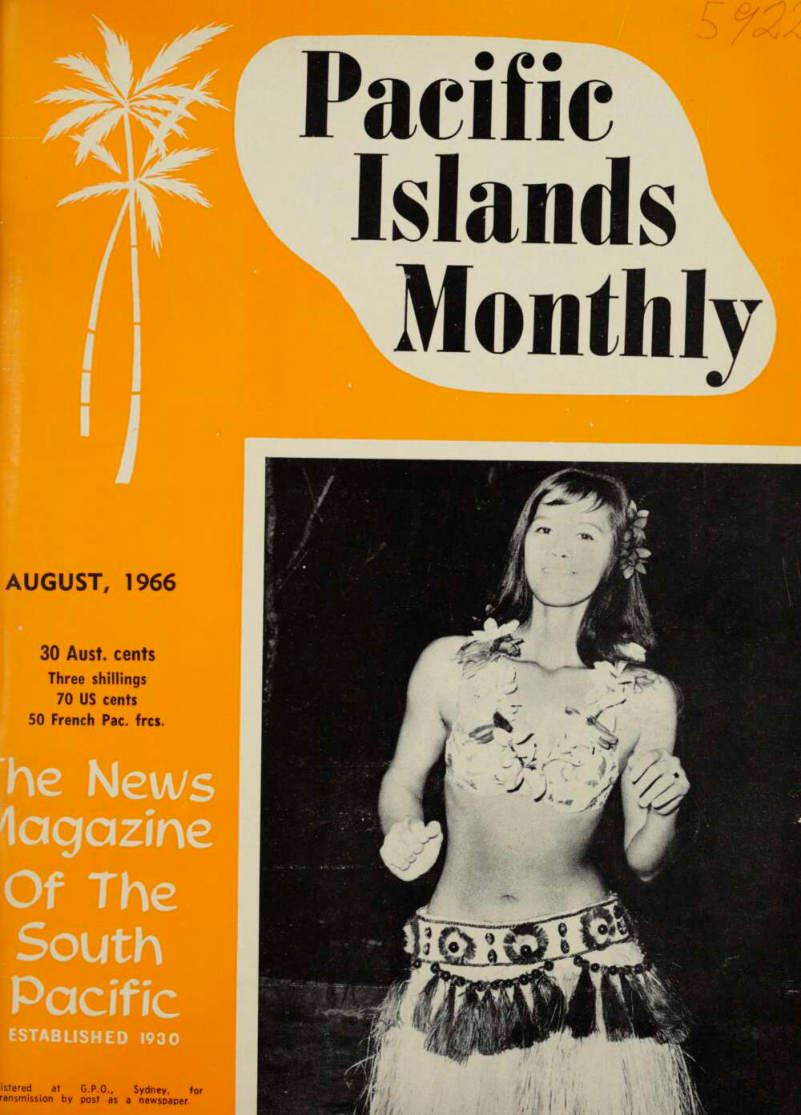 1
1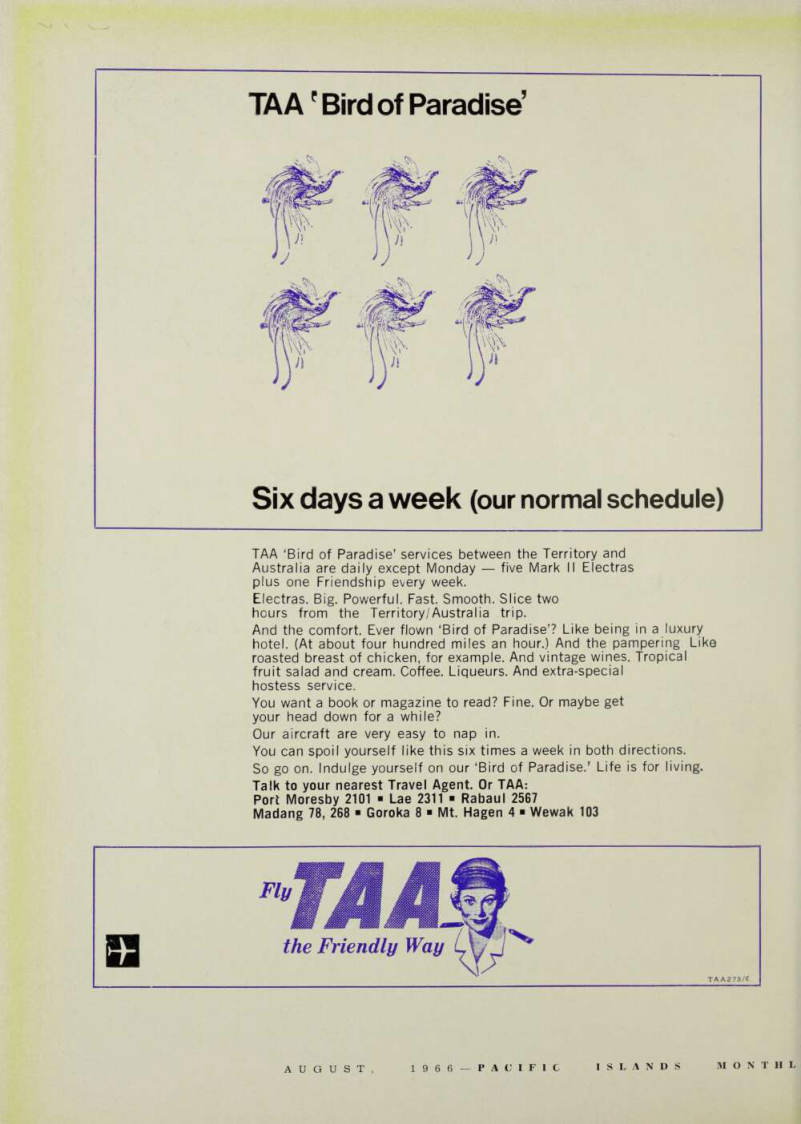 2
2 3
3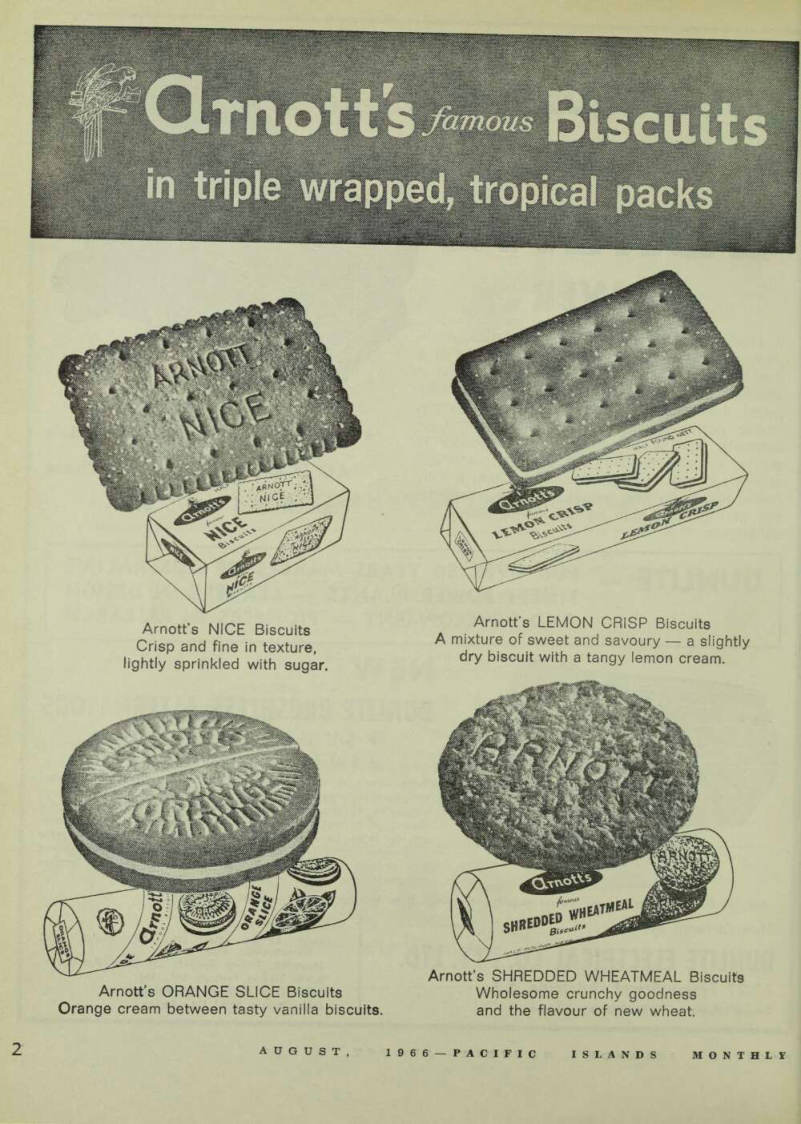 4
4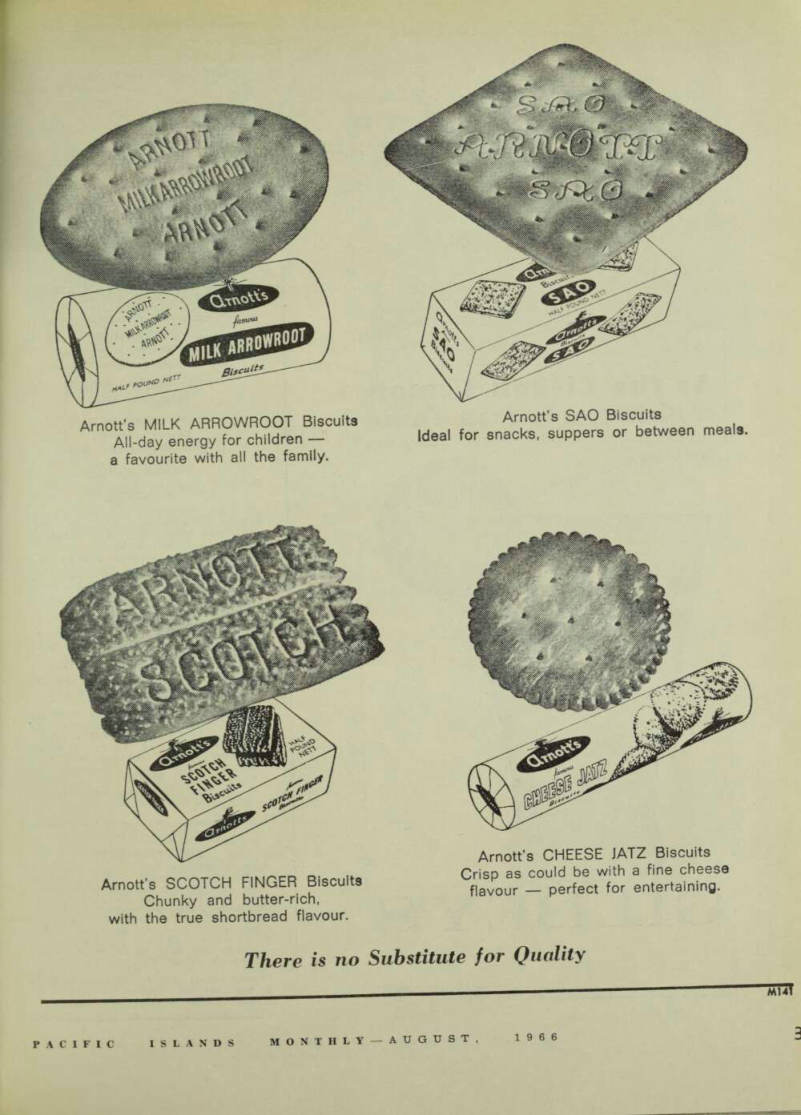 5
5 6
6 7
7 8
8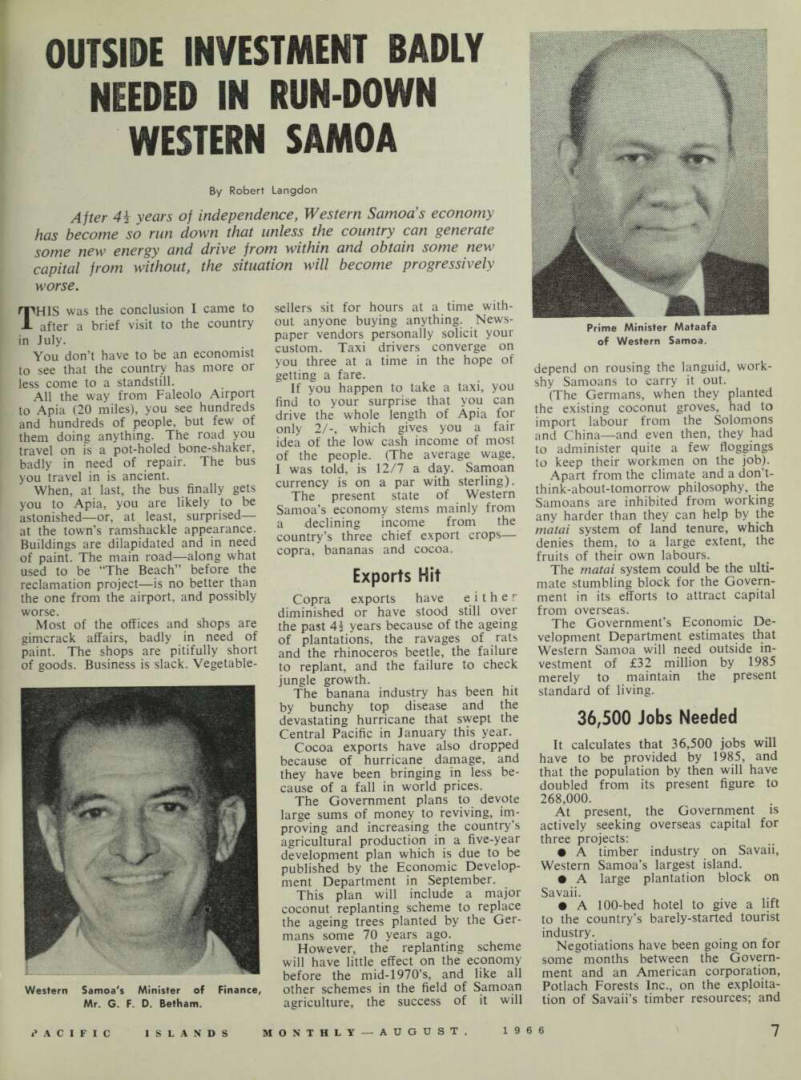 9
9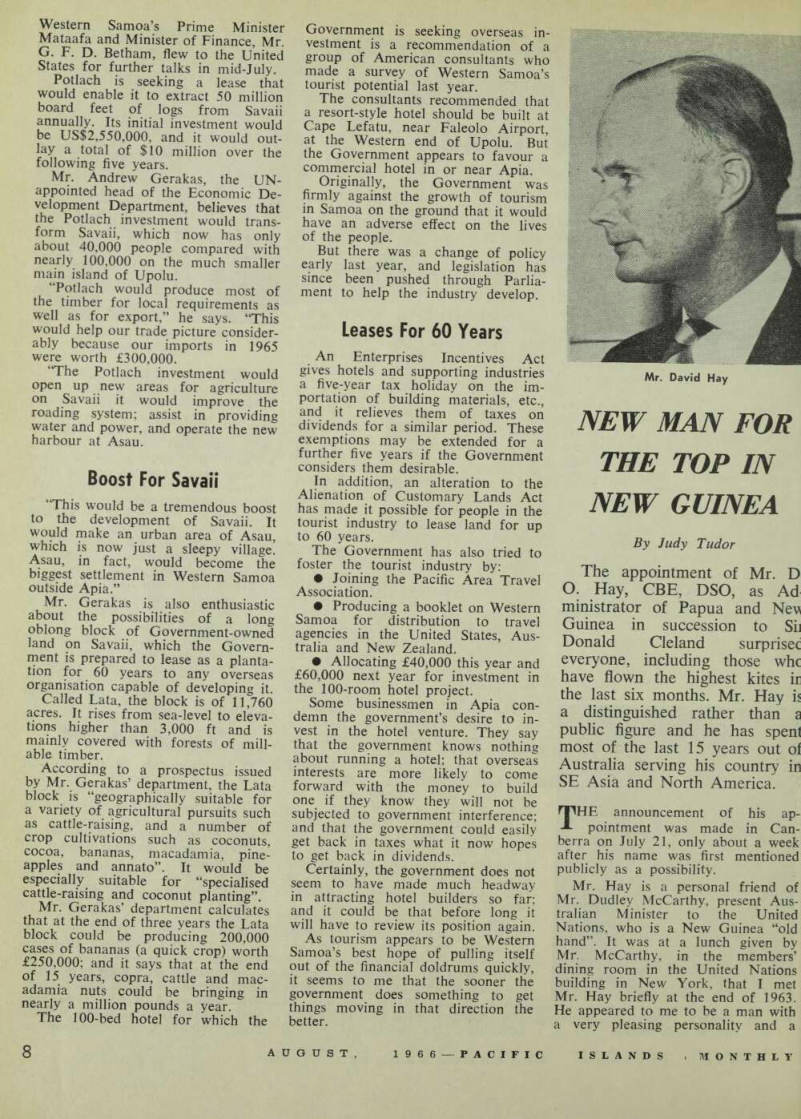 10
10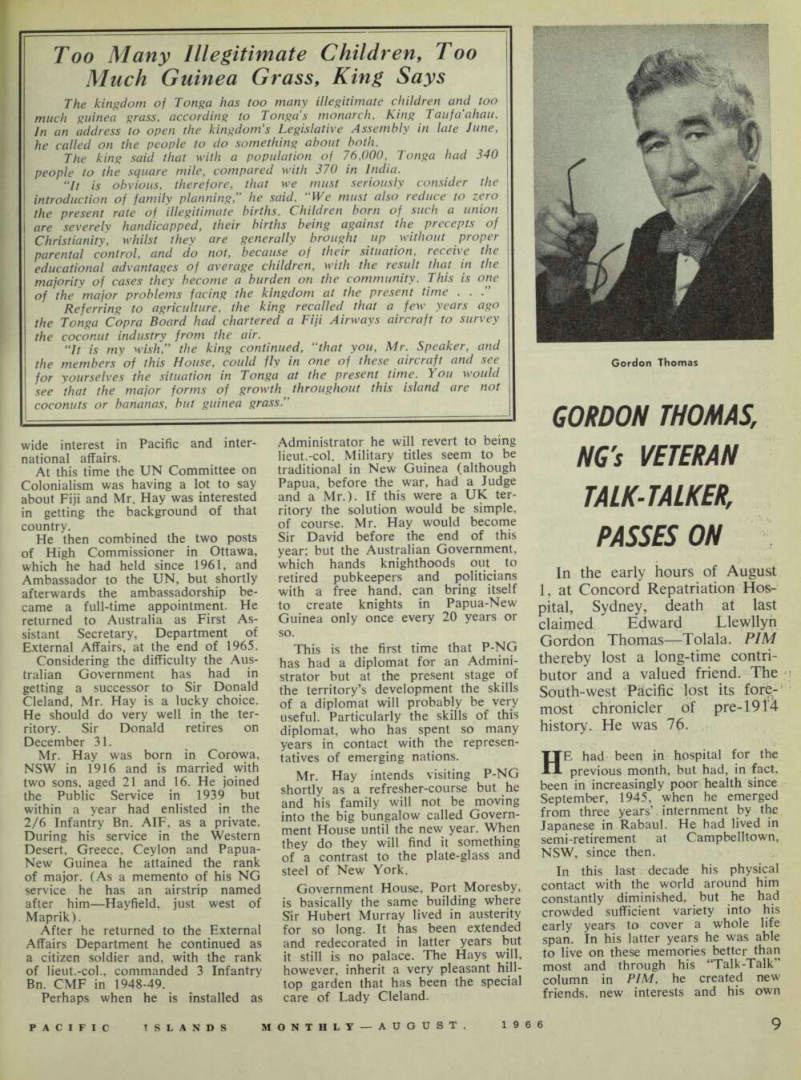 11
11 12
12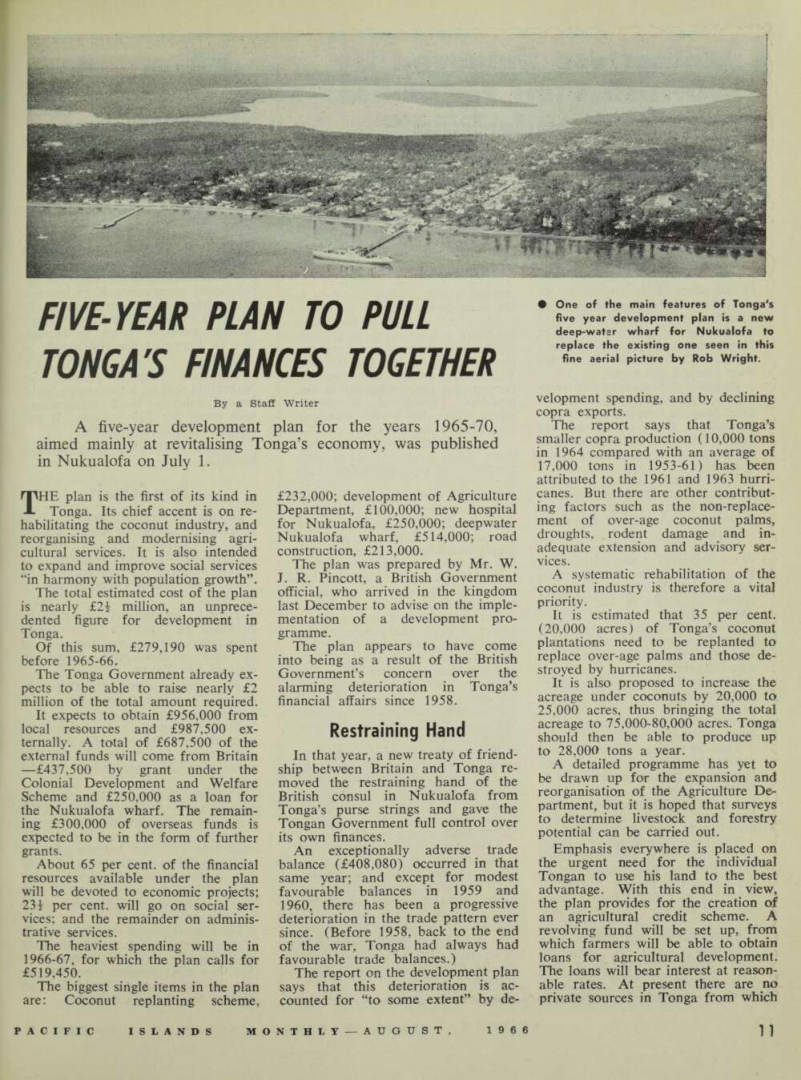 13
13 14
14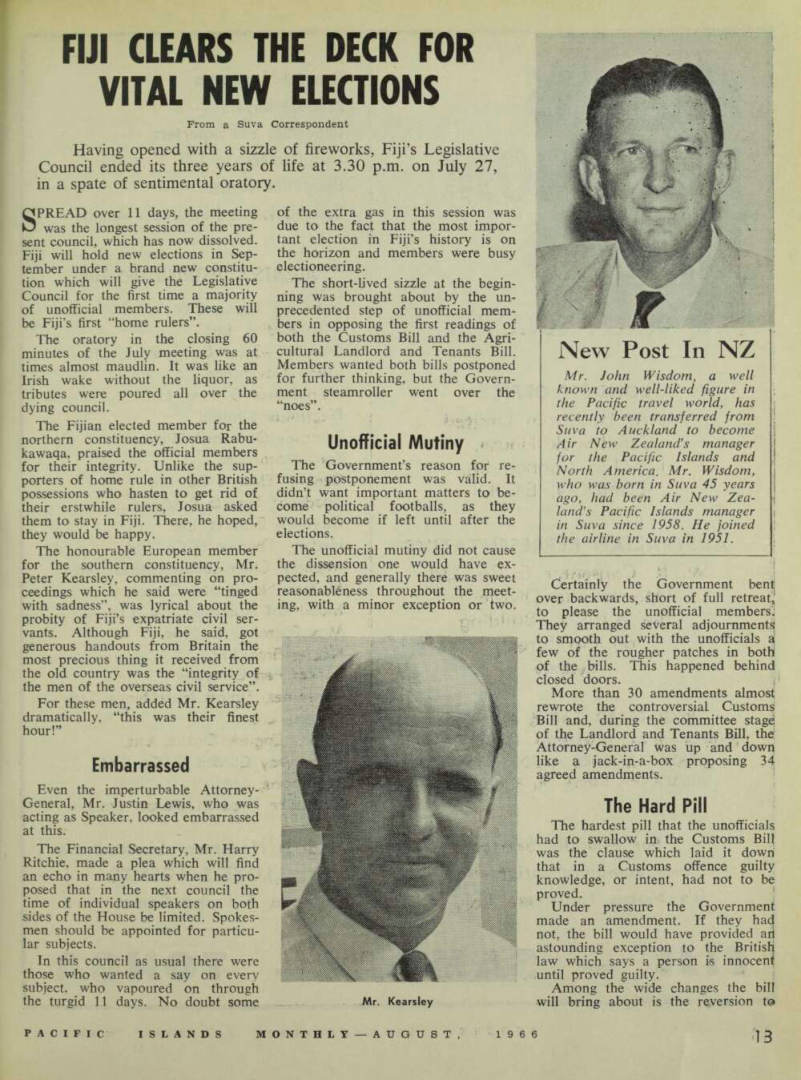 15
15 16
16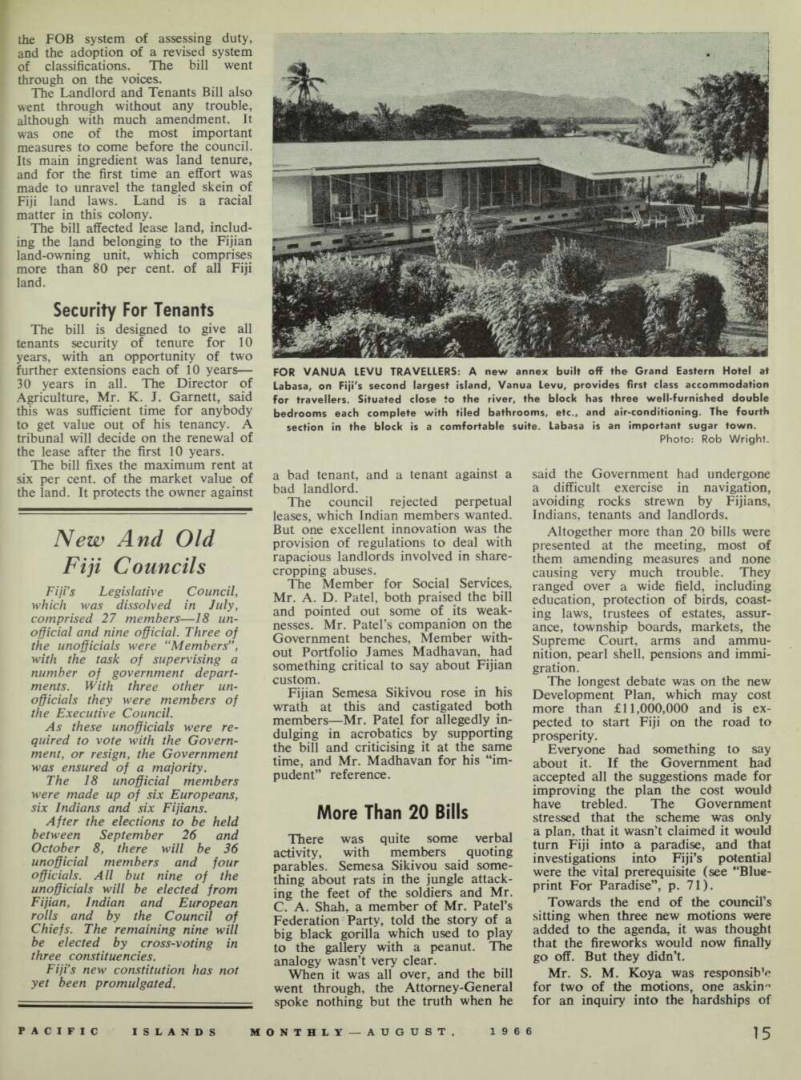 17
17 18
18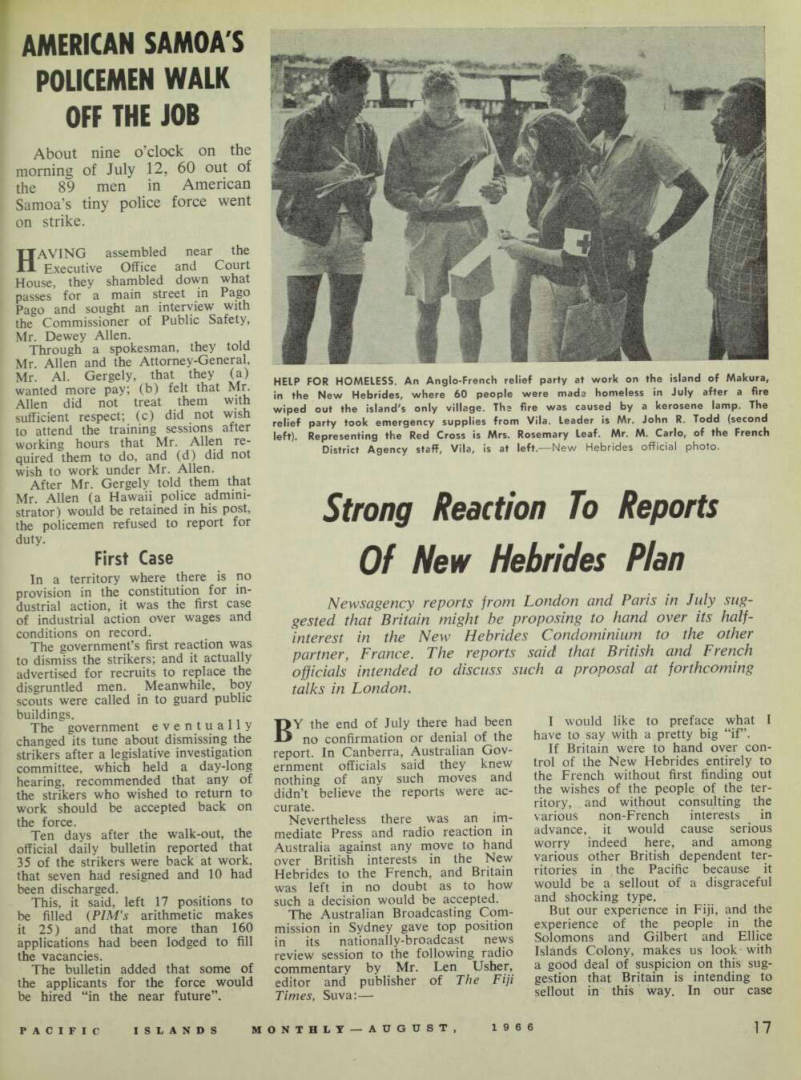 19
19 20
20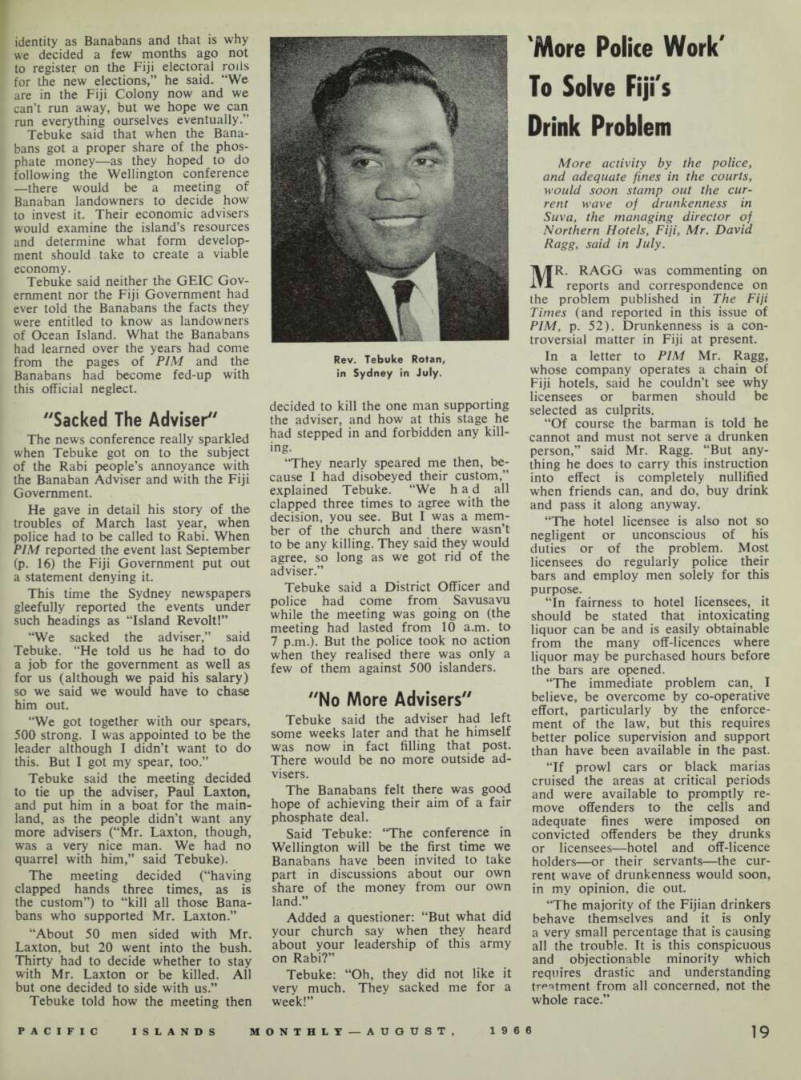 21
21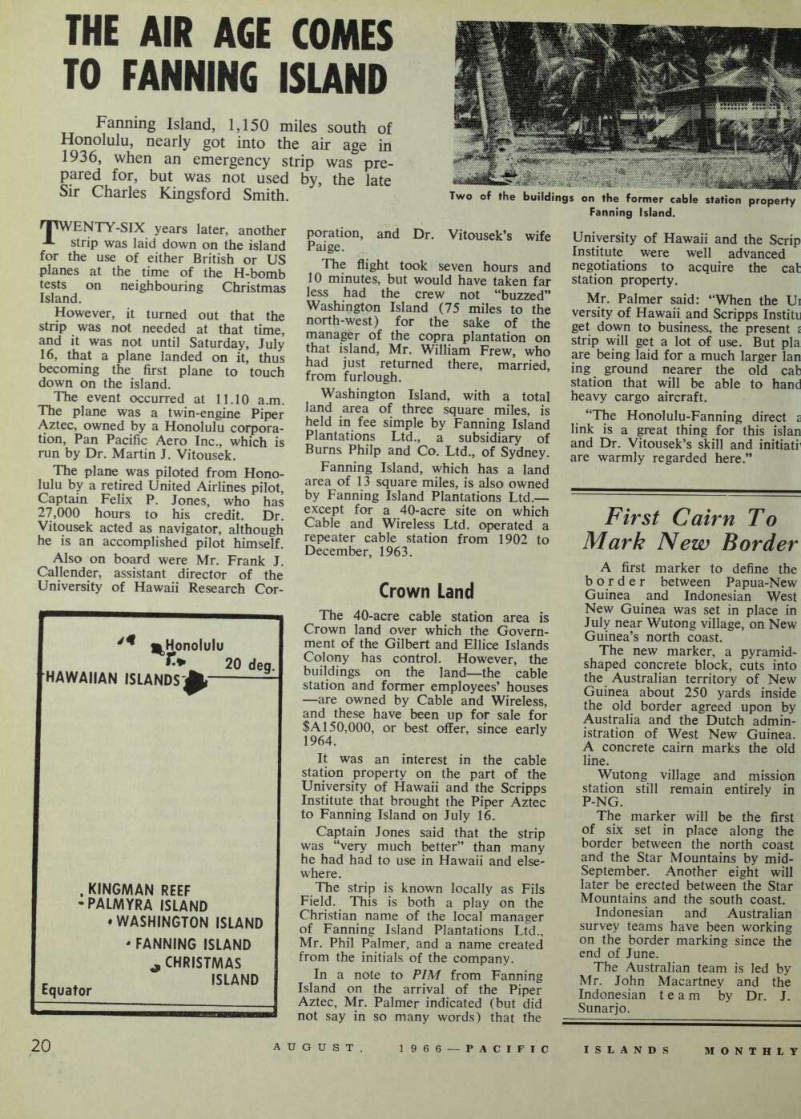 22
22 23
23 24
24 25
25 26
26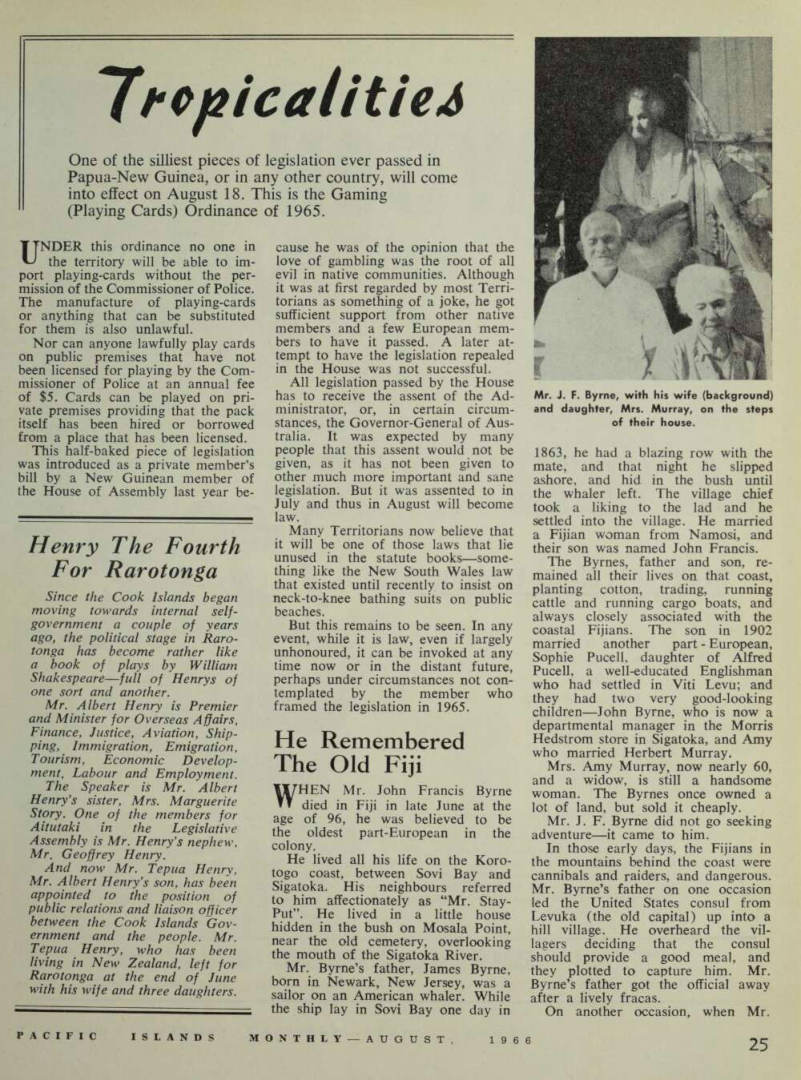 27
27 28
28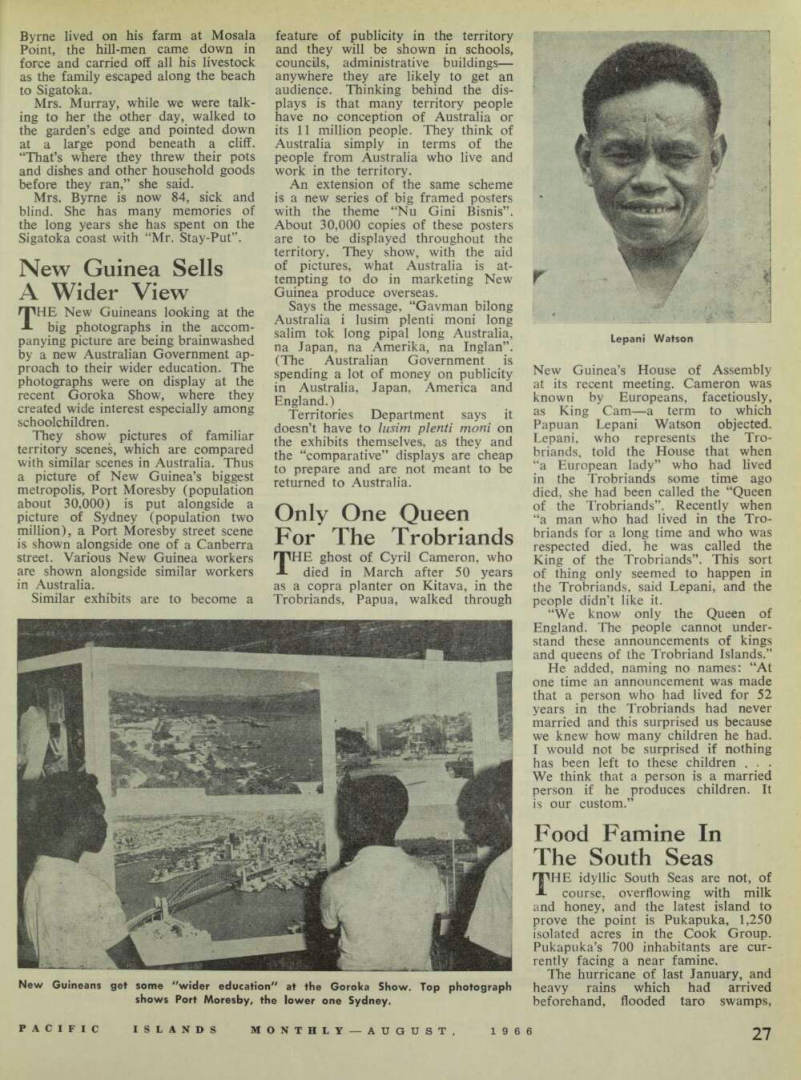 29
29 30
30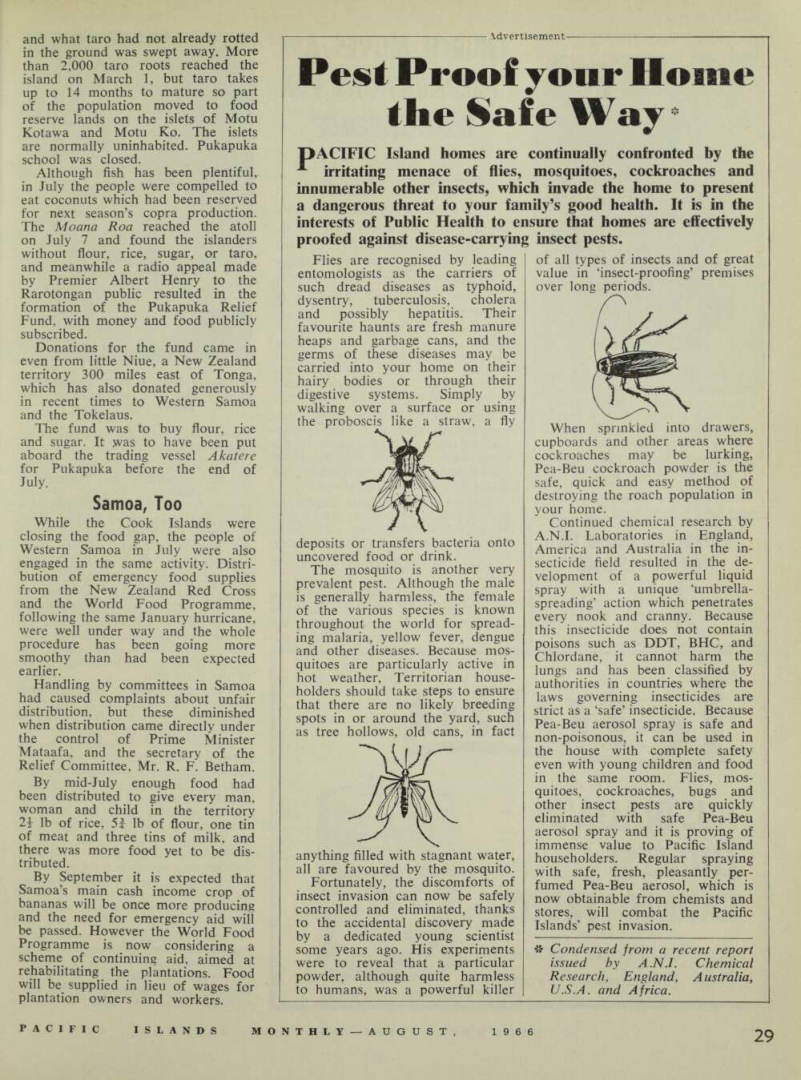 31
31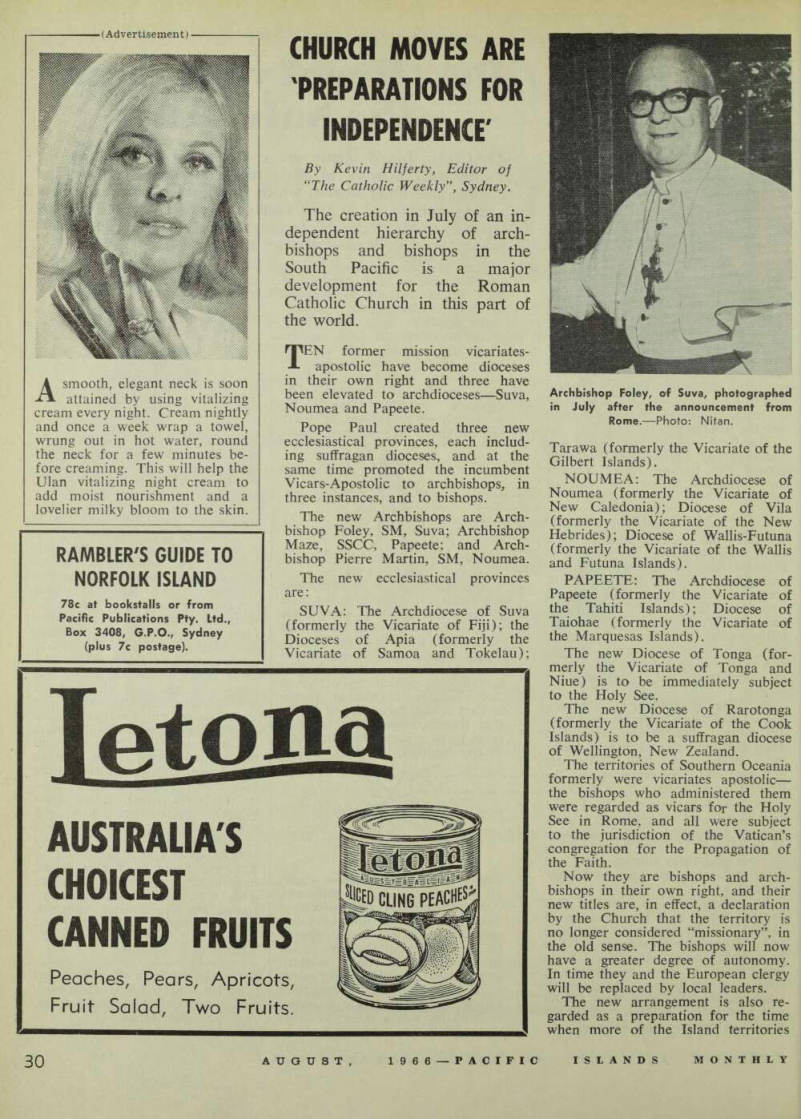 32
32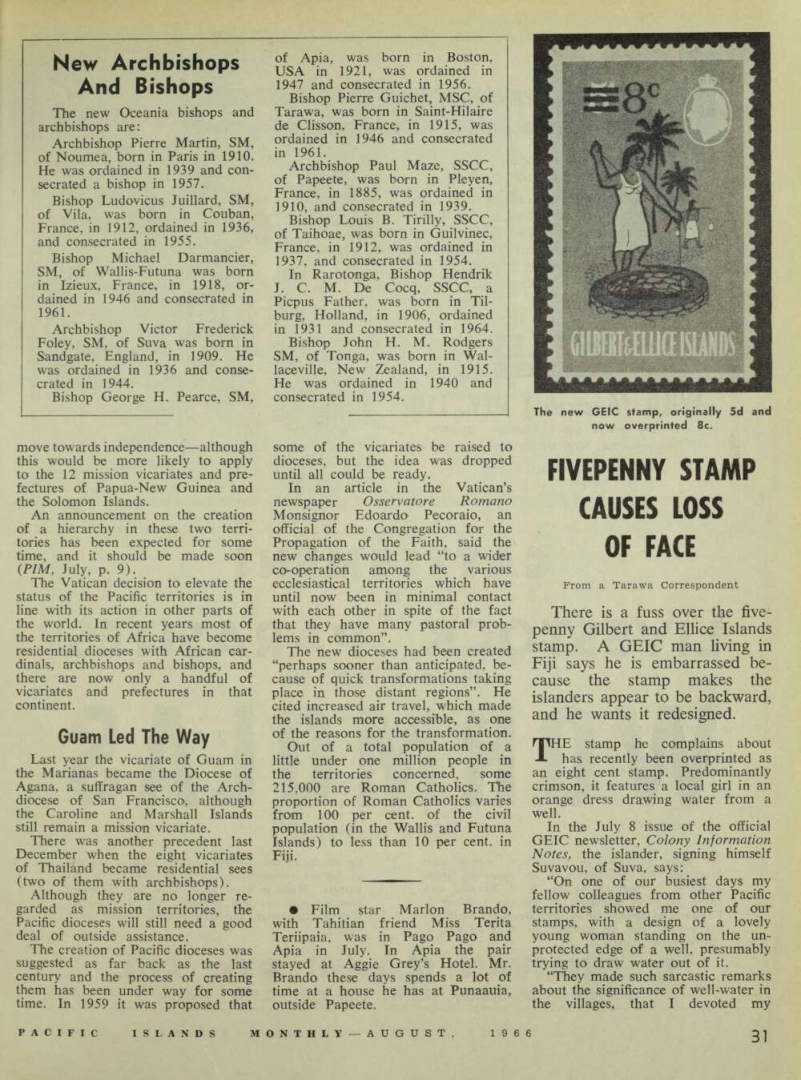 33
33 34
34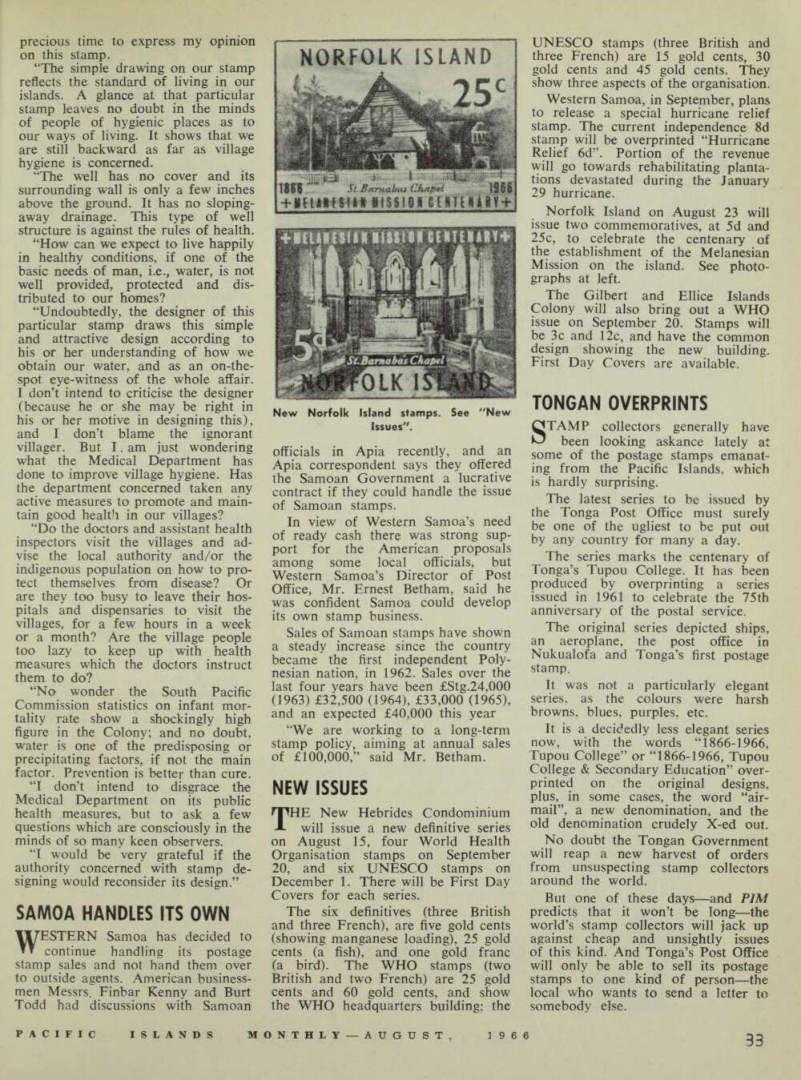 35
35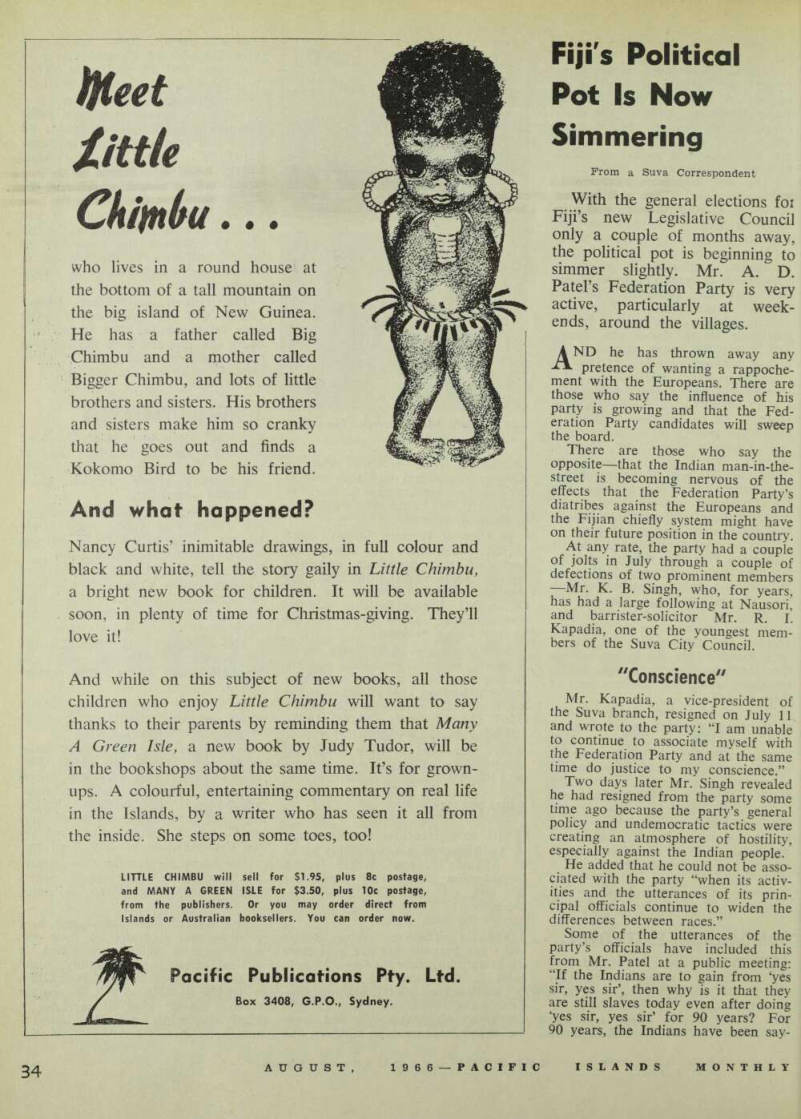 36
36 37
37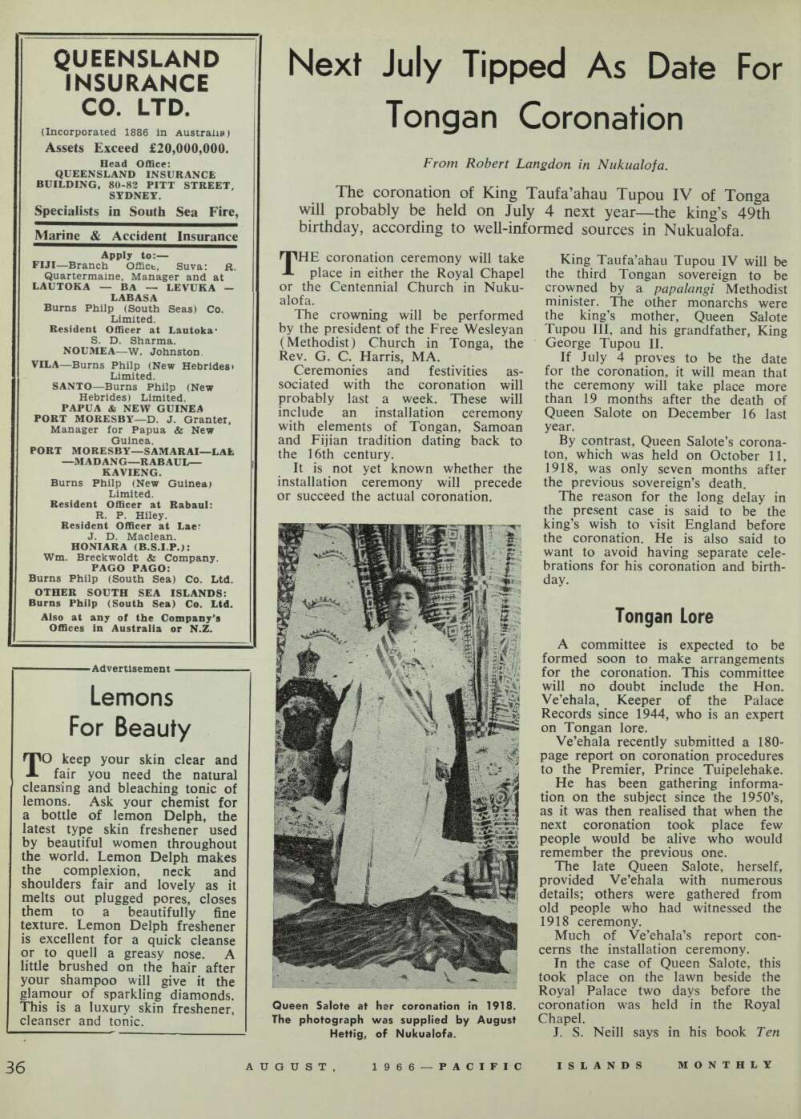 38
38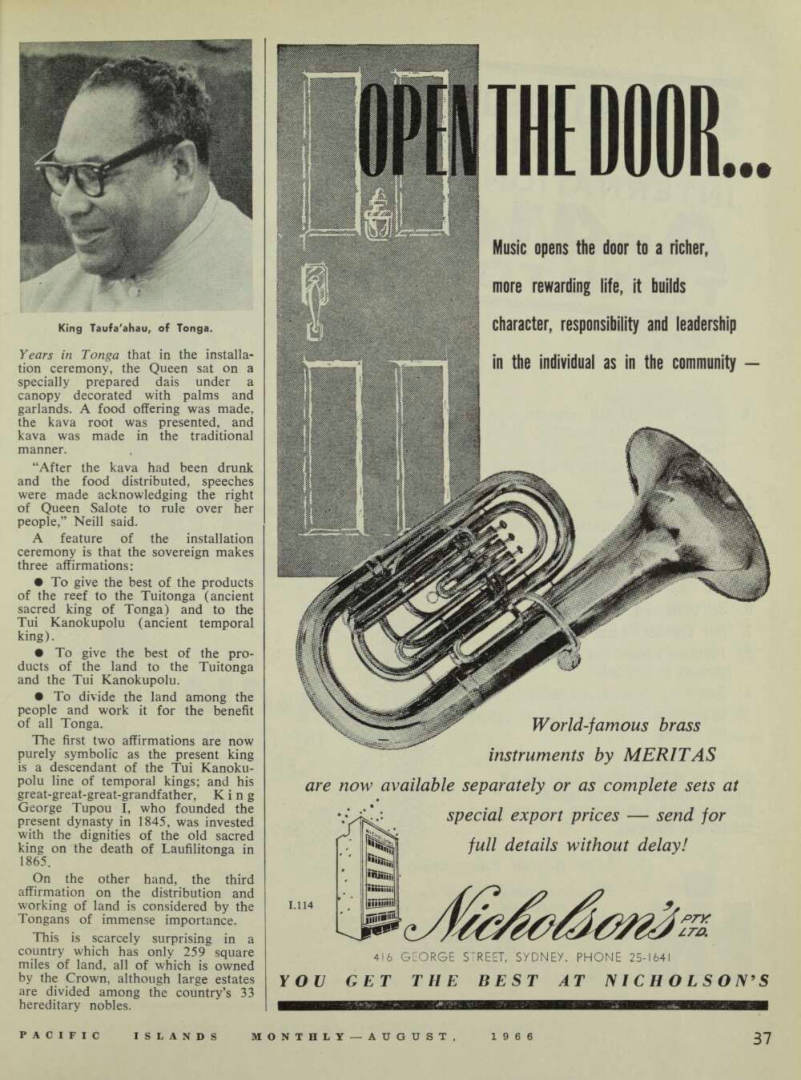 39
39 40
40 41
41 42
42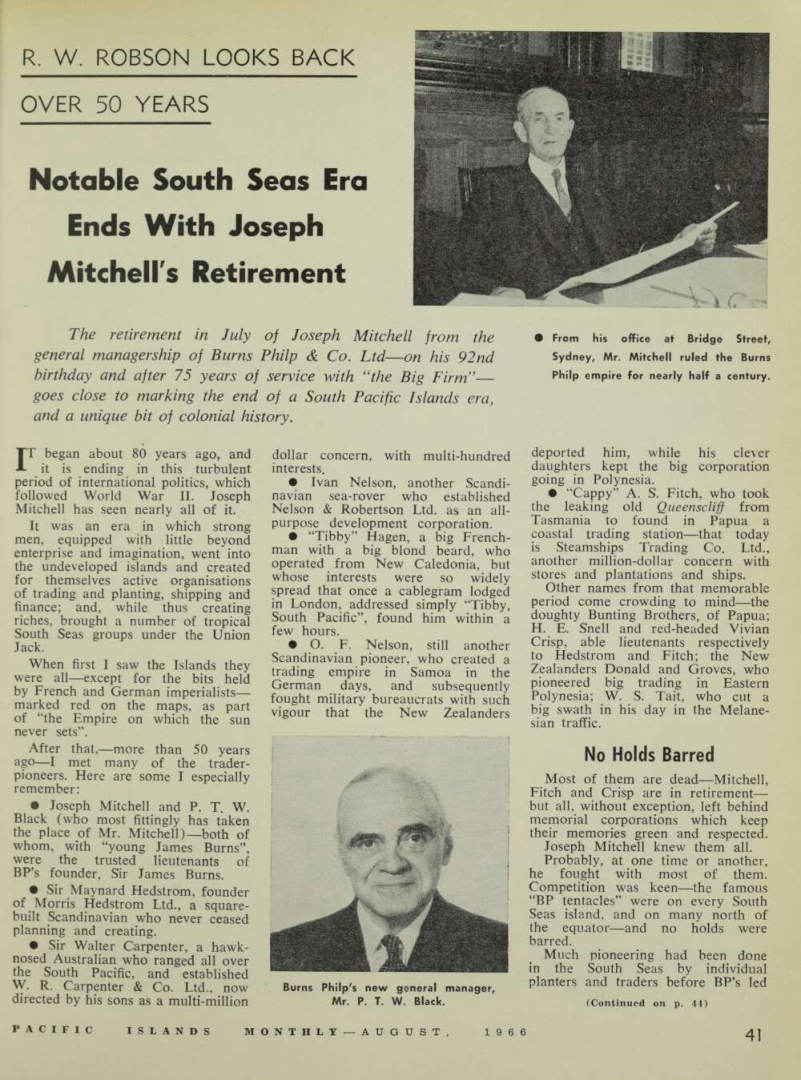 43
43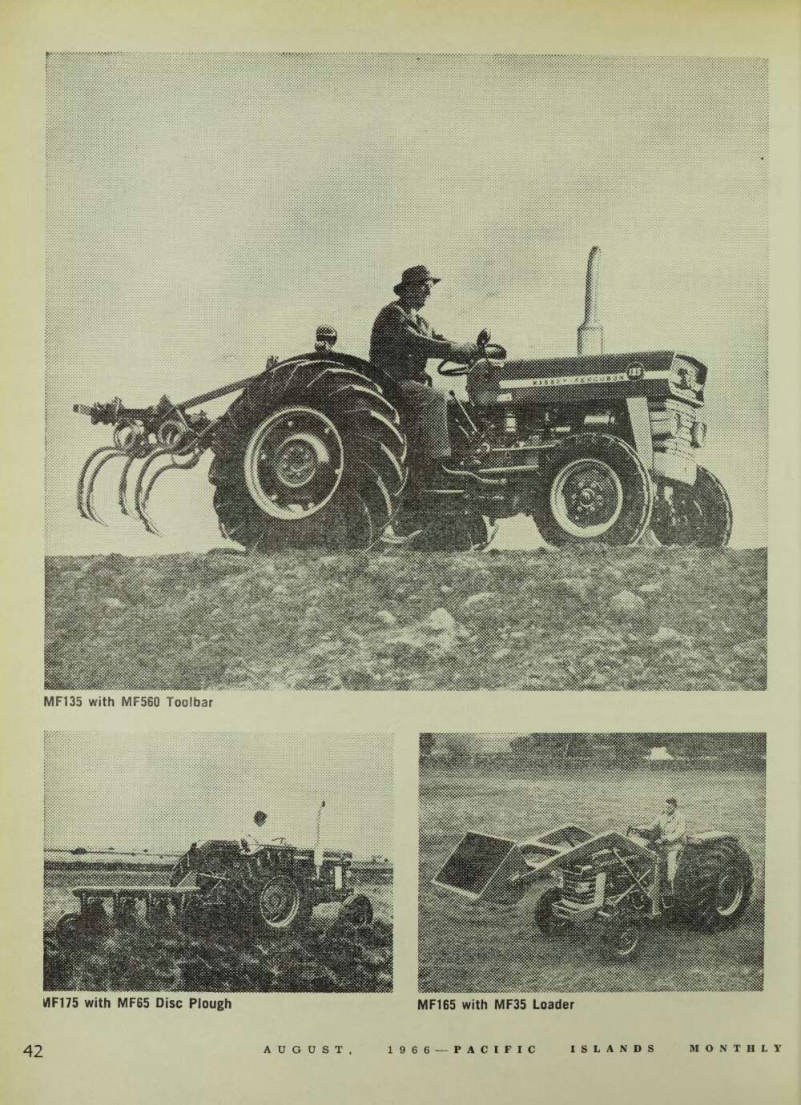 44
44 45
45 46
46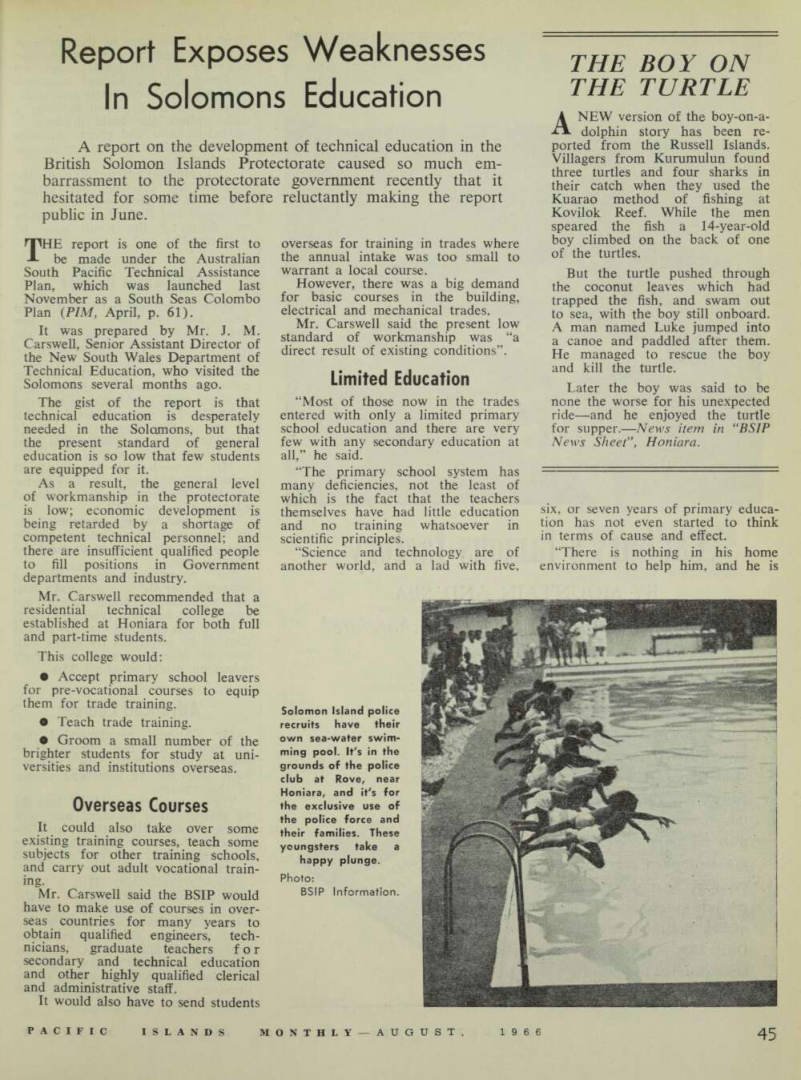 47
47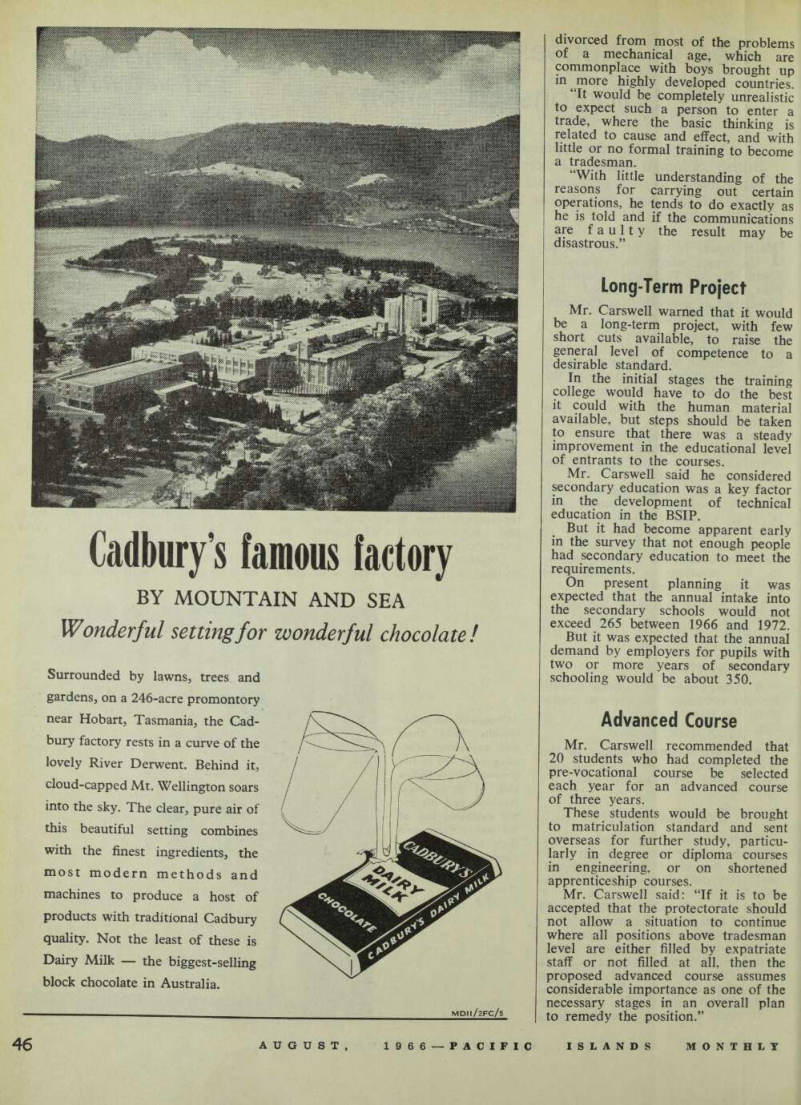 48
48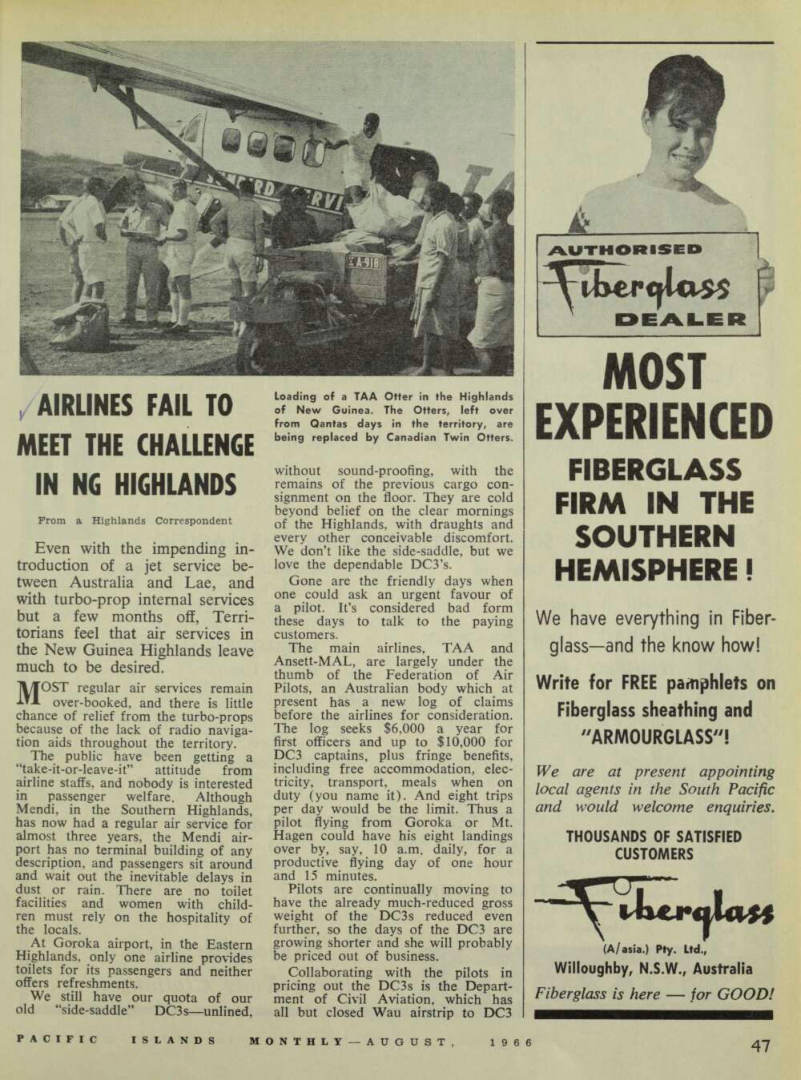 49
49 50
50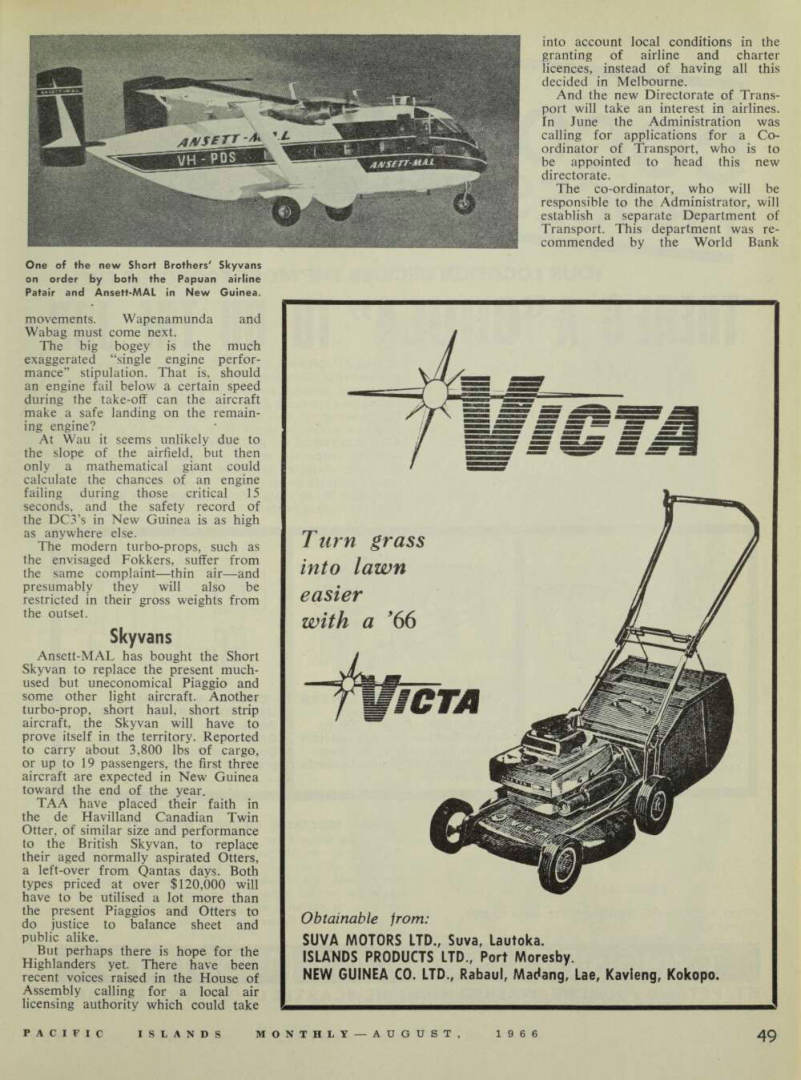 51
51 52
52 53
53 54
54 55
55 56
56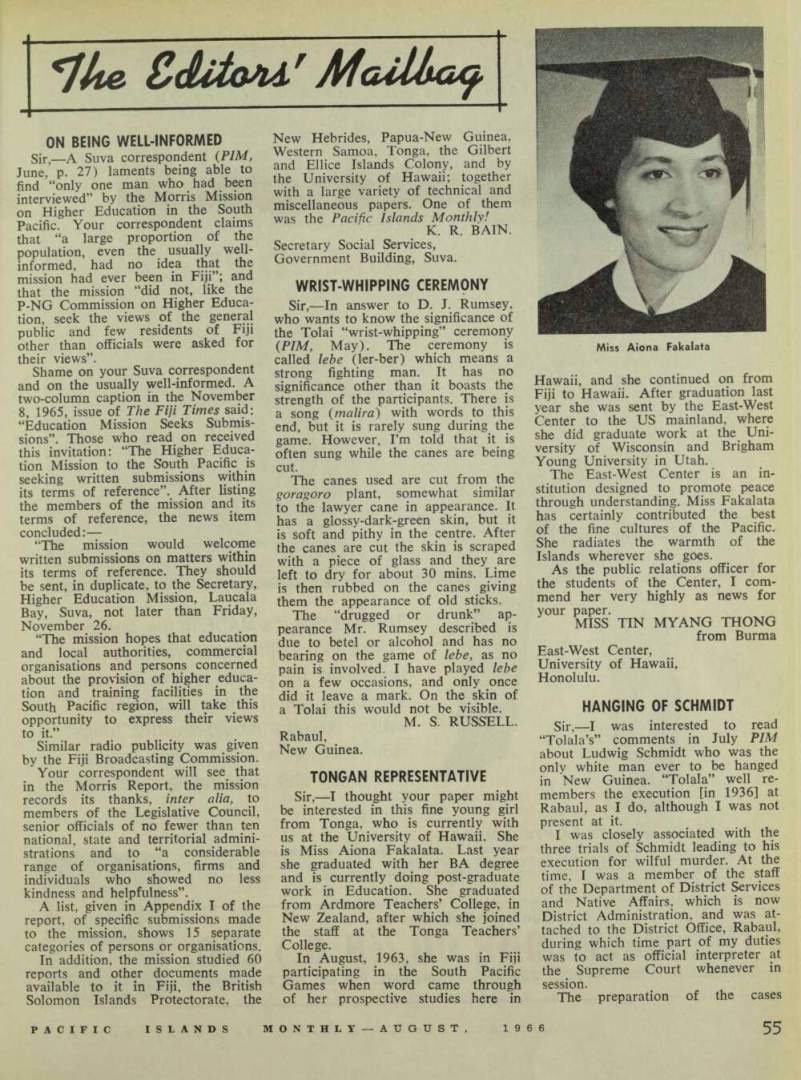 57
57 58
58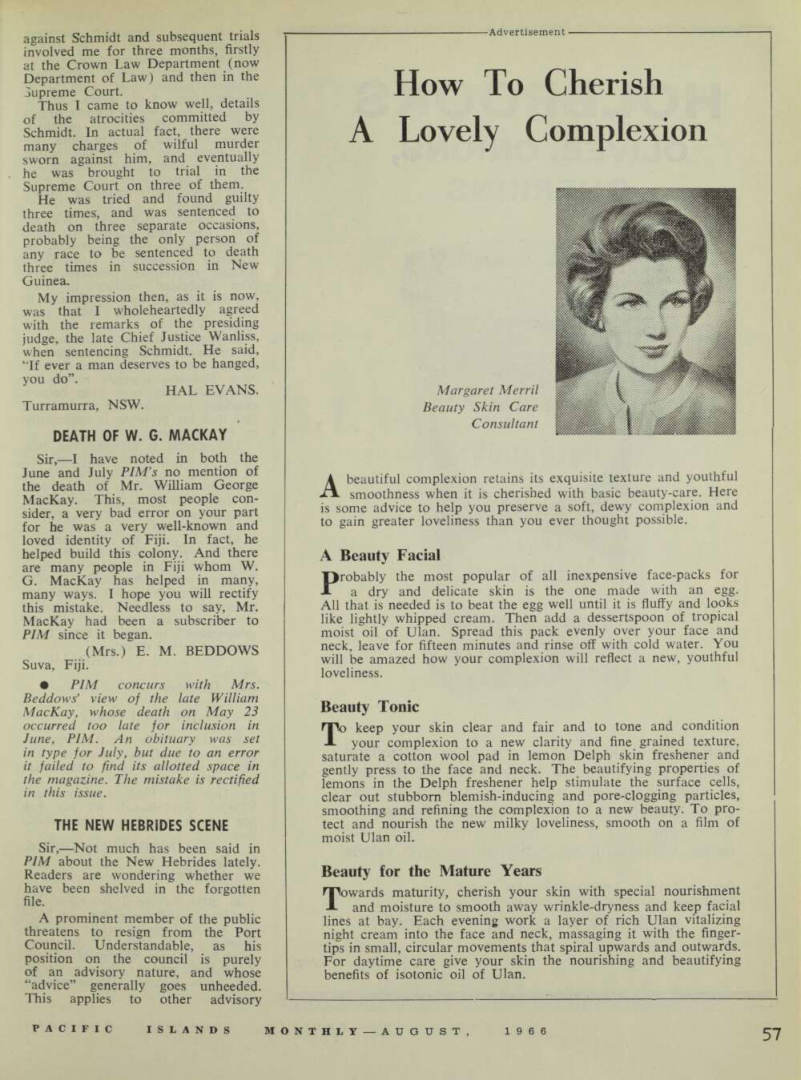 59
59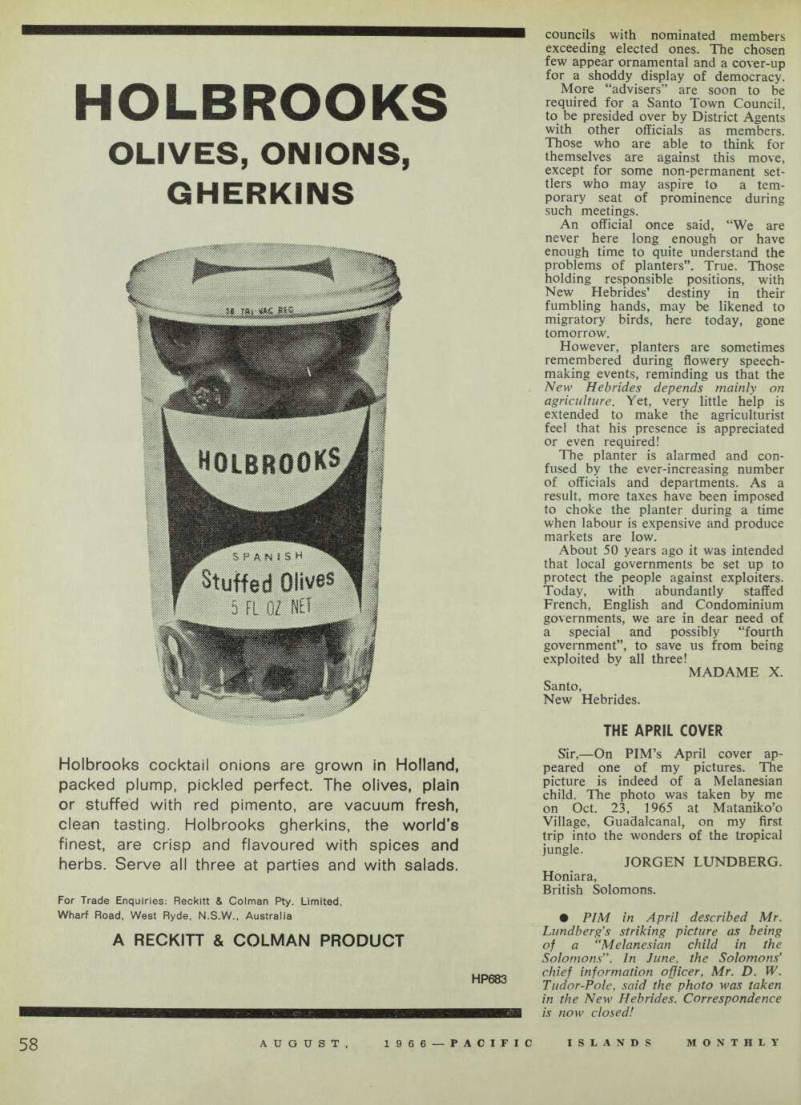 60
60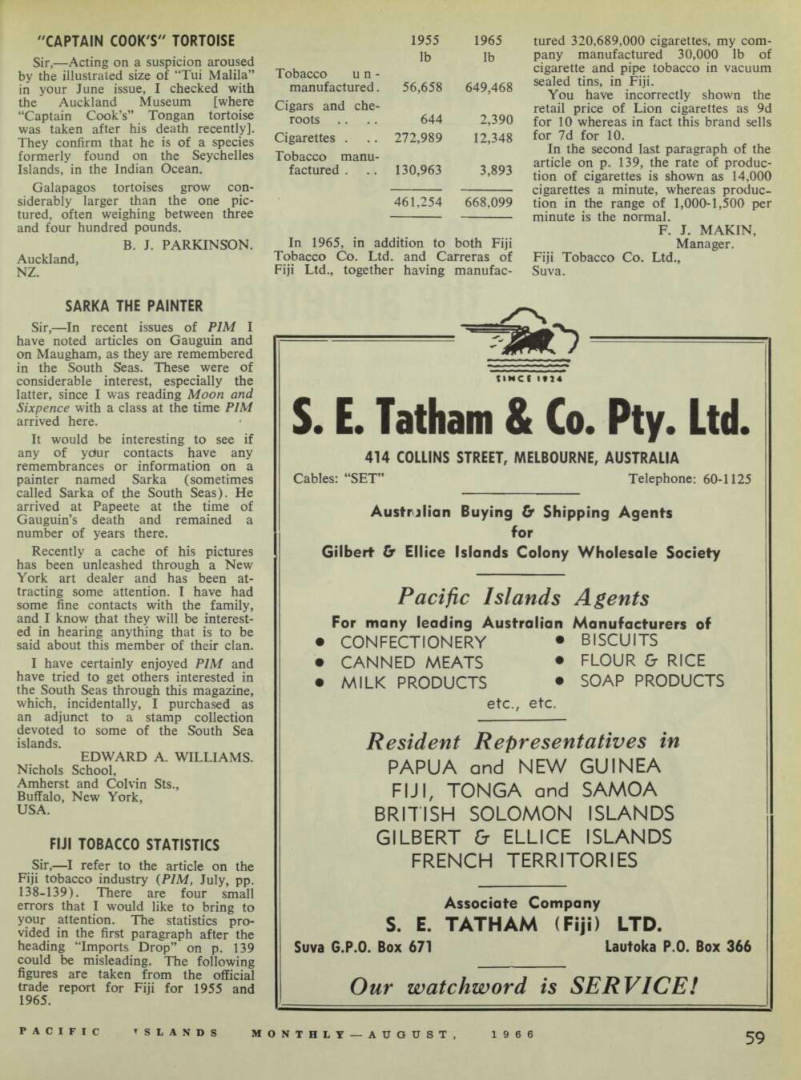 61
61 62
62 63
63 64
64 65
65 66
66 67
67 68
68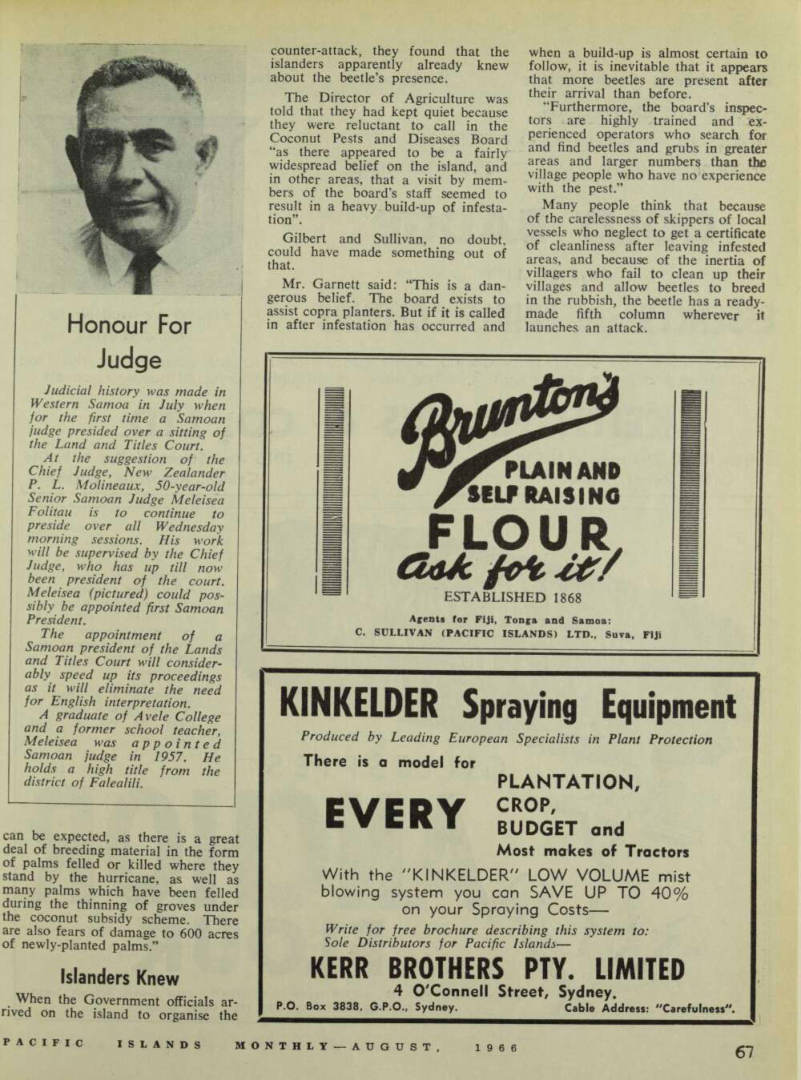 69
69 70
70 71
71 72
72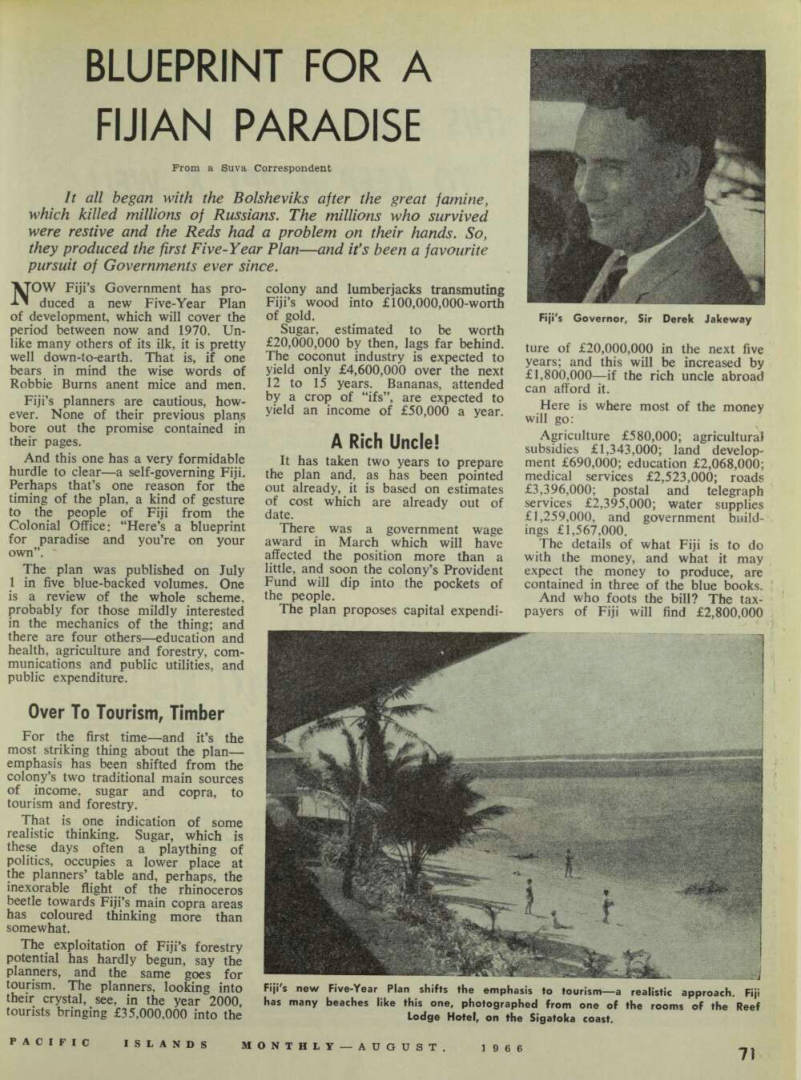 73
73 74
74 75
75 76
76 77
77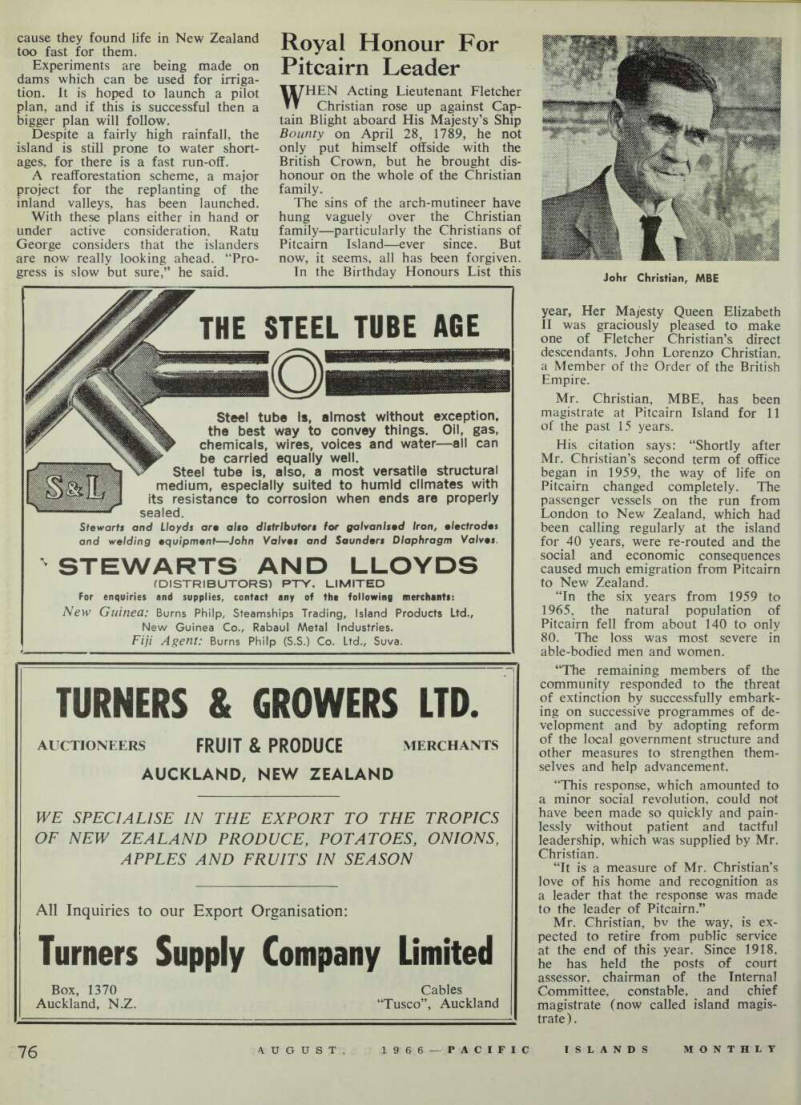 78
78 79
79 80
80 81
81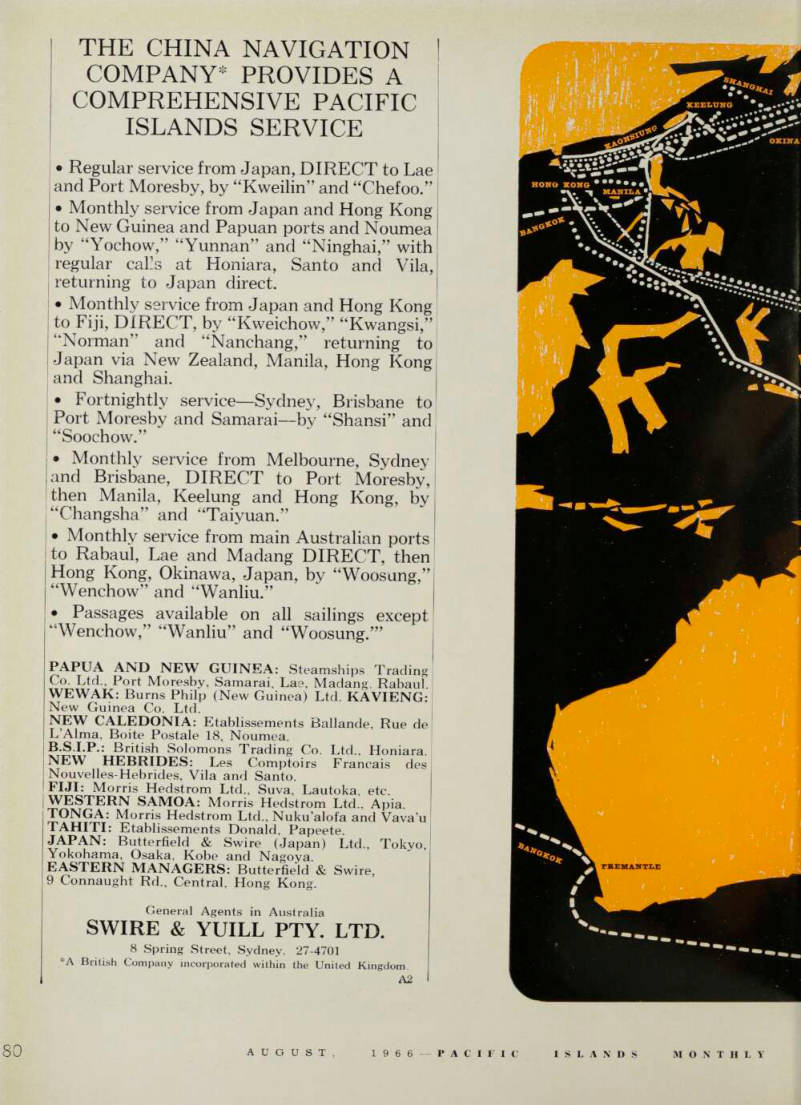 82
82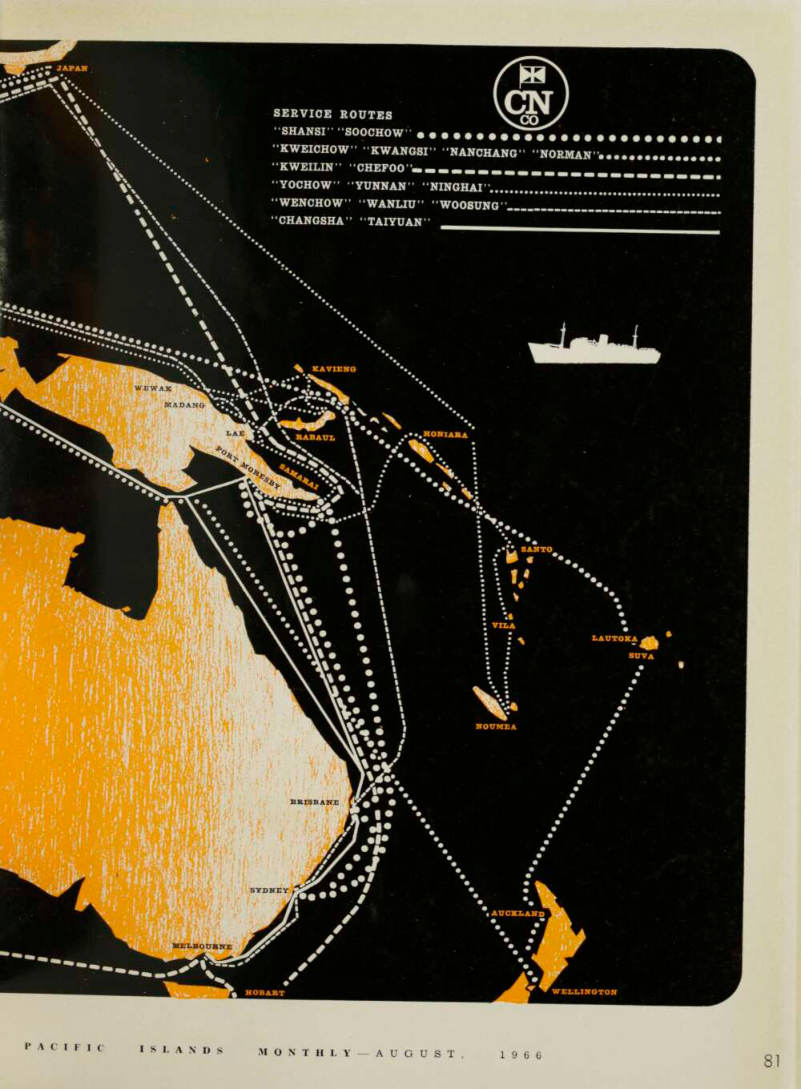 83
83 84
84 85
85 86
86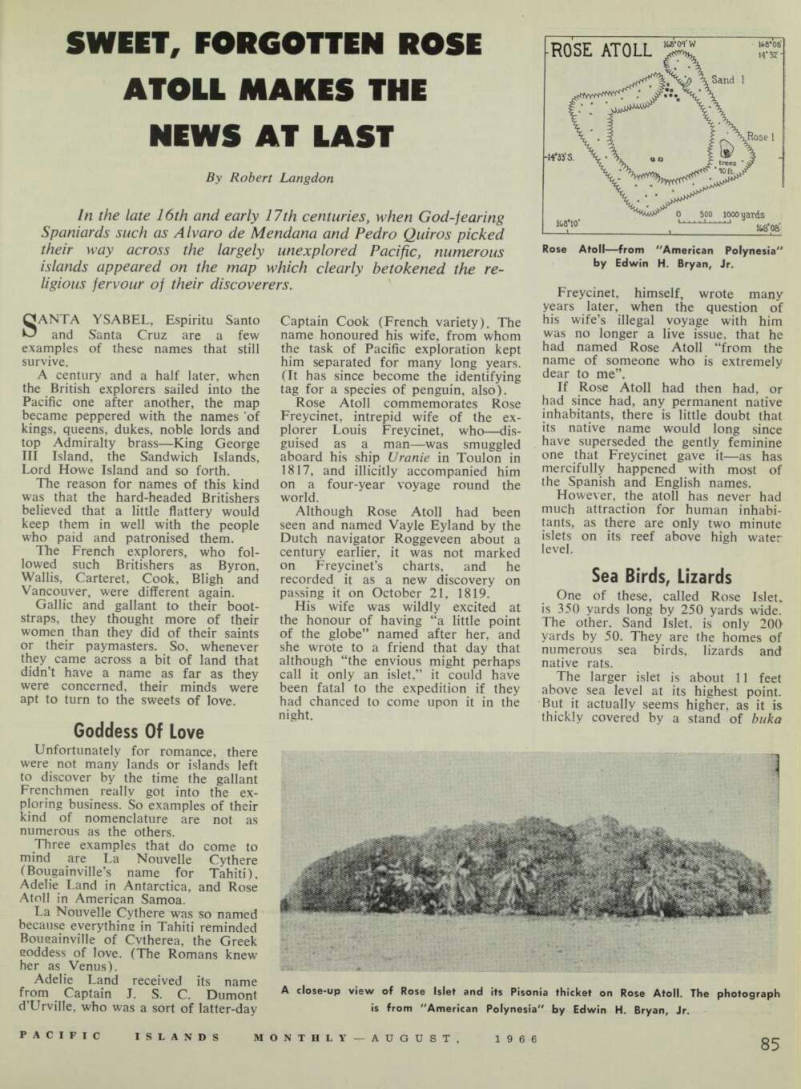 87
87 88
88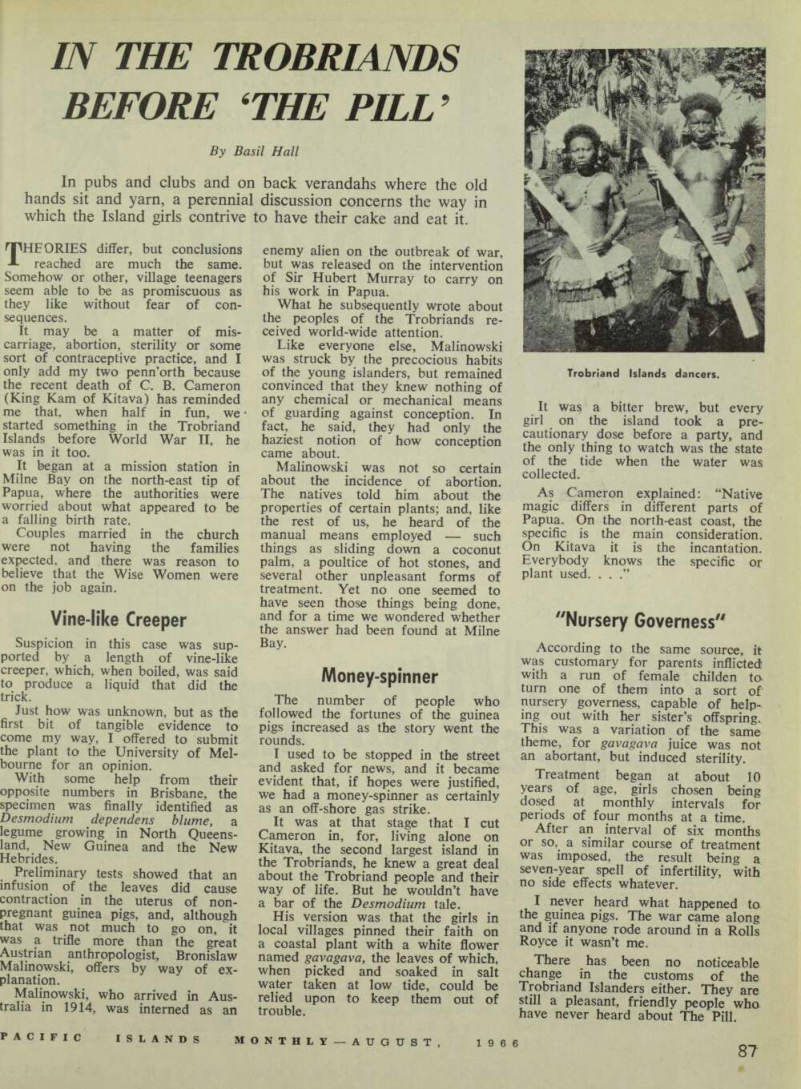 89
89 90
90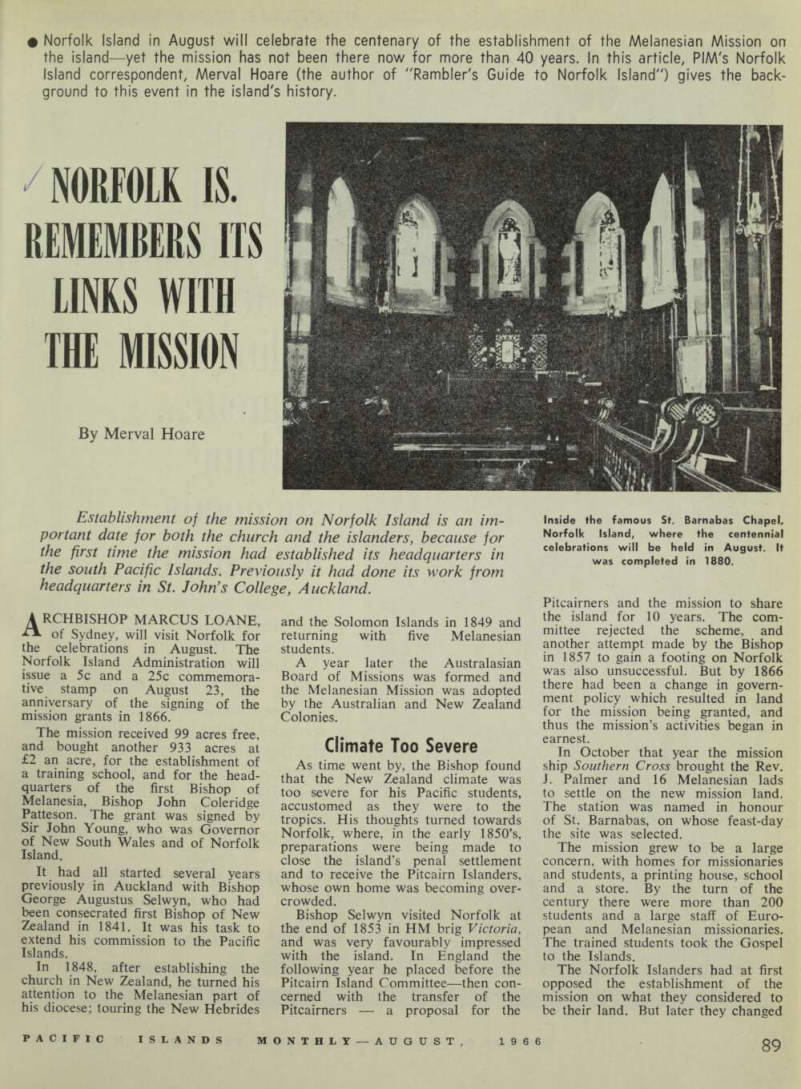 91
91 92
92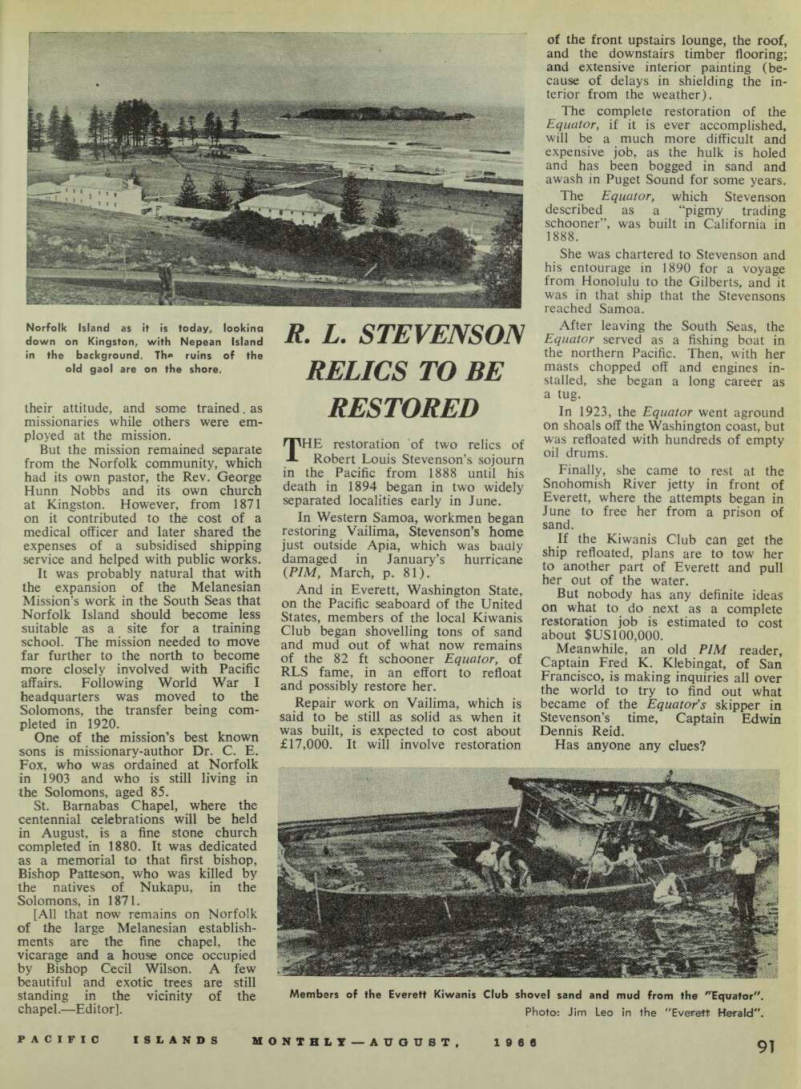 93
93 94
94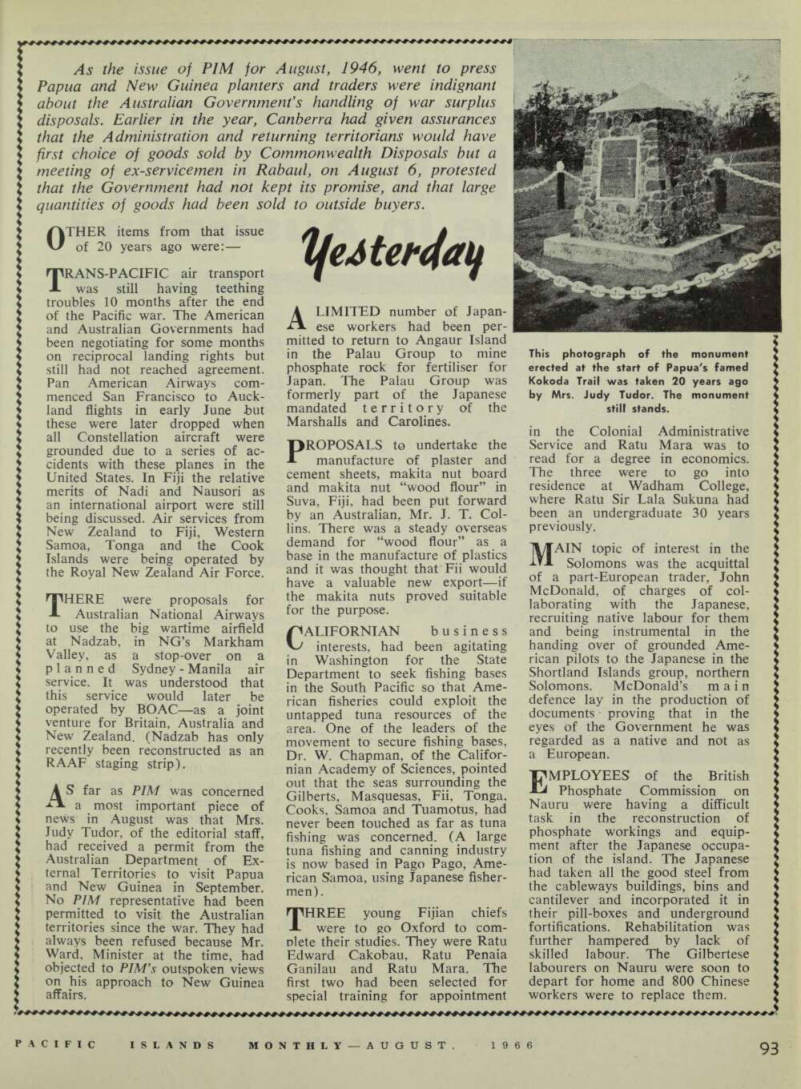 95
95 96
96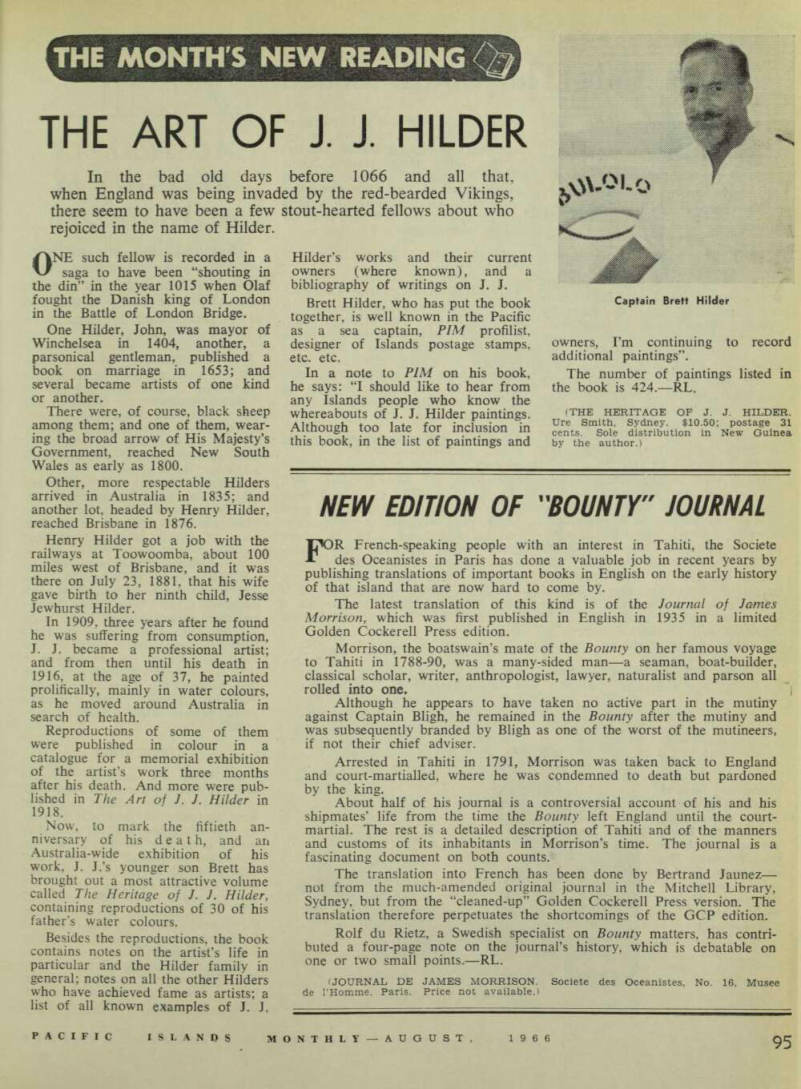 97
97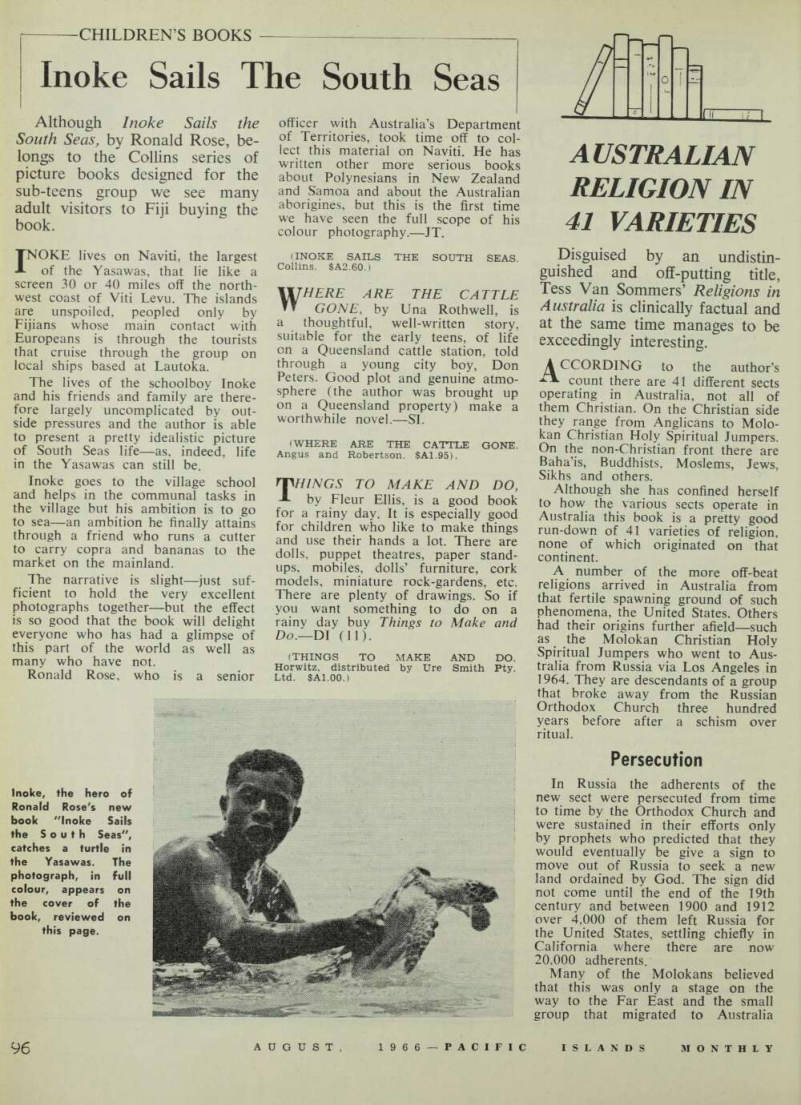 98
98 99
99 100
100 101
101 102
102 103
103 104
104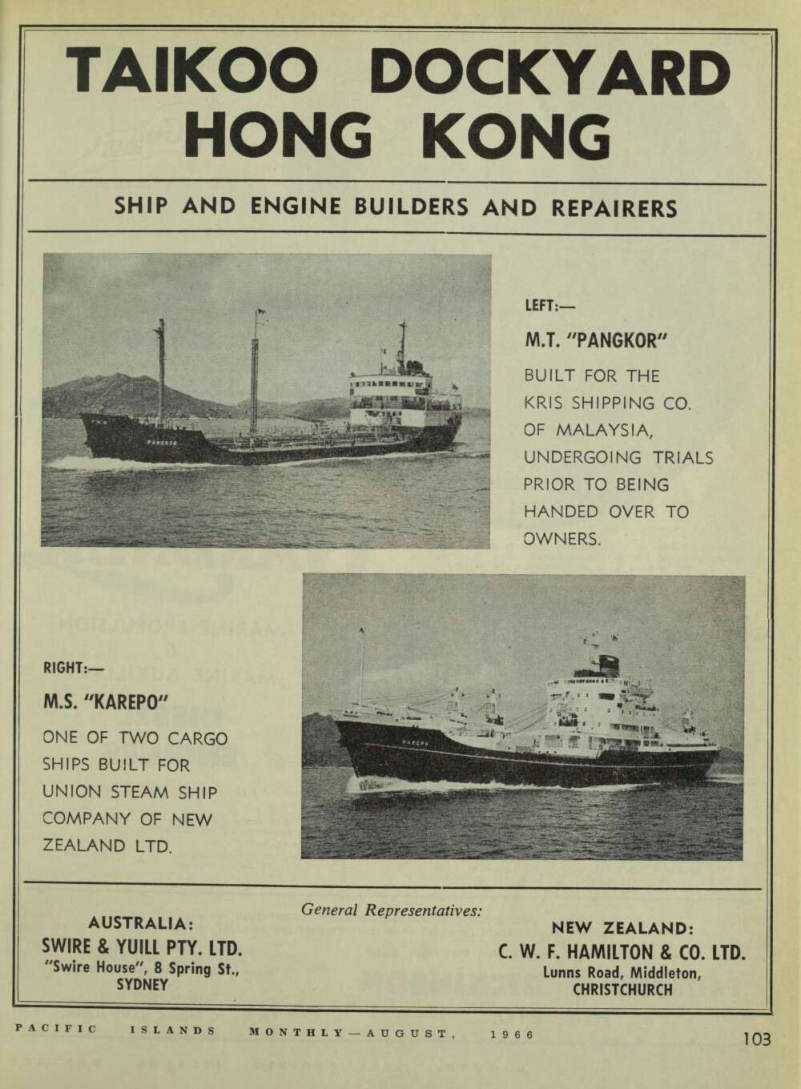 105
105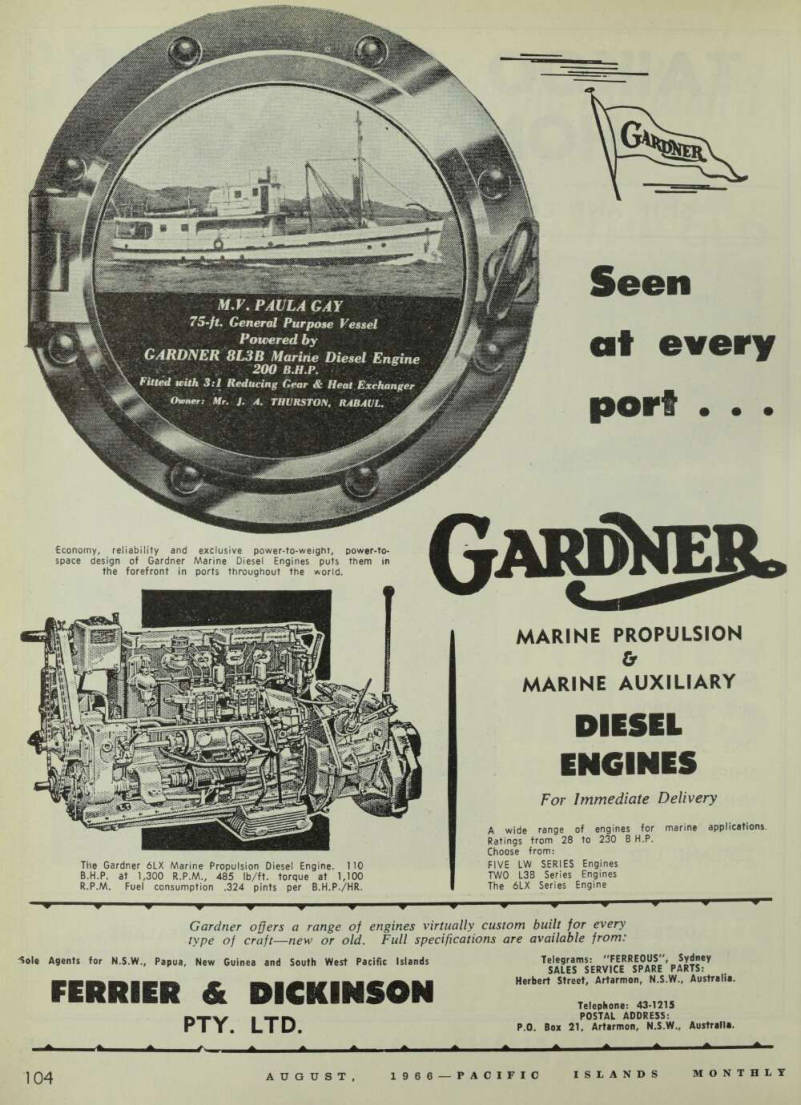 106
106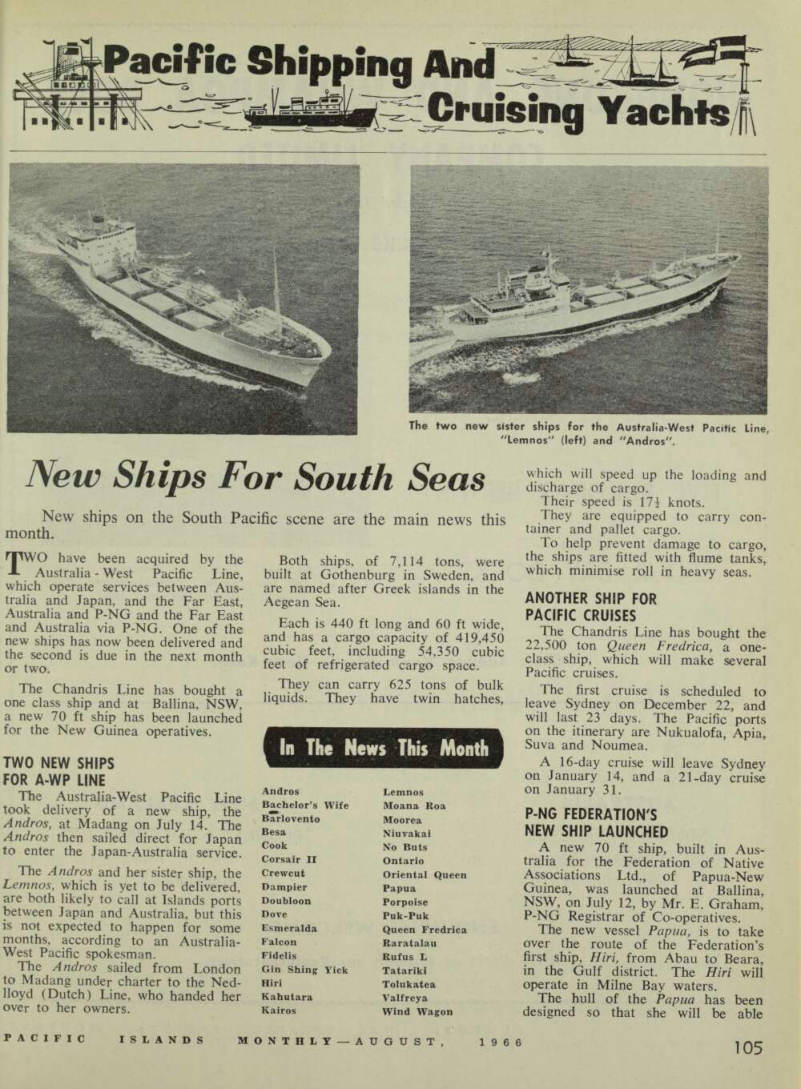 107
107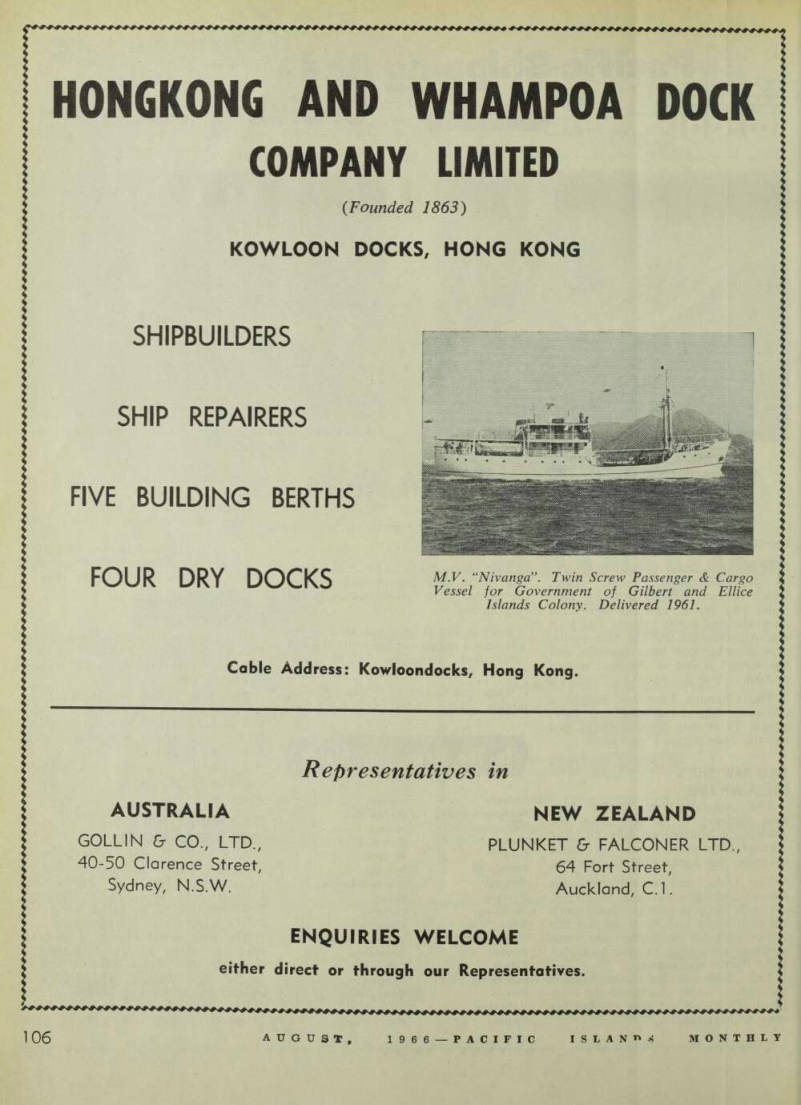 108
108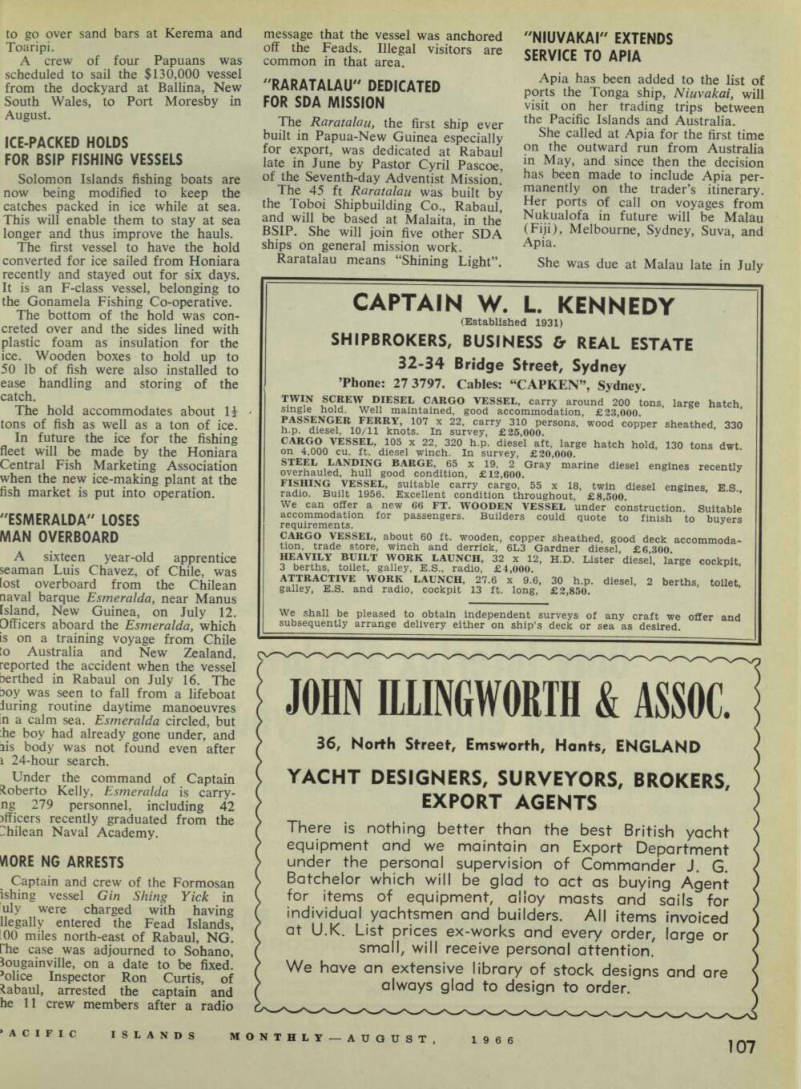 109
109 110
110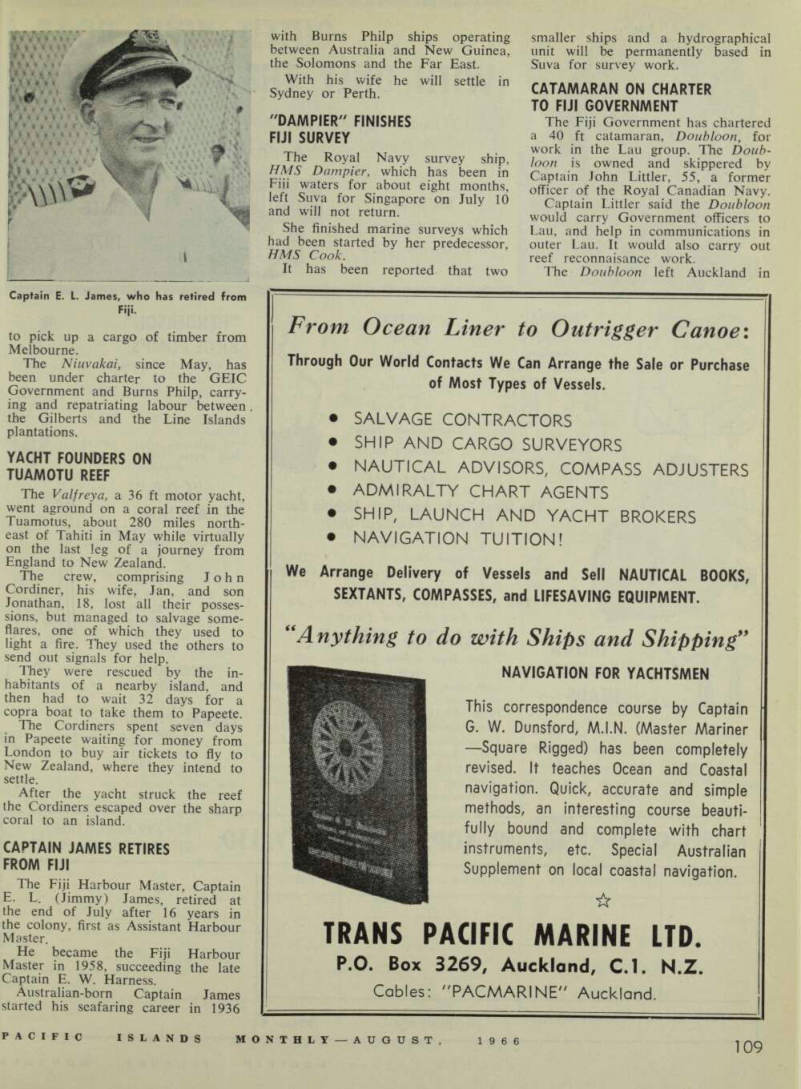 111
111 112
112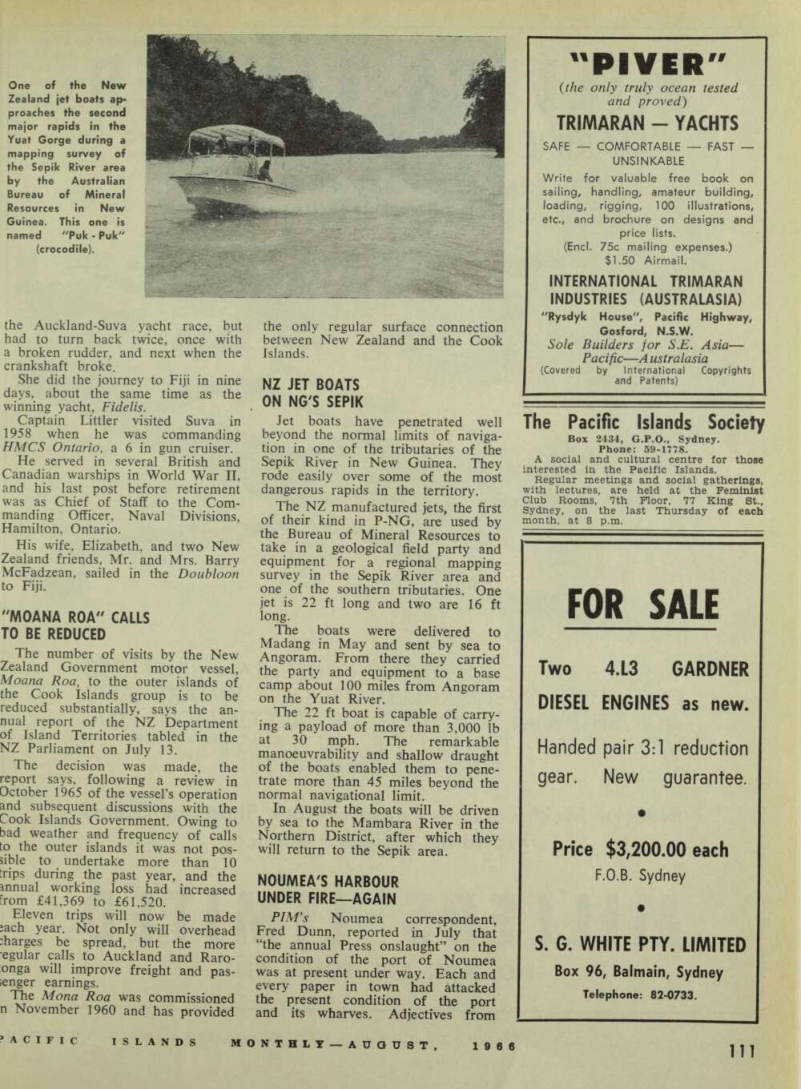 113
113 114
114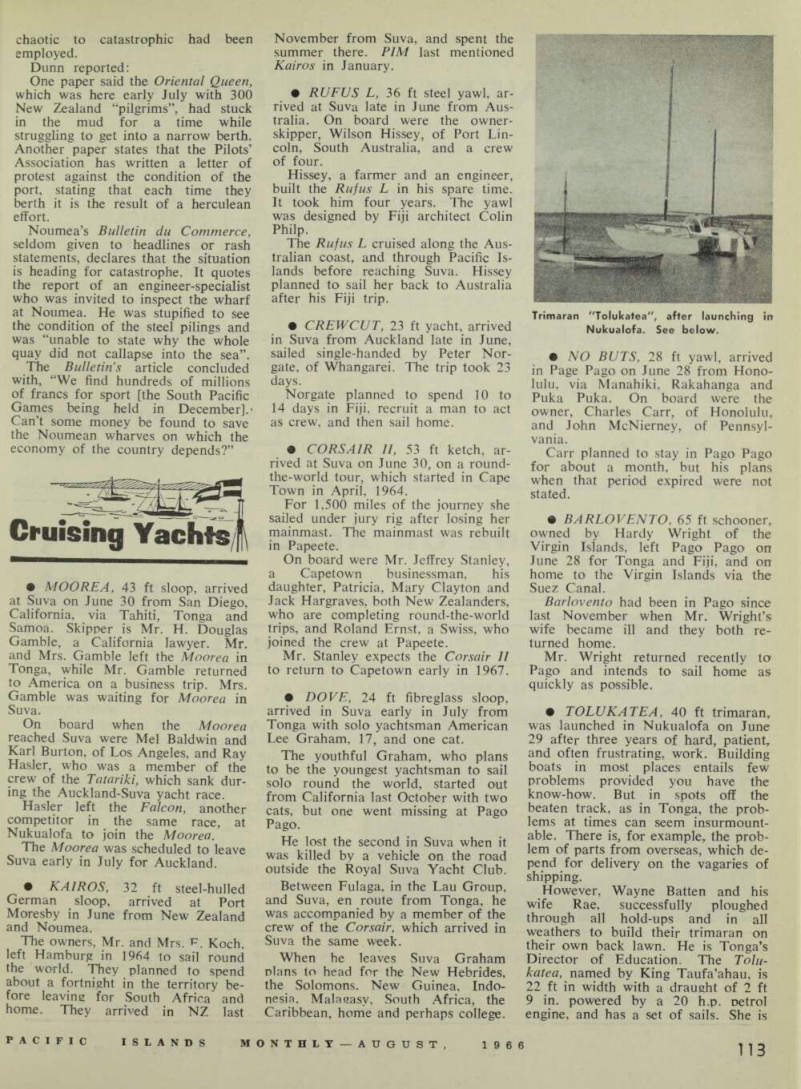 115
115 116
116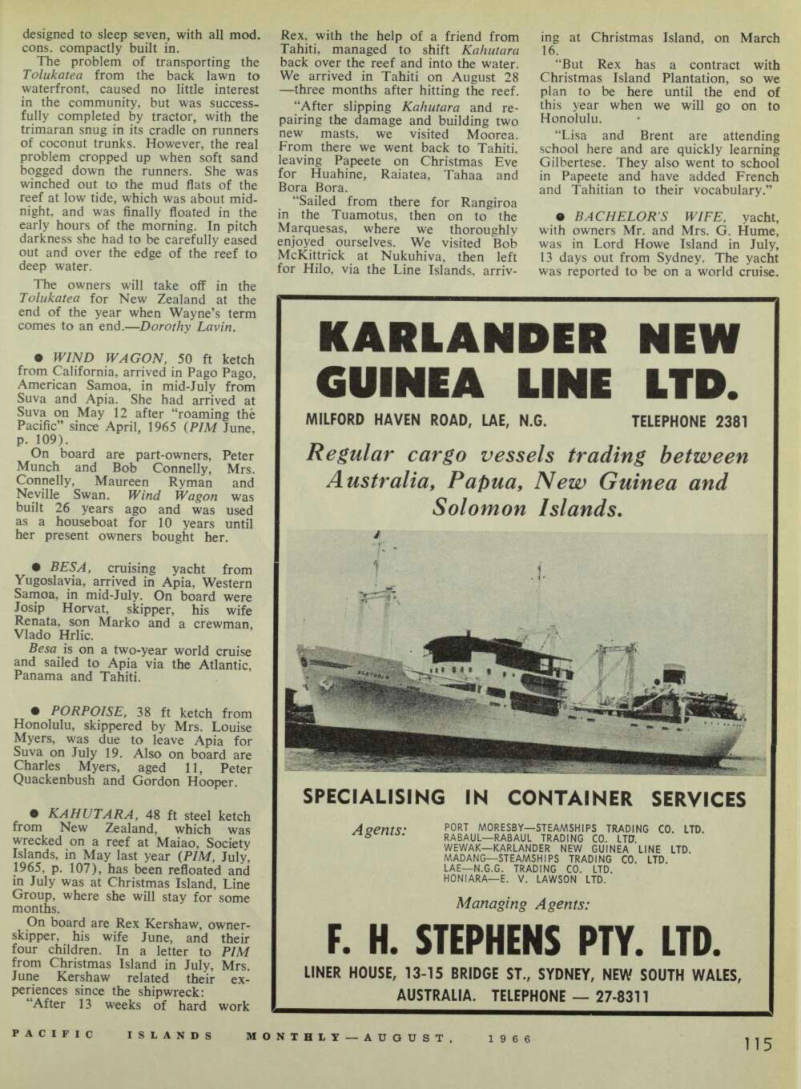 117
117 118
118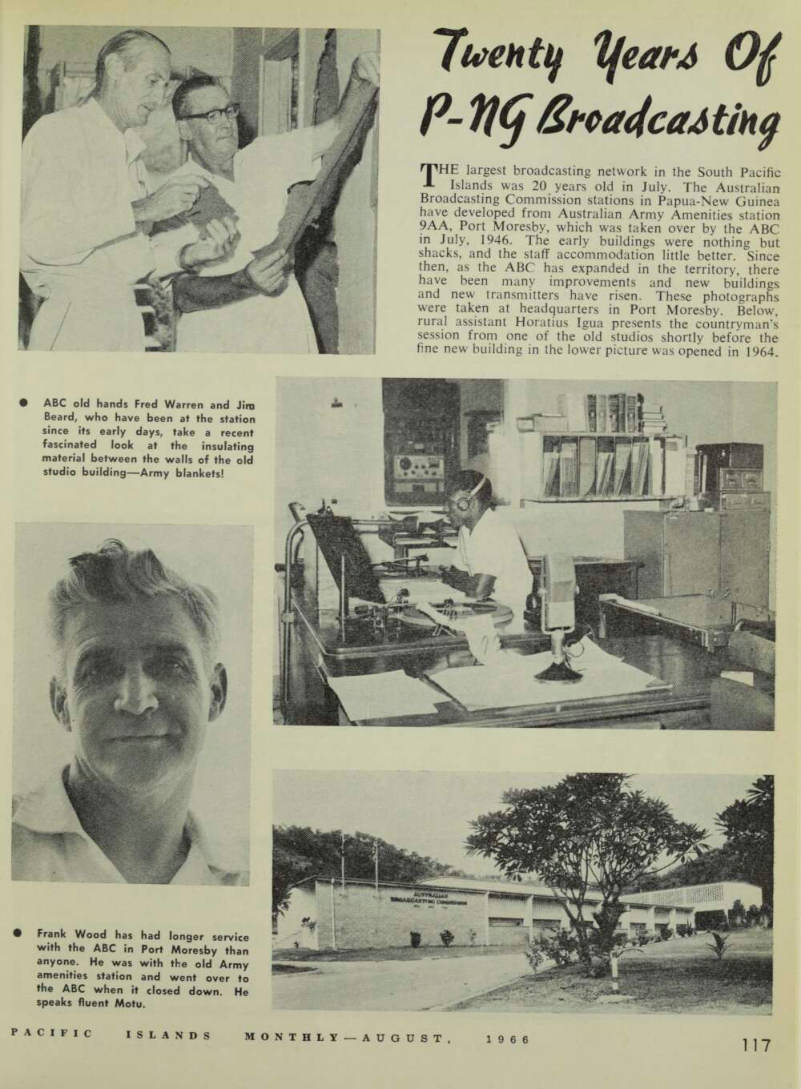 119
119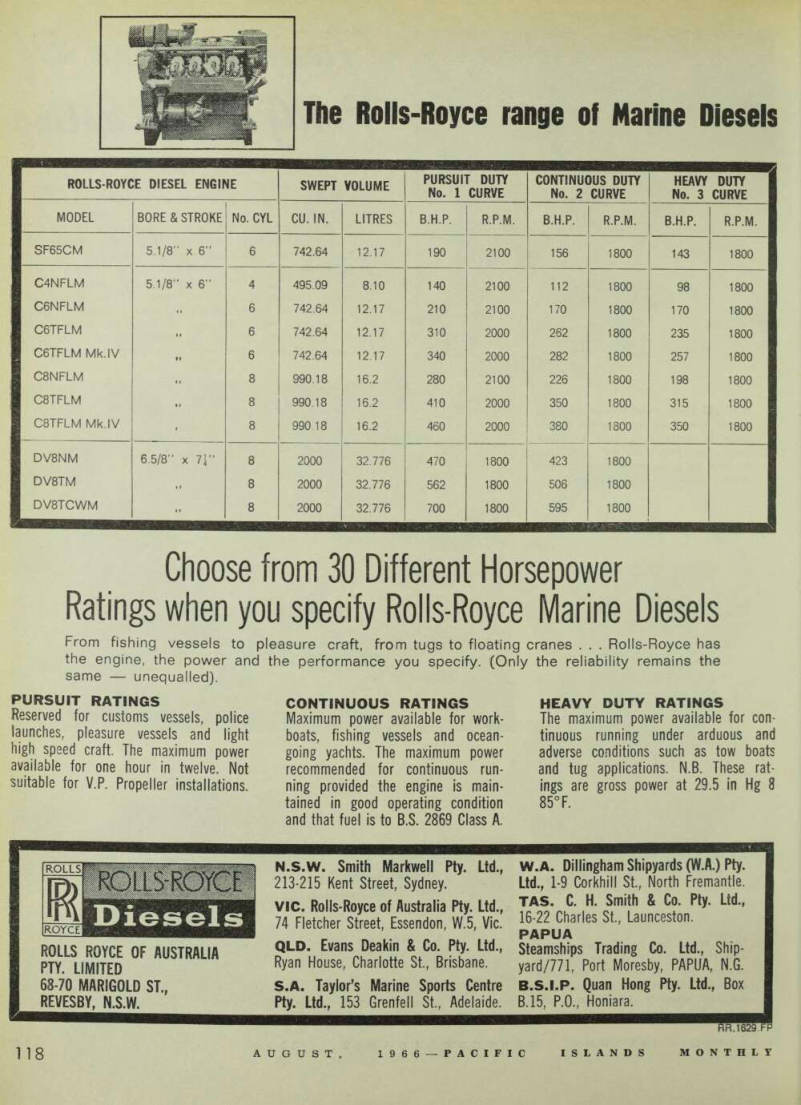 120
120 121
121 122
122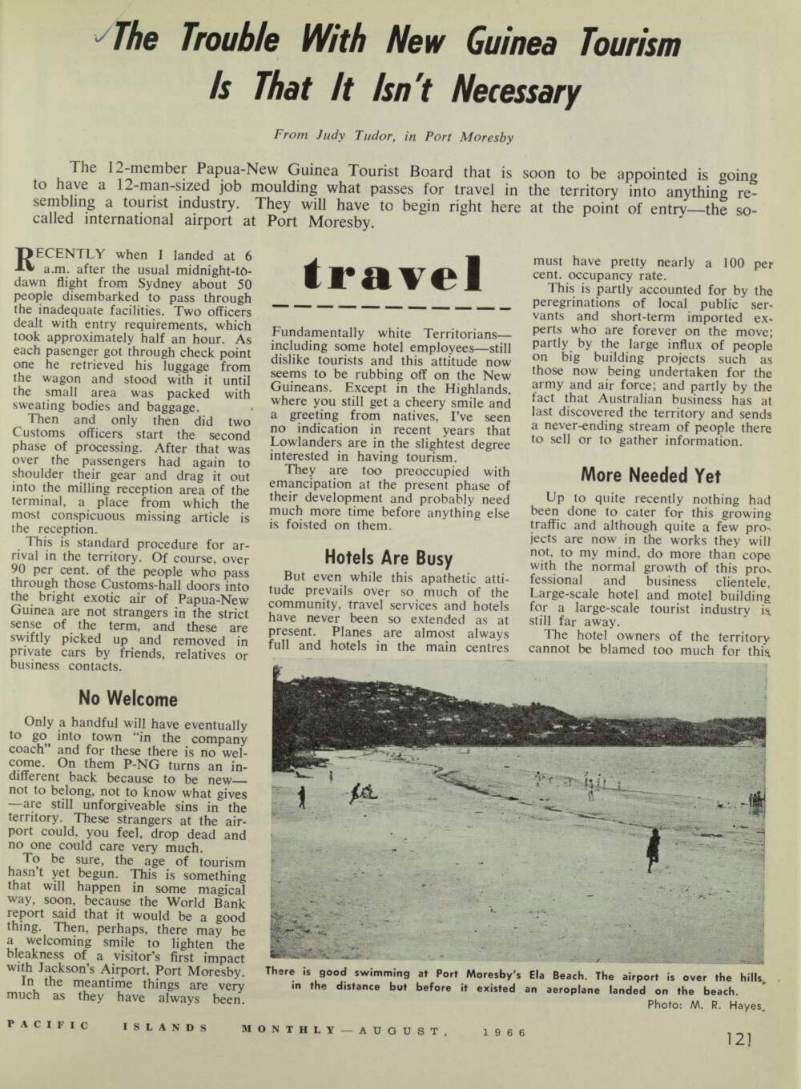 123
123 124
124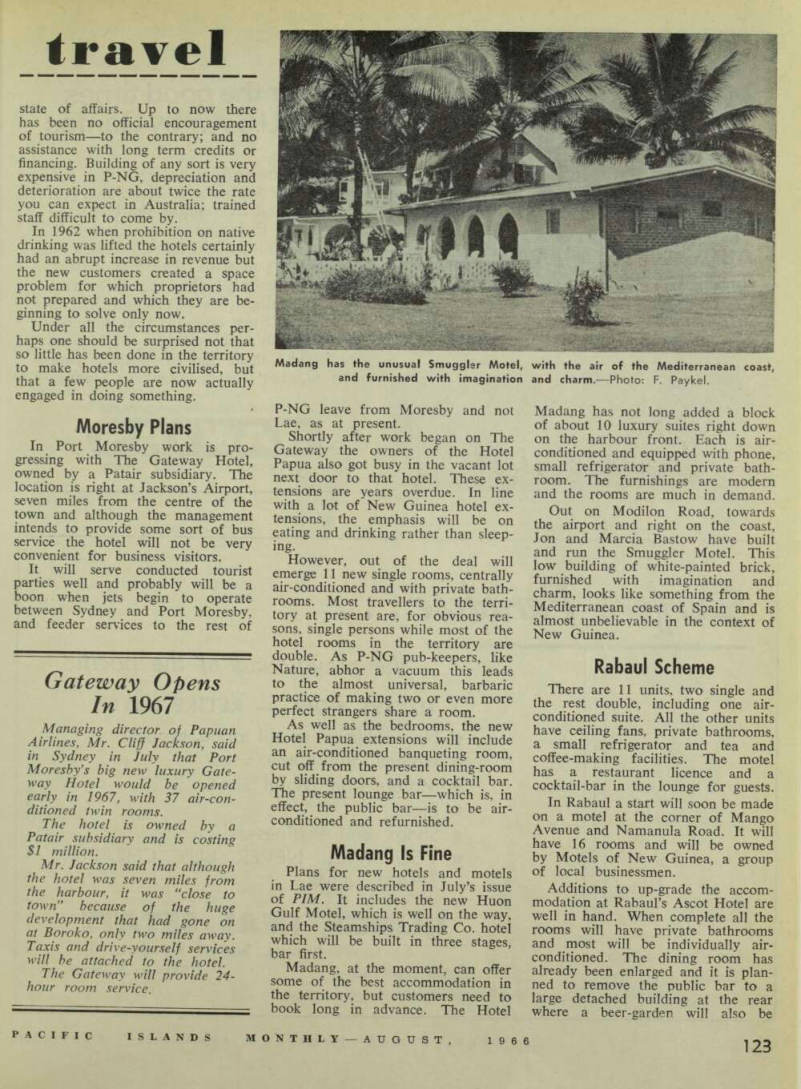 125
125 126
126 127
127 128
128 129
129 130
130 131
131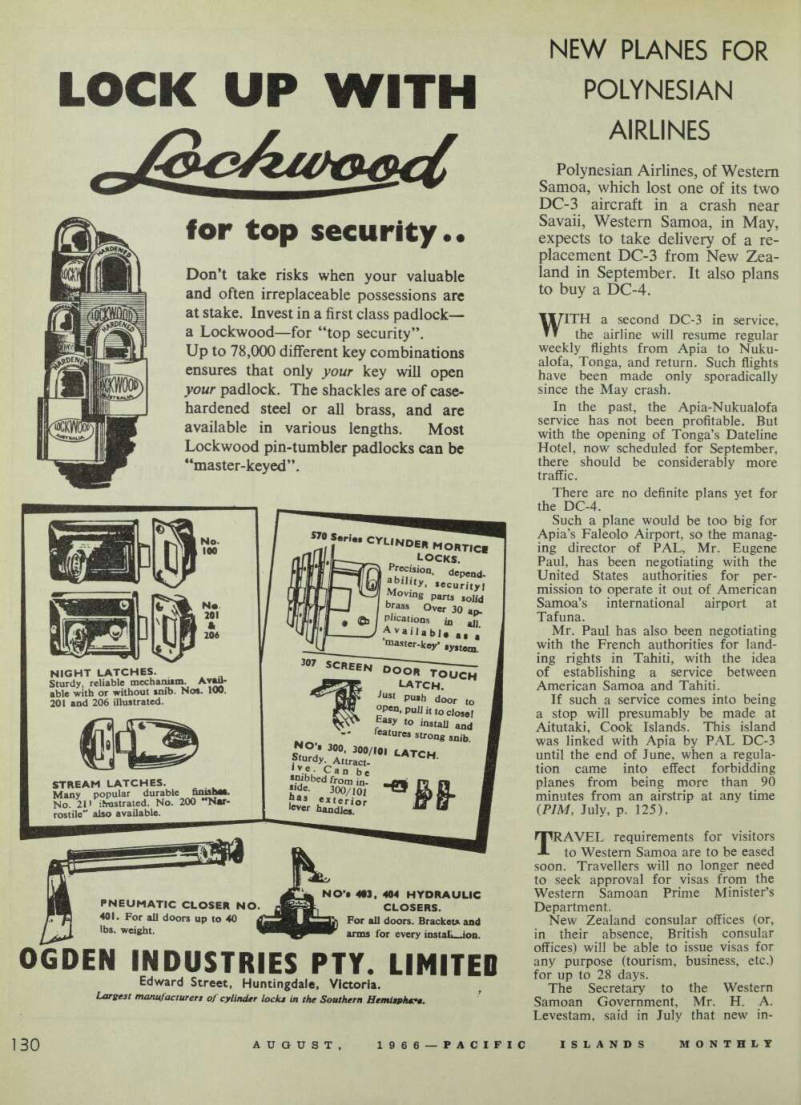 132
132 133
133 134
134 135
135 136
136 137
137 138
138 139
139 140
140 141
141 142
142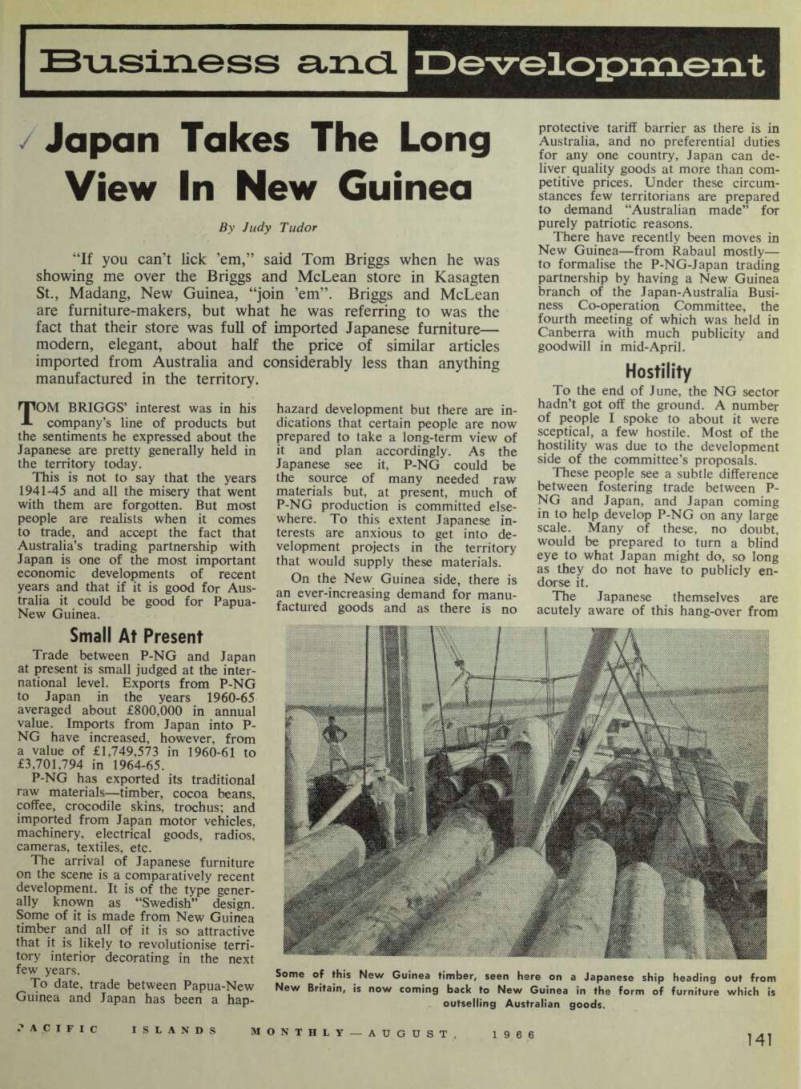 143
143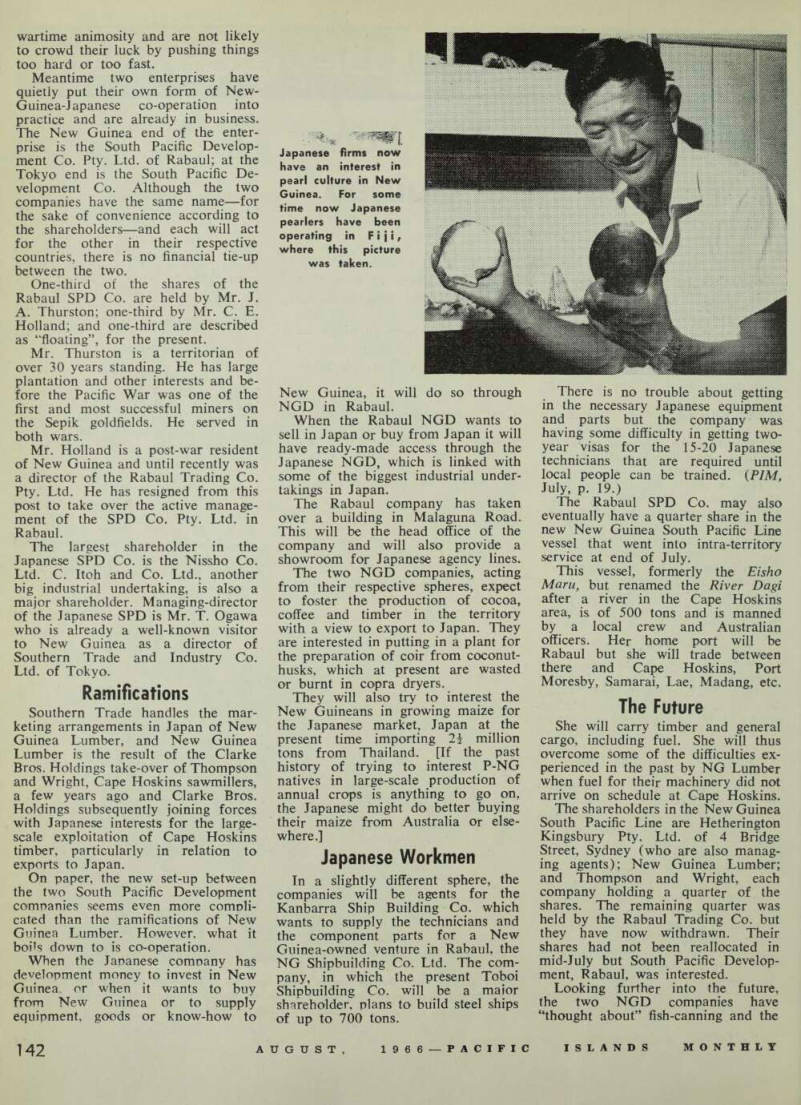 144
144 145
145 146
146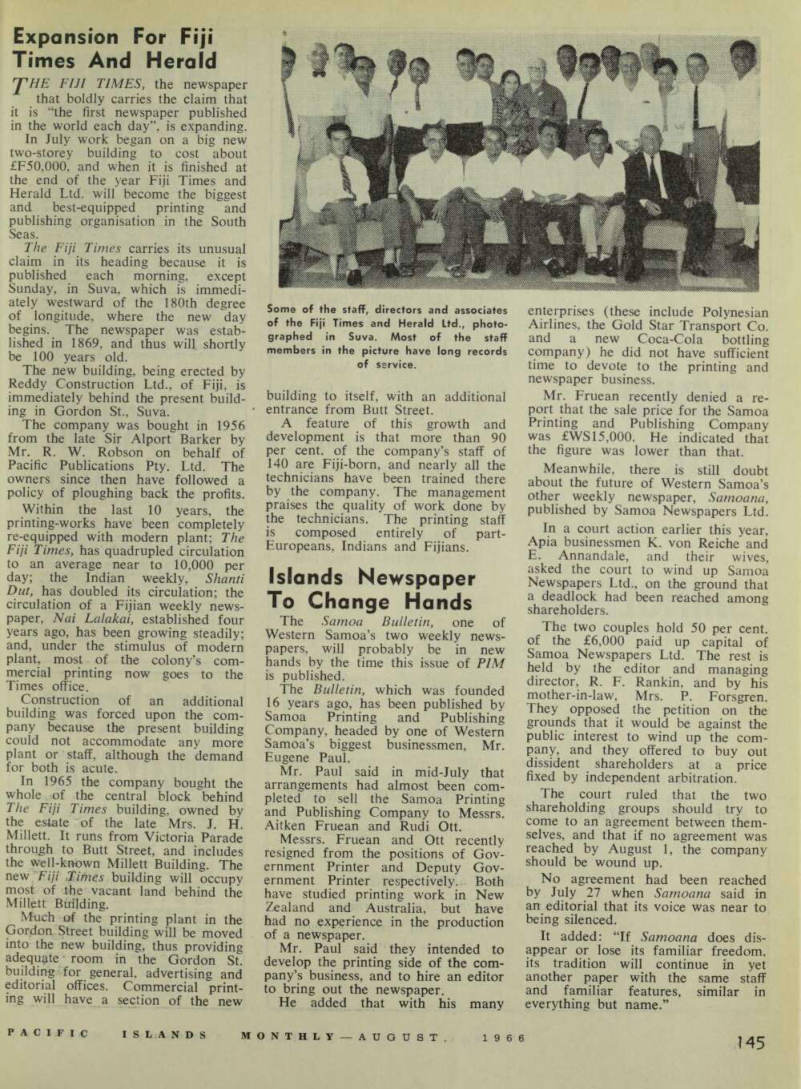 147
147 148
148 149
149 150
150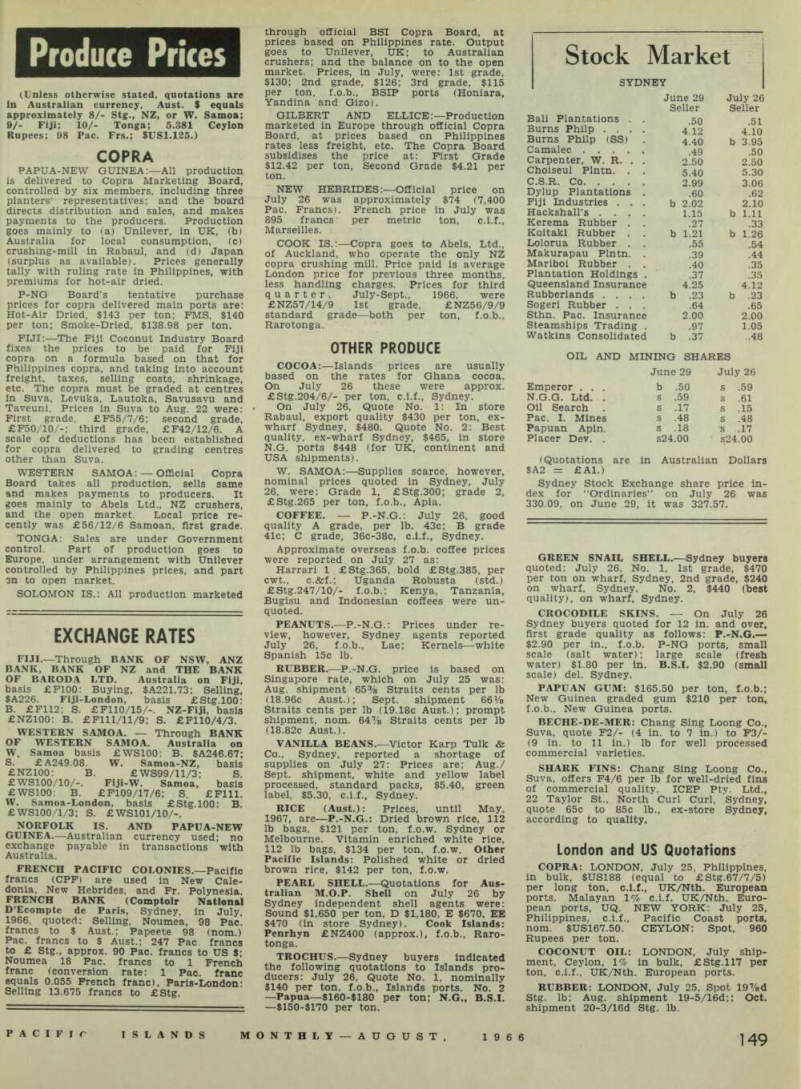 151
151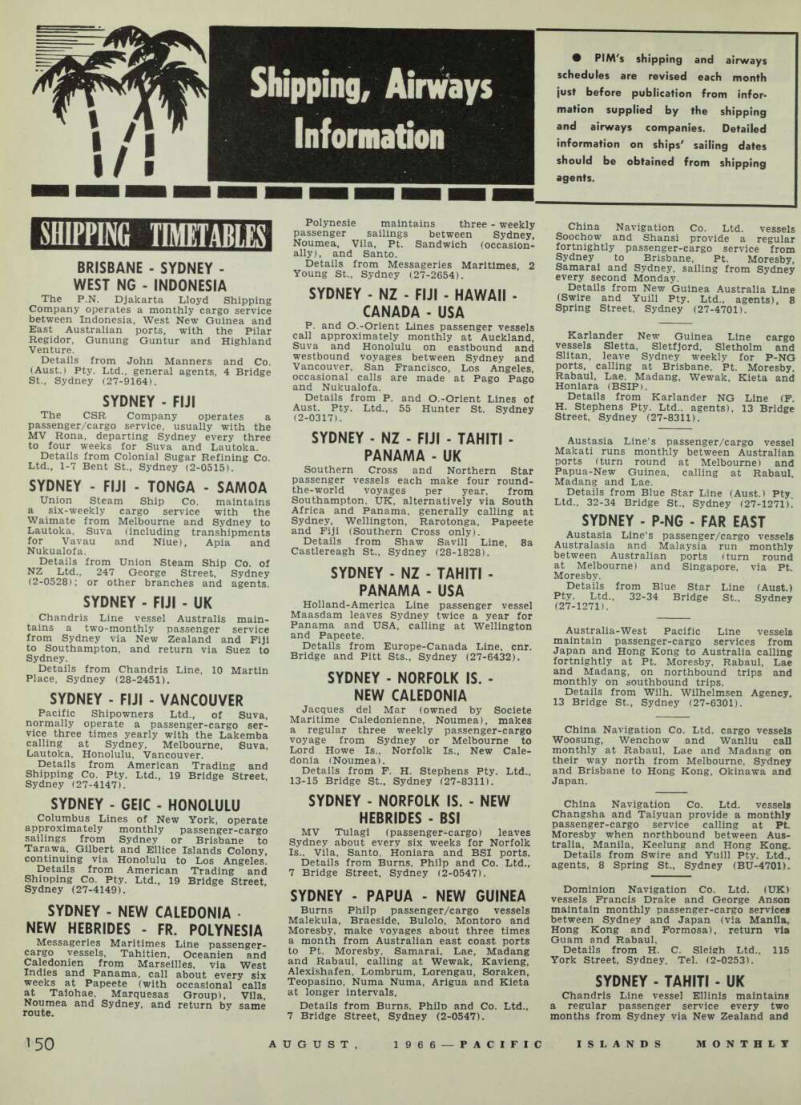 152
152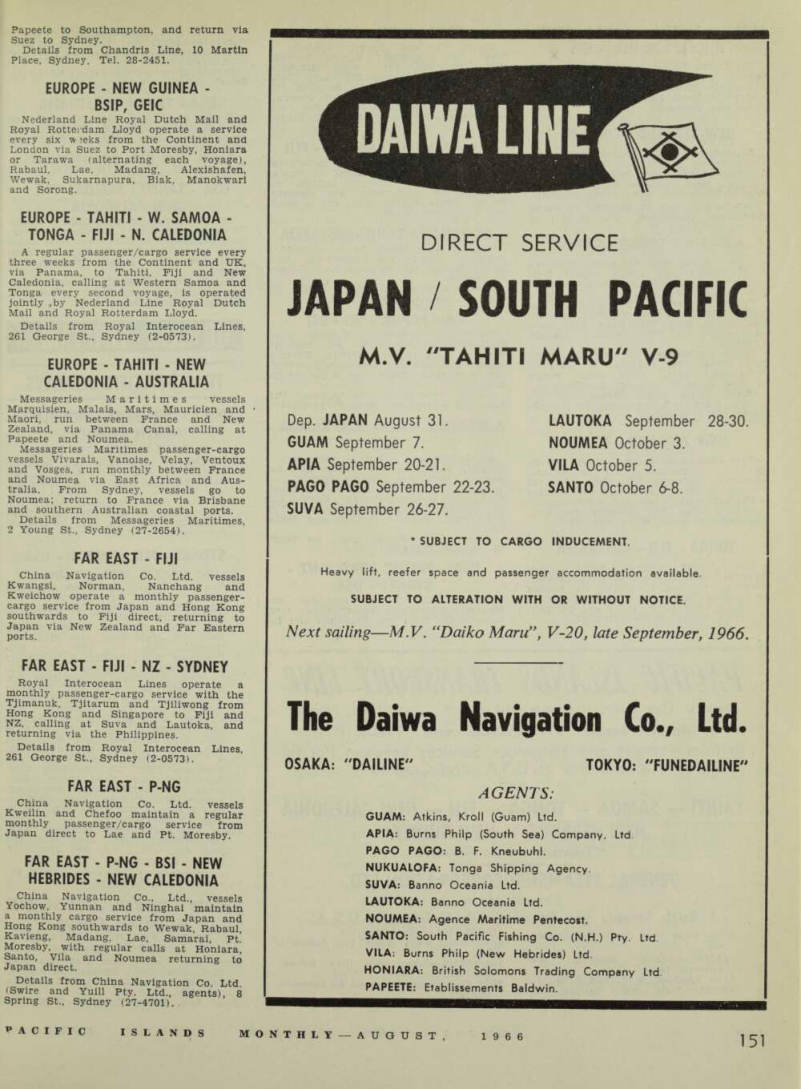 153
153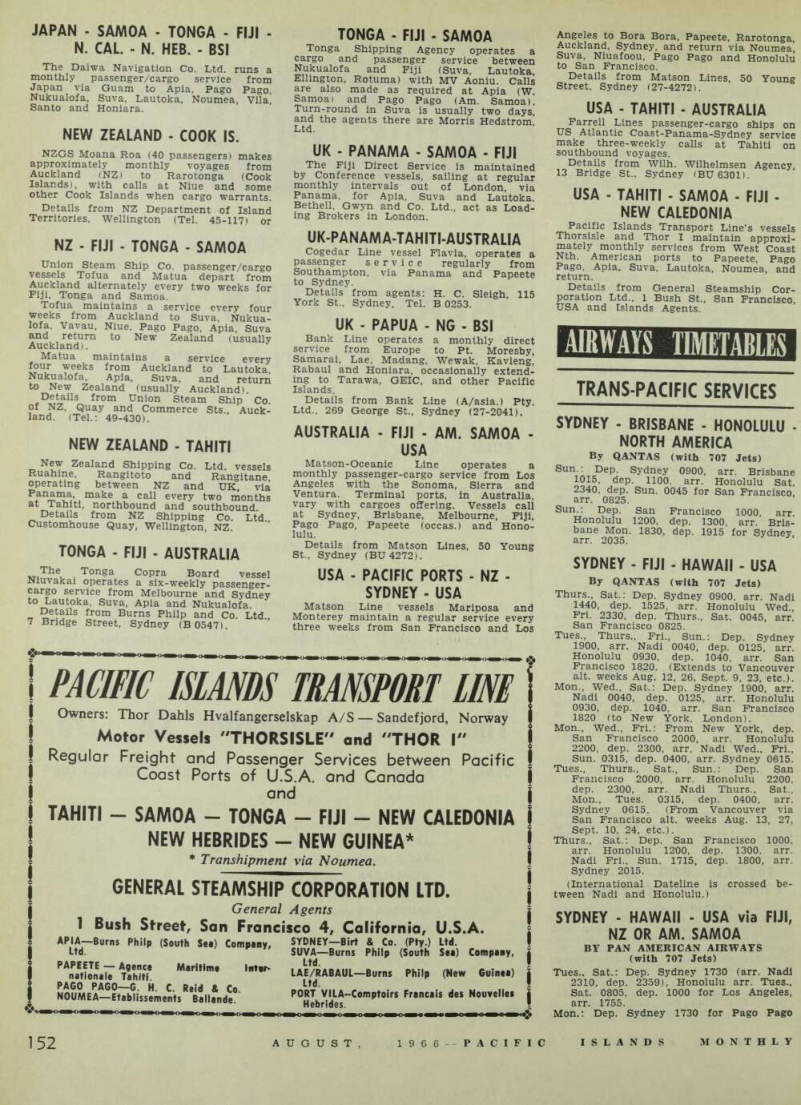 154
154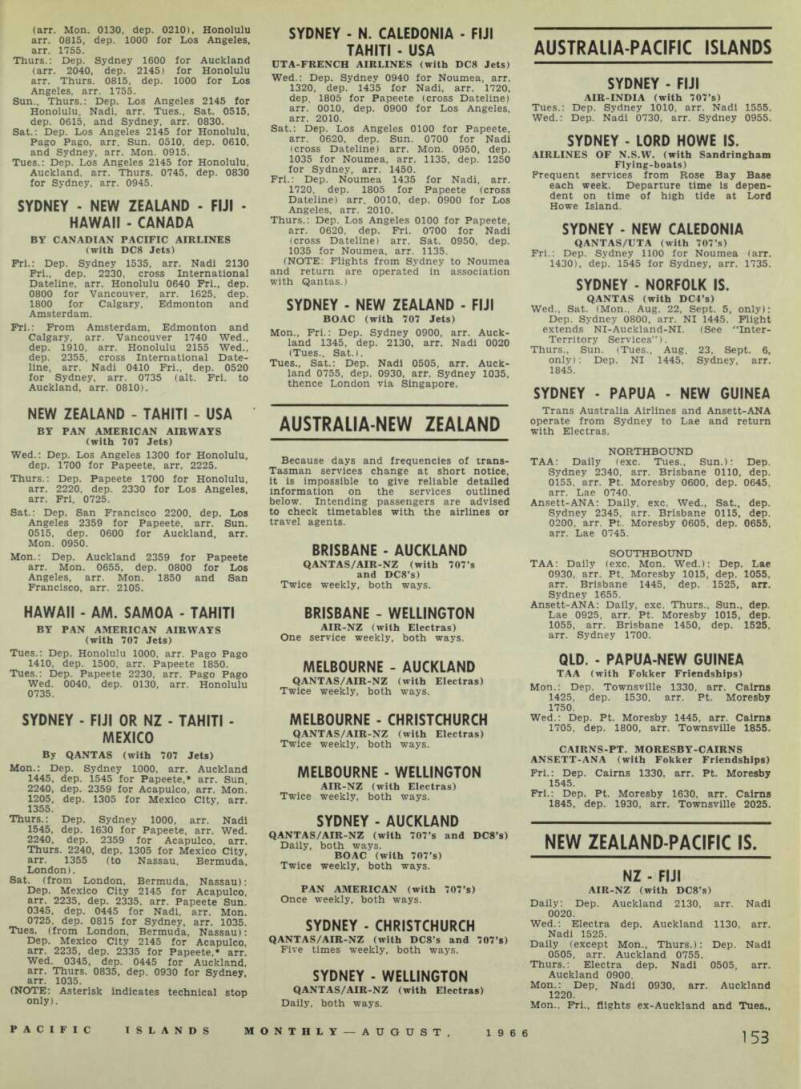 155
155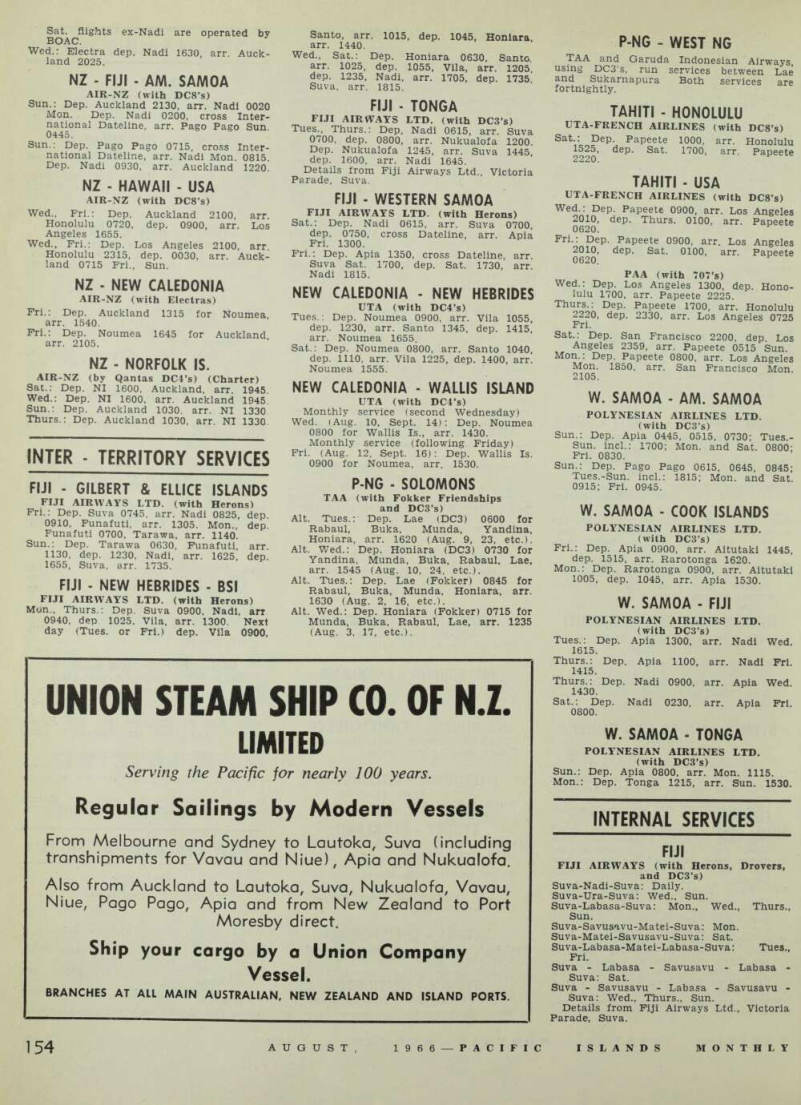 156
156 157
157 158
158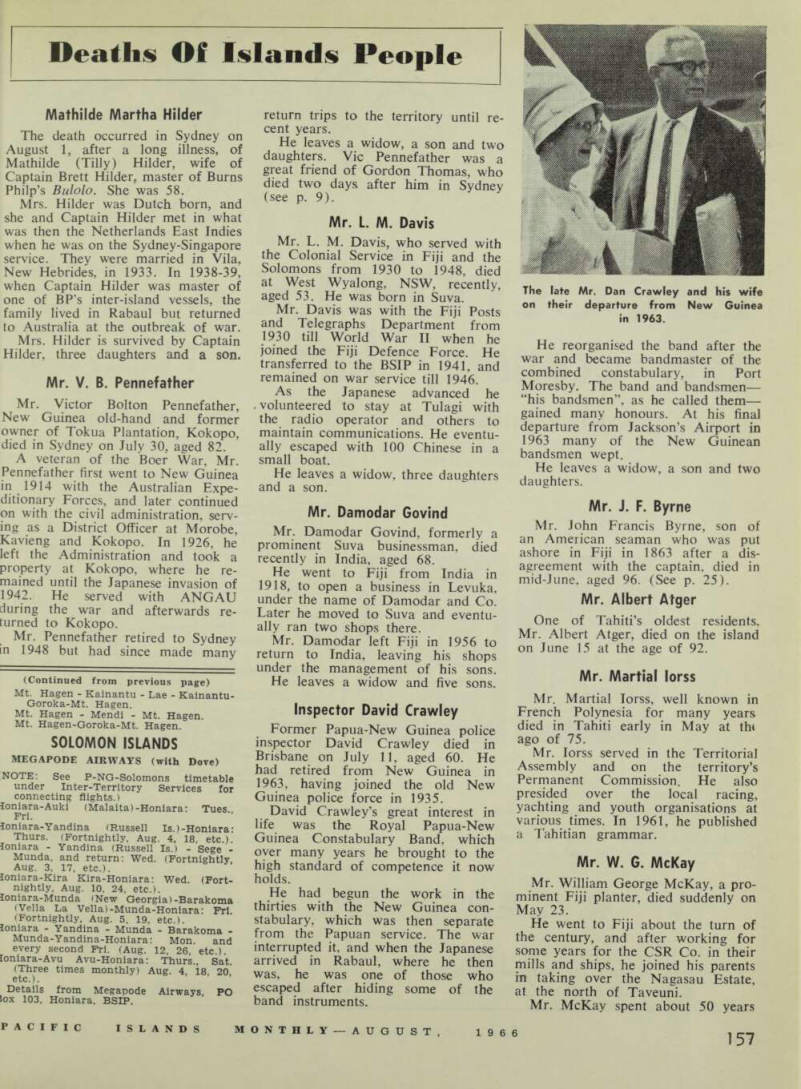 159
159 160
160 161
161 162
162 163
163 164
164