Monthly
Pacific Islands Monthly
July, 1966
30 Aust. cents Three shillings 70 US cents 50 French Pac. frcs.
\e News agazine )f The South Pacific
Stablished 1930
ed at G.P.0., Sydney, for nission by post as a newspaper.
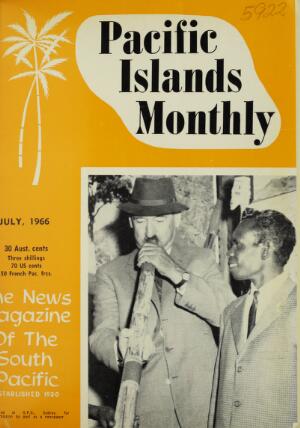
THE COVER: Although normally he is no blow-hard, the Australian Minister for Territories, Mr. C. E. Barnes, is caught in this study blowing his own trumpet. Aboriginal Stephen Nayandili, of the Northern Territory, finds it either amusing or fascinating—it is not clear which. The "trumpet" is an Aboriginal musical instrument called a didgeridoo.
Advertisements & other items, pp. 2-8 (2 items)
July 1966 Pacific Islands Monthi
Electrolux
Choose your
size from
the
Electrolux
a \ o \ 'S
new economy line
Full range of me Low priced Economic to run Luxuriously equi| Efficient Renowned for r bility
NEW COMPRESSOR REFRIGERATORS
For homes with electricity. These elegant models are fitted with extremely economical cooling units which compress electricity costs to the minimum.
KEROSENE REFRIGERATORS
For perfect cooling in non-electrified areas. Ele lux kerosene refrigerators are completely silent have no moving parts to wear out. 23 The new Electrolux economy line offers you a full range of refrigerators which caters for everybody—with both compressor n that really economise on electricity and kerosene models.
There's a wide range of sizes, all beautifully equipped, with plenty of space for food and large bottles. You'll find exactly you need—in the size that you want —in the Electrolux new economy line.
Distributed by:
W. R. CARPENTER & CO. LTD
and their agents,
NEW GUINEA CO. LTD.
RABAUL, MADANG, LAE, KAVIENG, KOKOPO
BURNS PHILP (N.H.) LTD., Vila, Santo
ISLAND PRODUCTS LTD.
PORT MORESBY.
E. V. LAWSON, Honiara
FACTORIES OFFICES FLATS ' ki M'%
■ ! mm I* oN>
SMARTNESS
STRENGTH
ECONOMY
BROWNBUILT VERSATILITY ALLOWS
COMPLETE FREEDOM OF DESIGN!
with Brownbuilt
ROOF DECKING
best for all industrial and commercial applications!
Consider these big Brownbuilt benefits in commercial and industrial building; unique vertical rib design gives greatest strength. Exclusive Button-Punch fixing ensures permanent stability. Strong, light weight, Brownbuilt needs less structural framework. Keeps installation costs down. Allows broad, unsupported spans, wider purlin spacings. Shops, offices, factories, schools, flats, halls, churches. You name it—Brownbuilt roofs it. And does a better job everytime!
Brownbuilt Roof Decking is the perfect choice for every roofing need.
Brownbuilt
i LIMITED ■■
METAL SECTIONS DIVISION
MOROBE CONSTRUCTIONS LIMITED
Saraga Street, Six Mile, Port Moresby, PAPUA.
D. C. WATKINS LIMITED
Angau Drive, Boroko, T.N.G.
JOHN STUBBS & SONS (PAPUA) LIMITED
Lawes Road, Port Moresby, PAPUA.
RABAUL METAL INDUSTRIES
Malaguna Road, Rabaul, T.N.G.
FIJI REDDY CONSTRUCTION CO. LTD.
Box 80, G.P.0., SUVA.
BB.PB
BMs I % Ji m j*orai±
Tins
% i
Is ■lt
ill
m i i i •* ■ m ■ x ■pL ■■l " • *'' J|v
%Mi|C
11 \ . *■' ** m *%m I New 3400-46 hp* The 3400 is ideal for light-to-medium duty industrial applications.
Loading on plantations. Grounds keeping.
Forestry. Materials handling. Mowing.
Landscaping. Trenching with a backhoe.
Spreading and leveling. Available with the complete range of transmissions from four-by-four to 10-speed. *Manufacturer's S.A.E. rating.
New 4500—56 hp* Ford designed the new 4500 for total industrial use. Heavy-duty digging, ditching, and excavating in construction work. Comes complete with hydraulic system for big-capacity backhoeloader operation. A tough, powerful tractor for all industrial applications. Available with fast-shuttling four-by-four transmission or shift-on-the-go 10-speed transmission.
NEW FROM FORD!
Rugged new industrial tractors to dig, lift, load,
push, pull at lower costs.
Ten exciting new developments for industrial applications await you at your Ford tractor dealer.
Four tough new Ford industrial tractors —for industrial applications ranging from loading to building bridges.
Three new, deep-digging Ford backhoes. 10 ft., 13 ft., 15 ft.
Three powerful new Ford loaders.
You’ll get longer work life and less downtime from these tough new industrial Ford tractors. Stronger, nonadjustable front axle and axle supports. Larger diameter
TRACTORS
EQUIPMENT
clutches with heavy-duty facings. Stronger
rear axle and rear axle housings. Heavyduty crank case. Interchangeable parts that simplify replacement.
You’ll speed up production with these fast, efficient industrial Ford tractors.
Choose from a wide range of transmissions.
Transmissions that give usable power quickly to suit your operating requirements.
Cut costs and save time with all-new Ford industrial tractors, backhoes, and loaders. See your Ford tractor dealer now. a ew 3500—46 hp* The sturdy new 3500 has a lort wheelbase for loader-backhoe operations i confined areas. Excellent for operating lultiple combinations: loader-rear blade, iader-scraper, loader-mower. A high-capacity achine particularly suited for the construction arket. Available with four-by-four transmission id straight four-speed transmission.
A New 4400—56 hp* This economical new industrial tractor has exceptional weight balance and low center of gravity for heavy drawbar work and loader-backhoe operation.
Handles a wide range of applications such as grading, tree removal, loading, materials handling, and towing. Available in both fast-shuttling four-by-four and shift-on-the-go 10-speed transmission.
Throughout the Islands
m A.'a m. ■■■ I mm. tm
• proven quality for demanding conditions
When conditions get tough, the experienced shooter chooses ICI sporting ammunition.
He knows that for reliability, power packed economy and consistent accuracy there’s none better than ICI.
There’s an ICI cartridge for every shooter whether it be ICI shotgun shells for dense, even patterns and economy; Rimfires for hard-hitting accuracy and reliability; Centrefire for heavier game; or air rifle slugs and pellets for lots of fun at low cost.
Your local dealer stocks and recommends
SPORTING AMMUNITION >
A M 8420
iiiiiiiiiiiiiiiiiiiiiiiiiiiiiiiiiiiiiiiiiiiiiiiiiiiiiiiiiiHiiiiiiiiiiiiiiiiiiiiiiiiiiiiiiy
BURNS PHILP (SOUTH SEA) CO. LTD.
GENERAL MERCHANTS AND SHIPOWNERS
SHIPPING, CUSTOMS AND FORWARDING AGENTS
AGENTS FOR:
QUEENSLAND INSURANCE CO. LTD.
BURNS PHILP TRUST CO. LTD.
SHELL COMPANY (P. 1.) LTD.
OVERSEAS AGENTS
BURNS, PHILP & CO. LTD., Sydney.
BURNS, PHILP & CO. LTD., London.
BURNS PHILP CO. OF SAN FRANCISCO
SHIPPING AGENCIES
• The New Zealand Shipping Co. Ltd. • Shaw Savill & Albion Co. Ltd. • Port Line Ltd. • Bank line Ltd. • General Steamship Corporation Ltd. • Blue Star Line • Cunard Line • Compagnle des Messageries Maritimes • British India Steam Navigation Co. Ltd. • Royal Interocean Lines • Nederland Line Royal Dutch Mail/Royal Rotterdam Lloyd.
EXCLUSIVE DISTRIBUTORSHIPS INCLUDE
• AKAI TAPERECORDERS • HELENA RUBENSTEIN • ROLEX WATCHES • DUNLOP PRODUCTS • HITACHI ELECTRONICS • REVLON COSMETICS • EPIGLASS PRODUCTS • HOLDEN VEHICLES • PENTAX CAMERAS • FERGUSON TRACTORS • JOHNSON'S WAXES • SUNBEAM APPLIANCES
INTERNATIONAL AIR TRANSPORT ASSOCIATION REPRESENTATIVES for
QANTAS EMPIRE AIRWAYS LTD. :: AIR NEW ZEALAND UNION DE TRANSPORTS AERIENS ALITALIA PAN AMERICAN AIRWAYS
ASSOCIATED COMPANIES
BURNS PHILP (NEW HEBRIDES) LTD.
AUTOMOTIVE SUPPLIES CO. LTD.
CORRIE & CO. LTD. • NARAIN FURNITURE CO. LTD.
SPECIALISED SERVICES
EXPERT ADVICE ON WORLD AND LOCAL TOURS
TRAVEL SHIPPING FORWARDING CUSTOMS
FORMALITIES INSURANCE.
REGISTERED OFFICE: SUVA, FIJI
Code Address; "BURNSOUTH' lll 1111111 111 » ilium mm iiBB
As the Lisbon Lemon
said to the Indian Tonic
GILBEY’S IS SUCH A GREAT INTERNATIONAL GIN
WHY MJX Wlr H
H Sfts
Pacific Islands
Monthly
Owned And Published By
Pacific Publications Pty. Ltd.,
29 ALBERTA ST. (G.P.O. BOX 3408), SYDNEY.
Telephones: 61-9197, 61-7101, 61-4369.
Telegraphic Address: PACPUB, Sydney.
Chief Executives
Managing Director; R. W. Robson.
General Manager: Selwyn Hughes.
Book Publishing Division
Editor: Judy Tudor.
Pacific Islands Monthly
Editor: Stuart Inder.
Assistant Editor: Robert Langdon.
Branch Offices
Melbourne: Newspaper House, 247 Collins St Tel.: 63-7053.
Fiji: Pacific Publications (Fiji) Ltd., Fiji Times Building, 20 Gordon Street, SUVA, Tel,; 25601, Fiji Times Office, Vidilo Street, LAUTOKA.
Tel.: 60-422.
Papua-New Guinea; Pacific Publications (N.G.) Pty. Ltd. Representatives: Mrs. Joan Carter, P.O. Box 16, PT. MORESBY (Tel.: 2504); Miss Pat Robertson, P.O. Box 227, LAE; Mr. Steve Simpson, P.O. Box 154, RABAUL (Tel.: 2547).
Representatives
New Zealand: J. D. Whitcombe, C.P.O. Box 2229, Queen Street, Auckland. Tel.; 76056.
Hawaii: C. C. Spencer, 203 Yap Bldg., 3465 Waialae Ave., Honolulu. Tel.: 775538.
United States; Mrs. A. L. Craib, 1631 80th Avenue, Oakland 21, California.
Tel.; LOckhaven 8-1201.
United Kingdom: S. R. Warman, Candlewick House, 116-126 Cannon Street, London, E.C.4.
Tel.: Mansion 3674/7.
H. A. Mackenzie, 4A Bloomsbury Square, London, W.C.I. Tel.: Holborn 3779.
Agents
All main trading firms and stores in the Pacific Islands.
Pacific Publications Pty. Ltd. is the Australian agent for THE FIJI TIMES.
Subscription Rates:
Australia: 30 cents Aust. or 3/- ($3.60 Aust. or 36/- for 12 months). New Zealand, all British Commonwealth South Pacific Territories, Tonga, New Hebrides and Western Samoa: 3/local currency (36/- local currency per annum).
Elsewhere in the South Pacific: 50 French Pacific francs or 70 US cents (600 French Pacific francs or $B.OO US posted per annum).
Posted to USA, $B.OO US per annum. Posted to the UK and all other countries: £Stg.2.
"Pacific Islands Monthly" is air-freighted to all subscribers and agents in the South Pacific; copies to other areas go by surface mail.
In This Issue
Vol. 37. No. 7, JULY, 1966
General
Major Changes in Attitudes 9 Queen's Birthday Honours List 18 How South Pacific Games Started ... 27 Secrets of Fire-Walking 50 Mercy Errands to Remote Islands ... 67 "Matua" to be Replaced 108 £82,000 For South Pacific Lepers 132 Higher Copra Prices 141
American Samoa
US Citizenship Likely Soon 39 Award for Governor Lee 39 New Information Officer 137
Cook Islands
Corruption Charge Against Minister 14 Reef Blasting at Mangaia 105 Air Service Ends 125 Development Plan 140
Fiji
£2om. Development Plan 20 Case of the Shrouded Corpse 26 Census to be Held 29 Pacific Theological College Opens 37 Whippy Harbour 49 Waidina Banana Growers 69 Capital Punishment Abolished 75 New Ship in Service 99 Director of Marine 101 Survey Ship Resumes Work 103 Levuka's Leading Lights 103 "Viti" Converted to Pleasure Yacht 107 Hotel and Resort Building Boom 117 New Manager for FVB 127 Cigarette Industry 138 Japanese Pearls Plan 140
French Polynesia
First Nuclear Test at Mururoa 19 Moorea's Octagonal Church 85 Papeete Harbour Opened 107 Five-Year Tourism Plan 123 Chile-Tahiti Air Service Plans 123
Gilbert And Ellice Islands Colony
New Constitution 12 Phosphate Negotiations 19 Survey of Conditions 45 New Assistant Resident Commissioner 47 1945 Ocean Island Massacre 81 Elusive Shoal Seen Again 103
Nauru
Liquor Ban to Go 9 Phosphate Negotiations 19 British to Cease Buying Phosphate 20
New Caledonia
Games Hostesses Chosen 40 Matson Services Resume 99 Nickel Loading Again at Noumea 101 Maritime Mishaps 108 Moves for Air-1 ndia Service 129
New Hebrides
First Condominium Census 29 New Buildings 71 Resident Commissioner's Illness 137
Niue
New Member System 65 Mercy Errands 65
Norfolk Island
"Balance" for Tourist Industry 17
Council Election 25 Book by Chief Magistrate 94 Work Begins on New Hotel 128
Papua-New Guinea
New Men in Top Jobs 10 Exit Mr. Guise 11 Public Service "Golden Handshake" 15 Japanese for Rabaul? 19 Cleland on Seventh State 25 Rugby League Team in Australia 27 Census 29 Kaindi By-Election 29 "New-Look" Mining Laws 31 Papua's Angry Young Man 35 Administrative Crisis 51 Pyrethrum Extraction Plant Opens . 52 Capital Punishment 75 New Books on Territory 96 Eating Out in Port Moresby 125 New Hotels for Lae 127 Copra Bounty 140 Palm Oil Industry 140 Catholic Seminary to Move 141
Solomon Islands
Air Travel Complaints 49 Naming of Henderson Field 49 Arts Dying Out 61 Capital Punishment 75 Crayfish Export Plan 99 New Forwarding Company 101
South Pacific Commission
New Secretary-General 10
Tonga
Last Tribute to Queen 13 Another Old Tortoise , 89 Dateline Hotel Plans 128 Warning for Traders 140
Western Samoa
Parliament Under Fire 13 Probable Cause of DC3 Crash 129 Retail Sales 140
EFARTWENTS: Tropicalities, 25; People in Pictures, 42; Letters to the Editors, 49; Territories Talk-Talk, 57; From the Islands Press, 73; Magazine Section, 81; Yesterday 89; New Books, 91; Shipping, 99; Cruising Yachts, 109; Travel, 113; Planters Digest, 131; People, 137; Commerce, 138; Shipping, Airways Schedules, 143; Deaths of Islands People, 150.
Advertisements & other items, p. 10 (1 item)
iscu.it s
famous
TRIPLE
4
WRAPPED
PACKS
% m it 0 % mm
Serve simply
with
• • • There is no Substitute for Quality
Major Changes In Church And State
Attitudes In The South Seas
• Britain to "Close Down" as a Colonial Power * Roman Catholic Church to Create Hierarchy in Oceania ® Protestant Churches Move Closer Together
By PIM Staff Writers
Revolutionary changes in secular and ecclesiastical attitudes towards the native peoples of the South Pacific are implicit in decisions made recently by the British Government and the Roman Catholic and Protestant churches.
THE decisions in each case will bring an end to eras of develop ment dating back to the earliest years of European influence in the South Seas. • The British Government’s de cision—to close the Colonial Office on July 31—will end a chapter in the history of the Pacific which began with the British convict settlement at Botany Bay, New South Wales, in 1788. The decision can be interpreted as formal notice by the British Gov ernment that its role as a coloniser and protector is over, and that it intends to give up its few remaining colonies in the Pacific and elsewhere as soon as it can. • The Roman Catholic decision— which is yet to be officially an nounced—represents the Church’s big gest step forward in the Pacific since Spanish priests brought Christianity to the Mariana Islands 300 years ago.
The Church’s intention is to create a separate hierarchy for Oceania and so pave the way for control of the Church in the Pacific to be placed in the hands of the local people. • The Protestant decision establishes a Pacific Conference of Churches.
Shrinking Empire
The decision by the British Gov ernment to close the Colonial Office, and merge what remains of it with the Commonwealth Relations Office under the new name of Common wealth Office, is the culmination of several years of planning. In that time the Colonial Office has been allowed to “run down”.
The work of the Colonial Office has been shrinking steadily with the diminution of Britain’s colonial empire, and it was well known in British Government circles that the Colonial Office, as a separate entity, would eventually cease to exist.
The date set for its extinction is only two years short of its 200th anniversary, as it was in 1768 that a secretary of state for the American or Colonial Department was ap pointed in addition to the two principal secretaries of state then existing. (As early as 1660 a “Council of Foreign Plantations” had been formed to deal with colonial affairs, which in those days meant the affairs of the settlements in North America and the West Indies).
British colonisation in the Pacific began exactly 20 years after the first Colonial Secretary of State was ap pointed. This was the settlement at Botany Bay in 1788.
It was through the activities of people in that settlement that Britain later acquired—always reluctantly— the four Pacific islands territories she now has.
These are the Crown Colony of Fiji, the British Solomon Islands Pro tectorate, the Gilbert and Ellice Islands Colony, and the British side of the Anglo-French Condominium of the New Hebrides.
All of these territories have been a burden on the British taxpayer, and it has been evident during the last few years that Government policy was to prepare the local people for self government as soon as possible.
This process has been accelerated since the Wilson Government came to power in 1964.
Even so, it could still be many years yet before the smaller territories become self-governing.
New Constitution
A conference to give Fiji a new constitution, which resulted in a considerably enlarged Legislative Council, adult franchise for minority racial groups, and a system of cross voting, was held in London in July- August last year ( PIM , Sept., 1965, p. 8). The new constitution, which will come into effect this September, was designed to try to get all of Fiji’s racial groups to work harmoniously together in the political field, in the hope that they could eventually be left to govern themselves. Britain is anxious to solve its Fiji problem far more quickly than most people realise.
In the case of the Solomon Islands, a plan for a new constitution to give the local people greater responsibility in their own affairs was published in May {PIM, June, p. 19). It will be put into effect before the middle of next year.
In the Gilbert and Ellice Islands Colony, proposals to create a mainly elected House of Representatives in place of the existing wholly nominated Advisory Council have just
been published (see p. 12). It is also proposed to vest legislative and execu tive power in the hands of a govern ing council, including five local repre sentatives.
An especially notable aspect of the new GEIC proposals is the Govern ment’s wish to change the name of the colony so that the connotation of dependency will disappear (see p. 12).
This move will probably be fol lowed in Fiji before long, with the words “Crown Colony” being sub stituted by something else. At the same time, or earlier, the office of Colonial Secretary is expected to be replaced by that of Chief Secretary.
In the Anglo-French New Hebrides, Britain will probably find it harder to relinquish her role than elsewhere because of the attitude of the French Government which seems to be: “Never give up a territory once you have it, unless you absolutely have to.”
On two occasions in the past 12 months, Britain and France have had formal talks in an effort to hammer out joint plans for constitutional ad vance in the New Hebrides. But so far nothing positive has emerged from them.
With the merger of the Colonial Office and Commonwealth Relations Office on August 1, the permanent under-secretary of the Colonial Office, Sir Hilton Poynton, who has held the post since 1959, will retire.
Sir Saville Garner, permanent under secretary for the Commonwealth Re lations Office, who is also head of the Diplomatic Service, becomes under-secretary of the new Common wealth Office.
Catholic Hierarchy
The Roman Catholic decision to give the South Pacific a hierarchy of its own is in keeping with the British Government’s policy and also with that of the Protestant churches.
Under it, the Catholic Vicariates Apostolic and Prefectures Apostolic throughout Oceania will become full dioceses with their own bishops. And Oceania will have its first archbishop.
The changes have been planned over several years and an announce ment is expected shortly from the Apostolic Delegate in Sydney.
The new_ changes will affect the following vicariates or prefectures: In New Guinea: Aitape, Alexishafen, Dam, Goroka, Kavieng, Lae, Mendi, Mt. Hagen, Port Moresby, Rabaul, Samarai, Vanimo, Wewak, Yule Island and the North Solomons (Bougainville).
Elsewhere in the Pacific: The Cook Islands, Fiji, the Gilbert (Continued on p. 141)
and Ellice Islands, the Marquesas, New Caledonia, New Hebrides, South Solomons and Western Solomons, Samoa and the Tokelaus, Tahiti, Tonga and Niue, and Wallis and Futuna Islands.
The only Catholic archbishops in the South Pacific area are in Aus tralia and New Zealand.
There is intense speculation within the Church as to who will be elevated to archbishop in Oceania, but it is probable he will be in Fiji or New Guinea.
The changes pave the way for indigenous bishops in Oceania. The Catholic Church has none, although there are several indigenous Pro testant bishops.
Protestant Church Changes
The “nativisation” of the Protestant churches in the Pacific has, in fact, been going on steadily for a number of years.
Besides the appointment of native bishops and other local leaders, there has been an increasing tendency to create locally autonomous churches and to avoid giving the impression that the local churches are in any way inferior to those in the metro politan countries from which they sprang.
Thus, for example, the London Missionary Society in the Cook Islands has become the Cook Islands Church, and in Papua-New Guinea it has become the Papua Ekelesia.
In French Polynesia, the Societe Evangelique de Paris, which took over from the London Missionary Society in 1863, gave way to a locally autonomous church in 1963.
Meanwhile, the Anglican Church, which is widely known in the British Solomon Islands and New Hebrides as the Melanesian Mission, has been playing down the somewhat patronis ing word “mission” and emphasising the use of the term “Diocese of Melanesia” (of the Anglican Church).
“These days the young churches want to speak of themselves as churches not as missions,” an Anglican spokes man told PIM. “They want to show that they have come of age.”
Side by side with these develop ments, there have been strong moves towards unity among the Protestant churches in several different ways.
For example: • In Suva, the Pacific Theological College, the first fully ecumenical
college for advanced theological education has been established, with the Anglican, Congregational, French Reform, Methodist and Presbyterian Churches participating (see p. 37). • At a conference of 90 Protestant delegates at Chepenehe, Lifou, Loyalty Islands, between May 25 and «; ne .J°v a regional conference of the World Council of Churches was formed with the formal constitution of the Pacific Conference of Churches as a permanent body. The Rev. John Havea, of Tonga, was elected president of the Pacific Conference of Churches, and the Rev. Setareki Tuilovoni chairman of the Methodist Church in Fiji, was invited to become full-time secretary. • Discussions have been held recently between the Methodists and the Papua Ekelesia on the possibility of forming a United Church of Melanesia. Observers from the Anglican and Lutheran Churches have followed these discussions with interest.
A spokesman for the Methodist Church told PIM in June that the purpose of the proposed merger was “to demonstrate that we are all concerned with the same work and worship”.
The United Church of Melanesia would operate mainly in the Solomons and Papua-New Guinea.
The spokesman said that in those
territories in the past the various churches had had zoned areas of control. But this was breaking down as the people became more mobile and urbanised. ,
CdthollC Seminary
Moves From Madanq
J mHE Holy Spirit Regional Seminary 1 of Madang, New Guinea official training centre for native pries ts in Papua-New Guinea and the British Solomon Islands,—is to be moved to Port Moresby next year.
T he decision was made because it will bring the seminary near the Papua-New Guinea University in Port Moresby. The seminary takes only graduates from secondary schools and many of these will be attending the new university.
The seminary will be built op posite the Bomana War Cemetery at a cost of more that $300,000. It will include students’ accommoda tion with individual rooms, a large chapel, dining-room and sports facilities, together with a large central library. First buildings will probably be occupied early in 1968.
The Madang seminary will com plete the training of its first priests this December. All are from the Solomons.
Nauru Liquor
Ban To Go
The end of the liquor pro hibition on Nauru appears to be in sight.
A private member’s bill is to be introduced into the next meeting of the Nauru Legisla tive Council, which has a Nauruan majority. The bill will call for abolition of the restric tions on drink. Under the Arms, Liquor and Opium Prohibition Ordinance of 1936 Nauruans and Gilbert and Ellice Islanders recruited from their home islands to work for the phos phate industry may not drink.
Breaches of the liquor ordinance constitute the greatest number of offences dealt with by the island’s courts.
New Jobs At
The Top
By a Staff Writer
The search for a new Admin istrator for Papua-New Guinea to replace Sir Donald Cleland, who retires on December 31, has narrowed down and it is likely a name will be announced soon.
JUST who it will be is being kept a tight secret. Canberra officials are carefully guarding against a re peat of the news leak earlier this year, when it became known that Canberra’s national development com missioner, Mr. John Overall, had been offered the post.
As it happened, Mr. Overall did not want the job, and he will not be the man named. Nor will it be Mr.
C. W. Falkinder.
Only one name has come out of the ruck recently—that of the secre tary of the Department of Territories himself, Mr. G. Warwick Smith— but no information is available to indicate whether there is real basis for his name being mentioned. Ob viously he could have the job if he wanted it.
Meanwhile, in June, the two P-NG posts of Assistant Administrator (Services) and Assistant Adminis trator (Economic Affairs) were filled by Mr. L. W. Johnson and Mr. Frank Henderson.
Mr. Johnson has been Director of Education since 1962 and Mr. Hen derson, Director of Agriculture since 1959. Mr. Johnson went to the terri-
tory in 1962 and Mr. Henderson is ei a pre-war officer, having been in Neww Guinea since 1936.
PIM in February reported the twoo men were likely to fill the posts, atfi the same time it revealed Dr. Johnn Gunther was to become vice--e chancellor of the P-NG University.
Mr. Henderson’s agricultural postte will be filled by Mr. W. L. Conroy..y The filling of all these top jobsEc will help relieve the crisis in New Guinea, and the Junes* announcement of a compensations scheme for NG’s permanent publics! servants will result in further repair'd work (see p. 15).
It now virtually remains for the si new Administrator to pull the teamm together.
New SRC Secretary
In the South Pacific generally theresj has been speculation on the identityyl of the man who will fill the post oflc Secretary-General of the South Pacificsf Commission when Mr. W. D.a Forsyth retires from it at the endbr of the year. An announcement issi also expected soon.
It is not Australia’s or Neww: Zealand’s turn to nominate; thesr French traditionally don’t and ap--q parently there is no US nomination, t n so Britain will supply the new man..n The name of Mr. Reid Cowell, ofio the South Pacific Office, Suva, bases been mentioned, but it seems moresi likely the job will go to Sir Gawainni Bell, KCMG, a former Governor oflo the northern region of Nigeria, whoor in 1964 was secretary-general of theari Council for Middle Eastern Trade..ai He lives now in Britain.
Sir Gawain, who is 59, has hadbs wide administrative experience buttir none of it in the South Pacific. Fromrnt 1942-45 he was a lieutenant-colonelbi with the Arab Legion.
Mr. Johnson
Mr. Henderson
Boredom And Bungers
Exit Mr. Guise Amid The
From Judy Tudor , in Port Moresby.
The decision of the elected members of the Papua-New Guinea House of Assembly to abolish the position of Leader of Elected Members was a gentlemanly way of getting rid of Mr. John Guise, who had been leader since the inauguration of the House in 1964.
THE cataclysm took place during the June meeting of the House of Assembly and the voting is believed to have been about 88 per cent, in favour of the move.
The reasons why it was desired to dispense with Mr. Guise’s services number about three dozen—that is, approximately the same number as the people who voted for it.
The position has been anomalous from the beginning, and apart from the honeymoon period early in the life of the new House, when most members were willing to sink personal differences for the sake of form, largely unworkable.
A leader of the elected members could fulfil his function only if those members were all of one mind on all subjects, or were a disciplined and effective Opposition party. They are none of these things. They represent about 40 different personal opinions.
Not Representative
As leader, Mr. Guise was expected to be the spokesman of the elected members, and the rub came when, as it is alleged, he failed to give the pot-pourri of opinion of his col leagues and substituted something of his own.
Most of the more recent trouble and discontent with him and with the office of leader boils down to the fact that he did not truly represent elected members’ opinion.
Who could? A Solomon would be hard put to it to represent the diversity of view and various levels of intelligence that emerge in the course of just one session of the Assembly. The decision to abolish the office rather than to try to foist it onto someone else is the best one in the circumstances.
It is believed by some that the existence of a Leader of Elected Members inhibited the development of political parties and that the abolition of the post will now clear the way for them.
Theoretically this may be so, but political opinion seems to be so fragmented at present that it seems unlikely that any one very strong movement will emerge.
The P-NG National Party that came into being last August is regarded locally as being a spent force, although its president, Gala Gala Rarua, still professes to have faith in its future and some members of the House support it.
It seems unlikely that much will be done in party development within the House during the remainder of its life, as it is problematical how many of the present members will survive the 1968 elections.
Lot Of Support
It has been suggested also that John Guise may now feel free to form a party of his own. As six members voted to keep him as leader it can be said that he has at least six followers—which in P-NG politics is a good start.
Guise, despite this setback, is still highly regarded by many, and he has a lot of support from people both inside and outside his own electorate.
Nonetheless, the fact that this man, who has often been spoken of as “the future Prime Minister” of the territory, was unable to weld un-
official members into some sort of coherent whole must be the measure of his failure. It probably is the measure of the deficiencies of the present system of government as well.
It is even becoming fashionable among those who until recently had stars in their eyes about the wonders that were going to be worked by creation of the House of Assembly, to say that perhaps the Westminster type of parliament is not yet suitable to P-NG conditions. Two years ago those who held such opinions were regarded as the worst kind of political reactionaries.
The workings of most parliaments are tedious in the extreme. The workings of the P-NG model is even more so, and becoming worse.
This is largely because the minority —the official members—are in effect the government by virture of reserve powers; and because the majority “opposition” is unorganised, with private members able to in troduce bills, often ridiculous or frivolous, that in a normally con stituted parliament would not get past the policy-making machine.
Speeches made on adjournment and questions addressed to official members take up a vast amount of time and are often devoted to parish pump affairs.
The real business of the House is sandwiched in between these two talk feasts, and into the sea of boredom thus created small hungers tossed by people like Gaudi Mirau (see p. 35) or Keith Tetley have the effect of atom bombs.
Mr. Tetley attacked a section of the P-NG Public Service, which he said was a “pack of expert bludgers”.
He alleged that they spent their time in pubs or playing golf when they should have been at work.
John Guise
Highest War Toll
Of all the nations engaged in the Vietnam war, outside Viet nam, American Samoa has suf fered the most casualties per head of population—three killed and nine wounded out of 20,000.
There are almost certainly more casualties that the American Samoan Government does not know about among Samoans who joined up in the United States.
Get More Say
G.E.I.C. People To
In Own Affairs
Proposals for constitutional changes in the Gilbert and Ellice
Islands Colony, designed to give
the local people more say in their own affairs, are outlined in a paper published by the GEIC Government in Tarawa in lune.
THE main features of the proposals are that the present wholly nominated Advisory Council would be replaced by a mainly-elected House of Representatives, and the present Executive Council would be replaced by a Governing Council.
The House of Representatives would consist of 23 elected members, not more than six appointed members (all civil servants), the Assistant Resident Commissioner as ex-officio member, and the Resident Com missioner as president.
The 23 elected members would be chosen from 18 electoral districts.
The eight islands in the Ellice Group would have four representatives, and the 16 islands in the Gilberts, plus the Northern Line, Phoenix and Ocean Islands would have 19.
The House of Representatives would meet not less than twice a year. The elected members would
choose a chief elected member to be their leader.
The chief elected member and four other elected members (from the Northern, Central and Southern Gilberts, and the Ellice Islands) would also serve on the Governing Council.
Other members of the Governing Council would be the Resident Commissioner as president, the Assistant Resident Commissioner as an exofficio member, and not more than four appointed members (civil servants).
Gnvprnmn Cnimril uuvemmy v,uuntii The House of Representatives would not be a legislative body, but would advise the Governing Council on “major policies for the colony and on all ordinances which the Governing Council proposes enacting”.
The Governing Council would be
both an executive and a legislative body. In its executive capacity the Resident Commissioner would be required to consult it on all except urgent and unimportant matters affecting the governing of the colony.
In its legislative capacity, the Governing Council would be em powered to make ordinances and regulations for the colony on all subjects. However, the Resident Com missioner could refuse his assent in certain circumstances, and could enact legislation himself, against the wishes of the Governing Council, where necessary.
The GEIC Advisory Council will discuss the proposed constitutional changes at its next meeting, probably in August. • Mr. B. A. Claussen, Director of Public Works in Western Samoa for the past three years, has returned to the US' for reassignment with the UN.
Mr. V. J. Andersen, British Resident Commissioner in the Gilbert and Ellice Islands Colony.
37 Islands In
Search Of A
New Name
The 37 islands and atolls of the Gilbert and Ellice Islands Colony—369 square , j . . miles of land in two million square miles of ocean — are in search of a new name.
T,™ .
HE present name, according to an official document pub lished recently on constitional advancement, is considered to be “not entirely accurate, rather cumbersome and to emphasise dependency”.
The Gilbert and Ellice Islands Colony consists of the 16 Micro nesian atolls in the Gilbert Group, the nine Polynesian atolls in the Ellice Group, eight islands in the Phoenix Group (no permanent inhabitants), isolated Ocean Island, and three islands in the Line Islands—Christmas, Fanning and Washington.
The name Gilbert Islands was first applied to that group in 1824 by the Russian hydrographer A.
J. Krusenstern, in honour of Captain Thomas Gilbert who dis covered a number of them in 1788.
The name Ellice Islands was
given to the nine islands in that group in 1851 by the British hydrographer A. G. Findlay. But it had first been applied solely to the atoll of Funafuti by Captain A. S. de Peyster in 1819.
The two groups became a pro tectorate of Great Britain in 1892 and a colony in 1916. The other islands were added at various times.
The colony is sometimes known irreverently as the “Gilbert and Sullivans”.
An attempt to find a less cumbersome official name for it was made at a meeting of district officers in the mid-1930’5.
One of the officials present was Mr. H. E. Maude, now with the Department of Pacific History at the Australian National Uni versity, Canberra, who recalls that the name British Quaternia was put forward.
The idea of this name was to show that the colony was scattered (uniquely) over the four comers of the globe—i.e., north and south of the Equator, and east and west of the International Dateline.
British Quaternia is not likely to find much renewed favour now.
But two names that probably will be widely canvassed are Tuvalu and Tungaru, the collective names for the Ellice and Gilbert Islands respectively.
Tuvalu and Tungaru were the names of the first GEIC Whole sale Society ships to be christened after the war.
Western Samoa's
Maiden Speech By Late Head Of State's Son
Parliament
Under Fire
From R. F. Rankin in Apia A great deal of interest was centred on the Western Samoan parliament early in June when Tufuga Eft made his maiden speech. Efi is the son of Tupa Tamasese Mea’ole, the Joint Head of State who died in 1962.
"LX)RMERLY a law student at -T Victoria University, Wellington, NZ, Efi was elected to parliament as member for Vaisigano No. 1 in Savaii in May last year. This is the same district from which he received the Tufuga title.
His speech received wide acclaim.
He began by saying that nowhere except in Russia would his father’s portrait have been removed from display so quickly after his death.
Then he claimed that over the past few years Cabinet had shown a flagrant disregard of the wishes and rights of Parliament, and in its assumption of sovereignty had even endangered the rights of individuals.
Tracing the historical development of the parliamentary system, Efi said that Cabinet should rightly be merely a committee of parliament.
However, in Western Samoa, Cabinet had taken so much upon itself that parliament had become merely a “consultative rather than a deliberative body”.
He cited cases of Cabinet’s dis regard of parliament.
“One wonders whether parliament is regarded as incompetent to deal with matters affecting the vital interests of the people,” he said.
As a major example of the blatant disregard of parliament, he cited the Treaty of Friendship with New Zealand. He claimed that this had never been discussed or approved by members and had been entered into entirely upon the initiative of Cabinet.
Somewhat similar criticisms of Cabinet were made several years ago by a constitutional adviser, Professor I. W. Davidson, who said that the attitude of Cabinet was creating a gulf between parliament and itself.
Tonga Pays Final Tribute
To Late Queen Salote
From Dorothy Lavin in Nukualofa The six months’ period of mourning for the late Queen Salote Tupou of Tonga culminated in mid-June with the ceremony of decorating her grave with black volcanic kilikili stones—which were collected at Tofua in February (PIM April, p. 12).
TT was the first time that this A ancient traditional ceremony had been performed in the lifetime of most Tongans; and it was with a great deal of interest, and much appreciation, that I was allowed to view the proceedings, being the only European woman admitted.
It is, in fact, a private ceremony, with members of the Royal family and the many undertakers and their assistants only at the graveside.
The scene at 9.30 in the morning was both spectacular and sombre, with brilliant sunshine on colourful decorations and on the traditional black of mourning.
The canopy erected over the Royal Tombs at the Mala’ekula was beautifully decorated, and across the top, picked out in black lettering, were the late Queen’s personal decorations GBE, GCVO and
Gcmg.
The whole perimeter of the Malae’kula was draped with Tongan decora tions, too, and one wondered at the hours and weeks of patient work that had gone into presenting such a picture.
Since four o’clock that morning, Lauaki, the head ha’atufunga (undertaker), assisted by 30 under takers and 300 relatives of Lauaki, had been preparing the kilikili stones!
First, they were washed in sea water in a huge wooden bowl, or sene, then placed in small baskets, woven from coconut leaves.
When dry, they were spread on tapa cloth and mats to be oiled with Tongan oil, made from coconut oil combined with scents from native plants. Once again they were placed in woven baskets ready to be passed up to the grave.
When all was ready, assistants seated themselves in two double lines up the steps to the grave, women on one side, men on the other. The baskets containing the oiled kilikili stones were passed up by the men to the undertakers, who placed them on the grave, and the empty baskets were then handed down through the women to be refilled.
In front of the Royal Tombs, and slightly to the side, was erected an enclosure where King Taufa’ahau and Queen Mata’aho took their
Oiling the "kilikili" stones in the final mourning ceremony for Queen Salote.
places at 11 o’clock, accompanied by the Premier, Prince Tu’ipelehake, Princess Melenaite and two of their children.
This was the signal for the presentation of gifts, and from the Palace wound a long procession of Tongan representatives, Fijian and Samoan.
Princess Fusipala led the procession bearing decanters of oil from the Sovereign, followed by 300 women carrying oil and decorations for the grave from His Majesty and Prince Tu’ipelehake, tapa cloths, finely woven mats and hundreds of bottles of oil in beautiful, finely plaited baskets.
Stones Oiled
Throughout the ceremony the tapa cloths and mats were continuously changed under the stones being oiled so that these mats and cloths would not be damaged, as they are finally presented to the undertakers and their assistants.
After the presentation of gifts.
Queen Mata’aho directed the Princesses to assist in the ceremony by carrying decanters of oil to pour over the kilikili stones, while the ha’atufunga mixed the oil with the stones, and the seemingly endless stream of baskets continued on their way up to the grave.
At the completion of the ceremony, Lauaki approached the Royal dais and reported to his King that the work of the ha’atufunga had been completed.
The King’s matapule, Kioa. answered on his behalf, and the Royal party departed for the palace.
The finale took place in the Palace grounds that afternoon, with the presentation of food from the nobles and people of Tonga, which in turn was distributed to Lauaki and his ha’atufunga, as an acknowledgment of the completion of their duties.
Although the official mourning period finished at midnight that night, the ancient traditional cere mony of tukipotu was performed at the Palace the following morning.
This ceremony consists of the beating of the tapa cloth, which was carried out by HRH Princess Fusipala assisted by Princess ’Ofeina, Prince ’Aho’eitu and Mailefihi. It was broadcast over Station ZCO to the whole kingdom.
Previously, when this ceremony was carried out at the Palace, the beat of the tapa was picked up and passed on from village to village, until the whole island received the news of the ending of the mourning period.
Cost Of Ministerial
Corruption In The
Cook Islands: £5O
Robert Julian Dashwood, a former Minister in the Cook Islands Government, was fined £5O in the High Court at Rarotonga on June 2 for corruptly attempting to obtain a bribe of £l,OOO. He pleaded guilty.
THE charge stated that between January 1 and April 30, 1966, Dashwood had corruptly attempted to obtain the bribe for himself or some other person ”on account of undertaking to advise Cabinet to accept an offer from an Australian firm for the issue of a commemorative crown coin”.
Dashwood, who is 66, was ordered to come up for sentence in three years if called upon. Fining him £5O, Chief Justice Fraser said that im prisonment was inappropriate in view of his health and age.
Dashwood was formerly Minister of Social Development and Police, and Associate Minister for the Post Office, Hotel and Printing Office.
He resigned from Cabinet on May 26 following an inquiry by the Advocate-General of the Cook Islands, Mr. E. J. V. Dyson, into alle gations that letters and other papers belonging to him (Dashwood) had been stolen from his room at the Hotel Rarotonga ( PIM, June, p. 19).
Dashwood was then charged with official corruption.
Later in the month, Albert C.
Dawson, who was suspended on May 27 as manager of the Hotel
Rarotonga, was acquitted in the CooT Islands High Court of a charge oc stealing two letters and other papern belonging to Dashwood, or, alternar lively, of receiving stolen documents?
Subsequently, the Cook Island* Government asked the New Zealand Government to appoint a commission' to inquire into the operation of thei High Court and to make “suctt recommendations as are deemeo; necessary to ensure an impartiac course of justice”.
Chief Judge Fraser was asked to suspend all hearings in the meantime 3 Explaining his request for a comr mission of inquiry, the Cook Island* Premier, Mr. Albert Henry, said in 2 radio broadcast on June 28 that ii had been brought to the notice oc the Government that there was an increasing lack of public confidence in the procedures of the High Courtt The New Zealand Government in July was considering the implication:! of Mr. Henry’s request to appoint s commission into the operations o:c the High Court. Meanwhile, the/ Chief Judge indicated that he woulo not suspend the court’s hearing:? should he feel that, in the interest* of justice, any case should be heardt It is understood that this mean* that a case which Dawson ha* stated he intends to bring agains? the Cook Islands Government foe suspending him from his job as holes manager will go ahead.
Close observers of the Cook Island! scene, including Noel Holmes in th'i Auckland Star, have expressed thu hope that the Cook Islands Governn ment’s immature handling of itt current problems, so soon after th»r achievement of self-government, wilii not land it in real difficulties.
The report on the Dashwood coun case in the Cook Islands News, th»r daily mimeographed news sheet pubd lished by the Cook Islands Goverm ment, consisted of only four sem fences.
The report sent out of Rarotonga by the New Zealand Press Associatioic correspondent was equally bald amr brief.
However, some further light on thri
Mr. Julian Dashwood
case was given in a public address by Mr. Henry, at a meeting of 1,000 people on Rarotonga on May 19.
Samoana, the neighbouring Western Samoa newspaper, gave it an exten sive coverage on May 25.
Speaking as head of the Cook Islands Party, not as Premier, Mr.
Henry referred to the visit to Raro tonga some time ago of an Aus tralian, who had stayed at the Raro tonga Hotel overnight and had been befriended by Dashwood.
Mr. Henry said that an offer had been made to make 5/- coins to com memorate the Cook Islands Con stitution. These coins would be sold in Australia at 10/- each, and the profit of £15,000 would go to the Cook Islands pension scheme.
Such a business deal was perfectly legal, but it appeared that in “negotiations between the Minister and the company”, two sums of £l,OOO were offered or suggested for persons to lobby for the acceptance of the coin deal by the Government.
Mr. Henry said that nobody else in the Government knew about the private deal involving the bribe, but that the commemorative coin deal was good business for the islands and made sense.
Subsequently the Minister had found that some papers containing information about the bribe had dis appeared from his hotel room. He had immediately reported the matter to the police.
Radio Broadcast
In a broadcast over the Cook Islands Radio on May 25 (the day before Dashwood resigned), Mr.
Henry referred to anonymous allega tions against Dashwood, and claimed that a malicious and deliberate at tempt was being made to bring his government “into such disrepute as to undermine the whole political situation in our country”.
He went on: “The methods I refer to can be listed as follows—the viola tion of the private quarters of an individual and the removing of private documents; the making of numerous copies of these documents, in which process others were involved, in cluding those who should not have lent themselves to the purpose in hand; the circulation of these copies, still anonymously, not only to me, the police and members of our own community, but also to various per sons in New Zealand; the clandestine meetings of a group of people with the object of furthering the campaign against the Government; and the sub sequent delivery of anonymous threatening notes to me, and other senior members of my party . . .”
Advertisements & other items, p. 16 (1 item)
14
JULY, 1966 PACIFIC ISLANDS MONTHIS
Golden Handshake
They’Ve Got Their
Prom a Port Moresby Correspondent After several years of agitation and delay, which has re sulted in the loss of hundreds of competent public servants to more secure jobs down South, the P-NG Public Service in June was given details of a compensation scheme which should offer them future job security.
TT was a long-awaited “golden handshake” more silver than golden perhaps, but a valuable trinket nevertheless.
The scheme means that any per manent European officer who finds himself out of a job because of the promotion of a New Guinean, or because of political developments in the territory, will be offered a job in Australia and paid compensation. If he has to take alternative employ ment at a lower basic salary than he has been getting, or if he can’t get a job at all, then he will receive greater compensation.
It’s a complicated formula, which depends on salary, age and length of service.
An officer on a salary of $4,694 a year, married with three children, with more than 10 years’ service and who is a contributor to the super annuation fund, would receive a total of $18,750 if he were forced to take a job in Australia at the lower salary of $3,694 a year.
This would consist of a cash pay ment of $7,350, a lump sum super annuation payment of $9,800 and a resettlement grant of $1,600.
In either case the officer is also alternative government employment he would receive a total of $30,504 — comprising a cash payment of $19,104 for the loss of his salary, plus the same superannuation and resettle ment grants.
If the same officer could not get
Rob Walsh
“Righto blokes! You can relax!"
entitled to three months’ leave, whether or not he has enough credits, and fares to Australia for himself, and family plus the cost of removal of his furniture.
The compensation scheme will apply to about 2,300 officers, who are in fact the hard core of New Guinea's 14,000 public servants.
These are men such as patrol officers and other field officers who years ago decided to make New Guinea their career. A number of them were born here.
These are the people who have accumulated a store of local know ledge which cannot easily be re placed. as many other territories have found in similar circumstances.
The “golden handshake” was worked out after negotiations with the public servants (who had also put forward a scheme, based on a Colonial Office one for Northern Rhodesia), and the result is the New Guinean men will get more than most of them had secretly expected they would get.
No final expression of opinion has been made by the P-NG Public Ser vice Association, but the rank-and file are reasonably happy. Two points of criticism are that compensation is based on basic salaries and not on salary-plus allowances, and the allowances in New Guinea are fairly generous. Rents are subsidised, for one thing.
A second point is that the scheme assumes that if a job is still avail able for an officer after independ ence then he must accept it. Most public servants would like the option of leaving at this stage, because they can visualise a period when standards would fall off and it would be “any thing goes”.
However, as the White Paper on the scheme points out, the plan may
never go into effect, and if it does it might only apply to very few officers. It is designed to “dispel their fears” against premature retirement, and the Government hopes that it “will ensure the Government’s policies of balanced development are carried out vigorously and effectively”.
The significance of this phrase has been missed by most public servants in the territory. It is simply another way of saying the Government hopes the scheme will bring a new discipline and a new enthusiasm into the public service, so that officers will give full value for money.
Morale has been low, and at head-
quarters especially, not enough work has been done this last year or two.
Much of this situation is due to the frustrations and lack of confidence caused by key staff shortages and the need for this compensation scheme, but there has also been some down right lead-swinging.
Now that a new Administrator is soon to be named, two new assistant administrators have already been named and other key appointments are shortly to be made, we shall soon know how much of the present situa tion is due to damaged morale and how much to loafing.
Since a provident scheme for con
tract officers that is, those not covered by the “golden handshake”— has also been announced in June, there now seems no reason why the Commonwealth shouldn’t expect a “vigorous and effective new look”.
Both the “golden handshake” and the provident scheme will be introduced into the House of Assembly later this year. The “golden handshake” will later go to the Commonwealth Parlia ment, which will be asked to enact a guarantee so that whatever the future political situation in New Guinea the scheme will be safeguarded.
The contract officers covered by the provident scheme are also overseas
officers. Recruiting of contract officers started in September, 1963, when per manent appointments to the P-NG Public Service ceased. They are not eligible to contribute to the super annuation fund.
Contract officers will contribute five per cent, of their salary to the scheme, and the Adminisration will pay an increased share of the con tributions as the officer’s service lengthens—two-thirds after 12 years’ service.
A contract officer on $3,600 a year would receive $3,380 if he should lose his job after eight years’ service, and $8,280 after 12 years.
Advertisements & other items, p. 18 (2 items)
16
JULY, 1966 PACIFIC ISLANDS MONTHLI
Morris
HEDSTROM
LIMITED
HEAD OFFICE: SUVA, FIJI
LONDON OFFICE
Morris Hedstrom Limited Candlewick House, 116/126 Cannon St.,
LONDON, E.C.4.
AUSTRALIAN REPRESENTATIVE
W. R. Carpenter & Co. Ltd. (Merchandise Division) the A.&N.Z. Building 68 Pitt Street, Sydney
REGISTERED CABLE ADDRESS:
DEUMBA—SUVA, MORRISHED—LEVUKA, CAMOHE
SYDNEY, SUVAMARK—LONDON, MORRISCO
NUKUALOFA, DEUBA—APIA, CODES: ALL
For Friendly Service and complete satisfaction it's Morris Hedstrom Ltd. in
General Merchants
Produce Buyers
Importers and Exporters
Ship Owners
Plantation Owners Commission and Insurance Agents
AGENTS & DISTRIBUTORS FOR;
Adhesive Tapes, Ltd.
Bush Radios, Ltd.
Bowater—Scott Corporation, Ltd China Navigation Co.
John Dewar & Sons, Ltd.
Electrolux Limited.
Evinrude Outboard Motors.
Ford Motor Co.
General Electric Co. Ltd.
Goodyear Tyre Gr Rubber Co.
Guinness Exports, Ltd.
Medley, Thomas Gr Co. Ltd.
Imperial Chemical Industries, Ltd Matson Navigation Company.
Mobil Oil Australia Pty. Ltd Max Factor Gr Co. Inc.
Napier Bros. Ltd.
Parker Pen Company Ransomes, Simms & Jefferies, Ltd.
Rootes, Ltd.
Smiths English Clocks, Ltd.
Tanqueray Gordon Gr Co. Ltd Taubmans, Ltd.
Yorkshire Imperial Metals Ltd.
Morris Hedstrom Limited are
LLOYD S AGENTS
in Fiji and Samoa
FIJI - SAMOA - TONGA
Tourism To Be Balanced
Norfolk Island’s new Admini strator, Mr. Reg Marsh, said at Kingston in June when taking over his new post: *7 would be happy on leaving this island if I could feel that I had helped to secure per manent benefit to the economy of the community from the opportunities provided by the tourist industry. I have in mind the tourist demand being used as a basis for agriculture.
“I also hope to find that point of balance between what will preserve the unique character and appeal of this island, and its tourist industry.”
Advertisements & other items, pp. 19-20 (1 item)
Haig
don't be vague
ask for
• • • the oldest name
in SCOTCH WHISKY
HjMGj famous since 1627 PM64
Wherever you g 0...
...however you go.
The Wales Travel Service can take care of all details for you. Before you make any bookings, consult
the
BANK OF NEW SOUTH WALES
22 BRANCHES AND AGENCIES IN PAPUA. NEW GUINEA, AND FIJI
mLES
SV * 8NT11261
PNG./F6503
R-E-L-A-X
in Big City Comfort
( Wherever you are in the )
IN INVITING FOAM-RUBBER UPHOLSTERED
LOUNGE CHAIRS FROM
MILLERS LIMITED
From their headquarters in Suva Millers are constantly shipping to islands in the Pacific, Items of furniture ranging from expertly - sewn cushions to luxurious lounge suites. Convertible divans, cupboard units . . . whatever you require can be made to order by Millers' experienced craftsmen. And don't forget MILLERS stock a delightful range of Fijian raintree in tables, trays, bowls and novelties.
G.P.O. Box 296, Suva.
Queen's Birthday
One Knighthood In
Honours List
A knighthood (KB) was the highest honour bestowed on people of the Pacific Islands in the Queen’s Birthday Honours List this year. The main awards were:—
British Solomon Islands
OBE—Peter Marriott Smith, Ac countant-General, BSIP.
Fiji
Knight Bachelor Henry
Maurice Scott, CBE, DEC, Speaker of the Legislative Council.
CBE Ratu Edward Cakobau,
Mc, Ed.
OBE William George Johnston Cruickshank, Postmaster-General; Kenneth Arnold William Johnson, Director of Audit.
MBE—Sister Betty Slader, nursing sister and lay evangelist, Diocese of Polynesia; John Daniels, chief cane agronomist, SPSM Ltd.
Colonial Police Medal Super intendent William Wallace Thomas Caldwell.
Gilbert And Ellice Islands
MBE—Michael William Adams, senior auditor, GEIC Administration.
BEM—Te Toaiauea Eti, magistrate, Onotoa Island.
New Hebrides
MBE Darvell Kappel Wilkins, British District Agent, Central District No. 2.
Papua-New Guinea
CBE—Lady Rachel Cleland, presi dent of the Red Cross Society and Girl Guides Association.
OBE—Mr. B. C, Goodsell, manager of Burns Philp (NG) Ltd., for public service.
MBE—Mr. H. L. Thompson, MC, for services to the welfare of ex servicemen; Mr. Edward Boyd S'cobie, former Assistant Director of Works in Northern Territory, for public services in that territory and in P-NG.
BEM—Sergeant First Class Bagita, Papua-New Guinea Constabulary.
Pitcairn Island
MBE—John Lorenzo Christian, Island Magistrate.
Tonga
CBE—Prince Fatafehi Tuipelehake, Prime Minister.
Hard-Core Nauru Issues
Still To Be Faced
By Stuart Inder
Negotiating “a final solution” to their phosphate problems is turning out to be a longer job than the Nauruans expected.
After three weeks of tedious talks in Canberra in June with the Australian, UK, and NZ Governments they have come little nearer to any permanent decisions.
AS one close observer commented: “It was like two heavyweight football teams locked in a three-week scrum on a wet and slippery field.”
The talks have been adjourned until October, and meanwhile Head Chief Hammer Deßoburt will say something at the current session of the UN.
Deßoburt and fellow Legislative Councillors A. Bernicke and B.
Detudamo were supported at the talks by their Sydney economic advisers, Philip Shrapnel and Ken Walker, who prepared the phosphate case. The government delegates were under the firm control of a tough negotiator, Mr. G. Warwick Smith, secretary of the Australian Department of Territories, who was chairrnan ‘
The conference was closed to the Press and precious few facts were re leased at the end of it—to the an noyance of newsmen.
The Nauruans virtually presented the same arguments as those sub mitted at last year’s Canberra con ference, believing that these were basic, and solid.
K|. lim . n Nauruan Demands The Nauruans asked for owner ship of the phosphate deposits, with the BPC to be appointed managing agents, to receive cost plus 10 per cent., the rest to go to the Nauruans, They wanted Nauruan phosphate sold at the world price (about $12); the extraction rate to be pegged to no more than 2 million tons a year
so the Nauruans may enjoy their prosperity longer; and independence by January, 1968.
There were no long discussions on independence. The Nauruans intend to have independence anyhow, what ever the governments may think.
The only new development was a discussion on a report made earlier this year by an expert committee on the feasibility of rehabilitating the worked-out phosphate land on Nauru.
The report said rehabilitation was feasible but not practicable because of the high cost, and suggested a small section of the worked-out lands be rehabilitated, partly with imported soil and partly with overburden.
The report proposed that a sealed, international airport be built across the pinnacles, giving Nauru a regular air-link and releasing for agricultural use the present DC4 standard grass airstrip on the coast.
The new airstrip could also be used as a water catchment area, draining rainwater into tanks to alleviate Nauru’s water shortages.
The Nauruans felt the report generally was not a good one; that estimated costs were excessive and that anyhow Nauru wanted land rather than water. But many aspects of the report the governments did not like either.
The Nauruans made it clear they (Continued on p. 151)
still had not discarded the search for another island home—possibly one to be occupied in conjunction with Nauru for an eventual overflow popu lation.
They asked what Australia was doing about it. Australia asked what the Nauruans were doing about it.
Result: Stalemate, The three powers believe that since the Nauruan rejection of the generous Curtis Island scheme the governments owe nothing more to the Nauruans in the way of resettlement. Any initiative would have to come from them.
Behind the scenes, the administer ing powers believe the Nauruans have overplayed their hand, and that they have reached a point where they should be contained as long as pos sible in the expectation that attitudes on Nauru may change.
Two facts might upset this.
One is Australia’s appetite for phosphate. Present Australian de mand is 3 million tons a year, of which 2.5 million comes from Nauru, Ocean Island and Christmas Island, and the rest has to be bought from Florida and Africa at the consider ably higher world price.
Australian demand is expected to rise to 20 million in the next 15 years, so Nauru phosphate, with 30- 35 years to go. will still be cheap at a higher price.
A second, more vital, point is that the 20-year extraction agreement be tween the BPC and the Nauruans expires next June, and the govern ments need to find a formula for operating the phosphate industry, short of handing it over. This might turn out to be a Nauruan trump card in October, as the governments are unhappily aware.
In the agreement the Nauruans approve BPC operations, and unless it is renewed the Nauruans will certainly make political capital of it. • See Britain To Stop Buying, p. 20.
Japanese For
Rabaul?
News reports in June that Rabaul shipbuilding interests were currently negotiating to bring Japanese artisans into New Guinea to establish a steel-hulled shipbuilding industry seem to have surprised officials of the Department of Territories in Canberra.
The department, which would have to give approval before Japanese workmen were allowed to live in New Guinea, has not been involved in any negotiations.
However, a PIM correspondent was told in Rabaul in June by a director of the local South Pacific Development Co. Pty.
Ltd. (acting as agents for Kan barra Ship Building Co. that would provide the technicians) that negotiations were going on with the Australian Government over visas.
At present Japanese business men visiting New Guinea do so on
a six-months’ visa. It is felt that tb* B s kort period would be useless for technicians and the company would like visas for one or two years for these people. The BSIP Government already issues such visas. 11 1S believed the Australian Government’s attitude is that Japanese industry and money can be useful to territory develop ment, and there obviously won’t b e an V rea l difficulties placed in the way of organisations wanting to take skilled Japanese to New Guinea temporarily to do a . job. Japanese have been working without any problems American Samoa, Tonga, Fiji, and New Hebrides.
The steel ship-building project in Rabaul is just one of many interlocking ventures proposed by the South Pacific Develop ment Co. Pty. Ltd. The plans of this company and its completely separate counterpart in Japan will be dealt with fully in the August issue of PIM
First Nuclear Test
At Mururoa
France exploded its first atomic device at AAururoa Atoll in the Tuamotu Archipelago of French Poly nesia on July 3—38 months after it announced plans to build a nuclear testing site in the South Pacific.
Predictably, protests against the test were made by many countries, including the United States, Great Britain, Australia, New Zealand, Italy, Japan, Denmark, Chile, Peru and South Korea. French officials in Paris described the protests as "irrita tingly moralising".
US warships and aircraft were reported near or in the testing area before and immediately after the explosion. An unidentified submarine was also reported in the area.
An official French communique said the test had been with an "experimental plutonium fission device, the force of which was within the so-called 'tactical range'."
Paris reports say that General de Gaulle will visit the Pacific to observe further tests later this year.
Buying Pacific
Britain Stop
Phosphate
By a Staff Writer
Because of rising costs, the British Government —one of the three partner governments of the British Phosphate Commissioners —has decided to stop buying rock phosphate from Ocean Island and Nauru.
AN average increase of 5A3.50 a ton for rock phosphate from July 1 was announced by the BPC in June. The Australian price of bulk superphosphate is now expected to be about $19.70 a ton—a rise of $2.20.
The commissioners attributed the price increase to additional royalties and Government levies in Nauru and Ocean Island, and higher production and freight costs caused by an ex treme weather cycle in the islands.
Under an agreement signed in London in 1919, Australia, Great Britain and New Zealand are entitled to buy phosphate from Nauru for home consumption in the proportions of: Australia, 42 per cent.; Great Britain, 42 per cent.; and New Zealand, 16 per cent.
The same proportions apply on Ocean Island, but Britain has been taking less than lOp.c. in recent years.
More For Others
The discontinuance of phosphate purchases by Great Britain will mean that more phosphate will now be available (proportionately) for Aus tralia and New Zealand.
It will also mean that in future conferences on Ocean Island royalties between the BPC, Britain’s Gilbert and Ellice Islands Colony (of which Ocean Island is a part) and the Banaban landowners of Ocean Island, Britain should no longer be in the difficult position of having to fight on both sides of the fence.
The first conference at which the new state of affairs will apply is to be held in Wellington, New Zealand, in late July or early August.
At that conference, delegates from the GEIC and the Banaban land owners will form part of the British delegation in an effort to extract a higher sum in royalties and taxes from the BPC.
If successful, another conference will be held later to thrash out how
the increased proceeds are to be divided between the GEIC Govern ment and the Banabans.
Observers believe that Britain should have little difficulty in getting a “larger slice of the cake” for the GEIC and the Banabans at the Wellington conference.
But dividing it up afterwards to the satisfaction of both parties— particularly the long - disgruntled Banabans—will be a lot harder.
Possibilities
Reports by two phosphate experts on the possibilities of finding phos phate on land and on the sea floor around Australia and the northern islands were released in Canberra in June.
The reports were made to the Aus tralian Bureau of Mineral Resources by Dr. Tj. H. van Andel, of the
Scripps Institution of Oceanography, California, and Dr. R. P. Sheldon, of the US Geological Survey.
Dr. Sheldon was not enthusiastic about the chances of phosphate in Australia, but he felt the best pros pects were in eastern Australia.
Dr. van Andel reported that the best underwater prospects for phos phate were, in order, off the North west Cape area of Western Australia, along banks and underwater ridges in the area from New Guinea to the Bismarck Archipelago and the Solo mons, and banks and platforms in the Coral Sea. In the Solomons and New Britain, deep levels, below 100 to 200 metres, would have to be explored.
Later in the month, Press reports said that geologists from the Con tinental Oil Co. had found indications of phosphate deposits in New South Wales and Victoria.
£2Om. On Vital
Development
Plan For Fiji
Full details of the Fiji Develop ment Plan, which has been two years in the making, were published in Suva on July 2, as this issue went to press. An outline of some important sections of the plan was published in “PIM” in June ( p. 139).
THE plan is set out in five volumes, and proposes developmental expenditure exceeding £F20,000,000.
It will be considered in detail by the Fiji Legislative Council meeting on July 12.
Fiji has a population approaching 500,000, half of it Indian. This has created a grave problem of sustenance.
The planners have done their best
with Fiji’s traditional agricultural
income-earners—sugar and copra— but new planting in those directions is limited by the availability of suitable land. So new industries must be established.
The plan proposes to seek new income by: • Extended use of agricultural land by measures to increase pro duction of staple crops, such as copra and bananas, and to step up research into the possibilities of rice, cocoa, coffee, groundnuts, oil palms, and extended pastures for livestock. • Greatly extended use of poor class land by a forestry programme under which 6,850 acres of soft woods and 11,625 acres of hard
woods will be planted; and research into the more effective use of exist ing natural forests. • Stimulation of the tourist in dustry.
O Exploitation of Fiji’s mineral resources.
The plan predicts that by the year 2.000, Fiji’s population will be 1.200.000, and that chief income earners then will be wood pro ducts (£100,000,000), tourism (£35,000,000) and sugar (£20.000,000).
Chief expenditure of the £20,000,000 within the next five years is to be under the following head ings— £ Agriculture 1,193,000 Roads 3,396,000 Post and Telegraph 2,395,000 Education 2,068,000 Medical services 2,523,000 Survey teams are to be set up to direct research and planning.
A study of plans for a better road from Nadi to Suva will have top priority (see p. 117 for comment on the need for this road).
To meet the cost of this five-year plan it is proposed to obtain £7,700,000 from the British Colonial Development and Welfare Fund, raise £5,550,000 from local loans and £3,650,000 from overseas loans, and get £2,800,000 from local revenues.
The plan has been received with relief in Fiji, where problems of over-population have become acute.
But much of the plan still is subject to inquiries by expert survey teams, and fears are expressed that this may cause long delays in getting on with development in directions where early action is urgently needed.
Advertisements & other items, pp. 23-26 (1 item)
For Strength Mb Energy
It’s marvellous what a difference Milo makes! iil ■ Hi - Iff' 9 ■: u
ffl
r
thrilling
new taste
surprises
in milk
chocolate
♦7/ m i I# t si in.HFixi:
MILK
CIIOCOLATL
sm:m ink
MILK
C l lOC OLATL
SLPLHIIXL
MILK
Cl lOCOLATK
SUPER FINK *
MILK
CHOCOLATE
Peanut Brittle Fresh peanuts set in creamy toffee in Superfine Milk Chocolate Chip-o-Mint Lots and lots of tangy chips of crunchy mint in Superfine Milk Chocolate Pineapple Ripple Big juicy chunks of real pineapple in Superfine Milk Chocolate Candied Orange Delicious pieces of candied orange in Superfine Milk Chocolate
It’s good when it’s signed
MELBOURNE, AUSTRALIA
THotkeW Choice. I
FLOUR
P UIM
FIi OUR
Mother’s Choice Plain Flour ... vitamin enriched, and entoleted for purity. Makes smoother, creamier sauces, batters and gravies. Mother’s Choice Plain Flour is marvellous for pancakes, too! In 2 lb. & 4 lb. packs.
Mother’s Choice Pure Semolina Suji... best for making Halua!
Available in 2 lb. packs and 7 lb. plastic bags.
LV2SO
eating Jellies ever!
made in minutes—
they’re “fast dissolving!”
THotheM Choice,
Just watch the kids go for these fresh fruity flavours of Mother’s Choice jellies. You’ll love them too. Mother’s Choice Jellies are Superfine for fast dissolving. They mix in minutes - make a whole pint from every pack.
True fruit flavours . . . Raspberry, Strawberry, Lime, Lemon, Orange, Pineapple, Port and Tropical Fruit!
Which one would you like today?
Enjoy these wonderful Mother’s Choice Jellies with all your desserts.
And be sure to try Mother’s Choice Spanish Delight and Mother’s Choice Flummery too.
They’re delicious! \ Mi rsupEßfm
THE GREATEST NAME
IN CIGARETTES
3T *
ROTHMANS KING SIZE
really satisfies
topicalities
A fascinating guessing competition in some circles in recent months has been: Did Sir Donald Cleland talk out of turn when he said in Port Moresby in May that the idea of P-NG becoming a seventh state of Australia was “completely impracticable” both for the Australian people and for New Guinea?
ONLY a week before he made his comment, Papua-New Guinea’s House of Assembly’s select committee on constitutional development had been in Canberra attempting to find out from various Ministers whether or not a seventh state was a pos sibility.
The members got no answer, and the Australian Minister for Territories, Mr. Charles Barnes, soon found himself under fire, accused of avoid ing the issue and of having failed to give specific direction when it was asked for.
People have therefore been wondering whether Sir Donald Cleland made his statement to get Cabinet off the hook, without at the same time committing them. Those who know Sir Donald have found it impossible to believe that he would have made a statement on a matter of such con troversy without having been “in spired” to do so from the top.
Well, after having done a lot of homework on this interesting matter, we now go on record as saying Sir Donald stuck his neck out probably for the first time in his political career.
He had no authority from Canberra to say that the seventh state was im practicable.
What does Cabinet believe?
We’re convinced that Cabinet be lieves (a) that there is no agitation in New Guinea for the territory to be made into a seventh state (b) that be cause of all the difficulties of such a course, seventh istatedsm 'should not be encouraged, (c) that self-determination is the first hurdle and (d) if seventh state agitation should later develop so that the majority wants it, then the question will have to be looked at seri ously, and if necessary, be accepted.
Cabinet hopes that the Australian “Government of the day”, which will have to resolve this sticky problem, won’t be them. The members are meanwhile not prepared to commit any future Cabinet on this specific issue. Nor are they prepared to say the seventh state is out as a practic-
When Sir Donald
Stuck His Official
Neck Out
able solution. Thus Sir Donald rocked the boat—though, of course, not seriously.
The implications of Cabinet’s at titude to seventh state-ism are rather significant.
Cabinet’s attitude underlines its present policy on New Guinea. The policy is “gradualism”— a policy which many people thought was dead.
Mr. Hasluck followed it once, and it was generally assumed he threw it overboard after the Foot report.
He did for a time, but a change of Cabinet Ministers, and a change of Prime Minister, has resulted in this gradualist policy being stronger than ever.
If you could take a poll of in dividual Cabinet Ministers we think you would find that virtually every one of them, including Mr. Barnes, would consider that New Guinea has been moving too fast politicially and that the territory might have a good 20 years ahead of it before it is ready for self-determination.
We can’t see anything wrong with the theory either. New Guinea surely needs 20 years to develop, not to mention sort out its problems. Whether or not it gets the time, with its Gaudi Miraus and the UN, is another matter.
Realism At
All Costs
HUGH CLARKE, who is now acting boss of the Press and Information division of the Aus tralian Department of Territories, spent three and a half years as a POW of the Japs in World War 11. and he told some of his experiences in a successful book called The Tub.
The Tub gave a grim picture of life in Changi and on the Burma- Thai railway under the Japanese yoke, so Hugh was rather surprised when he was approached recently by a Japanese publishing firm which wanted the rights to translate The Tub for a special edition for Japanese schools. He got his first copy in Canberra the other day. It’s a paperback, illustrated with black and white drawings—all of them showing Japanese guards ill-treating the prisoners.
Comments Hughie: “‘They must have a broad-minded school curriculum!”
Norfolk Island For
The Islanders!
AS everyone who has ever been to Norfolk Island knows, there are two kinds of people who live on that island—lslanders and Mainlanders.
The Islanders are descendants of the Pitcairners who moved to the island in 1856 or are otherwise of long-term Norfolk origin; the Main landers are the Johnny-Come-Latelys, usually from either Australia or New Zealand.
In recent years, with the develop ment of tourism on Norfolk, so many outsiders have moved to the island that Mainlanders now outnumber Islanders.
However, the Islanders still have the bigger say in the island’s affairs, and it looks as if things will continue that way for the time being.
Of the 21 candidates contesting the Norfolk Island Council elections in July, 14 are Islanders or of Norfolk
(Continued on p. 27)
Sir Donald Cleland.
descent and they are expected to receive strong backing.
The Mainlanders have the only woman candidate, Mrs. Gwen Stan ton, who unsuccessfully contested the last election in 1964.
Five of the retiring councillors— Charles Evans, Albert Bathie, Dayell Christian, Richard Bataille and Gregory Quintal —are seeking re election.
Beaten, Battered,
But Good PRO’S
THE Papua-New Guinea Rugby League team which played games against top club teams in Sydney and Brisbane in June returned to the territory well battered, defeated in both games, but much richer in ex perience and with many new friend ships made while they were away.
In Sydney on June 12, the visitors suffered a crushing defeat, 35-6, by the South Sydney first grade team (a grand finalist last year), but they followed this up with a much worthier performance against the leading Brisbane side, Brothers. The scores in that match were 17-13.
The trip to Australia for the terri tory players followed an end-of season playing holiday in P-NG late last year for the South Sydney club.
The various League bodies in the territory were such good hosts that South Sydney offered to sponsor a trip by a combined territory team for a game with Souths on their home ground, Redfern.
Seventeen players and several officials were invited. Meanwhile, the
second game, in Brisbane, was or ganised.
Followers of the game in the terri tory feared at first that the players chosen for the tour would prove to be mainly the professionals and semi professionals of the Papua Rugby League and the fly-by-nights who spend a few months in the area dur ing the football season.
But officials of the PRL and the New Guinea Rugby League quickly ruled that tour aspirants would be limited to those who had played football in the territory both this season and before. This immediately eliminated several top-line players.
The experts say that if the best team had been sent it certainly would have been stronger than the one which did make the trip. But it would have done little towards the further promotion of the code in the territory.
As it turned out there were three Papuans, two New Guineans, one Chinese, one mixed race and 10 Euro peans in the line-up. Most of the Europeans have made their homes in the territory.
The team captain, Barry Orchard, has lived in Lae for 10 years and has given much time to the encourage ment and teaching of Rugby League in the territory without collecting a cent for his services, when he prob ably could have been earning big money playing the game profession ally in Sydney.
There are others like him—school teachers, public servants, policemen, farmers and so on.
While in Australia, the whole group
did a good public relations job, mak ing many new personal friends and many friends, generally, for the terri tory.
It was the first visit to Sydney of a combined Papua-New Guinea team, but it probably won’t be the last.
In Sydney, territory officials were approached by representatives of several big Sydney clubs about the prospects of making trips to the terri tory at the end of last season.
Manly-Warringah, in particular, is interested in going north at the end of this season, and if this comes off a combined P-NG side could easily be playing a return game on Manly’s home ground, Brookvale Oval, next year.
How The Games
Got Started
WHEN the First South Pacific Games were held in Suva, Fiji, in 1963, Dr. A, H. Sahu Kahn, a Fiji-born Indian resident of Fiji, was acclaimed in the Press as the man mainly responsible for getting the Games started.
Dr. Kahn was said to have sug gested, at the 4th South Pacific Con ference in Rabaul in 1959, that an inter-territory sports tournament should be held every few years to overcome insularity in the Pacific.
As far as we know, no one at the
Members of the Papua-New Guinea Rugby League team at Mascot Air port, Sydney, following their arrival on June 10 for their game with South
Sydney.
First Games disputed Dr. Kahn’s right to a little bit of credit as the father of the Games.
However, with the Second Games coming up in Noumea in December, we learned the other day from a newsletter put out by the organising committee in Noumea that the idea of creating the Games was first put forward by a New Caledonian, Mr.
Pierre Issamatro—at the 1959 Rabaul conference.
At first sight, this looked to us like another case of Anglo-French rivalry. But a check through the records of the Rabaul conference showed that Mr, Issamatro was ap parently the man who suggested the Games idea.
This idea stemmed in turn from a paper delivered to the Welfare Committee of the conference by Semesa Sikivou, of Fiji, on “The Place of Recreation, including Sport and Youth Activities, in the Com munity”.
In the discussions which followed, Mr. Issamatro suggested that the committee recommend to the con ference that the various South Pacific territories develop all bodies con nected with sport and recreation in the region with a view to holding a Pacific sports tournament.
The idea of a Pacific regional sports meeting to which the territories would send teams was then widely discussed, and the general feeling was that although the people themselves should organise sports and recreation from their own efforts, the South Pacific Commission should take steps to bring to the notice of territorial administrations the need for further encouragement of sport and youth activities.
Dr. Sa.hu Kahn then suggested that the Commission should be asked to encourage and organise inter territorial tournaments every three years, although he said that such tournaments would create problems of finance.
Resolutions incorporating the ideas of Mr. Issamatro, Dr. Kahn and other conference delegates were sub sequently passed ... and the First Games were held four years later.
Census Time In
The Territories
fITHREE Pacific territories are to have a census soon—New Guinea, Fiji and the New Hebrides.
The New Guinea census will begin on June 30. Fiji’s will be in September and the New Hebrides census will be taken in May next year.
The New Guinea census, like most
other things in that territory, will be larger than life.
The census will not be a full one but achieved by “sampling”. Most population figures in the past have been educated guesses and this one will not be 100 per cent, correct either, but it is expected to get closer.
A great deal of other information will also be gathered at the same time.
The sampling is done by taking full details in sample villages and calculating the rest.
Some of the 23 questions on the foolscap-sized printed sheet concern degrees of literacy (“Can the person speak simple English?” or “Can the person speak simple Pidgin”); occu pation or employment status; hours worked per week; etc.
One of the most interesting ques tions is the rather extraordinary one of whether the person is “usually an inmate of an institution”—meaning a gaol.
The questions, naturally enough, are not filled in by villagers but by enumerators. They are done in code, the papers will be sent to Australia, where the information will be punched on tape and fed into a com puter.
To have all the enumerators in the correct villages at the correct time, P-NG school children have been given three weeks “census holiday” so that school teachers can join Census Bureau staff and officers of the Department of District Adminis tration to gather in the information.
A complete census will be run around urban areas such as Lae, Port Moresby, Madang, Rabaul, etc. Al though it is said that in Port Moresby some of the sophisticates fear that there is a connection between the June 30 census and the bill that was introduced in the June meeting of the
House of Assembly designed to clip a bit of income tax off low income earners (it does not come up for debate until next session), it affects other areas differently.
Where some villages in an area are selected as samples and others are not, those who are not feel that they have lost something in prestige.
The New Hebrides census, which is the first for the Condominium, will also be processed by computer in Sydney. Details will be studied by experts at the Australian National University, Canberra, and first results should be available by the end of 1967.
A Cadet Takes A
Stab At Kaindi
THE by-election for the electorate of Kaindi in New Guinea, made necessary by the death of Mr. Bill Bloomfield on February 12, will be held between July 16 and August 15.
Education teams have already been in the area among the 28,000 people eligible to vote. During the polling period, eight teams will service 90 polling places in what is still largely a very primitive part of the territory.
Five candidates have nominated.
They are: Anani-Maniau, Luluai of a village in the Buang area; Omas-Genora, a goldminer from Wau; Kopopanga, an interpreter from Menyamya; Manasseh, a farmer from Sikong village, near Menyamya; and Anthony Constantine Voutas, who prefers to be known as Toni.
For nomination purposes Mr.
Voutas describes himself as un employed. He was, until recently, a cadet patrol officer and, according to reports, he has been living among his would be constituents and trying to take their grass-roots view.
Whether this approach by Euro pean members holding open elec torate seats wins friends and in fluences people is now open to some doubt. It is difficult, at any rate, to detect in the House that European members from open electorates have any more influence with native members than European members from special electorates.
Nonetheless, Mr. Voutas is given a fair chance in Kaindi. Some observers think that the decision will be between him and Omas-Genora, who was a protege of the late Bill Bloomfield and started the first Native Miners’ Welfare Association, at Wau.
Dr. Sahu Khan.
Shrouded Corpse
Lautoka’s Case Of The Shrouded Corpse
LAUTOKA lay sleeping in the Easter moonlight. Even the midnight chorus of the Sugar City’s countless mongrel dogs was stilled.
The bedside telephone awakened Captain Trevor Withers. His “hulloa” was not cordial.
The voice of his best friend’s wife came urgently. “Oh, Trevor, can you help me? Tom is away and I think Laddie’s been poisoned. He’s lying on the lounge floor, and he’s bleeding and vomiting and crying—I don’t know what to do”.
Trevor could hear Laddie’s screams in the background. He aroused a houseboy, and threw on the first garment at hand. His Holden ate up a mile of distance in a few minutes.
Mrs. Smith was hysterical.
Laddie, a very big dog, was greatly loved in her household.
He was in extremis. There clearly was only one thing to do—but how to do it?
Trevor telephoned a medical man he knew and asked if he would come with a hypodermic and a lethal dose. The medico wanted to know why the hell he should be aroused from his beauty sleep to attend to a bloody dog.
Trevor hung up.
He asked Mrs. Smith to go to her room, and sent his boy for a heavy hammer. They killed it with three blows, there on the lounge floor.
They wrapped the bleeding body in a sheet and carried it out to the boot of the car. They spent some time trying to clean the floor.
Then, what to do with the body? The deep water at the dockside seemed the best bet. * * * An American warship and another ship lay at the wharf.
All should have been clear; but a late-feasting Indian merchant was there in his car, pointing out to his guests the helicopter perched on the ship’s deck.
Trevor drew quietly to the side, and waited. When the Indian party left, he drove the car to the dockside between the two ships, and they lifted the body out of the boot. The body quivered.
“Good God,” exclaimed Trevor, “he isn’t dead yet. Get the hammer”. The Fijian boy handed him the weapon.
“No, you do it—right on the head. Hit him hard this time”.
Trevor held the sheet-swathed body on the edge of the wharf, and the boy swung the hammer —and then they let the body, sheet and all, slide into the water.
They drove away. They did not notice, on the stern of the warship, a watchman whose eyes were popping out of his head. * * * At 4 a.m., a deep-sleeping Trevor was aroused again, this time by his house-boy, who kept repeating “Please—please”.
“Please what?” howled Trevor.
It took a couple of fumbling minutes for him to realise that the boy was saying, “police”. He found, at the door, a very stiff young Fijian sub-inspector of police, attended by two constables and a Landrover. The officer wanted to know whether Trevor had been on the wharf that night.
Trevor said he had been at the wharf about 1 a.m.
The young police officer handled the situation with tenacity and skill.
Did you go to the wharf in a car numbered so-and-so?—Yes.
Did you see anyone there? —Yes, an Indian gentleman.
Did you speak to him?—No.
What did you do?—I sat in my car.
How long?—Until the Indian gentleman had gone.
What did you do then?— I drove to the edge of the wharf and we took a body out of the car.
And then?—We struck the body with a hammer.
And then?—We pushed the body over into the water.
Whose body was it?—The body of Laddie Smith.
The officer gasped, and his living pencil took spasmodic leaps.
This was it—a murder case. “You will come with me,” he said. “We will go and see Mrs. Smith.”
“No, no,” said Trevor. “She is
very distressed. We should not disturb her. She was very fond of that big dog.”
The official calm of the police man broke down. “Of what?” he cried.
“Of Laddie, her dog,” said Captain Withers.
The young sub-inspector made a creditable recovery. “You will come with me to the wharf,” he said, nastily.
At the wharf were more police, the harbour-master, several Ameri can blue-jackets, and a steadily increasing crowd of spectators, gazing at a pool of blood. Two or three men were scrambling about under the wharf, with spotlights. They had found the blood-stained sheet.
The sub-inspector reported to his colleagues, and to the harbour master, whose reaction to loss of sleep was inability to see any thing funny in anything, at that hour in the morning ... He had a final word as he got into his car: “Trevor,” he said solemnly, “if ever I catch you alone in a suitable place I’ll cut that practical joking out of you with a meat axe, even if I’ve got to dis embowel you”, * * * Captain Withers awakened late, and looked for his breakfast.
There was none his second house-boy had not turned up.
He was in a bad mood, pre paring toast and coffee, when the Fijian house-boy arrived. The lad was in a state of high excitement.
“Where the hell have you been?” roared Trevor.
“Been at wharf,” explained the boy. “Very bad thing there. All people there looking for body.”
“Body of what?” demanded Withers, “Oh, dead body. White man kill house-girl from Mocambo Hotel, and throw her over wharf.
Oh, very bad.”
Snarling, his master hurried off into town, to kill the Mocambo murder story before it got really blown up.— RWR.
Advertisements & other items, pp. 30-32 (1 item)
Braybon - Generating Sets
• MANUAL START
• ELECTRIC START
• REMOTE CONTROL
• AUTOMATIC
Quotations gladly given.
BRAYBON BROS. PTY. LTD.
Manufacturing Electrical Engineers
27-33 WASHINGTON STREET, SYDNEY
Distributors: Steamships Trading Co. Ltd., PAPUA/N.G.
L. P. Jensen, 110 Roma Street, BRISBANE.
L. F. Masters Pty. Ltd., 260 City Road, SOUTH MELBOURNE.
Also available: • Voltage regulators. • Rheostats. • Governors. • Switchboards. • D.C. Battery Chargers. • Vulcanisers. • Electrical Motors and Starters, etc.
BROOKER
Aluminium Boats
* • Modified Vee Design • Built-in polyurethane foam floation • Drier boats with Spray rails • Stronger, fully welded deep beamy designs • Five models from 8 ft. 6 in. to 14 in. long
CLINTON
Air-Cooled Outboard Engine
Features: (1) Cooling fins and turbine-designed flywheel for cool operation. (2) Handles front and back for easy carrying. (3) Motor - head swivels 360 degrees for forward and reverse. (4) Automotive-type carburettor. (5) Ciin-Tone Muffler expels exhaust water for extra quiet operation. (6) Two-bladed, semi-weedless propeller. % into Write for Full Details!
OTHER WINNERS IN THEIR FIELD!
• POWERLITE GENERATING PLANTS • WEDA SUBMERSIBLE DRAINAGE PUMPS
• RUSTON DIESELS • ERG BATTERIES
• NYLON HINGES (stainless steel pin) • POW'R PULL HOIST WINCH PULLERS • AJAX NYLON PROPELLORS WITH VARIABLE PITCH REPLACEABLE BLADES • DUX WATER HEATERS • H.P.M. ELECTRICAL ACCESSORIES • BURROUGHS Adding Machines & Registers • PRONTO TOOLS (Germany) • Drees & Co. Small Hydro Electric Generating Plant Inquiries Invited: —
GILMAN & CO. (AUSTRALIA) PTY. LTD.
G.P.O. BOX 5011, 11 LOFTUS STREET, SYDNEY, AUSTRALIA
New Guinea Mining Laws
Get A New Look
From Judy Tudor in Port Moresby The most important legislation dealt with at the June meet ing of the Papua-New Guinea House of Assembly was that affecting the mining laws of the country. Two bills amending the mining laws finally made the grade in the early hours of June 14—but only just, and with a couple of amendments.
THE present mining ordinance for Papua was based on Australian conditions at the end of last century and that for New Guinea was intro duced in the early 1920’5. Both are out of date for modern large-scale operations and the long-term reason for the new legislation is to interest big overseas mining companies and at the same time benefit the territory.
A more immediate need for the new legislation, however, is the interest of Conzinc-Riotinto in prov ing large deposits of copper near Kieta on Bougainville and the wish of the local Bougainville people to get a cut of it through royalties (see PIM, Mar., p. 19).
Under present legislation, owner ship of all minerals rests with the Administration and not with the owners of the surface land. It is held that royalties paid on minerals mined should go into revenue for the good of all the people of the territory and not for the individual enrich ment of a comparative few.
The new legislation reaffirms and restates this view but it makes pro vision for the payment of compensa-
tion to owners of the land and for an annual occupation fee, or rent, to be paid to them also, at a rate of five per cent, of the unimproved capital value, with a minimum rate of $1 per acre per year.
In the case of prospecting areas over which titles are proposed for up to 10,000 square miles and where occupation is usually temporary, the degree of occupation for payment of “occupation fee” will be assessed by the mining warden.
The new legislation seems designed more for the huge operator who is not usually looking for gold but for other types of minerals, including copper, tin, nickel, etc.
The essential difference between the new and the old legislation is the role of the owner of the surface ground. Most old legislation was based on the idea that the holder of a miner’s right could prospect anywhere.
Compensation
The miner’s right will, under the new set-up, give right of entry only to Crown land—which is a very small proportion of the whole of the territory. A permit must first be obtained from a mining warden be fore entering other land.
Under the old ordinance com pensation was payable to owners of native land only when it was owned and occupied. The proposed legisla tion makes compensation payable on all land which has an owner, whether it is occupied or not.
Presumably anyone or any group that can prove ownership, even if it is only after delving back into ancient history, will be entitled to the annual occupation fee as well.
Although the Director of Lands, Surveys and Mines, Mr. Grove, in introducing the bills stressed that the amending legislation was (a) to improve the status of native-owned land in relation to the mining legislation; (b) provide prospecting titles more suited to the technology and needs of a modern mining industry; (c) provide additional
classes of mining leases designed to facilitate large-scale mining opera tions; and (d) to restate in more suitable and more definite terms the principle of State-ownership of minerals, it was (d) that held the key to the six-hours long tussle in the House of Assembly.
Although the bills concerned minerals and mining in general, now and in the future, most of the heat was generated by the fact of Conzinc Riotinto’s interest in Bougainville copper development, and the interest in a cut of any future profits that might accrue to (a) the 200-odd people who happen to own the surface land and (b) the people of Bougainville as a whole.
The official members nailed their colours to the mast over the principle that the minerals in the ground do not belong to whoever can stake a claim to the land immediately over the top of it—which in P-NG can sometimes be a very tenuous claim— but to all the people of the terri tory.
Fair Deal
The principle that mineral wealth belongs to the Government, is the law in Australia and in most other countries, but not including the United States. But this fact cut little ice with most of the native members of the House, and a large section of them were just as determined as the Administration to fight for a principle—this time the principle that Bougainville and/or the landowners must get a fair deal.
This fight was, in a way, one of the Administration chickens coming
Paul Lapun, representative for Bougain ville in the Aseembly.
Jim Grose, who supported a move for royalty payments for landowners.
home to roost. Not only were dissenting members anxious to get a cut for landowners, but were suspicious of the Administration’s avowal that Bougainville would get its fair share of the increased revenue that royalties will bring into Admini stration coffers.
They could see it all going on more sealed roads for Port Moresby or more fibro houses for an increas ing number of overseas public servants in the same area. All were quick to point out that Bougainville had been one of the neglected districts until this sudden interest in large-scale mining.
This fact, plus the belief that to make a token gesture to landowners now would prevent future trouble and make matters easier for the exploiting companies themselves, persuaded some European elected members, including Mr. W. J. Grose of NG Islands, to support Paul Lapun’s amendment on the royalty clause that five per cent, of any future royalties go to the land owners.
The motion was lost, by 30 votes to 22, but not before some hours of impassioned rhetoric in which old history and new grievances were aired. John Guise, for example, who has become increasingly aggressive since his job of Leader of Elected Members of the House was dispensed with, would like to have seen the laws, and the payments that go with them, made retrospective to 1916.
Dispossessed
He and others had some harrow ing things to say about the way Wau and Bulolo valleys were wrested from poor unfortunate native communities in the 1920’s who were thus dispossessed and driven else where.
Most Europeans who were in the territory at the time were under the impression that these areas were what were then called “vacant and waste land” and that no native rights were involved. At the time that Morobe goldfields were discovered very few native people lived in the area, although a healthy number have manifested themselves since.
It will be extraordinary if, at this stage, the Bulolo success story that we all believed it was, is belittled and turned into some sort of perennial tear-jerker. This attitude makes as much sense now as bewail ing the horrible plight of the Indians who sold Manhattan Island for two axes and a parcel of beads. Gold royalties from Morobe goldfields, paid into the NG Treasury, kept the
whole territory financially afloat between 1927 and 1942.
The future is something else again and already the whole question of land-ownership and payment for land has reached explosion point in many areas, with ridiculous claims centred far back in the past coming in from all directions.
Maintaining a fair balance between development and claims from native land-owning groups with ever-outstretched hands and a wail of im ’e no enup, could well require more elasticity of thought than the present Administration appears to have. ■m- • • i , . . right' across mi "a m niow W ner S hip and*
rt h^ageVvd e and which'areXady
though they will do nothing to help 1 f ♦ li Administration’s desire to make such things as a defence force or mining , ° er thl f ngS ’,, a /o " accompli at the time of indepen- ‘, , . . tiw is as close as all hat, it might have been better to the moment and let the intelligentsia of the new regime work something out to suit their more naive ideas of national economics.
Large-scale mineral development would be one way of giving Papua- New Guinea, within a few years, a completely viable economy—something that it is not likely to achieve in any other way. If the Bougainyille deposits of copper are exploited it could mean a gross receipt from royalties alone of $35,000,000—a juicy sum that naturally makes the
200 people who happen to be sitting on it itch to get some of it.
On top of this would be income taxes, an increase in Customs revenue and all the other benefits to Treasury that stem from a tremendous $lOO million industry. But almost half of the elected members of the present House of Assembly were less con cPrne.d with this rosy picture than , s^ou^d appear to be done to land-owners,
Long Debates
. o^er clauses of the bills that caused long debates and
SSSStTfaS”o/ren? 8 ofland
fays
r p year> would be five per cent of unimproved capital value of the land "” um payment of $1 per Many members were of the opinion that in both eases ’e e „ up They failed to get the numbers j n re spect of “prospecting auth orities”, but th £ ca P se of 8 mining tenements or special leases the amendment was carried and the mini mum occupation fee now will be $2 per acre * A minor amendment, proposed by Mr. Don Barrett, that the Admini strator-in-Council, rather than the Administrator acting alone, should have the power to grant special mining leases was carried. Special mining leases, as opposed to mining tenements, carry special privileges— including a tenure of 42 years and variations in royalty rates should these be necessary.
Advertisements & other items, pp. 34-36 (1 item)
mono
SIMPLE! SAFE! SILENT! FOOLPROOF
r
PUMPS ft AUTOMATIC
WATER PRESSURE SYSTEMS
★ MONO the simplest and most efficient positive displacement punv your money can buy. GUARANTEED SELF-PRIMING, with positive an l powerful suction lifts of up to 27 ft.!
Only one moving part: no valves or gears to cause stoppages or delays Handles all liquids, sludges, wastes and solids in suspension. No troubf when sand, silt, light weed, etc., enters the line. Special types for edibf fluids, syrups, pastes, etc. The range covers industrial, food processing agricultural, domestic, marine and mining applications. Details, prices
etc. free on application.
AGENTS
WANTED!
1 We are very pleased to Invite enquiries from established houses for the representation of this popular and fast-selling range.
All enquiries will be received without commitment, and in confidence. £
MONO M SERIES PUMP,
165 to 660 g.p.b.
MONO "D" SERIES PUMP, 100 to
13,100 g.p.h.
RIGHT Mono "M"
Series Pressure System. 150 to 300 g.p.h.; 30 p.s.i.
EXTREME RIGHT—Mono
"D" Series Pressure System. 450 to 13,100 g.p.h.; 50 to 100 p.s.i.
MONO PUMPS (Australia) PTY. LTD.
HEAD OFFICE: Lower Dandenong Road, Mordialloc, Victoria. CABLES & TELEGRAMS: "Monoaust” Melbourne.
Branches and Agencies throughout Australia, New Zealand, Papua and New Guinea.
MPAdnAR
RUIN AND
SELF RAISING
FLOUR.
Cfak fcb i#/
ESTABLISHED 1868
Agents for Fiji, Tonga and Samoa:
C. SULLIVAN (PACIFIC ISLANDS) LTD., Suva,
V: 1 i x
Men of tomorrow need Weet-Bix today
(that goes for all the family, too) Every minute they’re awake, they're on the go.
Where do they get the energy? From the honest-to-goodness, natural foods they eat.
Foods like Weet-Bix at breakfast time. Every golden Weet-Bix flake is a whole wheat grain, mellowed by the sun and loaded with the energy that growing youngsters need.
Pour on icy cold milk. Top with fruit.
Breakfast’s ready a breakfast that helps to build men of tomorrow. \oniWwn^
Weet-Bix
MALTED WHOLE WHEAT BISCUITS
Hn
NIA
Angry Young
Concern Over Bases
Angry Young Man On Defence
From Judy Tudor in Port Moresby On the motion of Mr. Paul Lapun, elected member for Bougainville in the P-NG House of Assembly, the following mes sage was sent to the Australian Government on June 10: W E tEe mem b ers of the House of »* Assembly of Papua and New Guinea express to the Government and people of Australia our firm belief that the people of this country are deeply grateful to Australia for the vast expenditure being made in this country to ensure that the people of Papua and New Guinea will be able to move peacefully towards their destiny without fear or hindrance from outside sources.
“We are aware and believe that the people of this country are aware of the price of security. We realise that the geographical locality of this country is on the fringe of the Pacific —on the fringe of South East Asia —and depends on the expenditure on the security forces and installa tions which this country could not face alone.
“We welcome, as do our Malaysian friends, the presence of Australian defence installations and forces and are gratified that the country would come to our aid in times of need in the future even as it has done in the past.”
"No Say By People"
What inspired the message of con tinuing love and affection was an outburst in the House of Assembly three nights previously when Mr.
Gaudi Mirau spoke on the adjourn ment.
Gaudi Mirau is unusual in that he is a Papuan but represents the New Guinea electorate of Markham—he was working in that area at the time of the last election.
Briefly, Mr. Mirau was concerned at the military bases that Australia is at present establishing in the terri tory. He felt that their size and scope went beyond the fact that Aus tralia is responsible for the territory’s defence and, he thought,they indicated that even after P-NG independence
Australia expected to hang on to them.
All these things were being done without the territory people having a say, he said. At the same time Australia was taking part in wars in Asia and was involved in “resisting Indonesia”.
All this might involve the territory even though the territory might not want to be involved. Do we want Australia’s enemies? he asked. And should not the House be deciding who were the enemies instead of Australia?
In the following three days, Mr.
Mirau was not left in any doubt as to what his colleagues thought.
His speech, it was said, was ob viously drafted by someone else—
by a “Communist, a draft dodger or both”—with the express purpose of embarrassing Australia on the eve of the meeting of the Trusteeship Council.
Other people recited their own records during the last war, or out lined those of other members, and discoursed on the consequences of military unpreparedness. Everyone expressed their unswerving gratitude to Australia for what it has already done for the territory.
Finally, the Lapun resolution was passed with more speeches, the last one to have a word on the subject being Gaudi Mirau himself.
He, of course, supported the motion. He had every belief and confidence in Australia, he said. His attack had been largely misunderstood —all he wanted was for some con sideration to be given to some sort of ways or means whereby members of the House would take more re sponsibility with defence.
Own Opinion
Someone did write his speech for him, he agreed, but they were his own original opinions and he saw nothing wrong in this.
Gaudi Mirau’s words might sound like a back-down, but his manner did not. Maybe, as some of his colleagues threaten, members of his own elec torate will deal with him in their own time, but meanwhile he gives a very good imitation of being Papua’s first Angry Young Man.
Gaudi MMirau
Advertisements & other items, pp. 37-38 (1 item)
if it 9 s
better Rum you 're
wuntiny
suy iVs blended Overproof, underproof, in quarts, pints & 5 oz. flasks.
BLENDED AND BOTTLED BY JOHN WALKER AND SONS LTD
Mothers I
Give your children the B Group
they need for energy - every
Give them VEGEMITE! It’s absolutely delicious spread on toast or in sandwiches. And just one teaspoonful supplies half their daily requirement of the B Group Vitamins, the energy vitamins their bodies can’t store up. It’s so easy to ensure that your family stays happy, healthy and bouncing with vitality, when you give them VEGEMITE every day!
VEGEMITE is pure concentrated yeast extract, the richest natural source of the B Group Vitamins. for good food and good food ideas
KRAFT
r ßeg’d Trade Marks I
KRAFT’.
! & •' «** m * m ••• s*.
College Gets
Pacific Theological
Going Officially
From a Suva correspondent Four gala days saw the open ing and dedication of the Pacific
Theological College in Suva
early in June.
ON June 9, Fiji’s Governor, Sir Derek Jakeway, and Lady Jake way, representatives of all the Churches and of the Government of Fiji, plus about 40 distinguished visitors from overseas, and many hundreds of Suva citizens, took part in a solemn act of dedication.
This was led by the Bishop in Polynesia, the Rt. Rev. John Vockler, chairman of the college council, but five other ministers, each in his own language, said a prayer of dedication for a section of the campus.
Mrs. B. Burgoyne Chapman, of Brisbane, named the married students’ quarters “Bulu House”—Bulu being the first Methodist missionary from Tonga to Fiji.
Dr. Charles G. Chakerian, pro fessor of Social Studies at McCormick Theological Seminary, Chicago, gave the address on the need for positive Christian action in a rapidly chang ing world. Thereafter the principal, Dr, George A. F. Knight, inducted to office his two colleagues, the Rev.
Lopeti Taufa, L.Th., STB, and the Rev. Eric W. Jones, MA.
Started At Easter
The opening celebrations finished with a great open-air service in Albert Park on Sunday night, June 12.
Lectures in the college began last Easter by permission of the Com manding Officer at RNZAF head quarters, Laucala Bay, for he has let the college have the use of barracks, a lecture room, and the facilities of the dining hall and sports rooms.
The college’s new buildings are not yet ready for the students to move into their newly-developed campus.
The college provides two levels of instruction. It is teaching for the Diploma in Theology, which will be the norm for a ministerial student.
The few who can face the more strenuous BD course will be en couraged to work for that degree.
Queensland University has already agreed to find some of the necessary
external examiners for the degree exam. It may be that when the University of the South Pacific comes into being the Pacific Theological College will enter into a close relationship with it. That is at least the hope of the Commission whose findings on the need for a university published in May.
The college is ecumenical, and is thus almost unique. Anglicans, Congregationahsts, Methodists and Presbytenans, with French Reformed mcluded, form its constituency, and other churches are welcome to become sustaining bodies and send their students to it It plans to keep students within the Pacific environment. Thus they will
study the great truths of the Christian faith that can be studied in any metropolitan country, within the at mosphere of the Pacific, and they will seek to apply the truths of the faith to the peculiar problems of the Pacific.
The Rev. Lopeti Taufa, a Tongan, is the specialist in Pacific studies.
But in all the studies special atten tion is being given to the understand ing of the faith within the categories of Pacific thought and life, The college opened with 20 students in its first year, drawn from the Marshall Islands, Samoa, Tonga Fiji, the Cooks, New Caledonia, the New Hebrides and the Gilbert and Ellice Islands.
Advertisements & other items, pp. 39-40 (2 items)
37
PACIFIC ISLANDS MONTHLY - J U L Y , 1966
S. E. Tatham & Co. Pty. Ltd.
414 COLLINS STREET, MELBOURNE, AUSTRALIA
Australian Buying fir Shipping Agents Gilbert Cr Ellice Islands Colony Wholesale Society
Pacific Islands Agents
For many leading Australian Manufacturers of
Resident Representatives in
PAPUA and NEW GUINEA
FIJI, TONGA and SAMOA
BRITISH SOLOMON ISLANDS
GILBERT & ELLICE ISLANDS
FRENCH TERRITORIES
S. E. TATHAM (Fiji) LTD.
Cables: “SET' Telephone: 60-1125 for
• CONFECTIONERY
• CANNED MEATS
• MILK PRODUCTS
• BISCUITS
• FLOUR & RICE
• SOAP PRODUCTS
etc., etc.
Associate Company Suva G.P.O. Box 671 Lautoka P.O. Box 366
Our watchword is SERVICE!
—z: ■ :
IDEAL FOR PEOPLE MX THE ISLANDS
America!
JUST RELEASED
*/ufif/z
THE SENSATIONAL
DEXTER NON-ELECTRIC!
New AUTOMATIC Hemmer and Stitcher Sewing Machine y 'A
SEWS ON BUTTONS
Sew on any size or type, two or four hole buttons on shirts, suits, coats, etc. Easily!
Firmly!
SEAMS
Repair seams without removing garment. Sew drapes while they're hanging, upholstery covers on the furniture. Perfect for putting in zippers.
BASTES
Sew vertically or horizontally with any length stitch. Baste hems while garment is worn or on form.
BLIND STITCHES
-ZIO ZAGS
Repair hem without taking off garment. Lengthen or shorten children's clothes m a fraction of the normal time.
Now! Now anyone can sew with the DEXTER.
Just adjust the Dial-a-Stitch to sew basic stitches or buttons with slight hand pressure.
Saves time and trouble on dozens of sewing tasks. Ideal for mothers, perfect for bachelors, saves professional tailors hours of time.
USES ANY
TYPE OR
WEIGHT
THREAD
DIAL SIZE
& TYPE
STITCH
STANDARD
SEWING
MACHINE
NEEDLE
AUTOMATICALLY
CUTS THREAD
. ..LOCKS
STITCH
MADE IN
THE U.S.A
A blessing for home, office or travel. Comes complete, ready for use, including thread, needle, needle threader and easy to follow illustrated instruction book.
SPECIAL AT
only $13.95 or £6'l9'6
Complete with Instructions
LAY BYS ACCEPTED
Sole Australian Distributors
Kingsley Distributors
"YETA" (P. 1.0)
BIRLEY STREET, BRISBANE, QLD.
r
WITH FIVE-YEAR GUARANTEE!
RUSH—DEXTER STITCHER and HEMMERS with Instructions Q] Enclosed, 50% cash. Send C.O.D. Q Enclosed, full price. (We pay post.)
I NAME
ADDRESS
MONEY BAC£ GUARANTEE
U.S. Citizenship
Likely Soon For
American Samoans
The US Secretary of the In terior, Mr. Stewart L. Udall, is determined to bring all of the benefits and privileges of Ameri can nationality to the people of
American Samoa, according to
the Under Secretary, Mr. John A. Carver, Jr., who is the second top man in the Interior Depart ment.
IN a television interview during a visit to America Samoa in June, Mr. Carver said the US House of Representatives had recently passed legislation which would give the people of Guam and the Virgin Islands the right to elect their own governor. Senate action on the measure was pending.
Asked if this right would soon be extended to American Samoa, he said the Governors of all territories be lieved in the “drive towards partici pation of the people of all the terri tories toward all the benefits of citizenship”.
This involved a progression through which American Samoa would have to pass.
The first step for Guam and the Virgin Islands came when Congress passed organic acts granting the people US citizenship. Citizenship, he said, would be the first step in American Samoa.
Governor H. Rex Lee, who took part in the interview, said American Samoa would probably have an elected governor and citizenship “in the not too distant future”. ‘The Samoan people are increasingly tak ing responsibility,” he said, “and are moving rapidly towards this.”
Governor Praised
Mr. Carver paid a tribute to the work of Governor Lee, who com pleted five years’ service in the terri tory on May 27.
“The Governor’s programme is a magnificent one and it is moving forward,” he said. “The programme has resulted from Congressional and Administration concern that the Islands were neglected.”
Congress had appropriated the large sums spent in recent years be cause “there was a great deficit” in
American Samoa and this neglect had to be corrected.
Mr. Carver said his visit to American Samoa had no connection with persistent rumours that Governor Lee would be leaving for a position elsewhere. Because the Governor was highly regarded in Washington, he was “coveted” for many other positions, but each time he had been offered a new position he had decided that the future of American Samoa should be given first consideration.
Governor Lee would not leave at any time if his departure would jeopardise the future of American Samoa and the programmes planned for its people.
Lyndon B. Johnson X presented the Governor of American Samoa, Mr. H. Rex Lee, with the President’s Award for Dis tinguished Federal Civilian Service on June 30. T* 1 ? award, consisting of a gold medal and citation, was presented to Governor at House m Washington, m recognition of his ser- X lces to people °f American aamoa.
The citation said Governor Lee was “an imaginative and courageous administrator” who had transformed American Samoa “into a community surging with progress and prosperity”.
Advertisements & other items, p. 41 (1 item)
Scta
Turn grass into lawn easier with a ’66
Obtainable from: SUVA MOTORS LTD., Suva, Lautoka.
ISLANDS PRODUCTS LTD., Port Moresby.
NEW GUINEA CO. LTD., Rabaul, Madang, Lae, Kavleng, Kokopo.
Games Hostesses
Noumea Gets Ready For Second Pacific Tournament
New Caledonian
Beauties To Be
Games Hostesses
From Fred Dunn in Noumea After probably a good deal of
head-scratching and possibly the
use of the time-honoured pin and shut eyes, the organisers of the Second South Pacific Games in Noumea in December have chosen 50 young beauties from hundreds of applicants to serve as hostesses (unremunerated) during the Games. fPHE young ladies were presented to the Organising Committee during a conference in June. They were thanked for their gesture in offering their services and given an outline of what was expected of them.
It is no easy task. They will need to be available over most of the day and part of the evening to serve as guides, interpreters, and general encylopaedias.
To equip them better for these tasks, the young ladies will attend classes in which they will be taught English, New Caledonian geography, general sporting knowledge, and detailed knowledge of the sports figuring in the Games and, of course, all aspects of the Games programme.
One course the ladies will not have to attend is a beauty course.
An interesting aspect of the hostess project is that it will include a cross section of New Caledonia’s racial femininity. Europeans predominate, but there are also young Melanesians, Vietnamese, and Indonesians.
The organisers would like to have seen a greater number of Melanesian girls apply, but natural timidity seems to have made them hesitant.
Other Projects
Besides appointing the hostesses, the organising committee has been busy with many other Games projects in recent weeks.
At the end of May, it released the first issue of a French-English newsletter about Games preparation.
There will be six monthly issues in
all, and these will be sent to all the participating countries.
The committee has also announced a competition (for New Caledonians only) for a marching hymn for the Games. The hymn will be called “Marche des lime Jeux du Pacifique” (March of the Second South Pacific Games). Entries will close on August 1.
Another announcement made by the committee in June said that its first lottery to raise money for the Games, with prizes of one million Pacific francs, had been so successful that a second one would be drawn later in the month.
Shorter Lunch Breaks
Meanwhile, a study is being made in Noumea to assess the possibility of workers having lunch breaks of only 30 minutes during the Games period (December 8 to 18) instead of the present two-hour lunch period.
This would enable workers to attend the Games after ceasing work 90 minutes earlier than usual.
If this idea comes to anything it could be the thin edge of the wedge in the general suppression of the mid day “siesta”. Many people favoured this when quizzed in a modest news
paper poll recently ( PIM, May. p.
Meanwhile, Raymond Thomas, a French athletics and weightlifting champion, is visiting the Pacific to coach Games aspirants in New Cale donia, French Polynesia, the New Hebrides, and Wallis and Futuna.
Wallis and Futuna, which will have an independent team for the first time, will be represented in soccer, athletics, boxing, Rugby, weightlifting and cycling.
Mr. Thomas does not expect any spectacular performances by the Wallisians at Noumea, but believes the experience gained there will stand them in good stead for the 1969 Games.
Both Fiji and the British Solomon Islands are to get training assistance from America for their Noumea athletes.
Mr. Peter Morgan, head track and field coach of Princeton University, will provide this when he visits the two territories in July and August.
Mr. Morgan coaches all track and field events and hopes to introduce hammer-throwing into the South Pacific during his visit. The visit has been sponsored by the US Department of State under an American technical aid project.
Advertisements & other items, p. 42 (1 item)
Mungo Scott Pty. Ltd.
Established 1894
AUSTRALIAN
oc ua
man
SYDNEY
AUSTRALIA
FLOUR MILLERS
SUMMER HILL, NEW SOUTH WALES
Cables & Telegraphic Address; SUPERB, Sydney
games fever
WITH the second South Pacific Games only a few months away there is increasing activity on Islands sports fields. These photographs were taken in Vila in June when a visiting seven-man New Caledonian athletics team tested their skill against New Hebrides athletes. Among the most exciting events was the women’s. 100 metres, won by New Caledonia’s Miss Lacombe (below), fractionally ahead of Saria, of Vila, with the same time of 12.9 secs. Below right, Miss Leiwia Moses, a student of New Hebrides’ Onesua High School, after she had established a New Hebrides shot putt record with a putt of 31 ft 3 in. With her is Rev. W. Francis, manager of the New Hebrides Games team. The picture at right shows Kalasava Robert, of Vila, putting the shot. He later won the men’s javelin event. The men’s 400 metres was a tussel between Hmeon (New Caledonia) and Oli, a student of the Onesua High School. Both clocked 52.3 secs, with Hmeon marginally ahead.
People in Pictures
Pictures
Mr. Maurice Scott (above), Suva solicitor and Speaker of the Fiji Legislative Council, was honoured with the first Fiji knighthood for many years in the Queen's Birthday Honours List in June. Sir Maurice is a Knight Bachelor.
At Rarotonga, Cook Islands, on the Queen's Birthday holiday the High Commissioner, Mr. L. Davis, presented honours to five Cook Islanders who had been named in the New Year Honours List. The photo (by Johnson's Studio) shows from the back row, left to right, Mr. Davis, Mr. David Metuarau (BEM), Mr. T. Cameron (BEM), Mrs.
Davis, Mrs. Glassie Strickland (MBE on behalf of her husband, who died in March), Mr. H. J. Morgan (QBE) and Mrs. U. T. Wichman (MBE).
At a recent social evening of the Polynesian Association of Sydney were (top picture), three members of the crew of the "Lakemba", Alefaio Panapa, of the Ellis Islands, and Vaurasi Full man and Mani Kafoa, both of Rotuma, and (left) three pretty visitors from Noumea, Misses Simone Dolbeau, Chantal Burck and Aicha Maccam. —Telephotos.
Warrant Officer Manli Rosi, of New Britain, dishes it out, Army style. He's company sergeant major of the Recruit Company of New Guinea's Pacific Islands Regiment and knows his business. He enlisted in the PIR when it was formed in 1951.
Mr. and Mrs. Otto Wendt (above) celebrated their diamond wedding in Suva on June 13.
They have five sons, two daughters, 27 grand children and 26 great-grandchildren.
When Ratu Niko Cuanilawa Komaitai recently retired from the Fiji Government service after many years in the Western division some of the many officers who served with him made him a personal pre sentation of a silver salver. The officers included the Acting Fiji Colonial Secretary, Mr. J. S. Thompson, here seen making the presenta tion to Ratu Niko.— Rob Wright photo.
Mr. and Mrs. Reece Discombe and their four daughters, in Korotogo, Fiji, in June while returning home to Vila, New Hebrides after a long holiday in New Zealand.
Advertisements & other items, p. 44 (1 item)
42
JULY, 1966 PACIFIC ISLANDS MONTH LI
Wedding
islands Wedding
Most of Sydney's Tongan community were at the wedding at Sydney University in June of the Rev. Sione Latukesu and Dr. Ruth Fink. The bridegroom's parents (above right) came from Tonga for the ceremony. The couple plan to live in Tonga next year when the Rev. sione completes his Ph D. thesis at the Australian National University. Dr. Fink is lecturer in anthropology at Sydney Uni versity.A Tongan choir sang at the Wesley College Chapel during the service and there was Tongan dancing at the big reception which was also attended by many academics from Sydney and Canberra. Chairman was the Rev. C. F. Gribble, president-general of the Methodist Church of Australasia, who worked for many years in Tonga.—Photos by Harold Brown and PIAA.
une weddings, too, for pretty Suva sisters Emma and Lorna whitcombe (below). Emma was married in Suva to American travel [?]gent Steven Handy (left) and the couple were congratulated by [?]orna and her husband. American Richard Lowe, who had been named in Honolulu the previous week. The Handys are Tokyo-bound, and the Lowes will return to Honolulu.
Another Suva wedding, the bride being school teacher Lois Baines, and the bridegroom Fiji Airways flight engineer Graham Grose. He is the son of Mr. and Mrs. P. F. Gross, of Sydney.
Mr. Grose Snr. was in Rabaul, NG, before the war for W. R. Carpenters.
Life Has Its Problems—
Even In The G.E.I.C.
From a Tarawa correspondent Two years ago this month, Heron aircraft of Fiji Airways began an air service between Fiji and the islands of Funafuti and Tarawa in the far-flung and little-known Gilbert and Ellice Islands Colony.
THIS air service has brought an end to the Colony’s traditional isolation from the rest of the world, and it is probably no coincidence that there has been a slight stirring of nationalism in the Colony since then, and one or two tentative steps towards self-government.
However, the Colony’s progress towards self-government is not likely to gain much momentum until the Administration is able to get and retain senior overseas civil servants to help intensify development.
The Resident Commissioner, Mr.
V. J Andersen, told the Colony’s Advisory Council last year that the difficulty in getting and retaining such officers was both depressing and frightening.
But my view is that the right type of men would not be at all difficult to attract if the Government made an effort to promote the Colony’s image.
Wholesale Society
How many people, after all, have ever heard of the Gilbert and Ellice Islands Colony? And of those who have, how many could even guess where it is?
That it is possible to recruit the right sort of staff, and in quantity, has just been amply proven by the Wholesale Society, which buys copra from and sells wholesale goods to the various native-run co-operative societies in the group.
In late 1965, the Wholesale Society, which has its headquarters on Betio Islet, Tarawa, recruited a new manager, who, on arrival, quickly realised that what he needed most were half a dozen expatriates to departmentalise the fairly complex operations of the society.
In the space of only four weeks, a suitable recruitment programme was initiated, and applicants were interviewed and selected. In the fol lowing six weeks, the six new staff men arrived—evenly spaced out so that their reception could be worthy of them, and of the society.
The new recruits are all between
25 and 35 years old, well-qualified and enthusiastic.
I am reliably informed that they were chosen from more than 80 ap plicants, which makes it clear that there is no shortage of people who would like to come here, even allow ing for the “romantics”.
Meanwhile, the Government has taken months to recruit two or three men in the 50 to 60 age group—good men very likely, but probably not the most suitable for the conditions.
If the Colony Government sought staff in Australia, it, too, could no doubt get the men it needs. But the Government is heavily laced with New Zealand personnel and continues to look steadfastly to the United Kingdom for staff, while apparently turning its back on the tremendous potential lying close to hand in Aus tralia.
On the other hand, the Govern ment has been fortunate in acquiring a number of officers from former British colonies in Africa who are a decided asset to the Colony.
They seem to bring a much greater sense of purpose to their tasks and are intolerant of the delays and equivocations which seem to beset the entrenched staff.
Perhaps their experiences with the emergent nations of Africa has shown them that it is possible to develop native peoples to the point where they can and do take over the run ning of their own government— something which I am convinced no one in this Colony at present believes possible of attainment.
No Racial Prejudice
Although it is sometimes said that British officers who serve in Africa are inclined to be racially intolerant, I am pleased to say that I have never
Betio, the port of Tarawa, is overcrowded and a focal point for the least desirable elements on the atoll, according to the author of this article. The flag-bedecked ship is the Wholesale Society's ship "Moana Raoi".
The scattered nature of the GEIC's Administrative headquarters—on Bairiki, Betio and Bikenibeu Islets—has led to a lack of team spirit among the Colony's public servants, according to our Tarawa correspondent.
Mr. M. M. Townsend, who was recently Acting British Resi dent Commissioner in the New Hebrides during the illness of Mr. A. M. Wilkie, has been ap pointed Assistant Resident Com missioner in the Gilbert and Ellice Islands Colony. He re places Mr. R. Angeloni who left Tarawa several months ago.
detected any sign of racial prejudice in the ex-Africa officers here.
In fact, they seem to integrate much more readily and agreeably than officers straight out from the United Kingdom, and there is one ex-Africa man who is presently serving under an Ellice Islander, who is Acting District Officer, Gilbert District.
The two men seem to work very well as a team, and if the ex- Africa man resents the arrangement, he conceals it well.
On the other hand, there are rivalries of another kind which do cause a number of officers to hand in their resignations at the end of one tour of duty.
These rivalries are caused by the fact that the Colony’s headquarters are a divided camp, dispersed over 20 miles of land and water at the southern end of Tarawa.
Administrative headquarters are on Bairiki Islet, where the secretariat presides. Forty minutes away by launch lies Betio, the port of Tarawa, which, like ports everywhere, is overcrowded and a focal point for the least desirable elements.
Away on the other side of Bairiki lies Bikenibeu, connected by road with Bairiki over two causeways.
Bikenibeu holds the Education and Medical Departments, the members of which find themselves drawn together in a community of intellect, rather like Adelaide at Arts Festival time.
The Agricultural Department is also situated at Bikenibeu, but its members are rather more “down to earth” types, and plough their own lonely furrow.
Thus, Colony headquarters are rather like S'ydney, Melbourne and Adelaide in miniature—all fiercely partisan, scornful of each other, and with no sense of belonging to a single entity.
This lack of team spirit, this lack of belonging, possibly drives more public servants “up the wall” and eventually away from the Colony than any other factor.
Another factor, incidentally, and perhaps surprisingly, which drives some public servants wall-wards but to the weeping wall, rather than
U P, the wall—is the air link with
Fiji; . .
The reason for this is that before the air link was established, mail took two to three months to reach Tarawa from the United Kingdom, and at least a month from Australia via Ocean Island. Consequently, the feeling grew up that, having dealt with correspondence and dispatched it, one could sit back and feel sure that nothing would disturb the calm until the next ship arrived.
Now, the air service brings replies to correspondence almost instantly, and there is a feeling among some l lh '* r pu , bhc f rvants . that *ey are now too close to events.
Certainly, the air service has brought a spate of experts to the Colony who would never have had the time to visit it otherwise. Un-
fortunately, the Colony can rarely afford to heed the experts’ advice. even assuming that someone could reconcile the contradictions, Another consequence of the in auguration of the air link with Fiji is that it has aggravated the problem of internal communications, for al though it is now easy to visit Tarawa and Funafuti (if you can get a seat on the plane), it is no easier to visit the outer islands, The shortage of seats on the Fiji- GEIC run will probably be eased soon with a larger plane, but this will create an accommodation problem, as the hotels at Tarawa and Funafuti (one on each) cannot cope wi(h more guests, In short, it sometimes seems that the solution of one problem is simply the beginning of another.
Advertisements & other items, pp. 48-50 (1 item)
Dunlite
IT'S
NEW!
ITS
NEWS!
and years ahead
in design
DUNLITE
MAINTENANCE FREE
BRUSHLESS
ALTERNATOR
POWER PLANTS
Kr
THE FIRST BRUSHLESS
ALTERNATOR DESIGNED AND
MANUFACTURED IN AUSTRALIA
• SELF EXCITING
• SELF REGULATING
• SELF PROTECTING
• TROPIC PROOFED
The new Dunlite Brushless Alternator is a self-exciting, self-regulating type which has been designed to eliminate all wearing e ectncal surfaces and require less maintenance. With the absence of contact brushes the only wearing parts m the alternator are the extermely large, heavy-duty ball-races. is Brushless Alternator is simple in design, ruggedly constructed, completely self-contained—no separate control panels or switc oard are necessary another example of the Dunlite policy of maintaining leadership in the field of power supply equipment. y Powered by world-famous diesel engines—thoroughly load tested —tropic proofed—small size and weight ratio for power output. Dunlite Diotran control gives fast response to load changes. Capacities from 1 to 75 KVA.
Ask for free special literature direct from factory or your nearest distributor.
Manufactured by
DUNLITE ELECTRICAL
CO. PTY. LTD.
21-27 Frome St., Adelaide, S.A.
Cab les-Te leg rams: "DUNLITECO", Adelaide.
DISTRIBUTED BY
Rural Services Pty. Ltd., 65 Ipswich Rd., Woolloongabba, Brisbane.
Steamships Trading Company Ltd., Port Moresby.
N.G.G. Trading Company Ltd., Lae.
New Britain Electrical Co., Rabaul.
Colyer Watson (N.G.) Ltd., Goroka.
BURNS PHILP (New Hebrides) LTD.
REGISTERED Office: VILA, NEW HEBRIDES
Branch office at SANTO
Exporters, Importers and General Merchants
Commission, Shipping and Custom Agents
Representatives for BURNS PHILP TRUST CO. LTD., OUEENS- CO - LTD ’ and LLOYD’S OF LONDON, Agents f? T r DES petr oles SHELL DES ILES FRANCAISES DU PACIFIQUE, and numerous overseas manufacturers of all classes of merchandise.
Sydney Agents: BURNS, PHILP & CO. LTD., 7 Bridge St.
San Francisco Agents: BURNS-PHILP CO. OF SAN FRANCISCO INC 311 California St.
BURNS, PHILP & CO. LTD., 35 Crutched Friars, E.C.3.
E E apua new guinea printing co. ply. ltd.
All Types Commercial Job Printing and Paper Ruling Mail Orders Invited Rubber Stamp Suppliers Papua New Guinea Printing Co. Pty. Ltd.
P.O. Box 313, Port Moresby Cables & Telegrams: Printer Port Moresby
Electrolux
Kerosene
Deep Freezer
Electrolux kerosene-operated deep freezer conserves up to 100 lb. dry weight of pre-frozen packaged foods for many weeks in tropical ambient temperatures as high as 100 deg. Fahr. (38 deg. Cent.) or even higher, provided there is a drop at night. Even fresh foods (meat, game, fish, vegetables, butter, etc.) may be kept for several weeks or many times longer in C 80 than in an ordinary refrigerator.
Uses no ice or electricity. The Electrolux C 80 operates anywhere by kerosene, economically and with high efficiency.
Anywhere
in the
Tropics .
9 H // k 4 % 1?
NEW GUINEA CO. LTD. ISLAND PRODUCTS LTD.
Rabaul, Madang, Lae, Kavieng, Kokopo.
BURNS PHILP (N.H.) LTD.,
Vila, Santo.
Port Moresby
V. LAWSON LTD.,
Honiara.
The Editors' Mailday
Bsip Air Services
Sir, —Members of the Civil Servants Association of the BSIP are becoming anxious about the improv ing public image of the air services supplying the Protectorate. After reading your April edition one gains the impression that things are getting better. On the contrary, a number of disturbing features have appeared recently which give the impression that the air services are not really very concerned about their public image here, so long as satisfactory publicity is produced in a Pacific Press.
Our air service to Australia has recently deteriorated by the with drawal of the weekly Fokker Friend ship and its replacement every fort night by the old DC3 service, which takes an extra day on the journey via Lae and Port Moresby to Aus tralia.
The internal air service for reasons which were not made public, but which seemed to the layman rather like an “unofficial strike”, ceased giving service altogether for a short period in order to make some par ticular point clear.
The air service to Fiji has recently earned a certain amount of publicity, at least in this particular area, be cause a number of passengers from Honiara to Vila and Fiji each had to leave a piece of baggage behind to be forwarded later. In reply to protests about this inconvenience to passengers the airline representatives informed the complainants that safety factors were paramount. This, of course, is universally agreed.
It is however alarming to observe that there appears to be no co ordination of passenger information and statistics between airlines which would enable a group or unit of people en route from Port Moresby to Nadi to be weighed and “pro cessed” so that they do not have half their baggage taken from them at Honiara. This will not encourage tourism of the kind described on p. 131 of your April edition.
We have the impression that the travel agents here are run ragged by sheer pressure of work. They are understood to have experienced staff but they apparently need more of them and probably need ad ditional office equipment to enable them to operate efficiently.
The business brought to the air lines operating to, from and within
this Protectorate is steadily in creasing, and my association firmly believes that it is justified in seeking publicity for our difficulties.
The association is pursuing in dependently, with certain of the parties involved, items of particular complaint. In informal discussions which have so far taken place we have been referred to the “small print” dealing with carriers’ legal obligations, and I must emphasise that no complaints are being made about standards of safety. All these airlines have demonstrated a wonder ful safety record, which we hope will be maintained.
However there is an increasing need for similar standards of absolute efficiency and absolute accuracy to be established for the booking and handling of the people who are carried in these machines.
E. O. Armstrong
Hon. Sec.
BSIP Civil Servants Association Honiara, British Solomons
Whippy Harbour
Sir, —I was appalled to see in my article headed “Stories Behind Fiji's Place Names” (PIM, June, p. 83) that Wilkes had named Suva “Whippy Harbour”, because he also gave the same name to Serua Harbour, and that was what I said in the manu script I sent you.
I would be grateful if you could make an alteration in the next PIM, otherwise the Whippy family will be claiming Suva Harbour! I wouldn’t mind as long as it is not on my say so!
S. B. Brown.
Suva, Fiji.
Editors Note : Our apologies to Captain Brown. His manuscript did say that Serua (not Suva) Harbour had been named “Whippy Harbour” by Commodore Wilkes. Our rheumy eyed sub-editor, who was responsible for the error, has been ordered to have his eyes tested.
Naming Of Henderson '"Field"
Sir, —I read the letter from the BSTP’s Chief Information Officer with interest {PIM, May, p. 55). I fully understand his point of view.
Let him call the present installation near Honiara, Guadalcanal Airport by all means, but I think he is wrong in denigrating the word “field”.
This has always been used, and is still used, to denote a strategic landing ground.
We still have Archer Field in Queensland, and “field” is historic to flying men I believe Essendon is officially referred to as Melbourne Airport, and now they are to try to call Tullamarine “Melbourne Airport”, so everyone will continue to refer to the geographical locations, and call them Essendon and Tullamarine. Familiar usage always wins.
Henderson Field will always be Henderson Field to at least 100,000 ex-servicemen, and their families, and as most of the tourists of the future, especially Japanese, will be from among these, I think Henderson Field will have to survive. In any case h has an interesting history, almost 25 years old.
During my last visit to Guadalcanal, in 1962, I discussed with the then High Commissioner the possibility of naming some of these places with a war history before they got lost altogether. Lack of money, naturally, was the chief difficulty.
A number of exservicemen are interested in this.
Let, therefore, the Chief Information Officer put up a solid
lasting plaque, say, on Pagoda Hill, to the effect that “this was the site of Henderson Field”, what it was all about, who Henderson was, etc.
Then at least tourists will have some thing of interest to look at when they find that “Guadalcanal Airport” is just like any other anywhere in the world.
If he wants to appeal for funds to do this, I am sure there would be willing helpers. I trust he knows where Pagoda Hill is. As I happen to be the first Britisher to take off from the “Field” (on a supply drop to a coastwatcher) in August, 1942, I hope he will take my sugggestion seriously.
Martin Clemens
Toorak, Melbourne, Victoria ccrPCTC nc rue cidc\a/ai i/cdc
Secrets Of The Firewalkers
Sir,—As a student of anthropology and comparative religion, I was very interested in Robert Langdon’s article on firewalking in the South Pacific. ( PIM , May, p. 64).
I have just returned from a study trip to Fiji, where I had several in teresting conversations on the subject with Fijians, all of whom agreed that the explanation lay in the realm of the metaphysical.
I instanced your six explanations
for the feat to a Dr. Peni, a qualified Fijian medical practitioner, of Namo tomoto Village, Nadi, and asked him which he thought came nearest to an explanation for the feat—toughened, heat-resistant feet; protecting oint ment; coating of sweat on the feet; auto-suggestion; hypnotic trance; or a special property in the stones.
He said that the explanation lay in none of these, but in a combination of the exercise of mental and spiritual abilities of the person. A degree of spiritual purity was required, plus mental control to enable certain higher psychic forces to work through a person.
Auto-suggestion was insufficient, the person requiring an insight into the workings of metaphysical forces or vibrations; the performers of the feat merely demonstrated that that which we believe to be the soles of the feet, or the stones— are in fact merely a collection, or density of vibrating waves and atoms; and that it was a matter of calling into being, by a metaphysical process known to the natives of Beqa (and to others—the Kahunas of Hawaii, for example), certain other vibrations which put, as it were, a protective “wall” about the feet, or between the feet and the stones.
This practice of forming a force
field of certain currents is also known to certain Indian yogis and students of the metaphysical sciences.
This accords with practice in Liberia, known as Trial by Sasswood (written of by Esther Warner in a book of that name) whereby a per son accused of a crime can elect to be tried by Sasswood if he feels suf ficiently certain of his own innocence.
He is required to plunge his arm into a cauldron of boiling oil and retrieve an object, without injury to the arm.
In the case that Esther Warner saw the accused was able to do this with no previous preparation of any kind. It is believed that a person with sufficient purity (of thought and being), or virtue, and free of guilt, would not be harmed; and has abso lute faith in the fact that he will be unharmed. This faith no doubt is one of the secrets; he who doubts is lost; and only he who knew himself to be guilty would doubt, and there fore would not risk the trial.
I would be interested to read in your journal of any other readers’ contributions to this interesting phenomenon, which raises the whole matter of conscious control of metaphysical forces, which are ad mittedly not very measurable, but none the less real and operative, for all that.
Epsom,
Josette Bryan.
Auckland, NZ.
Dalrymple-Hay Again
Sir, —Mr. Ken Dalrymple-Hay cannot repudiate his apparent racial discrimination in the Hotel Mendana {PIM, Mar., p. 125). He says he does not discriminate but later on in the same article he says “any Solomon Islander seen drinking in the main lounge, no matter with whom, would be asked to leave”.
Isn’t that racial discrimination? Of course it is! This is not social dis crimination. It is racial discrimina tion. I am sure the 136,000 inhabi tants of the Solomons would rightly be on my side.
I will admit that racial disharmony is inevitable in any country where two different communities exist. Just as we cannot fully turn an English man into a Solomon Islander—in the real sense of the word—and vice versa, so it is equally impossible to fully integrate the two vastly dif ferent communities of cultural dis similarities, creed, colour, race and social background into one har monious community. Yes, I under stand this.
I do feel that the Solomons faces an interesting time in the years ahead.
But there is no need for any particu larly bad times if we encourage the right attitude now and strongly dis
courage any contrary attitude to humanitarianism. Characteristic of the latter is Mr. Dalrymple-Hay’s segregation policy.
Yet I am encouraged on the ground that Mr. Dalrymple-Hay is in the minority. He will have to change his ideas and measure up to the demands of the majority or else learn that there is such a word “commandeer” in the English language.
Peter Kenilorea.
Ardmore Teachers’ College, Auckland, New Zealand.
The Administrative Crisis
Sir, —I must commend Stuart Inder for his article on the New Guinea administrative crisis {PIM, March, p. 11). I can assure you that the confusion doesn’t stop at the administrative level of the Public Service but continues right down the line. I think, and have thought for years, that the Administrator should have far greater powers.
There are serious problems on other fronts. It will, for instance, be interesting to see what comes out of the rural wages inquiry recently completed. If plantation wages rise by the expected 20 per cent, some older plantations just won’t be
economic propositions. Money is not easy to come by for new develop ment, such as cattle production (which could be worthwhile in this area). Cattle require a lot of capital, and contrary to the impres sion some banking authorities have given recently, loans for more than four years are very hard to get.
Planter.
Lae,
New Guinea.
Two Dr. Gunthers
Sir, —The item in the Yesterday column {PIM, April, p. 93) about Dr. J. T. Gunther, who was described as being “well-known on the Morobe goldfields before the war” confuses two Dr. Gunthers. Dr. John Gunther, now vice-chancellor of the P-NG University, was not the man on the goldfields—he was Dr. Carl Gunther.
It was however Dr. John Gunther who gave the warning about scrub typhus, which was the point of PlM’s par.
Claude Champion.
Dee Why, NSW.
Editors note : Mr. Champion is quite right. PIM in that paragraph perpetuated an error which began 20 years previously, in the issue of April, 1946.
Advertisements & other items, pp. 51-53 (1 item)
Droughtmasters
Advertisement
Beautify
Your Hair
hair will be alive with A highlights and exquisite new beauty. It will look clearer and more youthful, free of all dulling film and glowing with rich deepdown tones and lustre when shampooed with the modern “Peek-In” glow shampoo by Delph.
FOR YOUR SUBSCRIPTION FORM FOR
PACIFIC ISLANDS MONTHLY
SEE THE BACK PAGE.
You Need a
TROPIC
BREED
• EARLY MATURITY
• HEAT RESISTANCE
• TICK RESISTANCE
THEN BREED
DROUGHTMASTERS
Enquiries: The Secretary,
DROUGHTMASTER STUD BREEDERS'
SOCIETY,
P.O. Box 12, Townsville, Central Qld.
first MOM-IRRITANT
nlitrax
Kills flies, mosquitoes, fleas, 4 carpet beetles, silverfish, ants, etc., and resistant cockroaches.
INSECT
KILLER
Flick Niitrax is a new, more effective insecticide with a fast fumigating vapour action. There’s more power in Niitrax because the vapour spreads throughout the room, even killing insects not exposed to the direct spray.
Flick Niitrax is non-irritating—it will not affect even the most sensitive nose or throat. Use it in the bedroom, nursery, living room, kitchen, etc., without fear of residues or irritating odours.
Insnectlons are free, treatments guaranteed. For your RESIDENT Flick Man enquire through; NEW OrUlNEA—Steamships Trading Co.; P. L. James & Co., uabaul; A. Woodward, Wewak; New Guinea Co., Lae and Madang. FIJI—w. A. Flick & Co., Bank of N.S.W. oofi^ ing .’ Phone 3425 ■ NEW CALEDONIA—SocIete Havralse caieaonlenne, Noumea. And BURNS PHILP BRANCHES everywhere.
NUVAN(R)—trade mark of CIBA Ltd., Basle, Switzerland.
"Remember—one Flick and they're gone!"
Contact Flick Pest Control for expert personal attention.
I
GUARANTEED
for total eradication of
MOULD, FUNGI AND BACTERIA GROWTHS
“DENTOLITE” BACTERICIDAL AND
FUNGICIDAL PAINTS
Dentolite and Fungi- Check proved effective in hospitals, food factories, breweries, freezing works and private homes throughout New Zealand. (Testimonials on request).
Unique fungicidal action is guaranteed effective for 3 years thoroughly tested as effective after 7 years. Write for free information.
Member Paint Advisory Service Group.
From all leading Paint Stores
DEMON'S PAInIs (NZI [IB
727 Great South Road, Penrose. P.O. Box 22-146, Auckland.
DENTON'S PAINTS LTD., BARKING, ESSEX, ENGLAND.
D 1
Cash To The Highlands
The White Daisy That’S Brought
From a Mt. Hagen Correspondent The task of discovering new avenues of development is not easy, and the opening of Stafford Allen’s pyrethrum extrac tion plant here at Mount Hagen, in New Guinea’s Western Highlands, is a significant occasion for the entire Highlands region.
BEFORE the establishment of the industry a large section of this region’s population felt neglected.
The Highlands as a whole had begun to establish a sound cash economy based on primary production, but a large section of the community had no share of it. People living at altitudes below 6,000 ft were obtain ing an income from such crops as coffee, peanuts and passionfruit, but there was little or nothing for their fellows living in the upper altitudes of these mountain plateaux.
The Department of Agriculture had for years been looking for a crop capable of providing a cash income for these people.
Pyrethrum (Chrysanthemum cine rariaefolium), a small white daisy which is the source of a powerful insecticide, had for a long time ap peared to be the answer, since the crop flourishes at altitudes of above 6,000 ft.
Pyrethrum seed was actually intro duced into the territory shortly after the war, but since none of the types
introduced would flower satisfactorily under local conditions, the prospects of success appeared remote.
Nevertheless, in 1955 the Depart ment of A gficulture embarked on an
tatog^^am^^toT'suited
to the territory, it was a slow and arduous process, but finally, in 1961, two suitable strains were produced.
How, then, to make it a marketing proposition? It was much more than
simply distributing seed to a suitably
grateful populace with the assurance
Australasia's first and only pyrethrum factory is on the floor of New Guinea's Waghi Valley, hard alongside the Kagamuga Airport. In the background an aircraft has just landed.
The small white daisy that is the pyrethrum flower. Made into an insecticide it helps kill flies and mosquitoes.
that growers would get a good price for the resulting crop.
The world demand for the insecti cide to be extracted from the flower was certainly enormous, but there was not a single pyrethrum extraction plant in the whole of Australasia.
It was a happy coincidence that Dr. William Mitchell, chief chemist with Stafford Allen and Sons in London, paid a visit to Australia shortly after the Agriculture Depart ment’s experiments had finished.
Stafford Allen is a large chemical organisation long established in the pyrethrum industry, and the Adminis tration promptly invited Dr. Mitchell to the territory.
Dr. Mitchell was greatly impressed with what he found. The two strains of pyrethrum produced by the depart ment were at least equal to any in the world in yield per acre and in the pyrethrin content of the flowers (which determines the value of the crop as a source of insecticide).
Furthermore, the New Guinea High lands offered almost ideal conditions for the cultivation of the crop.
Half Million Investment
Acting on Dr. Mitchell’s favour able report, Stafford Allen made a thorough investigation into the pros pects of establishing a pyrethrum industry in New Guinea, culminating in a decision in 1963 to form a new company—Stafford Allen (NG) Pty.
Ltd.—to collaborate with the Ad ministration in producing the crop on a large scale in the Highlands.
Stafford Allen invested $500,000 in this project and in 1964 plans were drawn up for the pyrethrum extrac tion plant at Mount Hagen. The plant was designed by a large American engineering firm, Lummus Co., who also supervised construc tion.
It was a tremendous undertaking.
All equipment, shipped from the UK to Madang, had to be flown from there to Mount Hagen. This airlift, using TAA Bristol Freighters, in volved some 250 tons of equipment and was one of the biggest ever at tempted in the territory.
Heavy rains and other setbacks delayed building operations, and at one stage the factory was two months behind schedule. Yet somehow it was completed on time, and trial runs were finished last December.
Native Impact
Since January 1 the factory has been in full production and in the past six months has processed hundreds of tons of pyrethrum flowers grown by the people of the
c , r- , Western Southern and Eastern High lands. The opening by the Governor- General, Lord Casey, on May 16, was merely an official occasion.
While some people felt that an official opening ceremony so many months after the factory had started operations was a superfluous for mality, they didn’t take into account the impact of such a ceremony on New Guinean pyrethrum growers.
Before May 16 most of the people producing the crop had little or no idea what happened to the flowers
after they had harvested them and sold them to the Department of Agriculture, The Administration selected 1,050 pyrethrum growers from all parts of the Eastern, Western and Southern Highlands and transported them to Mount Hagen to take part in the opening. This wasn’t easy. Most of them had to be housed and fed for a period of five days, and it was the Administration’s responsibility to pro vide accommodation, and Stafford Allen’s to supply the tons of sweet potato to feed the hungry throng, The sight of 1,050 Highlanders in full ceremonial tribal dress lined up to greet the Governor-General, Lord Casey, on his arrival at the factory made the operation seem well worth
Australia's Governor-General, Lord Casey, and Lady Casey, ask questions of factory manager M. N. Stravs at the official opening.
This giant boiler, one of two at the factory, was flown to Hagen—the biggest individual airlift undertaken in New Guinea.
while. Later these growers inspected the factory and sat down to a feast of 3,000 lb of fresh beef.
Without the native growers there would be no industry. While they are themselves benefiting, it is ob vious that Stafford Allen is not in vesting $500,000 in the project out of purely altruistic motives. The growers are as necessary to Stafford Allen as Stafford Allen is to the growers.
The partnership aspect was stressed by the Stafford Allen (NG) com pany’s managing director, Mr. Peter Muller, when he called the new in dustry a “monument to the fruitful co-operation of the native people, the Administration and private enter prise”.
The Administration estimates that there are now more than 3,000 acres of pyrethrum planted by native growers.
Treatment Method
Briefly, the treatment process is one in which the sun-dried flower heads are ground to a fine powder and then placed in huge extractors.
Petroleum ether is run through these crushed flowers continuously until all the pyrethrins (the toxic compounds formed in glands at the base of the flowers) are dissolved.
The resulting solution is then rur through a still, which removes all the petroleum ether, and leaves a dart amber oily liquid, pyrethrum extract, which is sealed in drums and shipped to the UK for further processing.
The plant is also adaptable to the extraction of essential oils from many other local products. The factory’s chief chemist is experimenting with the extraction of a food colouring from the Bixa orellana tree and the distillation of peppermint oil from mint, as well as distilling a perfume from the flowers of the Cananga odorata tree.
While the plant’s chief chemist and engineer were brought out from England, and the manager, clerical assistant and one laboratory assistant are Australians, other laboratory assistants and all plant operators and general labourers are natives of the territory.
All but the general labourers are recruited from the coast, but Stafford Allen is co-operating with technical and high schools in the Highlands’ region in the selection of local men for the more skilled jobs.
The company also intends to in vestigate the possibility of training its native employees for higher profes sional and managerial duties, and is thinking of creating a scholarship for a chemist.
Advertisements & other items, pp. 56-58 (1 item)
Palm
I Corned Beef Corned Mutton Meatreat Sheep and Lamb Tongues Braised Steak Pat Dripping Pat Lard Sandwich Pastes (
THE CHOICE
OF THE ISLANDS
PALM
I Lamb and Green Peas Steak and Kidney Pudding Kegged Meats Frozen Meats Smallgoods Bulk Dripping and Lard
AND
Salisbury
CANNED MEATS
SPECIALLY PACKED FOR THE PACIFIC ISLANDS
WESTFIELD FREEZING CO. LTD.
Postal Address: Private Bag, C.P.0., Auckland, N.Z. Cables "FILALORA", Auckland.
PRICE LISTS FORWARDED ON APPLICATION
NEW ZESTY
CEDAR WOOD
FOR MEN
I mam m liili
CEDAH
an%»Hmai
worn)
<& • %&v*' - 4 Cedar Wood has the kind of zest a MAN likes. The pleasant sting of After Shave. The masculine tang of Talc. The protective powers of a (men-only) Deodorant.
And there are eight other new Cedar Wood toiletries for men. See smart gift packs and single items at your favourite store.
Cedar Wood Range: After Shave, Talc, Pre-Electric Shave, Cologne, Cream Shave, Deodorant, Hair Cream, Lather Shave, Tonic Hairdressing, Shampoo, Brushless Shave.
For Trade Enquiries: Reckitt & Colman Pty. Limited, Wharf Road, West Ryde, N.S.W., Australia
A RECKITT & COLMAN PRODUCT
HP6B7
rs»*o€ MAR* »£GISTj» eD
Condensed
MI i_K
%L
TEt& V
c ßeam
SWEE
CARNATION
PRODUCT!
Now you can enjoy Peacock Full Cream Sweetened Condensed Milk... a top quality condensed milk made by the producers of Carnation Evaporated Milk. It’s on sale at your local store at a value-for-money price.
(Advertisement) A smooth, elegant neck is soon attained by using vitalizing cream every night. Cream nightly and once a week wrap a towel, wrung out in hot water, round the neck for a few minutes before creaming. This will help the Ulan vitalizing night cream to add moist nourishment and a lovelier milky bloom to the skin.
Specialising in Pacific
Islands Insurances
FIRE—MOTOR VEHICLE-
MARINE—HULLS AND CARGO-
EMPLOYER’S LIABILITY.
Bonds —in accordance with Administration Ordinance—COPßA insured from drier to buyer—and all other classes arranged at lowest current rates.
Established Agencies throughout the Territory of Papua and New Guinea.
RABAUL, T.N.G.
Managing Agents: New Guinea Co., Ltd.
Island Representative: I. M. Nash, Rabaul Branch.
SUVA, FIJI
Colony of Fiji Branch Office: McGowan’s Building, Margaret St., Suva.
Branch Manager: L. M. Rolls.
Southern Pacific Insurance
Co., Ltd.
Head Office: The Wales House, 60 Pitt St„ Sydney.
Territories TALK-TALK
With Tola la
Written on 6/6/66 You will notice that I have a date-line this issue. It so happened that I took up my “Talk Talk” pen today and it synchronised with “Elevenses Day”, which I mentioned in the January issue.
IHAVE had my silent toast, turned down an empty glass for the one with whom I had made an appoint ment on 5/5/55 for this day. He was a good cove and I hope he rests peacefully.
And then I opened a letter, which had come to me a few days pre viously embellished with USA postage stamps commemorating everything from a circus clown, Humane Treat ment to Animals, Professor Einstein and Franklin Roosevelt. (There’s no doubt about the US Post Office, it never misses a trick.) And then there was an inscription on the envelope: “Please do not open until Elevenses Day, 6/6/66.”
It proved to be from South Seas Wanderer, Gertrude Baker, of Cali fornia, conveying greetings and work ing out the chronological differences of time in California and Sydney to enable us to have our toast at the same time. Thanks a lot, Gertie.
Noted also the Elevenses Game seems to be growing. The Sydney Sunday Telegraph mentioned a report of an old girls’ meeting of the Ravenswood College. First meeting on 5/5/55, second meeting today, 6/6/66 and the next meeting, natur ally, on 7/7/77. Sydney’s Sun-Herald had a par on its back page “To morrow is 6/6/66, the sort of date it takes at least 11 years to reach”.
Even the South Pacific Post gave it a mention. Who knows? ... It might become a gimmick one of these days.
Take A Bow, Pidgin
KINDNESS and consideration of the University of Queensland has enabled Pidgin-English—or to give it its fancy name “Neo-Melanesian”— to regain some of its lost self esteem; lost as a result of continued attacks by some of the Administra tion heads during recent years. Now a course in the language is offered by the university’s Institute of Modern Languages.
A great pity this step was not
Pidgin Regains
Some Of Its
Self-Esteem
taken some 40 years ago. It would have saved a vastness of misunder standing, many brawls, not a few court cases and a murder or two.
When you fully consider the sub ject, it’s a wonder there were not more tragic results from misunder stood commands by the Europeans ignorant of the proper means of communication, and answers from natives to whites, often deemed in solent or rebellious when there was no such intention.
In some ways Pidgin is more cor rect than our own idiomatic English.
For example: “Master he no stop?” asks the European.
“Yes,” replies the servant, correctly agreeing that the master does not stop. In English we would usually reply “No,” ignoring the fact that two negatives make an affirmative.
Invariably the conversation con tinues: “Sing out he come. Me like talk along him.”
“Master he no stop!”
“Belong what-name you talk he stop?”
And once again the fat is in the fire. The Aussie thinks the New Guinean is deliberately lying to him; the New Guinean thinks the Aussie is just plain “long-long”.
Up to the present I have read of no comments from the vice-chancellor of the Papua-New Guinea University regarding this added curriculum to the Bananaland’s Hall of Learning.
Most people know that John Gunther has a stolid preference for pure English over the “pidgin”. One assumes it will be a brave soul who will create an echo of Neo-Melanesian resounding through his university.
I have an idea we can look for-
ward to some lively polemics up around Port Moresby when the for mer Assistant Administrator gets settled in the saddle as academic dic tator. There is no doubt he has been the life of the party in the past and it would be too optimistic al together to expect Sir Donald Cleland’s successor to be much more than a Canberra sounding-board. (Let us hope the new Administrator has the ability to smile when a Press camera clicks. It’s good for publicity to have a smiling head of govern ment).
A Mis-Nomer
IF the Pressman who reported that Lady Casey, wife of the Governor- General, had the Pidgin-English title of “mary bilong Lord Casey”, is really sincere in his statement, then Pidgin has slipped a long way since my time in the territory.
It must, presumably, refer to the Trust side of the border. In Papua, I understand, the word Sinabada is still current. In New Guinea the rather frumpish word Missus is still being used for reference to a white woman. In early days the Methodists made an attempt to adopt the Fijian word mamma for the wives of their missionaries, but it did not go over, except in mission circles.
However, even missus is a shade better than mary and let not these up and-coming southern newspaper cor
The Distinguished Bagitas. Remem
bered in the Queen's Birthday Honours List in June was Sergeant First Class Bagita, of Port Moresby, grand old man of the Royal Papua-New Guinea Con stabulary, who is now more than 70 years of age, and has had 50 years in the force. He receives the British Empire Medal. His son Jack, 24, also dis tinguished himself in June by becoming P-NG's fourth indigenous Local Court magistrate.
respondents, bursting with sensational enthusiasm, make any mistake about that.
My own mild criticism of the Casey tour is that he should have worn all his feathers and gold braid.
The people would have liked it.
The psychological evaluation of the democratic reaction, I am afraid, went over the people’s heads. They are a folk who admire chieftainship.
If you have a feather—wear it. I think it was a bit of modernism introduced a little bit too soon. John Guise might have been the only one who appreciated Lord Casey’s gesture.
However ... I don’t suppose it will affect the price of fish at Koki or keep any students away from the Port Moresby Uni.
Bagana Blows Her Top
Co Mount Bagana in Central Bougainville, not far from the Torokma area, has done the right thing again. By that I mean it has eased itself of accumulated pent-up emotions which must receive ex pression; otherwise a major seismic exhibition is rife. It happened in June.
Bagana is only 5,700-odd feet high, but it is one of those constantly steaming volcanoes, ever reminding you that it is there. Mount Balbi, on the other hand, some miles north of Bagana, reaches a height of some 10,000 feet. For some years I dwelt ’neath the shadow of Balbi when at Arigua. Only a tall, white spiral plume of smoke or steam rose each morning from its crater, but often its cold breath came down at night and gave my workers pleurisy and pneumonia.
This volcanic ash, pumice and what-not is a wonderful basis for coconut planting.
And talking about eruptions: I see where the natives lost their case when applying for the ownership of land left when Vulcan Island erupted in 1937. It has now become Govern ment land. In February, 1878, when Vulcan Island was spewed up there were no complicated land laws and the Karavia people had no trouble establishing their claim to the newly erupted land.
Opinions vary no doubt on the verdict handed out the other day favouring the Government. And one is inclined to examine more fully the meanings and intentions of the words trustee, trust and trusteeship. Just how much may a trustee avail itself of the assets of its trusteeship? . . .
The trust in New Guinea is held on behalf of whom—New Guinea, Germany or United Nations?
Just how crazy can we get?
The highlight of the Rabaul eruption in ’37 to me was wandering up the Ratavul Tunnel Road in complete dark ness at about five in the afternoon, having ditched my car on the Mala qunan Road coming from Ravuvu.
At the cross-roads I joined a band of frightened natives escaping from Rabaul. We all held hands and trudged on towards the north coast; each native was repeating the Lord’s Prayer: Tama i vevet arama ra balana bakut, boina ba da ru ra iagim.
Boina ba na wut kaum warkurai.
Boina ba da torom tam ta ra rakarakan a qunan, warqop dia torom tam arama ra balana bakut At the time the significance did not strike me so much. I was too busy trying to keep the ash from Vulcan from creeping up my nose; but later, holding a quiet post-mortem on events, I realised just how much the lotu —the Christian faith—had meant to these primitive people in their time of terror.
Put them on the spot. You find out what they’ve got.
And—just quietly—l think you’d find they have a more sincere appre ciation of the comfort of Christian religion than we whites who intro duced it to them.
Come In,
Mary Baxter-Bruce
AGONY column item: The above named, who was a friend of Miss Mabel Stevenson, of Malvern, Victoria, is wanted to communicate with Messrs. Blake and Roggall, Solicitors, 120 William Street, Mel bourne. She might be leaving her a pet canary.
Long years since I sat with Mrs.
Baxter-Bruce in the lounge of the Rabaul Hotel. She had personality plus, and her husband was one of the lesser legal eagles of Rabaul. He was there in the time of E. V. (“Bully”) Hayes, Justin Rowan and E. T. Browne; and Alan McLennan was somewhere in the background.
These were the legal gentry sitting at the bar table in the Rabaul Court and at that time (1923) one of the judges was a Drake-Brockman, a member of the West Australian family, a cranky specimen, and the husband of a very pretty wife.
We have had some interesting types of legal eagles and justices deal ing out the law in New Guinea, starting with Hahl (the German judge for the Neu Guinea Kom pagnie, who became first Governor of the colony). Then came the Aussie regime with Seaforth Mac-
Kenzie (he wrote a good history of the NG occupation) and old Daddy More, a very likeable gentleman. I wish some qualified man would write a history of New Guinea’s early clashes with the law and deliver the judgments of cases of many years They could start off with the missionary, George Brown’s case, heard before a Naval court of inquiry on a charge of murder in New Britain back in the 1870’s, and they would gradually work down the list.
Not the least interesting would be that of Ludwig Schmidt who ended p n ? the scaffold in Rabaul in the 30’s. His trial for murder was a most interesting item and had political
repercussions in Australia. He was the only white man to be hanged in New Guinea for murder. I still re member that execution at dawn up at the Police Compound, Everyone was extremely nervous, even Tom MacFarlane, sturdy ex- RNWMP that he was, and a man who pulled the trap admitted to hav ing the jitters. But he carried out the job alright. The only person who appeared unconcerned was the princi pal actor himself, Ludwig Schmidt who walked up the steps of the gallows steadily, listened to the Catholic priest quietly while he told him all about it. So far as I know I am the only survivor of that dawn incident.
Advertisements & other items, pp. 60-62 (1 item)
Cadbury Taste!
No other chocolate can possibly give you
THAT CREAMY, CREAMY
i Nothing else has got that Cadbury taste because there s a glass and a half of pure, fresh, full-cream milk in every half-pound of Cadbury’s Dairy Milk Chocolate. Another good reason for saying
MDB/2FC/5
HE BIGGEST SELLIWG BLOCK CHOCOLATE IN AUSTRALIA
€ <y m
HELLABY’S
CANNED MEATS
ff
CROWN
"PACIFIC”
"ARROW ”
«R 0 m C M th
HEUAeP
m CO
W. H. GROVE & SONS LTD.
Established 1896
Island Merchants
16-18 FANSHAWE STREET, AUCKLAND
Telegraphic and Cable Address: “Grove”, Auckland. P.O. Box 490, Auckland. New Zealand Entrust your requirements to the firm with more than 60 years 7 practical experience in the Island trade.
REPRESENTING MANUFACTURERS
THROUGHOUT FIJI, SAMOA, TONGA, NEW HEBRIDES, NEW CALEDONIA, SOLOMON ISLANDS, SOCIETY ISLANDS, COOK ISLANDS, NIUE, PAPUA,
NEW GUINEA, ETC.
SHIPPERS OF ALL CLASSES OF NEW ZEALAND MANUFACTURES AND PRODUCE SPECIALLY PREPARED FOR THE ISLAND TRADE WE HANDLE ALL KINDS OF ISLAND PRODUCE IN FIJI as: W. H. GROVE & SONS (FIJI) LIMITED
He'd do better with a
HANOI
KERO-PET
Stormproof
LANTERN !
Twice as bright as electric light!
Don't put up with dim, eye-straining light get a HANOI Pressure Lantern for brilliant 300 candle-power lighting in your home, caravan for fishing, boating ANYWHERE! gives you approximately 12 hours of brilliant lighting.
The HANOI is completely stormproof, easy, safe to use and one filling Beautifully finished, rustproofed. You can pay a lot more for a lantern, but you can't buy better.
AVAILABLE IN KEROSENE AND PETROL MODELS
Other HANOI quality products include: The HANOI Portable Twin- Burner Stovette and the HANOI Pumpless Petrol Iron. Ask for HANOI!
HANOI WORKS
M \ \ / \ I I I \ / / \ ✓ Compo Road, Rocklea, phone 47 2121
BRISBANE QUEENSLAND AUSTRALIA
Craftsmen May
Solomon Arts Are
Dying Out, But
Still Be Found
By Rev. Dr. C. E. Fox.
In house-building the Solomon Islanders excelled the New Hebridians. The original house in the Eastern Solomons was a round house which can still be seen in Santa Cruz; but
immigrants brought in the oblong form.
HPRACES of the old form can be seen in the apselike end of many of the oblong houses.
The finest example of house building was found in the great canoe houses (Kiala in Gela) which were very large, with carved posts and elaborate sago palm roofs, the sewn portions lapping very close each over the other.
The great canoe house at Wango in Arosi was a glorious work of art. As you entered it you were struck dumb with the beauty of it, both long walls elaborately decorated with paintings of fighting scenes, hunting scenes, fishing scenes, with finely carved fish, crocodiles, sharks, birds and so on. In my book the Thres
hold of the Pacific I give an account of Marouhe.
After a boy’s two years of seclusion, decked in all his ornaments, he came and sat in state on a splendid platform adorned with carvings of all sorts, and gay with streamers of grass dyed red. The great wooden bowls for puddings at feasts or for sacrifices, were ela borately carved (especially the latter) with figures of men or birds. I once made a collection of these. They are in Dunedin Museum, New Zealand, and well worth seeing.
Solomon Island canoes also were fine works of art, the boards sewn together, with high curved ends. I remember one, holding 60 men. and
inlaid beaiitifully with mother-of pearl from the nautilus, with strings of white cowries (Ovula ovuleum) round the front, and red streamers.
You might once have seen a fleet of 50 of these, each full of armed men.
Weapons were fine works of art: the black, highly polished, paddle shaped bwanata (“head splitter”) of Arosi, with its rib down the middle to turn off spears; spears of all sorts; on Malaita bows and arrows finely made; on Arosi crossbow and blow pipes.
To feasts we went in full dress, strings of white cowries below the knees (in the case of chiefs, round the forehead and in their case crescent or round ornaments from the golden-lipped pearl shell). We also wore on wrists and ankles bands of woven dyed grass and heavy shell armlets (with a sharp cutting edge in case we needed to wrestle with an enemy); also strings of red and white disks (“sunblood” and “moonblood”) made from shells, and used as money.
The centre of pottery making in the Eastern Solomons was at Pamua.
When I was there, pots some two feet high were still to be seen and shards were common in garden land.
The glaze was different from Fijian
The grand old man of the Solomons, the 85-year old missionary Rev. Dr. Charles E. Fox, has recently attacked the neglect of Solomons art. In a broad cast over the Solomon Islands Broadcasting Service he said this neglect was "shameful". Later he sup plied the Government-sponsored BSIP News Sheet with an article on the changes that he has seen in Solo mons art over the last 50 years. The article is re printed here by permission of the BSIP Government.
The news sheet has been attempting to draw attention locally to the situation, and in the same issue pub lished on its front page a photograph of a fine recent carving in local hardwood inlaid with mother-of pearl. It is reproduced here. The carving is by Edward Pikacha, and it is to be offered for exhibilition in Europe. Dr. Fox, MBE, was born in Dorset and is an MA, Litt. D. He went to Norfolk Island in 1902, was ordained in 1903 and arrived in the BSIP in 1908, where he still lives. Dr. Fox is the author of many papers and books on Melanesian culture and languages, his best known work being "Threshold of the Pacific". His last book, an autobiography, was "Kakamora", published in 1962.
pottery and was described in an article in the Polynesian Journal.
Readers will remember the great bushes of hair on men’s heads, some times dyed red, or parti-coloured and carefully combed with beautifully made tortoiseshell or wooden combs.
When men went bald they wore elaborate wigs of human hair. Walk ing sticks as we know them were not used, but chiefs and old men had staves about 5 ft long with carved ends of dogs or other animals.
At all feasts, and indeed on most nights of full moon, there was dancing and singing.
Men dreamed new dances and songs and then taught them. The dancers often imitated fishing or hunting or fighting (war dances) and the dancers dressed gaily, wearing ornaments; sometimes drama splendidly acted, both tragedy and comedy with devils of all forms, or a ghost dance of the dead, in which the masks and all the dress and ornaments were old and rotting.
Parties of dancers would go on a tour of the villages, performing their dances and dramas. When a finely made and decorated canoe was launched it would go on a tour round the island to receive the adminiration (and gifts) of the villagers.
Their art has been largely pre served in churches, in their carved lecterns and inlaid altars; for example in the beautiful inlaid ( reores ) work at the ends of the seats in the Norfolk Island chapel.
I remember a small church at Sapa on Ysabel so full of mother
of-pearl work on altar, lectern, prayer desk and posts that as you entered the whole interior flashed silver before your eyes. Also an old and dirty log in a swamp which Manta of Ulawa took and transformed into a very lovely pastoral staff (Shepherd’s crook) for his bishop, inlaid through its whole length with reores (mother-of-pearl) and red and blue shell work.
Santa Cruz art is different, in red, black and white geometrical patterns.
In the old days you saw no one idle. Apart from their gardens, in which they took such pride, and about which they knew a great deal, there was so much to be made (instead of European things to be
bought). Everyone spent his spare time in creating things of use or beauty, trying to make each as good as he was able—weapons for war, canoes, fishing nets, carved figures, paintings, ornaments, bowls, It is hoped when the new cathedral is built at Honiara to fill it with Melanesian art; for crafts men, though fewer in number now, are still to be found, the best perhaps in Santa Ana, Arosi, Ulawa and Ysabel.
Their old world was a world of arts and crafts, fighting, dancing, drama, singing and magic, both grim and joyous, so different from the world into which we are leading them now.
The Rev. C, E. Fox, author of this article.
Advertisements & other items, pp. 64-66 (1 item)
Lock Up With
QUEENSLAND
INSURANCE
CO. LTD.
(Incorporated 1886 in Australia) Assets Exceed £20,000,000.
Head Office:
QUEENSLAND INSURANCE
BUILDING, 80-82 PITT STREET
SYDNEY.
Specialists in South Sea Fire.
Marine & Accident Insurance
Apply to:— FlJl—Branch Office, Suva: R.
Quartermaine, Manager and at
LAUTOKA BA LEVUKA
LABASA
Burns Philp (South Seas) Co.
Limited.
Resident Officer at Lautoka: S. D. Sharma.
NOUMEA—W. Johnston.
VlLA—Burns Philp (New Hebrides!
Limited.
SANTO—Burns Philp (New Hebrides) Limited.
PAPUA & NEW GUINEA
PORT MORESBY—D. J. Granter,
Manager for Papua & New Guinea.
PORT MORESBY—SAMARAI—LAE
—MADANG—RABAUL—
KAVIENG.
Burns Philp (New Guinea) Limited.
Resident Officer at Rabaul: R. P. Hlley.
Resident Officer at Lae: J. D. Maclean.
HONIARA (8.5.1. P.):
Wm. Breckwoldt & Company.
PAGO PAGO:
Burns Philp (South Sea) Co. Ltd.
OTHER SOUTH SEA ISLANDS:
Burns Philp (South Sea) Co. Ltd.
Also at any of the Company’s Offices in Australia or N.Z.
LOCK UP WITH
9 00£ k
for top security..
Don’t take risks when your valuable and often irreplaceable possessions are at stake. Invest in a first class padlock—
a Lockwood—for “top security’’.
Up to 78,000 different key combinations
ensures that only your key will open your padlock. The shackles are of casehardened steel or all brass, and are available in various lengths. Most
Lockwood pin-tumbler padlocks can be
“master-keyed”.
cyu NDE , MORr ,
p LOCKS
V f P===ffi depei
iiLJiy L bi ity> ,ecur n
Jin M Roving pans so
brass Over 30 a ’[l • I u, a jj l l— . J . Ava 'labJ.
U ‘master-key* systen
No I 100 No 201 (J 206
307 sc^r^TF^r (
NIGHT LATCHES.
Sturdy, reliable mechanism. Avad able with or without snib. Nos. 100 201 and 206 illustrated.
LATCH
Just push door open, pull it to do
CIO
E **y to install a uaaiail a featu «s strong sn
NO'. 300. 300/101 CATCH
Sturdy. Attract- CH
tM -n
STREAM LATCHES.
Many popular durable No. 21 * ifmstraied. No. rostile" also available. 200 Nar
PNEUMATIC CLOSER NO
401. For all doors up to 40 lbs. weight.
NO's 493 , 404 HYDRAULIC
CLOSERS.
For all doors. Brackets and arms for every mstaL ion.
OGDEN INDUSTRIES PTY. LIMITED
Edward Street, Huntingdale, Victoria.
Largest manufacturers of cylinder locks in the Southern Hemisphere.
Prices are cheapest
in Hong Kong
NEW!! BELL & HOWELL
"ELECTRIC EYE" Cameras available in 8 m.m. and 16 m.m. Cine AND Photo Models!
BELL & HOWELL 8 m . m . and , 6 mm .
Silent and Sound Projectors and latest models.
Slide-projectors, etc.
GAM I 16 m.m. Subminiature Cameras.
RADIANT PROJECTION SCREENS
CASTLE- Home Movie Films.
Please write for catalogue and prices Sole Agents
FILMO DEPOT
313 Marina House, Hong Kong.
etona
AUSTRALIA'S
CHOICEST
CANNED FRUITS
Peaches, Pears, Apricots, Fruit Salad, Two Fruits.
ISfD CLING PEACHES
I
THERE’S AN APEX BELT
FOR EVERY PURPOSE
For obligation-free Advisory
Service contact: —
APEX BELTING (N.S.W.) PTY. LTD.
APEX HOUSE, 496 KENT STREET, SYDNEY.
Phone: 26-6938.
Apex Products are available from leading stockists throughout New Guinea and Papua.
BELTIJVg
FOR HOPKINS ODLUM LTD.
Branches and representatives throughout Australia
best way to beat mould ?
SUPER
satin
St *t-etoss en*w £1
make it look beautiful,
If you’ve come to think you can’t beat mould, you’re right to a degree. But what you can do is inhibit its growth for as long as possible. dulux Super Satin has special mould resistors added to inhibit fungus growth. Because they’re so good, dulux keeps them secret. But what we can say is that Super Satin stays mould-resistant longer than any other wall paint.
It brushes or rolls on smoothly without runs.
Covers any interior surface, old or new, with an elegant sheen. And the colour you use stays that exact colour for the life of the paint (finger and scuff marks wash off easily).
That’s why we say the best way to beat mould is to make it look beautiful.
Why not pick your beautiful Super Satin colour now.
Why use three
different paints ?
1 r Metal Weatherboard Stone Fibre r< m
when you can do it all
with one?
This one with Lo-Gloss there are no interruptions. You just keep on painting over timber, fibro, metal, masonry.
There’s just that elegant low sheen; rich, not gaudy. And because its acrylic, it lasts at least two years longer than any other exterior gloss paint.
This means better protection, too. Painting a house in Lo- Gloss takes roughly half the time you would need with an ordinary paint. And afterwards you just wash the brush in water. There’s only one problem: how to make people believe us when we tell them how wonderful Lo-Gloss is. mm
® GLOSS
WNIO
814137LG.5S
Niue Island
Defers New
Member System
From a Niue Correspondent The first Leader of Govern ment Business to be appointed on Niue is Mr. R. R. Rex.
MR. REX was elected by members of the new Niue Legislative Assembly, which had its first meet ing on April 26. The election was held on April 9.
The outgoing Assembly had approved in principle the creation of a member system, under which mem bers of the Executive Committee are to be given individual responsibility for Administration departments, in stead of exercising collective re sponsibility under the chairmanship of the Resident Commissioner, as at present.
This is part of Niue’s progress towards internal self-government from its position as a dependency of New Zealand.
Responsibilities
After appointing the new Leader of Government Business (who will be recognised as spokesman for the Assembly), the new Assembly decided to defer decision on the extent to which the Executive Committee mem bers should assume additional respon sibilities. The Executive Committee itself will discuss future moves and re port its conclusions to the Assembly.
These are the members of the Executive Committee, all of whom were elected unanimously by the new Assembly:— Mr. R. R. Rex, member for Alofi South; Mr. P. Talipule, member for Mutalau; Mr. Siakisoni, member for Hakupu; and Mr. A. Strickland, member for Alofi North.
Other recent developments on this small island 300 miles east of Tonga are:— The island hopes to increase its copra production. To this end the price schedule for copra now includes a development levy of £4 a ton.
The Government of Niue has agreed to pay another £4 per ton towards the development levy from general taxation revenue so that a development fund will be financed at the rate of £8 for each ton of copra exported.
A Land Development Board is to
be formed by legislation to undertake the management and direction of any development schemes approved by the Niue Island Assembly, and the Assembly has already approved in principle the proposal for develop ment of 400 acres of existing coconut plantations.
The Assembly will make available up to £16,000 to the proposed Board from the Economic Development Fund.
A Niue Island Gazette is now be ing published in Niuean and English.
This publication is now required by law to be issued regularly on Niue and will contain official notification of all ordinances, regulations, orders in council, proclamations, warrants, appointments and other instruments and acts relative to the government of Niue.
24 Hours Of Excitement
In late May Niue had what was probably its most exciting 24 hours, with aircraft dropping medical supplies from the sky and the call of a destroyer which steamed at high speed for the island to take away a sick boy, Henesoni, aged 9, who had developed a form of polio. The Administration feared the boy would become paralysed and be unable to breathe before help could get to him.
It was found impossible to get a Sunderland flying-boat from Fiji (800 miles away) to land in Alofi Bay, but it was arranged that a Sunder land should airdrop portable breath ing apparatus on to the island while the US destroyer Pine Island raced to Niue to pick the boy up.
It looked as if the aircraft
couldn’t arrive on Niue before daylight ended, so a large white cross was laid in the open at the drop zone at Fonuakula prison farm with kerosene-soaked sacking in paint pots outlining it, to be lit as makeshift c , , J , .
The Sunderland picked up a tailwind and droned in just after sunset. as the flares were lit. Black rain clouds, which had been massing all afternoon, moved in closer as the aircraft dropped her supplies.
A few minutes later rain started, putting the flares out. If the aircraft had been that much later the airdrop might have been impossible.
But the excitement wasn’t over
yet. An RNZAF Hercules, on a flight between Samoa and Tonga, the next day dropped urgently-needed medical supplies on the farm as a large crowd watched including members of the Niue Assembly, which had temporarily adjourned for the event.
That same afternoon the Pine Island arrived at Alofi Bay in very rough seas. As the crowd gathered— including again members of the Assembly—the ship put out a boat which took the ill boy aboard with the aid of a powerful crane at the stern. It was later reported from Pago Pago that the boy was corn fortable and was eating and breathing well.
Advertisements & other items, pp. 67-68 (1 item)
Shinoleum
NOTICE
CLEVER
MARY
SHINOLEUM
IS HEREBY GIVEN that the Trade Marks shown in the margin are the sole and exclusive property and proper TRADE MARKS of
THE KIWI POLISH COMPANY
PROPRIETARY LIMITED, (a
Company duly incorporated under the Laws of the State of Victoria, in the Commonwealth of Australia), whose Registered Office is at Ramsay House, Burnley Street, Richmond, Victoria, Australia, Manufacturers, used by them in respect of Cleaning and scouring preparations, detergents, saponaceous preparations for washing and cleaning, Polishes for floors and floor coverings, furniture polish, and the Trade and Public are hereby cautioned against any infringement or improper use of the same.
Legal proceedings will be instituted against any person or persons selling or offering for sale goods, not the manufacture of the aforesaid THE KIWI POLISH COMPANY PROPRIETARY LIMITED, bearing any representation of the said Trade Mark or any colourable imitation thereof.
EDWD. WATERS & SONS
Patent and Trade Mark Attorneys, 30 Russell Street, Melbourne, Victoria, Australia
Rid Kidneys of
Poisoiis&Acids
If you suffer from Rheumatism.
Bleepless Nights. Leg Pains, Backache, Lumbago, Nervousness, Headaches and Colds, Dizziness, Circles Under Eyes, Swollen Ankles, Loss of Appetite or Energy, you should know that your system Is being poisoned because germs are Impairing the rltal process of your kidneys.
Ordinary medicines can’t help much, because you must kill the germs which cause these troubles, and blood can’t be pure till kidneys function normally.
Stop troubles by attacking cause with Cystex—the new scientific discovery which starts benefit In S hours. Cystex must prove entirely satisfactory and be exactly the medicine you need or money back Is guaranteed. Oet Cystex from your chemist or store today
NOTIFICATION
CLEVER
MARY
SHINOLEUM
est donnee par ces presentes que les marques de fabrique indiquees en marge sont la propriete unique et exclusive et les propres marques de fabrique
de THE KIWI POLISH COMPANY
PROPRIETARY LIMITED, situe au
Ramsay House, Burnley Street, Richmond, Victoria, Australia, Fabricants, utilisees par la dite Compagnie pour designer:— les produits de nettoyage et degraissage; les detersifts; les produits saponaces de lavage et nettoyage, les cires pour planchers et les revetements de planchers; les vernis pour meubles, et on avertit par ces presentes le Commerce et la Publique contre quelque contrefacon ou utilisation injuste des dites marques de fabrique.
Les poursuites seront intentees contre quelque personne ou quelques personnes qui vendentou mettent en vente des produits n'etant pas ceux du susnomme THE KIWI POLISH COMPANY PROPRIETARY LIMITED qui portent quelque representation de la dite marque de commerce ou en quelque imitation specieuse.
EDWD. WATERS & SONS
Patent and Trade Mark Attorneys, 30 Russell Street, Melbourne, Victoria, Australia
SUEKHIM
If you cough, wheeze, can't breathe or sleep well due to Asthma, Catarrh or Bronchitis attacks, get MENDACO from your chemist or store today.
MENDACO works through tha blood and bronchial tubes to dissolve and remove offending phlegm congestion. Then your cough Is curbed, you can breathe freely, sleep like a baby, and regain natural energy.
Satisfaction or money back Is guaranteed. Save this notice.
Fiery Eczema
QuicklyGurbed
Don't let ugly, disfiguring Flmples, Kcsema, Asne, Ringworm, Psoriasis, Blsokhoads or Itching, Cracking. Feeling, Burning 8 Kin Trouble* make life miserable and spoil your fan.
Don’t be embarrassed and feel Inferior because of a bod skin.
Vow every chemist bas a new American Hospital Discovery sailed Nlxoderm that stops the ttefa la T minutes, kills germs and fungus and In 34 hour* begins to heal the skin clear, soft and smooth. No matter hew long Sou have suffered or what you are tried, get Nlxederm from your chemist to-day under positive guarantee t« return your money If not entirely satisfied
Mercy Errands To
Remote Islands
Mercy errands to out-of-the-way places in the South Pacific have been almost commonplace in recent weeks. Besides the dash made to Niue described below, others have been made to: • Mang a i a , where HMNZS "Endeavour" picked up six-year-old Ronnie Autokoturu, who had broken a thigh. The boy was taken to Rarotonga. • Tokelau Islands, where a New Zealand Air Force Sunderland air craft air dropped medical supplies to treat a serious outbreak of influenza on Fakaofo Atoll. • Nauru, where an RAAF Hercules from Richmond air base, NSW, picked up Nadine Dake, aged four, and flew her to Brisbane for treatment for a fractured spine and left leg caused by a falling tree limb.
Advertisements & other items, pp. 69-70 (1 item)
Coleman
For safe, economical COOKING . .
Kerosene Non-Pressure Stoves
Busy housewives will appreciate the economy and ease of cooking on a Coleman kerosene stove • • •. brought to the Pacific Islands by Robert Gillespie's. These well-known stoves are manufactured from heavy-gauge steel . . . precision made, and provide many years of truly economical cooking. Grates are warp-proof . . . fuel bowl and bottle designed to prevent tipping . . . and burners and fuel pipe are aligned to ensure accurate, successful cooking at all times. Three smart models available: No. 341 B—one-burner stove illustrated; No, 3428—tw0 burners; No. 344—three-burner stove mounted on a strong stand which has a handy shelf for pots, pans and other utensils. Coleman non-pressure stoves f/re easily serviced and spare parts are readily available.
Representatives for the Pacific Islands: Robert Gillespie Pty. ltd. Robert Gillespie (N.G.) ltd. Pearce & Co ltd 3M Sr 9 «’ y . d " e 'r Rabaul, Port Moresby, Suvo ”
L “’ MaJan9 ColerooJ}
Cable Address:
WEYSEAS, SYDNEY”
Place yourselves in the hands of Specialists for your requirements in
FRESH FRUIT & VEGETABLES
POTATOES & ONIONS
★ We invite your inquiries
WEYMARK & SON (Overseas) Fty. Ltd.
14-18 STEAMMIU STREET, SYDNEY, N.S.W.
Established 1870
W. S. TAIT &
Established 1890
22 JAMISON ST., SYDNEY
G.P.O. Box 5315, Sydney Telegraphic: "Success", Sydney.
FOR PROMPT, CAREFUL AND EXPERT ATTENTION
TO REQUIREMENTS OF MERCHANTS AND TRADERS
THROUGHOUT THE PACIFIC
SOLE DISTRIBUTORS IN THE PACIFIC
'NOBEL" Intercom Telephones 'SEBEL" Steel Furniture 'FAIRWAY" Fibreglass, Lifebuoys etc.
'PLASTEVIC" Vinyl Antifouling Paint.
'BREVILLE" Elec. Hair Clippers & Curlers, etc.
'WALTER GREGORY" Aerosol
Insecticidal toiletry, etc.
'SAWMASTER" Woodworking Machinery 'FULDA" Tyres Canned Fish Biscuits Groceries Sacks S.S. Sinks Lawnmowers Cookers all types Fish Lines Coffee »
AND
Torches Paper Products Pharmaceuticals Furniture Toys Textiles Blankets
WE SELL ON WORLD MARKETS
Cocoa Shell Copra etc.
Address
22, JAMISON STREET, SYDNEY
G.P.O. Box 5315, Sydney.
Telegraphic: "TAITCO" Sydney.
Specialists in
Hong Kong Clothing
Fiji's Waidina
Spotlight Is On Fiji's Waidina Banana Growers
From Beryl Cates, in Suva Interest in Fiji agriculture has focused on banana growers along the Waidina River, who are showing indications of becoming one of the colony’s major suppliers of bananas for export.
WAIDINA growers made their first organised export contri bution only a few months ago, begin ning with an initial shipment of a few hundred cases of what was un mistakably plantation grade fruit.
Increases have been marked with each subsequent shipment. The most recent shipment was 1,500 cases, again of high grade fruit, and by the end of July it is hoped no less than 4,000 cases will have been sent. (Lomaivuna, Fiji’s largest land re settlement scheme, sent 1,415 cases on March 23, 1,061 on April 4).
The production is the work of 400 Fijians, who labour and market together as a co-operative association bearing the descriptive, if somewhat cumbersome, title of The Waidina Co-operative Banana Marketing and Transport Association Ltd.
Banana growing along the Waidina is almost as old as the river itself.
Growers for years made sporadic at tempts as individuals to export, and as far back as 1956 they began their series of efforts to form themselves into a workable co-operative, or at least to have some satisfactory out side group undertake their market ing for them.
The Background
In 1956 growers in the Naqali area along the Waidina formed their own organisation and obtained a licence to export, but proceeded little further as a group and soon reverted to individual effort.
In 1958 three more producer organisations, Ovalau, Nabukaluka and Namosi, commenced operations under the aegis of the Fijian Banana Ventures. However, most producers continued selling their fruit to the Dominion Fruit Co. and the Fijian Co-operative Marketing Assn. Co.
Ltd. until 1960, when the Banana Marketing Board was established.
The board’s establishment marked the decline of the Dominion Fruit Co. and, at the same time, the Fijian Co-operative Marketing Assn. Co.
Ltd. while the Fijian Banana Ventures demonstrated its failure to provide satisfactory services to pro ducers in the area.
Individual village groups began applying for licences to export and in 1962 10 producer marketing organisations in the central and lower Waidina held licences.
Initially the Department of Agri culture kept a watchful eye on the groups’ progress, assisting in the organisation of packing and trans porting of fruit grown by members and also that grown communally in the villages.
More Troubles
Because of staff shortages, the department was unable to continue its supervision, and the same reason prevented the Fiji Government’s Department of Co-operatives ex tending its activities to include the groups of banana growers.
Malpractices in the handling of
the groups’ finances, and insufficient utilisation of resources, resulted in the net return to members per case of packed bananas dropping as low as 8/-.
In 1963 Lomai, Nabukaluka and Nailavuni became registered co operatives and came under the im mediate surveillance of the Govern ment Co-operatives Department, a kind of harassed type of fairy god mother to all Fiji’s organisations, societies and co-operatives.
Unsatisfactory Practices
The Co-operatives Departmennt rationalised the supply of cases, wire, nails, etc; generally put the associa tion’s finances in order, and after the 1965 hurricane obtained a loan for its member groups from the Agricultural and Industrial Loans Board.
Several unsatisfactory practices were revealed in the process of re organisation. One was an arrange ment with a company which pro vided growers with wire-tying machines for £3O deposit, plus £4 per annum rental on the proviso that
The Waidina River, where bananas are now being grown in a big way, is a tributary of the rich Rewa River that enters the sea about 10 miles east of Suva. This picture, of a nearby tributary, the Wainimala, is typical of the scenery in the area.
Photo: Rob Wright.
all wire used be purchased from the same firm at £5 per 32 lb coil.
The Suva Co-operative Association quickly brought in wire-tying machines for the growers, selling them outright for £32 and allowing the purchase to procure any type of wire desired at £3/10/- per 32 lb coil.
Returns to growers increased, rising first to 14/6 then to 17/- per case, while the contract price re mained between 23/- and 25/-.
Inevitably other growers along the Waidina became registered societies, and in 1964 the Waidina Banana Marketing and Transport Association Ltd. was formed to handle bulk sup plies of cases and other requisites and to organise co-ordinated trans port.
Until 1965 farmers operated within the co-operative, working their own individual holdings close to villages, but when the entire area was flattened in the 1965 hurricane, the Co-operatives Department with the Agriculture Department re organised the area, setting the crops out in plantations above flood level.
Soil surveys determined best areas for cultivation under the supervision of the Department of Agriculture, and the new co-operative, under the Co-operatives Department’s guidance, brought in bulk fertilisers, misting oils and so on.
All spraying is done by organised teams under Department of Agricul ture guidance, while each grower is made responsible for one acre of plantings.
The one-person-one-acre system is experimental, and area per person will be increased according to growers’ improvement in the know ledge and skill.
To date a trial amount of 8/9d per case is deducted from the growers’ odtput—representing loan repayment and insurance against hurricane loss.
Advertisements & other items, p. 72 (1 item)
Gloss
what’s the difference
■ :* • S Si. iS ; : M S : • s :: S
IAIALDA IAIIRi
VvHhFHIVIVII
and
GLOSS
• '|| iiiiii The fact that it’s MADE in the Territory makes all the difference. Walpamur has developed its paints in the Territory especially for Territory conditions with a powerful mould-resisting fungicide additive which ensures troublefree finish and outstanding durability.
WALPAMUR QUALITY PAINTS INCLUDE
Walpamur Coloramic Gloss Enamel Walpamur Coloramic Satin Enamel Walpamur Latex Flat Wall Finish Quick-drying Treadwell Floor and Ravine Paint Nevarust Roof and Structural Paint—Exterior and Interior Undercoats Sealers—Primers for Wood and Metal Anti Fouling Paint.
Made in New Guinea by
THE WALPAMUR CO. (N.G.) LTD.
UWES ROAD, KONEOOBU, PORT MORESBY Phone 4420. P.O. Box 106, Port Moresby cot<xms|g|
New Buildings For Condominium
Condominium
Warren and Mahoney, a firm of Christchurch, NZ, architects recently won a $ Al,OOO prize for designing a new office block in Vila for the Anglo-French Con dominium Government of the New Hebrides. The estimated cost of the Warren and Mahoney design is $A224,000.
The block will be in three main sections, facing the sea in the Rue Higginson. The main build ing will be of three storeys.
Advertisements & other items, pp. 73-74 (1 item)
for Ijomebof
Super silent Caroma cisterns, proven in over 150,000 homes carry the seal of approval of the Design Council of Australia. Approved by Authorities in every State.
Good
Design
d
Q nrrrfrdlij quiet—
for Ijomebof
MATCHING TOILET SEATS
TOILET ROLL HOLDERS
SHOWER HEADS
a) a
SAN ITARYWAR E
Trade Enquiries to:
CAROMA SALES PTY. LTD.
83 Sydenham Rd., Marrickville, Sydney, N.S.W. 51 1341
BRITISH SOLOMONS TRADING CO. LTD.
P.O. BOX 94, HONIARA GIZO AUKI.
GUADALCANAL WESTERN SOLOMONS. MALAITA.
Wholesale and Retail Merchants, Shipowners, Airline,
Shipping, Customs and Insurance Agents. Importers and Exporters of all Island Commodities and Produce.
CABLES: "TRADE"
OVERSEAS AGENTS:
AUSTRALIA:
D. A. Gubbay Ply. Ltd., 149 Castlereagh Street,
SYDNEY.
JAPAN;
Mitsui & Co., P.O. Box 822,
TOKYO.
U.S.A.:
Burns Philp Company, 311 California Street,
SAN FRANCISCO.
UNITED KINGDOM.
Morris Hedstrom,
73 Cheapside,
LONDON, E.C.2.
INTERNATIONAL AIR TRANSPORT ASSOCIATION REPRESENTATIVES FOR:
Qanlas T.A.A. Ansett-A.N.A. Fiji Airways U.T.A. 8.0.A.C. Alitalia Lufthansa
AGENTS FOR THE FOLLOWING:
British Motor Corporation Shell Oil Co.
British Solomons Forestry Co.
Ltd.
Messageries Maritime British Phosphate Commission Honda Scooters and Motorcycles Pacific Islands Transport Line Shaw Savill & Albion Co. Ltd.
Philips Electrical Co.
Royal Interocean Lines Canon Cameras Johnson Outboard Motors 8.5.1. P. Copra Board China Navigation Co. Ltd.
Burns Philp & Co. Ltd.
Bank Line Ltd.
Time and Life International Karlander Line (Gizo) P.O. Orient Line Daiwa Line Holland Australia Line C.S.R. Building Materials Lloyds (Sub-Agents) Mikimoto Pearls Toshiba Radios, etc.
Rolex Watches Noritake China Coseley Prefab. Buildings Alfred Grant (Real Estate) EMAIL Limited Longines Watches Fordson Tractors A.M.P. Society McCulloch Chain Saws Seiko Watches A.M.P. (Life Insurance) Yorkshire Insurance (Sub-Agents) Weston Electronics Sitmar Line Lloyds Triestino Black & Decker Pty. Ltd.
MMM (Aust.) Pty. Ltd.
Hoover Ltd.
3?m.iJfSLiE!F E 50 P C conversion un 't is a revolutionary machine. Today, your P4n°unit eS h ate . r ~PV rer than ta P water-can be met. Operated nfnnro 5 electricity, this model produces 400 gallons per day ° hilrf’« S ft ark mg drmk '"g water fr om the sea, or any saline, brackish lake S source. This remarkable development means private fhornc?!' hote S ' sea-going yachts—can now have fresh water constantly.
Rpraiufo •? Gry reas ° nable - and there’s a machine size for every need.
Because it is purer than tap water, Meco water is ideal for boiler feed.
For further details contact:
Mauri Brothers & Thomson Ltd.
Sydney 2 0227 Melbourne 64 2011 Brisbane 4 1041 Adelaide 512916 Perth 28 2451 Hobart 3 3749 Auckland, N.Z. 594 442
from the island press
IN ancient Rome, the authorities organised frequent circuses complete with gladiators and martyred Christians to divert the populace. In Apia there are any number of holidays, but all too frequently the public finds little special about the break—there is still nothing much to do.
Apart from the growing number of beer halls about the town, Apia admittedly has a long way to go to become as corrupt as Rome, and there is no real need as yet to divert the attention of the public away from affairs of state.
Yet this is no real excuse for the lack of Government participation, and generally haphazard organisa tion of this year’s annual inde pendence holiday activities.
Editorial in “Samoana ”, Apia.
LACK of sea communications have so far hindered the progress of the family planning project in the [Gilbert and Ellice Islands] Colony, according to the latest Health Education Report.
The withdrawal of the jet launch for repairs has stopped the health workers from visiting villages on North Tarawa, and the paucity of sea communications with over seas countries have delayed the arrival of further supplies of necessary equipment.
So far family planning has received enthusiastic support from outer islands which have requested extension of the services in methods and techniques. Funafuti has been supplied with all the necessary equipment on the loop method, and details of the rhythm method have been sent to the District Commissioner in the Ellice Islands.
Mrs. P. Ranford, of Funafuti, who has received family planning training in England, has offered her services to work voluntarily in the Ellice Islands. New a item in “Colony Information Notes", Tarawa. the benefit of those who A are not familiar with the coconut wireless, it might be ex plained that the Pacific islands are known for their ability to dis seminate news without the use of radio broadcasts, and news papers, or other modern forms of communications.
It simply means that the Islands people possess the gift of passing news around. But . . . this medium cannot be relied on for accuracy. —From an editorial in the “Niue Newsletter”. fpHERE have been complaints that sheets and towels are not changed regularly at a certain hotel [on Norfolk Island].
If a guest stays for a week or a fortnight, the sheets, towels and so forth are not changed until he or she departs. The tablecloths are not changed either, for very long periods. Some free publicity will be accorded this establish ment ... if there is not a marked improvement. Columnist’s item in the “Norfolk Islander".
T>RAVO for your article against -L* the wearing of ties in your issue for May 25. To have to wear a suit and tie in Tahiti is as silly as wearing a coconut shirt in Paris at Christmas time.— Reader’s letter in “Le Journal de Tahiti", Papeete.
I WILL pay at least $lO for any Australian penny bearing the date 1930. I am willing to pay much more than this for a penny in good condition. Please write to John Harris, LMS, Betio.
Advertisement in “Colony Infor mation Notes”, Tarawa, GEIC. [Editors’ note: Three 1930 Australian pennies were sold to a buyer in Melbourne in May for $1,700 —one of them fetching a record $7OO. Only about 1,000 1930 pennies were minted.] THE American President, Mr.
Johnson, has said that a country that wants to become great cannot be a divided country.
What great truth and essence there is in this brief sentence of his . . .
Of the colony of Fiji, Mr.
Johnson’s statement applies word for word. The views, ways of living, food and the culture and customs of the people are already different on one hand, but on the other hand, their political feelings are also kept separate and divided . . .
The only way of creating unity in the country is through common
voting rights, that is, by removing the communal systems of voting and establishing the common roll system of voting. All the citizens should have equal rights . . . The Federation Party is demanding equality for ail the races.— Editorial in “Jagriti”, Indian language newspaper, Suva, Fiji.
BECAUSE Fiji’s affairs and her progress in accordance with the wishes of her inhabitants were explicity explained to the United Nations Committee on Colonial ism, we are surprised that ... it was again urged in that committee that Fiji be granted independence.
It is regrettable and amazing that those who do not know Fiji’s affairs well should be meddling with matters concerning this country and are advocating that what we do not want should be forced on us. Editorial in “Volugauna”, Fiji-language news paper, Suva, Fiji.
THOUGH the [recently opened Pacific Theological] College is situated in Fiji, it will draw its students from throughout the South Pacific.
This will play a part in encouraging the growth of the feeling of identity among Pacific peoples which has found particular expression in recent years in the South Pacific Conferences and the First South Pacific Games.
Whether or not the University of the South Pacific comes into being in the form envisaged by the Morris Mission, the Pacific Theological College will be in its own right an institution of higher learning, comparable to the Fiji School of Medicine.
If a full university does come about, these two, with the Teachers’ Training College and the Derrick Technical Institute, will fit naturally and properly into the fabric of the larger institution.
Though the studies at the col lege will be concerned primarily with aspects of Christian belief, the study of other religions must necessarily have a place in the curriculum.
Nothing but good can come from knowledge and understand ing of other beliefs, particularly in a country such as Fiji, where a variety of races and religions is a basic feature of the population.— Editorial in "The Fiji Times ”, Suva.
Advertisements & other items, p. 76 (2 items)
74
JULY. 1966 PACIFIC! ISLANDS MONTHLY
Fiundsmaoeyibund
o
K. WITHERINGTON
P.O. Box 293 1 McGowan Buildings/ Suva
THE
YORKSHIRE
INSURANCE
CO. LTD.
(Incorporated in England)
ALL CLASSES OF
INSURANCE
Including
Fire Accident Guarantee —Motor Workers Marine
PAPUA AND NEW GUINEA BRANCH
James Arcade, Cuthbertson St., Port Moresby.
Manager, J. L. Walters.
CHIEF ISLAND REPRESENTATIVES
Port Moresby . . . E. A. James & Co.
Rabaul A.S.P. (N.G.) Ltd.
Lae W. J. Smyth Madang . . . Rabaul Trading Co. Ltd.
Manus ... Edgell & Whiteley Ltd.
Honiara, 8.5.1. P. . . E. V. Lawson, Ltd.
Suva ... Williams & Gosling Ltd.
Noumea R. Laubreaux Norfolk Island . . . Martin's Agencies Apia E. A. Coxon & Co.
fiUNDSMAOEYiBUND
Vidour Renewed
WITHOUT OPERATION
If you feel old before your time or suffer from nerves, brain and physical weakness, you will find new happiness and health in an American medical discovery which restores youthful vim and vigour quicker than gland operation. It Is a simple home treatment In tablet form, discovered by an American doctor. Absolutely harmless and easy to take, but the newest and most powerful Invlgorator known to science. It acts directly on your glands, nerves and vital organs, builds new, Sure blood, and works so fast aat you can see and feel new body power and vigour in 24 to 48 hours. Because of its natural action on glands and nerves, your power and memory often Improve amazingly.
And this amazing new gland and vigour restorer, called VI- Btlm, has been tested and proved by thousands In America, and is now available at all chemists here. Get VI-St Ira from your chemist to-day. Put It to the test. See the big Improvement In 24 hours. Taks the full bottle under the guarantee that it must make you full of vlm, vigour and energy, and feel 10 to 20 years younger, or money back. w r* To restore
Vi-Stim T £r
"Hang Them,'
New Guineans
Are Urging
• Both Fiji and the British Solomon Islands, in recent legislation, have suspended capital punishment for a trial period of five years. But the death penalty is still on the books in Papua-New Guinea, and there has in fact been recent agitation for the penalty to be carried out. This AAP-Reuter report from Port Moresby reviews the situation.
Citizens of Papua-New Guinea are calling for increased penalties for all types of crime but especially for murder.
MEMBERS of the multi-racial Goroka Local Government Council, for instance, urged at a recent meeting that wilful murder carry the penalty of death or life imprisonment. Some of the native councillors also suggested that con victed murderers should be publicly hanged.
The council has written to the Administrator asking for a judge to compile a full report on the number of murders and other crimes com mitted throughout the territory in recent years with a view to generally increased penalties.
The Goroka Council appeal is the latest in a long series of pleas, especially from prominent and in fluential New Guineans, for heavier criminal punishments.
Weak, Ineffective
New Guinean members of the House of Assembly as well as Local Government councillors have criticised the law as weak and in effective, advocating that court sentences should be so severe they will become real deterrents. They are also calling for prison life to be more rigorous than it is. Members of the police force and the legal profession have given these views their strong support.
The strongest demands for capital punishment, public hangings and generally harsher punishment for all crimes, have come from areas formerly under German control.
The German practice was to take a person convicted of wanton murder back to the place where he had committed the crime and hang him there. People from all nearby
villages were brought along to the spot to watch while a rope was set up in a tall tree and the man hanged.
There have been instances in recent years of native tribesmen taking the law into their own hands when they felt an accused had been let off too lightly in the “white man’s court”.
Several fierce villagers axed a man to death on the front steps of the Kundiawa Courthouse, in the Eastern Highlands, during an adjournment in his trial. At their own trial the villagers told the judge they thought the man was going to be let off.
One of the strongest demands for
the death sentence came during a pre-election campaign near Rabaul in January, 1964. Four candidates for election to the territory’s first House of Assembly were told by the large crowd the votes would go to the candidate who promised to advocate the reintroduction of hang ing and stiffer punishment for crime generally.
The spokesman for the crowd, Petet Tokaul, a local councillor, said his people could not understand the light sentences being handed out to murderers.
“We see a man who has killed for no reason and within four to six months he is back in the village
where the women and children go in fear of him,” he said.
The man thought and acted like a big man and people were afraid because they did not know who he would turn his attention to next.
“Many of us remember good German times when they dealt with murderers in a different fashion.”
Tokaul said.
Many of the advocates of harsher punishment have criticised the soft way prisoners are treated in gaol.
The Under-Secretary for Police, Pita
Simogen, told the House of Assembly that while prisoners received such good food and clothing while in gaol the crime rate would continue to increase. Often when a man was released he committed another crime so he could be sent back to gaol.
He said while a man was in gaol he should be made to work hard and pay for his crime. He should not be given good food and allowed to laze the days away.
But the Secretary for Law, Mr.
W. W. Watkins, is a strong opponent
of the death sentence —-especially for New Guineans.
“It would be extremely rare to have sufficient evidence against a native to justify a judge pronouncing the death sentence,” he said. “In Papua and New Guinea experience indicates that the circumstances surrounding the crime of wilful murder, committed by indigenous persons, almost invariably show that the death penalty is not warranted.”
Mr. Watkins said some of the extenuating circumstances could in clude the period of contact with Administration influence, the strength of a native custom which has motiva ted the crime, as well as the inability of the accused’s tribal group to comprehend the gravity of the offence under British law.
Territory judges still do have the right to pronounce the death sentence. Previously they also had the power to “record” the death sentence, but this was withdrawn by act of parliament last year.
When a judge “recorded” the death sentence it automatically became a recommendation for mercy before the Governor-General, and the re sponsibility for imposing sentence was taken out of the judge’s hands.
In some cases where the death sentence was “recorded” the prisoners were released after only six months.
The most unsatisfactory feature about this method of sentence was that neither the accused nor those present in court heard what real punishment was awarded.
Under the new legislation a judge must impose a term of imprison ment on the spot if he does not feel the death sentence is warranted.
Another officer of the Crown Law Department in Port Moresby said he favoured the reintroduction of hanging on a limited scale.
He said from his experience on court circuits to many parts of the territory, the people were in favour of hanging.
In the areas of New Guinea where the Germans had ruled there appeared to be a significantly lower crime rate—especially in the more serious crimes such as murder.
Another factor was that with light sentences witnesses were often afraid to give evidence against an accused person, knowing that if he was con victed he would be back in the village, able to take revenge on them, within a few months.
The officer said the majority of New Guinea leaders seemed strongly in favour of capital punishment.
“One thing is certain,” he said.
“Whether we reintroduce it or not, it will certainly be brought into force as soon as the New Guineans have control of their own affairs.”
Advertisements & other items, pp. 77-83 (1 item)
Turners Supply Company Limited
FROM THE FOREST
TO THE USER...
only the most modern methods of production and processing are used.
These factors ensure that top quality building and moulding timbers are available to you from:—
THE PACIFIC LUMBER CO. LTD.
P.O. Box 161, Suva. Cables "Paclum", Suva t. t. t t t .
TURNERS & GROWERS LTD.
AUCTIONEERS FRUIT & PRODUCE MERCHANTS
AUCKLAND, NEW ZEALAND
WE SPECIALISE IN THE EXPORT TO THE TROPICS
OF NEW ZEALAND PRODUCE, POTATOES, ONIONS,
APPLES AND FRUITS IN SEASON
All Inquiries to our Export Organisation:
Turners Supply Company Limited
Box, 1370 Auckland, N.Z.
Cables “Tusco”, Auckland
See and Try Them for Yourself!
THE NEW, IMPROVED
ANCHOR
MILK POWDERS
SSIIi
sa
NEW
CT OF NEW I
SiliMSi; ** ““‘NT FOOD OMIT
teal?:: slS- >)ua
OF NEW
These new Anchor milk powders in the attractive, NEW containers are now available. Try them and you will agree they are easier, quicker, better!
NEW ANCHOR FULL CREAM MILK POWDER
and NEW ANCHOR SKIM MILK POWDER
SOLE DISTRIBUTORS AMALGAMATED DAIRIES LTD., AUCKLAND, N.Z.
STEAMSHIPS TRADING COMPANY LTD.
General Merchants, Wholesalers and Retailers, Shipowners, Shipping, Customs, Insurance Agents, Stevedores, Sawmillers Shipwrights and Engineers, Aerated Water Manufacturers, Cold Stores, Rubber, Coconut and Cocoa Planters.
HEAD OFFICE: PORT MORESBY. PAPUA
BRANCHES IN;
MADANG POPONDtTTA LAE RABAUL
SAMARAI GOROKA MOUNT HAGEN
REPRESENTING
SHIPPING:
China Navigation Co. Ltd.
Karlander Line
AIRWAYS;
Ansett-A.N.A.
Trans-Australia Airlines Ansett-AA.A.L.
INSURANCE:
National Mutual Life Association of Australasia Harvey Trinder (N.G.) Ltd. (Insurances at Lloyd's of London)
AUTOMOTIVE & MACHINERY DIVISION:
Armstrong-Holland Pty. Ltd.
British Seagull Co. Ltd.
Carrier Air Conditioning Pty. Ltd.
Crosley Brothers Ltd.
Deutz Plant & Equipment (Aust.) Pty. Ltd.
International Harvester Co. of (Aust.) Pty. Ltd.
Mono Pumps (Aust.) Pty. Ltd.
Outboard Marine International Prince Motors Ltd.
Rootes Ltd. (Export Division) Villiers Engineering Co. Ltd.
Willys-Overland Export Corp.
SHIPYARD & ENGINEERING DIVISION:
Beaufort (Air-Sea) Equipment Ltd.
Hong Kong Steel Ropes Ltd.
Matthews Fire Alarm Pty. Ltd.
Orange Steel Tank Co. Pty. Ltd.
Rolls-Royce of Australia Ltd.
Sidney Williams & Co. (Pty.) Ltd.
FREEZER & COLD STORE:
Farbwerke Hoeghst A.G.
J. C. Hutton Pty. Ltd.
International Canners Pty. Ltd.
Peters-Arctic Sales Division
MERCHANDISE DIVISION
A.R.C. Engineering (N.S.W.) Pty. Ltd.
Burnie Board & Timbers Pty. Ltd.
Braemar Engineering Co. (Q'ld.) Ltd.
Black & Decker Power Tools Central Agencies—Coates Cottons Cyclax Cosmetics Cyclone Company of Aust.
Dinmore Pottery Daymond Rotary Hoists Email Westinghouse Electrical Eterna Watches Fesq & Co. Red Mill Rum Gillespie Bros. Flour Glenloth Wines, South Aust.
Hanimex Photographic Equipment Hecla Electrical Products Henry York Fertilisers I.CI. Plantation Requirements Julius Marlow Shoes James Buchanan's Whiskey John Lysaght (Aust.) Ltd.
Lightburn & Co. Ltd.
Mildura Wines Minnesota Mining & Manufacturing (Aust.) Ltd.
Mobil Oil Aust. Ltd.
N. V. Appleton Louvres Oliver Sportsgoods Ltd.
Phoenix Biscuits Pope Products Ltd.
Reynolds Tobacco, Camel Cigarettes Ramset Engineering Spartan Paints Ltd.
Swift & Co. Ltd., Heatane Gas Taubmans Exports Pty. Ltd.
Turnbull Distributors, Water Sports Goods Taikoo Sugar Thomas Hardy Tintara Wines United Chemical Weedicides Wunderlich Ltd.
AERATED WATER FACTORY:
Jusfrute Ltd.
COFFEE & COCOA MACHINERY:
E. H. Bentall & Co. Ltd.
SYDNEY BRISBANE LONDON
BUYING ENQUIRIES: "«'«"* Rober » so " Pty. Ltd.. Nelson & Robertson Pty. ltd., Whiteaway, Bickley & Bell Ltd 197 Clarence Street. Sydney. Stanley Street, South Brisbane. 4-7 Chiswell St., London, E.C.I!
THE
CHINA NAVIGATION COMPANY LTD.
OF LONDON
m mm m.s. “YOCHOW” sailing from Hong Kong.
PROVIDES A COMPREHENSIVE
PACIFIC ISLANDS SERVICE
• Regular service from Japan DIRECT to Lae and Port Moresby by “Kweilin” and “Chefoo.” • Monthly service from Japan and Hong Kong to New Guinea and Papuan ports and Noumea by Yochow,” “Yunnan” and “Ninghai,” with regular calls at Honiara, Santo and Vila, returning to Japan direct. ‘• Monthly service from Japan and Hong Kong to Fiji DIRECT by “Kweichow,” “Kwangsi,” “Norman” and “Nanchang” returning to Japan via New Zealand, Manila, Hong Kong and Shanghai. • Fortnightly service Sydney, Brisbane to Port Moresby and Samarai by “Shansi” and “Soochow.” • Monthly service from Melbourne, Sydney and Brisbane DIRECT to Port Moresby, then Manila, Keelung and Hong Kong by “Changsha” and “Taiyuan.”
Monthly service from main Australian ports to Rabaul and Lae DIRECT, then Hong Kong, Okinawa, Japan by “Woosung,” “Wenchow” and “Wanliu.” • Passages available on all sailings except “Wenchow,”
“Wanliu” and “Woosung.”
PAPUA and NEW GUINEA; Steamships Trading Co. Ltd., Port Moresby, Samarai, Lae, Madang, Rabaul.
WEWAK: Burns Philp (New Guinea) Ltd, KAVIENG: New Guinea Co. Ltd.
NEW CALEDONIA: Etablissements Ballande, Rue de L’Alma, Boite Postale 18, Noumea. 8.5.1. P.: British Solomons Trading Co. Ltd., Honiara.
NEW HEBRIDES: Les Comptoirs Francais des Nouvelles-Hebrides, Vila and Santo.
FIJI: Morris Hedstrom Ltd., Suva, Lautoka, etc.
WESTERN SAMOA: Morris Hedstrom Ltd., Apia.
TONGA; Morris Hedstrom Ltd., Nukualofa and Vava'u.
TAHITI: Etablissements Donald. Papeete.
JAPAN: Butterfield & Swire (Japan) Ltd., Tokyo, Yokohama. Osaka. Kobe and Nagoya.
EASTERN MANAGERS: Butterfield & Swire, 9 Connaught Rd., Central, Hong Kong.
General Agents in Australia
SWIRE & YUILL PTY. LTD.,
8 Spring Street, Sydney. 27-4701. 281
Vi I V
II I I
.3 Robert Hutchinson has a name for making the very best flours, sharps and meals Robert Hutchinson has many years of know-how in producing quality flours, sharps and meals.
These products are brought to you in jute, calico and hessian sacks, flour and meal also being Write Robert Hutchinson for full details; available in drums. An important feature of Hutchinson flours and sharps is that they are entoleted, a process ensuring outstanding keeping qualities even under the most adverse conditions.
Baker’s Flour ■ Wheaten Sharps ■ Wheaten Meal ■ Biscuit Flour ■ Cake Flour ■ Hutmill Stock & Poultry Food.
Robert Hutchinson Limited
Hartington Street, Glenroy, Victoria, Australia. Telephone 306-7261. Telegraph “Hutmill”
One word gets you all 12
soft drink flavours your customers want
Tarax
SB .Ss sa <s•> m s tew* A m , ... M . ?*#■*•
Jt* s
Si
i MISSION FBolf
DRINK
■ v . 4 Tarax fruit flavours plus Cola, Root Beer and Ginger Beer sparkling refreshment for all the family. 3*
LoSJal
JfflL
‘ Wfci p Tarax sugar-free Lo-Cal for dieters and diabetics.
IfT; s oda u*ai? f ... (F &&
DRV
H Tarax mixers Great straight, too.
Order
the full
range today
Ballande (Aust.) Pty. Ltd.
E. G. Barker & Co. Pty Ltd.
British Phosphate Commissioners Bunge (Aust.) Pty. Ltd.
Burns, Philp & Co. Pty. Ltd.
John Campbell & Co. Pty. Ltd.
W. R. Carpenter & Co. Ltd.
Emu Export Co.
Robert Gillespie Pty. Ltd.
Gilman & Co. (Aust.) Ltd.
Hagemeyer Trading Co. (Aust.) Pty. Ltd.
Peter Jackett & Co. Pty. Ltd.
Kerr Bros. Pty. Ltd.
Nelson & Robertson Pty. Ltd.
Purchasers Incorporated Pty. Ltd.
Steamships’ Trading Co. Ltd.
C. Sullivan (Exp.) Pty. Ltd.
W. S. Tait & Co. Pty. Ltd.
S. E. Tatham & Co. Pty. Ltd.
Young & Co. (Aust.)
TD7BB
Japanese Massacre On
Only One Man Survived
Ocean Island In 1945
At a War Crimes Court in Rabaul on April 27, 1946 two Japanese officers were sentenced to death for the massacre of 200 Gilbertese labourers on Ocean Island several days after Japan had surrendered in World War 11.
THE two officers, Lieutenant- Commander Nahcomi Suzuki and his quartermaster, Lieutenant Yoshio Nara, admitted that they knew that Japan had surrendered, and said they had deliberately massacred the Islanders because they wanted to “inflict damage on the Allies”.
The chief witness against the Japanese was the sole survivor of
the massacre, Kabunare, a native of Nikunau Island in the Gilberts.
Almost miraculously, Kabunare escaped the bullets and bayonets of a Japanese firing squad, and after falling over a cliff, he hid in a hole tor more than three months—until meeting two Gilbertese on December 2, 1945.
Kabunare was then interrogated by Australian troops who had landed on the island on September 30, and the amazing story he had to tell was largely responsible for Lieutenant-Commander Suzuki and Lieutenant Nara being sent to the gallows.
Fisherman
An account of the Japanese officers trial was published in PIM for May, 1946, and was recalled in the Yesterday” column in May this year (p. 89).
By a coincidence, the official transcript of Kabunare’s interrogation was also published recently in the Nauru roneoed newspaper, Pinnacle Post. It is now republished here almost verbatim because of its extraordinary interest as a human document.
Kabunare said that he was a native of Nikunau Island and was 28 years old. He had signed on with the British Phosphate Com mission about 18 months before the Japanese occupied Ocean Island.
“During the occupation,” he said, I was employed as a fisherman. We fished from early in the morning until about 3 p.m., usually two men Pf r canoe. The Japanese collected all the fish, but only occasionally gave us a little for our own use. If we did not catch any fish, we were slapped on the face.
“The names of the other fisher men were Eric, Mitire, Tuweri, Teboitabut, Baitau, Uriam, Buariki, Angkam, Aba, Banei and Maori.
We all lived in one European house at Uma.
“One evening Osakiso, the
The Japanese officer who ordered the Ocean Island massacre, Lieut.-Commander Nahcomi Suzuki is seen facing the camera at left, but partly obscured. The occasion was the surrender of Ocean Island to Australian forces aboard HMAS Diamantina on October 2, 1945. At that time, Kabunare, the sole survivor of the massacre was still in hiding.
Japanese who was in charge of the fishermen, came into our house and told us that next morning we were to come back early from fishing.
“Some time after 9 a.m. next day, Osakiso shouted to us to come down and gather beside the road to the billiard room. When we got there we found all the other boys on the island there. There would have been over 100. We all paraded in five lines along the road. Sukaiso, the No. 3 commander, spoke to us through Osakiso, the interpreter. He stood upon the verandah with five other Japanese. He told us that the war was over, but that we must still work for a while, and then the Japanese would be going away and leaving us here.
Too Scared
“We were too scared to show our happiness, so just bowed our heads and went to our houses. Then we laughed and talked of the good news in our house.
“Next morning Maori and I came back very early from our fishing, about 8 a.m., because we had a lot of fish. When we arrived back all the natives and a lot of Japanese soldiers were gathered in the same place as we were gathered the previous day. Osakiso called us down to join the parade.
“We were divided into new sections. I was in the fifth group of eight men. We were marched away with one soldier in charge.
“When we arrived at the police lines on our way to our destination, we were told to sit down in a line and face the east while the soldier in charge of us asked each one of us in turn how old we were and
wrote it in his book. When he had nearly finished, an officer came up with another soldier from behind us.
The officer drew his sword and revolver, and the soldier drew a revolver, too, and both pointed them at us.
“They did not speak to us but called out some more soldiers.
Eight soldiers came out with guns and fixed bayonets. Each soldier stood in front of one man with the bayonet pointing at his stomach.
“The soldier who had led us up then tied each man’s hands with string from his pocket. My hands were tied very tight.
“A long end was left loose after each man’s hands were tied which the soldiers gathered up so we could not run away. Then we walked down the track across the road and on down to the cliffs below Tabiang village.
“We were told to line up on the edge of the cliff and squat down close together. Then our eyes were tied up with cloth.
“I was the second man to have my eyes tied up. Then I could hear movements behind and felt as though the soldiers were behind us.
"Ready to Die"
“Falailiva was on my left. He said to me, ‘Are you ready?’ and I replied, ‘Yes, I am ready to die’.
Then Falailiva asked, ‘You remember God?’ and I replied, ‘Yes, I remember.’
“Then everything was quiet for a moment. Then I fell over the cliff.
I did not try to, but just fell.
Almost at the same time I heard a scream and someone fell on top of me. I think it was Falailiva.
“I heard others fall but no more screams. Then I heard a lot of shots fired. Falailiva was still on top of me and some of the bullets I could hear were close to me.
“The water kept breaking over us but I could breathe each time it receded.
“After a while I bit Falailiva on the shoulder to see if he was still alive. He did not cry out so I knew he was dead.
“I stayed about an hour in the water. I could see a little out of my left eye past the blindfold so I went over to a piece of sharp rock in the cliff where I could cut the binding from my wrists. Then I removed the blindfold.
“Then I went around all the other bodies to see if any were alive.
They were all dead and I looked at each man’s face. There was a lot of blood about.
“After I found they were all dead.
I looked for a place to hide. T found a cave and I stayed there all night.
“The next morning I saw some of the bodies floating outside the cave.
About mid-day I heard a plane fly ing low for about half an hour. I did not see it, but stayed in the cave.
“Then I saw some Japanese soldiers walking along the reef.
Some came by my cave. Two of them dragged a body out to the reef then came back and dragged another body out to where there was deep water.
“I could not see them all the time and think they made other trips for the other bodies. I saw two canoes come to pick up the bodies from the soldiers and tow them out to a launch which was further out.
Then the launch went out to sea.
“I stayed in the cave that night
and the next day. That evening abouu 8 o’clock I left the cave to searcH: for young coconuts and to find a new hiding place inland.
“While I was up the tree, Japanese came along. But I stayeoi hidden until they had gone. Then I went to look for a hiding place* and found a hole above the police lines and hid there.
“I stayed in hiding in this hold until the day I met two Gilbertese on December 2, 1945 (100 day* later).
“I used to go out at night an»r gather young coconuts, old coco nuts and water.”
Kabunare gave a simple explanas tion for not coming forward until more than two months after the Ausi tralian troops occupied Ocean Island* He said that one day he climber a tree and saw many ships at thd anchorage, but thought they wen Japanese ships. He also saw a Unio:c Jack flying from the staff in thri police lines but thought it was another Japanese trick.
"Lot of Bugles"
“I heard the bugle every day too r c he said, “but the Japanese had a loi of bugles.”
Describing his meeting with thJ Gilbertese on December 2, 19411 Kabunare said: “One day I heard the tinkle o bottles and saw two men. The om carrying the bottles was wearing lava-lava and I thought he was Gilbertese, but the other I though’ was a Japanese because he wearing Japanese clothing.
“After they passed I followed then" silently. When I got close up behim them I was sure they were Gilbertese so I greeted them: ‘Kam na maurh “They seemed frightened of m«n [They thought he was a Japanese because his skin was very pals from hiding away from the sun, ami he had shaved his head with splinteis of broken glass to occupy himselfil “They asked where I had coim from. I told them I had here all the time and I showo\ them.
“Then I changed from my napkini into my lava-lava which I has: hidden in the hole. I thanked tMf hole for saving my life and then came down to the police lines ami Teauoki took me to the Distrih Commissioner.”
Footnote: According to Pinnace Post, Kabunare is now living o Nikunau. He is the father of Tirionc who, until last year, was employey on Nauru as a houseboy and ; assistant in the trade store arts messroom.
Advertisements & other items, pp. 83-84 (2 items)
81
PACIFIC TSLAVng MONTHLY JULY, 1966
are treated like beauty queens-
BHI
m
In Australia - dairy cows
are treated like beauty queens-
that is why Australian Butter and Cheese are famous for goodness, energy and flavour Selective breeding and scientific feeding of Australia’s dairy herds, plus the golden sunshine and rich pastures of an ideal dairying climate make the big difference in the flavour and food value of Australian dairy foods. Australian Butter and Cheese are processed by modern, hygienic equipment and strict controls ensure perfect quality.
Australian BUTTER is full of energy, flavour and vitamin A goodness. It is a health food that only Nature can provide. Australian CHEESE is a concentrated food—full of protein, rich in calcium.
It is available in many types, to suit every taste.
For energy, goodness and flavour, buy Australian Butter and Cheese.
Trade enquiries to: Australian Dairy Produce Board, 406 Lonsdale Street, Melbourne, Victoria, Australia.
AUSTRALIA
A Honeycomb
Of Caves
The "hole" on Ocean Island in which Kabunare hid after his escape from death at the hands of the Japanese was probably the entrance to one of the numerous caves which are a feature of the island.
In the days before phosphate was discovered on the island and water tanks were built there, these caves were of great value as a source of water to the native inhabitants, the Banabans.
Ocean Island, in fact, is so honey combed with caverns below sea level that the- ground can be felt to vibrate in heavy seas. The island is 260 ft above sea level at its highest point.
Japanese
“Shoot The All”
Japanese Commander Said
Lieutenant-Commander Su zuki, the Japanese commander on Ocean Island during the war, claimed at his war crimes trial in Rabaul in April, 1946, that he did not know the war was over until August 24 or 25, 1945, although the Japanese Emperor had unconditionally surrendered on August 16. He said he had first heard of the surrender over Truk Radio, although there had been many rumours of it before that.
Suzuki said that he had given the order to exterminate the 200 Islanders on Ocean Island to four of his company com manders on about August 18.
“It was a very brief order ” he said. “As far as I remember it was: ‘Shoot all the natives on the island.’ ”
Asked why he had given the order, Suzuki said: “We had heard rumours about Japan going down. We had decided to kill them. The most important reason was an order I had re ceived from Rear-Admiral Keiji Shibazaki. . . . This order was to fight to the finish, and, as the natives were likely to cause trouble, to execute them all”.
NOTE: At this time, there were no Ocean Islanders (Banabans) on Ocean Island.
They had all been deported to other islands soon after the Japanese occupation.
Advertisements & other items, p. 86 (1 item)
Dettol
First Aid-first
Dettol is the chosen antiseptic to help you guard against the risk of septic infection For cuts or scratches you need something more effective than household disinfectants. Nothing you can buy will safely kill germs in wounds like the classic germicide— "Dettol”. No wonder, Dettol is the antiseptic recommended in more than 450 medical text books and papers.
For Trade Enquiries: Reckitt & Colman Pty. Limited, Wharf Road, West Ryde, N.S.W., Australia
A RECKITT & COLMAN PRODUCT
HP67SR
Oldest Church In
South Pacific
Stands On Site
Of Ancient
Human Sacrifices
By Robert Langdon
Several centuries ago, possibly as far back as the 16th century, a new religious cult sprang up on the Polynesian island of Raiatea and spread eastwards to Tahiti and Moorea, replacing the cult of the old god Tane.
THE god of the new cult was called Oro; and as with gods in all times and places, temples were built to worship him.
On Raiatea, which remained the Vatican, so to speak, of the new religion, the principal temple, or marae, was called Taputapuatea This was also the name of a marae at Tautira, where the cult of Oro first gained a foothold on Tahiti; and the same name was eventually applied to a marae on Moorea, originally known as Tepua-tea.
These ancient Polynesian cathedrals were made of huge blocks of coral and basalt, and were the scenes of many a human sacrifice.
The Taputapuatea of Raiatea is still in a good state of preservation, but little now remains of the other two, for they were systematically destroyed following the introduction of Christianity 150 years ago.
However, anyone who would like
to know where the Taputapuatea of Moorea once stood can find it easily enough, for the place is now the site of another temple, which is equally as interesting in itself.
This temple—a small, octagonal Protestant chapel—was the first build ing of stone to be built by Euro peans anywhere in the South Pacific.
So it is naturally the oldest building of its kind in the area.
The chapel was opened for worship in 1829 and has been in almost con tinuous use ever since. This is a record, which, as far as I know, no other European building in the South Pacific can remotely approach.
The chapel is situated near Pape toai village, a few yards from the water’s edge at the western entrance to fjord-like Papetoai (or Opunohu) Bay.
Octagonal Chapel
The building was modelled on an octagonal chapel built in Surrey, England, in 1783, for the Rev.
Rowland Hill, a prominent religious figure and ardent promoter of the London Missionary Society.
It was the London Missionary Society that sent the first Protestant missionaries to Tahiti in 1797. These missionaries established their head quarters on Tahiti. But in 1808, after their protector, the chief Pomare 11, was defeated in a civil war, they fled to Sydney—without having made a single convert.
They began drifting back to the Pacific in 1811; but as Tahiti was still unsettled, they re-established themselves for the time being at Papetoai.
By the end of May, 1812, the
mission consisted of seven couples— Mr. and Mrs. Henry Nott; Mr. and Mrs. William Henry; Mr. and Mrs.
Henry Bicknell; Mr. and Mrs.
William Scott; Mr. and Mrs. Charles Wilson; Mr. and Mrs. John Davies; and Mr. and Mrs. James Hayward— plus George Bicknell, a single man, and several children.
For the first year or two after their re-establishment on Moorea, the missionaries made no more headway in their efforts to Christianise the natives than they had during their 11 years on Tahiti.
Christianity Adopted
Then a series of encouraging developments occurred, which proved to be the harbingers of the wholesale adoption of Christianity on both Tahiti and Moorea at the end of 1815.
During the next few years, the missionaries were even busier than they had been before. They preached; taught school; organised auxiliaries of the Missionary Society; built a schooner in which to travel to the neighbouring islands; translated parts of the Scriptures into Tahitian; and printed spelling books, hymm books and the Gospels on a press shipped out from England.
In 1820, mainly through the enthusiasm of a young missionary, George Platt, who had arrived at Papetoai in 1817, they decided to build their first church of stone, along the lines of the Surrey chapel.
The chapel was to be 60 ft in diameter, with coral walls nearly 20 ft high and semi-circular doors and windows.
The Polynesian people at Pape-
The site of the octagonal church, near the western entrance to Opunohu or Papetoai Bay, is indicated by a drawing on this map put out by a Papeete travel agency, Tahiti Tours.
This picture of the octagonal church at Pa0petoai was taken about 1920 and was published in Ralph Stock's book "Cruise of the Dream Ship".
toai began work on the preparation of materials the following year; and in October, 1821 two inspectors from the London Missionary Society re ported that the stone work for the windows had been “wrought with peculiar neatness” and would “do credit to European masons”.
The foundation stone for the new chapel was laid on February 20, 1822, and the building work went on with enthusiasm and spirit.
"Peace And Harmony"
“Our new church furnishes a con vincing proof of the peace and harmony among ourselves,” the Rev.
William Henry wrote in September, 1822. “It is going on well; is of hewn coral, lined with stone, and of octagon figure. The Gospel is spreading.”
But things did not continue in this happy fashion. During the next few years, many of the Mooreans were stricken with dysentery, which was often fatal; their old zeal for their new religion wore off; and they became weary of hewing and carry ing stone for the new church.
At one period, the building was left wide open to the wind and weather, for months on end, virtually untouched.
“That building has been shame fully neglected,” the Rev. William Henry told the annual meeting of the LMS missionaries in May, 1826.
“It is one of the greatest proofs of a reaction [against Christianity] having taken place among the people.”
However, although Mr. Henry said that the Islanders had done little work on it during the previous 12 months, they had at least put a thatch roof on it so that its walls and timbers were “secured from further injury from the weather”.
Another three years passed before the building was completed, as there was much work to be done inside.
There were galleries and a pulpit to build, and benches to be made—all of which were stained a tawny red.
And over each of the four doors, inscriptions had to be cut into the coral—one in Tahitian, one in English and two in Latin.
The Tahitian inscription, which can still be read, says: “This house was begun in the year of our Lord Jesus Christ, 1822, in the reign of Pomare III”. The English inscrip tion, in the form of a text reads: “Holiness becometh thy House, O Lord, for ever”. And the two Latin inscriptions, which can no longer be read in full, say much the same things as those in Tahitian and English.
Room For 400
When completed, the building was capable of seating about 400 people.
It was opened for public worship in mid-1829 under the pastorate of the Rev. Alexander Simpson.
An English naval commander.
Captain Waldegrave, who attended morning service there at 6.30 a.m. on April 13, 1830, found that “notwithstanding the earliness of the hour,” about 100 people had turned out to hear a sermon preached by Mr. Nott.
A dozen years later when the future American novelist Herman Melville visited Moorea with a fellow sailor from a whaling ship, he found that the chapel was still popular with the Islanders, although the at tention paid to the sermons by some of the younger people left something to be desired.
In his half-factual, half-fictional novel Omoo, Melville described the octagonal church as “one of the best constructed and handsomest chapels in the South Seas,” but he thought the lack of windows, the dusky benches and galleries, and the “tall spectre
of a pulpit” looked anything but cheerful.
“On Sundays,” Melville went on, “we always went to worship there.
Going in the family suite of Po-Po [a Moorean] we, of course, main tained a most decorous exterior; and hence, by all the elderly people in the village, were doubtless regarded as pattern young men.
“Po-Po’s seat was in a snug corner: and it being particularly snug, in the immediate vicinity of one of the palm pillars supporting the gallery, I invariably leaned against it: Po-Po and his lady on one side . . . and the children and the poor relations seated behind.
“As for Loo, instead of sitting (as she ought to have done) by her good father and mother, she must needs run up into the gallery and sit with a parcel of giddy creatures of her own age; who, all through the sermon, did nothing but look down on the congregation; pointing out. and giggling at, the queer-looking old ladies in dowdy bonnets and scant tunics.
“Occasionally during the week, they have afternoon service in the chapel, when the natives themselves have something to say; although their auditors are but few . . .”
Dismissed
In 1850 some eight years after Melville’s visit, Simpson, the resident missionary at Papetoai, was dis missed from the London Missionary Society for alleged improprieties with the local women. However, with the sunport of the French Administration
Lieutenant Conway Shipley, RN, drew this picture of the coral church at Papetoai when he visited Moorea in HMS Calypso in March, 1848. "The bell for summoning the people," he wrote, "has been hung to the branch of an old tree nearly opposite the door; the same tree is also used as a flagstaff."
in Tahiti, he continued his pastorate at Papetoai, with control of the octagonal church.
Shortly after his death in 1866, Simpson was succeeded briefly by Frederic Vernier, a French Protestant pastor, of the Societe des Missions Evangeliques of Paris.
And when Vernier was made chaplain to Queen Pomare IV in 1868, his confrere. Pastor Prosper Brun, was posted to Papetoai, where, except for a break in 1883-4, he remained for the next 25 years.
During this time, Brun ran a theological college at which numerous Polynesian pastors were trained for the Protestant churches of the Group.
Meanwhile, the octagonal church had begun to fall into disrepair— due, according to an English lady visitor in 1877, either to diminished energy on the part of its parishioners, or a smaller population throughout Moorea.
During the next couple of years, the church lost its roof in a storm; and by August, 1881, a pair of wealthy English yachtsmen thought it was “fast becoming a ruin”.
Chapel Rebuilt
The chapel did, in fact, become a ruin. But in 1887, Pastor Brun and the local people set about to rebuild and re-roof it—a fact which is com memorated by an inscription in French over one of the original Latin inscriptions. This reads; “This temple was rebuilt by the Protestant parish ioners of Papetoai, 1887-1891”.
It has been in continuous use ever since.
In November, 1936, a handsome tablet in Tahitian was presented to the church on behalf of the London Missionary Society, by the late Mr.
W. Bolton, an English scholar, who spent many years in Tahiti delving into the history of the Society Islands.
The tablet commemorates the
deaths of five members of the Missionary Society Henry Bicknell, William Scott, Sarah Henry, Mary Davies and Sarah Hayward—all of whom died at Papetoai between 1812 and 1820 and were buried in a cemetery nearby.
Thf* „,u,vu . . . lost tor years in a maze of lantana eariv eS in W m fi l0C a ? f ted B °" 0n nfrl y rppnrH^ 3^rf fter rese * rch am °ng nlmhf 6 5 2 S , u .^ ested .where he ought to start looking for it.
Mooreas octagonal church is thus a building with many interesting associations; and although you won’t find it mentioned in any modern guide
book or travel book, it is well worth a visit if you happen to find yourself in that history-laden corner of the South Pacific.
Footnote: Well before World War I, the Surrey chapel of the Rev.
Rowland Hill, which served as the model for the Papetoai church, had ended its career as a religious build ing and was being used for picture shows and boxing matches. It was then called “The Ring”. The build ing, which was in Blackfriars Road, was destroyed by a bomb during World War II while German fliers were trying to destroy Blackfriars Bridge over the River Thames.
Henry Nott, one of the early preachers in the Papetoai church.
Advertisements & other items, pp. 89-90 (1 item)
Uimj
EXPORTERS
to the Pacific Islands!
BREWO-ITALIA S.R.L.
Exporters General Merchants
via Cappuccio 19 Milano, Italy
Cable Address: Brewomil.
Pacific-1 slamh
P.O. Box 222, RABAUL/New Guinea
P.O. Box 409, PORT MORESBY/!.P.N.G.
P.O. Box 185, MADANG/T.N.G.
P.O. Box C 5, HONIARA/8.5.1.P.
P.O. Box 47, APIA/Western Samoa P.O. Box 352, NOUMEA/New Caledonia Mr. H. M. S. Wright Head Office:
BRECKWOLDT Cr CO., HAMBURG/GERMANY.
Offices at; London, Antwerp, Kuala Lumpur, Bangkok, Hong Kong.
All Italian goods available.
WM. BRECKWOLDT & CO.
i Hi
• fe5.TR*! rj
UiMJ
BABY NEEDS THIS HELP
TO KEEP HAPPY & WELL!
Unhappy babies can’t tell you what makes them cry with pain and discomfort. Even the most attentive mother sometimes is at a loss to know how to comfort her little one. So frequently it’s teething trouble that causes crankiness, feverishness and other distressing symptoms. You can relieve these troublsome upsets by giving your baby Fisher’s Teething Powders. Since 1876 mothers all over Australia have found Fisher’s Teething Powders the most effective and soothing aid to baby’s sore gums, digestive disturbances and intestinal upsets due to teething. The original Formula is further improved in accordance with the latest medical knowledge.
Another great virtue of Fisher’s Teething Powders is their safety. They do not contain Calomel, Opiates, Bromides or any harmful substances. Even if the babe by mischance should eat several, they could do no harm.
By giving your baby a Fisher’s Teething Powder as needed, you not only keep the little one happy and well, but save yourself all those upsets and nervous tensions that beset a mother when her baby suffers distress. Be sure to get a supply of Fisher’s Teething Powders from your chemist or store. Only 2/6 or 25c. for 20. If you have any difficulty buying Fisher’s Teething Powders, write direct to Fisher & Co. Manufacturing Chemists, 17 May Street, St. Peters, N.S.W., Australia,
You can Depend on CRAMMOND
CTR 25
TRANSISTOR POWERED
TRANSCEIVER
P.M.G. approved throughout Australia Papua and New Guinea Width: 17 in.
Height: 10 in.
Depth: 11 in.
Weight: 30 lbs.
Designed and Engineered by
CRAMMOND RADIO
MNFG. CO. PTY. LTD.,
463 Vulture Street,
BRISBANE, QUEENSLAND.
Territory Distributors
AMALGAMATED ELECTRONICS LTD
PORT MORESBY
yesterday
Although the Pacific war had been over more than nine months in July, 1946, the issue of PIM for that month con tained plenty of evidence that it would be a long time before the South Pacific territories were back to normal.
HOWEVER, the military aspect of the Pacific was beginning to disappear. Civil administration had been restored in Papua and New Guinea with the transfer on June 24 of the Rabaul and Kokopo Sub-District of New Britain from the Australian Military Forces to the Provisional Administration. And the last of the Royal Navy ships that had been based on Sydney since 1945 —a submarine flotilla—were on their way home after visiting Fiji. Tonga, the Solomons, New Hebrides and Ellice Islands.
Other items in PIM for 20 years ago were:— THE kauri timber industry on Vanikoro, Solomon Islands, which had been very valuable before the war, was expected to flourish again due to die acute shortage of good timber in the world.
THE Australian Prime Minister, Mr. Ben. Chifley, stated in the House of Representatives in late June that there would be no inquiry into the capture of Rabaul in 1942, when 300 civilians lost their lives at the hands of the Japanese. He said this after members of the Country and Liberal Parties had spent five hours in putting the case of former New Guinea residents for an investigation. Labour members had blocked a move to table secret documents on Rabaul.
A TRIAL shipment of mulberry bark was being sent from Fiji to England for examination by paper producers who were interested in it for the manufac ture of fine paper of the type used in bank notes and documents.
Costs were to be worked out to determine whether an export industry was worth developing.
Paper mulberry bark is the material from which Fijians make masi, (tapa in Polynesia). many months of A wharf strikes and other labour troubles, demonstrations against the Resident Commis sioner, and a general airing of grievances at Rarotonga. Cook
Islands, a New Zealand MP, Mr.
A. G. Osborne, visited the island in May on a fact-finding tour on behalf of the New Zealand Government. He was accompanied by Mr. C. G. R. McKay, Sec retary for New Zealand’s Islands Territories.
THE new French Minister to New Zealand, Mr. Amand Gazel, had stated that travellers were not being encouraged to visit Tahiti, although it was unlikely that they would be completely prohibited. Shortages of food and accommodation in the Society Group were still acute, and all persons wishing to remain longer than the duration of a ship’s stopover had to be properly ac credited and possess adequate funds for living expenses, he said.
THREE hundred volunteer troops of the Free French Pacific Battalion returned to Noumea, New Caledonia, on May 21, on board the MV Saggittaire. They had been serving overseas for five years.
The Saggittaire reached Noumea by way of Tahiti where volunteers from French Polynesia disembarked.
A BITTER controversy, con fined mainly to Suva and Lautoka, was raging in Fiji on whether a proposed international airport should be at Nadi or Nausori. Nadi is 71 miles from Suva by air and well over 100 miles by road while Nausori is 10 miles by air from Suva and 16 miles by road. PIM said the airport should be as close as possible to Suva, but Nadi got the airport in the end.
TWO former Governors of French Pacific Colonies had been excluded from the Legion of Honour and forbidden to wear any French or foreign decoration.
The ex-governors were Federoi Chastevet de Gery and Marcel
Marchessous. De Gery was Governor of Tahiti in mid-1940.
He tried to persuade French Oceania to abandon the war and its undertakings to fight at the side of Australia, New Zealand and Britain, He returned to Vichy France after a referendum which overwhelmingly favoured General de Gaulle. Marchessous was Governor of New Caledonia in 1936-37. Later he allegedly presided over a courtmartial at Riom, and v/as responsible for sentencing members of the French underground to prison and death.
Another Tongan
Tortoise
Commenting on the death of the ancient tortoise, Tui Malila, in last month's PIM (p. 23), we said we could think of at least eight good reasons for not believing the Tongan tradition that the tortoise was brought to Tonga by Captain Cook. We are now inclined to extend our list of reasons to nine, as we have since discovered a picture in our files which suggests that old tortoises were almost commonplace in Tonga a few years back. The photo is dated August 9, 1932. A caption on the back says: "Capt. A. J. Tippett, chief harbour master, Nukualofa, Tonga, and his pet tortoise Algy, reputed to be over 100 years old. Photo by E. G. Ogram". Perhaps an old Tonga reader can tell us what became of Captain Tippett, E. G. Ogram and Algy, and whether there were any other old tortoises in Tonga at that time. Also, where was Algy supposed to have come from?
Advertisements & other items, pp. 91-92 (2 items)
89
PACIFIC ISIANOS MONTHLY JULY. 1966
Nchor
★ SULLIVAN EXPORT SERVICE ★
C. SULLIVAN (EXPORT) PTY. LTD.
66 PITT STREET, SYDNEY
(Corner of O'Connell and Pitt Streets) Telephone: BL 5071 (6 lines). Telegrams and Cables: CHASULL, Sydney
C. SULLIVAN (Q'LAND) PTY. LTD.
318 Adelaide Street, Brisbane Telephone: 84958. Telegrams and Cables: CHASULL, Brisbane.
C. SULLIVAN (N.Z.) LTD.
Windsor House, Queen Street, Auckland Telephone: 43-307. Telegrams and Cables: CHASULL, Auckland.
Offices ot: LONDON, SAN FRANCISCO,
AND AT SUVA AND LAUTOKA, FIJI;
RABAUL AND LAE, NEW GUINEA.
Gillespie’s Anchor Flour is milled from selected high quality Australian wheats and is entoleted for purity. Its consistent high quality has made it the best-known, most asked-for brand of flour in the Islands. (Entoletion is a special purifying process which reduces the risk of insect infection.)
GILLESPIES
NCHOR
FLOUR
GILLESPIE BROS. PTY. LTD., ANCHOR FLOUR MILLS, SYDNEY Cable Address: Gillespio, Sydney GILLESPIE BROS. (0 LD.) PTY. LTD., Albion, Brisbane.
War In South-East Asia
The Month's New Reading
Would the United States have become involved in South Vietnam in the way it has if its Government had really known what was going on there in the first place?
AMERICAN novelists William J.
Lederer and the late Eugene Burdick (co-authors of The Ugly American) do not essay to give the answer to this question in their new novel Sarkhan. But they certainly raise it, and they leave the reader with some unhappy doubts in the end.
Sarkhan is a mythical country in South-East Asia, ruled by a neutralist king who is about to abdicate in favour of his son, who has the same political outlook.
Haidho, Sarkan’s capital, is the headquarters of Edward Coldstream, an ex-American naval officer, who has built up the thriving South East Asia Trading Corporation, with trading posts all over the country.
In the course of his business, he has obtained an unrivalled knowledge of Communist efforts to infiltrate the country, and of the United States Federal Intelligence Agency’s efforts to keep tab on the Communists’ efforts.
Coldstream has a friend, Thaddeus McCauley, who is professor of Sarkhanese Studies at Cornell Univer sity. McCauley is also an agent for the US President’s Special Com mittee on Sarkhan, which was set up to avoid another Bay of Pigs fiasco.
The leader of the Communists in Sarkhan is a Sarkhanese called Tuc, who, although known to be a Com munist, is employed by Coldstream as a fish gutter.
He gives orders to the ambitious Sarkhanese Minister of Defence.
General Hajn, who is both a Com munist and a West Point graduate.
However, Hajn is not known to be a Communist by Coldstream, noi by the naive US Ambassador, nor by any other American.
Between Tuc and Hajn a plot is hatched to advance the cause of Communism in Sarkhan by getting the United States to give military aid.
Tuc’s theory is that the Sarkhanese will benefit economically from an influx of American soldiers; that the Sarkhanese will soon come to hate the Americans; and that when the hated Americans finally pull out of
Sarkhan, they will leave their valuable equipment behind them.
To put theory into practice, General Hajn’s men kidnap the prince and remove him to an isolated part of the country. Then they stage manage a phony Vietnamese in vasion of the northern province of Sarkhan, which General Hajn photo graphs from the air.
Hajn then convinces the other members of the Sarkhanese Govern ment of the necessity to seek Ameri can military aid, and, having done so, sets out to get it through the US Ambassador.
The US President calls on his Special Committee on Sarkhan to make a recommendation on this request. Thereupon, Coldstream and McCauley, the two best-informed Americans on Sarkhanese affairs, try to convince it that Sarkhan has not been invaded at all.
McCauley and Coldstream argue
that political power rather than military power is what the United States needs in Sarkhan.
McCauley says that a “Peace Corps kid” who “brings something useful” to the country would be more effective than “the sky-raider which brings a napalm bomb to your village . . . wipes out the village, blinds half the people, and leaves the rest with scars”.
Coldstream says: “We should help the Sarkhan Government create a communications system with every village, to show the Sarkhanese how their own government is better than a Communist regime. Send them rice to take care of the emergency caused by two bad crops. Send doctors who will go to the villages . . .”
Coldstream proves that at least two of the agents employed by the Federal Intelligence Agency in Sarkhan to collect information on the Communists are actually Communist double-agents . . . This, of course, annoys the head of the FIA (who is on the President’s committee) and he retaliates by smearing Coldstream and McCauley and somewhat dis crediting them.
Military Aid
The upshot is that the United States decides to send military aid to Sarkhan.
Subsequently, Coldstream and McCauley rescue the kidnapped prince from the place to which General Flajn had consigned him. and learn incidentally that Hajn is a Communist.
However, Hajn hears of the Americans’ activities before they return to the capital with the prince, and when this information is passed on to Tuc, word is passed around that the Americans were actually the prince’s kidnappers.
A mob then gathers outside the American Embassy, where Tuc shoots the prince but simultaneously raises the cry that the Americans did it. The mob thereupon tramples McCauley and Coldstream to death.
Hajn, the Communist general, is triumphant—and the Americans are backing him up to the hilt . . .
This, shorn of all its side issues, is the story that authors Lederer and Burdick have to tell.
They tell it with masterly skill; and as they assure their readers in
a prefatory note that the story has a “broad foundation of fact,” they are bound to leave them with an uncomfortable feeling about America’s performance in the South-East Asia area.
The message of the book obviously is that the political approach to Sarkhan’s problems would have been the right approach, and that the United States should now be using Coldstream-McCauley ideas in the non-mythical parts of South-East Asia, such as South Vietnam.
ABOOK to bp rpart ddp hv drip with \nrkhnr, k Wnr without Honour an inridvp inmiirv ‘nto thp in ‘ Smith hv another
L rli/r s?onP
o? ror?pll T
and B a Inprdal fl’ and a special correspondent in
°three n^J5 aper
group for three months in 1965.
The .tone of the book is established in the first paragraph.
“All wars are dirty,” Stone says.
“If the war in Vietnam seems dirtier than most, it is not because of what
is happening on the battlefields. It is because people are no longer sure whether their nations are fighting for a good and necessary cause, or a bad and unnecessary cause whether the resort to violence is warranted by the circumstances.
“The unwavering sense of right which steeled the allied publics to the death and destruction of two world wars and Korea is missing today . . .
Thorough Inquiry
“Young Americans, Australians and New Zealanders are being sent into combat for the first time this century with painful doubts about the justice of their mission. They are finding the honour of serving their countries stained with the dishonour of heaping suffering and ruin on an already impoverished Asian peasantry . . .”
Stone goes on to say that whatever choice the Western democracies make in future over continued involvement in Vietnam will cause suffering to perhaps hundreds of thousands of
South Vietnamese “whether they be those who want to keep their present government or those who sincerely believe their future lies in reunifica tion with the Communist north . . .”
Further on he says: “The ultimate judgment of the morality or im morality of the intervention will depend on whether [the Western Powers'] national interests prove to be in the long-range interests of humanity: whether the war can save future generations from an even greater, more general anguish.”
From this point, the author pro ceeds to make a thorough inquiry into the various aspects of the Vietnam conflict, looking at things particularly from the point of view of Australian involvement.
Every reader who follows him through to the end will probably finish up knowing a lot more about Vietnam than he did before, though he will not necessarily be any surer of the answers to that complicated
question.—RL.
(SARKHAN. Putnam. London. $A2.85.
WAR WITHOUT HONOUR. Jacaranda. 5A3.95.)
"In Monte Carlo it's the casino, in Australia the lottery and in the Cook Islands ifs postage stamps!"
Australasia
In Colour
THE Life Nature Library series has come up with the latest volume, titled The Land and Wild Life of Australasia, which is equal in its fine standard of production to the other volumes in the series.
Almost 200 pages of heavy paper reveal in four colours and black and white the natural wonders of Australia and New Zealand, and take some note of New Guinea. You won’t find anything about cities or towns in the book—the authors and the photographers concentrate on the wild life and on the terrain itself.
Principal author is David Bergamini, who wrote The Universe for the Life Nature Library and was a member of the staff that produced The World We Live In. His text is lively and full of interest. The book is well indexed, and first rate value for the money.—Sl.
(The Land And Wild Life Of
AUSTRALASIA. Our copy distributed by Angus and Robertson Ltd. $A4.20.)
Outrageous?
Yes, But It
Could Happen
To You!
Some of the pleasant tree lined streets of the city of Suva could make the city a laughing stock among visitors from Aus tralia.
LIVE trees in the main streets?”, they may say. “How provincial can you get?”
As the lower photograph of Suva shows, Suva hasn’t caught up with the urbanisation that has overtaken more advanced cities such as Sydney, some of whose charms may be seen in the top photograph.
But there are hopes.
Australians point out that in less than 200 years they have been able to bulldoze, blast and obliterate beauty spots to an extent where they are barely recognisable; turn some of the finest natural harbours and beaches in the world into dirty strips of sand at the foot of jostling red brick suburbs, and festoon the whole with forests of dead trees carrying power lines and transformers, inter spersed with rusting street signs, garish hoardings, and flimsy bush carpenter shelters.
Suva, and Noumea, Rabaul and Apia, have still time enough to achieve similar results, so long as
their citizens are prepared to look the other way when the local bureaucrats decide to erect another signpost or another building.
The brilliant Australian accomplish ment is explained in Australian Outrage, by the Royal Australian Institute of Architects, which calls it. “the decay of a visual environ
merit”, and makes a plea for greater public awareness and action against the disfigurement that is increasing each year.
The book, which is edited by Donald Gazzard, with a foreword by J. D. Pringle, points out that much of the harm is done by indifferent local authorities, such as councils.
This is permitted by a public which is apathetic to what is being done in its name.
There are some encouraging signs.
In Sydney the Department of Main Roads has allocated funds for the landscaping of areas adjoining new expressways, instead of leaving scarred rockfaces and rubble as a reminder of their passing, and the local electricity authority has agreed to place electric mains underground in some heavily built-up areas.
But there is a long way to go before a civic consciousness and an eye for aesthetic appeal is instilled in developers, advertisers and civic authorities, who all too often seem to say, “Show me a beauty spot and I’ll erect a fine public toilet”.
Port Moresby already shows signs of the urban blight; the warning seems clear to Suva and other growing South Pacific centres.—Rob W.
<Australian Outrage. Ure Smith.
$A2.50.)
Island By Chief
Book On Norfolk
Magistrate
Norfolk Island’s lurid period as a penal settlement from 1788 to 1854 has long been a popular
subject with magazine writers
and Sunday newspapermen. But the same cannot be said for the island’s history since the Pit cairners arrived there in 1856.
THE reason for this is that life on Norfolk these last 110 years has gone on so quietly and with so few dramatic incidents that most people with an urge to write have turned their attention to more exciting subjects.
An exception to this almost in variable rule is Mr. Thomas Jackson, who retired to Norfolk Island 16 years ago after being Mayor of Rotorua, New Zealand, for 12 years, and who became the island’s chief magistrate in 1960.
Mr. Jackson, using his Maori name, Tamati Tiakihana, has just produced an 82-page booklet entitled Norfolk Island, which he describes as “a brief history of the descendants of the Bounty mutineers and other settlers of Pitcairn on both Pitcairn and Norfolk Islands”.
Chit-Chat
Actually, it would be more correct to describe it as a book of chit-chat (mainly historical) rather than a formal history, for Mr. Jackson wanders from his main theme whenever the spirit takes him and yarns about anything from nick names to his trip to Tahiti in 1964.
Being a magistrate, he naturally finds such things as Norfolk Island’s liquor laws and legal status of particular interest, and he has devoted quite a few pages to these.
The book’s chief value as a historical document is that it re produces in full the judgment which Mr. Justice Eggleston gave last year in an action in which a resident un successfully based his case on the long-held belief that, constitutionally, Norfolk Island is independent of Australia (PIM, April, 1965, p. 27).
However, Mr. Jackson is at his best when he is retailing an anecdote about, or commenting on, the various aspects of island life.
His most pungent remarks concern the island’s present-day economy.
“The economy of the island,” he
says, “is at present based on tourism, the sale of stamps and the Australian Government subsidy. Should the in come from any of these sources be substantially reduced, the wave of prosperity the island is experiencing would come to an end.
“If tourism is to be encouraged the liberalisation of the liquor laws is essential, but I and many other long residents on the island deplore any attempt to turn Norfolk Island into a Waikiki or Surfers’ Paradise type of tourist resort.
“We welcome those who come to the island to enjoy its beauty and its peacefulness, but to those who want the tinsel and glitter and artificiality of an Americanised resort, we beg them to stay away . . .
“Tourism has brought a period of prosperity to the island, but it is a prosperity with no solid foundation.
“Very few of the newcomers are interested in agriculture, and many of the younger islanders who are enjoying a period of full employment are not even growing their own vegetables.
Disquieting
“On a fertile island which once produced all the food requirements for a population of two thousand people, it is tragic and disquieting to find so many of the population living on foodstuffs imported from over seas.
“The citrus fruits for which the island was once famous have almost vanished and there is urgent need for large-scale replanting of citrus trees.
“Pineapples, avocado pears, and good quality peaches should also be grown more extensively, for these are the things the visitors expect to find on a semi-tropical island—the memory of which will remain with them when the memory of the things in the duty-free shops has long faded . . .
“If a modern processing plant were established to process the peas, beans, carrots, and many other vegetables that grow so well here, the island could supply its own requirements the year round, and also find a ready market for its surplus in New Caledonia, the New Hebrides and the Solomon Islands.
The land is here, the know-how to produce these things is here. If the will and determination to achieve these results is here also, the future prosperity of the island can be achieved . .
Mr. Jackson’s -book was printed by United Publishing and Printing Company Ltd., of Rotorua. It is available on Norfolk Island at
Si. 2O.—Rl.
Advertisements & other items, p. 96 (2 items)
94
JULY, 1966 PACIFIC ISLANDS MONTH LI
Renoir
Drawings
FREE
Whether he is drawing a child, painting a dancing couple, or sketching one of his many famous nudes, Renoir’s art is essentially sensual and spontaneous, brimming over with pure delight in colour, texture and line. In this book—specially produced as a free Presentation Volume for members of The Folio Society—are grouped 32 paintings, reproduced in full colour, and 29 drawings, etchings and lithographs.
Founded almost twenty years ago to publish for its members finely produced editions of important books in the literature and history of the Western World, the Folio Society’s reputation is now international.
Each book it issues is individually designed and the majority of editions are illustrated. Varied and colourful bindings are a feature of Folio Society books, and materials used include silk, parchment, leather, wood-veneer and hand-marbled papers. Yet these beautiful editions cost on average only 32/6 each.
Post the coupon today for the Society’s free prospectus containing full details and illustrations of books that can give you a lifetime’s pleasure.
THE FOLIO SOCIETY
THE POLIO SOCIETY LTD,. 104
Bathurst Street, Sydney: Please send me free, and without obligation, your 1966 prospectus.
NAME
ADDRESS
Paintings
THE JOURNAL OF PACIFIC
HISTORY
a new annual for all interested in the history of the Pacific Islands, including Hawaii and New Guinea.
Vol. I 1966 16 signed articles—special sections on Manuscripts, Publications, Current Developments 22 contributors 200 pages.
Prospectus free—annual subscription $A3.50 or equivalent.
Correspondence and subscriptions to
Editors, AUSTRALIAN NATIONAL UNIVER-
SITY, Box 4, P. 0., Canberra, A.C.T., Australia.
RAMBLER'S GUIDE TO
NORFOLK ISLAND
AAerval Hoare's book takes the historic island road by road, hill by hill, and ruin by ruin, and breathes warmth and colour into its history for the benefit of visitors, residents and ramblers-ingeneral.
Illustrated by numerous maps and an isometric view of Kingston in 1856. 78c at bookstalls or from Pacific Publications Pty. Ltd., Box 3408, G.P.0., Sydney (plus 7c postage).
ATTENTION
LIBRARIES AND
COLLECTORS'
Are your files of the
‘ PACIFIC ISLANDS
MONTHLY"
complete?
We can still supply most back issues from January, 1950, to date. But stocks are limited Write to us promptly for any back copies you need.
Prices, including surface postage, are: 1950-1959 issues: 4/- (40c) Aust., or 80 US cents each. 1960 to date: 3/- (30c) Aust., or 70 US cents each.
PACIFIC PUBLICATIONS
PTY. LTD.,
Box 3408, G.P.0., Sydney,
N.S.W.
Barrier Reef By Trimaran
Would-be small boat sailors will enjoy Barrier Reef by Trimaran, which tells of the boat building and boat sailing ad ventures of Sydney author John Gunn.
rrtiRED of some of the inanities 1 of his P ublic relations business Gunn decided to build a trimaran in his Sydney backyard and sail it t 0 the Great Barrier Reef, a thousand m ii es north . A screw-by-screw description of his boat building, and a day-by-day account of his sailing expedition to the reef and back is the raw material °f the book, jt turned out to be no easy jaunt and there were times of real danger for him and his crew—which in eluded two of his sons, aged nine and seV en. Bad weather plagued them for most of the way, together wit h a motor which failed each time it was urgent i y nee ded, as when the 35-footer was perilously close to reefs on dark nights, or was at tempting to negotiate a narrow sand bar, or when the rudder was lost, As is usually the case, the best sailors turned out to be the two youngsters, who soon found their sea legs and slept through the worst of the storms and simply revelled in the adventure, * That the tn J l P. aran . emerged so well expedition is a tribute to the boat-building skill of Gunn, who had ? ot P r ? viousl y bui h so much as a * ront , but success wa * also to V unn s commonsense and to hls P revious naval experience,
NaVV Man
7 Although he had done no small boat sailing, he did serve as a navigator of an RAN destroyer in the Mediterranean and the Atlantic, before finally becoming a Fleet Air Arm and this naval experience showed him some short cuts in emergencies.
The Barbara Ill’s expedition was short but Gunn is able to paint us a fascinatingly accurate picture of small boat sailing in coastal waters, with its splendid days of sailing as well as its grim days, the strain of the watch and of taking the helm for long hours in a following sea, the mess in a well occupied cockpit after days in heavy weather (“Dawn at sea was always a mixture of squalor and relief, something of the intoxication of the party and the degradation of the morning after”)
and the joys of arriving at places you planned to arrive at.
Gunn’s prose is clear and to the point, as one may expect from an author who has won awards for his children’s books and who is a well known participant in the Australian Broadcasting Commission’s children’s
programmes.
SI.
(Barrier Reef By Trimaran.
Collins. $A3.50.)
Recommended
J7VIL INTENT, by John Wain wright. Black candles gutter in a lonely part of the English country side as a fertility rite is performed— a ritual that demands a human sacrifice. Gripping stuff, written by a British policeman who sets the hackles rising as his fellow-officers probe into the eerie world of witches, warlocks and black magic.
Recommended reading for those who live alone in isolated houses with
creaking floorboards,-
Rob W.
(Collins, for the Crime Club. $A1.90.) EX)R children of all ages is Seat Bay, by Geoffrey Dutton and Dean Hay. Hay is the photographer who illustrates this book with fine big photographs of seals. The story is set in a lonely island off Aus tralia’s southern coastline, and the heroes, apart from the seals, are two boys who follow an old man kangaroo to a bay full of seals. The photographs make the book, and
production is high class.
LI.
(SEAL BAY. Collins. $A1.95.)
To Be Published Soon
Among new books for South Seas reading lists to be published in the next few months is Many a Green Isle, a book of
by Judy Tudor.
: ' P.„ T „ ACIFIC Publications Ltd. expects to release it about September.
Judy Tudor, is editor of Pacific Publications’ series of Pacific year books and handbooks. Many a Green Isle covers her fascinating experiences in the Pacific from before World War 11, when, shortly after she married, she went to live on a goldlease six days’ walk inland from Wewak, New Guinea.
At the time she would rather have gone to South Africa, but she found New Guinea a pretty good substitute, one reason being that “the European men outnumbered the European women to an extent that couldn’t fail to gratify any female in her right senses”.
After she joined the editorial staff of Pacific Publications in 1942, and became a travelling correspondent and editor of PIM, her concern was with all Pacific Islands rather than one. Many a Green Isle, an entertaining book, is not a deep and serious study of Islands affairs, but since not even the South Seas has escaped political pressures, it is impossible to deal with the area without touching on politics. Thus the author
occasionally dips her pen in acid.
“ * e manner well known to regular ntoed “ " lS
" unle «■*•" f " «*»
To he published about the same time, also by Pacific Publications, is Little Chimbu, a childen’s book written and illustrated by Nancy Curtis.
Like Judy Tudor, Mrs. Curtis is a New Zealander. She is married to Inspector Bill Curtis of the Royal Papua-New Guinea Constabulary, and at present they are stationed at Minj, in New Guinea’s Western Highlands. They have lived in the territory for the last 12 years.
Almost all Mrs. Curtis’ spare time is devoted to painting and her dis tinctive line and wash pictures of somewhat off-beat native characters are snapped up eagerly in the ter ritory and in Australia. (Pacific Publications’ Christmas cards last year were from some of these paintings).
With what time she has left over she makes up delightful stories for the 5-year old Curtis twins, Nia and Ngaire. Little Chimbu, was one of these. It combines her imaginative writing with her even more imagin ative illustrating, Little Chimbu, who is also about five and has a large tummy and a very small grass skirt, has amazing adventures with Kind Lady Croco diles, cranky cassowaries, floating
islands and kokomo-birds—in colour and black and white.
Champion To Be Republished
Former New Guinea man, Malcolm Wright, now of Melbourne, whose book on his wartime coastwatching experiences, If I Die, has been sel ling well, will have a second book out in October. This is The Gentle Savage, which tells of experiences of New Guinea patrol officers between the wars.
Its publishers are Lansdowne Press, of Melbourne, which in the same month will also publish the first reprint of Ivan Champion’s Across New Guinea from the Fly to the Sepik, which was originally pub blished in 1931.
The original was only about 1,000 copies, and it has been a scarce col lector’s item. Ivan Chamption him self, now in retirement in Queensland, said recently that he didn’t own one.
It’s a first-rate account of the cros sing of New Guinea, by Karius and Champion in 1928.
Advertisements & other items, pp. 98-100 (1 item)
For Beauty
Advertisement
Lemons
TO keep your skin clear and fair you need the natural cleansing and bleaching tonic of lemons. Ask your chemist for a bottle of lemon Delph, the latest type skin freshener used by beautiful women throughout the world. Lemon Delph makes the complexion, neck and shoulders fair and lovely as it melts out plugged pores, closes them to a beautifully fine texture. Lemon Delph freshener is excellent for a quick cleanse or to quell a greasy nose. A little brushed on the hair after your shampoo will give it the glamour of sparkling diamonds.
This is a luxury skin freshener, cleanser and tonic.
INTERNATIONAL CHAOS
The international scene presents a picture of doubts, fears and uncertainties as mankind lives in dread of global war.
WHAT IS THE FUTURE FOR MANKIND?
GOD HAS CLEARLY DECLARED IN THE BIBLE THAT: In the last days there will be a time of great trouble (Joel 3:9-17).
Men's hearts will fail for fear (Luke 21:25-26).
Send coupon for FREE booklet:
"GOD'S PLAN WITH MAN"
Name: Address: Post to; BIBLE MISSION, P.O. Box 40, SEVEN HILLS, N.S.W., AUSTRALIA (A Free Bible Study Course is also available.)
Advertisement
How To Be
More Beautiful
Margaret Merril, Beauty Skin Care
Consultant, advises you on ways and means to make the most of your beauty and look
younger and lovelier.
YOUR SKIN
You can have a complexion that is exquisitely smooth and fine-grained in texture, so you can now realise your secret dream of cherishing a beautiful, flawless complexion all your life.
The modern scientific discovery of a tropical moist oil with remarkable skin-beautifying properties has made it possible to help nature bring a youthful, dewy bloom and a superb, petal-soft appearance to every complexion.
When smoothed over your face and neck daily and used as an ideal powder-base beneath make-up, the isotonic (of equal pressure) qualities of this moist oil of Ulan bring loveliness to the complexion and assist in maintaining the perfect balance of natural oil and moisture on the skin surface, easing out tiny lines and smoothing away any tendency to wrinkle-dryness.
The revolutionary beauty oil is hygroscopic in character and aids nature in replenishing moisture extracted from the upper dermic layer by evaporation, attracting and drawing in moisture from the atmosphere so that the complexion retains its lovely dewy bloom all day long.
AT NIGHT use Ulan vitalizing night cream to give your complexion ultra-rich lubrication as well as an uplifting facial massage. This night cream contains the precious moist Ulan oils, which make it ideal for soothing away tired lines, fading away shadows and for correcting wrinkle-dryness.
Stroke the cream onto the skin at bedtime with the tips of the fingers, applying it to cheeks, forehead and throat and working it in with upward, moulding strokes so that you cover every inch of the face and neck. Circle cream lightly around the eyes to give extra smoothness and protection to this delicate skin tissue. 0P CLEANSE your complexion with a gentle cleansing milk, because for one thing, it takes less time than cleansing cream and, for another, it’s the most efficient medium for removing grime and stale make-up. It softens and lifts impurities so that there is no necessity for rubbing the skin and it never dries the complexion or removes the natural protective oils.
Smooth Delph cleansing milk lightly over your face and neck in an upward direction. Work it gently round your nose, chin and hairline, where particles tend to accumulate, and allow the cleansing action of the milk a minute or two to float the dirt out. Then rinse your skin in tepid water and pat gently dry with a soft towel. See how quickly and easily your complexion has taken on a new clearness, how soft and satiny your skin feels to the touch.
TONE and refresh your skin by utilizing the natural lemon-toning properties of special beauty lemons.
Lemon Delph skin freshener stimulates a lazy circulation in seconds and should always be used after cleansing to tone the skin and give it an extra sparkle. Sprinkle a little of the lemon freshener on a pad of cotton wool and pat the face and neck briskly all over until the skin feels wonderfully braced and has a radiant glow.
Margaret
PERSONAL BEAUTY SERVICE
Margaret Merril, the well-known beauty skin care consultant will send you her personal reply with expert advice devoted exclusively to you. Fill in the beauty coupon and forward to: Margaret Merril, Box 4614 G.P.0., Sydney.
NAME
ADDRESS
Skin Type: Dry t ] Oily [ ] Combination [ ] Normal [ ] Skin Condition: Sensitive [ ] Disturbed [ ] Enlarged Pores [ ] Blackheads [ ] Flaky Patches [ ] Broken Veins [ ] Matured [ ] Complexion Tone: Wrinkled Areas: Hair Condition: Eyes (Colour and Shape): Age Group:
TAIKOO DOCKYARD
HONG KONG
SHIP AND ENGINE BUILDERS AND REPAIRERS
i ■
-i-r v‘'V
II i m m sa pmM
irU
: i •■-:■. , ■ ■
apE^K
aW li * ; li i* m
;'"'.ji i V**iww#
r;S.i ••• ■' fe ,;| BW ■EI - - ■ I ka it ■ I mi mm : m. mm %% 111111 1
AUSTRALIA:
SWIRE & YUILL PTY. LTD.
"Swire House", 8 Spring St.,
SYDNEY
General Representatives:
NEW ZEALAND:
C. W. F. HAMILTON & CO. LTD.
Lunns Road, Middleton,
CHRISTCHURCH
Cruising Yachts
Pacific Shipping And Cruising Yachts
Two New Ships
For Islands
Service
Two new ships—or at least two old ships with new names— have just begun careers in the South Pacific Islands. They are
the Sarang (formerly Kopara)
and the Ai Sokula (formerly
Boezemsingel).
Sarang, a freighter of 679 tons gross, built in 1938, has bee acquired from New Zealand by the Karlander Line for a monthly service out of Sydney to Brisbane, Honiara, Kieta and Rabaul.
The Sarang was due to begin her first trip on June 29, returning to Sydney on July 19.
Among her cargo will be supplies for the Conzinc-Rio Tinto copper mining operations at Kieta.
Cargo will be unloaded at Kieta on to barges built in Sydney for Kar lander. The P-NG Administration is building an overseas wharf at Kieta.
The Sarang, which has a cargo capacity of 1,400 tons, will be under
the command of Captain C. Mc- Donald, of Sydney.
She replaces the Sletta which has been operated by Karlander under charter. The Sletta has been returned to her owners, Skibs Karlander, of Norway.
The Ai Sokula is the third ship of that name to go into service in the Fiji inter-island trade. Her name was changed from the Dutch Boezemsingel at a ceremony at Prince’s Wharf, S'uva, on June 4.
She is owned by Island Industries Ltd. and is operated under charter by Island Transport Ltd., both of which are subsidiaries of W. R.
Carpenter and Co. (Fiji) Ltd.
Her new name, chosen by the Tui Cakau, Ratu Josefa Lalabalavu, the paramount chief of Cakaudrove, was bestowed by his daughter, Adi Elenoa, when she poured a bowl of yaqona over the bow.
The Ai Sokula is under the com mand of Captain Frank Mitchell, of Qamea. She will operate between Suva and Cakaudrove ports.
The first Ai Sokula was a Japanese wartime tug, which was later re named Oliver Mac and sold. The second, also renamed, was sold to American interests in the Marshalls.
“Ai Sokula”, according to Hazel wood’s Fijian dictionary, is the name of the Cakaudrove tribe.
When the first Ai Sokula went into service the owners had to get special
permission from the high chiefs of Cakaudrove to use the name.
Presumably, the owners had to secure similar permission for the second and third ships to bear that name.
The Ai Sokula was built in Hol land in 1961 ( PIM, March, p. 101).
Crayfish Export Plan
For Solomons
An American firm, Woodward and Dickerson, of Philadelphia, is to form a new company called Solomon Is lands Fisheries Ltd., through which it hopes to develop a crayfish export industry in the Solomons.
If the venture is a success, many Solomon Islanders could find employ ment in the new industry, according to an official BSIP news release.
The secretary of the firm behind the venture, Mr. David Zogbaum, be lieves that the crayfish industry could grow to be the BSIP’s second most valuable export market. At present copra is the most valuable.
The local variety of crayfish is re puted to be delicious.
Matson Goes Back
To Noumea
The Matson Pacific cruise liners, Monterey and Mariposa, resumed calling at Noumea in June. They had been by-passing Noumea since December, 1965, pending a review by the US Department of Justice of the
One of the two new ships to go into the Islands service is the former Dutch freighter "Boezemsingel", which has been remitted for inter-island work in Fiji and renamed "Ai Sokula".
US meat inspection and quarantine regulations.
Under the new regulations meat from countries free of foot-and-mouth disease and rinderpest may enter the US in ships that have called at ports which have not been named as free of those diseases.
Ships’ holds or compartments con taining meat for the US must be sealed in the country of origin by an appropriate official of that country with approved seals.
Cutter Pulled Off
Fiji Reef
The Fiji auxiliary cutter, Adi Lau, which went aground on a reef off Moala, Fiji, on May 13 (PIM, June, p. 107) was pulled off by the Tongan tug, Hifofua.
Temporary repairs were made to holes in her hull, and she was then towed to Suva by the Malawi.
Director Of Marine
A British master mariner, Captain Alan Newport, 38, arrived in Fiji m early June with his wife and family, to take up the new post of Director of Marine. He has been seconded by the British Board of Trade, where he served with the Marine Survey Department for five years.
His post was created in a new ordinance, based on recommendations from the Safety at Sea Commission which followed the Kadavulevu disaster.
New Forwarding Company
In Solomons
A new company has been formed in Honiara, British Solomon Islands Protectorate, to ship cargo and undertake Customs clearance.
Called the Melan-Chine Shipping
and Forwarding Agency Ltd., the new company will handle goods for for warding to outstations and vice versa.
Mrs. M. E. Hunter, the general manager, said recently that Melan- Chine will soon build a public bonded warehouse, a general warehouse and offices.
The company owns the trading vessel, MV Hawk.
Nickel Loading
Resumes At Noumea
In recent weeks, for the first time in many years, a ship has been load ing nickel ore at Noumea’s wharf.
Years ago it was a familiar sight
to see heaps of nickel ore on the wharf waiting to be shipped. Gener ally it came from mines on Noumea’s threshold.
However, with the cessation of mining around Noumea, the spectacle became rare, and ships went to the mining centres on the coast for load ing.
The opening recently of the rich Yo-Yo mine, 15 miles from Noumea, operated by Mr. Sylvestre Laconte, has brought the loading gear out of mothballs and big buckets were swinging over the side of the Fiji Maru in June carrying nickel ore from trucks alongside.
The vessel loaded 8,000 tons of ore
and then moved out into the stream to load a further 1,000 tons.
Lack of depth at the wharf pre vented the Fiji Maru from loading the full 9,000 tons.
Survey Ship Resumes
Work In Fiji
The Royal Navy survey ship HMS Dampier arrived in Fiji in early June after completing a survey in the New Hebrides.
Dampier is to complete the ocean survey work carried out by HMS Cook, which was badly damaged in October, 1963, when she struck a coral reef off Ellington, Fiji.
Commander P. G. N. Cardno, captain of the Dampier, said on arrival in Fiji that the survey started by the Cook off the north coast of Vanua Levu would be continued and ex tended to the south-west as far as possible before the ship left for Singapore in the second week of July.
It was also hoped to complete a survey of Bligh Water, north of Viti Levu.
The series of surveys by Cook and Dampier will be published on a scale three times larger than that of exist ing charts.
Mariners Not Happy
About Levuka's New Lights
The new leading lights brought into use at Levuka, Fiji, in April, 1965, have aroused much criticism among local mariners, according to Captain Stan Brown, of Suva, who wrote an article about the lights they superseded in PIM for April, (p. 91).
“All agree that the new lights are much inferior to those in the positions sited by Lt. George Woods RN in 1871,” Captain Brown says.
“The front light, when first in stalled, was so difficult to identify hat a string of ordinary light globes, mcased in watertight covers, was ffaced in a line under the light, “These globes now plainly indicate he position, but are so strong that t is even more difficult to see the ight.
“There is general agreement that Voods in 1871 did a far better job han the Public Works Department n 1965.”
Iecond Ship For
>-Ng Federation
A 70 ft ship is being built in Aus raha for the Federation of Native locieties Ltd., of Papua-New Guinea, "he federation already owns one hip, the Hiri.
The hull of the new ship, to be ailed Papua, has been planned so tiat she will go over sand bars at
Kerema and Toaripi. The ship, will cost about $130,000.
The federation hopes to begin using the new ship m Territory waters m August.
Elusive Sun A I In
r iD Dtc cccu
Gilberts Seen Again
A dangerous Gilbert Islands reef, which was first reported 167 years ago, but whose position has ever since been in doubt, was sighted again recently by the Gilbert and Ellice Islands ship Moana Raoi.
The reef is Nautilus Shoal, first seen by Captain Charles Bishop of the British trading vessel Nautilus en route from Sydney to China in 1799.
In 1835, the whaler Corsair was wrecked on what was thought to be Nautilus Shoal.
In 1872 USS Narrangansett reported that the reef was 12 miles southward of Tabiteuea.
However, in 1916 Captain Kettle of the SS John Wiliams IV reported that the reef was six miles WSW of the position reported by the Narran gansett; and this was confirmed by Mr - . Corrie ’ a trader, who gave the position as nine miles south-west by south of the southern extremity of Ta biteuea.
In 1921, HMS Veronica reported that the approach to Tabiteuea was very dangerous, and in 1953 Captain W. Schutz, of the auxiliary ketch Kia Kia reported having seen breakers in the area - But when ships of the Royal Navy, particularly the survey vessel HMS Cook, searched the area to the south ward a nd westward of South Tabi teuea between 1959 and 1963, they found it clear of shoals beyond the main sea reef, The recent sighting of Nautilus Shoal was described by Captain E. V.
HMS "Dampier" which will be surveying in Fiji waters until mid-July.
Ward in Colony Information Notes, issued by the GEIC Information Department. He said: “On the recent occasion, from the upper bridge of Moana Raoi, shoal water and breakers were sighted ex tending across the bow about five miles away in a position some 12 miles south of Tabiteuea. The breakers and shallows, which ap peared realistically dangerous by eye and through binoculars, disappeared when approached at about one mile.
“These phenomena are known as ‘vigias’ and are common in the tropical Pacific. Many, since dis proved. were reported by whalers and sailing ships, and it is probable that uncertain reckoning and strong cur rents accounted for reefs and shoals being inaccurately charted.
“Large shoals of fish often appear as breakers whilst confervoid algae sometimes discolours the sea so that it appears like a shoal. On occasions ‘vigias’ have appeared so realistic that ships, warships, and even survey ships, have lowered boats to investi gate them.
“It is surmised that many ‘vigias’ come out of gin bottles, but not this one. Not at seven in the morning.”
New Ship For P-Ng
Lighthouse Service
A new ship, the Noel Burton, is replacing the Papua-New Guinea lighthouse ship, Wallach, which has made regular inspections for many years of the 59 lighthouses in P-NG and the 65 beacons along the south coast of Papua.
The Wallach, in future, will operate from Thursday Island.
Explosives Delivered For
Mangaia Reef-Blasting
The New Zealand naval vessel En deavour unloaded 500 out-dated anti submarine projectiles (each weighing 450 lb) and four tons of TNT at Mangaia, Cook Islands, early in June.
The ship had to lie off the reef while the explosives were unloaded into small island craft, as she could neither berth nor anchor at the island.
The explosives will be used in reef blasting to develop a harbour at the island.
Lack of a good harbour has seriously hampered the export of Mangaia’s pineapples in recent years.
The Endeavour left Auckland in late May and acted as escort ship in the Auckland-Suva yacht race.
She spent several days in Fiji when the race was over unloading ammunition, mainly blanks for salutes, for the Fiji military forces.
Explosives for reef-blasting at Niue
and Rarotonga were also among her cargo.
On her way home, the Endeavour was to call at Raoul Island in the Kermadecs with mail and supplies for the meteorological station.
Customs Checks On
Ships On N.G. Run
The Burns Philp passenger-freighter Bulolo was under close scrutiny by Customs officials in Sydney during the Queen’s Birthday holiday week end.
They started their search after a man had been stopped carrying three radios.
Concentrating their search on crew cabins they seized transistor radios, cigarettes and liquor. The search ex tended over three days.
A few days earlier at Lae and Madang, Customs officers seized thousands of cigarettes from the Wanliu, which was on the way from Australia to Hong Kong.
At Lae they found about 20,000 undeclared cigarettes in the crew quarters.
At Madang they saw boxes floating in the water while the Wanliu was in harbour. They found the boxes con tained cigarettes which had been damaged by water.
The Wanliu carries a Chinese crew.
Inquiry Into Fire
In Fiji Cutter
A Fiji auxiliary cutter, the Ange May, caught fire because of a leaking fuel line which ran near the engine.
The Fiji Marine Board on June 7 came to that conclusion after a pre liminary inquiry into the loss of the
Ange May , which caught fire and sank while on the way from Levuka to Batiki on May 5.
The board decided that a formal inquiry was unnecessary, The engineer, Josef a Are, said that on P re Y ious tri P s the fuel pipe near tbe en gi n e had burst. The engine had twice caught fire while the fuel tank on the auxiliary engine was being filled.
When the fire broke out he took charge of the only extinguisher on board, and tried to put the fire out.
He managed to stop the engine, but could not close the fuel valves
because the flames had spread. The fire got out of control and several explosions followed.
The captain, Luke Mocewai, said one explosion had blown the top off the engineroom.
All on board later went into a life boat, and when they were a short distance away there was a further violent explosion in the fiercely burn ing cutter.
Tuna Boat Launched
In Micronesia
A 75-ft tuna boat, christened Emeraech (Morning Star), eased into the water at a boatyard at Palau (Micronesia) early in June before a crowd of several hundred, including the United States Trust Territory’s new Acting High Commissioner, Mr.
William R. Norwood, and Mrs. Nor wood.
The launching of the Emeraech signals the beginning of a new period of commercial fishing in Micronesia.
She is the first Hawaiian-style tuna boat to be built for work in the area.
The boat has a larger bait and catch capacity than traditional Okinawan-style boats and requires half as many crew, Mr. Norwood said at the launching ceremony that the new boat would be of “deep significance” in the economic future of Micronesia.
"Viti" To Become
Pleasure Yacht
The Viti, formerly the Fiji Gover nor’s yacht, has been sold to a British businessman, and will be con verted into a pleasure yacht and float ing business headquarters.
The Viti, of 701 tons, has been lying idle at Auckland since 1961.
Her new owner, Mr. M. J. Batty, plans to have her refitted at Hong Kong.
During World War II the Viti was pressed into service, and was manned by members of the FRNVR.
Strong Criticism
From Bench
A Fiji magistrate, Mr. T. L. von Pokorny, found much to criticise when he gave his findings recently after an inquiry into the deaths of two children aged eight and six, who were drowned on December 16, 1964.
The two children were among 16 passengers in a launch, the Kabukei beqa, which capsized and sank while on the way to Beqa Island from Suva.
The evidence revealed that: O The Kabukeibeqa was un registered, and the captain and en gineer had no certificates. • The engineer, in name only, knew nothing about engines.
• The accurate dimension and displacement of the launch were something of a mystery. • When the Kabukeibeqa was converted from a sailing cutter into a launch, a Suva marine engineer warned that she was very “tender”, with a tendency to capsize. • The Kabukeibeqa carried no life saving equipment. • There was no provision to meet disaster if it came.
Mr. von Pokorny said that when the Kabukeibeqa was converted local timber was used. The work was done at Beqa.
The engineer who installed the engine warned that the launch would be top-heavy because of the height of her upper deck and the weight
of the Beqa timber used, and would have a tendency to capsize.
The launch was in open sea and rolling heavily when three waves struck her on the port side and she capsized without warning.
Mr, von Pokorny said that evidence revealed that the seamanship of the captain and the other two members of the crew could not be criticised.
“However, the people having effec tive control of the launch are very much to blame for not having the launch registered and licensed, and for not having provided any life saving equipment for that launch whatsoever,” Mr. von Pokorny said.
Maritime Mishaps In
New Caledonia
Early June was a season of mari time mishaps in New Caledonia. The 27 ft motor cruiser Berenice was wrecked on the barrier reef south of Noumea; and a motor boat got into trouble when she went looking for the Berenice.
The Berenice , owned by Mr. Max Varin, of Noumea, had been carry ing supplies to men working on the wrecked Japanese tuna boat Kurenai, which Mr. Varin bought after she went aground on the southern reef of couple of years ago. The Berenice apparently went on to the reef when her engines failed. It was late even ing at the time.
An air search for the boat began when she became overdue in Noumea.
When found, the seven men on board were up to their waists in water.
The pilot vessel Gazelle was then sent to the scene of the wreck and the men were safely taken off. The Berenice, which was insured, is thought to be a total loss.
Meanwhile, another boat searching for the Berenice went aground on Snark Reef near the Amadee Light house, after her motor failed. The lighthouse keepers alerted the authori ties in Noumea and a boat came out which rescued the crew, dragged the boat from the reef and towed her back to Noumea.
Replacement For "Matua"
A ship to replace the Pacific Islands passenger-freighter Matua is being designed in Wellington, according to New Zealand reports.
The Matua, built in Britain in 1936, will probably make a last voyage round the Islands early next year and then be sold for scrap.
Tenders for the new ship may be called late this year.
In The News This Month
%di Lau &i Sukula 4nge May %reta Berenice Black Rose Boezemsingel Bulolo 3ook Corrigan Jampier )aru )ora )ove blander Endeavour 'iji Marti iazelle lawk lifofua liri oshua
iabukeibeqa
[opara mrenai lalawi
Mariposa Matatua Matua Mercedes Moana Raoi Monterey Moorea Nomad Noel Burton Oliver Mac Papua Rehu Moana Sandef jord Senicela Sletta Solano Splendid Tamarii Tahiti Tanoa Traveller Valhalla Vega Viti Wallach Wanliu Wolf Youth
Advertisements & other items, p. 102 (1 item)
at every
4m J
M.V, PAVLA GAY
75-ft. General Purpose Vessel
Powered by
GARDNER BL3B Marine Diesel Enei
200 B.H.P.
Fitted with 3:1 Reducing dear & Heat Exchang
Owner: Mr. J. A. THURSTOIS, RABAUL.
at every
port . . .
Economy, reliability and exclusive power-to-weight, power-tospace design of Gardner Marine Diesel Engines puts them in the forefront in ports throughout the world. * n The Gardner 6LX Marine Propulsion Diesel Engine. 110 B.H.P. at 1,300 R.P.M., 485 Ib/ft. torque at 1,100 R.P.M. Fuel consumption .324 pints per 8.H.P./HR.
MARINE PROPULSION
MARINE AUXILIARY
DIESEL
ENGINES
For Immediate Delivery
A wide range of engines for marine applications.
Ratings from 28 to 230 B H.P.
Choose from: FIVE LW SERIES Engines TWO L3B Series Engines The 6LX Series Engine WWVWWW m W ¥ 9 * W * ▼ Gardner offers a range of engines virtually custom built for every type of craft —new or old. Full specifications are available from: Sole Agents for N.S.W., Papua, New Guinea and South West Pacific Islands m . Herbert Street, Artarmon, N.S.W., Australia.
& DICKINSON
PTY. LTD.
Telephone; 43-1215
POSTAL ADDRESS;
P.O. Box 21, Artarmon, N.S.W., Australia.
Inter-Island Schooner
Lost Near Moorea
The inter-island schooner Tamarii Tahiti capsized and sank in heavy seas on June 8 while making the 10mile trip from Papeete, Tahiti's capital, to Moorea.
One of the 26 passengers on board, a young Chinese, Teng Kiau, was drowned. A non-swimmer, he was washed off a plank he had
clung to.
The remaining passengers held on to pieces of flotsam and lifebuoys for 25 minutes until being picked up by the fishing boats Dora and Mercedes.
Advertisements & other items, pp. 103-106 (2 items)
Karlander New
GUINEA LINE LTD.
MILFORD HAVEN ROAD, LAE, N.G. TELEPHONE 2381 Regular cargo vessels trading between Australia, Papua, New Guinea and
Solomon Islands.
IF#,,
SPECIALISING IN CONTAINER SERVICES
Agents:
PORT MORESBY—STEAMSHIPS TRADING CO LTD
RABAUL—RABAUL TRADING CO. LTD
WEWAK—KARLANDER NEW GUINEA LINE LTD
MADANG—STEAMSHIPS TRADING CO. LTD
LAE—N.G.G. TRADING CO. LTD.
HONIARA—E. V. LAWSON LTD.
Managing Agents:
F. H. STEPHENS PTY. LTD.
LINER HOUSE, 13-15 BRIDGE ST., SYDNEY, NEW SOUTH WALES,
AUSTRALIA. TELEPHONE 27-8311
Go Boating with . . .
VIR E
... The Ideal Marine Engine for
FISHING BOAT - RUNABOUT - HIRE
BOAT OR YACHTS AUXILIARY
1 ♦ This lightweight husky power package comes to you from Finland at 6 H.P. weighing from only 86 lbs. (easily lifted) and will power boats up to 30 ft. long. Used the world over.
Now in Australia and the Pacific. 3 PRICES (For Pacific Islands Area Only): • "BV" Direct Drive Model (86 lbs) £lO7 or $214. • "BVK" Clutch Model (97 lbs) £ll5 or $230.
MODELS • "BVR" Red. and Rev. Gear Model £136 or $272.
"VlRE"—the lightweight power unit for your boat at 6 h.p.
TRY ONE YOURSELF (for boats up to 30 ft.)
• Write for Colour Brochure
"KOPSEN" WORKBOATS
20 FT. 22 FT. 24 FT.
Practically any size to order • 2 ton storage space. • Plus 10 passengers. • Beam approximately 8 ft., draft 2 ft. • Only the best materials used —Many now in service in Pacific. • Diesel or petrol engine installed, to your choice.. .r ;
COUPON
Please post further details on
NAME .
ADDRESS
THE NEW LOOK "KOPSEN" WORKBOAT
• A rugged workboat superbly built especially for Island conditions.
LIFEBUOYS BY "SEKURA" of Germany.
In Poly Foam, lightweight strong construction in two sizes, colour white. ALSO AVAILABLE, new horseshoe shape "SEKURA" Lifebuoys in Air/Sea Rescue Orange colour. plus:—largest range of marine gear Australia at:
AUSTRALIA'S LEADING MARINE SPECIALISTS"
& CO,
PTY. LTD.
376-382 Kent St., Sydney, N.S.W.
Phone: 29-6331 (11 lines). to
W W. KOPSEN
P.I.M. 7
Cables: "KOPSEN" SYDNEY.
JOHN IIIINGWORTH & ASSOC.
36, North Street, Emsworth, Hants, ENGLAND
YACHT DESIGNERS, SURVEYORS, BROKERS,
EXPORT AGENTS
There is nothing better than the best British yacht equipment and we maintain an Export Department under the personal supervision of Commander J. G.
Batchelor which will be glad to act as buying Agent for items of equipment, alloy masts and sails for individual yachtsmen and builders. All items invoiced at U.K. List prices ex-works and every order, large or small, will receive personal attention.
We have an extensive library of stock designs and are always glad to design to order.
i I
ONE, '
:*«v.
&RINE
Mm For those who only want the best Interlux Poly one-0-one Full Gloss Marine Finish
... for your boat...
When maintenance takes a big slice out of your boating pleasure, it’s time to change to a marine gloss that outlasts all others —Interlux Poly One-O-One Full Gloss Marine Finish. Interlux Poly One-O-One Full Gloss Marine Finish is superior for your boat. The tougher, more durable gloss withstands the ravages of the sun, salt air and the sea. The brilliant lustre and beauty of your boat stays for years. So Interlux Poly One-O-One Full Gloss Marine Finish gives you two things; the world’s best marine gloss, and more time to spend on the water, enjoying the pleasures of boating.
INTERNATIONAL MAJORA PAINTS PTY. LTD.
PHILLIP STREET, CONCORD. N.S.W.
AUSTRALIAN UNIT OF INTERNATIONAL PAINTS LTD., THE WORLD’S LARGEST SUPPLIER OF MARINE PAINTS
IMP—2S
103
’ A C I F I C ISLANDS MONTHLY JULY, 1966
Yachtsman Lost On Delivery Voyage
fIIHE United States Coast Guard held an inquiry in June into the death A of well-known Honolulu yachtsman, Leo Woyshner, 33, who was lost overboard on a delivery voyage in the 29 ft sloop Splendid between California and Hawaii, about 240 miles from Honolulu. , £r,?- ° ther men on board ’ Keith Gray, 24, of Timboon, Victoria, and William Jarrell, 29, of La Grange, Georgia, reported on arrival in Honolulu on June 16 that Woyshner had injured his neck when he slid down a line from the sloop’s cross arm. After this he acted strangely and would not allow them into the cabin.
Next day Woyshner began raving and jumped into the sea, they said. They threw life preservers to him and Gray jumped into the sea to help him, but they could not get him back on board.
Woyshner was well-known in Honolulu for his solo voyage from New Zealand to Honolulu aboard the cutter Traveller in 1964.
He bought the 35 ft sloop Solono in Sydney in 1965, and sailed single-handed to Hawaii—although he had New Zealander, Gerald Griff as crew on the leg from New Zealand to Tahiti.
In September last year, Woyshner and five friends set out for California from Hawaii in a ketch which sprang a leak and sank about 1,000 miles out. They were rescued by a passing freighter and taken to the Philippines.
Advertisements & other items, pp. 107-108 (1 item)
"Piver"
{the only truly ocean tested and proved)
TRIMARAN - YACHTS
SAFE COMFORTABLE FAST
UNSINKABLE
Write for valuable free book on sailing, handling, amateur building, loading, rigging, 100 illustrations, etc., and brochure on designs and price lists. (Enel. 75c mailing expenses.) $1.50 Airmail.
INTERNATIONAL TRIMARAN
INDUSTRIES (AUSTRALASIA)
"Rysdyk House", Pacific Highway, Gosford, N.S.W.
Sole Builders for S.E. Asia — Pacific —A ustralasia (Covered by International Copyrights and Patents)
MILLERS LIMITED
MARINE & GENERAL ENGINEERS
BOILERMAKERS FOUNDRYMEN
BOAT-BUILDERS SHIP-REPAIRERS
= s 4 VESSELS UP TO 500 TONS GROSS CAN BE FITTED OUT AND OVERHAULED AT OUR WHARF AND
OUR SHIPWAY CAPABLE OF ACCOMMODATING
VESSELS UP TO 100 FT. IN LENGTH AND 70
TONS DEADWEIGHT.
Modern Machinery Largest Work Shops in Colony Providing Efficient Service
MILLERS LIMITED
P.O. BOX 296, SUVA, FIJI
Official Opening Of
Papeete Harbour
The new port of Papeete, which has been created by extensive re clamation work (PIM, June, p. 101), was due to be officially opened on June 30.
A week of festivities, culminating in a public ball, will be held to mark the event.
The French Minister for Over seas Territories, General Billotte, will preside at the ceremonies.
Advertisements & other items, pp. 109-110 (1 item)
Nedlloyd Lines
m
MANAGERS ■ NEDERLAND LINE - ROYAL DUTCH MAIL - AMSTERDAM
' ROYAL ROTTERDAM LLOYD ■ ROTTERDAM
REGULAR SAILINGS BY FAST, MODERN, CARGO VESSELS
from CONTINENTAL PORTS via PANAMA to
PAPEETE, APIA, NUKUALOFA, SUVA and NOUMEA
from CONTINENTAL PORTS and U.K. via SUEZ to PORT MORESBY, HONIARA, RABAUL, LAE and MADANG other ports called at subject to sufficient inducement
heary-lift facilities—refrigerated space—cargo deeptanks
excellent passenger accommodation
Ets. Donald Tahiti, Papeete.
W. R. Carpenter & Co., Suva.
For further particulars apply to agents Nelson & Co. Ltd., Burns Philp (South Sea) Co. Ltd., Apia. Nukualofa.
Wm. Breckwoldt & Co., Burns Philp (New Guinea) Ltd., Honiara. Port Moresby & Lae.
Agence Maritime Pentecost, Noumea.
New Guinea Company Ltd., Rabaul & Madang.
FASCINATING READING
ON THE SOUTH SEAS
a in The true story of the life, loves and commercial enterprise of Emma Coe, the part- Samoan woman who created an empire in late 19th century New Guinea. It covers, also, the history of the European era of expansion and annexation in the Pacific.
By R. W. ROBSON
PRICE: 30/- SA3, $U.5.4.25
(Please add postage to other than U.S. orders; 1/6 per book m British; 2/8 Foreign.) >\\ Illustrated; 240 pages, cloth bound.
“This book does much to revive the memory of one of the Pacific’s most colourful characters. . . — Sydney Morning Herald.
These stories were written by people who know the South Seas intimately. They first appeared in the Pacific Islands Monthly and subjects range through adventure, history, amusing personal experience, travel.
A front-row view of the Pacific Islands! #l 27/6, $A2.75.
PRICE:
5U.5.4.00 (Please add postage to other than U.S. orders; 1/6 per book British; 2/8 Foreign.) Illustrated; 224 pages, cloth bound.
Order from: . . As varied a crowd of itchy footed adventurers, beachcombers and rolling stones as you are likely to meet with in print. . . . Thank you for rounding up these nomadic authors and their off-beat stories. . . —Sydney Daily Telegraph
PACIFIC PUBLICATIONS PTY. LTD.
G.P.O. BOX 3408, SYDNEY, N.S.W.
or from Islands agents.
Cruising Yachts
• BLACK ROSE, which took part in the Auckland-Suva yacht race and which was disqualified for using power, ran aground on Makaluva Reef, off Suva, on the night of May 21.
She was freed next day and towed to Suva by another race competitor, Vega, for repairs.
Other boats to help in the rescue were Tanoa (C. D. Aidney) and Senicela (Bob Lane) from the Royal Suva Yacht Club, and Wolf (Harry Pope) and Areta (Vic Mcllroy), which were in the race.
On board Black Rose were Bruce Goodhue (skipper), Ted Howe, Peter Gerrard and Dave Haley, who made up the crew, and two passengers.
Black Rose had originally intended to sail from Suva for Samoa, Hawaii, Canada and the Caribbean.
However, there was a change of plan, and she sailed instead on June 10 for Brisbane, via Noumea. • RE HU MO AN A, 40 ft cata maran skippered by New Zealander Dr. David arrived in Nuku alofa, Tonga, on May 30, from New Zealand. After a stay of nine days, the catamaran sailed for Fiji, where she arrived on June 16.
Dr. Lewis is accompanied by his wife, two daughters Vicky and Susan, and a friend, Miss Priscilla Cairns.
He is on a voyage round the world from England.
Last year Dr. Lewis sailed Rehu Moana across the Pacific to New Zealand using only the navigation methods of the ancient Polynesians -watching the stars, wind and lurrent direction and the habits of seabirds (PIM, Feb., p. 112). , From Fiji he plans to visit the >olomons, New Guinea, Darwin, Durban, the Congo and the Azores. • MOORE A, 44 ft American skippered by Mr. H. Douglas jambel, arrived in Nukualofa on une 11, with his wife and a crew >f two, after a rough trip from tevau. The Gambels plan to stay while in Nukualofa before continu ing to Samoa. • t DOVE, 24 ft fibreglass sloop, ailed solo by Lee Graham, a 17ear-old American from California, mved in Tonga on May 30. He
left Pago Pago, American Samoa, on May 1 ( PIM, June, p. 111).
Graham, who hopes to become the youngest sailor to sail solo around the world, began his voyage in San Pedro, California, last October.
While in Haapai, Graham’s cat, Joliette gave birth to a litter of kittens but only one was born alive.
His other cat Suzette, left the boat in Samoa.
Graham expects to remain some time in Nukualofa, possibly over the whaling season, before he continues his trip via Fiji, New Hebrides, New Guinea and northern Australia, then on to Madagascar and the Cape of
Good Hope, across to the Caribbean and through the Panama Canal to California. • DARLJ, an American yacht skip pered by Captain Smith, from Long Beach, California, left Port Sandwich (Malekula) on May 31 for Santo, the Solomons and New Guinea.
Captain Smith, who had earlier visited Vila, has a crew of three. • DORA, 15-metre Marconi ketch, owned and sailed by a French couple, Mr. and Mrs. A. G. Merlot, has been in the New Hebrides recently. The Merlots have been travelling round
the world off and on for the past 16 years.
They left France in 1950 in their 9.5-metre coaster Corrigan. They sailed from Nantes across the Medi terranean to South Africa via Suez and the Red Sea. They visited Djibouti and Madagascar, then sold Corrigan at Durban.
"Hie Merlots next undertook a trek by jeep across Africa from the Cape of Good Hope to the Ivory Coast.
In 1961, they bought Dora at Cannes and resumed their sea travels.
After visiting the Ivory Coast again, they crossed the Atlantic from Dakar to Martinique in 14 days.
In Martinique, they were joined by their daughter Brigitte, who sailed with them as far as Wallis Island during her school holidays.
The Martinique-Wallis Island trip took in Venezeula, Colombia, Panama, Ecuador, the Galapagos Islands, Tuamotus, Tahiti, the Society Islands and the Samoas.
While Brigitte went to school in Noumea, her parents found employ ment at Wallis Island. They then sailed via Fiji and the Loyalty Islands to rejoin her in Noumea.
The Merlots arrived in Vila, New Hebrides, early in May, and visited Vlalekula at the end of the month.
From Malekula they planned to go >n to Santo, then return to Vila. • NOMAD, 50 ft steel yawl, vhich left Whangarei, New Zealand, >n April 4 for Rarotonga, Cook slands, was in Aitutaki in late May. >n board were the owner-builder, iryan Williams, his wife Pauline and hree children—Mark, 12, Suzanne, 1. and Jannice, nine.
T]ie Williams are on a world cruise - doing” the South Pacific first, then
changing direction to sail via the Barrier Reef and Suez Canal.
From the Cook Islands, they planned to sail to Tahiti for the July 14 celebrations, then continue cruis ing through the Society Islands to Samoa, Fiji, New Caledonia and Brisbane. • SAN DEFJORD, South African yacht, arrived in Sydney early in June after a 50-day, non-stop voyage from Bora Bora, French Polynesia.
On board were Barry Cullen (skipper), 29, his brother Patrick, 25; Fanie Louw, 23, Hymie Magennis, 29, and Walter Stright, 25. They had expected their trip from Bora Bora to take only 30 days.
Storms in the Pacific ripped Sande fjord’s sails and smashed the mizzen mast. The caulking came away from the seams and let water in.
The crew’s stores ran low when the storms delayed them and for the last five days they had nothing to eat but baked beans and tinned peas.
Sandefjord went on the slip in Sydney for repairs, and was due to sail for home via the Great Barrier Reef and the Indian Ocean early in July.
The yacht left Durban in February, 1965, and reached Tahiti on January 24 from Panama, the Galapagos, and Nukuhiva (Marquesas).
Sandefjord, an ex-Norwegian life boat, was built more than 50 years ago. • VALHALLA, 37 ft sloop, left Newcastle (NSW) on May 22 on a 2,000-mile tour of the Pacific.
On board were owner-skipper Alec Hankin, and three crew—Bill Reid, Jack Simpson and Alf Hancock.
The cruise, expected to last about two months, will take in Noumea and nearby groups, including the Loyalty Islands, and the Isle of Pines. • YOUTH, a yacht from Adelaide, South Australia, arrived in Auckland, New Zealand, on June 11 after a Pacific cruise. On board were five Australians skippered by Alan Quigley.
They plan to leave Auckland again in late July and cruise through the Pacific to New Guinea and then continue to South Africa via Darwin and the Indian Ocean. • EILANDER, 34 ft ketch, with four men and a woman, was to leave Sydney in late June for an 18-month cruise to England via the Pacific, New Guinea, Indonesia, Malaysia, India and the Red Sea.
The crew are Chris Cole, 25, an Englishman who has worked in Aus-
tralia as a photographer and car penter; Graham Pike, 27, an English aeronautical engineer and physicist; Bill Wilson, a 38-year-old New Zealander; Daryl Gunter, 29, an Australian solicitor; and Maureen Herbert, a 25-year-old English nurse.
Cole, Pike and Wilson are joint owners of the ketch. • JOSHUA , 36 ft French yacht with Bernard Moitessier and his wife Francoise recently completed the rare feat of sailing from the Pacific to the Atlantic round the Horn. The Moitessiers left Tahiti last November and sailed non-stop to Spain. • MATATUA, New Zealand yacht owned and skippered by David Flet cher, which left Auckland on April 30 for French Polynesia, was in Papeete in mid-June. She reached Raivavae in the Australs from Auck land after a very rough 30-day pass age, including many days hove to.
After a month in Tahiti, Malania will visit Raiatea, Huahine. Bora Bora, Pago Pago. Vavau and Suva. The crew comprises Mr. George Fletcher, Mrs. Kathleen Fletcher and Mr. Nigel King, all of Auckland.
"Sandefjord".
There've been a few changes in the feline menage of solo yachtsman Lee Graham since this picture wa staken in Apia last year. One of the cats went AWOL in Pago Pago; and the other has had a family. Graham is now in Nukualofa (see previous page).
Advertisements & other items, pp. 111-114 (2 items)
109
’ACIFJC ISLANDS MONTHLY JULY, 1966
Trans Pacific Marine Ltd.
From Ocean Liner to Outrigger
Through Our World Contacts We Can Arrange the Sale or Purchase of Most Types of Vessels.
• SALVAGE CONTRACTORS
• SHIP AND CARGO SURVEYORS
• NAUTICAL ADVISORS, COMPASS ADJUSTERS
• ADMIRALTY CHART AGENTS
• SHIP, LAUNCH AND YACHT BROKERS
• NAVIGATION TUITION!
We Arrange Delivery of Vessels and Sell NAUTICAL BOOKS,
SEXTANTS, COMPASSES, and LIFESAVING EQUIPMENT.
“Anything to do with Ships and ” navigation. Quick, accurate and simple methods, an interesting course beautifully bound and complete with chart instruments, etc. Special Australian Supplement on local coastal navigation.
TRANS PACIFIC MARINE LTD.
P.O. Box 3269, Auckland, C.l. N.Z.
Cables: "PACMARINE" Auckland.
This correspondence course by Captain G. W. Dunsford, M.I.N. (Master Mariner —Square Rigged) has been completely revised. It teaches Ocean and Coastal
NAVIGATION FOR YACHTSMEN
TAUBMANS i
ouo-plastic
gaydec
HIM
Taubmans
Gaydec is at home in the tropics
because Gaydec resists fungus
Taubmans remembered the tropics when they and brushes wash clean in water. In just a few made Gaydec. The result? A flat inside or out- hours your home will have a fresh, new look— side housepaint to effectively resist fungus. protected by Gaydec for many years.
Because Gaydec is plastic, all painting is See the exciting range of Gaydec colours at quick and easy; Gaydec dries in just twenty your local paint store. Gaydec is the ideal minutes without paint odour; and your hands paint for tropical conditions.
Gaydec Flat Plastic Paint for walls and ceilings, inside or outside, from well known distributors in Fiji, Tonga, Samoa, British Solomon Islands, New Guinea, Papua, New Hebrides.
What’s so different
about London
every Tuesday and Friday?
m mmmm
... this
Plan to arrive in London by Air India jet almost any day you wish but, if you’ll settle for a Tuesday or a Friday arrival, we can introduce you to one of flying’s great experiences jet via Moscow! Air India is the only airline that flies you on this fascinating route to London.
And there’s no extra airfare, even if you stopover in Moscow a temptation which most of our passengers find quite irresistible.
Equally irresistible is the charmingly attentive way our silk-saried hostesses care for you quietly, unobtrusively, graciously. This too is a memorable experience, passengers tell us.
You’ll find your travel agent a wise counsellor on all aspects of Air India’s world network of air routes covering 22 countries.
AIR-INDIA
the airline that treats you like a Maharajah - worldwide AIR-INDIA flies to Aden, Bahrein, Bangkok. Beirut, Bombay, Cairo, Calcutta, Frankfurt, Geneva, Hong Kong, Kuwait, London, Madras, Moscow, Nairobi, Nadi, New Delhi. New York. Paris, Perth, Prague, Rome, Singapore. Sydney, Teheran. Tokyo, Zurich.
Suva Office: Victoria Parade, Suva (Tel. 25561 also 25646). Nadi Office: Terminal Building, Nadi Airport (Tel. 72344). with BOAC and Qantas 12609 A183.84.1005c
it's fete
Time in Tahiti Again
travel
A Regular Piaa Department
Reporting News Of South
Seas Tourism And Travel
From The Inside
QN July 14 this year, Frenchmen throughout the world will celebrate the 177th anniversary of the fall of the Bastille. But nowhere will the event be celebrated with more enthusiasm and gay abandon than in Tahiti. For many vears ranees national day—the fete national—has been the most spectacular event of the year in 1 ahiti, and at that time the population of Papeete, the capital, is apt to double to about 40,000, with visitors from the outer islands and many
foreign tourists joining in the fun. Generally, the festivities last for a week or so. There are singing, dancing, wrestling and spear-throwing contests, canoe races, and a grand ball held by the Gover nor. And for visitors who tire of the noise and gaiety, there is always a trip round the island to be made. A few of the points of interest on the round-the-island trip are pictured on the next two pages.
When making a tour round Tahiti from Papeete, probably the more usual practice is to head northeastwards towards Point Venus, thus travelling in a clockwise direc tion. Above is a street in Papeete
The only blowhole in Tahiti is that of Arohoho in the Tiarei district, seven or eight miles beyond Point Venus. Tiarei is also noted for its well-kept lawns and flower gardens. One writer called it "a dream from end to end".
One of the first points of interest out side Papeete is in the district of Arue where King Pomare V, Tahiti's last king, who abdicated in 1880, lies buried in a tomb surmounted by a sculptured funerary urn —often erroneously described as a benedictine bottle. Just beyond Arue in the district of Mahina is Port Venus, where the first Protestant missionaries landed from the ship "Duff" in 1797. A memorial to this event is pictured at right.
Tautira, one of Tahiti's most beautiful districts, is often missed by round-the island trippers. It is on the smaller half of Tahiti, called Tahiti-iti. To reach it you must make a side trip of about 25 miles there and back from the Isthmus of Taravao. Tautira was visited by many of the early European visitors to Tahiti, and the scene pictured here was painted by Captain Cook's artist, John Webber, in the 1770'5. Robert Louis Stevenron, who spent several weeks at Tautira in 1888, described the place as "fairyland", "an earthly heaven" and "Hans Christian Andersenville".
Photos: Rob Wright; Robert Langdon.
Advertisements & other items, p. 118 (1 item)
Breakthrough From Kodak...
INSTAMATIC MOVIE CAMERAS
H n
OPEN...
DROP 1N...
SHOOT
The world-renowned Instamatic Camera idea now comes to movies!
Just drop a Kodapak movie cartridge into a Kodak Instamatic Movie Camera and shoot a complete roll of brilliant Super 8 colour movies. No threading. No need for halfway reel change. No winding electric motor drives the film for you. You can shoot indoors, outdoors on the same roll of film. You can take a full 50-foot roll without stopping, if you wish. No chance of double exposures. No edge-fogging.
The movies you make with factory-loaded Kodachrome 11 Super 8 Movie Film are 50% larger in area than regular Bmm film and they’re brighter, sharper, more colourful than before. They can be shown only on Super 8 type projectors.
And Kodak Instamatic Movie Projectors make film showing so easy the film actually threads itself. Everything is simple to operate.
BR 4* mm El
KODAK
INSTAMATIC MOVIES
-A COMPLETE
NEW SYSTEM OF
MOVIE MAKING
Kodak Instamatic M 2 Movie Camera just one of the three new Instamatic Movie Cameras, Kodak Instamatic Movie Projectors have automatic threading; nothing’s complicated.
See your Chemist or Kodak dealer and ask for a demonstration.
From Kodak Dealers throughout the Islands KODAK (Australasia) PTY. LTD. 379-381 George Street, Sydney.
Kodak
There's A Boom In Resort Building
In Travel Conscious Fiji
From PIM Staff Correspondents in Fiji. 1 Pa r 0f i he pnce Fip . will hav . e t 0 P a y for economic stability in the future is a larger and larger dependence on tourism, which already is close to becoming the colony’s second most im portant industry. Generally, Fiji people have no qualms about this or of tourism spoiling the hke *** * entertained in Tahiti and still dominate thinking in places
is still unobtrusive in Fiji. Although it provides jobs for local people, and the money that the tourists bring filters down through all levels of the community, Fijian life, which is part of the charm of the place, appears to go on in much the same way that it always did.
At the moment there is a boom in hotel and resort building in Fiji, and the future looks bright. But there still are problems, spawned by the very rapid growth of the industry, that must shortly be solved.
That Horrible Road
Foremost among these is the abominable state of Fiji’s roads. It is difficult to see how the colony government can go on much longer encouraging tourism as an official policy without doing something about the most-used tourist highway, that from Nadi to Suva.
This 130 miles of road was com pleted in the 1930’s by hand labour and follows the coast, twisting and turning, rising and falling with the butt-ends of the mountain spurs as they come down to the sea.
Apart from the short stretches of tar-seal in front of Fijian villages, done to abate the dust nuisance, the surface is gravel, in three varieties: (a) pot-holes; (b) washing-board corrugations; or (c) loose, six-inch flints or river stones of the same dimensions.
Every wet season low-lying parts of this road are inundated and traffic ceases for periods of hours or several days. But, for the most part the road is a sea of dust that seeps into cars and smothers plantations, foliage, houses and people within 50 feet on either side of the road with a fine powdering of white grit.
After 40,000 miles a medium weight passenger vehicle using this road has all the suspension and trans mission faults a normal car develops after a hoary life of 130,000 miles.
Yet this is Fiji’s busiest highway.
Not only are taxis, private cars, lorries and buses constantly pounding along it but, in the cane crushing
season, June to December, cane trucks are thick upon the Sigatoka- Nadi section of it.
Tlie road doesn’t only require sealing. It also requires rebuilding.
Technically it is quite feasible to build a modern highway from Nadi to Suva, because this isn’t New Guinea with 5,000 or 8,000 ft moun tain passes, misty and rain-soaked.
Lack of funds prevented reconstruc tion in 1961 when it was estimated to cost £F4,000,000. Lack of money is the problem now, when it would probably cost twice as much.
The sum required is well beyond the point where it can come within the colony’s ordinary budgetary ar rangements. It calls for special help from outside the colony and, prob ably, more road and vehicle taxes for the people of Fiji. It could be financed through tourism perhaps.
The financial advisers of the Fiji Government are aware of the Nadi- Suva road problem and have already tried to enlist the aid of Australia —apparently without success.
If this door is closed then other measures will have to be taken— perhaps through special loans or by
This model superimposed on a photograhp shows the new resort hotel Yanuca Island, on the Sigatoka coast of fiji, will look when completed next year. The beach is one of the most superb found anywhere in the Islands. Top left is a laooon A causeway across the lagoon connects the island to the mainland.
seeking the co-operation of some large overseas concern which would build the road in exchange for the right to collect a toll for the next 20 years.
Whatever the means, the Govern ment has got to find some way to produce better transport facilities to keep faith with the tremendous amount of private money that is now being put into hotel and resort de velopment all along the coast from.
Lautoka to Navua. Every visitor to this coast must travel the present road.
Accommodation Fine
But if Fiji road-building is 20 years behind the times, there is no doubt that on the accommodation side the colony is really swinging.
The new hotels are full; more are abuilding.
In Suva itself the new Outrigger Motel opened in April and provides some much-needed extra first-class accommodation for this overcrowded city. The motel, the first in Suva and the first real motel of the Aus tralian kind in Fiji, is on the Suva harbourside at Nasese, between the Grand Pacific Hotel and Suva Point.
It is owned by a group of local people of whom Mr. B. Derrick, of Derrick and Derrick, architects, is one. The motel is to his design and the 24 large air-conditioned suites are the most attractive in Fiji at present. There is a swimming pool for guests plus a small dining room and snack-bar of the motel type. It has a liquor licence, service is ex cellent and manager is Mrs. Nan Miller.
At the other extremity of the city, out past Lami, Mr. Colin Philp and some associates plan another hotel.
At present the site is being filled in, but when the hotel is developed it will be in very beautiful surroundings, facing the Bay of Islands.
When Fiji’s roads are reconstructed this type of accommodation and that already provided by the Outrigger Motel will be very much in demand
LATEST ON THE FIJI HOTEL SCENE. Top picture shows the swimming pool and patio situated between two wings of air-con ditioned suites at the Outrigger Motel, Suva.
Centre is the new Tubakula beach resort at Korotogo, showing swimming pool and one of the chalets. Lower picture was taken on the site of the new hotel at Yanuca Island (pictured on p. 117). These small cottages, built of oiled timber, are for key construc tion personnel and will be for staff when the hotel is finished. First stage of develop ment will give the hotel 108 rooms.
by tourists who prefer to drive them selves.
Down on the Korotogo coast, five miles east of Sigatoka in the real tourist belt, the Cathay Hotel com pany’s project of Tubakula Resort is now ready.
Korotogo Coast
The resort consists of about 20 individual A-type cottages scattered along the beach-front and around the new swimming pool. A central service-block consisting of shop, snack-bar and liquor bar, was nearing completion in early June.
This place was originally owned by Mr. and Mrs. Ernie Corbett, who sold it to Cathay in 1964. Mr. Corbett remained on to supervise the building of the new resort but they will soon retire to live in New Zealand.
Nearby, between highway and beach, swathed in tropical greenery, is another group of luxury cottages, with a modern swimming pool, where veteran Bill Baxter also caters for first-class tourist traffic.
The system by which overseas visitors can settle themselves into beachside cottages, with all amenities, is growing in popularity, and many here are catering for it.
The new very attractive Reef Lodge Hotel, situated on Korotogo Beach beside the highway, modernly equipped, and with swimpool, has been suffering managerial troubles— the result of long-distance control—it is owned by a New Zealand group.
Under pressure from a big com mercial corporation, the leading shareholders recently gave power of attorney to R. S. Kay and Co., of Suva, and the well known and ex perienced Mrs. Marie Hardwick, from the Mocambo, has been ap pointed manager. It is an excellent tourist-class hotel, and prospects seem good.
Northern Hotels’ famed Korolevu Beach Hotel is back in full business with the new terrace of modern bed rooms to replace the line of bures burned down last year. (Including replacement of the Korolevu bures, Northern Hotels in the past two years have spent nearly £200,000 on new and improved hotels in Fiji. The newest is at Ba.)
Yanuca Developments
The biggest development in hotel building at present is at Yanuca Island, about eight miles on the other side of Sigatoka. A causeway has been built across the tidal channel that separates the island from the mainland and by the end of June workshops and staff accommodation had been built, and work on the actual hotel was expected to begin
immediately.
Several hundred workmen will be employed on the project. The hotel —name not yet released—is owned by the same group of Americans who already own the Mocambo and Sky lodge hotels at Nadi Airport, It will be ready next year. Hotel execu tive Paddy Doyle is directing opera tions.
The hotel will be the centre of a luxury resort which will feature all sorts of marine sports as well as the opportunity to sit on the beach and do nothing. Guests will be ac commodated in three-storey air conditioned blocks that will be linked to the lounge-restaurant-reception block by covered ways; and also in separate bungalows.
Aerial pictures of Yanuca give the impression of a flat sandy cay. In fact, the seaward point of the island is up-thrust limestone which ends in a cliff about 30 feet high.
The reception-lounge section of the establishment will be built on this high ground, with superb views over the beach and lagoon, and the bed room block on the flat beachside land.
Guests will have level access from the bedroom blocks to reception from second floor level. Guests accom modated on the third or ground floors will therefore have only one flight of stairs to negotiate.
Services For All
The Yanuca hotel will be one of the very few outside of Suva that will be assisted with public utility services. It will draw its water from the South Pacific Sugar Mills supply behind Cuvu and its electricity from Sigatoka.
Because of Yanuca some of the other resorts at Korotogo may also benefit. The Sigatoka electricity supply, which is privately owned, is
Qualito Island
The locale of the Castaway Hotel, now being on Qalito Island in the Mananuca Group of Fiji. The island is seen below from a distance. There will be separate bures plus a main hotel block, where the weary executive can get away from it all. See p. 122.
to be taken over by the new Fiji Electricity Commission and expanded with equipment transferred from Lau toka. Rumour has it that by next April or May electricty will be avail able all along the Korotogo coast.
Residents of the area are throwing their hats up in the air at the pros pect, while still retaining a bit of natural scepticism, and resort mana gers are turning hand-springs.
When Mr. and Mrs. Bill Baxter established Sandy Point Cottages six years ago they had to install their own 24-hour electricity supply and pipe water from up in the hills. When Reef Lodge Hotel was built next door, three years ago, it had to put in its own electricty and water sup plies; and Tabakula now has had to do the same thing.
As a result, in the three establish ments, the owners and/or managers, act also as hydraulic and electrical engineers and diesel mechanics.
A reliable public supply of elec tricty will greatly lessen the burden of catering for tourists along this coast and may even encourage the Public Works Department, at some future date, to extend the more than adequate Sigatoka water supply four miles further to Korotogo.
Out on Qalito Island—one of the Mamanuca group of three (Qalito, Malolo and Malolo Lailai) seen out on the horizon, from Nadi—enter prising Dick Smith is building the Castaway Hotel—a highly modern ised establishment where the weary executive can get away from it all.
Three of the well-planned bures and other buildings have been erected along the lovely beach, and the main hotel block is in course of construc tion. Dick Smith, with whom Don Lane now is associated, runs the Stardust cruises out of Lautoka, through the island chain south of the Yasawas. He has just purchased Mr. J. S. K. Borron’s coconut island, Malolo Lailai, near Qalito.
The Yasawas
The famous Blue Lagoon Cruises, from Lautoka through the Yasawa chain, pioneered some years ago by Captain Trevor Withers, now are run by Captain C. I. Miller and his son lan, New Zealanders who bought Captain Withers’ interests last year, They have been running the famous Sayandra in this tourist service, and another, similar vessel, the Romanda , was due to arrive from Auckland in June, to duplicate the service.
Captain Withers spends his time now between Lautoka and Yaloli (Waya Island) where his Fijian friends built for him a luxurious bure.
Advertisements & other items, pp. 120-124 (1 item)
The jet is fairly common.
mm
The airline is one of a kind.
You see Jets just about everywhere these days.
Big airlines have them. Small airlines have them.
And with good reason: the Jet is the modern way to go places.
But there’s more to running an airline than having a fleet of the finest aircraft.
And there’s more to choosing an airline than comparing timetables or menus. What you want more than anything else is confidence, peace of mind, assurance. Call it what you will, it means everything.
And it’s yours when you fly the World’s Most Experienced Airline.
Come fly with us soon.
You can board a Pan Am Jet Clipper® in any one of 128 cities ’round the world. You can plan a trip to any one of 88 lands ’round the world.
And, wherever you go, you’ll have the good feeling that comes from flying the very best there is.
There’s nothing like it in all this world.
World’s most experienced airline First on the Pacific First ’Round the World First on the Atlantic First in Latin America Call your Pam Am Travel Agent or Pari Am
PA4BIOR
Dewar’s
it never varies
the
scotch to
be
seen
with
SOGoIa Prii*
Whis^
Scotch id Whit La
*hnD
ltd
Sons ew >c *Br
'SC&TL
CONTENTS
I v; wholly under
COMM
t.cH
SCO
ISLAND
MUSIC
•H
Nicholson’s and Palings offer you a
wonderful selection of beautiful music
from the South Pacific including Tahiti,
New Zealand, Tonga, Fiji, Rarotonga,
Hawaii and many other islands
ROMANTIC INSTRUMENTALS OF
THE ISLANDS—Hawaiian Wedding
Song, Lovely Hula Hands,
Maui Chimes, Ports of Paradise,
Tiare o Tahiti, Aloha Sunset
Land, Little Brown Gal, etc.
BEST OF ALFRED APAKA, Vol. 2—featuring Ebb Tide, Hawaiian Love Call, Legend of the Rain, Far Across the Sea, Magic Islands, etc. FL 30903 TAHITIAN PARADISE —Eddie Lund and his Tahitians, featuring Manea, Na Te Moana, E Piko, Adieu Cherie, Ohiti E, Tiare Taporo, etc. ML 31055 NEW ZEALAND MAORI SONGS—Daphne Walker and George Tumahai, featuring He Puti Puti Pai, E Pari Pa, Manu Rere, Haere Mai, Nkau Re Te Wai, etc. VP 109 HAWAIIAN SWlNG—Werner Muller and his Orchestra, featuring Sweet Leilani, Now is the Hour, Aloha Oe, Blue Hawaii, My Little Grass Shack, Moon of Manakoora, etc. LKA 7550 QUEEN OF THE ISLANDS—George Tumahai, Bill Sevesi, featuring Brown Eyed Sweetheart, Hula Lolo, Don’t Sing Aloha, Maui Chimes, Whispering Tradewinds, etc. VP 98 HAWAIIAN WEDDING SONG—Gordon Jenkins Orchestra with the Ralph Brewster Singers, featuring Beyond the Reef, Blue Hawaii, Now is the Hour, To You Sweetheart, Aloha, Sweet Leilani, Moon of Manakoora, Aloha Oe, etc. KLL 1734 HAWAII CALLS—AI Kealoha Perry, featuring Hawaiian Wedding Song, Hukilau Song, Song of the Islands, Lovely Hula Hands, Hawaiian War Chant, Aloha Oe, etc. T 1339 FIFTY GUITARS VISIT HAWAII—Tommy Garrett, featuring Hawaiian War Chant, Pagan Love Song, Aloha Oe, Moon of Manakoora, Lovely Hula Hands, etc. LMM 14022 ISA LEl—Traditional Music of Fiji 330SX 7604 SONGS OF HAWAII—Leo Addeo and his Orchestra, featuring My Isle of Golden Dreams, Little Brown Gal, Under Blue Hawaiian Skies, Hawaiian Sunset, The Luau Song, etc. CAL 759
Nicholson’s
416 6EQRGE ST, SYDNEY • 251641
PIAA-766
Five-Year Plan To Bring
More Tourists To Tahiti
A 20-man board, with representatives from private organ isations interested in tourism and the French and Tahitian Governments, has been established in Tahiti to control the de velopment of tourism in French Polynesia.
CALLED the Tahitian Tourist Board, the new organisation absorbs Tahiti’s Government Tourist Bureau, headed by Mr. Gerard Gilloteaux. Its first president is the Governor of French Polynesia, Mr.
Jean Sicurani.
The new board will control the implementation of a five-year plan for the development of tourism initiated this year. It will approve applications for foreign investment, devise regulations for such businesses as hotels and taxis, and direct a promotion campaign.
The authorities expect that about SUS2S million will be spent in French Polynesia under the five year plan, which was initiated on January 1. This money will be partly in the form of Government aid and partly private investment.
Among the projects already en visaged under the plan are: • A complex of three hotels with a total capacity of 750 rooms, a yacht basin and a marina, at Punaauia, 10 miles or so from Papeete. • Airfields for Moorea and Huahine in the Society Group, plus strips for some islands in other archipelagoes. • A survey of the uninhabited centre of Tahiti to enable roads to be built. • An 18-hole golf course at Atimaono, on the south coast of Tahiti, where an Irishman, William Stewart, established a cotton plan tation of unprecedented proportions just over a century ago. Atimaono is the largest area of reasonably flat land in Tahiti. • A road-building programme to make more historical sites and areas of natural beauty accessible to tourists. • A training programme for local people employed by tourist agencies to enable them to become proficient guides and hostesses. • The establishment of a hotel school offering two-year courses in all phases of hotel management. Commenting on the projects en visaged under the five-year plan, Tahiti’s Reef magazine said recently:
“The immediate future calls for an explosive expansion both in trans portation and facilities”.
It said that the hotel complex planned for Punaauia would more than triple Tahiti’s hotel capacity in itself, that several international hotel chains had been “eyeing Polynesia with interest”, and that more major airlines, notably Air New Zealand, had recently expressed interest in establishing routes through Tahiti, while other carriers were planning to increase their services.
The number of tourists expected in Tahiti this year is 18,000, com pared with 14,830 last year and only 1,472 in 1959.
New Moves On Plan
For Chile-T Air Service
Further moves towards the establishment of an air service between Chile and Tahiti, via Easter Island, were made in late May and early June when General Alberto Parrague, of the Chilean Air Force, made his second Chile-Tahiti-Chile flight.
General Parrague completed the first flight last September in a Catalina aircraft ( PIM, Oct., 1965, p. 125).
On his latest flight, he was accompanied by top officials of the Chilean Government airline, LAN Chile.
According to Le Journal de Tahiti, the Chilean Government has already voted a sum of money to lengthen the existing airstrip at Mataveri on Easter Island to 2,000 metres. But it says that the airstrip will have to be lengthened to 3,200 metres before a Chile-Tahiti service can start.
Advertisements & other items, pp. 125-126 (1 item)
Your Next
LEAVE
Modern up to the minute homes at Palm Beach, Whale Beach, Avalon, Newport, Church Point, Mona Vale, etc., available to Island Residents for Holidays. Write for information to:—
J. T. STAPLETON
PTY. LTD.
ESTATE AGENTS,
133 PITT STREET, SYDNEY.
25 5305, 25 1737 or any of the Branch Offices located at Mona Vale, Newport, Avalon, Palm Beach.
What a wonderful way to see
fascinating, friendly
FIJI!
All year round you'll find Fiji a wonderful holiday resort, and where better to enjoy it to the fullest than as a special guest of NORTHERN HOTELS! Tariffs are planned to fit your budget—luxury suites, self-contained "Bures" or comfortable rooms—they're yours to choose.
At fabulous KOROLEVU BEACH HOTEL— the resort that made Fiji famous—at the air-conditioned CLUB HOTEL, Suva, or
at NANDI, LAUTOKA, TAVUA, BA, RAKI
RAKI and SIGATOKA, wherever you travel around Viti Levu, the main island in the Fiji Group, you'll find a warm welcome at a NORTHERN HOTELS hotel.
Discuss your tour with your travel agent, he will be happy to make all arrangements, of if you prefer, write to us direct—
NORTHERN HOTELS LTD., BOX 285,
SUVA, FIJI
RAMBLER'S GUIDE TO
NORFOLK ISLAND
78c at bookstalls or from Pacific Publications Pty. Ltd., Box 3408, G.P.0., Sydney (plus 7c postage).
Holidays in
if*
Sydney?
Mb Before you visit Sydney contact us about buying a nearnew Holden. We’ll have the Holden you want ready when you arrive. When you leave
we’ll BUY BACK AT A PRE-
ARRANGED PRICE. Why
not write us now and get full details. You’ll find it’s cheaper than hiring a car.
SUTTONS MOTORS HOMEBUSH
112 PARRAMATTA ROAD, HOMEBUSH, N.S.W.
Phone: 76-0533
t
After Three Years,
The Cooks Are "Off
The Air" Again
After having had a regular commercial air service for exactly three years, Aitutaki and Rarotonga, the two main islands in the Cook Group, went “off the air” again at the end of June when the fortnightly DC-3 ser vice by Polynesian Airlines came to an end.
POLYNESIAN Airline’s service operated from Apia, Western Samoa. It was forced to cease when a regulation forbidding planes to be more than 90 minutes from an air strip at any time came into effect.
As Rarotonga’s airstrip is only big enough to take DC3’s, and as it will probably be at least 18 months before it can be enlarged to take bigger aircraft, it seems, at present, as if that island will be without an air service until the beginning of 1968.
However, the New Zealand Gov ernment has plans to make DC6 air craft available during the interim for flights between Auckland and Aitutaki (which has a big wartime strip), and it is possible that a “ferry” service will eventually be established between Aitutaki and Rarotonga. These two islands are only 140 miles apart.
Landowners' Meeting
New Zealand officials have sub mitted three different plans for the enlargement of Rarotonga’s airstrip to the Cook Islands Government since the beginning of this year. On each occasion, the Premier, Mr.
Albert Henry, has had to call a meeting of the landowners concerned to get their approval.
The latest plan, which reached Mr.
Henry in the first half of June, was agreed to by the landowners at a meeting on June 16.
This plan calls for the removal of less than a dozen buildings, and the destruction of about 1,000 trees to create adequate side clearances.
The buildings include Nikao Church, the pastor’s house, and the Sunday school, all of which will have to be re-sited closer to the sea.
No additional land is required under the new plan, although the strip will be moved 50 feet closer
to the sea than previously envisaged (PIM, May, p. 133) to minimise hardship to people living on the inland side of it.
The foundation work, sealing and lengthening of the existing strip 500 feet towards the lagoon will cost £NZSOO,OOO. This will be borne by the New Zealand Government, with the Cook Islands providing the labour force.
At the meeting of landowners, the High Commissioner, Mr. L. J. Davis, said that the New Zealand Air Department, Island Territories Department, and Department of Civil Aviation, were all agreed that Raro tonga, and not Aitutaki, was the logical site for an improved airstrip, and that this was necessary for the economic progress and good govern ment of the Cook Islands. ☆ ☆ ☆ PORT MORESBY now has some worthwhile eating places with atmosphere, for visitors. PlM’s Port Moresby correspondent reports on these three: ROOM AT THE TOP, a quaint little Continental type place above the Arcadia Theatre, Boroko. It has tables with check cloths, and a feature wall with paintings by local artist Kurt Pfund on display. Bert and Delinda Gassmann (one time manager and manageress of the Papua Hotel) run the restaurant, and he is a fine chef specialising in Continental, Jewish and Chinese cookery. It has been in operation only a few months and is very popular. It has liquor licence and is open evenings only.
BLACK TULIP is the newest. Set in a garden on the Three Mile Hill, the proprietor, Mrs. A, Bellaard, a Frenchwoman, is having a small pool completed and a barbecue area finished and hopes then to get a licence and turn it into a small night club. It is open evenings only. The dining room is semi-open-aired and very attractive, featuring tulips. Dutch, Indonesian, Continental and Chinese dishes are served. At present liquor must be taken in by the visitor.
THE HIBISCUS ROOM is a well established restaurant right in town.
With its attractive Papuan decor, check cloths, semi-open-air tables (under colourful umbrellas) it is popular through the day, from mid morning coffees to late theatre sup pers. The proprietress is Mrs. Jean Folkes.
Advertisements & other items, pp. 127-128 (1 item)
Aggie Grey's
WESTERN SAMOA
for an unforgettable South Pacific holiday
Famous Hotel Write or cable: "AGGIE", Apia, Western Samoa
ENGLAND - U.S.A. - EUROPE
CANADA - SOUTH AMERICA -
SOUTH AFRICA - JAPAN
AUSTRALIAN INTERNATIONAL
Travelcentre Pty. Ltd. will arrange steamer and air reservations on all principal services for travel anywhere.
BOOK NOW FOR 1966 AND 1967
No service fees charged.
STEAMER AIR RAIL MOTOR
COACH RESERVATIONS
COMPLETED
Individual itineraries a specialty prepared FREE.
Tour Planning, Maps and Brochures Supplied.
Book Now With
AUSTRALIAN INTERNATIONAL
Travelcentre Pty. Ltd.
Formerly Bramair International Pty. Ltd.
Carlton Centre, 55-63 Elizabeth Street, Sydney, N.S.W, Phone 25-6875 (six lines) Cables: "TRAVAUST”.
OFFICIAL PASSENGER BOOKING AGENTS
AIRVIEWS OF
NEW ZEALAND
Photographs of every district . . . also pictorial ground scenes. Representative views of South Pacific Islands.
Pictures supplied for use in books or feature articles —send for price list.
WHITES AVIATION LTD.
C.P.O. Box 2040, Auckland, New Zealand.
If f
Only Qantas offers you
so many flights to London!
so many routes to fly!
so many cities to see on the way!
If you’re flying to London, call in a specialist.
Qantas. Or ask your Travel Agent. He’ll tell you that Qantas is the specialist in swift, direct jet flights to London and that only Qantas offers four ways to fly there: via Singapore, via the U.S.A., via Hong Kong, via Mexico. He’ll also tell you about the splendid choice of spectacular cities there are to see on the way at no extra airfare. Enjoy that immense Qantas sense of hospitality, as wide as the world Qantas flies to.
AUSTRALIA'S ROUND-WORLD AIRLINE
45 YEARS OF DEPENDABLE SERVICE
QANTAS EMPIRE AIRWAYS LIMITED, with AIR INDIA, AIR NEW ZEALAND. 8.0.A.C. and S A.A.
Q 4.44.66
9 ' A
Linking the
PACIFIC
ISLANDS
with
EUROPE, WEST INDIES,
NEW ZEALAND, AUSTRALIA and STH. AFRICA
One Class liners, Southern Gross (20,000 tons) and Northern Star (24,000 tons) • air-conditioned with the latest in amenities.
Regular sailings approximately every six weeks via Panama Canal and South Africa,' calling at a selection of the following ports: Fiji, Rarotonga, Tahiti, Acapulco, Balboa, Curacao, Trinidad, Barbados, Miami (Pt. Everglades), Bermuda, Lisbon, Southampton, Las Palmas, Cape Town, Durban, Fremantle, Melbourne, Sydney, Wellington, Auckland.
For full particulars apply: — Fiji—Any branch or agency of Burns Philp (South Sea Co. Ltd.) Cable Address: Burphil Tahiti Messageries Maritimes Papeete.
Cable Address: Messagerie Papeete.
SHAW SAVILL LINE
Action On
Lae Gets Some
New Hotels
From a Lae Correspondent Lae, which is at present as badly off for hotel accommoda tion as any place in Papua-New Guinea, may soon be in a better position to cater for the thou sands of people who have to pass through the town in the course of a year.
ANEW motel is being built at the corner of Markham Road and Milford Haven Rd. by N. R.
Leydon & Co. Pty. Ltd. and should be in operation by December, or January next.
The first stage will have 20 units, each with private bath and air conditioning. The rooms will be carpeted and there will be a refrigerator in each. There will be a restaurant; and, in a second stage, 10 more units and a swimming pool will be added.
The building is of cement-block construction; it will be called the Huon Gulf Motel. Mr. N. R. Leydon, who is one of Lae’s leading builders and contractors, is overseeing the work himself.
Bulldozer At Work
In the middle of June, a bulldozer was finally at work on the site of a projected hotel that has been planned for the last couple of years by Steamships Trading Co.
Main entrance to this hotel, which is of attractive design, will be in First Street, near the present RSL Club. Reception, dining room, lounge-bar and hotel offices will be on this level; behind this will be guest accommodation, in three storeys, which will take the ground floor of the block down over the edge of Lae Terrace.
The ground floor will be used for staff accommodation; the first floor, or second storey of the build ing, will be at the same level as the reception area. This will provide guest accommodation and so will the floor above. There will be eight single and eight double rooms each with private bath and individual air-conditioning. All should have pleasant views over Huon Gulf.
Down at the bottom of the terrace, at Markham Road level, will be the
public bar which will be detached from the main hotel.
As we understand it from the Liquor Commission, the hotel will be built in three stages—public bar. reception-dining room, guest accom modation, in that order; with the whole thing due for completion about next April.
The economics of the project are obvious but as far as public con venience is concerned, it might have been more to the point to have built stages two and three together and let stage one take care of itself at a later date. There is no lack of places in which to grog-on in Lae but accommodation for the travelling public is woefully inadequate.
l\/f R - R J - SC °TT, a Government administrative officer, has been appointed managing director of the ... .. D FIJI Vlsltors Bureau. He will take over this P° st on July 1. Mr. Scott, born in Scotland, took an MA degree a t Edinburgh University. He joined , c G the Colomal S« rvlce fiv « years ago.
He succeeds Mr. W. Drury who has resigned.
Advertisements & other items, pp. 129-130 (1 item)
You don't hove to
be on Executor
, THAT- .
Jh £ 8 the When you have second thoughts about continuing as a private Executor, it is a simple matter to step down gracefully. You can ask the relative or friend to revise his will and replace you with a professional Executor, Burns Philp Trust. If it is too late for this approach, then ask the Estate Solicitor to transfer your obligations to the same capable hands.
There are very sound reasons why you, too, should secure professional Executorship for your own Will. It is the safest way to make sure that your Executor will have the specialised knowledge, wide experience, sufficient time, and the ability to act promptly in any circumstances. You will find all the information you need in a 20-page brochure. Ask for your complimentary' copy at any B.P. Branch.
I Trust Officers at Head Office are responsib’e for the affairs of Islands clients. A senior Trust Officer visits Papua-New Guinea at regular intervals. Write for free advice if you wish. You will not place yourself under any obligation by consulting B.P. Trust.
BURNS PHILP TRUST
COMPANY LIMITED
Executor • Administrator • Trustee Attorney • Agent.
Head Office: 7 Bridge Street, SYDNEY.
Telegrams: “BURNSTRUST”, SYDNEY.
Also Registered Offices at Melbourne, Brisbane, Port Moresby (Papua), and Vila (New Hebrides).
Canberra Agent: BURNS PHILP TRUSTEE COMPANY (CANBERRA) LIMITED, Suite 11, Landtrust Building, East Row, CANBERRA CITY, A.C.T.
BUSINESS OPPORTUNITY
FOR MAN WITH ENTERPRISE to
commence small PRECAST CONCRETE PRODUCTS business—Following Steel Moulds in excellent condition are available: Each Double Laundry Tubs, 3 ft. 10 in. long $lOO.OO Single Laundry Tubs $60.00 Pedestals for above $60.00 Grease Traps $60.00 Cisterns— 2\ gallon—High level $lOO.OO Advice and detailed instructions available
from OLD ESTABLISHED PRECAST
MANUFACTURER.
ENDURO CONCRETE PRODUCTS
PTY. LTD.,
56-58 Fairford Road, Padstow, Sydney, N.S.W.
PLAN YOUR
LEAVE
Let our experts show you how to include interesting stopovers on your next visit by air to U.K. — Westward via Hong Kong, Bangkok, Athens, Rome and Paris or eastward via Papeete, Acapulco, Mexico City, Nasau and Bermuda.
Our complementary services include: • Air & Sea reservations throughout the world. • Hotel bookings. • Compilation of itineraries. • Obtaining Visas. • Sightseeing tours. • Personal & baggage insurance. • Hire or Rent-a-Car bookings. • Rail and bus reservations. • Supplies of brochures.
Write now to
AMTRACO
TRAVEL CENTRE
a division of American Trading and Shipping Co. Pty. Ltd.
17/19 BRIDGE STREET,
SYDNEY.
Travel Manager: D. B. JONES.
Telegraphic Address: "Amtraco", Sydney.
The Company with the world wide connections.
Norfolk Island
Work Begins On
New Hotel For
Work began at Norfolk Island in June on an 18,000 square ft hotel, the South Pacific. Sur
rounded by stately Norfolk pines,
it is situated in splendid park land near the Burnt Pine busi ness area.
Estimated to cost about $300,000, the South Pacific is owned by Trevor Collard, formerly host at the Awanui Hotel in New Zealand. He will run it with his wife.
Local business man, Ken Prentice, is in charge of the building project.
The architect is a New Zealander, Tony Mullan, who designed the White Heron hotel in Auckland.
The South Pacific will be the first planned hotel to be erected on Norfolk.
Its comfort and service will be of international standard. There will be a large swimming pool, a golf driving range, indoor bowls and regular film showings.
A 40-ton freezer will be installed to overcome seasonal shortages of produce.
The hotel will be wired for closed circuit TV. which will probably be available next year in the form of video-tape programmes. Every room will have its own TV set.
Seventy-two beds will be ready by Christmas and a further 40 will be available in the New Year.
At present there is a great shortage of good tourist accommodation, and the new hotel should go a long way towards alleviating this. ☆ ☆ ☆ KARL DANNINGER, an Austrian, has been appointed general manager of the Pago Pago Inter continental Hotel. He succeeds Herbert Moller who left Tutuila on June 1 for Hawaii. Danninger was trained in Austrian and Swiss hotel schools and has worked in Europe.
Africa and South and Central America. He recently worked as resident manager of Intercontinental’s Ambassador Hotel in Santo Domingo.
For Tonga's
Another Date For Tonga's Dateline
Tonga’s new Government owned tourist hotel, The Date line, is now to be opened on
September 15, according to a
June report from Nukualofa.
THE main ground floor, plus the first floor, will be ready for guests on that date, and the ac commodation on the second floor will be ready for the opening in September.
The construction and equipping of this hotel has had a long history of delays, and nothing is firm.
Meanwhile Oscar Kami recently arrived in Sydney for three months training at the Carlton-Rex Hotel as a head waiter.
He will take on that job for The Dateline when he returns to Nukua lofa by September. Oscar has worked as steward in various Tongan estab lishments and on two Tongan Gov ernment vessels. The photograph was taken in Sydney, where his mourning dress (for the Queen) created interest among Australians.
Oscar Kami
New Caledonian Skies
Move To Get Air-India Into New Caledonian Skies
From Fred Dunn in Noumea New Caledonia’s Territorial Assembly unanimously passed a motion early in June calling on the Administration and all competent authorities in the country to seek permission for Air-India to call regularly at Noumea.
LATER, the French High Com missioner, Mr. Jean Risterucci, promised that he would take the matter up with the authorities in France.
The idea that Air-India should call at Noumea followed: O A violent attack in the local Press by the French airline UTA on Australia’s “lack of co-operation” in developing traffic on the Sydney- Noumea run. The statement was issued by the High Commissioner’s Press Bureau. • A spirited reply by the Aus tralian Consul, Mr. lan Nicholson. • A meeting in Noumea of in terested parties to discuss the avia tion situation at which it was strongly urged that Air-India should call at Noumea.
In its attack on the Australian Government, UTA said that present air connections between Sydney and Noumea by Qantas and UTA were insufficient, and that as a result harm was being doing to New Caledonia’s developing tourist trade, which, in the future, was expected to become the country’s second industry.
UTA said that for more than a year, the French Government, had approached the Australian Govern ment through diplomatic channels to study the harmonious development of traffic on the Sydney-Noumea run without getting a positive response.
It added that the company had never aimed to grab all the traffic for itself, but rather to share it equally with Qantas.
Consul's Reply
In his reply, the Australian Consul said he was “surprised” to see the statement from the High Com missioner’s Press Bureau, and that this gave an inexact idea of the situation.
Mr. Nicholson said that he had been in Melbourne on May 31 (the day the UTA attack was published) to discuss air relations with the Department of Civil Aviation, and he was thus qualified to say that the Australian Government had been
officially asked to grant UTA a further weekly commercial “touch down” in Sydney on its round-the world flights.
No offer had ever been made to the Australian Government to in crease regional flights (Sydney- Noumea), and therefore the Aus tralian Government could not have been guilty of refusing such a request as none had been made.
Mr. Nicholson said that General Fayet (the head of UTA) had in vited the Australian Director of Civil Aviation, Mr. Anderson, to confer with him in New Zealand, but as his duties at the time made it impossible for him to leave Aus tralia, he had invited General Fayet to come to Melbourne for talks.
General Fayet had never answered.
“The French authorities have never, under any circumstances, made any proposals to me tending to improve air relations between Noumea and Sydney,” Mr. Nicholson said. “It is only the personal interest
that I have in the development of these connections that caused me to go to Melbourne. . .
Mr. Nicholson said he deplored the fact that negotiations which were soon to start between Australia and France should have been prejudiced by UTA’s published statement.
A few days after Mr. Nicholson’s reply was published, a number of local representatives of the hotel trade, members of the Territorial Assembly, Bank of Indo-China and others attended a meeting at which the interests of Air-India were strongly urged.
The contention of the meeting seemed to be that there were thousands of rich tourists in Aus tralia clamouring to go to Noumea, and that Australia, in the person of the ogre Qantas, refused to open the sluice gates which would save the city’s hotel industry.
Failure to increase air connections, it was claimed, would cause the newly-opened Nouvata Hotel to close down and would result in the Chateau Royale not opening at all.
The solution was, the meeting felt, that Air-India should call at Noumea on its weekly Sydney-Suva-Sydney trip.
Finally, the meeting called on the High Commissioner to discuss the problem and also had a resolution passed in the Territorial Assembly.
Faulty Door
Probable Cause
Of Samoan Crash
Swirling currents and deep
water led to the abandonment at the end of Msv nf thp fnr me end or May or tne search tor
Polynesian Airlines DC-3, which
crashed into the sea near the island of Savaii, Western Samoa, with a Prow nf thrpp nn iUo,, i i witn a crew ot three on May 11. f OWEVER, from eyewitness re ports and from flight records, two New Zealand Civil Aviation in vestigators, Messrs. O. J. O’Brien and E. F. Harvie, were able to arrive at the likely cause of the tragedy.
The investigators learned that about 25 minutes after the plane took off about 6 p.m. on a training
flight from Faleolo, witnesses in Savaii heard a marked increase in engine noise and saw the aircraft make a sudden turn to port.
At the same time a loud bang was heard, and a large panel separated from the structure and flew upwards and rearwards. The plane then dived steeply into the sea with the engines off * 1116 investigators found that the accident was prob ably caused by a specially fitted air stair door falling open, breaking loose and hitting the tail structure. . lhe do °r had consistently given trouble before> being difficult t 0 close, and had in fact once before fallen ope n as a result of engine vibration before taking off.
It had not then fallen completely open, being held in place with a safety chain that presumably had not been fastened on the fatal flight.
The report found that the responsi bility for the accident was attribut able to no one.
Advertisements & other items, p. 132 (1 item)
Tieie’S A "Chula” To Id Ide Joi
YOUR LOCATION DECIDES THE MOST ECONOMIC FUEL TIEIE’S A "CHULA” TO ID IDE JOI “CHULA” COPRA DRYERS are the result of 60 years experience in the building of coconut processing machinery.
The range meets the needs of most sizes and types of plantation • produces good quality hotair dried Copra • free from interruption by weather • without risk of fire • operated by a minimum labour force. ALL “CHULA” DRYERS AND MACHINES are well constructed of only top grade material, inspected during manufacture, tested before despatch, protected in transit and delivered in crates of readily portable sizes. “Chula” Dryers and machines normally give 30-40 years efficient service with a very small need tor replacements.
CHULA” OIL FIRED DRYERS
Require no attendance during the drying period. Additional chamber units can be fitted to increase capacity. Available in 9 sizes.
“CHULA” SOLID FUEL DRYERS
Burns wood, Coconut Shell, Coconut Husk. Careful Stoking and Air Damper Controls maintain a steady temperature. No smoke contamination of Copra. Available in 2 sizes.
“CHULA” NATURAL
DRAUGHT DRYER Requires no Prime Mover and uses Solid Fuel.
Dries other produce such as Cocoa and Coffee. Operates in practically any location.
Please write for full details and the name of your nearest agent.
"CHULA" DESICCATED COCONUT MACHINERY. The range
comprises a Dryer, Parer, Disintegrator, and a Sifter or Grader.
The Dryer is available for Solid Fuel or oil. All can be driven separately or from a form of Line Shafting by any type of Prime Mover. The "Chula" Desiccated Coconut Producing Plant meets the modern demand for hygiene. The process is continuous in its operation and produces Dried Desiccated Coconut at the rate of 150 lb per hour.
TYNESIDE FOUNDRY (1953) LTD.
ST. PETER’S FOUNDRY, WALKER ROAD, NEWCASTLE UPON TYNE, ENGLAND.
Digest
Pacific
Planters'
Use Of Dithane
D ETHANE is a unique chemical related to but different from earlier dithiocarbamate fungicides, and it has come into prominence in Jamaica where it has proved itself successful for controlling Sigatoka spot disease on bananas.
Interest in Fiji is focused on the effectiveness of Dithane, and plant pathologist Dr. Keith Graham is currently carrying out trials with the chemical used with an oil spray.
Dithane has a long residual action and it adheres well to foliage. On bananas it is generally advised to use it 2-4 lb per acre.
Dithane has also shown itself effective against early and late blight, anthracnose and leaf mould in potatoes and tomatoes. At the first sign of these diseases the chemical should be applied H lb per 100 gallons and repeated at 7-10 day intervals.
Further applications should be made if blight conditions or diseases are severe.
On turf grasses Dithane will con trol fusarium mould, rhizoctonia, and helminthosporium leaf blight if used 6-8 oz per 1,000 sq. ft in sufficient water for coverage.
Dithane is compatible with most insecticides, including DDT.
Soyabean Trials
TOURING experiments conducted by the Department of Agriculture in the BSIP 110 varieties of soya beans were planted. The number in cluded the 11 Tanganyika and two Surinam varieties which have already been planted for several years in the Solomons, the 89 CSIRO varieties which have now been planted twice and eight varieties which have re cently been introduced from Australia and Fiji.
As a result of the experiments, which were carried out with one early and one late planting, 70 varieties have been discarded and 40 varieties are being kept on for obser vation, of which 14 will be planted in variety trials.
The performance of the original Tanganyika and Surinam varieties
was again disappointing.
As the plantings in the plots were both very early and very late in the
season, and also considering that in certain periods heavy rain fell, it was concluded that the Tanganyika varie ties should be planted from approxi mately June 1-August 1 and that ex cessive rain at certain periods could cause lodging and seed rotting.
Delphacids Problem
DELPHACIDS have become such a problem in the BSIP, that the Commonwealth Development Cor poration may decide to defer its rice growing expansion programme until it is able to control Delphacids economically.
The BSIP Department of Agricul ture, however, has recently conducted
experiments from which it has con cluded Delphacids are not considered uncontrollable. During the experi ments it was found no damage was done with the chemical used, nor was excessive spraying necessary. The average cost per acre was less than £3.
The standard treatment for Delph acids is Malathion—so at H pint/acre in 20 gallons of water, applied with a motorised pump sprayer. During the Department of Agriculture experiments spraying was done when approximately 10 adult Delphacids were seen on one plant.
Mist blowers were considered to be unsuitable for the application of
the spray due to lack of adequate penetration. If mist blowers have to be used the department advises the engine should be run as slowly as possible with the tap of the spray lance wide open. This results in a fairly coarse spray of 20 gallons to the acre.
The efficacy of control of Delph acids on a large scale appears to de pend on time of application, and complete coverage and penetration of the insecticide. It remains to be seen at this stage whether this is practical and economic on a large scale.
In the meantime Guadalcanal Plains Ltd. reports that treatment was given a heavy infestation of Delph acids with the use of U lb of Sevin per acre through a boom spray.
Forty-eight hours after the applica tion mortality rate in the Delphacids was 100 per cent.
Danger Of Insecticides
TWO questions frequently asked concerning the use of insecticides and other pesticides are, “How toxic is the chemical to humans?” and “Is this insecticide more dangerous than DDT?”
The standards in common use with which to compare toxicities are based on tests with various small animals.
White rats generally are used to get comparisons on the lethal amounts by eating, and rabbits by way of skin absorption.
The amounts are usually given as an LD-50. This means the size of the dose which is lethal to 50 per cent, of the test animals. The LD-50 is usually expressed in terms of milli grams of toxicant per kilogram of body weight of the test animal.
One milligram is equal to .00035 ounces, and one kilogram is equiva lent to 2,2 lb.
Using DDT. for example, the amount which needs to be ingested (or eaten) in a single dose to cause death to 50 per cent, of the test rats is approximately 250 milligrams of technical DDT per kilogram of body weight of the rats.
Thus we say that the acute oral LD-50 of DDT to rats is 250 mg./kg.
Likewise, the acute oral LD-50 of parathion to rats is about 3 mg./kg. while that of malathion is approxi mately 1,500 mg./kg.
From this we see that parathion is considerably more toxic to rats than is DDT or malathion. It does not necessarily follow, however, that parathion is 83 times as hazardous to use as DDT or 500 times as hazardous to use as malathion.
The spray or dust concentration of parathion generally used for insect control is considerably lower than for DDT or malathion. Also, parathion residues break down much more quickly than those of DDT, chlor dane, dieldrin and many others.
In addition, the figures given are for rats, and all animals do not react the same way. And male and female sometimes react differently.
The acute dermal toxicity figures are usually higher than oral toxicity ones. It usually takes much more insecticide on the skin to cause death than it takes to kill by eating the insecticide.
The dermal toxicity figures are probably the more important ones, since in spray or dust applications most of the insecticide contacted is that which gets on the skin.
It is important to realise that the figures are approximate. It cannot be assumed either that the figures given in the following table are also the LD-50’s for humans. The LD-50 for the same chemical will vary con siderably with different mammals, and thus we can use the figures only as an indication of relative toxicity to humans.
Advertisements & other items, pp. 133-134 (2 items)
131
ACIFIC ISLANDS MONTHLY JULY. 1966
KINKELDER Spraying Equipment
THE STEEL TUBE AGE
Steel tube Is, almost without exception, the best way to convey things. Oil, gas, chemicals, wires, voices and water —all can be carried equally well.
Steel tube is, also, a most versatile structural medium, especially suited to humid climates with its resistance to corrosion when ends are properly sealed.
Stewarts and Lloyds are also distributors for galvanised Iron, electrodes and welding equipment—John Valves and Saunders Diaphragm Valves.
STEWARTS AND LLOYDS
(DISTRIBUTORS) PTV. LIMITED
For enquiries and supplies, contact any of tha following merchants; New Guinea: Burns Philp, Steamships Trading, Island Products Ltd., New Guinea Co., Rabaul Metal Industries.
Fiji Agent: Burns Philp (S.S.) Co. Ltd., Suva.
KINKELDER Spraying Equipment
EVERY
Produced by Leading European Specialists in Plant Protection There is a model for
PLANTATION,
CROP,
BUDGET and Most makes of Tractors With the "KINKELDER" LOW VOLUME mist blowing system you can SAVE UP TO 40% on your Spraying Costs— Write for free brochure describing this system to: Sole Distributors for Pacific Islands —
KERR BROTHERS PTY. LIMITED
4 O'Connell Street, Sydney.
P.O. Box 3838, G.P.0., Sydney. Cable Address: "Carefulness'
KILL
Insects
Including'. — Cockroaches Ants Brown Dog Tick Earwigs Millipedes Leaf Hoppers Poultry Pests Caterpillars Beetles Capsids with Sevin* sold as
BUCMASTER 80
Available from —
£82,000 For Lepers
The Lepers' Trust Board in Christ church, New Zealand, recently al located £NZB2,OOO for the relief of leprosy and other tropical diseases in the South Pacific. This brings the total amount allocated to date to £1,221,816.
A recent appeal for funds brought £94,000 from 35,650 donors.
Advertisements & other items, pp. 134-138 (1 item)
t
Some trucks are for the city; others for the country. DYNA is for both.
The Dyna is a truck that’s never out of its element. Narrow city streets are no problem because the cab-over-engine design provides unexcelled visibility and a turning radius that’s actually just a little more than twice the length of the vehicle itself.
You needn’t concern yourself with those trips to the wilds, either. If the Dyna’s frame was built for anything, it was built for toughness. And the same can be said for the suspension, axles, body, rear deck and, of course, engine.
The Dyna is also remarkably easy to service and maintain. Aside from fuel consumption, these are economic facts you’d do well not to ignore when it comes time to buy a new truck. And when that time comes, the Toyota dealer near you is a good place to be.
TOYOTA DYNA
JAPAN S largest auto maker
TOYOTA MOTOR
NEW! NESTLES BABY EOOBS
Baby’s favourite varieties of Fruits, Custards, Broths and Dinners! i - r f m im: ' *
* VIS ‘ P Jo*
5 -La .0.-- . m M: .. ... t.i 1 ji r T 1 ii ii-fianM* ■ . -ft. ■ , ,y; :■■■;■, ■; , ft *ar. -T i
TT7L
CHICK
VEGETA?
I tr WEIGHT 4 OZ.—PREFAREO
ft," -yy y :
fJTJNfIW.
CHICKEN & CEREftI
i dinner
‘ J? 6 OZ.—PREPARED IN AUSTR^
lIPm
(f on
NYLEX- 1 WAVE LOCK’
REINFORCED VINYL
a remarkable new protective covering that outlasts conventional materials 0 £ Boat coverings, awnings, hatch covers, sailbags, sea anchors.
There’s no limit to the marine uses of Nylex-'Wavelock’ the revolutionary covering material that simply shrugs off salt and spray, and outlasts conventional coverings every time. ‘Wavelock’ is rot-proof, shrink-proof, and won’t mildew under the worst conditions. ‘Wavelock’s’ unique construction —super-tough Nylon mesh laminated between if *1 2 layers of vinyl is the reason why it is so strong, yet so light in weight. And nothing sets off your small craft as smartly as 'Wavelock’s’ attractive range of colours! Easy to keep clean, too —just wash it over.
Available in 4 grades, with a strength to suit every application.
Moulded Products (Australasia) Limited Export Division, 165 Cremorne Street, Richmond, Victoria, Aust. i i WiMiaBBS » £ aw* ** * Distributed by
W. H. GROVE & SONS LTD.
PO BOX 3718, AUCKLAND, N.Z.
W. H. GROVE & SONS (FIJI) LTD.
PO BOX 281, SUVA, FIJI
S. 0. SVENNSON (N.G.) LTD.
PO BOX 508
PORT MORESBY
NEW GUINEA
Get to know the Pacific
better - with the Airline
that knows it best
AIR NEW ZEALAND enlarges its compass, now invites you to U.S.A. and the Orient as well as all the exciting playlands in its extensive South Pacific network. See new places, meet new faces . . . jet AIR NEW ZEALAND throughout the Pacific.
Full details from your travel agent or
AIR NEW ZEALAND.
0 a*. .■ V ■... , :s A m a
JUR NEW ZEAIMB
★★★the five star jetline
IN ASSOCIATION WITH QANTAS AND BOAC
People
• Mr. Reg Leydin, who retired as Administrator of Nauru earlier this year, got back into harness in June as Australia’s special repre sentative at the UN, speaking on the Nauruan question. He was accom panied to New York by Mrs. Leydin and the two planned later to go on to Europe for a six months’ trip.
They have been staying in the Mel bourne flat of Sir William Dunk since Mr. Leydin’s retirement and they have not yet decided where to live on their return —although they have their eyes on the warmer climate of northern NSW. • Dr. F. J. Dy has taken over as director of the Western Pacific region of the World Health Organisation, from Dr. I. C. Fang, who retired on June 30 after 15 years service.
Regional headquarters is in Manila. • Mr. A. J. Mitty has been ap pointed manager of the Rabaul, NG, branch of the Bank of New South Wales. For the past two and a half years he has been in Port Moresby, where he was assistant manager. • Two pioneers of the educational television service in American Samoa left to take up new appointments in mid-June. Mr. Blair MacKenzie, who helped build KVZK-TV from the ground up, has been appointed con sultant to the Government of Nigeria to help establish a new television production centre. Mr. Norman Tyler, the first TV teacher in American Samoa, will go on active duty with the US Coast Guard and then return to a teaching position in Tacoma, Washington. • The British Secretary of State for Colonies, Mr. Fred Lee, will visit Fiji, the New Hebrides, the British Solomon Islands, the Gilbert and Ellice Islands and Hong Kong in July and August. • The Acting High Commissioner for the Western Pacific, Mr. L. M.
Davies, is to pay a visit to the Gilbert and Ellice Islands in July.
Mr. Davies is Acting High Com missioner in the absence of Sir Robert Foster, who is on vacation leave. • Papua-New Guinea’s first official public relations officer, Miss Kathleen Vellacott-Jones, who retired from the post last year, writes from
Dorset, England, that she has been getting “excellent medical reports” and that she plans to leave England for Canada, her home country, in late June. After 12 months in Canada she plans to return to the South Pacific, taking a good look at the eastern islands before arriv ing in New Guinea in time for the elections in March, 1968. Mean while, VJ, using Dorset as a base, has been travelling widely and has recently been up the Nile to the Aswan Dam, to Russia, Poland, Germany, Holland and the Scan danavian countries. She says she is “really enjoying life”. • Mr. Tom Kaser, a Honolulu newspaperman, arrived in Pago Pago, American Samoa, on June 14, to begin a two-year contract as Govern ment Information Officer. He re places Mr. Ralph Craib, who will leave American Samoa on July 3 to return to the San Francisco Chronicle. Mr. Kaser has worked on several newspapers including the Honolulu Star-Bulletin. He is married with two young children. Mr. and Mrs. Craib will holiday in Fiji on the way home. • Mr. Ted Wolfers, who is at pre sent working for his master’s degree at the University of Sydney, will spend two years in Papua-New Guinea from next year on a fellow ship from the Institute of Current World Affairs, New York. The fellowship will enable him to study the Papua-New Guinea political situ ation. Mr. Wolfers was host in Sydney in June to John Kaputin, when Mr. Kaputin passed through Sydney on his way to the East-West Centre in Hawaii where he has been awarded a four-year scholarship.
Mr. Kaputin, originally from Rabaul, and who has been working as a House of Assembly interpreter, will be joined by his Australian wife and their three children at the end of the year. • After seven years in Tarawa as senior auditor for the GEIC Gov ernment, Mr. M. W. Adams left with his wife for leave in the United Kingdom in June before taking up an appointment with the Audit Depart ment in Fiji. • Lady Mann, wife of Sir Alan Mann, Chief Justice of Papua-New Guinea has been appointed honorary chairman of the recently-established Papua-New Guinea Committee for UNICEF (United Nations Inter national Children’s Emergency Fund).
The new committee will be re sponsible for the UNICEF greeting card operation in P-NG. • Mr. A. M. Wilkie, British Resi dent Commissioner in the New Hebrides, left the Central Hospital, Honiara, BSIP, early in June, and was convalescing at Government House. Mr. Wilkie was admitted to hospital on April 23 suffering from a strained heart while on a visit to the Solomons. He will remain in Honiara for some weeks and then possibly go on leave to the United Kingdom. • The Danish consul in Tahiti, Mrs. Natacha Boeg, left the island in June to return to Europe. Well known Swedish writer. Dr. Bengt Danielsson, who is already the Swedish) consul, will also act as Danish consul for the time being. • Mr. Wilson Vuria, an agricul tural assistant with the BSIP Depart ment of Agriculture, has been pro moted to field officer. He is the first Solomon Islander to reach this rank. • Mr. Gordon Thomas ( PlM’s regular columnist “Tolala”) was a patient in Camden District Hospital in July and did not expect to be able to write his August column. • A preliminary survey of the medicinal plants traditionally used in the South Pacific is to be conducted by Dr. Jacques Barrau (previously Executive Officer for Economic De velopment in the South Pacific Com mission), and now assistant director at the Museum National d’Histoire Naturelle in Paris, together with Mr.
H. Pardee of Yale University. The pair will visit Tahiti, Fiji, New Cale donia, New Guinea, the Solomons, and the New Hebrides.
Miss Vellacott-Jones
Fiji's Cigarette Industry
Business and
Development
Fiji's Cigarette Industry Is Expanding Fast
From Beryl Cates, in Suva In the last 10 years the annual cash value of produce grown in Fiji’s Sigatoka Valley has leapt from £3,000 to £300,000
IT is no coincidence that this year also marks the 10th anniversary of tobacco growing in Fiji and that the largest tobacco-growing area in the colony is the Sigatoka Valley.
The valley grows passionfruit, too, and there is no doubt that this crop has also contributed greatly to the incredible increase in produce values.
The first trial plots of tobacco were put down in 1956 at Lobau, 28 miles up the Sigatoka Valley.
Experimenters were the Fiji To bacco Company, an off-shoot of the British Australasian Tobacco Co.
Shortly after the company’s seed beds were established at Lobau, others were put down at the Department of Agriculture’s farm lower down the valley, and at the end of the first year results from both were announced as “most satisfactory”.
Big Cash Investment
Close on the heels of the Fiji To bacco Company came Carreras of Fiji Ltd., a subsidiary of Carreras Ltd. of the United Kingdom.
Carreras concentrated its efforts around the Nadi area.
Now, a decade later, the Fiji To bacco Company has invested £200,000 in its three curing stations in the va 11 e y—Lobau, Nalebaleba and Mavua; it has there 49 barns, stor age and grading sheds, a re-drying plant, as well as 12 employees’ cottages.
Carreras development officers blow smoke rings when asked about the size and value of their Nadi area holdings. “They’re big by any standards” is the cagey reply. They’ll tell you also tobacco is now the main cash crop in the Nadi area, and it is grown in the entire Vatukarasi- Balenabelo Valley and around the coastal belt from Sowi Bay to Tagaqi.
The Fiji Tobacco Company takes its tobacco from about 600 Sigatoka farmers who grow tobacco with gen eral farming. They are not specialists
and their holdings are roughly eight to 12 acres each, though only a small portion of each farm is devoted to tobacco.
Carreras on the other hand gets only part of its needs from individual farmers, and the remainder is grown on its own holdings.
Tobacco is a five-month crop which, while being one of the best paying crops in Fiji, requires constant care and attention throughout the entire growing period as well as at harvest time.
Because of its susceptibility to disease, farmers actually follow the procedure of washing their hands before going near their crop in the field. They also refrain from smok ing when near it, to protect the growing tobacco from any disease which could have found its way into the tobacco being smoked.
Tobacco suffers from many diseases
and it is particularly susceptible to eel-worm damage, the eel-worms be ing brought to the crop from streams and rivers and from other crops such as potatoes and tomatoes. The tiny eel-worm, which is invisible to the naked eye, enters the tobacco roots and causes it to form knobs.
Seedlings are transplanted at six weeks, and the plants until harvest time require constant attention to protect them from caterpillars, slugs, grasshoppers and cut worms.
Tobacco flowers which rob the plants of strength are removed at flowering time, and the plant grows to about 5 ft in height. The crop is considered ready for harvesting when leaves are slightly more brittle than usual and have a yellowish tinge.
Careful About Disease
During harvesting, leaves are re moved carefully from the plant.
Damaged leaves spoil the quality of the tobacco, bring problems to the manufacturer, and lower the return to the farmer.
Once the crop is picked all tobacco stalks are uprooted, dried and then burnt to avoid risk of any possible tobacco disease going into the soil.
The tobacco companies collect the harvested leaves, cure them for the farmer, and sort them into grade lots: the farmer is paid on the value of his crop when cured.
The Fiji Governor, Sir Derek Jakeway (with pipe), and Mr. Tom Collins, development manager of Carreras of Fiji Ltd. (with hat), inspect young tobacco seedlings, covered with bamboo for protection. — Photo: Rob Wright.
The treated leaves go to the com panies’ factories in Suva to be blended with overseas tobaccos and made into cigarettes. Like the housewife, the cigarette manufacturer is proud of his special recipes for blending and he is not inclined to impart his secrets.
Curing, too, is a highly specialised operation. Heat and moisture are the two requirements for curing and they must be applied at the time and in the right proportions to ensure good results.
Grading is also an expert’s job. The tobacco man uses his sight, sense of smell and his touch to assess the various properties of the tobacco he cures, so that he can standardise similar characteristics into various grades and know what these grades are going to produce in terms of flavour, strength, colour and aroma when the tobacco is smoked.
Before 1955, imported cigarettes and Suki, the locally produced twisted tobacco, were in favour, but Suki has gradually given way—though not entirely—to the more sophisticated locally produced machine-made cig arettes.
Suki found its way to Fiji from India—brought by Indians during the period of indentured labour.
Imports Drop
Since the Fiji Tobacco Co. and Carreras of Fiji Ltd, have entered the local growing and manufacturing field imported tobacco has dropped from 272,989 lb weight in 1955 to 12,348 lb in 1965.
Last year the two companies manu factured 320,689,000 cigarettes in Fiji.
The local industry has also found itself a lucrative export market in the Pacific, exporting to Tonga, New Hebrides, the Solomons, Wallis and Futuna Islands, Gilbert and Ellice Islands, New Caledonia, the Marshall Islands and Rotuma.
By overseas standards cigarettes are inexpensive here and claims that there are packs to suit all tastes, even the most sophisticated, are quite correct.
Packs and prices of locally pro duced cigarettes are: Carreras of Fiji Ltd.—
Competition between the two com panies is fierce, though healthy, and in the local advertising field it has had an effect in a manner other than that intended.
Local advertisers in Fiji tend to follow a please-buy-my-violets approach, and the introduction of con sistent, top-line advertising layouts and gimmicks from overseas has stimulated local efforts.
Both companies sponsor sporting
fixtures and local charity efforts generously, and to date Carreras have sent seven girls to Britain for a two-year training course in the use of modern machinery.
Both have also recently extended their Suva factories, and Carreras factory staff is now about 100, with Fiji Tobacco Co. slightly lower.
Cigarette making machinery is up to-date, machines being capable of turning out 14,000 cigarettes a minute. Both factories are plagued by the tobacco beetle, a world-wide tiny pest which accounts for tiny circular holes in purchased cigarettes, All doors and windows to factories are screened and all tobacco brought in from the field goes into a gas chamber before entering the factory itself. Factories are fumigated regularly, and as an added precaution Carreras has installed a freezing chamber in which cigarettes are stored for 24 hours before going to the stores.
Fiji's beautiful, bountiful Sigatoka Valley.— Photo: Rob Wright.
A familiar Sigatoka Valley scene—tobac co leaves drying in racks by the road side for the Fiji Tobacco Co. Ltd.
Piccadilly Pack of 10 s. d. 11 Crown Cork Tipped 11 Consular Menthol 11 Crown Filter 11 Pall Mall 11 Rothmans King Size 1 1 Pack of 20 Dunhill s. d. 2 6
Fiji Tobacco Co, Ltd.— Lion Pacific Menthol Ascot Pack of 10 s. d. 9 9 11 Gold Leaf 1 0 Kool 1 0 Pack of 20 s. d.
Benson and Hedges 2 6
Development Plan
For Cook Islands
THE Reserve Bank of New Zealand has agreed to release Mr. V. D.
Stace, a senior economist, to prepare a development programme for the Cook Islands.
Mr. Stace has been especially re quested by both the Cook Islands and New Zealand Governments because of his familiarity with Cook Islands problems, his knowledge of under developed territories in the Pacific, and his international experience with the Food and Agricultural Organisa tion.
Retail Sales Fall
In Western Samoa
AS a result of the shortage of cash following the hurricane of January 29, Apia merchants are reckoning on a fall in retail sales this year of over £600,000.
This was revealed following a survey in May of 16 leading firms by Western Samoa’s Economic De velopment Department.
Merchants predict that sales will fall from between £W5616,000 and £W5678,000. This represents a drop of about 15 per cent, on last year’s retail sales of over £4 million.
Coupled with lower sales, staffs are expected to be reduced by 10 per cent, by the end of the year. The 16 firms, employing 1,179 persons, reported that up to the end of May, 82 employees had been retrenched.
A further 32 were likely to go be fore the end of the year.
The department said that with the absence of income from bananas and cocoa, a more serious collapse of purchasing power was prevented by increased returns from copra.
In the first five months of this year, total sales fell by less than 1 per cent., with the smaller firms suffering bigger falls than larger firms.
However, the real effect is expected to be felt over the next few months when returns from copra will fall.
No other income is in sight until banana exports resume in quantity in September.
Meanwhile, Samoans received wel come relief with the first distribution of World Food Programme emer gency supplies in mid-June. In less than a week, under the supervision of Hurricane Relief Committee secre tary, Mr. R. Betham, 200 tons of flour and 438 tons of rice had been delivered through pulenuu (village headmen) to every family in the territory. The distribution worked out at roughly 2i lb of rice and 51 lb of flour per person.
The only unhappy people were the bakers—even two weeks after the distribution one Apia baker claimed that his bread sales were still 30 per cent, below normal.
Another 1,000 tons of flour, 187 tons of canned meat, 63 tons of sugar, 187 tons of vegetable oil and 11,490 cartons of evaporated milk will be distributed between now and September.
Warning For
Tonga's Traders
TONGA’S Minister of Finance, M. U. Tupouniua, has taken measures to relieve the acute short age of essential goods in the kingdom.
He has freed from restrictions a number of goods, including butter, sugar, flour, cigarettes and meats and he has enabled small businessmen to apply for their own import licences instead of having to import through the big firms.
The Hon, Tupouniua has also issued a strong warning to traders that if they don’t import enough essential goods to meet a reasonable demand then there would be “selec tivity” in the issue of import permits.
PlM’s Nukualofa correspondent, Dorothy Lavin, reported in June: When the kingdom introduced im port controls early in 1964 a master licence was issued to traders impos ing a 25 per cent, cut on the total of their imports for the previous year.
There were also specific restrictions on some goods.
But some traders have not co
operated with the spirit of the restric tions. They have used their quotas to import luxury lines, or goods that give high mark-ups, and cut down on the essential goods. Thus they have kept up their profits.
Cigarettes are one item that has been drastically short, yet traders have been using only two per cent, of their allowed quota. Such artificial shortages created by this policy have caused considerable discontent in the community.
More discontent has been caused by the effect of the controls on small traders, who in past years bought all their goods at wholesale prices through the big traders and thus were not entitled to import licences on their own account. With the ad vent of the restrictions many of the small traders were refused this ser vice, and had to buy goods at retail prices from the big men.
The new changes have been greatly welcomed by the small trader, who is now independent of the big trader.
This could alter the pattern of trade in the kingdom.
One serious effect of the previous shortage of meat has been the drain on the country’s livestock. The Government may import its own meat, and sell it through the govern ment markets.
Jap. Pearl Industry
THE Fiji Government has given the Japanese company, Pearl Pro ducts Limited, a five-year licence to cultivate pearls at Vukanicuku Bay, Gau Island.
Advertisements & other items, p. 141 (1 item)
139
V A C I F 7 C ISLANDS MONTHLY JULY, 1966
Copra Bounty For P-NG Planters
P-NG Planters
Papua - New Guinea copra planters are to get the first fruits from a stabilisation fund estab lished in 1946 amid many pro tests from planters. In 1966-67 they will share in approximately $250,000, paid as a bounty at the rate of $2 a ton on copra produced.
The stabilisation fund now totals about $8.7 million and the payments can be made from the interest without the principal being affected. Interest is in fact considerably more than the first payments proposed about $400,000, and still building up.
The fund was established from levies on the export of copra.
Planters have not had to pay any levies since 1959.
Big Plans For Palm
Oil In New Guinea
Thousands of acres of Ad ministration land on New Britain are to be used to develop a new palm oil industry. An announce ment is expected soon.
Two large overseas firms are interested in the industry, and they will supply small factories for the area, which is near Cape Hoskins on the north coast.
Native growers displaced or im ported from other areas are likely to be encouraged to take part in the industry. The land is only sparsely settled by local natives.
Palm oil is used for industrial purposes—candles, soap and for hardening of steel—and as an edible oil. There have been ex periments in both New Guinea and Fiji for some years.
Higher Copra Prices Forecast
THE price for Philippine FM copra could rise to around £7O sterling a ton within the next two or three months, according to the chair man of the P-NG Copra Marketing Board, Mr. lan McDonald.
In a report issued on June 21, Mr. McDonald said: “To date, this month’s Philippine FM copra prices have moved very slightly, ranging between £65/5/- sterling and £66/3/6, but slightly better than the average during May.
“On June 10 the price quotation was SUSIB4±, thus converting on a weakened sterling market which, of course, favours the P-NG copra producer, to £66/3/6 sterling. This is probably close to where the June price will average out, perhaps £66 sterling. The averages this year have been: January, £7B/ 12/T sterling; February £76/2/6 sterling; March, £7O sterling; April, £69/12/6 sterling; May, £65/2/6 sterling.
“At around £65-£66 sterling, which is roughly 10 per cent, below the average for the first three months of 1966, there seems little doubt that demand during the next few months will continue to be strong, if only for the reason that the price relationship of copra and coconut oil is so favourable compared with other edible oils and fats, even tallow.
“Combining this factor with the almost certain decline that will take place in Philippine copra production from July onwards as a result of the drought conditions which prevailed during the latter half of 1965 through to March this year, plus damage caused by the typhoon which swept through the main coconut areas recently, the effect on prices later this year should be fairly marked.
“It may therefore be not unreasonable to expect copra to go to around £7O sterling per ton within the next two or three months.
“Of course, there might be other setbacks, mainly in respect of production trends, and such factors as afloat offers (particularly of Indo nesian origin) which so upset the market. But the long-term view for this year does seem fairly bright.”
Advertisements & other items, p. 143 (1 item)
Major Changes
141
PACIFIC ISLANDS MONTHLY JULY, 1966
IN ATTITUDES
(Continued from p. 10)
Produce Prices
(Unless otherwise stated, quotations are in Australian currency, Aust. $ equals approximately 8/- Stg., NZ, or W. Samoa; 9/- Fiji; 10/- Tonga; 5.381 Ceylon Rupees: 98 Pac. Frs.; 5U51.125.)
Copra
PAPUA-NEW GUINEA:—AII production is delivered to Copra Marketing Board, controlled by six members, including three planters’ representatives; and the board directs distribution and sales, and makes payments to the producers. Production goes mainly to (a) Unilever, in UK, (b) Australia for local consumption, (c) crushing-mill in Rabaul, and (d) Japan (surplus as available). Prices generally tally with ruling rate in Philippines, with premiums for hot-air dried.
P-NG Board’s tentative purchase prices for copra delivered main ports are: Hot-Air Dried, $143 per ton; FMS, $l4O per ton; Sfnoke-Dried, $138.98 per ton.
FIJI:—The Fiji Coconut Industry Board fixes the prices to be paid for Fiji copra on a formula based on that for Philippines copra, and taking into account freight, taxes, selling costs, shrinkage, etc. The copra must be graded at centres in Suva, Levuka, Lautoka, Savusavu and Taveuni. Prices in Suva to July 25 were: First grade, £FS4/17/6; second grade, £FSO/-/-; third grade, £F42/2/6. A scale of deductions has been established for copra delivered to grading centres other than Suva.
WESTERN SAMOA:— Official Copra Board takes all production, sells same and makes payments to producers. It goes mainly to Abels Ltd., NZ crushers, and the open market. Local price re cently was £56/12/6 Samoan, first grade.
TONGA: Sales are under Government control. Part of production goes to Europe, under arrangement with Unilever controlled by Philippines prices, and part on to open market.
SOLOMON IS.; All production marketed
through official BSI Copra Board, at prices based on Philippines rate. Output goes to Unilever, UK; to Australian crushers; and the balance on to the open market. Prices, in June, were; Ist grade, $140; 2nd grade, $136; 3rd grade, $126 per ton, f.0.b., BSIP ports (Honiara, Yandina and Gizo).
GILBERT AND ELLlCE'.—Production marketed in Europe through official Copra Board, at prices based on Philippines rates less freight, etc. The Copra Board subsidises the price at: First Grade $12.42 per ton, Second Grade $4.21 per ton.
NEW HEBRlDES;—Official price on June 28 was approximately $7B (7,800 Pac. Francs). French price in June was 880 francs per metric ton, c.i.f., Marseilles.
COOK IS.:—Copra goes to Abels, Ltd., of Auckland, who operate the only NZ copra crushing mill. Price paid is average London price for previous three months, less handling charges. Prices for third quarter, July-Sept., 1966, were £NZS7/14/9 Ist grade, £NZS6/9/9 standard grade—both per ton, f.0.b., Rarotonga.
Other Produce
COCOA: —Islands prices are usually based on the rates for Ghana cocoa.
On June 29 these were approx. £ Stg.l97/6/- per ton, c.i.f., Sydney.
On June 29, Quote No. 1: In store Rabaul, export quality $420 per ton, ex wharf Sydney, $470. Quote No. 2: Best quality, ex-wharf Sydney, $460, in store N.G. ports $420 (for UK, continent and USA shipments).
W. SAMOA: —Supplies scarce, however, nominal prices quoted in Sydney, June 21, were: Grade 1, £Stg.3oo; grade 2, £ Stg.27o per ton, f.0.b., Apia.
COFFEE. P.-N.G.; June 29, good quality A grade, per lb. 43c; B grade 41c; C grade, 36c-38c, c.i.f., Sydney.
Approximate overseas f.o.b. coffee prices were reported on June 29 as: Kenya A £ Stg.39o per ton, B £ Stg.3Bs; Tanzania AA £Stg.362, A £Stg.3ss; Bukoba Robusta £ Stg.3Bs; Mataari £Stg.44o; Sannani £ Stg.42o; Harrari £Stg.37s; Hodeidah £Stg.4oo; Sumatra Robusta API Special £Stg.26l, API £ 5tg.255, AP2 £Stg.243.
PEANUTS. P.-N.G.; Sydney agents reported June 29 —f.0.w., Lae; Kernels— white Spanish 15c lb, RUBBER. —P.-N.G. price is based on Singapore rate, which on June 27 was: July shipment 63 7 /s Straits cents per lb (18.53 c Aust.), Aug. shipment 64 7 / 8 Straits cents per lb (18.82 c Aust.), prompt 63% Straits cents per lb (18.49 c Aust.).
VANILLA BEANS.—Victor Karp Tulk & Co., Sydney, reported June 30: White and yellow label processed, standard packs, $4.85, green label $4.75, c.i.f., Sydney.
RICE (Aust.): Prices, until May, 1967, are—P.-N.G.: Dried brown rice, 112 lb bags, $l2l per ton, f.o.w. Sydney or Melbourne. Vitamin enriched white rice, 112 lb bags, $134 per ton, f.o.w. Other Pacific Islands; Polished white or dried brown rice, $142 per ton, f.o.w.
PEARL SHELL. —Quotations for Aus tralian M.O.P. Shell on June 29 by Sydney independent shell agents were: Sound $1,650 per ton, D $l,lBO, E $670, EE $470 (in store Sydney). Cook Islands: Penrhyn £NZ4OO (approx.), f.0.b., Raro tonga.
TROCHUS.—Sydney buyers indicated the following quotations to Islands pro ducers: June 29, Quote No. 1, nominally $l4O per ton, f.0.b., Islands ports. No. 2 —Papua—sl6o-$lBO per ton; N.G., 8.5.1. —slso-$l7O per ton.
GREEN SNAIL SHELL.—Sydney buyers quoted: June 29, No. 1, Ist grade, $470 per ton on wharf, Sydney, 2nd grade, $240 on wharf, Sydney. No. 2, $440 (best quality), on wharf, Sydney.
Crocodile Skins. On June 29
Sydney buyers quoted for 12 in. and over, first grade quality as follows: P.-N.G.— $2.90 per in., f.o.b. P-NG ports, small scale (salt water); large scale (fresh water) $l.BO per in. 8.5.1. $2.90 (small scale) del. Sydney.
PAPUAN GUM: $165.50 per ton, f.o.b.
Islands port, $l9O del. Sydney or Mel bourne.
BECHE-DE-MER: Chang Sing Loong Co., Suva, quoted F 2- (4in. to 7 in.) to F3/- (9 in. to 11 in.) lb for well processed commercial varieties.
SHARK FINS: Chang Sing Loong Co..
Suva, offers F4/6 per lb for well-dried fins of commercial quality. ICEP Pty. Ltd. 22 Taylor St., North Curl Curl, Sydney, quote 65c to 85c lb., ex-store Sydney, according to quality.
London and US Quotations
COPRA: LONDON, June 27, Philippines, in bulk, SUSIB7 (equal to £Stg.67/0/l) per long ton, c.i.f., UK/Nth. European ports. Malayan 1% c.i.f. UK/Nth. Euro pean ports, UQ. NEW YORK: June 29, Philippines, c.i.f.. Pacific Coast ports, nom. SUSI6S. CEYLON: Spot, 1,085 Rupees per ton.
Coconut Oil; London, June Ship
ment, Ceylon, 1% in bulk, £Stg.ll9 per ton, c.i.f., UK/Nth. European ports.
RUBBER: LONDON, June 27, Spot 20V 2 d Stg. lb: July shipment 19y 4 d; Sept, ship ment 20-3/16d Stg. lb.
Exchange Rates
FlJl.—Through BANK OF NSW, ANZ BANK, BANK OF NZ and THE BANK OF BARODA LTD. Australia on Fiji, basis £F100: Buying, $A221.73; Selling, $A226. Fiji-London, basis £ Stg.loo: B. £FII2; S. £FIIO/15/-. NZ-Fiji, basis
£Nz100: B. £Flll/11/9; S. £Fiio/4/3.
Western Samoa. Through Bank
OF WESTERN SAMOA. Australia on W. Samoa basis £WS100: B. $A246.67; S. £A249.08. W. Samoa-NZ, basis
£Nz100: B. £Ws99/11/3; S.
£ WSIOO/10/-. Fiji-W. Samoa, basis
£ Ws100: B. £Fio9/17/6; S. £Fiii.
W. Samoa-London, basis £Stg.loo: B.
£Wsioo/1/3; S. £Wsioi/10/-.
Norfolk Is. And Papua-New
GUlNEA.—Australian currency used; no exchange payable in transactions with Australia.
French Pacific Colonies.—Pacific
francs (CPF) are used in New Cale donia, New Hebrides, and Fr. Polynesia.
FRENCH BANK (Comptoir National D’Escompte de Paris, Sydney, in June, 1966, quoted; Selling, Noumea, 98 Pac. francs to $ Aust.; Papeete 98 (nom.) Pac. francs to $ Aust.: 247 Pac. francs to £ Stg., approx. 90 Pac. francs to US $; Noumea 18 Pac. francs to 1 French franc (conversion rate: 1 Pac. franc equals 0.055 French franc), Paris-London; Selling 13.67 francs to £Stg.
Stock Market
Sydney Stock Exchange share price in dex for “Ordinaries” on June 29 was 327.57, on May 27, it was 314.00.
1 Sydney
1 May 27 June 29 Seller Seller .50 4.12 4.40 Bali Plantations . . .49 3.72 4.15 .52 2.46 5.50 2.80 .61 Burns Philp ...
Burns Philp (SS) .
Camalec Carpenter, W. R. . .49 2.50 5.40 2.99 .60 b 2.02 1.15 .27 b 1.21 Choiseul Plntn. .
C.S.R. Co. . . .
Dylup Plantations .
Fiji Industries . . . 2.20 Hackshall’s ... 1.30 Kerema Rubber . . .35
Koitaki Rubber . .
1.20 Lolorua Rubber , . .56 .55 Makurapau Plntn. . b .34 .39 .40 .37
Mariboi Rubber . .
.45 Plantation Holdings . .37 Queensland Insurance 4.20 4.25 Rubberlands ... b .19 b .23 Sogeri Rubber . . . b .58 .64 Sthn. Pac. Insurance 2.00 2.00 Steamships Trading . .97 .97 Watkins Consolidated b .36 b .37
Oil And Mining
Shares
May 27 June 29 Emperor ... s .46 b .50 N.G.G. Ltd. . s .50 s .59 Oil Search s .19 S .17 Pac. I, Mines s .41 S .48 Papuan Apln. s .15 s .18 Placer Dev. . S22.90 S24.00 (Quotations are in Australian Dollars $A2 = £A1.)
Shipping, Airways
Information
Shipping Timetables
• PlM's shipping and airways schedules are revised each month just before publication from infor mation supplied by the shipping and airways companies. Detailed information on ships' sailing dates should be obtained from shipping agents.
Sydney - Fiji
The CSR Company operates a passenger/cargo service, usually with the MV Rona, departing Sydney every three to four weeks for Suva and Lautoka.
Details from Colonial Sugar Refining Co.
Ltd., 1-7 Bent St., Sydney (2-0515).
SYDNEY - FIJI - TONGA - SAMOA Union Steam Ship Co. maintains a six-weekly cargo service with the Waimate from Melbourne and Sydney to Lautoka, Suva (including transhipments for Vavau and Niue), Apia and Nukualofa.
Details from Union Steam Ship Co. of NZ Ltd., 247 George Street, Sydney (2-0528); or other branches and agents.
Sydney - Fiji - Uk
Chandris Line vessel Australis main tains a two-monthly passenger service from Sydney via New Zealand and Fiji to Southampton, and return via Suez to Sydney.
Details from Chandris Line, 10 Martin Place, Sydney (28-2451).
Sydney - Fiji - Vancouver
Pacific Shipowners Ltd., of Suva, normally operate a passenger-cargo ser vice three times yearly with the Lakemba calling at Sydney, Melbourne, Suva, Lautoka, Honolulu, Vancouver.
Details from American Trading and Shipping Co. Pty. Ltd., 19 Bridge Street, Sydney (27-4147).
Sydney - Geic - Honolulu
Columbus Lines of New York, operate approximately monthly passenger-cargo sailings from Sydney or Brisbane to Tarawa, Gilbert and Ellice Islands Colony, continuing via Honolulu to Los Angeles.
Details from American Trading and Shipping Co. Pty. Ltd., 19 Bridge Street, Sydney (27-4149).
Sydney - New Caledonia -
New Hebrides - Fr. Polynesia
Messageries Maritimes Line passenger cargo vessels, Tahitien, Oceanien and Caledonien from Marseilles, via West Indies and Panama, call about every six weeks at Papeete (with occasional calls at Taiohae, Marquesas Group), Vila, Noumea and Sydney, and return by same route.
Polynesie maintains three - weekly passenger sailings between Sydney, Noumea, Vila, Pt. Sandwich (occasion ally), and Santo.
Details from Messageries Maritimes, 2 Young St., Sydney (27-2654).
SYDNEY - NZ - FIJI - HAWAII -
Canada - Usa
P. and 0.-Orient Lines passenger vessels call approximately monthly at Auckland, Suva and Honolulu on eastbound and westbound voyages between Sydney and
Vancouver, San Francisco, Los Angeles, occasional calls are made at Pago Pago and Nukualofa.
Details from P. and 0.-Orient Lines of Aust. Pty. Ltd., 55 Hunter St. Sydney (2-0317).
SYDNEY - NZ - FIJI - TAHITI -
Panama - Uk
Southern Cross and Northern Star passenger vessels each make four round the-world voyages per year, from Southampton, UK, alternatively via South Africa and Panama, generally calling at Sydney, Wellington, Rarotonga, Papeete and Fiji (Southern Cross only).
Details from Shaw Savill Line, 8a Castlereagh St., Sydney (28-1828).
Sydney - Nz - Tahiti -
Panama - Usa
Holland-America Line passenger vessel Maasdam leaves Sydney twice a year for Panama and USA, calling at Wellington and Papeete.
Details from Europe-Canada Line, cnr.
Bridge and Pitt Sts., Sydney (27-6432).
Sydney - Norfolk Is. -
New Caledonia
Jacques del Mar (owned by Societe Maritime Caledonienne, Noumea), makes a regular three weekly passenger-cargo voyage from Sydney or Melbourne to Lord Howe Is., Norfolk Is., New Cale donia (Noumea).
Details from F. H. Stephens Pty. Ltd., 13-15 Bridge St., Sydney (27-8311).
Sydney - Norfolk Is. - New
Hebrides - Bsi - Bougainville
MV Tulagi (passenger-cargo) leaves Sydney about every six weeks for Norfolk Is., Vila, Santo, Honiara and BSI ports.
Details from Burns, Philp and Co. Ltd., 7 Bridge Street, Sydney (2-0547).
Sydney - Papua - New Guinea
Burns Philp passenger/cargo vessels Malekula, Braeside, Bulolo, Montoro and Moresby, make voyages about three times a month from Australian east coast ports to Pt. Moresby, Lae, Madang and Rabaul, calling at Wewak, Kavieng, Lombrum, Lorengau, Soraken, Teopasino, Numa Numa, Arigua, Kieta, Samarai and Alexishafen at longer intervals.
Details from Burns, Philp and Co. Ltd., 7 Bridge Street, Sydney (2-0547).
China Navigation Co. Ltd. vessels Soochow and Shansi provide a regular fortnightly passenger-cargo service from Sydney to Brisbane, Pt. Moresby, Samara! and Sydney, sailing from Sydney every second Monday.
Details from New Guinea Australia Line (Swire and Yuill Pty. Ltd., agents), 8 Spring Street, Sydney (27-4701).
Karlander New Guinea Line cargo vessels Sletta, Sletfjord, Sletholm and Slitan, leave Sydney weekly for P-NG
ports, calling at Brisbane, Pt. Moresby, Rabaul, Lae, Madang, Wewak, Kieta and Honiara (BSIP).
Details from Karlander NG Line (P.
H. Stephens Pty. Ltd., agents), 13 Bridge Street, Sydney (27-8311).
Austasia Line’s passenger/cargo vessel Makati runs monthly between Australian ports (turn round at Melbourne) and Papua-New Guinea, calling at Rabaul, Madang and Lae.
Details from Blue Star Line (Aust.) Pty.
Ltd., 32-34 Bridge St., Sydney (27-1271).
Sydney - P-Ng - Far East
Austasia Line’s passenger/cargo vessels Australasia and Malaysia run monthly between Australian ports (turn round at Melbourne) and Singapore, via Pt.
Moresby.
Details from Blue Star Line (Aust.) Pty. Ltd., 32-34 Bridge St., Sydney (27-1271).
Australia-West Pacific Line vessels maintain passenger-cargo services from Japan and Hong Kong to Australia calling fortnightly at Pt. Moresby, Rabaul, Lae and Madang, on northbound trips and monthly on southbound trips.
Details from Wilh. Wilhelmsen Agency, 13 Bridge St., Sydney (27-6301).
China Navigation Co. Ltd. cargo vessels Woosung, Wenchow and Wanliu call monthly at Rabaul and Lae on their way north from Melbourne, Sydney and Bris bane to Hong Kong.
China Navigation Co. Ltd. vessels Changsha and Taiyuan provide a monthly passenger-cargo service calling at Pt.
Moresby when northbound between Aus tralia, Manila, Keelung and Hong Kong.
Details from Swire and Yuill Pty. Ltd,, agents, 8 Spring St., Sydney (BU-4701).
Dominion Navigation Co. Ltd. (UK) vessels Francis Drake and George Anson maintain monthly passenger-cargo services between Sydney and Japan (via Manila, Hong Kong and Formosa), return via Guam and Rabaul.
Details from H. C. Sleigh Ltd., 115 York Street, Sydney. Tel. (2-0253).
Sydney - Tahiti - Uk
Chandris Line vessel Ellinis maintains a regular passenger service every two months from Sydney via New Zealand and Papeete to Southampton, and return via Suez to Sydney.
Details from Chandris Line, 10 Martin Place, Sydney. Tel. 28-2451.
Europe - New Guinea -
Bsip, Geic
Nederland Line Royal Dutch Mail and Royal Rotterdam Lloyd operate a service every six weeks from the Continent and London via Suez to Port Moresby, Honiara or Tarawa (alternating each voyage), Rabaul, Lae, Madang, Alexishafen, Wewak, Sukarnapura, Biak, Manokwari and Sorong.
EUROPE - TAHITI - W. SAMOA -
Tonga - Fiji - N. Caledonia
A regular passenger/cargo service every three weeks from the Continent and UK, via Panama, to Tahiti, Fiji and New Caledonia, calling at Western Samoa and Tonga every second voyage, is operated jointly by Nederland Line Royal Dutch Mail and Royal Rotterdam Lloyd.
Details from Royal Interocean Lines, 261 George St., Sydney (2-0573).
Europe - Tahiti - New
Caledonia - Australia
Messageries Maritimes vessels Marquisien, Malais, Mars, Mauricien and Maori, run between France and New Zealand, via Panama Canal, calling at Papeete and Noumea.
Messageries Maritimes passenger-cargo vessels Vivarais, Vanoise, Velay, Ventoux and Vosges, run monthly between France and Noumea via East Africa and Aus tralia. From Sydney, vessels go to Noumea; return to France via Brisbane and southern Australian coastal ports.
Details from Messageries Maritimes, 2 Young St., Sydney (27-2654).
Far East - Fiji
China Navigation Co. Ltd. vessels Kwangsi, Norman and Nanchang, operate a monthly passenger-cargo service from Japan and Hong Kong southwards to Fiji direct and BSI returning to Japan via New Zealand and Far Eastern ports.
FAR EAST - FIJI - NZ - SYDNEY Royal Interocean Lines operate a monthly passenger-cargo service with the Tjimanuk, Tjitarum and Tjiliwong from Hong Kong and Singapore to Fiji and NZ, calling at Suva and Lautoka, and returning via the Philippines.
Details from Royal Interocean Lines, 261 George St., Sydney (2-0573).
Far East - P-Ng
China Navigation Co. Ltd. vessels Kweilin and Chefoo maintain a regular monthly passenger/cargo service from Japan direct to Lae and Pt. Moresby.
FAR EAST - P-NG - BSI - NEW
Hebrides - New Caledonia
China Navigation Co., Ltd., vessels Yochow, Yunnan and Ninghai maintain a monthly cargo service from Japan southwards to Wewak, Rabaul, Kavieng, Madang, Lae, Samarai, Pt. Moresby, with regular calls at Honiara, Santo and Vila, usually return to Japan direct.
Details from China Navigation Co. Ltd. (Swire and Yuill Pty. Ltd., agents), 8 Spring St., Sydney (27-4701).
JAPAN - SAMOA - TONGA - FIJI - N. CAL - N. HEB. - BSI The Daiwa Navigation Co. Ltd. runs a monthly passenger/cargo service from Japan via Guam to Apia, Pago Pago, Nukualofa, Suva, Lautoka, Noumea, Vila, Santo and Honiara.
New Zealand - Cook Is.
NZGS Moana Roa (40 passengers) makes approximately monthly voyages from Auckland (NZ) to Rarotonga (Cook Islands), with calls at Niue and some other Cook Islands when cargo warrants.
Details from NZ Department of Island Territories, Wellington (Tel. 45-117) or any office of Union SS Co. of NZ, Ltd.
NZ - FIJI - TONGA - SAMOA Union Steam Ship Co. passenger/cargo vessels Tofua and Matua depart from Auckland alternately every two weeks for Fiji, Tonga and Samoa.
Tofua maintains a service every four weeks from Auckland to Suva, Nukua lofa, Vavau, Niue, Pago Pago, Apia, Suva and return to New Zealand (usually Auckland).
Matua maintains a service every four weeks from Auckland to Lautoka, Suva, Nukualofa, Apia, Suva, and return to New Zealand (usually Auckland).
Details from Union Steam Ship Co. of NZ, Quay and Commerce Sts., Auck land. (Tel.: 49-430).
New Zealand - Tahiti
New Zealand Shipping Co. Ltd. vessels Ruahine, Rangitoto and Rangitane, operating between NZ and UK, via Panama, make a call every two months at Tahiti, northbound and southbound.
Details from NZ Shipping Co. Ltd., Customhouse Quay, Wellington, NZ.
Tonga - Fiji - Australia
The Tonga Copra Board vessel Niuvakai operates a four to five-weekly passenger-cargo service between Aus tralia and Tonga via Fiji.
Details from Burns Philp and Co. Ltd., 7 Bridge Street, Sydney (B 0547).
Tonga - Fiji - Samoa
Tonga Shipping Agency operates a cargo and passenger service between Nukualofa and Fiji (Suva, Lautoka, Ellington, Rotuma) with MV Aoniu. Calls are also made as required at Apia (W.
Samoa) and Pago Pago (Am. Samoa).
Turn-round in Suva is usually two days, and the agents there are Morris Hedstrom, Ltd.
UK - PANAMA - SAMOA - FIJI The Fiji Direct Service is maintained by Conference vessels, sailing at regular monthly intervals out of London, via Panama, for Apia, Suva and Lautoka.
Bethell, Gwyn and Co. Ltd., act as Load ing Brokers in London.
Uk-Panama-Tahiti-Australia
Cogedar Line vessel Flavia, operates a passenger service regularly from Southampton, via Panama and Papeete to Sydney.
Details from agents; H. C. Sleigh, 115 York St., Sydney. Tel. B 0253.
UK - PAPUA - NG - BSI Bank Line operates a monthly direct service from Europe to Pt. Moresby, Samarai. Lae, Madang, Wewak, Kavieng, Rabaul and Honiara, occasionally extend ing to Tarawa, GEIC, and other Pacific Islands.
Details from Bank Line (A/asia.) Pty.
Ltd., 269 George St., Sydney (27-2041).
AUSTRALIA - FIJI - AM. SAMOA -
Usa
Matson-Oceanic Line operates a monthly passenger-cargo service from Los Angeles with the Sonoma, Sierra and Ventura. Terminal ports, in Australia, vary with cargoes offering. Vessels call at Sydney, Brisbane, Melbourne, Fiji, Pago Pago, Papeete (occas.) and Hono lulu.
Details from Matson Lines, 50 Young St., Sydney (8U4272).
USA - PACIFIC PORTS - NZ -
Sydney - Usa
Matson Line vessels Mariposa and Monterey maintain a regular service every three weeks from San Francisco and Los Angeles to Bora Bora, Papeete, Rarotonga,
Auckland, Sydney, and return via Noumea, Suva, Niuafoou, Pago Pago and Honolulu to San Francisco.
Details from Matson Lines, 50 Young Street, Sydney (27-4272).
Usa - Tahiti - Australia
Farrell Lines passenger-cargo ships on US Atlantic Coast-Panama-Sydney service make three-weekly calls at Tahiti on southbound voyages.
Details from Wilh. Wilhelmsen Agency, 13 Bridge St.. Sydney (BU 6301).
USA - TAHITI - SAMOA - FIJI -
New Caledonia
Pacific Islands Transport Line’s vessels Thorsisle and Thor I maintain approxi mately monthly services from West Coast Nth. American ports to Papeete, Pago Pago, Apia, Suva, Lautoka, Noumea, and return.
Details from General Steamship Cor poration Ltd., 1 Bush St., San Francisco, USA and Islands Agents.
Advertisements & other items, p. 146 (1 item)
Daiwa Line
DIRECT SERVICE
JAPAN/SOUTH PACIFIC
M.V. "FIJI MARU" V-10
Dep. JAPAN July 31.
GUAM August 5.
APIA August 16-17.
PAGO PAGO August 18-19.
SUVA August 21-22.
* SUBJECT TO
LABASA August 23-24.
LAUTOKA August 25-26.
NOUMEA August 29.
VILA August 31.
SANTO September 1-2.
CARGO INDUCEMENT.
Heavy lift, reefer space and passenger accommodation available.
SUBJECT TO ALTERATION WITH OR WITHOUT NOTICE.
Next sailing — M.V. “Tahiti Mam” V-9.
The Daiwa Navigation Co., Ltd.
OSAKA: "DAILINE" TOKYO: "FUNEDAILINE"
AGENTS:
GUAM: Atkins, Kroll (Guam) Ltd.
APIA; Burns Philp (South Sea) Company, Ltd.
PAGO PAGO: B. F. Kneubuhl.
NUKUALOFA: Tonga Shipping Agency.
SUVA: Banno Oceania Ltd.
LAUTOKA: Banno Oceania Ltd.
NOUMEA: Agence Maritime Pentecost.
SANTO: South Pacific Fishing Co, (N.H.) Pty. Ltd.
VILA: Burns Philp (New Hebrides) Ltd.
HONIARA: British Solomons Trading Company Ltd.
PAPEETE: Etablissements Baldwin.
Airways Timetables
Trans-Pacific Services
Sydney - Brisbane - Honolulu -
Nth. America
By QANTAS (with 707 Jets) Sat.; Dep. Sydney 1700, arr. Brisbane 1815, dep. 1900, arr. Honolulu 0730 Sat., dep. 0900, arr. San Francisco 1640.
Fri.: Dep. San Francisco 1145, arr.
Honolulu 1335, dep. 1445, arr. Brisbane Sat., 1955, dep. 2040, arr. Sydney 2200. (NOTE: From July 25 new schedules will apply. For details contact QANTAS or travel agencies.) SYDNEY - FIJI - HAWAII - USA By QANTAS (with 707 Jets) Thurs.: Dep. Sydney 1700, arr. Nadi 2250, dep. 2340, arr. Honolulu 0730, dep. 0900, arr. San Francisco 1640.
Tues., Thurs., Sun.: Dep. Sydney 1900, arr. Nadi 0040, dep. 0125 for Honolulu, arr. 0925, dep. 1040 for San Francisco, arr. 1820.
Mon., Wed., Sat.: Dep. Sydney 1900, arr.
Nadi 0040, dep. 0125 for Honolulu, arr. 0925, dep. 1040 for San Francisco, arr. 1820 (to New York, London).
Fri.: Dep. Sydney 1900, arr. Nadi 0040, dep. 0125 for Honolulu, arr. 0925, dep. 1040 for San Francisco, arr. 1820 (extends to Vancouver alternate weeks from Sydney: June 3, 17, July 1, 15, 29, etc.).
Mon., Wed., Fri.: From London, New York, dep. San Francisco 2000 for Honolulu, arr. 2150, dep. 2315 for Nadi, arr. 0325, dep. 0430 for Sydney, arr. 0645.
Tues., Thurs., Sat., Sun.: Dep. San Francisco 2000 for Honolulu, arr. 2150, dep. 2315 for Nadi, arr. 0325, dep. 0430 for Sydney, arr. 0645.
Sat.: Dep. San Francisco 1145 for Honolulu, arr. 1335, dep. 1445 for Nadi, arr. 1855 (Sun.), dep. 1945 for Sydney, arr. 2200. (Prom Vancouver via San Francisco alt. weeks, June 4, 18, July 2, 16, 30, etc.). (International Dateline is crossed be tween Nadi and Honolulu.) (NOTE; From July 25 new schedules will apply. For details contact QANTAS or travel agencies.)
SYDNEY - HAWAII - USA via FIJI,
Nz Or Am. Samoa
By Pan American Airways
(with 707 Jets) Tues., Sat.: Dep. Sydney 1730 (arr. Nadi 2310, dep. 2359), Honolulu arr. Tues., Sat. 0805, dep. 1000 for Los Angeles, arr. 1755.
Mon.: Dep. Sydney 1730 for Pago Pago (arr. Mon. 0130, dep. 0210), Honolulu arr. 0815, dep. 1000 for Los Angeles, arr. 1755.
Thurs.: Dep. Sydney 1600 for Auckland (arr. 2040, dep. 2145) for Honolulu arr. Thurs. 0815, dep. 1000 for Los Angeles, arr. 1755.
Sun., Thurs.; Dep. Los Angeles 2145 for Honolulu, Nadi, arr. Tues., Sat. 0515, dep. 0615, and Sydney, arr. 0830.
Sat.: Dep. Los Angeles 2145 for Honolulu, Pago Pago, arr. Sun. 0510, dep. 0610, and Sydney, arr. Mon. 0915.
Tues.: Dep. Los Angeles 2145 for Honolulu, Auckland, arr. Thurs. 0745, dep. 0830 for Sydney, arr. 0945.
SYDNEY - NEW ZEALAND - FIJI -
Hawaii - Canada
By Canadian Pacific Airlines
(with DCS Jets) Pri.: Dep. Sydney 1535, arr. Nadi 2130 Fri., dep. 2230, cross International Dateline, arr. Honolulu 0640 Pri., dep. 0800 for Vancouver, arr. 1625, dep. 1800 for Calgary, Edmonton and Amsterdam.
Fri.: From Amsterdam, Edmonton and Calgary, arr. Vancouver 1740 Wed., dep. 1910, arr. Honolulu 2155 Wed., dep. 2355, cross International Date line, arr. Nadi 0410 Fri., dep. 0520 for Sydney, arr. 0735 (alt. Fri. to Auckland, arr. 0810).
New Zealand - Tahiti - Usa
By Pan American Airways
(with 707 Jets) Wed.: Dep. Los Angeles 1300 for Honolulu, dep. 1700 for Papeete, arr. 2225.
Thurs.; Dep. Papeete 1700 for Honolulu, arr. 2220, dep. 2330 for Los Angeles, arr. Fri. 0725.
Sat.: Dep. San Francisco 2200, dep. Los Angeles 2359 for Papeete, arr. Sun. 0515, dep. 0600 for Auckland, arr.
Mon. 0950.
Mon.: Dep. Auckland 2359 for Papeete arr. Mon. 0655, dep. 0800 for Los Angeles, arr. Mon. 1850 and San Francisco, arr. 2105.
New Zealand - Usa
By AIR-NZ (with DCS Jets) Tues., Sat.: Dep. Auckland 1015, arr.
Nadi 1305, dep. 1400, arr. Honolulu 2200 Mon. and Fri., dep. 2330, arr.
Los Angeles Tues. and Sat. 0725.
Sat., Tues.; Dep. Los Angeles 0930, arr.
Honolulu 1145, dep. 1300, arr. Nadi 1710 Sun., Wed., dep. Nadi 1800, arr.
Auckland 2150. (NOTE: From July 25 new schedules will apply. For details contact QANTAS or travel agencies.)
Hawaii - Am. Samoa - Tahiti
By Pan American Airways
(with 707 Jets) Tues.: Dep. Honolulu 1000, arr. Pago Pago 1410, dep. 1500, arr. Papeete 1850.
Tues.: Dep. Papeete 2230, arr. Pago Pago Wed. 0040, dep. 0130, arr. Honolulu 0735.
SYDNEY - FIJI OR NZ - TAHITI -
Mexico
By QANTAS (with 707 Jets) Mon.: Dep. Sydney 1000, arr. Auckland 1445, dep. 1545 for Papeete,* arr. Sun.
2240, dep. 2359 for Acapulco, arr. Mon. 1205, dep. 1305 for Mexico City, arr. 1355.
Thurs.; Dep. Sydney 1000, arr. Nadi 1545, dep. 1630 for Papeete, arr. Wed. 2240, dep. 2359 for Acapulco, arr, Thurs. 2240, dep. 1305 for Mexico City, arr. 1355 (to Nassau, Bermuda, London).
Sat. (from London, Bermuda, Nassau): Dep. Mexico City 2145 for Acapulco, arr. 2235, dep. 2335, arr. Papeete Sun. 0345, dep. 0445 for Nadi, arr. Mon. 0725, dep. 0815 for Sydney, arr. 1035.
Tues. (from London, Bermuda, Nassau): Dep. Mexico City 2145 for Acapulco, arr. 2235, dep. 2335 for Papeete,* arr.
Wed. 0345, dep. 0445 for Auckland, arr. Thurs. 0835, dep. 0930 for Sydney arr. 1035. (NOTE: Asterisk indicates technical stop only).
Sydney - N. Caledonia - Fiji
Tahiti - Usa
Uta-French Airlines (With Dcs Jets)
Wed.: Dep. Sydney 0940 for Noumea, arr. 1320, dep. 1435 for Nadi. arr. 1720, dep. 1805 for Papeete (cross Dateline) arr. 0010, dep. 0900 for Los Angeles, arr. 2010.
Sat.: Dep. Los Angeles 0100 for Papeete, arr. 0620, dep. Sun. 0700 for Nadi (cross Dateline) arr. Mon. 0950, dep. 1035 for Noumea, arr. 1135, dep. 1250 for Sydney, arr. 1450.
Fri.; Dep. Noumea 1435 for Nadi, arr. 1720, dep. 1805 for Papeete (cross Dateline) arr. 0010, dep. 0900 for Los Angeles, arr. 2010.
Thurs.; Dep. Los Angeles 0100 for Papeete, arr. 0620, dep. Pri. 0700 for Nadi (cross Dateline) arr. Sat. 0950, dep. 1035 for Noumea, arr. 1135.
Alt. Fri. (July 1, 15, 29): Dep. Sydney 1000 for Noumea, arr. 1550.
Alt. Thurs. (July 14, 28): Dep. Noumea 1730 for Sydney, arr. 2040.
Sydney - New Zealand - Fiji
BOAC (with 707 Jets) Mon., Pri.: Dep. Sydney 0900, arr. Auck land 1345, dep. 2130, arr. Nadi 0020 (Tues., Sat.).
Tues., Sat.: Dep. Nadi 0505, arr. Auck land 0755, dep. 0930, arr. Sydney 1035, thence London via Singapore.
Australia-New Zealand
Because days and frequencies of trans- Tasman services change at short notice, it is impossible to give reliable detailed information on the services outlined below. Intending passengers are advised to check timetables with the airlines or travel agents.
Brisbane - Auckland
QANTAS/AIR-NZ (with 707’s and DCB’s) Twice weekly, both ways.
Brisbane - Wellington
AIR-NZ (with Electras) One service weekly, both ways.
Melbourne - Auckland
QANTAS/AIR-NZ (with Electras) Twice weekly, both ways.
Melbourne - Christchurch
QANTAS/AIR-NZ (with Electras) Twice weekly, both ways.
Melbourne - Wellington
AIR-NZ (with Electras) Twice weekly, both ways.
Sydney - Auckland
QANTAS/AIR-NZ (with 707’s and DCB’s) Daily, both ways.
BOAC (with 707’s) Twice weekly, both ways.
PAN AMERICAN (with 707’s) Once weekly, both ways.
Sydney - Christchurch
QANTAS/AIR-NZ (with DCB’s and 707’s) Four times weekly, both ways.
Sydney - Wellington
QANTAS/AIR-NZ (with Electras) Daily, both ways.
Australia-Pacific Islands
Sydney - Fiji
AIR-INDIA (with 707’s) Tues.: Dep. Sydney 1010, arr. Nadi 1555.
Wed.: Dep. Nadi 0730, arr. Sydney 0955.
Sydney - Lord Howe Is.
AIRLINES OF N.S.W. (with Sandringham Flying-boats) Frequent services from Rose Bay Base each week. Departure time is depen dent on time of high tide at Lord Howe Island.
Sydney - New Caledonia
QANTAS (with 707’s) Alt. Fri. (July 8, 22, Aug. 5, 19, etc.): Dep. Sydney 1100 for Noumea (arr. 1430), dep. 1545 for Sydney, arr. 1735.
Sydney - Norfolk Is.
QANTAS (with DC4’s) Wed., Sat.: Dep. Sydney 0800, arr. NI 1445. Flight extends NI-Auckland-NI. (See “Inter-Territory Services”).
Thurs., Sun.: Dep. NI 1445, Sydney, arr. 1845.
Sydney - Papua - New Guinea
Trans Australia Airlines and Ansett-ANA operate from Sydney to Lae and return with Electras.
Northbound
TAA: Daily (exc. Tues., Sun.): Dep.
Sydney 2340, arr. Brisbane 0110, dep. 0155, arr. Pt. Moresby 0600, dep. 0645, arr. Lae 0740.
Ansett-ANA: Daily, exc. Wed., Sat., dep.
Sydney 2345, arr. Brisbane 0115, dep. 0200, arr. Pt. Moresby 0605, dep. 0655, arr. Lae 0745.
Southbound
TAA: Daily (exc. Mon. Wed.); Dep. Lae 0930, arr. Pt. Moresby 1015, dep. 1055, arr. Brisbane 1445, dep. 1525, arr.
Sydney 1655.
Ansett-ANA: Dally, exc. Thurs., Sun., dep.
Lae 0925, arr. Pt. Moresby 1015, dep. 1055, arr. Brisbane 1450, dep. 1525, arr. Sydney 1700.
Old. - Papua-New Guinea
TAA (with Fokker Friendships) Mon.: Dep. Townsville 1330, arr. Cairns 1425, dep. 1530, arr. Pt. Moresby 1750.
Wed.: Dep. Pt. Moresby 1445, arr. Cairns 1705, dep. 1800, arr. Townsville 1855.
Cairns-Pt. Moresby-Cairns
ANSETT-ANA (with Fokker Friendships) Fri.: Dep. Cairns 1330, arr. Pt. Moresby 1545.
Fri.: Dep. Pt. Moresby 1630, arr. Cairns 1845, dep. 1930, arr. Townsville 2025.
New Zealand-Pacific Is.
Nz - Fiji
AIR-NZ (with DCB’s) Daily (except Tues.): Dep. Auckland 2130, arr. Nadi 0020.
Wed., Sat. (July 9. 13, 16, 29); Electra dep. Auckland 2030, arr. Nadi 0015.
Daily (except Mon., Wed.): Dep. Nadi 0505, arr. Auckland 0755.
Thurs., Sun. (July 10, 14, 17): Electra dep. Nadi 0505, arr. Auckland 0855.
Mon.: Dep. Nadi 0930, arr. Auckland 1220.
Mon., Pri., flights ex-Auckland and Tues., Sat. flights ex-Nadi are operated by
Boac.
Nz - Fiji - Am. Samoa
AIR-NZ (with DOS’s) Sun.: Dep. Auckland 2130, arr. Nadi 0020 Mon. Dep. Nadi 0200, cross Inter national Dateline, arr. Pago Pago Sun. 0445.
Sun.: Dep. Pago Pago 0715, cross Inter national Dateline, arr. Nadi Mon. 0815.
Dep. Nadi 0930, arr. Auckland 1220.
NZ - FIJI - HAWAII - USA AIR-NZ (with DOS’s) (effective until July 22) Tues., Sat.: Dep. Auckland 1015, arr. Nadi 1305, dep. Nadi 1400, cross Inter national Dateline, arr. Honolulu Mon., Fri. 2200, dep. Honolulu 2330, arr.
Los Angeles Tues., Sat. 0725.
Tues., Sat.: Dep. Los Angeles 0930, arr.
Honolulu 1145, dep. Honolulu 1300, cross International Dateline, arr. Nadi Wed., Sun. 1710, dep. Nadi 1800, arr.
Auckland 2050. (from July 22) Wed., Fri.; Dep. Auckland 2100, arr.
Honolulu 0720, dep. 0900, arr. Los Angeles 1655.
Wed., Fri.: Dep. Los Angeles 2100, arr.
Honolulu 2315, dep. 0030, arr. Auck land 0715 Fri., Sun.
Nz ■ New Caledonia
AIR-NZ (with DC6B’s) Pri.: Dep. Noumea 1645 for Auckland, arr. 2105.
Pri.: Dep. Auckland 1315 for Noumea, arr. 1540.
Nz - Norfolk Is.
AIR-NZ (by Qantas DC4’s) (Charter) Sat.: Dep. NI 1600, Auckland, arr. 1945.
Wed.: Dep. NI 1600, arr. Auckland 1945.
Sun.: Dep. Auckland 1030, arr. NI 1330.
Thurs.: Dep. Auckland 1030, arr. NI 1330.
Inter - Territory Services
Fiji - Gilbert & Ellice Islands
FIJI AIRWAYS LTD. (with Herons) Sun.; Dep. Suva 0745, arr. Nadi 0825, dep. 0910, Funafuti, arr. 1305. Mon., dep.
Funafuti 0700. Tarawa, arr. 1140.
Tues.: Dep. Tarawa 0630, Funafuti, arr. 1130, dep. 1230. Nadi. arr. 1625, dep. 1655, Suva. arr. 1735. (NOTE: From July 31 services operate on Fri. and Sun.)
Fiji • New Hebrides - Bsi
FIJI AIRWAYS LTD. (with Herons) Mon., Thurs.: Dep. Suva 0900, Nadi, art 0940, dep. 1025, Vila, arr. 1300. Next day (Tues. or Fri.) dep. Vila 0900, Santo, arr. 1015, dep. 1045, Honiara arr. 1440.
Wed., Sat.: Dep, Honiara 0630, Santo arr. 1025. dep. 1055, Vila, arr. 1205. dep. 1235, Nadi, arr. 1705. dep. 1735 Suva, arr. 1815.
Fiji - Tonga
Fiji Airways Ltd. (With Dos’S)
Tues., Thurs.; Dep. Nadi 0615, arr. Suva 0700, dep. 0800, arr. Nukualofa 1200.
Dep. Nukualofa 1245, arr. Suva 1445, dep. 1600, arr. Nadi 1645.
Details from Fiji Airways Ltd., Victoria Parade, Suva.
Fiji - Western Samoa
FIJI AIRWAYS LTD. (with Herons) Sat.; Dep. Nadi 0615, arr. Suva 0700, dep. 0750, cross Dateline, arr. Apia Fri. 1300.
Pri.: Dep. Apia 1350, cross Dateline, arr.
Suva Sat. 1700, dep. Sat. 1730, arr Nadi 1815.
New Caledonia - New Hebrides
UTA (with DC4’s) Wed.: Dep. Noumea 0930, arr. Vila 1125, dep. 1300, arr. Santo 1415, dep, 1445 arr. Noumea 1725.
Sun.: Dep. Noumea 0800, arr. Santo 1040, dep. 1110, arr. Vila 1225, dep. 1400, arr.
Noumea 1555.
New Caledonia - Wallis Island
UTA (with DC4’s) Monthly service (second Wednesday) Wed. (July 13, Aug. 10): Dep. Noumea 0800 for Wallis Is., arr. 1530.
Monthly service (following Friday) Fri. (July 15, Aug. 12): Dep. Wallis Is. 1000 for Noumea, arr. 1530.
P-Ng - Solomons
TAA (with Fokker Friendships and DOS’s) Alt. Tues.: Dep. Lae (DC3) 0600 for Rabaul, Buka, Munda, Yandina, Honiara, arr. 1620 (July 12, 26, etc.).
Alt. Wed.: Dep. Honiara (DC3) 0730 for Yandina, Munda, Buka. Rabaul, Lae, arr. 1545 (July 13, 27, etc.).
Alt. Tues.; Dep. Lae (Fokker) 0845 for Rabaul, Buka, Munda, Honiara, arr. 1630 (July 5, 19, etc.).
Alt. Wed.; Dep. Honiara (Fokker) 0715 for Munda, Buka, Rabaul, Lae, arr. 1235 (July 6, 20, etc.).
P-Ng - West Ng
TAA and Garuda Indonesian Airways, using DOS’s, run services between Lae and Sukarnapura Both services are fortnightly.
Tahiti - Honolulu
Uta-French Airlines (With Dos’S)
Sat.: Dep. Papeete 1000, arr. Honolulu 1525, dep. Sat. 1700, arr. Papeete 2220.
Tahiti - Usa
Uta-French Airlines (With Dos’S)
Wed.; Dep. Papeete 0900, arr. Los Angeles 2010, dep. Thurs. 0100, arr. Papeete 0620.
Fri.: Dep. Papeete 0900, arr. Los Angeles 2010, dep. Sat. 0100, arr. Papeete 0620.
PAA (with 707’s) Wed.: Dep. Los Angeles 1300, dep. Hono lulu 1700, arr. Papeete 2225.
Thurs.: Dep. Papeete 1700, arr. Honolulu 2220, dep. 2330, arr. Los Angeles 0725 Pri.
Sat.: Dep. San Francisco 2200, dep. Los Angeles 2359, arr. Papeete 0515 Sun.
Mon.; Dep. Papeete 0800, arr. Los Angeles Mon. 1850, arr. San Francisco Mon. 2105.
W. Samoa - Am. Samoa
Polynesian Airlines Ltd.
(with DOS’s) Sun.: Dep. Apia 0445, 0515, 0730: Tues.- Sun. inch: 1700; Mon. and Sat. 0800; Fri. 0830.
Sun.: Dep. Pago Pago 0615, 0645, 0845; Tues.-Sun. inch: 1815; Mon. and Sat. 0915; Fri. 0945.
W. Samoa - Cook Islands
Polynesian Airlines Ltd.
(with DOS’s) Fri.; Dep. Apia 0900, arr. Aitutaki 1445, dep. 1515, arr. Rarotonga 1620.
Mon.; Dep. Rarotonga 0900, arr. Aitutaki 1005, dep. 1045, arr. Apia 1530.
W. Samoa - Fiji
Polynesian Airlines Ltd.
(with DOS’s) Tues.: Dep. Apia 1300, arr. Nadi Wed. 1615.
Thurs.: Dep. Apia 1100, arr. Nadi Fri. 1415.
Thurs.: Dep. Nadi 0900, arr. Apia Wed. 1430.
Sat.: Dep. Nadi 0230, arr. Apia Fri. 0800.
W. Samoa - Tonga
Polynesian Airlines Ltd.
(with DOS’s) Sun.: Dep. Apia 0800, arr. Mon. 1115.
Mon.; Dep. Tonga 1215, arr. Sun. 1530.
Internal Services
Fiji
FIJI AIRWAYS (with Herons, Drovers, and DC3’s) Suva-Nadi-Suva: Daily.
Suva-Ura-Suva; Wed., Sun.
Suva-Labasa-Suva: Mon,, Wed., Thurs., Sun.
Suva-Savusavu-Matei-Suva: Mon.
Suva-Matei-Savusavu-Suva: Sat.
Suva-Labasa-Matei-Labasa-Suva: Tues.
Fri.
Suva - Labasa - Savusavu - Labasa - Suva: Sat.
Suva - Savusavu - Labasa - Savusavu - Suva: Wed., Thurs., Sun.
Details from Fiji Airways Ltd., Victoria Parade, Suva.
French Polynesia
RAI (with DC4 and Bermuda Flying-boats) Papeete-Moorea-Papeete: Mon., Thurs Sat.
Papeete - Raiatea - Bora Bora: Mon Tues., Wed., Fri., Sat., Sun.
Papeete - Huahine - Raiatea - Bora Bora- Thurs.
Bora Bora - Raiatea - Papeete: Mon.
Tues., Wed., Sat., Sun.
Bora Bora - Raiatea - Huahine - Moorea - Papeete: Thurs.
Bora Bora-Rangiroa-Papeete: Fri.
Details from RAI, Quai Bir Hakeim Papeete, or any UTA office.
New Caledonia
TRANSPAC (with Heron and/or Aztec) Noumea-Mare-Noumea: Mon., Tues., Fri.
Noumea-Lifou-Noumea: Tues., Wed Fri Sat.
Noumea-Ouvea-Noumea: Mon., Thurs., Sat.
Noumea-Isle of Pines-Noumea: Daily.
Noumea - Houailou - Poindimie Houailou-Noumea: Sat., Sun.
Noumea - Kone - Koumac - Kone - Noumea: Mon., Wed., Fri.
Noumea - Kouaoua - Houailou Kouaoua-Noumea: Daily except Sun.
Noumea - Poindimie - Hienghene Poindimie-Noumea: Daily except Sun.
Noumea - Thio - Noumea: Mon., Tues Thurs., Fri.
Noumea - Thio - Kouaoua - Thio - Noumea; Wed., Sat., Sun.
Noumea - Houailou - Noumea: Daily exc Sun.
Noumea-Tontouta-Noumea; Mon., Wed., Thurs., Fri.. Sat., connecting with UTA, and Qantas flights.
New Hebrides
Air Melanesia
(with Drovers and Dornier)
Vila-Southern Islands
Mon.: Vila-Tanna-Vila.
Wed.: Vila - Tanna - Vila - Erromanga (optional).
Fri.: Vila-Tanna-Vila.
Alt. Fri.: Tanna-Aneityum-Tanna.
Fri. (monthly): Tanna-Futuna-Tanna.
Vila-Northern Islands
Mon.: Vila - Norsup (Malekula) - Santo - Aoba - Pentecost (optional) - Aoba - Santo.
Tues.: Santo-Norsup-Vila.
Vila-Tongoa-Vila.
Wed.: Vila-Tongoa (optional)-Pentecost (optional) -Aoba-Santo.
Thurs.; Santo - Aoba - Pentecost - Aoba- Santo.
Santo - Aoba - Tongoa (optional) - Vila.
Vila - Norsup - Vila - Santo (optional).
Fri.: Vila-Norsup-Santo.
Sat.: Santo-Norsup-Vila.
Vila-Tongoa-Vila.
Details from Air Melanesia, Vila, or local agents.
Papua - New Guinea
Operated by TAA
Lae-Rabaul-Lae (Fokker
Friendships and DCS) Mon., Tues., Wed.: Lae-Rabaul.
Mon., Wed.: Rabaul-Lae.
PORT MORESBY-DARU (Beechcraft) Mon., Fri.: Pt. Moresby - Daru - Balimo - Pt. Moresby.
Pt. Moresby-West Papua (Aztec)
Wed., Fri.: Pt. Moresby-Kerema-Baimuru- Kerema - Pt. Moresby. Reservations beyond Kerema subject to administra tion reouirements.
PT. MORESBY-EAST PAPUA (Beechcraft) Tues.: Pt. Moresby - Gurney - Misima - Gurney-Pt. Moresby.
Wed.; Pt. Moresby-Gurney*-Pt. Moresby. * Launch connects at Gurney to and from Samarai on Wed. only.
Lae-Madang-Wewak-Manus
Kavieng-Rabaul (Dcs)
Mon., Thurs.: Lae - Madang - Wewak - Manus-Kavieng-Rabaul.
Mon.: Rabaul-Kavieng-Manus-Wewak.
Sat., Tues.; Lae-Madang-Wewak.
Sat.: Wewak-Lae.
Sun., Tues.: Wewak-Madang-Lae.
Wed.. Fri.: Kavieng-Rabaul.
Tues.. Thurs.; Rabaul-Kavieng.
Central Highlands (Dcs)
Mon.; Madang - Baiyer R. - Hagen - Banz-Minj-Goroka-Lae.
Tues.: Lae - Goroka - Minj - Banz - Mt. Hagen - Baiyer R. - Madang.
Wed.: Madang - Wabag - Hagen - Banz - Minj-Goroka-Lae.
Fri.: Lae-Goroka-Madang-Wewak.
Sat., Sun.: Madang-Goroka-Lae.
Thurs.; Lae - Goroka - Minj - Banz - Hagen-Wabag-Madang.
Sat.: Mt. Hagen-Banz (opt.)-Lae.
Tues.; Mt. Hagen-Goroka-Lae.
Sun.: Lae - Goroka - Minj - Banz - Mt. Hagen-Madang.
Pt. Moresby-Popondetta-Lae
(Beechcraft) Sun.: Pt. Moresby-Kokoda (opt.) -Popon detta-Garaina-Lae.
Sun.; Lae - Garaina - Popondetta - Kokoda (opt.)-Pt. Moresby.
Pt. Moresby-Bulolo-Lae (Dcs)
Thurs., Sun.: Pt. Moresby-Bulolo-Lae.
Thurs., Sun.: Lae-Bulolo-Pt. Moresby.
Pt. Moresby-Wau-Bulolo
(Beechcraft) Sat.: Pt. Moresby-Wau-Bulolo-Pt. Moresby.
Madang-Goroka-Lae (Dcs)
Tues.: Lae - Goroka - Minj - Banz - Hagen - Baiyer R. - Madang.
Mon.: Madang - Baiyer R. - Hagen - Banz-Minj-Goroka-Lae.
Pt. Moresby-Goroka-Madang (Dcs)
Fri., Sat., Tues., Thurs.: Madang-Goroka- Pt. Moresby-Goroka-Madang.
Lae-Rabaul-Lae (Dcs)
Tues., Thurs.. Fri., Sat., Sun.: Lae-Rabaul.
Fri., Sat., Sun., Tues., Thurs.: Rabaul-Lae.
Thurs.: Lae - Finschhafen - Cape Gloucester - Talasea - Hoskms - Jacquinot Bay-Rabaul.
Sat.: Rabaul - Jacquinot Bay - Hoskins - Talasea - Kandrian - Cape Gloucester - Finschhafen-Lae.
Lae-Finschhafen-Lae (Dcs)
Tues.: Lae-Finschhafen-Lae.
Rabaul-Buin-Rabaul (Dcs)
Mon., Wed., Fri.; Rabaul - Nissan Is. (optional Fri. only) Buka-Wakunai- Kieta - Buin - Kieta - Buka - Nissan Is. (optional Mon. only) - Rabaul.
Rabaul-Talasea-Rabaul (Dcs)
Mon.: Rabaul - Jacquinot Bay - Hoskins - Talasea-Hoskins-Rabaul.
Tues.: Rabaul-Hoskins-Talasea.
Sun.: Talasea-Hoskins-Rabaul.
Thurs.: Talasea - Hoskins - Jacquinot Bay-Rabaul.
Papuan Airlines Pty. Ltd.
(with DCS’s and Piaggios) Mon.: Dep. (DCS) Pt. Moresby-Popon detta-Kokoda-Pt. Moresby. (Piaggio) Pt. Moresby-Rorona (opt.)- Aroa (opt.)-Kairuku (opt.)-Bereina- Woitape - Tapini - Bereina - Kairuku (opt.)-Aroa (opt.)-Rorona (opt.)-Pt.
Moresby. (Piaggio) Pt. Moresby - Tapini - Woitape (opt.)-Pt. Moresby.
Tues.: (DCS) Pt. Moresby - Popondetta - Kokoda-Pt. Moresby. (DCS) Pt. Moresby - Daru - Balimo - Daru-Pt. Moresby. (Piaggio) Pt. Moresby-Cape Rodney- Paili (opt.)-Pt. Moresby. (Piaggio) Pt. Moresby - Woitape - Tapini-Pt. Moresby. (Piaggio) Pt. Moresby-Rorona (opt.) Aroa (opt.) - Kairuku - Bereina - Pt.
Moresby. (DCS) Pt. Moresby-Mt. Hagen-Pt.
Moresby. (DCS) Pt. Moresby - Gurney - Pt.
Moresby.
Wed.: (DCS) Pt. Moresby - Kokoda - Popondetta-Pt. Moresby. (Piaggio) Pt. Moresby - Tapini - Woitape-Pt. Moresby. (Piaggio) Pt. Moresby-Rorona-Aroa- Kairuku-Pt. Moresby. (DCS) Pt. Moresby - Bereina - Pt.
Moresby.
Thurs. (Piaggio): Pt. Moresby - Woitape - Tapini-Pt. Moresby. (Piaggio) Pt. Moresby-Rorona (opt.)- Aroa (opt.) - Kairuku - Bereina - Kairuku (opt.)-Pt. Moresby.
Alt. Thurs. (July 14, 28, etc.): (DCS) Pt.
Moresby - Popondetta - Wanigela - Vivigani - Losuia - Popondetta - Pt.
Moresby. (July 7. 21, etc.); (DC3) Pt.
Moresby - Popondetta - Losuia - Vivigani-Popondetta-Pt. Moresby.
Fri.: (DC3i Pt. Moresby - Popondetta - Pt.
Moresby. (DC3) Pt. Moresby - Gurney (Samarai)-Pt. Moresby. (Piaggio) Pt. Moresby-Cape Rodney- Paili-Pt. Moresby. (Piaggio i Pt. Moresby - Tapini - Woitape-Pt. Moresby. (Piaggio i Pt. Moresby-Rorona-Aroa- Kairuku-Pt. Moresby. (DCS) Pt. Moresby - Bereina - Pt.
Moresby.
Sat.; (DCS) Pt. Moresby - Popondetta - Kokoda-Pt. Moresby. (Piaggio) Pt. Moresby - Woitape - Tapini-Pt Moresby.
ANSETT-MAL (with DCS’s and Piaggios) Mon.: Rabaul-Lae-Rabaul.
Madang-Lae.
Lae-Goroka-Madang.
Goroka-Lae-Bulolo-Pt. Moresby.
Pt. Moresby - Bulolo - Lae - Goroka - Mt. Hagen-Madang.
Lae-Wewak-Vanimo-Wewak.
Madang-Momote-Kavieng-Rabaul.
Lae-Mt. Hagen.
Mt. Hagen-Banz-Lae.
Mt. Hagen - Wapenamanda - Wabag - Mt. Hagen.
Mt. Hagen-Goroka-Mt. Hagen.
Mt. Hagen-Madang.
Mt. Hagen-Mendi-Mt. Hagen.
Tues.: Rabaul-Lae-Rabaul.
Wewak - Madang - Lae - Goroka - Madang-Wewak.
Rabaul - Kavieng - Momote - Wewak - Madang-Goroka-Lae.
Madang - Mt. Hagen - Banz - Minj - Goroka.
Mt. Hagen - Erave - Kagua - lalibu - Mt. Hagen.
Mt. Hagen-Lae-Mt. Hagen.
Wewak - Lumi - Nuku - Wewak - Hayfield-Yangoru-Wewak.
Wewak-Telefomin-Ambunti-Wewak.
Wewak-Angoram-Wewak.
Mt. Hagen - Goroka - Kainantu - Goroka-Mt. Hagen.
Mt. Hagen-Mendi-Mt. Hagen.
Wed.: Rabaul-Lae-Rabaul.
Lae-Madang-Wewak.
Madang-Lae.
Lae-Goroka-Madang.
Lae - Goroka - Madang - Wewak - Momote-Kavieng-Rabaul.
Goroka - Lae - Bulolo - Pt. Moresby - Bulolo-Lae-Goroka-Madang.
Wewak-Lae.
Mt. Hagen - Kainantu - Lae - Kainantu- Goroka-Mt. Hagen.
Mt. Hagen-Mendi-Mt. Hagen.
Mt. Hagen - Wapenamanda - Wabag - Mt. Hagen.
Thurs.: Rabaul - Kavieng - Momote - Wewak-Madang-Goroka-Lae.
Madang - Goroka - Bulolo - Pt.
Moresby-Bulolo-Goroka.
Mt. Hagen-Mendi-Mt. Hagen.
Wewak - Hayfield - Yangoru - Wewak.
Mt. Hagen-Goroka-Mt. Hagen.
Wewak-Aitape-Dagua-Wewak.
Wewak-Vanimo-Wewak.
Wewak-Angoram-Wewak.
Wewak-Ambunti-Wewak.
Fri.; Rabaul-Lae-Rabaul.
Madang-Lae.
Lae - Goroka - Madang Wewak - Momote-Kavieng-Rabaul.
Goroka - Lae - Bulolo - Pt. Moresby - Bulolo-Lae-Goroka.
Wewak - Lae - Goroka - Minj - Banz - Mt. Hagen.
Madang - Mt. Hagen - Banz - Minj - Goroka-Madang.
Mt. Hagen-Pt. Moresby.
Mt. Hagen - Erave - Kagua - lalibu - Mt. Hagen.
Mt. Hagen-Tari-Mt. Hagen.
Mt. Hagen - Lae - Mt. Hagen - Wapenamanda - Wabag - Mt. Hagen.
Mt. Hagen-Lae.
Lae - Madang - Wewak - Vanimo - Wewak.
Rabaul-Kavieng-Rabaul.
Mt. Hagen-Mendi-Mt. Hagen.
Mt. Hagen-Goroka-Mt. Hagen.
Wewak - Lumi - Nuku - Wewak - Hayfield - Yangoru - Wewak - Angoram-Wewak.
Sat.; Rabaul-Lae-Rabaul.
Wewak-Madang-Lae-Madang.
Rabaul - Kavieng - Momote - Wewak - Madang-Goroka-Lae.
Goroka-Lae-Goroka.
Pt. Moresby-Mt. Hagen.
Mt. Hagen - Kainantu - Lae - Kainantu- Goroka-Mt. Hagen.
Mt. Hagen - Mendi - Mt. Hagen.
Mt. Hagen-Goroka-Mt. Hagen.
Solomon Islands
MEGAPODE AIRWAYS (with Dove) (NOTE: See P-NG-Solomons timetable under Inter-Territory Services for connecting flights.) Honiara-Auki (Malaita)-Honiara: Tues., Fri.
Honiara-Yandina (Russell Is.)-Honiara: Thurs. (Fortnightly, July 7, 21, etc.).
Honiara - Yandina (Russell Is.) - Sege - Munda, and return: Wed. (Fortnightly, July 6, 20, etc.).
Honiara-Kira Kira-Honiara; Wed. (Fort nightly, July 13, 27, etc.).
Honiara-Munda (New Georgia) -Barakoma (Vella La Vella)-Munda-Honiara: Fri. (Fortnightly, July 8, 22, etc.).
Honiara - Yandina - Munda - Barakoma - Munda-Yandina-Honiara: Mon. and every second Fri. (July 1, 15, etc.).
Honiara-Avu Avu-Honiara: Thurs.. Sat. (Three times monthly) July 7, 21. 23, etc.).
Details from Megapode Airways, PO Box 103, Honiara. BSIP.
Advertisements & other items, pp. 148-151 (1 item)
London to Suva & Lautoka
FIJI DIRECT SERVICE
VIA PANAMA
Regular Sailings every four weeks
London to Suva & Lautoka
Through Bills of Lading to LABASA - LEVUKA - APIA - PAGO PAGO
NUKUALOFA - VAVAU - NIUE
For further particulars apply to BETHELL, GWYN & CO LTD. BURNS PHILP Beaufort House, Gravel Lane, (SOUTH SEA) CO. LTD.
London, E.l. Suva
PACIFIC ISLANDS TRANSPORT LINE
Owners: Thor Dahls Hvalfangerselskap A/S Sandefjord, Norway
Motor Vessels "THORSISLE" and "THOR I"
Regular Freight and Passenger Services between Pacific
Coast Ports of U.S.A. and Canada
and
TAHITI - SAMOA - TONGA - FIJI - NEW CALEDONIA
NEW HEBRIDES - NEW GUINEA*
* Transhipment via Noumea.
GENERAL STEAMSHIP CORPORATION LTD.
General Agents
1 Bush Street, San Francisco 4, California, U.S.A.
SYDNEY—Birt & Co. (Pty.) Ltd.
SUVA—Burns Philp (South Sea) Company, Ltd.
LAE/RABAUL—Burns Philp (New Guinea) APlA—Burns Philp (South Sea) Company, Ltd.
Maritime PAPEETE Agence nationale Tahiti.
PAGO PAGO—G. H. C. Reid & Co.
NOUMEA—Etablissements Ballande.
Inter* Ltd.
PORT VILA-Comptoirs Francais des Nouvellei Hebrides.
UNION STEAM SHIP CO. OF N.Z.
LIMITED
Serving the Pacific for nearly 100 years.
Regular Sailings by Modern Vessels
From Melbourne and Sydney to Lautoka, Suva (including transhipments for Vavau and Niue), Apia and Nukualofa.
Also from Auckland to Lautoka, Suva, Nukualofa, Vavau, Niue, Pago Pago, Apia and from New Zealand to Port Moresby direct.
Ship your cargo by a Union Company Vessel.
BRANCHES AT ALL MAIN AUSTRALIAN, NEW ZEALAND AND ISLAND PORTS.
AUSTRALIA-WEST
PACIFIC LINE
v
Linking
PACIFIC ISLANDS
with the FAR
M.V “SAMOS”
EAST and AUSTRALIA
Further particulars may be obtained from: MANAGING AGENTS IN AUSTRALIA: WILH. WILHELMSEN AGENCY PTY. LTD., 13-15 Bridge St., Sydney. Phone: 27-6301.
Branch Office at Melbourne: 51 William St. Phone: 61-3031.
AUSTRALIAN AGENTS: Brisbane & Adelaide—Gibbs, Bright & Co.
USLAND AGENTS; Madang, Lae and Rabaul (New Guinea)—New Guinea Co. Ltd. Port Moresby (Papua)—lsland Products Ltd.
Wewak (New Guinea) —J. A. Corrigan Wewak (1963) Pty. Ltd.
FAR EASTERN AGENTS: Japan—Dodwell & Co, Ltd. Hong Kong and Manila—Everett Steamships Corporation.
Deaths Of Islands People
Mrs. Phyllis Hilton The death occurred suddenly in Wewak on June 19 of Mrs. Phyllis Hilton, a pioneer of New Guinea.
She was in her early sixties.
Mrs. Hilton was one of three Castles sisters who came to New Guinea with their parents about 1926. She married the late Cyril Hilton in Wau when he was an accountant with a goldmining com pany, but just before the war they moved to Wewak where Mrs. Hilton ran a store and Mr. Hilton was a labour recruiter.
After the war she started the present Wewak Hotel. It is now owned by a small local company but Mrs. Hilton retained a large shareholding. At the time of her death she was managing the hotel, although in recent years she has spent periods away from the territory.
She is survived by a married daughter, by a younger daughter, Lorraine, who was assisting her in the hotel; and by two sisters at Lae —Mrs. Powell and Mrs. Harry Starr.
Mr. Hilton died in 1955.
Mrs. J. Gemmell Mrs. Janet Gemmell, wife of Mr.
T. J. Gemmell, a former City Engineer in Suva, died in Brisbane on June 1.
Mrs. Gemmell was an active worker in youth organisations in Fiji, and played a leading role in organising the marching girl movement.
Miss Sarah Hollis Miss Sarah Hollis, a missionary in China for many years, who was later connected with Chinese educational work in Suva, died at Suva on June 15, aged 89.
She arrived in Fiji in 1948.
Miss Hollis taught at the Chinese School where, with her knowledge of several dialects, she was a valuable teacher.
Mr. Bernard Gurr The pages of Samoan history rustled slightly in late May on the death on Tutuila of Mr. Bernard Gurr, son of a leading figure in the
assumption of American sovereign!) over Tutuila.
Mr. Gurr, a battle-scarred Anzac of World War I, was an expert ir tropical agriculture and for man) years managed his family’s tions at Maloloa, Tutuila.
Pastor Charles Vernier Pastor Charles Vernier, a membei of a noted Protestant missionar) family in French Polynesia died ir France in June at the age of 83.
Pastor Vernier was born ir Papeete, Tahiti, on June 23, 1883 He was one of the eight children oi Pastor Frederic Vernier, who was sent to Tahiti in 1867 by the Societe des Missions Evangeliques de Paris. The first Vernier served as chaplain tc both Queen Pomare IV and Kinj Pomare V, and built the beautiful Temple of Paofai, one of Tahiti’s landmarks. Five of his eight childrer became missionaries, and for S 4 years, there was always a Vernier al the head of the Protestant church ir Tahiti.
Pastor Charles Vernier was a leading figure in the church ir French Polynesia from 1911 to 1951
Index to Advertisers
Adams Industries . 49, 56, 96, 97, 152 Aggie Grey's Hotel .. 125 Air India International .. 112 Air New Zealand 136 Amalgamated Dairies Ltd. . . 76 Amtraco Travel Centre .. 128 Apex Belting (Aust.) Pty.
Ltd 63 Arnott, Wm. Pty. Ltd. . . 8 Aust. Christadelphian Bible Mission 96 Australian Dairy Produce Board 82 Aust. National University .. 94 B.A.L.M. Paints Ltd. . 64 Bank of N.S.W 17 Bethel I, Gwyn & Co. Ltd. 146 Bramair International Pty.
Ltd 125 Braybon Bros. Pty. Ltd. .. 28 Breckwoldt & Co. Wm. . . 87 British Solomons Trading Co.
Ltd 72 Brownbuilt Pty. Ltd 1 Brunton & Co 33 B.P. .. 5, 47, 127, cov. iii Cadbury-Fry-Pascall Pty. Ltd. 58 Carnation Company Pty. Ltd. 56 Carpenter, W. R. & Co. Ltd. 48, cov. ii, cov. iv Classified Advertisements .. 151 Crammond Radio Co 88 Cystex 66 Daiwa Shipping Line .. .144 Denton's Paints (N.Z.) Ltd. . 51
Dewars Scotch Whisky .. 120 Droughtmaster Stud Breeder's Society 49 Dunlite Electrical Co. Ltd. .. 46 Enduro Concrete Products Pty. Ltd 128 Perrier & Dickinson Pty.
Ltd 100 Filmo Depot Ltd 62 Fisher & Co 88 Flick, W. A. & Co. Pty. Ltd. 50 Folio Society Ltd., The . . 94 Ford Tractor Division .. .. 2-3 Frigate Rum 35 Gilbey, W. & A., Ltd. .. 6 Gillespie Bros. Pty. Ltd. .. 90 Gillespie, R., Pty. Ltd. .. 67 Gilman & Co. Pty. Ltd. .. 30 Grove, W. H. & Sons Ltd. 60 Haig, John, & Co. Ltd. .. 17 Handi-Works Co 60 Hellaby, R. &W„ Ltd. .. 59 Hutchinson, Robert Ltd. .. 79
1.C.1.A.N.Z. Ltd 4
Illingworth, John & Associates 103 Industrial Products Pty.
Ltd 71 International Majora Paints Pty. Ltd 104 Johnson, C. S. & Sons .. 155 Kerr Bros. Pty. Ltd 131 Kingsley Distributors 38
Kopsen & Co. Pty. Ltd. .. 102 Kraft Foods Limited . . . 36 Kodak (A/sia.) Pty. Ltd. . . 120 Lane's Pty. Ltd 132 Leeton Co-operative Cannery Ltd 63 Mac. Robertsons Pty. Ltd. .. 22 Marrickville Holdings Ltd. . 23 Mauri Bros. & Thomson Ltd. 72 Mendaco 66 Millers Ltd 18, 106 Mono Pumps (Aust.) Pty.
Ltd 32 Morris Hedstrom Ltd 16 Moulded Products (A'asia.) Ltd 135 Mungo Scott Pty. Ltd. . . 40 Nederland Line & Royal Rotterdam Lloyd .. ..107 Nestle Co. (Aust.), The 21,134 N.G. Aust. Line 78 Nicholsons Pty. Ltd 122 Nissan Motor Co. Ltd. . . 154 Nixoderm 66 Northern Hotels Ltd 123 N.S.W. Timber Industries Pty. Ltd 105 Ogden Industries Pty. Ltd. 62
P.A.A 118
Pacific Lumber Co. Ltd., The 75 Pacific Islands Transport Line 147 P.-N.G. Printing Co. Pty. Ltd. 47 Qantas 126 Qld. Insurance Co. Ltd. . . 62 Reckitt & Colman Pty.
Ltd 55, 84
Rothmans of Pall Mall (Aust.) Ltd U Sanitarium Health Food Co.
Shaw Savill & Albion Co.
Ltd 126 Stapleton, J. T., Pty. Ltd. . 12c Steamships Trading Co.
Ltd 77 Stephens, F. H„ Pty. Ltd. .. 101 Sthn. Pacific Ins. Co 56 Stewarts & Lloyds (Dist.) Pty. Ltd 131 Sullivan (Export) Ltd. . .. 9C Suttons Motors (Homebush) ]24 Taikoo Dockyard 96 Tait, W. S. & Co. P/L .. 68 Tarax Drinks Pty. Ltd. 80, 81 Tatham, S. E„ & Co. P/L 37 Taubmans Industries Ltd. .. 11C Tilley Lamp Co 74 Tooth & Co. Ltd 156 Toyota Motors Sales Co. Ltd. 133 Trans Pacific Marine Ltd. .. 109 Turners Supply Co. Ltd. .. 75 Tyneside Foundry and En gineering Co. Ltd 130 Ulinga Pty. Ltd 124 Union Steam Ship Co. of N.Z. Ltd 148 Victa Mowers 39 Vi-stim 74 Walpamur Co. (NG) Ltd., The 70 Waters, Edwd. & Sons 65, 66 Westfield Freezing Co. Ltd. 54 Weymark Pty. Ltd. ... 67 Whites Aviation 125 Wilhelmsen, W., Agency P/L 149 Wunderlich Limited .. .. 153 Yorkshire Insurance Co. Ltd. 74
Advertisements & other items, pp. 153-160 (3 items)
Nauru Problems
151
(Continued from p. 19)
PACIFIC ISLANDS MONTHLY JULY, 1966
Classified Advertisements
TENDER
ESTATES, T. & E. AUERBACH,
DECEASED. Sealed Tender endorsed ‘Tender Muwo” is invited and will be received by the undersigned until 5 p.m. on July 25, 1966, for the purchase of Muwo Plantation. Situated in the Trobriand Islands with an area of approximately 520 acres, averaging approximately 125-130 tons of copra per year. Near new Manager’s house, Septic Tank, water connected, usual plantation buildings, Ceylon copra drier, Ferguson tractor and trailer, and punt with outboard motor, etc.
TITLE: Leasehold to the year 2018, present yearly rental $50.00, the successful tenderer shall accept such Title as the Executor of the Estates now has and without further investigation.
TERMS: The plantation will be sold subject to the consent of the Administrator of the Territory of Papua/New Guinea. On acceptance of the Tender, 25 per cent, of the Tender price to be deposited, and the balance is to be paid upon execution of the property or such other documents or instrument as the successful Tenderer may reasonably require to evidence the sale in the absence of a registerable transfer. The highest or any other Tender will not necessarily be accepted. Burns Philp Trust Company Limited, 7 Bridge Street, Sydney.
Executor of the Estates of T. & E.
Auerbach, deceased.
TRADE ENQUIRIES
MAIL ORDER. Whatever you might want from Hong Kong (Photographic and Cine Equipment, Transistor Radios, Household Appliances, Chinese Brocades, Plastic Flowers, Cultured Pearls, etc.) we can supply you. Right prices and personal care assured. Please write us for quotations. Filmo Depot Ltd., 313 Marina House, Hong Kong. Established in Hong Kong since 1936.
HAND MADE FISH NET. Giving nylon size mesh, depth length. Price quote, other goods supplied. Mercantile Co., Box 131, Hong Kong.
Classified Advertisements
Per line, 5/- or 50c Aust.; Minimum rate, 4 lines.
FOR SALE
SHIPBROKERS (AUCKLAND) LIMITED,
Sale & Purchase Brokers for Island Passenger and Trading Craft, Tugs, Lighters, and Pleasure Craft. Cables; “Shipsales”, Box 1679, Auckland.
FLEETS, fast 20 ft Inboard Runabout, built 1964, £5OO. 28 ft Carvel Workboat, built 1964, Marine Diesel, £3,000. 70 ft Diesel Refrigerated General Purpose Boat, £22,000. Steel Diesel Cargo ship, carries 350 tons on 8 ft 10 in. draft, common hold, 2 hatches plus 420 cu. ft. refrig, space, accommodation and machinery aft, £15,000. Fleets, Rowe’s Bldg., Edward St., Brisbane.
CUT INTO EXPENSIVE MATERIAL. The
Institute of Domestic Arts Dressmaking Course enables you to make a success of your own clothes and to earn by dressmaking for others. IDA home training is inexpensive, highly successful, as hundreds of letters testify. Dressmaker’s Square free with every Pattern Training Course. Write today to: Department 927, International Correspondence Schools, 400 Pacific Highway, Crows Nest, New South Wales, Australia.
500 H.P. MARINE DIESEL ELECTRIC
SET. Also 400 K.W. and Exciter. Details: Box 59, P. 0., Ryde, N.S.W.
BODEN’S BOAT DESIGNS. The well
known Naval Architect, Cecil E. Boden, has compiled two excellent Boatbuilding Books for the amateur builder. One is a manual on Boatbuilding, the other a Design Book describing and pricing over one hundred boats to build. These books can be yours for £l/7/- including postage. 3 Rawson Place, Sydney, N.S.W., Australia.
DIESEL ELECTRIC. Generating Sets.
New and Excellent 2nd Hand Sets available. Further details, write: Box 59, Post Office, Ryde, N.S.W.
NURSERY
LIMBERLOST NURSERIES. Specialising in Dendrobium Orchids —Hibiscus and unusual exotic plants. Free lists posted on inquiry;—Limberlost, P.O. Freshwater, Cairns, N.Q., Australia. Fully illustrated 40 page catalogue. Air Post—7sc.
PENFRIENDS
COSMOPOLITAN CONTACT, polyglot
magazine for international friendship, travel, trade. 3 issue $l.OO U.S. P.O. Box 29117, Hollywood, California, U.S.A.
STAMPS Cr COINS
STAMPS & COINS purchased at highest prices: Lists available—Aust., N.Z., Fiji & Pacific, Papua-N.G., Australian States, Send 1/- Postal Note. P. Downie, 94 Elizabeth St.. Melbourne, Vic.
TOP PRICES PAID FOR ISLAND
STAMPS. Current issues, old accumulations (used or unused), covers, collections.
Seven Seas Stamps Pty. Ltd., Sterling Street. Dubbo, N.S.W., Aust.
WANTED TO BUY. Used Stamps of Pacific Islands in any quantity cash by return mail. Petterd’s Stamp Depot, Box 221 C, G.P.0., Hobart, Tasmania.
COLLECTORS of stamps, coins, shells, cards, etc., want to buy, sell, or exchange?
Send one I.R.C. for details of latest marketing facilities. “Collector”, Box 269, Penrith, N.S.W.
WANTED TO BUY
ARTS AND CRAFTS from all islands of the Pacific, Primitive art, woodcarvings, artifacts, masks, weapons, etc.—Send your price list by airmail. Seven Seas Arts, 1254 East Miner Rd., Mayfield Hts., Ohio
44124, USA.
BOOKS, MAGAZINES
ALL THE LATEST BOOKS! Libraries, schools, Government Departments, supplied. Discounts for bulk orders.
Personal attention to Islands customers Free catalogues; Write to; The Salon Bookshop, 26 Eddy Road, Chatswood.
M.S.W., Australia.
4LL BOOKS AND JOURNALS ON AUS-
IRALASIA AND THE PACIFIC BOUGHT
\ND SOLD. Catalogues issued and sent free on application. Correspondence incited. Berkelouw, 114 King St., Sydney, relephone: 28-7874.
POSITION WANTED
QUALIFIED ACCOUNTANT, resident in Papua, desirous of obtaining a position anywhere in Pacific Islands; proponent willing to undertake one or two years contract. “Accountant”, C/- Box 3408, G.P.0., Sydney, Australia.
Advertisement • Condensed from a research report issued by A.N.I.
Chemical Research (Australia, United Kingdom, America and South Africa).
FEELING
THE
BITE AT
NIGHT
Since time immemorial, man has been plagued by the tiresome and. often dangerous, nocturnal activities of the mosquito, a pest recognised as the carrier of such dreaded diseases as malaria, yellow fever and dengue; and whose persistent attacks have had a hand in the winning of wars, deposing of monarchs and the digging of canals.
As a direct contrast to his bloodsucking mate, the innocuous male mosquito is content to wile away his days sucking the juice of fruit or vegetables.
Disease on the Wing Research has revealed that the female adult must obtain a ‘blood meal’ before she is able to propagate the species—and as a result there are few people in the world today (for the mosquito is as much at home within the Arctic Circle as she is in the Tropics) who can claim that they have not suffered a night of repeated buzzing, irritating attacks resulting in lack of sleep and itchy, bumpy skin in the morning. One of the great health problems still facing the Pacific Islands is malaria, Every year thousands of victims suffer at least one acute attack and in most instances more often.
How Malaria Spreads Malaria is caused by a microscopic organism which enters the blood stream and lives as a parasite on the blood cells. If a mosquito bites an 3 ml infected person some of the parasites are sucked in with the blood.
In about ten days these invade the salivary glands of the mosquito. When such a mosquito bites another victim it injects some of the infected saliva into his blood, and thus the cycle recommences.
This chain of man-mosquito-man can only be broken if the mosquito is killed.
Mosquitoes thrive in stagnant water, from which the larvae obtain bacteria, protozoa, etc., to feed upon, and it is quite likely that there are several pockets of still water near your home that are the breeding grounds to several thousand mosquitoes. Water in old cans, blocked gutters, disused drains, old motor tyres, as well as stagnant pools are the main breeding places.
Although, by utilizing favourable wind currents, female mosquitoes are sometimes able to cover 25 miles in a night, it is the breeding ground of still water close to your home from which you suffer ‘the bite at night’.
Homing Aids
Generally, mosquitoes locate their blood meals by ‘homing in’ on a victim, in much the same way that an aircraft employs radar or radio beams for navigation. One method is by body heat, which results in convection currents fanning upwards and outwards from the subject, and which prove ideal ‘home aids’ for the female.
Vibration is the other ‘homing aid’.
In the female adult’s antennae there exists an organ termed ‘Johnston’s organ’ and its function is to register and record vibrations. This unique characteristic present in the femal< allows her to ‘Home in’ on vibration radiated by the human body. It i totally impossible to avoid attractin/ a mosquito as we continually sent out impulse waves (talking, snoring breathing), which act as a magnetic force to the bloodseeking femah adult. Yet if simple remedial step: are followed, your family can avoic the bite at night.
Firstly, eliminate all stagnant wate pockets around your home, and ther kill off mosquitoes in your home b) directing a few bursts of safe anc effective wide ‘umbrella-spreading Pea-Beu into curtaining and dark o shadowed areas of the room when female mosquitoes lurk.
Finally to enjoy undisturbed sleej close the windows and doors of the bedroom and direct a few bursts o safe Pea-Beu aerosol well into curtain ing and shadowed areas prior to re tiring. Keep the room sealed for 2 few minutes and all mosquitoes, flies moths, cockroaches, etc., present are wiped out. The pleasant perfume in Pea-Beu also delightfully refreshes the room.
Powerful Pea-Beu, although killing insect pests ‘on the pattern as if the premises had been fumigated’, is guaranteed safe and non-poisonous as it does not contain poisons such as D.D.T., B.H.C. & Chlordane. Thus it is perfectly safe to use even with children and food in the room Pea-Beu is equally effective against all insect pests. None is immune to the powerful killing action of Pea-Beu Supplies of Pea-Beu are being distributed as quickly as possible to al! areas. Your local chemist or store should be able to supply you.
i 1 Planning begins with Wunderlich Building Materials New “Durawall”—the latest in asbestos-cement profile sheeting A new profile—sharper edges—better looking—that’s New “Durawall’' asbestos-cement sheeting!
Offers new ideas for remodelling or building—new ways to improve the appearance of your home —inside and outside wallings—carports, etc. Emphasis is on quality material—with a tradition of weather resistance and no maintenance!
Sheet lengths—6 to 10 ft; width coverage—3' to 3' 6".
Now New “Durawall” offers a custom look for your home—at a standard price.
LTD
New “Durawall”
Colourful literature available either direct or from your authorised hardware distributor. Head Office. 393 Cleveland St., Redfern, Sydney, Australia. 69-0366 rm New “Durawall”—for carports —gable ends—wind breaks.
New “Durawall”—tor feature walls—external wallings.
New “Durawall”—for screens —extensions—fences.
WUN 3855
You too can join the proud owners of the famous Datsun Bluebird, now a popular favorite in over 60 countries of the world. it gives you much more in dependable transportation because it incorporates the finest automotive engineering and craftsmanship of Nissan .;. largest passenger car maker and exporter in the Orient.
PATSUW
Bluebird
m I m m v: Japan’s Largest Exporter of Automobiles NISSAN MOTOR CO., LTD./Tokyo, Japan DISTRIBUTORS-!.P.N.G: Boroko Motors & Transport Pty. Ltd. P.O. Box 102, Port Moresby/New Guinea Co., Ltd. P.O. Box 74, Lae/Rabaul Garages Ltd., P.O. Box 390, Rabaul. Fiji: Niranjans Auto Port Limited, P.O. Box 450, Suva. American Samoa: B. F. Kneubuhl, Pago Pago, Tutuila. Western Samoa: H. &J. Retzlaff, P.O. Box 195, Apia. New Zealand; Wilton Motor Body Co. Ltd., P.O. Box 1072, Auckland.
Johnson
i %,'
when
the heat’s
n n ■ — time ,n i Ull I the tropics J
you need
the better
protection
0f...
wax
for your
floors
In hot and humid climates— floors need the extra protection of
Johnson rapid-dry
wax products! (With beauty that shines right thru.) Johnson Wax, 39 Mentmore Ave.,
Rosebery, N.S.W.
JOHNSONS
SSSO-
- hard-glos
Durosil dry-cleans your wood and lino floors as it waxes in protection against mildew, then buffs to a proud shine. Durosil’s special dry-cleaning action dissolves dirt and rubber heel marks.
Stride shines itself to a hard-gloss that stays, won’t scuff, if your floor should get marked just wipe over with a damp mop.
Especially good for vinyl and concrete floors. fori"
NEW
JOHNSON^***
Glo-Coat, the familyproof floor care, shines itself to a softly glowing shine and buffs up again and again.
That’s because Glo-Coat has 25% more wax.
The big-value polish.
JW4802
fresh ... sparkling ... cooling
RESCH’S
SPECIAL EXPORT
PILSENER
Specially brewed for tropical climates ... never affected by even the hottest temperatures . . . refreshing . . , cooling . . . invigorating.
DON'T LET THIS HAPPEN TO YOU!
You, too, might end up doing something like this if you forget to renew your subscription to "PIAA", or fail to take out a new one.
I To: Pacific Publications Pty. Ltd., j Box 3408, G.P.0.,
SYDNEY.
Please send me copies of "Pacific Islands Monthly" each month, for which I en- -1 close my remittance of
I NAME
(Block letters please)
ADDRESS
For subscription rates, please see page 6.
D D
(NEW GUINEA
D IB,' m ft*
IVV
lJ . i
BURNSPhTIp
GENERAL MERCHANTS/!
& CUSTOMS >
AGENTS %/
gsnagg
Head Office: Port Moresby, Papua
Cable Address: BURPHIL.
AGENTS FOR: DISTRIBUTORSHIPS
Burns Philp Trust Co. Ltd.
Queensland Insurance Co. Ltd.
Lloyds of London Stewarts & Lloyds Distributors Pty. Ltd.
Shell Company (Pacific Islands) Ltd.
OVERSEAS AGENTS:
Burns Philp & Co. Ltd., ail Australian States Burns Philp & Co. Ltd., London Burns-Philp Co. of San Francisco Inc.
TRADE INQUIRIES INVITED
SHIPPING AGENTS FOR:
Bank Line Ltd.
Burns Philp & Co. Ltd.
Cogedar Line Campagnie Des Messageries Maritimes Crusader Shipping Co. Ltd.
Cunard Steamships Co. Ltd.
Nederland Line Royal Dutch Mail P. & O. Orient Line Royal Rotterdam Lloyd The indo-China Steam Navigation Co. Ltd.
AIR LINE AGENTS FOR:
Ansett-A.N.A.
Trans-Australia Airlines Qantas Empire Airways international Air Transport Representatives
INCLUDE:
Beresford Pumps Briggs & Stratton Engines British Paints Buckingham & Carnatic Textiles Canon Cameras "Cecoco" Machinery Conditionaire Air Curtain Doors International Majora Paints "John" Valves Joseph Lucas Electrical & C.A.V. Equipment Land Rovers & Rover Cars Massey-Ferguson Tractors and Equipment Mikimoto Pearls National Radios & Appliances Noritake Chinaware Pioneer Chain Saws Rover Power Mowers Sunbeam Appliances Tempair Air Conditioners Vauxhail Cars & Bedford Trucks
EXPORTERS OF:
Coffee & Cocoa Beans, Peanuts, Rubber & Trochus Shell.
BRANCHES ond SHOPPING
CENTRES:
PAPUA: Port Moresby, Boroko, Samarai, Popondetta and Daru.
TRAVEL DEPARTMENT:
Consult our experienced personnel for planning world wide travel.
AdUdU I, Kavieng, Lae, Wewak, Madang, Gcrcka, Wau, Bulolo, Kainantu and Mt. Hagen.
SHOPPING CEN?RE
m at i I i i i
CAPITAL
£1 000 000
20JUL 1966
V:
ASSOCIATED
COMPANIES:
GENERAL MERCHANTS
Fifty years of Development and Service in the Pacific Islands
NEW GUINEA:
New Guinea Co. Ltd., Rabaul, Madang, Lae, Kavieng.
Coconut Products Ltd., Rabaul.
PAPUA:
Island Products Ltd., Port Moresby.
Wholesalers and Retailers.
Buyers for Island trade of all classes of merchandise from World Markets.
Buyers of Island Produce: Copra, Cocoa and Coffeebeans, etc.
Agents for Australian European and American
Manufactunens including
Electrolux, Chrysler, Ford, McCallums Whisky, Victe Mowers, Enfield Engines.
FIJI:
W. R. Carpenter & Co. (Fiji) Ltd.
Morris Hedstrom Ltd., Suva.
Suva Motors Ltd., Suva.
Island Industries Ltd., Suva.
BUYING ENQUIRIES
LONDON: Morris Hedstrom Ltd., Candlewick House, 116/12< Cannon Street, London.
SYDNEY: W. R. Carpenter & Co. Ltd., The A.N.Z. Building, 68 Pit Street, Sydney.
R. CARPENTER & CO. LTD
the A.N.Z. Building, 68 Pitt Street, Sydney, Australi.
Established 1914 Cable Address:
"CAMOHE"
Telephone: BL 5421 Postal Address; G.P.O. Box 168, Sydne
Published by PACIFIC PUBLICATIONS PTY. LTD., 29 Alberta Street, Sydney. (Telephone: 61-9197). Wholly set up and printed
printed in Australia by the Sydney and Melbourne Publishing Co. Pty. Ltd., 29 Alberta Street, Sydney.
Page scans (160)
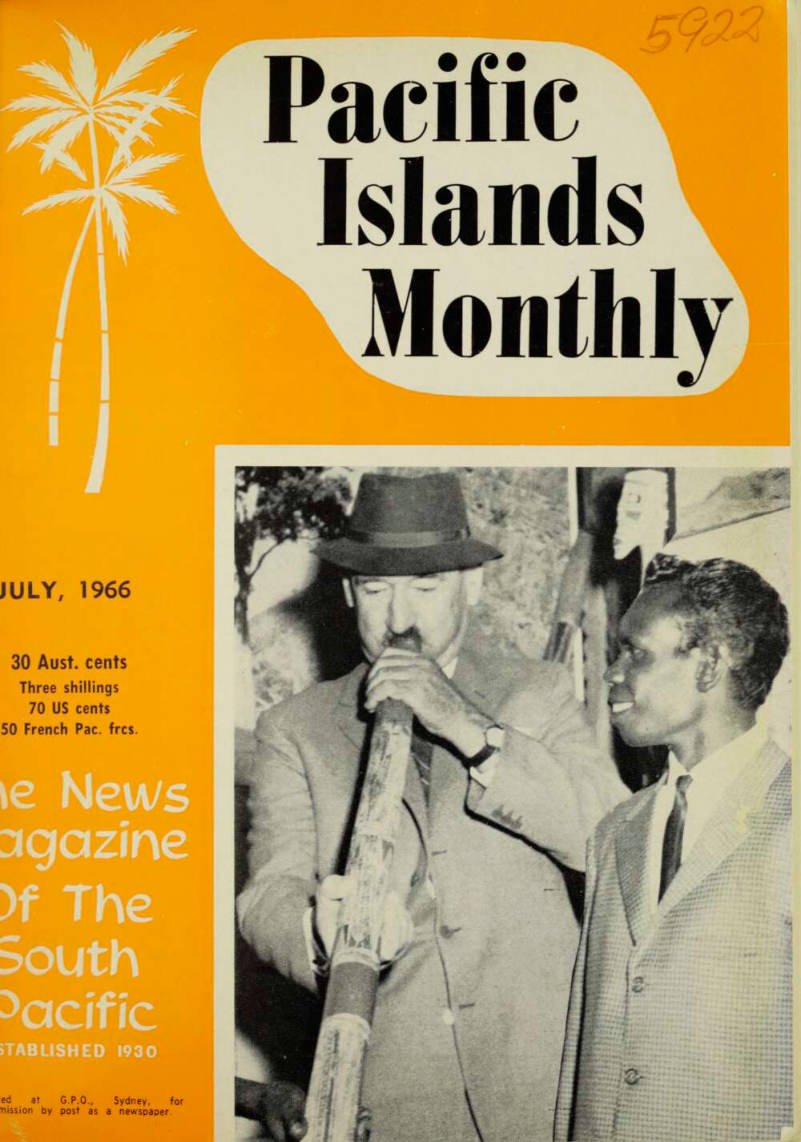 1
1 2
2 3
3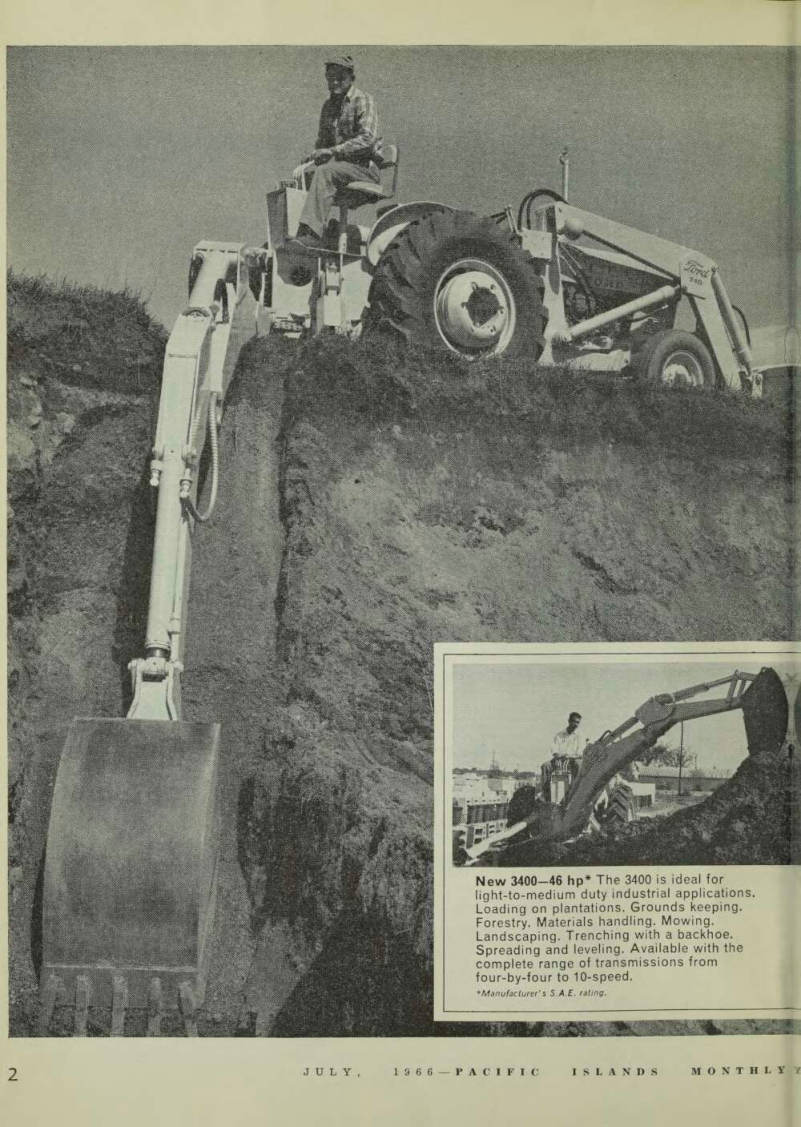 4
4 5
5 6
6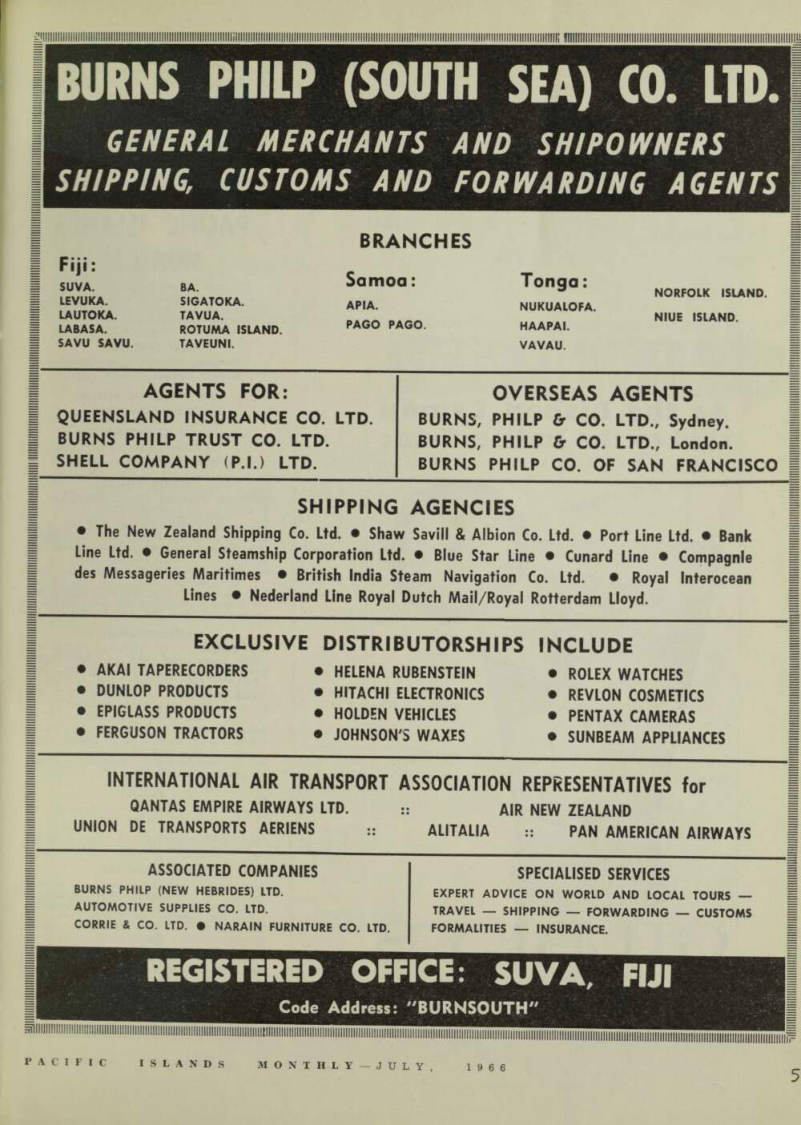 7
7 8
8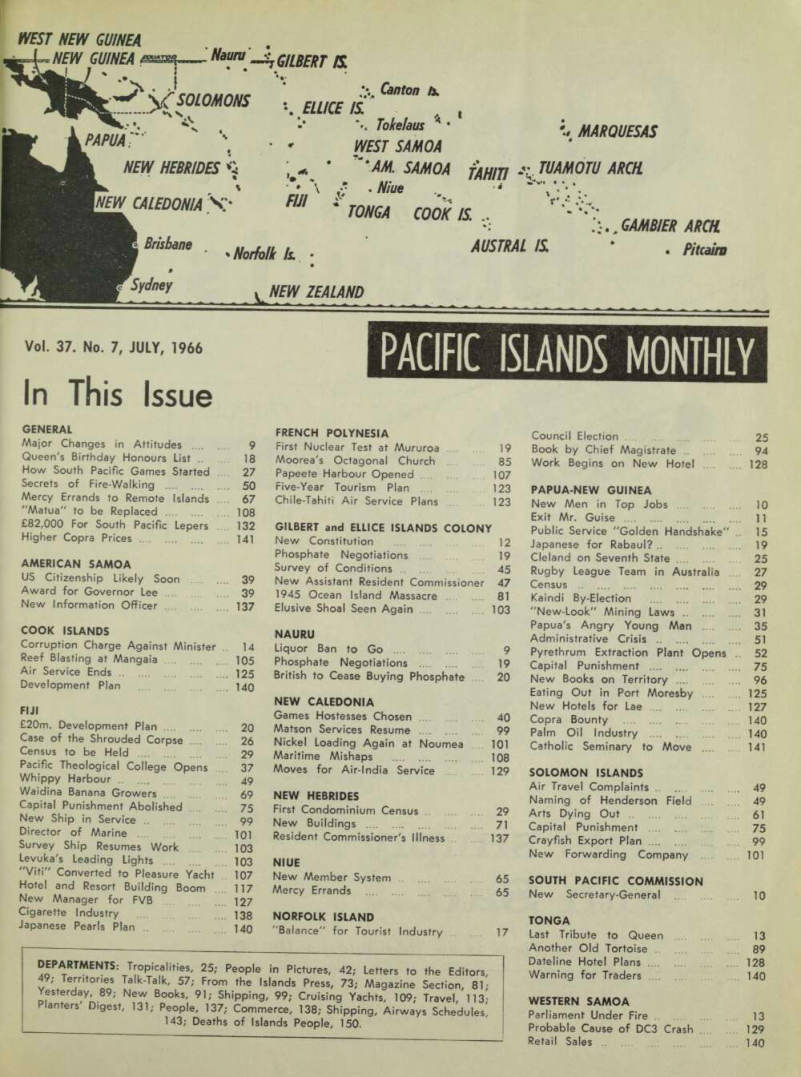 9
9 10
10 11
11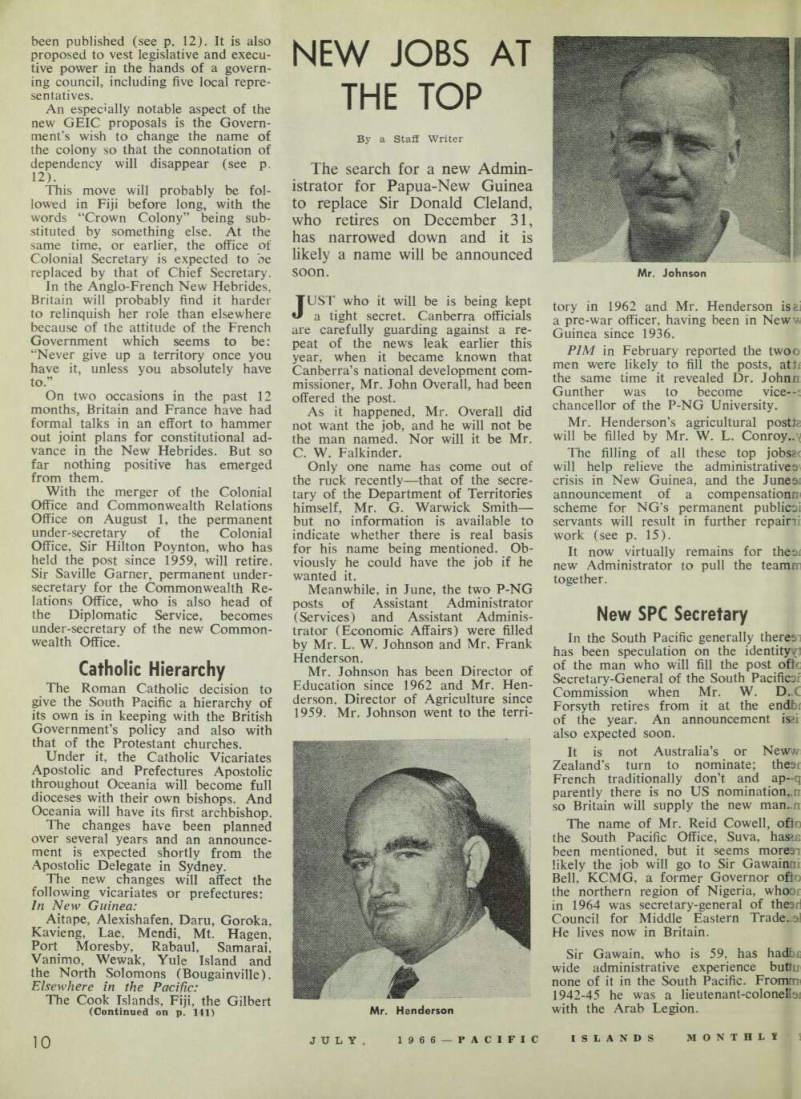 12
12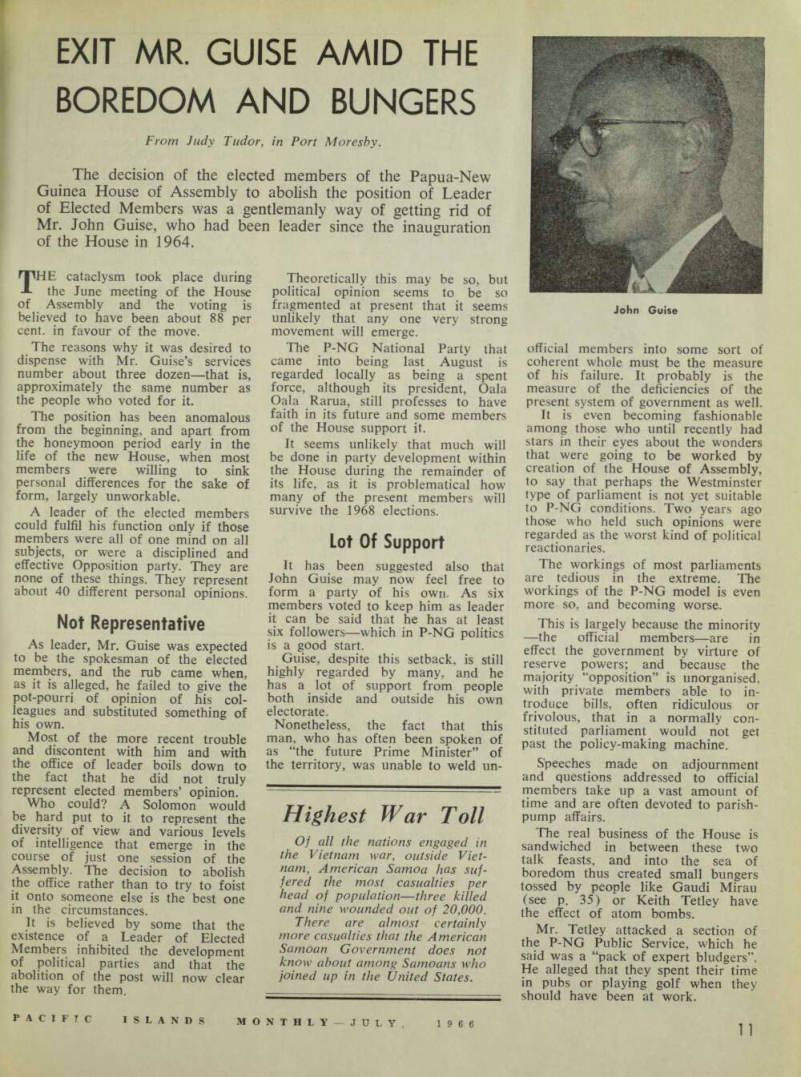 13
13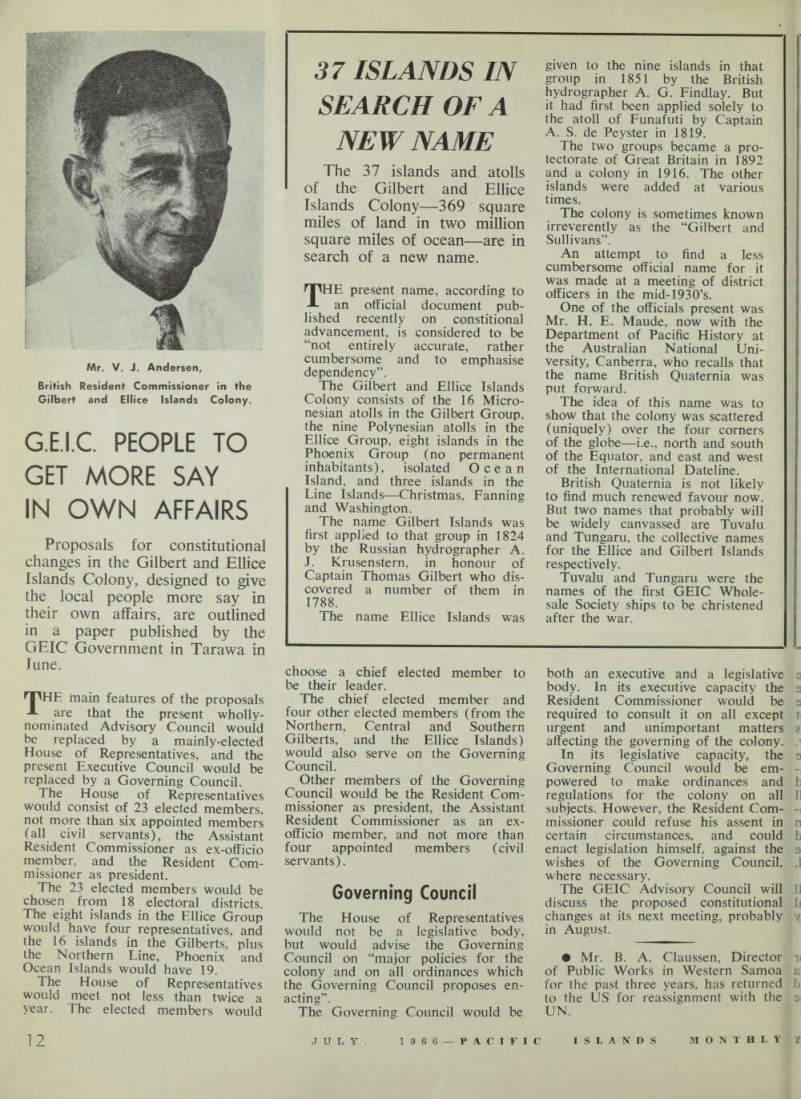 14
14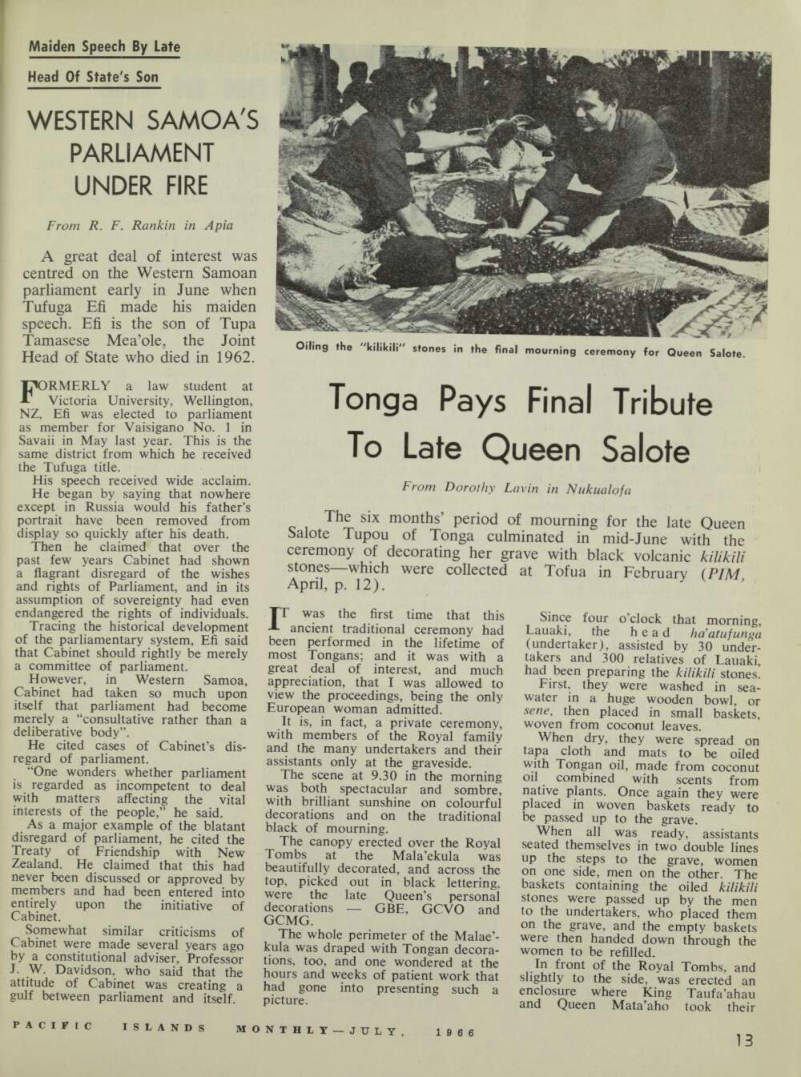 15
15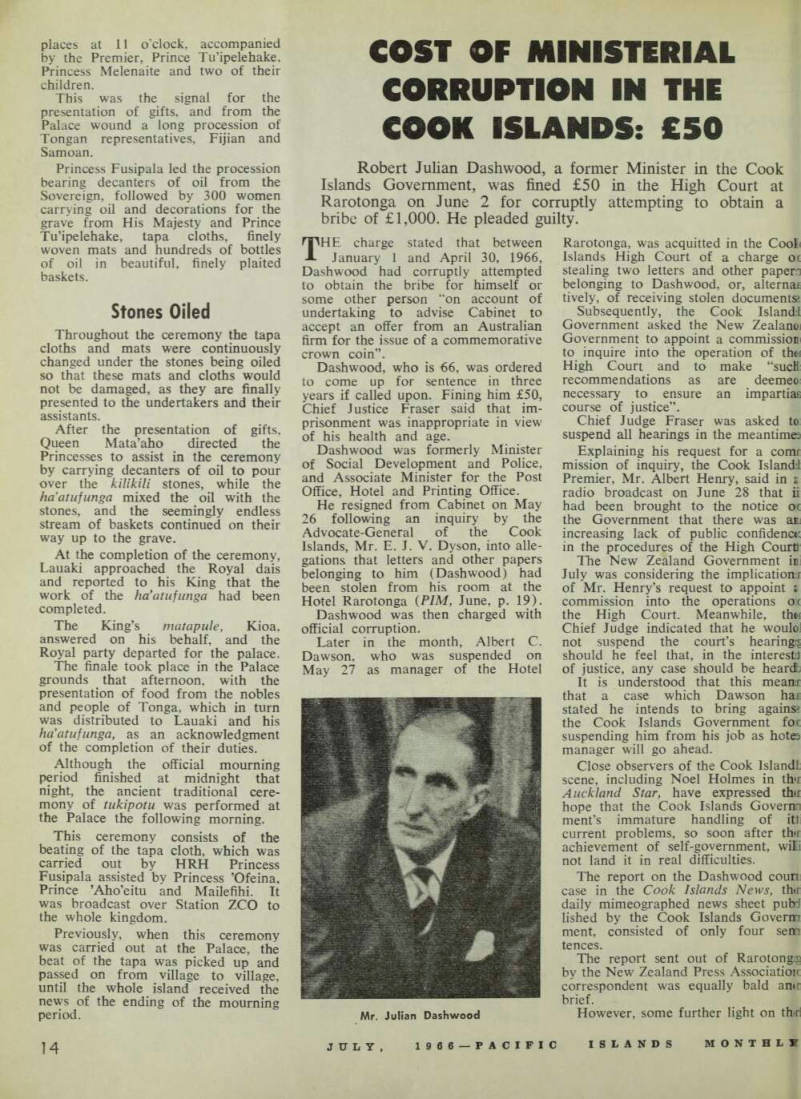 16
16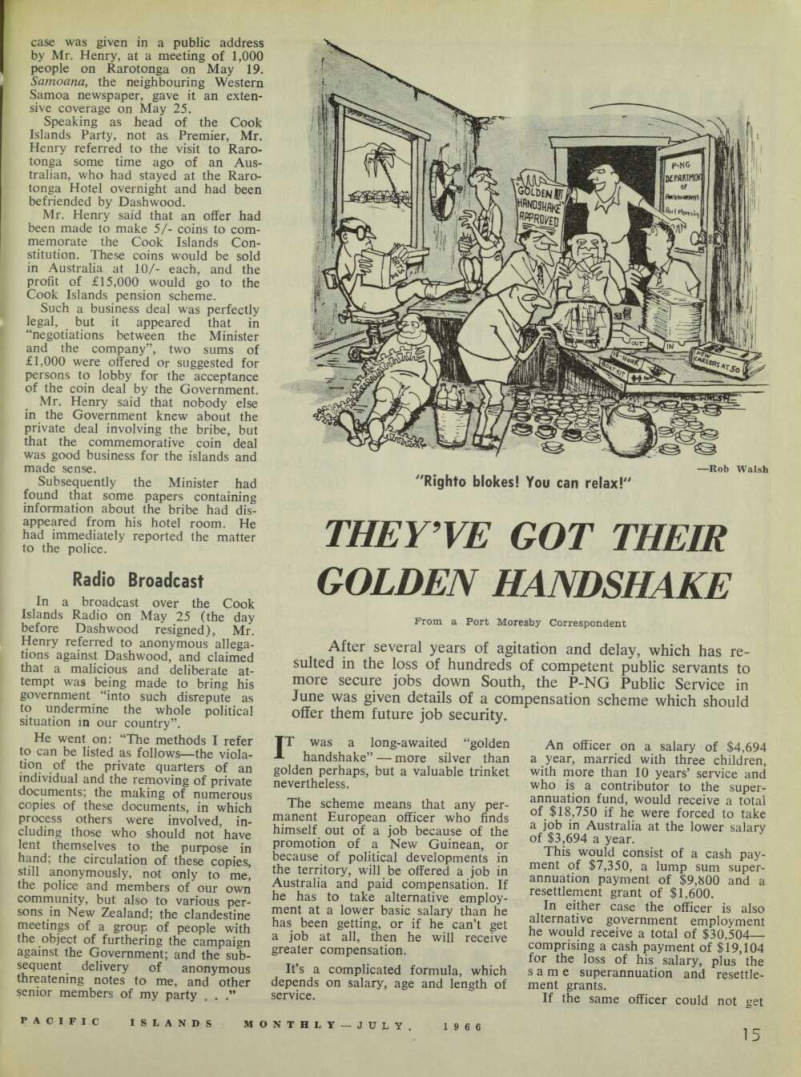 17
17 18
18 19
19 20
20 21
21 22
22 23
23 24
24 25
25 26
26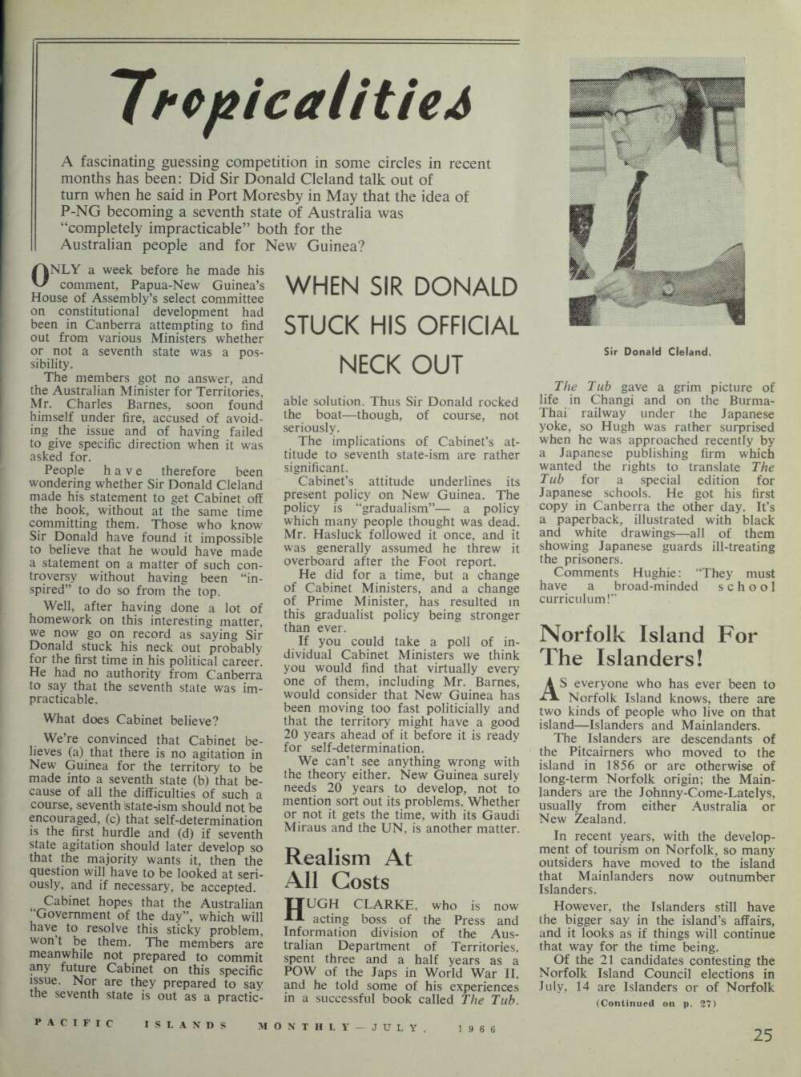 27
27 28
28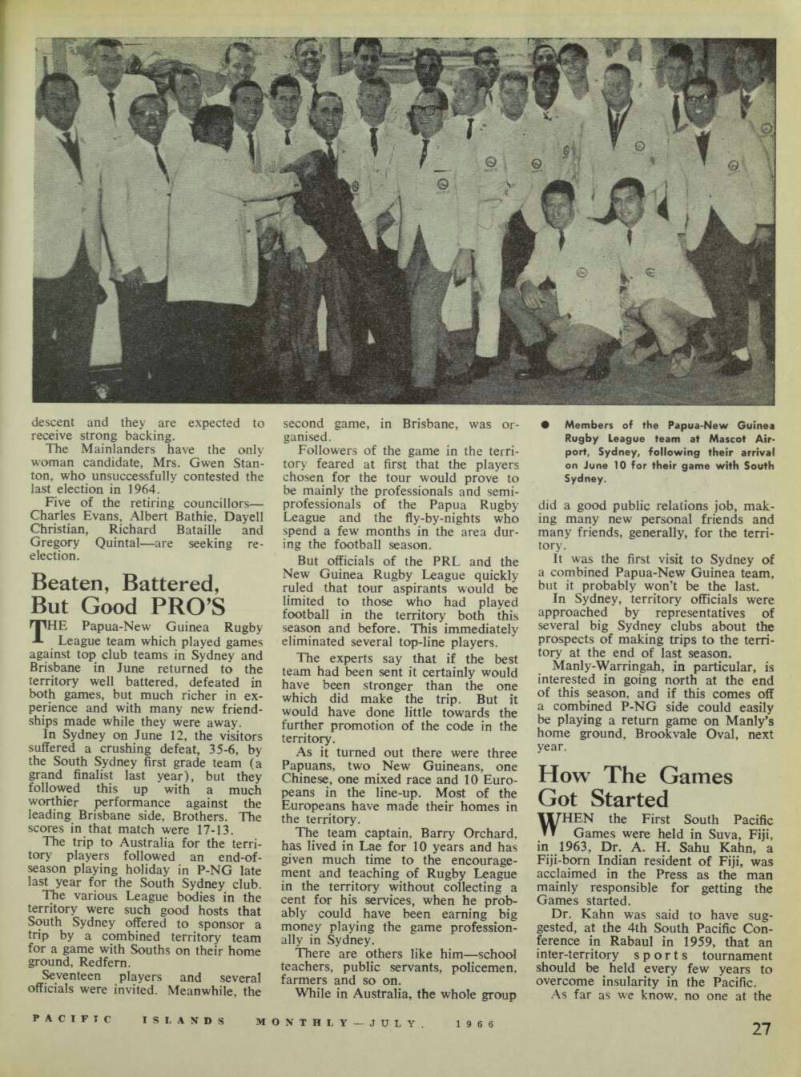 29
29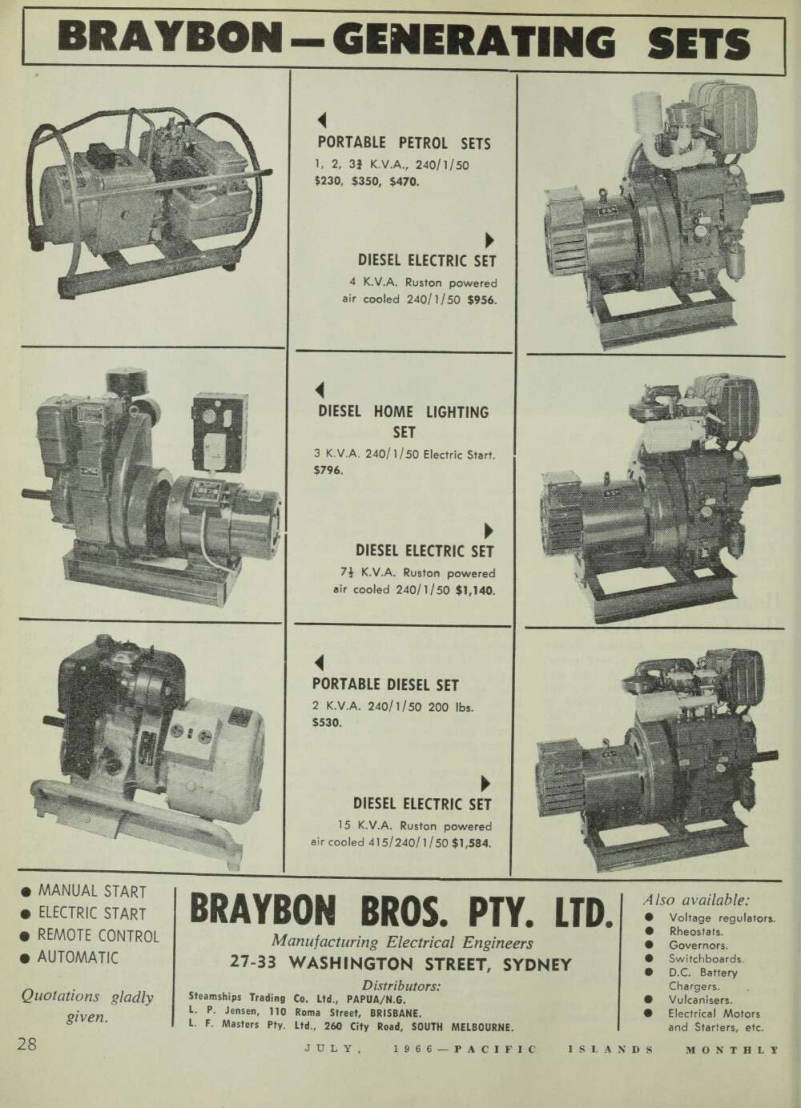 30
30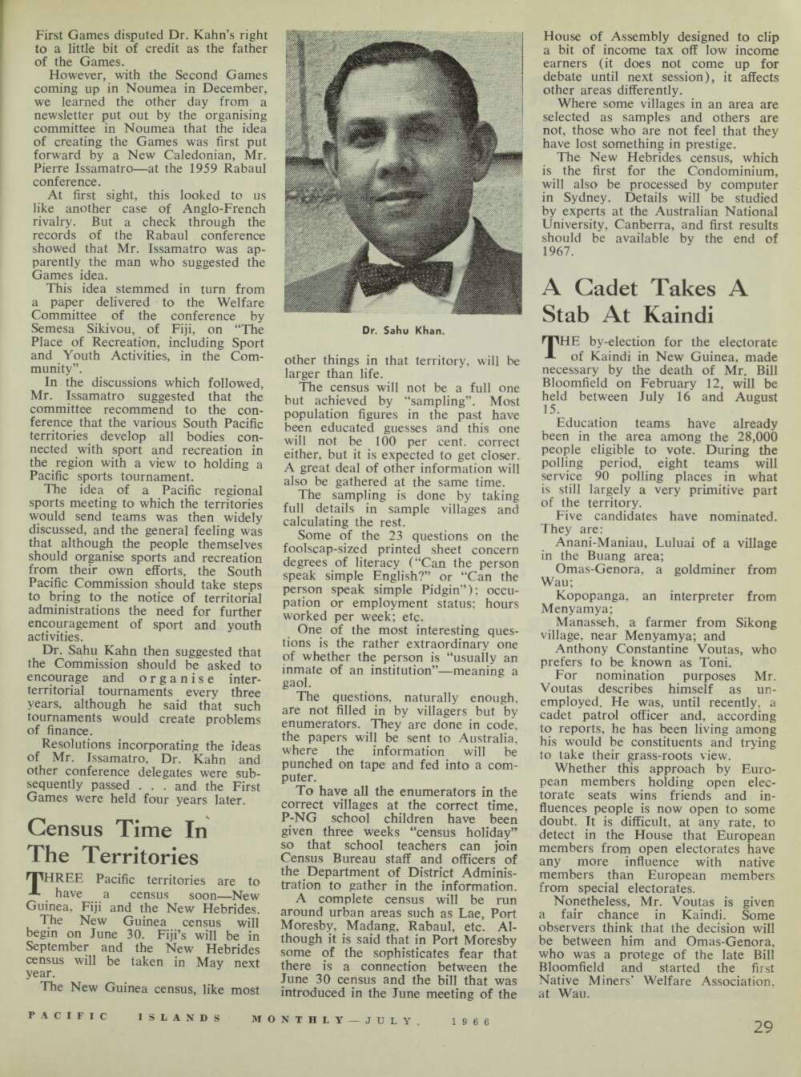 31
31 32
32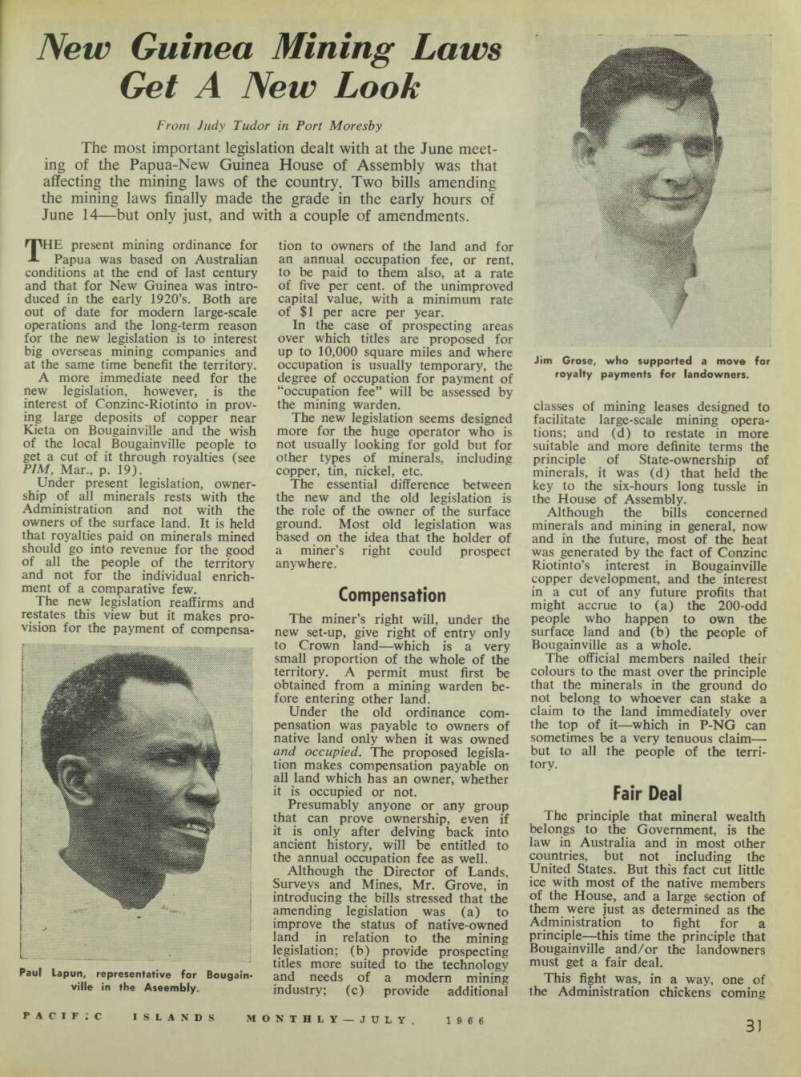 33
33 34
34 35
35 36
36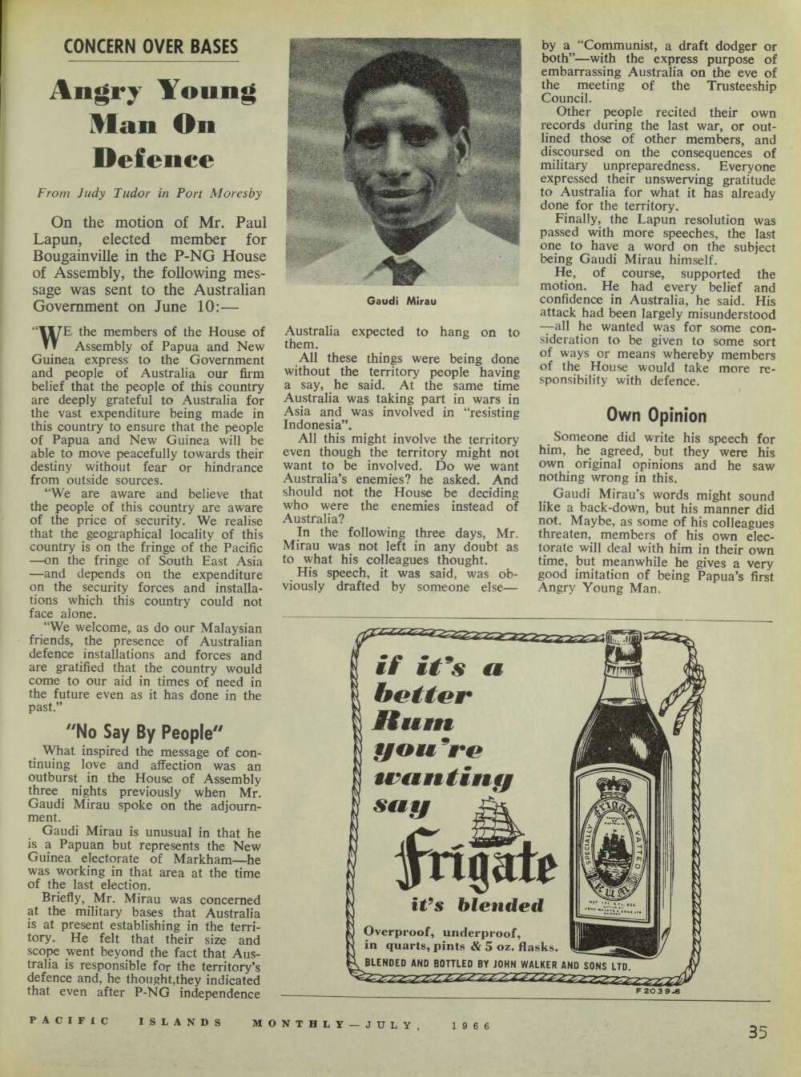 37
37 38
38 39
39 40
40 41
41 42
42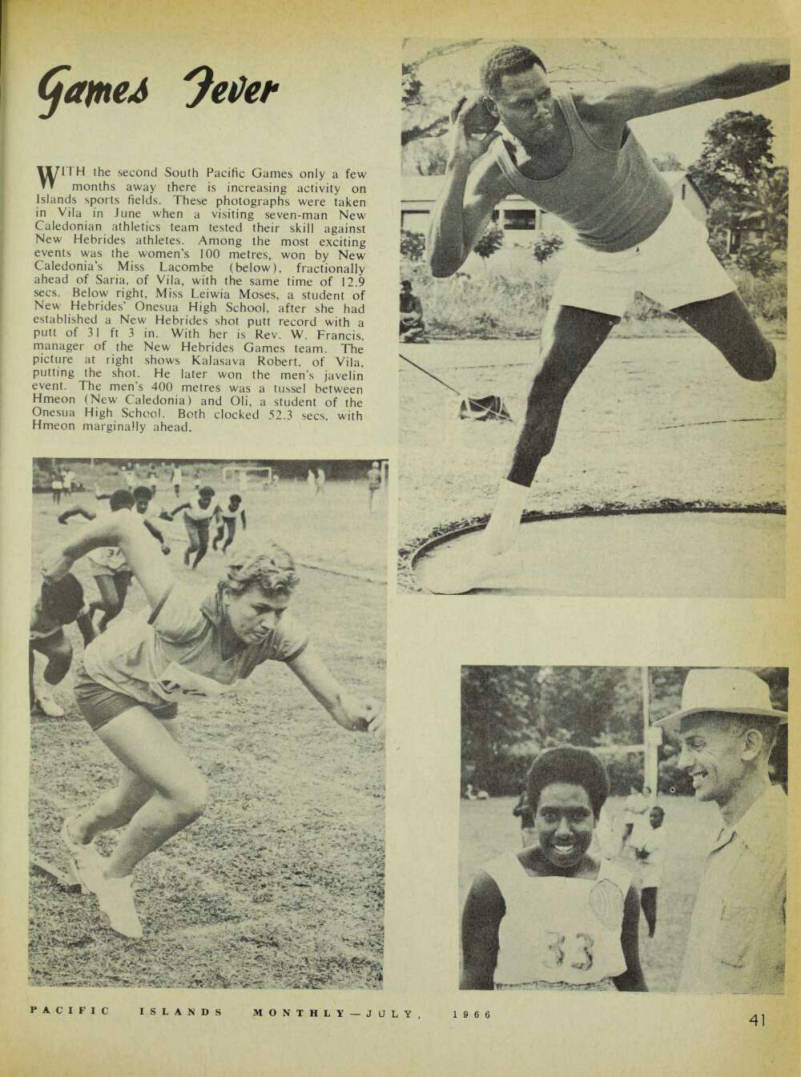 43
43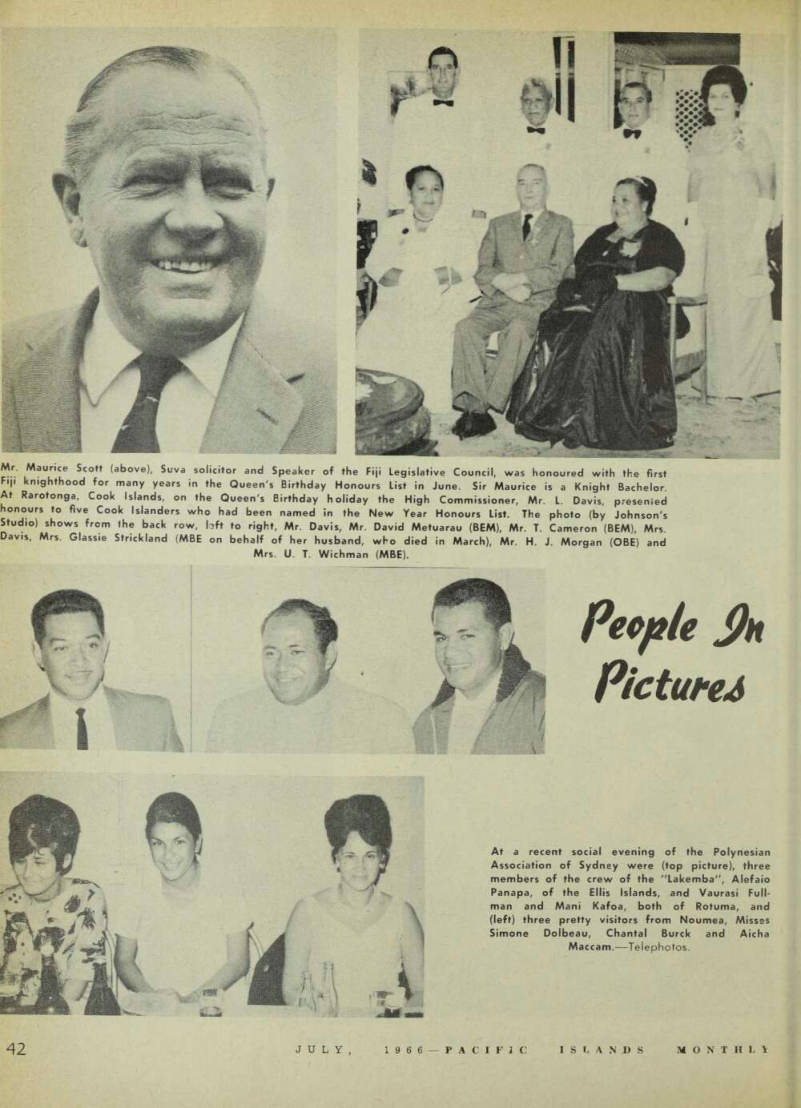 44
44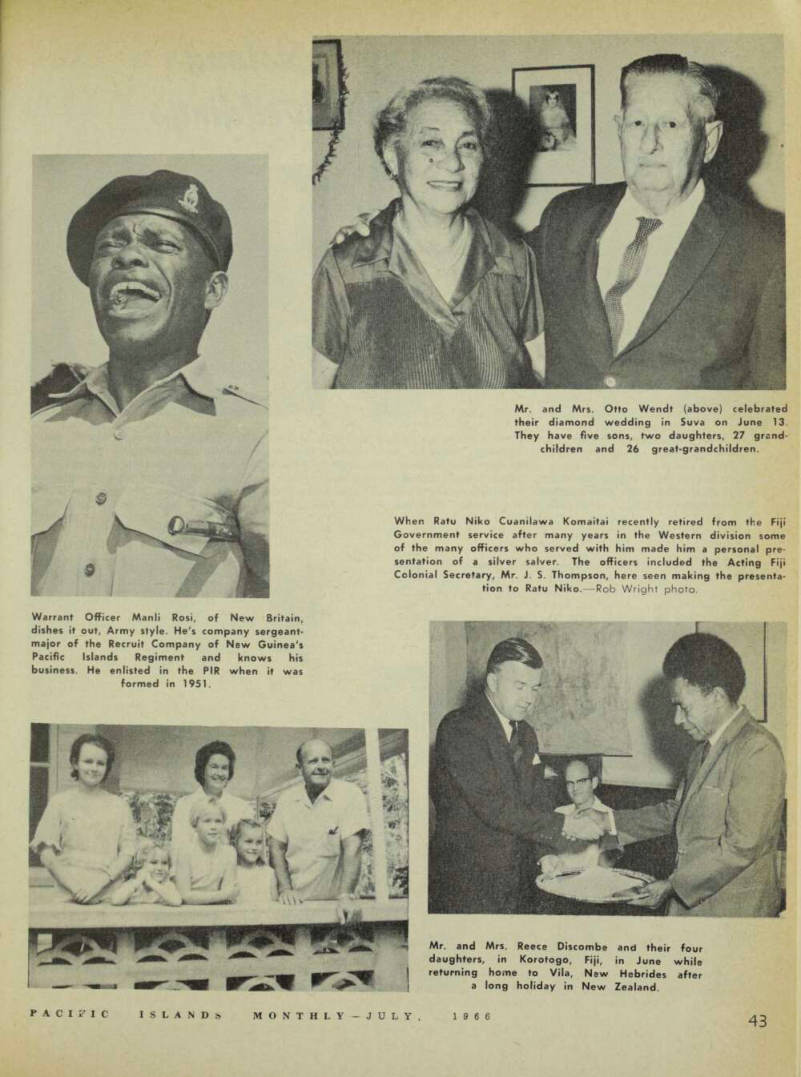 45
45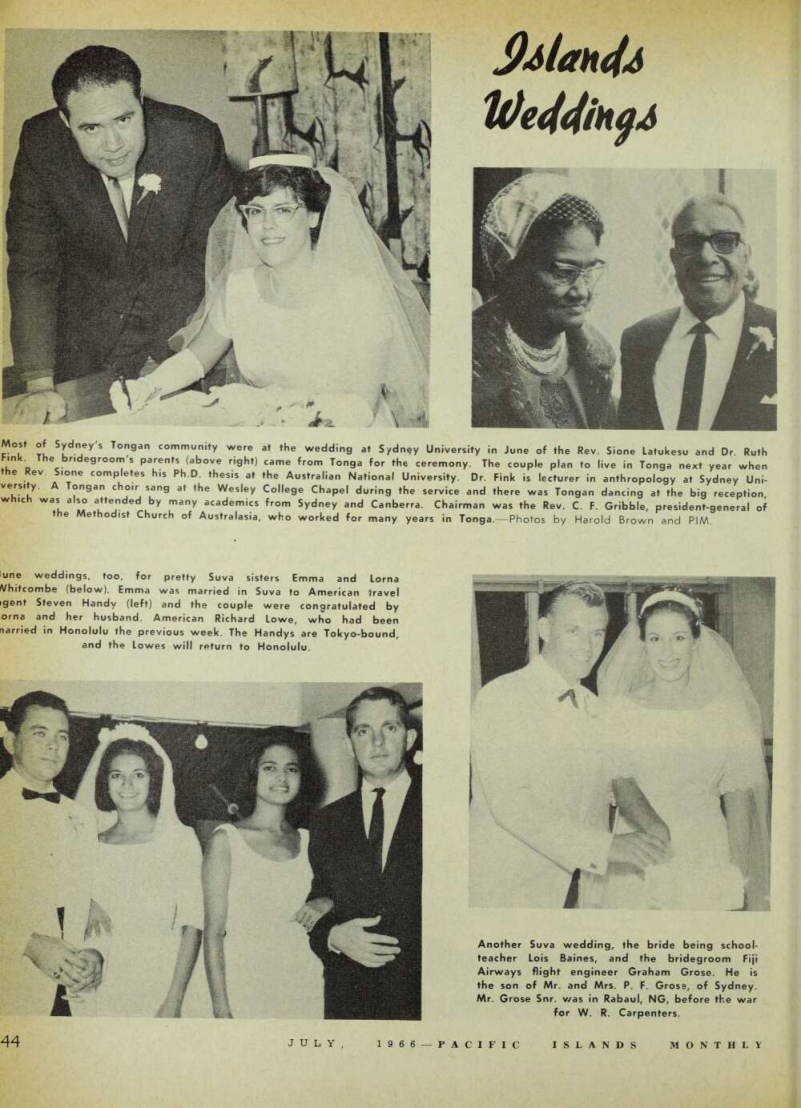 46
46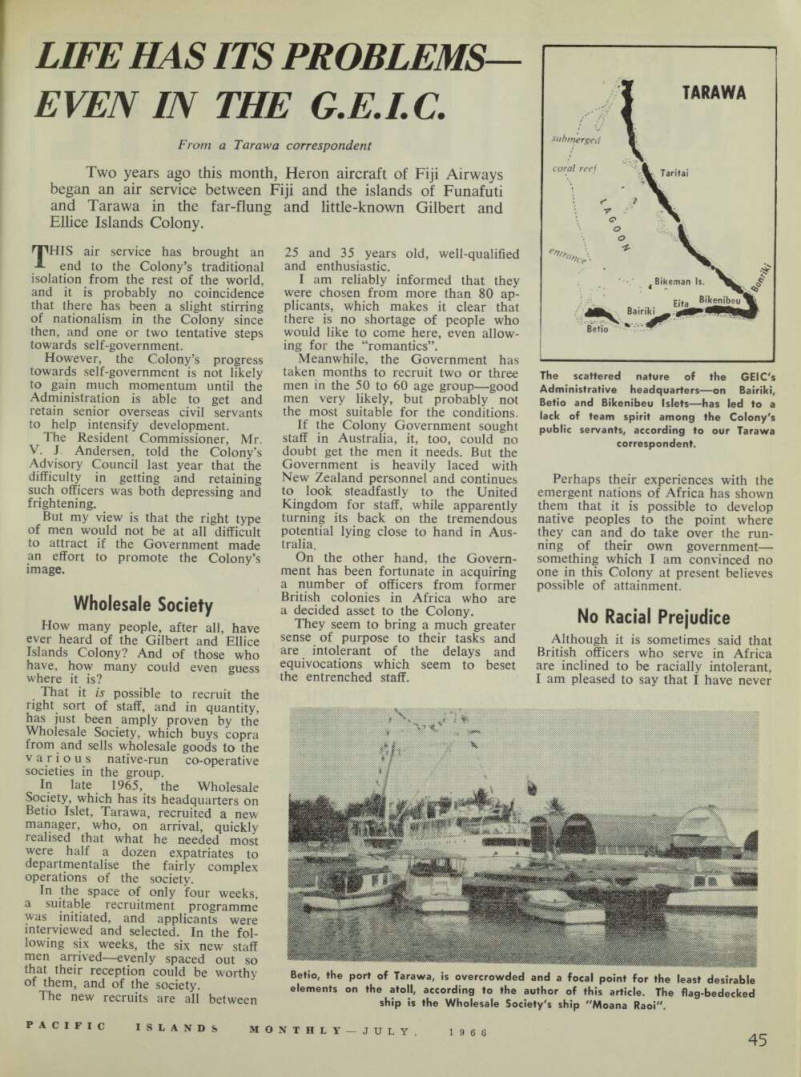 47
47 48
48 49
49 50
50 51
51 52
52 53
53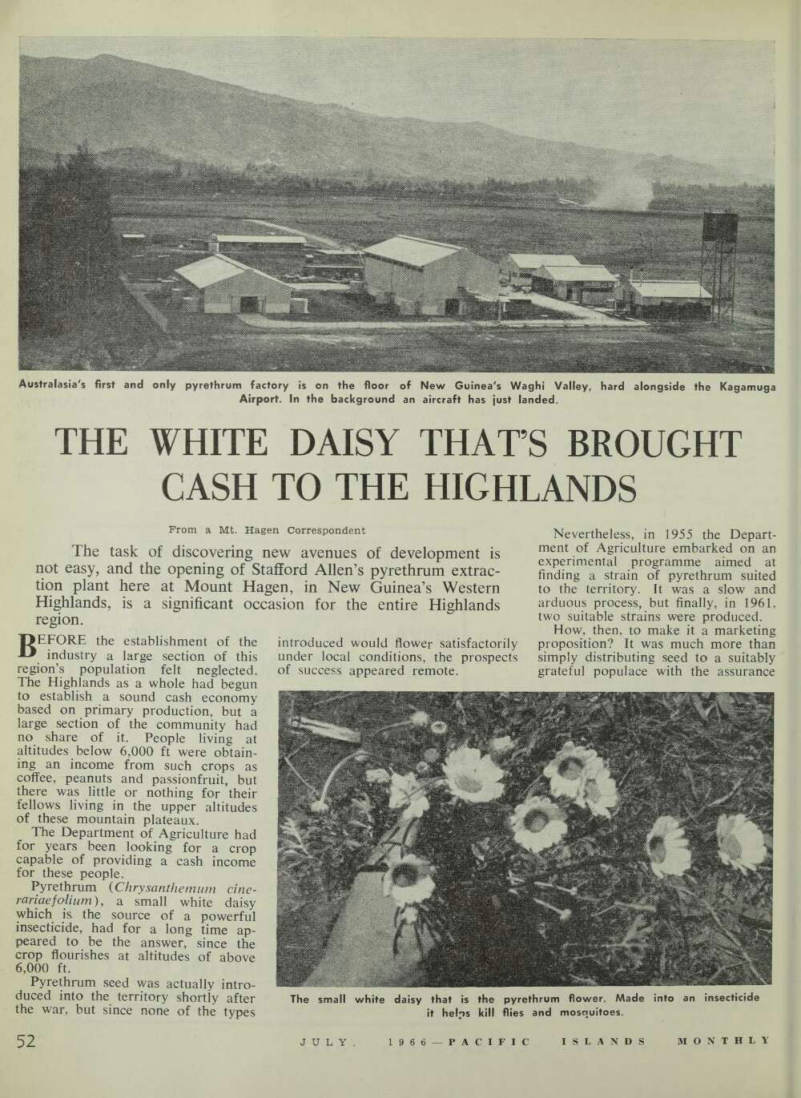 54
54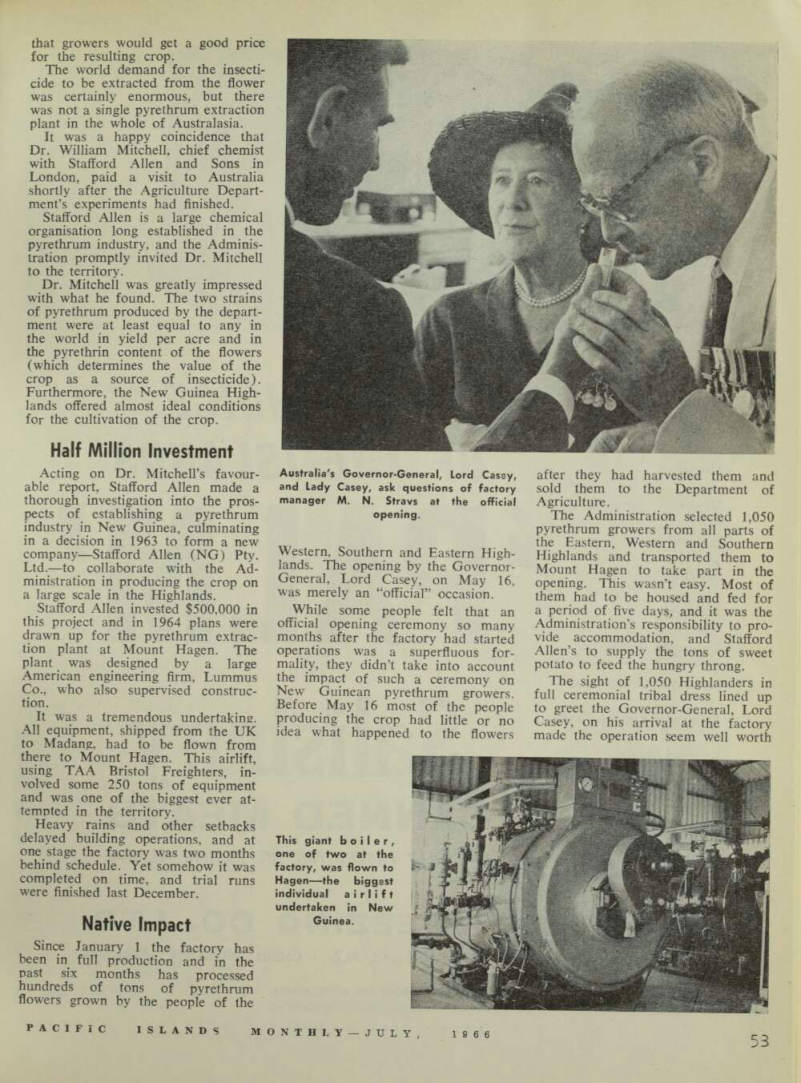 55
55 56
56 57
57 58
58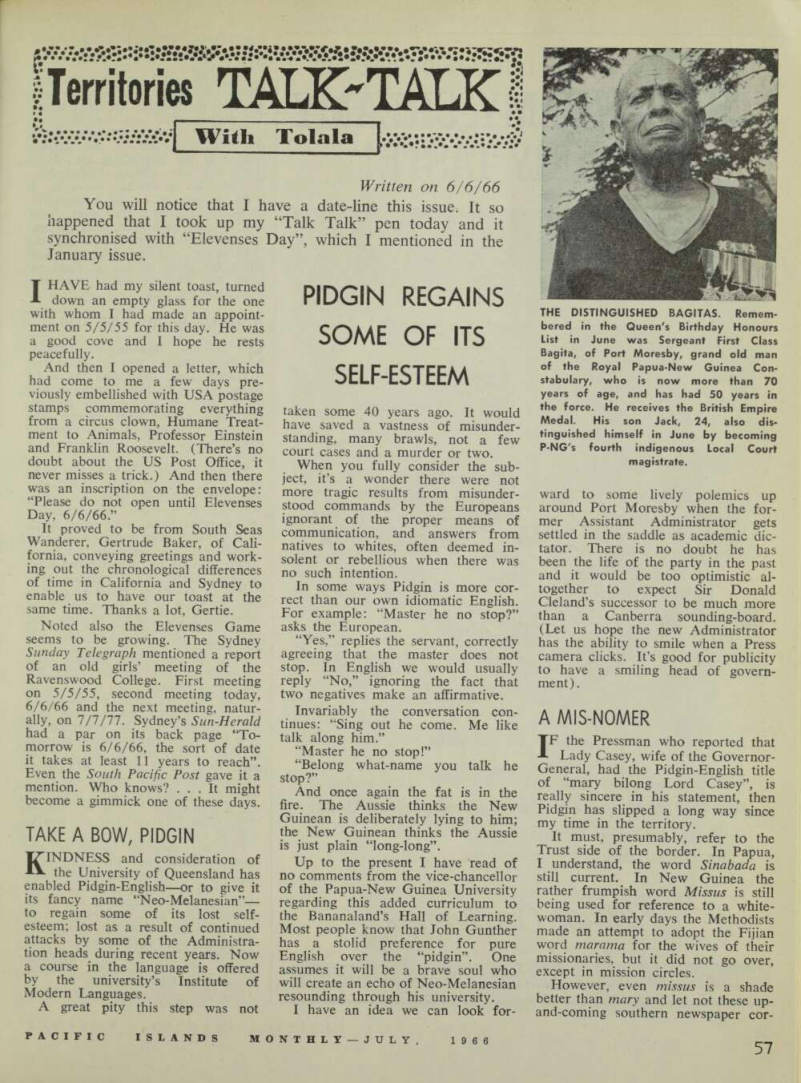 59
59 60
60 61
61 62
62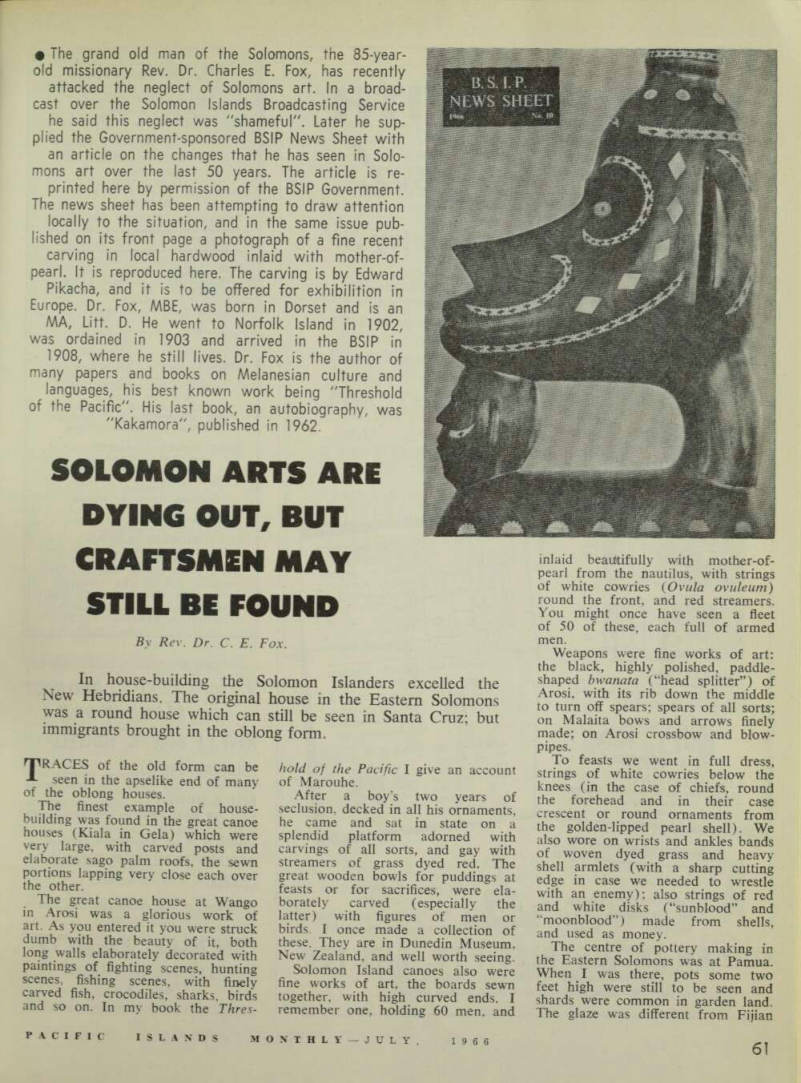 63
63 64
64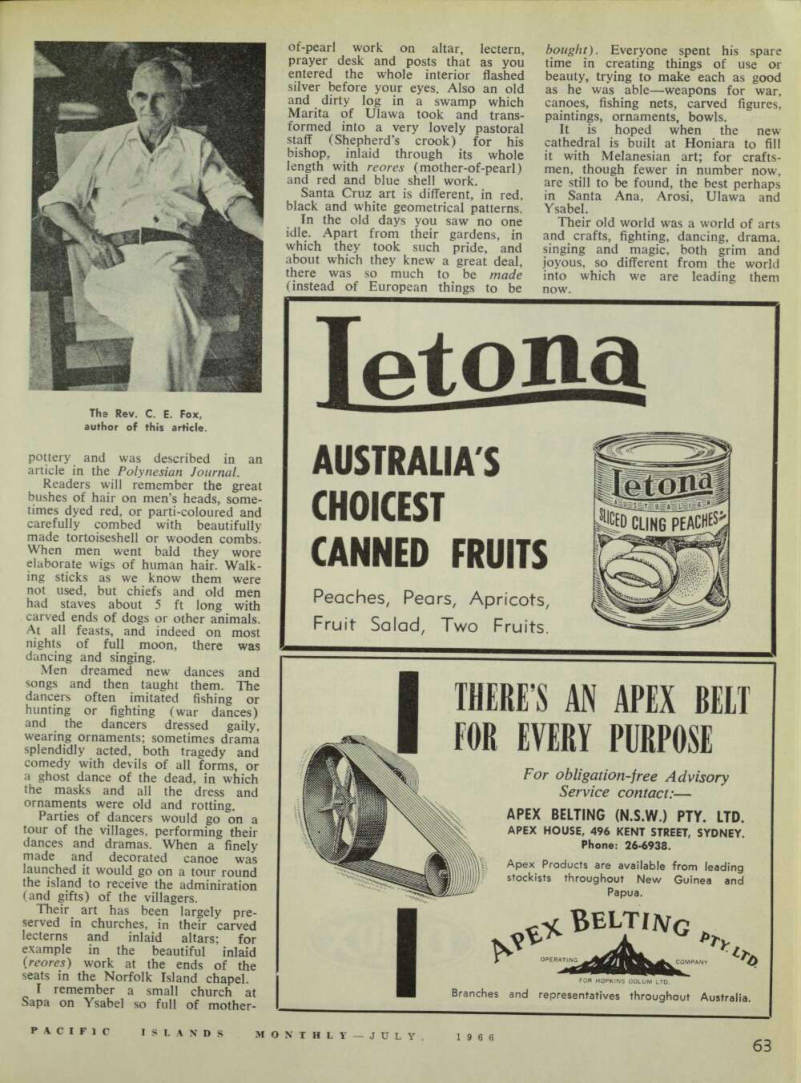 65
65 66
66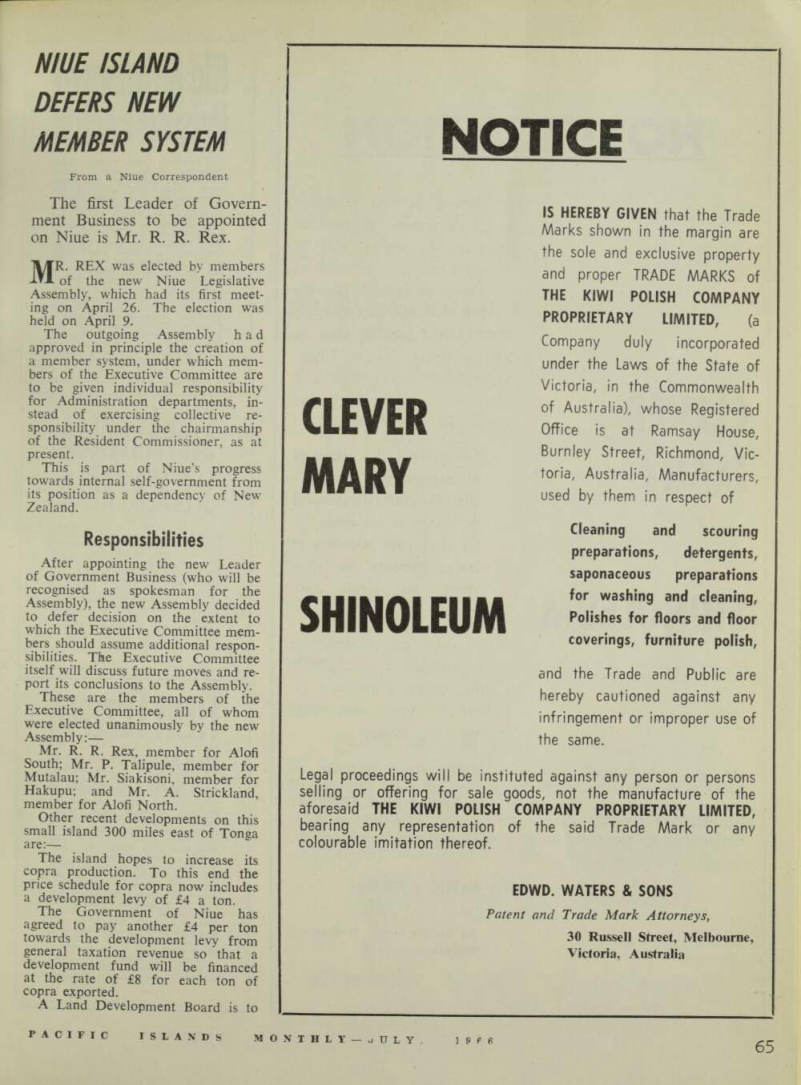 67
67 68
68 69
69 70
70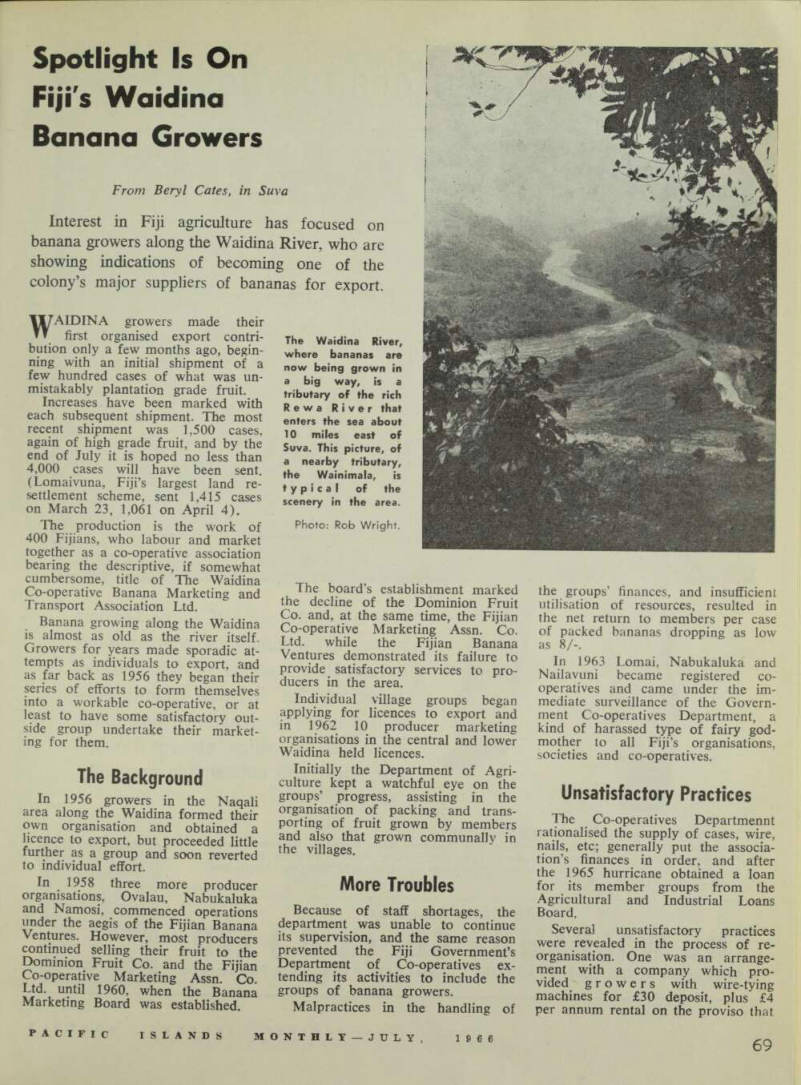 71
71 72
72 73
73 74
74 75
75 76
76 77
77 78
78 79
79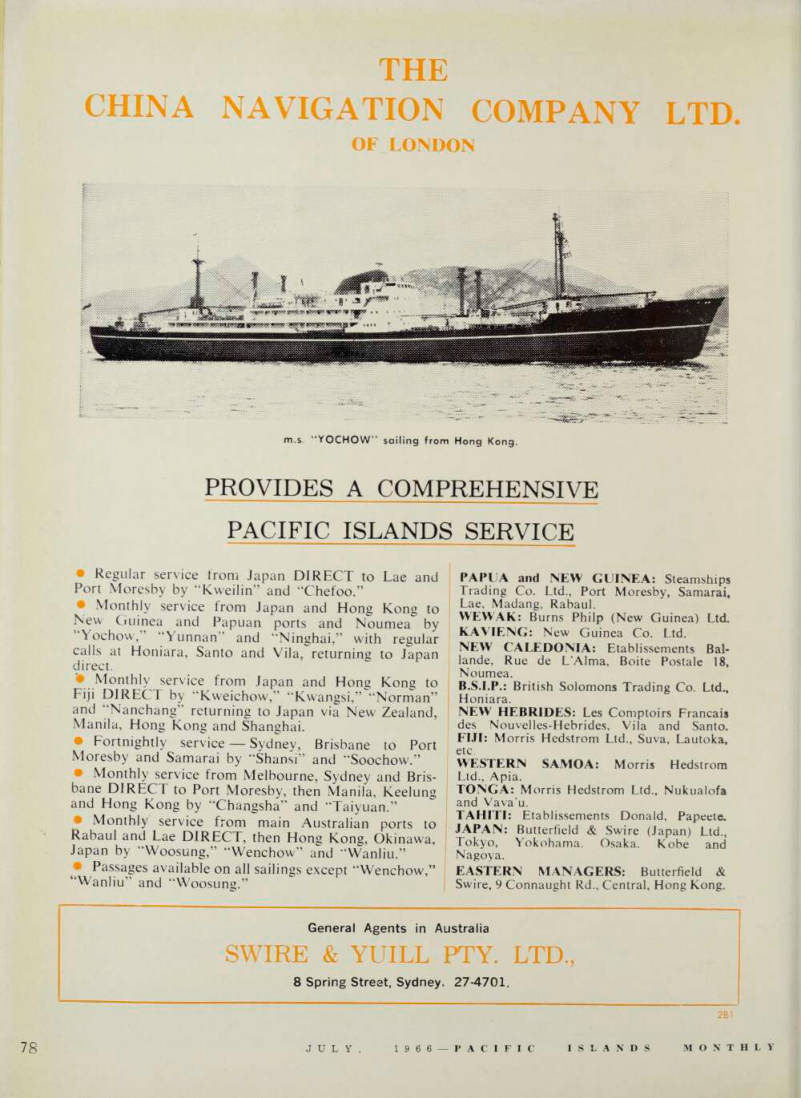 80
80 81
81 82
82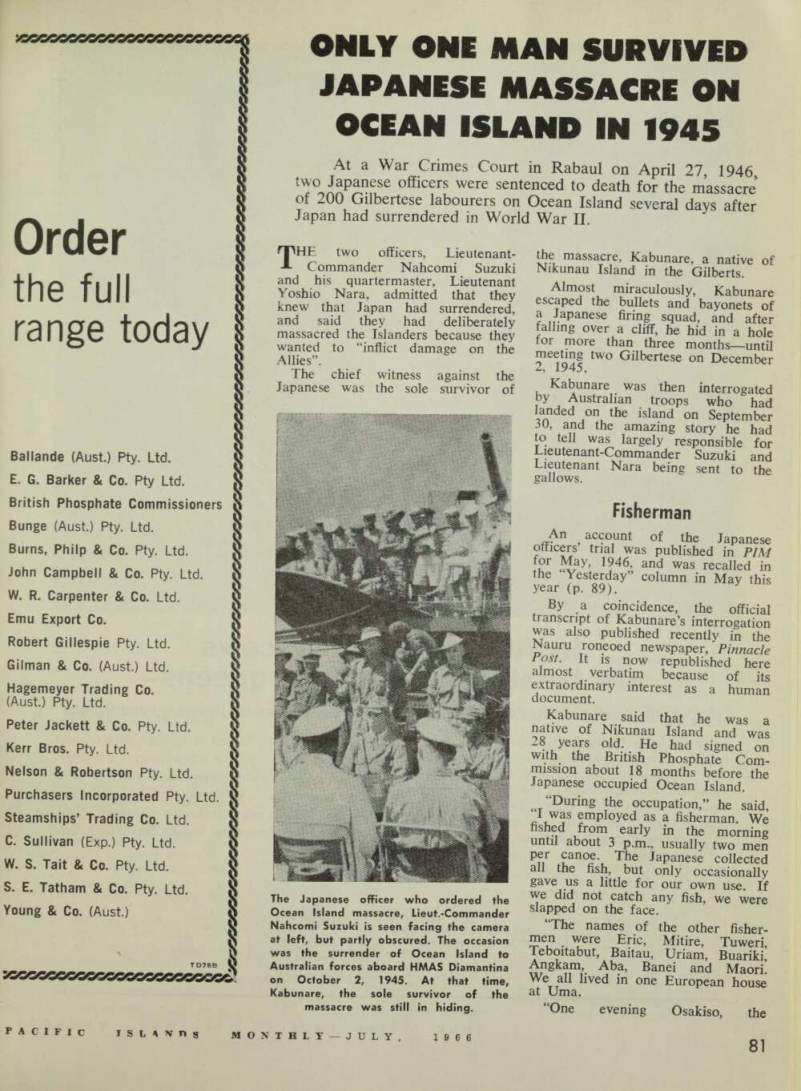 83
83 84
84 85
85 86
86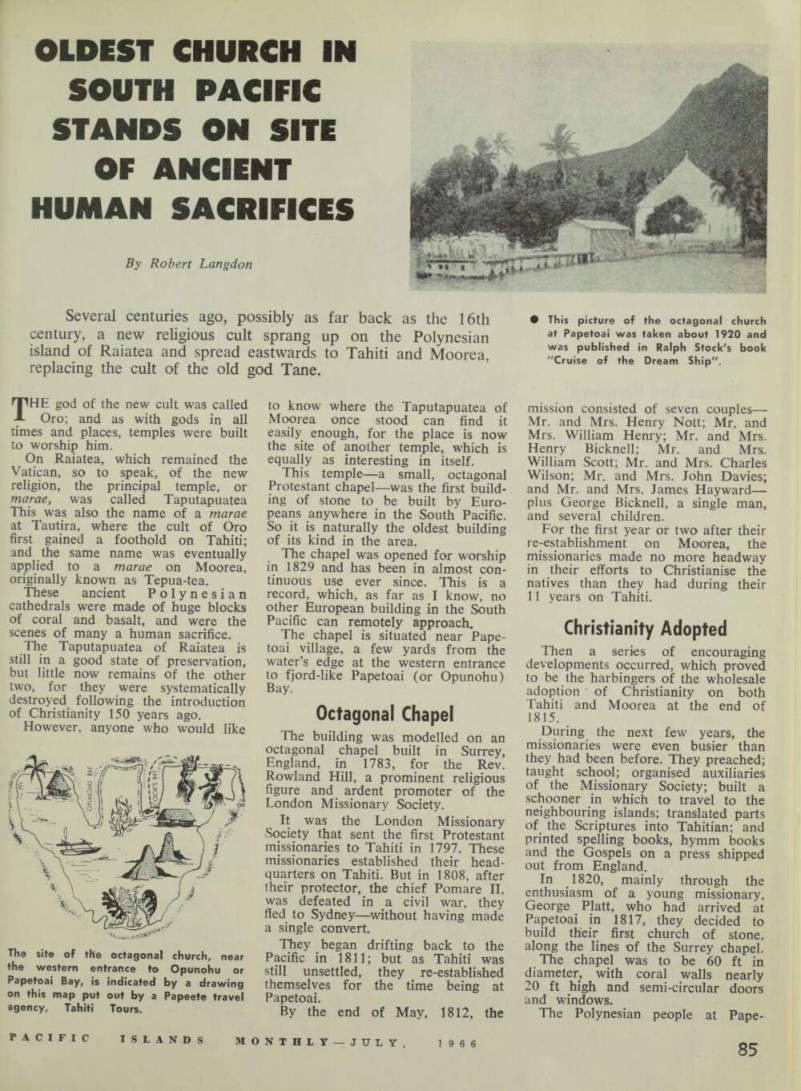 87
87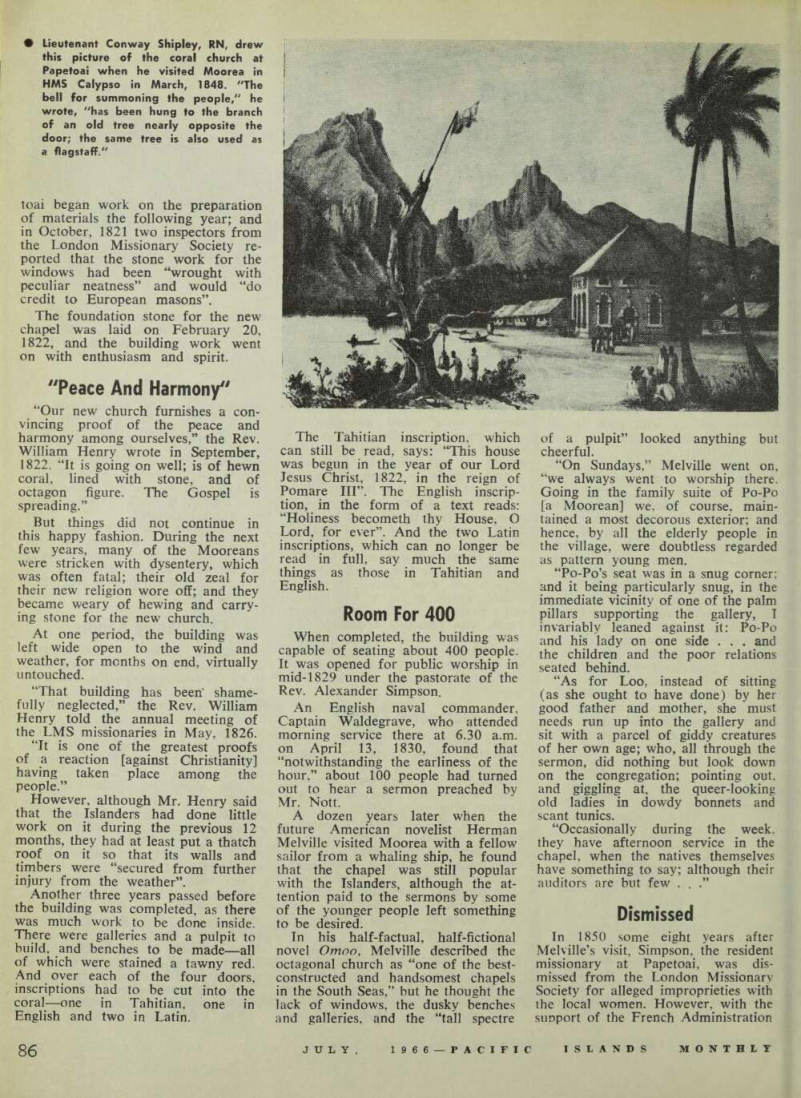 88
88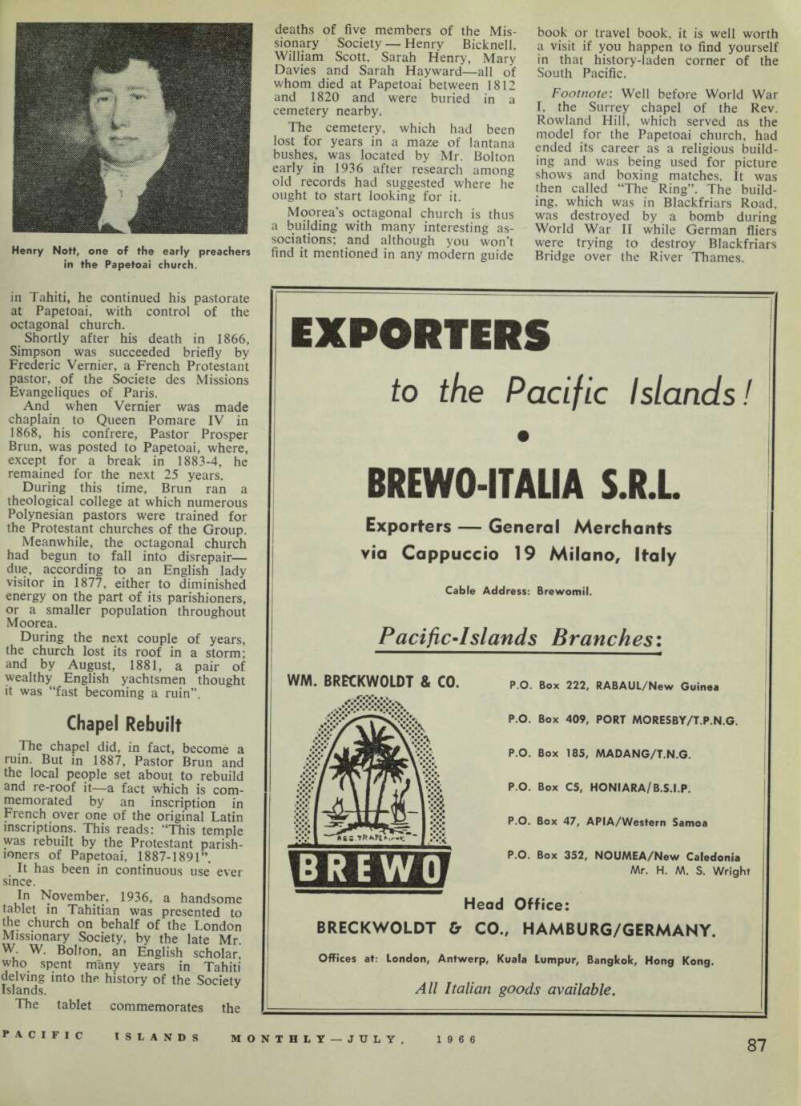 89
89 90
90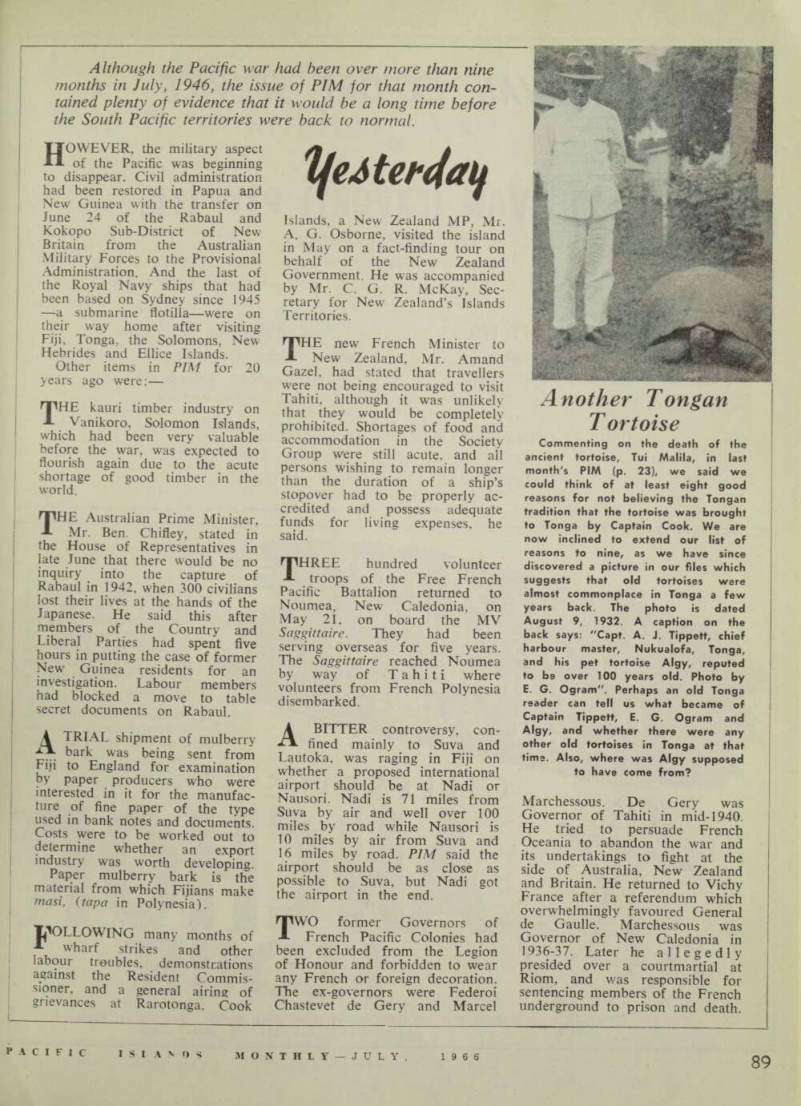 91
91 92
92 93
93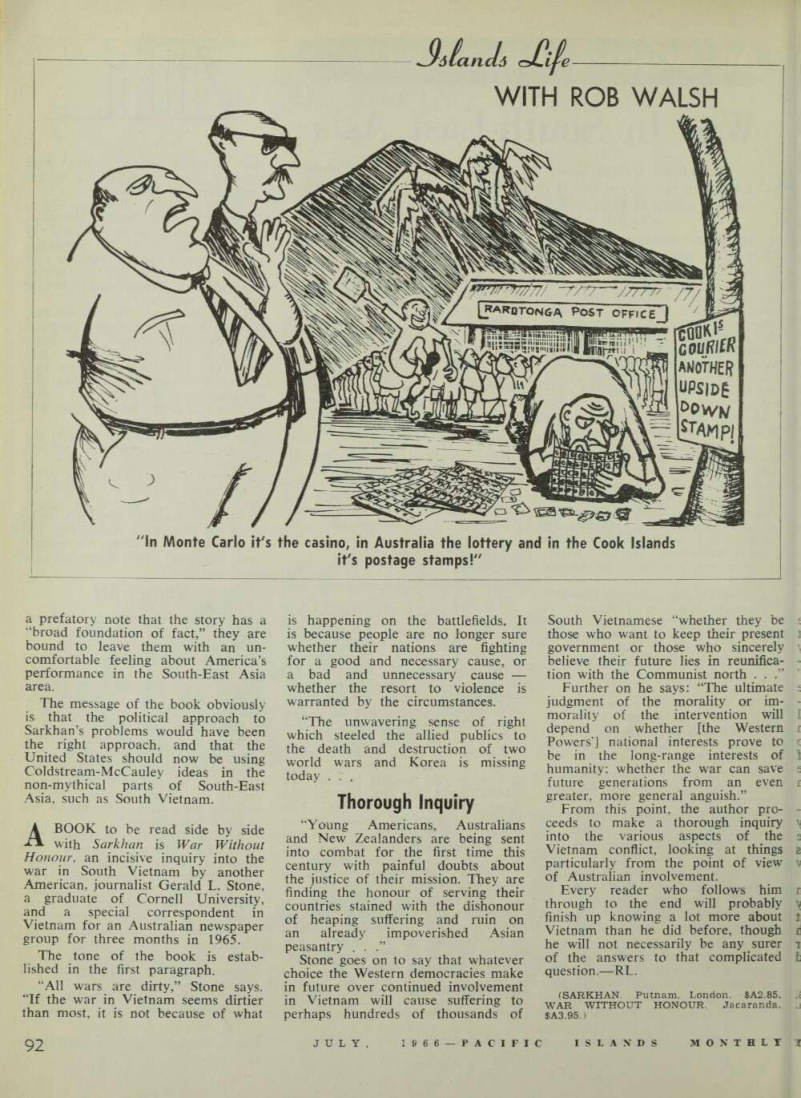 94
94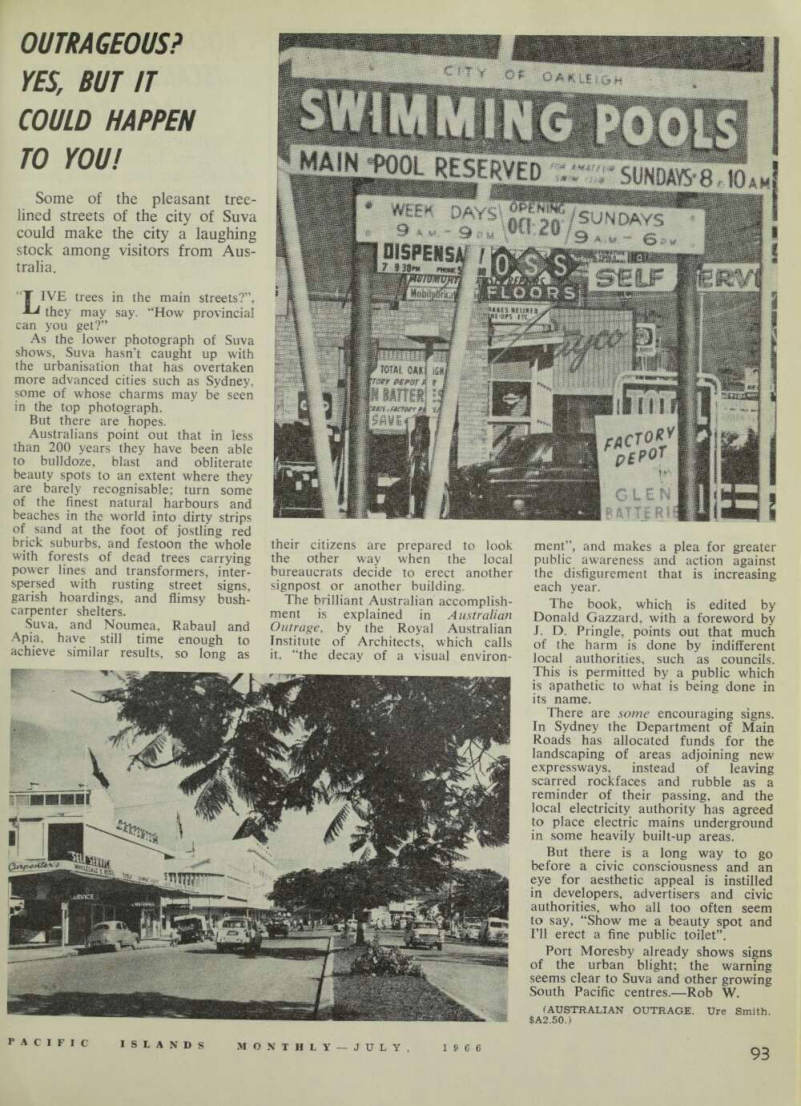 95
95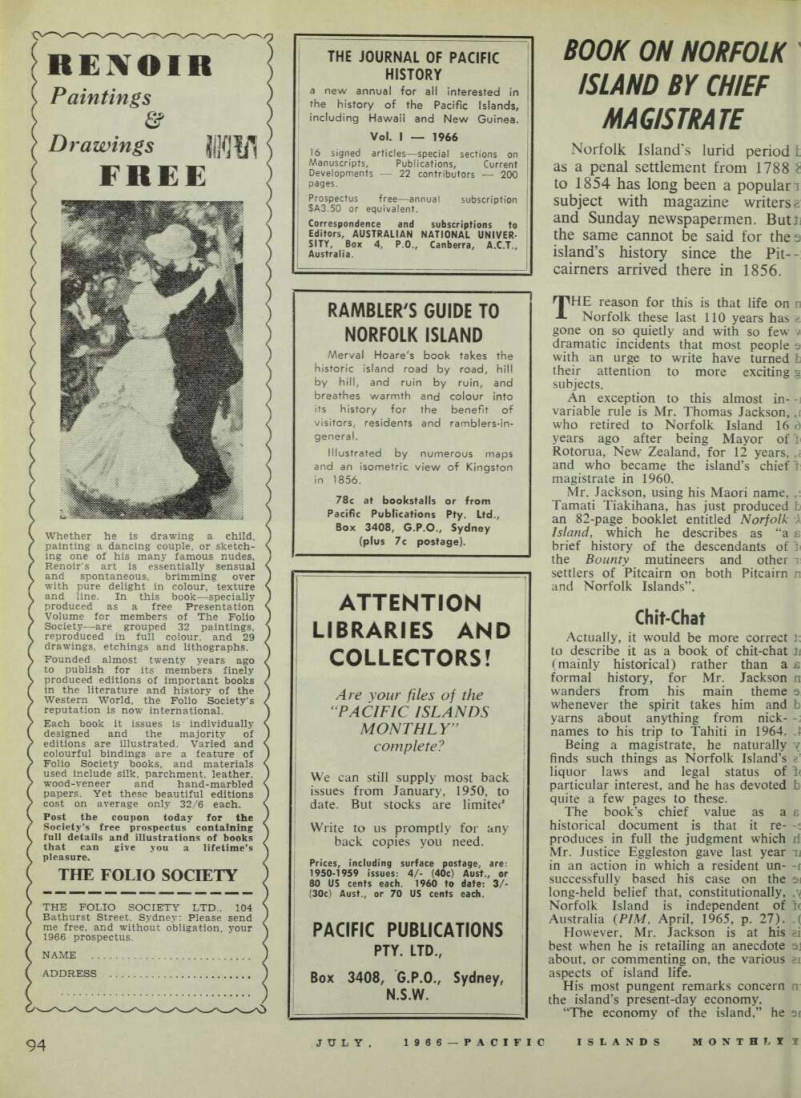 96
96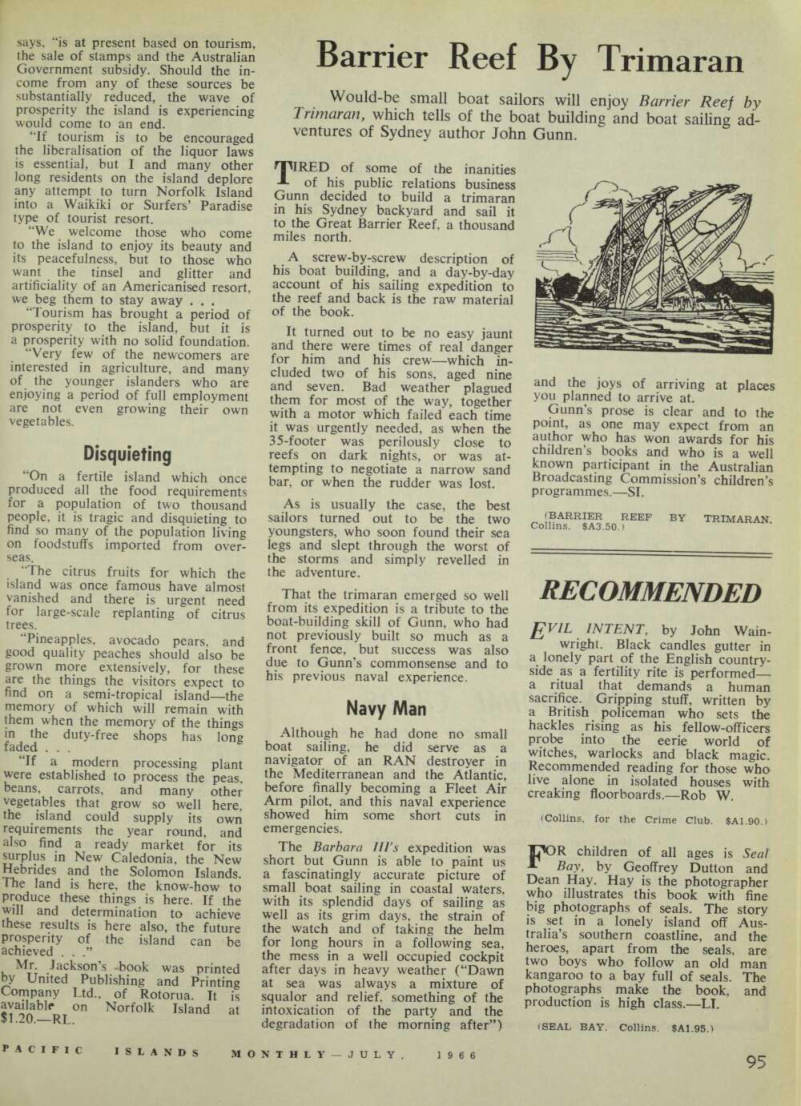 97
97 98
98 99
99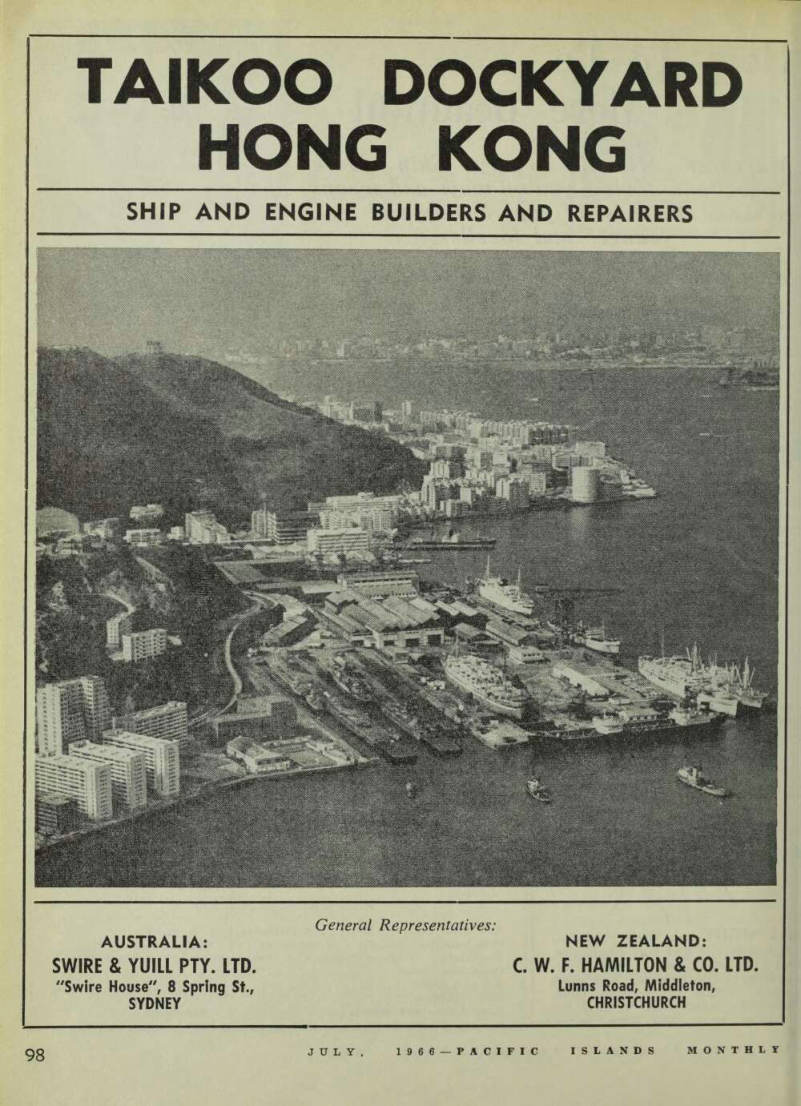 100
100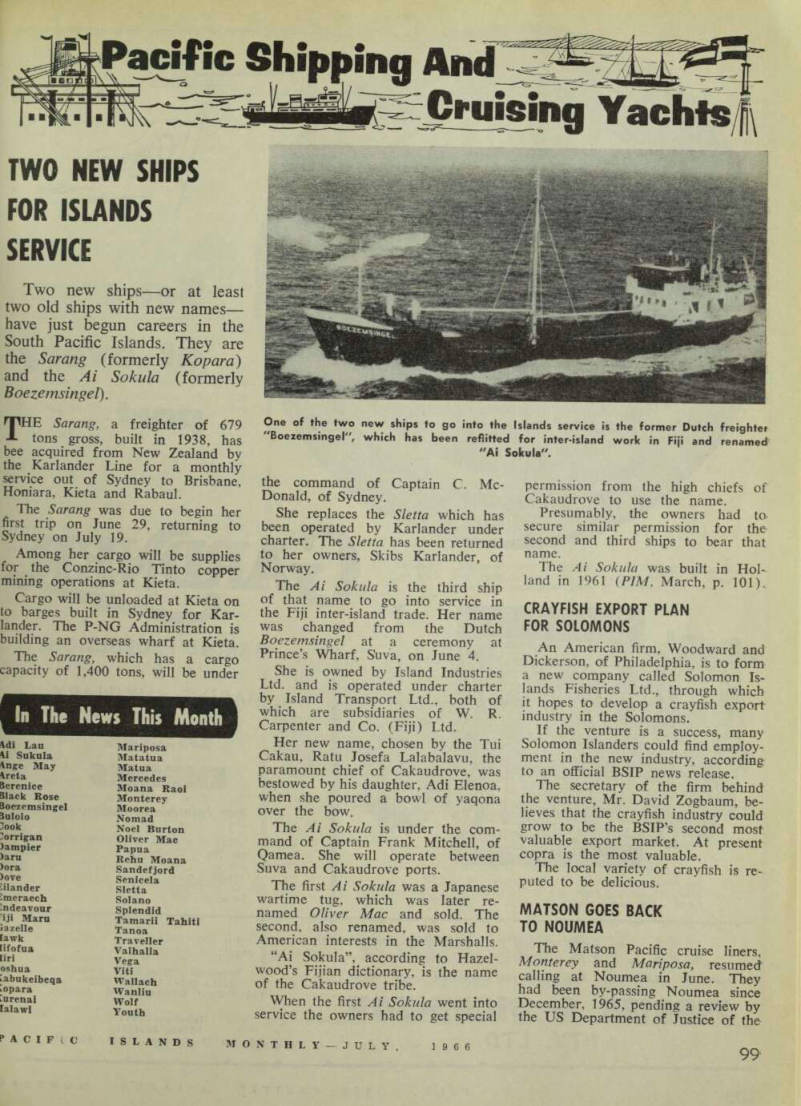 101
101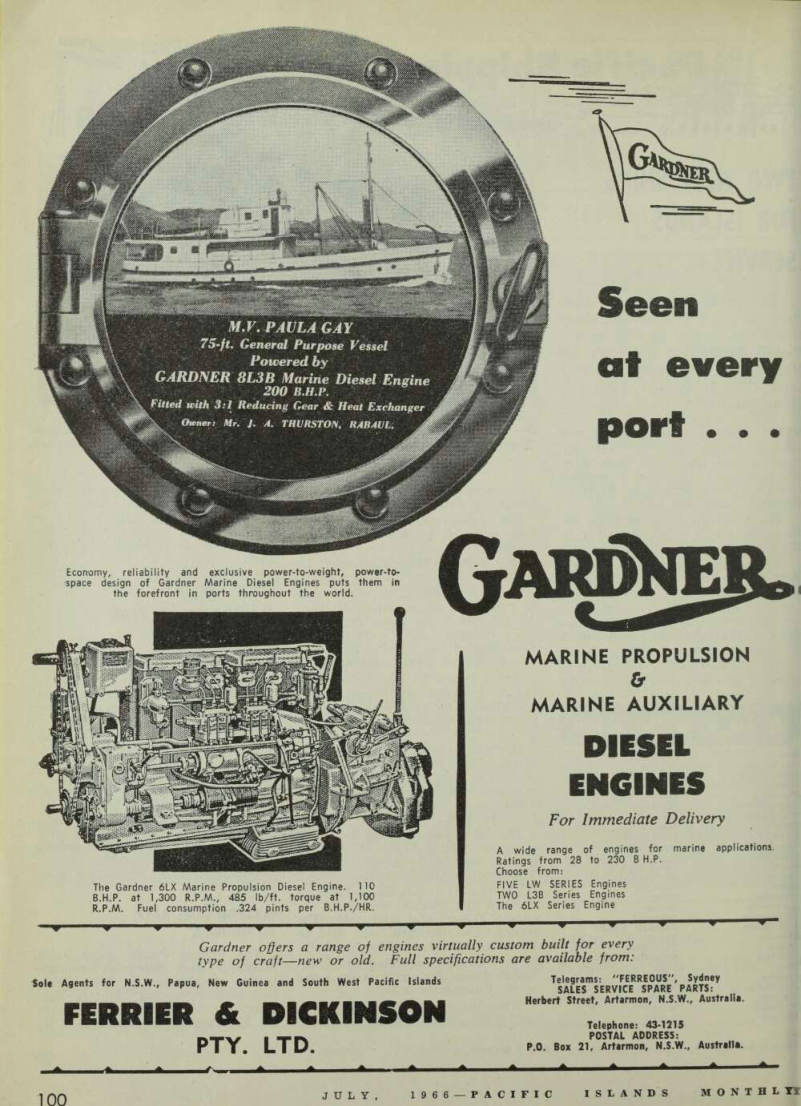 102
102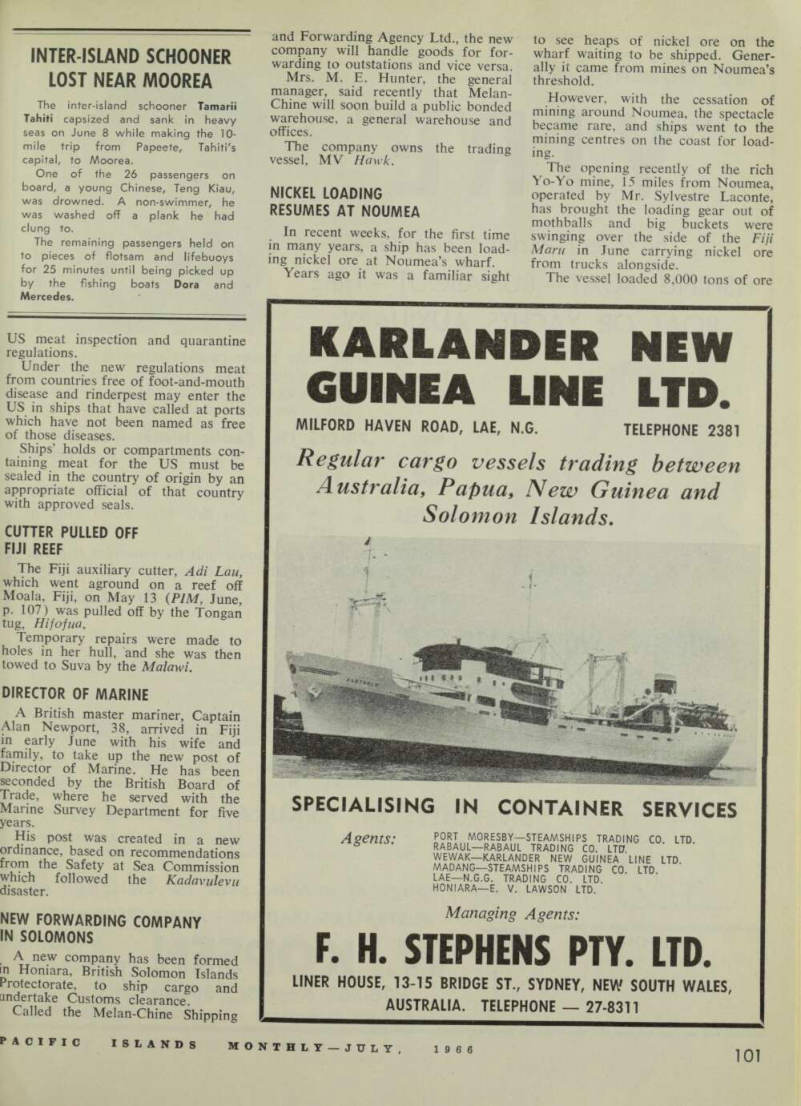 103
103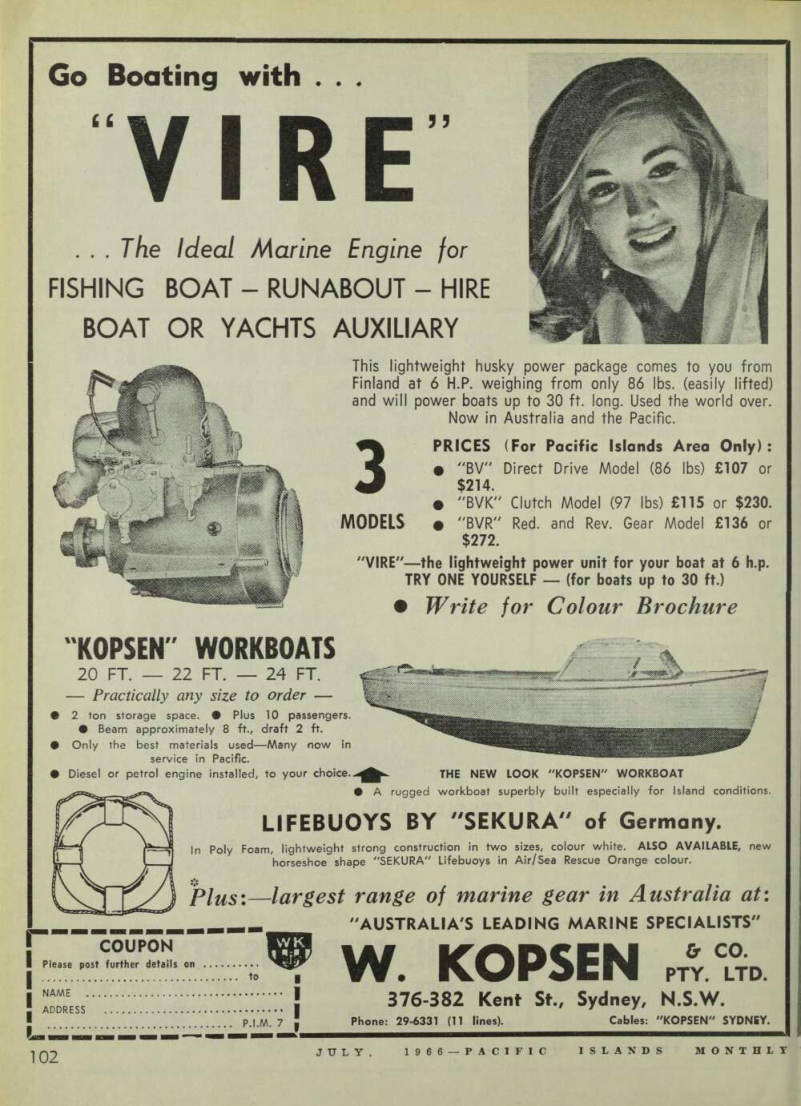 104
104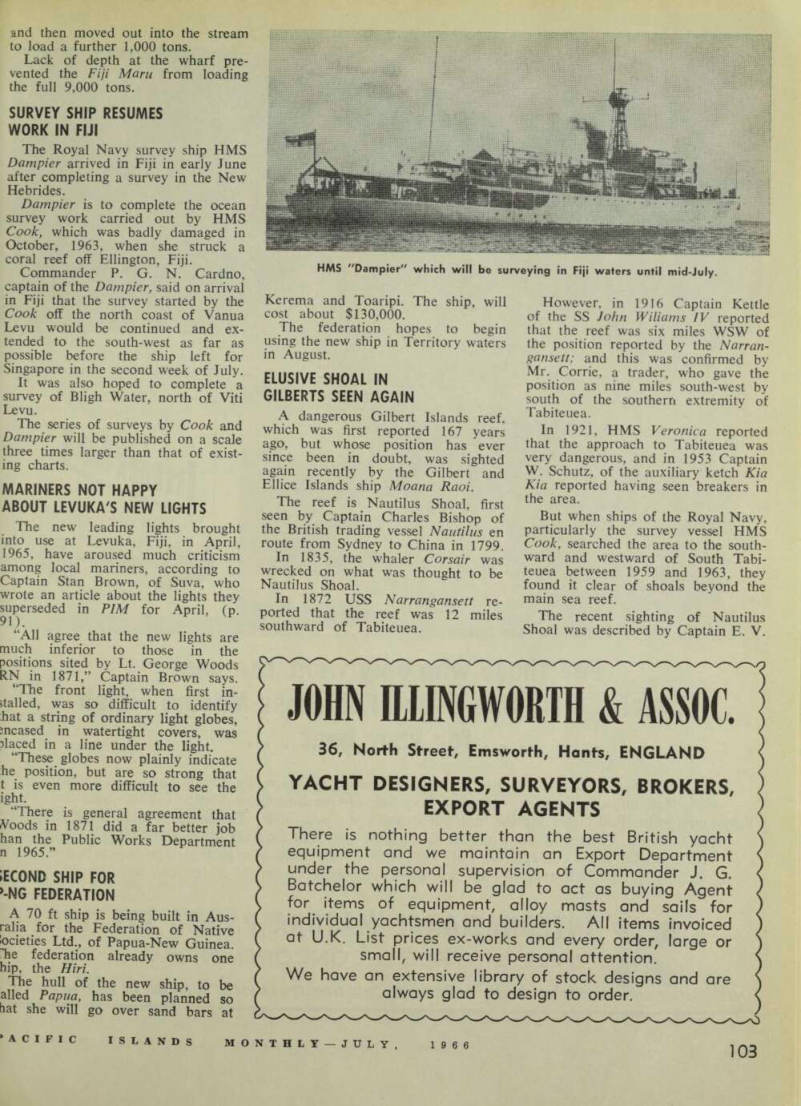 105
105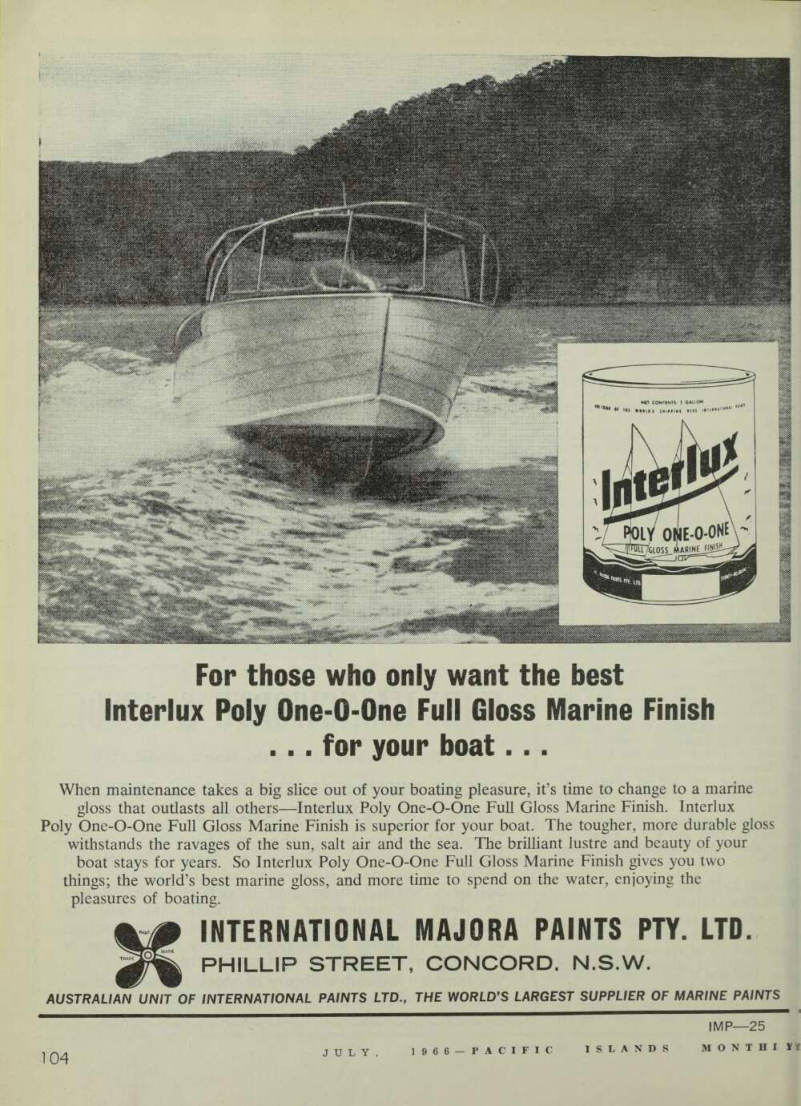 106
106 107
107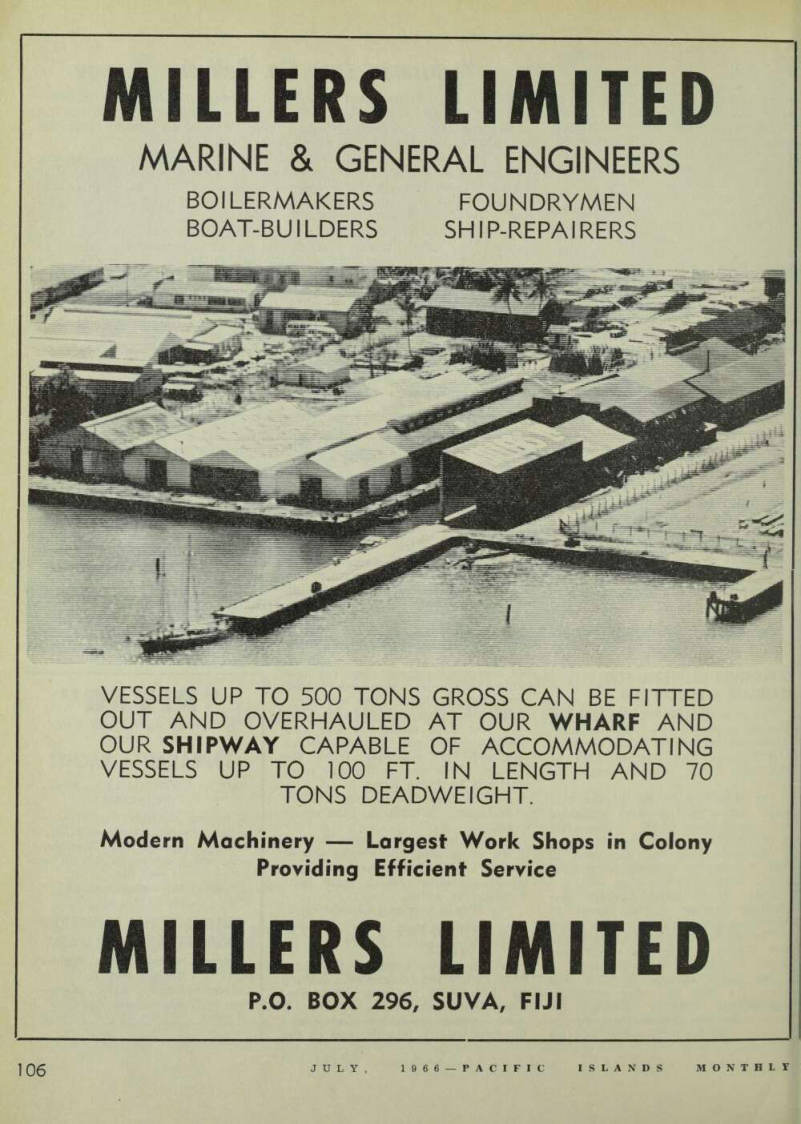 108
108 109
109 110
110 111
111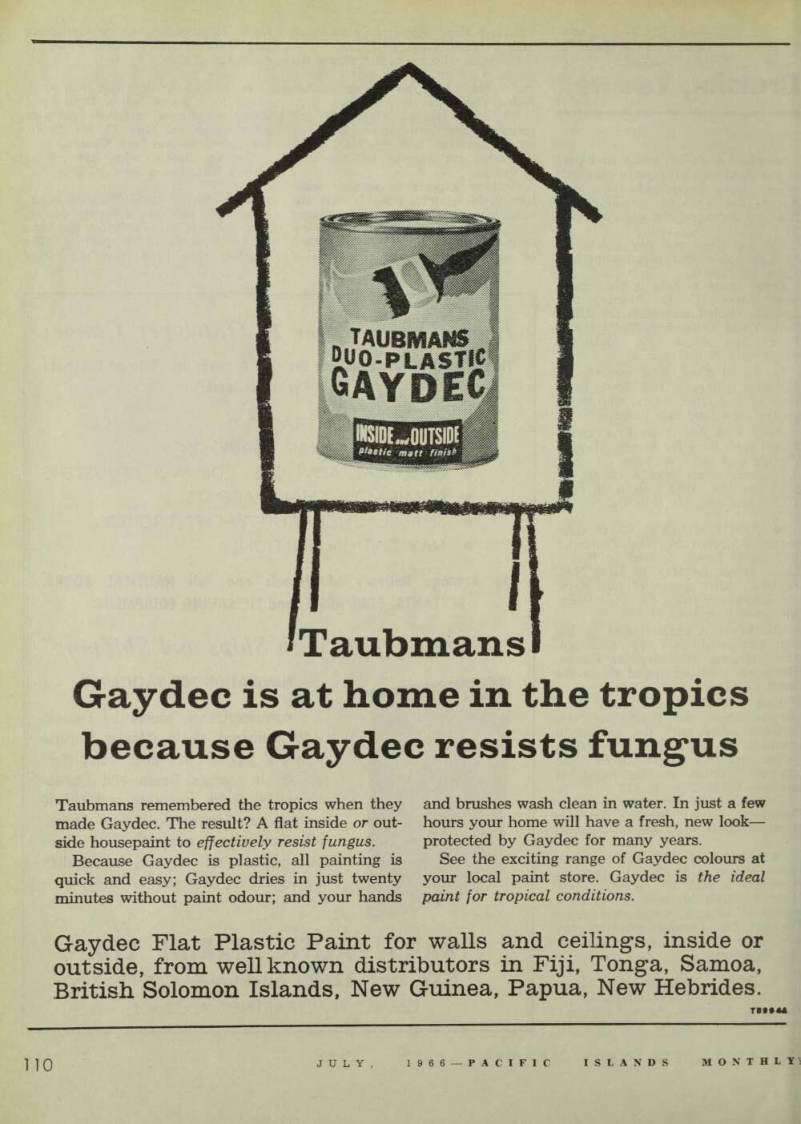 112
112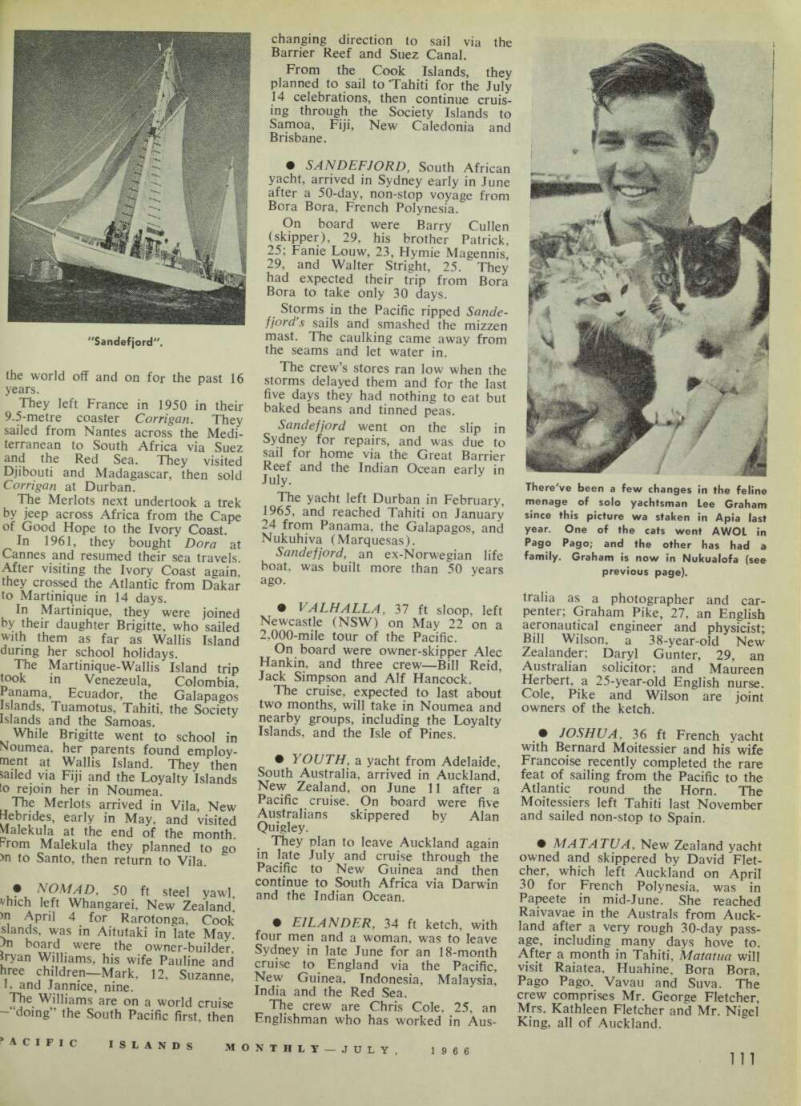 113
113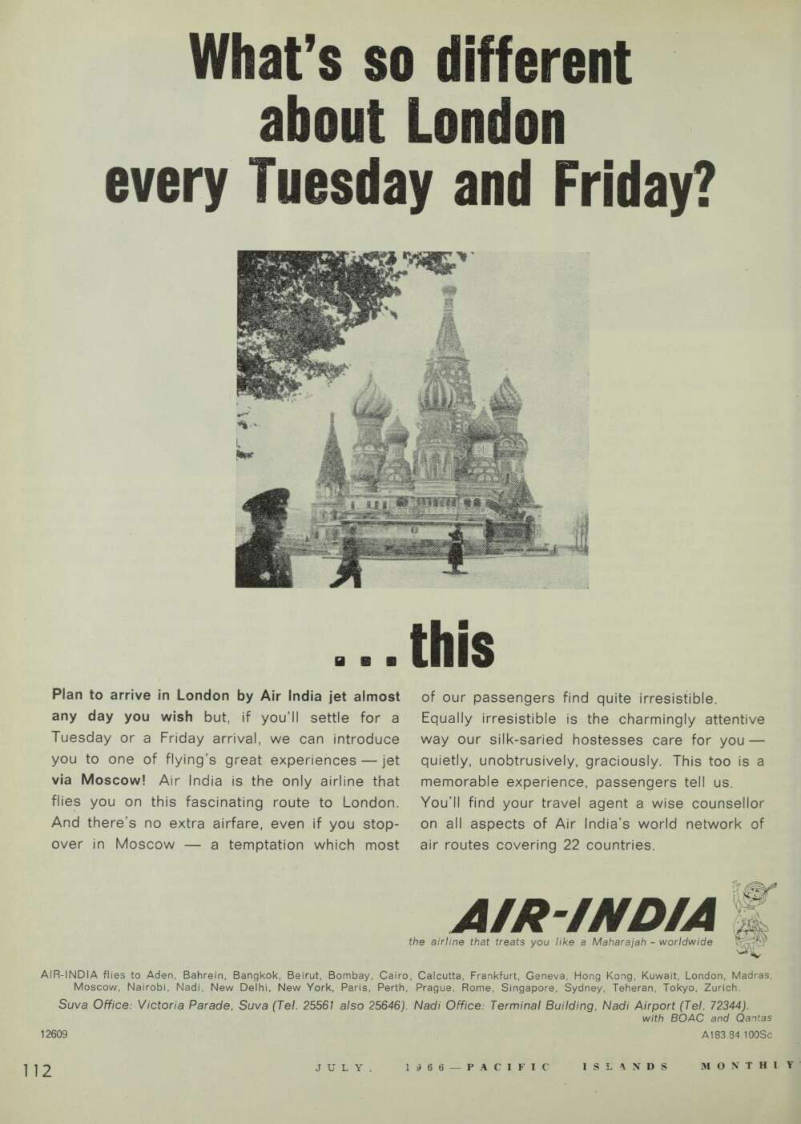 114
114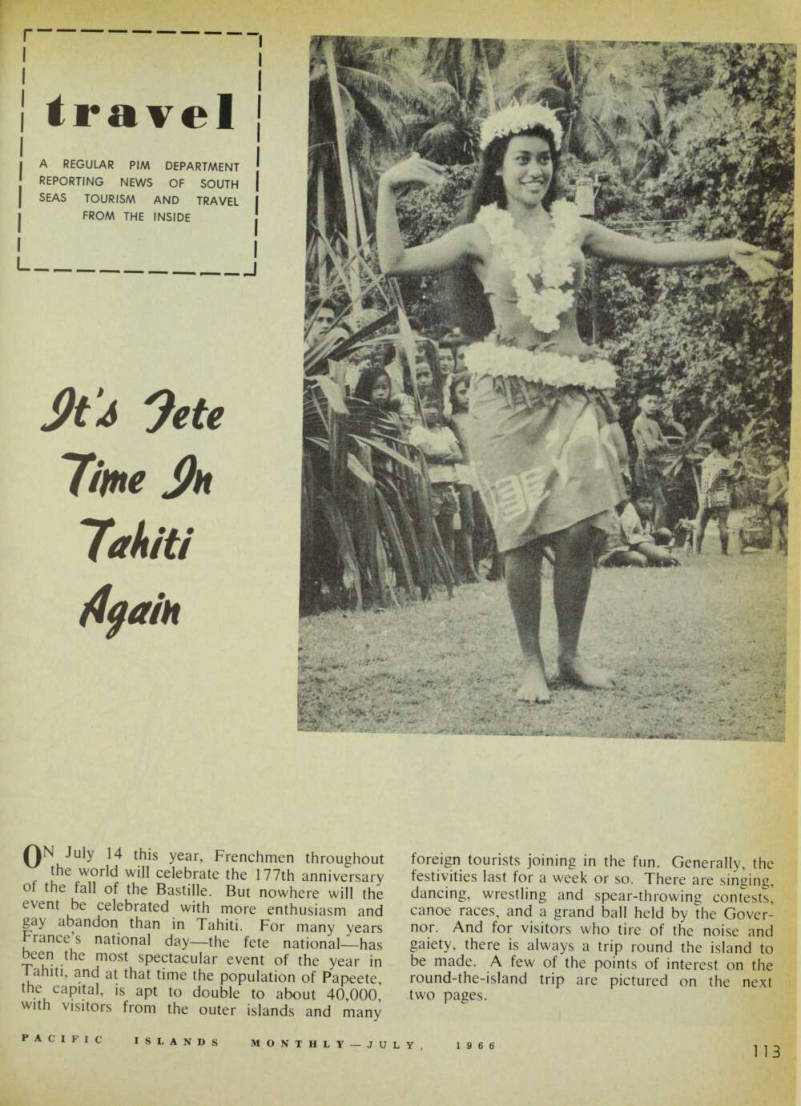 115
115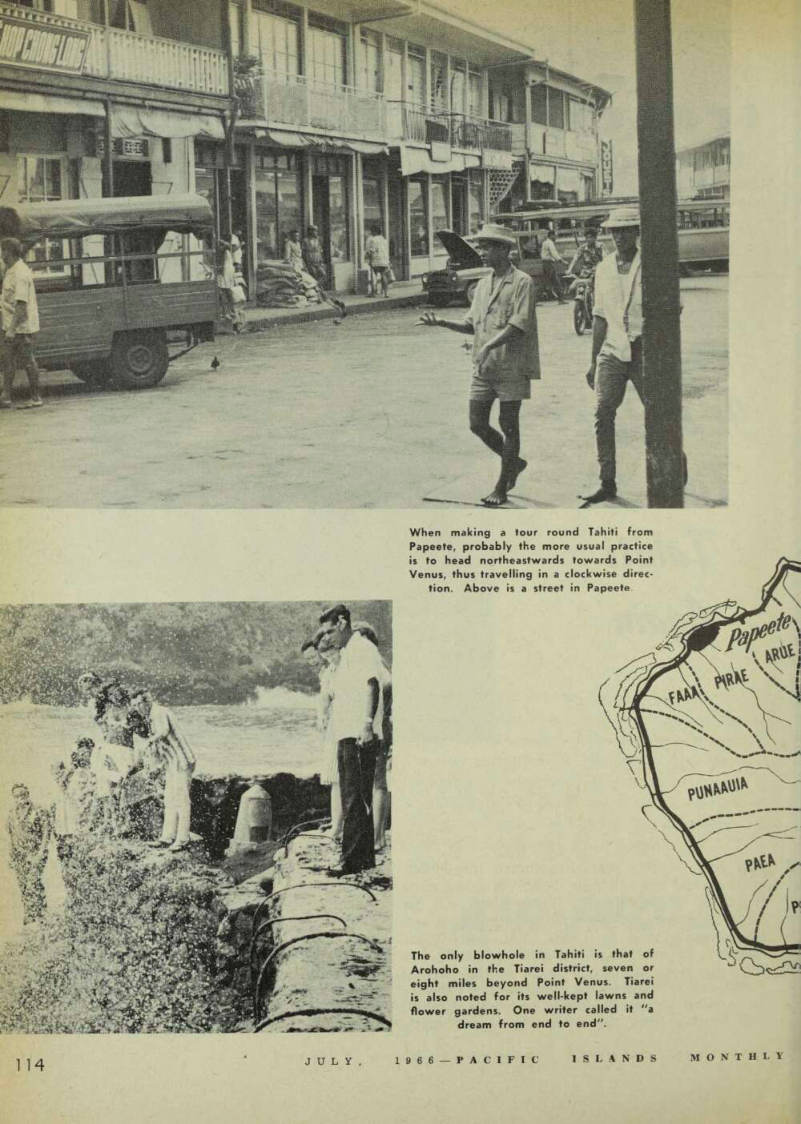 116
116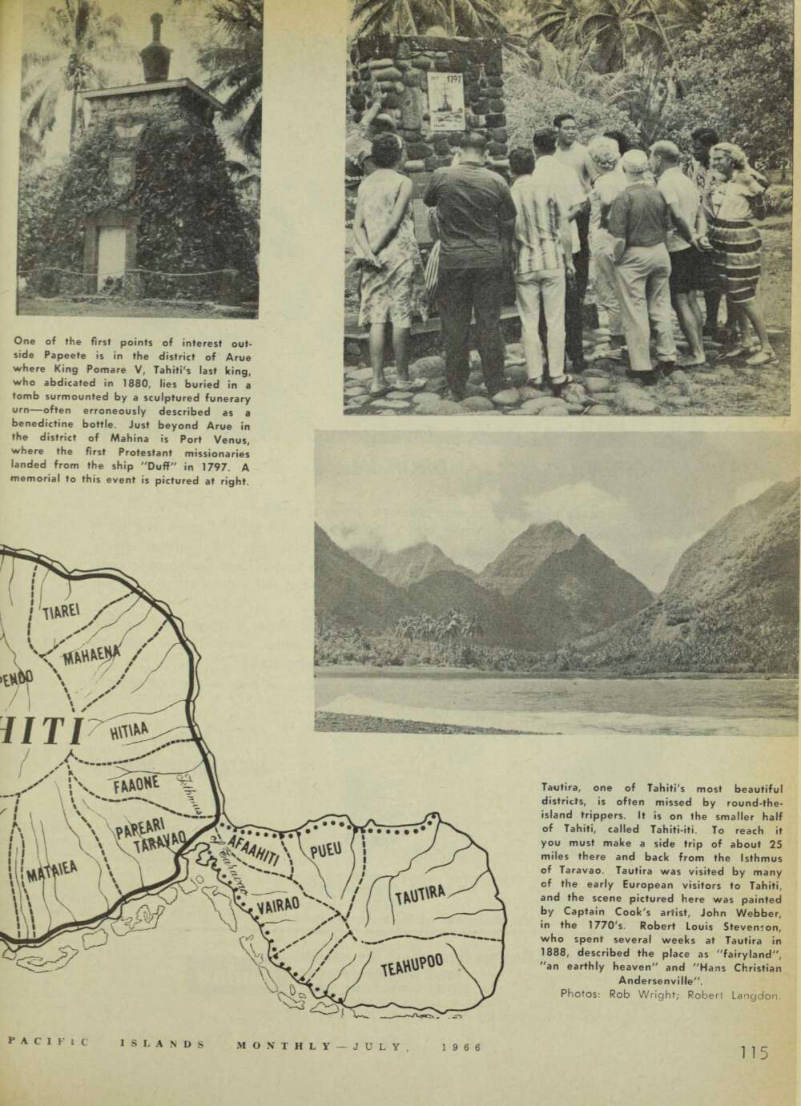 117
117 118
118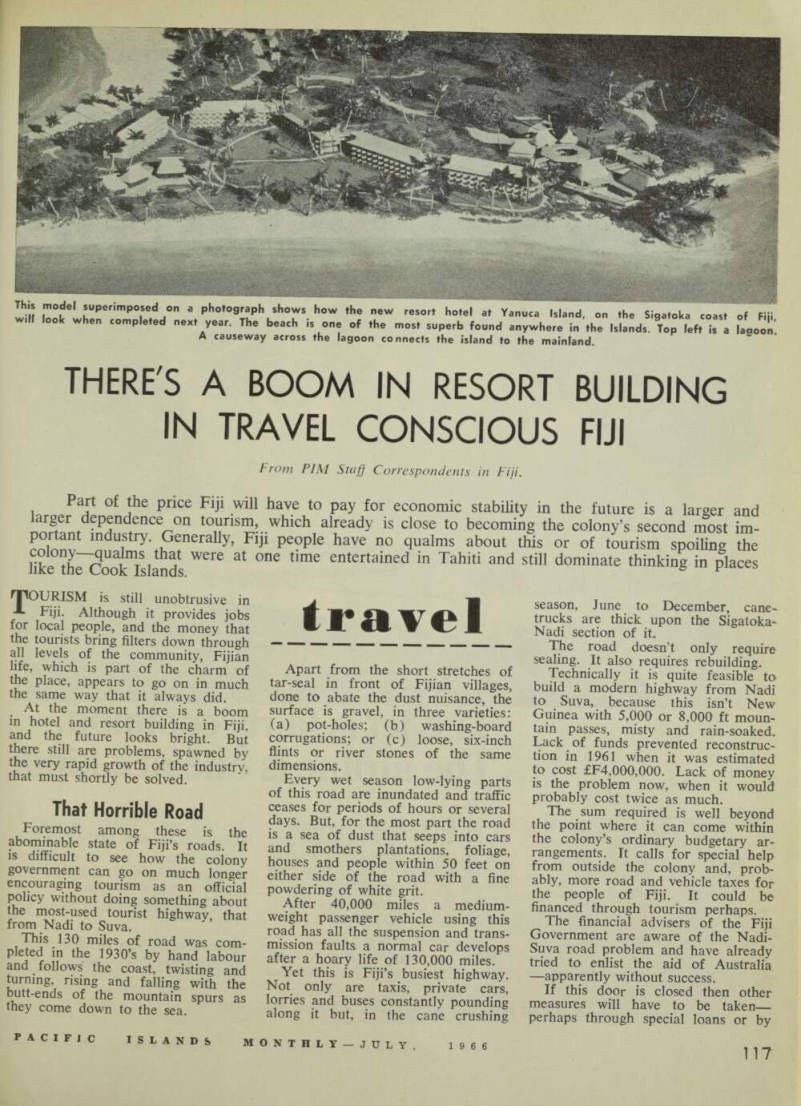 119
119 120
120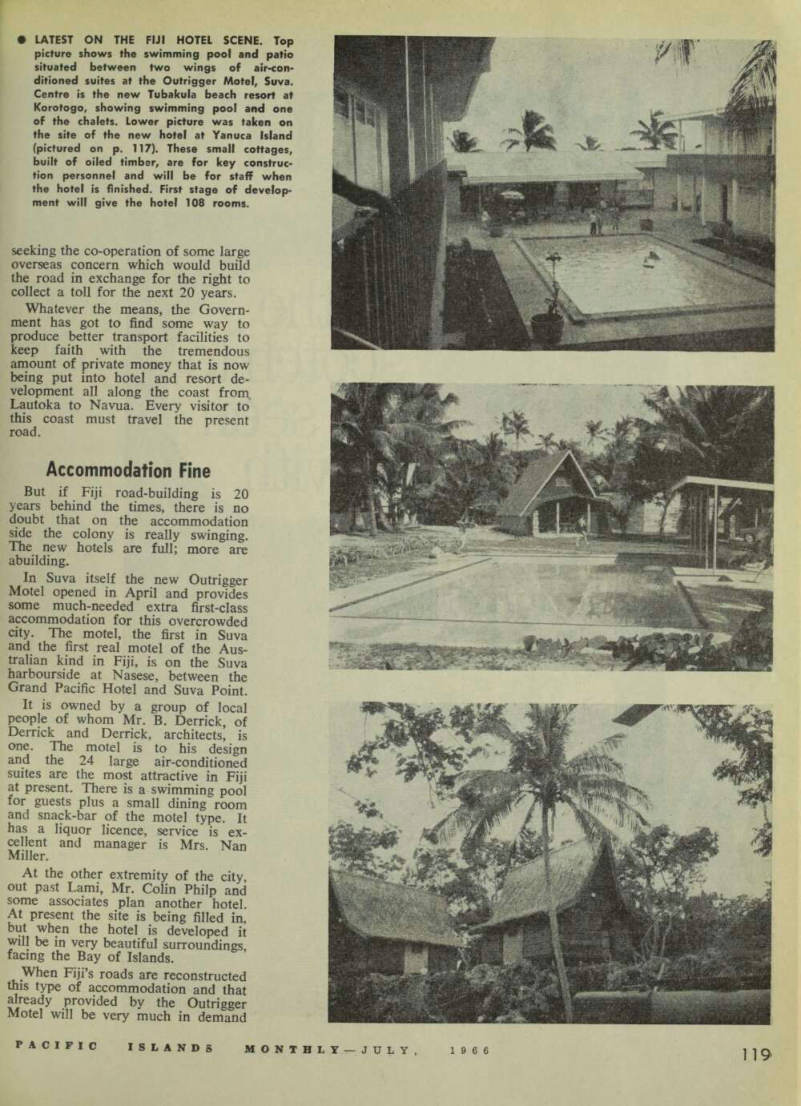 121
121 122
122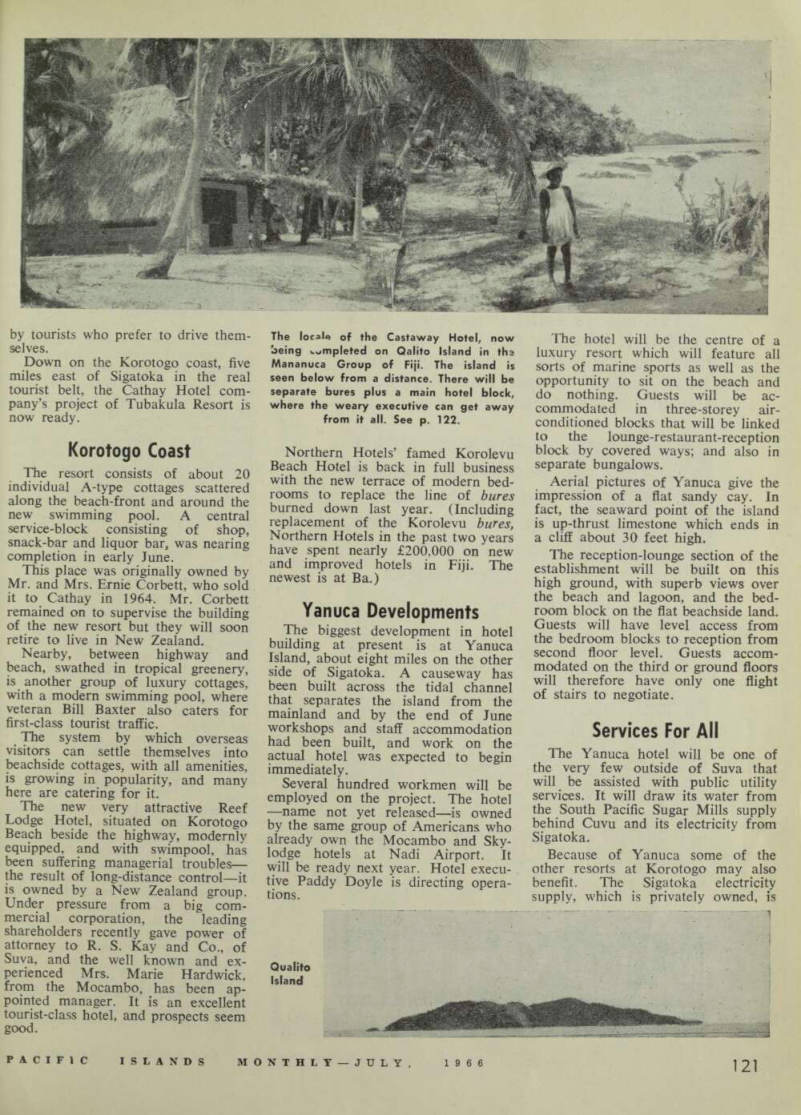 123
123 124
124 125
125 126
126 127
127 128
128 129
129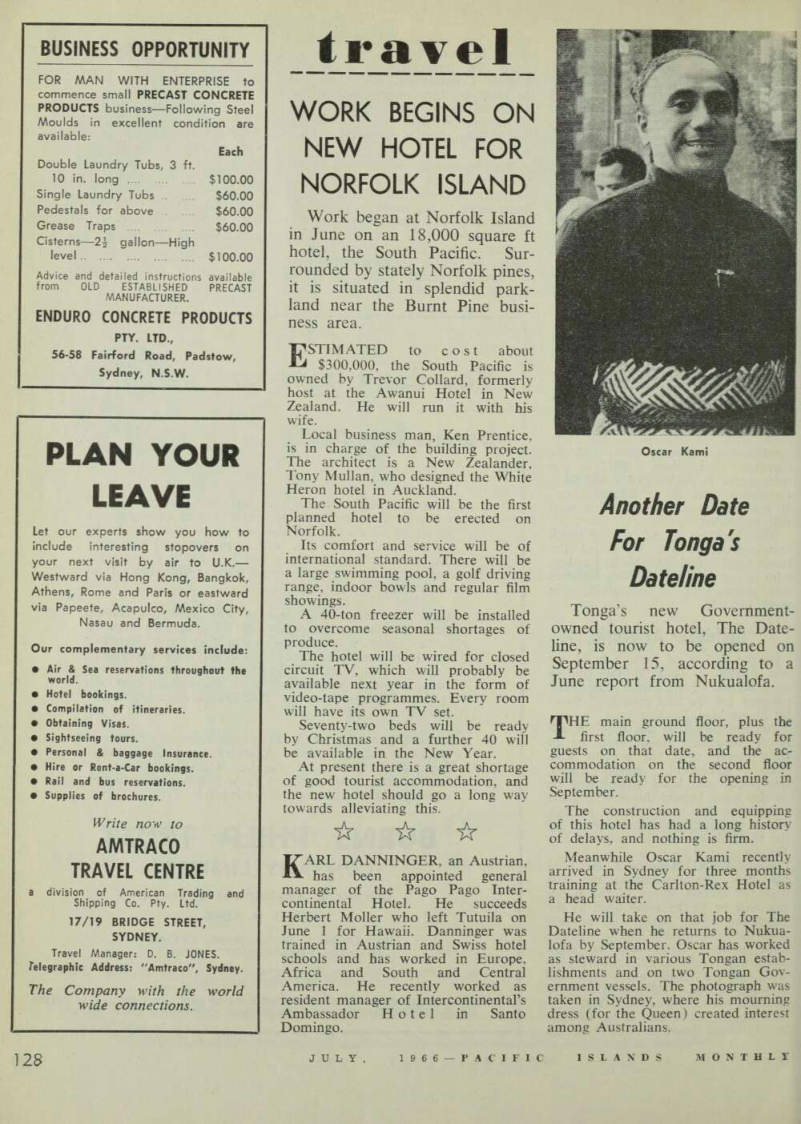 130
130 131
131 132
132 133
133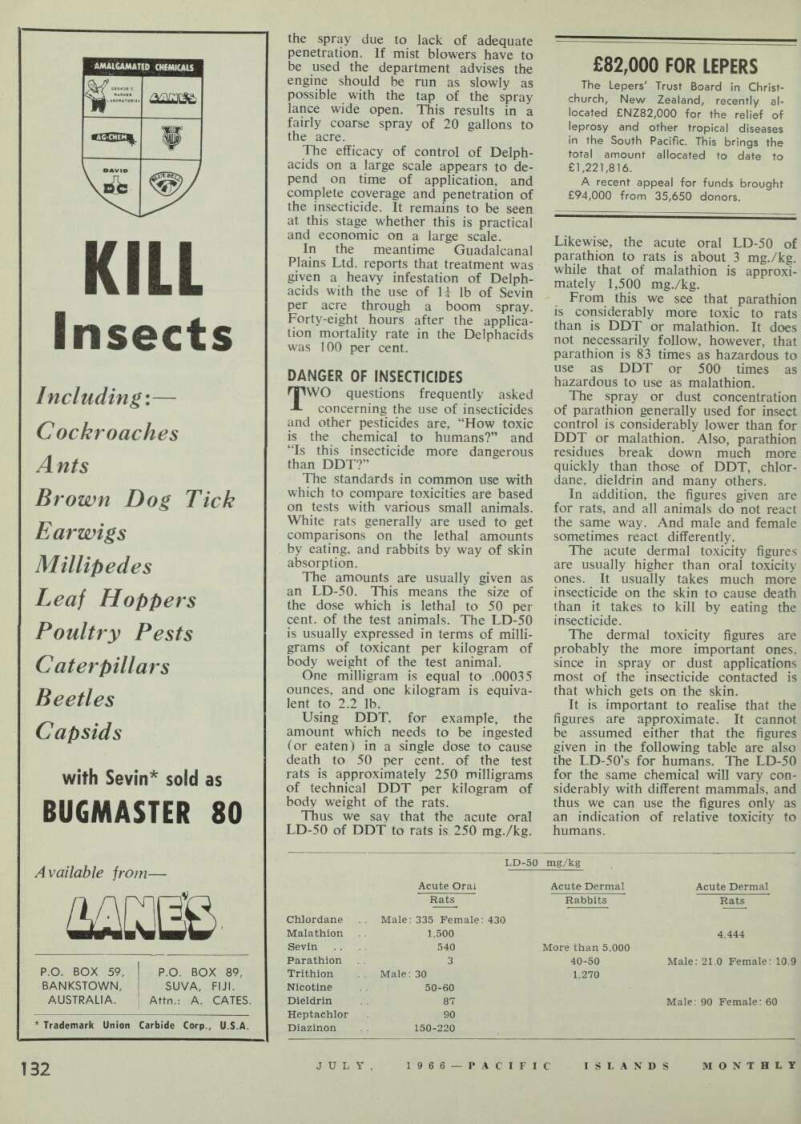 134
134 135
135 136
136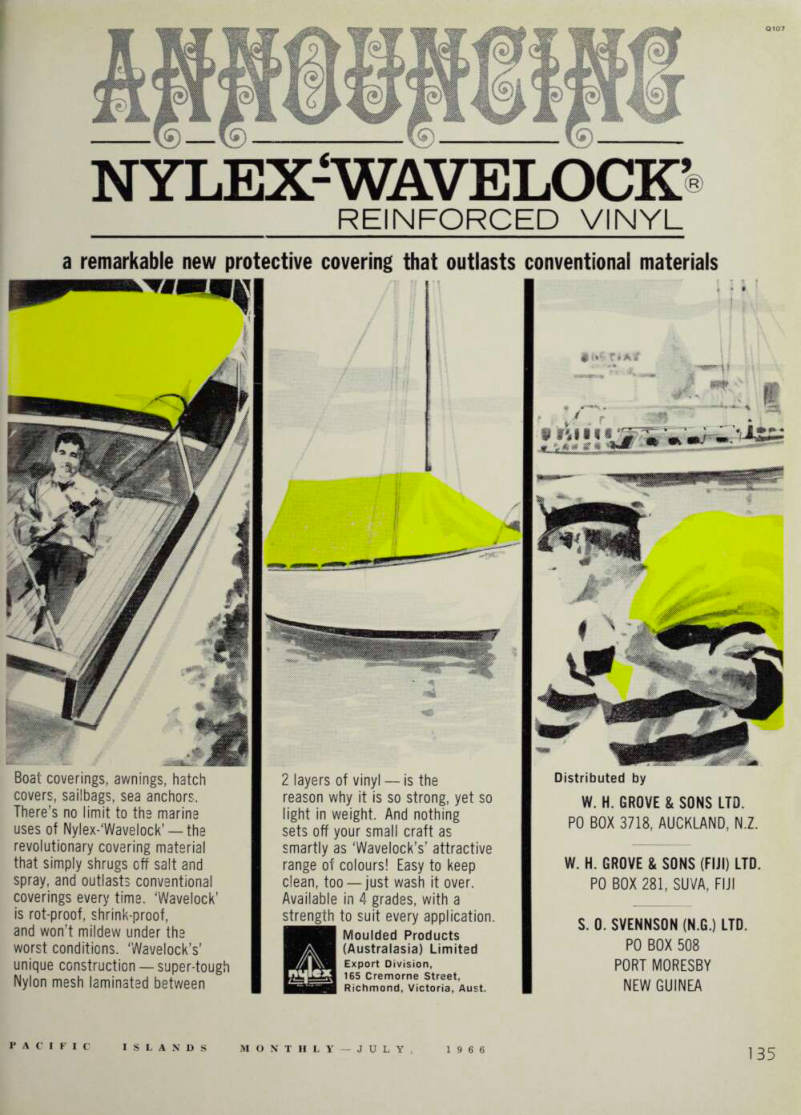 137
137 138
138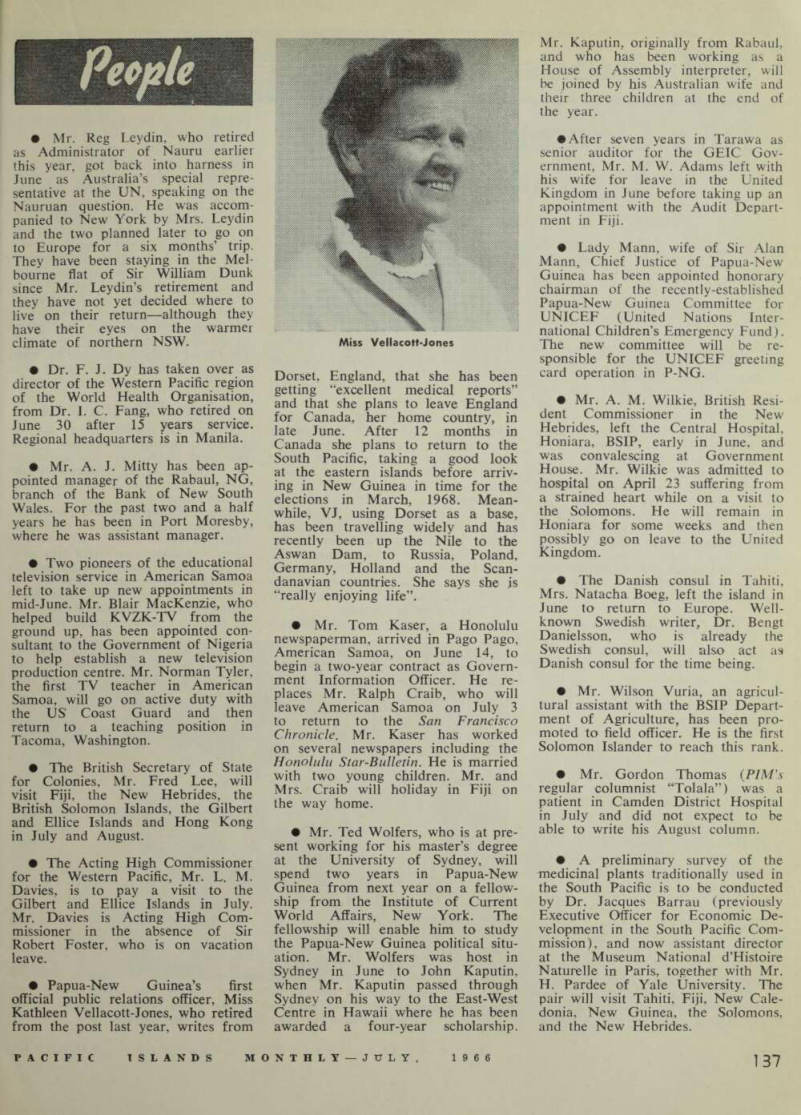 139
139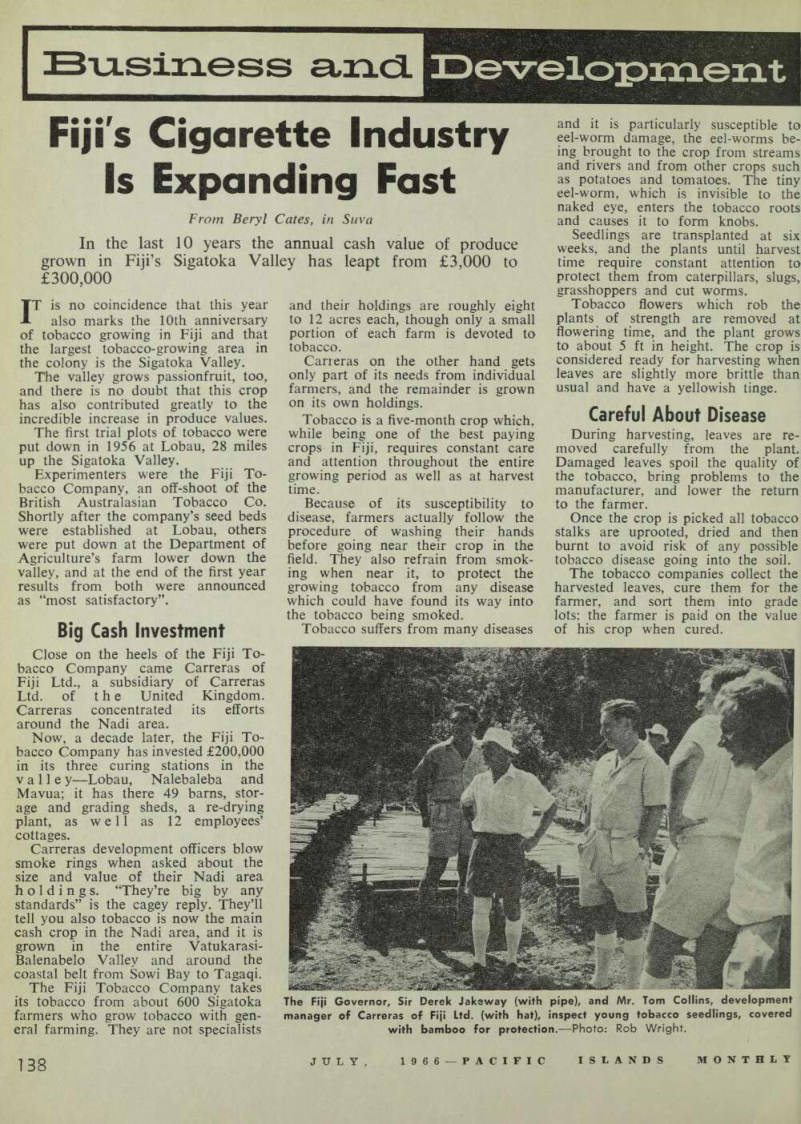 140
140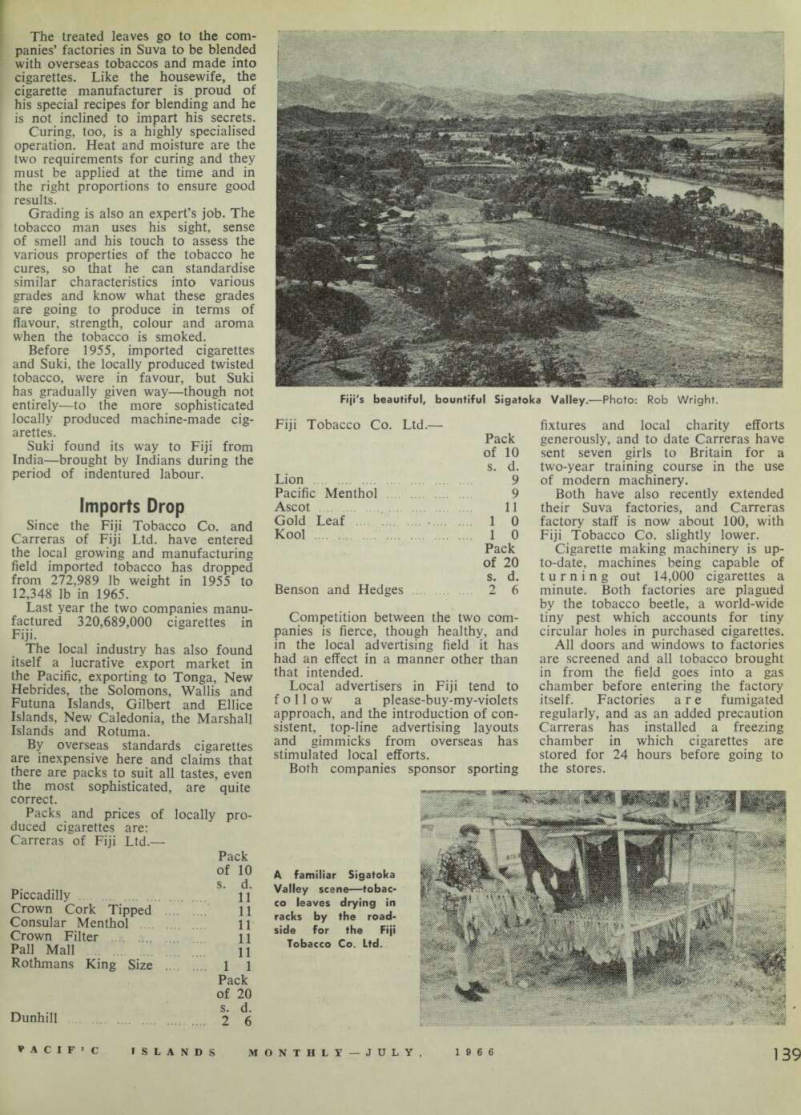 141
141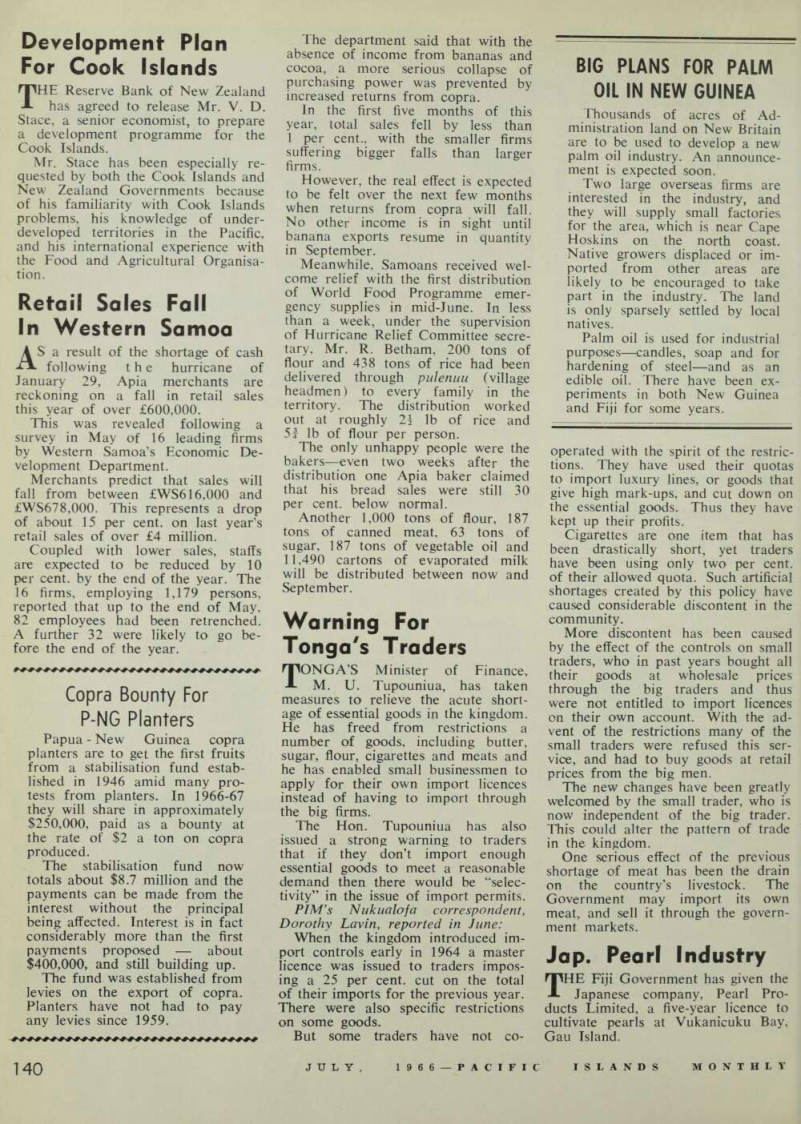 142
142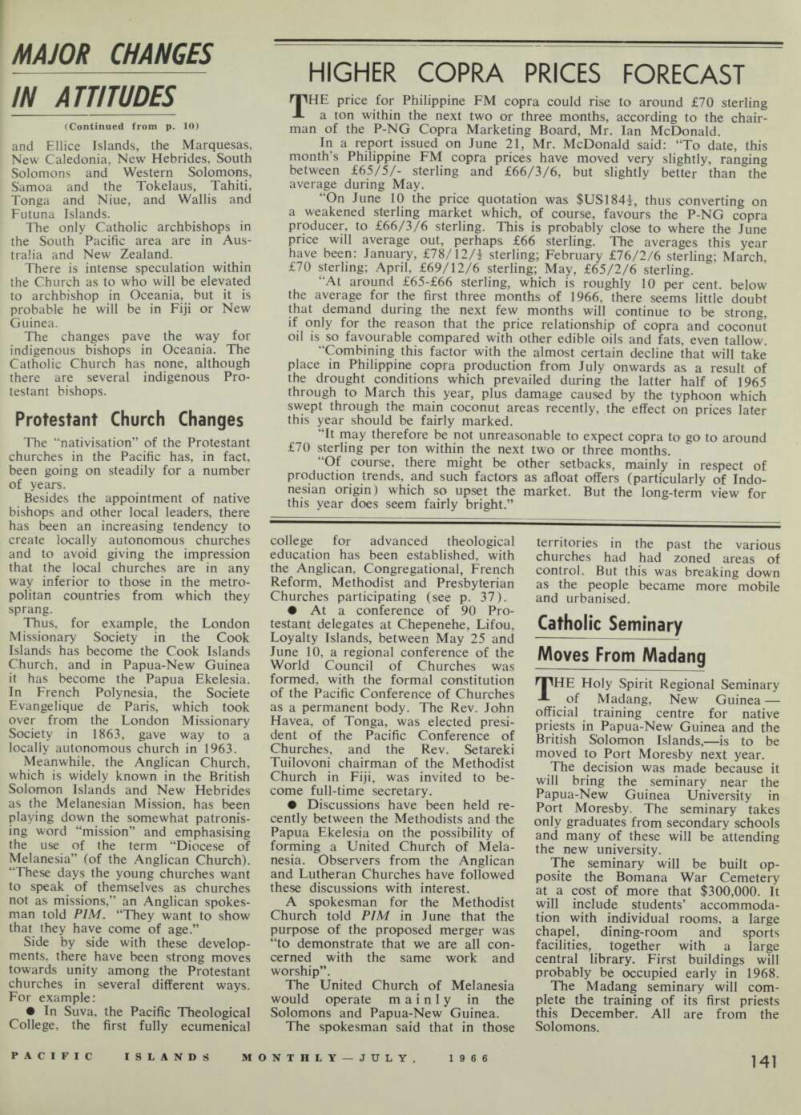 143
143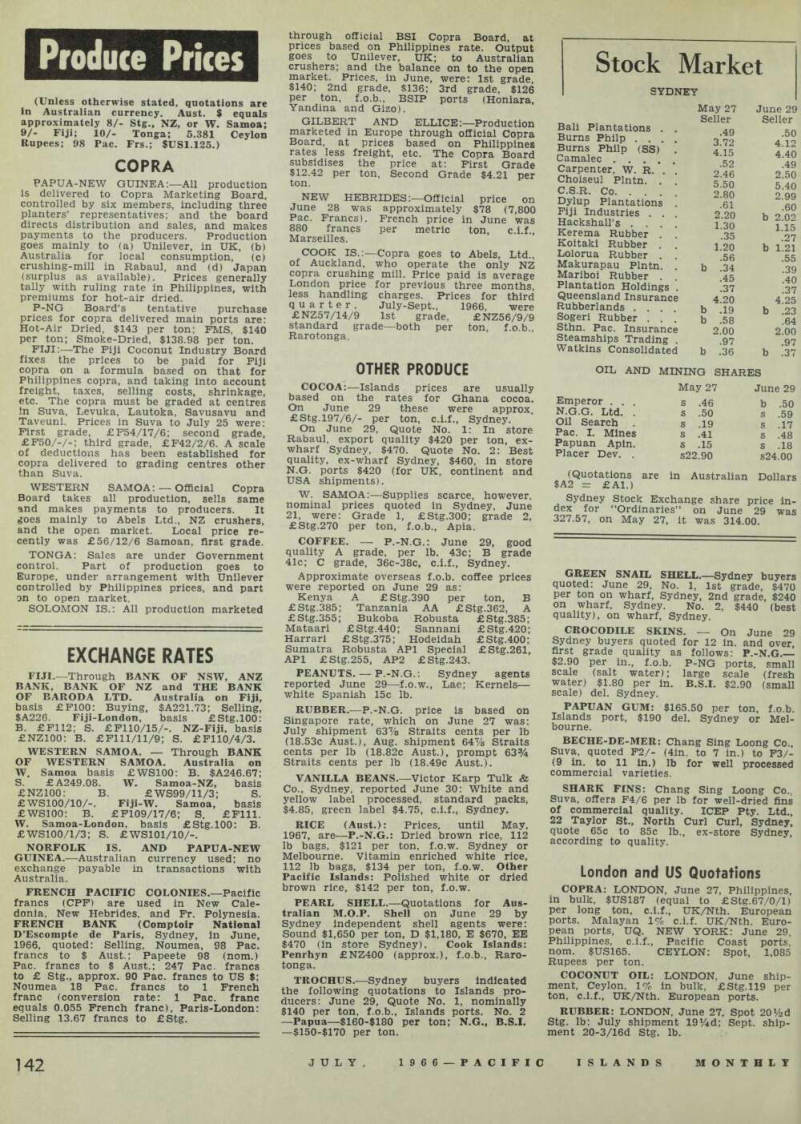 144
144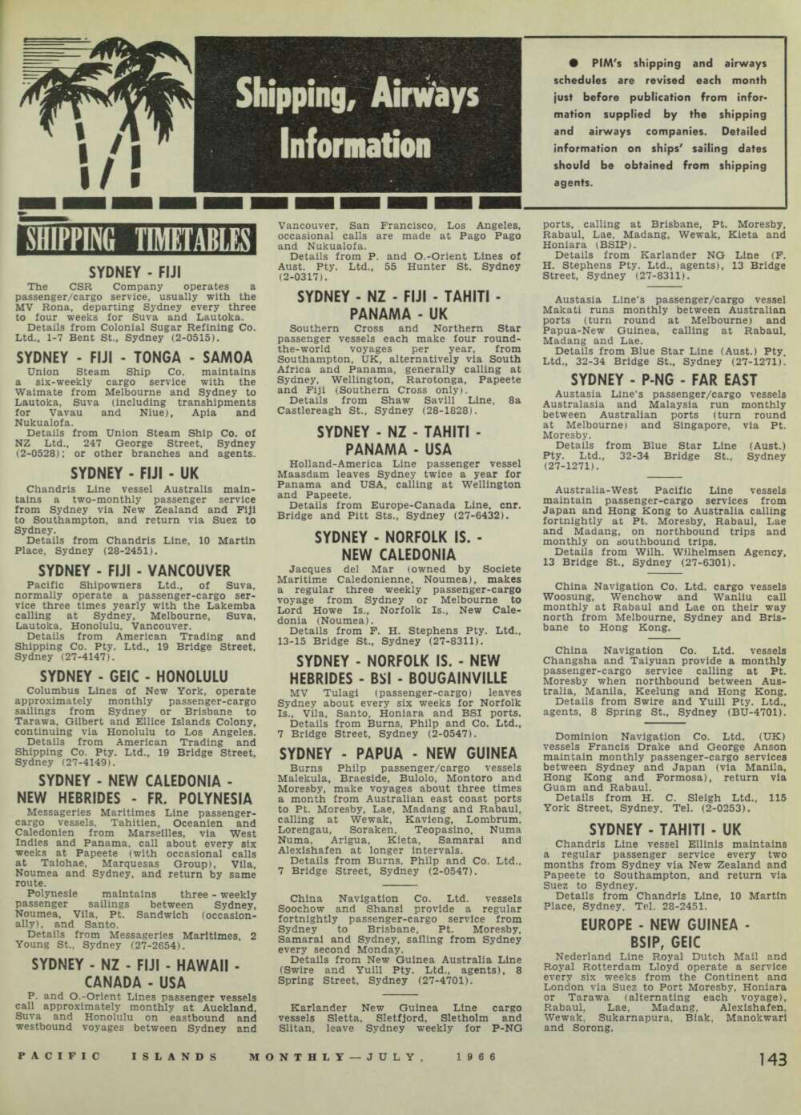 145
145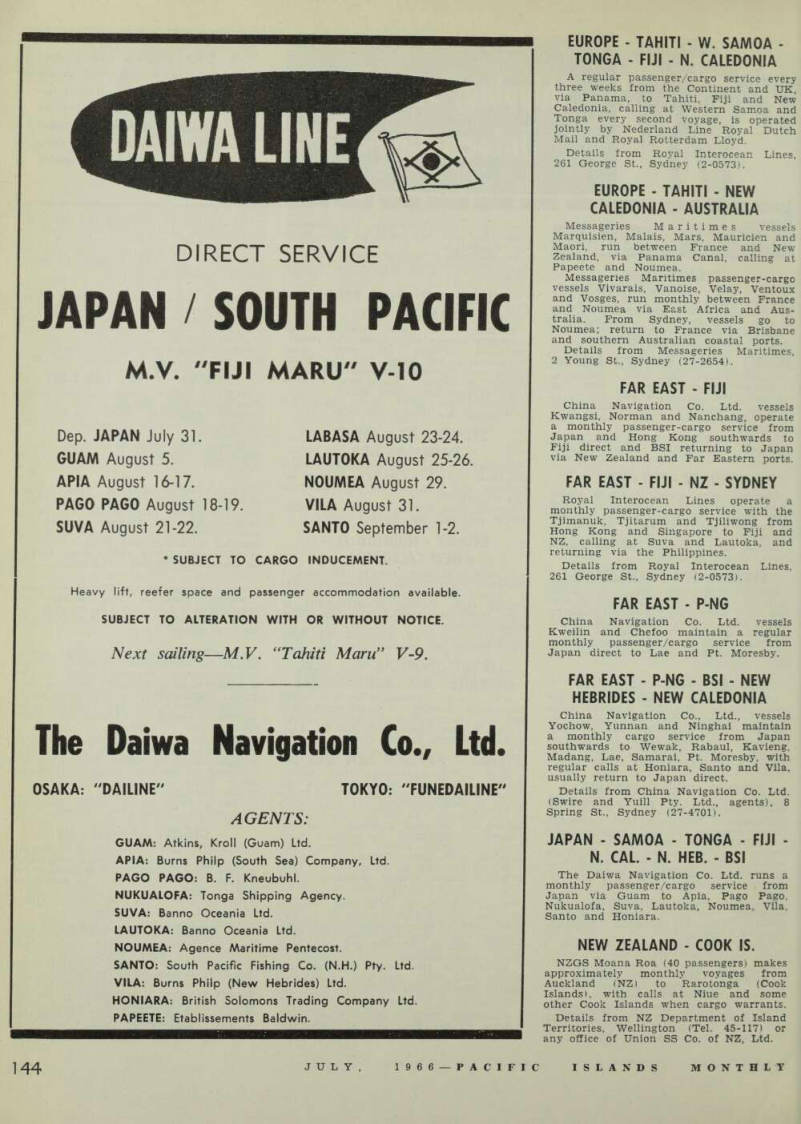 146
146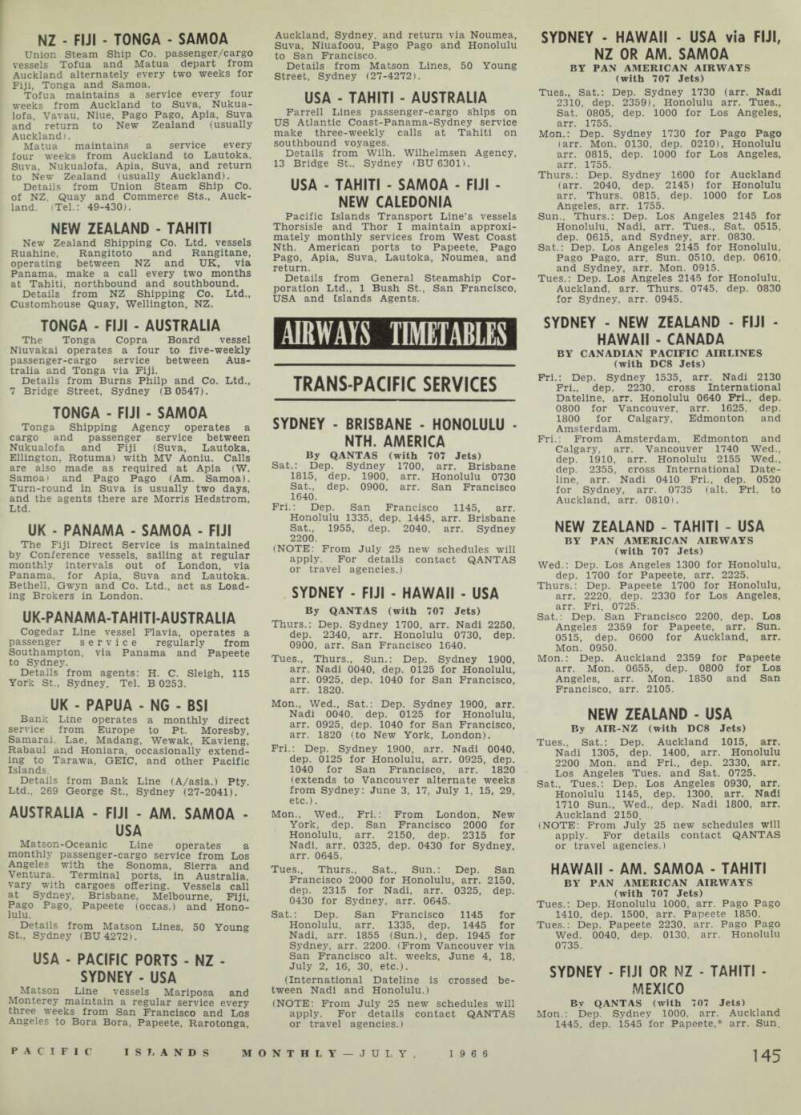 147
147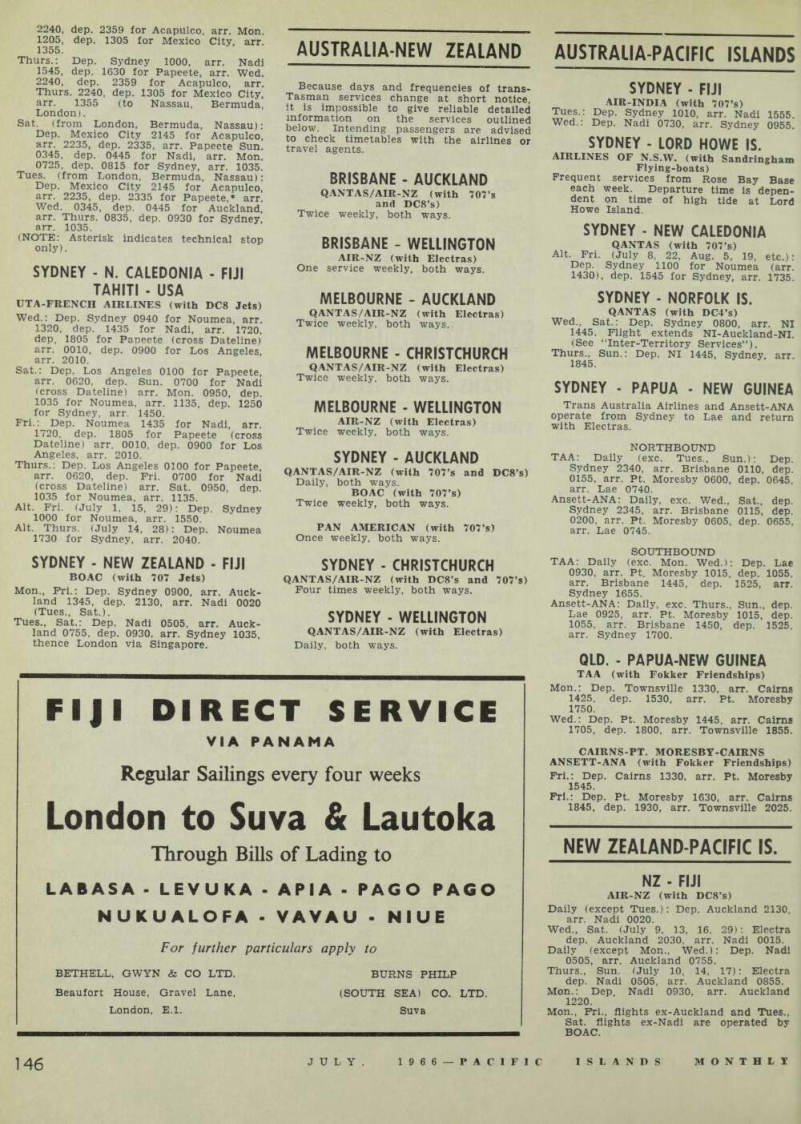 148
148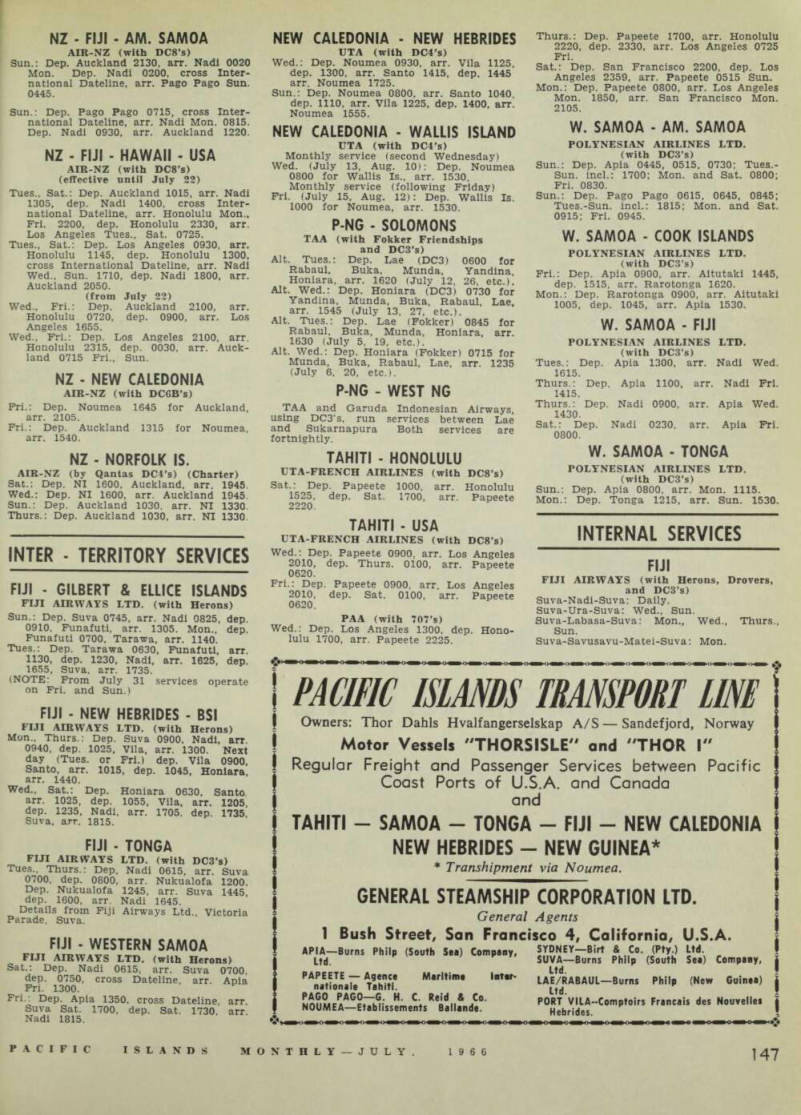 149
149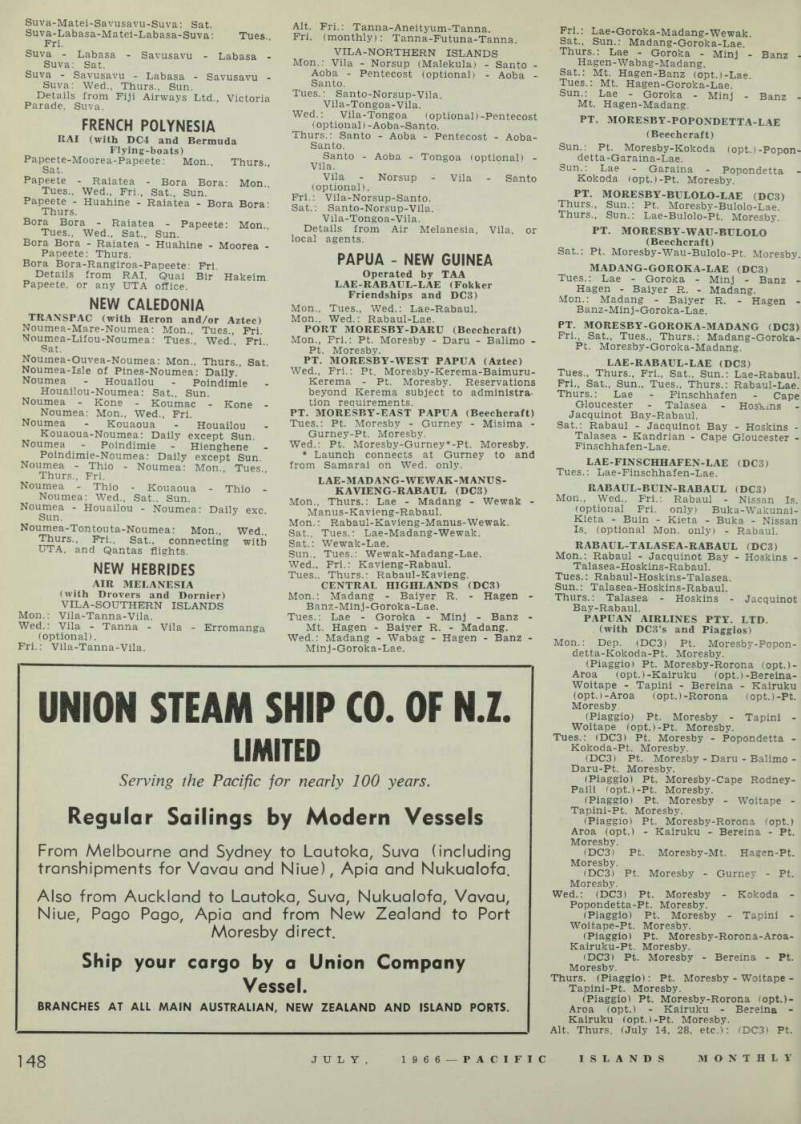 150
150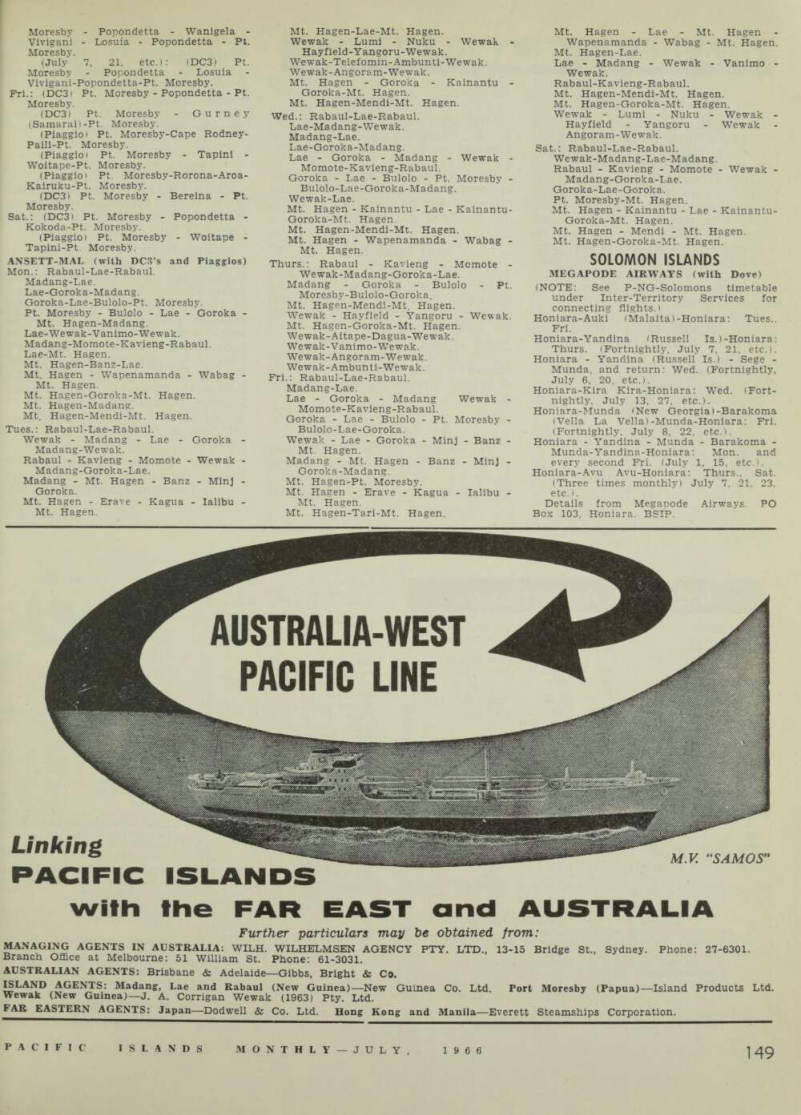 151
151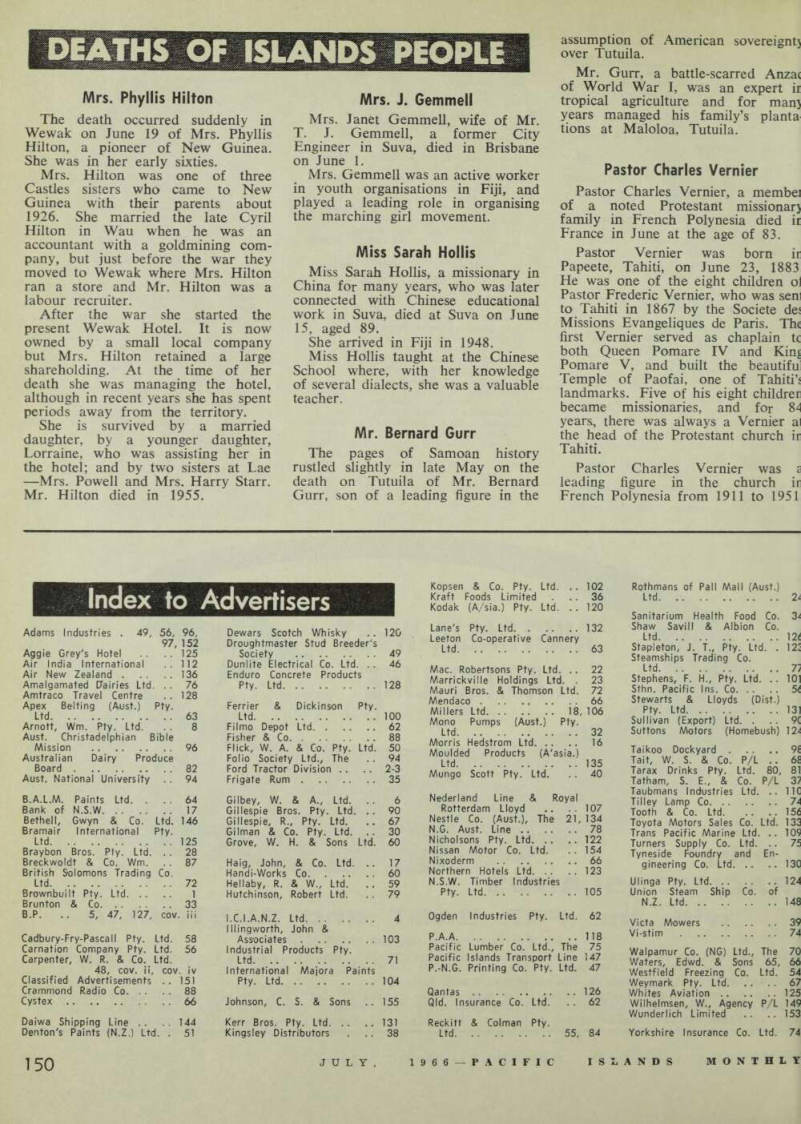 152
152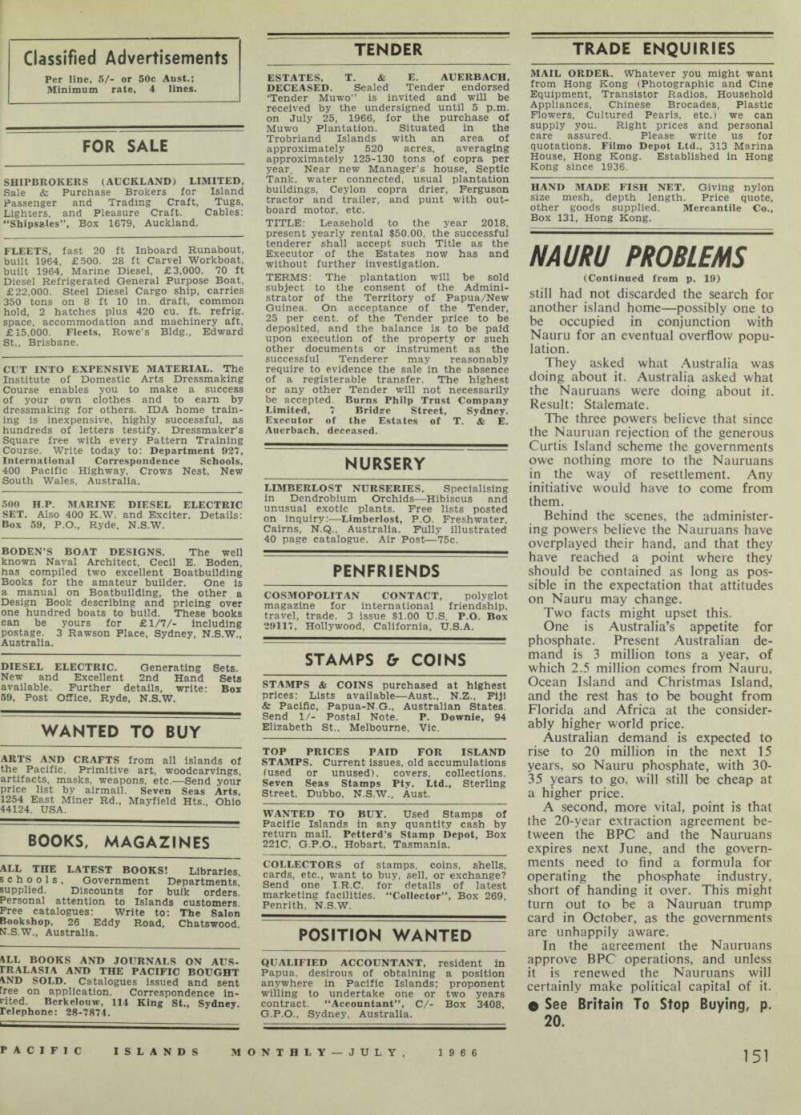 153
153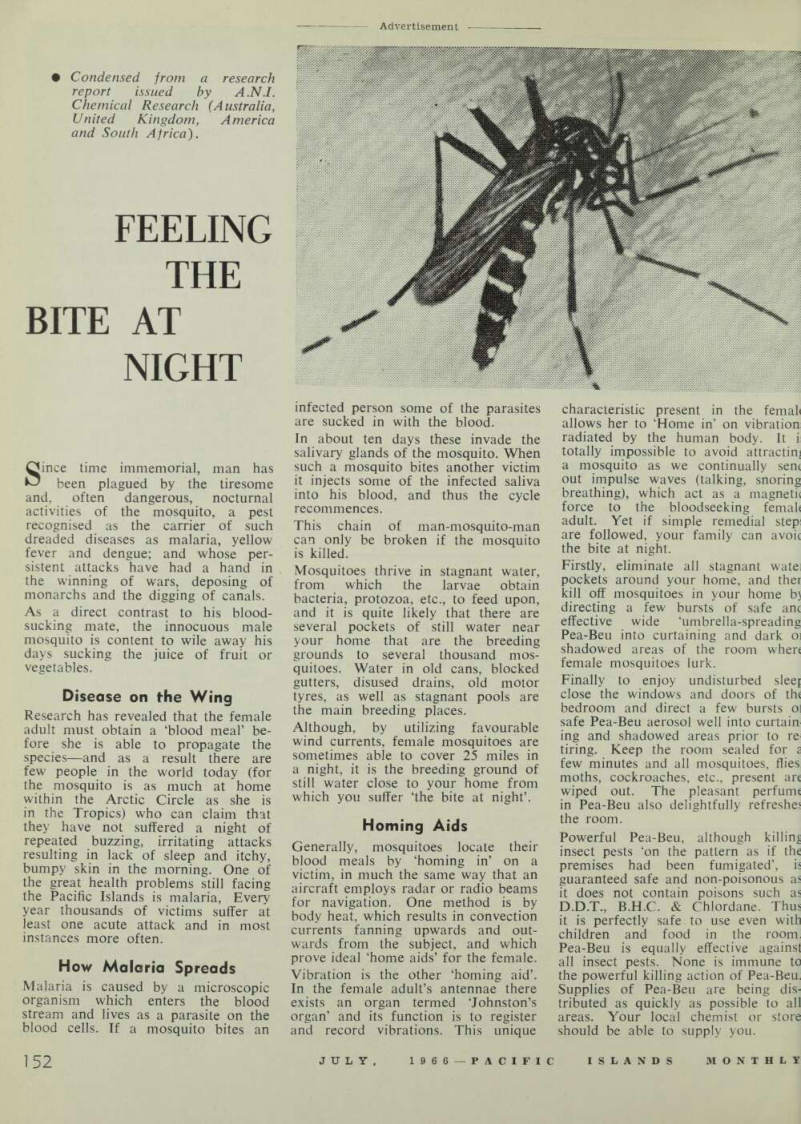 154
154 155
155 156
156 157
157 158
158 159
159 160
160