
Monthly
Pacific Islands Monthly
0^
June, 1966
30 Aust. cents Three shillings 70 US cents 50 French Pac. frcs.
he New/s Magazine Of The South Pacific
Established 1930
istered at G.P.0., Sydney, for ransmission by post as a newspaper.
OUR COVER: More and more New Guinea women, such as this one at Garaina, south of Lae, will be employed as tea-pluckers in the next few years, as the new tea industry in the Western Highlands gets into its stride (see story p. 48).
Photo: Dept, of Territories.
Advertisements & other items, pp. 2-12 (3 items)
Six days a week (our normal schedule)
TAA r Bird of Paradise’
- 'f mm*
m m m
. iL. 4 W* V - A: ?h£b^ 3Sj -' %• % O’
Six days a week (our normal schedule)
TAA ‘Bird of Paradise’ services between the Territory and Australia are daily except Monday five Mark II Electras plus one Friendship every week.
Electras. Big. Powerful. Fast. Smooth. Slice two hours from the Territory/Australia trip.
And the comfort. Ever flown ‘Bird of Paradise’? Like being in a luxury hotel. (At about four hundred miles an hour.) And the pampering. Like roasted breast of chicken, for example. And vintage wines. Tropical fruit salad and cream. Coffee. Liqueurs. And extra-special hostess service, You want a book or magazine to read? Fine. Or maybe get your head down for a while?
Our aircraft are very easy to nap in.
You can spoil yourself like this six times a week in both directions.
So go on. Indulge yourself on our ‘Bird of Paradise.’ Life is for living.
Talk to your nearest Travel Agent. Or TAA: Port Moresby 2101 ■ Lae 2311 ■ Rabaul 2567 Madang 78, 268 ■ Goroka 8 ■ Mt. Hagen 4 ■ Wewak 103 Fh
the Friendly Way uy
#T*V
Johnson
i
when
the heat’s
ft II any time in 1 UI i Y the tropics J
you need
the better
protection
0f...
(Johnson wax
for your
floors
In hot and
humid climates—
floors need the extra protection of
Johnson rapid-dry
wax products!
(With beauty that
shines right thru.)
Johnson Wax,
39 Mentmore Ave.,
Rosebery, N.S.W.
9 m id BIG value in eloo*
JOHNSON S^'
IP
SOM
MONEY.
sHL
ECONO^t
hard-
Stride
care k. SCltm* ’ 'loti °* S* j ohnsonsTw*‘ Durosil dry-cleans your wood and lino floors as it waxes in protection against mildew, then buffs to a proud shine. Durosil’s special dry-cleaning action dissolves dirt and rubber heel marks.
Stride shines itself to a hard-gloss that stays, won’t scuff.
If your floor should get marked just wipe over with a damp mop.
Especially good for vinyl and concrete floors.
Glo-Coat, the familyproof floor care, shines itself to a softly glowing shine and buffs up again and again.
That’s because Glo-Coat has 25% more wax.
The big-value polish.
JW4802
m mm MFI3S with MFS6O Toolbar W1F175 with MF6S Disc Plough MFI6S with MF3S Loader
THE RUGGED NEW BREED
Today’s most advanced
tractors.
One is ideal for you!
You can expect a lot from these tractors. They have a lot to give. Such as 42.9 PTO HP from the MFl3s’s 3 cyl. diesel engine —55.6 PTO HP from the MFl6s’s and 63.9 PTO HP from the MFl7s’s 4 cyl. diesel engines. Plenty of lugging power here at rock-bottom operating costs.
All have the increased capacity Ferguson system that gives more hydraulic power for greater implement lift and fast, accurate response. When you need more traction, weight is automatically transferred from the implement to the rear wheels. Multi-power 12 forward speed shift on the move, spring-suspension comfort diff. lock, power steering . . . everything you need is available to these tractors. What’s more they’re matched with the biggest range of equipment in the business. So don’t settle for an ordinary tractor. See your MF distributor and test drive the rugged new breed, now!
MASSEY-FERGUSON
World's Largest Manufacturer of Tractors
111 m m MFIGS with MFS Earth Scoop MFI3S with MFS2I Blade MFI3S with MFSI2 Transporter
See your Massey-Ferguson Distributor
New Hebrides Condominium Fiji, Tonga, Western Samoa Agence Pentecost and other Sth. Pacific Santo and Vila Burns Philp (Sth. Sea) Co. Ltd.
New Caledonia Papua and New Guinea British Solomon Islands Tahiti Meto, Noumea Burns Philp R. C. Symes Pty. Ltd. Ets. Donald, Papeete (New Guinea) Ltd. Honiara, Guadalcanal E6l
CLINTON
CLINTON
Air-Cooled Outboard Engine
Features: (1) Cooling fins and turbine-designed flywheel for cool operation. (2) Handles front and back for easy carrying. (3) Motor-head swivels 360 degrees for forward and reverse. (4) Automotive-type carburettor. (5) Clin-Tone Muffler expels exhaust into water for extra quiet operation. (6) Two-bladed, semi-weedless propeller.
OTHER WINNERS IN THEIR FIELD!
• POWERLITE GENERATING PLANTS • BROOKER ALUMINIUM BOATS
• RUSTON DIESELS • ERG BATTERIES
• NYLON HINGES (stainless steel pin) • POW'R PULL HOIST WINCH PULLERS • AJAX NYLON PROPELLORS WITH VARIABLE PITCH REPLACEABLE BLADES • DUX WATER HEATERS • H.P.M. ELECTRICAL ACCESSORIES • BURROUGHS Adding Machines & Registers • PRONTO TOOLS (Germany) • Drees & Co. Small Hydro Electric Generating Plant Inquiries Invited :—
GILMAN & CO. (AUSTRALIA) PTY. LTD.
G.P.O. BOX 5011, 11 LOFTUS STREET, SYDNEY, AUSTRALIA
BURNS PHILP (SOUTH SEA) CO. LTD.
GENERAL MERCHANTS AND SHIPOWNERS
SHIPPING, CUSTOMS AND FORWARDING AGENTS
Fiji:
SUVA.
LEVUKA.
LAUTOKA.
LABASA.
SAVU SAVU.
BA.
SIGATOKA.
TAVUA.
ROTUMA ISLAND.
TAVEUNI.
BRANCHES
Samoa: Tonga:
APIA. NUKUALOFA.
PAGO PAGO. HAAPAI.
VAVAU.
NORFOLK ISLAND.
NIUE ISLAND.
AGENTS FOR:
QUEENSLAND INSURANCE CO. LTD.
BURNS PHILP TRUST CO. LTD.
SHELL COMPANY (P. 1.) LTD.
OVERSEAS AGENTS
BURNS, PHILP & CO. LTD., Sydney.
BURNS, PHILP & CO. LTD., London.
BURNS PHILP CO. OF SAN FRANCISCO
SHIPPING AGENCIES
• The New Zealand Shipping Co. Ltd. • Shaw Savill & Albion Co. Ltd. • Port Line Ltd. • Bank line Ltd. • General Steamship Corporation Ltd. • Blue Star Line • Cunard Line • Compagnle des Messageries Maritime* • British India Steam Navigation Co. Ltd. • Royal Interocean Lines • Nederland Line Royal Dutch Mail/Royal Rotterdam Lloyd.
EXCLUSIVE DISTRIBUTORSHIPS INCLUDE
• AKAI TAPERECORDERS
• DUNLOP PRODUCTS
• EPI6LASS PRODUCTS
• FERGUSON TRACTORS
• HELENA RUBENSTEIN
• HITACHI ELECTRONICS
• HOLDEN VEHICLES
• JOHNSON'S WAXES
• ROLEX WATCHES
• REVLON COSMETICS
• PENTAX CAMERAS
• SUNBEAM APPLIANCES
INTERNATIONAL AIR TRANSPORT ASSOCIATION REPRESENTATIVES for
QANTAS EMPIRE AIRWAYS LTD. :: AIR NEW ZEALAND UNION DE TRANSPORTS AERIENS ALITALIA PAN AMERICAN AIRWAYS
ASSOCIATED COMPANIES
SPECIALISED SERVICES
BURNS PHILP (NEW HEBRIDES) LTD.
AUTOMOTIVE SUPPLIES CO. LTD.
CORRIE & CO. LTD. • NARAIN FURNITURE CO. LTD.
EXPERT ADVICE ON WORLD AND LOCAL TOURS
TRAVEL SHIPPING FORWARDING CUSTOMS
FORMALITIES INSURANCE.
REGISTERED OFFICE: SUVA, FIJI
Code Address: "BURNSOUTH"
Simple Snack Idea!
—with Kraft Cheddar Cheese
Pan Fried Sandwich Just put thick slices of Kraft Cheddar Cheese between two slices of bread. Then butter the outside of the sandwich and place it in a frying pan which you’ve heated for three or four minutes. Fry both sides and serve.
A wholesome, hearty snack you can make in minutes, and you know it’s good because it’s made with Kraft Cheddar Cheese.
KRAFT
for good food and good food ideas. *Reg’d. Trade Mark. whole gallon takes of fresh, creamy milk to make every pound of KRAFT Cheddar Cheese!
mmm Planning begins with Wunderlich Building Materials New “Durawall”—the latest in asbestos-cement profile sheeting A new profile—sharper edges—better looking—that’s New “Durawall” asbestos-cement sheeting!
Offers new ideas for remodelling or building—new ways to improve the appearance of your home —inside and outside wallings—carports, etc. Emphasis is on quality material—with a tradition of weather resistance and no maintenance!
Sheet lengths—6 to 10 ft; width coverage—3' to 3' 6".
Now New “Durawall” offers a custom look for your home —at a standard price.
LTD
New “Durawall”
Colourful literature available either direct or from your authorised hardware distributor. Head Office .- 393 Cleveland St., Redfern, Sydney, Australia. 69-0366 New “Durawall”—for carports —gable ends—wind breaks.
New “Durawall”—for feature walls—external wallings.
yys&m:
-1 • ■ ~.*■**ill.
New “Durawall”—for screens —extensions—fences
WUN 3855
Because Taubmans Butex is tested
in the tropics...
Jaubmans
Bute*
'"vii
HIGH GLOSS
house paint
it’s the perfect house paint for you It's true . . . ! Samples of Taubmans Butex High Gloss are continuously tested on special tropical exposure farms. How does this work? Butex is painted onto boards and exposed to hot tropical sun, high tropical humidity, hard tropical rains, harsh saltheavy tropical winds and checked continuously for any signs of deterioration. This testing has been going on for years now so you can be sure Butex won’t mildew, will hold its gloss longer, and resist cracking better than any other high gloss house paint.
BETTER BUY BUTEX. TROPICAL TESTS PROVE IT GIVES MAXIMUM PROTECTION AND LONGER LASTING GOOD LOOKS TO A TROPICAL HOME. AVAILABLE FROM WELL KNOWN DISTRIBUTORS IN FIJI, TONGA, SAMOA, BRITISH SOLOMON ISLANDS, NEW GUINEA, PAPUA, NEW HEBRIDES.
Heinz
Baked Beans
has the sauce
that clings
to keep the
flavour in
i That’s what makes Heinz Baked Beans so good. First, Heinz select the best beans. Cook them ’til they’re tender all the way through. And, that’s when the sauce comes in . . . rich and tasty.
It clings to every bean to keep the flavour in. Try some, hot or cold they re delicious. You’ll find them at your local food store Heinz Baked Beans
PACIFIC ISLANDS
MONTHLY
OWNED AND PUBLISHED BY
PACIFIC PUBLICATIONS PTY. LTD.,
29 ALBERTA ST. (G.P.O. BOX 3408), SYDNEY,
TELEPHONES: 61-9197, 61-7101, 61-4369.
Telegraphic Address: PACPUB, Sydney.
CHIEF EXECUTIVES
Managing Director: R. W. Robson.
General Manager; Selwyn Hughes.
BOOK PUBLISHING DIVISION
Editor: Judy Tudor.
PACIFIC ISLANDS MONTHLY
Editor: Stuart Inder.
Assistant Editor: Robert Langdon.
BRANCH OFFICES
Melbourne: Newspaper House, 247 Collins St.
Tel.: 63-7053.
Fiji: Pacific Publications (Fiji) Ltd., Fiji Times Building, 20 Gordon Street, SUVA, Tel.: 25601.
Fiji Times Office, Vidilo Street, LAUTOKA.
Tel.; 60-422.
Papua-New Guinea: Pacific Publications (N.G.) Pty. Ltd. Representatives: Mrs. Joan Carter, P.O. Box 16, PT. MORESBY (Tel.; 2504); Miss Pat Robertson, P.O. Box 227, LAE; Mr. Steve Simpson, P.O. Box 154, RABAUL (Tel.: 2547)
REPRESENTATIVES
New Zealand: J. D. Whitcombe, C.P.O. Box 2229, Queen Street, Auckland. Tel.: 76056.
Hawaii: C. C. Spencer, 203 Yap Bldg., 3465 Waialae Ave., Honolulu. Tel.: 775538.
United States: Mrs. A. L. Craib, 1631 80tl Avenue, Oakland 21, California.
Tel.: LOckhaven 8-1201.
United Kingdom: S. R. Warman, Candlewic House, 116-126 Cannon Street, London, E.C.4 Tel.: Mansion 3674/7.
H. A. Mackenzie, 4A Bloomsbury Square London, W.C.I. Tel.; Holborn 3779.
AGENTS
All main trading firms and stores in the Pacific Islands.
Pacific Publications Pty. Ltd. is the Australia agent for THE FIJI TIMES.
SUBSCRIPTION RATES:
Australia: 30 cents Aust. or 3/- ($3.60 Aus or 36/- for 12 months). New Zealand, a British Commonwealth South Pacific Territories Tonga, New Hebrides and Western Samoa: 3/ local currency (36/- local currency per annum Elsewhere in the South Pacific: 50 Frenc Pacific francs or 70 US cents (600 Frenc Pacific francs or $B.OO US posted per annum Posted to USA, $B.OO US per annum. Postei to the UK and all other countries: £Stg.2.
"Pacific Islands Monthly" is air-freighted t all subscribers and agents in the South Pacmc copies to other areas go by surface mail.
As the Lisbon Lemon said to the Indian Tonic GILBEY’S IS SUCH A GREAT INTERNATIONAL GIN why mix wn H
GILBEY’S
2760 V
9
'CIFIC ISLANDS MONTHIT J u N E , 1966
10
JUNE, 19 6 6 -PACIFIC ISLANDS MONTHLI
In This Issue
General
lourney's End for Pacherneggs ... 25 slew Journal of Pacific Studies 91 looks on People of the Pacific ... 96 Canadian Pacific Fares Move 133 Continental Airlines Plans 133 Vir New Zealand's Last Solent 133
American Samoa
lousing Programme Delay 18 Jeed for More Industries 67 lew Coast Guard Commander ... 107
Ook Islands
abinet Ministers Resign 19 oncern Over Postage Stamps 19 S Claim to Islands 53
Iji
id Needed for Handicrafts 13 ational Insurance Scheme 17 uckland-Suva Yacht Race 18 apital Punishment Abolished 18 utlook for Noumea Games 18 arry Charman Youth Clubs 25 liversity Recommendation 27
icific Theological College 31
Commemorative Stamps .. 37 taring School Enrolment 55 >ssibilities for Hovercraft 67 ories Behind Place Names 83 arine Practice Under Fire 105 itter Aground 107
rtorial Series H 7
■ef Lodge Hotel Changes 133 ivelopment Plan 139
French Polynesia
A-Bomb Tests Soon 16 Von Luckner's Mopelia Treasure ... 81 New Book on Paul Gauguin 91 Papeete Harbour Facilities 100, 101 Proposed Yacht Marina 101 Discussion on Exiled Politician ... 137
Gilbert And Ellice Islands Colony
Naming of Ellice Group 53 Women's Organisations 69 Russian Ship at Fanning 107 Solomon Islander as District Officer .. 137
New Caledonia
A-Bomb Ships in Noumea 101 "Aldebaran" Wrecked 105 Changes in Societe Le Nickel's Fleet .. 105 Facelift for Navigational Aids 107 Black Marks for Tourist Prices ... 127 Mining Developments 142
New Hebrides
Aviation Developments 129 British Resident Commissioner Sick ... 137
Norfolk Island
Paradise Hotel Changes Hands 125
Papua-New Guinea
Royal Vice-Regal Visitors 15 Interest in Submarines 17 Agreement on Border 13 Rabaul Land Case Judgment 18 "King Cam" of Kitava 24, 87 Fred Hargesheimer's Visit 24, 39 Postage Stamps ' 37
New Districts 41 Tea Industry 43 Training Standards for Technicians ... 53 Ben Cropp's Visit 57 Power Scheme for Mainland 61 Cross-Island Road Plan 61 Low Cost Workers' Houses 67 Mrs. Joyce McLaren 71 First Ship Built for Export 107 Nissan Atoll Tourist Plan 131 Flying-boat Tourist Service 131 University Appointments 137 New Britain Mineral Finds 142
Pitcairn Island
Commemorative Stamps 37
Solomon Islands
Constitution Proposal 19 Wartime Rescue of President Kennedy 24 Strange Palm's Link With America ... 75 Proclamation Flag Turns Up 76 New Honiara Wharf ioi Bishop of Melanesia to Retire 137
South Pacific Commission
Putting Figures to Work 73 New Australian Commissioner 137
Tonga
Death of Ancient Tortoise 23 Timber Cargoes for "Niuvakai" 103 New Manager for Dateline f 33
United States Trust Territory
New High Commissioner 137
West New Guinea
Agreement on Border 13 Fisherman Not Imprisoned 107
Western Samoa
Hurricane Aid 21 Approach on Relief Grants 67 Polynesian Airlines Plane Lost 125
DEPAR T M E N TS: The Mo nth in Review, 18; Tropicalities, 23; People In Pictures 67' Personally Parade 7^M 'Z the Edit ° rS ' 53; Fr ° m The lslands Press ' v^ a^7^^re^rnr^ ks ii7: ; K 9, isjj ommerce, 139; Shipp,ng, Airways Schedules, 146; Deaths of Islands People, 15s!
Advertisements & other items, p. 14 (1 item)
Qrnott's
Triple-wrapped packets
FAMOUS
Biscuits
I \ \ N <r> OS o >5 Q <Z <c v S-
. . . for extra energy
There is no Substitute for Quality K304
Fiji Needs Less
Talk And More Help From Australia
By Judy Tudor
Shorn of all its wishful-thinking, the recently announced Australian plan to aid less-developed countries by granting tariff concessions on certain goods means nothing to South Paci fic Islands territories. Cynics would be justified in regarding it as another symptom of Australia’s myopia, in which it chooses to see itself as “part of Asia” and to forget that, even more traditionally, it is also part of the Pacific.
THE concessions came into effect in April and apply to more than 130 countries ( PIM , May, p. 13). In the South Pacific the territories to which the concessions apply are the British Solomons, Cook Islands, Fiji, Gilbert and Ellice Islands, New Hebrides, Niue, Pitcairn, Papua-New Guinea, the Tokelaus, Tonga and Western Samoa.
None of the “h a n d-m ad e traditional, cottage industries” of carved and inlaid ivory-ware, stone ware, decorated leather, pottery, lacquerware, beaten, chased, ena melled, inlaid or moulded metalware, on which tariff is to be removed, has any significance at all in relation to these Pacific Islands, but every signifi cance in relation to Asia.
Almost the only item on the list that will be of benefit to the Pacific is woodwork, carved or otherwise.
This probably is of some signific ance to the workers in raintree-wood in Fiji, although oddly enough, this is not a “traditional cottage industry” but one that has come into promin ence only recently when it was found that the fashionable monkey-pod ware of Hawaii was nothing more nor less than raintree-wood worked into fancy bowls and trays.
Fight For A Share
As the Philippines also turns out this ware and is regarded as one of the “less developed countries” under the new concessions, Fiji would have to fight for a share of this market in Australia.
Following a close examination of £e Australian concessions, the Fiji jovernment made representations to to have included additional terns, some of which could be re
garded as traditional Pacific Islands handicrafts.
Mr. R. M. Major, Fiji represent ative in Australia, visited Canberra in this connection in mid-May and
also to try to get some ruling on the vaguely worded Customs and Excise Notice that outlined the con ditions under which concessions were to be made.
It appears, however, that neither the Australian Department of Trade nor the Customs Department is quite
Mr. R. M. Major, Fiji Representative in Australia.
Mrs. K. Jiwan of Suva (right, background) and some of her Fijian and Polynesian girls who produce handicrafts for the export trade. The future of their enterprise will be affected by Australian decisions.
clear what the terms “hand-made”, “traditional” or “cottage industries” mean but have told Mr. Major that a “commonsense” view would be taken.
The commonsense view, we under stand, would not exclude some mechanical aids in manufacture, in cluding the use of machine tools; “traditional” would not necessarily mean that any article would have had to have been made for centuries; but that “cottage industry” would mean a “family home concern” and not a “company factory concern.”
On the list of additions to the con cessions Fiji proposed were mats, serviette rings, belts, handbags, purses, shopping bags, hats and scuffs —all woven from pandanus ( voi-voi in Fijian)—which are about as truly traditional Islands handicrafts as any one is likely to get in 1966. Most of these carry a prohibitive tariff on entering Australia.
Position Re-examined
So far Australia has refused to allow concessions on this type of handicraft on the grounds that they would compete with baskets made by institutes for the blind in Australia.
However, the Australian Customs Department has now agreed to ex amine the position further if a com prehensive set of samples is sent them for examination.
Except in the language of Customs duty schedules, there is no re semblance whatever between the wicker-work basket made by institu tions in Australia and the fashion goods and souvenirs turned out by such enterprises as that of Mrs. K.
Jiwan and her 20 or so Fijian and Polynesian girls in a couple of modest rooms over a busy Suva street.
Yet, even if the Customs Depart ment in Australia eventually relents over this woven ware, it is likely that this particular enterprise will still not be able to get its very excellent pro ducts through the Australian barrier because it could presumably be re garded as a factory and not as a “cottage, family affair”.
Under regulations that go with the concessions it would be necessary for someone in authority in Fiji to certify that the goods were “hand-made traditional and a cottage industry.”
The Jiwan enterprise has, in fact, tackled the production of handicrafts in the only practical way. Its pro ducts are of high class; they are made to standard patterns that ensure that the results don’t come in a dozen as sorted and misshapen sizes; and bags and baskets, etc., are made in gradu ated sizes so that they “nest” one inside the other for economical freighting.
There is a minimum of machine sewing in the articles turned out; — only enough to give strength—with about 97 per cent, of the work done by hand, by the girls, who sit cross legged on the floor.
Approached in this way, produc tion of these handicrafts gives con tinuity of employment at regular rates of pay to the girls, and con tinuity of production for the pro moters.
Particular Problems
Whatever the Australian Customs Department might think about the merits of a “family cottage industry” anyone in the Islands who has ever had anything to do with organising production at village level knows that under “traditional” methods of pro duction there is likely to be a flood of baskets, etc., one week and not another article for the next six months.
Best Jiwan customers at present are Hawaii and local retail outlets. There is a growing interest from New Cale donia. They would like to work up permanent connections with retail outlets in Australia but, to date, while they have had good individual initial orders, customers are usually frightened off by the Customs duty.
As an example Mrs. Jiwan cites the sad story of pandanus scuffs. The wholesale f.o.b. price in Fiji is about 4/-; Australian Customs duty is 25 per cent, plus a penalty of 7/6 per pair. As a result, these novelties have to be retailed at about S 2 (£1) in Australia.
As far as we know, no Australian institute for the blind makes scuffs, nor would it be cutting across the
legitimate preserves of Australian footwear manufacturers as they come into the category of frivolities rather than serious footwear.
Nor to date has there been any happy result on any of the other items which the Fiji Government hoped to have added to the list of concessions. As a matter of policy Australia will not allow concessions on raw materials or primary com modities.
A good trading relationship be tween Australia and the Pacific Islands (excluding Papua-New Guinea, which for obvious reasons does not come into this argument) is of importance to no territory more than to Fiji.
imbalance Of Trade
The imbalance in trade between Fiji and Australia has been a grow ing irritation for the past 30 years— in 1965 Australia sold four times more to Fiji than it bought, and what it bought was largely in the form of gold from the mines at Vatukoula.
After P-NG, Fiji is Australia’s best Pacific customer.
It is a fact that it is convenient for Fiji to buy from Australia and that any tariff reprisals that Fiji might feel inclined to take could have the effect of raising the cost of living for her fast-growing population. But the point must be reached soon when Fiji will have to consider steps to force the issue.
One extraordinary anomaly of the imbalance of trade between the two countries is that while Fiji gives Australia the benefit of British pre ferential tariff, Australia does not give Fiji the same concession.
This situation goes back to the Ottawa Agreement of the early 1930’s when, in principle, British Common wealth countries proposed prefer ential treatment for member nations.
But Australia at the time considered herself a developing nation with a strongly protectionist policy, refused to give blanket concessions but negotiated preferences individually with only the UK, Canada, New Zea land and the Republic of Ireland.
That Banana Business
The UK, later, on behalf of its colonies, negotiated with Australia specific preferences for specific goods and it was under this arrangement that Australia agreed to take up to 40,000 centals of Fiji bananas at id a pound duty.
This is one of the few concessions Australia has ever made to Fiji-Aus tralian trade relations and one that has, in actual results, amounted to
(continued on p. 153)
Mr. H. P. Ritchie, Fiji's Financial Secretary,
othing. No Fiji bananas enter Aus ralia, nor are they ever likely to. It eems that the same sort of position ould now develop over the alleged oncessions in relation to handicrafts.
Concessions on tariffs were made ven more difficult after the war fhen GATT came into being and, in ffect, froze tariffs internationally. It i necessary these days not only to egotiate concessions with an in ividual country but also with the iternational body.
Nor is it only in relation to trade tiat Fiji has had Australian dis ppointments in the last 12 months.
In 1965 the Governor of Fiji, Sir )erek Jakeway, paid an official visit d Australia and was given every ncouragement to hope that Australia rould help Fiji in any material way ossible.
Subsequently Fiji specifically asked Lustralia if it could help in (1) Financing the proposed develop ment Bank of Fiji; (2) Reconstructing and sealing the Nadi-Suva road; (3) School building; (4) Providing a men’s surgical ward at the Colonial War Memorial Hospital in Suva; and (5) Establishing a publishing section for the Education De partment.
Promises—And Reality
Presumably the Governor’s recep on by Australian officialdom dur ig his 1965 visit was such that this id could be asked for with some ope of success but to date the only fficial reaction is the notification that □ch help does not come within the :ope of ASPTAP and therefore be ranted. (See PIM, April, p. 61, which ets out the aims of the Australian outh Pacific Technical Assistance ’lan). Assistance from this organisa ion—which was hailed initially as tie South Seas Colombo Plan—is mited to technical aid, not cash, as tie April story shows.
At an even more recent date, Fiji sked for a Government-to-Govern icnt loan from Australia as part of he financing of the Colony’s Fifth De elopment Plan which commences tiis year and is designed to end in 970. This fifth plan will be financed lainly, as usual, by Fiji itself, the JK, the World Bank and one of the
United Nations funds. This will not cover all that is projected and Aus tralia was asked if it would loan Fiji £F500,000 per annum during the currency of the plan to cover the gap, (For plan details, see p. 139).
So far the Department of Trade is sympathetic to this. It is obvious that a great deal of the development money will find its way back into Australian trade channels, and any in crease in the standard of living of the Fiji people has traditionally meant bigger dividends for Australian traders and manufacturers.
The Australian Treasury is still considering it; but the official reply that has come from the Department of External Affairs says, in effect, that Fiji is not Australia’s re sponsibility and that such a loan would not come within the frame work of ASPTAP.
It is understandable that Australia is diffident about giving money to any Pacific territory other than P-NG but Fiji, in this latter instance, was not asking for gifts but a loan, on which interest would be paid.
What Australia Gives
Australia rightly prides itself on the amount of aid it has given to other countries in the post-war years.
It has recently announced that aid expenditure in 1965-66 will amount to $A121,500,000, of which about two-thirds will go to Papua-New Guinea; about one-quarter to the Colombo Plan and other Asian aid; and the rest will be split between de fence aid to Malaysia and India and donations to UN agencies, World Bank, etc.
How much good will result from the amount of Australian aid to Asia is still among the imponderables.
Against Asian requirements it can never amount to more than a drop in the bucket.
But there is no doubt at all about the great deal of good Australia could do closer at home in the Pacific, where there is a great fund of goodwill towards the Common wealth and a ready acceptance of her position of leadership.
In the ultimate analysis—because of her trade position, because of Australian investment in the Colony and for a dozen other reasons—Fiji must be Australia’s business.
Perhaps Fiji’s Financial Secretary, Mr. H. P. Ritchie, when he visits Canberra at the end of July, will be able to persuade someone that even the extension of duty concessions to voi-voi scuffs would be a step in the right direction in maintaining good relations.
A Jolly Good Show
A Prince, A Baron And A Jolly Good Show
From New Guinea Correspondents
Regal and vice-regal visitors made May a VIP month in New Guinea, The Goroka Show helped colour the festivities.
ROYALTY was represented by 17-year-old Prince Charles, Prince of Wales and heir to the British Throne, who made an eight days’ visit to Anglican Mission stations with an annual party of boys from Geelong Grammar School, Victoria.
The young prince has been spend ing two terms at the school, as part of a getting-to-know-the-world policy instituted by his father, Prince Philip. Only one other royal visitor has been to New Guinea—Prince Philip.
Lord Casey, accompanied by Lady
Casey, was in the territory for 12 days—making his first official visit since becoming Australian Governor- General.
Prince Charles’ visit was strictly unofficial, and instructions went out that at all costs he was to be protected from the vulgar gaze.
Since he and Lord Casey were in the territory together the protocol experts had a nightmare seeing to it that the two did not end up in any of the same places together.
For this reason the prince did not attend the spectacular Goroka Show, which was officially opened by Lord
Casey and which was attended by other Geelong boys.
Prince Charles’ visit also proposed a protocol problem for the Admini
wonderedB'' rmofficfal was
unofficial when it involved royalty.
He finally settled it by informally inviting the whole Geelons nartv tn Government House for showers refreshments, and he also saw Prince Charles off on his way back to Aus tralia.
Th ’ a xt - Press fnnnd *pl!L nd r£J e "[ Guil l ea Y- lslt on ? Sch ° ol ’ a ctmg harl a tv! 1 ?' Ct frOI S the Pa ace ’
S
o^fo'the 0 Martyrs’* °l5 P mTs
Australia's Governor-General, Lord Casey (above) inspects a guard of honour from the Ist Bn, Pacific Islands Regiment, after his arrival in Port Moresby in May. Also in Port Moresby in May was Prince Charles, heir to the British Throne, seen waving a greeting at top right and (below) inspecting a slide in the laboratory at St. Barnabas' Hospital, Dogura, Papua. With him are Dr. Pene Key (left) and Miss Barbara Axten, a laboratory technologist.— Photos: Army Public Rela tions, Chin H. Meen, Anglican Mission.
from Popondetta. Dogura airstrip was closed to them.
This took the mission people by surprise, for they had made plans for a couple of “open days” which would have enabled the Press to get their reports. Up to this time the flow of news, pictures and statements from the mission had been quite free.
The mission began making daily news releases, but the newsmen wanted their own coverage, and they made the most of the prince’s brief appearances in public places where they could not be banned.
Security arrangements were minimal and discreet. With the prince came his personal detective, Inspector Derek Sharp. At Dogura a special transmitter was installed and at the Martyrs’ School there was a brace of Papuan Constabulary to keep an eye on things.
As far as possible the mission really did treat Prince Charles as “just another one of the boys”.
The school children did have new uniforms, the mission boat certainly sparkled with new paint and the Martyrs’ boys carefully selected the best garden house for the prince to live in.
What The Prince Saw
Prince Charles and his party began their trip on May 4 by flying from Port Moresby to Raba Raba air strip, which is 20 miles down the coast from Dogura. They covered the 20 miles in the mission boat, St George.
Prince Charles showed special interest in the medical work at Dogura and spent quite a time peering through a microscope at slide specimens showing hook worm and malaria.
He attended no less than three feasts during his four-day visit to Dogura. At each feast there was Papuan singing and dancing and usually the Geelong boys put on a turn in which the prince joined.
One of the Papuan teachers showed the prince how to spearfish, native fashion. A theological student demonstrated the skill of spear throwing and the prince tried his hand, to score a near miss on the banana tree target.
At the Martyrs’ secondary school the prince slept in a garden house with its owner, 18-year-old Lucas Bejigi. Like the other Geelong boys the prince gave talks at some of the Martyrs’ classes. He told his classes about Gordonstoun, the British school which he attends.
Lord and Lady Casey covered a great deal more of the territory than did the prince, and there was more formality—but less formality than
there has been during visits of other Governors-General. Their tour began on May 10, and ended on May 22, and there were only two black tie occasions during it—once for a reception at Government House, Port Moresby, and later at a ball at Goroka. The vice-regal couple visited Moresby, Goroka, Rabaul, Lae, Minj, Mt. Hagen, Wewak and Madang.
The highlight was the Goroka Show which was attended by more than 80,000 others besides the Governor-General.
The Goroka Show
At one stage in the Goroka Show ground 3,000 highlanders put on a giant singsing and dancing display— their bodies painted with multi coloured clays and wearing plumed head-dresses as much as 18 ft tall.
A primitive unrehearsed touch was provided when a plumed warrior suddenly shot an arrow into a small pig in front of the stand in which the Caseys were sitting. The pig was then beaten and trampled, and finally slit down the middle with a knife as Lord and Lady Casey watched, grimacing.
Men from the Orefegu and Kapakamarigi tribes wore distinctive six foot head-dresses of bamboo and bark in shapes like helicopters.
Show official Max Orken explained the tribesmen had used these motifs because of the mounting use of helicopters in the region.
In an address at Goroka, Lord Casey stressed what turned out to be the theme of his addresses through out his tour —that Australia was in New Guinea to help the territory to advance as quickly as possible so the local people could eventually decide their own future.
Show Visitors Increase
The most noticeable feature of this year’s Goroka Show (the last was in 1964) was the “down South” atmo sphere. In many respects it was like Australian country shows. There were fewer participants in the singsings as local people preferred to dress in European-type shorts and take their families to see the show like every one else.
Europeans were asking each other how much longer it would be before visitors would have nothing primitive to see.
The number of overseas visitors this year was certainly a big increase, with many, as usual, from America.
For the Show Society’s ball there were 500 tickets issued—but 750 turned up at the Goroka coffee factory, and somehow managed to get in to see the Governor General.
Issued; French
"Keep Out" Warning Issued; French Tests Likely Soon
Signs and portents in the South Pacific and elsewhere in May indicated that France’s long-heralded and much objected-to nuclear tests at Mururoa Atoll in the Tuamotus would almost certainly begin in
July.
IN mid-May, France warned all air and shipping lines of countries in the Pacific area of her intention to explode nuclear devices in the Mururoa area, but did not give an exact date. However, such warnings are usually given about 45 days before tests are staged.
The warning described the danger zone for shipping as a circle round Mururoa with a radius of 120 nautical miles. For aircraft, the radius was 200 nautical miles.
A final warning will be issued by radio stations in Paris and in Tahiti a few days before the tests.
Other developments in May were;— • The arrival in Papeete of a French naval task force to police the test area (see p. 101). • The Fiji Government banned Dr. J. F. Cairns, a prominent mem ber of the Australian Labour Party, from speaking publicly in Fiji against the French tests when he arrived in Fiji on May 28. Dr.
Cairns was visiting Fiji at the invita tion of Mr Andrew Joseph, chair man of an Atomic Explosion Protest Committee. • Brazil joined the list of countries that have already protested against the tests, i.e., New Zealand, Western Samoa, the Cook Islands, Australia and Peru. Japan indicated that it would protest later, • Colombia, Peru, Ecuador and Chile called off a meeting to discuss the tests after nuclear experts from those countries decided at a meeting in Lima, the Peruvian capital, that the tests would not hazard the health of their people.
Well-informed sources in Paris were reported as saying in May that three bombs would be exploded in the air and one under water. The bombs would be in the 60 to 100 kiloton range.
Fiji Leads The Way With
National Insurance
From a Suva Correspondent The most interesting piece of legislation that came before Fiji’s Legislative Council in the session that commenced on May 24 was the National Provident Fund Bill. Nothing of this sort has been attempted in any Pacific Islands territory be fore, because societies based on native land ownership are usually able to take care of their own social services.
with its preponderance of * Indian people who are not land owners and who do not have the village community to fall back on as a final resort, is in a special position. In addition more and more Fijians are leaving the villages for industry. However, with Fiji’s very mixed community at its present stage of development any social service legislation of the sort now before the council has a lot of in-built problems.
The legislation is based on the Ashford Report and it is understood that the same sort of scheme has been in operation in Nigeria, Malaya and Singapore for some time.
Mr. J. E. Ashford, of the UK Ministry of Pensions, visited Fiji in 1964 and made a survey of condi tions. He believed it was too soon to have the womb-to-tomb sort of social services that they have in Britain, but not too soon to have an old-age pension scheme, although le recognised some of the difficulties.
The scheme is based on a proposed :ontribution of 5 per cent, of
wages and a similar contribution from employers paid into a fund, At 55 the employee may withdraw the sum that has accumulated, plus cumulative interest, or he has the option of leaving it there for a further period, i * , tbe ~1 1 n if i a spasmodic workers will be excluded from the sd ? er ? e - It is provided also that any P nvate employer who had a pension or Provident scheme m existence before July 1, 1965, which is ap- Droved hv the nn tn
“s i&srird ss
*1" noTbf liab^lrcontribute!
(Neither will his employees).
TmucLhc iranSterS FOSSIDIe if 0 „ u , , t^ P ° y C - W ?° h u S beei l COn ‘ h > iob ,he employer’s 8 SrZtion"”^?^! ferred to the national fund, Most Fiji people think that the
scheme is a good one but many don’t like some aspects of it. One obvious practical difficulty is in adequately covering the people who, throughout their working lives, do work spas modically; and of assessing just who is a spasmodic worker and who is not.
But most of the criticism has come from the fact that at 55 many people who have never in their lives had more than £2O all at once in a lump sum may find themselves suddenly with anything up to £l,OOO. It is not in the Fijian nature to be pro vident to this extent and what will probably happen is that for many of these people, most of the “old age benefit” will be dissipated in an orgy of frivolous spending.
Retiring Age Too Low?
Moreover, not even in Fiji do people stop working at 55. The Ashford Report, in fact, recom mended 60 as the age when the benefit could be collected, but the Fiji Government changed the age to 55. Apparently this was in the belief that people should have their period of affluence before they are too old to enjoy it.
What is more likely to happen, if the bill goes through unamended, is that, having spent their dividend from the fund, many will still need family or village support in their old age.
It would have been far soundei social legislation if the retiring age from the fund had been left at 60 and if benefits had come in the form of a weekly pension and not as a lunv sum.
Footnote : Debate on this bill was still continuing when this issue went to press.
Too Much Interest
In Submarines
Exercising with US and RAAF aircraft in the Coral Sea recently have been these two Royal Navy submarines, Taciturn and Tabard.
The submarines also showed the flag at various New Guinea ports.
In Rabaul (where this photo graph was taken) and in Port Moresby the crowds of natives who attempted to inspect them got out of hand and the police had to be called. In Rabaul three natives were pushed off the wharf.
The submarines have been on loan to the RAN.
The Month
In Review
Protests and expressions of uneasiness about France's proposed nuclear tests in the Tuamotus dominated the news from the South Pacific in May . But everything seemed to point to the fact that the tests would begin within a month or two.
Papua-new guinea was not in the headlines as frequently and insistently as has been the case in recent months.
But there were three events that could have far-reaching con sequences. They were: • A decision by Indonesian and Australian technical experts, meeting in Canberra, to recom mend to their Governments that 14 marker points be set up in the first stage of a survey to fix the border between West New Guinea and Papua-New Guinea. It was also agreed that the border should ultimately be marked by a strip of cleared jungle. • A ruling by Mr. Justice Minogue in the Papua-New Guinea Supreme Court in Port Moresby that about 690 acres of land near Rabaul, which did not exist until it rose from the sea when Vulcan Island erupted in 1937, belonged to the Australian Administration, and not to the Latlat people who have been growing crops on part of the land since 1939. • The declaration of 132 acres of land on New Britain as a mining reserve, following the dis covery there of traces of minerals, particularly copper.
Important visitors to P-NG during the month were Prince Charles, heir to the British Throne, and the Australian Governor-General, Lord Casey.
The main events in other ter ritories were; American Samoa : Governor H.
Rex Lee warned a meeting of the territory’s traditional leaders that they must help to speed up the leasing of land for houses for victims of the January hurricane, otherwise some of the housing programme funds might be lost.
Cook Islands: After rumours of a political scandal had been going the rounds in Rarotonga for several weeks, two Ministers resigned from Cabinet, and one of them, Mr. Julian Dashwood, was charged with corruption.
Fiji: A plan to establish a University of the South Pacific at Laucala Bay, Suva, was an
nounced. A bill to abolish capital punishment, except in special cases, was passed by the Legislative Council; and a bill to provide for a national insurance scheme was introduced.
Early in the month, the 61 ft Auckland sloop Fidelis, skip pered by Jim Devern, took line honours in the 1966 Auckland- Suva yacht race, run by the Royal Akarana Yacht Club, Auckland. The yacht Roulette, skippered by Fred Andrews, of Auckland, won on corrected times. She took eight days, 15 hours, 47 seconds.
Distress signals were received from the yacht Tatariki three days out of Auckland and fears were held for the safety of the crew when an intensive sea and air search failed to find her. She was eventually sighted by an RNZAF Sunderland, dismasted and drifting helplessly. The crew were later picked up, exhausted but well. Tatariki sank 12 hours later while under tow.
New Hebrides: The two local airlines, New Hebrides Airways and Hebridair, agreed to operate jointly as Air Melanesia for a trial period.
Solomon Islands ; The seventh session of the Legislative Council received a plan for constitutional changes.
Tonga : An ancient tortoise, reputed to have been left at Ha’apai by Captain Cook, died in Nukualofa.
US Trust Territory : Mr. William Norwood was named to replace Mr, M, W. Coding as High Com missioner.
Western Samoa ; One of Poly nesian Airline’s two DC3 aircraft was lost when it apparently disintegrated in the air on May 11.
Minds Over
Apathy And "Malua" Fever
Fiji Is In Two
Noumea Games
From Alan Spark, in Suva With less than seven months now to the Second South Pacific
Games, the sports scene in Fiji
seems to be a mixture of apathy and anticipation. And this is the
territory which topped the points
score at the first games.
THE potential size of Fiji’s team has already been sharply cut with the withdrawal of the soccer and Rugby teams—this mainly on account of the change in dates for the games from September to December.
At the moment it appears that Fiji will be represented in athletics, swim ming, boxing, indoor basketball, women’s netball, table tennis, lawn tennis and weight-lifting.
But despite the fact that it is hoped to send a team of 120, the Fiji Amateur Sports Association has only just launched its appeal for funds.
The whole situation seems to border on the ridiculous—perhaps everybody is suffering from the well known malua fever so prevalent in Fiji.
Why Not Earlier?
In 1963 it was decided that there should be a South Pacific Games every three years. It was decided then where the second games should be held and when they should be held. Surely, fund-raising should have started then—at a time when sugar prices were high, when there was plenty of money in Fiji?
Now, in 1966 with the bottom hav ing dropped out of the sugar market, that £12,000 which is being sought is going to be so much harder to raise.
This “last-minute” scramble for funds is going to hurt someone, and if the full sum cannot be raised then the obvious answer will be to reduce the size of the team.
Some of the associations which are to be represented at the games have in fact been working quietly for some time to get the finance needed, but others have sat back in the expectation that all the work will
(continued on p. 135)
be done by the Fiji Amateur Sports Association.
Meanwhile, financial considerations apart, it seems obvious that the Second South Pacific Games will be contested at a far higher level than were the first games at Suva.
The whole idea of the games has led to a real awakening of sporting interest in the islands.
In Fiji the level of sporting achieve ment has gone up in leaps and bounds —but nobody is deluding limself that Fiji will be able to dominate at Noumea in the same vay as it did at Suva.
Tangible proof of this has already :>een given in contests between teams Tom New Caledonia and Fiji.
In athletics and swimming especi dly the New Caledonians have de monstrated most convincingly that hey have learnt a lot. Fiji’s athletes md swimmers have been shown that f they are to hold their own in December then they must concen rate on training—and hard training it that.
Basketball Growth
One of the most outstanding in stances of sports growth since 1963 s indoor basketball, which in 1963 insisted of just one association Suva with less than 150 players.) Now there are well over 500 players n four associations—Suva, Vatukoula, and Taveuni. Suva still :ontinues to be the main centre for he sport, with between 40 and 50 earns taking part in the competitions ;ach week.
A recent Fiji tournament showed hat Suva was also still the strongest :entre, but improving standards in >ther centres will lead to a general improvement throughout Fiji.
Fiji men’s and women’s squads lave already been selected and are >eing given specialised coaching prior 0 final selection.
Amateur boxing, too, seems to be mjoying something of a boom. Asse rtions at Lautoka and Labasa vhich have been in the doldrums lave been successfully revived and he sport is probably as strong if lot stronger than it has ever been.
A tournament at Suva between Vestern Districts and Suva Districts howed that the Suva boxers have a trong advantage in experience, but tandards will improve once the .autoka boys have been at the game 1 bit longer.
Following the visit of the British Olympic coach Ron Pickering earlier in the year, athletics took on some thing of a new look.
The revival has, however, been confined to Viti Levu, where asso ciations now exist at Sigatoka, Lau toka, Ba and, of course, Suva, with other clubs at Nadi and Ra.
Training Camps Soon
There is no intention of allowing the interest to flag and the Fiji asso ciation is seriously considering train ing camps with the possibility of visits by two or three other over seas coaches.
Training is going ahead quietly in the swimming world, but it is none theless intensive, more so since the interchange of visits with New Cale donia when Fiji was able to see that New Caledonia had some very talented swimmers indeed.
The Women’s Outdoor Basketball Association has been fairly slow in getting its season going, but the asso ciation has not been backward in its fund-raising efforts, which have been going on for some months now.
Table tennis is another sport slow to get under way, despite the fact that Fiji is anxious to retain the title it won at the first games.
The lawn tennis people have been batting away quietly right through the year and competitions are now under way in most centres.
Although the Fiji Weight-lifting Association has indicated that it is interested in entering a team for the games, very little has been heard of this association.
Islands Issues
Stamp Collectors Up
In Arms Over Cook
By a Staff Writer
Philatelic journals in New Zealand and Australia have be come increasingly concerned in recent months over the Cook Islands Government’s expressed policy of deliberately exploit ing world stamp collectors to obtain revenue.
THE journals are Stamp News, of Dubbo, New South Wales, and the Pacific Stamp Journal, of Auck land, New Zealand.
They have been watching Cook Islands stamp issues with critical and somewhat jaundiced eyes since the Cook Islands Premier, Mr.
Albert Henry, stated in the Legisla tive Council last October that his government intended to finance an old age pension scheme from the sale of postage stamps, and that a British company and an American company had guaranteed the govern ment an annual net profit of £70,000 and £lOO,OOO respectively if given the job of handling sales ( PIM, Nov., p. 31).
A Philatelic Bureau has now been established in Rarotonga to handle stamp sales.
The Pacific Stamp Journal, par ticularly, has not been very happy about the Churchill commemorative set issued by the Cook Islands on January 24, and the new airmail set which went on sale on April 22.
Both sets bore overprints; both were released with little advance notice to the philatelic fraternity, and were quickly sold out.
Within weeks, mint sets of the Churchill stamps—six denominations —were retailing at 35/- each (against the face value of 12/2), and dealers were asking from £7/10/- to £l2/10/- each for “six constant and interesting varieties” in the sets that the method of overprinting had produced.
Later, a sheet of lOd Churchill stamps was found to have been over printed upside down, and these stamps were listed by Stanley Gibbons, the noted British stamp dealers, as being worth £2OO each in mint condition.
The airmail stamps are reported to be equally variegated in their printing idiosyncrasies. There are nine stamps in this set with a total face value of £2/1/8. All bear an overprint reading “airmail” and the outline of a plane above it; and
four of the stamps have a new value overprinted on them. Eight of the stamps are from the current Cook Islands pictorial set, and one is a New Zealand £1 stamp over printed “Cook Islands”.
Wags have been asking in Raro
(Continued on p. 143)
tonga: “Have you seen the new rare stamp? It’s got no errors on it!”
The Pacific Stamp Journal hotly criticised the new airmail stamps even before they went on sale.
“Coming so soon after the recently issued Churchill set, we believe this airmail set will give collectors cause for concern,” it said in its April issue. “We ourselves had hoped that . . . issues would have been spaced further apart. The face value of this airmail set would also appear rather high, and we are inclined to doubt the need for a £1 stamp. . . .”
The journal also stated that, despite an official statement that the distribution of Cook Islands stamps would not be given to any outside agency, there were “persistent and disturbing rumours” of the presence in Rarotonga of “two American gentlemen”, one of whom was known to be connected with a philatelic organisation in the United States.
“We trust,” the journal added, “that Mr. Henry will bear well in mind the fact that although stamp collectors can prove a useful and steady source of income, they do not constitute an inexhaustible gold mine.”
Premier's Broadcast
Adverse comments of this kind prompted Mr Henry to devote almost the whole of a radio broadcast on April 28 to stamps.
He said that long before his gov ernment had come into office, he personally had made it , clear to everyone interested that “if we be came government, we would try to earn something out of our stamps”.
Later, after his government took over full responsibility for the handling of Cook Islands stamps, the Philatelic Bureau was established— “with the full understanding of the New Zealand authorities”. In the year 1965-66 the government had received £35,000 in revenue from stamp sales, compared with an annual average of £11,785, over the previous five years.
Referring to comments on the varieties and printing of Cook Islands stamps, Mr. Henry said this was “clearly ill-informed”.
“No printing process is perfect and before comments are made about our own stamps, the situation else where should be known,” he said.
He pointed out that of the 190 New Zealand stamps issued since World War 11, over 140 of them had one to six varieties of errors.
Mr. Henry added that “acting with expert international advice, including continuous information on inter national opinion”, his government could assure everyone that there was no cause for concern over postage stamps, but rather for satisfaction.
Secret Agreement
Later, in its issue for June, Stamp News, of Dubbo, NSW, claimed that the Cook Islands Government had signed a secret agreement with foreign interests granting them ex clusive rights to conduct a philatelic agency in the islands for 10 years.
Stamp News said one of the terms was that mint Cook Islands stamps would be supplied to the agency at a substantial discount under face value. Stamp News added that if the Cook Islands Government supplied the agency with stamps at a discount it would debase its own currency.
The names of Mr. Finbar Kenny and Mr. Burt Todd were mentioned in the article, among others.
A solicitor in New York for Mr.
Todd later telephoned PI M's general manager warning that legal action might be instituted against Stamp News. This was followed by a telegram to PIM, signed “Finbar Kenny, 35 Park Ave., New York”, reading:
Pacpub Sydney Attention Man
Aging Director And Editor Pim
Please Be Formally Advised That
Libelous Stamp Article Appear
Ing In June Edition Of Stamp
News Publishing Dubbo May Be
SENT TO YOU OR HAS BEEN SENT
Stop The Alleged Fact In This
Article And Conclusion Are
False And Libelous Stop As
Matter Of Record Be Advised
That Any Dissemination Of The
Untrue And Libelous Statements
By Your Publication Will
Gravely Injure Reputation And
Good Name Of Undersigned And
Legal Action Will Be Instituted
Immediately For Damages Stop
This Cable Just Formal Notifica
Tion For Record As Assume Your
Editors Would Normally Check
Obviously Wild And Libelous
Statement Particularly When
Originating With Petty Magazine
Whose Editor Has Been Con
Victed Of Libel On Other
Previous Occasion.
Questioned by PIM on May 27, the editor of Stamp News, Mr. W.
Hornadge, said a judgment had been recorded against him in a libel case instituted in England about 10 years ago, but that no damages had been awarded. He added that he knew of no legal proceedings being instituted against him by either Mr.
Kenny or Mr, Todd.
Minister Charged
With Corruption
Rarotonga was in a ferment in May following the circulation of photostatic copies of a letter concerning Government business negotiations with an Australian firm interested in minting crown pieces for the Cook Islands, which became self-governing on August 4 last year.
The letter was allegedly stolen from the room of a Cabinet Minister at the Hotel Rarotonga, and, at a public meeting of the Cook Islands Party on May 19, was stated to contain hints of bribery.
On May 24, Mr. E. J, V.
Dyson, recently appointed Advocate-General to the Cook Islands Government, arrived in Rarotonga and conducted an inquiry. Two days later, Mr.
Julian Dash wood, Minister of Social Development and Police, and Associate Minister for the Post Office, Hotel and Printing Office, resigned from the six man Cook Islands Cabinet. He was also charged with corruption.
On May 27, Mr. Albert Dawson was suspended from the managership of the Hotel Raro tonga. He was also charged with theft or receiving.
The Cook Islands Cabinet recommended that a commission of inquiry be set up to continue investigations.
Dr. Manea Tamarua, Deputy Premier, resigned on May 17.
More Elected
Members Proposed
For Solomons
From a Honiara Correspondent For the second time in two years the British Solomon Islands Protectorate plans to re vise its constitution. And for the second time the revision has
caused only one difficulty—that
of getting the population in terested in the proposals.
THE BSIP is one Pacific territory where political changes are signalled ahead of general public de mand. For most of almost 142,000 Solomon Islanders central politics are still a mystery.
The new proposals are in a White Paper introduced at the May meet ing of the Legislative Council. The White Paper will be debated in the next meeting of the council in December, and if approved—and the general proposals no doubt will be— a new constitution will be put into effect before the next general election in mid-1967. The present council is due to be dissolved by Tune 2, 1967.
The present council was established as a result of elections in April, 1965.
It consists of the High Commissioner
(Continued on p. 155)
Sir Robert Foster, Western Pacific High Commissioner, left Honiara in May for extended leave in Europe. He will return in October.
; president, and 11 official and 10 lofficial members. Eight of the 10 aofficials are elected, and represent e eight constituencies of Western ilomons, Central Solomons, Guadal mal, North Malaita, Central Malaita, >uth Malaita, Eastern Solomons and oniara. The two remaining un ficial members are nominated.
Of the eight elected unofficials only le has his seat as a result of a rect election by universal adult iffrage—Mr. E. V. Lawson, of oniara. Voting age was 21. In the her seven constituencies members ere elected indirectly under the ectoral college system.
The new proposals call for the imber of elected members to be creased from eight to 14, to give re seats in Malaita (including kaiana and Ontong Java), four in the ;ntral District, one in Honiara and each in the Western Solomons id the Eastern Solomons.
All 14 members would be elected by rected election “as far as possible”, le White Paper says that in some attered constituencies direct elec ms might, “unfortunately”, be und impossible.
The official majority in the council mid be retained.
A system of “collective responsi bly” would be introduced, which mid probably mean that Executive mncil members would have to sup >rt majority decisions and thus they mid constitute an embryo cabinet, this system were introduced, says e White Paper, the number of ficial members in the Legislative mncil would probably be reduced.
Among the most important of the her proposals are: The High Commissioner would be •le to appoint a Speaker to the uncil; he could also appoint non iting nominated members; election ould be from a common roll and am the Local Government Councils’ ►ters lists; the Executive Council ould continue to be advisory and msist of the Chief Secretary, ttorney - General and Financial cretary and not more than five her members of whom not more an one should be an official; a iblic Service Commission should be tablished, “in due course”.
On the need for a Public Service Dmmission, the White Paper says at the proposed new constitutional langes “make it desirable to com ence the process of removing the iblic Service from the influence of Aides”.
Advertisements & other items, p. 22 (1 item)
Hedstrom
MORRIS
LIMITED
HEAD OFFICE: SUVA, FIJI
LONDON OFFICE
Morris Hedstrom Limited Candlewick House, 116/126 Cannon St.,
LONDON, E.C.4.
AUSTRALIAN REPRESENTATIVE
W. R. Carpenter & Co. Ltd. (Merchandise Division) the A.&N.Z. Building 68 Pitt Street, Sydney
REGISTERED CABLE ADDRESS:
DEUMBA—SUVA, MORRISHED—LEVUKA, CAMOHE
SYDNEY, SUVAMARK—LONDON, MORRISCO
NUKUALOFA, DEUBA—APIA, CODES: ALL
General Merchants
Produce Buyers
Importers and Exporters
Ship Owners
Plantation Owners Commission and Insurance Agents
AGENTS & DISTRIBUTORS FOR:
Adhesive Tapes, Ltd.
Bush Radios, Ltd.
Bowater—Scott Corporation, Ltd China Navigation Co.
John Dewar Gr Sons, Ltd.
Electrolux Limited.
Evinrude Outboard Motors.
Ford Motor Co.
General Electric Co. Ltd.
Goodyear Tyre Gr Rubber Co.
Guinness Exports, Ltd.
Medley, Thomas & Co. Ltd.
Imperial Chemical Industries, Ltd Matson Navigation Company.
Mobil Oil Australia Pty. Ltd.
Max Factor Gr Co, Inc.
Napier Bros. Ltd.
Parker Pen Company Ransomes, Simms Gr Jefferies, Ltd Rootes, Ltd.
Smiths English Clocks, Ltd.
Tanqueray Gordon Gr Co. Ltd Taubmans, Ltd.
Yorkshire Imperial Metals Ltd For Friendly Service and complete satisfaction it's Morris Hedstrom Ltd. in Morris Hedstrom Limited are
LLOYD'S AGENTS
in Fiji and Samoa
FIJI - SAMOA - TONGA
Help Begins To Arrive
Arrive For Devastated Samoa
From an Apia Correspondent The independent state of Western Samoa, short of food and money as a result of the recent devastating hurricane, is getting overseas aid to help restore stocks of both.
THE Minister for Finance, Mr.
G. F. D. Betham, announced in presenting his supplementary esti mates in mid-May, that loss of earn ings resulting from the severe damage to crops would probably result in a deficit in the budget of £5tg.220,470.
This is to be funded from reserves, which at the beginning of the year stood at £389,112.
Mr. Betham said that shipments of bananas this year would be unlikely to exceed 140,000 cases as against a pre-hurricane estimate of 550,000 cases. This represents a loss in ex port earnings of £535,000.
Cocoa earnings were also expected to be down. Although copra produc tion may be about the same as last year, falling prices augured lower warnings.
Mr. Betham said that panic neasures had been avoided.
“Taking all factors into account an ;stimated deficit of £220,470 is a /ery satisfactory result in the cir mmstances,” he said.
Meanwhile, Samoa has had the first esponse for its call for a £200,000 igriculture restoration loan.
New Zealand has given £Stg. 100,000. fhis comprises a loan of £75,000, nterest-free for the first three years, )lus a grant of £25,000.
The Government has already taken teps to organise a restoration pro ;ramme in agriculture, using the ‘ 100,000. The programme will be upervised by the Bank of Western lamoa.
Word has also come from the US Itate Department that it is “seriously onsidering” the Western Samoan re uest for assistance. President John on announced a total hurricane grant o American Samoa of $U51,735,750.
American Samoa was hit at the same ime as Western Samoa.
The money shortage is being felt very where.
Apia stores are already complain ts that the severe cut in their alloca-
tion of foreign exchange following the hurricane is seriously affecting business and likely to cause staff lay offs.
The Economic Development De partment released figures showing that the total amount of money re ceived by villagers from sales of copra and bananas and from per sonal receipts for the first quarter of this year was £350,500. This com pares with £536,650 for the same period last year.
By early May stocks of rice in Apia were exhausted and the next shipment from Australia was not ex pected until June.
Food Production low
This was a “conclusive sign that village food production is low and that people are coming in from the villages to buy rice and other essential commodities in Apia,” claimed the Economic Development Department.
In May, word was received in Apia that emergency food supplies to the value of over SUS6OO,OOO had been approved for free distribution under the World Food Programme in Samoan villages.
This is about three times more than the Government asked for.
The gift is enough to give 52,000 hurricane victims, or about half the population, a nutritionally sound daily diet for four months. Samoa’s food shortage is expected to be relieved by September.
Certainly nobody in Western Samoa appears to be particularly hungry, but according to the director of the World Food Programme, Dr. A. H. Boerma,
food assistance to needy countries should be viewed as good business and not charity.
He said food assistance should be considered a necessary part of economic development aid, and that the gift of food would permit de veloping countries to turn their atten tion to projects beyond the primary level of survival.
This emergency programme is sep arate from a large-scale plantation rehabilitation programme now being planned with World Food Programme assistance. Under this programme food will be supplied to be used in stead of cash as wages.
Preliminary distribution of the com paratively small relief food supplies which already have arrived from the New Zealand Red Cross brought many complaints by villages and in dividuals who either did not receive what they considered a fair share, or did not get any at all.
Distribution has been taken out of the hands of a committee set up for this purpose and is now under the personal supervision of Prime Minister Mataafa.
It is expected that banana exports will start on a regular basis in June, steadily picking up as new plantings come into production. Cocoa trees are reported to be recovering well but no production is expected until October.
Acting UN Regional Advisor for the SW Pacific, Mr. B. A. Claussen, in Apia in May hands Prime Minister Fiame Mataafa a letter informing him of the gift from the World Food Programme.
Photo: Samoana.
Advertisements & other items, p. 24 (1 item)
Braybon - Generating Sets
mmm m i
PORTABLE PETROL SETS
1,2, 3* K.V.A., 240/1/50
$230, $350, $470.
DIESEL ELECTRIC SET
4 K.V.A. Ruston powered air cooled 240/1/50 $956. ◄
DIESEL
LIGHTING
HOME
SET
3 K.V.A. 240/1/50 Electric Start. $796.
DIESEL ELECTRIC SET
7\ K.V.A. Ruston powered air cooled 240/1/50 $1,140.
PORTABLE DIESEL SET
2 K.V.A. 240/1/50 200 lbs. $530.
DIESEL ELECTRIC SET
15 K.V.A. Ruston powered air cooled 415/240/1/50 $1,584.
• MANUAL START
• ELECTRIC START
• REMOTE CONTROL
• AUTOMATIC
Quotations gladly
given.
BRAYBON BROS. PTY. LTD.
Manufacturing Electrical Engineers
27-33 WASHINGTON STREET, SYDNEY
Distributors: Steamships Trading Co. Ltd., PAPUA/N.G.
L. P. Jensen, 110 Roma Street, BRISBANE.
L. F. Masters Pty. Ltd., 260 City Road, SOUTH MELBOURNE.
Also available: • Voltage regulators. • Rheostats. • Governors. • Switchboards. • D.C. Battery Chargers. • Vulcanisers. • Electrical Motors and Starters, etc.
Tropicalities
Some Irreverent
Thoughts About
An Old Tortoise
The death in Nukualofa on May 16 of the ancient tortoise, Tui Malila, which roamed the grounds of the Royal Palace for many years, has inevitably raised the question once again of whether the tortoise really was brought to Tonga by Captain Cook, as Tongan tradition claims.
ACCORDING to the tradition—or, at least, one version of the tradition—Cook gave two tortoises, a male and a female, to one of the chiefs of Ha’apai 192 years ago.
The female tortoise died soon after his departure, and later, when the Tuitonga (sacred king of Tonga) visited Ha’apai with his daughter, the tortoise was presented to the daughter.
Taken to Mua, which was then the capital, the tortoise was established in a compound and attendants were appointed to look after it. The compound was called Malila, and so the tortoise came to be known as Tui Malila (King of Malila).
When the last of Tonga’s Royal line became Christian, Tui Malila was cared for by Catholic priests and later by nuns.
About 1921, the late Queen Salote brought him to the Royal Palace and he remained there—except when he strayed elsewhere—until his death.
In recent years, Tui Malila was run over several times; he was kicked by a horse; and he survived a grass fire or two.
These accidents left him blind, scarred and with a badly wounded right side; but he always seemed to carry on as if nothing had happened.
Controversy
Certainly, he was unmoved by the controversy that has “raged” about him in the last few years on whether he really was brought to Tonga by Captain Cook.
The Fiji Times referred to this controversy in an editorial on Tui Malila’s death on May 21. “In recent years,” the newspaper said, “a few people of the kind who seem to want to strip life of everything that puts threads of vivid colour into a commonly drab fabric have tried to destroy the claim that Tui Malila was one of two Galapagos tortoises presented by Captain Cook to a chief of Ha’apai. But the claim has never been disproved, and the belief is too firmly held in Tonga for it ever to be destroyed. .
We don’t agree with The Fiji Times, drab fellows that we are.
Our view is that anyone who could prove, after all these years, that Tui Malila was brought to Tonga, not by Captain Cook, but by some completely forgotten figure of history, would be adding colour to life’s commonly drab fabric rather than the reverse.
Furthermore, we do not believe that grown people should believe in fairy tales just because they are colourful; and we are bound to say that, in our opinion, the Tongan tradition about Tui Malila’s origin does have the earmarks of a fairy tale.
We can think of at least eight good reasons for not believing that Tui Malila was brought to Tonga by Captain Cook:— 1. In his journals, Captain Cook (a most meticulous diarist) does not mention making a gift of a tortoise to anyone in Tonga at any time. 2. None of Cook’s companions mentions such a gift. 3. To the best of our recollection, neither Cook nor his companions mentions having tortoises on board their ships, although catches of turtles are mentioned several times. 4. Cook did not visit the Galapagos Islands from which Tui Malila is usually said to have come. 5. He did not visit any other place from which you might reasonably expect him to have obtained a Galapagos tortoise. 6. He did not visit Madagascar, which has also been suggested as Tui Malila’s original home. 7. No European resident of Tonga is known to have recorded the existence of Tui Malila until the 1880’s, even though Europeans have been living in Tonga continuously since
the last decade of the 19th century. (This suggests that the Tui Malila did not achieve fame until later). 8. There is no mention of Tui Malila in the classic book on Tonga by William Mariner, who lived and travelled widely in that archipelago from 1806 to 1810, and who recorded several stories about Captain Cook.
In short, the Tongan tradition about Tui Malila being a gift from Captain Cook has no backing on the European side; and as the traditions of a formerly illiterate people are likely to be less accurate than written history, there is virtually no doubt that Tui Malila was not brought to Tonga by Cook.
Brought By Whaler?
Probably the person who did bring him was one of the hundreds of whalers who ranged the Pacific in the first three generations of the 19th century, and who captured many thousands of Galapagos tortoises to keep themselves in fresh meat.
Among the whalers who put into Tonga, there were no doubt half a dozen by the name of Cook or Cooke, and it co u 1 d be that Tui Malila was a gift from one of them.
But the truth probably is that Tui Malila was a gift from someone with an even more prosaic name—a Captain Smith or a Captain Jones—and that the Tongan tradition about Captain Cook came into being after the Tongans had learned at school about
Tui Malila and a Palace guard in Nukualofa.
the famous British navigator from British missionaries.
One of these days, perhaps, positive evidence supporting our suggestion will be found in one of the numerous whalers’ logbooks now lying in libraries and museums in the United States and elsewhere.
Meanwhile, Tui Malila’s body has been sent to New Zealand, by order of Tonga’s King Taufa’ahau, to be preserved and in an effort to establish his age. The body will probably be kept in the Auckland Museum until a resting place is built for the old chief in a proposed Tongan Museum.
Thumbs Down For
Another Tradition
WHILE we’re in this iconoclastic mood about old traditions, we might as well reveal what appears to be the grim truth about the 300year-old book, which the late Cyril Barnevelt Cameron, popularly known as King Cam of Kitava, bequeathed to the Tasmanian Museum and Art Gallery, Hobart, on his death in Port Moresby in March ( PIM , May, p. 17, and this issue p. 87).
King Cam always believed that his old book, The Life of Johan van Oldenbarnevelt, in Dutch, was bound in the skin of one of his ancestors —apparently old JVO himself—who was executed for his part in an in surrection in 1619.
However, when Capain Brett Hilder, skipper of the Burns Philp fleet, brought the book to Sydney in May, a dealer in antiquarian books —not human skins—gave it as his unqualified opinion that the book was bound in vellum, not human skin.
Captain Hilder, by the way, has been doing a lot of other things lately besides carting old Dutch books around. He’s organised an exhibition of paintings in 10 Aus tralian cities to mark the 50th anni versary of the death of his painter father, J. J. Hilder; and he’s been pro ducing a book of his father’s paintings called The Heritage of J. J. Hilder.
The exhibition opened in Brisbane in April. It will end its run in Perth next March.
Memories Of
Old Ptio9
PIERRE SALINGER, one-time Press Secretary to President John F.
Kennedy, is one of those human balls of energy who bounce in 14 directions at any one time.
He bounced into Sydney in May in his capacity as vice-president for international affairs with Continental Airlines, one of the companies in terested in new trans-Pacific services.
You will find a story about their plans in the travel section of this issue.
Despite his busy itinerary, Salinger found the time to telephone Reg Evans and try to organise him (un successfully) into some drinks. Evans is the wartime coastwatcher who rescued Kennedy and his PT boat crew after their collision with a Jap destroyer in Blackett Strait, in the Solomons. Salinger and Evans met when Evans visited the White House a few years ago.
Over a cup of breakfast coffee with us at his hotel, Salinger recalled how delighted President Kennedy had been when he learned that Evans had been located in Sydney.
“How do we get him over here?”
Kennedy had asked.
The coconut on which Kennedy
sent his message for help to Evans, and the note from Evans in reply, were always in Kennedy’s office dur ing his Presidency. The coconut was on the desk and the note hung in an alcove just outside Kennedy’s door. ‘These things are now held by the National Archives,” said Salinger, “and they will go into the Kennedy Library, Cambridge, Massachusetts.
At the library people will be able to see Kennedy’s office just the way it was the day he was killed, and the coconut, of course, will remain on that desk.”
Kennedy’s rescue had been “a very sentimental area of the President’s life,” said Salinger, and “he liked to reminisce about it.”
The President had intended to make a visit to Australia in 1964 and “somehow” planned to get back to the Solomons during it, Salinger told us.
Pierre Salinger himself is no stranger to the South Pacific. During the war he was commanding officer of an American sub-chaser, and spent two years kicking around the Gilberts and the North Pacific. He has re cently completed a book on President Kennedy.
Fred Won'f Stop
Lending A Hand
THERE are many sides to Fred Hargesheimer, who in May made his fourth visit to Papua-New Guinea in the last six years. With him this time —taking her first look at the territory which Fred has such regard for—was his charming wife, Dorothy.
Fred Hargesheimer is best known as the former American pilot whose life was saved by the New Britain people when he was shot down dur ing the war, and returned in gratitude
King Cam's book, from the outside.
An inside view of King Cam's book.
Printed in old Dutch, the book measures in. x[?] in. x 2 in. It has about 700 pages, including about half a dozen copper engravings.
Captain Hilder, who has read it, says it's pretty heavy going.
to build them a school financed from donations he raised in America. The school is going very well.
But Fred is also a prominent Anglican layman in his home diocese of Minnesota which, largely through his efforts, makes valuable contribu tions of missionaries, money and materials to the New Guinea Auglican Mission under the Companion Diocese scheme.
So on this occasion the Harge sheimers spent two weeks touring Anglican mission stations in the territory, noting their needs and talk ing with the staff.
As a result, it is expected that the diocese of Minnesota will give very substantial financial support towards the cost of moving the mission’s secretariat from Samarai in Southern Papua, to Lae.
The Bishop of New Guinea, the Rt. Rev. David Hand, estimates that the move will start “before the end of the year.” It will involve additional staff and equipment and the building of a new jetty at Lae (eventually it is hoped to have bulk storage facil ities nearby).
During their May tour the Harge jheimers visited the Martyrs’
Memorial School (later visited by 3 rince Charles) Popondetta station md Dogura, in south-east Papua.
They also saw a station which had ?een open only three weeks at \gaun, in the Daga Mountains be lind Dogura, and another one open ibout a year at Koinambe, in the lighlands.
Fred, naturally, also found the time o visit his school at Ewasse. For photograph, see p. 38.
Charmcm' Fellow
n Fiji Sport
l/'HEN it comes to youth work in Fiji there is no name better nown than that of Harry Charman. dr 13 years Harry’s All Races ports and Social Club in Suva has een going from strength to strength.
Now, there are branches spread ig all over the Colony.
Last year a branch was formed at autoka, more recently Nausori got ider way and there is solid support >r a branch at Ba. Levuka people e enthusiastic about the idea and rious thought is being given to the tablishment of a branch at Nadi.
These new youth clubs are odelled on the parent club in Suva id are being fostered with en usiasm by the committees which ive helped to found them.
When Harry went to Ba to outline e organisation of his club he found mself addressing not just a few
enthusiasts, but a large public meet ing.
The club got off to a good start both physically and financially. A committee was formed on the spot and more than £l3O was obtained to launch the club.
The club is being housed tem porarily in the District Officer’s premises in the new Ba civic build ing.
A link has been formed between the Lautoka and Ba clubs, with the boys from Lautoka making a trip to Ba to give a display for the official opening on May 21.
A big party of boys from the Suva club went to Levuka for the opening
of the new club in Fiji’s original capital.
Meanwhile, Harry is pressing ahead with plans for the building of a new headquarters for his club which he expects to cost around £20,000.
Harry is quite confident that work will start this year on a site near the Parish Hall, where the club has its headquarters at present.
Since it was formed as a boxing club in 1953, the club has met in many places, the first being at the RNZAF base at Laucala Bay.
In 1960, the club moved to the Parish Hall, and then it became a social club, catering for many kinds of sports.
Journey's End For The
Wandering yachtsman Joe Pachernegg and his wife Benita, who have kept landbound PIM readers entertained and envious with their missives from outlandish places during the last four years or so, reached journey s end m their 39 ft staysail schooner Okeanos on May 4 when they reached Sydney from New Caledonia.
Since leaving Madang, New Guinea, in mid-1962, the Pacherneggs V p*® d t^ P r n ’i Callfor ? l f’ i he Marquesas, Rapa, Juan Fernandez, Chile, Peru, the Galapagos Islands, Cocos Island, Balboa, the Caribbean (where Joe skippered a luxury cruiser for tourists for about a year) tbe Galapagos again Pitcairn, Tahiti, American Samoa, Fiji (where Joe did some profitable salvage work) and New Caledonia. is/ 06 ’ .Austrian, aad Benita, an Australian from Melbourne, met Um n a -* Where J ° e aS Ving as an Administration trawler in • ™ was lo^ rSmg - ™ ey were married aboard Okeanos m Valparaiso m May, 1963. aboard their yacht at Rushcutter Bay, Sydney, M 3^ eir P i anS W ? e . to , sll P Okeanos about mid-month; take a trip to Melbourne to see Benita s parents; return to Sydney, and find a quiet cove somewhere so that Joe could sit down and a write a book in English—on the Okeanos’ voyage. He is already the author of a book m German on a previous voyage.
SvHnfv ShOW l Be ? ita J ° e aboard the Okeanos in Sydney with Bosse Bergh, of the Swedish schooner Wahlborg who was on his way to Hong Kong (see p. 112). 8 °
Advertisements & other items, pp. 27-28 (2 items)
Acific Islands Monthly June. 1966
mmmiun
trim or tangled
tough or
Scoffßomtar
mowers cut every town finer
Scott Bonnar Australian-made lawn mowers give a championship finish to top sporting arenas in Australia. Winner of the Australian Department of Trade's coveted Export Award in 1965, Scott Bonnar world export quality mowers are now available in the Pacific Islands, too.
Scott Bonnar 14" reel type petrol mower for a championship finish on home lawns.
Scott Bonnar 19" rotary mower cuts tough, tangled growth or fine lawns equally well.
Scott Bonnar Ltd. Represented in Fiji by Bums Philp (South Seas) Co. Ltd. Trade enquiries invited from other areas to Scott Bonnar Ltd., Holland Street, Thebarton, South Australia.
mmmiun
Out Of The Blue: Another
South Seas University
From a Suva Correspondent The reaction in Fiji to the early May announcement that the Morris Mission had recommended that a University of the South Pacific be set up at Laucala Bay, Suva, was one of sur prise. A large proportion of the population, even the usually well-informed, had had no idea that the mission had ever been in Fiji.
f TNLIKE the long work-up programme that preceded the establishment of the University of New Guinea, at Port Moresby, the Fiji mission, under the chairmanship of Sir Charles Morris, spent only two or three weeks in the colony at the end of last year.
It did not, like the P-NG Com mission on Higher Education, seek the views of the general public and few residents of Fiji other than officials were asked for their views.
PIM could, in fact, in May, find only one man who had been inter viewed.
But now that the recommendations have been made, Fiji generally finds itself in the usual several minds about them. The 75 per cent, of the population which considers itself lucky to get a primary education is naturally not much interested; 12i per cent, think that a university would be a good idea if some painless way could be found of paying for it; and the other I2i per cent, agree with the London Times, which was
of the editorial opinion—although expressed in much more elegant language—that the mission was kid ding itself in many of its con clusions. Among these latter are those who point out that primary education in Fiji is not yet free and not compulsory.
Fine In Theory
Where the Times mostly took issue was in the contention that the Laucala Bay university would be a regional one. Experience in Africa and elsewhere doesn’t encourage the regional approach in universities or m anything else; and with Papua- New Guinea already with a univer sity, it probably won’t be long before every other islands territory will be regarding the establishment of some thing of the sort of its own as a national status symbol.
In theory, a university that would serve the whole of the South Pacific would have great merit, but as
These are some of the buildings to be used by the proposed new University of the South Pacific, at Laucala Bay, Fiji, They were formerly occupied by the Royal New Zealand Air Force. Suva harbour and the city of Suva are in the background.
Photo: Rob Wright.
Papua-New Guinea have already opted-out of this, the Laucala Bay university would in actual fact serve mainly Fiji, In its “catchment area”, the mis sion optimistically included the Gilbert and Ellice Is. Colony, New Hebrides, Cook Islands, Niue, Nauru, Western Samoa, Tonga, the British Solomon Islands, and Ameri can Samoa.
The mission estimated that need of graduates in Fiji would be only 473 in the next five years but turned down the proposition that these would be more cheaply catered for by existing universities in overseas countries.
The mission’s recommendations were based on the assumption that the new university would be financed by the United Kingdom, New Zea land and Australia and that the cost of establishing the institution would be £5tg1,375,000 plus £5tg356,000 per annum to run it four years after establishment (£Stgl27,ooo in the first year).
It was not stated that these sums would, in fact, be forthcoming from these countries, and most people in Fiji doubt that they will be.
New Zealand has announced that it will give the buildings and instal lations at Laucala Bay vacated by the RNZAF flying-boat squadrons and, according to the NZ Prime Minister, valued at £Stgl,soo,ooo.
If NZ does this, presumably NZ will feel that it has done its bit.
Who Pays?
Australia is already committed to establishing a university in Port Moresby which will cost no less than the proposed institution at Laucala Bay. Moreover, it has already shown that it is far from forthcoming when Fiji asks for financial aid (see story on p. 13).
Under ASPTAP, Australia is willing to supply technical aid but in the case of a university it is difficult to see where this would help much.
Prime Minister Wilson is already having severe financial problems in the UK and probably feels that he could do without a university in Fiji but, if the Morris dream becomes reality, it appears that it is from the United Kingdom that most of the finance will have to come.
One solution to the whole problem, Df course, would have been to make :he Port Moresby institution the university of the South Pacific and o send everyone there until such ime as there was need for a second Pacific university in Suva.
Many of the Morris recommenda ions duplicate what is already being lone in Port Moresby—including a
preliminary year of special training with emphasis on English, and degree courses of three years.
Such a getting-together would have shown real co-operation on the part of administering authorities in the South Pacific but this does not appear to have been considered.
The mission also turned down the idea of the Suva institution becoming a junior college, attached to some other university, probably in NZ. The report sets out the reasons for this at some length but one of these is the belief that only an autonomous university would attract “distin guished professors and younger teachers of high promise”.
Another reason was that the mission believed that there was a striking need in the region for a “flourishing centre of research” particularly in marine matters and that only a university would attract the right kind of researchers.
The report proposes that the university should open for degree :ourses in 1968. Only time and some real down-to-earth discussions on financing will prove whether it will Dr not.
Speaking in Australia in May, a nember of the mission, Mr. P. W.
Tughes, said that a provisional :ouncil for the university would be ;et up later this year and that first itudents would probably start in 1967.
First Faculty
Has Got Going!
FN early June there will be a L dedication ceremony in Suva for /hat in fact is the first faculty of fie new University of the South 'acific. The dedication ceremony is or the Pacific Theological College, lasses for which started in April.
Jiere are 20 full-time and two pecial students from Fiji, the larshall Islands, the Cooks, New 'aledonia, the New Hebrides, the filbert & Ellice and Western Samoa.
The Pacific Theological College is ie first advanced college of theolo ical education anywhere in the orld that is fully ecumenical nglican, Congregational, French eform, Methodist and Presbyterian lurches are participating. It started ? a result of a meeting of the lurches in Apia in 1961.
Principal is the Rev. Dr. George • F. Knight. Registrar is the Rev. opeti Taufa, of Tonga.
Eleven of the 20 full-time students ill work for the B.D. degree and ne for the Diploma in Theology, he college will become the Faculty : Theology when the University of e South Pacific gets going.
New University
Members Of The Mission
Which Proposed The
Sir Charles Morris, KCMG (Chairman), Vice-Chairman of the Inter-University Council for Higher Education Overseas, London, and former Vice-Chan cellor of the University of Leeds.
F. R. G. Aitken, former Assistant Director of Education, NZ.
H. M. Collins, OBE, Secretary, Council for Technical Education and Training for Overseas Countries, UK.
P. W. Hughes, Deputy Director of Education, Tas mania.
D. H. Christie (Secretary), Ministry of Overseas Develop ment, UK.
Terms Of Reference
1. To investigate the future higher education requirements of the South Pacific area (other than P-NG) including the need for regional post primary teacher-training facilities; 2. To recommend the type and level of institutions to meet these needs and to suggest the best way of relating them to each other. 3. To examine the extent to which the RNZAF station site and installations at Laucala Bay could be used or adapted to provide the institutions recommended and the costs thereof.
Advertisements & other items, pp. 29-38 (3 items)
27
ACI F I C ISLANDS MONTHLY - J U N E . 1966
with Disprin
THE
YORKSHIRE
INSURANCE
CO. LTD.
(Incorporated in England)
ALL CLASSES OF
INSURANCE
Including
Fire Accident Guarantee —Motor Workers Marine
PAPUA AND NEW GUINEA BRANCH
James Arcade, Cuthbertson St., Port Moresby.
Manager, J. L. Walters.
CHIEF ISLAND REPRESENTATIVES
Port Moresby . . . E. A, James & Co.
Rabaul A.S.P. (N.G.) Ltd.
Lae W. J, Smyth Madang . . . Rabaul Trading Co. Ltd.
Manus ... Edgell & Whiteley Ltd.
Honiara, 8.5.1. P. . . B. V. Lawson, Ltd.
Suva ... Williams & Gosling Ltd.
Noumea R. Laubreaux Norfolk Island . . . Martin's Agencies Apia E. A. Coxon & Co.
Dissolve away
your headaches
with Disprin
i TO
RELIEVE
PAIN
Disprin dissolves completely and enters the bloodstream faster to bring prompt relief from pain with far less risk of stomach upset.
Get relief with Disprin ... the soluble aspirin.
For Trade Enquiries: Reckitt & Colman Pty. Limited, Wharf Road, West Ryde, N.S.W., Australia
A RECKITT & COLMAN PRODUCT
HP672R
The Pacific Islands Societ
Box 2434, G.P.0., Sydney.
Phone: 59-1778.
A social and cultural centre for tho! interested in the Pacific Islands.
Regular meetings and social gathering with lectures, are held at the Femini Club Rooms, 7th Floor, 77 King Si Sydney, on the last Thursday of eac month, at 8 p.m.
For Export
REWA
MILK
Sterilised to keep it farm-fresh for months (in unopened bottles) without refrigeration!
Homogenised for the same constant quality and flavour from first drop to last!
Address your inquiries to
P.O. BOX 237, SUVA, FIJI
Advertisement
Reveal The Loveliest Qualities
Of Your Complexion
Leading skin care consultant advises on ways to be more beautiful and to give you a
more youthful complexion.
mm Jl soft, dewy complexion is a loveliness that every woman desires, and to . da y y° u can easily achieve that exquisite, petal-smooth look by promoting the natural processes of skin beautification. Try some of these suggestions to help sustain the precious, youthful qualities of your complexion.
Constantly Lovely
17'eep your complexion constantly beautiful by anointing the skin f., every day with a film of tropical moist oil. This unique beauty fluid is important to every type of complexion because it assists nature m the maintenance of a natural oil and moisture balance on the skin surface. Stroke the moist oil of Ulan in an upward direction from the neck until the entire complexion is covered with a lovely, dew-like film Used as a powder-base, you will find that oil of Ulan not only beautifies and protects the skin against drying, wrinkle-making effects of the weather but ensures that your make-up smooths on evenly and has a remarkably finer finish.
Flower-Fresh Skin rj.ive your skin a delightfully toned, clear feeling after cleansing by y P attin g over your face and neck with pure, gentle lemon Delph freshener. The light, tonic effect of Delph is felt immediately because it contains the natural skin refining and cleansing action of lemons. Moisten a cotton pad with this ideal beauty aid and press it lightly to the pores so that the skin is stimulated and blemish-inducing impurities are cleaned away. Afterwards, to hold the natural bloom on your complexion smooth on a film of oil of Ulan.
Nightly Massage Routine
"Prom the early twenties, bedtime massage with a vitalizing night a ? reai Y 1S exc , el J er ! t f or softening traces of surface skin dryness and tiny lines and bringing to the fore the loveliest qualities of the complexion Apply rich Ulan vitalizing night cream to your cheeks forehead and throat and coax it into the skin with light, upward molding strokes of the fingers. A complexion pampered with this softening suppling beauty care is wonderfully encouraged to retain its youthful!
ANNOUNCING NEW RELEASE
OF THE
“FORESTMIL” PORTABLE SAW
For production Hitching in the forest or log yard The "Forestmil" is portable and completely selfcontained including saw teeth sharpener.
Two inserted tooth saws cut at right-angles removing the flitch in one operation, maintaining extreme accuracy.
Any size timber up to 12 in. x 6 in. including boards can be cut from logs any diameter. as m
Manufactured by:
m m 3m m Illustration shows the machine cutting a flitch. The four support corner posts are fitted with winches for raising and lowering to desired cutting depth. The operator is holding the power feed lever which is variable speed.
Standard machine cuts from logs up to 16 ft. long. Special units are available for cutting longer than 16 ft. The cutting head and boom are moved sideways for desired width of cut by means of synchronised chain and sprockets. Graduated dial face indicates exact width of cut.
The "Forestmil" will cut a 12 in. x 6 in. flitch at 40 F.P.M. and remove the cut flitch at 50 F.P.M.
Illustration shows the cut flitch being removed along the log during the return direction of the power unit. The operator has moved the power feed lever in the return position.
MACQUARRIE BOUNDY PTY. LTD.
111-115 BAKERS ROAD, NORTH COBURG, VICTORIA—Phone: 35-4012, 35-6125
GUARANTEED
for total eradication of
MOULD, FUNGI AND BACTERIA GROWTHS
“DENTOLITE” BACTERICIDAL AND
FUNGICIDAL PAINTS
Dentolite and Fungi- Check proved effective in hospitals, food factories, breweries, freezing works and private homes throughout New Zealand. (Testimonials on request).
Unique fungicidal action is guaranteed effective for 3 years thoroughly tested as effective after 7 years. Write for free information.
Member Paint Advisory Service Group.
From all leading Paint Stores.
DEwISN'S PAInIs (NZ) [ld
727 Great South Road, Penrose. P.O. Box 22-146, Auckland.
DENTON'S PAINTS LTD., BARKING, ESSEX, ENGLAND.
D 1
ELECTRO MOTION (Export) LIMITED
Suppliers of New and Reconditioned Power Plants At a Fraction of Original Cost Offer: 2.5 KW Lister start-o-matic diesel sets, 230/1/50 AC. Complete.
Immaculate. PRICE £lBO EACH.
The price quoted includes packing, insurance and delivery to your nearest port.
Write for photographs and stock lists of our diesel alternating sets, 1-31 2KVA, horizontal diesel engines, machine tools, compressors, pumps, electric motors, etc., to:—
ELECTRO MOTION (EXPORT) LIMITED
BARKBY ROAD, LEICESTER, ENGLAND
Cables. "ELMOTION", Leicester, England.
fc 1 »• ■V I n m §
LONG-PLAYING RECORDS
★ POLYNESIAN GUITAR The
Guitars Of Bill Wolfgramme, Trevor Edmondson and Bill Sevesi Island Rhythm, Hula Blues, Hawaiian Hotel March, Vikings On The March, Meama Chimes, Kohala March, Kalina Waltz, Hula Love, How Do You Do,Tiger Shark, etc. VP 126 ★ TOM I TOM I Bill Wolfgramme and His Islanders Torn! Tomi, Hawaiian Love, Kohala March, Beyond The Reef, Kalina Waltz, On The Beach At Waikiki, In The Royal Hawaiian Hotel, Hula Love, I Found A Little Grass Skirt, Farewell Blues, etc. VP 115
★ RHYTHM OF THE ISLANDS
Daphne Walker, George Tumahai and Bill Sevesi's Islanders RhytKm Of The Islands, Sweet Hawaiian Chimes, On A Honolulu Hula Holiday, Vikings On The March, A Flower Lei, Nothing Else To Do In Ma-La-Ka-Mo- Ka-Lu, Honolulu, Moana, Island Rhythm, I'd Like To See Samoa of Samoa, etc. VP 114
★ SOUTH SEA AFFAIR
Daphe Walker, George Tumahai and Bill Sevesi's Islanders Hawaiian Harmony, The March To Diamond Head, Honolulu Tomboy, South Sea Affair, Hawaiian Hotel March, Pretty Kehulani, Song Of Old Hawaii, My Tahitian Diary, Aloha Means Quite A Lot, Pagan Moon, Hula Breeze, Hawaiian Affair, etc. VP 111
EXTENDED-PLAY RECORDS
★ SONGS OF THE ISLANDS
Daphne Walker and Bill Sevesi and His Islanders Honolulu, A Flower Lei, Pretty Kehulani, I'd Like To See Samoa Of Samoa VE 137
★ FAREWELLS OF THE PACIFIC
Band Of The Fiji Military Forces Australia: Waltzing Matilda; N.Z.: Now Is The Hour; Hawaii: Aloha Oe; Fiji: Isa Lei VE 108
if ISLAND FAVOURITES Daphne
Walker and George Tumahai with Bill Sevesi's Islanders Lani Jo, Lovely Hula Girl, Analani E, Beyond Desire VE 53
if POLYNESIAN FAVOURITES
Daphne Walker and George Tumahai with Bill Sevesi's Islanders Kaahi, Ukelele Lady, Little Brown Gal, Sophisticated Hula, Malihini Mele, Isa Lei VEEP 6 if THE BEAT OF TAHITI—Eddie Lund and His Tahitians Papio, Papai Mai Ta'u Rata, Mama Iti E, Puhi Puhi Te Avaava VE 144 if LA TAHITIENNE Nat Mara and His Tahitians —Ma Loulou Ma Belle, Tiare Tipanie, Vahine Veve Au, Moana Pacifica VE 122
Nicholson's PALINGS
416 GEORGE ST., SYDNEY •25 1641 338 GEORGE ST., SYDNEY • 252331
P.I.M. 666
Advertisement
Beautify Your
Complexion
YOUTHFUL, line-free loveliness is restored to the complexion when it is generously nourished at night. After removing your make-up, massage gently with Ulan vitalizing night cream, paying particular attention to the crows feet area where ageing lines and wrinkles first appear. This skin nourishment should be maintained during the day by smoothing in a film of oil of Ulan before making-up.
|You Need
a
TROPIC
BREED
• EARLY MATURITY
• HEAT RESISTANCE
• TICK RESISTANCE
THEN BREED
DROUGHTMASTERS
Enquiries: The Secretary,
DROUGHTMASTER STUD BREEDERS'
SOCIETY,
R.O. Box 12, Townsville, Central Old.
HIP
THE ONE THAT TASTES SO GOOD
because there are 43 beans in every cup! mm *1 instant coffee
lET I
2 oz m
0 GT
N WAVE LOCK’
REINFORCED VINYL
a remarkable new protective covering that outlasts conventional materials Ik A p Boat coverings, awnings, hatch covers, sailbags, sea anchors.
There’s no limit to the marine uses of Nylex-'Wavelock’ —the revolutionary covering material that simply shrugs off salt and spray, and outlasts conventional coverings every time. ‘Wavelock’ is rot-proof, shrink-proof, and won’t mildew under the worst conditions. ‘Wavelock’s’ unique construction — super-tough Nylon mesh laminated between / ! • u ?• m 2 layers of vinyl is the reason why it is so strong, yet so light in weight. And nothing sets off your small craft as smartly as ‘Wavelock’s’ attractive range of colours! Easy to keep clean, too —just wash it over.
Available in 4 grades, with a strength to suit every application.
Moulded Products (Australasia) Limited Export Division, 165 Cremorne Street, Richmond, Victoria, Aust.
H I^lll i L. " m A .
Distributed by
W. H. GROVE & SONS LTD.
PO BOX 3718, AUCKLAND, N.Z.
W. H. GROVE & SONS (FIJI) LTD.
PO BOX 281, SUVA, FIJI
S. 0. SVENNSON (N.G.) LTD.
PO BOX 508
PORT MORESBY
NEW GUINEA
the six-cylinder crown deluxe
the new SWIFT one from Toyota
M - ./ - ■■■ J ..WWW . . . x J. v W |||J . . , Cl I I overhead cam ... a 7-bearing crankshaft? Does this ill If# mean we’ve "gone Detroit" and made a big engine just lllff# to keep up with the competition? No indeed.
All we've done is build an engine that's more in keeping with the image most people have of the Crown Deluxe —i.e., a luxury car that’s as swift as it is smooth.
Yet we haven't sacrificed the economy very much. And we certainly haven't diminished any of the reliability that belongs to the name Toyota.
The Crown Deluxe still handles well, too. Which is a lot more than you can say for the usual six-cylinder sedan. See and test drive the Crown Deluxe at the Toyota dealer nearest you. Take it out on the highway and you’ll discover just how swift it really is.
HK Why six cylinders? Why 2 litres .. . 110 bhp ... an
JAPAN’S LARGEST AUTO MAKER
I- RIIPNQ Dull D /CAIITU or a \ PAPUA FIJI ISLAND;AUTOMOTIVE SUPPLIES CO., LTD., P.O. BOX 143, LAUTOKA
get away from the everyday... swing over to cool clean Consulate for that surprising extra it gives you ; t
CONSULATE
THE ONLY VIRGINIA MENTHOL CIGARETTE
ANOTHER FINE PRODUCT OF ROTHMANS OF PALL MALL (AUSTRALIA) LIMITED
31
ACIFIC ISLANDS MoNTHLY - J u N E . 1966
Stamps In The
Public Eye
Postage stamps from several
Pacific Islands territories have been making news in recent months, and with a number of
interesting new issues coming
along soon, it seems that they will remain in the public eye.
CERTAINLY, in Papua-New Guinea, the territory’s stamps will be kept in the eye of telephone users, as the new telephone direc tory, due to be issued in July, will feature 22 of Territory stamps on its cover.
Some of the stamps reproduced on the cover are from a set of 11, depicting colourful birds of paradise.
This set won a special award at Interpex, an international stamp and coin exhibition in New York City in March.
The award was for “the most beautiful set” produced during the previous year—a category introduced for the first time at the exhibition.
The 10/- stamp in the bird of paradise series is reproduced on this page. Beside it is one of a new series of Territory stamps due to be released in June, depicting mythical art motifs of some of the Elema people of the Gulf of Papua area.
The stamps are in denominations of two, seven, 30 and 60 cents.
Other Stamps
Other interesting stamps to be issued soon will come from Fiji and Pitcairn.
The Fiji stamps will be a set of three to commemorate the 175th anniversary of the discovery of Rotuma by Captain Edward Edwards of HMS Pandora. (Edwards was the man who was sent out to Tahiti from England in 1790 to find and arrest the Bounty mutineers. He discovered Rotuma on August 8, 1791, after leaving Tahiti and while heading for Torres Strait).
The 3d stamp in the new series will depict the Pandora ; the lOd will show the local chief; and the 1/6 stamp the welcoming of the Pandora at Rotuma. The stamps will be issued on August 8.
The new Pitcairn stamps, a set of five, will commemorate the 200th anniversary of the discovery of that island in 1767. They will be issued on January 1.
Rugby Union football is becom ing increasingly popular in many parts of the South Seas.
The British Solomons are no exception, and this classic example of ball control was photographed there recently by Ted Marriott, of Honiara. The man with the ball is Alan Behn, of Auki.
Recently appointed chief manager for the Bank of NSW for Papua-New Guinea, and manager of the bank's Port Moresby branch, is Mr. K. P. Glasson (below).
He was formerly assistant State manager for NSW. He takes over in New Guinea from Mr. S. P. McCready.
Photographed in Sydney, following their marriage, are Mr. and Mrs. Walter Maryska (above). The bride is Robyn, daughter of Mr. and Mrs. W. N. A.
Allison, of Nauru, and formerly of the Cook Islands.
Advertisements & other items, p. 39 (1 item)
&
1966 as t *k.
O •m 3WV>
PAPUA &
NEW GUINEA
10/-
PAPUAN
n!i
People in Pictures
Pictures
In Wellington, NZ, at the opening of a seminar on South Pacific health arranged by the SPC, are from left: Mr. I. M.
Raka (New Guinea); Miss Muimui Hiliate and Mr. J. Parmanand (Fiji); Mr. John Lavett, (New Guinea); Mr. Naibuka Navunisaravi (Fiji); Mr. Rokucho Billy (U.S. Trust Territories); Dr. Leota Tautasi (Western Samoa); Mr. J. M. McEwen, Secretary of New Zealand's Department of Island Territories and Senior NZ Commissioner to the South Pacific Com mission; Mr. Samuel Haunga (Tonga); Mr. C. E. Gardiner, medical statistician to the Commission, who organised the seminar; Dr. D. P. Kennedy, NZ Direc tor-General of Health; and Mr. A.
Aldama, of Manila, regional statistician to WHO.
This bright classroom of New Guinea youngsters is at Ewasse, New Britain— in the school built through the efforts of former US Army pilot Fred Hargesheimer, of Minnesota, as a gesture of thanks for wartime help. The photograph was taken by Hargesheimer himself when he made a visit with his wife, Dorothy (looking over the wall) in May.
New Guinean journalist Muttu Gware, of Lae, was married recently at the Lutheran Mission Church near Lae to Miss Gabijam Philimon.
Advertisements & other items, p. 42 (1 item)
Paints?
WALPAMUR
mm mm mtmmm ■BwA- I^V 7 'W' m---; $
and ot
PAINTS?
The fact that it’s MADE in the Territory makes ali the difference. Walpamur has developed its paints in the Territory especially for Territory conditions with a powerful mould-resisting fungicide additive which ensures troublefree finish and outstanding durability.
WALPAMUR QUALITY PAINTS INCLUDE
Walpamur Coloramic Gloss Enamel Walpamur Coloramfc Satin Enamel Walpamur Latex Flat Wall Finish Quick-drying Treadwell Floor and Paving Paint Nevarust Roof and Structural Paint Exterior and Interior Undercoats Sealers Primers for Wood and Metal —Anti Fouling Paint Made in New Guinea by
THE WALPAMUR CO. (H.G.) LTD.
LAWES ROAD, KONEDOBU, PORT MORESBY Phone 4420. P.O. Box 106, Port Moresby
COLOURS
Territories TALK-TALK
Memories Of New Guinea Clubland Of
The Days B4
With Tola la
It was a postcard from Rabaul, with a highly-coloured reproduction of the New Guinea Club as it is today, that sent me back among the memories of RabauVs Clubland of other days.
[T was a charming picture: a typical white oasis in a tropic ;reen setting, the surrounding grounds leat as a pin; white-washed kerbing md green lawns and, I am told, he interior is as neat as the outside iue to the careful supervision of Len Cent, the manager-secretary.
I was pleased to notice a streetlame sign, bearing the words: “Clark >t”. It perpetuates the memory of L L. Clark—“Nobby” to everyone— vho was the pre-War II president md in fact architect and builder of he old club house.
It was destroyed during the war, because it was, at that time, the apanese headquarters of the Navy
a fact which indicates it was the best building in the town. The Jap Navy was a discriminating body and always grabbed the best for itself.
OLD-TIME CLUBS • Clubland during the German days was not so extensive. Each big company Neu Guinea Kompagnie, E. E. Forsayth (or HSAG), Hernsheim & Coy and Norddeutscher Lloyd, and, of course, the government, had its own individual mess for its staff members.
I can remember no big separate general club, unless perhaps the N.G.K. club building, which was late . r occupied as the Crown Law Office in the thirties and forties, with Rs small mess-hall in the background which in our days became the Agnes Wisdom Library. tj7 a n 7 rTnr , , house was to become the Australian troops wet canteen in 1914 and the sergeants mess was a high-piled building on file site of the present New Guinea Club. The officers mess was a bungalow in Kunua Street, and * at « r R became the Rabaul Club.
With the establishment of civil administration m 1921 canteen and messes went by the board and two mam clubs were left: New Guinea and Rabaul. The former retained its original location when the new buildmg was erected, but after a few
years the Rabaul Club constructed a new club-house on the big block between Casuarina and Kombui Avenues.
In tbe thirties a small German Club was °P ened U P over Gustav Furter ’ s store, near the picture * heatre of the day. It was a homely, informal set-up. Rotund Ernie Paatzsch, so well-known for the dimension of his paunch, was one th( r head officers of the club, so understand it was not a, profit making concern, After . War 11 and when Rabaul f°und its feet again the Ambonese and mixeid races started the Kombui Club and a very fine centre it proved *° . be - I bad , the P leasu T e of visiting ltm 1955 when I made my round trip in Bulolo. And, of course, there every the a \\ we h patronised.
Among the Chinese community f or ma ny years there has been the Kuo Ming Tang and, for all I know many informal organisations em bracing such recreations as pak-a pUj fan-tan and so forth. I remember j n the twenties there was a dim-lit back street in Chinatown that could haV e been one huge club, with mysterious passageways, somewhat reminiscent of “Limehouse Nights”. (Over)
This is a black and white reproduction of the postcard picture of the New Guinea Club at Rabaul which has set Tolala reminiscing.
But now all this has changed There are many clubs of various types, I expect all doing a good job. I don’t even pretend to know the extent of club activity in post war Rabaul. But, I do feel assured that both the anticipation and par ticipation of the pre-war New Guinea Club Christmas party for the local kiddies have not been surpassed by any of the more modern festivities.
Those Old Copra
Catchers
A short while ago I read, with a certain regret, that the Burns Philp passenger service to New Guinea was to be abandoned.
Every pre-War II resident of NG will retain pleasant memories of trips made in one of the chequered funnel BP liners, either inter island or from or to Australia.
BP seven-lettered-“M” vessels have been calling at NG ports long before War I and it was only the introduction of the German NDL steamships line which stopped the BP ships from calling in the Ger man colony.
The old Moresby was the last vessel to call at Rabaul when the NDL took over the run. It was the same Moresby which, after the oc cupation by Australian troops, was the first to call at Rabaul and renew trade relations with the one-time German colony.
From then on BP ships ran a more or less regular schedule between Sydney and New Guinea, Itineraries “were subject to alteration without notice” in the earlier years.
I remember joining Matunga at Faisi (BSI) in 1915 for a trip to Sydney. Capt. Donaldson was the master; Brush was supercargo and at Faisi Willy Dupain went aboard, as he was being transferred from manager at Faisi to take over the newly-re-established business of BP in Rabaul. He was the first manager since the Australian occupation.
From Faisi we travelled to Samarai, thence to Rabaul and then back through the Solomons to Syd ney. Poor old Matunga. A couple of years later she was to be captured by the German raider Wolf and all passengers and crew were interned in Europe. Donaldson wrote an in teresting little book on the incident.
That was really my first trip on a BP liner. In 1911 and 1912 I had travelled in NDL vessels. The German ships had two classes, and the fare from Sydney to Rabaul was about £l2.
Old residents of New Guinea
have a tender spot for those old BP copra catchers in which they travelled from the salt-mines of New Guinea to the pleasure-grounds of Australia, filled with ardent ex pectation of the joys ahead, care free and irresponsible; and then — the other side of the coin—the return to the salt-mines from the pleasure grounds: depressed, restrained, re pentant, stone motherless broke!
Yet you knew you’d do it all over again in three years’ time!
There was something comforting about the small smoke-rooms of those old-time liners: Melusia , Marsina, Morinda and others, dim-lit, smoke beclouded with members of a huge wandering clan gathered together from all parts of the territory doing some systematic drinking, while pro bably at a table in the corner four more sedate personalities would be playing bridge.
I recall one such scene when the skipper made one of the bridge four and every now and then a gust of wind would edge in through the doorway and disarrange dummy’s cards.
The skipper, an enthusiastic player, stood this irritation for some time, then beckoned the steward: “My compliments to Mr. Smith on the bridge and ask him to ease her off a couple of points”. Dummy’s cards afterwards lay undisturbed. The slight variation in the course had done the trick.
Sydney To Rabaul : The
most interesting trip I remember at the moment is one in 1923 when I went up to Rabaul in Mataram, I think it was, and there was a gaggle of Parliamentarians aboard under the leadership of Senator Crawford, of Queensland.
It was the first official party of politicians to visit Australia’s mandated territory. It was the first of many to follow down the years— and they’re still going.
One of the members was bluff tough, rough (but likeable) Senator Grant, an old Labour warhorse conspicuous sartorially for his red bandanna handkerchief tied around his neck and his firemen braces which kept his heavy dark blue serge trousers from falling down. There were a couple of Senators from Tasmania—Bennie and Benn (?) could be—but the most energetic member of the party was a tyro who later became Australia’s Prime Minister for six days in 1946, but at that time—l923—had only been Federal Member for Capricornia for a year.
His name was Francis Forde and he was as keen as mustard to find
all there was to be found out about New Guinea. He was always to be seen jotting down notes in his little black book and quizzing anyone who had a knowledge of the place.
Another interesting party travel ling on the same ship was the Papal Delegate in Sydney, Archbishop Cat taneo, accompanied by two Sydney priests, Fathers King and Clune. The Archbishop was on his way to New Guinea for the purpose of installing Bishop Vesters at Vunapope and Bishop Wolff at Alexishaven.
I was happy to meet Father Clune again. He had been the RC padre
of the 19th and 20th Bns. AIF in France and had been no base wallah.
He had collected an MC for his good work in the line.
Going Round The Traps:
But better than the trips to and from Sydney were the “business” trips, taken by executive officers around the group. A sort of “going round the traps” to see that all was well.
“It keeps the outports staff on their toes,” as one executive explained to me one day, when there was no need for any explanation, though I suppose he felt a bit guilty as he
made it a regular practice to take one on first Melusia, then Montoro, Mataram and finally Macdhui.
And what a pleasant trip it was: calling possibly at Kavieng, then Lombrum, Western Islands, on to Seleo Island for the Aitape coast, possibly at Awar, then on to Madang, Witu and back to Rabaul.
A 10 days’ period of relaxation, when stuffed shirts became unihibited and let their hair down; seeing new faces, making new friends, eating other foods and as for the personal servants who accompanied these stuf fed shirts, they enjoyed every moment of the adventure from the time they were told to pack for a trip “along sitima” to when the vessel came alongside the Rabaul wharf on the return trip.
Those lads had much to prepare for the trip; not only were they valets, but “wash-boys” as well and there existed a lively rivalry among this general factotum crowd to see that their own particular “master” (I am talking of the primitive twenties and thirties when the term was used) was better groomed than others.
White duck or drill suits were the popular wear in those years; whiter than white, well starched and ex pertly ironed.
We Have No Time : And
now? ... It would seem that there will not be much chance for a leisurely “going round the traps” not by the good BP steamers, any way. . . . We have not the time! . . .
How is it that 30 or 40 years ago we had so much more time than we have today? Chief executives, de partmental heads at one time could do their inspections by leisurely steamers; now their “skedules” are so tight they must hop from here to there and over yonder by aeroplane.
In many a case the time saved in travelling is spent lying in bed with an ulcer.
One of these fine days we’ll put this speed fiend where it belongs and live a leisurely life once again—as it was originally intended we should do.
New Districts For Ng
Three new administrative dis tricts for Papua-New Guinea come into operation from July 1.
Iney are Chimbu, with head quarters at Kundiawa; West Se pik 3 with headquarters at Vani mo, and West New Britain, with headquarters either at Cape Hoskms or Talasea {no decision had been made by late May).
The names of the districts may be changed later.
Advertisements & other items, pp. 44-46 (1 item)
Cadbury’s famous factory
liilliilliiii:
1
BY MOUNTAIN AND SEA
Wonderful setting for wonderful chocolate!
Surrounded by lawns, trees and gardens, on a 246-acre promontory near Hobart, Tasmania, the Cadbury factory rests in a curve of the lovely River Derwent. Behind it, cloud-capped Mt. Wellington soars into the sky. The clear, pure air of this beautiful setting combines with the finest ingredients, the most modern methods and machines to produce a host of products with traditional Cadbury quality. Not the least of these is Dairy Milk the biggest-selling block chocolate in Australia. o 5V mdii/2fc/5
WANTED
Exclusive Indentor Pharmaceuticals
SWEDISH INFLUENZA & COLD
DETERRENTS
New Pollen based preparations—non-toxic non-allergic, no side effects.
Proved results in African countries, Territory New Guinea and S.W. Pacific Write C/- J. F. Regan, 193 Macquarie St., Sydney, N.S.W.
TURNERS & GROWERS LTD.
AUCTIONEERS FRUIT & PRODUCE MERCHANTS
AUCKLAND, NEW ZEALAND
WE SPECIALISE IN THE EXPORT TO THE TROPICS
OF NEW ZEALAND PRODUCE, POTATOES, ONIONS,
APPLES AND FRUITS IN SEASON
All Inquiries to our Export Organisation;
Turners Supply Company Limited
Box, 1370 Cables Auckland, N.Z. “Tusco”, Auckland
r ■: ,4: ■n.-; I I *
GLOS
MA !N IN -- 2%
Only Interlux Marine Gloss
is good enough for your boat
When maintenance takes a big slice out of your boating pleasure that’s the time to change to a marine paint that outlasts all others. Interlux Marine Gloss. Only Interlux Marine Gloss is good enough to protect over 90% of Australian shipping. Craft of all designs and sizes, subjected to all conditions. Interlux Marine Gloss is right for your boat. The tougher, more durable gloss withstands the ravages of salt air and sea. The brilliant lustre and beauty of your boat stays for years.
So International Paints give you two things: the world’s best marine gloss, and more time to spend on the water boating and having fun. Makes sense?
BAOE x3tv. MA,lt
INTERNATIONAL MAJORA PAINTS PTY. LTD.
PHILLIP STREET, CONCORD, N.S.W.
AUSTRALIAN UNIT OF INTERNATIONAL PAINTS LTD., THE WORLD’S LARGEST SUPPLIER OF MARINE PAINTS AVAILABLE FROM: Burns Philp (New Guinea) Ltd., Papua and New Guinea • Burns Philp (New Hebrides) Ltd., Vila, Santo • Burns Philp (South Seas) Ltd., Fiji, and all leading merchants in these areas.
IMP.S.PIM
Ng Women's Club Service
The New Guinea Women’s Club will be holding a memorial service, to commemorate the fall of New Guinea in World War IT, at their :lubroom, 77 King Street, Sydney, at 10.30 a.m. on Thursday, June 30.
Ihis will be followed by morning ;ea.
The annual general meeting of the club will be at the same address 3n Thursday, July 28, following tea :ommencing at 10.30 a.m.
Advertisements & other items, pp. 47-49 (1 item)
Tongala
Australia’s top quality unsweetened evaporated milk
BEAR BRAND
MILK
fti it'll.. W a slr,,W; - <iti f/ ..
/Jr >ak!
Tongala
IBP
CHOCOLATE
flavour fat Q <ty lls to dM
FULL CREAM
FLAVOURED
MILK
IN CANS
4.favourite flavours
CHOCOLATE STRAWBERRY
PINEAPPLE BANANA
DISTRIBUTING AGENTS:
W. AN6LISS & CO. (AUST.) PTV. LTD. 6585
ill v •'■ . .
V »V**SB I • b
y»~< m m m *. m m i Si Si K * ** 3* ft A** m *£' \*. I W I ■ ' * wM m
BUY ON
FACTS!
Let your Ford tractor dealer show you why new Ford engines work longer, require less servicing!
FACTS! New Ford “square” engines have wide bores and short piston strokes.
Result? Less wear on cylinder walls and pistons. Less side thrust. Better fuel economy. Standard on all four tractor engines: 39, 46, 56, and 67 hp.* FACTS! New Ford engines are easier to service. Save you time and costs. There are fewer parts to service. Many are interchangeable between all four models.
FACTS ! Get top operating efficiency and economy. Match PTO option to your job requirements. Live PTO ... fully independent... independent combined with ground drive ... transmission drive.
FACTS! Match Ford power to your load requirements. Choose from these modern transmissions: six-speed, eight-speed, or Select-O-Speed (the exclusive Ford ten-speed shift-on-the-go transmission). • Ford ploughs, like all other Ford implements, match Ford tractors in quality of performance, durability and operating economy. * Manufacturer's S.A.E. rating
PROVE IT TO
YOURSELF
with a demonstration
TRACTORS
EQUIPMENT
Papua-New Guinea's
New Tea Industry Is Getting Into Its Stride
By a Staff Writer
The first commercially-grown tea from the Mt. Hagen area of the Western Highlands of Papua-New Guinea will be processed soon in a new tea factory at Banz, to be officially opened by the Australian Minister for Territories, Mr.
C. E. Barnes, on July 7. The tea will probably reach the international market in 1967.
THE tea is being grown by Kurumul Plantations Pty. Ltd., a sub sidiary of F. W. Williams Holdings Ltd., of Sydney.
This company is one of a number of Australian interests which have begun producing tea in the Western Highlands since the Australian Government alienated land for this purpose a couple of years ago.
Most of the plantations are in the
Wahgi Valley at an average altitude of 5,000 ft. They should be in full production in six to eight years.
By the mid-1970’5, these and a few other big Australian plantations, together with numerous smaller ones run by native growers, are expected to be producing something like 4,000 tons of processed tea a year.
High Altitude Tea
This figure is based on an annual yield of 1,000 lb of manufactured tea per acre. But the yield could be considerably higher than that.
World experience has demonstrated that the greater the altitude, the better the quality. So everyone has high hopes that the quality of Western Highlands tea will be out standing.
If these hopes are realised, the tea industry should become one of P-NG’s biggest money-earners, as “quality” teas now fetch from 4/to 6/- a lb on the London market.
On these figures, the annual pro duction by the mid-seventies should be worth from £1,792,000 to £2,688,000 sterling, or more than any other P-NG industry except coconuts and perhaps coffee and cocoa.
The only problem at present seriously worrying the tea people is transport.
Its importance has been highlighted in recent weeks by the closure of
the 340-mile Lae-Mt. Hagen road through wet weather and landslides at the Daulo and Kassam Passes.
The closure has meant that fertiliser and equipment needed for the tea plantations has either been held up at Lae, or has had to be flown up.
This has caused some tea-men to think gloomily about what could happen to their tea if the road is not made landslide-proof by the time their plantations come into produc tion in a big way.
The fact is that tea deteriorates in quality the longer it is stored, particularly in a humid climate. So it is essential to have reliable transport to get it to market.
At least one of the tea interests has based all its costing on the use of air transport. But most apparently have not; and it seems certain that before long these people will either be urging the Administration to im prove the Lae-Mt. Hagen road, or to build a new one on a much shorter route from Mt. Hagen to Madang.
A Mt. Hagen-Madang road would mean that the tea people, and every one else in the Mt. Hagen area, would have the fine harbour at Madang through which to ship their cargoes.
The total area of land considered suitable for tea-growing in the Western Highlands is estimated at 26,000 acres. So this region should
An employee inspects a tea plant for planting out at the nursery of Mr.
Ivor Manton near Mt. Hagen. Mr.
Manton was the first European to obtain a tea lease from the Admi nistration. This was in April, 1964.
The success of experiments at the P-NG Administration's station at Garaina, about 30 minutes by air from Lae, has led to the present keen interest in tea-growing in the Western Highlands. The native women of the Garaina area, such as those pictured, have proved most adapt able as tea-pluckers.
eventually produce a minimum of 11,000-odd tons of processed tea a year (reckoning on a minimum figure of 1,000 lb per acre).
Since the P-NG Administration began leasing this land two years ago, some 12,000 acres have been allocated to European interests, and about 3,000 acres to New Guineans.
In addition, two blocks of about 1,000 acres each were advertised for leasing to Europeans late last year, and about 1,600 acres have been sub divided for native use.
The Government’s policy is to make land available to Europeans and New Guineans in roughly equal proportions. The leases are for 99 years.
The native blocks vary from a minimum of 10 acres to a maximum of 20.
The release of 94 blocks to New Guineans in April brought the number of small tea holdings in the Western Highlands to almost 250.
Another 200 blocks are expected to be made available within a year.
The blocks released so far have been highly popular—with an average of three applicants for each one.
Most of the applicants have been natives of the Chimbu, Mt. Hagen and Wabag areas.
Each European lessee has a mini mum of 1,000 acres, usually in more than one block.
New European lessees must each have a capital of at least $500,000 as they cannot expect any returns for three years, and they must guarantee to build a factory capable of processing their own tea and that of the native smallholders in their area. A factory of minimum economic size is estimated to cost $200,000.
European leaseholders
The principal European tea-growers are: Mr. Ivor Manton; Mr. lan Parsons; Mr. lohn Colman; W. R Carpenter & Co. Ltd.; Kimel Planta tions Ltd.; the Australia New Guinea Corporation; Mr. Richard Hagon; and Kurumul Plantations Pty. Ltd.
Mr. Manton, a Melbourne busi nessman, was the first to obtain a tea lease—in April, 1964. He has two blocks, totalling 1,328 acres The first block leased to him. called Wau, is of 858 acres and is nine miles from Mt. Hagen. The other block, Tibi, is nine miles from Mt.
Hagen. It was allocated early last year.
The first tea on Mr. Manton’s Pj. a jl tatlon was planted on August 31, 1965. About 230 acres had been planted to the middle of May, and it is intended to plant a further 350 acres this year, and 350 acres next year * (Over)
Plucking is expected to begin in May or June next year, Mr. Manton plans to build a factory to cope with 1,000 acres of bearing tea. Work on this will begin next January, and it is hoped to have it in production by June.
A force of 147 workers from Tari in the Southern Highlands is at present engaged on Mr. Manton’s property. This will be increased to 1,000 workers when in full produc tion.
The labour quarters have been de scribed as the best in the territory, with hot and cold showers and Asian type toilets.
Mr. Parsons’ plantation, called Nunga, is 27 miles east of Mt, Hagen.
Part of it is at present devoted to coffee.
Nunga’s first tea was planted early in 1963. One hundred acres have now been planted, and there should be 150 acres by the end of this year.
Mr. Parsons has had about 30 acres in bearing for the past six months, but this tea has not been plucked because no factory facilities are available.
A co-operative factory is to be built in the area in the near future — for other European and native plant ings as well as Nunga tea.
Mr. Parsons expects that 150 acres of tea will require 100 units of labour; and that the yield from five year-old tea will be 1,500 lb of made tea an acre.
Mr. Colman, a former patrol officer, and now a well-known planter and trader, has a property about 10 miles east of Mt. Hagen.
Called Madan Tea Estate, it covers 455 acres.
At present Mr. Colman has 25 acres of one-year-old tea established on his Madan Tea Estate, and nursery potential of about 60 acres.
He intends to plant 60 to 80 acres a year with final total of 300 acres by 1970.
W. R. Carpenter & Co. Ltd. have three blocks totalling 5,327 acres.
The nearest to Mt. Hagen is 45 miles by road. Roads are now being
built to shorten this distance con siderably.
The Carpenter tea interests are the largest in the Western Highlands, and the company expects to spend up to $2 million on its plantations by 1974.
The company’s first seed was planted soon after it acquired its leases two years ago, but planting did not begin in earnest until November, 1964.
By the end of this year, about 1,000 of the company’s 5,327 acres will be under tea. The first tea to be processed should be plucked in the early part of 1968.
At present, there are about 450 native and a dozen European employees on the three properties, and at the end of eight years, there could be as many as 3,500 natives and a few more Europeans.
“We will not be putting up a factory until we have good quality tea to put through it,” a company spokesman told me.
“We are not interested in growing filler tea or low-grade tea. We think it is essential for the wellbeing of
the New Guinea tea industry—and we trust everyone else will feel the same way—that New Guinea tea should n 0? acc ' u " e ? through going on to the market too
soon -
Pos6r For Administration
Asked about problems facing the tea industry, the spokesman said that t h e Administration would have to f ace up quickly to the matter of transportation between Mt. Hagen an( j t h e coast. . The road t 0 Lae is again out of act ; onj an( j ;t j s an open question * * reliaWe h “A road to Madan, would certainly be much shorter, Kimel Plantations Ltd's property is two blocks totalling 1,250 acres.
Both of these are between Mt. Hagen and Banz. Kimel Plantation, itself, is a large estate owned by Koitaki Para Rubber Estates Ltd. Until recently it was devoted to coffee, pie other property, about nine miles away, is the Tremearne Tea and
At top is part of a tea nursery recently established by the P-NG Administration at Nondugl, east of Banz in the Western Highlands.
Nondugl was formerly the site of an experimental sheep station financed by Sydney philanthropist Sir Edward Hallstrom. Below is a section of the W. R. Carpenter tea plantation at Kudjip, near Banz. Looking towards the camera is Mr. Clive Batten, manager of the company's tea interests.
Coffee Estate, which, until April 1, was leased by Mr. Bobby Gibbes, formerly of Mt. Hagen, now of Goroka.
Of the two properties operated by Kimel Plantations Ltd., one of them —Tremearne—has the oldest private plantings of tea on a reasonably large scale in the Western Highlands, This tea, five acres of it, was planted as an experiment five years ago by the former leaseholder, Mr.
Gibbes.
Its growth has been prolific, and the company intends to use it to provide seed for planting elsewhere.
Between 50 and 60 acres of the :ompany’s properties were planted 3ut about a year ago, and plans are to plant a further 700 acres over he next three years.
The company will have tea for sale vithin three years.
Transport Question
The chairman of Kimel Plantations 3 ty. Ltd., Mr. R. I. Oatley, who is i director of Anco Marketing Pty. -td., told me that the question of ransport was vital to the Highlands ea industry.
“There has been talk of a road rom Mt. Hagen to Madang,” he aid, “But we are in flavour of any hing that will improve communica ions within the Territory.
“If the roads are not all-weather, artage costs will have an adverse ffect on the overall structure of the idustry.
“If we cannot get fertilisers in— nd we haven’t been able to do so ince the Kassam Pass road was ut —we are placed in a serious osition.
“On the other hand, we must be ble to get our processed tea out.”
Despite the transport problem, Mr. ►atley said he believed tea had “a emendous future” in the Western [ighlands.
“The experts say,” he said, “that ic altitude, and climatic conditions e such that there is no reason why lere should not be a world top uality fine tea grown there, as is ic case with coffee.”
The Australia New Guinea Cor iration’s property is a single block 1,400 acres, five miles on the Mt. agen side of Banz. The property, illed Bunum-Wo, was allocated to e corporation in September, 1965. tie corporation is a consortium of ustralian banks, insurance companies id businessmen, formed in May, *64, to invest in New Guinea.
The Australia New Guinea Cor iration has not planted any tea t, but it has enough nursery stock plant 300 acres by the end of is year.
An additional 700 acres of the 1,400-acre property will be planted in tea by mid-1968.
The corporation expects to do some plucking in 1968. This crop will be sold to one of the other factories for processing. But the corporation plans to have its own factory in 1969.
A director of the corporation, Mr.
F. M. Hewitt, said in April that all of the corporation’s planning and costing had been based on the fact that air transport would be used to fly fertiliser into its property, and to ship processed tea out.
“We will depend on the airport at Banz which can take a Bristol,” he said. “Of course, from a planter’s point of view, it would be nice for the Administration to spend £2m. building a road to Madang. But I have no views on whether it should.”
Mr. Hagon’s property, of about 1,000 acres, was leased to him last year. Called Pugamp, it is five or six miles from Mt. Hagen. Mr.
Hagon is popularly said to “own half of Mt. Hagen,” but there is no con nection between his name and that of the town, and they are spelt and pronounced differently.
Tea nurseries were started on Mr.
Hagon’s property last February, and 10 acres of nurseries have now been established. Planting out is expected to start next February. It is hoped to plant at the rate of 300 acres a year. The first tea is expected to be plucked by mid-1969.
Mr. Hagon, who is at present overseas, has a labour force of 150 on tea. He is investigating the pos sibility of using mechanical pluckers.
First In Production
Kurumul Plantations Pty. Ltd., the subsidiary of F. W. Williams Holdings Ltd., of Sydney, has three tea properties with a combined area of about 2,000 acres. Kurumul, the headquarters property, is at Banz, on the Wahgi River. Its area is 450 acres. The other two properties are Minjigina and Keragamp, on the Baiyer River road, north of Mt.
Hagen, and about 50 miles from Kurumul.
Kurumul Plantations, which will be the first of the European tea interests to go into production, has recently built and is equipping a factory. This will start processing tea grown on the Kurumul property within a few months.
However, the tea will not go on the market, its principals say, until processing techniques have been perfected to ensure first-class quality.
They say they are fully aware of
possible repercussions in the NG tea industry if a poor quality tea should be marketed from the first factory.
Mr Alan Muddle, who has had 18 years’ experience in tea in India, will be in charge of processing Production-wise, Kurumul is ahead of the other European properties because a coffee planter, Mr. David Bennnett, who formerly owned it, and who still has an interest in the company, planted some tea there in the early part of 1963.
Most of Kurumul’s 450 acres are now planted in tea, but some coffee is still grown.
The Minjigina property is being prepared for planting, and the com pany expects to have a minimum of 1,000 acres under tea on this and Kurumul by the end of this year.
There are a few other small tea growers in the Mt. Hagen district besides those detailed here. Generally speaking they are starting off with about 60 acres this year, with slight increases planned for successive years.
See "A Cross-Island Road" p. 61.
Scope Seek For
New Guinea
Tea In Pre-War
Days
The possibility of commercial tea production in New Guinea was first envisaged in 1939 when the Administration established an experimental tea station at Aiyura, at an altitude of 6,000 ft in the Eastern Highlands
WORK at this station indicated that tea could be grown successfully on a commercial basis, but post-war pioneering planters in the Highlands felt it was safer to stick to coffee, although some of them did put in small experimental tea plots.
Their conservatism towards tea planting was hardly surprising considering the spectacular rise in world coffee prices in the 1950’5.
Nevertheless, the Administration continued its investigations into the commercial possibilities of tea, and Garaina tea plantation in the Waria Valley was established to carry out further experiments.
The original intention was to establish only about 15 acres of tea plantings at Garaina, but the area was eventually extended to 300 acres.
The local women showed im mediate aptitude for tea plucking and there was keen competitioin for employment.
The highly satisfactory results at Garaina led the Administration to replace its cautious attitude to one of confidence in the future of tea in the Territory, and in 1962 it gave firm recommenda tions on commercial tea produc tion.
Interest Revived
This not only revived the in terest of small tea growers, but also served to attract the atten tion of large overseas growers and several local coffee planters.
The first pickings from tea plantations in the Western and Southern Highlands, and from several of Administration experi mental plots in these areas were processed in March, using a port able tea-drier flown from the Garaina plantation.
The results of this miniature manufacture were tasted by Mr.
Richard Bradshaw, a tea broker and professional tea taster, from Wilson Smithett and Co., London, who spent a week visiting tea plantations in the area.
Not only did he comment favourably on the quality of the tea produced, but he was greatly
From a Mount Hagen correspondent impressed with the remarkable speed with which New Guinea tea comes into bearing from seed—probably 18 months faster that that of any other producing country.
Mr. Bradshaw stressed that, since the Territory was probably capable of producing good quality tea, the emphasis must be on quality rather than quantity, because the world supply of in different tea is already almost oversubscribed.
At present the supply and demand is finely balanced throughout the world, and con siderable efforts are being made to increase consumption within tea-drinking countries to maintain this balance.
Mr. Bradshaw said that im proved agricultural methods in established tea-producing countries had resulted in steadily increasing crops, whereas limited capital expenditure on machinery and factory improvements had in some cases resulted in a poorer pro duct due to factory coneestion.
He added that P-NG had a unique opportunity of erecting the world’s most modern and up to-date factories, and that this chance should not be allowed to pass without considerable thought and advice from firms who had learned from other countries’ experience.
Footnote : The first New Guinea tea to go on the market was a trial consignment from Garaina in late 1964. It had been pro cessed at a factory opened at Garaina in August 1962. The tea won ready acceptance at the London auctions as a good type low-grown tea, and sold at a good price.
Brokers Foresee Ready
Market For N.G. Tea
Leading tea brokers in Australia ex pect the tea produced in the Western Highlands of New Guinea to find a ready market, assuming it proves to be of the high quality predicted for it.
However, if the New Guinea tea fetches prices on a par with quality teas from other parts of the world, little of it will be sold in Australia —unless the New Guinea tea in terests begin an advertising campaign to "educate and pressure the public mto buying it".
"In Australia, we buy only low grade teas because the consumer won't pay the price for quality teas," a spokesman for one of the brokers, Harrison and Crossfield (ANZ) Ltd., told PIM. "The market in Australia for New Guinea quality teas would have to be made.
"On the other hand, there would be a ready market for such teas overseas—particularly in England and the United States, where the con sumption of tea per head is high, and people are prepared to pay for
quality."
The New Guinea tea-growers ex pect that some of their tea will be sold on the London auctions and that the rest will be sold to tea merchants, through brokers.
Advertisements & other items, pp. 53-54 (2 items)
51
ACIFIC ISLANDS MONTHLY— JUNE, 1966
Public Health
Members of the public are advised that proven, safe Pea-Beu aerosol insecticide is guaranteed not to contain any poisonous ingredient nor to harm the lungs.
There is no safer, stronger, quicker insectkilling insecticide than Pea-Beu.
It can be sprayed direct into food cupboards or in the dining-room and kitchen without contaminating food.
Insects that come into contact with Pea-Beu cannot survive as immunity to this powerful insecticide is not possible.
The Editors' Mailday
United States Claim
To Cook Islands
Sir, —In reference to the “Tropica lities” article in PIM for October, 1965 (p. 24), I contacted the United States Government’s Department of State in order to clarify the American position on its claims to four islands [Pukapuka, Manihiki, Rakahanga and Penrhyn] in the Northern Cook Group. I am enclosing a photo graphed copy of the reply I received from the State Department, written by Mr. Richard D. Kearney, Deputy Legal Adviser, on April 11. ‘Dear Mr. Hurley: “The Secretary of State has asked Tie to reply to your thoughtful letter ?f February 10, 1966, concerning the Zook Islands.
“The United States Government ipplauds the achievement of self government in the Cook Islands and las the warmest regard for the people >/ the Cook Islands. As you may mow, the United States delegate to he Special Committee on the Imple nentation of the Declaration on the Granting of Independence to Colo dal Countries and Peoples, Mr.
Dwight Dickinson, expressed on iugust 27, 1965, on behalf of the Jnited States congratulations to the l eople of the Cook Islands for hav ng achieved self-government in asso iation with New Zealand.
“The reference in the Department i State’s Geographic Bulletin to the laim of the United States is a rou ine, administrative act derived from he historical position of the United 'tates in this regard and is not in ended to imply that the United States f actively pursuing or supporting the laim. In particular, it does not inhibit ull endorsement by the United States f self-government in the Cook slands.”
I continue to find a great deal of iterest in your fine magazine.
John J. Hurley, Oses
)blates of St. Francis De Sales, Wilmington 9, Delaware, USA.
How The Ellice Islands
Were Named
Sir, —No need to wonder any mger [about whether I have heard f the outcome of my inquiry about ow the Ellice Islands were named], ve not only heard about it (PIM, pril, p. 22), but have followed ith interest the repercussions of
my original letter to Tarawa in 1964.
I had no idea that my innocent inquiry would set up such a chain reaction, or that in two years’ time it would have started on its second orbit! Thank you for the detective work by Robert Langdon. The ad ditional information in your latest “Tropicalities” column seems to tie the matter up adequately. It will be interesting now to see whether Mr.
J. G. Peters’ inquiry re the origin of the name “Kingsmill Islands” ( PIM , April, p. 55) can be answered.
K. P. Olsen.
Whangarei, NZ.
Editors’ Note : Reader Olsen will also be interested to know that the information given by Assistant Editor Robert Langdon (PIM, Nov., 1964, p. 83) on the naming of both the Ellice and Gilbert Islands has been incorporated in the 1966 issue of Guide to Conditions in the Gilbert and Ellice Islands Colony, a publica tion of the GEIC Information Department.
Rim's Cover
Sir, —The lack of caption informa tion about Joergen Lundberg’s striking picture of a “Melanesian child in the British Solomon Islands” used on PlM’s April cover, is perhaps accounted for by the deep white secret that it was taken in the New Hebrides.
D. W. Tudor-Pole,
Chief Information Officer.
Honiara, British Solomons.
Training Standards
For P-Ng Technicians
Sir, —Your April issue contains an article on educational TV in New Guinea which unfairly refers to training standards of technicians in the Posts and Telegraphs College, Port Moresby, by saying that it “has produced only a handful of graduates and then only with special coaching and lowered examination standards”.
There is no doubt in my mind, and that of qualified observers, that the graduation standard of technicians, both radio and telephone, at this college is equal to the graduation standard of their Australian mainland counterparts.
This was confirmed by a Com monwealth Postmaster-General’s pro fessional training expert who visited
the Territory last year, and also the Commission on Higher Education who thoroughly examined training standards during 1962 and 1963. The Commission on Higher Education in its report made this reference to the college: “Although in general the Com mission is averse to the prolifera tion of separate ‘schools’ by Administration Departments, with their concomitants of duplication in the teaching of basic subjects and often lack of continuity in policy and staffing, it yet after due consideration recommends that the Department of Posts and Telegraphs should continue to train its own personnel in view of its special needs and techniques and the high standard it has main tained.”
The report also recommends that he Posts and Telegraphs College train echnicians for the private radio ndustry as well as other organisa ions in the telecommunications field.
It is agreed that the number of echnicians who have graduated from he college so far has not been many.
Since technician training commenced n 1960 it has been possible to ecruit only 61 technician trainees md of these, sixteen have graduated nine as radio technicians), and 23 emain in training. To date 22 rainees have failed to make the ?rade at various stages of training md have taken up training in less lemanding fields.
The technician training course at he Posts and Telegraphs College is )f five years’ duration; the first three 'ears of which are spent full-time it the college and the remaining two 'ears 50 per cent, on-the-job, under he supervision of instructors.
The Department has never been ible to recruit the number of rainees it has desired; the reason or this being the lack of sufficiently ducated school leavers available and nterested in training for a career, he remuneration of which is small in omparison with occupations which, it present in the Territory, require 10 higher educational entry standards •r greater periods of training but iffer a much higher remuneration on ;raduation.
Given the number of suitably lualified trainee recruits, there is no loubt that the Posts and Telegraphs raining College, Port Moresby, pould be able to train suffcient echnicians to international standards o meet departmental as well as eneral radio industry requirements.
W. F. Carter,
Director, department of Posts nd Telegraphs, 'ort Moresby, P-NG,
Advertisements & other items, pp. 55-56 (2 items)
53
ACIFIC ISLANDS MONTHLY JUNE, 1966
Oiaidsmadfybuni
Specialising in Pacific
Islands Insurances
FIRE—MOTOR VEHICLE-
MARINE—HULLS AND CARGO-
EMPLOYER’S LIABILITY.
Bonds —in accordance with Administration Ordinance—COPßA insured from drier to buyer—and all other classes arranged at lowest current rates.
Established Agencies throughout the Territory of Papua and New Guinea.
RABAUL, T.N.G.
Managing Agents: New Guinea Co., Ltd.
Island Representative: I. M. Nash, Rabaul Branch.
SUVA, FIJI
Colony of Fiji Branch Office: McGowan’s Building, Margaret St.
Suva.
Branch Manager: L, M. Rolls.
Southern Pacific Insurance
Co., Ltd.
Head Office: The Wales House, 60 Pitt St., Sydney.
OIAIDSMADfYBUNi
Hun Renewed
WITHOUT OPERATION
If you feel old before your time or suffer from nerves, brain and physical weakness, you will And new happiness and health In an American medical discovery which restores youthful vim and vigour quicker than gland operation. It Is a simple home treatment In tablet form, discovered by an American doctor. Absolutely harmless and easy to take, but the newest and most powerful Invlgorator known to science. It acts directly on your glands, nerves and vital organs, builds new, pure blood, and works so fast that you can see and feel new body power and vigour In 24 to 48 hours. Because of Its natural action on glands and nerves, your power and memory often Improve amazingly.
And this amazing new gland and vigour restorer, called VI- Stim, has been tested and proved by thousands In America, and Is now available at all chemists here. Get Vl-Stlm from your chemist to-day. Put it to the test. See the big improvement In 24 hours. Taka the full bottle under the guarantee that it must make you full of vim, vigour and energy, and feel 10 to 20 years younger, or money back. % T • ■ • To restore
Vi-Stim
YOU'RE ON THE TOUGHEST JOB
FAST*INTERNATIONAI M
• vv.* W. w £ r* £5 at a « as Ait.. rr^r^rf hi m ■m * Wrf> Two things save you time and money first, TD-sB's size and weight (it’s easily transported by road or air) and, secondly 3-point linkage ... you hook up your standard 3-point implements and go! TD-5B is the ideal crawler tractor for the tropics, with the power and versatility for clearing, or for general use on plantation and farm.
TD-5B FEATURES INCLUDE
• 37.5 B.H.P. Diesel Engine Torque amplifier —lO forward, 2 reverse speeds 9 5 Roller Track Frame Q 3-Point Linkage Transmission drive power take-off £ 2 Spool Hydraulic Valve for independent control of blade and linkage 7' 4" wide matched Angledozer available.
Join the many satisfied operators who are already profitably using the International TD-5B in the Islands.
Powerful TD-58, another International workmate.
INTERNATIONAL
For further information contact:—
HARVESTER
NEW GUINEA; N.G.G. Trading Co. Lae Steamships Trading Co. Ltd., Rabaul.
New Guinea Goldfields Ltd., Wau.
Hagen Auto Port, Mt. Hagen.
Goroka Motors Pty. Ltd., Goroka.
B & G Motors, Wewak.
TAHITI; Hintze & Company, Papeete.
PAPUA: Steamships Trading Co. Ltd., Port Moresby.
SOLOMON ISLANDS: Solomon Motors Ltd., Honiara.
NEW CALEDONIA: Agence Automobile, Noumea.
FIJI: Niraian's Service Station, Suva.
NEW HEBRIDES: Kerr Bros. Pty. Ltd. Sydney.
INTERNATIONAL HARVESTER COMPANY OF AUSTRALIA PTY. LTD.
HI^EPIM
Legalised Prostitution
Sir, —It would probably be far too much to expect that a proposal re cently made in Tahiti to introduce legalised prostitution would be con sidered seriously in Papua-New Guinea.
However, legalised prostitution in the large coastal towns would eliminate, or, at the very least, minimise the unnatural situation forced on large numbers of men of all colours who are denied women for long periods.
This enforced celibacy is surely responsible for some of the drunkenness and attacks on women in these towns.
Before the “do-gooders”, and pro tectors of female dignity (often regardless of the feelings of the females) launch into a high crescendo of protest at this suggestion, I would remind them that it is, after all, a biological problem, that will be solved by no amount of healthy re creation and the diversion of minds into “useful” channels.
One of the reasons for the present unsatisfactory situation is the failure of the Administration and other em ployers to provide satisfactory married accommodation for their workers. Legalised prostitution may well be the answer.
K. W. T. Bourke.
Cremorne, NSW.
Advertisements & other items, pp. 57-58 (2 items)
55
* A C I F I C ISLANDS MONTHLY JUNE, 1966
Mcta
Turn grass into lawn easier
with a Obtainable from: SUVA MOTORS LTD., Suva, Lautoka.
ISLANDS PRODUCTS LTD., Port Moresby.
NEW GUINEA CO. LTD., Rabaul, Madang, Lae, Kavleng, Kokopo.
BRAHMANS!!
A Tropical Success Story
In the tropical areas of Queensland during 1965 at 20 recorded sales, 1,422 BRAHMAN and BRAHMAN BREED BULLS and FEMALES grossed 266,221 gns.
Selling to 2,250 gns., averaging 187 gns.
BRAHMANS-
• BRAHMANS-
• BRAHMANS-
resistance -will improve any breed -for greater hardiness -for greater tick e BRAHMANS—for heat tolerance • BRAHMANS—for quicker maturity • BRAHMANS—for greater weight qains Write NOW to the breed secretary for an illustrated and informative brochure on
BRAHMANS.
BRAHMANS MAY BE YOUR ANSWER
CHECK RESEARCH RESULTS—ASK THE SCIENTISTS
(Best of all, check with breeders who are using Brahman blood)
AUSTRALIAN BRAHMAN BREEDERS' ASSOCIATION
P.O. BOX 5, MARLBOROUGH, OLD., AUST.
am m mmg mmms
nM-sai
nv : : 1; T&'zl wwrsr«, i •
W. H. GROVE
& SONS LTD.
Established 1896
P.O. BOX 490, AUCKLAND,
NEW ZEALAND.
ISLAND
MERCHANTS
REPRESENTING
MANUFACTURERS
THROUGHOUT THE
PACIFIC ISLANDS
In Fiji as
W. H. GROVE & SONS
(FIJI) LTD.
Ben Cropp Heads
northwards
BEN CROPP, young Sydney skindiver who is busy making an international name for himself as a producer of fine under sea documentary films, will be going “home” to New Guinea in July. It will be his first visit since 1939, when he left Bougain ville at the age of three. Ben (left) was born in Buka, Bougain ville, the son of the Rev. A. H. Cropp, who was a Methodist Minister in New Guinea for 17 years. Mr. Cropp now lives in retirement on the North Coast of NSW. Young Ben is patron of the Madang Skindiving Club and he will visit the Madang district to film crocodiles, sharks and sunken wartime wrecks for his colour TV series. Later he will visit Buka to gather material for articles for an American magazine. The dramatic photo above was taken by Ben at Montague Island, NSW, and shows George Meyer riding a giant 35 ft whale shark.
Advertisements & other items, pp. 60-62 (1 item)
KUMKff
RESIST TERMITE, FUNGAL, INSECT
AND OTHER ATTACKS
WITH
KUMKff
& s sure w A PROTECTED AGAINST TERMITES, FUNGUS, INSECTS, WEATHER, DECAY
NEW PRESSURE PROCESS PRESERVES KLINKII
(the New Guinea plywood world famous for fine quality) Chemical Tanalith ‘C’ treatment through vacuum pressure impregnation preserves KLINKII DURAPLY against termites, weather conditions, rot, insects and vermin. Particularly recommended for use in exterior sheeting for buildings of all types; linings, roof decks, flooring, curtain walls, platforms, warehouses, silos, farm buildings, industrial processing plants and superstructures.
RESISTS TERMITES • WEATHER • DECAY • INSECTS Duraply has all the advantages of KLINKII plywood plus an even longer life.
A PRODUCT OF
COMMONWEALTH NEW GUINEA TIMBERS LTD., BULOLO, NEW GUINEA
AUTHORISED DISTRIBUTORS
NEW GUINEA PACIFIC ISLANDS PAPUA BOUGAINVILLE
Burns Philp (N.G.) Ltd.— Morris Hedstrom Ltd., Burns Philp (N.G.) Steamships Trading all branches. Steamships Suva. Morris Hedstrom Ltd. all branches. Co. Ltd., Rabaul.
Trading Co. Ltd. all Ltd., Apia. Burns Philp Steamships Trading New Guinea Co. Ltd., branches. New Guinea (South Sea) Co. Ltd., Fiji. Co. Ltd. all Rabaul. Burns Philp Co. Ltd.—all branches. Burns Philp (New Heb- branches. Island (N.G.) Ltd., Rabaul.
A. H. Bunting, Goroka; rides) Ltd., Vila. W. S. Products Ltd., Port Peter England, Angoram. Tait & Co. Pty. Ltd., Santo. Moresby. D.P.I
WHAT KIND OF BUILDING
DO YOU
Trading St or#, Hospital Building, Staff Quarters and Barracks, General Purpose Buildings, Cottages . . . whatever your need the TULLOCH Kingstrand flexible modular system, with its adaptability to a wide variety of buildings, will, no doubt, be able to solve your problem . . . economically, too.
The simple stressed-skin construction of TULLOCH Kingstrand buildings makes them an economical proposition with minimum material requirements for such a strong construction; the ease of erection, by local labour using simple tools supplied; and, the fact that limited maintenance is necessary because of their resistance to fire, corrosion and insect attack.
AND WHERE
o No matter where you need your building, getting H there is easy if it is a TULLOCH Kingstrand unit . . . the light weight and simple disassembly and re-erection make it a reasonable proposition to move buildings from place to place. TULLOCH Kingstrand buildings can be flown to remote sites and up to five complete cottages can be carried by a five-ton truck ... an advantage in areas where unmade roads are encountered.
Tk# strength of TULLOCH Kingstrand buildings—and the economy—lt dee to the deeply treughed sheets used to form walls, reefs and beams, which structural serve as Is required, numbers and cladding all In alterations and additions can I Write es for FREE comprehensive literature and technical Information.
M *
building products division
Concord Rd., Rhodes, N.S.W. 73 047
SPECIALISTS IN METAL BUILDING MATERIALS
NOW ®
RAIDER
This wonderful new residual
pest killer is available now from
all Flick Agents.
Contact Flick Pest Control for expert personal atien tion. Inspections are free, treatments guaranteed. For your nearest RESIDENT Flick Man enquire through; NEW GUlNEA—Steamships Trading Co.; P. L. James & Co., Rabaul; A. Woodward, Wewak; New Guinea Co., Lae and Madang. FIJI—W. A. Flick & Co., Bank of N.S.W. Building, Phone 3425. NEW CALEDONIA —Societe Havraise Caledonienne. Noumea And BURNS PHILP BRANCHES everywhere.
Remember—one Flick and they're gone!
shu f I m * M *** A £ H.
QUEENSLAND
INSURANCE
CO. LTD.
(Incorporated 1886 in Australia) Assets Exceed £20,000,000.
Head Office:
QUEENSLAND INSURANCE
BUILDING, 80-82 PITT STREET,
SYDNEY.
Specialists in South Sea Fire,
Marine & Accident Insurance Apply to:— FlJl—Branch Office, Suva: R. - Quartermaine, Manager and at
LAUTOKA BA LEVUKA
LABASA
Burns Philp (South Seas) Co.
Limited.
Resident Officer at Lautoka: S. D. Sharma.
NOUMEA—W. Johnston.
VlLA—Burns Philp (New Hebrides) Limited.
SANTO—Burns Philp (New Hebrides) Limited.
PAPUA & NEW GUINEA
PORT MORESBY—D. J. Granter,
Manager for Papua & New Guinea.
PORT MORESBY—SAMARAI—LAE
—MADANG—RABAUL—
KAVIENG,
Burns Philp (New Guinea) Limited.
Resident Officer at Rabanl: R. P. Hiley.
Resident Officer at Lae: J. D. Maclean.
HONIARA (8.5.1. P.):
Wm. Breckwoldt & Company.
PAGO PAGO:
Burns Philp (South Sea) Co. Ltd.
OTHER SOUTH SEA ISLANDS:
Burns Philp (South Sea) Co. Ltd.
Also at any of the Company’s Offices in Australia or N.Z.
frenzy
by Frenzy is just one of the warm, exciting feminine perfumes by Goya. Like you, Frenzy is a blend of a thousand rare and wonderful things. Frenzy has been created by Goya, to be part of you.
Other Goya perfumes are Black Rose, Entice, Affaire, No. 5, Passport and Gardenia. They are all available in Talcum and cleansing pads, too.
For Trade Enquiries : Reckitt & Colman Pty. Limited Wharf Road, West Ryde, N.S.W., Australia.
A RECKITT & COLMAN PRODUCT
Introducing
CORRASCOPE FILMS
in Beautiful Colour!
50 ft. (8 mm.) 100 ft. (16 mm.)
200 DIFFERENT SUBJECTS
Japan Hong Kong Philippines Veitnam Bangkok Singapore Borneo Ceylon India Teheran Greece France Italy Spain Switzerland Netherlands England U.S.A. Panama Peru Bolivia Honolulu Tahiti Fiji; Etc Catalogues Upon Reauest
FILMO DEPOT
313 Marina House, Hong Kong.
Big Power Scheme For
Ng Mainland
Prom an AAP-Reuter Correspondent in Port Moresby The Papua-New Guinea Electricity Commission has re commended a SA42 million hydro electricity scheme capable of supplying the whole of the New Guinea mainland.
THE scheme envisages six 12 mega watt generating sets, a 50,000million gallon capacity dam and diversion of the Highlands Highway.
The scheme will be located on the Upper Ramu River, 15 miles from Kainantu in the Eastern Highlands.
It will be 4,000 ft above sea level, with the main power stations con structed 700 ft underground.
Administration officials said recently that if the scheme was approved by the Australian Government, capital to finance the project might be sought from international bodies.
The Commissioner of the Papua- New Guinea Electricity Commission, Mr. J. A. Rutter, said the scheme would be easily the largest ever undertaken in the territory.
He said the station, when com pleted, would be able to supply the electrical needs of the Southern, Western and Eastern Highlands and all towns on the mainland of New Guinea. Areas of Papua outside the Highlands probably would not be supplied from the scheme.
Mr. Rutter said the scheme could be commissioned within five years of approval being given to start work.
The scheme was planned by the Commonwealth Department of Works, which recommended work should start as soon as possible on
the first stage of the No. 1 power station, comprising two 12-megawatt generating sets together with trans mission lines, etc. This would cost an estimated SA2I million.
The scheme envisaged that at a later stage a dam would be located about one mile upstream from the No. 1 power station.
This dam, with a capacity of 200.000 acre feet, would inundate 5.000 acres of land at present being used for plantations and grazing.
Mr. Rutter said it was also ex pected the design of the storage dam would be such that the Highlands Highway, which now crosses the land, would be diverted to pass over the crest of the dam.
The principal New Guinea main land towns of Lae and Madang are at present supplied with electricity from diesel plants.
The main Highlands towns of Goroka and Mt. Hagen receive sup plies from small local hydro plants.
Other centres received limited sup plies virtually only sufficient for electric light.
In most centres electrical appliances such as refrigerators and stoves can not be used.
Most factories have their own private plants.
Above is a panorama of the site of the proposed vast new hydro scheme designed to serve New Guinea mainland towns.
Kainantu is in the mountains on the left.
And A Cross-Island Road
From an AAP-Reuter Correspondent in Port Moresby Administration engineers are working on a two-stage road investigation programme that should provide Papua-New Guinea with a coast-to-coast road system within 10 years,
, . , T'HE proposed highways will radiate from Mt. Hagen in the Highlands, to the north coast port of Madang and to another port, possibly Middletown, in the Gulf of Papua.
These will link up with the recently completed Highlands Highway which runs between Lae and Goroka and which will eventually be allweather to Hagen.
Trans-island highways will be a tremendous breakthrough in a country which has one of the world’s most underdeveloped road systems.
Total length of roads throughout the territory is about 8,000 miles, and existing roads fall far short of a national road system. It is also a country which probably will never boast a passenger railway line.
Plans for both highways at present
are very much in the preliminary stages.
Estimates of the cost of the Mt.
Hagen to Madang link—reckoned the most vital—range from $l2 mil lion to $32 million, but these are only guesses.
Aerial surveys are being made of huge areas of country and engineers are examining four possible routes from the Highlands.
According to the Public Works Department schedule, a route has to be selected and primary estimates of the cost ready by February next year.
The area that is going to benefit most from these roads is the High lands, where more than 40 per cent, of the total population of the ter ritory lives.
This is the area coast-to-coast roads would open up.
At present the only roads there of economic importance are the feeder roads connecting coffee-grow ing areas with air strips.
Highlands residents have been agitating for an all-weather road link with Madang for many years.
Strangely enough, thoughts for an outlet to the south coast seem to have stirred only fairly recently.
Job For Mr. Dirkis
Sir Donald Cleland, the Admini strator, gave official approval to investigations into the possibility of such a road only at the end of last year.
He had been so impressed by the development and potential he had seen on a visit to Mendi, in the Southern Highlands, that he sup ported residents’ proposals for a road to a Gulf port.
In charge of both projects is Lithuanian-born Mr. Peter Dirkis, principal engineer for the Public Works Department in Papua-New Guinea, To Mr. Dirkis New Guinea is an engineer’s paradise.
“When we say a certain section of road would be impossible this is a misnomer,” he says. “What we really mean is that it would be impracticable. We are limited by the amount of money available.
“We could build an aerial highway —one right up on pillars—all the way from Mt. Hagen to Madang, and the only thing stopping us is the cost.”
Mr. Dirkis is enthusiastic about the road to the Gulf of Papua. He says it would be possible to put through a “Jeepable” track within a matter of months.
“I could build this road in half the time and for half the cost of a
comparable road to the north coast,” he said.
In his opinion, it will be 10 years before the road from Mt. Hagen to Madang is completed.
The terrain poses so many problems that Mr. Dirkis believes it will be almost five years before his department has reached the stage where it can call tenders.
From there money dictates pro gress.
The Administration almost certainly will be reluctant to spend much more than $2 million in any one year on any one road.
So taking the minimum estimate of $l2 million as correct, construc tion will take at least another five years.
One of the major problems of road building in the Highlands is the altitude. General elevation of the area is 5,000 feet and without affecting conventional motor vehicle performance engineers have to map
out a route which does not go much above 6,000 feet.
The highway to the Gulf is already under construction from Mt.
Hagen to lalibu, with a feeder road to Mendi, the principal town of the Southern Highlands.
Air transport has brought pocket development to the Highlands.
But the area could not develop fully while relying on this form of transport alone.
Freight costs have been astro nomical. One example is cement.
In Madang it is $32 a ton but in Mt. Hagen the price is $ll6 a ton.
Road access to the coast should see the rapid development of the timber, cattle and agricultural in dustries which are at present pegged because of the transport problem.
The highway to Madang could also become an important tourist route, opening up some of the most spectacular scenic country in the world.
Advertisements & other items, pp. 64-66 (1 item)
Datsun
You too can join the proud owners of the famous Datsun Bluebird, now a popular favorite in over 60 countries of the world.
It gives you much more in dependable transportation because it incorporates the finest automotive engineering and craftsmanship of Nissan. .. largest passenger car maker and exporter in the Orient.
Bluebird
Japan’s Largest Exporter of Automobiles NISSAN MOTOR CO., LTD./Tokyo, Japan DISTRIBUTORS—Territory of New Guinea: Rabaul Garages Ltd., P.O. Box 63, Rabaul. Fiji: Niranjans Auto Port Limited, P.O. Box 450, Suva. American Samoa:' B. F. Kneubuhl, Pago Pago, Tutuila. Western Samoa: H. & J. Retzlaff, P.O. Box 195, Apia. New Zealand: Wilton Motor Body Co. Ltd., P.O. Box 1072, Auckland.
BURNS PHILP (New Hebrides) LTD.
REGISTERED Office; VILA, NEW HEBRIDES
Branch office at SANTO
Exporters, Importers and General Merchants
Commission, Shipping and Custom Agents
Representatives for BURNS PHILP TRUST CO. LTD., QUEENS- LAND INSURANCE CO. LTD., and LLOYD’S OF LONDON, Agents for SOCIETE DES PETROLES SHELL DES ILES FRANCAISES DU PACIFIQUE, and numerous overseas manufacturers of all classes of merchandise.
Sydney Agents: BURNS, PHILP & CO. LTD., 7 Bridge St.
San Francisco Agents: BURNS-PHILP CO. OF SAN FRANCISCO INC., 311 California St.
London Agents: BURNS, PHILP & CO. LTD., 35 Crutched Friars, E.C.3.
PLAIN AND
SUP RAIS I NO
FLOUR,
CiaJc frfc 4#/
ESTABLISHED 1868
Agents for Fiji, Tonga and Samoa: C. SULLIVAN (PACIFIC ISLANDS) LTD., Suva, Fiji
Pat-adiM.. .
t playground of the pacific
Luxury ocean front, 2 bedroom home units, with caretaker, lift, pool and off street car parking. From £B,OOO. Excellent letting proposition. Terms available from 10% deposit, balance 10 years at 7% reducible interest.
ULINGA REAL ESTATE
For further details 5b Cavill Avenue - Surfers Paradise. contact . . . P.O. Box 306. Phone: 9-2188.
f / / /
irftCfit,
I fa pj. / 0 //> Australia's best selling non-electric Iron! For reliability, of handling, and excellence of qualify at a low price, you can't beat the HANOI 1 It's simplicity itself to operate—NO PUMPING IS REQUIRED. IT'S IMPOSSIBLE TO OVERFILL THE FUEL TANK and one filling does approximately 2 hours effortless ironing. Attractively finished in nickel plate. Suare parts always available.
The PORTABLE OUTDOORS COOKER at a sensible price!
Twin independent burners for fast cooking. Twin tanks for double capacity. Steel case, when opened, acts as triple-wind shield. Rustproof. Noisy or silent burners as required. Small or large porcelain enamel ovens also available separately. HANOl—the lowest priced QUALITY Twin Burner Portable!
Better buy HAND!! A\ailable at leading stores or direct from manufacturers:-
WORKS
Compo Road, Rocklea, Phone 47 2121
BRISBANE QUEENSLAND AUSTRALIA
Fiji's Soaring
School Enrolment Creates Problem
From Alan Spark, in Suva The report of Fiji’s Education Department for 1965 takes note of the fact that last year the Colony’s school rolls passed 100,000 for the first time.
WHILE the passing of this figure might mark a milestone in Fiji’s education history, it might be more correctly said to underline the serious social problems being created by the Colony’s expanding popula tion.
Fiji is in fact fast approaching the stage where one-quarter of the popu lation of the islands will be either in schools or seeking education.
Last year, with an increase of nearly six per cent, over the 1964 figure, the school population reached 102,498. Allow a similar increase this year and this would make the school roll about 108,500.
With an estimated total population of around 665,000, this means that just over 23 per cent, of the people of Fiji are going to school.
The percentage of the population at school has been steadily creeping up over the years.
Enrolment Doubles
Over the last 15 years the school population has almost doubled, but by far the most remarkable increase has been in secondary r 0115—1,759 in 1951 and last year 7,566.
Educating all these children is a big problem, but an even bigger one is what to do with the thousands leaving school every year.
With well over 1,000 gaining examination qualifications last year, the problem of placing those who leave school without sitting for examinations must be more acute than ever.
The school rolls last year were made up of 93,983 at primary schools, 7,566 at secondary schools, 696 at technical and vocational schools and 255 training as teachers.
Excluding 27 kindergartens, there were 639 schools scattered over 55 of the 320 islands in the Fiji Group.
These schools were staffed by 3,128 teachers, of whom 2,503 (80 per cent.) were trained.
Apart from the substantial increase
in the total roll, the main advance during the year was a marked reduction in education charges.
From January, 1965, after the Legislative Council adopted the report of the Fiscal Review Committee, the contribution required of non-Government school committees towards the salaries of Government teachers in their employ was reduced from 25 per cent, to about 10 per cent.
Tuition fees in Government primary schools were reduced.
Remission of fees in Government secondary schools was abolished and replaced by a free-place scheme for both Government and aided secondary schools.
Under this scheme 695 pupils were
awarded free and partly-free places in secondary schools at a total cost of just under £20,000.
The number of overseas scholar ships held by Fiji students continued to rise. Some 183 students were studying on scholarships with a mini mum duration of one year, In the secondary schools entrance examination the number of passes rose from 1,223 in 1964, to 1,897.
There is no room for complacency, however. As the report says, “. . . the amount of supervision and guidance which can be given is still restricted and the need both for improving standards and for expand ing facilities, particularly at the post primary level, is still great”.
Advertisements & other items, pp. 67-68 (1 item)
S. E. Tatham & Co. Pty. Ltd.
?INCf 19 7 4
414 COLLINS STREET, MELBOURNE, AUSTRALIA
Cables: “SET” Telephone: 60-1125 Australian Buying Cr Shipping Agents for Gilbert Cr Ellice Islands Colony Wholesale Society
Pacific Islands Agents
For many leading Australian Manufacturers of
• CONFECTIONERY • BISCUITS
• CANNED MEATS • FLOUR & RICE
• MILK PRODUCTS • SOAP PRODUCTS
etc., etc.
Resident Representatives in
PAPUA and NEW GUINEA
FIJI, TONGA and SAMOA
BRITISH SOLOMON ISLANDS
GILBERT & ELLICE ISLANDS
FRENCH TERRITORIES
Associate Company
S. E. TATHAM (Fiji) LTD.
Suva G.P.O. Box 671 Lautoka P.O. Box 366 Our watchword is
best way to beat mould?
Pir
SUPER
satin
ENA^ £t
Why use three
different paints ?
Metal Weatherboard Stone Fibre /jk
make it look beautiful.
If you’ve come to think you can’t beat mould, you’re right to a degree. But what you can do is inhibit its growth for as long as possible. dulux Super Satin has special mould resistors added to inhibit fungus growth. Because they’re so good, dulux keeps them secret. But what we can say is that Super Satin stays mould-resistant longer than any other wall paint.
It brushes or rolls on smoothly without runs.
Covers any interior surface, old or new, with an elegant sheen. And the colour you use stays that exact colour for the life of the paint (finger and scuff marks wash off easily).
That’s why we say the best way to beat mould is to make it look beautiful.
Why not pick your beautiful Super Satin colour now.
when you can do it all
with one?
This one with Lo-Gloss there are no interruptions. You just keep on painting over timber, fibro, metal, masonry.
There’s just that elegant low sheen; rich, not gaudy. And because its acrylic, it lasts at least two years longer than any other exterior gloss paint.
This means better protection, too. Painting a house in Lo- Gloss takes roughly half the time you would need with an ordinary paint. And afterwards you just wash the brush in water. There’s only one problem: how to make people believe us when we tell them how wonderful Lo-Gloss is.
w GLOSS
HOUSSS ■
<3J!5>
814137LG.5S
From the islands press
IT is quite common today to regard tourism as a major industry designed to bring economic growth to American Samoa. This is a correct attitude.
Many countries have benefited from tourism. Spain, Puerto Rico and Hawaii are some examples of these countries. But people must also have regard for other industries, which though less glamorous, will benefit the people of American Samoa just the same. . . .
How about providing for other industries, a sewing industry, for instance? Hawaii is benefiting from a sewing industry. There is no reason why American Samoa cannot benefit from the same industry.
Perhaps a good thing for us to look into would be to hire experts who would carry out an economic survey of what inare feasible and best suited in American Samoa. The Government should accept what ever recommendations these ex perts make, particularly those which are of immediate benefit to the country such as food in dustries. The fishing industries in American Samoa serve their purpose well and there could be more food industries like them, possibly.
Widening the economy would undoubtably benefit the people of American Samoa and common sense tells us that now is the time to start. — Editorial in the “Samoa Times”, Pago Pago.
THE news that President Johnson has increased hur ricane relief grants to American Samoa to $1,735,750, roughly three times the amount being sought by the Western Samoan Government, serves once more only to emphasise the tragic lack of imagination in those who con trol the finances of this country [Western Samoa], The hurricane gave a heaven sent opportunity for plantation rehabilitation and a stimulated agricultural and reading pro gramme on a grand scale. Any aid sought as a result of hurricane devastation should have taken into consideration the long-term
implications beyond immediate
restoration.
Obviously, even if the wind in American Samoa was slightly stronger, the 20,000 people of that island could not possibly have suffered as much damage as the 120,000 people of Western Samoa. The difference in the amount of aid sought and forth coming is entirely resulting from the different approach to the future by the Administration in each island. Governor Lee has approached the problem with imagination that even half a dozen financial advisers seem unable to instil into the financial leaders of Samoa.— Editorial in “Samoana", Apia.
THE Hovercraft is not cheap either to buy or to operate and maintain. As a result, the routes on which such vessels could operate economically would need to have an existing or potential demand for passenger or freight services which would make sure that the Hovercraft would earn money, in fares or freight charges, from pretty constant daily use.
Yet services create demand, and it is not difficult to see the pos sibilities of regular services, say, between Lautoka or Nadi Air port and Suva along the south Viti Levu coast, with calls along the way at established townships such as Sigatoka and Navua, at islands like Serua, and at the growing number of beach resorts on the route. , . .
The possibilities are there. . , .
They offer a field of investiga tion not only by the Government and outside official planners, but also by private investors seeking fields of operation in Fiji.— Editorial in “The Fiji Times”, Suva.
WHEN walking down towards Temakin on Betio taking the lagoon road just by the sea side, and before you get to the old Japanese bunker, on your right close to the beach, you will find a new, well-made small brick house.
People been wondering much about this brick house and have heard lately that this brick
house was built for them as their lavatory.
Most people said, “If this lavatory was built for us, why don’t they make it the same as the ones used in offices and others which have their pumps mounted above their basins that you just press the button and the water flows into the septic tank!”
Now in this new lavatory . . . all you have to do after you use the basin is to get a bucket of water from the water tank pro vided, then clean the basin by pouring water into it. This is much bother and ... is no better than the reef latrine which nobody cleans but the sea.
If this lavatory be used, then there must be one man to watch it, to see that each individual person uses the bucket before leaving the lavatory, round the clock otherwise we’ll find all basins topped up the next morning with flies all over.— Letter from “On Lookers” in “Colony Infor mation Notes”, Tarawa, GEIC.
THE concern expressed by Mr, C. B. Goodsell and the Employers Federation of Papua and New Guinea for the establish ment of a Housing Commission and the provision of low cost housing for indigenous workers is welcome.
May I be allowed to make one point, however, Our most urgent need is not so much for provision for people who want to build their own houses or buy houses on a rent-purchase agreement (important as this is), but for the provision of low cost housing which can be rented on a week by week or month by month basis by indigenous workers of limited means.
Many of these workers have not committed themselves irre vocably to an urban life. They still maintain links with their folk in their home villages, and have ideas of going back there later on.
Surely the last thing we want to do is to force these people to commit themselves to the owner ship of a house in town by failing to provide the alternative of rented accomodation.
The problems of urbanisation are going to be difficult enough without our going out of our way to make them more difficult.— Letter from Percy Chatterton in the “South Pacific Post”, Port Moresby.
Advertisements & other items, p. 70 (1 item)
Flour
BABY NEEDS THIS HELP
TO KEEP HAPPY & WELL!
Unhappy babies can’t tell you what makes them cry with pain and discomfort. Even the most attentive mother sometimes is at a loss to know how to comfort her little one. So frequently it’s teething trouble that causes crankiness, feverishness and other distressing symptoms. You can relieve these troublsome upsets by giving your baby Fisher’s Teething Powders. Since 1876 mothers all over Australia have found Fisher’s Teething Powders the most effective and soothing aid to baby’s sore gums, digestive disturbances and intestinal upsets due to teething. The original Formula is further improved in accordance with the latest medical knowledge.
Another great virtue of Fisher’s Teething Powders is their safety. They do not contain Calomel, Opiates, Bromides or any harmful substances. Even if the babe by mischance should eat several, they could do no harm.
By giving your baby a Fisher’s Teething Powder as needed, you not only keep the little one happy and well, but save yourself all those upsets and nervous tensions that beset a mother when her baby suffers distress. Be sure to get a supply of Fisher’s Teething Powders from your chemist or store. Only 2/6 or 25c. for 20. If you have any difficulty buying Fisher’s Teething Powders, write direct to Fisher & Co. Manufacturing Chemists, 17 May Street, St. Peters, N.S.W., Australia.
for
GILLESPIE'S
Gillespie’s Anchor Flour is milled from selected high quality Australian wheats and is entoleted for purity. Its consistent high quality has made it the best-known, most asked-for brand of flour in the Islands. (Entoletion is a special purifying process which reduces the risk of insect infection.)
FLOUR
GILLESPIE BROS. PTY. LTD., ANCHOR FLOUR MILLS, SYDNEY. Cable Address; Giltespio, Sydney GILLESPIE BROS. (Q'LD.) PTY. LTD., Albion, Brisbane.
Emancipation
Of Women
Without Tears
Far removed in space and time from Mrs. Emily Pankhurst and the British Suffragette movement, the Gilbert and Ellice Islands Colony is in the middle of a similar drive aimed at giving women a bigger part in the affairs of the day.
A LEADING “suffragette” of the Gilberts is Mrs. Catherine Tekanene, the first woman member of the Colony’s Advisory Council, who, in a recent speech in the Council, said that, traditionally, the women of the Colony had not been allowed to participate in community activities because of the prevailing social customs and traditions, and because of lack of education and inherent shyness and modesty.
This seeming injustice was now being redressed as women started to take a more active role in their village affairs, and, with improve ments in the education system, there was a gradual move from the traditional concept that a woman’s place was in the home.
New women’s organisations could help with the formation of co operative societies and markets in the respective villages and help stimulate interest in government policy for community development.
It Started Something
Mrs. Tekanene added that she believed that the men of the Colony would not wish their women to fall behind the women of other countries.
Mrs. Tekanene’s speech prompted an official member of the Council to say that if the customs of the country did not allow women to participate in public affairs, then the customs would have to be changed if the country is to progress.
All this is an outcome of the visit to the GEIC in 1963 by Miss Marjorie Stewart, of the South Pacific Commission’s centre in Suva, who suggested that there should be a drive to encourage women’s com munity work in the Colony.
Miss Stewart arranged for girls from the Colony to attend the SPC home economics course in Suva to qualify as community educators.
Another step towards the emanci pation of the Colony’s women was the recruitment of Mrs. Roddy Cordon as woman education officer for the Education Department.
Mrs, Cordon’s duties include
liaison between the women’s com mittees in the islands and the Education Department, the chairman ship of the Adult and Social Educa tion Advisory Committee, liaison with the Medical Department in the further development of community education in the villages, with special emphasis on maternal and child health, and family planning.
Since Mrs. Tekanene spoke in the Advisory Council Mrs. Cordon has started a monthly newsletter to the women of the Colony and has toured the islands to meet women’s clubs where they exist and to encourage their formation elsewhere.
On Nikunau the formation of a
women’s club has brought together women of rival religious denomina tions, and the men have been going with their wives to the club’s dis cussions.
A seminar for women’s club leaders 2 , Tarawa in Janua and February was another milestone in th ' emancipation of women in the Colony, Although the development of women’s organisations in the Colony is likely to be slow because of poor inter-island communications the keen interest in the clubs suggests that the Colony women will be com pletely emancipated with a lot less fuss than their counterparts in England earlier this century.
Advertisements & other items, pp. 71-72 (1 item)
Hellaby’S
€ c* m
CANNED MEATS y
ff
CROWN "
” PACIFIC”
"ARROW "
*RO to HELUfiy m ii CO
W. S. TAIT &
Established 1890
22 JAMISON ST., SYDNEY
G.P.O. Box 5315, Sydney Telegraphic; "Success", Sydney.
FOR PROMPT, CAREFUL AND EXPERT ATTENTION
TO REQUIREMENTS OF MERCHANTS AND TRADERS
THROUGHOUT THE PACIFIC
SOLE DISTRIBUTORS IN THE PACIFIC
'NOBEL" Intercom Telephones 'SEBEL" Steel Furniture 'FAIRWAY" Fibreglass, Lifebuoys etc.
'PLASTEVIC" Vinyl Antifouling Paint.
"BREVILLE" Elec. Hair Clippers & Curlers, etc.
"WALTER GREGORY" Aerosol
Insecticidal toiletry, etc.
"SAWMASTER" Woodworking Machinery "FULDA" Tyres Canned Fish Biscuits Groceries Sacks Coffee S.S. Sinks Lawn mowers Cookers all types Fish Lines
AND
Torches Paper Products Pharmaceuticals Furniture Toys Textiles Blankets
WE SELL ON WORLD MARKETS
Cocoa Shell Copra etc.
Address
22, JAMISON STREET, SYDNEY
G.P.O. Box 5315, Sydney.
Telegraphic: "TAITCO" Sydney.
PTY. LTD
Specialists in
Hong Kong Clothing
A Unique
“Mrs.” Joyce: A Unique Woman
When I first heard of Mrs. Joyce McLaren I pic tured her as a middle-aged woman with hair greying at the temples, of solid physique and possibly with a prominent jawbone. I did not look forward very much to interviewing her as one of the subjects of a study I was doing of Papuan people who operate trade stores in the Northern District of Papua.
BUT the interview I had with Joyce turned out to be one of the most interesting of the series.
Joyce is a small woman of rather slight build. Her voice is soft, even husky, and although perhaps slightly nervous at first, it is self-assured and confident.
Mrs. Joyce McLaren is about 30 years old, but not married. She has gained the title of “Mrs” over the years because of her position in her community. She took her surname from one of the early missionaries in the district—a common custom among Papuan people in that area.
What is so remarkable about Joyce is that she is the only female Papuan storekeeper-cashcropper - femployer-of labour in the Northern District.
Although she obviously has a busy life doing these things she also finds ti m e to be a councillor on the Higatura Local Government Council, and she has been president of the Women’s Club at Pusahambo, her village, since 1960.
Largely due to her own efforts she is now one of the most progressive women, and possibly the most pro gressive woman, in her district.
What has made Joyce McLaren?
Her Background
Joyce was third born in a family of three girls and six boys, all the boys being younger than herself. She was born at Kewana, a village which was destroyed in the Mt. Lamington eruption on January 10, 1951. Her two eldest sisters and two of her brothers were killed in the eruption which altogether took the lives of 4,000 people.
She went to school at the Anglican Mission at Dogura, where she reached standard six. Afterwards she went to the Popondetta High School for a year. She then lived in the village for a few years and in 1959 she went to Port Moresby for six months to be trained as an assistant welfare officer. When her training was com pleted Joyce worked at those duties m the Sangara area till 1963. Dur ing this time she saved her money and in October, 1964, she started a trade-store along the road to Saiho, just outside the village area of Pusa hambo.
In 1962 the Country Women’s
Association invited her down to Bris bane for a conference, while she was still working as a welfare officer.
Joyce also visited Sydney. In 1963 she was invited again,, this time to Melbourne.
Joyce seems to have taken over the position of the two sisters and brothers who were killed in 1951 and her father regards her almost as a son.
She certainly has been a success at the things she has undertaken to date.
Her trade store is well stocked and she herself makes some of the clothes she sells. The turnover of the store is about $2OO a month. This is high compared with other Papuan stores, most of which have a monthly turn over of $lOO or less.
Joyce grows coffee on a piece of her father’s land but the coffee trees are her own, and the three young
Personality Parade
men who work for her are paid by her, not her father.
Joyce’s main aim in life is to im prove her own standard of living and, by example, to show other people how to do the same thing. She will not stand for re-election to the coun cil because she has been subjected to physical intimidation when, as a coun cillor, she has tried to stop fights among villagers. She regrets having to withdraw from the council, but she says: “I am too small a woman to fight them.”
W. J. Oostermeyer
Mrs. Joyce McLaren
Joyce McLaren, outside her trade store at Pusahambo.
• The South Pacific Commission held a training course in vital and health statistics in New Zealand from April 18 to May 13. An experienced panel of lecturers gave instruction in every phase of statistical procedures, especially designed to suit the needs of Assistant Medical Officers, medical records personnel, and other staff engaged in medical and public health work in various Islands territories. The course was designed by Mr. Cedric E.
Gardiner, the South Pacific Com mission’s medical statistician, who here explains the medical statistic ian’s role in the South Seas.
Advertisements & other items, p. 74 (1 item)
Ssbss*"*
* SULLIVAN EXPORT SERVICE *
C. SULLIVAN (EXPORT) PTY. LTD.
Telephone: BL 5071 (6 lines).
66 PITT STREET, SYDNEY
(Corner of O'Connell and Pitt Streets) Telegrams and Cables: CHASULL, Sydney
C. SULLIVAN (Q'LAND) PTY. LTD.
318 Adelaide Street. Brisbane Telephone: 84958. Telegrams and Cables: CHASULL, Brisbane.
C. SULLIVAN (N.Z.) LTD.
Windsor House, Queen Street, Auckland Telephone: 43-307. Telegrams and Cables: CHASULL, Auckland.
Oflices at: LONDON, SAN FRANCISCO, HONG KONG,
AND AT SUVA AND LAUTOKA, FIJI;
RABAUL AND LAE, NEW GUINEA.
SSbSS*"*
The Meco PEE 500 C conversion unit is a revolutionary machine. Today your requirements for fresh water—purer than tap water—can be met. Operated entirely by 240 volt electricity, this model produces 400 gallons per day of pure, sparkling drinking water from the sea, or any saline, brackish lake or bore water source. This remarkable development means private residences, hotels, sea-going yachts—can now have fresh water constantly.
The cost is very reasonable, and there's a machine size for every need Because it is purer than tap water, Meco water is ideal for boiler feed.
For further details contact:
Mauri Brothers & Thomson Ltd.
Sydney 2 0227 Melbourne 64 2011 Brisbane 4 1041 Adelaide 512916 Perth 28 2451 Hobart 3 3749 Auckland, N.Z. 594 442
Putting Figures
To Work For The
South Pacific
By Cedric E. Gardiner
In the field of economics, the financier does not merely collect money from various sources and horde it. This is the province of the miser.
NOR does he spend it indiscrimin ately simply for the sake of spending—t hat causes inflation.
Rather does he put his money to work by investing it in capital works, for the good of industry and the welfare of his country.
Similarly with statistics. The prudent statistician must always be on his guard against the temptation to be come a statistical miser and collect statistics for the sake of collection, or because they are interesting or may be useful. Like the financier, he must put his money, his statistics, to work.
In the archives of the world there are countless volumes of statistical material. In many of the highly de veloped countries, statistically speak ing, much of this material is of academic or historical interest only.
On the other hand, there is a vast wealth of information in the form of statistical analyses available for the public health workers to guide them in the formulation of their pro grammes and policies.
Some of this material is suitable only for the country which produced the figures. A large quantity, how ever, is applicable to any country, developed or otherwise, where similar problems exist.
The important point I am making
is that these figures should be put to work—invested in health programmes and planning, for they will yield immeasurable results if properly applied.
Let us look at just a few examples where figures have been made to work for the good of mankind.
In New Zealand, for instance, statistics of admissions to public hospitals have been collected for many years. The New Zealand hospital statistics relating to accidents are very revealing, and have provided the incentive for various organisations associated with accident prevention campaigns to introduce safety measures where they are most needed.
Without the statistics to guide them as to where and when the
greatest hazards occur, many of the actions taken in this respect might never have been taken, or not until many more such accidents had occurred.
Qtartlmn Earfc Jiammg TdCTS A survey of the hospital statistics of New Zealand taken some years ago in relation to domestic accident cases revealed some startling facts, For instance, there were more domestic accident patients than motor-traffic accident patients. The stay in hospital was nearly twice as great. The average stay of domestic accident cases in hospital was 19.7 days, The publicity given to the terrible
toll of the road had tended to obscure these important facts.
These figures of how, when, and where domestic accidents occur prompted many a manufacturer to invent safety devices for his house hold goods which have since become standard equipment.
It has been observed over the years that the indigenous populations of many developing countries did not appear to suffer from certain de generative diseases to the same extent as the populations of older and more developed countries. On the other hand, such populations appear to be less resistant to infectious diseases.
Statistical studies which took into account the age-constitution of the different populations and used the device of age-adjustment of the figures revealed that in some respects these observations contained a fallacy.
This was largely due to the fact that infant and early childhood mortality was abnormally high in the indigenous populations, which resulted in a disproportionate number of sur vivals to enter the age-groups where degenerative diseases take their toll.
Adjustments made to the available statistics to allow for age disparity soon revealed that these populations are in fact just as, if not more, susceptible to degenerative diseases as are the older, mainly European, populations.
The flood of statistics that has swept over the world concerning the association of cigarette smoking and cancer of the lung, if not devastating
in its results, has at least revealed the inherent dangers and also instigated investigations into certain aspects of air pollution and associated hazards.
While the statistical procedures of the South Pacific have not yet reached the standard of the more developed countries, there is an abundance of valuable material available for scientific statistical analysis. Also a great deal of good work is already being done in this respect.
In Fiji, advantage is being taken of the inauguration of a mass campaign against tuberculosis to produce incidental statistics which should
yield valuable information in relation to the disease. The Department of Medical Services already publishes statistics relating to a variety of health problems which can be re garded as reliable and indicative of the problems to be solved, In Tahiti, statistical research into the incidence of spinal eosinophilic, a comparatively new manifestation of a disease affecting the nervous system, is of a very high order in deed, and should make a valuable contribution to the world knowledge of this disease.
Papua-New Guinea has developed hospital and cause-of-death statistics,
covering a limited section of the population, to a standard compar able with more developed countries.
Western Samoa has recently had the services of experts from the UN to help develop its health statistical services.
In almost every island territory in the South Pacific there are to be found bright spots in the statistical picture.
These are but a few examples of figures at work. But if they are to do the task of which they are capable, the urgent need is for not only more health statistics, but for greatly im proved accuracy and dependability of the figures that are available.
Statistics can be only as accurate as the original data from which they are compiled.
My travels in the South Pacific have revealed that before the avail able statistics can really be put to work, three important conditions need to be fulfilled. • Greater accuracy in the source documents from which the statistics are compiled. • Improvement in the classifica tion of such documents for statistical purposes. • Increased ability in the com pilation and interpretation of statistical material.
There are capable people every where in the territories of the South Pacific, and there is abundant evid ence of the desire of the various health authorities to obtain and utilise to a greater extent statistics that are reliable and informative.
Advertisements & other items, pp. 75-76 (1 item)
MILLERS LIMITED, Suva & Lautoka, Fiji
For all your Canvas Goods
AWNINGS
BOAT COVERS
CANOPIES
HATCH COVERS
WATER BUCKETS
SEA ANCHORS
LIFE BELTS
TENTS
ICE BAGS
HAVERSACKS
MAIL BAGS
SAMPLE BAGS
SAILS
life jackets
Quality Canvas and Workmanship
Made to measure —made to last
FREE QUOTATIONS AND ADVICE
MILLERS LIMITED, Suva & Lautoka, Fiji
G.P.O. Box 296, Suva. Cables: "Lumba", Suva
LOCK UP WITH
for top security..
Don’t take risks when your valuable
and often irreplaceable possessions are
at stake. Invest in a first class padlock—
a Lockwood—for “top security”.
Up to 78,000 different key combinations
ensures that only your key will open your padlock. The shackles are of casehardened steel or all brass, and are
available in various lengths. Most
Lockwood pin-tumbler padlocks can be
“master-keyed”.
too 206 night latches.
Sturdy, reliable mechanism. Available with or without smb. Nos. 201 and 206 illustrated.
STREAM LATCHES.
Many popular No. 21 > :hostrated. No. 200 N*rrostile" also available.
CYLINDER MORTId
LOCKS.
Precision. depend
security Moving pans so ii d brass Over 30 ap. (Jb I Plications in all Available .. . master-key' ,y, tem Door TOUCH latch.
Just push door lo open, puli it to close I Easy to install and features strong snib.
NO'. 300, 300/101 LATCH
Sturdy. Attract- M ,v .®- Can be snib bed from in- » ,de - 300/101 “as exterior lever handles
PNEUMATIC CLOSER NO.
401. For all doors up to 40 lbs. weight.
NO’i 403 , 404 HYDRAULIC
CLOSERS.
For all doors. Bracket* and arms for every install ion.
OGDEN INDUSTRIES PTY. LIMITED
Edward Street, Huntingdale, Victoria.
Largest manufacturers of cylinder locks in the Southern Hemisphere.
RidfQdneysof
Poisons&Adds
If you suffer from Rheumatism, Sleepless Nights, Leg Pains.
Backache, Lumbago, Nervousness, Headaches and Colds.
Dizziness, Circles Under Eyes, Swollen Ankles, Loss of Appetite or Energy, you should know that Tour system Is being poisoned because germs are Impairing the rltal process of your kidneys.
Ordinary medicines can’t help much, because you must kill the. germs which cause these troubles, and blood can’t be pure till kidneys function normally.
Stop troubles by attacking cause with Cystex—the new scientific discovery which starts benefit In S hours. Cystex must prove entirely satisfactory and be exactly the medicine you need or money back Is guaranteed. Get Cystex from your chemist or store today.
Mm
MEM
If you cough, wheeze, can’t breathe or sleep well due to Asthma, Catarrh or Bronchitis attacks, get MENDACO from your chemist or store today, MENDACO works through ths blood and bronchial tubes to dissolve and remove offending phlegm congestion. Then your cough Is curbed, you can breathe freely, sleep like a baby, and regain natural energy.
Satisfaction or money back Is guaranteed. Save this notice.
fIIRYE CZEHR
OuicklyCurbed
Don't let ugly. disfiguring Pimp lea, Bcaema, Asne. Ringworm. Psoriasis, Blackheads a* Itching, Cracking, Peeling, Burning Skin Trouble# make Ufa miserable and apoll your fun.
Don’t be embarrassed and feel Inferior because of a bad skin.
Mow every chemist has a new American Hospital Discovery called Nlxederm that stops the Itch la T minutes, kills germs and fungus and in 24 hours begins to heal the skin clear, soft and smooth. No matter bow long you have suffered or what you have tried, get Nlxederm from your chemist to-day under positive guarantee to return your money If not entirely satisfied
Strange Palm Has
Link With America
A rare palm, previously known only in the Marquesas Islands 3,000 miles away, was discovered recently at Makira, on San Cristoval, BSIP, by Captain P. F. Drake of the Marine Department, and the Agricultural Field Officer, East ern, Mr. Ted Kenman. The palm is called Pelagodoxa henry an beccari.
Mr. E. J. H. Corner, of the Cambridge University’s Depart ment of Botany, to whom the palm was sent for indification, describes it as a very isolated and curious genus. He says it has a strange affinity with allied species found only in tropical America. Four other species found in the Solomons last year also show this connection with America.
Advertisements & other items, pp. 77-78 (2 items)
75
PACIFIC ISLANDS M O N T H L Y J U N E . 1966
Coleman
n R apua new guinea printing co. ply. ltd.
All Types Commercial Job Printing and Paper Ruling Mail Orders Invited Rubber Stamp Suppliers Papua New Guinea Printing Co. Pty. Ltd. iP.O. Box 313, Port Moresby Cables & Telegrams: Printer Port Moresby
Iron in comfort without fatigue
with the new . . .
Kerosene Self-Healing Iron
Coleman
• Pre - heats with methylated spirits in 90 seconds. • Built-in pump and large filler opening. • Heat is evenly applied over baseplate. • Burns for 2 hours on one filling. • Easily dismantled for servicing.
Representatives for the Pacific Islands: Robert Gillespie (N.G.) Ltd. Robert Gillespie (N.G.) Ltd. Pearce & Co., ltd. 22 Young St., Sydney Rabaui, Port Moresby, Suva 334 Queen St., Brisbane Lae, Madang Cable: "Robergill".
SPECIAL EXPORT
PRICES FOR HIGH
FIDELITY EQUIPMENT
As Australia’s leading Distributors of the best brands of high-fidelity equipment, we are able to offer special EXPORT prices to buyers outside the mainland.
Here is a partial price list: —
PICK-UPS
MOTORS
GARRARD (Changers)
2.000 with RlO5 Sapphire .. $23.05 3.000 with 9TA HC Diamond .. $27.81 50 with Decca Deram .. $29.55 AT6 MKIIA with RlO5 Sapphire $30.27 AT6 MKIIA with Decca Deram $34.25 AT6O with Pickering AMI .. $46.58 A7O with Decca Deram .. .. $58.58 A7O with Pickering AMI .. .. $67.99 LAB 80 with 9TA HC Diamond $74.62 LAB 80 with Pickering AMI $85.37
AMPLIFIERS
QUAD
Quad 11 Main Amplifier .. $73.42 Quad 22 Stereo Control Unit .. $81.65
SPEAKERS
GOODMANS
Quad AMI 1 Tuner Quad Electrostatic Loudspeakers i $71.69 $188.59 Axiette 8 $14.14 Twinaxiette 8 $16.28 Axiom 10 $17.37 Twinaxiom 10 $19.77 Axiom 201 $30.83 Axiom 301 $44.45 Triaxiom 212 C Superfoam .. $45.07 Triaxiom 1220 C $55.12 Audiom 51 $26.07 Audiom 61 $41.78 Audiom 81 $73.53 Audiom 91 $92.66 Maxim Complete System . .. $51.20 Midax 650 $27.71 All prices in $ Australian, F. 0.8. Sydney. For complete price list, write to: —
BRITISH MERCHANDISING
PTY. LTD.
60 Clarence St., Sydney, N.S.W. Telephone 29.1571
Old Flag Turns
Up In Bsip
A slightly tattered Union Jack, which was used in the proclama tion of the British protectorate in the Solomon Islands in the 1890’s, is to be presented to the Solomons Museum collection at Kukum.
The flag, which came to light recently at Pileni in the Reef Islands of the Solomons, is thought to have been first un furled at Nukapu. It bears the date 1890, the year of its manu facture in Manchester.
Flags were hoisted in most of the main islands of the Solomons in 1893-94, but pro clamation ceremonies were not held in the eastern outer islands until some years later. Between 40 and 50 ceremonies were held, and in each case the Union Jack was either left flying or given to the local chief.
Advertisements & other items, pp. 79-82 (1 item)
Steamships Trading Company Ltd
General Merchants, Wholesalers and Retailers, Shipowners, Shipping, Customs, Insurance Agents, Stevedores, Sawmillers Shipwrights and Engineers, Aerated Water Manufacturers, Cold Stores, Rubber, Coconut and Cocoa Planters.
HEAD OFFICE: PORT MORESBY. PAPUA
BRANCHES IN : MADANG POPONDETTA LAE RABAUL
SAMARA! GOROKA MOUNT HAGEN
REPRESENTING:
SHIPPING:
The China Navigation Co.
The Karlander Line Ltd.
AIRWAYS:
Ansett-A.N.A.
Trans-Australia Ansett-M.A.L.
Airlines
INSURANCE:
National Mutual Life Association of Australasia Harvey Trinder (N.G.) Ltd. (Insurances at Lloyd's of London)
AUTOMOTIVE & MACHINERY DIVISION:
Armstrong-Holland Pty. Ltd.
British Seagull Co. Ltd.
Carrier Air Conditioning Pty. Ltd.
Crossley Brothers Ltd.
Deutz Plant & Equipment (Aust.) Pty. Ltd.
International Harvester Co. of (Aust.) Pty. Ltd.
Mono Pumps (Aust.) Pty. Ltd.
Outboard Marine International Prince Motors Ltd.
Rootes Ltd. (Export Division) Villiers Engineering Co. Ltd.
Willys-Overland Export Corp.
SHIPYARD & ENGINEERING DIVISION:
Beaufort (Air-Sea) Equipment Ltd.
Hong Kong Steel Ropes Ltd.
Matthews Fire Alarm Pty. Ltd.
Orange Steel Tank Co. Pty. Ltd.
Rolls-Royce of Australia Ltd.
Sidney Williams & Co. (Pty.) Ltd.
FREEZER & COLD STORE:
Farbwerke Hoeghst A.G.
J. C. Hutton Pty. Ltd.
International Canners Pty. Ltd.
Peters-Arctic Sales Division
MERCHANDISE DIVISION:
A.R.C. Engineering (N.S.W.) Pty. Ltd.
Burnie Board & Timbers Pty. Ltd.
Braemar Engineering Co. (Q'ld.) Ltd.
Black & Decker Power Tools Central Agencies—Coates Cottons Cyclax Cosmetics Cyclone Company of Aust.
Dinmore Pottery Davmond Rotary Hoists Email Westinghouse Electrical Eterna Watches Fesq & Co. Red Mill Rum Gillespie Bros. Flour Glenloth Wines, South Aust.
Hanimex Photographic Equipment Hecla Electrical Products Henry York Fertilisers 1.C.1. Plantation Requirements Julius Marlow Shoes James Buchanan's Whiskey John Lysaght (Aust.) Ltd.
Lightburn & Co. Ltd.
Mildura Wines Minnesota Mining & Manufacturing (Aust.) Ltd Mobil Oil Aust. Ltd.
N. V. Appleton Louvres Oliver Sportsgoods Ltd.
Phoenix Biscuits Pope Products Ltd.
Reynolds Tobacco, Camel Cigarettes Ramset Engineering Spartan Paints Ltd.
Swift & Co. Ltd., Heatane Gas Taubmans Exports Pty. Ltd.
Turnbull Distributors, Water Sports Goods Taikoo Sugar Thomas Hardy Tintara Wines United Chemical Weedicides Wunderlich Ltd.
AERATED WATER FACTORY:
Jusfrute Ltd.
COFFEE & COCOA MACHINERY:
E. H. Bentall & Co. Ltd.
SYDNEY
BUYING ENQUIRIES: Nelson & Robertson Pty. ltd., 197 Clarence Street, Sydney.
BRISBANE
Nelson & Robertson Pty. Ltd., Stanley Street, South Brisbane.
LONDON
Whiteaway, Bickley & Bell Ltd. 4-7 Chiswell St., London, E.C.I,
THE
CHINA NAVIGATION COMPANY LTD.
OF LONDON
m •sm-rs m.s. ‘YOCHOW” sailing from Hong Kong.
PROVIDES A COMPREHENSIVE
PACIFIC ISLANDS SERVICE
• Regular service from Japan DIRECT to Lae and Port Moresby by ‘Kweilin” and “Chefoo.” « Monthly service from Japan and Hong Kong to New Guinea and Papuan ports and Noumea by “Yochow,” “Yunnan” and “Ninghai,” with regular calls at Honiara, Santo and Vila, returning to Japan direct '• Monthly service from Japan and Hong Kong to Fiji DIRECT by ““Kweichow,” ““Kwangsi,” “Norman” and “Nanchang” returning to Japan via New Zealand, Manila, Hong Kong and Shanghai. Fortnightly service Sydney, Brisbane to Port Moresby and Samarai by “Shansi” and “Soochow.” 9 Monthly service from Melbourne, Sydney and Brisbane DIRECT to Port Moresby, then Manila, Keelung and Hong Kong by “Changsha” and “Taiyuan.”
Monthly service from main Australian ports to Rabaul and Lae DIRECT, then Hong Kong, Okinawa, Japan by “Woosung,” “Wenchow” and “Wanliu.” 9 Passages available on all sailings except “Wenchow.”
“Wanliu” and “Woosung.”
PAPUA and NEW GUINEA: Steamships Trading Co. Ltd., Port Moresby, Samarai, Lae, Madang, Rabaul.
WEWAK: Burns Philp (New Guinea) Ltd.
KAVIENG: New Guinea Co. Ltd.
NEW CALEDONIA: Etablissements Ballande, Rue de L’Alma, Boite Postale 18, Noumea. 8.5.1. P.: British Solomons Trading Co. Ltd., Honiara.
NEW HEBRIDES: Les Comptoirs Francais des Nouvelles-Hebrides, Vila and Santo.
FIJI; Morris Hedstrom Ltd., Suva, Lautoka, etc.
WESTERN SAMOA: Morris Hedstrom Ltd., Apia.
TONGA: Morris Hedstrom Ltd., Nukualofa and Vava’u.
TAHITI: Etablissements Donald. Papeete.
JAPAN: Butterfield & Swire (Japan) Ltd., Tokyo, Yokohama. Osaka. Kobe and Nagoya.
EASTERN MANAGERS: Butterfield & Swire, 9 Connaught Rd., Central, Hong Kong.
General Agents in Australia
SWIRE & YUILL PTY. LTD.,
8 Spring Street, Sydney. 27-4701. 282
V H %■* Robert Hutchinson has a name for making the very best flours, sharps and meals Robert Hutchinson has many years of know-how in producing quality flours, sharps and meals.
These products are brought to you in jute, calico and hessian sacks, flour and meal also being Write Robert Hutchinson for full details: ■ Baker’s Flour ■ Wheaten Sharps ■ Wheaten Meal ■ Biscuit Flour ■ Cake Flour ■ Hutmill Stock & Poultry Food. available in drums. An important feature of Hutchinson flours and sharps is that they are entoleted, a process ensuring outstanding keeping qualities even under the most adverse conditions.
Robert Hutchinson Limited
Hartington Street, Glenroy, Victoria, Australia. Telephone 306-7261. Telegraph “Hutmill”
in its most convenient form
Here’s the liquid milk you can use for cooking and drinking, for creaming coffee, and as a topping on desserts. Carnation Evaporated Milk is simply country-fresh milk with over half the water removed, leaving pure, double-rich milk with the texture of finest dairy cream.
AS MILK
Dilute creamy-rich Carnation with water for pure milk.
One 141 oz. can makes IS pints.
Wherever a recipe calls for milk, use diluted Carnation.
Carnation is 100°7o pure and safe Carnation Evaporated Milk is sterilised not once, but twice the second time after the milk has been sealed in the can. Unopened it keeps indefinitely. No other form of milk is so safe . . . none so nourishing and digestible.
AS CREAM
Pour creamy-rich Carnation straight from the can.
Delicious with coffee, fruits and favourite desserts. evaporated
Imiii
m
CM2O
Has People Guessing
Von Luckner’s Mopelia Treasure Still
By Robert Langdon
When Count Felix von Luckner, the famous German sea raider of World War I, died in Sweden on April 14 at the age of 85, the secret of one of the South Pacific’s most intriguing treasure stories may have perished with him.
THE secret—if it was a secret—is; Did von Luckner really bury a treasure on isolated Mopelia Island in French Polynesia in 1917, and, if so, did he dig it up again when he visited that island on a world tour in the late 1930’5?
According to an American writer whom I met in Sydney about 12 months ago, there is at least one person—another American—who not only believes that there was a treasure, but thinks that it is still on Mopelia.
According to my informant, von Luckner told this American about the existence of his treasure in a letter, and he also said that he had a map showing where it was buried tattooed on his knee!
The tattoo business sounds to me like a typical piece of von Luckner hokum, for von Luckner was, one gathers, somewhat addicted to in venting fanciful stories about him self as well as embroidering on the truth.
Like A Romance
On the other hand, von Luckner’s career during World War I was so much like an Alexandre Dumas romance that one cannot lightly dismiss anything he ever said about himself.
Certainly, there is good reason to suppose that he did have a treasure when he landed on Mopelia Island; and, if he did, it would not have been surprising if he had buried it there, considering the circumstances in which he was placed at the time.
At any rate, everything concern ing Mopelia Island and the sea raider’s connection with it was made to order for a buried treasure story, and it would be a pity if there never was one.
Von Luckner’s arrival at Mopelia followed an exciting series of events
which began in Germany in 1916 when he was appointed to command the Glasgow-built clipper ship Pass of Balmaha to raid enemy shipping.
Renamed Seeadler (Sea Eagle), the ship was fitted out as if she were a Norwegian barque with a cargo of lumber for Australia, and her crew were drilled to masquerade as Norwegian seamen.
On Christmas Day, 1916, the Seeadler’s pretence enabled her to fool the British auxiliary cruiser Avenger, which stopped and searched her in the North Sea between Sweden and Iceland.
16 Ships Sunk
A week later, the Seeadler headed south towards the Azores, and before another month was out, von Luckner had already captured and sunk four of the 16 Allied ships which were to fall victims to him.
With the neutral Norwegian flag flying at the masthead, von Luckner’s general practice was to approach his victims broadside on and ask them for a time signal or the latest war gossip.
Then the Norwegian flag would come down; the German flag would be run up; and the Seeadler’s gun crew would suddenly appear on deck ready for action at point blank range.
With no chance to do anything but surrender, the Allied crews were quickly transferred to the Seeadler.
Meanwhile, some of von Luckner’s crew helped themeselves to whatever valuables they could find aboard the captured ships; planted some ex plosives, and sent the ships to the bottom.
Eleven ships—four British, four French, two Canadian and one Italian—were dealt with in this way before the French barque Cambronne
was captured on March 21, 1917, in the mid-Atlantic, east of Rio de Janeiro.
By this time there were so many “guests” aboard the Seeadler that, instead of sinking the Cambronne, von Luckner transferred his prisoners to her to free himself for further action. He then continued his voyage southwards, rounded the Horn, and made his way to the Line Islands in mid-Pacific to lie in wait for more enemy shipping.
Three more ships—all American four-masted schooners—were cap tured and sunk in this area. These victims brought the total tonnage sunk by the Seeadler to 124,000 tons gross.
30,000 Miles Logged
It was now early July, 1917. The Seeadler had been continuously at sea for seven months; she had logged some 30,000 miles; and her crew was desperately in need of fresh food and rest.
There was no friendly port any where in the Pacific to which she could go; but one of the captured Americans suggested to von Luckner that Mopelia Island might meet his requirements.
Mopelia, a circular atoll about seven miles across, is at the far western end of the Society Islands, some 240 miles from Tahiti and about 100 miles from Maupiti, the nearest island of any size.
In 1917, it had only three Poly nesian inhabitants and was visited only once a year by employees of
As a map, Mopelia seems the perfect place to bury a treasure. This one is from George T. Eggleston's book, "Tahiti: Voyage Through Paradise" (London, 1954).
a Tahiti company which leased it from the French Administration for copra planting.
Von Luckner accepted the Ame rican’s suggestion and made for Mopelia. However, he found on reaching it that his ship was too big to pass through the entrance to the lagoon. So he had to anchor out side and tether his ship to the reef.
With the ship thus moored, and with a strong current through the lagoon entrance keeping her well off the reef, most of the crew disembarked to see what they could find. Soon everyone was feasting on the numerous coconuts, lobsters, fish, turtles, pigs, birds’ eggs, etc., that the atoll afforded.
"Seeadler" Wrecked
Three days later, just as everyone was preparing to leave the ship for another day ashore, a tidal wave dragged the Seeadler from her anchorage and threw her on to the reef.
The jagged coral pierced her steel hull; the tall masts were snapped off; and it was immediately obvious that the ship was a total wreck.
The Germans and their prisoners removed everything they could from the wreck and established a settle ment under canvas on one of the motus of Mopelia’s reef. Von Luckner facetiously described this later as the last German colony.
Von Luckner remained on the island for three weeks, during which he would have had ample time and opportunity to bury a treasure un beknown to anyone else—if he had had one.
Then he and five others left the island in a well-armed lifeboat in the hope of capturing another ship with which to resume the Seeadler’s raiding career.
At Atiu in the Cook Group, the Germans managed to pass themselves off as shipwrecked Dutch seamen and so obtain water and food. But at Aitutaki, their story that they were Americans of Norwegian origin sailing from Honolulu and back for a bet did not altogether convince the locals, and they were lucky to escape from there after five or six hours ashore.
A few weeks later, von Luckner and his party arrived at Wakaya Island in the Fiji Group, and there they were captured after a part- Fijian seaman, Captain Kini McPherson, became suspicious of them. (A full account of this episode was published in PIM for March, 1964, p. 77).
From Fiji, von Luckner and his companions were transferred to a prison camp on Motu-ihi in Auck-
land Harbour. But after several weeks in captivity, some of them, including von Luckner, escaped in the prison commandant’s boat.
A day or so later, the escapees captured a scow called the Moa, and in this, they eluded their pursuers for eight days and travelled 600 miles. They were finally captured near Macauley Island in the Kerma decs and returned to New Zealand.
There they remained until the end of the war.
Meanwhile, the crewmen of the Seeadler who had stayed on Mopelia, had captured the French schooner Lutece when she arrived at that island on her annnual visit to the copra plantation.
That same day, the Germans sailed for Cape Horn, via Easter Island, leaving their American cap tives and the crew of the Lutece marooned on Mopelia.
At Easter Island, the Germans intended to overhaul their ship and take on supplies. But this plan was frustrated when their schooner struck an uncharted sunken rock while sailing into the harbour and was wrecked.
Two months later, a Chilean ship took the castaways to Chile, where they remained as guests of German colonists until the end of the war.
Thus, if von Luckner did have a hoard of money from the 14 ships he sank, there were two ways in which it could have been removed from Mopelia in 1917—in the life
boat in which he was captured at Wakaya, or in the Lutece. On the other hand, of course, it could have been left on Mopelia until a more propitious opportunity arose to remove it.
Whatever the truth was, von Luckner gave no hint of it in the book he wrote soon after the war on his career as a sea raider, and which was subsequently translated into English and considerably rewritten by the American author Lowell Thomas, In fact, there seems to have been no suggestion that there was such a thing as a treasure on Mopelia until von Luckner and his Swedish wife arrived in the Pacific in 1937 on a world cruise in their yacht Seeteufel.
Secret Purpose
The Pacific Islands Monthly's cor respondent in Papeete at that time, an American, A. C. Rowland, reported in PIM for February, 1938, that, after spending about a month in Tahiti, the Count and Countess had sailed from Papeete on December 4, 1937, with the intention of visiting Moorea, the Leeward Islands of the Society Group and Mopelia.
“A story has been passed about Papeete,” the correspondent said, “that the Count confided to some dinner companions his secret pur pose in going to Mopiha (Mopelia).
“It is said that when the Seeadler was cast upon the reef at Mopiha in 1917, her strong box, full of gold coin, was brought ashore and buried in a secret place known only to the Counnt and some trusted com panions. . .”
Two months later, PIM reported that von Luckner had arrived in Auckland in February, 1938, and that in March a New Zealand news paper had announced that the Count had found his buried box of treasure, that it was enormously valuable, that it had been sent off to Germany, and that he was rich for life.
“Immediately,” PIM went on, “the whole pack of ‘human interest purveyors’ were in full cry, and we in Sydney had von Luckner’s treasure served up to us in all sorts of fancy dress.
“Finally, Count von Luckner be came fed up with the newspaper publicity, and, on March 28, in Auckland, he made a statement to the effect that the story that he had unearthed a huge treasure was ‘all moonshine’.
“He said that he had succeeded in finding his box, which had been buried for 21 years, and that the alleged valuable treasure consisted of the logbook of the Seeadler, and a certificate signed by the German
Count von Luckner and his wife inspect one of the guns from the "Seeadler" in a park at Tahiti during their world voyage in 1937.
Emperor, which entitled him to raid ships during the war, a few samples of pearls, and a quantity of gold, worth perhaps £lO.
“The box certainly had contained a large sum in German pre-war marks—but, of course, these now are worthless.
“Count von Luckner added that if the box had contained real treasure it necessarily would have been sent at once to the German Government, to whom it belonged.”
Confirmation that von Luckner had searched for something during his visit to Mopelia in 1938 was provided in a report from PI M's Papeete correspondent in July, 1951.
He then stated that after von Luckner had left Mopelia it was discovered that a large trench had been dug “somewhere in the coconut groves”, and that it had then been declared that von Luckner had “hidden there his treasure collected from his raiding voyage”.
In December, 1952, a German reader, Hermann Kirmis, wrote to PIM that he had been imprisoned with von Luckner in New Zealand during World War I, and that he had often talked to him afterwards about his wartime experiences.
In these conversations, von Luckner had never said anything about a Mopelia treasure; but when Mr.
Kirmis made some inquiries about him, he found that von Luckner, in lectures, had referred to Mopelia as a schatzgraberinsel (treasure island).
This, Mr. Kirmis thought, showed pretty conclusively “what was on von Luckner’s mind when he went back to Mopelia in 1939”.
No Proof
But all this—including von Luck ner’s statement in Auckland in 1938 —does not really prove anything.
Von Luckner’s statement, as a matter of fact, is contradicted in one important particular in Vol. IX of the Official History of Australia in the War, by A. W. Jose, published in 1928. In that book, it is recorded that among the items that von Luckner had with him when he was captured at Wakaya Island in 1917 w as the logbook of the Seeadler.
Von Luckner, on the other hand, said in Auckland that that was one of the items he had dug up at Mopelia.
Who was right?
I, for my part, hope that von Luckner has left a true record so that one day we will really know.
When it comes to treasure stories, [ think it’s fair enough to fool all 3f the people some of the time, and some of the people all the time. But lot all the people all the time!
Stories Behind
Fiji's Place
Names
From Captain Stan Brown in Suva What's in a name? It de pends, of course, on what and where the name is.
T>LACE names on the maps and charts of Fiji have a varied background. The traditional Fijian place names are often relics of old legends, their origin lost in antiquity or myth.
The other names, mostly English, were all given since the voyage of Tasman, and therefore in the time of recorded history. They each have a story associated with them, some times unusual, often fascinating. But always, a story.
Even the name of Fiji is no more ancient than these modern names.
The early Fijians named their islands Viti. That is still the Fijian name.
But their Tongan neighbours, frequent visitors to the islands, could not pronounce this. Feejee or Feechee was the nearest the Poly nesian tongue could get to the correct pronunciation.
Queen Victoria s Whim
The first rush of ships to Fiji, the sandalwooders, all came via Tonga.
Like Cook and Bligh before them, they heard the islands they sought referred to as Feejee, and this spel ling and pronunciation became com mon. Later the spelling was altered on the whim and orders of Queen Victoria.
The Fiji Islands received other names. Captain Bentley, of the Ann and Hope, who touched there in 1799, gave them the name, Land of
Liberty, but the name was never in common use.
During and after the sandalwood days the name “Bligh’s Islands” was used frequently.
It was when the missionaries, seeking monetary assistance for their work, told of the fierce warriors and their customs that the name the “Cannibal Islands” was in popular use.
Of the individual islands and reefs, the first non-Fijian names were those given by Tasman and Cook.
Heemskerk shoals in north-eastern Fiji mark the place where Tasman’s Heemskerk was nearly stranded in 1642. Turtle Island was the name given by Cook to Vatoa, the only Fiji island he visited. This was in 1774.
Bligh, who discovered more islands in Fiji than any other foreign navigator, did not name one. His name and fame are remembered on the chart nonetheless.
Bligh Water, through which he sailed in the Bounty’s launch in 1789, was named by the Fiji ment in 1941.
Bounty Boat Passage, through which Bligh first sailed into the Fiji Islands was named in May, 1962,. but has not yet appeared on charts, or maps.
Traditional Names
Commodore Charles Wilkes, of the United States Exploring Expedition to the Pacific of 1838-42, named more places in Fiji than any other surveyor. His surveys produced the first complete chart of the Fiji Islands.
Of the many islands and reefs he named, some still appear on today’s; charts and maps. Others have been
One of Fiji's place names that didn't stick was Whippy Harbour in Viti Levu, so called by Commodore Wilkes. It is now Suva Harbour.
superseded by the traditional Fijian names.
Of these, one that he would have wished to remain was Whippy Harbour now Suva Harbour named after David Whippy, an American ex-sailor, whose assistance to his expedition he greatly ap preciated.
At Wilkes’ instigation, Whippy, then a Levuka trader, was named US vice-consul in Fiji.
Wilkes’ policy was to name islands after members of his expedition. The islands of the Mamanuca Group were named after his lieutenants.
Islands in northern Kadavu and in Vatulele were named for his mid shipmen. A few were named for mlisted men; and one or two, but ay no means all, of the scientific :orps in his ships, were also aonoured.
A carpenter gave his name to Dibble’s Reef in Lau; and Agate island in the Yasawas is named for in artist. There is a Wilkes Passage hrough the reef near Momi.
Sleepy Point on the Bua coast ecalls the time when Tom Granby, Wilkes’ pilot, fell asleep and ran the 7 lying Fish ashore on that point.
Simian Outlines
Monkey Face Pass, with its simian mtlines in a cliff face nearby, was ilso named by Wilkes.
Tragedy and loss of life are ecalled in other names. Reid Haven md Bacon Islets in eastern Lau >ear the names of two young officers n the tender Sea Gull, a small chooner, that was lost off Cape lorn.
Henry Island, now named Kadavu Lailai, is the burial place of Mid shipman Henry who was killed by the inhabitants of Malolo. His com panion, Lt. Underwood, killed at the same time, was buried with him, and the small islets in the area were named Underwood Islands, The Royal Navy has less re presentation, because of the rule that local names will be used wherever these are known. Even so, one of the Navy’s greatest surveyors, Captain, later Admiral, Denham, has a small island in Kadavu named for him.
He was in Fiji in the 1850’s.
French, Russian
Commander Combe, of HMS Waterwitch, has his name on two shoal areas, while the name of HMS Alacrity is recorded in several places.
French and Russian names also remain on the charts of today. The names Simonov and Mihailov given to the Tuvana islands in southern Lau by the Russian navigator Bel lingshausen in 1820 are still recorded as well as the Fijian names.
The French explorer Dumont d’Urville left his name on a channel between Great Astrolabe Reef and North Astrolabe Reef, both of which he named after his ship in 1838.
Because of the accepted practice of using known local names, the chance of a modern surveyor seeing his name perpetuated on a chart is slim indeed. This practice was, however, waived or abandoned a few years ago when a survey of Bau Waters was made by a ship of the Royal New Zealand Navy.
Reefs and islets were named after civilian and service members of the New Zealand Naval Board, ship’s officers and survey ratings and after the captain’s wife and child—and this in an area that abounds with traditional names.
Not Common Knowledge
The traditional names, particularly of remote reefs, are not common knowledge. The reason for some of the names is often not now known.
But there is always someone, usually an old man, who can recite the traditional names in a certain area.
Suddenly the list of names will stop, and further inquiry will elicit the information that names beyond that point are a responsibility of persons living in another area, and therefore unknown to the informant.
Could they be tracked down, the traditional names would no doubt provide even more interesting stories than do the names given by the European explorers.
Captain Bligh, the discoverer of more islands in Fiji than any other foreign navigator.
Advertisements & other items, pp. 86-88 (2 items)
Brewo Bush Knives No. 625
TWO LION BRAND
exclusively sold by:
SUPERIOR
QUALIT.y
INSUPERABLE
Wm. Breckwoldt & Co,
RABAUL MADANG PORT SUVA
P.O. Box 222. P.O. Box 185. MORESBY P.O. Box 369.
Tel: 2143 P.O. Box 409. Tel: 3254
HONIARA APIA SYDNEY
P.O. Box C 5. P.O. Box 47. G.P.O. Box 5027.
Tel: 84 Tel: 76-3 R Tel: 61-7110 For New Caledonia and New Hebrides please contact: H. M. S.
WRIGHT, B.P. 352.
Tel: 3506, Noumea, New Caledonia.
You can Depend on CRAMMOND
CTR 25
TRANSISTOR POWERED
TRANSCEIVER
P.M.G. approved throughout Australia Papua and New Guinea Width; 17 in.
Height: 10 in.
Depth; 11 in.
Weight: 30 lbs.
Designed and Engineered by
CRAMMOND RADIO
MNFG. CO. PTY. LTD.,
463 Vulture Street,
BRISBANE, QUEENSLAND.
Territory Distributors
AMALGAMATED ELECTRONICS LTD.
PORT MORESBY
Safe Mosquito Spray
*' c .
TO
MON
I m Non-Toxic Hadabug Hadabug kills mosquitoes, flies ... all insects, yet is safe to use around children, food, and pets. Pleasantly scented, it is perfect for the bedroom.
JOHNSTON’S HADABUG
BURNS PHILP CO. LTD.
Madang, Pf. Moresby, San Francisco.
The UNITED
Insurance Co. Ltd.
(Inc. in New South Wales) S 3 w: S*
I SHIM
FIRE, MARINE AND ACCIDENT
INSURANCES EXPERTLY
ARRANGED
PAPUA AND NEW GUINEA
Lae Branch: 18a Central Ave., Lae.
G. V. Spurrier, Manager.
Port Moresby Office: Cuthbertson Street, J. A. V. McVean, Resident Inspector.
FIJI
Branch: McGowan Building, Cnr. Margaret and Gumming Sts., Suva.
N. B. Goodall, Manager.
Electrolux
Kerosene
Deep Freezer
Electrolux kerosene-operated deep freezer conserves up to 100 lb. dry weight of pre-frozen packaged foods for many weeks in tropical ambient temperatures as high as 100 deg. Fahr. (38 deg. Cent.) or even higher, provided there is a drop at night. Even fresh foods (meat, game, fish, vegetables, butter, etc.) may be kept for several weeks or many times longer in C 80 than in an ordinary refrigerator.
Uses no ice or electricity. The Electrolux C 80 operates anywhere by kerosene, economically and with high efficiency.
Anywhere
in the
Tropics .
9 n f > ft. // & 4 m m i i m 5^ NEW GUINEA CO. LTD. ISLAND PRODUCTS LTD, Rabaul, Madang, Lae, Kavieng, Kokopo.
BURNS PHILP (N.H.) LTD.,
Vila, Santo.
Port Moresby
E. V. LAWSON LTD.,
Honiara.
85
ACIFIC ISLANDS M o N T H L Y J u N E , 1966
"King Bam"
The World Of
R<Yril Barnevelt Cameron, Who Died
in Port Moresby in March ( PIM, May, p. 17), after 50 years as a copra planter on Kitava Island in the Trobriands, was an enigmatic and rarely-photographed figure, around whom a legend grew up in his own lifetime.
Known as King Cam, he was reputed to be the ruler of a free love island, with a harem of more than 80 Papuan girls. He strongly denied this story, but it’s not surprising that it persisted, considering the handsomeness and mode of dress of Kitava’s girls.
These pictures of King Cam and the people of his island were taken several years ago by well known yachtsman Joe Pachernegg, who recently completed a long Pacific cruise. The picture at right shows the puttees, which King Cam always wore, and in which he invariably carried a knife of some sort to cut his pipe tobacco.
Advertisements & other items, p. 90 (1 item)
Australian Butter
a . 1 *!
I i 3 M m kt m * ... v I • ;■ m I A A m *3 I^l
This is the
symbol of the finest
AUSTRALIAN BUTTER
AND CHEESE...
LOOK FOR IT ON THE BOX WHEN YOU BUY DAIRY FOODS.
Australian Dairy products are known throughout the world for their quality and high food value.
From sunny Australia’s richest pastures, Australian butter and cheese bring health and energy to your whole family. Rich, country milk is processed in modern, wellequipped factories to make the finest butter and
AUSTRALIAN DAIRY
cheese. Strict control ensures that only the finest quality products are exported. Buy Australian Dairy products for nutrition and delicious flavour. Look for the Kangaroo and the word “Australia” on the box!
Trade enquiries to: Australian Dairy Produce Board. 406 Lonsdale Street, Melbourne, Victoria, Australia
PRODUCE BOARD
Yesterday
Stories about the recently much-publicised phosphate islands of Ocean Island and Nauru were among the more newsworthy items in PIM for June, 1946.
THE Ocean Island story con cerned the transfer of 703 Banabans (Ocean Islanders) and 300 Gilbertese from the Caroline Islands (to which the Japanese had deported them during the war) to Rabi Island, Fiji, which the Western Pacific High Com mission had bought for them in the early 1940’5. That on Nauru stated that the first shiploads of Nauruan phosphate to reach Aus tralia since the war were due in Australian ports in July, 1946.
“With the partial restoration of phosphate workings on the island,” the item said, “about 200,000 tons of Nauru’s phosphate have been earmarked for Australia.”
OTHER items from that issue of PIM of 20 years ago were:— AN all-out drive to locate oil in Papua and New Guinea was to be held as part of a national search for oil by the Australian authorities in Australia and its territories. Geological and geophysical maps were to be pub lished to encourage private com panies to concentrate on promising localities, but the Australian Government was also to undertake drilling operations. rwas announced that New Britain and New Ireland, the only parts of New Guinea still under military rule, were to be transferred to civilian rule under the Provisional Administration before the end of June. The Pro visional Administration took con trol of Papua and the part of New Guinea south of the Markham River on October 30, 1945. Control was extended to the remainder of the New Guinea mainland on March 1, 1946.
British Government was reported to have contracted to purchase all Ceylonese copra for the following five years, at a price equal to £37 (Aust.) per ton, f.0.b., for the first year. The Ceylon price was to provide a temporary basis for New Guinea copra and offered temporary stability in the period when there
was a great deal of argument as to the price allowed to the New Guinea planter by the Australian authorities.
Mr. A. C. Rentoul, A
British District Agent in the New Hebrides for two years during the war, suggested in an article that the Condominium be divided between Britain and France to end the confusing method of joint administration.
“In all the islands north of Vila, to the upper coast of Espiritu Santo,” he wrote, “the French have beaten us hollow in popula tion and holdings. If partition were decided on, this would un doubtably be their territory; and tragic as it would be for the natives, there would seem to be no alternative. On the other hand, the southern district, from Vila to far-away Aneytium, is popu lated by a few Australians—there being only one French subject in the area. This southern district should be taken over by Britain or Australia—but, preferably, by the latter.” * A POLOSI NAWAI, a rebellious Fiji political leader, who had given the British authorities in Fiji many a headache between the wars, died on Yanuca Island.
Fin, on April 17, 1946. Apolosi organised a native co-operative society and led the first and only
movement resembling a rebellion against the British authorities from the time of Cession in 1874. He was twice banished to Rotuma, and at the time of his death, he had spent 20 years of his life in exile.
TEST plantings carried out in the Solomon Islands in 1944-45 proved that good yields of rice could be obtained from the plains of Guadalcanal, using machine methods of planting and sowing the crop in the wet season.
Six varieties were planted and some of these yielded up to 100 bushels per acre.
FIRE had destroyed the large business premises of O. F, Nelson and Co. Ltd., at Matafele, Apia, Western Samoa. The only pump available to police and voluntary helpers did not have sufficient pressure to reach the fire and the building was burnt to the ground within an hour.
THE Australian Department of External Territories and the Army Department were searching for information about 68 people, most of whom lived on New Ireland and New Britain, who were reported missing during the war. There was no evidence that they were on the Montevideo Maru when she was sunk.
A link with the bad old days in the Pacific is this old millstone, which was sent out to wild New Ireland in the early 1880's with the ill-fated Marquis du Rays colonists. The colonists were swindled out of thousands of pounds by promises that they could establish a utopian settle ment. The millstone was brought to Rabaul in the 1930'5. During the war, Japanese occupation troops used it as a signpost.
Advertisements & other items, pp. 91-92 (2 items)
89
ACIFIC ISLANDS MONTHLY— JUNE, 1966
indisputably
1 i : 1 W m m m i I ■ I a Si : ’ i ' ’ m A* •.■ K ill
ors
GOLD LEAF
indisputably
the top
selling
cigarette...
I"
The same exclusive blend of the world’s finest Virginia tobaccos that has made Player’s GOLD LEAF a top selling cigarette in England, has been matched right here to make Player’s GOLD LEAF the top selling cigarette in the Territory. Buy a pack today and discover the difference Player’s GOLD LEAF makes to your smoking enjoyment.
one of the great
" cigarettes
pi ' !
X2lsc-1 /6S
South Seas
The Month's New Reading
Of Gauguin In The
Fifteen years ago, when Swedish writer Bengt Danielsson visited Hivaoa in the Marquesas Islands, he met there a retired French schoolmaster with a large col lection of books about the artist Paul Gauguin, who spent 10 of the last 12 years of his life in the South Seas.
THE books had been carefully read and well-annotated—the notes pointing out “an astonishing number of quite elementary mistakes even of geography and ethnology”.
The schoolmaster’s explanation for the mistakes was that none of Gauguin’s biographers had ever visited the South Seas. Furthermore, as they had based their accounts on Gauguin’s own writings, they had given only a fragmentary and sub jective picture of events and affairs in the islands at the time.
Needless to say, it occurred to Danielsson that there was scope for i book on Gauguin in the South Seas, md this, in a translation from the original Swedish, has now been pub lished in English. It represents the fruits of 13 years of research, off md on.
Attractive Book
The book is most attractive in ippearance, with 66 illustrations, of vhich 16 are colour photographs of )resent-day scenes and people.
To anyone who has never been to he Eastern Pacific, the colour pictures vill convey a vivid idea of the lazzling hues that Gauguin trans ated on to canvas; and to those vho have been there, they will serve is pleasant reminders of what they lave seen.
The black and white illustrations ire mainly photographs of scenes nd people in the South Seas of Jaugum’s day, and reproductions of ns paintings.
The book itself is a most scholarly nd painstaking piece of work, and lust surely be virtually the last word n all aspects of Gauguin’s South eas career. „ Danielsson’s diligent combing of jovernment records, Tahiti news apers of Gauguin’s day, and the Things of various visitors to Tahiti
and the Marquesas in his time have enabled him to enlarge on many facets of Gauguin’s life which previ ous biographers have glossed over.
This research, together with the author’s own physical knowledge of the locale, has also enabled him to correct a date or two here, a mis apprehension there, and to nail for ever numerous furphies perpetrated by other biographers.
But one is inclined to think that Danielsson would have written a more readable book if he had ignored all the mistakes made by other writers, and had simply concentrated
on making his own as correct and interesting as he could.
One is also inclined to wonder whether the enormous amount of time and energy that he put into his research was always justified by the results.
The author reveals, for example, that after Gauguin had been in spired to go to Tahiti by reading Pierre Loti’s sentimental novel, The Marriage of he sought a more reliable book on the subject and was given an official handbook, now identified as Les Colonies Francoises, (1889), which actually contained a
This is a self-portrait of the artist Paul Gauguin. He lived in the South Seas from 1891 until his death in 1906, except for a break in 1893-95.
good deal of material that had probably been lifted from Loti’s book.
So what?
On another occasion Danielsson records, in menu style, what was on the menu at a farewell banquet given for Gauguin on the eve of his de parture for the Islands.
In short, much of what Danielsson has unearthed and placed on record is of no great consequence. And his portrait of Gauguin, himself, leaves you with much the same impression as you had before—namely, that Gauguin was a disagreeable, arrogant, spiteful, anti-social, selfish, foul mouthed and unclean fellow, who stole his friends’ wives, but failed to look after his own: who irresponsibly put Polynesian girls in the family way while bemoaning the European contamination of Polynesia; and who seemed to have the idea that, despite everything, the world owed him a living.
This is not to say that Gauguin did not paint some outstanding pic tures.
But would they create all the fuss that they now do if Somerset Maugham had not directed attention towards Gauguin with his Gauguin based novel. The Moon and Sixpence, of nearly 50 years ago?—RL.
(Gauguin In The South Seas.
George Allen and Unwin, London. $6.60.)
New Journal Of Pacific Studies
A NEW publication devoted to Pacific studies, the Journal of Pacific History, is due to make its appearance about the end of June.
IT. . „ e J° urnal Wll {.be published annually by the Department of Pacific T. ls * ory A . ustrallan National University, Canberra, in association with Uxtord University Press, Melbourne. Each issue will have 150-200 pages, and will cost $A3.50 or its equivalent.
A prospectus for the journal says that it “aims to provide an inter national medium for the publication of original research in the field of racmc History. This includes archaeology, prehistory and ethnohistory, as well as contemporary government and political development concerned with any part of the Pacific Islands, including Hawaii and New Guinea there will also be documentary, bibliographic and archival features designed to aid further research.
Nearly two dozen writers have contributed to the first issue Subjects include: Problems of Pacific History, Alcoholism and !S t 6?i Per S n xT e^ m T Ear y Pacific Missions, William Diaper, Native Members ot the P-NG Legco, 1951-63, Constitutional Changes in Fiji Self f j ir ! Cook Islands, Political Advancement in P-NG, Commission Central Archives of Fiji and the Western Pacific High The editors are Professor J. W. Davidson and Mr. H. E. Maude.
Advertisements & other items, p. 93 (1 item)
Acific Islands Monthly June, 1966
Wildlife In Pictures
More people die from the bite of the Papuan black snake (Pseudechis papuanus ) than from all the other snakes of Aus tralia and New Guinea combined, according to an attractive new book called Australian Wildlife by well-known Australian naturalist Eric Worrell.
TO provide serum to counteract the bite of this snake, which is found throughout southern Papua, hundreds of snakes are caught and taken to the Australian Reptile Park, at Gosford, New South Wales, which Worrell founded in 1938. There they are milked of their venom by being made to bite into a rubber diaphragm. The venom is ejected into a glass container.
After being processed, the venom is sent to the Commonwealth Serum Laboratories in Melbourne, where antivenene is made and sent to Papua.
Worrell’s book, which is full of information like this, contains nearly 200 striking photographs in black and white, and colour on pages measuring 8J in, by 11 in.
The photographs depict the best-known birds, mammals, reptiles and plants of Australia and Papua-New Guinea. Most of the information given is in the form of captions to the pictures. • Worrell is seen here handling the deadly Papuan snake. (AUSTRALIAN WILDLIFE. Angus and Robertson. $4.50).
A Picture Book
For The Rats
It’s taken 25 years to produce a complete picture record of the siege of Tobruk, but it has been worth waiting for. In The Rats Remain, historian Dr. John Cumpston has produced a volume which every surviving Tobruk rat will want on his shelf at whatever cost —and at $6 for 500 historic pictures on excellent paper they will get fine value.
Dr. CUMPSTON, a former Aus tralian consul in Noumea, is these days historian with the De partment of External Affairs, Can berra. His interest in Tobruk dates from the time he was there as liaison officer with the headquarters of the 26th Australian Infantry Brigade.
He has painstakingly collected photographs from every source to illustrate better than words the drama of a Tobruk besieged by Rommel’s forces in 1941.
With rare exceptions, only photo graphs taken during the siege itself
have been used. In the absence of official war photographers on occasions, especially in the early days of the siege, many of the prints were taken by amateurs displaying a wide range of competence. Film was un obtainable. Dr. Cumpston found in his search that information about the subject matter of pictures was mostly scanty and incorrect. But the amateur snapshots recall the drama. ‘Three features are noticeable throughout the pictures,” says Dr.
Cumpston. “These are the great amount of destruction of military equipment that the Italians were able to achieve before surrender in Tobruk; the number of smokers with unlit pipes; and the apparent indif ference of the men to any action not taking place in their immediate vicinity.”
After 25 years, memories are fad ing. Some of the record has gone beyond recall, and other verification, such as the names of many of the men in the pictures, has become dif ficult. Dr. Cumpston, in his labour of love, has invited Tobruk rats to supply to the Australian War Memorial any additional details which the publication of the pictures may release from the halls of memory.
They will be varied no doubt. —SI.
(The Rates Remain: The Siege Of
TOBRUK 1941. Grayflower Productions Pty. Ltd., Melbourne. $6.)
Wheel Tracks
In Outback Australia
The story of the first truck transport in the outback north west of Western Australia, whose drivers took to the tracks just after World War I when camel teams were the major means of transport, makes fas
cinating and unusual reading.
IN Wheel Tracks, W. W. Ammon, one of the pioneers, reveals a fine gift for observing nature and his fel low man as he relates epic journeys through above-century heat in the days when the internal combustion engine needed a lot of encouragement to keep it going.
His fellow men included such characters as Gus the Swede, Terrible Bill Cridland, Brumby Pete and The Musical Bogger.
In those days a driver was expected to stay behind the wheel for 18 hours a day, sometimes for days on end, dig his truck out of bogs, unloading by himself the 3 cwt. bales of wool and reloading before travelling only a few yards to bog and begin again.
Mechanical repairs, swimming flooded rivers, and searching for san dalwood stands to provide loads, were all included in the flat rate of 3d per mile travelled, with a bonus of 1/for each tyre-destroying stump
grubbed out of the track.
The toll that the north-west took of its pioneers is sensitively chroni cled in Ammon’s account of the death of Gus the Swede, of whom he says, “I saw the drought kill Gus the Swede as surely as if it was some uncon trollable element that had held the gun to his head.”
The Swede is trampled to death by a mob of thirst-crazed cattle, and: “Deserted, his shack soon fell into dis repair. The hessian rotted and ripped away in the wind; the door, left un latched, fell off one hinge to hang drunkenly for a year or so from the mulga framework. By that time the rains had come and the grass grew right up to the door where it bloomed, seeded, and dried. Lonesome and dreary the shack stood by the roadside, the last, forlorn crumbling relic of a strong man’s dreams.”
But tragedy, back-breaking work and long hours did not dim the author’s sense of humour. In an ac count of a visit to a bush cafe, where the choice of lunch lay between goat and galah, with dry bread, he asked the woman for pickles.
“Pickles!” she grunted and flounced out the back again, where we heard her shout, “Hey Mick! Dig out that bottle of pickles, will you? There’s a bastard in here thinks it’s Christmas!”
Rob W.
(WHEEL TRACKS; Angus & Robertson. $3.50.)
A Potted
Indonesia
“It is unwise to expect any clearcut, definite events in Indo nesia. Mysterious happenings are part of a constantly shifting, subtle pattern of compromise which is so typical of that country and which is bound to be characteristic of its politics into the indefinite future.”
So warns Australian journalist Colin Mason, a former ABC correspondent in South-East Asia, in a valuable new paper back, Sukarno’s Indonesia (Hor witz, 75c).
Mason has produced a most readable and useful quick-look at the main features of Indonesian history and of Sukarno the man.
He includes a handy biblio graphy, Keep this one by you.
When The War
Came To Sydney
About 5 p.m. on May 31, 1942, three Japanese midget submarines, each with two men aboard, were launched from a trio of bigger sub~ marines about seven miles off Sydney Harbour.
THEIR mission was to get into Syd ney Harbour, create as much havoc as they could, and, if possible, return to their mother ships.
Two of the submarines got into the harbour all right—one got caught in a torpedo net near the entrance—and for the next 10 hours or so, before they were sunk by depth charges and gunfire, they gave Sydney its only taste of warfare at close hand.
The story of the midget submarines’ raid on Sydney and the events lead ing up to it has now been told from both the Australian and Japanese points of view in a paperback called To Sydney by Stealth.
Its authors are Hugh V. Clarke, of the Australian Department of Territories, who spent several years as a prisoner of the Japanese after the fall of Singapore; and Takeo Yamashita, a former warrant officer
in the Japanese Navy.-
RL.
(To Sydney By Stealth. Horwitz
Publications, Sydney. 48c.)
Advertisements & other items, p. 95 (2 items)
93
'ACIFIC ISLANDS MONTHLY JUNE, 1966
JduuL
WITH ROB WALSH
I m LAND owns COURT wfcutl "So far we've established that the Australians got it from the Germans who got it from the Tolai. . . . Now it seems the Tolai got it from the Bainings who got it from the Kaviengs who got it from the . . "
Hesling Still
Cartoonist Hesling Still In A Stew
Most people, it is said, have at least one good book in them, but writer-cartoonist-playwright {to name his most recent pursuits) Bernard Resting has accomplished far more than this by managing to remain both fresh and remarkably funny in his third autobiography, “Stir Up This Stew”.
HESLING tells how he left his native Yorkshire to become an actor and got as far as becoming the caretaker at a London theatre, where he maintained an illicit, rent free existence, boiling his eggs in the glue pot and sleeping in a stage bed after the cast had gone home.
This lasted until he was discovered by the city’s down-and-outs, with the result that patrons leaving the theatre were confronted each night by a homeless horde waiting to get inside.
Bailiffs, pineapples and a penchant for spelling Lenin “Lennon” made him quit both London and Com munism and move to Australia, where he settled eventually at Castlecrag, the Sydney suburb planned by Burley Griffin, the designer of Canberra, of whom he says: “All architects have weak spots in their armour, and Griffin’s weak spot was ceilings; he could never get them to stay up.”
His story of the family whose children were imprisoned by a falling Griffin ceiling and the architect’s unperturbed reaction would alone make the book worth reading, but there is much more in this delightful account of Hesling’s bohemian circle of friends and his remarkable experiences.
Its only shortcomings is that it
lacks examples of his cartoons.-
Rob
W.
(Stir Up This Stew. Ure Smith.
$2.50).
Advertisements & other items, p. 96 (1 item)
How T
HAVE AN
AUSTRALIAN
Subscribe to Walkabout. Walkabout, Australia’s way of life magazine, takes you all round Australia and its territories 12 times a year. And, wherever you live, a year’s subscription costs under $5.
Walkabout makes an endlessly interesting gift for your friends (and we’ll enclose a gift card for you).
To WALKABOUT, 18 Collins Street, Melbourne, Victoria, Australia.
Please send Walkabout to: Name Address
PLEASE PRINT
Commencing date: SUBSCRIPTION RATES: New Zealand and Fiji: $3.85; other British Commonwealth countries: $4.35; other overseas countries: $4.75 (all including postage).
Pay by cheque or international money order. (All rates quoted in Australian Dollars.) mssm U-.
Best of the Paperdacks
Paperdacks
Thrillers And Crime
The Wrong Side Of The
SKY, by Gavin Lyall, is in the Fleming and Hammond Innes tradi tion. Tough and British. (Pan; 60c).
Atlantic Fury, Attack
Alarm, And Campbell’S King
DOM, all by the master, Hammond Innes. The last two have been re printed many times but Atlantic Fury is a new one for paperback. (Fon tana. All 60c).
The Joker And The Cal
ENDAR, both by Edgar Wallace, who is tame cat these days against Innes, Fleming and the rest. (Both Pan; 60c).
GENTLY SAHIB, by Alan Hunter, is one of the Chief Superintendent Gently thrillers, this one involving a tiger and a body. (Pan; 60c).
Battle For Inspector
WEST, by John Creasy, includes a blackmailed millionaire, a kidnapped bride and, of course, Inspector West. (Pan; 60c).
Dead Men Rise Up Never,
by Christopher Landon, who is better mown for his Ice Cold In Alex.
Murder and intrigue. (Pan; 60c).
The Case Of The Long
LEGGED MODELS, by Erie Stanley 3ardner, is, of course, another Perry Mason, with the usual mixture that iefies description. (Pan; 60c).
A Dragon For Christmas
Md The Eyes Around Me, By
jayin Black, who keeps pace in his hrillers by assuring that no paragraph s more than one sentence long. (Fon ana. Both 60c).
Ten Little Niggers, By
\gatha Christie, should perhaps be ler best-known mystery. (Fontana 50c).
Great Stories Of Mystery
IMAGINATION, selected by Iryan Douglas. A collection of eight pine thrillers, including “The Canter ;ille Ghost”, by Oscar Wilde and idgar Alan Poe’s the “Fall of the louse of Usher”. (Fontana; 60c).
TALES OF UNEASE, edited by John Burke. Shorter, lesser known or new stones in the same vein, ineluding “The Sound and the Silence” by D’Arcy Niland. Meant to make the back of your neck prickle and some of the stories do. (Pan; 60c).
SO DISDAINED is one of Nevil Shute’s early stories, set between the two wars and involving espionage and treason. (Pan; 60c).
Non-Fiction CA „ „ .
T. Fat And Grow Slim,
by Richard Mackarness, is the now famous book by the British writer
based on the William Banting diet.
The theory is you can eat as much as you want of the rights foods non-carbohydrate—so that your body burns up its excess fat. The diet brings you down to your correct weight, and no further. It really WOrks * (Fontana ’ 60c )n TPAMrc DcnDT „ , ,
Strange People, By Frank
Edwards, is a strange book about human peculiarities. True stories of people who don’t sleep, of boys with dog faces and a girl who could read unopened letters. Off-beat oddities, (Pan; 60c). (Over)
Paperbacks, continued PARDON MY BOOTS, by Margaret Britt, tells of a young horse-crazy English girl who obtains a job on an outback Queensland cattle-station as bookkeeper, marries the head stock man and goes droving with him. An amusing and observant woman’s-eye view of the outback and its characters. (Humorbooks; 80c).
Children Of The Sun, By
Morris West, is the story of the Naples slums which helped make this Aus tralian writer famous. (Pan illustrated; 60c).
Ten Thousand Eyes, By
Richard Collier. Real life account of a group of French resistance workers involved in complicated espionage before D-Day. (Fontana illustrated; 80c).
GIVE US THIS DAY, by Sidney Stewart. POW story by an American captured in the Philippines and who ended captivity in Japan. (Pan; 60c).
Fiction
Man Without A Shadow,
by Colin Wilson (of Outsider fame).
Gerard Sorme decides he will de vote his notebooks to a careful analysis of his own sexual experi ences. Fruity. (Pan; 80c).
The Offenders, By R. H.
Ward is more sex, teenage style.
They’re old enough to know better and young enough not to care. (Pan; 60c).
Royal Flush, The Proud
Servant, The Stranger
Prince And The Gay
GALLIARD, are block-buster his torical novels by Margaret Irwin.
The last is the story of Mary, Queen of Scots, and of Bothwell, her lover. (All Pan; 80c).
LOVE IS ETERNAL, by Irving Stone. The love story of Mary Todd and Abraham Lincoln, told by the man who wrote The Agony and the Ecstacy. (Fontana; 90c).
The Carthaginian, By
Ronald Bassett. The last days of Carthage, with a full measure of barbarism. (Pan; 60c).
REDHEAP, by Norman Lindsay.
This novel of life in a small Aus tralian town was first published in London in the 1930’s and promptly banned in Australia until 1960. It is difficult to see why. (Humorbooks; SI).
LANTANA LANE, by Eleanor Dark. Sea-captains have the reputa tion of being frustrated farmers at heart, but much the same may be said of lawyers, bus-drivers, teachers and bank clerks if the example set by the residents of Lantana Lane is common.
All forsook their former occupations to become the despair of economists as small farmers in the heart of the Queensland pineapple belt. Eleanor Dark brings it all to life in this re print. (Humorbooks; $1).
The Things They Do To
YOU, by John O’Grady. Australian author of the best-selling They’re a Weird Mob, who has come a long way since he lived in Apia, writes of his experiences as a patient in a Syd ney hospital, where he was admitted suffering from a tropical disease.
Those who have suffered will find much in common with the author. (Humorbooks; 80c). (Fontana and Pan from William Collins (Australia) Ltd.; Humorbooks from Ure Smith Ltd.)
Advertisements & other items, p. 97 (2 items)
95
■ACIF.C ISLANDS MONTHLY-JDNE, 1966
Trans Pacific Marine Ltd.
(INCORP. CAPTAIN G. W. DUNSFORD LTD.)
• SALVAGE CONTRACTORS
SHIP AND CARGO SURVEYORS
NAUTICAL ADVISORS, COMPASS ADJUSTERS
ADMIRALTY CHART AGENTS
SHIP, LAUNCH AND YACHT BROKERS
NAVIGATION TUITION!
We Arrange Delivery of Vessels and Sell NAUTICAL BOOKS,
SEXTANTS, COMPASSES, and LIFESAVING EQUIPMENT.
“Anything to do with Ships and Shipping"
NAVIGATION FOR YACHTSMEN
This correspondence course by Captain G. W. Dunsford, AA.I.N. (Master Mariner —Square Rigged) has been completely revised. It teaches Ocean and Coastal navigation. Quick, accurate and simple methods, an interesting course beautifully bound and complete with chart instruments, etc. Special Australian Supplement on local coastal navigation. ☆ For further particulars, write:
TRANS PACIFIC MARINE LTD.
P.O. Box 3269, Auckland, C.l. N.Z.
Cables: "PACMARINE" Auckland.
Careful: Reviewers At Work
Children's Books
Peter Comes To Stay Is A
good book for boys and girls aged four to 10. Lois Southern wrote it. If you are four you might ask your mother to read it to you or you might like to save it up until you can read it. It’s all about a boy called Peter coming to stay at his uncle’s farm. It is near Sydney and there are three cousins there. Their names are Teddy, Penny and Jenny.
There are three cats which are House Puss, who was named be cause he was always in the house, and there is Roof Puss who lives on the roof to keep away from Scotty, their dog, and there is Shed Puss, who lives in the shed and is later named Mom Puss after having two kittens.
Penny is always mean to Peter.
She is always furious because Jenny is on Peter’s side. Later Penny makes friends with Peter and he goes home at Christmas very happy. There are drawings in the book by Wally Jex, which are a bit cartoonish and I guess they can be better. They are alright though.—Dl (aged 11).
(Peter Comes To Stay. Ure Smith.
$1.25.)
The Muddle-Headed Wom
BAT AT SCHOOL, by Ruth Park, is a funny book to read. It is a book for ages seven to 12 and it is about the muddle-headed wombat who has to go to school. At first he wouldn’t
go but when he found an old teddy bear with one leg and his squeaker gone Wombat went to school. A possum was rude to teddybear and so Wombat wouldn’t go to school again.
The book tells about other hilarious adventures at school, too. I think Ruth Park has a wonderful imagin ation and Noela Young draws lovely pictures.—SJl (aged 8).
(The Muddle-Headed Wombat At
SCHOOL. Educational Press Pty. Ltd., dis tributed by Angus and Robertson. $1.75.)
Six More "Peoples Of Pacific"
Six more booklets just published in Longmans Green’s “People of the Pacific” series brings the series to 12, with more booklets in preparation.
The first six in the series were published in 1964.
ALL have been edited by Ernest Schubert, a former education officer on Pitcairn, who now is in New Guinea, and the art work has been done by Rod Fowler. The basic texts and much of the illustrative material in each of the booklets have been supplied by local experts in the field —patrol officers, schoolteachers, missionaries.
The books have 16 pages, and the texts are clear, simple, and well suited to primary schoolchildren.
There are plenty of illustrations in colour, with helpful locality maps.
The first 10 of the 12 titles so far issued deal with the New Guinea people. No. 11 deals with the Samoans and No. 12 the New Zea land Maoris. Of the first 10, No. 1 is The Trobriand Islanders, 2. The Motuans, 3. The Tolai, 4. The Sepik River People, 5. The Gogodala Swamp People (near the Fly River), 6. The Chimbus, 7. The Mekeos, 8.
The Karkar Islanders, 9. The Abelam people (near Wewak), and 10. The Bukas. —SI.
(Peoples Of The Pacific. Long
mans, Green and Co. Ltd., Victoria. Each 45c.)
Advertisements & other items, pp. 99-102 (2 items)
brockhot
’ssssafflf
Whatever the occasl °"
there’s one to please you
biscuits from Brock • the most varieties to choose from, wholesome, finest Q 6n est biscuits.
There’s a biscuit to please you. whatever the occasion Here are a few to choose from.
CRACKER ’n CHEESE
Two tender crackers sandwiched together with a mellow cheese filling. An instant snack from the bright blue pack.
JA M
TRUMPS
eanut HP CfiaarE®fi Cr
n BROCKHOFF
RAISIN t
LUNCHEON
*v
TARTAN
piped «j{t Shortcake
■—» WOCKHOFF •
HI Malt
Milk
o Coconut Bar btJ*^Sbort6rea»
EDINBURGH
SHORTBREAD
Made in the true Scottish tradition with fresh eggs, sugar and rich dairy butter.
Onion shapes
SHAPES
These delicious, one-bite ready-made savouries are ready to serve anywhere, in the convenient tray pack. Savoury Shapes, true nutty flavour.
French Onion Shapes, real onion flavour.
Salada
■ i
SALADA
A crisp, light, golden cracker to enjoy with all meals and snacks. The slight touch of salt brings out the full flavour of all spreads, toppings, & cheese.
Australia’s finest biscuits baked oven-crisp by Brockhoff.
Wrapped in MXXT/A, the most moistureproof ’Cellophane’ in the world.
Look for the baker on the packet.
BROCKHOFF’S BISCUITS PTY. LTD.
53-71 Huntingdale Rd., Burwood E. 13, Victoria, Australia.
Cables ‘ Brockbick ’ Melbourne.
Telephone 28 0222 1160
TAIKOO DOCKYARD
HONG KONG
SHIP AND ENGINE BUILDERS AND REPAIRERS
LEFT:—
M.l. "PANGKOR"
BUILT FOR THE
KRIS SHIPPING CO.
OF MALAYSIA,
UNDERGOING TRIALS
PRIOR TO BEING
HANDED OVER TO
OWNERS.
RIGHT:—
M.S. "KAREPO"
ONE OF TWO CARGO
SHIPS BUILT FOR
UNION STEAM SHIP
COMPANY OF NEW
ZEALAND LTD.
i i '< * &« ip/ « > m ■ ! * St s t
■ . iiIMHIB
m ,
AUSTRALIA:
SWIRE & YUILL PTY. LTD.
"Swire House", 8 Spring St.,
SYDNEY
General Representatives:
NEW ZEALAND:
C W. F. HAMILTON & CO. LTD.
Lunns Road, Middleton,
CHRISTCHURCH
—i \ i a. i - .1 I - -Li I*. I - -Ll I I - -Li IA I ll lAil_ -I I I I -LllAl
NEDLLOYD LINES
■ NEDERLAND LINE • ROYAL DUTCH MAIL • AMSTERDAM
MANAGERS : ROyAL ROTTERDAM LLOYD ROTTERDAM
REGULAR SAILINGS BY FAST, MODERN, CARGO VESSELS
from CONTINENTAL PORTS vio PANAMA to
PAPEETE, APIA, NUKUALOFA, SUVA and NOUMEA
from CONTINENTAL PORTS and U.K. vio SUEZ to PORT MORESBY, HONIARA, RABAUL, LAE and MADANG other ports called at subject to sufficient inducement
heavy-lift facilities—refrigerated space—cargo deeptanks
excellent passenger accommodation Ets. Donald Tahiti, Papeete.
W. R. Carpenter & Co., Suva.
For further particulars apply to agents Nelson & Co. Ltd., Burns Philp (South Sea) Co. Ltd., Apia. Nukualofa.
Wm. Breckwoldt & Co., Burns Philp (New Guinea) Ltd., Honiara. Port Moresby & Lae.
Agence Maritime Pentecost, Noumea.
New Guinea Company Ltd., Rabaul & Madang.
The perfect boat's compass
MERIDIAN
fully compensated for use in the Southern Hemisphere These compasses are precision-made in Switzerland from a strong corrosion resistant anodised aluminium alloy. Special selected jewel and pivot ensure maximum accuracy. Unbreakable glass cover. • Type 1540: Small boat's compass. 360’ card, 2° divisions, compass points. Dial 2\ in.
Weight 1} lbs. • Type 1543: Large boat's compass. 360° card divided in 2° with prominent cardinal point markings. Dial 3J in.
Weight 7* lbs.
For further details, please contact 0 TAS : . E r SS 115 . & C s °n Pty. Ltd., 76 Light Square, ADELAIDE.
O'LD J w V J h xr * Sons . ? ty ‘ Ltd ' 10 Macquarie Street, HOBART. iU).. Watson Victor Ltd., 893 Stanley Street, EAST BRISBANE.
(AUSTRALIA) PTY. LIMITED
291-295 Sussex St., Sydney. Phone: 26-6945
65 Flemington Rd., North Melbourne. 30-4451
W.A.: Henderson Inst. Co. Pty. Ltd., 309 Hay Street, SUBIACO.
N.T.: J. R. Roe & Co. Ltd., Cavenagh Street, DARWIN.
New Look For Tahitt's Capital
Cruising Yachts
Pacific Shipping And Cruising Yachts
New Harbour
Facilities At
Papeete Nearly
Completed
New port facilities at Papeete, Tahiti’s capital, which have been created by reclaiming about 35 acres of coral reef from the sea, are due to be completed in July, several months sooner than ori
ginally expected.
fFHE new facilities have cost about 600 million Pacific francs (SA6 million).
A survey for the project was com pleted in October, 1963, and work on it began a few months later. The project has completely transformed the appearance of the harbour.
A photograph of the harbour as it was before reclamation work began is published opposite (below). This shows the three main physical features involved in the project—Fare Ute Point (site of the prominent build ings), the barrier reef, and the small islet of Motu-Uta. The entrance to
the harbour is just beyond the line of surf at the bottom of the picture.
The other picture, taken nearer to Fare Ute, shows how that point has been linked with the barrier reef and with Motu-Uta (on which a few trees can still be seen). The re claimed land on the barrier reef is protected by a dike, which is seen as a thin black line.
Up To 35,000 Tons
Fare Ute, much of which was reclaimed in a project which began in July, 1962, is devoted to industrial and military installations. Next comes a wharf, about 400 ft long, for small inter-island craft.
The wharves built around Motu- Uta are 1,350 ft in length, and are capable of taking ships up to 35,000 tons, and drawing up to 35 ft of water.
At present, about 250 cargo and passenger ships call at Papeete each year. This total is not expected to increase materially.
Meanwhile, a new yacht marina for Tahiti off Faaa, about five miles from Papeete, is being planned. It is expected to cost about $A 120,000.
The architect for the project is Christian Regault.
The marina will have moorings for 50 small pleasure craft and for visiting ocean-going yachts.
There will be repair facilities and
a bar-restaurant overlooking a swim ming pool.
Tahiti’s bi-monthly Reef magazine says; “The projected marina will solve a mooring problem in crowded Papeete harbour and centralise facilities for pleasure boating in Tahiti.”
More capital is needed before work on the project can begin.
French A-Bomb Ships
Visit Noumea
Five ships of the French Navy* bound for French Polynesia for the atomic tests at Mururoa Atoll, called at Noumea in mid-May. The ships are the 27,000-ton aircraft carrier Foch, the escort ships La Bourdon
New Wharf
At Honiara
Papeete is not the only Islands port that has been having a facelift. Honiara, in the British Solomons, has had one too. There, a new wharf, which cost $A440,000, has been in use since mid-February.
The wharf is a continuation of the existing stub jetty, and provides 210 feet of additional wharf space. It is 76 feet wide and has a depth of 29 feet alongside.
Photo: Ted Marriott.
nais, Forbin and Jaureguibery, and the supply ship La Syne.
The escort ships berthed at the wharf on May 13, but the other two remained in the outer roadstead.
They were thrown open to public inspection on the afternoons of May 14 and 15. The flotilla continued its voyage for French Polynesia on the 16th and reached Papeete on the 22nd.
According to one Noumea news paper, there was a persistent rumour in the town that the Foch was carry ing one of the bombs to be exploded.
During the flotilla’s stay in Noumea, some 2,000 sailors were given leave each day. Postal authorities put on extra staff to cope with the rush, and most stores benefited considerably, athough the sailors are far from rich.
Local newspapers asked the public to extend the friendliest welcome to the “pom-pom rouges”, but the request was hardly needed. Every body did his utmost to make them feel at home and the sailors returned the courtesies by being on their best behaviour.
In this department the sailors gave a lesson to Australian sailors, who, even when visiting Noumea in small numbers, generally create a couple of scandals.
New Tanker For
Pacific Trade
The Pacific Carrier, a small bulk petroleum tanker, will enter the South Pacific trade soon and, like the Pacific Enterprise, will have a largely Fijian and Gilbertese crew.
The Pacific Carrier is of 220 tons, or slightly larger than the Pacific Enterprise. She was due in New Guinea in May from Germany. Both ships are chartered by Mobil Oil from S. Berg and Company, of Sydney.
Timber Cargoes For
"Niuvakai"
The Tonga Copra Board’s ship Niuvakai is now operating profitably in both directions between Fiji, Tonga and Samoa and the east coast of Australia, according to authorita tive sources.
Her return journeys to the islands from Australia have always been profitable, but little cargo, except some desiccated coconut, was avail able for the downward trips until recently.
On her last two trips to Australia the Niuvakai carried timber, loaded at Malau, near Labasa, Vanua Levu.
The last cargo totalled 171,000 super feet. The ship can carry 300,000 super feet.
The Niuvakai will not pick up the
next load of timber offering as she has been chartered to pick up labour from the Gilberts for copra estates in the Line Islands, and to re patriate Gilbertese who have been working in the Line Islands for about 12 months.
Her next trip to Australia is ex pected to be early in July.
"Aldebaran" Wrecked
In New Caledonia
The 300-ton coastal vessel Alde baran, trading between Mare (Loyalty Islands) and New Cale donia, went ashore on the barrier reef, about five miles from Havan
nah Passage, in late April and be came a total wreck.
Havannah Passage is one of the entrances to Noumea Harbour, and a notorious graveyard for ships.
Despite repeated attempts by a tug from Noumea and the vessel Colorado del Mar, the ship could not be moved.
She was laden with islands produce, mostly copra, and was doing about seven knots when she struck the reef at 7 p.m.; darkness had fallen and the Havannah lights were obscured by a rain squall.
This was the second time in IS months that the Aldebaran had gone aground. The first time was on
Nanukulevu Reef, Fiji, in November, 1964, when she was sailing from Noumea to Futuna. The ship was refloated on that occasion after 32 days, but 9i months passed before she was ready for service again ( PIM , Nov., 1965, p. 105).
A couple of weeks after the Havan nah Passage disaster, several Mare Island natives of Noumea went out to the wreck in a small cutter to recover merchandise that had been consigned to them from Mare. The expedition cost one of them, Marie Joseph Gaica, his life, Gaica, a young man, was left in charge of the cutter after it had been anchored in deep water on the edge of the reef, and the others had waded over the reef to the wreck.
Gaica was found floating in the water, drowned, when the party returned from the wreck. He is thought to have suffered a stroke and fallen into the water.
New Ship For
South Pacific Trade
The passenger-freighter Thorsgaard, of 7,850 tons, is to enter the South Pacific trade, replacing the Thorsisle, which will be withdrawn.
The Thorsgaard is a sister ship of the Thor 1, which has been serving the South Pacific for several years.
Both ships have a speed of about 15 knots, and have accommodation for 12 first-class passengers. They also have about 10,000 cubic feet of refrigerated holds.
The ships are operated by the Pacific Islands Transport Line from US west coast ports to Papeete, Pago Pago, Apia, Suva, Lautoka and Noumea at intervals of about 40 days.
Small Ship Sinks
Near Wakaya Island
The Ange-May, a 14-ton motor ship, owned by Mr. Robin Powell, of Levuka, caught fire and sank near Wakaya Lighthouse, Fiji, in the early hours of May 8.
The Ange-May was on the way
to Batiki with cargo when the fire broke out.
Fiji Marine Practice
Under Fire
A Fiji marine court recently de plored the system of inter-island ships being allowed to employ un certificated men in charge of watches at night, and has recommended an appropriate amendment to the Marine Board Regulations as soon as pos sible.
The court, headed by a magistrate, Mr. T. L. von Pokorny, conducted a formal inquiry into the stranding of the Tainatoba at Solo Reef, Kadavu, on November 3.
During the inquiry there were allegations that the bosun, Peni Makiwaki, had said he had de liberately grounded the ship, but the court found it could not say with any degree of certainty whether there was any truth in the allegations.
It recommended that the attention
of the police be drawn to the allegations.
The court also referred to the report of the 1964 Commission for Safety at Sea (which followed the Kadavulevu disaster), which recom mended the implementation of marine training.
Mr. von Pokorny said that such a training system would be a factor in ensuring that better discipline in watchkeeping became standard.
The court found that the master, Isei Valel evuka, should be “admonished to introduce a stricter system of watchkeeping and of relief of watchkeepers”. This system should be “noted in the log book of the Tainatoba, which is, on the whole, well kept”.
The court found that the certificate of competency of the master should not be suspended or cancelled.
Lighthouse Ship Transferred
The 80 ft lighthouse supply vessel Wallach, which has serviced lighthouses in Papua-New Guinea from Samarai for many years, is being transferred to Thursday Island, and will be replaced by a new vessel.
Changes In Fleet Of
Societe Le Nickel
The New Caledonian nickel com pany, Societe le Nickel, has sold one of its ships, the Tayo, to a French company, but it will acquire two more soon.
The Tayo will be delivered to France via Suez by a local crew after repairs in Australia.
She has been one of a fleet of three
The " A Idebaran " aground at Havannah Passage at the entrance to Noumea Harbour.
Photo: Courtesy of “Journal Caledonien", Noumea.
ships owned by Societe le Nickel. The other two are the Quebec and Caronte. The Quebec was the first vessel constructed for Societe le Nickel after World War 11. The Caronte was a collier bought second hand in France.
Societe le Nickel expects to take delivery soon of two 15,000-ton ves sels built in Japan. One is expected about August, and the other early in 1967.
Queensland Fisherman
Not Imprisoned
Mr. K. M. (Bluey) Bedford, the Queensland fisherman, who was re ported to have been imprisoned by the Indonesian authorities in West New Guinea (PIM, May, p. 105) arrived in Port Moresby on May 3.
He explained that he had not been in prison at all.
He said he had sailed to Merauke in his workboat The Westralian, to gain permission for a crocodile shooting expedition up the Wongoee River. On arrival in Merauke, the In donesian authorities found that his papers were not in order and asked him to remain in port while inquiries were made in Sukarnapura. He was treated courteously and was allowed to sail back to Australian territory when his papers were put in order on April 27.
Indonesian officials promised to in form him if his application to shoot crocodiles was granted.
First Ship Built In
P-Ng For Export
A shipbuilding company in Rabaul recently completed the first ship ever built in the New Guinea islands for export.
The ship will be called Raratalu.
She is a 42-ft general workboat des tined for the Seventh-day Adventist Mission in the Solomons Islands.
Raratalu cost $15,000 and took five months to build. She was launched on May 12 for her first trials.
Russian Ship Calls
At Fanning Island
The Russian research ship SRTM- Yl7, which visited Suva in January, called at Fanning Island, 1,100 miles south of Honolulu, in late April with a sick seaman.
She was the second Russian re search vessel to put into Fanning with a sick seaman in less than 12 months.
Last June Vitjaz called there for that purpose after visiting Manuae, Cook Islands, for the solar eclipse {PIM, July, 1965, p. 15).
As with the Vitjaz, Mr. P. F. D.
Palmer, manager of the Burns-Philp copra plantation, sought assistance
for the SRTM-Yl7 from the US Coast Guard in Hawaii.
New Commander For
Coast Guard
Lieut. William Sobeck left Pago Pago for the US on May 1, after handing over command of the Coast Guard cutter Cape Providence.
The new CO is Lieut, (jg) Harry Allen, a graduate of the US Coast Guard Academy in 1962. Lieut. Allen arrived with his wife and two sons.
Fiji Cutter Aground
The Adi Lau, a Fiji cutter, owned by Mr. A. Chung, Suva, went aground on a reef off Moala Island in the
Lau Group, on May 12, Part of her cargo was removed and taken to the island.
Facelift For Navigational
Aids In New Caledonia
New Caledonia’s maritime warning lights system is to be given a face lift. A programme to cost 60 million Pacific francs ($600,000) is under way. It is being financed by Metro politan France.
Existing lights on the coast are to be modernised and new ones in stalled.
The workshops of the Lighthouse and Buoys Service, in Noumea, will also be enlarged and modernised.
In The News This Month
Adi Lau Aldebaran Ange-May Ari *a Arunta Princess Aventure Cape Providence Caronte Cimba Colorado del Mar Dactyl Dante Deo J? ov u e .
Forbm Fl Hinano
Jaureguibery
Kumi Maru No, 3 La Bourdonnais La Syne Maroro Moorea Morning Sun Niuvakai
Pacific Carrier Pacific Enterprise Pipe Dream Quebec Raralalu Red Boomer Rehu Moana Seasprav
Srtm-Yl7
Tainatoba Tayo Tawarri Te Mariner The Westralian Thor I Thorsgaard Thorsisle Ululani Vitjaz Wahlborg Wallach White Wings Widgee Wind Wagon
Advertisements & other items, pp. 104-110 (1 item)
Hongkong And Whampoa Dock
COMPANY LIMITED
Cable Address: Kowloondocks, Hong Kong. Telex. No. HKG 547. (Founded 1863 )
KOWLOON DOCKS, HONG KONG
SHIPBUILDERS
SHIP REPAIRERS
FIVE BUILDING
BERTHS
FOUR DRY DOCKS
mm "Esso Hok Un" Twin Sc rew Harbour Oil Tanker for Hong Kong Length o.a Length b.p Breadth Moulded Depth Moulded ..
Load Draught ...
Gross Tonnage ..
Deadweight Tons Main Engine ...
B.h.p R.p.m 216 feet 0 inches 200 feet 0 inches 45 feet 0 inches 13 feet 6 inches 10 feet 8 inches 1,068 tons 1,550 tons 2 Cummins LRT-6-M 345 h.p. each 1,000 Gearbox: Twin Disc 3.5: 1 ratio.
Speed, service: 8i knots.
Auxiliary Engines: 2 Gardner 6LX.
Cargo Pumps: Stothert & Pitt Type 2658 487 tons/hour.
Steering Gear: Frydenbo Hydra-pilot electro/hydraulic.
Windlass: Thomas Reid & Sons.
Complement: 12.
Owners: Esso Standard Oil (Hong Kong) Ltd.
Classification; Lloyd's Register A.l. Oil Tanker for service in Hong Kong waters.
Representatives in
AUSTRALIA: GOLLIN & CO., LTD., 40-50 Clarence NEW ZEALAND: PLUNKET & FALCONER LTD., 64 Fort Street, Sydney, N.S.W. Street, Auckland, Cl.
ENQUIRIES WELCOME —either direct or through our Representatives.
KARLANDER NEW
GUINEA LINE LTD.
MILFORD HAVEN ROAD, LAE, N.G. TELEPHONE 2381
Regular cargo vessels trading between
Australia, Papua, New Guinea and
Solomon Islands.
4 -U - 1 '
SPECIALISING IN CONTAINER SERVICES
Agents:
PORT MORESBY—STEAMSHIPS TRADING CO. LTD.
RABAUL— RABAUL TRADING CO. LTD.
WEWAK—KARLANDER NEW GUINEA LINE LTD.
MADANG—STEAMSHIPS TRADING CO. LTD.
LAE—N.G.G. TRADING CO. LTD.
HONIARA—E. V. LAWSON LTD.
Managing Agents:
F. H. STEPHENS PTY. LTD.
LINER HOUSE, 13-15 BRIDGE ST., SYDNEY, NEW SOUTH WALES,
AUSTRALIA. TELEPHONE 27-8311
; JP
M.F. PAVLA GAY
75-ft. General Purpose Vessel Powered by GARDNER BL3B Marine Diesel Engine
200 B.H.P.
Fitted with 3:1 Reducing Gear & Heat Exchanger k Owner: Mr. J. A. THURSTON, RABAVL. ; A
at every
port • .
Economy, reliability and exclusive power-to-weight, power-tospace design of Gardner Marine Diesel Engines puts them in the forefront in ports throughout the world. * *3 The Gardner 6LX Marine Propulsion Diesel Engine. 110 B.H.P. at 1,300 R.P.M., 485 Ib/ft. torque at 1,100 R.P.M. Fuel consumption .324 pints per 8.H.P./HR.
Gardner
MARINE PROPULSION
MARINE AUXILIARY
DIESEL
ENCINES
For Immediate Delivery A wide range of engines for marine applications.
Ratings from 28 to 230 B.H.P.
Choose from: FIVE LW SERIES Engines TWO L3B Series Engines The 6LX Series Engine Gardner offers a range of engines virtually custom built for every type of craft —new or old. Full specifications are available from. le Agents for N.S.W., Papua, New Guinea and South West Pacific Islands T SALE^SERVI^^PARE^PARTS? 7 ru m JT BEIE Herbert Street, Artarmon, N.S.W., Australia.
&. ©IOCiIiS@W 43.1215
POSTAL ADDRESS:
P.O. Box 21, Artarmon, N.S.W., Australia.
DICKINSON
PTY. LTD,
JOHN IIIINGWORTH & ASSOC.
36, North Street, Emsworth, Hants, ENGLAND
YACHT DESIGNERS, SURVEYORS, BROKERS,
EXPORT AGENTS
Obtaining replacements for equipment and gear when refitting during the hurricane season need no longer bother yachtsmen or yacht yards. Our Export Department under the supervision of Commander J. G.
Batchelor will gladly obtain and ship or airfreight any equipment made by any U.K, or overseas manufacturer direct to any part of the Pacific. Goods invoiced at U.K. List prices ex-works and every order, large or small, has our personal attention at every stage from receipt of order to despatch of goods.
Go Boating with
c t 5 5
VI RE
... The Ideal Marine Engine for
FISHING BOAT - RUNABOUT - HIRE
BOAT OR YACHTS AUXILIARY
r- €■ m This lightweight husky power package comes to you from Finland at 6 H.P. weighing from only 86 lbs. (easily lifted) and will power boats up to 30 ft. long. Used the world over.
Now in Australia and the Pacific. 3 PRICES (For Pacific Islands Area Only): • "BV" Direct Drive Model (86 lbs) £lO7 or $214. • "BVK" Clutch Model (97 lbs) £ll5 or $230.
MODELS • "BVR" Red. and Rev. Gear Model £136 or $272.
"VlRE"—the lightweight power unit for your boat at 6 h.p, TRY ONE YOURSELF (for boats up to 30 ft.)
• Write for Colour Brochure
KOPSEN" WORKBOATS
20 FT. 22 FT. 24 FT.
Practically any size to order • 2 ton storage space. • Plus 10 passengers. • Beam approximately 8 ft., draft 2 ft. • Only the best materials used —Many now in service in Pacific. • Diesel or petrol engine installed, to your choice..
COUPON
Please post further details on
NAME .
ADDRESS
THE NEW LOOK "KOPSEN" WORKBOAT
• A rugged workboat superbly built especially for Island conditions.
LIFEBUOYS BY "SEKURA" of Germany.
In Poly Foam, lightweight strong construction in two sizes, colour white. ALSO AVAILABLE, new horseshoe shape "SEKURA" Lifebuoys in Air/Sea Rescue Orange colour.
Plus : — largest range of marine gear Australia at:
AUSTRALIA'S LEADING MARINE SPECIALISTS"
£r CO.
PTY. LTD.
376-382 Kent St., Sydney, N.S.W.
W W. KOPSEN
P.I.M. 6
Phone; 29-6331 (11 lines).
Cables: "KOPSEN" SYDNEY.
BISH LIMITED
{Established 1906 )
ENGINEERS
a a •a -r i Suva Slipway—Ships slipped up to 1,000 tons SHIP REPAIRS, ALL FORMS OF MARINE AND
GENERAL ENGINEERING
Steel Fabrication, Iron and Brass Founding by
BISH LIMITED
MANAGER: A. M. Bennett, R.E.A. AI MAR.E LOND. Residence 'Phone: 24580.
Agents for: DEUTZ Marine and Stationary Diesel Engines G.P.O. Box 172, Walu Bay, Suva. Cable Address: "Bishlimited", Suva.
WORKS PHONE; 23021 and 23022.
L* ir iiu
DIESEL
o * \
ensures DEPENDABLE service for its lifetime
i *** * .1 Whether you cruise for pleasure or profit, Cummins-trained marine diesel engineers are on call to keep your engine in peak operating condition.
Any time, anywhere, call on us for advice, maintenance, Cummins parts and, in the years to come, a complete overhaul or rebuild.
There’s no seaboard service like
Cummins service for Cummins owners.
* Choose from 18 Cummins models from 72 to 825 b.h.p.
Australian Distributors
CUMMINS DIESEL SALES & SERVICE
(AUSTRALIA) PTY. LTD.
HEAD OFFICE: FERNDELL STREET, SOUTH GRANVILLE, N.S.W. 632 0231 MELBOURNE 5468691 • BRISBANE 682146 • ADELAIDE 62 1936 • PERTH 651314 y LAUNCESTON 6 2326 Factory: Cummins Diesel Australia, Maroondah Highway, Ringwood, Victoria CSll
Cruising Yachts
• WIND WAGON, 50 ft ketch, arrived at Suva on May 12 from California, after “roaming the Pacific” since April, 1965. On board were part-owners, Peter Munch and Bob Connelly, Mrs. Connelly, Maureen Ryman and Neville Swan.
The two last-named joined Wind Wagon at Auckland.
Mrs. Connelly said at Suva that the party planned to visit the Astrolabe Lagoon, Kadavu, and then sail for Samoa.
For 10 years, till her present awners bought her, Wind Wagon svas used as a houseboat. She was built 26 years ago. • HINANO, 42 ft American :atamaran, owned and skippered by Fim Sulivan, sank in a violent storm ■ecently one day’s sailing from 3ahu, Hawaii. The catamaran left Fahiti for Hawaii during the Easter lolidays. Sulivan and his crew were Rescued by a passing freighter bound or San Francisco.
Sulivan had purchased Hinano in Newport, California, and sailed her lirectly to Tahiti before the ill-fated :ruise to Hawaii. • PIPE DREAM, 34 ft trimaran •wned by American missionary Alvar Volfsen, was up for sale in Vila, 4ew Hebrides, in May, for $A2,679. * ipe Dream has figured in PIM everal times in the last couple years, fter arriving in places far removed rom where her owner intended to :o. • RE HU MO AN A, 40 ft cata maran, owned and sailed by a New Zealander, Dr. David Lewis, is re uming her voyage round the world fter four months in New Zealand, he was due to leave Auckland in ite April to return to England.
Last year Dr. Lewis sailed across be Pacific to New Zealand, using nly the navigation methods of the
ncient Polynesians—studying the
:ars, wind and current directions and etching the habits of seabirds ( PIM eb. p. 112).
He was accompanied by his wife, aughters Vicky and Susan, and a 'Oman friend, Miss Priscilla Cairns, 'ho kept a check on the catamaran’s Durse using modern methods. They rrived in NZ on December 14.
On the return journey Dr. Lewis ill again be accompanied by his ife, daughters, and Miss Cairns.
They plan to sail via Tonga, Fiji, the Solomons, New Guinea, Darwin, Durban, the Congo and the Azores. • AVENTURE, 42 ft French ketch with Alain and Ann Herve, has been in French Polynesian waters recently. She arrived in Tahiti from Panama via the Galapagos and Marquesas in February. • MOORE A, 44 ft American yacht, sailed by Mr. H. Douglas Gamble (owner), his wife and a crew of two, arrived in Papeete on March 27, en route to New Zealand from the United States.
The Gambles planned to spend about two months in the waters around Tahiti before sailing for Samoa, Noumea and Auckland. • HI FI, 43 ft Australian yacht, arrived in Valparaiso, Chile, on April 23, after crossing the Pacific from Dunedin, New Zealand, in 45 days. On board were Stan Field, skipper, with Neil Cook and Peter Arglis as crewmen. • A RUNT A PRINCESS, 37 ft 6 in. yacht owned by Mr. A. Mark, of Hong Kong, was nearing the end of a delivery voyage from Hobart,
Tasmania, in mid-May, with a crew of four New Zealanders—F. T.
Cookson (skipper), F. Underwood, L, Boielle and P. Taylor.
Writing from Manila, Mr. Cookson said: “We left Hobart at the end of January and called at Sydney, Noumea, Honiara, Ponape and Guam (both of which I would re commend for hospitality to all cruising yachtsmen) and Manila.
The next stop is Hong Kong.” • TE MARINER, 34 ft yawl, was reported in May to have been bought by Noel Stroud, former skipper of the Chinese junk One Step, which caught fire and sank off Trial Bay, NSW, last December after a trip to the South Pacific {PIM, Jan., p. 111). Te Mariner was owned by John Dean, who slipped out of Noumea in March while a case was pending against him for illegally importing firearms into New Caledonia {PIM, April, p. 105). • DOVE, 24 ft sloop, sailed solo by American 17-year-old Lee Graham, left Pago Pago, American Samoa, on May 1, for Vavau, Tonga.
Graham hopes to become the young est sailor to sail single-handed around the world.
Graham reached Apia, Western Samoa, from Honolulu and San Pedro, California, last October {PIM.
Nov., p. 18).
Since January, he has been sitting out the South Pacific hurricane season in Pago Pago harbour. During his stay he was given cameras by a National Geographic Magazine photo grapher to record his voyage for the magazine.
After a month in Tonga, Graham, plans to head for Fiji.
• TAWARRI. 42 ft sloop, with owner and skipper Peter Mounsey and Norman Ferris, won Papua-New Guinea’s first ocean yacht race on April 7.
The race was held by the Papua Yacht Club over the 130 miles from Port Moresby to Kerema, in the Gulf of Papua.
The other entrants were: Cimba (schooner) entered by W. Holmes; Dactyl (Fiver trimaran) M. Wood; Morning Sun (ketch) D. Wilson; and Red Boomer (ketch) W. McNeil.
Morning Sun and Cimba came second and third respectively on cor rected times.
Tawarri, with Peter Mounsey, his wife Lesley, and Norman Ferris, left Sydney for a world cruise last October {PIM, Nov. 1965, p. 113).
Since then she has visited Noumea, the New Hebrides, including the Banks and Torres Groups, the Solomons, New Britain, Vitu Island and Madang. She also spent three months at Angoram on the Sepik River.
Early in May, the sloop was at Thursday Island en route to Darwin, Cocos Island and the Seychelles.
The Mounseys hope to be in the West Indies by Christmas. • ULULANI, 63 ft auxiliary ketch, with a crew of four Austra lians, arrived in Papeete from Fatuhiva, Marquesas Islands, in mid- April.
The ketch had earlier spent 113 rugged days in an abortive attempt to reach the Galapagos Islands from the Marquesas, and had returned to that group on April 1.
It was the second rough passage the ketch had had since she left Sydney last August for what was to have been a four-month cruise to
the Bahamas. On the first occasion, the ketch rode out eight gales in the Tasman between Sydney and Auck land {PIM, Oct., 1965, p. 111).
Writing to PIM from Papeete about the crew’s latest experiences, Robert Finlayson, the sailing master, said: “We set out from Nukahiva, in the Marquesas, on December 9, 1965, for the Galapagos, thence Panama and the Virgin Islands, with a crew of four—Jack Meiss, Robert Finlayson, lan Maddocks and Mike Knight. Our previous large crew of 10 had dwindled to this in Tahiti; we also lost our skipper, Ray Jones, who returned to Australia aboard Nam Sang.
“The trades made such havoc of our sails and rigging that we headed towards the lighter winds of the northern limit of the trades, intending to use the engine to stay in the wind.
However our engine failed, then our drive shaft, and for a month we just drifted helplessly in the doldrums.
Our radio, also, had failed.
“We finally fixed the engine to some extent, but could only do two knots at the most. During the whole of January we made only 150 miles’ progress. February was a little better but our food was running low and we were virtually on starvation rations.
“We got to within 800 miles of the Galapagos when a particularly fierce squall hit us one night, blowing out our last remaining headsail and the mizzen. We had only 25 days of food left and as we had gone back 120 miles in the last 12 days, the only sensible thing to do was to return to the Marquesas.
“We turned back on our 95th day at sea—March 14—and four days later saw a Japanese fishing boat, Kami Maru No. 3, which we hailed.
They gave us a great quantity of
''Tawarri"
The 69-year-old, 64 ft Swedish schooner "Wahlborg" arrived in Auckland from Rarotonga in April. (See next page).
food, but, our lack of sails forced us to continue back.
“We took 18 days to reach Fatuhiva—after being 113 days at se T- . , . rT , , . , F j n !f y r on a dded that Ululani headed for Tahi i soon afterwards, and would set out for the Galapagos again, this time via Pitcairn Island, after refitting and restocking in Papeete. • WAHLBORG, 64 ft Swedish schooner, arrived in Auckland on April 17 from Rarotonga, with skipper Bosse Bergh, 32, a crew of five, and four passengers.
Wahlborg, which was built 69
years ago, is on a voyage round the world. She left Sweden in August, 1964, and has visited Brixham, Lisbon, Las Palmas, Barbados, Trinidad, Caribbean ports, Panama, L as Perlas, the Galapagos, Marquesas, Tuamotus Tahiti Moorea, Raiatea, , „„ o ’ ’
Bora , Bora and Rarotonga, Skipper Bergh left the schooner for a trip to Hong Kong via Sydney early in May, but he expected to return to Auckland, about September to continue his cruise—to New Caledonia, Australia and New Guinea —with a new crew. He left Wahlborg in the care of his chief mate, Tom Clark.
• A RITA, 48 ft ketch, built and sailed by Mr. A. R. Mcllvride, of Paihia, New Zealand, was scheduled to sail for the Kermadec Islands in late April, from Whangarei, NZ.
Mr. Mcllvride was to be ac companied by his wife, and four crew, G. Dixon, D. Field, L.
Clements and H. Hooker. ® WHITE WINGS, 14-ton yacht from Honolulu, arrived in Papeete in late April with Mr. E. C. Lenkeet and his wife Margaret. • SCHEDAR, 26 ft sloop, sailed single-handed by Frank Capers, a former United States Air Force navigator, arrived in Rabaul from Yokohama early in May.
The sloop was to call at Port Moresby and Queensland ports before going to Sydney. • DANTE DEO, 87 ft schooner, registered in Milwaukee, USA, ar rived in Fiji on May 9 from Nukua lofa, Tonga. She had previously visited Rarotonga and Niue.
Skippered by Tom Kirth, the vessel is on a scientific expedition in the South Pacifid, Tlfe expedition is headed by Dr. Donald Butterfield.
Its members are collecting sponges and allied sea anemones as part of a research programme conducted by the University of Columbia, New York. They extract poisons from the specimens and send them to the university for use in cancer research.
The crew of 11 comprises seven Americans, two New Zealanders, a Jamaican and a German.
When about three hours out from Nukualofa, en route for Fiji, the crew discovered a 16-year-old Tongan stowaway, John Vaiolet, in one of the lifeboats.
“We radioed back to see if we could take him on to Fiji,” crewman James Anderson tells us in a note, “but were told that we would have to pay his way back to Tonga if we did. So we turned and took him back to Nukualofa.
“A pilot boat met us in the channel and took John aboard . . . with the Tonga police not looking too happy about the whole thing.
The stowaway wanted to go to America.”
After a stay in Fiji, Dante Deo will visit New Caledonia and be in Brisbane by the end of June. • SEASPRAY, 83 ft yacht, owned and skippered by Mr, Albert Tregidga of Nelson, New Zealand, arrived back in New Zealand recently after spending about six months in Fiji as principal prop in the filming of a TV adventure series.
Advertisements & other items, pp. 111-114 (3 items)
109
ACIFIC ISLANDS MONTHLY JUNE, 1966
“Piver”
CAPTAIN W. L. KENNEDY
. (Established 1931)
SHIPBROKERS, BUSINESS & REAL ESTATE
32-34 Bridge Street, Sydney
’Phone: BU 3797. Cables: “CAPKEN”, Sydney.
EX-L.C.T. 184 x 30 converted to liquid carrier, carry around 400 tons, powered by two diesels. Presently out of Survey, Owners will accept offer around £13,000 to £15,000.
PASSENGER FERRY 107 x 22, carry 310 persons, wood copper sheathed, 330 h.p. diesel 10/11 knots. In survey £25,000.
CARGO VESSEL 105 x 22, 320 h.p. diesel aft, large hatch hold. 130 tons dwt. on 4,000 cu ft. diesel winch. In survey. £20,000.
STEEL LANDING BARGE 65 x 19, 2 Gray marine diesel engines recently overhauled, hull good condition. £12,600.
PASSENGER FERRY 56 x 16, seating for 130 passengers, 85 h.p. Ruston diesel toilet and galley facilities. £7,500 We can offer a new 66 ft. Wooden Vessel under construction. Suitable accommodation for passengers. Builders could quote to finish to buyers’ requirements CARGO VESSEL about 60 ft. wooden, copper sheathed, good deck accommodation, trade store, winch and derrick, 6L3 Gardner diesel. £6,300.
NEW FAST WORKBOAT 39 x 11.6, 150 h.p. G.M. diesel, almost completed. Not yet launched. Complete in every detail. £B,OOO.
HEjAVILY BUILT WORK LAUNCH 32 x 12, H.D. Lister diesel, large cockpit, 3 berths, toilet, galley, E.S., radio. £4,000.
We shall be pleased to obtain independent surveys of any craft we offer and subsequently arrange delivery either on ship’s deck or sea as desired.
“PIVER”
{the only truly ocean tested and proved )
TRIMARAN - YACHTS
SAFE COMFORTABLE FAST UNSINKABLE
Write for valuable free book on sailing, handling, amateur building, loading, rigging, 100 illustrations, etc., and brochure on designs and price lists. (Enel. 75c mailing expenses).
INTERNATIONAL TRIMARAN INDUSTRIES
(AUSTRALASIA)
"Rysdyk House", Pacific Highway, Gosford, N.S.W.
Sole Builders for S.E. Asia Pacific Australasia (Covered by International Copyrights and Patents)
MILLERS LIMITED
MARINE & GENERAL ENGINEERS
BOILERMAKERS
BOAT-BUILDERS
FOUNDRYMEN
SHIP-REPAIRERS
—I «S 5 VESSELS UP TO 500 TONS GROSS CAN BE FITTED OUT AND OVERHAULED AT OUR WHARF AND
OUR SHIPWAY CAPABLE OF ACCOMMODATING
VESSELS UP TO 100 FT. IN LENGTH AND 70
TONS DEADWEIGHT.
Modern Machinery Largest Work Shops in Colony Providing Efficient Service
MILLERS LIMITED
P.O. BOX 296, SUVA, FIJI
letfiHa
AUSTRALIA'S
CHOICEST
CANNED FRUITS
Peaches, Pears, Apricots, Fruit Salad, Two Fruits.
KiiSHSifll
CLING PEACHES^
Established Cable Address:
1870 “WEYSEAS, SYDNEY ”
Place yourselves in the hands of Specialists for your requirements in
FRESH FRUIT & VEGETABLES
POTATOES & ONIONS
★ We invite your inquiries
WEYMARK & SON (Overseas) Pty. Ltd.
14-18 STEAMMILL STREET, SYDNEY, N.S.W.
111
*AC I F I C ISLANDS MONTHLY J U N E . 1966
Digest
Pacific
Planters '
Guides For
Coconut Replanting
THE copra grower who is replant ing will do well to stick to the guiding rule of using seed nuts from good mother palms. It is inadvisable to use seed nuts other than from palms which are healthy and free from disease and those which have proved their worth by having had 10 to 14 bunches of nuts and at least six nuts on each bunch.
The seed nuts chosen should be fully grown and ripe and neither damaged nor sprouting. Before plant ing seed nuts in the nursery, it is best to leave the nuts in a pre nursery to find out which do not germinate.
The pre-nursery need be no more than a piece of shaded ground with a fence around it, and in it seeds should be placed, on their sides and close together.
If twice as many nuts are placed in the pre-nursery as needed, a choice will be possible when the nuts start to sprout.
In the nursery, selected seedlings should be planted in straight lines 12 inches apart and in rows 18 inches apart. Nuts should, again, be placed on their sides and almost covered with soil.
The nursery ground should be mulched with leaf and coconut fronds.
Seedlings selected from the nursery for planting out should have three or more leaves, be a healthy green colour, have strong, straight stems and no insect or disease damage.
Vital That Drains
Should Be Maintained
[] N all hillside land some land ” erosion will occur, even under natural conditions. It is increased after the land has been cleared for establishing a plantation. Generally, erosion on hillside plantations is not as serious as the steepness of the land night suggest, but it is enough to do lomething about, especially in young alantations.
The slow, insidious eating away )f the soil by water tends to go un loticed. Drains to handle the water
from heavy falls of rain are essential, especially in young plantations after clearing and before a mulch of dead leaves and stalks has accumulated in sufficient quantity to cover the soil.
The drains should discharge into natural watercourses or on to pastures, and drains need to be small and close together rather than few and widely spaced.
The most important drain is the one that runs outside and above the plantation. Its job is to catch the water and take it away before it runs into the plantation.
Drains should be properly main tained and kept free of rubbish. The overflow from a blocked drain can cause a lot of damage, and it is for this reason that drains can become a menace. As the young plantation comes into bearing, the drains are usually allowed to fill up and go out of use.
Roads through a plantation can be a major source of erosion, as they tend to concentrate water into all sorts of unnatural places and erosion quickly follows.
Roads should be looked after con tinually and water disposed of into natural gullies or on to pasture. It is a good idea to walk along the roads in heavy rain to see what is happening and to deal with any blockages in water-tables or drains.
An All-Purpose
Insecticide
HEPTACHLOR is one chemical which has established itself in the tropics as an all-purpose insec ticide, for both plantation owners and farmers with small holdings.
Heptachlor has the adavntage of not giving an “off flavour” to any crop, it is economical to use, and when mixed into the soil at 2 lbs per acre will give several years protec tion.
Being emulsifiable the chemical will not leach in the soil after ap plication—a matter of importance in areas with heavy and constant rainfalls.
Heptachlor has not been known to cause phytotoxicity to any crop, except hops, and higher dosages than those recommended may normally be used for longer persistence in the soil.
For control of rhinoceros beetle in rubber stumps, palm stumps and logs, Heptachlor 2E should be flooded into and around the base of the stumps. Use one pint to three gallons of water or apply the con centrate with a sprayer during rain.
Grasshoppers can be controlled by using either one to li pints of Heptachlor 2E in sufficient water or
fertiliser per acre, or by using six to eight lbs Heptachlor granules per acre, making the application when leaves are wet or after rain.
Ants in pineapples are eradicated by using one lb granules per 2,500 sq. ft. or by spraying two qts 2E per acre to soil in sufficient water.
Heptachlor may also be used in wettable powder form at the rate of four lbs 25 per cent, wettable powder per acre in sufficient water or fertiliser.
Sugar cane pests wireworms, termites and cockchafers—are con trolled by using Heptachlor 2E at the rate of one gal per acre mixed into the soil at planting time. The 10 per cent, granules can also be used at the rate of 20 lbs per acre at planting time, and the 25 per cent, wettable powder at the rate of 8 lbs per acre mixed into the soil at planting time.
Soil insects in citrus, mangoes, coffee, cocoa and other tree crops can be controlled by using 20 lbs of Heptachlor 10 per cent, to the acre in any mixed (compound) fertiliser. Granules are advised in preference to the liquid or wettable powder Heptachlor for these tree crops.
The Preservation
Of Fence Posts
tropical farmers were not faced with any difficulty in obtaining supplies of timber for fence posts. Now, however, as one Islands territory after another joins in the export of timber, in many areas supplies of highly durable wood for round posts are scarce or un obtainable.
For this reason the use of wood preservatives is becoming more im portant, as round posts of almost any timber species can be made as durable as the best split posts by means of suitable preservative treatment.
The principal cause of failure of posts is decay, which is the result of attack by fungi. Second in importance
among the post-destroying agencies
is the termite, commonly known as the white ant.
The preservatives available for Fence post treatments are in two :ategories; oil-types and water iolubles, both of which have shown ap well in the tropics.
There are many types of oil and vater-soluble preservatives but these ire the best known;
Iil-Type Preservatives
Creosote.—An oil derived from he distillation of coal tar. It is a r ery effective preservative and has >een used for more than a century
in the preservation of railway sleepers, posts, marine piling and structural timbers. It is not advisable to dilute the creosote with sump oil or any other mineral oil as this will cause sludge formation and result in decreased penetration and dirtier posts.
Pentachlorphenol.—A greyishbrown flaky material soluble in mineral oils but insoluble in water.
It should be used as a 5 per cent. solution in a medium to heavy oil solvent such as dieselene.
Both creosote and pentachlorphenol are suitable for cold soaking, hot and cold open tank treatment, or low pressure soaking.
Water-Soluble Types
Some of these preservatives are suitable only for indoor use as they are easily washed out or leached from the timber by rain, Copper-chrome-arsenic salts.
This preservative is highly resistant to leaching and protects the timber against decay and termite attack, Copperized chromated zinc chloride.—This is less resistant to leaching than the copper-chrome arsenic preservatives. It gives a good protection from decay but it is less effective against termite attack, These preservatives are available in the form of a dry powder or a concentrate.
Advertisements & other items, pp. 115-118 (2 items)
Nankor
Control
Buffalo fly
and
Cattle tick
with
NANKOR
BESMBZ9
Saef-Jet, Nankor jetting fluid combines effective control of cattle insects with economy and maximum safety.
Available from —
MSS
P.O. BOX 59,
BANKSTOWN,
AUSTRALIA.
P.O. BOX 89,
SUVA, FIJI.
Attn.: A. CATES.
*T.M.—THE DOW CHEMICAL CO.
FOR
IMPROVED
TEA
CROPS
Tea plants adequately supplied with nitrogen develop healthy shoots and tender leaves; phosphoric acid promotes stem and root growth; potash increases resistance to disease. In the highly-concentrated RUSTIC A 13-13-21 complete fertilizer, these three main nutrients are present in particularly favourable proportions.
It is especially suited to fertilization after pruning. RUSTIC A combined with Ammonium Sulphate Nitrate is highly recommended. RUSTICA fertilizers are climate-proof packed, easily stored and spread, and their highly concentrated nutrients reduce costs in transport and storage.
RUSTICA
RUSTICA MEANS MORE PROFIT
For supplies of fertilizers manufactured by RU H R-STICKSTOFF AG, Bochum, West Germany, and for information, write to: Theo Thomas & Co. Pty. Ltd., Rainau Plantation, P. O. Box 84, Kokopo, T. P. & N. G.
THE STEEL TUBE AGE
Steel tube is, almost without exception, the best way to convey things. Oil, gas, chemicals, wires, voices and water —all can be carried equally well.
Steel tube is, also, a most versatile structural medium, especially suited to humid climates with its resistance to corrosion when ends are properly sealed.
Stewarts and Lloyds are also distributors for galvanised Iron, electrodes and welding equipment—John Valves and Saunders Diaphragm Valves.
STEWARTS AND LLOYDS
(DISTRIBUTORS) PTV. LIMITED
For enquiries and supplies, contact any of tht following merchants: New Guinea: Burns Philp, Steamships Trading, Island Products Ltd., New Guinea Co., Rabaul Metal Industries.
Fiji Agent: Burns Philp (S.S.) Co. Ltd., Suva.
KINKELDER Spraying Equipment
Produced by Leading European Specialists in Plant Protection There is a model for
EVERY
PLANTATION,
CROP,
BUDGET and Most makes of Tractors With the "KINKELDER" LOW VOLUME mist blowing system you can SAVE UP TO 40% on your Spraying Costs— Write for free brochure describing this system to: Sole Distributors for Pacific Islands —
KERR BROTHERS PTY. LIMITED
4 O'Connell Street, Sydney.
P.O. Box 3838, G.P.0., Sydney. Cable Address: "Carefulness".
Suva 12607 * K. .000? to be worldly-wise on one ticket Your AIR-INDIA ticket flies you by daylight through Sydney and Perth to the world. AIR-INDIA is international . . . it’s the airline that knows the interesting and unusual places you want to visit: Paris, Tokyo, Delhi, Moscow, London, New York (AIR-INDIA crosses the Atlantic both ways daily). AIR-INDIA knows the service you demand too: the artful, thoughtful attention of charming sari-sheathed hostesses . . . superb gourmet cuisine ... the sumptuous comfort of Boeing 707 jetliners. May we reserve your ticket to the world?
AIR-INDIA
the airline that treats you like a Maharajah Over 34 years' flying experience Office- Victoria Parade, Suva (Tel. 25561 also 25646) Nadi Office; Terminal Building Nadi Airport (Tel. 72344) With BOAC and Qantas A189.86.1005C O
115
*ACI F I C ISLANDS MONTHLY JUNE, 1966
The many
faces of fiji
has many faces, for many kinds of people inhabit its great variety of islands. Not all of its people live against a back drop of ocean and coral reef, for there are as many sharp mountains and bare, dry, rolling hills as green jungles and yellow beaches in this British Crown
Colony.
The Fijians are a Melanesian people, but this might not always be obvious to the travel ler, for good reason. Fiji’s geo graphical position in the South Seas has resulted, over the generations, in there being a
natural intermingling with the Polynesians from the east.
Indians were brought from India many years ago and they, too, are now part of Fiji, such as the girl with her traditional sari and jewellery. She may be seen anywhere. The Indian com munity today makes up for more than half the 456,000 popula tion of Fiji, and there are more Indians (228,000) than indi genous Fijians (189,000). The remainder of the population comprises Europeans (about 10,000), Chinese, Rotumans
travel
A Regular Pim Department
Reporting News Of South
Seas Tourism And Travel
From The Inside
(on the island of Rotuma, to the north-west), and Banabans from the island of Rabi (Fijian spelling being such, you pro nounce it Rambi, just as you pronounce Nadi Airport as Nandi). And there are those other islanders from the South Seas, many of whom often live in national groups in the towns,
working and sharing together.
Probably the Indian way of life will make the greatest im pact on the traveller who sees Fiji for the first time. Indian life is all around him, different, in triguing. He may have to seek further to locate a woolly haired Fijian drinking a bowl of yaqona (kava) after a tradi tional Fijian spear dance, or to
find a colourful women’s meke, or dance, with the girls in tapa.
Certainly the traveller will not have to look far to see a Fijian grass bure, and likely as not there will be an Indian, or a Tongan, or some other islands family, living there, for the Fijian bure now means all things to all men. The traveller himself may well find he is paying his hotel tariff, happily, to occupy one of his own—although in his case the water will be laid on and there will be no need to seek his bath at the nearby stream. Unless, of course, he wants to.
But the many faces of many sided Fiji will keep him fascin ated for the length of his stay and for a long time after.
The photographs on these pages are by Walter O. Cernohorsky, of Vatukoula, Fiji.
Advertisements & other items, pp. 122-126 (1 item)
Victoria
US
FAM
OR £
Victoria
Bitter
Drink a beer that’s really beer Victoria Bitter. Enjoy its clean, keen, cold taste. Linger over its full-bodied sparkle and get a lift that makes you glad you’re thirsty. Victoria Bitter is a man’s drink which refreshes like nothing else can. Try it. You’ll understand, at once, why Australians and people the world over who know good beer drink “Vic”.
BEEWED BY THE FAMOUS CAELTON & UNITED BEEWEEIES LTD., MELBOUENE.
ITS AUSTRALIA'S INDEED THE WORLDS BEST BEER.
C.B 437-48
TEA TIME
Enjoy the fresher, livelier flavour!
There’s nothing so refreshing as a cup of Kinkara Tea! Kinkara has a fresher livelier flavour ... and you can enjoy it often because Kinkara gives you more cups to the pound. Kinkara has been preferred in Australia for over 60 years... try it and you’ll see why so many families "start the day well with Kinkara”. £ n * Look for the delicious tea time recipes on every pack.
There are 80 in a 11... so start your recipe collection now!
the fresher
livelier tea
& is
TTUrthsM QhxAcj^
FLOUR
Here’s why Mother’s Choice
Self Raising Flour should
be your choice
lt contains a special raising ingredient perfected for the tropics. lt has been famous for its quality for over 60 years in Australia.
There is a delicious pictured recipe on every pack, which is changed regularly, as well as basic baking recipes.
Buy Mother’s Choice Self Raising Flour in 2 lb. packs and tins and 4. lb. polythene jars.
TjpttuM
LACTOGEN'S MEW COMPLETE FORMULA
supplies all the nourishment your baby needs every day.
SI Q
formula for infant feeding
«OEO VITAMINS A, B, C AND D AND ORGANIC IRON l * k formula for infant feedißS i iIHS A 8, C AND 0 AND .OM** 6 !S3S eonuining not less than 6% «•* F Ml net WEIGHT 2% lb.
11 FLUID OZ.
4 - STRALIA
v - r n rtiriTr
\^ 6 o^° fc\ 6 ►® \t* tt
Nitf-
tS* V4^ <a\v> $\ 6 >H a \V^ P^l.'c'* >H 6 e ★ Length sorted bundles save tallying costs ★ Monthly deliveries U 7\% •Vi h > as r. \ 2651
Get to know the Pacific
better - with the Airline
that knows it best...
AIR NEW ZEALAND enlarges its compass, now invites you to U.S.A. and the Orient as well as all the exciting playlands in its extensive South Pacific network. See new places, meet new faces . . . jet AIR NEW ZEALAND throughout the Pacific.
Full details from your travel agent or
AIR NEW ZEALAND.
'I w >■; Jr y a
MR MEM ttUAND
★★★THE FIVE STAR JETLINE
IN ASSOCIATION WITH QANTAS AND BOAC
Tragedy Strikes Polynesian:
Air Services Suspended
From R. F. Rankin, in Apia Just when the company's future seemed assured and major expansion of services was planned, tragedy struck Poly nesian Airlines on May 11 when one of its two DC3 aircraft apparently disintegrated in the air, with three crew members on board.
THE disaster occurred shortly after the aircraft had taken off from Faleolo Airport on a routine training flight about 6 p.m. On board were dynamic general manager Captain George Scott, 41, operations manager Captain Jerry Standi and co-pilot Alastair Gibbens.
Scott and Stancil were Americans and Gibbens was a New Zealander.
Stancil was married to a local girl, formerly Anna Wulf, who is ex pecting a baby. Gibbens was married with no children.
First reports stated that some fishermen from Savaii saw the plane explode in mid-air and fall into the sea. They paddled to the scene of the disaster and picked up pieces of the wreckage.
Fuselage Located
Rescue operations were got under way immediately and five inter island vessels were later joined by HMAS Anzac, an Australian fleet training ship visiting Apia. All the vessels recovered much debris and at dawn the next morning the Anzac located the fuselage in 30 fathoms of water off the coast of Savaii in the Apolima chanel, between Savaii and Upolu.
A crew seat was found floating in the sea, but there was no trace of any of the three aboard, and by the morning after the crash they were presumed dead.
The DC3 that crashed was purchased from the United States last year and was fitted with long range tanks for the long flight to Rarotonga, which was part of its regular schedule.
The day after the crash Polynesian announced that although services to Pago would be maintained, all services overseas were cancelled pending the recruitment of more crew from New Zealand, with the assistance of Air New Zealand.
Polynesian Airlines have been
travel
making regular flights between Apia and Pago, Apia-Aitutaki-Rarotonga (Cooks), Apia-Nadi (Fiji) and Apia- Nukualofa (Tonga).
Scott 'Had No Interest
In Polynesian'
In Apia in May, chairman of directors of Polynesian Airlines, Mr.
Eugene Paul, said there was no truth in an unconfirmed report published in PIM in May stating that Captain Scott, prior to his death, had acquired a controlling interest in the com pany.
Mr. Paul said: “I wish to say that Captain Scott had no financial interest in Polynesian Airlines Ltd. whatsoever, and further, in regard to another sug gestion that he had made arrange ments to buy a DC4 from the Ford Motor Company in Detroit, that there is likewise no truth in this statement.
“It is correct that my company in tends to expand its operations, and to acquire a large aircraft, but no firm arrangements have yet been entered into.”
Norfolk Hotel Changes
Hands
THE Paradise Hotel, Kingston, Norfolk Island, has been bought by a retired Auckland businessman, Mr. Daniel Organ.
Mr. and Mrs. Eric Semple, pro prietors of the Paradise for several years, have recently made extensive additions to the hotel to keep pace with the tourist increase. They will continue to live on the island in a block of flats now being built for them.
Advertisements & other items, pp. 127-128 (2 items)
125
ACIFIC ISLANDS MONTHLY— JUNE. 1966
Your Next
LEAVE
Modern up to the minute homes at Palm Beach, Whale Beach, Avalon, Newport, Church Point, Mona Vale, etc., available to Island Residents for Holidays. Write for information to:—
J. T. STAPLETON
PTY. LTD.
ESTATE AGENTS y
133 PITT STREET, SYDNEY.
25 5305, 25 1737 or any of the Branch Offices located at Mona Vale, Newport, Avalon, Palm Beach.
What a wonderful way to see
fascinating, friendly
FIJI!
All year round you'll find Fiji a wonderful holiday resort, and where better to enjoy it to the fullest than as a special guest of NORTHERN HOTELS! Tariffs are planned to fit your budget—luxury suites, self-contained "Bures" or comfortable rooms—they're yours to choose.
At fabulous KOROLEVU BEACH HOTEL— the resort that made Fiji famous—at the air-conditioned CLUB HOTEL, Suva, or
at NANDI, LAUTOKA, TAVUA, BA, RAKI
RAKI and SIGATOKA, wherever you travel around Viti Levu, the main island in the Fiji Group, you'll find a warm welcome at a NORTHERN HOTELS hotel.
Discuss your tour with your travel agent, he will be happy to make all arrangements, of if you prefer, write to us direct—
NORTHERN HOTELS LTD,, BOX 285,
SUVA, FIJI
RAMBLER'S GUIDE TO
NORFOLK ISLAND
78c at bookstalls or from Pacific Publications Pty. Ltd., Box 3408, G.P.0., Sydney (plus 7c postage).
Only Qantas offers you
so many flights to London!
so many routes to fly!
so many cities to see on the way!
If you’re flying to London, call in a specialist.
Qantas. Or ask your Travel Agent. He’ll tell you that Qantas is the specialist in swift, direct jet flights to London and that only Qantas offers four ways to fly there: via Singapore, via the U.S.A., via Hong Kong, via Mexico. He’ll also tell you about the splendid choice of spectacular cities there are to see on the way at no extra airfare. Enjoy that immense Qantas sense of hospitality, as wide as the world Qantas flies to.
AUSTRALIA'S ROUND-WORLD AIRLINE
§m*w„ ’ m or *
AS YEARS OF DEPENDABLE SERVICE
QANTAS EMPIRE AIRWAYS LIMITED, with AIR INDIA. AIR NEW ZEALAND, 8.0.A.C. and S.A.A.
Q 4.44.66
w t / 2
Linking the
PACIFIC
ISLANDS
with...
EUROPE, WEST INDIES,
NEW ZEALAND, AUSTRALIA and STH. AFRICA
One Class liners, Southern Gross (20,000 tons) and Northern Star (24,000 tons) air-conditioned with the latest in amenities.
Regular sailings approximately every six weeks via Panama Canal and South Africa,’ calling at a selection of the following ports: Fiji, Rarotonga, Tahiti, Acapulco, Balboa, Curacao, Trinidad, Barbados, Miami (Pt. Everglades), Bermuda, Lisbon, Southampton, Las Palmas, Cape Town, Durban, Fremantle, Melbourne, Sydney, Wellington, Auckland.
For full particulars apply: — Fiji—Any branch or agency of Burns Philp (South Sea Co. Ltd.) Cable Address: -Burphil Tahiti Messageries Matitimes Papeete.
Cable Address: Messagerie Papeete.
SHAW SAVILL LINE
f / / s
Black Marks
For Noumean
Tourist Prices
A growing custom in some areas of the South Pacific, of raising local prices every time a
[cruise ship berths, rebounded on
Mew Caledonia in May when the reactions of some dis gruntled tourists resulted in a
highly critical article appearing
in the travel section of a Sydney newspaper.
A PPEARING under a four-column C*- heading reading “Please Don’t Fleece The Tourists”, an article in ;he Daily T ele graph said that passengers on one cruise ship had peen overcharged in stores, night clubs and restaurants in Noumea.
The result was, the article said, ‘before the day was out, hundreds of disappointed and angry people were dreaming back to the ship.
“It was clear that those who had never been to New Caledonia before vould think twice about going again.
“If New Caledonia is sincere in her drive for more tourists, it is surely a strange policy to fleece the one-day /isitor,” the writer said.
The article made these unflattering points: • A Noumea store, which dis played Australian prices promin ently in its perfume department, had charged 20 per cent, above normal.
When this was queried, a shop assist ant said hastily, “I’ve made a mis take,” and reduced the price. • About 400 passenger paid 5A5 a head for a nightclub visit and pecame “the angriest people on the >hip” when they had to drink “warm” champagne, pay 80c a bottle for soft drink, and watch “an embarrassingly amateur” floor show. The ship’s cruise prganiser later refunded SA2 to each pf them after they complained. • Another group of four were charged nearly SA2O for “sandwiches and a drink” for lunch.
Despite all this, the writer awarded bouquets to two Noumea esablish ments.
She said that her foursome “paid
just under SAB for a delicious lunch of ham omelets, tossed french salad, French bread, two kinds of French cheese, a coffee ice specialty and a bottle of red wine.”
“We ate it sitting under the passion fruit vines on the cafe terrace at the Biarritz Restaurant on Anse Vata Beach,” she said.
“Across the road, at the new Nouvata Hotel, people were paying very much higher prices to eat ‘in ternational’ dishes in ‘international’ surroundings. But they were being catered for, not robbed.”
In conclusion, the writer said: “Having spent two holidays in New Caledonia, I know that some items are dear even in normal circum stances—spirits, imported soft drinks and fruit juices, between meal snacks, pharmaceutical items, “But if French perfumes, brandies, liqueurs and fashion goods are not well below Sydney prices, you are being over-charged.”
Advertisements & other items, pp. 129-130 (1 item)
1 Sbbth
Advertisement ■
Lemons
For Beauty
TO keep your skin clear and fair you need the natural cleansing and bleaching tonic of lemons. Ask your chemist for a bottle of lemon Delph, the latest type skin freshener used by beautiful women throughout the world. Lemon Delph makes the complexion, neck and shoulders fair and lovely as it melts out plugged pores, closes them to a beautifully fine texture. Lemon Delph freshener is excellent for a quick cleanse or to quell a greasy nose. A little brushed on the hair after your shampoo will give it the glamour of sparkling diamonds.
This is a luxury skin freshener, cleanser and tonic.
banking service
llroughout
1 SbBTH
SI'WEST
PACIFIC
VS'>- ff £ : ‘$V ‘V w®: 11 i$ provide s Port Moresby; Champion Parade. Lae: Cnr. Coronation Drive and 7th St.
Motniiigen
i. Lautoka:
AUSTRALIA’S MOST
PROGRESSIVE BANK
A-N-Z
CHEQUE ACCOUNTS
SAVINGS ACCOUNTS
ANZ.IQ22A
• AUSTRALIA AND NEW ZEALAND BANK LIMITED ♦
vta Z MQ r- avsi’kMwoa
li^lli"®™»sS2s 111
I “3QNn I £3£ sgj H»i, -pqD^nqAV
HBBAHMOOS QIQ 3KIj I
*T"« , W>Ujj 5 «•» «a $ fl« 90? y^^vV' W ? I°oos S *4 i
r ipw i
U99S 9q
0} ipoos
J 53A/£>yl iSyiatf II
SJDAV9Q
New Hebrides
Sealed Runway For Vila
Bigger Planes
Likely For
New Hebrides
The air-minded New Heb rides will probably be seeing bigger planes within the next 12 months or so, after a hard-sur face runway at Bauerfield Air
port, Vila, is completed.
A PLAN to replace the present grass surface at Bauerfield at a cost of more than $A250,000 was announced at the end of April.
The project will be financed jointly from British and French metro politan funds, and work will probably start later this year. The new run way, which will be 1,900 metres long, will have a foundation of crushed coral, and a cambered, tar-sealed surface.
At present, the largest aircraft using Bauerfield are the DC4’s of the French airline UTA, which connect Vila and Santo with Noumea twice a week, and the Herons of Fiji Air ways, which touch down at Villa and Santo four times a week between Suva and Honiara.
Air Melanesia
Bauerfield is also used by the Drovers and Dornier of the local airline, Air Melanesia. This organisa tion is a combination, for a trial period of six months, of the two local companies, New Hebrides Airways Ltd. and Societe Neo- Hebridaise de Transports Aeriens, 5A (Hebridair), which operated ndependently until June 1. New Hebrides Airways began as a charter :arrier in 1960; Hebridair began in 1964.
All round, air communications liave developed rapidly in the New Hebrides in the past few years—the number of aircraft movements last year being 70 per cent higher than in 1964.
Fourteen authorised airports have now been established in the group.
Phe latest to be opened is at Lenakel, Fanna, where more than 2,000 people from all over the island turned out for the official opening ceremony on April 4.
The British Resident Commissioner, Mr. A. M. Wilkie, said on that xcasion that the new airport would be “one of the best, if not the best” airfield in the group outside Bauer
field and Santo, if the approaches were cleared more.
Clearing the approaches would enable larger aircraft to be used.
The new airfield replaces one built at Lenakel about six years ago, which was the first commercial airfield in the New Hebrides.
Meanwhile, the people of Santo have not been happy with the ser vice provided in recent months by
Uta.
A letter signed by “a group of
Santo inhabitants,” published in the Bulletin d’lnformation of the French Residency in Vila on April 28, stated that UTA’s calls at Santo were being “systematically suppressed” and that it was “heads or tails” whether they were made or not.
Often, the airline’s DC-4 arrived in Noumea 24 hours after its DC-8 had left for France, The residents described Santo as UTA’s “pole repulsif” and said that of eight scheduled calls in January only five were made, that of nine scheduled calls in March, only seven were made, and that of seven scheduled to the third week in April only three had been made.
Advertisements & other items, pp. 131-132 (1 item)
Famous author sails P& 0-Orient
'’V . ■■ ,
World’s best way to travel
Famous author Nicholas Monsarrat recently travelled P & O - Orient and, in a log of his journey, wrote: “It’s the only way to travel. One should never think of a sea voyage simply as a way to get from A to B, but rather as a perfect way to spend part of your life (or your vacation).” Take a voyage to adventure with P & O - Orient for sea travel in its finest form. That part of your life - be it a few days or several weeks - will be perfect indeed, thanks to their vast experience, learned in more than a century of carrying travellers all over the world.
Nine big, fast, comfortable ships (all stabilized and fully air-conditioned) sail regularly from Australian ports to Europe, via Suez and Panama; to Canada and the United States; the Far East; on holiday cruises. In fact, with P& O - Orient, you can sail right round the world!
PsO - ORIENT
TRAVEL-WS GREAT!
Australia has everything to offer the traveller—from tropics to snow, from magnificent coast-line to primitive culture, from lush pasture to stony desert.
And everywhere you travel, whether to a coastal resort or Canberra, there’s a simple, free and convenient way of obtaining money through your Commonwealth Savings Bank account.
You tell us where you’re going. We arrange for you to draw money there.
What could be easier?
And confidentially, there’s only one Bank that has offices EVERYWHERE.
BANK COMMONWEALTH
Australia’s Most Helpful Bank
WALKABOUT
i ff
TWO-WAY RADIO COM!
I CAT I
A small, but powerful, fully transistorised radio telephone for two-way communication on land or from ship to ship . . . two models available.
Model VPTIA-2-10 mcs up to 50 miles radius, more with larger aerial.
Model VPT3-27 mcs, 10 miles or more under line of sight conditions. (P.M.G. m approved for use throughout Australia and New Guinea.) In hammertone finished steel cases with stout leather carrying cases, complete with whip aerial, crystals and
combination microphone—loudspeaker
with built-in “receive”-“transmit" switch, and standard long-life batteries.
SUITABLE FOR Primary Producers Trailer Boat Owners • Building Constructors Ships and Fishing Craft • Surveyors Bushfire Fighting Brigades • Government Departments • Shire and Municipal Councils Sports and Recreation Societies Life Saving Clubs • TV Aerial Riggers, etc.
Walk about but keep in touch —with “Walkabout H y
PAPUA & NEW GUINEA ENQUIRIES
R. A. SUTHERLAND,
P.O. Box 405, Port Moresby, Papua.
Other areas—mail coupon p\ N\ 1
TO: WESTON ELECTRONICS PTY. LTD.
376 Eastern Valley Way, Roseville, N.S.W., Australia.
NAME
ADDRESS
Flying-boat Service
Priest Sees New
Guinea Atoll As
Tourist Centre
A missionary priest on a re mote coral atoll in the New Guinea islands wants to see his atoll developed into a tourist centre.
IN May, at the priest’s invitation, an aircraft landed there, bringing the general manager of Airlines of NSW, Captain S. Middlemiss, to assess the situation. The atoll, Nissan Island, is north of Bougainville and 150 miles from Rabaul. It is the site of a Pacific War emergency land ing field reopened only last year.
Captain Middlemiss decided to fly there because of the enthusiasm of Father R. O’Sullivan, who runs a mission station for the local native population of a few hundred. Because he believes a tourist industry would help the people under his care, Father O’Sullivan has written letters asking for support. He welcomed his airline visitors with a native style feast and a tour of the coral-fringed beaches.
There are no cars on Nissan so the visitors travelled on a trailer drawn behind a tractor.
Flying-boat Service
Captain Middlemiss indicated that his company—part of the Ansett group—was investigating a flying boat tourist service between Sydney and the New Guinea Islands. He did
not commit himself on the possibility of including Nissan in the venture.
Captain Middlemiss said American tourists, in particular, were becoming increasingly interested in flying-boat cruises to the Pacific Islands. A big part of the attraction seemed to be the use of flying-boats instead of land based aircraft. He envisages a ser vice which would take in the Queens land coast, the islands of Papua-New Guinea and the British Solomon Islands. Captain Middlemiss left Rabaul on May 20 to continue his survey in Papua-New Guinea.
Mr. George Whisenand, A
prominent Honolulu architect, was due in American Samoa in May to begin design work on a 60-room addition to the Pago Pago Intercon tinental Hotel.
Mr. Whisenand is a partner in the
South Seas aviation old hands made unexpected contact at Brampton Island on Australia's Great Barrier Reef in April when Captain Fred Ladd, now managing director of New Zealand Tourist Air Transport Ltd. found the Drover air craft he used to pilot with Fiji Airways.
Also there were Tom Chapman, Shell company representative in Mackay, with whom Captain Ladd was associated in Fiji, and Frank Goosens, the Drover's present pilot, who was once a principal of Papuan Airlines. From left, Mr. Lachlan Nicolson, manager of Lindeman Island, Captain Ladd, Tom Chapman and Frank Goosens. In the background is the Drover, which now operates between Mackay and Lindeman Island.
firm of Wimberly, Whisenand, Alli son and Tong, which designed the hotel, MR. B. K. G. MAHNKOPH arrived in Nukualofa, Tonga, on May 10, to take up the position of manager of the new Dateline Hotel. He was accompanied by his wife and two daughters.
Mr. Mahnkoph, who was born in Germany in 1941, has lived in Aus tralia for the past two years. He has recently been manager of the Sheraton Hotel, Melbourne.
Progress on the hotel will probably quicken after June 16 when the official mourning period for the late 3ueen Salote will come to an end. rHE last Solent flying-boat of Air New Zealand went to its final lome in Auckland in May.
The “boat”, which flew three nillion miles and 14,500 hours on South Pacific passenger services from 1949 to 1960, will be restored as an exhibit of the Auckland Museum of transport and Technology.
It had been “on the hard” at the Hobsonville RNZAF station since 1960 when it was withdrawn from he Suva-Tahiti service. It was towed o its new home.
Air New Zealand flew five Short Solents before it converted to DC-6’s n 1954, but it retained this Solent to )perate its “Coral Route” to Tahiti, da Western Samoa and the Cook slands, until September, 1960. Of the )ther four “boats”, two were sold o Aquila Airways in Britain and two vere scrapped.
SHAREHOLDERS of Reef Lodge Hotel, Korotogo, Fiji, put >verall control of the company in he hands of Suva accountants, I. S. Kay and Co., in April. Mrs. tfarie Hardwick has been appointed nanager of the hotel.
In spite of having one of the best tositions on the Korotogo coast, ind the skill with which Mr. Colin *hilp originally designed the at ractive buildings, Reef Lodge has teen a continual financial headache ver since it began operating at the nd of 1964.
Most of its troubles in management nd finance stemmed from the at empt to run everything from New Zealand, The change of management at the iotel resulted in a rearrangement of
staff and some dismissals. This in censed someone, one result being that somebody set fire to the thatched roof of a bungalow in the grounds and the thatched roof over the Reef Lodge sign on the road shortly after Mrs. Hardwick arrived. The police had to be called in.
This way of showing displeasure is catching. Last year disgruntled staff at Korolevu Beach Hotel further along the coast set fire to the luxury hures. It was stated later that those who lit them had not intended the fire to go as far as it did but un fortunately the wrong sort of wind sprang up at the wrong moment and now most of the bures that made the hotel world famous have been replaced by more orthodox concrete blocks.
Even if playfully meant, this sort of arson is not likely to enhance Fiji’s charm for tourists, most of whom are past the age when having the roof over one’s head burst into flame is considered amusing.
Everyone is convinced that Mrs.
Hardwick, with her long experience in colony hotels, can cope with the Reef Lodge situation, but she will be missed by the many friends who knew her at the Mocambo.
Mr. Glen Durbin, who was manager at the Mocambo for about four years, left there to return to the United States with Mrs, Durbin last November. They are now happily settled in Seattle, where Mr. Durbin is managing director of a huge apartment project that is being built at one of the city’s exclusive country clubs.
THE move by Canadian Pacific Airlines to force the issue on South Pacific air fare cuts ( PIM, May, p. 125) received a body blow, probably mortal, in May when the International Air Transport Associa tion announced it would freeze Pacific fares. The matter of fare cuts, it said, could be discussed at IATA’s annual conference in Sep tember. This means that new fares cannot take effect before next April, if agreed upon.
CPA had sought fare reductions, from May 1 last, of up to 40 per cent, on 30-day excursions and of 20 per cent, on first-class and economy round trip fares crossing the South Pacific.
TOP executives of America’s Conti nental Airlines visited Australia in May to take a first hand look at the South Pacific market. Continental is one of 23 American airlines which have applied to the American CAB for new routes in the Pacific basin.
Three others besides Continental —Eastern Airlines, TWA and Ame rican Airlines—are believed to be interested in South Pacific sectors.
Pan American at present has the American monopoly in the South Pacific.
It will be anything from three to five years before decisions are made on the new services, which will probably also involve new routes to connect the US Trust Territory and Ame rican Samoa.
Mr. Pierre Salinger, Continental’s vice-president for international affairs, said in Sydney that Continental wanted services connecting San Diego with Tahiti, Auckland, and Sydney; Honolulu with Tahiti; Honolulu with Nadi and Sydney; and Tahiti with Pago Pago and Nadi.
The last of Air New Zealand's Solent flying-boats is towed across a road in Auckland to its final resting place, in a museum. See story below.
Advertisements & other items, pp. 133-138 (3 items)
Aggie Grey's
WESTERN SAMOA
for an unforgettable South Pacific holiday
Famous Hotel Write or cable: "AGGIE", Apia, Western Samoa
ENGLAND - U.S.A. - EUROPE
CANADA - SOUTH AMERICA -
SOUTH AFRICA - JAPAN
AUSTRALIAN INTERNATIONAL
Travelcentre Pty. Ltd. will arrange steamer and air reservations on all principal services for travel anywhere.
BOOK NOW FOR 1966 AND 1967
No service fees charged,
STEAMER AIR RAIL MOTOR
COACH RESERVATIONS
COMPLETED
Individual itineraries a specialty prepared FREE.
Tour Planning, Maps and Brochures Supplied.
Book Now With
AUSTRALIAN INTERNATIONAL
Travelcentre Pty. Ltd.
Formerly Bramair International Pty. Ltd.
Carlton Centre, 55-63 Elizabeth Street, Sydney, N.S.W.
Phone 25-6875 (six lines) Cables: "TRAVAUST".
OFFICIAL PASSENGER BOOKING AGENTS
AIRVIEWS OF
NEW ZEALAND
Photographs of every district . . . also pictorial ground scenes. Representative views of South Pacific Islands.
Pictures supplied for use in books or feature articles —send for price list.
WHITES AVIATION LTD.
C.P.O. Box 2040, Auckland, New Zealand.
WHEN DID YOU LAST GIVE FLOWERS P Send them through INTERFLORA, the world wide association of leading florists that guarantee the satisfactory delivery on the day you state in NEW GUINEA or AUSTRALIA, or anywhere in the world. Whenever you say it with flowers be sure to order from your INTERFLORA FLORIST OR SENDING AGENT.
YOUR INTERFLORA FLORISTS YOUR SENDING AGENTS
LAE:
CAROLINE FLORIST;
4th STREET ,
P.O. BOX 118
PHONE DAY 2188,
NITE 2169
MADANG:
MADANG FLORIST:
Mrs. E. SOWERBY
POINCIANA STREET.
PHONE DAY AND NITE
174
PORT MORESBY:
FLOWERS BY
EDNA RAEBEL:
P.O. BOX 210.
PHONE DAY AND NITE
5636
SAY IT WITH FLOWERS
RABAUL:
JOAN SALONS:
MANGO AVENUE
PHONE DAY 2577,
NITE 2556
MADANG:
MIDGE MURRAY:
P.O. BOX 67. PHONE
DAY AND NITE 168
SOLOMON
ISLANDS:
BRITISH SOLOMONS
TRADING CO. LTD:
P.O. BOX 94. HONIARA,,
GUADALCANAL.
PHONE 270
INTERFLORA
FOR ALL OCCASIONS
KFf
fresh . . .
sparkling .
cooling
RESCH’S
SPECIAL EXPORT
PILSENER
Specially brewed for tropical climates ... never affected by even the hottest temperatures . . . refreshing • . • cooling . . . invigorating.
'RESCHS
SPECIAL EXPORT
PILSENER
BP.43It.HPA
Marmie says:
Young lions roar
for Marmite,
the appetite builder
Finicky eaters soon become hearty eaters when you give them Marmite. On toast. As a hot drink. Blended into your cooking. Marmite is an excellent source of Vitamin B, helps to build vitality while it sharpens their appetites. It’s the little extra something Marmite has.
THE WONDERFUL FAMILY OF
W*
HEALTH FOODS
mm '■■■ . &
SANITARIUM
M 3.6
PLAN YOUR
LEAVE
Let our experts show you how to include interesting stopovers on your next visit by air to U.K.— Westward via Hong Kong, Bangkok, Athens, Rome and Paris or eastward via Papeete, Acapulco, Mexico City, Nasau and Bermuda.
Our complementary services include: • Air & Sea reservations throughout the world. • Hotel bookings. • Compilation of itineraries. • Obtaining Visas. • Sightseeing tours. • Personal & baggage Insurance. • Hire or Rent-a-Car bookings. • Rail and bus reservations. • Supplies of brochures.
Write now to
AMTRACO
TRAVEL CENTRE
a division of American Trading and Shipping Co. Pty. Ltd.
17/19 BRIDGE STREET,
SYDNEY.
Travel Manager; D. B. JONES.
Telegraphic Address: "Amtraco", Sydney.
The Company with the world wide connections.
far
ii urn
at
its
best
IVs blended Overproof, underproof, in quarts, pints & 5 oz. flasks.
BLENDED AND BOTTLED BY JOHN WALKER AND SONS Lm
Choose your
size from
the
Electrolux
new economy line
O \ 0 Full range of models Low priced Economic to run Luxuriously equipped Efficient Renowned for reliability
NEW COMPRESSOR REFRIGERATORS
For homes with electricity. These elegant models are fitted with extremely economical cooling units which compress electricity costs to the minimum.
KEROSENE REFRIGERATORS
For perfect cooling in non-electrified areas. Electrolux kerosene refrigerators are completely silent and have no moving parts to wear out. rr ]H k he new Electrolux economy line offers you a full range of refrigerators which caters for everybody—with both compressor models hat really economise on electricity and kerosene models.
Fhere's a wide range of sizes, all beautifully equipped, with plenty of space for food and large bottles. You'll find exactly what 'ou need —in the size that you want —in the Electrolux new economy line.
Distributed by:
W. R. CARPENTER & CO. LTD.
and their agents,
NEW GUINEA CO. LTD.
RABAUL, MADANG, LAE, KAVIENG, KOKOPO.
BURNS PHILP (N.H.) LTD., Vila, Santo
ISLAND PRODUCTS LTD.
PORT MORESBY.
E. V. LAWSON, Honiara
travel
133
ACIFIC ISLANDS MONTHLY JUNE, 1966
135
ACIFIC ISLANDS MONTHLY JUNE. 1966
FIJI OUTLOOK FOR
NOUMEA GAMES
(continued from p. 18)
People
• The list of appointments to the lew University of Papua and New Suinea is growing. Latest announce nents are: Registrar:—Mr. E. G. Kedgley, brmerly Registrar of the University )f New Zealand. Mr. Kedgley has >een secretary of the New Zealand Jniversity Grants Committee.
Professor of Biology:—Dr. K. P.
C.amb, senior lecturer in Biology at he University of Sydney.
Professor of Law:—Mr. P. G. 4ash, Sub-Dean of the Faculty of .aw at Monash University, Mel journe.
Professor of Chemistry.—Dr. D. T.
Drover, a former senior lecturer in ►oil Science at the University of Vestern Australia, and Professor and -lead of the Department of bio hemistry and Soil Science at the Uni rersity of Khartoum.
Professor of Mathematics:—Associ te Professor M. H. McKay, associ te professor in Mathematics at the Jniversity of New South Wales. • Mrs. E, V. Lawson left Honiara n May for an extended holiday broad. She will attend the wedding f her son, William, to Miss Wendy Tews, in California in June. Before eturning to Honiara in October Mrs. .awson will visit Hong Kong, where he will stay with the Governor, Sir )ayid Trench (a former Western 'acific High Commissioner) and Lady Tench. • Mr. John Kaputin, a P-NG louse of Assembly interpreter, dio is married to an Australian girl, > to be the first native of the ter itory to study for a degree in Hawaii.
He has been awarded an East-West Centre scholarship to study for the lachelor of Business Administration egree, at the University of Hawaii, ar four years. The East-West Centre ; operated by the US Government, nd provides scholarships for students rom African, Asian and Pacific ountries. Mr. Kaputin has recently een studying for the Diploma of üblic Administration at the Admin itrative College, Port Moresby. He lans to leave for Hawaii in early une. His wife and family will join im later. • Mr. William Norwood, of lawaii, has been appointed High Commissioner of the United States Tust Territory of the Pacific >lands. He will replace Mr. M. W. roding on July 1. Mr. Coding plans ) drop out of the US Federal service
for the time being. Mr. Norwood was until recently the top adminis trator in the administration of Gov ernor John A. Burns, of Hawaii.
O Mr. Francis Talasasa, former Assistant Secretary for Protectorate Affairs in the BSIP, has been appointed District Officer in the Gilbert and Ellice Islands. He is the first Solomon Islander to take up a post overseas. Mr. Talasasa joined the Solomons Government service after nine years education in New Zealand and a year at Cambridge University, UK. • The British Resident Com missioner in the New Hebrides, Mr.
A. M. Wilkie, was admitted to the Central Hospital in Honiara, BSIP, on April 23, suffering from a strained heart. Accompanied by his wife, the French Resident Commissioner, Mr.
J. Mouradian, and Mrs. Mouradian, Mr. Wilkie had been on a five-day visit to Honiara at the invitation of the British High Commissioner, Sir Robert Foster. Mr. Wilkie was ex pected to remain in hospital for a few weeks. In his absence Mr. M. M.
Townsend has been appointed Act ing Resident Commissioner. • Mr. R. N. Hamilton, the Aus tralian Commissioner in Fiji, has been appointed a Commissioner of the South Pacific Commission. He previously held the position of Alternate Commissioner at meetings of the SPC. In this capacity, he at tended the Sixth South Pacific Con ference at Lae, Papua-New Guinea, in July, 1965. Mr. Hamilton replaces Mr. H. M. Loveday, who was re cently appointed Australian Am bassador to Indonesia. • Penisimani Tupouniua, aged 33,
of Nukualofa, Tonga, recently gradu ated from the University of Auck land as a Bachelor of Arts. He is the third Tongan to receive a BA degree at the University of Auckland. • The Rev. Augustine Malefodola, of the Anglican Church in Melanesia, left Honiara on April 30 for the United States to spend a year in the Diocese of Erie as guest curate. • The Bishop of Melanesia, the RL Rev, Alfred Hill, is to retire in June, 1967. He will be 65 in November, The bishop, a master mariner, was the first bishop to be consecrated in the Solomon Islands. • American vice-consul in Suva y Mr. Harry L. Coburn, has been pro moted to the personal rank of consul and will serve as acting consul in Suva during the periodic absences of the consul, Mr. J. Link. • The Rev. Sione Latukesu, Tongan Methodist Minister who is at present working for his Ph.D at the Australian National University, Can berra, and Dr. Ruth Fink, lecturer in Anthropology at Sydney University, will be married at the Wesley College Chapel, Sydney University, on June 4. Mr. Latukesu expects to return to Tonga, with his wife, in 1967, to establish Tongan archives. Dr. Fink is a former lecturer at ASOPA, Syd ney, and her work is well known in the Islands. • French Polynesia’s Territorial Assembly rejected a proposal in May that the exiled Tahitian pol itician, Pouvanaa a Oopa, should be amnestied and that his trial should be reviewed.
Pouvanaa, who was French Poly nesia’s deputy in the French Parlia ment and a member of the Terri torial Assembly, was sentenced in October, 1959, to eight years’ im prisonment and 15 years’ exile for attempted murder, arson, and the illegal possession of arms following the referendum in September, 1958, in which French Polynesians narrowly voted to remain in the French Union.
Before the referendum, Pouvanaa led a campaign for Tahitian independ ence.
Pouvanaa was released from a French prison in late 1962, after serving only three years of his eight year gaol sentence, but he was not allowed to return to Tahiti. • Professor J. W. Davidson, Pro fessor of Pacific History, at the Aus tralian National University, left Can berra in May on a six-month world trip, taking in French Polynesia, Hawaii and the mainland United States and Europe.
Bishop Hill, retiring. See this page.
Advertisements & other items, pp. 139-140 (2 items)
137
ACIFIC ISLANDS MONTHLY JUNE, 1966
Nafier
The New
IQ M 3 v □ 4-Furrow Model
MOUNTED DISC PLOUGHS
7-Furrow Model m : implements
For Greater Penetration
under Hard Ground Conditions
Flexibility is the keynote with the Napier 020 Mounted Disc Ploughs. Lateral and width of cut adjustment can be made quickly and simply to suit all ploughing conditions. The Rear Furrow wheel is quickly adjustable vertically and horizontally as well as for angle of track.
Napier Mounted Disc Ploughs are available in 2,3, 4, 5, 6 and 7 disc units, with 26 in. or 28 in. discs.
Distributors in the Pacific Islands —
MORRIS HEDSTROM LIMITED, SUVA
ISLANDS PRODUCTS LIMITED, PORT MORESBY
NEW GUINEA CO. LTD.—ALL BRANCHES
Pacific Commerce and Produce
New Fiji Development
Plan Caters For Big
Growth In Population
Highly-qualified research officers in many fields of agri culture are to be appointed in Fiji under a new development plan for the Colony to be published in June.
\ N outline of what will be in gL volved in the plan was given 0 the annual conference of the 7 ijian Teachers’ Association in Suva n May by the Member for Natural Resources, Ratu K. K. T. Mara.
Ratu Mara said that the plan oughly divided itself into two parts —firstly the projects on which action yould proceed within the next five ears, and, second, surveys for the uture.
Ratu Mara emphasised the import nce of research, but said: “We are /ell aware that results may not show luickly, particularly with long-term rops, but the benefits will be reaped 1 the future.
“We do not subscribe to the theory, Why should we care about posterity, /hat has it done for us?’ ”
He said the basic problem in agri ulture in Fiji was the limitation of rable land, and added that by the ear 2,000 the population of the Colony would be not less than li lillion.
Extra Half Million
Even if only 70 per cent, of the eople continued to live on the land, s against 80 per cent, at present, lis would mean an extra half million eople seeking livelihood from a land rea already largely settled.
“These bare facts of themselves ictate our agricultural policy,” Ratu lara said. “This must be, firstly, to litigate the effects of population ressure on the scarce resources of gricultural land; second, to increase nd diversify agricultural exports and lereby assist in maintaining the liv ig standards of the population; and, lirdly, to increase production of ome-grown foods to feed the rising apulation and to conserve foreign ex lange. ‘To some extent land areas avail fie for cultivation can be augmented V irrigation and drainage, par
ticularly in the delta areas of the Rewa and Navua. ‘There is a prime necessity for the intensification of production of exist ing farms. This can be achieved by the application of better methods, more capital, more fertilisers, soil erosion control, weed and pests and diseases control and intensified effort.
Some crop totals could be doubled, particularly rice, bananas, root crops and dairy products.
Difficulties
‘That there are difficulties we are aware. Some farmers have units which are not economically viable.
This leads them into other occupa tions so that they become part-time farmers and even the area that they have is not properly farmed. ‘There are the problems arising from insecurity of tenure, and here Government is at present considering the introduction of Agricultural Land lord and Tenant Legislation.
“It is important that land should be reserved for its optimum use whether it be forestry, tree crops or annual crops. Furthermore, more people will have to be absorbed out side agriculture in industry, fishing and tourist work; but increased pro duction will in itself create more em ployment in transport and processing.
For example, the making of coir and desiccated coconut.
“On the export side, three main crops remain predominant—sugar, coconuts and bananas. Sugar is efficiently managed with its own re search facilities by the SPSM Limited, but there is a limited quota which we are able to sell in the markets of the world.
“Our coconut policy is predomin antly one of implementing Lord Silsoe’s admirable report—doubling production and improving the quality of copra.
“Both these aims are being vigor-
ously pursued and though prices may fluctuate, indications are that world production is not keeping up with the increase in world demand and that a good market will continue.
“Our banana policy, in addition to improving quality by research, is to concentrate the industry within easy reach of Suva in closely planted areas where plantation methods, with all the advantages of scale and super vision, are fully realised. ’’Cocoa has been subject to the vagaries of world price; and has pre sented problems both on that count and as a new crop. However, most recent advice from authoritative sources indicates that we should now push ahead with this crop in the most favourable areas and thus add to our export earnings.
“Tea trials will shortly be com menced and oil palm trials are already proceeding under the aegis of the Fiji Development Company. ‘This company is also experiment ing with rubber. In crops of this nature, it is envisaged that there will be a central processing plant with a nucleus area under expert manage ment supervising production of small holders on the periphery.
I
Fisheries
“Among products on which efforts will be made to cut down imports are meat, dairy products, fish, rice, pulses, onions and potatoes. With re gard to dairy products, the policy is to increase production per cow and per acre of pasture rather than to increase stock numbers in the total area devoted to dairying.
“Fisheries, too, offer a widespread scope both for research and for in crease exploitation. One field of marine wealth which has not been sufficiently exploited is that of the sea food found on the reefs.
“Conservation also has its part to
Ratu K. K. T. Mara, Fiji's Member for Natural Resources.
play in our fisheries policy, and already the increase in the legally per mitted mesh dimensions have meant more sport for fishermen in Suva Harbour, and a welcome addition to the protein diet of many households.
“Forestry offers perhaps the biggest potential for large-scale development in Fiji. In the development plan, there is a hardwood and soft-wood total planting target of more than 18,000 acres.
“A rough estimate shows that the gross return on hardwood is some £1,400 per acre and softwood is esti mated at £1,500 per acre.
“Private planting of wood-lots will also be encouraged and I am pleased to find that people are beginning to realise the value of timber planting, both for supplying their short-term needs and as an investment for the future.
“As with agriculture, research is vital to forestry and this will proceed by means of introducing new species, establishing seed orchards, cheaper methods of raising seedlings, and de termining of growth rates.
“On the utilisation side, there will be practical testing of local timbers; assessments of the sawmilling in dustry; investigation of the establish ment of fibre particle board; utilisa tion of pine and mahogany, and in vestigation into assessing timber pre servation.
Long-Term Planning
“All these activities will fully occupy the present staff of the De partment of Natural Resources, but ong-term planning is even more im portant for a long-term crop and therefore an application has been prepared and submitted to the UN Special Fund to: • Diversify the present two-crop jconomy of sugar and copra and to ■educe the reliance on sugar as our main crop. • Establish man-made forest with quick-growing species on non-agri mltural land so as to supply forest •aw materials, • Establish pulp and paper, ply vood, fibreboard and particle board mills where appropriate. • Provide employment opp o r unities. • Produce processed forest pro ducts for export. • Ensure protective benefits in vatershed and catchment areas. • Develop forest and allied amen ties, such as national parks, botanical gardens, nature reserves.”
Ratu Mara continued; “We have already been advised hat our softwood is eminently suit able for the manufacture of pulp and
we are justified in saying that the prospects for this industry with its high labour content are bright.
“The exploitation of Fiji’s mineral potential is largely a matter for com mercial concerns, but the Geological Survey and the Lands Department have important roles to play in pro viding information services, maps and other facilities.
“The story of gold mining is already well known and in the future we can look forward to the exploita tion of copper, lead and zinc; while bauxite is still being investigated.
“Phosphates on a number of islands in the Lau group are responding well to tests and can make a notable con
tribution towards an increase in our fertiliser supplies.
“In addition to the revenue that would be realised in exploiting these minerals, there are, of course, con siderable benefits in the added em ployment they provide.
“Moreover, in most cases it would mean employment in areas at present far from the centres of industry and commerce providing an incentive to keep people working and living in these areas.”
Referring to co-operatives, Ratu Mara said that the primary emphasis in the development plan was on pro ducer marketing societies. Already a considerable increase in copra pro cessing and marketing societies was in evidence.
Future policy was that the Co operatives Department should handle the marketing of much produce throughout the Colony and undertake tasks such as the purchase and dis tribution of fertilisers to its members.
Provision was made in the develop ment plan for the department to undertake all these duties on an en hanced scale.
New Mineral Finds
On New Britain
GEOLOGISTS in New Guinea are studying samples of drillings believed to indicate the presence of copper and gold deposits in the remote Bainings area of New Britain.
A spokesman for the Administra tion in Rabaul said on May 25, that an area of 132 square miles, believed to contain these deposits, had been marked out and proclaimed a re servation for further geological investigation.
Preliminary reports indicated that the finds might be of high quality, he said. If so instruction in mining methods would be given to the natives of the area by Administra tion geologists.
First news of the discovery broke when natives in the rocky area east of Mount Sinemut, about 50 miles from Rabaul, took odd-coloured stones to a planter in the area, Mr.
Roy Ashton, who is a member of the House of Assembly for the New Britain Special Electorate.
Mr. Ashton had the samples as sayed by a Government geologist who found traces of gold and copper.
If the deposits prove too great for the natives to mine, Mr. Ashton hopes arrangements can be made with a large mining concern to work the area and pay villagers a royalty.
Mining Developments
In New Caledonia
SEVERAL important developments in the New Caledonia mining industry were reported in May.
The French Government has agreed to allow the world’s biggest nickel producer, the International Nickel Company, of Canada, to operate in New Caledonia, according to Noumea’s reliable Bulletin du Commerce.
Another local report says that the French mining company Pennarroya has just bought 289,863 shares in Societe le Nickel, which runs the New Caledonian nickel industry. The purhase represents 10.6 per cent, of Societe le Nickel’s capital, Societe le Nickel plans to install a new nickel treatment centre at its mines at Nepoui, on the west coast, if certain proposals for tax and customs concessions are ap proved by the local Territorial Assembly, Another recent development is that the French company, Colimax Molybdenum, has opened a branch in New Caledonia in association with a local mining concern.
Burns Philp (SS)
Profit Up Again
Burns philp (ss) go. ltd. had a net profit for the year to January 31 of £202,337, or £10,541 more than in the previous financial year.
The 10 per cent, dividend of the last 17 years remains unchanged.
The directors report that group
sales showed a further satisfactory increase during the year, although keen competition challenged profit margins in many cases.
The hurricane in the Samoas caused considerable damage to local crops and buildings, but the com pany’s losses were not severe.
However, the hurricane, a decline in the market price of sugar and the likely effect of a drought in Fiji on sugar and copra, were expected to have some impact on purchasing power.
Good Year For
Rubber Companies
TWO Papua rubber planters, Rub berlands and Kerema, had higher profits in 1965.
The Rubberlands profit of $A16,221, was 24.2 per cent, higher than in 1964, when the dividend was trimmed from 1\ per cent. (1963) to 5 per cent. The 5 per cent, dividend has been maintained for 1965.
Kerema Rubber lifted profit from $A 13,029 in 1964 to $22,617 in the latest financial year, and increased the dividend from per cent, to 5i per cent.
BULOLO PROCESS. This pressure tunnel has recently been installed in Bulolo, NG, by Commonwealth New Guinea Timbers Ltd, as part of a treatment plant for Klinkii plywood. The plywood is impregnated with chemicals as protection against termite, fungi, all kinds of rot, insects, borers and grubs.
World Cocoa Prices
Being Discussed
rHE UN Cocoa Conference, which is attempting to bring about an nternational agreement on cocoa irices and to stabilise the market, re :onvened in New York at the end of Hay. It was expected the conference vould last until about June 22.
The conference will consider imong other things the establishment )f floor and ceiling prices and a ystem of sales quotas. Major cocoa producing and consuming countries vill be represented.
The previous UN cocoa conference vas held in Geneva in 1963, and idjourned without an agreement.
New Guinea delegates to the con erence are Mr. N. Thomson, acting lirector of the Department of Trade, Hr. W. L. Conroy, acting director of \griculture, and Yin Tobaining, a uundation member of the Tolai 7ocoa Project, New Britain.
Copra Prices Should
Be Fairly Constant'
[T appears unlikely that there will be any great variation one way >r the other in the copra market for ome time, according to the Papua- Guinea Copra Marketing Board.
The board believes that prices are ikely to remain around the SUSI9O evel. This figure is a drop on the iverage price of recent months.
Chairman of the board, Mr. lan HcDonald, says that soya beans lave been a big influence on the narket for some time, but it is likely hat supply and demand will con inue to run very closely together, bus maintaining edible oil seed irices “at a reasonable level”.
Officially Open
rHE pyre thrum extraction factory at Mt. Hagen, New Guinea, ifficially got going on May 16, when \ustralia’s Governor-General, Lord -asey, pressed a button to start the nachinery.
The machinery had in fact been ?oing very well for several months 3ut the official opening was a re minder to the native people in the iistrict that the business was re garded as important to the country’s economy.
The New Guinea factory is owned by Stafford Allen (New Guinea) Pty.
Ltd. It occupies 15 acres of land near Kagamuga airport, outside of Mt. Hagen, Manager is Mr. M. N, Stravs.
Advertisements & other items, pp. 141-146 (2 items)
139
ACIFIC ISLANDS MONTHLY JUNE, 1966
■4Unlite
POWER PROBLEMS
ARE NO PROBLEM WITH
THERE IS A DUNLITE POWER PLANT
FOR EVERY POSSIBLE PROPERTY NEED
OVER 200 MODELS - AC & DC - SINGLE & 3 PHASE - TO
OPERATE ALL HOUSEHOLD APPLIANCES, PLANTATION &
WORKSHOP EQUIPMENT, PUMPS, SHEARING PLANTS
Wj u ■3 % There is a type and size of Dunlite Plant to meet every requirement of the modern plantation property. Many years of testing and use have proved Dunlite plants to be rugged, dependable, safer in use and most economical in operating costs.
The robust construction of every Dunlite plant ensures long life and utmost efficiency . . . each is fully run-in, thoroughly load tested, tropic proofed, and is a complete, ready-to-run, packaged unit requiring no special installation requirements.
DUNLITE ELECTRICAL CO. Pty. Ltd.
21-27 Frome Street, ADELAIDE, S.A.
Cables/Telegrams: ,/ DUNLITECO ,, f Adelaide.
DISTRIBUTED BY: Rural Services Pty. Ltd., 65 Ipswich Road, Woolloongabba, Brisbane. Steamships Trading Company Ltd., Port Moresby.
N.G.G. Trading Company Ltd., Lae. New Britain Electrical Co., Rabaul.Colyer Watson (N.G.) Ltd., Goroka.
Settling or Investing in
QUEENSLAND
We offer our Services to all Islands Folk wishing to Settle or Invest in Queensland.
HOMES, LAND, FARMS, FLATS
OR SHOPS.
We have contacts throughout the State —allow us the privilege of assisting or advising you,
SAUNDERS REAL ESTATE
R.E.I.Q.
34 Anzac Avenue, RedclifFe.
On Moreton Bay, just 20 miles Brisbane G.P.O.
"Time-proof' Your
Will For Your
Family's Sake
TH AT
There are three types of people who make Wills—those who sign them and promptly forget them, those who review them regularly, and those who realise that revision is inadequate unless a professional Executor is appointed to make the Will “time-proof’.
With a new financial year at hand, Burns Philp Trust suggests that you examine your Will to ensure that each specific legacy is intact, and that nothing else has been overlooked. If your Will names a private Executor, take this opportunity to replace him with an enduring, professional Executor, Burns Philp Trust. This is the way to safeguard every asset and every beneficiary.
Trust Officers at Head Office are responsible for the affairs of Islands clients, and a senior Trust Officer visits Papua-New Guinea at regular intervals. Ask for your complimentary, 20-page brochure at any B.P. Branch.
Write for free advice if you have a problem; there’s no obligation when you consult B.P. Trust.
BURNS PHILP TRUST
Also Registered Offices at Melbourne, Brisbane, Port Moresby (Papua), and Vila (New Hebrides).
Canberra Agent: BURNS PHILP TRUSTEE COMPANY (CANBERRA) LIMITED, Suite 11, Landtrust Building. East Row, CANBERRA CITY, A.C.T.
COMPANY LIMITED
Executor • Administrator • Trustee Attorney • Agent.
Head Office: 7 Bridge Street, SYDNEY.
Telegrams: “BURNSTRUST”, SYDNEY.
10 top reasons
w hv a wise man buys
INTERNATIONAL
A-414 1. Comes complete and ready for work and includes as regular equipment: Lights, swinging drawbar, large 13.6 —2B rear tyres, self sealing coupling and IH Differential Lock.
Eight forward speeds and two reverse.
“Vary-Touch" automatic draft and position control. It saves you time.
Dual category linkage. 545 r.p.m. Power take off.
Self-energising disc brakes.
Four cylinder 40 h.p. diesel engine.
The most modern design and driver comfort in the Pacific.
Simple maintenance and servicing. 10. Spare Parts readily available throughout the Pacific. 9.
ONLY THE INTERNATIONAL A-414 40 H.P.
TRACTOR OFFERS YOU SO MANY
MONEY-SAVING ADVANTAGES IN THE ONE
ALL-ROUND MACHINE.
.sv ♦ • • & » • /» ■ - X A $ X
VERSATILE
V A 44 •n.
X A* V For further information contact NEW GUINEA; N.G.G. Trading Co. Lae.
Steamships Trading Co. Ltd., Rabaul.
New Guinea Goldfields Ltd., Wau.
Hagen Auto Port, Mt. Hagen.
Goroka Motors Pty. Ltd., Goroka.
B & G Motors, Wewak.
TAHITI: Hintze & Company, Papeete.
PAPUA: Steamships Trading Co. Ltd., Port Moresby.
SOLOMON ISLANDS; Solomon Motors Ltd., Honiara.
NEW CALEDONIA: Agence Automobile, Noumea.
FIJI: Nirajan's Service Station, Suva.
NEW HEBRIDES: Kerr Bros. Pty. Ltd.
Sydney.
HI636EPIM
Produce Prices
(Unless otherwise stated, quotations are In Australian currency, Aust. $ equals approximately 8/- Stg., NZ, or W. Samoa; 9/- Fiji; 10/- Tonga; 5.381 Ceylon Rupees: 98 Pac. Frs.; 5U51.125.)
Copra
PAPUA-NEW GUINEA:—AII production is delivered to Copra Marketing Board, controlled by six members, including three planters’ representatives; and the Board directs distribution and sales, and makes payments to the producers. Production goes mainly to (a) Unilever, in UK, (b) Australia for local consumption, (c) crushing-mill in Rabaul, and (d) Japan (surplus as available). Prices generally tally with ruling rate in Philippines, with premiums for hot-air dried.
P-NG Board’s tentative purchase prices for copra delivered main ports are: Hot-Air Dried, $143 per ton; FMS, $l4O per ton; Smoke-Dried, $138.98 per ton.
FIJI;—The Fiji Coconut Industry Board fixes the prices to be paid for Fiji copra on a formula based on that for Philippines copra, and taking into account freight, taxes, selling costs, shrinkage, etc. The copra must be graded at centres in Suva, Levuka, Lautoka, Savusavu and Taveuni. Prices in Suva to June 27 were: First grade, £FS2/2/6; second grade, £FSI/5/-; third grade £F43/7/6. A scale of deductions has been established for copra delivered to grading centres other than Suva.
WESTERN SAMOA: Official Copra Board takes all production, sells same and makes payments to producers. It goes mainly to Abels Ltd., NZ crushers, and the open market. Local price re cently was £56/12/6 Samoan, first grade.
TONGA: Sales are under Government control. Part of production goes to Europe, under arrangement with Unilever controlled by Philippines prices, and part on to open market.
SOLOMON IS.: All production marketed
through official BSI Copra Board, at prices based on Philippines rate. Output goes to Unilever, UK; to Australian crushers; and the balance on to the open market. Prices, in May, were; Ist grade, $140; 2nd grade, $136; 3rd grade, $126 per ton, f.0.b., BSIP ports (Honiara, Yandina and Gizo), GILBERT AND ELLlCE:—Production marketed in Europe through official Copra Board, at prices based on Philippines rates less freight, etc. The Copra Board subsidises the price at: First Grade $12.42 per ton, Second Grade $4.21 per ton.
NEW HEBRlDES:—Official price on May 20 was approximately $7O (7,000 Pac. Francs). French price in May was 880 francs per metric ton, c.i.f., Marseilles.
COOK IS.: —Copra goes to Abels, Ltd., of Auckland, who operate the only NZ copra crushing mill. Price paid is average London price for previous three months, less handling charges. Prices for second quarter, Apr.-June, 1966, were £NZ67/13/11 Ist grade, £NZ66/8/ll standard grade—both f.0.b., Rarotonga.
Other Produce
COCOA: —Islands prices are usually based on the rates for Ghana cocoa.
On May 25 these were approx. £Stg. 197/6/- per ton, c.i.f., Sydney.
On May 26, Quote No. 1; In store Rabaul, export quality $412 per ton, ex wharf Sydney, $460. Quote No. 2; Best quality, ex-wharf Sydney, $460, in store N.G. ports $416 (for UK, continent and USA shipments).
W. SAMOA: —Hurricane damage to crops has resulted in supplies becoming extremely scarce and they are not expected to increase until the August crop, however, nominal prices quoted in Sydney, May 25, were: Grade 1, £ 5tg.275; grade 2, £ 5tg.245 per ton, f.0.b., Apia.
COFFEE, P.-N.G.: May 25, good quality A grade, per lb. 43c; B grade 41c; C grade, 36c-38c, c.i.f., Sydney.
Approximate overseas f.o.b. coffee prices were reported on May 26 as: Kenya AA £ Stg.44o per ton, A £ 5tg.426, B £ Stg.39o, C £Stg.36o, PB £Stg.4oo; Bugisu AA £Stg.34o, A £Stg.336, B £Stg.33o, TT £Stg.32B; Tanganyika AA £Stg.42o, A £Stg.4oo, B £ Stg.37o, C £ Stg.3so, PB £Stg.36o; Singapore Robusta API Special - £Stg.27l, API £Stg.26l, AP2 £ 5tg.249, APIO £ 5tg.255.
PEANUTS. P.-N.G.; Sydney agents reported May 26 —f.0.b., Lae; Kernels— white Spanish 17c lb.; Virginia bunch 18c lb.
RUBBER.—P.-N.G. price is based on Singapore rate, which on May 25 was; June shipment 67% Straits cents per lb (19.65 c Aust.), July shipment 67% Straits cents per lb (19.65 c Aust.), prompt 67% Straits cents per lb (19.54 c Aust.).
VANILLA BEANS.—Victor Karp Tulk & Co., Sydney, reported May 26: White and yellow label processed, standard packs, $4-56, green label $4.50, c.i.f., Sydney.
RICE (Aust.); New prices, until May, 1967, are—P.-N.G.: Dried brown rice, 112 lb bags, $l2l per ton, f.o.w. Sydney or Melbourne. Vitamin enriched white rice, 112 lb bags, $134 per ton, f.o.w. Other Pacific Islands: Polished white or dried brown rice, $142 per ton, f.o.w.
PEARL SHELL.—Quotations for Aus tralian M.O.P. Shell on May 25 by Sydney independent shell agents were: Sound $1,650 per ton, D $l,lBO, E $670, EE $470 (in store Sydney). Cook Islands: Penrhyn £NZ4OO (approx,), f.0.b., Raro tonga.
TROCHUS.—Sydney buyers indicated the following quotations to Islands pro
ducers: May 26, Quote No. 1, nominally $l4O per ton, f.0.b., Islands ports. No. 2 —Papua—sl6o-$lBO per ton; N.G., 8.5.1. —slso-$l7O per ton.
GREEN SNAIL SHELL.—Sydney buyers quoted: May 26, No. 1, Ist grade, $470 per ton on wharf, Sydney, 2nd grade, $240 on wharf, Sydney. No. 2, $440 (best quality), on wharf, Sydney.
Crocodile Skins. On May 25
Sydney buyers quoted for 12 in. and over, first grade quality as follows: P.-N.G.— $2.90 per in., f.o.b. P-NG ports, small scale (salt water); large scale (fresh water) $l.BO per in. 8.5.1. $2.90 (small scale) del. Sydney.
PAPUAN GUM: $165.50 per ton, f.o b Islands port, $l9O del. Sydney or Mel bourne.
BECHE-DE-MER: Chang Sing Loong Co Suva, quoted P 2- (4in. to 7 in.) to F3/- (9 in. to 11 in.) lb for well processed commercial varieties.
SHARK FINS: Chang Sing Loong Co., Suva, offers F4/6 per lb for well-dried fins of commercial quality. ICEP Pty. Ltd. 22 Taylor St., North Curl Curl, Sydney’, quote 65c to 85c lb., ex-store Sydney, according to quality.
London and US Quotations
COPRA: LONDON, May 24, Philippines, in bulk, SUSIB3 (equal to £Stg.6s/11/4) per long ton, c.i.f., UK/Nth. European ports. Malayan 1% c.i.f. UK/Nth. Euro pean ports, UQ. NEW YORK; May 24, Philippines, c.i.f., Pacific Coast ports, nom. SUSI6O. CEYLON: Spot, 1,095 Rupees per ton.
Coconut Oil: London, May Ship
ment, Ceylon, 1% in bulk, £Stg.llB per ton, c.i.f., UK/Nth. European ports.
Rubber: London, May 25, Spot 21%D
Stg. lb; June shipment 20y8d; Sept, ship ment 20-11/16 Stg. lb.
Exchange Rates
FlJl.—Through BANK OF NSW, ANZ BANK, BANK OF NZ and THE BANK OF BARODA LTD. Australia on Fiji, basis £F100: Buying, $A221.73; Selling, $A226. Fiji-London, basis £ Stg.loo: B. £FII2; S. £FIIO/15/-. NZ-Fiji, basis
£Nz100; B. £Flll/11/9; S. £Fiio/4/3.
Western Samoa. Through Bank
OF WESTERN SAMOA. Australia on W. Samoa, basis £WS100: B. $A246.67; S. £ A 249.08. W. Samoa-NZ, basis
£Nz100; B. £Ws99/11/3; S.
£ WSIOO/10/-. Fiji-W. Samoa, basis
£ Ws100; B. £Fio9/17/6; S. £Fiii.
W. Samoa-London, basis £Stg.loo: B.
£Wsioo/1/3; S. £Wsioi/10/-.
Norfolk Is. And Papua-New
GUlNEA.—Australian currency used; no exchange payable in transactions with Australia.
French Pacific Colonies.—Pacific
francs (CPF) are used in New Cale donia, New Hebrides, and Fr. Polynesia.
FRENCH BANK (Comptoir National D’Escompte de Paris, Sydney, in May, 1966, quoted; Selling, Noumea, 98 Pac. francs to $ Aust.; Papeete 98 (nom.) Pac. francs to $ Aust.; 247 Pac francs to £ Stg., approx. 90 Pac. francs to US $; Noumea 18 Pac. francs to 1 French franc (conversion rate; 1 Pac. franc equals 0.055 French franc), Paris-London: Selling 13.68 francs to £Stg.
Stock Market
(Quotations are in Australian Dollars
Sa2 = £Ai.)
Sydney Stock Exchange share price in dex for “Ordinaries” on May 27 was 314.00, on Apr. 27, it was 326.54.
Sydney
Apr. 27 Seller 1 May 27 Seller Ball Plantations . . b .49 .49 Burns Philp ... 4.05 3.72 Burns Philp (SS) 4.10 4.15 Camalec b .55 .52 Carpenter, W. R. . . 2.67 2.46 Choiseul Plntn. . . 5.26 5.50
C.S.R. Co
2.91 2.80 Dylup Plantations .62 .61 Fiji Industries . . . b 1.94 2.20 Hackshall’s . . . . 1.30 1.30 Kerema Rubber . . .29 .35 Koitaki Rubber . . 1.28 1.20 Lolorua Rubber . . b .40 .56 Makurapau Plntn. . b .25 b .34 Mariboi Rubber . . b .35 .45 Plantation Holdings . .39 .37 Queensland Insurance 4.25 4.20 Rubberlands ... b .16 b .19 Sogerl Rubber . . . b .60 b .58 Sthn. Pac. Insurance b 1.95 2.00 Steamships Trading . .97 .97 Watkins Consolidated .43 b .36
Oil And Mining Shares
Apr. 27 May 27 Emperor . . . s .44 s .46 N.G.G. Ltd. . s .46 s .50 Oil Search s .15 s .19 Ent. of N.G. . s .03 s .03 Pac. I. Mines s .43 s .41 Papuan Apin. s .15 s .15 Placer Dev. .
S25.50 S22.90
Shipping, Airways
Information
Shipping Timetables
• PlM's shipping and airways schedules are revised each month just before publication from Infor mation supplied by the shipping and airways companies. Detailed information on ships' sailing dates should be obtained from shipping agents.
Sydney - Fiji
The CSR Company operates a passenger/cargo service, usually with the MV Rona, departing Sydney every three to four weeks for Suva and Lautoka.
Details from Colonial Sugar Refining Co.
Ltd., 1-7 Bent St., Sydney (2-0515).
SYDNEY - FIJI - TONGA ■ SAMOA Union Steam Ship Co. maintains a six-weekly cargo service with the Waimate from Melbourne and Sydney to Lautoka, Suva (including transhipments for Vavau and Niue), Apia and Nukualofa.
Details from Union Steam Ship Co. of NZ Ltd., 247 George Street, Sydney (2-0528); or other branches and agents.
Sydney - Fiji - Uk
Chandris Line vessel Australis main tains a two-monthly passenger service from Sydney via New Zealand and Fiji to Southampton, and return via Suez to Sydney.
Details from Chandris Line, 10 Martin Place, Sydney (28-2451).
Sydney - Fiji - Vancouver
Pacific Shipowners Ltd., of Suva, normally operate a passenger-cargo ser vice three times yearly with the Lakemba calling at Sydney, Melbourne, Suva, Lautoka, Honolulu, Vancouver.
Details from American Trading and Shipping Co. Pty. Ltd., 19 Bridge Street, Sydney (27-4147).
Sydney - Geic - Honolulu
Columbus Lines of New York, operate approximately monthly passenger-cargo sailings from Sydney or Brisbane to Tarawa, Gilbert and Ellice Islands Colony, continuing via Honolulu to Los Angeles.
Details from American Trading and Shipping Co. Pty. Ltd., 19 Bridge Street, Sydney (27-4149).
Sydney - New Caledonia -
New Hebrides - Fr. Polynesia
Messageries Maritimes Line passenger cargo vessels, Tahitien, Oceanien and Caledonien from Marseilles, via West Indies and Panama, call about every six weeks at Papeete (with occasional calls at Taiohae, Marquesas Group), Vila, Noumea and Sydney, and return by same route.
Polynesie maintains three - weekly passenger sailings between Sydney, Noumea, Vila, Pt. Sandwich (occasion ally), and Santo.
Details from Messageries Maritimes, 2 Young St., Sydney (8U2654), SYDNEY - NZ - FIJI - HAWAII -
Canada - Usa
P. and 0.-Orient Lines passenger vessels call approximately monthly at Auckland, Suva and Honolulu on eastbound and
westbound voyages between Sydney and Vancouver, San Francisco, Los Angeles, occasional calls are made at Pago Pago and Nukualofa.
Details from P. and 0.-Orient Lines of Aust. Pty. Ltd., 55 Hunter St. Sydney (2-0317).
SYDNEY - NZ - FIJI - TAHITI -
Panama - Uk
Southern Cross and Northern Star passenger vessels each make four round the-world voyages per year, from Southampton, UK, alternatively via South Africa and Panama, generally calling at Sydney, Wellington, Rarotonga, Papeete and Fiji.
Details from Shaw Savill Line, 8a Castlereagh St., Sydney (28-1828).
Sydney - Nz - Tahiti -
Panama - Usa
Holland-America Line passenger vessel Maasdam leaves Sydney twice a year for Panama and USA, calling at Wellington and Papeete.
Details from Europe-Canada Line, cnr.
Bridge and Pitt Sts., Sydney (27-6432).
Sydney - Norfolk Is. -
New Caledonia
Jacques del Mar (owned by Societe Maritime Caledonienne, Noumea), makes a regular three weekly passenger-cargo voyage from Sydney or Melbourne to Lord Howe Is., Norfolk Is., New Cale donia (Noumea).
Details from F. H. Stephens Pty. Ltd., 13-15 Bridge St., Sydney (27-8311).
Sydney - Norfolk Is. - New
Hebrides - Bsi - Bougainville
MV Tulagi (passenger-cargo) leaves Sydney about every six weeks for Norfolk Is., Vila, Santo, Honiara and BSI ports.
Details from Burns, Philp and Co. Ltd., 7 Bridge Street, Sydney (2-0547).
Sydney - Papua - New Guinea
Burns Philp passenger/cargo vessels Malekula, Braeside, Bulolo, Montoro and Moresby, make voyages about three times a month from Australian east coast ports to Pt. Moresby, Lae, Madang and Rabaul, calling at Wewak, Kavieng, Lombrum, Lorengau, Soraken, Teopasino, Numa Numa, Arigua, Kieta, Samarai and Alexishafen at longer intervals.
Details from Burns, Philp and Co. Ltd., 7 Bridge Street, Sydney (2-0547).
China Navigation Co. Ltd. vessels Soochow and Shansi provide a regular fortnightly passenger-cargo service from Sydney to Brisbane, Pt. Moresby, Samarai and Sydney, sailing from Sydney every second Monday.
Details from New Guinea Australia Line (Swire and Yuill Pty. Ltd., agents), 8 Spring Street, Sydney (27-4701).
Karlander New Guinea Line cargo vessels Sletta, Sletfjord, Sletholm and Slitan, leaves Sydney weekly for P-NG
ports, calling at Brisbane, Pt. Moresby, Rabaul, Lae, Madang, Wewak, Kieta and Honiara (BSIP).
Details from Karlander NG Line (F.
H. Stephens Pty. Ltd., agents), 13 Bridge Street, Sydney (27-8311).
Austasia Line’s passenger/cargo vessel Makati runs monthly between Australian ports (turn round at Melbourne) and Papua-New Guinea, calling at Rabaul, Madang and Lae.
Details from Blue Star Line (Aust.) Pty Ltd., 32-34 Bridge St., Sydney (27-1271)!
Sydney - P-Ng - Far East
Austasia Line’s passenger/cargo vessels Australasia and Malaysia run monthly between Australian ports (turn round at Melbourne) and Singapore, via Pt Moresby.
Details from Blue Star Line (Aust.) Pty. Ltd., 32-34 Bridge St., Sydney (27-1271).
Australia-West Pacific Line vessels maintain passenger-cargo services from Japan and Hong Kong to Australia calling fortnightly at Pt. Moresby, Rabaul, Lae and Madang, on northbound trips and monthly on southbound trips.
Details from Wilh. Wilhelmsen Agency, 13 Bridge St., Sydney (27-6301).
China Navigation Co. Ltd. cargo vessels Woosung, Wenchow and Wanliu call monthly at Rabaul and Lae on their way north from Melbourne, Sydney and Bris bane to Hong Kong.
China Navigation Co. Ltd. vessels Changsha and Taiyuan provide a monthly passenger-cargo service calling at Pt.
Moresby when northbound between Aus tralia, Manila, Keelung and Hong Kong.
Details from Swire and Yuill Pty. Ltd., agents, 8 Spring St., Sydney (BU-4701).
Dominion Navigation Co. Ltd. (UK) vessels Francis Drake and George Anson maintain monthly passenger-cargo services between Sydney and Japan (via Manila, Hong Kong and Formosa), return via Guam and Rabaul.
Details from H. C. Sleigh Ltd., 115 York Street, Sydney, Tel. (2-0253).
Sydney - Tahiti - Uk
Chandris Line vessel Ellinis maintains a regular passenger service every two months from Sydney via New Zealand and Papeete to Southampton, and return via Suez to Sydney.
Details from Chandris Line, 10 Martin Place, Sydney. Tel. 28-2451.
Europe - New Guinea -
Bsip, Geic
Nederland Line Royal Dutch Mail and Royal Rotterdam Lloyd operate a service every six weeks from the Continent and London via Suez to Port Moresby, Honiara or Tarawa (alternating each voyage), Rabaul, Lae, Madang, Alexishafen, Wewak, Sukarnapura, Biak, Manokwari and Sorong.
EUROPE - TAHITI - W. SAMOA -
Tonga - Fiji - N. Caledonia
A regular passenger/cargo service every three weeks from the Continent and UK, via Panama, to Tahiti, Fiji and New Caledonia, calling at Western Samoa and Tonga every second voyage, is operated jointly by Nederland Line Royal Dutch Mail and Royal Rotterdam Lloyd.
Details from Royal Interocean Lines, 261 George St., Sydney (2-0573).
Europe - Tahiti - New
Caledonia - Australia
Messageries Maritimes passenger-cargo vessels Vivarais, Vanoise, Velay, Ventoux and Vosges, run monthly between France and Noumea via East Africa and Aus tralia. From Sydney, vessels go to Noumea; return to France via Brisbane and southern Australian coastal ports.
Other MM vessels Marquisien, Malais, Mars, Mauricien and Maori, run between France and New Zealand, via Panama Canal, calling at Papeete and Noumea.
Details from Messageries Maritimes, 2 Young St., Sydney (27-2654).
Far East - Fiji
China Navigation Co. Ltd. vessels Kwangsi, Norman and Nanchang, operate a monthly passenger-cargo service from Japan and Hong Kong southwards to Fiji direct and BSI returning to Japan via New Zealand and Far Eastern ports.
Far East - P-Ng
China Navigation Co. Ltd. vessels Kweilin and Chefoo maintain a regular monthly passenger/cargo service from Japan direct to Lae and Pt. Moresby.
FAR EAST - FIJI ■ NZ - SYDNEY Royal Interocean Lines operate a monthly passenger-cargo service with the Tjimanuk, Tjitarum and Tjiliwong from Hong Kong and Singapore to Fiji and NZ, calling at Suva and Lautoka, and returning via the Philippines.
Details from Royal Interocean Lines, 261 George St., Sydney (2-0573).
FAR EAST - P-NG - BSI - NEW
Hebrides - New Caledonia
China Navigation Co., Ltd., vessels Yochow, Yunnan and Ninghai maintain a monthly cargo service from Japan southwards to Wewak, Rabaul, Kavieng, Madang, Lae, Samarai, Pt. Moresby, with regular calls at Honiara, Santo and Vila, usually return to Japan direct.
Details from China Navigation Co. Ltd. (Swire and Yuill Pty. Ltd., agents), 8 Spring St., Sydney (27-4701).
JAPAN - SAMOA - TONGA - FIJI - N. CAL - N. HEB. - BSI The Daiwa Navigation Co. Ltd. runs a monthly passenger/cargo service from Japan via Guam to Apia, Pago Pago, Nukualofa, Suva, Lautoka, Noumea, Vila, Santo and Honiara.
New Zealand - Cook Is.
NZGS Moana Roa (40 passengers) makes approximately monthly voyages from Auckland (NZ) to Rarotonga (Cook Islands), with calls at Niue and some other Cook Islands when cargo warrants.
Details from NZ Department of Island Territories, Wellington (Tel. 45-117) or any office of Union SS Co. of NZ, Ltd.
NZ - FIJI - TONGA - SAMOA Tofua maintains a service approximately monthly from Auckland to Suva, Nukua lofa, Vavau, Niue, Pago Pago, Apia, Suva and return to New Zealand (usually Auckland).
Matua maintains a service approxi mately monthly from Auckland to Lautoka, Suva, Nukualofa, Apia, Suva, and return to New Zealand (usually Auckland).
Details from Union Steam Ship Co. of NZ, Quay and Commerce Sts., Auck land. (Tel.: 49-430).
New Zealand - Tahiti
New Zealand Shipping Co. Ltd. vessels Ruahme, Rangitoto and Rangitane, operating between NZ and UK, via Panama, make a call every two months at Tahiti, northbound and southbound.
Details from NZ Shipping Co. Ltd Customhouse Quay, Wellington, NZ.
Tonga - Fiji - Australia
The Tonga Copra Board vessel Niuvakai operates a four to five-weekly passenger-cargo service between Aus tralia and Tonga via Fiji.
Details from Burns Philp and Co. Ltd., 7 Bridge Street, Sydney (B 0547).
Tonga - Fiji - Samoa
Tonga Shipping Agency operates a cargo and passenger service between Nukualofa and Fiji (Suva, Lautoka, Ellington, Rotuma) with MV Aoniu. Calls are also made as required at Apia (W.
Samoa) and Pago Pago (Am. Samoa).
Turn-round in Suva is usually two days and the agents there are Morris Hedstrom, Ltd.
UK - PANAMA - SAMOA - FIJI The Fiji Direct Service is maintained by Conference vessels, sailing at regular monthly intervals out of London, via Panama, for Apia, Suva and Lautoka.
Bethell, Gwyn and Co. Ltd., act as Load ing Brokers in London.
Uk-Panama-Tahiti-Australia
Cogedar Line vessel Flavia, operates a passenger service regularly from Southampton, via Panama and Papeete to Sydney.
Details from agents: H. C. Sleigh, 115 York St., Sydney. Tel. B 0253.
UK - PAPUA - NG - BSI Bank Line operates a monthly direct service from Europe to Pt. Moresby, Samarai, Lae, Madang, Wewak, Kavieng] Rabaul and Honiara, occasionally extend ing to Tarawa, GEIC, and other Pacific Islands.
Details from Bank Line (A/asia.) Pty.
Ltd., 269 George St., Sydney (27-2041).
AUSTRALIA - FIJI - AM. SAMOA -
Usa
Matson-Oceanic Line operates a monthly passenger-cargo service from Los Angeles with the Sonoma, Sierra and Ventura. Terminal ports, in Australia vary with cargoes offering. Vessels call at Sydney, Brisbane, Melbourne, Fiji, Pago Pago, Papeete (occas.) and Hono lulu.
Details from Matson Lines, 50 Young St., Sydney (8U4272).
USA - PACIFIC PORTS - NZ -
Sydney - Usa
Matson Line vessels Mariposa and Monterey maintain a regular service every three weeks from San Francisco and Los Angeles to Bora Bora, Papeete, Rarotonga Auckland, Sydney, and return via Noumea] Suva, Niuafoou, Pago Pago and Honolulu to San Francisco.
Details from Matson Lines, 50 Young Street, Sydney (27-4272).
Usa - Tahiti - Australia
Farrell Lines passenger-cargo ships on US Atlantic Coast-Panama-Sydney service make three-weekly calls at Tahiti on southbound voyages.
Details from Wilh. Wilhelmsen Agency 13 Bridge St., Sydney (BU6301).
USA - TAHITI - SAMOA - FIJI -
New Caledonia
Pacific Islands Transport Line’s vessels Thorslsle and Thor I maintain approxi mately monthly services from West Coast Nth. American ports to Papeete, Pago Pago, Apia, Suva, Lautoka, Noumea, and return.
Details from General Steamship Cor poration Ltd., 1 Bush St., San Francisco, USA and Islands Agents.
Advertisements & other items, pp. 149-150 (2 items)
147
■ ACIFIC ISLANDS MONTHLY JUNE, 1966
Daiwa Line
DIRECT SERVICE
JAPAN SOUTH PACIFIC
M.V. "DAISEN MARU" V-8
Dep. JAPAN June 30.
GUAM July 6.
APIA July 19-20
PAGO PAGO July 21-22
SUVA July 25-26
LAUTOKA July 28-29.
SANTO August 1-2.
VILA August 3.
NOUMEA August 5.
* SUBJECT TO CARGO INDUCEMENT.
Heavy lift, reefer space and passenger accommodation available.
SUBJECT TO ALTERATION WITH OR WITHOUT NOTICE.
Next sailing — M.V. “Fiji Maru” V-9.
The Daiwa Navigation Co., Ltd.
OSAKA: "DAILINE'
TOKYO: // FUNEDAILINE /
AGENTS:
GUAM; Atkins, Kroll (Guam) Ltd.
APIA; Burns Philp (South Sea) Company, Ltd.
PAGO PAGO: B. F. Kneubuhl.
NUKUALOFA: Tonga Shipping Agency.
SUVA: Banno Oceania Ltd.
LAUTOKA: Banno Oceania Ltd.
NOUMEA: Agence Maritime Pentecost.
SANTO: South Pacific Fishing Co. (N.H.) Pty. Ltd.
VILA: Burns Philp (New Hebrides) Ltd.
HONIARA: British Solomons Trading Company Ltd.
PAPEETE; Etablissements Baldwin.
PACIFIC ISLANDS TRANSPORT UNt
Owners: Thor Dahls Hvalfangerselskap A/S Sandefjord, Norway Motor Vessels "THORSISLE" and "THOR I"
Regular Freight and Passenger Services between Pacific Coast Ports of U.S.A. and Canada and TAHITI - SAMOA - TONGA - FIJI - NEW CALEDONIA
NEW HEBRIDES - NEW GUINEA*
* Transhipment via Noumea.
GENERAL STEAMSHIP CORPORATION LTD.
General Agents 1 Bush Street, San Francisco 4, California, U.S.A. ‘ “ --- - - SYDNEY—Birt & Co. (Pty.) Ltd.
SUVA—Burns Philp (South Sea) Company, Ltd.
LAE/RABAUL—Burns Philp (New Guinea) PORT VILA--Comptoirs Francais des Nouvellei Hebrides.
APlA—Burns Philp (South Sea) Company Ltd.
PAPEETE Agence Maritime lnter» nationale Tahiti PAGO PAGO—G. H. C. Reid & Co.
NOUMEA—Etablissements Ballande.
Airways Timetables
Trans Pacific Services
Sydney - Brisbane - Honolulu -
Nth. America
Bj QANTAS (with 707 Jets) Sat : Dep Sydney 1700, arr. Brisbane 1815, dep. 1900, arr. Honolulu 0730 1640 d6P ‘ ° 9O0 ’ arr ‘ San Francisco Fri.: Dep. San Francisco 1145, arr Honolulu 1335, dep. 1445, arr. Brisbane 2200 1955, dep ‘ 2040, arr> Sydney SYDNEY - FIJI - HAWAII - USA By QANTAS (with 707 Jets) Thurs.: Dep. Sydney 1700, arr. Nadi 2250, dep. 2340, arr. Honolulu 0730, dep. 0900, arr. San Francisco 1640.
Tues., Thurs., Sun.; Dep. Sydney 1900 arr. Nadi 0040, dep. 0125 for Honolulu] arr. 0925, dep. 1040 for San Francisco, arr. 1820.
Mon., Wed., Sat.: Dep. Sydney 1900, arr.
Nadi 0040, dep. 0125 for Honolulu, arr. 0925, dep. 1040 for San Francisco, arr. 1820 (to New York, London).
Fri.: Dep. Sydney 1900, arr. Nadi 0040, dep. 0125 for Honolulu, arr. 0925, dep. 1040 for San Francisco, arr. 1820 (extends to Vancouver alternate weeks from Sydney: June 3, 17, July 1, 15, 29 etc.).
Mon., Wed., Fri.: From London, New York, dep. San Francisco 2000 for Honolulu, arr. 2150, dep. 2315 for Nadi, arr. 0325, dep. 0430 for Sydney arr. 0645.
Tues., Thurs., Sat.. Sun.: Dep. San Francisco 2000 for Honolulu, arr. 2150, dep. 2315 for Nadi, arr. 0325, dep. 0430 for Sydney, arr. 0645.
Sat.: Dep. San Francisco 1145 for Honolulu, arr. 1335, dep. 1445 for Nadi, arr. 1855 (Sun.), dep. 1945 for Sydney, arr. 2200. (From Vancouver via San Francisco alt. weeks, June 4, 18 July 2, 16, 30, etc.). (International Dateline is crossed be tween Nadi and Honolulu.) SYDNEY - HAWAII - USA via FIJI,
Nz Or Am. Samoa
By Pan American Airways
(with 707 Jets) Tues., Sat.: Dep. Sydney 1730 (arr. Nadi 2310, dep. 2359), Honolulu arr. Tues., Sat. 0805, dep. 1000 for Los Angeles arr. 1755.
Mon.: Dep. Sydney 1730 for Pago Pago (arr. Mon. 0130, dep. 0210), Honolulu arr. 0815, dep. 1000 for Los Angeles, arr. 1755.
Thurs.: Dep. Sydney 1600 for Auckland (arr. 2040, dep. 2145) for Honolulu arr. Thurs. 0815, dep. 1000 for Los Angeles, arr. 1755.
Sun., Thurs.: Dep. Los Angeles 2145 for Honolulu, Nadi, arr. Tues., Sat. 0515, dep. 0615, and Sydney, arr. 0830.
Sat.: Dep. Los Angeles 2145 for Honolulu, Pago Pago, arr. Sun. 0510, dep. 0610, and Sydney, arr. Mon. 0915.
Tues.: Dep. Los Angeles 2145 for Honolulu, Auckland, arr. Thurs. 0745, dep. 0830 for Sydney, arr. 0945.
SYDNEY - NEW ZEALAND - FIJI -
Hawaii - Canada
By Canadian Pacific Airlines
(with DCS Jets) Pri.: Dep. Sydney 1535, arr. Nadi 2130 Fri., dep. 2230, cross International Dateline, arr. Honolulu 0640 Fri., dep. 0800 for Vancouver, arr. 1525, dep. 1600 for Calgary, Edmonton and Amsterdam.
Pri.: From Amsterdam, Edmonton and Calgary, arr. Vancouver 1650 Wed., dep. 1830, arr. Honolulu 2215 Wed., dep. 2355, cross International Date line, arr. Nadi 0415 Fri., dep 0520 for Sydney, arr. 0735 (alt. Fri to Auckland, arr. 0810).
New Zealand - Tahiti - Usa
By Pan American Airways
(with 707 Jets) Ved.: Dep. Los Angeles 1300 for Honolulu, dep. 1700 for Papeete, arr. 2225. rhurs.: Dep. Papeete 1700 for Honolulu, arr. 2220, dep. 2330 for Los Angeles, arr. Fri. 0725. 3at.; Dep. San Francisco 2200, dep. Los Angeles 2359 for Papeete, arr. Sun. 0515, dep. 0600 for Auckland, arr.
Mon. 0950. don.: Dep. Auckland 2359 for Papeete arr. Mon. 0655, dep. 0800 for Los Angeles, arr. Mon. 1850 and San Francisco, arr. 2105.
New Zealand - Usa
By AIR-NZ (with DCS Jets) rues., Sat.: Dep. Auckland 1015, arr.
Nadi 1305, dep. 1400, arr. Honolulu 2200 Mon. and Fri., dep. 2330, arr.
Los Angeles Tues. and Sat. 0725. sat., Tues.: Dep. Los Angeles 0930, arr.
Honolulu 1145, dep. 1300. arr. Nadi 1710 Sun., Wed., dep. Nadi 1800, arr Auckland 2150.
Hawaii ■ Am. Samoa - Tahiti
By Pan American Airways
(with 707 Jets) rues.: Dep. Honolulu 1000, arr. Pago Pago 1410, dep. 1500, arr. Papeete 1850.
Ved.: Dep. Papeete 2230, arr. Pago Pago 0040, dep. 0130, arr. Honolulu 0735.
SYDNEY - FIJI OR NZ - TAHITI -
Mexico
By QANTAS (with 707 Jets) don.; Dep. Sydney 1000, arr. Auckland 1445, dep. 1545 for Papeete,* arr. Sun 2240, dep. 2359 for Acapulco, arr. Mon 1205, dep. 1305 for Mexico City, arr. rhurs.; Dep. Sydney 1000, arr. Nadi 1545, dep. 1630 for Papeete, arr. Wed. 2240, dep. 2359 for Acapulco, arr.
Thurs. 2240, dep. 1305 for Mexico City, arr. 1355 (to Nassau, Bermuda London». !at. (from London, Bermuda, Nassau) • Dep. Mexico City 2145 for Acapulco arr. 2235, dep. 2335, arr. Papeete Sun! 0345, dep. 0445 for Nadi, arr. Mon. 0725, dep. 0815 for Sydney, arr. 1035 (from London, Bermuda. Nassau): Dep. Mexico City 2145 for Acapulco, arr. 2235, dep. 2335 for Papeete,* arr.
Wed. 0345, dep. 0445 for Auckland, arr. Thurs. 0835, dep. 0930 for Sydney arr. 1035.
NOTE: Asterisk indicates technical stop only).
Sydney - N. Caledonia - Fiji
Tahiti - Usa
Ita-French Airlines (With Dcs Jets)
7ed.: Dep. Sydney 0940 for Noumea, arr, 1320, dep. 1435 for Nadi, arr. 1720, dep. 1805 for Papeete (cross Dateline)
arr. 0010, dep. 0900 for Los Angeles, arr. 2010.
Sat.: Dep. Los Angeles 0100 for Papeete, arr. 0620, dep. Sun. 0700 for Nadi (cross Dateline) arr. Mon. 0950, dep. 1035 for Noumea, arr. 1135, dep. 1250 for Sydney, arr. 1458.
Fri.: Dep. Noumea 1435 for Nadi, arr, 1720, dep. 1805 for Papeete (cross Dateline) arr. 0010, dep. 0900 for Los Angeles, arr. 2010.
Thurs.; Dep. Los Angeles 0100 for Papeete, arr. 0620, dep. Fri. 0700 for Nadi (cross Dateline) arr. Sat. 0950, dep. 1035 for Noumea, arr. 1135.
Alt. Sat. (June 4, 18, July 2, 16, 30): Dep. Sydney 1000 for Noumea, arr. 1550.
Alt. Fri. (June 3, 17, July 1, 15, 29): Dep.
Noumea 1730 for Sydney, arr. 2210.
Sydney - New Zealand - Fiji
BOAC (with 707 Jets) Mon., Fri.: Dep. Sydney 0900, arr. Auck land 1345, dep. 2130, arr. Nadi 0020 (Tues., Sat.).
Tues., Sat.: Dep. Nadi 0505, arr. Auck land 0755, dep. 0930, arr. Sydney 1035, thence London via Singapore.
Australia-New Zealand
Because days and frequencies of trans- Tasman services change at short notice, it is impossible to give reliable detailed information on the services outlined above. Intending passengers are advised to check timetables with the airlines or travel agents.
Brisbane - Auckland
QANTAS/AIR-NZ (with 707’s and DOS’s) Twice weekly, both ways.
Brisbane - Wellington
AIR-NZ (with Electras) One service weekly, both ways.
Melbourne - Auckland
QANTAS/AIR-NZ (with Electras) Twice weekly, both ways.
Melbourne - Christchurch
QANTAS/AIR-NZ (with Electras) Twice weekly, both ways.
Melbourne - Wellington
AIR-NZ (with Electras) Twice weekly, both ways.
Sydney - Auckland
QANTAS/AIR-NZ (with 707’s and DOS’s) Twice dally, both ways.
BOAC (with 707’s) Twice weekly, both ways.
PAN AMERICAN (with 707’s) Once weekly, both ways.
Sydney - Christchurch
QANTAS/AIR-NZ (with DOS’s and 70J’s) Four times weekly, both ways.
Sydney - Wellington
QANTAS/AIR-NZ (with Electras) Twice daily, both ways.
Australia-Pacific Islands
Sydney - Fiji
AIR-INDIA (with 707’s) Tues.: Dep. Sydney 1010, arr. Nadi 1555, Wed.: Dep. Nadi 0730, arr. Sydney 0955.
Sydney - Lord Howe Is.
AIRLINES OF N.S.W. (with Sandringham Flying-boats) Frequent services from Rose Bay Base each week. Departure time is depen dent on time of high tide at Lord Howe Island.
Sydney - New Caledonia
QANTAS (with 707’s) Alt. Fri. (June 10, 24, July 8, 22, etc.): Dep. Sydney 1100 for Noumea (arr. 1430), dep. 1545 for Sydney, arr. 1735.
Sydney - Norfolk Is.
QANTAS (with DC4’s) Wed., Sat.: Dep, Sydney 0800, arr. NI 1445. Flight extends NI-Auckland-NI. (See “Inter-Territory Services”).
Thurs., Sun.: Dep. NI 1445, Sydney, arr. 1845.
Sydney - Papua - New Guinea
Trans Australia Airlines and Ansett-ANA operate from Sydney to Lae and return with Electras.
Northbound
TAA: Daily (exc. Tues., Sun.): Dep.
Sydney 2340, arr. Brisbane 0110, dep. 0155, arr. Pt. Moresby 0600, dep. 0645, arr. Lae 0740.
Ansett-ANA; Daily, exc. Wed., Sat., dep.
Sydney 2345, arr. Brisbane 0115, dep. 0200, arr. Pt. Moresby 0605, dep. 0655, arr. Lae 0745.
Southbound
TAA: Daily (exc. Mon. Wed.): Dep. Lae 0930, arr. Pt. Moresby 1015, dep. 1055, arr. Brisbane 1445, dep. 1525, arr.
Sydney 1655.
Ansett-ANA: Daily, exc. Thurs., Sun., dep.
Lae 0925, arr. Pt. Moresby 1015, dep. 1055, arr. Brisbane 1450, dep. 1525, arr. Sydney 1700.
Qld. - Papua-New Guinea
TAA (with Fokker Friendships) Mon.: Dep. Townsville 1330, an*. Cairns 1425, dep. 1530, arr. Pt. Moresby 1750.
Wed.: Dep. Pt. Moresby 1445, arr. Cairns 1705, dep. 1800, arr. Townsville 1855.
Cairns-Pt. Moresby-Cairns
ANSETT-ANA (with Fokker Friendships) Fri.: Dep. Cairns 1330, arr. Pt. Moresby 1545.
Fri.: Dep. Pt. Moresby 1630, arr. Cairns 1845, dep. 1930, arr. Townsville 2025.
New Zealand-Pacific Is.
Nz - Fiji
AIR-NZ (with DOS’s) Daily (except Tues.): Dep. Auckland 2130, arr. Nadi 0020.
Wed., Sat. (June 1,4, 8, 22, 25, 29): Electra dep. Auckland 2030, arr. Nadi 0015.
Daily (except Mon., Wed.): Dep. Nadi 0505, arr. Auckland 0755.
Thurs., Sun. (June 2,5, 9, 19, 23, 26, 30): Electra dep. Nadi 0505, arr. Auckland 0855.
Mon.: Dep. Nadi 0930, arr. Auckland 1220.
Mon., Fri., flights ex-Auckland and Tues., Sat. flights ex-Nadi are operated by
Boac.
Nz - Fiji - Am. Samoa
AIR-NZ (with DOS’s) Sun.: Dep. Auckland 2130, arr. Nadi 0020 Mon. Dep. Nadi 0200, cross Inter national Dateline, arr. Pago Pago Sun 0445.
Sun.: Dep. Pago Pago 0715, cross Inter national Dateline, an. Nadi Mon. 0815.
Dep. Nadi 0930, an. Auckland 1220.
NZ - FIJI - HAWAII ■ USA AIR-NZ (with DCS’s) Tues., Sat.: Dep. Auckland 1015, an. Nadi 1305, dep. Nadi 1400, cross Inter national Dateline, an. Honolulu Mon., Fri. 2200, dep. Honolulu 2330, an.
Los Angeles Tues., Sat. 0725.
Tues., Sat.: Dep. Los Angeles 0930, an.
Honolulu 1145, dep. Honolulu 1300, cross International Dateline, an. Nadi Wed., Sun. 1710, dep. Nadi 1800, an.
Auckland 2050.
Nz - New Caledonia
AIR-NZ (with DCGB’s) Fri.: Dep. Noumea 1500 for Auckland, an. 1920.
Fri.: Dep. Auckland 1100 for Noumea, an. 1329.
Nz - Norfolk Is.
AIR-NZ (by Qantas DC4’s) (Charter) Sat.: Dep. NI 1600, Auckland, an. 1945 Wed.: Dep. NI 1600, an. Auckland 1945 Sun.; Dep. Auckland 1030. arr. NI 1330 Thurs.: Dep. Auckland 1030, an. NI 1330.
Inter - Territory Services
Fiji - Gilbert & Ellice Islands
FIJI AIRWAYS LTD. (with Herons) Sun.: Dep. Suva 0745, an. Nadi 0825, dep. 0910, Funafuti, an. 1305. Mon., dep.
Funafuti 0700, Tarawa, an. 1140.
Tues.: Dep. Tarawa 0630, Funafuti, an. 1130, dep. 1230, Nadi, an. 1625, dep. 1655, Suva. an. 1735.
Fiji • New Hebrides - Bsi
FIJI AIRWAYS LTD. (with Herons) Mon., Thurs.: Dep. Suva 0900, Nadi, an. 0940, dep. 1025, Vila, arr. 1300. Next day (Tues. or Fri.) dep. Vila 0900, Santo, arr. 1015, dep. 1045, Honiara, arr. 1440.
Wed., Sat.; Dep. Honiara 0630, Santo, an. 1025, dep. 1055, Vila, an. 1205, dep. 1235, Nadi, an. 1705, dep. 1735, Suva, an. 1815.
Fiji - Tonga
Fiji Airways Ltd. (With Dcs’S)
Tues.. Thurs.: Dep. Nadi 0615, an. Suva 0700, dep. 0800, an. Nukualofa 1215.
Dep. Nukualofa 1300, an. Suva 1515, dep. 1600, an. Nadi 1645.
Details from Fiji Airways Ltd., Victoria Arcade, Suva.
Fiji - Western Samoa
FIJI AIRWAYS LTD, (with Herons) Sat.: Dep. Nadi 0615, an. Suva 0700, dep. 0800, cross Dateline, an. Apia Fri. 1310.
Fri.: Dep, Apia 1450, cross Dateline, an.
Suva Sat. 1800, dep. Sat. 1830, an.
Nadi 1915.
New Caledonia ■ New Hebrides
UTA (with DC4’s) Tues.: Dep. Noumea 0930, arr. Vila 1125 dep. 1300, an. Santo 1415, dep. 1445 an. Noumea 1725.
Fri.: Dep. Noumea 0800. an. Santo 1040, dep. 1110, an. Vila 1225, dep. 1400, an.
Noumea 1555.
New Caledonia - Wallis Island
UTA (with DC4’s) Monthly service (second Saturday) Sat. (June 11, July 9): Dep. Noumea 0800 for Wallis Is., an. 1530.
Monthly service (following Monday) Mon. (June 13, July 11): Dep. Wallis Is. 1000 for Noumea, arr. 1530.
P-Ng - Solomons
TAA (with Fokker Friendships and DC3’s) Alt. Tues.; Dep. Lae (DCS) 0600 for Rabaul, Buka, Munda, Yandina Honiara, arr. 1620 (June 13, 27, etc.).
Alt. Wed.: Dep. Honiara (DC3) 0730 for Yandina, Munda, Buka, Rabaul, Lae, arr. 1545 (June 14, 28, etc.).
Alt. Tues.: Dep. Lae (Fokker) 0845 for Rabaul, Buka, Munda, Honiara, arr. 1630 (June 7, 21, etc.).
Alt. Wed.; Dep. Honiara (Fokker) 0715 for Munda, Buka, Rabaul, Lae, arr. 1235 (June 8, 22, etc.).
P-Ng - West Ng
TAA and Garuda Indonesian Airways, using DOS’s, run services between Lae and Sukarnapura Both services are fortnightly.
Tahiti - Honolulu
Uta-French Airlines (With Dcs’S)
Sat.: Dep. Papeete 1000, arr. Honolulu 1525, dep. Sat. 1700, arr. Papeete 2220.
Tahiti - Usa
Uta-French Airlines (With Dcs’S)
Wed.; Dep. Papeete 0900, arr. Los Angeles 2010, dep. Thurs. 0100, arr. Papeete 0620.
Fri.: Dep. Papeete 0900, arr. Los Angeles 2010, dep. Sat. 0100, arr. Papeete 0620.
PAA (with 707’s) Wed.: Dep. Los Angeles 1300, dep. Hono lulu 1700, arr. Papeete 2225.
Thurs.: Dep. Papeete 1700, arr. Honolulu 2220, dep. 2330, arr. Los Angeles 0725 Fri.
Sat.: Dep. San Francisco 2200, dep. Los Angeles 2359, arr. Papeete 0515 Sun.
Mon.: Dep. Papeete 0800, arr. Los Angeles Mon. 1850, arr. San Francisco Mon. 2105.
W. Samoa - Am. Samoa
Polynesian Airlines Ltd.
(with DCS’s) Sun.: Dep. Apia 0445, 0515, 0730; Tues.- Sun. incl.: 1700; Mon. and Sat. 0800; Fri. 0830.
Sun.: Dep. Pago Pago 0615, 0645, 0845; Tues.-Sun. incl.: 1815; Mon. and Sat. 0915; Fri. 0945.
W. Samoa - Cook Islands
Polynesian Airlines Ltd.
(with DCS’s) Fri.; Dep. Apia 0900, arr. Aitutaki 1445, dep. 1515, arr. Rarotonga 1620.
Mon.: Dep. Rarotonga 0900, arr. Aitutaki 1005, dep. 1045, arr. Apia 1530.
W. Samoa - Fiji
Polynesian Airlines Ltd.
(with DCS’s) Tues.: Dep. Apia 1300, arr. Nadi Wed. 1615.
Thurs.: Dep. Apia 1100, arr. Nadi Fri. 1415.
Thurs.: Dep. Nadi 0900, arr. Apia Wed. 1430.
Sat.; Dep. Nadi 0230, arr. Apia Fri. 0800.
W. Samoa - Tonga
Polynesian Airlines Ltd.
(with DCS’s) Sun.; Dep. Apia 0800, arr. Mon. 1115.
Mon.: Dep. Tonga 1215, arr. Sun. 1530.
Internal Services
Fiji
FIJI AIRWAYS (with Herons, Drovers, and DCS’s) Suva-Nadi-Suva: Daily.
Suva-Ura-Suva: Wed., Sun. 3uva-Labasa-Suva; Mon., Wed., Thurs., Sun.
Suva-Savusavu-Matei-Suva: Mon. 3uva-Matei-Savusavu-Suva: Sat. 3uva-Labasa-Matei-Labasa-Suva: Tues., Fri.
Suva - Labasa - Savusavu - Labasa - Suva: Sat.
Suva - Savusavu - Labasa - Savusavu - Suva; Tues., Thurs., Sun.
Details from Fiji Airways Ltd., Victoria Arcade, Suva.
French Polynesia
RAI (with DC4 and Bermuda Flying-boats) Papeete-Moorea-Papeete: Mon., Thurs., Sat.
Papeete - Raiatea - Bora Bora: Mon., Tues., Wed., Fri., Sat., Sun.
Papeete - Huahine - Raiatea - Bora Bora: Thurs.
Bora Bora - Raiatea - Papeete: Mon., Tues., Wed., Sat.. Sun.
Bora Bora - Raiatea - Huahine - Moorea - Papeete: Thurs.
Bora Bora-Rangiroa-Papeete; Fri.
Details from RAI, Quai Bir Hakeim, Papeete, or any UTA office.
New Caledonia
TRANSPAC (with Heron and/or Aztec) Noumea-Mare-Noumea: Mon., Tues., Fri.
Noumea-Lifou-Noumea: Tues., Wed., Fri., Sat.
Noumea-Ouvea-Noumea; Mon., Thurs., Sat.
Noumea-Isle of Pines-Noumea: Dally.
Noumea - Houailou - Poindimie - Houailou-Noumea; Sat., Sun.
Noumea - Kone - Koumac - Kone - Noumea: Mon., Wed., Fri.
Noumea - Kouaoua - Houailou Kouaoua-Noumea; Daily except Sun.
Noumea - Poindimie - Hienghene - Poindimie-Noumea; Daily except Sun.
Noumea - Thio - Noumea: Mon., Tues., Thurs., Fri.
Noumea - Thio - Kouaoua - Thio - Noumea: Wed., Sat., Sun.
Noumea - Houailou - Noumea; Daily exc.
Sun.
Noumea-Tontouta-Noumea: Mon., Wed., Thurs., Fri., Sat., connecting with UTA, and Qantas flights.
New Hebrides
Air Melanesia
(With Drovers and Dornier)
Vila-Southern Islands
Mon.: Vila-Tanna-Vila.
Wed.; Vila - Tanna - Vila - Erromanga (optional).
Fri.: Vila-Tanna-Vila.
Alt. Fri.: Tanna-Aneityum-Tanna.
Fri. (monthly): Tanna-Putuna-Tanna.
Vila-Northern Islands
Mon.: Vila - Norsup (Malekula) - Santo - Aoba - Pentecost (optional) - Aoba - Santo.
Tues.: Santo-Norsup-Vila.
Vila-Tongoa-Vila.
Wed.: Vila-Tongoa (optional)-Pentecost (optional) -Aoba-Santo.
Thurs.: Santo - Aoba - Pentecost - Aoba- Santo.
Santo - Aoba - Tongoa (optional) - Vila.
Vila - Norsup - Vila - Santo (optional).
Fri.; Vila-Norsup-Santo.
Sat.: Santo-Norsup-Vila.
Vila-Tongoa-Vila.
Details from Air Melanesia, Vila, or local agents.
Papua - New Guinea
Operated by TAA LAE-RABAUL-LAE (with Fokker Friendships and DCS) Mon., Tues., Wed.: Lae-Rabaul.
Mon., Wed.: Rabaul-Lae.
PORT MORESBY-DARU (Beechcraft) Mon., Fri.; Pt. Moresby - Daru - Balimo - Pt. Moresby.
Pt. Moresby-West Papua (Aztec)
Wed., Fri.: Pt. Moresby-Kerema-Baimuru- Kerema - Pt. Moresby. Reservations
beyond Kerema subject to administra tion requirements.
PT. MORESBY-EAST PAPUA (Beechcraft) Tues.: Pt. Moresby - Gurney - Misima - Gurney-Pt. Moresby.
Wed.: Pt. Moresby-Gurney*-Pt. Moresby. * Launch connects at Gurney to and from Samarai on Wed. only.
Lae-Mad Ang-Wewak-Manus
Kavieng-Rabaul (Dcs)
Mon., Thurs.: Lae - Madang - Wewak - Manus-Kavieng-Rabaul.
Mon.: Rabaul-Kavieng-Manus-Wewak.
Sat., Tues.: Lae-Madang-Wewak.
Sat.: Wewak-Lae.
Sun., Tues.: Wewak-Madang-Lae.
Wed., Fri.: Kavieng-Rabaul.
Tues., Thurs.: Rabaul-Kavieng.
Central Highlands (Dcs)
Mon.: Madang - Baiyer R. - Hagen - Banz-Minj-Goroka-Lae, Tues.; Lae - Goroka - Minj - Banz - Mt. Hagen - Baiyer R. - Madang.
Wed.; Madang - Wabag - Hagen - Banz - Minj-Goroka-Lae.
Fri.: Lae-Goroka-Madang-Wewak.
Sat., Sun.: Madang-Goroka-Lae.
Thurs.: Lae - Goroka - Minj - Banz - Hagen-Wabag-Madang.
Sat.: Mt. Hagen-Banz (opt.)-Lae.
Tues.: Mt. Hagen-Goroka-Lae.
Sun.; Lae - Goroka - Minj - Banz - Mt. Hagen-Madang.
Pt. Moresby-Popondetta-Lae
(Beechcraft) Sun.: Pt. Moresby-Kokoda (opt.)-Popon detta-Garaina-Lae.
Sun.: Lae - Garaina - Popondetta - Kokoda (opt.)-Pt. Moresby.
Pt. Moresby-Bulolo-Lae (Dcs)
Thurs., Sun.: Pt. Moresby-Bulolo-Lae.
Thurs., Sun.; Lae-Bulolo-Pt. Moresby.
Pt. Moresby-Wau-Bulolo
(Beechcraft) Sat.: Pt. Moresby-Wau-Bulolo-Pt. Moresby.
Madang-Goroka-Lae (Dcs)
Tues.: Lae - Goroka - Minj - Banz - Hagen - Baiyer R. - Madang.
Mon.: Madang - Baiyer R. - Hagen - Banz-Minj-Goroka-Lae.
Pt. Moresby-Goroka-Madang (Dcs)
Fri., Sat., Tues., Thurs.: Madang-Goroka- Pt. Moresby-Goroka-Madang.
Lae-Rabaul-Lae (Dcs)
Tues., Thurs., Fri., Sat., Sun.; Lae-Rabaul.
Fri., Sat., Sun., Tues., Thurs.: Rabaul-Lae.
Thurs.: Lae - Pinschhafen - Cape Gloucester - Talasea - Hoskins - Jacquinot Bay-Rabaul.
Sat.: Rabaul - Jacquinot Bay - Hoskins - Talasea - Kandrian - Cape Gloucester - Finschhafen-Lae.
Lae-Finschhafen-Lae (Dcs)
Tues.: Lae-Finschhafen-Lae.
Rabaul-Buin-Rabaul (Dcs)
Mon., Wed., Fri.: Rabaul - Nissan Is. (optional Fri. only) Buka-Wakunai- Kieta - Buin - Kieta - Buka - Nissan Is. (optional Mon. only) - Rabaul.
Rabaul-Talasea-Rabaul (Dcs)
Mon.: Rabaul - Jacquinot Bay - Hoskins - Talasea-Hoskins-Rabaul.
Tues.: Rabaul-Hoskins-Talasea.
Sun.: Talasea-Hoskins-Rabaul.
Thurs.: Talasea - Hoskins - Jacquinot Bay-Rabaul.
Papuan Airlines Pty. Ltd.
(with DCS’s and Piaggios) Mon.: Dep. (DCS) Pt. Moresby-Popon detta-Kokoda-Pt. Moresby. (Piaggio) Pt. Moresby-Rorona (opt.)- Aroa (opt.)-Kairuku (opt.)-Bereina- Woitape - Tapini - Bereina - Kairuku (opt.)-Aroa (opt.)-Rorona (opt.)-Pt.
Moresby. (Piaggio) Pt. Moresby - Tapini - Woitape (opt.)-Pt. Moresby, Tues.: (DC3) Pt. Moresby - Popondetta - Kokoda-Pt. Moresby. (DC3) Pt. Moresby - Dam - Balimo - Daru-Pt. Moresby. (Piaggio) Pt. Moresby-Cape Rodney- Paili (opt.)-Pt. Moresby. (Piaggio) Pt. Moresby - Woitape - Tapini-Pt. Moresby. (Piaggio) Pt. Moresby-Rorona (opt.) Aroa (opt.) - Kairuku - Bereina - Pt.
Moresby. (DC3) Pt. Moresby-Mt. Hagen-Pt.
Moresby. (DCS) Pt. Moresby - Gurney - Pt.
Moresby.
Wed.: (DC3) Pt. Moresby - Kokoda - Popondetta-Pt. Moresby. (Piaggio) Pt. Moresby - Tapini - Woitape-Pt. Moresby. (Piaggio) Pt. Moresby-Rorona-Aroa- Kairuku-Pt. Moresby.
(DCS) Pt. Moresby - Bereina - Pt.
Moresby.
Thurs. (Piaggio): Pt. Moresby - Woitape - Tapini-Pt. Moresby. (Piaggio) Pt. Moresby-Rorona (opt.)- Aroa (opt.) - Kairuku - Bereina - Kairuku (opt.)-Pt. Moresby.
Alt. Thurs. (June 16, 30, etc.): (DC3) Pt.
Moresby - Popondetta - Wanigela - Vivigani - Losuia - Popondetta - Pt Moresby. (June 9, 23, etc.): (DCS) Pt.
Moresby - Popondetta - Losuia - Vivigani-Popondetta-Pt. Moresby.
Fri.: (DCS) Pt. Moresby - Popondetta - Pt.
Moresby. (DCS) Pt. Moresby-Gurney/Samarai- Pt. Moresby. (Piaggio) Pt. Moresby-Cape Rodney- Paili-Pt. Moresby. (Piaggio) Pt. Moresby - Tapinl - Woitape-Pt. Moresby. (Piaggio) Pt. Moresby-Rorona-Aroa- Kairuku-Pt. Moresby. (DC3) Pt. Moresby - Bereina - Pt.
Moresby.
Sat.: (DCS) Pt. Moresby - Popondetta - Kokoda-Pt. Moresby 1010. (Piaggio) Pt, Moresby - Woitape - Tapini-Pt. Moresby.
ANSETT-MAL (with DC3’s and Piaggios) Mon.: Rabaul-Lae-Rabaul.
Madang-Lae.
Lae-Goroka-Madang.
Goroka-Lae-Bulolo-Pt. Moresby.
Pt. Moresby - Bulolo - Lae - Goroka - Mt. Hagen-Madang.
Lae-Wewak-Vanimo-Wewak.
Madang-Momote-Kavieng-Rabaul.
Lae-Mt. Hagen-Madang.
Mt. Hagen-Banz-Lae.
Mt. Hagen - Wapenamanda - Wabae - Mt. Hagen.
Mt. Hagen-Goroka-Mt. Hagen.
Tues.: Rabaul-Lae-Rabaul.
Wewak - Madang - Lae - Goroka - Madang-Wewak.
Rabaul - Kavieng - Momote - Wewak - Madang-Goroka-Lae.
Madang - Mt. Hagen - Banz - Minj - Goroka.
Mt. Hagen - Erave - Kagua - lalibu - Mt. Hagen.
Mt. Hagen-Lae-Mt. Hagen.
Wewak - Lumi - Nuku - Wewak - Hayfield-Yangoru-Wewak.
Wewak-Telefomin-Ambunti-Wewak.
Wewak-Angoram-Wewak.
Mt. Hagen - Goroka - Kainantu - Goroka-Mt. Hagen.
Mt. Hagen-Mendi-Mt. Hagen.
Wed.: Rabaul-Lae-Rabaul.
Lae-Madang-Wewak.
Madang-Lae.
Lae-Goroka-Madang.
Lae - Goroka - Madang - Wewak - Momote-Kavieng-Rabaul.
Goroka - Lae - Bulolo - Pt. Moresby - Bulolo-Lae-Goroka-Madang.
Wewak-Lae.
Mt. Hagen - Kainantu - Lae - Kainantu- Goroka-Mt. Hagen.
Mt. Hagen-Mendi-Mt. Hagen.
Mt. Hagen - Wapenamanda - Wabae - Mt. Hagen.
Thurs.: Rabaul - Kavieng - Momote - Wewak-Madang-Goroka-Lae.
Madang - Goroka - Bulolo - Pt.
Moresby-Bulolo-Goroka.
Mt. Hagen-Mendi-Mt. Hagen.
Wewak - Hayfield - Yangoru - Wewak.
Mt. Hagen-Goroka-Mt. Hagen.
Wewak-Aitape-Dagua-Wewak.
Wewak-Vanimo-Wewak.
Wewak-Angoram-Wewak.
Wewak-Ambunti-Wewak.
Fri.: Rabaul-Lae-Rabaul.
Madang-Lae.
Lae - Goroka - Madang Wewak - Momote-Kavieng-Rabaul.
Goroka - Lae - Bulolo - Pt. Moresby - Bulolo-Lae-Goroka.
Wewak - Lae - Goroka - Minj - Banz - Mt. Hagen.
Madang - Mt. Hagen - Banz - Minj - Goroka-Madang.
Mt. Hagen-Pt. Moresby.
Mt. Hagen - Erave - Kagua - lalibu - Mt. Hagen.
Mt. Hagen-Tari-Mt. Hagen.
Mt. Hagen - Lae - Mt. Hagen - Wapenamanda - Wabag - Mt. Hagen.
Mt. Hagen-Lae.
Lae - Madang - Wewak - Vanimo - Wewak.
Rabaul-Kavieng-Rabaul.
Mt. Hagen-Mendi-Mt. Hagen.
Mt. Hagen-Goroka-Mt. Hagen.
Wewak - Lumi - Nuku - Wewak - Hayfield - Yangoru - Wewak - Angoram-Wewak.
Sat.: Rabaul-Lae-Rabaul.
Wewak-Madang-Lae-Madang.
Rabaul - Kavieng - Momote - Wewak - Madang-Goroka-Lae.
Goroka-Lae-Goroka.
Pt. Moresby-Mt. Hagen.
Mt. Hagen - Kainantu - Lae - Kainantu- Goroka-Mt. Hagen.
Mt. Hagen - Mendi - Mt. Hagen.
Mt. Hagen-Goroka-Mt. Hagen.
Solomon Islands
MEGAPODE AIRWAYS (with Dove) (NOTE: See P-NG-Solomons timetable under Inter-Territory Services for connecting flights.) Honiara-Auki (Malaita)-Honiara; Tues., Fri.
Honiara-Yandina (Russell Is.)-Honiara: Thurs. (Fortnightly, June 9, 23, etc.).
Honiara - Yandina (Russell Is.) - Sege - Munda, and return: Wed. (Fortnightly, June 8, 22, etc.).
Honiara-Kira Kira-Honiara: Wed. (Fort nightly, June 15, 29, etc.).
Honiara-Munda (New Georgia)-Barakoma (Vella La Vella)-Munda-Honlara: Fri. (Fortnightly, June 10, 24, etc.).
Honiara - Yandina - Munda - Barakoma - Munda-Yandina-Honiara: Mon. and every second Fri. (June 3, 17, etc.).
Honiara-Avu Avu-Honiara: Thurs., Sat. (Three times monthly) June 2, 16, 18, etc.).
Details from Megapode Airways, PO Box 103, Honiara, BSIP.
Advertisements & other items, pp. 151-154 (2 items)
' Acific Islands Monthly June, 1966
Australia-West
PACIFIC LINE
Unking
PACIFIC ISLANDS
with the FAR EAST
M.V. "SAMOS”
and AUSTRALIA
Further particulars may be obtained from: MANAGING AGENTS IN AUSTRALIA: WILH. WILHELMSEN AGENCY PTY. LTD., 13-15 Bridge St., Sydney. Phone: 27-6301.
Branch Office at Melbourne: 51 William St. Phone: 61-3031.
AUSTRALIAN AGENTS: Brisbane & Adelaide—Gibbs. Bright & Co.
ISLAND AGENTS: Madang, Lae and Rabaul (New Guinea) —New Guinea Co. Ltd. Port Moresby (Papua)—lsland Products Ltd.
Wewak (New Guinea) —J. A. Corrigan Wewak (1963) Pty. Ltd.
FAR EASTERN AGENTS: Japan—Dodwell & Co. Ltd. Hong Kong and Manila —Everett Steamships Corporation.
UNION STEAM SHIP CO. OF N.Z.
LIMITED
Serving the Pacific for nearly 100 years.
Regular Sailings by Modern Vessels
From Melbourne and Sydney to Lautoka, Suva (including transhipments for Vavau and Niue), Apia and Nukualofa.
Also from Auckland to Lautoka, Suva, Nukualofa, Vavau, Niue, Pago Pago, Apia and from New Zealand to Port Moresby direct.
Ship your cargo by a Union Company Vessel.
BRANCHES AT ALL MAIN AUSTRALIAN, NEW ZEALAND AND ISLAND PORTS.
FIJI DIRECT SERVICE
VIA PANAMA
Regular Sailings every four weeks
London to Suva & Lautoka
Through Bills of Lading to LABASA - LEVUKA ■ APIA - PAGO PAGO
NUKUALOFA - VAVAU - NIUE
For further particulars apply to BETHELL, GWYN & CO LTD. BURNS PHILP Beaufort House, Gravel Lane, (SOUTH SEA) CO. LTD, London, E.l. Suva
Islands
Deaths Of
People
Mr. M. McColm Mr. Malcolm McColm, a former Liberal member of the Australian House of Representatives, died in New Guinea on May 2, three weeks after his marriage.
Mr. McColm, who was 51, arrived in the Territory earlier in the year to take up the position of general manager of Rabaul Investments.
He was Liberal MP for the Bowman electorate of Queensland from 1949 until his defeat in the 1961 election. He then worked for transport and insurance companies in Brisbane.
He is survived by his wife, formerly Miss Nell Carroll, and his father, Mr. W. E. McColm, aged 85, and brother Mr. Don McColm, both of Sogeri, near Port Moresby.
Mr. R. Ricketts Mr. Ronald Ricketts, a prominent Fiji planter, died at Suva in April, aged 65. He arrived in Fiji from New Zealand in 1930, and was the owner of Matana Estate, on Koro Island, in the Lomaiviti Group, for many years.
He leaves a widow, four sons and a daughter.
Ratu W. B. Ritova Ratu Viliame Baleilevuka Ritova, a descendant of a Macuata chief who signed the Deed of Cession at Levuka in 1874, died at Labasa recently, aged 61.
Mrs. Mary Ross Mrs. Mary Ross, a well-known resident of the Rewa district of Fiji, died at Suva in April, aged 93. She was born at Navua, the daughter of the pioneering Miller family.
She is survived by three sons and a daughter.
Mrs. H. M. Byrne Mrs. Helena Mary Byrne, a well known Port Moresby resident, died in the Port Moresby General Hos pital in May, aged 66.
She went to the Territory in 1920.
She was the widow of a former Chief Collector of Customs, Mr. T. P.
M. Byrne.
She is survived by two daughters and a son.
Advertisements & other items, pp. 155-157 (3 items)
Rom Australia
153
PACIFIC ISLANDS MONTHLY JUNE, 1966
: IJI NEEDS HELP
ROM AUSTRALIA
(continued from p. 13)
Mungo Scott Pty. Ltd.
Advertisement
Hair
That Sparkles
FAIR hair becomes even more beautiful, clearer, cleaner and youthful, sparkling with the brilliance of diamonds to reflect its loveliness at depth, when shampooed with the modern “Peek-In” glow shampoo by Delph.
MUNGO SCOTT PTY. LTD.
Established 1894
AUSTRALIAN
oc U 4 BM
SYDNEY
AUSTRALIA
FLOUR MILLERS
SUMMER HILL, NEW SOUTH WALES
Cables & Telegraphic Address: SUPERB, Sydney
0$ & £ o 'p <o -A O Over 60 Years Experience as
SHIP OWNERS - ISLAND MERCHANTS
IMPORTERS & EXPORTERS
Merchandise purchased For Clients From All Parts Of The World At Best Factory & Wholesale Prices.
I Cocoa Beans, Coffee, Trocas Shell and All Island Produce Sold On W'orld Markets At Best Prices.
Original invoices supplied—Quotations on request.
SOLE AGENTS FOR:
Skandia Diesel Engines.
Archimedes Outboard Motors.
Aster Canned Fish.
El Trust Shot Guns.
Avrika Axes.
New Hudson Bicycles.
DISTRIBUTORS OF;
Trade Blankets.
Bush Knives.
Cotton Piece Goods.
Rayon Piece Goods.
Copra Sacks.
And All Trade Requirements.
Take Advantage of Our Branch Office: NELSON & ROBERTSON PTY. LIMITED, Stanley Street, South Brisbane—Cables: “Ivan”, Brisbane. or our N.G. Representatives RABAUL TRADING CO. LIMITED, Rabaul and Lae, Guinea—Cables: “Ivan”, Rabaul; “Ivan”, Lae.
New
NELSON and ROBERTSON PTY. LTD
PLANTATION HOUSE, 197 CLARENCE ST. SYDNEY. BOX 5316 G.P.O.
Cables: “Ivan”, Sydney.
STAMPS COINS
STAMPS & COINS purchased at highest prices; Lists available—Aust., N.Z., Fiji & Pacific, Papua-N.G., Australian States.
Send 1/- Postal Note. P. Downie, 94 Elizabeth St., Melbourne, Vic.
TOP PRICES PAID FOR ISLAND
STAMPS. Current issues, old accumulations (used or unused), covers, collections.
Seven Seas Stamps Pty. Ltd., Sterling Street, Dubbo, N.S.W., Aust.
WANTED TO BUY. Used Stamps of Pacific Islands in any quantity cash by return mail. Petterd’s Stamp Depot, Box 221 C, G.P.0., Hobart, Tasmania.
WANTED USED STAMPS, New Guinea,
8.5.1., Urgent. Highest price paid: Hunter, P.T.S., South Pine Road, Brisbane, N.W.7. Q’ld.
BUILDING CONTRACTORS
QUEENSLAND GOLD COAST. Kilner
Constructions Pty. Ltd., builders of Quality Homes, Flats and Motels. We will build to your own plan or design a home for you. Quotations free. Write for Catalogue to: Kilner Constructions Pty. Ltd., 3661 Gold Coast Highway, Main Beach, Gold Coast, Qld., Aust.
REAL ESTATE
QUEENSLAND GOLD COAST. For your
Real Estate requirements, Houses, Land, Investments on Queensland’s Gold Coast and for personal attention contact; Kilner Real Estate, 3661 Gold Coast Highway, Gold Coast, Qld., Aust.
TRADE ENQUIRIES
MAIL ORDER. Whatever you might want from Hong Kong (Photographic and Cine Equipment, Transistor Radios, Household Appliances, Chinese Brocades, Plastic Flowers, Cultured Pearls, etc.) we can supply you. Right prices and personal care assured. Please write us for quotations. Filmo Depot Ltd., 313 Marina House, Hong Kong. Established in Hong Kong since 1936.
NURSERY
LIMBERLOST NURSERIES. Specialising in Dendrobium Orchids —Hibiscus and unusual exotic plants. Free lists posted on inquiry:—Limberlost, P.O. Freshwater, Cairns, N.Q., Australia. Fully illustrated 40 page catalogue. Air Post —75c.
PENFRIENDS
AS MANY PEN-PALS as you have the time to write to. Full details from: The Universal Correspondence Agency, Astral Offices, 64 Brixton Road, London, 5.W.9., England.
WANTED TO BUY
ARTS AND CRAFTS from all islands of the Pacific. Primitive art, woodcarvings, artifacts, masks, weapons, etc. —Send your price list by airmail. Seven Seas Arts, 1254 East Miner Rd., Mayfield Hts., Ohio
44124, USA.
Classified Advertisements
Per line, 5/- or 50c Aust.; Minimum rate, 4 lines.
FOR SALE
SHIPBROKERS (AUCKLAND) LIMITED,
Sale & Purchase Brokers for Island Passenger and Trading Craft, Tugs, Lighters, and Pleasure Craft. Cables: “Shipsales”, Box 1679, Auckland.
“SAMOAN SONGS OF LOVE AND
DANCING”. 33-1/3 LP record containing 14 of the most melodic Samoan songs— recorded in Apia. £2/10/- Samoan currency, post paid. Samoa Records, P.O.
Box 139, Apia, Western Samoa.
FLEETS, 25 ft diesel workboat, built 1956, £1,500. 36 ft twin diesel cruiser, built 1965, £5,480. 43 ft diesel workboat, built 1956, £3,500. 55 ft diesel general purpose boat, built 1965, 2 holds available, £ll,OOO. Also cargo ships all tonnage.
FLEETS, Rowe’s Bldg., Edward St., Brisbane.
BODEN’S BOAT DESIGNS. The well
known Naval Architect, Cecil E. Boden, has compiled two excellent Boatbuilding Books for the amateur builder. One is a manual on Boatbuilding, the other a Design Book describing and pricing over one hundred boats to build. These books can be yours for £l/7/- including postage. 3 Rawson Place, Sydney, N.S.W., Australia.
DIESEL ELECTRIC. Generating Sets.
New and Excellent 2nd Hand Sets available. Further details, write: Box 59, Post Office, Ryde, N.S.W.
COFFEE PLANTATION—SO acres in full bearing, yield 25 to 30 tons, 10 acres Newly Planted. On main road. Will consider exchange in Samoa or Hawaii. A.
Andersen, C/- P. 0., Goroka, Territory— New Guinea.
TWO ATI4 COMMUNICATION TRANS-
MITTERS. 240 AC range 2 to 20 MC/S.CW MCW RT. 4 xtal posns or M.O. tuning 0/P2OOW. Service manual.
Price both £75 or £5O ea. Write further details: W. Koeman, P.O. Box 132, Thursday Island, Q’ld.
BOOKS, MAGAZINES
ALL THE LATEST BOOKS! Libraries, schools, Government Departments, supplied. Discounts for bulk orders.
Personal attention to Islands customers.
Free catalogues: Write to: The Salon Bookshop, 26 Eddy Road, Chatswood, N.S.W., Australia.
ALL BOOKS AND JOURNALS ON AUS-
TRALASIA AND THE PACIFIC BOUGHT
AND SOLD. Catalogues issued and sent free on application. Correspondence invited. Berkelouw, 114 King St., Sydney.
Telephone: 28-7874.
Isip Constitution
155
ACIFIC ISLANDS MONTHLY JUNE, 1966
(Continued from p. 19)
Index to Advertisers
Adams Industries . 29, 32, 50, 127, 154 Aggie Grey's Hotel .. ..131 Air India International .. 116 Air New Zealand 124 Amtraco Travel Centre .. 135 A. N.Z. Bank Ltd 127 Arnott, Wm. Pty. Ltd. .. 12 Aust. Brahman Breeder's Ass 56 Australian Dairy Produce Board 88 Aust. Walkabout Magazine . 123 B. Paints Ltd. . 66 Bethel I, Gwyn & Co. Ltd. 152 Bish Limited 107 Bramair International Pty.
Ltd 131 Braybon Bros. Pty. Ltd. .. 22 Breckwoldt & Co. Wm. . . 90 British Merchandising Pty.
Ltd 76 British Tobacco Co. Aust.
Ltd 84 Brockhoff Biscuits Pty. Ltd. . 97 Brunton & Co 63 B.P. . . 5, 63, 141, cov. iii Cadbury-Fry-Pascall Pty. Ltd. 42 Carlton & United Breweries Ltd 120 Carnation Company Pty. Ltd. 80 Carpenter, W. R. & Co. Ltd. 86, 136, cov. iv Classified Advertisements .. 155 Commonwealth Bank of Aust. 130 Commonwealth New Guinea Timbers Ltd 58 Crammond Radio Co 90 Cummins Diesels Sales & Service (Aust.) Pty. Ltd. . 108 Cystex 74
Daiwa Shipping Line .. .. 147 Denton's Paints (N.Z.) Ltd. . 31 Dewars Scotch Whisky .. 128 Droughtmaster Stud Breeder's Society 32 Dunlite Electrical Co. Ltd. . . 140 Electro Motion Ltd 31 Ferrier & Dickinson Pty.
Ltd 104 Filmo Depot Ltd 60 Fisher & Co 68 Flick, W. A. & Co. Pty. Ltd. 59 Ford Tractor Division .. 46-47 Frigate Rum 135 Gilbey, W. & A., Ltd. .. 10 Gillespie Bros. Pty. Ltd. . . 68 Gillespie, R., Pty. Ltd. . . 75 Gilman & Co. Pty. Ltd. . . 4 Grove, W. H. & Sons Ltd. 56 Handi-Works Co 64 Heinz, A. J., Co. (Aust.) Ltd 9 Hellaby, R. & W„ Ltd. . . 69 Hongkong & Whampoa Dock Co. Ltd 102 Hutchinson, Robert Ltd. . . 79 Illingworth, John & Associates 105 Interflora 132 International Harvester Co 54,144 International Majora Paints Pty. Ltd 44 Johnson, C. S. & Sons .. 1 Johnston, Baston, Corporation 85
Kennedy, Capt. W. L. . ..109 Kerr Bros. Pty. Ltd 115 Kopsen & Co. Pty. Ltd. . . 106 Kraft Foods Limited ... 6 Lane's Pty. Ltd 113 Leeton Co-operative Cannery Ltd n 2 Macquarrie Boundy & Co.
Pty. Ltd 30 Marrickville Holdings Ltd. . 121 Massey Ferguson (Aust.) Ltd 2-3 Mauri Bros. & Thomson Ltd. 72 Mendaco 74 Millers Ltd 73,110 Morris Hedstrom Ltd 20 Moulded Products (A'asia.) Ltd 34 Mungo Scott Pty. Ltd. .. 154 Napier Bros. Ltd 138 Nederland Line & Royal Rotterdam Lloyd .. .. 99 Nelson & Robertson Pty.
Ltd 154 Nestle Co. (Aust.), The 33, 122 N.G. Aust. Line 78 Nicholsons Pty. Ltd 32 Nissan Motor Co. Ltd, .. 62 Nixoderm 74 Northern Hotels Ltd 125 N.S.W. Timber Industries Pty. Ltd 109 N.Z. Forest Service .. .. 123 Ogden Industries Pty. Ltd. 74 Pacific Islands Society . .. 28 Pacific Islands Transport Line 148 P.-N.G. Printing Co. Pty. Ltd. 75 P. and O-Orient Lines of Aust. Pty. Ltd 129 Qantas 126 Old. Insurance Co. Ltd. .. 60 Reckitt & Colman Pty.
Ltd 28, 60 Regan, J. F 43
Rewa Dairy Co 28 Ruhr-Stickstoff AG ..114 Rothmans of Pall Mall (Aust.) Ltd .. 36 Sanitarium Health Food Co. 134 Saunders Real Estate .. ..141 Scott Bonnar Aust. Pty. Ltd. 26 Shaw Savill & Albion Co.
Ltd 126 Stapleton, J. T., Pty. Ltd. . 125 Steamships Trading Co. „ Ltd 77 Stephens, F. H., Pty. Ltd. .. 103 Sthn. Pacific Ins. Co 53 Stewarts & Lloyds (Dist.) Pty. Ltd ns Sullivan (Export) Ltd. . .. 72 T.A.A cov. ii Taikoo Dockyard 98 Tait, W. S. & Co. P/L . . 70 Tatham, S. E., & Co. P/L 65 Taubmans Industries Ltd. .. 8 Tooth & Co. Ltd 132 Tongala Milk Products Pty.
Ltd 45 Toyota Motors Sales Co. Ltd. 35 Trans Pacific Marine Ltd. .. 95 Tulloch Limited 59 Turners Supply Co. Ltd. .. 43 Ulinga Pty. Ltd 64 Union Steam Ship Co. of N.Z. Ltd 151 United Insurance Co. Ltd. .. 85 Victa Mowers 55 Vi-stim 53 Walpamur Co. (NG) Ltd., The 40 Weston Electronics Pty. Ltd. 130 Weymark Pty. Ltd 112 Whites Aviation 131 Wilhelmsen, W., Agency P/L 150 Wild (Aust.) Pty. Ltd. .. 99 Wunderlich Limited .. .. 7 Yorkshire Insurance Co. Ltd. 28
Advertisements & other items, pp. 158-160 (3 items)
Published by PACIFIC PUBLICATIONS PTY. LTD., 29 Alberta Street, Sydney. (Telephone: 61-9197). Wholly set up and printed
printed in Australia by the Sydney and Melbourne Publishing Co. Pty. Ltd., 29 Alberta Street. Sydney.
Don't Let This Happen To You!
You, too, might end up doing something like this if you forget to renew your subscription to "PIM", or fail to take out a new one.
To: Pacific Publications Pty. Ltd., Box 3408, G.P.0.,
SYDNEY.
Please send me copies of "'Pacific Islands Monthly" each month, for which I enclose my remittance of
NAME
(Block letters please)
ADDRESS
For subscription rates, please see page 10.
D
(new GUINEA)
D D IB 1 * W¥ A
< GENERAL MERCHANTS, q
\SHIPPING & CUSTOMS >
AGENTS 'V
A* Jp k txCr flu
Head Office: Port Moresby, Papua
Cable Address: BURPHIL.
AGENTS FOR
Burns Philp Trust Co. Ltd.
Queensland insurance Co. Ltd.
Lloyds of London Stewarts & Lloyds Distributors Pfy. Ltd Shell Company (Pacific Islands; Ltd.
OVERSEAS AGENTS
Burns Philp & Co. Ltd., all Australian States Burns Philp & Co. Ltd., London Burns-Philp Co. of San Francisco Inc.
TRADE INQUIRIES INVITED
SHIPPING AGENTS FOR:
Bank Line Ltd.
Burns Philp & Co. ltd.
Cogedar Line Campagnie Des Messageries Maritime* Crusader Shipping Co. Ltd.
Cunard Steamships Co. Ltd.
Nederland Line Royal Dutch Mail P. & O. Orient Line Royal Rotterdam Lloyd The Indo-China Steam Navigation Co. Ltd.
DISTRIBUTORSHIPS
INCLUDE
Beresford Pumps Briggs & Stratton Engines British Paints Buckingham & Carnatic Textiles Canon Cameras "Cecoco" Machinery Conditionaire Air Curtain Doors International Majora Paints "John" Valves Joseph Lucas Electrical & C.A.V. Equipment Land Rovers & Rover Cars Massey-Ferguson Tractors and Equipment Mikimoto Pearls National Radios & Appliances Noritake Chinaware Pioneer Chain Saws Rover Power Mowers Sunbeam Appliances Tempair Air Conditioners Vauxhall Cars & Bedford Trucks
EXPORTERS OF
Coffee & Cocoa Beans, Peanuts, Rubber & Trochus Shell.
AIR LINE AGENTS FOR:
Ansett-A.N.A.
Trans-Australia Airlines Qantas Empire Airways International Air Transport Representatives
BRANCHES and SHOPPING
CENTRES
PAPUA: Port Moresby, Boroko, Samarai, Popondetta and Daru.
TRAVEL DEPARTMENT
Consult our experienced personnel for planning world wide travel.
NEW GUINEA: Rabaul, Kokopo, Kavieng, Lae, Wewak, Madang, Goroka, Wau, Bulolo, Kainantu and Mt. Hagen. shopping centre
ASSOCIATED
COMPANIES:
NEW GUINEA;
New Guinea Co. Ltd., Rabaul, Madang, Lae, Kavieng.
Coconut Products Ltd., Rabaul.
PAPUA:
Island Products Ltd., Port Moresby.
FIJI:
W. R. Carpenter & Co. (Fiji) Ltd.
Morris Hedstrom Ltd., Suva.
Suva Motors Ltd., Suva.
Island Industries Ltd., Suva. ■■ W
MERCHANI
,R#jeW\»ient and Service in the S Agents for Austr Buyers for Island trade of all classes of merchandise from World Markets.
Buyers of Island Produce: Copra, Cocoa and Coffeebeans, etc.
European and Arne Manufacturers inch
Electrolux, Chrysler,
McCallums Whisky,
Mowers, Enfield Eng
BUYING ENQUIRIES
LONDON: Morris Hedstrom Ltd., Candlewick House, 11 Cannon Street, London.
SYDNEY: W. R. Carpenter & Co. Ltd., The A.N.Z. Building, t Street, Sydney.
CARPENTER & CO. LTC
the A.N.Z. Building, 68 Pitt Street, Sydney, Au; Established 1914 Cable Address;
"CAMOHE"
Telephone: BL 5421 Postal Addil G.P.O. Box 168,
Acific Islands Monthly— June 1966
Page scans (160)
 1
1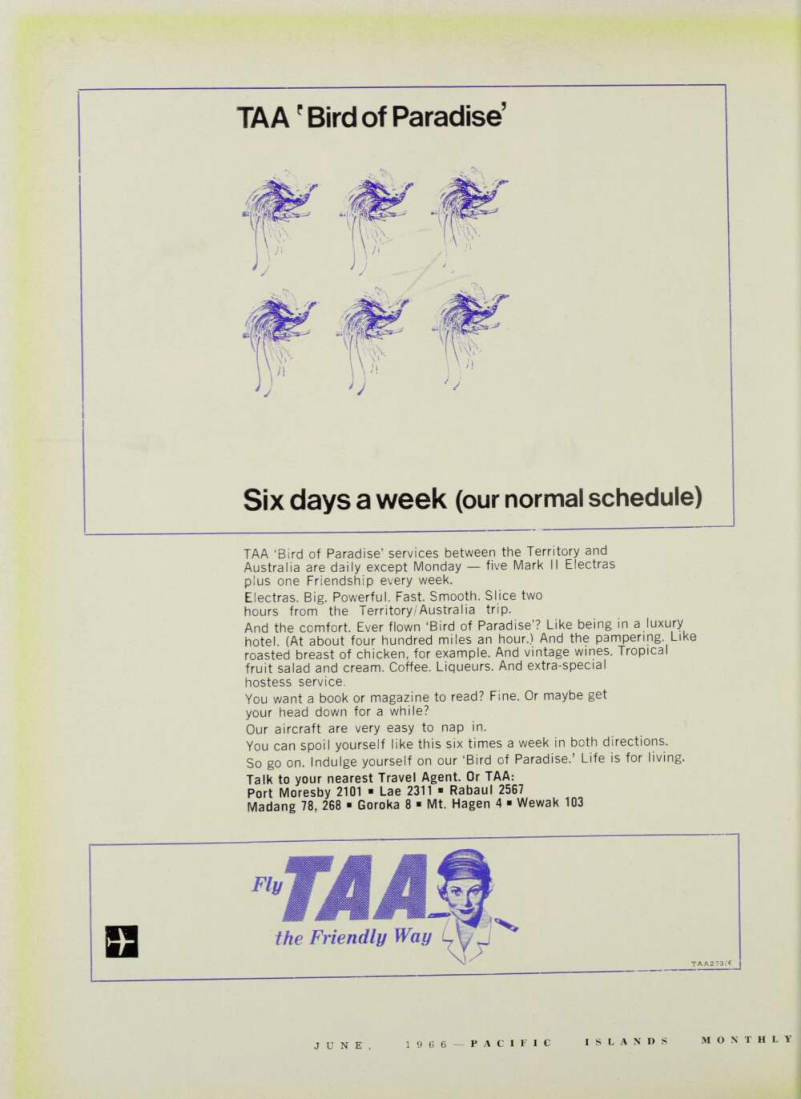 2
2 3
3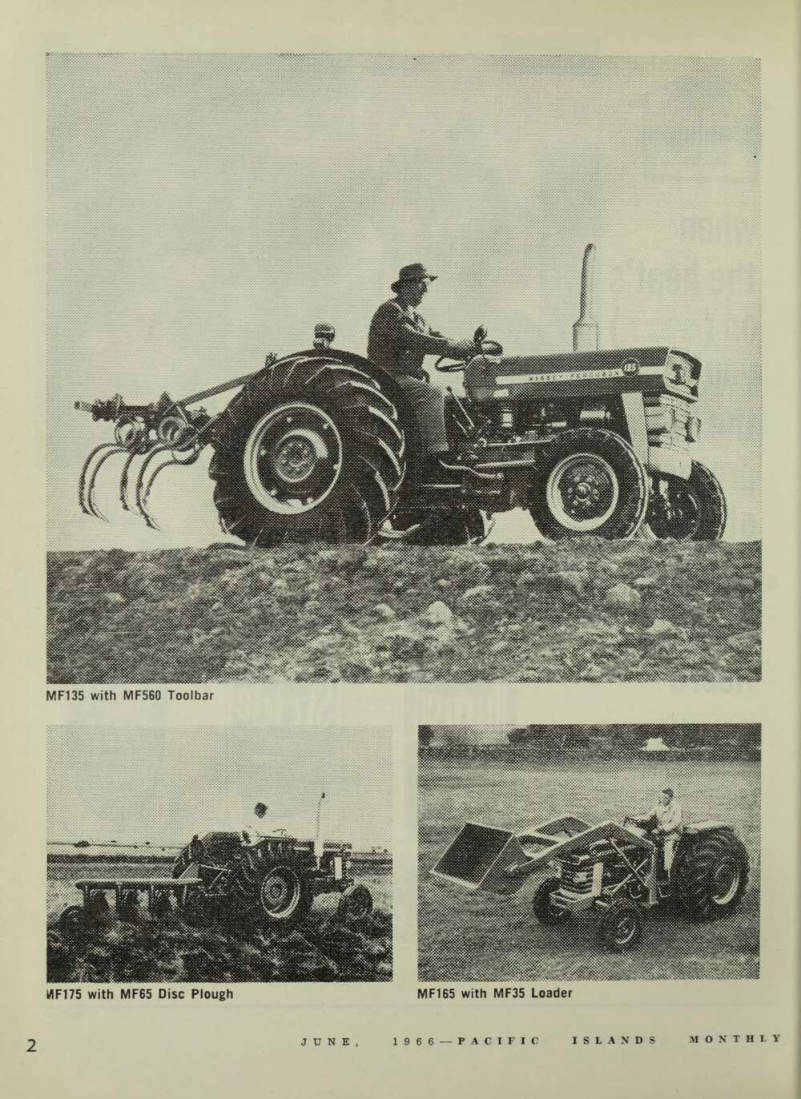 4
4 5
5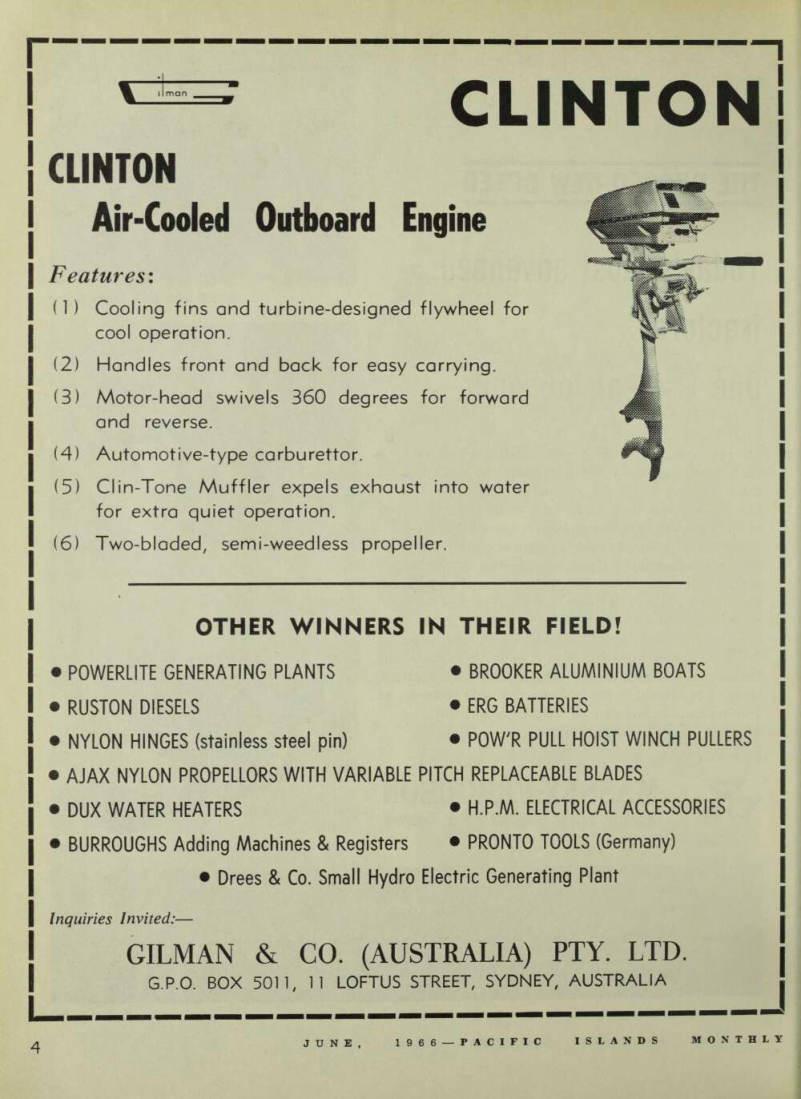 6
6 7
7 8
8 9
9 10
10 11
11 12
12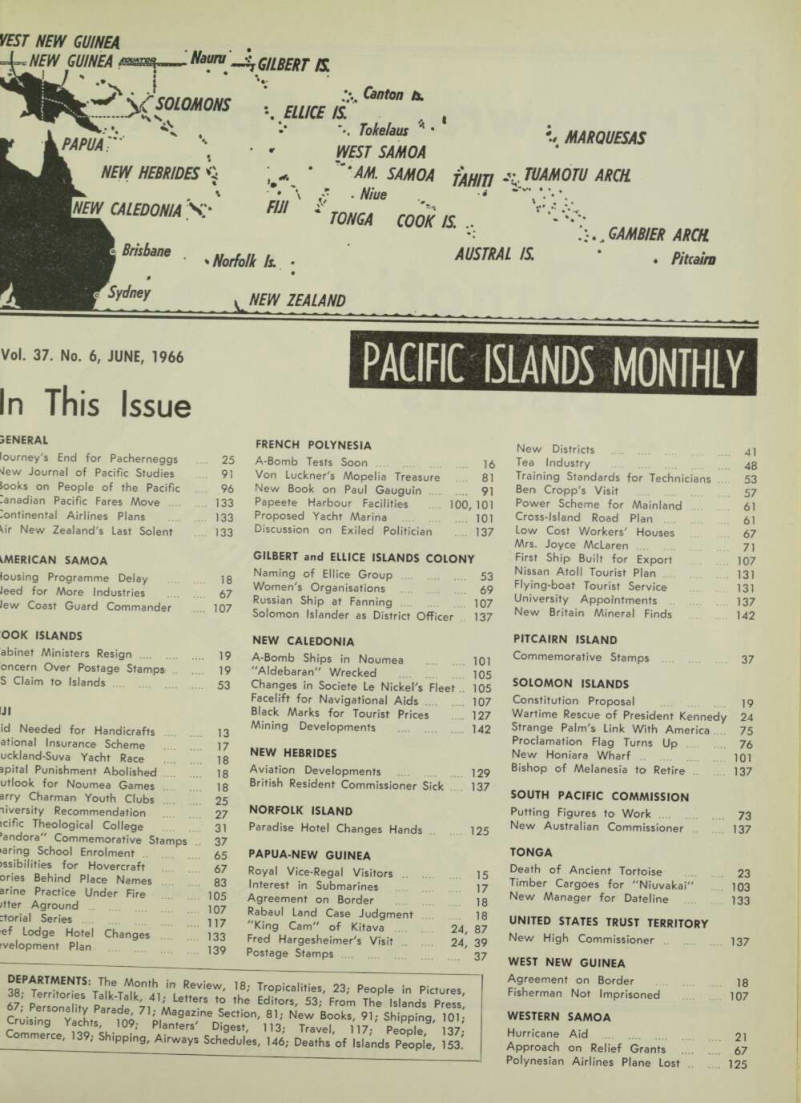 13
13 14
14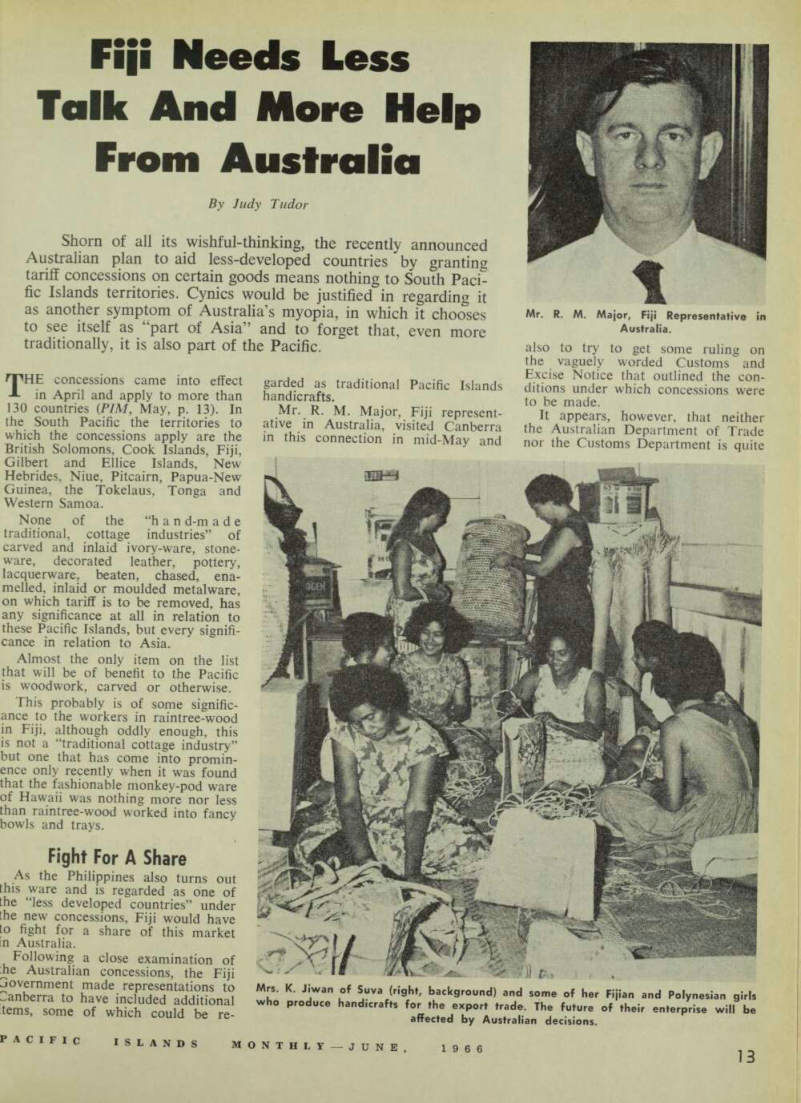 15
15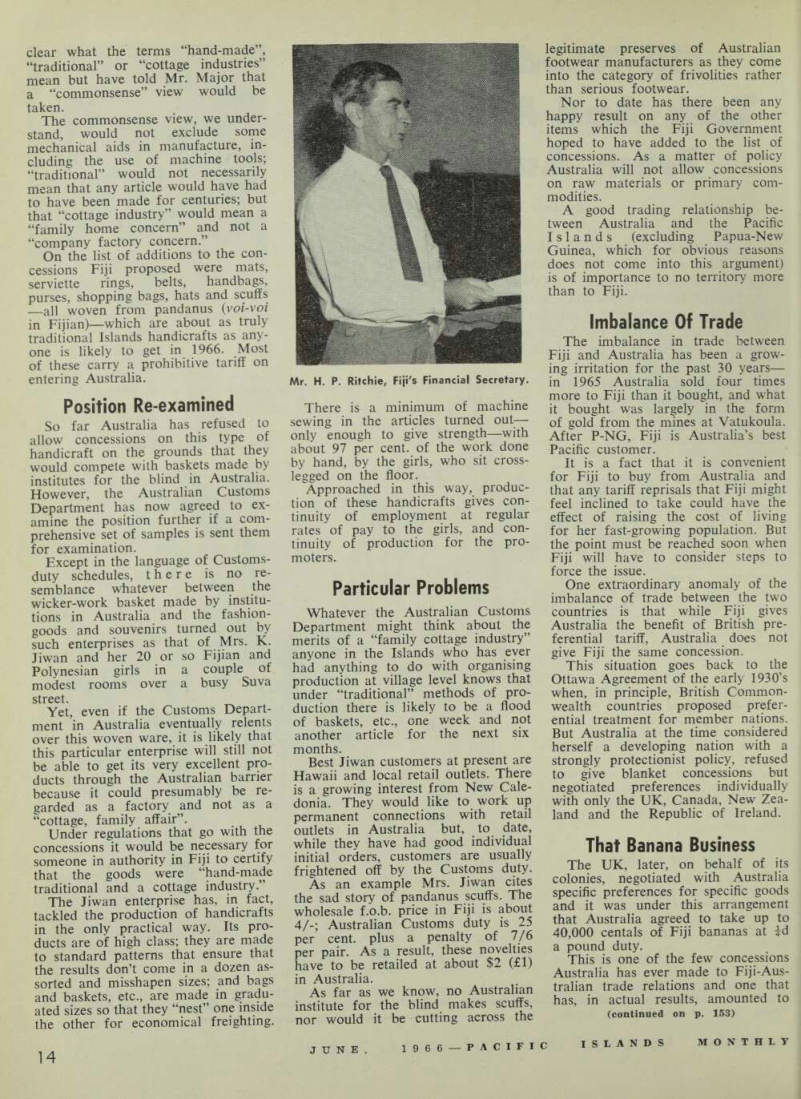 16
16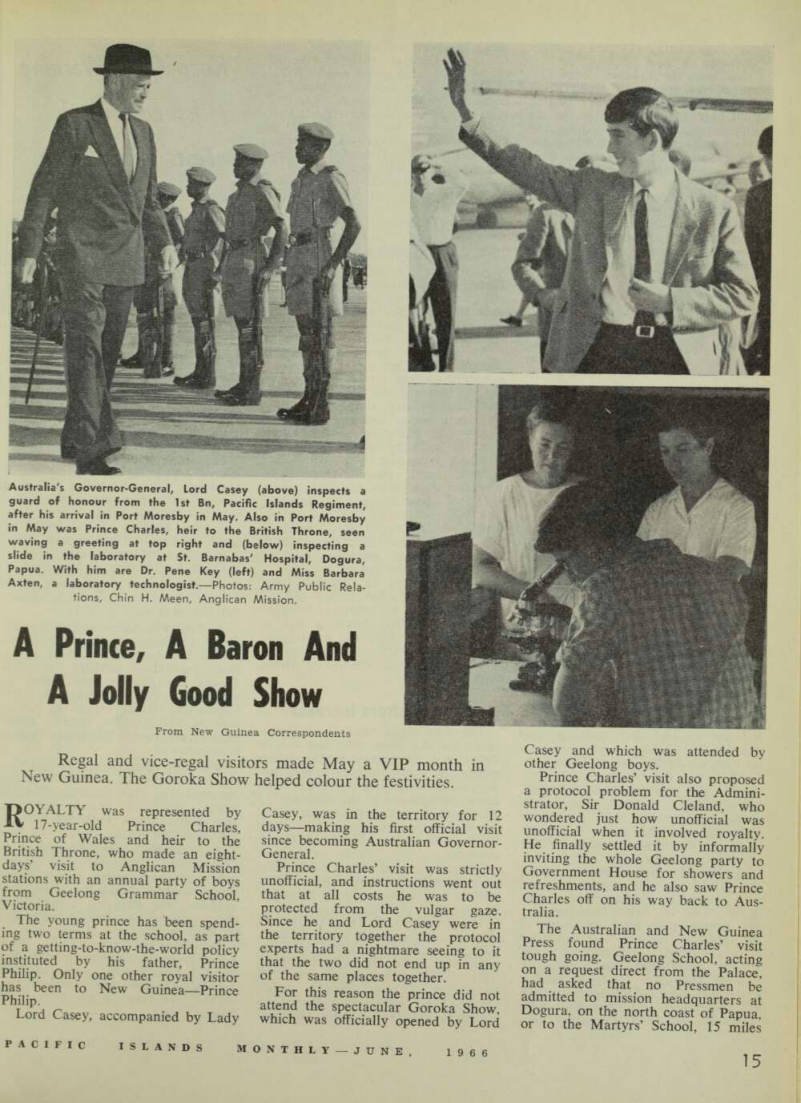 17
17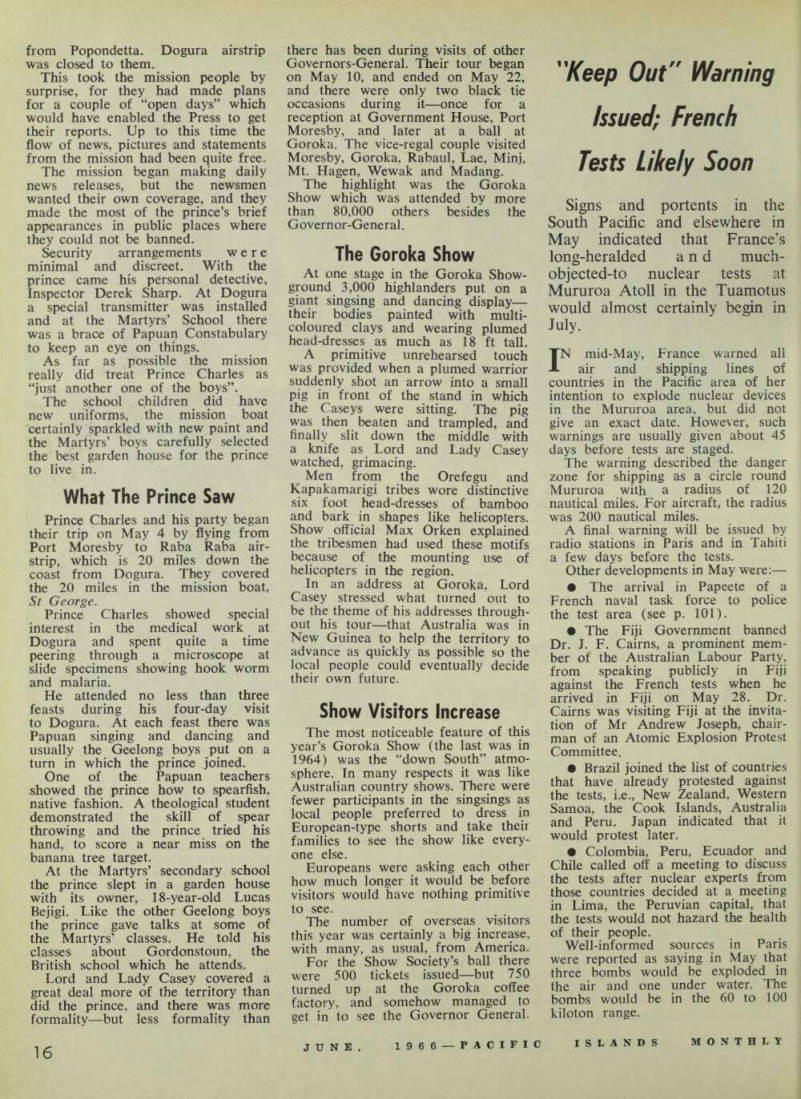 18
18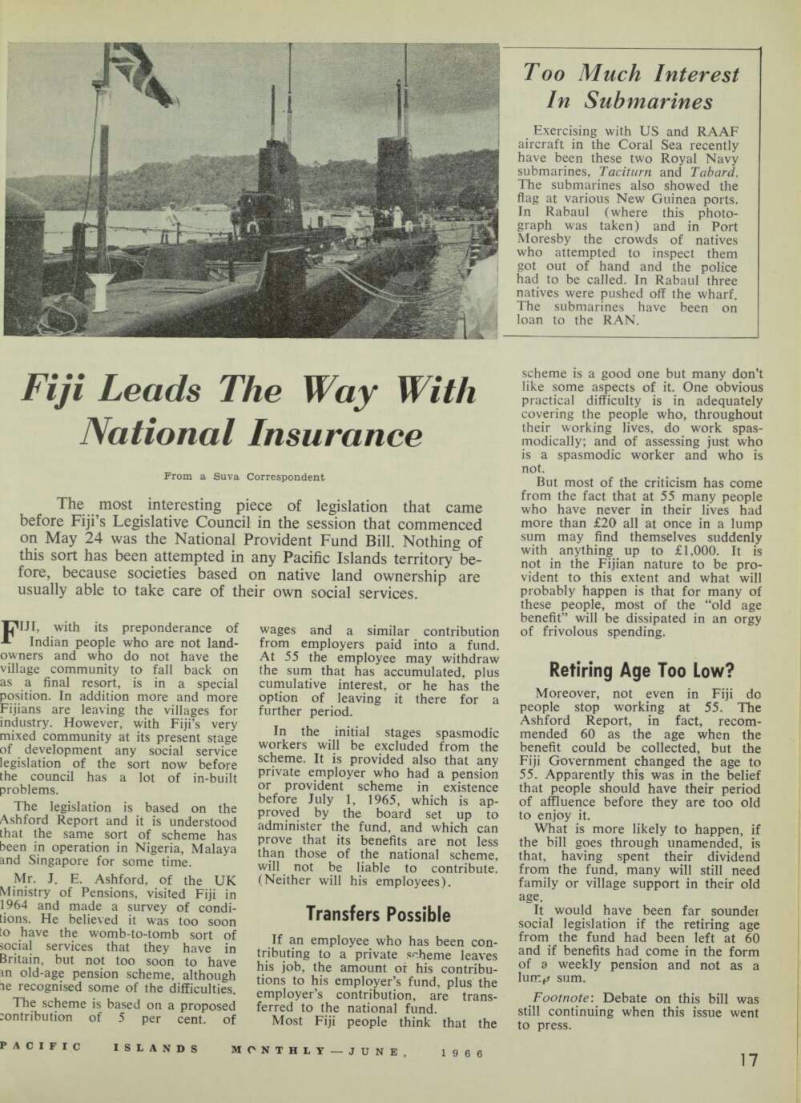 19
19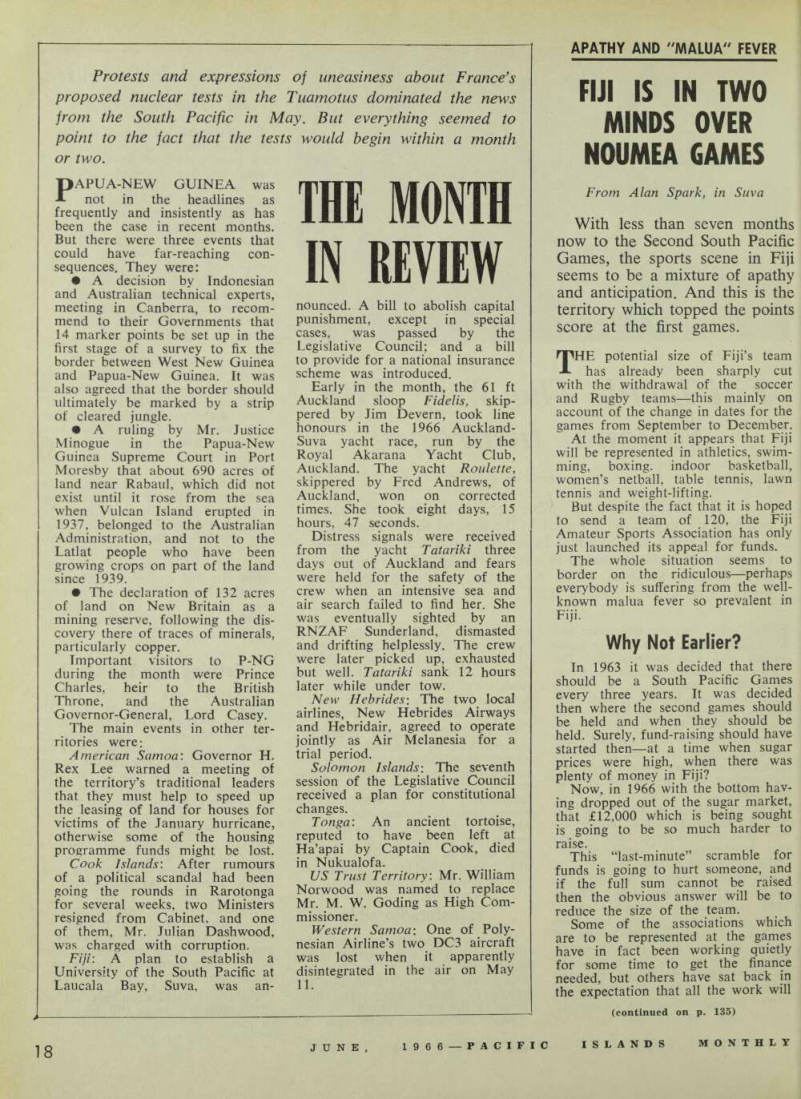 20
20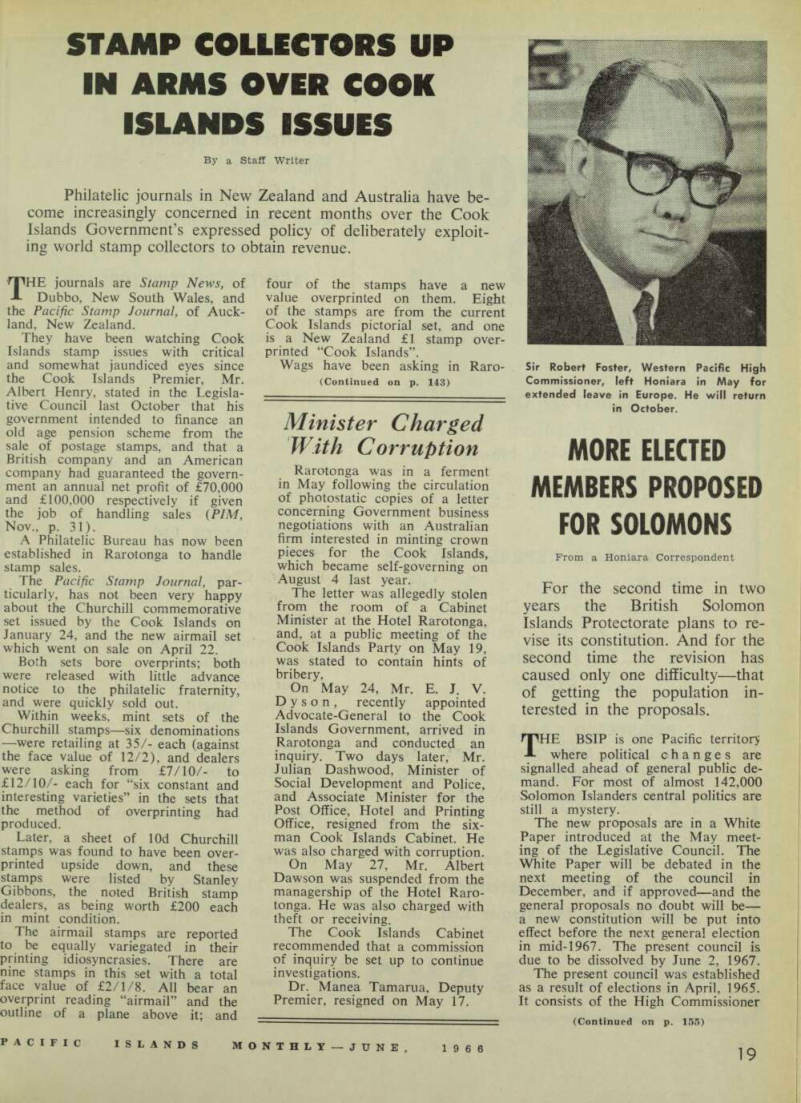 21
21 22
22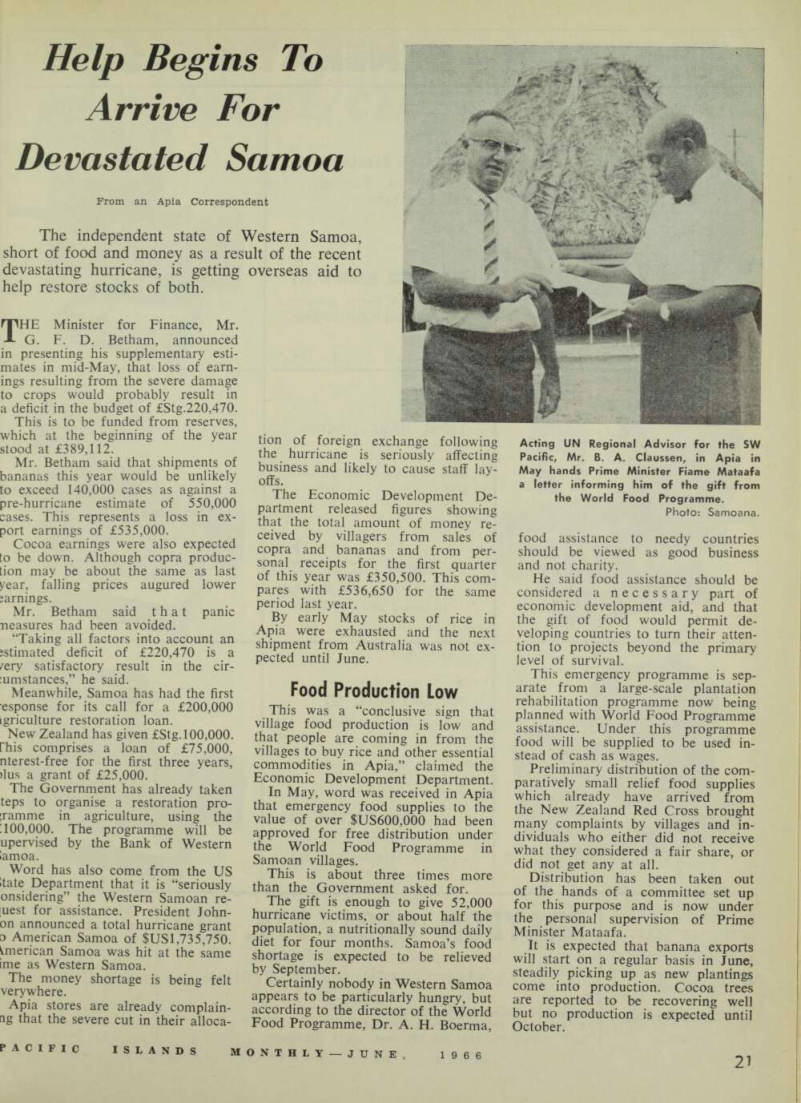 23
23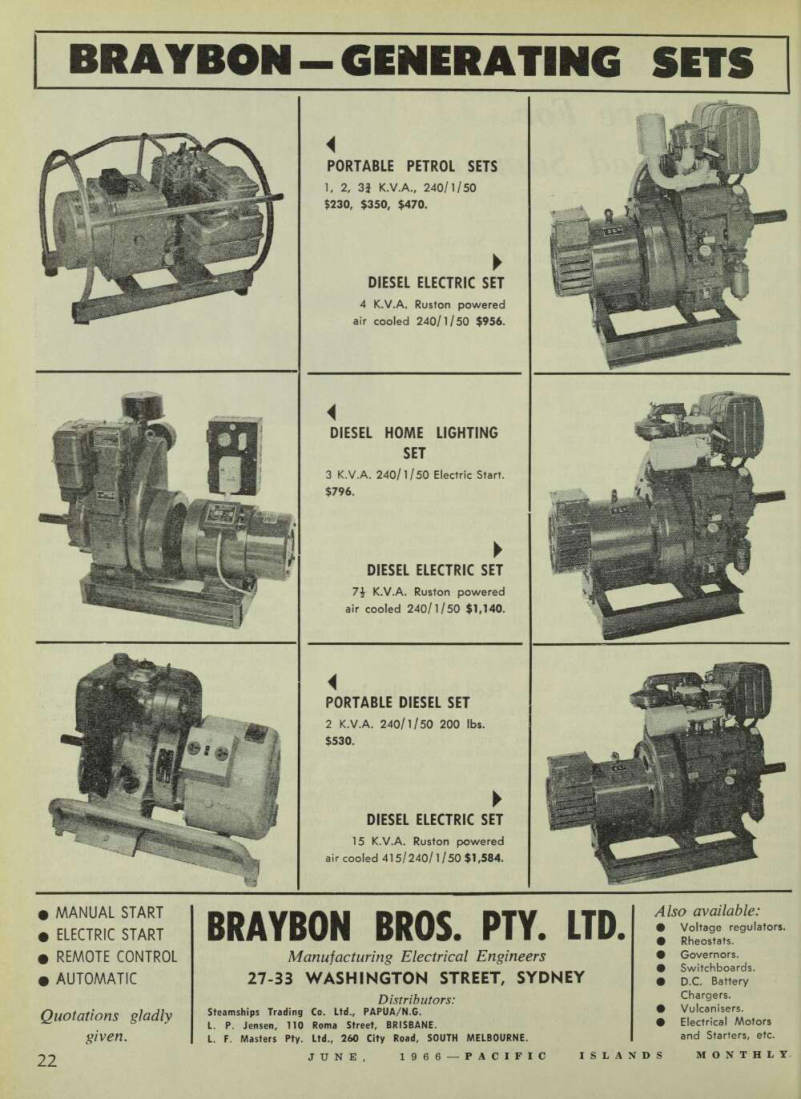 24
24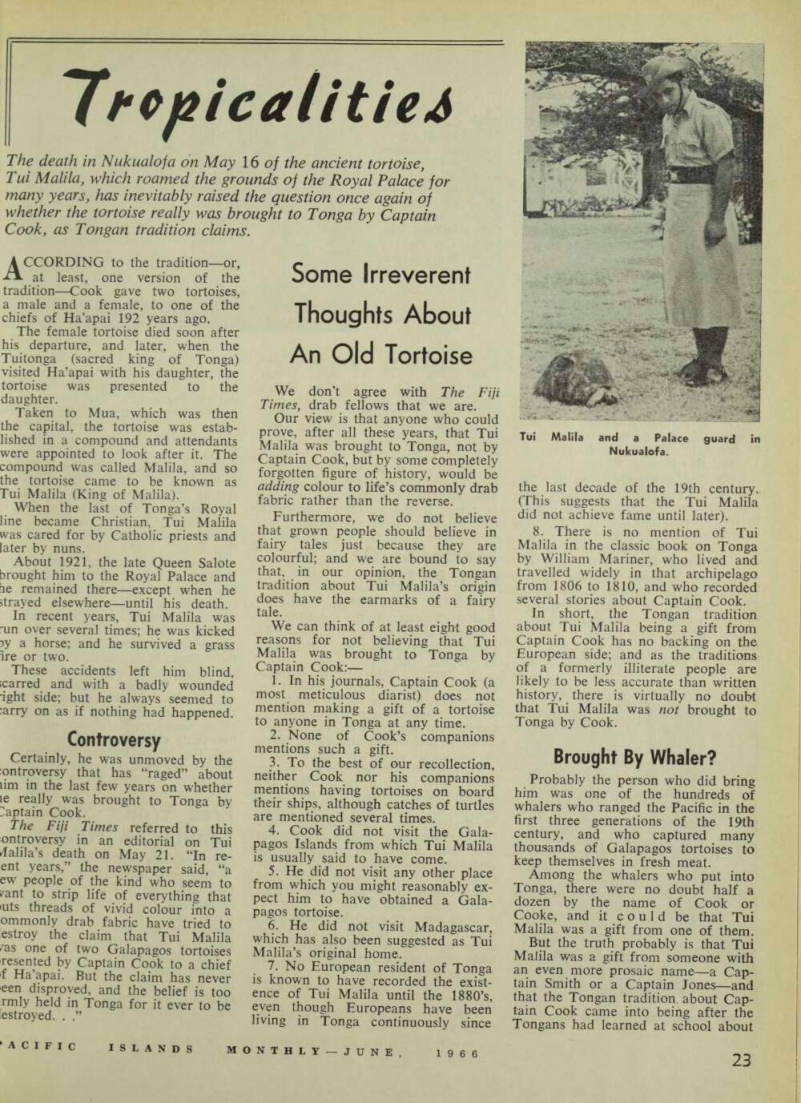 25
25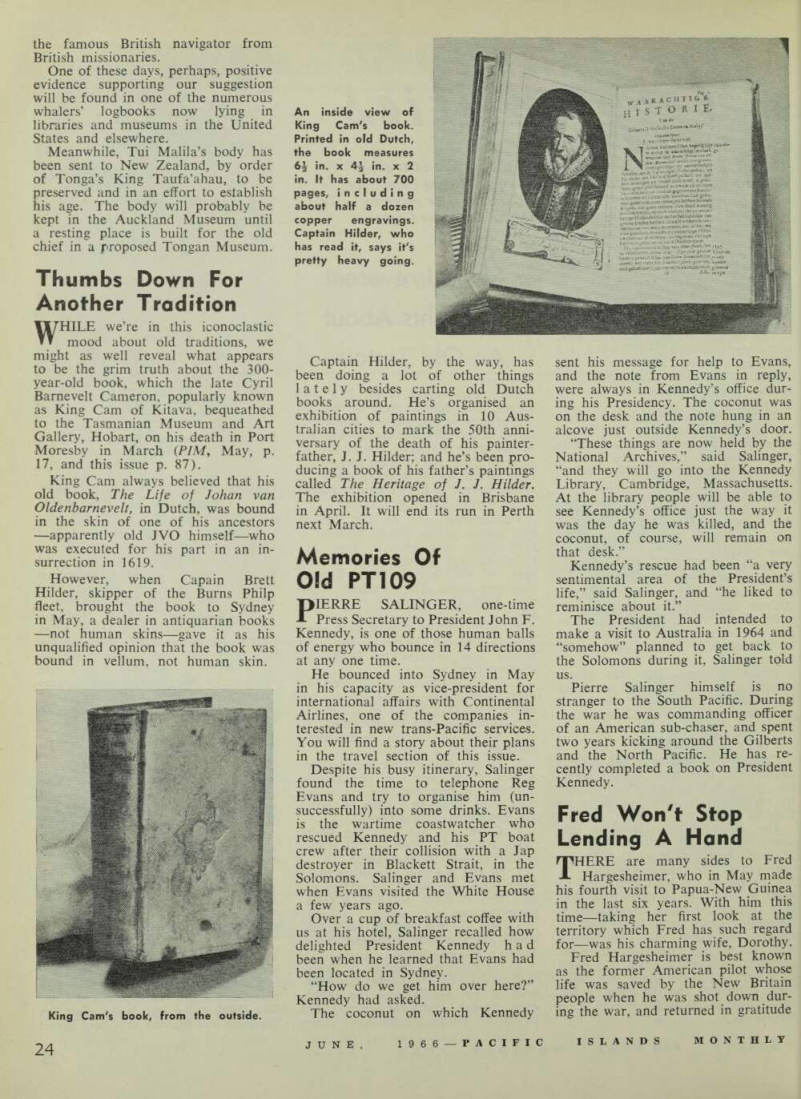 26
26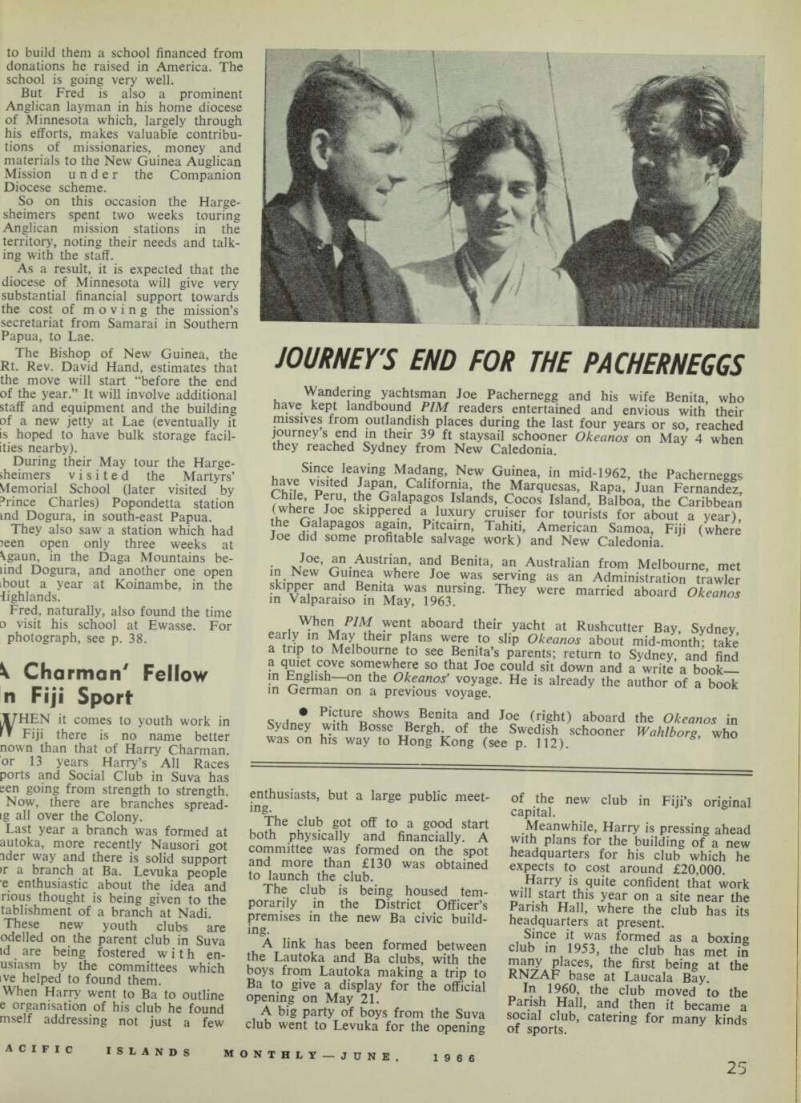 27
27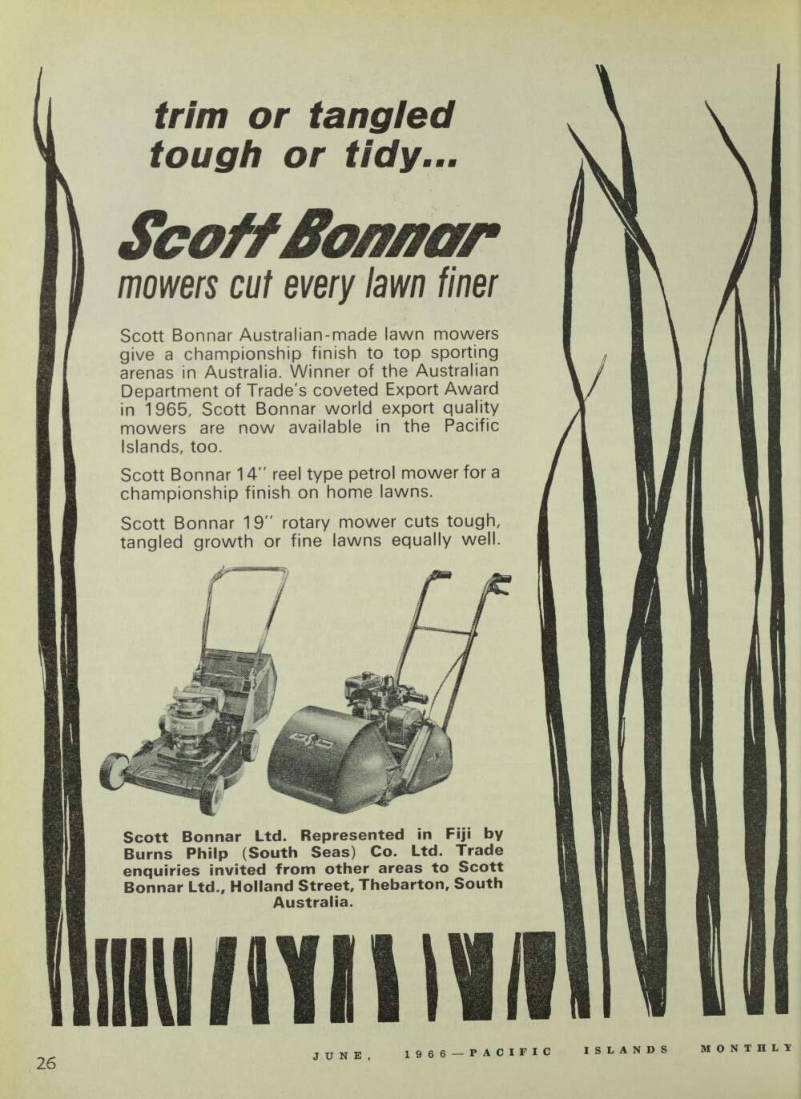 28
28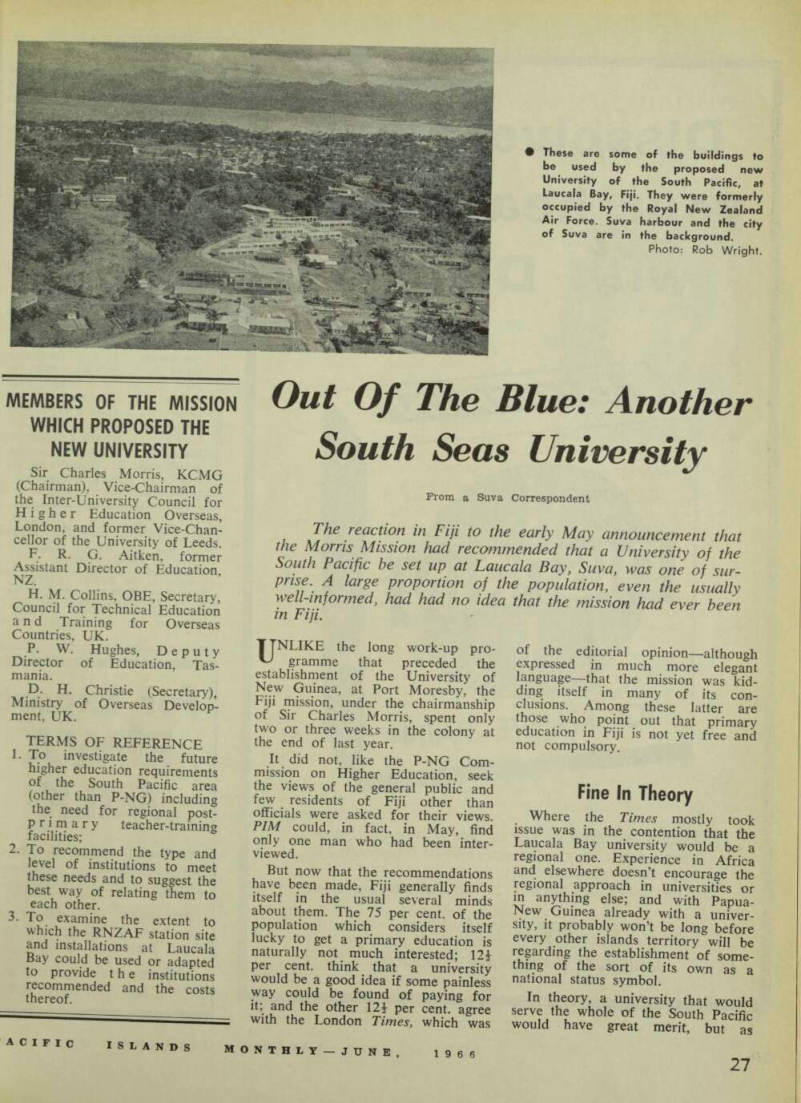 29
29 30
30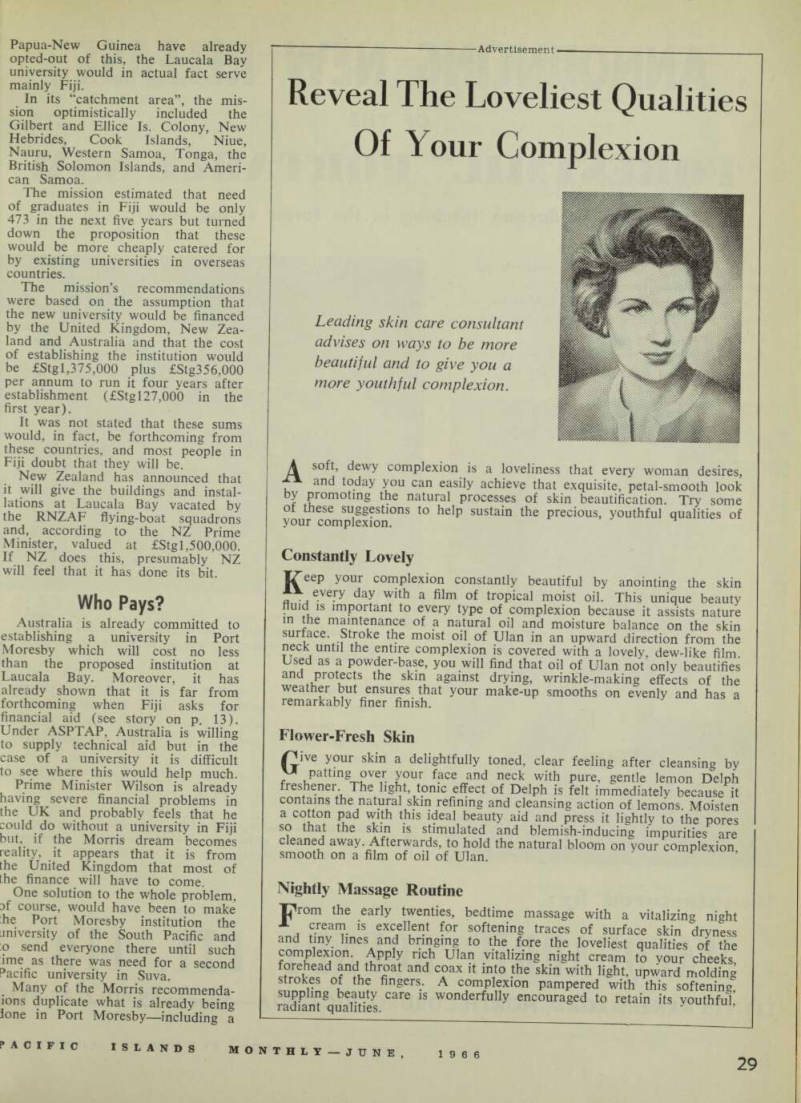 31
31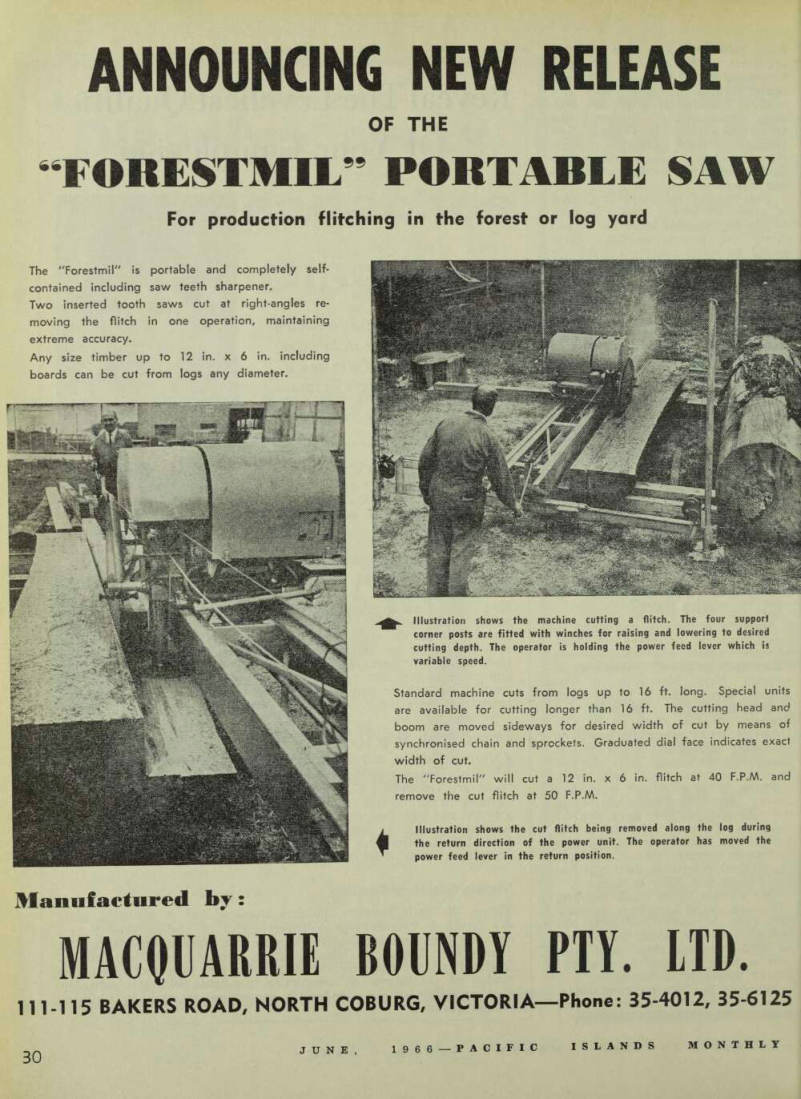 32
32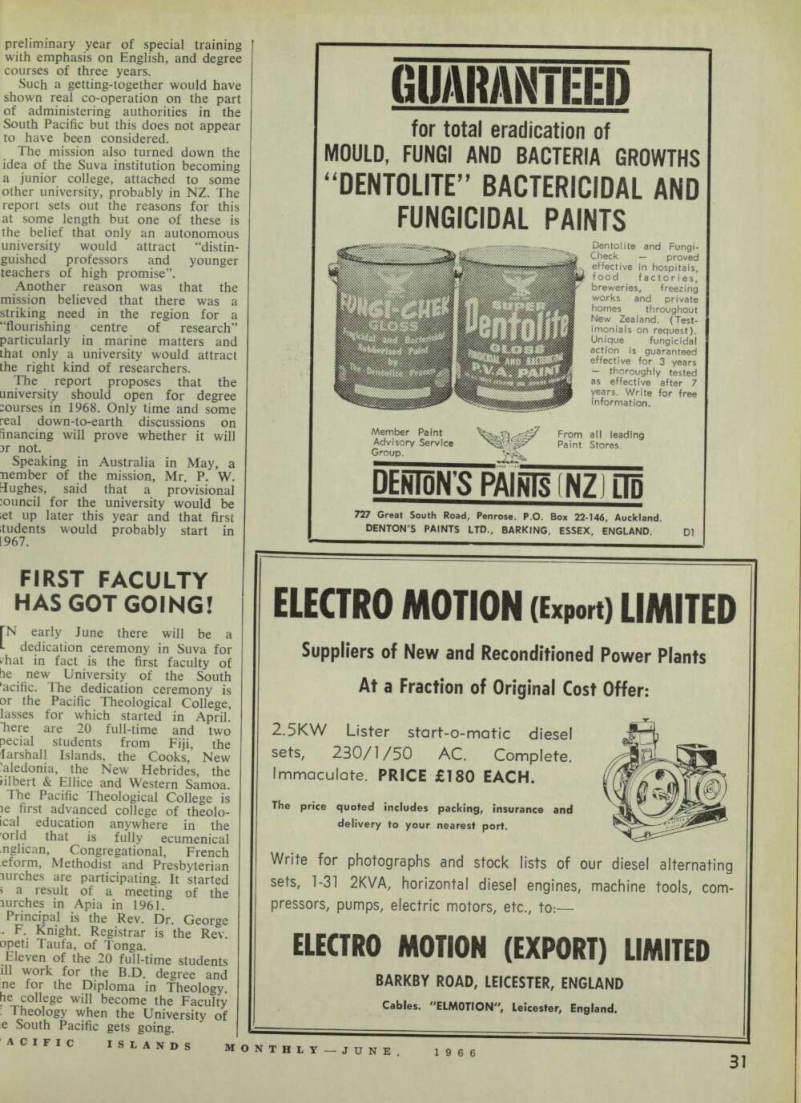 33
33 34
34 35
35 36
36 37
37 38
38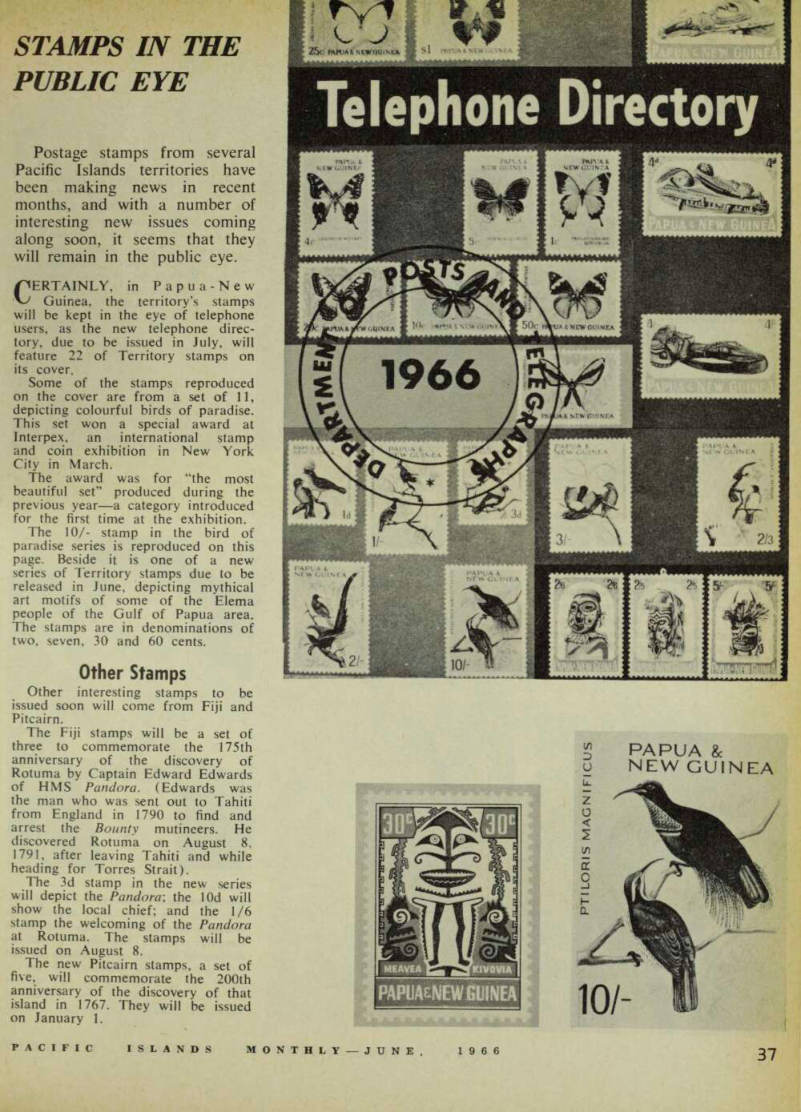 39
39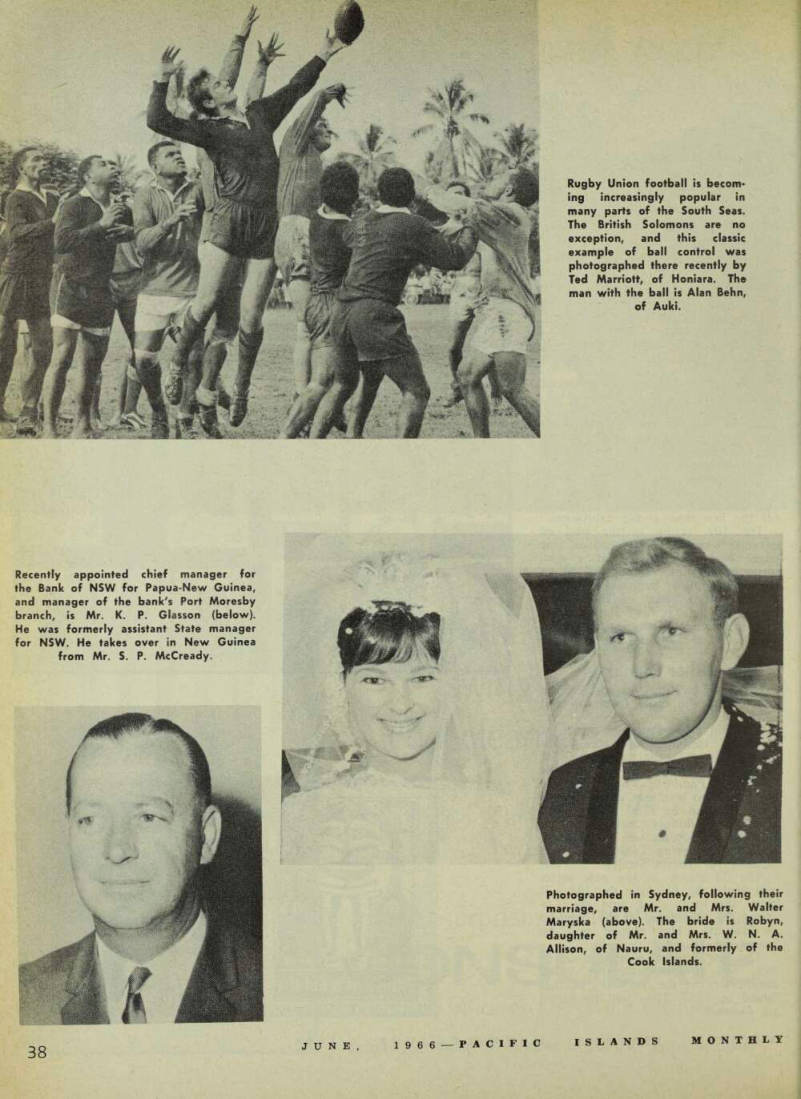 40
40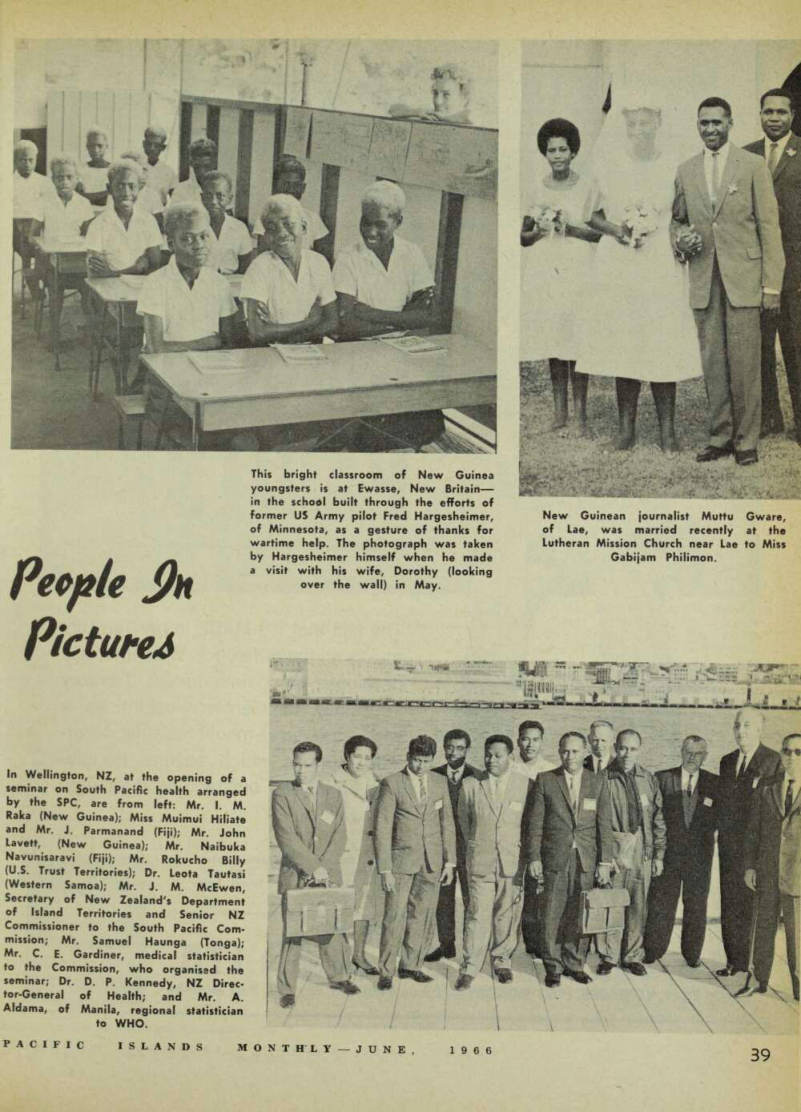 41
41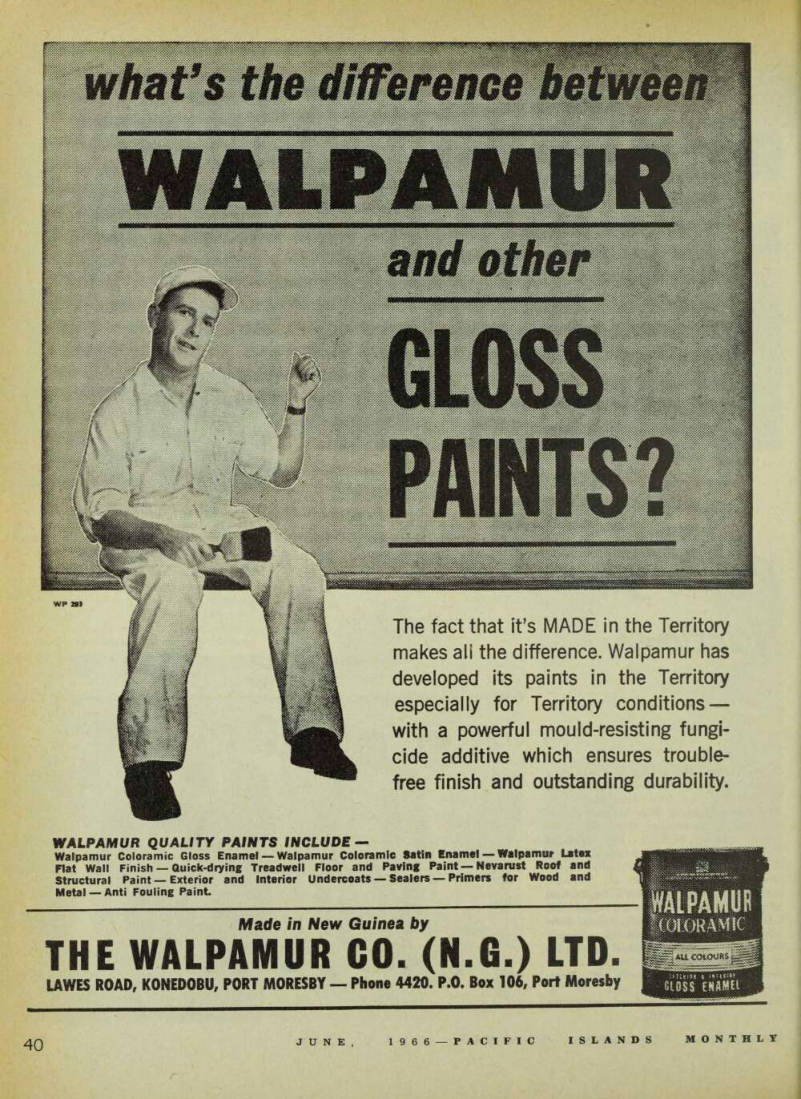 42
42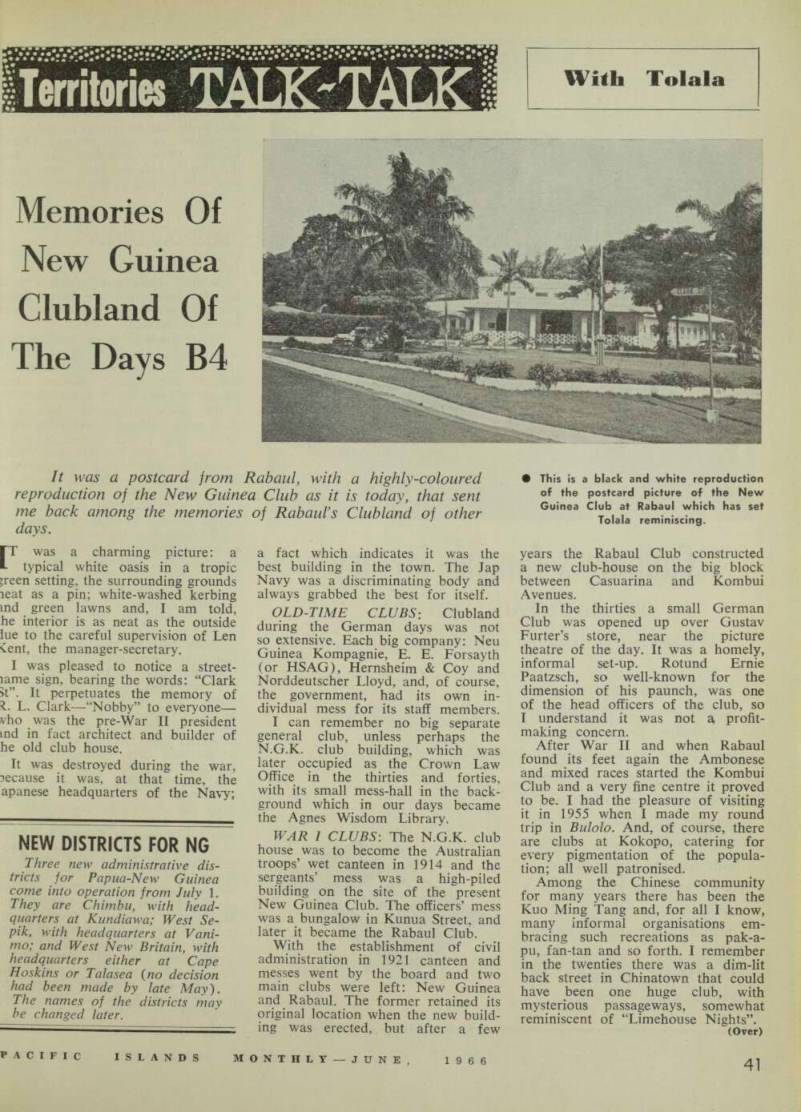 43
43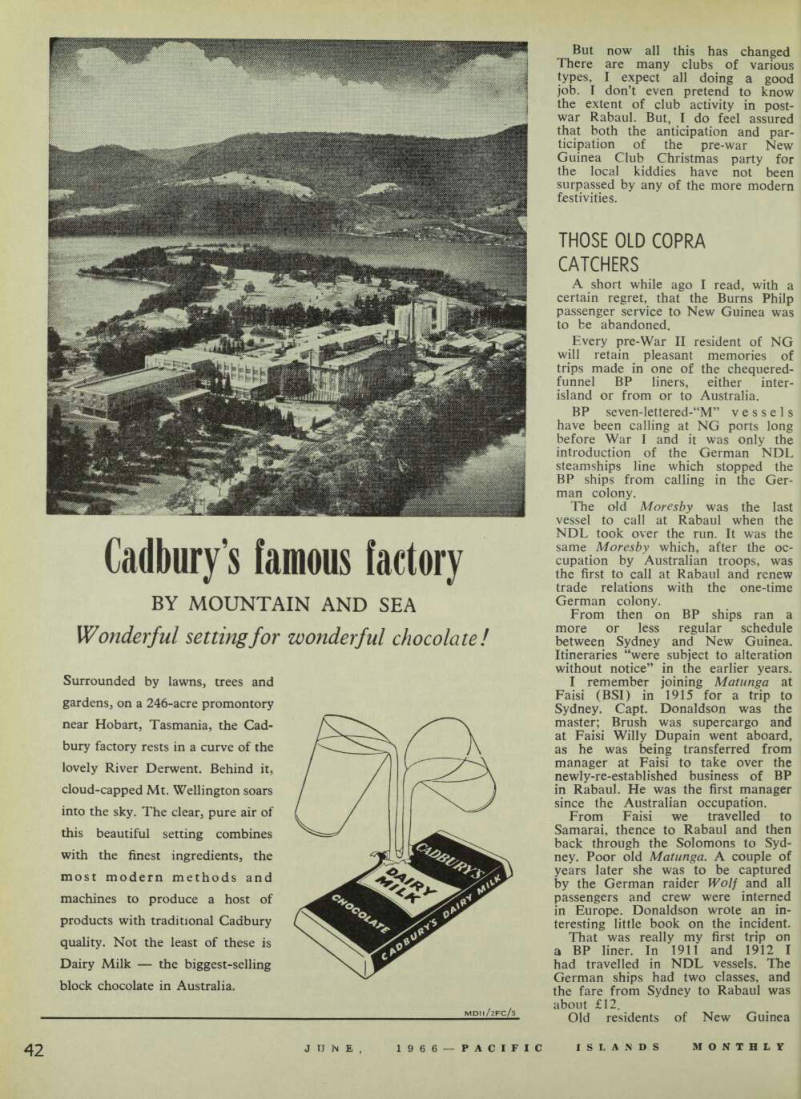 44
44 45
45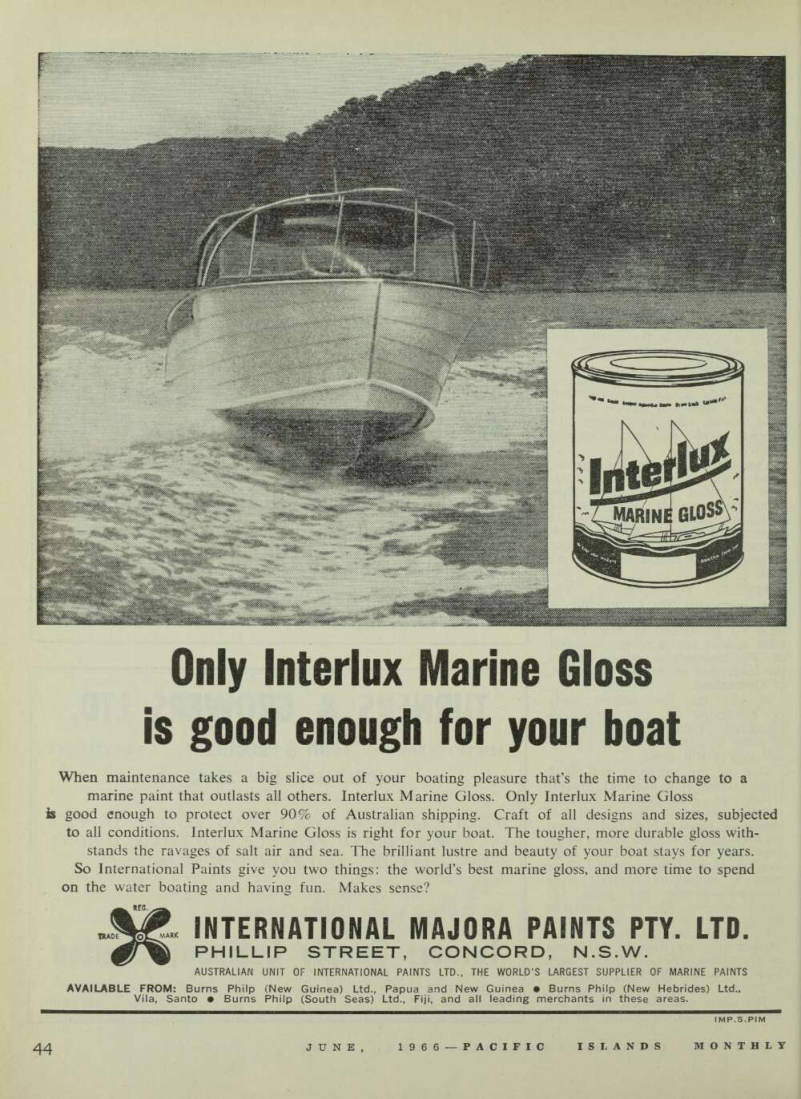 46
46 47
47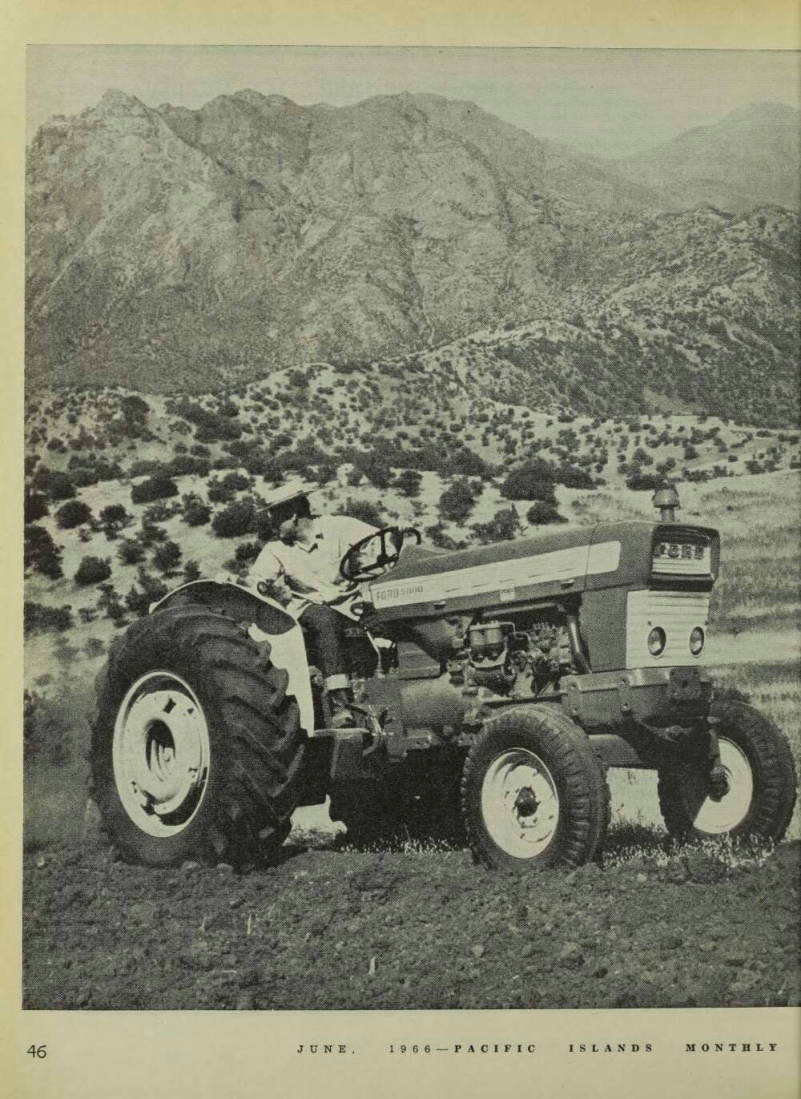 48
48 49
49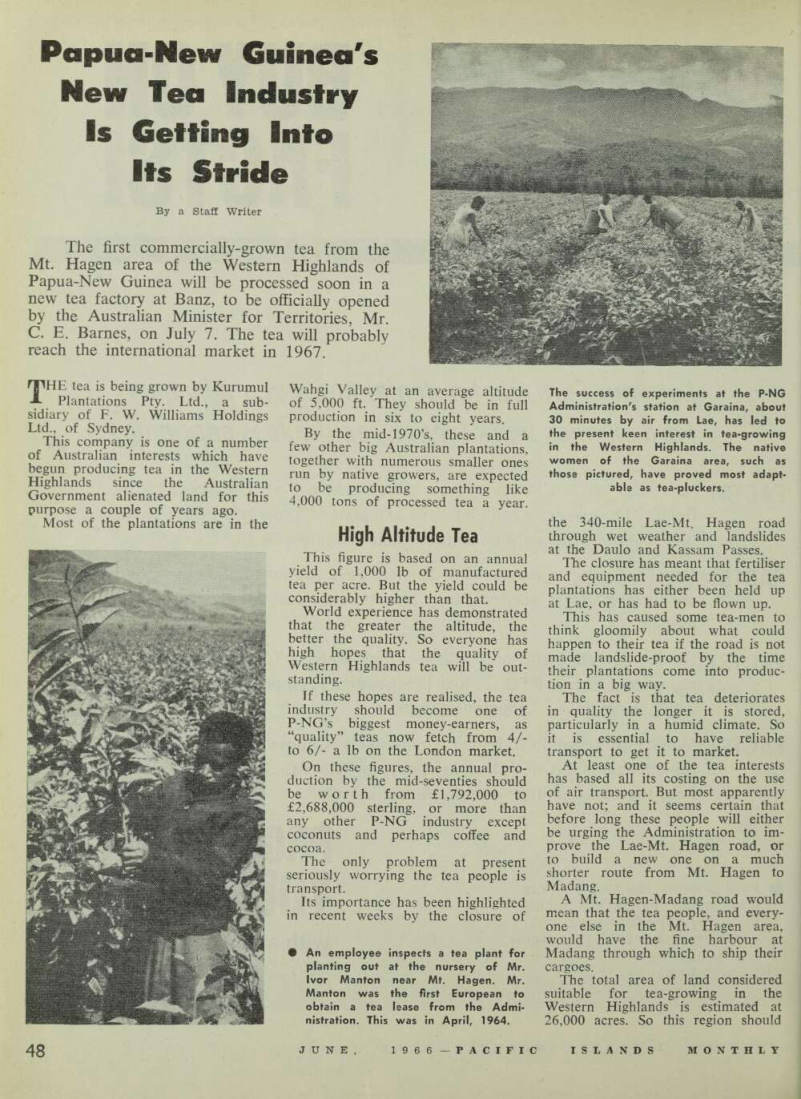 50
50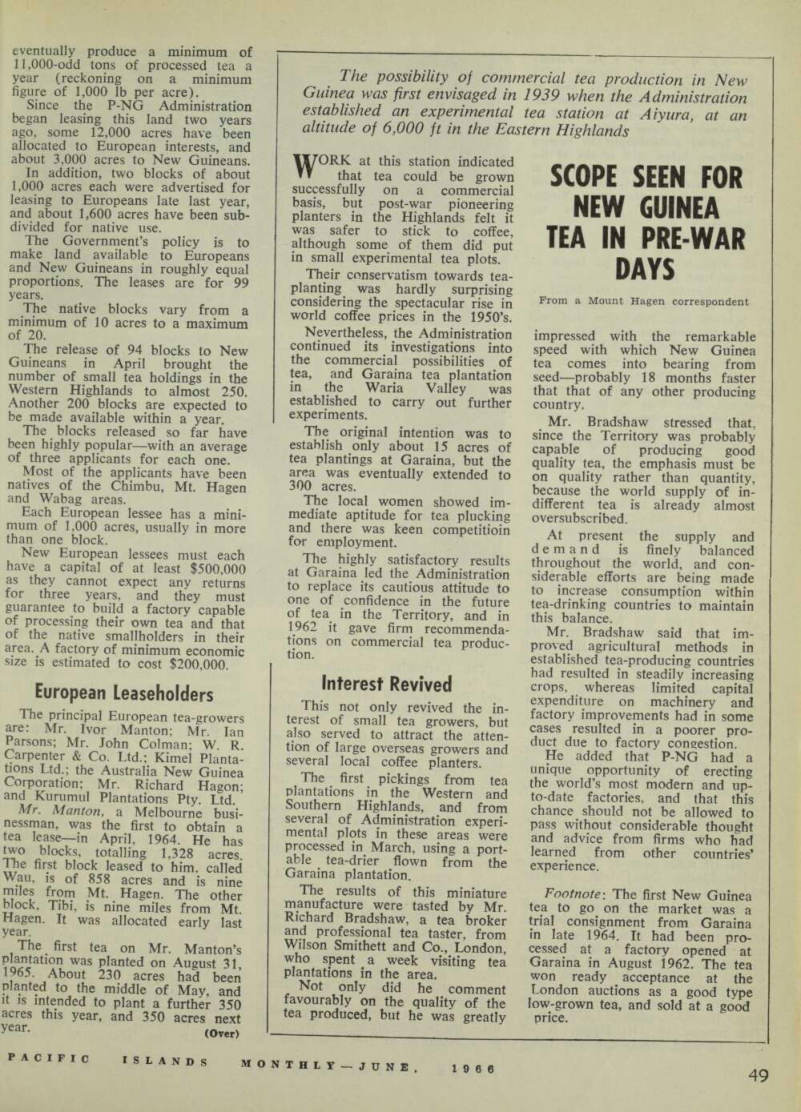 51
51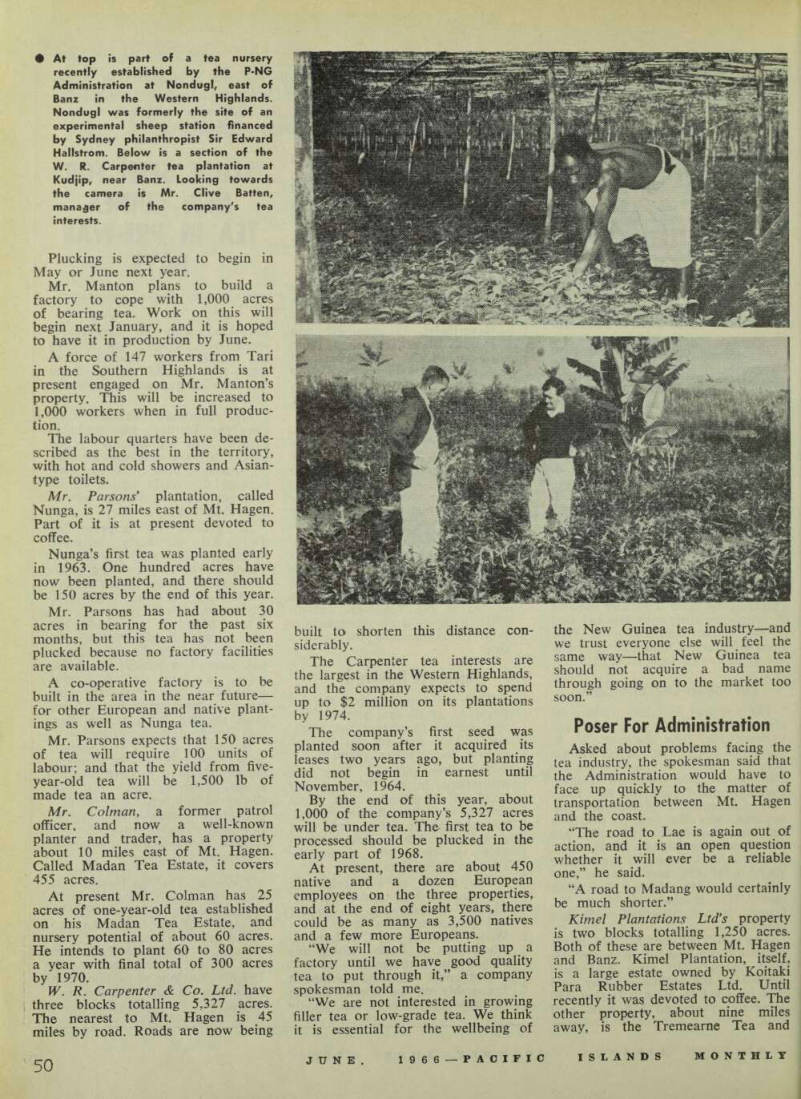 52
52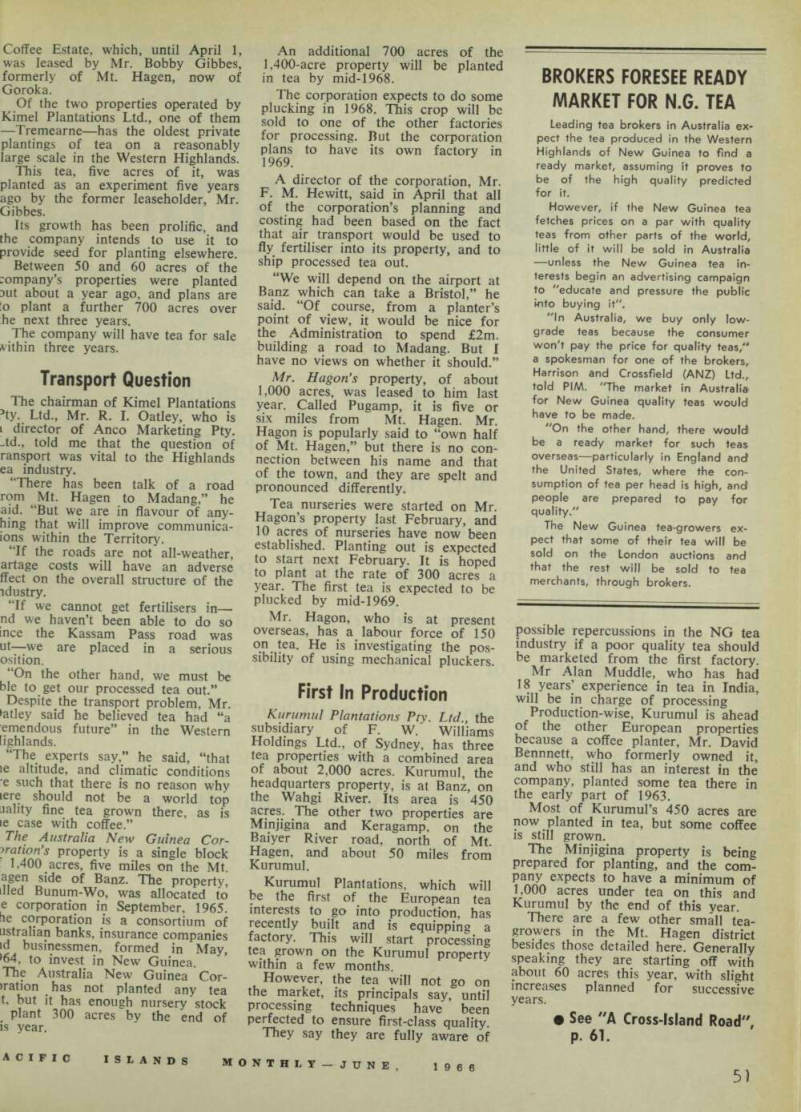 53
53 54
54 55
55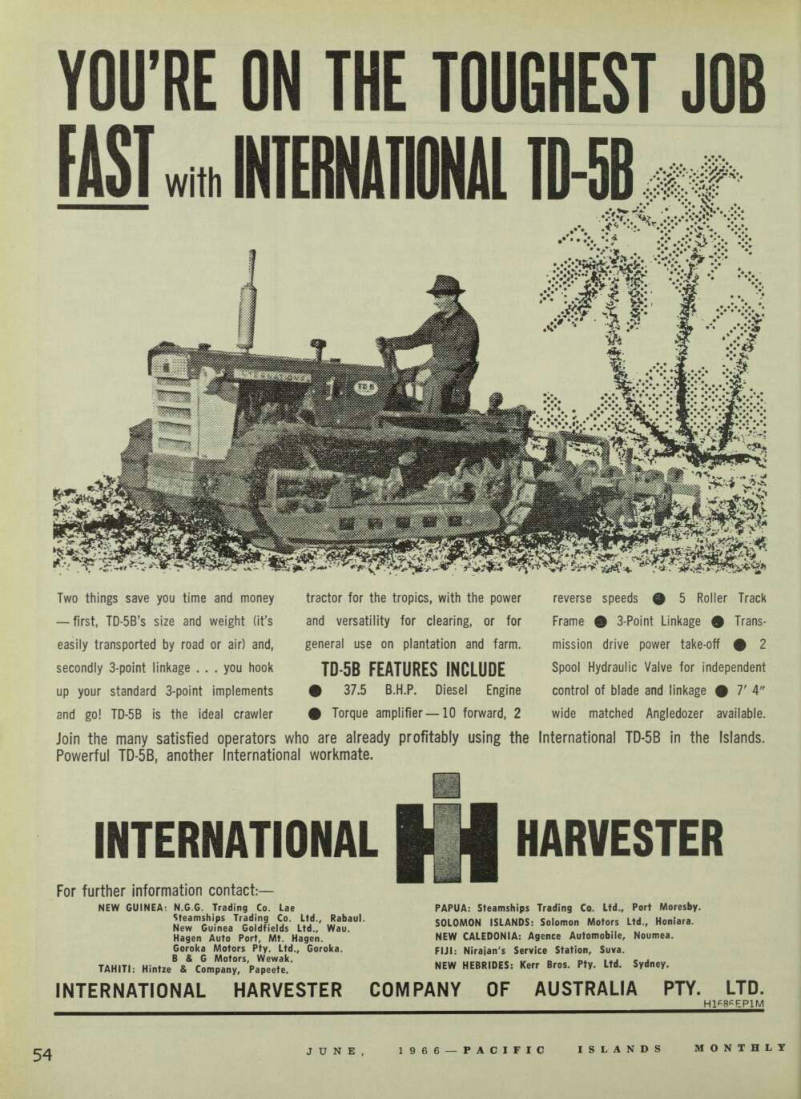 56
56 57
57 58
58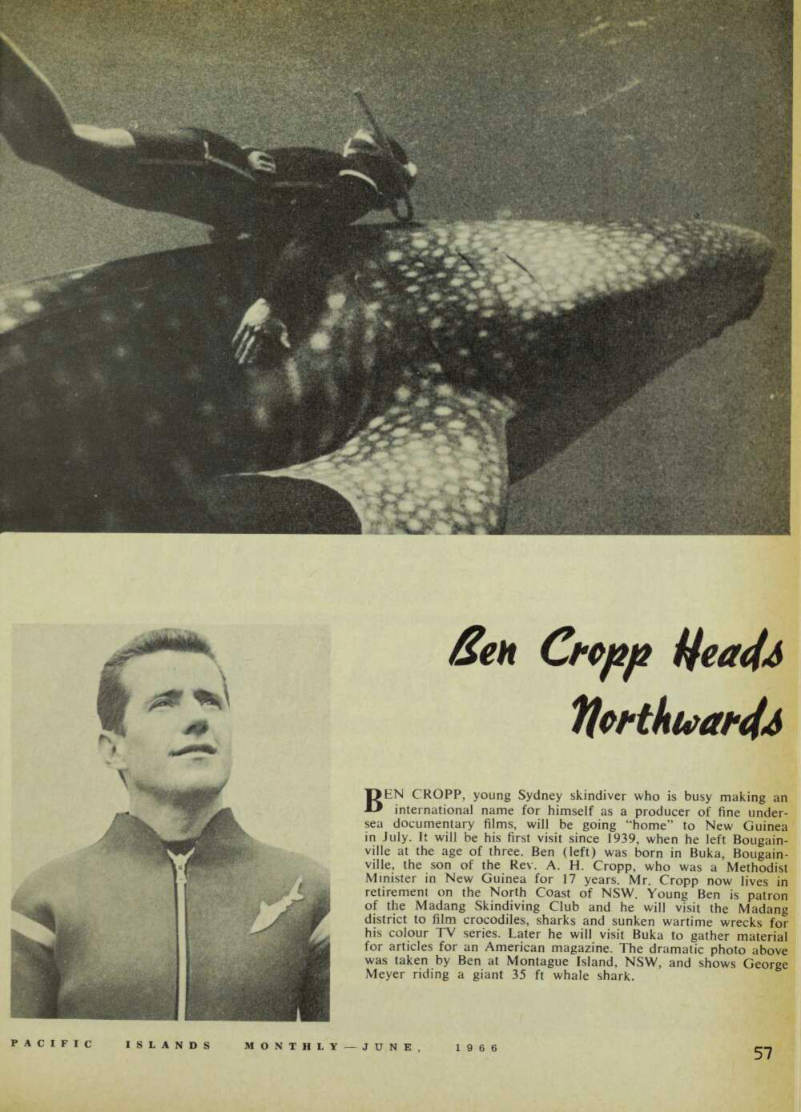 59
59 60
60 61
61 62
62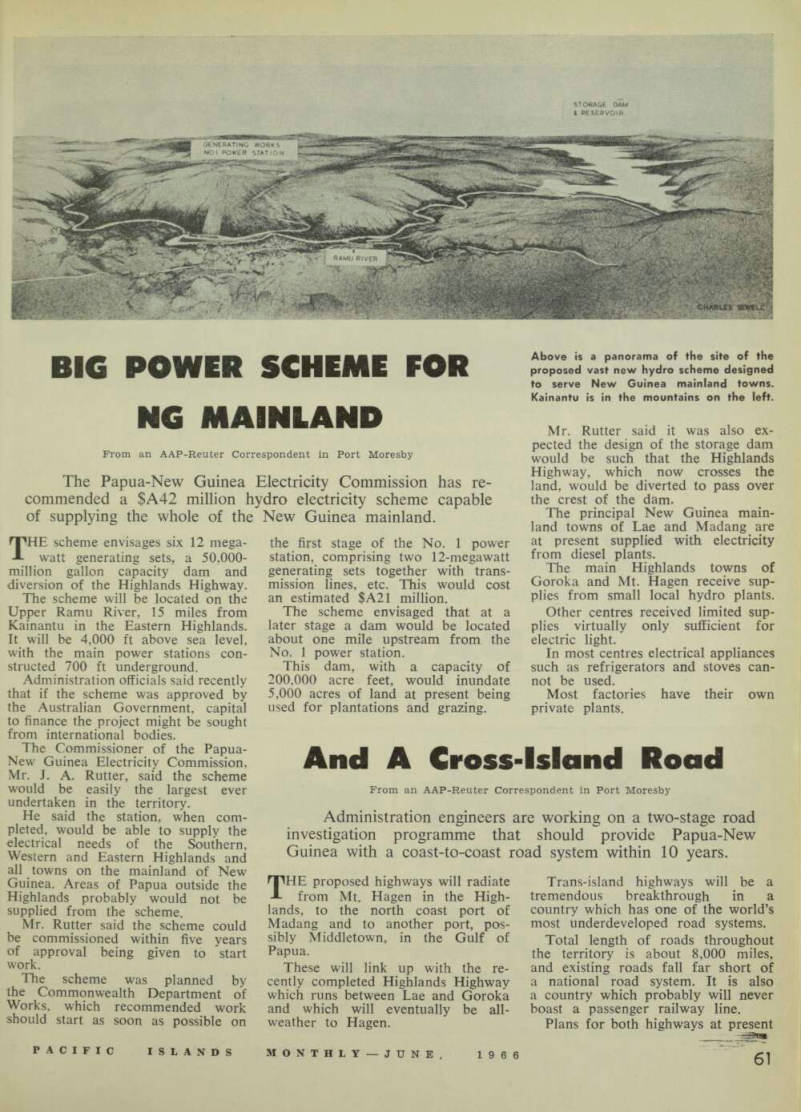 63
63 64
64 65
65 66
66 67
67 68
68 69
69 70
70 71
71 72
72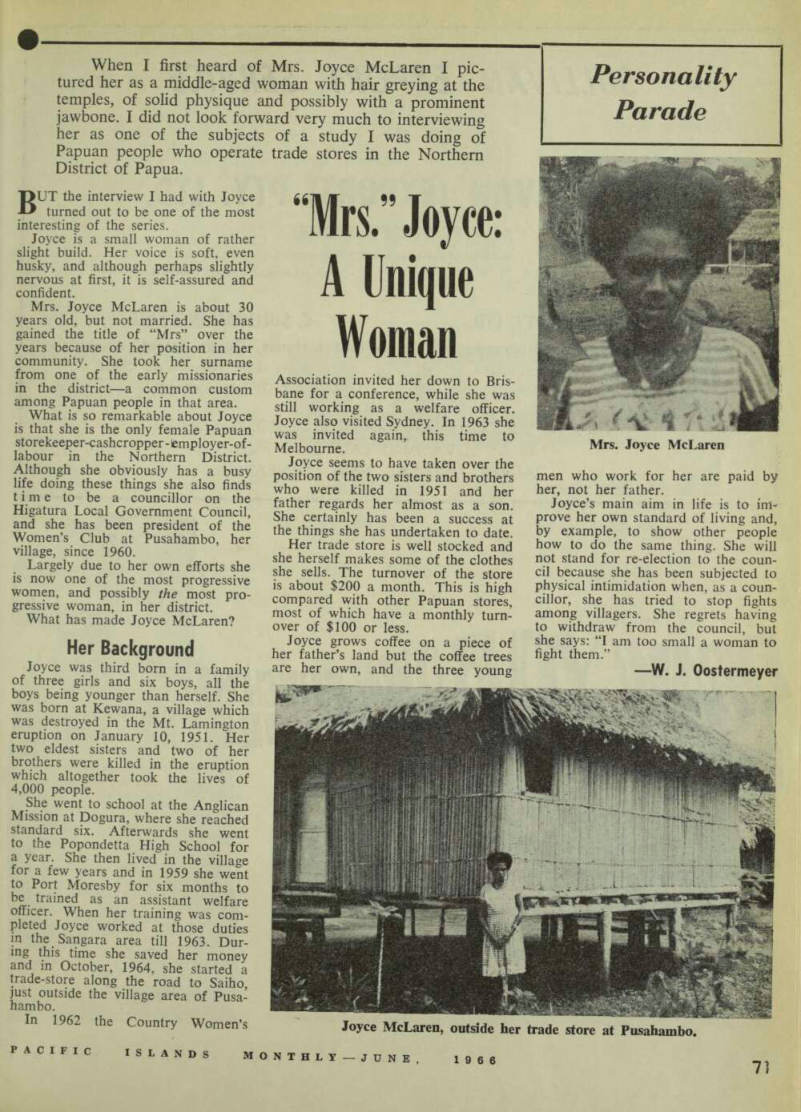 73
73 74
74 75
75 76
76 77
77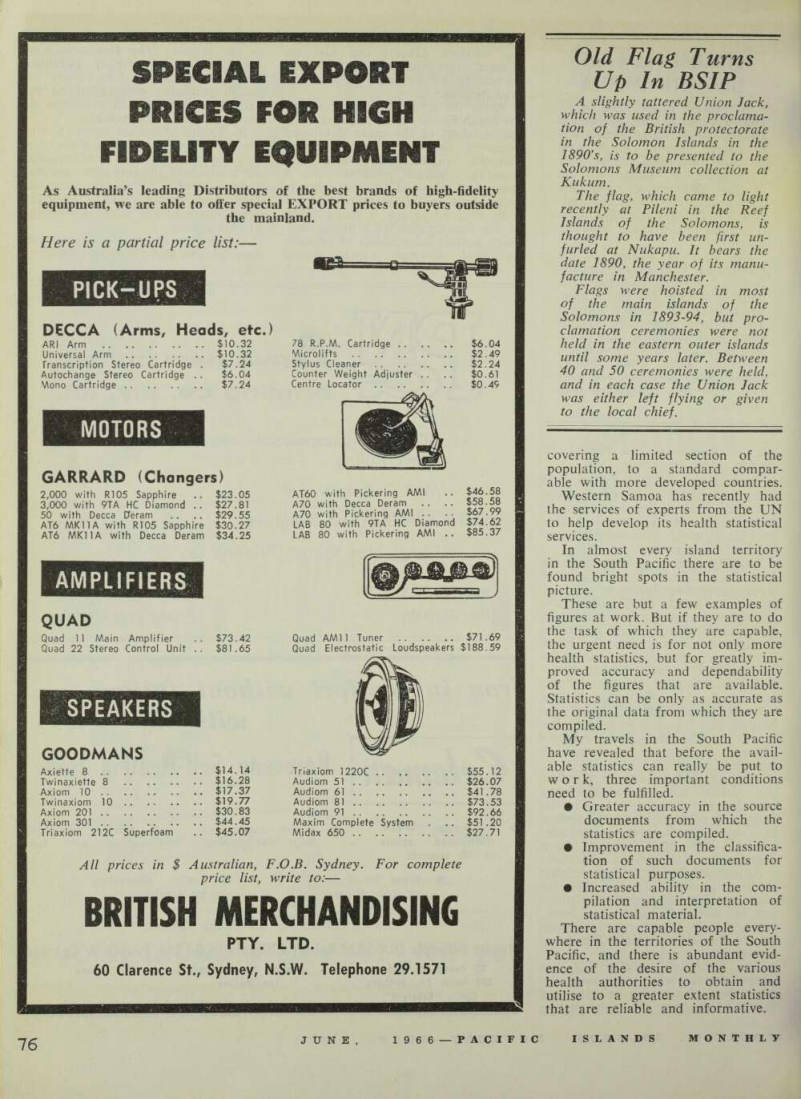 78
78 79
79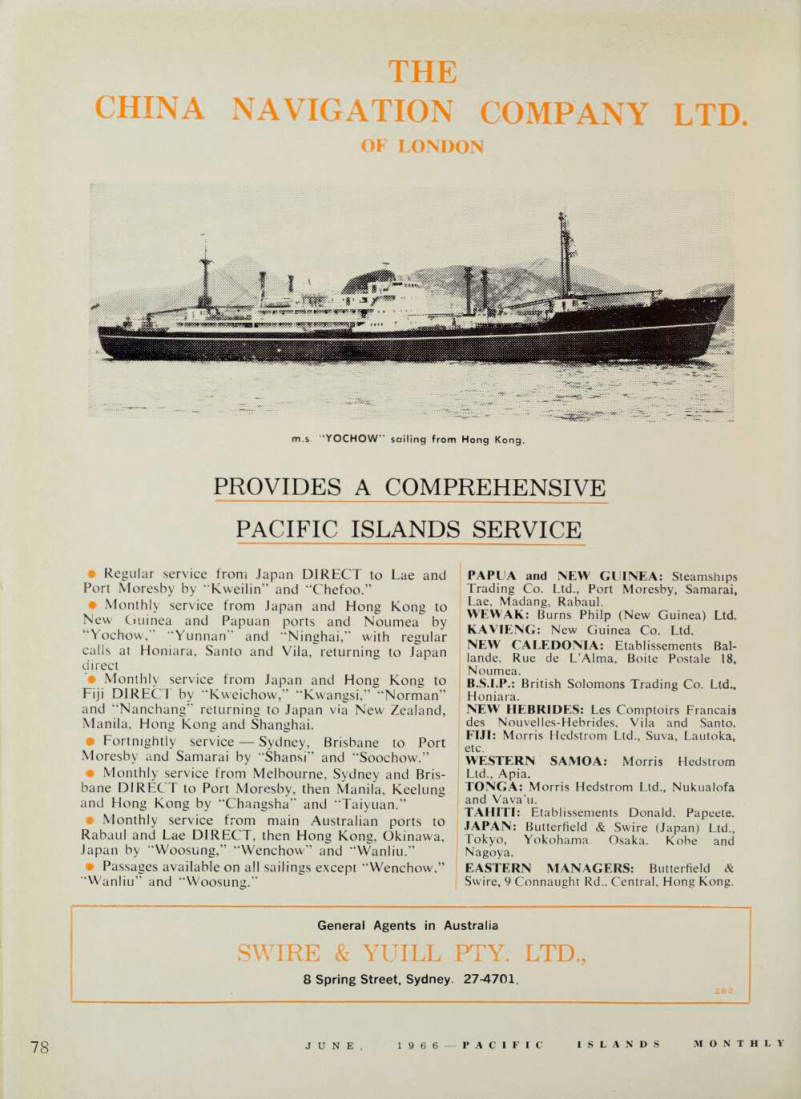 80
80 81
81 82
82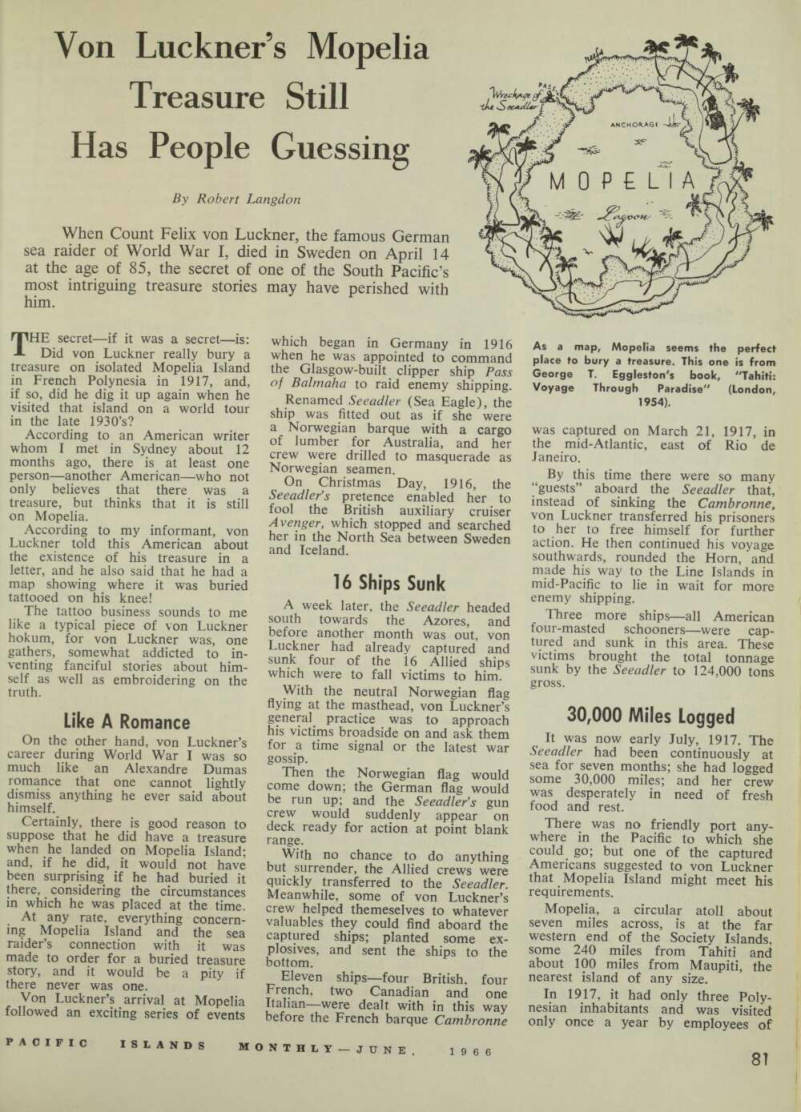 83
83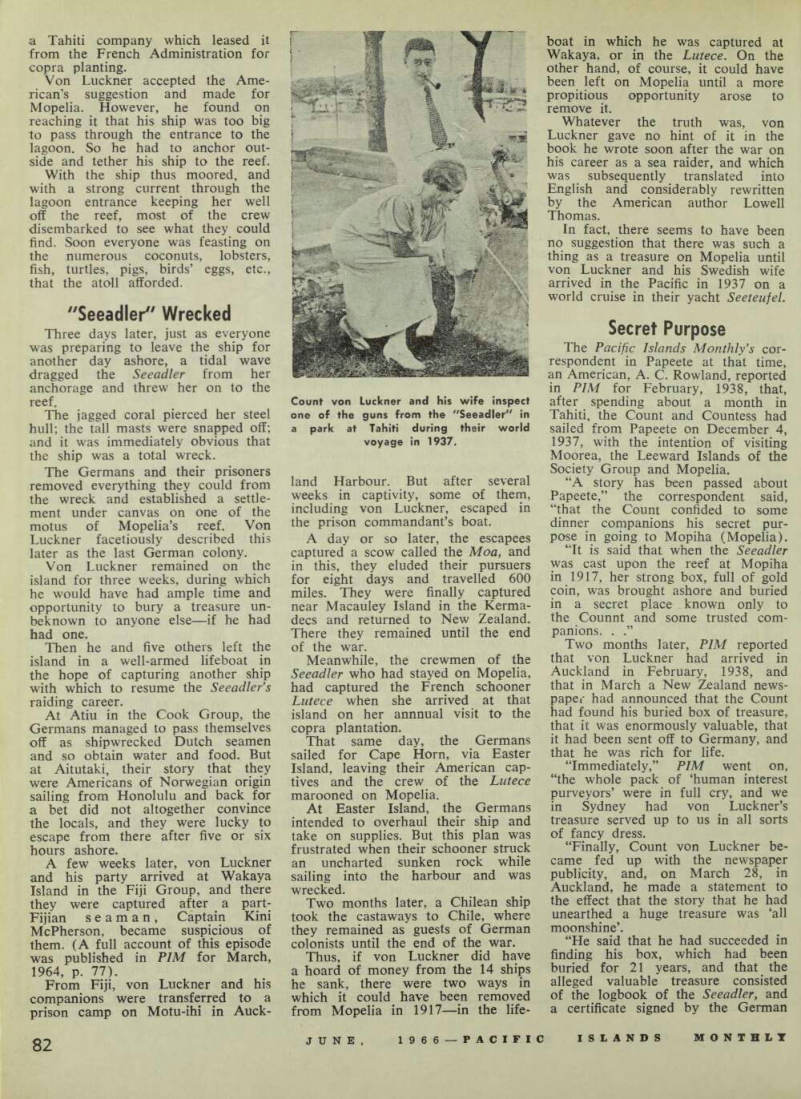 84
84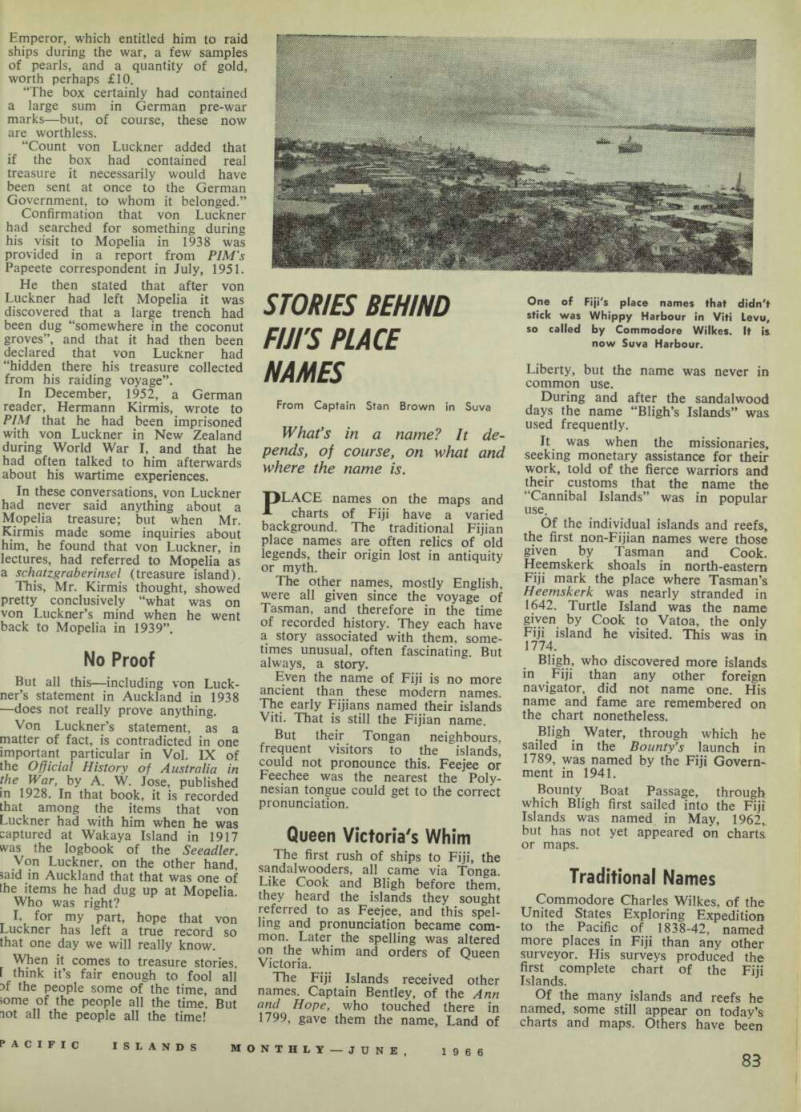 85
85 86
86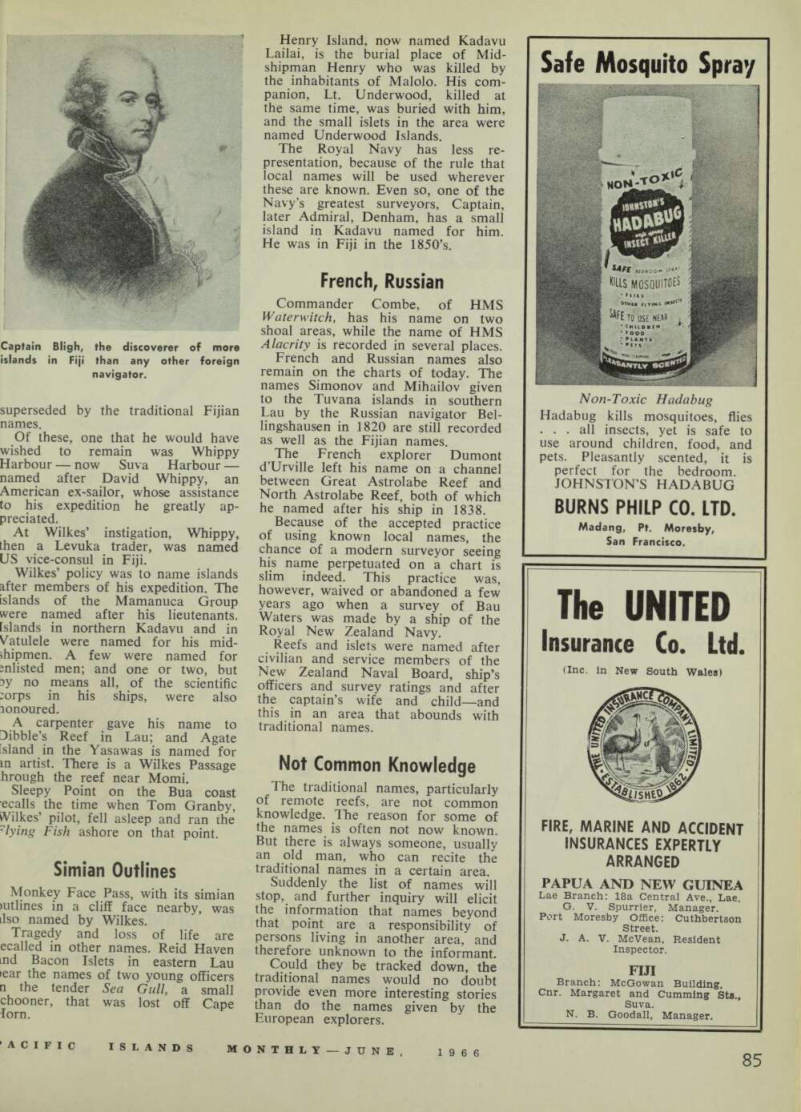 87
87 88
88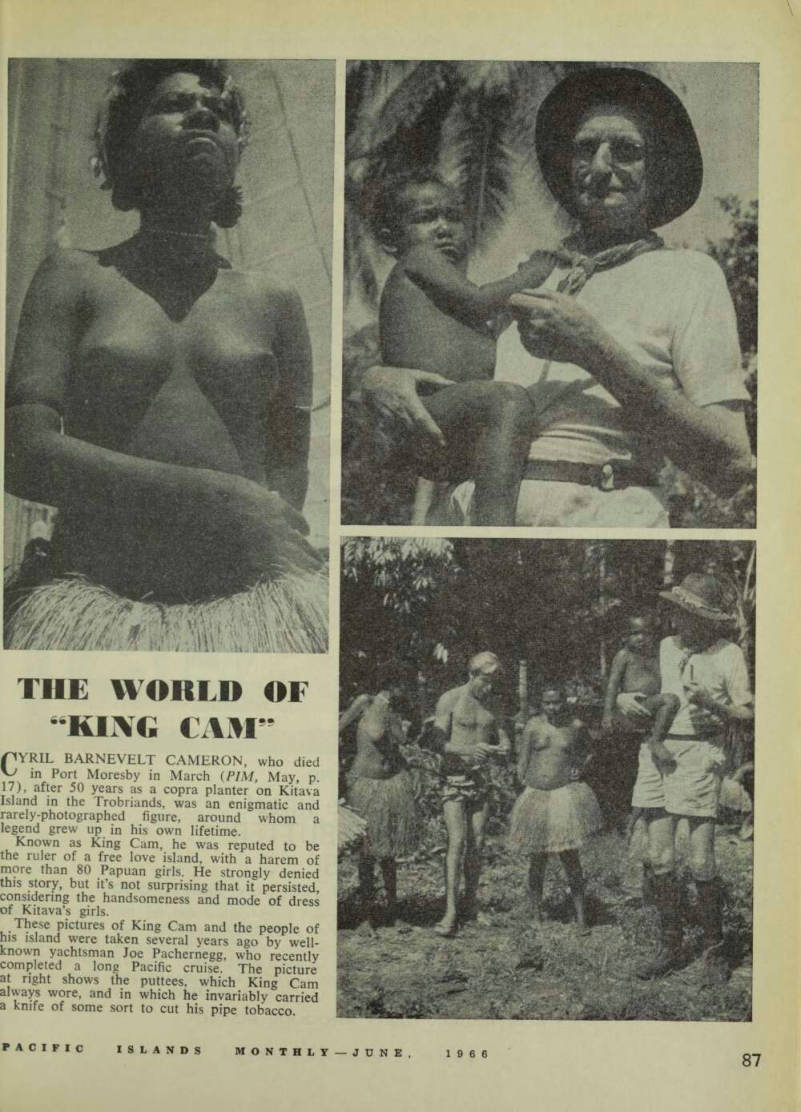 89
89 90
90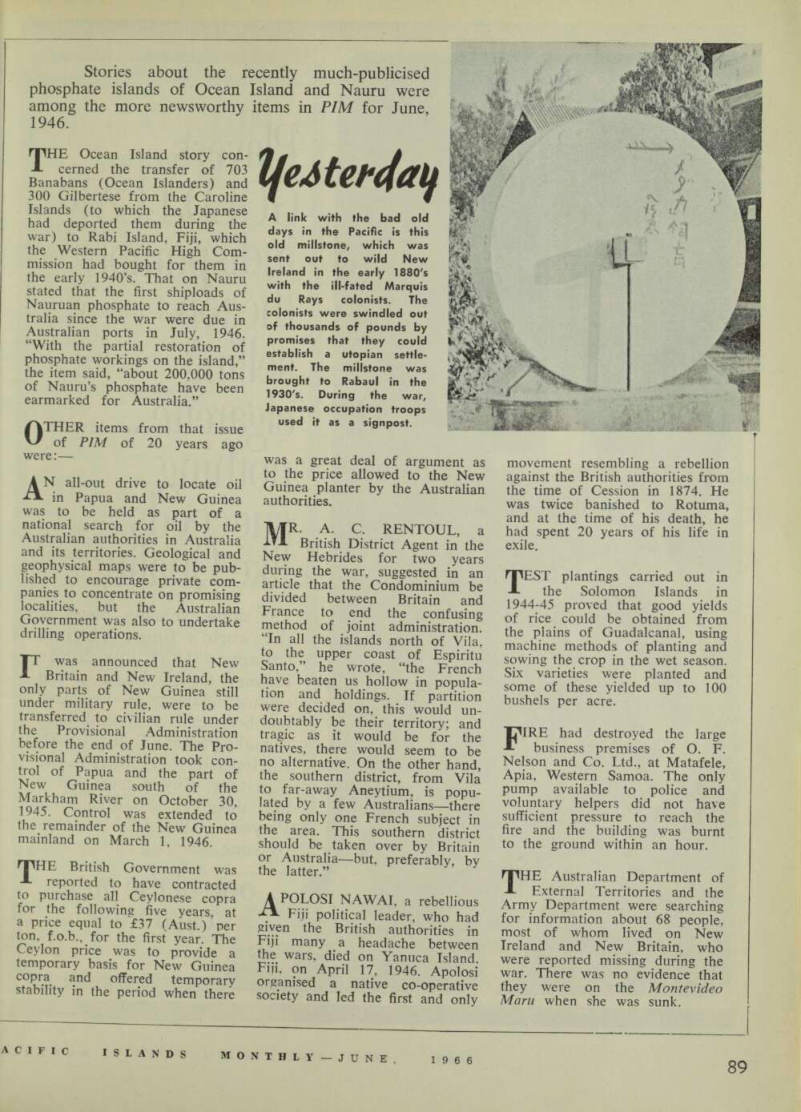 91
91 92
92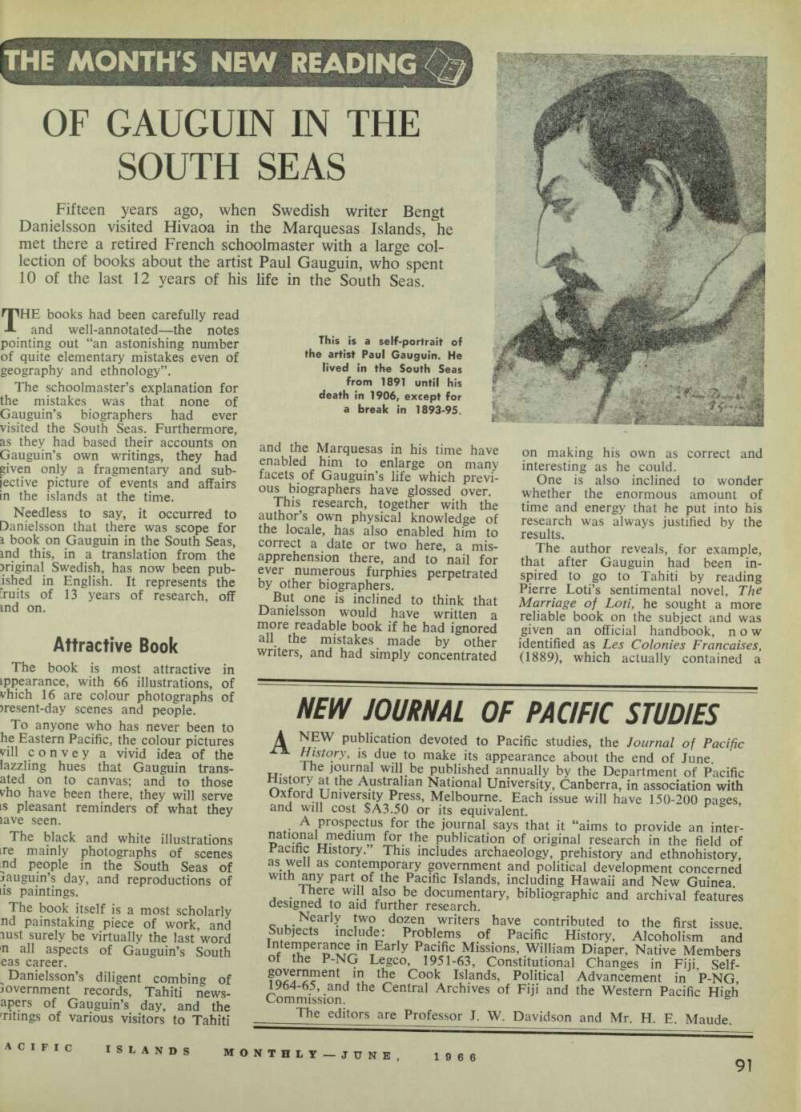 93
93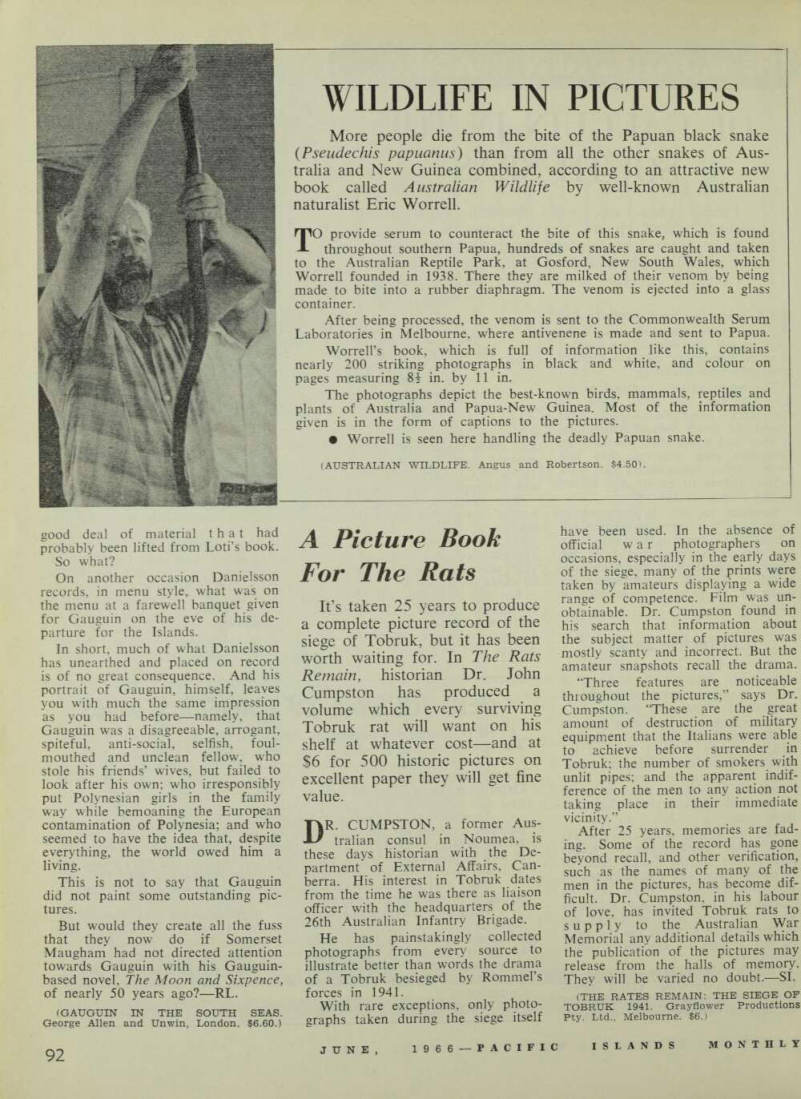 94
94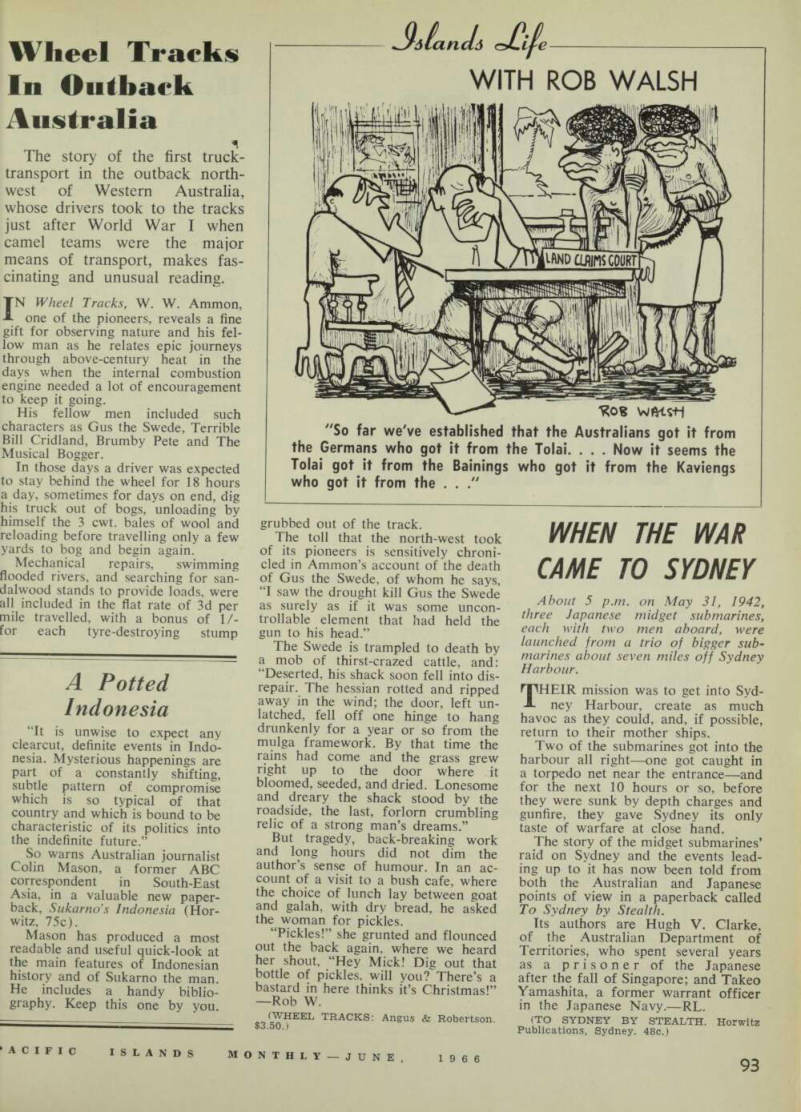 95
95 96
96 97
97 98
98 99
99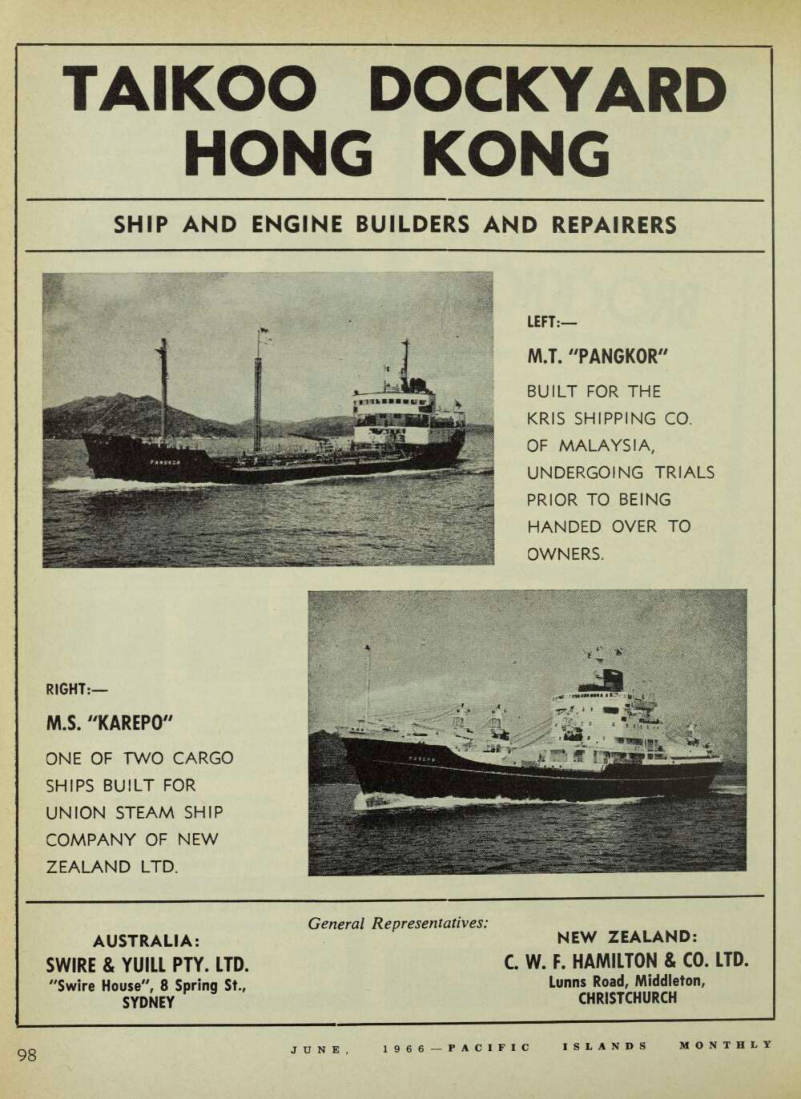 100
100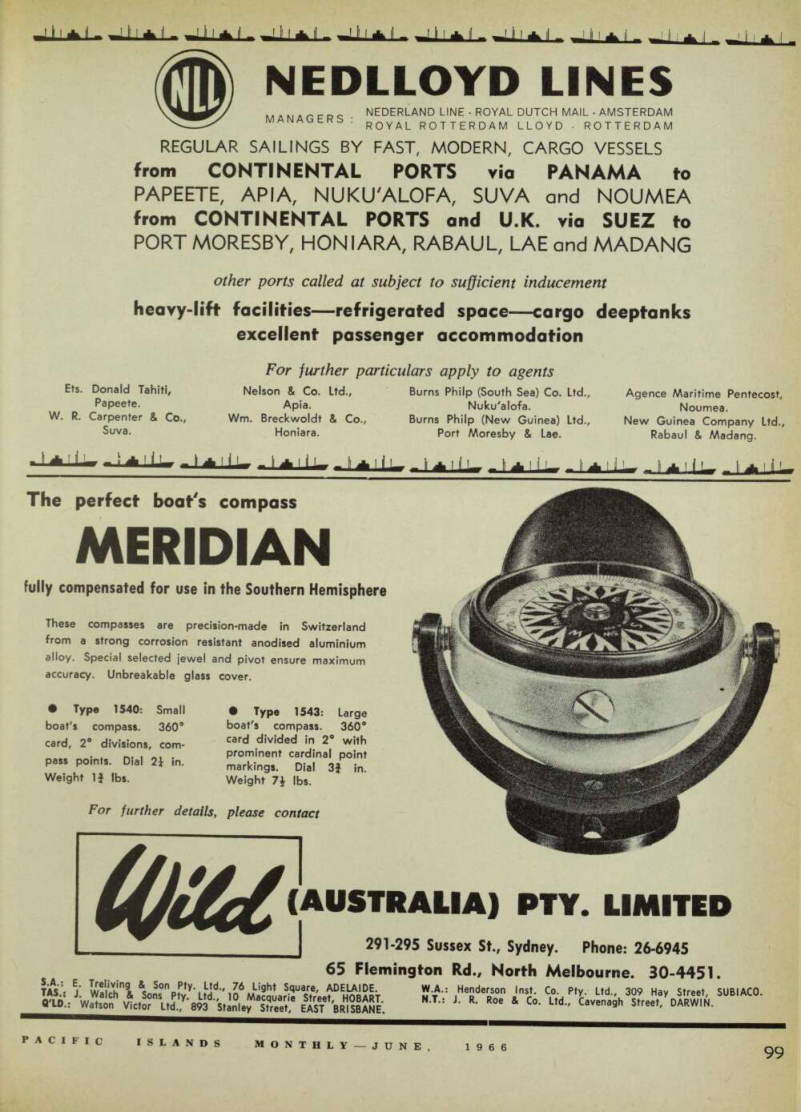 101
101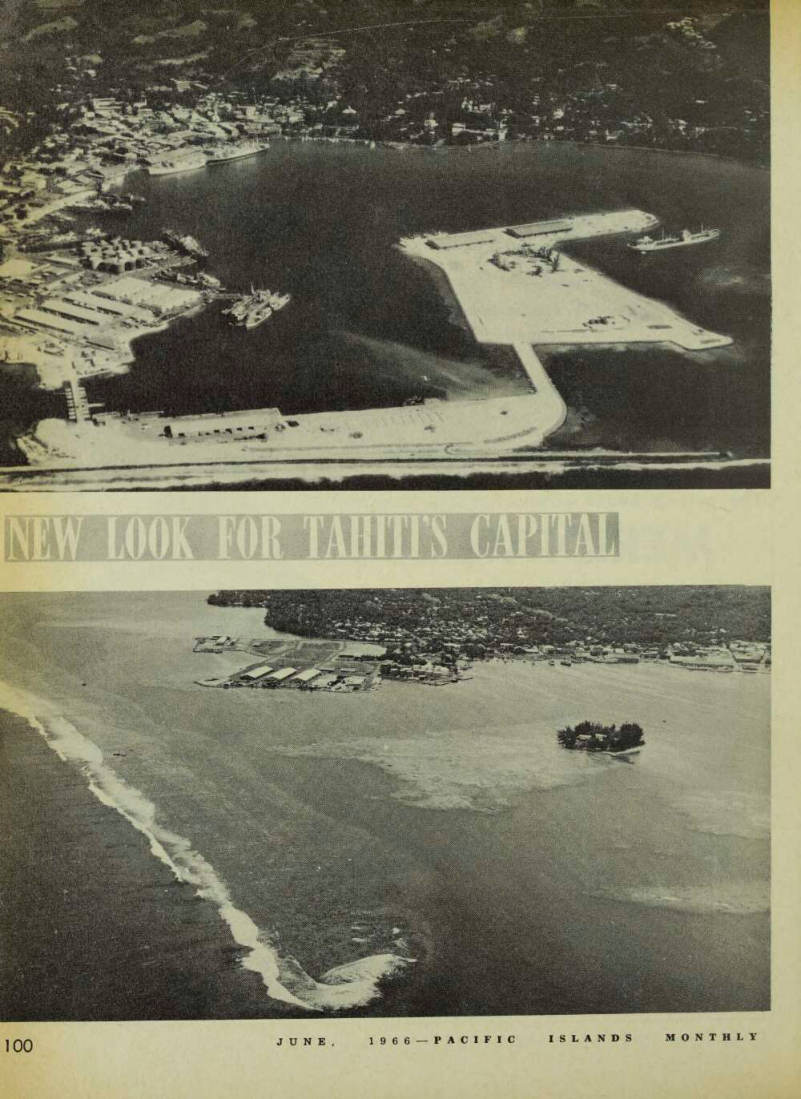 102
102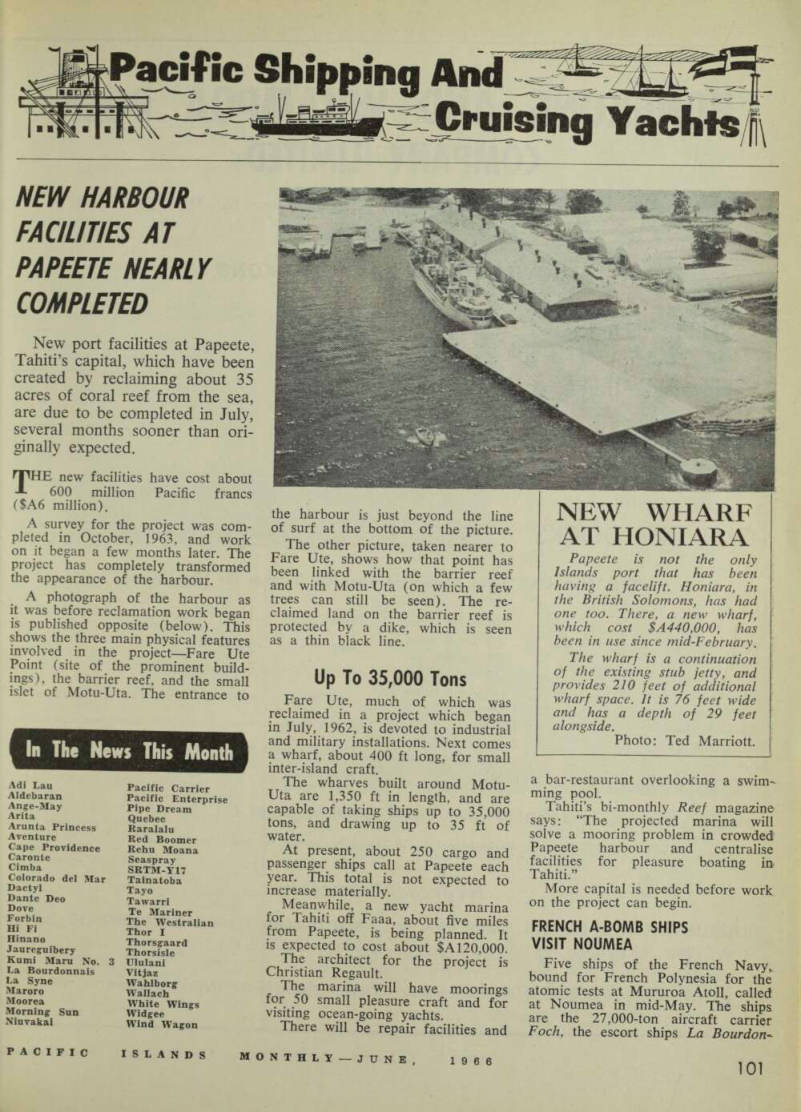 103
103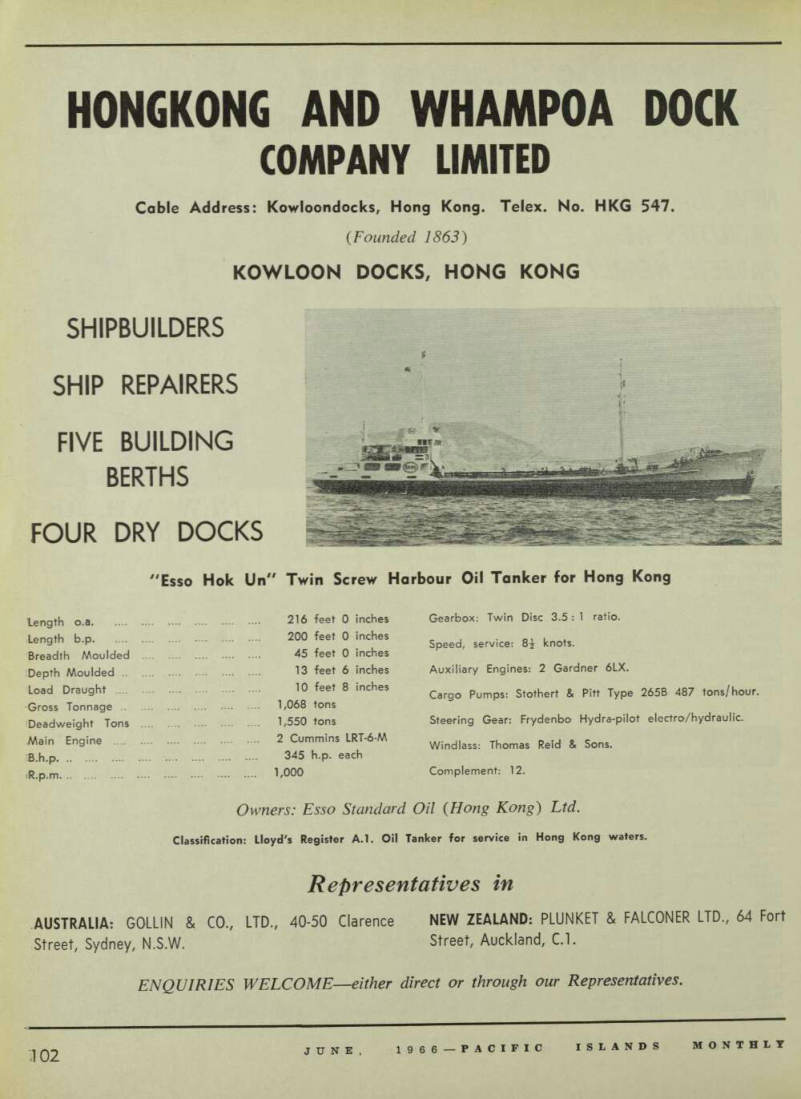 104
104 105
105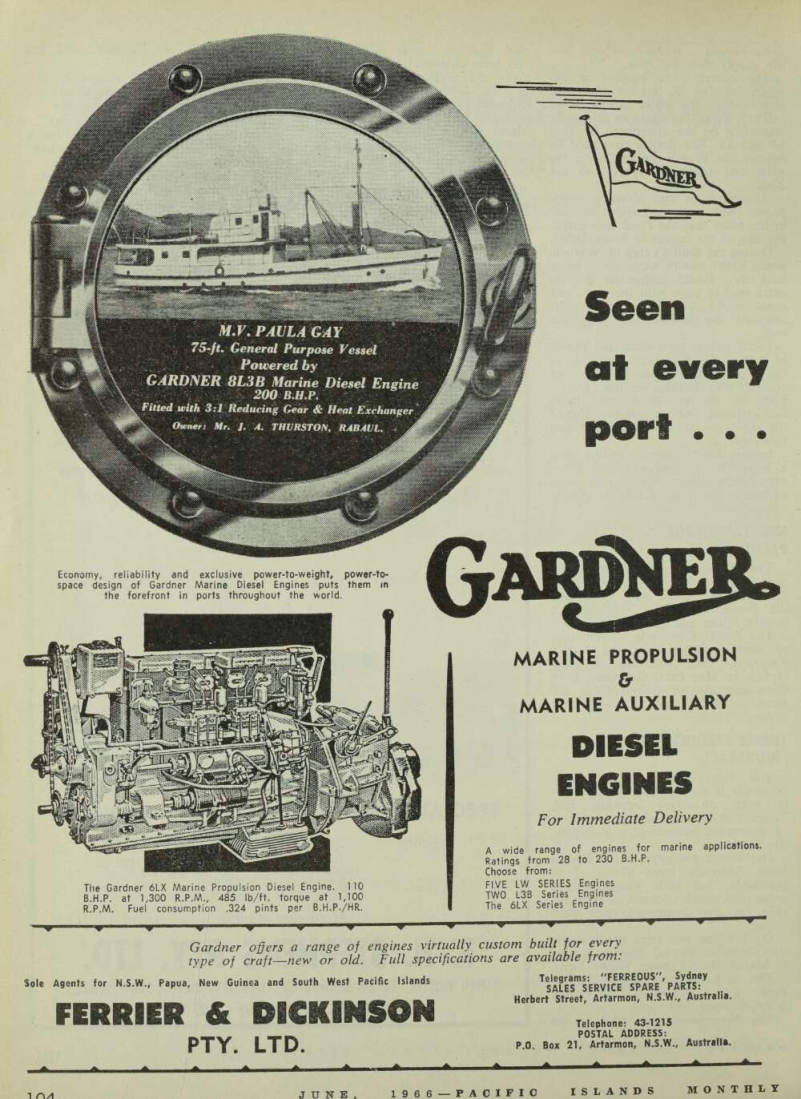 106
106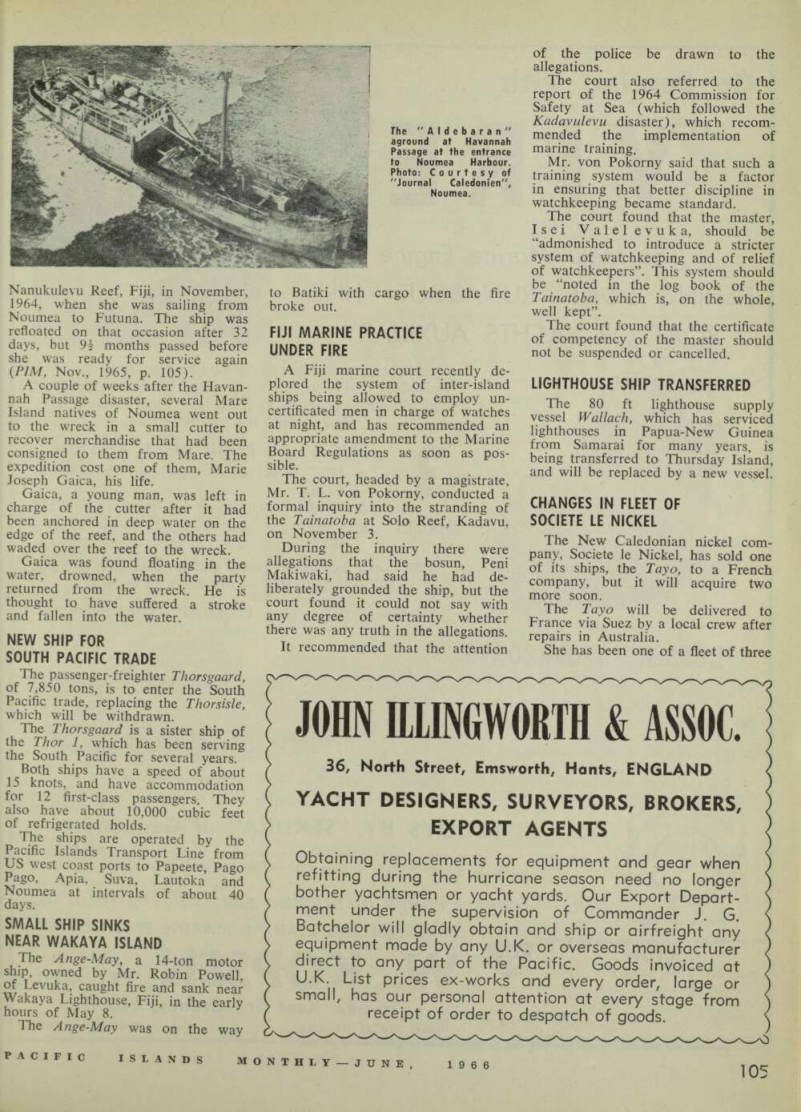 107
107 108
108 109
109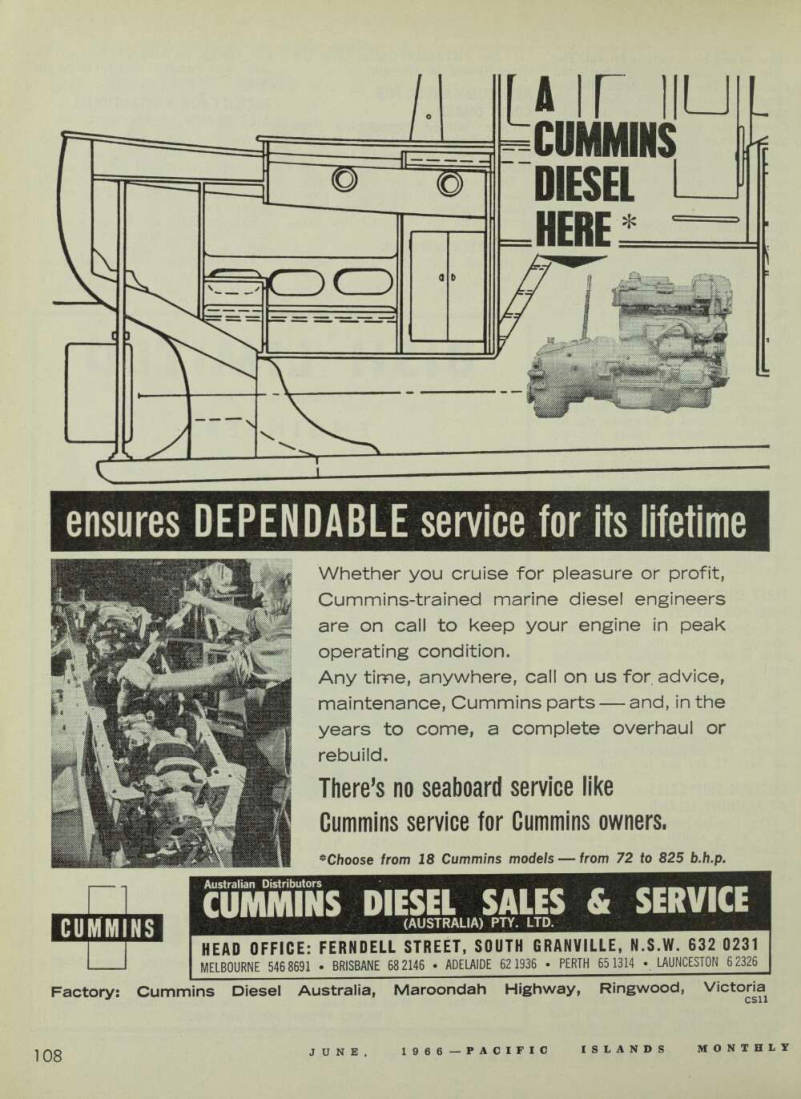 110
110 111
111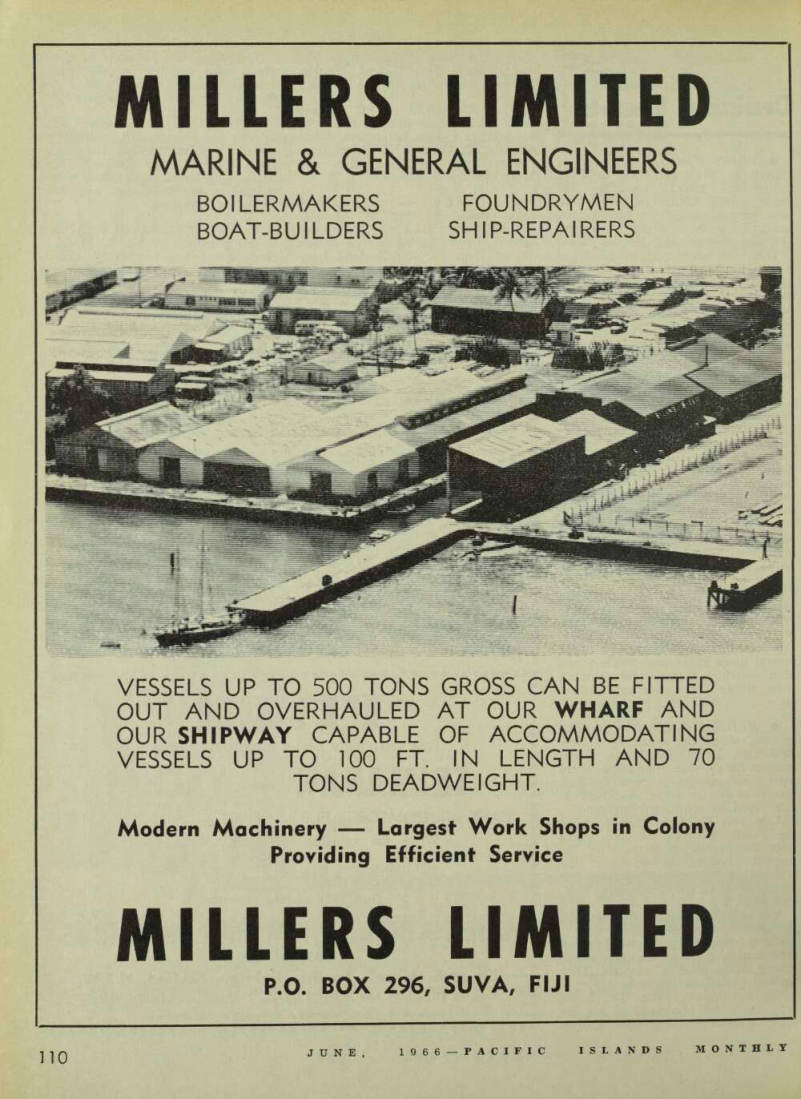 112
112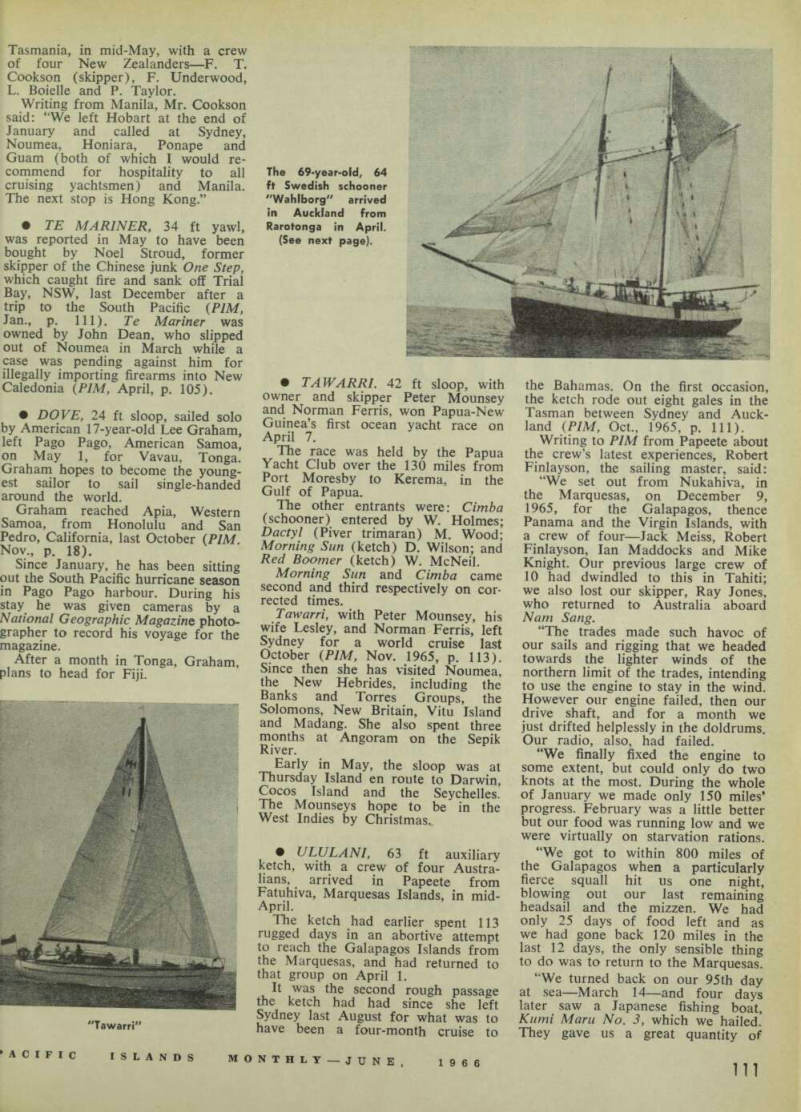 113
113 114
114 115
115 116
116 117
117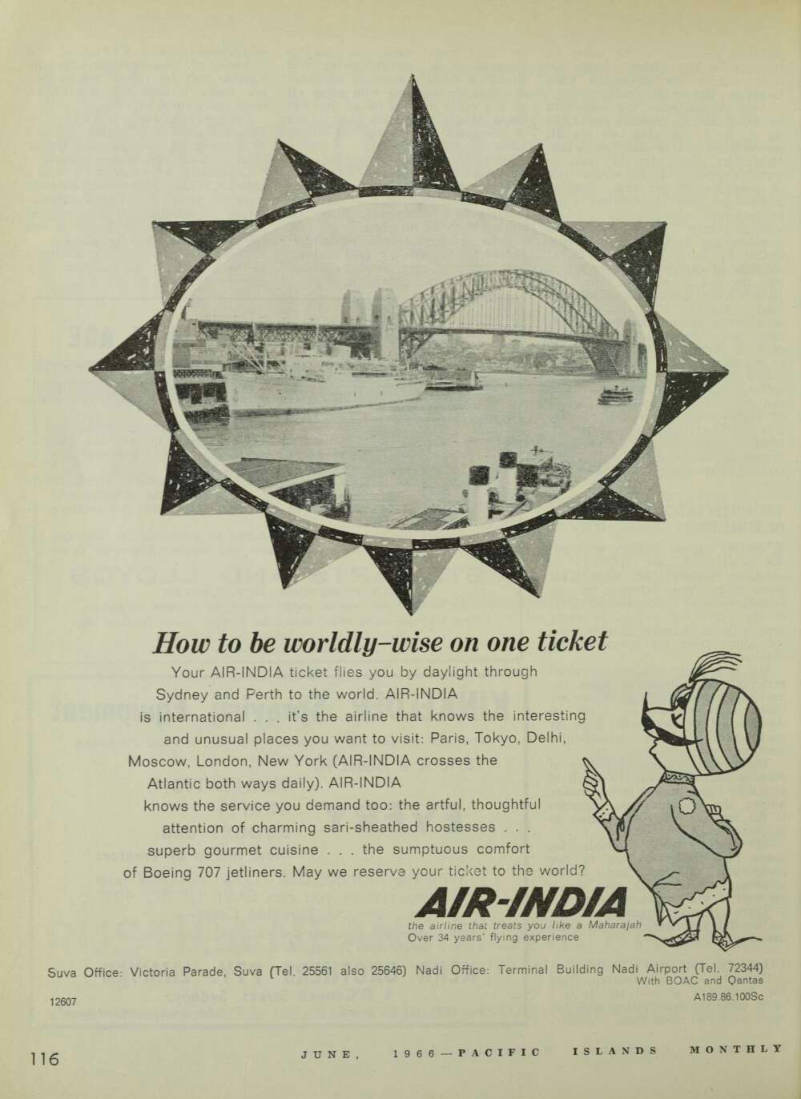 118
118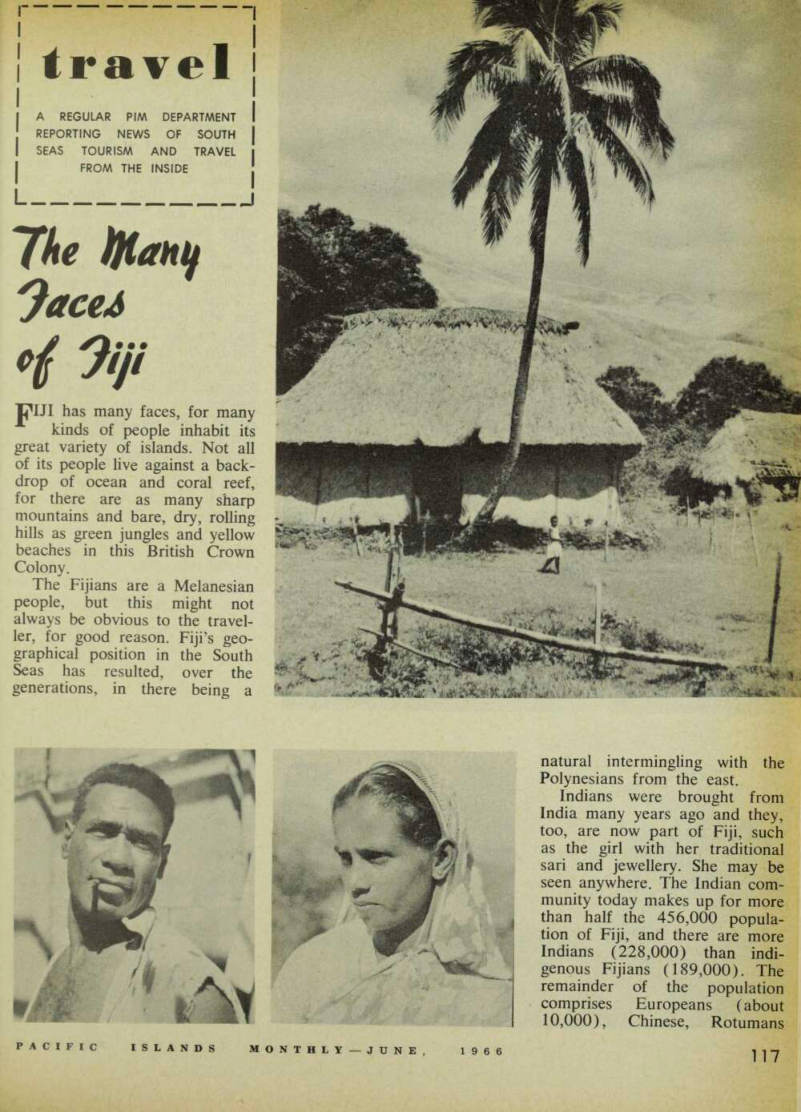 119
119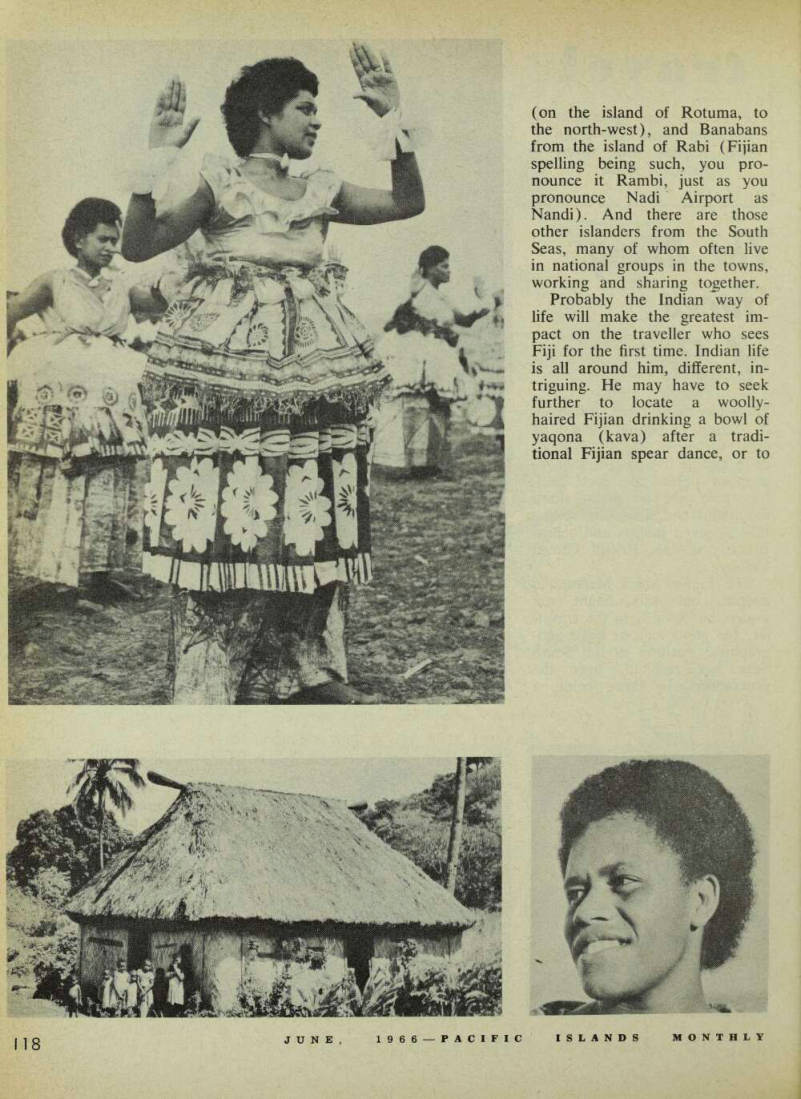 120
120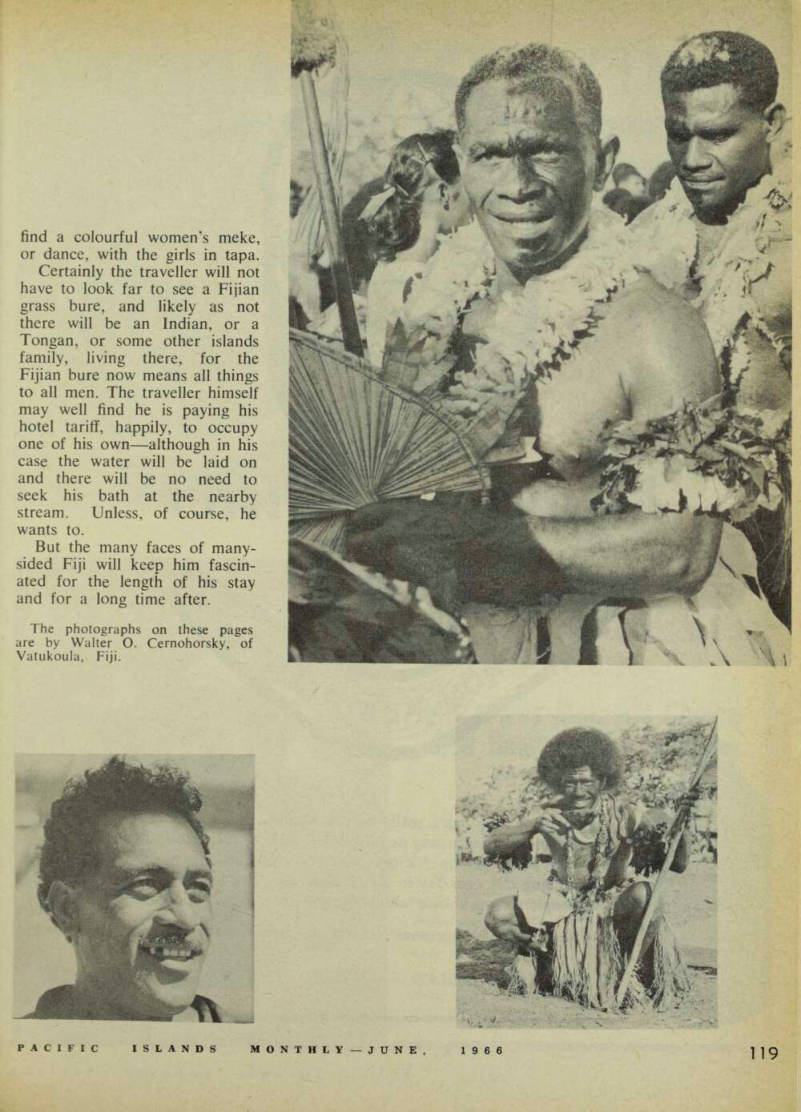 121
121 122
122 123
123 124
124 125
125 126
126 127
127 128
128 129
129 130
130 131
131 132
132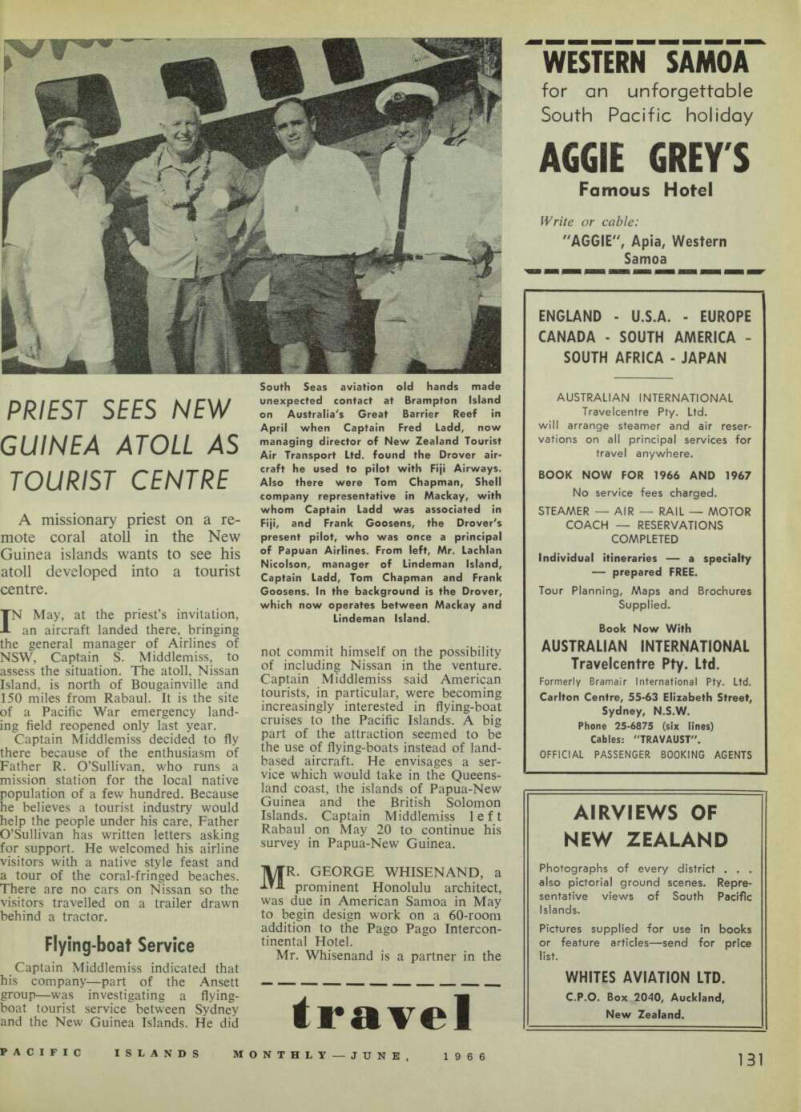 133
133 134
134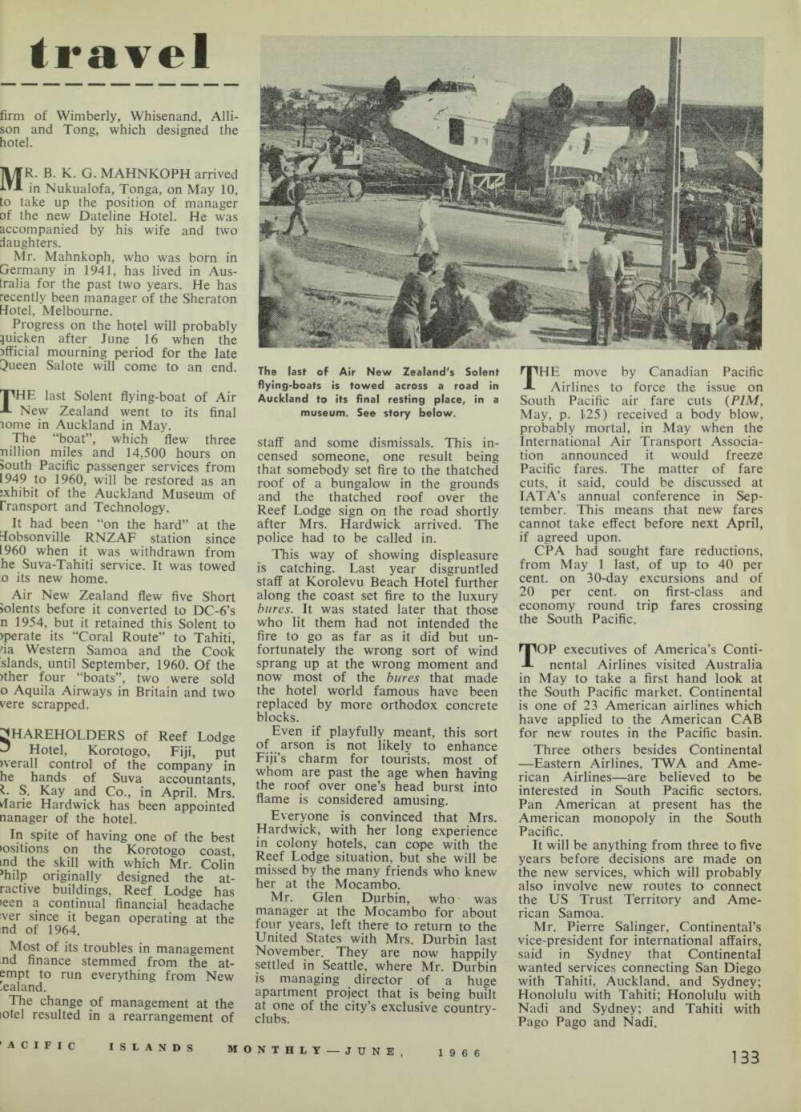 135
135 136
136 137
137 138
138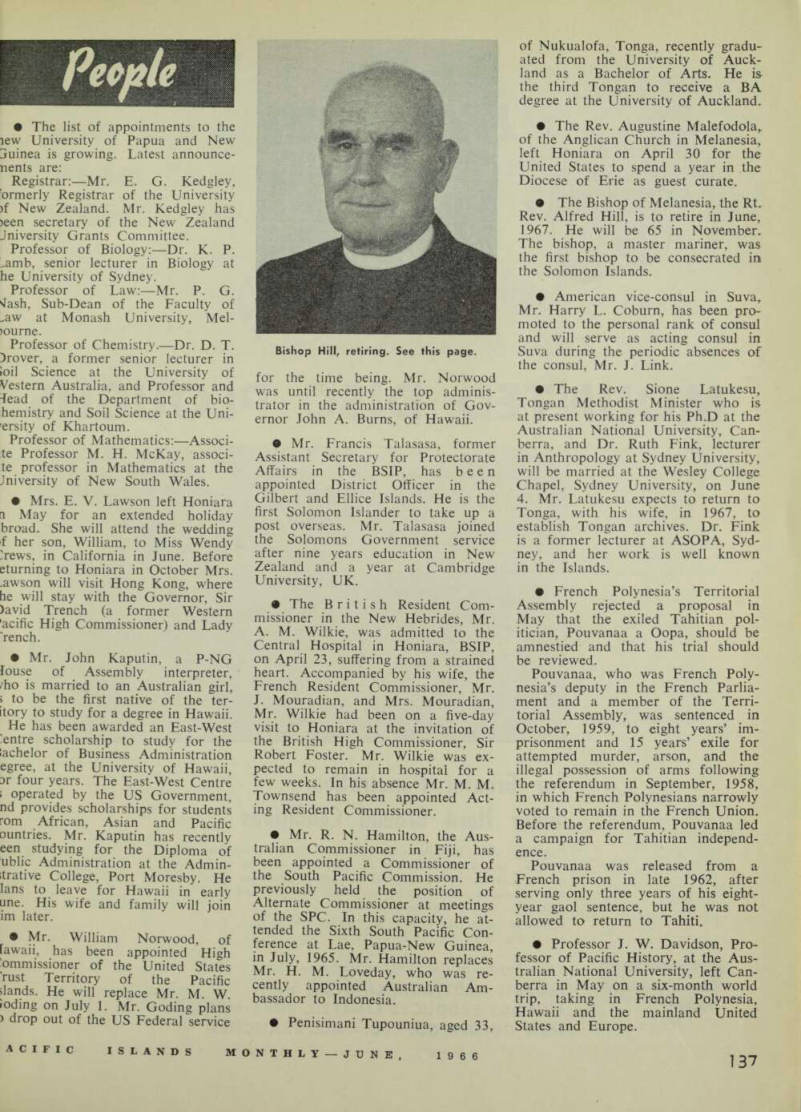 139
139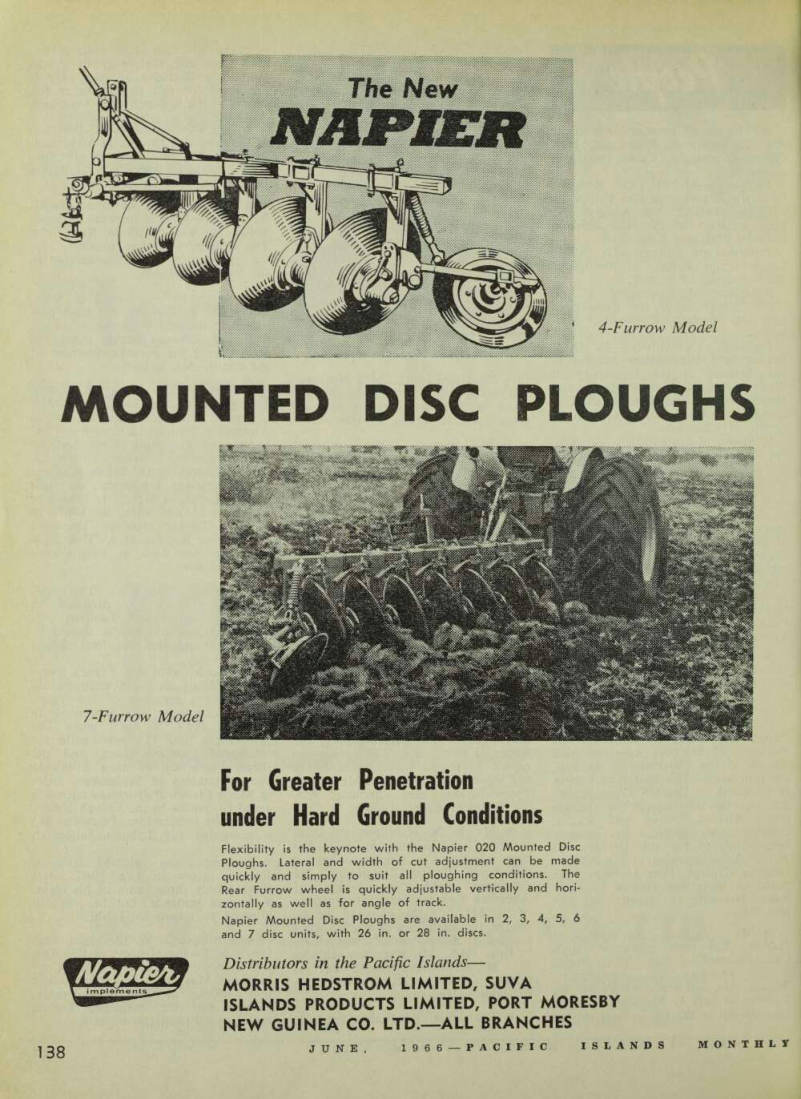 140
140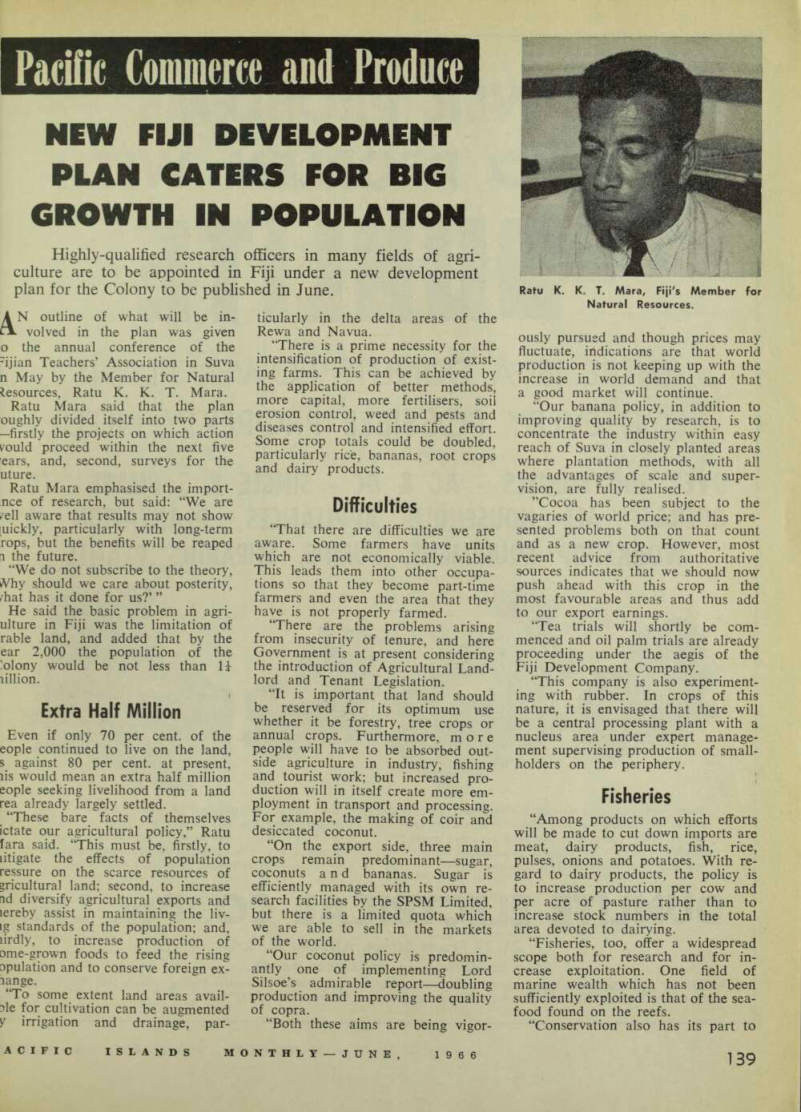 141
141 142
142 143
143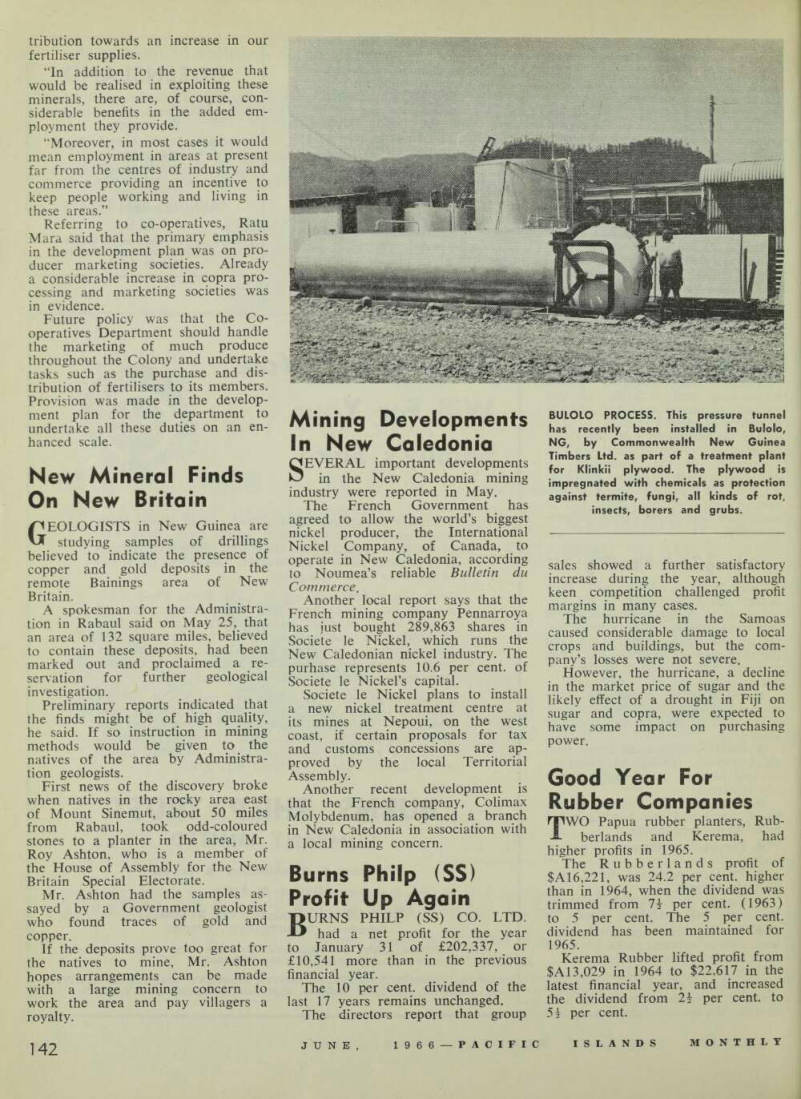 144
144 145
145 146
146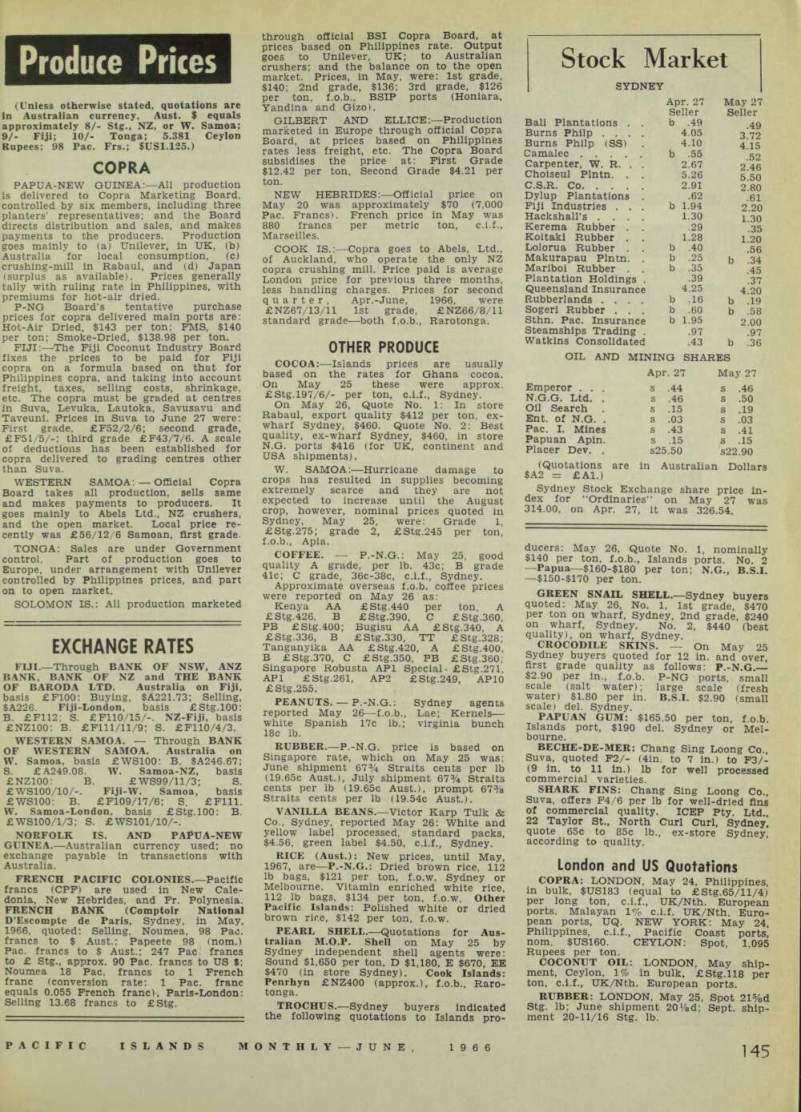 147
147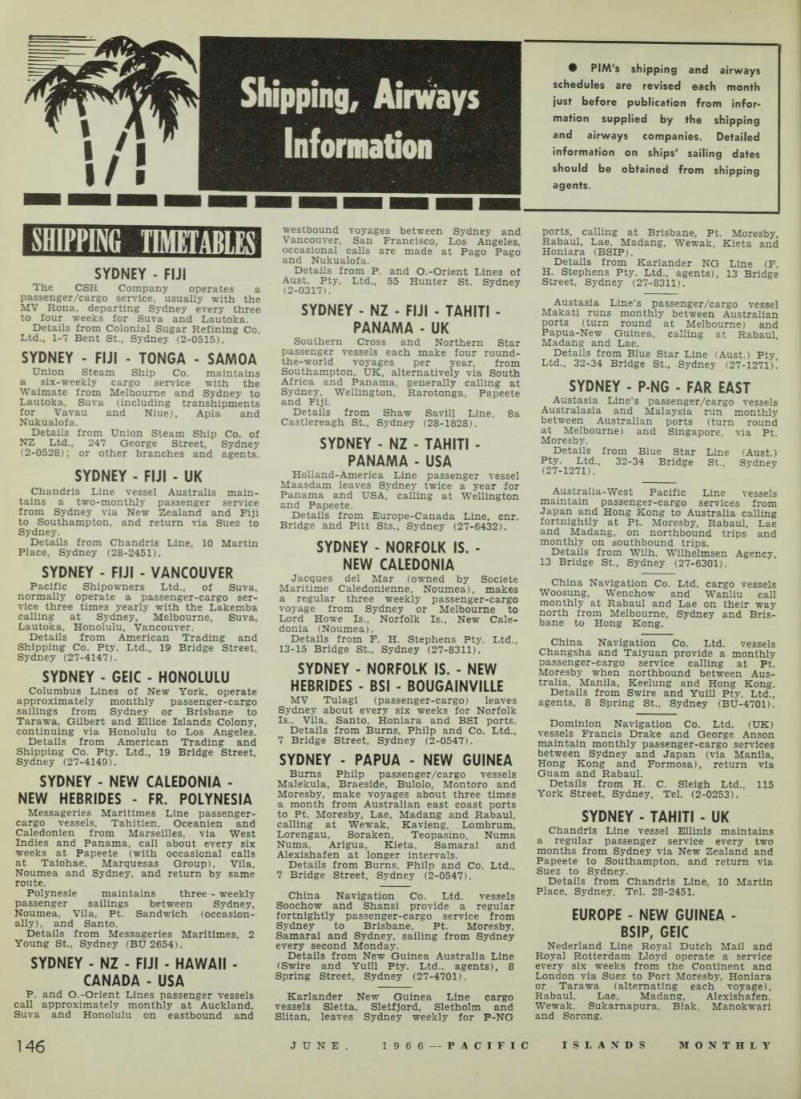 148
148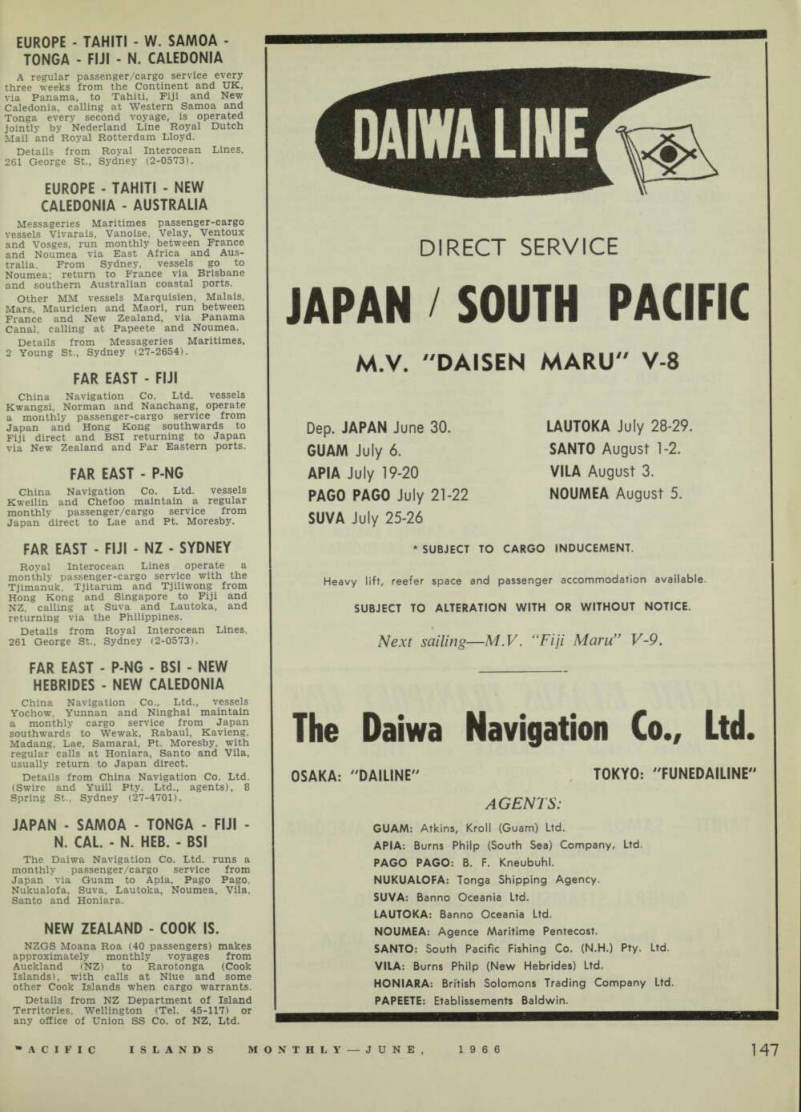 149
149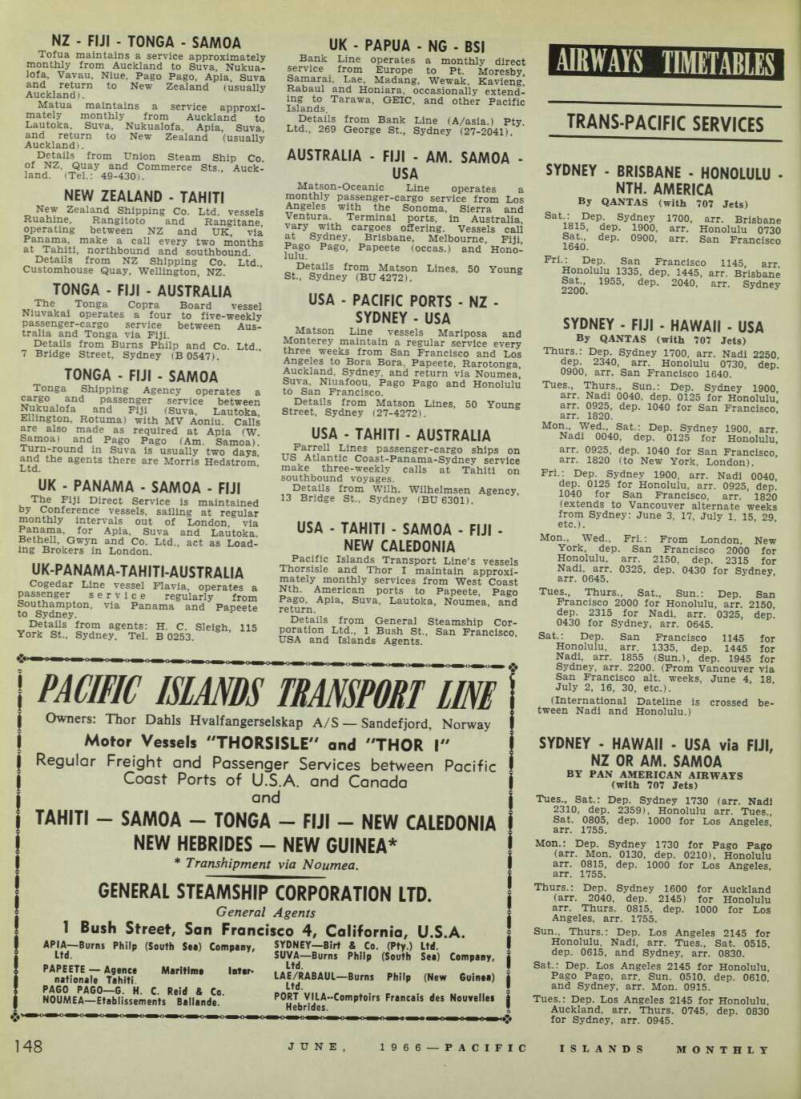 150
150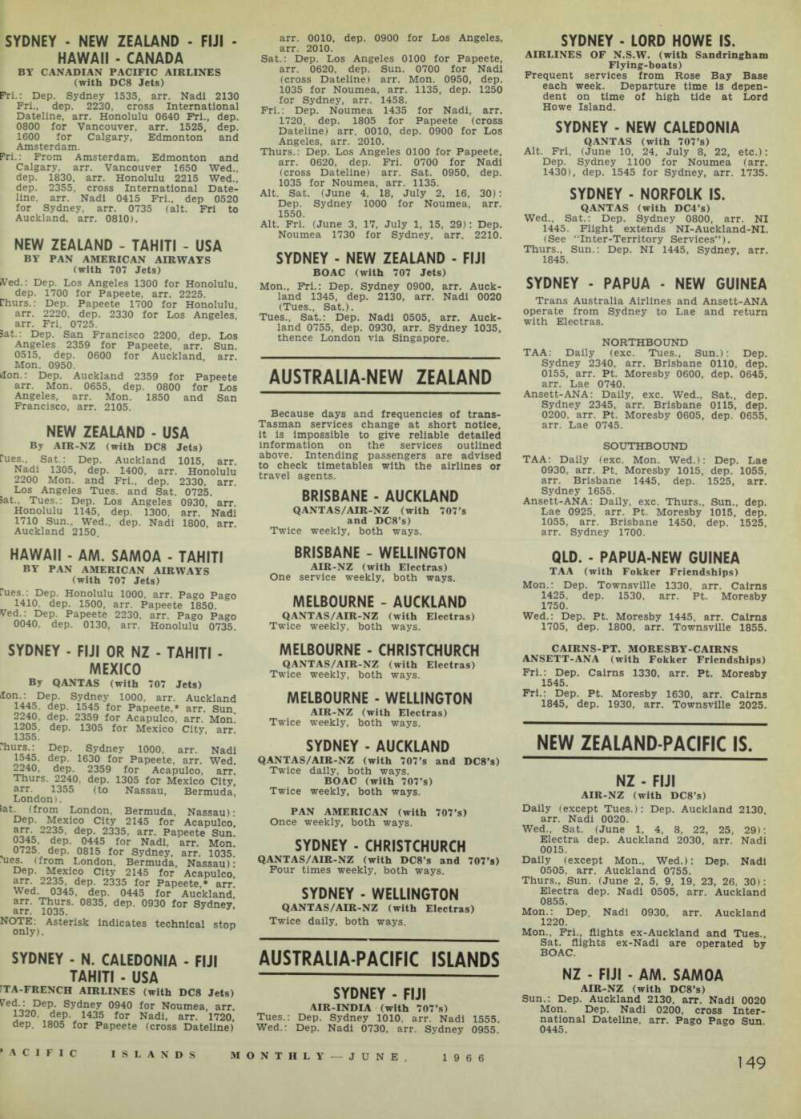 151
151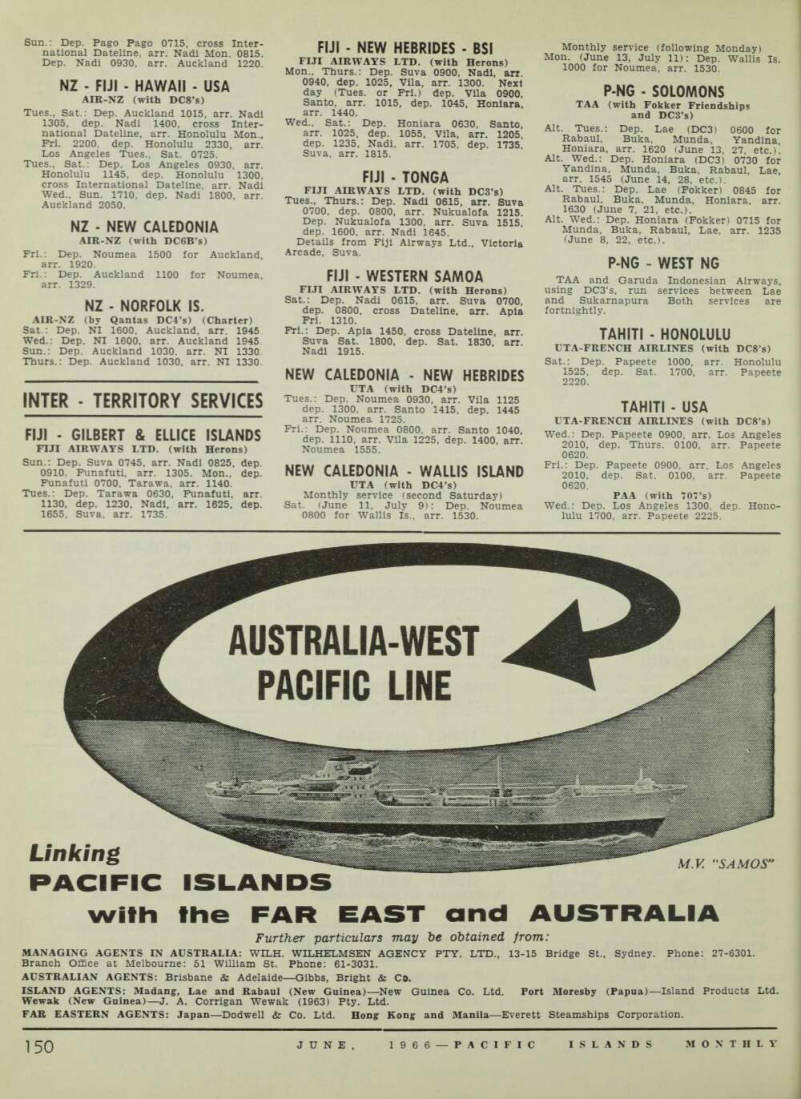 152
152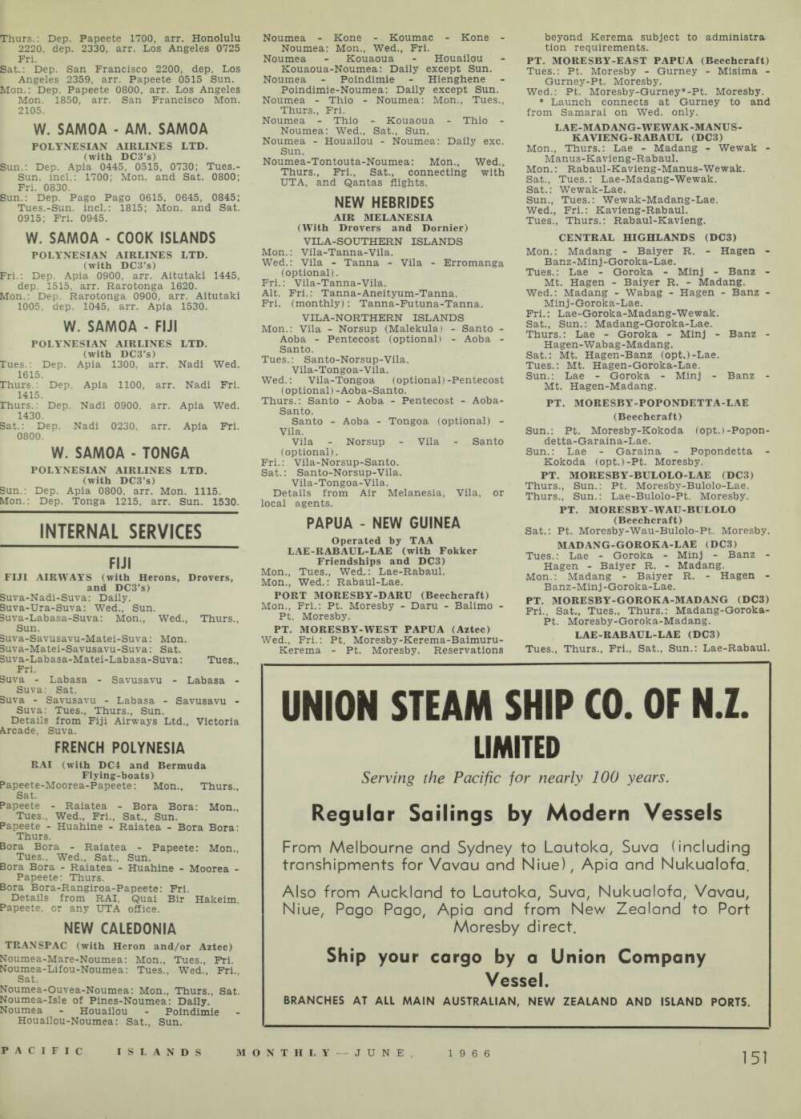 153
153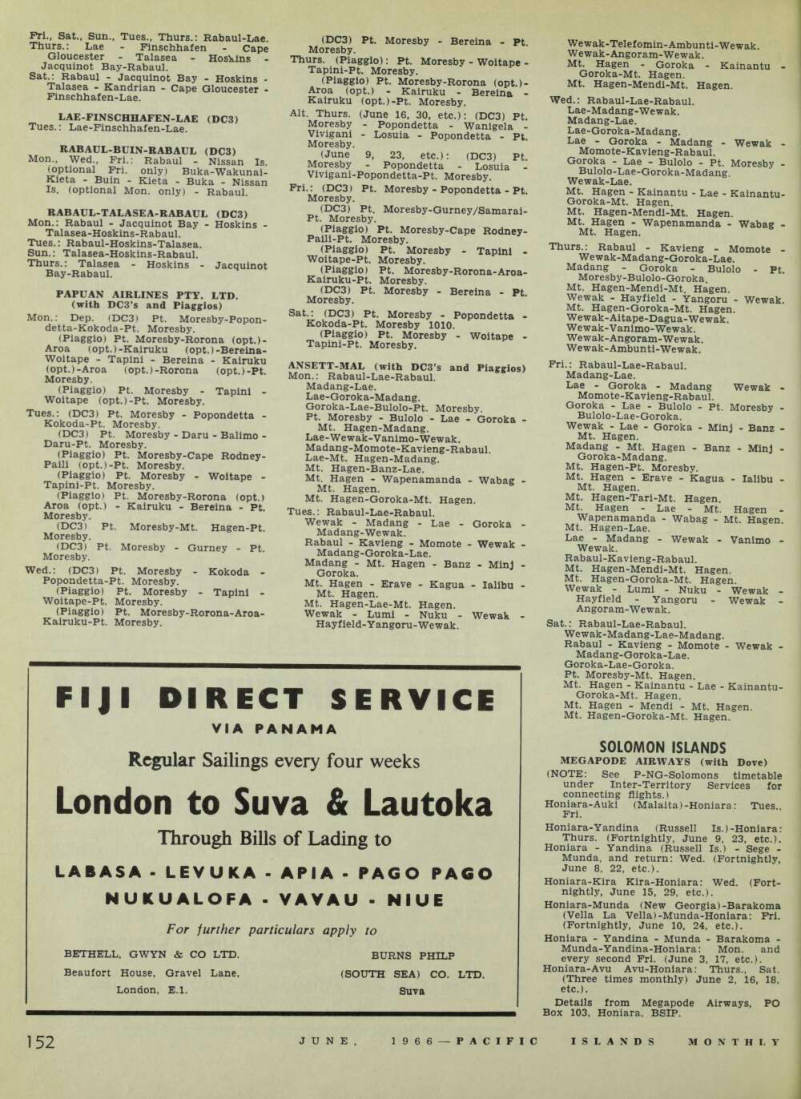 154
154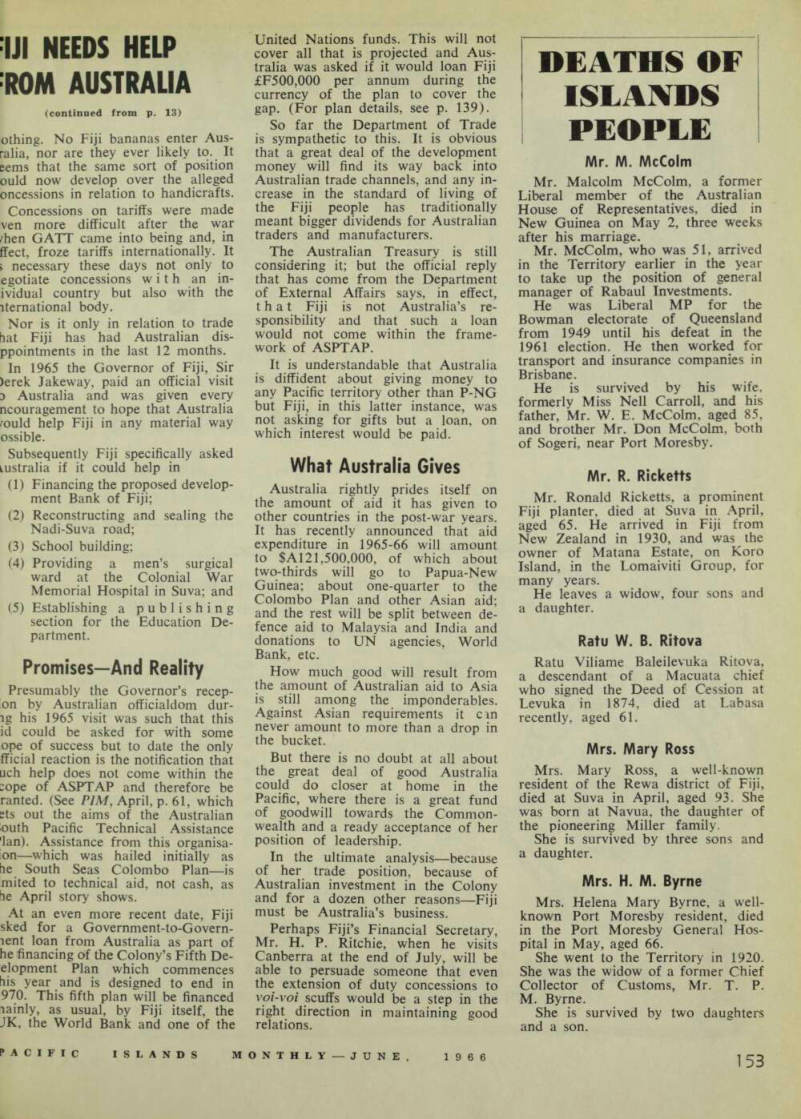 155
155 156
156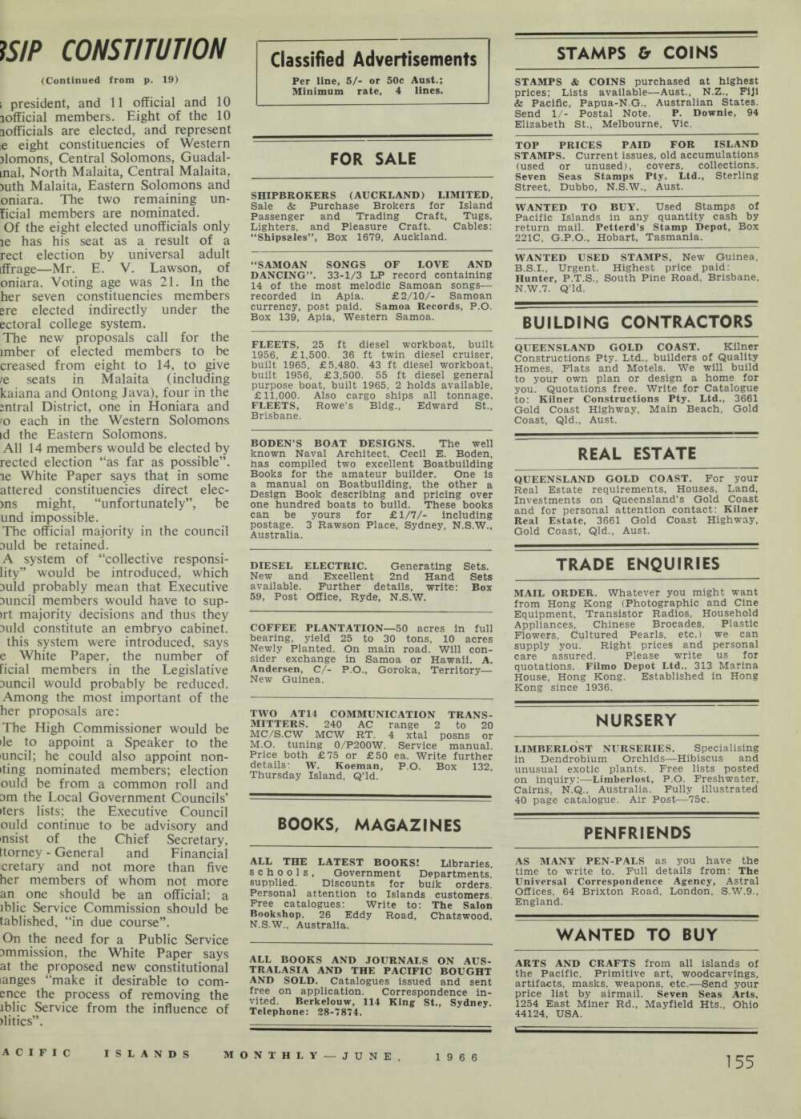 157
157 158
158 159
159 160
160