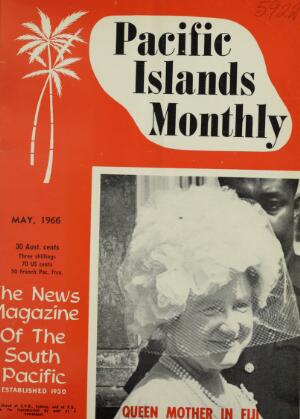
Pacific
Islands Monthly
May, 1966
30 Aust. cents Three shillings 70 US cents 50 French Pac. frcs.
he News lagazine Of The South Pacific
Established 1930
stered at G.P.0., Sydney, and at P. 0., •/ tor transmission by post as a newspaper.
Queen Mother In Fiji
Advertisements & other items, pp. 2-10 (1 item)
lOne call.
One ticket.
One airline.
No worries
withTAA.
We hope you’ll forgive us if we pride ourselves on the service we give you.
More than anywhere else in the world, the Territory’s progress was built on air service. And TAA’s reputation here is built on keeping you our customers content.
We do this in a number of ways. First by trying harder all the time. By being the airline you can depend on. By providing you with passenger, cargo and charter services within and without the Territory. Often by tackling cheerfully the unrewarding jobs nobody else will look at.
We think our biggest advantage from your point of view is our diversity. We don’t have to go outside. Because we’ll fix tours, travel, ‘friendly way holidays’, business trips ... you name it. All in addition to all the usual flying about.
And with us (and that includes our Agents) one call gets you just what you want. One ticket covers everything. And one airline does the whole job. TAA.
Call us: Port Moresby 2101 ■ Madang 78, 268 ■ Rabaul 2567 Lae 2311 ■ Goroka 8 ■ Mt. Hagen 4 ■ Wewak 103.
Fly the Friendly Way
TAA
SUNBIRD SER VICES
TAA9B22 A
% taubmans
Duo-PLASTIC
gaydec
I
Taubmans
Gaydec is at home in the tropics
because Gaydec resists fungus
Taubmans remembered the tropics when they and brushes wash clean in water. In just a few made Gaydec. The result? A flat inside or out- hours your home will have a fresh, new lookside housepaint to effectively resist fungus. protected by Gaydec for many years.
Because Gaydec is plastic, all painting is See the exciting range of Gaydec colours at quick and easy; Gaydec dries in just twenty your local paint store. Gaydec is the ideal minutes without paint odour; and your hands paint for tropical conditions.
Gaydec Flat Plastic Paint for walls and ceilings, inside or outside, from well known distributors in Fiji, Tonga, Samoa, British Solomon Islands. New Guinea, Papua, New Hebrides!
TBIIU
NOW! WARP-FREE
Sfsssgy
I T>M II
Ideal for South Pacific. Klinkii Placarol
doors withstand all climate conditions,
even temperature & humidity extremes.
Closely packed PLACAROL curls of KLINKII Pine are placed side by side on their edges inside frames.
Precision-cut curls maintain exact dimension of length, width and thickness. This core has the advantage of extra strength for light weight.
KLINKII Plywood Panels are securely glued to frame, curls and lock-block by this worldtested ultra modern process.
WHY PLACAROL IS
A BETTER DOOR
FOR (YOUR NEEDS
KLINKII PLACAROL
DOORS always retain original shape and size, will not twist, warp, or swell. They are stronger, yet lighter.
KLINKII PLACAROL makes perfect doors
for every building. They are completely
stable through unique new construction.
Use them for homes, hotels, motels, res-
taurants, offices, factories, showrooms,
schools, colleges, flats . . . anywhere
you need a door.
■fe " .. £ © Famous Klinkii quality frames hold lock block in firm position.
Klinkii Placarol doors are available in all standard sizes.
NEW GUINEA; Burns Philp (N.G.) Ltd—all branches. Steamships Trading Co. Ltd—all branches. New Guinea Co. Ltd.—all branches. A. H. Bunting—Goroka; Peter England—Angoram. Robert Gillespie (N.G.) Ltd., Madang. PAPUA: Burns Philp (N.G.) Ltd.—ail branches. Steamships Trading Co. Ltd.—all branches.
Island Products Ltd., Port Moresby. PACIFIC ISLANDS: Morris Hedstrom (Aust.) Pty. Ltd., Apia. Burns Philp (South Sea) Co. Ltd., Fiji. Burns Philp (New Hebrides) Ltd., Vila. W. S. Tait & Co. Pty. Ltd., Santo.
BOUGAINVILLE: Steamships Trading Co. Ltd., Rabaul. New Guinea Co. Ltd., Rabaul. Burns Philp (N.G.) Ltd., Rabaul.
KPDpiSI
BURNS PHILP (SOUTH SEA) CO. LTD
GENERAL MERCHANTS AND SHIPOWNERS
I SHIPPING, CUSTOMS AND FORWARDING AGENTS
BRANCHES
Fiji:
SUVA,
i lEVUKA.
LAUTOKA.
I LABASA.
SAVU SAVU.
BA.
SIOATOKA.
TAVUA.
ROTUMA ISLAND.
TAVEUNI.
Samoa:
APIA.
PAGO PAGO.
Tonga:
NUKUALOFA.
HAAPAI.
VAVAU.
NORFOLK ISLAND.
NIUE ISLAND
AGENTS FOR:
QUEENSLAND INSURANCE CO. LTD.
BURNS PHILP TRUST CO. LTD.
SHELL COMPANY (P. 1.) LTD.
OVERSEAS AGENTS
BURNS, PHILP fir CO. LTD., Sydney.
BURNS, PHILP & CO. LTD., London.
BURNS PHILP CO. OF SAN FRANCISCO
SHIPPING AGENCIES
• The New Zealand Shipping Co. Ltd. • Shaw Savill & Albion Co. Ltd. • Port Line Ltd. • Bank line Ltd. • General Steamship Corporation Ltd. • Blue Star Line • Cunard Line • Compagnle des Messageries Maritimes • British India Steam Navigation Co. Ltd. • Royal Interocean Lines • Nederland Line Royal Dutch Mail/Royal Rotterdam Lloyd.
EXCLUSIVE DISTRIBUTORSHIPS INCLUDE
• AKAI TAPERECORDERS
• DUNLOP PRODUCTS
• EPIGLASS PRODUCTS
• FERGUSON TRACTORS
• HELENA RUBENSTEIN
• HITACHI ELECTRONICS
• HOLDEN VEHICLES
• JOHNSON'S WAXES
• ROLEX WATCHES
• REVLON COSMETICS
• PENTAX CAMERAS
• SUNBEAM APPLIANCES
INTERNATIONAL AIR TRANSPORT ASSOCIATION REPRESENTATIVES for
QANTAS EMPIRE AIRWAYS LTD. AIR NEW ZEALAND LTD.
UNION DE TRANSPORTS AERIENS :: ALITALIA PAN AMERICAN AIRWAYS
ASSOCIATED COMPANIES
BURNS PHILP (NEW HEBRIDES) LTD.
AUTOMOTIVE SUPPLIES CO. LTD.
CORRIE & CO. LTD. • NARAIN FURNITURE CO. LTD.
SPECIALISED SERVICES
EXPERT ADVICE ON WORLD AND LOCAL TOURS
TRAVEL SHIPPING FORWARDING CUSTOMS
FORMALITIES INSURANCE.
REGISTERED OFFICE; SUVA, FIJI
Code Address: "BURNSOUTH"
You too can join the proud owners of the famous Datsun Bluebird, now a popular favorite in over 60 countries of the world.
It gives you much more in dependable transportation because it incorporates the finest automotive engineering and craftsmanship of Nissan. .. largest passenger car maker and exporter in the Orient.
PATSIJW
Bluebird
a P an s Largest Exporter of Automobiles NISSAN MOTOR CO., LTD./Tokyo, Japan DISTRIBUTORS—Territory of New Guinea: Rabaul Garages Ltd., P.O. Box 63, Rabaul. Fiji: Niranjans Auto Port Limited, P.O. Box 450, Suva. American Samoa: B. F. Kneubuhl, Pago Pago, Tutuila. Western Samoa: H. & J. Retzlaff, P.O. Box 195, Apia. New Zealand: Wilton Motor Body Co. Ltd., P.O. Box 1072, Auckland.
How To Be More Beautiful
Leading skin care consultant advises on ways to be more beautiful and to give you a more youthful complexion.
YOU can now have a complexion that is exquisitely smooth and fine-grained in texture, and realise your secret dream of cherishing a beautiful flawless complexion all your life.
The modern scientific discovery of a tropical moist oil with remarkable skin-beautifying properties has made it possible to help nature bring a youthful, dewy bloom and a superb, petal-soft appearance to every complexion.
When smoothed over your face and neck daily and used as an ideal powder-base beneath make-up, the isotonic (of equal pressure) qualities of this moist oil of Ulan bring loveliness to the complexion and assist in maintaining the perfect balance of natural oil and moisture on the skin surface, easing out tiny lines and smoothing away any tendency to wrinkle-dryness.
The revolutionary beauty oil is hygroscopic in character and aids nature in replenishing moisture extracted from the upper dermic layer by evaporation, attracting and drawing in moisture from the atmosphere so that the complexion retains its lovely dewy bloom all day long. / i n ry ix \ A Beauty Face Pack You can derive excellent benefits from a home-administered face pack, and this oatmeal beauty mask is ideal for banishing blackheads and stimulating tired, dull skin. Combine a quantity of crushed oatmeal with a little lemon Delph freshener and mix into a thick paste. Spread this over your face and relax while the mask dries and hardens. Sponge away with tepid water, but handle your skin gently by patting lightly with a soft absorbent towel. To hold the good of this beautifying facial, finally smooth in a film of oil of Ulan.
A Beautiful Neck A beautiful face deserves a beautiful neck . . . routine toning is of immense value for it prevents the neck and throat from becoming slack and lined.
Soak a pad of cotton wool in lemon Delph freshener and briskly pat both neck and throat in an upward and outward direction, whipping up the circulation so that sluggish skin cells are re-activated, and any tendency to sallowness is corrected. Follow this with a smoothing of moist oil of Ulan to give the neck clear, smooth beauty.
Smoothing The Elbows Lovely smooth elbows are truly a feminine asset and to keep them smooth and lovely use this simple beauty pack. Combine a teaspoon each of white sugar, lemon juice and oil of Ulan, and rub the mixture well into the elbows until the skin becomes pink and clean. Remove the pack with warm water, dry thoroughly and then smoooth in a generous film of oil of Ulan to soften and promote a silky smooth surface.
Advertisement **m A Beauty Tonic To keep your skin clear and fair and to tone and condition your complexion to a new clarity and fine grained texture, saturate a cotton wool pad in lemon Delph skin freshener and gently press to the face and neck. The beautifying properties of lemons in the Delph freshener help stimulate the surface cells, clear out stubborn blemish-inducing and pore-clogging particles, smoothing and refining the complexion to a new beauty. To protect and nourish the new milky loveliness, smooth on a film of moist Ulan oil.
A Personal Beauty Plan An exclusive beauty service is free to all readers. Margaret Merril, the well-known beauty skin care consultant, will send you her personal reply with expert advice devoted exclusively to you. r Write To:
MARGARET MERRIL,
G.P.0., BOX 4614, SYDNEY, N.S.W.
NAME
ADDRESS
SKIN TYPE: Normal [ ]; Oily [ ]; Dry [ ]; Combination [ ].
SKIN CONDITION: Sensitive [ ]; Disturbed [ ]; Enlarged Pores [ ]; Blackheads t ]; Flaky Patches [ ]; Broken Veins [ ]; Crepiness [ ];
WRINKLED AREAS
COMPLEXION TONE
AGE GROUP p.I.M
L _1
I ii ■ ■'C* & Arnott’s NICE Biscuits Crisp and fine in texture, lightly sprinkled with sugar. ms JStißk 0 Arnott’s LEMON CRISP Biscuits A mixture of sweet and savoury a slightly dry biscuit with a tangy lemon cream.
WH hred° e ° Bi* £U Arnott’s ORANGE SLICE Biscuits Orange cream between tasty vanilla biscuits.
Arnott’s SHREDDED WHEATMEAL Biscuits Wholesome crunchy goodness and the flavour of new wheat.
on ■w gist Arnott’s MILK ARROWROOT Biscuits All-day energy for children a favourite with all the family. % Arnott’s SAO Biscuits Ideal for snacks, suppers or between meals. & VS re* s c^ Arnott’s SCOTCH FINGER Biscuits Chunky and butter-rich, with the true shortbread flavour. * Arnott’s CHEESE JATZ Biscuits Crisp as could be with a fine cheese flavour perfect for entertaining.
There is no Substitute for Quality
mTTT
As the Lisbon Lemon said to the Indian Tonic GILBEY’S IS SUCH A GREAT INTERNATIONAL GIN
GILIBGY’S
Pacific Islands
Monthly
Owned And Published By
Pacific Publications Pty. Ltd.,
29 ALBERTA ST, (G.P.O. BOX 3408), SYDNEY.
Telephones: 61-9197, 61-7101, 61-4369.
Telegraphic Address: PACPUB, Sydney.
Chief Executives
Managing Director; R. W. Robson.
General Manager: Selwyn Hughes.
Book Publishing Division
Editor: Judy Tudor.
Pacific Islands Monthly
Editor: Stuart Inder.
Assistant Editor; Robert Langdon.
Branch Offices
Melbourne: Newspaper House, 247 Collins St Tel.: 63-7053.
Fiji: Pacific Publications (Fiji) Ltd., Fiji Times Building, 20 Gordon Street, SUVA, Tel.: 25601.
Fiji Times Office, Vidilo Street, LAUTOKA.
Tel.: 420.
Papua-New Guinea: Pacific Publications (N. 6.) Pty. Ltd., P.O. Box 16, Port Moresby. Tel.: 2504. Representative: Mrs. Joan Carter,
Representatives
New Zealand; J. D. Whitcombe, C.P.O. Box 2229, Queen Street, Auckland. Tel.: 76056.
Hawaii; C. C. Spencer, 203 Yap Bldg., 3463 Waialae Ave., Honolulu. Tel.: 775538.
United States: Mrs. A. L. Craib, 1631 80th Avenue, Oakland 21, California.
Tel.: LOckhaven 8-1201.
United Kingdom; S. R. Warman, Candlewick House, 116-126 Cannon Street, London, E.C.4.
Tel.: Mansion 3674/7.
H. A. Mackenzie, 4A Bloomsbury Square, London, W.C.I. Tel.: Holborn 3779.
Agents
All main trading firms and stores in the Pacific Islands.
Pacific Publications Pty. Ltd. is the Australian agent for THE FIJI TIMES.
Subscription Rates:
Australia: 30 cents Aust. or 3/- ($3.60 Aust. or 36/- for 12 months). New Zealand, all British Commonwealth South Pacific Territories, Tonga, New Hebrides and Western Samoa: 3/local currency (36/- local currency per annum).
Elsewhere in the South Pacific: 50 French Pacific francs or 70 US cents (600 French Pacific francs or $B.OO US posted per annum).
Posted to USA, $B.OO US per annum. Posted to the UK and all other countries: £Stg.2.
"Pacific Islands Monthly" is air-freighted to all subscribers and agents in the South Pacific; copies to other areas go by surface mail.
OUR COVER: The famous smile belongs, of course, to Elizabeth, the Queen Mother.
Rob Wright, Jr., captured it as she emerged from the Easter Sunday service at Suva's Holy Trinity Cathedral. There are several stories about the Queen Mother's Fiji visit in this issue, and more pictures on p. 117.
Pacific Islands Monthly
In This Issue
Vol. 37. No. 5, MAY, 1966
General
Australian Tariff Plan 13 Council of Churches 14 South Pacific Firewalking 64 Louis Coutance, Forgotten Navigator 81 Biography of Sir Joseph Banks ... 92 Taylor Bibliography Revised 97 Proposal to Cut Air Fares 125
American Samoa
New Weather Station 29 New English Samoan Dictionary ... 51 Fiji Airways Interest 133
Cook Islands
New Community Spirit 73 NZ Help for Harbour Projects 99 Book on Epic Drift Voyage 103 Air Service from Samoa 133
Fiji
Population Problem 14 Queen Mother's Visit ... 14, 23, 117 Banabans' Independent Line 15 Death Penalty To Go 15 Salvage Operation with a Difference 22 YWCA Land in Suva 22 Teams Withdraw from Games 53 Fijian Band at Bendigo ... 55 Dutch Ship for Islands Trade 103 Trawler Saved from Reef .105 Mew Look at Korolevu Hotel .125 Hotel Opened at Ba 127 Additions for New Nadi Hotel 129 Mew Launch for Cruises 135 : iji Industries Profit 144
: Rench Polynesia
egalised Brothels Urged ... 19 Votest Against A-Tests 19
New Book by Alan Moorehead 93 Australian Trade Opportunities ... 139
Gilbert And Ellice Islands Colony
Banabans' Independent Line 15 Local Government Developments ... 31 Porpoises Baffled 73 UK Gift of Ship 99
Nauru
New Administrator Fake Decimal Currency Notes 21
New Caledonia
No Ticker-Tape for Mr. Clark 21 Noumea Nearly Ready for Games ... 24 Prehistoric Village on Mare 71 Noumea Dredging Plan 105 Lunch Break Under Attack 129 Internal Air Services 129 Major Move in Nickel Industry ... 141
New Hebrides
Floating Libraries 75 Charollais Cattle 144
Niue
Political Developments 27
Norfolk Island
New Administrator 15 Record Quest for Land 53
Papua-New Guinea
Talks on Constitution 11 Administrator Retiring 12 Seventh State Impracticable 12 Local Govt. View on Independence .. 13 "King Cam's" Skin-Covered Book ... 17 Moresby Protest Against French Tests 19 Fake Decimal Currency Notes 21 Prince Charles' Visit 24
J. ropicalities ' 21 '• People in Pictures, 38; Territories Talk-Talk 41- New rS ß’: k h %r"s° h rS ' 55; F r UlandS PreSS ' 6,; Magazine Section/ 8,; Travel 'd 9 Sh 1 '?^ m 9, Cruism 9 Yachts, 107; Planters' Digest, 113avel, 117; People, 137; Commerce, 139; Shipping and Airways Schedules, 146- Deaths of Islands People, 153.
Army Camp for Lae 24 New University 37 Growth of Local Government 41 Tolai Wrist-Whipping Ceremony ... 55 Ancient Mortars from Goroka 86 Training Scheme for Ships' Engineers 101 Seamen's Award Sought 103 Pyrethrum Production 141 Misima Still Promising 143 Seminar on Future 155
Pitcairn Island
First Motor Cycles 45
Solomon Islands
Death Penalty To Go 15 Developers Needed 25 ANZ Bank for Honiara 25 Honiara's Airport 55 Volcanic Activity ]qi Copra Production Record 139 Copra Research Scheme 141
Tonga
New Book by Olaf Ruhen 91 Dateline Hotel Delay 135 Former Consul's New Job 137
United States Trust Territory
Hotel for Saipan -\27
Wallis And Futuna
Charter Flight from Apia 131
West New Guinea
Biak Firewalkers 55 Australian Reported Imprisoned ... 105
Western Samoa
New English-Samoan Dictionary ... 51 Memories of Vailima 55 Banana, Timber Industry Progress 59 Archaeological Finds on Savaii 71 Assurance on Apia Wharf 99 Wharf Stamps Show Profit IQI Charter Flight to Wallis Island !! ... 131 Air Service to Cook Islands 133 Power Output Trebled 143
Advertisements & other items, p. 12 (1 item)
In Comfort
2 2
WITH SCOUT
ON OR OFF THE ROAD
Smart, comfortable International Scout is the good-looking, goanywhere four-wheel-drive vehicle for all roads (or no roads), for all weather, for all uses. Scout features superior fuel economy; IH
NEW SERIES 1L
12/12 Warranty; optional hard or soft top canopy; modern good looks no other 4x4 can boast.
Contact your local IH Distributor for full details . . . you’ll be convinced . . . Scout is for you! m
INTERNATIONAL
II distributed by PAPUA: Steamships Trading Co. Ltd.,
PORT MORESBY. j
SOLOMON ISLANDS: Solomon Motors Ltd., HONIARA.
NEW GUINEA: N.G.G. Trading Jo., LAE.
New Guinea Goldfields Ltd., WAU.
Steamships Trading Co. RABAUL.
Hagen Auto Port, MT. HAGEN.
Goroka Motors Pty. Ltd., GOROKA n o ft WCWAV TAHITI: Hintze & Company, PAPEETE.
FIJI: Niranjan's Service Station, SUVA.
NEW HEBRIDES: Kerr Bros. Pty. Ltd.,
SYDNEY.
NEW CALEDONIA: Agence Automobile,
NOUMEA.
U 1 7JOCDI AA
And Self-Government
P-Ng Assembly Will Quiz
Electors On Ministers
By a Staff Writer
Papua-New Guinea’s 14-member House of Assembly select committee on constitutional development visited Can berra for a week of top-level discussions in April, and returned home with most of its problems still in front of it. The mem bers had hoped they would take back a blueprint which would enable them to plan a timetable for political development.
YET in many ways the negative results of their talks gave them a positive picture, and certainly a positive determination to produce, by August, an interim committee report which would make its points more clearly than Canberra had.
Members in early May were ar ranging to tour the territory, pos sibly in two groups, to sound out the electors on a system of ministerial government, self-government and the method of attaining it.
Their August report will also out line the electors’ views on how elec torates should be altered for the 1968 elections, and whether the existing 10 special electorates (re served for European members) should be abolished.
Most members are aware that the problem of gaining the first part of this information is a real poser, because questions can be phrased in today’s territory to elicit any answer the questioner wants.
It is a problem also because there are no majority opinions in New Guinea just now, and perhaps even no real opinions at all. The people don’t know what they want—they know merely what they don’t want.
They don’t want Australia to start getting out now.
This present political vacuum is a real thing. But many committee members believe that if they go about their task carefully, and some how also overcome the committee’s own serious internal divisions, they could quickly develop some kind of political plan for the future.
The question of ministerial govern ment was one concrete matter raised at the Canberra talks. Australia is prepared to change the Papua-New Guinea Act to appoint a small number
af ministerial “representatives”, giving
them more authority than the present
Under-Secretaries have.
Both the Government and the com
mittee were aware at their talks that in the absence of party politics, and therefore safe seats, the “ministers” would still be tempted to neglect their ministerial duties for regular visits to their electorates to keep on side with the electors. How then to educate the electors? That, and the principles of a satisfactory ministerial system, will be up to the committee to decide in the next few months.
"The People Will Decide"
The committee learned in Can berra that the Government’s basic policy was self-determination for P-NG, but that it was up to the territory people to say when and how. If they wished to remain “in association” with Australia after self-determination this would require the agreement of the Australian Government of the day, and the present Government was not going to make any predictions.
The Government said also it was up to the territory people to decide how to solve any implications arising from the separate status of Papua as an Australian territory and of New Guinea as a trust territory.
The matter was of no practical importance now, said the Govern ment, and there were dangers for everybody in attempting to interfere with the UN Agreement, because it would bring too many other questions into prominence.
The Government’s apparent avoid ance of other main issues did indicate to most committee members that Australia was not hurrying with any policy of disengagement, and in this the committee felt reassured.
It was probably this point more than any other that made them feel that the Canberra deliberations were not a waste of time. The talks did indicate Government thinking.
They absorbed one important note of warning in Canberra. Australia
indicated that the territory could not expect to get increasingly large financial handouts and the limit was not far off.
On migration, Australia's Immi gration Minister Hubert Opperman made a fine impression with his frankness and his grasp of New Guinean attitudes.
He could not foresee a mass move ment of Territory people to Australia (and neither could the committee) but there would be no difficulty about New Guineans being allowed into Australia to obtain skills to be used for the benefit of the territory.
The recent liberalisation of Aus tralian policy, which allows non- Europeans to settle if they have specialised skills, would apply to New Guineans, and in fact, said Mr.
Opperman, New Guineans would get top priority when the time came.
In total, the talks were regarded as satisfactory, with some confusion left. As one member remarked, in terpreting what was said during the week was rather like interpreting the Bible: there were so many meanings.
One puzzle left unanswered was whether Australia would countenance P-NG becoming a seventh state. But the following week the P-NG Ad ministrator, Sir Donald Cleland in a statement in Port Moresby which was presumably inspired by Canberra, indicated that a seventh state was “not practicable.” • See "Seventh State Is Out" p. 12, and "Independence" p. 13.
Chairman of the P-NG select committee on constitutional development is Mr. John Guise, who is also leader of the elected members in the House of Assembly.
Many Assembly members are agitating to remove him from the leadership of the House, and this may soon come to a head.
Sir Donald's
Retirement Is Official
By a Staff Writer
A decision taken in Canberra in April allowing the P-NG Ad
ministrator, Sir Donald Cleland,
to continue in office until the end of the year will ease the the administrative crisis that has been threatening the territory in recent months.
SIR DONALD will shortly an nounce appointment of two new Assistant Administrators and one or two other senior departmental post ings which have been vacant, and which thus helped cause the crisis.
Sir Donald Cleland turns 65 in June. He was due for retirement then. Earlier this year he asked Canberra to allow him to remain in office until the end of the year, as he plans to live in Port Moresby and to build a house there.
Canberra declined the request be cause it was lining-up a new Admini strator in the person of Mr. John Overall, 52, of the National Capital Development Commission, and it wanted the new man to take over the reins quickly and have a say in the selection of his new senior men (for the full details see “Crisis at the Top”, PIM, Mar., p. 11).
But Mr. Overall dropped out of the picture and there does not appear to be anybody else to replace Sir Donald at present. Mr. C. W. J.
Falkinder, whose name is frequently mentioned in Port Moresby as being a possible choice, is not being con sidered for the post.
The Ministerial statement on May 1 announcing Sir Donald’s retirement did not give any of the background of events.
The Minister for Territories, Mr. Barnes, said simply that Sir Donald “had expressed a desire to retire from the end of this year and the Government had agreed to his request”.
The Minister paid high tribute to Sir Donald’s “long and outstanding service”, which started in 1951 when he was appointed Assistant Admini strator. He became Administrator on January 23, 1953, after a period as Acting Administrator.
The decision to allow him to re main for a few extra months has pleased Sir Donald, who had felt that after his long service it was reason able that Canberra should accede to his request.
Although the administrative crisis has been eased there are still many and growing problems in the terri tory, not the least of them the dis content and the low morale in the territory’s Public Service.
A payments scheme for overseas public servants who eventually lose their jobs to local people, and a superannuation scheme for contract workers, will shortly be announced and there are indications that Canberra is working on other plans to help solve its Public Service problem.
And of course the important matter of a new Administrator has not been solved —merely stood over.
Sir Donald Cleland
Currently a key man in Canberra on New Guinea matters is Mr. G. Warwick Smith, Secretary of the Department of Territories.
He works closely with the Minister, Mr.
C. E. Barnes.
Seventh State
'Out ', He Says
From an AAP-Reuter Correspondent in Port Moresby No pressure existed in Papua- New Guinea at present for radical political changes the Ad ministrator, Sir Donald Cleland said on May 1. The political future of the territory was “good and solid” and he was confident the transition to eventual inde pendence would be smooth and
regular.
AT an informal Press conference at Government House, called to discuss his retirement, he made one of his frankest statements ever on the future of P-NG.
Sir Donald said that one of the great things yet to be developed in P-NG was a national conscience and outlook. This would be very gradual.
"No Pressures"
Asked whether there was any strong international pressure for early independence, Sir Donald replied “none exists”.
Sir Donald said eventually there would be a smooth transition to self government or independence. He said “the idea of P-NG becoming a 7th state of Australia is completely impractical both from the point of view of the Australian people and also for P-NG.
“But they (the territory people) must seek their own solution in their own time. I am perfectly sure that when this time comes they will remain in close association with Australia, either by treaty or by agreement,” he said.
"One Country Now"
Sir Donald said he felt P-NG would gain its independence first and work out its future association with Australia from there.
Sir Donald said the geographical boundary between Papua and New Guinea meant nothing today. The different peoples had learned to live together and a national feeling gradually was growing up.
“The political development over the past 15 years has been outstand ing,” he said.
There was every prospect m the
long term of intensive economic development in the territory, provided plans outlined in the World Bank report were followed. But he said it would be a considerable number of years before the territory would be economically viable.
Sir Donald said in every year of his 15 years in the territory there had been rewarding results in all spheres of administration and private enterprise. He had received the fullest loyalty and support from a very efficient staff.
But most important of all was the help and support he had received in all these from his wife, Lady Rachel Cleland. Sir Donald said he and Lady Cleland would take a six months’ overseas trip early next year, then build their own house in Port Moresby, overlooking Ela Beach.
“Our two sons and their children live here and we all like the territory and its people,” Sir Donald added.
Underdeveloped Territories
Australian Tariff Plan To Aid Underdeveloped Territories
By a Staff Writer
A new system of free or reduced Australian tariff concessions for less-developed countries came into effect in April, following approval by GATT.
PT*HE new concessions apply to a big range of countries, including many South Pacific territories, and allow Australian importers to apply for quotas of certain goods from the territories at free or cheap rates, as a means of giving economic aid.
The Pacific territories which come under the scheme are the British Solomons, the Cook Islands, Fiji, the Gilbert and Ellice Islands, the New Hebrides, Niue Island, Pitcairn,
Papua-New Guinea and Western Samoa.
Hand-made traditional cottage in dustry goods from the territories will be allowed into Australia duty-free and without quota limit. These goods comprise carved or inlaid hornware, ivoryware, shellware or stoneware, decorated leatherware or pottery, metalware, carved or inlaid wood work and some woven fabrics.
Reduced tariffs apply to such items as chairs and lounges of bamboo or cane, wooden chairs, cement, carpets and coir matting.
Most Pacific territories are at pre sent examining the concessions to see what benefits they may gain from them. Applications for import have to be made in Australia by individual importers.
A close examination has already been made by Fiji, which at Aus tralia’s suggestion has recently sub mitted a revised list of items which it feels should be added to the con cessions.
The revised list was prepared after consultation with Fiji business men.
Fiji’s imports from Australia were worth £F8,294,000 in 1965, com pared with £F2,051,000 in exports to Australia.
The Fiji Government representative m Australia, Mr. R. M. Major, told Australian Pressmen in Sydney in April that Fiji “very greatly appreci ated the Australian initiative in in stituting practical measures to help Fiji trade”.
It was aware that the present list of concessions was a start-some thing of an experiment to establish a principle, but very welcome.
The existing list did not assist Fiji a great amount.
He said the revised Fiji list now before the Australian Government for consideration included con cessions for men’s and boys’ shirts footwear, hats, ships and boats,’ passionfruit juice and pulp, tropical fruit salad, tomato and guava pulp, ginger, timber, pepper, peanuts, desiccated coconut and shell jewellery.
Sale of all these goods could help expand Fiji industry.
Goven^d
Independence? Who-Us?
From a Port Moresby Correspondent While the territory’s 64-member House of Assembly contains a number of elected representatives of real talent, it does not really represent a cross-section of the views of the territory’s two million people. It’s hardly a real parliament yet.
Papua-New Guinea’S Com-
x bmed local government councils do not comprise a parliament, either, stace l *f S r bablY t tF V e j hat i at this fft 8 „ of ft® countr y s development the councillors represent a greater asT I fs1 of th r a e n I t , h err A ory Ught (SUCh as it ,s) than the Assembly.
There are 39 councils in P-NG, representing 68 per cent, of the population, and the councillors are undoubtedly in closer contact with the people. ror these reasons the resolutions of the sixth annual local government 8 of some A surprising number of the motions debated were connected with the matter of self-government, and councillors were in no doubt that the pace was being forced and that they w . an( “V , f * lrther Pressures w m ‘° War ? s self -SOvernment berouncn aft oUntry W f for Council after council said the same i, , , comnMPfft °Sr g deba * e . the . chairman, competent Mase Rei from Port Moresby, invited the conference to move a resolution condemning the
use of outside pressure to bring about self-government.
He said he had told i v ; c ;t
ing UN* that" the UN Tas'
making a mistake in pressing New Guinea iust as the Hnteh HoH a Ske in aS a^ing U 1 h „dtts"lo take over West New s Gujnea> an ° “the UN had made a mistake in letting them do it without having considered the feelings of the West New Guinea people, “I f ee j t jj e United Nations should not exercise any power over the Aus tralian Government,” said Mase Rei
Goven^d
country in a hurry”. It was passed unanimously, • Popular commanding officer of the Australian Army in Papua-New Guinea ’ Brigadier A* L. MaJ-Donall left Port Moresby in April for a new appointment as Deputy Chief of the General Staff, Canberra. He has been promoted to the rank of maior general. The new commander in P-NG is Brigadier lan Hunter
“Every Care But No Responsibility”
“Every care but no responsibility’ is what Australians were working for in Papua-New Guinea, Mr. lan Downs, MHA, of Goroka, told a Sydney seminar in April. The Australian people didn’t really want New Guinea to be tied to Australia, he said, because then they would have to be responsible for it.
“But you’ve got New Guinea and you are stuck with it and you have got to do something about it whether you like it or not!” he said.
Mr. Downs said he was once a supporter of a scheme to make New Guinea the seventh state of Australia, but now he was prepared to admit that the idea was “impracticable and quite silly”. But certainly some sort of relationship was important.
He added: “Australia is capable of a bigger, more confident outlook on New Guinea than the present timid one. Unless you are careful what you will create in New Guinea is a country of proud people milking the cow of Australian aid until its teats bleed and then telling you to get out.” • For a report on the seminar, see p. 155.
Fiji's Birth-Rate
Slows, But Still
Causes Concern
By R. W. Robson
Fiji is to have an official census on September 12, the results of which will be of special interest at this time.
The population growth in Fiji still is a source of concern to the people responsible for the improvement of living standards there. The rate is falling, under the influence of propaganda directed to birth control, but has not yet reached proportions sufficient to affect the socio-economic outlook.
A CENSUS in 1946 and 1956 and an official estimate in 1964 gave these results:
Up until the late 1950’5, the in crease of Fiji’s population was phenomenal, and so far in advance of the development of the country’s natural resources that there was danger that the country’s economic structure could not adequately support the people.
A normal birth-rate increase among Western peoples is around 20 per thousand per annum. Fiji’s average birth-rate (all races) in the 1940’s
and 1950’s was about 42 per thousand. Both major races contri buted substantially—in 1957 the Fijian rate was 39.28, which is very high, but in that year the Indian rate was 45.61.
It was that staggering Indian population growth, and the fact that the Indians now so far outnumbered the Fijians, that created alarm in the Colony 10 years ago. Propaganda in favour of birth-control began about then, and pressure in that direction has been building up ever since. The effect can be seen in this table:
Birth Rate Per Thousand
Per Annum
It is evident that the birth-control bureaus that now are operating in Fiji are having an effect; but it is equally apparent that the rate of
(Continued on p. 155)
1946 1956 1964 Fijians . . . . 118,083 148,134 189,169 Indians .. .. 120,414 169,403 228,176 Europeans . . - 4,594 6,402 10,831 p ar t- Europeans . . 6,129 7,810 9,803 Other Islanders 3,717 5,320 7,232 Rotumans . . 3,313 4,422 5,635 Chinese 2,874 4,155 5,423 Others ... 514 91 121 Total population 259,638 345,737 456,390
1957 1964 1965 Average of all races 41.91 37.82 35.89 Indians only 45.61 39.84 37.29 Fijians only 39.28 37.40 36.19
natural increase in the Colony’s population (that is, birth-rate less death-rate) is too high when the rate of development of natural resources (that is, the country’s capacity to maintain a good living-standard among the population) is taken into account.
A Government department, under the direction of Ratu K. K. T. Mara, has been set up to encourage the development of natural resources and assist in the establishment of new industries; but there still is danger that its achievements will be countered by a too rapid population growth.
Two facts especially are worrying the economists—namely, 65 per cent, of Fiji’s population is under 25 years of age. and the Colony’s natural re sources are limited.
The Indian community, more than any other, is feeling the pinch.
A large proportion of the Fijian people still live as family groups under village communal conditions, and the sustenance economy of the villages just naturally takes care of additional population, as it comes along.
But the Indian community does not have general access to agri cultural land, and an increasing proportion of Indians is seeking employment, on wages. There are not enough jobs for the Indians who are seeking them. In spite of all that the British administration is doing— and it now is very active—the employment position is not improv ing, with the result that there is severe poverty among some sections of the Indians. There is growing evidence of petty crime.
A much larger measure of self government is being introduced this year, and many hope that further measures to be taken, plus continued birth-rate decline, will improve the outlook.
Pacific Council Of Churches Soon
Churches Soon
A conference of South Pacific churches to be held at Lifou, in the Loyalty Islands, from May 25 to June 5, is expected to finally establish a Pacific Council of Churches. The new council will work as a regional group under the auspices of the World Council of Churches.
Chairman of the Lifou con ference will be a Solomon Islander, Anglican Bishop Leonard Alufurai. Bishop Alufurai is also a member of the BSIP Legislative Council.
Queen Mother
Has Lost None Of Her Charm
From a Suva Correspondent British royalty has lost none of its charm for Fiji. This was shown by the two short visits to the Colony in March and April
of Queen Elizabeth, the Queen
Mother, while she was en route to Australia and New Zealand.
HER stay was an enormous success, and crowds on occasions actually were bigger than for the 1963 visit by the Queen and Prince Philip.
The Queen Mother has a great charm of her own, the display of which not even the efforts of an over-conscientious officialdom could smother (see p. 23, about traffic arrangements and reception invita tions).
There were some disappointments, because of rain. The greatest was when somebody decided that weather conditions were such that she should not visit the Fiji national athletics championships at Buckhurst Park.
Suva. This was to have been the main part of the Queen Mother’s visit to Suva as far as the children were concerned, and a huge child rens’ rally had been planned, and was cancelled.
Famous Canoe
The Fijian ceremonies of welcome at Government House grounds were also marred by rain.
One major departure from the Royal programme arose as a result of the Queen Mother’s interest in the iarge model canoe from the Fiji Museum which was used in the Government House ceremonies. She later asked if she could see one of the famous large double-hulled canoes.
The museum’s director, Mr. Bruce Palmer, said that there was such a canoe to be seen in Suva—housed at the old J. B. Turner residence, part of the late Mr. Turner’s col lection of Pacific artifacts. It was left behind when the collection went to the Auckland Museum some years ago, and is now believed to be the largest of its type in existence.
Mr. Palmer made arrangements with Mr. and Mrs. W. P. Ragg (Mrs. Ragg is a granddaughter of the late Mr. Turner), who now live
at the Turner house, and the Queen Mother inspected the canoe with great interest.
There was another unexpected departure from plans when at dinner on the Britannia the Queen Mother’s Lady-in-Waiting, the Lady Jean Rankin, mentioned that the Queen Mother had spent some time on Good Friday afternoon searching the beach at the island of Yakuve in the Astrolabe Lagoon for a golden cowrie shell. She wanted one for Princess Margaret. Not surprisingly, she did not find a specimen of this rare and beautiful shell.
Ratu K. K. T. Mara then excused himself and went to the gangway, where he gave some instructions to Assistant Superintendent Nemani Raikuna. The Assistant Superintendent soon returned with a magnificent golden cowrie from Ratu Mara’s home, which Ratu Mara asked the Queen Mother to accept as a gift from Adi Lala and himself. It’s now on its way back to Princess Margaret. • Royal visit in pictures, p. 117.
Death Penalty To Go?
A bill seeking to suspend capital punishment in Fiji for five years will be debated at the next sitting of the Colony’s Legislative Council on May 24.
The death penalty would be retained in a few cases.
A similar bill to abolish the death penalty in the British Solomon Islands will be debated by the BSIP Legislative Council in Honiara in May.
Banabans Take An 'Independent Line'
Prom a Suva Correspondent
The Banaban people of Rabi Island are talking independence. Still angry with their deal over phosphate royalties some of the councillors want to approach the UN about a New Banaba, and have even designed their own flag.
TTERE in Suva the independence moves are not taken very seriously, although five councillors actually turned up in Suva recently with their bags packed ready to go to UN headquarters in New York.
Wiser counsels prevailed and they returned home to their small island next door to Taveuni, Rabi, and the 1,900 Banaban people who live there, are an integral part of Fiji. The islanders settled there after World War 11, when their home, Ocean Island, in the Gilbert and Ellice Islands Colony, was devastated.
The full story of their present difficulties has been told in PIM in recent months (see especially “Angry Ocean Islanders Have No Kind Words For Britain”, Oct., 1965, p. 32).
The Fiji Government has been worried that the Banabans showed no inclination to register as electors for the Fiji-wide elections in September.
The Banabans have in fact had financial relief since their plight was first brought to public attention in PIM last year. More relief may be on the way. They have had two visits from the chief Colonial Office economist in London, Mr. K. C.
Christofas. He was making his second visit to the islanders in early May.
Following his first visit in Decem ber they received another 1/- a ton in royalties for their Ocean Island phosphate, and in June or July they will sit down in Canberra with the British Phosphate Commissioners to talk about a larger slice of the cake.
The Gilbert and Ellice Islands Colony will also be represented. This is the first time the Rabi people have been invited to such a conference on their own account.
The Rabi islanders will have as their spokesmen in Canberra the same Sydney firm of consulting economists, Philip Shrapnel and Co., retained by the Nauruans.
The Nauruans will probably be having their own talks in Canberra in late May. These will discuss the ownership of the Nauru phosphate deposits, and try to work out a “final solution” to the Nauruan request for control. Attitude of the UN trustee ship partners on Nauru—Australia, NZ and the UK—is reported to have hardened recently, and the Nauruans may find their task more difficult than anticipated. • About 151,000 people, out of the eligible 180,000, have registered as voters for the general elections in Fiji in September and October. The figures for the three rolls are: Indians, 73,219; Fijians, 71,564; general (Europeans, Chinese, etc.), 6,332.
Hydrofoil May
Suit Pacific
Exciting new travel possibilities may be opened up for the South Pacific if the first open-ocean ferry service operated by high speed hydrofoil, capable of travel ling through six feet waves, is successful. The US designed Grumman Dolphin (left) which is capable of carrying up to 88 passengers at 50 knots will go into service in August for a Spanish company, taking tourists on a 132 mile route between Barcelona , Majorca, Valencia and the Canary Islands.
In Review
The Month
Much-publicised discussions on the constitutional future of Papua-New Guinea overshadowed all other news in the South Pacific in April, which, as usual, was a somewhat dis organised month because of the Easter and Anzac Day holidays.
ITKJRMAL talks on New Guinea’s -T future took place in Canberra in mid-month between P-NG’s 14-member constitutional com mittee and the Australian Govern ment.
No clear-cut Government view emerged from these on where New Guinea was heading. It was up to the constitutional committee to find out what kind of political set up the P-NG people would like, the Government said.
The Government’s vagueness caused dissatisfaction in many quarters, and was widely criticised by speakers at a seminar in Sydney on New Guinea’s future, or ganised by the Council on New Guinea Affairs.
Subsequently, the P-NG Ad ministrator, Sir Donald Cleland. called a Press conference in Port Moresby to announce his retire ment at the end of the year, and in the course of this he stated that the much-discussed idea of Papua- New Guinea becoming the seventh state of Australia would not be practicable.
No one has yet been named to succeed Sir Donald, nor have P-NG’s two Assistant Admini stratorships been filled. But dur ing the month, the Australian Territories Department announced the names of new administrators in Australia’s two other Pacific territories Norfolk Island and Nauru.
The main events in other terri tories were: American Samoa: President Johnson approved a supplementary allocation of U 551,235,750 from Federal disaster relief funds to rehabilitate the territory following the heavy hurricane damage in January. American Samoa had re ceived an initial allocation of
Us$5Oo,Ooo.
Fiji: Queen Elizabeth, the Queen Mother, arrived in Nadi by air from Australia on April 8 for a brief stay in the Colony before going on to New Zealand. She was given an enthusiastic welcome.
The first five pages of The Fiji Times of April 11 were almost entirely devoted to her, and there were also news and pictures on other pages.
Fiji’s Governor, Sir Derek Jakeway and Lady Jake way, began a nine-day tour of the Northern District of the Colony.
It was announced that the Fiji Government had agreed to allow New Zealand troops to train on Viti Levu to acclimatise them selves for jungle warfare in South- East Asia.
French Polynesia: Preparations for France’s nuclear tests have continued despite mounting pro tests from countries in and around the Pacific about the dangers of radio-active fall-out. To help allay fears in Australia, the French Government flew 10 Australian journalists to Tahiti during the month to brief them on its plans and precautions.
New Caledonia: Negotiations were reported to be progressing in France for the entry into New Caledonia of the world’s largest nickel producer, the International Nickel Company, of Canada.
Work on the sports arenas for the Second South Pacific Games in Noumea in December was nearing completion.
Papua-New Guinea: Plans were announced to build a large Army base at Lae at a cost of 57.5 million. The Papua-New Guinea Electricity Commission recom mended a $42 million hydro electricity scheme capable of supplying the whole of the New Guinea mainland.
Tonga: Delays, disagreements and disorganisation over plans to open the Kingdom’s first tourist hotel, the Dateline, in Nukualofa, culminated in the resignation of the hotel’s manager.
Western Samoa: At a ceremony in Apia. Prime Minister Mataafa launched a new English-Samoan dictionary, compiled by a noted English scholar. It is the first completely new dictionary of its kind for 104 years.
Administrators
For Nauru And
Norfolk Island
Nauru and Norfolk Island, two of Australia’s three South Pacific territories, are to have new Administrators. Their names were announced in April.
BRIGADIER Leslie Dudley King, 57, replaces Mr. R. S. Leydin on Nauru, and will arrive in May; and Mr. Reg Marsh, 59, will take over from Mr. Roger Nott on Norfolk Island in June.
The Nauru post has been vacant since February, when Mr. Leydin retired. Mr. Nott’s retirement from Norfolk was announced only the week previous to the naming of Mr.
Marsh as his replacement.
Brigadier King’s appointment came as a surprise, as his name had not been mentioned as a possibility.
Major-General lan Murdoch, of Sydney, had been offered the Nauru post but he did not take it up for medical reasons. General Murdoch is a former Deputy Chief of the Aus tralian General Staff, now retired.
Brigadier King has just retired from the post of Director of Recruiting for the Australian armed services.
Melbourne born, he was com missioned in 1931 in the Garrison Artillery and held various General Staff appointments in World War 11, and with the British Commonwealth
Mr. Reg Marsh
Occupation Forces in Japan after wards, and later in Korea.
In 1954 he was made Assistant Adjutant-General (Directorate of Personnel Administration) and sub sequently held a number of senior appointments at Army headquarters until he became Director of Recruit ing in 1962. With his wife, who will accompany him to Nauru, he lives in Melbourne.
Mr. Reg Marsh is already well known in Australia’s South Pacific territories. Born in Braidwood, NSW, he was for many years a school teacher before entering the Common wealth Public Service after World War 11.
He joined the Department of Territories in 1953 and has been an Assistant Administrator in the Northern Territory and (briefly) in Papua-New Guinea. He was closely connected with Nauruan affairs dur ing negotiations to move the Nauruans to an Australian off-shore island and has also been connected with Norfolk Island affairs from time to time.
His present position is Director of Information and International Rela tions with the department.
Mr. Marsh will be accompanied to Norfolk Island by his wife.
Mr. Nott, who now leaves Norfolk Island, has been a successful and popular Administrator, and the island has seen a number of advances under him. A former NSW Minister of Agriculture, he has been particularly interested in improving agricultural methods there.
He now plans to return to farming on his wheat and sheep property at Dunedoo. NSW.
Brig. L. D. King
King Cam’s Book Bound
In Human Skin’
A 300-year-old book, which is claimed to be bound in human skin, was on its way from Samarai to Sydney at the end of April.
THE book belonged to Cyril Barnevelt Cameron, popularly known as King Cam of Kitava, who died at Port Moresby on March 28 at the age of 78.
Cameron lived for more than 50 years on Kitava, in the Trobriand Islands of Papua, where he owned a coconut plantation.
Born in 1887, at Chudleigh, Tas mania, where his great-grandfather, a prominent member of the Clan Cameron, settled in 1817, Mr.
Cameron went to Papua in 1909 as a goldminer, and three years later sailed to Kitava, where he pitched a tent and started his coconut plant ation.
From then until his death, he left his island only rarely. Two of the occasions were when he went south during the two world wars and another was in 1926 when he joined the Edie Creek gold rush.
Belonged To Ancestors
His ancient book is said to have been bound in the skin of one of his ancestors, who took part in an in surrection. Certainly it is bound in skin.
There seems to be some doubt as to who the ancestor was.
One member of the Clan Cameron wrote in the Sydney Press after Cam’s death that one of his ancestors, John Cameron, third son of the 18th Laird of Lochiel, was beheaded in 1753 as the last of the Jacobites.
But King Cam also appears to have been a descendant of the Dutch patriot, Johan van Olden Barnevelt, who was executed in 1619.
At any rate, his book, which was published in 1670 and is a revised and corrected version of one pub lished the previous year, has reposed in the safe of the Bank of NSW at Samarai for some years.
King Cam’s will provided that it be given to the museum in Hobart after his death.
The book is printed in old Dutch, and measures 6i in. x 41 x 2 in.
It is bound in “fine skin” and is in good condition. It has about 700 pages, including about half-a-dozen copper engravings.
The contents comprise letters from Queen Elizabeth and the Kings of France and Sweden, but most is taken up with the political and re ligious arguments of the Dutch pro vinces engaged in throwing off the Spanish yoke in the 17th century.
Like many of the other facts about Cameron’s life, nothing seems to be known about how he came to be in possession of the old book.
No Harem
His lonely existence on Kitava led to much speculation on the main land of New Guinea and in Australia.
He was said to be the ruler of a free love island with a harem of more than 80 Papuan girls during his years as “king”. But he strongly denied this.
Samarai copra inspector, Doug Askew, a New Guinea old hand, said in April: “Old Cam could have pulled out of there a long time ago and had a bit of comfort somewhere else. I’ve seen him only three times in the last 10 years here.”
Mr. Basil Hall, of Ringwood, Vic toria, who called on Cameron with ADO Ben Hall, in 1938, remembers him as being on the beach to meet them—“a gaunt figure in black silk shirt and shorts, with a sheath knife thrust ‘skean dhu’ fashion into one ragged puttee.”
In recent years the sheath knife gave way to a filed-down hacksaw blade, with which he cut up his “trade twist” tobacco in pieces small enough for his pipe. In the other puttee he thrust a small block of wood he used as a chopping board for the tobacco.
Mr. John Stuntz, MHA, a Milne Bay district plantation owner and a friend of Cameron’s, describes him as “a fine old gentleman who liked his privacy”.
There was rarely any trouble on the island, as Cameron was respected.
Cameron’s 300-acre plantation will be bought by the NG Administration and made available to the local people, probably on a co-operative basis.
Advertisements & other items, p. 20 (1 item)
Morris
General Merchants
Produce Buyers
Importers and Exporters
Ship Owners
Plantation Owners Commission and Insurance Agents
AGENTS & DISTRIBUTORS FOR:
Adhesive Tapes, Ltd.
Bush Radios, Ltd.
Bowater—Scott Corporation, Ltd China Navigation Co.
John Dewar Gr Sons, Ltd.
Electrolux Limited.
Evinrude Outboard Motors.
Ford Motor Co.
General Electric Co. Ltd.
Goodyear Tyre & Rubber Co.
Guinness Exports, Ltd.
Medley, Thomas Gr Co. Ltd.
Imperial Chemical Industries, Ltd Matson Navigation Company.
Mobil Oil Australia Pty. Ltd.
Max Factor Gr Co. Inc.
Napier Bros. Ltd.
Parker Pen Company Ransomes, Simms Gr Jefferies, Ltd Rootes, Ltd.
Smiths English Clocks, Ltd.
Tanqueray Gordon &■ Co. Ltd Taubmans, Ltd.
Yorkshire Imperial Metals Ltd Morris Hedstrom Limited are
LLOYD'S AGENTS
in Fiji and Samoa
MORRIS
HEDSTROM
LIMITED
HEAD OFFICE: SUVA, FIJI
LONDON OFFICE
Morris Hedstrom Limited Condlewick House, 116/126 Cannon St.,
LONDON, E.C.4.
AUSTRALIAN REPRESENTATIVE
W. R. Carpenter & Co. Ltd. (Merchandise Division) the A.&N.Z. Building 68 Pitt Street, Sydney
REGISTERED CABLE ADDRESS:
DEUMBA—SUVA, AAORRISHED —LEVUKA, CAMOHE
SYDNEY, SUVAMARK—LONDON, MORRISCO
NUKUALOFA, DEUBA—APIA, CODES: ALL
For Friendly Service and complete satisfaction it's Morris Hedstrom Ltd. in
FIJI - SAMOA - TONGA
Legalised Brothels Urged
As Solution To Tahiti's 'Explosive' Social Problem
The Semeur Tahitien, a Roman Catholic newspaper in Papeete, recently made a vehement protest against a campaign being conducted by local newspapers favouring the introduc tion of legalised brothels in Tahiti.
THE newspapers have been arguing that, with the huge influx of troops and sailors in Tahiti for France’s nuclear tests at Mururoa Atoll, and with more expected, legalised brothels are the only answer to the social problem that has been created.
The Semeur Tahitien stated: “As Christians, it is our duty to oppose the establishment of legalised and protected prostitution”.
The paper’s sister journal in Noumea. Semeur Caledonien, which added its voice to the clamour, said that “establishing houses of prostitu tion is a graver danger than atomic radiation”.
Certainly, the French plan to hold nuclear tests in their section of Polynesia has created problems for Tahiti that the French Government seems not to have envisaged when the decision was made three years ago to build the base at Mururoa.
By mid-April more than 20,000 people had arrived in Tahiti in con nection with the nuclear tests and the local people seemed dazed by everything that was going on.
Outnumbered
Several thousand more servicemen are expected before the end of May, and by that time the local girls will be hopelessly outnumbered.
Five ships of the French Navy are expected in Noumea on May 13 en route to Tahiti from France via the Cape of Good Hope and Mada gascar.
They are the 27,000-ton aircraft carrier Foch, three escort vessels and a tanker. The Foch has a crew of 2,500. including 176 officers, and carries 50 Dassault Standard jet bombers which can carry atomic tactical bombs.
The 9,380-ton anti-aircraft carrier De Grasse is also due in the Pacific soon.
Eight French naval aircraft, en
route to Tahiti, passed through Port Moresby in mid-April. One of them had its nosewheel slashed by a 43year-old electrical technician with the Department of Civil Aviation (see opposite).
Other, less violent protests against the French tests, which are expected to begin in July, continued to come from other parts of the Pacific in April.
NZ Opposition
In Wellington, New Zealand, 200 members of the New Zealand Cam paign for Nuclear Disarmament listened to an address by an Opposi tion MP, Dr. M. Finlay, in Parlia ment House grounds after a march through the city.
The New Zealand Prime Minister, Mr. Holyoke, stated for the ump teenth time that his Government was “continuing to express its opposition to the French plan” to conduct the tests. He added that he had called for an official report on the extent, if any, of the health hazard that might be expected in New Zealand from the tests.
In Peru, the Chamber of Deputies unanimously approved a motion con demning the French tests and urging all parliaments of the Western world to express their opposition.
This protest coincided with a move in Lima, the Peruvian capital, to bulldoze the city’s brothels out of existence. • The Bougainville Company in April took delivery of a new 600-ton vessel for its Bougainville service.
The vessel is the Nukumanu, ex- Waiben . which the company bought from the Brisbane firm of John Burke Ltd. Nukumanu is a sister ship of the Edenhope, also owned by the Bougainville company. Edenhone will arrive in Brisbane at the end of May for a survey, when she will be renamed Nukutoa. Captain of Nukti manu is Frank Stewart.
Moresby 'Protest'
At French
Bomb Tests
From a Port Moresby Correspondent A Department of Civil Aviation employee in New Guinea slashed the nosewheel of a French naval DC6B aircraft on April 19 to show his re sentment for France’s proposed nuclear tests in the South Pacific.
THE plane was one of a group of eight French naval aircraft which were carrying personnel to the test site at Mururoa Atoll, in the Tua motus, and were parked at Port Moresby’s Jackson Airport overnight.
Electrical technician Richard James Collyn, 43, married, next day pleaded guilty in Port Moresby Court to causing malicious and unlawful damage to the aircraft and was fined $lOO, in default 14 days’ goal.
The magistrate, Mr. A. A. Ger main, told Collyn he was being dealt with leniently.
The police prosecutor, Acting In spector G. Anderton, said a native constable on duty at the aerodrome had discovered Collyn under the air craft scraping away at the fuselage with a knife.
Cuts On Tyres
An inspection revealed a scratch on the fuselage and two cuts on the tyre, which however could still be used.
In a statement to the court Collyn said, “I was sitting at home by my self, when I heard on the news that the Frogs intended to explode an atomic device in the South Pacific.”
Asked what he meant by Frog, Collyn said the French Government.
“What followed, Sir, must have been my method of showing my re sentment,” he told Mr. Germain.
“Now that the Russians and the Americans have decided not to ex plode any more surplus nuclear devices I just resented the French going ahead and doing so,” said Collyn.
Collyn said he had not been in fluenced by any religious beliefs.
“There is not much else I can say.
I think I was influenced by drink.”
Inspector Anderton added that the Department of Civil Aviation would decide whether to dismiss Collyn or transfer him from New Guinea. Until now he had had an exemplary record.
Advertisements & other items, p. 22 (1 item)
Braybon - Generating Sets
PORTABLE PETROL SETS
1,2, 3f K.V.A., 240/1/50
$230, $350, $470.
DIESEL ELECTRIC SET
4 K.V.A. Ruston powered air cooled 240/1/50 $956.
DIESEL HOME LIGHTING
SET
3 K.V.A. 240/1/50 Electric Start. $796.
DIESEL ELECTRIC SET
7i K.V.A. Ruston powered air cooled 240/ 1 /50 $1,140.
PORTABLE DIESEL SET
2 K.V.A. 240/1/50 200 lbs. $530.
DIESEL ELECTRIC SET
15 K.V.A. Ruston powered air cooled 415/240/1/50 $1,584. mm m
• MANUAL START
ELECTRIC START
• REMOTE CONTROL
AUTOMATIC
Quotations gladly
given.
BRAYBON BROS. PTY. LTD.
Manufacturing Electrical Engineers
27-33 WASHINGTON STREET, SYDNEY
Distributors: Steamships Trading Co. Ltd., PAPUA/N.G.
L. P. Jensen, 110 Roma Street, BRISBANE.
L. F. Masters Pty. Ltd., 260 City Road, SOUTH MELBOURNE.
Also available: • Voltage regulators. • Rheostats. • Governors. • Switchboards. • D.C. Battery Chargers. • Vulcanisers. • Electrical Motors and Starters, etc.
topicalities
Mr. Ed. Clark, the hearty, backslapping millionaire banker from Texas, who is currently serving as America's Ambassador to Australia, is not exactly a person who fights shy of publicity.
INDEED, scarely a week passes in Australia when he is not to be seen beaming out of a newspaper photograph or from the television screen with a fat cigar, a tall stetson, a broad smile, or some other symbol of Texan largeness.
It was strange, therefore, that when Mr. Clark, with his wife and an entourage of 12, visited New Caledonia for 3i days at the end of March, the local radio, television and Press did not mention a word about him.
The fact is that Noumea’s Press corps, perhaps with the exception of the Rothschild-owned daily, France Australe, was kept in the dark about Mr. Clark’s visit; and the Rothschild paper, if it knew, kept mum.
The inference is that, with Franco- American relations somewhat strained at present, word came from Paris to soft-pedal the Ambassador’s visit.
The only Noumea newsman who did see Mr. Clark was our cor respondent Fred Dunn, who was tipped off from Australia that he was coming.
No Ticker-Tape
In. Noumea For Mr. Clark
He says that Mr. Clark called on the High Commissioner, Mr. Jean Risterrucci, with whom he dined on the evening before his departure.
He visited the commander of the French Naval Forces in the Pacific, Admiral Picard-Destelan, a personal friend, whose mother was an Ameri can woman from New Jersey, He also looked in on other high officials and the South Pacific Commission secretariat.
Mr. Clark was enthusiastic as only a Texan can be about the re ception he received in Noumea.
Noumea was not an unknown name to him, he said, because a first cousin of his, Captain Crews, of the US Cavalry, had served for
four years in New Caledonia during the Pacific war.
“I shall not hesitate,” Mr. Clark told PlM’s correspondent, “to re commend this charming and hospit able city to all my travelling friends in Australia and the US. Its climate, scenery, friendliness of the people seem to me to promise a good future in the tourist business.”
Mr. Clark spoke highly of the food and the wines as he found them; he said the shopping facilities were most adequate; and he really became lyrical when he voiced his admiration for the local girls.
No Bourbon
He said he would like to make a less hurried visit to New Caledonia later, and that if the occasion pre sented itself during the coming visit to Australia of his daughter and three grandchildren (one of whom was President Johnson’s first god child), he would certainly avail himself of it and bring them along.
According to Mr. Clark, the only cloud on the New Caledonian horizon from his point of view was that there was no Bourbon, “that God given red liquor from Kentucky”.
But like a go<xi Texan, he said that he was going to rectify that situation by presenting the High Commissioner and the Admiral with a stock of it before he left for New Guinea, via Guadalcanal, on March 31.
Several days after Mr. Clark’s departure, the Journal Caledonien, Noumea’s most popular paper, ex pressed surprise at the way the Government had kept the secret of the ambassadorial visit to itself, “when it is remembered with what verbosity the Administration an-
Mr. Ed. Clark
nounces the least movement of any public or Administration figure”.
The Journal Caledonien added: “We remember a time when the Americans were received here with all the honour and merit they deserved. It is true that at that moment they were badly needed”.
Following the Journal Caledonien’s outburst, PlM’s correspondent was left wondering whether Mr. Clark’s tongue had not been in his ambas sadorial cheek when he went into raptures about his Noumea reception.
Up And Over,
And Down Again
A SALVAGE operation with a difference was completed at Levuka on April 5 when a sunken Japanese fishing boat, Koyo Maru No 18, was refloated, towed out to sea, and sunk again.
The ship capsized at the Levuka wharf last December while refuel ling. She was empty at the time, except for ice which was piled high in the hold and not trimmed.
While the fuelling operation was under way an oil company represent ative said he wanted to fill each side of the ship alternately to prevent heavy listing.
The engineer, however, insisted on filling one side first. The result was that the ship and the ice shifted.
With the ship leaning against the wharf, the cook, apparently in a panic, cut the lines with a meat cleaver.
The next thing was that the ship rolled over and sank.
Air trapped in the holds kept the forward part buoyant and the move ment of the ship endangered the wharf.
So the hatch covers were removed,
and with the trapped air escaping, the ship settled on the bottom.
Mr, Robin Powell, of Levuka, who was awarded a contract to remove the wreck, kept trying for about a month to January 31, but was un successful.
Another contract was later awarded to Captain Stan Brown, of Suva, but legal delays held up his work until March 28.
Air was then pumped into the vessel, and as leaks were found by divers they were sealed by a variety of methods.
Captain Brown did much of the diving himself. He was assisted by Mr. Macleay Lawrie, of Port Adelaide, who came to Fiji for the job, and Jo Aisea, mate of Captain Brown’s ship Maroro.
The people of Levuka were amazed when, at lunchtime on Thursday, March 31, the Koyo Maru No 18 rose sideways and rolled over to be bottom up.
As the cost of repairs was deemed to exceed the value of the vessel,, Captain Brown hired the former Japanese fishing boat, Fijian Princess 11, which Arthur Evans rescued off a reef last year, to tow the wreck out to deep water to be sunk.
Over about 120 fathoms, two holes were cut in her bottom to free the compressed air.
It took 25 minutes for the vessel to make her last plunge.
Fiji's YWCA Shows
How It's Done
COMMERCIAL houses in Suva are looking with hungry eyes at the choice 130 ft x 60 ft block of land donated by the Suva City Council to the Fiji YWCA.
The Fiji YWCA in turn is looking
with anxious eyes at its financial resources, surprisingly healthy for such an organisation yet not robust enough to finance the type of multi storeyed YWCA headquarters-cum women’s centre which both the ‘Y’ and the Suva City Council have in mind.
The SCC has specified no com mercial shops must be included in the proposed building, and it is precisely with those the *Y* hoped to meet building costs. The block is set on reclaimed land on Suva’s foreshores, a step away from the main shopping area, and commands a fine view of the harbour. £200,000 is the estimated cost of the five-storeyed building for which an overseas architect was consulted for plans. When completed, the building will become part of the new Civic Centre, and will not only serve ‘Y* purposes but also those of women’s organisations in Suva.
The Council has given the ‘Y’ three years to put up the building, funds for which it is now hoped will come largely from overseas YWCA’s and church organisations, private donations and, if possible, the Government, Running costs will be raised from hostel-type rooms.
The ‘Y 5 in Suva has grown at an incredible pace since its establish ment in 1962, and it now is at the stage where it warrants this building as a replacement for its present up stairs rooms in Suva’s Town Hall.
Its multi-racial membership is around 800—with an added 250 participants in its activities, two thirds are non-Christian.
Its wide entertainment and educa tion programme embraces almost
• The "Koyo Maru No 18" comes to the surface (left) and turns over.
everything from cooking to yoga including classes in sewing, languages, typing, swimming, tennis, basketball, hockey, softball.
It runs Blue Triangle Clubs in Suva suburbs, for sub-teenagers whose circumstances prevent them attending school; ‘Y’ Wives Club, dances, and the YWCA kindergarten and play centre.
The kindergarten is under the direction of Miss Ann Walker, with Adi Davila Uluilakeba as second kindergarten teacher. Adi Davila also runs afternoon play centres three times each week. She is a graduate of the Melbourne Kindergarten Teachers’ Training College, where she won the coveted Mary A’Beckett Prize for Distinction.
General secretary of the Fiji YWCA is Miss Ruth Lechte, who made her first contact with Fiji in 1962, when she called at Suva after studying youth club work and work ing in clubs in England. With her was Ann Walker, a trained kinder garten teacher, who also had been doing club work in England.
Lady Maddocks, wife of the then Governor of Fiji, proposed that the girls establish the YWCA. They at first rejected it, for both were anxious to return to Australia, but five months later the two went back to Suva, tempted by the challenge.
Heartburnings
On The Royal Tour
TT is probably impossible to draw up a guest list for an important function without offending someone by leaving him out, but the guest list for the reception to the Queen Mother aboard the Royal Yacht Britiannia at Suva on April 9 was a source of more bad temper than usual.
Here we had a list which was obviously drawn up without paying any particular regard to the length of residence in the Colony or of service to the community.
People were invited by classifica tion. There were, for instance, all of Suva’s bank managers, most of the travel agents and also the representa tives of the various airlines.
All nice people, of course, but some indignant locals pointed out that some of these people had been in the Colony “for no more than three minutes” (one or two had been, in fact, in the Colony for just a few weeks).
There was also criticism over the guest list for the reception in the Governor’s Bure at Lautoka during the first part of the Queen Mother’s yisit.
Then it was pointed out that not
one part-European was included, al though part-Europeans make a large contribution to the economy of the Western District.
Commented The Fiji Times in an editorial, “Presentation is an honour to be treasured—and it’s right that it should be earned, either by virtue of high public office or notable achievement or continued and de voted public service or service to the Crown.
“Invitation lists must necessarily be limited and not all who are deserv ing of such an honour can hope to receive it.
“But a list compiled to a large
extent on a basis of classification by occupation and taking no account of length of residence in Fiji or the relative value of service to the com munity could have been the work surely only of someone with a sense of values governed by narrow bureau cratic practice and uninfluenced by any real degree of sensitivity or humanity.”
The Fiji Times also found a few well chosen words with which to criticise the traffic arrangements in Suva on the Queen Mother’s arrival.
Traffic was stopped in the capital for hours at a time and caused great inconvenience and a lot of indigna
tion. There was support for The Times' editorial, which said: “The result was seen at its most absurd on Sunday, when access through the city was denied and bus services disrupted for hours, though the total number of pedes trians and vehicles in the streets was negligible.
“If people had been able to get nearer to the route over which the Queen Mother travelled several times during the day—and there was no sensible '.ason why they should not have been able to get there by normal bus services, or by car to streets or park ing places just off the Royal route— more would no doubt have been delighted to take advantage of the opportunity to come to see her pass.
“The procedure in London for a Royal progress is simple and practical, and could have been applied at Suva with the utmost ease.”
Who Will Occupy
New Lae Camp?
THE announcement in April that a $7.5 million tender has been let for the building of an Australian Army camp at Lae, New Guinea, to house a battalion of troops has again led to conjecture as to what troops will be stationed there.
It has been officially stated that a battalion of the Pacific Islands Regiment, comprised of New Guinean troops, will be stationed at Lae, but some people who have seen the plans of the establishment believe that the camp could be used as a training base for Australian soldiers, including National Servicemen. This suggestion had been put forward previously but was refuted by the then Minister for the Army, Dr. Forbes, The Lae camp, to be built on 700 acres of land adjoining the Lutheran Mission boarding school at Bumayong, seven miles from Lae, between the Butibum and Busu Rivers, will be a self-contained establishment. Besides having full training facilities for an infantry group it will contain a complete set up for the training of corps person nel.
Lae is ideally situated for the building of an army camp, to cater for more than 1,000 men, and Bumayong is in an area suitable for jungle training. The camp site is a large kunai and timber tract of land cut through the centre by a road built by a timber company for logging purposes and which extends for several miles into heavily wooded country and through the mountains at the back. In close proximity is the fast flowing Busu River.
Fake Notes Are A Real Issue
The introduction of Australian decimal currency to the Islands in February proved, if nothing else, that just about every community can produce an up-to-the-minute confidence trickster.
On Nauru, it didn't take long for someone to hit on the idea of cutting colour pictures of the new notes out of an Australian magazine and attempting to pass them off as the genuine article.
Warned the Nauru Administration news-sheet, “Fake dollar bills have been detected in the last few weeks and all residents are warned to be on the lookout".
One of the notes consisted of two pictures stuck together. Another was of single thickness, with no picture on the reverse side.
The news-sheet went on to add: “The simplest method of detecting a fake note is to hold it up to the light. A real note not only has a watermark, but contains a thin metal thread across the narrow section of the note."
Similar instances have been occurring in Papua-New Guinea. “Play money”, and notes cut from advertisements, have also been passed.
These “notes" of course wouldn’t bear any real inspection, but apparently some of them have been good enough as one-shotters amons unsuspecting bush kanakas.
Advertisements & other items, p. 25 (1 item)
Australia's
CHOICEST
CANNED FRUITS
Peaches, Pears, Apricots, Fruit Salad, Two Fruits.
feD CLING PEACHES'
KEEP FOOD and DRINKS COLD and FRESH WITH A.. .
CclctMlH "Snowlite" Coolers
Coleman's range of plastic-lined coolers are now available through Robert Gillespie's. Solid Therma Lock styrene insulation all round keeps food colder . . . longer. The exclusive "Royalite" plastic-base covering prevents rust, scuffing, leaks or stain . . . adds strength and resists dents. Wipes clean instantly. The plastic ''Royalite" interior is strong and smooth and has no joins. All coolers are constructed from heavy gauge steel, welded and riveted for extra strength and longlife. Deep tray for dry food storage. Choose from three attractive baked enamel colours: green, patio pink, or aqua. Coolers are available with the Mag- Lock latch or Bail handle. The Mag-Lock latch is a magnetic device which is popular on many modern refrigerators. The Bail handle locks upright in an easy-to-carry position.
Represenatives for the Pacific Islands:
Robert Gillespie Pty. Ltd.
22 Young St., Sydney 334 Queen St., Brisbane Cable: "Robergill".
Robert Gillespie Pty. Ltd.
Rabaul, Port Moresby, Lae, Madang
Pearce & Co., Ltd.
Suva
Charles As One Of The Boys
From Susan Young When Prince Charles, heir to the British Throne, stays at the Anglican Martyrs’ Memorial School near Popondetta, Papua, for several days in May, he will be treated the same way as the other schoolboys who will make up the rest of his group. Prince Charles will share a garden house of bush timber with a thatched roof with one of the school pupils, eat and sleep there and wash in a nearby creek.
Prince Charles arrives with a group of Geelong Grammer pupils, in what is the fifth annual visit of a party from Geelong. Geelong is a Church of England school and has had a special link with the Martyrs’ secondary school for some years.
Martyrs was founded in 1948 as a memorial to Church people killed in World War 11. Three years later it was destroyed in the big Mt. Lamington eruption, but it was rebuilt and now has 300 boys and a staff of 12. It is one of the finest secondary schools in the country.
Prince Charles will also spend five days at the Dogura mission headquarters—founded in 1891 as the first Anglican station. Here again he will join in the normal life of the mission.
Pacific Games
Noumea Nearly
Ready For South
From Fred Dunn in Noumea.
The sporting complex for the 1966 South Pacific Games in December is nearing com
pletion.
THE Magenta stadium where the most important contests will be held is expected to be finished at the end of June. The “omnisports” hall in the Anse Vata district will be terminated in July and the municipal Olympic pool will be finished in August.
The finishing touches to the complex, such as access roads and general beautification, should all be terminated in September and the lighting should be ready in late November.
Thus a task that many locals thought impossible will have been brought to a successful conclusion — ahead of the estimated date.
However, the disenchanting job of paying for it all still has to be faced.
The estimated cost up to now is about SA3i million. To this must be added the cost of certain major road work, including a new entrance to the town some three kilometres in length. This is estimated to cost at least 68 million Pacific francs (SA680,000). So New Caledonian
tax-payers are likely to remember the Games for quite a few years.
Authorities expect that some 3,000 people will visit Noumea for the Games from surrounding countries.
At least 1,200 of these will be athletes.
The influx of visitors will cause an accommodation problem, as the local hotels can take care of a maximum of only 800 persons.
To cope with it, athletes will be lodged in the boarding schools which will close early in December; a tent village at the Anse Vata camping reserve will be created; and an ap peal is to be made to local residents to take in some of the visitors.
The omnisports hall in Anse Vata will seat about 2,000 people. It will be used for basketball and volleyball, boxing, table tennis and athletics.
About 60 girls have answered the call of the Games organisers to act as “welcoming hostesses”. The girls, who will be in uniform, will give their services free.
They will assist the organising authorities with the many chores which will have to be carried out during the Games.
Those with a knowledge of English will be used as interpreters.
It is expected that extra police will be recruited for the duration of the Games, and the gendarmerie will be increased especially for traffic problems.
It is unlikely that extra gendarmes will be brought from France. Pro bably the extra men needed will be brought in from country centres during the Games.
Developers
Needed In
The B.S.I.P.
• PI M’s Honiara correspondent, Gabrielle Lawson, in February reported at length on Solomons development schemes. In the re port she said that BSIP experi ments with soya bean seemed to be a waste of money, and that the growing of rice would put money only into the pockets of big overseas companies. In this article Mr. Ken Dalrymple-Hay, of Honiara, managing director of Guadalcanal Plains Ltd., replies.
By K. H. Dalrymple-Hay.
It is obvious that Gabrielle Lawson has been obtaining her information on agriculture, in particular on rice and soya bean, from someone who has little knowledge of the subject, or is
suffering from “sour grapes”.
IT is commonly known that the economy of a country is depen dent upon its ability to develop its natural resources and in the first in stance to produce staple foods.
These, in the case of the BSIP, are rice and meat. To quote from the 1965 annual trade report, imports of rice were 3,277 tons, valued at 5A520,840, and fresh and canned meat 944,506 lb, valued at $A303,010.
The Solomons is in fact spending $A823,850 in importing foods which ;an easily be grown and consumed in the Protectorate. A large export Market in rice and soya bean could De built up.
If the vast sum of over SABOO,OOO emained in the country, it could luite easily be circulated three times )er annum with an ensuing tax re urn to Government and a general >enefit to the community.
Mrs. Lawson mentions that grow ng rice in the BSIP will only put noney into the pockets of the big overseas companies. She seems to jave overlooked the fact that >A520,840 already goes directly to werseas interests for rice purchases, rith no benefit financially to the JSIP Government by way of import luty. In addition it is well known hat some of the small Honiara usmess firms exist entirely on com mission received from these big over eas companies, and would go out f existence only for them.
It IS an established pattern that all t U h n . d pQ d Tp Ve ° pe ? countries, such as the BSIP must depend on the introduction of outside capital to develop their natural resources and not for ever be dependent on grant-in-aid. It is interesting to consider what the economy of the Solomons would be today without this aid.
The largest overseas company represented in the Solomons, namely Unilever, produces about one-third of the total production of copra on which Government levy an export t-ax
of 15 per cent. It not only produces the copra but it purchases almost the whole output of the Solomons at world prices.
The latest overseas company to commence operations is Guadalcanal Plains Limited, with a nominal capital of $A 1,500,000 paid up to $A600,000.
Local shareholders have invested $A286,000.
The company commenced opera tions on August 1, 1965, and at pre sent has 400 acres of rice planted and 100 acres of soya bean. Harvest ing of both crops is due to commence m May and a further 500 acres will be ready for planting in July. It has also introduced a pure-bred herd of Hereford cattle from Australia and has purchased, as going concerns, other well-known local businesses which it intends to modernise and expand.
The agricultural side of the com pany’s activities will greatly benefit the Solomon Islanders, as eventually rice will be made available at S3O per ton cheaper than that imported, and when cattle numbers are in creased sufficiently to permit local slaughtering, the price of meat will be reduced, Gabrielle Lawson’s article is con tradictory and shows little evidence of thought for the future. Developers are needed in the Solomons and their activities will ultimately benefit all sections of the community.
This is the rice being grown by Guadal canal Plains Ltd. and ready for harvest in May. Here it is being sprayed.
Photo: Ted Marriott.
The Solomons
ANZ Bank For The Solomons
The Australia and New Zealand Bank is to establish itself in the British Solomon Islands with full savings and trading bank facilities. The BSIP for many years has been served by the Commonwealth Bank, and the ANZ Bank is the first to compete for business there.
The bank’s chief administra tive officer, Mr. J. F. Hemphill, announced in Honiara at the end of April that a branch would open in Honiara in three to four months in temporary premises initially. A manager would arrive soon to organise establishment of the new branch.
Earlier in the year there were reports current in Honiara that a Hong Kong bank would establish itself in the BSIP, but there was no substance in these.
Advertisements & other items, pp. 27-28 (2 items)
' Ac I F I C Islands Monthly-May. 1966
(^Johnson
Now . . . specialised Johnson Products
solve your two big problems in
Tropical Building Maintenance . . .
1. FLOOR CARE
OVER & UNDER
undercoater and sealer for resilient floors, concrete and terazzo.
Humid conditions tend to make floors more porous. OVER & UNDER seals pores, levels off “hills and valleys”, keeps soaps and cleaners from penetrating; keeps wear-andtear one coat further away from your floor investment. It’s like an extension of the flooring itself. Specially recommended in the sealing and finishing of concrete and terrazzo. Makes cleaning easier and faster and stops penetration of dirt and stains.
STEP-AHEAD
new . . . heavy traffic self-shining
polish.
Entirely new formula, tropic-tested, combines extreme durability with Super gloss. Resists scuffing, rubber heel mark, and dirt pick-up. Cuts labour as much as 50% by requiring less intermediate maintenance between coats. i i
FORWARD
WAX-STRIP
quick acting, highly concentrated
polish remover.
Strips old polish and dirt, prepares surface for a perfect application of floor finish. Two-way action: (1) penetrates, attacks binders that hold wax finish together, and to the floor, breaks up and rapidly emulsifies the film; (2) suspends, holds all old finish and dirt in long-lasting suspension until washed from floor. Economical!
WAX-STRIP removes wax and finish at a full 1 to 15 dilution. fastest, most effective maintenance cleaner, disinfectant and deodorizer. i * Faster in the toughest soils, grease, oil., etc. FORWARD’S exclusive Silicate-buffered cleaning system doesn’t suffer from “power fade-out”.
At recommended dilutions it is an effective germicide against both gram positive and gram negative organisms and is effective in removing and combating mildew on walls, floors and other areas. Other features: won’t lock in dirt, mild to the skin, effective in hot or cold, hard or soft water, no rinsing necessary, pleasant odour, low suds.
2. INSECT CONTROL
complete bug killer kit in-a-can.
New insecticide formula kills both flying and crawling insects, including cockroaches.
Makes tropic insect control fast, easy, complete. Just spray . . . BUGGY WHIP goes everywhere insects are. Fresh clean smell, too, because BUGGY WHIP is not based on Kerosene, like ordinary fly sprays.
For further information contact your local JOHNSON dealer, or write direct to: S. C. JOHNSON, Service Products Division, 39 Mentmore Avenue, ROSEBERY, Sydney, New South Wales, Australia.
(^Johnson
Self-Government
Niue Moves A Little Nearer To Internal Self-Government
From a Niue Correspondent
Politics and political develop
ment have been important on
Niue Island lately. On April 9,
the triennial election for mem bers of the Legislative Assembly was held.
VE of the electorates returned a single candidate unopposed, but nine electorates required polls. Most had only two nominated candidates, but two electorates had four can didates to choose from.
The new Assembly consists of: Arumaki Strickland (Alofi North), Togiatule Elesoni (Makefu), Phigia (Tuapa), Felesi (Namukulu), Liumaihetau (Toi), Limatau Poepata (Hikutavake), Pulefolau Talipule (Mutalau), Kaliatama (Lakepa), Falani Nogotau (Liku), Siakisoni (Hakupu), Talaiti (Vaiea), Ikimotu Paelo (Avatele), Peika Taiea (Tama kautoga), Robert Richard Rex (Alofi South).
Member System
It was an important election be cause the outgoing Assembly, voted ,n t° office in 1963, had approved in principle the creation of a member system.
Under this system members of the Executive Committee, chosen from •he elected Assembly members, will ?e given individual responsibility for Administration departments, instead exercising collective responsibility mder the chairmanship of the Resident Commissioner, as at present.
A Leader of Government Business o be recognised as the spokesman )f the elected members of the executive Committee and of the Assembly and to be deputy chairman )t both bodies, (and in the absence )r the Resident Commissioner to >reside over meetings) will also be hosen from the new Assembly.
The creation of a member system Fid the selection of a Leader of jovernment Business by the new Assembly are new moves in Niue’s rogress towards internal self-govern ient from its position as a depen ency of New Zealand.
In 1900 the British Government eclared a protectorate over Niue nd in 1901 the island was formally nnexed to New Zealand But it was not until 1915 that the
Cook Islands Act was passed, which, among many other things, set up an Island Council to advise the Resident Commissioner.
The councillors were nominated by the Resident Commissioner, and though it had power to make ordinances it could not impose taxes or Customs duties, borrow money or control expenditure. It was purely a legislative and advisory body.
The next major step was not taken until the passing of the Cook Islands Amendment Act of 1957. This abolished the old island council and established the Niue Island Assembly.
The Assembly had much wider powers than the Island Council, in cluding the power to deal with money raised locally. It was still appointed by the Governor-General of New Zealand, but nomination of members was decided by popular vote. In 1960 the first election by secret ballot was held.
In 1962, in a further move, four new plans for constitutional develop ment were put to the Niue Island Assembly through the Resident Com missioner. These were the same as those put to the Cook Islands As sembly at Rarotonga, and were: • Complete independence. • Complete integration with New Zealand.
• A federation of Polynesia. • Internal self-government.
The Niue Island Assembly un animously chose internal self-govern ment and a timetable to move Niue towards this was set out.
But there was apprehension by Niue that the programme was too ambitious and the Assembly decided in 1964 that they would ask New Zealand to arrange for experts in constitutional matters to visit Niue to explain, discuss, and after hearing
the views of the public and Assembly, to make recommendations as to the wisest course of action.
So in January, 1965, Mr. J. M.
McEwen, Secretary of Island Ter ritories, and Professor C. C. Aikman, Professor of Constitutional Law at Victoria University, Wellington, went to Niue.
They subsequently decided that the proposals for a fixed timetable should be abandoned. They recom mended, instead, that the immediate concern be confined to the next step to be taken to give Niue’s elected representatives more control over and responsibility for their own local affairs. The Assembly accepted these proposals and decided on the creation of a member system.
The creation of a member system could be the first step towards the establishment of cabinet government, but it does not necessarily commit Niue to cabinet government.
It is a step along the road towards eventual self-government, but any further steps will be a matter for the people to decide.
The newly-elected Assembly will not immediately consider the im plementation of any changes beyond the introduction of the member system and a few other minor points.
Advertisements & other items, pp. 29-30 (1 item)
Eacock
J
r»*oc mas* mctsnttf o Condensed
Milk
CARNATION
PRODUCT!
Now you can enjoy Peacock Full Cream Sweetened Condensed Milk... a top quality condensed milk made by the producers of Carnation Evaporated Milk. It’s on sale at your local store at a value-for-money price.
SIMPLE! SAFE! SILENT! FOOLPROOF!
m I
mono
PUMPS & AUTOMATIC
WATER PRESSURE SYSTEMS
i
AGENTS
WANTED!
We are very pleased to invite enquiries from established houses for the representation of this popular and fast-selling range.
AH enquiries will be received without commitment, and in confidence. ★ MONO the simplest and most efficient positive displacement pump your money can buy. GUARANTEED SELF-PRIMING, with positive and powerful suction lifts of up to 27 ft.!
Only one moving part: no valves or gears to cause stoppages or delays.
Handles all liquids, sludges, wastes and solids in suspension. No trouble when sand, silt, light weed, etc., enters the line. Special types for edible fluids, syrups, pastes, etc. The range covers industrial, food processing, agricultural, domestic, marine and mining applications. Details, prices,
etc. free on application.
m
MONO “M” SERIES PUMP
165 to 860 g.p.b.
MONO "D" SERIES PUMP, 100 to
13,100 g.p.h.
RIGHT Mono "M"
Series Pressure System. 150 to 300 g.p.h.; 30 p.s.i.
EXTREME RIGHT—Mono
"D" Series Pressure System, 450 to 13,100 g.p.h.; 50 to 100 p.s.i.
MONO PUMPS (Australia) PTY. LTD.
HEAD OFFICE: Lower Dandenong Road, Mordialloc, Victoria. CABLES & TELEGRAMS: “Monoaust” Melbourne Branches and Agencies throughout Australia, New Zealand, Papua and New Guinea.
New Weather Station
Opened In Pago
The United States Weather Bureau began operating a station at Pago Pago International Airport in April.
The station's five-man staff, under John Hertel, is housed in a dome shaped building near the main air port access road.
Balloons, six to eight feet in diameter, are released by the station each day at 12.15 p.m. The balloons carry electronic measuring equipment to altitudes of 75,000 to 80,000 feet to measure wind direction and speed, and to collect other data.
Advertisements & other items, pp. 31-32 (1 item)
n lit rax
first NON-IRRITANT Aerosol!
Kills flies, mosquitoes, fleas, carpet beetles, silverfish, ants, etc., and resistant cockroaches.
INSECT
KILLER
aaa Flick Niitrax is a new, more effective insecticide with a fast fumigating vapour action. There’s more power in Niitrax because the vapour spreads throughout the room, even killing insects not exposed to the direct spray.
Flick Niitrax is non-irritating—it will not affect even the most sensitive nose or throat. Use it in the bedroom, nursery, living room, kitchen, etc., without fear of residues or irritating odours.
Inspections are free, treatments guaranteed. For your RESIDENT Flick Man enquire through; NEW GUlNEA—Steamships Trading Co.: P. L. James & Co., Rabaul; A. Woodward, Wewak; New Guinea Co., Lae and Madang. FIJI—w. A. Flick & Co., Bank of N.S.W.
Building, Phone 3425. NEW CALEDONIA—SocIete Havralse Caledonlenne, Noumea. And BURNS PHILP BRANCHES everywhere.
NUVAN(R)—trade mark of CIBA Ltd., Basle, Switzerland.
"Remember—one Flick and they're gone!"
Contact Flick Pest Control for expert personal attention. i/<
•«: The answer to any power .. .
UNLITE
Engine operated power plants ® Wind driven power plants • Battery chargers • Alternators • D.C. motors • Generators.
Dunlite pioneered the production in Australia of generating sets and power equipment, and have the specialised knowledge of over 40 years of service and research in this field. The features included in Dunlite equipment are those that have proved themselves by long testing and use in the field.
Powered by world-famous diesel or petrol engines, Dunlite engine operated power plants offer an economical, trouble-free supply with extreme reliability, accurate regulation, greater efficiency and ease of maintenance. Every unit is a complete ready-to-run, thoroughly tested packaged unit with no special installation requirements. From 1-30KVA single or 12-75 KVA 3phase.
Dunlite geared wind-driven plants are suitable for all climates and conditions. Generators are totally enclosed, dust and waterproof—extremely reliable and sturdy. From 12-110 V; 300-1,500 watts.
Dunlite alternators can be coupled to existing stationary engines to provide 240 V AC supply.
Simplicity to install—no intricate wiring—easy to maintain. In 1-30KVA single phase; 12-50KVA 3-phase.
A full range of heavy duty battery chargers is available with models to charge from 2 to 36 volt batteries. Simple to operate —completely safe —portable—robust.
DUNLITE ELECTRICAL CO. PTY. LTD. 21-27 Frome St., Adelaide, S.A.
Distributed by: Cable-Telegrams: "DUNLITECO" Adelaide. F • Rural Services Pty. Ltd., Steamships Trading Com- New Britain Electrical Co., 65 Ipswich Rd., Woolloon- pany Ltd., Port Moresby. Rabaul. gabba, Brisbane. N.G.G. Trading Company Colyer Watson (N.G.) Ltd., Ltd., Lae. Goroka.
Local Government
GEIC Plans For New Look In Local Government
Mr. A. B. Sutton, who has been appointed to the newly created post of Local Govern ment Training Officer in the Gilbert and Ellice Islands Colony, arrived in Tarawa in early April to take up his post.
MR. SUTTON’S main task will be to organise and run a Local Government Training School which will be set up at Betio, Tarawa, to train Island Executive Officers, who are to be the key figures in the planned reorganisation of local government in the GEIC.
Island Executive Officers will be clerks to the Island Councils and clerks of the new Island Courts that are to be established at the same time as the new councils. The officers will have a general executive respon sibility for the implementation of the decisions of the councils.
Candidates chosen for training at the school are to have a six-month course under the supervision of Mr.
Sutton, and will then be posted to their jobs in the islands.
Mr. Sutton will spend the period after the end of the first course, which will be attended by 15 candidates, in travelling to the islands with the newly-appointed officers, establishing them in their jobs and supervising the first stages of the new system.
85 Applications
An intensive publicity campaign resulted in 85 applications for the 15 vacancies on the first course, and only four islands are not represented.
An encouraging feature of the response was the fact that of the 85 applicants, fewer than 30 are in jobs at the moment (nearly all in the present island councils or the central government), which indicates that there is in the islands a con siderable reserve of talent that has yet to be used.
The school was scheduled to open in early May.
Mr. Sutton, who is 47, has had long experience of local government, in Britain, where he spent 18 years on various rural district councils, and in Tanganyika, where he was Senior Local Government Officer from 1952-1964.
Advertisements & other items, pp. 33-38 (1 item)
Instruments
A
WIDE SELECTION OF
MUSICAL
INSTRUMENTS
at prices to suit every budget
GUITARS
Student round-hole models, / beautifully finished with steel C / truss rod in neck. Priced from 0 1
2 BUTTON ACCORDIONS
Famous makes fitted with steel 11/ reeds. Suitable for amateurs and 9 I TF professionals. Priced from OWI I I 3
HOMONIC
MOUTHORGANS
Big range to choose from. Models to suit all ages. Priced from 4' 3
DRUMS
Genuine calf skin heads strong yet light in weight. Attractive finish, complete with carrying sling and sticks. Price
UKULELES
27's Ideal for singalongs—parties, etc, variety available. Priced from Wide 6
PIANO ACCORDIONS
Most models are available in beautifully finished nacrolaque in various colours. (a) 20 notes and 80 reeds £B/8/- (b) 20 notes and 120 reeds £l2/12/ prr Z7Z>. 416 Geor « e street - Sydney, Australia
T THE BEST AT NICHOLSON’S
TO NICHOLSON’S PTY. LTD.
416 George St., Sydney Please forward me information on
Id 2d 3d 4d sd6d
INDICATE WITH A CROSS
Name Address
PIM26
Electrolux
Kerosene
Deep Freezer
Electrolux kerosene-operated deep freezer conserves up to 100 lb. dry weight of pre-frozen packaged foods for many weeks in tropical ambient temperatures as high as 100 deg. Fahr. (38 deg. Cent.) or even higher, provided there is a drop at night. Even fresh foods (meat, game, fish, vegetables, butter, etc.) may be kept for several weeks or many times longer in C 80 than in an ordinary refrigerator.
Uses no ice or electricity. The Electrolux C 80 operates anywhere by kerosene, economically and with high efficiency.
Anywhere
in the
Tropics . .
P V V.-.. k A Wi % m NEW GUINEA CO. LTD. ISLAND PRODUCTS LTD.
Rabaul, Madang, Lae, Kavieng, Kokopo.
BURNS PHILP (N.H.) LTD.,
Vila, Santo.
Port Moresby
E. V. LAWSON LTD.,
Honiara.
TASTE THE DIFFERENCE!
■■m
Vm ■ T MM*
IBHk. HJr
jaMgsSS&. . v s. f A m
c *BS aa
':-\A ' T ¥ I
mother dunce.*
FLOUR
Mother’s Choice Plain Flour ... vitamin enriched, and entoleted for purity. Makes smoother, creamier sauces, batters and gravies. Mother’s Choice Plain Flour is marvellous for pancakes, too! In 2 lb. & 4 lb. packs.
Mother’s Choice Pure Semolina Suji,.. best for making Halua!
Available in 2 lb. packs and 7 lb. plastic bags.
p UIN
Hour
*?a.v. A
SUJ,
Me LV256
mm &
TTlothjeM Chxrice^
FLOUR
Here’s why Mother’s Choice
Self Raising Flour should
be your choice
lt contains a special raising ingredient perfected for the tropics. lt has been famous for its quality for over 60 years in Australia.
There is a delicious pictured recipe on every pack, which is changed regularly, as well as basic baking recipes.
Buy Mother’s Choice Self Raising Flour in 2 lb. packs and tins and 4. lb. polythene jars.
mm mi <_n C 9 c=> I I i
DON'T BELIEVE EVERYTHING YOU HEAR
Praise for the Corona’s handling occasionally swerves a bit from the truth. So if you’ve heard an understandably proud owner say that the Corona “sticks to the road like a fly on a wall” or something to that effect, we’d like to set you straight.
The Corona is obviously no match for a Formula I car. But in the words of a popular automotive magazine, “With independent coils and husky anti-roll bar up front plus five-leaf, semi-elliptical springs in the rear, the sedan handles corners in a sporting manner. It’s capable of zipping over winding roads at a rate far faster than most will be brave enough to attempt.” To which we’ll add our own exclamation mark!
Evaluations like this are what every automobile manufacturer dreams of. However, we hasten to explain that we don’t wish to silence the owners. Their praises, even the wild exaggerations, mean more to us than anything.
Who knows? You may become guilty of a few yourself some day. Even when you know the facts.
CORONA
JAPAN S LARGEST AUTO MAKER
TOYOTA MOTOR
% DISTRIBUTORS; NEW GUINEA & PAPUA; THE PORT MORESBY FREEZING CO.,LTD., MARY ST., PORT MORESBY, PAPUA FIJI ISLAND; AUTOMOTIVE SUPPLIES CO.,LTD., PO BOX 143 LAUTOKA AMERICAN SAMOA; BURNS PHILP (SOUTH SEA) CO., LTD., PAGO PAGO WESTERN SAMOA; BURNS PHILP (SOUTH SEA) CO.. LTD., APIA GUAM; RICKY'S AUTO CO., P.O. BOX 1458, AGANA
THE GREATEST NAME
IN CIGARETTES
srr
ROTHMANS KING SIZE
really satisfies
new guinea's university gets going
This is the type of country in which Papua-New Guinea’s new university will grow, and these are some of the buildings which will house its students and staff.
First lectures of the preliminary year started in March, in tem porary quarters. By next year students will move into these brand new quarters now going up at a great pace (at a total cost of $2 million) in the June Valley area. These buildings, in concrete block, are in fact part of the new P-NG Administra tive College, but they will serve the university for some years until the university’s own build ings are erected on a nearby area of virgin bush. Roads, sewerage and all amenities are going into the new campus.
People in Pictures
Pictures
At the Royal Easter Show in Sydney in April were P-NG House of Assembly mem ers Robert Tabua and Zure Zurecnuoc, [?]ointing out some of the details of a andsome Buin basket to a pretty visitor, he two were among 12 members visit ng Australia in April on a familiarisation tour.
Corporal Henry Van Leeuween is a mem ber of the Papua-New Guinea Volunteer Rifles—the Territory's citizen military force.
In private life he is with the P-NG Depart ment of Public Works, based at Kainantu, where he established the first Eastern Highlands malaria control station. Before going to Kainantu he was in Rabaul.
Western Samoa's tennis season got under way in April with an opening day tournament in which 40 players took part-including these. The competition was won by Mrs. M. Williams and R. Coldham. The growing popularity of tennis in Western Sanjoa is hampered by lack of courts. —Photo: Samoana.
This happy picture was taken on the island of Naviti, in the Yasawas Group of Fiji, when Ronald Rose, of Canberra, and his wife Lyndon, were taking photographs for a children's book, "Inoke Sails the South Seas". It is to be published soon.
Left, attractive Pauline Bona, 19, of Samarai, Papua, is an Arts student with the University of Quensland—one of several P-NG stcdents who began classes at the university this year. Pauline was formerly at the Rabaul High School.
Desmond Bundu, 20, of Popon detta (right, top), and Joseph Muriki, 18, of Manam Island, are two of 12 young P-NG men selected in April to train as cadet executives for the big W.
R. Carpenter Group in the Terri tory. The 12 will receive three years' fully-sponsored advanced education. Bundu will be a cadet in mechanical engineer ing, and Muriki has a cadetship in commerce.
Above, in Port Moresby in April were Mr. and Mrs. Fred Hargesheimer, being welcomed (centre) by the Bishop of New Guinea, Rt. Rev. David Hand. Mr. Hargesheimer is a former US pilot well-known for his work for the New Britain people.
His wife is making her first trip.—Photo: C. H. Meen.
Below, Dr. Guy Loison, head of the health services for the South Pacific Commission, and Mr. Cedric Gardiner, SPC expert on health statistics, in Wellington, NZ, talk with Mr. Malcolm Wells, president of the Wellington United Nations Association, about the need for training Islands health workers. A training scheme started in Wellington in April.
Married in Surrey, England, Dr. John Atherton, of Surrey, to Dr. Viopapa Annandale, eldest daughter of Mr. and Mrs. Edward Annandale, of Apia. Best man was Dr. George A. Schuster, of Apia, matron-of-honour was Mrs. Helen Mihal jevich (nee Macdonald, of Apia) and the bride was given away by Dr. Leonard Goodman, of Apia, in the unavoidable absence of the parents. The couple hope to return to Apia next year.
A pretty picture at Palmerston North, New Zealand, when the Society for International Fellowship staged a garden party for overseas visitors. On the left is Miss Lingi Siosiua, of Niue Island, with Miss Dianne RohlofF.
Territories TALK-TALK
With Tolala
Raking over dead ashes, one-time Australian Prime Minister Ben Chifley is reported to have said, is exactly what we will not do. He was answering a question in the House re garding the fall of Rabaul in World War II and about who was responsible for the tactical error of commission or omission, causing the deaths of the cream of New Guinea’s European population.
THERE has been a studied silence on this phase of the Pacific War, and I was surprised, but none the less interested, to read a story by Allan Barnes in Sydney’s Daily Telegraph on March 2, of his inter view with the US Rear-Admiral “Pete” Aurand, in charge of the Seventh Fleet, revisiting Pacific battle grounds on Operation Heritage.
“Pete” Aurand in 1942 was a lieutenant aviator on the aircraft cruiser Lexington and describes how, in February, 1942, the cruiser, with four other cruisers and 10 destroyers were dispatched to block an expected enemy invasion from Rabaul. The Admiral describes in detail the attack on the Japanese defence planes, which was successful, but the Admiral in charge of the operation ordered withdrawal from attack on the harbour [of Rabaul] as the “element of surprise had been lost”.
Commenting on the situation, Admiral Aurand said: “All of us make tactical errors, but that was a real blunder. We should learn from them. Those Japs from Rabaul soon were scattered all over the South Pacific and American and Australian soldiers had to dig them out with bayonets. A great opportunity was lost—because one admiral didn’t appreciate the capabilities of carrier borne aircraft and naval aviators”.
Speaking personally, and as a front seat observer in the Show in Feb ruary, 1942 (when I was in Rabaul), I am sure it could have caused un told damage to the Jap morale, if nothing else.
Air attacks on Rabaul following its fall in January, 1942, were desultory. I remember a couple of planes coming over on the night of the occupation and bombing the commissariat stores behind China town. It was quite near enough for us internees sleeping in the Kuomintang Hall—believe me! Other than that there were few alerts for air raids until 1944, when the blitz
We Should Have
Bombed Rabaul
Early In The War
really started in Rabaul on February 29, synchronising with the invasion of Manus by the Yanks, There were a few small raids in the early months, mostly on shipping in the harbour. Well do I remember the butterflies in my tummy one day when, working cargo in the hold of one of the Japanese transports anchored out in the stream, our planes came over and scored a few hits; fortunately not the one on which we were working. It’s a helpless, un comfortable feeling really.
The cargo-working days remind me of the time, a few days after the Jap landing, when we civilians were
rounded up and taken by lorry to a wharf, marched aboard a transport, which had brought some thousand odd females—mostly Koreans—for working on the coffee plantations (so they were told on embarkation).
That was a euphemistic term for work in the army and navy brothels.
Our task, the most degrading in the eyes of the Japanese, was to shift the baggage of these Little Ladies of a Thousand Delights from the ship to lorries on the wharf.
The highlight of this incident was not the feeling of degradation hoped for by the Japs, After we had fallen in and the roll called, Father Barrow, Rabaul’s parish priest, said to me rather sadly in his Irish brogue: “I wonder what His Holiness would think if he knew I was a-portering for prostitutes”, A few weeks later Father Barrow died in the Vunapope Hositpal, from typhoid.
That was 24 years ago, and a lot of water, etc., etc. . . . Anyway, I’ll go along with “Pete” Aurand in his
Rabaul in December, 1943—from an American B-24 which had just bombed it.
Better results would have followed earlier, says "Tolala".
theory that “if our planes had been allowed to attack Rabaul Harbour in February, 1942, the war in the South Pacific would have been very different'’.
I know only too well that in the early months of Rabaul’s occupation by the Japs, they were not well organised. They were “jumpy”, their ack-ack defence was not good, there was a lack of co-ordination in the air-raid warnings and a general lack of co-operation between the army and the navy units in the town.
It was the lack of Allied air-raids in those early months which was good for Jap morale, but the opposite for us whites and for the New Guineans. . . . But one must not rake over the dead ashes. . . OK. Ben!
Territorians At Surfers
ABOUT every 10 years—or so—l receive a letter from a neo- Before by the name of Ambrose Thomas. He arrived in New Guinea in the mid-thirties for the then new venturing firm of Colyer, Watson.
Ambrose was one of those quiet, studious types. You could never visualise him going out on the town and painting it red, as so many of the new-arrivals had a tendency to do—at times. (Itsh only 10 o’clock.
Letsh take a drive to Kokopo!) The link which drew us together, I think, was a letter addressed to me and delivered to him by mistake —after I had left New Guinea, It was from one of those dynamic Yankees who become delightful pen-friends.
And such was Reginald Orcutt, vice president of the Mergenthaler Lino type Coy, who travelled the world and has an exciting knowledge of linotypes and the varying type-faces which are distributed in the different countries of the world. (Well do I remember when New Guinea’s first lintoype arrived, it was installed in Harry Hamilton’s printing shop on Namanula in 1926 by a Mr.
Smith, of Smith & Miles, the lino typers of Sydney.) Back to Ambrose. His last letter comes from Surfers Paradise where, apparently, he has dug in along with many another ex-territorian. And among these he mentioned Tony Corlass and wife at Burleigh Heads; Toby Donald and family on Miami Keys; Bill Bailey, an old WRC man and later POW, has a block on one of the islands and will be building soon.
Ambrose writes: “I often bump into Ron Clammer doing the beat around Surfers. He’s changed very little in the years and has retired down here”.
Basil Challis was another old timer
he met who has made SP his home.
He also mentions the past president of the local RSL—Major Mollard.
Mollard was an officer of the 2/22nd AIF Bn. in Rabaul and receives very kindly mention by David Selby in his book Hell and High Fever. Unfor tunately, some time ago, Mollard had a heart attack, which has left its mark.
Added to these must be included Mrs. Una Adams, who has staked a claim on Mermaid Beach, and then Steve and Irene Lonergan have given Avalon away for the Gold Coast; also Wally Cordon, pioneer transport man of the early days at Wau, is also located up that-a-way, and last, but by no means least, there is Mrs.
Lillian Bennett-Miller who has settled for the simple life of Surfers Paradise.
Enclosed in the letter was a photo of a “smoko” send-off to NG recruits for the Second AIF and held in the Regent Theatre. It is not a good print, otherwise I would reproduce it here.
With a magnifying glass one can see many of the old faces of the early forties.
There is Bill Heinicke, who was sergeant-major of the First Con tingent, waving aloft his tankard of
ale; there is Syd. Costelloe. Jim Cromie, Tom Ellis, Sr., George Robins, lan Mac Lean, Keith Chambers, school teacher Monger, Bill Phillpot and his cobber Goodwin —all in uniform—a mixture of NGVR and 2nd AIF. At the top table, which is in the background
of the picture, one can pick out John Walstab, who formed the NGVR, Sir Walter McNicoll (Ad ministrator), Ross Field (CO NGVR) and then three chaps in whites— “Nobby” Clark (president, RSL), Major Watch (MO, NGVR) and the local pressman.
Above the top table, on the stage, is the orchestra and one member is Bert Rawnsely at the piano, and I expect another would be there, play ing the violin, Eric Hopkins.
There are not many of that crowd still alive.
A Message From Cairns
NOW, don’t think I am making a thing about receiving letters from old B4s, but one came recently from Cairns and the writer was “Ces Evans, the oldest of the Kids”. And if anyone could qualify as a copper plate handwriter it is Ces. Evans.
I always appreciate good hand writing and when it is from ex-pupils of Rabaul schools I try to work out who the teacher would have been.
In this case it could have been Mr.
Crouch. Many of his pupils write a good hand. But you don’t see such good handwriting these days, pupils
from Roman Catholic Schools ex cepted.
Ces. writes to tell me about his Dad, Edward George (Ted) Evans, who in 1937 was managing Tex Roberts’ Garage by the old Rabaul Hotel.
After the volcanic eruption in 1937 the Evans family moved to Cairns, and for the last six years Ted was in bad health, result of mustard gas in World War I. He was an original Anzac. In January last he died in the Cairns Base Hospital and was buried with military honours the following day. His widow, Mrs. E. B.
Evans, and five children survive him.
Turn down an empty glass for Ted; he was a good cove.
“The New Guinea
Villager"
THIS is the title of a book on the Papua and New Guinea people by a professorial type of chap named Charles Dunford Rowley, MA, all of whose life—he will be 60 this October—has been spent in matters relating to education of one type or another.
For 10 years he was a secondary school teacher, during the war he was an Education Officer of some tonnage, ending up a lieutenant colonel, and then with UNESCO he spread the Gospel of the Three “Rs” in Siam, Laos, Cambodia, S. Vietnam, the Philippines and Indonesia. After all that he became principal at the Australian School of Pacific Admini stration—the grooming ground in Mosman for P-NG government officials, and now he is in charge of a major project of the Social Service Research Council of Australia, some thing to do with the dinkum Aussies who at one time owned this country.
Little wonder then, with all this erudite build-up of his, I picked up his latest book on New Guinea, The New Guinea Villager (Cheshire), somewhat apprehensively, for I usually have a thing about these Wise Men from the West who tell us about the New Guinea people. But once started and after a short while I realised that here was a man who, despite the comparatively short period of residence in the Territory, had a very comprehensive knowledge of the New Guinean; and not only of the collar and tie sophisticated species, which is steadily now becom ing the accepted image by Australians of New Guineans, but the man (and woman) in the village, as the title implies.
With the delicate touch of the connoisseur he pulls the New Guinean
apart to see what makes him tick and, having seen, with knowing fingers then puts him together again —with no parts left over. He has reconstructed him as he actually is and not as Canberra would have him be in order to present an accepted, modern image to the world, and more especially to the Afro- Asian members of the UN.
His nicely defined reactions of Administration to Missions and Missions to Commerce, and vice versa, give an accurate picture of the expatriate activities within the Terri tory.
What I particularly like about his book is his easy style; there is nothing of the erudite, dogmatic, pragmatic savant as you might expect. He uses realistic language, not embellished with ornate gobbledegook, so often employed by many academics.
Get hold of a copy. It will be five bucks well spent.
The H.S.N.B.
THE initials stand for Historical Society of New Britain, the which many of you know. It has received a “shot in the arm” and is due to get cracking again this year, with Jack Thurston II as its president.
In the past, New Britain’s historical research has not thrived, due mainly to the transient domicile of its officers and members. There are few organisations which do not suffer from the same disability. Here today, gone tomorrow. In time, one supposes, all organisations of social activities, such as historical societies, Apex, Rotary, RSL and also, perhaps, fraternal societies, may lean more heavily upon the New Guineans.
They have the advantage, at least, of being permanent; the expatriates are not.
And whether New Guinea wants to commercialise its artifacts as was suggested recently, is a matter to be considered. It is to be hoped such an action can be clipped in the bud; we don’t want tourists to come along and buy New Guinea curios, turn them over and find them marked “Made in Japan”. Or then again: Are we willing to do just that in order to lead our New Guinea brother up the economic garden path?
We could be at that.
A job I would like to see the HSNB tackle is to get the government to proclaim Kuradui cemetery (where so many of Queen Emma’s kith and kin are buried) a national trust, or what ever is needed to preserve it as an historical area.
And let’s hope the New Britain
historians don’t become involved with their Port Moresby opposites to such an extent as to allow themselves to have the Indian sign put over them by the PM-ites and suddenly realise that their best antiques and curios are in the museum at Port Moresby.
FOOTNOTE: The above “hope” was not expressed with any special incident in mind. News that a Rabaul museum had been suggested, did not reach me until after my par was written.
Bits And Pieces
Pctcd dtaxtt* u •
ETER PIANTA, who died in February. 1963, in North Queensland, was well-known on the goldfields in the early days. His will was recently contested, and in the Supreme Court in Brisbane his legacy of $21,000 to the Australian Communist Party was declared invalid . . . Mrs. Hazel Cresswell,
old time miner of the Morobe fields and widow of “AH” has been visit ing her daughter in New Britain, She returned to her home in Switzer land the middle of April after a short spell in Hornsby Hospital, being de virused from one of the wogs picked U P i . n Sydney. . . .Mrs. Nairie Watkins, better known to old-timers ?s Nairie Campbell of Raua (Bougainville) is down to check her interests in the Bowral district. Her mother, the wife of C. I. H. Camp bell (Rabaul’s first Commonwealth Bank manager) died recently from a heart condition. . . . The Prince ot Wale . s is due for a trip to the- Anglican Mission in Papua this; month, visiting spots around Gena* (one-time home of my old friend James Benson), “The Prince will eat native foods and sleep in a native house”, says the spokesman. And thus racial discrimination is abolished and inter-denominational jealousies intensified.
Speedy Growth In
Local Government
As of March about 68 per cent, of the population of Papua- New Guinea — 1,448,753 people —were represented by Local Government Councils. This figure exceeds by almost 650,000 the target set in 1961 for 1966-67.
There are 3,505 councillors and 39 multi-racial councils in the Territory.
Advertisements & other items, pp. 44-46 (1 item)
Victoria
VB
Atl
us
FAM
OR LD £
Victoria
Bitter
Drink a beer that’s really beer Victoria Bitter. Enjoy its clean, keen, cold taste. Linger over its full-bodied sparkle and get a lift that makes you glad you’re thirsty. Victoria Bitter is a man’s drink which refreshes like nothing else can. Try it. You’ll understand, at once, why Australians and people the world over who know good beer drink “Vic”.
BREWED BY THE FAMOUS CARLTON & UNITED BREWERIES LTD., MELBOURNE.
ITS AUSTRALIA’S INDEED THE WORLDS BEST BEER.
C.B 437-48
Shine your shoes with
NUGGET
and give them a longer,
smarter life
RE co
SHOE
I
« eSTO wHH -
Q R! LLI
Nugget shoe polish water-repellant, covers scuff-marks, gives a bright, bright shine, It protects your shoes against wear and weather.
For Trade Enquiries: Reckitt & Colman Pty. Limited.
Wharf Road, Ermington, N.S.W., Australia
A RECKITT & COLMAN PRODUCT
HfW*
IMI
V/. i ii
MANUFACTURERS OF
St ncittcrn
Lady Jayne
"Ttuinco
PRODUCTS
* 3 UlTi
RAINSFORDS PTY. LIMITED
OFFICE AND FACTORY 200 KINGSGROVE ROAD, KINGSGROVE, N.S.W.
OFFICES AND SHOWROOMS 164 PITT STREET, SYDNEY, N.S.W.
VESTA HOUSE, CARSON PLACE, MELBOURNE, VICTORIA
REPRESENTED BY
A. S. FAREBROTHER & CO. LTD. BOX 36 SUVA. FIJI
To Pitcairn
Motor Cycling Comes
On January 10, 1965, a new era began on Pitcairn Island when the first motorised vehicles to be owned by the islanders —a Massey Ferguson diesel tractor and a Bristol crawler— went into use.
Now, just over a year later, two Honda 90 Trail motor cycles have arrived on the island. They have al ready proved to be an outstanding success, because, in the words of "Pitcairn Miscellany", they will go "practically anywhere there is a formed track".
In late March, it looked as if it wouldn't be long before others were shipped to the island.
Advertisements & other items, pp. 47-52 (2 items)
45
PACIFIC ISLANDS MONIHLY MAY, 1966
Hanoi
He'd do better with a
KERO-PET
Stormproof
LANTERN ■
Twice as bright as electric light!
Don't put up with dim, eye-straining light get a HANOI Pressure Lantern for brilliant 300 candle-power lighting in your home, caravan for fishing, boating ANYWHERE! gives you approximately 12 hours of brilliant lighting.
The HANOI is completely stormproof, easy, safe to use and one filling Beautifully finished, rustproofed. You can pay a lot more for a lantern, but you can't buy better.
AVAILABLE IN KEROSENE AND PETROL MODELS
Other HANOI quality products include; The HANOI Portable Twin- Burner Stovette and the HANOI Pumpless Petrol Iron. Ask for HANOI! i \ / I \ I I I \ i /
HANOI WORKS
(Compo Road, Rocklea.l 47 212
BRISBANE QUEENSLAND \aUSTRALIA
THE ANSWER TO
TOUGH COUNTRY
*«S«8888S8®&888
A TOUGHER TRUCK
INTERNATIONAL AACOD-182 DIESEL
On or off the road this truck can really take the
punishment. Nothing fancy, everything functional
ideal for road transport with an 18' tray on 166" wheelbase and full 8i ton payload. Powered by the famous Perkins 6-354 diesel engine and complete with heavy duty front axle, 5 speed transmission, 2 speed rear axle and heavy frame, this vehicle gives the power and strength for tough conditions.
AACOD is available in shorter wheelbases to take a full 7 cu. yard capacity tipper and can be supplied with petrol engine if required. m
ill
CONTACT YOUR IH DISTRIBUTOR TODAY
PAPUA: Steamships Trading Co. Ltd.,
PORT MORESBY.
SOLOMON ISLANDS: Solomon Motors Ltd., HONIARA.
NEW GUINEA; N.G.G. Trading Co., LAE.
Steamships Trading Co. Ltd., RABAUL.
New Guinea Goldfields Ltd., WAU.
Hagen Auto Port, MT. HAGEN.
Goroka Motors Pty. Ltd., GOROKA.
B & G Motors, WEWAK.
TAHITI: Hintze & Company, PAPEETE.
FIJI: Niranjan's Service Station, SUVA.
NEW HEBRIDES: Kerr Bros. Pty. Ltd.,
SYDNEY.
NEW CALEDONIA: Agence Automobile,
NOUMEA.
HI666EPIM
No other chocolate can possibly give you
THAT CREAMY, CREAMY
CADBURY TASTE!
\j y Nothing else has got that Cadbury taste because there’s a glass and a half of pure, fresh, full-cream milk in every half-pound of Cadbury’s Dairy Milk Chocolate. Another good reason for saying
sWa4(t CadSmcfJi
MDB/2FC/5
THE BIGGEST SELLING BLOCK CHOCOLATE IN AUSTRALIA
PUBLIC NOTICE
Members of the public are advised that damage to their lungs and to those of their young children can be avoided bv using proven safe Pea-
Beu insecticide. Pea-Beu aerosol insecticide
spray is guaranteed not to contain DDT.BHC or any other poisonous ingredient, and there is no safer, quicker insect killing insecticide than
Pea-Beu. *
★ Pea-Beu aerosol can be sprayed near children without danger. ★ It can be sprayed direct into food cupboards or in the dining room without contaminating food. ★ Insects do not become immune to Pea-Beu. Survival of insect pests that come into contact with Pea-Beu is not possible. ★ Pea-Beu has a wide fumigation action and deep penetration, so insects do not escape death where it is sprayed, even if they do hide in remote comers.
A recent survey showed that the majority of people still use the cheaper, poisonous sprays. The object of this campaign is to advise all sections of the public to exercise great care in the selection of insecticides in the interest of public health.
Chemical Research Director Issued by A .N.I. Chemical Research in the interests of public safety.
BURNS PHILP (New Hebrides) LTD.
REGISTERED Office: VILA. NEW HEBRIDES
Branch office at SANTO
Exporters, Importers and General Merchants
Commission, Shipping and Custom Agents
T R A P v r rS e rv t fi lves for BURNS PHILP TRUST CO. LTD., QUEENS WSURANCE CO. LTD., and LLOYD’S OF LONDON, Agents f?. r 2 ES PETROLE S SHELL DES ILES FRANCAISES uu PACIrIQUE, and numerous overseas manufacturers of all classes of merchandise.
Sydney Agents: BURNS, PHILP & CO. LTD., 7 Bridge St.
San Francisco Agents: BURNS-PHILP CO. OP SAN FRANCISCO INC. 311 California St.
London Agents: BURNS. PHILP & CO. LTD.. 35 Crutched Friars. EC 3
PLAIN AND
ULP RAISING
FLOUR
ESTABLISHED 1868
Agents for Fiji, Tonga and Samoa: C. SULLIVAN (PACIFIC ISLANDS) LTD., Suva, I
<r.
when
the heat's
/iff fßny. time in ) irf# I the tropics I
you need
the better
protection
0f... wax for your floors, furniture and car!
In hot and humid climates floors, furniture and cars need the extra protection of Johnson rapid-dry wax products! (With beauty that shines
right thru.)
JOHNSON WAX
39 Mentmore Ave., Rosebery, N.S.W.
one
go w
WASH<Sf SHINE
AT THE VERY
SAME TIME
JOHNSON'S
£*omv w*«
J OHNSONS
Women on the go need One-Go to wash and shine at the very same time. Miracle mixture of super cleaner and tough, high-shining wax.
The push-button way to give famous Johnson Wax protection and real wax beauty to everything in your home.
Cleans, shines, protects.
JOHNSON’S
This easy-to-use, longlasting polish gives you a shine that looks a foot deep. Available in liquid, spray or paste wax.
JW6589
After 104 Years,
Samoa Gets A
New Dictionary
A new Samoan dictionary prepared by Dr. G. B. Milner of the School of Oriental and African Studies of the University of London was launched in Apia by Prime Minister Mataafa in
mid-April.
AT a ceremony in the Nelson Memorial Public Library he gave presentation copies to five Samoans who collaborated with Dr. Milner in his work.
The Samoans are Masiofo Fetaui Mataafa, Fa’alili Leilani F.S., Su’ifau Liumalo, Fa’api’o Faletose and Sione Fauatea.
Dr. Milner’s dictionary supersedes the Grammar and Dictionary of the Samoan Language prepared more than a century ago by the Rev, George Pratt, of the London Missionary Society. This first appeared in 1862 and passed through three more editions—in 1878, 1893 and 1911.
By the end of World War 11, however, the original plan of Pratt’s work had been lost in a maze of alterations and amendments, and it was also obsolete.
Under a plan sponsored by the two Samoan Governments, Dr. Milner, who is Reader in Oceanic Languages in the University of London, was in vited to undertake the preparation of an entirely new work.
Field Work
With the help of six dictionary assistants, he set to work in 1955, first in Savai’i (Western Samoa) and later in Tutuila (American Samoa), spend ing over a year in the field and col lecting a large quantity of material.
He then returned to London, where he spent the next three years prepar ing the first draft of the dictionary.
In 1959 he went back to Samoa for a second, shorter spell to check the data already in hand and to collect additional details.
He made it a point of special im portance to arrive at an understanding of the precise meaning of words by studying their use at first-hand, i.e., by spending as much time as possible in Samoan villages observing traditional activities—planting, fish ing, building, pastimes and ceremonies.
In 1961 the Samoan-English part of the work was ready for the press
and the second part was completed in 1963.
Dr. Milner says that the large num ber of Samoans and Europeans whose help is acknowledged in his book, represent “an interesting cross section of Samoa in the middle and late fifties.”
Special tribute is paid to the late Head of State, Tupua Tamasese Mea’ole, who took a great interest in the progress of the work.
The new dictionary was published in London by the Oxford University Press. Its dust jacket is in the traditional colours of Samoan cloth (white, black and brown) and it runs to close on 500 pages.
The first and the most important of its two parts (Samoan-English) is in tended not only for European residents of Samoa and for scholars, but for those Samoans who already have a fair knowledge of English and who wish to express themselves more accurately in it.
Bestseller
Part II (English-Samoan) is mainly intended for Samoans learning English at school or elsewhere and for translators into Samoan. But it will also be of use to all those whose mother tongue is English and whose work, travel or reading has brought them to Samoa or to an interest in its language.
The Nelson Memorial Public Library is handling sales of the dictionary in Apia, and according to senior librarian Mr. Bruce Turner, it looks like being a bestseller at £3/10/- per copy.
Its author, who is 47, is also the author of a Fijian grammar (published by the Government Press in Suva in 1956).
Dr. Milner.
Advertisements & other items, pp. 53-54 (1 item)
Rewa
For your health's sake drink
RtWA DAIRY
milk »Vi » • « • l-l yjy
REWA
STERILISED
HOMOGENISED
MILK
STERILISED to retain that farmfreshness months after it’s bottled . . keeps indefinitely (unopened) without refrigeration, because it’s germ-free.
HOMOGENISED for the same constant purity, quality and flavour from first drop to last!
Export Inquiries to P.O. Box 237,
Suva, Fiji
★ SULLIVAN EXPORT SERVICE *
C. SULLIVAN (EXPORT) PTY. LTD.
66 PITT STREET, SYDNEY
(Corner of O'Connell and Pitt Streets) Telephone: 8L5071 (6 lines). Telegrams and Cables: CHASULL, Sydney
C. SULLIVAN (Q'LAND) PTY. LTD.
318 Adelaide Street, Brisbane Telephone: 84958. Telegrams and Cables: CHASULL, Brisbane.
C. SULLIVAN (N.Z.) LTD.
Windsor House, Queen Street, Auckland Telephone: 43-307. Telegrams and Cables: CHASULL, Auckland.
Oftices at: LONDON, SAN FRANCISCO, HONG KONG,
AND AT SUVA AND LAUTOKA, FIJI;
RABAUL AND LAE, NEW GUINEA.
You can Depend on CRAMMOND
CTR
TRANSISTOR POWERED
TRANSCEIVER
P.M.G. approved throughout Australia Papua and New Guinea Width: 17 in.
Height: 10 in.
Depth: 11 in.
Weight: 30 lbs.
Designed and Engineered by
CRAMMOND RADIO
MNFG. CO. PTY. LTD.,
463 Vulture Street,
BRISBANE, QUEENSLAND.
Territory Distributors
AMALGAMATED ELECTRONICS LTD.
PORT MORESBY
Fiji Now Out Of Soccer
Soccer And Union At Noumea Games
From a Suva Correspondent
Fiji soccer players, who
played in the first South Pacific Games at Suva, are up in arms about a decision of the Fiji Football Association not to send a team to the Second South Pacific Games in Noumea in De cember because of the “prohi bitive costs”. rE decision was reached at a meeting of FFA officials held at Suva late in March.
Players told PlM’s correspondent that the excuse of “prohibitive costs” of sending a team was a very poor one.
“Knowing that we would need a lot of money to send a team our size, the association should have organised a fund-raising campaign soon after the first games at Suva,” said one player.
“In any case the association should have a lot of money in the kitty from inter-district matches. These are held annually and bring in more than £l,OOO at a time.”
May Be NZ Tour
The players said that Fiji has sent only one soccer team overseas, and this was to Australia in 1962.
There is talk of sending a team to New Zealand in preference to the South Pacific Games but the players would rather go to Noumea, because they think it is a more important occasion.
At the first South Pacific Games in 1963 the Fiji team took the silver medal in the soccer competition after going down to Noumea in the final.
The Fiji boys were hoping for a revenge on the New Caledonians’ own ground but they have been dis appointed.
Six teams took part in the competi tion at the Suva Games, and with the withdrawal of the Fiji entry it appears that there will again be six teams at Noumea.
New Hebrides, French Polynesia, New Caledonia, Papua-New Guinea, and the Solomons have entered again, with Wallis and Futuna entering for the first time.
The president of the Fiji association,
Mr. M. V. Pillai, has said that apart from the cost of sending a Fiji team being prohibitive, it was also felt that because the Games are to be held in December, out of the Fiji soccer season, players would not be at their best.
He explained that the association’s treasurer had estimated that to send a group of 17 players and two officials to the Games would cost the association about £2,400, a sum it “could not afford at present.”
The Fiji Amateur Sports Association. the mother body of sporting organisations in Fiji, had estimated
a figure of between £1,600 and £l,BOO, which covered travel and subsistence, The difference in the two estimates is because the association took into account camping and training in the Colony to bring a team up to the necessary standard.
The FFA is the second major Fiji sports association to decide that it will not go to Noumea in December, The first was the Fiji Rugby Union, which decided last year that the changed dates for the games made it impracticable for a representative team to be kept together so long after the end of the Fiji Rugby season.
Advertisements & other items, pp. 55-56 (1 item)
Turners Supply Company Limited
0 E apua new guinea printing eo. ply. ltd.
All Types Commercial Job Printing and Paper Ruling Mail Orders Invited Rubber Stamp Suppliers Papua New Guinea Printing Co. Pty. Ltd.
P.O. Box 313, Port Moresby Cables & Telegrams: Printer Port Moresby
TURNERS & GROWERS LTD.
auctioneers FRUIT & PRODUCE merchants
AUCKLAND, NEW ZEALAND
WE SPECIALISE IN THE EXPORT TO THE TROPICS
OF NEW ZEALAND PRODUCE, POTATOES, ONIONS,
APPLES AND FRUITS IN SEASON
All Inquiries to our Export Organisation:
Turners Supply Company Limited
Box, 1370 Auckland, N.Z.
Cables “Tusco”, Auckland
YOU KNOW THEY
ALWAYS LIGHT
BUY THE QUALITY YOU TRUST!
Bryant & May's Crown matches are a quality known and trusted for years throughout the Pacific Islands. Every strike is a certain light because the match heads and waterproof striker are specially made for tropical conditions. Don't accept substitutes.
ALWAYS INSIST ON
BRYANT & MAY’S /a
QUALITY SAFETY MATCHES
The Editors' Mailday
Memories Of Vailima
Sir, —Having had the pleasure of living in Vailima for over 11 years, my wife and I thoroughly appreciated the historical article on this lovely old house which appeared in your March issue (p. 81).
I am sure that if your writer had had more space he would have ex plained that “Aunt Maggie” was really R.L.S’s mother. She was called “Aunt Maggie” in the household by R.L.S’s wife—Mrs. Fanny Stevenson.
The old lady, Mrs. Thomas Steven son, formerly Margaret Balfour, had great courage and strength of character, and she never failed in her support for and her interest in her son. Indeed the steady encourage ment and consistent backing that Stevenson received from both his parents during the many vicissitudes of his life is one of the fascinating aspects of his story.
While the roof structure of the house is badly damaged, the build ing itself is not, and repairs to restore the house to its former glory will not be too difficult. It is gratifying to know that Western Samoa’s Head of State was able to take steps to save from damage most of the Stevenson material which was in the house.
Guy Powles.
Wellington, New Zealand. • Sir Guy's 11 years at Vailima were 1949-60, when he was New Zealand High Commissioner in Western Samoa, before independence.
It's Not Henderson Field
Sir, During World War 11, Londoners and others tended to be bombed out of their homes. Among consequent vexations the question of breakfast—not to mention lunch— arose. To meet this situation the authorities established Communal Feeding Centres to serve good meals at canteen prices, but unfortunately no-one turned up to enjoy them.
It was found that the public had got hold of the idea a Communal Feeding Centre was a place with troughs for the benefit of farm stock.
So the centres were renamed “British Restaurants” and became a great success. Nothing had changed but the name.
Henderson is served by two inter national and one local airline, and is not infrequently host to numbers
of other users. It has a modern passenger building and—in terms of traffic—is the first port of entry to the Protectorate. To refer to it as a “field” seems tantamount to refer ring to Point Cruz as a “beach”.
I hope you will agree the Solomons have got beyond the stage of offering visitors a choice between landing on a beach or in a field.
Will you give your co-operation, therefore, in referring to Henderson for what it is—an airport—especially in written material, on maps and plans? This would certainly aid efforts being made to project over seas the more attractive and more up-to-date image of the Solomons that they deserve.
What’s in a word? Perhaps if the right ones are used at all points of the compass, then everyone in the Solomons may benefit from the difference between a “communal feeding centre” and a flourishing— and profit-making—restaurant.
David Tudor-Pole,
Chief Information Officer.
Honiara, British Solomons. • Henderson Field, outside Honiara, was so named by the Americans, and the name has obviously stuck. If the Solomons thinks the time has come to call it a restaurant then that's OK by us.
New Hebrides Dig
Sir, —I wish to thank Pacific Islands Monthly for the article in the January issue on our 1963-1964 archaeological work in the New Hebrides. It was very nicely sum marised.
If we receive the funds we have requested, we shall be returning to the New Hebrides and New Caledonia areas for two years beginning in September of this year.
Richard Shutler, Jr.
Fellow in Anthropology, Bernice P. Bishop Museum, Honolulu. • For more interesting news of Dr. Shutter's discoveries, see p. 71.
Wrist-Whipping Ceremony
Sir, Could you tell me the significance behind the Tolai wrist whipping ceremony? I photographed the ceremony at Vunapope Mission near Rabaul in 1963, the occasion being the farewell to Bishop Leo Sharmach.
The ceremony as I observed it was as follows: Two painted natives walked around slowly with their arms held rigidly and were obviously drugged or drunk. Every two or three minutes one of them would kneel down and a third man would whip his wrist with a long cane.
The noise made by this action was similar to a pistol shot. The man thus whipped showed no signs of ill effects and continued to walk around.
I saw this performed for about i hour but it could possibly be performed for greater periods of time.
I would like to find out the significance behind the ceremony and the type of drug or intoxication used by the participants. Perhaps one of your readers can help.
D. J. Rumsey.
Kerema, Gulf District, Papua.
W.H.O. Man In Manila
Sir, —I would like to point out an error on p. 133 of PIM for March, under “People”, where Dr.
Francisco Dy is reported as having been appointed Regional Director of WHO for the Western Pacific, “with headquarters in Suva”.
This should read “with headquarters in Manila”. I should perhaps point out that Suva is the headquarters of the “South Pacific Area”, which comes within the “Western Pacific Region” of W.H.O.
Alan H. Penington, M.D.,
WHO Representative.
Suva, Fiji.
Fijian Band At Bendigo
Sir, —As I am an interested reader of your magazine I am writing to tell you of a visit by the Fiji Military Forces Band to Bendigo, Victoria, on March 19. The band is doing an excellent job of promoting the South Pacific, as many people in Victoria are not aware of the activities and places in the South Pacific.
Because of thunderstorms the band’s performance had to be shifted from the showgrounds and compressed into our Town Hall, which meant we were not able to witness the picturesque spectacle of them march ing. The programme was then made up of Islands songs, band music and traditional dances, which under the direction of Drum-Major Epili Rayawa, thrilled the capacity audi ence. People were packed five and six deep around the doorways and out into the streets, just to hear the music and catch a glimpse of the band and their dancing.
For their musical recital the band
wore blood-red tunics and white sulus. Adding to the brilliant colour, 12 bandsmen changed into traditional dress for the dancing. The dancing and chanting were one of the most spectacular acts ever seen in Bendigo, and the hall shook as their piercing war cries rang out.
The men, with their fine physiques and immaculate uniforms, looked formidable soldiers. Any country would be proud of them.
In Bendigo, most of the bandsmen were billeted in private homes and so now I am glad to say the people of Bendigo know who the Fijians are (they are not Africans, as I heard some people say).
Andrew W. Curnow.
Bendigo, Victoria. • Reader Curnow will be pleased to know that the Fiji Military Band made a big impact at Sydney’s Royal Easter Show with its superb march ing displays, performed in the open under spotlights.
Rhodesian Question
Sir, —I am forwarding an interest ing pamphlet issued by the Prime Minister’s Office in Rhodesia. It was sent to me in answer to my request to a friend living in that country to explain to me just what is going on.
It looks as if there might be two sides to the story; a not unknown state of affairs. One wonders what sort of democratic government would be introduced into Rhodesia by the gentlemen responsible for the broad casts quoted in the pamphlet.
Keep the pamphlet. If you run any of its contents, some “official spokesman” somewhere will say you made the whole story up!
Ronald Syme.
Rarotonga, Cook Islands. • The pamphlet forwarded by Mr.
Syme was published by the Prime Minister's Office, Rhodesian Govern ment and printed by the Government Printer, Salisbury. PIM has received several pamphlets of a similar type forwarded unsolicited from Rhodesia. Mr. Syme’s copy alleges that Britain is aiding the Zambian Broadcasting Corporation in a cam paign to “incite murder, arson sabotage and destruction in Rhodesia ”, and claims that the British Govern ment is “intent on the break-down of law and order in Rhodesia, as a pretext for military intervention".
Dalrymple-Hay Supporter
Sir, —Stuart Inder wrote a piece in PIM (March, p. 25) about Mr.
Ken Dalrymple-Hay’s Honiara hotel which does not allow Solomon
Islanders into white people’s beds.
Nothing would put the owner into bankruptcy quicker than to allow them in, as most tourists which hotelkeepers wish to attract are women, and they take a dim view of innovations such as these.
It is unfortunate that people who live in a welfare state, with no likelihood of ever having to take far-back natives into their beds, should be in a position to influence world opinion. Witness Mr. Wilson trying to break down Rhodesia.
The colour question is basically an economic problem, and not a slur on a person’s colour. All coloured races have different customs to Europeans. The Fijian, for instance.
a delightful fellow to meet, but a disaster as a neighbour as he will not go to bed but keeps on all night with guitars and parties, while the Indian will let every room in his house and every corner, so that the place soon becomes a slum area.
These conditions will be aggravated in the Solomons, where the natives are still in the Dark Ages. They are still using the spear, aren’t they?
Proprietors of hotels have to ap preciate that they are catering for high-class people (for nobody else could afford the fares nowadays) and they want to stay in business.
“Citizen Of Fiji"
(Name and address supplied).
Suva, Fiji.
Advertisements & other items, pp. 58-60 (1 item)
Nchor
• To Islands Cordial-makers . . . Pastryooks . . .
FOLLOW THE EXAMPLE OF
AUSTRALIA'S LEADING FOOD PROCESSORS
WHO FOR 30 YEARS HAVE CONSISTENTLY USED
GOLD BADGE
FINE QUALITY
ESSENCES and EDIBLE COLOURS
Confectioners . . . Canners
COLD
i BRAND i
AND
CO
LTD.
Samples are available jar manufacturers We are Flavouring Specialists producing highly concentrated soluble essences for the food industries and invite your enquiries, either direct or through your usual buying channels.
KEITH HARRIS & CO. LTD.
Sefton Road, Thornlelgh, N.S.W Cables Kehar, Sydney 1015 Ann Street, Valley N.l, Qld.
Cables: Keharbris, Brisbane
FOR
Gillespie’s Anchor Flour Is milled from selected high quality Australian wheats and is entoleted for purity. Its consistent high quality has made it the best-known, most asked-for brand of flour in the Islands. (Entoletion is a special purifying process which reduces the risk of insect infection.)
GILLESPIES
NCHOR
FLOUR
GILLESPIE BROS. PTY. LTD., ANCHOR FLOUR MILLS, SYDNEY. Cable Address: Gillespie, Sydney.
GILLESPIE BROS. (Q'LD.) PTY. LTD., Albion, Brisbane.
EXPORTERS
to the Pacific Islands!
BRECKWOLDT & CO. PTY. LTD.
EXPORTERS GENERAL MERCHANTS
324 Pitt St., Sydney, N.S.W.
Box 5027, G.P.0., Sydney, N.S.W. Telephone: 61-7110.
Cable Address: Brewo.
Pacific-I slanjh Br
P.O. Box 222, RABAUL/New Guinea
P.O. Box 409, PORT MORESBY/T.P.N.G.
P.O. Box 185, MADANG/T.N.G.
P.O. Box C 5, HONIARA/8.5.1.P.
P.O. Box 47, APIA/Western Samoa P.O. Box 369, SUVA/Fljl Islands P.O. Box 352, NOUMEA/New Caledonia Mr. H. M. S. Wright Office:
BRECKWOLDT & CO., HAMBURG/GERMANY.
Offices at: London, Antwerp, Milan, Kuala Lumpur, Bangkok, Hong Kong, Taipei/Taiwan.
Enquiries invited from Australian Manufacturers.
WM. BRECKWOLDT & CO.
*1
IMIVIiF
Head
8 •VJ i ■ A ; m m. -, A . J
This is the
symbol of the finest
AUSTRALIAN BUTTER
AND CHEESE...
LOOK FOR IT ON THE BOX WHEN YOU BUY DAIRY FOODS.
Australian Dairy products are known throughout the world for their quality and high food value.
From sunny Australia's richest pastures, Australian butter and cheese bring health and energy to your whole family. Rich, country milk is processed in modern, wellequipped factories to make the finest butter and cheese. Strict control ensures that only the finest quality products are exported. Buy Australian Dairy products for nutrition and delicious flavour. Look for the Kangaroo and the word “Australia” on the box!
Trade enquiries to: Australian Dairy Produce Board, 406 Lonsdale Street, Melbourne, Victoria, Australia.
AUSTRALIAN DAIRY PRODUCE BOARD
Samoa's Hurricane
Puts New Life Into
Banana Industry
From R. F. Rankin in Apia The devastation of the hurri cane of January 29 has al ready brought benefits to Wes tern Samoa in the form of an intensified replanting and re habilitation programme by the
Department of Agriculture, es
specially with regard to bananas.
KEY figures in the revitalisation of the department have been the Director, Mr. T. M. S. Cunliffe, and Mr. W. H. Smith, an Australian agri cultural scientist working under the expanded Australian Technical Assis tance programme, Mr. Smith is head of the campaign trying to eradicate bunchytop disease which has been seriously threatening the Samoan banana industry.
The hurricane, coming on top of the depredations of bunchytop, has given the Department of Agriculture a chance to enforce a tough policy aiming at a complete kill out of infected plantations before replanting.
Planters are being assisted in the organisation and planning of village replanting schemes, supply of planting material, fertiliser, and spraying service.
"Massive Aid"
“With aid from all sources now rapidly becoming a reality, it will be possible to give assistance on a com paratively massive scale,” Mr. Cun liffe says.
With the arrival in Apia in April of a $25,000 gift consignment of utility trucks, tools and weedicides, Australia has taken a prominent place in the banana campaign.
After a brief survey in April, a World Food Programme official, Mr.
R. Arnolda, said in Apia that he hoped his organisation might be able to provide free food to planters wait ing for the plantations to come into production again after replanting.
Banana exports during April were down to nil as a result of hurricane damage, but with a number of successful replanting schemes under way, it is expected that within another 18 months exports should show a spectacular improvement over the figures of the past few years— provided there are no more hurri canes.
Meanwhile, the exploitation of Western Samoa’s vast timber poten tial is moving steadily towards realisa tion.
In March it was announced in Apia that the Samoan Government had signed a Letter of Intent signifying its interest in proposals by a US corporation, Potlatch Forests, to in vest SUSIO million in the industry over the next five years.
In April, a Potlatch survey team arrived to carry out week-long in vestigations around the Asau area of Savaii. They were to make detailed assessments of the costs involved in putting in roads, water and power supply, and buildings necessary to establish the industry.
Accompanying Messrs. Shelton, Rauch and Blake, of Potlatch, on the survey were Messrs. J. Espie and J.
Hall, of the New Zealand firm of Fletcher Construction Co., and Mr.
T. Kopf, of Tecon Corporation of Dallas, Texas.
Both these firms are partners in the now-completed harbour project at Apia and the one now underway at Asau.
It is expected that when Potlatch wins government approval for the final go-ahead, Fletchers and Tecon will do the construction work in volved.
The survey in April was financed by Potlatch.
Advertisements & other items, pp. 61-62 (1 item)
S. E. Tatham & Co. Pty. Ltd.
tIHCf 1*74 S. E. Tatham & Co. Pty. Ltd.
414 COLLINS STREET, MELBOURNE, AUSTRALIA
Cables: “SET” Telephone: 60-1125 Australian Buying fir Shipping Agents for Gilbert fir Ellice Islands Colony Wholesale Society
Pacific Islands Agents
For many leading Australian Manufacturers of
• CONFECTIONERY • BISCUITS
• CANNED MEATS • FLOUR & RICE
• MILK PRODUCTS • SOAP PRODUCTS
etc., etc.
Resident Representatives in
PAPUA and NEW GUINEA
FIJI, TONGA and SAMOA
BRITISH SOLOMON ISLANDS
GILBERT & ELLICE ISLANDS
FRENCH TERRITORIES
Associate Company
S. E. TATHAM (Fiji) LTD.
Suva G.P.O. Box 671 Lautoka P,O. Box 366 Our watchword is SERVICE!
Super silent Caroma cisterns, proven in over 95,000 homes carry the seal of approval of the Design Council of Australia. Approved by Authorities in every State.
Good
Design
m
leguntlij btijleJ,
for Ijomebof
MATCHING TOILET SEATS
TOILET ROLL HOLDERS
SHOWER HEADS
a
SAN ITARYWARE
Trade Enquiries to:—
INDUSTRIAL PRODUCTS (SALES) Pty. Ltd.
9 APPLEBEE ST., ST. PETERS, SYDNEY. N.S.W.
Ce-3»
THE
YORKSHIRE
INSURANCE
CO. LTD.
(Incorporated in England)
ALL CLASSES OF
INSURANCE
Including
Fire Accident Guarantee —Motor Workers Marine
PAPUA AND NEW GUINEA BRANCH
James Arcade, Cuthbertson St., Port Moresby.
Manager, J. L. Walters.
CHIEF ISLAND REPRESENTATIVES
Port Moresby . . . E. A. James & Co.
Rabaul A.S.P. (N.G.) Ltd.
Lae W. J. Smyth Madang . . . Rabaul Trading Co. Ltd.
Manus ... Edge!l & Whiteley Ltd.
Honiara, 8.5.1. P. . . E. V. Lawson, Ltd.
Suva ... Williams & Gosling Ltd.
Noumea R. Laubreaux Norfolk Island . . . Martin's Agencies Apia E. A. Coxon & Co.
OlandsMadeYounq
Vigour Renewed
WITHOUT OPERATION
If you feel old before your time or suffer from nerves, brain and physical weakness, you will find new happiness and health In an American medical discovery which restores youthful vim and vigour quicker than gland operation. It is a simple home treatment In tablet form, discovered by an American doctor. Absolutely harmless and easy to take, but the newest and most powerful invlgorator known to science. It acts directly on your glands, nerves and vital organs, builds new.
Bure blood, and works so fast lat you can see and feel new body power and vigour in 24 to 48 hours. Because of its natural action on glands and nerves, your power and memory often improve amazingly.
And this amazing new gland and vigour restorer, called VI- Stim, has been tested and proved by thousands in America, and is now available at all chemists here. Get Vi-Stira from your chemist to-day. Put It to the test. See the big improvement in 24 hours. Take the full bottle under the guarantee that it must make you fuff of vim, vigour and energy, and feel 10 to 20 years younger, or money back. m 7» o, • To restore
Vi-Stim^r 1
from the islands paress
THE present pile-up of cargo at the Port Moresby wharf is a disgrace. Tonnage unloaded at the Port in the first quarter of this year is nearly double last year’s figures.
The position is so grave that one shipping agent has seriously suggested that the port should be closed. This, he maintains, is the only way possible to clear cargoes which have been banking up since last October . . .
By inference the Administration concedes that there is a problem.
The Administrator, Sir Donald Cleland, told a news conference [recently] that the position was being “thoroughly investigated”.
How long will this thorough in vestigation take? Until a few more hundreds of tons of cargo have been piled upon the hundreds of tons of cargo that no one can get at?
Port Moresby is a growing town—and with the increasing grants from Australia the growth will accelerate. Greater demands will be made on our already over taxed port facilities.
A start must be made NOW on increasing storage and wharf space before the whole port is choked off. Editorial in the “South Pacific Post”, Port Moresby.
THE opening ... of the new power station at Tanugama nono and the new College of Tropical Agriculture at Alafua, following close upon the com pletion of Apia’s new wharf, provides solid evidence of progress in this country’s development.
No one seeing the massive engines at Tanugamanono and the space-age control panels of the power station can fail to be im pressed by the growing skills of Samoan technicians; and, heeding the words of the Minister of Agri culture speaking at Alafua yester day, no one can doubt the wisdom behind setting up such an institu tion aimed at introducing new techniques and vastly increased efficiency in the agriculture of Samoa and other South Pacific territories.
It is apparent, however, that while development is slowly fol lowing the right trends, it lacks
balance and co-ordination. Public Works is notching some notable achievements but other sectors are lagging far behind.
The basis of this country’s economy is agriculture, and will remain so for some time, but apart from bananas, no significant im provement in production is fore seen for years ahead.— Editorial in “Samoana”, Apia, Western Samoa.
NORFOLK’S bush telegraph can be pretty vicious at times and it is usually extremely difficult for the victim to hit back.
One of our well-known local identities is supposed to have gone broke (not saving money) much to the delight of some merchants. Just how accurate are these rumours?
Enquiry at the Registrar of Lands, after paying search fee, revealed that some of the most valuable real estate on Norfolk Island, worth a small fortune, was without a trace of a mortage and apparently unencumbered. A further search with the Registrar of the Court showed that no writs had been issued and a bank’s opinion just said “honours all obligations”. It would appear that someone in our midst is trying to stir up trouble bv making up these rumours. “Observer”, in the “Norfolk Islander”.
MANY people will be appalled to realise that conditions in Chimbu have worsened to such an extent that the police are to be issued with full riot equipment —including tear gas.
Presumably, if the police department are taking such bold and drastic action, we can expect that last Saturdays’ riot [when a number of local people including Waiye-Siune, New Guinean member for Chimbu in the House of Assembly, were involved in a disturbance at the Kundiawa Hotel and were later fined for offensive behaviour! is not an isolated incident and that more are to be expected.
In this riot, the main contribut ing factor appeared to be dis torted and unfounded emotion oc casioned by excessive drinking, and not “reasoned” indignation
at true racial discrimination. If this is the reaction of a few of the so-called “educated elite” to alcohol, then we can surely expect more trouble. The wave of ex cessive drinking by those who do not have a drinking background must be nipped in the bud now, before anything really serious happens.
Will the existence of riot equip ment effect this? Will this show that neither the police nor the Administration will tolerate this sort of behaviour? Surely a few stiff sentences for offenders, com bined with instant dismissal from their work, and repatriation, would curb this before it gets out of hand?— Editorial in the “Kundiawa News”, New Guinea.
Government notice. The following information con cerning the broadcast of messages over radio station ZCO is printed hereunder for the information of the general public.
Lost Property. The Com
mission will accept messages advertising for lost property but these may not contain accusa tions of theft.
Notices Containing Ac
CUSATIONS. No message, whether it be submitted by a Government Department or by an individual, may contain any accusation of dishonesty or other misdemeanour; nor may it con tain any threat. Such matters should be the subject of cor respondence between individuals or a Government Department and an individual.— Notice signed by the Secretary to the Govern ment in “The Chronicle”, Nukua lofa.
UGLINESS is spreading in these islands, and unless the public conscience is awakened to active and continuous revolt against needless ugliness, the result will be a major disaster, . . .
Nobody has yet fixed the divid ing line at which sound economic development and the proper utilisation of natural resources becomes ruthless and destructive exploitation. Perhaps the question will be answered too late, when natural resources and natural beauty have gone—and then a crushing bill will have to be paid. —Editorial in “The Fiji Times”, Suva.
Advertisements & other items, pp. 64-65 (1 item)
Brownbuilt
V m
fhey're all better off...under
mi/ /, r in TT ->4 p
BMs
Brownbuilt
HUM*——■— LIMITED HI
METAL SECTIONS DIVISION
MOROBE CONSTRUCTIONS LIMITED
Saraga Street, Six Mile, Port Moresby, PAPUA.
D. C. WATKINS LIMITED
Angau Drive, Boroko, T.N.G.
JOHN STUBBS & SONS (PAPUA) LIMITED
Lawes Road, Port Moresby, PAPUA.
RABAUL METAL INDUSTRIES
Malaguna Road, Rabaul, T.N.G.
• FIJI: REDDY CONSTRUCTION CO. LTD.
Box 80, G.P.0., SUVA.
a Brown-
built
roof
—toughest, most durable,
most economical roof in
the country!
If stands to reason you get a better roof with versatile Brownbuilt Decking!
EXCLUSIVE Closely-Spaced Vertical Rib Design gives Brownbuilt extra strength and rigidity. Allows broad, unsupported spans wherever necessary. Keeps installation costs down! UNIQUE "Button- Punch" Fixing locks decking sections firmly together in one permanent weathertight unit. And Brownbuilt comes factorycut to your own length requirements for quick, easy installation —with no wasteful I aft-overs!
For every rural roofing need — roof better for a lifetime . . . with Brownbuilt Decking!
Record Quest
For Land On
Norfork Island
From Merval Hoare, on Norfolk Island In the last 12 months the number of land transactions on Norfolk Island have constituted a record for the 107 years since the heads of the Pitcairn families received their 50 acre grants in 1859. There were more than 200 transactions recorded be tween this February and January of last year.
RECENT publicity overseas has brought a number of new settlers to the island, many of whom have acquired property. Some parts of the island, especially the Middle gate extension off Queen Elizabeth Avenue and the area around Burnt Pine, have been extensively sub divided.
The Middlegate sub-division, being Crown land, is taken up under lease and this is granted subject to certain improvements being carried out within a stated period, usually two years.
The conversion of leased land to freehold, which was first mooted about three years ago, has been looked forward to by a number of residents, but the necessary legisla tion has not yet been passed. It is understood that leaseholders will have the option of buying from the Gov ernment or continuing to lease their land.
With the prospect of the con version of leased land to freehold, blocks in the Middlegate area were snapped up by interested persons, and houses appeared on some of the sections within a matter of months.
As the situation could have led to some land speculation the Norfolk Island Council last August took steps to ensure that there would be no trading in Crown leases.
Around Burnt Pine, which is the business centre of the island, land is mainly freehold and, consequently, has been much in demand. Many properties have changed hands and land there is about the most expensive on the island. Even the smallest section would cost around $1,500.
For some years the Norfolk Island Administration employed a Govern ment surveyor but for the past three years the island has had no resident surveyor. However, a firm of New Zealand surveyors sends qualified men over from time to time and they are kept very busy during their visits.
The island’s five land agents, like the visiting surveyors, are also kept busy. Land agents are not at present required to register before going into business on Norfolk, but, no doubt, as prosperity speeds up, legislation affecting them will be introduced.
Fortunately the Government has reserved a fair amount of land for various purposes so there is no danger of the island’s forests and natural scenic areas being replaced by a mushroom growth of new buildings.
Thanks to the giant pines growing every where, Norfolk island is unlike the typical island of the South Seas. Visitors from Australia and New Zealand have now "discovered" it.
Firewalking
South Pacific
Has Some Odd Facets
By Robert Langdon
I have recently been reading everything I can find on the subject of firewalking in the South Pacific, and it has occurred to me that a scientist might make some valuable discoveries if he made a comprehensive study of this curious practice.
There are some interesting questions to be answered about Pacific firewalking that could yield information on all sorts of subjects, including such seemingly unrelated topics as pre-European migration, native trade routes, and so forth.
Why is it, for example, that although firewalking is found from one end of the South Pacific to the other, it is practised in only a hand ful of widely separated localities, whose people seem to have very little else in common?
Why is it that no Europeans ever seem to have heard of firewalking in the Pacific until about 80 years ago, even though the practice is almost invariably said to be of ancient origin wherever it is practised, and some of these localities have been well known to Europeans for nearly 200 years?
Another obvious question is: How is it that the firewalkers manage to do what they do without getting their feet burnt?
Four Centres
According to my, by-no-means exhaustive, researches, firewalking is practised by the indigenous Islanders at only four places in the South Pacific—Biak (West New Guinea); Gaulim (New Britain); Beqa (Fiji) and Raiatea (French Polynesia).
It is also occasionally practised elsewhere by performers from those islands, and by some of the Indians in Fiji—descendants of labourers
imported into that Colony between 1877 and 1916. The Indian practice is quite different from that of the Islanders.
I first heard of the Biak fire walkers from reading the accompany ing article by Mr. Hugh Clarke, of Canberra, which was what prompted my researches. As far as I could find out, these Biak firewalkers have not previously been described.
As for the New Britain firewalkers, I was able to find only one account of their ceremonies, and this was in an article in the Australian magazine Walkabout in April, 1961.
Gaulim Ceremony
The author, an Australian journalist, Raymond Pauli, who now lives in Fiji, saw the firewalking in New Britain with a party of delegates to the fourth South Pacific Con ference in Rabaul in April-May, 1959.
The demonstration took place at the village of Gaulim, in the Bainings Mountains, about 30 miles south of Rabaul. It was said to be an ancient ceremony, whose performers were restricted to members of a secret society whose roots ran only among the Bainings people.
The performers, for the purpose of the ceremony, were spirit men; and each had a tail, which seemed to link them with the legendary tailed men of New Guinea, of whom the late Sir Hubert Murray used to speak.
At one stage in their ritual, each performer carried a live python, which was finally cast into the pit oven.
As far as I could gather from Mr.
Pauli’s article, the Gaulim ceremony has nothing to do with the cooking of food, and therefore it differs in one important respect from the fire walking ceremonies of the people of Biak, Beqa and Raiatea.
The Beqa and Raiatea ceremonies, which appear to have grown out of the annual chore of baking the root of the ti-plant {Dracaena terminalis), are both said to date back to ancient times.
But Europeans, inexplicably, do not seem to have heard of them until quite recently, as the first ceremony of which I could find a description took place at Raiatea on September 20, 1885.
"Fiery Furnace"
This ceremony at Raiatea was witnessed by a man called Hastwell, who wrote about it in a pamphlet published in San Francisco. He described the ceremony as “passing through the fiery furnace”.
“The furnace that I saw,” he wrote, “was an excavation of three or four feet in the ground in a circular form (sloping upwards) and about 30 ft across. The excavation was filled with logs and wood and kept burning for about a day.
“When I witnessed it, on the second day, the flames were pouring
Firewalkers of Beqa Island, Fiji, take turns to enter the firewalking pit.
Photo: Rob Wright.
up through the interstices of the rocks, which were heated to a red and white heat.
“When everything was in readiness, and the furnace still pouring out its intense heat, the natives marched up, with bare feet, to the edge of the furnace, where they halted for a moment, and after a few passes of a wand made of branches of the ti-plant by the leader, who repeated a few words in the native language, they stepped down on the rocks and walked leisurely across to the other side, stepping from stone to stone.
“This was repeated five times, without any preparation whatever on their feet, and without injury or discomfort from the heated stones ”
"Rarplu PprfnrmpH"
Karely Performed
Harwell's account was republished by Miss Teuira Henry in the Journal of the Polynesian Society for March, 1893—Miss Henry, a resident of Honolulu, being a grand-daughter of mie of the first LMS missionaries in the Society Islands, and subsequently the authoress of a book called Ancient Tahiti.
Miss Henry said that the ceremony
described by Hastwell had formerly been practised by the heathen priests of Raiatea and that it was “rarely performed nowadays”.
At the time she wrote, only two people, Tupua and Taero, knew the secret of the ceremony, she said.
Miss Henry made it clear that the primary purpose of building the “fiery furnace” was to bake the root of the ti-plant, which, when baked, yields a sweet and nourishing juice.
For this reason, she said, the firewalking ceremony was known in Raiatea as an umu-ti (literally, tioven), “The ti-ovens are frequently 30 ft in diameter, and the large stones. heaped upon small logs of wood, take about 24 hours to get properly heated,” Miss Henry wrote.
“Then they are flattened by means of , gree n , d the y t k of a few banana trees are stripped up and strewn over them to cause steam.
“The //-roots are then thrown in whole, accompanied by short pieces of ape- root ( Arum costatum ) that are not quite so thick as the ti, but grow to the length of six feet and more.
“The oven is then covered over with large leaves and soil, and left
so for about three days, when the ti and ape are taken out well-cooked, and all of a rich light brown colour.
The ape prevents the ti from getting too dry in the oven.” n . lononrl oeqa 16 9 6 till A legend which the people of Beqa (an island about 20 miles from Suva) still tell about the origin of their firewalking ceremony suggests that their prowess in the “fiery furnace” was discovered years ago while roots of the ti-plant ( masawe, in Fijian) were being cooked, A . , According to the legend-a version of which is recounted in C. S. Ross s b ?SL I F ''V- r, e (1909)--Tingal.ta, a chief of the Sawau T of B f qa - * aa B r °P‘“B ln a cave for an eel he had seen there * hc " hq P ulled out a stran B e man by iiair ‘ The stranger offered Tingalita various ransoms for his freedom, but the chief refused everything until the stranger said: “Tingalita! when your tribesmen of Sawau have a masawe baking, you and I can be baked in the oven and dug out alive in four days’ time”. (Over)
Tingalita, who fancied the idea of being able to show off in this fashion, accepted this offer.
Some time later, when the ti-roots were being baked, the stranger from the cave sprang into the oven and seated himself upon the stones.
“Come on, Tingalita, my chief’, he cried, “and join me here”.
After some hesitation, Tingalita stepped in, and found to his surprise that the stones felt cool to his feet.
But wonderful as it was, he thought it would be unnecessary to spend four days in the oven, and that an occasional performance would be sufficient.
So he expressed himself to this effect to his friend from the cave, and his friend immediately bestowed on him the power, both for himself and all his descendants, of walking in the fiery oven unscorched by heat —and so it has remained with his tribe on Beqa to this day.
Europeans Try It
As far as I could discover, the Beqa firewalkers have never en couraged outsiders to attempt the feat that they perform. But those of Raiatea have not been so exclusive, with the result that even tender footed Europeans have “had a go” at firewalking from time to time.
The fact that these Europeans have performed the feat unscathed, and without any prior initiation or physical treatment, makes it clear that firewalking is not as dangerous as it looks, and that there is some quite simple explanation for the ability to do it.
Among the Europeans who have “passed through the fiery furnace” and have written accounts of their experiences are Lieut.-Colonel W. E.
Gudgeon, who was British Resident and later Resident Commissioner in the Cook Islands at the turn of the century; the Australian author Hector Macquarrie ( Tahiti Days, Vouza of the Solomons, etc.); and the Swedish writer Olle Strandberg ( Tigerland and South Sea).
Writing in the Journal of the Poly nesian Society in 1899, Colonel Gudgeon said that on January 20 of that year, he and three other Euro peans had taken part in an umu-ti on Rarotonga, superintended by a tohunga (priest) from Raiatea.
“I got across unscathed,” Colonel Gudgeon wrote, “and only one of the party was badly burned. ... I can hardly give you my sensations, but I can say this—that I knew quite well that I was walking on red hot stones, and could feel the heat, yet I was not burned. I felt something resembling slight electric
shocks, both at the time and after wards, but that is all. . . .
“Quite half an hour afterwards, someone remarked to the priest that the stones would not be hot enough to cook the ti. His only answer was to throw his green branch in the oven, and in a quarter of a minute it was blazing.
“I walked with bare feet, and after we had done so about 200 Maoris followed. No one so far as I saw went through with boots on. , . .
My impression as I crossed the oven was that the skin would peel off my feet . . . but the very tender skin of my feet was not even hardened by the fire. . .
Atiu Ceremony
Colonel Gudgeon’s experiment was repeated at Atiu, Cook Islands, a year or two later by a Major J. T.
Large, who crossed the oven “three times and more” and described his experience in the Journal of the Poly nesian Society for March, 1901.
As in the Rarotonga ceremony, the proceedings were conducted by a priest from Raiatea.
Major Large said he could not explain how the people taking part “escaped having the soles of their feet scorched to a cinder while going through this fiery ordeal”.
But he did have a theory on how some people—such as one of Colonel Gudgeon’s companions—occasionally got their feet burned. This was that they stepped off the stones them selves and into the live embers be tween them.
Moustache Curled Up
Two other Europeans who are known to have ventured into an umu-ti were George Eli Hall, Turkish Consul in San Francisco at the turn of the century, and a French naval commodore from the cruiser Protet. Their experience was at Tahaa, Raiatea’s nearest neighbour in the Society Group.
Describing the experience in the Journal of the Polynesian Society for 1901, Hall said: “We stripped off our shoes and took our places behind the chanting sorcerers. Then I wished I hadn’t been so bold. All the heat I ever experienced was as nothing compared to that. My moustache and hair curled up so that I could not get them straightened for days; my hands seemed cooking; in my ears was a feeling as if fires had been kindled against the drums; my eye balls seemed to boil out the water that ran from them. . . . But all this time my feet were cool and we passed through the ordeal unsinged and unharmed. . . .” (Over)
Among the theories that I know of that have been put forward to explain the immunity of the fire walkers’ feet to pain and injury, all but one ascribes the immunity to the firewalkers themselves. Thus it is said that: • The firewalkers walk on sharp, sun-scorched rocks from earliest childhood and so develop hard, calloused feet that can withstand the great heat. In addition, the fire walkers are imbued with extra ordinary bravado. • The firewalkers smear their legs with some solution or ointment which protects them from the heat. • The soles of the firewalkers’ feet produce a coating of sweat and this, combined with a thin cool skin on the outside of the boulders, is sufficient to protect them from harm. • Firewalking is made possible by auto-suggestion or by hetero-sugges tion on the part of a chief or other authority. • The firewalkers do their stuff while in a hypnotic trance.
Some of these explantations have been put forward by quite eminent scientists and medical men, but almost every one, merely on the evidence presented in this article, can be ruled out as incorrect, and the others sound by no means convincing.
Stones Theory
This leaves us with an explantation put forward in 1901 by one, S. P.
Langley, that the secret of immunity is not in the firewalkers but in the stones they use.
And considering that the Beqa firewalkers are said to take their own stones with them whenever they go firewalking outside Beqa, Langley’s theory seems to be highly reasonable.
Langley, who saw a firewalking ceremony in Tahiti in July, 1901, conducted by a priest from Raiatea, observed that the stones used in the pit were of water-worn basalt, weigh ing from 40 to 80 lb apiece.
After the firewalking ceremony had been in progress for some time, Langley had a large ovoid stone of about 65 lb removed from the centre of the trench after everyone had walked on it.
Its lower end had been in the hottest part of the fire, and when it was placed in a large bucket half filled with water, it boiled the water for about 12 minutes because it was “an exceedingly bad conductor of heat”.
“The most distinctive feature of the stone,” Langley wrote later in the scientific journal Nature, “was its porosity and non-conductibility, for
it was subsequently found that it could have been heated red hot at one end while remaining compara tively cool at the top.
“I brought a piece of it to Washington with me, and there determined its specific gravity to be 2.39, its specific heat 0.19, and its conductivity to be so small that one end of a small fragment could be held in the hand while the other was heated indefinitely in the flame of a blowpipe, almost like a stick of sealing wax. . . .
“To conclude, I could entertain no doubt that I had witnessed ... a most clever and interesting piece of savage magic, but ... I am obliged to say (almost regretfully) that it was not a miracle.”
Miracle or not, there is still a lot about Pacific firewalking that I would like to know, and I hope that the Bishop Museum or the Australian National University or someone will sool a scientist on to the subject to find these things out for me.
Firewalking In
W. New Guinea
THE highlight of native ceremonies held in former Netherlands New Guinea in April, 1960, to com memorate the opening of the Netherlands New Guinea Council was a firewalking dance performed for the first time in Hollandia (now Sukarnapura) by natives from Biak.
A great mound of stones, some 15 feet in diameter, were heated all day on a raging log fire tended by natives in a variety of ceremonial head-dresses. Towards evening as the white hot stones shimmered in the black ashes of the fire they were raked flat and the blackened wood embers dragged clear.
Heat from the mound drenched the crowded circle of spectators with perspiration as the first pair of firewalkers casually strolled barefooted across the white hot stones. See my photo at right.
This feat was repeated several times by other pairs of firewalkers the last of whom spread a thin screen of banana leaves as he went.
The ceremony ended with the arrival of more orthodox walkers carrying bags of yams and taro which they heaped on the banana leaves spread on the ready-made oven.
As the vegetables cooked and crackled on the stones, along with pigs that were later added, the firewalkers awaited the feast by strolling around the outskirts of the fire.
Their feet were obviously more fire-resistant than
the material they were about to eat.-
Hugh Clarke.
Advertisements & other items, pp. 68-72 (1 item)
Weet-Bix
<*) V 4 m ■
Men of tomorrow need Weet-Bix today
(that goes for all the family, too) Every minute they’re awake, they’re on the go.
Where do they get the energy? From the honest-to-goodness, natural foods they eat.
Foods like Weet-Bix at breakfast time. Every golden Weet-Bix flake is a whole wheat grain, mellowed by the sun and loaded with the energy that growing youngsters need.
Pour on icy cold milk. Top with fruit.
Breakfast’s ready a breakfast that helps to build men of tomorrow.
Weet-Bix
MALTED WHOLE WHEAT B
«•»»» /V 2.6
QUEENSLAND
INSURANCE
CO. LTD.
(Incorporated 1886 in Australia) Assets Exceed £20,000,000.
Head Office:
QUEENSLAND INSURANCE
BUILDING, 80-82 PITT STREET,
SYDNEY.
Specialists in South Sea Fire, Marine & Accident Insurance Apply to:— FlJl—Branch Office, Suva: R.
Quartermaine, Manager and at
LAUTOKA BA LEVUKA
LABASA
Burns Philp (South Seas) Co.
Limited.
Resident Officer at Lautoka: S. D. Sharma.
NOUMEA—W. Johnston, VILA —Burns Philp (New Hebrides) Limited.
SANTO—Burns Philp (New Hebrides) Limited.
PAPUA & NEW GUINEA
PORT MORESBY—D. J. Granter,
Manager for Papua & New Guinea.
PORT MORESBY—SAMARAI—LAE
—MADANG—RABAUL—
KAVIENG.
Burns Philp (New Guinea) Limited.
Resident Officer at Rabaul: R. P. Hiley.
Resident Officer at Lae: J. D. Maclean.
HONIARA (8.5.1. P.);
Wm. Breckwoldt & Company.
PAGO PAGO:
Burns Philp (South Sea) Co. Ltd.
OTHER SOUTH SEA ISLANDS:
Burns Philp (South Sea) Co. Ltd.
Also at any of the Company’s Offices in Australia or N.Z.
Prices are cheapest
in Hong Kong
NEW!! BELL & HOWELL
"ELECTRIC EYE" Cameras avai , able „ 8 m.m. and 16 m.m. Cine AND Photo Models!
BELL & HOWELL 8 m , m . and , 4 m . m .
Silent and Sound Projectors and latest models.
Slide-projectors, etc.
GAMI 16 m.m. Subminiature Cameras.
RADIANT PROJECTION SCREENS
CASTLE- Home Movie Films.
Please write for catalogue and prices.
Sole Agents
FILMO DEPOT
818 Marina House, Hong Kong.
BABY NEEDS THIS HELP
TO KEEP HAPPY & WELL!
Unhappy babies can’t tell you what makes them cry with pain and discomfort. Even the most attentive mother sometimes is at a loss to know how to comfort her little one. So frequently it’s teething trouble that causes crankiness, feverishness and other distressing symptoms. You can relieve these troublsome upsets by giv'ne your baby Fisher’s Teething Powders. Since 1876 mothers all over Australia have found Fisher’s 1 tething Powders the most effective and soothing aid to baby’s sore gums, digestive disturbances and intestinal upsets due to teething. The original Formula is further improved in accordance with the latest medical knowledge.
Another great virtue of Fisher’s Teething Powders is their safety. They do not contain Calomel, Opiates, Bromides or any harmful substances. Even if the babe by mischance should eat several, they could do no harm.
By giving your baby a Fisher’s Teething Powder as needed, you not only keep the little one happy and well, but save yourself all those upsets and nervous tensions that beset a mother when her baby suffers distress. Be sure to get a supply of Fisher’s Teething Powders from your chemist or store. Only 2/6 or 25c. for 20. If you have any difficulty buying Fisher’s Teething Powders, write direct to Fisher & Co. Manufacturing Chemists, 17 May Street, St. Peters, N.S.W., Australia.
BRITISH SOLOMONS TRADING CO. LTD.
P.O. BOX 94, HONIARA GIZO AUKI.
GUADALCANAL. WESTERN SOLOMONS. MALAITA.
Wholesale and Retail Merchants, Shipowners, Airline,
Shipping, Customs and Insurance Agents. Importers and Exporters of all Island Commodities and Produce.
CABLES; "TRADE"
OVERSEAS AGENTS;
AUSTRALIA;
D. A. Gubbay Pty. Ltd., 149 Castlereagh Street,
SYDNEY.
JAPAN:
Mitsui & Co., P.O. Box 822,
TOKYO.
U.S.A.:
Burns Philp Company,
311 California Street,
SAN FRANCISCO.
UNITED KINGDOM:
Morris Hedstrom,
73 Cheapside,
LONDON, E.C.2.
INTERNATIONAL AIR TRANSPORT ASSOCIATION REPRESENTATIVES FOR:
Ansett-A.N.A. Fiji Airways U.T.A. 8.0.A.C.
AGENTS FOR THE FOLLOWING:
Qantas T.A.A.
British Motor Corporation Shell Oil Co.
British Solomons Forestry Co.
Ltd.
Messageries Maritime British Phosphate Commission Honda Scooters and Motorcycles Pacific Islands Transport Line Shaw Savill & Albion Co. Ltd.
Philips Electrical Co.
Royal Interocean Lines Canon Cameras Johnson Outboard Motors 8.5.1. P. Copra Board China Navigation Co. Ltd.
Burns Philp & Co. Ltd.
Bank Line Ltd.
Time and Life International Karlander Line (Gizo) P.O. Orient Line Daiwa Line Holland Australia Line C.S.R. Building Materials Lloyds (Sub-Agents) Mikimoto Pearls Toshiba Radios, etc.
Rolex Watches Noritake China Coseley Prefab. Buildings Alfred Grant (Real Estate) EMAIL Limited Longines Watches Fordson Tractors Alitalia Lufthansa A.M.P. Society McCulloch Chain Saws Seiko Watches A.M.P. (Life Insurance) Yorkshire Insurance (Sub-Agents) Weston Electronics Sitmar Line Lloyds Triestino Black & Decker Pty. Ltd.
MMM (Aust.) Pty. Ltd.
Hoover Ltd.
€ r? m
HELLABY’S
CANNED MEATS
ff
CROWN
" PACIFIC”
ARROW
*R 0 M FT *69 5 111 HtLUsp rnTT>
CORHtD#**
W. S. TAIT &
Established 1890
22 JAMISON ST., SYDNEY
G.P.O. Box 5315, Sydney Telegraphic: "Success", Sydney.
FOR PROMPT, CAREFUL AND EXPERT ATTENTION
TO REQUIREMENTS OF MERCHANTS AND TRADERS
THROUGHOUT THE PACIFIC
W.
SOLE DISTRIBUTORS IN THE PACIFIC
'NOBEL" Intercom Telephones 'SEBEL" Steel Furniture 'FAIRWAY" Fibreglass, Lifebuoys etc.
'PLASTEVIC" Vinyl Antifouling Paint.
"BREVILLE" Elec. Hair Clippers & Curlers, etc.
"WALTER GREGORY" Aerosol
Insecticidal toiletry, etc.
"SAWMASTER" Woodworking Machinery "FULDA" Tyres Canned Fish Biscuits Groceries Sacks S.S. Sinks Lawnmowers Cookers all types Fish Lines
AND
Torches Paper Products Pharmaceuticals Furniture Toys Textiles Blankets
WE SELL ON WORLD MARKETS
Coffee Cocoa Shell Copra etc.
Address
22, JAMISON STREET, SYDNEY
G.P.O. Box 5315, Sydney.
Telegraphic: "TAITCO" Sydney.
Specialists in
PTY. LTD
Hong Kong Clothing
Prehistoric Village
On Mare Is Puzzle
For Archaeologists
Two American archaeologists, who carried out the first archae ological survey of the New Hebrides a couple of years ago (PIM, Jan., p. 69), hope to re turn to the Western Pacific later this year for further field work in the New Hebrides and in New Caledonia and Fiji.
THE archaeologists are Dr. Richard Shutler, Jr. and his wife Mary Elizabeth. Dr. Shutler, who was formerly head of the Department of Archaeology at the Nevada State Museum, is now with the Bishop Museum in Honolulu.
He is particularly interested in making a thorough examination of a unique prehistoric fortified village on Mare, one of the Loyalty Islands, of New Caledonia.
The village was pointed out to him by Pere Dußois, a long-time resident of Mare, when he visited that island in company with Mr. Luc F.
Chevalier, curator of the Musee Neo- Caledonien in Noumea, in July, 1964.
Dr. Shutler says that the village is near the centre of the island, and is surrounded by a wall of coral rocks, many of which have been shaped.
Mile Square
At one time the wall was 10 ft high and 10 ft wide, and double in some places. It is approximately one mile square. At one corner of the village are the remains of a gate.
Although the village is now covered with dense bush, its outline may be clearly seen from the air, as trees growing on the fallen wall debris stand out from the surrounding terrain.
Dr. Shutler says he knows of no prehistoric village of this size to have been reported previously from any where in Oceania, and that the present natives of Mare have no knowledge or legends about the origins of the village.
However, large, shaped blocks of coral were used in various smaller structures in parts of Micronesia, a P. - as one the island’s grand chiefs told Dr. Shutler that his ancestors had reached Mare on a
direct migration from Guam, it seems possible that investigations may reveal some link between the Micro nesian structures and the village on Mare.
Meanwhile, it has been reported from Samoa that a young Samoan, Atonio Maiava, has discovered some extensive archaeological remains on the island of Savaii, inland from Safune, Safotu and Patamea. Accord ing to the Samoa Times of Pago Pago, the most spectacular is an old fort or 010 behind Patamea, which is almost certainly the biggest
structure of its kind yet found in the Samoan group.
The fort is reported to consist of a huge stone wall built across a ridge. The wall has only one narrow entrance through which people could pass.
Atonio has been searching for ancient sites in preparation for the return later this year of an archaeological team sponsored by the American National Science Founda tion and the Bishop Museum. A similar team will also resume work in Fiji soon.
Advertisements & other items, pp. 73-74 (2 items)
Pacific Islands Month It— May, 1966
Milk Powders
See and Try Them for Yourself I
THE NEW, IMPROVED
ANCHOR
MILK POWDERS
Ss* 3SB
FOO> OBIT WBIB
Si! •§§:!!
Sl«
NEW
ss
[HODuct
OF NEW I
CT
NEW
OF These new Anchor milk powders in the attractive, NEW containers are now available. Try them and you will agree they are easier, quicker, better!
NEW ANCHOR FULL CREAM MILK POWDER
and NEW ANCHOR SKIM MILK POWDER
SOLE DISTRIBUTORS AMALGAMATED DAIRIES LTD., AUCKLAND, N.Z.
śdsdśdsd
FOR CLEAN-UP JOBS LIKE: OPEN-
ING UP NEW PASTURES; TREATING
NOXIOUS WEEDS; GUTTING FIRE-
BREAKS; STUBBLE MULCHING;
PASTURE TOPPING, etc. NO OTHER
IMPLEMENT IS SO VERSATILE OR
PAYS FOR ITSELF SO QUICKLY, AS
NORWOOD BAGSHAW...
THERE’S A MACHINE FOR EVERY
PURPOSE . . . FROM LOW-COST
LIGHT SLASHING TO REMOVAL OF
THE THICKEST AND TOUGHEST
REGROWTH! 3 pt. LINKAGE OR
TRAILED MODELS AVAILABLE.
“ARTHUR” MODEL 20
Unmatched for hillside work. 7 ft. swathe. Normal speed 5-6 m.p.h. For light-medium tractors, 3 pt. linkage. Chains or knives.
‘‘IDEAL’’
ENCLOSED
MODEL
“ARTHUR” MODEL 30
Ruggedly built for heavier type tractors. 9 ft. swathe, operating speed 4- 5 m.p.h. Choose drawbar or 3 point linkage. Chains or knives.
Please address all enquiries to:
EXPORT DIVISION.
NORWOOD BAGSHAW LTD
Box 381 D, G.P.O. ADELAIDE,
SOUTH AUSTRALIA.
New Community Spirit
Is Getting Things Done On Rarotonga
From W. H. Percival on Rarotonga Newly-created village and sub-district committees on Rarotonga, imbued with the old Polynesian community spirit, are getting things done on the island that previously were left undone or would not have been done anywhere near as quickly and efficiently.
THE committees have been formed at the suggestion of the Cook Islands Premier, Mr. Albert Henry, and his colleagues, whose aims include the restoration of “certain aspects of the traditional ways of Polynesian life, customs and culture”.
Allied with this is the desire to in crease the productivity of the little land available.
Productivity has fallen off over the years because of lack of labour, caused by the emigration of many active and useful Islanders to New Zealand; the dislike of many of today’s younger generation for work ing on the land; and the depredations of wandering livestock and thieves.
For these reasons, many land owners have been growing only sufficient crops for their own needs, leaving nothing for the local market.
To combat this problem, thereby reviving some of the old Polynesian ways, Mr. Henry decided to establish village and sub-district committees composed of people best equipped to sort out the peculiar difficulties of their own localities.
Committee members would be elected on merit, regardless of creed, colour or political leanings. People attending meetings of the com mittees would be free to express their own opinions and ideas; and the committees would give villagers a chance to make their own decisions and carry them out, without inter ference from the Government.
Almost Revolutionary
Early this year Mr. Henry and his colleagues spent a lot of time and effort getting these ideas across.
The notion that the Government would not be telling them what to do was regarded as almost revolution ary by many of the people. But once it was fully understood it was accepted with enthusiasm.
Nikao Village Committee was the first to take action under the new “charter”. Early in February after some native shacks had been destroyed by the edge of the late January hurricane ( PIM, March, p. 49), residents went to work in the true Polynesian manner. The men cleared a new building site and erected framing while the women plaited palm thatch for the roofs.
Those who could not attend con tributed money for hardboard, paint and nails, and food for the workers.
Europeans gave generous donations of corned beef, rice and sugar.
After two days’ work two small dwellings and a cookhouse had been built. And they cost the new oc
Mr. Albert Henry, Premier of the Cook Islands, has begun his campaign to restore some of the "traditional ways of Polynesian life".
cupants nothing, as even the land on which they stood had been donated.
Weeding
The next Nikao project was the weeding of taro patches and the cleaning of the ditches surrounding them. Then a good deal of other land was cleared and planted, mainly in kumara.
In the Titikaveka district, which has the heaviest rainfall in Raro tonga, 85 male volunteers cleaned out two of the nine creeks in record time, then planted 500 banana shoots for a planter short of labour.
Among the workers were five ordained ministers from the three local churches. The planter’s ap preciation took the form of a generous donation to the village com mittee funds.
In nearby Ngatangiia, a district exposed to the full force of the south and south-east Trades and the heavy seas that sometimes accompany them, the villagers have planted trees along the foreshore to form wind breaks.
Ancient Road
The village committee has also resolved that all land-owning males aged 18 and over must plant their land in food crops before the first week in May. It was made clear that legal action would be taken against those who failed to do so.
In late February the people of Arorangi, the richest growing area of Rarotonga, formed a working bee and removed underbrush and weeds from the private roads leading to the Ara Metua.
The Ara Metua is an ancient road
believed to have been built about 1,600 years ago. Parts of it are still in use today.
After clearing the access roads, the 70 or so Arorangi volunteers cleaned and repaired that part of the Ara Metua running through their district.
In another part of Arorangi the stream that drains extensive taro swamps had become blocked with fallen trees, watergrass and sedge, resulting in the taro beds becoming inundated and much of the crop being destroyed.
This problem, a major one requir
ing a large work force, was thrashed out at a committee meeting. The people living near the stream agreed to do the job and 40 men started work shortly afterwards. They worked like demons, giving each other frequent spells. The project was completed in li hours.
Extensive planting of bananas, taro, kumara and other subsistence crops was aso carried out.
In the Avatiu-Ruatonga village area, close to the main township of Avarua, 60 men worked together to clear the Avatiu sports ground and drains.
In early March, the people of Tutakimoa-Teotue, an area which is really part of Avarua, tackled the big project of clearing all the main drains extending for about half a mile.
The committee members said work would start at 7 a.m., but expected only about 30 men to turn up in “Maori time”—about an hour late.
The European committee members turned up a little late themselves— and were startled to find 120 men and boys already hard at work.
In places the drains were blocked by solid masses of weeds 7 ft high, and it appeared an impossible task to clear them. But as weary men fell out for a breather others leapt in to take their place, attacking the obstacles with supercharged energy.
In four hours all the main drains had been cleared.
There were generous contributions of food from Maori and European —bananas, bully beef, coffee, pies, cakes, biscuits, raw and fried fish, this latter item being almost a delicacy in fish-starved Rarotonga.
Hard-working and cheerful women prepared the food which was more than enough to feed the hungry workers and the children of the village. A quantity of tinned and cooked food remained uneaten, and this was given away later.
"Overwhelming Success"
In the words of the secretary of the village committee, in a letter of thanks in the Cook Islands News: “This, our first village project, was such an overwhelming success that it has shown us, as a committee, that we have the support of the whole village behind us.”
The sub-district and village com mittees are essentially in the old Polynesian tradition brought up-to date—which accounts for their success.
In the “old days” the activities they are now arranging were organised and directed by the chiefs and sub-chiefs of the various tribes.
Thieves, loafers and delinquents were heartily discouraged, and it is one of the safer bets that there was far less petty crime than we know today.
It is to be hoped that the com mittees will extend their activities to include the suppression of food stealing and the control of wandering livestock.
The latter task, among others, was once done by a body of Polynesian women known as Au Vaine, but this organisation lost its power under European influence, as did many others.
Wartime Road Baffles Porpoises
The nearest cattle station is a long way from Bikenibeu Islet, on Tarawa, in the Gilbert and Ellice Islands, but villagers there “rode the herd on an unusual quarry in March and ended up with a satisfying meal.
A GEIC newsletter reported that the villagers sighted a school of porpoises in a nearby lagoon and set off in a fleet of canoes to herd them towards the shore, where they were guided into a channel near Bikenibeu.
Six were driven ashore and rapidly cut up for distribution to every household in the village.
The newsletter added, “Our reporter says that the school was ‘swimming hopelessly ’ in the lagoon and an interesting sidelight on the story is the fact that there used to be a passage from the lagoon to the ocean just east of Bonriki, at Temaiku, where porpoises were often caught before the war. During the war the Americans blocked the passage to make a road from the air-strip at Bonriki to the rest of South Tarawa.
“One theory has been advanced that the porpoises had a migration route which led into Tarawa lagoon from the west and out at the Temaiku passage, and that is why so many were caught there.
“Others say that the porpoises like the smell of the Tonga trees growing there and nowhere else on Tarawa. Still others say that the porpoises were called to Temaiku by Gilbertese magic and link their theory with the Tabaonga people (Gilbertese of the old days whose extraordinary and absurd activities are recorded in many stories) who lived at Temaiku.
“Whatever the reason for the arrival of the porpoises they made a welcome addition to the diet of the people of Bikenibeu .”
Advertisements & other items, p. 76 (1 item)
fi£ea4e
raAn
palm
“PALM” and “SALISBURY
CANNED MEATS ARE SPECIALLY PACKED FOR THE PACIFIC ISLANDS 99
CORNED BEEF
CORNED MUTTON
MEATREAT
SHEEP AND LAMB TONGUES
BRAISED STEAK
PAT DRIPPING
PAT LARD
SANDWICH PASTES
LAMB & GREEN PEAS
STEAK & KIDNEY PUDDING
Also KEGGED MEATS
FROZEN MEATS
SMALLGOODS
BULK DRIPPING AND LARD
Price Lists: We will be pleased to forward price lists on application
WESTFIELD FREEZING CO. LTD.
Postal Address: Private Bag, C.P.0., Auckland, New Zealand. Cables: "FILALORA", Auckland
Floating Libraries
For New Hebrides
An extension of the idea of sending lending libraries round the countryside by means of "bookmobiles” is being intro duced in the New Hebrides.
The Alize and the Aquitaine, the two touring vessels of the French Residency, have been fitted out with libraries of 150 books or so, which may be borrowed by anyone in the archipelago. The books may be returned to either ship.
Advertisements & other items, pp. 77-82 (1 item)
*Bevtwc
1
THERE’S AN APEX BELT
FOR EVERY PURPOSE
For obligation-free Advisory
Service contact :—
APEX BELTING (N.S.W.) PTY. LTD.
APEX HOUSE, 496 KENT STREET, SYDNEY.
Phone: 26-6938.
Apex Products are available from leading stockists throughout New Guinea and Papua.
*Bevtwc
> OPERATING COMPANY ' O
FOR HOPKINS OOLUM LTD.
Branches and representatives throughout Australia.
Established Cable Address:
1870 “WEYSEAS, SYDNEY '
Place yourselves in the hands of Specialists for your requirements in
FRESH FRUIT & VEGETABLES
POTATOES & ONIONS
★ We invite your inquiries WEYMARK & SON (Overseas) Fty. Ltd.
14-18 STEAMMILL STREET, SYDNEY, N.S.W.
PINE-O-CLEEN
DISIN
p'«S! mm m ft FRMSAHT mmm
The all purpose disinfectant that
guards your family’s health.
Pine-O-Cleen, with its tangy pine fragrance, kills germs wherever they may lurk— in toilets, sinks, drains, garbage cans and gully traps. Pine-O-Cleen is the ideal antiseptic too directions for bathing cuts and abrasions are on the bottle. Give your family the protection of Pine-O-Cleen.
For Trade Enquiries: Reckitt & Colman Pty. Limited.
Wharf Road, West Ryde, N.S.W., Australia HP692
A RECKITT & COLMAN PRODUCT
STEAMSHIPS TRADING COMPANY LTD
General Merchants, Wholesalers and Retailers, Shipowners, Shipping, Customs, Insurance Agents, Stevedores, Sawmillers Shipwrights and Engineers, Aerated Water Manufacturers, Cold Stores, Rubber, Coconut and Cocoa Planters.
HEAD OFFICE: PORT MORESBY. PAPUA
BRANCHES IN :
MADANG POPONDETTA LAE RABAUL
SAMARAI GOROKA MOUNT HAGEN
REPRESENTING:
SHIPPING:
The China Navigation Co.
The Karlander Line Ltd.
AIRWAYS:
Ansett-A.N.A.
Trans-Australia Airlines Ansett-M.A.L.
INSURANCE:
National Mutual Life Association of Australasic Harvey Trinder (N.G.) Ltd. (Insurances at Lloyd's of London)
AUTOMOTIVE & MACHINERY DIVISION:
Armstrong-Holland Pty. Ltd.
British Seagull Co. Ltd.
Carrier Air Conditioning Pty. Ltd.
Crossley Brothers Ltd.
Deutz Plant & Equipment (Aust.) Pty. Ltd.
International Harvester Co. of (Aust.) Pty. Ltd.
Mono Pumps (Aust.) Pty. Ltd.
Outboard Marine International Prince Motors Ltd.
Rootes Ltd. (Export Division) Villiers Engineering Co. Ltd.
Wiliys-Overland Export Corp.
SHIPYARD & ENGINEERING DIVISION:
Beaufort (Air-Sea) Equipment Ltd.
Hong Kong Steel Ropes Ltd.
Matthews Fire Alarm Pty. Ltd.
Orange Steel Tank Co. Pty. Ltd.
Rolls-Royce of Australia Ltd.
Sidney Williams & Co. (Pty.) Ltd.
FREEZER & COLD STORE:
Farbwerke Hoeghst A.G.
J. C. Hutton Pty. Ltd.
International Canners Pty. Ltd.
Peters-Arctic Sales Division
MERCHANDISE DIVISION:
A.R.C. Engineering (N.S.W.) Pty. Ltd.
Burnie Board & Timbers Pty. Ltd.
Braemar Engineering Co. (Q'ld.) Ltd.
Black & Decker Power Tools Central Agencies—Coates Cottons Cyclax Cosmetics Cyclone Company of Aust.
Dinmore Pottery Daymond Rotary Hoists Email Westinghouse Electrical Eterna Watches Fesq & Co. Red Mill Rum Gillespie Bros. Flour Glenloth Wines, South Aust.
Hanimex Photographic Equipment Hecla Electrical Products Henry York Fertilisers 1.C.1. Plantation Requirements Julius Marlow Shoes James Buchanan's Whiskey John Lysaght (Aust.) Ltd.
Lightburn & Co. Ltd.
Mildura Wines Minnesota Mining & Manufacturing (Aust.) Ltd.
Mobil Oil Aust. Ltd.
N. V. Appleton Louvres Oliver Sportsgoods Ltd.
Phoenix Biscuits Pope Products Ltd.
Reynolds Tobacco, Camel Cigarettes Ramset Engineering Spartan Paints Ltd.
Swift & Co. Ltd., Heatane Gas Taubmans Exports Pty. Ltd.
Turnbull Distributors, Water Sports Goods Taikoo Sugar Thomas Hardy Tintara Wines United Chemical Weedicides Wunderlich Ltd.
AERATED WATER FACTORY:
Jusfrute Ltd.
COFFEE & COCOA MACHINERY:
E. H. Bentall & Co. Ltd.
SYDNEY BRISBANE LONDON
BUYING ENQUIRIES: N , e i s ,°" & Robertson Pty. Ltd., Nelson & Robertson Pty. Ltd., Whiteaway, Bickley & Bell Ltd 197 Clarence Street. Sydney. Stanley Street, South Brisbane. 4-7 Chiswell St., London,
THE
CHINA NAVIGATION COMPANY LTD,
OF LONDON
I S BS9 fmrnmm '^&ssS~ m.s. “YOCHOW" sailing from Hong Kong.
PROVIDES A COMPREHENSIVE
PACIFIC ISLANDS SERVICE
Regular service from Japan DIRECT to Lae and Port Moresby by “Kweilin” and “Chefoo.” • Monthly service from Japan and Hong Kong to New Guinea and Papuan ports and Noumea by “Yochow,” “Yunnan" and "Ninghai,” with regular calls at Honiara, Santo and Vila, returning to Japan direct. • Monthly service from Japan and Hong Kong to Fiji DIRECT by “Kweichow," “Kwangsi," “Norman” and “Nanchang” returning to Japan via New Zealand, Manila and Shanghai. • Fortnightly service Sydney, Brisbane to Port Moresby and Samarai by “Shansi” and “Soochow.” • Monthly service from Melbourne, Sydney and Brisbane DIRECT to Port Moresby, then Manila, Keelung and Hong Kong by “Changsha” and “Taiyuan.” • Monthly service from main Australian ports to Rabaul and Lae DIRECT, then Hong Kong, Okinawa, Japan by “Woosung,” “Wenchow” and “Wanliu.”
Passages available on all sailings except “Wenchow,”
“Wanliu” and “Woosung.”
PAPUA and NEW GUINEA: Steamships Trading Co. Ltd., Port Moresby, Samarai, Lae, Madang, Rabaul.
WEWAK; Burns Philp (New Guinea) Ltd.
KAVIENG: New Guinea Co. Ltd.
NEW CALEDONIA: Etablissements Ballande. Rue de L’Alma, Boite Postale 18, Noumea. 8.5.1. P.: British Solomons Trading Co. Ltd., Honiara.
NEW HEBRIDES: Les Comptoirs Francais des Nouvelles-Hebrides, Vila and Santo.
FIJI: Morris Hedstrom Ltd., Suva. Lautoka, etc WESTERN SAMOA: Morris Hedstrom Ltd., Apia.
TONGA: Morris Hedstrom Ltd., Nukualofa and Vava’u.
TAHITI: Etablissements Donald. Papeete.
JAPAN: Butterfield & Swire (Japan) Ltd..
Tokyo, Yokohama. Osaka. Kobe and Nagoya.
EASTERN MANAGERS: Butterfield & Swire, 9 Connaught Rd., Central, Hong Kong.
General Agents in Australia
SWIRE & YUILL FFY. LTD.,
8 Spring Street, Sydney. 27-4701.
Robert Hutchinson has a name for making the very best flours, sharps and meals Robert Hutchinson has many years of know-how in producing quality flours, sharps and meals.
These products are brought to you in jute, calico and hessian sacks, flour and meal also being Write Robert Hutchinson for full details: ■ Wheaten Meal ■ Biscuit Flour ■ C available in drums. An important feature of Hutchinson flours and sharps is that they are entoleted, a process ensuring outstanding keeping qualities even under the most adverse conditions. ■ Baker’s Flour ■ Wheaten Sharps i Flour ■ Hutmill Stock & Poultry Food.
Robert Hutchinson Limited
——— RHS7
Hartington Street, Glenroy, Victoria, Australia. Telephone 306-7261. Telegraph “Hutmill”
IT
ini
Buy today's best truck
H Y S T E R
HYSTER
FD
should you
replace your
Hyster
Oil Clutch?
DON'T LET IT BOTHER YOU!
The Hyster Oil Clutch has made performance records commonplace . . . performances like 18,000 and 21,000 hours have become quite normal.
Just what does 18,000 hours’ service mean to you? On a 40 hour week basis this gives you BV2 years’ service before you need worry about clutch plate replacement.
Call your Hyster dealer for all the facts and figures on Hyster’s performance records.
Own tomorrow's best trade
Hyster Australia Pty. Ltd., Ashford Avenue, Milperra, N.S.W.
HA82.84
Forgotten French Navigator Blazed
New Trails In The South Pacific
By Robert Langdon
About eight miles off the south coast of Papua, between Keppel Point and Cape Rodney, is a small, low, wooded island, which is marked on the charts as Coutance Island. About 450 miles east of this, at the extreme end of the Louisiade Archipelago, is another island of simi lar appearance called Adele.
T HE names of the two islands are A relics of a notable, yet completely forgotten voyage to the South Pacific in the first years of the 19th century, performed by an adventurous Frenchman, Captain Louis Ruault Coutance, in the 130-ton brig Adele.
The voyage was remarkable because Captain Coutance was: • The first man to sail from one side of the Pacific to the other south of the Equator • The first European to see Swains Island (American Samoa) and much of the southern coast of pln.i ot tne southern coast of Papua. • One of the earliest European visitors to the Marquesas Islands. • The first Frenchman to sail through Torres Strait. • Ihe pioneer of trade between • , , a * i- 6 a j V L map A part ° f a chart of Australia and New Gmnea prepared by in'll* Fr * ycmet 18 ° 8 ® nd published m 1811, shows part of the track of the French navigator Louis Ruault Coutance I apuan waters m 1804. The letters K-c (Ruault Coutance), which Freydnet used to indicate some of Coutance's discoveries, have been pinpointed with arrows.
Mauritius, Australia and South America. • The unwitting cause of Captain Matthew Flinders’ detention on Mauritius from 1803 to 1810.
Despite ail these achievements and claims to fame, no account of Cap tain Coutance’s voyage has ever previously been published, and his name is not mentioned in any modern t? ook on th u e discovery of New guinea or the Pacific, nor in any biography of Matthew Flinders. c I- rv .
Sailing Directory
, 7 I fi rst came across Coutance’s name in a century-old South Pacific sailing directory which I was lucky to acquire in a secondhand bookshop a couple of years ago.
This stated matter-of-factly—as if there was nothing remarkable about it—that Coutance was the discoverer Ade i e Island and of some reefs near Hood Point, Papua, in 1804.
There was no other clue as to what Coutance was doing on the Papuan coast at such an early date, and as I could not discover anything about him in any reference book on New Guinea, I began making an investigation at Sydney’s Mitchell Library.
After following up numerous vague clues and hunches, I finally got to the bottom of an intriguing tale.
It all began in the year 1803 when Captain Coutance, a former French Navy officer, put up the idea of trying to establish trade between Mauritius, Sydney and South Ameri can ports to a firm of Mauritius merchants, Messrs. Merle, Cabot and Co The idea of such a trade had ap re"‘ly, bee " suggested to Coutance by officers of a French exploring ex pedition to Australia under Nicholas Baudin, who had been in Sydney the previous year, and had called at Mauritius on their way home to France.
It is significant, anyway, that when Coutance sailed for Sydney in June, 1803, his main cargo consisted of 4,000 gallons of liquor, which, in the years before the Rum Rebellion of 1808, was the most desirable commodity a sea captain could take to Sydney.
The Adele’s cargo also included some sugar and salt meat, plus materials to fit out a small ship, Coutance’s idea was that in Sydney he would buy a small ship, equip her and send her back to Mauritius
with a progress report before he went on to South America.
The Adele, with a crew of five officers, two pilots and 13 men, arrived in Sydney on July 15, 1803, after a voyage of six weeks. Britain and France were then enjoying a brief respite from their almost con stant wars; but there was still sus picion on both sides, and Coutance trod warily at first.
When Governor Philip Gidley King asked him why he had put into Sydney, Coutance said that he merely wanted to make repairs to the Adele's mast. Later, however, he told the truth and asked permission to sell his cargo.
Governor King gave his approval, even though he was then trying hard to put down the colony’s infamous trade in spirits, and it was official policy to discourage trade with foreigners.
Misunderstandings
The Governor reasoned that it was better to break the rules and make exceptions than to risk anta gonising a Frenchman, because, as he put it, “less causes have produced misunderstandings in politicks”.
However, King told Coutance that he and his countrymen could not expect to do any trade with New South Wales in the future; and he also gave him a letter to this effect to deliver to the Governor of Mauritius.
King then wrote another letter to Lord Hobart, the Colonial Sec retary in London, explaining what he had done. In this, he made no bones about the fact that in his view the less Sydney had to do with French-held Mauritius the better.
The letter turned out to be disastrous.
In it, King said: “I cannot help regarding the encouraging of com merce with the inhabitants of the Isle of France (Mauritius) but ill calculated for the prosperity of this colony, as spirits will be the general object of their commerce.
“Although there is no other in ducement for the French to cast their eyes on this country in case of a war but its recommendation for fertility, the spirit of conquest, ex tending their dominions, etc., yet I consider it my duty most respect fully submitting to your Lordship’s consideration the possibility in any future war of the Government of the Isle of France annoying this colony, as the voyage from thence may be done in less than seven weeks .. .”
Ships Wrecked
King’s letter, plus a copy of the one he had given to Coutance for the Governor of Mauritius, were dispatched to England in HMS Porpoise when that ship sailed from Sydney in company with HMS Cato and the merchant ship Bridgewater on August 10, 1803, A week later, however, the Porpoise and Cato went aground at Wreck Reef, 750 miles NNE of Sydney, and it was only through the resource of one of the Cato's pas sengers, Captain Matthew Flinders, that the crews of the two ships were saved.
Flinders, who had been going to England to seek a new ship to re place the condemned Investigator in which he had been surveying the Australian coast, sailed back to Sydney in a cutter with 13 other men to obtain help for the Wreck Reef castaways.
Governor King immediately gave him the colonial schooner Cumber land, and in this, he directed two other ships, Rolla and Francis , to the castaways’ aid.
After picking up the castaways, the Rolla sailed on to England via China; the Francis returned to Syd ney; and the Cumberland, with Flinders, proceeded to England via Torres Strait, having taken aboard, at Governor King’s request, the governor’s dispatches for England.
These dispatches, especially the plainspoken letter about trade with Mauritius, got Flinders into serious trouble when he put into Mauritius on December 16, 1803, to seek repairs to the Cumberland.
Britain and France, Flinders soon learned, were again at war, but, as he had a passport from the French Government he was not particularly concerned at this.
Yet when he went ashore to address himself to the Governor, Charles Decaen, he was told that he could not have sailed from Sydney in such a small ship as the Cumberland.
Therefore he could not be Flinders, but was an imposter and presumably a spy.
Flinders was confined aboard the Cumberland and all his books and papers were removed. Subsequently, he was interrogated by Decaen’s officers, who, it seems, decided that Decaen had misjudged him, and Decaen was persuaded to revise his opinion about Flinders.
To make amends, Decaen invited Flinders to dinner. Flinders haughtily refused. Decaen’s suspicions were again aroused, and Flinders was ordered to be confined on shore.
Governor Offended
It was after this that Governor King’s letter, warning Lord Hobart of the possible menace of the French in Mauritius in time of war, was discovered.
The letter gave great offence to Decaen, who thought Flinders was guilty of a grossly unfriendly act to be carrying such an anti-French document, when at the same time, he had a passport from the French Government, which gave him im munity in French ports even in time of war.
The result was that Flinders, who had no idea what was in any of King’s dispatches, was detained on Mauritius indefinitely—for seven years, as it turned out.
Meanwhile, Captain Coutance, the unwitting cause of Flinders’ deten tion, had spent 48 agreeable days in Sydney, which he thought was
Matthew Flinders
Governor King
‘one of the most beautiful ports in he world”.
He had sold the cargo he had jrought from Mauritius in the 4dele; he had obtained a cargo of imber to take on to South America n that ship; and he had bought and efitted the veteran 60-ton brig Nautilus to send back to Mauritius vith a progress report on how he lad fared.
The Adele, with Captain Coutance, ailed for Concepcion, Chile, on Jeptember 3, 1803; and the Nautilus, low called UEnfant de I’Adele Adele’s Child) left for Mauritius ibout five weeks later.
The Adele reached Concepcion fter an uneventful, 30-day voyage iy way of Cook Strait, New Zealand; •ut UEnfant de VAdele never reached ier destination, and appears to have een lost in the Coral Sea.
In Concepcion, Coutance found hat prospects for trade were not as ood as he had hoped. Further up le coast, at Coquimbo, he managed d obtain a cargo of salmon and opper; then he sailed on to Callao, ’em, to take on water and provisions, nd prepare for the long voyage ack to Mauritius.
In The Marquesas
He sailed for Mauritius at the id of March, 1804, intending to )uch at the Marquesas and pass to le north of the Tuamotus and aciety Islands.
Hivaoa, in the Marquesas, was ghted after a voyage of 24 days, ut as no anchorage could be found ; this island, Coutance moved south • Tahuata (then known as Cristina) here Captain Cook had anchored >me 30 years earlier.
In Captain Cook’s old anchorage, esolution Bay, and later at a bay irther north, Coutance found the atives friendly and well-acquainted ith Europeans. But as he could not ;t either the wood nor water he anted, he continued westward.
Coming in sight of another island, here the natives seemed unfamiliar ith Europeans, Coutance found and ichored in a commodious bay, hich he called Anse de I’Adele. ere he obtained some of the pro tons, he wanted, and planted some neat and maize. But the natives imediately dug them up again.
Coutance called this island Zamar land, thinking it was a new dis ivery. But it was, in fact, Uapou, Inch an American, Captain Joseph graham, had discovered in the erchant ship Hope in April, 1791 Continuing westward, Coutance pted the island of Nukuhiva. Then days passed before more land was en. This was a low island, covered
with palm trees. It was unmarked on any of Coutance’s charts.
As night was approaching, Coutance resolved not to visit it.
But he did his best to fix its position with the rather inadequate instru ments he had.
From this, and from his descrip tion of it, the island that Coutance saw was undoubtedly the modern Swains Island, whose discovery is usually ascribed to a mysterious Captain Swain who seems to have sighted it some 20 years later.
The Adele’s next landfall was the mountainous island of Vanikoro in the southern Solomons. Soon after wards, the smaller island of Utupua was in sight, Coutance sailed between Vanikoro and Utupua; sighted what appears to have been San Cristobal; then nar rowly escaped disaster on a reef southwards of Rennell Island.
Nothing remarkable then occurred for three days, when very high land was sighted about 15 leagues ahead.
Coutance changed course several points to double it to the south, but had to alter his course still more when a low, wooded island was seen ahead.
The high land was Rossel Island in the Louisiade Archipelago of Papua. The low, wooded island was the easternmost point of that archi pelago. It had apparently been missed by both Bougainville in 1768 and D’Entrecasteaux in 1793, who sailed past it on its northern side.
Barrier Reef
Coutance fixed the position of this island as best he could, and, as with his discovery in the Central Pacific, he named it Adele Island after his ship.
Continuing westward, occasionally in sight of the Papuan coast, Coutance headed for the Great Barrier Reef.
He reached the reef on a line about 50 miles south of Cape York, and when he could not find a pas sage through it, he decided to try to find one between the New Guinea mainland and the Louisiades.
To have been successful in this, he would have had to turn about and sail almost due east. In fact, he sailed almost due north, and so picked up the coast in the Gulf of Papua, somewhere in the vicinity of Port Moresby, where there were two small islands on a reef.
The islands seemed likely places tx> get wood, so Coutance anchored, Two canoes, with some armed men on board, immediately rowed out to
the ship and looked it over, return ing ashore again uttering what Coutance thought were “horrible cries”.
Next morning, when Coutance sent a cutter ashore to get wood, the natives at first acted amicably towards its crew. But presently, they tried to seize the cutter, and the Frenchmen had to head back to their ship with two canoeloads of natives in hot pursuit.
Natives Give Chase
Later, when the cutter was sent to fish off the reef, the natives again gave chase. But three cannon shots fired behind them from the Adele drove them to the mainland and the Frenchmen were able to land on one of the two islands to get the wood they wanted.
This was the first landing by Euro peans on Papuan soil for nearly 200 years—since the Spaniard, Luis Vaez de Torres, was on this coast in 1606. (Torres subsequently discovered the strait that now bears his name).
At daybreak next morning, Coutance continued his voyage north ward, along the coast of the Gulf of Papua, having noted that the natives at his first anchorage were nude, ugly, and of middle stature; that they had shell necklaces and spears of a heavy wood; and that they “seemed like the people of New Holland, but more industrious”.
After five days, Coutance sighted “a superb river” and decided to replenish his water supplies. There were a few menacing natives in the vicinity, but these were driven into the bush with a few musket shots.
Coutance was now at the head of the Gulf, and having found no passage through the land to the northern side of New Guinea, he decided he would have to try again to sail through Torres Strait,
Report On Voyage
This, at the second attempt, proved almost ridiculously easy to do, and soon the Adele was heading for the Dutch East Indies with all sails set.
The rest of the voyage back to Mauritius was uneventful—Coutance returning home in September, 1804, after an absence of 15 months.
During the next few months, Coutance wrote a report on his voyage for Governor Decaen, which was eventually transmitted to the French Government in Paris.
Deeres, the French Minister for Marine, and Fleurieu, the leading French authority on Pacific geography, showed considerable interest in the report.
Fleurieu, for his part, analysed the discoveries that Coutance claimed to have made; decided that the two Adele Islands were the only genuine discoveries; and reported back to Deeres in March, 1807, that the “veritable merit of Captain Coutance’s voyage is of his having sailed through the strait which the English call Torres Strait . . . which no French man had attempted before him”.
Despite these glowing words, no account of Coutance’s voyage was published, and his report was pigeon holed in the Hydrographic Depart ment of the French Admiralty. The only person who ever subsequently made use of it was a young naval officer, Louis Freycinet.
In 1808, Freycinet, who had been a lieutenant on Baudin’s expedition to Australia in 1800-02, borrowed the report to help him prepare a chart of Australia and New Guinea for an atlas to accompany the official account of Baudin’s voyage.
The atlas containing this chart was published in 1811, and thanks to Coutance, Freycinet was able to give a more accurate idea of the coast of Papua than any previous cartographer had been able to do.
"Valuable Details"
In an explanatory note, Freycinet said: “Islands, coasts, banks and reefs marked R-C (between the 141st and 160th degrees of longitude, and the Bth and 13th degrees of latitude) are discoveries made in 1804 by Captain Ruault Coutance, commanding the French ship Adele, fitted out at the Isle of France. I have taken from the manuscript journal of that officer many valuable details . . .”
Freycinet’s information, and the details on his chart, were incor porated in the famous hydrographic work of the Russian admiral Krusen stern, published at St. Petersburg in Russian and French between 1824 and 1834. And these were sub sequently copied kito the works of other hydrographers.
In June, 1827, the French explorer Dumont d’Urville made a point of searching for and fixing the position of the islet at the end of the Louisiade Archipelago, shown on Freycinet’s and Krusenstern’s charts, and having found it, he named it Adele Island just as Coutance had done. It has been shown on the charts under this name ever since.
Coutance Island, between Keppel Point and Cape Rodney, did not appear on the charts until 30 or 40 years later when all the “islands, coasts, banks and reefs marked R-C” on Freycinet’s map were carefully searched for and checked off by British naval surveyors.
Report Found In Archives
Meanwhile, Coutance’s report was gathering dust in the French naval archives, and it was not until 1917 that its value as a historical document was recognised by a research worker who was combing the archives for material of Australian and Pacific interest for the New South Wales Public Library.
A handwritten transcript of the report was then made, and this has reposed, unknown and unsung, in Sydney (latterly at the Mitchell Library) ever since.
My discovery of the transcript, which has enabled me to write this, the first account ever published in any language of Coutance’s voyage, is closely akin to the British dis covery in Manila in 1762 of Torres’ account of his voyage along the Papuan coast and through Torres Strait in 1606.
In that case, 156 years separated the performance of the deed from the discovery of the account of it, and another 46 years passed before Admiral Burney published it.
Footnote : Although Coutance’s voyage brought him no fame, it did prove of value to the owners of his ship, Messrs. Merle, Cabot and Co., for during his stay in Sydney, he arranged for a local merchant, Simeon Lord, to act as their agent for more shipments of liquor. One shipment, of 6,000 gallons, was sent to Sydney in the American vessel Eliza late in 1805. Governor King, again, was most annoyed, but, again, he allowed it to be sold.
J. S. C. Dumont d'Urville
Advertisements & other items, pp. 85-86 (2 items)
83
ACIFIC ISLANDS MONTHLY MAY. 1966
Beautify
Advertisement
your hair
Your hair will be alive with highlights and exquisite new beauty. It will look clearer and more youthful, free of all dulling film and glowing with rich deepdown tones and lustre when shampooed with the modern “Peek-In” glow shampoo by Delph.
$
Specialising in Pacific
Islands Insurances
FIRE—MOTOR VEHICLE-
MARINE—HULLS AND CARGO-
EMPLOYER’S LIABILITY.
Bonds—in accordance with Administration Ordinance—COPßA insured from drier to buyer—and all other classes arranged at lowest current rates.
Established Agencies throughout the Territory of Papua and New Guinea.
RABAUL, T.N.G.
Managing Agents: New Guinea Co., Ltd.
Island Representative: I. M. Nash, Rabaul Branch.
SUVA, FIJI
Colony of Fiji Branch Office: McGowan’s Building, Margaret St., Suva.
Branch Manager: L. M. Rolls.
Southern Pacific Insurance
Co., Ltd.
Head Office: The Wales House, 60 Pitt St., Sydney.
brockhoff
Make friends wth the many biscuits from BroC f ’ a „ made from the most varieties to choose fr . B rockhoft Wholesome, finest Wj * >s finest biscu.ts.
There’s a biscuit to P-ease yo u, whatever the occaston.
Here are a few to choose fromfs*
CRACKER n CHEESE
Two tender crackers sandwiched together with a mellow cheese filling. An instant snack from the bright blue pack. eanut Crisp ♦ lr>- *■ I> . t: .£ t
RAISIN >
LUNCHEON
111
TARTAN l
i piped edge Shortcake
BROCANOFF
Coconut Bar
clix A tender golden crisp cracker that tastes as if it is already buttered. The cracker you can eat by itself, or with savouries or dips.
EDINBURGH
SHORTBREAD
Made in the true Scottish tradition with fresh eggs, sugar and rich dairy butter.
Onion
SHAPES
These delicious, one-bite ready-made savouries are ready to serve anywhere, in the convenient tray pack. Savoury Shapes, true nutty flavour.
French Onion Shapes, real onion flavour.
Salada
BROCKHOff
SALADA
A crisp, light, golden cracker to enjoy with all meals and snacks. The slight touch of salt brings out the full flavour of all spreads, toppings, & cheese.
Australia’s finest biscuits baked oven-crisp by Brockhoff.
Wrapped in MXXT/A, the most moistureproof ’Cellophane' in the world.
Look for the baker on the packet.
BROCKHOFF’S BISCUITS PTY. LTD.
53-71 Huntingdale Rd., Burwood E. 13, Victoria, Australia.
Cables "Brockbick' Melbourne.
Telephone 28 0222
Ancient Mortars Found
In Goroka Valley
Revive Old Mystery
By R. J. Giddings
Three ancient stone mortars collected recently by an Ad ministration patrol in the Eastern Highlands District of Papua- New Guinea have revived interest and speculation among people who have seen them about their origin and use.
THE mortars were found in the Asaro Census Division, which is at the northern end of the Goroka Valley. All are believed to have been found fairly near the surface, and to have come to light after heavy rains, during gardening opera tions, or such like.
Similar mortars, and the pestles that go with them, have been dug up in various parts of New Guinea from time to time.
By far the greater number have been found in the densely populated Highlands, although some have been found nearer the coast and on the off-shore islands.
Some interesting examples are dis played in the Port Moresby museum.
That these prehistoric artifacts represent a material culture of great antiquity is vouched for by the depth at which they are sometimes found.
In the Watut River area of the Morobe District, for example, some stone artifacts, including a mortar and pestle, were found in undisturbed strata at a depth of 14 ft. In the vicinity of these finds were the bones of an extinct mammal embedded in sandstone. The Government geologist at the time estimated that the bones
were about 15,000 years old ( PIM, Nov., 1937, p. 26).
Archaeologists generally associate mortars and pestles with the existence of a grain-consuming society—the mortar being the utensil in which grain is ground into meal by means of the pestle.
The original use of the stone mortar has long been forgotten by the New Guinea people. Today, they serve no functional purpose apart from being valued as magico-religious paraphernalia in certain areas.
Tapioca Pudding
Possibly the only place in the Territory where stone pestles are still used for grinding food is at Saposa Island in the Bougainville District. There, large pestles are used to mash tapioca during the preparation of a traditional-style pudding. However, they are not used with stone mortars; the food is prepared on a wooden plate.
The most elementary type of mortar is a lump of primordial rock, generally of sandstone, into which a symmetrical cavity is gouged. A smooth river stone may act as a pestle in this case.
In Papua and New Guinea a high
degree of artistry was achieved in the carving of mortars. One specimen found in the Western Highlands and displayed at the last Mt. Hagen Show was an excellent example of this type. It was tall and elegantly shaped, having handles on both sides of the bowl. Its overall design was not unlike some of the ceramic vases excavated in Greece and in other archaelogical sites in the East.
The mortars and pestles used by modern chemists barely differ in design from their ancient counter parts, although their functional pur pose is different since they are intended for grinding chemicals in stead of food.
The three mortars found recently in the Asaro Division were without pestles.
In the Asaro language, stone mortars are called yavirise, which, freely interpreted, means “protecting stone”. Until recent years, it was commonly believed that the yavirise exerted magical influence over the station of man in his physical environment, particularly where fertility is concerned.
It was customary for a clan group to acquire a yavirise and bury it in a secluded, sacred place. Each season it would be exhumed and doused with pig fat or decorated with coloured ochres. Such decora tion not only enhanced the ap pearance of the object—the natives believed—but also appealed to and evoked the magical powers sup posedly contained within the stone.
Amid great solemnity the yavirise would then be reburied.
A native elder acquainted with the appropriate liturgy would pray over the buried yavirise and ask it
Each of the three mortars found recently in the Goroka Valley was carved from a solid lump of sandstone. The mortar on the left was found near Miruma Village during gardening operations. That in the centre was found on a hillside near Miruma Village after the surrounding soil had been washed away during a storm. The mortar on the right was uncovered when a road was being built near Nomba Plantation.
Photo: R. J. Giddings.
The stone mortar and pestle found in the Watut River area of the Morobe District in 1937 (mentioned below) are seen on the left of this picture. They were unearthed on the gold claim of Mr.
Russell Wild at Surprise Creek. The other objects, a carved bird's head and two unidentified artifacts, were found at the same spot.
to watch over the interests of those who honoured it.
The type of prayer uttered followed this pattern; “Yavirise, you must make our gardens fruitful and our pigs fertile. You must make our children strong and healthy. You must look after all of us.”
An Asaro native once described to me the faith placed in the yavirise in this vein: “The yavirise exerted the same influence oyer human affairs as does the Christian Cross; both of them protect those who honour it.”
Although the cult of the yavirise is dying out with the gradual con solidation of mission influence, there are still some people who practise it.
I have visited three sacred groves in the Asaro Division where yavirise are buried, waiting to be exhumed and honoured in accordance with the age-old custom.
Who Made Them?
Comparative beliefs associated with appropriate esoteric ritual are afforded to stone mortars in other parts of the Highlands; yet they were obviously intended for use other than this.
Briefly, there are two main hypotheses regarding the origin of these artifacts. Common to both theories is the premise that their existence suggests the presence of a grain staple crop existing in parts of New Guinea some time in the past.
The most important question, yet to be answered, is: Who made and used these artifacts?
One suggestion is that they could be relics of a now forgotten people who inhabited the Territory before the arrival of the present Papuan- Austronesian stock.
The alternative is that they were used by the ancestors of the present inhabitants and were discarded when an existing grain crop was completely supplanted by a more favoured staple crop. Perhaps the new crop was the sweet potato which today is the staple food throughout much of the Highlands.
If the second, and more widely subscribed to, theory holds, another question to be answered is:
When did mortars and pestles become obsolescent? And: How long ago could the sweet potato have sup planted an earlier crop?
It is believed that the sweet potato is indigenous to the Americas, and that its introduction into the Western Pacific closely followed European penetration after Magellan’s ex ploratory voyage in 1521.
It could have been as late as the end of the 17th century before sweet potato plants reached the interior of the New Guinea mainland over trade routes from the coast.
If this is so, it would indicate that the use of the mortar as a house
hold utensil declined after this date, and that its demise was completed within a comparatively short time.
This could explain why their original use has been forgotten; it would also have allowed sufficient time for a magical one to have been developed.
The mortar and pestle mystery may be partly solved when the results of archaeological field work recently carried out in the New Guinea Highlands become available.
At present studies and analyses of material (including some mortars) collected in this area are being carried out at universities in both Australia and America.
Advertisements & other items, pp. 89-90 (1 item)
Which type of
Testator
Are You ?
, THAr ,
■co -1 7 .
MK / H E If you have made a Will, you are a Testator; you have met your obligations to your family. If you appointed a professional Executor, such as Burns Philp Trust, you have made doubly sure. If, however, you chose a private Executor, you will be well advised to reconsider this choice.
The positive advantages of securing professional Executorship are fully explained in a 20-page brochure available, free, from any B.P. Branch. Nothing is left to chance; experienced Trust Officers will shoulder all responsibility on behalf of those whom you wish to benefit.
Trust Officers at Head Office are responsible for the affairs of Islands clients, and a senior Trust Officer visits Papua-New Guinea at regular intervals. Write for free advice if you have a problem; there’s no obligation when you consult B.P. Trust.
BURNS PHILP TRUST
COMPANY LIMITED
Executor • Administrator • Trustee Attorney • Agent.
Head Office; 7 Bridge Street, SYDNEY.
Telegrams: “BURNSTRUST”, SYDNEY.
Also Registered Offices at Melbourne, Brisbane, Port Moresby (Papua), and Vila (New Hebrides).
Canberra Agent: BURNS PHILP TRUSTEE COMPANY (CANBERRA) LIMITED.
Suite 11, Landtrust Building, East Row, CANBERRA CITY, A.C.T.
I
FULL GLOSS 100% ACBYUC
SPRUCE
exterior HOUSE FAINT I
COLOUR
New Outside Glossy Spruce lasts around 10 years
What else does it do that’s hard to believe?
Every paint ad you’ve ever read tells you you’ll save time and money.
So does this one.
But it also explains why you’ll do the job faster and save a lot of money while you’re doing it.
To start with, Spruce under actual test proved to have an exceedingly high resistance to mould.
Other points:— 1. Dulux glossy Spruce doesn’t need undercoats. You patch up and finish with the one paint. 2. Slap it on as fast as you like. It covers perfectly and fills all those tiny cracks as you go. You get the whole job done in half the usual time. 3. You don’t have to change paints between different surfaces. Glossy Spruce paints straight over timber, brick, fibro, galvanised iron. 4. You can paint glossy Spruce over a damp wall yet it dries in a hurry. 5. Brushes clean up in cold water. 6. Finally, there isn’t another glossy exterior paint in the world that’s so easy to use or lasts anything like the nine, ten, eleven years you’ll get from Spruce. Why? New Dulux Spruce is the only glossy exterior paint that is 100% acrylic. It’s just like having your whole house wrapped in a perspex coat. Which probably doesn’t mean very much, until you start adding up all that time and money you save.
8.2633.5A.FP
yesterday
Although it was now ten months since the end of the war, the May 1946 issue of PIM bristled with post-mortems on war incidents —reports of war trials at Rabaul, and stories of rehabilitation difficulties from all over the South-West Pacific. Among these items, the most significant, in the long term, was the statement from Australia’s War Damage Commission that it had £13,120,000 in its kitty ana claims for only £7i million, most of it from Papua and New Guinea. In fact, almost the whole of the Fund, and more, was spent on rehabilitating planters, traders and natives in P-NG, which gave them and the Territory a boost into a prosperity that had never been known before and which is still being enjoyed today.
Other items in that issue of 20 years ago were:
ALL Territories were suffering from lack of overseas ship ping due to war-time casualties among Allied ships, and some vessels still being on Admiralty service. Governments controlled all remaining vessels. There were no trans-Pacific services; Matua was the sole link between New Zealand, Samoa, Tonga and Niue; and Burns Philp vessels Morinda and the old Montoro the sole communication between Australia and P-NG. It was announced that Bulolo would be retained for a further period by the Admiralty and was not expected to be returned to BP’s until 1947. (She was not, in fact, returned to the P-NG service until August 1948 after nine years of war service).
HOWEVER things were brighter on the air front. Pan-Ameri can Airways were resuming at the end of the month the old San Francisco-Auckland service interruped by the war. They still had not got permission from Australian bureaucrats to ter minate in Sydney, but Australia, with New Zealand and the UK, was setting up the short-lived British Commonwealth Pacific Airlines to run in opposition to Pan-Am. Both airlines planned to use Skymaster aircraft. Single fare, Sydney-San Francisco, £lB4 (1966 fare £323).
TWO Japanese officers were sentenced to death at the War Crimes Court in Rabaul, for the massacre of 200 Ocean Island ers five days after Japan had surrendered to the Allied Forces.
Although in early questioning they both admitted guilt, they pleaded not guilty to the charge on the last day of their trial.
A TIDAL wave which struck Alaska caused death and destruction in the Hawaiian Islands on April 1, 1946, and affected a number of territories
in the South Pacific. At Rarotonga, Cook Islands, the harbours of Avarua and Avatiu were subject to unusually large tidal move ment which accelerated until the harbours were emptying and filling at ten-minute intervals. No great damage was reported, although during the period of greatest fluctuation, water flowed over the waterfront road of one of the harbours. Western Samoa had an unusually heavy surf and normally covered reefs and mud flats were exposed off Apia’s main beach at low tide. Half of Pitcairn Island’s 24 fishing canoes were swept away and one of the 38-foot surf boats vanished.
AN article by a planter who had returned to Papua ex pressed disgust at the enormous waste of surplus goods in Papua and New Guinea. “Enough build ing material had been dumped in Milne Bay to have rebuilt every town and all the settlers’ homes in both Territories”, he said.
Millions of pounds worth of material, tools, engines, oil, food stuffs, paints and gear that it would be impossible to buy for the next two years had been destroyed. “A fully equipped American hospital at Milne Bay,” the planter said, “was offered to ANGAU, with drugs, instruments, bedding, medical stores, etc.: but no ANGAU officer could be found with sufficient initiative to sign for it, or take it over. Finally, in disgust, the Yanks obliterated it with bulldozers and benzine.”
THE Australian Labour Govern ment was again being chal lenged to hold an inquiry into the reason why 300 civilians had been abandoned in Rabaul to fall into the hands of the Japanese in
January 1942. It was also being criticised for the appointment of Mr. Alex Wilson as Admini strator of Norfolk Island on the grounds that it was a pay-off for Mr. Wilson who, as a former “independent” member of Parlia ment, had helped to keep the Labour Government in power.
A COMPANY, Aloma Products, was being formed in Western Samoa to can coconut cream for New Zealand and Europe, The factory was to be set up on Reparation Estates land and a bright future was predicted for the product which was said to be “comparable with dairy cream”. (But like the dried-banana in dustry—“banana-figs”—that had a run for its money about this time, not much more was heard of canned coconut cream).
IT was reported by the manager of the British Phosphate Commission that war damage to phosphate working installations on Ocean Island and Nauru amounted to £1,000,000. Work of recon struction was, however, well advanced, and it was expected to commence exporting phosphate in July 1946 with a production target for the following year from both islands in the vicinity of 200.000 tons.
This picture, published in PIM for April, 1938, has set us wondering.
It was captioned: "A link with the past—a seaman's chest taken from HMS Bounty at Pitcairn Island, now in the possession of Miss Young, Norfolk Island". Does the chest still exist? If so, where is it now?
Advertisements & other items, p. 92 (1 item)
SSSSswi
The Meco PEE 500 C conversion unit is a revolutionary machine. Today your requirements for fresh water —purer than tap water—can be met. Operated entirely by 240 volt electricity, this model produces 400 gallons per day of pure, sparkling drinking water from the sea, or any saline, brackish lake or bore water source. This remarkable development means private residences, hotels, sea going yachts—can now have fresh water constantly The cost is very reasonable, and there’s a machine size for every need Because it is purer than tap water, Meco water is ideal for boiler feed For further details contact:
Mauri Brothers & Thomson Ltd.
Sydney 2 0227 Melbourne 64 2011 Brisbane 4 1041 Adelaide 512916 Perth 28 2451 Hobart 3 3749 Auckland. N.Z. 594 442 1
W. H. GROVE & SONS LTD.
Established 1896
Island Merchants
16-18 FANSHAWE STREET, AUCKLAND
Telegraphic and Cable Address: “Grove”, Auckland. P.O. Box 490, Auckland, New Zealand Entrust your requirements to the firm with more than 60 years' practical experience in the Island trade.
REPRESENTING MANUFACTURERS
THROUGHOUT FIJI, SAMOA, TONGA, NEW HEBRIDES, NEW CALEDONIA, SOLOMON ISLANDS, SOCIETY ISLANDS, COOK ISLANDS, NIUE, PAPUA,
NEW GUINEA, ETC.
SHIPPERS OF ALL CLASSES OF NEW ZEALAND MANUFACTURES AND PRODUCE SPECIALLY PREPARED FOR THE ISLAND TRADE WE HANDLE ALL KINDS OF ISLAND PRODUCE IN FIJI as; W. H. GROVE & SONS (FIJI) LIMITED
On Life In Tonga
The Month's New Reading
A Perceptive Report
The limited literature on Tonga has been enriched by Olaf Ruhen’s new book, Harpoon in My Hand.
RUHEN is a word spinner, and here he is at his best, carefully selecting and polishing his phrases to create the picture of Tongan life as he sees it.
It’s a simple picture, in quiet and sincere tones, which captures the character of the Tongans—their austerity and ingenuity, their love of life and of Queen Salote (who died after the book was written), Tongan weaknesses are here, too, but reported through Ruhen’s sympathetic and perceptive eyes, so that readers will want to know more of day-to-day life in the kingdom.
Whaling Adventure
Yet Harpoon in My Hand was meant mainly as a whaling adventure.
Sydneysider Ruhen and his wife Madeleine went to Tonga in 1964 to collect material for the book. He wanted to record a season of whale hunting from small boats with hand harpoons, Tongan fashion, and his companions on the exploit were to be many of the survivors of the Minerva Reef shipwreck tragedy, which Ruhen so ably reported in his best-selling Minerva Reef.
But whales were scarce that year, and although the hunt for them dominates the book it is the person ality of Tonga itself which emerges as the central theme.
Echoes of Minerva Reef are heard frequently as the author places many of the men in their home environ ment and re-examines, in passing, their characters.
Ruhen himself is at home with the sea, and his love for it shines through these pages as he works with the Tongans on rebuilding the Velata, the boat in which they finally went whaling.
The story of the rebuilding allows Ruhen to observe Tongan character at first hand, as he shares with the men and their families the problem of getting the best boat for the least money.
Such is the shortage of cash that the boat builders do not punch the nail heads beneath the surface, for
the holes would then have to be filled with putty which nobody could afford.
It seemed that there was never more than one tool for each man working on the construction, and if there were any tasks beyond the capacity of the simple collection available then a tool was made for the purpose. Drill bits, for example, were hammered out of any handy scrap of metal. Waste was kept to a minimum. Offcuts of wood were saved to provide small fittings and the final small chips used to feed the fire.
“It was the same with every finished job in Tonga,” says Ruhen. “Ameri cans particularly were quick to criticise and comment on inadequacies they saw. But these inadequacies arose not from laziness or ignorance but from the impossibility of buying supplies. They were caused by poverty, for which Tongans have always learned to find a compensa tion”.
But friends are survival insurance
in these happy islands, Ruhen makes clear, and everyone has a surplus of insurance cover. With the Polynesian genius for improvisation, “which rises to Everest heights in Tonga”, and their endurance, the Tongans win out. The endurance of the Tongan is frequently called on to compensate for the absence of proper tools or equipment.
As the work of boat building goes on, and the whalers eventually put to sea, Ruhen continues to comment on the life around him.
Of food he writes: “The Tongans didn’t interrupt their working day to
Mr. Olaf Ruhen, a New Zealander who lives in Sydney.
The end of a Tongan whale hunt. This early picture of whalers and their victim is from the records of Mr. J. D. Whitcombe, of Auckland, who lived for many years in Tonga.
eat. One meal a day, or at the most two, was sufficient for them. They ate breakfast if leftover food hap pened to be in the house, and then they ate it without any ceremony, just to stay their hunger, and pro bably while they were on their way to the day’s destination.
“Any time they were hungry there was always a coconut of which to eat the white meat or drink the liquid; or perhaps they would find a cooked sweet potato, or a root of tapioca, or even a piece of the yams they loved best of all.
“Their attitude to food was hardly understandable to people with Euro pean backgrounds. Food connected with a feast is of prime importance to a Tongan. It has to be of good material, it has to be cooked by the men and mainly in earth ovens, it has to be prepared to an exact perfection. But of major importance is that it should come whole to the table. No quantity of sliced ham can show the respect to guests that Tongans feel is accorded by the presentation of a small but whole pig cooked on a spit. At feasts, crabs and crayfish are also presented whole; the compliment to the guest envisages that he may take any part of the whole animal.”
Another insight into character is given by a discussion on the use of gelignite by the whalers. Ruhen’s team decided against the practice so the members could prove to them selves they could catch a whale the old way.
A "Famous" Robbery
Gelignite was used by others, but in great secrecy because most of the community believed it was illegal.
This was incorrect and was the result of Tongan confusion.
Nevertheless it is impossible in Tonga to buy gelignite from any legal source, so each year before the whalers go out there is a raid upon the island of Velitoa Hahake, where the kingdom’s explosives are stored. Each year for as long as anyone can remember the resident watchman is found tied up and the magazine rifled.
Mysterious visitors then come in the night to offer gelignite plugs at outrageous prices to would-be whalers. Even bigger quantities of explosives are surreptitiously stolen, stick by stick, from the normal blasting operations of the kingdom, and Ruhen’s impression is “that the annual burglary was an institution designed to cover up the wholesale nobbling that went on all through the year”.
There are many characters in the book, not all of them Tongan.
Among them is Tavi, a Dane with long blond hair, who was trained as a civil engineer, and who now in habits the otherwise uninhabited Hunga Ha’apai, the most westerly isle of the Tongan group. He lives there naked, and on a vegetarian diet. His real name is Preben Kauffmann, and although he has achieved the fantasy of his Crusoe island, Ruhen shows us that Tavi misses out between the theory and the practice of his beliefs.
Harpoon In My Hand is a pleasing book, and for the second time the people of the kingdom have reason to thank author Ruhen for his literary skills.—Sl. (HARPOON IN MY HAND. Angus and Robertson. $3.75).
The children of Captain Fifita, of Minerva Reef fame, frequently appear in Olaf Ruhen's new book. One is Tokilupe Fifita, who earlier this year was married to Olaf Ruhen's son, Carl. The two are seen here in Sydney, where they are now living.
How Australia Works
Professor L. F. Crisp, Profes sor of Political Science in Can berra since 1950, must now be among the ranks of Australia’s bestselling authors. His book, The Parliamentary Government of the Commonwealth of Aus tralia, went through three editions and two reprints between 1949 and 1962, and it has now been republished in revised and enlarged form as a Longmans paperback ($3) under the title of Australian National Govern ment. The book’s four section titles —The Constitution, Elec torate and Parties, the National Parliament and the National Government —indicate its scope.
Reprint Of Noted
Biography Of
Sir Joseph Banks
Of all the eminent men who trod the stage of 18th century England, no one exercised more sway in so many fields of scien tific endeavour than Sir Joseph Banks.
HAVING decided to devote nim self to botany from the age of 15, Banks first came into public prominence in 1768 when, with his large personal fortune, he and a party of scientists sailed with Cap tain Cook on his first great voyage round the world.
This voyage gave Banks a lasting interest in Australia, the South Pacific and the East Indies, and from then until the end of his life more than half a century later, Banks had a hand in almost every important British project concerning those areas and many others.
In 1779, Banks gave evidence before a committee of the House of Commons that a convict settlement should be established at Botany Bay; in 1787 he obtained the first merino sheep from Spain for this new set tlement as well as securing Captain Bligh’s appointment to the Bounty and supervising the equipment of that ship for its voyage to Tahiti to get breadfruit for the West Indies.
In 1788, Banks advised the East India Company on the transfer of the tea-plant from China to India; in 1792 he sent Mungo Park on a scientific expedition to Sumatra; and in 1801, he played a prominent part in the outfitting of Matthew Flinders’ famous survey voyage of the Aus tralian coast in HMS Investigator.
So numerous were his interests and so voluminous was his cor respondence about them that any writer essaying biography of Banks is in danger »f becoming bogged down in a multitude of details or of skipping too lightly over the mass of documentary material available.
Dr. H. C. Cameron in his biography, Sir Joseph Banks, has steered a judicious middle course, which has resulted in a well-rounded portrait of his subject that is both highly readable and useful for re ference.
Dr. Cameron’s book was originally published in 1952. It has now been
reprinted for the first time.-
RL.
(FIR JOSEPH BANKS. Angus and Robertson. $4.50.)
A Cook’s Tour Of Tahiti,
Australia And Antarctica
Australian author Alan Moorehead, whose vivid narrative style and flair for story-telling have made him widely known for his histories of such diverse subjects as the Battle of Galli poli, the Russian Revolution and the exploration of the River Nile, has turned his attention to the South Pacific for his latest book, The Fatal Impact.
According to its subtitle, The Fatal Impact is “an account of the invasion of the South Pacific” by Europeans between 1767 and 1840. But it is, in fact, an account af that invasion in only three sample territories, Tahiti, Australia and Antarctica, and the consequent destruction there, respectively, of the Did Tahitian way of life, the Aus ;ralian and Tasmanian aborigines, ind the whales, seals and sea elephants.
Moorehead sees this destruction as ligh tragedy; and he begins his account of it in each territory with ong summaries of what Captain A)ok and his fellow voyagers did md saw there in 1769-70 and 1772-75.
“I have naturally followed Cap ain James Cook on his Pacific voyages,” the author says, “since learly everywhere he was the first m the scene, and he seems to have inderstood, better than any other ;xplorer, what was happening at hat special moment and what the :onsequences were going to be.”
In the case of Australia and the Antarctic, the author’s procedure is air enough in that Cook’s explora ion of those territories did represent the fatal impact” from which sub equent events flowed.
Misleading, Lopsided
It was not so in the case of Tahiti, the author himself says (p. 9), 'ook would not have gone to Tahiti o observe the transit of Venus if Captain Samuel Wallis had not eported his discovery in 1767 if that “hospitable refuge” at a most onvenient time.
As Wallis spent five weeks in Tahiti and introduced the Tahitians o such things as firearms, nails and ther ironware, scurvy-stricken sailors nd possibly venereal disease, he leserves much more space in The 7 atal Impact than the fleeting re erences Moorehead gives him. So oes Bougainville who visited Tahiti year later.
Thus, Moorehead’s section on Tahiti—a total of 93 pages, in a book of 230—presents a somewhat misleading picture. The section is also completely lopsided in that nearly 70 pages are devoted almost exclusively to what Cook did and saw there, leaving only 23 pages to tell the story of what happened up to the year 1840.
The result is that those remaining 23 pages are such a dizzying pot pourri of Tahitian history over the next 60 years that the author some times bamboozles even himself.
He speaks, for example, of beach combers hanging about the native settlements until their money or their credit gave out, when, in fact, a
money economy was still many years from being established in Tahiti.
He speaks of Robert Smirke’s famous picture of the cession of land at Matavai to the first mis sionaries in 1797 as showing “what a change can be made [in the Tahitians] by the gentle hand of religion”. At this time, however, the “gentle hand of religion” had only been seen in Tahiti for a few days, and it was nearly 20 years before it had any effect on the Tahitians.
Moorehead’s section on Australia is better balanced than the one on Tahiti. But again the author has to cover too much ground in too short a space, so that no truly satisfying picture of the European invasion of that continent emerges.
Only the final section on Antarctica really achieves what the author seems to have set out to do, and that is because the story of Antarctica is briefer and less complex than the
other two.
RL.
(THE FATAL IMPACT. Hutchinson. $3.85.)
Advertisements & other items, pp. 95-96 (2 items)
93
ACIFIC ISLANDS MONTHLY - MAY, 1966
islands cjCij^e
WITH ROB WALSH
r P-HG
Television
I BILON&
WUMI
QGO)
"Personally, I'm all for kicking in to buy some lively Australian commercials!"
LOCK UP WITH
t&p/u&O&cC
v 00D m 55r«AL*4
for top security
• • Don’t take risks when your valuable
and often irreplaceable possessions are
at stake. Invest in a first class padlock—
a Lockwood —for “top security”.
Up to 78,000 different key combinations
ensures that only your key will open your padlock. The shackles are of casehardened steel or all brass, and are available in various lengths. Most
Lockwood pin-tumbler padlocks can be
“master-keyed”.
No 100 No 201 206 night latches.
Sturdy, reliable mechaimm Avertable with or without stub. Nos. iw 201 and 206 illustrated.
Many A *popul^ C &msjjj: No. 21 > ihostrated. No. 200 Tsar rostile*' also available.
PNEUMATIC CLOSER NO.
401. For all doors up to 40 lbs. weight. 307
“ LATCH.
Just push door t open, pull it to close Easy to install an features strong snib
NO’» 300, 300/101 LATCH
Sturdy. Attractiv .e Can be stubbed from in- *Jde. 300/101 “as exterior lever handles.
NO's 403 , 404 HYDRAULIC
CLOSERS.
For all doors. Brackets and arms for every install, .ion
OGDEN INDUSTRIES PTY. LIMITED
Edward Street, Huntingdale, Victoria.
Largest manufacturers of cylinder locks in the Southern Hemisphere.
A Collection
For The Young,
Of Animals
MONKEY ISLAND, by Jane Riet veld. Most children are fascinated by watching the monkeys at the zoo.
But this story is about a monkey who was fascinated by the children who came to watch. He wondered if they behaved as he and his brothers and sisters behaved and wondering made him quite melancholy. So one day he escaped from the zoo to find out.
Most of this story is told in rather unusual monotone drawings. (Angus and Robertson. $1.95).
I’M TIRED OF LIONS, by Zhenya Gay. Little Leo the Lion decided he’d rather be any other kind of animal than a lion—until he set out to see how the rest of the world lived. There are plenty of animal illustrations in this book but a good slice of story as well. (Angus and Robertson. $1.60).
SHARKS, a Reed Science Colour book, is for older children. It is written by Dr. J. A. F. Garrick who is senior lecturer in zoology at Victoria University in Wellington, NZ. He has studied sharks in Aus tralia, New Zealand, Africa and else where. It is full of coloured illustra tions and up-to-date information that should make it of interest to budding naturalists and to all youngsters who spend their summers surfing and swimming in coastal waters. (A.. H. & A. W. Reed. $1.15).
The Improbable Kanga
ROO, by Axel Poignant, deals with other Australian weirdies as well.
It is illustrated by the author’s own excellent photographs of wild-life and by drawings, many of them by the very earliest European visitors to Australia.
The text combines historical fact and modern information very pleasantly. It describes how 18th century Europe believed explorers’ descriptions of large animals who stood on their hind legs and carried their young in a pouch or of black swans were leg-pulls; and has some thing to say about present-day con servation methods.
This well-produced book would make an excellent gift for anyone over the age of 10 who is interested
in nature.-
JT.
(Angus and Robertson. $4.95.)
Best of the Paperdacks
: iction
Corporation Wife, By
Catherine Gaskin. What it is like to >e married into an American corpora ion, to live in a corporation town tnd to learn to look upon the orporation as God. (Fontana; 80c.)
Northwest Passage, By
Cenneth Roberts. The classic novel if America before it became the Jnited States. The hero is Major logers but his attempt to find the aythical North-West Passage to India nd riches is only part of the saga if earliest North American pioneer ag. (Fontana; 90c.)
Our Mother’S House, By
ulian Gloag. When a mother dies, er seven young children, all jrrified of the unknown horrors of n orphanage, decide to bury her i the garden and pretend to the mrld that she is ill and can’t be ;en. (Pan; 80c.)
The Flowers Of The
OREST, by Elizabeth Byrd, ixteenth century Scottish history, 'hen the Scots had a King of their wn and the King a Queen — largaret Tudor—who was furiously jalous of his mistresses. (Pan; 80c.)
The Ragman’S Daughter,
y Alan Sillitoe. A collection of cries based on that most fashion ble of all facets of contemporary nglish life—the lower classes.
Pan; 60c.) THE GIFTS and Other Stories. . collection from famous writers— tells, Conan Doyle, Oscar Wilde, laupassant among them—abridged ad simplified by Anthony Toyne for udents of English. (Oxford Uni jrsity Press; 70c.)
Beyond The Chindwin, By
ernard Fergusson. This account of le adventures of the Number Five olumn of the Wingate Expedition ito Burma in 1943 was first pub shed in 1945. It has run into many iitions since. The author was a [ember of Five Column and his aok is regarded as one of the best ever to be written about ingle warfare. (Fontana; 60c.) hrillers And Crime
The Drowner, By John D.
[acdonald, regarded as the doyen of riters of the tough American school : crime. (Pan; 60c.)
The Long Saturday Night
And Stain Of Suspicion, By
Charles Williams, who is following in Macdonald’s footsteps. (Pan; 40c and 60c.)
Modesty Blaise, By Peter
O’Donnell. This James Bond-ess leaves behind her a trail of men spattered all over the sidewalks or crumpled at the bottom of cliffs with broken necks. The trend in with-it crime fiction—written, filmed or televised—is to the eminently bed-worthy female who is still more deadly than the male with a knuckle duster, automatic or karate. (Pan; 60c.)
Why Didn’T They Ask
Evans And Dead Man’S Folly,
by Agatha Christie, may seem tame in comparison with the above—but Poirot and Miss Marples are still going strong after 40 years, and it will be a miracle if Modesty is still cracking necks in 2006. (Fontana and Pan; 60c each.) Non-Fiction
Road To Volgograd, By
Alan Sillitoe (Saturday Night and Sunday Morning, etc.). Although this is an account of the author’s visit to the Soviet Union the descrip tion “factual” doesn’t seem to meet the bill. The prose seems to be more fitted to a novel. However, as the blurb says, he brings an uninhibited eye and ear to bear on Russia. (Pan; 60c.) ON SAFARI, by Armand Denis.
Reviewed in the original edition in 1963. Mostly about Africa, a little about New Guinea—where Terri torians told him a lot of strange things about head-hunters. (Fontana; 90c.) MODERN DANCING, by Nornie Dwyer, who runs a dancing school in London. Do it yourself instruc tions for everything from the waltz to the twist. (Pan; 80c.)
Needlework And Em
BROIDERY, by Winifred Butler.
Basic sewing, embroidery, knitting and home furnishing techniques for the less vigorous hobbyist. Illustra ted. (Pan; 80c.)
The Sixth Sense And The
INFINITE HIVE, by Rosalind Heywood. Both about extra sensory perception—a term covering a wide
range of human experiences for which no physical cause has yet been found. (Pan; 80c each.)
The Student Guide To
BRITAIN, by Helen Pickthorn, MA.
As the title indicates, this is a guide for the thousands of overseas students in Britain. It covers accommodation, costs, social life and customs, enter tainment, welfare services, educa tional facilities universities, tech nical institutions and specialist schools, etc. Correct up to Novem ber, 1965. (Pan Original; 80c.)
Through Gates Of
SPLENDOUR, by Elizabeth Elliot.
The author is the widow of one of five young American missionaries who were killed by the Auca Indians of Ecuador where they were carry ing on their work. (Hodder; 75c.)
Educating Your Dog, By
Monty Hamilton-Wilkes, a recog nised expert on animal training and care. This booklet is designed for both the average dog owner who merely wants pleasure and com panionship from his dog, and for the owner who enters in obedience com petitions. Judging by the number of uneducated hounds abroad these days it might be a good thing to hand something of this sort out to all owners of new pups. Illustrated. (Horwitz, distributed by Ure Smith; SI.)
Frontiers Of Science And
More Frontiers Of Science
provide in popular strip cartoon form, potted outlines of the problems and reaseaches currently engaging the attention of scientists.
The contents of the two books first appeared in the newspaper strip, Frontiers of Science, which is now published in more than 100 news papers—a tribute to its scientific adviser, Professor Stuart Butler, Professor of Theoretical Physics at Sydney University, and Robert Raymond, a Sydney TV producer, who writes the text. The artist is Andrea Bresciani.
With subjects as diverse as the theory of probability and the popula tion explosion, the books provide excellent fare as conversation starters at a cocktail party or for fathers wishing to keep up with their sons. (Horwitz; 60c each).
Advertisements & other items, pp. 97-98 (2 items)
95
ACIFIC ISLANDS MONTHLY MAY, 1966
.ssr-rr" 1 -
f 4 * »'V*
mu k * s
miiTii'
—M/VV>» J
® co,t e onnar )awn owers are exported ughout , he and ,n 1965 were ed the Australian Department of Trade's COV6 ' ed Export Award give" a BO T "*"**
? , a championship
hnish to Australia's finest a Davi ® Cu P tennis courts
cTub !° fal '
dubs, n Australia. There's or 13,I 3 ," 96 . of 26 petrol °t electric models , 0 choose from every one
incorporating 40
know-how j n m manufacture. 6f 30" 2-speed Q ueen "tote grass when travel- -9 at slow speed. and!? 9 ” ' a barks and tenms Cubs., hares he Scott Bonnar 24"
AndTo Petr °' on ho 3 , Perfect finish °n home lawns, choose r non'" 6 , SC °" B °"nar ange of reel type or rotary mowers. 20 Supercut Petrol mower f or Q olf Putting greens - exc,u Slve 12-blade cutter |' Vas . - «ner finish '
.ssr-rr" 1 -
Down with robber-barons
Articles which originally appeared in the Australian journal “Nation ” form part of “Managers and Men”, a study of industrial relationships, by R. A. Ramsay.
A GREAT deal of this book sounds like theory, although the author’s career suggests anything but that.
He graduated in Law from Mel bourne University and in 1951 be came an industrial advocate on the side of Big Business. After two years he had had enough of it and went to sea in Swedish vessels, work ing his way up from deck-hand to third officer. He got his master mariner’s certificate in London in 1962, returned to Sydney and became assistant manager in a shipping com pany.
It is from this position, at the age of 40, that he makes this assessment of the fundamental conflict between employer and employee, much of which has become indistinct and distorted at the present time.
Much of the fault lies with the employer (he seems to think). “If we are to come to grips with economic injustice,” he says, “it is essential that more of the affairs of large companies be exposed to the public gaze.”
He thinks that a Prices Court (rather than an Arbitration Court that sets wages) could become the instrument for regulating economic injustice—by refusing price approvals to companies paying excessive dividends or top salaries; that more money should be spent on equipment to wipe out drudgery; and that soft padded board-room control should be outed.
What he doesn’t tell us is how to keep the country from going broke and disintegrating into economic con fusion while we are stamping out the commercial robber-barons and turn ing control over to Government which, basically, appears to be what
he is suggesting.
IT.
(Managers And Men. Ure Smith
$3.25.)
Unless Otherwise Stated All
Book Prices Are Given In
Australian Dollars.
New Novels
Our London Office, By
Thomas Armstrong. This carries on his Crowthers of Bankdam series, following the Yorkshire mill-owning family into its third generation and London. It is one of those slow flowing English chronicles, told in the first-person by young Charles Crowther, in such detail that it seems to list every bus he takes during the currency of the story. This seems to be a typically English form of novel.
The Americans also have their family sagas but they are more souped-up jobs. (Collins. $3.15).
The Copper Crucible, By
Betty Collins. This Australian first novel is based on the disastrous Mt. Isa strike of 1965. Based, too, on the author’s own experience of the copper mining town of North Queensland. Her grandfather owned a mine there before the big mining company, Mt. Isa Mines, went into business. She now lives in Sydney but lived in Mt. Isa in 1957 when she was president of the women’s committee of the Industrial Council.
She tells her story of life in a strike-bound mining-town through Australian Julie married to a Greek employee who is also a prominent union official. A typical Australian theme written with considerable insight and a firm grip on local colour. (Jacaranda. $3.50).
The Ranger In The Hills,
by Lucy Walker. It is possible that the author has lived all her life in the Australian outback and just happens to write about it as though she lives in Tooting Bee or Mel bourne, Vic. This unsophisticated romance against the improbable background of Malley’s Find seems about 30 years out of date but will probably find customers among the
lending library trade.-
JT.
(Collins. $2.50.)
Of Noted Pacific
Revised Version
Bibliography
SINCE 1951, Pacific scholars have been well served by Mr. C. R. H.
Taylor’s A Pacific Bibliography, a work of 492 pages published by the Polynesian Society, Wellington.
Now, after a lapse of 15 years, Mr. Taylor has revised, extended and brought his bibliography up to the year 1960, and has had it republished by the Oxford University Press.
The new edition is a considerable improvement. It is exactly 200 pages longer, and it now has something like 15,000 entries.
The old system of grouping the entries for each territory into sec tions such as general works, ethno logy, physical and mental charac teristics, origins and migrations, culture contact and influences, etc., etc., is still followed. But the sections have been subdivided for some of the bigger territories. Another in novation is a section on Pitcairn Island.
A most welcome feature is that the index—one of the weaknesses of the first edition—has been ex tended from 23 to 95 pages, so that it is now a fairly complete guide to the authors listed in the body of the book. It is still not foolproof.
If you are curious to know, for example, what works are listed by Sir Albert Ellis, the index will refer you to only two of his three books —in the Ellice Islands section on p. 138. However, if you happen to look under Gilbert Islands on p. 569, you will find all three books listed.
Considering the enormous amount of time and effort that Mr. Taylor has put into his work, it would be pleasant to be able to say that he has virtually left no stone unturned in his quest for Pacific literature.
However, this is not the case. Even this reviewer’s very modest library of Pacific books yielded nearly a dozen titles unrecorded by Mr.
Taylor, and it is not difficult to think of others, and find them missing too.
But just as one should never look a gift horse in the mouth, one should never look for shortcomings in a bibliography of this kind. Such works are always labours of love; they will almost invariably lead a true research worker to any items that have been left out; they are always worth far more than you have to pay for them. Mr. Taylor’s costs
5A24.80,
RL.
Advertisements & other items, p. 100 (1 item)
Hongkong And Whampoa Dock
COMPANY LIMITED
Cable Address: Kowloondocks, Hong Kong.
(Founded 1863 )
KOWLOON DOCKS, HONG KONG
SHIPBUILDERS
SHIP REPAIRERS
FIVE BUILDING
BERTHS
FOUR DRY DOCKS
.« "Esso Tsuen Wan" Twin Screw Harbour Oil Tanker for Hong Kong The Hongkong & Whampoa Bock Company has built and delivered to Esso Standard Oil (Hong Kong) Ltd. a harbour oil tanker which will commence employment at once in her local service.
The vessel was constructed to the Builder's design, to Owners specification, and to the requirements of Lloyd's Register of Shipping Class + TOO A.T. The following are the main particulars:— Length Overall 170 feet 3 ins.
Breadth Moulded 36 feet 0 ins.
Depth Moulded 12 feet 0 ins.
Draught 9 feet 9 ins.
Deadweight 890 tons The hull is of all welded construction. The hull is shotblasted and pointed and the internals of the cargo tanks are shotblasted and treated with epoxy resin paints. Mounted on deck are five 4,000 gallon tanks for the carriage of special fuels or oil. The interior of these tanks being treated in the same manner as the cargo tanks.
Main propelling machinery comprises two Cummins LTR-6-M Marine Oil Engines, each 325 B.H.P. @ 900 r.p.m. coupled to 3.04:1 reduction gearboxes to give a propeller speed of 300 r.p.m.
A trial speed of 9 \ knots was obtained in the fully loaded condition.
Two identical marine auxiliary sets are installed, each comprising a Gardner 6LX marine oil engine directly coupled to a 35 K.W. 100 volts D.C. Generator, arranged for operation as single units only.
Cargo Pumps comprise two horizontal Hamworthy pumps, each of 150 T.P.H. at 80 p.s.i. when operating a cargo of "Bunker C" oil at 90 deg. Fahr. Pumps are driven by the main engines.
In addition two centrifugal electric driven Lee Howl Cargo Pumps, each having a capacity of 200 A.G.P.M. against a head of 80 feet, and suitable for "Low Flash Point" oil fuel and gasoline cargo, are fitted.
Other machinery and fittings include Emergency Lighting equipment, fresh and sanitary water pumping set, C0 2 system to protect the machinery space and cargo oil tanks, fire and ballast pumps, compressed air system, and the usual navigational and deck fittings.
The electrical installation and wiring is specially constructed to suit a tanker carrying low flash point cargo.
Steering is by an electric-hydraulic steering gear manufactured by Frydenbo, Bergen, capable of operating twin rudders from hard over to hard over in 30 seconds. It includes automatic and immediate change over arrangement at helm for emergency transfer to hand hydraulic operation.
Representatives in
AUSTRALIA: GOLLIN & CO., LTD., 40-50 Clarence NEW ZEALAND: PLUNKET & FALCONER LTD., 64 Fort
Street, Sydney, N.S.W. Street, Auckland, C.l.
ENQUIRIES WELCOME —either direct or through our Representatives.
Cruising Yachts
Pacific Shipping And Cruising Yachts
New Zealand Help
For Cook Islands
Harbour Projects
The New Zealand Government decided in early April to make a grant of £9,000 towards the cost of replacing the wharf at Avarua,
Rarotonga.
BUT no decision had been made to mid-month on loans sought by the Cook Islands Government to develop Avatiu Harbour at Rarotonga as the principal port in the group, and to widen the reef passage and improve landing facilities at the outer island of Mangaia.
The jetty at Avarua, which is to be replaced, was put out of action by the hurricane that swept through the Central South Pacific at the end of January. The entire structure was buckled when the hurricane snapped its piles ( PIM, March, p. 49).
The New Zealand Minister of Is land Territories, Mr. I. R, Hanan, said on April 12 that his Government was considering granting loans total ling £101,500 for harbour facilities at Avatiu Harbour and at Mangaia.
Technical Data
He said information on the tech nical aspects of both harbour develop ment projects was being supplied by the Cook Islands Government, and the means of servicing the loans was being studied.
The question of harbour develop ment at Avatiu and Mangaia was dis cussed with a 10-man Cook Islands economic mission, headed by the Premier, Mr. Albert Henry, in Wellington last December ( PIM, Feb., p. 107).
However, on that occasion Mr.
Henry’s party asked for loans total ling £76,500. Mr, Hanan’s statement did not explain why his government was now considering granting loans totalling £101,500 for the two pro jects.
Ship Given To
G.E.I.C. Government
A motor fishing vessel used by British Forces during the nuclear tests on Christmas Island was recently presented to the Government of the Gilbert and Ellice Islands Colony.
The vessel, MFV 630, is to be used by the Colony Government to ply between Tarawa and the nearby is lands carrying cargo and touring officers on the outward trips and thatch and copra on the return trips.
The vessel is 55 feet long and has a beam of 16 feet. An 110 hp diesel gives it a speed of about nine knots.
The hold will carry about 10 tons of copra or 12 tons of general cargo.
The vessel was to go into service in April, after a refit at Betio. Her skipper, Paul Tolise, was formerly the supercargo on the Ninikoria.
Titivalu Kapua will be chief engineer.
Minister Gives Assurance
On Apia's New Wharf
Western Samoa’s Minister of Marine, Mr. F. C. F. Nelson, said in a broadcast statement early in April that Apia’s new deep-sea wharf was safe, but that mooring lines of sufficient strength had not then ar rived.
Mr. Nelson’s broadcast followed mounting public speculation on whether the new wharf was wrongly sited.
A week or so earlier, the Matua was moved from the wharf to a harbour anchorage after breaking three of her mooring lines.
A few days later, the Waimate also broke her mooring lines and was shifted from the wharf.
Next day, the Oriental Queen did not tie up alongside but anchored in the harbour.
In an official report on the failure of the Oriental Queen to berth at the new wharf, Port Administrator C. F.
Douthett said that of the original 12 mooring lines, only two were now unbroken and they were both stretched to twice their size.
He said that New Zealand Marine Adviser Captain Ruegg had originally recommended that mooring lines of 22 in. coir be used at the wharf. In stead, lines of 10 in, and 13 in. had been ordered. Mr. Douthett claimed that if the proper lines had been available the Oriental Queen could safely have been berthed.
A week later the Dutch ship Schie
The fishing vessel "MFV 630", which has been presented to the Gilbert and Ellice Islands Colony Government (see be low).
Photo: P. Wilder.
Lloya of 550 feet, berthed at the wharf with no trouble, using nylon towing lines on loan from the har bour contractors.
Western Samoan Wharf
Stamps Show Profit
The opening of Western Samoa’s first deep sea wharf at Apia in March has been commemorated by a special issue of postage stamps.
The stamps, which are in four denominations with a total value of 5/9 per set, will remain on sale until June 2, unless stocks are exhausted earlier.
Sales on the first day of issue re turned the Western Samoan Govern ment £8,600. Overseas orders repre sented £7,200.
They cost £2,500 to produce.
The Minister of Post Office and Radio, Fa’alava’au Galu, said the sales reflected increasing international interest in Western Samoan stamps.
P-Ng Administration To
Train Engineers
A course to train young Papuans and New Guineans to work on coastal vessels started at Port Moresby on April 15.
The course, the third to be or ganised by the Division of Marine, Department of Trade and Industry, will last one year.
Fifty Papuans and New Guineans, who have reached standard six or higher qualifications, were selected from more than 200 applications.
Twenty of these trainees will learn about maintenance and operation of diesel engines, outboard motors, and the names and usage of tools. Suc cessful trainees will become marine engine operators, grade one.
The remaining students will study various aspects of seafaring, includ ing rope, sail, anchor and chart work, the use of mariner’s compass and general ship maintenance.
Successful trainees from the two previous courses are now working aboard Administration and commer cial vessels on the coast.
More Volcanic Activity
In The Solomons
The BSIP’s Chief Geologist, Mr.
John Grover, who has taken a keen interest recently in predicting the activities of volcanoes ( PIM , Jan., p. 15), believes that Tinakula Volcano in the Santa Cruz Group may erupt violently about September and October this year.
Tinakula has been active since
November 23 last year when it blew its top after 14 years of quiescence.
On March 12 it was reported that eruptive activity was every 10 minutes, that a cloud of white steam was being emitted, but that there were no earth tremors. The 187 men, women and children who live on Tinakula were staying on the island for the time being.
Mr. Grover said in late March: “As Tinakula Volcano has cleared its throat, and the type of eruption is known to be one of basaltic lava from a conduit with a westerly bias away from the populated side of the island, the islanders should be able to
remain for the time being in reason able safety.
“Basaltic lava eruptions under these conditions are relatively safe.
“Notable earth tremors and changes in gas emission should provide adequate warning to the islanders and give them time to get away.
“Intermittent eruptions are ex pected in the immediate future but of no greater magnitude than re cently, “Present calculations suggest the convergence of effects in the mantle beneath the earth’s crust in the Tina kula Volcano area in September and October, 1966, when there will be a
ansiderable risk of a much more iolent eruption.
“The District Commissioner will be dvised with full details closer to te event, when it will be recom lended that the islanders be evacu ted from the volcano.”
Meanwhile, there has been further :tivity from the submarine volcano Dout 20 miles south of Vangunu, hich was first reported to be erupt ig irregularly in mid-December p /M, Feb., p. 21).
The crater rim of the volcano was ten about a foot above sea level, it a month later it was reported to j subsiding, and Mr. Grover said j expected it to settle down as much > 30 ft below the surface (PIM, farch, p. 99).
The latest report on the volcano is come from Mr. Wolf Lackshewitz, ho found it in eruption and cine- Imed its activity on March 21.
Mr. Lackshewitz described the >lcano as being totally submerged, id not visible.
Every five minutes there was a ries of explosions, the first hurling it with great violence a pillar of ack rocks and fragments, the next iing an eruption of steam im ediately following, and the next ack.
Within a short period there were ternately black and white columns irsting through the surface of the a: rocks and steam alternately, his was followed by about five inutes of no activity.
Far East-Fiji Service
Rearranged
The China Navigation Co. ships, Sinkiang and Szechuen, which have been servicing Suva and Lautoka from Japan and Hong Kong, are to be sold.
In May the Fiji service by the China Navigation Co. will be taken over by four ships which now operate a Japan - Hong Kong - New Zealand service.
These ships are the Kwangsi, Norman, Nanchang and Kweichow.
After calling at Suva and Lautoka on southbound voyages they will go on to Auckland, Wellington, Lyttle ton, Dunedin, Bluff (occasionally), Napier and Mt. Maunganui.
Port Moresby Seamen
Seek Award
The Port Moresby Workers’ Asso ciation is seeking an award for sea men working on coastal ships based in Port Moresby. About 40 members of the union are affected.
All employers operating Port Moresby-based ships will be asked to take part in negotiations.
The employers include Steamships Trading, Burns Philp, the Federation of Native Societies, New Guinea Co. and Keith Tetley.
Book Out Soon On
Epic Drift Voyage
A book describing the ordeal of Teehu Makimare on his 64-day drift voyage from Rakahanga, Cook Is lands, to Erromanga, New Hebrides, in 1963, has been selected as the alternative Book Society choice for June.
The book, The Man Who Refused To Die, will be published in the first week of June.
The book was written by an English author, Barry Wynne, and has a foreword by the New Zealand Prime Minister, Mr. Holyoake.
It was serialised in an English Sunday newspaper late last year, at about the time that Makimare visited London to receive the Royal Humane Society’s Stanhope Gold Medal for Bravery ( PIM, Jan., p. 97).
In August, 1963, Makimare and six companions were blown off course in a storm while making the 26-mile crossing from Rakahanga to their home island in a 17 ft boat. An un successful sea and aerial search was made for them, and they were given up for lost.
Two months later, however, Maki mare and three companions—three having died en route —reached Erro-
manga, having drifted about 2,000 miles.
One of Makimare’s companions died shortly afterwards.
Makimare was awarded the Stan hope Medal for his outstanding endurance, self-sacrifice and qualities of leadership during the epic voyage.
Dutch Purchase Arrives
For Fiji Trade
The 339-ton Dutch ship Boezem singel, which Island Industries Ltd., of Suva, bought recently for the inter island trade in Fiji, arrived in Suva on April 14 from Holland. She will go into service in May, joining the Komaiwai and Adi Keva.
The new ship, which was built in Holland in 1961, will be altered to suit tropical conditions. She has an overall length of 159 ft, a beam of 27 ft, and a draught of 10 ft 8 in.
She is powered by a 450 hp Industrie engine, has a service speed of about 10 knots, and can carry about 6,000 sacks of copra.
New Hebrides Ship
In The Geic
The 205-ton motor vessel Darega, owned by Captain Athol Rusden, of Vila, New Hebrides, was in somewhat unfamiliar waters in March when she delivered a cargo of aviation fuel to Tarawa, in the Gilberts, and Funa futi, in the Ellice Islands.
However, her chief engineer, Otto Poznaski, was not new to it all, as he was a resident of Funa futi in the days before 1956 when the Wholesale Society at Tarawa sold the 120 ft Tuvalu, of which he was also chief engineer, in Fiji. Otto went, too.
Otto told a reporter from Colony Information Notes, the GEIC news letter, that he was happy to see the many new buildings that had gone up in the Colony since he had left.
The only thing he did not like
ETCH SKIPPER: Well-known yachtsman fall Price arrived in Honiara, BSIP, at [?]e end of January with his 80 ft ketch Wellington", which he hoped to use or charter work in the Solomons, with oniara as his base. With him on the enture were Don Brug and Carl Green reet. Price made a name for himself as tipper of the tiny 22 ft "C'Est La Vie".
Teehu Makimare.
was the quietness of the place. At Funafuti, he said, there was hardly anyone walking about after 7 p.m.
The Darega was one of three ships from different territories that were at anchor at the same time off Betio Islet, Tarawa, in late March.
The others were the FS 126, a US Army craft, with a Filipino crew, which arrived on March 25 with a unit of 12 men who are to be stationed on Betio for the next 12 months to track satellites as part of a survey project; and the oil tanker Pacific Enterprise.
Japanese Trawler Saved
From Fiji Reef
The Japanese fishing trawler Fuji Mam No. 15 steamed into Suva on April 6 after being aground on a coral reef of Nukulau Island, 12 miles from Suva, for three days.
Listing to starboard, the trawler tied up at the slipway berth for an examination of her hull by divers, who found little damage.
The trawler was on her way from Levuka to Suva when she went aground on a spring tide. She was pulled off the reef by a sister ship, Fuji Maru No. 17, after about 40 tons of fuel (10,000 gallons) had been pumped out of her tanks.
Another sister ship, Fuji Maru No. 1, stood by outside the main barrier reef while she was being pulled off.
On the previous day, the Japanese fishing ship Koyo Maru No. 18, which capsized while refuelling at Levuka on December 14, and which was refloated on March 31, was towed outside Levuka Harbour and
sunk in deep water. Previous attempts to refloat the vessel had failed.
The successful attempt was made by Captain Stan Brown, of the Maroro, and Mr. Macleay Laurie, a marine contractor at Port Adelaide.
They won a contract to remove the ship, which had hampered berthing at the Levuka wharf.
Stop-Gap Dredging
Operations For Noumea
Dredging has started on a small scale in the port of Noumea, New Caledonia, following recent criticism in the local Press about the lack of sufficient depth of water for some of the ships calling there.
A sum of $4,000 has been allocated to carry out emergency dredging operations. Captain Cyriaque Mary is at present engaged in this work with a small dredge. Captain Mary was engaged in similar work around the wharf edges in 1965, when the depth of water was increased from about 22 feet to 26 feet.
Past operations have also turned up bombs and shells lost from the American ships during loading opera tions in World War 11.
Local experts are asking for the dredging operations to be repeated annually. They say that the harbour silt comes mainly from the mud and road metal in Noumea’s drains and the waste (scoria) from the nickel smelters which is being used for land reclamation in the vicinity of the smelters. Much of this waste is car ried into the harbour by currents.
Gen. Billotte, France’s Minister for
Overseas Territories, on a recent visit to Noumea promised that a new quay would be built in the harbour, running at right angles to the existing wharves.
Reported Imprisoned By
Indonesians
A Queensland fisherman, K. M. (Bluey) Bedford, was reported to be imprisoned in a West New Guinea gaol in mid-April after sailing to Merauke to buy crocodile skins.
Bedford, 38, sailed from Thursday Island on March 23.
Merauke is about 200 miles north west of Thursday Island.
Friends of Bedford in Daru, in the Western District of Papua, said in April that he had visited Merauke twice since the Indonesian take-over of West New Guinea.
They said that before the take-over Merauke had been a regular port of call for Bedford, as he had friends there.
However, an Administration spokes man in Port Moresby said it was now believed that Bedford had been gaoled by the Indonesian authorities.
He did not know on what charge he had been arrested and inquiries were continuing.
Bedford, who lives aboard his 42ft work boat The Westralian, has been operating in Northern Australian waters for the past 20 years.
His last shore address was Cairns, Queensland, but he spends most of his time at sea or in the islands between Cape York and the Papuan Gulf.
• Kathleen Del Mar, 55 Ft
ex-Scottish Fisheries Protection vessel, owned and skippered by Bern Cuth bertson and crewed by four of his children, Rodney, 18, Michael, 15, Charmaine, 15, and Adrian, 13, arrived at Rarotonga from Papeete on March 23.
Mr. Cuthbertson bought the vessel at Teddington, near London, and sailed from the United Kingdom on September 29 last year. His wife and youngest boy, aged 11, were originally in the crew, but left the vessel in Tahiti and returned home.
After leaving Rarotonga, Kathleen del Mar will call at Auckland, then proceed to Tasmania.
Mr, Cuthbertson is a cray fisher man from Tasmania and all his family are Australians. Last year he took the well-known racing schooner Astor from Australia to the US. • LAKEMBA, 26 ft yacht for merly owned by the author-yachtsman Harry Pidgeon, arrived at Rarotonga on March 25 from Papeete with lone hander John Roberts of San Pedro, California.
In the Society Islands, Lakemba almost met disaster on two occasions.
At Huahine, rough seas forced her on to a coral wharf, but she was saved by Islanders on their way to church who, disregarding damage to their “Sunday best”, refloated her.
As Lakemba was leaving Papeete harbour she was rammed by an ap proaching fishing boat which had failed to keep a proper watch. The bowsprit was smashed and the rudder and toe rail broken.
The Tahitian captain of the fishing boat made amends by paying for the repairs and playing host to Mr.
Roberts until Lakemba was ready to leave.
Mr. Roberts plans to visit Tonga, Fiji and New Zealand. In Fiji, he intends to visit Lakemba Island after which the vessel was named by Harry Pidgeon. • DID A, 52 ft ketch, owned and sailed by Englishman Geoffrey Mathews, left Durban, on March 3, for Cape Town, after about three months’ stopover in Durban.
Geoff, who is well known in the New Hebrides and Solomons for his crocodile hunting exploits, sailed Dida single-handed from Timor to Durban
last year. He bought her in the New Hebrides in 1963.
Accompanied on his latest voyage by Miss Raina Nieland and Raymond D’Abbadye, Geoff was considering sailing to the Mediterranean, then the West Indies to explore the possi bilities of charter work. • ATOM, 30 ft Tahitian ketch from New York, sailed solo by veteran yachtsman, Jean Gau, cap sized and was dismasted on February 27 soon after leaving Durban on the last leg of a voyage round the world from New York.
Masts, bowsprit, sails and dinghy went overboard while Gau was riding out a 50-knot gale about 50 miles off the southern coast of South Africa.
He cut away the rigging still attached to the masts and the following day made for the nearest port, Mossel Bay. In mid-March, Gau was planning to return to Durban for repairs. He will stay there for the rest of the year, as the hurricane season is now too far advanced for him to resume his voyage.
Gau, a naturalised American, crossed the Pacific in 1964, calling at Pitcairn Island, Tahiti, Samoa, New Zealand and New Guinea. He has been sailing since 1937 and has seven singlehanded Atlantic crossings to his credit, and one previous voyage round the world. • ANDANTE, 34 ft fibreglass sloop with American skipper Donald Wood and a crew of one, was scheduled to leave Whangarei, New Zealand, in late March, for Seattle, Washington, USA.
Andante made a Pacific cruise
last year with calls at Nukualofa, Nomuka, Vavau, Pago Pago, Apia, Savaii, Wallis and Futuna, Fiji, the New Hebrides and New Caledonia.
In a note to PIM from Whangarei, Mr. Wood said he planned to sail to the US via the Cook Islands, Tahiti and Hawaii. • SOLO, 57 ft Sydney yawl, with veteran Australian yachtsman Vic Meyer sailing single-handed, arrived back in Sydney on April 4, after a 13-month cruise around the world from east to west.
Meyer left Sydney in March last year, with a two-girl crew and sailed via Brisbane to Darwin, where one girl left because of seasickness and another signed on.
Solo then continued via Cocos Is land to the Mediterranean where the two girls got off. Vic Meyer picked up a male crew member, Bob Blaikie, in Gibraltar and continued across the Atlantic to Panama and Honolulu, where Geoff Swanson signed on as crew. Next call was at Nukualofa, Tonga, where Blaikie and Swanson signed off.
Mr. Meyer sailed the 2,200-mile leg from Tonga to Sydney in 13 days. ® CONGOOLA, 73 ft Bermuda rigged ketch, skippered by Mr. Wally Goddard, called at Lord Howe Is land, in early April, en route to Honiara, British Solomon Islands, where she is to be used in mineral survey work.
Congoola has been bought by the United Nations Organisation to assist the Solomons Government in a mineral resources survey which is
being carried out with the assistance af the United Nations Development Programme.
The vessel was built shortly after World War 11. She is fitted with two 115 hp diesel engines. She sailed round the world about 10 years ago and has since made many Tasman :rossings.
In 1963 she was “mother ship” for :he Sydney to Hobart yacht race. • EURYDICE, 20 ft yacht, sailed :o Lord Howe Island from Sydney n 1955 by Mr. Maurice de Verteil, las been refitted by Mr. Les Rohan and is now sailing in Lord Howe vaters after having been out of action iince her arrival at the island.
The original owner, Mr. de Verteil, recently wrote to Lord Howe Is. resi dent Mrs. A. Retmock, telling of his atest venture —a yacht trip from Canada to the West Indies, where he vas joined by his wife. • TREND AW AY, 35 ft ketch, vhich went aground but was refloated Torn Rarotonga’s reef in February, vas still in Avatiu harbour in April, awaiting full repairs. The ketch is 3wned and skippered by Mr. Norman 3aylay, a Canadian, of Oakland, ralifornia.
Through a friend in San Francisco, yir. Baylay is arranging to have oak Fames and H in. planking of Philip )ines mahogany shipped to him from he US. When the timber arrives he lopes to have Trendaway hauled out or repairs at Avatiu.
If the repairs cannot be done ocally, he will sail the ketch to Suva.
The vessel is insured with Lloyds, vhich means, according to Mr. laylay, that when the repairs are lone Trendaway will be as good as 'ew —if not better. The ship has oak rames and planking of Philippines nahogany.
Former crew members Jim Peterson nd Christopher Duncan have now -ft the ship, but Duncan intends
to return to Rarotonga after obtain ing an entry permit in NZ. • CYTHERA, 50 ft steel ketch, set sail from Sydney on April 16 on the world cruise that her owners, Mr. and Mrs. Peter Fenton, set out to accomplish three years ago.
The Fentons’ cruise of three years ago came to a halt only two weeks after they left Sydney when two crew members stole their ketch while they were attending a dance at Lord Howe Island.
The ketch was recaptured off Norfolk Island, but was damaged in a collision with the Colorado del Mar while the two thieves were trying to
out-manouevre that ship. The Fen tons flew to Norfolk Island to sail Cythera back to Sydney, and the two thieves were later sentenced to four years’ gaol each at the Sydney Quarter Sessions.
Because of the collision with the Colorado del Mar, Mr. Fenton had to replace a 12 ft by 5 ft section of Cythera's hull, install four new ribs and replace part of the decking.
He also modified the rigging to im prove the handling of the ketch.
On their new voyage, the Fentons are accompanied by their 12-year-old daughter Penny, and a crew member Bob Coupland.
The new voyage was planned to
"Congoola".
be along the lines of that envisaged originally, with calls at Lord Howe Is., New Zealand, Rarotonga, Tahiti, the Tuamotus. Marquesas, Hawaii and San Francisco. Mexico, Panama, the West Indies and Europe.
However, when the yacht was within 60 miles of Lord Howe the weather turned “dirty” and drove her 150 miles north of the island. Mr.
Fenton then decided to make for Brisbane, where he arrived on May 1, Fears had been held for the yacht’s safety.
The Fentons will now follow the Queensland coast to Thursday Island and cross the Pacific by way of Fiji and Tahiti to San Francisco. • MAR-QUESA, 40 ft Newporter ketch, which has been licking her wounds in Rarotonga since late December after a bad 4i-day trip from Bora Bora, was due to sail from New Zealand in early April.
All the yacht’s sails were ripped in heavy seas and gales during the passage from Bora Bora and had to be sent to New Zealand so new ones could be made.
Owner-skipper Harold Wilden and his wife are accompanied by Mr. and Mrs. James L. Anderson. Mr. Ander son is a freelance photographer of Honolulu.
The Mar-Quesa arrived in Papeete, Tahiti, on October 27 from Hawaii. • TAKEBORAS, sloop-rigged fibreglass yacht, reached Norfolk Island in March in the course of a round-the-world trip. Sailing her single-handed was Hans Mauren brecher, former fighter pilot in the Dutch Air Force.
Maurenbrecher left Holland in July, 1964. and sailed to New Zealand via England, Portugal, Spain.
Gibraltar, the Canary Islands, Panama, the Galapagos, Marquesas, and Tahiti, which he reached in April, 1965.
He married in New Zealand, but as his wife had had no previous sail ing experience, she decided to rejoin him at Aden.
From Norfolk Island, Takeboras (Indonesian for “the trip that goes far away on the sea”), was to call at Brisbane, Cairns, Torres Strait Islands, Cocos Island, Mauritius, Aden, Suez Canal ports, and Mediter ranean ports, before reaching Holland in April, 1967. • KAHUTARA, 45 ft Auckland registered ketch, arrived at Christmas Island on March 16 and Fanning Island on March 23 en route to Hawaii from the Marquesas. On board were Mr. Rex Kershaw, his wife, and three of their four children.
In The News This Month
Adi Keva Andante Astor Atom Boezemsingel Congoola Cythera Darega Dida Esmeralda Eurydice FS 126 Fuji Maru No. 1 Fuji Maru No. 15 Fuji Maru No, 17 Kahutara Kathleen del Mar Komaiwai Koyo Maru No. 18 Kwangsi Kweichow
Lakemba Maroro Mar-Quesa Matua
Mfv 630
Nanchang Ninikoria Norman Oriental Queen Pacific Enterprise Schie Lloyd Sebastian El Cano Sinkiang Solo Szechuan Takeboras The Westralian Trendaway Tuvalu Waimate Wellington
Advertisements & other items, pp. 102-108 (2 items)
Vi Re
Go Boating with . . .
t c 5 5
... The Ideal Marine Engine for
FISHING BOAT - RUNABOUT - HIRE
BOAT OR YACHTS AUXILIARY
. m This lightweight husky power package comes to you from Finland at 6 H.P. weighing from only 86 lbs. (easily lifted) and will power boats up to 30 ft. long. Used the world over.
Now in Australia and the Pacific. 3
MODELS
PRSCES (For Pacific Islands Area Only) : Direct Drive Model (86 lbs) £lO7 or Clutch Model (97 lbs) £ll5 or $230.
Red. and Rev. Gear Model £136 or
"KOPSEN" WORKBOATS
20 FT. 22 FT. 24 FT.
Practically any size to order • 2 ton storage space. • Plus 10 passengers. • Beam approximately 8 ft., draft 2 ft. • Only the best materials used —Many now in service in Pacific. • Diesel or petrol engine installed, to your choice..
'VlRE"—the lightweight power unit for your boat at 6 h.p.
TRY ONE YOURSELF (for boats up to 30 ft.)
• Write for Colour Brochure
COUPON
Please post further details on
NAME .
ADDRESS
THE NEW LOOK "KOPSEN" WORKBOAT
• A rugged workboat superbly built especially for Island conditions.
LIFEBUOYS BY "SEKURA" of Germany.
In Poly Foam, lightweight strong construction in two sizes, colour white. ALSO AVAILABLE, new horseshoe shape "SEKURA" Lifebuoys in Air/Sea Rescue Orange colour.
Plus: —largest range of marine gear Australia at:
"AUSTRALIA'S LEADING MARINE SPECIALISTS"
W W. KOPSEN PTY, C LTD.
376-382 Kent St., Sydney, N.S.W.
P.I.M. 5
Phone: 29-6331 (11 lines).
Cables: "KOPSEN" SYDNEY.
KARLANDER NEW
GUINEA LINE LID.
MILFORD HAVEN ROAD, LAE, N.G. TELEPHONE 2381 Regular cargo vessels trading between Australia, Papua, New Guinea and Solomon Islands.
SPECIALISING IN CONTAINER SERVICES
Agents:
PORT MORESBY—STEAMSHIPS TRADING CO. LTD.
RABAUL—RABAUL TRADING CO. LTD.
WEWAK—KARLANDER NEW GUINEA LINE LTD.
MADANG—STEAMSHIPS TRADING CO. LTD.
LAE—N.G.G. TRADING CO. LTD.
HONIARA—E. V. LAWSON LTD.
Managing Agents:
F. H. STEPHENS PTY. LTD.
LINER HOUSE, 13-1 S BRIDGE ST., SYDNEY, NEW SOUTH WALES,
AUSTRALIA. TELEPHONE 27-8311
■ ww
M. V. LAHARA
Administrative vessel operating in Papua, ISew Guinea
at every
Powered by
. GARDNER BL3 Marine Diesel Engine i 8 Cylinders. Jet iP \ Fitted ivith 2:1 Reducin', r.enr JK
port •
Economy, reliability and exclusive power-to-weight, power-tospace design of Gardner Marine Diesel Engines puts them in the forefront in ports throughout the world. Below, another Marine Diesel Engine from the Gardner Rang*. * y Jaw-'.
The Gardner 6LX Marine Propulsion Diesel Engine. 110 B.H.P. at 1,300 R.P.M., 485 Ib/ft. torque at 1,100 R.P.M. Fuel consumption .324 pints per 8.H.P./HR.
MARINE PROPULSION
MARINE AUXILIARY
DIESEL ENGINES
For Immediate Delivery.
A wide range of engines for marine applications.
Ratings from 28 to 230 B.H.P.
Choose from; FIVE LW SERIES Engines TWO L3B Series Engines The 6LX Series Engine Gardner Marine Diesel Engines never grow old—latest designs and operating features can be incorporated in existing engines. Up-dates your old engine to modern design for only a fraction the cost of a new engine. Complete replacement parts always available. f f f f f » * » w ▼ Gardner offers a range of engines virtually custom built for every type of craft —new or old. Full specifications are available from: Telegrams: "FERREOUS", Sydney
SALES SERVICE SPARE PARTS:
Herbert Street, ARTARMON, N.S.W., Australia Telephone: 43-1215 Sole Agents for N.S.W., Papua, New Guinea and South West Pacific Islands
& DICKINSON
PTY. LTD.
POSTAL ADDRESS:
P.O. Box 21, Artarmon, N.S.W., Australia.
TAIKOO DOCKYARD
HONG KONG
SHIP AND ENGINE BUILDERS AND REPAIRERS
i I w ‘ ''' ili '
fcl
V r K ‘ i IiPI \ & i %;• #}<■• . .. . '■ ' <&■ ** pI. lU* "k > - ' - , ' i'l --3. r& i ..x v. , - IM-d: m . - *■
k •■■;"' ■ H J&S V.
|g ~, V: 7 . ■%* .
&arrrs
K >•: •\ m ' m %01 Ml i 1 -
AUSTRALIA:
SWIRE & YUILL PTY. LTD.
#/ Swire House", 8 Spring St.,
SYDNEY
General Representatives:
NEW ZEALAND:
C. W. F. HAMILTON & CO. LTD.
Loons Road, Middleton,
CHRISTCHURCH
Advertisement
Lemons
For Beauty
TO keep your skin clear and fair you need the natural cleansing and bleaching tonic of lemons. Ask your chemist for a bottle of lemon Delph, the latest type skin freshener used by beautiful women throughout the world. Lemon Delph makes the complexion, neck and shoulders fair and lovely as it melts out plugged pores, closes them to a beautifully fine texture. Lemon Delph freshener is excellent for a quick cleanse or to quell a greasy nose. A little brushed on the hair after your shampoo will give it the glamour of sparkling diamonds.
This is a luxury skin freshener, cleanser and tonic.
JOHN ILLINGWORTH & ASSOC.
36, North Street, Emsworth, Hants, ENGLAND
YACHT DESIGNERS, SURVEYORS, BROKERS,
EXPORT AGENTS
Most Yacht and boat Equipment is expensive. Some Owners demand the best regardless of price and some must watch the price. Our Equipment Department under the personal direction of Commander J. G.
Batchelor has no ties with any manufacturer and is therefore in a special position to advise on the best value for money in all forms of yacht equipment, sails, masts, etc.
All goods ordered through us are invoiced at U.K, List prices ex-works and shipped direct to anywhere in the World.
FOR SALE
wmmti
miim
-* ■ % This
TWIN SCREW
MOTOR YACHT
"KUDU"
63 ft. Breadth: 6 ft. 3 ins.
Twin Rolls Royce 16 ft. 3 ms. 6 Cylinders Luxurious Staterooms, Large Saloon, 3 Bathmagnificent Twin Screw Motor Yacht built in U.K. offered for sale in N.Z. after completing a September, Length: Draft: Engines: 137 H.P. each.
Accommodation: 2 Forward Cabins, rooms.
Equipment is of superb quality and this vessel has a comprehensive range of auxiliary equipment.
To be sold fully found and upon completion of present refit. 1964, under Lloyds Supervision, is being 20,000 mile cruise during the last 14 months.
For appointment to view (principals only ) apply to sole agents:
TRANS PACIFIC MARINE LIMITED
29-31 FORT STREET, AUCKLAND. Box 3269.
PHONE: 41-873 (3 lines).
NEDLLOYD LINES
managers ■ NEDERLAND LINE ■ ROYAL DUTCH MAIL - AMSTERDAM
' ROYAL ROTTERDAM LLOYD . ROTTERDAM
REGULAR SAILINGS BY FAST, MODERN, CARGO VESSELS
from CONTINENTAL PORTS via PANAMA to
PAPEETE, APIA, NUKUALOFA, SUVA and NOUMEA
from CONTINENTAL PORTS and U.K. via SUEZ to PORT MORESBY, HONIARA, RABAUL, LAE and MADANG other ports called at subject to sufficient inducement
heavy-lift facilities—refrigerated space—cargo deeptanks
excellent passenger accommodation
Ets. Donald Tahiti, Papeete.
W. R. Carpenter & Co., Suva.
For further particulars apply to agents
Nelson & Co. Ltd., Burns Philp (South Sea) Co. Ltd., Apia. Nukualofa.
Wm. Breckwoldt & Co., Burns Philp (New Guinea) Ltd., Honiara. Port Moresby & Lae.
Agence Maritime Pentecost, Noumea.
New Guinea Company Ltd., Rabaul & Madang.
103
ACIFIC ISLANDS MONTHLY MAY, 1966
"Esmeralda " On New Pacific Cruise
THE four-masted, 308 ft Chilean Navy training ship Esmeralda will call at Rabaul on July 14 for a two-day stopover en route to Sydney.
The ship created immense public interest when she visited Sydney in May, 1961.
Under the command of Captain Roberto Kelly, the vessel is carry ing a crew of 278 men, including the officers and trainees. She was built for the Chilean Navy in Cadiz, Spain, in 1952. Her sister ship, Sebastian El Cano, is in service with the Spanish Navy.
Esmeralda carries about 27,000 feet of sail, has a beam of 43 ft, a gross tonnage of 3,670 tons, and measures 260 ft from main mast tip to keel.
She is usually described as a barquentine, but she has the main rigs of all types of sailing vessels incorporated in her rigging so that her trainee seamen can have wider experience.
On the current voyage, Esmeralda has already called at two places in the South Pacific—Easter Island and Papeete.
She was in Pearl Harbour early in April, and was then due to visit Yokohama, Formosa, Hong Kong, Manila and Rabaul, reaching Sydney on August 3. She will leave Sydney on August 8 and will return to Valparaiso, via Auckland, in September.
Advertisements & other items, pp. 110-114 (2 items)
Cummins
Service the Seaboard
Jr I I t \ ..
Fd? •» f % % t* j ' \ V 1
OUT WITH THE OLD
■ > ■ 7- V f r f i** v 4r
IN WITH THE NEW
CUMMINS
DIESEL
No matter WHAT the trouble may be or WHEN it occurs, we expect our customers to call us whenever they need service. We The Cummins NH-220-M 165 b.h.p. inline marine have built our reputation on giving prompt, expert assistance diesel engine illustrated here will repower this the kind that keeps your CUMMINS Marine Diesel operating fishing boat. profitably. Remember ANY TIME is the right time to call us!
Australian Distributors
CUMMINS DIESEL SALES & SERVICE
(AUSTRALIA) PTY. LTD.
Head Office: Ferndell Street, South Granville, N.S.W. 6320231 Melbourne 5468691 Brisbane 682146 Adelaide 62 1936 Perth 65 1314 Launceston 6 2326 Townsville 9 3287 Grafton, South Grafton 255
Proads. Suva, Offers Duty Free
Shopping by Mai!
Single Stone Diamond Engagement Ring 6 Diamond Eternity Ring \ Omega Seamasiet Automatic Watch At Prouds, Suva, you will see the finest collection of watches and jewellery in the Pacific. At Duty Free and low duty prices.
Famous Swiss watches including Patek Philippe, Omega, Fissot, Hamilton, and Prouds own Envoy at almost half mainland prices. Fine jewellery including Diamond Engagement and Eternity Rings and Opals. A beautiful Mikimoto Cultured Pearl Collection at reduced duty prices. Binoculars from Zeiss and Spectator. Also Opera Glasses. French Perfumes from Christian Dior, Lanvin, Caron, Balenciaga and Le Galeon at reduced duty prices. Now at Prouds, Suva.
Safe delivery guaranteed, write for further information.
Prone I s
The Triangle, Suva , Fiji. Telephone 2-2619 P.O. Box 180, Suva
MILLERS LIMITED
MARINE & GENERAL ENGINEERS
BOILERMAKERS
BOAT-BUILDERS
FOUNDRYMEN
SHIP-REPAIRERS
VESSELS UP TO 500 TONS GROSS CAN BE FITTED OUT AND OVERHAULED AT OUR WHARF AND
OUR SHIPWAY CAPABLE OF ACCOMMODATING
VESSELS UP TO 100 FT. IN LENGTH AND 70
TONS DEADWEIGHT.
Modern Machinery Largest 1 Work Shops in Colony Providing Efficient Service
MILLERS LIMITED
P.O. BOX 296, SUVA, FIJI
DIRECT FROM ENGLAND
SMITHS
clocks
the most modern
clocks in the world
r
Smiths Gay Gordon ▲
A 30-hour alarm clock in smartly shaped white case. The dial is blue, pink, yellow, white or black, and there is a calendar model which shows the date as well as the time. The Gay Gordon never forgets to call you in the morning because it automatically re-sets itself each time you wind the alarm. 4 Smiths Reveille Another punctual bedside companion. Available with black figures on white dial or luminous figures on black dial. The metal case is blue, ivory or pink with gleaming polished bezel.
Smiths SECTRONic-time without wires or winding.
Transistorised Sectronic clocks run for a year from
an ordinary torch battery.
12 4 Smiths Dexter Sectronic Black, blue or red moulded case with matching dial centre. Gilt coloured figures and chaplets.
Smiths Minwood Sectronic^ Brass and woodgrained metal case, embossed figures and chaplets and diamond polished rim.
Factory Representatives: S. Smith & Sons (Australia) Pty. Ltd., Sydney.
Morris Hedstrom Ltd., Suva • Global Agencies (New Guinea) Ltd., Port Moresby.
A PRODUCT OF
Clock & Watch Division
SMITHS INDUSTRIES
Sectric House, London, N.W.2. England
- : ; v.v. • ■. <• >:•••>:■ ’ C ' - :• r M t •
BIOS
MA IN m i m -m.. as
Only Interlux Marine Gloss
is good enough for your boat
When maintenance takes a big slice out of your boating pleasure that’s the time to change to a marine paint that outlasts all others. Interlux Marine Gloss. Only Interlux Marine Gloss is good enough to protect over 90% of Australian shipping. Craft of all designs and sizes, subjected to all conditions. Interlux Marine Gloss is right for your boat. The tougher, more durable gloss withstands the ravages of salt air and sea. The brilliant lustre and beauty of your boat stays for years.
So International Paints give you two things: the world’s best marine gloss, and more time to spend on the water boating and having fun. Makes sense?
INTERNATIONAL MAJORA PAINTS PTY. LTD.
PHILLIP STREET, CONCORD, N.S.W.
AUSTRALIAN UNIT OF INTERNATIONAL PAINTS LTD., THE WORLD’S LARGEST SUPPLIER OF MARINE PAINTS AVAILABLE FROM: Burns Philp (New Guinea) Ltd., Papua and New Guinea • Burns Philp (New Hebrides) Ltd., Vila, Santo • Burns Philp (South Seas) Ltd., Fiji, and all leading merchants in these areas.
REC
TRADE
IMPS.PIM
109
’ ACIFIC ISLANDS MONTHLY MAY, 1966
Digest
Pacific
Planters’
\Aany Tropical Soils
)Eficient In Phosphorus
A SURPRISINGLY large number of tropical areas are deficient in •hosphorus, the cause being high ainfalls, the continual washes from vhich leach valuable minerals from he soil.
It has been found that generally attle in high rainfall areas do need supplementary intake of phosphorus nd this applies particularly to milk ng cows, which have high phosphorus equirements because of the amount if the mineral in milk.
The only symptom in mild phos horus deficiency may be a slight rop in milk production, which sually passes unnoticed.
With a more marked deficiency iere is a depraved appetite. Affected nimals chew bones and other □reign material. In still more dvanced cases of phosphorus eficiency, bones become fragile and ractures occur readily. In addition iere is lameness, through erosion f the joint surfaces of bones.
There are many ways of supplying hosphorus to cattle to rectify a eficiency, and the most common ne is by means of licks which very ften can be mixed by the farmer imself.
A mixture of equal parts of coarse alt and either bonemeal or ground □ck phosphate makes a good phos horus supplement. It has the added dvantage of being cheap and easy to repare.
Owl Leucosis
CHE disease which causes the most deaths in poultry after the licken stage in tropical areas is ;ucosis.
While there are a number of ifferent forms of leucosis the most □mmon are neural leucosis, in which srtain nerves are involved resulting i paralysis, and visceral leucosis, i which internal organs are affected.
The first sign of neural leucosis is sually a partial paralysis of one g. Later the paralysis becomes more larked, with both legs being affected ) that affected birds can’t walk and
tend to flounder with the support of their wings. Later the wings also may become paralysed.
The paralysis that accompanies the neural form of the disease should not be confused with limb weakness that may be caused by malnutrition, vitamin deficiency, worm infestation or other diseases.
In the visceral form of leucosis, there is usually loss of appetite, diarrhoea and a wasting away.
Older birds may carry the disease and be sources of infection to young chickens, so rearing of chickens well away from older birds is recom mended. Unfortunately, this is not always effective, as cases have been known in birds reared on wire floors from the chicken stage.
A great deal more research needs to be done before leucosis can be controlled. Recent experiments in the United States suggest that birds well fed at the time of infection are more susceptible to leucosis than under nourished birds. At the Veterinary Research Station, Glenfield, Victoria, an important observation has been that extra riboflavin in the diet for 14 days may be of some value in relieving the condition during an outbreak.
Science—Plus Efficiency
Help Control Weeds
THE control of weeds—of undesir able species of plants—is some thing that man has had to contend with since the beginning of agricul ture. No matter which of the many methods are used it has always been a long and laborious business.
Now the scientists and chemists have come to the farmer’s assistance with chemicals which enable him to considerably reduce his labours, which in turn eventually reduce the overall cost of production.
Selective weedicides have been formulated which will kill broad leafed plants and leave narrow leafed ones growing, and vice versa.
Herbicides have been devised which will deal effectively with water grown weeds and there are other materials available which can be used against weeds in orchards without any apparent ill-effect to established crops.
Where weed control with chemicals is a comparatively new innovation there is a tendency to be trapped in the pitfall of thinking chemical weed control is an end in itself. It can be, but very seldom.
After weeding with chemicals a wise farmer will endeavour to follow up the spraying with good farming practices, such as pasture improve
nent and rotation of crops, to prevent e-infestation. Spraying is no sub titute for sound farming practices.
In most cases it is necessary to nsure that when weeds are killed iseful plants are encouraged to re dace them. Adequate fertilisation nd heavy grazing are important in aaintaining weed-free pastures.
In some cases, well managed and nproved pastures can be sufficient reed control in themselves, although lis is more the case in temperate limates rather than the tropics, where igh rainfalls and persistent winds re conducive to the spread and rowth of weeds.
When you spray, remember that eeds generally are more susceptible ) chemical control when in the Dung, actively growing stage, before owering begins.
Evin For Control Of
Eaf Hopper
HHE insecticide Sevin has shown L itself a top-flight chemical for af hopper control in the Solomons, fact of primary interest to all rice rowers in the Pacific, as leaf hoppers ave shown themselves the rice -ewers’ main pest.
The promise that Sevin could work ?ainst leaf hoppers with satisfactory :sults was established at the Inter ational Rice Research Institute in ic Philippines, after basic research ork on the subject had been done : Japan.
One unique use for Sevin has been »und with a granular formulation )plied right in the rice paddy water •r the leaf hopper control. Further welopment of this technique has ken place recently by combining win with BHC in granular form for iddy application. A happy result of is insecticide combination is the mtrol of both leaf hoppers and rice em borers.
Tests also have shown good Sevin :rformance on mangoes in the lilippines, and on cocoa in Ghana id Nigeria for control of cocoa ipsid, all of which augurs well for milar performances in the Pacific.
Since it was first introduced as a meral purpose insecticide in 1956, ;w markets have opened up for win at a surprising rate.
One main reason for Sevin’s ipularity is that early tests showed to be less hazardous than most •mmon insecticides on the com ercial market. Combined with this •mparative safety, Sevin has shown elf effective against a number of sect species which had grown sistant to earlier insecticides.
Supporting the concept that Sevin one of the safer insecticides, a
new label was granted by US authorities recently for the use of Sevin by pest control operators to control household insect pests. These pests include cockroaches, ants, brown dog ticks, earwigs and mil lipedes in and around homes, apart ments, hotels, restaurants and other similar structures.
Unfortunately, while its action is effective against such a variety of pest, notable exceptions are the house fly and spider mite.
Sevin has been found to be the practical answer as an insecticide to
be used on crops grown as livestock feeds, or adjacent to dairy or beef cattle. The insecticide does not carry through into milk or meat, thus overcoming one of the larger handi caps of many of the chlorinated hydrocarbon insecticides.
When used in direct application to poultry, no changes have been noted in egg production, hatchability, chick survival or growth. Sevin’s effectiveness against ectoparasites of poultry has proved important to poultrymen everywhere, particulary in the Pacific where it is widespread.
Advertisements & other items, pp. 115-118 (3 items)
113
ACIFIC ISLANDS MONTHLY-MAY, 1966
Tordon
New aid
to land
clearing
TORDON
50-D Controls problem weeds such as elephantopus, prickly solanum (devil's fig), hibiscus burr, lantana and guava.
Also outstanding as a Tree killer, under tropical conditions.
Available from — p.o. BOX 59,
BANKSTOWN,
AUSTRALIA.
P.O. BOX 89,
SUVA, FIJI.
Attn.: A. CATES.
* T.M.—THE DOW CHEMICAL CO.
FOR
IMPROVED
COFFEE
CROPS
High coffee yields depend on correct supplies of nutrients to the plant, and Complete Fertilizer RUSTICAIS-15-15 is especially recommended to ensure fruitful trees on potash-rich soils. It provides simultaneously nitrogen, phosphoric acid, potash and important trace elements. RUSTICA 15-15-15 promotes uniform fruit growth and ripening, thus improving quality. RUSTICA 15-15-15 is climate-proof packed, easily stored and spread, and its highly concentrated nutrients make it economical in transport, storage, and spreading.
RUSTICA
RUSTICA MEANS MORE PROFIT
For supplies of fertilizers manufactured by RUHR-STICKSTOFF AG, Bochum, West Germany, and for information, write to: Theo Thomas & Co. Pty. Ltd., Rainau Plantation, P. O. Box 84, Kokopo, T. P. & N. G.
THE STEEL TUBE AGE
Steel tube is r almost without exception, the best way to convey things. Oil, gas, chemicals, wires, voices and water —all can be carried equally well.
Steel tube is, also, a most versatile structural medium, especially suited to humid climates with its resistance to corrosion when ends are properly sealed.
Stewarts and Lloyds are also distributors for galvanised Iron, electrodes and welding equipment—John Valves and Saunders Diaphragm Valves.
STEWARTS AND LLOYDS
(DISTRIBUTORS) PTY. LIMITED
For enquiries and supplies, contact any of the following merchants; New Guinea: Burns Philp, Steamships Trading, Island Products Ltd., New Guinea Co., Rabaul Metal Industries.
Fiji Agent: Burns Philp (S.S.) Co. Ltd., Suva.
KINKELDER Spraying Equipment
Produced by Leading European Specialists in Plant Protection There is a model for
EVERY
PLANTATION,
CROP,
BUDGET and Most makes of Tractors With the "KINKELDER" LOW VOLUME mist blowing system you can SAVE UP TO 40% on your Spraying Costs— Write for free brochure describing this system to: Sole Distributors for Pacific Islands —
KERR BROTHERS PTY. LIMITED
4 O'Connell Street, Sydney.
P.O. Box 3838, G.P.0., Sydney. Cable Address: "Carefulness".
m tt * m , • m £ ml I
On your way to the
Why
Something new! A four-day Rhine River cruise.
A great way to take a rest recharge the batteries—before tackling business in London.
Thursday, depart Sydney with Lufthansa; Friday, arrive Frankfurt. Join the ship at Basle, or Mainz near Frankfurt. Then, four wonderful days to Rotterdam from which, refreshed, you can fly on to London.
Aboard ship, you relax whilst ancient, cliff-top castles, opulent and famous vineyards, fairytale villages, cosmopolitan cities go gliding by. You anchor overnight at some; like Cologne. To FOR EXPERT PLANNING AT NO EXTRA CHARGE.
SEE YOUR TRAVEL AGENT
GENERAL SALES AGENTS: AUSTRALIA, T.A.A.; NEW ZEALAND,
Thames; the Rhine,
not?
sight-see if you wish, and enjoy exciting night-life.
And your Rhine River cruise-ship is as luxury laden as the newest ocean-going liner.
As well-equipped, too. First class cabins; shipto-shore telephone (overseas calls are easy); cable service; radio; television; swimming pool.
Everything to be gay. Or to be quiet.
We’ve literature if you'd like it. So has your travel agent. He can make all the arrangements, too. It’s not cheap: nor expensive. Just a good-value great idea!
So—why not?
@ Lufthansa
German Airlines
NEW ZEALAND; AND REMEMBER: LUFTHANSA SUPERCARGO
LH.3832
115
ACIFIC ISLANDS MONTHLY MAY, 1966
Welcome
fiji says Welcome
travel
A Regular Pim Department
Reporting News Of South
Seas Tourism And Travel
From The Inside
rpHE visit of Elizabeth the Queen Mother to Fiji was the occasion for a warm wel come and display of loyalty to the Crown by the people of the Islands. Colourful ceremonies reserved for persons of highest rank, and rarely performed these
days, provided an unforgettable
spectacle for most people, but especially for tourists, whose cameras were kept clicking busily. The spectacles included the stirring meke wesi, or spear dance (below), which was per formed by the men of Wailevu, Cakaudrove and Vanua Levu.
The Queen Mother really made two visits to Fiji in the course of her tour —both of them short. The first was at the
end of March, when she arrived by air at Lautoka to stay over night on her way to Australia; the remainder of the tour was made when she returned to April on the Royal Yacht Brittania.
She inspected guards of honour mounted by Fiji Mili tary Forces wearing scarlet tunics and white sulus; met chiefs dressed in traditional costume (top right) who gave her a ceremonial invitation to land; enjoyed a gesture song and dance performed by the people of Lau (left); and re ceived a present of finely woven mats and tapa from all the Fijian provinces. In Suva she was met by the Mayor, Cr. C.
A. Stinson, in his colourful robe and chain, and in Lautoka by his Indian counterpart, Cr. R.
A. Patel and Mrs. Patel. All these photographs are by Rob Wright, Jnr., of the Fiji PRO.
Advertisements & other items, pp. 122-126 (1 item)
the differenc
9 ■ -'v mM The fact that it’s MADE in the Territory makes all the difference. Walpamur has developed its paints in the Territory especially for Territory conditions with a powerful mould-resisting fungicide additive which ensures troublefree finish and outstanding durability.
WALPAMUR QUALITY PAINTS INCLUDE
Walpamur Coloramic Gloss Enamel Walpamur Coloramic Satin Enamel Walpamur Latex Flat Wall Finish Quick-drying Treadwell Floor and Paving Paint Nevarust Roof and Structural Paint Exterior and Interior Undercoats —Sealers —Primers for Wood and Metal —Anti Fouling Paint Made in New Guinea by
THE WALPAMUR CO. (N.G.) LTD.
LAWES ROAD, KONEDOBU, PORT MORESBY Phone 4420. P.O. Box 106, Port Moresby
AUCOtOORS
thrilling
new taste
surprises
in milk
chocolate
4 9 £ sm
SI PKHI IXI
MILK
CIIOCOLATI
Peanut Brittle Fresh peanuts set in creamy toffee in Superfine Milk Chocolate
Si 14 HUM.
MILK
CHOCOLATL
Chip-o-Mint Lots and lots of tangy chips of crunchy mint in Superfine Milk Chocolate
SLPLHHXL
MILK
Cl lOCOLATL
SLLI.HI INK
MILK
CHOCOLATL
*■ ■■ m Pineapple Ripple Big juicy chunks of real pineapple in Superfine Milk Chocolate Candied Orange Delicious pieces of candied orange in Superfine Milk Chocolate
It’s good when it’s signed
MELBOURNE, AUSTRALIA
SUNSHINE FELL CREAM POWDERED MILK
gives you fresh, full cream milk! for cooking! for cereals!
FULL CR
>'«DERED
I ■ W' ' mmm ■ : V
Choose your
%S
size from
the
Electrolux
new economy line
\ G 1A Full range of models Low priced Economic fo run Luxuriously equipped Efficient Renowned for reliability
NEW COMPRESSOR REFRIGERATORS
For homes with electricity. These elegant models are fitted with extremely economical cooling units which compress electricity costs to the minimum.
KEROSENE REFRIGERATORS
For perfect cooling in non-electrified areas. Electrolux kerosene refrigerators are completely silent and have no moving parts to wear out.
B .he', 'r«"ly l ecl o^rrrieclr^- of '- e - S J ° f refri9era,ors " hich eyerybody-wi.h both compressor models There's you ty and kerosene models need ° f , S>Zes ' aN beautifull Y equipped, with plenty of space for food and larce bottles. You'll find exactly whai need in the size that you want—in the Electrolux new eronnmv I,no W Electrolux new economy line Distributed bv:
R. CARPENTER & CO. LTD
and their agents,
NEW GUINEA CO. LTD,
RABAUL, MADANG, LAE, KAVIENG, KOKOPO
BURNS PHILP (N.H.) LTD., Vila, Santo
ISLAND PRODUCTS LTD
PORT MORESBY.
E. V LAWSON, Honiara
Get to know the Pacific
better - with the Airline
that knows it best...
AIR NEW ZEALAND enlarges its compass, now invites you to U.S.A. and the Orient as well as all the exciting playlands in its extensive South Pacific network. See new places, meet new faces ... jet AIR NEW ZEALAND throughout the Pacific.
Full details from your travel agent or
AIR NEW ZEALAND.
m m ■ M m A.J*
AIR NEW BAIMO
★ FIVE STAR JETLINE
IN ASSOCIATION WITH QANTAS AND BOAC
r » I * *
travel
Fare Cuts For 'World's Most Expensive Piece Of Water'
By a Staff Writer
The South Pacific can expect a big increase in tourist travel by air as a result of proposals for big fare cuts, which have sent most major airlines serving the area hastily climbing aboard the economy bandwagon.
THE showdown seems likely to take place at the International Air Transport Association conference at Honolulu in September.
The first crack in the harmony of the airlines Pacific fare structure came in Suva on April 1, when the newly appointed Fiji manager of Canadian Pacific Airlines, Mr. R. A.
Godfrey, announced that his airline would seek fare reductions of up to 40 per cent, on 30-day excursions and of 20 per cent, on all first class and economy round-trip fares cross ing the South Pacific.
Authority would be sought to intro duce these cuts from May 1, Under the 30-day economy ex cursion arrangement a Sydney- Vancouver return would cost £F239/17/-, a £FIS9/16/- reduction and the regular round trip fare re duced 20 per cent, would be first class £F44B/3/-, economy £F3I9/8/-.
Mr. Godfrey advanced cogent reasons for seeking the reduction in air fares over what he termed, “the most expensive piece of water in the world to fly over”. He said the pro posed cuts “would make the South
travel
Pacific much more competitive in attracting visitors”.
He said the new low fares would be justified by the economic efficiency and passenger-carrying capacities of the big jet aircraft now serving the South Pacific routes.
The CPA decision was also in line with: • A resolution of the recent Pacific Area Travel Association con ference in India, calling on air lines to lower their fares across the Pacific. • Pressure from the United States Civil Aeronautics Board to re duce air fares in the South Pacific which were currently higher than those in other parts of the world.
Mr. Godfrey’s announcement was given support by CPA vice-president Mr. Hugh Main, who arrived in Suva soon after to say that if all airlines
adopted the reduced fares proposed by his company, total passenger traffic would increase by more than 40 per cent, above normal growth.
Among points Mr. Main made were that air fares across the Pacific were almost double the cost per passenger mile across the Atlantic.
One of the effects of this was that the cost of transportation on a Euro pean tour represented only 18 per cent, of the total cost, compared with 67 per cent, in the South Pacific.
As a result the traveller to the South Pacific spent only 24 per cent, of the total cost of the tour in the
host country compared with 58 per cent, in Europe.
He said that lower fares would mean more potential travellers and it was well-known that there was particular elasticity in the North American market.
In an editorial, The Fiji Times commented: “Air travellers and all interested n the tourist industry in the South Pacific will watch with interest to >ee where the ripples finish from the done thrown into the pool by CPA.
“The initiative taken by CPA has made it inevitable that the whole question of air fares in the South Pacific should be brought out into he open, which is the proper place 'or all such things.”
Mr. Main flew on to Australia and Zealand to seek support for the ower fares policy from Qantas and \ir New Zealand.
His proposals received a cautious eception in NZ, the New Zealand )fficials reported as being sympa hetic, but taking the view that the :urrent fare structure in the South s acific had been agreed upon already md was due to run until next year.
Qantas and Pan American were nore definite. A Qantas spokesman aid his company had been seeking ower tourist fares for some time.
He said “massive” reductions on fares could occur from April next year, if other airlines operat ng South Pacific routes agreed to the uts at the lATA conference.
The New Zealand director of Pan American, Mr. W. L. Rolph, said hat his company would welcome alks with other carriers in an effort o introduce practicable fare reduc ions.
When the first ripples had reached he side of the pond by the end of kpril it seemed there would be no
fare cuts until next year and that all the airlines, including CPA, would have more talks through the regular lATA conference channels.
Meanwhile, top executives from American-owned Eastern Airlines and Continental Airlines visited New Zealand.
The two airlines are among many which all hope to be chosen as the United States’ second South Pacific operator.
Mr. D. D. Taylor, the vice president of public affairs of Eastern Airlines, warned New Zealand to get ready for a great upsurge of tourism.
“Jets have transformed tourist and travel concepts in Honolulu, Mexico City, Acapulco and Tahiti,” he said.
“That is going to happen to New Zealand, whose tourist potential has not been scratched so far.” • The ground was broken in Saipan, US Trust Territory, in April for the start of a 50-room private enterprise hotel costing SUS4OO,OOO.
It will give the northern Marianas facilities to attract a bigger tourist trade. The hotel is being built by the Micronesian Hotel Corporation, which is making 40 per cent, of its shares available to territory citizens, and offers transfer to Micronesian ownership after 20 years if an offer to buy is forthcoming.
New Ba Hotel Opens
Fiji's newest hotel is the Hotel Ba, part of the Northern Hotels chain, which has been erected alongside the old hotel which the Ragg family acquired in 1922.
It's a vast improvement on the old one. The hotel includes a swimming pool, seen here.
Photo: Frank Barrington.
Korolevu
New Look at Korolevu
This is the new look at Fiji's famed Koroleva Beach Hotel.
These four concrete units replace the 27 Fijian bures in local materials which were burned down last August. The new designs are fireproof and were speedy to erect. Each new unit contains eight double bedrooms and faces the beach. The main hotel lounge is still in bare style and there are other bures remain ing.
Tok Long Yume
TAA Kapitan ’E Tok Long Yume
Airline hostesses become “misis bilong balus” in an airline flight log introduced for the benefit of Pidgin English-speaking passen gers on Trans-Australia Airlines' Papua New-Guinea services.
Attractively produced in three colours, the log (which is circu lated in flight) gives information to passengers both in English and its pidgin equivalent.
Tailwind becomes win bilong bihain and height becomes antap olsem, but “weather at destina tion” taxed the translator’s in genuity before emerging as, Kain de long taim balus I-kamap long.
With groundspeed he gave up altogether.
The log concludes with the re quest, Salim I Go (Please pass on).
Advertisements & other items, pp. 128-130 (1 item)
ast tirm we
c
"m Mais Oui! AIR-INDIA jets do get about the world. We’re in Paris almost every day. Twice some days. Right in! No transferring to a local airline. But Paris is only one of the 27 important cities we fly to regularly. The same goes for Rome, Beirut, Zurich, Moscow, New York, London. We can show you several different routes to London, all the same air fare—even the via Moscow route. Stopovers too.
We can also show you something very special in passenger attention. An international cuisine that is justly famed. Hostesses, chosen for their grace and poise, gowned in rich silk saris. Maharajah service we call it.
It comes with every AIR-INDIA ticket. Have a talk with your travel agent. He can be a helpful guide in planning your AIR-INDIA journey.
A/R-/ND/A
the airline that treats you like a Maharajah—worldwide AIR-INDIA flies to Aden. Bahrein, Bangkok, Beirut, Bombay, Cairo, Calcutta, Frankfurt, Geneva, Hong Kong, Kuwait, London, Madras, Moscow, Nairobi, Nadi, New Delhi, New York, Paris, Perth, Prague, Rome, Singapore, Sydney, Teheran, Tokyo, Zurich.
Suva Office: Victoria Parade, Suva (Tel. 25561 also 25646) Nadi Office: Terminal Building, Nadi Airport (Tel. 72344). with BOAC and Qantas 12608 A172.84.1003c
YOUR NEXT
LEAVE
Modern up to the minute homes at Palm Beach, Whale Beach, Avalon, Newport, Church Point, Mona Vale, etc., available to Island Residents for Holidays. Write for information to:—
J. T. STAPLETON
PTY. LTD.
ESTATE AGENTS,
133 PITT STREET, SYDNEY.
25 5305, 25 1737 or any of the Branch Offices located at Mona Vale, Newport, Avalon, Palm Beach.
What a wonderful way to see
fascinating, friendly
FIJI!
All year round you'll find Fiji a wonderful holiday resort, and where better to enjoy it to the fullest than as a special guest of NORTHERN HOTELS! Tariffs are planned to fit your budget—luxury suites, self-contained "Bures" or comfortable rooms—they're yours to choose.
At fabulous KOROLEVU BEACH HOTEL— the resort that made Fiji famous—at the air-conditioned CLUB HOTEL, Suva, or
at NANDI, LAUTOKA, TAVUA, BA, RAKI
RAKI and SIGATOKA, wherever you travel around Viti Levu, the main island in the Fiji Group, you'll find a warm welcome at a NORTHERN HOTELS hotel.
Discuss your tour with your travel agent, he will be happy to make all arrangements, of if you prefer, write to us direct—
NORTHERN HOTELS LTD., BOX 285,
SUVA, FIJI
RAMBLER'S GUIDE TO
NORFOLK ISLAND
78c at bookstalls or from Pacific Publications Pty. Ltd., Box 3408, G.P.0., Sydney {plus 7c postage).
Dewar’s
it never vanes
r the i
scotch to
be seen
l with A
5 500,1^ $ B» NTutNT TO M€* MAJfStr THI OU**" /£ 5o«N C Ol VVAJI* t'sONS L lira \
I^OIdScOTCHJH!^I
j
J °hn Pew^Ksons^ij
I DlST |||s
I ffETZ'** SWI - - £
\^\Kt oNTENr^m > V,.
Lunch Break
Noumea’S Long
Under Attack
From Fred Dunn, in Noumea There is a move afoot in Noumea to undermine one of the country’s oldest traditions— the traditional “siesta”.
VISITORS to New Caledonia have always wondered just why it is necessary to have the two-hour stop in the middle of the day. Businesses open at 7 a.m., close down at 11 a.m. opening again at 1.30 p.m., to close at 5.30 p.m. Probably the local himself could not explain just why the “siesta” exists. He would put it down to “tradition”.
There are only two months in the year when climatic conditions might favour such a long middle of the day stop. These are February and March, in the hot and humid season.
A Noumean newspaper has con ducted a poll to find the population’s reaction to an end of the siesta. A working day with only a short halt for lunch was proposed. About a dozen workers were interviewed, a cross section of Noumea’s working force, including Administration em ployees. All were in agreement that the midday halt was too long and that it should be shortened to leave workers more leisure at the end of the day.
Astonished
Among those consulted was an Australian linotype operator working for a local printer. He said that he had always been astonished at the working hours in Noumea. He sug gested an eight-hour work day of four hours, followed by a half-hour lunch break followed by another four hours of work. With the present system of a hours break he said he always had the impression of be ing at work though he is at home during the break.
If all those consulted were in favour of the “continuous” working day all agreed also that such a system would have to be uniform. If such was not the case working married couples, and there are many in Noumea, would find in many cases that periods of leisure would clash. One of the men interviewed, though in favour of the idea, was very pessimistic of it ever being adopted in Noumea. He thought
that summer daylight saving would be an easier plan to adopt.
The pessimism of the above gentle man is well founded. It is extremely unlikely that the idea will find favour with the big commercial houses. A closed shop is lost business, especi ally in these days of decentralised trade. The local can now find in his own neighbourhood all he needs at a price little more than in the big stores. With all the extra daylight leisure the commercial barons fear that consumers would spend too much of it in the suburban shops—although most of the suburban businesses are branches of the big houses.
Several years ago the commercial houses refused to co-operate in a campaign to end Saturday morning work. The scheme was adopted only by some administrative services and the local bank.
It will be interesting to see if the new campaign gains any momentum.
NEW CALEDONIA’S internal air service, Transpac, continues to progress. Traffic figures for 1965, just released, show that nearly 33,000 passengers were carried last year— an increase of nearly 7,000 pas sengers over the previous year.
Freight also increased to 647 i tons, while nearly eight tons of mail was carried.
PlM’s Noumea correspondent says Transpac’s service to New Caledonia cannot be overrated.
Created in 1955, the company has operated with a 100 per cent, safety record.
Nearly 160,000 passengers have been carried during the 11 years of operations.
The company has a fleet of eight planes, most of them light US-built machines. The work horses of the fleet are still two de Havilland Herons.
BECAUSE of the heavy demand for accommodation, the new Hotel Tanoa, at Nadi Airport, Fiji, is already in need of additions. The Tanoa, owned by Reddy’s Enterprises Ltd., was completed in May, 1965.
A new lounge and bar with a covered terrace will reach out to the swimming pool. Extra bedrooms and staff facilities will be added in two storeys on the airport side. The new additions will give the hotel 88 beds.
On the river side the dining-room is being extended. A regular buffet dinner, with pool side entertainment and a resident band playing nightly, are to be added features.
Advertisements & other items, pp. 131-132 (1 item)
Aggie Grey's
WESTERN SAMOA
for an unforgettable South Pacific holiday
Famous Hofei Write or cable: "AGGIE", Apia, Western Samoa
ENGLAND - U.S.A. - EUROPE
CANADA - SOUTH AMERICA -
SOUTH AFRICA - JAPAN
AUSTRALIAN INTERNATIONAL
Travelcentre Pty. Ltd. will arrange steamer and air reservations on all principal services for travel anywhere.
BOOK NOW FOR 1966 AND 1967
No service fees charged.
STEAMER AIR RAIL MOTOR
COACH RESERVATIONS
COMPLETED
Individual itineraries a specialty prepared FREE.
Tour Planning, Maps and Brochures Supplied.
Book Now With
AUSTRALIAN INTERNATIONAL
Travelcentre Pty. Ltd.
Formerly Bramair International Pty. Ltd.
Carlton Centre, 55-63 Elizabeth Street, Sydney, N.S.W.
Phone 25-6875 (six lines) Cables: "TRAVAUST".
OFFICIAL PASSENGER BOOKING AGENTS
AIRVIEWS OF
NEW ZEALAND
Photographs of every district . . . also pictorial ground scenes. Representative views of South Pacific Islands.
Pictures supplied for use in books or feature articles—send for price list.
WHITES AVIATION LTD.
C.P.O. Box 2040, Auckland, New Zealand.
*1
Great Scot!
Only Qantas offers four jet routes around the world . . . there’s the Singapore-Bangkok way . . . and the Honolulu-U.S.A. way . . . the Hong Kong-Orient way . . . and the Tahiti-Mexico way. And wherever in the five continents you fly with Qantas you’ll feel at home with Qantas’ unique Australian blend of friendliness and efficiency.
Start talking it over today with your Qantas Travel Agent or Qantas.
Australia's Round-World Airline
QANTAS
45 years of dependable service QANTAS EMPIRE AIRWAYS LIMITED, with AIR INDIA, AIR NEW ZEALAND, 8.0.A.C. ond S.A.A.
Qll A. 44.26
fer
' t S
Linking the
PACIFIC
ISLANDS
with...
EUROPE, WEST INDIES,
NEW ZEALAND, AUSTRALIA and STH. AFRICA
One Class liners, Southern Gross (20,000 tons) and Northern Star (24,000 tons) air-conditioned with the latest in amenities.
Regular sailings approximately every six weeks via Panama Canal and South Africa,' calling at a selection of the following ports: Fiji, Rarotonga, Tahiti, Acapulco, Balboa, Curacao, Trinidad, Barbados, Miami (ft. Everglades), Bermuda, Lisbon, Southampton, Las Palmas. Cape Town, Durban, Fremantle, Melbourne, Sydney, Wellington, Auckland.
For full particulars apply: — Fiji—Any branch or agency of Burns Philp (South Sea Co. Ltd.) Cable Address: Burphil Tahiti Messageries Maritimes Papeete, Cable Address: Messagerie Papeete.
SHAW SAVILL LINE
Chartered Flight
To Wallis May
Lead To Others
Although the French territory
of Wallis Island, 190 miles west of Savaii, Western Samoa, has had a monthly air connection with Noumea for several years, it is, as yet, seldom visited by tourists and little known in the outside world.
BUT a move that may end all that may now be on foot. On May 16, a DC-3 aircraft of Polynesian Airlines will make a special charter flight for tourists from Apia to Wallis Island; and if the venture is a success, it will probably be the forerunner of others.
The plane will leave Apia at 9.30 a.m., arrive at Wallis at 11.10 a.m., leave Wallis at 5 p.m. and return to Apia at 6.40 p.m. The round trip will cost £WS2S.
The regular scheduled Page Pago- Apia flight that morning will connect with the special charter flight, and depending on loadings and local requirements, there may be a con necting flight Apia-Pago Pago the same night.
A leaflet on the charter flight says that lunch and refreshments will be available at the Hotel Molihina on Wallis Island, and that “it is expected that facilities to explore the island will be made”.
“Although the Wallis group is French territory,” the leaflet goes on, “it is suggested that passengers take American dollar bills for intended purchases.
No Visas Needed
“As passengers will be in transit, no visas will be required, but a valid health certificate for smallpox vac cination is necessary.”
Wallis Island, a volcanic mass rising to a height of 479 feet and surrounded by a reef on which there are several islets, was discovered by Captain Samuel Wallis, the discoverer of Tahiti, in 1767.
Christianity was introduced by French Roman Catholic missionaries, who chanced to land there in 1837.
This accident of history led to the island, with neighbouring Futuna, be ing made a French protectorate in 1887, and the two islands were ad ministered as such from New Cale donia until 1959.
In that year, Wallis and Futuna
became a French territory, with the same status as New Caledonia and French Polynesia, and with local representation in the French Parlia ment, The population of the two islands is about 7,500. The people, who are Polynesians, are among the poorest in the Pacific.
Several years ago, the copra plan tations on the two islands were ravaged by the rhinoceros beetle, which reduced exports of copra—the only important cash crop—practically to nil.
In January this year, the islands were desolated by the hurricane that swept through the Central Pacific.
About 300 houses, and most of the food crops were destroyed, and most administrative and school buildings were damaged ( PIM , March, p. 48).
Advertisements & other items, pp. 133-136 (4 items)
Mles
mm kew
YOW
TRAVELLING
for business or pleasure ..,
THE WALES TRAVEL
SERVICE CAN TAKE CARE
OF ALL DETAILS
The Bank of New South Wales can handle every aspect of your trip accommodation, bookings, insurance, passport, travel finance.
You don’t have to be a Wales customer . . .
The Wales Travel Service is available to everyone.
Before you make any bookings, consult
the
BANK OF NEW SOUTH WALES
mLES
22 BRANCHES AND AGENCIES IN PAPUA, NEW GUINEA, AND FIJI
ENT11262
PNG/F6504
More and more people are asking for the histone liqueur from Scotland.
The ancient recipe for Drambuie includes old Scotch whisky, heather honey and delicate
Drambuie
FRINGE CHARLES EDWARD'S LIQUEUR
Ml
DRAMBUIE
i A ■ ■
Save all your good times in
KODAK COLOUR PICTURES
sse
There’s a Kodak Colour Film to suit every camera and every picture-taking situation. If you want colour prints ask for Kodacolor-X Film. It captures colour in lovely glowing colour prints fits all popular cameras. In sizes 126, 127, 620, 120, and 135. If you want colour slides ask for Kodachrome II Film renowned for its unexcelled true-to-life colour quality and extreme sharpness; OR Kodachrome-X Film a faster film that lets you shoot earlier in the morning, later in the day. The film’s subtle colours are realistic, the pastels are clear, and flesh tones extremely accurate; OR Kodak Ektachrome-X Film for rich vivid colours . . . frankly brighter than life. This film you can process yourself. All these superb Kodak Colour Films are available in pre-loaded Kodapak Cartridges for the new Kodak Instamatic Cameras. It’s Kodak for Colour.
FROM KODAK DEALERS THROUGHOUT THE ISLANDS
KMMS , KODAK (Australasia) PTY. LTD.
as “.aa.! ,tsv,k
GREEN LIGHT FOR
AIRPORT PLAN
AT RAROTONGA
From W. H. Percival on Rarotonga At a meeting called recently by the Cook Islands Premier, Mr. Albert Henry, landowners from the north-western comer of
Rarotonga voted unanimously to
allow their land to be used for the extension and widening of the island’s airstrip.
THEIR decision reversed one made in October, 1964, when most of the landowners felt that they could not part with the little land they had ( PIM, Dec. 1964, p. 119).
Addressing the landowners in Maori, Mr. Henry said that in June the application of a rule obliging all aircraft to be within 90 minutes of an airstrip at all times would force Polynesian Airlines to terminate its present twice-weekly DC-3 flights from Apia to Rarotonga, via Aitutaki.
This would leave the Cook Islands without air contact with the outer world—unless bigger, prop-jet aircraft could be used.
To take prop-jet Electra aircraft, Rarotonga’s strip would have to be ex tended seawards by 500 feet, and the entire strip would have to be sealed.
The strip would also have to be widened to either 500 feet or 300 feet.
The widening to 500 feet would cause the destruction of all obstacles within certain graded heights fringing the strip, such as trees, houses, and Nikao Church.
This would mean the destruction of all trees and buildings on the seaward side of the strip, and the houses and trees on the inland side that face the Ara Metua—the ancient inland road.
This proposition, Mr. Henry said, had been rejected as impracticable by the Cook Islands Government.
No Loss Of Land
The widening of the strip to 300 feet would cause the destruction of about 1,000 coconut, mango, bread fruit, and other trees—but would not involve the loss of land or buildings.
The land denuded of trees could still be used for the planting of low growing crops.
It was vital to the economy of the Cook Islands, Mr, Henry explained,
that air links with New Zealand and the outer world were maintained.
The landowners had to decide whether or not they would allow their trees to be cut down.
If they did not agree, the Aitutaki strip could still be used by New Zealand. The decision rested with the landowners—and their decision would be supported by the Cook Islands Government.
To clarify his points Mr. Henry used drawings showing how the proposed gradients would affect the land fringing the airstrip, and a large, composite photograph of the area involved.
. A report published in New Zealand in late April stated that the New
ami
hcutr N air ?o e ule and tf k inT"n a S Sand ’ 8 th 1
as “.aa.! ,tsv,k
tones officials and Air New Zealand.
The new circular route would begin at Auckland International Airport and would take in Nadi, Fiji, and P a g° Pago, American Samoa. Jet- P r °P Electras would be used on it.
Meanwhile, an unconfirmed report from Pago Pago, says that Polynesian
Airlines hopes to continue its service from Apia to Aitutaki and Rarotonga after June 30 by replacing its DC-3 aircraft with a DC-4 Since late February, Polynesian has been under the general managership of an American pilot, George Scott, 41. He is also said to have acquired a controlling interest in the airline, although Mr. Eugene Paul, of Apia, is still chairman of directors.
According to the Pago Pago re port, Mr. Scott has made arrange ments to buy a DC-4 from the Ford Motor Co. in Detroit. These planes can carry up to 44 passengers and could do the trip from Apia to Aitutaki in less than the three hours required by the regulations to come into effect from June 30.
Another report from Pago indicates that Fiji Airways is interested in operating services direct to Pago from Fiji, and has made application for this in the United States.
Mr. Paul.
travel
Castella Ouzo
Now Available in the Pacific Islands
The Classical Liqueur from Greece One of Twenty Delightful Flavours Including Creme De Menthe and Benedictine All Liqueurs Imported From Greece For Further Information Or Wholesale Orders:
CASTELLA WINES CO.
P.O. Box 450, Port Moresby.
* .V
paw Aim-
The jet is fairiy common.
The airline is one of a kind.
You see Jets just about everywhere these days.
Big airlines have them. Small airlines have them.
And with good reason: the Jet is the modem way to go places.
But there’s more to running an airline than having a fleet of the finest aircraft.
And there’s more to choosing an airline than comparing timetables or menus. What you want more than anything else is confidence, peace of mind, assurance. Call it what you will, it means everything.
And it’s yours when you fly the World’s Most Experienced Airline.
Come fly with us soon.
You can board a Pan Am Jet Clipper® in any one of 128 cities ’round the world. You can plan a trip to any one of 87 lands ’round the world.
And, wherever you go, you’ll have the good feeling that comes from flying the very best there is.
There’s nothing like it in all this world.
World’s most experienced airline First on the Pacific First ’Round the World First on the Atlantic First in Latin America Call your Pan Am Travel Agent or Pan Am
PA4BID
Tonga's Dateline
Hotel Behind Schedule—Still
Tongan Government officials are still hopeful that Tonga’s new Date line Hotel the first real hotel in the kingdom will open about August, but local observers are extremely doubtful if this date will find the hotel ready for business.
REPORTS one: “The way things are going it might well be Christmas before the hotel is ready to receive its first guests.”
One recent setback was in the resignation of Mr. Max Tremain as manager. He was reportedly fed up with the amount of interference he got from local Government “experts”.
The hotel is Government owned.
Another problem is that supplies have still to come forward for many unfinished tasks. Furnishings for the hotel have still to be bought and delivered. The furniture has not yet been ordered, and shipping problems will no doubt delay things even further.
Following the resignation of Mr.
Tremain, Mr. D. Mankhopf, of Melbourne, has been appointed to the position.
Mr. Mankhopf has been in the hotel business all his life, starting his apprenticeship in Germany. He was manager of the Sheraton Hotel, Melbourne, and he has had wide experience in hotel work in the Bahamas.
In Tonga he will no doubt have his problems.
AIR NEW ZEALAND completed its current expansion programme with the inaugural Auckland-Singa pore DC-8 flight on April 6. The big jet left Auckland at 9 a.m. with a full load of 129 passengers and was in Singapore late the same afternoon, Singapore time.
Since December 14, when Air New Zealand opened its first long-haul ser vice—twice weekly through Nadi and Honolulu to Los Angeles—the air line has more than doubled its total routes to 34,600 miles. In March, the airline began its first Orient ser vice with a twice-weekly flight from Auckland to Hong Kong.
THE Romanda, a 100 ft twin-engine Fairmile launch, will enter the Fiji tourist cruising service in May, under the command of Captain C. I. Miller, managing director of
Blue Lagoon Cruises Ltd. and Fair mile Enterprises Ltd., both of Lautoka.
Blue Lagoon Cruises operate the Fairmile motor vessel, Sayandra, on three-day cruises to the Yasawas.
The Romanda will take over these cruises and cut them to two days, while the Sayandra will go on to a new cruise—to Nanuya Lailai in the north of the Yasawas, and Yaqeta.
DR. A. GROVE DAY, Professor of English at the University of Hawaii and a leading authority on Pacific literature, will give a series
of lectures to first and tourist class passengers during a month-long voyage in the P and O-Orient liner Orsova in June and July.
Before each port—Suva, Noumea, Auckland, Sydney, Manila, Hong Kong, Kobe and Yokahama—he will brief passengers on the port and the surrounding region. The Orsova is due in Sydney on July 19.
Advertisements & other items, pp. 137-138 (1 item)
Millers
R-E-L-A-X
in Big City Comfort
( Wherever you are in the Pacific)
IN INVITING FOAM-RUBBER UPHOLSTERED
LOUNGE CHAIRS FROM
MILLERS LIMITED
From their headquarters in Suva Millers are constantly shipping to islands in the Pacific, items of furniture ranging from expertly - sewn cushions to luxurious lounge suites. Convertible divans, cupboard units . . . whatever you require can be made to order by Millers' experienced craftsmen. And don't forget MILLERS stock a delightful range of Fijian raintree in tables, trays, bowls and novelties.
MILLERS
SUVA t LAUTOKA
G.P.O. Box 296, Suva.
Throughout the Islands .
i i 53- K. i ■ m m 'T ■ < 1 I m m c n
. proven quality for demanding conditions
When conditions get tough, the experienced shooter chooses ICI sporting ammunition.
He knows that for reliability, power packed economy and consistent accuracy there’s none better than ICI.
There’s an ICI cartridge for every shooter whether it be ICI shotgun shells for dense, even patterns and economy; Rimfires for hard-hitting accuracy and reliability; Centrefire for heavier game; or air rifle slugs and pellets for lots of fun at low cost.
Your local dealer stocks and recommends
SPORTING AMMUNITION >
A M 8420 Cl
People
o The former British Commis sioner and Consul in Tonga, Mr.
James Coode, has been appointed a part-time member of the secretarial staff of the Bishop of Gloucester, the Rt. Rev. Basil Guy, Mr. Coode, who left Tonga last year after 25 years in the British Colonial Service in the Pacific, now lives at Cheltenham in the Cotswold Hills. © Captain D. M, Thorsen, formerly Port Officer at Honiara, BSIP, and more recently a member of the staff at Waikeria Youth Centre, New Zealand, in March was ap pointed Superintendent of Mercantile Marine at Picton, NZ. • Mr. T. Tutaka, the first Cook Islands Customs officer to train in New Zealand, was due to return to Rarotonga from New Zealand in April, after spending 18 months with the Customs Department in New Plymouth, • Viliame Molera, of Lageregere village, on Viti Levu, Fiji, has been awarded the Queen’s Commendation for Brave Conduct for his bravery in rescuing a two-year-old girl from a turning bure (house). Viliame heard :he child’s cries coming from the interior of the building, and when ae entered, he found the child on he floor with her clothing alight.
He carried her from the bure, but vas badly burned in the process. The :hild died before reaching hospital.
Viliame spent two weeks in hospital ecovering from his burns. • Two senior members of the Hebrides Constabulary, Sergeant ■Ceith Weqas from the Banks Group, md Sergeant Thomas D, Boe from \oba, are soon to leave Vila to ittend the Police Training School at Hendon, England. After completing i course there, they will be posted for a period with the Police Force n the United Kingdom. Also on the igenda is an instruction course on veapons drill, marching and cere nonial with the British Army. • Recently appointed as Deputy Director of Agriculture in Fiji is Vlr. J. D. Yelf, formerly a senior >griculture officer. He succeeds Mr.
C G. Garnett. Mr. Yelf joined the folonial Service in Northern Rhodesia n 1941 and was tranferred to Fiji n 1956. • One of the first New Guineans o win a Churchill Fellowship, Albert
Isikini, a 23-year-old motor mechanic from Lae, arrived in Sydney recently to spend a year in Australia as a motor mechanic with a motor com pany. His trip to Sydney was spon sored by the Lae Lions Club. • Mrs. Valmae Dunn, widow of Seventh-day Adventist missionary, Brian Dunn, who was speared to death in the Solomon Islands, in December, left Sydney on April 18, to serve for two years as a missionary and nurse at the Hatzfeldhaven leper colony, near Madang. Mrs. Dunn had been married only 10 months when her husband was murdered at Uru mission hospital on Malaita Island. • Mr. R. F. Wilby, senior auditor with the Fiji Government Audit Department, has been appointed principal auditor in Hong Kong. A graduate of Edinburgh University, Mr. Wilby has spent the past 10 years in Fiji. He previously served in Northern Nigeria. • Mr. Tom Bakeo, of Ndui Ndui, Aoba Island, recently became the first New Hebridean, studying in the New Hebrides, to pass the examina tion for the Cambridge University General Certificate of Education. He obtained credits in English language and Bible knowledge, and a pass in health science. Mr. Bakeo has been working in the British Office in Vila for the past two years, and his studies were mainly done in his own time. • New Guinea journalist Gus Smales, who has been 10 years in Rabaul, the last five of them as a free lance, has been appointed Papua-New Guinea staff correspondent for the Herald and Weekly Times, Mel bourne, and will set up shop in Moresby. He expects to spend another two months in Rabaul before moving to the capital with his family.
Gus Smales will supply the Group’s overseas service and will not be on the staff of the South Pacific Post, Port Moresby, which is owned by the Herald group.
• Following the marriage in Sydney in April of their daughter Robyn Allison, 22, to Mr. Walter Maryska, Mrs. W. A. N, Allison will join Mr. Allison in Nauru for the remainder of his term on the island.
Robyn is the youngest daughter of the Allisons, who spent many years in the Cook Islands. Mr. Allison, now Director of Education on Nauru, was unable to get to Robyn’s wedding because of shipping hold-ups on Nauru. • Norfolk Islander Mr. Charles Iven Buffett has been appointed official representative on Australia’s Christmas Island, in the Indian Ocean.
Mr. Buffett has been official repre sentative at Cocos Islands for the last two years. Before that he was acting official representative for four years.
He was an officer of the Norfolk Island Public Service and spent 12 months with the Department of Terri tories in Canberra before his appoint ment to Cocos. • Mr. Bernard Hebert, Commis sioner for France on the South Pacific Commission and former Chancellor at the French Residency in the New Hebrides, is the author of three articles on the New Hebrides in the current (1963-1965) issue of Etudes Melanesiennes, the bulletin of the Musee Neo-Caledonien at Noumea.
Mr. Hebert’s articles concern traditional dwelling and meeting houses in the south-central islands of the New Hebrides, megaliths on the island of Emau, and archaeological sites on Efate and nearby islands, some of which were discovered by the author. Among articles on New Caledonia in the bulletin is one on the Star massacre by Ron and Marjorie Crocombe. Ron is head of the ANU’s New Guinea Research Unit in Port Moresby. • An attempt in London to adopt seven-year-old Fiji-Indian girl Nancy Prasad so that she may live in Aus tralia struck legal difficulties in April.
Nancy’s sister Shashi and her husband, Mr. R. Powditch, whose home is Sydney, have been told that they cannot follow the usual adoption procedures as they are not domiciled in Britain.
Nancy and her family came to Australia from Fiji on tourist visas in 1962, All but Nancy, who was sick, returned to Fiji a year later.
The Powditches then attempted to adopt Nancy so she could remain in Australia, but in August last year she was deported (PIM, Sept., p. 65).
Mr. Coode and his wife photographed just before they left Tonga last year.
Advertisements & other items, p. 140 (1 item)
Generating Set
light up your life with a...
SOUTHERN CROSS
STAR
best value in Australia!
★ FULLY AUTOMATIC
SLOWEST OPERATING
COST
m %p
★ LONGER LIFE
★ FAMOUS SOUTHERN
CROSS E
Full range of sets available from I and It Kilowatt D.C. sets to 35 K.V.A. 3 phase A.C. Electric Power Units to ft m it’s just like city power switch on a light and your set starts; the last light to be switched off at bedtime stops the set a big convenience feature in the
SOUTHERN CROSS 2.9 K.V.A. and 6
K.V.A. Single Phase, 240 volt, A.C.
Generating Sets. Minimum voltage drop with changing loads gives you better performance and longer life from appliances.
Low operating cost is assured from the famous SOUTHERN CROSS Air-cooled Diesel Engines the most reliable power units made. In all you get better electrical output with a SOUTHERN CROSS Generating Set. Install this essential living necessity now !
BRISBANE: Cnr. Ipswich and Ashover Roads, Rocklea, Qld.
SYDNEY: 1 Grand Avenue, Granville, N.S.W.
NEW GUINEA DISTRIBUTORS:
LAE: V. Bryant, Cnr. 15th and 17th PORT MORESBY: T. F. Leonard, Lawes Avenue. Road. nAnAkinrTTA c . .. . RABAUL: J. L. Chipper & Co.
POPONDETTA: F. S. Maynard. WESTERN HIGHLANDS DIVISION: K. D.
MADANG: J. Duncan. Pryde, Banz.
Pacific Commerce and Produce
Chances For More
Aust. Trade In
French Polynesia
French Polynesia, of which Tahiti is the principal island, can be regarded as a market of
growing importance to Aus
tralia, according to Mr. W. R.
Carney, Australia’s Trade Com missioner for the Pacific Islands.
IN an article in the April issue of Overseas Trading, issued by the Commonwealth Department of Trade and Industry, Mr. Carney says that he existing demand from French Polynesia for Australian foodstuffs, building materials, tools and hard ware is expected to increase in line with the rapid rate of population growth in French Polynesia.
The present population is 90,000. 3y 1975, it is expected to be 121,000.
Apart from massive governmental ;xpenditure in the area, private levelopmental projects are bringing ;reat changes to Papeete, Tahiti’s apital. New solid constructions are eplacing many of the older com nercial buildings. ln 1964-65, Australian exports to Tench Polynesia amounted to > A 1.448 m. Among the items were resh meat, including cuts freighted >y air, powdered milk, butter, -iscuits, jams, confectionery, lubricat ag oils, louvres, and liquid petroleum as.
"Inhibiting Factors"
“The trade is growing, but inhibit ag factors are import licensing and Customs duty,” Mr. Carney says.
“Goods from member countries of be European Economic Community nter duty-free and are not subject o licensing. Selected items, such as efined sugar, from other European ountries who are members of the Organisation of Economic Co-opera ion and Development also do not equire import licences.
“For the same goods from Aus ralia, import licences are needed.
“The Matson shipping line carries Australian goods to Tahiti, but the lain sea connection with Australia 5 the regular six-weekly passenger
service provided by Messageries Maritimes. Its vessels take fresh produce, but transport of fresh meat by the service is restricted by limited frozen storage space.
“Work on Papeete’s modern harbour is being pressed ahead with great energy and the harbour is expected to be ready later this year.
“The old wharves and warehouses were designed for a monthly intake of about 5,000 tons of cargo. The present monthly traffic is 25,000 tons, resulting in overcrowded wharves and excessive manhandling. In these con ditions, combined with a hot, steamy climate, Australian products have suffered some bad examples of packaging breakdown.
“When the new wharves are ready, the shipping companies will have their own sheds and the situation will ease. However, Australian exporters should continue to give serious at tention to the provision of extra strong packaging for all items going to Tahiti by sea. <
New Storage Facilities
“One reason for using aircraft to transport meat, eggs and seafoods to Papeete has been the lack of refrigerated storage. However, new storage facilities will be completed soon and should provide new op portunities for Australian exporters of meat and other fresh produce.”
Speaking of export prospects, Mr.
Carney says that the export of Aus tralian refined sugar to Tahiti ceased
in 1958 because of the introduction of import restrictions. However, import licences are now available, and an opportunity exists for Australia to share again in this trade.
Mr. Carney says that until recently the main source of French Polynesia’s rice was South Vietnam, but long grained rice is now being imported from the United States. This country has the advantage of a three-weekly service, against the six-weekly service from Australia.
Because of the big construction programme in French Polynesia,, there is a strong demand for build ing materials and hardware of all kinds. The EEC countries are the main suppliers, but Australian ex porters are showing an interest in the market and a variety of Aus tralian hardware is now going to Tahiti.
The construction of a major military base at Papeete, with per manent barracks, houses for married personnel, and canteens, is opening new °oportunities for Australian sup pliers of seafoods and other fresh foods, Mr. Carney’s article lists the main importers in Tahiti, and gives, information on banking, payments for imports, tariffs and Customs,
Copra Production At
New Peak In BSIP
A BONUS of SA2O per ton has produced a record crop of 7,333 tons of copra in the British Solomon Islands during the first quarter of 1966. This compares with the previous record of 5,654 tons for the same period in 1965. The bonus on copra ceased from March 31.
Solomons copra is marketed through the official Copra Board at prices based on the Philippines rate.
The prices on April 1, were Ist grade, SAI4O; 2nd grade, SAI36; 3rd grade, SAI26, per ton, delivered to Copra Board agents at Honiara, Yandina and Gizo.
Copra production in the Solomons —and elsewhere in the Pacific for that matter—is expected to increase even further before long following the opening at Yandina on March 21 of research laboratories for the Coconut Research Scheme.
This scheme is operated jointly by the BSIP Department of Agriculture and Lever’s Pacific Plantations Pty.
Ltd. Also co-operating with the Yandina laboratories are such organisations as the Waite Agri cultural Research Institute, Adelaide, the Royal Tropical Institute in Amsterdam, and the Institut de
Mr. Carney.
Recherches pour les Huiles et Oleagineux in Paris.
The Yandina centre also exchanges information and experimental materials with research workers in South Africa, Jamaica, India, West Africa and other countries.
At the opening of the centre, Mr.
A.D.S. Dutf, plant breeder for Lever’s, said that the work of the centre was directed to all means of increasing coconut production.
These included the development of palms yielding up to 50 per cent, more coconuts than present varieties, palms that would begin to bear earlier and the finding of the most economic methods for replanting and replacing old plantation stands.
Pyrethrum Factory's
Production Slow
PRODUCTION at the South Pacific’s first pyrethrum factory had been handicapped by a shortage of pyrethrum flowers, but it is pro ceeding intermittently, the managing director of Stafford Allen and Sons Ltd., Mr. Peter Muller, said in Sydney in April.
Stafford Allen pioneered the in dustry in the South Pacific when it established last year a $400,000 pyrethrum processing factory at Kagamuga, near Mt. Hagen, New Guinea.
It now employs a staff of five Europeans and 28 natives.
Mr. Muller said that the factory would be officially opened by the Australian Governor-General, Lord Casey, on May 16.
He hoped the arrival of Lord Casey would stimulate interest in the crop among the 2,000 New Guinean growers and local government coun cillors who would attend the opening ceremony.
Dylup Profit
Down
Dylup plantations ltd., New Guinea cocoa, copra and rubber grower, suffered a 23 per cent, drop in net profit in the financial year ended January 31, when com pared with the previous financial year.
The net profit was $81,278 ($109,308) in 1964-65.
The directors say the fall in profit was caused by very low cocoa prices and reduced cocoa production because of an unprecedented drought in the second half of the year.
They recommend a final dividend of 6i per cent., making 12i per cent, for the year.
Major Move In N.C.
Nickel Industry
NEWS recently that the world’s biggest nickel producer, the International Nickel Company, of Canada, intended to begin operations in New Caledonia resulted in some 400 applications for prospecting permits being lodged with New Cale donia’s Mines Department by the end of March.
Most of the applications were for low grade nickel ore in southern New Caledonia, where International Nickel hopes to build a refinery.
Noumea’s reliable Bulletin du Com
merce stated in mid-April that negotiations in France to pave the way for the entry of International Nickel to New Caledonia were pro ceeding smoothly.
The start of the company’s opera tions would be a major step in the development of the southern tip of New Caledonia.
Although it is almost a block of metal, with iron, nickel, chrome, manganese and cobalt all being present, the region has only been opened up since the war and parts of it are still unexplored.
This is the region of the Plain of Lakes and the Yate hydro electric complex; of the “wastelands” and exotic flora, much of which is found nowhere else on the island. It is also thought to be the last stronghold of the cagou, New Caledonia’s flightless bird.
Japanese interests mined iron ore at Goro, on one corner of the Plain of Lakes, just before the war.
It is generally believed that they took the iron ore for its small nickel content —the very content that makes New Caledonian iron ore generally unacceptable for smelting.
The Bulletin says that International Nickel expects to take about two years of experimentation and research to find the best system for treating the local nickel ores.
At present, nickel accounts for well over 90 per cent, of New Caledonia’s exports.
New Fishing Plan
For Norfolk Island
TWO Sydney businessmen, Mr. L.
A. Semple and Mr. R. Davis, discussed with the Norfolk Island Council in April their plan for a new fishing industry for the island.
They hope to get Canberra approval for erection of a processing factory on Crown land west of the Kingston pier.
The proposed installation will be serviced by fishing boats designed by De Havilland, working around Norfolk waters. There will be two way radio communication between ship and shore, and echo-sounding devices for tracking fish.
The businessmen have said local fishermen will be given preference in the recruiting of fishing crews and that local women will be employed in the packing department. Surplus vegetables from island growers may also be processed for local consump tion.
A correspondent says that if approval of the plan for the erection of the factory is given this will be the third fish factory to operate on the island in recent years. One was
built by the Burnt Pine Investment Coy. Ltd. and later taken over by the Norfolk Whaling Coy. Ltd., and the other was built by Norfolk Island Fisheries Ltd. and had to close down.
Misima Continues
To Look Good
HOPES of an El Dorado on Misima Island, Papua, have in creased following the latest investiga tions of Cultus Explorations Ltd., the Canadian company which has a large interest in the Pacific Island Mines Ltd. property, Cultus has successfully concluded negotiations for major financing of further development work on Misima.
The Canadian company has re ported to its shareholders that Misima has two main features: A gold and silver deposit some 400 ft to sea level, one lode alone having a potential value of at least $l4 million Canadian, and possibly $37 million if lodes are connected; and a zinc
lead-copper deposit also carrying gold and silver, the commercial value of which is yet to be deter mined.
The Cultus company believes that Misima contains a big ore body, and that shareholders “will be amply rewarded”.
The new finance is suffcient to put the property into production, but final decision on installation of a treatment mill will not be made until after the end of the year.
Koitaki Holds
Dividend
KOITAKI Para Rubber Estates Ltd., is holding its interim divi dend at I2i per cent, for the half year to December 31, although profits for the period were slightly less than required to cover the dividend.
The directors expect profits for the second half of the year to be higher than those of the first half, and a final dividend will be decided on the results.
Factors which will govern a final dividend are world prices for rubber and coffee, and whether coffee beans ripen and can be picked before the close of the financial year.
Rubber output was affected by abnormally dry weather, but con ditions have now returned to normal.
Production of coffee also fell—by almost nine tons to 38.75 tons, in the dry spell.
Fiji Industries
Prosper
Fiji Industries Ltd., Cement
manufacturer, based at Lami, near Suva, continues to prosper— with an increase of three per cent, in the annual dividend in sight.
The interim dividend has been in creased from five per cent, to 6i per cent., indicating an annual rate of 13 per cent.
The directors reported that both sales and profits showed an increase in the half-year to December 31, compared with the corresponding six months of the previous financial year.
Fiji Industries was formed in 1960 and started manufacturing cement in 1962.
Its record has been one of steadily increasing profits after a loss in the first year of operations.
Leading Australian companies which have substantial interests in Fiji Industries are CSR, W. R.
Carpenter, Burns Philp, Development Finance Corporation and Dickson Primer.
Advertisements & other items, pp. 141-144 (2 items)
139
’ACIFIC ISLANDS MONTHLY MAY, 1966
QuicklyGh
iHQdneysof
PBisoißiScids
If you suffer from Rheumatism.
Sleepless Nights, Leg Pains, Backache, Lumbago, Nervousness, Headaches and Colds.
Dizziness, Circles Under Eyes, Swollen Ankles, Loss of Appetite or Energy, you should know that ▼our system Is being poisoned because germs are Impairing the ▼ltal process of your kidneys.
Ordinary medicines can’t help much, because you must kill the germs which cause these troubles, and blood can’t be pure till kidneys function normally.
Stop troubles by attacking cause with Cystex—the new scientific discovery which starts benefit in 3 hours. Cystex must prove entirely satisfactory and be exactly the medicine you need or money back is guaranteed. Get Cystex from your chemist or store today.
SPECIAL EXPORT
PRICES FOR HIGH
FIDELITY EOUIPMEHT
As Australia’s leading Distributors of the best brands of high-fidelity equipment, we are able to offer special EXPORT prices to buyers outside the mainland.
Here is a partial price list: —
DECCA (Arms, Heads, etc.
ARI Arm $10.32 Universal Arm $10.32 Transcription Stereo Cartridge . $7.24 Autochange Stereo Cartridge .. $6.04 V\ono Cartridge $7.24 78 R.P.M. Cartridge $6.04 Microlifts $2.49 Stylus Cleaner $2.24 Counter Weight Adjuster .. .. $0.61 Centre Locator $0.49
MOTORS
GARRARD (Changers)
2.000 with RlO5 Sapphire .. $23.05 3.000 with 9TA HC Diamond .. $27.81 50 with Decca Deram .. .. $29.55 AT6 MKIIA with RlO5 Sapphire $30.27 AT6 MKIIA with Decca Deram $34.25 AT6O with Pickering AMI A7O with Decca Deram A7O with Pickering AMI LAB 80 with 9TA HC Diamond LAB 80 with Pickering AMI .. $46.58 $58.58 $67.99 $74.62 $85.37
AMPLIFIERS
QUAD
Quad 11 Main Amplifier Quad 22 Stereo Control Unit
SPEAKERS
$73.42 $81.65 Quad AMI 1 Tuner $71.69 Quad Electrostatic Loudspeakers $188.59
BRITISH MERCHANDISING
PTY. LTD.
60 Clarence St., Sydney, N.S.W. Telephone 29.1571
Mm Mm!® If you cough, wheeze, can’t breathe or sleep well due to Asthma. Catarrh or Bronchitis attacks, get MENDACO from your chemist or store today.
MENDACO works through the blood and bronchial tubes to dissolve and remove offending phlegm congestion. Then your cough is curbed, you can breathe freely, sleep like a baby, and regain natural energy.
Satisfaction or money back is guaranteed. Save this notice.
Mczema
QuicklyGh
Don't let ugly. disfiguring flmplei, Eciemt, Aane. Ringworm. PsorlMU, Bl*ckh#*dj or Itching, Cracking. Feeling Burning Skin Troubles make life miserable and spoil jour fun.
Don’t be embarrassed and feel Inferior because of a bad skin Hoy every chemist has a new American Hospital Discovery •ailed Hizodenn that stops the ttefa la T minutes, kills germs and fungus and In 34 hours begins to heal the skin clear, soft snd smooth. No matter how long Cdu have suffered or what you ave tried, get Nlxederm from your chemist to-day under poal tlve guarantee to return your money If not entirely satisfied
Settling or Investing in
QUEENSLAND
We offer our Services to all Islands Folk wishing to Settle or Invest in Queensland.
HOMES, LAND, FARMS, FLATS
OR SHOPS.
We have contacts throughout the State —allow us the privilege of assisting or advising you.
SAUNDERS REAL ESTATE
R.E.I.Q.
34 Anzac Avenue, Redcliffe.
On Moreton Bay, just 20 miles Brisbane G.P.O.
Turn grass into lawn easier with a ’66
sCTA
Obtainable from: SUVA MOTORS LTD., Suva, Lautoka.
ISLANDS PRODUCTS LTD., Port Moresby.
NEW GUINEA CO. LTD., Rabaul, Madang, Lae, Kavleng, Kokopo
wmnmims.
AUSTRALIA'S MOST MODERN
LIGHTWEIGHT PORTABLE
GENERATING SETS
PETROL SETS:
MK. 1 1,200 W from $220 MK. 2 2,400 W from $340 MK. 4 4,200 W from $460
DIESEL SETS:
MK. 2A 2.000 W from $520 m
OTHER WINNERS IN THEIR FIELD!
• CLINTON OUTBOARD MOTORS (U.S.A.) • BROOKER ALUMINIUM BOATS
• RUSTON DIESELS • ERG BATTERIES
• NYLON HINGES (stainless steel pin) • POW'R PULL HOIST WINCH PULLERS • AJAX NYLON PROPELLORS WITH VARIABLE PITCH REPLACEABLE BLADES • DUX WATER HEATERS • H.P.M. ELECTRICAL ACCESSORIES • BURROUGHS Adding Machines & Registers • PRONTO TOOLS (Germany) • Drees & Co. Small Hydro Electric Generating Plant Inquiries Invited: —
GILMAN & CO. (AUSTRALIA) PTY. LTD.
G.P.O. BOX 5011, 11 LOFTUS STREET, SYDNEY, AUSTRALIA
W. Samoan Power Output Trebled
Western Samoa entered the era of automation at the end of March when Prime Minister Mataafa pressed a button to start an ultra modern £200,000 power station at Tanugamanono, a couple of miles from Apia.
The station has two 2,400 hp diesels each producing 1,680 kilowatts.
It was built under contract with the German firm of MAN. Three engineers from Germany helped in the installation and testing.
Pictured standing in front of one of the 16-cylinder diesels are mechanical supervisor Philip Penn, Alfred Wagner (a mechanical engineer from Germany), Moala, George, Aso, Pune, Tevesi and Vaoala.
Photo: R. Dawson.
Advertisements & other items, p. 145 (1 item)
Repairs
Associated Precision
Equipment Engineers
TAPE RECORDERS
ALL MAKES OF CAMERAS
ELECTRONIC FLASHES AND
PHOTOGRAPHIC EQUIPMENT
BINOCULARS—TELESCOPES
THEODOLITES—DUMPY LEVELS
COMPASSES—SEXTANTS—LOGS
CHRONOMETERS—ECHO SOUNDERS
COMMUNICATION RECEIVERS
OSCILLOSCOPES—TEST EQUIPMENT
MICROSCOPES—LENSOMETERS
OPTICAL, MECHANICAL AND
ELECTRONIC—SCIENTIFIC-
MEDICAL AND DENTAL EQUIPMENT
APEE
198 QUEEN ST., AUCKLAND,
N.Z. PHONE: 30874.
New Hebrides Plan
For More And Better Beef
By D. I. Allen, Condominium Agricultural Department, New Hebrides.
Seven Charollais heifers and three Charollais bulls recently brought into the New Hebrides from France are to be the foun dation stock of a purebred herd of Charollais cattle in the Con dominium.
TAHITI and the New Hebrides are the first territories in the Pacific and Australasia to import this fine beef stock.
The beasts are being acclimatised at the Condominium Agricultural Department’s agricultural station at Tagabe, near Vila.
Locally-killed New Hebrides beef is already of excellent quality. Now, the Condominium Agricultural De partment plans to develop the cattle industry in the islands and to improve its quality even further.
Besides being the foundation stock of a purebred herd of Charollais cattle, the newly-imported beasts will provide service bulls for the upgrad ing of local stock.
Charollais cattle are large, white beasts. They are bred solely for beef. In France, where there are more than H million, they constitute the fourth most numerous breed.
They are docile animals which grow
rapidly, particularly up to the age of 15 to 18 months.
Their reputation for rapid growth, the high quality of the prime meat cuts and the high yield of roasting meat from the forequarter have aroused world-wide interest in recent years.
The Charollais breed is now a serious competitor to the well-known British breeds of cattle such as the Hereford (the most numerous beef breed in the world), the Aberdeen Angus, the Shorthorn and the Devon.
Trials conducted by the Milk Marketing Board in England have shown that Charollais-cross calves frequently grow faster and consume less food than crosses by British breeds. Some calving difficulties have occurred, however, with the large calves thrown by the Charollais.
The United States, Canada and Argentina have been importing Charollais cattle regularly and the United Kingdom has just received its second shipment of bulls and heifers.
In the Pacific, the Charollais may be of considerable economic impor tance in future.
• One of the three Charollais bulls imported into the New Hebrides re
cently.
Advertisements & other items, p. 146 (1 item)
The Pacific Islands Society
Box 2434, G.P.0., Sydney.
Phone: 59-1778.
A social and cultural centre for those interested in the Pacific Islands.
Regular meetings and social gatherings, with lectures, are held at the Feminist Club Rooms, 7th Floor, 77 King St., Sydney, on the last Thursday of each month, at 8 p.m.
Produce Prices
(Unless otherwise stated, quotations are in Australian currency. Aust. $ equals approximately 8/- Stg., NZ, or W. Samoa; 9/- Fiji; 10/- Tonga; 5.381 Ceylon Rupees; 98 Pac. Frs.; $U51.125.)
Copra
PAPUA-NEW GUINEA: —All production is delivered to Copra Marketing Board, controlled by six members, including three planters’ representatives; and the Board directs distribution and sales, and makes payments to the producers. Production goes mainly to (a) Unilever, in UK, (b) Australia for local consumption, (c) crushing-mill in Rabaul, and (d) Japan (surplus as available). Prices generally tally with ruling rate in Philippines, with premiums for hot-air dried.
P-NG Board’s tentative purchase prices for copra delivered main ports are: Hot-Air Dried, $143 per ton; FMS, $l4O per ton; Smoke-Dried, $138.98 per ton.
FIJI: —The Fiji Coconut Industry Board fixes the prices to be paid for Fiji copra on a formula based on that for Philippines copra, and taking into account freight, taxes, selling costs, shrinkage, etc. The copra must be graded at centres in Suva, Levuka, Lautoka, Savusavu and Taveuni. Prices in Suva until May 30 are; First grade, £FSB/15/-; second grade, £FS3/17/6; • third grade £F46. A scale of deductions has been established for copra delivered to grading centres other than Suva.
WESTERN SAMOA: Official Copra Board takes all production, sells same and makes payments to producers. It goes mainly to Abels Ltd., NZ crushers, and the open market. Local price re cently was £56/12/6 Samoan, first grade.
TONGA: Sales are under Government control. Part of production goes to Europe, under arrangement with Unilever controlled by Philippines prices, and part on to open market.
SOLOMON IS.: All production marketed through official BSI Copra Board, at prices based on Philippines rate. Output goes to Unilever, UK; to Australian crushers: and the balance on to the open market. Prices, in Apr., were: Ist grade, $140; 2nd grade, $136; 3rd grade, $126 per ton, f.0.b., BSIP ports (Honiara, Yandina and Gizo).
GILBERT AND ELLlCE:—Production marketed in Europe through official Copra Board, at prices based on Philippines rates less freight, etc. The Copra Board subsidises the price at; First Grade $12.42 per ton, Second Grade $4.21 per ton.
NEW HEBRIDES: —Last official price on Mar. 21 was approximately $7B (7,800 Pac. Francs). French price in Mar. was 920 francs per metric ton, c.i.f., Marseilles.
COOK IS.: —Copra goes to Abels, Ltd., of Auckland, who operate the only NZ copra crushing mill. Price paid is average London price for previous three months, less handling charges. Prices for second quarter, Apr.-June, 1966, were £NZ67/13/11 Ist grade, £NZ66/8/ll standard grade—both f.0.b., Rarotonga.
Other Produce
COCOA;—lslands prices are usually based on the rates for Ghana cocoa.
On Apr. 29 these were approx. £ Stg. 192 per ton, c.i.f., Sydney.
On Apr. 29, Quote No. 1: In store Rabaul, export quality $415 per ton, ex wharf Sydney, $470. Quote No. 2: Best quality, ex-wharf Sydney, $460, in store N.G. ports $416 (for UK, continent and USA shipments).
W. SAMOA:—There were few actual transactions in April, however, nominal prices quoted in Sydney, May 2, were: Grade 1, £Stg.26s; grade 2, £Stg.23s per ton, f.0.b., Apia.
COFFEE. P.-N.G.: Apr. 29, good quality A grade, per lb. 43c; B grade 42c; C grade, 36c-38c, c.i.f., Sydney.
Approximate overseas c.i.f. coffee prices were reported on Apr. 29 as: Kenya AA £ Stg.3B6 per ton, A £Stg.376, B £ 5tg.356, C £Stg.344; Bugisu AA £ 5tg.346, A £Stg.34o, B £ Stg.33o; Tanganyika AA £ Stg.37o, A £ 5tg.362, B £Stg.342, C £Stg.336; Bukoba Robusta (standard) £ 5tg.263, pulped and washed £ 5tg.276; Mataari £Stg.43s; Sannani £ Stg.42o; Harrari £ Stg.36o; Hodeidah £ Stg.4os; Singapore Robusta API Special £ Stg.2sB, API £ 5tg.242, AP2 £Stg.229, APIO £Stg.237.
PEANUTS. P.-N.G.: Sydney agents reported Apr. 29—f.0.b., Lae; Kernels — white Spanish 17c lb.; Virginia bunch 18c lb.
RUBBER.—P.-N.G. price is based on Singapore rate, which on Apr. 27 was: May shipment 67% Straits cents per lb (19.65 c Aust.), June shipment 67/2 Straits cents per lb (19.58 c Aust.).
VANILLA BEANS.—Victor Karp Tulk & Co., Sydney, reported Apr. 29; White and yellow label processed, standard packs, $5.25, green label $5.15, c.i.f., Sydney.
RICE (Aust.): New prices, settled in Apr., are—P.-N.G.: Dried brown rice, 112 lb bags, $l2l per ton, f.o.w. Sydney or Melbourne. Vitamin enriched white rice, 112 lb bags, $134 per ton, f.o.w. Other Pacific Islands: Polished white or dried brown rice, $142 per ton, f.o.w.
PEARL SHELL. —Quotations for Aus tralian M.O.P. Shell on Apr. 29 by Sydney independent shell agents were; Sound $1,650 per ton, D $l,lBO, E $670, EE $470 (in store Sydney). Cook Islands: Penrhyn £NZ4OO (approx.), f.0.b., Raro tonga.
TROCHUS.—Sydney buyers Indicated the following quotations to Islands pro ducers; Apr. 29, Quote No. 1, nominally $l4O per ton, f.0.b., Islands ports. No. 2
—Papua—sl6o-$lBO per ton; N.G., 8.5.1, —slso-$l7O per ton.
GREEN SNAIL SHELL.—Sydney buyers quoted: Apr. 29, No. 1, Ist grade, $470 per ton on wharf, Sydney, 2nd grade, $240 on wharf, Sydney. No. 2, $440 (best quality), on wharf, Sydney.
Crocodile Skins. On Apr. 29
Sydney buyers quoted for 12 in. and over, first grade quality as follows: P.-N.G.— $2.90 per in., f.o.b. P-NG ports, small scale (salt water); large scale (fresh water) $l.BO per in. 8.5.1. $2.90 (small scale) del. Sydney.
PAPUAN GUM: $165.50 per ton, f.o.b.
Islands port, $l9O del. Sydney or Mel bourne.
BECHE-DE-MER: Chang Sing Loong Co., Suva, quoted F 2- (4in. to 7 in.) to F3/- (9 in. to 11 in.) lb for well processed commercial varieties.
SHARK FINS; Chang Sing Loong Co., Suva, offers F4/6 per lb for well-dried fins of commercial quality. ICEP Pty. Ltd,, 22 Taylor St., North Curl Curl, Sydney, quote 65c to 85c lb., ex-store Sydney, according to quality.
London and US Quotations
COPRA: LONDON, Apr. 26, Philippines, in bulk, SUSI9I (equal to £Stg.6B/7/4) per long ton, c.i.f., UK/Nth. European ports. Malayan 1% c.i.f. UK/Nth. Euro pean ports, UQ. NEW YORK: Anr. 26, Philippines, c.i.f., Pacific Coast ports, nom. $U5169.80. CEYLON: Spot, 1,225 Rupees per ton.
Coconut Oil; London, Apr. Ship
ment, Ceylon, 1% in bulk, £Stg.ll9 per ton, c.i.f., UK/Nth. European ports.
RUBBER: LONDON, Apr., Spot 20-l/16d Stg. lb; May shipment Aug. ship ment 20-7/16d Stg. lb.
Exchange Rates
FlJl.—Through BANK OF NSW, ANZ BANK, BANK OF NZ and THE BANK OF BARODA LTD. Australia on Fiji, basis £F100: Buying, $A221.73; Selling, $A226. Fiji-London, basis £ Stg.loo: B. £FII2; S. £FIIO/15/-. NZ-Fiji, basis
£Nz100: B. £Flll/11/9; S. £Fiio/4/3.
Western Samoa, Through Bank
OF WESTERN SAMOA. Australia on W. Samoa, basis £WS100: B. $A246.67; S. £ A 249.08. W. Samoa-NZ, basis
£Nz100: B. £Ws99/11/3; S.
£ WSIOO/10/-. Fiji-W. Samoa, basis
£ Ws100: B. £Fio9/17/6; S. £Fiii.
W. Samoa-London, basis £Stg.loo: B.
£Wsioo/L/3; S. £Wsioi/10/-.
Norfolk Is. And Papua-New
GUlNEA.—Australian currency used; no exchange payable in transactions with Australia.
French Pacific Colonies.—Pacific
francs (CPF) are used in New Cale donia, New Hebrides, and Fr. Polynesia.
FRENCH BANK (Comptoir National D’Escompte de Paris, Sydney, in Apr., 1966, quoted; Selling, Noumea, 98 Pac. francs to $ Aust.; Papeete 98 (nom.) Pac. francs to $ Aust.; 247 Pac. francs to £ Stg., approx. 90 Pac. francs to US $; Noumea 18 Pac. francs to 1 French franc (conversion rate: 1 Pac. franc equals 0.055 French franc), Paris-London; Selling 13.685 francs to £Stg.
Quotations
Stock Market Quotations
Sydney Stock Exchange share price in dex for “Ordinaries” on Apr. 27 was 326.54, on Mar. 30, it was 312.46.
1 Sydney
1 Mar. 30 Apr. 27 Seller Seller Bali Plantations . .48 b .49 Burns Philp . . . b 3.56 4.05 Burns Philp (SS) 4.15 4.10 Camalec ... .63 b .55 Carpenter, W. R. . 2.53 2.67 Choiseul Plntn. . 5.50 5.26
C.S.R. Co. . .
2.85 2.91 Dylup Plantations .56 .62 Fiji Industries . b 1.83 b 1.94 Hackshall’s . . . 1.15 1.30 Kerema Rubber . .30 .29 Koitaki Rubber . 1.30 1.28 Lolorua Rubber .58 b .40 Makurapau Plntn. .39 b .25 Mariboi Rubber . .50 b .35 Plantation Holdings .40 .39 Queensland Insurance 4.10 4.25 Rubberlands . . . .22 b .16 Sogeri Rubber . . b .57 b .60 Sthn. Pac. Insurance 2.10 b 1.95 Steamships Trading . .96 .97 Watkins Consolidated .42 .43
Oil And Mining
Shares
Mar. 30 Apr. 27 Emperor . . . s .48 s .44 Bulolo G.D. . s 9.40 b 9.20 N.G.G. Ltd. . s .43 s .46 Oil Search . s .14 s .15 Ent. of N.G. . s .03 s .03 Pac. I. Mines s .36 s .43 Papuan Apln. s .16 s .15 Placer Dev. .
S25.50 S25.50 (Quotations are in Australian Dollars $A2 = £ Al.)
Shipping, Airways
Information
Shipping Timetables
• PlM's shipping and airways schedules are revised each month just before publication from infor mation supplied by the shipping and airways companies. Detailed information on ships' sailing dates should be obtained from shipping agents.
Brisbane - Sydney -
West Ng - Indonesia
The P.N. Djakarta Lloyd Shipping Company operates a monthly cargo service between Indonesia, West New Guinea and Australia, with the Antonio Regidor, Pilar Regidor and Visaya Regidor.
Details from Mcllwraith McEacharn Ltd., Union House, 247 George Street, Sydney (27-1481).
Sydney - Fiji
The CSR Company operates a passenger/cargo service with the MV Rona from Sydney, departing every three weeks for Suva and Lautoka.
Details from Colonial Sugar Refining Co.
Ltd., 1-7 Bent St., Sydney (2-0515).
SYDNEY - FIJI - TONGA - SAMOA Union Steam Ship Co. maintains a monthly cargo service with the Waimate from Melbourne and Sydney (periodically from Adelaide) to Lautoka, Suva (includ ing transhipments for Vavau and Niue), Apia and Nukualofa.
Details from Union Steam Ship Co. of NZ Ltd., 247 George Street, Sydney (2-0528); or other branches and agents.
Sydney - Fiji - Uk
Chandris Line vessel Australis main tains a two-monthly passenger service from Sydney via Fiji to Southampton, and return via Suez to Sydney.
Details from Chandris Line, 10 Martin Place, Sydney (28-2451).
Sydney - Fiji - Vancouver
Pacific Shipowners Ltd., of Suva, normally operate a passenger-cargo ser vice three times yearly with the Lakemba calling at Sydney, Melbourne, Suva, Lautoka, Honolulu, Vancouver.
Details from American Trading and Shipping Co. Pty. Ltd., 19 Bridge Street, Sydney (27-4147).
Sydney - Geic - Honolulu
Columbus Lines of New York, operate a monthly passenger-cargo service from Sydney to Tarawa, Gilbert and Ellice Islands Colony, continuing via Honolulu to Los Angeles.
Details from American Trading and Shipping Co. Pty. Ltd., 19 Bridge Street, Sydney (27-4149).
Sydney - New Caledonia -
New Hebrides - Fr. Polynesia
Messageries Maritimes Line passenger cargo vessels, Tahitien, Oceanien and Caledonien from Marseilles, via West Indies and Panama, call about every six weeks at Papeete (with occasional calls at Taiohae, Marquesas Group), Vila, Noumea and Sydney, and return by same route.
Polynesie maintains monthly passenger sailings between Sydney, Noumea, Vila, Pt. Sandwich (occasionally), and Santo.
Details from Messageries Maritimes, 2 Young St., Sydney (BU 2654).
SYDNEY - NZ - FIJI - HAWAII -
Canada - Usa
P. and 0.-Orient Lines passenger vessels call approximately monthly at Auckland, Suva and Honolulu on eastbound and westbound voyages between Sydney and Vancouver, San Francisco, Los Angeles, occasional calls are made at Pago Pago and Nukualofa.
Details from P. and 0.-Orient Lines of Aust. Pty. Ltd., 55 Hunter St. Sydney (2-0317).
SYDNEY - NZ - FIJI - TAHITI -
Panama - Uk
Southern Cross and Northern Star passenger vessels each make four round the-world voyages per year, from Southampton, UK, alternatively via South Africa and Panama, calling at Sydney, Wellington, Rarotonga, Papeete and Fiji.
Details from Shaw Savill Line, 8a Castlereagh St., Sydney (28-1828).
Sydney - Nz - Tahiti -
Panama - Usa
Holland-America Line passenger vessel Maasdam leaves Sydney twice a year for Panama and USA, calling at Wellington and Papeete.
Details from Europe-Canada Line, cnr.
Bridge and Pitt Sts., Sydney (27-6432).
Sydney - Norfolk Is. -
New Caledonia
Jacques del Mar (owned by Societe Maritime Caledonienne, Noumea), makes a regular three weekly passenger-cargo voyage from Sydney or Melbourne to Lord Howe Is., Norfolk Is., New Cale donia (Noumea).
Details from F, H. Stephens Pty. Ltd., 13-15 Bridge St., Sydney (27-8311).
Sydney ■ Norfolk Is. - New
Hebrides - Bsi - Bougainville
MV Tulagi (passenger-cargo) leaves Sydney about every six weeks for Norfolk Is., Vila, Santo, Honiara and BSI ports.
Details from Burns, Philp and Co. Ltd., 7 Bridge Street, Sydney (2-0547).
Sydney - Papua - New Guinea
Burns Philp passenger/cargo vessels Malekula, Braeside, Bulolo, Montoro and Moresby, make voyages about three times a month from Australian east coast ports to Pt. Moresby, Lae, Madang and Rabaul, calling at Wewak, Kavieng, Lombrum, Lorengau, Soraken, Teopasino, Numa Numa, Arigua, Kieta, Samarai and Alexishafen at longer intervals.
Details from Burns, Philp and Co. Ltd., 7 Bridge Street, Sydney (2-0547).
China Navigation Co. Ltd. vessels Soochow and Shansi provide a regular
fortnightly passenger-cargo service from Sydney to Brisbane, Pt. Moresby, Samarai and Sydney, sailing from Sydney every second Monday.
Details from New Guinea Australia Line (Swire and Yuill Pty. Ltd., agents), 8 Spring Street, Sydney (27-4701).
Karlander New Guinea Line cargo vessels Sletta, Sletfjord, Sletholm and Slitan, leaves Sydney weekly for P-NG ports, calling at Brisbane, Pt. Moresby, Rabaul, Lae, Madang, Wewak, Kieta and Honiara (BSIP).
Details from Karlander NG Line (F H. Stephens Pty. Ltd., agents), 13 Bridge Street, Sydney (27-8311).
Austasia Line’s passenger/cargo vessel Makati runs monthly between Australian ports (turn round at Melbourne) and Papua-New Guinea, calling at Rabaul, Madang and Lae.
Details from Blue Star Line (Aust.) Pty Ltd., 32-34 Bridge St., Sydney (27-1271).’
Sydney - P-Ng - Far East
Austasia Line’s passenger/cargo vessels Australasia and Malaysia run monthly between Australian ports (turn round at Melbourne) and Singapore, via Pt.
Moresby.
Details frcm Blue Star Line (Aust. i Pty. Ltd., 32-34 Bridge St., Sydney (27-1271).
Australia-West Pacific Line vessels maintain passenger-cargo services from Japan and Hong Kong to Australia calling fortnightly at Pt. Moresby, Rabaul, Lae and Madang, on northbound trips and monthly on southbound trips.
Details from Wilh. Wilhelmsen Agency, 13 Bridge St., Sydney (27-6301).
China Navigation Co. Ltd. cargo vessels Kweilin, Wenchow and Wanliu call monthly at Rabaul and Lae on their way north from Melbourne, Sydney and Bris bane to Hong Kong.
China Navigation Co. Ltd. vessels Changsha and Taiyuan provide a monthly passenger-cargo service calling at Pt.
Moresby when northbound between Aus tralia, Manila and Hong Kong.
Details from Swire and Yuill Pty. Ltd., agents, 8 Spring St., Sydney (BU-4701).
Dominion Navigation Co. Ltd. (UK) vessels Francis Drake and George Anson maintain monthly passenger-cargo services between Sydney and Japan (via Manila, Hong Kong and Formosa), return via Guam and Rabaul.
Details from H. C. Sleigh Ltd., 115 York Street, Sydney. Tel. (2-0253).
Sydney - Tahiti - Uk
Chandris Line vessel Ellinis maintains a regular passenger service every two months from Sydney via New Zealand and Papeete to Southampton, and return via Suez to Sydney.
Details from Chandris Line, 10 Martin Place, Sydney. Tel. 28-2451.
Europe - New Guinea -
Bsip, Geic
Nederland Line Royal Dutch Mail and Royal Rotterdam Lloyd operate a service every six weeks from the Continent and London via Suez to Port Moresby, Honiara or Tarawa (alternating each voyage), Rabaul, Lae, Madang, Alexishafen, Wewak, Sukarnapura, Biak, Manokwari and Sorong.
EUROPE - TAHITI - W. SAMOA -
Tonga - Fiji - N. Caledonia
A regular passenger/cargo service every three weeks from the Continent and UK. via Panama, to Tahiti, Fiji and New Caledonia, calling at Western Samoa and Tonga every second voyage, is operated jointly by Nederland Line Royal Dutch Mail and Royal Rotterdam Lloyd.
Details from Royal Interocean Lines, 261 George St., Sydney (2-0573).
EUROPE - TAHITI - NEW HEBRIDES -
New Caledonia - Australia
Messageries Maritimes passenger-cargo vessels Vivarais. Vanoise, Velay, Ventoux and Vosges, run monthly between France and Noumea via East Africa and Aus tralia. From Sydney, vessels go to Bris bane and Noumea: return to France via Australian coastal ports.
Other MM vessels run between France and New Zealand, via Panama Canal and Pacific ports.
Details from Messageries Maritimes. 2 Young St., Sydney (27-2654).
Far East - Fiji - Bsi
China Navigation Co. Ltd. vessels Szechuen and Sinkiang, operate a monthly passenger-cargo service from Japan and Hong Kong southwards to Fiji direct and BSI returning to Japan direct.
FAR EAST - FIJI - NZ - SYDNEY Royal Interocean Lines operate a monthly passenger-cargo service with the Tjimanuk, Tjitarum and Tjiliwong from Hong Kong and Singapore to Fiji and NZ, calling at Suva and Lautoka, and returning via the Philippines.
Details from Royal Interocean Lines, 261 George St., Sydney (2-0573).
FAR EAST - P-NG - BSI - NEW
Hebrides - New Caledonia
China Navigation Co., Ltd., vessels maintain a monthly cargo service from Japan southwards to Wewak, Rabaul, Kavieng, Madang, Lae, Samarai, Pt.
Moresby, Santo, Vila and Noumea, usually return to Japan direct Details from China Navigation Co. Ltd, (Swire and Yuill Pty. Ltd., agents), 8 Spring St., Sydney (27-4701).
JAPAN - SAMOA - TONGA - FIJI - N. CAL. - N. HEB. - BSI The Daiwa Navigation Co. Ltd. runs a monthly passenger/cargo service from Japan via Guam to Apia, Pago Pago, Nukualofa, Suva. Lautoka, Noumea, Vila, Santo and Honiara.
New Zealand - Cook Is.
NZGS Moana Roa (40 passengers) makes approximately monthly voyages from Auckland (NZ) to Rarotonga (Cook Islands), with calls at Niue and some other Cook Islands when cargo warrants.
Details from NZ Department of Island Territories, Wellington (Tel. 45-117) or any office of Union SS Co. of NZ, Ltd.
NZ - FIJI - TONGA - SAMOA Tofua maintains a service approximately monthly from Auckland to Suva, Nukua lofa, Vavau, Niue, Pago Pago, Apia, Suva and return to Auckland.
Matua maintains a service approxi mately monthly from Auckland to Lautoka, Suva, Nukualofa, Apia, Suva, and return to Auckland.
Details from Union Steam Ship Co. of NZ, Quay and Commerce Sts., Auck land. (Tel.: 49-430).
New Zealand - Tahiti
New Zealand Shipping Co. Ltd. vessels Ruahine, Rangitoto and Rangitane, operating between NZ and UK, via Panama, make a call every two months at Tahiti, northbound and southbound.
Details from NZ Shipping Co. Ltd., Customhouse Quay, Wellington, NZ.
Tonga - Fiji - Australia
The Tonga Copra Board vessel Niuvakai operates a four to five-weekly passenger-cargo service between Aus tralia and Tonga via Fiji.
Details from Burns Philp and Co. Ltd., 7 Bridge Street, Sydney (B 0547).
Tonga - Fiji - Samoa
Tonga Shipping Agency operates a cargo and passenger service between Nukualofa and Fiji (Suva, Lautoka, Ellington, Rotuma) with MV Aoniu. Calls are also made as required at Apia (W.
Samoa) and Pago Pago (Am. Samoa), Turn-round in Suva is usually two days, and the agents there are Morris Hedstrom, Ltd.
UK - PANAMA - SAMOA - FIJI The Fiji Direct Service is maintained by Conference vessels, sailing at regular monthly intervals out of London, via Panama, for Apia, Suva and Lautoka.
Bethell, Gwyn and Co. Ltd., act as Load ing Brokers in London,
Uk-Panama-Tahiti-Australia
Cogedar Line vessel Flavia, operates a passenger service regularly from Southampton, via Panama and Papeete to Sydney.
Details from agents; H. C. Sleigh, 115 York St., Sydney. Tel. B 0253.
UK - PAPUA - NG - BSI Bank Line operates a monthly direct service from Europe to Pt. Moresby, Samarai, Lae, Madang, Wewak, Kavieng, Rabaul and Honiara, then to Australia for cargo-loading and return to UK via Suez.
Details from Bank Line (A/asia.) Pty.
Ltd., 269 George St., Sydney (27-2041).
Australia - Am. Samoa - Usa
Matson-Oceanic Line operates a five weeks passenger-cargo service from Los Angeles with the Sonoma, Sierra and Ventura. Terminal ports, in Australia, vary with cargoes offering. Vessels call at Sydney, Brisbane, Pago Pago and Honolulu.
Details from Matson Lines, 50 Young St., Sydney (8U4272).
USA - PACIFIC PORTS - NZ -
Sydney - Usa
Matson Line vessels Mariposa and Monterey maintain a regular service every three weeks from San Francisco and Los Angeles to Bora Bora, Papeete, Rarotonga, Auckland, Sydney, and return via Noumea, Suva, Niuafoou, Pago Pago and Honolulu to San Francisco.
Details from Matson Lines, 50 Young Street, Sydney (27-4272).
Usa - Tahiti - Australia
Farrell Lines passenger-cargo ships on US Atlantic Coast-Panama-Sydney service make periodical calls at Tahiti on south bound voyages.
Details from Wilh. Wilhelmsen Agency, 13 Bridge St., Sydney (BU6301).
USA - TAHITI - SAMOA - FIJI -
New Caledonia
Pacific Islands Transport Line’s vessels Thorsisle and Thor I maintain approxi mately monthly services from West Coast Nth. American ports to Papeete, Pago Pago, Apia, Suva, Lautoka, Noumea, and return.
Details from General Steamship Cor poration Ltd., 1 Bush St., San Francisco, USA and Islands Agents.
Advertisements & other items, p. 149 (1 item)
Daiwa Line
DIRECT SERVICE
JAPAN SOUTH PACIFIC
M.V. "TAHITI MARU" V-8
Dep. JAPAN May 30.
GUAM June 5-6.
APIA June 19-20.
PAGO PAGO June 21.
*NUKUALOFA June 23.
SUVA June 25-26.
LAUTOKA June 27-28.
SANTO July 1-3.
VILA July 4.
July 6.
July 10.
SUBJECT TO CARGO INDUCEMENT.
Heavy lift, reefer space and passenger accommodation available.
SUBJECT TO ALTERATION WITH OR WITHOUT NOTICE.
Next sailing — M.V. “Daisen Mam” V-9.
The Daiwa Navigation Co., Ltd.
OSAKA: "DAILINE'
TOKYO: "FUNEDAILINE"
AGENTS:
GUAM: Atkins, Kroll (Guam) Ltd.
APIA: Burns Philp (South Sea) Company, Ltd.
PAGO PAGO: B. F. Kneubuhl.
NUKUALOFA: Tonga Shipping Agency.
SUVA: Banno Oceania Ltd.
LAUTOKA: Banno Oceania Ltd.
NOUMEA: Agence Maritime Pentecost.
SANTO: South Pacific Fishing Co. (N.H.) Pty. Ltd.
VILA: Burns Philp (New Hebrides) Ltd.
HONIARA: British Solomons Trading Company Ltd.
PAPEETE: Etablissements Baldwin.
Airways Timetables
Trans Pacific Services
Sydney - Brisbane - Honolulu -
Nth. America
By QANTAS (with 707 Jets) Sat.: Dep. Sydney 1700, arr. Brisbane 1815, dep. 1900, arr. Honolulu 0730 Sat., dep. 0900, arr. San Francisco 1640.
Fri.: Dep. San Francisco 1145, arr.
Honolulu 1335. dep. 1445, arr. Brisbane Sat., 1955, dep. 2040, arr. Sydney 2200.
SYDNEY - FIJI - HAWAII ■ USA By QANTAS (with 707 Jets) Thurs.: Dep. Sydney 1700, arr. Nadi 2250. dep. 2340, arr. Honolulu 0730, dep. 0900, arr. San Francisco 1640.
Tues., Thurs., Sun.; Dep. Sydney 1900, arr. Nadi 0040, dep. 0125 for Honolulu, arr. 0925, dep. 1040 for San Francisco, arr. 1820.
Mon., Wed., Sat.: Dep. Sydney 1900, arr.
Nadi 0040, dep. 0125 for Honolulu, arr. 0925, dep. 1040 for San Francisco, arr. 1820 (to New York, London).
Fri.: Dep. Sydney 1900, arr. Nadi 0040, dep. 0125 for Honolulu, arr. 0925, dep. 1040 for San Francisco, arr. 1820 (extends to Vancouver alternate weeks from Sydney: May 6, 20, June 3, 17, etc.).
Mon., Wed., Fri.: From London, New York, dep. San Francisco 2000 for Honolulu, arr. 2150, dep. 2315 for Nadi, arr. 0325, dep. 0430 for Sydney, arr. 0645.
Tues., Thurs., Sat., Sun.: Dep. San Francisco 2000 for Honolulu, arr. 2150, dep. 2315 for Nadi, arr. 0325, dep. 0430 for Sydney, arr. 0645.
Sat.; Dep. San Francisco 1145 for Honolulu, arr. 1335, dep. 1445 for Nadi, arr. 1855 (Sun.), dep. 1945 for Sydney, arr. 2200. (From Vancouver via San Francisco alt. weeks, May 7, 21, June 4, 18, etc.). (International Dateline is crossed be tween Nadi and Honolulu.) SYDNEY - HAWAII - USA via FIJI,
Nz Or Am. Samoa
By Pan American Airways
(with 707 Jets) Tues., Sat.: Dep. Sydney 1730 (arr. Nadi 2310, dep. 2359), Honolulu arr. Tues., Sat. 0805, dep. 1000 for Los Angeles, arr. 1755.
Mon.: Dep. Sydney 1730 for Pago Pago (arr. Mon. 0130, dep. 0210), Honolulu arr. 0815, dep. 1000 for Los Angeles, arr. 1755.
Thurs.: Dep. Sydney 1600 for Auckland (arr. 2040, dep. 2145) for Honolulu arr. Thurs. 0815, dep. 1000 for Los Angeles, arr. 1755.
Sun., Thurs.: Dep. Los Angeles 2145 for Honolulu, Nadi, arr. Tues., Sat. 0515, dep. 0615, and Sydney, arr. 0830.
Sat.: Dep. Los Angeles 2145 for Honolulu, Pago Pago, arr. Sun. 0510, dep. 0610 and Sydney, arr. Mon. 0915.
Tues.: Dep. Los Angeles 2145 for Honolulu Auckland, arr. Thurs. 0745, dep. 0830 for Sydney, arr. 0945, SYDNEY - NEW ZEALAND - FIJI -
Hawaii - Canada
By Canadian Pacific Airlines
(with DCS Jets) Pri.; Dep. Sydney 1535, arr. Nadi 2130 Fri., dep. 2230, cross International Dateline, arr. Honolulu 0640 Fri., dep, 0800 for Vancouver, arr. 1525, dep. 1600 for Calgary, Edmonton and Amsterdam.
Fri.: From Amsterdam, Edmonton and Calgary, arr. Vancouver 1650 Wed. dep. 1830, arr. Honolulu 2215 Wed.,’ dep. 2355, cross International Date line, arr. Nadi 0415 Fri., dep 0520 for Sydney, arr. 0735 (alt. Fri to Auckland, arr. 0810).
New Zealand - Tahiti - Usa
By Pan American Airways
(with 707 Jets) Wed.: Dep. Los Angeles 1300 for Honolulu, dep. 1700 for Papeete, arr. 2225.
Thurs.: Dep. Papeete 1700 for Honolulu, arr. 2220, dep. 2330 for Los Angeles, arr. Fri. 0725.
Sat.: Dep. San Francisco 2200, dep. Los Angeles 2359 for Papeete, arr. Sun, 0515, dep. 0600 for Auckland, arr.
Mon. 0950.
Mon.: Dep. Auckland 2359 for Papeete arr. Mon. 0655, dep. 0800 for Los Angeles, arr. Mon. 1850 and San Francisco, arr. 2105.
New Zealand - Usa
By AIR-NZ (with DCS Jets) Tues., Sat.; Dep. Auckland 1015, arr.
Nadi 1305, dep. 1400, arr. Honolulu 2200 Mon. and Fri., dep. 2330, arr.
Los Angeles Tues. and Sat. 0725.
Sat., Tues.: Dep. Los Angeles 0930, arr.
Honolulu 1145, dep. 1300, arr. Nadi 1710 Sun., Wed., dep. Nadi 1800, arr, Auckland 2150.
Hawaii - Am. Samoa - Tahiti
By Pan American Airways
(with 707 Jets) Tues.: Dep. Honolulu 1000, arr. Pago Pago 1410, dep. 1500, arr. Papeete 1850.
Wed.: Dep. Papeete 2230, arr. Pago Pago 0040, dep. 0130, arr. Honolulu 0735.
SYDNEY - FIJI OR NZ - TAHITI -
Mexico
By QANTAS (with 707 Jets) Mon.: Dep. Sydney 1030, arr. Auckland 1515, dep 1615 for Papeete, arr. Sun. 2310, dep. Mon. 0015 for Acapulco, arr. 1220, dep. 1320 for Mexico City, arr. 1410.
Thurs.: Dep. Sydney 1030, arr. Nadi 1615, dep. 1700 for Papeete, arr. Wed. 2310, dep. Thurs. 0015 for Acapulco, arr. 1220, dep. 1320 for Mexico City, arr. 1410 (to Nassau, Bermuda, London).
Sat. (from London, Bermuda, Nassau); Dep. Mexico City 2145 for Acapulco,
arr, 2235, dep. 2335, arr. Papeete Sun. 0345, dep. 0445 for Nadi, arr. Mon. 0725, dep. 0815 for Sydney, arr. 1035.
Tues. (from London, Bermuda, Nassau): Dep. Mexico City 2145 for Acapulco, arr. 2235, dep. 2335 for Papeete, arr.
Wed. 0345, dep. 0445 for Auckland, arr. Thurs. 0835, dep. 0930 for Sydney, arr. 1035.
Sydney - N. Caledonia - Fiji
Tahiti - Usa
Uta-French Airlines (With Dcs Jets)
Wed.: Dep. Sydney 0940 for Noumea, arr. 1320, dep. 1435 for Nadi, arr. 1720, dep. 1805 for Papeete (cross Dateline) arr. 0010, dep. 0900 for Los Angeles, arr. 2010.
Sat.: Dep. Los Angeles 0100 for Papeete, arr. 0620, dep. Sun. 0700 for Nadi (cross Dateline) arr. Mon. 0950, dep. 1035 for Noumea, arr. 1135, dep. 1250 for Sydney, arr. 1458.
Fri.: Dep. Noumea 1435 for Nadi, arr. 1720, dep. 1805 for Papeete (cross Dateline) arr. 0010, dep. 0900 for Los Angeles, arr. 2010.
Thurs.: Dep. Los Angeles 0100 for Papeete, arr. 0620, dep. Fri. 0700 for Nadi (cross Dateline) arr. Sat. 0950, dep. 1035 for Noumea, arr. 1135.
Alt. Sat. (May 7, 21, June 4, 18); Dep. Sydney 1000 for Noumea, arr. 1550.
Alt. Fri. (May 6, 20, June 3, 17): Dep.
Noumea 1730 for Sydney, arr. 2210.
Sydney - New Zealand - Fiji
BOAC (with 707 Jets) Mon., Fri.: Dep. Sydney 0900, arr. Auck land 1345, dep. 2130, arr. Nadi 0020 (Tues., Sat.).
Tues., Sat.: Dep. Nadi 0505, arr, Auck land 0755, dep. 0930, arr. Sydney 1035, thence London via Singapore.
Australia-New Zealand
Brisbane - Auckland
QANTAS/AIR-NZ (with 707’s and DCB’s) Twice weekly, both ways.
Brisbane - Wellington
AIR-NZ (with Electras) One service weekly, both ways.
Melbourne - Auckland
QANTAS/AIR-NZ (with Electras) Three times weekly, both ways.
Melbourne - Christchurch
QANTAS/AIR-NZ (with Electras) Twice weekly, both ways.
Melbourne - Wellington
AIR-NZ (with Electras) Three times weekly, both ways.
Sydney - Auckland
QANTAS/AIR-NZ (with 707’s and DOS’s) Twice daily, both ways.
BOAC (with 707’s) Twice weekly, both ways.
PAN AMERICAN (with 707’s) Once weekly, both ways.
Sydney - Christchurch
QANTAS/AIR-NZ (with DOS’s and 707’s) Daily, both ways. (Exc. Thurs.).
Sydney - Wellington
QANTAS/AIR-NZ (with Electras) Twice daily, both ways.
Because days and frequencies of trans- Tasman services change at short notice, It is impossible to give reliable detailed information on the services outlined above. Intending passengers are advised to check timetables with the airlines or travel agents.
Australia-Pacific Islands
Sydney - Fiji
AIR-INDIA (with 707’s) Tues.: Dep, Sydney 1000, arr. Nadi 1555.
Wed.: Dep. Nadi 0730, arr. Sydney 0945.
Sydney - Lord Howe Is.
AIRLINES OF N.S.W. (with Sandringham Flying-boats) Frequent services from Rose Bay Base each week. Departure time Is depen dent on time of high tide at Lord Howe Island.
Sydney - New Caledonia
QANTAS (with 707’s) Alt. Thurs. (May 12, 26, June 9, 23, etc.): Dep. Sydney 1100 for Noumea (arr. 1430), dep. 1545 for Sydney, arr. 1735.
Sydney - Norfolk Is.
QANTAS (with DC4’s) Wed., Sat., Mon. (May 9, 16 only): Dep.
Sydney 0800, arr. NI 1445. Plight extends NI-Auckland-NI. (See “Inter- Territory Services”).
Thurs., Sun., Tues. (May 10, 17 only): Dep. NI 1445, Sydney, arr. 1845.
Sydney - Papua - New Guinea
Trans Australia Airlines and Ansett-ANA operate from Sydney to Lae and return with Electras.
Northbound
TAA: Daily (exc. Tues., Sun.): Dep.
Sydney 2340, arr. Brisbane 0110, dep. 0155, arr. Pt. Moresby 0600, dep. 0645, arr. Lae 0740.
Ansett-ANA: Daily, exc. Wed., Sat., dep.
Sydney 2345, arr. Brisbane 0115, dep. 0200, arr. Pt. Moresby 0605, dep. 0655, arr. Lae 0745.
Southbound
TAA; Daily (exc. Mon. Wed.); Dep. Lae 0930, arr. Pt. Moresby 1015, dep. 1055. arr. Brisbane 1445, dep. 1525, arr.
Sydney 1655.
Ansett-ANA; Daily, exc. Thurs., Sun., dep.
Lae 0925, arr. Pt. Moresby 1015, dep. 1055, arr. Brisbane 1450, dep. 1525, arr. Sydney 1700.
Old. - Papua-New Guinea
TAA (with Fokker Friendships) Mon.: Dep. Townsville 1330, arr. Cairns 1425, dep. 1530, arr. Pt. Moresby 1750.
Wed.: Dep. Pt. Moresby 1445, arr. Cairns 1705, dep. 1800, arr. Townsville 1855.
Cairns-Pt. Moresby-Cairns
ANSETT-ANA (with Fokker Friendships) Fri.: Dep. Cairns 1330, arr. Pt. Moresby 1545.
Fri.; Dep. Pt. Moresby 1630, arr. Cairns 1845, dep. 1930, arr. Townsville 2025.
New Zealand-Pacific Is.
Nz - Fiji
AIR-NZ (with DOS’s) Daily (except Tues.): Dep. Auckland 2130, arr. Nadi 0020.
Daily (except Mon., Wed.): Dep. Nadi 0505, arr. Auckland 0755.
Mon.: Dep. Nadi 0930, arr. Auckland 1220.
Mon., Fri., flights ex-Auckland and Tues., Sat. flights ex-Nadi are operated by
Boac.
Nz - Fiji - Am. Samoa
AIR-NZ (with DOS’s) Sun.: Dep. Auckland 2130, arr. Nadi 0020 Mon. Dep. Nadi 0200, cross Inter national Dateline, arr. Pago Pago Sun. 0445.
Sun.: Dep. Pago Pago 0715, cross Inter national Dateline, arr. Nadi Mon. 0815.
Dep. Nadi 0930, arr. Auckland 1220.
NZ - FIJI - HAWAII - USA AIR-NZ (with DOS’s) Tues., Sat.; Dep. Auckland 1015, arr. Nadi 1305, dep. Nadi 1400, cross Inter national Dateline, arr. Honolulu Mon., Fri. 2200, dep. Honolulu 2330, arr.
Los Angeles Tues., Sat. 0725.
Tues., Sat.: Dep. Los Angeles 0930, arr.
Honolulu 1145, dep. Honolulu 1300, cross International Dateline, arr. Nadi Wed., Sun. 1710, dep. Nadi 1800, arr.
Auckland 2050.
Nz - New Caledonia
AIR-NZ (with DCGB’s) Sat.: Dep. Noumea 1030 for Auckland, arr. 1630.
Fri.: Dep. Auckland 1100 for Noumea, arr. 1455.
Uta-French Airlines (With Dc6B’S)
Thurs. Dep. Noumea 1030 for Auckland, arr. 1630.
Fri.: Dep. Auckland 1100 for Noumea, arr. 1455.
Nz - Norfolk Is.
AIR-NZ (by Qantas DC4’s) (Charter) Sat.: Dep. NI 1600, Auckland, arr. 1945.
Wed.; Dep. NI 1600, arr. Auckland 1945.
Sun.: Dep. Auckland 1030, arr. NI 1330.
Thurs.: Dep. Auckland 1030, arr. NI 1330 Extra flights to NI, Tues., May 10, 17.
Extra flights from NI, Mon., May 9, 16.
Inter - Territory Services
Fiji - Gilbert & Ellice Islands
FIJI AIRWAYS LTD. (with Herons) Sun.: Dep. Suva 0745, arr. Nadi 0825, dep. 0910, Funafuti, arr. 1305. Mon., dep.
Funafuti 0700, Tarawa, arr. 1140.
Tues.: Dep. Tarawa 0630, Funafuti, arr. 1130, dep. 1230, Nadi, arr. 1625, dep. 1655, Suva, arr. 1735.
Fiji - New Hebrides - Bsi
FIJI AIRWAYS LTD. (with Herons) Mon., Thurs.: Dep. Suva 0900. Nadi, arr 0940, dep. 1025, Vila, arr. 1300. Next day (Tues. or Fri.) dep. Vila 0900, Santo, arr. 1015, dep. 1045, Honiara, arr. 1440.
Wed., Sat.: Dep. Honiara 0630, Santo, arr. 1025, dep. 1055, Vila, arr. 1205, dep. 1235, Nadi. arr. 1705, dep. 1735, Suva, arr. 1815.
Fiji - Tonga
Fiji Airways Ltd. (With Dos’S)
Tues., Thurs.: Dep. Nadi 0615, arr. Suva 0700, dep. 0800, arr. Nukualofa 1215.
Dep. Nukualofa 1300, arr. Suva 1515, dep. 1600, arr. Nadi 1645.
Details from Fiji Airways Ltd., Victoria Arcade, Suva.
Fiji - Western Samoa
FIJI AIRWAYS LTD. (with Herons) Sat.; Dep. Nadi 0615, arr. Suva 0700, dep. 0800, cross Dateline, arr. Apia Fri. 1310.
Fri.: Dep. Apia 1450, cross Dateline, arr.
Suva Sat. 1800, dep. Sat. 1830, arr.
Nadi 1915.
New Caledonia - New Hebrides
UTA (with DC4’s) Tues.: Dep. Noumea 0930, arr. Vila 1125 dep. 1300, arr. Santo 1415, dep. 1445 arr. Noumea 1725.
Fri.: Dep. Noumea 0800, arr. Santo 1040, dep. 1110, arr. Vila 1225, dep. 1400, arr.
Noumea 1555.
New Caledonia - Wallis Island
UTA (with DC4’s) Monthly service (second Saturday) Sat. (May 14, June 11): Dep. Noumea 0800 for Wallis Is., arr. 1530.
Monthly service (following Monday) Mon. (May 16, June 13): Dep. Wallis Is. 1000 for Noumea, arr. 1530.
P-Ng - Solomons
TAA (with Fokker Friendships and DOS’s) Alt. Tues.: Dep. Lae (DCS) 0600 for Rabaul, Buka, Munda, Yandina, Honiara, arr. 1620 (May 2, 16, 30, etc.).
Alt. Wed.: Dep. Honiara (DCS) 0730 for Yandina, Munda, Buka, Rabaul, Lae, arr. 1545 (May 3, 17, 31, etc.).
Alt. Tues.: Dep. Lae (Fokker) 0845 for Rabaul, Buka, Munda, Honiara, arr. 1630 (May 10, 24, etc.).
Alt. Wed.: Dep. Honiara (Fokker) 0715 for Munda, Buka, Rabaul, Lae, arr. 1235 (May 11, 25, etc.).
P-Ng - West Ng
TAA and Garuda Indonesian Airways, using DC3’s, run services between Lae and Sukarnapura Both services are fortnightly.
Tahiti - Honolulu
Uta-French Airlines (With Dos’S)
Sat.: Dep. Papeete 1000. arr. Honolulu 1525, dep. Sat. 1700, arr. Papeete 2220.
Tahiti - Usa
Uta-French Airlines (With Dos’S)
Wed.: Dep. Papeete 0900, arr. Los Angeles 2010, dep. Thurs. 0100, arr. Papeete 0620.
Fri.; Dep. Papeete 0900, arr. Los Angeles 2010, dep. Sat. 0100, arr. Papeete 0620.
PAA (with 707’s) Wed.: Dep. Los Angeles 1300, dep. Hono lulu 1700, arr. Papeete 2225.
Thurs.: Dep. Papeete 1700. arr. Honolulu 2220, dep. 2330. arr. Los Angeles 0725 Fri.
Sat.: Dep. San Francisco 2200, dep. Los Angeles 2359, arr. Papeete 0515 Sun.
Mon.; Dep. Papeete 0800, arr. Los Angeles Mon. 1850, arr San Francisco Mon. 2105.
W. Samoa - Am. Samoa
Polynesian Airlines Ltd.
(with DCS’s) Sun.: Dep. Apia 0445, 0515, 0730; Tues.- Sun. inch: 1700: Mon. and Sat. 0800; Fri. 0830.
Sun.: Dep. Pago Pago 0615, 0645, 0845; Tues.-Sun. inch: 1815; Mon. and Sat. 0915; Fri, 0945.
W. Samoa - Cook Islands
Polynesian Airlines Ltd.
(with DCS’s) Fri.; Dep. Apia 0900, arr. Aitutaki 1445, dep. 1515, arr. Rarotonga 1620.
Mon.: Dep. Rarotonga 0900, arr. Aitutaki 1005, dep. 1045, arr. Apia 1530.
W. Samoa - Fiji
Polynesian Airlines Ltd.
(with DCS’s) Tues.; Dep. Apia 1300, arr. Nadi Wed. 1615.
Thurs.: Dep. Apia 1100, arr. Nadi Fri. 1415.
Thurs.: Dep. Nadi 0900, arr. Apia Wed. 1430.
Sat.: Dep. Nadi 0230, arr. Apia Fri. 0800.
W. Samoa - Tonga
Polynesian Airlines Ltd.
(with DCS’s) Sun.: Dep. Apia 0800, arr. Mon. 1115.
Mon.: Dep. Tonga 1215, arr. Sun. 1530.
Internal Services
Fiji
FIJI AIRWAYS (with Herons, Drovers, and DCS’s) Suva-Nadi-Suva; Daily.
Suva-Ura-Suva: Wed., Sun.
Suva-Labasa-Suva; Mon., Wed., Thurs.
Suva-Savusavu-Matei-Suva: Mon.
Suva-Matei-Savusavu-Suva; Sat.
Suva-Labasa-Matei-Labasa-Suva: Tues., Fri.
Suva - Labasa - Savusavu - Labasa - Suva: Sat.
Suva - Savusavu - Labasa - Savusavu - Suva: Tues., Thurs., Sun.
Details from Fiji Airways Ltd., Victoria Arcade, Suva.
French Polynesia
RAI (with DC4 and Bermuda Flying-boats) Papeete-Moorea-Papeete; Mon., Thurs., Sat.
Papeete - Raiatea - Bora Bora: Mon., Tues., Wed., Fri.. Sat., Sun.
Papeete - Huahine - Raiatea - Bora Bora: Thurs.
Bora Bora - Raiatea - Papeete: Mon., Tues., Wed., Sat., Sun.
Bora Bora - Raiatea - Huahine - Moorea - Papeete: Thurs.
Bora Bora-Rangiroa-Papeete: Fri.
Details from RAI. Quai Bir Hakeim Papeete, or any UTA office.
New Caledonia
TRANSPAC (with Heron and/or Aztec) Noumea-Mare-Noumea: Mon., Tues., Fri.
Noumea-Lifou-Noumea: Tues.. Wed., Fri Sat.
Noumea-Ouvea-Noumea: Mon., Thurs., Sat.
Noumea-Isle of Pines-Noumea: Daily.
Noumea - Houailou - Poindimie Houailou-Noumea: Sat., Sun.
Noumea - Kone - Koumac - Kone - Noumea: Mon., Wed., Fri.
Noumea - Kouaoua - Houailou Kouaoua-Noumea: Daily except Sun.
Noumea - Poindimie - Hienghene Poindimie-Noumea: Daily except Sun.
Noumea - Thio - Noumea: Mon., Tues., Thurs., Fri.
Noumea - Thio - Kouaoua - Thio - Noumea: Wed., Sat., Sun.
Noumea - Houailou - Noumea: Daily exc.
Sun.
Noumea-Tontouta-Noumea; Mon., Wed., Thurs., Fri., Sat., connecting with UTA, and Qantas flights.
New Hebrides
New Hebrides Airways
(with Drovers)
Vila-Southern Islands
Vila-Lenakel-Vila: Mon., Fri.
Vila - Erromanga* - Lenakel - Erro manga»-Vila: Wed.
Lenakel-Aneityum-Lenakel; Alt. Fri. (May 13, 27, etc.).
Lenakel-Futuna; Fri. (monthly).
Vila-Northern Islands
Vila-Tongoa-Santo-Tongoa-Vila: Tues.
Vila - Tongoa - Lonore* - Sara* - Longana-Walaha-Santo: Wed.
Santo - Walaha - Longana - Sara* - Longana-Walaha*-Santo: Thurs.
Vila-Tongoa-Vila; Sat. (NOTE: Asterisk represents optional stop. Lonore and Sara are on Pentecost: Walaha and Longana are on Aoba; Lenakel is on Tanna.) Details from New Hebrides Airways, Vila.
Papua - New Guinea
Operated by TAA LAE-RABAUL-LAE (with Fokker Friendships and DCS) Mon., Tues., Wed.; Lae-Rabaul.
Mon., Wed.: Rabaul-Lae.
PORT MORESBY-DARU (Beechcraft) Mon., Fri.: Pt. Moresby - Daru - Balimo - Pt. Moresby.
Pt. Moresby-West Papua (Aztec)
Wed., Fri.; Pt. Moresby-Kerema-Baimuru- Kerema - Pt. Moresby. Reservations
beyond Kerema subject to administra tion requirements.
PT. MORESBY-EAST PAPUA (Beechcraft) Tues.: Pt. Moresby - Gurney - Misima - Gurney-Pt. Moresby.
Wed.: Pt. Moresby-Gurney*-Pt. Moresby. • Launch connects at Gurney to and from Samarai on Wed. only.
Lae-Madang-Wewak-Manus
Kavieng-Rabaul Service (Dcs)
Mon., Thurs.; Lae - Madang - Wewak - Manus-Kavieng-Rabaul.
Mon.: Rabaul-Kavieng-Manus-Wewak.
Sat., Tues.: Lae-Madang-Wewak.
Sat.; Wewak-Lae.
Sun., Tues.; Wewak-Madang-Lae.
Wed., Fri.: Kavieng-Rabaul.
Tues., Thurs.: Rabaul-Kavieng.
Central Highlands (Dcs)
Mon.: Madang - Balyer R. - Hagen - Banz-Minj-Goroka-Lae.
Tues.: Lae - Goroka - Minj - Banz - Mt. Hagen - Baiyer R. - Madang.
Wed.: Madang - Wabag - Hagen - Banz - Minj-Goroka-Lae.
Fri.; Lae-Goroka-Madang-Wewak.
Sat., Sun.: Madang-Goroka-Lae.
Thurs.; Lae - Goroka - Minj - Banz - Hagen-Wabag-Madang.
Sat.: Mt. Hagen-Banz (opt.)-Lae.
Tues.; Mt. Hagen-Goroka-Lae.
Sun.; Lae - Goroka - Minj - Banz - Mt. Hagen-Madang.
Pt. Moresby-Popondetta-Lae
(Beechcraft) Sun.: Pt. Moresby-Kokoda (opt.)-Popon detta-Garaina-Lae.
Sun.: Lae - Garaina - Popondetta - Kokoda (opt.)-Pt. Moresby.
Pt. Moresby-Wau-Bulolo-Lae (Dcs)
Thurs., Sun.: Pt. Moresby - Wau - Bulolo - Lae.
Thurs., Sun.: Lae - Wau - Bulolo - Pt.
Moresby.
Madang-Goroka-Lae (Dcs)
Tues.: Lae - Goroka - Minj - Banz - Hagen - Baiyer R. - Madang.
Mon.; Madang - Baiyer R. - Hagen - Banz-Minj-Goroka-Lae.
Pt. Moresby-Goroka-Madang (Dcs)
Fri., Sat., Tues., Thurs.: Madang-Goroka- Pt. Moresby-Goroka-Madang.
Lae-Rabaul-Lae (Dcs)
Tues., Thurs., Fri., Sat., Sun.: Lae-Rabaul.
Fri., Sat., Sun., Tues., Thurs.: Rabaul-Lae.
Thurs.: Lae - Finschhafen - Cape Gloucester - Talasea - Hoskins - Jacquinot Bay-Rabaul.
Sat.: Rabaul - Jacquinot Bay - Hoskins - Talasea - Kandrian - Cape Gloucester - Finschhafen-Lae.
Lae-Finschhafen-Lae (Dcs)
Tues.; Lae-Finschhafen-Lae.
Rabaul-Buin-Rabaul (Dcs)
Mon., Wed., Fri.: Rabaul - Nissan Is. (optional Fri. only) Buka-Wakunai- Kieta - Buin - Kieta - Buka - Nissan Is. (optional Mon. only) - Rabaul.
Rabaul-Talasea-Rabaul (Dcs)
Mon.: Rabaul - Jacquinot Bay - Hoskins - Talasea-Hoskins-Rabaul.
Tues.: Rabaul-Hoskins-Talasea.
Sun.; Talasea-Hoskins-Rabaul.
Thurs.: Talasea - Hoskins - Jacquinot Bay-Rabaul.
Papuan Airlines Pty. Ltd.
(with DCS’s and Piaggios) Mon.: Dep. (DCS) Pt. Moresby-Pondon detta-Kofcoda-Pt. Moresby. (Piaggio) Pt. Moresby-Rorona (opt.)- Aroa (opt.)-Kairuku (opt.)-Bereina- Woitape - Tapini - Bereina - Kairuku (opt.)-Aroa (opt.)-Rorona (opt.)-Pt.
Moresby. (Piaggio) Pt. Moresby - Tapini - Woitape (opt.)-Pt. Moresby.
Tues.; (DCS) Pt. Moresby - Popondetta - Kokoda-Pt. Moresby. (DCS) Pt. Moresby - Daru - Balimo - Daru-Pt. Moresby. (Piaggio) Pt. Moresby-Cape Rodney- Paili (opt.)-Pt. Moresby. (Piaggio) Pt. Moresby - Woitape - Tapini-Pt. Moresby. (Piaggio) Pt. Moresby-Rorona (opt.) Area (opt.) - Kairuku - Bereina - Pt.
Moresby. (DCS) Pt. Moresby-Mt. Hagen-Pt.
Moresby. (DCS) Pt. Moresby - Gurney - Pt.
Moresby.
Wed.: (DCS) Pt. Moresby - Kokoda - Popondetta-Pt. Moresby. (Piaggio) Pt, Moresby - Tapini - Woitape-Pt. Moresby.
(Piaggio) Pt. Moresby-Rorona-Aroa- Kairuku-Pt. Moresby. (DCS) Pt. Moresby - Bereina - Pt.
Moresby.
Thurs. (Piaggio): Pt. Moresby - Woitape - Tapini-Pt. Moresby. (Piaggio) Pt. Moresby-Rorona (opt.)- Aroa (opt.) - Kairuku - Bereina - Kairuku (opt.)-Pt. Moresby.
Alt. Thurs. (May 5, 19, etc.): (DCS) Pt.
Moresby - Popondetta - Wanigela - Vivigani - Losuia - Popondetta - Pt.
Moresby. (May 12, 26, etc.): (DCS) Pt.
Moresby - Popondetta - Losuia - Vivigani-Popondetta-Pt. Moresby.
Fri.: (DCS) Pt. Moresby - Popondetta - Pt.
Moresby. (DCS) Pt. Moresby-Gurney/Samarai- Pt. Moresby. (Piaggio) Pt. Moresby-Cape Rodney- Paili-Pt. Moresby. (Piaggio) Pt. Moresby - Tapini - Woitape-Pt. Moresby. (Piaggio) Pt. Moresby-Rorona-Aroa- Kairuku-Pt. Moresby. (DCS) Pt. Moresby - Bereina - Pt.
Moresby.
Sat.: (DCS) Pt. Moresby - Popondetta - Kokoda-Pt. Moresby 1010 w (Piaggio) Pt. Moresby - Woitape - Tapini-Pt. Moresby.
ANSETT-MAL (with DCS’s and Piaggios) Mon.: Rabaul-Lae-Rabaul.
Madang-Lae.
Lae-Goroka-Madang.
Goroka-Lae-Bulolo-Pt. Moresby.
Pt. Moresby - Bulolo - Lae - Goroka - Mt. Hagen-Madang.
Lae-Wewak-Vanimo-Wewak.
Madang-Momote-Kavieng-Rabaul, Lae-Mt. Hagen.
Mt. Hagen-Madang.
Mt. Hagen-Banz-Lae.
Mt. Hagen - Wapenamanda - Wabag - Mt. Hagen.
Mt. Hagen-Goroka-Mt. Hagen.
Tues.: Rabaul-Lae-Rabaul.
Wewak - Madang - Lae - Goroka - Madang-Wewak.
Rabaul - Kavieng - Momote - Wewak - Madang-Goroka-Lae.
Madang - Mt. Hagen - Banz - Minj - Goroka.
Mt. Hagen - Erave - Kagua - lalibu - Mt. Hagen.
Mt. Hagen-Lae-Mt. Hagen.
Wewak - Lumi - Nuku - Wewak - Hayfield-Yangoru-Wewak.
Wewak-Telefomin-Ambunti-Wewak.
Wewak-Angor am-Wewak.
Mt. Hagen - Goroka - Kainantu - Goroka-Mt. Hagen.
Mt. Hagen-Mendi-Mt. Hagen.
Wed.: Rabaul-Lae-Rabaul.
Lae-Madang-Wewak.
Madang-Lae.
Lae-Goroka-Madang.
Lae - Goroka - Madang - Wewak - Momote-Kavieng-Rabaul.
Goroka - Lae - Bulolo - Pt. Moresby - Bulolo-Lae-Goroka-Madang.
Wewak-Lae.
Mt. Hagen - Kainantu - Lae - Kainantu- Goroka-Mt. Hagen.
Mt. Hagen-Mendi-Mt. Hagen.
Mt. Hagen - Wapenamanda - Wabag - Mt. Hagen.
Thurs.; Rabaul - Kavieng - Momote - Wewak-Madang-Goroka-Lae.
Madang - Goroka - Bulolo - Pt.
Moresby-Bulolo-Goroka.
Mt. Hagen-Mendi-Mt. Hagen.
Wewak - Hayfield - Yangoru - Wewak.
Mt. Hagen-Goroka-Mt. Hagen.
Wewak-Aitape-Dagua-Wewak.
Wewak-Vanimo-Wewak.
Wewak-Angoram-Wewak.
Wewak-Ambunti-Wewak.
Fri.: Rabaul-Lae-Rabaul.
Madang-Lae.
Lae - Goroka - Madang Wewak - Momote-Kavieng-Rabaul.
Goroka - Lae - Bulolo - Pt. Moresby - Bulolo-Lae-Goroka.
Wewak - Lae - Goroka - Minj - Banz - Mt. Hagen.
Madang - Mt. Hagen - Banz - Minj - Goroka-Madang.
Mt. Hagen-Pt. Moresby.
Mt. Hagen - Erave - Kagua - lalibu - Mt. Hagen.
Mt. Hagen-Tari-Mt. Hagen.
Mt. Hagen - Lae - Mt. Hagen - Wapenamanda - Wabag - Mt. Hagen.
Mt. Hagen-Lae.
Lae - Madang - Wewak - Vanimo - Wewak.
Rabaul-Kavieng-Rabaul.
Mt. Hagen-Mendi-Mt. Hagen.
Mt. Hagen-Goroka-Mt. Hagen.
Wewak - Lumi - Nuku - Wewak - Hayfield - Yangoru - Wewak - Angoram-Wewak.
Sat.: Rabaul-Lae-Rabaul.
Wewak-Madang-Lae-Madang.
Rabaul - Kavieng - Momote - Wewak - Madang-Goroka-Lae.
Goroka-Lae-Goroka.
Pt. Moresby-Mt. Hagen.
Mt. Hagen - Kainantu - Lae - Kainantu- Goroka-Mt. Hagen.
Mt. Hagen - Mendi - Mt. Hagen.
Mt. Hagen-Goroka-Mt. Hagen.
Solomon Islands
MEGAPODE AIRWAYS (with Dove) (NOTE: See P-NG-Solomons timetable under Inter-Territory Services for connecting flights.) Honiara-Auki (Malaita)-Honiara; Tues., Fri.
Honiara-Yandina (Russell Is.)-Honiara: Thurs.
Honiara - Yandina (Russell Is.) - Sege - Munda, and return: Wed. (Fortnightly, May 11, 25, etc.).
Honiara-Kira Kira-Honiara: Wed. (Fort nightly, May 4, 18, etc.).
Honiara-Munda (New Georgia) -Barakoma (Vella La Vella)-Munda-Honiara; Fri. (Fortnightly, May 13, 27, etc.).
Honiara - Yandina - Munda - Barakoma - Munda-Yandina-Honiara; Mon. and every second Fri. (May 6, 20, etc.).
Details from Megapode Airways, PO Box 103, Honiara, BSIP.
Advertisements & other items, pp. 151-154 (1 item)
Pacific
AUSTRALIA
WEST
LINE
■5 mam
Linking
® m.v. "samos”
PACIFIC
with the FAR EAST and AUSTRALIA
Further particulars may be obtained from: MANAGING AGENTS IN AUSTRALIA: WILH. WILHELMSEN AGENCY PTY. LTD., 13-15 Bridge St., Sydney. Phone: 27-6301.
Branch Office at Melbourne; 51 William St. Phone: 61-3031.
AUSTRALIAN AGENTS: Brisbane & Adelaide—Gibbs, Bright & Co.
ISLAND AGENTS: Madang, Lae and Rabaul (New Guinea)—New Guinea Co. Ltd. Port Moresby (Papua)—lsland Products Ltd. iVewak (New Guinea)—J. A. Corrigan Wewak (1963) Pty. Ltd. ?AR EASTERN AGENTS: Japan—Dodwell & Co. Ltd. Hong Kong and Manila—Everett Steamships Corporation.
PACIFIC ISLANDS TRANSPORT LINE
Owners: Thor Dahls Hvalfangerselskap A/S Sandefjord, Norway
Motor Vessels "THORSISLE" and 'THOR I"
Regular Freight and Passenger Services between Pacific
Coast Ports of U.S.A. and Canada
and
TAHITI - SAMOA - TONGA - FIJI - NEW CALEDONIA
NEW HEBRIDES - NEW GUINEA*
* Transhipment via Noumea.
GENERAL STEAMSHIP CORPORATION LTD.
General Agents 1 Bush Street, San Francisco 4, California, U.S.A.
APlA—Burns Philp (South Sea) Company, Ltd.
PAPEETE Agence Maritime nationals Tahiti.
PAGO PAGO—G. H. C. Reid & Co.
NOUMEA—Etablissements Ballande.
SYDNEY—Birt & Co. (Pty.) Ltd.
SUVA—Burns Philp (South Sea) Company, Ltd. - . X LAE/RABAUL—Burns Philp (New Guinea) Ltd.
PORT VILA-Comptoirs Francais des Nouvelies Hebrides.
UNION STEAM SHIP CO. OF N.Z.
LIMITED
Serving the Pacific for nearly 100 years.
Regular Sailings by Modem Vessels
From Melbourne and Sydney to Lautoka, Suva (including transhipments for Vavau and Niue), Apia and Nukualofa.
Also from Auckland to Lautoka, Suva, Nukualofa, Vavau, Niue, Pago Pago, Apia and from New Zealand to Port Moresby direct.
Ship your cargo by a Union Company Vessel.
BRANCHES AT ALL MAIN AUSTRALIAN, NEW ZEALAND AND ISLAND PORTS.
FIJI DIRECT SERVICE
VIA PANAMA
Regular Sailings every four weeks
London to Suva & Lautoka
Through Bills of Lading to LABASA - LEVUKA - APIA - PAGO PAGO
NUKUALOFA - VAVAU - NIUE
For further particulars apply to BETHELL, GWYN & CO LTD. BURNS PHILP Beaufort House, Gravel Lane, (SOUTH SEA) CO. LTD.
London, E.l. Suva
Islands
Deaths Of
People
Mr. R. S . Bell
The death occurred in the Norfolk iland Hospital on March 28 of Mr. aoul Sunday Bell, a well-known jsident of the island for the past 6 years.
Mr. Bell, who was known as Roy, as born on Raoul Island (otherwise nown as Sunday Island) in the ermadecs 84 years ago. His family ad settled on that island four years irlier.
Moving to Norfolk Island about HO, Mr. Bell worked both as a lanter and photographer.
But his main interest was natural istory. He collected shells for Tom edale, plants for Dr. Oliver, and irds for Gregory Mathews, Under Mathews he became an cpert field naturalist and Mathews’
Dok The Birds of Norfolk and Lord owe Islands, published in London i 1928, was based on his work.
Various birds and shells that he scovered, including the Norfolk vl, Ninox boobook royana and the ermadec shell Trochus royana, ere named after him.
His skill as a photographer was cognised in 1947 when one of his lotos, a view of Norfolk’s Ball ay, was used as the design for orfolk’s first postage stamps. This jsign was, for many years, the only le used.
Mr. Bell served in World War I i an aerial photographer in the oyal Australian Flying Corps and World War II as a telephonist on orfolk.
Mr. Bell had a large collection of lotographs and natural history ledmens which the local people ipe will be retained on the island r a proposed Folk Museum.
Mohenoa Tonga
Mohenoa Tonga, one of six ongans who fought in World War died in Nukualofa on April 16. e was 66.
Mohenoa, who, at the time, looked der than his years, joined the Union earn Ship Company vessel Atua as steward in 1912, at the age of 12. r hen war broke out in 1914, he ined the New Zealand Army and w action with the Anzacs at allipoli in 1915.
He returned to Tonga in 1920.
Advertisements & other items, pp. 155-156 (3 items)
153
ACIFIC ISLANDS MONTHLY MAY, 1966
Classified Advertisements
Per line, 5/- or 50c Aust.; Minimum rate, 4 lines.
STAMPS Cr COINS
STAMPS & COINS purchased at highest prices: Lists available—Aust., N.Z., Fiji & Pacific, Papua-N.G., Australian States.
Send 1/- Postal Note. P. Downie, 94 Elizabeth St., Melbourne, Vic.
TOP PRICES PAID FOR ISLAND
STAMPS. Current issues, old accumulations (used or unused), covers, collections.
Seven Seas Stamps Pty. Ltd., Sterling Street. Dubbo, N.S.W., Aust.
WANTED TO BUY. Used Stamps of Pacific Islands in any quantity cash by return mail. Petterd’s Stamp Depot, Box 221 C, G.P.0., Hobart, Tasmania.
WILL BUY. Islands stamps on covers preferably registered. M. Clarke, Box 56, Colac, Vic. Please write with details first.
WANTED TO BUY
PACIFIC ISLANDS ARTIFACTS from all
islands; particularly interested in shell products, carved and woven items; send lists and prices to: Director, Talofa Imports Co., Box 556, Captain Cook, Hawaii, 96704, via Air Mail.
ARTS AND CRAFTS from all islands of the Pacific. Primitive art, woodcarvings, artifacts, masks, weapons, etc.—Send your price list by airmail. Seven Seas Arts, 1254 East Miner Rd., Mayfield Hts., Ohio
44124, USA.
LADY BUYS New Guinea curios, masks, figures: 249 Birrell Street, Bondi. Phone: 38-1274.
PENFRIENDS
AS MANY PEN-PALS as you have the time to write to. Full details from: The Universal Correspondence Agency, Astral Offices, 64 Brixton Road, London, 5.W.9., England.
BOOKS, MAGAZINES
ALL THE LATEST BOOKS! Libraries, schools, Government Departments, supplied. Discounts for bulk orders.
Personal attention to Islands customers.
Free catalogues: Write to: The Salon Bookshop, 26 Eddy Road, Chatswood, N.S.W., Australia.
ALL BOOKS AND JOURNALS ON AUS-
TRALASIA AND THE PACIFIC BOUGHT
AND SOLD. Catalogues issued and sent free on application. Correspondence invited. Berkelouw, 114 King St., Sydney, Telephone: 28-7874.
Going to Norfolk Island?
THEN YOU NEED
RAMBLER'S GUIDE TO NORFOLK
ISLAND
78c at bookstalls or from Pacific Publications, Box 3408, G.P.0., Sydney (plus 7c postage.)
FOR SALE
SHIPBROKERS (AUCKLAND) LIMITED.
Sale & Purchase Brokers for Island Passenger and Trading Craft, Tugs, Lighters, and Pleasure Craft. Cables: “Shipsales”, Box 1679, Auckland.
“SAMOAN SONGS OF LOVE AND
DANCING”. 33-1/3 LP record containing 14 of the most melodic Samoan songs— recorded in Apia. £2/10/- Samoan currency, post paid. Samoa Records, P.O.
Box 139, Apia, Western Samoa.
FLEETS, 25 ft diesel workboat, built 1956, £1,500. 36 ft twin diesel cruiser, built 1965, £5.480. 43 ft diesel workboat. built 1956, £3,500. 55 ft diesel general purpose boat, built 1965, 2 holds available, £ll,OOO. Also cargo ships all tonnage.
FLEETS, Rowe’s Bldg., Edward St., Brisbane.
BODEN’S BOAT DESIGNS. The well
known Naval Architect, Cecil E. Boden, has compiled two excellent Boatbuilding Books for the amateur builder. One is a manual on Boatbuilding, the other a Design Book describing and pricing over one hundred boats to build. These books can be yours for £l/7/- including postage. 3 Rawson Place, Sydney, N.S.W., Australia.
BUILDING CONTRACTORS
QUEENSLAND GOLD COAST. Kilner
Constructions Pty. Ltd., builders of Quality Homes, Flats and Motels. We will build to your own plan or design a home for you. Quotations free. Write for Catalogue to; Kilner Constructions Pty. Ltd., 3661 Gold Coast Highway, Main Beach, Gold Coast, Qld., Aust.
REAL ESTATE
QUEENSLAND GOLD COAST. For your
Real Estate requirements, Houses, Land, Investments on Queensland’s Gold Coast and for personal attention contact: Kilner Real Estate, 3661 Gold Coast Highway, Gold Coast, Qld., Aust.
TRADE ENQUIRIES
MAIL ORDER. Whatever you might want from Hong Kong (Photographic and Cine Equipment, Transistor Radios, Household Appliances, Chinese Brocades, Plastic Flowers, Cultured Pearls, etc.) we can supply you. Right prices and personal care assured. Please write us for quotations. Filmo Depot Ltd., 313 Marina House, Hong Kong. Established in Hong Kong since 1936.
NURSERY
LIMBERLOST NURSERIES. Specialising in Dendrobium Orchids —Hibiscus and unusual exotic plants. Free lists posted on inquiry:—Limberlost, P.O. Freshwater, Cairns, N.Q., Australia. Fully illustrated 40 page catalogue. Air Post —75c.
(Advertisement) - A smooth, elegant neck is soon attained by using vitalizing cream every night. Cream nightly ( and once a week wrap a towel, wrung out in hot water, round I the neck for a few minutes before creaming. This will help the I Ulan vitalizing night cream to 1 add moist nourishment and a j ; lovelier milky bloom to the skin.
MUNGO SCOTT PTY. LTD.
Established 1894
AUSTRALIAN
OC U 4 M
SYDNEY
AUSTRALIA
FLOUR MILLERS
SUMMER HILL, NEW SOUTH WALES
Cables & Telegraphic Address: SUPERB, Sydney
fresh ... sparkling ... cooling
RESCH’S
SPECIAL EXPORT
PILSENER
Specially brewed for tropical climates . . . never affected by even the hottest temperatures . . . refreshing . . . cooling . . . invigorating.
154
may, 1966 PACIFIC ISLANDS MONTHLI
Thought At
Two Lines Of
Sydney Talks
By Angus Smales
With a barrage of well eveloped oratory in Sydney in a group of thinkers from
Australia and Papua-New
juinea discussed the constitu onal future facing the territory.
PWO main lines of thought emerged from the talks, which were jonsored by the Council on New fuinea affairs. They were: 1. Politically, economically, socially id for foreign policy reasons Papua few Guinea could not become a :venth State of Australia. 2. Australia should clearly tell the f ew Guineans immediately that le Statehood idea would not be assible, and should set out al rnative constitutional proposals.
These two points were by no means lanimous expressions from the :minar, but they summarise the meral climate of opinion.
One significant departure from ie general trend of thinking was ie fact that not one New Guinean trliamentarian attending the seminar [pressed an opinion on the pos bilty of Australian Statehood for s country.
This would appear to indicate an )en mind on the situation among e native political leaders—although young Tolai university graduate iposed Australian Statehood for NG.
What Value Was It?
In assessing the worth of the )inions which the seminar expres d, it is important to consider the ickground of the Council on New uinea Affairs and the type of eakers who addressed the seminar.
The council was formed 18 months ;o to study the problems and needs P-NG and to promote enlightened ought and advice in these problems id needs. The council has shown irticular interest in creating thought ithin the Australian community— community which too often has :en poorly informed and little terested in P-NG affairs.
The council has achieved success developing specialised interest, id this is to the good of Australia’s ork in the territory.
Many observers feel however that
the approach developed by the council has been of an over-academic nature, and an academic approach was certainly evident at the April seminar.
Four members of the P-NG House of Assembly spoke and none of these men is what could be called an “academic” type.
Their main point—and it was a very fair one—was that Australia should quickly set out a selection of possible constitutional paths for the New Guineans.
Cards On The Table
This meant that if the Australian Government considered a certain type of constitutional future impos sible, then it should not hesitate to so tell the Guineans.
The germ of the problem facing the territory’s constitutional future lies in the opening remarks to the seminar, given by the Vice-Chancellor of the Territory’s university, Dr. J.
Gunther, who in March resigned from his post of assistant admini strator of the territory.
Said Dr. Gunther: “The most likely conclusion at the present time is that the majority of New Guineans don’t know what they want.”
If this conclusion is accepted, then the real job today is to give the New Guineans a full understanding of the situation, and then wait for their opinion to emerge.
Their Main Points
Mr. J. R. Kerr, president of the Australian Law Council, advocated the start of a “generous disengage ment policy” by Australia towards P-NG, and was one of the strongest supporters of a non-attachment con stitutional policy.
After a series of strongly-reasoned arguments on the subject, Mr. Kerr said: “However one looks at the problem, whether from a political, economic, defence or foreign policy point of view, it seems preferable that New Guinea should be fully independent, and not tied to Aus tralia through any constitutional ap paratus.”
The chairman of the Council on New Guinea Affairs, Mr. Norman Cowper, said that Australian State hood for Papua New Guinea would be a fatal move. It would be unwise to adopt a pattern immediately for the territory’s future constitution, but he favored a modified form of the Westminster system.
One of the most outspoken of the other speakers was Mr. John Guise, chairman of the P-NG House of Assembly select committee on con
stitutional development and leader of the elected members in the House.
He appealed for an increase in Australian aid, for a greater shift of administrative employment to New Guineans, and for the use of UN educational scholarships.
Other native parliamentarians who spoke were Sinake Giregire, Simogun Peta and, Dirona Abe. All of them asked in general for continued Aus tralian aid, but they did not discuss the issue of possible Statehood.
Advertisements & other items, p. 157 (1 item)
Fiji's Birth-Rate
155
Fiji's Birth-Rate (Continued from p. 14)
ACIFIC ISLANDS MONTHLY MAY, 1966
Index to Advertisers
Adams Industries . 5, 48, 83, 105, 154 Aggie Grey's Hotel .. 127 Air India International .. 126 Air New Zealand 124 Amalgamated Dairies Ltd. .. 71 Apex Belting (Aust.) Pty. Ltd. 75 Arnott, Wm. Pty. Ltd. .. 6-7 Associated Precision Equipment 143 Australian Dairy Produce Board 58 B.A.L.M. Paints Ltd. . .. 88 Bank of N.S.W 131 Bethel I, Gwyn & Co. Ltd. 152 Bramair International Pty.
Ltd 127 Braybon Bros. Pty. Ltd. .. 20 Breckwoldt & Co. Wm. .. 57 British Merchandising Pty.
Ltd 140 British Solomons Trading Co.
Ltd 68 BrockhofF Biscuits Pty. Ltd. . 84 Brownbuilt Pty. Ltd. . . 62, 63 Brunton & Co 49 Bryant & May Pty. Ltd. .. 54 B.P. . . 3, 49, 87, cov. iii Cadbury-Fry-Pascall Pty. Ltd. 47 Carlton & United Breweries Ltd 42 Carnation Company Pty. Ltd. 27 Carpenter, W. R. & Co. Ltd. 32, 123, cov. iv Castella Wines Co 133 Classified Advertisements .. 155 Commonwealth New Guinea Timbers Ltd 2
Crammond Radio Co 52 Cummins Diesels Sales & Service (Aust.) Pty. Ltd. . 108 Cystex 140 Daiwa Shipping Line .. .. 147 Dewars Scotch Whisky .. 128 Drambuie Liqueur Co. Ltd. 131 Dunlite Electrical Co. Ltd. .. 30 Ferrier & Dickinson Pty.
Ltd 102 Filmo Depot Ltd 67 Fisher & Co 68 Flick, W. A. & Co. Pty. Ltd. 29 Gilbey, W. & A., Ltd. .. 8 Gillespie Bros. Pty. Ltd. .. 56 Gillespie, R., Pty. Ltd. .. 23 Gilman & Co. Pty. Ltd. .. 142 Grove, W. H. & Sons Ltd. 90 Handi-Works Co 45 Harris, Keith, Pty. Ltd. .. 56 Hellaby, R. &W„ Ltd. .. 69 Hongkong & Whampoa Dock Co. Ltd 98 Horwood Bagshaw Ltd. .. 72 Hutchinson, Robert Ltd. .. 79 Hyster (Aust.) Pty. Ltd. .. 80
1.C.1.A.N.Z. Ltd 136
Industrial Enterprises Ltd. . 138 Industrial Products Pty. Ltd. 60 Illingworth, John & Associates 105 International Harvester Co 10, 46 International Majora Paints Pty. Ltd 112
Johnson, C. S. & Sons . 26, 50 Kerr Bros. Pty. Ltd 115 Kodak (A'asia.) Pty. Ltd. ..132 Kopsen & Co. Pty. Ltd. .. 100 Lane's Pty. Ltd 113 Leeton Co-operative Cannery Ltd 23 Lufthansa German Airlines . 116 Mac. Robertsons Pty. Ltd. .. 121 Marrickville Holdings Ltd. . 34 Mauri Bros. & Thomson Ltd. 90 Mendaco 140 Millers Ltd 110,135 Mono Pumps (Aust.) Pty.
Ltd 28 Morris Hedstrom Ltd 18 Mungo Scott Pty. Ltd. .. 154 Nederland Line & Royal Rotterdam Lloyd .. ..106 Nestle Co. (Aust.), The 33, 122 N.G. Aust. Line 78 Nicholsons Pty. Ltd 31 Nissan Motor Co. Ltd. .. 4 Nixoderm 140 Northern Hotels Ltd 129 Ogden Industries Pty. Ltd. 94
P.A.A 134
Pacific Islands Society . .. 144 Pacific Islands Transport Line 150 P.-N.G. Printing Co. Pty. Ltd. 53 Prouds (Fiji) Ltd 109 Qantas 130 Qld. Insurance Co. Ltd. .. 67 Rainsfords Pty. Ltd 44 Reckitt & Colman Pty.
Ltd 43, 76
Rewa Dairy Co 51 Ruhr-Stickstoff AG .. ..114 Rothmans of Pall Mall (Aust.) Ltd 36 Sanitarium Health Food Co. 66 Saunders Real Estate .. ..141 Soott Bonnar Aust. Pty. Ltd. 96 Shaw Savill & Albion Co.
Ltd 130 Smith, S. & Sons (England) Ltd 11l Stapleton, J. T., Pty. Ltd. . 129 Steamships Trading Co.
Ltd 77 Stephens, F. H„ Pty. Ltd. .. 101 Sthn. Pacific Ins. Co 82 Stewarts & Lloyds (Dist.) Pty. Ltd Ilf
Sullivan (Export) Ltd. . .. 55
T.A.A cov. ii Taikoo Dockyard 10^ Tait, W. S. & Co. P/L .. 7C Tatham, S. E., & Co. P/L Taubmans Industries Ltd. .. 1 Tooth & Co. Ltd 15^ Toyota Motors Sales Co. Ltd. 3f Trans Pacific Marine Ltd. .. ICW Turners Supply Co. Ltd. .. 55 Ulinga Pty. Ltd 75 Union Steam Ship Co. of N.Z. Ltd 15 Victa Mowers 14' Vi-stim 6( Walpamur Co. (NG) Ltd., The 12( Westfield Freezing Co. Ltd. 6- Weymark Pty. Ltd 71 Whites Aviation 12* Wilhelmsen, W., Agency P/L 14 ( Yorkshire Insurance Co. Ltd. 61
Advertisements & other items, pp. 158-160 (2 items)
Published by PACIFIC PUBLICATIONS PTY. LTD.. 29 Alberta Street Sydney UP
printed in Australia by the Sydney and Melbourne Publishing Co. Pty. Ltd., 29 Alberta Street, byaney.
Don't Let This Happen To You!
i'ou, too, might end up doing something like rhis if you forget to renew your subscription \o "PIM", or fail to take out a new one.
To: Pacific Publications Pty. Ltd., Box 3408, G.P.0.,
SYDNEY.
Please send me copies of "Pacific Islands Monthly" each month, for which I enclose my remittance of
NAME
(Block letters please)
ADDRESS
For subscription rates, please see page 8.
D D
• NEW GUINEA
D aaasisf.i M
GENERAL MERCHANTS,
& CUSTOMS
AGENTS
Head Office: Port Moresby, Papua
Cable Address: BURPHIL.
AGENTS FOR
Burns Phiip Trust Co. Ltd.
Queensland Insurance Co. Ltd.
Lloyds of London Stewarts & Lloyds Distributors Pty. Ltd.
Shell Company (Pacific Ltd.
OVERSEAS AGENTS
Burns Phiip & Co. Ltd., all Australian States Burns Phiip & Co. Ltd., London Burns-Philp Co. of San Francisco Inc.
TRADE INQUIRIES INVITED
SHIPPING AGENTS FOR:
Bank Line Ltd.
Burns Phiip & Co. ltd.
Cogedar Line Campagnie Des Messageries Maritimes Crusader Shipping Co. Ltd.
Cunard Steamships Co. Ltd.
Nederland Line Royal Dutch Mail P. & O. Orient Line Royal Rotterdam Lloyd The Indo-China Steam Navigation Co. Ltd.
AIR LINE AGENTS FOR:
Ansett-A.N.A.
Trans-Australia Airlines Qantas Empire Airways International Air Transport Representatives
TRAVEL DEPARTMENT
DISTRIBUTORSHIPS
INCLUDE
Beresford Pumps Briggs & Stratton Engines British Paints Buckingham & Carnatic Textiles Canon Cameras "Cecoco" Machinery Conditionaire Air Curtain Doors International Majora Paints "John" Valves Joseph Lucas Electrical & C.A.V. Equipment Land Rovers & Rover Cars Massey-Ferguson Tractors and Equipment Mlkimoto Pearls National Radios & Appliances Noritake Chinaware Pioneer Chain Saws Rover Power Mowers Sunbeam Appliances Tempair Air Conditioners Vauxhall Cars & Bedford Trucks
EXPORTERS OF
Coffee & Cocoa Beans, Peanuts, Rubber & Trochus Shell.
BRANCHES ond SHOPPING
CENTRES
PAPUA: Port Moresby, Boroko, Samarai, Popondetta and Daru.
Consult our experienced personnel for planning world wide travel.
NEW GUINEA: Rabaul, Kokopo, Kavieng, Lae, Wewak, Madang, Goroka, Wau, Bulolo, Kainantu and Mt. Hagen.
SHOW NO CENTRE
is IT i Li i HP i
CAPITAL £10,000,000
ASSOCIATED
COMPANIES:
NEW GUINEA:
New Guinea Co. Ltd., Rabaul, Madang, Lae, Kavieng.
Coconut Products Ltd., Rabaul.
PAPUA:
Island Products Ltd., Port Moresby.
FIJI:
W. R. Carpenter & Co. (Fiji) Ltd.
Morris Hedstrom Ltd., Suva.
Suva Motors Ltd., Suva.
Island Industries Ltd., Suva.
W. R.
Established 1914
GENERAL MERCHANTS
Fifty years of Development and Service in the Pacific Islands Agents for Australian, European and American Manufacturers including Electrolux, Chrysler, Ford, McCallum's Whisky, Victa Mowers, Enfield Engines.
LONDON: Morris Hedstrom Ltd., Candlewick House, 116/126 Cannon Street, London.
SYDNEY: W. R. Carpenter & Co. Ltd., The A.N.Z. Building, 68 Pitt Street, Sydney
CARPENTER & CO. LTD.
the A.N.Z. Building, 68 Pitt Street, Sydney, Australia Cable Address; Telephone; Postal Address; "CAMOHE" BL 5421 G.P.O. Box 168, Sydney etailers. ade of * classes o ercnandise aiL- World Markets.
Buyers of Island Produce: Copra, Cocoa and Coffeebeans, etc.
BUYING ENQUIRIES
Page scans (160)
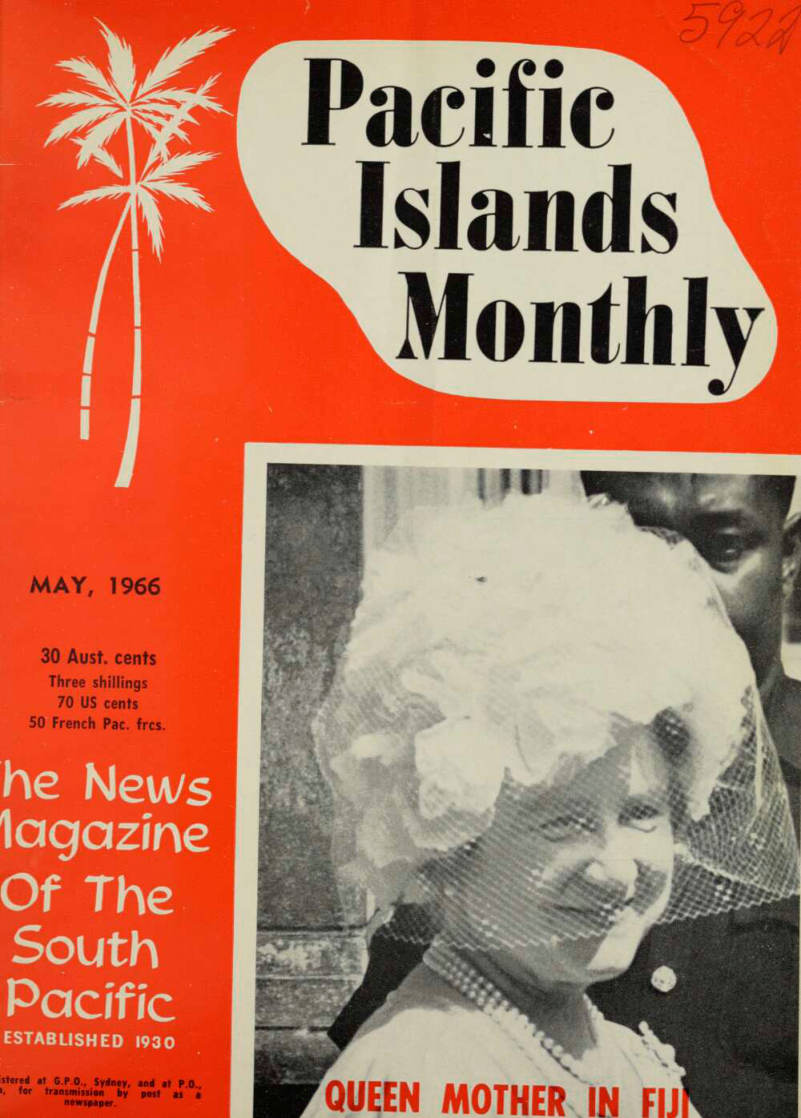 1
1 2
2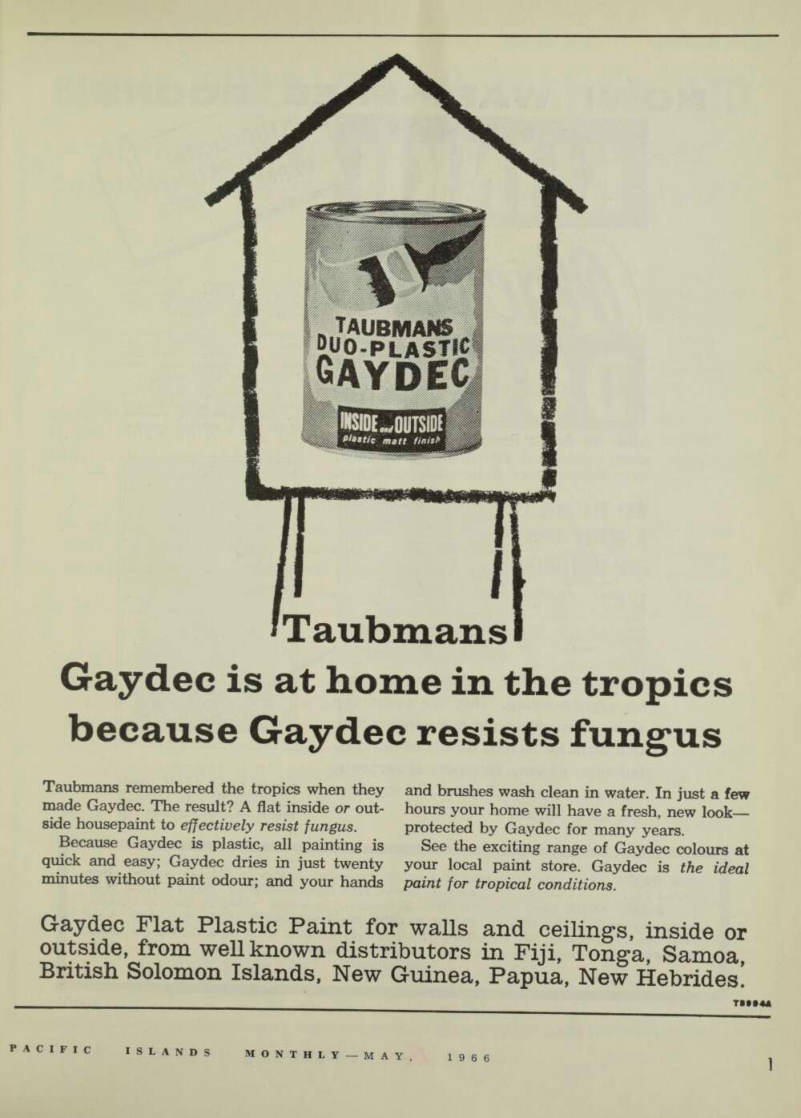 3
3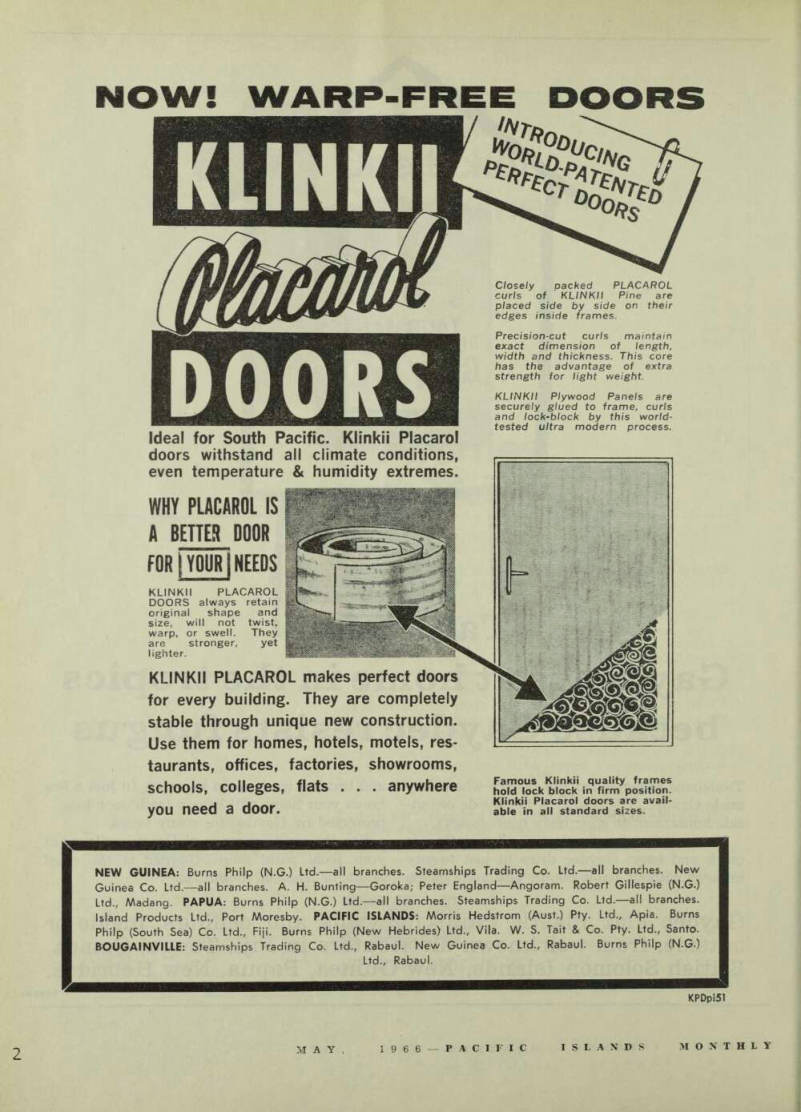 4
4 5
5 6
6 7
7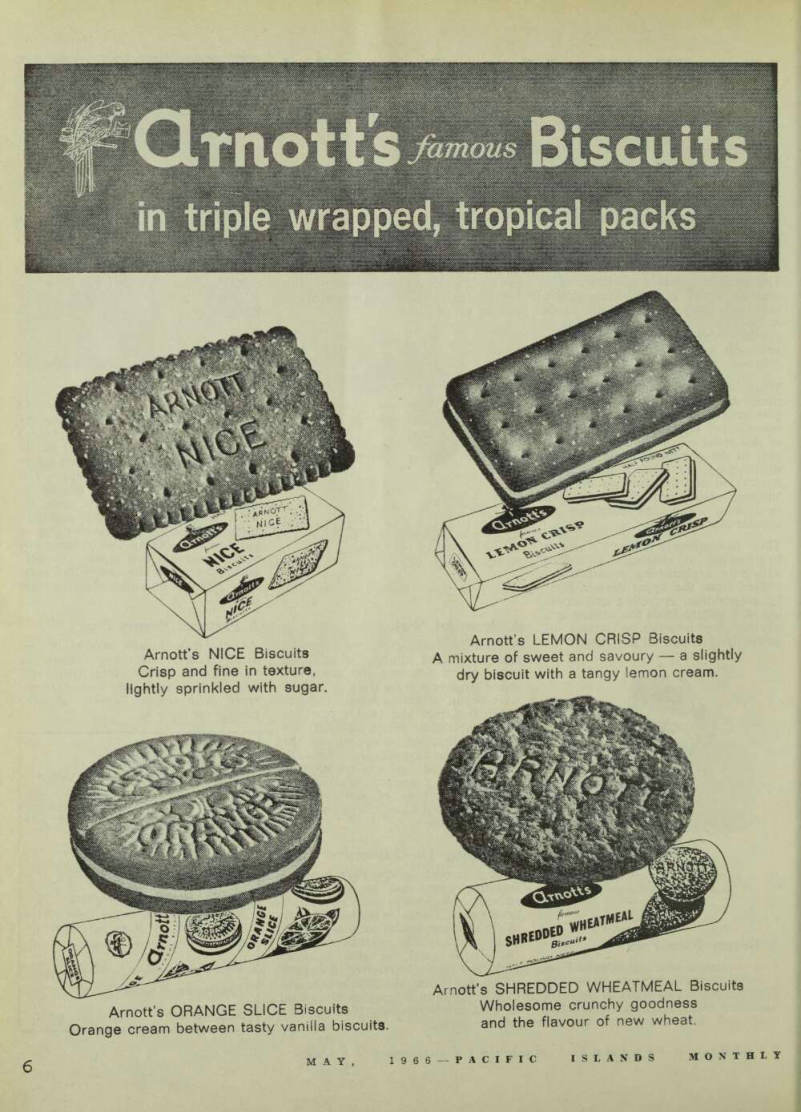 8
8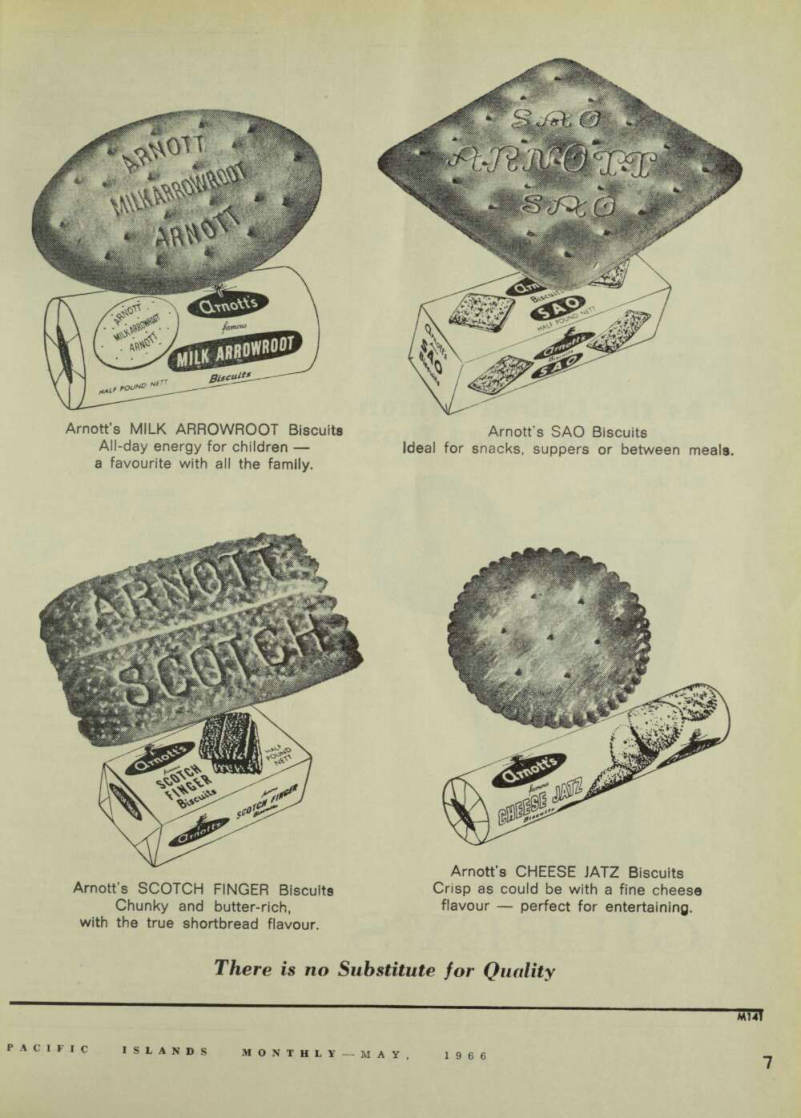 9
9 10
10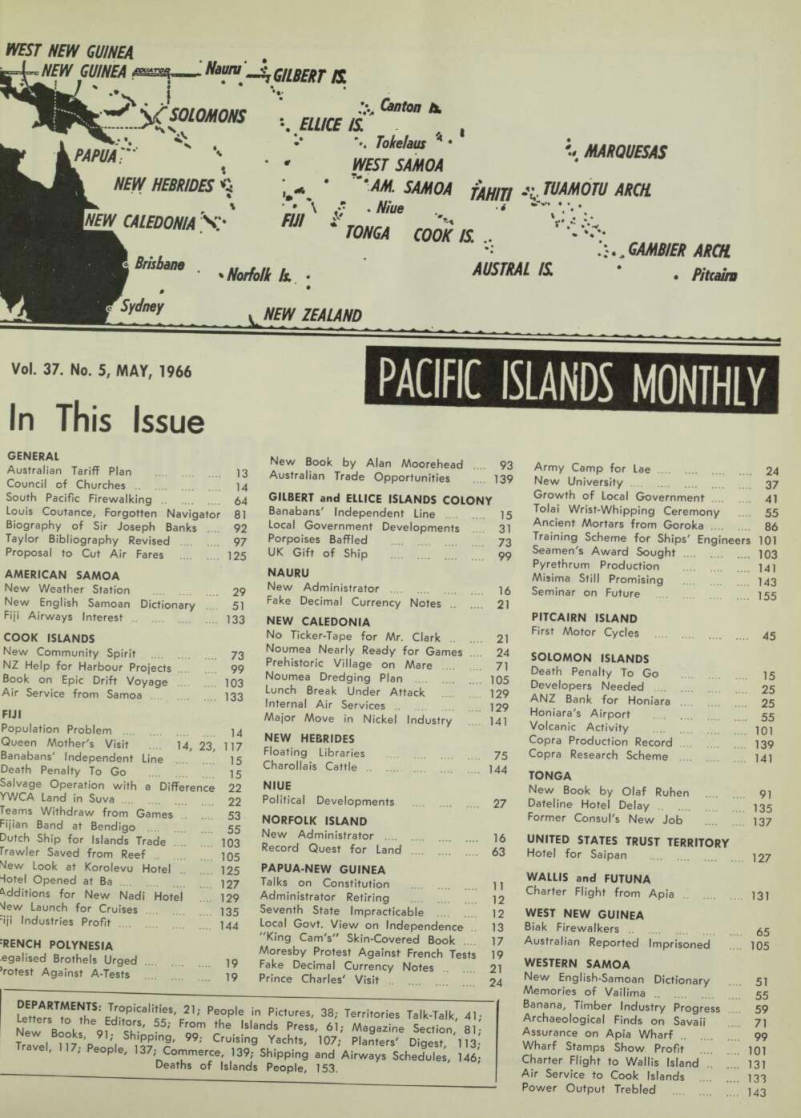 11
11 12
12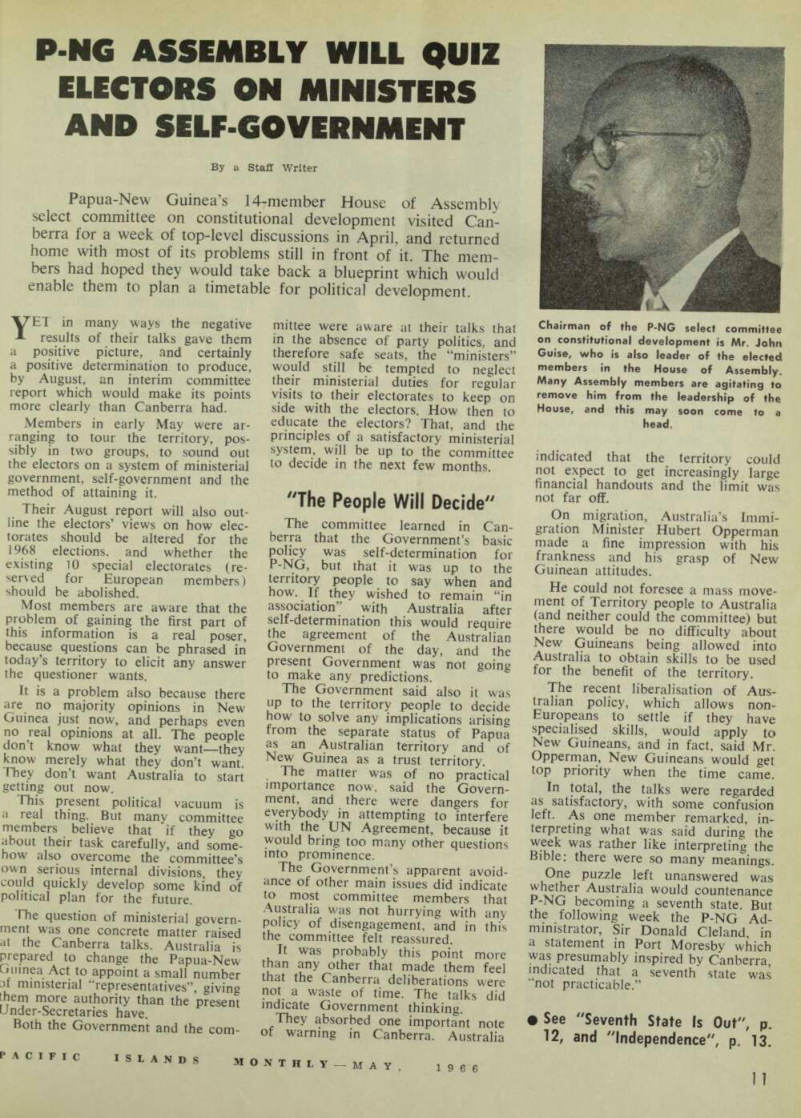 13
13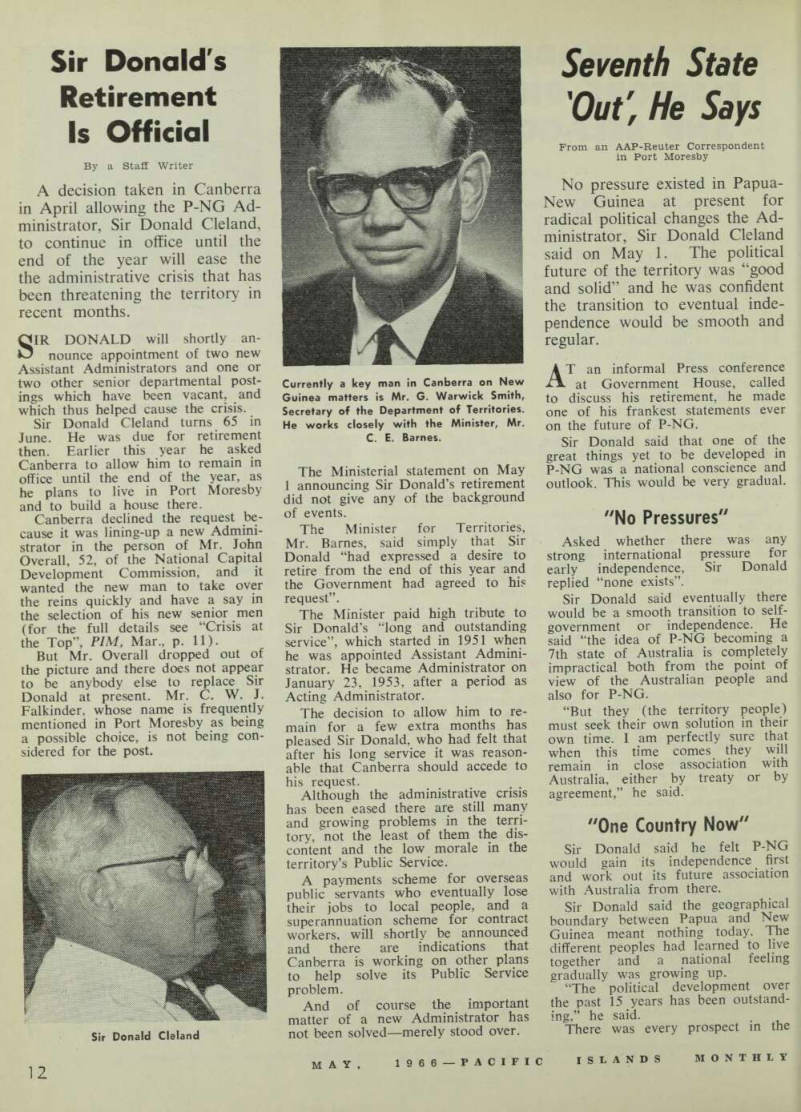 14
14 15
15 16
16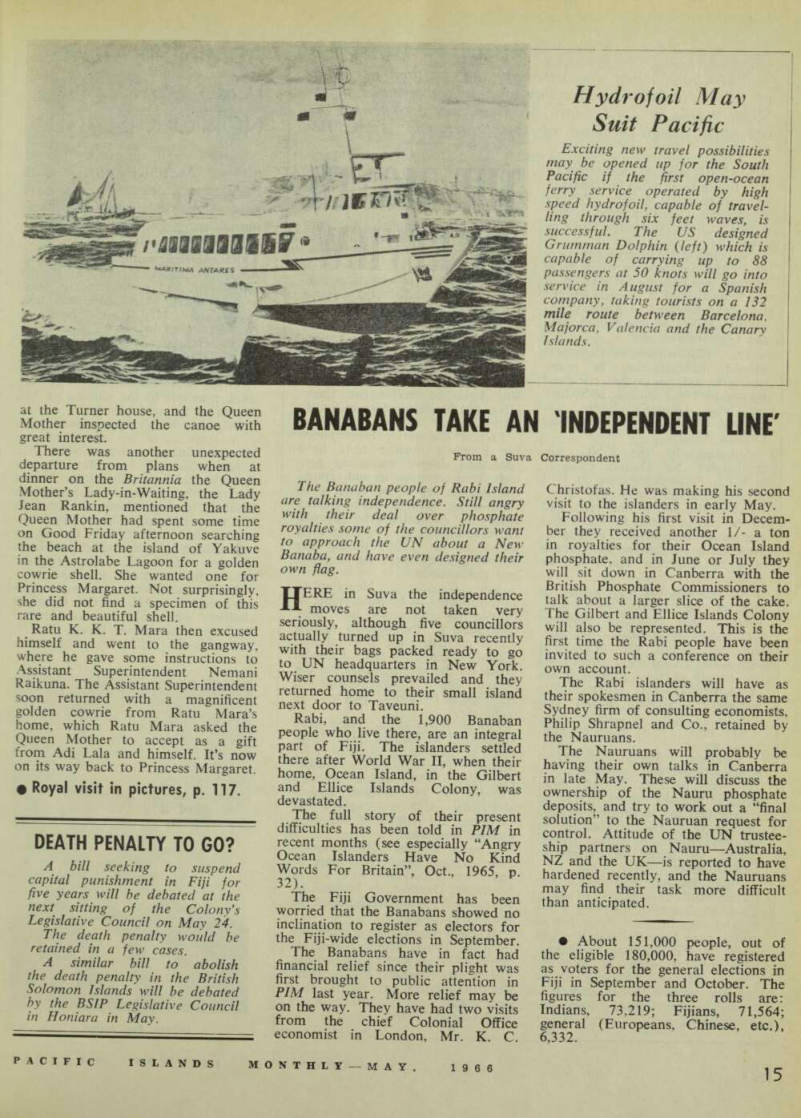 17
17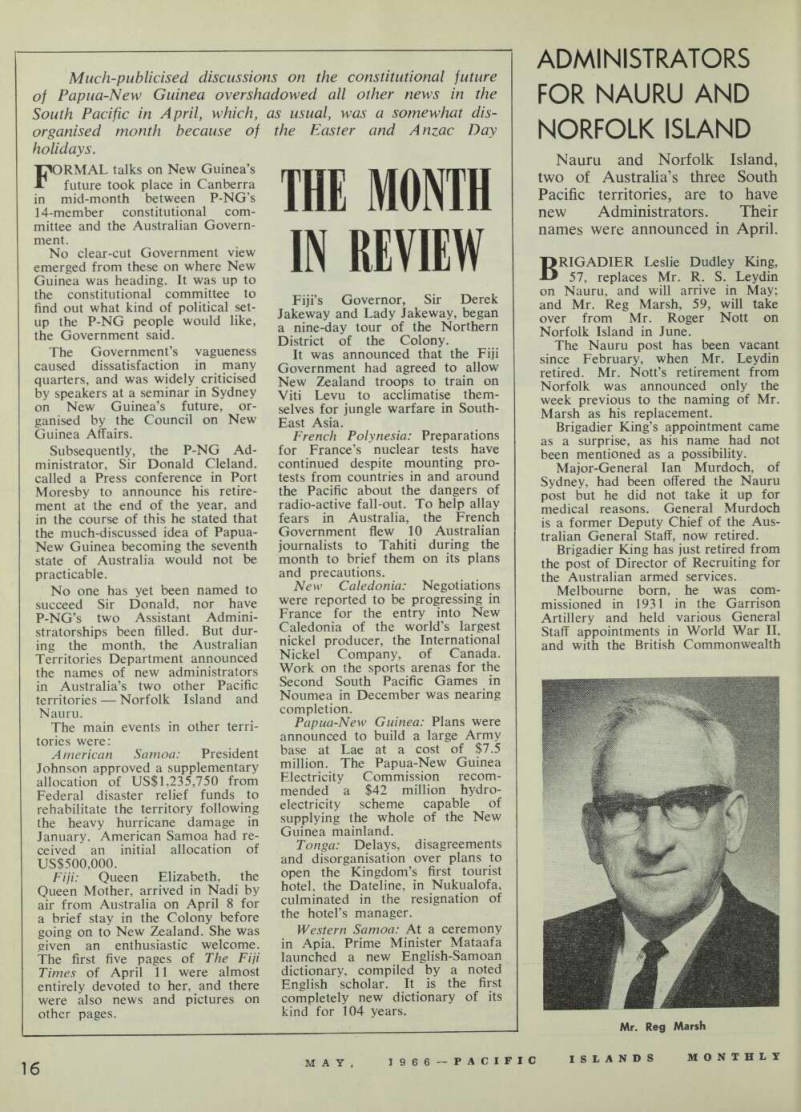 18
18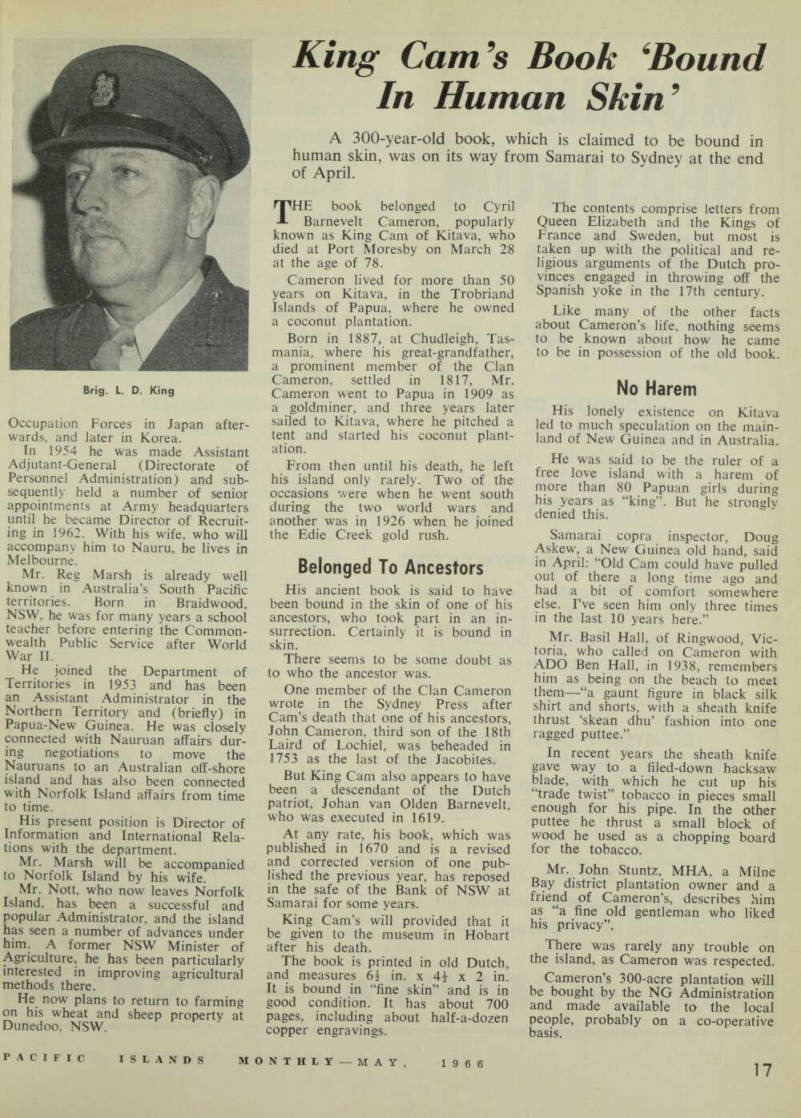 19
19 20
20 21
21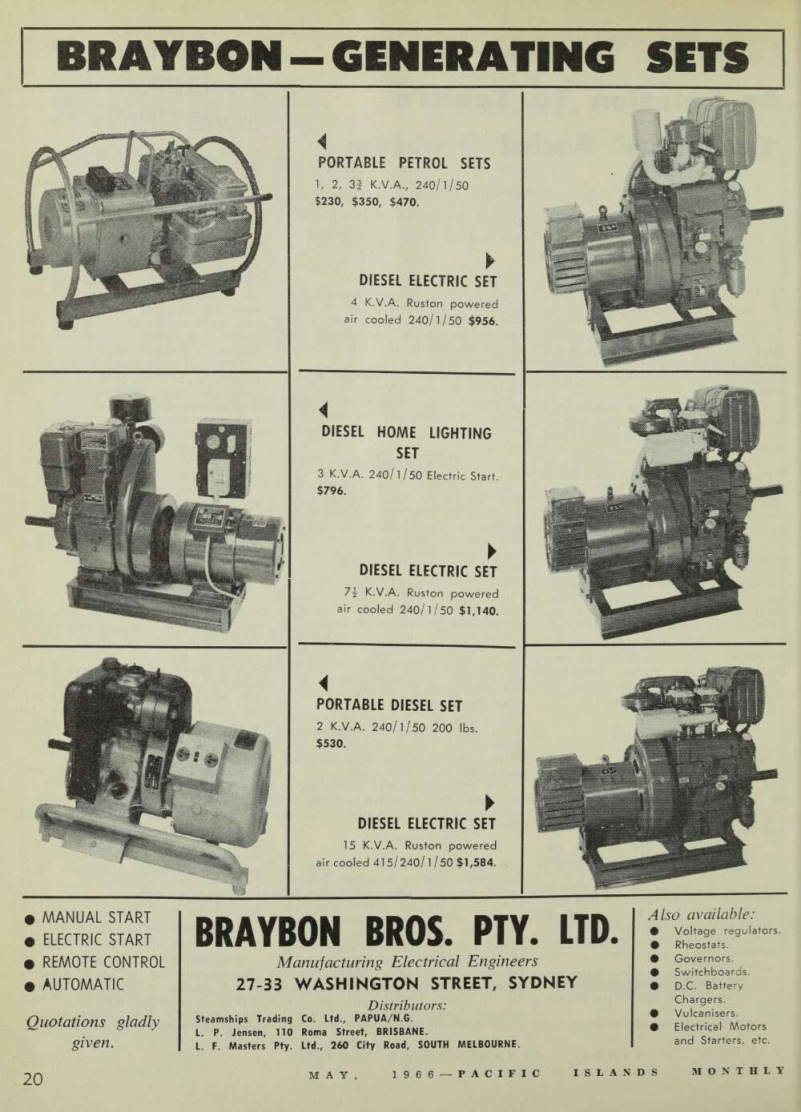 22
22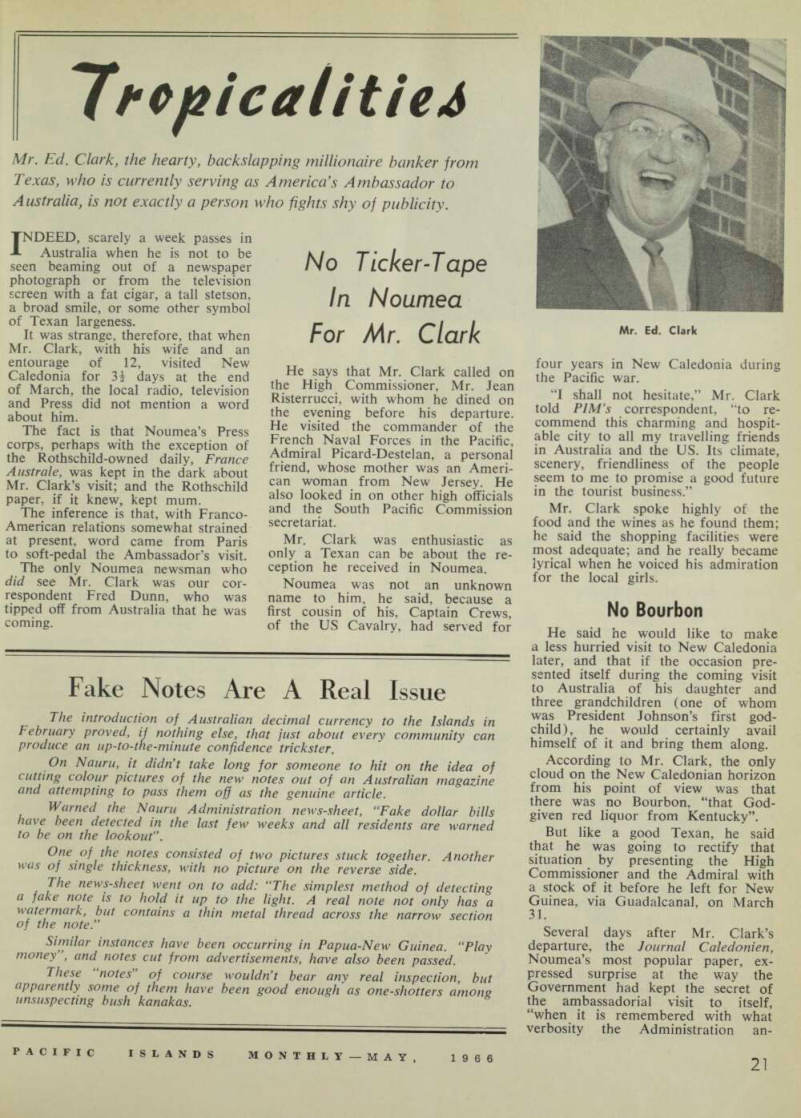 23
23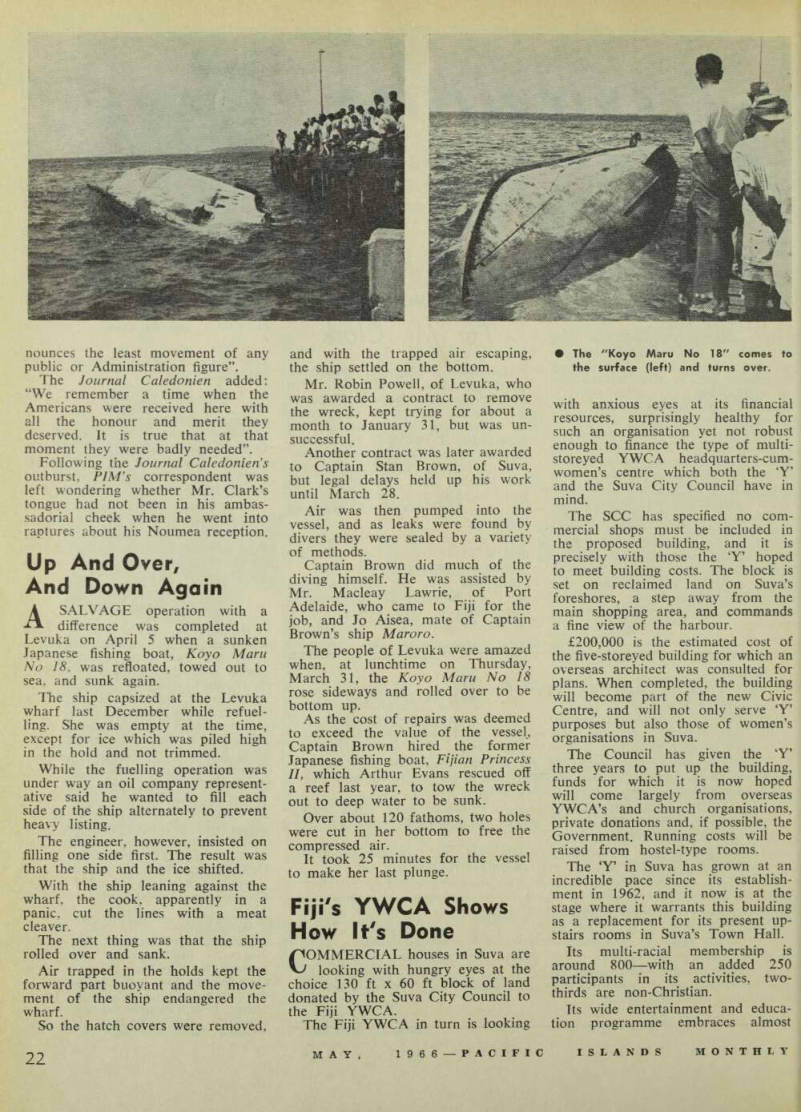 24
24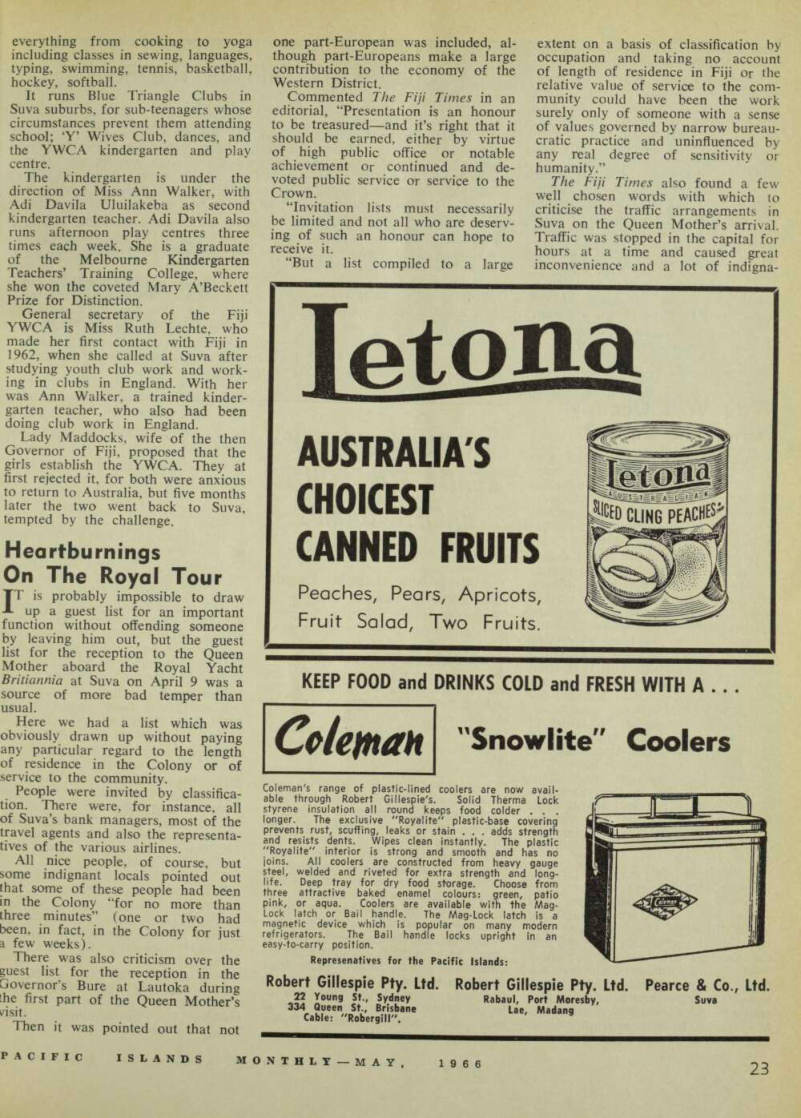 25
25 26
26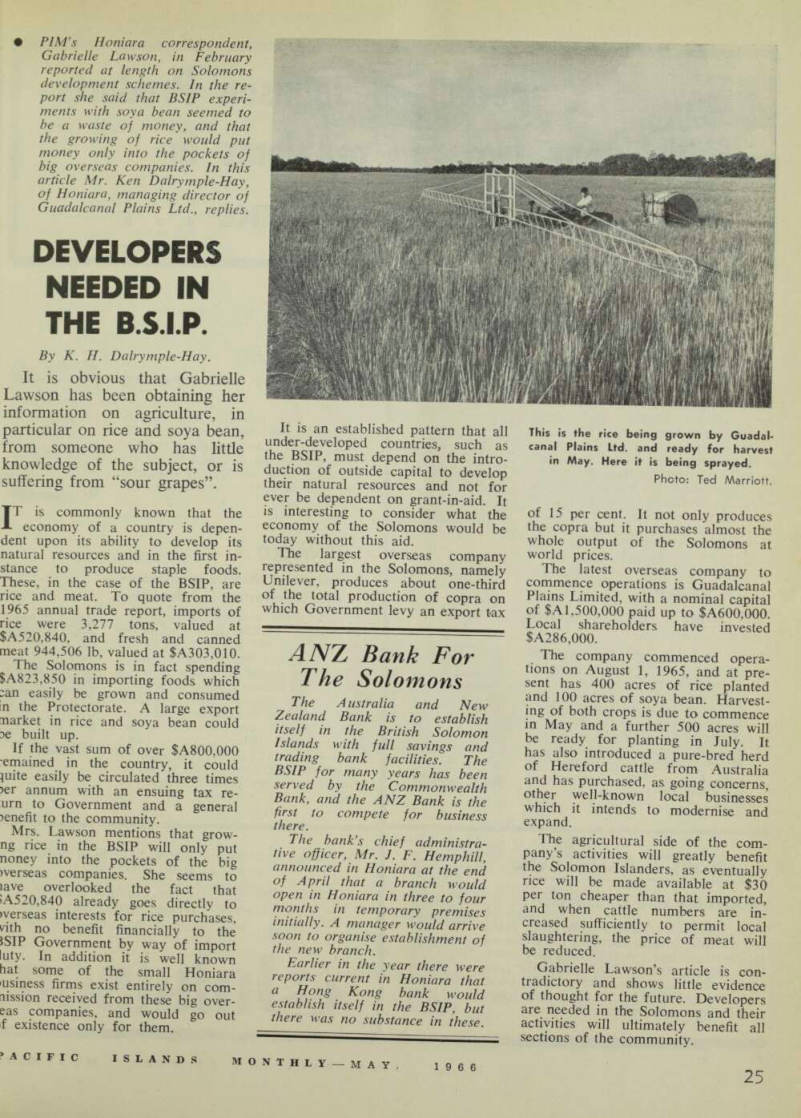 27
27 28
28 29
29 30
30 31
31 32
32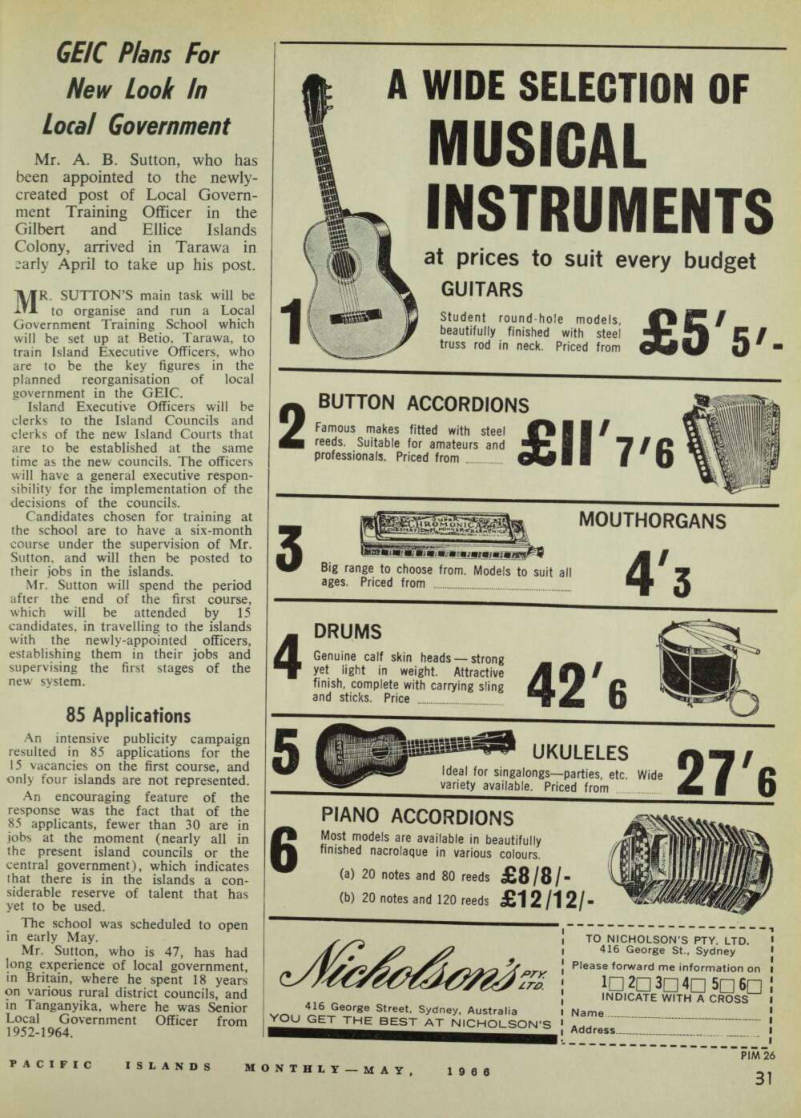 33
33 34
34 35
35 36
36 37
37 38
38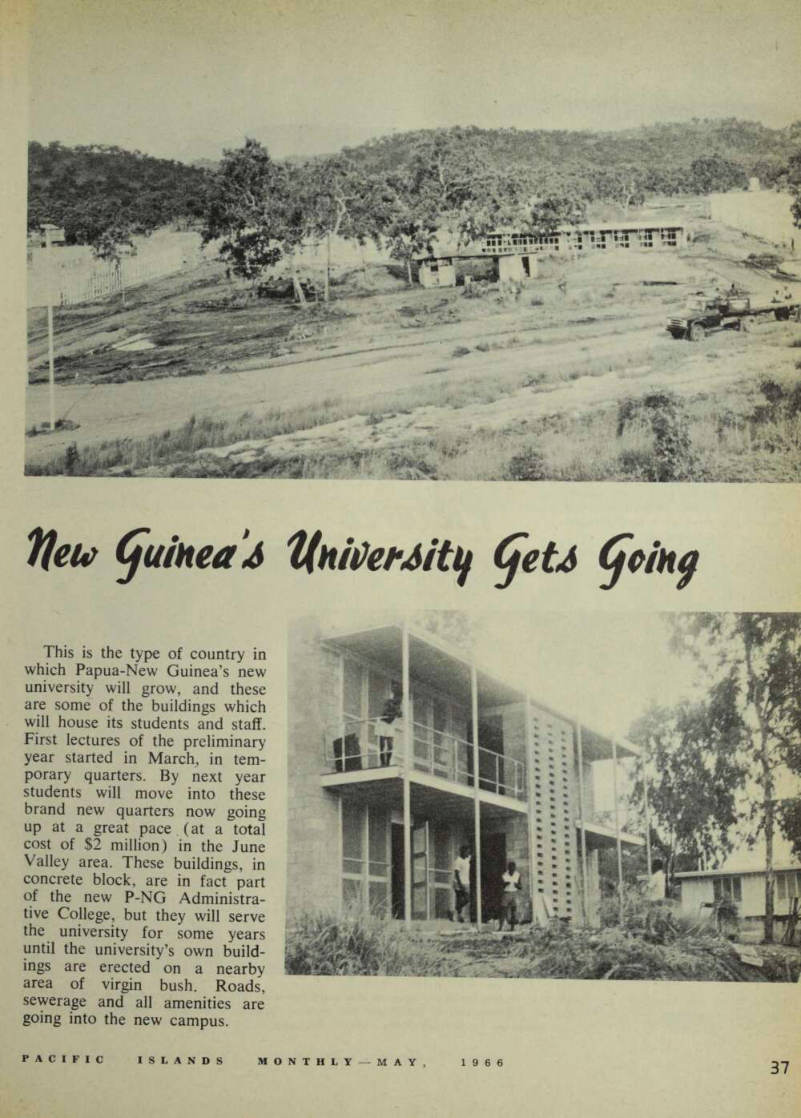 39
39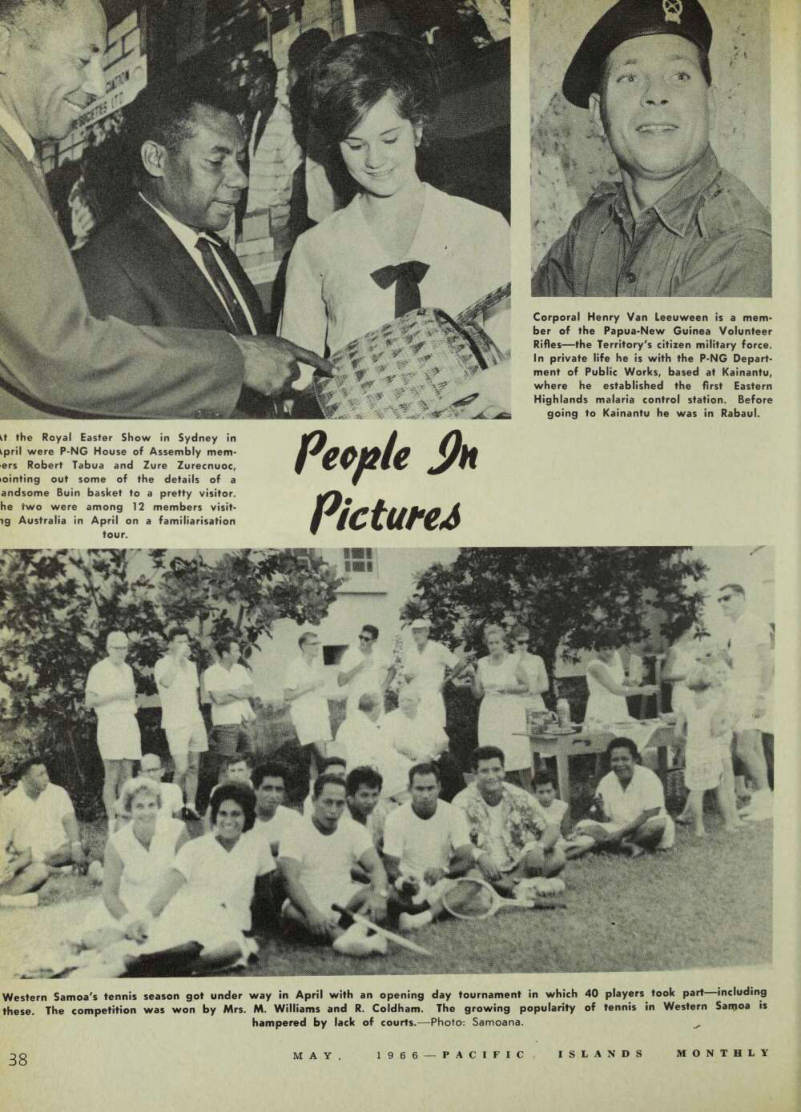 40
40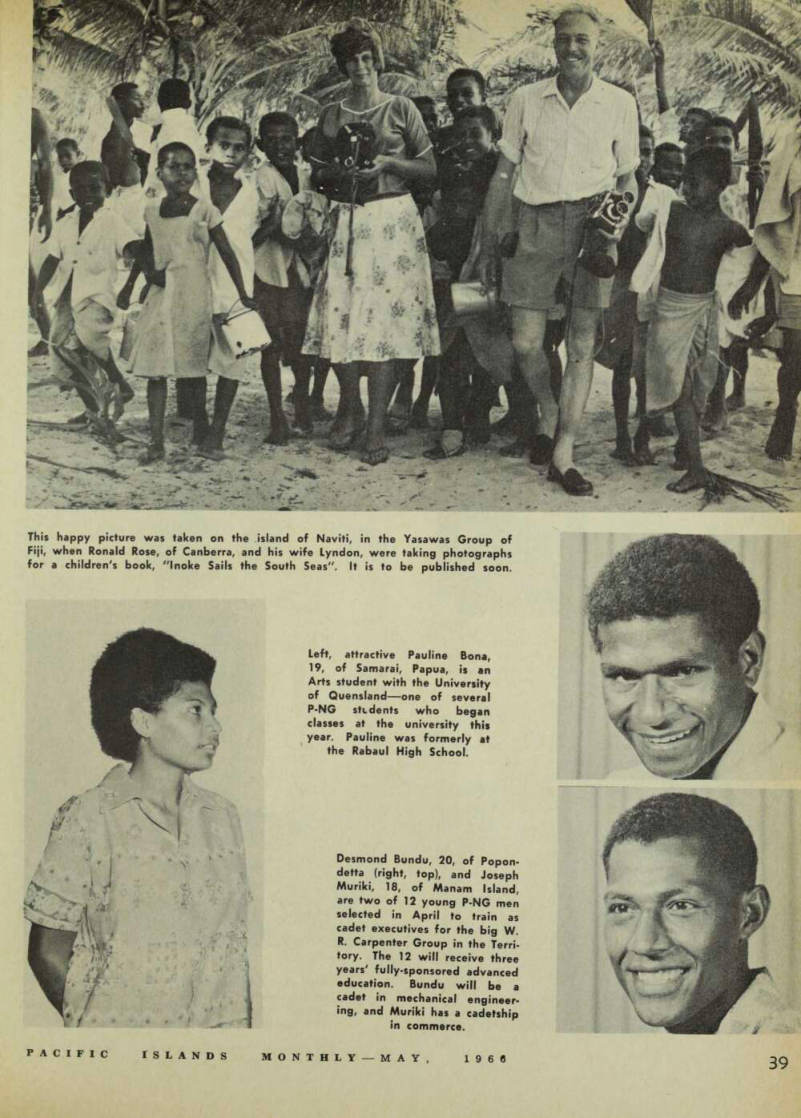 41
41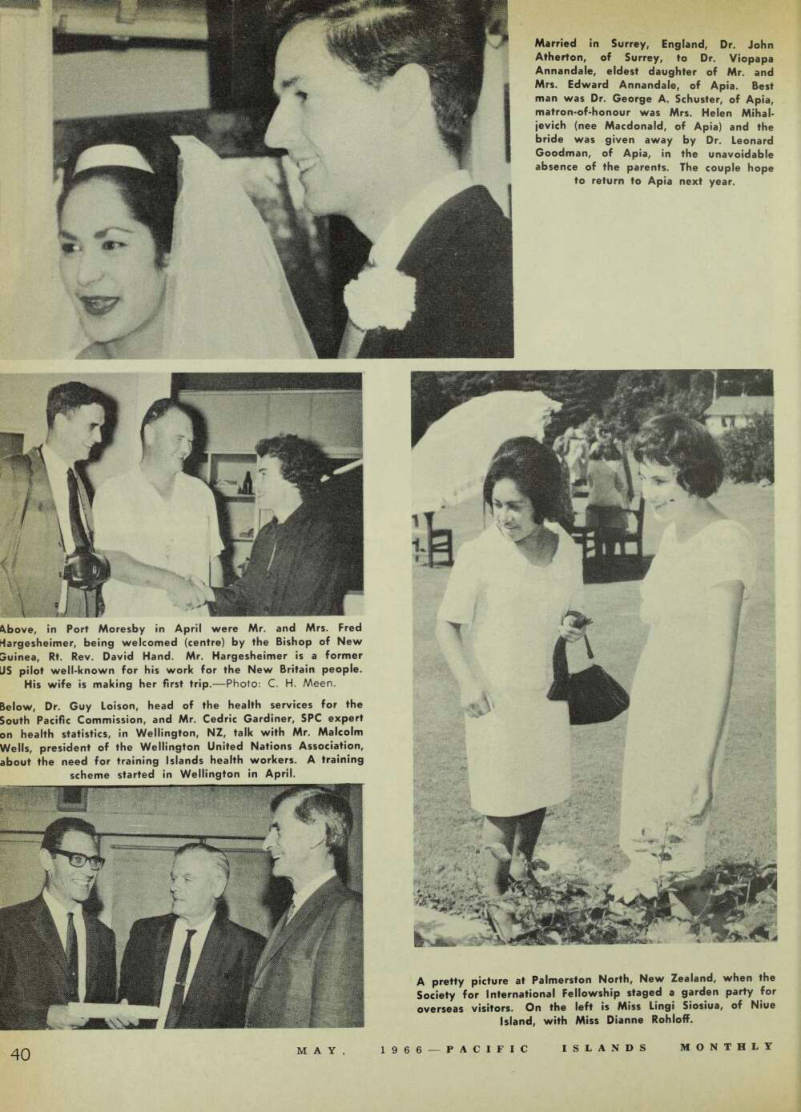 42
42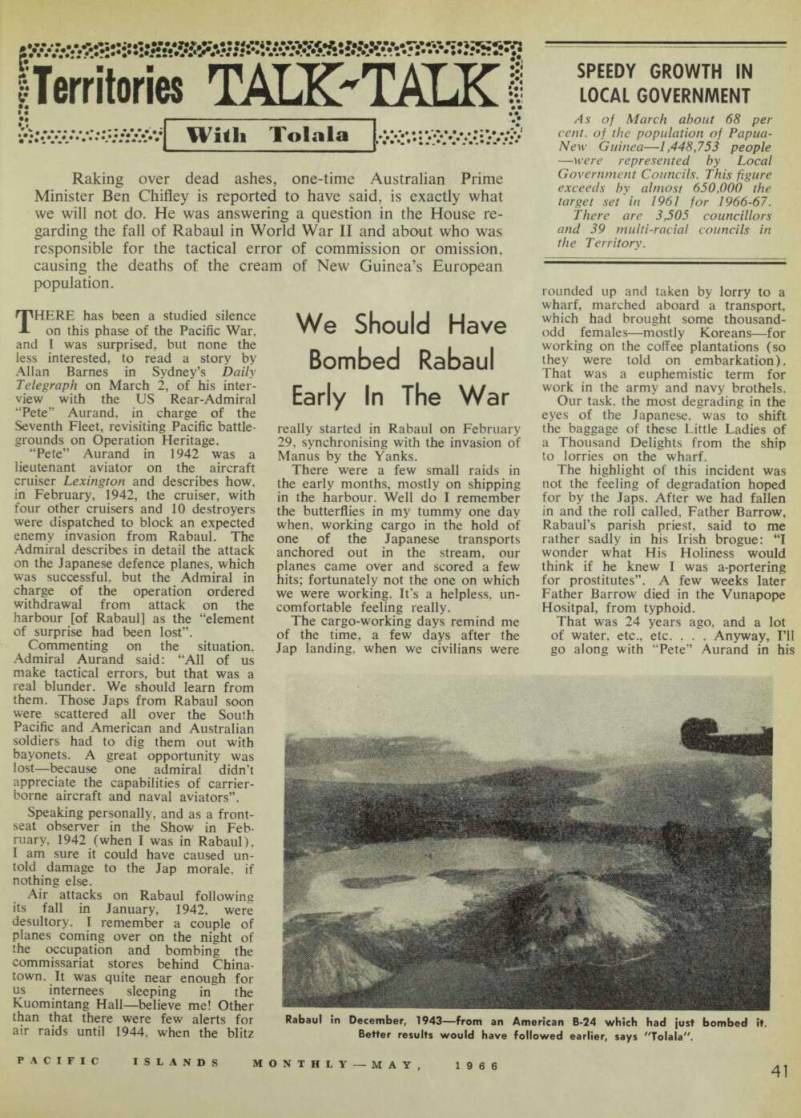 43
43 44
44 45
45 46
46 47
47 48
48 49
49 50
50 51
51 52
52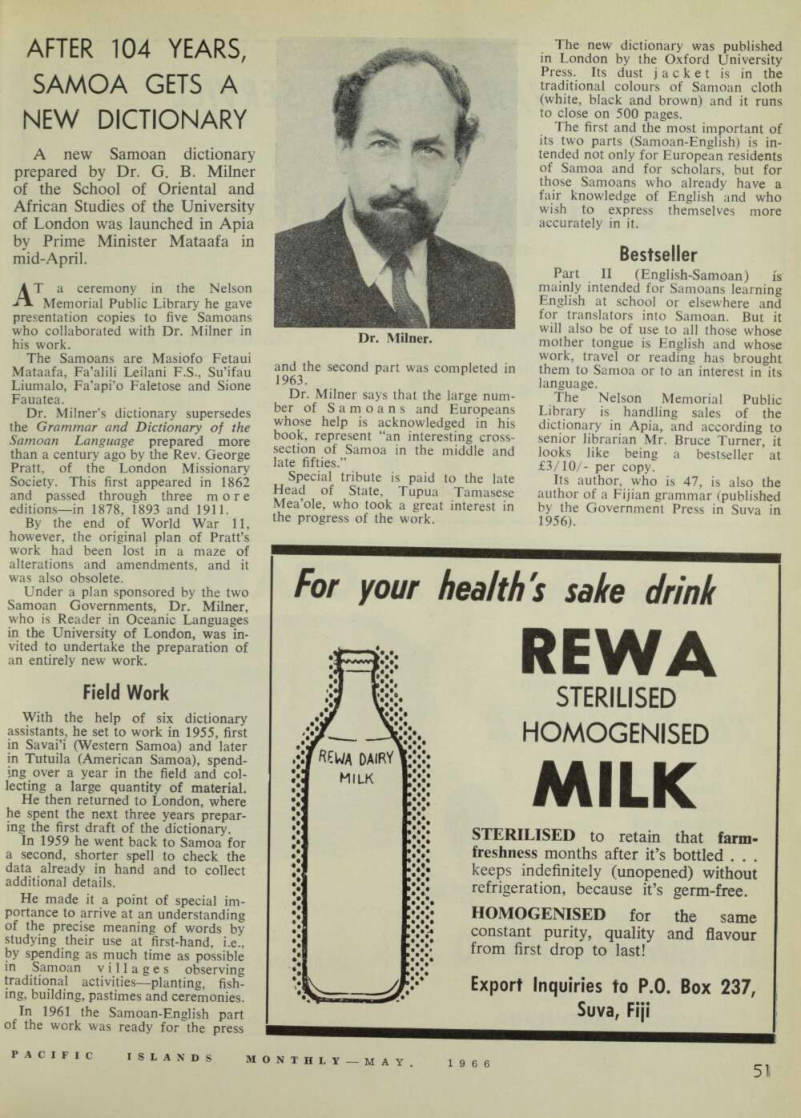 53
53 54
54 55
55 56
56 57
57 58
58 59
59 60
60 61
61 62
62 63
63 64
64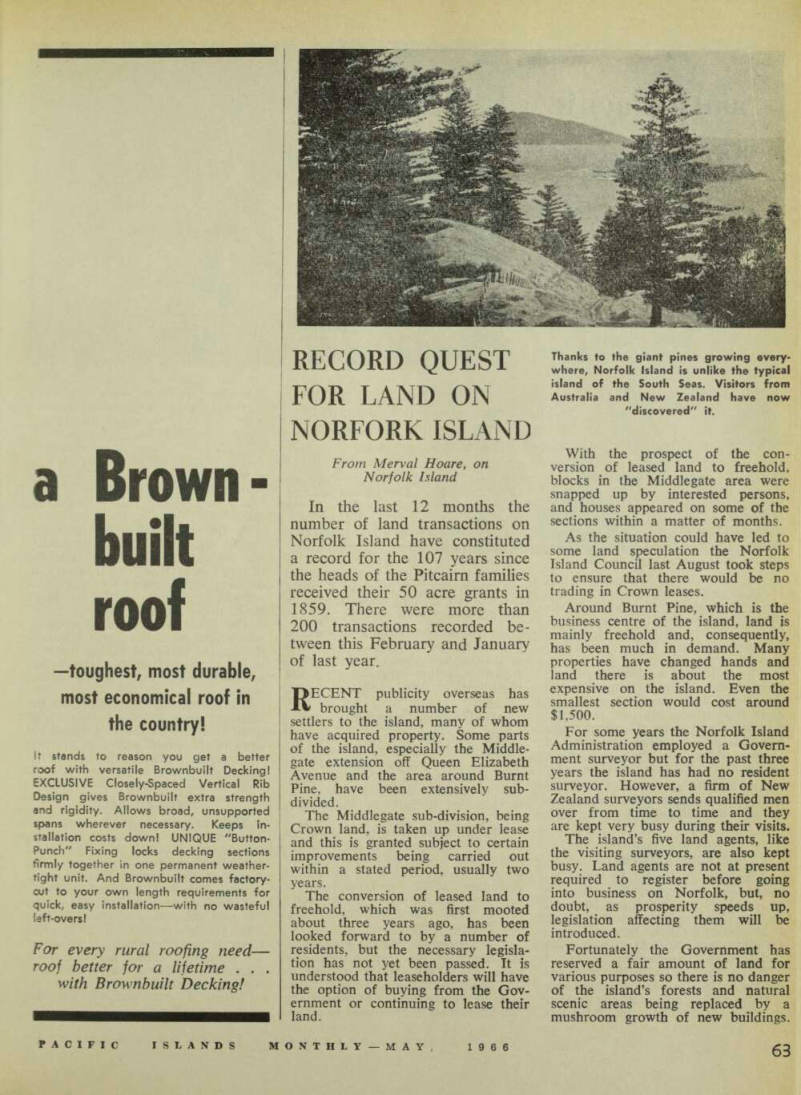 65
65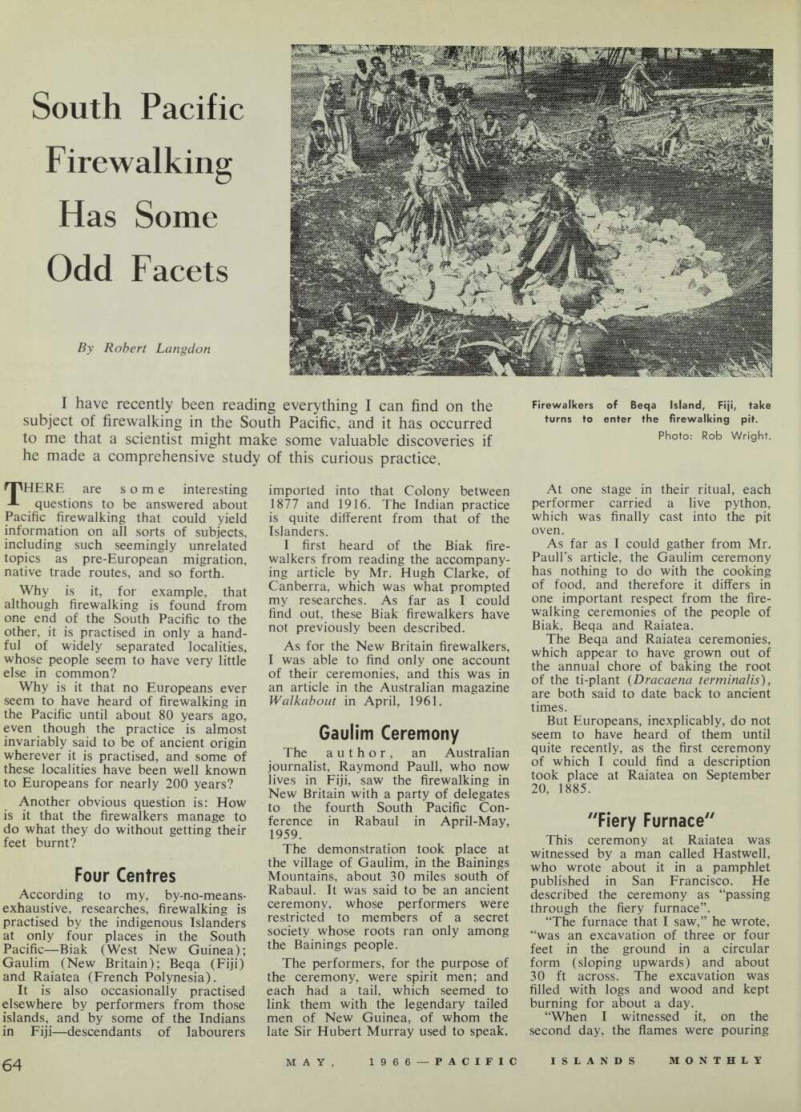 66
66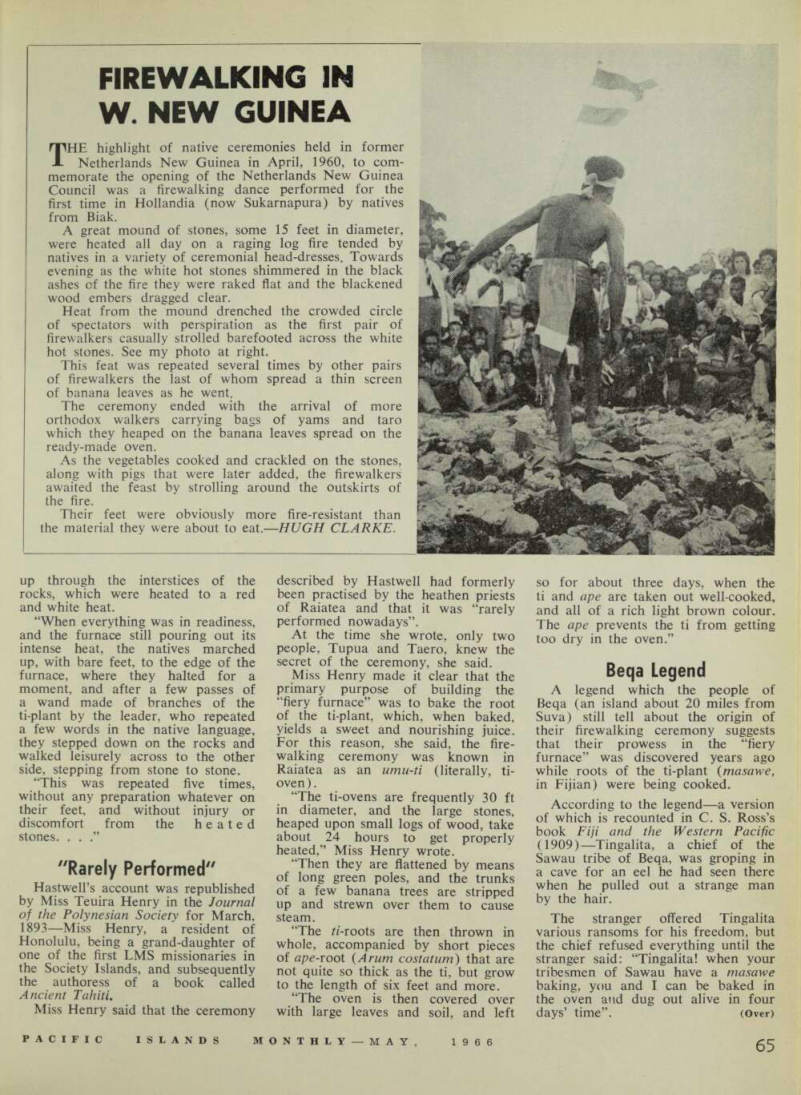 67
67 68
68 69
69 70
70 71
71 72
72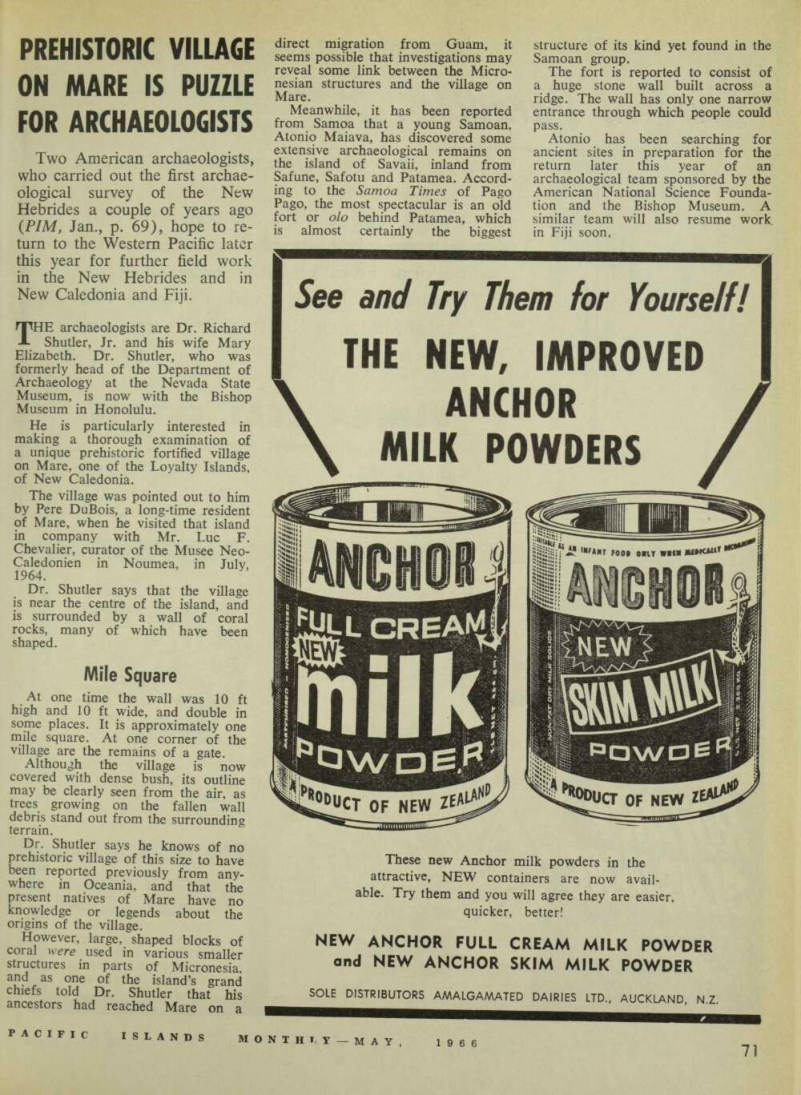 73
73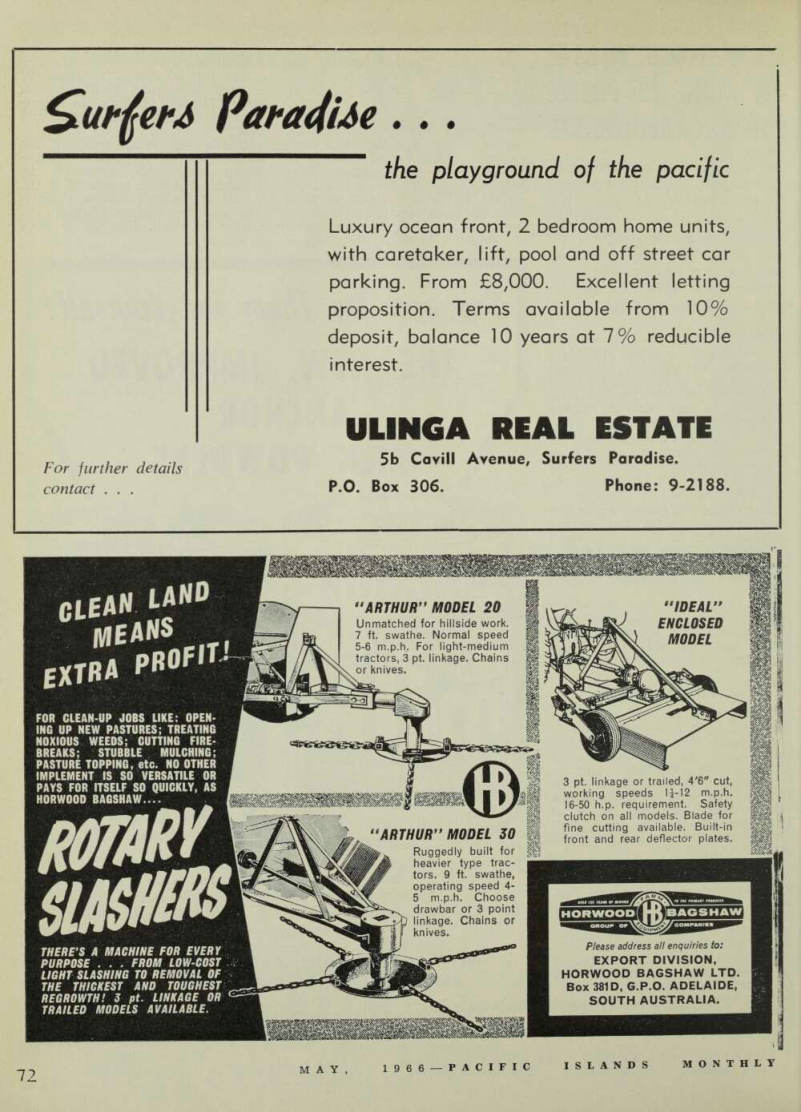 74
74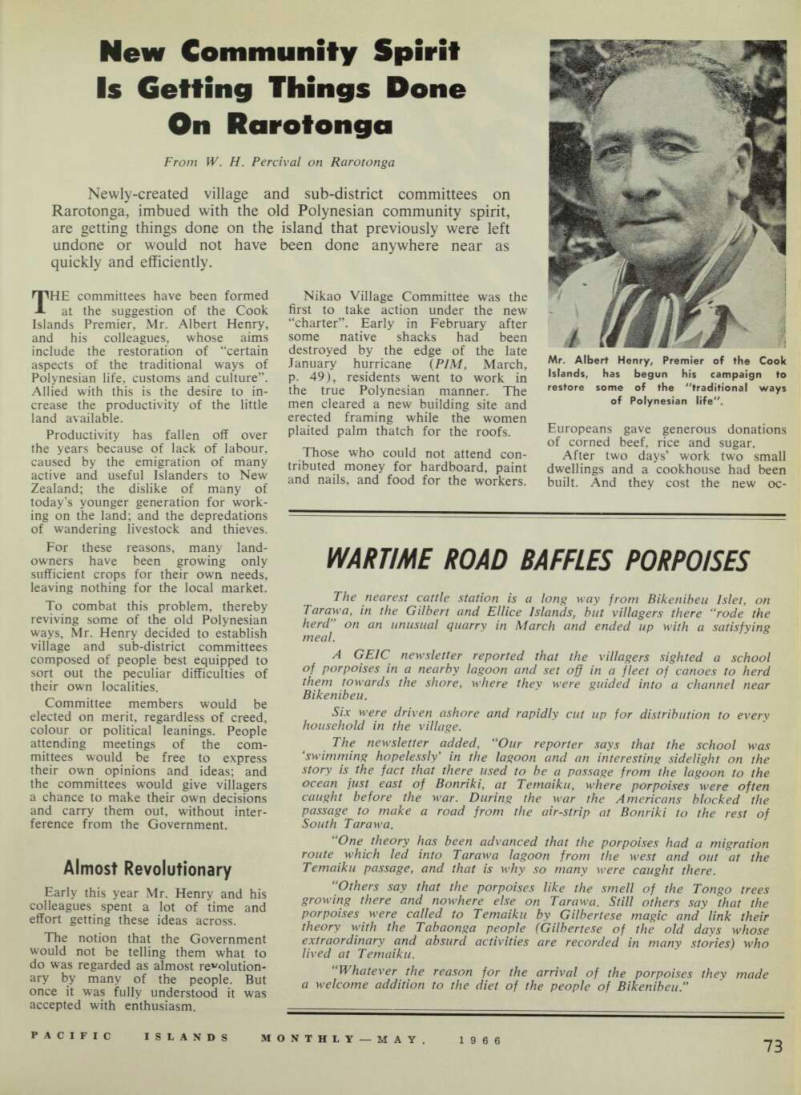 75
75 76
76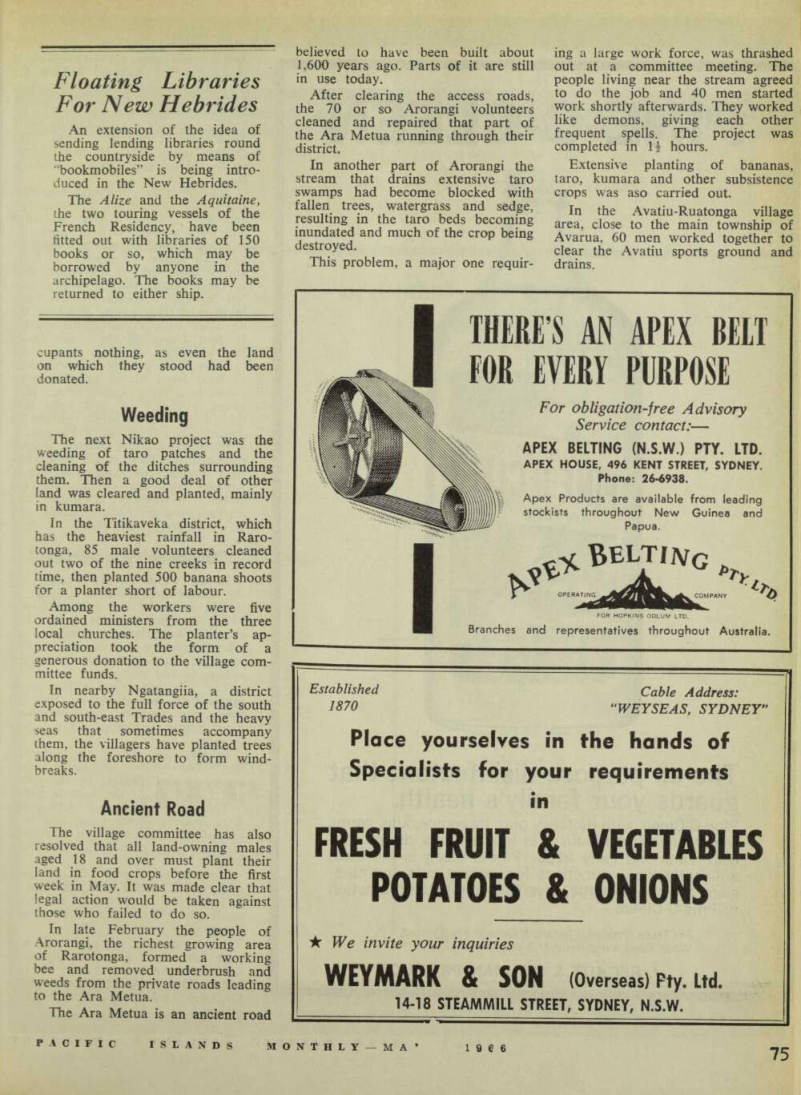 77
77 78
78 79
79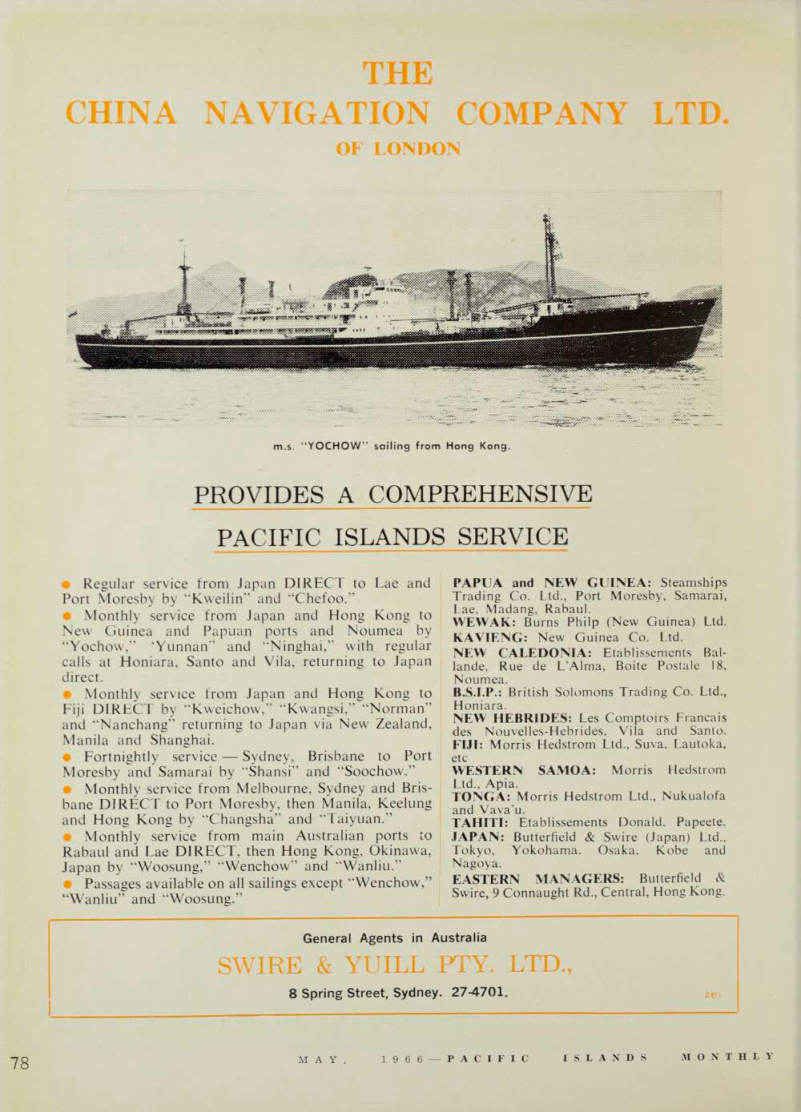 80
80 81
81 82
82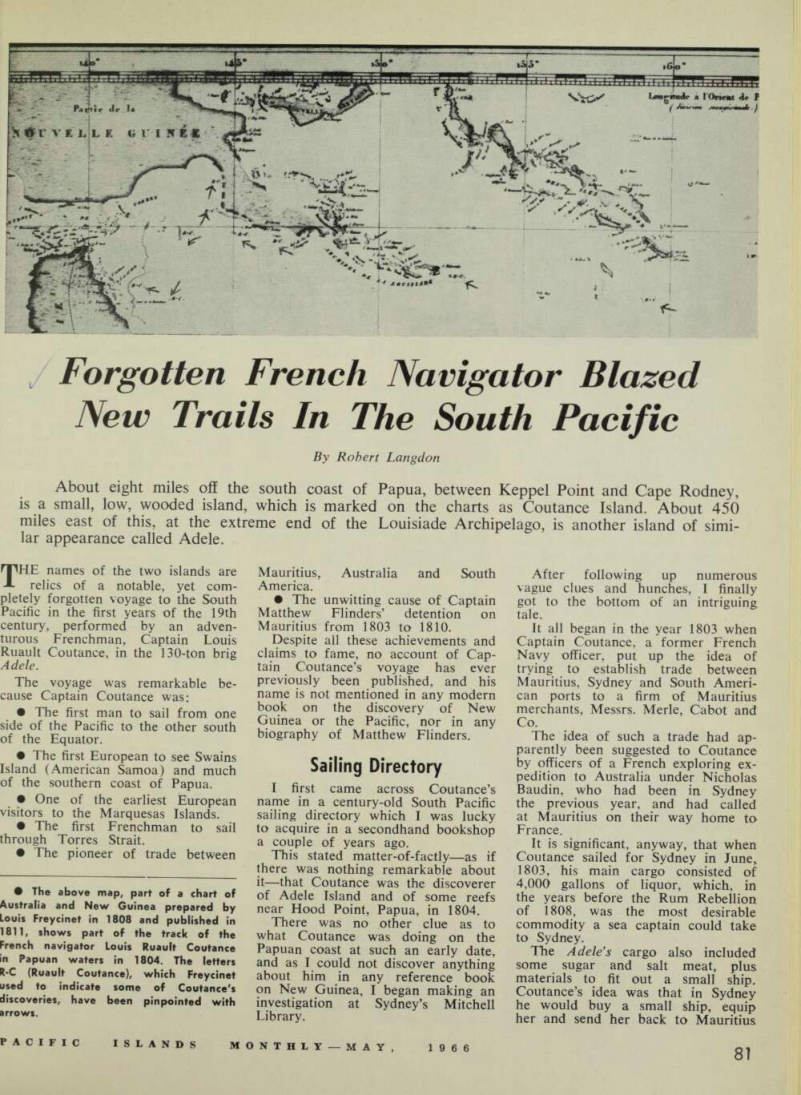 83
83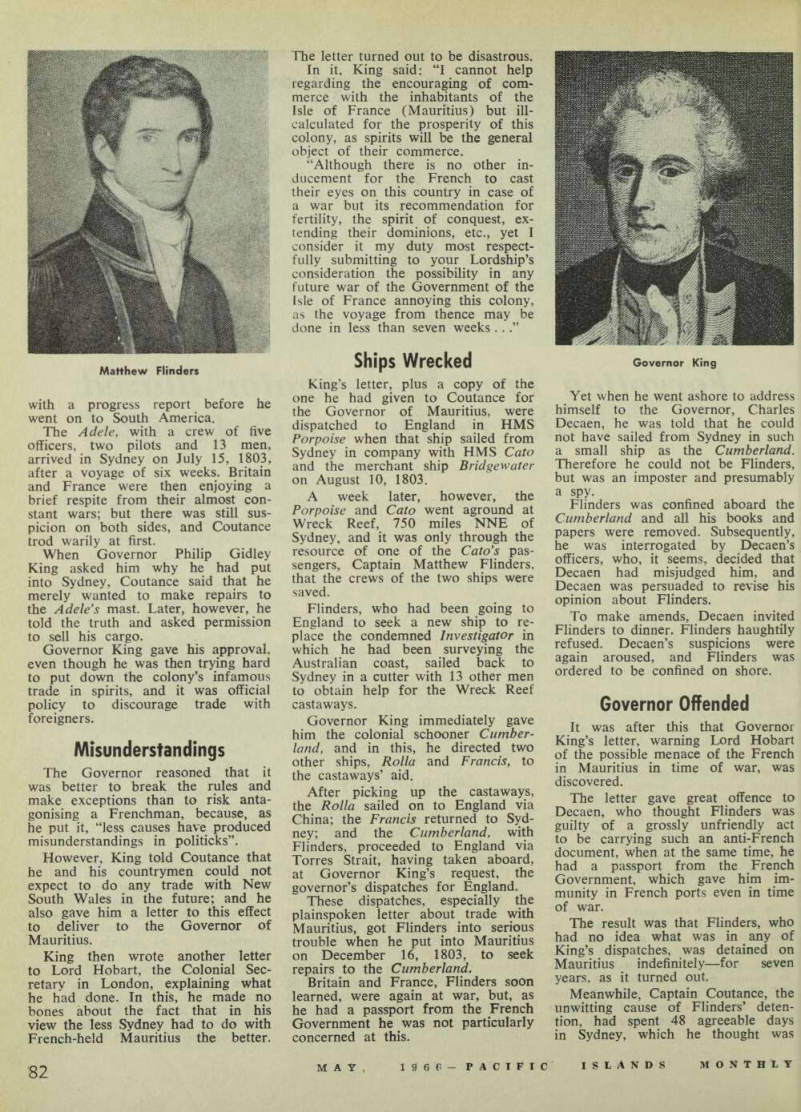 84
84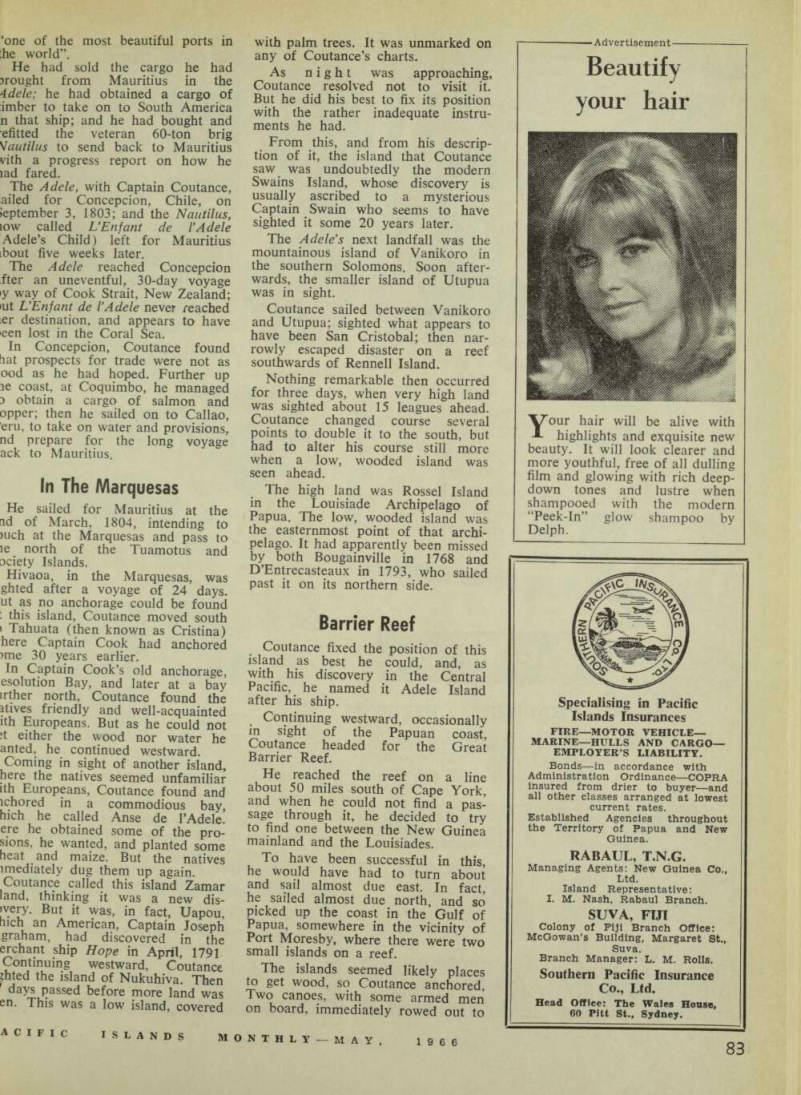 85
85 86
86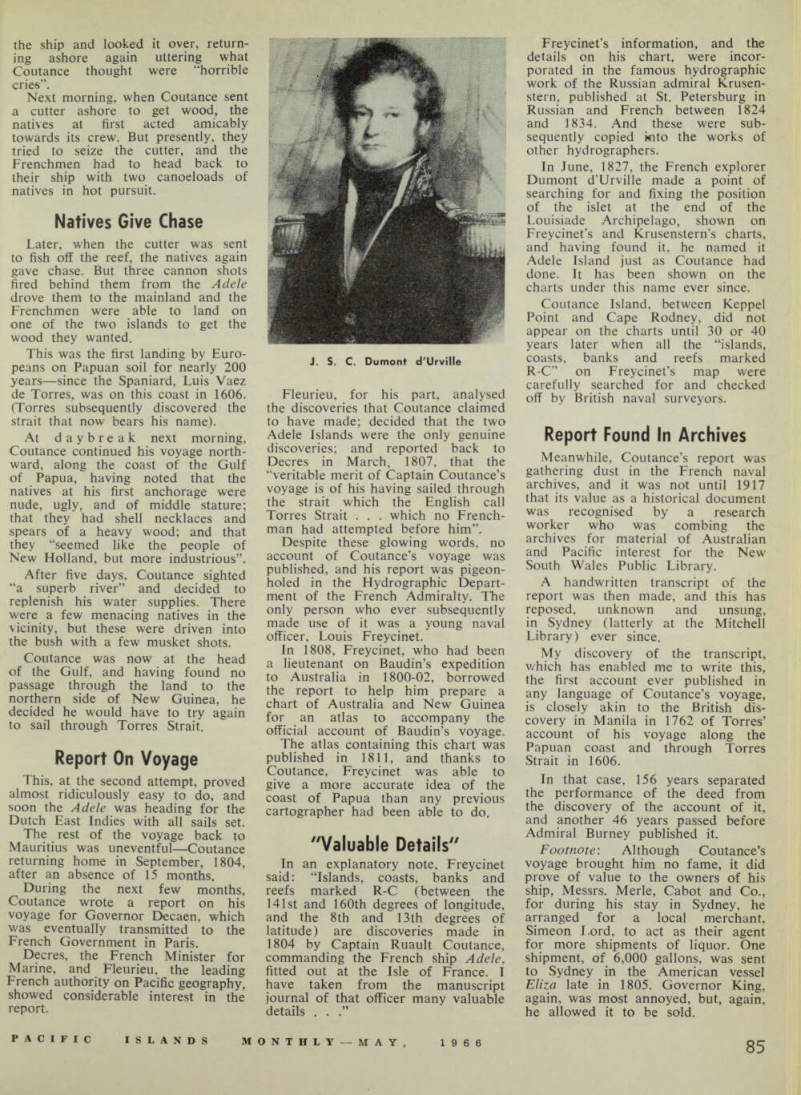 87
87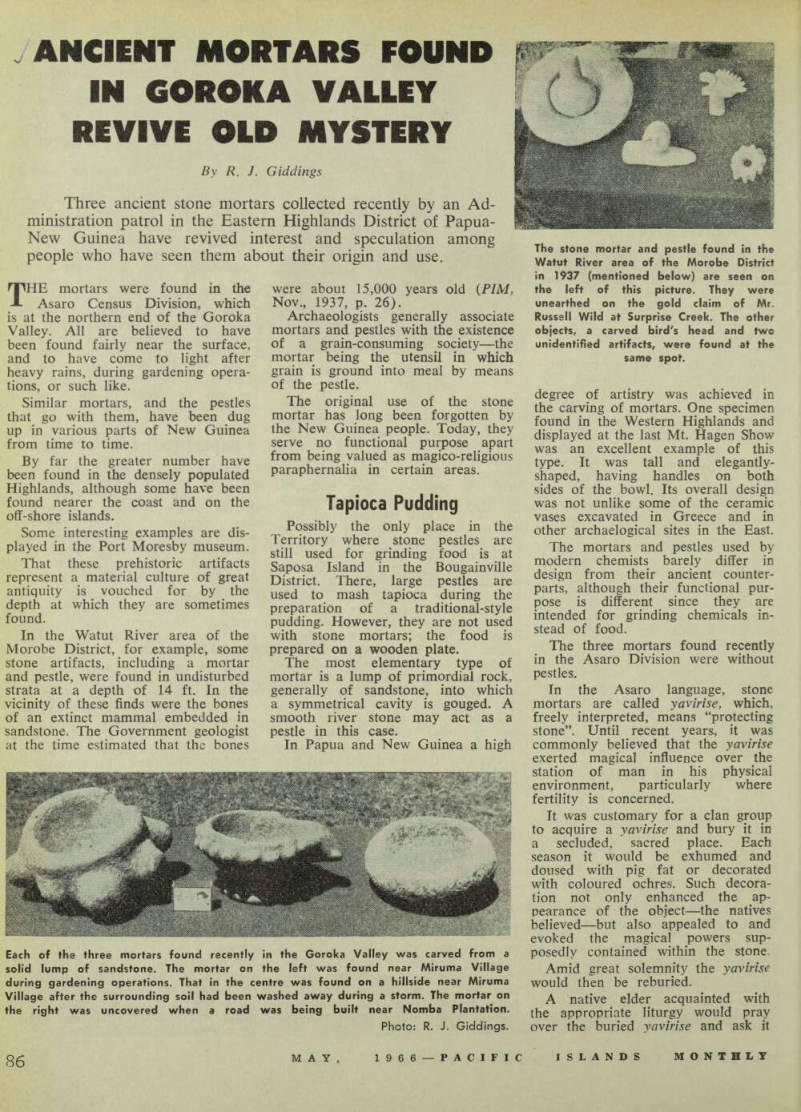 88
88 89
89 90
90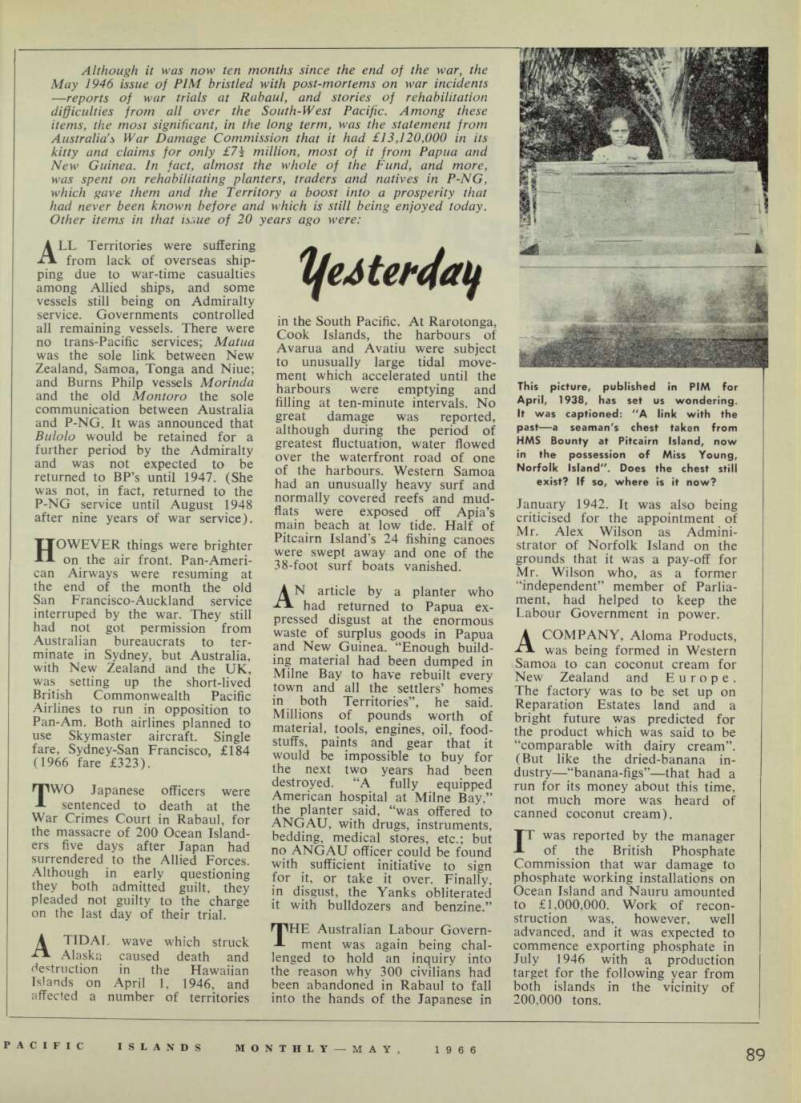 91
91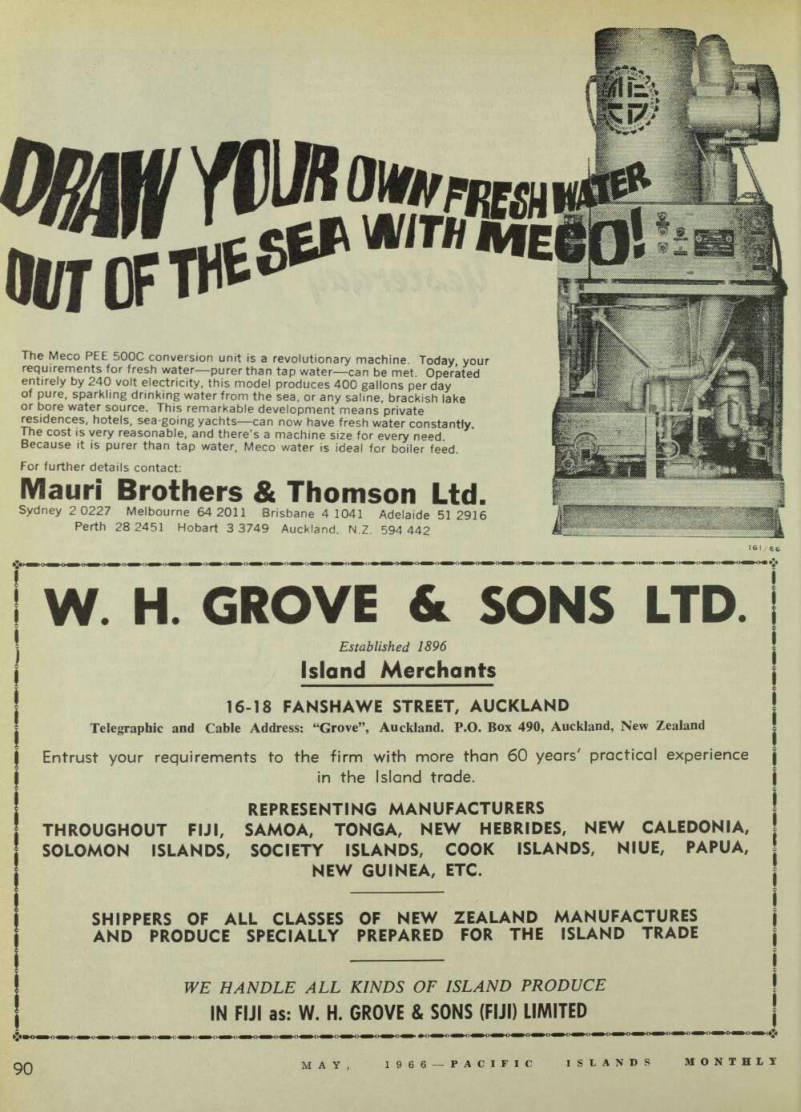 92
92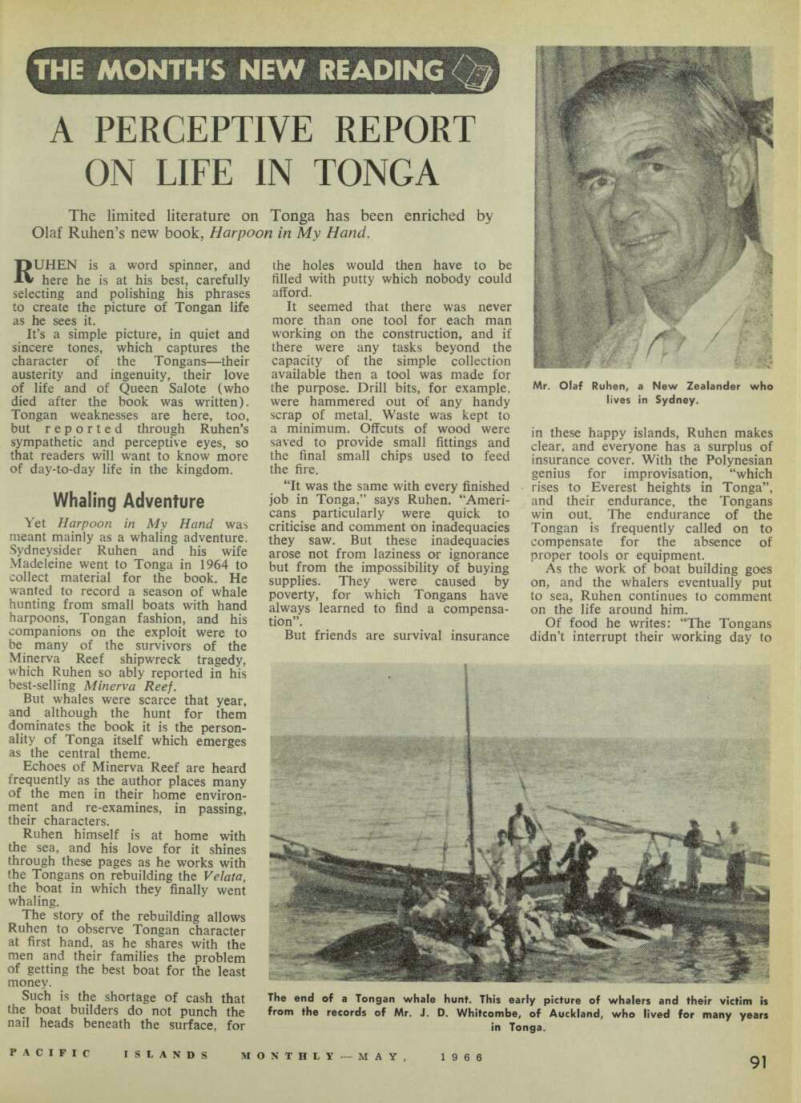 93
93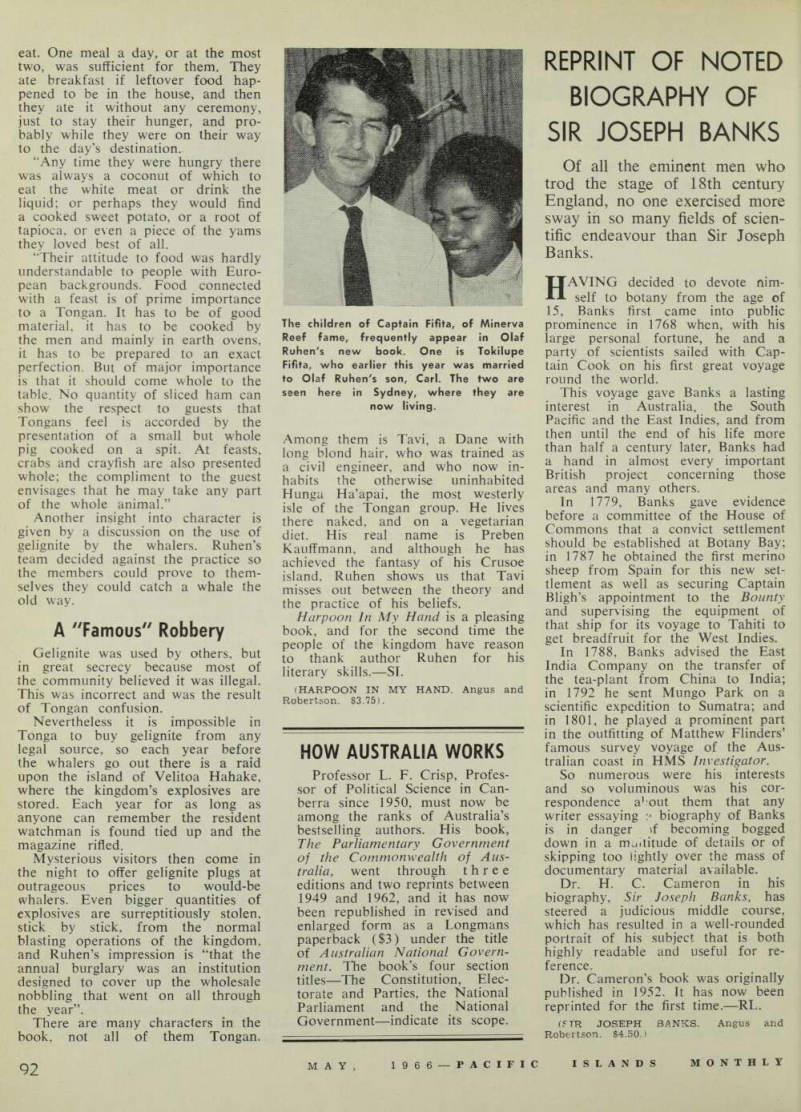 94
94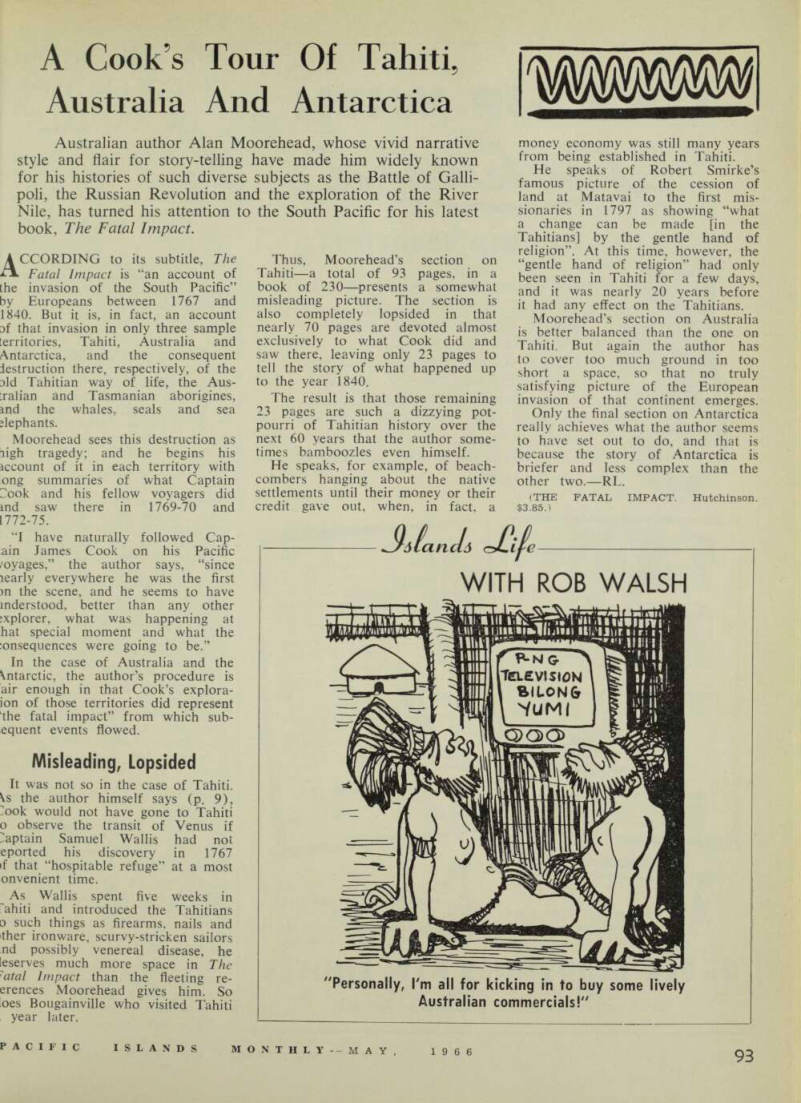 95
95 96
96 97
97 98
98 99
99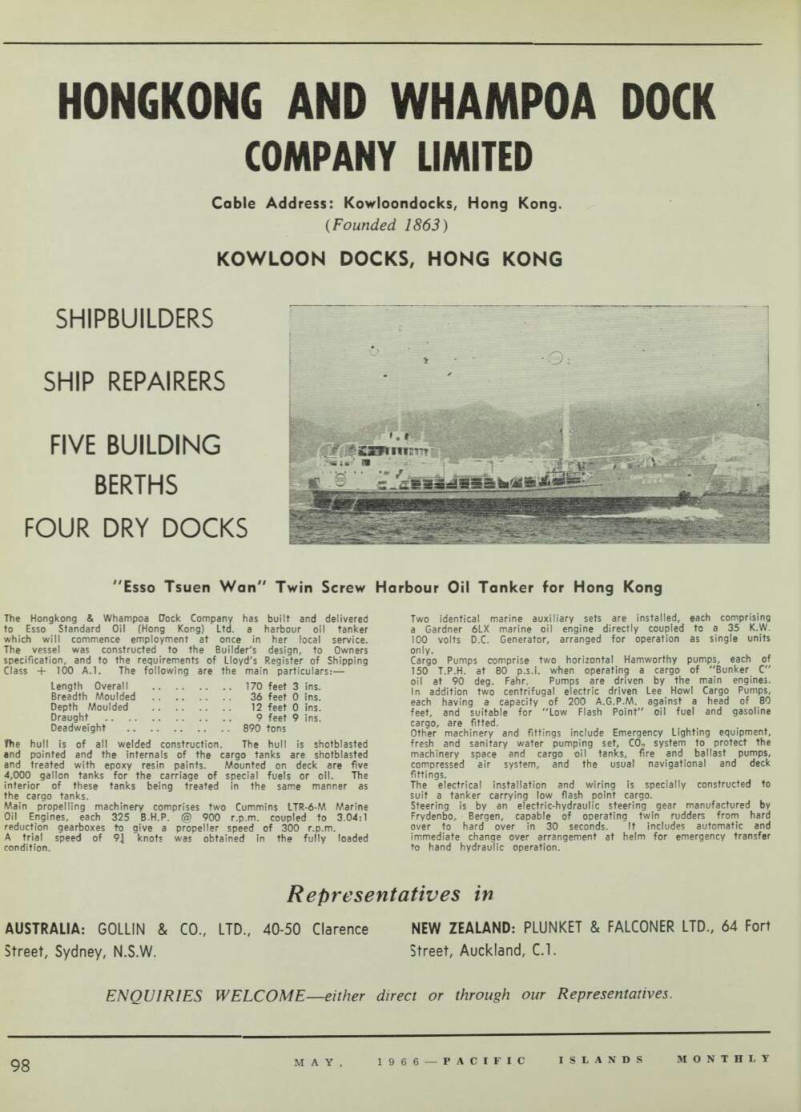 100
100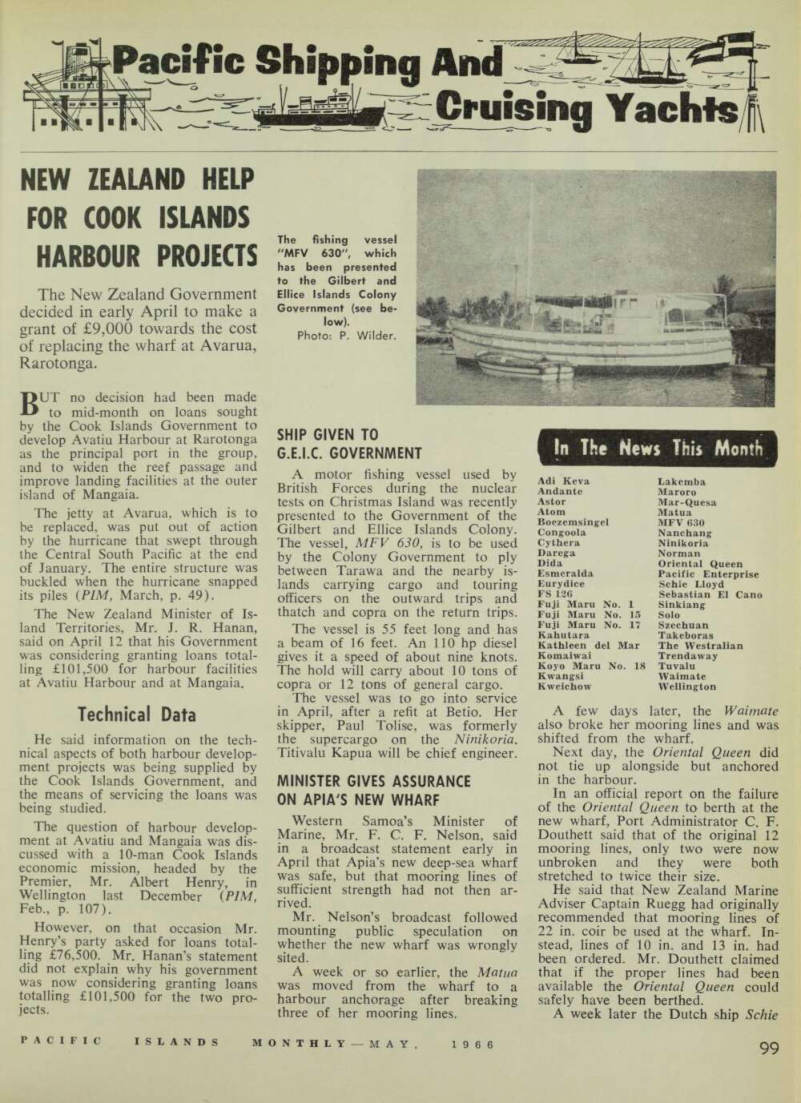 101
101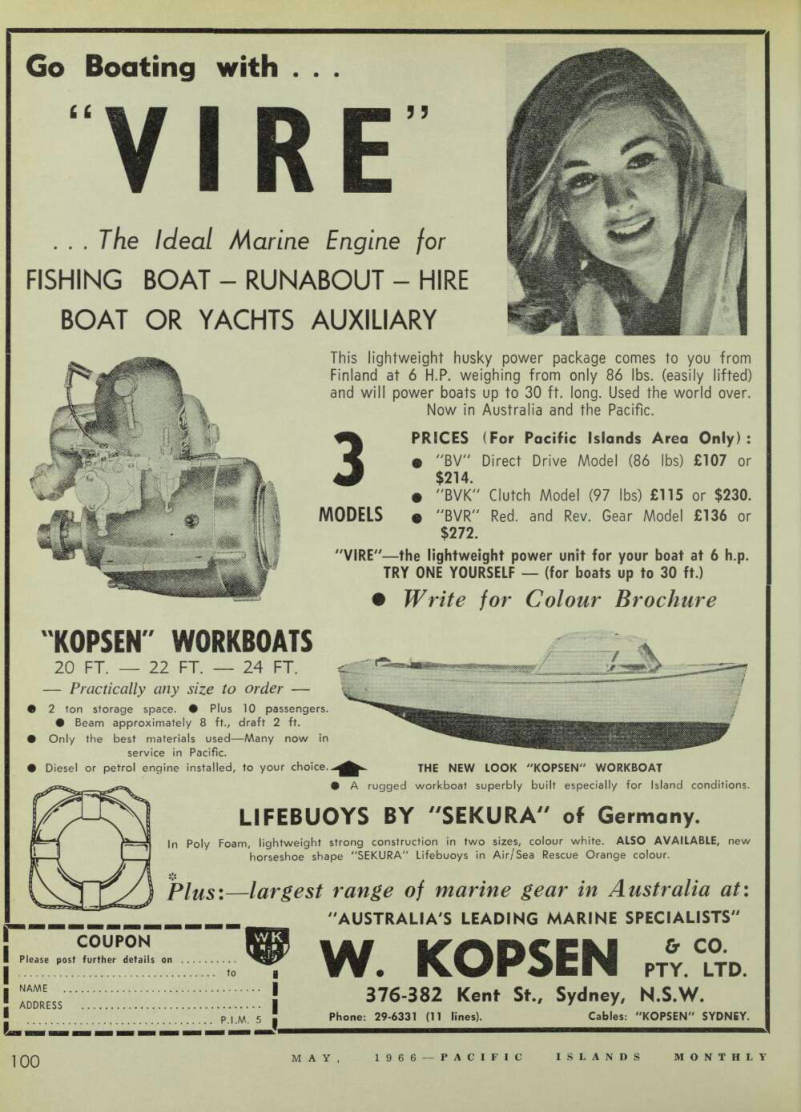 102
102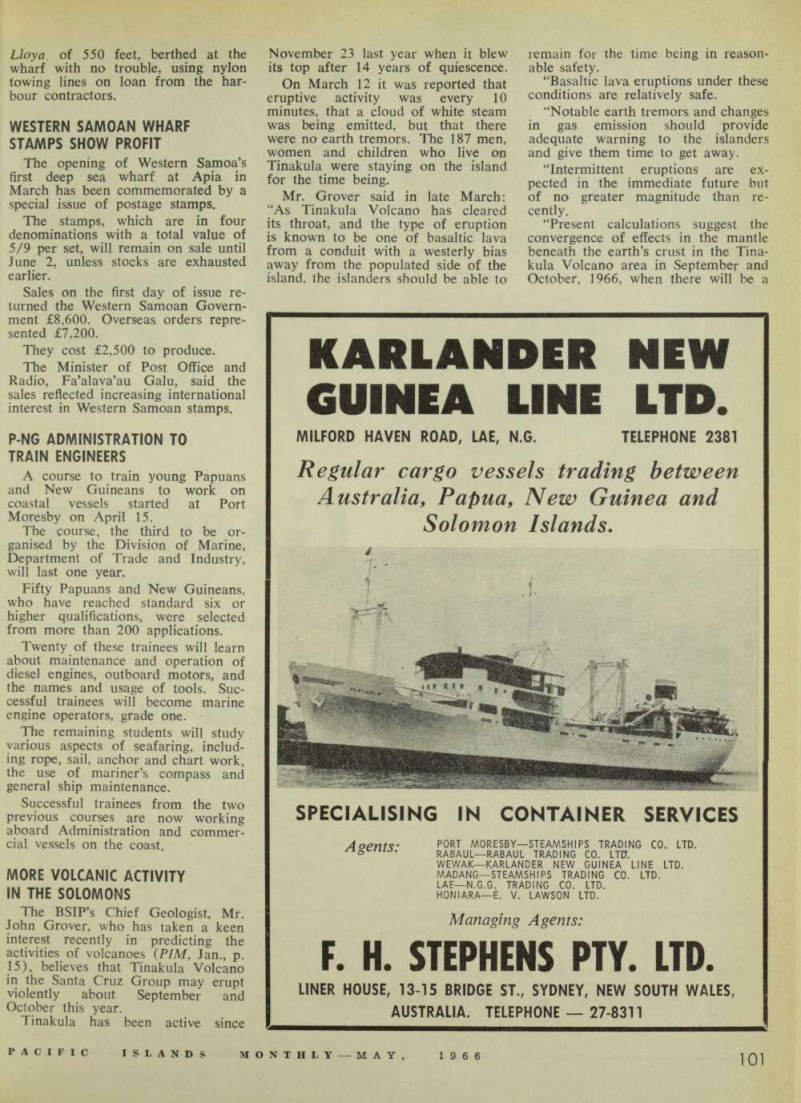 103
103 104
104 105
105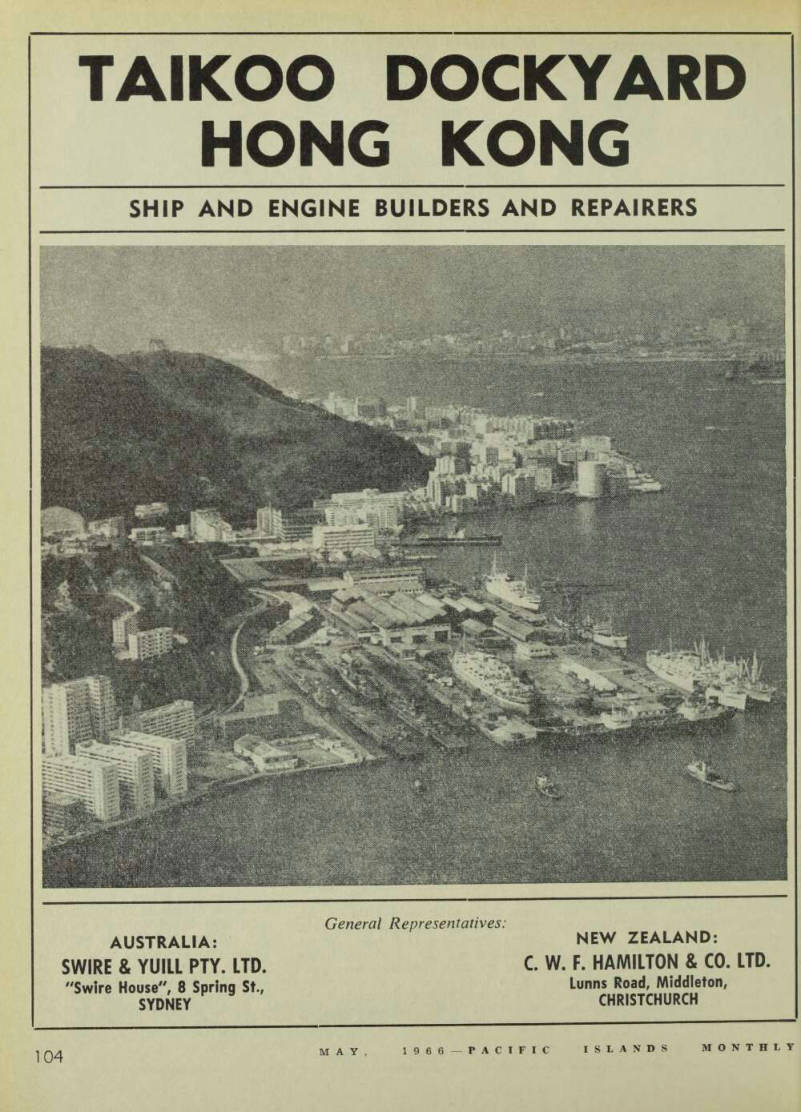 106
106 107
107 108
108 109
109 110
110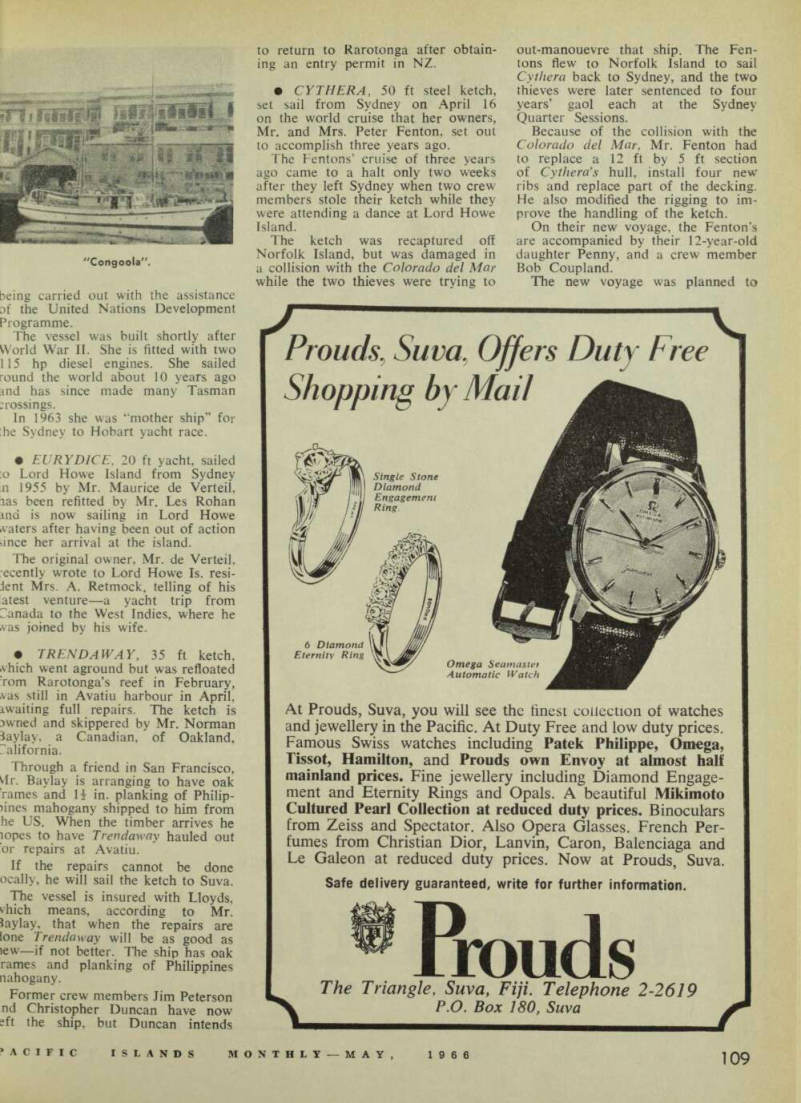 111
111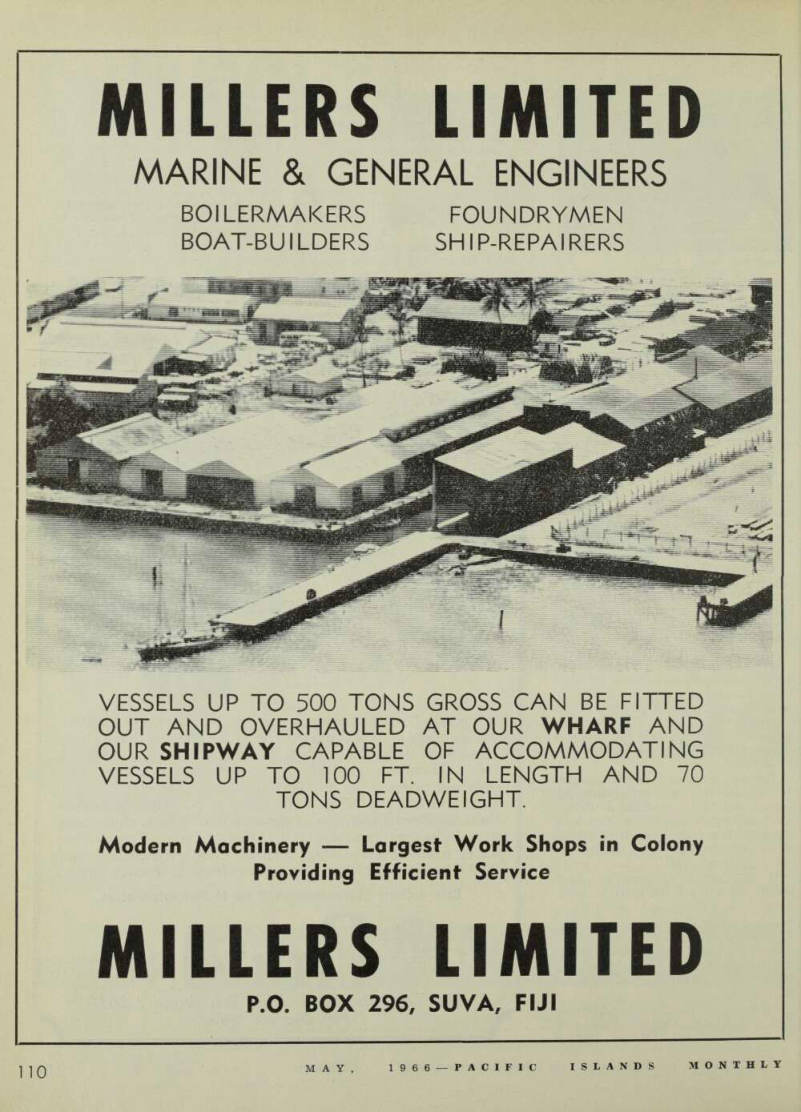 112
112 113
113 114
114 115
115 116
116 117
117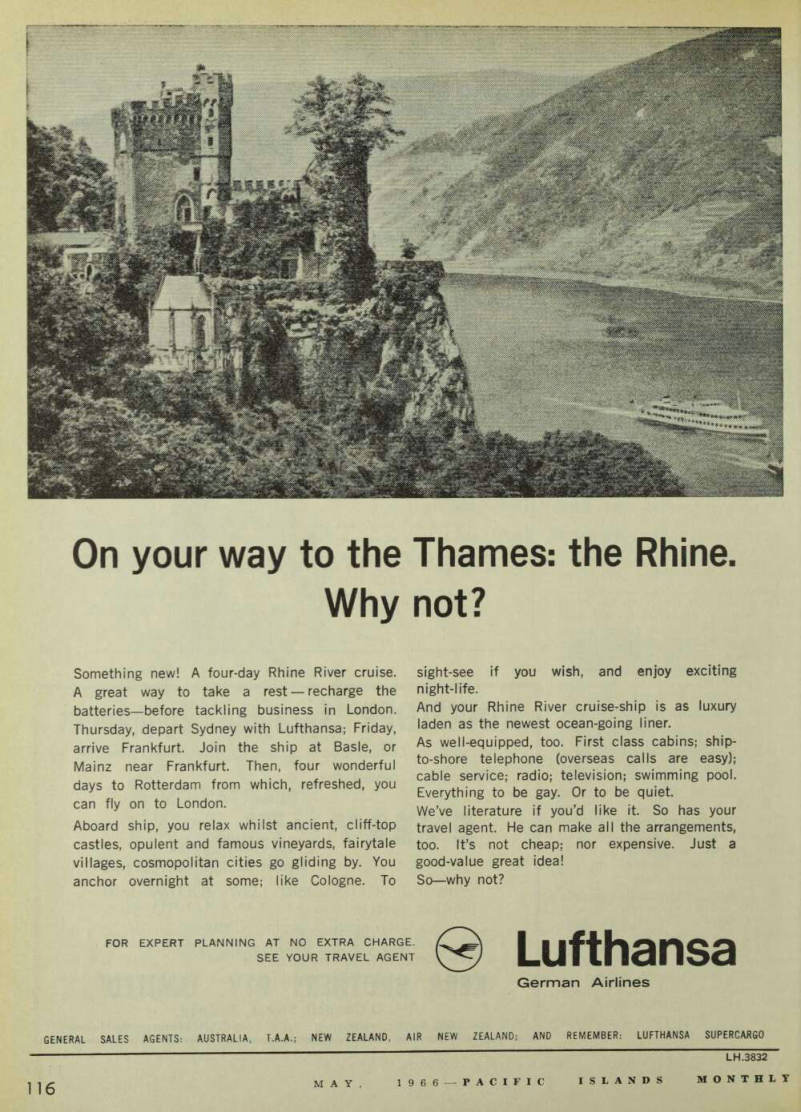 118
118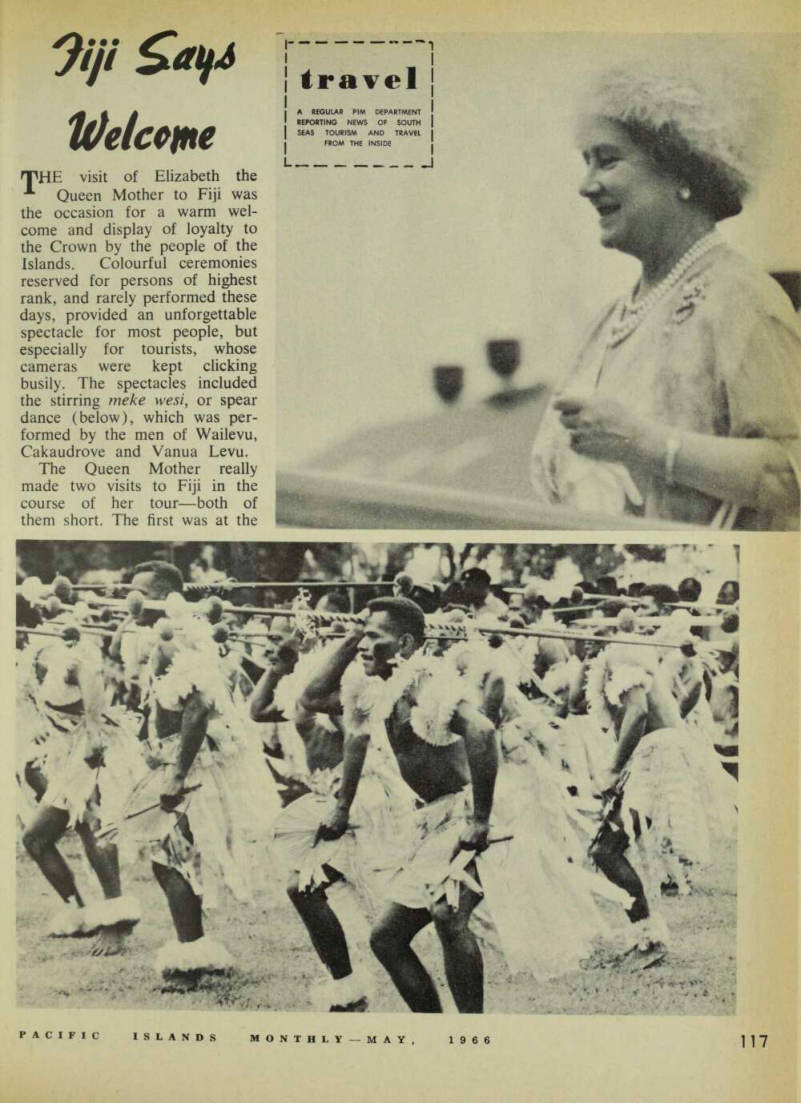 119
119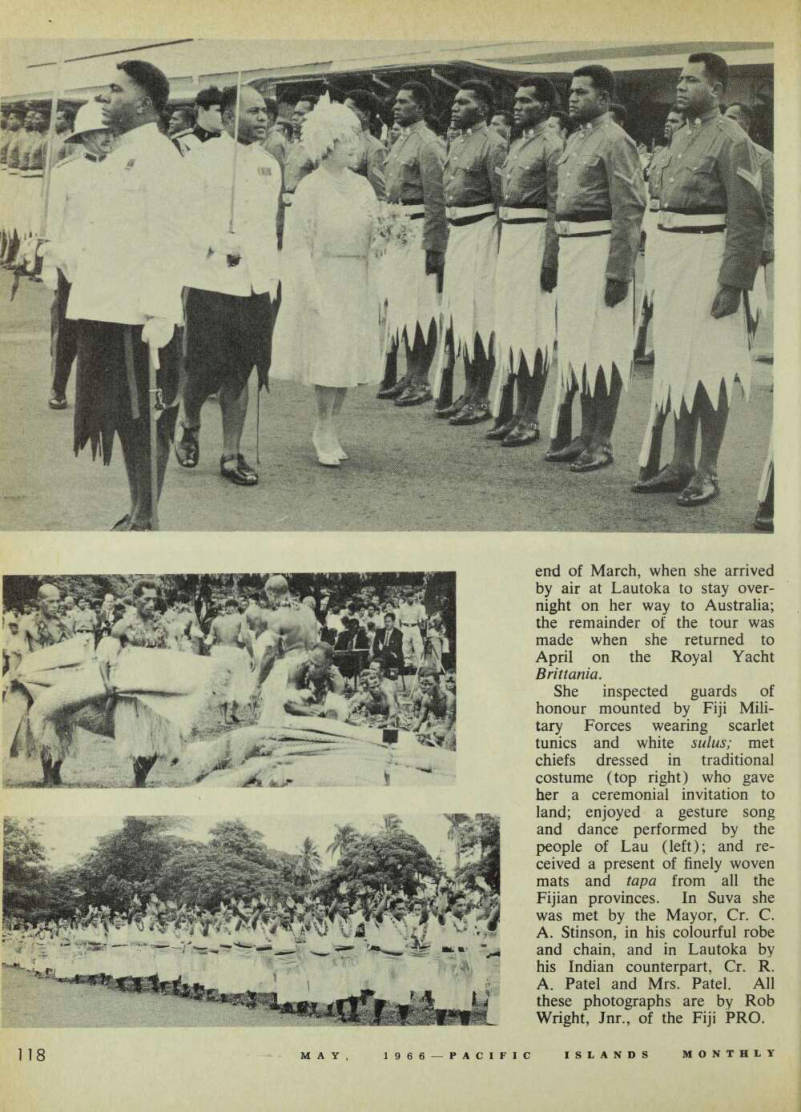 120
120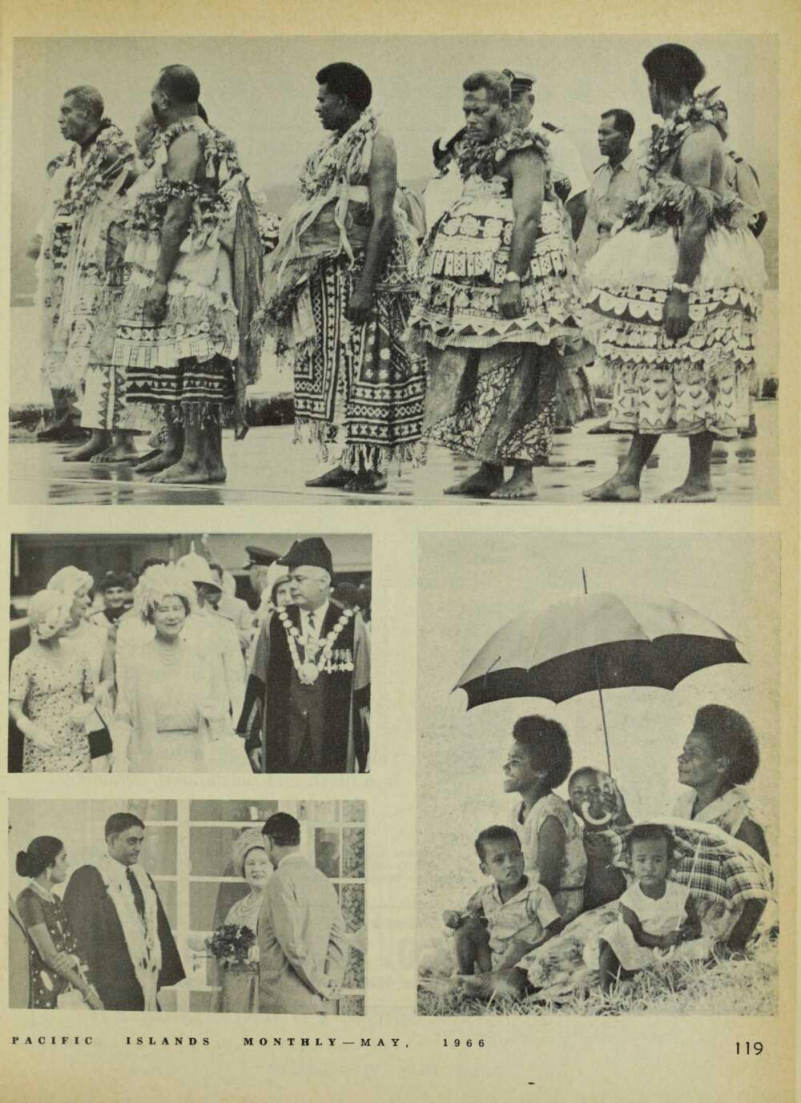 121
121 122
122 123
123 124
124 125
125 126
126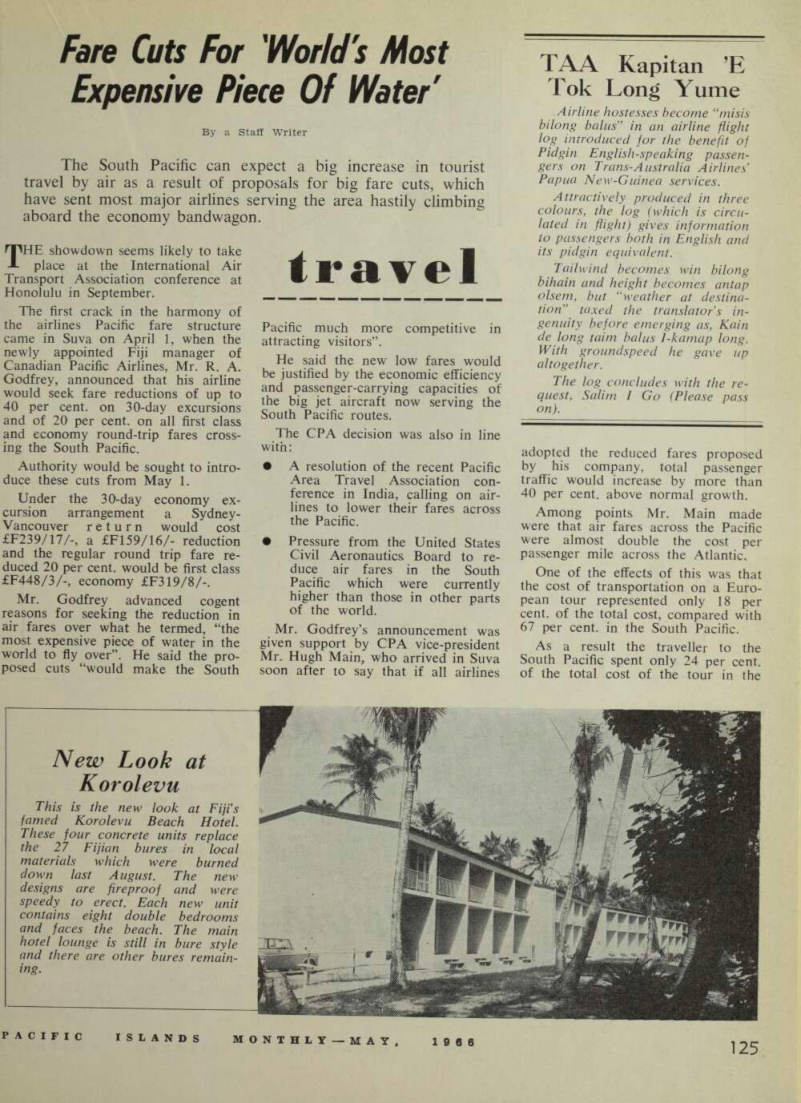 127
127 128
128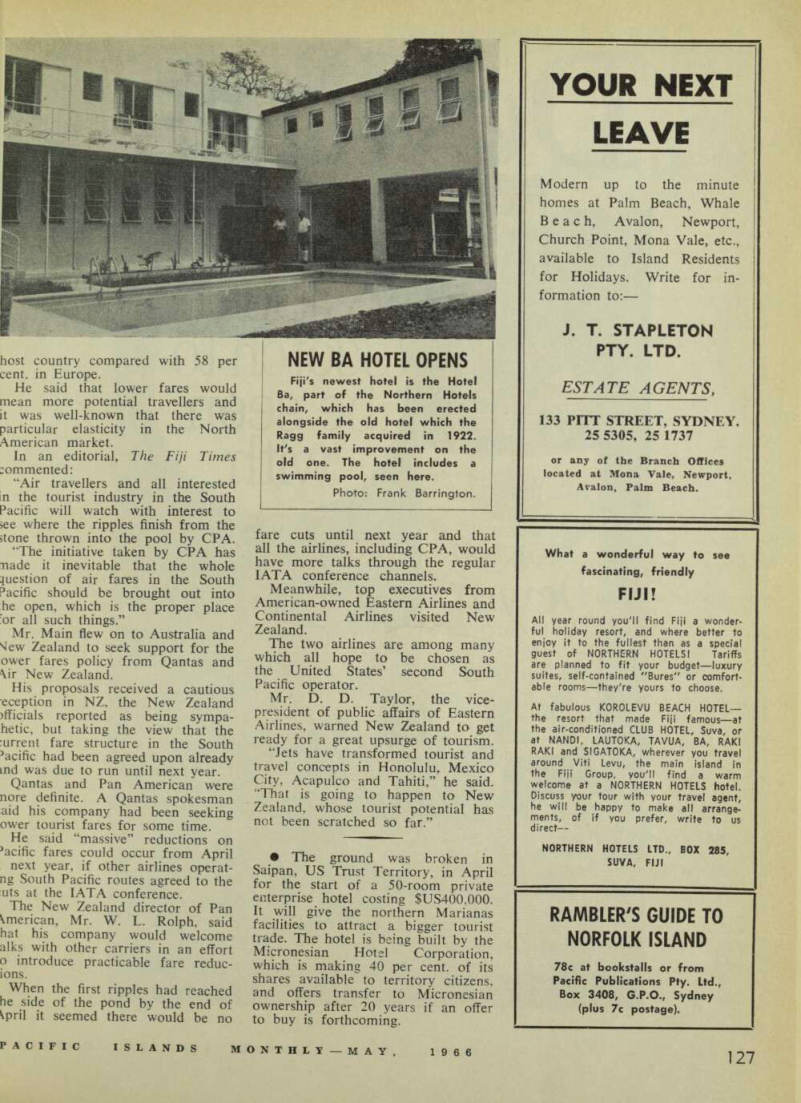 129
129 130
130 131
131 132
132 133
133 134
134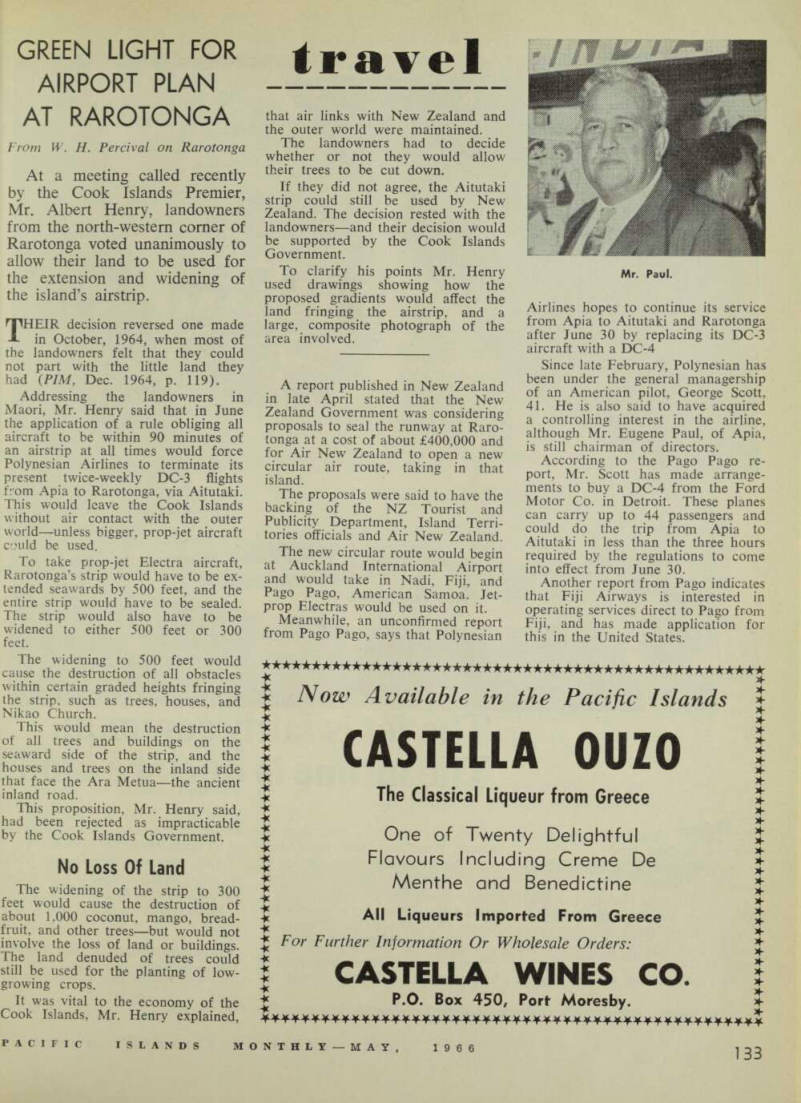 135
135 136
136 137
137 138
138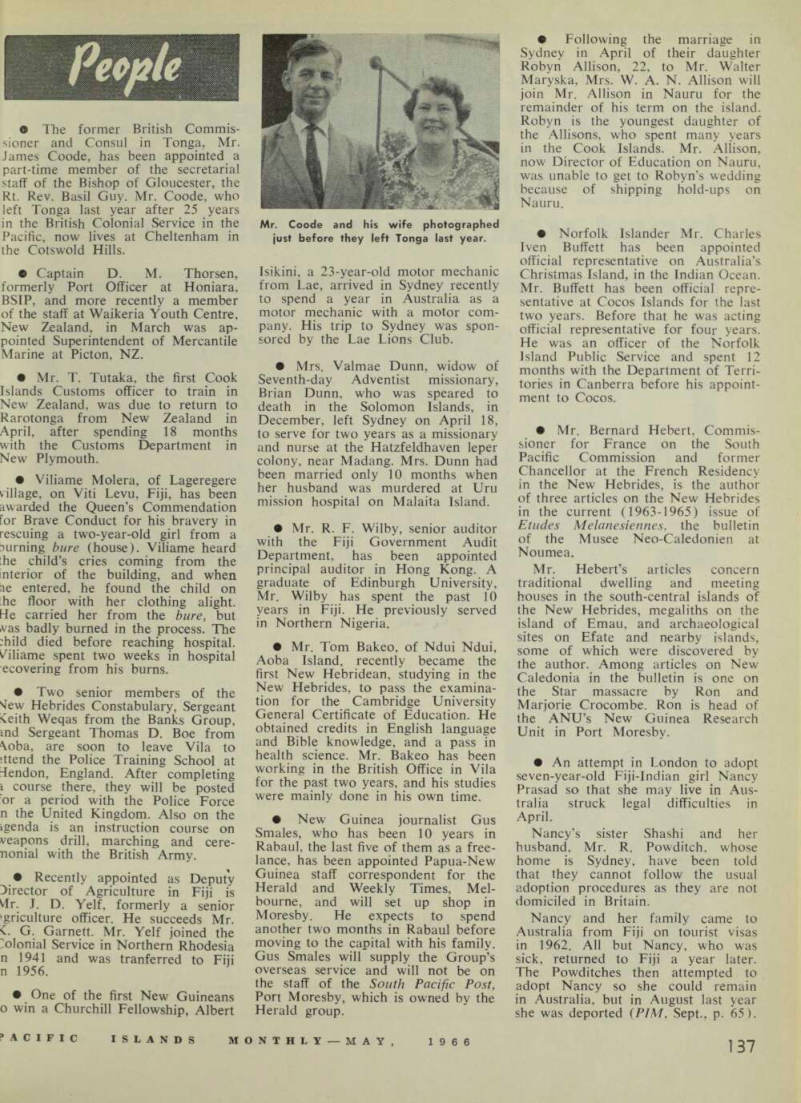 139
139 140
140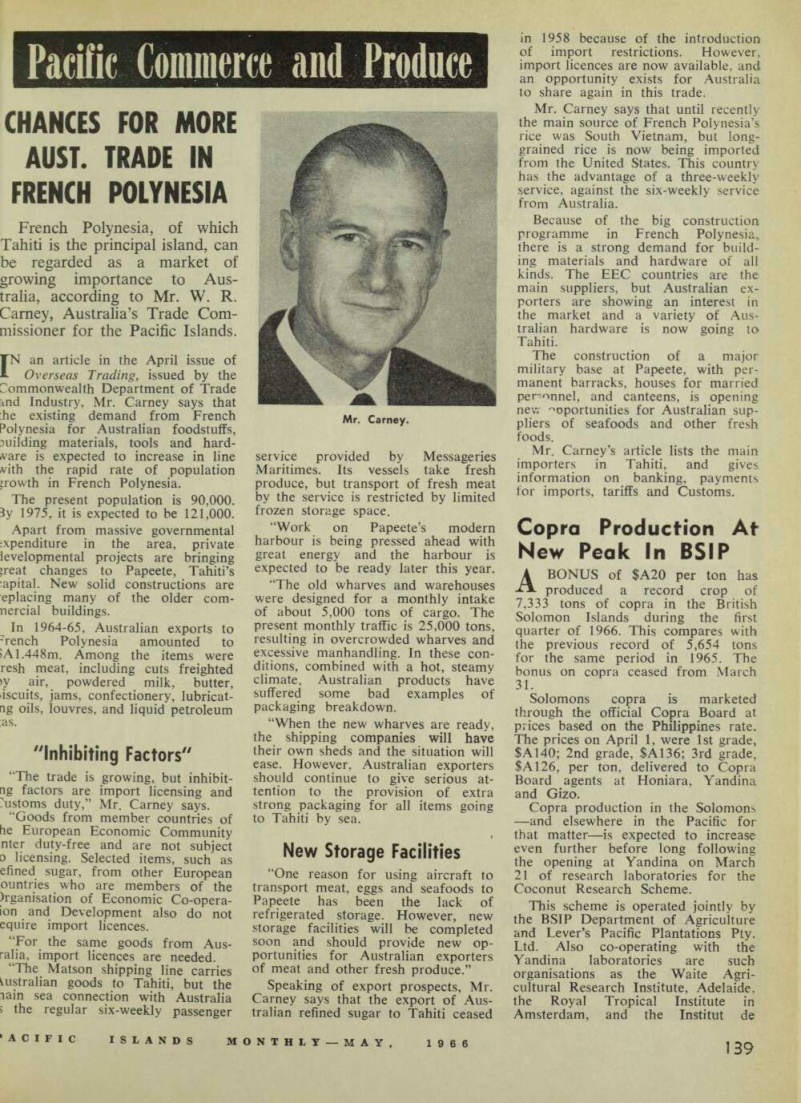 141
141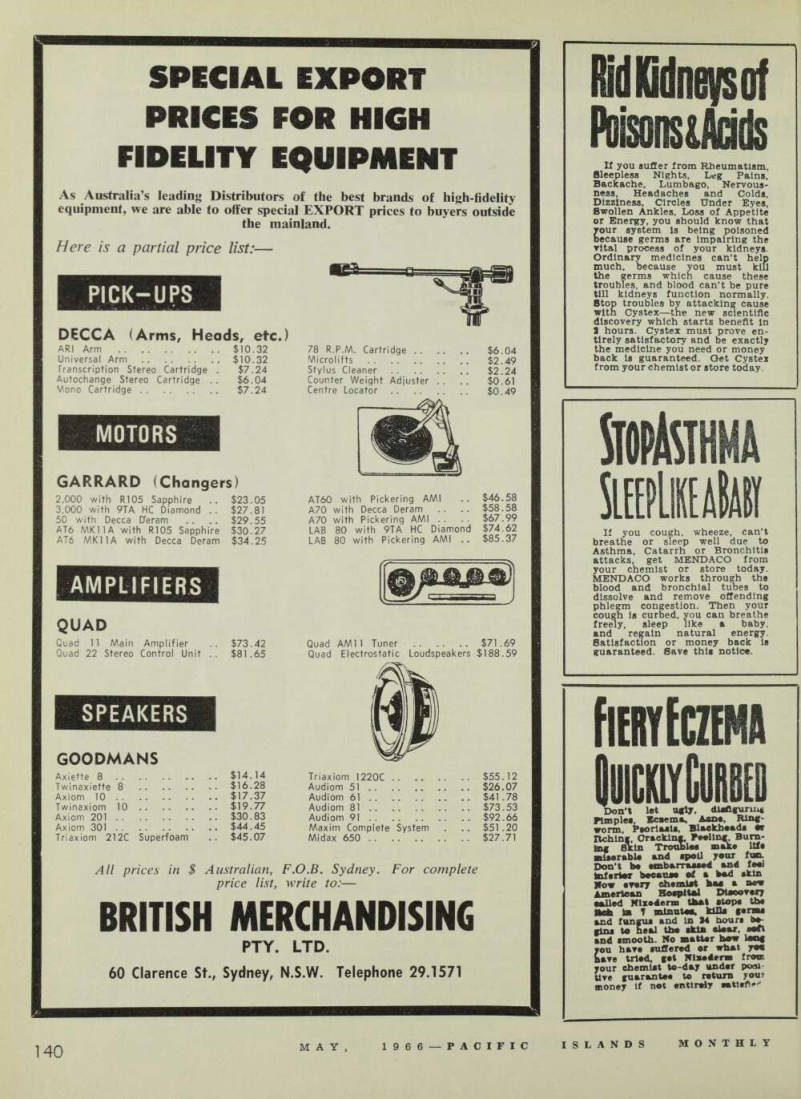 142
142 143
143 144
144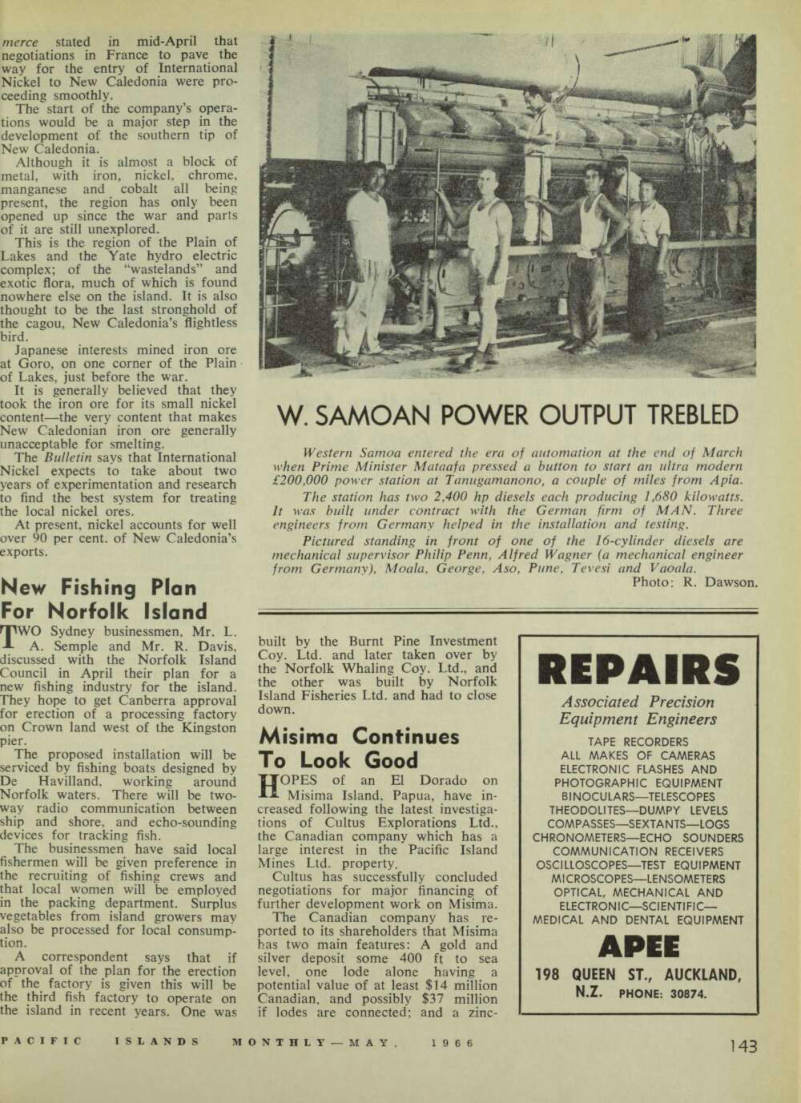 145
145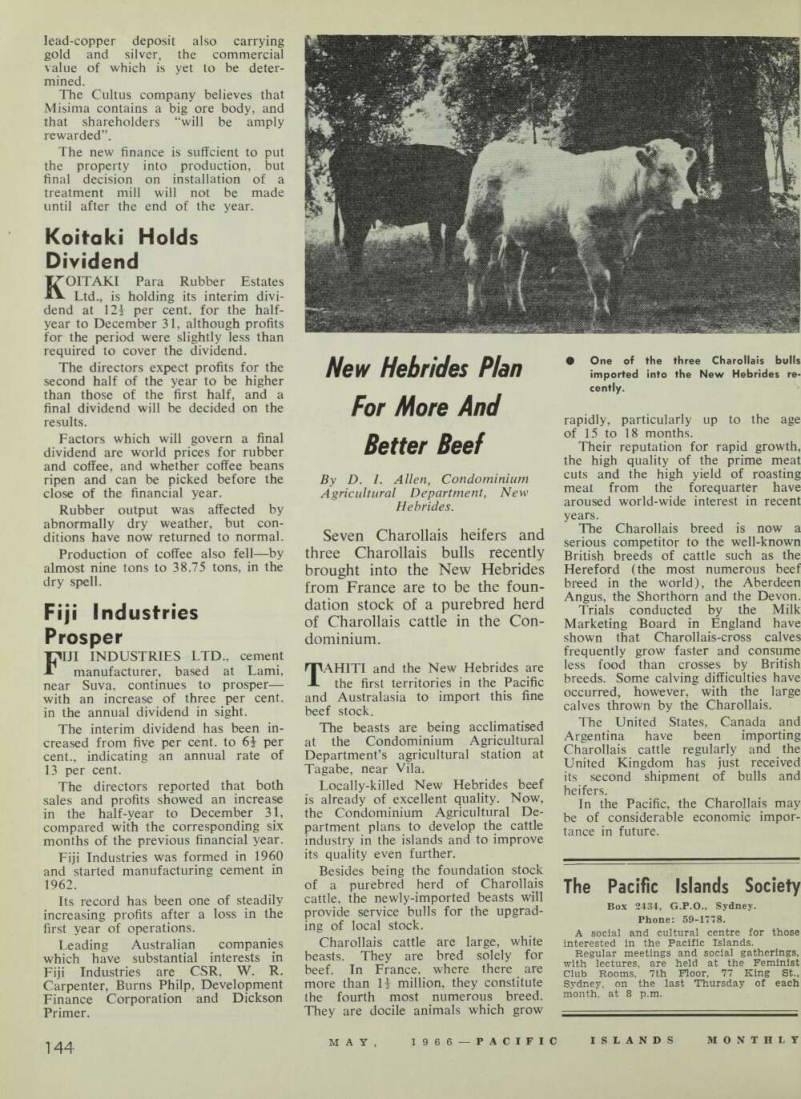 146
146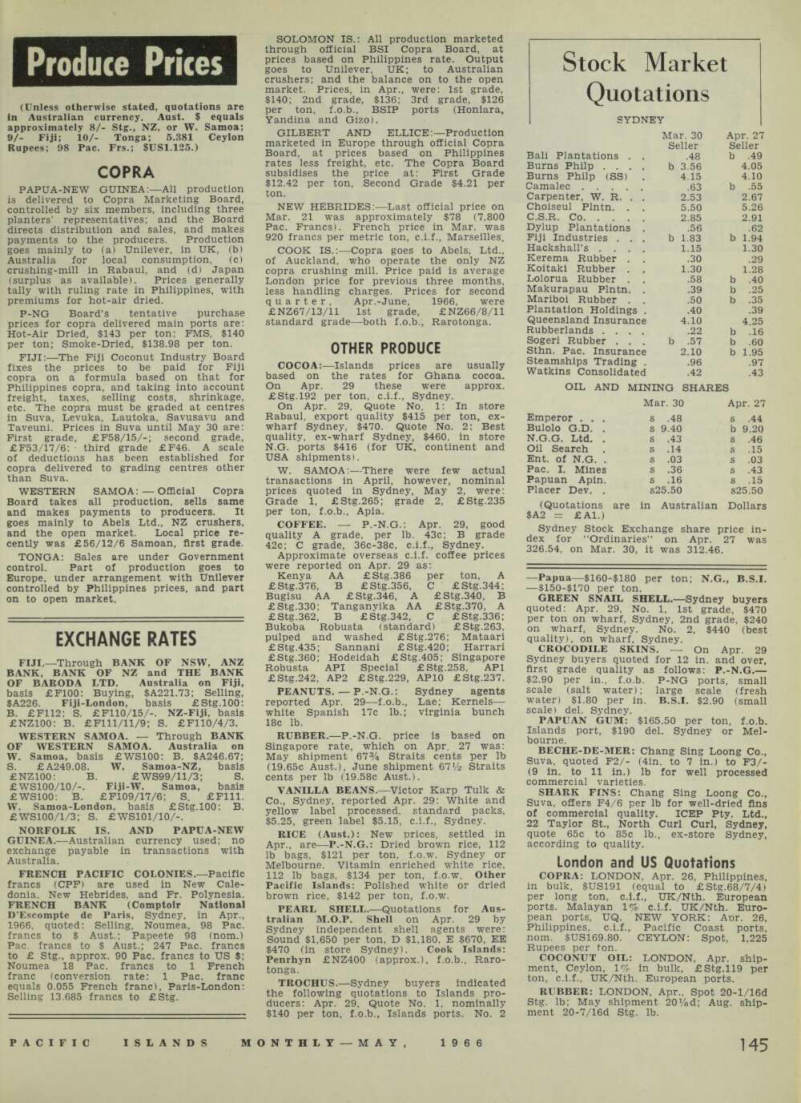 147
147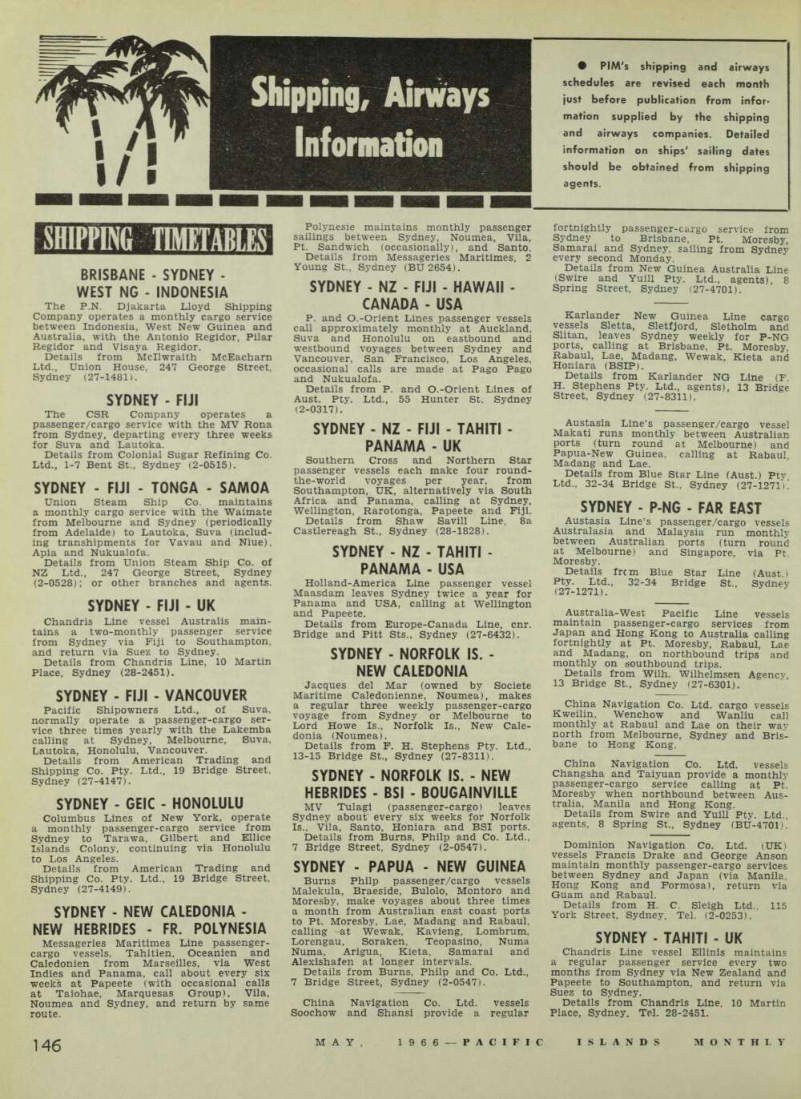 148
148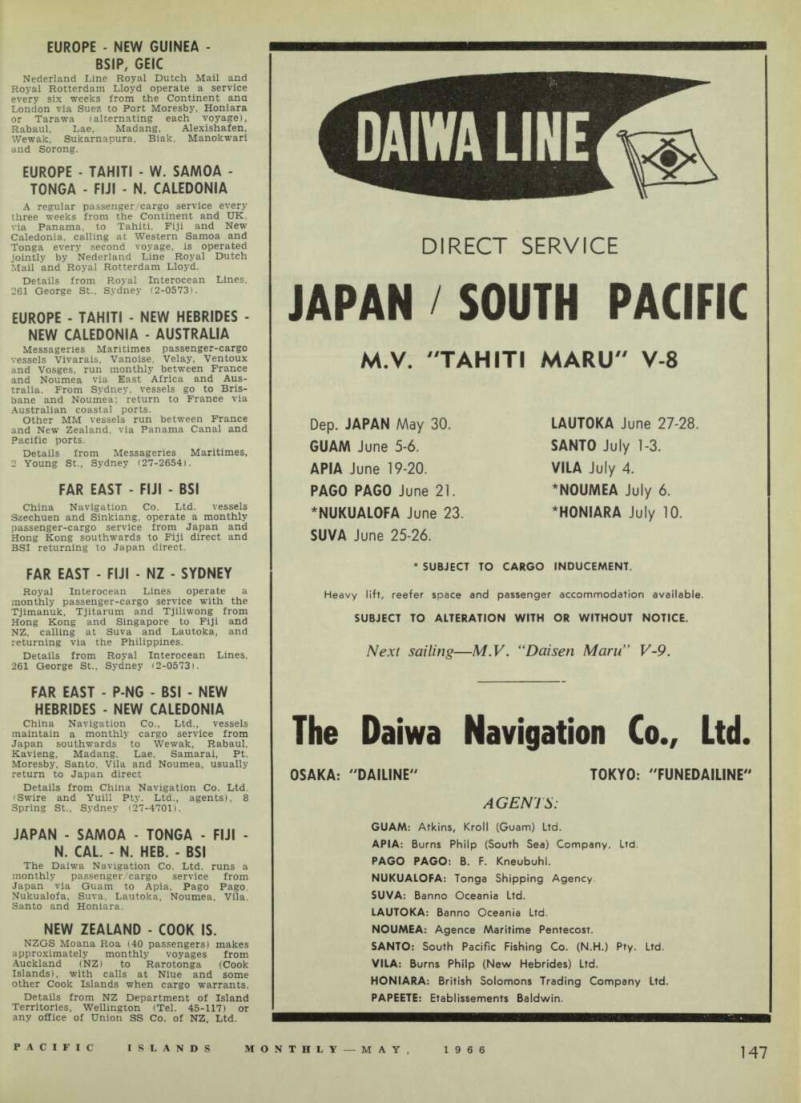 149
149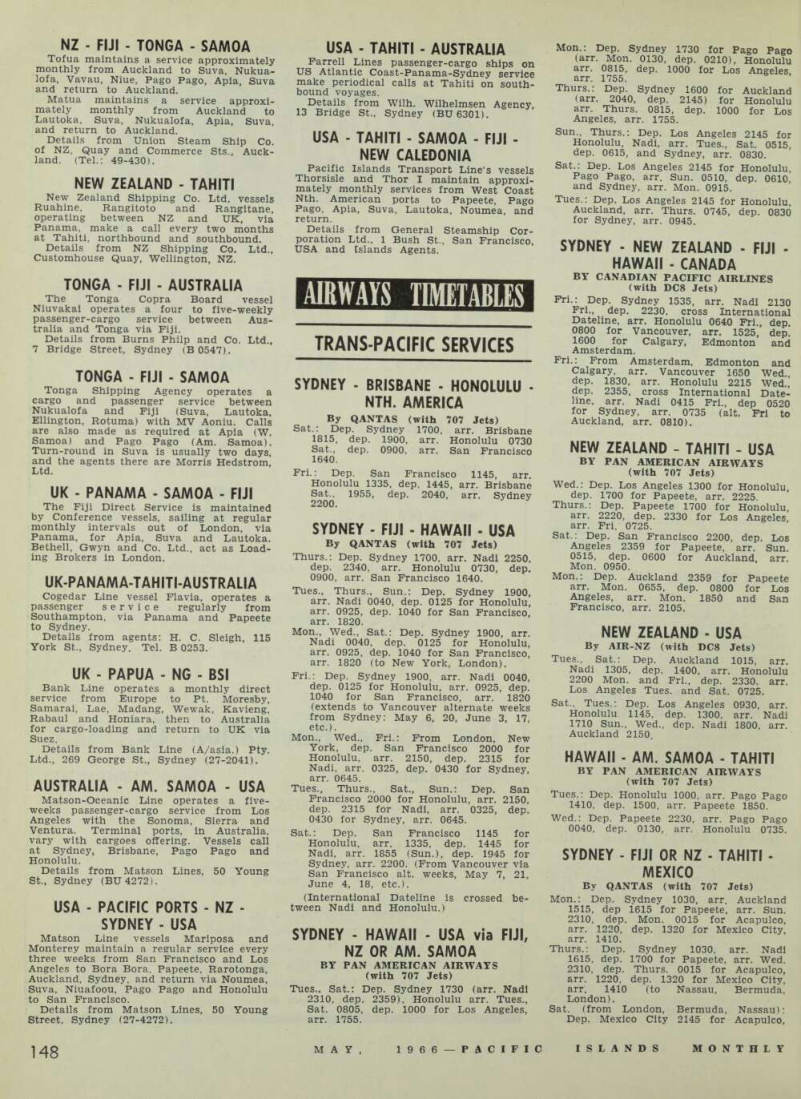 150
150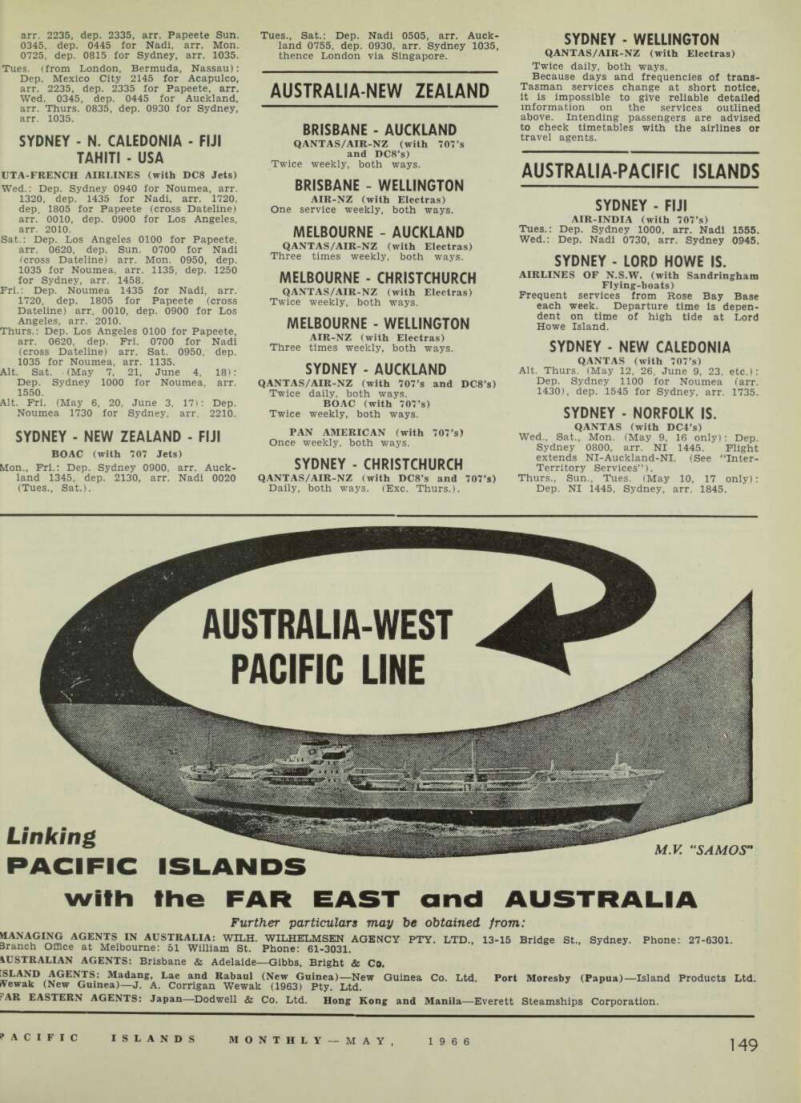 151
151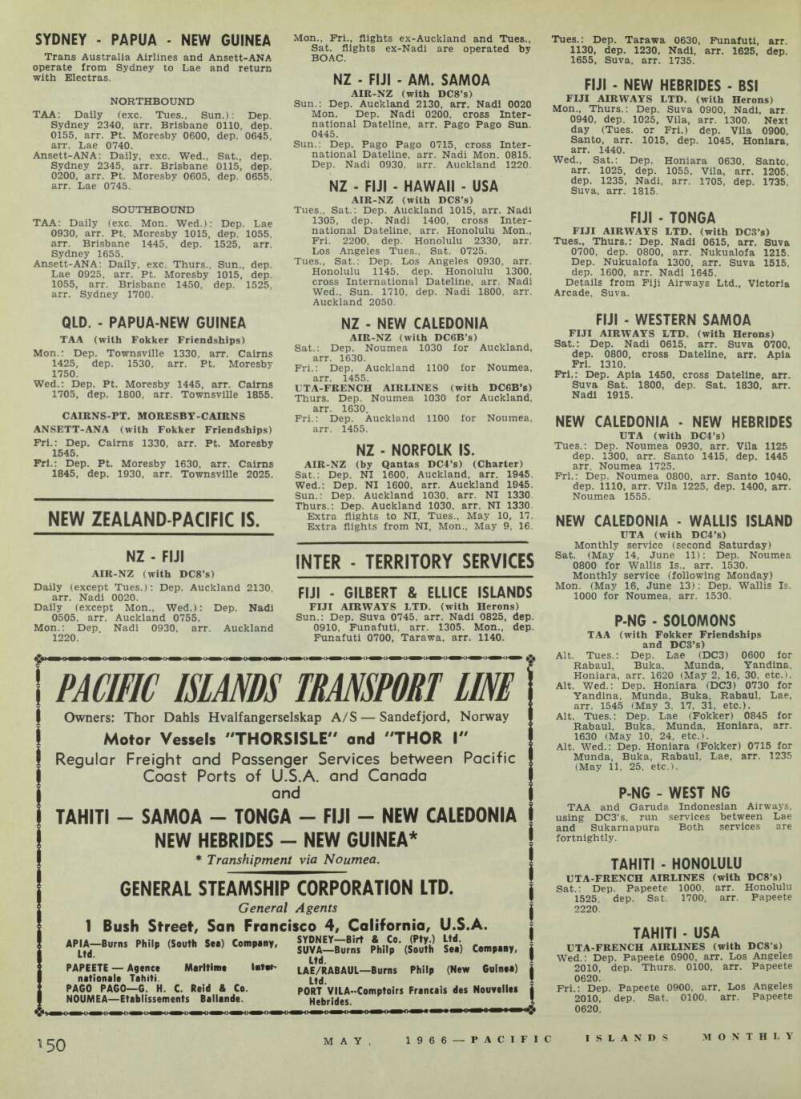 152
152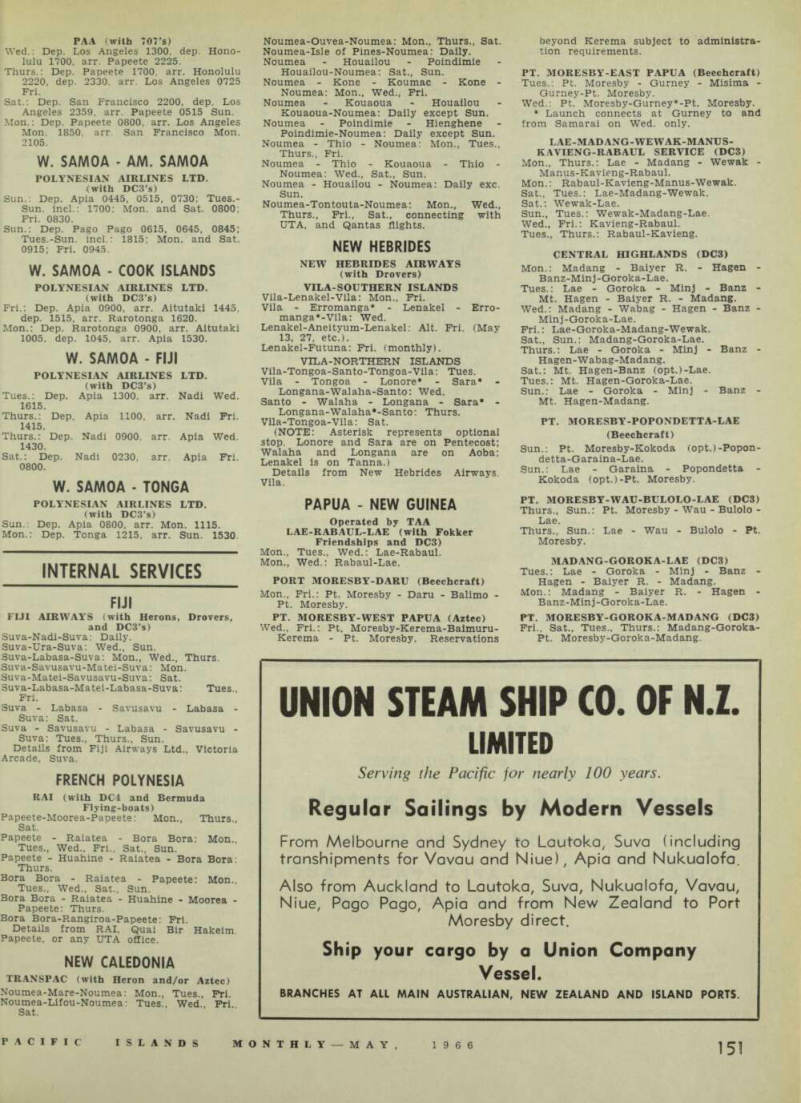 153
153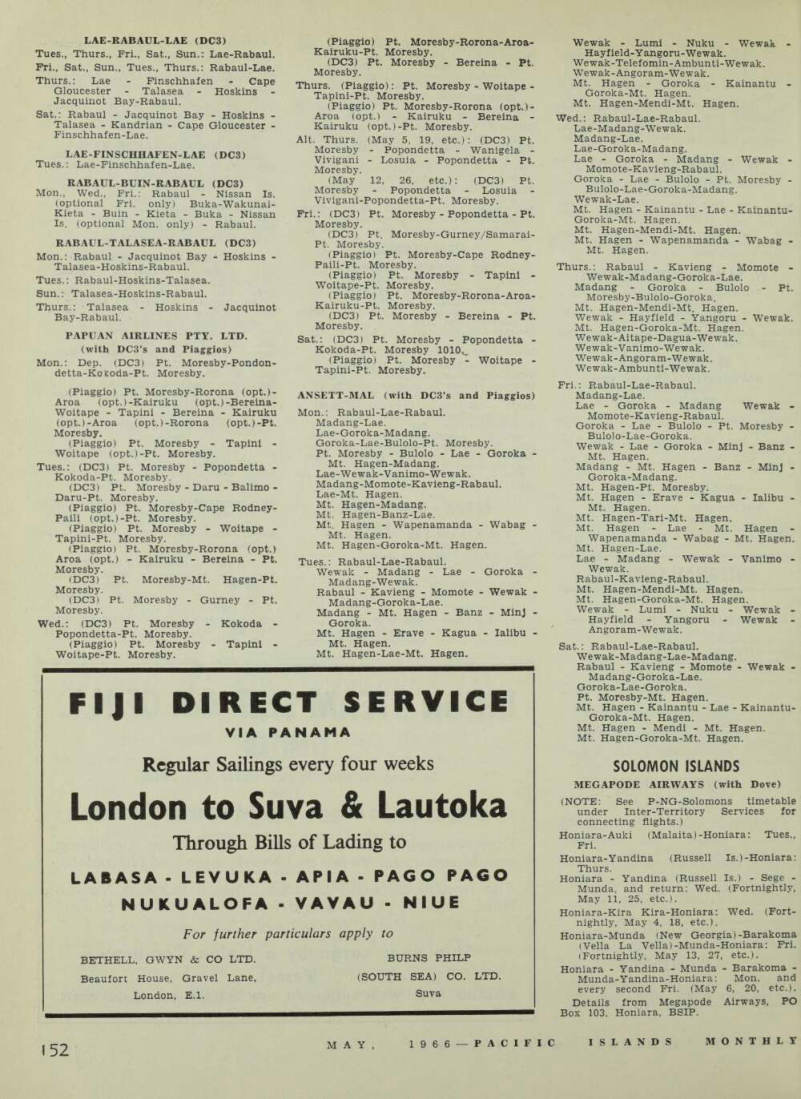 154
154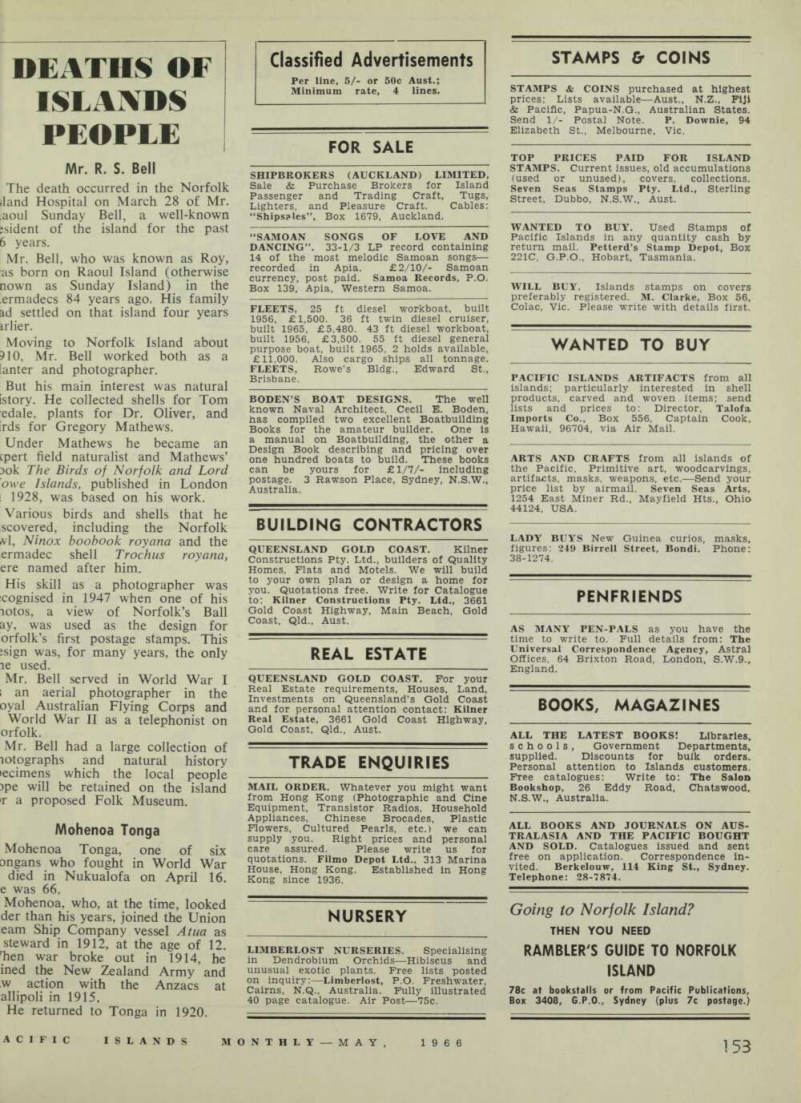 155
155 156
156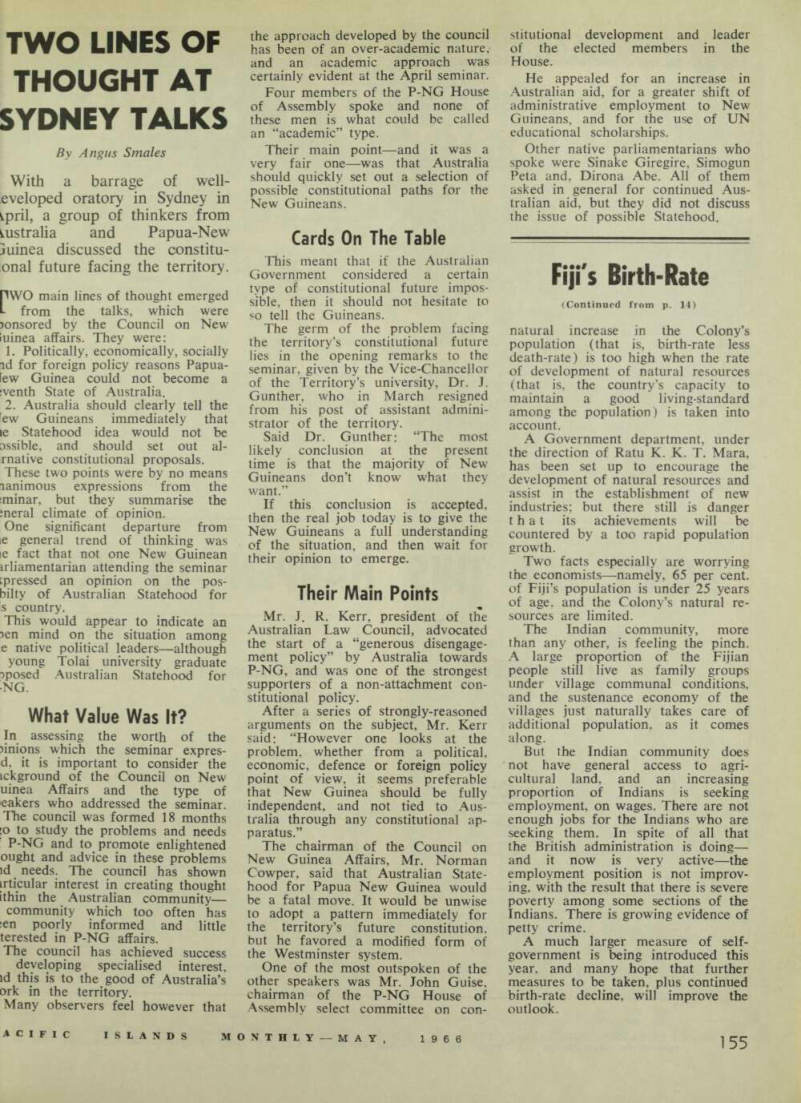 157
157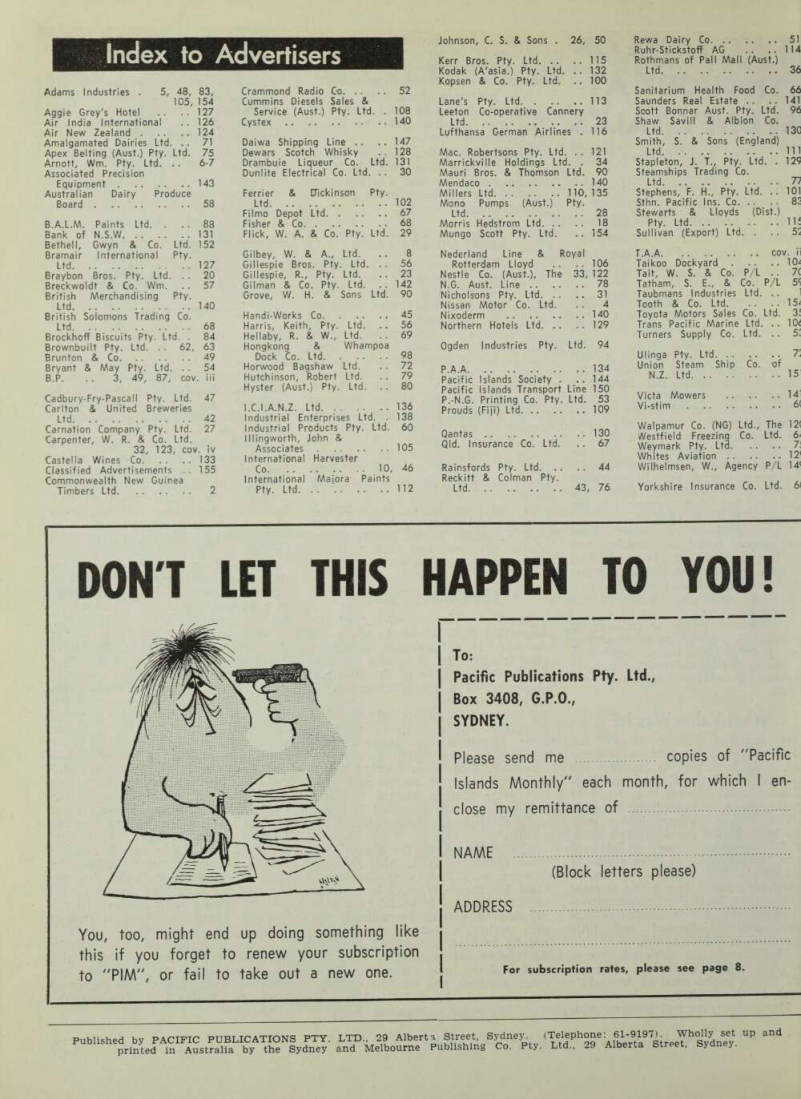 158
158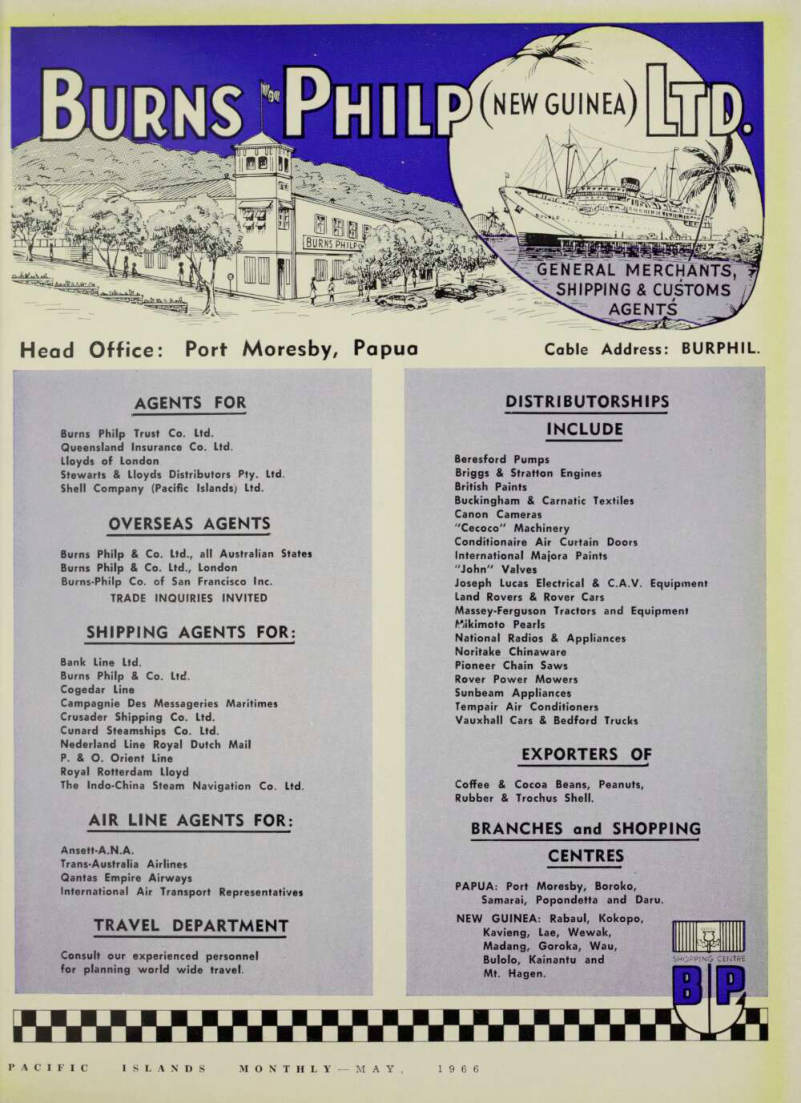 159
159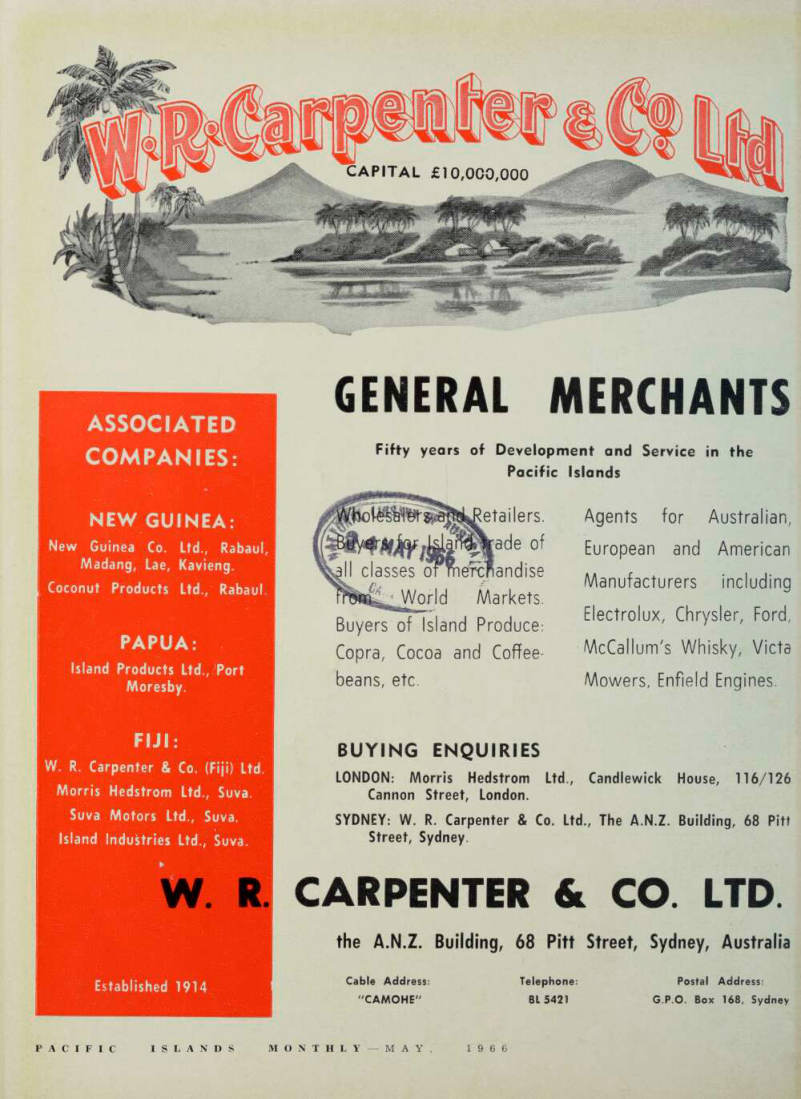 160
160