
Monthly
Pacific Islands Monthly
April, 1966
30 Aust. cents Three shillings 70 US cents 50 French Pac. frcs.
he Neu/s lagazine Of The South Pacific
Established 1930
istered at 6.P.0., Sydney, and at P. 0., a, for transmission by post as a newspaper.
OUR COVER: Jorgen Lundberg, cor respondent of the "Svenska Dagbladet", took this striking picture of a Melanesian child in the British Solomon Islands, but apparently didn't think it was necessary to tell anyone any more about it. At least, we received no caption with it — and, come to look at it, what more needs to be said?
Advertisements & other items, pp. 2-10 (5 items)
lOne call.
One ticket.
One airline.
No worries
withTAA.
We hope you’ll forgive us if we pride ourselves on the service we give you.
More than anywhere else in the world, the Territory’s progress was built on air service. And TAA’s reputation here is built on keeping you our customers content.
We do this in a number of ways. First by trying harder all the time. By being the airline you can depend on. By providing you with passenger, cargo and charter services within and without the Territory. Often by tackling cheerfully the unrewarding jobs nobody else will look at.
We think our biggest advantage from your point of view is our diversity. We don’t have to go outside. Because we’ll fix tours, travel, ‘friendly way holidays’, business trips . . . you name it. All in addition to all the usual flying about.
And with us (and that includes our Agents) one call gets you just what you want. One ticket covers everything. And one airline does the whole job. TAA.
Call us: Port Moresby 2101 ■ Madang 78, 268 ■ Rabaul 2567 Lae 2311 ■ Goroka 8 ■ Mt. Hagen 4 ■ Wewak 103. *
Fly the Friendly Way
TAA
SUN BIRD SERVICES
TAA9B22/66
TINY TIN:
paints bicycle, kitchen stool
i PINT:
covers a door and architrave
i PINT:
paints a wardrobe and dressing table
1 PINT:
paints an average set of kitchen cupboards
i GALLON:
would paint out a small kitchen or a car 2 gallon covers a medium kitchen and bathroom
1 GALLON:
covers kitchen, bathroom, laundry, all trimwork in average home
VIVID
'.vnrt
7 great ways
to save on a gleaming finish
dulux Super Enamel comes tailor-made foi the job you have in mind.
You save right from the start by buying only the right amount (tell your DULUX dealer what you have in mind; he’ll specify the right size).
You save in many other ways, too.
On repaint jobs you save time because DULUX Super Enamel flows easily over most surfaces, hides other colours beautifully.
You save on eventual repainting because the ultra-hard glossy finish defies scuffing, rubbing, chipping, moisture or steam.
You save on cleaning time.
A quick wipe over with a damp cloth brings up the fresh, clean gloss that belongs to dulux Super Enamel alone.
There are 7 sizes of dulux Super Enamel waiting for you at your DULUX dealer— a size for practically any job you have in mind.
Start saving now.
Appetising Cheese Grill
A quick, nourishing light meal —with the extra goodness of KRAFT* Cheddar Here’s the simple way to serve appetising, light meals or a nourishing breakfast, and know you’re giving the family the goodness they need. Cheese Grills with KRAFT Cheddar are rich in proteins and vitamins. For each serving: Lightly butter a piece of toast.
Cover with slices of KRAFT Cheddar Cheese, and grill until melted. Top with grilled tomato and bacon.
KRAFT]
for good food and good food ideas *Reg’d. Trade Mark.
KRAFT
E KRAFT Cheddar is rich in protein, vitamins and minerals because it takes a whole gallon of creamy milk to make every pound of this fine cheese. Available in the familiar blue 8 oz. and 1 lb. cartons.
BURNS PHILP (SOUTH SEA) CO. LTD
GENERAL MERCHANTS AND SHIPOWNERS
SHIPPING, CUSTOMS AND FORWARDING AGENTS
Fiji:
SUVA.
LEVUKA.
LAUTOKA.
LABASA.
SAVU SAVU
AGENTS FOR:
QUEENSLAND INSURANCE CO. LTD.
BURNS PHILP TRUST CO. LTD.
SHELL COMPANY (P. 1.) LTD.
OVERSEAS AGENTS
BURNS, PHILP & CO. LTD., Sydney.
BURNS, PHILP & CO. LTD., London.
BURNS PHILP CO. OF SAN FRANCISCO
SHIPPING AGENCIES
• The New Zealand Shipping Co. Ltd. • Shaw Savill & Albion Co. ltd. • Port Line Ltd. • Bank Line Ltd. • General Steamship Corporation Ltd. • Blue Star Line • Cunard Line • Compagnle des Messageries Maritime* • British India Steam Navigation Co. Ltd. • Royal Interocean Lines • Nederland Line Royal Dutch Mail/Royal Rotterdam Lloyd.
EXCLUSIVE DISTRIBUTORSHIPS INCLUDE
• AKAI TAPERECORDERS
• DUNLOP PRODUCTS
• EPIGLASS PRODUCTS
• FERGUSON TRACTORS
• HELENA RUBENSTEIN
• HITACHI ELECTRONICS
• HOLDEN VEHICLES
• JOHNSON'S WAXES
• ROLEX WATCHES
• REVLON COSMETICS
• PENTAX CAMERAS
• SUNBEAM APPLIANCES
INTERNATIONAL AIR TRANSPORT
QANTAS EMPIRE AIRWAYS LTD.
UNION DE TRANSPORTS AERIENS ::
ASSOCIATION REPRESENTATIVES for
AIR NEW ZEALAND LTD.
ALITALIA PAN AMERICAN AIRWAYS
ASSOCIATED COMPANIES
BURNS PHILP (NEW HEBRIDES) LTD.
AUTOMOTIVE SUPPLIES CO. LTD.
CORRIE & CO. LTD. • NARAIN FURNITURE CO. LTD.
SPECIALISED SERVICES
EXPERT ADVICE ON WORLD AND LOCAL TOURS
TRAVEL SHIPPING FORWARDING CUSTOMS
FORMALITIES INSURANCE.
REGISTERED OFFICE: SUVA, FIJI
iiiiiiiiiiiiiiimiii Code Address: "BURNSOUTH"
m mm '* \ '■V *** m * 0m V : >: s. kS%>: i m mm m •I ■ .a ■ -V % iP \ #l# * I m ii M%N I m m W J ■ 1 ' Ol J ■r. ■•"■:- i m Zl4 l«T| |r i ? h *V * a •. •, x\ A>» v ,*#| ' i m ■* m n'i .■■■•.»•■ v *,
BUY ON
FACTS!
Let your Ford tractor dealer show you the four PTO options available with new Ford tractors!
FACTS. You can match Ford PTO options to your job requirements for top operating efficiency and economy. Choose from live PTO . fully independent... independent combined with ground drive or transmission drive.
FACTS . Ford s new advanced independent hydraulics provide maximum traction with light or heavy equipment in all soils. Flow control lets you adjust speed of draft control reaction, to match equipment weight and soil conditions. y
FACTS!
FACTS!
FACTS!
You can match engine power to load requirements with new Ford tractors. Choose from these rugged transmissions: six-speed, eightspeed, or Select-O-Speed (Ford’s exclusive ten-speed shift-on-thego transmission). tra . c l° r ? a * re . stron 9 er » tougher, heavier! Four power sizes— -39, 46, 56, and 67 hp*—m three and four cylinder engine designs.
New Fords simplify servicing and parts replacement. There are fewer c' ™* n y. int e rchan 9eable. All readily available. Dealer mechanics are hord-tramed m modern repair techniques. • Ford balers, like other Ford hay tools, match new-size Fords in performance, dependability, and economy. Your Ford tractor dealer has all the facts. * Manufacturer’s S.A.E. rating.
PROVE IT TO
YOURSELF
with a demonstration
TRACTORS
EQUIPMENT
IS?
M You too can join the proud owners of the famous Datsun Bluebird, now a popular favorite in over 60 countries of the world, ft gives you much more in dependable transportation because it incorporates the finest automotive engineering and craftsmanship of Nissan,.. largest passenger car maker and exporter in the Orient.
PATS IJ Pi
Bluebird
Japan's Largest Exporter of Automobiles NISSAN MOTOR CO., LTD./Tokyo. Japan DISTRIBUTORS—Territory of New Guinea: Rabaul Garages Ltd., P.O. Box 63, Rabaul. Fiji: Niranjans Auto Port Limited, P.O. Box 450, Suva. American Samoa: B. F. Kneubuhl, Pago Pago, Tutuila. Western Samoa: H. & J. Retzlaff, P.O. Box 195, Apia. New Zealand: Wilton Motor Body Co, Ltd., P.O. Box 1072, Auckland.
DEALING
with
means
DEALING
limit E 0
with manufacturers DIRECT
BELGIUM
I
HOLLAND
Blankets (cotton and/or wool); Breadslicing Machinery; Corrugated Plastic Roofing Materials; Louvre Glass; Matches; Mirror Glass; Meat Tenderers; Scales; Canned Vegetables; Wire Netting; Barbed Wire.
I
UNITED KINGDOM
FRANCE
Canned Meats; Pate de Foie Gras; Wines (all regions).
Agricultural Trailers; Beer; Liqueurs, Jenever, Etc.; Curtain Materials; Car Polishes, Cleaners; Cigars/Cigari llos; Hardboiled Sweets; Chocolates; Biscuits; Handkerchiefs; Tablegoods; Dryfoam Carpet Cleaners; Toothpaste; Deep Frozen Poultry; Deep Frozen Vegetables; Furnishing Materials; Foam Rubber Mattresses; Foam Plastic Mattresses; Evaporated Milk; Condensed Milk; Rolled Oats (quick boiling)- Counter Rolls; Wrapping Papers; Writing Blocks; Ropes; Shoe Polishes; Textiles; Pianos.
J
DENMARK
I
SOUTH AFRICA
Asphalt Plants; Cream Biscuits, Dry Biscuits; Bread Slicing Machinery; Brief Cases; Stacking Chairs,- Chipboard; Hard Boiled Sweets; Cotton Bedsheets, Pillowcases; Concrete Mixers; Construction Equipment; Cosmetics; Crown Seas; Table Cutlery; Dry Batteries; Hand Drills; Essences Flashlight Cases,- Gloves (all descriptions); Immersion Heaters,- Ironing Tables; Innerspring Mattresses; Knockdown Watertanks; Cement Paints,- Emulsion Paints; Pharmaceutical Products; Power Tools; Scales,- Bathroom Scales,- Spindryers; Screwdrivers; School Satchels; Canned Soft Drinks; Acoustic Tiles; Wash Boilers; Washing Machines; Weatherproof Clothing.
Canned Hams; Canned Sausages; Clothes Pegs- Creep Frozen Poultry; Marine Paints.
Aluminium Householdware; Automotive Electrical Parts; Automotive Accessories; Exhaust Systems for Cars.
WESTERN GERMANY
I
AUSTRALIA
I
ITALY
Cormite Buildmgboard; Corinite Doors,- Ready ft* Cardboard Doors; Flavouring Essences; Ghee; Canned Butter; Monkey Grubbers,- Jacks,- Brushes P deF; Pamt Brushes; Household I Commercial Refrigeration; Refrigerated Display Cases.
Agricultural Tractors; Accessories for above; Plant Protection Equipment; Cement Blockmaking Machinery; Laminated Safety Glass; Laminated Showroom Window Glass,- Decorative Papers; Shelving Paper; Paper Serviettes,- Paper Handkerchiefs; Sanitary Napkins; All Purpose Household Slicers,- Washing Machines; Refrigerators.
I
FRENCH EQUATORIAL
AFRICA
I
JAPAN
SWEDEN
Building Plywood; Marine Plywood.
Transistorised Radios; Tape Passenger Vehicles,- Trucks.
Recorders;
HONG KONG
IRELAND
Pianos.
Enamelware,- Ladies Underwear; Sport Shirts; Vacuum Flasks.
T-Shirts, Aluminium Combs,- Axes; Dry Charge Batteries; Blowlamps; Builders' Hardware; Construction Equipment; Farm Tools; Garden Tools; Hand Saws; Chain Saws,- Hand Tools; Hardboard; Plastic Householdware; Sewing Machines; Lawnmowers,- Lightweight Irons; Laminated Plastic Sheets; Incandescent Pressure Lamps; Ballpoint Pens and Pencils; Plate Cutting Machinery; Pressure Stoves,- Stainless Steel Sinks; Sanitary Ware; Ceramic Tiles; Soldering Irons; Acoustic Tiles; Softboard; Vinyl Floor Tiles; Vitreous Cement Tiles; Woodworking Machinery Welding Electrodes,- Gas Welding Rods,- Acetylene Gas Generators. 2-12 CARRINGTON STREET, SYDNEY, Cable Address: "DEMKAY", Sydne]
As the Maraschino Cherry said to the Italian Vermouth GILBEY’S IS SUCH A GREAT INTERNATIONAL GIN
WHY MIX VV/Th
GILBEY’S
2762 Q
2
APRIL, 1966 PACIFIC ISLANDS MONTHL
3
CIFIC ISLANDS MONTHLY A P R I L , 19 6 6
4
APRIL, 1 9 6 6 -PACIFIC ISLANDS MONTHL
Ia Gi F I C Islands Monthly --April, 1966
Pacific Islands
Monthly
Owned And Published By
Pacific Publications Pty. Ltd.,
29 ALBERTA ST. (G.P.O. BOX 3408), SYDNEY.
Telephones: 61-9197, 61-7101, 61-4369.
Telegraphic Address: PACPUB, Sydney.
Chief Executives
Managing Director: R. W. Robson.
General Manager: Selwyn Hughes.
Book Publishing Division
Editor; Judy Tudor.
Pacific Islands Monthly
Editor: Stuart Inder.
Assistant Editor: Robert Langdon.
Branch Offices
Melbourne: Newspaper House, 247 Collins St Tel.: 63-7053.
Fiji: Pacific Publications (Fiji) Ltd., Fiji Times Building, 20 Gordon Street, SUVA, Tel.: 25601.
Fiji Times Office, Vidilo Street, LAUTOKA.
Tel.: 420.
Papua-New Guinea; Pacific Publications (N.G.) Pty. Ltd., P.O. Box 16, Port Moresby. Tel.: 2504. Representative: Mrs. Joan Carter,
Representatives
New Zealand: J. D. Whitcombe, C.P.O. Box 2229, Queen Street, Auckland. Tel.; 76056.
Hawaii: C. C. Spencer, 203 Yap Bldg., 3465 Waialae Ave., Honolulu. Tel.; 775538.
United States: Mrs. A. L. Craib, 1631 80th Avenue, Oakland 21, California.
Tel.: LOckhaven 8-1201.
United Kingdom: S. R. Warman, Candlewick House, 116-126 Cannon Street, London, E.C.4.
Tel.: Mansion 3674/7.
H. A. Mackenzie, 4A Bloomsbury Square, London, W.C.I. Tel.: Holborn 3779.
Agents
All main trading firms and stores in the Pacific Islands.
Pacific Publications Pty. Ltd. is the Australian agent for THE FIJI TIMES.
Subscription Rates:
Australia: 30 cents Aust. or 3/- ($3.60 Aust. or 36/- for 12 months). New Zealand, all British Commonwealth South Pacific Territories, Tonga, New Hebrides and Western Samoa: 3/local currency (36/- local currency per annum).
Elsewhere in the South Pacific: 50 French Pacific francs or 70 US cents (600 French Pacific francs or $B.OO US posted per annum).
Posted to USA, $B.OO US per annum. Posted to the UK and all other countries: £Stg.2.
"Pacific Islands Monthly" is air-freighted to all subscribers and agents in the South Pacific; copies to other areas go by surface mail.
Pacific Islands Monthly
In This Issue
Vol. 37. No. 4, April, 1966
General
Another Whale Collision ... 22 South Seas "Colombo Plan" 61 Heavy Drop in Copra Prices 143
American Samoa
Aftermath of Hurricane 15, 159 Rush Job for U.S. Air Force 21 Sadie Thompson Inn ... 23 Incidence of Hurricanes 27 More Tourist Accommodation Needed 135
Cook Islands
Suwarrow's Hermit in Rarotonga 27 Anger Over Driver's Light Fine 32 Captain Andy Thompson 111 Lucky Escape for Ketch 115 Secretary of Premier's Department 117 Away From It All 121 Outlook for Crops 143
Fiji
Post for P. D. Macdonald 12 Inauguration of The Alliance ... 13 New Era in Copra Industry 16 No Hysteria for Rolling Stones 25 Stick Insects on Taveuni 65 Duke of Edinburgh Award Scheme ... 67 Levuka's Harbour Lights 91 Russian Interest in Destroyer 107 Visit by Thor Heyerdahl 117 Sir Ronald Garvey 119 New Tourist Projects 137 Lautoka Chamber of Commerce 141 Suva Electrical Firm Changes Hands .146 First Local Lamb .. *147
French Polynesia
A-Tests Likely Soon 11
Gilbert And Ellice Islands Colony
How Ellice Islands Were Named 22 Fanning Island Pound Note 55 Pre-War Decimal Currency . 55 Ammunition Clean-Up on Tarawa ... 85
Nauru
Rehabilitation of Land Feasible 15 "Pinnacle Post" 23 Forum for Independence 27
New Caledonia
Tiga to Get Airstrip 21 SPC Houses in Noumea 57 High Liquor Consumption 73 The Flightless Cagou 87 Yacht Skipper on Arms Charge 105 Improvements for Magenta Airport . 131 Liquor Ban Lifted 133 American Interest in Mines 143
New Hebrides
Winds of Change 22 Hotel for Tanna 133 Erromanga Timber Possibilities 147
Niue
Airport Builder's Legacy 32
Norfolk Island
"Unprecedented" Prosperity 29 New Official Secretary 117 "Wentworth's" Cottage 133 Popular with Tourists 135
Papua-New Guinea
Aust. Trade Declining .. 11 J. W. Davidson on Future 14 Public Servants' Salaries 14 Report on Educational TV 17 Memories of Yamamoto 25 Port Moresby Buses 25 Death of Albert Richards 31 Kassam Pass Road 37 Buka Cargo Cult 40 Land Ownership Needs Review 71 Anglican Mission's 75th Anniversary 75 New Book by C. D. Rowley 95 China Navigation Services 105 Civil Defence Controllers 117 New District Commissioners 117 More, Faster Air Services 129 Tourist Board Plan 139 Buka Copra Depot 14] New Guineans Buy Factory 141 Search for Oil 145
Solomon Islands
Racial Discrimination 55 Secret Cave on Choiseul 88 Growth of Honiara Q 9 Deep-Water Wharf Opened 101 British Solomon Islands Society 119
South Pacific Commission
Trouble Over Noumea Houses 57 New Executive Officer 119
Tokelaus
Resettlement Plan ] 7
Tonga
Last Homage to Queen 12 "Niuvakai's" Voyage Under Sail 103 New Fishing Ship iq7
Western Samoa
Aftermath of Hurricane ... 15 Deep-Water Wharf Opened 101 Extensions for Aggie Grey's 135 Incentives Scheme Response 141
“"“"I n e M ° m !; in Review ' ,2; Pe °P le i» Pictures, 38; Territories Isl nds Pre s'' 7A M *°. fha Edit °rs, 55; Pacific Planters' Digest, 73; FroTthe Yachts! lT3,Veop“. Bn7n^rte 8 n7 n^rte| On |'2f ; ,2rc ßOokS ' 9 * '° h Schedule;, 149; Death's of ,56 WPP * B9 ' AifWayS
Advertisements & other items, p. 12 (1 item)
Qrnotts
famous
Biscuits
TRIPLE
WRAPPED
PACKS
ft 5k ** IS % * ■ ■ w
Serve simply
with Sao...
There is no Substitute for Quality
Likely Within
French A-Tests
A Few Months
Developments in half-a-dozen directions in recent weeks have suggested that France’s prepara tions for holding nuclear tests at Mururoa Atoll, 775 miles south east of Tahiti, are almost com plete and that the tests will be gin in the next few months.
IF so, the original estimate of how long it would take to prepare the base at Mururoa has proved most accurate, as General Thiry, a key figure in the Mururoa project, fore cast in Tahiti in May, 1963, that the base would be ready for use in about three years (P/M, June, 1963, p. 59).
Recent developments suggesting that the time is drawing near for the French tests include: • A statement in Tahiti by the French Minister for Overseas Terri tories, General Billotte, that it is essential to build a copra processing factory in Tahiti for use by 1967 so that the Tahitians will be enticed back to the land. (It is assumed from this that the construction work on the nuclear testing project, which has employed hundreds of Tahitians dur ing the past three years, will soon be completed.) • Gossip on the “coconut radio” in Tahiti that the first nuclear ex plosions will be held in July. • A sudden and unexpected pro ject in American Samoa to build accommodation by July for a United States Air Force unit to be based in Pago Pago on “special duty”. (See p. 21.) • A statement by the New Zealand Prime Minister, Mr. Holythat the New Zealand Govern ment’s monitoring arrangements for nuclear tests are “shortly to be re viewed”. (Since the United States held nuclear experiments at Christmas Island in 1962, New Zealand has maintained monitoring stations at Rarotonga and Fiji where fall-out is analysed.) • An Associated Press report from Pans, quoting ‘‘highly qualified sources , that the French were plan ning several tests at Mururoa this year. The tests would be to “perfect the atomic trigger for France’s hydrogen bomb, and the proving 3f atomic devices to become war heads for French missiles”.
Papua-New Guinea
"Disturbing Decline" In
Australian Trade With
The proportion of Australian goods imported into Papua- New Guinea has declined disturbingly in recent years, while Japanese imports have increased significantly. The Australian Trade Commissioner for the Pacific Islands, Mr. W. R. Camey said this in Brisbane in March.
ADDRESSING the Queensland Manufacturers’ Export Associa tion, he said that Australia’s share of the goods imported into the Ter ritory had declined from 64.5 per cent, in 1954-55 to 57.1 per cent, in 1964-65. In the same period the Japanese share of imports had risen from 3.3 per cent, to 8.5 per cent, (see table below).
Mr. Carney said that Australian taxpayers were providing SA7B mil lion this year to maintain Papua- New Guinea, and that Australians could feel proud that they were leading a Stone Age people in the 20th century without seeking profit or thanks.
“This is a magnificent achievement of charity and good sense which all men respect,” he said.
“But I think we should face the fact that from a financial viewpoint, the Territory is, and will remain, more of a liability than an asset to us . . .
Trade Tariff
“The one mitigating financial factor is trade. The Territory of Papua-New Guinea is Australia’s largest market in the Pacific Islands.
“It is entirely right that we should seek a major share of the import trade, as we in effect generate the demand ourselves; and I would like to see more discussion of the tariff and import policy of the Territory because of that fact. ..”
Mr. Carney said that Australian exporters received no preferential trade tariff or protection from the unfair trade practices of other countries in Papua-New Guinea.
In the Trust Territory, Australia could not receive trade preferences because one of the conditions of trusteeship was that there would be no discrimination.
The situation was markedly dif ferent in other areas of the Pacific.
Despite the lack of preference and protection in Papua-New Guinea, Mr. Carney said there was a rapid and continuous demand for goods in the Territory which provided op portunities for Australian industry.
He urged Australian businessmen to go to the Territory to do their selling.
“It is important to realise that Australian manufacturers and ex porters must normally sell to the territory managers of the major firms,” he said.
“There is little point in trying to introduce new lines by approaching their headquarters or representatives in Australia. Introducing new brands and products must be done in the territory itself.
“If Australian firms find it im possible to send representatives, they should seek the assistance of Island agents, who conduct a very large business throughout the Pacific Islands on a commission basis.”
Share Of Imports Into Papua-New Guinea
;kjn,.m Year Total Imports Australia Japan igci e , £ f, n ’ il1 - P er cent. per cent. 1 954-55 17.0 64.5 1959-60 21.0 63.1 64 1960 ' 61 26.7 60.7 6 6 1961 62 26.0 57.0 74 1962-63 28.5 57.9 A 1963*64 35.4 5 8 J 73 1964-65 43.4 57.1 Q 5
Queen Salote
Tonga Prepares
For Last Act
Of Homage To
Queen Salote
From Dorothy Lavin in Nukualofa A custom which originated in Samoa, and is confined to the graves of the highly born, will take place in Nukualofa in June just before the end of the mourn ing period for the late Queen Salote of Tonga.
BASICALLY the ceremony will consist of placing carefully graded volcanic stones, known as kilikili, on the Queen’s grave.
It will be the final ceremony at the Royal Tombs for the late Queen, and will attract people from all over Tonga.
King Taufa’ahau visited the island of Tofua in February to collect the kilikili stones. It was the first time he had left Tongatapu as King.
The Government ship Hifofua on which he travelled had to anchor off Tofua because of rough weather, and the ship’s launch was used to tow longboats loaded with sacks of kilikili stones from the shore. The operation was completed late in the afternoon thanks to the skill of the boat handlers.
It was a remarkable feat because a heavy surf was running and rain squalls affected visibility consider ably.
Before the King’s visit, many people had converged on Tofua from surrounding islands to fill 500 sacks of kilikili stones, weighing six tons,
under the guidance of the Hon.
Vaea, the Governor of Ha’apai.
Back in Tongatapu the task lay ahead of carefully grading the stones into four sizes. This task falls to the women, who sit each day for long hours picking out any coloured ones, such as white, red and green, for only the black may be used.
When the time for the final ceremony comes, undertakers and their helpers, with relatives of the deceased, will gather at the graveside, and after the stones have been thoroughly washed in sea water, they will be placed in bowls to dry.
Mats and tapa cloths will then be laid on the ground and the stones will be spread out to be anointed with Tongan oil, placed in small baskets and passed up to the grave.
The larger stones will be placed at the base of the grave and gradually
graded up to the top, which is com pletely covered with the smallest kilikilis.
The many gifts brought by the relatives will then be carefully shared out, while refreshments, prepared in the umus (earth ovens) will be distributed to everyone, Footnote: Tofua, the island from which the kilikili stones were ob tained, is 100 miles or so from Nukualofa. It is one of several small volcanic islands in Tonga from whose beaches kilikili stones are obtained. Outside Tonga, Tofua is best known as the island on which Bligh and his men landed a few hours after the mutiny in the Bounty in 1789 in an effort to get food and water. One of Bligh’s men, John Norton, the Bounty's quartermaster, was killed when the Tongans attacked with a shower of stones.
Concern Over New Post
For Mr. Macdonald
Mr. P. D. Macdonald, who is retir ing soon from the post of Colonial Secretary in Fiji, and who is now in Europe on leave, has been appointed chairman of the Fiji Public Service Commission.
The appointment was strongly criti cised on April 1 by "The Fiji Times", which said that the London Agree ment of last July expressly stipulated that no former public servant could be put into this position unless he had been at least two years out of the service.
The Month
In Review
Although March, 1966, was not exactly an eventful month in the South Seas, it was one of those months that pro vided everyone with plenty of things to talk about. The main talking points were:
American Samoa : Governor H.
Rex Lee announced details of a major rebuilding programme following January’s hurricane and plans to build accommodation urgently for a US Force unit to be stationed in the territory on special duty. Addressing the Legislature, Governor Lee said that more tourist accommodation would soon be needed.
Fiji: A political party, The Alliance, which will promote racial unity in the Colony, was inaugurated. A new system of grading and pricing copra was in troduced. An Australian destroyer and several US warships were viewed with interest by members of a Russian research vessel in Suva. Suva housewives rushed the first locally-produced lamb to go on sale, French Polynesia ; Tahiti’s “coconut radio” disseminated rumours that the first nuclear explosions at Mururoa Atoll would take place soon, probably in July.
New Caledonia : John Dean, owner-skipper of the Auckland yawl Te Mariner, slipped out of Noumea on the night of March 6-7 while a court case was pending against him for illegally importing firearms.
New Hebrides ; A conference between British and French officials began in London late
in the month on how the Con dominium should be run.
Papua-New Guinea : With the House of Assembly in session early in the month, such perennial topics as public servants’ salaries, housing, tourism, transport, con stitutional development were under review. The newly-opened Kassam Pass road between Lae and the New Guinea Highlands was closed by landslides. The inquiry into public servants’ salaries continued. The appoint ment of several new District Commissioners was announced.
Solomon Islands : Megapode Airways threatened to withdraw its air services in the Protectorate if Missionary Aviation Fellowship was granted a licence, but later agreed to continue flying.
Tokelaus : The plan to resettle 1,000 Tokelauans in New Zealand over the next five years began.
Western Samoa ; Apia’s deep water wharf was opened by the Head of State. The distribution of Red Cross relief began to villagers affected by January’s hurricane.
New Political Party Aims
For Racial Unity In Fiji
From a Suva Correspondent The Alliance, a political body made up of representatives of all the major racial groups in Fiji, was launched in Suva on March 12 when a draft constitution prepared by Messrs.
R. A. Kearsley and J. N. Falvey was unanimously adopted.
CHE new party’s broad aim is to get all races in Fiji to work armoniously together, and it is idely expected that it will become ie most powerful and influential Mitical body in the Colony.
The Alliance is the brainchild of atu K. K. T. Mara, an outstanding ijian leader, who is the Member r Natural Resources in the Govern ent. The organisation boasts a rmidable array of talent, from liom will almost certainly come ost of the members of Fiji’s future ►vernment.
Ratu Mara told the inaugural seting: “More and more in these ands, where we all live together d trade together and play together, : must combine to govern ourselves, oviding for our people a form of vernment which will be uniformly it and stable; maintaining our tied institutions although we must prepared if need be to review ;m.
“We wish to stand before the rid as an example of good govern ;nt by agreement of all the people icerned.”
The Alliance displays the willing
ness of the enlightened leaders of the different races to work together for the common good and from this basis it must be viewed as one of the most important developments in Fiji’s recent political awakening.
Delegates who attended the inaugural meeting were from the Fijian Association, Suva Rotuman Association, the All-Fiji Muslim Political Front, the Chinese Associa tion, the National Congress of Fiji, the General Electors’ Association, the Fiji Minority Party, The Rotuman Convention and the Tongan Associa tion.
Committee Members
Messrs. James Shankar Singh, David P. Ragg and Baldwin March were appointed vice-presidents; and Dr, L. Verrier is secretary-general.
The executive committee comprises Ratu Mara, and Messrs. Hasan Raza, D. P. Ragg, Baldwin March, Peni Naqasima and Ayodha Prasad.
The committee is to formulate a public statement of The Alliance’s policy. This, broadly, will become the platform for candidates endorsed
by The Alliance in the general elec tion to be held later this year.
The registration of voters for the general election took place all over Fiji in March, with March 31 the deadline for registration.
The number of people eligible to vote was estimated at 180,000, but the response by electors was so dis appointing that on March 29 the period for registration was extended to midnight on April 15.
To March 26, only 113,3171 voters had registered—so,4s2 in the Fijian constituencies (3,000 short of two thirds); 58,235 in the Indian con stituencies (nearly two-thirds); and 4,384 in the general constituencies (less than half). The general roll in cludes Europeans, Chinese, etc.
Thirty-six unofficial members will be elected in the Legislative Council poll.
The Fijians and other Pacific Islanders will elect one member in each of nine Fijian constituencies.
The Indians will elect one member in each of nine Indian constituencies.
And the Europeans, Chinese, etc., will elect two members for the West Viti Levu constituency, one member for the Northern Constituency, one for the Eastern and Central Con stituency, and three for the Suva Constituency—seven members in all.
In addition, two Fijian members will be elected by the Council of Chiefs, and nine members will be elected from three cross-voting con stituencies.
To be elected in a cross-voting constituency a candidate will have to gain the support of people of all races.
Ratu K. K. T. Mara
Women volunteers act as witnessing officers in one of Suva's main streets in March during the Fiji-wide cam paign to register electors for the general elections later this year.
Photo: Stan Whippy.
Advertisements & other items, p. 15 (1 item)
13
IC I F I C ISLANDS MONTHLY APRIL, 1966
New Guinean Public Servants
Inquiry By Arbitrator
New Guinean Public Servants Resent Lower Wage Scale
From a Port Moresby Correspondent The current application before the Public Service Arbi trator for better salaries and conditions for local public servants is causing great interest, for there is plenty of revealing infor mation coming out in evidence.
THE general trend of complaints is that the lower wage scales at present paid to local officers, com pared with what the expatriate people get, are creating great resentment.
It was put in its strongest terms by Albert Maori Kiki, 35-year-old patrol officer, who said New Guinea had been made into a “white man’s paradise” and that the Government’s policy of giving Europeans better treatment could well lead to racial violence.
A “dynamic situation” was develop ing rapidly among the elite minority
over the wages issue and there could be a “national disaster” if present con ditions were allowed to continue, he said.
Base public service salaries should be higher to enable families to live adequately, and the upper salaries high enough to allow New Guineans to mix with their European counter parts.
He himself had to turn down many social invitations because he could not afford to accept or return them.
Government psychiatrist, Dr. B. G.
Burton-Bradley, said there was a clear relationship between discrimination and mental health in New Guinea.
During the period when New Guineans were not allowed to drink it had been common for young educated people to be taken to him for treat ment of a “paranoid illness” brought on by resentment.
Direct Relationship
This particular class of illness had disappeared since drinking restrictions were lifted, but he now had educated New Guinean patients who had great difficulty with inter-personal relation ships. He had noticed a direct re lationship between their cases and the excessive low salaries paid to educated native public servants. The more highly educated natives were the ones most likely to be affected, he added.
The arbitrator has heard many tales of hardship by local public servants.
The public servants want the “equal-work, equal pay principle” adopted by the Administration.
The present lower salaries of local officers were determined on the basis of what the Territory could afford, having in mind eventual economic viability. The basis for the figures has never been disclosed.
While few would dispute the prin ciple of salaries commensurate with the growth of national product many believe that differentiation between local and overseas officers is unwork
(Continued on p. 158)
able while Australia controls the Territory.
The present somewhat bitter situa tion was foreseen by many overseas officers in 1962, when the P-NG Public Service Association asked public service branches to say whether they wanted a special division of over seas public servants or one unified service.
The majority wanted a special division, yet the unified public service, with two pay rates, came into opera tion in 1964.
Here is an example of how the salary differential works, using annual salaries: Position Overseas Local Clerk £2,888-3,384 $1,280-1,416 Patrol Officer . .. 3,010-4,250 840-1,416 Chief Legal Officer . 7,106-7,624 2,880-3,000 In addition, the overseas officers get extra allowances which the local officers do not get. A married over seas officer with three children, and more than seven years’ service, would, for instance, receive a basic wage ad justment of 5370, a child allowance of $364 and an expatriate allowance of $960.
Thus an Australian on the lowest scale of principal legal officer could receive a pay of $B,BOO, while his New Guinean counterpart would receive $2,880. There are also considerable differences in leave conditions, hous ing and retirement benefits, with the overseas officer being favoured.
Many Australian public servants in New Guinea have for some time be lieved there is only one way to achieve a stable public service—and that is to have one range of salaries.
For those Australians whose services are needed until locals are qualified to take them over there should be employment outside the Territory’s public service, as perhaps a division of the Department of Territories.
In view of the bitterness in the arbitration evidence, something should be done about it soon, they think.
It would mean that the higher salaries needed to keep overseas officers in New Guinea during the changeover would be controlled by the Commonwealth Parliament, and the local people could see that the cost of them was not a charge against the Territory’s revenue, but a kind of Australian South Seas Colombo Plan aid.
To Save On Public
House Rejects Plan
Servants' Fares
A move by an elected member in the P-NG House of Assembly to force overseas public servants in the Territory to travel tourist class in stead of first class when flying out of the Territory for any reason, including leave, was defeated in the House in March.
Mr. Keith Tetley (Gulf), introducing a private bill, said public servants could at present get first-class return tickets to their home states for a nominal payment. The Administration could save $200,000 this year if all public servants travelled tourist class.
Many public servants exchanged their first-class warrants for fare credits which they then used within Australia, he added.
The only other speaker in the debate was Mr, Don Barrett, who said public servants had been frequently promised that their terms and conditions would not be changed, and this change could be the straw that broke the camel's back, resulting in public servants resigning.
The bill was thrown out on a division, 41 to 9.
New Guinea?
What Path For New Guinea?
• The P-NG House of Assembly Constitutional Committee, which has the task of making recommendations on the Territory's future political shape, will have talks in Canberra in mid-April. In announcing this on March 31, the Minister for Terri tories, Mr. C. E. Barnes, said the Government was prepared to make arrangements for passing over respon sibilities “of a ministerial type” to elected members as a transitional step.
In the following article Jim Davidson, Professor of Pacific History at the Australian National University, out lines the political possibilities he thinks are available to New Guinea.
He has prepared it as a summary of a public lecture he gave in Port Moresby, when Mr. John Guise, MHA, chairman of the constitutional committee, was in the chair.
By J. W. Davidson
Should the people of Papua and New Guinea look to even tual integration with Australia as a seventh state of the Common wealth? Should they seek a looser association like that of the Cook Islands with New Zea land (or of Puerto Rico with the United States)? Or should they move towards complete inde
pendence?
A GOOD deal of light can be thrown on these questions by looking at the experience of other countries. The people of the Cook Islands and Puerto Rico have chosen internal self-government, rather than independence, for very similar reasons.
They value the assurance of support in relation to economic development that a close relationship with a larger country gives them.
They value the existence of free trade with the larger country, since it provides them with a market for their exports. And they value their possession, in the one case, of New Zealand citizenship and, in the other, of American citizenship, as this allows them to visit or settle in the metro politan country at will.
On the other hand, most Puerto Ricans and Cook Islanders oppose complete integration. They believe
(Continued on p. 157)
that, since levels of income are lower than those in the country with which they are associated, this would lead to the loss of an undue proportion of their ablest and best-educated people. Under self-government, on the other hand, many challenging tasks and opportunities for holding responsible posts are open to them.
Integration would also involve some risk of their losing a great deal of their distinctive cultures. And it would make them liable to the pay ment of increased taxation.
Let us look at these facts in rela tion to Papua and New Guinea. Full statehood within the Commonwealth of Australia would obviously raise problems that could only be solved over a long period of years. Internal self-government, of the Cook Islands or Puerto Rican type, would require Australian agreement to three impor tant conditions: • The people of the Territory should possess Australian citizenship and, subject probably to some restric tions for an initial period, should enjoy the right of entry to Aus tralia, as visitors or permanent settlers; • Free trade between the Territory and Australia should be estab lished; • A massive development pro gramme should be underwritten by Australia, to raise living standards in the Territory to a point at which the latter would cease to be in danger of losing an undue proportion of its ablest and best-educated people.
Even if Australia were willing to agree to these conditions (and to do so would require great boldness on the part of the Australian Govern ment), certain further problems would remain. For one thing, Papua and New Guinea live on the margins of Asia; and their political leaders might be unwilling to surrender all freedom of action in relation to external affairs and defence. For another, the members of the emerging elite do not, and have not been en couraged to, think of themselves as actual or potential Australians.
Long-Term Objective
Independence seems the only practicable long-term objective. In the interests of both countries, however, this should be accompanied by a continuance of close and friendly relations between them. In matters of external affairs and defence each
country will remain very sensitive to the policies and decisions of the other.
In relation to technical assistance and development, Papua and New Guinea will continue to be dependent on sub stantial external aid.
There are plenty of examples of co-operation between independent countries of the kind that would be desirable in this case. Western Samoa’s relationship with New Zealand is of this character. New Zealand acts for Samoa in external matters, in accordance with agree ments made by the two governments.
New Zealand aid to Samoa—always small—has somewhat increased since independence. New Zealanders still work in the Samoan public service.
The relationship between France and her former colonies is equally relevant. In 1961 nearly 2i per cent, of the French gross national product was spent on aid to overseas countries; and of this about 80 per cent, went to former French colonies and to territories (like New Cale donia) still associated politically with her. In 1962, 25,000 French were serving overseas, as teachers, admini strative officers, and technical experts.
"Imaginative, Generous"
These examples show that if New Guinea becomes independent Aus tralia’s relations with the country can remain almost as strong and fruitful as they would be under any closer form of association.
But this requires Australia’s con tinuing recognition of a special re sponsibility towards New Guinea, and it also requires recognition of the fact that the kind of relationship that will be possible in future is dependent on the terms on which Australians work with the people of the Territory from this moment onwards.
In recent years Australian policy has been generous and—at least since the publication of the Foot Report— fairly imaginative. But there have been some dangerous failures.
Policies that were good in themselves have been poorly implemented. The failure to bring the Administrator’s Council fully enough into the work of policy formulation or to associate the Under-Secretaries closely enough with the work of the departments, for example, has greatly reduced the value of these developments. In large part, these failures are a result of the detailed control of the Territory from Canberra, The Australian Government must recognise that its role is that of deter
mining broad policy objectives. The detailed working out of policy is a task for those, both Australian and indigenous, who hold positions of political or administrative respon sibility in the Territory.
The acceptance of this division of authority is essential to the main tenance of good relations between indigenous leaders and Australians.
It provides the only means by which the policy of government can be kept in touch with the opinion of the governed. Above all, it forms the only possible basis for a close future association between Australia and New Guinea.
"Feasible" To
Rehabilitate
Nauru Lands
The committee appointed by
he Australian Government to eport on whether it is possible d rehabilitate Nauru’s worn-out hosphate lands has finished its
sport.
T is understood that the committee has said it is technically feasible ) refill some of the worked-out hosphate lands with soil. The coral nnacles would be blasted down and jlldozed flat before the refilling.
The question of cost was not nong the committee’s terms of ference.
The committee, consisting of Mr. . I. Davey, chairman; Professor J. jwis and Mr. W. F. Van Beers, ent two weeks on Nauru in ;bruary. Its report will be avail ile for the important conference be held in Canberra in May, to scuss a final settlement on the icration and ownership of Nauru’s osphate. The Nauruans will ask at the BPC become managing ents for them.
Independence Question
The Nauruans also intend to con iue their quest for complete lependence by 1968, following ap intment in February of a select mmittee to investigate ways of hieving it (P/M, March, p. 15). istralia has refused to fix any get dates for self-government for : Nauruans.
There was a warm debate in the uruan dominated Nauru Legislative uncil when Head Chief Hammer Roburt, who is leader of the cted members, moved for the ;ct committee to be appointed, fhe Nauruans asked for five :ted members and two official mbers to be appointed to the com :tee, but the Administration refused nominate official members for it.
Administration members attacked motion as premature and said Nauruans should make the new mcil work first. <lr. Deßoburt said, “Elected nbers have spoken on the aspira i of the Nauruan people to have jpendence by a certain date and our sincere hope that this council, the Administration, will co rate with us to achieve this goal.”
>ee "Independence Forum"
). 27.
"Unpleasant Measures " Ahead
For Western Samoa
Some unpleasant economic prospects were held out for the rest of the year by Head of State Maleitoa Tanumafili when he opened the 1966 session of Western Samoa’s Parliament on March 8.
HE said that the hurricane which struck Samoa at the end of January had “profoundly changed the economic prospects for 1966” and would result in major changes in the economic programme approved by Parliament last year.
“Already the exchange allocations previously approved for importers have been cut by approximately 50 per cent, and it will be necessary for further unpleasant measures to be taken by your Ministers to meet the situation,” he said.
“While damage of various kinds and degrees has been done to build ings and to sustenance and export crops, it has become clear that the severest consequence of the hurricane will be a substantial drop in export earnings which, in turn, will affect our capacity to pay for imports, as well as the actual cash income avail able to the people in their private earning capacity and to the Govern ment.”
The Head of State said that the
Jonuory Hurricane
Aftermath
Government was already seeking a loan or grant, through New Zealand, for a programme of plantation rehabilitation.
“We are all, I am sure, grateful for the spontaneous sympathy and offers of concrete assistance which our misfortune has brought from many quarters,” he added.
By mid-March, six weeks after the hurricane, business in Apia seemed as buoyant as ever with plenty of money changing hands despite the grim future painted by the Head of State and others.
The few bananas that were obtain able were selling at up to 12/- a basket, compared with the pre hurricane price of 5/-. But generally speaking there was no real rise in the cost of living.
The distribution of Red Cross
(Continued on p. 159)
Among the many buildings damaged by the hurricane that swept the two Samoas at the end of January was the Congregational Church of Samoa (LMS) at Pago Pago.
It is seen here amid the debris and wreckage of surrounding buildings. (See also p. 159). Photo: Courtesy Government of American Samoa.
relief food to boarding schools and district hospitals began in mid month on both Savaii and Upolu.
A spokesman said at the time that no villages were then in immediate need of foodstuffs, but that he ex pected a need to arise by May-June.
However, some villages that did not have much plantation land and whose inhabitants had lost employ ment on plantations as a result of the hurricane were beginning to feel the shortage of cash with which to buy food.
American Samoa
On American Samoa early in March, Governor H, Rex Lee an nounced details of a major pro gramme to rebuild the territory fol lowing the damage and destruction caused by January’s hurricane.
Under the programme, an average grant of 5U52,400 may be made to provide shelter for families who lost their homes. This sum will be used to construct a house “shell”, con sisting of a foundation, roof sup ports and roof. Additionally, loans of up to $2,600 will be made avail able to finish the house with walls, windows and utilities. As many of the new houses as are needed may be built, the Governor said.
The Governor has obtained authority to divert $1 million of Government of American Samoa funds to the building programme immediately. He also obtained as surances that a $2.5 million supple mentary request will be made shortly to United States Congress.
In his announcement, Governor Lee stressed that the entire building project must be completed within the next year. This time limit, he said, made it mandatory that village chiefs avoid prolonged dispute over land use and land rights concerning housing sites.
“We have a wonderful opportunity to build a new Samoa because of the concern of the Administration and of the Congress for the disaster victims here,” the Governor said.
Following Governor Lee’s an nouncement, American Samoa’s homeless turned out by the score to register for new homes.
Registration also began early in the month to determine what families were in need of disaster relief food gifts.
Advertisements & other items, p. 17 (1 item)
15
CIFIC ISLANDS MONTHLY A P R I L . 1966
Pricing, Grading
New System Of
For Fiji Copra
A new era in the Fiji coconut industry began on March 7 when a new system of grading and fixing the price of copra was introduced.
THE new system stems from a de tailed investigation of Fiji’s coco nut industry in 1963 by Lord Silsoe (formerly Sir Malcolm Trustram Eve).
In 1961, Lord Silsoe also headed a commission of inquiry into Fiji’s sugar industry, many of whose recommenda tions, since adopted, have brought stability to the industry after seasons of strife in the canefields.
Lord Silsoe recommended that the coconut industry should be run on much the same lines as the sugar in dustry—that there should be a board, with an independent chairman, and an advisory council, drawn from all sides of the industry.
These recommendations have been adopted and Mr. H. G. Nicholls, chair man of South Pacific Sugar Mills Ltd., has been appointed chairman of the Coconut Industry Board.
Price Formula
The cost of running the board and the council will be borne by the in dustry through licence fees and de ductions from the price paid for copra and coconuts.
From March 7 the board took over fixing the prices to be paid at Suva for three grades of copra—first, second and third.
The prices will be fixed on a formula based on one recommended by Lord Silsoe.
It starts from the current price for Philippines copra on the world market and takes into account allowances for freight, taxes, selling costs, shrinkage, etc.
The calculations will be made by the Government Auditor and the prices fixed will normally apply for a period of four weeks. But the board may alter them at any time at its discretion.
The board has established grading centres in Suva, Levuka, Lautoka, Savusavu and Taveuni. Copra must be graded before it can be sold or bought.
Only holders of copra traders’ licences or licensed oil makers or ex porters may buy copra. Growers, if they wish, may sell whole coconuts instead of making copra.
The initial prices, at Suva, were: First grade, £67/2/6; second grade, £62/5/-; third grade, £56/7/6.
Authorised deductions at grading points outside Suva were; Somosomo (Taveuni) —Grade 1, £6/11/-; Grade 2, £7/2/9; Grade 3, £7/17/9.
Savusavu £5/11/-; £6/2/9; £6/17/9.
Levuka —£4/6/9; £4/18/6; £5/13/6.
Lautoka £5/13/-; £6/4/9; £6/19/9. [For many years Fiji had an un official system of grading through Island Industries Ltd., who operate a crushing mill in Suva. Island In dustries in 1958 adopted three grades
“Hot Air Dried”, “Fair Merchantable 1” and “Fair Merchantable 2”, and later changed this to “Hot Air Dried’ and “Merchantable”.] Mr. Nicholls’ associates on the board are George Mate, a Fijian, whc is vice-chairman, and Mr. C. D Aidney, a Suva businessman.
These three men are also on the advisory council with five growers— Messrs. A. R. Tarte, L. H. Simpson Ratu Wiliame Maivalili, Aisake Matanisiga and Maikeli Tuitoga, and four buyers—Messrs. W. G. Johnsor (Inland Industries Ltd.), L. R. Martir (Uno Ltd.), G. R. Simpson (Burn* Philp (SS) Co. Ltd.), and H. Woole> (Union Soaps Pty. Ltd.). Other coun cil members are Messrs. Ken Garnet (Director of Agriculture) and H. R R. L. Cooper (of the Co-operative Societies Department). Mr, J. S Matheson is secretary of both the board and the council.
Lord Silsoe sent a special message of goodwill from London for publica tion on the day the new scheme started.
Moresby For Games?
• If Papua-New Guinea is sue: cessful in its application to the Sout!
Pacific Games Council to be the hos territory to stage the third Soutl Pacific Games in 1969, Port Moresb: will be the venue for them. Thu P-NG Administrator, Sir Donale Cleland, announced this in March The first Games were held in Suvr in 1963, and Noumea will be th»i venue for the second Games ii December this year.
Under the new system introduced in the Fiji copra industry in March, all of Fiji's copra must be delivered to Suva, Levuka, Lautoka, Savusavu or Somosomo (Taveuni) to be graded. The picture at left shows copra being discharged at Princes Wharf, Suva. At right, an official grades copra samples by determining their moisture content. Photos: Rob Wright.
New Guinea Aghast At The
Cost Of Educational Tv
Papua-New Guinea seems to have suffered from more than its fair share of experts, advisers and commissions of inquiry. But the latest report, on “the usefulness, technical feasibility and costs of television in the Territory of Papua and New Guinea”, must surely be one of the most surprising pre scriptions ever written for the deficiencies of an emerging nation.
[TS authors, Professor Derek Broadbent and Douglas Brooke, *O5l Office engineer, have proposed inverting the Highlands of New Guinea into a giant electronic class oom, at a cost of s2i million, with unning costs of Si million a year.
They envisage this merely as a pilot scheme”. Their ultimate ideal » an educational television broadcast ystem, spread over five separate egions. This would cost almost $8 lillion to establish, and another sli lillion a year to keep running.
Such proposals could hardly have een anticipated when Administrator ir Donald Cleland agreed to appoint commission, following political ressure from the House of Assembly, )r an investigation into television for le Territory.
Prejudices
As Director of Post-Graduate and xternal Studies for the University : NSW, Professor Broadbent helped 1 pioneer educational broadcasting in ustralia, first with radio lessons from e university’s own station and later it h its closed-circuit television stem. It was only to be expected at he would bring some of his lucational prejudices with him to the sk of reporting on TV for New uinea.
Largely because of this, the Admin istrator specially required, in the terms of reference, a report on tele vision, “not only as an educational medium, but as a medium for mass communication and entertainment.”
The commission’s report made no attempt to satisfy these requirements, It summarily dismissed mass com municat.ion and entertainment with the remark that “it requires little con sideration before the conclusion is reached that the expense of television in the Territory cannot be justified on grounds other than its potential for education.”
The report, untidily presented over 142 pages, recommended: • TV for the Territory should be confined to instructional purposes, and “enrichment”—educational jargon for improving the mind. * There should be no news, current events programmes or feature films, but 20 minutes a week could be devoted to religious programmes. a There should be no live tele casts - AII programmes would be pro duced in advance, and recorded on videotape for later replay, a A production centre should be established in Port Moresby to turn out these programmes. It would need f ° Ur st V dios ’ and all four w °uld have to work 10 hours a day, six days a
week to produce the programmes needed. • Most of the programmes should be written, and presented on camera, by teachers in their spare time, and they would be paid $2O per pro gramme. However, some research teachers would be employed, and they would have to produce five pro grammes each per week. • Because of the high concentra tion of population, TV should be in troduced first in the Highlands. A main transmitter at Mount Hagen, and a series of 12 relay stations (“trans lators” in the jargon) could serve 830,000 people. With a crash pro gramme, this network could be on the air within 18 months, • The relay stations should be perched on mountain tops, run on solar cell batteries, and serviced by helicopter. They should be installed and maintained by the P-NG Depart ment of Posts and Telegraphs, which could also train all the technicians needed to operate the whole service. • The service should have two channels, broadcasting simultaneously, and providing programmes for three grades in primary schools, and two in secondary schools, as well as pro grammes on health, agriculture.
present there are [?]ee South Pacific [?]ritories with their [?]n TV broadcasting [?]tion-American [?]moa, New Cale [?]nia and Tahiti, [?]nerican Samoa's, [?]e first to begin, [?]s established pri [?]rily for educa [?]nal purposes. A classroom in Pago [?]ago is seen here.
politics, spoken English, village car pentry and child care. • Later, when (not if) this service proved successful, similar independent networks based on Madang, Port Moresby, Lae and Rabaul should be established. The five schemes would cover about 1.3 million people. • The Government should buy all the TV receivers needed, and install them in Administration schools, hos pitals, aid posts and welfare centres.
In most places, because of the lack of mains electricity, petrol-driven generators or solar cell batteries would have to be supplied also. The cost of receivers in the Highlands area alone is estimated at $1,255,000 — more than the total cost of setting up transmitters and production studios.
The cost of putting receiving sets in all five areas, i.e., Highlands, Madang- Sepik, Morobe, Papuan coast and New Britain-New Ireland, is reckoned to be $4,671,000.
The commission dashed some hopes by reporting that relay satellites were not the answer to the problem of getting pictures over the mountains and into deep valleys. There were legal difficulties, and costs were astronomical.
It said that an airborne system, using a circling aircraft equipped as a flying TV transmitter, was not as
good as a system of ground stations, mainly because it was much dearer to run.
The report has revealed that the major, indeed fatal weakness of the commission was its lack of an experi enced broadcaster. This lack is obvious in even the most cursory reading of the report.
Professor Broadbent has failed to perceive the difference between pro gramming for the captive (and pay ing) audiences in his university and for a diverse and demanding public.
He takes no account of the effect that public opinion will have on the type of service provided, or its pro grammes.
Exciting Potential
As a result of this lack of broad casting experience, the commission has apparently fallen heavily under the in fluence of the P-NG Department of Information and Extension Services, and its schoolmaster-Director, Lisle Newby, in formulating a plan for broadcast coverage.
Its proposal for a series of in dependent district stations, supplied with packaged programme material from a central production centre in Port Moresby, duplicates the general organisational plan of the Adminis tration’s existing radio broadcast system.
The commission has thus rejected, or failed to consider, the possibility of network TV for the Territory, with its exciting potential for im mediacy, and its advantages in lower programme costs and appeal to national unity. This is the great defect in the report.
As a result, Mr. Brooke, as tech
nical adviser, has apparently been re stricted to the task of plotting relay paths radiating from the district trans mitting centres.
His abilities could far more profit ably have been directed towards de signing a central micro-wave chain down the mainland and through the islands, giving all areas equal access to a national programme.
In the commission’s mind, the value of television to primary and secondary education is the chief justification for the project. It claims that over the next three years, TV could save 51.6 million in secondary education alone, by enabling the Administration to use native teachers in place of their more expensive Australian counterparts.
This makes it all the more difficult to understand why a regional, rather than a national TV system, was pre ferred.
The commission also stresses the need for vernacular broadcasts to the villager to teach hygiene, better farm ing, crafts and infant care. But it does not say which vernacular would best suit, for example, the 800,000 Highlanders living between Kainantu and Lake Kutubu. The vernacular of one region will certainly alienate the viewers in any of the 10 or 12 other major language groups in the area.
Residents of Papua-New Guinea may smile at the confidence of the commission in the ability of the De partment of Posts and Telegraphs to provide technical support for a tele vision service.
So far, the department has not been able to provide reliable radio-tele phone circuits between any two towns in the Territory on a 24-hour basis. (Over)
VISITOR: Recently in Rabaul was former [?]ethodist missionary, Mrs. Gertrude [?]enzel. She first went to the Territory [?]rom Germany in 1914 to marry her [?]ance, the Rev. Albert Wenzel. After a [?]hile spent in the Duke of Yorks, they [?]ent to New Ireland, and were at Nama [?]nai when the Australians captured [?]abaul. In 1920 they returned to Ger [?]any. Since her husband died three years go, Mrs. Wenzel has travelled widely, cturing to church groups, etc. She sur rised local Tolais by still being fluent in
[?]e Tolai language.
Y.W.C.A.
Hostel
Cutting the cake to celebrate the official opening of Port Moresby's new YWCA War Memorial Youth Centre and Hostel is Lady Cleland. With her is Miss Elizabeth Hairoi (right) and Mrs. R. F.
Scragg. The modern building, which cost $110,000 and will be fitted at a cost of $20,000, provides ac commodation for 45 boarders.
Photo: Papuan Prints.
It has pitifully few technicians. Its tiny training college has produced only a handful or graduates, and then only with special coaching and lowered examination standards.
In any type of broadcasting, con tinuity is important, but Territory TV as envisaged by the commission would apparently be a jerky series of unrelated programmes, each aimed at a different school class, or seg ment of the community. No provision is made at the district transmitters for a vision studio from which an announcer could present and link the programme segments.
The report refers to the need for the television station to identify it self with the people, but implies that this can be achieved by repeating “television bilong yumi” in station breaks. It says nothing about the need to build audiences, or provide balance.
It stresses the need for economy in production, but ignores the universal lesson that the medium quickly loses appeal if programmes are dull. It avoids altogether the problem of training teachers to use television as a teaching aid. It fails to take into calculation the likelihood of popular demand for general entertainment.
The commission apparently did not consider the relationship and inter action of television and existing radio programmes in the Territory.
Shock
Few people, except perhaps those politicians who urged the purchase of package transmitters, broadcasting imported programmes for commercial profit, imagined that TV for Papua- New Guinea would be cheap.
However, something more imagin ative and dynamic than a decentralised educational service might have been expected for the expenditure outlined by the commission. The bill has come as a shock to the P-NG Administra tion.
Those who would disagree with the recommendations in the report might take some comfort from the chill words of the Administrator in his message forwarding the report to the House of Assembly: *'• • • • the large demands on money and other resources that would be involved in implementa tion of the proposals raise import ant questions of priority as against other urgent claims on those re sources ... there must there fore be doubts whether, if the com mission’s views are accepted in full, the proposals of the report could be implemented for some time to come.
It appears likely that the report will be shelved.
Resettle
Plan Begins To Resettle Tokelauans
A party of 27 Tokelauans aged between 17 and 21 were due in Auckland on March 28 under a New Zealand Govern ment resettlement scheme to transfer about 1,000 of the Islanders to New Zealand over the next five years (PIM, Feb., P- 17).
The Tokelauans—ls youths and 12 girls—are the first to go to New Zealand under the scheme. An RNZAF Sunderland flying-boat flew the party from the Tokelaus to Western Samoa in mid-March, after flying in food for the three atolls in the group, which were badly hit by the late January hurricane (PIM, Mar. p. 48).
Twelve of the 15 youths in the party will work at a sawmill at Rotorua and the other three have volunteered for the Army.
The girls will work as domestics in Church missions.
Advertisements & other items, pp. 19-22 (2 items)
17
ACIFIC ISLANDS MONTHLY A P R I L , 1966
Morris
HEDSTROM
LIMITED
HEAD OFFICE: SUVA, FIJI
LONDON OFFICE
Morris Hedstrom Limited Candlewick House, 116/126 Cannon St.,
LONDON, E.C.4.
AUSTRALIAN REPRESENTATIVE
W. R. Carpenter & Co. Ltd. (Merchandise Division) the A.&N.Z. Building 68 Pitt Street, Sydney
REGISTERED CABLE ADDRESS:
DEUAABA—SUVA, MORRISHED—LEVUKA, CAMOHE
SYDNEY, SUVAMARK—LONDON, MORRISCO
NUKUALOFA, DEUBA—APIA, CODES: ALL
For Friendly Service and complete satisfaction it's Morris Hedstrom Ltd. in
General Merchants
Produce Buyers
Importers and Exporters
Ship Owners
Plantation Owners Commission and Insurance Agents
AGENTS & DISTRIBUTORS FOR:
Adhesive Tapes, Ltd.
Bush Radios, Ltd.
Bowater—Scott Corporation, Ltd China Navigation Co.
John Dewar Gr Sons, Ltd.
Electrolux Limited.
Evinrude Outboard Motors.
Ford Motor Co.
General Electric Co. Ltd.
Goodyear Tyre Gr Rubber Co.
Guinness Exports, Ltd.
Medley, Thomas Gr Co. Ltd.
Imperial Chemical Industries, Ltd Matson Navigation Company.
Mobil Oil Australia Pty. Ltd.
Max Factor Gr Co. Inc.
Napier Bros. Ltd.
Parker Pen Company Ransomes, Simms Gr Jefferies, Ltd.
Rootes, Ltd.
Smiths English Clocks, Ltd.
Tanqueray Gordon Gr Co. Ltd.
Taubmans, Ltd.
Yorkshire Imperial Metals Ltd.
Morris Hedstrom Limited are
LLOYD'S AGENTS
in Fiji and Samoa
FIJI - SAMOA - TONGA
for that complete range
PORTABLE PETROL SET PORTABLE DIESEL SET
1,000 Watt 240 Volt Petrol Set. $230 (74 lbs). * % 2 K.V.A. $530 200 lbs.
DIESEL SETS
Prompt Delivery
2 to 40 K.V.A.
• MANUAL START
• ELECTRIC START
• REMOTE CONTROL
• AUTOMATIC
Quotations gladly given.
DOMESTIC LIGHTING SET
2 K.V.A. Electric Start. 420 lbs.
"Braybon" alternators are available separately if required. All equipment built to B.S.S. standards and tropic proofed, radio suppressed.
Also available: Voltage regulators • Rheostats • Governors • Switchboards • D.C.
Battery Chargers • Vulcanisers • Electrical Motors and Starters, etc.
Write for your quotation.
INDUSTRIAL DIESEL SET
rz. isi j *** A p-v L
BRAYBON BROS.
PTY. LTD.
Manufacturing Electrical Engineers
27-33 WASHINGTON STREET,
SYDNEY.
U.S. Air Force
Hush-Rush Job For
In Pago Pago
Accommodation for a United States Air Force Unit which is to be based at American Samoa on “special duty” is to be built
immediately at Pago Pago Inter
national Airport.
AMERICAN Samoa’s Governor H.
Rex Lee announced this on March 18, barely a week after an official release stated baldly that a team of Air Force officers from Hawaii and the mainland United States was visiting Tutuila “to discuss facilities at Pago Pago International Airport and the future use of the airport”.
Governor Lee said he had signed an agreement with the Air Force to provide a half-million-dollar transit dormitory and mess hall at the airport, and it was expected that these would be completed “some time this July”.
Governor Lee gave no clue as to the nature of the “special duty” that the Air Force would be engaged in, but the timing of his announce ment and the haste with which the dormitory and mess hall are to be built suggest that it may have some thing to do with France’s projected nuclear tests in the Tuamotus. The French tests, it was reported in March, are likely to take place
earlier than was originally expected, and July has been given as the probable starting date for them.
Governor Lee said that the new facilities would be built and operated by the Government of American Samoa and would provide accom modation for up to 214 people.
A series of one-storey, Samoan style units would have 42 rooms with connecting baths designed for single or double occupancy or for use as efficiency apartments. Another 40 rooms would be built for use by four people, Bathrooms would also be built between these units.
After the accommodation was no longer needed by the Air Force, it would be available “for government or other special uses”.
“These may include housing official groups passing through the territory, housing for passengers of planes which have mechanical trouble, or for accommodating other military groups,” Governor Lee said.
“The new project will enhance the attraction of the airport, which is already enjoying a boom in use.
“Although the airport seemed large for anticipated use two years ago, it is now having to expand its facilities. Two new fuelling pads for aircraft and new aircraft parking areas must be provided immediately.’
Governor Lee.
-Airstrip, Oui!
De Gaulle, Non! -Airstrip, Oui!
The tiny island of Tiga, between Mare and Lifou, in the Loyalty Islands of New Caledonia, is to get its aerodrome even though its 42 registered electors voted unanimously against President de Gaulle at the French presidential elections last December. (PIM, Jan., p.
JO).
However, the aerodrome will not be as elaborate as was originally proposed.
First plans were for an aero drome costing about SAIOO,OOO.
Then there was a plan for a strip of 800 metres costing 5A50,000. Finally an offer by a New Hebrides firm to construct a workable strip for $A16,000 was accepted. The final solution is much more in proportion to the importance of Tiga, which has only 100 inhabitants.
Probably New Caledonia’s in ternal airline, Transpac, will use its Piper Cub planes when servicing Tiga.
Tropicalities
Probably the most forthright and important statement made by representative and responsible New Hebrideans since the establish ment of the Anglo-French Condominium in the New Hebrides 60 years ago has passed unrecorded in the official newsletters published by the British and French Residencies in Vila.
THE statement, which was made at the December meeting of the New Hebrides Advisory Council, called for an end to the farcical situation under which New Hebri deans have no civil status; and it suggested that everyone in the New Hebrides should be subject to the same laws, rather than to British, French or Condominium laws, ac cording to whether they are British, French or New Hebrideans.
The statement, in effect, called for a major revision of the Anglo-French Protocol under which the New Hebrides is governed, although it sought the continuance of the dual rule system.
In the statement, the New Hebri deans said that they saw the need for overseas capital for the develop ment of the group and because the population was increasing rapidly.
To attract outside capital it was essential that the political future of the group be assured, they said.
The New Hebrideans wished, there fore, that the Condominium should continue, but that an increasing share in the affairs of the country should be given to New Hebrideans.
“As lack of citizenship has caused embarrassment to some of us who have travelled overseas,” their state ment went on, “and as we are, as far as we know, the only people in the world without definite civil status, we wish a New Hebridean citizenship to be established.
“To our mind, this would involve one common law for every person residing in the New Hebrides.”
The New Hebrideans’ statement was reported by Archdeacon D. A.
Rawncliffe, a British member of the Advisory Council, in the March issue of the Southern Cross Log, the quar terly journal of the Melanesian Mission which is strongly represented in the New Hebrides.
The statement followed a series of developments in the New Hebrides which indicate that, as elsewhere in
Winds Of Change
Astir In The
New Hebrides
the South Seas, the winds of change are beginning to blow with increas ing force in that group.
At the September meeting of the Advisory Council, a British member, Mr. S. J. Breusch, moved a motion asking the British and French Governments to make a statement on their policy on the future of the Condominium ( PIM, Nov., p. 55).
Mr. Breusch said that fiscal and social stability were needed if the country was to be developed, and that he, in company with many other people, believed it was essential to have a statement from the two Governments on the territory’s political future.
At the December meeting of the council, the British Resident Com missioner, Mr. A. M. Wilkie, told a New Hebridean member that no reply had been received from the Metropolitan Governments on Mr.
Breusch’s motion.
But both Mr. Wilkie and the French Resident Commissioner, Mr.
Jacques Mouradian, defended the dual-rule system in a joint speech opening the Advisory Council meet ing.
“We would not deny,” they said, “that there are complications in the system of administration of the New Hebrides, but from the different con tributions in outlook which the liberal traditions of our two countries can provide, allied to the solid common sense of the New Hebrideans, com promise solutions are reached which are sometimes original and which perhaps provide the best safeguard for the interests of those whom we govern.
“Thus there is little danger of hasty or rash decisions and problems can be dealt with after being fully and properly examined . .
Since then, France’s Minister for Overseas Territories, General Pierre Billotte, has been in the New Hebrides to look things over.
He said on his return to Paris early in March that an Anglo-French con ference would be held in London in late March “to smooth out differences arising between the two countries” on how the New Hebrides should be run.
We do not yet know the results of this conference, but everything points to some major changes in the New Hebrides before long.
Spreading The Ellice
Islands News
ONE day in 1964, Mr. K. F. Olsen, headmaster of Maunu School, Whangarei, New Zealand, wrote to the Administration in the Gilbert and Ellice Islands Colony in Tarawa ask ing if anyone could tell him why the Ellice Islands were so named.
Mr. Olsen’s inquiry was published in the Administration newsletter, Colony Information Notes, and when, after several weeks, it produced no enlightening reply, PlM’s assistant
editor, Robert Langdon, decided to see if he could find out.
His investigations revealed that the islands had come to be known as the Ellice Islands because, in 1819, the European discoverer of Funafuti, Captain De Peyster, had named that island in honour of his “friend and benefactor, E. Ellice, MP for Coventry”.
Langdon’s information was pub lished in PIM for November, 1964 (p. 83), and parts of it were subse quently reprinted in a philatelic bulletin produced by the Gilbert and Ellice Islands Posts and Telecom munications Department.
The philatelic bulletin’s article came to the attention of Mr. P.
Clough, of Coventry, who is treasurer of the German and Colonies Philatelic Society. Mr. Clough showed it to a journalist on the Coventry Evening Telegraph; and on December 3, 1965, that paper ap prised the people of Coventry of the fact that their city was linked with the distant Ellice Islands—the infor mation in Robert Langdon’s article again being quoted. However, the Evening Telegraph added a few new details, e.g., that Captain De Peyster’s friend and benefactor was “a well known Whig politician, Mr. Edward Ellice, who was MP for Coventry from 1818 until his death in 1863, apart from a gap between 1826 and 1830”.
On February 9, the information from the Coventry Evening Telegraph was republished in the GEIC news letter, and we are now republishing some of it here.
Thus the good news about how the Ellice Islands came to be named is now beginning its second lap around the world; and the only thing left to wonder about is whether Mr. Olsen, who started it all, has heard about it yet!
New Pinnacles
On Nauru
A NUMBER of people, including ** us, regretted the demise last year of the weekly roneoed newspaper, Nauru News, produced by the Aus tralian Administration on Nauru.
Certainly, it wasn’t much of a newspaper. As you would expect, it stuck pretty closely to the official line. But it did give outsiders some idea of what was going on on Nauru, and it gave insiders a fair summary of what was happening out side.
Now, at any rate, Nauru News has a successor. It is called Pinnacle Post after the pinnacles of coral that are left on Nauru’s phosphate dig
gings after the phosphate rock has been removed.
Pinnacle Post, which also comes out weekly and is also roneoed. is the result of the enterprise of two employees of the British Phosphate Commissioners.
Using their own time and BPC materials, and admitting to a bit of plagiarism to get under way, they brought the paper into existence on November 17 with the help of four or five other souls they had attracted by notice of public meeting.
In an editorial in the debut issue
they stated that they aimed “to in form about local events, world events, and specialist knowledge” and to challenge “the lethargic disease that affects so many between 5 p.m. and 7 a.m.”
The usual 20-page copy represents no dearth of contributions and in commentary on such subjects as the Philippines, Rhodesia, and Sir Robert Menzies, the paper has shown editorial enterprise in provoking discussion.
We outsiders rather regret the scarcity of significant local news but
in its efforts to bring the outside world to Nauru we acknowledge it a commendable effort of the founders —Dr. Michael Denny (BPC medical officer) and Mr. Terry O’Connor (BPC accountant) and their editorial staff.
Present circulation is 300 copies.
They are distributed free, and are much sought after on Nauru.
The paper was used in the secondary school last year, and this year in the Gilbertese, Ellice, and Chinese schools for the teaching of English and current affairs.
Peace And Quiet
It Was
DESPITE the ballyhoo that sur rounded them, and the an nounced desire that they were seek ing peace and quiet, the top British pop group The Rolling Stones must have been disappointed at the reception they received in Fiji early in March when they visited the colony at the end of a hectic tour of Australia and New Zealand.
In both countries they left a trail of hysterical teenagers, debris-strewn aisles and harassed concert hall managers, after a tour that had crammed a fair amount of loot into their coffers.
In a four-day spell of rest before setting off for battlefields in the United States, the shaggy-haired group bailed up at a Nadi hotel for most of their stay, venturing furtively, on occasions, out into the great wide world.
But it was all unnecessary.
The indigenous Fijians couldn’t have cared less about the mob, and were only too willing to allow them their peace and quiet. And after all, what’s a bushy-haired haircut any way? The Fijians know all about such things.
Memories Of
Yamamoto
found the three Japanese ** businessmen in our photo, who are all connected with Japanese timber operations in the Solomons, at Kieta Airport, Bougainville, recently while they were en route to Buin to place flowers on the grave of Admiral Isoroku Yamamoto.
Admiral Yamamoto, wartime com pander of the Japanese combined leet, was shot down over Buin by he Americans on April 18, 1943.
The businessmen, Bunzo Mita, Tirohide Yamasake and Seizo Famura had left their aircraft at
Buka especially to make the long pilgrimage to Buin, and the flowers they are carrying they had picked on the Kieta airstrip after asking per mission. At Buin they put them on the grave.
Admiral Yamamoto is still very much remembered in Japan, Papers released after the war revealed that he regarded Japan’s entry into the war as suicidal, and that Japan would be beaten by the strength of Ameri can war production.
He was shot down in a Japanese Betty bomber, with three of his staff officers, while flying from Rabaul to Bougainville. American naval in telligence had cracked a Japanese coded message and had learned Yamamoto’s itinerary, the identities of the staff officers and the strength of the fighter escort. It was even noted that the Japanese Admiral was most punctual.
American Lightnings flew the 450 miles to Bougainville from Henderson Field, Honiara, and timed their arrival with equal punctuality. While 12 American aircraft flew as top cover, the four attack aircraft shot down Yamamoto’s bomber.
His grave is well cared for at Buin.
And Another
Wartime Memory
TN our Sydney office the other day , we happened to be reading the dramatic newspaper story of the destruction of a German mine washed up in March on the beach at Queensland’s famed Surfers Paradise, when in walked Jim Huxley, former managing editor of the New Guinea Times Courier, and now working in Sydney public relations.
Our newspaper recalled for Jim the time 21 years ago when he was a sergeant in ANGAU and medical assistant-in-charge of a 300 bed native hospital at Moem, near Wewak.
On early morning inspection Jim noticed native children diving into the sea from a strange object embedded in the sand no more than 50 yards from the hospital wards. It was a mine, containing 600 lb of explosives.
“On a hill less than 200 yards away,” said Jim, “there was an ammunition dump, because the Army always places ammunition dumps near hospitals, as any Army man will know, and it was a very nasty busi ness.
“The disposals people told me they would attend to it next day, and naturally I expected they would warn me before they started tinkering with it. But at first light, before any of us were out of bed, the disposals crowd lifted the mine with a winch, dragged it past the hospital door and towed it out into the bay where they blew it up with a shattering roar.
“It took us days to recover.”
Exhaust 1 Blast From
The Rev. Percy
I ANCASHIRE-BORN Percy Chat " terton, who has lived a good part of his life in Papua as an LMS missionary, has a colourful turn of phrase. He is often at his best in
These Japanese businessmen, with flowers for the grave of one of Japan's Pacific war heroes, were photographed at Kieta recently. See "Memories of Yamamoto" below.
the P-NG House of Assembly (where he represents the area around Port Moresby) when drawing at tention to some local anomaly.
In the March meeting of the House he was in full cry on the vexed question of Port Moresby bus services. These are mostly used by the local people, for most Europeans own cars, which they use to create traffic hazards at knock-off time when everything with wheels pours on to Port Moresby roads.
“I have been shaken,” he told the House in what still is un mistakably a Lancashire accent, “by the fact that the board which con trols public transport consists entirely of non-indigenous people who are the owners of private motor cars.
“These gentlemen—for each of whom I have the very highest regard — have looked out over the steering wheels of their Mercedes Benz cars and have decided there is nothing wrong with the bus service in Port Moresby. Now, I want to say on behalf of very many indigenous :onstituents, that there is a lot wrong with the bus service in Port Moresby.
“I think that the bus company is loing its best, but what is it doing ts best with? It is doing its best with a fleet of buses which is pro bably one of the finest collections of )ombs in the Southern Hemisphere, md when I talk about bombs I know vhat I am talking about.
“The buses going around Port Moresby remind me of the noises vhkh my 1916 Buick made in 1930. md the exhaust smells were pretty nuch the same. These poor old hings are breaking down all over he place and how can you have a
proper bus service under these con ditions?”
He then gave a wracking, sorrow ful description of the plight of Port Moresby’s bus passengers before finally suggesting that the transport board should include at least some of the people who habitually use public transport, and that a thorough investigation should be made into the Port Moresby transport situation.
Where Hurricanes
'Hardly' Ever Happen
JANUARY’S hurricane in the Central Pacific has naturally resulted in quite a lot of talk on the subject of hurricanes generally in the five territories affected.
The Samoa Times of Pago Pago, for example, recently published an article headed “Samoa Has Often Been Struck By Hurricanes”, which gave the lie to the oft-made statement that Samoa is out of the hurricane belt.
The Samoa Times said that hur ricanes had damaged parts of American Samoa in February, 1903.
April, 1913, January, 1915, January, 1926, March, 1926, January, 1931, early 1936, January, 1939 and February, 1959.
In the 1903 hurricane damage to crops caused a food shortage lasting four months; in 1915, when the Manu’a Islands were badly hit, there were three deaths; and in January, 1939, storms brought 58 inches of rain for the month causing many landslides. In the 1959 hur ricane, more than 400 houses on Manu’a were demolished by 100 mph winds and food was rationed for several months.
The Rev. Percy Chatterton
Clumsy Whales!
Another Of Those Clumsy Whales!
The trans-Pacifc liner “Mari posa” was forced to drydock in Sydney at the end of March after colliding with a whale off Bora Bora, French Polynesia.
The collision damaged the liner’s rudder and a special part had to be flown in for the repair.
It was the third such incident in the South Pacific within 18 months. The first occurred in September, 1964, when a whale badly holed the hull of the American yacht “Easterling” en route to the Marquesas from the Galapagos Islands. A few months later the New Zealand trimaran “Highlight” had two of its hulls holed when making for Rapa, from New Zealand.
Whales have also menaced yachtsmen in the Indian Ocean in recent months (PIM, Jan., p. 111).
Considering how much water there is in the Pacific and Indian Oceans, we’re beginning to think there’s something sinister in the frequent collisions.
Link With Somerset Maugham
By a Staff Writer
JJ/RITING of the death of English novelist W. Somerset Maugham in our January issue (p. 15), we said that although nearly 50 years had passed since Maugham visited the South Pacific, there was still at least one memento of the novelist for tourists to see in the Pacific— the Sadie Thompson Inn in Pago Pago.
These days, however, the building (pictured) is usually referred to as Max Haleck’s Store.
Mr. Haleck, now an invalid in his seventies, bought the building from the Meredith family in 1948 for $U512,500. He later enlarged and greatly improved it—the lower floor now being used as a store, and the top floor as living quarters.
In Maugham’s time (1917), the owner of the building, a part- European with a Samoan wife, used to take paying guests on the top floor: and it was there that Maugham stayed during his visit to Pago Pago ' which gave him the background for his famous short story “ Rain”, about the prostitute, Sadie Thompson.
In a diary he kept at the time (and later published in “A Writer’s Notebook”), Maugham described the building as “a two-storey frame house with verandahs on both floors”. He went on: “It is about five minutes walk from the dock, on the broad road, and faces the sea.
Below is a store in which are sold canned goods, pork and beans, beef, hamburger steak, canned asparagus, peaches and apricots; and cotton goods, lavalavas, hats, rain coats, and such like. The owner is a half caste with a native wife, surrounded by little brown children. The rooms are almost bare of furniture, a poor iron bed with a ragged mosquito curtain, a rickety chair and a washstand. The rain rattles down on the corrugated iron roof. No meals are provided.”
The building became known as the Sadie Thompson Inn after Maugham’s story put Pago Pago on the map in the 1920’5. A PIM correspondent described it as “this famous building” when reporting its sale to Mr. Haleck in 1948.— Photo: Tui Chanel
The Defeat of Cockroaches
The cockroach, one of the most common and detestable of household insect pests has his favourite refuge in your home behind the workings of your refrigerator, stove or radio set. The reason for this, is that the electricity and motor affords him the heat he desires. He also lives in wardrobes and cupboards and eats clothing, particularly parts where there are food stains. The cockroach can survivc on glue from bookbacks, toothpaste, soap, rubber and most anything on which he can lay his feelers. He will even steal from the rim of your milk bottle or sugar basin.
One of the major reasons cockroaches are so prevalent in the world today is due to the very cautious approach they make to any suspicious object they encounter. They will even stand back a little to “sniff” succulent food and make inquisitive prods with their feelers before feeding. Because of this over-emphasised caution by cockroaches, it is an easy matter to wipe them out with a harmless, odourless and non-poisonous powder which does not arouse their suspicions.
Pea-Beu cockroach powder is the
safe, modern, quick and easy method of exterminating the roach population in your home. Cockroaches unwittingly walk into the odourless Pea-Beu powder without fear and are destroyed.
Pea-Beu has the further advantage that its powerful killing action lasts indefinitely, as an exhaustive series of experiments carried out in the laboratories of A.N.I. Chemical Research conclusively proved. In a test conducted by Dr. Keith Watling, a roach was brought into contact with Pea-Beu cockroach powder which had been laid six months previously. Within a short time, the cockroach died.
The powder employed in this test was further subjected to similar conditions experienced in the average home, yet even after six months of exposure it still retained its original powerful, lethal action, proving the tremendous long-life of Pea-Beu Cockroach Powder.
Subsequent tests were to reveal that numbers of the cockroaches absorbed the powder through their legs and feelers and some of the stronger ones returned to their nests contaminating
the roaches who had not been exposed to the powder. In this manner com plete nests were eliminated.
Sprinkled in drawers and cupboards, around electrical appliances, along skirting boards, under carpets and rugs, and all other places where they hide and breed, Pea-Beu cockroach powder will effectively proof your home and outside buildings against these irritating pests.
Cockroaches, like all other insect pests, also fall easy victims to powerful deep-penetrating “safe”
Pea-Beu aerosol spray. This high potency liquid spray has a wide “umbrella-spreading” action that is capable of rapidly killing all insect pests. The fume-like spray success fully distributes itself to penetrate into every hidden crack and crevice in a room, even reaching and penetrating cracks in the interiors of cupboards and drawers.
Powerful Pea-Beu aerosol insecti cides are guaranteed not to contain any poisonous bases such as DDT, BHC, Lindane or Chlordane, and are completely safe to use in the presence of food, children and pets.
No cockroach (not even the small hardy 'German') is im mune to the lethal power of either Pea-Beu aerosol spray or to the everlasting non-poisonous Pea-Beu cockroach powder.
Advertisements & other items, pp. 27-28 (2 items)
25
PACIFIC ISLANDS MONTHLY - A P R I L . 1966
Power
INTERNATIONAL
|J TD-158
4-WAY
POWER
LAND CLEARING, LOGGING, ROAD MAKING...
NO OTHER CRAWLER TRACTOR HAS THESE FOUR FEATURES- -1 POWER SHIFT Change speed and direction in a split second with finger tip control.
2 PLANETARY POWER STEERING
“hands only” steering with instant control of both tracks. 3 STAYING POWER Massive carrierframecradlesand protects the complete power sequence. 4 BIG PUSH POWER Big work effort is created only in the double reduction final drive.
The International Crawler range comprises TD-58, BTD-6 and TD-98, little giants for large jobs where conditions permit only the I'Shtest machinery to be transported; TD-158 BTD-20 and TD-208, top-of-the-class middleweights; TD-258 and TD-dUb, the heavies that have revolutionised the industry. Logging winches and canopies are available for all models. m
INTERNATIONAL HARVESTER
DISTRIBUTED BY;
PAPUA: Steamships Trading Co. Ltd. Port Moresby.
SOLOMON ISLANDS: Solomons Motors Ltd., Honiara.
NEW GUINEA: N.G.G. Trading Co., Lae. Steamships Trading Co. Ltd., Rabaul. New Guinea Goldfields Ltd., Wau.
Hagen Auto Port, Mt. Hagen. Goroka Motors Pty. Ltd., Goroka. B&G Motors, Wewak, TAHITI: Hintze & Company, Papeete.
NEW HEBRIDES: Kerr Bros. Pty. Ltd., Sydney NEW CALEDONIA: Agence Automobile, Noumea.
FIJI; Niranjan's Service Station, Suva.
I69BEPIM
"Crusoe" Returns
To Civilisation
Michael Swift, the 27-year-old English hermit who was dropped on isolated Suwarrow Atoll by New Zealand yachtsmen last November, has returned to civili sation—for the time being.
Wearing a full beard and look ing well, Swift arrived in Raro tonga on March 12 in the Cook Islands trading vessel “Tagua”. owned by Messrs. Silk and Boyd.
He will stay in Rarotonga for a month, and will then leave in the “Tagua" for New Zealand.
Swift plans to work in New Zealand, buy a boat and return to Suwarrow.
New Nauru Legco
Is Forum For
Independence
By NANCY VIV1ANI, recently on Nauru to collect material for a thesis on the island’s history.
I was a fortunate guest at the first business meeting of the new Nauru Legislative Council in February. All the VIPs who had attended the ceremonial
opening session had departed
and the celebrations were over. formal dignity of the council A did not disguise its partial futility, for although the Nauruan members have a council majority, in the Executive Council, which is a cabinet-type body, two Nauruans face two officials, with the Admini strator presiding with the casting vote.
The Legislative Council is effective only to a limited extent because it has no power to legislate on phosphate.
Apart from giving them additional political and administrative ex perience, the main use to the Nauruans of the Legislative Council may therefore be in its role as a forum for discussing independence.
Sighs Of Relief
The end of this first meeting of the Legislative Council brought sighs of relief from both elected and official members—for more reasons than one. It is to be hoped official members will equip the chamber with air-conditioning or else take the lead in dress reform and relieve all members from the torture of ties and long trousers!
Canberra took great pains to instruct the official members in the conduct of the council, and the relatively few procedural mistakes showed, in my view, that they had political sophistication enough to look after Nauru’s interests.
Rehabilitation of Nauru is now in the forefront of Nauruan thought, since plans to resettle elsewhere have failed. The rehabilitation committee’s report will remove at least one of the many uncertain factors in Nauru’s future.
Advertisements & other items, pp. 29-30 (2 items)
27
•ACIFIC ISLANDS MONTHLY APRIL. 1960
is the symbol ,
1, ff - *% rj %
REGD TRADE MARK
'"Vs*.is '4
i I rS. i r* p r ’ u' Ji i ♦ •* \ <n*i <r .•*• w;
j JJJJTi
u 1 A L'l A
is the symbol ,
n to seek 44 a
t «1 I «► / * ? ii m '■ "7 ; ’? » mm r m tA ifw ; «S?
rAfcj
or plastics with quality only years of use can prove In factories, at home, on the land, wherever you turn . . . Nylex plastics are busy decorating, protecting, communicating, insulating, covering, containing, channelling, upholstering, entertaining: performing a thousand and one diverse tasks with the same high regard for quality. Nylex has built quite a reputation on a firm foundation of strict quality control. It means to keep it. That’s why you needn’t worry about quality when you purchase Nylex plastics. Nylex does that for you.
Nylex plastics are manufactured in Australia by Moulded Products (Australasia) Limited Export Division: 165 Cremorne Street, Richmond, Victoria, Australia A Stands for quality plastics.. .why stand for anything loss?.
Prosperity For
" Unprecedented”
Norfolk Island
From Merval Hoare, on Norfolk Island Norfolk Island’s politics, which sometimes can get very warm, are in a quiet era.
Although the next council elec tions will take place in July there has not been as yet any great show of interest. r could be the result of the recent shift in population on the island, Tom a predominance of islanders :o a predominance of “mainlanders” —people who come from either \ustralia or New Zealand. But it :ould also be due to the fact that he island is enjoying unprecedented )rosperity and the people are in a :ontented frame of mind.
Publicity the island has received werseas during the last couple of ears has resulted in an influx of tew settlers, young and old. The hange in population was clearly hown in the half-yearly Public Vorks Call of October 1965, when, J the 216 adult males listed to erform public works, only 70 were Norfolk Islanders.
Full Employment
There is full employment, a boom i building and increasing activity i the business life of the island, /ages are high and so is the standard f living. At times like the present lere is little unrest and consequently, olitical feelings generally do not m high.
The Norfolk Island Council con sts of eight elected members, with le Administrator as chairman; but, present, there are only seven mncillors on the island, Councillor on Nobbs having left early this -ar to take up a position on the lainland.
It is unlikely that the vacancy msed by his departure will be led before the elections in July.
Council meetings acquired fresh terest when the Administrator be ime chairman of the council with e passing of legislation in 1963.
The present Administrator, Mr. 3ger Nott, is an experienced politic n. He was formerly Administrator the Northern Territory and before
then, a Minister of Lands and Agri culture in NSW.
Since broadcasts of council pro ceedings started last year the people are better informed on council affairs.
This year a number of new citizens will be voting for the first time.
Though many of these listen to the council broadcasts and take an interest in local matters they could be unaware of the background of
island domestic politics and the undercurrents in council affairs.
Some of these new settlers may contest the elections, and if elected, would no doubt contribute a few new ideas.
Last election saw the end of the ‘‘bloc”, a party which gained power in 1960 following the passing of the Norfolk Island Act that year. All the candidates at last election stood independently, and their independence has continued during the past two years. It is extremely unlikely that the “bloc” will be re-organised before this election.
Though still only advisory, the council has the right to initiate ordinances, discuss estimates and give its opinion on various matters; and, where the Administrator dis agrees with the council, he must submit the matter to the Minister for Territories, who will give the final ruling. And, as long as the Australian Government remains in charge of the exchequer, this state of affairs must remain.
The work of the council in the last two years (new elections are held every two years) has included consideration of workers’ com pensation, immigration, land matters and imports of fresh fruit. The council also discussed the need for employment for a full time agri cultural officer, and aired views on the Norfolk Island Trust Fund, which has been a controversial subject ever since it was established in 1869.
Mr. Nott.
Advertisements & other items, pp. 31-32 (2 items)
29
ACIFIC ISLANDS MONTHLY A P R I L , 1966
Coleman
Brilliant light in
all weathers . . .
Kerosene LANTERNS
Robert GiMcspic's bring to the Pacific Islands Coleman's lightweight lanterns. These popular brand-name lanterns maintain a steady, dependable light in high winds and torrential rams. Triple nickel-plated with brass founts.
Two models available; No. 237—up to 500 c.p ; No 249—up to 300 c.p. .. . both tested to 200 lb. pressure.
Ouick to light . . . just preheat with methylated spirits.
No need to repump each time lantern is lit . . . the positive shut-off valve keeps pressure in the fount. Easily serviced and spare parts readily available.
Representatives for the Pacific Islands:
ROBERT GILLESPIE PTY. LTD.
22 Young St., Sydney. 334 Queen St., Brisbane.
Cable: "Robergill".
ROBERT GILLESPIE (N.G.) LTD.
Rabaul, Port Moresby, Lae, Madang.
PEARCE & CO., LTD., Suva.
50 h.p. Mark ED-E B :
SOUTHERN CROSS
DIESELS
in a range to match your requirements
Si h.p. Mark EF-D
ENGINES ON EASY TERMS
When you buy SOUTHERN CROSS you can enjoy the manufacturer's own generous finance terms.
In addition, all SOUTHERN CROSS engines are backed by warranty. Replacement parts are readily available from any SOUTHERN CROSS Sales Office.
FREE FIELD ADVISORY SERVICE
To help you choose the correct power unit for your needs, skilled men of the SOUTHERN
CROSS FIELD ADVISORY SERVICE will call.
m N BRISBANE: Cnr. Ipswich & Ashover Roads, Rocklea, Qld.
SYDNEY: 1 Grand Avenue, Granville, N.S.W.
NEW GUINEA DISTRIBUTORS—LAE: V. Bryant, Cnr. 15th and 17th Avenue.
MADANG: J. Duncan. POPONDETTA: F. S. Maynard. PORT MORESBY: T. F. Leonard, Lawes Road. RABAUL: J. L. Chipper & Co. WESTERN
HIGHLANDS DIVISION: K. D. Pryde, Banz.
Death Of "Richie"
A Notable Old-Timer
Of New Guinea
From F. P. Archer, in Rabaul.
When Albert Richards died on February 28 at the Nonga Hospital, Rabaul, he left many friends to mourn him—for he was a notable old-timer who had always been a genial and
friendly man.
HE had travelled the Territory from end to end and had a wide circle of acquaintances among all races, for the nature of his work brought him into touch with so many, and he gave everyone “a fair go”.
Richie was educated in Victoria, and served overseas in World War I.
He came to New Guinea in 1921, in the employ of the Expropriation Board, which was set up to take over the ex-German properties after the war. He first ran plantations in Bougainville, then became a plant ation inspector at Madang, and later a branch manager for the Expro- Board’s Manus branch.
Inspector
When the properties under the board’s management were sold in 1926/1927 by the Commonwealth Government—to returned soldiers on terms—Richie was transferred to the Custodian of Expropriated Properties as inspector, and spent the years be tween that time and the coming of the Japanese in travelling from one end of the Territory to the other inspect ing and reporting on conditions. No one in those pre-war years saw so many plantation properties as he did and he came to be somewhat of an oracle, to be consulted by all.
With the Japanese invasion Richie managed to get to Australia, to spend the war years in External Affairs at Canberra. Back in Rabaul after the war he was then appointed inspector for the War Damage Commission, and for a long period was engaged in visiting all the districts to investigate and report on war damage claims.
To enable him to get to all the far flung islands and properties Richie was given a reliable trawler-type vessel named the Lila, skippered by the well-known Joe Kuhn. The three —Richie, Joe and Lila —bobbed up in all corners of the Territory and were
welcomed by those with claims to be adjusted—for Richie was an experienced, prompt and sympathetic inspector, who could see that the sooner people got back to their production jobs, so much the better.
When the War Damage Commission finished its work Richie remained as representative, or inspector, for the Custodian until, finally, all work in that connection was finished.
He retired from the Commonwealth Government’s employ at the end of 1964, and went to live at Varzin Plantation, near Kokopo. He was such a well-informed man on coconuts and
cocoa that many people continued to seek his advice and opinion right up until the last. Lately he had suffered from ill-health a great deal, A well-attended memorial service was held in the Church of England in Rabaul. He always said that he was content to live and to die in New Guinea, which during his many years residence he had come to look upon as his own country. So now he will become part of it.
Richie leaves a widow—Mrs. Nell Richards—of Varzin Plantation. • See also Tolala's tribute, p. 49.
Advertisements & other items, p. 33 (1 item)
rtgafr
if it 9 s better Hunt you 9 re tvuntiny suy
IVs blended Overproof, underproof, in quarts, pints & 5 oz. flasks. yUNOEOANO BOTTLED BY JOHN WALKER AND SONS LTd7
Established Cable Address:
1870 “ WEYSEAS , SYDNEY "
Place yourselves in the hands of Specialists for your requirements in
FRESH FRUIT & VEGETABLES
POTATOES & ONIONS
★ We invite your inquiries WEYMARK & SON (Overseas) Pty. Ltd.
14-18 STEAMMILL STREET, SYDNEY, N.S.W.
Airport Builder
Left Niue A
Legacy Of Bees
From a Niue Correspondent The island of Niue has had
few long-time European residents
in its history, and one of the few it has had, Percy Walsh, left the island for good in February.
MR. WALSH first came to Niue in 1947 to help build the air field. But this job never got started, and he ended up in charge of the sawmill at the Public Works Depart ment.
However, Mr. Walsh will probably be best remembered for having intro duced honey bees to Niue, and for acting as adviser to the Agriculture Department on beekeeping.
When he first arrived on Niue, he noticed that many plants, such as pumpkins, gave very poor crops due to the lack of bees to pollinate the flowers.
In 1957 he had a quarter-hive of bees sent to Niue. The bees increased rapidly, producing about 500 lb of honey in two years. Then two hurri canes struck the island and killed so many bees that they were unable to recover.
Plenty of Honey
The Niue Government then became interested in bees and got three more hives. Now there are 13 hives spread around the island, plus four others that have disappeared into the bush. (Information is required on those.) Thousands of pounds of honey have been produced on Niue since Mr. Walsh’s first bees were imported.
This has both been sold on Niue and sent to New Zealand where it is blended with other honey.
Meanwhile, the airfield that Mr.
Walsh came to build is again being talked about following the recent visit to Niue of the New Zealand Minister of Island Territories, Mr. J.
R. Hanan.
Niue’s airfield has had a long history. After the plan to build it in 1947 came to nothing, interest in it revived in the early 1960’5, and in 1964 Niue’s Assembly decided to ask the Minister of Island Territories to consider building it again.
An aerodromes engineer and an aviation expert then visited Niue, and as a result of their visit, it was
reported that the site at Vaiola, which had been surveyed many years before, would be ideal. It was estimated that the airstrip could be built for about £NZ250,000.
That was a lot of money for Niue, so the Island Territories Department interested the New Zealand Army in considering the construction of the strip as an army exercise, thereby halving the costs.
An Army engineer visited Niue last year to report on this plan, and apparently it is practical.
More Impetus
Mr. Hanan’s recent visit to the island has given more impetus to it.
But because the land has not been acquired yet, he said: “When I know that there is no problem in regard to the land, this project will be pre sented to the New Zealand Cabinet and I shall be your strongest advocate because I believe this is necessary to your progress, to your social and economic development”.
During Mr. Hanan’s visit, the Assembly took the opportunity of making several requests.
They asked about the possibilities of obtaining: © Water reticulation in all villages. • Extra shipping calls particu larly from May to December when the greatest quantities of produce are available for export. (At present, Niue has only one ship a month). © Electric power for the outer villages and a hotel or flats to house the increasing number of visitors to the island. © Additional money for banana, coconut and land development schemes, and for abattoirs, a cooler and freezer storage. © Extensions to the present wharf, replacements for the existing cargo sheds, and shelter and slipways for the cargo lighters.
In short, the Assembly handed Mr.
Hanan a blueprint for Niue’s economic future.
Rarotonga Angry
Over Light Fine
For Hit-Run Driver
From W. H. Percival on Rarotonga
Many people on Rarotonga
have been angrily up in arms recently over the light sentence meted out to a drunken hit-and run driver, who injured two women, one seriously, in Feb ruary.
THE case has highlighted the rising discontent felt by many sections of the community at the light punish ments handed out for other serious crimes that affect the welfare of many.
Such crimes include deliberately causing bush fires on Rarotonga where every available acre is needed for planting; using deadly insect icide poisons to kill fish in the streams and lagoon, resulting in needless slaughter of much marine life; burglary; and so on.
In the hit-run case in February, the driver, Andrew Koteka, was fined £lO and had his driving licence sus pended for six months after being found guilty of: • Driving under the influence of liquor.
• Causing bodily injury to the two women. • Speeding. (He was travelling, at an estimated 50-60 mph on the wrong side of the road, while the speed limit is 30 mph).
O Failing to stop after an accident. • Failing to ascertain whether the persons were injured. • Failing to render assistance.
Bones Crushed
The two women who were injured are Miss Mariko Inga, a shop as sistant, who suffered a broken leg, and Mrs. Tuaine Tikitau, 27, mother of four, the bones of whose leg and hip were crushed.
Mrs. Tikitau may be in hospital for six months. She is the daughter of Mr. Napa T. Napa, a well-known businessman and planter, and a former member of the Legislative Assembly.
On the same day that Koteka was convicted another man was gaoled for three months for the theft of a guitar!
The Koteka case has provoked many angry comments and letters in the Cook Islands News.
People on Rarotonga now hope that the legal expert who is cur rently revising and updating the laws of the Cook Islands for the Cook Islands Government will have a good look at the penalties for many of the offences now on the statute books.
Advertisements & other items, pp. 35-38 (1 item)
The One That Tastes So Good
because there are 43 beans in every cup! isr mZi&m r.
N rmt'w «i T I
• instant coffee
■? . ... 1.1 I Zoz.NET >■ : ■
Electrolux
Kerosene
Deep Freezer
Electrolux kerosene-operated deep freezer conserves up to 100 lb. dry weight of pre-frozen packaged foods for many weeks in tropical ambient temperatures as high as 100 deg. Fahr. (38 deg. Cent.) or even higher, provided there is a drop at night. Even fresh foods (meat, game, fish, vegetables, butter, etc.) may be kept for several weeks or many times longer in C 80 than in an ordinary refrigerator.
Uses no ice or electricity. The Electrolux C 80 operates anywhere by kerosene, economically and with high efficiency.
Anywhere
in the Tropics . . 9 t •>* Va y\ a It 4k jr % P
NEW GUINEA CO. LTD.
Rabaul, Madang, Lae, Kavieng, Kokopo.
BURNS PHILP (N.H.) LTD.
Vila, Santo.
ISLAND PRODUCTS LTD.
Port Moresby
E. V. LAWSON LTD.,
Honiara.
Hi <ft r * 'J
TEA TIME
Enjoy the fresher, livelier flavour!
There’s nothing so refreshing as a cup of Kinkara Tea! Kinkara has a fresher livelier flavour ... and you can enjoy it often because Kinkara gives you more cups to the pound. Kinkara has been preferred in Australia for over 60 years... try it and you’ll see why so many families "start the day well with Kinkara K Look for the delicious tea i time recipes on every pack.
There are 80 in a 11... so start your recipe collection now!
the fresher
livelier tea
I
eating Jellies ever!
made in minutes—
they're “fast dissolving!”
Choice.*
Just watch the kids go for these fresh fruity flavours of Mother’s Choice jellies. You’ll love them too. Mother’s Choice Jellies are Superfine for fast dissolving. They mix in minutes make a whole pint from every pack.
True fruit flavours . . . Raspberry, Strawberry, Lime, Lemon, Orange, Pineapple, Port and Tropical Fruit.
Which one would you like today?
Enjoy these wonderful Mother’s Choice Jellies with all your desserts.
And be sure to try Mother’s Choice Spanish Delight and Mother’s Choice Flummery too.
They’re delicious!
OR A * Ge f ■ Favour IS ' P
SUPERFINE
■ . -M:.
'' '/'et* m
Muwesanl
k 20 m 1872 1592
RICH CHOICE TOBACCOS
KING SIZE
A Sticky Mess
THE Kassam Pass road, vital link in the newly-opened all-weather road route from the coastal town of Lae to the New Guinea Highlands, came to a sticky full-stop in March. Land slides after heavy rains caused a box cutting at the top of the pass to col lapse, and an emergency route had to be opened. Trucks and heavy equip ment were lost in a creeping mess of mu d some for good. One man in a truck reported he had taken 56 hours to move six miles up the pass but he got out with his truck intact.
The top picture shows the Markham Valley, towards Lae, seen from the Kassam lookout. Bottom photo, taken by Ron Seymour before the pass was closed, shows two trucks stuck in the box cut, with a bulldozer attempting to get them out.
NZ VISITOR: New Zealand Field Commissioner Mr. C. L.
McLennan (right) arrived in Apia recently to see what aid the Red Cross could give to hurricane-torn Western Samoa. He was greeted at the airport by the NZ High Commissioner Mr. O. P. Gabites (left), the
newly-appointed Secretary
to the Samoan Government, Lauofo Meti, and Masiofo Mataafa, wife of the Prime Minister and president of the Samoan Red Cross.
Photo: Samoana.
TRIO: Constable Jack Towatura (left) recently became Rabaul's first full-time native patrol man —doing work formerly done exclusively by Europeans. The centre picture shows Karen Wright looking rather like a cowgirl on a recent maritime excursion out of Suva.
Karen is the sister of Fiji PRO photographer Rob Wright, Jr. At right is Simon Kaumi, of Popondetta, who has recently been ap pointed Deputy Chief Electoral Officer of P-NG. For the past five years Simon has been working with the Department of Information and Extension Services.
FESTIVAL QUEEN: Miss Kolora Nasilasila, of Nadi, Fiji, visited Australia recently after being crowned Nadi Bula Festival Queen of Fiji late last year. Kolora, who is an officer of the Nadi branch of the Bank of NSW, is seen here with some of her Sydney colleagues at a luncheon in her honour. Kolora's trip to Australia was part of her Festival Queen prize.
People In Pictures
Pictures
IN THE HIGHLANDS: Brigadier S. M. Mc- Donald, a senior officer in Australia's Citizen Military Forces, recently spent two weeks in Papua-New Guinea visiting Army units to familiarise himself with techniques in training and operating in a tropical environment. He attended a bivouac of the P-NG Volunteer Rifles at Mt. Hagen and is here seen with local villagers.
BUSH BELLE: A long-time PIM reader, Mrs.
M. S. Pasley, of Manaba Plantation, Popon detta, Papua, calls this little charmer, daughter of a worker at Manaba, her "No. 1 Personality Girl". Mrs. Pasley says: She was 15 months old when this snap was taken, and giving her family the slip, she walked about 100 yards from their house, presumably to serenade me with her guitar. I found her outside our house actually plinking the strings—no tune, of course".
Mr. Geoff Nash (right), well-known as a former Morris Hedstrom man in several South Pacific territories, is these days chief storekeeper for the British Phosphate Commis sioners on Nauru, where this photograph was taken in February.
The BPC store is big business, with an annual turnover of $1 million.
The self-service section has a turn over of $50,000 a month. There is a European staff of 12.
Advertisements & other items, p. 41 (1 item)
39
HLY APRIL. 1966
PACIFIC ISLANDS MONT
Buka Cult Hq
Freely available to all the men of the Hahalis Welfare Society are 80 girls, in cluding the two seen here, who live in club houses divided into separate rooms like the one above. Concrete foundations seen in front are for new separate huts which will each house two girls. Hagai, Teosin and one of their lieutenants dis cuss the new building programme below.
Prosperity, Changing Ways
Are Killing Off Buka's
Weird Cargo Cult
By Stuart Inder, recently on Bougainville
The weird Buka cargo cult is beginning to wither on the vine—blighted by prosperity, commonsense, hard work and time. On parts of Buka they still practise free love, and scorn Church and State, but the rot is setting in.
THE Buka cult is not now a threat to the peace and good order of the Bougainville district’s 66,000 people, for if nothing succeeds like success nothing is more souring than a series of frustrations such as the Buka cult has had. And it was a series of frustrations, of a different sort, which brought the cult into existence in the first place.
I spent a few days on Buka recently, to see what changes there had been in this trouble spot since PlM’s last detailed account of the cult in October, 1963. The previous year the cult had made the national headlines after a series of riots, when 600 people were arrested, many of them subsequently being gaoled.
PIM concluded its 1963 report in these words: “Everybody agrees the solution is not easy. According to the Administration the best method of tackling the problem is to build up Bougainville, particularly Buka, economically and socially and so remove the reasons the Hahalis people have for their discontent with the old order. This is now being done. Meanwhile the question is: Will the situation remain static or will there be another flare-up like the incidents of 1962?”
Buka Begins To Stir
The recent developments on both Buka and Bougainville, with new roads, more transport and a general flurry of activity, were obvious to Tie on my recent visit. The district is finally beginning to stir, and there s a new atmosphere in the villages.
The new get-up-and-go has imothered any new flare-up on Buka. And down around Kieta, which vas another trouble spot on my last dsit to Bougainville, exploration for ninerals has brought a new prosperity md confined the local brand of :argo cult in an area far to the south (see “Kieta Looks Forward”
March, p. 17).
The Buka cult involves about
3,600 native villagers on northern Buka, an island cheek by jowl with Bougainville Island, and administered from Sohano as part of the P-NG Bougainville district. Total popula tion of Buka is about 14,000.
The cult people live in eight villages in the Hahalis area, stretch ing along 30 miles of coastline. They have formed themselves into the Hahalis Welfare Society, designed in a Communist-communal fashion, pushed out the missions and an nounced that they don’t want any Administration help, for they have their own “government”. They want nothing to do with local government councils.
Under the rules of the Welfare Society, all monies earned by the villagers for produce and other sales go into a community fund for the general welfare; the churches are run like prayer meetings without
benefit of clergy; the bride price is banned and marriages have ceased, but married women are interchange able and selected single girls are available in special “clubhouses” for any of the men of the villages.
Children born of these unions are the “property” of the community. (Over)
Father Paul Demers, of the Lemanmanu Roman Catholic Mis sion, in the heart of the Buka cult area, is one of the leaders of the forces at tempting to convince cult members that they face disaster if they continue their practices. He formed an opposition de velopment society of those who refused to join the cult.
Deputy District Commissioner Des Clancy, one of P-NG's most experienced native affairs officers, has been on Bougainville since 1960, and the handling of the Buka cult has been one of his responsibilities.
He has gone about the task humanely and intelligently. In March he was promoted provisionally to District Commissioner and he may be appointed elsewhere soon.
Bougainville's District Commissioner is Mr. Pat Mollison.
By this means, the villagers believe, they will obtain the cargo.
This situation has been obtained systematically with nightly meetings at which the villagers have been brainwashed into accepting the new social patterns and discarding the old.
Those who refused to have any thing to do with the new cult have been persecuted, threatened with violence or dispossession, and socially excluded from village life.
One of the ironies has been that the cult was organised at a time when the villages’ own co-operative could have started to give them a better living standard and new progress—the very thing that these intelligent and progressive people desired.
Now, however, all new plantings have ceased and young plantations have not been cleaned in three years.
Head-On Collision
Although the principles of “baby farming” and sex-for-all have guaranteed the Buka cultists frequent publicity in recent years, it was the cultists’ decision not to pay their taxes that brought them, for the first and only time, into head-on collision with the Administration.
This was in 1962.
The Welfare leaders held that since the society asked nothing from anybody there was no need for members to pay taxes to the Admi nistration. When the police moved in to press the opposite point of view there was a riot, resulting in large-scale arrests.
Among those who went to gaol were the two Welfare Society figureheads, Francis Hagai and John Teosin (who are both English speaking schoolteachers, trained by the Catholic mission) and it looked at that time as if the cult would lose direction and drive.
But court appeals were lodged and the gaoled leaders were released on a technicality— to be acclaimed by their supporters and win new strength as men who had humbled the Administration.
“That was the tough time,” Deputy District Commissioner Des Clancy told me on Buka the other day. “A lot of the local people began to feel that perhaps the Welfare Society really had something to offer. It put us right back.”
The Administration then found itself under pressure from two other directions—from the missions who naturally abhorred the “baby farming” methods, and from Bougainville natives generally who were incensed that the north Buka people were able to thumb their noses at the
Administration with apparent im punity.
Both insisted that the Administra tion do something to get the Welfare people back into line. Officials like Clancy pointed out that there was nothing illegal about baby farming, however everyone might abhor it.
The Administration could act if the Hahalis villagers complained they were being forced into prostitution against their will, or made to do anything else against their will.
No complainants were willing to come forward, then or since.
Support From Elders
The Welfare Society has lasted as long as it has because other and older men than Hagai and Teosin support it. The strength has been in this solid corps of old hands, who were convinced that the Government was humbugging them and that if their troubles were to be solved the village people would have to solve them themselves, in their own fashion.
And the truth was that, when the the Welfare Society was organised, the villagers had nothing to show for their taxes. Roads were poor or non-existent on Buka, and produce could not be got to market. The old men remembered how roads were better in German days.
Those who travelled saw that the Tolais of New Britain and the Hanuabadans of Port Moresby had more money and more help from the Administration. The Buka people, a proud lot, were neglected, and they were bitter about it.
Yet there is more to the cult than that. French-Canadian Father Paul Demers, of Quebec, who has been 13 years in Bougainville and whose Catholic mission station at Leman manu is in the heart of the Welfare
Society area, happened to be reading the February issue of the interna tional religious magazine Herder Correspondence when I called on him. In the issue was an article entitled, “Religion and Revolution in Indonesia”, which had Father Paul fairly dancing with interest.
“This piece on Indonesia gives me a valuable insight into what has been going on here on Buka,” he said. “Read it!”
A Cult Explanation
Here it is: A universal result of the disruption of a relatively balanced social system, caused by the impact of the West on non-Western peoples, is the phenomenon of “new religions”.
Religion was the chief integrating power in the old established order.
When this order is threatened by the intrusion of secularism and rationa lism, people not capable of creative adjustment cling instinctively to the archaic conceptions. (Kibangism in Africa, Tenrikyo in Japan, cargo cults in Oceania, are well-known examples).
The new religions in Indonesia have all more or less the same characteristics. Their origin coincides with the first effects of Western penetration into the native society and are a reaction against it.
The process is as follows: The old Indonesian tradition-directed societies are suddenly forced to change their sacrosanct customs, and the religion, immersed as it is in the social con text, loses its unifying function.
Powerless to restore the ancient
John Teosin.
Francis Hagai.
balance, people build up an imaginary world of inner happiness and peace that resents all modernity.
They take refuge in their inner castle as a compensation for their fear of the new reality. Spiritually alienated and lonely, they crowd together under charismatic leader ship and form esoteric brotherhoods, where they revel in prophecies and speculations. Antiquated customs undergo a revival, and they feel themselves superior to the modernists who go after false happiness which ruins the soul.
The various new religions have the following common features.
They show agnostic suspicion of material advancement. They all show strong animosity towards the higher religions, especially towards orthodox Islam in Indonesia. Most of them have an eschatological expectation of a millenarian kingdom, in which the true hierarchy of spiritual values will prevail.
"Social Crisis"
Though they are the precursors of a new era, their creed is formulated in the terminology of the higher religions, forming eclectic syncretisms in which Muslim, Buddhist and even Christian conceptions are embedded. Most of them are monotheistic, but not free from belief in spirits, in magic, charms and divinations. They have, moreover, set penances and curious ascetic practices.
The new religions are most frequent in those areas which are most victimised by the social crisis: first the big towns with their alienated urban proletariat (the Djakarta area alone has more than 100 new religions); then the areas with minimum security, and the poor mountain regions.
Starting among the unsophisticated, credulous rural and urban prole tariat, they are sometimes taken up by Western-trained intellectuals who construct complete doctrinal back grounds.
The religion of the Welfare villages as far as Father Paul can make out is a muddled mixture of Catholicism.
Methodism and Shintoism (probably remembered from the Japanese oc cupation). At morning and night the adherents face the sun, he says.
Hahalis itself works by timetable, according to Francis Hagai and John Teosin when I visited them later with Patrol Officer Peter Hunter. I was received amicably and my questions were answered freely enough.
Hagai explained that a gong I
could see in the centre of the village was rung at 6 a.m. and 6 p.m. for worship, 8 a.m. for school, 12 noon and 1 p.m. for the lunch break and 4 p.m, for knock-off time. One gong was sounded for worship and three gongs for the other routines.
“The gong goes two times when we want to have a discussion,” said Hagai.
Hagai appeared to be the more self-possessed of the two men, and the more active. Teosin, the word spinner with the mystic touch, able to get his audiences to believe that he has the secret of the cargo, was reserved, quiet and friendly.
New Brothels
With a group of young men, Hagai and Teosin were sawing timber for a house frame when we arrived.
The frames were to go on existing concrete foundations in front of one of the long “clubhouses”, or brothels, that are built of native materials.
The brothels are divided into small cubicles, with walls at about chest height so it is possible to hear what is going on in the next cubicle; and if you stand up, to see what is going on too.
The new clubhouses, said Hagai, would be of permanent materials and each would house only two girls.
It would be better accommodation for them. I got the impression that the concrete foundations had been up for some time and that the building activity in the village was for my benefit, for Hunter had sent word we were coming.
I later asked one of the girls, who came out of one of the cubicles, naked from the waist up, whether she was looking forward to the new houses.
“No,” she said firmly. She pre ferred the long houses, and although I pressed the point she would offer no explanation why. She also indicated that she didn’t expect the new houses would be built for some time yet.
From my observations, and from the information of the missions and the Administration, the society is catching up with the economic facts of life.
Not far from Hahalis, on the main Buka road which has been built by the Administration since the first out break of the cult, there is a fine large trade store built by the Welfare Society. It has some expensive fittings in it, but it is quite empty of goods or personnel and has been since it was erected.
The Welfare Society has had many adventures in the purchase of new and secondhand vehicles, which can’t
be kept running, and only one truck was working when I was there.
The missionaries say that “pauper ism reigns supreme” in the villages when it comes to food, housing and clothing—although at one time the people were above average with these items.
The society had promised all its members houses and high wages, but neither the houses nor the wages have been forthcoming. The society apparently is living off its savings.
There is grumbling among the adherents, who want to know what happens to their copra money and to the annual tax they pay to the society (which is in addition to the
$4 each Administration head tax), The missions say more of the Welfare people are beginning to become disillusioned with the cult— despite pressure exerted on them to remain (some of the mission people believe that fear of poison and violent death keeps many adherents in the cult, although the Administration can get no evidence of this), At the height of cult activity the children left the five mission schools in the area (there are no Administra tion schools on Buka) but they have since returned. Hagai and Teosin have asked for an Administration school to be built, but the Admini stration’s reply is that there are
S 4 each head tax they have continued attend (mission schools are sub sidised by the Administration).
The Welfare villages also use one or other of the five mission hospitals in the area, and the missionary sisters have delivered many of the babies born out of the clubhouse unions. The clubhouses have 80 girls, ranging in age from 14 to about 20.
Nobody knows for sure how many babies have been born under the cult, but Father Paul says 10 babies have been delivered in the hospitals.
He is concerned at what happens to the babies in the villages.
“There is no community owner ship of these children,” he says.
“They are looked after by their mothers, whom nobody helps. There is no family life,”
Some of the more sensible of the older people. Father Paul says, don’t agree with the outlawing of marriage by the cult, and this has sent them back to the missions. Others, he thinks, will follow.
The building of the Buka road is probably the biggest single thing to turn the tide against the cult. It goes 51 miles from the airstrip at Buka Passage—all up the fertile east coast of Buka and around the top of the island. The road has come at a time when copra prices have been rising, and produce can now be got out to market.
I drove the length of it, and it is a fine road.
New Shoots Possible
There was a set-back a year or two ago when Bougainville was for a long stretch without adequate ship ping to Rabaul, and cocoa supplies rotted on Buka. Frequent repetition of this kind of thing could still cause disaster, for although the cult is withering, new frustrations for the other villages on Buka could always send new life into the Welfare vine, and start fresh new shoots.
Father Paul, surrounded as he is by the Welfare villages, knows this very well, for he is the leader of the strongest of the breakway move ments from Hahalis.
“Some way had to be found to group together the people who refused to be pushed into the com munistic way of life,” he explained.
“And since talking was useless, some business had to be started to show the people that wealth does not come through some magical incantation of the cargo cult, but by hard work and development of new sources of income.”
In 1962 Father Paul formed the Haku Development Society with a few men from each of seven villages. He developed it into a
savings and loan society, and a cooperative sawmilling enterprise, and last year they formed themselves into the Haku Local Government, which was united with the Buka Local Government Council.
The members were thus saved from the flood that threatened to engulf them, giving them cohesion and the strength to stand firm. The new enterprises made up socially for the exclusion the people suffered in village life.
The membership is now 110 men —all heads of families, and they represent probably 500 people. They have put cash into the co-operative, and monthly meetings serve to instil m the members the principles of co-operation and business.
With a Dolmar portable horizontal chain saw, the members of the society engage themselves in logging and milling operations, to produce timber for their own houses and some for outside sale. The houses, with roofs of aluminium or galvan-
ised iron, cost about $5OO, and some of the money is lent by the savings society at 2k per cent, interest.
But it’s been operation bootstrap.
The scheme works slowly because of lack of capital to build more houses, or lower their cost. Greater use of timber could be made in the houses if the society had another saw. One could be used to sell timber on the market and the other for the members’ own houses.
The society also needs extra money for cement water tanks for the houses. Tanks are lacking, and last year for the second year in a row dystentery epidemics caused deaths of babies—ll last year Thus there is a fight still ahead on Buka if the cult is be wiped right out. As in 1963, the task is still to “build up Buka, economically and socially”, and this won’t be done in a night even with the help of the many fine people on Buka like Father Paul Demers.
Advertisements & other items, pp. 44-50 (1 item)
Polythene
Advertisement
Lemons
For Beauty
TO keep your skin clear and fair you need the natural cleansing and bleaching tonic of lemons. Ask your chemist for a bottle of lemon Delph, the latest type skin freshener used by beautiful women throughout the world. Lemon Delph makes the complexion, neck and shoulders fair and lovely as it melts out plugged pores, closes them to a beautifully fine texture. Lemon Delph freshener is excellent for a quick cleanse or to quell a greasy nose. A little brushed on the hair after your shampoo will give it the glamour of sparkling diamonds.
This is a luxury skin freshener, cleanser and tonic.
POLYTHENE
PIPING now at
tR-FO*
*o* M Ask for full details and new prices
BRISBANE;
Cnr. Ipswich and Ashover Roads, Rocklea.
SYDNEY:
1 Grand Avenue, Granville, N.S.W.
NEW GUINEA DISTRIBUTORS:
LAE: V. Bryant, Cnr. 15th and 17th Avenues.
AAADANG: J. Duncan.
POPONDETTA: F. S. Maynard.
PORT MORESBY: T. F. Leonard, Lawes Road.
RABAUL: J. L. Chipper & Co.
WESTERN HIGHLANDS DIVISION: K. D. Pryde, Banz.
AIRVIEWS OF
NEW ZEALAND
Photographs of every district . . . also pictorial ground scenes. Representative views of South Pacific Islands.
Pictures supplied for use in books or feature articles —send for price list.
WHITES AVIATION LTD.
C.P.O. Box 2040, Auckland, New Zealand.
For Export)
REWA
MILK
Sterilised to keep it farm-fresh for months (in unopened bottles) without refrigeration!
Homogenised for the same constant quality and flavour from first drop to last!
Address your inquiries to
P.O. BOX 237 ; SUVA, FIJI
Cadbury’s famous factory
BY MOUNTAIN AND SEA
Wonderful setting for wonderful chocolate!
Surrounded by lawns, trees and gardens, on a 246-acre promontory near Hobart, Tasmania, the Cadbury factory rests in a curve of the lovely River Derwent. Behind it, cloud-capped Mt. Wellington soars into the sky. The clear, pure air of this beautiful setting combines with the finest ingredients, the most modern methods and machines to produce a host of products with traditional Cadbury quality. Not the least of these is Dairy Milk the biggest-selling block chocolate in Australia. o
MDII/ZFC/s
KINKELDER Spraying Equipment
Produced by Leading European Specialists in Plant Protection There is a model for
EVERY
PLANTATION,
CROP,
BUDGET and Most makes of Tractors With the "KINKELDER" LOW VOLUME mist blowing system you can SAVE UP TO 40% on your Spraying Costs— Write for free brochure describing this system to: Sole Distributors for Pacific Islands —
KERR BROTHERS PTY. LIMITED
4 O'Connell Street, Sydney.
P.O. Box 3838, G.P.0., Sydney. Cable Address: "Carefulness".
don't be vague
• • • ask for
Haig
the oldest name
in SCOTCH WHISKY
MIO]
famous since 1627 PM64
The Meco PEE 500 C conversion unit is a revolutionary machine. Today your requirements for fresh water—purer than tap water-can be met. Operated entirely by 240 volt electricity, this model produces 400 gallons per day of pure, sparkling drinking water from the sea, or any saline, brackish lake or bore water source. This remarkable development means private residences, hotels, sea going yachts—can now have fresh water constantly The cost is very reasonable, and there’s a machine size for every need Because it is purer than tap water, Meco water is ideal for boiler feed For further details contact:
Mauri Brothers & Thomson Ltd.
Sydney 2 0227 Melbourne 64 2011 Brisbane 4 1041 Adelaide 512916 Perth 28 2451 Hobart 3 3749 Auckland. N.Z. 594 442
i
NdV w
RAWER
This wonderful new residual
pest killer is available now from
all Flick Agents.
Contact Flick Pest Control for expert personal atten tion. Inspections are free, treatments guaranteed. For your nearest RESIDENT Flick Man enquire through.
NEW GUlNEA—Steamships Trading Co.; P. L. James & Co., Rabaul; A. Woodward, Wewak; New Guinea Co., Lae and Madang. FIJI—W. A. Flick & Co., Bank of N.S.W. Building, Phone 3425. NEW CALEDONIA —Societe Havraise Caledonienne. Noumea. And BURNS PHILP BRANCHES everywhere. as* Ss'M K »■
"Remember—one F/ick and they're gone!"
i & progressive banking service
throughout the
SOUTH
WEST
PACIFIC
Port Moresby: Champion Parade. Ue-. Car. Coronation Drive and 7th St.
Suva: Victoria Parade.. - Laetoka: Nevlti Street.
AUSTRALIA’S MOST
PROGRBSSIVEBANK
A-N-ZI CHEQUE ACCOUNTS
SAVINGS ACCOUNTS
ANZ.I922A
• AUSTRALIA AND NEW ZEALAND BANK LIMITED ♦
r M€landfEtt^f
thfi two si K 5 The Yellow Rose of Texas Beautiful Queensland; She Came Rolling Down the Mountain, etc. SEGO— -70048 15/6 ($1.55 Aust.) Country and Western Sing-along. A Collection of 32 Songs, including: You Are My Sunshine, etc. 33-OSX-7731 52/6 ($5.25) Songs of the Carter Family. Dixie Darling; A Faded Coat of Blue; Worried Man Blues, etc. 33-
OSX-7716—52/6 ($5.25)
The Pub With No Beer A Pub With No Beer; Losin’ My Blues Tonight; The Answer To a Pub With No Beer; Rusty, It’s Goodbye. 5EG0.70024—15/6 ($1.55).
Slim Dusty Answer to the Silvery Moonlight Trails; I Bet You Feel the Same; Whisky Blues; You Made Me Live, Love and Die. SEGO—7OO36—IS/6 ($1.55) My Pal Alcohol My Pal Alcohol: The Pub Rock; Sequel to the Pub With No Beer; Whisky Blues. SEGO—7OOB2—IS/6 ($1.55).
Connie Francis and Hank Williams, Jnr., Sing Great Country Favourites —Blue, Blue Day; Bye, Bye, Love; If You’ve Got the Money, I’ve Got the Time; Making Believe; Mule Skinner Blues; No Letter Today; Please Help Me, I’m Falling; Send Me the Pillow You Dream On; Singing the Blues; Wabash Cannonball; Walk On Boy; Wolverton Mountain.
E—4251—52/6 ($5.25).
Born Free Cattle Call; Cold, Cold Heart; Daybreak; Funny How Time Slips Away; Half As Much; He’ll Have To Go; I Can’t Get Enough of Your Kisses; A Legend in My Time; Love Song of the Waterfall: My Kind of Girl: Please; Riders in the Sky; Scarlet Ribbons; Wolverton Mountain. 33—05X—1534—52/6 $5.25) Greenback Dollar Everglades; Greenback Dollar; The Reverend Mr. Black; Tom Dooley.
EAP—l—2osl3—ls/6 ($1.55) Country Music Greats The Blue Velvet Band; Mississippi Delta Blues; My Old Canadian Home; Wedding Bells. SEGO—7OO7S—IS/6 ($1.55) Wild Colonial Boy The Overlander; The Crocodile; Stockman’s Last Bed; The Dalby Ram; Jabbin Jabbin; Ten Thousand Miles; Wild Colonial Boy; On the Banks of the Condamine; Old Bark Hut; Brisbane Ladies; Dust in the Sun; Black Velvet Band; A Nautical Yarn; Fools Fold. 33—05X—7674—52/6 ($5.25).
Nina and Frederik I Would Amor Her; O, Sinner, Man; Listen to the Ocean; Sippin’
Cider. 5EG0—7926—15/6 ($1.55) Best of Buck Owens Above and Beyond; Act Naturally: Excuse Me; Foolin’ Around; High as the Mountains; I Can’t Stop (My Lovin’ You); Kickin’ Our Hearts Around; Love’s Gonna Live Here; Nobody's Fool But Yours; Second Fiddle; Under the Influence of Love; Under Your Spell Again. T—2105—52/6 ($5.25) The Highway Hobo She Was Happy Till She Met You; I’ll Never Be Fooled Again; The Highway Hobo; I Wasn’t There. SEGO—7OO3B—IS/6 ($1.55) Requests Don’t Leave Your Mother, Son; Heaven; Rusty Goes Home; Standing at the End of My World. SEGO—7OO9O—IS/6 ($1.55) Tex Ritter High Noon; Green Grow the Lilacs; I’m Wastin’ My Tears On You; Jealous Heart: EAP—l—43l—ls/6 ($1.55) Deck of Cards Deck of Cards; Conversation With a Gun; High Noon; Green Grow the Lilacs. EAP—l—l323—ls/6 ($1.55) The Best of Slim Whitman China Doll; Indian Love Call; Rose Marie; When I Grow Too Old to Dream. LEP—4OlO—l5/6 ($1.55).
Buddy Williams Sings Jimmy Rodgers Moonlight and Skies; Mother Was a Lady; For the Sake of Days Gone By; Gambling Polka Dot Blues; Daddy and Home; My Old Pal; Dear Old Sunny South By the Sea; Hobo Bill’s Last Ride; Mother, Queen of My Heart; When the Cactus Is In Bloom; She Was Happy Till She Met You; Nobody Knows But Me. 33_05X—7665—52/6 ($5.25).
MAIL ORDER PLEASE ADD POSTAGE
Advertisement
Hair
That Sparkles
FAIR hair becomes even more beautiful, clearer, cleaner and youthful, sparkling with the brilliance of diamonds to reflect its loveliness at depth, when shampooed with the modern “Peek-In” glow shampoo by Delph.
The UNITED
insurance Co. Ltd.
(Inc. in New South Wales) m &
I SHt5
FIRE, MARINE AND ACCIDENT
INSURANCES EXPERTLY
ARRANGED
PAPUA AND NEW GUINEA
Lae Branch: 18a Central Ave., Lae.
G. V. Spurrier, Manager.
Port Moresby Office: Cuthbertson Street.
J. A. V. McVean, Resident Inspector.
FIJI
Branch: McGowan Building, Cnr. Margaret and Gumming Sts., Suva.
N. B. Goodall, Manager.
Territories TALK-TALK
New Guinea: The Land Of Musical Chairs
With Tolala
Some time ago mention was made in the Territory news papers of the contemplated transfer of the district headquarters of Bougainville from Sohano to Kieta. By now, let us hope it is under way. r ’
SPHERE’S no doubt about New Guinea being a land of musical chairs changing capital sites almost at the drop of the hat. In the colony’s earlier days they started off with the capital at Kerawara (in the Duke of Yorks), then Finschhafen, Friedrichshafen (Madang), Herbert shoehe (Kokopo), Rabaul and finally Lae, shortly before the Japs came in.
Kieta was the original headquarters for the Buka-Bouganville district, which was opened somewhere around 1909. At that time there were few plantations developed on the island of Bougainville.
Emma Kolbe had land at Kessa (Buka), Tinputz, Raua, Mabiri in Bougainville and owned the outlying island groups of Nissan, Carterets,
Mortlocks and Tasmans and smaller islands in Karola Harbour (Buka).
German Land Laws: The
purchasers of islands, according to the old German land laws, were re qmred to provide adequate coconuts and land for any native residents on the island, and in some instances the purchaser found he had no arable land after the native reserve had been excised, and was therefore only en titled to the trading rights above high-water mark.
All of the Kolbe plantation land in Buka and Bougainville (except Tin putz) had been acquired in Queen Emma’s early days, but had not been developed.
Land laws which became operative at the turn of the century required owners, other than the Neu Guinea Kompagnie, to develop at least 10 per cent, of the total area within 20 years.
This explains why several of the big German companies had con tractors at work planting up land in Buka and Bougainville in 1920 when the Exproboard came along and gobbled up the estates. (over)
The small island of Sohano, present Bougainville headquarters, in the mouth of Buka Passage. In the foreground is the coast of Buka Island, and in the background is the main island of Bougainville.
Kieta and its fine Harbour, photographed in February. It is to be the new head quarters of Bougainville. Some depart ments have already been moved from Sohano, others will follow in the next two years.
Just before World War I Kieta was indeed a busy port. The Choiseul Plantations Ltd. plantations had left the launching pad in 1913 and all their supplies from Sydney came through the BSIP in the hold of the old Mindini, discharged at Faisi and transferred to schooner there for Bougainville, and all Customs work went through Kieta.
In the early thirties a few vocal locals of Buka Passage (where Sohano is located) started a move to have the district headquarters sited on Sohano Island.
There had been an increase in the European population in that area; more business, greater prestige and it would save the long, tedious trip down the coast to Kieta.
In these speed days, with air travel, it matters less where the headquarters are located . . . Gone are the days when your time is spent beating up against a South-easter in a cutter or, even worse, rolling on an oily sea, no wind, with flapping sails and creaking boom. And a lone optimistic lad, sitting in the bows, whistling to the wind gods who never come . . .
So now, about 30 years later, the transfer is back to Kieta with its natural harbour and its hill-sides (so handy for underground tunnels in a nuclear war!).
Kieta township had its charms in
The "youthful Wong You" photographed at Buka Passage in February. He still looks youthful.
1912 when I first knew it. I must tell you about them one of these days: of Peter Hansen and Louis Somer; of Clas and Dreger in the H, and Co. store, and the youthful Wong You.
In another 30 years’ time the HQ will be shifted to the middle of the mountainous Crown Prince Range, where the local people would have established a flourishing tin- or copper-mining area; carefully await ing the time of their independence before disclosing the locality of this underground asset. (“Why should the palefaces reap all our mineral profits?”) . .FOOTNOTE: It gave me much pleasure to read Stuart Inder’s story on Kieta in the March PIM, which I received after the above was written; good to see the optimism following Conzinc Riotinto’s investi gations for copper.
These remarks about the next capital site when independence is attained, may not be so far from the mark after all! They were based on an old geological assay which had been made when a German scientific expedition went through from Arawa on the east coast to Empress Augusta Bay on the west.
Bougainville will come good one of these days.
Long Time No See
It was only in February I was writing of the pleasure that came my way when old-time NG residents dropped in; had a noggin (or some times a cuppa) and a good old yarn about who and who and where they were . . . Came then a few days ago a welcome trio led first by a man, sun-tanned, broken-nosed and dead pan expression. He called me by name and we shook hands; I waved him to a seat and hunted the halls of my memory. And then the penny dropped . . . Ted Bishton! More sun tanned than ever he had been in New Guinea (it looked like the tan of Surfers Paradise). Then followed his charming wife, with Mrs. Harry Dodd, and the party was on.
True, not long before their visit they had been to the Queensland Gold Coast, where they were sur prised at the number of old Terri torians who were moving into that area from other parts of Australia.
The colony was growing so exten sively that suggestions had been made to form an off-shoot of the NG Women’s Club. Perhaps the name ‘ Paradise” has a certain influence somewhere!
For many years “Bish” was one of the members of the Rabaul Amal-
gamated Wireless of Australia staff, before it became Overseas Tele communications, There was Jimmy Twycross, Jack Allan, W. R. B.
Thomas, “Tommy” Thompson and “Bish”. He alone remains.
The AWA personnel were really a species apart in the sociological classi fication of Territorial cliques. They were neither official nor non-official.
With them rested the secrets—often the destiny of the country; but their lips were sealed. After hours of “greasing”, in the hope of breaking down his resistance and eager to obtain information about something —latest form of the favourite of the second race, or perhaps the guts of a forthcoming regulation about min ing—the AWA man would smile tolerantly and murmur: “I really couldn’t say”. And you would know that the only thing to do was to put the cork in the whisky bottle and go to bed.
They had certain privileges these knights of the air waves: they were permitted to have interests outside their job. Several of them obtained valuable plantation properties when the Exproboard estates went up for tender.
I met a number of them a few days before Christmas, 1920. We were all quarantined in a house at Namanula, Rabaul. Measles had
broken out in Rabaul and everyone leaving the town had to spend the usual 14 days’ isolation to become a “clean skin”.
Quarantine was anything but monotonous in that house with those companions—a happy crowd of key punchers about to spring off to all parts of the Territory. Unfortunately I was transferred to another bungalow after a few days and . . . well, I blotted my copy-book by breaking quarantine. But that is another story.
“Bish” was in Kieta in 1921 when I arrived there on Exproboard busi ness. And the other day we spoke of the crowd there at the time: There was the Kiap, Harry Cardew, who was later to become the Terri tory’s first Protector of Natives and later Commissioner for Native Affairs. He was the father of Dick Cardew, one of the heroes of the “Z” Force in World War 11.
There was Medical Officer Calov and I do believe it was the interest ing work he met up with there that influenced him into becoming one of the foremost tropical diagnosticians in Sydney—if not in Australia. Then there was Mrs. Muriel Peterson, staying with the Cardews on a visit from Faisi, where she had been stay ing with Clare Scott. As a result of Muriel’s visit to Kieta in 1921 her hubby, Charlie, joined the Expro board staff, managed Massawa for several years, successfully tendered for Guntershoehe plantation, where he had a tragic death. . . .
Where are we getting to? We started off with Ted Bishton and now we’re burbling on about Charlie Peterson!
So Long, "Richie"
Undoubtedly one of New Guinea’s best-known personalities was Albert Richards. (I doubt if half his closest friends knew his first name; everyone knew him as “Richie”).
He has died in hospital at Rabaul after over 45 years of active service to the Territory.
I knew “Richie” from his first days in the Territory. In January, 1921, he was among the Expro board’s potential planters when, aboard the Wunatali, we sailed out of Kokopo for Buka and Bougain ville to “take over” the German plantations.
Also among the crowd was Alan Willis, who later became chief plantation inspector for Steamships in Papua, and who died in August, 1962. Alan took up duties on Raua and “Richie” started off at Arawa and was appointed liaison officer with
The present "kiap" of Kieta is Max Denehy, who has helped the sub-district grow in the last five or six years and who, everybody agrees locally, is a first rate man in the job.
Rabaul HQ, as Arawa was the nearest estate to the wireless station at Kieta.
In the early thirties “Richie” started his escalatory journey on the Exproboard ladder of promotion, and ended up by being the sole representa tive for the board in New Guinea.
In recent years he has had in different health and the general atmosphere, created by the winds of change, has not acted as a sedative to his rather over-wrought nerves.
Rest peacefully, “Richie”. You well deserve it.
Candid Comment
I am not quite sure whether journalistic ethics allow a columnist to pat the editor on the back, but I’ll take a chance. It was very good to read what Stuart Inder had to say as a result of his latest survey of the New Guinea situation, (March,
Pim, P. 11).
His realistic summing-up leaves no doubt that after 13 years “of close interest” in New Guinea (as he himself describes it) he has found his see- legs and, with feet well planted on the ground, and kindly wording, has passed on his findings in the story to which I refer.
The search for a new Administra tor certainly creates a problem; not the search so much as the satisfactory selection of a man capable of leading the Administration and serving the multi-racial people in the most profit able manner for the country.
A man with such qualifications would be one who would not want to phone Canberra every time he wanted to blow his nose.
And how much hope has the Territory got of obtaining a man like that? It’s all very well with our generous annual grant, to belabour the saying: “He who pays the piper calls the tune”, but how are you going to reconcile that with a gaggle of UN members from Asia and Africa? (Perhaps one of the retired presidents of an African nation would fancy the job?) With most of the old team of executives getting out from under, it is not going to be easy-going for the next crowd. But I cannot see the positions, as they are now, being filled by any outstanding personalities.
A strong character does not fancy being a rubber-stamp for Canberra. • Dr. Douglas Stuckey, a cardio logist, and a thoracic surgical team beaded by surgeon Mr. J. Howard- Brown will visit Papua-New Guinea in May.
Advertisements & other items, pp. 51-56 (3 items)
49
PACIFIC ISLANDS MONTHLY A P R I L , 1966
Holbrooks
OLIVES, ONIONS,
GHERKINS
Holbrooks
Stuffed Olives
3 FI 01 *1 Holbrooks cocktail onions are grown in Holland, packed plump, pickled perfect. The olives, plain or stuffed with red pimento, are vacuum fresh, clean tasting. Holbrooks gherkins, the world’s finest, are crisp and flavoured with spices and herbs. Serve all three at parties and with salads.
For Trade Enquiries: Reckitt & Colman Pty. Limited, Wharf Road, West Ryde, N.S.W., Australia
A RECKITT & COLMAN PRODUCT
HP6B3
WHEN DID YOU LAST GIVE FLOWERS P Send them through INTERFLORA, the world wide association of leading florists that guarantee the satisfactory delivery on the day you state in NEW GUINEA or AUSTRALIA , or anywhere in the world. Whenever you say it with flowers , be sure to order from your INTERFLORA FLORIST OR SENDING AGENT .
YOUR INTERFLORA FLORISTS YOUR SENDING AGENTS
LAE:
CAROLINE FLORIST:
4th STREET,
P.O. BOX 118
PHONE DAY 2188 .
NITE 2169
MADANG:
MADANG FLORIST:
Mrs. E. SOWERBY
POINCIANA STREET.
PHONE DAY AND NITE
174
RABAUL:
JOAN SALONS:
MANGO AVENGE
PHONE DAY 2577,
NITE 2556
MADANG:
MIDGE MURRAY:
P.O. BOX 67. PHONE
DAY AND NITE 168
SOLOMON
ISLANDS:
BRITISH SOLOMONS
TRADING CO. LTD:
P.O. BOX 94. HONIARA..
GUADALCANAL.
PHONE 270
IHTERFLORA
SAY IT WITH FLOWERS FOR ALL OCCASIONS
PORT MORESBY:
FLOWERS BY
EDNA RAEBEL:
P.O. BOX 210.
PHONE DAY AND NITE
5636 »0«i
■ r ' - :
WILD (AUSTRALIA) PTY. LIMITED
Construction
Projects
of our age. . .
WILD Surveying Instruments give the necessary results for the planning of projects in the shortest time and with the highest precision their precision is world famous.
291-295 SUSSEX STREET, SYDNEY. 26-6945.
65 FLEMINGTON ROAD, NORTH MELBOURNE, VIC. 30-4451.
or from
S.A.: E. Treliving & Son Pty. Ltd., 76 Light Square, ADELAIDE. TAS.: J. Walch & Sons Pty. Ltd., 130 Macquarie Street, HOBART. Q'LD.; Watson Victor Ltd., 893 Stanley Street, EAST BRISBANE. W.A.: Henderson Inst. Co. Pty. Ltd., 309 Hay Street, SUBIACO. N.T.: J. R. Roe & Co. Ltd., Cavanagh Street, DARWIN.
Write for
Descriptive
Literature
WILD
HEERBRUGG
Advertisement
How To Make
\ our Skin Lovelier
Mrs. M. Reynolds Beauty Skin Care Consultant A complexion that is exquisitely smooth and fine-grained in texture can be yours with just a tew simple steps of basic skin care.
These beauty suggestions will help you to attain a youthful, flawless complexion for a lifetime.
Beautify Oily Skins
sphere is nothing more refreshing to those of you with an oily skin than a weekly beauty face-pack. A recommended and inexpensive pack is made by mixing the beaten white of an egg with crushed oatmeal. This pack serves as a wonderful tonic and does its work of smoothing the complexion in about fifteen minutes.
Sponge off with tepid water, tone with lemon Delph freshener and finally smooth in a light film of oil of Ulan to give your complexion a youthful bloom.
Dewy Complexion
preserve that natural dewy complexion when spending the day out-of-doors by smoothing a film of oil of Ulan over the skin before making-up. When you come home counteract the effects of open air dryness by slipping into a luke-warm bath, patting dry, and then massaging oil of Ulan into the skin—paying particular attention to the face, neck and shoulders.
A Beauty Tonic keep your skin clear and fair and to tone and condition your A complexion to a new clarity and fine grained texture, saturate a cotton wool pad in lemon Delph skin freshener and gently press to the face and neck. The beautifying properties of lemons in the Delph freshener help stimulate the surface cells, clear out stubborn blemish-inducing and pore-clogging particles, smoothing and refining the complexion to a new beauty. To protect and nourish the new milky loveliness, smooth on a film of moist Ulan oil.
Better value than ever
Perma-Sharp
stainless steel blades
at NEW LOW PRICES
1. Perma-Sharp stainless steel blades stay sharper than other blades. 2. Perma-Sharp blades will not rust. 3. Perma-Sharp blades never drag on your skin. 4. Perma-Sharp blades fit any razor. 5. Perma-Sharp guarantee you more shaves from every blade. 6. Perma-Sharp blades have a special cutting edge. Perma-Sharp blades MUST NOT BE WIPED. Just rinse in water.
BUY PERMA-SHARP STAINLESS STEEL BLADES
TODAY AND GET MORE GOOD SHAVES.
Papua-New Guinea Area Fiji and Pacific Islands
2 for
2 for P 4
(or 5 blades dispenser 5 for 5/~) (or 5 blades for 3/4)
Perma-Sharp stay sharp!
PS29PA.IS
54
APRIL, 1966 PACIFIC ISLANDS MONTHLI
The Editors' Mailbag
Roll-0N Ships
Sir, —We have read with interest March PIM (p. 107) referring to the proposed bow-loading roll-on-roll-off vessel for service in Papua-New Guinea.
We wish to inform you that the bow-loading vessel MV King Islander has been in operation in the Bass Strait trade for 32 months, and is the first vessel of her kind to operate on the Australian coast.
We understand that the Australian Ship Building Board made plans of King Islander available to Karlander Line in order that they could follow the design for the vessel they now propose for the New Guinea coast.
A. M. Johnson,
Manager.
R. H. Houfe and Co. Pty. Ltd,, Melbourne, Vic.
Recollections After
"Queen Emma"
Sir, —I have read R. W. Robson’s book Queen Emma [published by Pacific Publications, $A3.75] right through, staying up until 3 a.m. (with refreshments, of course). Reading it took my memory back a long way, to the three months I spent in Rabaul in early 1928, waiting for a ship to take four of us to Vanikoro, in the Solomons, which is quite a story in itself!
I had travelled up to Rabaul on the old Marsina with some rather distinguished passengers Walter Carpenter, before he became Sir Walter, a Judge Shillenboom (who died in Rabaul later), and Bert Moody the aviator, with Sgt. Ward as his mechanic (the latter was with Ross Smith on his flight from Eng land), who had their plane on board.
There was also an elderly Samoan lady who impressed everyone with her charm, heavily built like most Samoans, and with all her fingers covered with beautiful diamond rings. She could perhaps have been one of Queen Emma’s sisters. Also on board was a very nice young lad about 18, Bertig Parkinson, Later on he took us down to meet his mother on their plantation along the Kokopo Road.
She was a tall, elegant woman, with an Eton bob, and an 18 in. cigarette holder. She entertained us new chums royally, but the interest ing part was that she showed me
those famous books that her father, Dr. Parkinson, had written. There were several volumes, bound in calf, and all in German of course.
I stayed in old Ching King’s hotel in Rabaul, and on the opposite corner was Ah Chee’s well-known pub. Both gone when Rabaul was wiped out during the last war.
There were quite a lot of characters around there in those days. I remember a very fat German named Parsch, who stood about five feet tall and weighed some 300 lb. He had an old car, one of the two in Rabaul at that time, and when he stepped on the running board to get in the thing would give a dismal groan and sink to the roadway.
It all comes back—with many other memories—after reading Queen Emma.
Doug Askew
Samarai, Papua
Fanning Island £1 Note
Sir, —Your story on p. 55 of the February PIM about the Fanning Islands Plantations Ltd. £1 note was of particular interest to me.
A friend in the United States has sent me a list of the owners of specimens of this note and there are about 20 in the US collections. Also, Mr. Palmer, of Fanning Island, has a couple.
The two you mention have now been added to my records. I have a coloured slide of a specimen but do not have the note.
I hope to publish a catalogue of Australian notes, 1910-1966, and would like to illustrate the note be cause of its interesting connection with Australian issues.
S. V. Hagley
20 Garden Avenue, Beaumont, South Australia
Decimal Currency
Sir, —I was interested to read in your March issue (p. 12) that six South Pacific territories, including the Gilbert and Ellice Islands Colony, had adopted decimal currency on February 14, simultaneously with Australia.
This, however, is not the first time that decimal currency has been used in the Gilberts, for during the period that I was trading there as super cargo for Burns Philp & Co, Ltd., viz, 1902-1914, all business, with the
exception of that done with the Resident Commissioner and his staff, was done in terms of dollars and cents.
Four shillings were accepted as one dollar. It was simplicity itself. One shilling equalled 25c, 2/- was 50c and 4/- equalled one dollar. At my personal request the company obtained for me some hundreds of pounds in 4/- pieces, or double florins.
While talking about money, it might also interest readers to know that the Australian New Hebrides Company had their own bank notes and postage stamps. Burns Philp bought the ANH Co. in, I think, 1901. Burns Philp also had their own £5 and £1 notes, and they were sent to the Gilbert & Ellice Group when sovereigns were withdrawn from circulation in 1914, in the early part of World War I.
Neville Chatfield
Killara, NSW
Discrimination In Bsip
Sir, —The article “New Cash, New Owners, But The Same Old Policy for Honiara’s Mendana” {PIM, March, p. 125) was read with great interest not only by myself, but by many others who are deeply con cerned with this problem. [The article outlined the views of the managing director of the Hotel Mendana, Mr.
Ken Dalrymple-Hay, who won’t allow Solomon Islanders to drink in the hotel’s lounge or have accom modation]. We refer particularly to the comment of the New Guinea people who say, “Thank God you have enough guts to keep out the rabble!”
We wish to go on record as say ing that this policy does not reflect the opinion of the majority of the people of Honiara. Many here are dedicated to developing the Solomon Islanders to first-class citizenship and do not consider them as rabble.
If any of the Islanders come to Honiara, including the Nauruans, there will be a place for them. “The earth is one country and mankind its citizens”.
Alvin J. Blum
Honiara, BSIP.
Kingsmill Islands
Sir, —As you probably know, the southern islands in the group now known as the Gilbert Islands were once lumped together under the name of Kingsmill Islands. Why?
Despite a lot of research, all I have managed to learn is that the name goes back to the early days of last century. Can anyone help?
J. G. Peters
Parramatta, NSW.
Advertisements & other items, p. 58 (1 item)
Hanoi
Felling, cutting, parting, carpentering
DOLMAR
solves your problems
DOLMAR
Hamburg/Germany Guide Bar Saw Type CL Hipping Saw Type S 150/200 C For big trunks of tropical hard wood with diameter up to 80"
He'd do better with a
HANOI
KERO-PET
Stormproof
LANTERN !
Twice as bright as electric light!
Don't put up with dim, eye-straining light get a HANOI Pressure Lantern for brilliant 300 candle-power lighting in your home, caravan for fishing, boating ANYWHERE! gives you approximately 12 hours of brilliant lighting.
The HANOI is completely stormproof, easy, safe to use and one filling Beautifully finished, rustproofed. You can pay a lot more for a lantern, but you can't buy better.
AVAILABLE IN KEROSENE AND PETROL MODELS
Other HANOI quality products include: The HANOI Portable Twin- Burner Stovette and the HANOI Pumpless Petrol Iron. Ask for HANOI) <av / \ I I 1 % / / V /
HANOI WORKS ,' ,
Compo Road, Rocklea,
BRISBANE QUEENSLAND
Over Houses
Src Under Fire
In Noumea
Certain members of the South Pacific Commission staff and the SPC itself came under criticism during the session of New Caledonia’s Territorial
Assembly early in March.
THE occasion was the examination of a request from the SPC that the rents be revised of certain houses belonging to the Government and rented by members of the SPC staff.
Since 1952 the SPC has occupied 13 houses at Mt. Coffyn, Noumea’s choicest site, right in the heart of town. The houses were built especi ally for the use of SPC staff mem bers.
The rent was fixed at 20 per cent, of the salary of the occupant or occupants. This meant that the rent brought in by these houses increased in proportion to salary increases of the occupants. In 1964, the total rent amounted to $A 18,000.
The SPC was perturbed at the way its rents rose, and as it is usual to base the rent of a house on its size and comfort, rather than the salary of its occupant, the SPC sought to have another method adopted for fixing the rents.
It proposed to fix the total amount to be paid yearly on the average of the sum paid over the last three years.
This would be 1,800,000 Pacific francs or $A 18,000. The fixed rent would then be divided by the amount of land occupied by each individual house, giving a figure of about 55 francs (Assc) per square metre.
Leases of six or nine years were suggested, with a periodic revision of the rents.
"Grounds Too Big"
Something of an explosion occurred among members of the Assembly when the matter came up for debate, and the Commission narrowly missed having its rents substantially in creased.
One Assembly member declared that the grounds attached to the houses were too big, were badly kept and were invaded by false pepper trees and Leucaena glauca which hardly beautified the town.
“If we accord moderate rents to the Commission, the least the Com
mission can do is to keep the grounds in good order,” he said.
Senator Lafleur said: “I think the members of the SPC are paying cheap rents and that some means of calcu lating the rents to bring them in line with general rents in town should be found.”
Another member brought the dis cussion on to an almost international plane when he suggested that the Anglo-Saxons were renowned for having beautiful and well-kept gardens and lawns. So it was normal that the South Pacific Commisison should make an effort and keep the house gardens in order especially as a “Clean up Noumea” campaign was under way at present.
When the SPC proposal was put to the vote, it only just scraped through, with some modifications.
The average monthly rent of the houses will now be 11,000 francs (SA110). • A woman parachutist and a pilot were carried to their deaths in Rabaul, NG, in March when the pro peller of their plane fouled the parachute lines, sending the aircraft spinning out of control with the woman dangling helplessly behind.
The dead woman, making her first jump, was Miss Doreen Woodage, 25.
The pilot was Ross Smith. A second man in the plane, parachute instructor George Tyres, escaped.
MF135 with MF560 Toolbar
MF175 with MF65 Disc Plough
MF165 with MF35 Loader
Advertisements & other items, pp. 59-62 (1 item)
How to safeguard
All your assets
All the time
c, th*7*
Th I
To protect all your assets for as long as required, you need a Will appointing a professional Executor. The services of a professional Trustee can also be of lasting value. When you wish to travel on business or for pleasure—or relax in retirement—a professional Attorney is the answer.
All these professional services—and more—are offered to you by Burns Philp Trust, the institution that specialises in the prudent and prompt handling of its clients’ affairs. Experienced Trust Officers take charge of your responsibilities for as long as you like. Ask for a free, 20-page brochure at any B.P. Branch.
Trust Officers at Head Office are responsible for the affairs of Islands clients, and a Senior Trust Officer visits Papua-New Guinea at regular intervals. Write for free advice if you have a problem; there’s no obligation when you consult B.P. Trust.
BURNS PHILP TRUST
COMPANY LIMITED
Executor • Administrator • Trustee Attorney • Agent.
Head Office: 7 Bridge Street, SYDNEY.
Telegrams: “BURNSTRUST”, SYDNEY.
Also Registered Offices at Melbourne, Brisbane, Port Moresby (Papua), and Vila (New Hebrides).
Canberra Agent: BURNS PHILP TRUSTEE COMPANY (CANBERRA) LIMITED Suite 11, Landtrust Building, East Row, CANBERRA CITY, A.C.T.
THE RUGGED NEW BREED
Today’s most advanced
tractors.
One is ideal for you!
You can expect a lot from these tractors. They have a lot to give. Such as 42.9 PTO HP from the MFl3s’s 3 cyl. diesel engine —35.6 PTO HP from the MFl6s’s and 63.9 PTO HP from the MFl7s’s 4 cyl. diesel engines. Plenty of lugging power here at rock-bottom operating costs.
All have the increased capacity Ferguson system that gives more hydraulic power for greater implement lift and fast, accurate response. When you need more traction, weight is automatically transferred from the implement to the rear wheels. Multi-power 12 forward speed shift on the move, spring-suspension comfort diff. lock, power steering . . . everything you need is available to these tractors. What’s more they’re matched with the biggest range of equipment in the business. So don’t settle for an ordinary tractor. See your MF distributor and test drive the rugged new breed, now!
MASSEY- FERGUSON
World's Largest Manufacturer of Tractors
r
man i t .
1%, MFI6S with MFS Earth Scoop 7^9 MFI3S with MFS2I Blade MFI3S with MFSI2 Transporter
See your Massey-Ferguson Distributor
New Hebrides Fiji, Tonga, New Caledonia Papua and New Guinea British Solomon Islands Condominium Samoa ♦ Meto, Noumea Burns Philp R. C. Symes Pty. Ltd.
Age nee Pentecost and other Sth. Pacific territories (New Guinea) Ltd. • Honiara, Guadalcanal Santo and Vila Burns Philp (Sth. Sea) Co. Ltd.
Tahiti Ets. Donald, Papeete E6l
FOR
IMPROVED
COCOA
CROPS
Cocoa trees need nitrogen for vegetative growth, phosphoric acid for healthy flowering, and potash to promote disease resistance. Fertilizing with the balanced combination of these three nutrients in Complete Fertilizer RUSTICA 15-15-15 ensures very regular and high yields of large fruit with aromatic beans. Complete Fertilizer RUSTICA 15-15-15 also contains important trace \w elements. It is climate-proof packed, easily stored and spread, and its highly concentrated nutrients make it economical in transport, storage, and spreading.
RUSTICA
RUSTICA MEANS MORE PROFIT
For supplies of fertilizers manufactured by RUH R-STICKSTOFF AG, Bochum, West Germany, and for information, write to: Theo Thomas & Co. Ply. Ltd., Rainau Plantation, P. O. Box 84, Kokopo, T. P. & N. G.
Australia's South Seas
"Colombo Plan" Gets
Off To A Good Start
By a Staff Writer
Australia’s South Pacific “Colombo Plan”, officially an nounced only last November, appears to have got off to a good, firm start. In Canberra they are confident it will eventually have significant effect on South Pacific planning.
THE plan, officially known by the unmelodious title of ASPTAP— for Australian South Pacific Technical Assistance Plan—was launched with little publicity following a number of requests from the South Seas for financial aid.
Fiji’s Governor, Sir Derek Jakeway, visited Australia early last year in the hope of obtaining such aid, but found that there was no machinery for Colombo-type aid to be given to South Pacific territories.
At the Sixth South Pacific Confer ence in Lae, New Guinea, last July, Ratu K. K. T. Mara, of Fiji, com plained that the South Seas could not avail itself of Australian educational institutions and similar help in the same way as Asian countries could under the Colombo Plan.
PIM editor Stuart Inder said in a national ABC broadcast at the same time, “If we are always going to send our friends away empty-handed, then it’s time we got some machinery going.
A Colombo Plan for the South Seas is certainly needed.”
ASPTAP is not a full Colombo Plan, but it’s a start.
Supplementary
The plan is designed to supplement present aid without cutting across national responsibilities.
The programme applies to Western Samoa, Tonga and British territories in the South Pacific. It is not avail able to French, New Zealand or American territories.
Western Samoa is an independent state, and Tonga is an independent kingdom with close ties with Britain.
The British territories eligible are the Colony of Fiji, the Gilbert and Ellice Islands Colony, the British Solomon Islands Protectorate and the British side of the Anglo-French Condo minium of the New Hebrides.
These territories are already among those which benefit from Australian aid under the South Pacific Com mission, the Australian International Awards Scheme and the Common wealth Co-operation in Education.
Under ASPTAP they will receive, in the words of Australia’s Minister for External Affairs, Mr. Paul Hasluck, “technical assistance similar to that offered South-East Asian countries under the Colombo Plan.
The Australian Government will pro vide specialised training in Australia, the services of Australian experts and, as well, technical equipment for trade training, agricultural projects and re search. Particular emphasis will be given to technical education, a field in which experience under the Colombo Plan has shown Australia to be well qualified to give assistance.”
Merely A Starter
Mr. Hasluck announced that the sum provided for the first year’s operation of ASPTAP was $lOO,OOO.
What his statement didn’t make clear was that this small sum, which is available for the 12 months ending this June, was merely a starter—a figure selected so that the principle of technical aid to the South Seas could be established.
This first 12 months is an experi-
ment aimed at finding out what help the South Pacific territories need. On its result will depend the size of the grant for 1966-67, and Canberra officials are currently reviewing the information they have.
“As with the Colombo Plan, the re cipients will suggest the schemes they would like us to help them with,” an External Affairs officer told PIM in Canberra. “You can’t build this sort of thing in a day. Money can’t be spent without planning.”
In Suva, the Australian Com missioner in Fiji, Mr. R. N. Hamilton, who is Australia’s permanent man in the field in the South Seas, and responsible for the practical co-ordin ation of ASPTAP, told PIM he hoped that next year the amount would be doubled. He expected it would be increased each year thereafter.
The figure will obviously depend on Treasury’s commitments on inter national aid, and the various pressures on the Commonwealth Budget. But clearly Australia’s intention at the moment is to give the South Seas financial help of some significance.
PlM’s information is that the scheme probably will first concentrate on a few projects which make a worth while impact, and expand from there.
How It Works
What will ASPTAP do?
ASPTAP aid will not cover economic development, but will help supply the means under which a terri tory can develop.
Thus funds will not be offered to build a road or a wharf or erect a building, but technical advice on the spot, or training in Australia, might be provided to help the territory build the road itself, A technical school, once built, could be equipped with machinery under
Mr. Hamilton.
Mr. Hasluck.
ASPTAP aid. Australia might supply science teachers for it.
ASPTAP would not supply or erect an electricity undertaking, but might make available experts to survey elec tricity needs, or train local men for this task, ASPTAP will not duplicate aid already being given to recipient terri tories by other countries, nor will a territory which has already had a specific request for aid rejected by some other country be able to persuade Australia to supply it.
Australia apparently is being careful not to introduce ASPTAP as a political football in any game of power politics.
What has been done so far?
In the short time the scheme has been in operation various territories have asked Australia for technical school instructors and secondary school teachers, and for the right to train their own technical instructors in Australia.
Mr. Hamilton said in Suva: “We have also been asked for textbooks and other reading matter for schools and libraries, and for experts to man age various development or research projects.
“Probably the best thing done re cently has been the help provided by Mr. W. H. Smith, of the NSW De partment of Agriculture, in the eradication of bunchy top disease in the Western Samoan banana industry.”
A stroke of fate in the shape of the late January hurricane, which flattened most Samoan banana plant ings, unfortunately has destroyed the value of some of Mr. Smith’s work.
Course In Administration
Among the other things provided under the initial $lOO,OOO have been a course in public administration in Australia for a group of Fijians and a course in decimal currency for officials in the Solomons, Western Samoa and Tonga—who were able to witness Australia’s decimal currency changeover in February.
Other courses already established m Australia under the Colombo Plan will be available to the South Seas terridories, in addition to new ones designed especially for them under
Asptap.
Mr. R. Carswell, Assistant Director of the NSW Department of Technical Education, visited South Seas terri tories recently to investigate at first hand the best way of meeting their needs for technical education.
Wide interest has been aroused by suggestions that under ASPTAP Aus tralia could train Islands agricultural extension officers in New Guinea.
Talks are now going on with the
Western Pacific High Commission, in Honiara, for staffing and equipping of technical schools in the British Western Pacific area. This would be additional to the training of Mel anesian artisans, and business, agri cultural and forestry students in Papua-New Guinea under a separate arrangement with that Territory.
The British High Commissioner, Sir Robert Foster, told PIM in Honiara that the new ASPTAP scheme was “extremely welcome and useful” and had created a lot of in terest among administrative officers in the Western Pacific, “It is surprising it has not had more outside publicity,” he said.
Australian Commitment
Australia’s newest aid programme brings the total amount paid out by Australia in all forms of overseas aid in 1965-66 to more than $ll3 million.
The figure does not include Aus tralia’s South Pacific Commission con tributions, but does include more than $72 million for Papua-New Guinea— which is equally regarded as aid to an under-developed territory. (Britain and France give more than 90 per cent, of their aid funds to their present or former colonies).
The Colombo Plan for 1965-66 is taking $l2 million of Australian aid money, and the remainder is dis tributed from Afghanistan to Korea through international financial institu tions, United Nations funds and pro grammes, economic assistance under SEATO and SCAAP, defence aid, disaster relief and special help such as wheat for India, and the Common wealth Co-operation in Education, The aid figure rises each year, in some departments dramatically.
Total foreign aid in 1963-64 was
$9O million, in 1964-65 it rose to almost $99 million, and in the current year it is $113.5 million.
Defence aid to Malaysia rose from more than $3 million in 1964-65 to more than $ll million in the current y ear - Colombo Plan aid has increased from more than $9 million in 1962-63, to $lO million in 1963-64, $10.6 million in 1964-65, to the current year’s $l2 million.
Such payments as the Indus Basin Development Fund and the Laos Stabilisation Fund continue to show increases.
Foreign aid expressed as a percent-
age of the gross national income con tinues to rise, but the Australian figure has not yet reached the 1 per cent, of national income which the United Nations considers should be the minimum aid given by economic ally advanced countries to developing ones, The Australian figure on the last available figures is on a par with the UK and Germany, but behind that of France, the US and some smaller countries such as Belgium.
The foreign aid figure for Aus tralia has yet begun to hurt the population and therefore the overall sum has provoked little public interest.
Advertisements & other items, pp. 64-66 (2 items)
Nchor
BABY NEEDS THIS HELP
TO KEEP HAPPY &
Unhappy babies can’t tell you what makes them cry with pain and discomfort Even the most attentive mother sometimes is at a loss to know how to comfort her little one. So frequently it’s teething trouble that causes crankiness, feverishness and other distressing symptoms You can relieve these troublesome upsets by giving your baby Fisher’s Teething Powders. Since 1876 mothers all over Australia have found Fisher’s Teething Powders the most effective and soothing aid to baby's sore gums, digestive disturbances and intestinal upsets due to teething. The original Formula is further improved in accordance with the latest medical knowledge.
Another great virtue of Fisher’s Teething Powders is their safety. They do not contain Calomel Opiates, Bromides or any harmful substances. Even if the babe by mischance should eat several' they could do no harm.
By giving your baby a Fisher’s Teething Powder as needed, you not only keep the little one happy and well, but save yourself all those upsets and nervous tensions that beset a mother when her baby suffers distress. Be sure to get a supply of Fisher’s Teething Powders from your chemist or store. Only 2/6 for 20. If you have any difficulty buying Fisher’s Teething Powders write direct to Fisher & Co. Manufacturing Chemists, 17 May Street, St. Peters, N.S.W., Australia. ’
I A** ED
the
for
GILLESPIES
Gillespie’s Anchor Flour is milled from selected high quality Australian wheats and is entoleted for purity. Its consistent high quality has made it the best-known, most asked-for brand of flour in the Islands. (Entoletion is a special purifying process which reduces the risk of Insect infection.)
NCHOR
FLOUR
GILLESPIE BROS. PTY. LTD., ANCHOR FLOUR MILLS, SYDNEY. Cable Address: Gillespie, Sydney.
GILLESPIE BROS. (Q'LD.) PTY. LTD., Albion, Brisbane.
TONGALA
REDUCED CREAM
THE
PURE
DAIRY
CREAM
Keeps in the can without
refrigeration ready to serve
whenever you want it.
TONGALA
Reduced cream
THE JERSEY COW
SWEETENED CONDENSED MILK
THE JERSEY Qty
FUn
CREAM SWEETENED
"CONDENSED MILK
STALDEN
from Australia’s richest pastures
DISTRIBUTING AGENTS:
W. ANGLISS & CO. (AUST.) PTY. LTD. 6565A
W. S. TAIT &
Established 1890
22 JAMISON ST., SYDNEY
G.P.O. Box 5315, Sydney Telegraphic: "Success", Sydney.
FOR PROMPT, CAREFUL AND EXPERT ATTENTION
TO REQUIREMENTS OF MERCHANTS AND TRADERS
THROUGHOUT THE PACIFIC
SOLE DISTRIBUTORS IN THE PACIFIC
'NOBEL" Intercom Telephones 'SEBEL" Steel Furniture 'FAIRWAY" Fibreglass, Lifebuoys etc.
'PLASTEVIC" Vinyl Antifouling Paint.
"BREVILLE" Elec. Hair Clippers & Curlers, etc.
"WALTER GREGORY" Aerosol
Insecticidal toiletry, etc.
'SAWMASTER" Woodworking Machinery "FULDA" Tyres Canned Fish Biscuits Groceries Sacks S.S. Sinks Lawnmowers Cookers all types Fish Lines
AND
Torches Paper Products Pharmaceuticals Furniture Toys Textiles Blankets
WE SELL ON WORLD MARKETS
Coffee Cocoa Shell Copra etc.
Address
22, JAMISON STREET, SYDNEY
G.P.O. Box 5315, Sydney.
Telegraphic: "TAITCO" Sydney.
S PTY. LTD
Specialists in
Hong Kong Clothing
63
PACIFIC ISLANDS M O N T H L Y A P R I L , 1966
Stick Insects Menace
Taveuni Coconuts
Planters in Taveuni, one of Fiji's main copra-producing areas, are now reported to consider the stick insect a worse threat to their coconut palms than the rhinoceros beetle.
The planters say that while they have never seen a palm killed by the beetle, increasing numbers of palms are being killed by the voracious stick insect which strips palm fronds bare.
A significant feature of the spread of the stick insect is that it attacks large, well-run plantations where undergrowth is kept cut down. In small plantations, where this is not done, stick insects are rarely, if ever, reported seen.
Advertisements & other items, pp. 67-68 (1 item)
Turners Supply Company Limited
TURNERS & GROWERS LTD.
AUCTIONEERS FRUIT & PRODUCE MERCHANTS
AUCKLAND, NEW ZEALAND
WE SPECIALISE IN THE EXPORT TO THE TROPICS
OF NEW ZEALAND PRODUCE, POTATOES, ONIONS,
APPLES AND FRUITS IN SEASON
All Inquiries to our Export Organisation:
Turners Supply Company Limited
Box, 1370 Cables Auckland, N.Z, “Tusco”, Auckland
THE STEEL TUBE AGE
Steel tube is, almost without exception, the best way to convey things. Oil, gas, chemicals, wires, voices and water —all can be carried equally well.
Steel tube is, also, a most versatile structural medium, especially suited to humid climates with its resistance to corrosion when ends are properly sealed.
Stewarts and Lloyds are also distributors for galvanised Iron, electrodes and welding equipment—John Valves and Saunders Diaphragm Valves.
STEWARTS AND LLOYDS
(DISTRIBUTORS) PTY. LIMITED
For enquiries and supplies, contact any of tha following merchants; New Guinea: Burns Philp, Steamships Trading, Island Products Ltd., New Guinea Co., Rabaul Metal Industries.
Fiji Agent: Burns Philp (S.S.) Co. Ltd., Suva.
m m m :■ 5 ' V- H ■ £-i m A
This is the
symbol of the finest
AUSTRALIAN BUTTER
AND CHEESE...
LOOK FOR IT ON THE BOX WHEN YOU BUY DAIRY FOODS.
Australian Dairy products are known throughout the world for their quality and high food value.
From sunny Australia’s richest pastures, Australian butter and cheese bring health and energy to your whole family. Rich, country milk is processed in modern, wellequipped factories to make the finest butter and cheese. Strict control ensures that only the finest quality products are exported. Buy Australian Dairy products for nutrition and delicious flavour. Look for the Kangaroo and the word “Australia” on the box!
Trade enquiries to: Australian Dairy Produce Board, 406 Lonsdale Street, Melbourne, Victoria, Australia.
AUSTRALIAN DAIRY PRODUCE BOARD
Interest Snowballs
In Duke's Award
Scheme In Fiji
From Beryl Cates in Suva.
After 12 months or so of
promising development in Fiji,
the Duke of Edinburgh Award Scheme, which has so far been confined to boys, is to be ex
panded to include girls.
THE plan to include gids follows the arrival in Fiji from Britain of two young women who hold the Duke’s Gold Award, They are Miss Penelope Louden, who is working with the Young Women’s Christian Association, and Miss Rosemary Wilkinson, who works with the Social Services Department.
The Duke of Edinburgh Award Scheme, which is aimed at develop ing perseverance and initiative in the fields of community service, ex peditions, pursuits and interests, and physical fitness, is now operating in almost every Commonwealth country.
The initiator of the scheme in Fiji, District Officer J. R. Deverell, originally had first-hand experience with its workings in Kenya.
When transferred to Fiji in 1963, he brought with him ideas for its introduction into the Pacific—his intention carrying with it the bles sing of a friend and erstwhile neighbour in England, Sir John Hunt, the scheme’s director.
Mr. Deverell worked on pre liminary plans for setting up the scheme until early last year when it was launched with the Governor, Sir Derek Jakeway, as its patron, and with community leaders and representatives of youth organisa tions, sports clubs, churches, Rotary, the Army, the RNZAF, etc., on its executive committee. Mr. Deverell was elected secretary.
Perseverance, Initiative
Early sceptics shook their heads over what they imagined to be yet another youth organisation in the Colony. Perseverance and initiative being the keynotes of the scheme, the doubters wondered also if the locals—sprinters rather than stayers— could adapt themselves to the neces sary requirements.
The scheme soon showed itself to be neither a new organisation offer ing leisure time activities, nor one
with standards beyond average abilities. For success, endurance is vital, but under careful guidance participants test and toughen their own characters as they progress.
What is more, each can adjust the pace of his progress according to his ability and temperament.
The scheme works through exist ing organisations and authorities concerned with education or the training of young people—schools, scouts, sports clubs, etc.
A candidate enters the scheme between his 14th and 19th birthday, buys a record book for a couple of shillings and then decides what activities he would like to go in for.
In Britain and elsewhere the choice is freer than in Fiji, but never theless the scope here is wide enough to include a wide variety of activities from stamp collecting to the build ing of a kayak. (Award candidates living at Lomaivuna Settlement
This 18 ft replica of an Eskimo kayak was built by 12 students of the Derrick Technical Institute who are working for a Duke of Edinburgh Award. The boys are full-time students at the Institute and are either studying for the Fiji Junior or Senior Cambridge examination. Two of the boys, Martin Chan and Alfred Varea, are seen with the kayak. With them are Mr. G. H. Bolt, the institute's physics teacher (left), who is an authority on building kayaks, and Mr. Paul Griffen, a Voluntary Service Overseas officer from England, who is the institute's sports teacher.
School are making the scientifically run banana plantation their leisure time study).
Through the school or organisation to which he belongs, the candidate is coached by available authorities on the activity chosen, and his studies lead up to awards in three stages— bronze, silver and gold.
Personal Interest
In Britain the Duke of Edinburgh, himself, presents gold medallists with their awards—thus showing his con tinuing personal interest in the scheme he instigated.
Requirements for the bronze and silver medals have to be fulfilled in each of the four sections of service, expeditions, pursuits and interests, and physical fitness. There are certain other requirements for the gold award.
In the service section, candidates have to reach set standards in a form of community service such as first aid, lifesaving, etc.
For bronze awards in expeditions, candidates have to undertake a 15mile expedition on foot camping out for one night; for silver awards the expedition is extended to 30 miles on foot (with two nights camping out), or a comparable journey must be made by bicycle, canoe, sail or horseback. For gold awards the ex pedition is extended to 50 miles in wild country (three nights camping out), or a comparable journey by bicycle, canoe, sail or horseback.
For pursuits and interests (hob bies), candidates have to follow the one pursuit for six months and qualify as to knowledge and/or ability. After qualifying for a bronze award, a further six months’ study on the same subject is necessary for a silver award, and yet another six months for a gold.
Initial Course
Physical fitness awards are given for set standards of fitness. Bronze awards candidates must be able to run 100 yds. in 13 sec.; silver, 100 yds. in 12.2 sec.; gold 100 yds. in 11.8 sec.
After an initial course for leaders at the Queen Victoria School early last year, award schemes were begun at Lelean Memorial School, Fulton Missionary College, Derrick Tech nical Institute, Central Fijian Second ary School, Naivucini District School, Lomaivuna Settlement School and Ratu Sukuna School.
Last September much of the Pioneering work shifted to the ihoulders of a young English univer >ity graduate, Tom Sage, who arrived
in the Colony as a VSO. Originally Tom planned several types of youth work during his 12 months of voluntary service, but within weeks he found his main attention being given to the award scheme, and it has been that way ever since.
He has recently helped set up a divisional council at Lautoka, fol lowing the executive council’s policy of decentralising the scheme, and on that side of Viti Levu there are now branches at Natabua High School, Til ah High School and the Muslim High School.
In Suva the scheme will shortly begin operating within the St. John’s
Ambulance Brigade and the Suva Youth Centre, and, it is hoped, Suva Grammar School and the Marist Brothers’ High School.
About 250 boys are now endeavour ing to qualify for awards, and many are almost at bronze award standard.
Warwick Williams, a part-European who attended the Queen Victoria School leadership course, has almost reached gold medal standard.
Recently inquiries were received from the Women’s Interests Officer in the Gilbert and Ellice Islands and it is hoped that sufficient interest will be shown there for the scheme to be introduced.
Advertisements & other items, pp. 69-72 (2 items)
67
PACIFIC ISLANDS MONTH I, Y— APRIL. 1966
Filmo Depot
QUEENSLAND
INSURANCE
CO. LTD.
(Incorporated 1886 in Australia)
Assets Exceed £20,000,000.
Head Office:
QUEENSLAND INSURANCE
BUILDING, 80-82 PITT STREET,
SYDNEY.
Specialists in South Sea Fire,
Marine & Accident Insurance
Apply to: — FlJl—Branch Office, Suva: R.
Quartermaine, Manager and at
LAUTOKA BA LEVUKA
LABASA
Burns Philp (South Seas) Co.
Limited.
Resident Officer at Lautoka: S. D. Sharma.
NOUMEA —W. Johnston.
VlLA—Burns Philp (New Hebrides) Limited.
SANTO—Burns Philp (New Hebrides) Limited.
PAPUA & NEW GUINEA
PORT MORESBY—D, J. Granter,
Manager for Papua & New Guinea.
PORT MORESBY—SAMARAI—LAE
—MADANG—RABAUL—
KAVIENG.
Burns Philp (New Guinea) Limited.
Resident Officer at Rabaul: R. P. Hiley.
Resident Officer at Lae: J. D. Maclean.
HONIARA (8.5.1. P.):
Wm. Breckwoldt & Company.
PAGO PAGO:
Burns Philp (South Sea) Co. Ltd.
OTHER SOUTH SEA ISLANDS:
Burns Philp (South Sea) Co. Ltd.
Also at any of the Company’s Offices in Australia or N.Z.
Introducing
CORRASCOPE FILMS
in Beautiful Colour!
50 ft. (8 mm.) 100 ft. (16 mm.)
200 DIFFERENT SUBJECTS
Japan Hong Kong Philippines Veitnam Bangkok Singapore Borneo Ceylon India Teheran Greece France Italy Spain Switzerland Netherlands England U.S.A. Panama Peru Bolivia Honolulu Tahiti Fiji; Etc.
Catalogues Upon Reauest
FILMO DEPOT
313 Marina House, Hong Kong.
Player’s
GOLD LEAF
indisputably
the top
selling
cigarette...
nothing
succeeds
like Quality
j The same exclusive blend of j the world's finest Virginia tobaccos that has made Player’s GOLD LEAF a top selling cigarette in England, has been matched right here to make Player’s GOLD LEAF the top selling cigarette in the Territory. Buy a pack today and discover the difference Player’s GOLD LEAF makes to your smoking enjoyment.
one of the_great
cigarettes
m ;■ ! I i ■ / X2lsc-’ ''
tIMCC 11J 4
S. E. Tatham & Co. Pty. Ltd.
414 COLLINS STREET, MELBOURNE, AUSTRALIA
Cables: “SET” Telephone: 60-1125 Australian Buying & Shipping Agents for Gilbert & Ellice Islands Colony Wholesale Society Pacific Islands A gents For many leading Australian Manufacturers of
• CONFECTIONERY • BISCUITS
• CANNED MEATS • FLOUR & RICE
• MILK PRODUCTS • SOAP PRODUCTS
etc., etc.
Resident Representatives in
PAPUA and NEW GUINEA
FIJI, TONGA and SAMOA
BRITISH SOLOMON ISLANDS
GILBERT & ELLICE ISLANDS
FRENCH TERRITORIES
Associate Company
S. E. TATHAM (Fiji) LTD.
Suva G.P.O. Box 671 Lautoka P.O. Box 366 Our watchword is SERVICE!
tfaVe pmf/te f
pTjTtt a
ViiULii
• Low initial cost, running costs, labour cost and fuel consumption. • Strong construction, excellent design, for dependable running in any tropical weather.
Easy to erect, operate and maintain • Runs on oil or solid fuel, with either natural or power driven draught.
There’s a CHULA COPRA DRYER TO SUIT YOUR PLANTATION Please write for full details and the name of your nearest agent.
TYNESIDE FOUNDRY (1953) LTD.
ST. PETER'S FOUNDRY, WALKER ROAD, NEWCASTLE UPON TYNE
fresh ...
sparkling
cooling
RESCH’S
SPECIAL EXPORT
PILSENER
Specially brewed for tropical climates . . . never affected by even the hottest temperatures . . . refreshing . . • cooling . . . invigorating.
RESCHS
SPECIAL EXPORT
PILSENER
KP.4SB9.HFA
Ownership "Needs
New Guinea Land
Overall R Eview"
From an AAP-Reuter correspondent in Port Moresby Land claims by native tribes in Papua-New Guinea are rapidly getting out of hand. Last year more than 300 disputed land claims were heard by the Territory’s Land Titles Commis sioner, Mr. D. J. Kelliher. That number seems certain to be ex ceeded this year.
ALREADY there are enough claims set down for hearing to keep the Land Titles Court busy for the next 12 months.
Native tribes have claimed all the land on which the town of Lae is built, the whole town area of Wau and a substantial part of Rabaul.
Daera Cuba, an elderly member of the Tubumaga clan, has person ally claimed an acre of valuable in dustrial land in the Port Moresby suburb of Konedobu.
Assistant Administrator Dr. John Gunther is sceptical of the claims. ‘ Claims of this kind are being made all the time,” he says. “There is no justification for them.”
The chief reason for the large number of claims is that it costs a native nothing to make one or to pursue it as far as the High Court of Australia.
Fee Needed
Technically, a native can make a claim on any piece of land which takes his fancy. Officials are unanimous that some fee will soon have to be charged to prevent these indiscrimin ate claims. But some claims are genuine and in several cases tribes have moral rights to compensation for land, even though they have no real legal claim on it. 0 This applies particularly on the New guinea side of the border where most af the major land litigation has centred.
There have been many allegations hat the Germans tricked or bullied lative tribes out of areas of land and nost of the present claims date back o the German administration.
Then came the Japanese invasion, ind some title deeds the Australian idmimstration had been able to estab ish by then were destroyed under the scorched earth” policy.
Deciding the rightful owners of much disputed land m New Guinea since then has been a long, difficult and expensive process.
In Papua, however, disputes are much more easily settled.
The Administration generally has tween meticulous in its land dealings with the natives and few claims against it have been successful.
Daera Cuba, one of Papua’s best known land barons’ also claims that his clan owns several hundred acres” m other parts of the capital.
For several years he has been claimm u any * rea ? .in and near Port Moresby. His claims have been disputed both by the Administration and by other tribes.
Many land claims are handed down from generation to generation. Each new generation inherits tales about the land from their elders and in turn makes a new claim on the same piece of ground. . Some disputes date back to the be gining of the century, Probably no court will ever settle them to the tribes’ satisfaction.
Senior Lands officials believe that it is time the Australian Government took a comprehensive look at the whole land situation throughout the Territory.
Disputed lands have been a source of much discontent among native tribes and have put the Government to considerable expense.
Advertisements & other items, pp. 73-74 (3 items)
71
PACIFIC ISLANDS MONTHLT-APRIL, 1966
MILLERS LIMITED, Suva & Lautoka, Fiji
For all your Canvas Goods
AWNINGS
BOAT COVERS
CANOPIES
HATCH COVERS
WATER BUCKETS
SEA ANCHORS
LIFE BELTS
TENTS
ICE BAGS
HAVERSACKS
MAIL BAGS
SAMPLE BAGS
SAILS
life jackets
Quality Canvas and Workmanship
Made to measure —made to last
FREE QUOTATIONS AND ADVICE
MILLERS LIMITED, Suva & Lautoka, Fiji
G.P.O. Box 296, Suva.
Cables: "Lumba", Suva
mm a mm •mu
Mil
H «« * ' :•:& 1 : :
W. H. GROVE
& SONS LTD.
Established 1896
P.O. BOX 490, AUCKLAND,
NEW ZEALAND.
ISLAND
MERCHANTS
REPRESENTING
MANUFACTURERS
THROUGHOUT THE
PACIFIC ISLANDS
In Fiji as
W. H. GROVE & SONS
(FIJI) LTD.
You can Depend on CRAMMOND
CTR
TRANSISTOR POWERED
TRANSCEIVER
P.M.G. approved throughout Australia Papua and New Guinea Width: 17 in.
Height: 10 in.
Depth: 11 in.
Weight: 30 lbs.
Designed and Engineered by
CRAMMOND RADIO
MNFG. CO. PTY. LTD.,
463 Vulture Street,
BRISBANE, QUEENSLAND.
Territory Distributors
AMALGAMATED ELECTRONICS LTD
PORT MORESBY
72
APRIL, 1966 PACIFIC ISLANDS MONTHL
Pacific Planters’
Digest
The Use Of Props In
Banana-Growing
GOOD plantation practices produce good bunches, and proper care of the bunches ensures the production of quality bananas.
Propping banana bunches is often necessary under tropical conditions.
Most bananas are grown on hill sides and there is a natural tendency for them to fall down the hill. This is accentuated by the fact that bunches generally come out towards the sun.
Generally speaking, the better the plantation the more need there is to prop the bunches. This is obvious as the bunch weight must be heavier and so the plants are more likely to be blown down or the bunch stalks to be broken.
The best type of prop is to use two strong stakes joined together with a wire about nine or 10 inches from the top of the stakes, the wire being fastened so that there is about one foot of wire between the stakes. This allows one stake to be placed on each side of the bunch. The piece of wire joining the stakes together goes under the bunch stalk close to the top of the bunch and gives the necessary support.
The plant and the two joined stakes make a tripod, which is very strong and supports the weight adequately.
The bunch cannot be dislodged from the prop by winds—as it can be if only a single prop is used.
The legs of the prop should be well
spread and made as firm as possible and kept out of the middle of the rows to allow free walking. This becomes very important when the plantation is being misted for disease or pest control and the operator is walking through with a machine on his back.
Props badly placed become a nuisance.
Props are generally made of 2 x 2 hardwood and their length varies according to the variety of bananas and the steepness of the hillside.
Plastic Covers For
Bananas
PLASTIC covers over banana bunches not only improve and protect the bunches, they increase the bunch weight by about 25 per cent.
Plastic covers were first used in 1950 in Australia owing to a shortage of hessian. They are now used by the million to cover bunches in New South Wales.
The covers used are made from plastic tube 28 inches wide when flat and are cut one yard or more in length. They are slipped up over the bunch and secured around the bunch stalk above the top hand by using a nail, plastic string or a clip. The bottom of the cover is left open.
With the taller varieties, a ladder is necessary, and a special light ladder with two wide legs and loose chain at the top has been designed for the purpose. The chain fits around
the pseudo-stem of the banana and prevents the ladder from slipping.
When the bunch is harvested the cover should be left on for protection until the bunch is in the shed and ready to be dehanded.
After use, the covers, if still in good condition, should be cleaned, dried and hung in an airy place until the next season. It has been found that 0.002 gauge covers will last one season, and the heavier gauges pro portionately longer.
Oddly enough, the colour of the plastic plays an important role as far as the appearance and quality of the fruit are concerned.
It has been found that blue, green and yellow covers give about equal results. Blue is the colour favoured by growers, probably because blue covers are easier to see on a planta tion, However, clear plastic is likely to cause sunburning of fruit, especi ally in plantations defoliated by leaf spot and speckle.
Red covers fade quickly and sun burn may follow. Black covers make the fruit pale. The temperature and humidity under plastic covers is higher than in uncovered bunches, and under ideal conditions it is possible to regulate the time that a bunch is harvested.
Effective Ant
Control
A NTS are one of the most plentiful, ** intelligent and annoying insects on earth. Entomologists have identified 3,500 species of ants, living in all climates inhabited by man.
Ants in houses and lawns are irritat ing, unsightly nuisances, and many species have painful bites. They injure flowers and vegetables by direct feed ing, by destroying vegetation around their nests, or by carrying aphids (plant lice) from plant to plant. Ants can also damage trees and larger woody shrubs by nesting in the in
terior of the trunk or branches, or around roots.
The most effective insecticide foi the control of all types of ants is Chlordane. This not only controls ants, but prevents further infestation because of its long residual properties.
The first step in control of ants in the home, lawns, or in gardens is to find the ants’ nests or at least trails.
Indoor nesting quarters are usually in walls, foundation sills, door frames, >ub-floors, cracks and behind base boards.
Ants nesting outdoors may be Found in anthills or mounds, tree :runks, under stones or timber and lext to foundation walls.
Inside ant control is easily accom plished by applying a 2 per cent.
Chlordane oil base or Chlordane vater emulsion spray, or a 5 per cent.
Chlordane dust to the ant trails and ireas around door sills and window rames. Repeated treatment may be lecessary to maintain effective con rol.
In controlling ants outdoors, Chlor
dane should not be applied to the
edible portions of vegetables or fruits,
once the edible portions are formed.
For garden control, treat the entire infested area (using the broadcast method) with a 0.25 per cent. Chlordane spray prepared from a wettable powder, emulsifiab e concentrate or a 5 to 10 per cent. Chlordane dust.
It should be noted that oil sprays usua ly cause burning or wilting and should not be applied to vegetation.
For trees, spray the trunks and lower portions of the larger branches with a 0.25 per cent. Chlordane spray and also drench the soil under the spread of the branches. If spray equip-
ment is not available, dust trunks of the trees and the soil under the branches with a 5 to 10 per cent Chlordane dust, p or con trol in lawns, use an 0.25 per cent spray or a 5 to 10 per cent, dust . If ants are numerous, treat the entire area with Chlordane, as well as surrounding areas.
Soaking the nest after treatment with water win wash the insect i cide down into the nest. Remember, how ever, that in the underground nests, there are many galleries, tunnels at many levels, and, in some cases, the ramifications may go to a depth of 20 to 30 feet.
On The Brink Over The Demon Drink
CALEDONIANS are now drinking so much liquor that they can not drink more “without real danger for the whole population A Noumea newspaper editor said this recently in commenting on the latest import figures for alcoholic beverages.
The figures show that New Caledonia imported 6i million litres of liquor last year—3oo,ooo litres more than in 1964.
Last year s imports were made up of nearly 3\ million litres of beer C c o o St n™ s ABs6 > loo ’‘ litres of wine costing $A726,270; and 58,900 litres of sparkling wine and champagne, costing $A106,690.
Meanwhile, the local brewery produced 601,700 litres of beer.
With 3.785 litres equal to one gallon, the total quantity of liquor available to New Caledonians last year was more than 1,900,000 gallons —roughly one gallon a fortnight for every man, woman and child in the country.
Advertisements & other items, p. 76 (2 items)
74
APRIL, 1966 PACIFIC ISLANDS MONTHL
t&c/iw&ocC
THE
YORKSHIRE
INSURANCE
CO. LTD.
(Incorporated in England)
ALL CLASSES OF
INSURANCE
Including
Fire Accident Guarantee —Motor Workers Marine
PAPUA AND NEW GUINEA BRANCH
James Arcade, Cuthbertson St., Port Moresby.
Manager, J. L. Walters.
CHIEF ISLAND REPRESENTATIVES
Port Moresby . , . E. A. James & Co.
Rabaul A.S.P. (N.G.) Ltd.
Lae W. J. Smyth Madang . . . Rabaul Trading Co. Ltd.
Manus ... Edgell & Whiteley Ltd.
Honiara, 8.5.1. P. . , E. V. Lawson, Ltd.
Suva ... Williams & Gosling Ltd.
Noumea R. Laubreaux Norfolk Island . . . Martin's Agencies Apia E. A. Coxon & Co.
LOCK UP WITH
t&c/iw&ocC
SCK
for top security..
Don’t take risks when your valuable and often irreplaceable possessions are at stake. Invest in a first class padlock—
a Lockwood—for “top security”.
Up to 78,000 different key combinations
ensures that only your key will open your padlock. The shackles are of casehardened steel or all brass, and are available in various lengths. Most Lockwood pin-tumbler padlocks can be
“master-keyed”.
3 night latches.
Sturdy, reliable mechaMnL Avertable with or without smb. Nos. iw, 201 and 206 illustrated.
STREAM LATCHES.
Many popular fumble fimaMJ-
No. 211 illustrated. No. 200 Narrostile” also available.
S.n*M CYLINDER MORTIC
LOCKS.
Precision, depen, securitj Moving parts soli br ass Over 30 ap Plications in Available , master-key' , ystem
PNEUMATIC CLOSER NO
401. For all doors up to 40 lbs. weight.
NO. 300, 300/101 LATCH
Sturdy. Attract- ° H ,v «- Can be •nibbed from in- * ,de - 300/101 i S exterior lever handies
NO’i 403 . 404 HYDRAULIC
CLOSERS.
For all doors. Brackets and arms for every install .inn
OGDEN INDUSTRIES PTY. LIMITED
Edward Street, Huntingdale, Victoria.
Largest manufacturers of cylinder locks in the Southern Hemisphere.
Madelng
Vigour Renewed
WITHOUT OPERATION
If you feel old before your time or suffer from nerves, brain and physical weakness, you will And new happiness and health in an American medical discovery which restores youthful vim and vigour quicker than gland operation. It is a simple home treatment in tablet form, discovered by an American doctor. Absolutely harmless and easy to take, but the newest and most powerful invlgorator known to science. It acta directly on your glands, nerves and vital organs, builds new, pure blood, and works so fast that you can see and feel new body power and vigour in 24 to 48 hours. Because of its natural action on glands and nerves, your power and memory often improve amazingly.
And this amazing new gland and vigour restorer, called VI- Stim, has been tested and proved by thousands In America and is now available at all chemists here. Get Vi-Stlm from your chemist to-day. Put it to the test. See the big Improvement in 24 hours. Take the full bottle under the guarantee that it must make you full of vim, vigour and energy, and feel 10 to 20 years younger, or money back. w ww m • To restore
Vi-Stim w
75Th Anniversary
Anglican Mission In
P-Ng To Celebate
The Archbishop of Brisbane and former Bishop of New Guinea, the Most Rev, Philip Strong, will visit P-NG in August when the Anglican Mission celebrates its 75th anniver sary.
The mission's founders, the Rev.
Albert MacLaren and the Rev.
Copland King, landed at Kaieta, near Dogura, on August 10, 1891 (St.
Laurence's Day).
Dr. Strong will conduct a retreat for clergy and, it is hoped, will lay the foundation stone for the rebuilding of St. Barnabas Hospital at Dogura. Other anniversary plans include the reconstruction by local people of the shrine which marks the landing spot of the first missionaries and the calling of a special synod for diocesan clergy.
One man with a special interest in the celebrations will be Peter Rautamara, who can remember Albert MacLaren and Copland King. Now about 87, he was a boy at the village of Taupota when the mis sionaries visited it shortly after their arrival in New Guinea. More than 20 years later, in 1915, he became the first Papuan Anglican priest.— Susan Young.
Advertisements & other items, p. 77 (1 item)
Hellaby’S
c e? ///
CANNED MEATS
ff
CROWN
ff PACIFIC"
"ARROW "
*R 0 ass to I
HELUe?
CO
From the Islands Press
THE pettiness of the current arguments on free buses for the tourists is most illuminating, if only for the small-mindedness being publicly displayed by the contestants. The contestants in this sense extend to and embrace a number of traders, which is even more disgusting. People who have transport interests on the island have a heavy responsibility to see that no unpleasantness is manifested or transmitted to our visitors. Such is not the case now. This whole ugly scene is being freely discussed by every body.
With the arrival of modern, comfortable buses, surely the aim should be to stimulate interest in the island itself rather than carry on like squabbling kids? Tourism is our island’s life blood. Not withstanding, even the tourist, should he desire transport, should pay for it. The hatchet should be buried and the pipe of peace smuk. And a regular and alter nating bus service should be con ducted, serving both the tourist industry and the community.
In short, everyone, including the operators themselves, could derive lots of benefits out of a well-conducted bus service. What about swallowing your pride, gentlemen, and getting around the round table?— Editorial in “The Norfolk Islander”.
BECAUSE much of the popula tion is a shifting one, there is not the same civic pride in Port Moresby usually found in more stable communities.
But a proper clean-up as sug gested by Chamber of Commerce president, Mr. H. H. Stubbs, seems long overdue, despite the local junk collections occasionally organised by the Administration.
As it looks at present, Port Moresby must be regarded by tourists and other visitors as the world’s shabbiest capital.
Editorial in the “South Pacific Post”, Port Moresby.
THERE are now only nine months to go before the Second South Pacific Games in Noumea, to which, we are told, the Colonv Amateur Snorts As sociation intends to send a team.
There is, as far as I can see,
absolutely no athletic activity of any kind being organised by the Amateur Sports Association at the moment. Is it not about time they started doing something about our team for the Games?
Sending two tennis players to New Zealand is a step in the right direction, but cannot the ASA do something more than that? May I ask the secretary of the ASA ... to inform the members of the ASA and the people of the Colony just what plans the ASA has got?
It might also be thought re levant to ask what has happened to cricket. Since the proliferation of sports associations cricket seems to have died, although, on Betio, at least, it was flourishing until the moment when the Sports Association was formed. Since that date there has been no cricket on Betio. Is this the aim of the Sports Association?— Letter from “Sports Fan”, in “Colony Information Notes”, Tarawa.
AFTER 50 years or more of talking, bickering and plan ning, and less than two years of actual construction, Apia finally has a deep sea wharf. Some still hold doubts as to its effectiveness —these will be resolved one way or the other before very long.
The main significance of the wharf however lies in it merely being there. Although much has been done in the way of develop ment since independence, its effect in many cases is still hard to see.
Political attitudes have become more progressive, the need for planned development has been generally accepted, a five-year plan has been adopted and parts of it already implemented, but none of this has produced any thing so spectacular and so much in the public eye as the new wharf. The wharf provides the first tangible proof for many people that this country is in fact on the move. — Editorial in “Samoana”, Apia, Western Samoa.
THE basic wealth of this pri marilv agricultural country [of Fiji] has come, as it must alwavs come, from the products of the soil.
There has been a most wel
come addition to this in recent years from the tourist trade, and all indications point to the con tinuing growth of this source of revenue.
But all this must be viewed against a background of a school roll of nearly a quarter of the Colony’s total population—with many children not included in this total.
Fiji may never become a highly industrial country, but to provide jobs for so great a number of potential workers and to meet the demand for goods and tech nical services for an expanding population, it is essential that existing industries should continue to grow and new ones be intro duced, This calls for the avail ability of money and knowledge, together with managerial ability at many levels, from the junior foreman to the managing director. —Editorial in “The Fiji Times”, Suva, IF in Britain and Australasia the vast majority are “tele philics”, then we on Nauru, with a few notable exceptions, can be described as “inacto philics”.
Imagine the average worker arriving home at 4.30 p.m. or 5 p.m. after a hard day’s labour spent in trying to get other people to work. Shirt off, singlet off, socks off, fridge open, hiss of top leaving bottle, chair creaks, bottle tilted , . . stupor!
You may think this doesn’t ap ply to you, but just stop and think —what have you accomnlished this week—an lan Fleming, a couple of Headley Chases or a dozen Carter Browns?
OK, so that wasn’t you, either.
You run, swim, play tennis, golf or basketball or even sit on your backside on a Go-Kart every weekend—but how about exercis ing your mind and doing some thing for your fellow creatures here?
Yes, that’s right, how about sitting down and writing a bit for your newspaper!
There is a lot of talent on this little, isolated world of ours and practically anything can be designed, built, made or repaired by us. By the same token there must be quite a few of us with varying literary potentials as yet undeveloped.— Editorial comment in “Pinnacle Post”, Nauru.
Advertisements & other items, pp. 79-86 (2 items)
Steamships Trading Company Ltd.
General Merchants, Wholesalers and Retailers, Shipowners, Shipping, Customs, Insurance Agents, Stevedores, Sawmiilers Shipwrights and Engineers, Aerated Water Manufacturers, Cold Stores, Rubber, Coconut and Cocoa Planters.
HEAD OFFICE: PORT MORESBY. PAPUA
BRANCHES IN :
MADANG POPONDETTA LAE RABAUL
SAMARAI GOROKA MOUNT HAGEN
REPRESENTING:
SHIPPING:
The China Navigation Co.
The Karlander Line Ltd.
AIRWAYS:
Ansett-A.N.A.
Trans-Australia Airlines Ansett-M.A.L.
INSURANCE:
National Mutual Life Association of Australasia Harvey Trinder (N.G.) Ltd. (Insurances at Lloyd's of London)
AUTOMOTIVE & MACHINERY DIVISION:
Armstrong-Holland Pty. Ltd.
British Seagull Co. Ltd.
Carrier Air Conditioning Pty. Ltd.
Crossley Brothers Ltd.
Deutz Plant & Equipment (Aust.) Pty. Ltd.
International Harvester Co. of (Aust.) Pty. Ltd.
Mono Pumps (Aust.) Pty. Ltd.
Outboard Marine International Prince Motors Ltd.
Rootes Ltd. (Export Division) Villiers Engineering Co. Ltd.
Willys-Overland Export Corp.
SHIPYARD & ENGINEERING DIVISION:
Beaufort (Air-Sea) Equipment Ltd.
Hong Kong Steel Ropes Ltd.
Matthews Fire Alarm Pty. Ltd.
Orange Steel Tank Co. Pty. Ltd.
Rolls-Royce of Australia Ltd.
Sidney Williams & Co. (Pty.) Ltd.
FREEZER & COLD STORE:
Farbwerke Hoeghst A.G.
J- C. Hutton Pty. Ltd.
International Canners Pty. Ltd.
Peters-Arctic Sales Division
MERCHANDISE DIVISION:
A.R.C. Engineering (N.S.W.) Pty. Ltd.
Burnie Board & Timbers Pty. Ltd.
Braemar Engineering Co. (Q'ld.) Ltd.
Black & Decker Power Tools Central Agencies—Coates Cottons Cyclax Cosmetics Cyclone Company of Aust.
Dinmore Pottery Daymond Rotary Hoists Email Westinghouse Electrical Eterna Watches Fesq & Co. Red Mill Rum Gillespie Bros. Flour Glenloth Wines, South Aust.
Hanimex Photographic Equipment Hecla Electrical Products Henry York Fertilisers IC.I. Plantation Requirements Julius Marlow Shoes James Buchanan's Whiskey John Lysaght (Aust.) Ltd.
Lightburn & Co. Ltd.
Mildura Wines Minnesota Mining & Manufacturing (Aust.) Ltd.
Mobil Oil Aust. Ltd.
N. V. Appleton Louvres Oliver Sportsgoods Ltd.
Phoenix Biscuits Pope Products Ltd.
Reynolds Tobacco, Camel Cigarettes Ramset Engineering Spartan Paints Ltd.
Swift & Co. Ltd., Heatane Gas Taubmans Exports Pty. Ltd.
Turnbull Distributors, Water Sports Goods Taikoo Sugar Thomas Hardy Tintara Wines United Chemical Weedicides Wunderlich Ltd.
AERATED WATER FACTORY:
Jusfrute Ltd.
COFFEE & COCOA MACHINERY:
E. H. Bentall & Co. Ltd.
DI|V/ .,- j.uuct BRISBANE BUYING ENQUIRIES: N . e ' s on * Robertson Pty. Ltd., Nelson & Robertson Pty 197 Clarence Street. Sydney. Stanley Street, South Bri Whiteaway, Bickley & Bell Ltd., 4-7 Chiswetl St., London, E.C.I.
Scoffßo
Ideal for Parks, gardens and large grassed areas.
Scott Bonnar gang mowers are available in sizes from sjngle units (30 inches wide cut) to seven units (16 feet wide cut.) Select from three types of frames.
Multi-flex draw frame —allows free movement over undulations.
Hydraulic lift frame —enables mowers to be safely transported along roads and over kerbing.
Grass box Gang frame —takes three units with grass boxes.
Particularly suitable where an extra fine finish is required.
Write for the Scott Bonnar turf maintenance catalogue.
Scoff Bomar LTD
Represented in Fiji by Burns Philp (South Sea) Co. Ltd.
Trade enquiries invited from other areas to Scott Bonnar Ltd.
Holland Street, Thebarton, South Australia.
Scoff Bonnar
gives a championship
finish to Australia’s
finest turf areas.
Photo shows a Scott Bonnar gang mower in action on the Royal Sydney Golf course.
Here they demand a perfect finish, and get it, with Scott Bonnar equipment.
Scoffßo/mar
24" MOWER
A powerful robust machine ideal for municipal greens.
Provision of 2 clutches enables it to be power driven over rough surfaces without damage to the cutter. Australian made spares cost less.
Deutscher
GRASS CUTTER
The self-propelled Deutscher is ideal for clearing heavy growths of grass. 26" cutting width with heavy duty blades.
Two speed gearbox with quick selection to high or low gear, arp tntallv en- a- a Trailer seat for operator available. closed in oil bath.
Adjustable side flaps for easy clearance of J ' grass. f . v
Someone’s
favourite cook
uses
Carnation Milk
for all her
cooking!
■ ... s" s , J
mil*
It’s good, sound housekeeping sense to keep Carnation Evaporated Milk in the cupboard ready to use at any lime.
So will you, once you’ve discovered that Carnation Milk is the most convenient milk to cook with.
This wise housewife knows that Carnation Evaporated Milk is the most versatile milk for cooking. The handiest, too. For, unopened, Carnation keeps fresh without refrigeration ready to use at any time.
She uses it in all recipes calling for milk. Just mixes concentrated liquid Carnation Milk with an equal quantity of water and she has dairy fresh milk ready for cooking.
Be a wise housewife. Cook with Carnation Milk. Always keep some cans in your cupboard—ready to use at any time.
(arnation
JMI
EVAPORATED \
MILK
wusht i 4 oi (i 3« aue (2matio mmm v • -v Look for the series of picture-recipes on labels Carnation . . . the milk from contented cows
THE CHINA NAVIGATION <o„ltd.
OFFERS
TWO WAYS TO SEE THE EAST
! I
Uls-Wt?
' i r— m m.s. “YOCHOW” sailing from Hong Kong. 1. From Port Moresby —m.s. “Changsha” and “Taiyuan” call each month at Port Moresby, on the way from East Australia (Melbourne, Sydney, Brisbane) to Manila. Keelung and Hong Kong.
Start your leave, or business trip to the East, with a relaxing sea voyage—returning to Australia by sea or air.
Accommodation to suit all tastes and pockets;— • All single/double cabins, dining room and bar are air-conditioned. • Cabins with private bathrooms are available. ® Relax in the Mandarin Bar. • Loaf in the swimming pool. 2. From ports in Papua/New Guinea, Santo, Vila and Noumea —This monthly South Pacific service offers Territorians a unique way of visiting Japan (approximately 14 days/7 ports) and Hong Kong (4 days).
Three cargo liners are on this service. The “Yochow” and “Yunnan” (5 single and 3 double staterooms) and the “Ninghai” (2 single saloons).
PAPUA and NEW GUINEA; Steamships Trading Co. Ltd., Port Moresby, Samarai, Lae, Madang, Rabaul.
WEWAK; Burns Philp (New Guinea) Ltd.
KAVIENG: New Guinea Co. Ltd.
NEW CALEDONIA: Etablissements Ballande, Rue de L'Alma, Boite Postale 18, Noumea. 8.5.1. P.; British Solomons Trading Co. Ltd., Honiara.
NEW HEBRIDES: Les Comptoirs Francais des Nouvelles-Hebrides, Vila and Santo.
FIJI: Morris Hedstrom Ltd., Suva, Lautoka, etc.
WESTERN SAMOA: Morris Hedstrom Ltd., Apia.
TONGA: Morris Hedstrom Ltd., Nukualofa and Vava'u.
TAHITI: Etablissements Donald, Papeete.
JAPAN; Butterfield & Swire (Japan) Ltd., Tokyo, Yokohama. Osaka. Kobe and Nagoya.
EASTERN MANAGERS: Butterfield & Swire, 9 Connaught Rd., Central, Hong Kong.
General Agents in Australia
SWIRE & YUILL PTY. LTD.,
8 Spring Street, Sydney. 27-4701
Robert Hutchinson has a name for making the very best flours, sharps and meals Robert Hutchinson has many years of know-how in producing quality flours, sharps and meals.
These products are brought to you in jute, calico and hessian sacks, flour and meal also being Write Robert Hutchinson for full details: ■ Wheaten Meal ■ Biscuit Flour ■ C; available in drums. An important feature of Hutchinson flours and sharps is that they are entoleted, a process ensuring outstanding keeping qualities even under the most adverse conditions. ■ Baker’s Flour ■ Wheaten Sharps i Flour ■ Hutmill Stock & Poultry Food.
Robert Hutchinson Limited
Hartmgton Street, Glenroy, Victoria, Australia. Telephone 306-7261. Telegraph “Hutmill"
Choose your
size from
the
Electrolux
new economy line
\ 0 Full range of models Low priced Economic to run Luxuriously equipped Efficient Renowned for reliability
NEW COMPRESSOR REFRIGERATORS
For homes with electricity. These elegant models are fitted with extremely economical cooling units which compress electricity costs to the minimum.
KEROSENE REFRIGERATORS
For perfect cooling in non-electrified areas. Electrolux kerosene refrigerators are completely silent and have no moving parts to wear out. k o 33 The .tew Electrolux economy line offers you a full range of refrigerators which caters for everybody—with both compressor models that really economise on electricity and kerosene models.
There's a wide range of sizes, all beautifully equipped, with plenty of space for food and large bottles. You'll find exactly whal you need—in the size that you want —in the Electrolux new economy line.
Distributed by:
W R CARPENTER & CO. LTD.
and their agents, NEW GUINEA CO. LTD. ISLAND PRODUCTS LTD.
RABAUL, MADANG, LAE. KAVIENG, KOKOPO PORT MORESBY.
BURNS PHILP (N.H.) LTD., Vila, Santo E. V. LAWSON, Honiara
thrilling
new taste
surprises
in milk
chocolate
Fj a ‘I si pi :m i.M .
MILK
Cl lOCOLATI
Peanut Brittle Fresh peanuts set in creamy toffee in Superfine Milk Chocolate
SI Pi HI IM
MILK
chocolatl Chip-o-Mint Lots and lots of tangy chips of crunchy mint in Superfine Milk Chocolate
SLPLHI IXL
MILK
chocolate Pineapple Ripple Big juicy chunks of real pineapple in Superfine Milk Chocolate
SI PI HI INK
MILK
CHOCOLATE
Candied Orange Delicious pieces of candied orange in Superfine Milk Chocolate
It’s good when it’s signed
C
MELBOURNE. AUSTRALIA
in
DEMKA
lIMI T * 0
representing :
GEBRUEDER HOLDER MASCHINENFABRIK
manufacturers of:
AGRICULTURAL TRACTORS
WITH ACCESSORIES
AND PLANT PROTECTION EQUIPMENT
THE "SUPRA" KNAPSACK SPRAYER
with "No" 35 c.c. two stroke engine, S-35. 1.7 h.p. with combined liquid and dust container (with or without centrifugal pump). Total weight with pump, only 19i lbs. Accessories: double spraying head, extension lances, flame thrower head.
THE "CUPP" HAND
OPERATED KNAPSACK
SPRAYER
Plastic tank and uniform atomisation. Easy running proton-pump giving high pressure and smooth delivery. Total weight only 13 lbs.
These sprayers are giving full satisfaction to many users in the New Hebrides, Fiji, Tahiti, Tonga, Western Samoa, etc. late-al r > LlMl'
2-12 CARRINGTON STREET, SYDNEY.
Cable Address: "DEMKAY", Sydney.
81
ISLANDS MONTHLY APRIL 1966
U.K. Army Disposal Experts
Add A Footnote To The
Bloody Battle Of Tarawa
From a Tarawa Correspondent Twenty-three years after the United States Marines routed the Japanese in the famous Battle of Tarawa, two British Army men have cleared away dangerous debris from the battle field and dumped it in the sea.
THE two men, Major H. P.
Qualtrough and Sergeant H. E. (Joe) Cook, of the Royal Engineers, arrived in Tarawa, Gilbert and Ellice Islands Colony at the end of last November. For the next three months, with a labour gang of 12 civilians and 16 prisoners, they systematically
searched the tiny islet of Betio for explosives.
By the time they left Tarawa on March 8, they and their assistants had located and dumped about 92 tons of explosives over the weather reef at Betio—the explosives ranging from American 100 lb bombs and Japanese eight-inch shells to small arms am munition.
This enormous amount of material came from an area scarcely bigger than a market garden, for Betio Islet, which is on the south-west corner of Tarawa, is only 800 to 1,200 yards wide by 2i miles long.
Guns From Singapore
The Japanese occupied Betio early in 1942, and set about immediately to fortify it and convert it into a bomber base.
With 400 Koreans doing most of the work, they cut down palm trees in the islet’s centre and laid out an airstrip; and on all sides of this, they dug a labyrinth of caves, tunnels, fox holes and bunkers in which their supplies and ammunition were stored and in which their men lived and kept watch for the enemy.
There were about 500 fortified places altogether. They were fantastic
ally strong and difficult to attack— the foxholes, for example, being arranged like the spokes of a wheel, so that grenades had to be poked into each spoke to blast away the men inside, one by one.
The islet’s armament included 8-in Vickers guns brought from Singa pore, which were put in four twin emplacements on the island. These gave the Japanese a wide and effective range of fire.
Several pairs of 5-inch guns were dug into the coral sands, and there were numerous 3-inch guns which could be used effectively against an enemy travelling either by sea or in the air.
The gun emplacements were well protected and well-camouflaged. And the 4,000 troops who manned them also had radio direction finders, searchlights and range finders to aid them against an enemy.
In addition, they were protected by a ring of barbed wire on the islet’s fringing reef, then a barricade of coral blocks; then a submerged moat gouged out of the coral so that tanks could not pass over it; then more blocks and more barbed wire.
The only error the Japanese made in fortifying Betio was that they reckoned on an enemy attacking them from the ocean side of the islet rather than the lagoon side. The greater part of their artillery and blockhouses were therefore placed to meet a seaward attack.
Even so, the Japanese were able
At left, a couple of Gilbertese children pose beside a 500 lb Japanese bomb on the weather beach at Betio. The other picture shows Army disposals expert, Major Qualtrough, waiting for the tide to come in so that a stack of 120 mm Japanese ammunition can be taken out in a workboat and dumped over the weather reef. Photo: P. Wilder.
to reply with a withering barrage of fire when the first landing barges of the US Marines began moving in on the islet from the lagoon side at dawn on November 23, 1943, under cover of heavy bombardment from US Navy warships and American dive-bombers.
So fiercely did the Japanese resist that few of the Marines in the first wave of landing barges reached the shore; and at the end of the first day's fighting, they held only a pitifully small strip along the islet’s northern seawall.
During the night, however, the small beach-head was reinforced, and on the second day the Marines inched their way into the heart of the island, wiping out Japanese blockhouses, pill boxes and foxholes with grenades mortars, .75 mm howitzers and flame throwers.
On the third day, strong US in fantry reinforcements landed on the west coat of Betio and mopped up there, leaving the Japanese in possession of only the islet’s eastern end.
These defenders, realising their position was hopeless, suddenly swarmed out of their dug-outs in a suicidal charge, carrying only rifles and grenades.
They charged in perfect order, with out attempting to take cover, and were annihilated.
5,000 Dead
This mass annihilation left only snipers and small, isolated pillboxes to be cleared out, and the Marines dealt with most of these by the end of the third day.
Next morning, after 75 hours of fighting, the battle was over. Almost 4,000 Japanese were dead—only nine of the garrison had surrendered; while the American casualties were 1,026 dead, and 2,557 wounded.
The American casualties repre sented the greatest single battle loss, by ratio of men participating, in the history of the United States Marine Corps.
And the Battle of Tarawa itself rated as one of the bloodiest and fiercest of World War 11.
In the 23 years that have passed since then, the airstrip that the Jap anese built in the centre of Betio has been replanted with coconuts, and the islet has been developed as the headquarters of the GEIC Wholesale Society and in other ways.
But the islet still bears a decidedly battle-scarred look, and until the arrival of Major Qualtrough and sergeant Cooke last November, many af the old Japanese fortifications had
(Continued next page)
been virtually untouched since the Battle of Tarawa ended.
Among the jobs that the explosives disposal team did during their three month stay at Betio was to go over the ground with detectors and in vestigate 42 reinforced concrete bunkers which had been used as ammunition storage dumps. It was from these bunkers that the team re trieved much of the 92 tons of ex plosives that were dumped in the sea.
The bunkers were also found to contain the remains of more than 100 soldiers, all of whom were thought to have been Japanese. The remains of these men were removed from the bunkers and buried.
Other discoveries included a solitary Japanese sword—which has been sent to the Royal Engineers in England— and a number of helmets, rifles, machine-guns and other items of equipment, nearly all Japanese.
Major Qualtrough said before leav ing Tarawa that most of the high ex plosives and scrap that had been on the surface at Betio or underground to a depth of two feet had been cleared.
Asked whether the area had been dangerous before, he said that high explosives were always dangerous and that there could have been accidents if someone had lit a fire on the ground where they were buried or had violently disturbed explosives stored in a bunker. However, he said his team had found less than 20 items which had caused real concern and these had all been in the bunkers.
Advertisements & other items, pp. 87-88 (2 items)
85
PACIFIC ISLANDS MoNTHLY - A P R I L . 1966
liii ERINMORE
SB* m mm M m m
There's more of both in ERINMORE
Erinmore makes friends in any company. Smokers welcome its good rich flavour.
Others; womenfolk especially, enjoy its distinctive aroma.
This comes from the century old blending UR R process, secret to the makers of Erinmore. No other tobacco can give you so cool and sweet a smoke.
FLAKE OR MIXTURE
TOBACCO
IN VACUUM TINS
MADE IN NORTHERN IRELAND BY MURRAY, SONS & CO. LIMITED, BELFAST
MANUFACTURERS OF FINE TOBACCO SINCE 1810
liii ERINMORE
wv U RR s
Flightless Cagou
A Strange Bird Is New Caledonia’s Flightless Cagou
J/ISITING ornithologists and local nature lovers have ex pressed concern in recent years over the fate of New Caledonia’s national bird, the flightless cagou.
The bird is one of five species in New Caledonia which are in danger of extinction.
The cagou has blue-grey plumage and black marks on its wings, and although it is only about 21 inches high, it can run like a greyhound.
Cagous live in the forests, sub sisting on grubs, snails and all sorts of vermin.
Kept in captivity, as some are in Noumea—despite the law— they are partial to choice liver steak, or a bit of your leg if you don’t keep an eye on them when cleaning out their enclosures.
Such cagous usually start being vocal at 4 a.m. and continue until sunrise. Their cry is most pene trating and is often triggered off by the crowing of a distant rooster. They start off by tuning up with a repeated note, which might continue for about three minutes, and this degenerates into a kind of bark. The owners of captive cagous, not sur prisingly, are looked on with a jaundiced eye by the rest of the neighbourhood.
Cagous like to show off, and when you go near them they
throw out their chests, raise their crests, and strut up and down.
Some German scientists col lected a few cagous a couple of years ago to try to breed them, but recent reports say they have had little success. Eggs with dead chickens in them was about the best they could do.
Radio Noumea uses a badly executed and badly-recorded partial cry of a cagou to open its broadcasting sessions, just as Radio Australia uses a recording of a kookaburra's. The call of the cagou is thought in some quarters to be the best part of Radio
Noumea's programmes.
Fred
Dunn.
Oh, Honiara...
By a Staff Writer
Among the “fan” letters to turn up in our office recently was one from Mr. Urban D. Kapler, of 1726 W. MacKenzie Drive, Phoenix, Arizona 85015, USA. Mr. Kapler was a member of the 25th Infantry Division, US Army, on Guadalcanal and New Georgia from January, 1942, to December, 1942.
“The enclosed photo,” Mr. Kapler said, “was taken for tactical pur poses back in 1942 for use by our Armed Forces in Guadalcanal, as you may surmise from the numerals shown thereon.
“Judging from the information contained in PIM from time to time, it is my assumption that Honiara
should be situated just above Point Cruz, on this aerial photo.
“As Guadalcanal must certainly present a somewhat more refined aspect today, it occurred to me that you might wish to publish it."
Mr. Kapler, of course, is quite right in his assumption about where Honiara is situated—as the photo at right, taken recently by Ted Marriott, clearly shows.
Incidentally, Mr. Kapler says he has had a number of prints made of his photo, which he is willing to supply to “interested parties on Guadalcanal”.
Pagan Fears Kept Americans
From Secret Cave On Choiseul
From Gabrielle Lawson in Honiara Somewhere on Choiseul in the Western Solomons is a secret cave containing human skulls, strings of shell money and intricately-carved clam shells that would undoubtedly be of ex ceptional interest to Pacific anthropologists—if they were allowed to see it.
THE cave’s existence was revealed to a group of us one night recently by Belshazzar Gina, a well-known and rotund character of Honiara, when he got to reminiscing over a piece of cake and a cup of tea as the moon made a silvery path over the sea, and Melanesia (the Dark Islands) stood out like ghostly sentinels.
Gina, who is 55, is a native of Choiseul. His wife is the daughter of a paramount chief, and their sons and daughters all have Gina’s physical characteristics —they are big sideways.
Pagan Uncle
They are a Christian family and Gina is ambitious for the children, some of whom are still at school. The eldest son, John Gina, is a police sergeant in Honiara.
Gina, who often marvels at the changes that have taken place in the Solomons in his lifetime, told us that when he was 15 years old, it was de
cided to send him from Choiseul to school at Fiji.
At that time all his family line had, through Mission influence, become Christians, with the exception of an old uncle.
This uncle took Gina aside and said that before he went away he wanted to explain why it was so hard for him to give up the old way of life and worship only one God when in side his head he thought of many gods, just as his people did who lived and died as far back as 500 years ago.
He promised Gina that when he re turned from school he hoped to be able to accept the new God and be baptised. He would do it before he died, anyway.
However, he did not want to die before he had passed on to one of his own blood something he could see with his own eyes, and something that Gina could tell some day to his own son so that it would not be lost for ever.
“Many, many moons ago, there were two brothers who grew up in great rivalry,” Gina’s uncle said.
“Gradually one of them gathered to himself a lot of warriors, so the other one followed suit but he was not able to hold as much sway with his followers.
“They split up into two distinct tribes and settled themselves on two high mountains with a valley between.
“War and treachery went on for years. People of each side were buried in secret places in an upright position so that when the body was decom posed it was easier to cut off the head and take it away so that it could not be found by an enemy.
“Heads were very precious both as trophies of war and for family reasons.
The family ones were carefully smoked and cleaned and bleached in the sun.
“Great slabs of stone were cut with primitive tools and made into vaults, the locations of which were known Dnly to some members of the family :oncerned and there the skulls were slaced.”
Long Trek
The old uncle told Gina that he vas going to take him to one such )lace and that no one else at that ime knew where it was.
They set off on a long trek over )ush trails and hills, and through ungle, making sure they were not een. Eventually they came to a halt.
“I was tired and somewhat afraid,”
Jina told us, “but I was more afraid •f my uncle. So when he told me to tart clearing a place, moving bush nd stones, I did so until we found a
tunnel and we went through it for awhile and then before me was a place like a cave.
“The walls were built up with great slabs of stone and great clam shells were set in the stone.
“These were carved inside all over and a pattern could be seen in each one. All around there were human skulls and strings of shell money.
“My uncle took down one of the skulls and gave it to me. Inside it was full of a kind of honey which he told me to eat.
“I was very much afraid, but he told me I had to eat it. When I had finished, he said, ‘Now you will grow to manhood with the spirit of your ancestors inside you, all your line will be big and strong, and no harm will come to you.’
“My uncle told me that all the carv ing on the clam shells told the history of my ancestors, and all the wealth they had was there and no one would dare touch it.
“It would be there as long as the world was in the universe, and any one who took anything away would die within a week.
“There were tiny skulls there, too, and I was told that these were special ones.
Before they came to their resting places, certain things had to be done.
When a baby or a child died and finally its skull was white and clean, an old woman of the village put it in a basket and carried it about with her wherever she went for a period of time.
“Sometimes when she put it down by her side the basket would rock.
The old woman would immediately set up a cry, and weep and wail. The baby or child was not ready for the vault.
“Finally, all was well and the skull was put safely to rest.”
Fortune
Gina said he could still find the place today, and one day he thought he might show it to one of his family.
He was very much tempted during the war, when the Americans were pulling out of Munda on Choiseul, to take some of them to the place and make his fortune, he said.
But, remembering what his uncle had said, he was too afraid to do so -—and, it seems, he is still reluctant to do so now.
Advertisements & other items, pp. 91-92 (2 items)
... How You’ve
89
... How You’ve Grown!
ACIFIC ISLANDS MoNTHLY - A P R I L , 1966
Vegemite
For vitality choose VEGEMITE*
—the pure concentrated yeast extract
Enjoy VEGEMITE on toast . . . spreads more easily and smoothly than any other extract.
J Add VEGEMITE to soup for extra flavour . . . extra Vitamin B.
VEGEMITE sandwiches taste so much better and give more vitality.
VEGEMITE makes a delicious hot drink . . . mixes so easily.
VEGEMITE is the pure concentrated yeast extract, and yeast is the richest known natural source of the essential Vitamin B complex. No other yeast or vegetable extract can give you so much vitality. You need VEGEMITE daily.
Every ounce of VEGEMITE yeast extract contains 1.7 mgm.
Vitamin 81, 1.8 mgm. Riboflavin and 15.0 mgm. Niacin.
VEGEMITE
MADE BY
{kraft}
*Reg’d Trade Marks. KRI2I
Levuka's Harbour
Lights Had
A Tale To Tell
From Captain Stan Brown in Suva In April last year, new leading lights were brought into use in Levuka harbour. Next day, the workmen who had built the new
marks, began dismantling the old
ones. rwas a pity they had to go. They were a definite mark in the pages of Levuka’s history, as the building of them brought to Fiji one of its most colourful characters.
This was in the late 1860’s when the new steamship mail service across the Pacific was in its planning stage, and the merchants of Levuka were concerned lest their port be by-passed because of its lack of navigational aids.
With a public spirit that at least equalled their business acumen, the merchants raised enough money to cover the cost of surveying and marking the harbour and its approaches.
The man chosen to carry out the work was Lieutenant George Woods, a half-pay officer of the Royal Navy, variously reported as having served in New Zealand and New South Wales. At his suggestion, the lights removed last April were placed in position and a light was placed on Wailagilala Island to assist ships from America to make a safe landfall among the reefs.
Appointment Offered
But it was all to no purpose. The captains of the mail steamers pre ferred the port of Galoa in Kadavu md the Levuka merchants were put ;o the further expense of running a feeder service between their well narked port and unmarked Galoa.
But other ships continued to use Levuka, and Woods was offered he appointment of Harbourmaster. \lthough the position may have ieemed attractive to a half-pay )fficer, Woods already had his mind ®t on a higher and more important >ost. He had met Burt, commercial igent to Ratu Cakobau, who had >een crowned “king” at a ceremony n 1867, a title that few recognised.
At this time, both the roistering •ort of Levuka and a Fiji torn by trife between the rival powers, Bau nd Lau, needed a firm and secure :ovemment.
Woods and Burt planned such a
government with the 54-year-old Ratu Cakobau as its titular head. A declaration in Levuka in 1871 brought it into being.
Both the Government and Woods were soon in trouble. The numerous rowdy elements of Levuka were not ready to knuckle down to authority, whether legal or not.
Woods (“Magnificent George”, they had once called him) and Burt became the most unpopular men in
Fiji among those who opposed the Government.
Burt resigned later, but Woods continued in office until the Ad- Interim Government, formed just before Cession, took over from the Cakobau Government, The sites of the old leading lights are now bare. But it is not too late to think of placing a plaque there to tell of their link with Levuka’s palmier days.
'Toby' Has Quit
A Brett Hilder Profile
After 40 Years, 'Toby' Has Quit
After 40 years and 19 days in the Islands by his own cal culations, “Toby” Donald has retired to live on the Gold Coast of Queensland.
TOBY” was born at Christ church, New Zealand, in 1902, and was christened “Ynyr Bedell Donald” after his barbaric Scots ancestors. After attending Christ’s College he enlisted in World War I, serving in Egypt before going to the Royal Flying Corps. After being a pilot in France, mostly flying Sopwith Camels, he finally left the RAF at Aden in 1920.
Toby first went to the Islands for Burns, Philp, in 1926. being stationed at Berande on Guadal
canal. He was then sent to Lofung plantation at Faisi, before he had his first spell at Tetipari, where managers, and native labour, were hard to keep.
After two years of hard labour there he was sent to Bougainville for a change, but was soon back at Tetipari for a longer stretch.
By 1934 he had escaped to Banio, on Bougainville, and later gravitated to Soraken.
When war broke out in 1939 he went to Sydney and enlisted in the 6th Division Cavalry, and served at El Aquila, Tobruk and Benghazi for 18 months.
Toby was then sent to Syria, where he had a momentous meet ing with a land-mine and was invalided back to Australia.
He was discharged on medical grounds, but re-enlisted the same day for service in New Guinea.
He was given the rank of captain in charge of the Water Transport Group, which went first to Milne Bay.
“Toby” survived the hazards of “the Army at Sea” before he was discharged again for medical reasons. His back had been injured in Syria, and it is still giving him a lot of trouble.
After the war he joined W. R.
Carpenter’s and went to Pondo on New Britain to get the coconuts into production again. Two years later he went to Wangaramut and became a Copra Inspector in New Britain until his retirement in October, 1965.
In 1939, Toby married a nurs ing sister, Olga Weston. They have four children—Susanne, who is married to David Webb of the Australian International News Review; Christopher who is at Rabaul; Wendy who is nursing at Southport, and Elizabeth, who is still at school. Toby and Olga now have a cottage at Miami Keys on Queensland’s Gold Coast, where they will enjoy their years of retirement with the blessings of their many friends from the
Islands.
Brett Milder.
"Toby" Donald.
Advertisements & other items, pp. 93-96 (5 items)
91
’ACIFIC ISLANDS MONTHLY APRIL, 1966
Dunlite
The answer to any
power need . . .
• ENGINE OPERATED POWER PLANTS
• WIND DRIVEN POWER PLANTS
• BELT DRIVEN ALTERNATORS
• BATTERY CHARGERS
• GENERATORS • DC MOTORS
■ Dunlite pioneered the production in Australia of generating sets and power equipment, and have the specialised knowledge of over 30 years of service and research in this field. The features included in Dunlite equipment are those that have proved themselves by long testing and use in the field. ■ Powered by world famous diesel or petrol engines, Dunlite engine operated power plants offer an economical, trouble-free supply with extreme reliability, accurate regulation, greater efficiency and ease of maintenance. Every unit is a complete ready-to-run, thoroughly tested packaged unit with no special installation requirements. From 1-50KVA, single or 3-phase. ■ Dunlite geared wind driven plants are suitable for all climates and conditions. Generators are totally enclosed, dust and water proof— extremely reliable and sturdy. From 12-110 V; 300-1500 watts. ■ Dunlite alternators can be coupled to existing stationary engines to provide 240 V AC supply. Simplicity to install—no intricate wiring —easy to maintain. In 1-30KVA single phase,- 12-50KVA 3-phase. ■ A full range of heavy duty battery chargers is available with models to charge from 2 to 36 volt batteries. Simple to operate — completely safe—portable—robust.
DUNLITE ELECTRICAL
COMPANY PTY. LTD.
21-27 Frome Street, ADELAIDE, S.A.
Cables/Telegrams: "DUNLITECO", Adelaide.
Distributed by: Rural Services Pty. Ltd., 65 Ipswich Road, Woolloongabba, Brisbane. Steamships Trading Company Ltd., Port Moresby. N.G.G. Trading Company Ltd., Lae. New Britain Electrical Co., Rabaul. Colyer Watson (N.G.) Ltd., Goroka.
Sstexss
yesterday
e rehabilitation of European industry in Papua-New Uumea was proceeding at a steadily accelerating pace but settlers were still faced with a shortage of shipping and labour when PIM appeared in April 1946 nyin, iy* o.
QTHER items in that issue of 20 years ago were:— T H k r eS ,K dent Commissioner of J- the Gilbert and Ellice Islands Colony Colonel V. Fox-Strangways, had presented an historic flag to the new United States aircraft carrier Tarawa. The flag, ;he an f d ap h an d ese SSffiSfiS in 1943. a p™ .i™,
SsTEXSS
was Dr. J T Gun her who wS
orrMirtldfe’tr
the war.” (Dr Gunther Papua 6
New Guinea’s ‘Assistant Admint
strator since 1957, was recently appointed to the We-chancdlm-ship of P-NG’s new university).
T HE story of how PlM’s issue A of March, 1942, had been physically censored was told in an article by the editor The issue had been printed and posted
when the censors objected to two statements in the magazine, one
Po™Moresby haTnot b°een”done
b ° nat i ves J nd lo y ss of sineanore hnd t o the “mucfdline h Winston ChurchiH 8 To g f cdhng the entire issue tie from eac h copy by sctssors.
psa'sarrss
&..-SSSS i’sL"
1936'I 936 ' 71,6 on, y decrease was in 367 “ r 3 60f to EUr 3 0 5 P 7 ea^°4?
Thi - S Was the lowest number of hlte residents in Western Samoa S, ? Ce ‘i e German census of 1902 - Whe " ,here were 347 - ’
XTOTTIupa • N EA • a waitmg its wines of n F f rench since 1940 it * d pe , rf^ mes arrive in ealfv the c no ; tt • y a Y °n board The vessel was also exited to
bring large numbers of officials or New Caledonia Admini stration to J replace those who were °V sted because of Vichy sympathies, and those who had re "' red ’ died ° r ° therwise left rpHE transfer of Japanese orison ers to Japan from “Centra tlon camps in New Britain and the northern districts of the New Guinea mainland was proceeding much o uicker than expected. Only B °’ ooo OUt of 110 ’ 000 remained "* * e " d ° f 4 SAD result of World War XI,
s- M as,”s
&TS °" e £“ em aM on a « °ff. a E^ opean S° bearded *e he pard ; and sport Cavalier ” be d Wllh " b °" ”. \/| R S. Eaura Spence, widow of 1U the late Mr. Frank Spence, rmer Private secretary to the Governor of Fiji, died in Fiji on M arch r lB - Mr s. Spence was the niece of Mr, G. L. Griffiths, who m Times in Levuka
The hurricane which devastated the Samoas at the end of January reminded our old friend, Mr. J. D. Whitcombe, of Auckland, New Zealand, of the famous hurricane disaster of 1889, when six of seven warships in Apia harbour were wrecked with a total loss of 146 lives.
The only ship to survive was the British vessel HMS "Calliope", under Captain Kane, which managed to clear the harbour and weather the storm. This picture of the "Calliope" bound for Sydney after her escape, was sent to us by Mr. Whit combe. It is part-photograph and part painting.
93
ACIFIC ISLANDS MONTHLY A P R I L . 1966
Fodder In Abundance!
* SULLIVAN EXPORT SERVICE ★
C. SULLIVAN (EXPORT) PTY. LTD.
66 PITT STREET, SYDNEY
(Corner of O'Connell and Pitt Streets) Telephone: BL 5071 (6 lines). Telegrams and Cables: CHASULL, Sydney,
C. SULLIVAN (Q'LAND) PTY. LTD.
318 Adelaide Street, Brisbane Telephone: 84958. Telegrams and Cables: CHASULL, Brisbane.
C. SULLIVAN (N.Z.) LTD.
Windsor House, Queen Street, Auckland Telephone: 43-307. Telegrams and Cables: CHASULL, Auckland.
Oftices at: LONDON, SAN FRANCISCO, HONG KONG,
AND AT SUVA AND LAUTOKA, FIJI;
RABAUL AND LAE, NEW GUINEA.
FODDER IN ABUNDANCE!
FULL FEED VALUE FOR YOUR STOCK
... MORE PROFIT FOR YOU! ff
MODEL 8G
Big capacity, (approx. 6 tons per hour) is achieved by wide feed opening (14" x 16"), 80 free-swinging hammers generous fan capacity, and 6" outlet ducting.
Takes full bale slices.
Special hopper allows simultaneous feeding of grain and roughage and calibrated indicator gives precise adjustment.
MODEL 4G
(Capacity approx.lton per hour).
Low-priced mill for electric motor drive. 16 free-swinging reversible hammers. Material gravity fed into bag. Also suitable for roughage in limited quantities. Feed openings" x6i".
MODEL 5G
(Capacity approx. 2-3 tons per hour). Similar to 6G, but with smaller capacity hopper and Si" x 9y" feed opening. 5" fan and ducting.
MODEL 6G
(Capacity approx. 2-3 tons per hour).s6 free-swinging reversible hammers. I2i" x 15" feed mouth opening. Power requirement 20- 25 h.p.
NORWOOD
Please address all enquiries to:
EXPORT DIVISION
NORWOOD BAGSHAW LTD
Box 381 D, G.P.O. ADELAIDE,
SOUTH AUSTRALIA.
OVER 10,000 MILLS
SOLD THROUGHOUT
AUSTRALIA!
FOR NORMAL FARMING NEEDS .
CAN ALSO GRIND BONES, SHELL,
ROOTS, ETC. *
Happening In New Guinea
The Month S New Reading
Lucid Analy Sis Of What Is
In the flood of recent books on the vexed subject of where Papua-New Guinea is headed there has now emerged one of real significance—C. D. Rowley’s The New Guinea Villager.
IT is a highly perceptive and timely analysis of the current problems of the big Australian territory of two million inhabitants. There is urgent comment in almost every paragraph.
It examines the present-day situa tion in the light of New Guinea’s colonial past, and finds that many problems have yet to be faced— and that it is too late to solve many problems that should have been faced years ago.
Mr. Rowley is now a director of a project on Australian aborigines with the Social Science Research Council at Sydney University, but he :ompleted his book while he was ?rincipal of the Australian School of Pacific Administration—a position he icld from 1951 to 1964. The school las helped train New Guinea patrol )fficers.
The villager of the book’s title is lot necessarily the man who lives in i village. He is the New Guinean— man, in Mr. Rowley’s view, left lefenceless to a degree dangerous >oth for himself and for Australia.
He believes the appearance of lalleability of the New Guinean is eceptive, and the illusion that an dministration can, in fact, build a aciety to some kind of blueprint i as misleading in New Guinea as nywhere else.
Only those who concede that the few Guineans—ill-informed as they lay be—-are likely to be as clever 5 us, will not be surprised if they :main unmoved by the new flurry F developmental activity and ispicious that it is at least as much i our interests as in theirs.
In other words, Australia and Aus ahans are in New Guinea mainly •r their own purposes and the New umeans know it, and will be glad hen the time comes for us to leave.
Because of the influences of history md these Mr. Rowley lucidly itlines) the New Guinean remains spicious of both Asian and Euro
pean, yellow man and white, especially as they appear as seekers after the black man’s labour.
Mr. Rowley offers strong evidence that the future attitudes of New Guineans to the concept of a New Guinea nation, to Australians, and to the whole outside world, are taking place in the streets of the towns, and especially in Port Moresby.
“The town, and the capital, especially what the government and the Australians are reputed to do there, are discussed all over the country,” he says. “The attitudes and opinions formed in the streets tend to set the pattern of thinking in the villages. Discontents come to a head in the hard world of town. . . . The basic importance politically of good living conditions in the towns is clear”.
The author paints a depressing picture of urban living conditions for New Guineans, compared with the higher standards of comfort, health and general welfare of the Aus tralians.
He says if lawlessness, born of
urban discrimination (including wage discrimination), is allowed to grow, it may easily take a political tinge, providing reckless followers for the first urban leader who dares the violent short cut to power. This, he points out, has happened frequently in other emerging countries.
Mr. Rowley submits that urban rioting, of the kind seen recently in Rabaul and Port Moresby, can, in fact, be a protest against the white man, even though the dispute might appear to be between native groups, such as an attack by the Tolai on Sepik labourers in Rabaul.
Smaller, secondary targets are attacked because the New Guinean is not strong enough to overwhelm what he may feel is the real cause of his resentment, the white man.
The secondary targets could one day combine to attack the common foe.
Race relations are, by implication, the subject of Mr. Rowley’s valuable book, although the author may not have intended this when setting out to write it.
The impact of the explorer, the missionary, the patrol officer, the planter, businessman and base clerk —all of whom are dealt with in detail —is the impact of one race on the other; and Mr. Rowley does not sub scribe to the comfortable assumption that the prevailing attitude to Aus tralians is one of gratitude for favours received.
His book does give reasons why he thinks that what Australia has done in New Guinea is very like what other colonial powers have done in their colonies, and why he thinks the reactions of the people may be expected to be broadly similar. In this he deserves thanks for the stimulation he offers to all who care about New Guinea’s future.—Sl.
(The New Guinea Villager. P W
Cheshire. $5.)
Mr. Rowley.
Pacific Stories—From
The Classical Era
Most of the stories In "South Pacific Adventure", edited by Olaf Ruhen and published by Sun Books as a paperback, are vintage pieces from the classical period of Pacific writing.
Herman Melville, Louis Becke, Robert Louis Stevenson and Jack London are all represented in the 13 long short-stories that describe the Pacific as it was rather than as it s. Each of the stories is intro duced by a short background piece by the editor. The book should have instant appeal for those who take their hunt for Pacificana seriously.
(South Pacific Adventure
Sun Books. 90c).
Advertisements & other items, p. 97 (1 item)
95
ACIFIC ISLANDS MoNTHLY A P R I L . 1966
Best of the Paperbacks
Factual
The Real World Of Spies,
by Charles Wighton. Spying is the world’s second oldest profession, says the author. Ever since man made war on man it has been a major weapon. Most of the famous spies that he deals with are, however, of recent vintage—beginning with Mata Hari and ending with some of the atomic spies of today. (Fontana; 80c).
The Indian Mutiny, By
Richard Collier. Interesting reading for all British school children who were brought up on the fable that the blood-bath of 1857 was caused by the refusal of Sepoys to use bullets smeared with cow fat or pig lard. Compiled from old letters, diaries and documents. (Fontana; 80c).
The Plague And The Fire,
by James Leaser. The story of London in 1665 and 1666 and the two great calamities of those years that laid the foundations of the modern city. (Pan; 80c).
The African Child, By
Camara Laye. A French-speaking African recalls his childhood in Guinea. Translated by James Kirkup. (Fontana; 60c).
Fiction
Don’T Knock The Corners
OFF. by Caroline Glyn. The author is the grand-daughter of Elinor, which may account for the fact that she is a child prodigy. She wrote this first novel while she was 15.
All about Antonia Rutherford whose parents sent her to a state school because it was free and the money thus saved could be spent on travel abroad. Antonia’s adventures in her blackboard jungle make British education sound like hell, (Pan; 80c).
The Radiance Of The
KING, by Camara Laye. This is an unusual novel by the author of The African Child, in that it is an African writer’s attempt to portray a European idealist in Africa. (Fontana; 80c).
The Year Of The Lion And
Gilltgan’S Last Elephant,
by Gerald Hanley. Two modern novels of East Africa, its human and other animals, and race rela tions. (Fontana; 60c each).
Careful, He Might Hear
YOU, by Sumner Locke Elliott. An Australian Prize-winning novel based on the bitter struggle between two women for the possession of a six year-old boy. (Pan; 80c).
Thrillers And Crime THE BLUE ICE, by Hammond Innes. Background is Norway, and the hunt and the skulduggery are concerned with jet-age metals. (Fontana; 60c).
Frame Up, The Cuckoo
Line Affair And Murder In
MOSCOW, all by Andrew Garve, who still manages to write ingeniously without joining the bash and sex brigade. (Fontana; 60c each).
Singing In The Shrouds
And Spinsters In Jeopardy,
by Ngaio Marsh. Both of which have had numerous reprintings in paperback form. (Fontana; 60c).
A Sword For The Baron
And Books For The Baron,
by John Creasy as Anthony Morton.
Why Creasey should write as Morton remains the biggest mystery of this series, whose hero is John Manner ing, otherwise known as the Baron. (Hodder; 60c each).
Miscellaneous THE BOOK OF FUB, by Michael Frayne. This is a collection of pieces that appeared in the author’s column in the Guardian. His writing has been likened to a wasp-sting planted in the fattest, most complacent bottoms.
He does, in any event, take on any one—from detergent ad-men to some of Britain’s most sacred cows. (Fontana; 60c).
Passionella And Sick, Sick,
SICK are both collections of carton stories, by Jules Feiffer who has had his pictorial crusades against con formists published in the best UK publications. (Fontana; 60c each).
SPECTRUM 3, edited, by Kingsley Amis and Robert Conquest; THE EXPERT DREAMERS edited by Frederik Pohl; and EXPEDITION TO EARTH, by Arthur C. Clarke are all collections of stories strictly for those who like science fiction. (All Pan; 80c; 60c; and 60c). (Overseas) Ltd., Sydney: and Hodder and (Our copies from William Collins Stoughton, Sydney).
Advertisements & other items, p. 98 (1 item)
Renoir
Paintings
Drawings
FREE
Whether he is drawing a child, painting a dancing couple, or sketching one of his many famous nudes, Renoir’s art is essentially sensual and spontaneous, brimming over with pure delight in colour, texture and line. In this book—specially produced as a free Presentation Volume for members of The Folio Society-—are grouped 32 paintings, reproduced in full colour, and 29 drawings, etchings and lithographs.
Founded almost twenty years ago to publish for its members finely produced editions of important books in the literature and history of the Western World, the Folio Society’s reputation is now international.
Each book it issues is individually designed and the majority of editions are illustrated. Varied and colourful bindings are a feature of Folio Society books, and materials used include silk, parchment, leather, wood-veneer and hand-marbled papers. Yet these beautiful editions cost on average only 32/6 each.
Post the coupon today for the Society’s free prospectus containing full details and illustrations of books that can give you a lifetime’s pleasure.
THE FOLIO SOCIETY
THE FOLIO SOCIETY LTD., 104
Bathurst Street, Sydney: Please send me free, and without obligation, your 1966 prospectus.
NAME
ADDRESS
A Shelf
Of This And That
Books of short stories and poems, a learned tome on Cyrtandra, several books for children and a couple of useful booklets on postage stamps are among the miscellaneous items to reach PI M’s reviewing de
partment recently.
OAMPLES of the work of three k-J Australian literary figures ap pear in collections this month: Stories of the Riverina by E. O. Schlunke, selected by Clement Semmler; The Big Burn, short stories by Brian James, selected by Norman Lindsay; and the Collected Poems of A D Hope.
In the case of Schlunke, this is a memorial edition, as he died in 1962.
He was a third generation Australian of German migrant stock. He was porn on the land and was a practis ing farmer until he died, as well as a part-time author of stories that ap peared in the Bulletin and elsewhere He also wrote several novels but it s by his short stories of the wheat, meep and cattle country of New >outh Wales that he will be emembered.
Brian James also has been most oncerned with country characters, ilthough more in the role of ibserver. He was brought up on a arm but became a teacher. As a eacher he began to write, mostly or his own pleasure, under the name \ B ™ n James - Hi s real name is ohn Tierney.
A D Hope is Professor of English t the Australian National University he present volume of poems is an nlarged version of an earlier eol ation published in 1960. It has
een published simultaneously in
ydney, London and New York.
(Stories Op The Riverina *9 7*
HE BIG BURN. $27 colLeSh S S-1 h 30 ; 6 1 $3 - 75 Al > P uSSe C d TE by ngus and Robertson).
T is a great help to non-scientific e , book reviewers if the publishers t learned tomes send a little en- Shtemng literature with them, in yman s language.
A case in point is Monograph of
yrtandra (Gesneriaceae) on Oahu
awauan Islands, by Harold St.’
John. This has been published as a Bernice P. Bishop Museum Bulletin and is a large work of 464 pages, innumerable illustrations, all on ex pensive art paper. It is, however, completely incomprehensible to any one except a botanist.
After careful sleuthing we have come to the conclusion that it is a most exhaustive account of a shrub that comes in 500 different species m the tropical lands around and in the Pacific Ocean but in only 118 species on Oahu.
We can only guess at the common names of the shrubs that come into the genus Cyrtandra; but a wild Plunge, after examination of the hundreds of plates, might suggest (a) croton; (b) hibiscus; (c) oleander; (d) loquat.
This book is probably of very great value and interest to botanists interested in the flora of the Pacific
area. We are sorry we can’t tell them more about it, (Published by the Bernice P. Bishop Museum. Honolulu. SUSI 2).
A MISCELLANY of information about the odd and unusual newspapers of Australia and adjoin ing islands has been gathered into a 110-page book called Pens and Ems, by an Adelaide man, Alan Finch.
The book is a sort of “Believe It Or Not”, about newspapers.
There is information about hand written newspapers, papers printed on silk and on brown paper bags, on board ships, by the services, by a troupe of dwarfs and by a handful of bored and isolated telegraph operators.
Other oddities described are the world’s smallest daily newspaper, the Torres Straits Daily Pilot (printed on a 9 in. x 16 in. sheet), and
another that solved circulation problems by fastening its sole copy to a tree for the benefit of the pass ing public.
New Guinea newspapers, including the pidgin English Nu Gini Toktok, published at Lae, are mentioned as are the predecessors of the present Norfolk Islander.
Newspapers published on islands have, in fact, the dignity of a special chapter of their own, those of Thurs day, Torrens, Kangaroo, King and Flinders Islands all being covered.
A particularly interesting chapter concerns the first newspapers to be published in each State.
(Pens And Ems. Rigby. $3.)
TWO books for children and particularly for those interested in animals, are The Story of the Platypus and The Story of a Hip popotamus, both by Alfred G.
Milotte and both delightfully illu strated by Helen Damrosch Tee-Van.
Both author and artist are Ameri can citizens. Milotte has specialised in filming wild life and has worked with Disney on four of his award winning films. He spent two years in Australia closely observing the platypus and did the research for the hippopotamus in Kenya when filming segments of Disney’s African Lion.
The artist is an expert illustrator of undersea life, animals and flowers, and has undertaken numerous ex peditions while attached to the New York Zoological Society.
Although each story has a special hero (or heroine, in one case) there is also a wealth of material about all the animals of Africa and Aus tralia. (Published by Angus and Robertson. $A1.75 each).
PACIFIC stamp collectors will be interested in two of the Pocket Book series published by Review Publications Pty. Ltd., of Sterling Street, Dubbo, NSW, at 25c each.
The Papua And New
Guinea Stamp Catalogue
is a simplified catalogue listing the postage stamps of German New Guinea and the former German North-West Pacific (taken over by Australia in 1914), and Papua and New Guinea to date. It is well illustrated and gives stamp values.
Decimal Stamps Of Aus
TRALASIA is a priced and illustrated catalogue of all the decimal definitives issued on February 14 by Australia, the Solomons, the Gilbert and Ellice Islands, Nauru, Norfolk Island and Papua-New Guinea. There is a note on when decimal currency will be issued in other South Pacific ter ritories.
Advertisements & other items, pp. 99-100 (2 items)
97
ACIFIC ISLANDS MoNTHLY - A P R I L , 1966
3daJU
WITH ROB WALSH
X>\StCT Fl?f>M sytNSS)-- 19 \xf.
)MOP
OP? MOM
I r^s NOW who has a haircut like a bush kanaka? 7
FASCINATING READING
ON THE SOUTH SEAS
i ■ S The true story of the life, loves and commercial enterprise of Emma Coe, the part- Samoan woman who created an empire in late 19th century New Guinea. It covers, also, the history of the European era of expansion and annexation in the Pacific.
By R. W. ROBSON
PRICE: 30/- SA3, $U.5.4.25
(Please add postage to other than U.S. orders; 1/6 per book British; 2/8 Foreign.) Illustrated; 240 pages, cloth bound.
“This book does much to revive the memory of one of the Pacific’s most colourful characters. . . — Sydney Morning Herald.
These stories were written by people who know the South Seas intimately. They first appeared in the Pacific Islands Monthly and subjects range through adventure, history, amusing personal experience, travel.
A front-row view of the Pacific Islands! 27/6, 5A2.75,
PRICE:
$U.5.4.00 (Please add postage to other than U.S. orders; 1/6 per book British; 2/8 Foreign.)
'tit
3 Illustrated; 224 pages, cloth bound.
Order from: , . As varied a crowd of itchy footed adventurers, beachcombers and rolling stones as you are likely to meet with in print. . . . Thank you for rounding up these nomadic authors and their off-beat stories. . . —Sydney Daily Telegraph
PACIFIC PUBLICATIONS PTY. LTD.
G.P.O. BOX 3408, SYDNEY, N.S.W.
or from Islands agents.
Varied Settings
For The
Latest Novels
Novels with settings as far apart in place and time as modem Bhutan, ancient Rome and Sydney in the 1920’s are among the most recent offerings in the fiction field.
The Pulse Of Danger, By
Jon Cleary. This author has come a long way since his prize-winning, Kokoda-Trail novel The Climate of Courage. A long way metaphorically and actually. In selecting background for his books he’s like lightning: he never hits the same place twice. The 1965 novel, as we remember it, was set in Turkey. The current model in Bhutan, the small independent Himalayan kingdom squeezed in between China and India.
The plot revolves around a botanical expedition Australian Jack Marquis and his wealthy wife, an American couple and an English man—cut off when Chinese troops pross the Indian border. The action is packed into four days when they try to escape across the mountains. (Collins; $3.50).
A PILLAR OF IRON, by Taylor paldwell. This huge historical novel allows along in the same line of x>untry as the author’s Dear and jlorious Physician. It is, in fact, et in the same period—Rome, in he last century before the birth of iTirist. Its hero is Marcus Tullius -icero, idealistic lawyer, sharp ongued patriot, public figure, whose nemies were as numerous as his riends, and slightly more powerful.
The author evidently sees a parallel etween Rome as it was then and le United States as that country is Dday —trembling on the abyss and kely to take the whole world with into another Dark Age. She edicates the book to the memory f President John F. Kennedy nd to Senators Barry Goldwater Republican) and Thomas Dodd Democrat).
Kennedy is Cicero, the reader ill have a lot of fun reading Gold ater and Dodds into other of the oman characters. (Collins; $3.50).
Seven Poor Men Of Syd
HY, by Christina Stead. This author is had nine novels published in the mted Kingdom, including this one
(in 1934). This is, however, the first one published in Australia where she was born but which she left permanently in 1928. Perhaps it is published now because someone in the publishing business considers that Australia has grown up to it.
The novel exists on two levels— the realistic one of the city of Syd ney, Watson’s Bay, the North Shore, etc., at a period when virtually everyone was poor; and that of the higher realms of the mind—philo sophy, art, politics and sex. If this reprint does nothing else, it proves that Australia had intellectuals as far back as the 1920’5. (Angus and Robertson; $3.25).
Sprint From The Bell, By
Pat Booth. The author writes novels as an extra-curricular activity; he
earns his living as a journalist— currently assistant editor of the Auckland Star. His first novel. Long Night Among the Stars was an Otago Daily Times prizewinner. Its hero was Britain’s first astronaut, taking off into space from Woomera.
The hero of the present story is also a contemporary figure—a New Zealand Olympic runner who hopes to run a 3.50 mile. Booth portrays the New Zealand background well: A combination of earnestness, togetherness and sport. (Collins; $2.30).
The Doorbell Rang, By Rex
Stough, A Nero Wolfe thriller in which the hero takes on the whole FBI. A Crime Club Choice. (Collins; $2).
New Study Of New Guinea
New Guinea on the Threshold, a 300-page book on New Guinea for the general reader, is shortly to be published by the Australian National University, Canberra.
aspects of the Territory * are examined by a long list of contributors, including D. G. Bet tison, H. G. Brookfield, Paula Brown, E. K. Fisk, Norma McArthur, R. S.
Parker, Marie Reay, Ric T. Shand, O. H. K, Spate, F. J. West and S. A.
Wurm.
The book is edited by Mr. Fisk, and there is a foreword by Sir John Crawford. The contributors report on the Territory’s economy, resources, and social and political problems among other subjects.
An increasing number of books is now being produced under the ANU colophon. Recent publications include;
The Papua-New Guinea
ELECTIONS, edited by D. G.
Bettison, Colin Hughes and Paul van der Veur. A full examination of the first elections to the House of Assembly, electorate by electorate, and a commentary on the first two meetings of the House.
Nuclear Dispersal In Asia
And The Indo-Pacific
REGION. Part of the 1965 Defence Studies Project, giving proceedings of a seminar.
HARRY HOLLAND, Militant Socialist, by P. J. O’Farrell. A study of the political life of the Austra lian who might have become the
Australian National
University Producing
More Books
first Labour Prime Minister of New Zealand.
Kinship And Conflict, By
L. R. Hiatt. A study of an Aboriginal community in northern Arnhem Land.
Professional Social Work
IN AUSTRALIA, by R. J. Lawrence.
The first historical account of Aus tralian professional social work, including a discussion on major issues facing the profession.
LET ME ENJOY, by O. H. K.
Spate. A book of essays, some serious, some amusing, by the Professor of Geography at ANU, well-known in Fiji and New Guinea.
The ANU also produces regularly the bulletins of the university’s New Guinea Research Unit, of which the latest are Nos. 9 (published January) and 10 (published February). No. 9 is a symposium on the Integrated Approach to Nutrition and Society among the Chimbu, and No. 10 is a report on the Silanga Resettlement Project, New Britain, by Olga van Rijswijck.
Advertisements & other items, pp. 101-102 (2 items)
99
ACIFIC ISLANDS MoNTHLY A P R I L , 1966
Taikoo Dockyard
HONG KONG
SHIP AND ENGINE BUILDERS AND REPAIRERS
LEFT:—
M.T. "PANGKOR"
BUILT FOR THE
KRIS SHIPPING CO.
OF MALAYSIA,
UNDERGOING TRIALS
PRIOR TO BEING
HANDED OVER TO
OWNERS.
RIGHT:—
M.S. "KAREPO"
ONE OF TWO CARGO
SHIPS BUILT FOR
UNION STEAM SHIP
COMPANY OF NEW
ZEALAND LTD.
* . * 'P - - I u ,'w
AUSTRALIA:
SWIRE & YUILL PTY. LTD.
"Swire House", 8 Spring St.,
SYDNEY
General Representatives:
NEW ZEALAND:
C W. F. HAMILTON & CO. LTD.
Lunns Road, Middleton,
CHRISTCHURCH
Cruising Yachts
Pacific Shipping And Cruising Yachts
Deep-Water Wharves Opened At Two Islands Capitals
A dream of more than 50 years was fulfilled on March 4 when a new deep-water wharf was opened at Apia, Western Samoa, with the berthing of the Matua, the veteran passenger freighter of the Union Steam Ship Company (see picture).
SEVENTEEN days earlier, a deep water wharf had also been opened at Honiara, British Solomon Islands Protectorate, with the berth ing of the Burns Philp ship Tulagi.
Several thousand people were on hand to see the Matua, escorted by two decorated 40-oarsmen longboats, berth in Apia for the first time. The wharf is 605 ft long and cost
£Boo,Ooo.
The opening ceremonies began when Western Samoa’s Head of State, Malietoa Tanumafili, inspected a police guard of honour. Later, he :ut a ribbon and declared the wharf afficially open.
Special guests included Governor H, Rex Lee, and other officials from American Samoa; New Zealand’s Minister of Marine, Mr. W. J. Scott; md the chairman and managing Erector of the Union Steam Ship Company, Mr. F. K. Macfarlane, and Mrs. Macfarlane.
Speaking at the ceremony, Prime Minister Mataafa expressed thanks to he New Zealand Goverfnment for mderwriting the £1,000,000 raised n New Zealand that made possible
the construction of wharves at Apia and Asau, Savaii.
In reply, Mr. Scott said that the wharves at Apia and Asau would greatly stimulate Samoa’s economy and that the loan was underwritten in the spirit of co-operation that would continue under the Treaty of Friendship between New Zealand and Samoa.
The building of Apia wharf was a joint venture by Merritt-Chapman and Scott Corporation, designers, of New York; the Tecon Corporation, of Dallas, Texas; and the Fletcher Construction Company Ltd., of New Zealand. Mr. Steve Olko, of Olko Engineering, New York, was design consultant.
To ensure adequate depth for vessels entering Apia harbour, about 700,000 cubic yards of material from the harbour floor was dredged and used to reclaim 36 acres of land elsewhere.
To enclose the reclaimed areas, it was necessary to build 6,500 feet of rock dykes—an operation that involved more than 25,000 truck loads of rock fill.
The opening of the new wharf is
expected to bring an end to the careers of the towboats and lighters that hitherto were used to load and unload ships moored in the Apia roadstead.
In recent years, the lighterage service has handled an average of 105,000 tons of cargo a year.
Honiara Wharf Honiara’s new wharf, which cost $A440,000, was put into use exactly one year after the first pile was driven on February 15, 1965.
The wharf is a continuation of the existing stub jetty, and provides 210 feet of additional wharf space.
It is 76 feet wide and has a depth of 29 feet alongside.
One hundred and fifty people attended a ceremony on board the Tulagi to inaugurate the wharf extensions.
Keen Interest In Tongan
Ship's Voyage Under Sail
Captain C. H. Filmer, master of the Tonga Copra Board’s 1,800-ton motor vessel Niuvakai, found he was something of a celebrity when his ship was towed into Brisbane on February 28 by the Queensland tug Carlock.
Reporters interviewed him, radio men recorded him and TV camera men filmed him.
The reason for the fuss was that Captain Filmer had rigged up sails from hatch tents, lifeboat covers and scrap canvas when his ship broke down about 350 miles west of Noumea on February 17 en route from Suva to Melbourne.
The makeshift sails, which were rigged on the derricks on the fore and aft hatches, enabled the Niuvakai to travel nearly 350 miles before the Carlock, which had gone to her aid from Brisbane, met her on February 23.
Captain Filmer ordered the sails to be rigged and 136 tons af ballast to be discharged from the forward area after the Niuvakai had begun to drift towards Noumea. The ship’s engine had been stopped because the Irive shaft had been overheating.
The ship was under sail for three lays, during which the crew worked continually to add and improve canvas. The ship reached a naximum average speed for a day’s un of 4.58 knots.
The noon to noon runs were 97,
100 and 110 miles—a total distance under canvas of 331 miles. This resulted in a considerable saving for the Copra Board, as the tug’s voyage was reduced by 662 miles.
Captain Filmer said in Brisbane that he had decided to use the sails instead of merely wallowing in the sea until the tug arrived because it seemed “the obvious thing to do”.
He added; “I don’t know wha. all the fuss is about. However, it just seems to have caught the public imagination, coupled with the fact that as we were being towed in, Hurricane Connie was building up in the Coral Sea and starting to move off south-east towards where we would have been if we had not got cracking.”
A passenger in the ship, Mr.
George Walters, who was on leave from his position of first officer in the Hifofua, said that morale re mained high throughout the voyage and that the ship had had the ap pearance of an old four-masted square-rigger while she was under makeshift sail.
The Niuvakai spent about a week in dry dock in Brisbane for repairs to the lubricating system of her stern bearing and inner and outer seals.
Meanwhile, a party of 12 Tongan seamen from the ship, led by Third Officer Malakai Tapealava, appeared with the Stariders Revue Company and performed Tongan dancing, singing and music at the Ipswich Mental Hospital, 25 miles from Brisbane.
The chairman of the Nudgee Branch of the Young Liberals’
Movement, Mr. Des Neylan, gave Captain Filmer a large landscape painting of an Australian scene to present to King Taufa’ahau of Tonga, as a goodwill gesture. Mr. Neylan
also gave Captain Filmer a boomerang as a memento of the Niuvakai’s first visit to Brisbane.
This is to be hung in the saloon lounge.
The Niuvakai left Brisbane on March 9 to complete her voyage to Melbourne. On leaving Melbourne she called at Sydney to pick up supplies for hurricane-torn Western Samoa. These supplies are part of a $A25,000 gift to the Government of Samoa by the Australian Govern ment, The cargo included some food, but mainly agricultural supplies. As a goodwill gesture King Taufa’ahau reduced the freight rate on cargo by 15 per cent.
Little Hope For
Missing Ketch
All hope has virtually been aban doned for the safety of the 38 ft ketch Marinero, which left Wallis Island for Apia on January 27 but failed to reach her destination.
The ketch, which had five people aboard, appears to have foundered in the violent hurricane that devastated four territories in the central Pacific at the end of January (PIM, March, P- 45).
The uve people are the owner, Dr.
H. R. (Rudy) Egli, of Honolulu; Karen Onishi, of Kuilua, Hawaii; Charles Swain, of Birmingham, Alabama; Ted Thorpe, of Auckland; and Norman Ehrs, of Fiji.
Marinero, American - owned, but with a Swiss flag painted on her stern, was under charter to the World Radio Propagation Study Association, an amateur radio organisation.
Aircraft from four air forces and two airlines took pan in a search for the ketch lasting nearly three
Captain Filmer
This slightly blurred picture of the "Niuvakai" under sail was taken from the deck of the Queensland tug "Carlock", which towed the Tongan ship to Brisbane.
weeks, costing about £50,000, and covering about 170,000 square miles.
A New Zealand Civil Aviation Department spokesman said the RNZAF made 21 sorties totalling 167 hours, and USAF planes made 25 sorties totalling 111 hours.
In addition, French Air Force planes flying through the area had made two sorties totalling eight hours, and an RAF Belfast from Apia had made two sorties of 11 hours.
An American helicopter had searched for 12 hours.
“We are satisfied that we have done everything possible to find the ketch,” the spokesman said. “If she had been in the area searched she would almost certainly have been seen.”
New Captain For
Survey Ship
A new captain was due to join the Royal Naval survey ship, HMS Dampier at Suva on March 25. He is Commander P. G. N. Cardno, who is succeeding Commander M. J.
Baker.
HMS Dampier arrived in the South Pacific last year, after working in Asian waters for many years, to carry on work begun by HMS Cook.
Commander Baker has been her captain for 2i years. His next post will be at the Admiralty in London.
The Dampier is currently working in the New Hebrides, but calls at Suva every two weeks for fuel and stores.
In March she was surveying the coastal waters of Malekula where the sea bottom was greatly deformed by earthquakes last year.
Services To New Guinea
Fo Be Expanded
The China Navigation Co. plans 0 expand its services to New Guinea )orts soon. The expansion will in- Jude a new direct call at Lae as the :ompany feels that, with the comple lon of the Lae-Goroka road and the general prosperity of Lae, there is 1 demand for increased exports from Australia.
The first service will be by the Cweilin, from Melbourne, Sydney nd Brisbane, followed by the Wanliu Voosung and Wenchow. The present lonthly service to Rabaul will con mue.
The China Navigation Co. also has ortnightly sailings by the Shansi and oochow to Port Moresby and amarai from Sydney and Brisbane, nd monthly sailings to Port Moresby Ir 1 ,J he chan % s ha and Taiyuan from lelbourne, Sydney and Brisbane.
Lae will also be served by the
China Navigation Co. on a regular basis direct from Japan, starting this month, with the Chefoo and the Kweilin.
This service will be in addition to the monthly sailings from Japan and Hong Kong to Papua, New Guinea and South Pacific ports.
Yacht Skipper On Arms
Charge "Skips" Noumea
John Dean, owner-skipper of the 34 ft Auckland yawl Te Mariner , slipped out of Noumea “a la Anglaise” on the night of March 6-7 while a case was pending against him in a Noumea court for illegally im porting five rifles and a quantity of
ammunition. (In New Caledonia, the term “a la Anglaise” means to leave “without notice”).
Dean, who has spent quite a lot of time in New Caledonian waters in the last few years, arrived in Noumea from Auckland in February.
Customs officials later raided his yacht, and on finding the firearms and ammunition, Dean was arrested.
Charged in a Noumea court with having the material in his possession, Dean said he did not know of a local law which made it necessary for the master of any vessel under 100 tons to declare any firearms aboard when entering New Caledonia.
He added that he had had the
firearms aboard his yacht because he intended to go crocodile-hunting in :he Solomons.
After this evidence had been given.
Dean’s case was adjourned for eight lays. Later, after Dean had been >ermitted to take care of his yacht, vhich had been sealed by the luthorities, he slipped out of harbour inobserved.
In mid-March, PlM’s Noumea :orrespondent reported: “On the vidence, it seems that Dean was inxious to place Te Mariner out of each of seizure by the local authori ies. If he had been fined, his vessel rould probably have been seized and old to pay his fine, which probably /ould have been about 5A600.
“Although Te Mariner is worth at ;ast $A 10,000, it would not have rought one-third of that sum in Joumea.”
Our correspondent added that eople in Noumea were awaiting the jsumption of the Dean case with ecn interest, and that Dean’s flight ad “seriously aggravated his osition”.
Dean arrived in Sydney on March 7, and claimed in an interview in le Daily Mirror that day that he ad been persecuted and “framed on gun-running charge” in Noumea.
Apology
To save his yacht from falling into le hands of the New Caledonian overnment, he said he had slipped vay at night.
Mr. Dean blamed an Australian Noumea for the trouble. He id he had had five .303 rifles ith him, which he intended to use i a crocodile-shooting expedition in e Solomons.
“This man’s allegations were lough to get me arrested and tried :fore a special tribunal on a charge importing firearms without having idared them to the Customs ricials,” Mr. Dean told the Daily irror. “The judge threw the case it and blasted the Customs men for ivmg brought the matter to court.”
Despite his acquittal, Mr. Dean id the Customs imposed a $2,500 ie for having the rifles in his ►ssession.
While my solicitor was wrangling th them, I hoisted sail one night d lit out for Sydney,” he said. “I J a tin of beef a day until it ran dney'” 0 dayS before reaching Mr. Dean told the Daily Mirror at he was broke, and that he hoped get a job in Sydney doing charter irk on his yacht.
Interviewed by PIM, Mr. Dean d he was willing to go back to
New Caledonia to face the charge against him now that his yacht was safe.
He added that as he has been attempting to build up a tourist business in New Caledonia during the past two years, he hoped to be allowed to return there without prejudice to continue this business.
Islands Freighter In
Sydney Collision
The 7,500-ton Messageries Mari times freighter Velay, was involved in a collision with the freighter Iron Flinders, of 14,000 tons, in Sydney Harbour about 10.30 p.m. on March 8.
The bow of the Iron Flinders hit the Velay amidships on the starboard side and cut open three decks.
It spread open iron companion
ways on three decks, from the hull top to the boat deck, A lowered gangway was smashed.
The Velay, with a pilot on board, was entering the harbour. Tugs later towed her to a wharf.
The Velay, which had just arrived from Newcastle, trades between Europe and Australia, taking in Tahiti, the New Hebrides and New Caledonia.
Broken Hill Pty. Ltd., owners of the Iron Flinders, about the middle of March, filed a writ in admiralty in the NSW Supreme Court for 5500,000, claiming damages against Messageries Maritimes, owners of the Velay.
New Fishing Ship
For Tonga
The Pakeina, Tonga’s new fishing ship, arrived at Nukualofa on
■ebruary 27 as deck cargo in the )utch ship Seine Lloyd.
The Pakeina, built in England for *opical conditions, has a capacity f 1,950 cubic feet, and is capable f deep freezing 25 tons of fish, he is powered by a Lister Black ;one diesel main engine developing 65 hp.
The ship was named by Queen alote at a Privy Council in August, 964.
The name refers to the ancient ongan fishing lure made of mother f-pearl shell, commonly known as i. If a pa was particularly suc ;ssful, it was keina.
Lady Luke, wife of the senior rown Agent, London, launched the ikeina at Berwick-on-Tweed on ugust 26, 1965.
!\St New Boat For
3Rd Howe Island
Mr. Carl Dignam and Mr. Ron iyten, of Lord Howe Island, were take delivery in March of a 40 ft hing boat, which they plan to >erate in the waters around Lord owe.
The vessel, Car-Da-Cher, is •wered by a 200 horsepower diesel id has a top speed of about 20 lots —almost twice as fast as any her Lord Howe Island boat. She also fitted with a radio transmitter, ho sounder and automatic pilot.
It is expected that the vessel will licensed to carry 28 people within ree miles of Lord Howe and 18 ople to Balls Pyramid.
Iree Shipping
Spectors Appointed
Shipping inspectors have been ap inted to three main ports in Papua :w Guinea. They are Captains A. Janoulis (Port Moresby), C. B. ueman (Rabaul) and A. L. Lewis ladang).
Captain G. A. Hawley, Super endent of the Marine Division of Department of Trade and lustry, said in March that the new Dointees would carry out normal PPing inspections and would assist harbourmasters in surveys and Jtage.
Ws From The
Chting Caldwells
Pexan yachtsman John Caldwell, o sailed through the yachting umns of PIM in the 1950’5, first the 36 ft ketch Tropic Seas and :r in the 45 ft ketch Outward und, recently sent us word from West Indies that he and his V ly ,™ ere P lannin S to “swallow the hor” and move ashore on their
own island in the British Grenadines.
The Grenadines lie between St.
Vincent and Grenada in the Windward Islands.
The Caldwells, who still have Out ward Bound, have been doing charter work for the past four years or so, specialising in taking tourists on twoweek cruises from Antigua to Mar- Unique, or Martinique to Grenada.
Meanwhile, John has been planting coconut palms and tropical trees on the treeless beaches of the Windwards to beautify them—and attract more tourists.
One of the islands he planted in this way was uninhabited Prune Island in the Grenadines. But
herds of goats destroyed his plants, and when he negotiated with the St.
Vincent Government to get rid of them, the government gave him a 99-year lease of the island so long as he agreed to develop it for the tourist industry.
The island lies in the centre of the Grenadines, is half a mile long and nearly as wide, has four good beaches, and contains 150 acres of level land.
The Caldwells are now planning to construct a 20-room South Sea style cottage resort, a grass airstrip capable of landing a six-seater plane, and a six-hole golf course. To finance the project, they will subdivide the island
accommodate at least 50 beach jmesites, of which they have now Id subleases to 14.
Son Johnny, who is now 18, will ke over Outward Bound as skipper ith his mother, while Dad moves hore to direct the island’s develop ed.
The yacht will be kept attached to e resort and will be part of a new [vice in which tourists can spend week on the yacht and a week the resort for an all inclusive fee, le resort will be called the isuarina Beach Club.
Thirteen-year-old Roger Caldwell, 10 was born during the voyage of 5 Tropic Seas, and is now at board l school in Barbados, hopes to join ; family hotel-charter business later
Iw Oil Protects Yachts
Motor Boats
A petroleum-based rust preventive id and protective oil that should ave of great value to yachtsmen d owners of other pleasure boats s recently come on the market in istralia and other countries.
The Petroleum Information Bureau Australia) says that the fluid dis ices water from metal surfaces d covers them with a soft greasy n.
This film, which can be wiped off th a cloth dipped in kerosene, >tects the surfaces from rust for •m six to 12 months. It comes in aerosol pack.
Wire rigging, brass, copper.
chromium and other metals may all be protected with the fluid, which can also be sprayed on to plug leads, magnetos and other electrical com ponents of inboard and outboard motors.
Even tools left on board for the winter can be protected in this way.
Those parts of boat trailers that enter the water when boats are being launched from them will also benefit from similar treatment.
Workshop tools and garden im plements, too, can be kept in good condition by being sprayed with the fluid as often as necessary.
Results obtained by use of the new fluid provide adequate proof of the old adage that prevention is better than cure.
Nsw Government Support
For 'Endeavour 7 Voyage
The New South Wales Government recently gave $A20,000 to aid a plan to sail a replica of Captain James Cook’s Endeavour from England to Australia in 1969-70.
The new Endeavour will be sailed under the command of a veteran Aus tralian shellback, Captain Alan Villiers.
The object of the voyage is to com memorate the 200th anniversary of Cook’s discovery of Australia’s eastern coast.
The new Endeavour will sail round the Horn and will call at Tahiti, New Zealand and possibly Hawaii before reaching Sydney,
In The News This Month
Arita Brambling Canopus Car-Da-Cher Carlock Carronade Cythera Dampier Endeavour Grisette Hakua Nui Hifofua Iron Flinders Kweilin Lurline Marinero Mariposa Maris Stella Matua Moana Raoi Monsoon New Endeavour
Niuvakai Oriental Queen Outward Bound Pacific Enterprise Pakeina Perth, HMAS Sans Souci Seine Lloyd Slnkiang Sitisi Solo Stormvogel Te Mariner Trendaway Tropic Seas Tulagi Valhalla Velay Voladora Wahlborg Wanliu Woosung Wenchow
Advertisements & other items, pp. 104-108 (3 items)
Hongkong And Whampoa Dock
COMPANY LIMITED
Cable Address: Kowloondocks, Hong Kong.
(Founded 1863 )
KOWLOON DOCKS, HONG KONG
SHIPBUILDERS
SHIP REPAIRERS
FIVE BUILDING
BERTHS
FOUR DRY DOCKS
Ift
"Esso Tsuen Wan" Twin Screw Harbour Oil Tanker for Hong Kong The Hongkong & Whampoa Dock Company has built and delivered to Esso Standard Oil (Hong Kong) Ltd. a harbour oil tanker which will commence employment at once in her local service The vessel was constructed to the Builder's design, to Owners specification, and to the requirements of Lloyd's Register of Shipping Class + 100 A.l. The following are the main particulars:— Length Overall Breadth Moulded Depth Moulded Draught Deadweight 170 feet 3 ins. 36 feet 0 ins. 12 feet 0 Ins. 9 feet 9 ins. 890 tons fhe hull is of all welded construction. The hull is shotblasted and pointed and the internals of the cargo tanks are shotblasted a " d treated with eP° x Y resin paints. Mounted on deck are five 4,000 gallon tanks for the carriage of special fuels or oil. The interior of these tanks being treated in the same manner as the cargo tanks.
Main propelling machinery comprises two Cummins LTR-6-M Marine Oil Engines, each 325 B.H.P. @ 900 r.p.m. coupled to 3.04:1 reduction gearboxes to give a propeller speed of 300 r.p.m.
A trial speed of 9| knots was obtained in the fully loaded Two identical marine auxiliary sets are installed, each comprising a Gardner 6LX marine oil engine directly coupled to a 35 K.W. 100 volts D.C. Generator, arranged for operation as single units only.
Cargo Pumps comprise two horizontal Hamworthy pumps, each of 150 T.P.H. at 80 p.s.i. when operating a cargo of "Bunker C" oil at 90 deg. Fahr. Pumps are driven by the main engines.
In addition two centrifugal electric driven Lee Howl Cargo Pumps, each having a capacity of 200 A.G.P.M. against a head of 80 feet, and suitable for "Low Flash Point" oil fuel and gasoline cargo, are fitted.
Other machinery and fittings include Emergency Lighting equipment, fresh and sanitary water pumping set, CO, system to protect the machinery space and cargo oil tanks, fire and ballast pumps, compressed air system, and the usual navigational and deck fittings.
The electrical installation and wiring is specially constructed to suit a tanker carrying low flash point cargo.
Steering is by an electric-hydraulic steering gear manufactured by Frydenbo, Bergen, capable of operating twin rudders from hard over to hard over in 30 seconds. It includes automatic and immediate change over arrangement at helm for emergency transfer to hand hydraulic operation.
Representatives in
AUSTRALIA: GOLLIN & CO., LTD., 40-50 Clarence NEW ZEALAND: PLUNKET & FALCONER LTD., 64 Fort
Street, Sydney, N.S.W. Street, Auckland, C.l.
ENQUIRIES WELCOME—either direct or through our Representatives.
Go Boating with . . .
VI RE
... The Ideal Marine Engine for
FISHING BOAT - RUNABOUT OR
YACHTS AUXILIARY
4 vi- This lightweight husky power package comes to you from Finland at 6 H.P. weighing from only 86 lbs. (easily lifted) and will power boats up to 30 ft. long. Used the world over.
Now in Australia and the Pacific. 3 PRICES (For Pacific Islands Area Only) : © "BV" Direct Drive Model (86 lbs) £lO7 or $214. • "BVK" Clutch Model (97 lbs) £ll5 or $230.
MODELS • "BVR" Red. and Rev. Gear Model £136 or $272.
"VlRE"—the lightweight power unit for your boat at 6 h.p.
TRY ONE YOURSELF (for boats up to 30 ft.)
• Write for Colour Brochure
"KOPSEN" WORKBOATS
20 FT. 22 FT. 24 FT.
Practically any size to order • 2 ton storage space. • Plus 10 passengers. • Beam approximately 8 ft., draft 2 ft. • Only the best materials used —Many now in service in Pacific. • Diesel or petrol engine installed, to your choice. THE NEW LOOK "KOPSEN" WORKBOAT • A rugged workboat superbly built especially for Island conditions.
LIFEBUOYS BY "SEKURA" of Germany.
In Poly Foam, lightweight strong construction in two sizes, colour white. ALSO AVAILABLE, new horseshoe shape "SEKURA" Lifebuoys in Air/Sea Rescue Orange colour.
Plus:—largest range of marine gear Australia at:
AUSTRALIA'S LEADING MARINE SPECIALISTS"
& CO. COUPON
PTY. LTD.
376-382 Kent St., Sydney, N.S.W.
W. KOPSEN
Phone: 29-6331 (11 lines).
Cables: "KOPSEN" SYDNEY.
Please post further details on
NAME
ADDRESS
P.I.M. 4
KARLANDER NEW
GUINEA LINE LTD.
MILFORD HAVEN ROAD, LAE, N.G. TELEPHONE 2381 Regular cargo vessels trading between Australia , Papua 9 New Guinea and Solomon Islands .
Iff'
M
SPECIALISING IN CONTAINER SERVICES
Agents:
PORT MORESBY—STEAMSHIPS TRADING CO. LTD
RABAUL—RABAUL TRADING CO. LTO
WEWAK—KARLANDER NEW GUINEA LINE LTD
MADANG—STEAMSHIPS TRADING CO LTD
LAE—N.G.G. TRADING CO. LTD
HONIARA— E. V. LAWSON LTD.
Managing Agents:
F. H. STEPHENS PTY. LTD.
LINER HOUSE, 13-15 BRIDGE ST., SYDNEY, NEW SOUTH WALES,
AUSTRALIA. TELEPHONE 27-8311
-> sri
M.V. FAUABU TWOMEY
Leper Mission vessel operating in the Solomon Islands
Powered by
GARDNER 6L38 Marine Diesel Engin 6 Cylinders. 150 B.H.P. at 1000 R.P.M. . Fitted with 2:1 Reducing Gear /
at every
port • . • Economy, reliability and exclusive power-to-weight, power-tospace design of Gardner Marine Diesel Engines puts them in the forefront in ports throughout the world.
The Gardner 6LX Marine Propulsion Diesel Engine. 110 B.H.P. at 1,300 R.P.M., 485 Ib/ft. torque at 1,100 R.P.M. Fuel consumption .324 pints per 8.H.P./HR.
MARINE PROPULSION
MARINE AUXILIARY
DIESEL
ENGINES
For Immediate Delivery
A wide range of engines for marine applications.
Ratings from 28 to 230 B.H.P.
Choose from; FIVE LW SERIES Engines TWO L3B Series Engines The 6LX Series Engine w W * W " W * Gardner offers a range of engines virtually custom built for every type of craft —new or old. Full specifications are available from: Telegrams: "FERREOUS", Sydney
SALES SERVICE SPARE PARTS:
- Herbert Street, ARTARMON,
6l DICKINSON “■
Sole Agents for N.S.W., Papua, New Guinea and South West Pacific Islands
PTY. LTD.
Telephone: 43-1215
POSTAL ADDRESS:
P.O. Box 21, Artarmon, N.S.W., Australia.
103
ACIFIC ISLANDS MONTHLY APRIL, 1966
105
ACIFIC ISLANDS MONTHLY APRIL, 1966
Russian Interest In New Destroyer
AUSTRALIA’S first guided-missile destroyer, HMAS “Perth”, called ■* briefly at Suva on March 1, for refuelling during her delivery voyage to Australia from the United States. The commander, Captain 1. H. Cartwright, was the guest of the Governor of Fiji, Sir Derek Jakeway, and Lady Jakeway for afternoon tea. He also called on the Mayor, of Suva. Councillor C. A. Stinson, and the Australian Com missioner, Mr. R. N. Hamilton.
The arrival of the “Perth” in Suva harbour caused much interest among crew members of the Russian research vessel “Canopus”, which had arrived in Suva three days earlier for minor repairs and painting and to secure medical aid for the chief fishing specialist, Mr. Mandrika Vasily.
The departure of the “Canopus” from Suva was subsequently delayed several times,' and she was still in port on March 11 when four destroyers from the United States Destroyer Squadron 25 arrived in Suva to bunker overnight. The destroyers had been serving off Vietnam.
There was considerable speculation in Suva on whether the “Canopus” was in port by accident or design at the same time as the “Perth” and the four American destroyers. —Photo: Rob. Wright.
Advertisements & other items, pp. 109-112 (3 items)
107
'CI F I C ISLANDS MONTHLY A P R I L , 1966
International Ahti-Fouungs
All boats need an anti-fouling, regardless of how long they spend in the water.
But not all boats require the same anti-fouling. That’s why International have three.
For craft confined to heavy fouling waters, International make “Tropex.” It special formulation that’s been thoroughly tested in tropical waters to ensure maximum protection. “Tropex” is the world’s strongest, longest-lasting anti-fouling that doubles the time between slipping and saves you real money.
For larger racing craft that constantly need an extra knot for top performance, Interlux have “Singapore Super Tropical.” It has been proven to keep the hull free of fouling and keep skin friction at a minimum over an amazing period of time.
For smaller yachts, out for a successful racing season, it’s “International Yacht Racing.” Throughout the world yachting enthusiasts choose “International Yacht Racing” for maximum protection with minimum drag.
Whatever the size or condition of your boat, there's an “International Anti- Fouling” designed specifically for it.
Designed to keep her in ship shape from stem to stern.
INTERNATIONAL MAJORA PAINTS PTY. LTD.
AUSTRALIAN UNIT OF INTERNATIONAL PAINTS LTD.,
THE WORLD’S LARGEST SUPPLIER OF MARINE PAINTS. n
TRO
Du-fouli"
KEEP HER SHIP SHAPE
super
FOUIIIS
ANTI
PHILLIP STREET, CONCORD, N.S.W.
n v 0 n 0 I 0 * a DISTRIBUTORS: Burns Philp (New Guinea) Ltd., Papua and New Guinea. Bums Philp (New Hebrides) Ltd.
Seas) Ltd., Fiji, and all leading merchants in these areas.
Vila, Santo. Burns Philp (South
CAPTAIN W. L. KENNEDY
(Established 1931)
SHIPBROKERS, BUSINESS & REAL ESTATE
32-34 Bridge Street, Sydney
’Phone: BU 3797. Cables: “CAPKEN”, Sydney.
VESSEL 105 x 22 > 320 h -P- diesel aft, large hatch hold, 130 tons dwt. on 4,000 cu. ft. diesel winch. In survey. £20,000 nSHING VESSEL 56 x 15, 6 LX Gardner diesel with 9 h.p. Lister die auxiliary. Fitted 6 ton refrigerated cargo also dry cargo. Radio, E.S. and Auto Pilot. £lB,OOO or offer.
HARBOUR TOW LAUNCH 53 ft., 110 h.p. Paxman diesel. Lister diesel, auxiliary 1,575. foUp? E i^ E J^i FE^ RY r?- 6 X H’ /eating for 130 passengers. 85 h.p. Ruston diesel, toilet and galley facilities. £7,500.
We can offer a new 66 ft. Wooden Vessel under construction. Suitable accommo- Passengers. Builders could quote to finish to buyers requirements.
LICENSED FISHING BOAT 55 x 18 twin 95 h.p. diesels, cruise at 10K, E.S. radio, would readily convert to good type trading vessel. £10,500.
NEW FAST WORKBOAT 39 x 11.6, 150 h.p. G.M. diesel, almost completed. Not yet launched. Complete in every detail. £B,OOO HEAVILY BUILT WORK LAUNCH 32 x 12 berths, toilet, galley, E.S., radio. £4,000.
H.D. Lister diesel, large cockpit, 3 pleased t ° obtain Independent surveys of any craft we offer and subsequently arrange delivery either on ship’s deck or sea as desired.
JOHN ILLINGWORTH & ASSOC.
36, North Street, Emsworth, Hants, ENGLAND
YACHT DESIGNERS, SURVEYORS, BROKERS,
EXPORT AGENTS
The very best of British Yacht Equipment despatched direct to yachtsmen and builders throughout the world under the personal care of Commander J. G. Batchelor head of our Export Department. All items are invoiced at U.K. List prices ex-works and equipment manufactured by any U.K. manufacturer will gladly be obtained and sent by next available ship or by air if requested.
Our Service provides one shipment and one account regardless of the number of different makers involved.
FOR SALE
TWIN SCREW
MOTOR YACHT
"KUDU"
Length: 63 ft. Breadth: 16 ft. 3 ins.
Draft; 6 ft. 3 ins.
Engines: Twin Rolls Royce 6 Cylinders 137 H.P. each.
Accommodation: 2 Luxurious Staterooms, Forward Cabins, Large Saloon, 3 Bathrooms.
Equipment is of superb quality and this vessel has a comprehensive range of auxiliary equipment.
To be sold fully found and upon completion of present refit.
This magnificent Twin Screw Motor Yacht built in U.K. in September, 1964, under Lloyds Supervision, is being offered for sale in N.Z. after completing a 20,000 mile cruise during the last 14 months.
For appointment to view (principals only) apply to sole agents:
TRANS PACIFIC MARINE LIMITED
29-31 FORT STREET, AUCKLAND. Box 3269. PHONE; 41-873 (3 lines). t ♦ « « I * '
NEDLLOYD LINES
NEDERLAND LINE ' ROYAL DUTCH MAIL - AMSTERDAM MANAGERS : RQ YAL ROTTERDAM LLOYD - ROTTERDAM REGULAR SAILINGS BY FAST, MODERN, CARGO VESSELS
from CONTINENTAL PORTS via PANAMA to
PAPEETE, APIA, NUKUALOFA, SUVA and NOUMEA
from CONTINENTAL PORTS and U.K. via SUEZ to PORT MORESBY, HONIARA, RABAUL, LAE and MADANG other ports called at subject to sufficient inducement
heavy-lift facilities —refrigerated space—cargo deeptanks
excellent passenger accommodation
Ets. Donald Tahiti, Papeete.
W. R. Carpenter & Co., Suva.
For further particulars apply to agents
Nelson & Co. Ltd., Burns Philp (South Sea) Co. Ltd., Apia. Nukualofa.
Wm. Breckwoldt & Co., Burns Philp (New Guinea) Ltd., Honiara. Port Moresby & Lae.
Agence Maritime Pentecost, Noumea.
New Guinea Company Ltd., Rabaul & Madang.
109
CIFIC ISLANDS MONTHLY APRIL, 1966
"The Best Job In
The World"
CAPTAIN ANDY THOMPSON, one of the South Pacific’s last sailing schooner skippers, is known and loved by thousands of people throughout the eastern Pacific from Fiji to Tahiti. Now in his 80th vear and living in retirement in Rarotonga, Captain Andy was still in command until a short while ago.
This picture was taken on a trip from Palmerston Atoll to Aitutaki in 1959. After a 16-hour day working cargo off a tricky reef, Andy declared he had the best job in the world.
"Millionaires pay fortunes to take a few months’ schooner voyage through the islands and here I am doing it every day of the year and getting paid for it,” he said.
With his tremendous capacity to enjoy life, he sees the good in everything and everyone.
Andy came to the South Seas as a sailor from Boston 64 years ago. He married in Rarotonga and he and his wife Ngarangi have six sons. The eldest, Tony, is chief officer and frequently acting master of the New Zealand government’s cargo and passenger ship Moana Roa.—RON CROCOMBE.
Ships In Brief
• AGENTS: B. J. Back Pty. Ltd. of Madang have been appointed agents for the Karlander New Guinea Line Ltd. shipping company.
• Three Missing: An Out
board motor boat with three men on board was reported lost on a fishing trip from Betio, Tarawa, Gilbert and Ellice Islands on February 19. A search by the vessel Moana Raoi and a Fiji Airways Heron covered the Central Gilberts area but no trace was found of the missing boat.
• NEW TRADER: A new 50 ft inter-island trading vessel, Maris Stella, arrived in the Solomons re cently. She was built in Hong Kong for the owners, Kwan Hong Pty. Ltd.
She is claimed to be the first Rolls Royce-powered inter-island trader. • REFLOATED: The 503-ton tanker Pacific Enterprise was re floated from a reef in Munda Lagoon, BSIP, on February 8, after having run aground three days earlier. Some of the vessel’s cargo was taken off in empty oil drums to aid the re floating operation.
Advertisements & other items, p. 114 (1 item)
Australia's Most Modern
LIGHTWEIGHT PORTABLE
GENERATING SETS
PETROL SETS:
MK. 1 1,200 W from $220 MK. 2 2,400 W from $340 MK. 4 4,200 W from $460
DIESEL SETS:
MK. 2A 2,000 W from $520 W
OTHER WINNERS IN THEIR FIELD!
• CLINTON OUTBOARD MOTORS (U.S.A.) • BROOKER ALUMINIUM BOATS
• RUSTON DIESELS • ERG BATTERIES
• NYLON HINGES (stainless steel pin) • POW'R PULL HOIST WINCH PULLERS • AJAX NYLON PROPELLORS WITH VARIABLE PITCH REPLACEABLE BLADES • DUX WATER HEATERS • H.P.M. ELECTRICAL ACCESSORIES • BURROUGHS Adding Machines & Registers • PRONTO TOOLS (Germany) • Drees & Co. Small Hydro Electric Generating Plant Inquiries Invited: —
GILMAN & CO. (AUSTRALIA) PTY. LTD.
G.P.O. BOX 5011, 11 LOFTUS STREET, SYDNEY, AUSTRALIA
Cruising Yachts
• WAHLBORG, 66 year-old yedish schooner, arrived at Raro nga, Cook Islands an February 10, Dm Tahiti. Her crew is reported comprise Swedes, Americans, maicans and a Frenchman.
Wahlborg was built in 1900 and rved as a Baltic lumber schooner. • VALHALLA, 61 ft yacht, med and skippered by 22-year -1 Ann Brittain from Greenwich, mnecticut, set out from Sydney mid-March on a coastal “shake wn” cruise in preparation for a yage across the Pacific to the rribbean, where Miss Brittain hopes do some charter work.
Helping Miss Brittain sail the :ht will be a crew of four young :n—three in their twenties and e aged 19. Two of the crew are jerienced yachtsmen, but the iers have done only a little sailing, i were recruited in Sydney.
Miss Brittain, who is fulfilling an bition she has had for many irs with the cruise, came to Aus lia from the United States about months ago and worked for a :hting magazine. She bought lhalla, which was built 14 years >, last March. \s skipper, Miss Brittain envisages trouble with discipline. • VOLADORA, an American aaran, was wrecked at Bora Bora, nch Polynesia, in February. i STORMVOGEL, 73 ft ocean ing ketch skippered by Peter denberg, called at Madang, 4G, in late February, en route to ng Kong where she is to compete the Hong Kong to Manila ocean e.
Ihe crossed the Pacific last year M, Nov. p. 113) and competed the annual Sydney-Hobart yacht 5' —taking line honours. Earlier, came second in the Los Angeles nolulu race, breaking the record a day and a half, hiilt in South Africa in 1961, rmvogel usually carries a racing v of 16 but at present has a crew 10, including two women.
\ New Endeavour, 132 Ft
sail schooner skippered by Cap- George Keeble, arrived in Syd on March 15 after a leisurely se of about eight months from nsgate, England. She came via
Panama and crossed the Pacific, calling at the Galapagos Islands, Tahiti, the Cooks, Tonga, Norfolk and Lord Howe Islands.
The vessel carried 17 crew including three women, each having paid about SA 1,000 for the trip. The owner, Mr. Geoffrey Preston Layton, was also on board.
After a stop of about six weeks in Sydney for a refit, New Endeavour is to sail to Mackay, Queensland, from where she will make 10-day “Captain Cook Cruises” around the islands in the Great Barrier Reef.
During the cruises New Endeavour will have a crew of seven and accommodation for 24 tourists. Prices
range from SAI6O for a “bachelor bunk” to SA22O for a twin-berth cabin.
New Endeavour originally saw service in Scandinavian waters as the Cito.
The present owner, Mr. Layton, discovered her in Denmark and after a refit had her registered in London under the present name in 1965.
Built in 1919, she is one of the few square-rigged sailing ships re maining. She has three 80 ft masts, which carry 12 sails under full rig!
Captain Keeble’s trip to Australia was marred by the death of his seven-month-old son Gordon, who accidentally suffocated in his bed
at a Sydney hotel the day after Captain Keeble had seen him for the first time. • MONSOON, 45 ft schooner, arrived in Honolulu from the South Pacific in early February with owner Hugh H. Gordon, skipper Des M.
Kearns and crew Vanaka Haiti and Pua Terootao. Monsoon left Honolulu last June bound for Fiji, under John Curren of Fiji. • 5/7757, 42 ft block island ketch, built and sailed by Americans John and Mary Lavery, has been in Honolulu recently after a 13-day passage from the Marquesas late last year.
Sitisi is on the last leg of a circumnavigation which started from San Diego in 1958 and is expected to finish in mid-1966.
The Laverys crossed the Pacific from Sydney in 1965, calling at New Zealand, the Cook Islands, the Society Group and Marquesas Islands. • SOLO, 57 ft Sydney racing yawl, sailed by owner Vic Meyer and crewmen R. Blaikie and G.
Swanson, reached Nukualofa from Honolulu on March 16, and sailed for Australia, via Norfolk Island, on the 21st.
Blaikie and Swanson decided to fly home from Nukualofa, so Meyer took off lone-handed for the re mainder of the trip. • CARRONADE, 30 ft Sydney sloop, was in Honolulu at the end of February. She arrived in Hilo, Hawaii, on October 30 last year, and in December moved to Honolulu.
Her skipper is Andrew Wall, who planned to stay in Hawaii for six months from December. • BRAMBLING, 37 ft steel yawl, owned and sailed by William Horton, a Honolulu mailman, arrived in Honolulu on February 13, after a 109-day voyage from Tasmania.
Horton picked up Peter Adams as crew in Auckland, and John Hund hammer in Tahiti.
The yawl was designed by Allen Payne and built in Tasmania.
In September, 1960, Horton and two crewmen sailed an English sloop from Ipswich, England, to Hawaii in 126 days. The sloop was lost 10 months later when she drifted on to a reef outside Honolulu’s Ala Wai boat harbour. • GRISETTE, 49 ft cutter, built in England in 1904, and sailed by Dick and Toni Terry, is in
Hawaii after sailing from Nukahiva, Marquesas Islands, late last year.
The Terrys left England in August, 962, and sailed to Spain, the Canary slands, West Indies, Panama Canal, he Galapagos and French Poly lesia. They plan to stay in Hawaii ndefinitely. • SANS SOU Cl, 91 ft wooden uxiliary ketch built in Australia in 949, will leave Hawaii for Tahiti oon with a Californian family, Mr. nd Mrs. Eric Schiff, of California, heir three sons Arius, Rickey and anil, and two daughters Penny and Jarina.
They sailed to Hawaii from Los mgeles recently in 13 days.
Next on their itinerary are Fiji, amoa, New Guinea, Indonesia, gypt, Canary Islands, the Carib ean, Panama and back to California, chiff, the skipper and navigator, is laking a TV movie series of his unily’s experiences. Patricia Vaughn, ife of the ship’s doctor, is school :acher for the children. • CYTHERA, 50 ft Sydney yacht wned by Mr. and Mrs. Peter Fenton, to leave Sydney in mid-April to mtinue the cruise which was inter ipted three years ago when two ew members stole the yacht during stopover at Lord Howe Island.
The yacht was later recovered at orfolk Island after being damaged a collision with the Colorado del r ar. The two thieves were later ich sentenced to four years’ im isonment in a Sydney court.
Mrs. Fenton said in a letter to 'M in March that she, her husband id daughter Penny would sail on eir new voyage to San Francisco a Lord Howe Island, New Zealand, arotonga, Tahiti, the Tuamotus, arquesas and Hawaii. They would ive one crew member.
“We certainly do hope for better ings this time round, and let no an say that the spirit of adventure dead!” Mrs. Fenton said. “We em to be living up to the old che—‘if at first, you don’t cceed. . . ” • ARITA, 48 ft ketch, built by r. R. M. Mcllvride of Paihia, New aland, was to sail for Fiji in late arch from Whangarei, New Zea id.
Mr. Mcllvride built the ketch from kauri tree which he bought while was still standing.
Arita displaces 14 tons and is wered by a 65 horsepower diesel, e has a ketch rig with a sail area 940 square feet.
Mr. Mcllvride will be accompanied his voyage by his wife.
Advertisements & other items, pp. 115-116 (2 items)
113
CIFIC ISLANDS M O N T H L Y - A P R I L , 1966
Icta
Turn grass into lawn easier with a ’66
Obtainable from: SUVA MOTORS LTD., Suva, Lautoka.
ISLANDS PRODUCTS LTD., Port Moresby.
NEW GUINEA CO. LTD., Rabaul, Madang, Lae, Kavleng, Kokopo.
0 - : --r,vS'
( (9) / ;V,a N
O ;• ;-> • /-:■•>• vjK-i WZ- '' v. 0 ; w a c & What is the sound? PATERSON !
Since 1927 you've known us as Candy Filters (N.Z.) Ltd, and your confidence in our service and ability has made us the country's leaders in the water and fluid treatment industry.
BUT WE STRIVE TO IMPROVE !
The four divisions of Paterson Candy International Ltd, London (Waterworks, Industrial, Pre-Coat and Swimming Pool) form one of the world's largest groups in water and fluid treatment, unrivalled in its resources and experience.
= PCI
N
PATERSON CANDY INTERNATIONAL (N.Z.) LTD
(formerly Candy Filters (N.Z.) Ltd) 5 EDEN STREET, NEWMARKET, P.O. BOX 9065, AUCKLAND, SET.
Telephone 50-173 (3 lines).
N.Z. Associates of: Paterson Candy International Ltd.
Chlorination Equipment Ltd Metering Pumps Ltd
Lucky Escape For Ketch
From Rarotonga's Reef
The 35 ft ketch Trendaway, which recently joined the small list of ships to be refloated after going aground on Raro tonga’s treacherous reef, was being made seaworthy in Avatiu Harbour in March.
THE ketch is skippered and owned by Norman Baylay of Oakland, California.
She drifted on to the reef at Black Rock about 10.40 p.m. on Saturday, February 19, when hove-to for the night ( PIM, March, p. 16). The man on watch saw the lights of Avarua, and those of the Sanatorium high above Black Rock, but thought Trendaway was well clear of the reef and drifting past the island.
The rest of the crew were sleeping, tired out after battling a storm for two days.
Although the seas were calm, the ketch was carried about 100 feet on to the reef where she crashed down on her port side, damaging the hull and fracturing some frames.
On board besides Norman Baylay, were Vincent Burgett, an American, Jim Peterson, a Canadian, and Christopher Duncan, an Englishman.
They spent a wet and uncomfortable night on board and waded ashore for help the next morning.
Mr. William Heather, of Arorangi, offered to help refloat the vessel and he put 25 men to work on February 21, cutting up trees for use as rollers.
The men began to move the yacht towards a hole in the reef, using tree trunks and cut up lengths of old masts for rollers, and a block and tackle secured to an anchor jammed in the coral. Two days later,
Trendaway lay at the edge of the hole ready for launching (see picture).
A crowd gathered to watch, and about 100 people, including women and children, gave a hand to haul the yacht into the sea. She went in stern first, sliding over timber placed to prevent damage to the hull.
The fishing research vessel Hakua Nui was standing by with her engine idling, and a hawser attached to the Trendaway. The yacht, badly damaged by the stranding and the action of the timber rollers, was towed to safety in Avatiu harbour. After she has been made sufficiently seaworthy it is hoped to sail her to Suva for slipping and repairs.
Trendaway left San Francisco with Norman Baylay, Vincent Burgett, and another man on board. She called at the Galapagos Islands and Nukuhiva in the Marquesas. Then came Papeete, where the third man left and was replaced by Jim Peterson.
Calls were next made at Moorea, Raiatea and Bora Bora. Christopher Duncan, from Devon, joined Trendaway at Bora Bora. He is emigrating to New Zealand by sign ing on as crew of various yachts.
Trendaway left Bora Bora on February 13, battled a storm en route to Rarotonga on the 17th and 18th and was wrecked the fol
lowing night.-
W. H. Percival.
Advertisements & other items, pp. 117-118 (2 items)
115
ACIFIC ISLANDS MONTHLY APRIL, 1966
Mungo Scott Pty. Ltd
[A/S m
Specialising in Pacific
Islands Insurances
FIRE—MOTOR VEHICLE-
MARINE—HULLS AND CARGO-
EMPLOYER’S LIABILITY.
Bonds —in accordance with Administration Ordinance —COPRA insured from drier to buyer—and all other classes arranged at lowest current rates.
Established Agencies throughout the Territory of Papua and New Guinea.
RABAUL, T.N.G.
Managing Agents: New Guinea Co., Ltd.
Island Representative: I. M. Nash, Rabaul Branch.
SUVA, FUI
Colony of Fiji Branch Office: McGowan’s Building, Margaret St., Suva.
Branch Manager: L. M. Rolls.
Southern Pacific Insurance
Co., Ltd.
Head Office: The Wales House, 60 Pitt St., Sydney.
MUNGO SCOTT PTY. LTD
Established 1894
AUSTRALIAN
QC U 4
SYDNEY
AUSTRALIA
FLOUR MILLERS
SUMMER HILL, NEW SOUTH WALES
Cables & Telegraphic Address; SUPERB, Sydney
Safe Mosquito Spray
HOH-TO*^
r: m Non-Toxic Hadabug Hadabug kills mosquitoes, flies . . . all insects, yet is safe to use around children, food, and pets. Pleasantly scented, it is perfect for the bedroom.
JOHNSTON’S HADABUG
BURNS PHILP CO. LTD.
Madang, Pt. Moresby, San Francisco.
CUT YOUR OWN HAIR
And the children too!
ROLCUT—a new automatic DO-IT-YOURSELF HAIRCUTTER imported from U.S.A., is simple to use as an ordinary comb . . . and yet gives a professional haircut to every member of the family, quickly, safely, without fuss.
Choose the haircut YOU want, short, medium, or just a neck trim. . . . ROLCUT cuts your hair the way you like it. ...
ONLY
$5 50/-
POST PAID
Simple instructions, and a spare cutter blade with every ROLCUT. Your order posted promptly.
ROLCUT is durable, it will last for years. Made of strong plastic, no electric wires or batteries, totally safe, even a child could use it. You'll save dollars every month with one of these amazing hair-cutters, and every member of your family will be thrilled with the professional results—you just CANNOT TELL THE DIFFERENCE.
Mail this COUPON now for your ROLCUT —Post your order to
DONALD PHELTS
P. 0., Box 11
Bentleigh, Victoria,
Australia
Enclose M. 0., P.N., or cash (registered post) for $5.00 (50/-). (50/-) for each ROLCUT required. (Please print clearly).
NAME
ADDRESS
CITY
STATE
People
• Dr. Thor Heyerdahl, the Nor wegian archaeologist, who led the Kon Tiki raft expedition in 1947, visited New Zealand and Fiji re cently in the course of a world tour to inspect museums with holdings of Easter Island artifacts.
Dr. Heyerdahl said in Suva—accord ing to the Fiji Broadcasting Com mission—that discoveries by the Fiji Museum of ancient settlements in the Sigatoka Valley were altering the whole scientific concept of South- West Pacific history. He added that there was evidence to prove that voyagers who came on rafts from South America about 2,000 years ago, eventually reached the fringes of Fiji md New Zealand. These people pre :eded the Polynesians by more than i thousand years.
Dr. Heyerdahl thinks the Poly lesians came from Asia, crossing to 'forth America and then moving ;outhward to Hawaii, while the South Americans entered the Pacific Islands )y way of Easter Island. He has icarly completed 11 years of research >n Easter Island to find evidence to upport his ideas. • Mr. John Geoffrey Cowap has aken up the post of Official Secretary m Norfolk Island. He has succeeded ir. Gordon Williams, who left the sland on January 18 to take up an ppointment as administrative officer f the Mines Branch of Australia’s forthem Territory. • Local controllers for the P-NG 'ivil Defence and Emergency Ser ices have been appointed for Rabaul, Joroka, Wewak, Mt. Hagen and Lae. liey are: Messrs. H. W. West, Dis •ict Commissioner, New Britain Rabaul); M. B. Orken, Eastern High mds District Land Titles Com lissioner (Goroka); B. K. Leen, leputy District Commissioner, outh Sepik Division, Sepik District Vewak); S. M. Foley, Deputy Dis ict Commissioner, Western High mds District (Mt. Hagen); and W. J. uest, who is employed by New uinea Company Ltd., Lae, and is >ntroller for Lae. • Captain W. M. Reade has suc eded Captain E. H. Bullman, who tired recently from the position of neral manager of the Bank Line Australasia) Pty. Ltd. after 40 years’ rvice with that company. • Mr. B. A. Dye arrived in Vila, ew Hebrides, in mid-February from
the United Kingdom to take up the position of Superintendent of the British Residency’s Works Depart men t. He replaces Mr. George O’Brien, who has returned to Aus tralia. • Captain Eileen Steenson, one of the few women pilots in Papua-New Guinea, escaped injury when a Terri tory Airlines’ Cessna she was flying, crashed while landing at Omkalai, Eastern Highlands, on March 8, apparently because of wheel trouble.
The aircraft was carrying general cargo. Captain Steenson, who has been a qualified flying instructor for 16 years, only recently left a full-time teaching job at the Methodist Ladies' College, Kew, Victoria, to take on flying in the Territory. • Papua-New Guinea in March appointed three new District Com missioners following the creation, last October, of three new districts. It was not announced what districts the new men would have. They are Mr. E. G.
Hicks, Mr. K. W. Dyer and Mr.
D. J. Clancy. All are Deputy Dis trict Commissioners and their new appointments are provisional. • Mr. K. P. Glasson has been appointed manager in Papua-New Guinea of the Bank of New South Wales, and also manager of the Port Moresby branch of the bank. He previously served with the bank in Australia and Fiji.
• Mr. Morris Leslie Hegan has been appointed Secretary of the Cook Islands Premier’s Department for four years from January 5. Under the Cook Islands Constitution, the occupant of this position is the prin cipal administrative officer of the Cook Islands Government, head of the public service, secretary to Cabinet and Clerk of the Executive Council. • An Australian scientist, Mr.
Michael Tyler, has found 10 species of frogs previously unrecorded in the New Britain area. Mr. Tyler is from the Department of Physiology and Pharmacology, University of Ade laide, and is honorary Curator of Reptiles and Amphibians at the South Australian Museum. • In Sydney on their honeymoon recently were Mr. and Mrs. Fred Chow, of Rabaul, New Guinea. Mrs.
Chow was formerly Miss Margaret Hamilton, a Rabaul pre-school teacher. The couple were married in Kavieng, where Mr. Chow’s mother lives. • The Very Rev. H. W. Figgess, Dean of Holy Trinity Cathedral and Rector of Suva, has resigned. The Dean arrived in Fiji in 1948 as Rector of Holy Trinity Parish in Suva. He was appointed Vicar-General in 1960 and Dean in 1963. His resignation is effective from the end of this year. • Mr. J. V, Verran, of the Ministry of Aviation in Britain, has been appointed Controller of Trans port and Civil Aviation in Fiji. Mr.
Verran, who is 50, was bom in New Zealand. He had a distinguished record in the RAF during the war serving as a squadron leader on bomber operations and was awarded the DFC and bar. He joined the
NEWS MAN: The information services of the Western Pacific High Commission area have had a new look since the recent arrival in Honiara of Mr. David Tudor-Pole, above, as Chief Information Officer. The services will be further extended under Mr. Tudor-Pole.
Mr. Hegan
Ministry of Aviation in London in 1947. His experience since then in cludes five years in Cyprus as Chief Operations Officer and two years with the International Civil Aviation Organisation as adviser to the Somali Republic. • Inoke Tabualevu, a Rugby ffayer, cricketer, tennis, basketball md squash player has been chosen Fiji’s sportsman of the year. Ana a leading woman athlete, las been selected Sportswoman of the fear. The two were chosen by a :ommittee selected by the Fiji Amateur Sports Association. • Mr. William Edward Rimmell, ►f Pennsylvania, has been appointed Superintendent of the Publications )ffice, Saipan, in the United States 'rust Territory of the Pacific Islands. • Mr. David Saunders, Senior in the Department of Archi ;cture, Melbourne University, visited forfolk Island in March to inspect le island’s convict-built structures nd explore the possibility of bring ig a group of some 20 students to le island later in the year to do neasured drawings” of the old build igs as part of their training. • Mr. W. G. (Tui) Johnson, chair an and managing director of W. R. arpenter and Co. (Fiji) Ltd., married [iss Joan Money, of Sydney and abaul, at an early morning ceremony Nadi Airport on March 8. The can of Suva, the Very Rev. H. W. ggess, flew from Suva to officiate, r. Johnson’s first wife died about r o years ago. • An American entomologist, Dr.
L. Gressitt, arrived in Papua-New Limea in March for four months’ search into insects at Wau. Dr. ressitt is chairman of the En mology Department of the Bishop useum, Honolulu, and holder of 2 L. A. Bishop Distinguished Chair
of Zoology. He has been in the Territory several times before.
Dr. Gressitt is working in close co operation with the Senior Govern ment Entomologist, Dr. J. J. H.
Szent-Ivany. For more than 10 years they have been working on a book listing all references to insects in the Territory. About 5,000 references will be included in the book which is expected to be published at the end of the year. • The New Zealand Ombudsman, Sir Guy Powles, visited Apia in early March while on his way to New Zealand from Canada. Sir Guy has been lecturing on the functions of an Ombudsman at the invitation of the Canadian Government. Before his appointment as Ombudsman, Sir Guy was High Commissioner of Western Samoa from 1949 to 1960, then High Commissioner for New Zealand in India from 1960 to 1962. • Mr. John Grover addressed a meeting in Honiara on March 7, aimed at reviving the British Solo mons Islands Society which was formed originally in 1951. A postal ballot is to be conducted among former members of the society and those potentially interested. Mr. W.
I. Laing has been appointed interim secretary-treasurer. • Dr. John R. McCreary, Associate Professor in the Depart ment of Social Science at the Vic toria University, Wellington, has been appointed Executive Officer for Social Development in the South Pacific Commission. Dr. McCreary, who is married with three children, was born in 1920. A graduate of the University of New Zealand, he began his career as a school teacher.
Dr. McCreary took over his new post in Noumea in March from Dr.
Richard Seddon, who had been the SPC’s top man in Social Develop ment since 1957. Dr. Seddon is mov ing to an academic job in the Uni versity of Canterbury at Christchurch, NZ.
The SPC at its 28th session in Noumea last October passed a resolution recording its “high appreciation” of Dr. Seddon’s “dis tinguished services to the Commission and the territories” and regretting that he would not remain in his position until the next session. • A former Governor of Fiji, Sir Ronald Garvey, who has been Lieut.-Governor of the Isle of Man since he left Fiji in 1958, is to retire to England soon, according to one of our Manxmen friends in the Islands, Mr. Doug. Askew, of
Samarai. Mr. Askew tells us that Sir Ronald plans to grow asparagus in England on his retirement. • Mr. P. J. Keenan, an advocate from Dundee. Scotland, arrived in the BSIP recently to become Crown Counsel. His duties will include drafting ordinances for the BSIP Legislative Council. • Dr. Guy Loison, the dynamic and plain-spoken Executive Officer for Health in the South Pacific Com mission, visited Wellington in March for discussions on health matters.
Interviewed by the Wellington Dominion, Dr. Loison, a Frenchman, said characteristically that after tuberculosis and malaria, tourism was one of the biggest health problems in the South Pacific today.
“Tourism breeds urbanisation, and urbanisation breeds alcoholism, prostitution and a mental health problem,” he said. Dr. Loison added that this year the SPC would be forced to seriously tackle mental health problems in the Islands arising from increased urbanisation. • Dr. Victor A. M. Beerman, representative in Sydney of the UNICEF Technical Assistance Board, was to begin a 10-day visit to Papua-New Guinea on March 24 to obtain information on current and possible future international aid programmes. Port Moresby, Rabaul, Lae, Bulolo and Goroka were on his itinerary.
Sir Ronald Garvey
POLICE CHIEF: Inspector J. C. Wood mansey has recently taken up his new appointment of Director of Police on Nauru. Inspector Woodmansey is well known in Papua-New Guinea where he was a senior inspector with the Royal Papua-New Guinea Constabulary from 1948 to 1958.
Advertisements & other items, pp. 119-122 (3 items)
117
ACIFIC ISLANDS M O N T H L Y A P R I L . 1966
Mgzema
Rid Kidneys of
PDisons&Adds
If you suffer from Rheumatism.
Sleepless Nights, Leg Pains, Backache, Lumbago, Nervousness, Headaches and Colds, Dizziness, Circles Under Eyes, Swollen Ankles, Loss of Appetite or Energy, you should know that your system Is being poisoned because germs are impairing the vital process of your kidneys.
Ordinary medicines can’t help much, because you must kill the germs which cause these troubles, and blood can’t be pure till kidneys function normally.
Stop troubles by attacking cause with Cystex—the new scientific discovery which starts benefit In S hours. Cystex must prove entirely satisfactory and be exactly the medicine you need or money back Is guaranteed. Get Cystex from your chemist or store today.
yjis The Tilley Stormlight is built for action . . . in all working conditions. One filling of li pints of kerosene gives twelve hours of brilliant, unfailing, light.
For economical everyday use, and in emergencies, k rely on the > L Tilley Stormlight. J O
K. WITHERINGTON
McGowan Buildings, SUVA, FIJI.
Mm
HUM
If you cough, wheeze, can’t breathe or sleep well due to Asthma, Catarrh or Bronchitis attacks, get MENDACO from your chemist or store today.
MENDACO works through the blood and bronchial tubes to dissolve and remove offending phlegm congestion. Then your cough Is curbed, you can breathe freely, sleep like a baby, and regain natural energy.
Satisfaction or money back Is guaranteed. Save this notice.
Mgzema
disfiguring Pimples, Xcaema, Asne, Ringworm. Psoriasis, Blackheads or Itching, Cracking, Peeling, Burntog Skin Trouble* make 111* miserable and spoil your fun.
Don’t be embarrassed and feel Inferior because of a bad skin.
How every chemist has a new American Hospital Discovery called Nlxoderm that stops the Uefc la T minutes, kills germs and fungus and in 14 hours beglns to heal the skin clear, soft and smooth. No matter how leaf Ecu have suffered or whet you are tried, get Nlxederm from your chemist to-day under positive guarantee to return your money If net entirely satisfied
Dewar’s
it never vanes *•
the
scotch to
be
seen
with
hneo WH# \ ld Scotch Whita<<ab er *hnD LSonsLtd-ij ew
D,ST
'sill I Ne d Il° UY Dls nUEo. m| * De R cowwi 1
Cific Islands M O N T H L Y A P R I L , 1966
travel
Away From It All In The Cook Is.
A Regular Rim Department
Reporting News Of South
Seas Tourism And Travel
From The Inside
T'HE self-governing Cook Islands, consisting of 15 small islands scattered over 850,000 square miles, are little known to the outside world (a) because they are not easy to reach, and (b) because there is little accommodation in the group for tourists. How ever, the Cook Islands Government may soon attempt to encourage tourism on a limited scale, provided a solution is found to its current aviation problems. At present, two islands in the group—Aitutaki and the main island of Rarotonga—are linked with Apia, Western Samoa, by a DC3 aircraft of Polynesian Air lines (seen above landing at Rarotonga Airport). But after June 30 the DC3 service will be discontinued for technical reasons.
If and when the Cooks do get into the tourist business, visitors will find to their delight that both
Aitutaki and Rarotonga are as “unspoiled” as Pacific islands can be these days—Rarotonga being a smaller and quieter version of Tahiti. Of volcanic origin, Rarotonga has a dramatic profile of 12 bush-clad peaks, two of which exceed 2,000 ft in height. The island is 21 miles round the coast and is 16,602 acres in area. Aitutaki, on the other hand, is an atoll enclosing a peaceful lagoon (top picture), but unlike most atolls, the land on the main islet is high and volcanic. Aitutaki is 140 miles north of Raro tonga. It was discovered by Captain Bligh in the Bounty a few weeks before the famous mutiny.
Rarotonga is believed to have first been seen by Europeans later in the same year when the Bounty, under Fletcher Christian, was cruising-the Pacific in search of a home for the mutineers.
Both Aitutaki and Rarotonga, like the other islands in the Southern Cooks, have long been closely connected with the activities of the London Missionary Society, which became strongly estab-
lished in Tahiti early in the 19th century. After gaining a foothold in Aitutaki, the Rev. John Williams took the first Polynesian missionaries to Rarotonga in 1823. Christianity quickly spread, and LMS churches are now a feature of the Rarotongan landscape. The LMS church at left is at Avarua, Rarotonga.
The other pictures in this section depict Aitutakian dancers, Aitutakian girls with their dis tinctive “home-made” hats, and the USS Co. wharf at Avarua, with 1,590 ft Mt. Ikurangi in the background. All photos are by Van Eijk and Meers, Rarotonga.
Advertisements & other items, pp. 126-130 (2 items)
the mwer
f r Bp&*x . £ < : i' : :; r !: :^; ■ - The fact that it’s MADE in the Territory makes all the difference. Walpamur has developed its paints in the Territory especially for Territory conditions with a powerful mould-resisting fungicide additive which ensures troublefree finish and outstanding durability.
WALPAMUR QUALITY PAINTS INCLUDE
Walpamur Coloramic Gloss Enamel Walpamur Coloramlc Satin Enamel Walpamur Latex Flat Wall Finish Quick-drying Treadwell Floor and Paving Paint —Neva rust Roof and Structural Paint—Exterior and Interior Undercoats Sealers Primers for Wood and Metal Anti Fouling Paint.
Made in New Guinea by
THE WALPAMUR CO. (N.G.) LTD.
lAWES ROAD, KONEDOBU, PORT MORESBY Phone 4420. P.O. Box 106, Port Moresby
MtCOIOURS
The "do-anything” vehicle
Basically, the Land Cruiser is a four-wheel drive utility vehicle. A definition that puts it with lots of company. But the similarity doesn’t last for long.
For one, the Land Cruiser is almost unbelievably rugged. It's also the most powerful vehicle of its type on the market (135 horses under the hood). And with many different body styles to choose from, the Land Cruiser is as versatile as they come.
Canvas top, vinyl cloth top, hard top, pick up, 4-door wagon ... and their variations such as ambulance and fire truck. The Land Cruiser is all of these and more. Motor Trend magazine dubbed it the “go-anywhere” vehicle, but they might have called it the “do-anything” vehicle as well. See what you think by paying a visit to your nearby Toyota dealer. Who knows what you’ll end up with?
LAND CRUISER
DISTRIBUTORS: NEW GUINEA & PAPUA; THE PORT MORESBY FREEZING CO., LTD., MARY ST., PORT MORESBY, PAPUA / FIJI ISLAND; AUTOMOTIVE SUPPLIES CO LTD P 0 BOX 143 LAUTOKA / AMERICAN SAMOA; BURNS PHILP (SOUTH SEA) CO., LTD., PAGO PAGO / WESTERN SAMOA; BURNS PHILP (SOUTH SEA) CO., LTD., APIA/GUAM; RICKY’S AUTO CO.', P.O. BOX 1458, AGANA
i_ JAPAN’S LARGEST AUTO MAKER
* TOYOTA MOTOR
I! <ii> •i m < n a m mm ■# :: f H 1? .
VJ r ■ =- NE E a V mm -
FOOD
NIC
.'-a
14 OZ. NET
Prepared in Australia by
&4PANY 1 (AUSTRALIA!
svdn^
LTD
B If
Marmie says:
Young lions roar
for Marmite,
the appetite builder
Finicky eaters soon become hearty eaters when you give them Marmite. On toast. As a hot drink. Blended into your cooking. Marmite is an excellent source of Vitamin B, helps to build vitality while it sharpens their appetites. It’s the little extra something Marmite has.
THE WONDERFUL FAMILY OF
■ ii
HEALTH FOODS
0
SANITARIUM
I M 3.6
Get to know the Pacific
better - with the Airline
that knows K best...
AIR NEW ZEALAND enlarges its compass, now invites you to U.S.A. and the Orient as well as all the exciting playlands in its extensive South Pacific network. See new places, meet new faces ... jet AIR NEW ZEALAND throughout the Pacific.
Full details from your travel agent or
AIR NEW ZEALAND.
i m 0 m w CM A tv L_ .
AIR NEW HAIAHO
★ FIVE STAR JETLINE
IN ASSOCIATION WITH QANTAS AND BOAC
127
ACIFIC ISLANDS MONTHLY APRIL, 1966
More And Faster Air Services
Planned For New Guinea
Improved aviation patterns are developing in the air minded Territory of Papua-New Guinea as pressures on the airlines increase. And not before time, most people would say, for not always has the Territory got the airline services it deserved.
Papua-new guinea aviation still flies to the tune of Australia’s “two airline policy”, set by the Com monwealth Government a few years after the war.
Under it, main Australian -air traffic is distributed between the Govern ment-owned Trans Australia Airlines and the privately-owned Ansett-ANA.
One is not allowed to use initiative, or sometimes use even good business practice, to take advantage of the other.
TAA and Ansett together share the main trunk services between Australia and the Territory, and within the Territory main internal services are shared between TAA and Ansett-
Mal.
They often use the same type of aircraft—a fact which has helped re strict development.
When Qantas was pushed out of Papua-New Guinea in 1960, and re placed by the two airline policy, Qantas had been all set to introduce Electras on the main trunk services to replace the rumbling DC4’s which the Lerritorians disliked so much.
727's For New Guinea
The two airlines didn’t have Electras available, so P-NG got umbling DC6’s—which were retained mtil only a few months ago. These urcraft were cast-offs from the Aus ralian mainland traffic pattern.
With the introduction of pure jet Boeing 727’s on Australian trunk outes, the Electras finally became ivailable for New Guinea and these lave been operating since the end of ast year.
They have speeded up flying time, nd are more comfortable, but it is till necessary for the aircraft to leave lydney at night and arrive in the early norning. Night departure time was icrely put back, and the Electras now :ave Sydney at the odd hour of mid ight.
What New Guinea people and jurists —have been asking for for ears is a fast, comfortable return aylight service between the Territory
and Sydney. Such a service is now at last on the horizon. It will be achieved not because either airline is fighting the other to give the New Guinea customers service, but, simply be cause the two airline policy will re lease faster aircraft from the main land trunk routes. The trunk routes will get something better.
Papua-New Guinea will see regular Boeing 727 pure jets following de livery later this year and early next year of four DC9’s each for TAA and Ansett in Australia.
Both airlines expect to operate a daylight New Guinea service with the 727’5. No details have been worked out but it would be possible for the aircraft to leave Sydney at 7.30 a.m. each day and return bv 8.25 p.m.
Such a schedule would probably operate something like this: Depart Sydney 0730; arrive Bris bane 0840, depart 0930; arrive Port Moresby 1215, depart 1300; arrive Lae 1335, depart 1430; arrive Port Moresby 1505, depart 1555; arrive
a ■ wr I
M/ -M. C M W M
Brisbane 1835, depart 1915; arrive Sydney 2025.
The airlin es will use the 727’s as soon as possible because of the big increase in traffic between Australia and the Territory in the last year or two.
In the last 12 months there has been an increase of almost 20 per cent. lT , the losings, and both airlines were \ ble to operate dail V services right through the four months from last November to February, with two air craft a day each on heavy days.
Extra services were once required only at school break-up time in Aus tralia, when Territory children fly home for their holidays, and in Januar y when they fly back again The extra aircraft after Christmas Were ° ften empty when goin g nor th That pattern has now changed with full aircraft both ways, and the whole
Coming Soon
These two aircraft are destined for service in Papua-New Guinea.
Top is the Boeing 727 jet at pre sent in use on Australian trunk routes, and which should be flying between Sydney and Lae by the end of this year. Lower picture shows the new Short Brothers Skyvan ordered for internal New Guinea use by both Patair and Ansett-MAL.
air activity between Australia and New Guinea has speeded up, just as it has within the Territory.
The faster trunk services planned from Sydney will generate more in ternal business for the two big air lines, and for other smaller ones such as Papuan Airlines, and additional trunk services are expected within the next year or two to enter the Terri tory via Hong Kong, and Honiara, in the Solomons.
Port Moresby-Hong Kong
The Hong Kong service will be operated with Boeing 707’s of Qantas which plans to run Sydney-Port Moresby-Hong Kong as soon as Jackson’s Airport, Port Moresby is cleared by DCA for 707 operations.
Ansett applied for this service in 1964 [to Manila) but failed to get it.
Weight tests have to be made on the airport in the next few months to see if it can take 707’s. If it won’t, :oncrete overlay can be added fairly cheaply. Ideally, the airport would ilso require a short extension for 707 >peration, which could be done at the same time.
If the airport does not need itrengthening the 707’s might operate jy the end of this year; otherwise they vould begin in 1967.
It’s been rumoured that reason for
the delay in the 707 service via Port Moresby is the need for erection of a bigger passenger terminal building at Jackson’s, but this factor is not officially regarded as important.
With a rearrangement of Customs procedures the existing terminal would be adequate, and although a bigger terminal would be welcome it is not imperative.
More travellers would arrive in New Guinea from Fiji via Honiara when Fiji Airways adds to its present fleet of Heron aircraft the new Hawker Siddeley 727 prop-jet. This aircraft has not yet been ordered by Fiji Airways but Suva reports con firm that the company has selected it and that one should be in operation next year.
The Herons carry only eight passengers on the present long haul from Fiji, which they do twice a week. The new HS 748 (with two engines and a range of 800 nautical miles) will carry 40 passengers on the same link, and the service would probably be weekly.
More Via Honiara
Overseas tourist agencies, par ticularly in America, have indicated that once the bigger aircraft are in operation they will be able to send parties of tourists to New Guinea via Fiji and Honiara.
The Fiji Airways service would link up in Honiara with the existing TAA Fokker Friendship service through New Guinea to Sydney.
Passengers could get off at Port Moresby, or intermediate New Guinea
stops, and fly to Hong Kong on the Qantas 707.
A subsidiary of Papuan Airlines is now building a luxury hotel—called The Gateway— at the Port Moresby airport to cater for the expected influx of passengers from these new direc tions.
Meanwhile the Fokker service be tween Honiara and Sydney is already taking heavy loadings and more air craft will be needed even before the 727’s come on to the run.
The BSIP Chamber of Commerce is anxious to see this service expand quickly because its members are push ing tourism for the Solomons and air craft are the key to it. But an interest ing development is that Ansett-ANA is putting pressure on the Australian Government to give it a share of any increased services to Honiara.
Ansett has no rights to Honiara under the two airline policy because it is an international route, operated by TAA under charter to Qantas, which is Australia’s international air line.
This situation will need to be re solved soon, especially as Bougainville people would also like to make use of increased services from Honiara, which pass through their area on the way to Rabaul. Priority for bookings naturally goes to Honiara and there are seldom seats available for Bougainville passengers.
The view of Qantas and TAA un doubtedly is that Ansett should not be allowed a share of this international route, because it would establish a new principle.
HOTEL KIETA: The only hotel In Bougainville, New Guinea, is Helmut Kroening's Hotel Kieta, Here seen framed between the old German-planted rain trees, with a view of Kieta Harbour. It is a friendly 10-roomed hotel, which is nearly always full of travellers these days. It will become even busier now that headquarters for Bougainville is to be moved from Sohano to Kieta, and extensions will be needed.
Advertisements & other items, pp. 131-132 (2 items)
129
PACIFIC ISLANDS MONTHLY A P R I L . 1966
Victoria
SEJM
VB
All
US
FAM
OR £ ¥
Victoria
Bitter
Drink a beer that’s really beer Victoria Bitter. Enjoy its clean, keen, cold taste. Linger over its full-bodied sparkle and get a lift that makes you glad you’re thirsty. Victoria Bitter is a man’s drink which refreshes like nothing else can. Try it. You’ll understand, at once, why Australians and people the world over who know good beer drink “Vic”.
BREWED BY THE FAMOUS CARLTON & UNITED BREWERIES LTD., MELBOURNE.
IT’S AUSTRALIA’S INDEED THE WORLD’S BEST BEER.
C.B 437-48
Noumea's Magenta
Airport To Be Improved
A total of 20 million French Pacific francs ($A200,000) has been allotted this year for im proving Noumea's Magenta Air port, base for all internal air services in New Caledonia, in cluding the Loyalty Islands.
Most of the money will come from France. It will enable urgent repairs to be made to the strip, the purchase of adjoining land for new buildings and the construction of a large and badly-needed hangar.
The airport, which was built during World War II by the US Air Force, has had little done to it since then, although passenger traffic increased more than 400 per cent, between 1956 and 1964, and the amount of freight car ried in the same period increased 14-fold.
The 20 million francs to be spent this year are part of a rehabilitation programme to cost about 120 million.
Advertisements & other items, pp. 133-134 (2 items)
Acific Islands Monthly A P R I L . 1966
@ Lufthansa
u mm m On your way to the Thames: the Rhine,
Why not?
Something new! A four-day Rhine River cruise.
A great way to take a rest recharge the batteries—before tackling business in London.
Thursday, depart Sydney with Lufthansa; Friday, arrive Frankfurt. Join the ship at Basle, or Mainz near Frankfurt. Then, four wonderful days to Rotterdam from which, refreshed, you can fly on to London.
Aboard ship, you relax whilst ancient, cliff-top castles, opulent and famous vineyards, fairytale villages, cosmopolitan cities go gliding by. You anchor overnight at some; like Cologne. To FOR EXPERT PLANNING AT NO EXTRA CHARGE.
SEE YOUR TRAVEL AGENT
sight-see if you wish, and enjoy exciting night-life.
And your Rhine River cruise-ship is as luxury laden as the newest ocean-going liner.
As well-equipped, too. First class cabins; shipto-shore telephone (overseas calls are easy); cable service; radio; television; swimming pool.
Everything to be gay. Or to be quiet.
We’ve literature if you’d like it. So has your travel agent. Fie can make all the arrangements, too. It’s not cheap; nor expensive. Just a good-value great idea!
So—why not?
@ Lufthansa
German Airlines GENERAL SALES AGENTS: AUSTRALIA, T.A.A.; NEW ZEALAND, AIR NEW ZEALAND; AND REMEMBER: LUFTHANSA SUPERCARGO LH.3832
travel
[?]Ourist Hotel Open
[?]Oon At Tanna,
[?]Ew Hebrides
A new tourist hotel being
lilt at Tanna, New Hebrides,
expected to be able to accom odate its first visitors within a w months. hotel, Tanna’s first, is at Epul. near Lenakel, on the astern side of the island.
Tanna. 32 miles long by 15 miles ross,. is a fertile, attractive island th an equable climate about 130 iles south of Vila, the New ;brides capital.
It has a population of about 8,000 lives, and is noted for its con ntly active volcano, Mount Yasur, uch may be viewed from within short distance of the rim of the iter.
The new hotel, to be called the )tel Tanna, is a joint venture by . R. U. Paul, an Australian planter d businessman, of Lenakel, and -. Pierre Bourgeois, a prominent snch businessman, of Vila. It will ve a small intake of visitors dally, but this should increase as : buildings are extended.
An arrangement has already been ide with New Hebrides Airways enable passengers from the
travel
Messageries Maritimes vessel Poly nesie to fly from Vila and spend the day on Tanna.
New Hebrides Airways already maintains a thrice-weekly service between Vila and Lenakel.
HTHE Norfolk Island Council in A March decided to grant permis sive occupancy of one of the old Kingston buildings to the Norfolk Island Lions Club, to be used as club rooms and a seaside cottage for elderly people.
The building in question is a large wooden house near the King ston pier, and it is popularly believed to be the building in which W. C. Wentworth was born around 1790. However, local historian Merval Hoare, in her authoritative Rambler’s Guide to Norfolk Island , says there is no evidence to support popular belief. All buildings in the first settlement of Norfolk were deliberately destroyed when the settlement closed in 1814.
The building and land were excised from the Kingston Common in 1956 and the house itself has been unoccupied for some years.
A SEVEN-YEAR ban on the sale of bottled liquor between 3 p.m. on Saturdays and 9 a.m. on Mondays was lifted in New Caledonia at the end of February.
The ban had been aimed at
Mt. Yasur, Tanna's constantly active volcano, is on the opposite side of the island to where the new tourist hotel is being built. A John Frum cross, symbol of a cargo cult that formerly flourished on Tanna, is in the foreground.
curbing drinking particularly in public squares and on the beaches and highways, and particularly among the Melanesians.
However, its effect was to con centrate drinking (and drunken) parties in the local bars, where there was no prohibition on the sale of liquor—by the glass.
Europeans, especially, were pen alised by the ban, for if they were “caught short” with their home sup plies of liquor over the weekend, they either had to go thirsty or buy their liquor by the glass and empty it into a hidden bottle.
The lifting of the weekend ban on bottle sales means that liquor may now be bought and carried away every day from 6 a.m, to 9 p.m.
PAN American Airways is seeking approval for a service linking Australia and Japan via Guam.
Announcing this in Sydney in March, Pan Am’s Director for Australia, Mr. Rush S. Clark, said that the service would provide the shortest link in both distance and time between Australia and Tokyo and would tie Australia into Pan Am’s round the world services.
Travellers in Papua- New Guinea will look hard to locate good food properly served in the right atmosphere, for the big ter ritory still has much of the frontier attitude about it.
Thus it is all the more pleasant ;o find, hidden away in the industrial area of Mangola Street, Lae, near he native market, a restaurant called ‘Bobby’s Place”, where the visitor :an get a fine meal with an excellent selection of wines. It is open from 1 p.m. to 10 p.m. seven days a week, and the owner, Mrs. Bobby Smith, s hopeful of getting an extension )f hours from the Licensing Court.
Mrs. Smith has been 34 years in Guinea. She is best known as he former owner of Lae’s taxi fleet. ‘Bobby’s Place” is a new venture hat deserves to prosper as a pleasant alternative to a late meal at a Chinese cafe. rHE growing popularity of Norfolk Island as a tourist centre was Ilustrated recently by figures released >y the New South Wales Department >f Tourist Activities.
The figures show that about 5,500 ourists visited the island last year ompared with 602 in 1958, 642 in 960, 1,356 in 1961, 1,888 in 1962, 1,707 in 1963, and 3,557 in 1964.
B,OOO tourists are expected his year.
Advertisements & other items, pp. 135-136 (2 items)
133
k C I F I C ISLANDS MONTHLY APRIL, 1966
Aggie Grey's
WESTERN SAMOA
for on unforgettable South Pacific holiday
Famous Hofei Write or cable: "AGGIE", Apia, Western Samoa
ENGLAND - U.S.A. - EUROPE
CANADA - SOUTH AMERICA -
SOUTH AFRICA - JAPAN
AUSTRALIAN INTERNATIONAL
Travelcentre Pty. Ltd. will arrange steamer and air reservations on all principal services for travel anywhere.
BOOK NOW FOR 1966 AND 1967
No service fees charged.
STEAMER AIR RAIL MOTOR
COACH RESERVATIONS
COMPLETED
Individual itineraries a specialty prepared FREE.
Tour Planning, Maps and Brochures Supplied.
Book Now With
AUSTRALIAN INTERNATIONAL
Travelcentre Pty. Ltd,
Formerly Bramair International Pty. Ltd.
Carlton Centre, 55-63 Elizabeth Street, Sydney, N.S.W.
Phone 25-6875 (six lines) Cables: "TRAVAUST".
OFFICIAL PASSENGER BOOKING AGENTS
Going to Norfolk Island?
Then you need
RAMBLER'S GUIDE TO
NORFOLK ISLAND
78c at bookstalls or from Pacific Publications Pty, Ltd., Box 3408, G.P.0., Sydney (plus 7c postage).
£ m QANTAS EMPIRE AIRWAYS'LIMITED, with AIR INDIA. AIR NEW ZEALAND
Qantas likes people
who haven’t
made up their minds
In world travel, the wider the range of choice, the happier a world traveller is likely to be.
That is why Qantas likes people who haven’t made up their minds—because with Qantas you have a choice of flying along any one of four spectacular jetways around the world. If you’re flying west, you can choose between the Singapore-Bangkok way or the Hong Kong- Orient way. If you’re flying east, you can choose between the Honolulu-U.S.A. way or the Tahiti-Mexico way. And wherever in the world you fly with Qantas you’ll feel at home with Qantas’ unique Australian blend of friendliness and efficiency. Talk it over with your Qantas Travel Agent or Qantas.
Australia’s Round-World Airline
OAHTAS
45 years of dependable service
Holidays in Sydney?
Before you visit Sydney contact us about buying a near-new Holden. We’ll have the Holden you want ready when you arrive. When you leave we’ll BUY BACK AT
A PR E-ARRANGED
PRICE. Why not write us now and get full details. You’ll find it’s cheaper than hiring a car. w// n
mu.'.ru
SUTTONS MOTORS HOMEBUSH
112 PARRAMATTA ROAD, HOMEBUSH, N.S.W. Phone: 76-0333
Need For More
Accommodation In
American Samoa
The influx of tourists in American Samoa is increasing so fast that it is already neces sary to increase the number of rooms at the new Pago Pago
International Hotel, opened in
December, and to think about building a new hotel.
AMERICAN Samoa’s Governor, Mr. H. Rex Lee, said this at the opening session of the territory’s Ninth Legislature in Pago Pago in mid-March.
“I am happy to report to you that the prospects are that our new hotel will be turning away people by late summer,” the Governor said. “I have told the American Samoan Develop ment Corporation that we need 60 additional rooms immediately and the ASDC is already involved in planning them.
“The addition to the existing hotel will not be enough. We are going to have to start concerning ourselves with the construction of an entirely new hotel. This will create many, many more management positions for Samoans and bring additional money into the territory.” Governor Lee said there was also a need to establish a strong tourism promotional program.
“Tourist bureaus elsewhere have carried us along,” he said. “This Legislature must find the means of raising additional funds for a well rounded promotional campaign which will continue after the initial novelty of Samoa as a tourist destination has worn off.”
Speaking of duty-free imports.
Governor Lee said: “When I first came to Samoa, I said that we should move as rapidly as possible towards ending all import duties. We are still raising half a million dollars an nually from this tax. The Legislature must study the means of replacing this income with other revenues so that import taxes can be ended.”
Footnote: American Samoa expects to get some useful publicity soon from the National Geographic Magazine, which is sending Mr.
William A. Allard to the South Pacific on April 3 to photograph and write about American and Western Samoa and other islands in the area.
FORTY air-conditioned rooms and a swimming pool are to be added to Aggie Grey’s Hotel in Apia, Western Samoa.
The first room is expected to be completed within six months and the whole project within 12 months.
The additions will give Aggie’s hotel 86 rooms, and, with the Casino Hotel, make 115 hotel rooms avail able in Apia.
Advertisements & other items, pp. 137-138 (2 items)
travel
135
ACIFIC ISLANDS MONTHLY APRIL, 1966
Repairs
Associated Precision
Equipment Engineers
TAPE RECORDERS
ALL MAKES OF CAMERAS
ELECTRONIC FLASHES AND
PHOTOGRAPHIC EQUIPMENT
BINOCULARS—TELESCOPES
THEODOLITES—DUMPY LEVELS
COMPASSES—SEXTANTS—LOGS
CHRONOMETERS—ECHO SOUNDERS
COMMUNICATION RECEIVERS
OSCILLOSCOPES—TEST EQUIPMENT
MICROSCOPES—LENSOMETERS
OPTICAL, MECHANICAL AND
ELECTRONIC—SCIENTIFIC-
MEDICAL AND DENTAL EQUIPMENT
APEE
198 QUEEN ST., AUCKLAND,
N.Z. PHONE: 30874.
What a wonderful way to see
fascinating, friendly
FIJI!
All year round you'll find Fiji a wonderful holiday resort, and where better to enjoy it to the fullest than as a special guest of NORTHERN HOTELS! Tariffs are planned to fit your budget—luxury suites, self-contained "Bures" or comfortable rooms—they're yours to choose.
At fabulous KOROLEVU BEACH HOTEL— the resort that made Fiji famous—at the air-conditioned CLUB HOTEL, Suva, or
at NANDI, LAUTOKA, TAVUA, BA, RAKI
RAKI and SIGATOKA, wherever you travel around Viti Levu, the main island in the Fiji Group, you'll find a warm welcome at a NORTHERN HOTELS hotel.
Discuss your tour with your travel agent, he will be happy to make all arrangements, of if you prefer, write to us direct—
NORTHERN HOTELS LTD., BOX 285,
SUVA, FIJI
9 ** Mp|
ins the i
Linking
PACIFIC
ISLANDS
with...
EUROPE, WEST INDIES,
NEW ZEALAND, AUSTRALIA and STH. AFRICA
One Class liners, Southern Gross (20,000 tons) and Northern Star (24,000 tons) air-conditioned with the latest in amenities.
Regular sailings approximately every six weeks via Panama Canal and South Africa,’ calling at a For full particulars apply: — selection of the following ports: Fiji, Rarotonga, Tahiti, Acapulco, Balboa, Curacao, Trinidad, Barbados, Miami (Pt. Everglades), Bermuda, Lisbon, Southampton, Las Palmas, Cape Town, Durban, Fremantle, Melbourne, Sydney, Wellington, Auckland.
Fiji—Any branch or agency of Burns Philp (South Sea Co. Ltd.) Cable Address: Burphil Tahiti Messagerles Maritimes Papeete, Cable Address; Messagerie Papeete.
SHAW SAVILL LINE
m F&J ; Ir* :
TRAVEL-WS GREAT!
Australia has everything to offer the traveller—from tropics to snow, from magnificent coast-line to primitive culture, from lush pasture to stony desert.
And everywhere you travel, whether to a coastal resort or Canberra, there’s a simple, free and convenient way of obtaining money through your Commonwealth Savings Bank account.
You tell us where you’re going. We arrange for you to draw money there.
What could be easier?
And confidentially, there’s only one Bank that has offices EVERYWHERE.
BANK COMMONWEALTH
Australia's Most Helpful Bank
Cater For Fiji's
New Projects To
[?]Ooming Tourism
Fiji’s fast growing tourist in ustry has had another record ear, and plans are well in hand ) build new hotels at Yanuca dand, off Viti Levu, and at avusavu, on Vanua Levu, to ater for the growing number of isitors. total number of visitors in - 1965 was 40,332 —more than )üble the figure of three years ago.
Successive annual increases have :en 5,991 in 1963; 7,378 in 1964; id 8,708 last year.
Fifty-five per cent of last year’s sitors stayed at least four days, ic largest number came from New laland. They totalled 11,175.
The Americans, who sent the rgest number of visitors in 1964, -re in second place with 9,549. astralians were not far behind with 100. New Zealanders, Americans d Australians together acccounted r 74 per cent, of all visitors.
Air Travel Popular
Ninety three per cent, of visitors rived by air compared with 89 per tit. in 1964.
In addition to staying visitors, ?re were 90,907 through passengers air and 47,533 by sea, including ,032 on cruise ships.
The new hotel at Yanuca Island, the south coast of the main and of Viti Levu, will cost 600,000.
It is being built by a Nadi-based iipany. Hotel Services Ltd., which wholly owned by Fiji Resorts 1 These are connected with the npanies which operate Mocambo ►tel and Skylodge Hotel at Nadi rport.
Fhe new hotel is to be developed three stages. A multi-storey block itaining 108 bedrooms will be It initially. This will have a pool 1 adjoining service buildings and dlions. rhe second stage will be the con action of a further multi-storey ck containing 50 bedrooms; and
the third stage calls for the erection of 50 beach cottages.
There will also be extensive public rooms, restaurants and bars, a barber’s shop, beauty parlour and retail stores.
A permanent causeway is to be built from Viti Levu across the 50 yards of water to Yanuca Island, to enable easy access to the island.
The hotel has been designed by Honolulu architects Wimberly, Whisenend, Allison and Tong, who were responsible for the Sheraton- Maui Hotel in Hawaii, and the Inter continental Hotel at Pago Pago, American Samoa.
The new hotel at Savusavu, the picturesque copra port on Vanua
Levu, will replace the existing Hot Springs Hotel owned by Burns Philp (South Sea) Company.
The company hopes to begin the first stage—a public bar block— towards the end of this year.
A two-storey accommodation block will follow and then the existing hotel, an old wooden structure with about a dozen bedrooms, will be demolished.
The new hotel will be much larger than the present one.
A pleasant oasis for travellers on the northern coast of Viti Levu is the hotel at Rakiraki, a sugar town, 99 miles from Suva. A section of the hotel is seen here across the croquet lawn and garden.
Advertisements & other items, pp. 139-140 (2 items)
travel
137
LCIFIC ISLANDS monthly APRIL, 1966
C. V. Holland Pty. Ltd.
A ustr align Holidays . . .
Next time you are in Sydney for your leave let
C. V. HOLLAND'S USED CARS OF
ROCKDALE
solve your transport problems We have an extensive range of at least 150 models to choose from, all thoroughly prepared and warranted vehicles which we will guarantee to buy back at the termination of your holidays.
For further information please contact: Geoff Bowen, Used Car Manager.
C. V. HOLLAND PTY. LTD.
Authorised General Motors Dealers 601 Princess Highway, Rockdale, SYDNEY.
Phone: 59.3711.
Risiliil \
VESSEL
FOR SALE
Ideal for Islands trading "Lady Jocelyn"; 60 ft. length, 15 ft. beam; built by Chas Bailey 1934; 6 ft. draught carrying 40 tons, fully loaded (70 tons) 7 ft. draught; 88 h.p. Kelvin, 300 gallons tankage, speed 8 knots, 3? gallons per hour; surveyed July 1963, condition good; Ruston winch engine, 1 ton capacity; single hold.
Accommodation for four below, one master's cabin, galley and toilet.
Just overhauled and in gooa condition.
Price: £B,OOO or nearest offer.
Apply:
E. T. Oldehaver ltd.
P.O. Box 79 Apia Western Samoa
YOUR NEXT
LEAVE
Modem up to the minute homes at Palm Beach, Whale Beach, Avalon, Newport, Church Point, Mona Vale, etc., available to Island Residents for Holidays. Write for information to:—
J. T. STAPLETON
PTY. LTD.
ESTATE AGENTS,
133 PITT STREET, SYDNEY.
25 5305, 25 1737 or any of the Branch Offices located at Mona Vale, Newport, Avalon, Palm Beach.
To
NELSON & ROBERTSON PTY. LTD.
197 Clarence Street, Sydney, Aust.
Please send me without obligation or cost full
particulars and details on:
(Indicate with X literature required)
TELEFLEX
□ STEERING FOR INBOARD APPLICATION.
□ STEERING FOR OUTBOARD APPLICATION.
□ STEERING FOR AQUAMATICS.
□ SINGLE-LEVER THROTTLE/GEAR SHIFT CONTROL
INBOARD.
□ SINGLE-LEVER THROTTLE/GEAR SHIFT CONTROL
OUTBOARD OR AQUAMATICS.
□ THROTTLE OR STOP CONTROL.
□ DUAL STATION CONTROLS.
□ IF INTERESTED IN PACIFIC ISLAND DISTRIBUTION.
NAME
ADDRESS
e_Le_f
MARINE CONTROLS
TO SUIT ALL CRAFT
STEERING
SINGLE LEVER THROTTLE AND
GEARSHIFT CONTROLS
THROTTLE AND CHOKE CONTROLS
FOR POWER BOATS AND YACHTS
REMOTE CONTROLS FOR ALL USES
INCLUDING DIESEL ENGINES
Available from
NELSON & ROBERTSON PTY. LTD.
197 Clarence Street, Sydney, N.S.W.
Telephone: 29-2871
AUSTRALIAN & PACIFIC ISLAND DISTRIBUTORS
TRADE INQUIRIES WELCOME
travel
New Guinea Ponders Tourism And 'Personal Dignity'
From a Port Moresby Correspondent The value of tourism to Papua-New Guinea was debated at length in the House of Assembly in Port Moresby in March following introduction of a bill to establish a P-NG Tourist Board. The board, which will include representatives of the Government and commerce, will promote the industry in the same way as the Fiji Visitors Bureau does.
rHE Administration will contribute funds, and audit the accounts, ut the acting Assistant Administra m, Mr. F. Henderson, made it clear i his second reading speech that le effectiveness of the board would irgely depend on the financial con ibutions it received from private idustry, which stands to benefit from icreased tourism.
Mr. Henderson said the board ould seek to attract overseas mrists, encourage regional tourist svelopment through local organisa ons, stimulate the growth of in ustries associated with tourism and ave the power to inspect and grade □tels. Accommodation in most parts f P-NG at present “cannot be :garded as being of sufficient stan ard to meet the needs of inter ational tourism”, Mr. Henderson lid.
Credit Needed
He added that the Administration garded an international air link resumably through Port Moresby to e Far East] as “being of the utmost iportance in developing the tourist dustry in the Territory”, for without is New Guinea would lose many sitors unwilling to divert from main r routes.
Welcoming the establishment of the >ard, Mr. Graham Gilmore (who vns a hotel at Kainantu) said also eded was a method of extended edit finance to small businesses as dated with tourism. Credit was not adily available at the moment for e small man.
Mr. John Guise, leader of the jcted members, who is a part iropean representing the Milne Bay €n electorate, said a reservation he and about the bill was that the Terri ry’s overseas earnings might be in cased at the cost of the dignity of i New Guineans.
Pacific Islands such as Tahiti had ide money at the expense of local
travel
dignity, he said, and he therefore wanted a majority of the board to be New Guineans, “to safeguard the respect and dignity of our people”.
New Guineans were not to be con sidered as merely hotel waiters.
Although Mr. Guise soon came under attack from other members, he persisted in this proposal as the only way of safeguarding local dignity.
He also distributed copies of some American comics, which he said “projected an image” which indicated that the New Guinean people couldn’t think. He said that the House should protest about such comics, which were another example of loss of dignity.
Mr. Don Barrett (West Gazelle) said that while the dignity of New Guineans had to be preserved this couldn’t be done by insisting on a racial structure of a particular board.
“Travelling around the Pacific one of the things that does impress anybody is the natural dignity of the people, and I cannot believe that the New Guineans are going to lose their natural dignity,” Mr. Barrett said.
Fijians Have Dignity
“I have seen something of tourism in Fiji and surely one cannot say that such men as Ratu Edward and Ratu George Cakobau, who are among my friends in that country, have lost their dignity. Nor do I believe that the average Fijian has.”
Mr. Barrett said he had seen the men of Mt. Hagen and Wabag in their feathers, “performing” for tourists, and you could not wish to see more dignified, natural men, and he was confident that New Guinea could retain this natural dignity while still fostering a tourist industry.
On the question of comics, Mr.
Barrett added that children in New Guinea read another comic called “Li’l Abner”, which brought into ridicule a certain class of Americans, but nobody read it seriously and New Guineans should learn to accept this sort thing about themselves, and laugh at it.
Mr. Henderson in reply said the Administration appreciated the need for considerable investment if a worthwhile tourist industry were to grow. When the P-NG Development Bank was in operation [later in the year] proposals for the tourist in dustry would no doubt be given sympathetic consideration.
Benefits
Nor was the Administration un mindful of the points made by Mr.
Guise. There were real dangers in uncontrolled tourism, but the Admini stration was convinced that the benefits of a well run tourist industry far outweighed the disadvantages.
The Administration had looked at tourist industries in various parts of the Pacific. In Tahiti everything was concentrated on one point so that it became a completely artificial environment. But in Fiji the Govern ment had spread its tourists widely, and this is what New Guinea intended to do.
The Administration would not agree to a board on a racial basis, for it wanted the best men available of any race.
The bill was passed.
Mr. Barrett
Advertisements & other items, pp. 141-142 (2 items)
139
ACIFIC ISLANDS MONTHLY APRIL, 1966
Does 4 J 085...
ONE MACHINE
INTERNATIONAL
HOUGH
logger
a* a***- *
loader
i ■ I AH-308 With the International Hough Payloaders and 4-in-l bucket you get. 1. Tremendous lift and carry capacity for logging operations. 2. Bottom dumping through open bucket jaws when loading enabling you to handle the stickiest material easily. 3. Jaws fully open give you a full capacity bulldozer. 4. and jaws nearly closed form a carry-type scraper or spreader. Team the 4-in-l bucket with AH-308 or AH-508, AH-60, AH-658 or H-70F for versatility unlimited in the middleweight rubber-tyred loader range.
dozer
scraper
INTERNATIONAL
HARVESTER
DISTRIBUTED BY:
PAPUA: Steamships Trading Co. Ltd., Port Moresby.
SOLOMON ISLANDS: Solomon Motors Ltd., Honiara.
NEW GUINEA: N.G.G. Trading Co., Lae; Steamships Trading Co. Ltd., Rabaul; New Guinea Goldfields Ltd., Wau; Hagen Auto Port, Mt. Hagen; Goroka Motors Pty. Ltd., Goroka; B. & G. Motors, Wewak.
TAHITI: Hintze & Company, Papeete.
NEW HEBRIDES; Kerr Bros. Pty. Ltd., Sydney.
NEW CALEDONIA: Agence Automobile, Noumea.
FIJI: Niranjan's Service Station, Suva.
HI699EPIM
Pacific Commerce and Produce
Quick Response To
Western Samoan
Incentives Scheme
Pacific Commerce and Produce
The Enterprises Incentives Act passed last year with the
hope of attracting new industry
to Western Samoa has already borne fruit.
EARLY in March it was announced that incentives had been ap proved for three new industries that will eventually employ about 100 people and save £90,000 annually in Foreign exchange.
The three new enterprises are Percival’s Garment Manufacturing Factory, Supreme Ice Cream Com pany, and the Apia Bottling Com pany, which manufactures and bottles soft drinks under a Coca-Cola ’ranchise. The shareholders of all he new enterprises are mainly well cnown local businessmen and their amilies.
Under the Enterprises Incentives \ct approved industries may import luilding materials, machinery, vehicles md raw materials duty free. They nay also qualify for remission of axes for the first five years of jperation, and longer if approved.
The Government is still seeking najor investment from overseas lotel companies and is still negotiat ng on a proposal from the US firm if Potlatch Forests Inc. to invest p to $10,000,000 in the Savaii imber industry. {PIM, Feb., p. 133).
Since Potlatch made the offer, the Jew Zealand firm of Fletchers has Iso approached the Government on imber development, but according 3 informed sources, they left their un too late and are considered too mall compared with Potlatch, ’abinet is expected to approve the otlatch proposal.
"Jew Guineans Take
)ver Factory
4 COMPANY owned wholly by New Guineans in March took ver a Rabaul furniture factory at a ost of more than $44,000. The com any is Palnamadaka Company, 'hich has made the purchase from i. G. Nunn and J. A. Casey, fumi ire manufacturers, of Malaguna :oad.
Palnamadaka Company shareholders ave contributed almost $22,000 early half of the purchase price. The
remaining amount has been made available from a bank loan.
Former part-owner of the factory, Mr. Nunn, has signed a contract with the new owners to stay as factory manager for one year to train a New Guinean manager.
P-NG Copra Board's
View "Short-sighted"
SOME Bougainville planters are on the warpath over the need for an official copra depot for Buka Passage to serve the developing copra industry in the north. They pointed out their need to the Minister for Territories, Mr. C. E. Barnes, when he visited the area in February.
Bougainville has no copra depot at the moment, but one will be established at Kieta, on the east coast, when the overseas wharf is completed there.
Mr. Jock Lee, owner of Madehas Plantation, Buka Passage, who is a member of the Bougainville District Advisory Council and a former pre sident of the Bougainville branch of the Planters’ Association of New Guinea, told PIM editor Stuart Inder during a recent visit: “After the establishment of Kieta with all its port facilities, a commerce area, including the whole of Buka and neighbouring islands, and from Baniu on the east to Torokina on the West Coast of Bougainville, will centre on Buka Passage.
“In the last few years vast new plantings of coconuts have been estab lished and this area is progressing ex tremely well. Native plantations well planned from 2,000 to 6,000 palms are not uncommon—in fact the road from Chinatown to Kessa will soon resemble one huge plantation, 55 miles long.
“On the west coast of Bougainville, an area previously neglected and under - developed, planting, mainly under Mission encouragement, has gone on at a fantastic rate and the sum now planted exceeds 490,000 palms.
“Because of poor anchorages on this coast, a centre to bring their copra to when the weather and seas are favourable will be essential. Large amounts of copra will feed down the road system of Buka and the Selau area behind Bonis, and small boats and powered canoes will service the islands.
“After all this development the
native planter, like any other primary producer, wants to have the privilege of shipping his produce to where he gets the highest price—i.e., to a Copra Marketing Board depot—and the only way he can do this regularly is for a depot to be established in Buka Passage. He is quite prepared to accept a price differential owing to the fact that Buka Passage is not an overseas port.
“The amount of copra per annum which would pass through a depot established there would exceed 5,000 tons by 1967 and top 9,000 by 1970.
“However, all approaches to the Copra Marketing Board have been re jected on the ground of costs in volved. You could imagine the fury of wheat farmers in Australia on be ing told that no new silos would be made available for their extra pro duction. No similar board would get away with such a policy in Australia.
“This shortsighted view taken by the board could stop many benefits to and hinder the further development of the area. If the policy was changed and depots were established in Buka, and other deserving areas, the political goodwill gained for Australia as the UN administrating power would be incalculable.”
PIM referred Mr. Lee’s comments to Mr. lan McDonald, chairman of the P-NG Copra Marketing Board, who replied: “Considerable pressure has been exerted on the board over the past year or so for the establishment of a copra depot at Buka Passage. Each special request, through the Bougain ville District Advisory Council, through the Planters’ Association of New Guinea, or through approaches made by individual copra producers, has been given full consideration by the board at its periodic meetings, and the answer has been that the policy of the board is not to open receival depots at centres where it would be necessary to tranship copra to a main port in order to effect export or sale of the copra.”
Open Door For
Lautoka Chamber
CHANNELLING Fiji’s various racial communities along a homo genous path has been very much in the Fiji Governor’s mind since he took office in January, 1964, and the latest mingling of races through the Lautoka Chamber of Commerce,
announced in March, will no doubt have made him nod his head in satisfaction.
Despite strong objections from ane of its members, and others who tried to stall the move by picking holes in the wording, the pre dominantly European body rammed iome a revised constitution at a special general meeting that opened he doors of membership to all busi icssmen, irrespective of race.
The town of some 12,000 people las three chambers of commerce, fhe others are the Indian Chamber md the Western Chamber, both of vhose membership lists show Indians )nly and both of which have been drtually inactive for some time.
Formed several years ago, the -autoka Chamber of Commerce has epresented European business houses n the community, meeting monthly o discuss affairs of commerce and natters affecting them. But the lumbers attending have been small md ever dimishing, not truly re presentative of the majority of busi iess people.
Its move in opening wide its doors o all races (the brain-child of one f the town’s bankers who with nother member, a representative of le Fiji Times, has for the past two ears been quietly oiling the hinges) seks to remedy its numerical short omings and give a more powerful oice.
Under its new constitution current lembers are classed as original lembers of the chamber with future □largement being by invitation, ac spted by a simple majority in a allot.
Membership has been categorised ith a maximum, and varying, umber in each category, and allows ar a total membership of 33.
Of this number it is expected that t least a dozen will be from non uropean sections of the community.
Macer-Bulofo
Merger
CHE directors of Placer Develop ment, Ltd., and Bulolo Gold wedging Ltd. have announced firm lans to merge following favourable gal opinion on tax liability in the ise of amalgamation.
The terms of the offer to share alders are virtually the same as lose mooted last year when the )mpanies were investigating their tax asition as a united organisation. [ln May, 1965, Placer made an fer worth $3.2 million for the out anding capital of Bulolo. At the ne Placer owned 32 per cent, of ulolo and Bulolo owned 5.6 per nt. of Placer. The terms of the
offer were two Placer shares for five Bulolo shares Placer did not already own.] A new company, Placer Development Ltd—with no comma after “Development”—has been formed as a vehicle for an exchange of two Placer shares for every five Bulolo shares.
At the time of the announcement of plans to merge in March, the market value of Bulolo shares was 5A9.80 each, compared with their last sale of SAB.BO.
J S IntPKpcf In
v/.j. mrereii m Mew
Caledonian Mines
rwtwr\ x tc* , US mining companies have re- A cently shown interest in New Caledonia’s mining possibilities. The Patino organisation, which began as a tm-mming company in Bolivia, has sent one of its geologists to prospect m northern New Caledonia, where some gold and copper were mined early this century, mainly by Austrahan companies. The “Hanna” minmg company also plans to send experts to New Caledonia to see what is offering m the mining line.
Bright Outlook For
i
Mangaia Pineapples
JHE pineapple industry on Man- .1 l l ala ’ tbe second-largest island in rol ?u’ 1S no T on , a sol , id island B ’in a thi rvJ , m^ r ? be J £ or . tbe .• and A m tb< r Cook Islands Legislae Assembly has predicted that it will be producing between 200,000
and 300,000 cases annually in the foreseeable future. This compares with exports of only 31,000 cases in 1964—4,058 to New Zealand and 26,730 cases to the fruit juice factory on Rarotonga.
“A decade ago,” W. H. Percival says in a report from Rarotonga, “the Mangaians were as proverty-ridden as most other outer islanders in the Group. Their copra industry was underdeveloped, and too often their pineapples rotted on the ground for lack of shipping to uplift them.
“Today the picture is much brighter because they have a better brand of pineapple) better shipping services, and the help of a hard working pineapple expert from Queensland.
“It was ' found that the smooth Cayenne pineapple was better suited to Mangaian conditions than the Ripley Queen with which the island was planted, and a change-over is being made as quickly as possible, The smooth Cayenne is also more suitable for canning, “Recent visitors to Mangaia have been astounded at the area of land now planted in pineapples, “Naturally, problems still remain.
Mangaia’s harbour needs extra work an( * nan(^ e to prevent it from silting U P> and i m P r °ved packaging is re quired to prevent damage to the fruit ‘survey’ of prospects of other crops in the Cook Islands, Mr.
Percival makes these comments: Copra: In the past, the copra in dustry, which could have put the impoverished atoll-dwellers on their financial feet and helped their
countrymen of the southern group, was neglected.
Today, copra is receiving more attention and the Islanders are show ing interest in copra driers.
Bananas: Bananas from Rarotonga and Aitutaki could be a major ex port, but the growers are dissatisfied with the present marketing arrange ments with Fruit Distributors Ltd., a non-profit organisation in New Zea land.
In 1964, 7,419 cases of bananas were exported—the largest total for some years, but only a fraction of the potential figure.
In 1910, the Cook Islands exported 110,000 cases and, even at current prices, the income from this quantity would do much to assist the limited economy.
Other Crops: Experimental crops of peanuts, coffee, pepper, ginger and tobacco have been planted and have flourished on some of the southern islands, but for various reasons it seems unlikely that they will develop into major exports.
Highlands Cattle
Industry Growing
THE number of cattle owned by villagers in the Western High lands District of Papua-New Guinea has grown spectacularly in the last two years.
At the end of 1965, there were 598 head compared with only 14 in 1963.
New Moves In
Papuan Oil Search
OIL Search Limited, incorporated in Papua, will offer a special issue of shares to shareholders before June. The new capital will be used for further oil exploration in the Territory.
If the new issue is completely taken up, capital will be increased by $2l million. To the end of March, the new issue had not been under written.
The new share issue will be offered to present shareholders on the basis of one new 50c (5/-) share for each fully paid 5/- share held on a prescribed date.
In March, Oil Search was awaiting the interpretation of seismic surveys made around the Iviri well in the Papuan Gulf area and north-west of Wana. If the results indicate a drillable structure, operations will be resumed in these areas. Alter natively new sites will be selected for testing and drilling.
Oil Search surrendered its permit for the Oriomo-Fly River area last year after the three wells drilled indicated that oil did not exist in commercially marketable quantities.
The only real oil strike in Papua to date was at the Australian Petroleum Company’s Puri well, not very far from the New Guinea border, in November, 1958. At this time oil flowed at the rate of over 1,000 barrels a day, but for only
two days, then it was replaced by a water flow.
At this time Oil Search was a junior partner in APC, holding over 10 per cent, of the shares. However, when no fresh strike was made by the end of 1960, the senior partners.
Vacuum Oil and BP, virtually pulled out, retaining only a 20 per cent, interest. Oil Search, with an 80 per cent, interest, has since been going it alone on a much reduced scale. (Over)
Four Oil Search wells have been declared gas discovery wells. These are at Kuru, Bwata, Barikewa and lehi. The gas accumulations are known to be extensive, but they have not been exploited although negotia tions have been held with many companies.
Until now, Oil Search has been prospecting in the most accessible areas of Papua—areas which are near the coast or relatively easy to get to by making use of the extensive river networks. In an address to shareholders late last year, the chairman of directors said that the company was considering extending exploration to the more inaccessible, and costly, inland areas.
An interesting recent development is a separate application for a petroleum prospecting and mining permit in Papua by British Petroleum Development. The application is for a 6,000 square mile area, with Mendi as its centre. The area is between the present area held by Oil Search as Permit 27, and the border with Trusteeship New Guinea. This move by BP presumably has something to do with the fact that the agreement made between Vacuum, BP and Oil Search in 1961 expires this year.
The new application and Oil
Search’s new share issue seem to indicate that renewed effort may be put into Papuan oil exploration, which has been in the doldrums for the past six years,
Drouahts Hit
rlackSnClllS
„ TT , , „ THE group profit of Hackshalls Ltd. for the half-year to December 31 was affected by drought in Australia and Fiji, and dropped by 18 per cent, when compared with the profit for the six months to December 31, 1964.
Hackshalls Ltd, owns the Pacific Biscuit Co. and Union Soaps Pty.
Ltd., Suva, and is one of the “big four” among Sydney bread manu facturers. It is also a big Sydney miller, and has a substantial invest ment portfolio.
The directors, in spite of the fall in profit, recommend an interim dividend, unchanged at per cent, The company’s oil mill in Suva was idle for long periods because of the copra shortage which fol lowed the drought. Copra production was earlier affected by a hurricane, Flourmilling activities were affected by the NSW drought, and much running time was lost.
Suva Electrical Firm
Changes Hands
CAMELEC LTD., Australian manu facturer of electrical cables, etc., has acquired all the issued capital of Islands Electric Pty. Ltd., Suva electrical engineers and dis tributors.
Mr. Kon Maesepp, who went to Fiji more than half a century ago to work for the CSR Co., was the majority shareholder in Islands Electric.
He gave up active direction of the company about 10 years ago, and went to Sydney to live.
He returned to Fiji about two years ago, after the company had fallen on fairly lean times, and soon had it on a sound commercial basis.
Consideration for the Camelec purchase was the issue of $A9,000 of 8 per cent, debenture stock, plus about $A22,000 in cash.
The Camelec directors said that Islands Electric provided an assured outlet for the company’s products and assisted in the development of export trade.
Islands Electric was expected to trade profitably and thus contribute to Camelec’s earnings.
New Printers
For Port Moresby
ANEW Port Moresby printing firm, the Papua-New Guinea Printing Company, was officially launched with a cocktail party on March 3.
There was special local interest in the fact that two of the company’s principals, Mr. Hal Byrne, and Mr.
Ray Thurecht, were until recently both with the South Pacific Post organisation and saw the opportunity to establish an independent printing organisation.
The new company is fully owned and controlled in the Territory. In addition to Mr. Byrne, who is pro duction manager, and Mr, Thurecht, factory manager, there is a staff of five Europeans and seven New Guineans. It is fully equipped with new machinery.
Tongan Quest For
Abalones
Mr. Jack Riechelmann And
divers from the Tonga Copra Board, using aqualungs, are to make a survey of the reefs at the island of Tofua to see whether abalones
(a type of shell fish) exist there in commercial quantities.
The idea of the survey follows a recent trip to Tofua by King Taufa’ahau, who was presented with a plate of abalones, a rare delicacy in Tonga, by the Tofuans. Although only 2 to 4 in. in length, they proved particularly succulent.
The people of Tofua explained that they were gathered on the reefs just below water level. The con tinuous rough seas experienced off Tofua made it impossible to dive deeper, but they thought larger abalones would probably be found there.
They would make a welcome ad dition to the menu of the Dateline Hotel which is soon to be opened at Nukualofa.
Erromanga Timber
Possibilities
Mr. J. C. Rouleau, Of Vila,
New Hebrides, who has long been interested in exploiting Erro manga’s timber resources, believes that 670,000 super feet of timber could be produced at Erromanga each month.
This is stated in the February issue of World Wood, an inter national journal for loggers, foresters and manufacturers of wood products.
The article is based on an extensive survey made by Mr. Rouleau him self, and a later one by Mr. Robert Barets.
It says that Erromanga has ex tensive stands of kauri and tamanu, and that Mr. Rouleau believes the production figure of 670,000 super feet a month could be achieved with a crew of five Europeans, 12 skilled workmen, 23 to 30 unskilled labourers, chain saws, two bulldozers and three self-loading trucks. The cut could be obtained by working about 100 acres a month.
Four levels of vegetation are found in the forest. The highest level consists of 25 to 30-metre kauris.
Next is tamanu (Calophyllum), blue wood and beech 12 to 20 metres high. Various species of no value and the younger trees of the first two groups are found in an inter mediate level which is 10 metres high.
The lowest level consists of under growth of many varieties in which ferns are sometimes abundant.
The largest stands of valuable timber are on the southern faces of a chain of mountains which cuts the island in an east-west direction.
These stands total about 40,000 acres.
Polonia Bay, on the east of the
island, offers a suitable sheltered anchorage but road construction over the rough interior will pose some problems. About 15 miles of road would be necessary before logging operations could begin.
One of the most remarkable aspects of the Erromanga forest is the com bination of the high volume per acre and the small number of species. In certain areas even pure stands of one species are found.
Kauris are found mainly on the upper two-thirds of the slopes and along the ridges of the foothills going up to the chain of mountains.
They are seldom found alone, but in groups of four to 12.
Advertisements & other items, p. 144 (1 item)
Tordon
New aid
to land
clearing
TORDON
50-D Controls problem weeds such as elephantopus, prickly solanum (devil's fig), hibiscus burr, lontana and guava.
Also outstanding as a Tree killer, under tropical conditions.
Available from — im&
P.O. BOX 59,
BANKSTOWN,
AUSTRALIA.
P.O. BOX 89,
SUVA, FIJI.
Attn.: A. CATES.
* t.m.—THE DOW CHEMICAL CO.
HOLBROOKS
WORCESTERSHIRE
SAUCE
Just a drop or two of Holbrooks Worcestershire Sauce gives zest to tomato juice, adds wonderful taste to your meats, fish, soup, and all your
cooking.
You’ll probably use sauce tonight. When you do, remember Holbrooks.
For Trade Enquiries: Reckitt & Colman Pty. Limited, Wharf Road, West Ryde, N.S.W., Australia
UADI !H AUSTRALIA
SHAKE THE BOTTI^
A RECKITT & COLMAN PRODUCT
HP6BQ
Heavy Drop In Copra Prices
Mr. lan McDonald, chairman of the P-NG Copra Marketing Board, supplied the following report on the copra market on March 23: There has been quite a heavy drop in copra prices over the last week or so, and although Philippine FM copra has not yet been quoted over the last few days, because of the delay which occurs in obtaining price fixtures through the London Copra Association, it is known that Indonesia was down to £6B and this is a pretty good indication of the present level of Philippine FM.
Much of the reason for the fall in copra prices stems from recent reports on US soyabean planting intentions, and as a result in Europe the markets for all food fats and oils have become even more nervous than in the US.
In addition, the news has hit the market of a confirmed sale of a considerable quantity of USSR sunflower oil to a large consumer in Europe. This information, together with advice of unsold afloat lots of copra, has resulted in a pronounced decline for practically all oils with the exception of cottonseed oil.
The current low price level for copra does not appear to be justified, for the reason that the Philippines growing areas have been going through a pronounced dry spell since the middle of last year, and therefore it is likely that a price recovery in copra will develop shortly.
Advertisements & other items, pp. 145-148 (2 items)
143
ACIFIC ISLANDS MONTHLY— APRIL, 1966
utgfihugj
apua & new guinea printing co. ply. ltd.
Entirely Territory owned and controlled All Types Commercial Job Printing and Paper Ruling Mail Orders Invited Papua & New Guinea Printing Co. Pty. Ltd.
P.O. Box 313, Port Moresby Cables & Telegrams: Printer Port Moresby
r c * m A HEALTHY CHILD . . .
THANKS TO QLAXO BABY
Glaxo milk-food gave me the right start to a healthy, happy childhood.
It’s pure, nourishing and easily digested. There’s no check to baby’s steady progress with Glaxo.
PERFECT MILK-FOOD FOR BABY
GLAXO LABORATORIES (N.Z.) LTD.. PALMERSTON NORTH, N.Z. & 39
New Issue Now on Sale!
NEW GUINEA
and Australia, the Pacific and South-East Asia sth Issue Contents Include: New Guinea’s Doctors John Gunther Inside John Gunther “Talaigu”
A Town Like Hagen Ann Byrnes The British Solomons Bernard Schaffer The White Cassowary David Fenbury $2 per annum (50 cents per copy) At your bookstall, or from the distributing agents:
THE SYDNEY & MELBOURNE PUBLISHING CO.
PTY. LTD.
29 Alberta Street, Sydney (Box 1813, G.P.0.).
Fiji’s First Locally-Produced Lamb
From Beryl Cates in Suva
OUVA housewives, who generally have to cope in the kitchen with the S' tough and tasteless frozen lamb from abroad, were jubilant early in March when a local butchery, Leylands, announced that it was selling locally-produced lamb for the first time. l am b, which was of excellent flavour and texture, came from the Fiji Agriculture Department’s experimental sheep farm at Nawaicoba south-west of Nadi. The farm may eventually show whether Fiji can become self-supporting in lamb and mutton.
By some odd coincidence, the retail price for the local lamb was exactly the same as the imported lamb—4/3 per lb.
Five lamb carcases went on the market; another five were to follow about a month later. Consumers will then have to wait almost a vear before more are available.
Nawaicoba began at the end of 1964 when the Agriculture Depart ment brought m 250 sheep. Thirty ewes were put to the ram and as a result there were 27 lambs.
About 2,000 lb of wool from the sheep were shipped to Australia m February to be sold. n . Photo . sh °ws the manager of Leylands Ltd., Mr. Yee Kee Chan Uett) inspecting four of the carcases with the Veterinary Officer Mr.
J. L. Baker, and the Director of Agriculture, Mr. K. Garnett.
Advertisements & other items, p. 149 (2 items)
147
PACIFIC ISLANDS MONTHLY - A P R I L . 1966
Queensland
Settling or Investing in
We offer our Services to all Islands Folk wishing to Settle or Invest in Queensland.
HOMES, LAND, FARMS, FLATS
OR SHOPS.
We have contacts throughout the State —altow us the privilege of assisting or advising you.
SAUNDERS REAL ESTATE
R.E.I.Q.
34 Anzac Avenue, Redcliffe.
On Moreton Bay, fust 20 miles Brisbane G.P.O.
Produce Prices
(Unless otherwise stated, quotations are in Australian currency. Aust. $ equals approximately 8/- Stg., NZ, or W. Samoa; 9/- Fiji; 10/- Tonga; 5.381 Ceylon Rupees: 98 Pac. Frs.; 5U51.125.)
Copra
PAPUA-NEW GUINEA; —All production is delivered to Copra Marketing Board, controlled by six members, including three planters’ representatives: and the Board directs distribution and sales, and makes payments to the producers. Production goes mainly to (a) Unilever, in UK, <b» Australia for local consumption. (c crushing-mill in Rabaul. and <d • Japan (surplus as available*. Prices generally tally with ruling rate in Philippines, with premiums for hot-air dried.
P-NG Board’s Tentative Purchase Prices for Copra delivered main ports are Hot-Air Dried, $143 per ton; FMS, $l4O per ton; Smoke-Dried, $138.98 per ton.
FIJI;—The Fiji Coconut Industry Board fixes the prices to be paid for Fiji copra on a formula based on that for Philippines copra, and taking into account freight, taxes, selling costs, shrinkage, etc. The coora must be graded at centres in Suva. Levuka, Lautoka, Savusavu and Taveuni. March prices in Suva were: First grade, £F67/2/6: second grade, £ F62/5 -: third grade, £FS6/7/6. A scale of deductions has been established for copra delivered to grading centres other than Suva.
WESTERN SAMOA; Official Copra Board takes all production, sells same and makes payments to producers. It goes mainly to Abels Ltd., NZ crushers, and the open market. Local price re cently was £56/12/6 Samoan, first grade TONGA: Sales are under Government control. Part of production goes to Europe, under arrangement with Unilever controlled by Philippines prices, and part on to open market.
SOLOMON IS.: All production marketed through official BSI Copra Board, at prices based on Philippines rate. Output goes to Unilever, UK; to Australian crushers; and the balance on to the open market. Prices, in Feb., were: Ist grade, $160: 2nd grade, $156; 3rd grade, $146 per ton. f.0.b., BSIP ports (Honiara, Yandina and Gizo».
GILBERT AND ELLICE: —Production marketed in Europe through official Copra Board, at prices based on Philippines rates less freight, etc. The Copra Board subsidises the price at: First Grade $12.42 per ton, Second Grade $4.21 per ton.
NEW HEBRIDES: —Official price on Mar. 21 was approximately $7B (7,800 Pac. Francs). French price in Mar. was 955 francs per metric ton. c.i.f., Marseilles.
COOK IS.:—Copra goes to Abels, Ltd., of Auckland, who operate the only NZ copra crushing mill. Price paid is average London price for previous three months, less handling charges. Prices for first quarter, Jan.-Mar., 1966, were £NZ67/0/4 Ist grade. £NZ6S/15/4 standard grade— both f.0.b., Rarotonga.
Other Produce
COCOA: —Islands prices are usually based on the rates for Ghana cocoa.
On Mar. 30 these were approx. £ Stg. 185 per ton, c.i.L, Sydney.
On Mar. 30, Quote No. 1: In store Rabaul. export quality $3BO per ton, ex wharf Sydney, $420. Quote No. 2: Best quality, ex-wharf Sydney, $430, in store
N.G. ports $374 (for UK, continent and USA shipments).
W. SAMOA:—There were few actual transactions in March, however, nominal prices quoted in Sydney, Mar. 30, were: Grade 1, £Stg.27s; grade 2, £ Stg.23o, f.0.b., Apia.
COFFEE. P.-N.G.: Mar. 30, good quality A grade, per lb. 43c; B grade 42c; C grade, 36c-38c, c.i.f., Sydney.
Approximate overseas c.i.f. coffee prices were reported on February 25 as: Kenya A £ Stg.39o per ton, B £ Stg.3Bo: Tanganyika A £Stg.3Bs, B £Stg.36B; Uganda Robusta (standard i £ 5tg.265 (export quota unavailable); Mataari £ Stg.43o; Sannani £ Stg.4ls; Harrari £Stg.37o; Hodeidah £Stg.39o; Singapore Robusta API Special £ Stg.27l, API £ Stg.26l, AP2 £Stg.24l.
PEANUTS. P.-N.G.; Sydney agents reported Mar. 30—f.0.b., Lae; Kernels- — white Spanish 17c lb.; Virginia bunch 18c lb.
RUBBER. —P.-N.G. price is based on Singapore rate, which on Mar. 28 was: Apr. shipment 6914 Straits cents per lb (20.40 c Aust.), May shipment 69% Straits cents per lb (20.51 c Aust.).
VANILLA BEANS.—Victor Karp Tulk & Co.. Sydney, reported Mar. 30: White and yellow label processed, standard packs, $5.25, green label $5.15, c.i.f., Sydney.
RICE (Aust.); Prices until May, 1966, are—P.-N.G.: Dry brown and dressed, 112 lb bags, $ll7 per ton, f.o.w.
Vitamised and enriched white, 112 lb bags, $l3O f.o.w. Other Pac. Islands: Dry, white or brown, etc., $136 (any quantity), f.0.w., Sydney or Melbourne.
PEARL SHELL.—Quotations for Aus tralian M.O.P. Shell on Mar. 30 by Sydney independent shell agents were: Sound $1,650 per ton, D $l,lBO, E $670, EE $470 (in store Sydney). Cook Islands: Penrhyn £NZ4OO (approx.), f.0.b., Raro tonga.
TROCHUS. —Sydney buyers indicated the following quotations to Islands pro ducers: Mar, 30, Quote No. 1, nominally $l4O per ton, f.0.b., Islands ports. No. 2 —Papua—sl6o-$lBO per ton; N.G., 8.5.1. —slso-$l7O per ton.
GREEN SNAIL SHELL. —Sydney buyers quoted: Mar. 30, No. 1, Ist grade, $470 per ton on wharf, Sydney, 2nd grade, $240 on wharf, Sydney. No. 2, $440 (best quality), on wharf, Sydney.
Crocodile Skins. On Mar. 30
Sydney buyers quoted for 12 in. and over, first grade quality as follows: P.-N.G.— $2.90 per in., f.o.b. P-NG ports, small scale (salt water); large scale (fresh water) $l.BO per in. 8.5.1. $2.90 (small scale) del. Sydney.
PAPUAN GUM: $165.50 per ton, f.o.b.
Islands port, $l9O del. Sydney or Mel bourne.
BECHE-DE-MER; Chang Sing Loong Co., Suva, quoted F 2- (4in. to 7 in.) to F3/- (9 in, to 11 in.) lb for well processed commercial varieties.
SHARK FINS: Chang Sing Loong Co., Suva, offers F4/6 per lb for well-dried fins of commercial quality. ICEP Pty. Ltd., 22 Taylor St., North Curl Curl, Sydney, quote 65c to 85c lb., ex-store Sydney, according to quality.
London and US Quotations
COPRA: LONDON, Mar. 30, Philippines, in bulk, SUSI 93 (equal to £ Stg.69/1/8) per long ton, c.i.f., UK/Nth. European ports. Malayan 1% c.i.f. UK/Nth. Euro pean ports, UQ. NEW YORK: Mar. 30, Philippines, c.i.f., Pacific Coast ports,
Nom. Susi7O. Ceylon: Spot, Uq.
Coconut Oil: London, Mar. Ship
ment, Ceylon, 1% in bulk, £Stg.ll9 per ton.
Rubber: London, Mar. 28, Spot 20%D
Stg. lb; Apr. shipment 20%d; June ship ment 21d Stg. lb.
Quotations
Stock Market Quotations
Sydney Stock Exchange share price in dex for “Ordinaries” on Mar. 30 was 312.46, on Feb. 23, it was 323.89.
Sydney
Feb. 23 Seller 1 Mar. 30 Seller Bali Plantations . .48 .48 Burns Philp . . , 4.00 b 3.56 Burns Philp (SS) 4.23 4.15 Camalec ... — .63 Carpenter, W. R. . 2.66 2.53 Choiseul Plntn. . 5.60 5.50
C.S.R. Co. . . .
3.11 2.85 Dylup Plantations .62 .56 Fiji Industries . . 1.90 b 1.83 Hackshall’s . . . 1.35 1.15 Kerema Rubber . .33 .30 Koitaki Rubber . b 1.25 1.30 Lolorua Rubber . .65 .58 Makurapau Plntn. .41 .39 Mariboi Rubber . b .40 .50 Plantation Holdings .38 .40 Queensland Insurance 4.58 4.10 Rubberlands . . . b .15 .22 Sogeri Rubber . . b .60 b .57 Sthn. Pac. Insurance b 2.07 2.10 Steamships Trading .94 .96 Watkins Consolidated b .30 .42
Oil And Mining Shares
Feb. 23 Mar. 30 Emperor . , . s .49 s .48 Bulolo G.D. . s 9.80 s 9.40 N.G.G. Ltd. . s .43 s .43 Oil Search s .16 s .14 Ent. of N.G. . s .03 s .03 Pac. I. Mines s .40 s .36 Papuan Apin. s .16 s .16 Placer Dev. .
S25.50 S25.50 Quotations are $A2 = £ Al.) in Australian Dollars
Exchange Rates
FlJl,—Through BANK OF NSW, ANZ BANK, BANK OF NZ and THE BANK OF BAKODA LTD. Australia on Fiji, basis £F100: Buying, $A221.73; Selling, $A226. Fiji-London, basis £Stg.loo: B. £FII2; S. £FIIO/15/-. NZ-Fiji, basis
£Nz100: B. £Flll/11/9; S. £Fiio/4/3.
Western Samoa. Through Bank
OF WESTERN SAMOA. Australia on W. Samoa, basis £WS100: B. $A246.67: S. £ A 249.08. W. Samoa-NZ, basis
£Nz100: B. £ Ws99/11/3; S.
£WSIOO/10/-. Fiji-W. Samoa, basis
£ Ws100; B. £Fio9/17/6; S. £Fiii.
W. Samoa-London, basis £Stg.lOO: B.
£Wsioo/1/3; S. £Wsioi/10/-.
Norfolk Is. And Papua-New
GUINEA. —Australian currency used; no exchange payable in transactions with Australia.
French Pacific Colonies.—Pacific
francs (CPF) are used in New Cale donia, New Hebrides, and Fr. Polynesia.
FRENCH BANK (Comptoir National D’Escompte de Paris, Sydney, in Mar , 1966, quoted; Selling, Noumea, 98 Pac. francs to $ Aust.; Papeete 98 (nom.) Pac. francs to $ Aust.; 247 Pac. francs to £ Stg., approx. 90 Pac. francs to US $: Noumea 18 Pac. francs to 1 French franc (conversion rate: 1 Pac. franc equals 0.055 French franc), Paris-London: Selling 13.687 francs to £Stg.
Shipping, Airways
Information
• PIM's shipping and airways schedules are revised each month just before publication from infor mation supplied by the shipping and airways companies. Detailed information on ships' sailing dates should be obtained from shipping agents.
Shipping Timetables
Brisbane - Sydney -
West Ng - Indonesia
The P.N. Djakarta Lloyd Shipping ompany operates a monthly cargo service ;tween Indonesia, West New Guinea and ustralia. with the Antonio Regidor, Pilar egidor and Visaya Regidor.
Details from Mcllwraith McEacharn ;d.. Union House, 247 George Street, fdney (27-1481).
Sydney - Fiji
The CSR Company operates a issenger cargo service with the MV Rona om Sydney, departing every three weeks r Suva and Lautoka.
Details from Colonial Sugar Refining Co. d., 1-7 Bent St., Sydney (2-0515).
YDNEY - FIJI - TONGA - SAMOA Union Steam Ship Co. maintains monthly cargo service with the Waimate jm Melbourne and Sydney (periodically jm Adelaide) to Lautoka, Suva (includ ? transhipments for Vavau and Niue), »ia and Nukualofa.
Details from Union Steam Ship Co. of ' Ltd.. 247 George Street, Sydney -0528); or other branches and agents.
Sydney - Fiji - Vancouver
Pacific Shipowners Ltd., of Suva, rmally operate a passenger-cargo ser :e three times yearly with the Lakemba Hing at Sydney. Melbourne, Suva, utoka, Honolulu, Vancouver.
Details from American Trading and ipping Co. Pty. Ltd., 19 Bridge Street, dney (27-4147).
Sydney - Geic
Columbus Lines of New York, operate regular passenger-cargo service from Iney to Tarawa. Gilbert and Ellice inds Colony.
Details from American Trading and ipping Co. Pty. Ltd., 19 Bridge Street, Iney (27-4149).
Sydney - New Caledonia -
New Hebrides - Fr. Polynesia
/lessageries Maritimes Line passenger go vessels, Tahitien, Oceanien and ledonien from Marseilles, via West lies and Panama, call about every six ?ks at Papeete (with occasional calls Taiohae, Marquesas Group), Vila, amea and Sydney, and return by same te. ‘olynesie maintains monthly passenger lings between Sydney, Noumea, Vila Sandwich (occasionally), and Santo )etails from Messageries Maritimes 2 mg St., Sydney (BU 2654)
SYDNEY - NZ ■ FIJI - HAWAII
Canada - Usa
P. and 0.-Orient Lines passenger vessels sail frequently from Sydney for Auckland, Suva, Pago Pago (occasionally), Nukualofa (occasionally), Honolulu, Vancouver, San Francisco, Los Angeles, and return.
Details from P. and 0.-Orient Lines of Aust. Pty. Ltd., 55 Hunter St. Sydney (2-0317).
SYDNEY - NZ - FIJI - TAHITI -
Panama - Uk
Southern Cross and Northern Star passenger vessels each make four round the-world voyages per year, from Southampton. UK. alternatively via South Africa and Panama, calling at Sydney, Wellington, Rarotonga, Papeete and Fiji Details from Shaw Savill Line, 8a Castlereagh St., Sydney (28-1828).
Sydney - Nz - Tahiti -
Panama - Usa
Holland-America Line passenger vessels Maasdam and Ryndam leave Sydney at frequent intervals for Panama and USA, calling at Wellington and Papeete.
Details from Europe-Canada Line, cnr.
Bridge and Pitt Sts., Sydney (27-6432).
Sydney - Norfolk Is.
New Caledonia
Jacques del Mar (owned by Societe Maritime Caledonienne, Noumea), makes a regular three weekly passenger-cargo voyage from Sydney or Melbourne to Lord Howe Is., Norfolk Is., New Cale donia (Noumea).
Details from F. H. Stephens Pty. Ltd 13-15 Bridge St., Sydney (27-8311).
Sydney - Norfolk Is. - New
Hebrides - Bsi - Bougainville
MV Tulagi (passenger-cargo) leaves Sydney about every six weeks for Norfolk Is., Vila, Santo, Honiara and BSI ports Details from Burns, Philp and Co. Ltd 7 Bridge Street, Sydney (2-0547).
Sydney - Papua - New Guinea
Burns Philp passenger/cargo vessels Malekula, Braeside, Bulolo, Montoro and Moresby, make regular voyages from Aus tralian east coast ports to Pt. Moresby Lae. Madang, Wewak, Kavieng, Lombrum Lorengau, Rabaul, Soraken, Teopasino Numa Numa, Arigua, Kieta, Samarai and Alexishafen.
Details from Burns, Philp and Co. Ltd 7 Bridge Street, Sydney (2-0547).
China Navigation Co. Ltd. vessels Soochow and Shansi provide a regular fortnightly passenger-cargo service from Sydney to Brisbane, Pt. Moresby, Samarai and Sydney, sailing from Sydney every second Monday.
Details from New Guinea Australia Line
(Swire and Yuill Pty. Ltd., agents), 8 Spring Street, Sydney (27-4701).
Karlander New Guinea Line cargo vessels Sletta, Sletfjord, Sletholm and Slitan, leave Sydney at regular intervals from Brisbane, Pt. Moresby, Rabaul, Lae, Madang, Wewak, Kieta and Honiara
(Bsip).
Details from Karlander NG Line (F.
H. Stephens Pty. Ltd., agents I, 13 Bridge Street, Sydney (27-8311 1.
Austasia Line’s passenger/cargo vessel Makati runs between Australian ports (turn round at Melbourne) and Papua- New Guinea, calling at Rabaul, Madang and Lae.
Details from Blue Star Line (Aust.) Pty Ltd., 32-34 Bridge St., Sydney (27-1271)!
Sydney - P-Ng - Far East
Austasia Line’s passenger/cargo vessels Australasia and Malaysia run between Australian ports (turn round at Mel bourne) and Singapore, via Pt. Moresby Details from Blue Star Line (Aust ) (27* 1271*’ 32 ’ 34 Bridge st > Sydney Australia-West Pacific Line vessels maintain passenger-cargo services from Japan and Hong Kong to Australia calling at Pt. Moresby, Rabaul, Lae and Madang, on northbound and southbound trips.
Details from Wilh. Wilhelmsen Agency 13 Bridge St., Sydney (27-6301).
China Navigation Co. Ltd. cargo vessels Kweilin, Wenchow and Wanliu call monthly at Rabaul and Lae on their way north from Melbourne, Sydney and Bris bane to Hong Kong.
China Navigation Co. Ltd. vessels Changsha and Taiyuan provide a monthly passenger-cargo service calling at Pt.
Moresby when northbound between Aus tralia, Manila and Hong Kong.
Details from Swire and Yuill Pty. Ltd., agents, 8 Spring St., Sydney (BU-4701)!
Dominion Navigation Co. Ltd. (UK) vessels Francis Drake and George Anson maintain monthly passenger-cargo services between Sydney and Japan (via Manila, Hong Kong and Formosa), return via Guam and Rabaul.
Details from H. C. Sleigh Ltd., 115 York Street, Sydney. Tel. (2-0253).
Sydney - Tahiti - Uk
Chandris Line vessel Ellinis maintains a regular passenger service from Sydney via Papeete to Southampton, and return via SUez to Sydney.
Details from Chandris Line, 10 Martin Place, Sydney. Tel. 28-2451.
Europe - New Guinea
Bsip, Geic
Nederland Line Royal Dutch Mail and Royal Rotterdam Lloyd operate a service
every six weeks from the Continent and London via Suez to Port Moresby, Honiara or Tarawa (alternating each voyage), Rabaul, Lae, Madang, Alexishafen, Wewak, Sukarnapura, Biak, Manokwari and Sorong.
Europe - Tahiti - W. Samoa
Tonga - Fiji - N. Caledonia
A regular passenger/cargo service from the Continent and UK, via Panama, to Tahiti, Fiji and New Caledonia, calling at Western Samoa and Tonga every second voyage, is operated jointly by Nederland Line Royal Dutch Mail and Royal Rotterdam Lloyd.
Details from Royal Interocean Lines, 261 George St., Sydney (2-0573).
EUROPE - TAHITI - NEW HEBRIDES •
New Caledonia - Australia
Messageries Maritimes passenger-cargo vessels Vivarais, Vanoise, Velay, Ventoux and Vosges, run monthly between Prance and Noumea via East Africa and Aus tralia. From Sydney, vessels go to Bris bane and Noumea; return to Prance via Australian coastal ports.
Other MM vessels run between France and New Zealand, via Panama Canal and Pacific ports.
Details from Messageries Maritimes, 2 Young St., Sydney (27-2654).
Far East - Fiji - Bsi
China Navigation Co. Ltd. vessels Szechuen and Sinkiang, operate a monthly passenger-cargo service from Japan and Hong Kong southwards to Fiji direct and BSI returning to Japan direct.
FAR EAST - FIJI - NZ - SYDNEY Royal Interocean Lines operate a monthly passenger-cargo service from Singapore to Fiji, NZ and Australia, calling at Suva and/or Lautoka, Details from Royal Interocean Lines, 261 George St., Sydney (2-0573).
FAR EAST - P-NG - BSI - NEW
Hebrides - New Caledonia
China Navigation Co., Ltd., vessels maintain a monthly cargo service from Japan southwards to Wewak, Rabaul, Kavieng, Madang, Lae, Samarai, Pt.
Moresby, Santo, Vila and Noumea, usually return to Japan direct Details from China Navigation Co. Ltd. (Swire and Yuill Pty. Ltd., agents), 8 Spring St., Sydney (27-4701).
JAPAN - SAMOA ■ TONGA - FIJI .
N. CAL - N. HEB. - BSI The Daiwa Navigation Co. Ltd. runs a regular passenger/cargo service from Japan via Guam to Apia, Pago Pago, Nukualofa, Suva, Lautoka, Noumea, Vila, Santo and Honiara.
New Zealand - Cook Is.
NZGS Moana Roa (40 passengers) makes approximately monthly voyages from Auckland (NZ) to Rarotonga (Cook Islands), with calls at Niue and some other Cook Islands when cargo warrants.
Details from NZ Department of Island Territories, Wellington (Tel. 45-117) or any office of Union SS Co. of NZ, Ltd.
NZ • FIJI - TONGA - SAMOA Tofua maintains a service from Auck land to Suva, Nukualofa, Vavau, Niue, Pago Pago, Apia, Suva and return to Auckland.
Matua maintains a service from Auckland to Lautoka, Suva, Nukualofa, ipia, Suva, and return to Auckland.
Details from Union Steam Ship Co. f NZ, Quay and Commerce Sts., Auck and. (Tel.; 49-430).
New Zealand - Tahiti
New Zealand Shipping Co. Ltd. vessels luahine, Rangitoto and Rangitane, perating between NZ and UK, via anama, make a call every two months t Tahiti, northbound and southbound.
Details from NZ Shipping Co. Ltd., ustomhouse Quay, Wellington, NZ.
Tonga - Fiji - Australia
The Tonga Copra Board vessel iuvakai operates a four to five-weekly assenger-cargo service between Aus •alia and Tonga via Fiji.
Details from Burns Philp and Co. Ltd., Bridge Street, Sydney (B 0547).
Tonga - Fiji - Samoa
Tonga Shipping Agency operates a irgo and passenger service between ukualofa and Fiji (Suva, Lautoka, llington, Rotuma) with MV Aoniu. Calls re also made as required at Apia (W. imoa) and Pago Pago (Am. Samoa), urn-round in Suva is usually two days, id the agents there are Morris Hedstrom, id, UK - PANAMA - SAMOA - FIJI The Fiji Direct Service is maintained r Conference vessels, sailing at regular onthly intervals out of London, via mama, for Apia, Suva and Lautoka.
Jthell, Gwyn and Co. Ltd., act as Load g Brokers in London.
Uk-Panama-Tahiti-Australia
Cogedar Line vessel Flavia, operates a ssenger service regularly from uthampton, via Panama and Papeete Sydney.
Details from agents: H. C. Sleigh, 115 >rk St., Sydney. Tel. B 0253.
UK - PAPUA ■ NG - BSI Bank Line operates a direct service from rope to Pt. Moresby, Samarai, Lae, idang, Wewak, Kavieng, Rabaul and miara, then to Australia for cargo iding and return to UK via Suez.
Details from Bank Line (A/asia.) Pty. i., 269 George St., Sydney (27-2041).
Ustralia - Am. Samoa - Usa
Matson-Oceanic Line operates a five eks passenger-cargo service from Los geles with the Sonoma, Sierra and ntura. Terminal ports, in Australia, ry with cargoes offering. Vessels call Sydney, Brisbane, Pago Pago and nolulu.
Details from Matson Lines, 50 Young , Sydney (8U4272).
USA - PACIFIC PORTS - NZ -
Sydney - Usa
tfatson Line vessels Mariposa and nterey maintain a regular service from > Angeles to Bora Bora, Papeete, rotonga, Auckland, Sydney, and return Noumea, Suva, Niuafoou, Pago Pago i Honolulu to San Francisco, details from Matson Lines, 50 Young eet, Sydney (27-4272). B
Usa - Tahiti - Australia
la ff. ell L in <; s Passenger-cargo ships on Atlantic Coast-Panama-Sydney service
make periodical calls at Tahiti on south bound voyages.
Details from Wilh. Wilhelmsen Agency, 13 Bridge St., Sydney (BU6301).
USA - TAHITI - SAMOA - FIJI -
New Caledonia
Pacific Islands Transport Line’s vessels Thorsisle and Thor 1 maintain services from West Coast Nth. American ports to Papeete, Pago Pago, Apia, Suva, Lautoka, Noumea, and return.
Details from General Steamship Cor poration Ltd., 1 Bush St., San Francisco, USA and Islands Agents.
Advertisements & other items, pp. 151-152 (2 items)
149
V C I F I C ISLANDS M O N T H L Y A P R I L , 1966
Daiwa Line
DIRECT SERVICE
JAPAN SOUTH PACIFIC
M.V. "FIJI MARU" V-8
Dep. JAPAN April 30.
GUAM May 5-6.
APIA May 16-17.
PAGO PAGO May 18-19
*NUKUALOFA May 21.
SUVA May 23-24.
LAUTOKA May 25-26.
SANTO May 29-30.
VILA June 1.
NOUMEA June 3
* SUBJECT TO CARGO INDUCEMENT.
Heavy lift, reefer space and passenger accommodation available.
SUBJECT TO ALTERATION WITH OR WITHOUT NOTICE.
Next sailing — M.V. “Tahiti Maru” V-7.
The Daiwa Navigation Co., Ltd.
OSAKA: "DAILINE" TOKYO: "FUNEDAILINE"
AGENTS:
GUAM: Atkins, Kroll (Guam) Ltd.
APIA: Burns Philp (South Sea) Company, Ltd.
PAGO PAGO: B. F. Kneubuhl.
NUKUALOFA: Tonga Shipping Agency.
SUVA: Banno Oceania Ltd.
LAUTOKA: Banno Oceania Ltd.
NOUMEA: Agence Maritime Pentecost.
SANTO: South Pacific Fishing Co. (N.H.) Pty. Ltd.
VILA: Burns Philp (New Hebrides) Ltd.
HONIARA: British Solomons Trading Company Ltd.
PAPEETE: Etablissements Baldwin.
Airways Timetables
Trans Pacific Services
Sydney - Brisbane - Honolulu ■
Nth. America
By QANTAS (with 707 Jets) Sat.; Dep. Sydney 1700, arr. Brisbane 1815, dep. 1900, arr. Honolulu 0740 Sat., dep. 0900, arr. San Francisco 1540.
Fri.: Dep. San Francisco 1045, arr Honolulu 1345, dep. 1445, arr. Brisbane Sat., 2015, dep. 2100, arr. Sydney 2220. 3 SYDNEY - FIJI - HAWAII - USA By QANTAS (with 707 Jets) Thurs.: Dep. Sydney 1700, arr. Nadi 2250, dep. 2340, arr. Honolulu 0740, dep. 0900, arr. San Francisco 1540.
Tues., Thurs., Sun.: Dep. Sydney 1900, arr. Nadi 0050, dep. 0135 for Honolulu, arr. 0935, dep. 1050 for San Francisco, arr. 1730.
Mon., Wed., Sat.; Dep. Sydney 1900, arr.
Nadi 0050, dep. 0135 for Honolulu, arr. 0935, dep. 1050 for San Francisco arr. 1730 (to New York, London).
Fri.: Dep. Sydney 1900, arr. Nadi 0050, dep. 0135 for Honolulu, arr. 0935, dep. 1050 for San Francisco, arr. 1730 (extends to Vancouver alternate weeks etc? Sydney: Apr> 8 > 22 > Ma y 6, 20, Mon., Wed., Fri.: From London, New York, dep. San Francisco 2000 for Honolulu, arr. 2300, dep. 2359 for Nadi, arr. 0410, dep. 0455 for Sydney arr. 0700.
Tues., Thurs., Sat., Sun.: Dep. San Francisco 2000 for Honolulu, arr 2300 JfP- , 2358 i or Nadi > arr - 0410. dep’ 0455 for Sydney, arr. 0700.
Sat.: Dep. San Francisco 1045 for Honolulu, arr. 1345, dep. 1445 for Nadi, arr. 1855 (Sun.), dep. 1940 for Sydney, arr. 2145. (From Vancouver via Sari) Francisco alt. weeks, Apr. 9, 23, (International Dateline is crossed be tween Nadi and Honolulu.) *nS?f TE J Fro ™ Apr> 24 - there will be slight time changes in QANTAS trans pacific schedules. Most ports of call will be affected but Sydney departure times will remain unaltered on eastbound In tending passengers may obtain full information from booking agents.
SYDNEY - HAWAII - USA via FIJI,
Nz Or Am. Samoa
By Pan American Airways
(with 707 Jets) Tue ®;» ® a t- : Dep. Sydney 1730 (arr. Nadi 2320, dep. 2359), Honolulu arr. Tues.,
Sat. 0805, dep. 1000 for Los Angeles, arr. 1655.
Mon.: Dep. Sydney 1730 for Pago Pago (arr. Mon. 0140, dep. 0210). Honolulu arr. 0815, dep. 1000 for Los Angeles, arr. 1655.
Thurs.: Dep. Sydney 1530 for Auckland (arr. 2010, dep. 2115) for Honolulu arr. Thurs. 0745. dep. 1000 for Los Angeles, arr. 1655.
Sun., Thurs.: Dep. Los Angeles 2000 for Honolulu, Nadi, arr. Tues., Sat. 0445, dep. 0530, and Sydney, arr. 0745.
Sat.: Dep. Los Angeles 2000 for Honolulu Pago Pago, arr. Sun. 0440, dep. 0530 and Sydney, arr. Mon. 0820.
Tues.; Dep. Los Angeles 2000 for Honolulu, Auckland, arr. Thurs. 0715, dep. 0800 for Sydney, arr. 0915.
SYDNEY - NEW ZEALAND - FIJI -
Hawaii - Canada
By Canadian Pacific Airlines
(with DCS Jets) Pri.; Dep. Sydney 1535, arr. Nadi 2130 Fri., dep. 2230. cross International Dateline, arr. Honolulu 0640 Fri., dep, 0800 for Vancouver, arr. 1525, dep 1600 for Calgary, Edmonton’ and Amsterdam.
Fri.: Prom Amsterdam, Edmonton and Calgary, arr. Vancouver 1650 Wed., dep. 1830, arr. Honolulu 2215 Wed.,’ dep. 2355, cross International Date line, arr. Nadi 0415 Fri., dep 0520 for Sydney, arr. 0735 (alt. Fri to Auckland, arr. 0810).
New Zealand - Tahiti - Usa
By Pan American Airways
(with 707 Jets) Mon.; Dep. Los Angeles 0900 for Honolulu dep. 1345 for Papeete, arr. 1910.
Tues.: Dep. Papeete 0810 for Honolulu, arr. 1330, dep. 1500 for Los Angeles, arr. Tues. 2155.
Sat.: Dep. San Francisco 2200, dep. Los Angeles 2359 for Papeete, arr. Sun 0615, dep. 0745 for Auckland, arr.' Mon. 1135.
Tues.: Dep. Auckland 0045 for Papeete arr. Mon. 0740, dep. 0845 for Los Angeles, arr. Mon. 1840 and San Francisco, arr. 2050.
New Zealand - Usa
By AIR-NZ (with DCS Jets) Tues., Sat.: Dep. Auckland 1015, arr 1305, dep. 1400, arr. Honolulu 2200 Mon. and Fri., dep. 2330. arr.
Los Angeles Tues. and Sat. 0625. (Prom Apr. 26, arr. Los Angeles 0725).
Sat., Tues.: Dep. Los Angeles 0930, arr.
Honolulu 1245, dep. 1400, arr. Nadi ISiO Sun., Wed., dep. Nadi 1900, arr, Auckland 2150. (Prom Apr. 26, Hono lulu, Nadi, Auckland times are one hour earlier).
Hawaii - Am. Samoa - Tahiti
By Pan American Airways
(with 707 Jets) Tues.: Dep. Honolulu 1430, arr. Pago Pago B4O - de P- 1930, arr. Papeete 2320.
Wed.: Dep. Papeete 0100, arr. Pago Pago 0310, dep. 0400, arr. Honolulu 1005.
SYDNEY - FIJI OR NZ - TAHITI -
Mexico
By QANTAS (with 707 Jets) Mon.: Dep. Sydney 1030, arr, Auckland 1515, dep 1615 for Papeete, arr. Sun. 2310, dep. Mon. 0015 for Acapulco, arr. 1220, dep. 1320 for Mexico City, arr. 1410.
Thurs.; Dep. Sydney 1030, arr. Nadi 1615, dep. 1710 for Papeete, arr. Wed.
2310, dep. Thurs. 0015 for Acapulco, arr. 1220, dep. 1320 for Mexico City, arr. 1410 (to Nassau, Bermuda, London).
Sat. (from London, Bermuda, Nassau); Dep. Mexico City 2145 for Acapulco, arr. 2235, dep. 2335, arr. Papeete Sun. 0345, dep. 0445 for Nadi, arr. Mon. 0725, dep. 0815 for Sydney, arr. 1035.
Tues. (from London, Bermuda, Nassau); Dep. Mexico City 2145 for Acapulco, arr. 2235, dep. 2335 for Papeete, arr.
Wed. 0345, dep. 0445 for Auckland, arr. Thurs. 0835, dep. 0930 for Sydney, arr. 1035.
Sydney - N. Caledonia - Fiji
Tahiti - Usa
Cta-French Airlines (With Dcs Jets)
Wed.: Dep. Sydney 0940 for Noumea, arr. 1325, dep. 1435 for Nadi, arr. 1720, dep. 1805 for Papeete (cross Dateline) arr. 0020, dep. 1000 for Los Angeles, arr. 1950.
Sat.: Dep. Los Angeles 0100 for Papeete, arr. 0705, dep. Sun. 0700 for Nadi (cross Dateline) arr. Mon. 0945, dep. 1030 for Noumea, arr. 1125, dep. 1240 for Sydney, arr. 1435.
Fri.: Dep. Noumea 1435 for Nadi, arr. 1720, dep. 1805 for Papeete (cross Dateline) arr. 0020, dep. 1000 for Los Angeles, arr. 1950.
Thurs.: Dep. Los Angeles 0100 for Papeete, arr. 0705, dep. Pri. 0700 for Nadi (cross Dateline) arr. Sat. 0945, dep. 1030 for Noumea, arr. 1125.
Alt. Sat. (Apr. 9, 23, May 7. 21): Dep. Sydney 1000 for Noumea, arr. 1555.
Alt. Fri. (Apr. 8, 22, May 6, 20): Dep.
Noumea 1730 for Sydney, arr. 2200.
Sydney - New Zealand - Fiji
BOAC (with 707 Jets) Mon., Pri.; Dep. Sydney 0900, arr. Auck land 1345, dep. 2130, arr. Nadi 0020 (Tues., Sat.).
Tues., Sat.: Dep. Nadi 0505, arr. Auck land 0755, dep. 0930, arr. Sydney 1035, thence London via Singapore.
Australia-New Zealand
Because days and frequencies of trans- Tasman services change at short notice, it is impossible to give reliable detailed information on the services outlined be low. Intending passengers are advised to check timetables with the airlines or travel agents.
Brisbane - Auckland
QANTAS/AIR-NZ (with 707’s and DCB’s) Twice weekly, both ways.
Brisbane - Wellington
AIR-NZ (with Electras) One service weekly, both ways.
Melbourne - Auckland
QANTAS/AIR-NZ (with Electras) Four times weekly, both ways.
Melbourne - Christchurch
QANTAS/AIR-NZ (with Electras) Three times weekly, both ways.
Melbourne - Wellington
AIR-NZ (with Electras) Three times weekly, both ways.
Sydney - Auckland
QANTAS/AIR-NZ (with 707’s and DCB’s) Twice daily, both ways.
BOAC (with 707’s) Twice weekly, both ways.
PAN AMERICAN (with 707’s) Once weekly, both ways.
Sydney - Christchurch
QANTAS/AIR-NZ (with DCB’s and 707’s) Daily, both ways.
Sydney - Wellington
QANTAS/AIR-NZ (with Electras) Twice daily, both ways.
Australia-Pacific Islands
Sydney - Fiji
AIR-INDIA (with 707’s) Tues.; Dep. Sydney 1000, air. Nadi 1555.
Wed.: Dep. Nadi 0730, arr. Sydney 0945.
Sydney - Lord Howe Is.
AIRLINES OF N.S.W. (with Sandringham Flying-boats) Frequent services from Rose Bay Base each week. Departure time is depen dent on time of high tide at Lord Howe Island.
Sydney - New Caledonia
QANTAS (with 707’s) Alt. Thurs. (Apr. 14, 28, May 12, 26. etc.): Dep. Sydney 1100 for Noumea (arr. 1430), dep. 1545 for Sydney, arr. 1735.
Sydney - Norfolk Is.
QANTAS (with DC4’s) (ed., Sat.: Dep. Sydney 0800, arr. NI 1445. Flight extends NI-Auckland-NI. (See ‘Tnter-Territory Services”), hurs., Sun.: Dep. NI 1445, Sydney, arr. 1845.
Ydney - Papua - New Guinea
Trans Australia Airlines and Ansett-ANA jerate from Sydney to Lae and return Lth Electras.
Northbound
\A: Daily (exc. Tues., Sun.): Dep.
Sydney 2340, arr. Brisbane 0110, dep. 0155. arr. Pt. Moresby 0600, dep. 0645, arr. Lae 0740. isett-ANA: Daily, exc. Wed., Sat., dep.
Sydney 2345, arr. Brisbane 0115, dep. 0200, arr. Pt. Moresby 0605, dep. 0655, arr. Lae 0745.
Southbound
\A: Daily (exc. Mon. Wed.): Dep. Lae 0930. arr. Pt. Moresby 1015, dep. 1055, arr. Brisbane 1445, dep. 1525, arr.
Sydney 1655. isett-ANA: Daily, exc. Thurs., Sun., dep.
Lae 0925, arr. Pt. Moresby 1015, dep. 1055, arr. Brisbane 1450, dep. 1525, arr. Sydney 1700.
Qld. - Papua-New Guinea
TAA (with Fokker Friendships) 3n.: Dep. Townsville 1330, arr. Cairns 1425, dep. 1530, arr. Pt. Moresby 1750. sd.: Dep. Pt. Moresby 1445, arr. Cairns 1705, dep. 1800, arr. Townsville 1855.
Cairns-Pt. Moresby-Cairns
(SETT-ANA (with Fokker Friendships) i.: Dep. Cairns 1330, arr. Pt. Moresby 1545. i.: Dep. Pt. Moresby 1630, arr. Cairns 1845, dep. 1930, arr. Townsville 2025.
New Zealand-Pacific Is.
Nz - Fiji
AIR-NZ (with DCB’s) ily (except Tues.): Dep. Auckland 2130, arr. Nadi 0020. ily (except Mon., Wed.): Dep. Nadi 0505, arr. Auckland 0755. m.: Dep. Nadi 0930, arr. Auckland 1220. m., Fri., flights ex-Auckland and Tues., Sat. flights ex-Nadi are operated by
Boac.
Nz - Fiji - Am. Samoa
AIR-NZ (with DCB’s) a.: Dep. Auckland 2130, arr. Nadi 0020 Mon. Dep. Nadi 0200, cross Inter national Dateline, arr. Pago Pago Sun. 0445. i.: Dep. Pago Pago 0715, cross Inter national Dateline, arr. Nadi Mon. 0815.
Dep. Nadi 0930, arr. Auckland 1220.
NZ ■ FIJI - HAWAII - USA AIR-NZ (with DCB’s) ss., Sat.: Dep. Auckland 1015, arr. Nadi 1305, dep. Nadi 1400, cross Inter national Dateline, arr. Honolulu Mon., Wed. 2200, dep. Honolulu 2330, arr.
Los Angeles Tues., Sat. 0625. (From Apr. 26, arr. Los Angeles 0725). ;s., Sat.; Dep. Los Angeles 0930, arr.
Honolulu 1245, dep. Honolulu 1400, cross International Dateline, arr. Nadi Wed., Sun. 1810, dep. Nadi 1900. arr.
Auckland 2150. (From Apr. 26, Hono lulu, Nadi, Auckland times are one hour earlier).
Nz - New Caledonia
AIR-NZ (with DCGB’s) Sat.: Dep. Noumea 1030 for Auckland, arr. 1630.
Fri.: Dep. Auckland 1100 for Noumea, arr. 1455.
Uta-French Airlines (With Dcgb’S)
Thurs. Dep. Noumea 1030 for Auckland, arr. 1630.
Fri.: Dep. Auckland 1100 for Noumea, arr. 1500.
Nz - Norfolk Is.
AIR-NZ (by Qantas DC4’s) (Charter) Sat.: Dep. NI 1600, Auckland, arr. 1945 Wed.: Dep. NI 1600, arr. Auckland 1945 Sun.: Dep. Auckland 1030, arr. NI 1330.
Thurs.: Dep. Auckland 1030, arr. NI 1330.
Inter - Territory Services
Fiji - Gilbert & Ellice Islands
FIJI AIRWAYS LTD, (with Herons) Sun.: Dep. Suva 0745, arr. Nadi 0825, dep. 0910, Funafuti, arr. 1305. Mon,, dep.
Funafuti 0700, Tarawa, arr. 1140.
Tues.: Dep. Tarawa 0630, Funafuti, arr. 1130, dep. 1230, Nadi, arr. 1625, dep. 1655, Suva, arr, 1735.
Fiji - New Hebrides - Bsi
FIJI AIRWAYS LTD. (with Herons) Mon., Thurs.; Dep. Suva 0900, Nadi, arr. 0940, dep. 1025, Vila, arr. 1300. Next day (Tues. or Fri.) dep. Vila 0900, Santo, arr. 1015, dep. 1045, Honiara, arr. 1440.
Wed., Sat.: Dep, Honiara 0630, Santo, arr. 1025, dep. 1055, Vila, arr. 1205. dep. 1235, Nadi, arr. 1705, dep. 1735, Suva, arr. 1815.
Fiji - Tonga
Fiji Airways Ltd. (With Dc3’S)
Tues., Thurs.: Dep. Nadi 0615, arr, Suva 0700, dep. 0800, arr. Nukualofa 1215.
Dep. Nukualofa 1300, arr. Suva 1515, dep. 1600, arr. Nadi 1645.
Details from Fiji Airways Ltd., Victoria Arcade, Suva.
Fiji - Western Samoa
FIJI AIRWAYS LTD. (with Herons) Sat.; Dep. Nadi 0615, air. Suva 0700, dep. 0800, cross Dateline, arr. Apia Frl. 1310.
Pri.: Dep. Apia 1450, cross Dateline, arr.
Suva Sat. 1800, dep. Sat. 1830, arr, Nadi 1915.
New Caledonia - New Hebrides
UTA (with DC4’s) Tues.: Dep. Noumea 0930, arr. Vila 1125 dep. 1300, arr. Santo 1415, dep. 1445 arr. Noumea 1725.
Pri.: Dep. Noumea 0800, arr. Santo 1040, dep. 1110, arr. Vila 1225, dep. 1400, arr.
Noumea 1555.
New Caledonia - Wallis Island
UTA (with DC4’s) Monthly service (second Saturday) Sat. (Apr. 9, May 14): Dep. Noumea 0800 for Wallis Is., arr. 1530.
Monthly service (following Monday) Mon. (Apr. 11, May 16): Dep. Wallis Is. 1000 for Noumea, arr. 1530.
P-Ng - Solomons
TAA (with Fokker Friendships and DOS’s) Alt. Tues.: Dep. Lae (DC3) 0600 for Rabaul, Buka, Munda, Yandina, Honiara, arr. 1620 (Apr. 4, 18, etc.).
Alt. Wed.: Dep. Honiara (DCS) 0730 for Yandina, Munda, Buka, Rabaul, Lae, arr. 1545 (Apr. 5, 19, etc.).
Alt. Tues.: Dep. Lae (Fokker) 0845 for Rabaul, Buka, Munda, Honiara, arr. 1630 (Apr. 12, 26, etc.).
Alt. Wed.: Dep. Honiara (Fokker) 0715 for Munda, Buka. Rabaul, Lae, arr. 1235 (Apr. 13, 27, etc.).
P-Ng - West Ng
TAA and Garuda Indonesian Airways, using DOS’s, run services between Lae and Sukarnapura. TAA’s services are weekly: Garuda’s are fortnightly.
Tahiti - Honolulu
Uta-French Airlines (With Dos’S)
Sat.; Dep. Papeete 1000, arr. Honolulu 1530, dep. Sat. 1700, arr. Papeete 2240.
Tahiti - Usa
Uta-French Airlines (With Dcs’S)
Wed.; Dep. Papeete 1000, arr. Los Angeles 1950, dep. Thurs. 0100, arr. Papeete 0705.
Fri.: Dep. Papeete 1000, arr. Los Angeles 1950, dep. Sat. 0100, arr. Papeete 0705.
PAA (with 707’s) Mon.: Dep. Los Angeles 0900, dep. Hono lulu 1345, arr. Papeete 1910.
Tues.: Dep. Papeete 0810, arr. Honolulu 1330, dep. 1500, arr. Los Angeles 2155, Sat.: Dep. San Francisco 2200, dep. Los Angeles 2359, arr. Papeete 0615 Sun.
Mon.: Dep. Papeete 0840, arr. Los Angeles Mon. 1840, arr. San Francisco Mon. 2050.
W. Samoa - Am. Samoa
Polynesian Airlines Ltd.
(with DCS’s) Sun.: Dep. Apia 0445, 0515, 0730; Tues.- Sun. incl.: 1700; Mon. and Sat. 0800; Fri. 0830.
Sun.: Dep. Pago Pago 0615, 0645, 0845; Tues.-Sun. incl.: 1815; Mon. and Sat. 0915; Fri, 0945.
W. Samoa - Cook Islands
Polynesian Airlines Ltd.
(with DCS’s) Sun.: Dep. Apia 1030, arr. Rarotonga 1645 (direct).
Fri.: Dep. Apia 0900, arr. Aitutaki 1445, dep. 1515, arr. Rarotonga 1620.
Mon., Sat.: Dep. Rarotonga 0900, arr.
Aitutaki 1005, dep. 1045, arr. Apia 1530.
W. Samoa - Fiji
Polynesian Airlines Ltd.
(with DCS’s) Tues.: Dep. Apia 1300, arr. Nadi Wed. 1615.
Thurs.: Dep. Apia 1100, arr. Nadi Fri. 1415.
Thurs.; Dep. Nadi 0900, arr. Apia Wed. 1430.
Sat.: Dep. Nadi 0230, arr. Apia Fri. 0800.
W. Samoa - Tonga
Polynesian Airlines Ltd.
(with DCS’s) Sun.: Dep. Apia 0800, arr. Mon. 1115.
Mon.: Dep. Tonga 1215, arr. Sun. 1530.
Internal Services
Fiji
FIJI AIRWAYS (with Herons, Drovers, and DCS’s) Suva-Nadi-Suva: Daily.
Suva-Ura-Suva: Wed., Sun.
Suva-Labasa-Suva: Mon., Wed., Thurs.
Suva-Savusavu-Matei-Suva: Mon.
Suva-Matei-Savusavu-Suva; Sat.
Suva-Labasa-Matei-Labasa-Suva: Tues., Fri.
Suva - Labasa - Savusavu - Labasa - Suva: Sat.
Suva - Savusavu - Labasa - Savusavu - Suva: Tues., Thurs., Sun.
Details from Fiji Airways Ltd., Victoria Arcade, Suva.
French Polynesia
RAI (with DC4 and Bermuda Flying-boats) Papeete-Moorea-Papeete: Mon., Thurs., Sat.
Papeete - Raiatea - Bora Bora: Mon., Tues., Wed., Fri., Sat., Sun.
Papeete - Huahine - Raiatea - Bora Bora: Thurs.
Bora Bora - Raiatea - Papeete: Mon., Tues., Wed., Sat., Sun.
Bora Bora - Raiatea - Huahine - Moorea - Papeete; Thurs.
Bora Bora-Rangiroa-Papeete; Fri.
Details from RAI, Quai Bir Hakeim, Papeete, or any UTA office.
New Caledonia
TRANSPAC (with Heron and/or Aztec) Noumea-Mare-Noumea: Mon., Tues., Fri.
Noumea-Lifou-Noumea: Tues., Wed., Fri., Sat.
Noumea-Ouvea-Noumea: Mon., Thurs., Sat.
Noumea-Isle of Pines-Noumea; Daily.
Noumea - Houailou - Poindimie Houailou-Noumea: Sat., Sun.
Noumea - Kone - Koumac - Kone - Noumea: Mon., Wed., Fri.
Noumea - Kouaoua - Houailou Kouaoua-Noumea: Daily except Sun.
Noumea - Poindimie - Hienghene - Poindimie-Noumea: Daily except Sun.
Noumea-Tontouta-Noumea: Mon., Wed., Thurs., Fri., Sat., connecting with UTA, and Qantas flights.
Noumea-Thio: Daily except Thurs., Sun.
New Hebrides
New Hebrides Airways
(with Drovers)
Vila-Southern Islands
Vila-Lenakel-Vila: Mon., Fri.
Vila - Erromanga* - Lenakel - Erro manga*-Vila: Wed.
Lenakel-Aneityum-Lenakel: Alt. Fri. (Apr 1, 15, etc.).
Lenakel-Futuna; Fri. (monthly).
Vila-Northern Islands
Vila-Tongoa-Santo-Tongoa-Vila; Tues.
Vila - Tongoa - Lonore* - Sara* - Longana-Walaha-Santo: Wed.
Santo - Walaha - Longana - Sara* - Longana-Walaha*-Santo: Thurs.
Vila-Tongoa-Vila: Sat. (NOTE: Asterisk represents optional stop. Lonore and Sara are on Pentecost; Walaha and Longana are on Aoba; Lenakel is on Tanna.) Details from New Hebrides Airways, Vila.
Papua - New Guinea
Operated by TAA LAE-RABAUL-LAE (with Fokker Friendships and DCS) Mon., Tues., Wed.: Lae-Rabaul.
Mon., Wed.: Rabaul-Lae.
PORT MORESBY-DARU (Beechcraft) Mon., Fri.: Pt. Moresby - Dam - Balimo - Pt. Moresby.
Pt. Moresby-West Papua (Aztec)
Wed., Fri.: Pt. Moresby-Kerema-Baimuru- Kerema - Pt. Moresby. Reservations beyond Kerema subject to administra tion requirements.
PT. MORESBY-EAST PAPUA (Beechcraft) Tues.: Pt. Moresby - Gurney - Misima - Gurney-Pt. Moresby.
Wed.: Pt. Moresby-Gurney*-Pt. Moresby. * Launch connects at Gurney to and from Samarai on Wed. only.
Lae-Mad Ang-Wewak-Manus
Kavieng-Rabaul Service (Dcs)
Mon., Thurs.: Lae - Madang - Wewak - Manus-Kavieng-Rabaul.
Mon.: Rabaul-Kavieng-Manus-Wewak.
Sat., Tues.: Lae-Madang-Wewak.
Sat.: Wewak-Lae.
Sun., Tues.: Wewak-Madang-Lae.
Wed., Fri.: Kavieng-Rabaul.
Tues., Thurs.: Rabaul-Kavieng.
Central Highlands (Dcs)
Mon.; Madang - Baiyer R. - Hagen - Banz-Minj-Goroka-Lae.
Tues.: Lae - Goroka - Minj - Banz - Mt. Hagen - Baiyer R. - Madang.
Wed.: Madang - Wabag - Hagen - Banz - Minj-Goroka-Lae.
Fri.: Lae-Goroka-Madang-Wewak.
Sat., Sun.; Madang-Goroka-Lae.
Thurs.: Lae - Goroka - Minj - Banz - Hagen-Wabag-Madang.
Sat.: Mt. Hagen-Banz (opt.)-Lae.
Tues.: Mt. Hagen-Goroka-Lae.
Sun.; Lae - Goroka - Minj - Banz - Mt. Hagen-Madang.
Pt. Moresby-Popondetta-Lae
(Beechcraft) Sun.: Pt. Moresby-Kokoda (opt.)-Popon detta-Garaina-Lae.
Sun.; Lae - Garaina - Popondetta - Kokoda (opt.)-Pt. Moresby.
Pt. Moresby-Wau-Bulolo-Lae (Dcs)
Thurs., Sun.: Pt. Moresby - Wau - Bulolo - Lae.
Thurs., Sun.: Lae - Wau - Bulolo - Pt.
Moresby.
Madang-Goroka-Lae (Dcs)
Tues.: Lae - Goroka - Minj - Banz - Hagen - Baiyer R. - Madang.
Mon.: Madang - Baiyer R. - Hagen - Banz-Minj-Goroka-Lae.
»T. Moresby-Goroka-Madang (Dcs)
Pri., Sat., Tues., Thurs.: Madang-Goroka- Pt. Moresby-Goroka-Madang.
Lae-Rabaul-Lae (Dcs)
’ues., Thurs., Fri., Sat., Sun.: Lae-Rabaul, ’ri.. Sat., Sun., Tues., Thurs.; Rabaul-Lae. ’hurs.: Lae - Flnschhafen - Cape Gloucester - Talasea - Hoskins - Jacquinot Bay-Rabaul, at.: Rabaul - Jacquinot Bay - Hoskins - Talasea - Kandrian - Cape Gloucester - Finschhafen-Lae.
Lae-Finschhafen-Lae (Dcs)
ues.: Lae-Finschhafen-Lae.
Rabaul-Buin-Rabaul (Dcs)
[on., Wed., Fri.: Rabaul - Buka Wakunai - Kieta - Buin - Kieta - Buka-Rabaul.
Rabaul-Talasea-Rabaul (Dcs)
ion.: Rabaul - Jacquinot Bay - Hoskins - Talasea-Hoskins-Rabaul. ues.: Rabaul-Hoskins-Talasea. in.: Talasea-Hoskins-Rabaul. burs.: Talasea - Hoskins - Jacquinot Bay-Rabaul.
Papuan Airlines Pty. Ltd.
(with DCS’s and Piaggios) on.: Dep. (DC3) Pt. Moresby-Pondon detta-Kokoda-Pt. Moresby. (Piaggio) Pt. Moresby-Rorona (opt.)- Aroa (opt.)-Kalruku (opt.)-Bereina- Woitape - Tapini - Bereina - Kairuku (opt.)-Aroa (opt.)-Rorona (opt.)-Pt.
Moresby. (Piaggio) Pt. Moresby - Tapini - Woitape (opt.)-Pt. Moresby, ies.: (DC3) Pt. Moresby - Popondetta - Kokoda-Pt. Moresby. (DCS) Pt. Moresby - Daru - Balimo - Daru-Pt. Moresby. (Piaggio) Pt. Moresby-Cape Rodney- Paili (opt.)-Pt. Moresby. (Piaggio) Pt. Moresby - Woitape - Tapini-Pt. Moresby. (Piaggio) Pt. Moresby-Rorona (opt.) Aroa (opt.) - Kairuku - Bereina - Pt.
Moresby. (DC3) Pt. Moresby-Mt. Hagen-Pt.
Moresby. ;d.; (DC3) Pt. Moresby - Kokoda - Popondetta-Pt. Moresby. (Piaggio) Pt. Moresby - Tapini - Woitape-Pt. Moresby. (Piaggio) Pt. Moresby-Rorona-Aroa- Kalruku-Pt. Moresby. (DCS) Pt. Moresby - Bereina - Pt.
Moresby. urs. (Piaggio): Pt. Moresby - Woitape - Tapini-Pt. Moresby. (Piaggio) Pt. Moresby-Rorona (opt.)- Aroa (opt.) - Kairuku - Bereina - Kairuku (opt.)-Pt. Moresby. . Thurs. (Apr. 7, 21, etc.): (DC3) Pt.
Moresby - Popondetta - Wanigela - Vivigani - Losuia - Popondetta - Pt.
Moresby. (Apr. 14, 28, etc.): (DCS) Pt.
Moresby - Popondetta - Losuia - Vivigani-Popondetta-Pt. Moresby. (DCS) Pt. Moresby - Popondetta - Pt.
Moresby. (DCS) Pt. Moresby - Gurney - Pt Moresby. (Piaggio) Pt. Moresby-Cape Rodney- Paili-Pt. Moresby. (Piaggio) Pt. Moresby - Tapini - Woitape-Pt. Moresby. (Piaggio) Pt. Moresby-Rorona-Aroa- Kairuku-Pt. Moresby. (DCS) Pt. Moresby - Bereina - Pt Moresby. (DCS) Pt. Moresby - Popondetta - Kokoda-Pt. Moresby 1010. (Piaggio) Pt. Moresby - Woitape - Tapini-Pt. Moresby. P
ANSETT-MAL (with DOS’s and Piaggios) Mon.: Rabaul-Lae-Rabaul.
Madang-Lae.
Lae-Goroka-Madang.
Goroka-Lae-Wau-Pt. Moresby.
Pt. Moresby - Bulolo - Lae - Goroka - Mt. Hagen-Madang.
Lae-Wewak-Vanimo-Wewak.
Madang-Momote-Kavieng-Rabaul.
Lae-Mt. Hagen.
Mt. Hagen-Madang.
Mt. Hagen-Banz-Lae.
Mt. Hagen - Wapenamanda - Wabag - Mt. Hagen.
Mt. Hagen-Goroka-Mt. Hagen.
Mt. Hagen-Mendi-Mt. Hagen.
Tues.: Rabaul-Lae-Rabaul.
Wewak - Madang - Lae - Goroka - Madang-Wewak.
Rabaul - Kavieng - Momote - Wewak - Madang-Goroka-Lae.
Madang - Mt. Hagen - Banz - Minj - Goroka.
Mt. Hagen - Erave - Kagua - lalibu - Mt. Hagen.
Mt. Hagen-Lae-Mt. Hagen.
Wewak - Lumi - Nuku - Wewak - Hayfield-Yangoru-Wewak.
Wewak-Telefomin-Ambunti-Wewak.
Wewak-Angoram-Wewak.
Mt. Hagen - Goroka - Kainantu - Goroka-Mt. Hagen.
Mt. Hagen-Mendi-Mt. Hagen.
Wed.: Rabaul-Lae-Rabaul.
Lae-Madang-Wewak.
Madang-Lae, Lae-Goroka-Madang.
Lae - Goroka - Madang - Wewak - Momote-Kavieng-Rabaul.
Goroka - Lae - Wau - Bulolo -Pt.
Moresby - Bulolo - Lae - Goroka - Madang.
Wewak-Lae.
Mt. Hagen - Kainantu - Lae - Kainantu- Goroka-Mt. Hagen.
Mt. Hagen-Mendi-Mt. Hagen.
Mt. Hagen - Wapenamanda - Wabag - Mt. Hagen.
Thurs.: Rabaul - Kavieng - Momote - Wewak-Madang-Goroka-Lae.
Madang - Goroka - Wau - Pt.
Moresby-Wau-Goroka.
Mt. Hagen-Mendi-Mt. Hagen.
Wewak - Hayfield - Yangoru - Wewak.
Mt. Hagen-Goroka-Mt. Hagen.
Wewak-Aitape-Dagua-Wewak.
Wewak-Vanimo-Wewak.
Wewak-Angoram-Wewak.
Wewak-Ambunti-Wewak.
Fri.: Rabaul-Lae-Rabaul.
Madang-Lae.
Lae - Goroka - Madang Wewak - Momote-Kavieng-Rabaul.
Goroka - Lae - Wau - Pt. Moresby - Bulolo-Lae-Goroka.
Wewak - Lae - Goroka - Minj - Banz - Mt. Hagen.
Madang - Mt. Hagen - Banz - MlnJ - Goroka-Madang.
Mt. Hagen-Pt. Moresby.
Mt. Hagen - Erave - Kagua - lalibu - Mt. Hagen.
Mt. Hagen-Tari-Mt. Hagen.
Mt. Hagen - Lae - Mt. Hagen - Wapenamanda - Wabag - Mt. Hagen.
Mt. Hagen-Kainantu-Lae.
Lae - Madang - Wewak - Vanlmo - Wewak.
Rabaul-Kavieng-Rabaul.
Mt. Hagen-Mendi-Mt. Hagen.
Mt. Hagen-Goroka-Mt. Hagen.
Wewak - Lumi - Nuku - Wewak - Hayfield - Yangoru - Wewak Angoram-Wewak.
Sat.: Rabaul-Lae-Rabaul.
Wewak-Madang-Lae-Madang.
Rabaul - Kavieng - Momote - Wewak - Madang-Goroka-Lae.
Goroka-Lae-Goroka.
Pt. Moresby-Mt. Hagen.
Mt. Hagen - Lae - Kainantu - Goroka - Mt. Hagen.
Mt. Hagen - Mendi - Mt. Hagen.
Mt. Hagen-Goroka-Mt. Hagen.
Solomon Islands
MEGAPODE AIRWAYS (with Dove) (NOTE: See P-NG-Solomons timetable under Inter-Territory Services for connecting flights.) Honiara-Auki (Malaita)-Honiara: Tues., Fri.
Honiara-Yandina (Russell Is.)-Honiara: Tues., Thurs. (Fortnightly, Apr. 11, 25, etc.).
Honiara-Klra Kira-Honiara: Wed. (Fort nightly, Apr. 6, 20, etc.).
Honiara-Munda (New Georgia)-Barakoma (Vella La Vella)-Munda-Honiara: Fri. (Fortnightly, Apr. 1, 15, etc.).
Honiara - Yandina - Munda - Barakoma - Munda-Yandina-Honlara; Mon. and every second Fri. (Apr. 8, 22, etc.).
Details from Megapode Airways, PO Box 103, Honiara, BSIP.
Advertisements & other items, pp. 153-157 (4 items)
151
\CIFIC ISLANDS MONTHLY - A P R I L . 1966
Australia-West
PACIFIC LINE
m i
Linking
PACIFIC
with the FAR EAST and AUSTRALIA
Further particulars may be obtained from: MANAGING AGENTS IN AUSTRALIA: WILH. WLLHELMSEN AGENCY PTY. LTD., 13-15 Bridge St., Sydney. Phone: 27-6301.
Branch Office at Melbourne: 51 William St. Phone: 61-3031.
AUSTRALIAN AGENTS: Brisbane & Adelaide—Gibbs, Bright & Co.
ISLAND AGENTS: Madang, Lae and Rabaul (New Guinea) —New Guinea Co. Ltd. Port Moresby (Papua)—lsland Products Wewak (New Guinea) —-J. A. Corrigan Wewak (1963) Pty. Ltd.
FAR EASTERN AGENTS: Japan—Dodwell & Co. Ltd. Hong Kong and Manila—Everett Steamships Corporation,
PACIFIC ISLANDS TRANSPORT LINE
Owners: Thor Dahls Hvalfangerselskap A/S Sandefjord, Norway Motor Vessels "THORSISLE" and "THOR I"
Regular Freight and Passenger Services between Pacific Coast Ports of U.S.A. and Canada and TAHITI - SAMOA - TONGA - FIJI - NEW CALEDONIA
NEW HEBRIDES - NEW GUINEA*
* Transhipment via Noumea.
GENERAL STEAMSHIP CORPORATION LTD.
General Agents 1 Bush Street, San Francisco 4, California, U.S.A.
APlA—Burns Philp (South Sea) Company, SYDNEY—Birt & Co. (Pty.) Ltd.
Ltd. SUVA—Burns Philp (South Sea) Company, PA n« UneiT t’.m" IAE/RABAUL-Burns Philp (New Ovine.) NOUMEA—£tTbli S semenls Re ß2llfr(le° P °!L'!!, L .?' C<>mp, ° i,! Fr,neais dcs
FIJI DIRECT SERVICE
VIA PANAMA
Regular Sailings every four weeks
London to Suva & Lautoka
Through Bills of Lading to LABASA • LEVUKA • APIA - PAGO PAGO
NUKUALOFA - VAVAU - NIUE
For further particulars apply to BETHELL, GWYN & CO LTD. BURNS PHILP Beaufort House, Gravel Lane, (SOUTH SEA) CO. LTD.
London, E.l. Suva
UNION STEAM SHIP CO. OF N.I.
LIMITED
Serving the Pacific since 1875.
Regular Sailings by Modern Vessels
From Melbourne and Sydney (periodically Adelaide) to Lautoka, Suva (including transhipments for Vavau and Niue), Apia and Nukualofa.
Also from Auckland to Lautoka, Suva, Nukualofa, Vavau, Niue, Pago Pago, Apia and from New Zealand to Port Moresby direct.
Ship your cargo by a Union Company Vessel.
BRANCHES AT ALL MAIN AUSTRALIAN, NEW ZEALAND AND ISLAND PORTS.
153
ICIFIC ISLANDS MONTHLY APRIL, 1966
155
*CIFIC ISLANDS MONTHLY- APRIL, 1966
Deaths Of Islands People
Father P. Ladener The Rev. Father Peter Ladener, one of the longest resident mis sionaries in Papua-New Guinea, died in March at Madang, aged 81.
Born in Cologne, Germany, he went to the Territory in 1912. He spent most of his service at Halope, a mountain station near Madang.
During the Japanese occupation he was imprisoned on Manam Island, and was among 150 prisoners herded into a Japanese ship, which was strafed at sea by Allied aircraft.
Mr. G. Whiteside Mr. George Whiteside, a well known resident of Suva, died on March 1, aged 78.
He worked for Morris Hedstrom Ltd. for many years and was with the Posts and Telegraphs Department for seven years. For some years he was on the land in the Viti Levu Bay area.
He leaves a widow; a son, George, who is postmaster at Lautoka; and a daughter. Mrs. Betty Evans, who is in the office of the Fiji Govern ment representative in Sydney.
Mr. Tiri Trego A well-known resident of Raro tonga, Mr. Tiri Trego, died in Rarotonga on March 19 at the age of 55.
Mr. Trego, who was born on Mangaia, joined the Cook Islands Public Service as a clerk in 1945, and rose to become Mangaia’s Clerk-in-Charge. He was promoted to Clerk-in-Charge at Manihiki, then illness compelled him to spend some time in Rarotonga’s Sanitorium.
Following his discharge he became Senior Clerk at Mauke, then Acting Resident Agent for Mangaia, Mauke and Manihiki. As Acting RA, he was also Commissioner of the High Court.
In 1958, he became chief clerk in the Justice Department at Rarotonga.
He is survived by his widow, three sons and four daughters.
Mr. Glassie Strickland Mr. Glassie Strickland, a pro minent Cook Islander, died at Rarotonga Hospital on March 21, in his 72nd year. He had been in hospital for several weeks suffering from an infected leg which finally had to be amputated.
He was born in Aitutaki in 1894 and was educated at Rarotonga’s
Tereora College. For six years he was a steward on the London Missionary Society’s ship John Williams and travelled widely in the South Pacific. Later, he joined the Rarotonga Branch of the Union Steam Ship Company, and after that the local branch of Tagger and Harveys. There he worked for 38 years, rising to be manager.
In 1955, Mr. Strickland retired from the firm and opened a bakery in Avarua which he ran until shortly before his death. From 1945 he was local secretary of the LMS, since renamed the Cook Islands Christian Church. He was also assistant pastor of the church, and a member of the Legislative Assembly.
As an MLA he served on the standing committees on Finance and on Public Works. For some years he was president of a Rarotonga sports club.
In this year’s Honours List he was awarded the MBE for his work in church and government. He is survived by his wife, one daughter and one adopted son, both married.
Mr. H. W. Simmonds The death occurred in Auckland on March 16 of Mr. Hubert Walter Simmonds, a noted entomologist, who gave half a century’s distin guished service to the South Pacific, particularly Fiji.
Mr. Simmonds, who was 89 and lived in Suva, left Suva on February 23 to visit his children in Brisbane and Auckland. He made his first flight—from Brisbane to Auckland —a few days before he died.
Mr. Simmonds’ main achievements in Fiji were the introduction of a parasite to prey on the levuana moth, a banana leaf pest; the control of house flies and of the weed Coster’s Curse; and much valuable work in combating the rhinoceros beetle.
Of his achievement in controlling house flies in Fiji, Mr. Simmonds used to say proudly; “You can picnic in a cattle paddock and you’ll see about one fly.”
Mr. Simmonds, who was born in Tunbridge Wells, England, was in terested in natural history from his early years. He soon headed overseas in search of more knowledge, arriv ing in Fiji in 1919 as_ an unpaid supervisor on the Wainidoi Rubber Estate. He joined the Fiji Department of Agriculture soon afterwards, and was Government Entomologist from 1920 until his retirement in 1937.
In 1938, Mr. Simmonds was engaged by the Western Samoan Government to try to assist in controlling the rhinoceros beetle in that territory, and he made great strides in that direction with the introduction of Scolia ruficornis, a wasp.
During World War 11, Mr. Sim monds was in charge of the Biological Control Section of the Waite Institute in Adelaide. Apart from that absence and apart from trips abroad in con nection with his work, Mr. Simmonds lived the rest of his life in the Pacific.
When the rhinoceros beetle was first discovered in Fiji in 1953, Mr.
Simmonds was asked by the Direc tor of Agriculture to investigate ways of checking its spread, and again he did valuable work.
In 1964, Mr. Simmonds published an autobiography, My Weapons Had Wings, in which he recounted his wanderings, failures and triumphs as an entomologist. He was awarded the OBE for his services to science.
Mr. Simmonds is survived by his wife, and by a son in Brisbane and daughter in Auckland.
Simione Tufui Simione Tufui, a former super intendent in the Tonga Police Force, died in the CWM Hospital. Suva, on March 6, aged 66. He flew to Fiji for medical treatment on March 1.
His condition deteriorated and he died two days before a scheduled operation.
Mr. Simmonds
Advertisements & other items, pp. 159-161 (4 items)
What Path For New Guinea?
(Continued from p. 14)
Complexion
The Pacific Islands Society
Box 2434, G.P.0., Sydnry.
Phone: 59-1778.
A social and cultural centre for those interested in the Pacific Islands.
Regular meetings and social gatherings, with lectures, are held at the Feminist Club Rooms, 7th Floor, 77 King St., Sydney, on the last Thursday or each month, at 8 p.m.
Advertisement
Beautify Your
Complexion
YOUTHFUL, line-free loveliness is restored to the complexion when it is generously nourished at night. After removing your make-up, massage gently with Ulan vitalizing night cream, paying particular attention to the crows feet area where ageing lines and wrinkles first appear. This skin nourishment should be maintained during the day by smoothing in a film of oil of Ulan before making-up.
BURNS PHILP (New Hebrides) LTD.
REGISTERED Office: VILA, NEW HEBRIDES
Branch office at SANTO
Exporters, Importers and General Merchants
Commission, Shipping and Custom Agents
Representatives for BURNS PHILP TRUST CO. LTD., QUEENS- LAND INSURANCE CO. LTD., and LLOYD’S OF LONDON, Agents for SOCIETE DES PETROLES SHELL DES ILES FRANCAISES DU PACIFIQUE, and numerous overseas manufacturers of all classes of merchandise.
Sydney Agents; BURNS. PHILP & CO. LTD., 7 Bridge St.
San Francisco Agents: BURNS-PHILP CO. OF SAN FRANCISCO INC., 311 California St.
London Agents: BURNS, PHILP & CO. LTD., 35 Crutched Friars, EC.3.
PLAIN AND
SELT RAISING
FLOUR.
dsA fcbi#/
ESTABLISHED 1868
Agents for Fiji, Tonga and Samoa: C. SULLIVAN (PACIFIC ISLANDS) LTD., Suva, Fiji
More and more people are asking for the historic liqueur from Scotland.
The ancient recipe for Drambuie includes old Scotch whisky, heather honey and delicate herbs
Drambuie
PRINCE CHARLES EDWARD'S LIQUEUR
- :■ Hi
DRAMBUIE
TRADE ENQUIRIES
MAIL ORDER. Whatever you might want from Hong Kong (Photographic and Cine Equipment, Transistor Radios, Household Appliances, Chinese Brocades, Plastic Flowers, Cultured Pearls, etc.) we can supply you. Right prices and personal care assured. Please write us for quotations. Filmo Depot Ltd., 313 Marina House, Hong Kong. Established in Hong Kong since 1936.
POSITIONS WANTED
YOUNG AUSTRALIAN, 18 years of age, with good Matriculation pass wishes to procure a challenging post on a large progressive plantation. Apply: P. Couve, Kitchener Rd., Artarmon, Sydney, N.S.W., Australia.
TEACHER. Englishman requires post Sept, to Dec. Pacific area, Noumea, Suva, Samoa, etc. Reply: C/- “Teacher”, Box 111, Honiara, 8.5.1. P.
ACQUIRE A BOOK-KEEPING DIPLOMA
in three months by our simplified Postal Study Course. Thousands of students have already qualified by this unique guaranteed method. Reasonable fees.
Write for details: Gordon Arlen College, Dept. B/300, 63/69, New Oxford Street, London, E.C.1., England.
BOOKS, MAGAZINES
ALL THE LATEST BOOKS! Libraries, schools, Government Departments, supplied. Discounts for bulk orders.
Personal attention to Islands customers.
Free catalogues: Write to: The Salon Bookshop, 26 Eddy Road. Chatswood.
N.S.W., Australia.
ALL BOOKS AND JOURNALS ON AUS-
TRALASIA AND THE PACIFIC BOUGHT
AND SOLD. Catalogues issued and sent free on application. Correspondence invited. Berkelouw, 114 King St., Sydney.
Telephone: 28-7874.
BUILDING CONTRACTORS
QUEENSLAND GOLD COAST. Kilner
Constructions Pty. Ltd., builders of Quality Homes, Flats and Motels. We will build to your own plan or design a home for you. Quotations free. Write for Catalogue to: Kilner Constructions Pty. Ltd., 3661 Gold Coast Highway, Main Beach, Gold Coast, Qld., Aust.
WANTED TO BUY
BLACKLIP PEARL SHELLS and Green
Snail Shells, offers to: Kelso Pastoral Co.
Pty. Ltd., 21 Mclntosh Street, Gordon, N.S.W., Australia.
LADY BUYS New Guinea curios, masks, figures: 249 Birrell Street, Bondi. Phone; 38-1274.
PENFRIENDS
AS MANY PEN-PALS as you have the time to write to. Full details from: The Universal Correspondence Agency, Astral Offices, 64 Brixton Road, London, 5.W.9., England.
Classified Advertisements
Per line, 5/- or 50c Aust.; Minimum rate, 4 lines.
FOR SALE
SHIPBROKERS (AUCKLAND) LIMITED.
Sale & Purchase Brokers for Island Passenger and Trading Craft, Tugs, Lighters, and Pleasure Craft. Cables: “Shipsales”, Box 1679, Auckland.
“SAMOAN SONGS OF LOVE AND
DANCING”. 33-1/3 LP record containing 14 of the most melodic Samoan songs— recorded in Apia. £2/10/- Samoan currency, post paid. Samoa Records, P.O.
Box 139, Apia, Western Samoa.
FLEETS, 25 ft diesel workboat, built 1956, £1,500. 36 ft twin diesel cruiser, built 1965, £5.480. 43 ft diesel workboat. built 1956, £3,500. 55 ft diesel general purpose boat, built 1965, 2 holds available, £ll,OOO. Also cargo ships all tonnage, FLEETS, Rowe’s Bldg., Edward St., Brisbane.
BODEN’S BOAT DESIGNS. The well
known Naval Architect, Cecil E. Boden, has compiled two excellent Boatbuilding Books for the amateur builder. One is a manual on Boatbuilding, the other a Design Book describing and pricing over one hundred boats to build. These books can be yours for £l/7/- including postage. 3 Rawson Place, Sydney, N.S.W., Australia.
STAMPS Cr COINS
STAMPS & COINS purchased at highest prices: Lists available—Aust., N.Z., FIJI & Pacific, Papua-N.G., Australian States Send 1/- Postal Note. P. Downie, 94 Elizabeth St., Melbourne. Vic.
TOP PRICES PAID FOR ISLAND
STAMPS. Current issues, old accumulations (used or unused), covers, collections.
Seven Seas Stamps Pty. Ltd., Sterling Street, Dubbo, N.S.W., Aust.
WANTED TO BUY. Used Stamps of Pacific Islands in any quantity cash by return mail. Petterd’s Stamp Depot, Box 221 C, G.P.0., Hobart, Tasmania.
NURSERY
LIMBERLOST NURSERIES. Specialising in Dendrobium Orchids—Hibiscus and unusual exotic plants. Free lists posted on inquiry:—LimberJost, P.O. Freshwater, Cairns, N.Q., Australia. Fully illustrated 40 page catalogue. Air Post—7sc.
REAL ESTATE
QUEENSLAND GOLD COAST. For you
Real Estate requirements, Houses. Land Investments on Queensland’s Gold Coas and for personal attention contact: Kline Real Estate, 3661 Gold Coast Highway Gold Coast, Qld., Aust.
P-NG Pubjic
158
P-NG Pubjic Servants Salaries (Continued from p. 14)
APRIL, 1966 PACIFIC ISLANDS MONTHLY
Aftermath Of
159
PACIFIC ISLANDS MONTHLY APRIL, 1966
Aftermath Of Hurricane In Samoa (Continued from p. 15)
Index to Advertisers
Adams Industries . 24, 42, 48, 53, 157 Aggie Grey's Hotel .. .. 133 Air New Zealand .. .. 128 A. N.Z. Bank Ltd 47 Arnott, Wm. Pty. Ltd. . . . 10 Associated Precision Equipment 135 Australian Dairy Produce Board 66 B. Paints Ltd. ... 1 Bethel I, Gwyn & Co. Ltd. 154 Bramair International Pty.
Ltd 133 Braybon Bros. Pty. Ltd. .. 20 Breckwoldt & Co. Wm. . . 56 British Tobacco Co. (Aust.) Ltd 68 Brunton & Co 158 B.P. 3, 57, 158, cov. iii Cadbury-Fry-Pascall Pty. Ltd. 44 Carlton & United Breweries Ltd 130 Carnation Company Pty. Ltd. 79, insert Carpenter, W. R. & Co. Ltd. 34, 82, cov. iv Classified Advertisements .. 159 Commonwealth Bank of Aust. 136 Crammond Radio Co 72 Cystex 118 Daiwa Shipping Line .. .. 150 Demka Pty. Ltd 7, 84 Dewars Scotch Whisky .. 120 Drambuie Liqueur Co. Ltd. 158 Dunlite Electrical Co. Ltd. .. 92 Ferrier & Dickinson Pty.
Ltd 106 Filmo Depot Ltd 67 Fisher & Co 62 Flick, W. A. & Co. Pty. Ltd. 46 Folio Society Ltd., The . . 96 Ford Motor Co 4, 5 Frigate Rum 31 Gaston Johnson Corp 116 Gilbey, W. & A., Ltd. . . 8 Gilman & Co. (Aust.) Pty.
Ltd 112 Gillespie Bros. Pty. Ltd. .. 62 Gillespie, R., Pty. Ltd. .. 29 Glaxo Laboratories N.Z. Ltd. 145 Grove, W. H. & Sons Ltd. 72 Haig, John & Co. Ltd. . . 45 Handi-Works Co 56 Hellaby, R. & W„ Ltd. .. 75 Hongkong & Whampoa Dock Co. Ltd 102 Horwood Bagshaw Ltd. . . 94 Holland, C. V., Pty. Ltd. . . 137 Hutchinson, Robert Ltd. .. 81 Industrial Enterprises Ltd. 30, 42 Illingworth, John & Associates 109 Interflora 52 International Harvester Co 26, 140 International Majora Paints Pty. Ltd 108 Kennedy, Capt. W. L. .. 107 Kerr Bros. Pty. Ltd 45 Kopsen & Co. Pty. Ltd. .. 104 Kraft Foods Ltd. . .. 2, 90
Lane's Pty. Ltd 142 Lufthansa German Airlines . 132 Mac. Robertsons Pty. Ltd. .. 83 Marrickville Holdings Ltd. . 35 Massey-Ferguson (Aust.) Ltd. 58, 59 Mauri Bros. & Thomson Ltd. 46 Mendaco 118 Millers Ltd 71 Morris Hedstrom Ltd 18 Moulded Products (A'asia.) Ltd 28 Mungo Scott Pty. Ltd. .. 116 Murray Sons & Co. Ltd. . . 86 Nederland Line & Royal Rotterdam Lloyd .. ..110 Nelson & Robertson Pty. Ltd. 138 Nestle Co. (Aust.), The 33, 126 N.G. Aust. Line 80 Nicholsons Pty. Ltd 48 Nissan Motor Co. Ltd. . . 6 Nixoderm 118 Northern Hotels Ltd 135 Ogden Industries Pty. Ltd. 74 Oldehaver, E. T., Ltd. . ..138 Pacific Islands Society . .. 157 Pacific Islands Transport Line 153 Paterson Candy International (N.Z.) Pty. Ltd 114 P.-N.G. Printing Co. Pty. Ltd. 144 Perma-Sharp Aust. Pty. Ltd. 54 Phelts, D., Pty. Ltd 116 Qantas 134 Qld. Insurance Co. Ltd. .. 67 Reckitt & Colman Pty.
Ltd 50,142 Rewa Dairy Co 42 Ruhr-Stickstoff AG ... 60 Rothmans of Pall Mall (Aust.) Ltd 36
Sanitarium Health Food Co. 127 Saunders Real Estate .. .. 147 Scott Bonnar Aust. Pty. Ltd. 78 Shaw Savi'll & Albion Co.
Ltd 136 Stapleton, J. T., Pty. Ltd. . 138 Steamships Trading Co.
Ltd 77 Stephens, F. H., Pty. Ltd. .. 105 Sthn. Pacific Ins. Co 116 Stewarts & Lloyds (Cfist.) Pty. Ltd 65 Sullivan (Export) Ltd. . ..94 Suttons Motors (Homebush) . 134 T.A.A cov. ii Taikoo Dockyard 100 Tait, W S. & Co. P/L .. 64 Tatham, S. E., & Co. P/L 69 Tilley Lamp Co 118 Tonqala Milk Products Pty.
Ltd 63 Tooth & Co. Ltd 70 Toyota Motor Sales Co. Ltd. 125 Trans Pacific Marine Ltd. .. HO Turners Supply Co. Ltd. .. 65 Tyneside Foundry and En gineering Co. Ltd 70 Ulinga Pty. Ltd 144 United Insurance Co. Ltd., The -48 Union Steam Ship Co. of N.Z. Ltd 155 Victa Mowers 113 Vi-stim 74 Walpamur Co. (NG) Ltd., The 124 Wevmark Pty. Ltd 31 Whites Aviation 42 Wild (Aust.) Pty. Ltd. . . . 52 Wilhelmsen, W., Agency P/L 152 Yorkshire Insurance Co. Ltd. 74
Advertisements & other items, pp. 162-164 (3 items)
Published by PACIFIC PUBLICATIONS PTY. LTD., 29 Alberta Street, Sydney. (Telephone; 61-9197). Wholly set U P and printed
printed in Australia by the Sydney and Melbourne Publishing Co. Pty. Ltd., 29 Alberta Street, Sydney.
Don't Let This Happen To You!
You, too, might end up doing something like this if you forget to renew your subscription to "PIM", or fail to take out a new one.
To: Pacific Publications Pty. Ltd., Box 3408, G.P.0.,
SYDNEY.
Please send me copies of "Pacific Islands Monthly" each month, for which I enclose my remittance of
NAME
(Block letters please)
ADDRESS
For subscription rates, please see page 8.
> I
(new guinea)
D
P JF
* x ** MM a M m
GENERAL MERCHANTS, 1
\SHIPPING & CUSTOMS /
AGENTS V
AaJPn ».fln-fU .
Head Office: Port Moresby, Papua
Cable Address; BURPHIL.
AGENTS FOR
Burns Philp Trust Co. Ltd.
Queensland insurance Co. Ltd.
Lloyds of London Stewarts & Lloyds Distributors Pty. Ltd.
Shell Company (Pacific Islands) Ltd.
OVERSEAS AGENTS
Burns Philp & Co. Ltd., all Australian States Burns Philp & Co. Ltd., London Burns-Philp Co. of San Francisco Inc.
TRADE INQUIRIES INVITED
SHIPPING AGENTS FOR:
Bank Line Ltd.
Burns Philp & Co. Ltd.
Cogedar Line Campagnie Des Messageries Maritime* Crusader Shipping Co. Ltd.
Cunard Steamships Co. ltd.
Nederland Line Royal Dutch Mail P. & O. Orient Line Royal Rotterdam Lloyd The indo-China Steam Navigation Co. Ltd.
AIR LINE AGENTS FOR:
Ansett-A.N.A.
Trans-Australia Airlines Qantas Empire Airways International Air Transport Representatives
TRAVEL DEPARTMENT
Consult our experienced personnel for planning world wide travel.
DISTRIBUTORSHIPS
INCLUDE
Beresford Pumps Briggs & Stratton Engines British Paints Buckingham & Carnatic Textiles Canon Cameras "Cecoco" Machinery Conditionaire Air Curtain Doors International Majora Paints "John" Valves Joseph Lucas Electrical & C.A.V. Equipment Land Rovers & Rover Cars Massey-Ferguson Tractors and Equipment Kiikimoto Pearls National Radios & Appliances Noritake Chinaware Pioneer Chain Saws Rover Power Mowers Sunbeam Appliances Tempair Air Conditioners Vauxhali Cars & Bedford Trucks
EXPORTERS OF
Coffee & Cocoa Beans, Peanuts, Rubber & Trochus Shell.
BRANCHES and SHOPPING
CENTRES
PAPUA: Port Moresby, Boroko, Samarai, Popondetta and Daru.
NEW GUINEA: Rabaul, Kokopo, Kavieng, Lae, Wewak, Madang, Goroka, Wau, Buiolo, Kainantu and Mt. Hagen.
SHOPPJNG C£NTR£
pi i m v i u B 1 a li
CAPITAL £10,000,000
bSIKP*!
ASSOCIATED
COMPANIES:
NEW GUINEA:
New Guinea Co. Ltd., Rabaul, Madang, Lae, Kavieng.
Coconut Products Ltd., Rabaul.
PAPUA:
Island Products Ltd., Port Moresby.
FIJI:
W. R. Carpenter & Co. (Fiji) Ltd Morris Hedstrom Ltd., Suva.
Suva Motors Ltd., Suva.
Island Industries Ltd., Suva. iSSlili
GENERAL MERCHANTS
i of Development and Service in the Pacific Islands 56 Wt Wholesaled^ c lilers. r ade of fTrchandise from World Markets.
Buyers of Island Produce: Copra, Cocoa and Coffeebeans, etc.
Agents for Australian, European and American Manufacturers including Electrolux, Chrysler, Ford, McCallum's Whisky, Victa Mowers, Enfield Engines. pHaii iilSli
BUYING ENQUIRIES
LONDON: Morris Hedstrom Ltd., Candlewick House, 116/126 Cannon Street, London.
SYDNEY: W. R. Carpenter & Co. Ltd., The A.N.Z. Building, 68 Pitt Street, Sydney.
CARPENTER & CO. LTD
the A.N.Z. Building, 68 Pitt Street, Sydney, Australia Established 1914 Cable Address:
"CAMOHE"
Telephone: BL 5421 Postal Address: G.P.O. Box 168, Sydney
Vcific Islands Monthly April, 19G6
Page scans (164)
 1
1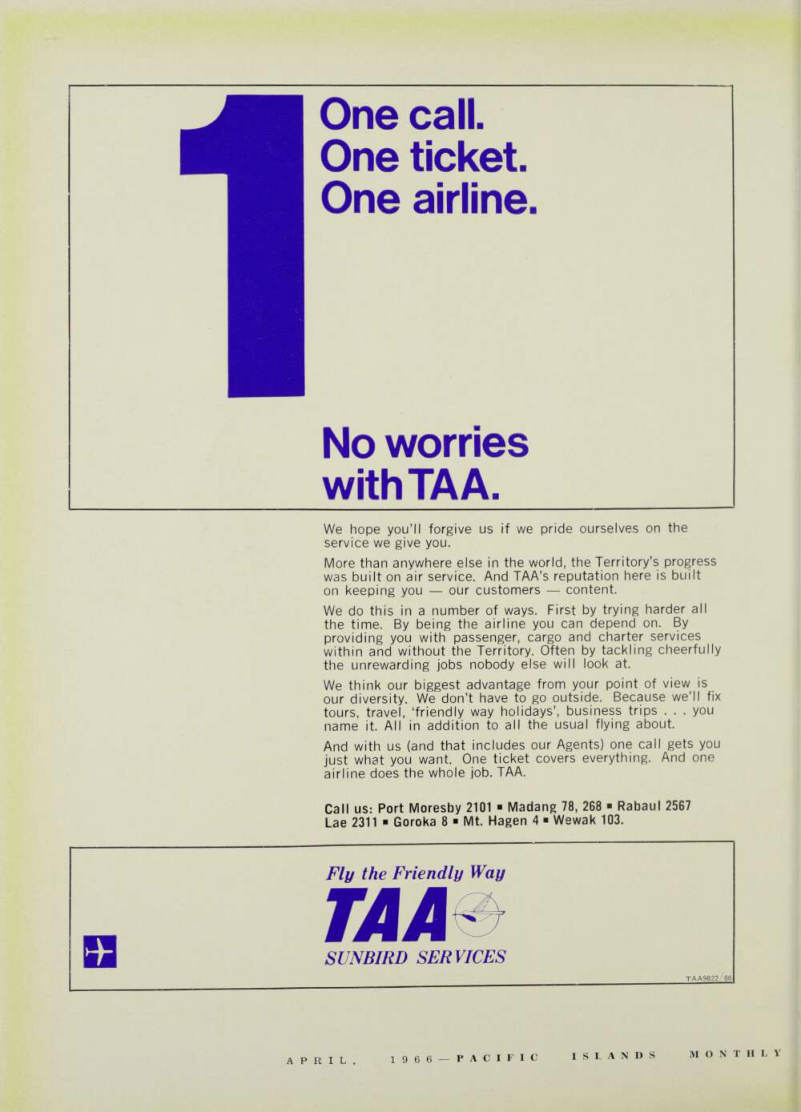 2
2 3
3 4
4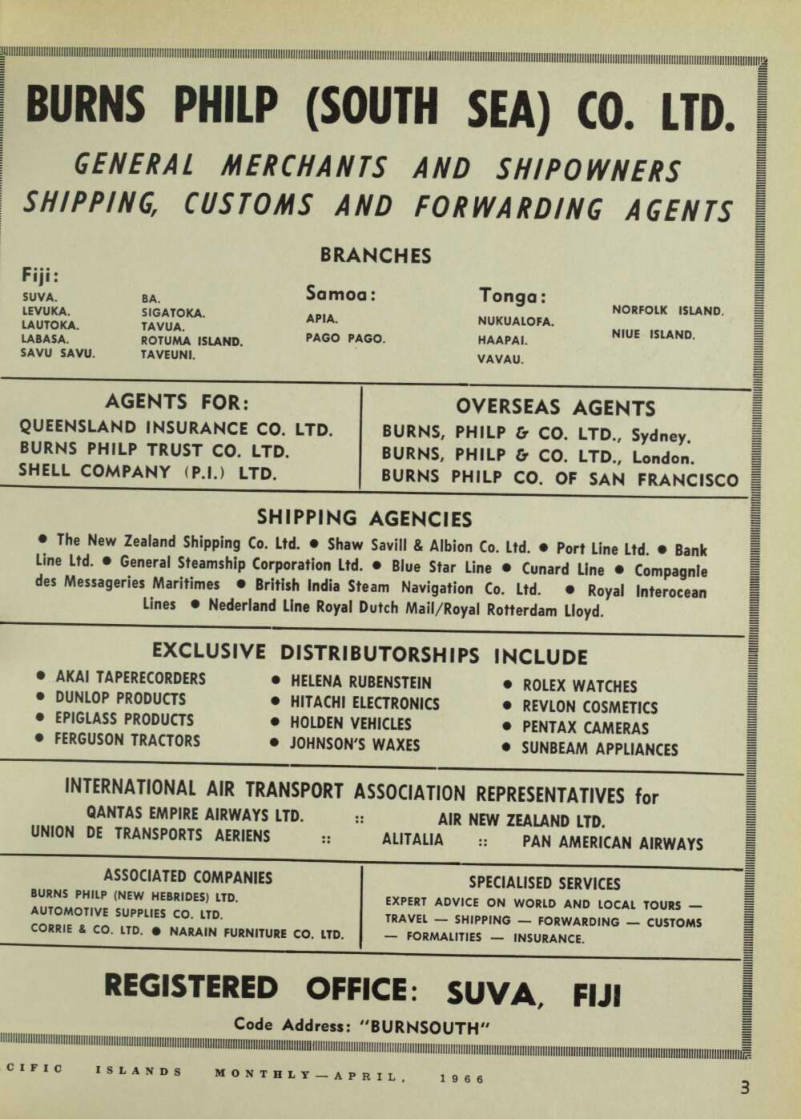 5
5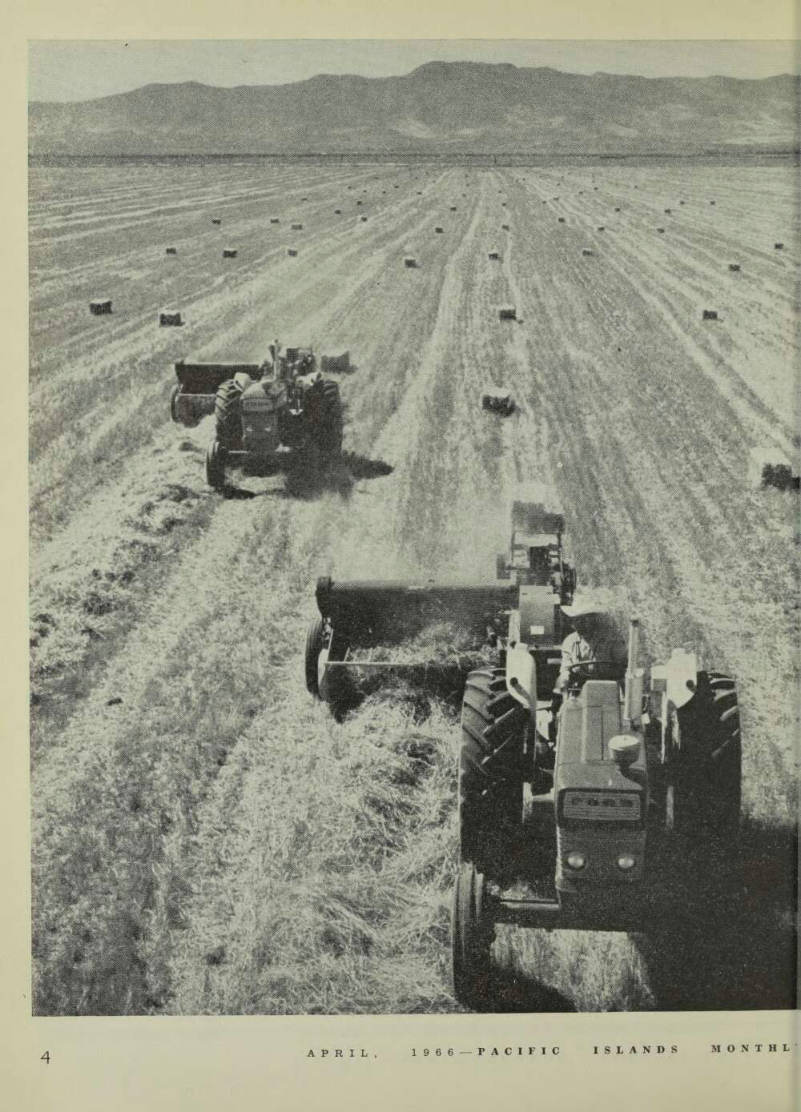 6
6 7
7 8
8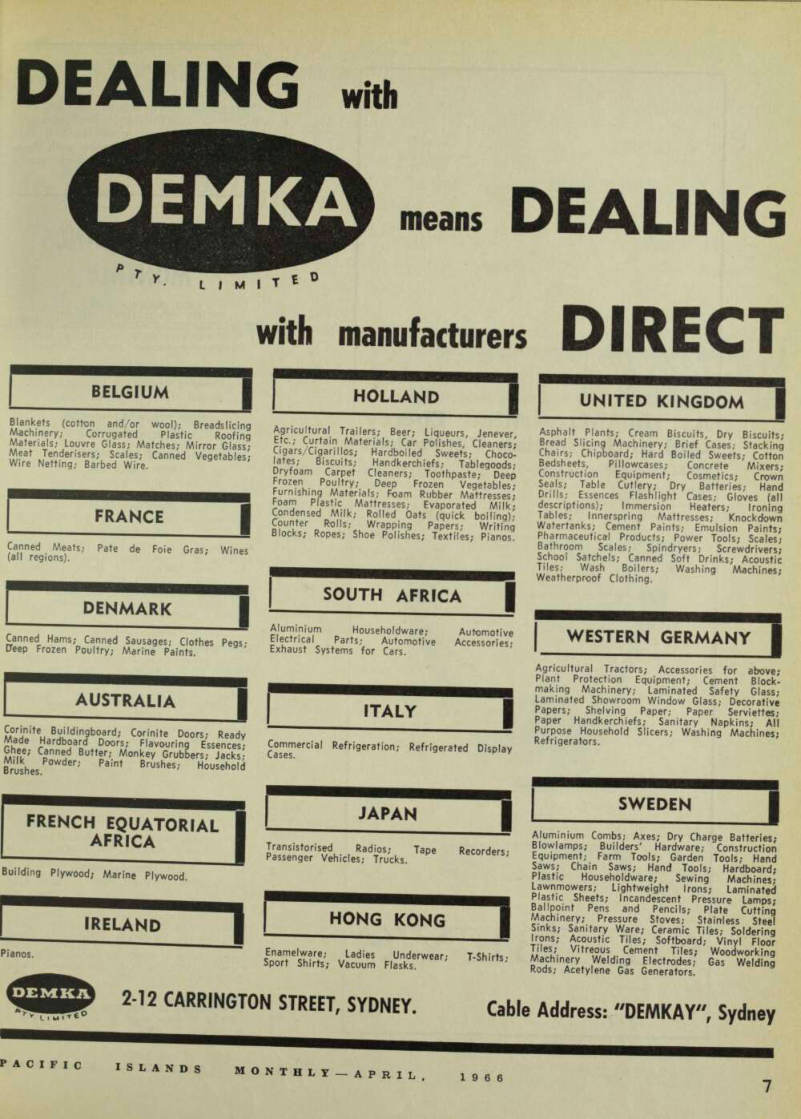 9
9 10
10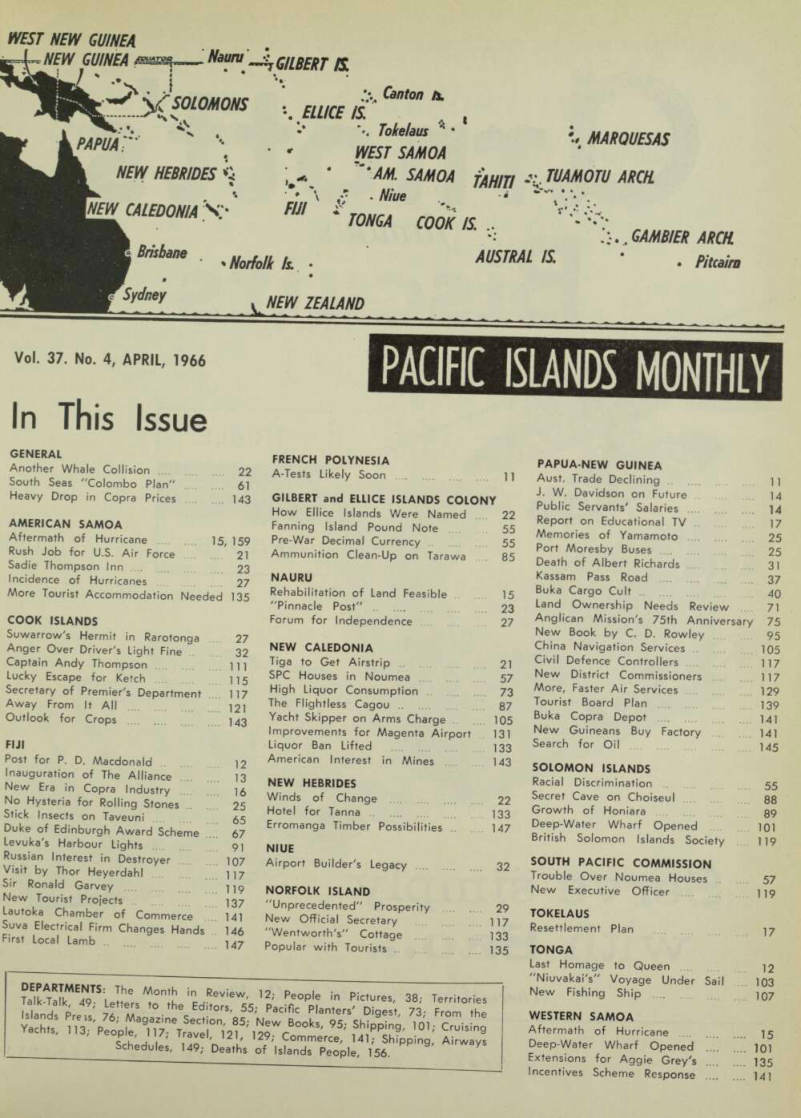 11
11 12
12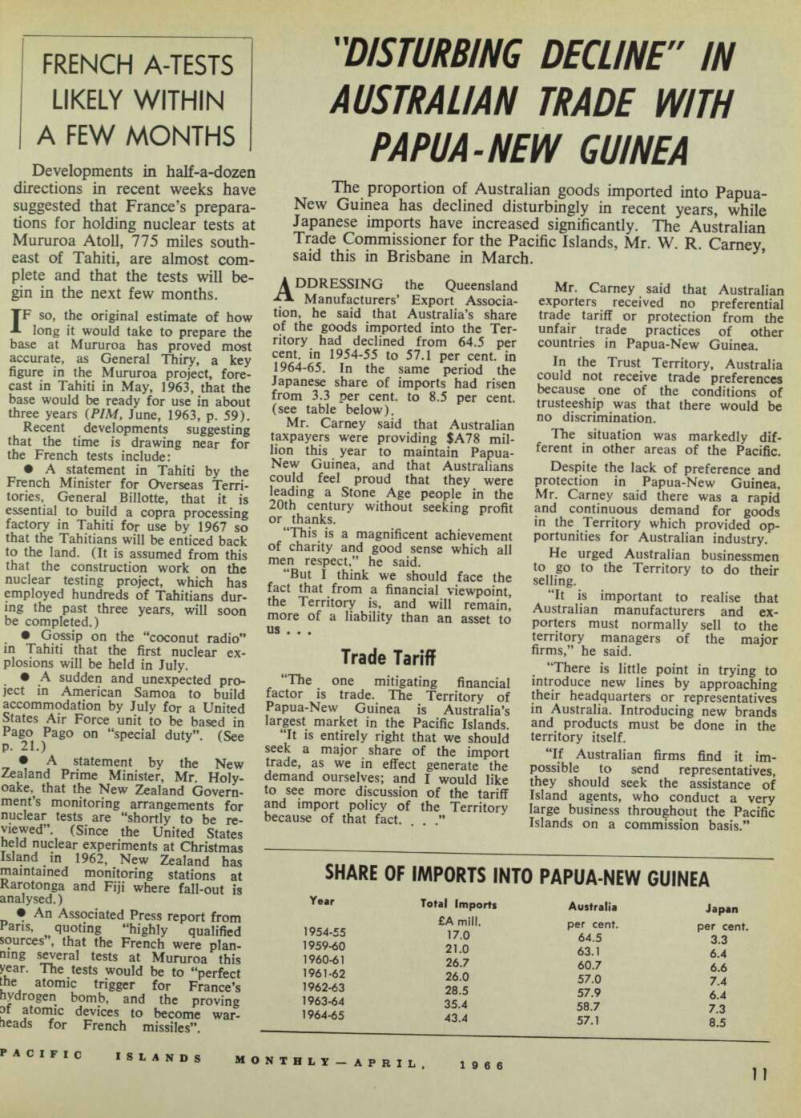 13
13 14
14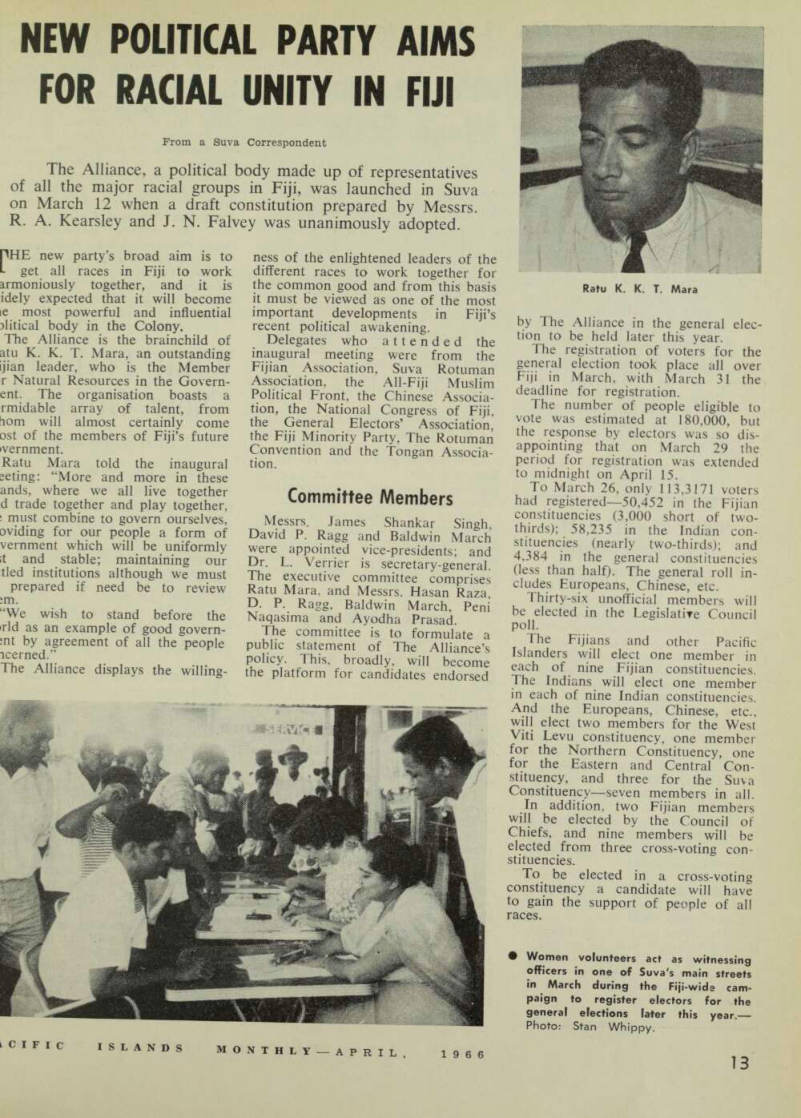 15
15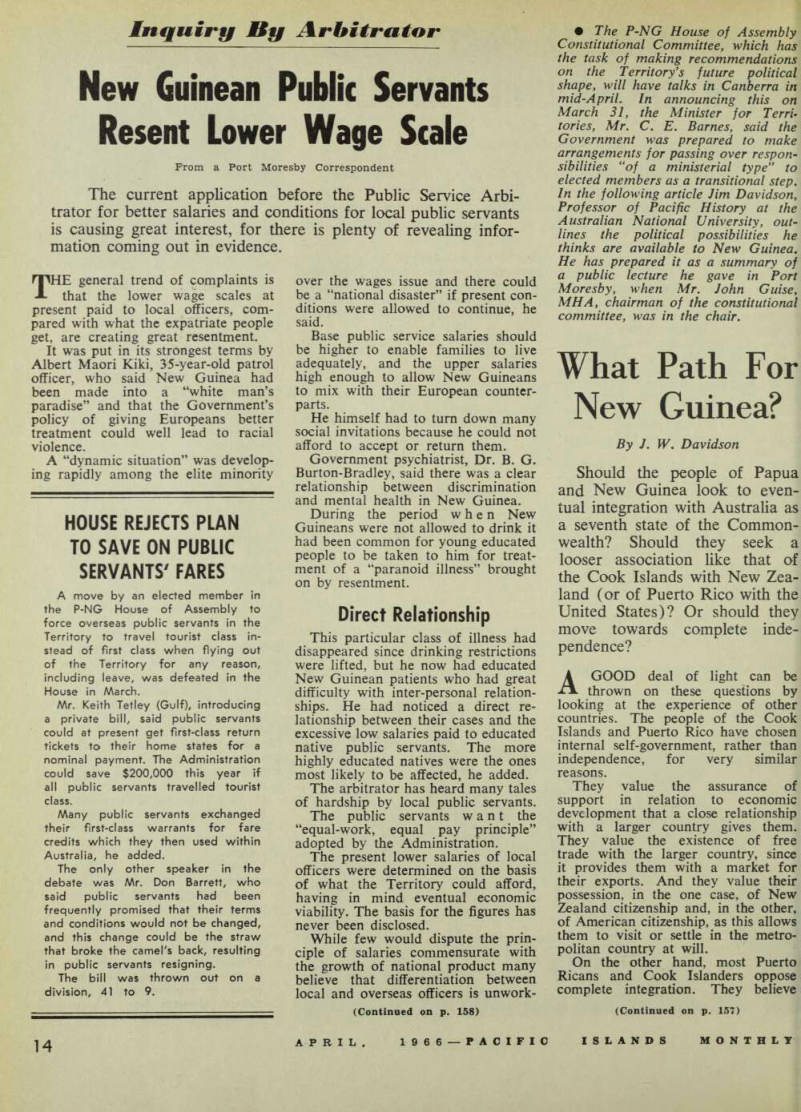 16
16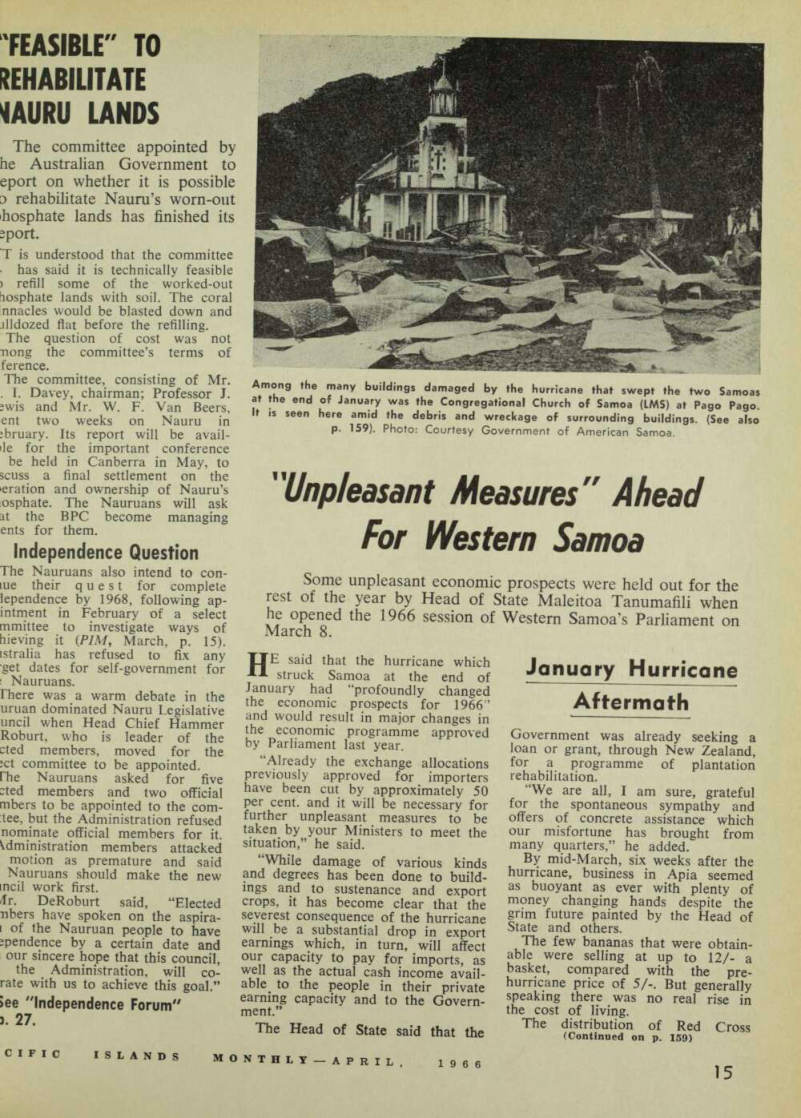 17
17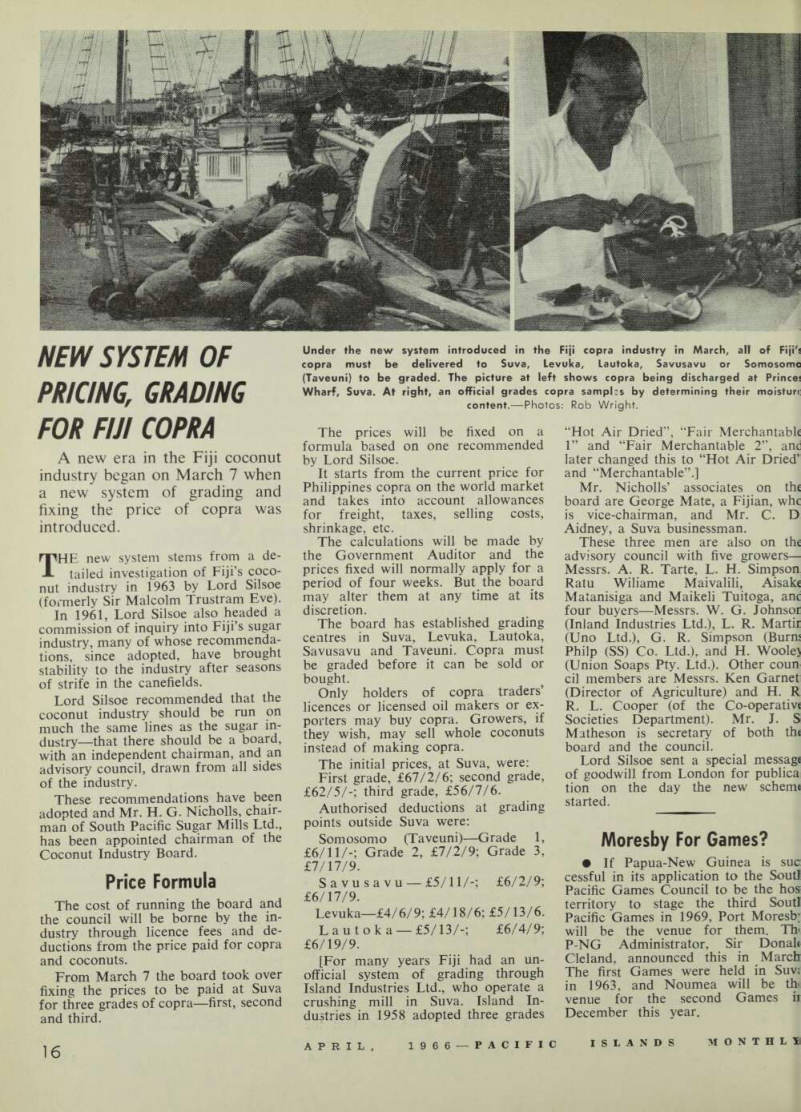 18
18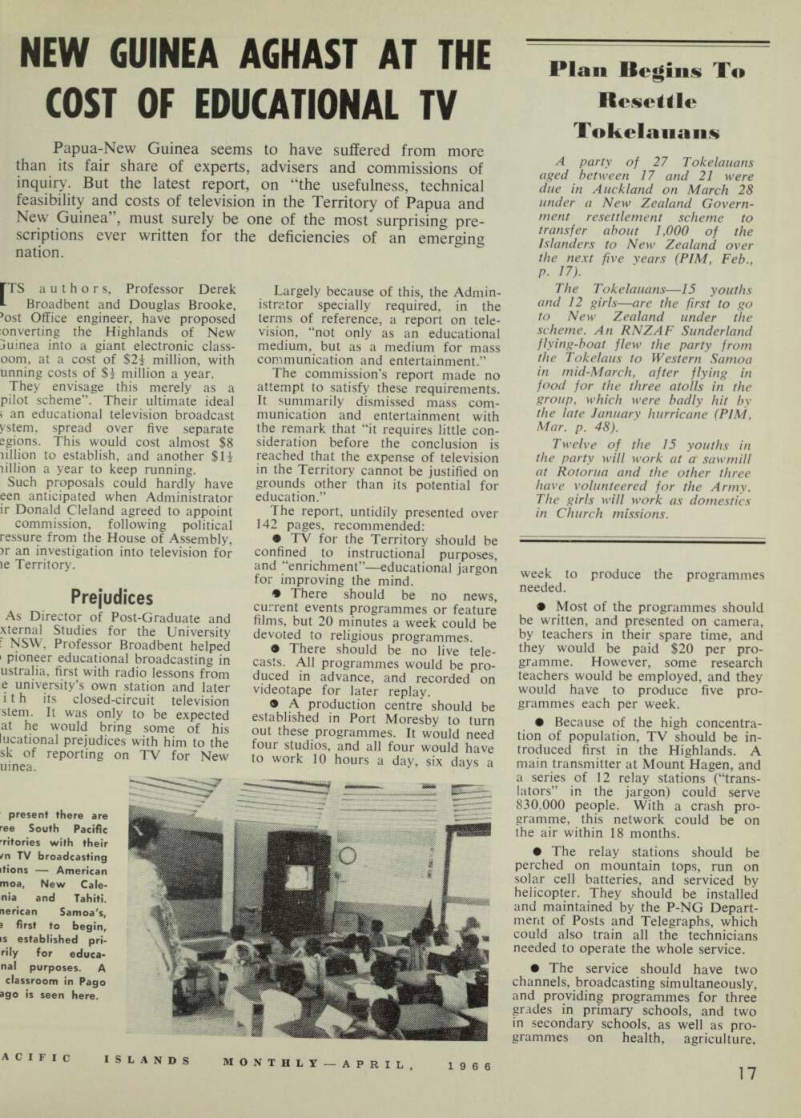 19
19 20
20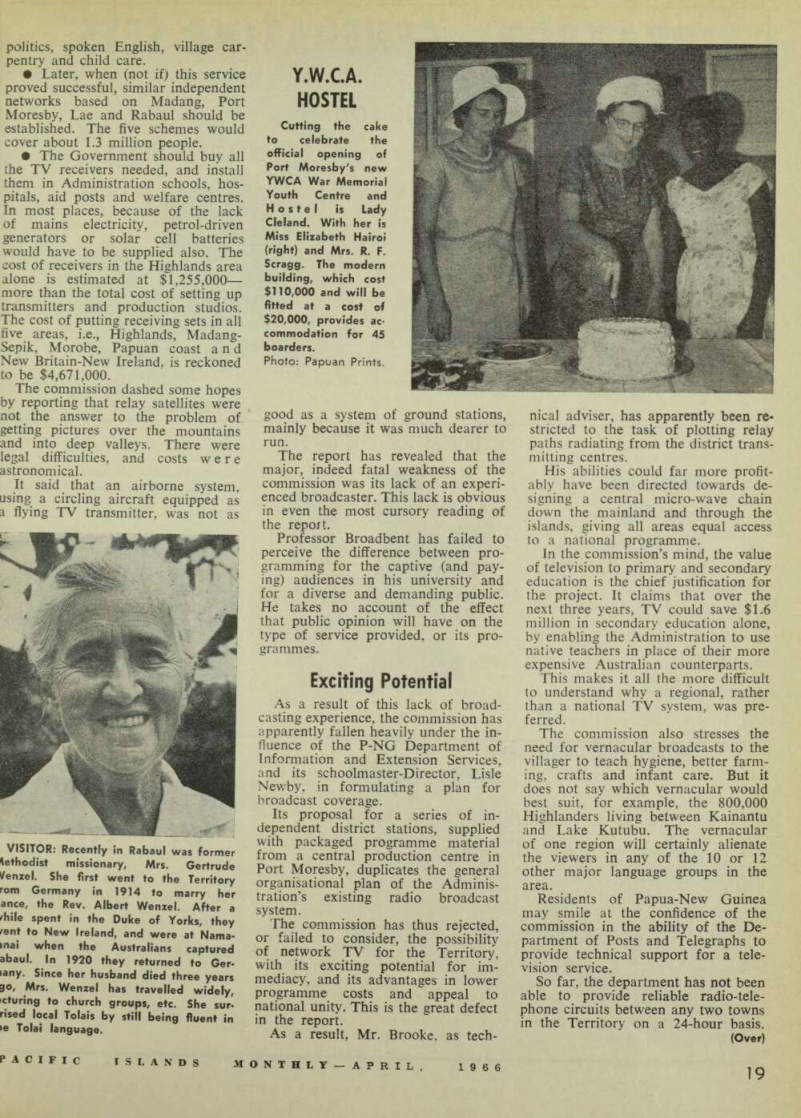 21
21 22
22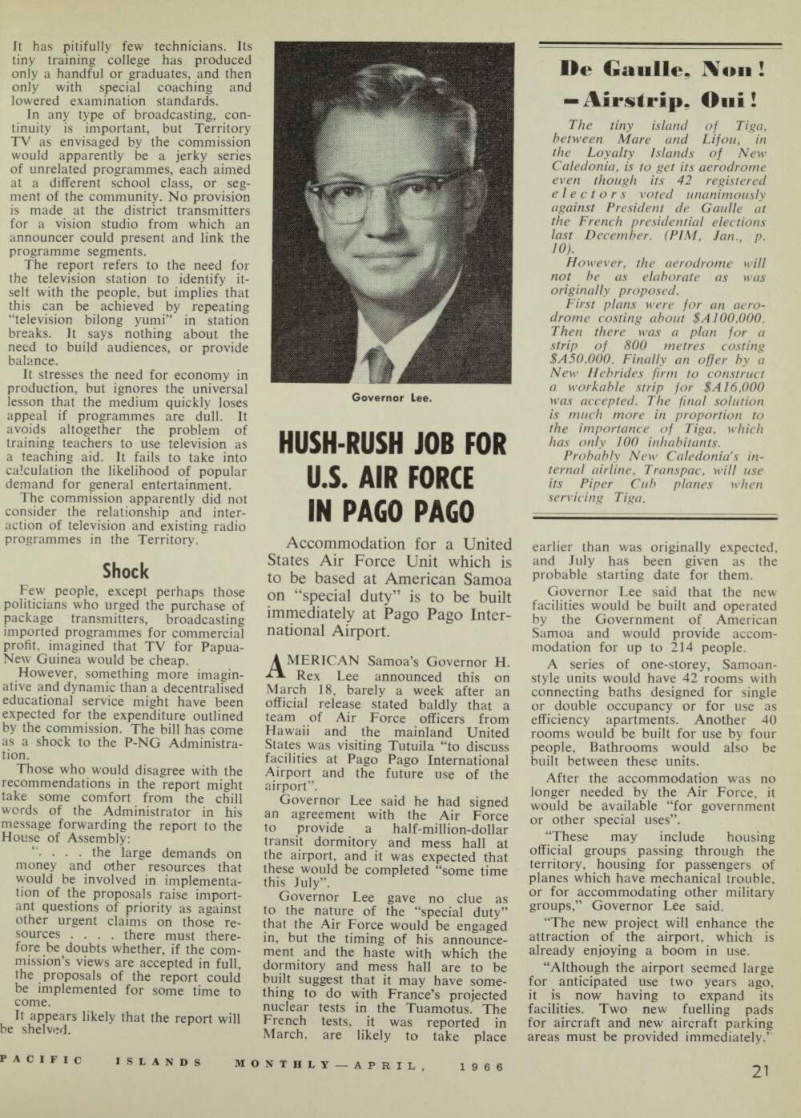 23
23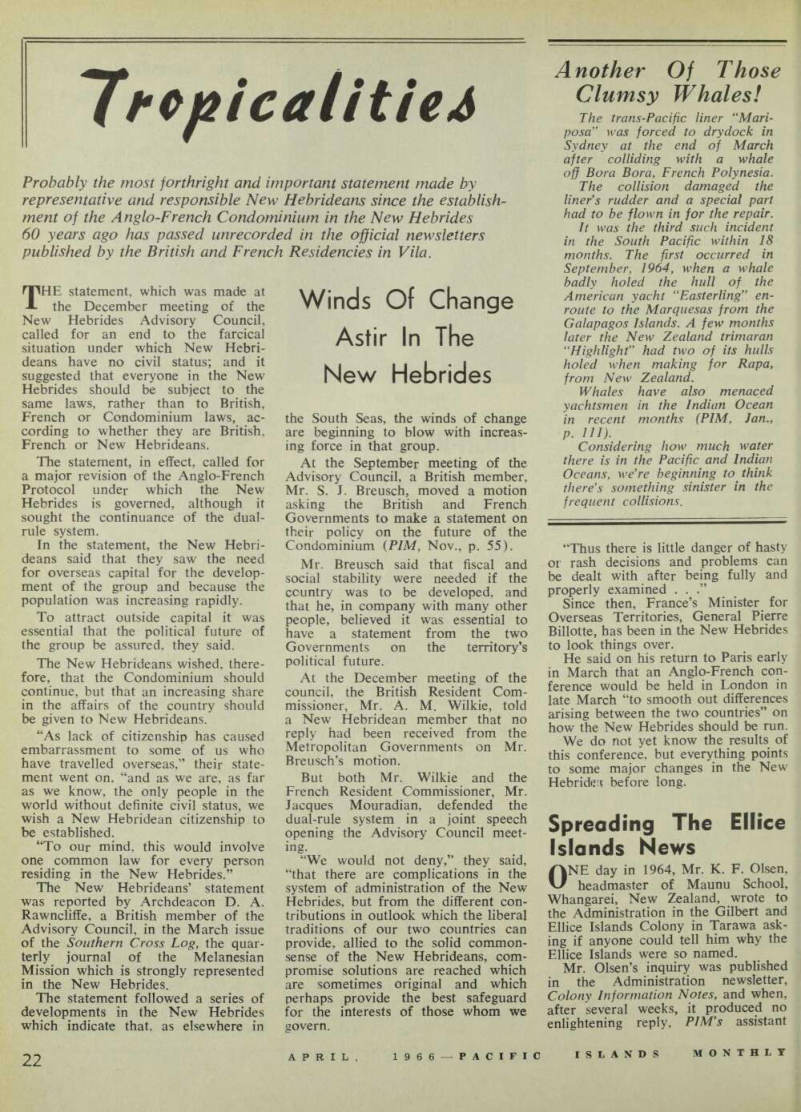 24
24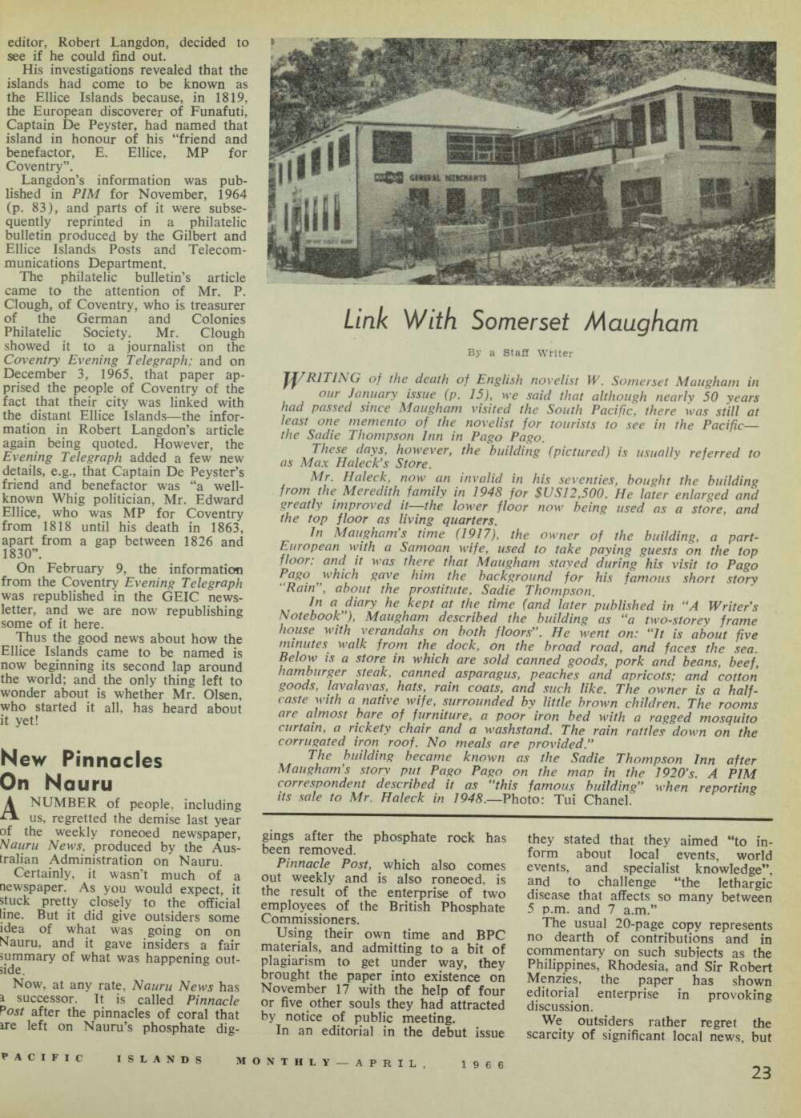 25
25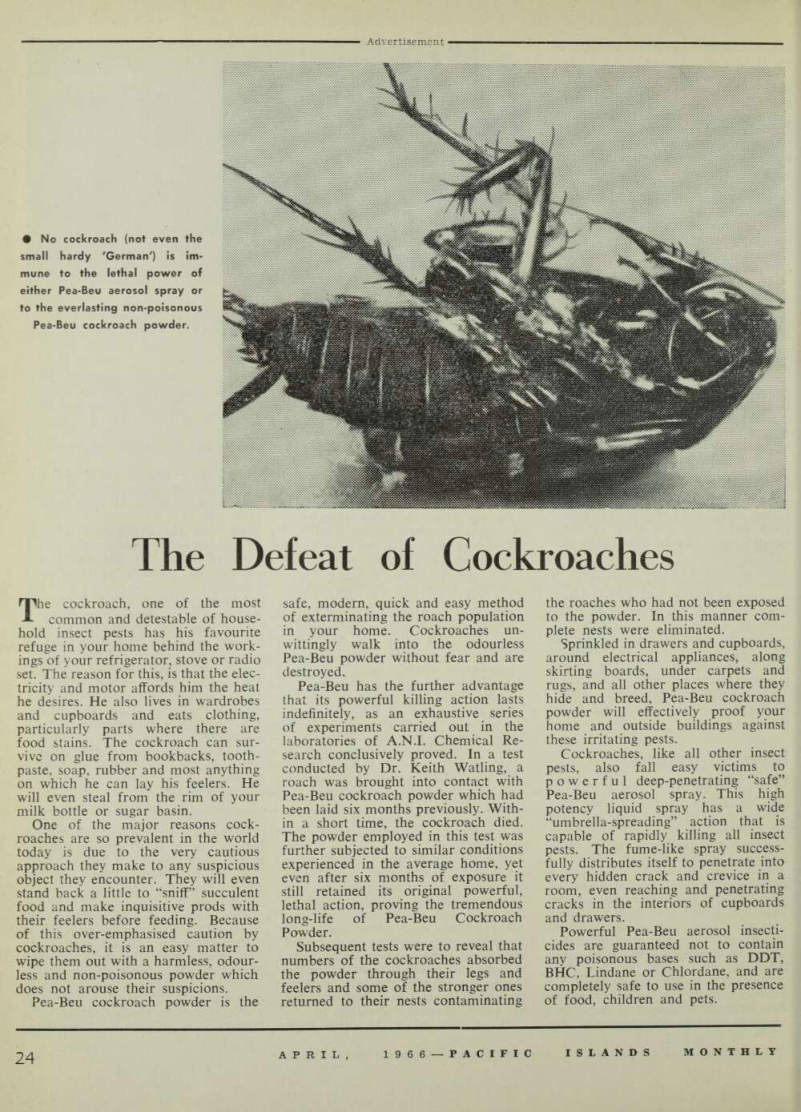 26
26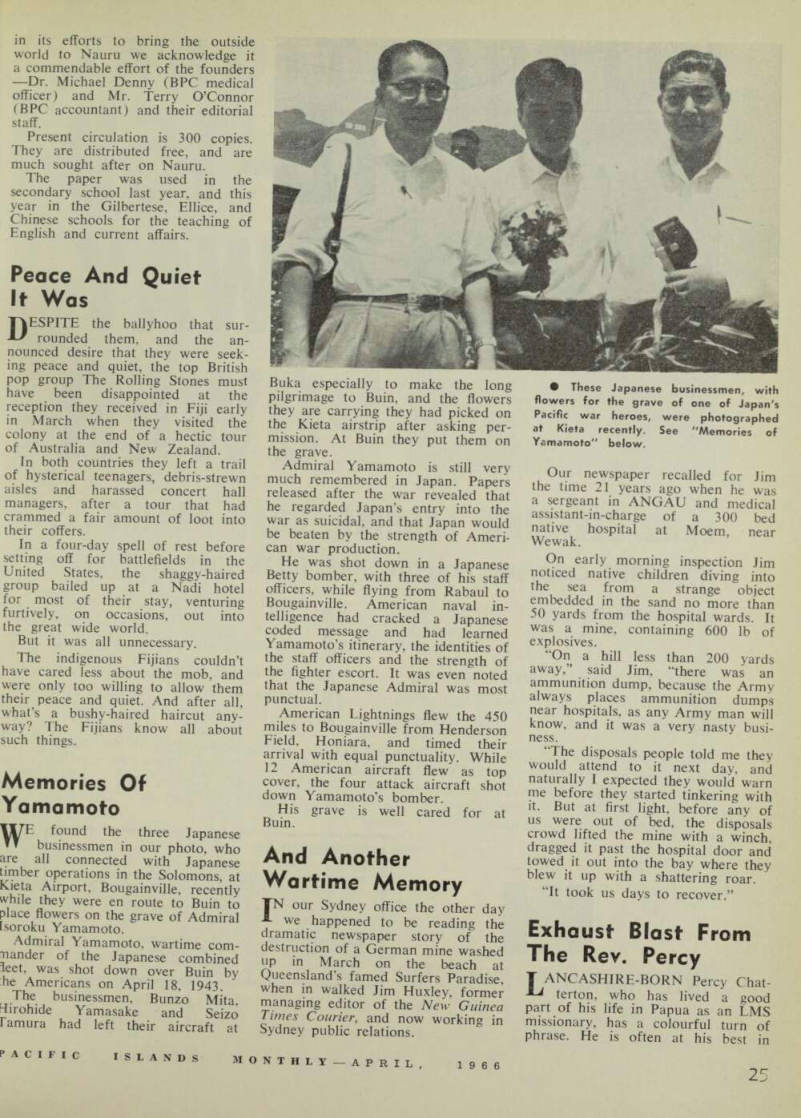 27
27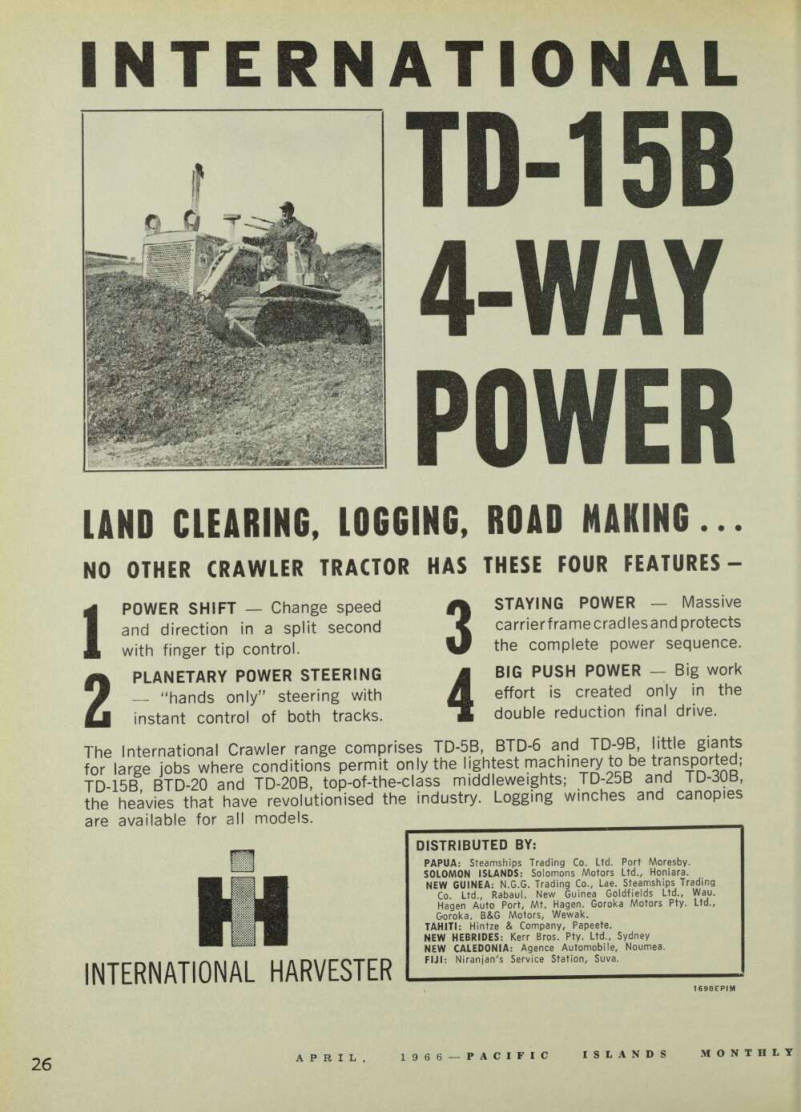 28
28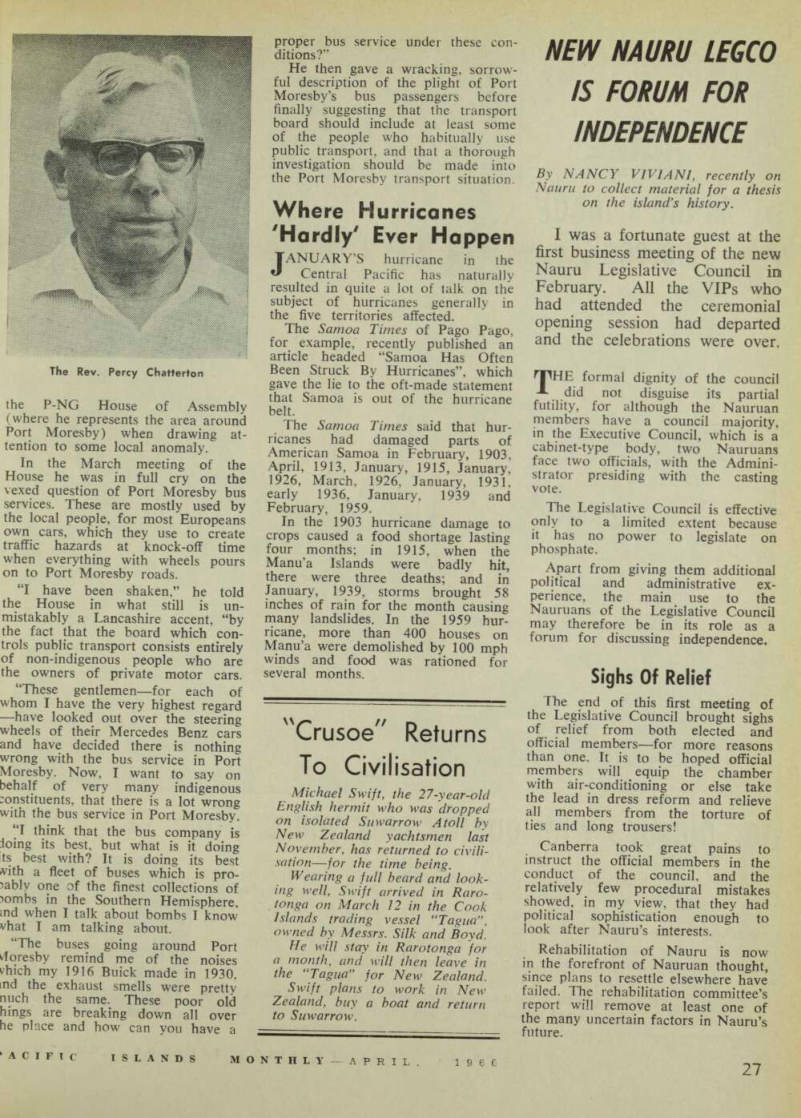 29
29 30
30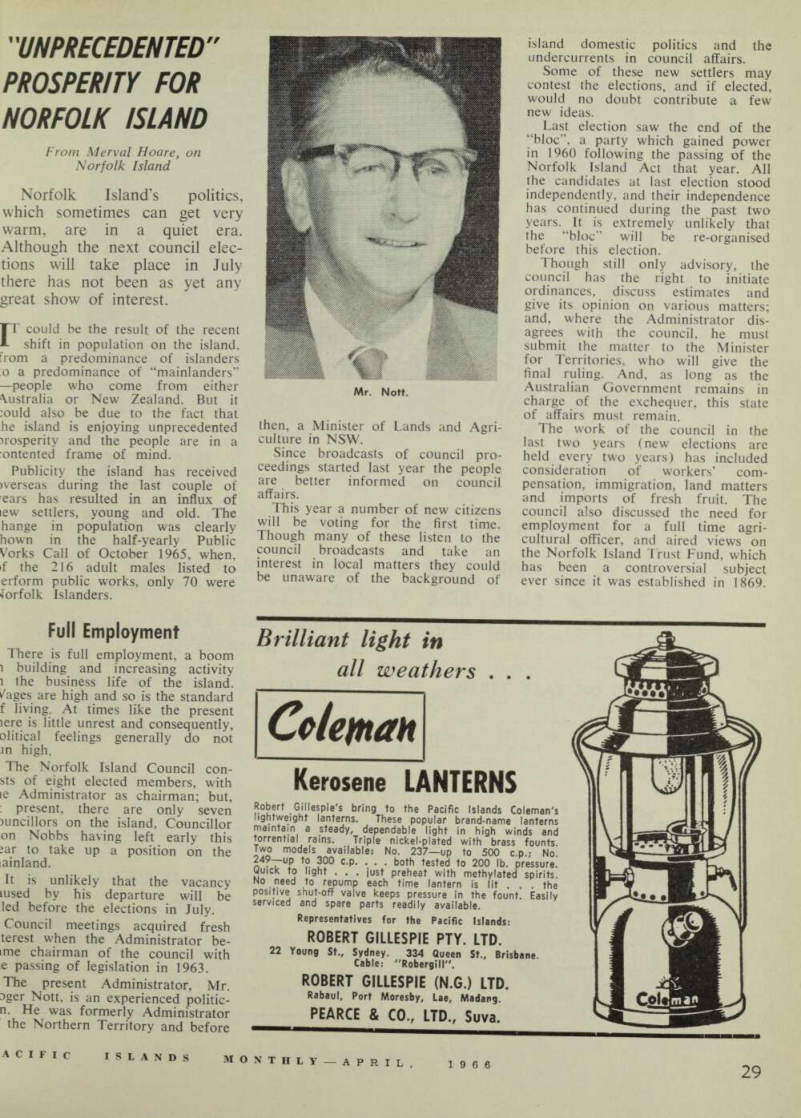 31
31 32
32 33
33 34
34 35
35 36
36 37
37 38
38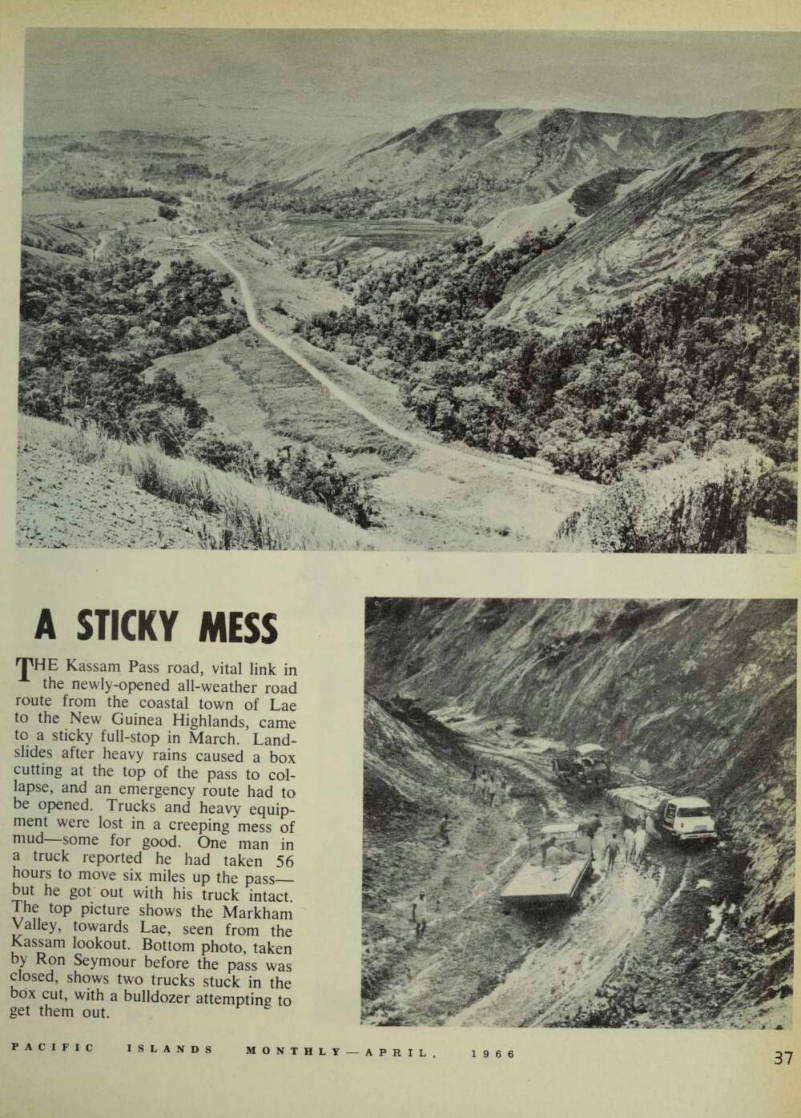 39
39 40
40 41
41 42
42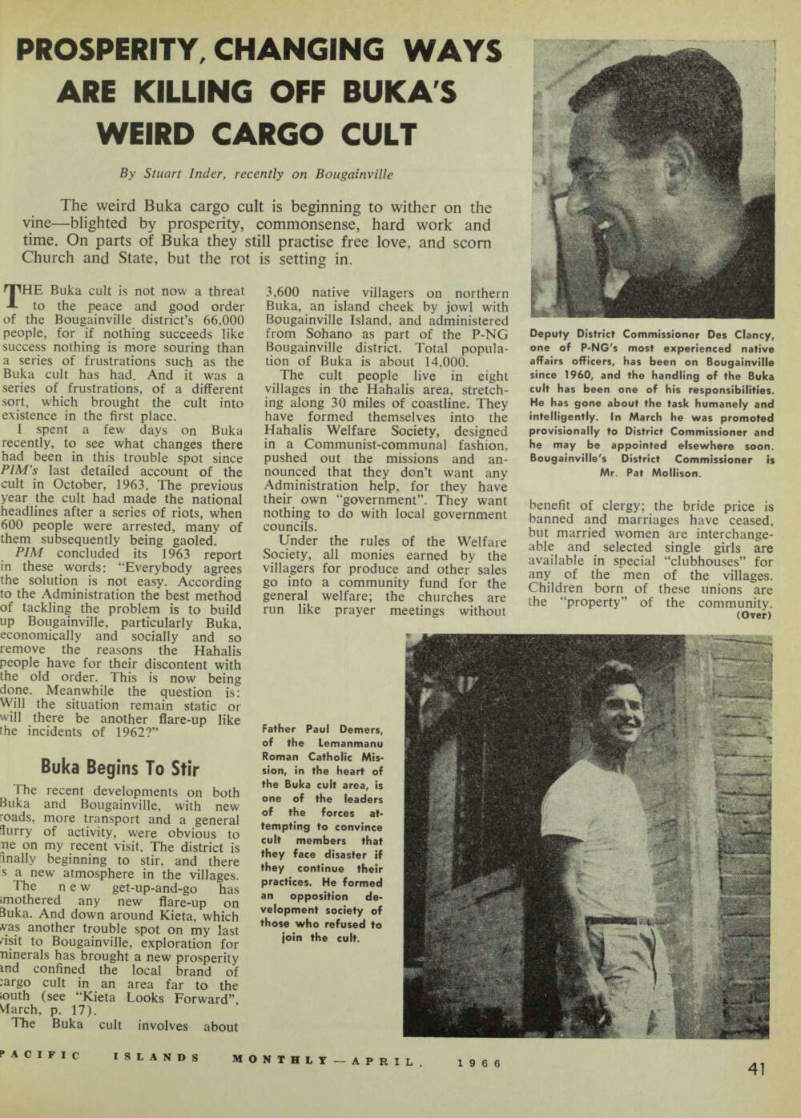 43
43 44
44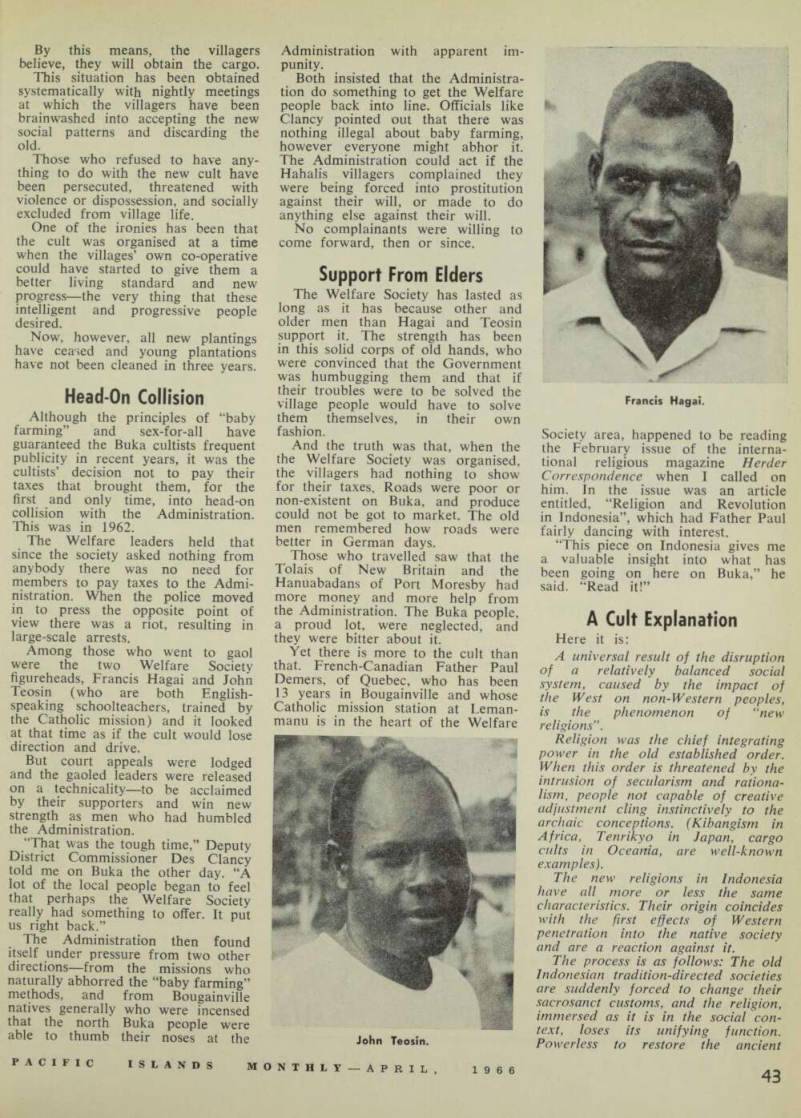 45
45 46
46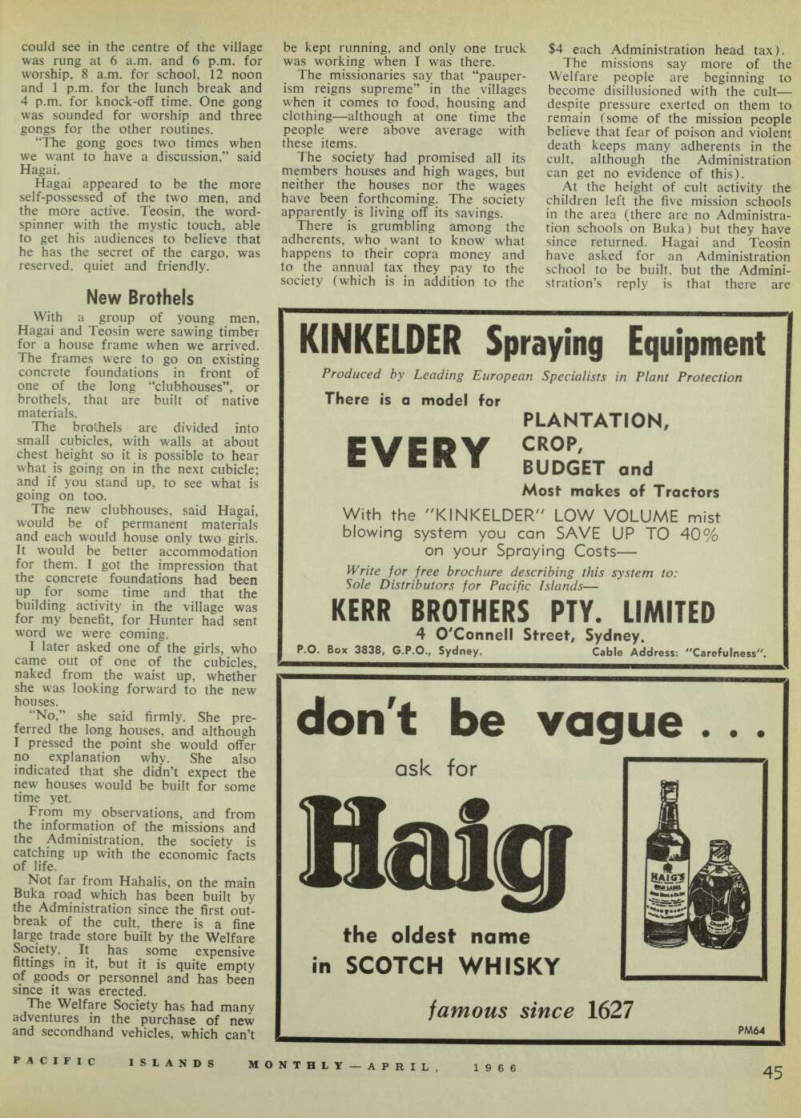 47
47 48
48 49
49 50
50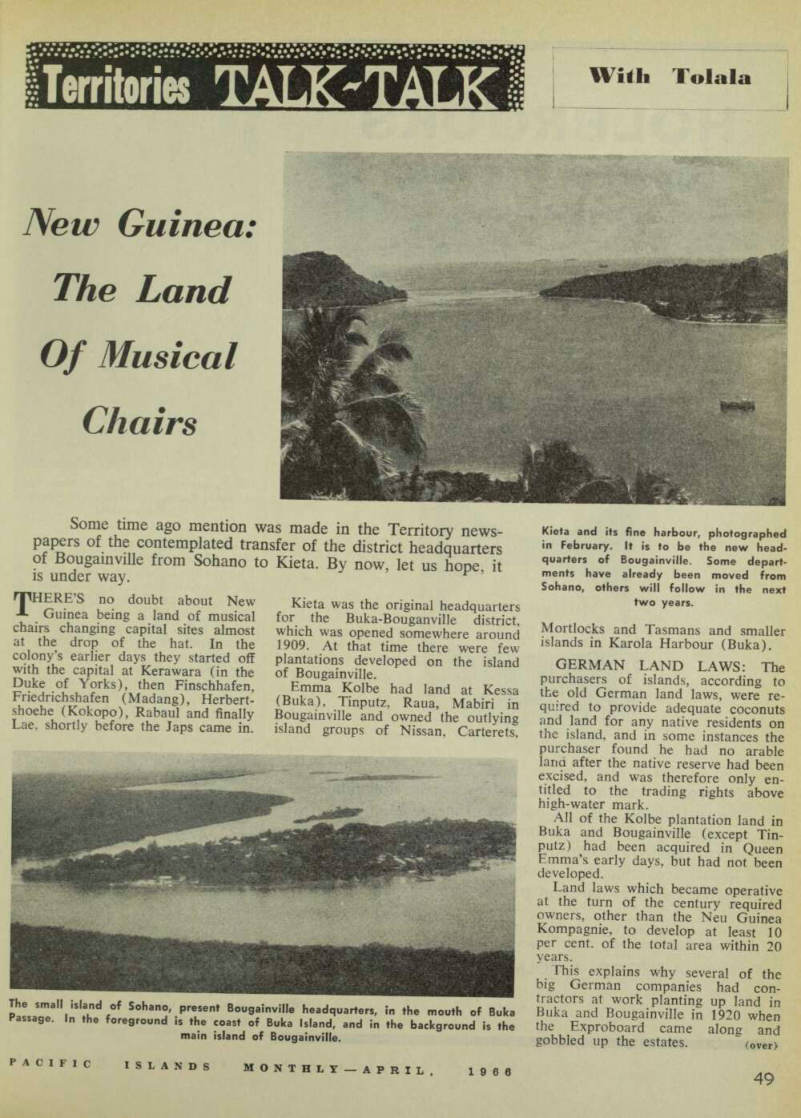 51
51 52
52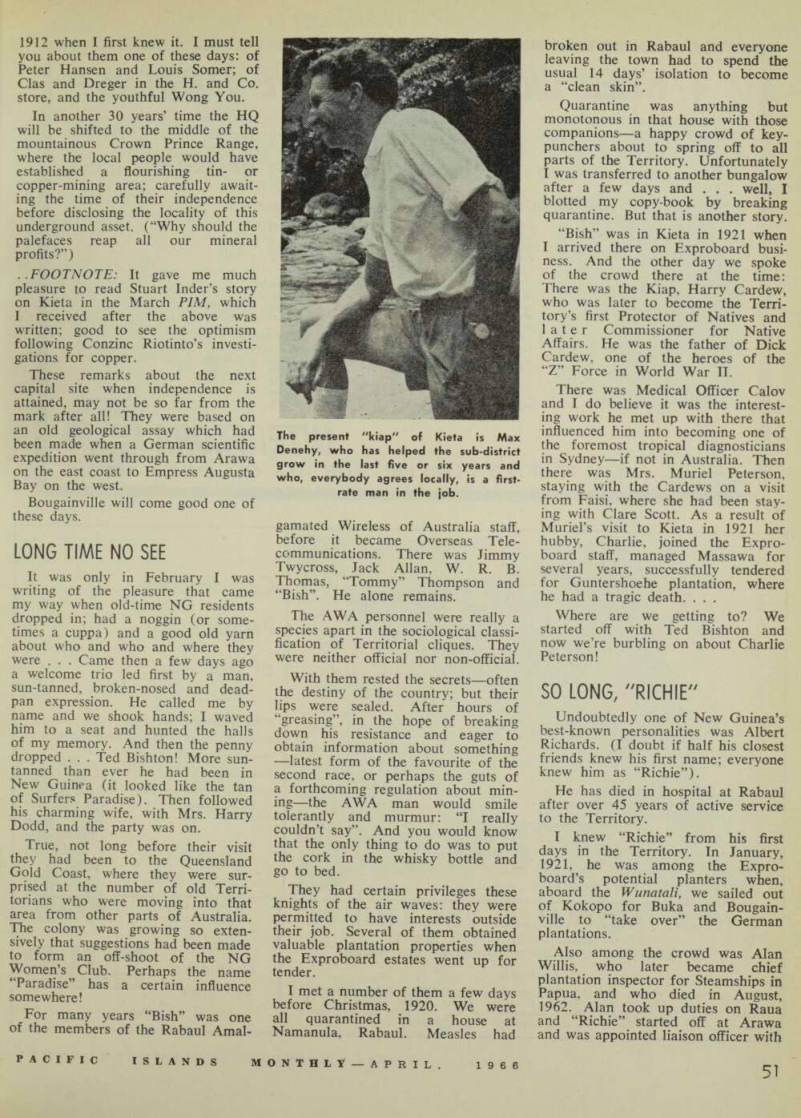 53
53 54
54 55
55 56
56 57
57 58
58 59
59 60
60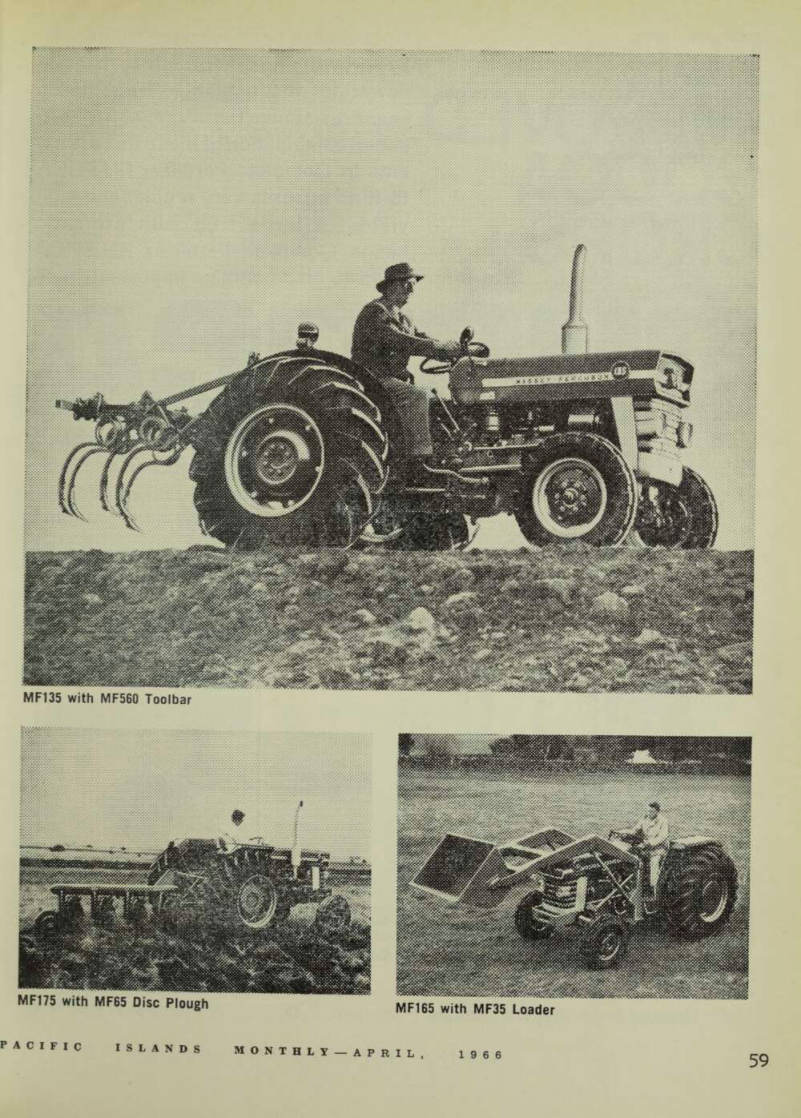 61
61 62
62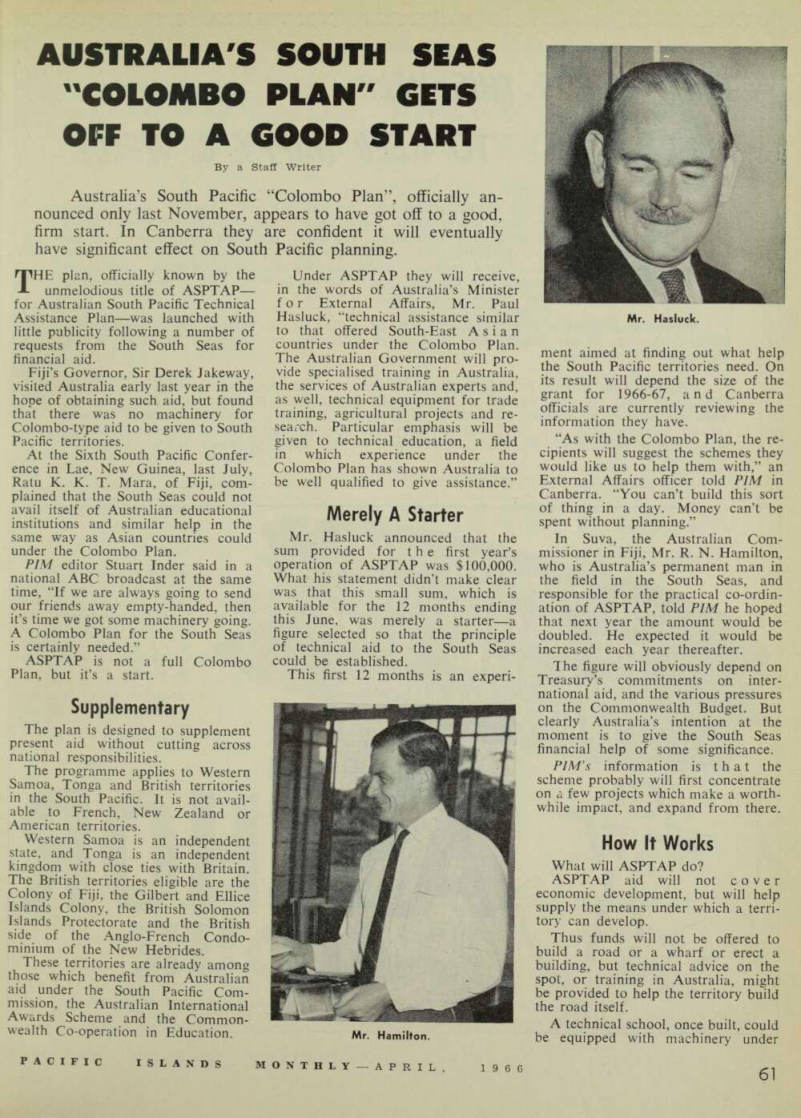 63
63 64
64 65
65 66
66 67
67 68
68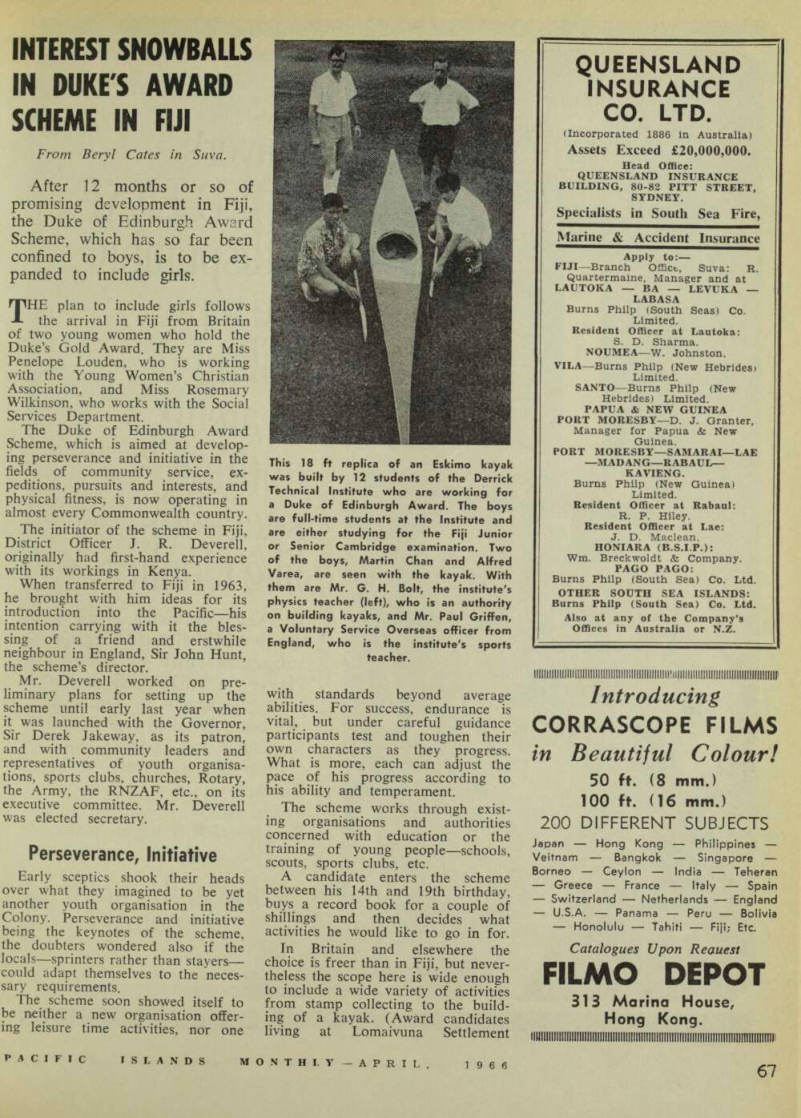 69
69 70
70 71
71 72
72 73
73 74
74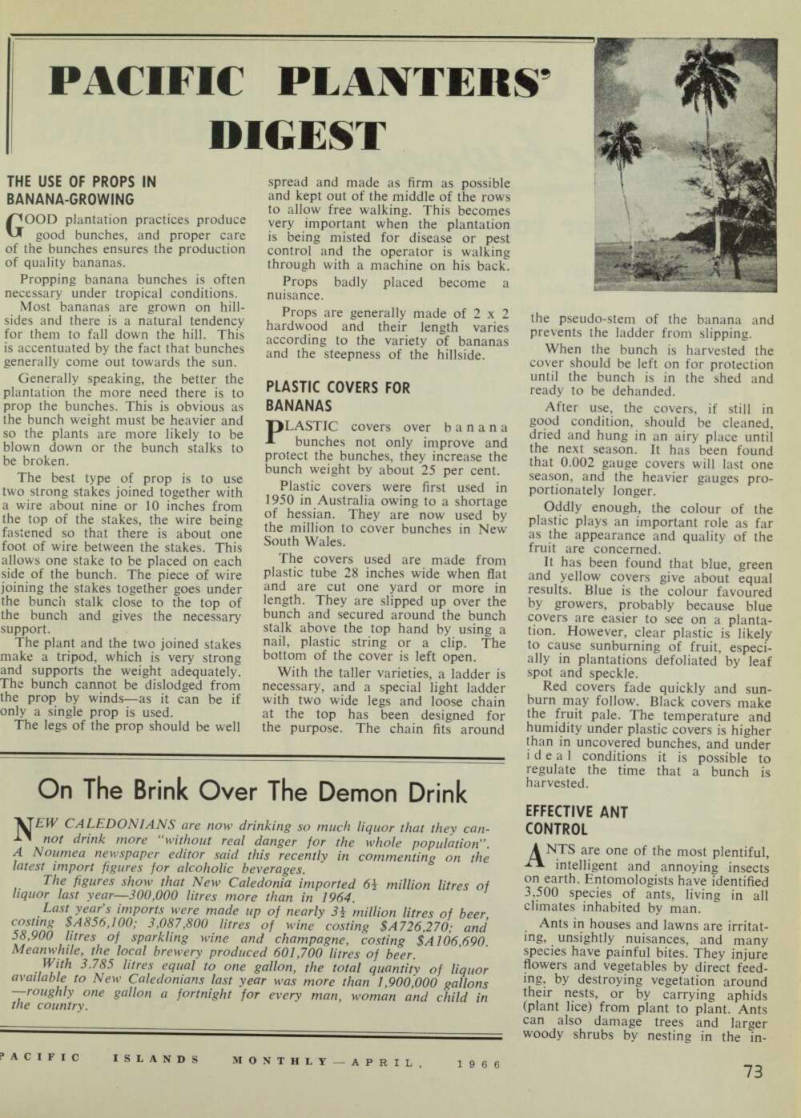 75
75 76
76 77
77 78
78 79
79 80
80 81
81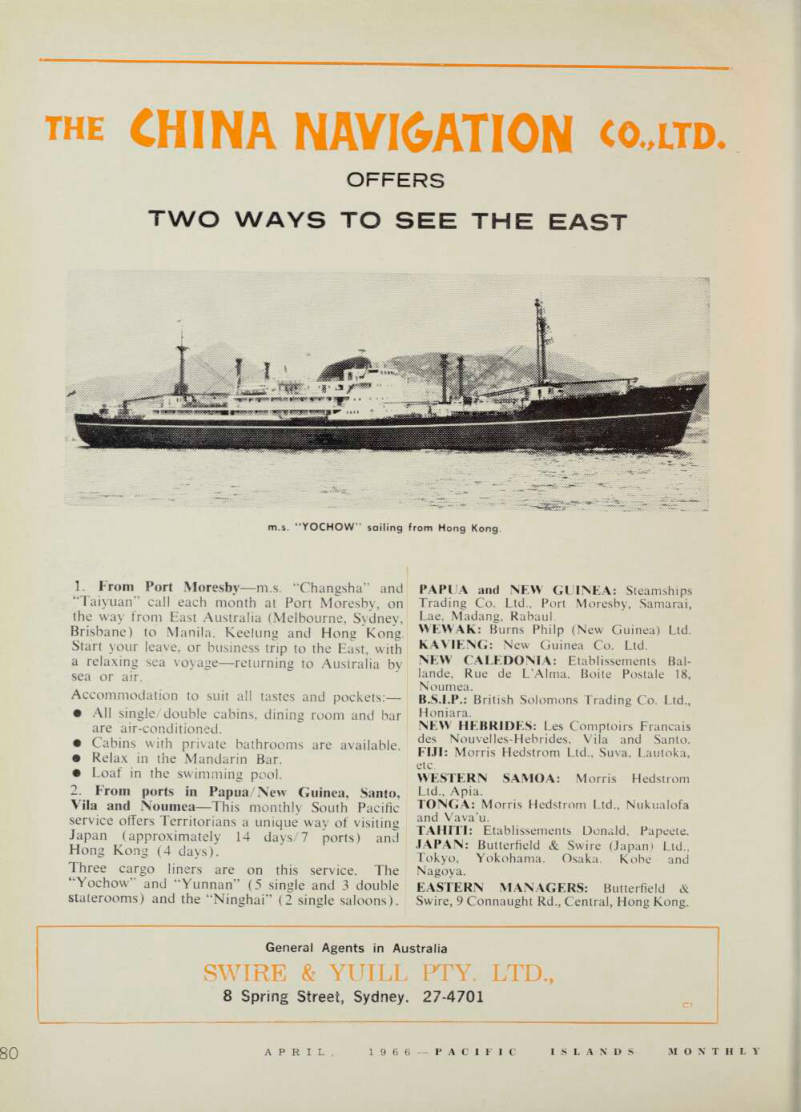 82
82 83
83 84
84 85
85 86
86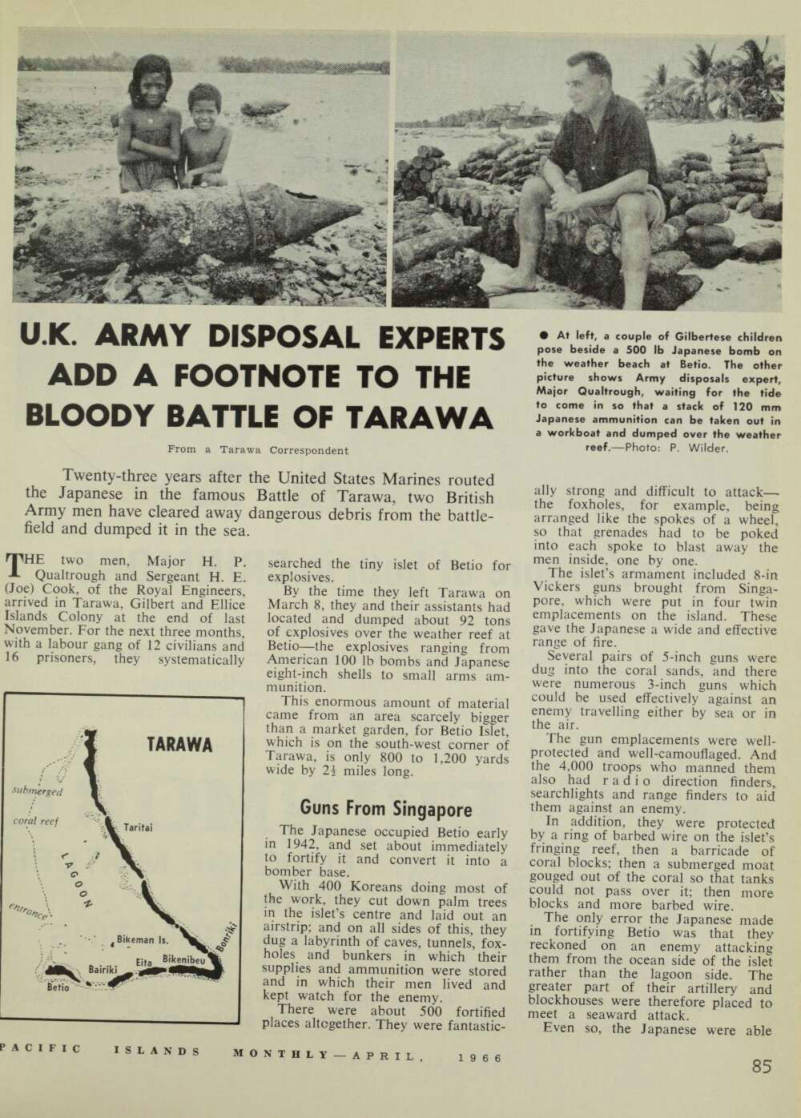 87
87 88
88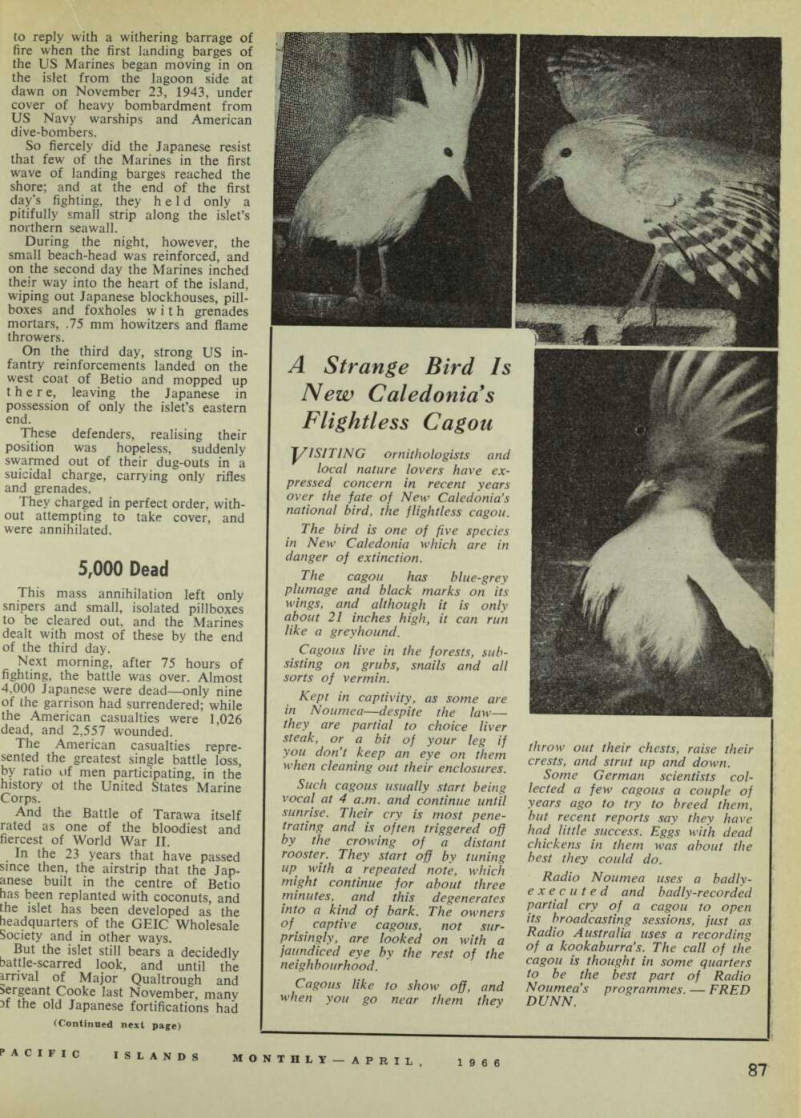 89
89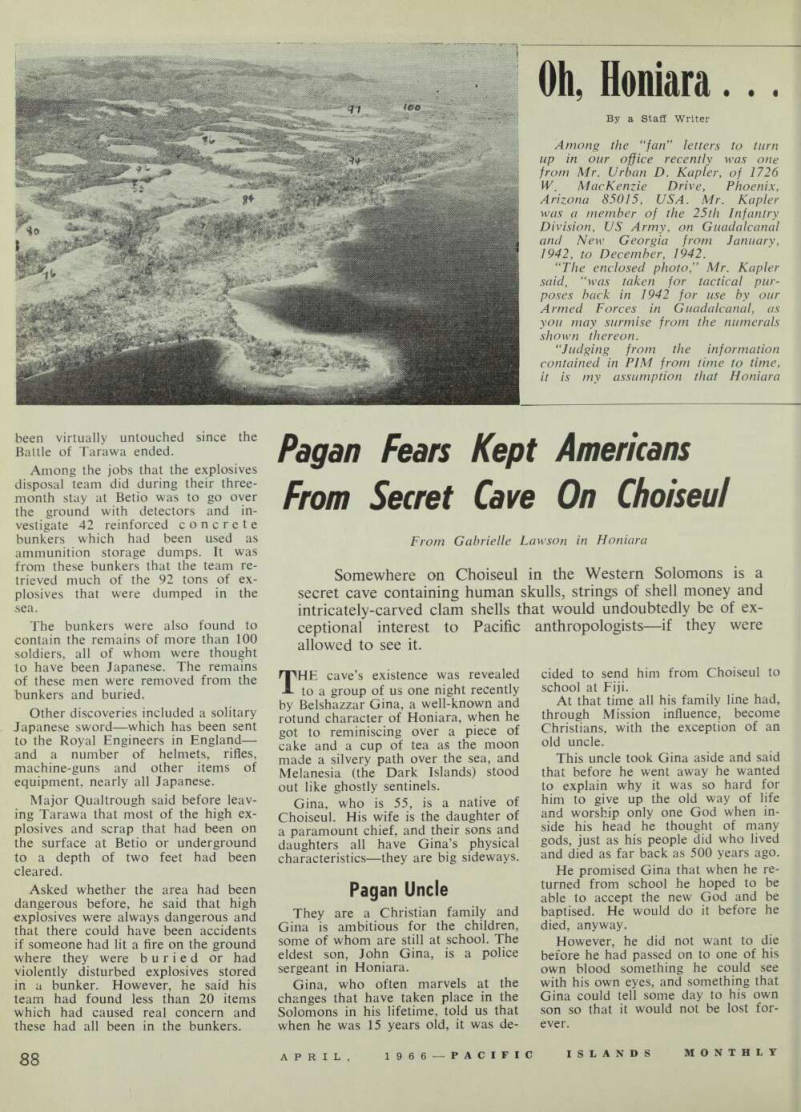 90
90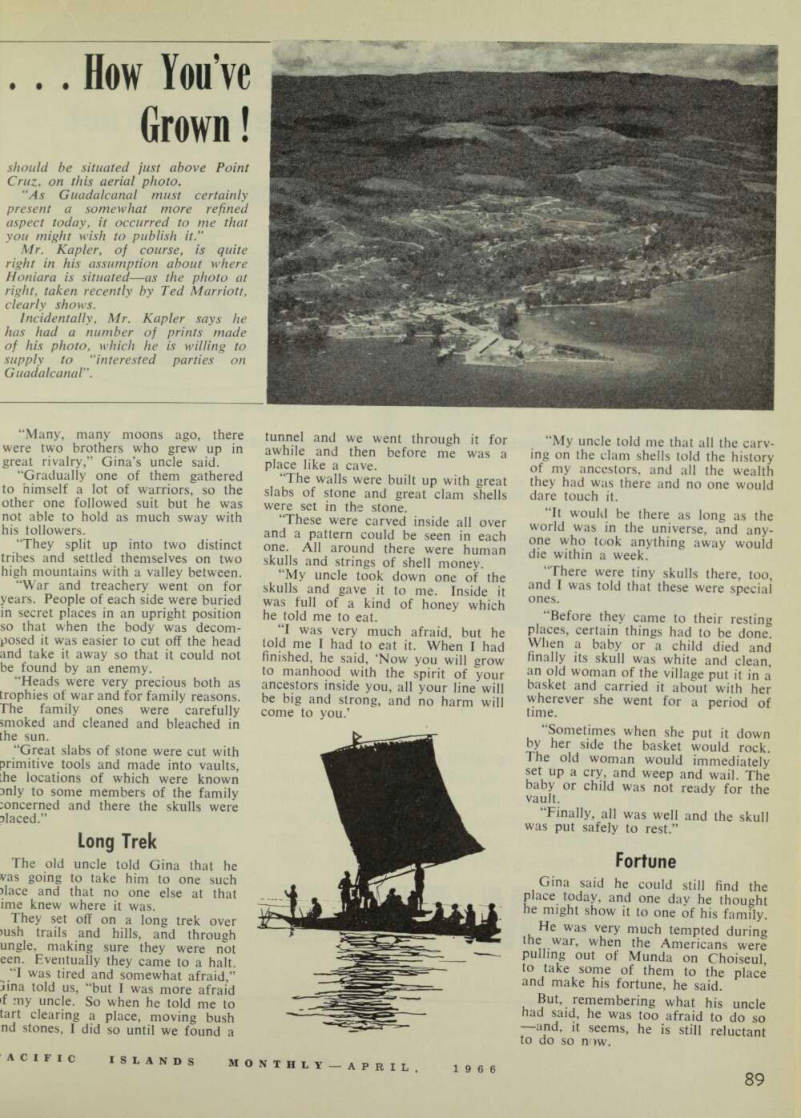 91
91 92
92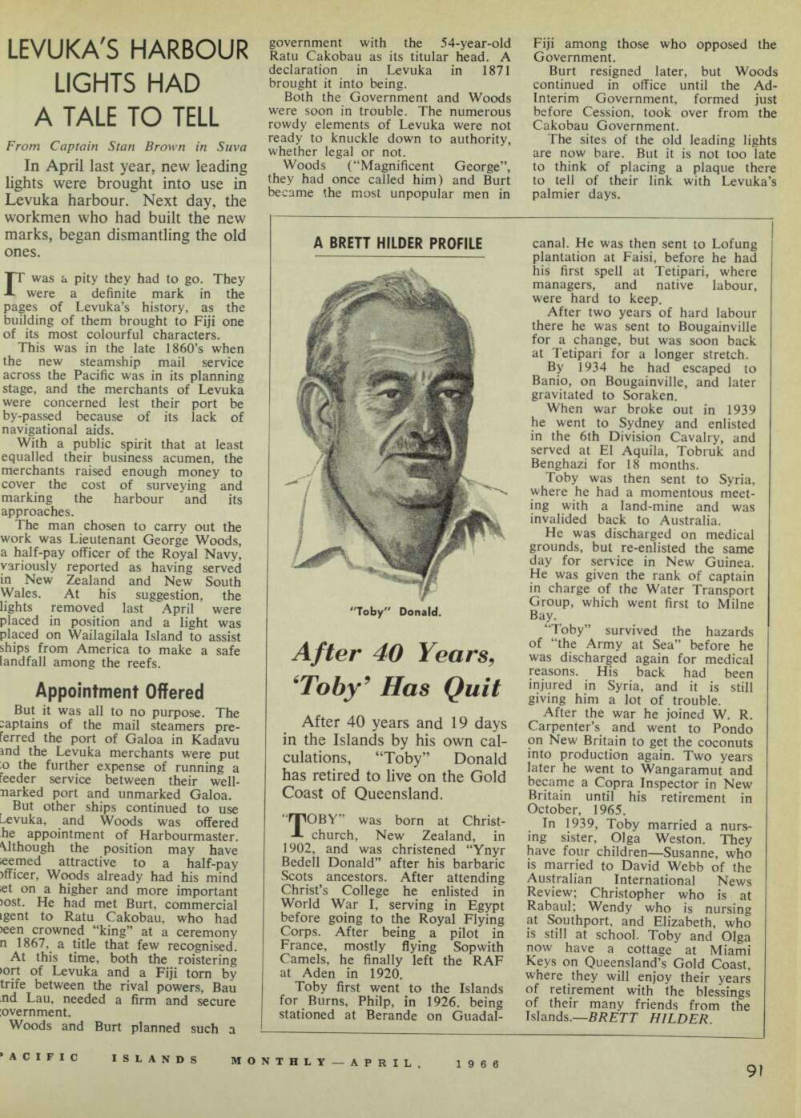 93
93 94
94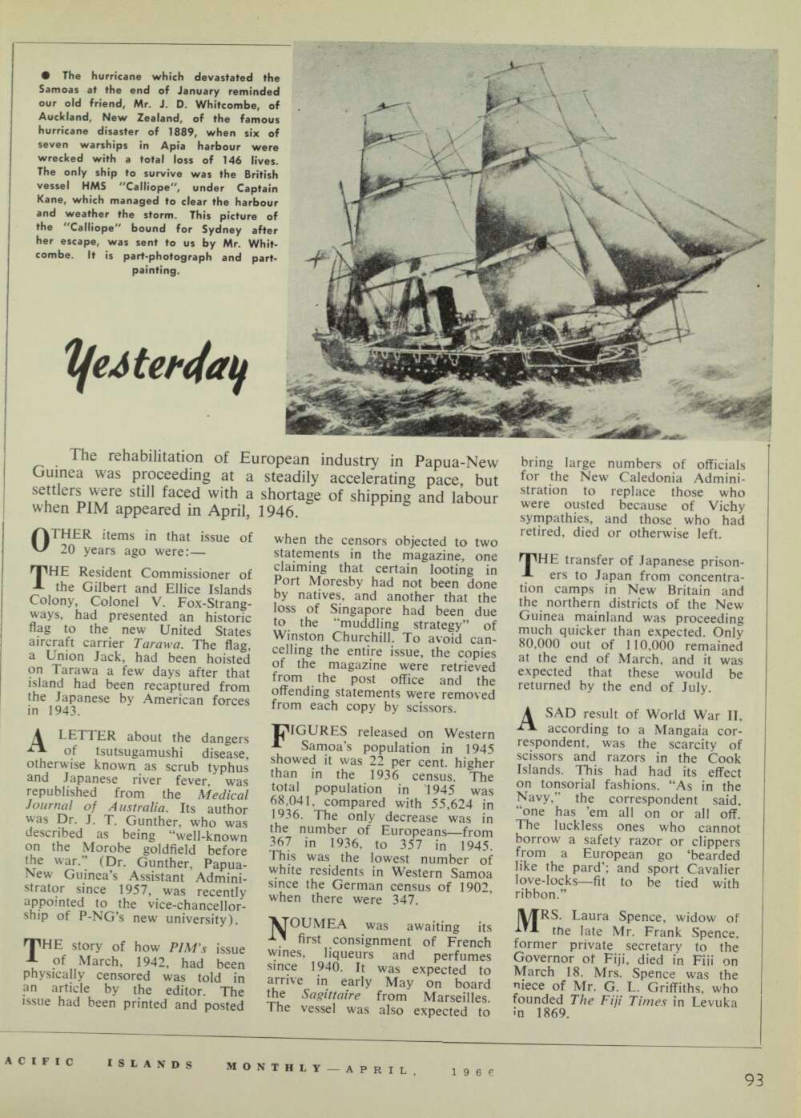 95
95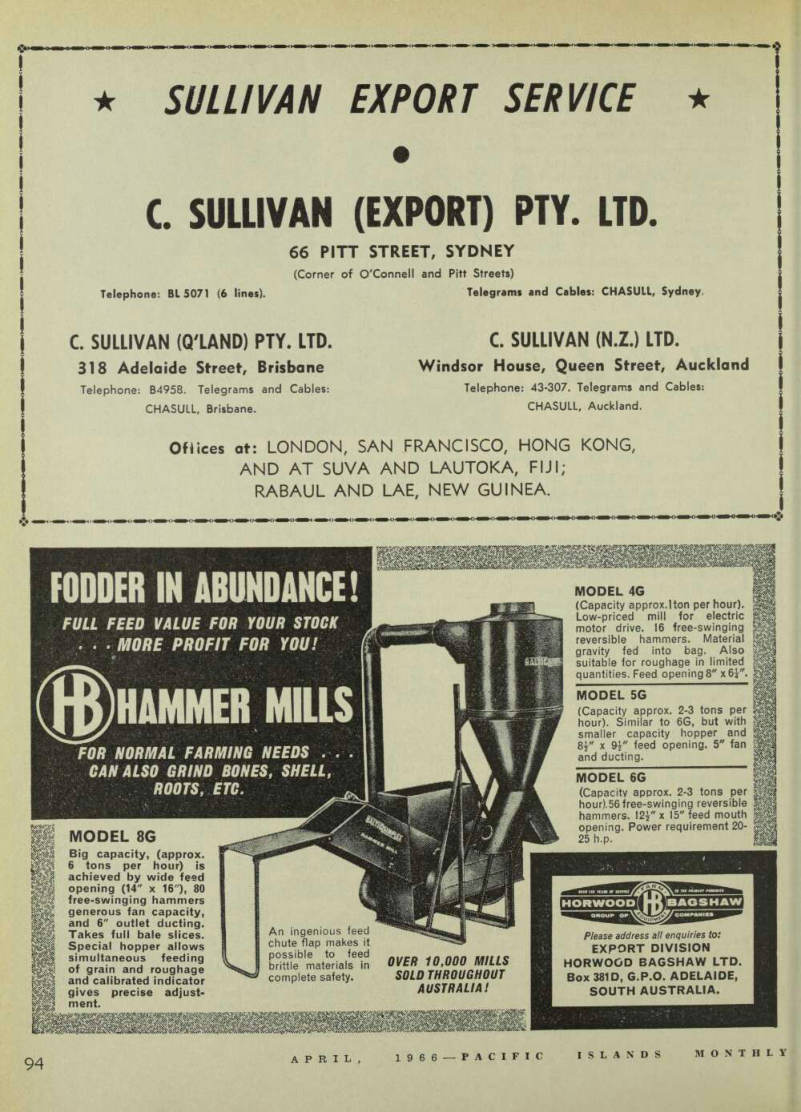 96
96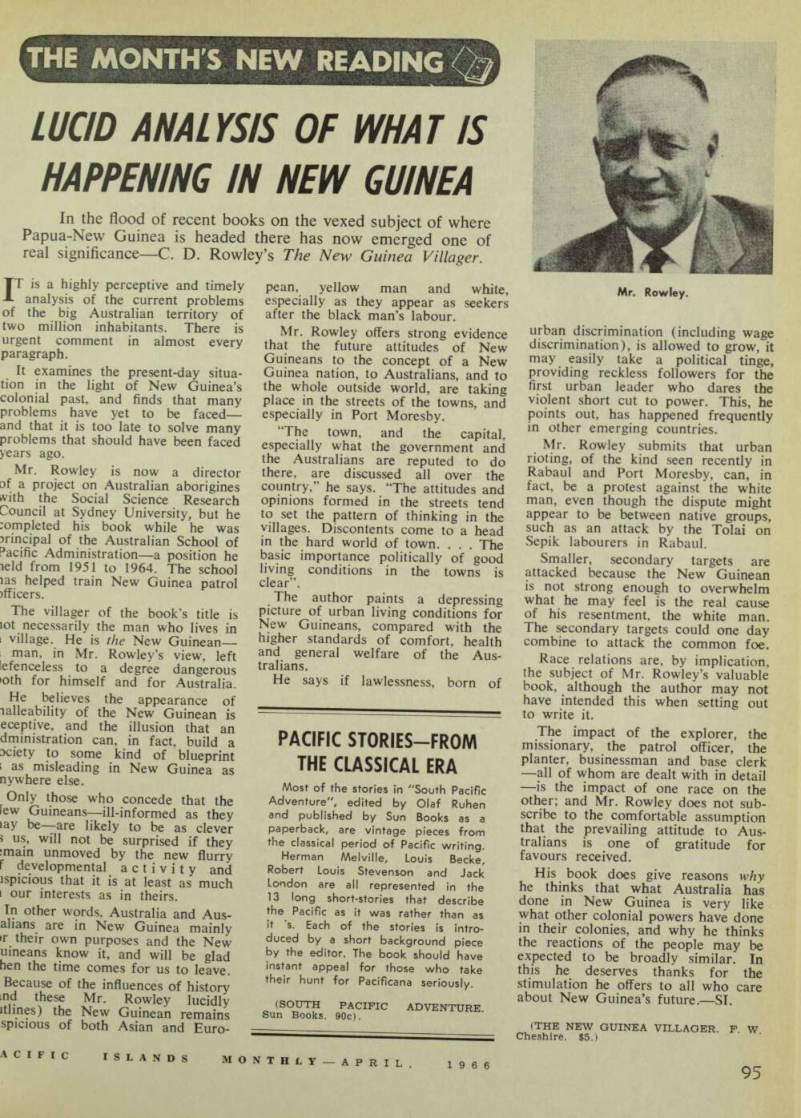 97
97 98
98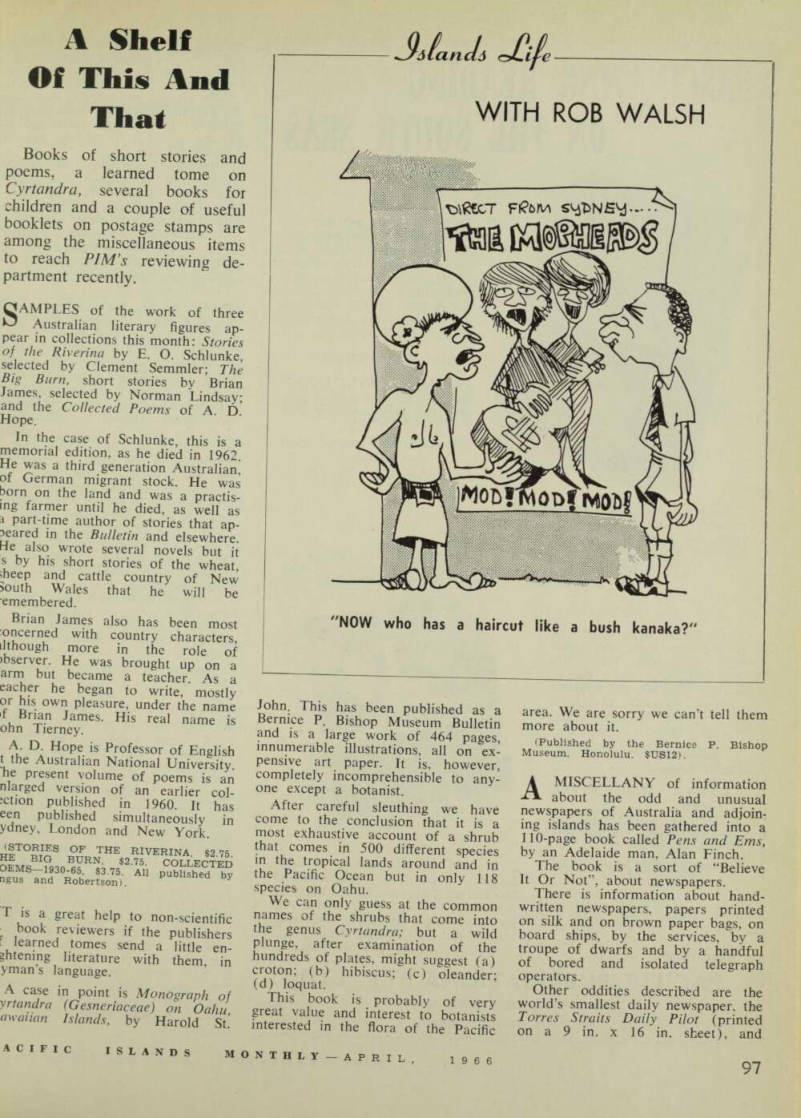 99
99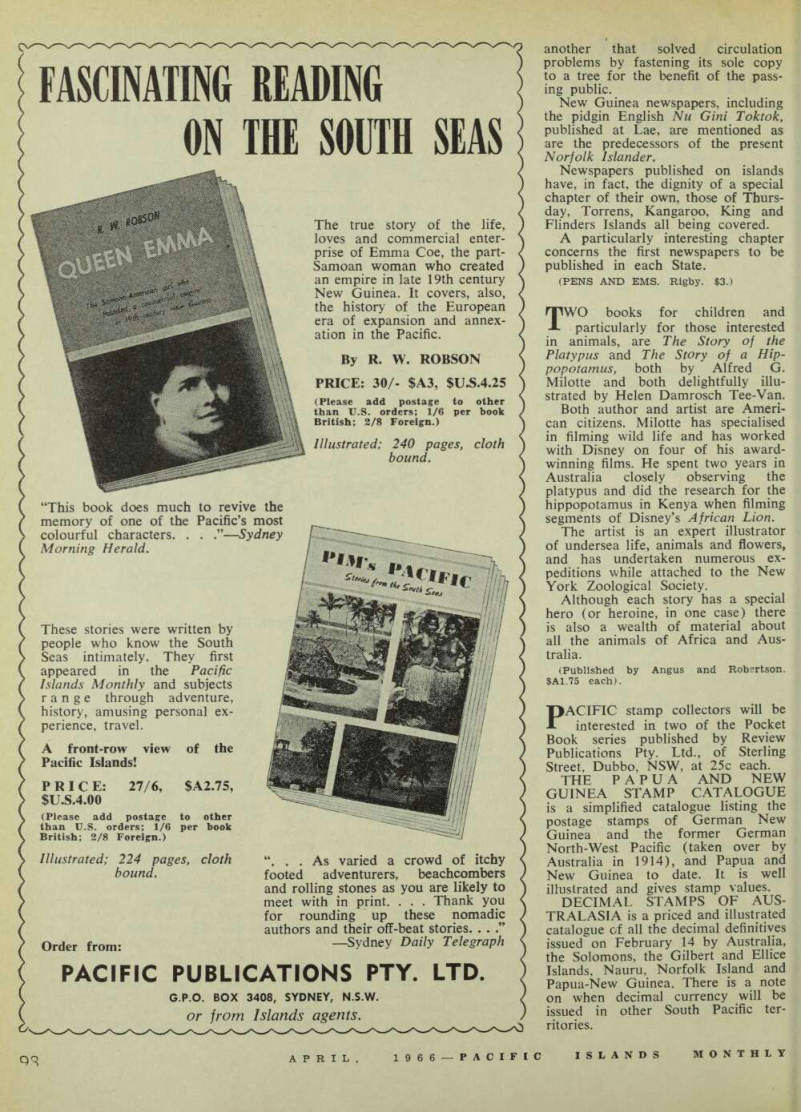 100
100 101
101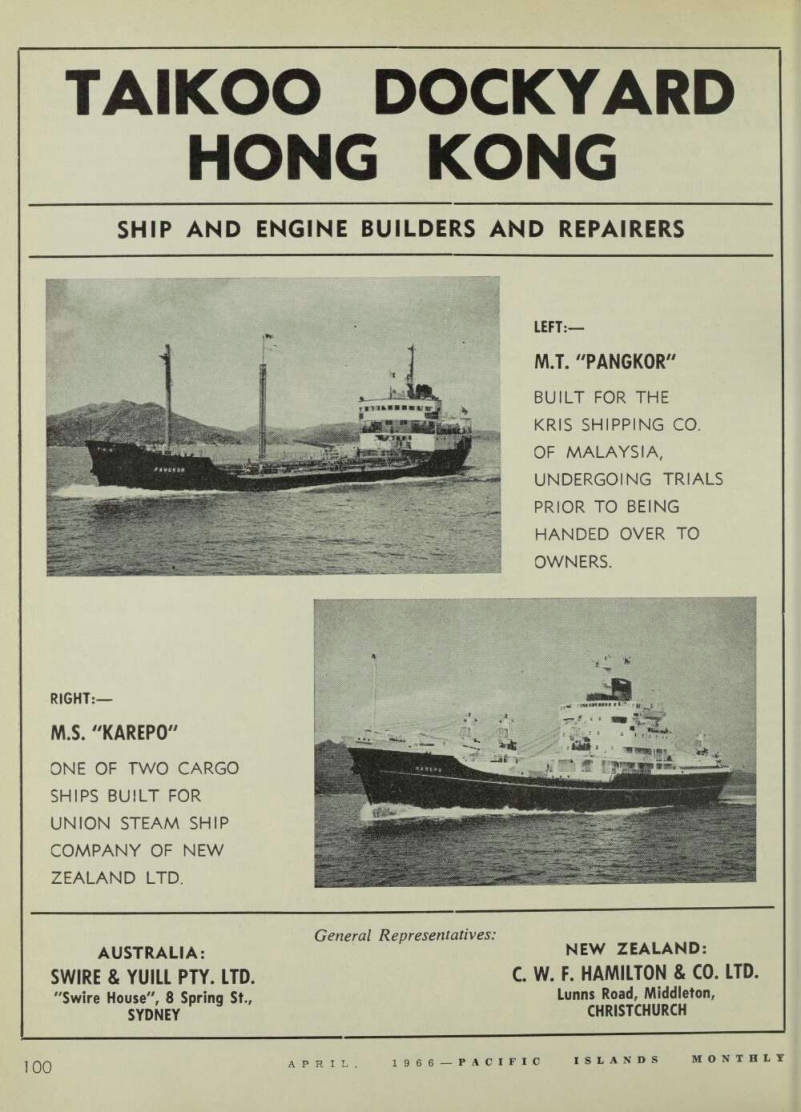 102
102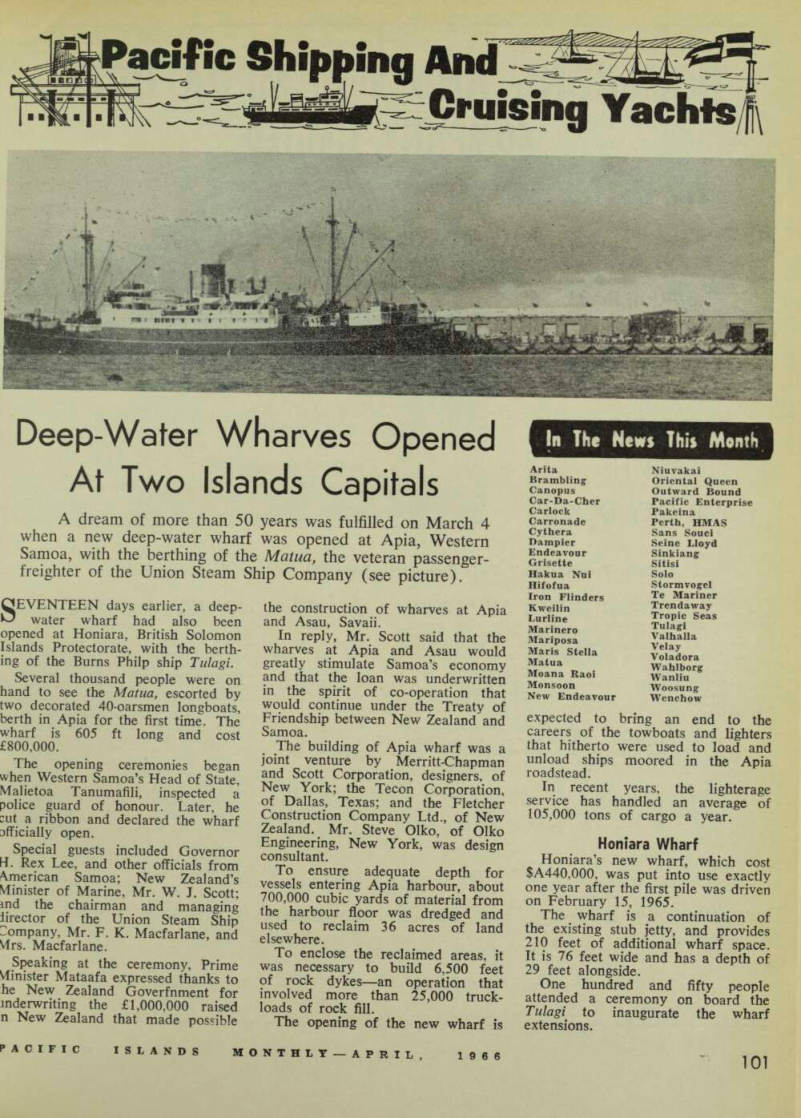 103
103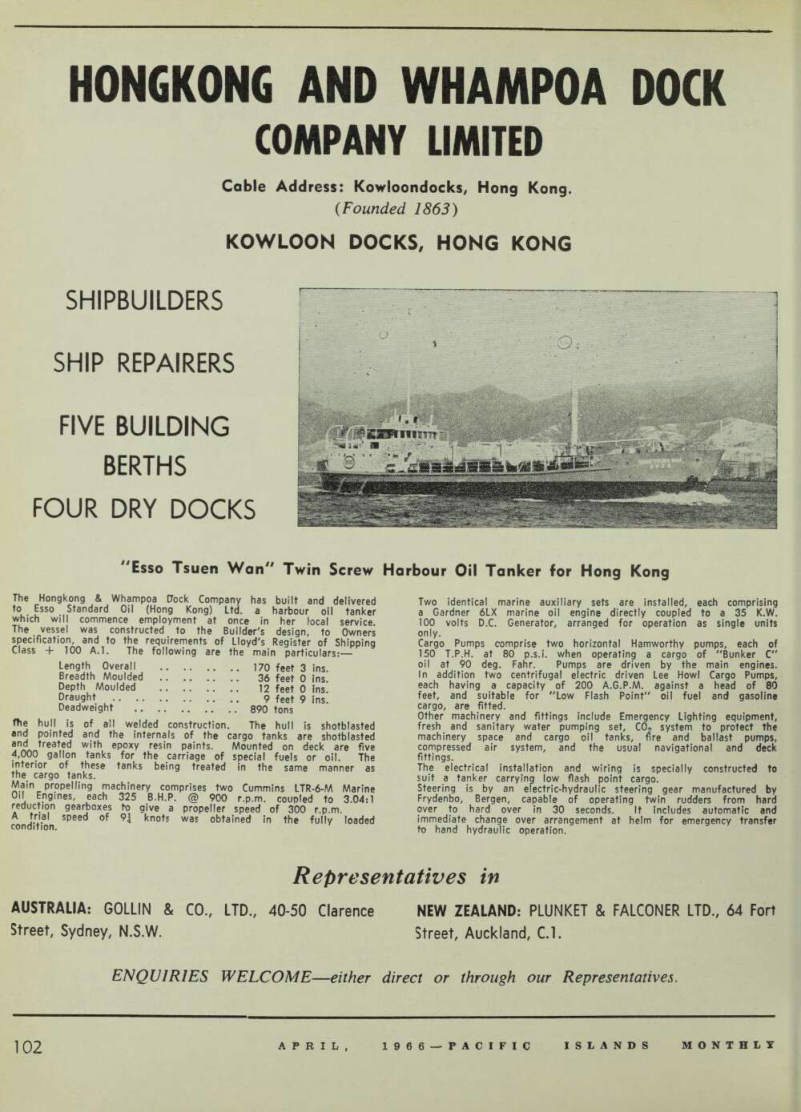 104
104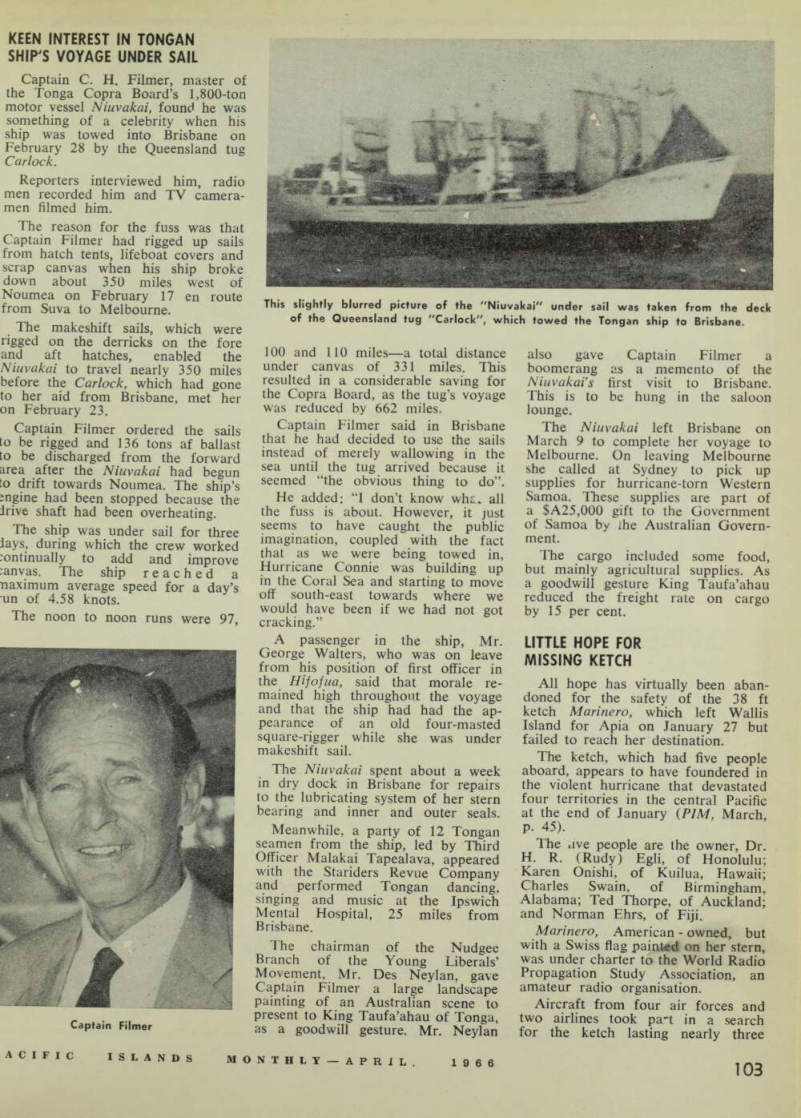 105
105 106
106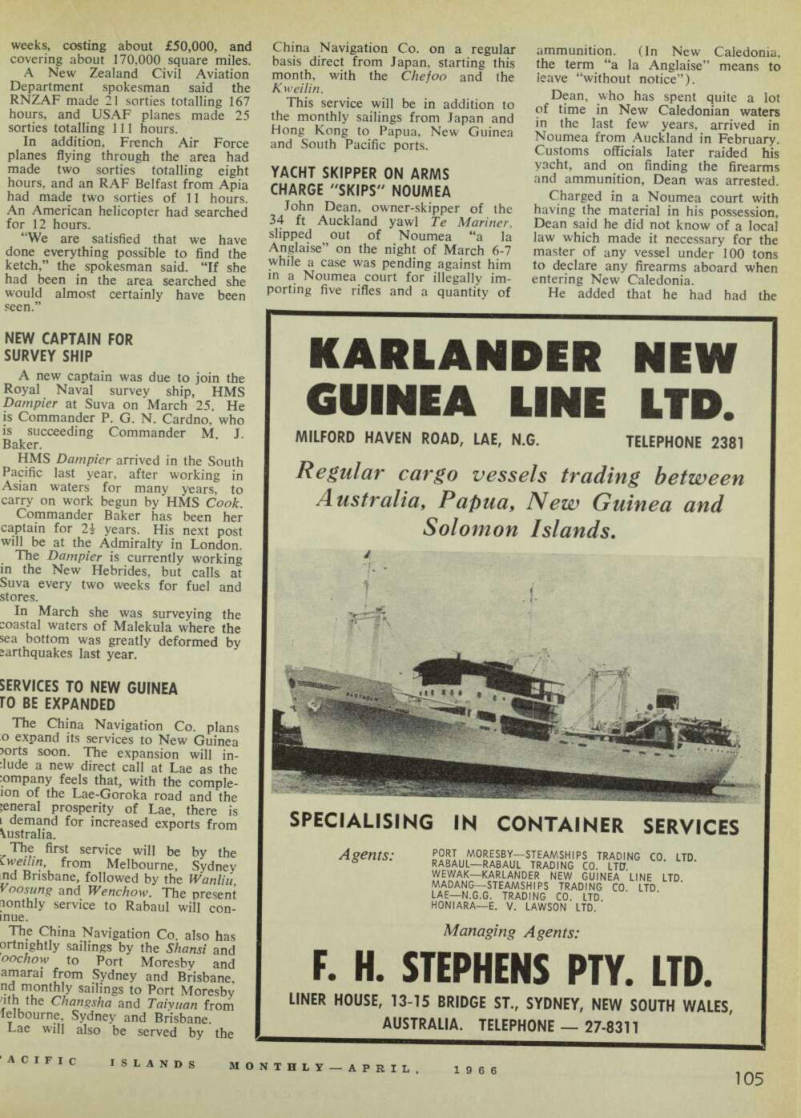 107
107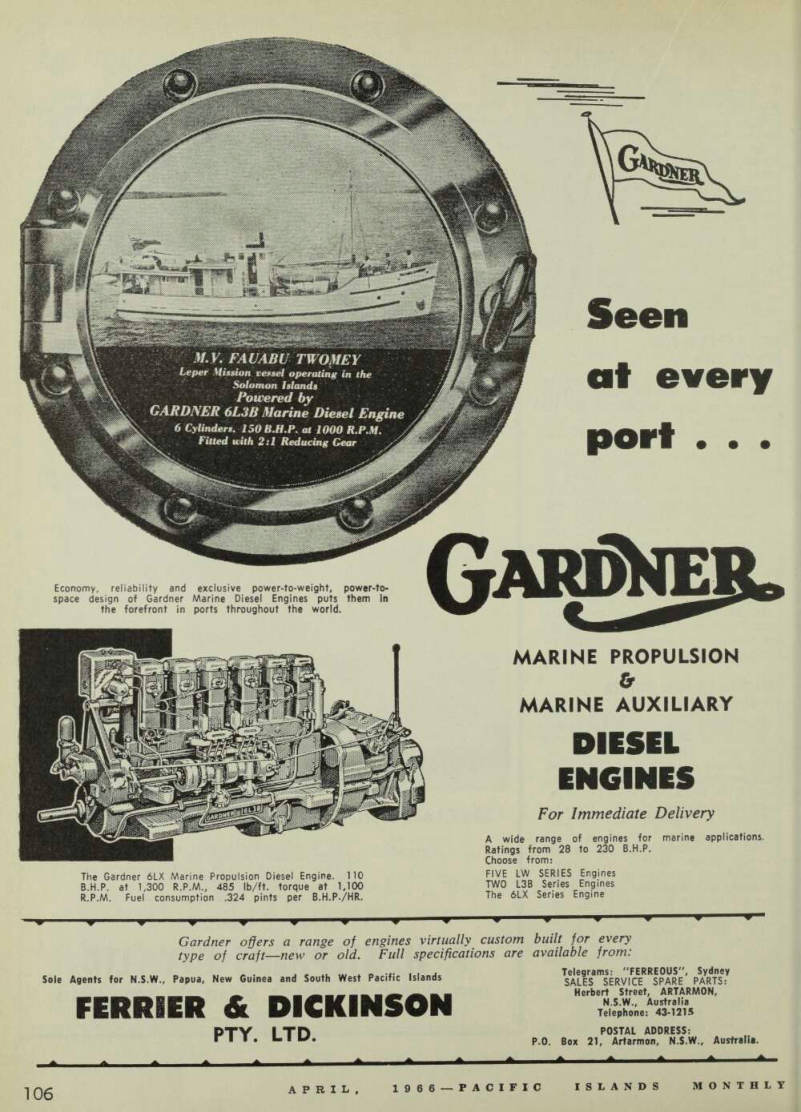 108
108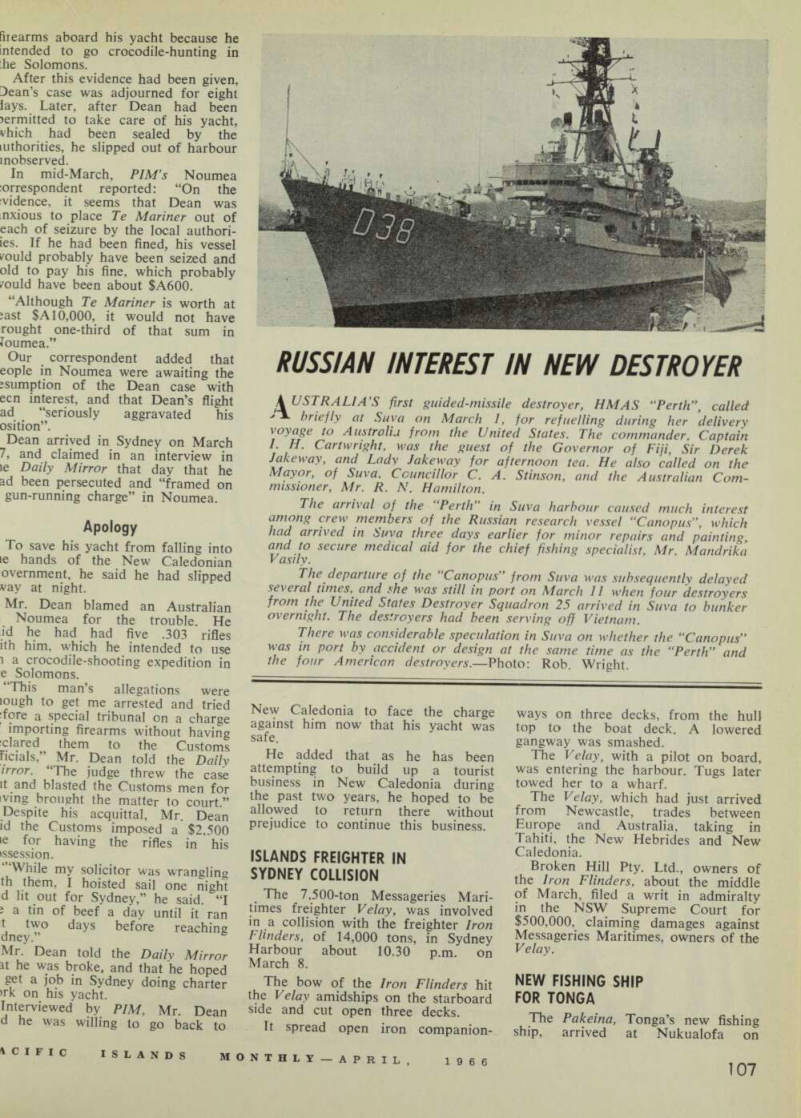 109
109 110
110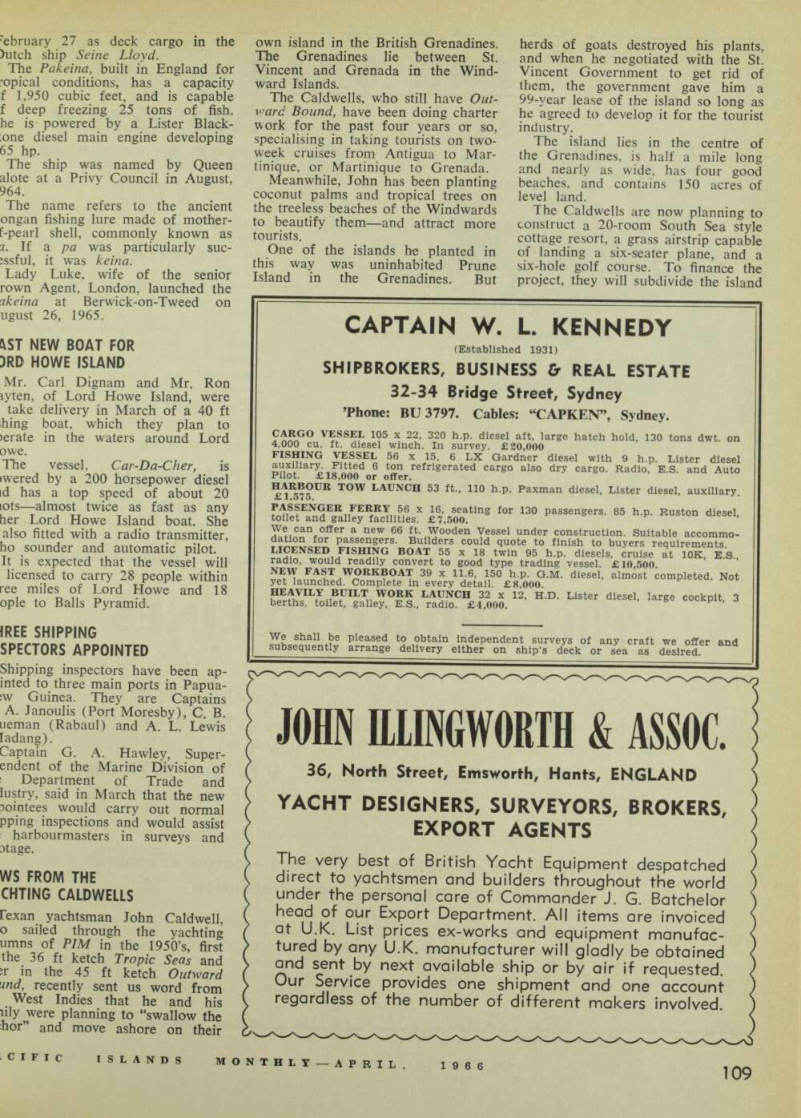 111
111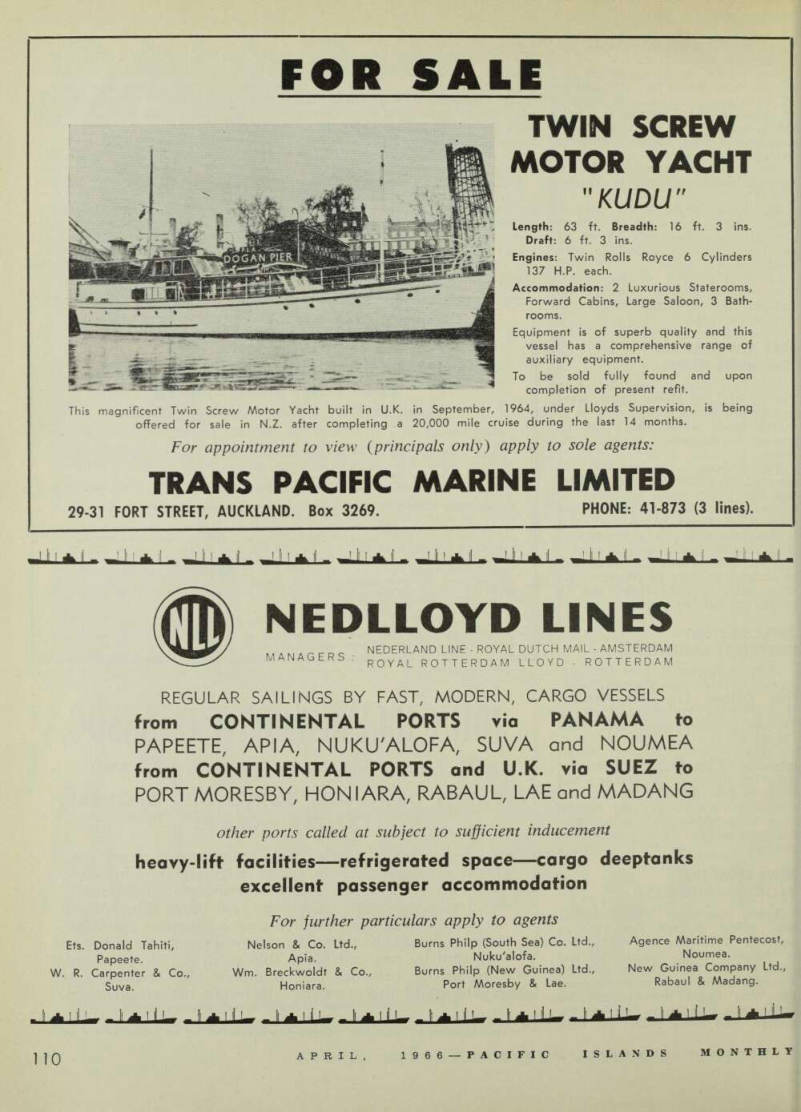 112
112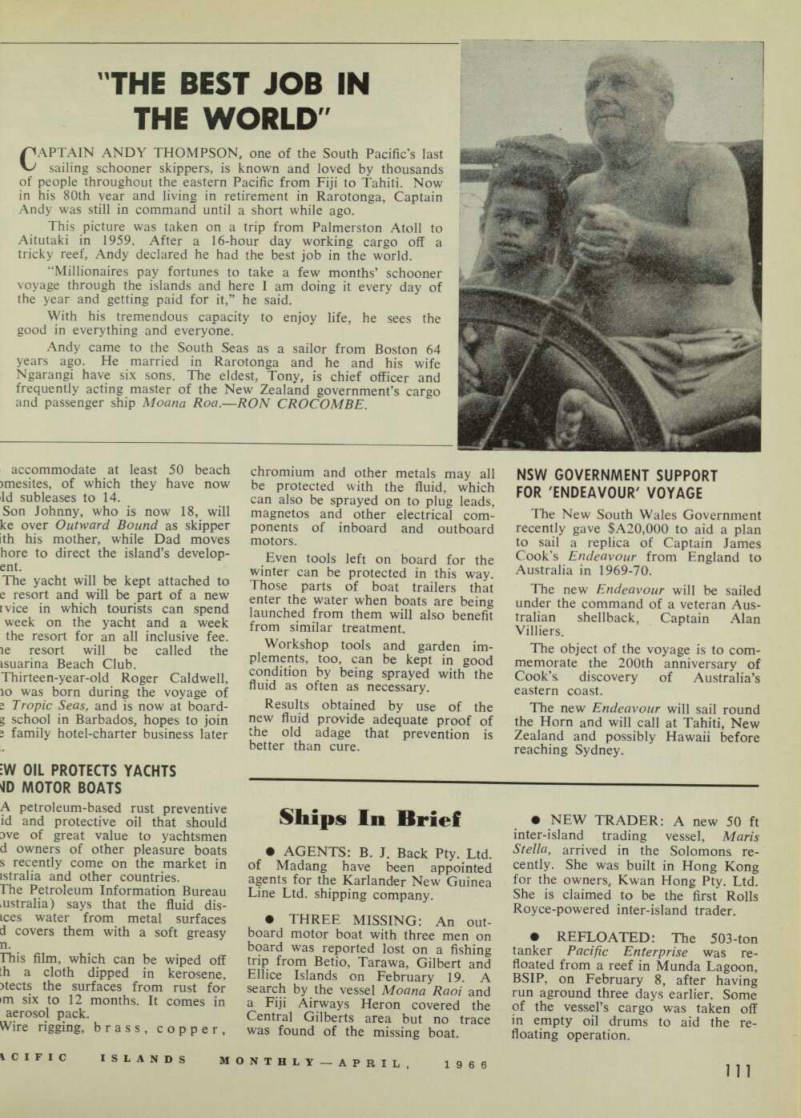 113
113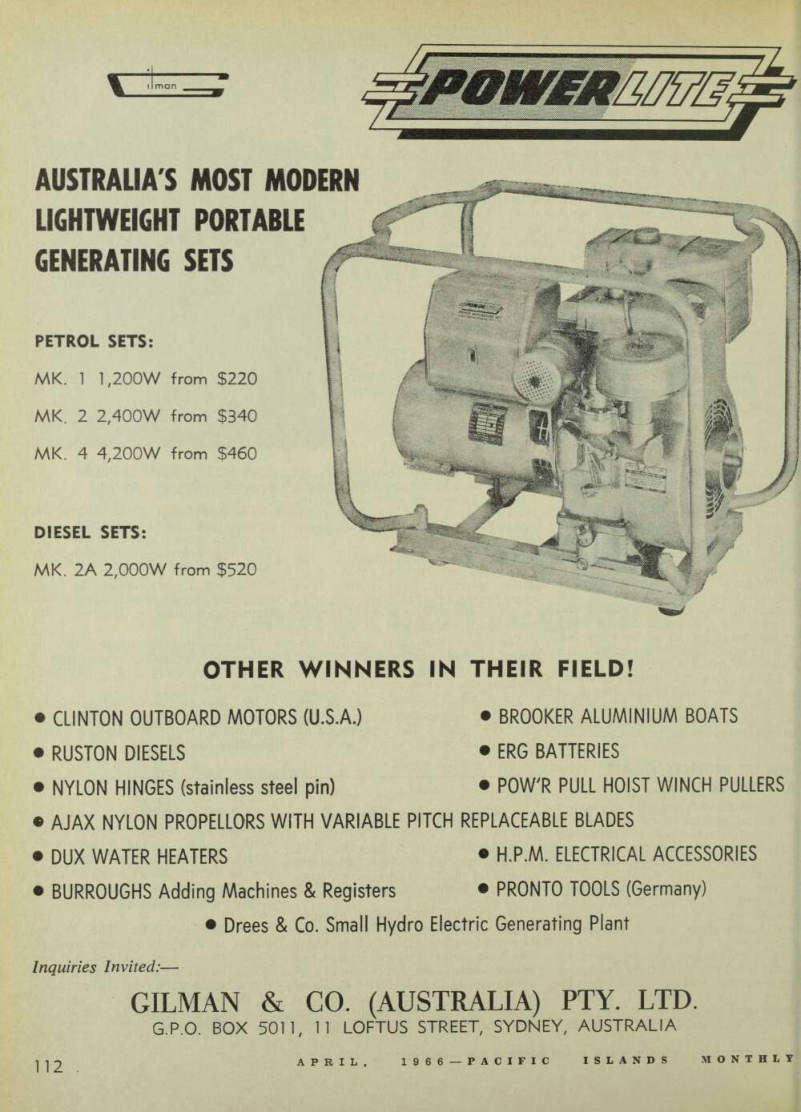 114
114 115
115 116
116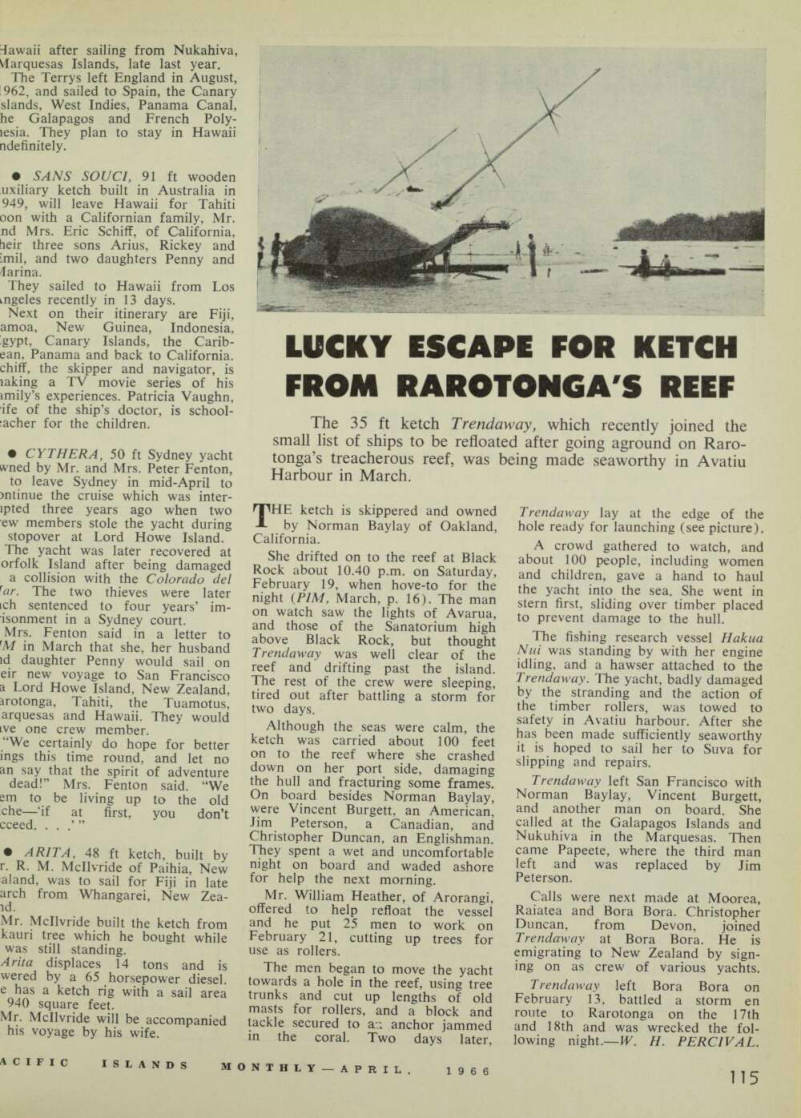 117
117 118
118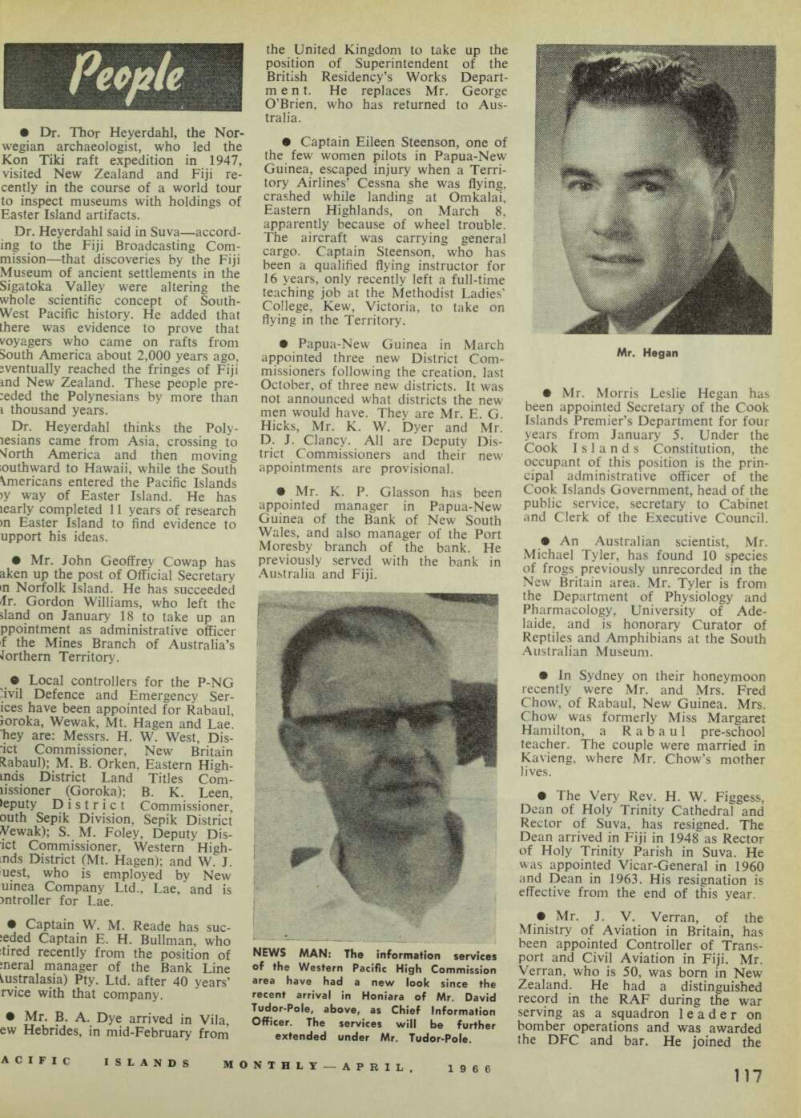 119
119 120
120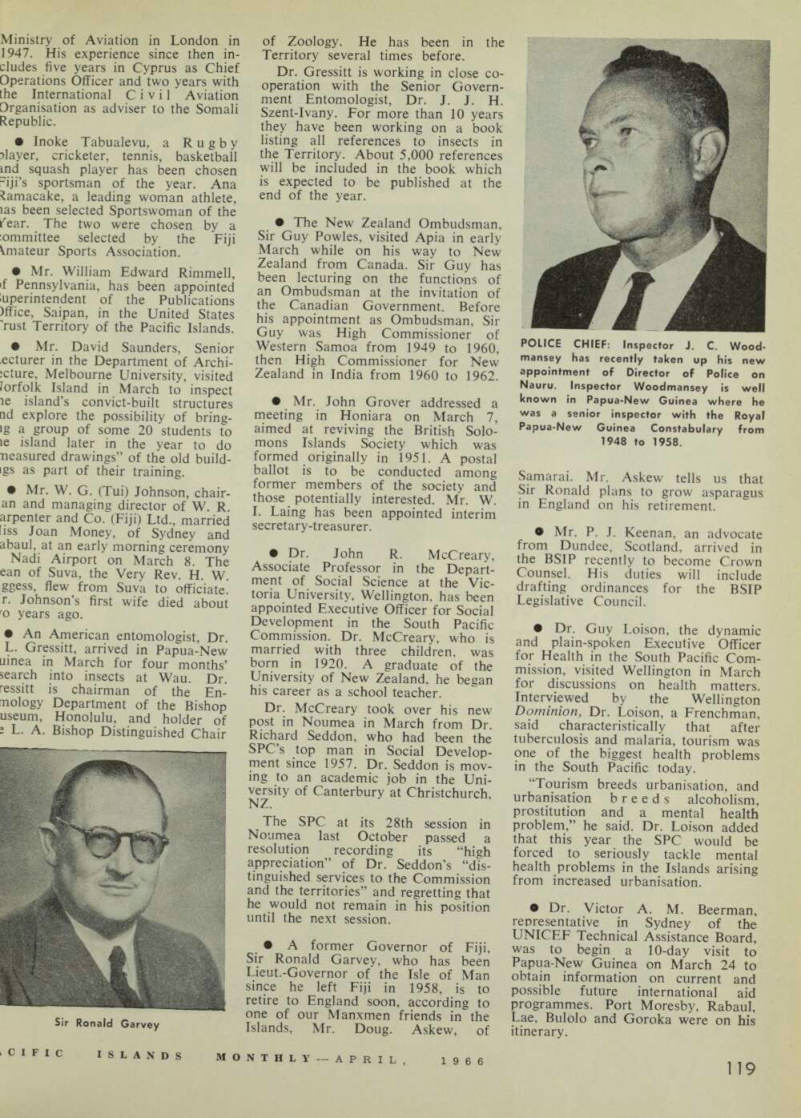 121
121 122
122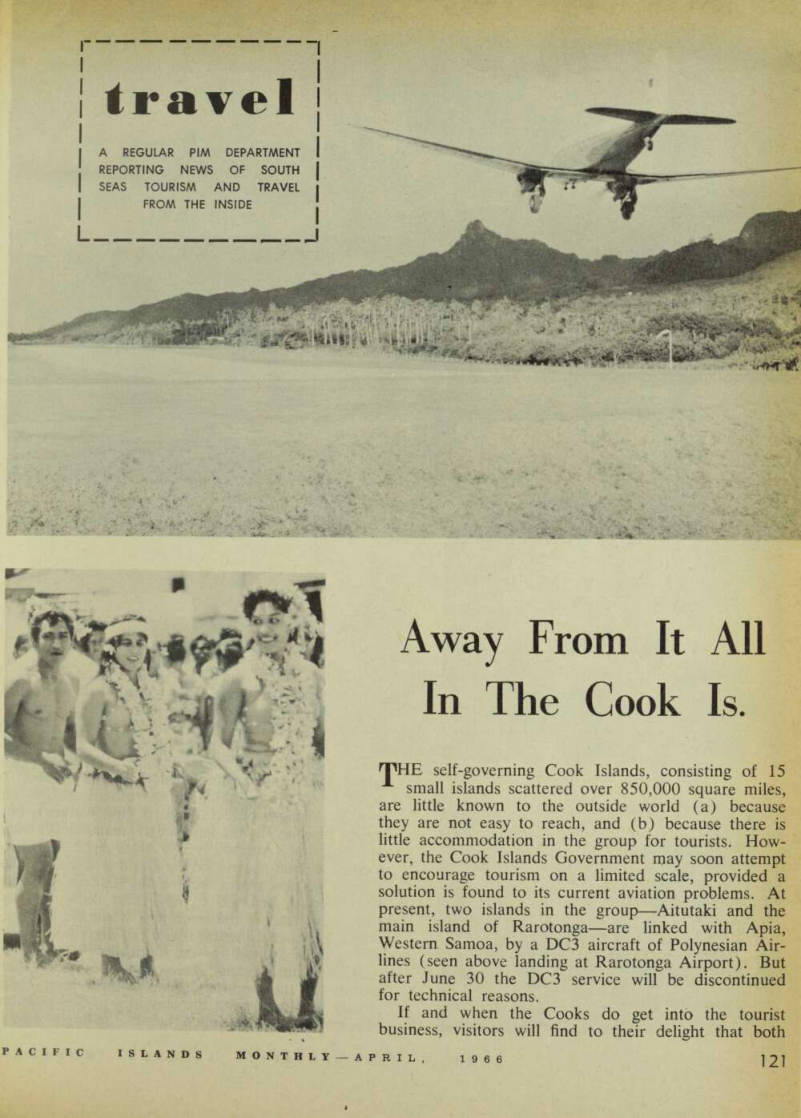 123
123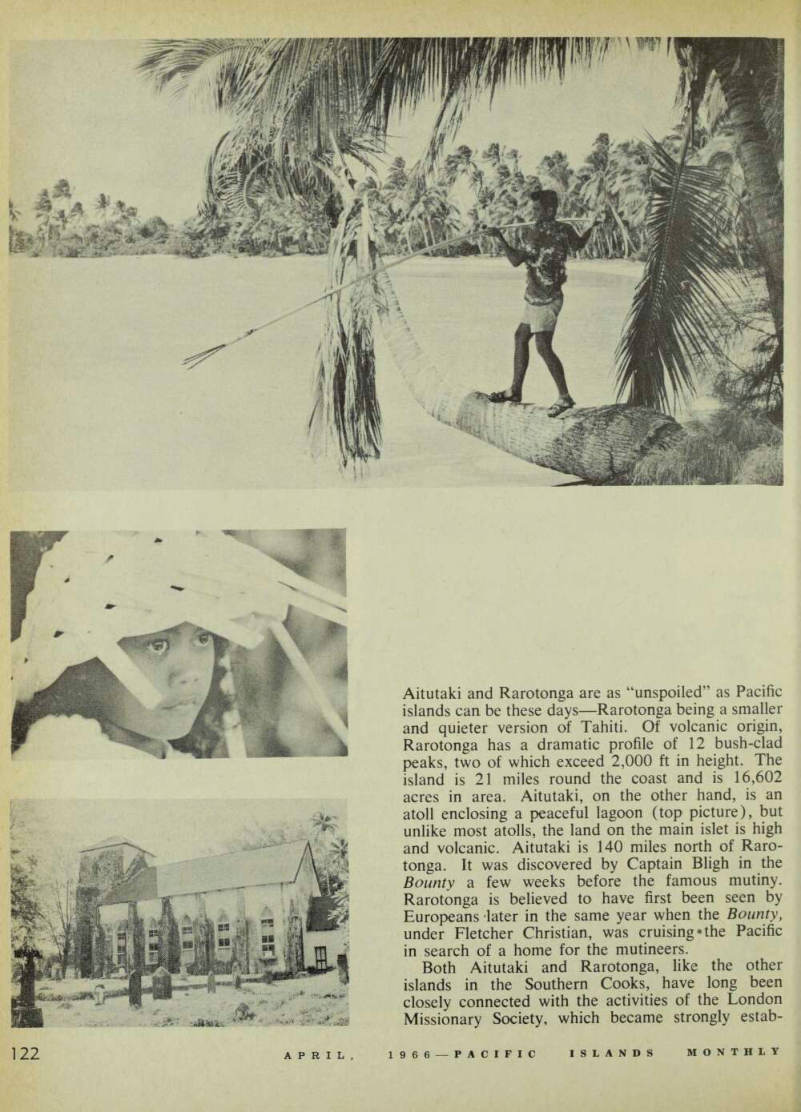 124
124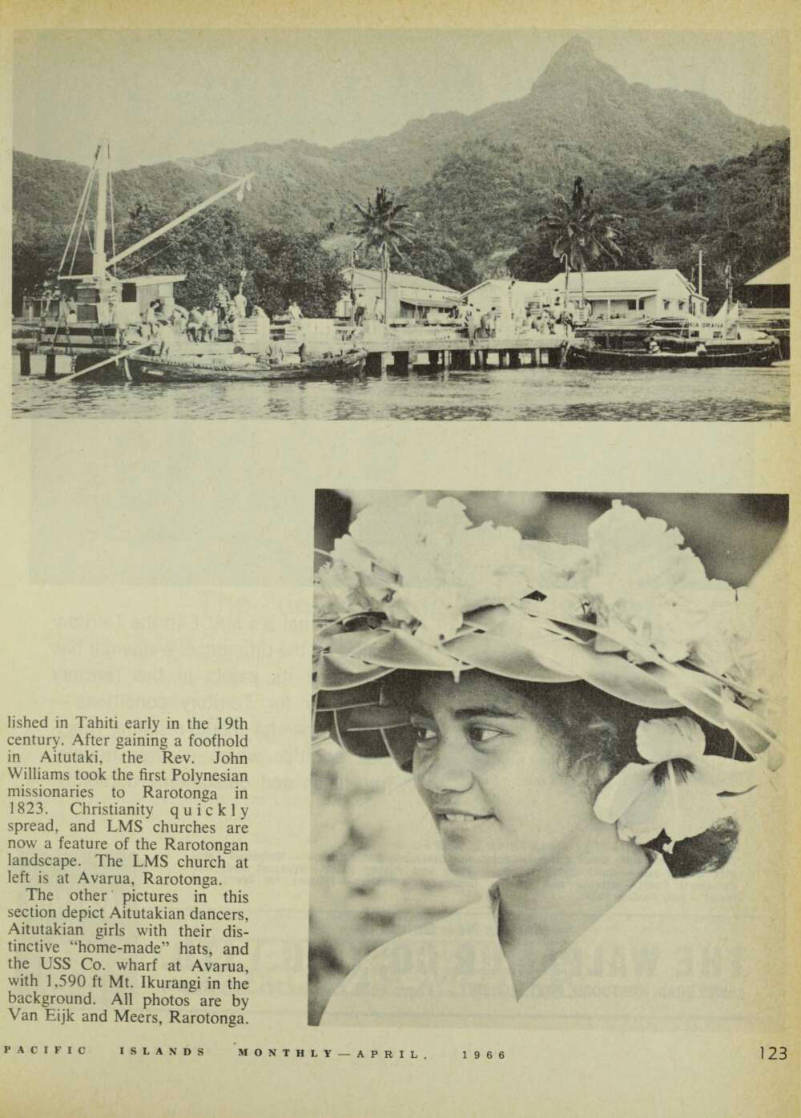 125
125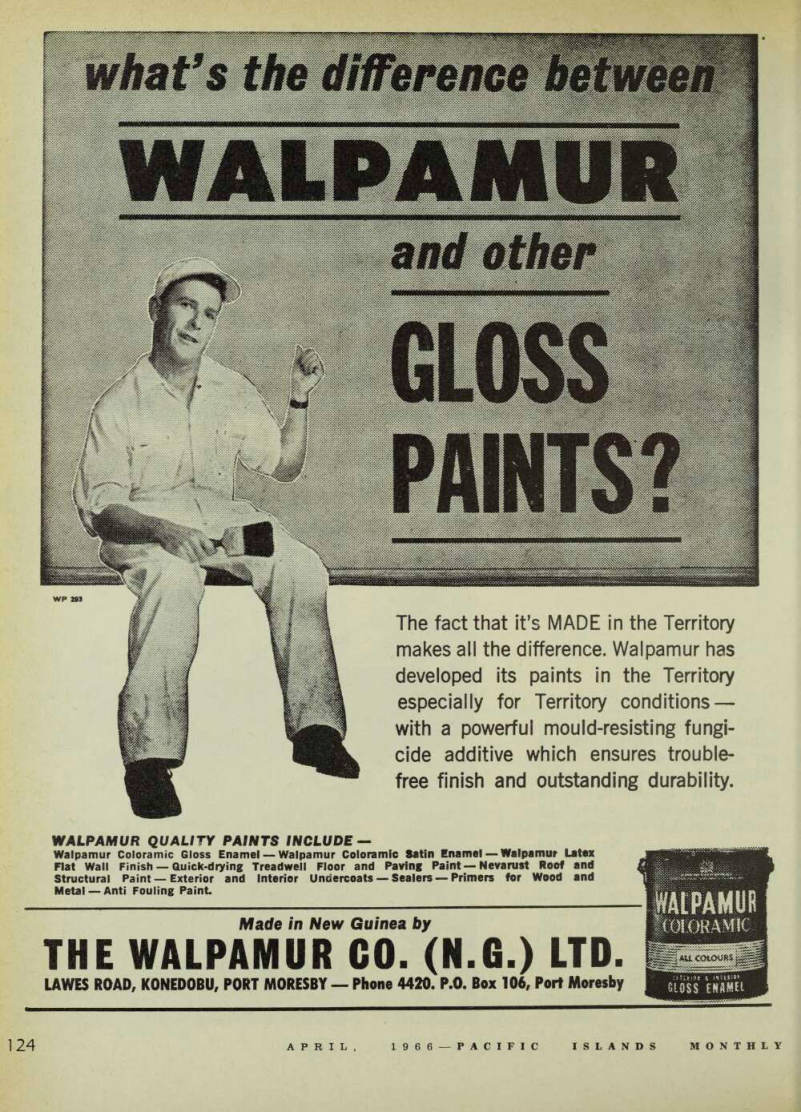 126
126 127
127 128
128 129
129 130
130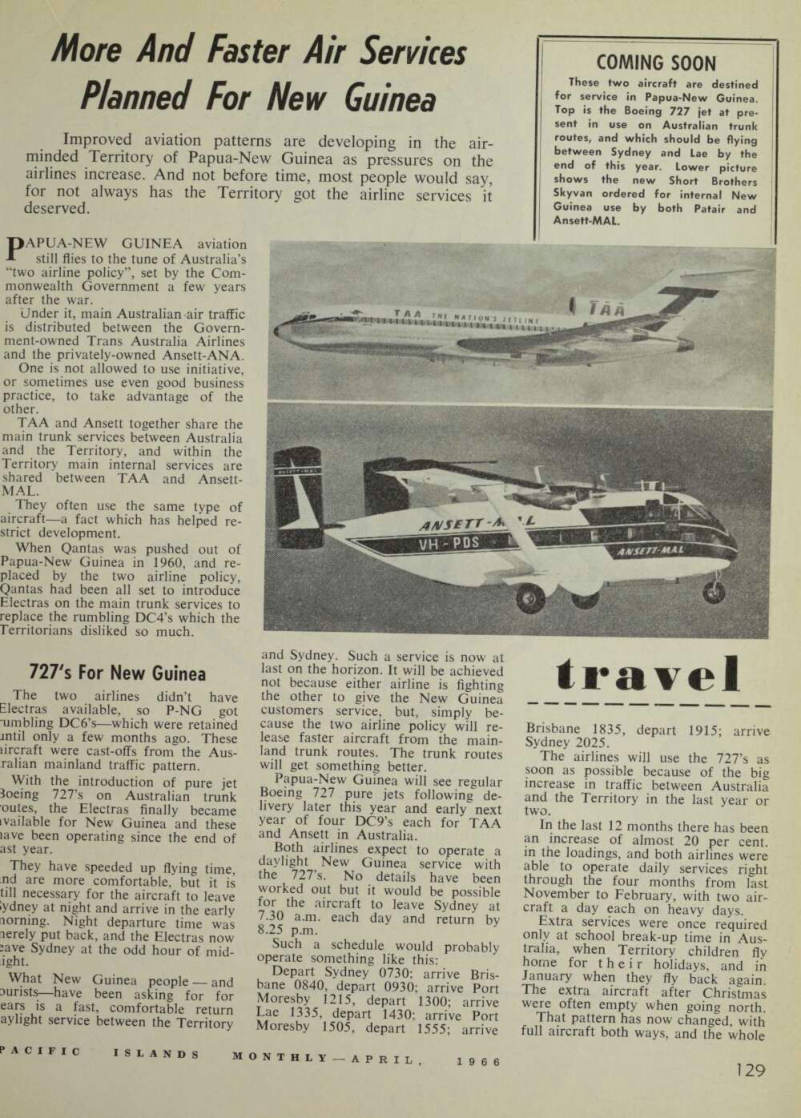 131
131 132
132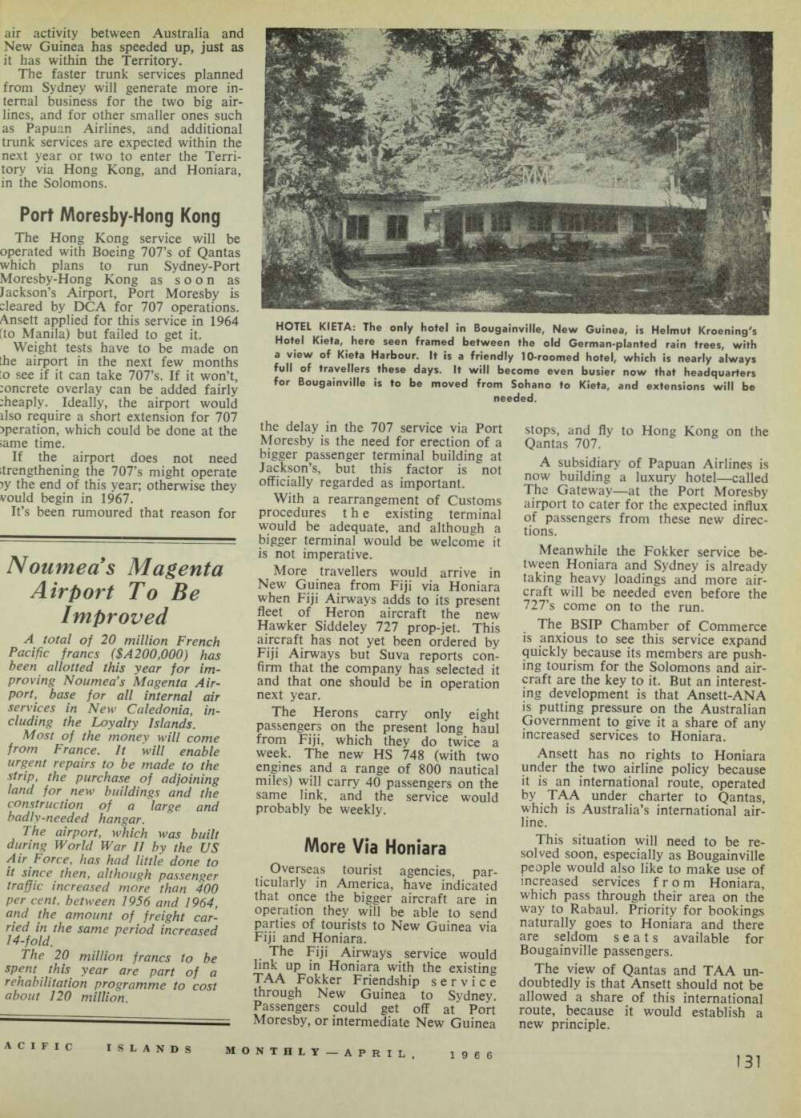 133
133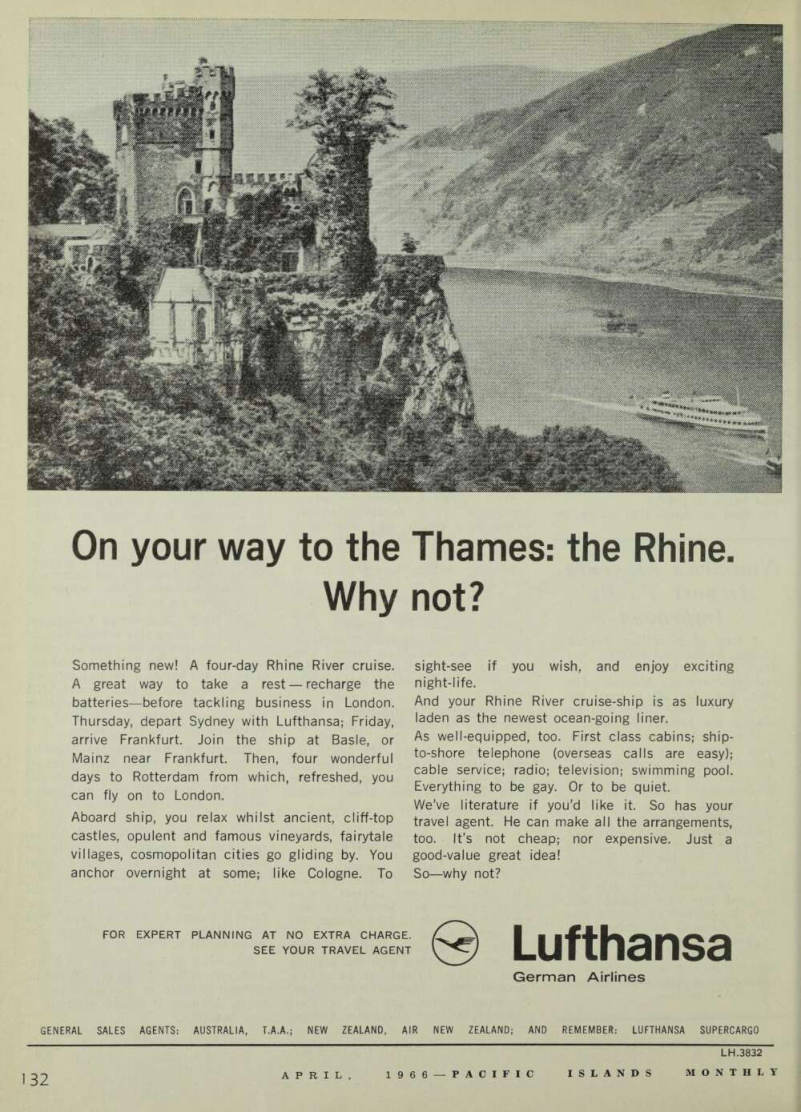 134
134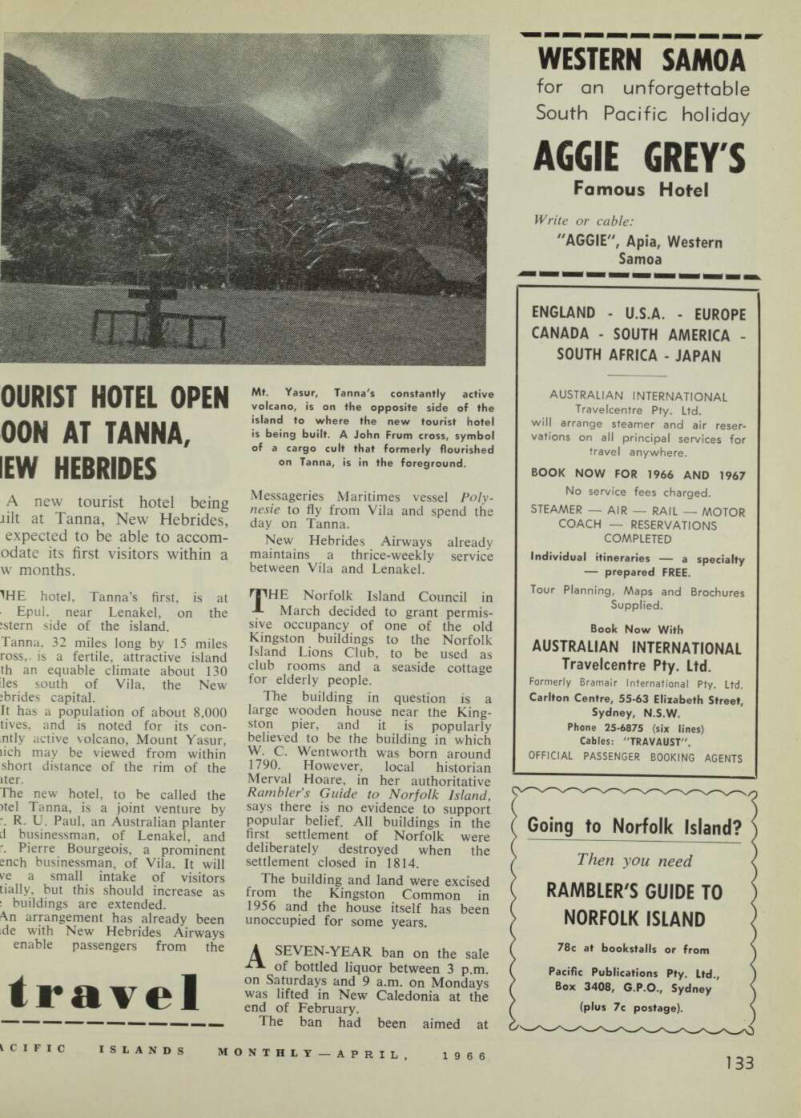 135
135 136
136 137
137 138
138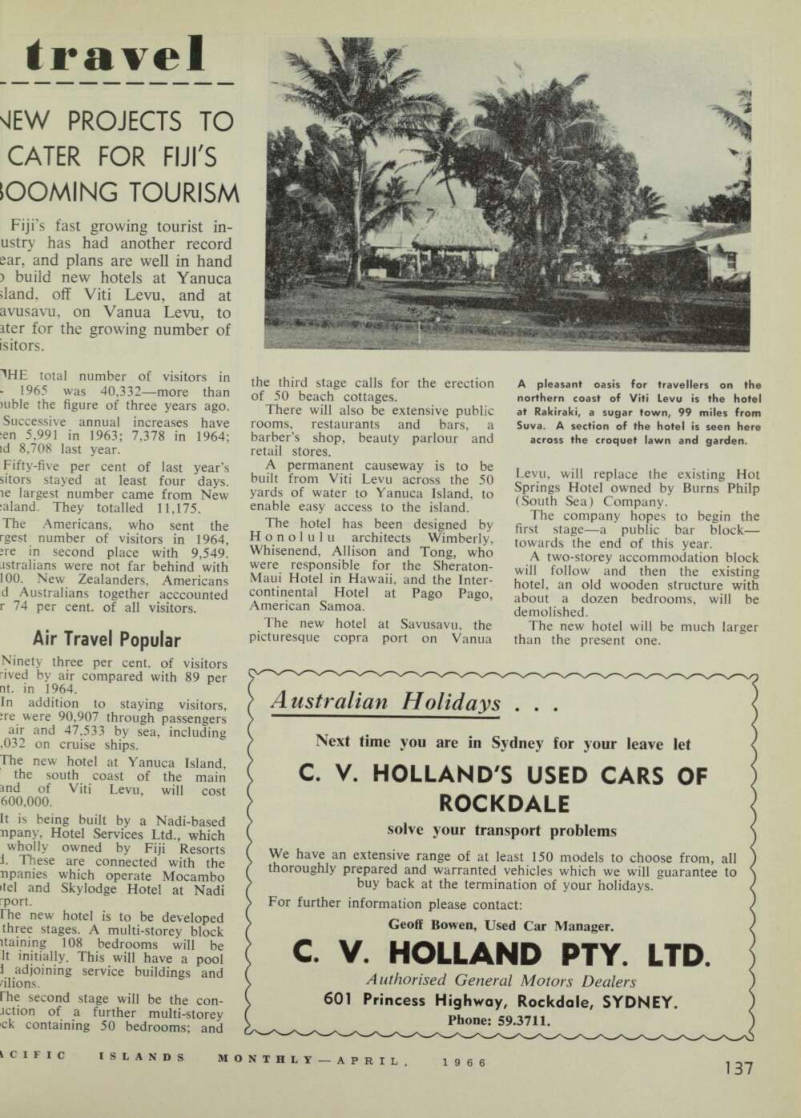 139
139 140
140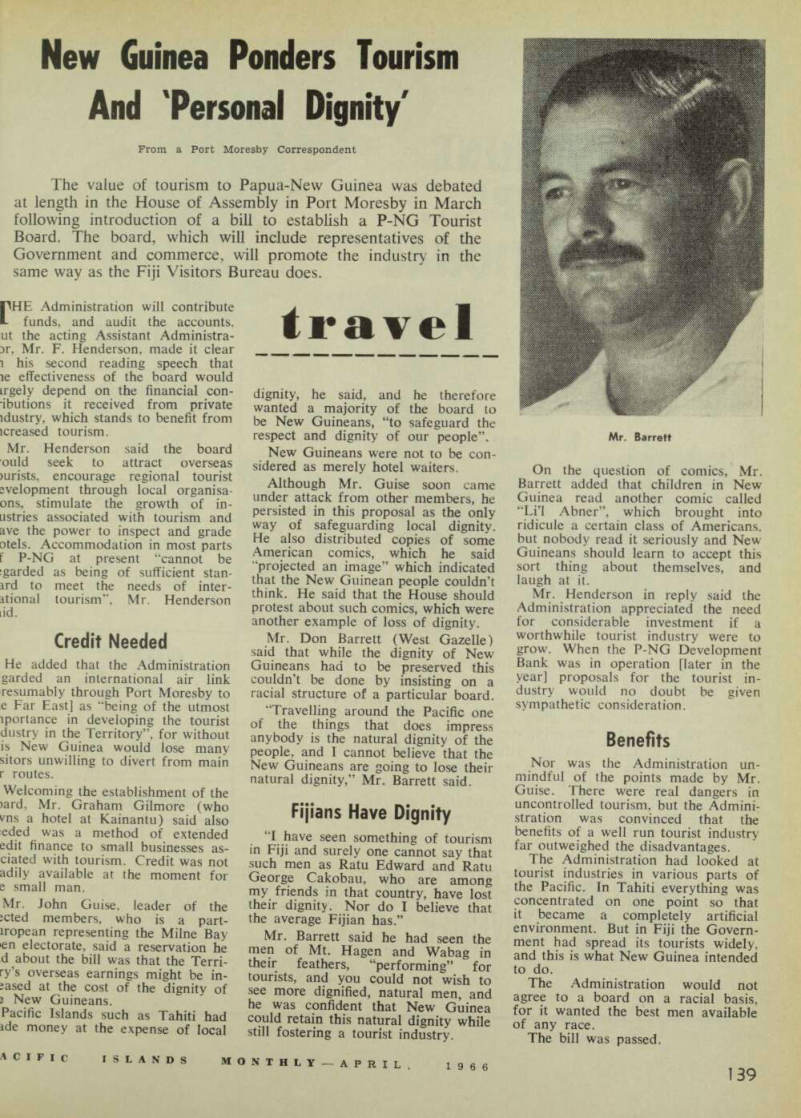 141
141 142
142 143
143 144
144 145
145 146
146 147
147 148
148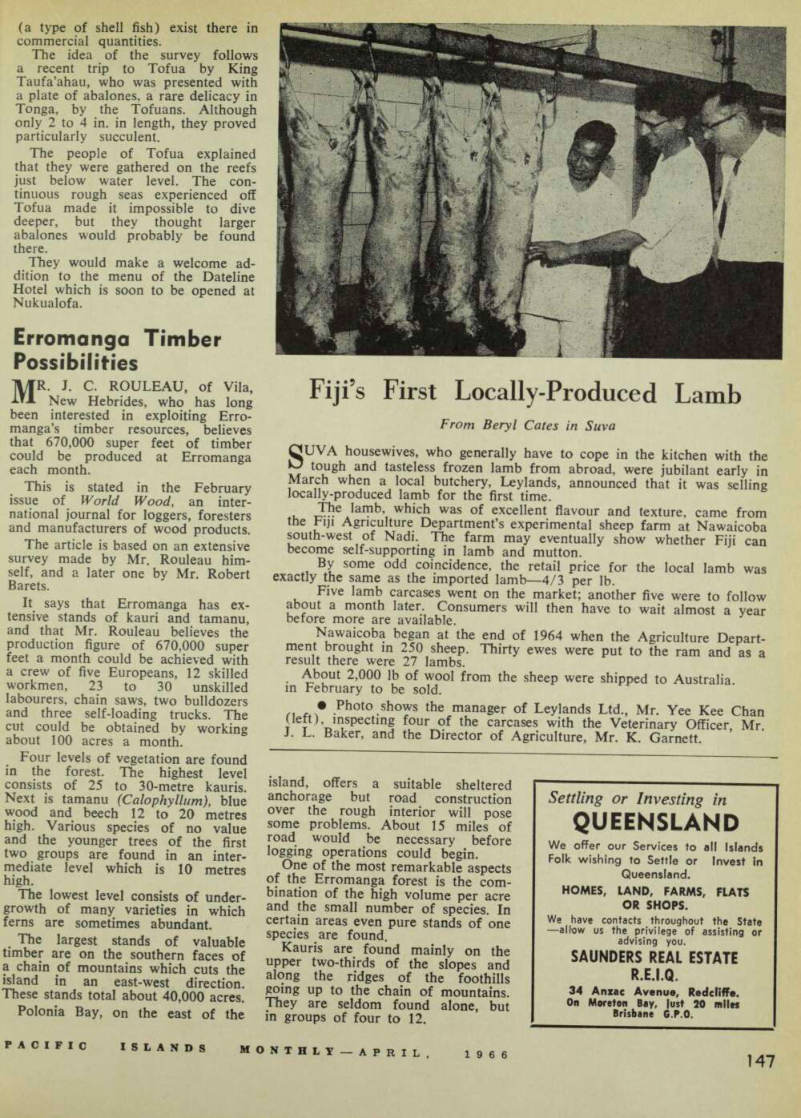 149
149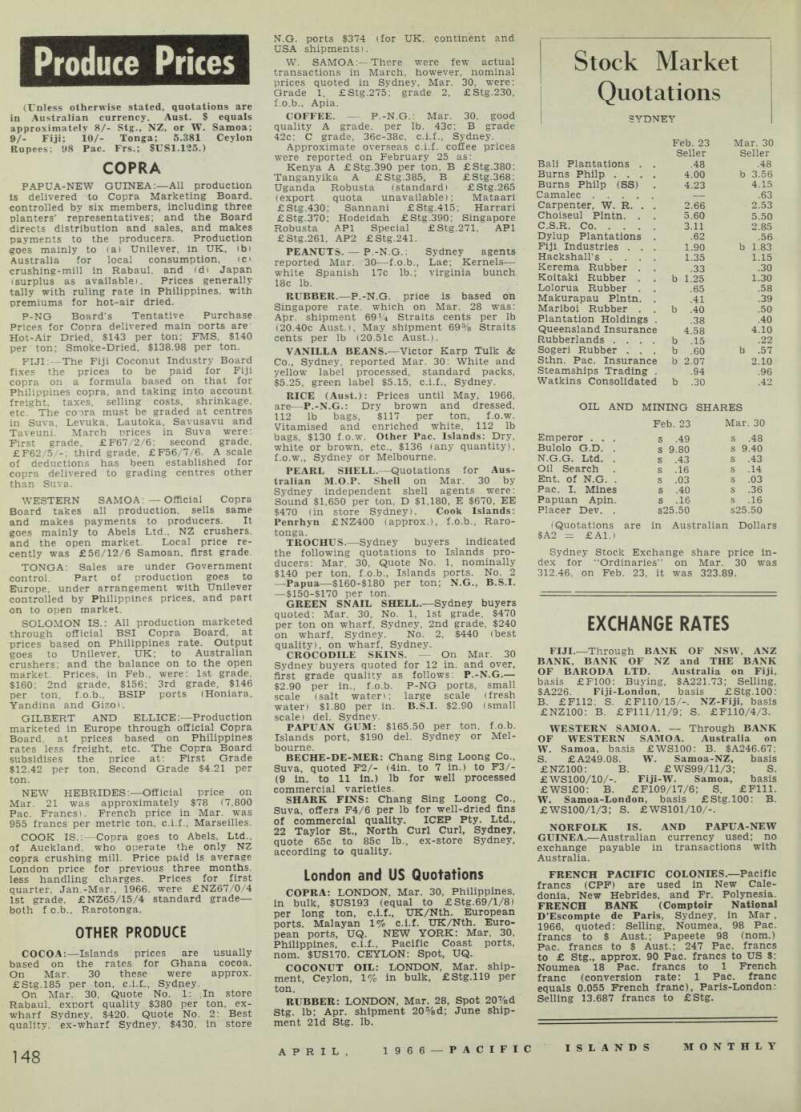 150
150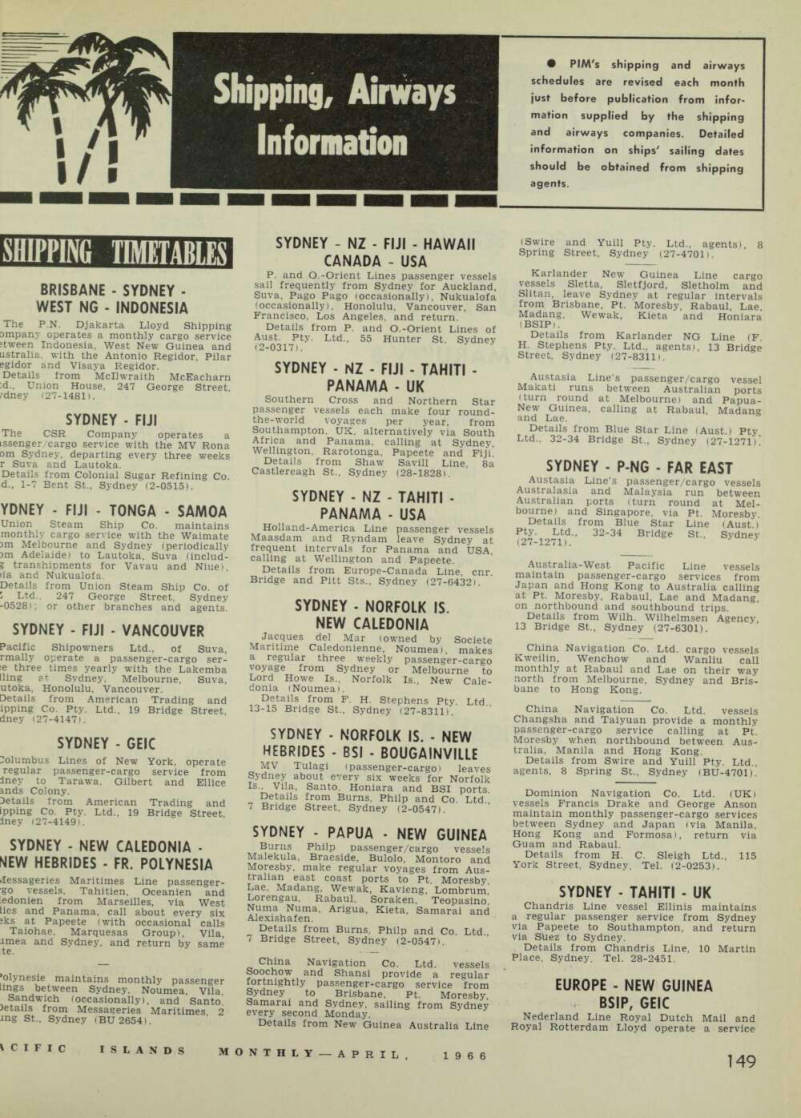 151
151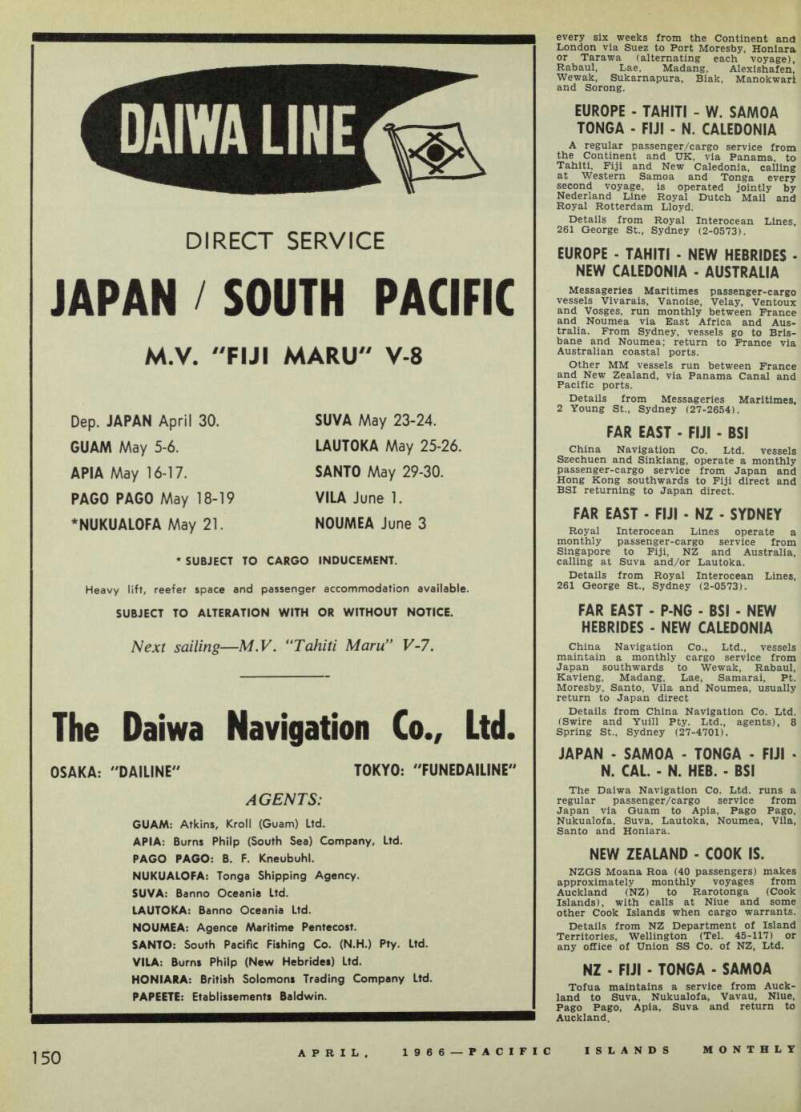 152
152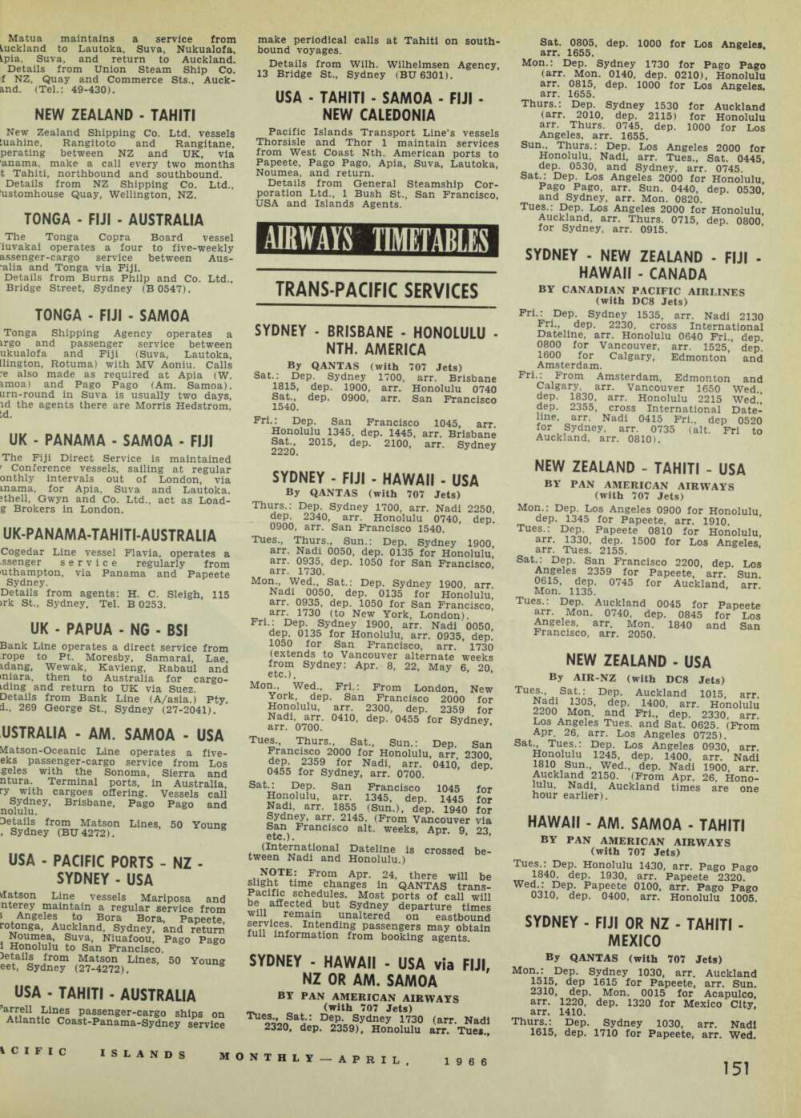 153
153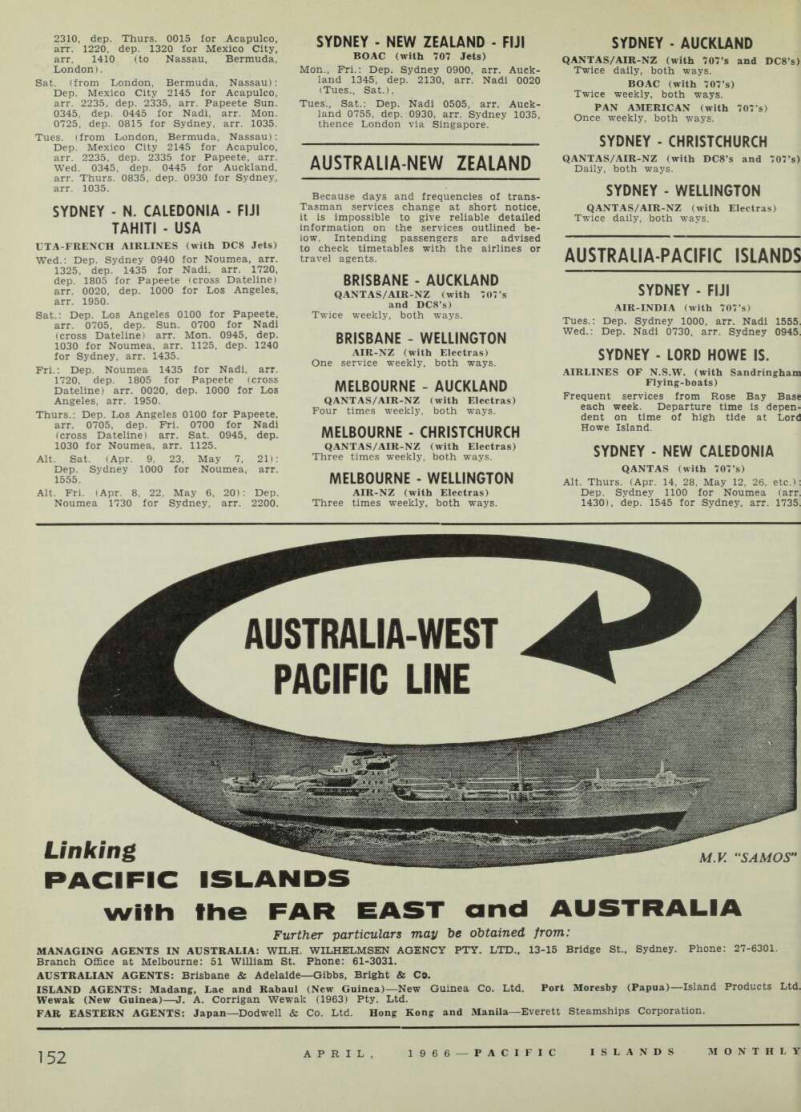 154
154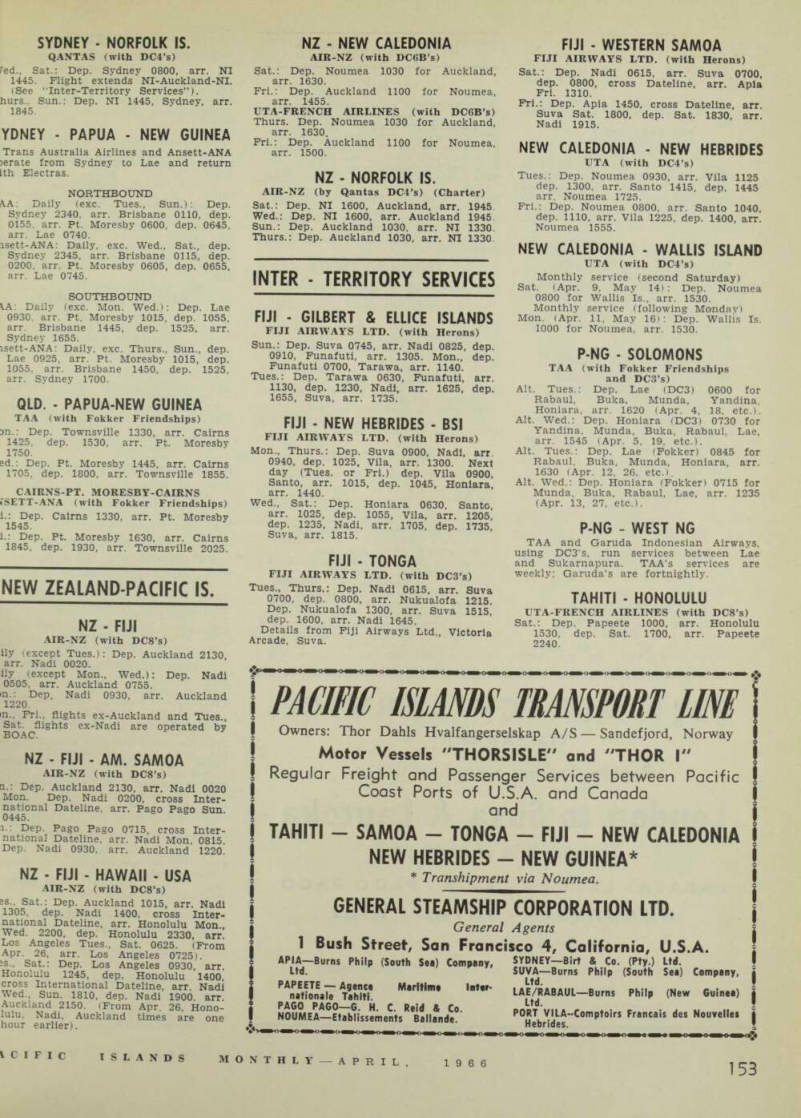 155
155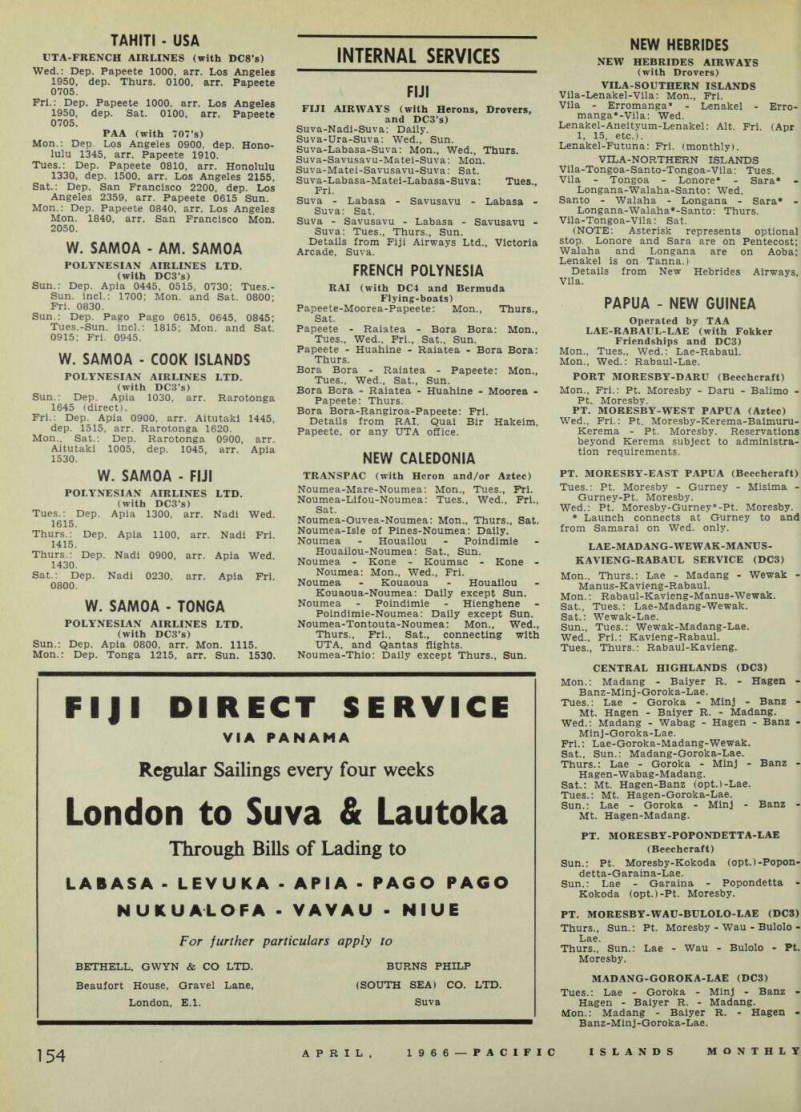 156
156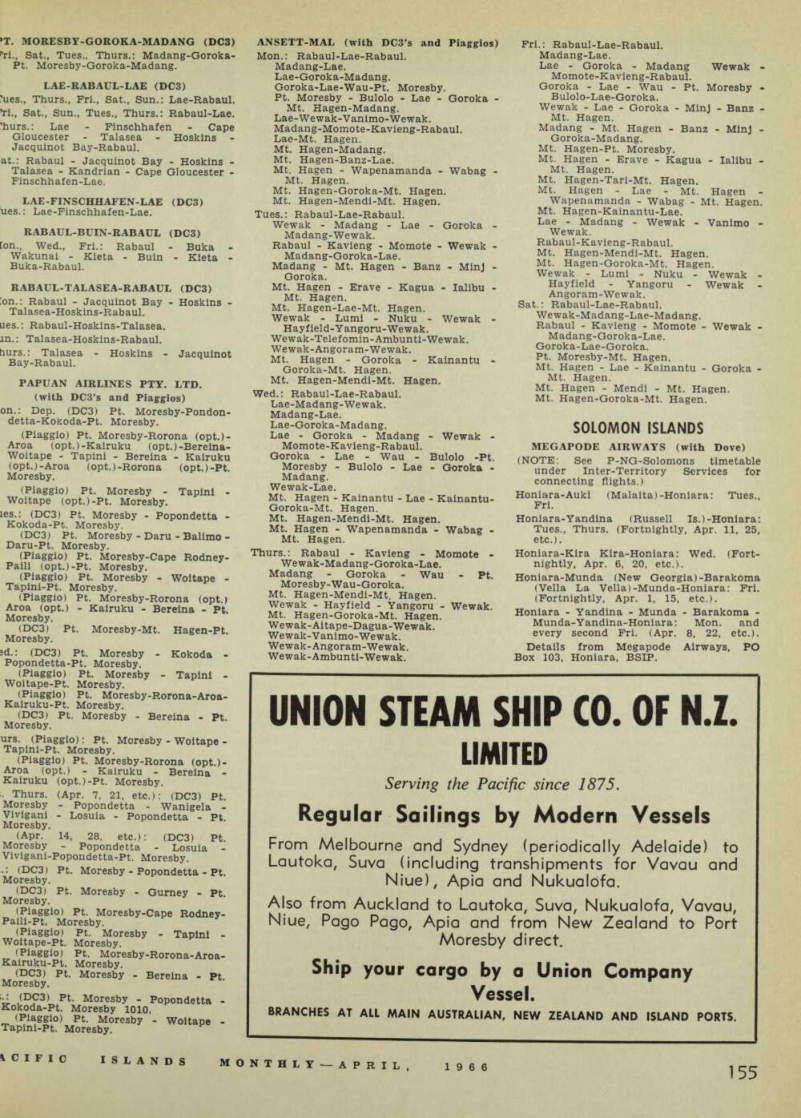 157
157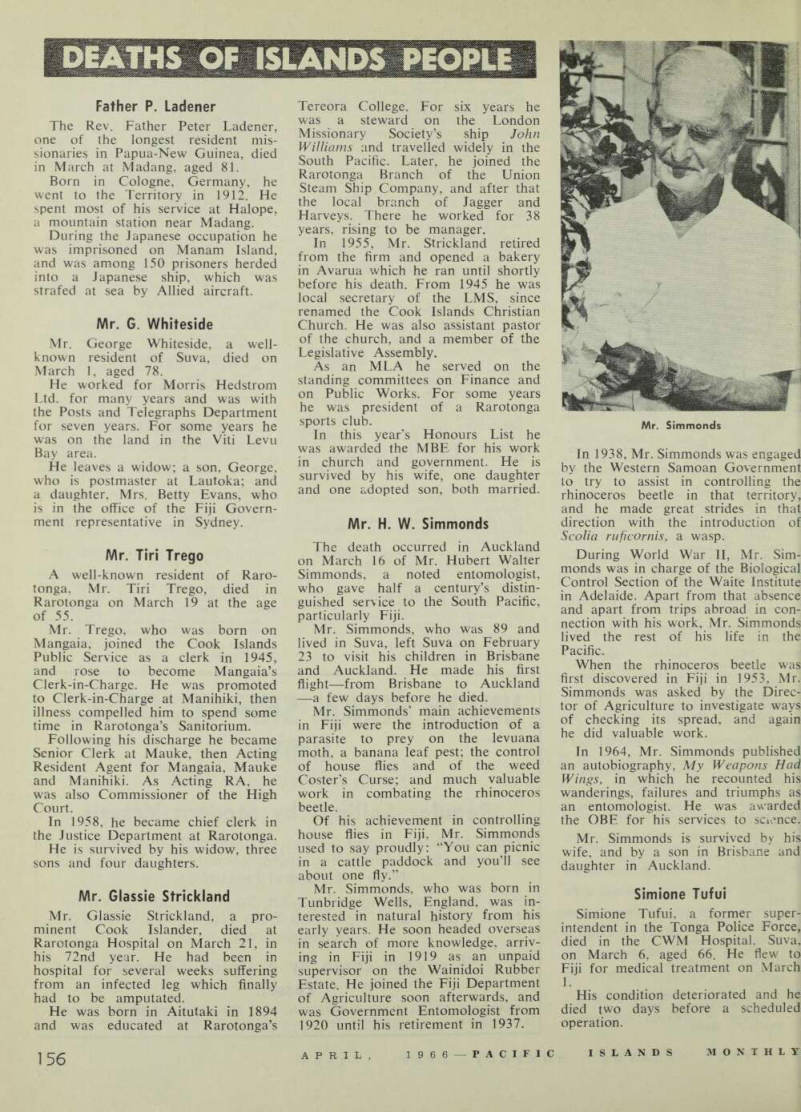 158
158 159
159 160
160 161
161 162
162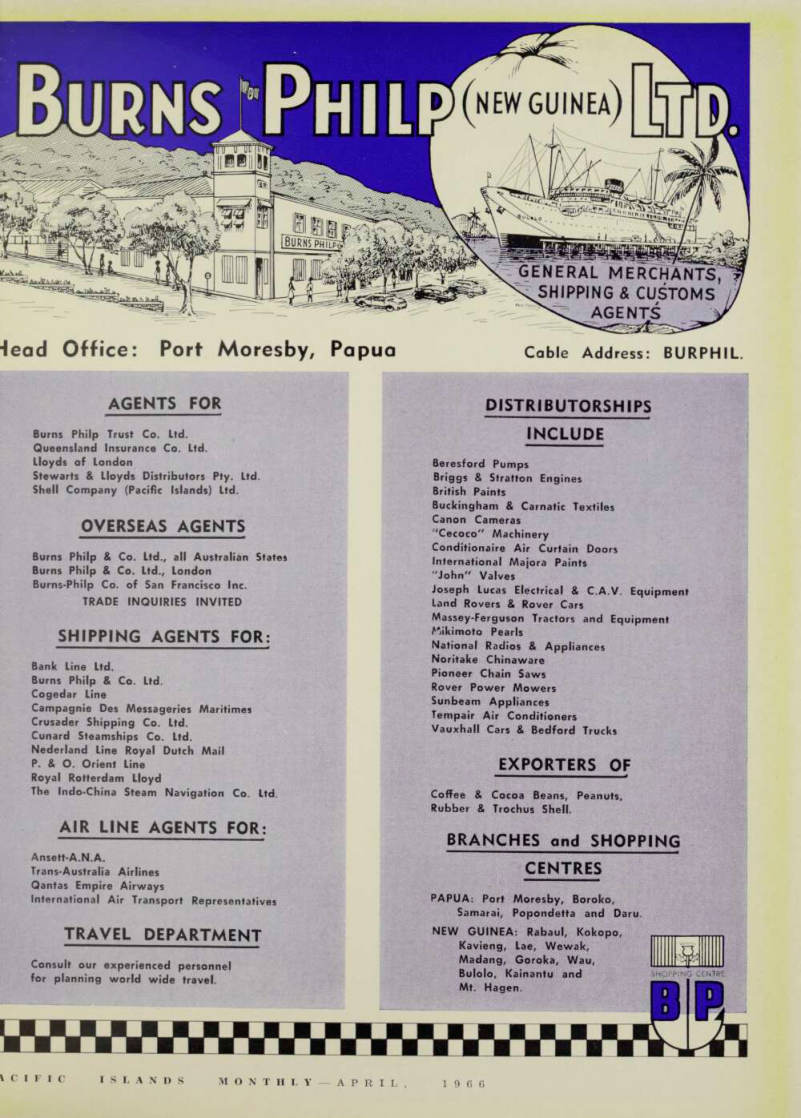 163
163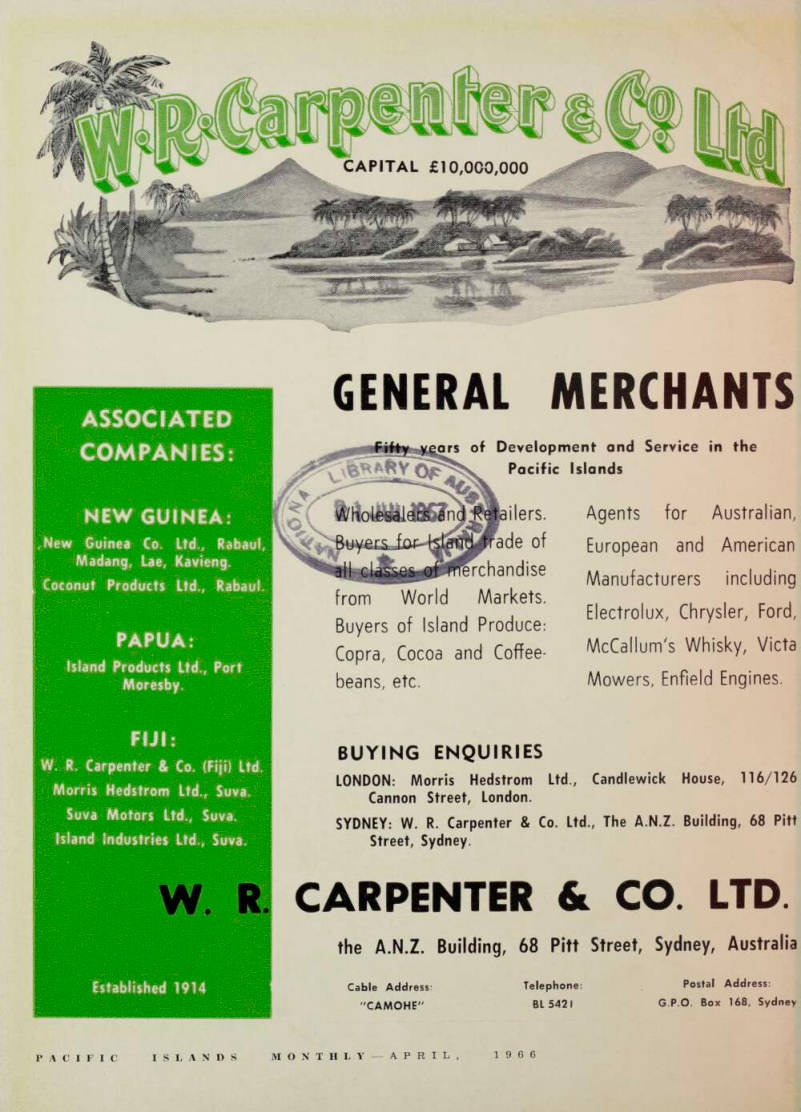 164
164