Monthly
Pacific Islands Monthly
February, 1966
3/- or 30 Aust. cents
70 US cents 50 French Pac. frcs.
rhe Neu/s Magazine Of The South Pacific
Established 1930
Registered at G.P.0., Sydney, and at P. 0., Suva, for transmission by post as a newspaper.
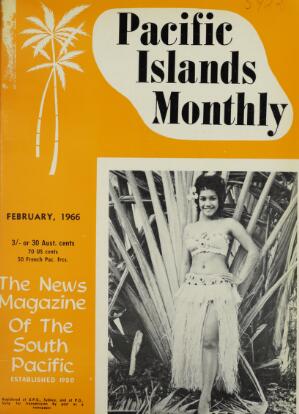
OUR COVER; With the Cook Islands enter ing their first full year of internal self government, everyone in the Group from this attractive dancing girl, of Rarotonga, to the solitary English hermit on Suwarrow Atoll will be affected by the policies and performance of the Premier, Mr. Albert Henry. For a special PIM survey of his problems, see p. 45. —Photo: Van Eijk and AAeers.
Advertisements & other items, pp. 2-10 (1 item)
(Weekly
January 18
to
February 15
Daily Electras
to Australia
(Weekly
Friendship too)
Goon.
Take that holiday.
Lots of students and teachers need to travel at these times.
And normal schedules aren’t quite enough.
So we’ve stepped up our services for your convenience. Our big, smooth Mark II Electras will operate every day between the Territory and Brisbane/Sydney. In both directions. Plus our normal weekly Friendship to Cairns/Brisbane. And all of them ‘Bird of Paradise’ flights. (What’s a holiday for if you don’t spoil yourself?) Why don't you book now? Make sure of the flight and seat you want. Your Travel Agent will fix it.
Or your nearest TAA office: Port Moresby 2101 ■ Madang 78, 268 ■ Rabaul 2567 Lae 2311 ■ Goroka 8 ■ Mt. Hagen 4 ■ Wewak 103
TAA
the Friendly Wai
TAA9S4I/65
WB 1 1 S' The Datsun Pickup for 1966 lives up to its very name, it’s up on everything... in more payload trips, livelier performance, better gas mileage and added stamina. Drivers will like the spacious cab with adjustable seat and non-glare dashboard with large parcel tray. Corrugated steel cargo platform holds a full 1-ton payload, the biggest in its class.
Smartly styled, fast and fuel-saving, the Datsun Pickup is the smartest choice for hauling small to medium-size loads in town or country. A 67-HP Nissan engine powers it to a top speed of 125 km jh {7B MPH).
'Mew
DATSUN
Pickup
NISSANI
Japan’s Largest Exporter of Automobiles ' NISSAN MOTOR CO., LTD./Tokyo, Japan DISTRIBUTORS; Territory of New Guinea; Rabaul Garage Ltd., P.O. Box 63, Rabaul. Fiji: Niranjans Auto Port Limited, P.O. Box 450, Suva. American Samoa; B.F. Kneubuhl, Pago Pago, Tutuila. Western Samoa: H. & J. Retzlaff, P.O. Box 195, Apia, New Zealand; Wilton Motor Body Co., Ltd., P.O. Box 1072, Auckland.
A
MODERN COPRA DRYERS
ARE SAFER... QUICKER
... MORE PROFITABLE
3 MODELS WITH S SIZES IN EACH
TO SUIT ALL PLANTATIONS
r For the first time; precision-built, completely reliable Hot-Air Units for the do-it-yourself planter building his own drying chamber or completely equipped dryers for the man who wants something better.
Eliminate fire hazards, slash drying time and speed production!
A Sears dryer will produce premium hot-air dried quality copra in less than 20 hours with economical fuel consumption and small workforce.
Automatic control and safety equipment in all dryers. Years of experience make Sears Oil- Fired, Hot-Air Recirculating Dryers the most efficient and safest in the world.
Oil-Fired, Hot-Air, Recirculating Unit (right); gives premium copra with only 5 per cent moisture; hot air recirculated for greater economy, dries in 17 to 20 hours using only 17 to 20 gallons of fuel per ton of dried copra; standard equipment in Series 1 and 2 and may be bought separate for planter's own drying chamber.
Recirculating hot air is the modern way to dry copra; the most economical way, too, because: • Oil-fired, hot-air dried copra has better colour, therefore commands premium prices. • Drying periods not interrupted by weather.
Drying is continuous with a Sears dryer. • No fuel gathering, stacking and furnace feeding—automatic controls and safety devices on Sears dryers cut labour costs. . • Fire hazards vanish. Sears oil-fired dryers are safer, easier to handle than old-fashioned, solid fuel burning equipment.
Increase plantation profits with increased efficiency. Invest in a Sears copra dryer. There's one to suit your needs and your budget!
Series 1 Dryer (left): direct oil-fired, hot-air dryer; includes drying oven, heat raising equipment, air circulating fan, trucks, rails, winch, safety equipment. Six standard sizes from one to six tons dry weight output.
Series 2 Dryer (above): does not include truck units and rails; lower priced than Series 1; suit plantation with limited floor space.
ROBERT SEARS & CO
PTY. LIMITED
AGRICULTURAL CROP DRYING ENGINEERS
51 BARRY AVENUE, MORTDALE, AUSTRALIA
EX/RS/2FP/PIM
m
Appetising Cheese Grill
A quick, nourishing light meal—with the extra goodness of KRAFT* Cheddar Here's the simple way to serve appetising, light meals or a'nourishing breakfast, and know you're giving the family the goodness they need. Cheese Grills with KRAFT Cheddar are rich in proteins and vitamins. For each serving: Lightly butter a piece of toast.
Cover with slices of KRAFT Cheddar Cheese, and grill until melted. Top with grilled tomato and bacon.
KRAFT]
for good food and good food ideas *Reg’d. Trade Mark.
KRAFT
KRAFT Cheddar is rich in protein, vitamins and minerals because it takes a whole gallon of creamy milk to make every pound of this fine cheese. Available in the familiar blue 8 oz. and 1 lb. cartons.
I BURNS PHILP (SOUTH SEA) CO. LTD.
GENERAL MERCHANTS AND SHIPOWNERS
I SHIPPING, CUSTOMS AND FORWARDING AGENTS
Fiji:
SUVA.
LEVUKA.
LAUTOKA.
LABASA.
SAVU SAVU.
BA.
SIGATOKA.
TAVUA.
ROTUMA ISLAND.
TAVEUNI.
AGENTS FOR:
I QUEENSLAND INSURANCE CO. LTD.
BURNS PHILP TRUST CO. LTD.
I SHELL COMPANY (P. 1.) LTD.
OVERSEAS AGENTS
BURNS, PHILP Cr CO. LTD., Sydney.
BURNS, PHILP Cr CO. LTD., London.
BURNS PHILP CO. OF SAN FRANCISCO
SHIPPING AGENCIES
• The New Zealand Shipping Co. Ltd. • Shaw Savill & Albion Co. Ltd. • Port Line Ltd. • Bank Line Ltd. • General Steamship Corporation Ltd. • Blue Star Line • Cunard Line • Compagnle des Messageries Maritimes • British India Steam Navigation Co. Ltd. • Royal Interocean Lines • Nederland Line Royal Dutch Mail/Royal Rotterdam Lloyd.
EXCLUSIVE DISTRIBUTORSHIPS INCLUDE
• AKAI TAPERECORDERS
• DUNLOP PRODUCTS
• EPIGLASS PRODUCTS
• FERGUSON TRACTORS
• HELENA RUBENSTEIN
• HITACHI ELECTRONICS
• HOLDEN VEHICLES
• JOHNSON'S WAXES
• ROLEX WATCHES
• REVLON COSMETICS
• PENTAX CAMERAS
• SUNBEAM APPLIANCES
INTERNATIONAL AIR TRANSPORT ASSOCIATION REPRESENTATIVES for
QANTAS EMPIRE AIRWAYS LTD. :: AIR NEW ZEALAND LTD.
UNION DE TRANSPORTS AERIENS :: ALITALIA PAN AMERICAN AIRWAYS
u ■ w * ■
BUY ON
FACTS!
Let your Ford tractor dealer prove that new-size FORDS are tougher , work harder, last longer.
FACTS! Look closely at a new Ford tractor. See the strength built into the massive axles. Check the weight and rigidity of the engine block and gear housings.
These tractors are built to last!
FACTS! See how heavier, stronger working parts make new Ford tractors last longer.
Bigger bearings. Bigger valves. Heavier, stronger gears. Discover how these massive new engines deliver smooth, steady power.
FACTS! Try the controls. You'll find them simple to use, precise in response. Check the operator's manual. Find out how easy tractor care and maintenance can be. Ford built these tractors to get your work done. Quickly. Efficiently.
FACTS ! Check Ford's service facilities. Your Ford tractor dealer’s well equipped shop.
The trained and skilled Ford mechanics. The big inventory of parts. Then you’ll know that your Ford dealer is ready and able to keep your new Ford running. Smoothly, efficiently, for years to come.
PROVE IT TO
YOURSELF
with a demonstration
TRACTORS
EQUIPMENT
• “Buy on Facts” and choose from four great new Ford tractors: 39, 46, 56 and 67 hp.* See your Ford tractor dealer. *Manufacturer’s S.A.E. rating
As the Maraschino Cherry said to the Italian Vermouth GILBEY'S IS SUCH A GREAT INTERNATIONAL GIN
WHY MIX
Kith
GILBEY’S
2762 Q
Pacific Islands
Monthly
Owned And Published By Pacific
Publications Pty. Ltd., 29 Alberta
St. (Box 3408, G.P.0.), Sydney.
Telephones: 61-9197, 61-7101, 61-4369.
Telegraphic Address: PACPUB, Sydney.
Chief Executives
Managing Director: R. W. Robson.
General Manager: Selwyn Hughes.
Book Publishing Division
Editor: Judy Tudor.
Pacific Islands Monthly
Editor: Stuart Inder.
Assistant Editor; Robert Langdon.
Branch Offices
Melbourne: Newspaper House, 247 Collins St.
Tel.: 63-7053.
Fiji: Pacific Publications (Fiji) Ltd., Fiji Times Building, 20 Gordon Street, SUVA, Tel.: 25601.
Fiji Times Office, Vidilo Street, LAUTOKA.
Tel.: 420.
Papua-New Guinea: Pacific Publications (N.G.) Pty. Ltd., Portlock St. (P.O. Box 16), Port Moresby. Tel.: 2504. Representative: Mrs.
Joan Carter.
Representatives
New Zealand: J. D. Whitcombe, C.P.O. Box 2229, Queen Street, Auckland. Tel.: 76056.
Hawaii: C. C. Spencer, 203 Yap Bldg., 3465 Waialae Ave., Honolulu. Tel.: 775538.
United States: Mrs. A. L. Craib, 1631 80th Avenue, Oakland 21, California.
Tel.: LOckhaven 8-1201.
United Kingdom: S. R. Warman, Candlewick House, 116-126 Cannon Street, London, E.C.4.
Tel.: Mansion 3674/7.
H. A. Mackenzie, 4A Bloomsbury Square.
London, W.C.I. Tel.: Holborn 3779.
Agents
All main trading firms and stores in the Pacific Islands.
Pacific Publications Pty. Ltd. is the Australian agent for THE FIJI TIMES.
Subscription Rates:
Australia: 3/- or 30 cents Aust. (36/- or $3.60 for 12 months). New Zealand, all British Commonwealth South Pacific Territories, Tonga, New Hebrides and Western Samoa: 3/local currency (36/- local currency per annum).
Elsewhere in the South Pacific: 50 French Pacific francs or 70 US cents (600 French Pacific francs or $B.OO US posted per annum).
Posted to USA, $B.OO US per annum. Posted to the UK and all other countries: £Stg.2.
"Pacific Islands Monthly" is air-freighted to all subscribers and agents in the South Pacific; copies to other areas go by surface mail.
In This Issue
General
Pacific-Wide Drought 13 Aust. Decimal Currency 17 ASOPA Graduates 71 Firm Prices for Copra Expected ... 137 Cultured Pearls 137 New Year Honours List 153
American Samoa
Newspaper Changes 15 Fishing Corporation Launched 137
Cook Islands
Decisive Year for Albert Henry 45 Twins Born in Sailing Boat 45 Warning on Postage Stamps 59 Wandering Pigs 63 Harbour Needs 107 Air Service in Doubt 123 Rarotonga Looks at Copra 135
Fiji
Games Warm-Up 15 Another Prasad Case 16 Tip for Sydney Post 21 Legco Chamber Portraits 23 Mary Edwell-Burke, Artist 25 Raymond Burr Buys Naitauba 33 Walk Round Viti Levu 53 Concert Celebrity Now Missionary ... 65 Sound Shell for Civic Centre 69 Action Needed on Shipping 99 More Hotel Accommodation 121 Banana Shipments 137 Adverse Trade Balance ... 137
French Polynesia
Call for Beryl Brings Results 25 Naval Task Force for Tahiti 35 Tuamotu Shark Experiments 69 Protest Cruise on A-Test 101 Criticism of "Le Truck" Travel 127
Gilbert And Ellice Islands Colony
Mouth-to-Mouth Resuscitation 21 Busy Year Ahead 50 £900,000 Grant 51 Fanning Island Pound Notes 55 Strange Lizard at Nanumea 69 Tourism, Colony-Style 127
Nauru
Legislative Council Opened 16
New Caledonia
Games Warm-Up Against Fiji 14 Effort to Save Local Birds 69 Weather Station for Surprise Is 109
New Hebrides
Erromanga Timber Plan 133
Norfolk Island
Official Secretary Leaves 59 Shipping Service 101 Power for New Hotel 129
Papua-New Guinea
Three Top Admin. Jobs Open 11 New University 12, 71 Public Servants' Demand 12
Workers' Associations to Federate ... 12 Changes in Newspaper Company ... 14 No Light on Future from Minister ... 19 Multi-Racial Councils Opened 19 Big Men of German Times 23 Murray Memorial Neglected 27 Opinions on Pidgin 27 Johnson Cultist Loses Faith 29 Cultural Societies 57 Oala Oala Rarua 61 Tea Blocks Popular 73 When Snow Fell at Goroka 85 Book by Sir A. Grenfell-Price 92 Moresby Wharf Congestion 101 Watersiders' Log of Claims 105 Progress on New Moresby Hotel ... 125 Rabaul Hotel Plan 129 Pacific Islands Mines 135 Cocoa Growers' Federation 137
Solomon Islands
Submarine Volcano Erupts 21 £6m. for Development 29 First Garnet Found 49 Malaita "Ready for Tourists" 121
Tokelaus
NZ Resettlement Plan 17
Tonga
Death of Queen Salote 38 Kingdom as Tourist Centre 117
Torres Strait Islands
German Harry of Deliverance Is. 81
Western Samoa
"Samoana" Court Case 14 Money for Games Team ... 15 First Airmail Stamps 69 £lm. Development Plan 133 Banana Production Down 137 Asian Bank Loan 137
DEPARTMENTS: People in Pictures, 37; Territories Talk-Talk, 53; Pacific Planters' Digest, 73; From the Islands Press, 76; Magazine Section, 81; New Books 91’
Shipping, 99; Cruising Yachts, 112; Travel, 117; Cruise Ship Schedules, 131- Commerce, 133; Shipping, Airways Schedules, 141; People, 149; Deaths of Islands People, 153.
Advertisements & other items, p. 12 (1 item)
Juaci 0 Samoa
Another unique disc from SAMOA RECORDS . . .
Lp 003
Songs and Drums of the Tokelau Atolls ...
This record contains 14 traditional numbers by Tokelau Islanders whose 1,800 people inhabit the three atolls of Fakaofo, Nukunono and Atafu 300 miles north of Samoa. Living in a border area between Micronesia and Polynesia these people have close linguistic and cultural ties with Samoa but their isolated atoll environment has given them a distinct culture and music of their own.
“With its complete authenticity, its exciting primitive rhythms and its rarity, this record is a must for collectors. It is an extremely tuneful and interesting addition to the catalogue of Polynesian music." — Samoana.
ALSO AVAILABLE:
Lp 001 Lp 002 Samoan Songs of Love and Dancing Siva Siva Samoa All these 12" Lp records are of excellent quality and contain completely authentic Island music recorded in Apia, Western Samoa. Each disc contains 14 numbers. £2/10/- each or set of three for £6, post paid (Samoan currency) Available only from
SAMOA
P.O. Box 139, Apia, Western Samoa Please make payment with order either by postal money order or by draft on the Bank of Western Samoa.
RECORDS
P-Ng's Three Top Jobs
Wide Open As Gunther
Takes New Uni. Post
By Stuart Inder
The big Australian territory of Papua-New Guinea (population two million) will soon have a complete change of top administrators. The old firm of Cleland, Gunther and Reeve is splitting up, after almost a de cade of close relationship during which the territory has undergone its greatest expansion.
Dr. John Gunther, 55, who has been Assistant Administrator ( Services ) since 1957, is to become Vice-Chancellor of the new University of Papua-New Guinea, and will almost certainly resign from his key Administration post within a month or two.
11/fR. HAROLD REEVE, formerly Treasurer, who has been Assis tant Administrator (Economic Affairs) since 1961, and who has been on sick leave since late October, left the territory on retirement at the end of January.
Sir Donald Cleland, Administrator since 1953, turns 65 in June, and al though he would prefer to stay until the end of the year he will leave some time after June if a replacement is found for him.
The Administrator’s post has al ready been offered to Sir John Craw ford, Director of the Research School of Pacific Studies, at the Australian National University, and a former secretary of the Commonwealth Department of Trade. He has declined it.
Mr. John Overall, chairman of the National Development Planning Com mittee, Canberra, holder of an MC and Bar, has also been considered re cently. Earlier last year the name of Mr. C. W. Falkinder, DSO, DEC and Bar, Liberal MHR for Franklin, Tasmania, was mentioned.
Dynamic, Efficient
The top job will certainly go to an outsider, and Dr. Gunther must have realised this in recent months.
For a long time he was hopeful that he would take Sir Donald’s place for he has in fact borne the burden of the Territory’s administration in recent years and Sir Donald has been content to let him do it.
There has been no decision of any importance taken that Dr. Gunther has not had a. hand in. He has been dynamic, efficient, a tireless worker, planner, worrier and manipulator.
He has been particularly happy in his political role as Government Leader in the House of Assembly, and his influence there has been vast.
Relations between Canberra and Port Moresby (i.e., Dr. Gunther) have not been the same since the departure of Mr. Paul Hasluck as Minister and Mr. C. R. Lambert as Secretary of the Department of Terri tories. The three seem to have had
an understanding.
Dr. Gunther’s views probably smack too much of socialism for Mr. C. E. Barnes, the new Minister, and there appears to be no love lost between Dr, Gunther and the new
secretary, Mr. G. Warwick Smith— two capable men with minds of their own who size each other up like a couple of sparring partners.
Dr. Gunther has thus been faced with a dilemma. With the Adminis trator’s post not open to him, with a glum prospect of having to show a new man the ropes and then stand in the shadows, with Canberra breath ing down his neck, it was a matter of what to do next.
Unless the university job had come up, Dr. Gunther would undoubtedly have been lost to P-NG. Probably he would have sought a post over seas—perhaps with an international health organisation. He was an imaginative Director of Health (his degree is in medicine) before his appointment as Assistant Admini strator.
He did not apply for the vice chancellor’s post, but his name was put forward by associates and it has been known for some time that he was in the running.
This fact in itself has caused controversy in the Territory, with one group advocating that the uni versity needed an academic and tha' Dr. Gunther’s appointment would be “tragic”.
Others supported his appointment on the grounds that he was a highly efficient administrator with local know-how and just the type of man needed to get a brand new university operating.
The selection committee, at a series of meetings, apparently was split the same way. Some took the view that
Sir Donald Cleland.
Dr. Gunther.
Dr. Gunther would be an autocrat in the job and that a pure academic was needed.
Well in the running for the academic selection was Professor R.
S. Parker, Professor of Political Science, Institute of Advanced Studies, at the Australian National University, an expert on public ad ministration.
Weight of opinion finally was for a proven administrator rather than an academic at this stage of the university’s development, and thus Dr. Gunther got the £6,000 a year job. (He gets £5,000 as Assistant Administrator.) Dr. Gunther’s new appointment will be for five years, and at the end of that time those who still feel that an academic is the right man to govern academics may have the op portunity of finding somebody else.
In the meantime, Dr. Gunther’s personal dilemma has been solved, and his services have not been lost to a swiftly-developing territory where experience is going to count.
The names of those who will take over the two vacant posts of Assistant Administrator will now be subject of intense speculation.
Many people will probably expect Mr. Frank Henderson, who has been acting Assistant Administrator
(Economic Affairs) since Mr. Reeve’s illness, to be confirmed in the post, He is a pre-war officer of wide ex perience, and has been Director of Agriculture since 1958.
Mr. L. W. Johnson, Director of Education since 1962, who has done excellent work in that difficult post, should be in the running for the post that Dr. Gunther will vacate.
Mr. Harold Reeve.
Advertisements & other items, p. 13 (1 item)
11
PACIFIC ISLANDS MONTTtiv
MONTHLY—FEB R U A R Y . 1966
The Month In Review
With all Islands parliaments in recess, and with many people still away on vacation, January, 1966, was not a particularly eventful month in the South Pacific.
BUT there was one topic of conversation common to all territories—the drought, or, in some cases, the rains that brought some relief from it.
The main events of the month were: January 1 ; Nearly two dozen Islands people were honoured by te Queen in the New Year Honours List.
January 7: The sale was announced of one of the last freehold islands in the world— Naitauba, in the Lau Group of Fiji. The buyer is the American TV star, Raymond Burr.
January 8: The New Zealand Minister of Island Territories, Mr. J. R. Hanan, left Auckland on a visit to Niue and the Tokelaus.
January 17: Australia’s Minister for Territories, Mr. C. E. Barnes, met members of the Papua-New Guinea House of Assembly Com-
mittee on Constitutional Develop ment in Port Moresby, but threw no light on what Australia believed would be the future of the Territory. A few days earlier, Mr. Barnes opened the Ter ritory’s first multi-racial local government council at Goroka.
January 23: Workers’ associa tions throughout Papua- New Guinea agreed to establish a Territory-wide federation, January 25: The Public Service Association of Papua-New Guinea asked Australia’s new Prime Minister, Mr. Harold Holt, to state bluntly whether the Govern ment intended to introduce a compensation scheme for public servants in the Territory, January 29-30: Tahiti, Ameri can and Western Samoa were struck by fierce storm, January 31: A Legislative Council on Nauru was officially opened.
First Students At
P-Ng University
To Start Soon
From a Port Moresby Correspondent
Papua-New Guinea’s embryo
university will have its be ginnings in Port Moresby on February 7, when about 80 students are expected to start a year of preliminary studies
in English Language, Science,
Maths and the Humanities.
ALL the students have finished fourth form at secondary school.
The year of preliminary studies is designed to take them to matricula tion standard.
Successful students will go on to the first year of the full course to begin in March next year.
The preliminary year will be con ducted by the Administrative College in Port Moresby. The college will continue to conduct the classes until the university is a physical fact.
The pace of the university’s develop ment will largely depend on its Vice- Chancellor, Dr. John Gunther.
In the meantime, the university students at the Administrative Col lege—most of them male—will be accommodated in buildings converted for the purpose in the Ward’s Strip valley.
Lecturers Interviewed
Principal of the college, Mr. David Chenoweth, visited Sydney, Mel bourne and Canberra in late January to interview senior lecturers and tutors for this first year. His recom mendations were to go to the Interim Council of the university for final consideration.
The people being interviewed were on a short list and were available “on standby” for Port Moresby if required for the opening in February.
Officers close to the university have been surprised at the high quality of the staff presenting itself for selection.
With much competition for good academic staff, it was thought that sufficient people of the right calibre might be hard to find for the wilds of Port Moresby.
Appointees for some Chairs are expected to be announced at a meet ing of the Interim Council in Port Moresby in early February, when the name of the Vice-Chancellor is also expected to be announced officially.
South Pacific
Severe Drought Hits South Pacific
The exceptionally dry weather, in what is generally the wettest period of the year, has been one of the main talking points in the South Pacific in recent months.
IN some places the lack of rain has reached drought proportions, with water and food shortages, poor crops, dying stock and concern over the adequacy of water storage facilities.
The Pacific’s dry weather has coincided with severe droughts in other parts of the Southern Hemi sphere, including Australia and the southern part of Africa.
One of the few territories that has escaped the dry spell is the drought-prone Gilbert and Ellice Islands Colony, where the rainfall has been well above average and the outlook for copra, the colony’s only crop, is the best for some years.
Tarawa, with 120.11 in., had its wettest year since 1953.
Fiji Losses
In Fiji, on the other hand, little or no rain fell in any of the islands from November until January 10 (when the skies opened up), and the drought is expected to have caused almost as much damage to the Colony’s economy as the hurricane and floods last February.
People in the cane areas talk in terms of a couple of million pounds when assessing the damage to the sugar crop. Rice, copra and root crops have also suffered a setback.
“Much of the sugar cane crop will have withered and there is sure to be a shortage of seed cane for planting in 1967,” PlM’s Suva cor respondent says.
Another Fiji industry that has been hit by the drought is the banana industry, which has been recovering from the havoc wrought by last year’s floods. Now, the drought is expected to affect growth and post pone full recovery.
Fiji’s outer islands, such as the Yasawas, were the first to feel the effects of the drought, and by early December, relief food and water supplies had to be shipped to them.
Some villages were limited to so much water per head per day.
On the two main islands of Viti Levu and Vanua Levu the position was looking serious by the beginning of the year and even Suva had to tighten the watercocks.
A couple of weeks before relief came in the shape of two days’ heavy rain beginning on January 10, an announcement in the Royal Gazette made water wasting in Suva a punish able offence.
Although the city’s rainfall last year was 108.87 in. (15.48 in. below average), most of it (73 per cent.) fell in the first five months of the year.
December was the driest since records began in 1884—2.68 in. compared with the average of 12.34 in.
In Apia, Western Samoa, Christmas liquor sales reached an all time high, but in other respects the town had its driest Christmas in liv ing memory.
Rainfall in November and Decem ber was the lowest in the 70 years that records have been kept.
From the meteorological office, Talalelei Pauga reported that rainfall in November was one inch compared with an average of 10.40 in., while rainfall in December totalled 3.02 in. compared with an average of 14.68.
Rainfall for the whole of 1965 totalled 92.49 in. compared with a yearly average of 112.28.
There were no water restrictions in force in Apia during the dry spell and drought conditions did not really prevail as rain fell on various parts of the islands while it was fine in Apia.
In January, Apia’s rainfall ap peared back to normal.
Rain Brings Mosquitoes
In New Caledonia, beneficial rains in late December and early January after several months of drought have given the hills a welcome coating of green.
But the new herbage has proved an ideal breeding ground for mosquitoes, and in Noumea, they have been descending on the citizenry in plague proportions.
Another result of the long drought was a 40 per cent, cut in Noumea’s meat supply.
But the new-look greenness on New Caledonia’s hills did not seem likely to last in late January, as the New Year rains had been followed by boisterous Trade winds of great drying capacity.
On Niue, long spells of dry weather throughout 1965 have affec ted the growth of crops.
Final figures for the year are expected to show that exports were lower than in the previous year.
The weather in Rarotonga, the main island in the Cook Group, has
Clouds, But No Rain
Despite the presence of ominous looking clouds from time to time in January, Yate Lake, source of Noumea’s water supply and hydro electric power, received virtually no rain. In late January, following New Caledonia’s long drought, the lake was so dry that visitors to it could again see the bridges that were submerged when the lake was created by building a dam in the Yate River Valley. Photo: Fred Dunn.
been similar to that experienced in the islands to the west.
Only 1.67 in. fell in November compared with 4.79 in. in the same month in 1964; December had 2.34 in. compared with 3.33 in. in 1964; and less than half an inch had fallen to January 11 compared with 10.90 in. for the whole of January last year.
In the New Hebrides, a drought following the 1964 hurricane has seriously affected the copra industry.
In 1965, only 28,725 tons of copra were exported, compared with 37,666 tons in 1964. However, 1966’s copra yield is expected to be better.
In Pago Pago, American Samoa— famous as the scene of Somerset Maugham’s short story Rain—night time water rationing was intro duced in the Bay area in mid- January, except to the Intercontinental Hotel. This meant that the water was cut off from 10 p.m. to 5 a.m.
Tonga’s weather pattern recently has been similar to that of the drier parts of Fiji.
Norfolk Island, with 32.11 in. in 1965, had its lowest annual rainfall for 70 years. But it got off to a good start in 1966 with 297 points in the first four days.
Parts of Papua-New Guinea have also suffered drought conditions in recent months, but by late December most affected areas had had good rains.
Footnote : As PIM went to press, a hurricane, with winds of more than 100 m.p.h., was reported to have caused millions of dollars worth of damage in American and Western Samoa on January 30. In American Samoa, a state of emergency was declared. A day or two earlier, 10 in. of rain fell in Papeete, Tahiti, and there was also torrential rain in Fiji.
Advertisements & other items, p. 15 (1 item)
13
PACIFIC ISLANDS M O N T H L Y M A R C H , 1960
Newspaper World Abuzz
The South Pacific’s small but active newspaper world has been abuzz with developments in recent weeks.
Differences of opinion between shareholders of the weekly West Samoan newspaper Samoana have come into the open with prominent Apia businessmen K. von Reiche and E. Annandale, and their wives, asking the court to wind up Samoa News papers Ltd., on the ground that a deadlock has been reached among shareholders.
The two couples hold 50 per cent, of the £6,000 paid up capital of Samoa Newspapers Ltd. The rest is held by the editor and managing director, R. F. Rankin, and his mother-in-law, Mrs. P. Forsgren.
They are opposing the petition on the grounds that it would be against the public interest to wind up the company, and they have offered to buy out dissident shareholders at a price fixed by independent arbitra tion.
Petitioners claim that no general meeting has been held for a number of years.
The case was originally scheduled for January 20 but was postponed until February 11.
In Papua-New Guinea, the news paper group owned by the Herald and Weekly Times, of Melbourne, which bought out Yaffa interests last year, has had a major staff upheaval.
More resignations are expected.
The group comprises the South Pacific Post, Port Moresby, the New Guinea Times-Courier, Lae, and Nu Gini Toktok.
The directors asked the general
manager, Mr. H. G. Cooke, to resign in mid-December, and Mr. Cooke has since been job-hunting in Australia. (He said in Sydney that he had dis agreed with the Herald on how the Territory organisation should be run.
But there had been no hard feelings, and he had been well looked after financially).
The printer, Mr. Hal Byrne, has resigned to establish the P-NG Print ing Co. Pty. Ltd., commercial printers, in Port Moresby, with local finance. This company will presum ably make inroads into the Post’s lucrative job printing.
The Herald group is said to be planning to amalgamate the Post and Times-Courier and publish one paper, daily, in Port Moresby. This would be an intelligent move, as both papers are printed in Port Moresby, with editorial material sent by air from an office in Lae.
The organisation is now under the control of a Herald man, Mr. K. V.
Mattingley, who is managing editor.
Other recent developments are: • The weekly Samoa Times, of Pago Pago, was offset printed in Sydney in late January, and then flown to Samoa. This will be regu lar practice in future. Editor Alan Reed was in Sydney for the first try. • High Talking Chief Fofo (“Joe”
Sunia) has been appointed Director of Tourism in American Samoa and will give up editing the weekly Samoa News, rival to Samoa Times.
New Caledonia
And Fiji In
Games Warm Up
• Lessons Learned For December in Noumea From Alan Spark in Suva
Everything was peaches and
cream in Suva on Saturday, January 22, when the final re sult of an athletics match be tween Fiji and New Caledonia was declared.
IT was a draw—l4o points each after a series of 26 competition events, which began the previous Saturday.
The match was a warm-up for the South Pacific Games in Noumea in December, when Fiji and New Caledonia are expected to field two of the strongest teams.
Competition was keen and the result was fairly satisfying. But had Fiji wished to press to have New Caledonia disqualified in two of the relay events, it may have won the match—thus taking the glory but losing much of the friendly spirit which was a feature of the series.
Tremendous Success
There can be no doubt that the visit by the New Caledonians was a tremendous success. An aggregate of more than 5,000 people watched the two official meetings and the two informal meetings in between them.
Fiji learned some useful lessons from the meeting, namely that: • New Caledonia has a solid nucleus of well-trained distance run ners who recognise the merits of run ning as a team; and it also has some well-trained and talented field events exponents. • If the Colony is to have effective relay teams the runners must be well grounded in the techniques of changing the baton, for this cost Fiji two relays and very nearly a third. There is a major problem in this, however, it is almost impos sible to get the athletes together in Suva for training.
New Caledonia found that Fiji has an abundance of natural talent, but that many athletes are self-trained and without the benefit of qualified coaching.
It also found that once the benefits of team-running are demonstrated to
Fiji’s distance runners, they are quick to learn. The difference from one Saturday to the other in the tactics employed by Fiji runners was quite astounding.
New Caledonian officials were ex tremely interested in the staging of the meeting, as they will have a much larger meeting to organise at the end of the year.
Ana Does It Again
Undoubtedly, the most successful athlete was Ana Ramacake. Nobody had really expected her to be beaten in the sprints and the long jump, and nobody was disappointed.
She was so far ahead in the sprints, especially the 200 metres, that it ap peared as if there were two separate races—Ana racing against the clock and the others fighting out the minor places.
Ana’s performances this year are better than ever, and they were good enough before.
Under the coaching of Mike D’Ath she has equalled the record for the 100 metres, set new figures for the 200 metres and long jumped to a record which would have been good enough for fourth place at the Perth Commonwealth Games.
Mesulame Rakuro, from Nadi, won both the discus and the shot put for Fiji.
He is an old campaigner who knows all the tricks of the game, and there is some talk that he used psychological tactics as well as skill to beat New Caledonia’s Bone in the discus.
Nor was Mesulame the only suc cessful veteran. The “grand old man” of Suva athletics, the Rev. Viliame Liga, won the javelin throw—as everybody had expected him to do.
Liga’s understudy, Tupua, took second place. He is a young athlete, who trains for the event by throwing a broom handle. He has already thrown the javelin over 200 ft.
Geraldine Bigourd went back to New Caledonia with a winner’s medal to place on each side of the gold medal she won at the South Pacific Games for the 800 metres. She won both the 400 metres and the 800 metres.
Serious Challenge
These were impressive per formances, but she will probably have to face a serious challenge from Fiji at the South Pacific Games.
Promising 16-year-old schoolgirl Sulueti was less than 10 yards back in the 400 metres and not much further behind over the longer dis tance.
Jules Gohe was never seriously challenged in the distance events. The
further the race, the further he was ahead. In both the 5,000 and 10,000 metres his winning times were faster than the South Pacific Games records, but were outside the Fiji records.
Over distances which might be qualified as semi-sprint” Osea Malamala was m a class of his own, but his performances over the 400 and 800 -P? e H es were not up to his best ’ possibly because the track was “dead” after heavy rain.
Rupem Ravonu, last season’s star sprinter m Fiji, became quite a hero when he overcame what seemed to be impossible odds on the first Saturday of the meeting to win the 4 x 100 metres relay by inches.
He repeated the performance at the first of the informal meetings to win the 1,500-metre relay, again by mere inches One of the veterans of the New
Caledonia team, Jean-Pierre Aifa dominated the 3,000 metres steeple chase and broke his own South Pacific Games record which was also a Fiji all-comers’ record Fiji appears to have a rising young star in this event in Epeli who was not far behind Aifa and who broke the Fiji national record lt is m ore than likely that these meetings will be a prelude to a regular interchange of visits between Fiji and New Caledonia Such events can do nothing but good for sport in the South Pacific, The spirit of goodwill that existed throughout the visit was quite remarkable. The athletes were bil leted in Suva homes and although the language barrier proved to be a stumbling block in the way of full fraternisation some lasting friend ships were founded.
Money Raised For W. Samoan Team
'J'HE recently-formed Lions Club of Apia is rapidly making a mark upon the community with its fund-raising activities for worthwhile causes. In its latest effort the club raised more than £250 at a New Year race meeting it sponsored in association with the Apia Turf Club to help send Western Samoan athletes to the South Pacific Games at Noumea in December.
The Western Samoa Sports Federation now appears to be in a much fi nanc ial position than it was before the first Games in Suva in 1963. After a very successful athletic meeting against Tongan and American Samoan representatives in mid-1965, a substantial share of profits from the last Games in Fiji, and a highly successful fund raising ball in December it now has well over £l,OOO in kitty. • The picture shows Lions Club members at the New Year race meeting, where they ran a “hot dog” and hamburger stand on the course From left (standing) are: Dan Phineas, Jim Curry, Bill Rasmussen, Bob Sylvester (president), and Jim Moore. Kneeling are Norman Paul and Herman Bartley. —Photo: “Samoana”.
Advertisements & other items, p. 17 (1 item)
15
PACIFIC ISLANDS MONTHLT—P E B R U A R Y . 1966
Nauruans Want
To Go It Alone In Two Years
Two planeloads of VIPs
made special 2,500-mile flights
between Sydney and Nauru to attend the inaugural session of the Nauru Legislative Council on January 31.
THE session was opened by the Australian Minister for Terri tories, Mr. C. E. Barnes, who warned of the difficulties facing countries achieving self-government or inde pendence.
Among those accompanying him in the official party were Sir John McLeay, Speaker of the House of Representatives, Senator J. O’Byrne, Opposition Whip in the Senate, Mr.
F. B. Arnold, representing the British Government, and Mr. J. L. Hazlett, NZ High Commissioner to Australia.
Guests of the Nauru Local Govern ment Council included Mr. P.
Shrapnel and Mr. Ken Walker, the Nauruans’ economic consultants; Mr.
J. A. Melville, their legal consultant; Mr. Keith Madden, who has been handling Nauruan public relations for Eric White Associates; Dr. Helen Hughes, of the Australian National University, and Stuart Inder, editor of the Pacific Islands Monthly.
Five Officials
The new Legislative Council has nine elected Nauruan members and five official appointed members, plus the Administrator as president. Head Chief Hammer Deßoburt and all eight other members of the Local Government Council (which replaced the traditional Council of Chiefs in 1951) were elected to the Legislative Council on January 22 at a general election.
The new Legco members will con tinue to hold office in the Local Coun cil. Deßoburt has been appointed leader of the elected members in the House which will begin official busi ness early in February.
All of Nauru was delighted with the announcement by Mr. Barnes dur ing the opening ceremony that the Queen had made Deßoburt an Officer of the Order of the British Empire in recognition of his years of work for the Nauruan people.
As with the P-NG House of Assembly, the Australian Governor- General will have the right to veto
bills passed by the Nauru Legco. The council is not empowered to enact legislation concerning defence, foreign affairs or the all-important phosphate industry.
The Nauruans are, however, deter mined not to make the council mere ly a debating society. They have pressed hard for its establishment, and even now—at its opening—claim that they are ready for the next step.
In a Press statement on the future of the Nauruans issued after the inauguration of the new Legco, Deßoburt said that the first respon sibility of the elected members would be to prepare and implement a pro gramme which would ensure the at tainment of independence by January 31, 1968.
The Nauruans also summed up their attitude in a booklet released to co incide with the inauguration of Legco.
Copies of the booklet have been sent to all members of the Australian Parliament, to the United Nations, the British Colonial Office, the British Phosphate Commissioners and Australian and NZ newspapers.
In it the Nauruans pointed out that their three major problems were: Restoration of the island following removal of the phosphate, ownership of the phosphate deposits, and in dependence.
They said a committee of experts was now examining the feasibility of restoring Nauru, and expected to make its report by June.
On the ownership problem, the Nauruans said they did not agree that ownership was vested in the BPC, because this claim “stemmed from the original German occupation by force and the exploitation of the phosphate without the consent of the Nauruans”.
They added: “The present stage of the dispute is that the three Trust powers, Britain, Australia and NZ, have suggested a partnership to ex ploit the phosphate and the Nauruans have rejected this and suggested that the BPC should mine the phosphate as their agent. In April, further discus sions will seek a permanent solution to the management of the phosphate industry.”
Independence
On the matter of independence, the Nauruans say in the booklet that “it is an historical fact that most of the initiative has come from the Nauruans, They recognise that in dependence, or self-government, is the goal of all Trust Territories and that as a literate people well-ex perienced in community government they are capable of handling their own affairs. . . .”
Another Of Suya's
Australia Bars
Miss Prasads
By a Staff Writer
Any Fiji-Indian with the name of Prasad is likely to be suspect in the Australian Department of Immigra tion. Perhaps that is why Miss Prita Prasad, 22, of Suva, who has been studying in Australia for four years, has been refused permission to go to Papua-New Guinea as a handi crafts teacher.
THE Department is still smarting over the trouble they had with Nancy Prasad who was sent home to her parents in Suva last August after two years of publicity. Nancy was usually presented in Australian newspapers as a poor, innocent six year-old who was hounded out of the country by the wicked Minister for Immigration.
The fact was that Nancy was the innocent tool used by her family in their long battle with the Immigra tion Department, during which they acquiesced to her being kidnapped.
She is the daughter of Mr. Shri Prasad of Suva, who, in 1962, took his wife and five children to Australia on a tourist permit. Several of his adult children were already there but had permanent residential qualifications because they had married in the country.
Houses Bought
Against the advice of the Depart ment of Immigration, the whole Prasad family prepared to remain in Australia where Mr. Prasad bought two houses. He, his wife and four of the younger children were persuaded to go home to Fiji in November, 1963, but Nancy was ill at the time and was allowed to stay. She was taken into the home of her brother in-law, Mr. R. Powditch, and battle commenced with the Immigration Department.
Latest news is that Mr. Powditch and his wife, formerly Miss Shashi Prasad, are to take Nancy to England, adopt her, then apply for Nancy’s readmission to Australia.
Meanwhile, the Nancy Prasad case has done great harm to the prospects of intending migrants or non-Euro pean visitors from Fiji, and some of this is probably rubbing off on Miss Prita Prasad who wants to teach handicrafts in Papua-New Guinea.
The reason for turning her down is
(Continued on p. 155)
said to be that she does not qualify to be an Australian citizen.
It could be that Australia is in for another Prasad cause celebre be cause a Mr, J. N. Peek, described as a businessman of a Sydney suburb, has protested to the United Nations about Miss Prita’s troubles. He is probably under the impression that because the New Guinea half of the Territory is a United Nations Trusteeship Territory, the UN has some say in New Guinea migration policy.
But New Guinea is still admi nistered by Australia; to take up permanent residence there it is necessary to have the same immigra tion status as required for the Aus tralian mainland. In addition, it is necessary to have a “Permit to Enter”.
This is required also of Australian citizens, and giving it or withholding it is in the power of the Minister for Territories. There is no appeal against his decision and he is not required to give any reasons for a refusal.
If it is any comfort to Miss Prasad, iuite eminent personages, pure Euro pean too, have occasionally been •efused permission to work or under take research in the Territory.
Immigration Laws
But it is not true that only Austra ian citizens can work in the Ter
ritory. Australian citizenship is
iccessary for permanent appointment o the Public Service, but since the var thousands of other aliens have vorked in other jobs in the Territory.
It probably seems ridiculous to nost outsiders that New Guinea, a iredominantly native country, should lave the same restrictive racial im nigration laws as Australia. But, in act, Australia itself would probably lave a far better chance of coping rith unrestricted migration from learby Asia than New Guinea.
In the meantime, despite the oc casional would-be migrant who gets nangled in the process, entry for lon-Europeans to Australia is con tantly being liberalised. Each case 5 considered on its merits—occasion lly with more sympathy than the ►erson concerned deserves.
The officials who administer the aws would, however, be less than luman if they were not influenced •y the years of trouble they have had dth the Shri Prasad family of Suva. • Manam Island volcano, 15 ailes off the coast of New Guinea, fas erupting in late January.
Advertisements & other items, p. 18 (1 item)
16
FEBRUARY, 1 9 6 6 - P A C I F I C ISLANDS MONTHLY
Six South Pacific
Territories To "Go
Decimal” Soon
About 160 million notes in Australia’s new decimal currency will be ready for issue by Austra
lian banks by February 14, when
the new currency will become legal tender side by side with the exist
ing currency.
THE Governor of Australia’s Reserve Bank, Dr. H, C. Coombs, said this in Sydney on January 10, when the new notes (Si, $2, S10 and $20) were given a special Press preview.
The new notes, together with new decimal coins of 1c, 2c, 5c, 10c, 20c, and 50c denominations will go into circula tion in all places where Australian cur rency is used.
These include six territories in the South Pacific—Papua-New Guinea, Nauru, Norfolk Island, the British Solomon Islands Protectorate, the New Hebrides and the Gilbert and Ellice Islands Colony.
The new $1 note, equivalent to 10/-, measures about 5J in. by 2| in. Its basic colour is brown. On the front is a portrait of the Queen in the regalia of the Order of the Garter, and the coat of arms of the Commonwealth of Aus tralia, and on the back is a motif of Aboriginal bark and rock paintings and carvings.
Wool Industry
The $2 (£1) note is basically green and measures about 5J in. by 2 i in.
The front carries a portrait of John Macarthur, founder of the Australian wool industry, and an illustration of a Merino ram. On the back is a portrait of William Farrer, a pioneer in scientific wheat breeding, plus different varieties of wheat ears.
The $10 (£5) note is mainly blue and measures about 6i in. by 3re in. A portrait of Francis Howard Green way, the convict who became Australia’s first fully-qualified architect, is on the front.
On the back is Henry Lawson, the poet and short story writer.
The $20 (£10) carries portraits of the aviation pioneers. Sir Charles Kingsford Smith (front) and Lawrence Hargrave (back). Its basic colour is red and it measures about 6i in. by 3i in.
About 160 million notes of the £sd currencv are now in circulation in Aus tralia. These will be withdrawn over about the next two years. • The illustrations on this page depict the front sides of two of the new notes.
Tokelauans
N.Z. Plan To
Resettle
The New Zealand Govern ment would like to see the 1,800 people of the over crowded Tokelau Islands
migrate to New Zealand.
THE New Zealand Minister for Island Territories, Mr. J. R.
Hanan, was to tell the Islanders this when he visited them in January.
The NZ proposal involves resettle ment of 1,000 of the Islanders in New Zealand over the next five years, with others to follow. The idea is not to depopulate the islands im mediately, but to relieve the popula tion pressure and ease economic problems.
The Tokelaus are a NZ dependency about 300 miles north of Samoa, and their people are NZ citizens. They are administered through the NZ High Commissioner in Apia.
There are three atolls in the group, Fakaofo, Nukunono and Atafu. Com munications between the islands are poor and copra-making is the only industry of any importance.
A number of Tokelauans have
already settled in NZ and there is always a community of about 100 of them in Apia, working or in transit. The Tokelauans have a culture of their own, and have turned down suggestions that they should unite with either Samoa or the Cook Islands.
First Record
An Apia report says that the music of the Tokelaus has only recently been put on record for the first time.
Tokelauans in Apia were rehearsed for two months by Samoa Records, and then taped in the studios of local radio station 2AP.
There were some technical pro blems because: • Some variation in presentation was necessary because nearly every Tokelau number starts off slowly and works up to a frantic climax.
Although this stirs the blood for two or three numbers, it becomes monoto nous for 14 numbers on end on an LP record. • The singers just could not stop swaying and dancing once a number started. This resulted in some narrow escapes for the studio microphones; and here and there an individual performer’s voice fades slightly as he dances away from them.
However, the record captures the carefree nature of a people whose future is in doubt.
Advertisements & other items, p. 20 (1 item)
Morris
HEDSTROM
LIMITED
HEAD OFFICE: SUVA, FIJI
LONDON OFFICE
Morris Hedstrom Limited Candlewick House, 116/126 Cannon St.,
LONDON, E.C.4.
AUSTRALIAN REPRESENTATIVE
W. R. Carpenter & Co. Ltd. (Merchandise Division) the A.&N.Z. Building 68 Pitt Street, Sydney
REGISTERED CABLE ADDRESS:
DEUMBA—SUVA, MORRISHED—LEVUKA, CAAAOHE
SYDNEY, SUVAAAARK—LONDON, AAORRISCO
NUKUALOFA, DEUBA—APIA, CODES: ALL
For Friendly Service and complete satisfaction it's Morris Hedstrom Ltd. in
General Merchants
Produce Buyers
Importers and Exporters
Ship Owners
Plantation Owners Commission and Insurance Agents
AGENTS & DISTRIBUTORS FOR:
Adhesive Tapes, Ltd.
Bush Radios, Ltd.
Bowater—Scott Corporation, Ltd China Navigation Co.
John Dewar Gr Sons, Ltd.
Electrolux Limited.
Evinrude Outboard Motors.
Ford Motor Co.
General Electric Co. Ltd.
Goodyear Tyre Gr Rubber Co.
Guinness Exports, Ltd.
Medley, Thomas Gr Co. Ltd.
Imperial Chemical Industries, Ltd Matson Navigation Company.
Mobil Oil Australia Pty. Ltd.
Max Factor Gr Co. Inc.
Napier Bros. Ltd.
Parker Pen Company Ransomes, Simms Gr Jefferies, Ltd.
Rootes, Ltd.
Smiths English Clocks, Ltd.
Tanqueray Gordon Gr Co. Ltd.
Taubmans, Ltd.
Yorkshire Imperial Metals Ltd.
Morris Hedsfrom Limited are
LLOYD S AGENTS
in Fiji and Samoa
V9NOA “ VOWVS - irid
The Dark Over Future
Mr. Barnes Leaves P-NG In The Dark Over Future
From a Port Moresby Correspondent
Australia’s Minister for Territories, Mr. C. E. Barnes, was his usual enigmatic self when he met the Papua-New Guinea House of Assembly Committee on Constitutional De velopment in a two-hour session in Port Moresby on January
THE committee, which is composed of native, European, official and non-official members of the House, under the chairmanship of Mr. John Guise, sought the meeting during the Minister’s visit to the Territory chiefly to open the multi-racial local government council in Goroka (see panel).
The committee was set up last May and is expected to make a profound and far-reaching statement on political development in P-NG before the end of this year.
Understandably, it is finding the go ing pretty tough. While, politically, P-NG has reached the point of no return, very few people—including those in the committee—know where it is heading, or its estimated time of arrival.
Disappointing
They wanted some enlightenment from the Minister on what Australia believed would be the political future of the Territory. Mr. Barnes did not give it, but fell back on the well-worn line that when the time comes, the Papua-New Guinea people must choose for themselves.
Generally, the talks with the Min ister disappointed members of the committee, although some things did emerge from the confrontation: • Mr. Barnes is to arrange for the committee to meet some members of the Australian Cabinet in the next few months. • He did not seem sympathetic to the wish of a section of the com mittee that Australia and the Terri tory should form a permanent and close relationship with interlocking rights and obligations—basically the old idea of P-NG becoming a seventh state. • He appeared to imply that Aus tralian aid to the Territory would con tinue after independence, but no one seemed to be really sure about this.
After Mr. Barnes left for Canberra —to be there to see Sir Robert Menzies retire and Mr. H. E. Holt become Prime Minister in his place—
the Constitutional Committee con tinued to meet for two further days.
It decided to recommend that the 10 special electorates for Europeans be abolished after 1968. This will mean very few non-native members in the next House of Assembly, but was no surprise.
It also discussed the talks with Mr.
Barnes without many enlightened conclusions. It must have appeared to many, not from what the Minister said but from his manner, that “when the time comes” the people of the Territory can choose any political future they like, so long as it is not closer ties with Australia.
At the moment, closer ties are exactly what the majority of Papua- New Guinea’s moderate, not very ambitious leaders do want. Opposed to them is a small minority who see in complete independence the realisa tion of their own ambitions. But even these are chary of asking for this bluntly until they are assured that Aus tralia will continue to give P-NG the grants that now provide a large part of the revenue—£3l,ooo,ooo in the current financial year.
NZ Did Better
In the background of the two groups are the vast majority of the two million-odd Papuans and New Guineans who are politically unaware and whose fate is going to be sealed, one way or another, long before they are capable of assessing the value of the alternatives.
Australia’s failure to provide any guide lines, or even state what she sees as the ideal future arrangement for the Territory, merely confuses the issue. New Zealand did better for
the Cook Islands in 1963 when it an nounced without preliminaries that the Group would have internal self government by 1965.
It is no solution to pass the buck to a committee of Papua-New Guinea politicians who represent a thousand conflicting tribal variations and know that they can’t get anywhere, anyway, without the go ahead signal from Can berra.
If the Territory is to have any chance of orderly development it will have to lean heavily on Australian money and active Australian participa tion in Territory affairs for a long time.
All parties recognise this, but the Australian Government’s failure to lay it on the line is causing endless frustration to Territorian plan-makers.
First Multi-Racial
Minister Opens
Council In P-Ng
The Australian Minister for Ter ritories, Mr. C. E. Barnes, opened Papua-New Guinea's first multi-racial Local Government Council at Goroka, Eastern Highlands, in January. An other such council was opened at Manus during the month.
Native local government councils were introduced in the Territory in the early 1950's as a first step in political development. Legislation providing for multi-racial councils with wider scope in providing health and education, and in levying local taxes was introduced in the Legislative Council in 1963. It was assented to the following year, but the councils at Goroka and Manus are the first to put it into operation.
Local Government, after the pat tern of Australian town and shire councils, has been approved in prin ciple in the Territory for years, but most towns have preferred to con tinue to "let the Admin, do it" rather than assume the additional burden of taxes and responsibilities.
The Goroka Council area covers the township and adjacent urban districts and has 34,000 eligible voters. The Council has 36 members, six of them Europeans. President is Atau Baukawe who is a former Seventh-day Adventist preacher turned coffee farmer and trade-store owner. He is also a local magistrate.
The opening of the Council was turned into a junior-sized Goroka Show with 5,000 local natives turn ing up in feathers and sing-sing costumes, and dancing and singing from 7 a.m. to 3 p.m.
Advertisements & other items, pp. 21-22 (2 items)
Islands People Honoured
Nearly two dozen Islands people were honoured by the Queen in this year’s New Year Honours List. For details, see p. 153.
Braybon - Power Plants
AVAILABLE WITH HEAVY DUTY DIESEL ENGINES OR LIGHT WEIGHT
PETROL ENGINES WRITE FOR QUOTATIONS
1,000 Watt 240 Volt Petrol Set. £ll5 (74 lbs.) 750 Watt 12 Volt 50 Amp 24 Volt 36 Amp Battery Charging Set. (180 lbs.) £ll5 2,000 Watt 240 Volt Petrol Set. £175 (126 lbs.) 3,750 Watt 240 Volt Petrol Set. £235 (226 lbs.)
PORTABLE DIESEL
SET:
PORTABLE PETROL
SETS:
BRIGGS & STRATTON
ENGINE POWERED
Write for leaflet on plants illustrated or larger units if required. 2 K.V.A. 240 Volt Diesel Set. £265 (220 lbs.)
POWERED BY PETTER
AIR-COOLED DIESEL
ENGINE
Diesel sets manufactured to 150 K.V.A. capacity Quotations given.
Manufactured by: BRAYBON BROS. PTY. LTD., 27-33 WASHINGTON ST., SYDNEY. Phone No. 61-6853 DISTRIBUTED BY: STEAMSHIPS TRADING COY. LTD.; ALL BRANCHES PAPUA AND NEW GUINEA
Tropicalities
One of the “plum” jobs in the Fiji Civil Service these days is that of the Colony's representative in Sydney.
We hear that several top officers have been angling for the post.
BUT the “hottest” beach tip is that Ratu Edward Cakobau, currently Commissioner for Fiji’s Eastern Division, will soon come to Sydney to take over.
Such an appointment would be popular in Fiji and Australia, and Ratu Edward could probably do much good for the Colony.
Ratu Edward, who is 57, is a descendant of “King” Cakobau who ceded Fiji to Great Britain in 1874.
He was educated at Oxford; he has held many prominent Govern ment posts; he has a fine record as a soldier and sportsman; and he
Hot Tip For
Fiji's Sydney
Post
is no stranger to the world outside Fiji.
He has soldiered in the Solomons and Malaya; has toured the US on a leadership grant; and has managed various Fijian sports teams overseas, including Australia.
His sparkling sense of humour has endeared him to Australians in the past.
They still tell the story of how Ratu Edward was once seated at the captain’s table of one of the P and O-Orient ships en route to England, and was being annoyed by a large woman, high in the social scale, who repeatedly insisted that Fiji must surely be uncivilised, for that “was where the cannibals came from.”
Ratu Edward could take it no longer. Turning to the steward, who had just handed him the menu, he ordered, “Take this away! Bring me the passenger list!”
The man at present keeping the seat warm in Fiji’s Sydney office is the Colony’s Deputy Accountant- General, Mr. Barney Smith.
The first man to fill the Sydney job, and fill it admirably, was Mr.
Basil Rogers. He left early in December to take up work of an entirely different nature with the South-East Arabian Federation, with headquarters in Aden.
The Fiji Government then offered the job to Mr. Howard Davidson, the Colony’s Financial Secretary from 1954 to 1958, who is living in retirement in England. He declined.
Since then the Government has discontinued recruiting officers for the Civil Service overseas, so the appointment is bound to come from within the ranks of the existing service.
Her Lesson Was
Well Learned
AT least one family on Tarawa has good cause to be grateful for the visit to the Gilbert and Ellice Islands Colony last September by Miss A.
Sopper, of the Fiji Branch of the British Red Cross. On Tarawa, Miss Sopper gave demonstrations of mouth to-mouth resuscitation and showed a film on the subject, Pulse of Life.
That her demonstrations were fol lowed with interest and intelligence was shown in January, when the method was used for the first time in the Colony and saved the life of a five-year-old girl.
The girl, Retita Takirua, fell from a reef latrine at about eight o’clock at night when the tide was high and there was no one near except her six-year-old sister, who screamed for help in the darkness.
A woman came from a nearby house and, on being told what had happened, also called for help. Some of her relatives rushed from the house and began to search for the child with torches. After about 15 minutes Kanoua Roaia, a secretariat clerk, found her as she was being washed away by the ebbing tide. She had stopped breathing and her stomach was swollen.
Luckily Kanoua’s 21-year-old sister, Neeti Roaia, a teacher who had seen
Ratu Edward Cakobau was on one of his numerous trips overseas when this picture was taken in Sydney in 1957. He was on Ms way to Malaya to represent the Fiji Government at that country's independence celebrations.
Miss Sopper’s demonstrations, was there and was able to apply mouth to-mouth resuscitation. After about five minutes, Retita began to breathe and started crying.
When the dresser, who had been called to help, arrived he said nothing remained for him to do.
Retita has now recovered from her misadventure.
Without Honour In
Their Own Country
A RECENT visitor to Fiji’s Legis lative Council, who listened with interest to the speeches about the Colony’s new constitution, tells us that he was particularly impressed by the portraits of royalty and vice royalty on the walls of the Chamber.
“Behind the Speaker’s chair there are paintings of Queen Victoria, Edward VII, Queen Alexandria, and Edward VIII, when he was a young and handsome Prince,” he reminds us. “And ranged around the walls of the Chamber are no less than 20 large photographs of the British Governors whom Fiji has known during the past 90 years.
“But to my surprise there was not one photograph of a prominent Fijian or Indian, or, indeed, any photograph of the rather notable Europeans who, as private citizens, did so much to shape Fiji during the period of ‘colonialism’.
“Photographs of men like Sir Maynard Hedstrom, Sir Henry Milne Scott, Sir Alport Barker, and especially Sir Lala Sukuna surely have a better claim to a place on the walls of the distinguished Chamber than some of the rather inconspicuous gentlemen who were sent by the British Colonial Office to Fiji as Governors in the past half century.”
Big Men Of The
German Times
THE interesting old group photo graph on this page, made avail able to us by an old New Guinea hand, Mr. H. L. Schultze, of Sydney, will bring back to senior citizens some sharp and—in some cases— poignant memories of New Guinea in the pre-Australian era.
It was taken just before World War I and most of the men shown in it were leading Germans who, as administrators, planters and traders, placed their mark indelibly on the young colony.
The short man (centre, front) is Dr. Albert Hahl, who probably was Germany’s most highly esteemed Governor in the South Pacific before World War I.
On the left of the front row is Frank Kirchner, who came to Aus tralia from the South African diamond mines, and then went to New Guinea, to the service of HASAG, H. R. Wahlen’s company.
He married there and had one son.
The second and fourth men in the front row are unknown. The third man is the Policemaster. The fifth man is the famous Bulominski. He served as a soldier in German East Africa, and was a sergeant when he joined Administrator Schnee (from Samoa) in New Guinea. He was a strong character and a successful district administrator. It was he who forced the villagers to build the Bulominski Road, from Kavieng, almost the entire length of New Ireland, which is still a notable highway.
The big man on Dr. Hahl’s left is C. A. Schultze, who left a permanent mark on New Guinea. He married Rosmina Coe, a daughter of Willie Coe and therefore a niece of “Queen
Emma”. Their descendants now live in New Guinea, Australia and Germany.
Schultze went originally to Aus tralia to buy remounts for the Indian Army. He became a jackeroo in Queensland, and, with his brother, a Doctor of Philology, established the Bundaberg Grammar School.
He then joined the German NG Administration as Government Sec retary, and he died there.
Captain Macco, on Schultze’s left, married a Miss Hoergren, niece of “Queen Emma”, and settled in NG.
On his left (end of front row) is Ernest Beck.
The only identified man in the back row has an unusual history. He is second from the right—Father Constantini, who was a missionary priest at Vunapope when he in herited a large family estate in Northern Italy. He abandoned mis sionary work and settled on a large plantation, Logogan, in New Ireland.
Even in that age of hospitality his house parties were famous—for he took pride in the fact that when he entertained guests there was a New Ireland beauty at every pillow!
One day he cut his hand when opening a bottle of beer and died of tetanus. He left his fortune to the Vunapope Mission.
Call For Beryl
Brings Results
WHEN we published a collection of Pacific Islands Monthly stories last year in book form as PlM’s Pacific, we had no success in contacting one contributor, Beryl Sawyer, a former PIM correspondent in Tahiti.
We said as much in a biographical note, and the mystery of Beryl’s current whereabouts seemed to in trigue Mr, Ross Campbell, the Syd ney Daily Telegraph’s ace book re viewer. His review of PlM’s Pacific began: “Beryl, where art thou?”
Had Beryl sunk without trace into suburbia? he asked in his review. Or had she, perhaps, found a mate on some remote island where they dance on the edge of the sand by the light of the moon?
Where we failed, Ross Campbell’s review did the trick. Beryl has now revealed herself. She is in Honolulu, which, if not a coral strand any longer, is not suburbia, either.
She tells us that the Daily Tele graph review was shown to her at a Christmas party given by a former MGM secretary who met her in Tahiti during the filming of Mutiny on the Bounty.
When her third visa to French
Polynesia expired in 1962 and she was threatened with expulsion, a 19year-old Tahitian presented himself at the Hotel Aimeo on Moorea, where she was working, and asked her to marry him so that she might “stay in Tahiti forever”.
She was sorely tempted, she says, but she knew that if she did not reenter United States territory by June, 1962, she would lose her immigration status and the right to live and work in the United States that she had had Sln £ e 1953.
Before she returned to Honolulu she decided to have one last look around the South Pacific to see if she could line up some future jobs there, “I could see myself another Bloody Mary, with a small hotel on some remote atoll,” she says.
But it was not to be. In Tonga all she got was a “big, brown noncommittal smile”. In Western Samoa she was given, with some reluctance, a visa for one week. She wasn’t greatly attracted to American Samoa.
Back in Honolulu she worked for a year as publicity director for the Honolulu Symphony Orchestra. At present she is executive secretary for the Hawaii League of Nursing, handling public relations, publications, recruitment and so forth.
At weekends, as a member of the 1 rail and Mountain Club, she explores and climbs the mountains and valleys of Oahu and neighbouring islands, with the 13,000 ft summit of Mauna Loa on the 1966 agenda. i, a , soun<^s ver y vigorous and healthy, but a long, long way from beautiful Moorea.
... g
Aaiss Nxoty S Dock
p ti
■Ot Ing Z.Dto I Ittic
VTOTHING makes Fiji artist Mary -kl Edwell-Burke more annoyed than the suggestion that she is eccentric.
“i am an individualist,” she de dares,” but an eccentric, never!”
Evidence of the world famous artist’s individuality—if that’s what it is—is her present mode of living, In a home-made tent, cut from canvas with nail scissors, and sewn together on a tiny hand machine that is 112 years old, she has taken up residence along the Queen’s Road, half-way between Suva and Deuba on Viti Levu.
Miss Edwell-Burke has definite reasons for settling in such an out of-the-way spot, The views—among the most pano ramie in Fiji—have appealed to her, and she hopes that her site will one day became a South Seas art and cultural centre where artists and students will meet, and where Islands arts will be fostered, exhibited and taught.
“I envisage the centre set in five acres of beautiful tropical gardens,” says Miss Edwell-Burke, who had experience as a professional gardener for a large Sydney retail store during the war.
“Bures will be set around the
• Artist Mary Edwell Burke in her prize winning costume during Suva's 1965 Hibiscus Festival. The artist was dressed to represent Adi Ni Cakau, (Lady of the Reef).
gardens, and in these artists will work on various South Seas crafts.”
Planned in the site also are a big bure for display purposes and an open air meke theatre.
Previously known as Mary Edwards in her native Australia, Miss Edwell- Burke’s work has won wide acclaim, and is exhibited in many Australian art galleries, private collections and private homes.
Seven of her paintings have been bought by the Trustees of the National Art Gallery, NSW. She was awarded the Coronation Medal for her contribution to art.
Miss Edwell-Burke began studying painting and sculpture after being taken from school at the age of 13i years on the advice of a noted art teacher.
After four years she went to France to continue studies, and at 19 became one of the youngest artists to exhibit at the Paris Salon.
From France she went to Tahiti, and, at the request of the French Governor, held an exhibition of her work there. This was the first art exhibition ever held in Tahiti, and was shown by request in the British Consulate.
An inveterate wanderer who dis likes travelling but enjoys seeing new places and new faces, she has sketched and painted throughout her wanderings around the world, and her works have been snapped up by art lovers everywhere.
Shoehorn Needed
Now, her paintings are to be found all over the world, in national galleries, and large and small private collections. She regrets she has not kept records of her works for she has no idea how many she has done and where most of them could be found.
Her main fame has been gained for her paintings of South Seas people and portraits of celebrities.
Recently “Miss Mary”, as she is known by Islanders throughout the Pacific, spent some months in Canada.
Though she found the climate stark, and she yearned for the warmth of the tropics, her work was given an excellent reception and her undeniable ability widely acknowledged.
“This is my 23rd return to Fiji,” she said on her return. “I have been going to and from the country for 33 years.”
In the tent she has made for her self, the artist has crammed a cane lounge with a home-made mattress of voivoi, her clothes, personal belong ings and all her artist’s impedimenta.
Outside the tent is her water catch
ment—a large, plastic strip suspended between trees.
That the living quarters may be rough could be some people’s opinion, but not Miss Mary’s. She scoffs at the idea, yet she smiles quietly and admits: “I practically need a shoe horn to get inside.”
Memorial Neglected
Judge Ralph T. Gore, Now
retired from the P-NG Supreme Court, was telling us recently that he had been most concerned to learn that the memorial in Port Moresby to the late Sir Hubert Murray, Lieutenant-Governor of Papua for many years, was in a neglected con dition, and that the surrounding garden had been much damaged by vandals.
The memorial was erected between old Port Moresby and Konedobu some 20 years after Sir Hubert’s death with money raised by public subscription.
Judge Gore, who now lives at Southport, Queensland, told us that when he left Port Moresby on retire ment a couple of years ago, there was £1,200 in a trust account, which he understood was to be used for the maintenance of the memorial and the garden it stands in.
Pros And Cons Of
Pidgin AGAIN
T'HE apparently slight difference of A opinion over Pidgin English in January between Mr. H. L. Niall, Speaker of the P-NG House of Assembly, and Dr. John Gunther, Acting Administrator, got more publicity in Australia than the two men probably expected.
The newspaper, The Australian, even editorialised to the extent of telling Mr. Niall that he would be serving the Territory and its people better if he devoted all his energies to fostering an effective and fully understood Parliament, Mr. Niall supported the use of Pidgin at the opening of a seminar on English that is being held for members of the House of Assembly, He is reported to have said that, when the Territory is independent, Pidgin could become the national language.
This, of course, is not official policy and Dr. Gunther hopped in to say that it was just a useful bridge to the use of straight English; and to warn that mission schools which did not teach the latter would not be subsidised.
There probably was no need for either the warning or the publicity.
The pros and cons of Pidgin versus English have been raked over so
frequently that they now become tedious.
It would be politically inept for Australia to sponsor the official use of Pidgin; nor, in the higher echelons of emerging P-NG, is it likely to endure in its present form longer than the next decade.
But to eradicate it from the village level will be next to impossible. It is too easy for native people to learn and, as Mr. Niall no doubt meant to suggest, it could become the basis of a local patois.
It is coincidental that Speaker Niall is a fluent speaker of Pidgin while Dr. Gunther does not speak it—at least, not in public.
But it is true that Pidgin has had a boost since the new House of Assembly came into being. A large section of the native members can speak nothing else, and non-native members who can address the House in it more often than not. Such is the use of Pidgin now in the House that anyone who cannot understand it misses about 50 per cent, of what is going on.
Despite this use. Pidgin is not a good parliamentary language not because it is Pidgin, but because it is based on the syntax of a Melanesian language in which cir cumlocutions abound.
Another Island
Added To The Solomons
Another island was added to the British Solomon Islands Protectorate in December when a submarine volcano erupted about 20 miles south of Vangunu, a largish island off the southern end of New Georgia.
Captain Howard, of the MV “Ennid”, reported seeing the volcano erupting irregularly on December 11, with scattered columns of steam rising. Greater explosions of steam assumed mushroom shapes.
Captain Moss, of Megapode Airways, reported seeing it from close quarters on December 13.
There was then a crater about 15 feet wide, rimmed with black rocks to a height of about a foot above sea level.
The glow of molten lava could be seen inside the crater and occasionally hot rocks were thrown skywards. Waves break ing over the crater rim were causing eruptions of steam.
The steam was rising for 300 feet and drifting away for three miles before merging with the clouds.
Advertisements & other items, pp. 24-29 (1 item)
Improved
FOR
CANE
CROPS
In the development of organic material, sugar cane needs plenty of nitrogen and potash, both nutrients promoting assimilation and thereby contributing to the formation of sugar. They encourage the development of strong stems and pure juice. Nitropotash RUSTICA 20-0-20 is an ideal sugar cane fertilizer in areas where phosphoric acid fertilizers are cheap. The favourable combination of nitrate and ammonium nitrogen contributes to rapid initial growth and also ensures lasting effect. Nitropotash RUSTICA is climate-proof packed, and its high nutrient content saves costs in transport, storage, and spreading. 7
RUSTICA
RUSTICA MEANS MORE PROFIT
For supplies of fertilizers manufactured by RUHR-STICKSTOFF AG, Bochum, West Germany, and for information, write to: Theo Thomas & Co. Pty. Ltd., Rainau Plantation, P. O. Box 84, Kokopo, T. P. & N. G.
Advertisement-
To beautify
your neck
m r maintain a beautiful smooth neck massage in a film of rich vitalizing night cream before retiring, using a gentle upward and outward movement.
As you sleep the vitalizing Ulan night cream will carry on the task of beautifying the neck, overcoming any tendency to sallowness and crepey skin. Continue the beautifying treatment during the daytime by smoothing on your moist oil of Ulan.
ATTENTION
LIBRARIES AND
COLLECTORS!
Are Your Files Of The
“PACIFIC ISLANDS
MONTHLY ”
Complete?
We Can Still Supply Most Back Issues From January, 1950, To Date. But Stocks Are Limited.
Write To Us Promptly For Any Back Copies You Need.
Prices, including surface postage, are: 1950-1959 issues: 4/- (40c) Aust., or 80 US cents each. 1960 to date; 3/- (30c) Aust., or 70 US cents each.
PACIFIC PUBLICATIONS
PTY. LTD.,
Box 3408, G.P.0., Sydney,
N.S.W.
ii •o*. m & ■■&:< m m & m m * ■rm m k ms
Get better ploughing - better traction
Team up a Massey-Ferguson 65 Disc Plough with the new MFI3S tractor and you’ve got the best tractor ploughing outfit ever to work tropical country.
Manufactured in Australia's largest agricultural machinery plant, the MF6S is ideal for the deep ploughing tasks. A fully mounted 2 to 4 disc plough, it features a new furrow assembly, adjustable for lateral and lead settings, providing absolute control of side thrust.
Sealed disc bearings require lubrication only once per season. Discs are 26" or 28" and there’s ample clearance for mixing heavy surface trash with topsoil.
The world’s best selling tractor, the grand new MFI3S gives you all the advantages of the unique Ferguson System in the control of mounted implements.
It is the most efficiently versatile tractor for the jack-of-all-trades agricultural tasks.
GET THE COMPLETE DETAILS FROM YOUR MASSEY-FERGUSON DISTRIBUTOR FIJI, TONGA, WESTERN SAMOA PAPUA, NEW GUINEA: Burns & OTHER PACIFIC TERRITORIES: Philp (New Guinea) Ltd.
Burns Philp (Sth. Sea) Co. Ltd. SOLOMON ISLANDS; R. C. Symes NEW HEBRIDES: Agence Pente- Pty. Ltd., Honiara, cost Santo and Vila. TAHITI; Ets. Donald, Papeete.
NEW CALEDONIA: Meto, Noumea.
IS!
TURNERS & GROWERS LTD.
AUCTIONEERS FRUIT & PRODUCE MERCHANTS
AUCKLAND, NEW ZEALAND
WE SPECIALISE IN THE EXPORT TO THE TROPICS
OF NEW ZEALAND PRODUCE, POTATOES, ONIONS,
APPLES AND FRUITS IN SEASON
All Inquiries to our Export Organisation:
Turners Supply Company Limited
Box, 1370 Cables Auckland, N.Z. “Tusco”, Auckland
banking service
SOOTH
WEST
PACIFIC
Port Moresby: Champion Parade. Lae: Cnr, Coronation Drive and 7th St,
AUSTRALIA’S MOST
PROORBSSIVBBANK
A-N-Z
CHEQUE ACCOUNTS
SAVINGS ACCOUNTS
w
■ • A NZ.
* AUST&AUA AMty BANK MMITCD *
TWO-WAY RADIO
COMMUNICATION
POWERFUL . RELIABLE
Ship to Ship • Ship to Shore Outpost • Island Project, Etc. 60 Watts Input
2-10 MC/S
Plus Broadcast Band 12 or 24 Volts DC NEW WESTON TRANSISTORISED MODEL VR6O TM (above) Many other models are available, H.F. and V.H.F., mobile units, base stations long range and portable equipment.
WESTON ELECTRONICS PTY. LTD.
For further information, please enquire as under: —
Keeping the lungs safe ...
while killing insect pests
AN announcement of the utmost im portance in the field of pest control was made recently by A.N.I. Chemical Research (United Kingdom, U.S.A. and Australia) concerning the develop ment of a new liquid insecticide. The insecticide, because of its character istic strength, destroys insects, in many respects, on the pattern of fumigation—yet it does not contain the poisonous chlorinated hydro carbons and is therefore perfectly safe to use throughout the home. One observer likened the action to one of electric shock as the killing was so rapid.
This high-potency liquid spray has an advantageously wide, “umbrella spreading” action that is capable of rapidly killing germ-bearing flies, mosquitoes, fleas, moths, ants or any other insect pests. The fume-like spray successfully distributes itself to penetrate into every hidden crack and crevice in a room, even reaching and permeating into cracks in the in teriors of cupboards and drawers.
Many advantages of this
wonder insecticide are: SAFETY: As it does not contain poisonous bases which are dangerous to humans or animals spraying with Pea-Beu produces no effect harmful to adult or child. Even in closed rooms it will not harm the lungs and can be used freely in the kitchen as it will not contaminate food. It does not contain poisons such as DDT, BHC, Lindane and Chlordane.
Power With Economy: Be
cause the killing ability of Pea-Beu liquid insecticide is so highly lethal and concentrated, short bursts only are sufficient to ensure a total insect death-roll. Because the “umbrella spreading’ action spreads wide and deeply the very minimum of spraying is needed.
EFFECTIVENESS: Pea-Beu also has enormous power of penetration due to its unique “umbrella” spread ing action. In a room, short bursts only adequately produce a devastating effect on insects—a result due to its
tremendous Fume-Action strength and spreading action. Flies, mosquitoes, cockroaches, fleas, moths, bugs, ants —none is resistant or immune to the fast death-dealing action of Pea-Beu liquid insecticide. Immunity of insects has never been observed in all the years the insecticide has been under observation.
Wiping Out Of “Nests”: Pea-
Beu provides an easy way to prevent new invasions by simply spraying all likely breeding places. Done regularly, premises can be kept free of pests.
APPLICATION; Pea-Beu is sprayed direct from the aerosol container in which it is purchased. It should be used right throughout the home, all outbuildings and in and around garbage-bins, drains, etc.
CLEAN AROMA: Pea-Beu liquid spray is pleasantly aromatic, leaving a refreshingly clean smell in the air.
Pea-Beu “safe” insecticide is now available in the Pacific Islands mainly through chemists and stores. Trade enquiries can be directed to P.O. Box 112, Brookvale, N.S.W.
‘lnsect pests are wiped out with new, non-poisonous insecticide as if premises have been fumigated / . . . Chemical Research Doctor.
Helpful In The BSIP
More For This And Less For That Might Be Helpful In The BSIP
From Gabrielle Lawson in Honiara
With £6,201,375 available to the British Solomon Islands Protectorate for development over the next 3i years, it was suggested by the Financial Secretary at the December meeting of Legislative Council that the “Isles of Unwisdom” be now renamed the “Isles of Endeavour”.
ryTEARLY £2 million a year is not ■-Li a bad sum for this outpost of the Pacific. But whether the funds are distributed where they will do the most good is another matter.
The Government says its aim is to develop the natural and human resources of the Protectorate and strengthen its economy to enable standards to rise.
At the same time, it wants to raise the standard of education and medical services, without imposing revenue measures which would dis courage enterprise and further in vestment.
It looks pretty good on paper, but some members of the community get a little browned off when they look around at the efforts of the Public Works Department.
Four Lanes
The PWD has its moments and has done a lot of good work. But it is hard to understand why a back street should be wide enough to take four lanes of cars.
Twenty-eight miles of road were built in 1965, but one member of Legco asked in a lighter moment, whether this figure came from measuring the width and not the length!
Another four-lane drive goes past the golf course and the new King George VI School, but then it quickly peters out.
On the other hand, the Educa tion Department is doing all it can to raise the standard of education although the Missions are not satis fied.
The new King George VI School,
not yet completed, was referred to in Legco as a Honiara Hilton and the idea of four boys in a dormitory was said to be morally wrong. There are varying opinions about the change ta Honiara from Malaita for the site of the school. But obviously this is the only place for such a school. Malaita is too isolated and distant from the centre of the Pro tectorate.
To the onlooker, it would seem that the Agricultural Department should concentrate more than it does on the growing of local foods. These would be more beneficial to the local people than great rice-growing projects and the growing of soya beans.
To experiment with the growing of soya beans seems a waste of money when everyone who grew them in their gardens 10 years ago knows they grow like weeds. Moreover, the export market does not seem to justify the expense, time and labour.
As for rice, this will only put money into the pockets of big overseas com panies and will not benefit the Solomon Islands people one iota.
The small Agricultural Training College at Kukum under the direction of Mr. A. Sweeney is a step in the right direction.
One would like to see the money
spent on rice and soya beans used in making the college bigger.
At the college, Solomon Islands trainees are taught how to grow local foodstuffs, how to care for pigs, poultry and even cattle and goats.
Nothing is produced for profit.
The training school is at present only a shop window. The grounds cover some 80 acres, of which only 12 acres can be considered arable land.
The rest is mainly pasture and build ing sites.
The pastures are largely kunai and improved grassland. Unfortunately, they have reached the limits of the boundaries.
The kunai grasslands are a chal lenge to pasture improvement.
Very little is known about tropical pasture plants and under the Kukum
• The Solomon Islands rice-growing projects will not be beneficial to the Solomon Islanders, according to the author of the accompanying article.
The picture shows rice-growing outside Honiara. It is irrigated from a canal fed by the Nalambu River.
conditions not much more can be done.
But if this training school could go further afield, a lot more good could be done for the good of the Solomon Islanders.
Mr. Sweeney says that at present the school does not produce enough “graduates” considering the time and effort put into teaching the three year course.
Six or eight field assistants are all they have been able to offer to agri culture each year.
Only four trainees were recruited in 1965, and only two field assistants are expected to be available in 1967.
It is a depressing picture.
The Solomon Islanders should be taught and encouraged to get on with growing and producing, and get away from the idea of rice.
The Solomons could be a land of plenty, but all the average Solomon Islander wants at the moment is a bag of rice and a tin of meat.
Income Tax Bill
Meanwhile, people are still talking about the new Income Tax Bill, which came as a shock to many.
The intention of the bill was to re peal and replace the Income Tax Ordinance enacted in 1948.
When the first reading of the bill came up in Legco in December, it was explained that it provided that taxation machinery should be more in keeping with higher standards of business now prevailing and increase the spending of community activities.
However, the most controversial point of the bill concerned the tax ation of undistributed profits. The Financial Secretary said there was nothing new in that. Once profits were distributed they were liable to tax.
But the business community pointed out that undistributed profits were frequently tied up in assets and that the bill restricted business develop ment or the sale of assets. The result was an amendment to reduce the percentage of profits.
People feel that the bill went a bit too far and favours large companies with capital outside the Protectorate.
Representatives warned Legco
against the Government’s policy of victimising the small man. It was asked that the almost unrestricted powers given to the Commissioner of Tax should be administered with sympathy and understanding.
In many cases, small companies would be forced to dispose of assets to meet the tax bill which would deprive them of money to carry on, members said, and shareholders would be taxed on money they did not re ceive.
On the whole the development plan is a good one, but to the observer it would seem that a little more taken from this and put into that would perhaps do a lot more for the Pro tectorate.
The understaffed Medical Depart ment, for example, could do with more.
The housing problem has got into a state of chaos.
Government officials are being sent off on leave months before their time to make housing available.
The new Government House build ing ( PIM, Jan., p. 16) has been scrapped for the time being and the High Commissioner will continue to live in a ramshackle out-of-date build ing.
Maybe this is a good thing from the point of view of the experts, but it is not good for the morale of the Solomon Islanders who hope one day to occupy the unbuilt building.
Johnson Cultist
Loses Faith
Boas, one of the leaders of the “Johnson Cult” in New Hanover, has had a change of heart.
In a document to P-NG Administration officials in Rabaul, he has confessed that he began to have doubts when President Johnson did not turn up on the island on the day and time promised by the founders of the Cult.
He now believed that the talk of buying President Johnson was “all lies”. He called upon the people of New Hanover to abandon the Johnson Cult and support the Administration and the local council.
Members of the Johnson Cult have been refusing to pay taxes to the council, and instead have been paying money to the Cult for the purpose of “buying President Johnson from Ame rica”.
Advertisements & other items, pp. 31-32 (2 items)
29
PACIFIC ISLANDS MONTHLY—F E B R U A R Y , 1966
Raider
■J
MARINE CONTROLS
TO SUIT ALL CRAFT
STEERING
SINGLE LEVER THROTTLE AND
GEARSHIFT CONTROLS
THROTTLE AND CHOKE CONTROLS
FOR POWER BOATS AND YACHTS
REMOTE CONTROLS FOR ALL USES
INCLUDING DIESEL ENGINES
Available from
NELSON & ROBERTSON PTY. LTD.
197 Clarence Street, Sydney, N.S.W.
Telephone: 29-2871
AUSTRALIAN & PACIFIC ISLAND DISTRIBUTORS
TRADE INQUIRIES WELCOME
To
NELSON & ROBERTSON PTY. LTD.
197 Clarence Street, Sydney, Aust.
Please send me without obligation or cost full
particulars and details on:
(Indicate with X literature required)
TELEFLEX
□ STEERING FOR INBOARD APPLICATION.
□ STEERING FOR OUTBOARD APPLICATION.
□ STEERING FOR AQUAAAATICS.
□ SINGLE-LEVER THROTTLE/GEAR SHIFT CONTROL
INBOARD.
□ SINGLE-LEVER THROTTLE/GEAR SHIFT CONTROL
OUTBOARD OR AQUAAAATICS.
□ THROTTLE OR STOP CONTROL.
□ DUAL STATION CONTROLS.
□ IF INTERESTED IN PACIFIC ISLAND DISTRIBUTION.
NAME
ADDRESS
i
umm
RAIDER
This wonderful new residual pest killer is available now from all Flick Agents.
Contact Flick Pest Control for expert personal attention. Inspections are free, treatments guaranteed. For your nearest RESIDENT Flick Man enquire through; NEW GUlNEA—Steamships Trading Co.; P. L. James & Co., Rabaul; A. Woodward, Wewak; New Guinea Co., Lae and Madang. FIJI —W. A. Flick & Co., Bank of N.S.W. Building, Phone 3425. NEW CALEDONIA —Societe Havraise Caledonienne, Noumea. And BURNS PHILP BRANCHES everywhere.
'Remember—one Flick and they're gone!
SPBM
r i S»«Sc AND Affll /f BF\ / v
To OPERATE
up. pros nozzle <l° wnw, lt Infested
Life In The Raw
From the Sydney Morning Herald of January 12; “Miss Bula, Festival Queen, Miss Kolora Nasilasila of Nadi, Fiji, arrived at Kingsford Smith Air port yesterday, wearing her national dress, a colourful lei and a wide white smile,”
Advertisements & other items, pp. 33-34 (2 items)
31
PACIFIC ISLANDS MONTHLY-P E B R U A R Y , 1966
Lota
Turn grass into lawn easier with a ’66
i Obtainable from: SUVA MOTORS LTD., Suva, Lautoka.
ISLANDS PRODUCTS LTD., Port Moresby.
NEW GUINEA CO. LTD., Rabaul, Madang, Lae, Kavieng, Kokopo.
no winding!
plays anywhere!
wonderful sound!
This featherweight 3-speed Philips record player AG 4000 needs no winding-up, runs on six inexpensive batteries, and gives superb reproduction of all records - anywhere, any time.
See and hear it in action today!
listen
ilii
lH|i|
The Philips battery-operated player AG 4126 is complete with amplifier and loudspeaker. Glorious sound, produced with the aid of just 1 set of six low-cost, flash-light batteries.
The Philips AG 9125 is a most valuable stereophonic combination in the range of portable gramophones. Complete with 2 loudspeakers and two-channel amplifier. Automatic changer for up to 10 records.
Easily transportable.
The beautiful AG 4856 marks a new point of departure in the styling of gramophones. It has also excellent technical qualities: very powerful, low-distortion amplifier and large wafer-type loudspeaker mounted in the detachable lid.
PHILIPS
PHILIPS for complete home entertainment
(For Philips' Agents/Distributors, see page 135.)
Perry Mason Plans
With The Case Of Naitauba Island Settled . . .
Perry Mason Plans To Quit Law For Life In Lau
Prom a Suva Correspondent Most Kai Vitis are flattered that Mr. Raymond Burr (better known to millions of fans all over the world as the TV lawyer
Perry Mason) thinks enough of
the Fiji Group to buy Naitauba,
one of the islands of northern Lau.
BUT there is regret, too, that this will inevitably mean the end of the Hennings family’s association with Lau. They have been associated with that archipelago back through the generations for over 100 years.
Naitauba is of composite forma tion, three square miles in area and 610 feet in elevation at the centre. It is about 20 miles from Vanua Balavu and 180 from Suva. It is run as a coconut plantation and in a good year can produce upwards of 300 tons.
The plantation was run by a family company. Since the death of Mr. Gus Hennings in 1955, his widow, Mrs.
Elizabeth Hennings, and their three daughters have been the main share holders.
The family’s link with Fiji goes back to William Hennings, born in Bremen, Germany, in 1837. He
arrived in Fiji in 1860 via the gold fields of Victoria.
On a visit to Sydney, he met Mr.
Caesar Godeffroy, of the famous Hamburg firm that was primarily re sponsible for coconut planting in the South Seas and for the German in terest in colonisation that followed.
Godeffroy encouraged Hennings to go to Levuka, Fiji, where he repre sented the big firm for a while; but soon William and his three brothers who followed him were interested in trading on their own account and in cotton-growing on a number of the islands of the Lau Archipelago.
Cotton Slump
Cotton boomed until 1870, by which time the American Southern States were recovering from the Civil War. William Hennings and his brothers lost heavily in the cotton slump that followed and for the next 18 years, William became a copra merchant in Levuka.
The financial troubles in 1889 of Baring Brothers, of London, and Godeffroy, of Hamburg, came close to ruining him again, and for the remainder of his life he lived as a planter, mostly on the Lau island of Katafaga.
To William Hennings is given the credit for getting together Maafu, the Tongan who was all-powerful in eastern Fiji, and Cakobau, self-styled King of Fiji.
They had, with reason, been mutually antagonistic, but due to Hennings’ good offices, Maafu became a minister in Cakobau’s short-lived government. This led, in 1874, to the
An aerial view of the homestead area at Naitauba.
Mr. Raymond Burr.
cession of Fiji to Great Britain by the Cakobau and the chiefs.
William Hennings married a Lauan girl, Adi Meri, daughter of Ratu Mara, a famous chief in his day.
Mr. Gus Hennings, who died at Naitauba in 1955, was their son.
Gus brought a bride back from Germany just before World War I.
She is the present Mrs. Elizabeth Hennings who, since the death of her husband, has supervised the planta tion work on Naitauba almost single handed.
Naitauba has, in fact, been her whole life for over 40 years. She knows every inch of it, its debits and credits, its isolation, its loneliness and its compensating joys.
It is hard, indeed, to imagine Naitauba without Elizabeth Hennings.
Or Elizabeth Hennings without Naitauba. The social round of Suva, or wherever she chooses to settle, will seem pretty tame in comparison. Of all the remarkable women the Pacific has bred or shaped, she must come pretty near the top of the list.
Naitauba was put up for sale in early 1963 through London brokers who were then asking £Stg.7o,ooo for the property. The actual buying price has not been disclosed.
Mr. Burr is apparently working in partnership with other Californian friends in his purchase. One of these is Miss Peggy Slater who was in Fiji in January and later went on to Syd ney to try to buy a power boat for communication between Naitauba and other islands.
She is a famous yachtswoman in California and also is a yacht broker.
She will be a director of the new Naitauba Ltd. So will Mrs. Elizabeth Hennings and her daughter, Mrs. M.
Miller, of Suva.
As a copra plantation Naitauba has three disadvantages: The distance from Suva and dependence on small local ships for irregular communica
tions; lack of a suitable harbour; and an occasional hurricane.
But on the credit side it must be one of the last freehold island pro perties in the world. Had it not been so valuable it no doubt would have been bought back by the Native Land Trust Board —as many other freehold properties have been —in the three years since the Hennings family de cided 10 sell it.
Naitauba was once inhabited by some Fijian families, but these were cleared out before Cession by local chiefs who were then sold on the idea of having Europeans settle among them. The freehold title was con firmed early in the British adminis tration.
Mr. Burr was in Fiji during the Pacific War. He went back for a holiday visit in the middle of last year and was back again just before Christmas.
He said in Suva, before he flew north again on January 6, that he would return in April.
He plans to quit his role of Perry Mason at this time but not his interest in film-making.
Mr. Burr controls a large film com pany, Harbour Productions Ltd., which deals in anything in the enter tainment line, and he plans to make pictures, some of them with him in the lead. In Naitauba, he has a ready made film set.
Advertisements & other items, pp. 35-36 (1 item)
For Sale
TRADE STORE situated at NOU NOU, Mud Bay, Goodenough Island, about 70 miles from Samarai, Papua.
Due to the illness of the Owner this well established trading business is offered for sale, together with a branch store at Mapamoiwa, Fergusson Island, about 7 miles from Nou Nou.
The Main Store on 3 acres comprises: Trade Store Building, Bulk Storage Shed, Copra Drier, Copra Storage Shed, Native Quarters (2). Fully furnished 9 room residence. Kerosene operated Electrolux Deep Freeze. Kerosene operated Defender Refrigerator. 20 ft. Launch powered by Fetters Diesel. 1 x 12 ft. Dinghy, 1 x 12 ft. Dory.
Power House with Lister Diesel 240 volt unit. Ajax Water Pump. Stock at valuation.
Mapamoiwa branch store on i acre comprises Trade Store and Bulk Store combined. Native Quarters.
Full particulars available from: Mrs. A.
G. Gribben, Nou Nau, via Samarai, TPNG.
Summer Skin Care
Sunny days can bring a glorious golden glow to your skin, but prevent the sun from leaving its mark around your eyes and drying out your complexion. Before and after going out of doors, smooth a film of moist oil of Ulan over your face and neck and pat it gently into the fragile skin tissues around the eyes to stop wrinkledryness. This moist Ulan oil is isotonically balanced to beautify and preserve the fresh, youthful bloom of your beautiful complexion.
. . . Margaret Merril
THE ANSWER TO
TOUGH COUNTRY
\t **>
A TOUGHER TRUCK
INTERNATIONAL AACOD- 182 DIESEL
On or off the road this truck can really take the
punishment. Nothing fancy, everything functional
ideal for road transport with an 18' tray on 166" wheelbase and full 81 ton payload. Powered by the famous Perkins 6-354 diesel engine and complete with heavy duty front axle, 5 speed transmission, 2 speed rear axle and heavy frame, this vehicle gives the power and strength for tough conditions. m - AACOD is available in shorter wheelbases to take a full 7 cu. yard capacity tipper and can be supplied with petrol engine if required.
CONTACT YOUR IH DISTRIBUTOR TODAY
SOLOMON ISLANDS: Solomon Motors Ltd., HONIARA.
NEW GUINEA: N.G.G. Trading Company, LAE.
Steamships Trading Co. Ltd., RABAUL.
New Guinea Goldfields Ltd., WAU.
Hagen Auto Port, MT. HAGEN.
PAPUA: Steamships Trading Company Ltd.,
PORT MORESBY.
NEW CALEDONIA: Agence Automobile,
NOUMEA.
FIJI: Niranjan's Service Station, SUVA.
TAHITI: Hintze & Company, PAPEETE.
NEW HEBRIDES: Kerr Bros. Pty. Ltd.,
SYDNEY.
HI666EPIM
French Naval Task
Force For Tahiti
"Alpha," a French naval task force, will enter the South Pacific towards the end of March and will be stationed in Tahiti. It will be used to police the testing area during the nuclear tests at Mururoa Atoll in the Tuamotus.
The task force will comprise the 22,000-ton aircraft carrier "Foch", three escort vessels and several supply ships, carrying a total of 7,500 men. The "Foch" carries 50 aircraft.
Advertisements & other items, pp. 37-38 (1 item)
Hellaby’S
4irm/573
CANNED MEATS
ff
CROWN
" PACIFIC”
*Ro
ARROW
m CO
For Export
REWA
MILK
Sterilised to keep it farm-fresh for months (in unopened bottles) without refrigeration!
Homogenised for the same constant quality and flavour from first drop to last!
Address your inquiries to
P.O. BOX 237, SUVA, FIJI
ELECTRO MOTION (Ex P „.) LIMITED
Suppliers of new and reconditioned power plants at a fraction of originial cost offer: 2.5 KW Lister start-o-matic diesel sets, 230/1/50 AC, complete. Immaculate. PRICE: £l7O EACH.
The price quoted includes packing, insurance and delivery to your nearest port.
Write for photographs and stock lists of our diesel alternating sets 1-312 KVA, horizontal diesel engines, machine tools, compressors, pumps, electric motors, etc., to:—
ELECTRO MOTION (EXPORT) LIMITED
BARKBY ROAD, LEICESTER, ENGLAND
Cables: "ELMOTION", Leicester, England.
Stop Summer
Dry Skin
There’s nothing lovelier than a satin smooth skin that has been warmed by the summer sun to a golden bloom, but take care that the skin’s natural fluids have not been depleted by exposure to sunshine and warm drying breezes. Before makingup, stroke a film of tropical moist oil of Ulan over your face and neck to maintain the oil and moisture balance of the skin cells. This beautifying Ulan oil will nourish skin tissues and banish every trace of wrinkledryness.
. . . Margaret Merril
MUNGO SCOTT PTY. LTD.
Established 1894
AUSTRALIAN
OS U 4
SYDNEY
AUSTRALIA
FLOUR MILLERS
SUMMER HILL, NEW SOUTH WALES
Cables & Telegraphic Address: SUPERB, Sydney
People In Pictured
Pictured
It was fun and games all the way for these 23 children from the island of Taveuni, Fiji, recently, when they flew to
Dargarville, NZ, as guests of
the Junior Chamber of Com merce. The invitation was made as a thank you to the Taveuni people for their hospitality to a visiting NZ Rugy union team in 1964. In NZ the children were billeted in private homes.
With them, right, is Taveuni schoolteacher Julian Jones. -Anand Studio, Nadi.
Just posted to the US Consulate in Suva is Mr. Harry L.
Coburn, of New York, seen above aboard the Matson liner "Mariposa" in Sydney with his wife and two children, Sarah, 2, and Harry, 4. Mr. Coburn has previously been with the US Foreign Service in Spain.
The smile at left belongs to Miss Ingrid von Reiche, of Apia, Western Samoa, who is doing a hairdressing course in Sydney She is staying with her aunt, Mrs. Olga Page, formerly of Apia and now "First Lady" among Samoans in Australia. The photograph was taken at a Sydney Polynesian Association meeting.—Telephotos.
Grief shows on the faces of these Tongan mourners—all in black —listening to the graveside service during the funeral of Queen Salote.
At left, after the services are over King Taufa'ahau sits inside the black-draped doorway of the palace as visitors pay their respects, and leave gifts. At right sit the King's matapule (spokesmen).
Tonga Honours
A Beloved Queen
Tonga’s beloved monarch, Queen Salote, who died in Auckland on December 16, was buried in Nukua lofa on December 23. A full report was published in PlM’s January issue, but on these pages is a more personal account by Fiji-born Mr.
W. G. Johnson, prominent South Pacific business leader.
By W. G.
(“Tui") Johnson,
managing director of W. R. Carpenter and Co. (Fiji) Ltd.
We sailed from Suva to Tonga for Queen Salote’s funeral aboard the Carpenter vessel Komaiwai, which made the journey in 40 hours each way, which was 10 knots.
TT was a little boisterous approach- A ing Tonga, but we arrived at Nukualofa, the capital, about noon on Wednesday, December 22—the day before the funeral.
Among our passengers was the Bishop in Polynesia, and we flew his flag on arrival. When the Bishop landed, the flag was taken down and the Australian flag, and the Carpenter house flag, were flown at half-mast.
On the evening of the day of our arrival, I was admitted to His Majesty King Taufa’ahau Tupou IV, and I was able to convey directly to him the condolences of the directors of the company as well as my family.
The King stayed up all night receiv ing mourners.
Previous to the audience with the King we entered the Royal Chapel, which adjoins the palace and paid our respects to the body lying in state and left a piece of native cloth brought from Fiji.
The morning of the following day broke very unpromisingly, with rain squalls to windward. The funeral was to commence at 10 a.m., but only a few minutes before that time we were sheltering from the squalls.
An order of procession had been drawn up and a minute or two before 10 a.m. we took our places. There was a light skiff of rain and after that the day broke beautifully fine, and remained so.
At 10 a.m. precisely the first salut ing gun was fired, and the casket, which was on a platform, guarded constantly by two chiefs also on the
Above, distinguished visitors, led by the NZ Governor-General, Sir Bernard Fergusson, follow in the wake of the Queen's bier. Below, Tongan women screen the tomb with tapa and mats.
Sacks of white coral sand are filled (right) so the Queen's grave can be covered like all other Royal graves in Tonga.
platform, was brought out of the chapel. It was carried by about 200 bearers. The casket was under a pergola erected on the platform.
Having come out from the grounds of the Royal Chapel there was a slow procession to the tombs in which the Royal families of Tonga are buried, a distance of about half a mile, along a pine-tree bordered road. At the tombs a service was conducted by four Methodist missionaries. The first three read from the Bible and prayer book, then the Rev. Wood, who had for some time lived in Tonga (and is now resident in Australia) delivered an oration.
The Tongan people then took over their form of burial, which was most impressive.
The tombs are in tiers, the up permost being about 15 feet above ground level. The whole upper tier was surrounded by Tongan women holding a finely woven mat which was in one piece. The women stood with their heels on the lower edge of the mat, with the mat behind them, and held the upper edge by their hands extended above their heads.
This single mat must have been almost 200 yards in length.
A similar thing was then done around the lower tier with tapa. The piece of tapa to go around the lower perimeter must have been nearly a
quarter-of-a-mile long.
Women predominated at this stage, there being only a few aged men and women directing the burial. More finely woven mats were placed in the tomb.
The screens obscured the tomb into which the casket was subsequently moved, and when the casket had
been put into position and the tomb sealed the grave was covered with sand and gravel and the screens re moved.
This part of the burial was done in utmost privacy.
From the time of commencement at the chapel until the burial was completed it was about 2i hours.
There were thousands of school children lining the roads and from the time the body arrived in Tonga until the burial sacred music was sung or played by the Tongan bands and choirs, of which there are many, as the Queen was very fond of music.
The Fijian chiefs who attended were Ratu George Cakobau, Ratu Mara, Ratu Penaia Ganilau and Ratu Edward Cakobau. Edward has a considerable standing with the Tongan people and is always very warmly greeted by the present King. When he landed at the airport in Tonga great deference was shown him by the Tongan people there.
As the Komaiwai was about to depart from Nukualofa the personnel and all those who had gone over on her were presented with a quantity of food, being part of the feast.
This food comprised two huge cooked pigs and a number of small pigs and vegetables and was gratefully accepted.
Ratu Edward Cakobau, high chief of Fiji, was draped in a ta'ovala (mat) im mediately on his arrival in Tonga. This is a custom signifying respect. He is greeted by Tu'ipelehake, the King's brother.
Below, the Queen's body lies in state at the palace before the funeral.
King Taufa'ahau and Queen Mataa'aho in the funeral procession. All the photos on these pages were taken by Rob Wright Jnr., of the Fiji PRO, except for the one below left, by Hettig.
Advertisements & other items, pp. 43-46 (1 item)
Every day there are so many ways to use and enjoy
NESTLES IDEAL MILK
eating Jellies ever!
made in minutes—
they're “fast dissolving!”
TTlotKjett& Choice^
Just watch the kids go for these fresh fruity flavours of Mother’s Choice jellies. You’ll love them too. Mother’s Choice Jellies are Superfine for fast dissolving. They mix in minutes - make a whole pint from every pack.
True fruit flavours . . . Raspberry, Strawberry, Lime, Lemon, Orange, Pineapple, Port and Tropical Fruit.
Which one would you like today?
Enjoy these wonderful Mothers Choice Jellies with all your desserts.
And he sure to try Mother's Choice Spanish Delight and Mother’s Choice Flummery too.
They’re delicious!
°*ANGE
LV3OB:
Best results always with
* / r\ - *1 / #< . .. AJ ' : . 'I :i/: ' *•> 'i v v- :■ •
ITtotlieM Chxnee
FLOUR
Here’s why Mother’s Choice
Self Raising Flour should
be your choice
lt contains a special raising ingredient perfected for the tropics. I lt has been famous for its quality /iL * for over 60 years in Australia.
There is a delicious pictured recipe on every pack, which is changed regularly, as well as basic baking recipes.
Buy Mother’s Choice Self Raising Flour in 2 lb. packs and tins and 4. lb. polythene jars.
'm *Alsi N
* T 1, 4
St O
...I V“ C f ** ■ i,' -; '■- S. ,■ . I ■ v.
JN 1 w $ r : ■. r. L> - b -r , rt» * i> ic* ■.y s «R «# 1C •/ - Nr*, T 00 r H P»V: * T 3 -
His ... and hers
■■ -' The new Corona is a car with two distinct personalities. On the outside you have what amounts to a fairly unpretentious-looking four door sedan. But very pleasing just the same.
“Ah, just the car for me," say a great many women. Especially when they sit inside.
Place a man at the wheel, though, and he’s going to look for different things. The way the car handles. What the acceleration is like. In these two respects, the Corona is not likely to be a disappointment. Not even for those who are used to driving sports cars.
So you see, the new Corona is really two cars in one. A nice, quiet town car for the women.
A giant-killer for the men. And both are at the Toyota dealer nearest you.
CORONA
?»J™ UTORS: NEW GUINEA & PAPUA; THE PORT MORESBY FREEZING AMERICAN SAMOA: BURNS PHILP (SOUTH SEA) CO., LTD., PAGO P/> LTD., MARY ST., PORT MORESBY, PAPUA FIJI ISLAND; AUTOMOTIVE SUPPLIES CO., LTD., P.O. BOX 143, LAUTOKA , ' WESTERN SAMOA; BURNS PHILP (SOUTH SEA) CO.. LTD., APIA GUAM; RICKY’S AUTO CO.. P.O. BOX 1458, AGANA japan s largest auto maker
TOYOTA MOTOR
THE GREATEST NAME
IN CIGARETTES
SJi I#
ROTHMANS KING SIZE
really satisfies
Decisive Year Ahead For
Cook Islands Premier
A PIM Special Survey
The new year began in the Cook Islands with the Group’s first self-governing legislators still in that halcyon period when they can claim that most of their troubles are legacies from the previous administration.
BUT probably no one realises better than its Premier, Mr.
Albert Henry (who is also Minister for External Affairs, Finance, Economic Development, Migration, Aviation, Shipping and the Post Office) that this let-out won’t be so valid in January, 1967.
This is not to say that the new government’s plans for coping with the situation, by placing the emphasis on economic development rather than social development, aren’t more practical than those usually hatched by newly self-governing territories.
What they probably do not do is to take sufficient account of the Group’s two fundamental problems— its size; and the fact that two-thirds of its revenue comes in the form of grants from New Zealand.
To run a group of islands (total land area 93 sq miles and population less than 20,000) as a fully-function ing, democratic state is going to take all the genius that most Cook Island ers think Mr. Henry possesses.
But there were indications in a series of talks that the Premier made over the local broadcasting system in December that he himself believes that, before his plans for the regeneration of the Cooks can be carried out, something has got to give.
The thing is—what? Or, more pro bably, who?
Decision Awaited
The talks—one a night, for a week —followed the visit of the Cook Islands Economic Mission to New Zealand in November. Mr. Henry at that time led a team of five to the Dominion for top-level financial dis cussions with the Government. The purpose was to get more money.
The Mission was well received, left behind a 20-page financial report on revenue and expenditure and plans for the Group’s economic progress for the next five years, and in mid- January was back home awaiting the decision of the NZ Cabinet as to whether larger grants will be forth coming.
If they are, and they are sufficient to cover the economic and social development projects the Government has in mind (water supplies, hospitals and schools, particularly in the outer islands; banana replanting; increased copra and citrus fruit pro duction; harbour improvement, etc.) Mr. Henry’s government is in for a comparatively easy time and will in crease its popularity.
If NZ does not agree to increased grants and the Cook Islands Govern ment still wishes to carry out its development programme, then Mr.
Henry will have to reallocate the revenue he already has; or raise more internally; or both.
Amongst the financial burdens that Mr. Henry makes a point of stressing that he inherited from pre vious administration policy, are a public service which eats up 40 per cent, of total revenue; an education system that takes 20 per cent.; and
capital expenditure on uncompleted public works that takes the rest.
The public service consists of about 100 expatriate New Zealand officers, and about 900 local officers who, if they have comparable qualifications, are paid at almost the same rate.
The permanent public service is now costing about £NZ620,000 a year to maintain, with the certainty under the present set-up that it will cost a further £50,000 each year in salary increments.
In addition to the permanent officers, there are about 750 casual workers paid on a daily basis who cost the Group a further £150,000 a year.
Political Suicide
In short, the Cook Islands has a public service that it cannot afford.
To attempt to reduce it to manage able proportions would, however, be likely to be political suicide, even for Mr. Henry. For years young Cl Maoris have been training in NZ for high public service appointments (there were 100 of them there at the end of 1965).
If these return to the Group only to be given salaries far below those of the New Zealanders they replace most will simply go back to NZ which still maintains its ever-open door for Cook Islanders.
Mr. Henry’s short-term solution to the public service problem is to ask the NZ Government for more money to support it.
His government has, however, made some effort to contain ex penditure on education—a not al together popular move. Beginning in 1966 every child with the necessary
Mr. Albert Henry.
ability will be offered secondary education to Form IV level (second year); but from this point only 27 per cent, of those who complete Form IV will be eligible for the final, third year (or Form V) at the end of which they may sit for the School Certificate.
In compensation for this, the Education Department intends to establish a non-academic Form V at the chief secondary school in the Group, Tereora College, in which 24 students will be instructed in technical, agricultural and home-skills “more suited for life in their own country”.
Explaining why all this has been necessary, the Government has pointed out that the present £330,000 a year that the education of Cook Islands youngsters is costing could well rise to £500,000 within the next few years; that the percentage of passes among those sitting for the School Certificate has been very low; and that there are too few “white collar” jobs available in the Cooks even for these anyhow.
More Migration Likely
(It was calculated in December by Mr. Julian Dashwood, one of Mr.
Henry’s ministers, that there were a dozen such jobs currently offering and 200 students who would be leaving Tereora at the end of the year to seek them).
As a measure for getting the people back to the outer islands and to cultivating their own land, the new Government’s education policy might be regarded as a hard-headed, realistic one. What is more likely
THE COOK ISLANDS SCENE: One of the uncompleted public works projects which the Cook Islands Government of Mr.
Albert Henry inherited from the previous administration is the new post office at Avarua, Rarotonga, seen in the top picture to the right of the existing post office.
The new building is expected to be completed in May. Most of the men working on it are unskilled and are taught aspects of the building trade as they go along, but they are reported to be doing a creditable job. The middle picture shows oranges from the outer islands being unloaded at Avatiu, Raro tonga, for the canning factory of Island Foods Ltd. Most of the outer islands oranges come from Atiu and Mauke.
Below is a view of Avarua. The Union Steam Ship Co. Ltd's premises are at top right; the building in the middle of the picture is the factory and offices of Island Foods Ltd. It is the biggest structure in the whole Cook Group.
Photos: Van Eijk and Meers.
to result from it, however, is an increased migration of young people to New Zealand.
Among the half-completed pro jects that the new government in herited from the old administration are the Rarotonga post-office; the Rarotonga hospital; Avatiu harbour development in Rarotonga; and road works, water works and school building on the same island. All of these are essential, in the present Government’s view, although it does not agree with the order in which they were tackled nor to the neglect of similar facilities for outer islands.
It would, however, be folly and uneconomic, Mr. Henry pointed out, to stop any of these woks now.
What the government wants, he says, is additional revenue to put into developmental projects outside the main island of Rarotonga.
Not all of Mr. Henry’s financial burdens can be laid at the door of the old administration. One of these is the old age pension which was one of his election promises and, although revolutionary for Polynesian society, is already in operation. He expects to finance this by the sale of more and better postage stamps to the philatelists of the world, although NZ philatelists have not taken too kindly to his plan to exploit them
(see p. 59). Nonetheless the pensions are going to cost the Government £lO,OOO in the first year.
There has also been a recent wage increase for unskilled workers which puts the Government’s own wage bill up by £14,500 a year.
Whether the NZ Government opens its coffers wider or not, it is obvious that local Cook Islands residents are going to have to dig down deeper into their pockets as well. Mr. Henry has already said as much.
The New Zealand Government has been asked for a loan of £41,000 to build a larger harbour in Mangaia and a further £35,000 to improve Avatiu harbour on Rarotonga. If granted, it is proposed that both should be paid off by increased levies on cargo handled at these ports.
At the same time, other means of raising general revenue are being considered and will be presented at the next meeting of the Legislative Assembly—a fact that, no doubt, is sending tremors of anticipation down the spines of the vulnerable minority, particularly the larger firms which have always been apprehensive of what Albert Henry might do.
At present the main local Cook Islands revenue comes from income tax, import and export duties, the sale of Government-controlled liquor, licence fees, etc.
Something more can be squeezed out of all of them; or an entirely new revenue-raising item invented, but one thing is certain: if the new Government expects New Zealanders to go on subsidising it, it has to show it means business on the home-front.
Therefore 1966 should be an interest ing year in the Cooks; and a decisive one for Premier Henry. • For details of the harbour plans for Mangaia and Avatiu, see p. 107.
Mangaia, the second-largest island in the Cook Group, is a major producer of pineapples. But this small harbour is all that the island has at present for shipping its produce to Rarotonga. Mr. Henry's Government has asked New Zealand for a loan of £41,000 to build a bigger one. —Photo: Van Eijk and Meers.
Different Twist
Old Story With A Different Twist
Stories of women giving birth to babies on the back seats of taxis en route to hospitals are almost regular features of news papers in metropolitan countries.
But even in the South Pacific, it’s not often that a mother, en route to hospital, gives birth to a baby in a sailing canoe.
It happened in the Cook Islands early in December, though, when a Penrhyn Island woman, Tetuanui, gave birth to twins while travelling in a sailing boat across Penrhyn’s lagoon.
Tetuanui was en route from Tautua Village, on the eastern side of the atoll, to Omoka Village, on the western side, where a dispensary is situated.
The lagoon, on this stretch, is about eight miles wide.
Advertisements & other items, pp. 48-50 (1 item)
Spruce
9
FULL GLOSS 100% ACBYUC
exterior house paint
COLOUR
' & w *w.%sw«sy^ I New Outside Glossy Spruce lasts around 10 years
What else does it do that’s hard to believe?
Every paint ad you’ve ever read tells you you’ll save time and money.
So does this one.
But it also explains why you’ll do the job faster and save a lot of money while you’re doing it.
To start with, Spruce under actual test proved to have an exceedingly high resistance to mould.
Other points:— 1. Dulux glossy Spruce doesn’t need undercoats. You patch up and finish with the one paint. 2. Slap it on as fast as you like. It covers perfectly and fills all those tiny cracks as you go. You get the whole job done in half the usual time.
3. You don’t have to change paints between different surfaces. Glossy Spruce paints straight over timber, brick, fibre, galvanised iron. 4. You can paint glossy Spruce over a damp wall yet it dries in a hurry. 5. Brushes clean up in cold water. 6. Finally, there isn’t another glossy exterior paint in the world that’s so easy to use or lasts anything like the nine, ten, eleven years you’ll get from Spruce. Why? New Dulux Spruce is the only glossy exterior paint that is 100% acrylic. It’s just like having your whole house wrapped in a perspex coat. Which probably doesn’t mean very much, until you start adding up all that time and money you save.
8.2633.5A.FP
crov£ mm i m
W. H. GROVE
& SONS LTD.
Established 1896
P.O. BOX 490, AUCKLAND,
NEW ZEALAND.
ISLAND
MERCHANTS
REPRESENTING
MANUFACTURERS
THROUGHOUT THE
PACIFIC ISLANDS
In Fiji as
W. H. GROVE & SONS
(FIJI) LTD.
Cc^CcT}D
tfaVe tnofiey...Jhosmm jmfite /
nfjflf f
viiUiil
% Low initial cost, running costs, labour cost and fuel consumption. • Strong construction, excellent design, for dependable running in any tropical weather.
O Easy to erect, operate and maintain.
Runs on oil or solid fuel, with either natural or power driven draught.
There’s a CHULA COPRA DRYER TO SUIT YOUR PLANTATION Please write for full details and the name of your nearest agent.
First Garnet Found In Bsip
A N INTERESTING occurrence of coarse crystal garnet-bearing rock was recorded in the interior of Guadalcanal recently by geological parties led by Messrs. B. D. Hackman and N. Swingler.
It was the first time that garnet had been discovered in the Solomons.
The geologists, who returned to Honiara in December after an expedition lasting six weeks, also made geological maps of an area of 150 square miles, covering the entire river systems of the Sutakama, Sovohio and Tinahulu.
A highlight of their trip was a night climb, by the light of Tilley lamps and torches, of an 8,000 ft mountain peak shown on maps as Popomaneseu.
The party left Vurakirapa at 3 a.m. and reached the summit while it was yet dark and very cold. Letters left there in 1950 by J. C.
Grover and in 1963 by G. F. C. Dennis were seen and the Royal Society Visitors’ Book was signed.
The geologists wore two long-sleeved shirts and a pullover and two pairs of long trousers—and were still cold. The bearers huddled over fires.
At 5 a.m. dawn broke over San Cristobal and the sun gradually illuminated a splendid panorama which extended from San Cristobal in the east, to Santa Ysabel in the north, to Rennell in the south.
According to existing maps and confirmed in part by observations from what has been marked as Popomaneseu, it has been suggested that the mountain Kukurauvahalo, at the head of the Koloula Valley, may be higher and therefore can be claimed to be the highest summit in the Protectorate.
The name Popomaneseu means in the language of the south coast people the cup and the bowl”. This obviously refers to more than one peak.
"Excitingly Busy
Internal Air Service Planned
Year" Ahead
For G.E.I.C.
A start is to be made on the construction of airfields in the outer islands of the Gilbert and Ellice Islands Colony this year so that an internal air service can be inaugurated in the
Colony.
THE new airfields will be at Buta ritari, Abemama, Tabiteuea, Arorae and Nanumea. They will be operational within four years.
At present, the only islands in the Colony with airstrips are Tarawa (one of the 16 islands in the Gilberts) and Funafuti (one of the nine islands in the Ellice Group). Tarawa and Funafuti are linked with Suva and Nadi, Fiji, by a weekly Fiji Airways service.
The GEIC Resident Commissioner, Mr. V. J. Andersen, announced the plan for the outer islands airstrips in a New Year radio message to the Colony and at a public meeting at Ocean Island on December 29. He predicted that 1966 would be “an excitingly busy year”.
In his radio broadcast he said that other projects planned for 1966 were: • The opening of a local govern ment training school which, in turn, will lead to the reorganisation of island councils and courts. • A general stepping up of medical and educational developments. • An intensive island by island drive to improve coconut groves. • The announcement of a new constitution for the Colony. • The establishment of a merchant marine school to increase overseas employment opportunities for local men, and the arrival of at least one new 79 ft vessel to join the Govern ment fleet. • A Colony-wide family planning drive. • An investigation of the prospect of establishing a tourist industry. • The completion of a review of civil service salaries. (But civil servants should “not expect the moon” from this, as the economy of the Colony could not stand a major rise in salaries). • The completion of negotiations on phosphate revenues.
Reviewing achievements in 1965,
Mr. Andersen said he had been im pressed by a “noticeable quickening of development”.
He went on: “The period has seen a series of causeways constructed on North Tarawa and one on Makin, the starting of the plant introduction and livestock improvement project, the coming into being of two organised political parties, a start made on constructing medical staff quarters in permanent materials on outer islands, the completion of a handsome new teacher training col lege building which will permit the training of more teachers for outer island primary schools, and the im provement of the air service between Fiji and Tarawa to a weekly schedule instead of a fortnightly one.
Additions
“Considerable additions have been made to senior levels in the Educa tion Department; a volunteer Adult and Social Education Officer assumed duty; with the assistance of the Royal Engineers, a start has been made on disposing of live ammunition on Betio; and an increased number of volunteers from the United Kingdom with a wide range of skills have come to work in the Colony.
“Projects from earlier years have continued into 1966, the more im portant ones being the coconut im provement campaign, overseas medi cal training, our own nurses’ training scheme at Bikenibeu, the dredging of Betio harbour, improvements to telecommunications facilities, and overseas secondary and tertiary education.
“This latter scheme is beginning to have effect and in addition to scholars at secondary schools overseas we now have two undegraduates at universities and one at a metropolitan training college.
“I am very glad that it has proved possible to bring all students and trainees who have been overseas for more than two years home for a short holiday this year.”
Mr. Andersen said that all islands in the Colony had had above-average rainfalls in 1965, which, in a Colony noted for its droughts, boded well for a good copra year in 1966.
However, there had been “two major black spots” in 1965. One was the failure of those concerned to complete negotiations for increased revenue from the export of Ocean Island phosphate.
The second was the Administra tion’s failure to recruit and retain anything like the number of over seas officers for whom there were posts in the Colony.
Educational developments had also suffered some delays through lack of staff; the Colony had been without a surveyor for its only survey post throughout the year; no agricultural officers were at post until the second half of the year; and there was no substantive Commissioner of Works for much of the time.
Mr. Andersen added that the GEIC had not had much overseas pub licity since Sir Arthur Grimble’s books, A Pattern of Islands and Re turn to the Islands, appeared, but a recent visit from a BBC Television team, preparing material for a pro gramme called Tonight, should make many more people aware of it.
In addition, Dr. and Mrs. Morey, with the aid of CD&W Funds, had visited the Colony and were prepar ing what would certainly be an at tractive film on its islands, its activi ties and its people.
Mr. Andersen.
Advertisements & other items, p. 52 (1 item)
Nylex-
WW I’' 1 ’' \
/ 31 :;4^y 9»A, /j <9?
Nylex Garden Hose and Polyethylene Water Pipe 9 Nylex Vinyl Print Curtaining Nylex Furnishing Fabric Nylex Floor Tiles m/ w Nylex P.V.C.
Coffee Covering Film U nuiex
NYLEX-
PLASTICS
for the Home, Industry
and Agriculture
You’ll find hundreds of uses for Nylex plastics in the home and on the plantation! Many industries benefit from the greater efficiency and economy of Nylex Plastics . . . and the workmanship and materials are guaranteed. See how Nylex Plastics can help you!
Nylex Garden Hose Nylex Housewares Nylex Vinyl Print Curtaining Nylex Pressure Hose Nylex Furniture Fabric Nylex Styrene Foam Insulation and Building Material Nylex Super-Vinyl Floor Tiles Nylex Toilet Seats Nylex Playmate Toy* Nylex Polyethylene Water Pipe Nylex Reinforced Vinyl Nylex P.V.C. Coffee Covering Film
Note —the name is
NYLEX-
Manufactured by
MOULDED PRODUCTS
(Australasia) Limited
Australia’s largest and most experienced plastics organisation For further information write to Export Division, Moulded Products (Australasia) Limited 165 Cremorne St., Richmond, VICTORIA
For Colony
£900,000 Grant For Colony
The Gilbert and Ellice Islands Colony is to get £900,000 for development in 1965-1968 from the Colonial Development and Welfare Fund. A development plan, based on this figure has already been drawn up and was approved by the GEIC Advisory Council at its last meeting.
The plan has been sent to the High Commissioner and the Secretary of State for their approval.
Advertisements & other items, pp. 53-54 (1 item)
Filmo Depot
QUEENSLAND
INSURANCE
CO. LTD.
(Incorporated 1886 in Australia)
Assets Exceed £20,000,000.
Head Office:
QUEENSLAND INSURANCE
BUILDING, 80-82 PITT STREET,
SYDNEY.
Specialists in South Sea Fire,
Marine & Accident Insurance Apply to:— FlJl—Branch Office, Suva: R.
Quartermaine, Manager and at
LAUTOKA BA LEVUKA
LABASA
Burns Philp (South Seas) Co.
Limited.
Resident Officer at Lantoka: S. D. Sharma.
NOUMEA—W. Johnston.
VlLA—Burns Philp (New Hebrides) Limited.
SANTO—Burns Philp (New Hebrides) Limited.
PAPUA & NEW GUINEA
PORT MORESBY—D. J. Granter,
Manager for Papua & New Guinea.
PORT MORESBY—SAMARAI—LAE
—MADANG—RABAUL—
KAVIENG.
Burns Philp (New Guinea) Limited.
Resident Officer at Rabanl: R. P. Hiley.
Resident Officer at Lae: K. J. Clark.
HONIARA (8.5.1. P.);
Wm. Breckwoldt & Company.
PAGO PAGO:
Burns Philp (South Sea) Co. Ltd.
OTHER SOUTH SEA ISLANDS:
Burns Philp (South Sea) Co. Ltd.
Also at any of the Company’s Offices in Australia or N.Z.
Introducing
CORRASCOPE FILMS
in Beautiful Colour!
50 ft. (8 mm.) 100 ft. (16 mm.)
200 DIFFERENT SUBJECTS
Japan Hong Kong Philippines Veitnam Bangkok Singapore Borneo Ceylon India Teheran Greece France Italy Spain Switzerland Netherlands England U.S.A. Panama Peru Bolivia Honolulu Tahiti Fiji; Etc, Catalogues Upon Reauest
FILMO DEPOT
313 Marina House, Hong Kong.
For vitality choose VEGEMITE*
—the pure concentrated yeast extract
Enjoy VEGEMITE on toast . . . spreads more easily and smoothly than any other extract.
VEGEMITE sandwiches taste so much better and give more vitality.
Add VEGEMITE to soup for extra flavour . . . extra Vitamin B. 7^ VEGEMITE makes a delicious hot drink . . . mixes so easily.
VEGEMITE is the pure concentrated yeast extract, and yeast is the richest known natural source of the essential Vitamin B complex. No other yeast or vegetable extract can give you so much vitality. You need VEGEMITE daily.
Every ounce of VEGEMITE yeast extract contains 1.7 mgm.
Vitamin 81, 1.8 mgm. Riboflavin and 15.0 mgm. Niacin.
VEGEMITE
MADE BY
KRAFT]
*Reg’d Trade Marks.
KRI2I
Territories TALK-TALK
With Tola la
It was good to have a number of New Guinea and ex-New Guinea friends drop in for a yarn and a spot during the Christ mas holiday period.
PERHAPS, reading this in the middle of February, it will seem a bit late to be talking about Christmas but, believe me, the festive season is still very much alive. As I write, 1966 is only a few days old.
I can still hear the echo of the captains and the kings departing; the atmosphere is still filled with the fumes of lolly-water, prussic acid or whatever it is they put in festive drinks, so the memories “linger on”, untouched as yet by Time.
Grinding out “copy” in early January (with festivities fresh in mind) for an issue in dull, un imaginative February is all part of the cock-eyed system we blokes who string words together for industrious linotype operators have to recognise. (Oh, to hell with split infinitives!!) An old New Guinean visitor whom I had not seen for some time was E. J. Wauchope; always bright and cheerful in the past, I thought he was a trifle sad, although he had lost none of his charm. I have known him and his no less charming wife, Biddy, since the ’twenties when he was attached to the PHD in Rabaul.
I discovered later that his sadness that day was occasioned by the tragic loss of his son-in-law. W. G. (Ben) Hall, when his Victor Airtourere plane disappeared on a flight from Cairns to Rockhampton in mid-August last
year. Wreckage has been found but no trace of the pilot. It is one of life’s tragedies.
And there is Pat, with her 13-year old daughter, waiting for Daddy to return. Pat is the only child of the Wauchopes and a bonnie lass she was when I knew her years ago; she has grown into a most capable woman living on the Hall property out Orange (NSW) way.
There was little mention in the metropolitan Press at the time. The local paper at Orange {Western Daily ) carried the story and later a tribute to “Ben” Hall, who had a good civil career and a very fine World War II record as a Coast watcher, which Eric Feldt in his book mentions on many occasions.
"Ben Hall—Pioneer"
A short while after E.J.’s visit I picked up a copy of the South Pacific Post (December 22) and there sighted an interesting story of “Ben Hall—Pioneer” by that discriminating writer Jack McCarthy, who pulled out many of the sympatico stops eulogising Ben’s past activities in the interests of the Madang district. And here I learned that Ben had suc ceeded in tying in knots a United Nations Visiting Mission at a meeting at Madang last April. ’Tis a pity we have to lose men like Ben. We could do with a few dinkum Aussies in NG who have the guts to stand up to this inexpedient gathering of polyglot politicians, whose mentality is clouded as a result of their fanatical hatred of what they are pleased to term “colonialism”, a word culled from the Soviet Union.
An item which particularly in terested me in Jack McCarthy’s story was the fact that Ben’s Sepik River Trading Cos. was operating the old motor vessel Balangot along the Madang coast. This hooker was a well-known craft down Buka way in the ’twenties and ’thirties when Jim Campbell, of Lalahan, owned it. Jim was the man who, in 1912, started the CPL ball rolling down Bougain ville way, and a man whom I have
mentioned in these columns many a time.
Let’s drink a silent toast to Ben Hall and give a thought to his widow, Pat and daughter Susan.
The Claim Game
TT would seem, the way things are A going these days, that the bosomy blonde gold-diggers at Sydney’s Kings Cross have nothing on some of the Papuan and New Guinean people who have, or pretend to have, the idea that land sold in the Long Before Days has never been paid for in accordance with the people’s cur rent idea of inflationary prices in the Islands.
These claims have become so persistent, so widespread, that one cannot but wonder who controls the
master mind behind the scheme. Who is Big Brother?
Why don’t they organise a whole sale claim of all alienated native land and be done with it?
The claim game started with private properties; lately it has shifted to both Methodist and Catholic mission lands; and now, according to the latest Press reports, claims have been lodged against the Administration for land in Port Moresby and Lae.
There must be a weak link along the chain of justice somewhere, which has been discovered by some super eager legal eagle (probably an ex patriate) and it is being worked flat out.
And what are the Land Board Inquiry Commissioners to do, poor things? What with all the yapping pack of anti-colonialist Asians and Africans in the United Nations, what can they do?
Would it be too much to suggest the appointment of a Research Council to unearth old-time docu ments connected with New Guinea land transactions?
It would be far more profitable than putting a couple of sputniks, satellites or whatever they are into space to prove all sorts of things which won’t alter the price of fish one iota. Asa starting point for inquiries I would suggest the New Guinea Club in Hamburg (Germany).
Unbelievable
It seems unbelievable that some record of a purchase or sale of land under government supervision is not available somewhere.
Public servants in all countries have an irritating habit of denying the existence of any recorded transac tion unless they can actually turn up the documents in their own files.
And what about racial discrimina tion at these inquiries? Is there none?
Is the uncorroborated statement of a non-native accepted as readily as that of a native?
I often wonder, too, if Land Com missioners and people of that ilk realise that land disputes, and claims for fishing and hunting rights are a dominating part in the very life of a New Guinean, and have been since long, long ago.
When life became monotonous and uninteresting: the tuna were not biting, the gardens were planted, all leaky canoes had been mended and most wives were pregnant, then an enterprising villager would start the claim game.
Next thing you knew it was a case of spears and stone clubs and the party was on. . . . Then came captives, tortures, feasts. . . .
And now, as ever, history repeats itself; the captives are the unsuc cessful litigants; the torture; extract ing the costs of those litigants from the Australian taxpayer, and the feasts: feeding those costs to the super-eager legal eagles.
The claim game will not cease even when the inquitous Pale Face has folded his wigwam and departed hence.
First Planes
OF late I have received a number of inquiries from readers as to the date of the first mail-carrying aeroplane in New Guinea. Most of the inquirers are philatelists.
The authority on this particular subject, of course, is Basil Challis, philatelist, photographer and NG pioneer.
Incidentally, Basil and his charming wife have deserted the serene atmosphere of Adelaide for the garish lights of Surfers Paradise, on Queensland’s Gold Coast.
The first commercial planes were flying in 1927; but, to my knowledge, the first planes ever to take to the New Guinea air were in 1923, about April or May, I think it was, when the US warships (one, Milwaukee) made a goodwill visit to Rabaul.
They anchored snugly in its glorious harbour and during the second day sent three or four small planes aloft for experimental purposes, so I was told.
The talk went round that, owing to atmospheric conditions, flying would be OUT in this area—“quite im possible,” as the fuel mixture didn’t function properly!
Fortunately, someone later on must have blown down the “phuphu” valve and made the mixture right, for a few years later NG planes
established world records for carrying aer . ial , freight.
And this reminds me of another dogmatic verdict given in Rabaul in the early thirties and which has since been exploded. Automatic telephones, said the Oracle, could never be installed in Rabaul on account of the atmospheric conditions, which would gum up the works in some way.
Rabaul certainly was a bit leisurely in its march along the road of progress. One reason I suspect now (though at the time it did not occur to me) was the tight budget on which the Territory was working during the late ’twenties and early ’thirties.
It was much the same as Britain’s when Churchill told his Ministers in Cabinet, who were clamouring for more finance: “Same old story, too many little pigs and not enough teats onold s ? w / , , That was before the days of lavish grants from the Australian taxpayer.
There were certainly not enough teats on the old sow in those days when Treasurers Daily or Townsend worked out a balanced budget each year— even showing a surplus sometimes.
For instance, in Rabaul, until 1932, there was no electricity system. Those establishments able to afford electric light had installed their own individual lighting plants for club, store or private residence. For the majority it was a case of the old-time pressure lamp: the good old Tilley, the humble kerosene lamp and the übiquitous “lamp walkabout”—usually the old Dietz brand.
This particular brand was placed in the somewhat elaborate street light posts at the corner of the streets in the German time. I remember a German officials telling me once the hurricane lamps were not locked to the standards, and yet were seldom stolen.
Times change: No native could
afford to be so prosperous as to afford a Dietz lantern in German days. And now the lanterns would be just as safe with the present people.
Who would be seen with an old “lamp walkabout” when there are torches, fluorescent lighting and electricity to be had, thank you very much? (“You-me all one-time ’long Masta Jones, laka?”)
A Line Of Willow
Wielders
CRICKET fans in the Kokopo area will know that Tom Garrett 111 is a capable wielder of the willow.
Little wonder for it is an hereditary accomplishment.
His father, Tom II hit many a sixer on the pre-war Kokopo sports ground—or for that matter wherever he played.
Tom II was lost in Montevideo Maru, worse luck. He was a good cove. He came up for the Expro board as a plantation man in 1921 and later on acquired Varzin planta tion.
But Tom IPs father was the daddy of the lot. He played in the first England-Australia match at Mel bourne in March, 1877. He was 18 years old at the time. Later in life he became well-known as Public Trustee for NSW.
Saviours Of The
Pacific
Sorting out a pile of pamphlets, Government hand-outs and the like the other day I came upon an old issue of the Territories Department’s Australian Territories of March, 1965 (I received it on December 20, but that is beside the point).
It contained an informative story about the Coastwatchers in New Guinea during World War 11, the wonderful work they performed, and “Bull” Halsey’s tribute that they “had saved Guadalcanal and Guadalcanal saved the Pacific”. The story was written by C. J. Coady, of the Aus tralian War Museum.
Here are some interesting figures he gave: Coastwatchers were credited with causing 5,414 enemy deaths, wounding 1,492, and capturing 74.
Thirty seven European Coastwatchers were killed, two were captured and survived; and 20 native helpers were killed and 40 were captured. Coast watchers rescued 321 shot-down air men, 280 naval personnel from sunken ships, and 190 civilians. They received 58 decorations, and each one was well deserved, as you well know.
Hard Way
Seeing Fiji The
A 20-year-old Fijian, Anare Vuivuda, from Viseisei, near Lautoka, set a walking record over the Christmas holidays that nobody may be in a hurry to break.
He walked round Fiji's main island of Viti Levu—3oo miles, along a road which is mainly loose gravel— in just over 111 hours.
He set off from Lautoka on December 20, reached Suva on December 23, left next afternoon and arrived back at Lautoka on Boxing Day.
Samarai's "Spud" Wilson
Comes South
Back in Sydney with his wife in January, after 50 years of book keeping and merchandising in Papua, was Mr. Edward Wilson, known affectionately by everyone in Samarai as "Spud".
He served Whitten Brothers, in Samarai, until that famous old firm sold out after World War 11. Then he had long years with Buntings, who extended into New Guinea after the war; and latterly he has been on the staff of Steamships Trading Co. A genuine "old-timer".
The Wilsons did not like Sydney's climate—"too damned cold"—and so are headed north to seek a cosier place of retirement in Queensland.
Mr. Wilson.
Advertisements & other items, p. 56 (1 item)
Rice-A-Riso
The Savoury Rice Dish
r s m tm m i ««« You can make an exciting family meal tonight In 17 minutes! How? Why with Rice-a-Riso. Rice-a-Riso’s a delicious savoury rice dish, Rice-a-Riso’s a meal in itself and you can make Rice-a-Riso even more tantalising by adding your favourite tit bits. Wonderful served cold with salads. Look on the back of the pack for tempting recipes. Rice-a-Riso comes in 6 hearty flavours: chicken, beef, curry, mushroom, Spanish and Chinese.
For Trade Enquiries: Reckitt & Colman Pty. Limited, Wharf Road, West Ryde, N.S.W., Australia
A RECKITT & COLMAN PRODUCT
HP6B2
Rare NG Item
A rare New Guinea airmail item was advertised for sale for £l2/10/- in the December issue of the “Pacific Stamp Journal”, published monthly by John J.
Bishop Limited, Auckland, New Zealand.
The item is a cover addressed to Salamaua, with stamps can celled in manuscript, “Mt. Hagen, 30-5-33”. The cover is back stamped “Salamaua 1 Ju 33”.
A note on the reverse reads, “Flown cover from emergency landing at Mt. Hagen—no postal facilities available so stamps cancelled in ink and signed by pilot and ADO”.
You Don't See These Too Often
'J' HE item in Tolala’s column this month about New Guinea’s willow wielding Garretts has reminded us of another Garrett item that we’ve been meaning to write about for some time. lt concerns the Fanning Island pound notes that were issued during World War II when Mr. R. G. Garrett was manager of Fanning Island Plantations Ltd., a subsidiary of Burns Philp and Co. Ltd., of Sydney.
There was a shortage of currency on Fanning Island at the time; war conditions made it impossible for Burns Philp to replenish the island’s stocks from Sydney; so Mr. Garrett arranged for 1,000 Fanning Island pound notes to be printed in Honolulu — l,lso miles north of Fanning so that his Gilbertese plantation workers could be paid The numeration of the notes began at 1,000 or 1,001.
When Australian currency again became available at Fanning Island, the specially-printed notes were withdrawn and all but a few of them destroyed.
How many of the notes remain in existence today, we do not know —but there are only two that we know of. One is hanging in a frame in the Burns Philp board-room in Sydney; the other, which is reproduced above about five-sevenths of its actual size, is in PlM’s files.
Mr. R. G. Garrett, whose name is on the notes, is now based in Rabaul, from where he supervises Burns Philp plantations in New Britain and New Ireland. He is not related to Tolala’s willow-wielding Garretts
Advertisements & other items, pp. 57-58 (2 items)
55
PACIFIC ISLANDS MONTHLY—P E B R U A R Y , 1966
Welding Job
% f 0ft
EVERY
NEEDS ABEL
FAST, SURE
EASY TO USE
Abel are the best known, biggest selling range of Arc Welders in Australia. Abel Welders braze, weld and solder better, quicker, more economically than any others. * MARK 4: A.C. Arc Welder 400 Amps, down to 75 Amps, continuous welding. Designed for continuous production requirements of light and heavy industry. Use of large gauze and iron powder maximum size electrodes reduces welding time, cuts costs. Primary voltage 380- 480 volts. Electrode range 12 S.W.G. to 5/16 S.W.G. Nett weight 200 lbs.
MARK 3: A.C. Arc Welder 75 Amps, to 275 Amps, continuous welding, A portable dual volt welder, 240/415 volts, the Abel Mark 3 is ideal for use by factory, light industry, tradesmen and garages. Electrode range 4 to 16 gauge. Nett weight 180 lbs.
MARK 1: A.C. Arc Welder 130 Amps, down to 30 Amps, continuous welding. A portable unit heavy transformer equipped for continuous welding with smooth arc stability. For use by tradesmen or in the home workshop, 220-250 volt operation. Electrode range 16 to 10 S.W.G. Nett weight 89 lbs.
JUNIOR: A.C. Arc Welder. 130 Amps, and 60 Amps, continuous welding from 220-250 volts. Ideal for home workshop, garage, factory or plantation. All Abel Welders are 100% insulated, weather and shockproof. Electrode range 12 and 10 S.W.G.
Nett weight 50 lbs.
PAINTS AT TODAY’S PACE
COMPLETELY AIRLESS
JUST PLUG INTO THE NEAREST POWER POINT Electromiser paints anything quickly, expertly with a perfect finish. Does many other jobs, too. Electromiser is just as effective with insecticides, weed killers and garden
sprays. Attractively low priced.
TIMES
5
FASTER
IP For further information and prices, write to ABEL EXPORTERS & IMPORTERS, 363 Pitt St., Sydney, Australia
Cultural Front
Activity On The
The Papua and New Guinea Society, which was established in Port Moresby last year with the object of “promoting the study and development of the Territory”, is now making an active drive for membership after several months of plan
ning.
MEANWHILE, people in Rabaul are making a new attempt to revive interest in the Historical Society of New Britain, which has done much valuable work over the years in attempting to preserve history in the Trust Territory of New Guinea.
The P-NG Society has the Admini strator, Sir Donald Cleland, as its patron. Office bearers are: Mr. J. K.
McCarthy, president; Messrs. N. D.
Oram and Lepani Watson, vice presidents; Mr. N. A. White, treasurer; and Mr. I. D. Burnet, secretary. Mr. Burnet’s address is PO Box 172, Port Moresby.
The society has already made pre parations for the regular issue of a journal. It also plans to have head quarters premises in Port Moresby, and to work in “close co-operation with other societies and as it grows it will make available its facilities to other cultural organisations”.
Annual subscriptions are: £l/10/-
for ordinary members, £5 for cor porate members, 10/- for associate members, and 2/6 for student members.
The attempt to revive interest in the Historical Society of New Britain began at a meeting of citizens in Rabaul in December. The meeting decided to make a new drive for membership (annual subscription is 10/-) and to put more life and purpose into the society.
Over the years, the society has had a succession of office bearers and its work has been disrupted from time to time by the departure from the Territory of key personnel.
Mr. Max Lees, formerly of Kokopo, and now retired to Aus tralia, and Inspector Max Hayes, of the Royal Papua-New Guinea Constabulary, Rabaul, have kept the society alive, but have not had much help.
At the December meeting, a new committee was elected. Office bearers are: Mr. Jack Thurston, president; Messrs. Yin Tobaining, MBE, and Don Clarke, vice-presidents; Mr. E.
Berg, treasurer; and Mr. Sydney Smith, secretary.
Mr. Tobaining is president of the Gazelle Local Government Council, and should be able to give consider able help to the society.
Some other prominent members of the Tolai community were at the meeting and the society is seeking their co-operation in the collection of native artifacts for a museum— an idea for which there is consider able support in Rabaul.
Advertisements & other items, pp. 59-60 (1 item)
Coleman
Iron in comfort without fatigue
with the new . . .
Kerosene Self-Healing Iron
• Pre - heats with • Built-in pump and • Heat is evenly apmethylated spirits large filler opening. plied over basein 90 seconds. p a te. • Burns for 2 hours • Easily dismantled on one filling. for servicing.
Representatives for the Pacific Islands: Robert Gillespie (N.G.) Ltd. Robert Gillespie (N.G.) Ltd. Pearce & Co., Ltd. 22 Young St., Sydney Rabaul, Port Moresby, Suva 334 Queen St., Brisbane Lae, Madang Cable: "Robergill".
Coleman
DIRECT FROM ENGLAND
the most modern
clocks in the world
vx .. -
Smiths Gay Gordon
A 30-hour alarm clock in smartly shaped white case. The dial is blue, pink, yellow, white or black, and there is a calendar model which shows the date as well as the time. The Gay Gordon never forgets to call you in the morning because it automatically re-sets itself each time you wind the alarm.
Smiths Reveille
Another punctual bedside companion. Available with black figures on white dial or luminous figures on black dial. The metal case is blue, ivory or pink with gleaming polished bezel.
Smiths SECTRONic-tlme without wires or winding.
Transistorised Sectronic clocks run for a year from
an ordinary torch battery.
12 4 Smiths Dexter Sectronic Black, blue or red moulded case with matching dial centre. Gilt coloured figures and chaplets.
Smiths Minwood Sectronic^ Brass and woodgrained metal case, embossed figures and chaplets and diamond polished rim.
Factory Representatives: S. Smith & Sons (Australia) Pty. Ltd., Sydney.
Morris Hedstrom Ltd., Suva • Global Agencies (New Guinea) Ltd., Port Moresby.
SMITHS
CLOCK & WATCH DIVISION
ectric House London N.W.2 England
The UNITED
Insurance Co. Ltd.
(Inc. in New South Wales) m
%/SHtO
FIRE, MARINE AND ACCIDENT
INSURANCES EXPERTLY
ARRANGED
PAPUA AND NEW GUINEA
Lae Branch: 18a Central Ave., Lae.
G. V. Spurrier, Manager.
Port Moresby Office: Cuthbertson Street.
J. A. V. McVean, Resident Inspector.
FIJI
Branch: McGowan Building, Cnr. Margaret and Gumming Sts., Suva.
N. B. Goodall, Manager.
OlanosMaoeYoung
Vigour Renewed
WITHOUT OPERATION
If you feel old before your time or suffer from nerves, brain and physical weakness, you will find new happiness and health In an American medical discovery which restores youthful vim and vigour quicker than gland operation. It Is a simple home treatment In tablet form, discovered by an American doctor. Absolutely harmless and easy to take, but the newest and most powerful Invlgorator known to science. It acta directly on your glands, nerves and vital organs, builds new, pure blood, and works so fast that you can see and feel new body power and vigour In 24 to 48 hours. Because of Its natural action on glands and nerves, your power and memory often Improve amazingly.
And this amazing new gland and vigour restorer, called VI- Stlm, has been tested and proved by thousands In America, and is now available at all chemists here. Get Vi-Sttm from your chemist to-day. Put it to the test. See the big improvement in 24 hours. Take the full bottle under the guarantee that it must make you full of vim, vigour and energy, and feel 10 to 20 years younger, or money back. m r* O ■ • To restore
Vi-Stim^s*
The Golden Eggs!
Stamp Journal Sounds Warning for Albert Henry
Don't Kill The
Goose That Lays
The Golden Eggs!
The story in PIM in November (p. 29) about the Cook Islands Government’s plan to finance an old age pension scheme by exploiting the world stamp collecting market got a sour reception in the office of the Pacific Stamp Journal”, a monthly journal for philatelists pub lished by John Bishop Limited, of Auckland, New Zealand.
COMMENTING on PI M’s story in its December issue, the Pacific Stamp Journal trenchantly criticised the Cook Islands Government and its Premier, Mr. Albert Henry, for planning to raise money at phila telists’ expense.
Said the Journal: “If the [story in PIM] comes as a shock to collectors, we can only point out that the Cook Islands is following in the footsteps of many emergent nations, almost all of whom see the possibility of large sums of easy money from col lectors.
“For our part we had hoped that the Cook Is. would not resort to this expediency to bolster their economy...
“We firmly believe that it is good policy and completely justified for a country to issue a reasonable number of attractive commemorative stamps from time to time as a means of drawing attention to events of national importance both past and present, and also to depict scenic attractions and publicise their country.
However, for a country to deliber ately and blatantly start out with the intention of financing a scheme such as this one by exploiting stamp col lectors is an entirely different matter.
Conservative
“Up to the present, while under the control of the New Zealand Post Office, the Cook Islands have adopted a very conservative attitude with regard to new issues, a little too con servative possibly, but they have in no way sought to exploit collectors.
“Now it appears that this policy is to be completely reversed and if the matter is placed in the hands of the New York agency [which Mr. Henry said had guaranteed an annual profit of £loo,ooo], we can only expect a similar result to what has happened
in Ghana, the Maidive Islands and similar countries, which, under the auspices of philatelic agencies, pro duce numerous and frequent issues, often depicting events having no re lation whatsoever to their own country.
“We earnestly suggest to Mr.
Henry that he gives this matter a great deal more serious thought be fore embarking on this scheme, the result of which can only do irrepar able harm amongst collectors through out the world by degrading the good name that the Cook Islands have enjoyed up to the present.
“If this policy is adopted, and
especially if the issuing of new sets, etc., is placed in the hands of a New York agency, it will not be long before Mr. Henry finds that the old proverb about the goose that lays the golden eggs is only too true.” • Mr. E. F, Williams, Official Secretary on Norfolk Island, has been appointed Administrative Officer of the Mines Branch of Australia’s Northern Territory. Mr. Williams, who arrived at Norfolk Island in February, 1964, left Norfolk Island to take up his new appointment on January 18.
Advertisements & other items, pp. 61-62 (1 item)
KINKELDER Spraying Equipment
EVERY
Produced by Leading European Specialists in Plant Protection There is a model for
PLANTATION,
CROP,
BUDGET and Most makes of Tractors With the "KINKELDER" LOW VOLUME mist blowing system you can SAVE UP TO 40% on your Spraying Costs — Write for free brochure describing this system to: Sole Distributors for Pacific Islands —
KERR BROTHERS PTY. LIMITED
4 O'Connell Street, Sydney.
P.O. Box 3838, G.P.0., Sydney. Cable Address: "Carefulness'
More and more people are asking for the historic liqueur from Scotland.
The ancient recipe for Drambuie includes old Scotch whisky, heather honey and delicate herbs
Drambuie
PRINCE CHARLES EDWARD'S LIQUEUR
pftAMBUII
■ / ■-C
with all the convenience of a
SOUTHERN CROSS
■AUTOMATIC!
WATER PRESSURE UNIT
Water pressure, where and when you want it, is a necessary convenience for modern living. A SOUTHERN CROSS Automatic Water Pressure Unit gives you an unfailing water service, with the convenience of ample pressure in the kitchen, bathroom or showers, useful pressure in the garden, garage or dairy. And with every SOUTHERN CROSS Unit come two priceless extras efficiency and value for money.
Thk j s the SOUTHERN CROSS, Fig. 3217, U H.P. single phase, 240 volt electric motor driven jet pump unit with 30 gallon galvanised (inside and outside) pressure tank. This unit can be supplied with 30, 45, 60 gallon or larger galvanised pressure tank.
Other SOUTHERN CROSS units can be supplied with electric motor driven pumpheads, power pumps, submersible pumps, centrifugal pumps, or any electric motor driven pumping unit. SEND FOR DETAILS.
NEW GUINEA DISTRIBUTORS:
LAE: V. Bryant, Cnr. 15th and 17th Avenue. MADANG: J.
Duncan. POPONDETTA: F. S. Maynard. PORT MORESBY: T. F.
Leonard, Lawes Road. RABAUL; J. L. Chipper & Co. WESTERN
HIGHLANDS DIVISION; K. D. Pryde, Banz.
J This is one of the range
1 of SOUTHERN CROSS
“Package Units” neat, compact, and attractively finished in green and gold polytone enamel. Discharge is from 230 to 500 gallons an hour depending on the suction head. The unit comprises a one-third horsepower single phase 240 volt electric motor driving a close-coupled jet pump, 15 gallon galvanised (inside and outside) pressure tank, and all fittings - a complete unit ready to plug in. Fig. 3227, Unit £B9. (Capital Cities) HP* .. m
BRISBANE: Cnr. Ipswich and Ashover Roads,
Rocklea, Qld.
SYDNEY: 1 Grand Avenue, Granville, N.S.W.
Bright Future
For The Man From Pari?
In 1962, Dr. John Gunther, then the only Assistant Administrator of Papua and New Guinea (now there are two) selected a young (aged 27) Papuan named Gala Gala Rarua as his administrative assistant.
THIS appointment of a Papuan to what could well be a key posi tion in the Public Service aroused little interest, except among a few close observers of the Papuan scene.
Their impression that the young man selected must have been one of con siderable talents has been borne out by his career over the past three or four years.
Since his appointment he has chalked up the following achieve ments: • Two attendances at 1.L.0. Con ferences—one at Melbourne in 1962 and the other at Geneva in June, 1965, • Served for over a year as an executive assistant to the Com mittee on Higher Education in Papua and New Guinea. • Served on the committee organis ing the Territory team for the Empire Games at Perth a couple of years ago, • President of the Papua and New Guinea Workers’ Association since its inception, earning a high reputation with employers and employees as a negotiator and a conciliator. • An unsuccessful (and unlucky) candidate for the House of Assembly elections in 1964. • Formed, last August, the New Guinea United National Party, of which he is the president.
These are unusual achievements for a New Guinea man who only turned 31 last June; and it is no wonder that in the past few months or so he has become the most dis cussed man in the Territory.
Schooling Interrupted
What manner of man is he? Who are the people who have influenced him and moulded his thoughts and opinions? What does the future hold for him?
He was born in mid-1934 at Pari, a fishing village some 10 miles east of Port Moresby. Many people in correctly think he was born in Hanuabada, He has many links with Hanuabada through his parents.
He was a bright young boy of seven, when Japanese bombs first fell on Port Moresby, and like all his contemporaries his schooling was in terrupted during the war. But by 1946, when he was only 12 years of age, he had already impressed his teachers at the LMS primary school
he attended, and he went on to finish at the Sogeri Secondary School, the only place of its kind then in the Territory and where only the brightest pupils were accepted.
He qualified as a school teacher and in all spent six and a half years with the Education Department, in cluding a spell as an instructor at the Posts and Telegraphs Training Centre and a year abroad under the auspices of the Moral Rearmament Movement, which was particularly strong among Protestant Papuans a few years ago.
Now at 31 he is a tall (5 feet 10 inches) sturdily built, open faced man who gives an instant impression of toughness, both mental and physical.
Australian Accent
He is a fluent speaker of English with a pleasant Australian accent, but he is not a word spinner like John Guise or a platform orator like Matthias Tollman.
His manner is quiet and restrained yet there is a distinct impression of hidden fire and energy in his speech and his movements. He is a polite and receptive listener, but there is nothing of the obsequiousness, or “oibe taubada” or “Yes Sir Masta” attitude which characterises many so called P-NG political and economic “leaders”.
He shows definite signs of being able to sort the wheat from the chaff, as witness his realistic assessment of many of the white people who sought to jump on to his band wagon as soon as the new party’s formation was announced.
“Opportunists, who have no real interest, save their own, in the development of our country,” he
Personality Parade
recently confided to a senior officer in the Administration, He is a man of dignity of spirit and courage as was illustrated when he gave up his very promising career in the Public Service, because he wanted to devote all his energy and talent to the new party.
Mentors
It is obvious that he owes much to that redoubtable and remarkable man, Dr. Gunther. From him he has learnt the power of command and decision. Like him, he is impatient of red tape and restrictive Public Service procedures. But unlike his mentor, he is patient and he can allow a situation to mature.
He shows signs also, of being a better politician than the doctor (who, incidentally, is very good) and he is determined never again to suffer the humiliation he experienced when, through a split in the Motuan vote, he was defeated by an unknown Goilala for the Moresby open elec torate. He is content to wait for the inevitable re-drawing of electoral boundaries before he essays another attempt at membership of the House.
But Dr. Gunther has not been his sole mentor. Several highly placed Australian academics, including, so it is rumoured. Professor Henry Mayer, the political scientist from Sydney University and Peter Hastings, the Sydney journalist and writer, have assisted him. In Port Moresby, he
Oala Oala Rarua.
has been friendly with Australians in the Law Department and the Public Solicitor’s Office. The formidable David Fenbury, Secretary to the Administrator’s Department, has always been well disposed towards him.
His prospects for the future are bright. He appeals to two very significant groups in the Territory; the young educated elite—the doctors, teachers, public servants and so on; and the workers whose cause he has espoused and for whom he has suc cessfully negotiated substantial wage increases.
His main drawbacks at the moment are threefold; (1) a certain diffidence (which he will overcome) to travel to the other side of the Territory and make himself known to New Guineans, (2) the presence, on the fringes of his party of a few “ratbag” types (both white and brown) which he has not yet got round to getting rid of, and (3) the party’s lack of money.
Here an interesting development has been noticed. A number of large and wealthy Territory business organisations have made their own assessment of Gala and they have been encouraged by his good sense and restraint. Following the principle of their Australian counterparts, these firms are seeking to make con tributions to the new party, partly as a sort of insurance policy, but largely because they can appreciate, as hard-headed realists, the worth and value of a party such as the one Gala is sponsoring. When these con tributions come in, his financial difficulties might be over.
Gorohauve
Advertisements & other items, p. 64 (1 item)
Hanoi
• To Islands Cordial-makers . . . Pastryooks . . . Confectioners . . . Canners . . .
FOLLOW THE EXAMPLE OF
AUSTRALIA'S LEADING FOOD PROCESSORS
WHO FOR 30 YEARS HAVE CONSISTENTLY USED
GOLD BADGE
FINE QUALITY
ESSENCES and EDIBLE COLOURS
\ COLD
BADGE
m BRAND rT
ANO
CO. LTD.
Samples are available for manufacturers We are Flavouring Specialists producing highly concentrated soluble essences for the food industries and invite your enquiries, either direct or through your usual buying channels.
KEITH HARRIS & CO. LTD.
Sefton Road, Thornleigh, N.S.W Cables Kehar, Sydney 1015 Ann Street, Valley N.l, Qld.
Cables: Keharbris, Brisbane
He'd do better with a
HANOI
KERO-PET
Stormproof
LANTERN !
Twice as bright as electric Don't put up with dim, eye-straining light get a HANOI Pressure Lantern for brilliant 300 candle-power lighting in your home, caravan for fishing, boating ANYWHERE! gives you approximately 12 hours of brilliant lighting.
The HANOI is completely stormproof, easy, safe to use and one filling Beautifully finished, rustproofed. You can pay a lot more for a lantern, but you can't buy better.
AVAILABLE IN KEROSENE AND PETROL MODELS
Other HANOI quality products include: The HANOI Portable Twin- Burner Stovette and the HANOI Pumpless Petrol Iron. Ask for HANOI! m m / I \ I I 1 \ i /
HANOI WORKS /
Compo Road, Rocklea,\ pm ... 47 2L
BRISBANE QUEENSLAND \AUSTRALIA
Pig’s Back
Home On The Pig’s Back
Farmers on Rarotonga have recently hit on a masterly solu tion to the problem of wandering pigs.
Unwilling to shoot or detain the pigs, they simply catch them and paint the words AKONO on the animals’ backs in bright blue letters.
When an owner sees his pig again, he gets the message, as does the community—according to the “Cook Islands News”.
Which proves the old saying, presumably, that it pays to advertise—particularly if your message is driven home on the pig’s back.
Advertisements & other items, pp. 65-66 (1 item)
Tongala
Australia’s top quality unsweetened evaporated milk
BEAR BRAND
MILK
rUII - CREAM EVAPORAT* 0
4*ll> mmm m H wafc!
Tongala
FULL CREAM
FLAVOURED
MILK
IN CANS
4favourite flavours
CHOCOLATE STRAWBERRY
PINEAPPLE BANANA
CHOCOLATE
flavour
DISTRIBUTING AGENTS:
W. ANGLISS 4 CO. (AUST.) PTV. LTD,
■ 4 *f & m £
There's more of both in ERINMORE
Erinmore makes friends in any company. Smokers welcome its good rich flavour.
Others; womenfolk especially, enjoy its distinctive aroma.
This comes from the century old blending process, secret to the makers of Erinmore. No other tobacco can give you so cool and sweet a smoke.
ERINMORE
MIXTURE
f MURRAY'S \
V :g® „
. f* - VVIA
m ERINMORE
iW U RR AY S
n -V ACUU H PA C K E 0 ■ T O OPEN LEVER HERE'
FLAKE OR MIXTURE
TOBACCO
IN VACUUM TINS
MADE IN NORTHERN IRELAND BY MURRAY, SONS & CO. LIMITED, BELFAST
MANUFACTURERS OF FINE TOBACCO SINCE 1810
Concert Celebrity
Career With Trapp Family Brought Him Fame
Swaps Role For
Mission Work
From Beryl Cates in Suva
“I can’t say 1 liked being a celebrity much at all!”
This is how Monsignor F.
Wasner a tall, sparse
Austrian, with good-humoured,
bespectacled eyes, and lean,
ascetic features sums up his quarter of a century on the concert platforms of the world.
NOW a missionary at Naisalagi, on the north-west side of Fiji’s main island of Viti Levu, Monsignor Wasner is again the object of interest as the movie of the famed Trapp family singers, The Sound of Music, revives memories of a family whose charm and artistry captured the world.
It was as chaplain, singer and conductor with the Trapp family that Monsignor Wasner found himself in the public limelight.
He travelled with the family everywhere and appeared with it in concerts until 1960 when he voluntarily changed roles and began missionary work in Fiji.
Monsignor Wasner’s first contact with the Trapp family was made
when, as a newly-ordained priest recently-returned to Salzburg from Rome, he was asked by a fellow priest to say Mass in a private family chapel.
The chapel was in the home of Baron von Trapp, and after Mass the Trapp family followed a custom of singing hymns, harmonising and improvising as they sang.
A brilliant pianist and organist, and the possessor of a superb baritone voice—as viewers of the original movie, The Trapp Family Singers, will testify Monsignor Wasner found himself naturally
drawn to participate in the family’s vocal devotions.
The baroness, the children and their chaplain began singing as a group, on the radio and at concerts, until eventually they found them selves performing at Salzburg’s famous Festival Concert at which were theatrical entrepreneurs from all over the US and Europe.
Offers poured in for the group to appear elsewhere, including the US.
Monsignor Wasner was then actively engaged in Catholic journalism, and as Hitler’s rise to power was jeopardising his safety,
Monsignor Wasner.
he was advised to accompany the Trapp family on an American tour.
The tour lasted until 1950, and covered the US, Canada and South America. It made its way back to Europe that year, but shortly after wards returned to America to tour again with even more success.
In 1955 the singers made their way south and were acclaimed in Fiji, New Zealand and Australia.
While in New Zealand they met Bishop Foley and it was through him that they became acquainted with missionary work in the Islands.
Later, in Sydney, the family and its chaplain met Sacred Heart fathers on leave from missionary work in Papua-New Guinea.
As a result, three of the Trapp children decided to forsake their singing careers and volunteer to serve in Papua-New Guinea as lay mis sionaries for three years.
That term has now expired, but one of the children, Maria, is to return for a second three-year term this year, after leave in the US.
Pacific Visit
Interested in missionary work also, Monsignor Wasner accepted an in vitation from the Apostolic Delegate in Australia, Archbishop Carboni, to visit mission stations throughout the South Pacific.
Baroness Trapp accepted a similar invitation and spent eight months touring mission stations in the Pacific.
Both returned to Europe, to go to Munich to advise on the film, The Trapp Family Singers. When the film was finished, Monsignor Wasner remained in Europe for a time to do some historical research.
He is held in high repute as a historian and has several books to his credit.
In 1960, he returned to America, and from there wrote to Bishop Foley offering his services as a missionary in Fiji. The offer was accepted, and after four months in the Yasawas, he was stationed at Naisalagi.
With the assistance of a Fijian priest, Father Kavuru, Monsignor Wasner tends the needs of a widely scattered parish, a great deal of which has to be covered on horseback.
Music still occupies part of his time, and he is investigating the use of Fijian and Hindi in the liturgy of the Church.
On one of his infrequent visits to Suva—to see yet again The Sound of Music —Monsignor Wasner told what had become of individual members of the Trapp family.
Of the children of the late Baron von Trapp’s first marriage—he died
in 1952—the eldest son, Rupert, is a doctor, married, with a family and living at Rhode Island, US.
Werner, the second son, is a farmer in Vermont, US.
Agatha, the eldest daughter, con ducts, with a friend, a kindergarten attached to the Catholic Church in Baltimore.
Maria is the lay missionary soon to return for her second term in Papua-New Guinea.
Hedwig lives with and assists Baroness von Trapp, who conducts a ski lodge in winter and a tourist resort in summer in Vermont.
Johanna is married to a professor in Austria; and Martina died in the US.
The three children born of Baron von Trapp’s second marriage are all in America. Rosemary is a nurse; Eleanor is married to a professor; and John is in the Army.
Advertisements & other items, pp. 67-70 (1 item)
Fresh Fruit & Vegetables
THE STEEL TUBE AGE
Steel tube Is, almost without exception, the best way to convey things. Oil, gas, chemicals, wires, voices and water —all can be carried equally well.
Steel tube is, also, a most versatile structural medium, especially suited to humid climates with its resistance to corrosion when ends are properly sealed.
Stewarts and Lloyds are also distributors for galvanised Iron, electrodes and welding equipment—John Valves and Saunders Diaphragm Valves.
STEWARTS AND LLOYDS
(DISTRIBUTORS) PTY. LIMITED
For enquiries and supplies, contact any of the following merchants; New Guinea: Burns Philp, Steamships Trading, Island Products Ltd., New Guinea Co., Rabaul Metal Industries.
Fiji Agent: Burns Philp (S.S.) Co. Ltd., Suva.
Established Cable Address:
1870 “WEYSEAS, SYDNEY ”
Place yourselves in the hands of Specialists for your requirements in
FRESH FRUIT & VEGETABLES
POTATOES & ONIONS
★ We invite your inquiries WEYMARK & SON (Overseas) Pty. ltd.
14-18 STEAMMILL STREET, SYDNEY, N.S.W.
*5 ' -X ■ * . ... ,! x ' i t <* , ' i
HTH) ,| i
: ’ * \i ', ■ " "■ i ™~ *Li £ A ip r r nr f mmmm-
This is the
symbol of the finest
AUSTRALIAN BUTTER
AND CHEESE...
LOOK FOR IT ON THE BOX WHEN YOU BUY DAIRY FOODS.
Australian Dairy products are known throughout the world for their quality and high food value.
From sunny Australia’s richest pastures, Australian butter and cheese bring health and energy to your whole family. Rich, country milk is processed in modern, wellequipped factories to make the finest butter and cheese. Strict control ensures that only the finest quality products are exported. Buy Australian Dairy products for nutrition and delicious flavour. Look for the Kangaroo and the word “Australia” on the box!
Trade enquiries to: Australian Dairy Produce Board, 406 Lonsdale Street, Melbourne, Victoria, Australia.
AUSTRALIAN DAIRY PRODUCE BOARD
t * it m A HEALTHY CHILD . . .
THANKS TO QLAXO BABY FOOB
Glaxo milk-food gave me the right start to a healthy, happy childhood.
It’s pure, nourishing and easily digested. There’s no check to baby’s steady progress with Glaxo
PERFECT MILK-FOOD FOR BABY
GLAXO LABORATORIES (N.Z.) LTD.. PALMERSTON NORTH. N.Z. & 2a
POWER PLANTS
... whatever your particular ,
there is a plant to exactly suit
in the large and varied
DUNLITE
RANGE
For over 30 years the Dunlite organisation has been the largest manufacturer of quality built power plants in Australia. The dependability of Dunlite units is borne out by the extent of major users —Government Departments, Australian Fighting Forces, Major Industry, etc., etc., and Dunlite units are in continual supply to the Administration of the Territory of Papua and New Guinea! Dunlite Power Plants have always been acknowledged leaders because of their special "single unit" design which guarantees utmost reliability, economy, and ease of maintenance. Every unit is a compact packaged unit, tropic proofed, and ready to run without any special installation requirements.
Ask your nearest distributor for further details of Dunlite Power Plants.
Manufactured by
DUNUTI ELECTRICAL CO. PTY. LTD.
21-27 Frome Street, ADELAIDE, S.A.
Telegrams/Cables: "DUNLITECO", Adelaide.
Distributed by:
RURAL SERVICES PTY. LTD., 65 Ipswich Road, Woolloongabba, Brisbane.
STEAMSHIPS TRADING COMPANY LTD., Port Moresby.
N.G.G. TRADING COMPANY LTD., Lae.
NEW BRITAIN ELECTRICAL CO., Rabaul.
COLYER WATSON (N.G.) LTD., Goroka.
IN
1-75 KVA
AC-DC
SINGLE PHASE
3-PHASE
WIND DRIVEN
DIESEL
POWERED
PETROL
& KEROSENE
OPERATED
MANUAL START
REMOTE
AUTOMATIC
CONTROL
FIXED
INSTALLATION
MOBILE
PORTABLE
☆ ☆ ☆ Also available
DC MOTORS
GENERATORS
ALTERNATORS
Hear, French
Yes, Sharks Can
Divers Say
By a Staff Writer
believe that, initially, at least, sharks are not attracted by blood, but by the cries of an injured fish, animal or person. It is only after the cries have drawn their attention that they are guided by the smell of blood.
To prove their theories, Le Journal de Tahiti added, Foucher-Creteau and Jannel had taken 3,500 metres (six hours) of film, which they would reduce to a documentary of H hours.
Anew Caledonian bird dub, Societe Caledonienne d’Ornitho logie, was formed in Noumea recently to try to make New Caledonians more conscious of the good that birds do and of the fact that several local birds are in danger of extinction.
At an exhibition staged in Noumea in December, there was a document ary panel pointing out that two New Caledonian birds had become extinct in the last century, and that five other species were now in danger of be coming so.
The five species include the game pigeons, notou and collier blanc (Ducula goliath and Vitientis neo caledonica); the cagou, New Cale donia’s emblem; and the Ouvean par rot (Eunimphicus cornutus uveaensis).
“The Ouvean parrot,” PlM’s Noumea correspondent says, “is a most affectionate little creature, which is found only on Ouvea, one of the Loyalty Islands. It is green with blue-edged wings, and a tail capped by a little crest.
“It is the subject of a most detes table traffic which most people would like to see ended.
“Natives coming to Noumea from Ouvea bring the birds to sell for pocket-money, asking up to 3,000 francs a pair (£l5).
“I have seen native women come off the plane more than once carry ing little bags with a couple of tiny
Experiments into the sense of hearing of sharks in the Tua motus, a long voyage in a hollow log to the Ellice Islands by a strange lizard, and efforts by a group of New Caledonians to save some of their country’s birds from extinction . . fFHESE are among a number of A nature stories to come out of the Pacific recently.
The story of the shark experiments was published in the Papeete daily newspaper Le Journal de Tahiti under the heading, “Yes, Sharks Can Hear”.
It told how a couple of French film-star divers, Foucher-Creteau and Claude Jannel, had been conducting the experiments at Rangiroa Atoll.
These had confirmed what the two men had secretly expected to discover for a long time—namely, that sharks react to sound waves.
In the experiments, the first ever conducted, Foucher-Creteau and Jannel caught various kinds of fish, including trumpeter fish, and register ed their cries.
Then the cries were retransmitted into the water, minus the fish, and— hey presto!—along came the sharks.
A trifle confused and somewhat unnerved, the sharks swam round the broadcasting apparatus, then, visibly angry over being disturbed for nothing, they went away again.
Foucher-Creteau and Jannel now
nestlings inside. Mortality must be heavy.
“No species can stand such abuse for long.”
A LIZARD of a type never before seen on the island arrived at Nanumea, the northernmost island in the Ellice Islands recently. An islander, Telongo Olekeni, found it hiding in a hole in a log that had drifted up on the island.
The lizard is said to have been nine inches long, with a hard, scaly body, and long claws.
It was killed at once and thrown into the sea, thus making it im possible for experts to indentify it positively and try to establish where it had drifted from.
Reporting these facts, the GEIC newsletter, Colony Information Notes, asked anyone finding unusual things in future to keep them for indentifica tion for the benefit of “those people who are trying to find out the direc tions of the ocean currents and winds, and to investigate the ways that the first people might have come to the Pacific Islands”.
A glance at the map suggests that Nanumea’s lizard probably came from Samoa, Fiji or the Solomons as these groups are the nearest ones to Nanumea likely to produce logs with strange lizards inside them, Samoa and Fiji are about 800 miles from Nanumea, while the Solomons chain, including the Santa Cruz Group, is from 600 to 1,200 miles away in a due east to south-easterly direction. • Western Samoa’s first two air mail stamps, which went on sale on December 29, feature a flying fish (2/-) and a tropical bird in flight (8d). They were designed by Mr.
L. C. Mitchell, a New Zealand artist.
For Suva Civic Centre
This modernistic sound shell is to be part of the Suva Civic Centre complex, the construction of which began several years ago. The sound shell will be erected on a "blister" off reclaimed land between Central Street and the Gordon Street ex tension. Mr. Les. Martin, well-known Suva businessman and leading sports administrator, has given £5,000 to the Suva City Council to build the sound shell.
Advertisements & other items, p. 72 (1 item)
Resch’S
BABY NEEDS THIS HELP
TO KEEP HAPPY & WELL!
Unhappy babies can't tell you what makes them cry with pain and discomfort. Even the most attentive mother sometimes is at a loss to know how to comfort her little one. So frequently it’s teething trouble that causes crankiness, feverishness and other distressing symptoms. You can relieve these troublesome upsets by giving your baby Fisher’s Teething Powders. Since 1876 mothers all over Australia have found Fisher’s Teething Powders the most effective and soothing aid to baby's sore gums, digestive disturbances and intestinal upsets due to teething. The original Formula is further improved in accordance with the latest medical knowledge.
Another great virtue of Fisher’s Teething Powders is their safety. They do not contain Calomel, Opiates, Bromides or any harmful substances. Even if the babe by mischance should eat several, they could do no harm.
By giving your baby a Fisher’s Teething Powder as needed, you not only keep the little one happy and well, but save yourself all those upsets and nervous tensions that beset a mother when her baby suffers distress. Be sure to get a supply of Fisher’s Teething Powders from your chemist or store. Only 2/6 for 20. If you have any difficulty buying Fisher’s Teething Powders, write direct to Fisher & Co. Manufacturing Chemists, 17 May Street, St. Peters, N.S.W., Australia.
fresh ... sparkling ... cooling
RESCH’S
SPECIAL EXPORT
PILSENER
Specially brewed for tropical climates ... never affected by even the hottest temperatures . . . refreshing . . . cooling ... invigorating.
ASOPA Graduates
Receive Awards
The R. W. Robson Prize for General Proficiency and the R.
W. Robson Prize for Law were both awarded to Mr. Paul Arthur Seefeld in the 1965 one year Certificate Course at the Australian School of Pacific
Administration, Sydney.
PATROL officers who received ASOPA Certificates were: Bartlett, J. R.; Boreham, C. A.; Buttner, C. A. (credits in Anthropology, Geography, Government and History); Dickinson, H. R.; Gibbs, R. H.; Hatherley, R. E.; Lancaster, P. J. (credit in Govern ment); Lewis, P. E. (credits in Anthro pology and History); Melville. A. S. (credits in Government and History); McKenzie, P. W.; Morris, H. W. (credits in Anthropology, Geography, Government and History); Seefeld, P. A. (credits in Anthropology, Gov ernment, History, Law); Staples, R. J. (credit in Government); Tomlinson, M. E.; Willard, R. (credits in Anthro pology and History).
New Guinea cadet education officers who have completed a two-year course of teacher training at ASOPA and have been awarded Cadet Education Officers’ Certificates are;— Benson, D. V.; Biebel-Tamm, K. J.; Brumby, E. H.; Burke, E. V.; Chan, G. C. M.; Clark, S.; Dummett, S, C.; Duncan, I. A.; Enks, G. W.; Fehlberg, R.; Flower, J. M.; Grant, K. J.; Halpin, J. G.; Jones, D, C.; Parker, A. N.; Patrick, A. C.; Williams, P. R.; Linton, R. Macd.; Maina, W.; Ridding, C. J.; Waterhouse, A. M.; Wilkins, K. S.; Williams, D. R.; Wines, R. B.; Woelke, U. L.; Kelly, A. G.; Sandstrom, A.; Wilson K.
The Camilla Wedgwood Memorial Prize was awarded to Mr. I. Duncan. • Professor O. H. K. Spate, Pro fessor of Geography in the Research School of Pacific Studies of the Aus tralian National University, has been appointed to the Interim Council of the University of Papua and New Guinea. Professor Spate’s appoint ment brings the membership of the council to 14, and increases the number holding high academic ap pointments in Australian universities to five.
Advertisements & other items, pp. 73-74 (2 items)
71
PACIFIC ISLANDS MONTHLY—F E B R u A R Y . 1966
for Ijoino-) of f/i-jtiiufion
Super silent Caroma cisterns, proven L over 150,000 homes carry the seal of approval of the Design Council of Australia. Approved by Authorities in every State.
Good
Design
b
t/uirt—
for Ijoino-) of f/i-jtiiufion
MATCHING TOILET SEATS
TOILET ROLL HOLDERS
SHOWER HEADS
SAN ITARV WARE
Trade Enquiries to:
CAROMA SALES PTY. LTD.
83 Sydenham Rd., Marrickville, Sydney, N.S.W. 51 1341 Ce-38
★ SULLIVAN EXPORT SERVICE *
C. SULLIVAN (EXPORT) PTY. LTD.
66 PITT STREET, SYDNEY
(Corner of O'Connell and Pitt Streets) Telephone: BL 5071 (6 lines). Telegrams and Cables: CHASULL, Sydney.
C. SULLIVAN (Q'LAND) PTY. LTD.
318 Adelaide Street, Brisbane Telephone: 84958. Telegrams and Cables: CHASULL, Brisbane.
C. SULLIVAN (N.Z.) LTD.
Windsor House, Queen Street, Auckland Telephone: 43-307. Telegrams and Cables: CHASULL, Auckland.
Offices at: LONDON, SAN FRANCISCO, HONG KONG,
AND AT SUVA AND LAUTOKA, FIJI;
RABAUL AND LAE, NEW GUINEA.
{gntinenlal Tyres
Famous throughout the World for Troublefree Service - High Mileage Outstanding Quality - Superior Comfort - Maximum Safety Proved under all climatic conditions on every kind of road in more than a hundred countries (onfinenlal Gumini Werke Aktiengesellschaff Hannover Largest and Leading Tyre Manufacturers in the Federal Republic of Germany
Sole Distributors:
Win. Breckwoldt & Co.
SYDNEY
G.P.O. Box 5027.
Tel: 61-7110
RABAUL
P.O. Box 222.
Tel: 2143
HONIARA
P.O. Box 136.
Tel: 84
MADANG
P.O. Box 85.
SUVA
P.O. Box 369.
Tel: 3254
APIA
P.O. Box 47.
Tel: 76-3 R
PORT MORESBY
P.O. BOX 409.
for New Hebrides contact: H. M. S. Wright.
NOUMEA
B.P. 352.
Tel: 3506
Pacific Planters'
Digest
Use Of Chemicals
In Land Clearing
THE use of chemicals for killing trees and scrub has become an accepted practice in land clearing.
Suckering and basal re-growth have been greatly reduced compared with that occurring after manual or mechanical clearing methods.
Until now, however, chemicals have been either costly and not completely effective, or they have been poisonous and dangerous to both man and animals.
A new herbicide, Tordon, which is also a growth regulator, has had outstanding success as a tree-killing chemical under tropical conditions, and has proven itself not only for its economy and efficiency, but also for its complete safety to man and animals.
Several methods of applying Tordon for tree-killing have been developed—the method chosen being largely dependent on the size of the tree and its accessibility.
For killing standing timber over 3 in. in diameter, the fastest and cheapest methods are the “partial frill method” or one of the “tree injection techniques”. These are also effective on seedlings.
Where timber is being felled and suckering has to be prevented, the
“cut stump method” is advised. If trees have suckered badly following ringing, or seedling growth, and scrub has to be killed, the use of high volume or mistblower “overall foliage sprays” is advised.
The “partial frill method” and “tree injection techniques” of tree killing are based on the principle of placing the chemical directly into the sap stream of the plant. This is done by making a cut into the sap-wood of the tree and placing into the cut a measured quantity of chemical.
Methods Partial Frill Method: Use an axe or any other suitable cutting equip ment to make a series of downward cuts through the bark into the sap wood. This may be done at any convenient height. Space the cuts evenly every 6-8 inches around the circumference, and into each cut apply a 1 cc. measure of a solution containing one gallon of chemical plus four gallons of water (1 in 5).
Care must be taken to apply this to the cut wood surface and not to waste it on the bark. An automatic vaccinator or similar equipment which can be accurately calibrated to deliver 1 cc. doses should be used.
Tree Injection Techniques: A
number of specially-designed tree injectors are manufactured, and, although relatively expensive, they can be much faster than the “partial frill method”. These tree injectors are designed to make a suitable cut into the tree and to deliver a measured dose into this cut. NOTE: Injection into trees which bleed profusely is unlikely to be effective.
Complete Frill Method: Where preferred, a complete frill ring can be made by a series of downward axe strokes through the bark into the wood, at the same time turning over the wood to form a ring around the tree. This frill should then be thoroughly wet by spraying or swabbing with a solution of one gallon of chemical in 50 gallons of water. This frill may be made at any convenient height.
Cut Stump Method: Smaller trees can be cut down by axe or chain saw, and the cut surface thoroughly wet by spraying or painting with a
solution of one gallon of chemical in 50 gallons of water. This should be done as soon as possible after the trees are cut. Chain saws often leave a coating of oil on the cut surface and the addition of a non ionic wetting agent to the solution is recommended.
Overall Foliage Spray: This method of application is useful where regrowth, regeneration or suckers are to be controlled. Foliage should be sprayed when 2-4 feet high and making active growth.
Spraying after this stage is also effective though more spray will be used. Thorough spraying is essential.
With high volume and medium volume sprayers, spray with a mixture of one gallon of chemical in 100 gallons of water. Wet foliage to the point of run-off.
With mistblowers, mist thoroughly with a mixture containing eight fluid ounces of chemical per gallon of water. Misting should continue until moisture is just visible on the leaves.
Overall foliage spraying should aim at applying no less than one gallon of Tordon per acre of dense growth. WARNING: Mistblowers and, to a smaller extent, high volume sprayers must be closely controlled to prevent spray mist drifting on to nearby susceptible crops. Under windy conditions spray drift can be blown for miles.
It is worth recording that 1 gal. of Tordon should be sufficient for making 22,370 injections at recom mended rates. The area of timber which can be treated depends on the number of trees per acre and their size.
Iron Deficiency
In Pigs
PIGS are the most susceptible of all domestic animals to iron deficiency, and nowhere is that deficiency more apparent than in tropical regions.
In all parts of the world piglets are born with only a limited store of iron, and unless an external source of iron is made available, they can become severely anaemic during the second to fourth weeks of life.
Iron deficiency is a major factor in piglet farming, and can cause a big reduction in pig-breeding profits.
Anaemia leads to stunting, lowered resistance to disease and, in severe cases, to death.
A new-born piglet, weighing 3 lb, has about 50 mg of iron in its body.
Piglets grow rapidly, increasing in weight about four times in the first three weeks and 12 times by the end of eight weeks.
To prevent anaemia, a piglet needs at least 7 mg of iron per day and
preferably 10 mg. Sow’s milk con tains only about 1 mg per day, hence some other way must be found to give iron.
Old methods of trying to give iron to piglets include putting a clod of earth in their pen, feeding oral iron tablets, or smearing teeth or tongue with a paste containing iron.
None of these methods was entirely effective and so immediate success is predicted for a new iron dextran product which is injected.
A single 2 cc. dose of the iron dextran, injected into the piglet’s ham muscle at three days old, gives each pig 200 mg. of iron. This dose is completely and quickly absorbed.
One injection, costing only a few
shillings gives three weeks’ iron requirements—enough for complete protection against iron deficiency until supplementary feeding takes over.
New Weedicide
For The Tropics
ANEW weedicide, now introduced into the tropics, will—when mixed into the soil before planting a crop—control weeds for some months as they germinate from seed.
The weedicide is an emulsified concentrate containing the active in gredient, trifluralin.
When mixed into the soil, this pre emergent weedicide allows the seeds
of susceptible weeds to germinate and first leaves and roots to form.
But it prevents the roots from developing any further. Hence, the seedling dies.
The new weedicide has a marked advantage over earlier weedicides in that it gives positive weed control under any soil and climatic con ditions.
It also has another advantage in that it will not leach away with heavy rains, and it stays put under overhead irrigation and furrow watering.
The correct amount of the weedicide should be used for the soil type. Under-application can result in poor weed control. Over application may cause damage to crops.
The weedicide does not control established weeds and, in most cases, it does not harm crops which are transplanted or already established.
For instance, it can be applied or incorporated prior to the planting out of vines, citrus and other orchard trees.
In general, it can be said that any plant with an established root system will be tolerant to the new chemical.
Specialists are not so certain about crops growing from cuttings or vege tative pieces.
For instance, although the weedicide is used for weed control in potatoes, it is not placed around a potato set (cutting). If the potato set is placed in treated soil, its growth will be retarded.
Some other crops grown from cuttings or vegetative pieces are sugar cane and pineapples. As yet it is not known how these crops react to the weedicide.
While the new weedicide will control quite a wide range of weeds with excellent results, it will not control all weed species, nor, in fact, will any other selective weedicide, • Authorities at the Natural History Museum, Vienna, have named a previously unknown species of praying mantis after a New Guinea man, Dr. J. Szent Ivany, who dis covered the insect a few years ago.
Dr. Szent Ivany is senior entomologist with the P-NG Department of Agri culture.
The new species has been named Hierodula szentivanyi.
During 12 years with the Depart ment of Agriculture, Dr. Szent Ivany has had more than 20 species of insects named after him. A new genus of beetle he discovered also bore his name.
Tea Blocks Popular
One hundred and seventeen blocks of land offered for lease recently by the Papua-New Guinea Land Board for tea production in the Western Highlands attracted 225 applicants from the Chimbu and Western High lands areas. The blocks are at Konde pina and Kindeng West, in the Wahgi Valley. They vary from nine to 16 acres. Settlers will be encouraged to plant a minimum of two acres of tea as the main cash crop within the first five years, develop subsistence and sweet potato gardens for local markets, build houses, construct ponds for fish farming, and take a subsidiary interest in poultry farming and pig breeding.
Photo shows farmers preparing the ground for kau kau planting as a means of improving the soil before tea planting.
Advertisements & other items, pp. 76-77 (3 items)
74
F E B R U A RY, 1966 PACIFIC ISLANDS MONTHL
Miwu
Rid Kidneys of
POisons&Adds
If you suffer from Rheumatism, Sleepless Nights, Leg Pains, Backache, Lumbago, Nervousness, Headaches and Colds.
Dizziness, Circles Under Eyes, Swollen Ankles, Loss of Appetite or Energy, you should know that ▼our system is being poisoned because germs are Impairing the vital process of your kidneys.
Ordinary medicines can’t help much, because you must kill the germs which cause these troubles, and blood can’t be pure till kidneys function normally.
Stop troubles by attacking cause with Cystex—the new scientific discovery which starts benefit In 2 hours. Cystex must prove entirely satisfactory and be exactly the medicine you need or money back Is guaranteed. Get Cystex from your chemist or store today.
ZIPPY
Starch
HUOU'D
Starch
just m Zippy is the easiest of starches to use because it is ready dissolved.
One cup of Zippy in three cups of water provides a smooth textured starch that will add new life and body to shirts, blouses, dresses, curtains and all household linen.
Zippy helps keep clothes clean —newer looking— fresher to wear. Add fresh new life to your cottons with a little Zippy.
For trade enquiries: Reckitt & Colman Pty. Limited Wharf Road, West Ryde, N.S.W.. Australia
A RECKITT & COLMAN PRODUCT
MIWU
MM If you cough, wheeze, can’t breathe or sleep well due to Asthma, Catarrh or Bronchitis attacks, get MENDACO from your chemist or store today.
MENDACO works through the blood and bronchial tubes to dissolve and remove offending phlegm congestion. Then your cough Is curbed, you can breathe freely, sleep like a baby, and regain natural energy.
Satisfaction or money back Is guaranteed. Save this notice.
fiERY Eczema
i Don't let ugly. disfiguring Pimple*, Bcsema, Acne. Ringworm, Psoriasis, Blackheads •» Itching, Orackln*. Peeling Burning Skin Trouble* make life miserable and spoil your fun.
Don’t be embarrassed and feel Inferior because of a bad skin.
Now every chemist has a new American Hospital Discovery •ailed Nlaoderm that stop* the Itch la 7 minutes, kill* germs and fungus and in 24 hours bogins to heal the skin clear, soft and smooth. No matter how long you have suffered or what you have tried, get Nl*ederm from your chemist to-day under positive guarantee to return youi money If not entirely satisfied
S. E. Tatham & Co. Pty. Ltd.
414 COLLINS STREET, MELBOURNE, AUSTRALIA
Cables: “SET” Telephone: 60-1125 Australian Buying & Shipping Agents for Gilbert Cr Ellice Islands Colony Wholesale Society
Pacific Islands Agents
For many leading Australian Manufacturers of
• CONFECTIONERY • BISCUITS
• CANNED MEATS • FLOUR & RICE
• MILK PRODUCTS • SOAP PRODUCTS
etc., etc.
Resident Representatives in
PAPUA and NEW GUINEA
FIJI, TONGA and SAMOA
BRITISH SOLOMON ISLANDS
GILBERT & ELLICE ISLANDS
FRENCH TERRITORIES
Associate Company
S. E. TATHAM (Fiji) LTD.
Suva G.P.O. Box 671 Lautoka P.O. Box 366 Our watchword is SERVICE!
Pacific Islands Monthly—P E B R U A R Y , 1966
From the Islands Press
BOTH Hindi and Fijian are languages in which, under normal circumstances, gentle and light tones are used, except only by the under-educated, the boorish and the angry, who in their turn are regarded by their fellows as offending seriously against the traditions of the race.
Normally in our parliamentary squabbles in Fiji we have adopted the practice of using smooth and gentle language.
That fact makes it all the more amazing that during the recent Legislative Council session there was such an open display of harsh language and such an open dis play of ill manners in the council.
All races seem equally guilty.— Letter from H. E. Snell, Suva, in “The Fiji Times”.
MANY criticisms can be made, but, overall, 1965 has been a year of significant achievement for the Territory [of Papua-New Guinea].
It has seen the House of Assembly, with its majority of native members, complete its first year. And it is evident that it has begun to make an impact on the political consciousness of the people.
The establishment of a select committee of the House to draft a constitution for the Territory will do much to reinforce this consciousness.
In the economic sector a good many of the World Bank’s recom mendations have been implement ed, including the setting up of a developmental bank to provide credit to foster industry and agri culture.
But perhaps the most important of all is the extension of educa tional facilities —the Territory’s first university, an institute for higher technical education, an agricultural college and new forestry school. — Editorial in the “South Pacific Post”, Port Moresby.
THE death of three children on Tutuila [American Samoa] roads in less than a week calls attention to something that we have noticed for a long time —the presence on the island of many
dangerous drivers. As long as these people have only near accidents, they are permitted to continue driving.
While the roads become more crowded with vehicles and children become more numerous, the loss of life will increase rather than decrease unless drastic measures are adopted right now to prevent this.
We recommend that the Gov ernment organise safe driving classes for traffic violators, and that they be given a choice be tween attending the classes or payment of their fines.
To build traffic safety on a long-range basis, driver educa tion should be made part of the high school curriculum in Ameri can Samoa. Bad driving habits are usually acquired early in life, therefore high school is the ideal place for the teaching of good driving practices.— Editorial in the “Samoa Times”, Pago Pago.
SMOOTHLY and without fuss, in a model of efficient co ordination, a United States heli copter yesterday brought a young Fijian patient from Beqa to Laucala Bay, and in another few minutes the boy was safely at the Colonial War Memorial Hospital.
If the oceanographic ship Seageant Curtis F. Shoup had not been at Suva, the mercy mission would have been carried out with equal willingness and efficiency, but with more difficulty, by a Royal New Zealand Air Force Sunderland . . .
Fifteen years ago and more, a few people in Fiji were busily emphasising and re-emphasising the possibilities that might lie in the use of helicopters in Fiji . . .
Such people were too often re garded as dealers in fantasies.
Yesterday the voice of ex perience was heard when Dr.
L. A. Phillips commented: “We need one of those things. It has a range of 400 miles and is very easy to maintain”.
The need for “one of those things” will become urgent when the last Sunderland is withdrawn from Fiji.— Editorial in “The Fiji Times”.
Advertisements & other items, pp. 79-82 (2 items)
Steamships Trading Company Ltd.
General Merchants, Wholesalers and Retailers, Shipowners, Shipping, Customs, Insurance Agents, Stevedores, Sawmillers Shipwrights and Engineers, Aerated Water Manufacturers, Cold Stores, Rubber, Coconut and Cocoa Planters.
HEAD OFFICE: PORT MORESBY. PAPUA
BRANCHES IN : MADANG POPONDETTA LAE RABAUL
SAMARAI GOROKA MOUNT HAGEN
REPRESENTING:
SHIPPING:
The China Navigation Co.
The Karlander Line Ltd.
AIRWAYS:
Ansett-A.N.A.
Trans-Australia Airlines Ansett-M.A.L.
INSURANCE:
National Mutual Life Association of Australasia Harvey Trinder (N.G.) Ltd. (Insurances at Lloyd's of London)
AUTOMOTIVE & MACHINERY DIVISION:
Armstrong-Holland Pty. Ltd.
British Seagull Co. Ltd.
Carrier Air Conditioning Pty. Ltd.
Crossley Brothers Ltd.
Deutz Plant & Equipment (Aust.) Pty. Ltd.
International Harvester Co. of (Aust.) Pty. Ltd.
Mono Pumps (Aust.) Pty. Ltd.
Outboard Marine International Prince Motors Ltd.
Rootes Ltd. (Export Division) Villiers Engineering Co. Ltd.
Willys-Overland Export Corp.
SHIPYARD & ENGINEERING DIVISION:
Beaufort (Air-Sea) Equipment Ltd.
Hong Kong Steel Ropes Ltd.
Matthews Fire Alarm Pty. Ltd.
Orange Steel Tank Co. Pty. Ltd.
Rolls-Royce of Australia Ltd.
Sidney Williams & Co. (Pty.) Ltd.
FREEZER & COLD STORE:
Farbwerke Hoeghst A.G.
J. C. Hutton Pty. Ltd.
International Canners Pty. Ltd.
Peters-Arctic Sales Division
MERCHANDISE DIVISION:
A.R.C. Engineering (N.S.W.) Pty. Ltd.
Burnie Board & Timbers Pty. Ltd.
Braemar Engineering Co. (Q'ld.) Ltd.
Black & Decker Power Tools Central Agencies—Coates Cottons Cyclax Cosmetics Cyclone Company of Aust.
Dinmore Pottery Daymond Rotary Hoists Email Westinghouse Electrical Eterna Watches Fesq & Co. Red Mill Rum Gillespie Bros. Flour Glenloth Wines, South Aust.
Hanimex Photographic Equipment Hecla Electrical Products Henry York Fertilisers 1.C.1. Plantation Requirements Julius Marlow Shoes James Buchanan's Whiskey John Lysaght (Aust.) Ltd.
Lightburn & Co. Ltd.
Mildura Wines Minnesota Mining & Manufacturing (Aust.) Ltd.
Mobil Oil Aust. Ltd.
N. V. Appleton Louvres Oliver Sportsgoods Ltd.
Phoenix Biscuits Pope Products Ltd.
Reynolds Tobacco, Camel Cigarettes Ramset Engineering Spartan Paints Ltd.
Swift & Co. Ltd., Heatane Gas Taubmans Exports Pty. Ltd.
Turnbull Distributors, Water Sports Goods Taikoo Sugar Thomas Hardy Tintara Wines United Chemical Weedicides Wunderlich Ltd.
AERATED WATER FACTORY:
Jusfrute Ltd.
COFFEE & COCOA MACHINERY:
E. H. Bentall & Co. Ltd.
BRISBANE
dm jdhuc Luni/un BUYING ENQUIRIES: N , e i s ,°" Robertson Pty. Ltd., Nelson & Robertson Pty. Ltd., Whiteaway, Bickley & Bell Ltd., 197 Clarence Street, Sydney. Stanley Street, South Brisbane. 4-7 Chiswell St., London. E.C.I.
KEELUNG
y ..•* »•• .«•••
* ~••* OKINA-
HONG KONG •* I^^
M \ MANILA
~J^\
.•.Vo»° •-V \/‘ 1
‘ ■- ✓ eif.
THE CHINA NAVIGATION
COMPANY* PROVIDES A
COMPREHENSIVE PACIFIC
ISLANDS SERVICE
a Japan Direct to Port Moresby, Hobart, Melbourne, Fremantle, Bangkok, Manila, Hong Kong to Japan ■ Japan and Hong Kong to Wewak, Habaul, Kavieng, Madang, Lae, Samarai, Port Moresby, Santo, Vila, Noumea to Japan ■ Japan and Hong Kong to Fiji Direct and Honiara returning to Japan Direct ■ Sydney, Brisbane to Port Moresby, Samarai and return to Sydney ■ Melbourne, Sydney, Brisbane to Port Moresby, Manila, Koahsiung, Hong Kong ■ Melbourne, Sydney, Bris bane to Rabaul Direct, thence Hong Kong, Keelung Okinawa, Japan. ★ There are regular sailings from Japan Direct to Port Moresby with “Kweilin,” “Chefoo” and “Cervia” —monthly sailings from Japan to Fiji with the passenger carrying vessels “Sinkiang” and “Szechuen” —and a monthly service from Japan with the passenger carrying vessels “Yochow,” “Yunnan” and “Ninghai” serving seven territory ports, Santo, Vila and Noumea. There are three sailings a month from Australia to Port Moresby with passenger carrying vessels, “Changsha,” “Taiyuan,” “Shansi” and “Soochow” —and a monthly service from Australia to Rabaul Direct with “Wenchow,” “Wanliu” and “Nanchang.” All seven ships serving the Australia-Papua/New Guinea trade are equipped with refrigerated and cooler cargo space. For more details please apply to our agents: ★ PAPUA and NEW GUINEA: Steamships Trading Co.
Ltd.. Port Moresby, Samarai, Lae, Madang, Rabaul.
WEWAK: Burns Philp (New Guinea) Ltd. KAVIENG: New Guinea Co. Ltd.
NEW CALEDONIA: Etablissements Ballande, Rue de L'Alma, Boite Postale 18, Noumea. 8.5.1. P.: British Solomons Trading Co. Ltd., Honiara.
NEW HEBRIDES: Les Comptoirs Francais des Nouvelles-Hebrides, Vila and Santo.
JAPAN: Butterfield & Swire (Japan) Ltd., Tokyo, Yokohama, Osaka and Kobe.
FIJI; Morris Hedstrom Ltd., Suva, Lautoka, etc.
WESTERN SAMOA: Morris Hedstrom Ltd., Apia.
TONGA: Morris Hedstrom Ltd., Nukualofa and Vava’u.
TAHITI: Etablissements Donald, Papeete.
EASTERN MANAGERS: Butterfield & Swire Ltd., 9 Connaught Rd., Central, Hong Kong.
General Agents in Australia
SWIRE & YUILL PTY. LTD.
8 Spring Street, Sydney. 27-4701. : A British Company incorporated within the United Kingdom.
v« V.« •• \« • V.v V. • \ • •
SERVICE ROUTES
SHANSI” "SOOCHOW •••<
■ ‘ SINKIANG ” ‘ ‘ SZECHUEN ”
“KWEILIN” ‘ CERVIA” “CHEFOO’
‘ YOCHOW”
‘WENCHOW’
“CHANGSHA
YUNNAN”
“ WANLIU”
‘‘TAIYUAN’
“NINGHAI”
“NANCHANG
\ • • • • X
HONIARA
• • rabaulß . \ V V > ?.ir
ILA
: 'm 7
i'll
« t m 11 i» \ i % * »« • • Hi •• -.•r M •dm I*s r'.
F •••
SANTO
Choose your
size from
the
Electrolux
new economy line
a \ o Full range of models Low priced Economic to run Luxuriously equipped Efficient Renowned for reliability
NEW COMPRESSOR REFRIGERATORS
For homes with electricity. These elegant models are fitted with extremely economical cooling units which compress electricity costs to the minimum.
KEROSENE REFRIGERATORS
For perfect cooling in non-electrified areas. Electrolux kerosene refrigerators are completely silent and have no moving parts to wear out. rr o B The .tew Electrolux economy line offers you a full range of refrigerators which caters for everybody—with both compressor model' that really economise on electricity and kerosene models.
There's a wide range of sizes, all beautifully equipped, with plenty of space for food and large bottles. You II find exactly wha you need —in the size that you want —in the Electrolux new economy line.
Distributed by:
W. R. CARPENTER & CO. LTD.
and their agents, NEW GUINEA CO. LTD. ISLAND PRODUCTS LTD.
RABAUL, MADANG, LAE, KAVIENG, KOKOPO PORT MORESBY BURNS PHILP (N.H.) LTD., Vila, Santo E. V. LAWSON, Honiara
80
FEBRUARY, 1966 PACIFIC ISLANDS MONTHLI
True Life South Seas
Tale Had A Somerset
Maugham Ending
By a Staff Writer
The death in December of the English novelist W.
Somerset Maugham has recalled to Mr. John Eamshaw, of Sydney, how, in 1928, he figured in the grim ending of one of Maugham’s short stories—several years after the story was written.
THE story, “German Harry”, was one of Maugham’s briefer efforts. It first appeared in the American Cosmopolitan for January, 1924, and was republished in a book called Cosmopolitans.
Maugham gathered the material for the story in 1922 when he was making a leisurely journey from Indonesia to Torres Strait and back.
He heard about German Harry— he was really a Dane called Henry Evolt—when he visited Thursday Island, off the northern tip of Aus tralia. He was so intrigued by what he learned that he resolved to pay Harry a visit.
German Harry was a hermit and the last of the New Guinea beach combers. For 28 years, he had lived on Deliverance Island, a small cay, some 30 miles from the mouth of the Bensbach River, which divides West New Guinea from the Aus tralian territory of Papua.
Born at Helsingfors, Denmark, in October, 1849, he shipped before the
mast as a lad of 16 and for many years sailed the oceans of the world.
Coming to Newcastle, New South Wales, in the eighties, he joined the Austrian ship Gibraud bound for Batavia.
The ship was wrecked on Woppa Reef, Torres Strait, and German Harry finished up in Thursday Island.
There he met an old shipmate, Louis the Greek; bought a half share in his beche-de-mer boat, and fished and traded off the New Guinea coast for the next six years.
The partnership prospered. By 1890 they had established their head quarters on Deliverance Island, to where they could retire from the pest and fever-ridden coast, and also be safe from the fierce Tugeri head hunters who made periodic forays along the coast from West New Guinea.
For another nine years all went well until another adventurer came to the island to work for them. This
was “Joe Austen”, or Joseph Augustin de Paoli.
He was a Corsican soldier of fortune who had fought in the Crimean and Franco-Prussian Wars; had joined the Communist uprising in Paris in 1871; and had been arrested and exiled to New Cale donia. However, on the voyage to New Caledonia, he escaped from the transport at Melbourne, and from there began a wandering life in the Pacific which eventually took him to Deliverance Island.
Partnership Broken
His advent at Deliverance broke up the partnership between German Harry and Louis the Greek, for one night he decamped with their boat loaded with turtle shell and other trade, and sold the lot in Thursday Island.
After this bitter blow Louis the
It was to be out of the reach of wild New Guinea natives such as these that German Harry and his friend Louis the Greek settled on Deliverance Island in 1890. John Earnshaw took the photo graph on the Koembe River, west of Merauke, in 1927 when he spent some time with Dick Roche, a bird of paradise hunter.
Greek drifted away, and German Harry was left alone on the island.
Except for a few months spent in Thursday Island in 1912, his solitude was almost unbroken for the next 28 years. In later years his greatest fear was that authority might wrest him from his little island and send him to the frightening care of a home for the aged near Bris bane.
He was therefore always sour and suspicious when strangers arrived at Deliverance, and it was thus that Maugham found him when he reached the island in 1922 in a lugger that he had chartered in Thursday Island to carry him across the island studded waters of Torres Strait to the Dutch settlement of Merauke.
In writing of his encounter with the old hermit, Maugham also prophesied his end.
“ . . . And then I foresaw the end,” he wrote. “One day a pearl fisher would land on the island and German Harry would not be waiting for him, silent and suspicious on the water’s edge.
“He would go up to the hut and there, lying on the bed, unrecognis able, he would see all that remained of what had been a man.
“Perhaps he would hunt high and low for the great mass of pearls which had haunted the fancy of so many an adventurer. But I do not believe he would find it; German Harry would have seen to it that none would discover his treasure and the pearls would rot in their hiding place.
“Then the pearl fisher would go
back to his dinghy and the island would once more be deserted by man.”
In March, 1928, some four years after Maugham’s story was published, Mr. Earnshaw called at Deliverance Island in company with the late Dick Roche, a well-known bird of paradise hunter, of Merauke.
The time of their arrival was just right for them to play a role in the German Harry story a la Maugham.
Mr. Earnshaw still vividly recalls the occasion: He says: “Dick Roche and I had spent some weeks in the swamps of the Bensbach River where ducks and geese wheeled in their countless thousands and a single shot would always bring two or three tumbling down.
“Deliverance Island, some 30 miles from the desolate mangroves of the
New Guinea coast, was to be our first stop. I looked forward to meet ing German Harry, for he was then a legend to everyone from Cooktown to Samarai.
“Roche, on his twice-yearly trips to the civilisation of Thursday Island, had regularly called at the island and for long periods was its only visitor.
“With little kindnesses he had gradually won the confidence and friendship of old Harry and in this way learnt of his early wanderings and long years of solitude.
“It was only after a hard day’s plug against the bustling South-East trade wind that we reached the welcome shelter of Deliverance Island.
“The island, half a mile or so in circumference, is ringed with a beach of white coral sand, crowned with coconut palms, and surrounded by a wide fringing reef.
“It looked the veritable coral island from a boyhood adventure book.
No Sign Of Harry
“But on the beach we could see no sign of German Harry—only a white mongrel dog running back and forth in an ecstasy of welcome.
“It was with deep foreboding that we rowed ashore to where a huge solitary fig tree spread its sheltering branches over the several little huts that made up Harry’s home.
“With the pink-eyed dog still tumbling at our feet, we walked into the deep shade beneath the tree.
“There, in the open close of a smoke-blackened kitchen, was a rude
These are Thursday Island pearling luggers in the days of German Harry.
It was in such a lugger that Somerset Maugham visited Deliverance Island, en route to Merauke, in 1922.
This ramshackle building was German Harry's dining hut. Outside, where he cooked his meals, was a mound of turtle-flipper bones several feet high— the midden of half a life of solitary meals.
Photo: John Earnshaw.
table laid in perfect order with the worn utensils for a simple meal which was never eaten. Over this humble array the yellow fig leaves had fallen and lay as in a benedic tion.
“Nearby was a golgothic mound of turtle flipper bones, like human ribs—the midden of half a life of solitary meals—which gave the illusion of some ancient tomb.
“A sense of finality and the time less silence of lonely places hushed our inquiring voices.
“Within the nearby hut all was in meticulous order. On a wooden bunk, grey blankets were tucked creaseless, ready for the sleeper.
“High on a shelf a plate of turtle egg and flour scones were neatly piled, from which long fringes of some loathesome green fungus cascaded.
“In an old sea chest were yellowed flannel shirts and trousers, long hoarded against a day that never came.
“All this order spoke of the end less hours of idle occupation. There were no books of consolation for long lonely days.
“A low cry from one of our Malay boatmen brought us to the rear opening of the hut. There, half under the raised floor, lay the poor remains of German Harry.
“Time and hot tropic sun had re moved all resemblance to a once sturdy sailor. With outstretched arms he seemed to clutch the soil that had nourished him for so long.
Calendar On Slate
On the nearby wall a hanging slate carried the only message from the dead. A crabbed hand had in scribed January, 1928, with the numerals 1 to 31 beneath.
“This was the old man’s calender on which every figure to 25 was cancelled with a stroke. The last mark was then two months old.
“Although we pondered long on the circumstances, we could not determine how he had died.
“The left hand and right foot were missing from the body.
“This made us think that he may have been attacked by a shark while wading in the nearby shallows; or that he may have been mutilated by his dog after falling ill at -his threshold.
“We dug a grave for him in the warm white sand beneath the huge spreading figtree, and while we laid old Harry in his last resting place, the Malays gathered near and murmured words appropriate to their creed, . . .”
Several years later, after Mr.
Earnshaw had chanced to read Maugham’s story about German Harry, he wrote the novelist a letter to let him know how right his prophecy had been.
Maugham was somewhat tardy in replying, but in mid-1937 a letter arrived from him. It was written on the stationery of the Victoria Palace Hotel, 6 Rue Blaise Desgoffe, Paris Vie, and read: “Dear Mr. Earnshaw; “I am sorry to have left your letter so long unanswered, but I have been moving from place to place,
with much to do and very little time to spare.
“It was extremely kind of you to wr i te to me, and I read your letter with great interest. As you can well imagine, I am glad to know of the end of the character on whom I wrote my little story. Your account of his end is a story in itself. I do not think anyone could read it without finding his imagination stirred.”
Maugham signed the letter “yours sincerely (and very faithfully), W.
Somerset Maugham.”
Now, he, too, is dead.
Nearest Island
To Indonesian New Guinea
Deliverance Island, the island in Torres Strait where German Harry lived for many years, is the nearest part of Australia to foreign soil.
Although it is about 100 miles from the Australian mainland, but only 25 miles from the coast of Papua, Deliverance Island is part of the State of Queensland.
It is about 35 miles from the mouth of the Bensbach River, which forms the southern part of the border between Indo nesian West New Guinea and Papua.
The island was so named by Captain William W. Bampton, of the ship “Shah Hormuzear”, who spent 73 nerve-wracked days trying to find his way through reef-studded Torres Strait in 1793 in company with the whaler “Chesterfield”. It was at Deliver ance Island that the two ships finally reached clear water.
Companion
Hunter Of Bird
Of Paradise
£)ICK ROCHE, who ac companied John Earnshaw to Deliverance Island in 1928, was one of the most successful of the bird of paradise hunters, working out of Merauke, West New Guinea, before World War I. He was a New Zealander, who worked in partnership with one, Tom Jackson.
“In those days,” Mr. Earnshaw says, “the countless rivers and creeks that break through the swampy coastline of West New Guinea were unknown and un explored. The natives were savage and treacherous headhunters, and many times Roche and Jackson
had to shoot their way out of tight corners.
“All travel was by launch, and when Roche and Jackson went on their yearly expeditions into the interior, they had to carry fuel for six months or more. Provisions were eked out by living off the land.
“Apart from obtaining bird of paradise plumes by shooting the birds, their party —which usually included about a dozen Malay shooters and crew obtained plumes by trading with the natives. This was a nerve-wrack ing business.
“Canoes filled with armed warriors would come out from the riverside villages and encircle the launch anchored in mid stream, while Roche would dis play the trade goods they so avidly desired.
“After a period of cautious waiting, a canoe would approach and a native would extend his spear, eight or 10 feet long, paddle-bladed and elaborately carved, on which the plumes were offered.
“With the point of the spear a foot or so from his midriff, the trader would offer various wares until by sign language a bargain was struck, and the ex change effected on the spear blade. Meanwhile, the rest of the party covertly held their guns ready for an emergency.
“When the demand for bird of paradise plumes ended with a change of fashion after World War I, Roche remained on at Wendoe, a small coconut planta tion he owned a few miles up the Merauke River. I stayed with him there for several months in 1927.
“Four years later, he dis appeared while making a canoe trip along the coast to the west of Merauke.”
Dick Roche.
Advertisements & other items, p. 86 (1 item)
indisputably
■HHHMy
m ■
Player’s
GOLD LEAF
indisputably
the top
selling
cigarette...
nothing
succeeds
like Quality
The same exclusive blend of the world’s finest Virginia tobaccos that has made Player’s GOLD LEAF a top selling cigarette in England, has been matched right here to make Player’s GOLD LEAF the top selling cigarette in the Territory. Buy a pack today and discover the difference Player’s GOLD LEAF makes to your smoking enjoyment.
one of the great
cigarettes
p f.; ; X2l sc-l lb*'
Goroka Valley
When Snow Fell In The
By R. J. Giddings
The presence of fallen snow is part of the natural physical order in many parts of the world at certain times of the year.
Although we tend to associate snow with the temperate and frigid zones, it is known to fall in the tropics, but generally only at very high altitudes.
SNOW falls each year on Mt.
Kenya (17,058 ft.) in equatorial Africa; and the highest peaks of the Andean mountains, which straddle the equator in South America, are perpetually covered with it.
On the New Guinea mainland, occasional snowfalls occur on some of the highest peaks, notably on the Carstensz Peaks (16,000 ft.) in West New Guinea and on Mt. Wilhelm (15,400 ft.) in the Trust Territory.
However, it is said that “every rule has its exception”, and this
would appear to have been the case when snow fell in the Goroka Valley about 50 years ago.
Undulating Grasslands
The Goroka Valley forms part of the Eastern Highlands District of central eastern New Guinea. The valley floor has an elevation of just over 5,000 ft and it comprises rich, undulating grasslands drained by the large Ben a and Asaro Rivers.
The valley is encompassed on all
JVa fives Have Vivid Memories Of Hare Ph enont ea a a
sides by mountain ranges rising in places to over 8,000 ft.
The town of Goroka that lies within it is the thriving commercial and administrative centre of the New Guinea highlands.
Many of the natives who witnessed the snowfall in the Goroka Valley as children are still alive today, and their reminiscences about it agree on the major points.
Furthermore, they all claim that there is no tradition of snow having fallen in the valley before then, and certainly none has fallen since.
As the event took place some 20 years before initial penetration of the area by Europeans, there is no official record of it, although hail has fallen on parts of the valley sides in recent years.
One of the old men who described the snowfall to me is Emenuke, of Namaro hamlet, who was a child of about 10 when the event occured.
He said that early one morning, before daybreak, the people were awakened by the sound of hailstones on the thatched roofs of their houses.
Although hail was known to have fallen in other parts of the valley,
A few more houses may have gonp up in the town of Goroka since this picture was taken four or five years ago, but the wide, fertile valley in which the town is situated has cer tainly had no snow.
In a latitude of 40 or more degrees north or south of the Equator, a town with an altitude of 5,200 feet expects to get snow regu larly. But Goroka is only 6 deg. south of the Equator.
they had not seen it fall over their land before.
After the hailstorm had finished, snow began to fall, and this con tinued on until daybreak. At dawn the sky was overcast and heavy with dark, grey clouds. Many of those sleeping in their houses expected the dawn to be heralded by shafts of sunlight filtering inside, but as every thing was dark some slept on well into the morning.
The sky is said to have been so dark that many of those venturing aut of doors had to light torches to see their way. This may be a slight exaggeration, but, by the same token, the atmospheric conditions must have been exaggerated for snow to have fallen at all.
No Word For It
When the menfolk first ventured outside (they confined the women and children to their houses), they were astounded to see the country side covered with what they called white “powder”, as they had no word For “snow” in their language.
They also noticed that the tall kunai grass growing on the plains bad been beaten down—no doubt by the hailstorm.
On making their way to their gardens, they saw to their horror that the leaves of their staple food plant, the sweet potato, were withering under the intense cold, as were the leaves of their other food crops.
The people were understandably perplexed, not knowing what to do, or expect, next. Some thought that the end of the world had come for them, while others envisaged their entering an age of tremendous social and physical hardships.
At some hamlets in the northern end of the valley, the people sacri ficed white and tan-coloured pigs in
supplication to the spirits whom they believed protected and guided their lives.
The selection of these colours, as opposed to sacrificing the common black pig, possibly had a symbolical meaning—the white pigs representing the snow and the tan pigs represent ing the desired return of heat.
For two full days, snow lay in the valley, and during that time the sky remained dark and foreboding.
On the third day the sun broke through the clouds and the snow melted. The women and children were then allowed to leave their houses and the people set about re planting their gardens. A severe food shortage resulted from the de predation of the gardens caused by the intense cold of the snow.
Stories about the time the snow fell are still told by the old people and they pass on to their grand children the lessons they learnt from their harsh experience.
Recently a councillor from the southern end of the valley told his constituents that they should save their money and bank it. They would need it, he said, to buy food if “something” should destroy their gardens in the future. No more needed to be said; the rest was im plied and the whole meaning under stood.
His words were another reminder that one day, quite unexpecedly, “powder” could fall from the sky and destroy their gardens and so bring about another time of hunger and hardship.
One place in the tropics which has a mantle of perpetual snow is this 14,300-ft mountain in the Star Mountains of West New Guinea. In the Dutch times, it was called Mt. Juliana. But since Indonesia took over West New Guinea, it has undoubtedly been renamed.
Advertisements & other items, pp. 88-90 (1 item)
Bryant & May’S A
YOU KNOW THEY
ALWAYS LIGHT
BUY THE QUALITY YOU TRUST!
Bryant & May's Crown matches are a quality known and trusted for years throughout the Pacific Islands. Every strike Is a certain light because the match heads and waterproof striker are specially made for tropical conditions. Don't accept substitutes.
ALWAYS INSIST ON
BRYANT & MAY’S a
QUALITY SAFETY MATCHES W
The safe way to carry money
WALES TRAVELLERS’ CHEQUES
a
mmmm
SPECIMEN
fo'W <i WfWKCt Of M*SO»
BankofNew South Wales
Wt **U**f»x*V.
9RA«C« OR ASEKCY tW
oItORDER TEN POUNDS
AUSTRALIAN
CURRENCY
fit
EUSTBALU#
ohukncy a*
yCi>y£o** --3 SPECIMEN
and before you make any travel bookings, consult...
"" sped,lists In travel... the . p,^ BANK OF NEW SOUTH WALES ▼ T-TaUJJ 22 BRANCHES AND AGENCIES IN PAPUA, NEW GUINEA, AND FIJI 8NT11260
PNG/F6502
I
tiROSOt
FOR A SURE
KILL OF ALL
HOUSEHOLD
INSECT PESTS,
COCKROACHES.
A product of: Scotts Detergents (A'asia.) Pty. Ltd., Botany, N.S.W., Aust.
Trade Enquiries;
TILLOCK & CO. PTY. LTD.
LOCK UP WITH
t&o/uv&ocC
DEV
for top security
• • Don’t take risks when your valuable
and often irreplaceable possessions are
at stake. Invest in a first class padlock—
a Lockwood —for “top security”.
Up to 78,000 different key combinations
ensures that only your key will open your padlock. The shackles are of casehardened steel or all brass, and are
available in various lengths. Most
Lockwood pin-tumbler padlocks can be
“master-keyed”.
No. 100 night latches.
Sturdy, reliable mechanism. Available with or without snib. Nos. 100 201 and 206 illustrated.
STREAM LATCHES.
Many popular d U rable fixushjj: No. 211 illustrated. No. 200 Nar rostile” also available.
r, “ CYUNDERM O«T.C(
LOCKS.
Precision, depend . * b,l,t y. security!
Moving parts soljd brass Over 30 ap- ©s I Plications in all Available as a master-key’ system.
SCREEN
DOOR TOUCH
LATCH.
Just Push door to open, puij it to dose!
Easy to install and features strong snib.
NO. 300, 300/101 LATCH
Sturdy. Attract- ° H 1 v .p- Can be snibbed from inside. 300/101 bas exterior •ever handles.
PNEUMATIC CLOSER NO
401. For all doors up to 40 lbs. weight.
NO’s 493. 404 HYDRAULIC
CLOSERS.
For all doors. Bracket* and arms for every instaL ion.
OGDEN INDUSTRIES PTY. LIMITED
Edward Street, Huntingdale, Victoria.
Largest manufacturers of cylinder locks in the Southern Hemisphere.
Yesterday
When “PIM” for February, 1946, went to press, World War II had been over for six months, but its aftermath was still being felt in the South Pacific, as some of the items from that issue of 20 years ago show.
CONSIDERABLE progress had been made by the Australian Administration and the British Phosphate Commissioners in the rehabilitation of Nauru following its occupation by Japanese forces from August, 1942, to September, 1945. Phosphate shipments were expected to be resumed by July 1, 1946. Meanwhile, arrangements were being made to repatriate the Nauruans whom the Japanese had deported to Truk.
INVESTIGATIONS by Austra lian and British forces on Ocean Island had revealed that six Europeans and hundreds of Islanders had died on the island during the Japanese occupation.
The Europeans were: C. G. F.
Cartwright, Government Secretary; R. W. Third, Government radio operator; H. A. Mercer and a Mr, Cole, members of the British Phosphate Commission; Father Pujebet and Brother Brummell, Roman Catholic missionaries.
THE Australian Minister for Territories, Mr. E. J. Ward, had refused PlM’s editor a permit to visit Papua-New Guinea, but had stated that the ban would be reviewed in six months. This prompted the editor to comment
that although a visit to the Ter ritory was unlikely in 1946, PIM would visit it “many, many times after Minister Ward, and the quaint Socialistic structure he has erected in the Territories, have been consigned to the limbo of forgotten politicians”.
FOOD crops and orange trees throughout the Cook Islands had been severely damaged by a cyclonic storm that swept through the group in January, 1946. Later in the month, several villages were washed away by torrential rains in the northern and eastern dis tricts of Fiji’s main island of Viti Levu.
WHARF labourers on Rarotonga had been on strike for better pay. They demanded 8/a day, and 2/- an hour for over time; 10/- a day on Sundays; increased food rations; and no work in rough or wet weather.
Existing wages were 4/6 a day and 9d an hour overtime. When demands were laid before the Union Steam Ship Co. and the Administration, a counter offer of 6/- a day and 1/- an hour over time was made. This offer was turned down, and a deadlock existed until leading local traders
agreed to make up the difference 80 that the Maui p °mare could be unloaded - A LL wartime emergency liquor restrictions had been repealed in Fiji and one could again drink from 10 a.m. to 10 p.m.—so long as supplies held out. fITHE choice of Honiara as the A capital of the Solomon Islands had been acclaimed “by those who like room to move around and build”, but it had not been well received by shipping interests, who preferred the old capital of Tulagi. The Bishop of Melanesia, Dr. Baddeley, was also a sharp critic of Honiara. It was the depth of absurdity, he said, that in a group where there were many excellent harbours, the new capital should be placed on what was practically an open beach, T>APEETE’S new mayor, Mr.
A Alfred Poroi, had started a town-cleaning campaign, paying particular attention to food shops in the market place.
Dan American Airways’
XT service between the United States and Auckland, via Hawaii, Canton Island, Fiji and Noumea was expected to resume in a few weeks. But the “dithering” Aus tralian and New Zealand Govern ments had made little progress with their plans for a British trans-Pacific service.
The Nauruans have come a long way since this picture, apparently of a dancing group, was taken—some time between 1888 and 1914, when Nauru was administered as part of Germany's Marshall Islands Colony.
Thanks to their island's phosphate deposits, the Nauruans are now the richest islanders In the Pacific. Their own Legislative Council has just baen inaugurated {see elsewhere in this issue).
Advertisements & other items, p. 92 (2 items)
February, 1966 Pacific Islands Month Lj
Deep Freezer
Electrolux
Kerosene
Electrolux kerosene-operated deep freezer conserves up to 100 lb. dry weight of pre-trozen packaged foods for many weeks in tropical ambient temperatures as high as 100 deg. Fahr. (38 deg. Cent.) or even higher, provided there is a drop at night. Even fresh foods (meat, game, fish, vegetables, butter, etc.) may be kept tor several weeks or many times longer in C 80 than in an ordinary refrigerator.
Uses no ice or electricity. The Electrolux C 80 operates anywhere by kerosene, economically and with high efficiency.
Anywhere
in the
Tropics . .
I n ss> V." k 4 1 I 'S NEW GUINEA CO. LTD. ISLAND PRODUCTS LTI Rabaul, Madang, Lae, Kavieng, Kokopo.
Port Moresby
BURNS PHILP (N.H.) LTD.,
Vila, Santo.
E. V. LAWSON LTD.,
Honiara.
And Photographer, With Love
The Month's New Reading
To Sydney, From A Writer And Photographer, With Love
Few mistresses have been as lovingly presented as the fair city of Sydney in a glossy production of the same name pro duced by the partnership of Gavin Souter (writer) and Quinton Davis (photographer).
those who usually abhor A picture books will be hard put ) it not to find merit in this one.
The black-and-white photographs *e good, even if the half dozen )lour plates give the city some un irthly hues. Nonetheless much of ie excellence of the book stems om the narrative which sings with ie siren-song of a nor-easter on a immer day; or backs swiftly like a ►bust westerly to sweep up the leaves, ie fish and chip papers, the discarded e-cream buckets and the odd-ball jaracters that are as much a part : the city as its rambling streets.
Gavin Souter is a feature writer
on the Sydney Morning Herald, some times an author of books (New Guinea—The Last Unknown). He has never written better than about the city of his birth; nor has Sydney ever been better written about.
With a penetrating eye but with tolerance for its sins or shortcomings, Souter and his photographic partner sift through the paradoxes of the 670 square miles of city sprawl and come up with something that is pretty near its essential character.
There are the Pink Pussy Cat, Hasty Tasty and Stripperama of King’s Cross (“In 1897 the City Council bestowed the name of Queen’s Cross on the junction of
William St., Darlinghurst Road, Vic toria Street and Bayswater Road and eight years later it removed any confusion with Queen’s Square by changing the Cross’s sex. Sex has always been somewhat equivocal at the Cross.”).
There are the terrace houses of Glebe and Waterloo and Paddington; the red brick and tile of Bondi Junction and Dover Heights; the slabs of concrete and glass of the city proper; and the affluent suburbia of Vaucluse and the right side of the Turramurra tracks.
There is the bush, never far away even from the heart of this city, and its summer corollary, the bushfire.
And always there are the harbour and ships, the surf, the sand and the white, lace-edged Pacific Ocean.
There are the people. Bikini-clad beach girls, metho. drinkers from around Railway Square; old age pensioners who play endless games of draughts in Hyde Park; the arty artists of re-discovered Paddington; the suburbanites in red-brick bungalows “with septic tank and un made roads” 40 minutes by train from their places of business; the fruit barrowmen (“Six for a bob the navels! Two for two bob the melons;”).
There are the Rosaleen Nortons who raise hell and witches at the Cross; octogenarian Arthur Stace, reformed metho-drinker, who rises at 4 a.m. to scrawl “Eternity” in copper plate script and white chalk across the footpaths of the city; and Mrs.
Winter who cuts up 30 pounds of meat a day in her Rushcutters Bay home and drags it in a shopping trolley into parks, timber-yards and junk lots in the inner city to feed stray and starving cats.
All these things are distilled to produce Sydney. Messrs. Souter and Davis have worked to such purpose to do it that all resident Sydneysiders will look upon their city with new affection while expatriates will cry tears of nostalgia into their foreign beer.—JT. (SYDNEY. Angus and Robertson. 75/-.)
This Will Do For The Duke
“The Duke of Bedford’s Book of Snobs”, which the Duke writes in collaboration with George Mikes, is designed for laughs, we think. But like the Mitford rules of U and Non-U, it may be used as some sort of a guide-book on how to break into the top echelons of contemporary society—English society, that is. Much of it has no application to the Colonial or Dominion variety.
Although many of the Duke’s pearls of snob wisdom fall flat on their faces you may be interested to know that the word itself is supposed to have derived from the Latin, “sine nobilitate” which, in the Middle Ages, Oxford and Cambridge universities used to distinguish undergraduates of non-noble birth from those who were. This was abbreviated to “s. nob” and hence the word snob was born. According to the Duke.
And, in the unlikely event of your owning a tiara or a set of silver fish knives, you will no doubt be pleased to learn, although the reasons may escape you, that the former is never worn in an hotel; and the latter never used at all by those whose breeding is above reproach.
The Duke, who has managed to hang on to the ancestral acres by allowing the proletariat to prowl around them at 2/6 a time, probably has had more opportunity than most for observing his fellow man in all social aspects. Being a Duke has proved, in his case, to be a career as well as a social distinction and, as he goes to some pains to point out, he thoroughly enjoys the experience. (BOOK OF SNOBS. Ure Smith. 27/6.)
Advertisements & other items, p. 93 (1 item)
91
ACIFIC ISLANDS MONTHLY FEBRUARY, 1966
Future Of New Guinea
Yet Another View On The Future Of New Guinea
It is unfortunate that Sir A. Grenfell Price’s new book, The Challenge of New Guinea, has been published just now when there is a spate of New Guinea books in the shops.
IF published several years ago it may perhaps have served the purpose of drawing the threads of New Guinea’s development together in a way that had not been done for a decade. But published today, especially so close to Osmar White’s Parliament of a Thousand Tribes (reviewed in January, p. 59), The Challenge of New Guinea says little that is new, and does not fill any particular need. And it is an expensive book for only 180 pages.
Like White’s book, it is largely another compilation which might well have been shortened to a long article for the New Guinea quarterly.
Much of the information can be found in Gavin Souter’s New Guinea: The Last Unknown, a book on which Grenfell Price draws heavily (with generous acknowledgement).
The author says his book is designed “to examine in the light of history and present events, one of the few surviving examples of philanthropic colonialism, the Aus tralian occupation of Eastern New Guinea”. But it is not so much an examination as a competent, scholarly record of events. He describes New Guinea’s early colonisation and the colonials, the people themselves and the territory’s general development, particularly its development since the war.
He is very much a Government man. He believes that Hasluck’s post war policies have been right, except for the failing of over-centralisation, and that what Papua-New Guinea needs is time, and no interference from the troublemakers at the UN.
He says the Hasluck regime of 1951-63 was a “happy and progressive period” and there was a splendid growth of the “best type of philanthropic colonisation”. Wardship began to evolve into partnership, while Papuan political independence and management began to loom larger.
“The world should recognise,” says Grenfell Price, who is in his seven ties, “that the recent Australian development of the Territory has been so spectacular and philanthropic that the United Nations should seek to remedy the really grave harm they have done and trust the Aus
tralian-New Guinea partnership to proceed as both parties wish on the present co-operative lines.
“This will enable them to decide together the date for New Guinea independence, or, if the partners prefer, the admission of the territory to the Australian Commonwealth as a seventh state, snuggling its copra, cocoa, coffee, tea, timber and other tropical products in to the Australian economy.”
The one great weakness in the compilation is the lack of information on what the New Guineans them selves are thinking and doing, and perhaps this is due to the fact that this information can’t be got easily from books, or from the men in Canberra or Port Moresby.
While everybody would like to see things turn out as the Government and the author hope they will, it is probably attitudes within the ter ritory that will largely influence the results.—Sl.
(The Challenge Of New Guinea.
Angus and Robertson. 40/-).
Ayers Rock
In Colour
people over 12 years old who -T like to look rather than to read.
Journey to the Red Rock might strike the right note. Narrative and pictures —a large proportion of them in full colour—are by Bruce and June MacPherson.
The red rock is Ayers Rock in Central Australia and it is seen through the eyes of Gail, the teenage daughter of the MacPhersons. The Rock has been photographed and written about in all its -moods but this book is able to capture at least one new angle—the Rock during and after two inches of rain, something that happens only every half dozen years or so.
There is also a great deal about it in sunny periods and a lot about life in The Centre as well.
For the audience that it seems designed to serve, the story is in unnecessarily frugal and simple style —nonetheless it is still an attractively produced book.
(Journey To The Red Rock..
Collins. 26/-.)
Journalists Write On Their Trade
IT’S taken a long time for them to get round to it, but Australian journalists have finally produced a guide book to their trade.
Called “The Journalist’s Craft”, it is published by Angus and Robertson Ltd., with material supplied by more than two dozen members of the Australian Journalists Association —all experts in their particular fields.
The sections deal with such matters as sub-editing, reporting, feature writing, radio and television news, public relations, and the technical matters of production. Although the editors of the book have a highly competent team of specialists at their command, the few weaknesses which show up are due mainly to the fact that a journalist who is undoubtedly top notch at, say, interviewing or reporting sport or police rounds, is not necessarily so highly skilled at passing on his methods in a book.
No doubt some of these matters will be rectified in subsequent editions, but meanwhile every journalist or would-be journalist in Australia, New Zealand or the Islands will find it a valuable work. (THE JOURNALIST’S CRAFT. Angus and Robertson. 55/-).
Advertisements & other items, p. 94 (1 item)
92
FEBRUARY, 1966-PACIFIC ISLANDS MONTHLT
Parliamentary
System In
Decay
By coincidence, three books
just published in Australia give
the background and the pattern of the political structure which bedevils Australia and New Zealand. fPHEY suggest also the hopelessness of our parliamentary systems in coping with the international develop ments which now threaten our standards of life, if not our very existence in the South Pacific.
The three books are:
• Living With Asia, By Dr.
J. F. Cairns, MP, published by Lans downe Press. 39/6.
Dr. Cairns is so far around to the Left that he has been accused of Communist associations. He flatly re fuses to see the menace of the grow ing Communist thrust in current events in South-East Asia, and employs his unquestioned talent in arguing his case against America and the use of armed strength, and in favour of establishing “peaceful, friendly re lations with the emerging nations to our north”.
Under our decadent Parliamentary system, this misguided but exceed ingly able man may be prominent in Australian public life in the future.
• Power In The Liberal
PARTY, by Katherine West, pub lished by F. W. Cheshire. 52/-.
Enormous research and some clever, forthright writing have gone into the compilation of the wearisome history of the various movements which now appear to have coalesced in Aus tr.alia’s seven Parliaments as the Liberal and Country Parties, It is a valuable record which shows, with tra g* c clearness, how and why the system > th f tast 30 or 40 years, has produced only one real statesman of international status (Menzies, of course). 9 EDDIE WARD, Firebrand of East s y dne Y, by Elwyn Spratt, pub lished by Rigby Ltd. 45/-.
A very well-written and readable account of the life and political career of one of the most fanatical Socialist fighters ever seen in the chief Aus tralian Parliament. It is of particular interest to older New Guinea planters and traders, because of Eddie’s activ ities as Territories Minister during World War 11, his allegations about “the Brisbane Line”, his attempt to turn the Papua-New Guinea Admin istration into a completely Socialist establishment after World War 11, and his dramatic involvement in the New Guinea Timber case.
Up to 50 years ago, the “democratic system” (one adult, one vote) usually put into Parliament the Community’s best available men, and they usually grouped themselves as liberals and conservatives.
Their chief aim then was not salaries and perquisites, but service to their country. That system pro duced statesmen.
The system fell into increasing decay when there appeared the pro fessional politicians, who based the political Labour Party on the newly formed trade unions, and compelled all unionists to subscribe to party funds.
To combat this, the non-Labour political parties were obliged to go to the trading and finance institutions for their fighting funds—a system just as vicious as that of the Labour Party, and just as completely a negation of the principles laid down in the original “Mother of Parliaments”.
From then on, popular respect for the system declined, and fewer and fewer of the country’s most able men entered the Parliaments.
Today, our legislatures are filled mostly by professional politicians, con cerned mostly with their perquisites and privileges, many of them semi literate and very few capable of con structive thought. The proof of it can be seen in Hansard—and much of the reason for it can be found in the
three books reviewed here.
Rwr.
Some New
Novels
A Summer At Home, By Susan
Gillespie; WHISPER OF DARKNESS, by Margaret Lynn; and
Return To Glenshael, By
Mary Elgin are all light novels, the first one concerning a migrant family in Australia which return “home” for a visit. (Published by Geoffrey Bles at 20/-; Hodder at 23/-; and Hodder, 23/-).
The Smell Of Bread And
other stories, by Yury Kazakov. This author is regarded as one of the non-political writers of con temporary Russia a number of whom have emerged since the “thaw” and are now published abroad as well as in the Soviet Union. He writes with a sense of irony and a penetrat ing observation and in doing it pro vides a small window through which the Western reader can view the Russian scene. (THE SMELL OF BREAD. Harvill Press. 31/6).
The Waters Under The
EARTH, by John Moore is a nostalgic affair concerning the culture clash between the new and the old England. The current Seldom, whose ancestors have occupied the Manor for 400 years, see a parallel in the fact that the red squirrels which for even longer have lived in their oaks, are being driven out by the more vigorous grey squirrels. If the Seldons are red, then the children of their gardener, Fenton, are the grey. Tough, ambitious, pushing, intelligent and socialist, they leave little room for the Seldons.
According to the way you look at it, new hope for the future, or the fall of the last bastion of Old England, results from the union of the daughter of the “red squirrels” with a son of the “grey”.
(The Waters Under The Earth.
Collins. 35/-.)
Petticoat Farm, By Sally T.
Ollivier. A pleasant story about New Zealand farming life that must be partly autobiographical. Mrs. Ollivier was one of six daughters who helped their parents run a dairy farm in the Bay of Plenty. Her fictional farmers have five daughters and many of the same problems.
(Petticoat Farm. Collins. 35/-).
Advertisements & other items, p. 96 (2 items)
94
FEBRUARY. 19 6 6 ~PACIF.C ISLANDS MONTHLY
Cadbury’s famous factory
■ 1 r:
EftfeE
rnm- ■m
Cadbury’s famous factory
BY MOUNTAIN AND SEA
Wonderful setting for wonderful chocolate!
Surrounded by lawns, trees and gardens, on a 246-acre promontory near Hobart, Tasmania, the Cadbury factory rests in a curve of the lovely River Derwent, Behind it, cloud-capped Mt. Wellington soars into the sky. The clear, pure air of this beautiful setting combines with the finest ingredients, the most modern methods and machines to produce a host of products with traditional Cadbury quality. Not the least of these is Dairy Milk the biggest-selling block chocolate in Australia. mdh/2fc/5
Manuscript On Patrol
Work Accepted
NEW GUINEA Deputy District Commissioner Jim Sinclair (pictured on patrol) has recently had a book accepted for publication, and is now hard at work on a new one. The first, to be issued by Melbourne University Press, is on New Guinea patrol work. It is tentatively titled Beyond the Ranges, and will be illustrated with plenty of the photographs which Jim Sinclair is justly renowned for—(Some of them were published in PIM in January).
Beyond the Ranges gives detailed accounts of Sinclair’s work in uncontrolled areas, particularly among the Kukukuku, and the people around Mendi. It’s a readable book, with plenty of valuable information.
Since 1963 Jim has been stationed at Wau. He is now collecting material for a book on the colourful pre-war Papuan patrol officer, Jack Hides. On leave in Sydney recently he tracked down much original material, but wants more. Anybody who can supply him with information on Hides, the man and his work, should get in touch with him at the District Office, Wau.
New Thrillers
THE DEVIL’S STEPS, by Arthur Upfield.
This is a reprint—the story was originally published in 1946. But as Upfield is now dead all his stories about the part-aborigine Detective-Inspector Napoleon Bona parte become rather museum pieces.
Although Bony usually operates in the Australian bush, for this story he is assigned to Melbourne and (in view of the period in which it was written) it is not surprising that his assign ment involves a German who has left his Fatherland sometime before the collapse of the Third Reich. (THE DEVIL’S STEPS. Angus and Robertson. 19/6.) THE OTHER GIRL, by Lucy Walker.
According to the long list of titles to her credit most of Lucy Walker’s novels have concerned “love” and the “heart” (and one is entitled The Loving Heart). The present story however concerns two girls driving around Australia on a working holiday. When the car breaks down they team up with a shearing gang.
The story goes on to prove that bearers have loving hearts too. (THE OTHER GIRL. Collins. 21/-.)
Latest from the hard cover editions:—
The Gloved Saskia, By
William Colt MacDonald. This is a somewhat complicated plot in which a picture that looks like a Rembrandt that should have been in the museum in Dresden turns up in auction rooms in a Californian town. Several people covet the picture and this leads to murder. (Hodder and Stoughton; 20/-.)
The Windy Side Of The
LAW, by Sara Woods. In this Crime Club selection, Peter Hammond wakes up one morning in a strange hotel room with no clue to his identity and no memory of what has happened previously. Before he can do much about it, he is arrested on a drug-smuggling charge, finds that he has a fiancee whom he is on the point of marrying, and is quickly embroiled in a couple of murders. Antony Maitland, who has figured in some of this author’s other books, and is a sort of British Perry Mason, undertakes his defence. (Collins; 19/-,)
Dead Against The
LAWYERS, by Roderic Jeffries.
Radwick Holter is a successful and
ruthless criminal lawyer before he is caught up in something he cannot control and is forced to watch the processes of the law from the other side. A man is found murdered in Holter’s office and he is arrested for the crime that he knows he did not commit. (Collins Crime Club; 19/-.)
Murder On The Night
FERRY, by Bryan Edgar Wallace.
The author is the son of the late Edgar Wallace and his life has been packed with travel and interesting and exciting jobs. Only in recent years has he turned to writing thrillers—in between restoring a chateau in France in which he and his American wife now live. In his current novel, a French student in Paris discovers the sinister purpose behind some planned anti-American demonstrations. He sets out for London to inform the British Secret Service but is murdered before he gets there. The investigation of his murder leads to the uncovering of an international plot to change the balance of world power. In this current world of ours, good credible stuff! (Hodder and Stoughton; 20/-.)
Is There A Traitor In The
HOUSE? by Patricia McGerr. This is about a female spy, Selena Mead.
The place is Washington, DC, and the victim is a rabble-rousing Congressman. Jeffrey R. Stone. This is rather a frantic piece but it is
interesting to see how girls, spies and otherwise, live in the national capital. (Collins Crime Club; 19/-.)
The Green Drift, By John
Lyminton. If you don’t suffer from hallucinations before you read this book you will after. It’s science fiction—we think. It concerns houses that hover, big spiders that drop on the earth from outer space and people who appear to live in a fifth dimension. (Hodder and Stoughton; 20/-.)
The Berlin Memorandum
by Adam Hall is a Book Society Choice. It is a novel of espionage and psychology, played out against a background of Berlin, 1965.
In it one man, Quiller, pits his wits and his life against a resurgent Nazi organisation and, in particular, against its master-mind whom he had met in a Nazi concentration camp 20 years previously. (Collins; 25/-).
Death In A Sleeping City
is by John Wainwright, a newcomer to crime writing.
Wainwright is, in real life, a policeman, and his clinical, brutal and ruthless story of how a police department went after a gang of imported gunmen is a new slant on what are usually regarded as the friendly British police. (Collins; 18/6).
Advertisements & other items, p. 98 (1 item)
Nchor
You can Depend on
CTR 25
TRANSISTOR POWERED
TRANSCEIVER
P.M.G. approved throughout Australia Papua and New Guinea Width: 17 in.
Height: 10 in.
Depth: 11 in.
Weight: 30 lbs.
Designed and Engineered by
CRAMMOND RADIO
MNFG. CO. PTY. LTD.,
463 Vulture Street,
BRISBANE, QUEENSLAND.
CRAMMOND
Territory Distributors
AMALGAMATED ELECTRONICS LTD.
PORT MORESBY
AR S
I
the
AMDS -
GILLESPIES
► Gillespie’s Anchor Flour is milled from selected high quality Australian wheats and is entoleted for purity. Its consistent high quality has made it the best-known, most asked-for brand of flour in the Islands. (Entoletion is a special purifying process which reduces the risk of insect infection.)
NCHOR
FLOUR
GILLESPIE BROS. PTY. LTD., ANCHOR HOUR MILLS, SYDNEY Ceble Address. Gillespie, Sydney.
GILLESPIE BROS. (Q'LD.) PTY. LTD., Albion, Brisbane.
If You Must Have
One-Learn To
Live With It
Learn how to live with your coronary if you cannot avoid having one. That is the message of "Heart Disease and Common Sense", by Reg Townley. For the price of the book — 17/6 —the advice seems to be a bargain.
Mr. Townley is a chemist not a doctor; he is also a member of Tasmania's State Parliament and the radio spokesman for Australian phar macists. During World War I he was Assistant Director-General of Medical Services.
But perhaps his best qualification for writing about his subject is that six years ago he suffered a bad coronary occlusion.
His book is in non-technical language and is reassuring for any one who has had or is threatened with one of the prevalent diseases of middle-age and modern living.
(Heart Disease And Common
SENSE. Angus and Robertson. 17/6. >
The Paperback
A Newcomer In
Field
Horwitz Publications, once best known as publishers of low-cost, pulp thrillers, have now entered the better-class Australian paperback field —one that is already pretty crowded with local and overseas claims to mass-readership. The Horwitz books cover originals as well as reprints.
AMONG the latest of the pro ductions are: DRAGON ARMY, by Colin Mason, a well-known commentator on Asian affairs. He is a New Zealander, but in 1956 became Aus tralian Broadcasting Commission correspondent in Singapore with a field of operations that stretched from Burma east to Japan.
In 1963 he was seconded as Aus tralian adviser to the Thai Govern ment on broadcasting—his main job being to use radio to combat a major Peking attempt to subvert Thai villagers by the same means.
He has thus had great opportunity to study Asian Communism on the march—the force that conquered China was behind the emergency in Malaya, the French retreat in Indo- China and the years of unrest in Indonesia, Burma, Philippines and Korea—and the force we are still fighting today in Vietnam. An original (7/6).
THE ASTRONAUTS, by Anthony Some. An account of the pioneers of the Space Age from Yuri Gagarin in April, 1961, to Gordon Cooper and Charles Conrad in August, 1965.
An original (5/-).
IMAGES IN ASPIC, by Charmian Clift. This is a selection from her articles which have appeared in the Sydney Morning Herald and Mel bourne Herald since she returned to Australia in 1964 after 14 years in Greece. Edited by her husband George Johnston. (7/6).
Naked Under Capricorn
—a novel, by Olaf Ruhen. A story of survival and success—and disil lusion—in the stony heart of Austra lia’s Centre. First published in the US in 1958; republished as a Corgi book in 1959. (6/6). (Published by Horwitz Publications Inc.
Pty. Ltd., Sydney. Distributed by Gordon & Gotch).
Advertisements & other items, pp. 99-100 (1 item)
Does Nature Interest You ?
If it does, so will MY WEAPONS HAD WINGS, by Hubert W. Simmonds, 0.8. E.
Forty-five years as an entomologist has led the author all over the South Pacific Islands and into Malaya, Zanzibar, Mauritius, South Africa and the Rhodesias from his home in Fiji. Matters of natural history and unorthodox means of travel are written about with engaging simplicity. A book that allows the reader a literary holiday from wars, bombs, politics and other preoccupations of 1965 Man.
With black-and-white illustrations and two colour plates; 164 pages; cloth binding. Price 27/6, plus 1/2 postage (British); 2/2 (Foreign).
May be ordered from the Australian agents:
Pacific Publications Pty. Ltd.
TECHNIPRESS HOUSE, 29 ALBERTA STREET (G.P.O. BOX 3408),
SYDNEY, AUSTRALIA.
TAIKOO DOCKYARD
HONG KONG
SHIP AND ENGINE BUILDERS AND REPAIRERS
1 1? t sr
LEFT:—
M.T. "PANGKOR"
BUILT FOR THE
KRIS SHIPPING CO.
OF MALAYSIA,
UNDERGOING TRIALS
PRIOR TO BEING
HANDED OVER TO
OWNERS.
RIGHT;—
M.S. "KAREPO"
ONE OF TWO CARGO
SHIPS BUILT FOR
UNION STEAM SHIP
COMPANY OF NEW
ZEALAND LTD.
m ? JL Mi
AUSTRALIA:
SWIRE & YUILL PTY. LTD.
"Swire House", 8 Spring St.,
SYDNEY
General Representatives:
NEW ZEALAND:
C W. F. HAMILTON & CO. LTD.
Lunns Road, Middleton,
CHRISTCHURCH
Pacific Shipping
Cruising Yachts
Drastic Action Needed On Fiji's Shipping Problems
An over-supply of tonnage in certain regions, wasteful practices in cargo handling, high labour and repair costs, a deteriorating fleet of small vessels, and a chronic shortage of capital for modernisation at present characterise the shipping side of Fiji’s inter-island trade, according to Mr. A. D. Couper, of Canberra.
MR. COUPER, a master mariner with 10 years’ experience, is now a research scholar at the Aus tralian National University.
For the past couple of years, he has been investigating the small ships trade of the Central Pacific for his PhD thesis. But he interrupted this task recently to make a special report on the problems of inter-island ship ping and trade in Fiji for the Fiji Government.
Mr. Couper says in this report that of the 32 ships in Fiji’s inter-island fleet in February, 1965, all but three were either overdue for replacement or due for replacement in the next six years.
Mass Obsolescence
But the economic condition of the industry did not hold out hope for suitable replacements; and there was a danger of mass obsolescence if a systematic programme of replacement was not initiated soon. Meanwhile, demands for cargo and passenger
space in the inter-island vessels would continually increase.
“By 1970,” Mr. Couper says, “copra production may have reached 50.000 tons [compared with about 40.000 tons at present]; cocoa pro duction in Tavenui and Koro may be up to 1,000 tons; with, in addition, higher demands for local timber, beef cattle and fresh produce.
“As the economic, social and educational life of Fiji advances, and with an increase in population, the demand for passenger space will con tinue to increase.”
Mr. Couper goes on: “Develop ment plans envisage a rate of growth in the national income of above 4.5 per cent per annum. Transportation will play an important role in achieving this growth rate. Increased copra production, diversification of agriculture, and other opportunities for earning money in places outside Viti Leyu is increasingly dependent on efficient transportation.
“A rising living standard in the
islands will undoubtedly be reflected in a demand for a greater share in the social, educational and economic facilities which have tended to con centrate at the main centres. This demand can be met in part by pro viding a safe, scheduled service to each area.
“Transport can, however, affect not only the extent of economic development, but also its direction by concentrating on parts of an island. ”In this way, the economic activities of certain villages can be increased to that of local marketing centres, and the spread of some urban facilities to these islands made possible.
“There is a case for the centralisa tion of trading activities throughout the regions of the archipelago. In the long run this would benefit shipowners and shippers.
“The feasibility of providing access
Suva Visitor
The Royal Navy survey frigate “Dampler”, which has taken over the South Pacific survey work of HMS “Cook”, paid a visit to Suva over the Christmas-New Year holidays. A feature of her Suva stay was a party on board for about 70 children, during which one of the sailors walked the plank at the point of a sword.
Photo: BSIP Information Services.
roads and using a tractor and trailer method to reduce road haulage costs requires further investigation. In some regions, small coastal craft would be best suited to operating a service between villages and local market centres.
“To be economic, feeder services must be used to meet the needs of people for coastal travel; for building up copra at the local centre, and dis tributing cargo from the centre; and for making regular contact with the scheduled services of the core fleet n the carriage of fresh produce.
“On small islands, sufficient con ;inuity of use would not be attained yy a feeder service. There, packhorses vould seem more economical.”
In a list of recommendations for mproving Fiji’s inter-island transport system, Mr. Couper says that the department of Marine should have he right to assume wider controls )ver such matters as freight rates and he utilisation of shipping resources.
Competition
“The limiting of competition and he protection of operators who are irepared to run scheduled services is sssential,” he says.
“The Department of Marine could upervise this in the same way as the transport Control Board does for oad services.
“Vessels should state their area of iperation, and a sufficient number hould be licensed to provide a imited over-supply of tonnage in he area.
“The Department of Marine should lave powers to prevent ‘pirating’.
“Owners who have been granted icences for an area must agree o provide a scheduled service to all slands in their area.
“In operating a service under icence, the shipping companies and ►wners must agree to carry all inward nd outward cargoes without dis rimination against commercial rivals operating stores in their zones.
“Shippers and island people should lave the right to appeal to the department of Marine if services are nadequate or inefficient.”
Mr. Couper says there does not ppear to be a case for a shipping übsidy under the present conditions
►f inefficiency, although a vessel
•perating a scheduled service to )no-i-Lau might warrant some sup port. A small subsidy might also be iccessary during a period of change ►ver to more efficient arrangements.
The long-term aim of the uthorities should be the consolidation •f trading places with proper storage
(Continued on p. 112)
and loading facilities so that the long periods that inter-island ships now spend on voyages, through calling at many small loading places could be reduced, thus increasing the earning ability of vessels.
Mr. Couper suggests that there should be two stages in the con solidation of trading places.
In the first stage, consolidation should take place in those areas where inter-island vessels now load small quantities at several villages.
Stage II should see the extension of the consolidation policy to the big producers.
“Zoning and centralising,” Mr.
Couper says, “will reduce the number of vessels required for inter-insular trading. If the Safety at Sea Com mission recommendations are intro duced during this stage, then many old vessels will be made redundant without hampering movement of pas sengers.
“In view of the bad record of island-based craft, the Department of Marine should encourage owners of old or uneconomic vessels to seek employment in the island feeder services.
“With less exacting surveys and other requirements such vessels may find profits as feeders at Vanua Balavu, Wainunu-Savusavu Bay, Udu Point- Labasa, and Natewa Bay.
“A replacement and modernisation programme should be introduced during Stage I [of the consolidation of trading places]. It is difficult, however, to envisage real improve ments in the passenger and cargo vessels of the small ship sector without additional capital becoming available.
Suggested Fleet
“It is worthwhile, therefore, con sidering the suggestion of the ‘Sum mary of Submissions to the Safety at Sea Commission’, namely that ‘a small fleet of approximately six vessels of an approved type be built and leased out to approved owners...’
“Vessels of a standard design could ae built locally, and/or overseas with ?overnment assistance.”
Mr. Couper says that with a 25 )er cent, increase in copra production, md with Stage II of the consolidation )f trading places completed, Fiji’s ransport task could probably be carried out with:
• Four modern cargo vessels of about 250 tons net, two with freezer space and tourist accommodation, to operate Vanua Levu, the Lau Islands and Rotuma. • Four steel landing craft or wooden-hulled vessels, of 40 to 80 tons, operating scheduled services to Lomaiviti, Kadavu, Western and Southern Lau. • One transporter of the landing craft type to carry road vehicles, cargo and passengers between Elling ton and Nabouwalu. • One transporter of the landing craft type, operating Lautoka-Yasawa Islands. • A coastal and feeder fleet of
small cutters, steel-hulled launches or small landing craft.
Scheduled services would con centrate on centres where, if possible, access had been improved to allow trading vessels to enter, a jetty con structed and cargo sheds built.
Alternatively, beach or reef flat locations suitable for the operation of landing craft should be chosen.
At these trading centres, local labour would be employed for cargo working, a copra grader located, and vessels cleared for safety require ments.
The centres would be connected to other villages and estates by access roads.
In The Newt This Month
Adi Keva Altair Anzana Apanui Arcturus Arrowetta Canopus Crestbank Dampier Goldfinder Harris County Hihifo Hing Chat Holmburn Inspire Karoro Koyo Maru No. 18 Kusarawa La Lorientaise Mahurangi Marlin II Maravut
Matoma Montoro Morag Nam Sang Nina Norfolk Whaler Hannah Ratu Bulumakau Rehu Moana Renegaat Signus A
Srtm-Yl7
Tangiri Taveuni Tul Cakau Tuvalu Waimate Wanderlure II Westwood William Barenz Wind Wagon
Advertisements & other items, p. 102 (1 item)
Hongkong And Whampoa Dock
COMPANY LIMITED
Cable Address: Kowloondocks, Hong Kong.
(Founded 1863 )
KOWLOON DOCKS, HONG KONG
SHIPBUILDERS
SHIP REPAIRERS
FIVE BUILDING
BERTHS
FOUR DRY DOCKS
"Esso Tsuen Wan" Twin Screw Harbour Oil Tanker for Hong Kong The Hongkong & Whampoa Dock Company has built and delivered to Esso Standard Oil (Hong Kong) Ltd. a harbour oil tanker which will commence employment at once in her local service.
The vessel was constructed to the Builder's design, to Owners specification, and to the requirements of Lloyd's Register of Shipping Class + 100 A. 1. The following are the main particulars:— Length Overall 170 feet 3 ins.
Breadth Moulded 36 feet 0 ins.
Depth Moulded 12 feet 0 ins.
Draught 9 feet 9 ins.
Deadweight 890 tons The hull is of all welded construction. The hull is shotblasted and pointed and the internals of the cargo tanks are shotblasted and treated with epoxy resin paints. Mounted on deck are five 4,000 gallon tanks for the carriage of special fuels or oil. The interior of these tanks being treated in the same manner as the cargo tanks.
Main propelling machinery comprises two Cummins LTR-6-M Marine Oil Engines, each 325 B.H.P. @ 900 r.p.m. coupled to 3.04:1 reduction gearboxes to give a propeller speed of 300 r.p.m.
A trial speed of 9| knots was obtained in the fully loaded condition.
Two identical marine auxiliary sets are installed, each comprising a Gardner 6LX marine oil engine directly coupled to a 35 K.W. 100 volts D.C. Generator, arranged for operation as single units only.
Cargo Pumps comprise two horizontal Hamworthy pumps, each of 150 T.P.H. at 80 p.s.i. when operating a cargo of "Bunker C" oil at 90 deg. Fahr. Pumps are driven by the main engines.
In addition two centrifugal electric driven Lee Howl Cargo Pumps, each having a capacity of 200 A.G.P.M. against a head of 80 feet, and suitable for "Low Flash Point" oil fuel and gasoline cargo, are fitted.
Other machinery and fittings include Emergency Lighting equipment, fresh and sanitary water pumping set, C0 2 system to protect the machinery space and cargo oil tanks, fire and ballast pumps, compressed air system, and the usual navigational and deck fittings.
The electrical installation and wiring is specially constructed to suit a tanker carrying low flash point cargo.
Steering is by an electric-hydraulic steering gear manufactured by Frydenbo, Bergen, capable of operating twin rudders from hard over to hard over in 30 seconds. It includes automatic and immediate change over arrangement at helm for emergency transfer to hand hydraulic operation.
Representatives in
AUSTRALIA: GOLLIN & CO., LTD., 40-50 Clarence NEW ZEALAND: PLUNKET & FALCONER LTD., 64 Fort
Street, Sydney, N.S.W. Street, Auckland, C.l.
ENQUIRIES WELCOME—either direct or through our Representatives.
Protest Cruise Against Nuclear Test
A 48 ft ship is to be sailed into the French nuclear testing area in the Eastern Pacific this year as a protest against the explosion of atomic weapons, according to a report in the Otago Daily Times, of Dunedin, NZ.
The vessel, which was said to be still under construction at a secret site in Sydney, is to be sailed by five Australians and probably six others from Singapore, France and other countries.
Two crew men already selected are Mr. Bob Smith, a Sydney waterside worker, and Mr. Edward Stantion, a Quaker farmer of Kurrajong Heights, NSW. Mrs, Eloise de Ville, a Frenchwoman in Sydney, has offered to join the crew, and the sponsors are also considering recruiting three other women.
The paper quoted the president of the Committee Against Atomic Testing, Mr. Tim Hornibrook, as saying that the sponsors of the protest cruise hoped that the crew would be arrested, thus creating an “incident” which would focus world attention on the protest, and shame France into abandoning the tests.
The vessel, named Marlin 11, is scheduled to call at New Zealand, Fiji, Tonga, Western Samoa, Cook Islands and Pitcairn before proceeding to the uninhabited islands near the blast site on Mururoa Atoll, where she is expected to be joined by two boats from New Zealand and one from Chile.
According to the Otago Daily Times, Mr. Hornibrook says the sponsors believe that under maritime law it would be piracy for the French to force the ships out of the area.
Service To Norfolk
Island To Be Regular
Holm and Company Ltd., of New Zealand, which last year inaugurated a passenger-cargo service between New Zealand and New Caledonia, via Norfolk Island, with the 1,800-ton vessel Holmburn, has announced that its service will be placed on a per manent basis this year.
The company expects to make nine trips a year at five or six-weekly intervals. More frequent trips may be made if more cargo is offering.
Big Build-Up Of Cargo
In Port Moresby
The urgent need to ease the strain on Port Moresby’s wharf space and cargo storage facilities was again em phasised early in January when more that 8,000 tons of cargo were stacked on the main wharf and in the two main cargo sheds, and 22 ships were due in the port by the end of the month with large cargoes.
Shipping authorities expected that January would see the worst con gestion in the port on record.
The build-up of cargo on the wharf and in the cargo sheds early in the month was partly the result of a big inflow of cargo over the Christmas and New Year holidays, and partly due to wet weather, which slowed down the movement of it.
Port Moresby’s main T-shaped wharf, which is 700 ft long, was built
in 1953-54 when the total amount of overseas cargo handled in the port was 72,192 tons.
Since then, there has been an in crease of several hundred per cent in the inflow of cargo, but despite repeated complaints from shipping men, there is still no definite plan to build more facilities.
Jap Fisher Sinks
At Levuka
The Koyo Mam No. 18, a Japanese fishing vessel, overturned and sank at Levuka, Fiji, in December while refuelling from a bulk storage tank.
Two of the three men on board jumped ashore when the ship started to list, and the third dived into the water and swam ashore.
The fisher started to list while fuel was being pumped into the forward port tank.
She turned turtle while efforts were in hand to correct the list.
An hour after high tide the stern was completely submerged, and only a small part of the forward part of the keel was above the surface.
"Waimate" Hits
Suva Wharf
The USS Co’s freighter, Waimate, on her December visit to Suva, made a deep gash in the face of the King’s Wharf when she did not stop on ap proaching it at about four knots.
The captain ordered an anchor
>verboard when she failed to stop >ut the manoeuvre was unsuccessful.
The Waimate’s bow was dented, ind damage was estimated at £l,OOO.
Recruits For P-Ng
Javal Patrol Boats
Thirty-five natives are to be re ruited in Papua-New Guinea to lan the naval patrol boats which will oon be based in the Territory.
The first recruits have already been hosen and sent to Manus Island to repare for their initial training 9urse, which will start this year.
The initial fleet of five patrol boats ill eventually be increased to 20.
S Ship On Survey
Ssignment
A United States Military Sea ransportation Service ship, the arris County, has arrived in the 3uth Pacific to help to establish a lapping survey post.
The Harris County is a converted ,nk landing craft, modified by the Idition of a raised landing deck om which a US naval helicopter aerates in support of the Pacific ogramme being undertaken by the nited States Air Force.
One of the first tasks of the arris County was to make her dicopter available to ferry men and aterials to Castle Rock, a high land ark near Lautoka, Fiji, where a rvey station has been established.
The Harris County carries a com ement of 70 Navy, Army and Air }rce men and civilians, and is ider the command of Captain L. G. irth.
Converted Training Vessel
Arrives In Moresby
The 217-ton training vessel Arcturus, which will be used to produce the future officers and sea men of Papua-New Guinea’s merchant service, arrived in Port Moresby in the second half of December.
The Arcturus was formerly the whaling and survey vessel Norfolk Whaler, and was bought and con verted by the P-NG Administration for £90,000.
The refit was done at Ballina, New South Wales.
The Arcturus sailed from Ballina on December 5 under the command of Commander J. S. Hill, officer-in charge of the Administration Nautical School at Napa Napa, near Port Moresby. Also on board were 15 Papuan and New Guinean trainee
seamen, a Papuan marine engineer apprentice, and two European officers.
On arrival in Port Moresby, Com mander Hill said cadet officers for coastal vessels would undergo a three to four-year training course, using the vessel’s facilities.
Explosives End Career
Of Cook Islands Trader
The 296-ton steel-hulled motor vessel Apanui, which was used as a trader in the Cook Islands for several years, was towed out of Rarotonga’s Avatiu Harbour on December 24 and sunk about half a mile off the reef with two 10 lb demolition charges.
The vessel had been owned by Mr. D. C. Brown, well-known Rarotonga businessman and former Leader of Government Business.
She had been declared unfit for
The 296 ton Cook Islands trading vessel "Apanui", which was sunk with explosives off Rarotonga in December, was the first vessel In class with Lloyds to enter the inter-island trade in the Cook Group. That was in 1961.
sea about 18 months ago. Since then she had remained moored in Avatiu harbour, leaking and badly rusted.
The Apanui was built in Hamburg n 1938 and was known as Gold mder before being renamed.
In February, 1961, Captain Hugh Williams, of Rarotonga bought her rom the Northern Steamship Com >any, of Auckland, and converted ier to take 16 passengers and 385 ons of cargo.
A few months later, when he lecided to retire to Sydney, Captain Williams sold the ship to Mr. Brown.
W. H. Percival reports from larotonga that the Apanui is the ixth ship that Mr. Brown has lost, 'he others were the motor ship Caroro, which was wrecked in bad /eather on a reef at Aitutaki in 949; the Fairmile launch Mahurangi, /hich foundered in the passage at ututaki in February, 1954, after rriving in a leaking condition; the IV Rannah, which was wrecked in storm at Avarua, Rarotonga, in lovember, 1954; the ex-Brixham •awler Inspire, which foundered in ivatiu Harbour in 1958 and was iter blown up as a navigational azard; and the ketch Taveuni which mndered in Avarua and was later lown up for the same reason.
Ishing Boat In
10Resby For Repairs
A Queensland fishing boat, rrowetta, which broke down about 25 miles south of Port Moresby on muary 3, was temporarily repaired sea and then sailed to Port loresby for further repairs.
The owner-skipper, Captain C. alter, said at Port Moresby that the jar box on the propeller shaft over rated and seized.
The anchor failed to hold in deep ater and the ship drifted danger- Lisly close to a reef under the in- Lience of a strong wind.
Captain Latter and the crew of wen worked all night to clear a ozen oil pump, and make temporary ;pairs before setting out for Port loresby.
Iorris Hedstroms Bow
Ut Of Shipping Business
Morris Hedstroms have given up inter-island shipping service in iji. This has been trasferred, ong with the company’s remaining sssel, the Adi Keva, to Island In istries Ltd., a subsidiary of W. R. arpenter and Co. (Fiji) Ltd.
Morris Hedstrom Ltd. is owned j W. R. Carpenter Holdings Ltd.
Several months ago the company •Id the Tuvalu to Captain Athol usden of the New Hebrides, and
towards the end of last year, Captain Rusden also took the Tui Cakau off Morris Hedstrom’s hands.
That transaction left the company with only one ship, the Adi Keva which, as the Morag, was bought from a Dutch company a year ago last December.
The Adi Keva has now been trans ferred to Island Industries Ltd. which will handle all the local shipping for the Carpenter group of companies.
With the acquisition of the Tui Cakau, Captain Rusden now has three former MH vessels, the Altair, Tuvalu and Tui Cakau.
Formosan Masters
Fined In Sohano
The master of a Formosan fishing ship, Hing Chai, has paid a fine of £3OO, imposed in the court at Sohano, Bougainville, for fishing illegally for clams inside the reef at the Carteret Islands, east of Buka.
The ship was held for about two weeks, till money arrived from Formosa to pay the fine.
The Hing Chai left Sohano soon after wards.
But late in December another Chinese master was in similar trouble at Sohano. He had been fined £250, and like the master of the Hing Chai,
had to send to Formosa for money to pay it.
Formosan fishing vessels have been constantly in the news in the past few months for poaching in P-NG waters ( PIM, Dec., p. 105 and Jan., p. 105).
The New Guinea Times-Courier reported early in January that a strange fishing trawler, believed to be Formosan, had been seen several times fishing within the three-mile limit off Aitape.
New Vessel For P-Ng
Administration
The P-NG Administration has taken delivery of the second of six general purpose vessels that it intends to buy.
The new vessel is the 58 ft Anzana, which arrived in Port Moresby from Bundaberg in Dec ember .
The first vessel, Maravut, was delivered last July and was allocated to the Department of Public Health to extend health work.
New Wharf At Lambom
A new wharf has been opened at Lambom at the southern end of New Ireland. It was built by the Lambom people, with the help of a grant of £l5O from the P-NG Administration.
Better Conditions Sought
For P-Ng Watersiders
The Port Moresby Workers’ As sociation is seeking holiday pay, sick pay, and a general improvement in conditions for waterside workers.
It has served a log of claims on the Employers’ Federation of Papua-
NOW THERE IS NONE: The crew and officers of these four ships of Morris Hedstrom Ltd., Fiji, had a celebration in November, 1964, when all were in Suva together. Now Morris Hedstrom does not own any of them. The "Tuvalu" and "Altair" (left) and "Tul Cakau" (right) have been sold to Captain Athol Rusden, of the New Hebrides, and the "Adi Keva" (second from right) has been transferred to Island Industries Ltd., a subsidiary of W. R. Carpenter and Co. (Fiji) Ltd. (See below).
4ew Guinea seeking annual leave of wo weeks on full pay after each ompleted 12 months of service; re reation leave on a pro rata basis or employees who complete periods •f service of other than a year; six lays’ sick leave a year on full pay, rith the right to accumulate sick ;ave not taken; and 20 days of sick jave recognised as service within a ompleted year of service.
Other claims include the issue of afety equipment, helmets, gloves nd boots; morning and afternoon ;a breaks; and a week’s notice, or ayment in lieu, in the case of dis lissals.
The association has asked the to discuss the proposed [aims.
Iz Aid Sought For Cook
;lands harbours The Cook Islands Government has >ked the New Zealand Government >r two loans, totalling £76,500, for ork on harbours at Mangaia and ; Avatiu, Rarotonga.
“Over the past few months it has jcome apparent that these harbours e a key to economic development,” ie Cook Islands Premier, Mr. Albert enry, said in a radio broadcast in ecember. “If we produce more picultural products for export to arotonga and overseas, then we must isure proper facilities are available 1 freight produce from our islands.”
Mr. Henry said that there were :tensive pineapple plantings on Mangaia and that these would be creased in the next few years as land Foods Ltd. had told the overnment that it would accept 10,000 cases of pineapples a year equal quantities from Mangaia id Rarotonga.
But at present, Mangaia was ex :riencing heavy losses because in
adequate harbour facilities delayed loadings.
To expedite the building of a larger harbour to accommodate inter-island vessels, the New Zealand Govern ment had been asked for a loan of £41,500.
Mr. Henry said that if the cargo handled at Mangaia did not exceed 10,000 tons a year, an increase in dues from 5/- to 10/- a ton should be sufficient to repay the loan over 15 years.
On the question of Avatiu Harbour, Mr. Henry said this had been much improved over the past year, but shoaling through flood and wave action had shallowed it, and unless further and prompt improvements were made, inter-island vessels would be unable to use it.
The estimated cost of the required improvements was £35,000, and the New Zealand Government had been asked to make this amount available by way of loan.
To repay the loan and leave some thing over for maintenance and minor capital inmprovements, the Govern ment was prepared to increase the levy on cargo (except possibly pineapples from Mangaia) from 2/6 to 5/- a ton.
Certified Ship
"Entirely Unseaworthy"
The Fiji Marine Board does not rate very highly at present with Mr.
Dan Costello, of Lautoka, the pro prietor of Fiji Meats Ltd., for only two months after buying a ship carrying a Marine Board certificate of seaworthiness, the ship was con demned as “entirely unseaworthy”.
The ship is the Ratu Bulumakau, previously the CSR Co. tug, Kusarawa.
Mr. Costello ran the ship com
mercially between Lautoka and the Yasawas, carrying passengers.
The ship was built in 1910 and a few years ago it was bought from the CSR Co. by Mr. T. A. Puddefoot, of the PWD at Lautoka.
She is 64 ft overall, and has a beam of 13.6 ft.
When Mr. Costello bought her in October, 1965, she carried a cur rent Marine Board certificate of sea worthiness, issued the same month.
The certificate was due to expire in March, 1966.
Mr. R. L. Snell, a PWD executive engineer at Lautoka, signed an initial full survey report when he made a survey in August, 1965.
He reported that the Ratu Bulu makau was “in order as seen”, and his final recommendation was, “I recommend that this vessel be per mitted to sail on inter-insular voyages and that a certificate for six months be issued”.
At the end of November, after several voyages to the Yasawas, Mr.
Costello was told verbally by a Marine Board officer that the ship was not seaworthy.
He withdrew her from service im mediately and sent her to Suva for a survey.
Mr. S. H. A. Lee, a Marine Board surveyor, surveyed the ship, and said in a memorandum that “the vessel in her existing condition is entirely unseaworthy”.
In a comment on the report of the August survey which said that the lifeboat was capable of carrying 11
Although Avatiu Harbour at Raro tonga has been much improved over the past year, shoaling and wave action have shallowed it, and the Cook Islands Government is now seeking a loan from New Zealand to make prompt improve ments (see this page).
persons, Mr. Lee said he found it capable of carrying only five.
Among numerous defects in the ship, he found several instances of dry rot in the timber, inadequate bolting of the engine beds, lack of seating accommodation for the 26 passengers shown in the original certificate, and lifejackets in a poor condition.
Mr. Costello is reported to have said that he is not so much con cerned with being saddled with an unseaworthy ship as with the fact that, unwittingly, he could have brought about another Kadavulevu disaster.
Weather Station Set Up
On Rarely Visited Island
The French Navy, the Army and New Caledonian labourers col laborated recently in an expedition to rarely visited Surprise Island to install an automatic meteorological station.
Surprise Island is a sand spit just beyond the maze of reefs which marks the end of the island of New Caledonia.
It is almost on the 163rd degree of East longitude, and about halfway between the 18th and 19th parallel.
The island is inhabited by vast colonies of sea fowl—a fact that members of the expedition did not appreciate much physically.
The expedition, comprising 20-odd
soldiers and officers, and 12 Belep Islands labourers, who were picked up en route, were taken to the island in the French Naval patrol boat La Lorientaise. The Navy also had the task of taking the expedition off the island three weeks later.
The automatic weather station was set up and put in working order two days ahead of schedule, despite a number of trials. These included: • Heavy seas which made the landing of material and supplies difficult and sometimes dangerous. • The teeming colonies of birds, which, although interesting optically, filled the air with frightful odours and transmitted to the expedition numerous irritating ticks.
On the other hand, the expedition greatly appreciated the talents of the Belep Islanders in underwater fishing and in bringing up splendid collec tions of shells.
Before leaving the island, the ex pedition planted 120 young coconut palms.
"Crestbank" Sails Again
After Grounding
The Bank Line freighter Crestbank sailed for Brisbane on December 31 after having gone aground on a reef outside Gizo, Western Solomons, on the 19th.
The ship was carrying 3,000 tons of lead and 2,000 tons of copra when she went on the reef. Her position for some time seemed des perate.
The Burns Philp ship Montoro, en route to Honiara, tried to assist, but could do nothing to shift her.
Then the salvage tug William Barenz, from the Philippines, was called in.
The Crestbank was finally towed off the reef by the British Solomons Trading Company ships Philanne and Tangiri on Christmas Day.
Representatives of the Bank Line and the insurance underwriters, who had come by plane to the Solomons, praised the service rendered by the British Solomons Trading Company under the control of Captain Thorens.
About 40 tons of copra, 50 tons of lead and two tons of Gizo cocoa were jettisoned, as they were oil soaked. All fresh water was pumped overboard, and 200 tons of cargo was removed to the Trading Com pany sheds at Gizo, Two divers helped make repairs to the Crestbank in Gizo harbour. These were made while the cargo was being discharged.
The salvage tug from the Philip pines stood by and later sailed for the United States.
Maiden Voyage
For Ore Carrier
A new ore carrier, Noumea Maru, arrived in Noumea, New Caledonia, in early January, on her maiden voyage.
The ship, which is owned by the Daiicho Chuo Kisen Kaisha line, stayed two days in Noumea, then went up the coast to load 15,000 tons of nickel ore.
The Noumea Maru is 460 feet long, has a beam of 65 feet and draws 29 feet. She can load 15,800 tons and has a speed of 14 knots.
Advertisements & other items, pp. 103-110 (5 items)
101
'ACIFIC ISLANDS MONTHLY FEBRUARY, 1966
at every
SB m &
M.V. FAUABU TWOMEY
Leper Mission vessel operating in the Solomon Islands
Powered by
GARDNER 6L38 Marine Diesel Engine 6 Cylinders. ISO B.H.P. at 1000 R.P.M.
I Fitted with 2:1 Reducing Gear y'A
at every
port • • .
Economy, reliability and exclusive power-to-weight, power-tospace design of Gardner Marine Diesel Engines puts them in the forefront in ports throughout the world.
J
MARINE PROPULSION
MARINE AUXILIARY
DIESEL
The Gardner 6LX Marine Propulsion Diesel Engine. 110 B.H.P. at 1,300 R.P.M., 485 Ib/ft. torque at 1,100 R.P.M. Fuel consumption .324 pints per 8.H.P./HR.
For Immediate Delivery
A wide range of engines for marine applications.
Ratings from 28 to 230 B.H.P.
Choose from; FIVE LW SERIES Engines TWO L3B Series Engines The 6LX Series Engine Gardner offers a range of engines virtually custom built for every type of craft —new or old. Full specifications are available from: Sole Agents for N.S.W., Papua, New Guinea and South West Pacific Islands
& DICKINSON
PTY. LTD.
Telegrams; "FERREOUS", Sydney
SALES SERVICE SPARE PARTS:
Herbert Street, ARTARMON, N.S.W., Australia Telephone: 43-1215
POSTAL ADDRESS:
P.O. Box 21, Artarmon, N.S.W., Australia.
Advertisement
Lemons
For Beauty
TO keep your skin clear and fair you need the natural cleansing and bleaching tonic of lemons. Ask your chemist for a bottle of lemon Delph, the latest type skin freshener used by beautiful women throughout the world. Lemon Delph makes the complexion, neck and shoulders fair and lovely as it melts out plugged pores, closes them to a beautifully fine texture. Lemon Delph freshener is excellent for a quick cleanse or to quell a greasy nose. A little brushed on the hair after your shampoo will give it the glamour of sparkling diamonds.
This is a luxury skin freshener, cleanser and tonic.
CAPTAIN W. L. KENNEDY
(Established 1931)
SHIPBROKERS, BUSINESS & REAL ESTATE
32-34 Bridge Street, Sydney
’Phone: BU 3797. Cables: “CAPKEN”, Sydney.
PASSENGER FERRY, carry 365 passengers, 110 x 24, new 330 h.p. die installed recently, 13 K. Spacious galley, saloon and bar, £15,000.
CARGO VESSEL, 105 x 22, 320 h.p. diesel aft, large hatch hold, 130 tons dwt. on 4,000 cu. ft., diesel winch. In survey, £20,000.
TRADING VESSEL, 66 x 18, carry about 30 tons copra, Gardner diesel, good accommodation and trade store. Ready to work, £lO,OOO.
LICENSED FISHING BOAT, 55 x 18, twin 95 h.p. diesels, cruise at 10 K, E.S., radio, would readily convert to good type trading vessel, £10,500.
NEW FAST WORKBOAT, 39 x 11.6, 150 h.p. G.M. diesel, almost completed.
Not yet launched. Complete in every detail, £B,OOO.
HEAVILY BUILT WORK LAUNCH, 32 x 12, H.D. Lister diesel, large cockpit, 3 berths, toilet, galley, E.S., radio, £4,000. 18 FT. HALF CABIN LAUNCH, twin cylinder marine engine, £5OO.
We shall be pleased to obtain independent surveys of any craft we offer and subsequently arrange delivery either on ship’s deck or sea as desired.
GO
WITH
VIRE
THE IDEAL POWER PACKED UNIT FOR:
YACHTS AUXILIARY • FISHING BOAT 9 RUNABOUT "BV" Direct Drive Model (86 lbs) £lO7.
"BVK" Clutch Mod. (97 lbs) £ll5.
"BVR" Red. & Rev. gear mod. £136.
The lightweight power unit for your boat at 6 H.P. (for boats up to 30 ft.).
MODELS
AT 6 H.P.
WRITE FOR BROCHURE
MARINE EQUIPMENT
The Largest Selection and Stocks of Gear in
A ustralasia
• For any piece of equipment big or small write us here and we will follow it up 4 U.
SHOWN HERE—
KENT CLEAR VIEW SCREEN
NEW MODEL AT A CHEAPER PRICE NOW AVAILABLE. FOR VISION IN ALL WEATHER CONDITIONS USE A "KENT” REVOLVING SCREEN,
"KOPSEN"
WORKBOATS
20 FT. 22 FT. 24 FT.
Practically any size to order • 2 ton storage space • Plus 10 passengers • Beam approximately 8 ft., draft 2 ft.
THE NEW LOOK "KOPSEN" WORKBOAT • o nly the best materials used —Many now In service in Pacific. • A rugged workboat superbly built especially for Island conditions. • Diesel or petrol engine installed, to your choice.
BRITISH
SEAGULL
OUTBOARD MOTORS
WORLD RENOWNED
1-5 H.P. MODELS AVAILABLE • PACIFIC ISLAND
WRITE FOR BROCHURE.
"WITH AUSTRALIA'S LEADING
PfSTOpfl MARINE SPECIALISTS"
m
COUPON
POST DETAILS ON:
W. KOPSEN & Co. Pty. Ltd.
376-382 Kent- Street, Sydney
Phone: 29-6331—(11 lines) Cables: "KOPSEN" Sydney.
Name Address
Where Are You ?
Where are you, yachtsman? Where have you been? Where are you going next? For years, PlM's yachting columns have served as a post office to keep everyone interested in cruising yachts in touch. Why not drop us a line from your next port of call?
INTERLUX MARINE GLOSS KEEPS HER SHIP SHAPE The fun of boating disappears when you must spend more time at maintenance than out on the water.
It’s just one reason why you need a marine paint that lasts, really lasts. One reas.on why you need Interlux Marine Gloss. Although it’s used by over 90% of Australian Shipping, Interlux Marine Gloss is not exclusive to large ships. It’s been designed for all boats of all sizes working under all conditions.
International Paints have made it with a more durable gloss. So, when you paint with Interlux Marine Gloss, it stands up to the harsh, corrosive action of the salt and sea to retain its gleaming lustre for years.
For the ultimate in marine paint protection and beauty, choose Interlux Marine Gloss.
GLO
INE
INTERNATIONAL MAJORA PAINTS PTY. LTD.
PHILLIP STREET, CONCORD, N.S.W.
AUSTRALIAN UNIT OF INTERNATIONAL PAINTS. THE WORLD’S LARGEST SUPPLIER OF MARINE PAINTS. •30P
DISTRIBUTORS:
Burns Philp (New Guinea) Ltd., Papua and New Guinea Burns Philp (New Hebrides) Ltd., Vila, Santo.
Burns Philp (South Seas) Ltd., Fiji, and all leading merchants in these areas. v\ ft V./T • I/O i
(HLtf
f\lll ml
“fl /k /a O
HSSHSH
what’s them.
MIA ■ hauiip
n Mm h . “ M HIV K I
wrenc
0 Wm The fact that it’s MADE in the Territory makes all the difference. Walpamur has developed its paints in the Territory especially for Territory conditions with a powerful mould-resisting fungicide additive which ensures troublefree finish and outstanding durability.
WALPAMUR QUALITY PAINTS INCLUDE
Walpamur Coloramic Gloss Enamel Walpamur Coloramic Satin Enamel Walpamur Latex Flat Wall Finish Quick-drying Treadwell Floor and Paving Paint Nevarust Roof and Structural Paint Exterior and Interior Undercoats Sealers Primers for Wood and Metal Anti Fouling Paint Made in New Guinea by
THE WALPAMUR GO. (N.G.) LTD.
LAWES ROAD, KONEDOBU, PORT MORESBY Phone 4420. P.O. Box 106, Port Moresby sS L 5 i
103
ACIFIC ISLANDS MONTHLY FEBRUARY, 1966
105
ACIFIC ISLANDS MONTHLY FEBRUARY, 1966
107
ACIFIC ISLANDS MONTHLY FEBRUARY, 1966
Russian Ships
In Suva
Two Russian research ships, Canopus and SRTM-Yl7, visited Suva in January.
The Canopus, which is doing research work in the equatorial area, called at Suva to pick up supplies, and is expected to call again in mid-March to take in more supplies before heading for her home port of Vladivostok.
The SRTM-Yl7, left Suva on January 11 after about a week in port to collect stores.
The Canopus, is commanded by Captain S. Ivan and has 26 people on board, including members of a research party led by Mr. Rigenko Victor.
A crowd of spectators gathered to watch the crew of the Canopus throwing a soccer ball around the main deck, but when a Fiji Times photographer appeared the crew had a hurried consultation, then disappeared.
They resumed the game when the photographer left.
Advertisements & other items, pp. 111-113 (2 items)
truniintf
if it 9 s a better Hunt you 're truniintf suy it’s blended Overproof, underproof, in quarts, pints & 5 oz. flasks.
AND BOTTLED BY JOHN WALKER AND SONS LTD /if
FOR SALE
* “?■ WmM
TWIN SCREW
MOTOR YACHT
"KUDU"
Length: 63 ft. Breadth: 16 ft. 3 ins.
Draft; 6 ft. 3 ins.
Engines: Twin Rolls Royce 6 Cylinders 137 H.P. each.
Accommodation; 2 Luxurious Staterooms, Forward Cabins, Large Saloon, 3 Bathrooms.
Equipment is of superb quality and this vessel has a comprehensive range of auxiliary equipment.
To be sold fully found and upon completion of present refit.
This magnificent Twin Screw Motor Yacht built in U.K. in September, 1964, under Lloyds Supervision, is being offered for sale in N.Z, after completing a 20,000 mile cruise during the last 14 months.
For appointment to view (principals only ) apply to sole agents:
TRANS PACIFIC MARINE LIMITED
29-31 FORT STREET, AUCKLAND. Box 3269. PHONE: 41-873 (3 lines).
NEDLLOYD LINES
Managers: ROYAL ROTTERDAM LLOYD—Rotterdam. NEDERLAND LlNE—Amsterdam.
Regular sailings by Fast, Modern, Cargo Vessels from
EUROPEAN PORTS and U.K. via PANAMA
to
PAPEETE, NOUMEA, HONIARA, PORT MORESBY, RABAUL
LAE and MADANG
other Ports called af subject to sufficient inducement.
Vessels are equipped with refrigerated and (deep) freezing cargo space.
Also equipped with facilities for self-loading and discharge of heavy cargo of up to 240 tons.
Most vessels are equipped with comfortable, air-conditioned, passenger accommodation.
For further particulars apply to Agents — ETS. DONALD TAHITI, AGENCE MARITIME PENTECOST, BURNS PHILP (NEW GUINEA) LTD., Papeete. Noumea. Port Moresby and Lae.
WM. BRECKWOLDT & CO., NEW GUINEA COMPANY LTD., Honiara. Rabaul and Madang.
For all your Canvas Goods
AWNINGS
BOAT COVERS
CANOPIES
HATCH COVERS
WATER BUCKETS
SEA ANCHORS
LIFE BELTS
TENTS
ICE BAGS
HAVERSACKS
MAIL BAGS
SAMPLE BAGS
SAILS
LIFE JACKETS
Quality Canvas and Workmanship
Made to measure —made to last
FREE QUOTATIONS AND ADVICE
MILLERS LIMITED, Suva & Lautoka, Fiji
G.P.O. Box 296, Suva. Cables: "Lumba", Suva
Action Needed On
111
'ACIFIC ISLANDS MONTHLY—F E B R U A R Y , 1966
FIJI SHIPPING
(Continued from p. 101)
Cruising Yachts
• REN EG A AT, 32 ft New Zea land yacht owned and skippered by 28-year old Ted Dosch, of Holland, arrived in Sydney from New Zealand in early January on the first leg of a 3i-year round-the-world cruise.
Also on board were Pamela Cranmer and Nigel Lang from Britain, and Jennie Rhys-Jones of Lindfield, New South Wales.
Lang, a student, is to remain in Sydney, but the three others plan to continue to Noumea, Fiji, Hawaii and through the Panama Canal to Europe, after about five months in Sydney.
Ted Dosch, a boatbuilder, built Renegaat during 5k years in New Zealand. • WIND WAGON, 53 ft ketch from San Francisco, arrived in Auck land on December 14 from Raro tonga, Cook Islands, with Mr. and Mrs. R. Connelly and Mr. P. Munch.
They are making a world cruise from San Francisco, whence they sailed in April, 1965. • MATOMA, 46 ft schooner, was scheduled to leave Port Moresby on December 19 on a three-month cruise taking in Samarai, the Calvados Chain in the Louisiade Archipelago, the Solomons and the GEIC.
Five P-NG yachtsmen were to make the trip.
They are the owner-skipper, Ron Devereux, of Posts and Telegraphs; Keith Strachan, of Steamships slip way; George Putsay, Stores and Supply; Graham Shuttleworth, of Burns Philp; and Horst Grochau, of Nova Constructions, Madang. The first four men are from Moresby. o NAM SANG, 62 ft ocean racing cutter, arrived in Auckland in mid- December 10 days after leaving Tahiti with owner-skipper John W.
Thompson, and crewmen Ray Jones, Vern Todd, Denny Denison and Charlie Dole, plus Dr. Anthony Crossley, a British biologist going to a post at the Australian National University, Canberra, and Mrs.
Crossley.
Nam Sang won the 130-mile blue water race in Hawaii in July and came fifth in the annual Trans-Pacific race. Since her conversion from a ketch in 1957 she has won the Trans pacific race twice—in 1957 and 1961.
The cutter was to remain about three weeks in Auckland before con
tinuing to Sydney, New Guinea and the Philippines. • HIHIFO, 42 ft sloop from Mel bourne, with owner-skipper Stan Field, Ron Fineman and Neil Cook, was making an extended tour of New Zealand in late December before heading for the Pacific.
The three men planned to leave Auckland about mid-March and head for the Pacific—possibly Tahiti.
Hihifo, built in 1947, won the Sydney to Hobart yacht race twice under her original name of Westwood.
Hihifo is Tongan for Westwood. 9 REHU MOANA, 40 ft British catamaran owned and skippered by New Zealander Dr. David Lewis, arrived in Auckland from Rarotonga on December 14, and was greeted with a blaze of publicity in the NZ Press.
Using only the navigation methods of the ancient Polynesians—studying the stars, wind and current directions
and watching the habits of seabirds —Dr. Lewis had sailed his craft right across the Pacific from Tahiti.
At the end of the last 1,600-mile leg from Rarotonga, Dr. Lewis was only 40 miles too far east.
He was accompanied by his wife, daughters Vicky and Susan, as well as a woman friend, Miss Priscilla Cairns.
By arrangement, Miss Cairns plotted the course of the Rehu Moana but was not to inform Dr, Lewis of the catamaran’s position unless danger threatened or they passed their objective.
At one stage during the cruise from Rarotonga Dr, Lewis abandoned the old Polynesian methods of navi gation when he saw two aircraft, which he supposed were flying north and south between Auckland and Nadi. By the time he discovered his error Rehu Moana was 200 miles off course.
After a stay of about four months in New Zealand, Dr. Lewis plans to return to Britain by way of Australia and the Cape of Good Hope.
On this leg of the cruise, he will use radio, modern navigation instru ments and charts. • WANDERLURE 11, 75 ft steel motor yacht, with Americans Mr. and Mrs. Carl Heintz was due to leave Acapulco, Mexico, soon after Christmas, on a trip round the world —the first leg being across the Pacific.
The yacht is designed along the lines of a tuna fishing boat, but the layout and mass electronic equipment on board is reported to be the last word in cruising comfort.
She is powered by a pair of 180-hp GM diesels and has a range of 5,000 miles, cruising at 10 knots.
Mr. and Mrs. Heintz completed a three-year cruise around the world in a smaller motor sailer in 1964. • SIGNUS A, 35 ft trimaran, which began a world cruise from England in June, 1964, arrived in Sydney on Christmas Day. Skipper is V. Radhakrishnan, of India. Crew members are David Morris, of Great Britain, and Sid Shaw, of San Francisco.
Signus A entered the Pacific via the Panama Canal in July and called at the Galapagos, Marquesas, Tuamotus, Societies, Cooks, Samoa, Fiji and Noumea. • NINA, 34 ft ketch, arrived in Sydney on Christmas Day from New Caledonia and Fiji, with Phil Fraser and Nick Stephenson. Our last report on Nina was from Nukualofa (Dec., p. 115). From Fiji she sailed in com pany with Signus A.
Good Field For NZ-Suva Race
NZ-Suva Race
f|X) the end of December there -I- were 19 firm entries for the Royal Akarana Yacht Club’s second ocean yacht race from Auckland to Suva, starting on April 30.
The entrants are: Fidelis, 61 ft cutter (J. Davern); Cutty Sark, 60 ft cutter (W. R.
Bradley); Red Feather, 50 ft ketch (D. L. Hazard); Ngatoa, A 1 ft cutter (T. K. Atkinson); Tamahine O’Hau, 44 ft yawl (E.
Persson); Aronui, 43 ft yacht (J.
Seabrook); Taonui, 40 ft sloop (J. Lidgard); Caprice, 39 ft 11 in. sloop (N. Dimock); Stella Neus, 38 ft 6 in. sloop (R. K.
Jones); Fandango, 38 ft sloop (I. Titchener); Rival, 38 ft sloop (J. L. Murray); Tamure, 37 ft sloop (R. Nell and G. Chaillet); Princess Persephone, 37 ft sloop (L. Rothschild); Vega, 36 ft 6 in. ketch (H. Smith); Wolf, 36 ft ketch (H. Pope); Arewa, 35 ft cutter (K. Bassett); Roulette, 31 ft sloop (F. Andrews); Black Rosi, 29 ft 6 in. ketch (B.
Goodhue and B. Devinie); She, (28 ft 6 in. ketch (J. C.
Duckett).
More than 25 entries were expected by the time entries closed on January 30.
The Royal New Zealand Navy vessel Endeavour will act as escort in the race.
Advertisements & other items, pp. 115-118 (1 item)
in its most convenient form
Here s the liquid milk you can use for cooking and drinking, for creaming coffee, and as a topping on desserts. Carnation Evaporated Milk is simply country-fresh milk with over half the water removed, leaving pure, double-rich milk with the texture of finest dairy cream.
AS MILK
Dilute creamy-rich Carnation with water for pure milk.
One 141 oz. can makes 1 .1 pints.
Wherever a recipe calls for milk, use diluted Carnation.
Carnation is 100% pure and safe Carnation Evaporated Milk is sterilised not once, but twice the second time after the milk has been sealed in the can. Unopened it keeps indefinitely. No other form of milk is so safe . . . none so nourishing and digestible.
AS CREAM
Pour creamy-rich Carnation straight from the can.
Delicious with coffee, fruits and favourite desserts.
I
EVAPORATED
F? WEIGHT m 02. 03 o
CM 20
NEW! NESTLES BABY FOODS
Baby’s favourite varieties of Fruits, Custards, Broths and Dinners!
wmmsismiiM
a&&? - \m m r •mmm & ' : r ■
CHICK
VEGETA
CHICKEN & CEP
DINNER
'NET 6 OZ.—PREPARED IN AUSff
. ** JBj -v**
m s ... * I Robert Hutchinson has a name for making the very best flours, sharps and meals Robert Hutchinson has many years of know-how in producing quality flours, sharps and meals.
These products are brought to you in jute, calico and hessian sacks, flour and meal also being Write Robert Hutchinson for full details: available in drums. An important feature of Hutchinson flours and sharps is that they are entoleted, a process ensuring outstanding keeping qualities even under the most adverse conditions.
Baker’s Flour Wheaten Sharps Wheaten Meal ■ Biscuit Flour ■ Cake Flour ■ Hutmill Stock & Poultry Food
Robert Hutchinson Limited
RHS7
Hartington Street, Glenroy, Victoria, Australia. Telephone 306-7261. Telegraph “Hutmill
*0 //' //€ • « m vA / A
to the
<3» ' O
(and 49 other
states)
We’ve spread our wings . . . westward to the U.S.A.! We’re blazing a new trail, too, by being the first South Pacific airline to fly fun-lovers to wonderful Los Angeles!
This is the new way to the U.S.A. . . . and we make it new right thmugh with the newest version of the luxurious DC-8 jetliner, customised specially for AIR NEW ZEALAND and South Pacific travel. Add the DC-8 to our famous hospitality and friendliness and you get travel happiness that’s second to none!
Fly with us soon! Services ere twice weekl'/.
Tuesday and Saturday. On the way we call at glamorous Hawaii stop over for no extra fare. See vour travel agent or nearest AIR NEW ZEALAND office soon.
Je AIR l\l[W lEAIAND
,NZ6525
* *THE FIVE STAR JETLINE
in association with QANTAS and BOAC
Royal
Tonga
travel
A Regular Pim Department
Reporting News Of South
Seas Tourism And Travel
From The Inside
OECAUSE Tonga is in mourning to mid year, the Kingdom’s plans for a splashy entry into the travel trade have been dampened. But by year’s end there will be a coronation and it will be time for
Tongans to rejoice again. King Taufa’ahau
wants visitors in his capital, seen here from the air, for Nukualofa is the best spring board for many of Tonga’s attractions.
These include the surfing beach of ’Eueiki Island, where the King himself, left, is com petent to show the common folk the art of board riding. He owns his own board, im ported from Honolulu. He is also a good man with the aqualung, and has used one to follow the underwater entrance into
Mariner’s Cave, off the northern island of Vavau.
Vavau is also the scene of the Swallow’s Cave, which may be entered by boat (seen on the right). But back on the main island, within a few miles of Nukualofa, may be seen the attrac tive marine landscape of the Houma blowholes (above), where the Pacific rollers expend their energy on a rugged coastline, and the Ha’amonga coral rock trilithon (left), the purpose of which is lost in history. And there are also to be seen the sacred flying foxes of Tonga, which swarm on the iron wood trees at Kolovai, and which none but a member of the Royal family may kill.
And of course Tongan dancers make an attrac tive picture at any time of the year.
In the past accommodation has been a prob lem in Tonga, but some time in the next few months the Government-owned Dateline Hotel will be opened on the waterfront at Nukualofa, and there will be room for everybody. You may reach Tonga by regular Union Company ship from New Zealand or by Fiji Airways aircraft from Fiji. Polynesian Airlines also operate a weekly service from Western Samoa. The money is on a par with Australian.
Advertisements & other items, p. 122 (1 item)
Now-you can fly
the inspired VC 10,
Singapore to London
s It’s simple. Fly BOAC from Sydney to shop and sleep in Singapore.
Then join BOAC’s morning VC 10 and that night you’re in London. (Or, if you prefer, stopover along the way.) Discover the VC 10’s inspired swiftness and luxury. Stretch your legs right out in the world’s most comfortable economy-class seat. Make sure you’re booked by BOAC VC 10. Have a word with your Travel Agent, or TAA (BOAC’s General Sales
Agents in Papua/New Guinea).
ALL OVER THE WORLD BOAC TAKES GOOD CARE OF YOU BRITISH OVERSEAS AIRWAYS CORPORATION with Air India. Qantas & Air New Zealand 10970
A57.AU.87.1005c
Will Be Open
New Ba Hotel
In February
Fiji’s newest hotel, the Ba Hotel, in north-western Viti
Levu, just completed for
Northern Hotels Ltd., will open
to the public in early February.
It replaces the old hotel which
the Ragg family acquired in
1922 and which became part of the Northern Hotels chain in 1938.
THE new hotel, built adjacent to the old site, has a public bar, lounge bar, bottle shop, coffee shop and a large function room, which will be available for dancing or for con version into a beer-garden as required.
Guest facilities will include a din ing-room, private lounge and house bar on the ground floor; and, on the bedroom floor, another small lounge.
All bedroom accommodation is in dividually air-conditioned. There is one suite, with bath, shower and toilet (£FS double, £F4 single per day); five double rooms with bath, shower and toilet (£F4 double, £F3 single per day); and seven single rooms with shower and toilet (£F2/15/- per day).
A fresh water swimming pool is being built and will be open at the end of February.
The new hotel was built by Narain Construction Co. Ltd.
The licensee and manager is Mr, G, S. Bourke who is assisted by Mrs.
Bourke.
The hotel will provide Ba with facilities to suit the most discerning visitor, although Ba itself remains a sugar town and not a tourist town.
However, the Ragg family has been anxious to give Ba a first-class hotel for sentimental reasons as well as an investment. It was there, in 1922, that the founder of the firm, the late Sir Hugh Ragg, acquired his first hotel.
Korolevu Accommodation
Two new units of eight rooms each, to replace bures destroyed in the fire at the Korolevu Beach Hotel in August, were completed early in January and handed over to the owners, Northern Hotels Ltd.
The units were built by Reddy Con structions Co. Ltd., who are building two further units of eight rooms at the same site, which are expected to be completed soon.
When all four units are completed, Korolevu will have accommodation for 64 more guests, as all 32 rooms will be doubles. All have a view of the beach and have their own lanai (patio). Two are large enough for family use.
Work has also been in progress re cently enlarging and improving other hotels in Fiji owned by Northern Hotels.
In a statement issued in late De cember, the managing director, Mr.
David P. Ragg, said that when the current work programme was com pleted in February, his company would have 80 more beds available for tourists than it had before the Korolevu fire.
Sixteen of these would be at Koro levu, 24 at Nadi, 20 at Ba, and 20 at Lautoka.
Nadi Hotel
Mr. Ragg said: “To bring the Nadi Hotel up to a standard to accommo date overseas travellers, we have spent a considerable amount of money on updating our original accommodation and providing three other first-class rooms, one of which includes a garden flat overlooking the swimming pool, while there is a unit of eight bed rooms which has just been completed.
“Like the Korolevu units, they will be doubles. However, the eight new rooms in this unit at Nadi will have air-conditioning and this also goes for the three new rooms which have been added.
“A fresh water swimming pool has also been provided, while the recep tion and dining room areas have been updated.
“The accommodation at Lautoka has been extended by the provision of air-conditioning of the Namoli House. Hitherto there were 10 bed sitting rooms, but with air-condition ing, these have been changed into 20 doubles, each with its own shower and toilet.
“Tavua Hotel has been improved to cater for overseas travellers. A fresh water swimming pool will be operating early in the new year. This hotel serves the Tavua district in which is located the Vatukoula gold mines,”
IN the first ten months of last year Fiji had 32,312 visitors—more than the total for the whole of 1964.
October visitors numbered 3,458 which was 33 per cent more than in October, 1964.
THEY'RE READY NOW: The people of the island of Malaita, Solomon Islands, need no preparation for the tourist boom— they're ready now, according to Captain Stan Brown, of Suva, who took these pictures recently when he visited Malaita with members of a Royal Society ex pedition. "The pictures do not portray warriors readying themselves for battle," he says, "but vendors showing off their goods to members of the Royal Society expedition. Soon after the pictures were taken, all trinkets and ornaments had changed hands for cash".
Advertisements & other items, pp. 123-124 (2 items)
travel
121
PACIFIC ISLANDS M O N T H L Y F E B R U A R Y , 1966
Air-India
Les girls!
Historically, the one in the centre might not have the stature of the others, but we’ve put her amongst these illustrious ladies because she, too, symbolizes something. A not inconsiderable something.
What our sari-clad hostesses signify is Air- India’s preoccupation with two essentials: unfailing efficiency and gentle attentiveness. We try to be long on both. Many of our passengers take the trouble to tell us we have succeeded.
Come fly for yourself to London, New York, Rome, Tokyo, or any of the great international cross roads on our magic carpet network. Ask your helpful Travel Agent for advice on how to include our world famous Maharajah service on your next itinerary.
AIR-INDIA
The airline that treats you like a Maharajah.
W 22 In association with BOAC and Qantas Suva Office: Victoria Parade, Suva (Tel. 2 5561). Nadi Office: Terminal Building, Nadi Airport (Tel. 4344).
— AT43aB6TTOOSc
travel
Cook Islands
May Lose Air
Service Soon
Unless light, four-engined air
craft can be obtained as a tem porary measure it seems certain that the Cook Islands will again be without air services with the outside world after the end of June.
AT present Polynesian Airlines maintains a weekly service from Apia, Western Samoa, to Rarotonga via Aitutaki. It uses a DC3 aircraft which, after June 30, will become sub ject to the “90-minute rule” that will limit it to being no further than 90 minutes from an airstrip at any time. (It is calculated that 90 minutes is the maximum time a DC3 can be maintained in the air with safety after the failure of one of its two engines).
The present hop from Apia’s air port of Faleolo to Aitutaki takes five hours with no land in sight except for Palmerston Atoll near the end of the jour n e y. It is the longest scheduled DC3 service left in the South Pacific that is all over sea and has no alternative airports for use in an emergency.
Possible Solutions
Reports that the 90-minute rule would be applied on the Faleolo- Aitutaki service began circulating in Rarotonga last June, and various ways of solving the Cook Islands air trans
travel
port problem have been discussed since then.
One solution is to widen, tar-seal and lengthen the present Rarotonga strip by 500 feet at the seaward end by filling in a lagoon.
This work, which would have to be financed and undertaken by New Zea land, would take 18 months and would cost about £NZSOO,OOO. The strip would then be capable of taking prop jet Electras.
Another solution is to bring the Aitutaki strip up to jet standards—at an estimated cost of £NZ2i million— and use a smaller aircraft for the 140 miles between there and Raro tonga.
If a jet strip were built at Raro tonga, it would take up a large slice of land now used for dwellings and gardens. This idea is unpopular and the Government is adamant that it should not be put into effect.
Even widening the strip for Electras would require the removal of some coconut trees and dwellings.
It was promised in December that the people concerned would be con sulted about this as soon as possible.
If an Electra strip were built, it would bring Auckland within 4\ hours of Rarotonga and fares also could be reduced.
At present, the airstrip to Auck land is spread over three days—DC 3 to Apia where passengers stay two nights, and a flight to Pago Pago next morning to join Air New Zealand.
The fare is about £NZ72.
As the distance from Rarotonga to Auckland is about 1,600 miles, there
This aerial photograph of Rarotonga shows clearly that the airstrip there cannot be lengthened without either extending it over the sea or cutting into some of the little available coastal land.
is room for a reduction in fares for a direct flight, providing the Electras could get good loadings both ways.
Such a service would probably speed up the migration of Cook Islanders to New Zealand, but could bring in more tourists if somewhere could be found for them to stay and if Cook Islands prejudice against tourism could be overcome.
At present, it is felt that Rarotonga would be spoiled by an uncontrolled industry.
Although it now seems fairly certain that Rarotonga will get a bigger air strip and a better service 18 months after the final decision is taken to go ahead, no plans seem to have been made to cope with the interim period between the time the DC3 service finishes and the Electra service begins.
Something like the four-engined Heron which Fiji Airways uses on its long Pacific flights might fill the bill.
The Cook Islands got their first air services after the war when they were run by the RNZAF. These were later taken over by the NZ domestic air line, NAC.
When TEAL (now Air New Zea land) began operating flying-boats to Tahiti, NAC withdrew and TEAL called at Aitutaki. The rest of the 140-mile journey to Rarotonga was made by local small ships.
When TEAL withdrew its flying boats in 1960, the Cook Islands air service went with it. The Group got only irregular Government charter air craft until Polynesian Airlines began the present DC3 service in 1963.
Advertisements & other items, pp. 125-126 (1 item)
Plan Your
LEAVE
Let our experts show you how to include interesting stopovers on your next visit by air to U.K.— Westward via Hong Kong, Bangkok, Athens, Rome and Paris or eastward via Papeete, Acapulco, Mexico City, Nasau and Bermuda.
Our complementary services include; • Air & Sea reservations throughout the world. • Hotel bookings. • Compilation of itineraries. • Obtaining Visas. • Sightseeing tours. • Personal & baggage Insurance. • Hire or Rent-a-Car bookings. • Rail and bus reservations. • Supplies of brochures.
Write now to
AMTRACO
TRAVEL CENTRE
a division of American Trading and Shipping Co. Pty. Ltd.
17/19 BRIDGE STREET,
SYDNEY.
Travel Manager: D. B, JONES.
Telegraphic Address; "Amtraco", Sydney.
The Company with the world wide connections.
What a wonderful way to see
fascinating, friendly
FIJI!
All year round you'll find Fiji a wonderful holiday resort, and where better to enjoy it to the fullest than as a special guest of NORTHERN HOTELS! Tariffs are planned to fit your budget—luxury suites, self-contained "Bures" or comfortable rooms—they're yours to choose.
At fabulous KOROLEVU BEACH HOTEL— the resort that made Fiji famous —at the air-conditioned CLUB HOTEL, Suva, or
at NANDI, LAUTOKA, TAVUA, BA, RAKI
RAKI and SIGATOKA, wherever you travel around Viti Levu, the main island in the Fiji Group, you'll find a warm welcome at a NORTHERN HOTELS hotel.
Discuss your tour with your travel agent, he will be happy to make all arrangements, of if you prefer, write to us direct—
NORTHERN HOTELS LTD., BOX 285,
SUVA, FIJI
Dewar’s
it never vanes 50G»]j SOOoli J£. Prize f| / I]
the
scotch to
be seen
with
'id Scotch
WHIS^
*hnD
ewe
D,SI
I " ,rk "SWl
slyrmrJL
Ne D J^ UYO|
Un °er comm&«
New Hotel For
Port Moresby
Well Under Way
Work is now well advanced on the construction of Papua- New Guinea’s first luxury hotel
—the £250,000 Gateway Hotel
at Port Moresby international
airport.
IT should be completed before Christmas. Originally, the owners, Tourist Development Pty. Ltd., planned to build the hotel in stages, the first being the bar. But recently it was decided to go ahead and finish the entire job.
The Gateway will be fully air-con ditioned and will give 24-hour room service—something that no hotel in the Territory now offers. There will also be a swimming pool.
Shops will be built alongside the hotel, which is about seven miles from the town area of Port Moresby.
Tourist Development Pty. Ltd., is a wholly-owned subsidiary of Papuan Airlines Pty. Ltd. It has a paid-up capital of £ 154,000 —all of it raised locally.
Patair’s managing director, Mr.
C. R. Jackson, says he is satisfied that the Gateway will be a “long overdue requirement for international standard accommodation in the Territory.”
Most regular travellers to P-NG will not challenge this statement.
With one or two exceptions Territory hotels are mediocre.
At the airport, the Gateway will be well placed for the time when Qantas operates an international service through Port Moresby between Syd ney and the Far East. But the owners are satisfied that in the meantime there will be guests enough to keep the hotel filled.
Although Aitutaki is only seven square miles in area, there is ample land for its airstrip to be lengthened and widened for jet aircraft. The airstrip was built by American forces stationed on the island in World War II.
Advertisements & other items, pp. 127-128 (1 item)
Western Samoa
ENGLAND - U.S.A. - EUROPE
CANADA - SOUTH AMERICA -
SOUTH AFRICA - JAPAN
Bramair will arrange steamer and air reservations on all principal services for travel anywhere.
BOOK NOW FOR 1965 AND 1966.
No service fees charged.
STEAMER AIR RAIL
GREYHOUND RESERVATIONS
COMPLETED.
Individual itineraries—a specialty— prepared FREE.
Tour Planning, Maps and Brochures Supplied.
Book Now With
BRAMAIR INTERNATIONAL
PTY. LTD.
Incorporating James Burness (Travel) Pty. Ltd. 188 Goulburn Street, Sydney, N.S.W.
Phone: 26-1601.
OFFICIAL PASSENGER BOOKING AGENTS
Planning a South Pacific Holiday?
Don’t Forget
WESTERN SAMOA
and
AGGIE GREY'S
Famous Hotel on the Beach Front, Apia Write or cable: "AGGIE", Apia, Western Samoa.
AIRVIEWS OF
NEW ZEALAND
Photographs of every district . . . also pictorial ground scenes. Representative views of South Pacific Islands.
Pictures supplied for use in books or feature articles —send for price list.
WHITES AVIATION LTD.
C.P.O. Box 2040, Auckland, New Zealand.
WHEN DID YOU LAST GIVE FLOWERS ?
Send them through IJSTERFLORA , the world wide association of leading florists that guarantee the satisfactory delivery on the day you state in NEW GUINEA or AUSTRALIA, or anywhere in the world. Whenever you say it with flowers, be sure to order from your INTERFLORA FLORIST OR SENDING AGENT .
YOUR INTERFLORA FLORISTS YOUR SENDING AGENTS
RABAUL:
JOAN SALONS:
MANGO AVENGE
PHONE DAY 2577,
NITE 2556
MADANG:
MIDGE MURRAY:
P.O. BOX 67. PHONE
DAY AND NITE 168
SOLOMON
ISLANDS:
BRITISH SOLOMONS
TRADING CO. LTD:
IT WITH FLOWERS
P.O. BOX 94. HONIARA,
GUADALCANAL.
PHONE 270
INTERFLORA
R ALL OCCASIONS
LAE:
CAROLINE FLORIST:
I 4th STREET,
' P.O. BOX 118
PHONE DAY 2188,
NITE 2169
MADANG:
MADANG FLORIST:
Mrs. E. SOWERBY
POINCIANA STREET.
PHONE DAY AND NITE
174
PORT MORESBY:
FLOWERS BY
EDNA RAEBEL:
P.O. BOX 210.
PHONE DAY AND NITE
5636
m / *& r
Linking the
PACIFIC
ISLANDS
with...
EUROPE, WEST INDIES,
NEW ZEALAND, AUSTRALIA and STH. AFRICA
One Class liners, Southern Gross (20,000 tons) and Northern Star (24,000 tons) air-conditioned with the latest in amenities.
Regular sailings approximately every six weeks via Panama Canal and South Africa,' calling at a selection of the following ports: Fiji, Rarotonga, Tahiti, Acapulco, Balboa, Curacao, Trinidad, Barbados, Miami (Pt. Everglades), Bermuda, Lisbon, Southampton, Las Palmas, Cape Town, Durban, Fremantle, Melbourne, Sydney, Wellington, Auckland.
For full particulars apply: — Fiji—Any branch or agency of Burns Philp (South Sea Co. Ltd.) Cable Address: Burphil Tahiti Messageries Maritime* Papeete Cable Address: Messagerie Papeete.
SHAW SAVILL LINE
■-C— -5 s / A
Not Everyone
Likes To Travel
In Le Truck
By a Staff Writer
Some buses which take cruise passengers on tours in some Islands ports came in for criticism in a Sydney daily
newspaper recently.
ONE man, who made a half-day tour of Tahiti in “comfortable utility-type trucks with the interior converted with seating,” said he still had vivid recollections of the punish ment he took on that occasion.
He said, too, that apart from three stops early in the trip, the whole thing was carried out non-stop at 45 mph; and that when the passengers asked the Tahitian driver to stop at scheduled places they were ignored.
In short, he was not amused by the traditional, Tahitian style of transportation le truck —which some people think is romantic.
Another reader said that, by con trast, he had travelled in a luxury bus in Tahiti, with an English speaking driver who stopped at all beauty spots and historical sites and even went off the main road to take in more.
This reader’s complaint was about Tonga where he had fallen for hard, converted truck-type travel.
Both readers came to the con clusion that if they had got together with three or four others, they could have hired a drive-yourself car or a taxi for the same cost.
So they could, of course. But with the exception of Viti Levu, Fiji’s main island, there is not an in exhaustible supply of taxis anywhere in the Islands, and drive-yourself cars are even harder to come by.
When a cruise ship, carrying 1,000 to 1,200 people descends on any of these places, transport resources are strained to the limit and it is inevitable that someone will have to travel in le truck.
It is one of the penalties of mass travel that you must now make ar rangements long in advance. This takes some of the spontaneous joy out of discovering new places, but for those who don’t want to be dis appointed, it is the only way.
Must Be Prepared
In The GEIC, You Must Be Prepared To Rough It!
A roneoed leaflet issued re cently by the Information Office at Tarawa on tourism in the Gilbert and Ellice Islands Colony, makes it clear that travellers should not expect rigid schedules and the finer luxuries when they visit that
Colony.
THE leaflet makes no bones about the fact that travellers may “get stuck” in some places for weeks at a time; and that in some circum stances they should take their own bedding, and even food, with them.
“The only regular scheduled com mercial contact is by weekly flights of Fiji Airways Herons,” the leaflet says. “'Diey fly from Nausori (Suva) to Nadi and then to Funafuti, where they stop overnight before flying on to Tarawa in the morning; south bound they only call at Funafuti for fuel.
“A Suva-Tarawa round trip costs £A2OO/10/-; the Suva-Funafuti round trip costs £A9S.
“Ships of the British Phosphate Commission call regularly at Ocean Island, but connections to Tarawa are infrequent and unpredictable, averag ing one every two months.
“Columbus Line ships call at Tarawa every five or six weeks en route from Australia to the West Coast of America; Rotterdam Lloyd ships call three times a year direct from European ports and UK; the Bank Line call every two or three months to collect copra from Tarawa and the Line Islands.
Internal Travel
“All internal travel is by four or five small ships that ply as required and not to a schedule, so that it is impossible to plan trips long in advance.
“The nine northernmost Gilbert Islands are quite well served, though it is possible to get stuck for a month or more. But the rest of the Colony is served very infrequently and ir regularly.”
The leaflet says that all intending visitors to the Colony should send inquiries to the Principal Immigration Officer, Betio, Tarawa (Telegrams;
IMPOL TARAWA). Visitors may stay for four months, and all but Commonwealth citizens need a per mit.
“There is a 12-bed licensed hotel/ rest house at Funafuti and another at Tarawa,” the leaflet goes on. “They were built when the air service started and are chiefly intended for the use of passengers and aircrew.
Full board charges are £A4/2/6 per day.
“On each island there is a govern ment rest house of local design which visitors may use, but travellers will need their own equipment, as most rest houses have no furniture other than fairly rudimentary beds.
“On outer islands mosquito nets are essential. Travellers to outer islands will need to take plenty of food from Tarawa, not only to cover their planned stay, but also in case 3f lengthy shipping delays.
“Co-op. stores on the islands carry the barest essentials demanded by :he islanders.”
Bus Service
Referring to Tarawa, the head quarters of the Colony, the leaflet jays the main government depart ments are on three separate islets in South Tarawa—Betio, Bairiki and Bikenibeu.
“Bairiki and Bikenibeu are con lected by causeways, but Betio, the >ort area and scene of a bitter itruggle between American Marines md Japanese defenders in November, 1943, lies two miles west of Bairiki md is served by hourly launches,” he leaflet says.
“There are no shops except for hree large and two small general stores and some small co-operative tores, and virtually no services.
“A very few people have cars and here is a bus service along South farawa.
“Both Betio and Bairiki have icensed private clubs that are usually >pen to visitors; the hotel is at flkenibeu.”
Yjr. Bruce Mackenzie, A
Norfolk Island electrician, is to upervise the demolition of the Mur ayyille power station in South Aus ralia and arrange for its shipment to Norfolk where it will be used to generate power for the new South s acific Hotel.
The South Pacific Hotel, a re urbished version of the old Paradise Jotel, is owned by the Norfolk firm >f K. A. Prentice and Co., which uccessfully tendered for the purchase )f the Murrayville power station.
The station is powered by two 80 hp crude oil engines.
K. A. Prentice & Co. recently bought 79,000 gallons of crude oil from the liquidator of the Norfolk Island Whaling Co., and this oil is expected to provide power for five years.
Mr. Keith Granville, Deputy
chairman of British Overseas Air ways Corporation, was due to visit American and Western Samoa at the end of January. According to Mr.
L. F. (Peter) Wood, BOAC’s New Zealand and Fiji manager, the air line is now negotiating for a new route into the South Pacific through
Fiji. It is also interested in studying other South Pacific regions.
A TOP Australian architect may be invited to visit Papua-New Guinea soon to design the Territory’s first hotel under predominantly native ownership in Rabaul.
An interim board of five New Guineans and four Europeans has been formed to act as trustee for capital being raised from native groups and villages, Mr. G. R. Rissen, solicitor for the board, said in January that the hotel would be mainly for tourists, About £75,000 capital would be sought.
Advertisements & other items, pp. 129-132 (2 items)
Hennesst
Unequalled quality *
[hennessyi
*backed by two hundred years of experience and the finest stocks of aged
YOUR NEXT
LEAVE
Modern up to the minute homes at Palm Beach, Whale Beach, Avalon, Newport, Church Point, Mona Vale, etc., available to Island Residents for Holidays. Write for information to:—
J. T. STAPLETON
PTY. LTD.
ESTATE AGENTS,
133 PITT STREET, SYDNEY.
25 5305, 25 1737 or any of the Branch Offices located at Mona Vale, Newport, Avalon, Palm Beach.
r * I J* QANTAS EMPIRE AIRWAYS LIMITED, with AIR INDIA, AIR
Great Scot!
m m Only Qantas offers four jet routes around the world . . . there’s the Singapore-Bangkok way . . . and the Honolulu-U.S.A. way . . . the Hong Kong-Orient way . . . and the Tahiti-Mexico way. And wherever in the five continents you fly with Qantas you’ll feel at home with Qantas’ unique Australian blend of friendliness and efficiency.
Start talking it over today with your Qantas Travel Agent or Qantas.
Australia's Round-World Airline
QANTAS
45 years of dependable service
ZEALAND. 8.0.A.C. and S.A.A.
QUA. 44.26
sm m m V-i
TRAVEL -ITS GREAT!
Australia has everything to offer the traveller—from tropics to snow, from magnificent coast-line to primitive culture, from lush pasture to stony desert.
And everywhere you travel, whether to a coastal resort or Canberra, there’s a simple, free and convenient way of obtaining money through your Commonwealth Savings Bank account.
You tell us where you’re going. We arrange for you to draw money there.
What could be easier?
And confidentially, there’s only one Bank that has offices EVERYWHERE.
BANK COMMONWEALTH
Australia's Most Helpful Bank
P & O - Orient Super liner ‘Canberra , 45,000 tons
Travel in Big-Ship Comfort
P& O - Orient world-wide services link Australia with: • New Zealand, Fiji, Hawaii, Canada, U.S.A. • Europe via Panama ® Europe via Suez • the Far East . . . and there are Holiday Cruises all the year round.
All P & O - Orient liners are air-conditioned and stabilized, with every amenity for comfort and enjoyment throughout the voyage. P& O - Orient ports of call give added excitement and interest, too.
Make your next Holiday a Sea Holiday . . . and one thing is certain . . . you’ll never forget the pleasure of sailing P & O - Orient.
PtO - ORIENT LINES
spa
M.
The jet is fairly common.
The airline is one of a kind, You see Jets just about everywhere these days.
Big airlines have them. Small airlines have them.
And with good reason: the Jet is the modem way to go places.
But there’s more to running an airline than having a fleet of the finest aircraft.
And there’s more to choosing an airline than comparing timetables or menus. What you want more than anything else is confidence, peace of mind, assurance. Call it what you will, it means everything.
And it’s yours when you fly the World’s Most Experienced Airline.
Come fly with us soon.
You can board a Pan Am Jet Clipper® in any one of 128 cities ’round the world. You can plan a trip to any one of 87 lands ’round the world.
And, wherever you go, you’ll have the good feeling that comes from flying the very best there is.
There’s nothing like it in all this world.
World’s most experienced airline First on the Pacific First ’Round the World First on the Atlantic First in Latin America Call your Pan Am Travel Agent or Pan Am.
PA4BID
129
’ ACIFIC ISLANDS MONTHLY FEBRUARY, 1966
Schedules For Cruises
Cruises In The Islands
A regular service for travellers in search of South Seas tours, and for Islands residents and traders who need advance in
formation on shipping move
ments.
P and 0-orient
1966 “Arcadia”, February: Sydney Feb. 14, Auckland Feb. 17, Pago Pago Feb. 20, off Niuafou’ou Feb. 22, Suva Feb. 23, off Norfolk Island Feb. 25, off Lord Howe Is. and Ball’s Pyramid Feb. 26, Sydney Feb. 27.
“Orsova”, March-April: Sydney Mar. 27, Nukualofa Mar. 31-Apr. 1, Suva Apr. 2-3, Noumea Apr. 5-6, Hayman Island Apr. 9, off Lord Howe Is. and Ball’s Pyramid Apr. 11, Sydney Apr. 12.
“Chusan”, May-June; Sydney May 25, Auckland May 28, off Rarotonga May 31, Papeete June 2-4, passing Bora Bora June 4, Lautoka June 9,
Suva June 10-11, passing Norfolk Is.
June 13, passing Lord Howe Island and Ball’s Pyramid June 14, Sydney June 15.
“Himalaya”: Sydney July 21, off Norfolk Island July 23, Pago Pago July 25, off Niuafoou July 27, Suva July 28-29, Nukualofa July 30, off Kadavu July 31, off Balls Pyramid and Lord Howe Island Aug. 3, Sydney Aug. 4.
“Arcadia”: Sydney Aug. 30, off Balls Pyramid and Lord Howe Island Aug. 31. Honiara Sept. 3, Lautoka Sept. 6, Suva Sept. 7, Noumea Sept. 9, Sydney Sept. 12.
“Arcadia”, December-January (1967): Leaves Sydney Dec. 20, off Lord Howe Dec. 21, off Norfolk Dec. 22, Suva Dec. 24, Bay of Islands Dec. 27, Auckland Dec. 28, Picton Dec. 30, Sydney Jan. 3.
Toyo Yusan Co.
“Oriental Queen”: Leaves Sydney Feb. 10, Auckland Feb. 14, Suva Feb. 18-19, Noumea Feb. 22-23, Sydney Feb. 26. Leaves Sydney Mar. 9, Suva Mar. 15-16, Nukualofa Mar. 18, Bay of Islands Mar. 21, Auckland Mar. 22-23, Sydney Mar. 27. Leaves Sydney Mar. 28, Auckland Apr. 1-2, Vavau Apr. 6, Pago Pago Apr. 6, Apia Apr. 7, Suva Apr. 10-12, Auckland Apr. 16, Sydney Apr. 20. Leaves Sydney July 13, Auckland July 17, Noumea July 20-21, Suva July 23-25, Auck land July 29, Sydney July 30.
China Navigation Co.
1966 “Kuala Lumpur”: Leaves Sydney Aug. 2, Wellington Aug. 6-8, Noumea Aug. 12-14, Vila Aug. 15-17, Suva Aug. 19-21, Auckland Aug. 25, Leaves Auck land Aug. 26, Noumea Aug. 30-Sept. 1, Vila Sept. 2-4, Suva Sept. 6-8, Auckland Sept. 12.
Sitmar Line
1966 “Fairstar”; Sydney Apr. 2, Suva Apr. 6-7, Pago Pago Apr. 9-10, Sydney Apr. 15.
Lloyd-Triestino Line
1966 “Marconi”: Sydney Apr. 7. Nukua lofa Apr. 11, Suva Apr. 12-13, Noumea Apr. 14-15, Sydney Apr. 17.
Cogedar Line
1966 “Flavia”: Sydney July 13, Port Moresby July 18, Darwin July 21-22, Cairns July 26-27, off Whitsunday Passage July 28, Brisbane July 29-30, Sydney Aug. 1.
“Flavia”: Sydney Aug. 1, Melbourne Aug. 3, Auckland Aug. 8, Papeete Aug. 13-14, Bora Bora Aug. 15, Pago Pago Aug. 18, Suva Aug. 21-22, Lautoka Aug. 23, Auckland Aug. 26, Sydney Aug. 30.
Advertisements & other items, pp. 133-134 (1 item)
fyccamh
• All rooms air-conditioned, private baths, ample hot water. 24-hour food and beverage service, barber and beauty salons. • Swimming pool, golf, bowling, tennis and horseback riding. • Our Hostesses will arrange one- to three-day tours to outer islands or through the native villages.
Tariff: Contact your Travel Agent or Mr. G. J. Durbin.
HOTEL
Located on Namaka Hill, overlooking the Pacific Ocean with its coral islands
and colourful valleys of sugar cane.
Even in hot & humid conditions
KLINKII PLACAROL DOORS RETAIN
THEIR ORIGINAL SHAPE AND SIZE!
Close-up of PLACAROL CURL. Core consists of curls placed side by side on their edges inside lock - block, frame and panels. mm
KLINKI
DOORS
Ideal everywhere particularly for South Pacific.
KLINKII PLACAROL DOORS stay reliable, strong yet lightweight, warp-free, and need NO maintenance. Now produced at the Bulolo, New Guinea,
plant with imported European machinery, these
world-patented doors are guaranteed not to warp, twist, or swell. KLINKII PLACAROL DOORS are made in all standard sizes—also in Cedar.
NEW GUINEA: Burns Philp (N.G.) Ltd.—all branches. Steamships Trading Co. Ltd.—all branches. New Guinea Co. Ltd.—all branches A. H. Bunting—Goroka; Peter England—Angoram.
Robert Gillespie (N.G.) Ltd., Madang.
PAPUA: Burns Philp (N.G.) Ltd.—all branches. Steamships Trading Co. Ltd.—all branches. Island Products Ltd., Port Moresby.
PACIFIC ISLANDS: Morris Hedstrom (Aust.) Pty. Ltd., Apia. Burns Philp (South Sea) Co. Ltd., Fiji. Burns Philp (New Hebrides) Ltd., Vila. W. S. Tait & Co. Pty. Ltd., Santo.
BOUGAINVILLE: Steamships Trading Co. Ltd., Rabaul. New Guinea Co. Ltd., Rabaul. Burns Philp (N.G.) Ltd., Rabaul.
A product of COMMONWEALTH NEW GUINEA TIMBERS LTD., Bulolo, N.G.
Cut - away illustration shows inside construction —not visible on finished door.
KPDpi52
Pacific Commerce and Produce
£1M. Development
Plan For
Western Samoa
Details of a £1 million, five
year development plan for
Western Samoa were announced in the territory’s Parliament in December by the Minister of Finance, Mr. G. F. D. Betham.
THE plan provides for the expendi ture of £260,000 in 1966. Of this agriculture has been given top priority with 46 per cent.; visitor and secondary industry projects have been allocated 22.2 per cent., and Public Works will get 22.5 per cent.
Just how far available finance falls short of needs was illustrated by Mr.
Betham when he revealed that the £1 million programme was pruned from detailed priority projects totalling £7J million put forward by the various economic development committees.
Increased Production
“An acceleration in the develop ment of roads, water supplies, ex tension and upgrading of our health, education and social services, tele communications, electric power supply, transportation and visitor support facilities, public buildings and 3ther structures, as well as other development necessarily calls for very heavy investment far in excess 3f what our slender purse can pur chase,” he said.
Agricultural development schemes approved include subsidies, incentives, ;he supply of planting materials, re search. and increased extension activities aimed at achieving a fairly •apid increase of production of copra, cocoa, bananas and other small crops.
Also included are two land settle ment schemes, which, if successful, could set the pattern for more effective use of the land and lead to nuch higher production figures than s generally the case throughout the country at present.
Tourism, or as the Economic Development Department prefers to call it, the visitor industry, is
featured prominently in the 5-year plan.
Consultants from Hawaii reported in November that the first resort hotel should be built at Cape Lefatu, about nine miles beyond the airport at Faleolo and about 30 miles from Apia. They recommended a 100-room hotel costing £600,000.
Mr. Betham told Parliament that the Government did not have enough money to finance this project by itself, so it was important to induce private capital to invest in it.
The Government, however, was in vesting in the hotel to assure hotel investors that the Government fully supported the development of the hotel and would do everything to ensure its success, and so that the Government could be represented in the directorate and in that way “exert its influence on hotel policy”.
Mr. Betham said that the Govern ment also recommended that the Samoan people should have an opportunity to invest in the hotel.
He said the Government proposed to invest £40,000 in the hotel in 1966, and £60,000 in 1967, and that it was hoped to open the hotel in 1968.
Savaii Timber Plan
Meanwhile, the giant US firm of Potlatch Forests Inc. has made a proposition to the Samoan Govern ment, involving the expenditure of up to £3 million over the next five years, in developing the timber in dustry on Savaii, Western Samoa’s largest island.
Besides exploiting the timber potential of that island, the invest ment would include the development of power and water supplies for the proposed new town of Asau, and the upgrading of Savaii reading to facilitate transport of timber and other export products to the Asau wharf.
The investment proposal follows exhaustive tests made last year in the US by Potlatch on about 26 species of Samoan hardwoods.
The firm now wants to build a modern mill in Savaii capable of handling 50 million super feet of timber annually on a sustained yield basis, with a comprehensive re planting scheme.
Vice-president K. L. Floan, of Potlatch, was expected in Apia in
late January for discussions with Government officials.
Prime Minister Mataafa, who visited Potlatch installations in the States several months ago after recuperating from medical treatment in Hawaii, is enthusiastic about the proposals.
“I believe this is a wonderful opportunity to make a major step forward in economic development aimed at improving the lot of our people,” he says.
ERROMANGA GIANT: Savaii, Western Samoa, is not the only place in the South Pacific where a large-scale timber industry may start soon. Mr. J. C. Rouleau, of Vila, New Hebrides, also has hopes of starting an industry this year on the island of Erromanga, where there are some remarkable stands of kauri and tamanu.
Mr. Rouleau has had his eye on these stands for quite a few years, and he once stated that more than 150 million super feet of timber had been surveyed on the island. The photograph is reproduced from a Christmas card he sent to PIM.
New Store for BP
In Vila
BURNS PHIL? (New Hebrides) Ltd. is planning to build a new store in Vila at an estimated cost of more than £A 100,000.
The firm’s Vila manager, Mr. John Stegler, said recently that building might begin at the end of 1966.
Consulting architects are Messrs.
Warren and Mahoney, of Christ church, New Zealand, who have designed the new British Secondary School in Vila and the new hospital to be built at a cost of some £A95,000 at Lenakel, Tanna.
Rarotonga Looks
At Copra Again
AFTER producing virtually no copra for many years, several Rarotonga planters have recently shown interest in taking advantage of the high prices now being paid to producers in other parts of the Cook Islands.
Most Cook Islands copra comes from the Northern Group—mainly Manihiki, Aitutaki and Penrhyn— and is shipped to Abels Limited, Auckland, who operate the only copra-crushing mill in New Zealand.
Abels pay Islands producers on the basis of the average London price for the previous three months, less hand ling charges. The prices for the first quarter of 1966 are £NZ67/0/4 for first grade, and £NZ6S/15/4 for standard grade. Both prices are f.o.b.
Rarotonga.
The most important products grown in Rarotonga in recent years have been oranges and other citrus fruits, :omatoes and bananas.
Two prominent planters have stated hat they intend planting out extensive ireas in coconuts for copra produc ;ion, and that they are interested in i new compact copra dryer designed ?y Mr. Dick Thomson, which is :heap to operate.
Other planters have expressed in erest in 5,000 uto (young coconut) ;eedlings which the Department of Agriculture plans to make available.
Fiji's Ready-Mixed
Concrete Factory
PHI will have a ready-mixed con i’ crete factory about the end of March. The factory, costing about :50,000, is being built for Certified Concrete Products (Fiji) Ltd.
The company’s managing director, Mr. R. T. McCahill, expects that the actory will offer employment for ibout 100 men.
In future, instead of mixing concrete on the site, builders will be able to order it from the factory and have it delivered ready to pour.
The company also plans to manu facture vibrated concrete blocks, pre stressed concrete beams, concrete piles and decorative concrete panels.
Vibrated blocks are made on a machine which vibrates the block to give it better texture and strength.
The company’s factory is at Lami, a few miles west of Suva.
Bright Outlook For
P.l. Mines
Shareholders in Pacific island Mines Ltd. can feel happy with the latest annual report and also that the company is linked with Cultus Explorations Ltd., of Canada.
The report, which covers the 12
months to October 31, 1965, says that Cultus have received advice from their consulting engineer that proven ore reserves in the Umuna lode, Misima Island, had a gross value of $9,300,000 Canadian (£A3,877,100 or $A7,754,200), and that ore could be mined and milled to recover a profit of more than SCS million (£A2,084,462 or $A4,168,924).
Cultus intends to proceed with the development of the Umuna lode by deep adit early this year.
The report says that recent evaluations of the prospect have warranted Cultus considering a more extensive development programme, the planning of which required a minor postponement of the target date to start development.
Pacific Island Mines shares have been steady round the 4/3 (42c) to 4/6 (45c) for some weeks.
Banana Production
Recovers
FOR the first time since Fiji was struck by a hurricane and floods in February, 1965, a near-normal shipment of bananas has been sent to New Zealand. The Union Steam Ship Company’s vessel Tofua loaded nearly 8,000 cases for Auckland in late December.
During that month, nearly 10,500 cases were exported from Lomaivuna, Fiji’s first large-scale land settlement scheme.
Mr. S. Hunter, general manager of the Fiji Development Company which manages the scheme, said that December shipments indicated a complete recovery from the hurricane and floods.
In Western Samoa, banana exports for 1965—481,541 cases—were the lowest for 10 years, and more than 200,000 cases fewer than in 1964.
The 1964 figure was 645,776 cases.
Samoa Eyes Asian
Bank Loan
Western Samoa's Prime
Minister Mataafa announced in December that the New Zealand representative, Mr. D. W. Barker, had signed the charter of the new Asian Development Bank on Samoa’s behalf. Samoa’s joining the bank is
subject to parliamentary approval, but officials in Apia are confident it will be forthcoming.
Western Samoa’s share capital has been set at .01 per cent, or $60,000 — a very small outlay for what the country is likely to get in develop ment loans in return, according to Mataafa.
“This is an important step forward for Western Samoa especially bearing in mind the need for overseas finance for the implementation of develop ment projects over the next few years,” he said.
Copra Expected
To Stay Firm
MARKET prices for copra are expected to remain firm for the time being, according to a report in late January from the chairman of the P-NG Copra Marketing Board, Mr. lan McDonald.
“Philippine FM copra has remain ed fairly steady during the month— around £79 sterling per ton c.i.f. delivered UK/Continent,” he said.
“This is better than the December, 1965, average by almost £3 sterling per ton.
“Imports into Europe have recently shown a slight decline, although this decline has been taken up to some extent by increased imports of coconut oil. No particular reason has been advanced for this trend, hence it can probably be put down to ir regular shipping schedules.
“Copra production in P-NG rose to 122,340 tons during 1965, an in crease of 7 per cent, on 1964, or almost 33 per cent, more than the highest recorded pre-war figure.
“World consumption of oils and fats is expected to increase by at least one million tons this year compared with last year’s consump tion. However, production is not expected to catch up with this con sumption figure, consequently, stock piles will have to be drawn on to make up the difference, “As a result, market prices may be expected to continue firm.”
NG Cocoa Growers
May Federate
THE president of the New Guinea Cocoa Growers’ Association, Mr.
A. G. Price, is trying to form a federation of growers so that they may speak with one voice. At present there are many small groups, each of which puts its own point of view.
Mr. Price said in January that his association was writing to all interested groups, and hoped, in February or March, to have a meeting to discuss the possibility of a federation.
Meanwhile, many small cocoa growers in the Gazelle Peninsula, New Britain, are struggling after a con tinued drop in production.
Many of them have been receiving very little income from cocoa.
Hot high winds and scorched trees in recent months have resulted in no setting of cocoa.
£Bm. Adverse Trade
FIJI’S adverse trade balance in 1965 was £8,049,000, according to pro visional figures. The total trade, im ports and exports, at £50,065,000, was £3,644,000 below the record estab lished in 1964.
The 1965 exports were down by £5,075,000, when compared with 1964, chiefly because of lower values for the two main exports of sugar and coconut oil.
Advertisements & other items, pp. 135-138 (3 items)
133
•ACIFIC ISLANDS MONTHLY FEBRUARY, 1966
Haig
Beautify
Your Hair
YOUR hair will reflect a new loveliness and lustre— the delightful translucent glow you see when looking into the depths of amber or precious stones. It is clearer, cleaner and more radiant when beautified with the modem “Peek-In” glow shampoo by Delph.
don't be vague
• • • ask for
Haig
the oldest name
in SCOTCH WHISKY
HAIGJ
famous since 1627 PM64
BURNS PHILP (New Hebrides) LTD.
REGISTERED Office: VILA, NEW HEBRIDES
Branch office at SANTO
Exporters, Importers and General Merchants
Commission, Shipping and Custom Agents
Representatives for BURNS PHILP TRUST CO. LTD., QUEENS LAND INSURANCE CO. LTD., and LLOYD’S OF LONDON, Agents for SOCIETE DES PETROLES SHELL DES ILES FRANCAISES DU PACIFIQUE, and numerous overseas manufacturers of all classes of merchandise.
Sydney Agents: BURNS, PHILP & CO. LTD., 7 Bridge St.
San Francisco Agents: BURNS-PHILP CO. OF SAN FRANCISCO INC., 311 California St.
London Asrents; BURNS. PHILP & CO. LTD.. 35 Crutched Friars. EC.3.
THE
YORKSHIRE
INSURANCE
CO. LTD.
(Incorporated in England)
ALL CLASSES OF
INSURANCE
Including
Fire Accident Guarantee —Motor Workers Marine
PAPUA AND NEW GUINEA BRANCH
James Arcade, Cuthbertson St., Port Moresby.
Manager, J. L, Walters,
CHIEF ISLAND REPRESENTATIVES
Port Moresby . . . E. A. James & Co.
Rabaul A.S.P. (N.G.) Ltd.
Lae W. J. Smyth Madang . . . Rabaul Trading Co. Ltd.
Manus ... Edgell & Whiteley Ltd.
Honiara, 8.5.1. P. . . E. V. Lawson, Ltd.
Suva ... Williams & Gosling Ltd.
Noumea R. Laubreaux Norfolk Island . . . Martin's Agencies Apia E. A. Coxon & Co.
PLAIN AND
SELF RAISING
FLOU R,
Otk /e* 4*. /
ESTABLISHED 1868
Agents for Fiji, Tonga and Samoa: C. SULLIVAN (PACIFIC ISLANDS) LTD., Suva, Fiji
PHILIPS
quality products designed for your country,
your home, your family.
Representatives in the South Pacific area:
Br. Solomon Islands Cook Islands Christmas Island Eastern Samoa Fiji Islands Guam Marshall Islands Nauru Island New Caledonia New Qui New Hebrl
H liiiliiiiiiilii
Norfolk Island i Ocean Island r Tahiti Tarawa Atoll Tonga Islands /ake Island British Solomon Trad Co, Ltd; Honiara, Gtzo J. and P, Ingram & Co.; Rarotonga The British Phosphate Commissioners Max Haleck: Pago Pago Fiji Trading Co. Ltd.; Suva Thaw & Weaver Ltd,. Duty Free Shop: Nandi Airport Kirby Co. of Guam; Agana W George Bpurland Co.: Agana Marshall Is!. Imp, & Exp Co Majuro The British Phosphate Commissioners Etabhssements Ballande; Noumea B.N.G Trading Co, Ltd.
Sums Philip (New Guinea) Ltd.
Burns Phifp (New Hebrides) Ltd.; Vita and Luganvilfe Comptoirs Franpais des Nouveiles Hebrides: Vila and LuganvHie K. A. Prentice & Co.
Burns Philp (South Sea) Co. Ltd.
The British Phosphate Commissioners Society Franco Oceanienne, Papeete ilbert & Ellice Islands Colony Wholesale Society; Setio overnment Stores Department, Nuku Alofa urns Phifp (South Sea) Co. Ltd., Nuku Aiola, Haapai and Vavau Take Island Imports Ltd, gums Ph.lp (South Sea) Co, Ltd,, •:*:V PHILIPS FOR: LAMPS • RADIO • TELEVISION • RADIOGRAMS • RECORD PLAYERS • ELECTRONIC VALVES • MEASURING APPARATUS • ELECTRIC DRY SHAVERS • HOUSE- HOLD APPLIANCES • X-RAY APPARATUS • H.F. GENERATORS • WELDING MACHINES • FLUORESCENT LAMPS • AMPLIFIERS • CINEMA EQUIPMENT • TELECOMMUNICATION EQUIPMENT • AUTOMATIC AND LINE TELEPHONY INSTALLATIONS • TAPE RECORDERS See also advertisement on page 32.
R m % m
BIG...WIDE...WONDERFUL CUPBOARDS
PYNEBOARD
FOR FURNITURE AND BUILT-INS
PROOFED AGAINST WHITE ANTS & BORERS
Pyneboard gives you extra space . . . saves money, too, because it does not need timber framing. Panels simply glue and screw together to form strong, rigid units . . . and no board is wasted, because Pyneboard off-cuts can be easily butt-glued together and used.
You can apply paint or laminates to Pyneboard yourself, or buy Pyneboard already veneered with actual timber. Large range of panel sizes up to 12' x 6'.
PYNEBOARD IS AUSTRALIA’S FINEST PARTICLE BOARD
135
'ACIFIC ISLANDS MONTHLY FEBRUARY, 1966
Trading Notes
Bulolo’S Profit Higher: Bulolo
Gold Dredging Ltd., New Guinea, almost doubled net profit to $305,900 Canadian (after providing $67,700 for tax) in the six months to November 30. In the previous corresponding period the net profit was $164,000. Dividend and interest income for the six months was $360,000.
Commonwealth New Guinea Timbers Ltd., which is owned 50 per cent, each by the Commonwealth Government and Bulolo Gold Dredging, earned £319,167 in the year to June 30, an increase of £39,689 on the previous financial year.
The directors recommend an increase in dividend of 5 per cent, (from 10 to 15).
NEW PAGO PAGO CO.: The Amerika Samoa Pishing Corp. was formally launched in Pago Pago early in January at a meeting at the home of Mr. E.
R. Meredith, who is vice-president of the company. Other office-bearers are: Mr.
Leonard Yandall (president), Mr. Mike Tuiolosega (treasurer) and Mr. Marcus Langkilde (secretary). The corporation will issue 5,000 shares at $lO each.
NEW DIRECTORS: Mr. L. E. Clayphan of Rabaul, and Mr. C. W. Batten, of Mount Hagen, have been appointed to the board of directors of Coconut Products Limited, in the W. R. Carpenter group of companies.
Mr. Clayphan is manager of Coconut Products Limited’s coconut and cocoa plantations, and of the Toboi crushing mill Mr. Batten is manager of Coconut Products Limited’s tea estates in the New Guinea Highlands.
Pearls, Pearls, Pearls!
Mr. C. D. George, a Sydney con sultant on pearl culture, told PIM he thought there were "wonderful op portunities" for pearl farms in the South Pacific when he brought these giant cultured half-pearls—more than 1,000 of them—into our office in January.
The pearls were grown in Western Australia and processed for jewellery by Mr. George, who later exported them for use by overseas jewellers.
He is at present inquiring about possi bilities in the Cook Islands for a combined operation.
He believes a pearl culture industry could earn more than the Pacific's pearl shell industry of the past.
Advertisements & other items, p. 140 (1 item)
S Pty. Ltd
W. S. TAIT &
C Established 1890
22 JAMISON ST., SYDNEY
G.P.O. Box 5315, Sydney Telegraphic: "Success", Sydney.
FOR PROMPT, CAREFUL AND EXPERT ATTENTION
TO REQUIREMENTS OF MERCHANTS AND TRADERS
THROUGHOUT THE PACIFIC
BREVILLE" Elec. Hair Clippers & Curlers, etc.
SOLE DISTRIBUTORS IN THE PACIFIC
"NOBEL" Intercom Telephones "SEBEL" Steel Furniture "FAIRWAY" Fibreglass, Lifebuoys etc.
"PLASTEVIC" Vinyl Antifouling Paint.
'WALTER GREGORY" Aerosol
Insecticidal toiletry, etc.
'SAWMASTER" Woodworking Machinery 'FULDA" Tyres Canned Fish Biscuits Groceries Sacks S.S. Sinks Lawnmowers Cookers all types Fish Lines
AND
Torches Paper Products Pharmaceuticals Furniture Toys Textiles Blankets
WE SELL ON WORLD MARKETS
Coffee Cocoa Shell Copra etc.
Address
22, JAMISON STREET, SYDNEY
G.P.O. Box 5315, Sydney.
Telegraphic: "TAITCO" Sydney.
S PTY. LTD
Specialists in
Hong Kong Clothing
Produce Prices
(Unless otherwise stated, quotations are In Australian currency. Aust. £ equals approximately 16/- Stg., NZ, or W.
Samoa; 18/- Fiji; 20/- Tonga, Solomons & WPHC areas; 196 Pac. Frs.; $U52.26.)
Copra
PAPUA-NEW GUINEA:—AII production is delivered to Copra Marketing Board, controlled by six members, including three planters’ representatives; and the Board directs distribution and sales, and makes payments to the producers. Production goes mainly to (a) Unilever, in UK, (b) Australia for local consumption, (c) crushing-mill in Rabaul, and (d) Japan (surplus as available). Prices generally tally with ruling rate in Philippines, with premiums for hot-air dried.
P-NG Board’s Tentative Purchase Prices for Copra delivered main ports are: Hot-Air Dried, £7l/10/- per ton; FMS, £7O per ton; Smoke-Dried, £69/9/9 per ton.
FIJI:—No Government control —producers sell where they wish. Bulk of copra goes to crushing-mills in Suva.
Jan. 24 prices were: HAD £P63/15/-, M £F6I/5/-.
WESTERN SAMOA: Official Copra Board takes all production, sells same and makes payments to producers. It goes mainly to Abels Ltd., NZ crushers, and the open market. Local price re cently was £56/12/6 Samoan, first grade.
TONGA: Sales are under Government control. Part of production goes to Europe, under arrangement with Unilever controlled by Philippines prices, and part on to open market.
SOLOMON IS.: All production marketed through official BSI Copra Board, at prices based on Philippines rate. Output goes to Unilever, UK; to Australian crushers: and the balance on to the open market. These prices, in Jan., were; Ist grade, £80; 2nd grade, £7B; 3rd grade, £73 per ton, f.0.b., BSIP ports (Honiara, Yandina and Gizo).
GILBERT AND ELLICE: —Production marketed in Europe through official Copra Board, at prices based on Philippines rates less freight, etc. The Copra Board subsidises the price at: First Grade £6/4/2 per ton, Second Grade £2/2/1 per ton.
NEW HEBRIDES: —Last official price was approximately £47/10/- (9,500 Pac. francs). French price in Jan. was 1,060 francs per metric ton, c.i.f., Marseilles.
COOK IS.:—Copra goes to Abels, Ltd., of Auckland, who operate the only NZ copra crushing mill. Price paid is average London price for previous three months, less handling charges. Prices for first quarter, Jan.-Mar., 1966, are £NZ67/0/4 Ist grade, £NZ6S/15/4 standard grade— both f.0.b., Rarotonga.
Other Produce
COCOA:—lslands prices are usually based on the rates for Ghana cocoa.
On Jan. 26 these were approx. £Stg. 177/6/- per ton, c.i.f., Sydney.
On Jan. 24, Quote No. 1: In store Rabaul, export quality £165 per ton, ex wharf Sydney, £lB5. Quote No. 2; Best quality, ex-wharf Sydney, £lB5-£l9O in store N.G. ports £159 (for UK, con tinent and USA shipments).
W. SAMOA:—Nominal prices quoted in Sydney, Jan. 24, were: Grade 1,
£ 5tg.225; grade 2, £Stg.l9o, f.0.b., Apia.
COFFEE. P.-N.G.: Jan. 26, good quality A grade, per lb. 4/3 V 2; B grade 4/2; C grade, 3/6 Vs to 3/9 Vs, c.1.f., Sydney.
Coffee agents reported, in Jan., that the high market prices and lack of actual transactions did not warrant the publication of overseas coffee prices.
PEANUTS. P.-N.G.: Sydney agents reported Jan. 24—f.0.b., Lae; Kernels— white Spanish 1/7 Vs lb.; Virginia bunch 1/9 Vs lb.
RUBBER. —P.-N.G. price is based on Singapore rate, which on Jan. 20 was: Feb. shipment 69% Straits cents per lb (24.19 d Aust.), Mar. shipment 69 7 / 8 Straits cents per lb (24.69 d Aust.), prompt 69>/4 Straits cents per lb (24.15 d Aust.).
VANILLA BEANS.—Victor Karp Tulk & Co., Sydney, reported Jan. 24: White and yellow label processed, standard packs, 51/6, green label 50/6, c.i.f., Sydney.
RICE (Aust.): Prices until May, 1966, are—P.-N.G.: Dry brown and dressed, 112 lb bags, £5B/10/- per ton, f.o.w.
Vitamlsed and enriched white, 112 lb bags, £65 f.o.w. Other Pac. Islands: Dry, white or brown, etc., £6B (any quantity), f.0.w., Sydney or Melbourne.
PEARL SHELL.—Quotations for Aus tralian M.O.P. Shell on Jan. 24 by Sydney independent shell agents were- Sound £825, D £590, E £335, EE £235 (in store Sydney). Cook Islands: Penrhyn £NZ4OO (approx.), f.0.b., Raro tonga.
TROCHUS.—Sydney buyers indicated ducers: Jan. 24, Quote No. 1, nominally £7O per ton, f.0.b., Islands ports. No. 2 —Papua—£80-£9O per ton; N.G., 8.5.1. £75-£B5 per ton.
GREEN SNAIL SHELL.—Sydney buyers quoted: Jan. 25, No. 1, Ist grade, £235 on wharf. Sydney 2nd grade, £l2O on wharf, Sydney. No. 2, £220 (best quality), on wharf, Sydney.
Crocodile Skins. On Jan. 20
Sydney buyers quoted for 12 in. and over, first grade quality as follows: P.-N.G.— 28/- per in., f.o.b. P-NG ports, small scale (salt water); large scale (fresh water) 17/- per In. 8.5.1. 28/- (small scale) del. Sydney.
PAPUAN GUM: £B2/15/- f.o.b. Islands port, £95 del. Sydney or Melbourne.
BECHE-DE-MER: Chang Sing Loong Co., Suva, quoted F 2- (4in. to 7 in.) to F3/- (9 in. to 11 in.) lb for well processed commercial varieties.
SHARK FINS: Chang Sing Loong Co., Suva, offers F4/6 per lb for well-dried fins of commercial quality. ICEP Pty. Ltd. 22 Taylor St., North Curl Curl, Sydney, quote 6/6 to 8/6 lb., ex-store Sydney, according to quality.
London and US Quotations
COPRA: LONDON, Jan. 21, Philippines, in bulk, $221 US (equal to £Stg.9B/8/ll) per long ton, c.i.f., UK/Nth. European ports. Malayan 1% c.i.f. UK/Nth. Euro pean ports, UQ. NEW YORK; Jan. 21 Philippines, c.i.f.. Pacific Coast ports’ $194 US. CEYLON: Spot, 1,210 Rupees per ton, f.o.b.
Coconut Oil: London, Dec.-Jan.
shipment, Ceylon, 1% in bulk £ Stg.l3o/10/-.
Rubber: London, Jan. 20 Feb
shipment c.i.f., 20y 2 d Stg. lb; Spot 20-7/16d Stg. lb; Apr. shipment 20yad Stg. lb. (£1 Australian is equal to about 2.2 US dollars or 10 V 2 rupees.)
The Stock Market
Sydney
Dec. 21 Jan.24 Seller Seller Bali Plantations . , 5/3 5/- 79/6 b39/6 27/b49/9 63/- 6/3 bl8/9 14/- 3/3 12/11 6/6 4/9 Burns Phllp ... 76/- Burns Phllp (SS) . b39/6 Carpenter, W. R. . . 25/9 Cholseul Plntn. . .
C.S.R. Co
Dylup Plantations . 48/- 61/- 6/- Fiji Industries . . .
Hackshall’s ... bl8/3 12/7 Kerema Rubber . . 3/- Koitakl Rubber . . 13/- Lolorua Rubber . . 6/- Makurapau Plntn. . 3/8 Maribol Rubber . . 4/9 4/2 Pacific Is. Timbers . 4/6 4/5 Plantation Holdings . 3/5 3/9 Queensland Insurance b80/b84/6 Rubberlands ... 2/6 bl/3 Soger! Rubber . . . 6/3 b5/9 Sthn. Pac. Insurance b21/- 21/9 Steamships Trading . 9/9 10/1 Watkins Consolidated 3/3 3/-
Oil And Mining Shares
Dec. 21 Jan. 24 Emperor . . . s4/9 s4/8 Loloma . . . bl8/s23/- Bulolo G.D. . s82/b75/- N.G.G. Ltd. . s4/l s4/2 Oil Search . sl/4 s 1/6 Vi* Ent. of N.G. . bVad sl«/ 2 d Pac. I. Mines s4/6 s4/3 Papuan Apln. sl/5 sl/3 Placer Dev, .
S240/- S248/- Sydney Stock Exchange share price Index for “Ordinaries” on Jan. 24 was 325.39, on Dec. 21, It was 316.00.
Exchange Rates
FlJl.—Through BANK OF NSW, ANZ BANK, BANK OF NZ and THE BANK OF BARODA LTD. Australia on Fiji, basis £lOO Fiji: Buying, £Alll/2/6; Selling, £AII3. Flji-London, basis £lOO London: B, £llO/15/-; S. £ll2. NZ-Fiji, basis £lOO NZ: B, £lll/11/9; S. £llO/4/3.
SAMOA.—Through BANK OF NZ. Aus tralia on Samoa, basis £lOO Samoa: T.
T. B. £AI23/12/6; S. £AI24/10/9. Samoa- London. basis £lOO London: B. £99/7/6; S. £lOl/10/-. Samoa-NZ, basis £lOO NZ.
B. £100; S. £lOO/10/-. Samoa-Fiji basis £lOO Samoa: B. £111; S. £llO.
NORFOLK IS.—Commonwealth Bank quotes exchange rate Australia-Norfolk Island: 5/- per £AIOO.
Papua-Ng. Commonwealth Bank
(Pt. Moresby, Lae, Rabaul, Goroka, Bulolo, Kavieng, Madang, Wewak), BANK OF NSW (branches: Port Moresby, Lae, Bulolo, Rabaul, Madang, Samarai, Goroka, agencies: Wau, Boroko, Kokopo), ANZ BANK (Port Moresby, Lae, Rabaul) and
National Bank Of A/Asia. (Port
Moresby, Lae) quote exchange rate Australia-Papua-NG: 10/- per £AIOO.
French Pacific Colonies.—Pacific
francs (CPF) are used in New Cale donia, New Hebrides, and Fr. Polynesia.
FRENCH BANK (Comptoir National D’Escompte de Paris, Sydney), in Jan., 1965, quoted: Selling, Noumea, 196 Pac. francs to £ Aust.; Papeete 196 (nom.) Pac. francs to £ Aust.; 247 Pac. francs to £ Stg., approx. 90 Pac. francs to US $; Noumea 18 Pac. francs to 1 French franc (conversion rate: 1 Pac. franc equals 0.055 French franc), Parls-London- Selling 13.744 francs to £Stg.
Advertisements & other items, p. 142 (1 item)
Victoria
xiia VB
All
ILffli
us
FAM
OR Ci
Victoria
Bitter
Drink a beer that’s really beer Victoria Bitter. Enjoy its clean, keen, cold taste. Linger over its full-bodied sparkle and get a lift that makes you glad you’re thirsty. Victoria Bitter is a man’s drink which refreshes like nothing else can. Try it. You’ll understand, at once, why Australians and people the world over who know good beer drink “Vic”.
BREWED BY THE FAMOUS CARLTON & UNITED BREWERIES LTD., MELBOURNE.
ITS AUSTRALIA’S INDEED THE WORLD’S BEST BEER.
C.B 437-48
Shipping, Airways
Information
Shipping Timetables
All sailings are approximate and may vary by as much as two weeks.
Brisbane - Sydney -
West Ng - Indonesia
The P.N. Djakarta Lloyd Shipping Company operates a monthly cargo service between Indonesia, West New Guinea and Australia.
Next voyage: Antonio Regidor, dep.
Brisbane Feb. 5 (approx.), Sydney Feb. 12 (approx.), Melbourne Feb. 19 (approx.), thence West New Guinea and Indonesian ports subject to inducement.
Details from Mcllwraith McEacharn Ltd., Union House, 247 George Street, Sydney (27-1481).
Sydney - Fiji
MV Rona (4,500 tons) leaves Sydney approximately every three weeks for Suva and Lautoka with cargo and passengers.
Next Sydney sailings: Feb. 8, Mar. 6.
Details from Colonial Sugar Refining Co.
Ltd., 1-7 Bent St., Sydney (2-0515).
SYDNEY - FIJI - TONGA - SAMOA Union Steam Ship Co. maintains monthly cargo services from Melbourne and Sydney (periodically from Adelaide) to Lautoka, Suva (including tranship ments for Vavau and Niue), Apia and Nukualofa.
Next Sydney sailing: Waimate, Feb. 8.
Details from Union Steam Ship Co. of NZ Ltd., 247 George Street, Sydney (2-0528); or other branches and agents.
Sydney - Fiji - Vancouver
Pacific Shipowners Ltd., of Suva, normally operate a passenger-cargo ser vice three times yearly with the Lakemba along the above route.
Next sailing from Sydney: Early May.
Details from American Trading and Shipping Co. Pty. Ltd., 19 Bridge Street, Sydney (27-4147).
Sydney - Geic
Columbus Lines of New York, operate a regular passenger-cargo service from Sydney to Tarawa, Gilbert and Ellice Islands Colony.
Details from American Trading and Shipping Co. Pty. Ltd., 19 Bridge Street, Sydney (27-4149).
Sydney - New Caledonia -
New Hebrides - Fr. Polynesia
Passenger-cargo vessels of Messageries Maritimes Line, from Marseilles, via West Indies and Panama, call about every six weeks at Papeete (with occasional calls at Taiohae, Marquesas Group), Vila, Noumea and Sydney, and return by same route.
Next inwards voyages, ex-Marseilles: Caledonien: Taiohae Mar. 10, Papeete Mar. 12-16, Vila Mar. 24-25, Noumea Mar. 26-30, Sydney Apr. 2.
Oceanien: Taiohae Apr. 27, Papeete Apr. 29-May 3, Vila May 11-12, Noumea May 13-17, Sydney May 20.
Next outwards voyages, ex-Sydney: Tahitien: Dep. Sydney Feb. 28, New Hebrides Mar. 4-12, Noumea Mar. 13, Papeete Mar. 19-22, Taiohae Mar. 25.
Caledonien: Dep. Sydney Apr. 5, New Hebrides Apr. 9-17, Noumea Apr. 18, Papeete Apr. 24-27, Taiohae Apr. 30.
Polynesie maintains monthly passenger sailings between Sydney, Noumea, Vila, Pt. Sandwich (occasionally), and Santo.
Next Sydney sailings; Feb. 4, 25, Mar. 18.
Details from Messageries Maritimes, 2 Young St., Sydney (BU 2654).
SYDNEY - NZ - FIJI - TAHITI -
Panama - Uk
Southern Cross and Northern Star passenger vessels each make four round the-world voyages per year, calling at Fiji and Papeete every trip.
Northern Star: From Southampton (UK) via South Africa, at Sydney Mar.
3-5, Wellington Mar. 8-10, Rarotonga Mar. 13, Papeete Mar. 15-16, thence via Panama to Southampton, arr. Apr. 11.
Southern Cross: Prom Southampton (UK) via Panama, at Papeete Apr. 2-3, Fiji Apr. 8, Wellington Apr. 12-14, arr.
Sydney Apr. 17.
Details from Shaw Savlll Line, 8a Castlereagh St.. Sydney (28-1828).
Sydney - Nz - Tahiti -
Panama - Usa
Holland-America Line passenger vessel Ryndam leaves Sydney Mar. 17. Welling ton Mar. 21, Papeete Mar. 27, thence via Panama to USA.
Details from Europe-Canada Line, cnr.
Bridge and Pitt Sts., Sydney (27-6432).
Sydney - Norfolk Is.
New Caledonia
Jacques del Mar (owned by Societe Maritime Caledonienne, Noumea), makes a regular three weekly passenger-cargo voyage from Sydney or Melbourne to Lord Howe Is., Norfolk Is., New Cale donia (Noumea).
Next sailings: Jacques del Mar from Sydney Feb. 11, Mar. 4.
Details from F. H. Stephens Pty. Ltd., 13-15 Bridge St., Sydney (27-8311).
AUSTRALIA - NZ - FIJI - CANADA - USA
USA - EASTERN PACIFIC - NZ - SYDNEY - CENTRAL PACIFIC - HAWAII
Details from Matson Lines, 50 Young Street. Sydney (BU 4272)
• PlM's shipping and airways schedules are up to the minute. They are revised each month just before publication from information supplied by the shipping and airways com panies.
Canberra Oriana Canberra Oriana
SYDNEY depart Feb. 13 Mar. 6 Apr. 4 June 9 AUCKLAND arr/dep Feb. 16 Mar. 9 Apr. 7 June 11-12 SUVA arr/dep Mar. 12 June 14 HONOLULU arr/dep Feb. 23 Mar. 16 Apr. 14 June 18 VANCOUVER arr/dep Feb. 28 Mar. 20-21 Apr. 19 June 22-23 SAN FRANCISCO arr/dep Mar. 2-3 Mar. 23-24 Apr. 21-22 June 25-26 LOS ANGELES arrive Mar. 4 Mar. 25 Apr. 23 June 27 Orsova will leave Los Angeles for Sydney on March 1, calling at San Francisco on March 2-3, Vancouver on March 5-6, Honolulu on March 11, Suva on March 18.
Auckland on March 21, arriving Sydney on March 24.
Details from P. and O.-Orient Lines of Aust. Pty. Ltd., 55 Hunter St., Sydney (2-0317)
Monterey
Mariposa
Monterey
Mariposa
San Francisco
depart Feb. 6 Mar. 3 Mar. 24 Apr. 17
Los Angeles
arr/dep Feb. 7 Mar. 4 Mar. 25 Apr. 18
Bora Bora
arr/dep Feb. 15 Mar. 12 Apr. 2 Apr. 26
Papeete
arr/dep Feb. 16-18 Mar. 13-15 Apr. 3-5 Apr. 27-29
Rarotonga
arr/dep Feb. 19 Mar. 16 Apr. 6 Apr. 30
Auckland
arr/dep Feb. 24 Mar. 21-22 Apr. 11-12 May 5-6
Sydney
arr/dep Feb. 28-Mar. 3 Mar. 25-28 Apr. 15-18 May 9-12
Noumea
arr/dep Mar. 6 Mar. 31 Apr. 21 May 15
Suva
arr/dep Mar. 8 Apr. 2 Apr. 23 May 17
Niuafoou
arr/dep Mar. 9 Apr. 3 Apr. 24 May 18
Pago Pago
arr/dep Mar. 9 Apr. 3 Apr. 24 May 18
Honolulu
arr/dep Mar. 14-15 Apr. 14 Apr. 29-30 May 23-24
San Francisco
arrive Mar. 20 Apr. 8-9 May 5 May 29
Sydney - Norfolk Is. • New
Hebrides - Bsi ■ Bougainville
MV Tulagi (passenger-cargo) leaves Sydney about every six weeks for Norfolk Is., Vila, Santo, Honiara and BSI ports.
Next Sydney sailings: Feb. 2, Mar. 10.
Details from Burns, Philp and Co. Ltd. 7 Bridge Street, Sydney (2-0547).
Sydney - Papua - New Guinea
Burns Philp passenger/cargo vessels make regular voyages to New Guinea ports.
Next vessels: Montoro sails from Sydney for Pt.
Moresby, Samarai, Rabaul, Kavieng, Lorengau, Lombrum, Wewak, Alexishafen, Madang, Lae, Pt. Moresby, Sydney. Next Sydney sailing: Feb. 7.
Bulolo sails from Sydney for Brisbane, Pt. Moresby, Samarai, Lae, Madang!
Rabaul, Samarai, Pt. Moresby, Brisbane, Sydney. Next Sydney sailing; Feb. 18.
Moresby sails from Sydney for Bris bane, Pt. Moresby, Samarai, Lae, Madang, Lombrum, Lorengau, Kavieng, Rabaul, Brisbane, Sydney. Next Sydney sailing: Feb. 23.
Malekula sails from Sydney for Bris bane, Pt. Moresby, Lae, Madang, Wewak.
Lombrum, Lorengau, Rabaul, Soraken, Teopasino, Numa Numa, Arigua, Kieta, Sydney. Next Sydney sailing; Mar. 11.
Details from Burns, Philp and Co. Ltd., 7 Bridge Street, Sydney (2-0547).
Soochow and Shansi provide a regular fortnightly passenger-cargo service from Sydney to Brisbane, Pt. Moresby, Samarai and Sydney, sailing from Syd ney every second Monday.
Next Sydney sailings: Soochow Feb. 28, Mar. 28; Shansi Feb. 14, Mar. 14.
Details from New Guinea Australia Line (Swire and Yuill Pty. Ltd., agents), 8 Spring Street, Sydney (27-4701).
Karlander New Guinea Line cargo vessels leave Sydney at regular intervals for New Guinea ports. Next vessels: Sletta: Dep. Sydney Feb. 23, Brisbane Feb. 28, arr. Rabaul Mar. 6, Lombrum Mar. 10, Wewak Mar. 13, Madang Mar. 17, Lae Mar. 20, Brisbane Mar. 30, Sydney Apr. 2.
Sletfjord; Dep. Sydney Feb. 26, Bris bane Mar. 2, arr. Pt. Moresby Mar. 7, Lae Mar. 13, Madang Mar. 16, Wewak Mar. 19, Brisbane Mar. 31, Sydney Apr. 2.
Details from Karlander NG Line (F.
H. Stephens Pty. Ltd., agents), 13 Bridge Street, Sydney (27-8311).
Austasia Line’s passenger/cargo vessel Makati runs between Australian ports (turn round at Melbourne) and Papua- New Guinea, Next voyage: From Melbourne, departs Sydney Feb. 12, Brisbane Feb. 15, due Rabaul Feb. 20, Madang Feb. 23, Lae Feb. 25.
Details from Blue Star Line (Aust.) Pty.
Ltd., 32-34 Bridge St., Sydney (27-1271).
Sydney - P-Ng - Far East
Austasia Line’s passenger/cargo vessels Australasia and Malaysia run between Australian ports (turn round at Mel bourne) and Singapore, via Pt. Moresby.
Next voyage: Malaysia, dep. Melbourne Feb. 12, Sydney Feb. 19, Brisbane Feb. 22, due Pt. Moresby Feb. 26, thence to Singapore and Malaysian ports.
Details from Blue Star Line (Aust.) Pty. Ltd., 32-34 Bridge St., Sydney (27-1271).
Australia-West Pacific Line’s Motor vessels maintain passenger-cargo services from Australia to Hong Kong and Islands ports.
Milos; Prom Melbourne, dep. Sydney Feb. 14, at Brisbane Feb. 16-18, Pt.
Moresby Feb. 21-23, Lae Feb. 25-27,
Madang Feb. 28-Mar. 1, Rabaul Mar. 2-4, Sydney Mar. 9.
Samos: From Adelaide and Melbourne, dep. Sydney Mar. 4, Brisbane Mar. 8, Rabaul Mar. 14, Lae Mar. 17, Madang Mar. 19.
Details from Wilh. Wilhelmsen Agency, 13 Bridge St., Sydney (27-6301).
China Navigation Co. Ltd. cargo vessels Nanchang, Wenchow and Wanliu call monthly at Rabaul on their way north from Melbourne, Sydney and Brisbane to Hong Kong.
Next vessel: Wanliu, dep. Sydney Feb. 23, Brisbane Feb. 26, arr. Rabaul Mar. 2, thence Hong Kong.
China Navigation Co. Ltd. vessels Changsha and Taiyuan provide a monthly passenger-cargo service calling at Pt.
Moresby when northbound between Aus tralia, Manila and Hong Kong. Next vessel: Taiyuan: Dep. Sydney Feb. 16, Brisbane Feb. 19, arr. Pt. Moresby Feb. 23, thence Hong Kong.
Details from Swire and Yuill Pty. Ltd., agents, 8 Spring St., Sydney (BU4701).
Dominion Navigation Co. Ltd. (UK) vessels maintain monthly passenger-cargo services between Sydney and Japan (via Manila, Hong Kong and Formosa), return via Guam and Rabaul.
Francis Drake: Dep. Sydney Mar. 23, Brisbane Mar. 26, Cairns Mar. 29, thence to Far East, returning Guam Apr. 29, Rabaul May 4, Sydney May 11.
Details from H. C. Sleigh Ltd., 115 York Street. Sydney. Tel. (2-0253).
Sydney - Tahiti - Uk
Chandris Line vessel Ellinis maintains a regular passenger service from Sydney via Papeete to Southampton, and return via Suez to Sydney.
Ellinis: Leaves Sydney Mar. 12, arr.
Wellington Mar. 15, Papeete Mar. 20-21, Southampton Apr. 12.
Details from Chandris Line, 10 Marti"
Place, Sydney. Tel. 28-2451.
Europe - Tahiti - New Caledonia
Bsip - Png - West Ng
A regular passenger-cargo service from the Continent and UK, via Panama, to Tahiti, New Caledonia, BSI, P-NG and West NG is operated jointly by Neder land Line Royal Dutch Mail and Royal Rotterdam Lloyd, Seine Lloyd: From Continent and London, at Papeete Feb. 16-18, Nukualofa Feb. 23, Noumea Feb. 26-Mar. 3, Honiara Mar. 6-7, Pt. Moresby Mar. 10-11, Rabaul Mar. 13-14, Lae Mar. 15, Madang Mar. 16, Alexishafen Mar. 17, Wewak Mar. 18, Sukarnapura Mar. 19, thence Biak, Manokwari, Sorong.
Details from Royal Interocean Lines, 261 George St.. Sydney (2-0573).
EUROPE - TAHITI - NEW HEBRIDES ■
New Caledonia - Australia
Messageries Maritimes passenger-cargo vessels run monthly between France and Noumea via East Africa and Australia.
Prom Sydney, vessels go to Brisbane and Noumea; return to France via Australian coastal ports.
Next sailings from Sydney: Vanoise Feb. 16 (Noumea Feb. 19); Velay Feb. 23 (Noumea Feb. 26).
Other MM vessels run between France and New Zealand, via Panama Canal and Pacific ports.
Next vessel: Maori, due Papeete Feb. 18, Noumea Mar. 2, arriving New Zealand Mar. 8.
Details from Messageries Maritimes, 2 Young St., Sydney (27-2654).
Far East - Fiji - Bsi
China Navigation Co. Ltd, vessels provide a monthly passenger-cargo ser vice from Japan and Hong Kong south wards to Fiji direct and BSI returning to Japan direct.
Szechuen; From Japan and Hong Kong, due Suva/Lautoka Mar. 13, Honiara Mar. 23, returning to Japan Apr. 5.
Sinkiang: From Japan and Hong Kong, due Suva/Lautoka Apr. 13, Honiara Apr. 23, returning to Japan May 6.
FAR EAST - FIJI - NZ - SYDNEY Royal Interocean Lines operate a passenger-cargo service from Singapore to Fiji, NZ and Australia, calling periodically at Suva and/or Lautoka.
Tjiliwong at Suva/Lautoka Feb. 24-26; Tjimanuk at Suva/Lautoka Mar. 22-24; Tjitarum at Suva/Lautoka Apr. 26-28.
Details from Royal Interocean Lines, 261 George St., Sydney (2-0573).
FAR EAST - P-NG - BSI - NEW
Hebrides - New Caledonia
China Navigation Co., Ltd., vessels maintain a monthly cargo service from Japan southwards through P-NG, BSI, New Hebrides and New Caledonia, usually return to Japan direct.
Yunnan: From Japan and Hong Kong, due Wewak Mar. 11, Rabaul Mar. 13, Madang Mar. 16, Lae Mar. 20, dep. Pt.
Moresby Mar. 29, arr. Noumea Apr. 3, thence to Japan, arr. Apr. 11.
Yochow: From Japan and Hong Kong, due Rabaul Apr. 6, Kavieng Apr. 10, Madang Apr. 12, Lae Apr. 15, Samara!
Apr. 19, leaves Pt. Moresby Apr. 24, arr.
Noumea Apr. 29, thence to Japan, arr.
May 9.
Details from China Navigation Co. Ltd. (Swire and Yuill Pty. Ltd., agents). 8 Spring St., Sydney (27-4701).
JAPAN - SAMOA - TONGA - FIJI • N. CAL. - N. HEB. - BSI The Daiwa Navigation Co. Ltd. runs a regular passenger/cargo service from Japan to Pacific ports.
Current voyage: Fiji Maru, dep. Japan Jan. 30, Guam Feb. 5, Apia Feb. 16, Pago Pago Feb. 18, Nukualofa* Feb. 21, Suva Feb. 24, Lautoka Feb. 26, Noumea Feb. 28, Vila Mar. 2, Santo Mar. 4, Honiara* Mar. 6. • Subject to inducement.
New Zealand - Cook Is.
NZGS Moana Roa (40 passengers) makes approximately monthly voyages from Auckland (NZ) to Rarotonga (Cook Islands), with calls at Niue and some other Cook Islands when cargo warrants.
Details from NZ Department of Island Territories, Wellington (Tel. 45-117) or any office of Union SS Co. of NZ, Ltd.
NZ - FIJI - TONGA - SAMOA Tofua maintains a service from Auck land to Suva, Nukualofa, Vavau, Niue, Pago Pago, Apia. Suva and return to Auckland. Next Auckland sailing Feb. 8.
Matua maintains a service from Auckland to Lautoka, Suva, Nukualofa.
Apia, Suva, and return to Auckland.
Next Auckland sailing; Feb. 22.
Details from Union Steam Ship Co. of NZ, Quay and Commerce Sts., Auck land. (Tel.: 49-430).
New Zealand - Tahiti
New Zealand Shipping Co. Ltd. vessels, operating between NZ and UK, via Panama, make a call every two months at Tahiti, northbound and southbound.
Next southbound voyage: Ruahine from London, due Papeete Feb. 28.
Next northbound voyage: Rangitane, dep. Wellington Mar. 19, due Papeete Mar. 25.
Details from NZ Shipping Co. Ltd., Customhouse Quay, Wellington, NZ.
Tonga - Fiji - Australia
The Tonga Copra Board vessel Niuvakai operates a four to five-weekly passenger-cargo service between Aus tralia and Tonga via Fiji. Next Sydney sailing: Early Mar.
Details from Burns Philp and Co. Ltd., 7 Bridge Street, Sydney (B 0547).
Tonga - Fiji - Samoa
Tonga Shipping Agency operates a cargo and passenger service between Nukualofa and Fiji (Suva, Lautoka, Ellington, Rotuma) with MV Aoniu. Calls are also made as required at Apia (W.
Samoa) and Pago Pago (Am. Samoa).
Turn-round in Suva is usually two days, and the agents there are Morris Hedstrom, Ltd.
UK - PANAMA - SAMOA - FIJI The Fiji Direct Service is maintained by Conference vessels, sailing at regular monthly intervals out of London, via Panama, for Apia, Suva and Lautoka.
Bethell, Gwyn and Co. Ltd., act as Load ing Brokers in London.
Uk-Panama-Tahiti-Australia
Cogedar Line operates a passenger ser vice regularly from Southampton, via Panama and Papeete to Sydney. Next vessel: Flavia: Dep. Tilbury Mar. 19.
Details from agents: H. C. Sleigh, 115 York St., Sydney. Tel. B 0253.
UK - PAPUA - NG - BSI Bank Line operates a direct service from Europe to P-NG and BSI, vessels going on to Australia for cargo-loading and returning to UK via Suez. Next vessels: Inverbank; From Continent and London, due Pt. Moresby Feb. 23, Samaral Feb. 26, Lae Feb. 28, Madang Mar. 1, Wewak Mar. 4, Kavieng Mar. 6, Rabaul Mar. 7.
Honiara Mar. 11.
Cedarbank: From Continent and London, due Pt. Moresby Mar. 26, Samarai Mar. 30, Lae Mar. 31, Madang Apr. 4, Wewak Apr. 7, Kavieng Apr. 9, Rabaul Apr. 10, Honiara Apr. 14.
Details from Bank Line (A/asia.) Pty.
Ltd., 269 George St., Sydney (27-2041).
Australia - Am. Samoa - Usa
Matson-Oceanic Line operates a five weeks passenger-cargo service from Los Angeles with the Sonoma, Sierra and Ventura. Terminal ports, in Australia, vary with cargoes offering. Vessels call at Sydney, Brisbane, Pago Pago, etc.
Next trans-Pacific sailings: From Brisbane, Sonoma Mar. 1; Ventura Mar. 27.
Details from Matson Lines, 50 Young St., Sydney (8U4272).
• PlM's shipping and airways timetables are correct to time of publication.
Usa - Tahiti - Australia
Farrell Lines passenger-cargo ships on US Atlantic Coast-Panama-Sydney service make periodical calls at Tahiti on south bound voyages.
Details from Wilh. Wilhelmsen Agency, 13 Bridge St., Sydney (BU6301).
USA - TAHITI - SAMOA - FIJI -
New Caledonia
Pacific Islands Transport Line’s vessels Thorsisle and Thor I maintain service from West Coast Nth. American ports to Pacific Islands.
Details from General Steamship Cor poration Ltd., 1 Bush St., San Francisco, USA and Islands Agents.
Advertisements & other items, pp. 144-146 (1 item)
Japan/South Pacific
If*
DIRECT SERVICE
M.V. "FIJI MARU" V-7
Dep. JAPAN January 30.
GUAM February 5.
APIA February 15-16.
PAGO PAGO February 17-18.
February 20-21.
SUVA February 23-24.
LAUTOKA February 25-26, NOUMEA February 28.
VILA March 2.
SANTO March 4.
HONIARA March 6.
* SUBJECT TO CARGO INDUCEMENT.
Heavy lift, reefer space and passenger accommodation available.
SUBJECT TO ALTERATION WITH OR WITHOUT NOTICE.
IS! ext sailing — M.V. “Daisen Maru” V-8.
The Daiwa Navigation Co., Ltd.
OSAKA: "DAILINE" TOKYO: "FUNEDAILINE"
AGENTS:
GUAM: Atkins, Kroll (Guam) Ltd.
APIA: Burns Philp (South Sea) Company, Ltd.
PAGO PAGO: B. F. Kneubuhl.
NUKUALOFA: Tonga Shipping Agency.
SUVA: Banno Oceania Ltd.
LAUTOKA: Banno Oceania Ltd.
NOUMEA: Agence Maritime Pentecost.
SANTO: South Pacific Fishing Co. (N.H.) Pty. Ltd.
VILA: Burns Philp (New Hebrides) Ltd.
HONIARA: British Solomons Trading Company Ltd.
PAPEETE: Etablissements Baldwin.
AUSTRALIA-WEST
PACIFIC LINE
S.'i a
Linking
PACIFIC
with the
M.V. SAMOS"
FAR EAST and AUSTRALIA
Further particulars may be obtained from: MANAGING AGENTS IN AUSTRALIA: WILH. WILHELMSEN AGENCY PTY. LTD., 13-15 Bridge St., Sydney. Phone: 27-6301.
Branch Office at Melbourne: 51 William St. Phone: 61-3031.
AUSTRALIAN AGENTS: Brisbane & Adelaide—Gibbs, Bright & Co.
ISLAND AGENTS: Madang, Lae and Rabaul (New Guinea) —New Guinea Co. Ltd. Port Moresby (Papua)—lsland Products Ltd.
Wewak (New Guinea) —J. A. Corrigan Wewak (1963) Pty. Ltd.
FAR EASTERN AGENTS: Japan—Dodwell & Co. Ltd. Hong Kong and Manila—Everett Steamships Corporation.
FODDER IN ADUNDANCE!
FULL FEED VALUE FOR YOUR STOCK
.. . MORE PROFIT FOR YOU! I 0 - .
FOR NORMAL FARMING NEEDS . . .
CAN ALSO GRIND BONES, SHELL,
ROOTS, ETC.
MODEL 8G
Big capacity, (approx. 6 tons per hour) is achieved by wide feed opening (14" x 16"), 80 free-swinging hammers generous fan capacity, and 6" outlet ducting.
Takes full bale slices.
Special hopper allows simultaneous feeding of grain and roughage and calibrated indicator gives precise adjustment.
U An ingenious feed chute flap makes it possible to feed brittle materials in complete safety.
OVER 10,000 MILLS
SOLD THROUGHOUT
AUSTRALIA!
MODEL 4G
(Capacity approx.lton per hour).
Low-priced mill for electric motor drive. 16 free-swinging reversible hammers. Material gravity fed into bag. Also suitable for roughage in limited quantities. Feed openings" x6^".
MODEL 5G
(Capacity approx. 2-3 tons per hour). Similar to 6G, but with smaller capacity hopper and 8t" x 9|" feed opening. 5" fan and ducting.
MODEL 6G
(Capacity approx. 2-3 tons per hour).s6 free-swinging reversible hammers. 12x 15" feed mouth opening. Power requirement 20- 25 h.p. —i
BAGSHAW
Please address all enquiries to:
EXPORT DIVISION
NORWOOD BAGSHAW LTD
Box 381 D, G.P.O. ADELAIDE,
SOUTH AUSTRALIA.
Australia-Pacific Islands
Trans Pacific Services
Sydney - Brisbane - Honolulu •
Nth. America
By QANTAS (with 707 Jets) Sat.: Dep. Sydney 1700, arr. Brisbane 1815, dep. 1900, arr. Honolulu 0740 Sat., dep. 0900, arr. San Francisco 1540.
Fri.: Dep. San Francisco 1045, arr.
Honolulu 1345, dep. 1445, arr. Brisbane Sat., 2015, dep. 2100, arr. Sydney 2220.
SYDNEY - FIJI - HAWAII - USA By QANTAS (with 707 Jets) Thurs.: Dep. Sydney 1700, arr. Nadi 2250, dep. 2340, arr. Honolulu 0740, dep. 0900, arr. San Francisco 1540, Tues., Thurs., Sun.; Dep. Sydney 1900, arr. Nadi 0050, dep. 0135, Honolulu, San Francisco.
Mon., Wed. and Sat.; Sydney (dep. 1900), Nadi (arr. 0050, dep. 0135), Honolulu, San Francisco, New York, London.
Pri.: Sydney (dep. 1900), Nadi (arr. 0050, dep. 0135), Honolulu, San Francisco (extends to Vancouver alternate weeks from Sydney (Feb. 11, 25, Mar. 11, 25, Apr. 8, 22, etc.).
Mon., Wed. and Fri.: London, New York, San Francisco, Honolulu, Nadi (arr. 0410, Wed., Fri., Sun., dep. 0455, Sydney (arr. 0700). rues., Thurs., Sat. and Sun.; San Francisco, Honolulu, Nadi (arr, 0410), Thurs., Sat., Mon., Tues., dep. 0455, Sydney (arr. 0700). 3at.: San Francisco (service begins from Vancouver alternate Sats. Feb. 12, 26, Mar. 12, 26, Apr. 9, 23, etc.) Honolulu, Nadi (arr. 1855 Sun., dep. 1940), Sydney (arr. 2145). (International Dateline is crossed be ween Nadi and Honolulu.) SYDNEY - NEW ZEALAND - FIJI -
Hawaii - Canada
By Canadian Pacific Airlines
(with DCS Jets) *!•: Dep. Sydney 1535, arr. Nadi 2130 Fri., dep. 2230, cross International Dateline, arr. Honolulu 0640 Fri., dep. 0800 for Vancouver, arr. 1525, dep. 1655 for Calgary, Edmonton’ and Amsterdam.
Fri.: From Amsterdam, Edmonton and Calgary, arr. Vancouver 1650 Wed., dep. 1830, arr. Honolulu 2215 Wed., dep. 2355, cross International Date line, arr. Nadi 0415 Fri., dep. 0515 for Sydney, arr. 0735 (alt. Fri to Auckland, arr. 0810).
SYDNEY - HAWAII - USA via FIJI,
Nz Or Am. Samoa
By Pan American Airways
(with 707 Jets) Tues., Sat.; Dep. Sydney 1730 (arr. Nadi 2320, dep. 2359), Honolulu arr. Tues., Sat. 0805, dep. 1000 for Los Angeles, arr. 1655.
Mon.: Dep. Sydney 1730 for Pago Pago (arr. Mon. 0140, dep. 0210), Honolulu arr. 0815, dep. 1000 for Los Angeles, arr. 1655.
Thurs.: Dep. Sydney 1530 for Auckland (arr. 2010, dep. 2115) for Honolulu arr. Thurs. 0745, dep. 0930 for San Francisco, arr. 1655.
Sun., Thurs.: Dep. Los Angeles 2000 for Honolulu, Nadi, arr. Tues., Sat. 0445, dep. 0530, and Sydney, arr. 0745.
Sat.; Dep. Los Angeles 2000 for Honolulu, Pago Pago, arr. Sun. 0440, dep. 0530, and Sydney, arr. Mon. 0820.
Tues.: Dep. Los Angeles 2000 for Honolulu, Auckland, arr. Thurs. 0715, dep. 0800, for Sydney, arr. 0915.
New Zealand - Tahiti - Usa
By Pan American Airways
(with 707 Jets) Mon.; Dep. Los Angeles 0900 for Honolulu, dep. 1345 for Papeete, arr. 1910.
Tues.: Dep. Papeete 0810 for Honolulu, arr. 1330, dep. 1500 for Los Angeles, arr. Tues. 2155.
Sat.: Dep. San Francisco 2200, dep. Los Angeles 2359 for Papeete, arr. Sun. 0615, dep. 0745 for Auckland, arr.
Mon. 1135.
Tues.: Dep. Auckland 0045 for Papeete arr. Mon. 0740, dep. 0840 for Los Angeles, arr. Mon. 1840 and San Francisco, arr. 2050.
New Zealand - Usa
By AIR-NZ (with DCB Jets) Tues., Sat.: Dep. Auckland 1015, arr.
Nadi 1305, dep. 1400, arr. Honolulu 2200 Mon. and Fri., dep. 2330, arr.
Los Angeles Tues. and Sat. 0725.
Sat., Tues.: Dep. Los Angeles 0930, arr.
Honolulu 1245, dep. 1400. arr. Nadi 1800 Sun., Wed., dep. Nadi 1900, arr.
Auckland 2150.
Hawaii - Am. Samoa - Tahiti
By Pan American Airways
(with 707 Jets) Tues.: Dep. Honolulu 1000, arr. Pago Pago 1410, dep. 1500, arr. Papeete 1840.
Wed.: Dep. Papeete 0100, arr. Pago Pago 0310, dep. 0400, arr. Honolulu 1005.
SYDNEY - FIJI - TAHITI - MEXICO By QANTAS (with 707 Jets) Thurs. (to Feb. 10); Dep. Sydney 2000, Nadi, arr. Fri. 0150, dep. 0235 for Papeete, arr. Thurs. 0845, dep. 2300 for Acapulco, arr. Fri. 1045, dep. 1145 for Mexico City, arr. 1235 (to Nassau, Bermuda, London).
Thurs. (from Feb. 17): Dep. Sydney 1030, arr. Nadi 1625, dep. 1710 for Papeete, arr. Wed. 2325, dep. Thurs. 0030 for Acapulco, arr. 1220, dep. 1320 for Mexico City, arr. 1410 (to Nassau, Bermuda, London). (From London, Bermuda, Nassau) Sat.: Dep. Mexico City 2140 for Acapulco, arr. 2230, dep. 2330, arr. Papeete Sun. 0345, dep. 0445 for Nadi, arr. Mon. 0725, dep, 0810 for Sydney, arr. 1015.
Sydney - N. Caledonia - Fiji
Tahiti - Usa
Uta-French Airlines (With Dcs Jets)
Wed.: Dep. Sydney 0940 for Noumea, arr. 1325, dep. 1435 for Nadi, arr. 1720, dep. 1806 for Papeete (cross Dateline) arr. 0020, dep. 1000 for Los Angeles, arr. 1950.
Sat.: Dep. Los Angeles 0100 for Papeete, arr. 0705, dep. Sun. 0700 for Nadi (cross Dateline) arr. Mon. 0945, dep. 1030 for Noumea, arr. 1125, dep. 1240 for Sydney, arr. 1435.
Fri.: Dep. Noumea 1435 for Nadi, arr. 1720, dep. 1806 for Papeete (cross Dateline) arr. 0020, dep. 1000 for Los Angeles, arr. 1950.
Thurs.: Dep. Los Angeles 0100 for Papeete, arr. 0705, dep. Fri. 0700 for Nadi (cross Dateline) arr. Sat. 0945, dep. 1030 for Noumea, arr. 1125.
Alt. Sat. (Feb. 12, 26, Mar. 12, 26): Dep. Sydney 1000 for Noumea, arr. 1555.
Alt. Fri. (Feb. 11, 25, Mar. 11, 25): Dep.
Noumea 1730 for Sydney, arr. 2200.
Sydney - New Zealand - Fiji
BOAC (with 707 Jets) Mon., Fri.: Dep. Sydney 0900, arr. Auck land 1345, dep. 2130, arr. Nadi 0020 (Tues., Sat.).
Tues., Sat.: Dep. Nadi 0505, arr. Auck land 0755, dep. 0930, arr. Sydney 1035.
Australia-New Zealand
Auckland - Brisbane
QANTAS/AIR-NZ (with Electra’s and 707’s) Three times weekly, both ways.
Auckland - Melbourne
QANTAS/AIR-NZ (with Electra’s) Five times weekly, both ways.
Christchurch - Melbourne
QANTAS/AIR-NZ (with Electra’s) Four times weekly, both ways.
Sydney - Auckland
QANTAS/AIR-NZ (with 707’s and DOS’s) Twice daily, both ways.
BOAC (with 707’s) Twice weekly, both ways.
PAN AMERICAN (with 707’s) Once weekly, both ways.
Sydney - Christchurch
QANTAS/AIR-NZ (with DOS’s and 707’s) Daily, both ways.
Sydney ■ Wellington
QANTAS/AIR-NZ (with Electra’s) Twice daily services both ways.
Wellington - Brisbane
AIR-NZ (with Electra’s) One service weekly, both ways.
Wellington - Melbourne
AIR-NZ (with Electra’s) Three times weekly, both ways.
Australia-Pacific Islands
Sydney - Fiji
AIR-INDIA (with Boeing: 707) Tues.: Dep. Sydney 1000. arr. Nadi 1555.
Wed.; Dep. Nadi 0730, arr. Sydney 0945.
Sydney - Lord Howe Is.
AIRLINES OF N.S.W. (with Sandringham Flying-boats) Frequent services from Rose Bay Base each week. Departure time is depen dent on time of high tide at Lord Howe Island.
Sydney - New Caledonia
QANTAS (with Boeing 707) Alt. Thurs. (Feb. 3, 17, Mar. 3, 17, etc.): Dep. Sydney 1100 for Noumea (an. 1430), dep. 1545 for Sydney, an. 1735.
Sydney - Norfolk Is.
QANTAS (with DC4’s) Wed., Sat.; Dep. Sydney 0800, an. NI 1445. Flight extends NI-Auckland-NI. (See “Inter-Territory Services’’).
Thurs., Sun.: Dep. NI 1445, Sydney, an. 1845.
Sydney - Papua - New Guinea
Trans Australia Airlines and Ansett-ANA operate from Sydney to Lae and return with Electras.
Northbound
TAA; ‘Daily, dep. Sydney 2340, an. Bris bane 0110, dep. 0155, an. Ft. Moresby 0600, dep. 0645, an. Lae 0740.
Ansett-ANA: Daily, dep. Sydney 2345, an.
Brisbane 0115, dep. 0200 next day, an. Pt. Moresby 0605, dep. 0650, an.
Lae 0735.
Southbound
TAA; fDaily, dep. Lae 0930, an. Pt.
Moresby 1015, dep. 1055, an. Brisbane 1445, dep. 1525, an. Sydney 1655.
Ansett-ANA: Daily, dep. Lae 0925, an.
Pt. Moresby 1010, dep. 1050, an. Bris bane 1440, dep. 1520, arr. Sydney 1655. * Daily exc. Tues., Sun., from Feb. 15. t Daily exc. Mon., Wed., from Feb. 16.
Old. - Papua-New Guinea
TAA (with Fokker Friendship’s) Mon.; Dep. Townsville 1330, an. Cairns 1425, dep. 1530, an. Pt. Moresby 1750.
Wed.; Dep. Pt. Moresby 1445, an. Cairns 1705, dep. 1800, an. Townsville 1855.
Cairns-Pt. Moresby-Cairns
ANSETT-ANA (with Fokker Friendship’s) Prop-Jet Fri.: Dep. Cairns 1330, arr. Pt. Moresby 1545.
Fri.: Dep. Pt. Moresby 1630, an. Cairns 1845, dep. 1930, an. Townsville 2025.
New Zealand-Pacific Is.
Nz - Fiji
AIR-NZ (with Electra’s) Daily: Dep. Auckland 2130, an. Nadi 0020.
Daily (except Mon., Wed.): Dep. Nadi 0505, arr. Auckland 0755.
Mon.: Dep. Nadi 0830, an. Auckland 1250.
Mon., Fri., flights ex-Auckland and Tues., Sat. flights ex-Nadi are operated by
Boac.
Nz - Fiji - Am. Samoa
AIR-NZ (with DCS’s) Sun.: Dep. Auckland 2130, an. Nadi 0020 Mon. Dep. Nadi 0200, cross Inter national Dateline, arr. Pago Pago Sun. 0445.
Sun.: Dep. Pago Pago 0615, cross Inter national Dateline, arr. Nadi Mon. 0715.
Dep. Nadi 0830, an. Auckland 1120.
NZ - FIJI - HAWAII - USA AIR-NZ (with DCS’s) Tues., Sat.: Dep. Auckland 1015, an. Nadi 1305, dep. Nadi 1400, cross Inter national Dateline, an. Honolulu Mon., Wed. 2200, dep. Honolulu 2330, an.
Los Angeles Tues., Sat. 0625.
Tues., Sat.: Dep. Los Angeles 0930, an.
Honolulu 1245, dep. Honolulu 1400, cross International Dateline, an. Nadi Wed., Sun. 1810, dep. Nadi 1900, an.
Auckland 2150.
Nz - New Caledonia
AIR-NZ (with DCGB’s) Sat.: Dep. Noumea 1430 for Auckland, an. 1815.
Sun.: Dep. Auckland 1100 for Noumea, an. 1455.
Uta-French Airlines (With Dcgb’S)
Thurs. Dep. Noumea 1030 for Auckland, an. 1630.
Fri.: Dep. Auckland 1100 for Noumea, an. 1455.
Nz - Norfolk Is.
AIR-NZ (by Qantas DC4’s) (Charter) Sat.: Dep. NI 1600, Auckland, an. 1945.
Wed.: Dep. NI 1600, an. Auckland 1945.
Sun.: Dep. Auckland 1030, an. NI 1330.
Thurs.; Dep. Auckland 1030, an. NI 1330.
Inter - Territory Services
Fiji - Gilbert & Ellice Islands
FIJI AIRWAYS LTD. (with Heron’s) Sun.: Dep. Suva 0745, air. Nadi 0825, dep. 0910, Funafuti, arr. 1305. Mon., dep.
Funafuti 0700, Tarawa, arr. 1140.
Tues.: Dep. Tarawa 0630, Funafuti, arr. 1130, dep. 1230, Nadi, arr. 1625, dep. 1655, Suva, arr. 1735.
Fiji - New Hebrides - Bsi
FIJI AIRWAYS LTD. (with Heron’s) Mon., Thurs.: Dep. Suva 0900, Nadi, an. 0940, dep. 1025, Vila, arr. 1300. Next day (Tues. or Fri.) dep. Vila 0900, Santo, arr. 1015, dep. 1045, Honiara, arr. 1440.
Wed., Sat.; Dep. Honiara 0630, Santo, an. 1025, dep. 1055, Vila, an. 1205. dep. 1235, Nadi, an. 1705, dep. 1735, Suva, an. 1815.
Fiji - Tonga
Fiji Airways Ltd. (With Dos’S)
Tues., Thurs.: Dep. Nadi 0615, an, Suva 0700, dep. 0800, an. Nukualofa 1215.
Dep. Nukualofa 1300, an. Suva 1515, dep. 1600, an. Nadi 1645.
Details from Fiji Airways Ltd., Victoria Arcade, Suva.
Fiji - Western Samoa
FIJI AIRWAYS LTD. (with Herons) Sat.; Dep. Nadi 0615, an. Suva 0700, dep. 0800, cross Dateline, an. Apia Fri. 1310.
Fri.: Dep. Apia 1450, cross Dateline, an.
Suva Sat. 1800, dep. Sat. 1830, an.
Nadi 1915.
New Caledonia - New Hebrides
UTA (with DC4’s) Tues.: Dep. Noumea 0930, an. Vila 1125, dep. 1300, an. Santo 1415, dep. 1445, an. Noumea 1725.
Fri.; Dep. Noumea 0800, arr. Santo 1040, dep. 1110, arr. Vila 1225, dep. 1400, an.
Noumea 1555,
New Caledonia ■ Wallis Island
UTA (with DC4’s) Monthly service (second Saturday) Sat. (Feb. 12, Mar. 12): Dep. Noumea 0800 for Wallis Is., an. 1530.
Monthly service (following Monday) Mon. (Feb. 14, Mar. 14): Dep. Wallis Is. 1000 for Noumea, arr. 1530.
F-Ng - Solomons
TAA (with Fokker Friendships and DCS’s) Alt. Tues.: Dep. Lae (DCS) 0600 for Rabaul, Buka, Munda, Yandina, Honiara, an. 1620 (Feb. 8, 22, etc.).
Alt. Wed.: Dep. Honiara (DCS) 0730 for Yandina, Munda, Buka, Rabaul, Lae, an. 1545 (Feb. 9, 23, etc.).
Alt. Tues.; Dep. Lae (Fokker) 0845 for Rabaul, Buka, Munda, Honiara, arr. 1630 (Feb. 1, 15, etc.).
Alt. Wed.: Dep. Honiara (Fokker) 0715 for Munda, Buka, Rabaul, Lae, an. 1235 (Feb. 2, 16, etc.).
P-Ng - West Ng
TAA and Garuda Indonesian Airways, using DC3’s, run services between Lae and Sukarnapura. TAA’s services are weekly: Garuda’s are fortnightly.
Tahiti - Honolulu
Uta-French Airlines (With Dcs’S)
Sat.: Dep. Papeete 1000. an. Honolulu 1530, dep. Sat. 1700, an. Papeete 2240.
Tahiti - Usa
Uta-French Airlines (With Dcs’S)
Wed.: Dep. Papeete 1000, arr. Los Angeles 1950, dep. Thurs. 0100, arr. Papeete 0705.
Fri.: Dep. Papeete 1000, arr. Los Angeles 1950, dep. Sat. 0100, arr. Papeete 0705.
PAA (with 707’s) Mon.: Dep. Los Angeles 0900, dep. Hono lulu 1345, arr. Papeete 1910.
Tues.; Dep. Papeete 0810, arr. Honolulu 1330, dep. 1500, arr. Los Angeles 2155, Sat.: Dep. San Francisco 2200, dep. Los Angeles 2359, arr. Papeete 0615 Sun.
Mon.; Dep. Papeete 0840, arr. Los Angeles Mon. 1840, arr. San Francisco Mon. 2050.
W. Samoa - Am. Samoa
Polynesian Airlines Ltd.
(with DCS’s) Sun.: Dep. Apia 0415, 0445, 0730, 1700; Mon.-Sat. inch: 0800, 1700.
Sun.: Dep. Pago Pago 0545, 0615, 0845, 1815; Mon.-Sat. incl.; 0915, 1815.
W. Samoa - Cook Islands
Polynesian Airlines Ltd.
(with DCS’s) Sun.: Dep. Apia 1030, arr. Rarotonga 1650 (direct).
Fri.: Dep. Apia 0830, arr. Aitutaki 1415, dep. 1445, arr. Rarotonga 1550.
Mon., Sat.: Dep. Rarotonga 0900, arr.
Aitutaki 1005, dep. 1045, arr. Apia 1530.
W. Samoa - Fiji
Polynesian Airlines Ltd.
(with DCS’s) Tues.: Dep. Apia 1400, arr. Nadi Wed. 1730.
Thurs.: Dep. Apia 1130, arr. Nadi Fri. 1445.
Thurs.: Dep. Nadi 0900, arr. Apia Wed. 1430.
Sat.: Dep. Nadi 0200, arr. Apia Fri. 0730.
W. Samoa - Tonga
Polynesian Airlines Ltd.
(with DCS’s) Sun.: Dep. Apia 0800, arr. Mon. 1115.
Mon.; Dep, Tonga 1215, arr. Sun. 1530.
Internal Services
Fiji
FIJI AIRWAYS (with Herons, Drovers, and DCS’s) Suva-Nadi-Suva: Daily.
Suva-Ura-Suva: Wed., Sun.
Suva-Labasa-Suva: Mon., Wed., Thurs.
Suva-Savusavu-Matei-Suva; Mon., Fri.
Suva-Matei-Savusavu-Suva: Mon.
Suva-Labasa-Matei-Labasa-Suva: Tues., Fri.
Suva - Labasa - Savusavu - Labasa - Suva: Sat.
Suva - Savusavu - Labasa - Savusavu - Suva: Tues., Thurs., Sun.
Details from Fiji Airways Ltd., Victoria Arcade, Suva.
French Polynesia
RAI (with DC4 and Bermuda Flying-boats) Papeete-Moorea-Papeete: Mon., Thurs., Sat.
Papeete - Raiatea - Bora Bora: Mon., Tues., Wed.. Fri., Sat., Sun.
Papeete - Huahine - Raiatea - Bora Bora; Thurs.
Bora Bora - Raiatea - Papeete: Mon., Tues., Wed., Sat., Sun.
Bora Bora - Raiatea - Huahine - Moorea - Papeete; Thurs.
Bora Bora-Rangiroa-Papeete: Fri.
Details from RAI, Quai Bir Hakeim, Papeete, or any UTA office.
New Caledonia
TRANSPAC (with Heron and/or Aztec) Noumea-Mare-Noumea; Mon., Tues., Fri.
Noumea-Lifou-Noumea: Tues., Wed., Fri., Sat.
Noumea-Ouvea-Noumea: Mon., Thurs., Sat.
Noumea-Isle of Pines-Noumea: Daily.
Noumea - Houailou - Poindimie Houailou-Noumea: Sat., Sun.
Noumea - Kone - Koumac - Kone - Noumea; Mon., Wed., Fri.
Noumea - Kouaoua - Houailou Kouaoua-Noumea: Daily except Sun.
Noumea - Poindimie - Hienghene Poindimie-Noumea: Daily except Sun.
Noumea-Tontouta-Noumea: Mon., Wed., Thurs., Fri., Sat., connecting with UTA, and Qantas flights.
Noumea-Thio: Daily except Thurs., Sun.
New Hebrides
New Hebrides Airways
(with Drovers)
Vila-Southern Islands
Vila-Lenakel-Vila: Mon., Fri.
Vila - Erromanga* - Lenakel - Erro manga*-Vila: Wed.
Lenakel-Aneityum-Lenakel: Alt. Fri. (Feb. 4, 18, etc.).
Lenakel-Futuna: Fri. (monthly).
Vila-Northern Islands
Vila-Tongoa-Santo-Tongoa-Vila; Tues.
Vila - Tongoa - Lonore* - Sara* - Longana-Walaha-Santo; Wed.
Santo - Walaha - Longana - Sara* - Longana-Walaha*-Santo: Thurs.
Vila-Tongoa-Vila: Sat. (NOTE: Asterisk represents optional stop. Lonore and Sara are on Pentecost: Walaha and Longana are on Aoba; Lenakel is on Tanna.) Details from New Hebrides Airways, Vila.
Papua - New Guinea
Operated by TAA LAE-RABAUL-LAE (with Fokker Friendships and DCS) Mon., Tues., Wed.: Lae-Rabaul.
Mon., Wed.: Rabaul-Lae.
PORT MORESBY-DARU (Beechcraft) Mon., Fri.; Pt. Moresby - Daru - Balimo - Pt. Moresby.
Pt. Moresby-West Papua (Aztec)
Wed., Fri.: Pt. Moresby-Kerema-Baimuru-
Kerema - Pt. Moresby. Reservations beyond Kerema subject to administra tion requirements.
PT. MORESBY-EAST PAPUA (Beechcraft) Tues.: Pt. Moresby - Gurney - Misima - Gurney-Pt. Moresby.
Wed.: Pt. Moresby-Gurney*-Pt. Moresby. * Launch connects at Gurney to and from Samarai on Wed. only.
Lae-Madang-Wewak-Manus
Kavieng-Rabaul Service (Dcs)
Mon., Thurs.: Lae - Madang - Wewak - Manus-Kavieng-Rabaul.
Mon.: Rabaul-Kavieng-Manus-Wewak.
Sat., Tues.: Lae-Madang-Wewak.
Sat.: Wewak-Lae.
Sun., Tues.: Wewak-Madang-Lae.
Wed., Fri.: Kavieng-Rabaul.
Tues., Thurs.: Rabaul-Kavieng.
Central Highlands (Dcs)
Mon.: Madang - Baiyer R. - Hagen - Banz-Minj-Goroka-Lae.
Tues.; Lae - Goroka - Minj - Banz - Mt. Hagen - Baiyer R. - Madang.
Wed.: Madang - Wabag - Hagen - Banz - Minj-Goroka-Lae.
Fri.: Lae-Goroka-Madang-Wewak.
Sat., Sun.: Madang-Goroka-Lae.
Thurs.: Lae - Goroka - Minj - Banz - Hagen-Wabag-Madang.
Sat.: Mt. Hagen-Banz (opt.)-Lae.
Sat.: Lae-Goroka-Madang.
Tues.: Mt. Hagen-Goroka-Lae.
Sun.: Lae - Goroka - Minj - Banz - Mt. Hagen-Madang.
Pt. Moresby-Popondetta-Lae
(Beechcraft) Sun.: Pt. Moresby-Kokoda (opt.)-Popon detta-Garaina-Lae.
Sun.: Lae - Garaina - Popondetta - Kokoda (opt.)-Pt. Moresby.
Pt. Moresby-Wau-Bulolo-Lae (Dcs)
Thurs., Sun.: Pt. Moresby - Wau - Bulolo - Lae.
Thurs., Sun.: Lae - Wau - Bulolo - Pt.
Moresby.
Madang-Goroka-Lae (Dcs)
Tues.: Lae - Goroka - Minj - Banz - Hagen - Baiyer R. - Madang.
Mon.: Madang - Baiyer R. - Hagen - Banz-Minj-Goroka-Lae.
Sat., Sun.: Madang-Goroka-Lae.
Sat.: Lae-Goroka-Madang.
Pt. Moresby-Goroka-Madang (Dcs)
Fri., Sat., Tues., Thurs.: Madang-Goroka- Pt. Moresby-Goroka-Madang.
Lae-Rabaul-Lae (Dcs)
Tues., Thurs., Fri., Sat., Sun.: Lae-Rabaul.
Fri., Sat., Sun., Tues., Thurs.: Rabaul-Lae.
Thurs.; Lae - Finschhafen - Cape Gloucester - Talasea - Hoskins Jacquinot Bay-Rabaul.
Sat.: Rabaul - Jacquinot Bay - Hoskins - Talasea - Kandrian - Cape Gloucester - Finschhafen-Lae.
Lae-Finschhafen-Lae (Dcs)
Tues.: Lae-Finschhafen-Lae.
Rabaul-Buin-Rabaul (Dcs)
Mon., Wed., Fri.; Rabaul - Buka Wakunai - Kieta - Buin - Kieta - Buka-Rabaul.
Rabaul-Talasea-Rabaul (Dcs)
Mon.; Rabaul - Jacquinot Bay - Hoskins - Talasea-Hoskins-Rabaul.
Tues.: Rabaul-Hoskins-Talasea.
Sun.: Talasea-Hoskins-Rabaul.
Thurs.: Talasea - Hoskins - Jacquinot Bay-Rabaul.
Papuan Airlines Pty. Ltd.
(with DCS’s and Piaggio’s) Mon.: Dep. (DCS) Pt. Moresby-Pondon detta-Kokoda-Pt. Moresby. (Piaggio) Pt. Moresby-Rorona (opt.)- Aroa (opt.)-Kairuku (opt.)-Bereina- Woitape - Tapini - Bereina - Kairuku (opt.)-Aroa (opt.)-Rorona (opt.)-Pt.
Moresby. (Piaggio) Pt. Moresby - Tapini - Woitape (opt.)-Pt. Moresby.
Tues.: (DCS) Pt. Moresby - Popondetta - Kokoda-Pt. Moresby. (DC) Pt. Moresby - Dam - Balimo - Daru-Pt. Moresby. (Piaggio) Pt. Moresby-Cape Rodney- Paili (opt.)-Pt. Moresby. (Piaggio) Pt. Moresby - Woitape - Tapini-Pt. Moresby. (Piaggio) Pt. Moresby-Rorona (opt.) Aroa (opt.) - Kairuku - Bereina - Pt.
Moresby. (DCS) Pt. Moresby-Mt. Hagen-Pt.
Moresby.
Wed.: (DCS) Pt. Moresby - Kokoda - Popondetta-Pt. Moresby. (Piaggio) Pt. Moresby - Tapini - Woitape-Pt. Moresby. (Piaggio) Pt. Moresby-Rorona-Aroa- Kairuku-Pt. Moresby.
(DCS) Pt. Moresby - Bereina - Pt.
Moresby.
Thurs. (Piaggio): Pt. Moresby - Woitape - Tapini-Pt. Moresby. (Piaggio) Pt. Moresby-Rorona (opt.)- Aroa (opt.) - Kairuku - Bereina - Kairuku (opt.)-Pt. Moresby.
Alt. Thurs. (Jan. 13, 27, etc.): (DCS) Pt.
Moresby - Popondetta - Wanigela - Vivigani - Losuia - Popondetta - Pt, Moresby. (Jan. 6, 20. etc.): (DCS) Pt.
Moresby-Popondetta-Pt. Moresby.
Fri.: (DCS) Pt. Moresby-Popondetta-Pt.
Moresby. (DCS) Pt. Moresby - Gurney - Pt.
Moresby. (Piaggio) Pt. Moresby-Cape Rodney- Paili-Pt. Moresby. (Piaggio) Pt. Moresby - Tapini - Woitape-Pt. Moresby. (Piaggio) Pt. Moresby-Rorona-Aroa- Kairuku-Pt. Moresby. (DCS) Pt. Moresby - Bereina - Pt.
Moresby.
Sat.: (DCS) Pt. Moresby - Popondetta - Kokoda-Pt. Moresby 1010. (Piaggio) Pt. Moresby - Woitape - Tapini-Pt. Moresby.
ANSETT-MAL (with DCS’s and Piaggio’s) Mon.; Rabaul-Lae-Rabaul.
Madang-Lae.
Lae-Goroka-Madang.
Goroka-Lae-Wau-Pt. Moresby.
Pt. Moresby - Bulolo - Lae - Goroka - Mt. Hagen-Madang.
Lae-Wewak-Vanimo-Wewak.
Madang-Momote-Kavieng-Rabaul.
Lae-Mt. Hagen.
Mt. Hagen-Madang.
Mt. Hagen-Banz-Lae.
Mt. Hagen - Wapenamanda - Wabag - Mt. Hagen.
Mt. Hagen-Goroka-Mt. Hagen.
Mt. Hagen-Mendi-Mt. Hagen.
Tues.; Rabaul-Lae-Rabaul.
Wewak - Madang - Lae - Goroka - Madang-Wewak.
Rabaul - Kavieng - Momote - Wewak - Madang-Goroka-Lae.
Madang - Mt. Hagen - Banz - Minj - Goroka.
Mt. Hagen - Erave - Kagua - lalibu - Mt. Hagen.
Mt. Hagen-Lae-Mt. Hagen.
Wewak - Lumi - Nuku - Wewak - Hayfield-Yangoru-Wewak.
Wewak-Telefomin-Ambunti-Wewak.
• PlM's shipping and airways timetables are correct to time of publication.
Wewak-Angoram-Wewak.
Mt. Hagen - Goroka - Kainantu - Goroka-Mt. Hagen.
Mt. Hagen-Mendi-Mt. Hagen.
Wed.: Rabaul-Lae-Rabaul.
Lae-Madang-Wewak.
Madang-Lae.
Lae-Goroka-Madang.
Lae - Goroka - Madang - Wewak - Momote-Kavieng-Rabaul.
Goroka - Lae - Wau - Bulolo -Pt.
Moresby - Bulolo - Lae - Goroka - Madang.
Wewak-Lae.
Mt. Hagen - Kainantu - Lae - Kainantu- Goroka-Mt. Hagen.
Mt. Hagen-Mendi-Mt. Hagen.
Mt. Hagen - Wapenamanda - Wabag - Mt. Hagen.
Thurs.; Rabaul - Kavieng - Momote - Wewak-Madang-Goroka-Lae.
Madang - Goroka - Wau - Pt.
Moresby-Wau-Goroka.
Mt. Hagen-Mendi-Mt. Hagen.
Wewak - Hayfield - Yangoru - Wewak.
Mt. Hagen-Goroka-Mt. Hagen.
Wewak-Aitape-Dagua-Wewak.
Wewak-Vanimo-Wewak.
Wewak-Angoram-Wewak.
Wewak-Ambunti-Wewak.
Fri.: Rabaul-Lae-Rabaul.
Madang-Lae.
Lae - Goroka - Madang Wewak - Momote-Kavieng-Rabaul.
Goroka - Lae - Wau - Pt. Moresby - Bulolo-Lae-Goroka.
Wewak - Lae - Goroka - Minj - Banz - Mt. Hagen.
Madang - Mt. Hagen - Banz - Minj - Goroka-Madang.
Mt. Hagen-Pt. Moresby.
Mt. Hagen - Erave - Kagua - lalibu - Mt. Hagen.
Mt. Hagen-Tari-Mt. Hagen.
Lae - Kainantu - Goroka - Mt.
Hagen - Wapenamanda - Wabag - Mt. Hagen.
Mt. Hagen-Kainantu-Lae.
Lae - Madang - Wewak - Vanimo - Wewak.
Rabaul-Kavieng-Rabaul.
Mt. Hagen-Mendi-Mt. Hagen.
Mt. Hagen-Goroka-Mt. Hagen.
Wewak - Lumi - Nuku - Wewak - Hayfield - Yangoru - Wewak - Angoram-Wewak.
Sat.: Rabaul-Lae-Rabaul.
Wewak-Madang-Lae-Madang.
Rabaul - Kavieng - Momote - Wewak - Madang-Goroka-Lae.
Goroka-Lae-Goroka.
Pt. Moresby-Mt. Hagen.
Mt. Hagen - Lae - Mt. Hagen - Mendi-Mt. Hagen.
Mt. Hagen-Goroka-Mt. Hagen.
Lae-Bulolo-Lae.
MEGAPODE AIRWAYS (with Dove) (NOTE: See P-NG-Solomons timetable under Inter-Territory Services fox connecting flights.) Honiara-Auki (Malaita)-Honiara: Tues.
Honiara-Yandina (Russell Is.)-Honiara; Tues., Thurs. (Fortnightly, Feb. 1, 15, etc.).
Honiara-Kira Kira-Honiara: Wed. (Fort nightly, Feb. 8, 23, etc.).
Honiara-Munda (New Georgia)-Barakoma (Vella Lavella)-Munda-Honiara: Fri. (Fortnightly, Feb. 4, 18, etc.).
Honiara - Yandina - Munda - Barakoma - Munda-Yandlna-Honiara: Fri. (Fort nightly, Feb. 11, 25, etc.).
Details from Megapode Airways, PO Box 103, Honiara, BSIP.
Advertisements & other items, pp. 148-150 (1 item)
Pacific Islands Transport Line
Owners: Thor Dahls Hvalfangerselskap A/S Sandefjord, Norway Motor Vessels "THORSISLE" and "THOR I"
Regular Freight and Passenger Services between Pacific Coast Ports of U.S.A. and Canada and TAHITI - SAMOA - TONGA - FIJI - NEW CALEDONIA
NEW HEBRIDES - NEW GUINEA*
* Transhipment via Noumea.
GENERAL STEAMSHIP CORPORATION LTD.
General Agents 1 Bush Street, San Francisco 4, California, U.S.A.
APlA—Burns Philp (South Sea) Company,.'^SYDNEY—Birt & Co. (Pty.) Ltd.
Ltd. IJISUVA— Burns Philp (South Sea) Company, PA SmS ""“--luE/HABAUI-Burns Philp (New Opine.) NOUMEA— • PORT VaA-Compteire Franc.ia dee N.p.elle.
FIJI DIRECT SERVICE
VIA PANAMA
Regular Sailings every four weeks
London to Suva & Lautoka
Through Bills of Lading to LABASA - LEVUKA - APIA - PAGO PAGO
NUKUALOFA - VAVAU - NIUE
For further particulars apply to BETHELL, GWYN & CO LTD. BURNS PHILP Beaufort House, Gravel Lane, (SOUTH SEA) CO. LTD.
London, E.l. Suva
UNION STEAM SHIP CO. OF N.Z.
LIMITED
Serving the Pacific since 1875.
Regular Sailings by Modern Vessels
From Melbourne and Sydney (periodically Adelaide) to Lautoka, Suva (including transhipments for Vavau and Niue), Apia and Nukualofa.
Also from Auckland to Lautoka, Suva, Nukualofa, Vavau, Niue, Pago Pago, Apia and from New Zealand to Port Moresby direct.
Ship your cargo by a Union Company Vessel.
BRANCHES AT ALL MAIN AUSTRALIAN, NEW ZEALAND AND ISLAND PORTS.
People
• When Prince Charles, heir to he British throne, begins school at rimbertop, an extension of Geelong Grammar School, Victoria, in Feb- Tiary, he will have two 15-year-old "ijians as schoolmates. They are fevita Salato, son of Dr. Macu Jalato, Health Education Officer in he Fijian Medical Department; and "ilimone Mate, son of Fiji’s Deputy Commissioner, Lieutenant colonel George Mate. • Mr. Peter Livingston, Liaison )fficer with the United Nations nformation Centre in Port Moresby, ompleted his assignment on January r . Mr. Livingston first went to the territory as a foundation member >f the Papuan Infantry Battalion, md, in 1942, became a foundation nernber of the Department of education. • Mr. Thomas Hill, the American ice-consul in Suva, was to return 0 the United States on January 22 fter three years in the Colony. His uccessor is Mr. Harry L. Coburn, /ho arrived in Fiji with his wife and wo children, on January 1. Mr.
Coburn’s last assignment was as "bird Secretary to the American Embassy in Madrid. • Doctor G. T. Bloomfield, ;cturer in geography at the Univer ity of Auckland, arrived in Fiji, in arly January, for five weeks’ work 1 connection with the 1966 census, lis task was to define the urban reas in Fiji. • Mr. K. J. Garnett, recently ap ointed Director of Agriculture in r iji, is the first local man to hold his office. He was born in Fiji in 922, and graduated from Sydney Jniversity in 1945 as a Bachelor of Veterinary Science. In Fiji’s Depart lent of Agriculture, he has held the osts of Chief Veterinary Officer
(1961); and Deputy Director of Agriculture (1963). He had been Acting Director since last July. • Papua-New Guinea was visited by yet another economist in January —Sir Leslie Melville who made a two-week economic survey of con ditions, particularly investment pos sibilities, for the Australian Minister for Territories. He is a former chair man of the Australian Tariff Board and has, for the last two years, been a Development Adviser with the World Bank in Syria and the Philip pines. He said he would be specific ally looking into the investment possibilities in the Territory. • Fiji students training at the Brisbane radio technicians’ school
have been praised by their tutors, particularly for the academic aspects of their work.
The first five graduates passed out of the school on December 16 and will join the staff at Nadi Airport.
The five are David Hickes, of Siga toka; Laiman Leong, of Suva; Emori Naqova, of Naitasiri; Gabriel Singh, of Suva; and Norman Yee, of Suva. • Two of the best tennis players in the Gilbert and Ellice Islands Colony, Wiram Tarawa and Robati Smith, are to receive two months’ special training in New Zealand to prepare them for the South Pacific Games in Noumea in December. • Mr, John Lissington, formerly chief accountant with Morris Hedstrom Ltd. in Apia, arrived in Tonga recently to take up the post of manager of Morris Hedstrom Ltd.
He succeeds Mr. Eric Chi vers, who will go on pre-retirement vacation leave in February. • Mr. W. A. (Bill) McGrath, formerly in the P-NG Lands Depart ment, Port Moresby, left the Ter ritory in January to take up the position of Land Management Officer in the Resources and Development Department, United States Trust Territory of the Pacific Islands. He left Brisbane on January 28 with his wife and two sons for Saipan, Mariana Islands. Saipan is the head quarters of the US Trust Territory. • Goroka, NG, planter Jim Leahy celebrated the end of a three month visit to Australia in January by winning £350 in one of the State lotteries. It was the brighter side of his visit. For six weeks he was in a Sydney hospital, where he underwent an operation, and he found it tough work recuperating. Another New Guinea man down for medical treat-
Apia Wedding
Mr. John Simmons, of Wellington, an employee with Merrit-Tecon-Fletcher on Apia’s harbour contract, was married to a local girl recently. She was formerly Miss Nofo Tauilili, of Malie. Bridesmaids were Miss Ula Collins (left) and the bride’s sister Miss Solo Tauilili.
Best man was Mr. Tom Drabble, and Wendy Windie was flower girl.
Photo: Hans Straube.
ment in January was Harry Jackman, chief of the division of business training and management with the P-NG Trade and Industry Depart ment. He was to go into hospital at Wahroonga, Sydney. • Inspector J. C. Woodmansey, senior inspector with the Royal Papua-New Guinea Constabulary from 1948 to 1958, has been ap pointed Director of Police of Nauru.
He will take over from Inspector lim McConnachie, and will leave for Nauru with his wife and five children in March. In recent years, Inspector Woodmansey has been inspector first :lass and second-in-charge of the Commonwealth Police in New South Wales. He has also served with the Queensland Police. • Mr. and Mrs. G. H. (Bill) Humpreys have retired to Australia ifter spending more than 18 years n Lae, New Guinea. They will settle n Brisbane after six months of travel ound the Commonwealth. For the >ast 16 years Mr. Humphreys was Lief engineer with Mandated Air ines. Before that he was chief mgineer with Guinea Air Traders. • Fiji’s Governor, Sir Derek akeway, was due back in Suva on February 3 after a week or so in Antarctica at the invitation of the Commanding Officer of the United itates Naval Support Force. • Mr. and Mrs. Les McClelland, /ho first went to Bulolo, the New juinea goldfield town, 25 years ago, lave left Bulolo to make their home [i Brisbane. Mr. McClelland worked or Bulolo Gold Dredging Ltd., and ater Commonwealth New Guinea ’imbers. He served with the NGVR n World War 11. • Miss Lily Ogatina, the first /oman elected to the Legislative Council in the British Solomons, was named to Mr. Aubrey Pozinanski t All Saints Cathedral, Honiara, at Christmas. • Mr. Douglas Channell, man ger for the Australian Broadcasting Commission in Papua-New Guinea for tie past seven years, left Port Moresby /ith his wife early in January for *er t h, Western Australia. Mr.
Channell has been appointed ABC lanager in Western Australia. • Noted American author Ben ucien Burman, and his wife Alice, r ere in Sydney in January, en route ir the Islands on assignment for the '.eader’s Digest. They planned to isit New Guinea, the Solomons, lew Hebrides, Fiji, the Samoas and
Tonga. Mr. Burman is a modern-day Mark Twain. His best-known work is probably Steamboat Round the Bend . Alice Burman illustrates his books. • The Australian Minister to the United Nations, Mr, Dudley McCarthy, was in Sydney at the end of January taking brief leave. He planned to visit Papua-New Guinea before his return to New York. Mr.
McCarthy for several years has ably defended Australian territories against political attacks launched in the Trusteeship Council, and he must be getting tired of the grind by now.
Some time this year it is expected
he will be recalled to Australia for a new appointment. Before being sent to New York by External Affairs Mr. McCarthy was an assistant secretary with the Department of Territories. • Mr. John Milne, Observer-in- Charge at Western Samoa’s Apia Observatory from 1962 to October last year, will arrive in Sydney from Japan aboard the George Anson on February 2. Next day he will take up a SEATO fellowship to study the operation, administration and capabi lities of seismograph stations in the South-West Pacific, Hawaii, Guam, Australia and South-East Asia.
A New Flying
Father Moore
Back on Bougainville, NG, after six months’ home leave in the US, is Father Jim Moore, SM, who for the past 20 years has been at Morotona, which he cut from the jungle nine miles in land. Thanks to Father Moore’s drive it is now one of the best equipped mission stations on Bougainville.
It will soon be even better, for Father Moore raised sufficient funds in the States to buy a seven-ton truck and a four-seater Cessna aircraft.
While home the 50-year-old priest reckoned he was still young enough to follow a flying course and after 30 hours’ solo, he ob tained his pilofs licence. The aircraft will arrive on Bougain ville the slow way, as deck cargo.
Advertisements & other items, pp. 151-154 (4 items)
149
ACIFIC ISLANDS MONTHLY FEBRUARY, 1966
150
FEBRUARY, 1966 PACIFIC ISLANDS MONTHL
Nicholson's PALINGS
*1 . -■'.. ■ ■•■■•■'■ ■■■'••-■■t ■' ■ ' ■ - 4,.,-'.V; , , ■ -*
LONG-PLAYING RECORDS
★ POLYNESIAN GUITAR The
Guitars Of Bill Wolfgramme, Trevor Edmondson and Bill Sevesi Island Rhythm, Hula Blues, Hawaiian Hotel March, Vikings On The March, Meama Chimes, Kohala March, Kalina Waltz, Hula Love, How Do You Do, Tiger Shark, etc. VP 126 ★ TOM I TOM I Bill Wolfgramme and His Islanders Tomi Tomi, Hawaiian Love, Kohala March, Beyond The Reef, Kalina Waltz, On The Beach At Waikiki, In The Royal Hawaiian Hotel, Hula Love, I Found A Little Grass Skirt, Farewell Blues, etc. VP 115
★ RHYTHM OF THE ISLANDS
Daphne Walker, George Tumahai and Bill Sevesi’s Islanders Rhythm Of The Islands, Sweet Hawaiian Chimes, On A Honolulu Hula Holiday, Vikings On The March, A Flower Lei, Nothing Else To Do In Ma-La-Ka-Mo- Ka-Lu, Honolulu. Moana, Island Rhythm, I’d Like To See Samoa of Samoa, etc. VP I 14
★ SOUTH SEA AFFAIR
Daphe Walker, George Tumahai and Bill Sevesi's Islanders Hawaiian Harmony, The March To Diamond Head, Honolulu Tomboy, South Sea Affair, Hawaiian Hotel March, Pretty Kehulani, Song Of Old Hawaii, My Tahitian Diary, Aloha Means Quite A Lot, Pagan Moon, Hula Breeze, Hawaiian Affair, etc. ... VP 111
EXTENDED-PLAY RECORDS
SONGS OF THE ISLANDS
Daphne Walker and Bill Sevesi and His Islanders Honolulu, A Flower Lei, Pretty Kehulani, I'd Like To See Samoa Of Samoa VE 137
★ FAREWELLS OF THE PACIFIC
Band Of The Fiji Military Forces Australia: Waltzing Matilda; N.Z.: Now Is The Hour; Hawaii: Aloha Oe; Fiji: Isa Lei VE 108
★ ISLAND FAVOURITES Daphne
Walker and George Tumahai with Bill Sevesi's Islanders Lani Jo, Lovely Hula Girl, Analani E, Beyond Desire VE 53
* POLYNESIAN FAVOURITES
Daphne Walker and George Tumahai with Bill Sevesi's Islanders Kaahi, Ukelele Lady, Little Brown Gal, Sophisticated Hula, Malihini Mele, Isa Lei VEEP 6
* THE BEAT OF TAHITI—Eddie Lund
and His Tahitians Papio, Papai Mai Ta'u Rata, Mama Iti E, Puhi Puhi Te Avaava VE 144 if LA TAHITIENNE Nat Mara and His Tahitians —Ma Loulou Ma Belle, Tiare Tipanie, Vahine Veve Au, Moana Pacifica VE 122
mam
Nicholson's PALINGS
416 GEORGE ST, SYDNEY • 251641 338 GEORGE ST.. SYDNEY • 252331
"Vs
Specialising in Pacific
Islands Insurances
FIRE—MOTOR VEHICLE-
MARINE—HULLS AND CARGO-
EMPLOYER’S LIABILITY.
Bonds —in accordance with Administration Ordinance —COPRA insured from drier to buyer—and all other classes arranged at lowest current rates.
Established Agencies throughout the Territory of Papua and New Guinea,
RABAUL, T.N.G.
Managing Agents: New Guinea Co., Ltd.
Island Representative; I. M. Nash, Rabaul Branch.
SUVA, FIJI
Colony of Fiji Branch Office; McGowan’s Building, Margaret St., Suva.
Branch Manager: L. M. Rolls.
Southern Pacific Insurance
Co., Ltd.
Head Office: The Wales House, 60 Pitt St., Sydney.
Safe Mosquito Spray
to
HOH
Non-Toxic Hadabug Hadabug kills mosquitoes, flies . . . all insects, yet is safe to use around children, food, and pets. Pleasantly scented, it is perfect for the bedroom.
JOHNSTON’S HADABUG
BURNS PHILP CO. LTD.
Madang, Ft. Moresby, San Francisco.
THAT-
You need
Facts before
You decide
Before you appoint an Executor or anyone else to act for you, it is most important to know just what duties and obligations are involved. You should know all the answers.
The facts are clearly stated in a Burns Philp Trust 20-page brochure available at any B.P. Branch.
Burns Philp Trust is a professional organisation specialising in the efficient handling of its clients’ business affairs. As Executor, Administrator, Trustee or Attorney, it is ready to accept full responsibility. The advantages of having experienced Trust Officers—men who know what to do and when to do it—appeal to those who cannot, for various reasons, make their own decisions and carry them out.
Trust Officers at Head Office are responsible for the affairs of Islands clients, and a senior Trust Officer visits Papua-New Guinea at regular intervals. Write for free advice if you have a problem; there’s no obligation when you consult B.P. Trust.
BURNS PHILP TRUST
Also Registered Offices at Melbourne, Brisbane, Port Moresby (Papua), and Vila (New Hebrides).
Canberra Agent: BURNS PHILP TRUSTEE COMPANY (CANBERRA) LIMITEI Suite 11, Landtrust Building, East Row, CANBERRA CITY, A.C.T.
COMPANY LIMITED
Executor • Administrator • Trustee Attorney • Agent.
Head Office: 7 Bridge Street, SYDNEY.
Telegrams: “BURNSTRUST”, SYDNEY.
ALUMINIUM
ADJUSTABLE
SUN
LOUVRES
For more than 50 years the products of Wunderlich Limited manufacturers and distributors of Australia’s largest range of building materials have been exported throughout the Islands of the South Pacific.
The company's range of products, which are available to meet the needs of architects and builders, is well known. • Wunderlich Aluminium Adjustable Sun Louvres are made to order to a standard shape (width and
profile)—in alumin-
ium up to 12' high —to operate from inside or outside the building.
Free Colour
Catalogues Available
liPj
/ Head Office: 393 Cleveland St., Redfern, N.S.W., Australia. 69 0366
WSL6.6SE
151
ACIFIC ISLANDS MONTHLY FEBRUARY, 1966
Islands People
Honoured In New Year List
Nearly two dozen Islands people received awards in the New Year Honours List. They are:
British Solomon Islands
CMG —Mr. L. M. Davies, Chief Secretary of the Western Pacific High Commission.
OBE—Miss K. S. Poole, former Information Officer; Miss L. H.
Mahoney, Methodist Mission, Choiseul.
Cook Islands
OBE—Mr. A. O. Dare, until re :ently New Zealand Resident Com missioner; Chief Judge Herbert John Morgan, of the Land Court, MBE—Mrs. U. T. Wichman (for child welfare work); Mr. Classic Strickland (for work in church and government).
BEM—Mr. Tukua Cameron for 40 years); Mr.
David Metuarau (for government vork).
Fiji
CMG—Mr. H. P. Ritchie, Financial Secretary.
MBE—Miss F. L. Charlton, retir ng principal of Adi Cakobau School; Mr. Shiu Nandan, a senior field jfficer of the Department of Agri culture; Mr. Bakshi Singh Mai, a Suva msinessman.
BEM—Sivorosi Tora, head cox wain of marine section of RNZAF at Bay.
Hubert And Ellice Islands
OBE—Mr. E. H. G. Blacklock, 4C, former London Missionary •ociety accountant in Tarawa.
MBE—Mr. Reuben K. Uatioa, broadcasting Officer, official member f the Advisory and Executive Coun ils.
BEM—Mr. Berati Naou, Magis rate of Tamana.
Nauru
CBE—Mr. R. S. Leydin, Admin- Jtrator.
New Hebrides
MBE—Mr. W. L. Reid, president f the New Hebrides British Ex ervicemen’s Association.
Papua-New Guinea
BEM (Military Division) —Tern-
porary WOII Bouwe-Pawa, Royal Australian Infantry, Wewak.
Others
OBE—Mr. R. S. Swift, Assistant Secretary, Australian Territories De partment; Mr. E. J. Coode, former British Consul in Tonga, and for many years an Administrative Officer in Fiji. He now lives in Britain.
Deaths Of Islands People
Mr. G. B. Crabbe Mr. George Bernard Crabbe, a resident of Fiji for 64 years, died at Suva on January 6, aged 81.
He went to Fiji in 1902 to work for the Fiji Sugar Co. Later he joined the Government service.
Mr. Crabbe had a varied career when he left the Government service in 1917, managing copra estates, a Suva pharmacy, and a Tavua butchery.
Till shortly before his death he was a senior member of the office staff of the Emperor Goldmining Co., at Vatukoula.
Mr. R. S. Thacker Mr. Ransley Samuel Thacker, QC, Attorney-General in Fiji from 1933 to 1938, died in Rhodesia on January 3.
From Fiji, he went to Kenya, where he joined the Kenya Supreme Court.
On his retirement he went into private legal practice in Nairobi.
Later he went to Rhodesia to take up farming.
Mrs. Selby Newbald The death occurred on Norfolk Island on December 31 of Mrs.
Delicia Mary Newbald, wife of Mr.
Selby Newbald, a well-known Norfolk resident. Mrs. Newbald had been in ill-health for many years.
Besides her husband, she leaves a son, Alerick, in New Zealand, and a daughter Philippa, in Tasmania.
Mr. Andy Andreson Mr. Andy Andreson, who spent about 60 years in the British Solo mons, died in the Protectorate on Christmas Eve.
He was a Coastwatcher during the war in various parts of the Solomons including Santa Ysabel and the Russells. He lived for many years on Mandoliana Island and leaves a native widow and children.
Mr. E. W. Young Pitcairn Island suffered a serious loss in December with the accidental
death of Mr. Eric Woodburn Young at the age of 47, Mr. Young spent the first half of his life on Pitcairn, then went to New Zealand where he worked for many years until he returned to his home island to be with his mother and father.
From then on, he took a prominent part in Pitcairn’s community affairs, and in work on the boats and at the landing.
Mrs. M. Corbett Mrs. Marie Corbett, daughter of an early European settler in Fiji, died on January 9 at Korotogo. She was 94.
Her father, Mr. Jacob Paul Storck, arrived in Fiji in 1860.
Mrs. Corbett was born near the Rewa River, and she married Mr. F.
Corbett, who was proprietor of Corbett’s Butchery, till he handed it over to his son, Carl, in the early 1920’5.
Mr. and Mrs. Corbett lived at various times in Suva, Labasa, Waidalice and Qereqere.
Mr. Maha Deo Mr. Maha Deo, a well-known player of the tabla (Indian drum) died in Fiji in January, aged 68. He is sur vived by three sons and two daughters.
Dr. Manzoor Beg Dr. Manzoor Beg, the only Indian who served with the 3rd Battalion, Fiji Military Forces, in the Solomons during World War 11, died on January 11, aged 54.
Dr. Beg was attached to the Tamavua Hospital, near Suva.
He was the only Indian in the Fiji contingent at the victory parade in London in June, 1946.
He is survived by Mrs. Beg and five sons.
Mr. Rowley Wilson Mr. Rowley Wilson, third eldest member of Lord Howe Island’s largest family, the Wilsons, died on December 29 in his 79th year.
The third son of the late Thomas and late Mary Wilson, he spent most of his life on Lord Howe. But for several years before World War I, he worked in the New Hebrides, and he served in both World Wars.
He had been in failing health for some time and was a patient in the Repatriation and General Hospital at Concord, Sydney, when he died.
He is survived by his widow, Ollie, daughters Annette (Young), Rondah, and son Larry, also sisters Mabel Payten, Halcyon Marlin, and brother Herbert Wilson.
Advertisements & other items, pp. 155-157 (3 items)
153
ACIFIC ISLANDS MONTHLY FEBRUARY, 1966
protection
when
the heats
t%n (~ time ,n I VII I the tropics /
you need
the better
protection
0f... olohnson wax for your floors, furniture and car!
In hot and humid climates floors, furniture and cars need the extra protection of Johnson rapid-dry wax products! (With beauty that shines
right thru.)
JOHNSON WAX
39 Mentmore Ave., Rosebery, N.S.W.
one
go
WASH# SHINE
AT THE VERY
SAME TIME
JOHNSONS
Women on the go need One-Go to wash and shine at the very same time. Miracle mixture of super cleaner and tough, high-shining wax.
The push-button way to give famous Johnson Wax protection and real wax beauty to everything in your home.
Cleans, shines, protects.
JOHNSON'S
This easy-to-use, longlasting polish gives you a shine that looks a foot deep. Available in liquid, spray or paste wax.
JW6589
POSITIONS WANTED
YOUNG MARRIED MAN, seeks managerial or partnership offer in Pacific Islands.
Experience in cooking, motor vehicles, accounting and clothing manufacture.
Reply: M. Firth, C/- P. 0., North Melbourne.
YOUNG MARRIED MAN, with enthusiasm requires responsible position in Islands.
Sound commercial background, experience in Electrical field, manufacturing and retail, holder of Supervisor’s Certificate and at present studying Business Management. Replies with details: C. J. Cookson, 212 Hudson Parade, Clareville, NSW Australia.
REAL ESTATE
QUEENSLAND GOLD COAST. For your
Real Estate requirements, Houses, Land, Investments on Queensland’s Gold Coast and for personal attention contact: Kilner Real Estate, 3661 Gold Coast Highway, Gold Coast, Qld., Aust.
BUILDING CONTRACTORS
QUEENSLAND GOLD COAST. Kilner
Constructions Pty. Ltd., builders of Quality Homes, Flats and Motels. We will build to your own plan or design a home for you. Quotations free. Write for Catalogue to: Kilner Constructions Pty. Ltd., 3661 Gold Coast Highway, Main Beach, Gold Coast, Qld., Aust.
BOOKS, MAGAZINES
ALL THE LATEST BOOKS! Libraries, schools, Government Departments, supplied. Discounts for bulk orders.
Personal attention to Islands customers.
Free catalogues: Write to: The Salon Bookshop, 26 Eddy Road, Chatswood, N.S.W., Australia.
ALL BOOKS AND JOURNALS ON AUS-
TRALASIA AND THE PACIFIC BOUGHT
AND SOLD. Catalogues issued and sent free on application. Correspondence invited. Berkelouw, 114 King St., Sydney.
Telephone: 28-7874.
BODEN’S BOAT DESIGNS. The well
known Naval Architect, Cecil E. Boden, has compiled two excellent Boatbuilding Books for the amateur builder. One is a manual on Boatbuilding, the other a Design Book describing and pricing over one hundred boats to build. These books can be yours for £l/7/- Including postage. 3 Rawson Place, Sydney, N.S.W., Australia.
WANTED TO BUY
BLACKLIP PEARL SHELLS, Green Snail
Shells, offers to. Kelso Pastoral Co. Pty.
Ltd., 21 Mclntosh Street, Gordon, N.S.W., Australia.
Classified Advertisements
Per line, 5/- or 50c Aust.; Minimum rate, 4 lines.
FOR SALE
SHIPBROKERS (AUCKLAND) LIMITED,
Sale & Purchase Brokers for Island Passenger and Trading Craft, Tugs, Lighters, and Pleasure Craft. Cables: “Shipsales”, Box 1679, Auckland.
“SAMOAN SONGS OF LOVE AND
DANCING". 33-1/3 LP record containing 14 of the most melodic Samoan songs— recorded in Apia. £2/10/- Samoan currency, post paid. Samoa Records, P.O.
Box 139, Apia, Western Samoa.
FLEETS, 72 ft steel, twin diesel, landing barge. Built 1964, in survey, machinery and accommodation aft, opening door for’ard, £25,000. Fleets, Rowe’s Bldg., Edward St., Brisbane. Cable: “FLEETS”, Brisbane.
DIESEL ELECTRIC. Generating Sets.
New and Excellent 2nd Hand Sets available. Further details, write: Box 59, Post Office. Ryde, N.S.W.
STAMPS & COINS
STAMPS & COINS purchased at highest prices: Lists available—Aust., N.Z., FIJI & Pacific, Papua-N.G., Australian States.
Send 1/- Postal Note. P. Downie, 94 Elizabeth St.. Melbourne. Vic.
COINS—AUSSIE. Complete your collection while stocks last. Send a 2/- coin for value lists—coins, medals, badges, curios bought, sold, exchanged. Tradin Post, Box 138, Grafton, N.S.W.
WANTED TO BUY. Stamps for cash of any Pacific Island. Any quantity. Petterd’s Stamp Depot, Box 221 C, G.P.0., Hobart, Tasmania.
TOP PRICES PAID FOR ISLAND
STAMPS. Current issues, old accumulations (used or unused), covers, collections.
Seven Seas Stamps Pty. Ltd., Sterling Street, Dubbo, N.S.W., Aust.
TRADE ENQUIRIES
MAIL ORDER. Whatever you might want from Hong Kong (Photographic and Cine Equipment, Transistor Radios, Household Appliances, Chinese Brocades, Plastic Flowers, Cultured Pearls, etc.) we can supply you. Right prices and personal care assured. Please write us for quotations. Filmo Depot Ltd., 313 Marina House, Hong Kong. Established in Hong Kong since 1936.
The Pacific Islands Society
Box 2434, G.P.0., Sydney.
Phone: 59-1778.
A social and cultural centre for those interested in the Pacific Islands.
Regular meetings and social gatherings, with lectures, are held at the Feminist Club Rooms, 7th Floor, 77 King St.
Sydney, on the last Thursday of each month, at 8 p.m.
LEAD, RHYTHM AND
BASSGUITAR
FIRST CLASS TUITION
NOW AVAILABLE BY MAIL FROM
NEW ZEALAND’S MASTER-TEACHER
A.F.JARVIS
Bell’s Buildings, Henderson, Auckland, New Zealand.
(WRITE FOR FREE AIR MAILED PROSPECTUS)
Prasad Case
155
ACIFIC ISLANDS MONTHLY FEBRUARY, 1966
(Continued from p. 16)
Index to Advertisers
Abel Arc Industries Pty. Ltd. 56 Adams Industries . 23, 28, 33, 36, 103, 134 Aggie Grey's Hotel .. .. 125 Air India International .. 122 Air New Zealand .. .. 116 Amtraco Travel Centre .. 123 Arnott, Wm. Pty. Ltd. .. insert Australian Dairy Produce Board 66 A. N.Z. Bank Ltd 26 B. Paints Ltd. . ..46 Bank of New South Wales 87 Bethell, Gwyn & Co. Ltd. 147 8.0.A.C 120 Bramair International Pty.
Ltd 125 Braybon Bros. Pty. Ltd. . 20 Breckwoldt & Co. Wm. .. 72 British Tobacco Co. (Aust.) Ltd 84 Brunton & Co 134 B.P. .. 5, 134, 151, cov. iii Bryant & May Pty. Ltd. .. 86 Cadbury-Fry-Pascall Pty. Ltd. 94 Carlton & United Breweries Ltd 140 Carnation Company Pty. Ltd. 113 Carpenter, W. R. & Co. Ltd. 80, 90, cov. iv Classified Advertisements .. 155 Commonwealth Bank of Aust. 128 Commonwealth New Guinea
Timbers Ltd 132 Crammond Radio Co 96 C.S.R. Co. Ltd 136 Cystex 74 Daiwa Shipping Line .. .. 142 Dewars Scotch Whisky .. 124 Drambuie Liqueur Co. Ltd. 59 Dunlite Electrical Co. Ltd. .. 68 Electro Motion (Export) Ltd. 74 Ferrier & Dickinson Pty.
Ltd 102 Fiji Macambo Hotel .. .. 131 Filmo Depot Ltd 51 Fisher & Co 70 Flick, W. A. & Co. Pty. Ltd. 30 Ford Motor Co 6, 7 Frigate Rum 109 Gaston Johnston Corp. . ..150 Gilbey, W. & A., Ltd. .. 8 Gillespie Bros. Pty. Ltd. .. 96 Gillespie, R., Pty. Ltd. .. 57 Glaxo Laboratories N.Z. Ltd. 67 Grove, W. H. & Sons Ltd. 48 Haig, John & Co. Ltd. .. 134 Handi-Works Co 62 Harris, Keith, Pty. Ltd. .. 62 Hallaby, R. & W., Ltd. .. 35 Hongkong & Whampoa Dock Co. Ltd 100 Norwood Bagshaw Ltd. .. 144 Hutchinson, Robert Ltd. .. 115 Interflora 126 International Harvester Co. . 34 International Majora Paints Pty. Ltd 106
Industrial Enterprises . ..60 Industrial Products Ltd. .. 71 Johnson, C. S. & Sons Pty.
Ltd 154 Kennedy, Capt. W. L. . .. 103 Kerr Bros. Pty. Ltd 59 Kopsen & Co. Pty. Ltd. .. 104 Kraft Foods Ltd. ... 4, 52 Marrickville Holdings Ltd. . 42 Massey-Ferguson (Aust.) Ltd. 24 Mendaco 74 Millers Ltd 11l Morris Hedstrom Ltd 18 Moulded Products (A'asia.) Ltd 50 Mungo Scott Pty. Ltd. .. 36 Murray Sons & Co. Ltd, .. 64 Nederland Line & Royal Rotterdam Lloyd .. ..110 Nelson & Robertson Pty. Ltd. 30 Nestle Co. (Aust.), The 41,114 N.G. Aust. Line .. .. 78, 79 Nicholsons Pty. Ltd 150 Nissan Motor Co. Ltd. .. 1 Nixoderm 74 Northern Hotels Ltd 123 Ogden Industries Pty. Ltd. 88
P.A.A 130
P & O-Orient Lines of Aust.
Ltd 129 Pacific Islands Society . .. 155 Pacific Islands Transport Line 146 Philips, N.V 32, 135 Qantas 128 Qld. Insurance Co. Ltd. .. 51 Reckitt & Colman Pty.
Ltd 54, 74 Rewa Dairy Co 36 Ruhr-Stickstoff AG .. 22 Rothmans of Pall Mall (Aust.) Ltd 44
Samoa Records 10 Scotts Detergents (A/asia.) Pty. Ltd 88 Sears, Robert & Co. Pty.
Ltd 2, 3 Shaw Savill & Albion Co.
Ltd 126 Smith & Sons (England) Ltd. 58 Stapleton, J. T., Pty. Ltd. . 127 Steamships Trading Co.
Ltd 77 Sthn. Pacific Ins. Co 150 Stewarts & Lloyds (Dist.) Pty. Ltd 65 Sullivan (Export) Ltd. . ..72 T.A.A cov. ii Taikoo Dockyard 98 Tait, W. S. & Co. P/L ..138 Tatham, S. E., & Co. P/L 75 Tongala Milk Products Pty.
Ltd 63 Tooth & Co. Ltd 70 Toyota Motor Sales Co. Ltd. 43 Trans Pacific Marine Ltd. .. 110 Turners Supply Co. Ltd. .. 26 Twiss & Brownings & Hallowes (Export) Ltd. .. 127 Tyneside Foundry & En gineering Co. Ltd 48 United Insurance Co. Ltd. .. 58 Union Steam Ship Co. of N.Z. Ltd 148 Victa Mowers 31 Vi-stim 58 Walpamur Co. (NG) Ltd., The 108 Weston Electronics Pty. Ltd. 27 Weymark Pty. Ltd 65 Whites Aviation 125 Wilhelmsen, W., Agency P/L 144 Wilson, E 33 Wunderlich Ltd 152 Yorkshire Insurance Co. Ltd. 134
Advertisements & other items, pp. 158-160 (2 items)
Published by PACIFIC PUBLICATIONS PTY. LTD 29 Albert^„^ e h o^ ( ’iftd^SS 6
printed in Australia by the Sydney and Melbourne Publishing Co. Pty. Ltd., 29 Alberta street, syaney.
Don't Let This Happen To You!
You, too, might end up doing something like this if you forget to renew your subscription to "PIM", or fail to take out a new one.
I To; Pacific Publications Pty. Ltd., j Box 3408, G.P.0.,
SYDNEY.
Please send me copies of "Pacific Islands Monthly" each month, for which I en- ■ close my remittance of
NAME
(Block letters please)
ADDRESS
For subscription rates, please see page 8.
Riipkk Phi li
r- / n
(new guinea) Fi
Head Office: Port Moresby, Papua
GENERAL MERCHANTS/?
.SHIPPING & CUSTOMS
AGENTS
Cable Address; BURPHIL.
AGENTS FOR
Burns Philp Trust Co. Ltd.
Queensland Insurance Co. Ltd.
Lloyds of London Stewarts & Lloyds Distributors Pty. Ltd.
Shell Company (Pacific Islands} Ltd.
OVERSEAS AGENTS
Burns Philp & Co. Ltd., ail Australian States Burns Philp & Co. Ltd., London Burns-Philp Co. of San Francisco Inc.
TRADE INQUIRIES INVITED
SHIPPING AGENTS FOR:
Bank Line Ltd.
Burns Philp & Co. Ltd.
Cogedar Line Campagnie Des Messageries Maritimes Crusader Shipping Co. Ltd.
Cunard Steamships Co. Ltd.
Nederland Line Royal Dutch Mail P. & O. Orient Line Royal Rotterdam Lloyd The Indo-China Steam Navigation Co. ltd.
AIR LINE AGENTS FOR:
Ansett-A.N.A, Trans-Australia Airlines Qantas Empire Airways international Air Transport Representatives
DISTRIBUTORSHIPS
INCLUDE
Beresford Pumps Briggs & Stratton Engines British Paints Buckingham & Carnatic Textiles Canon Cameras 'Cecoco" Machinery Conditionaire Air Curtain Doors International Majora Paints "'John" Valves Joseph Lucas Electrical & C.A.V. Equipment Land Rovers & Rover Cars Massey-Ferguson Tractors and Equipment Mikimoto Pearls National Radios & Appliances Noritake Chinaware Pioneer Chain Saws Rover Power Mowers Sunbeam Appliances Tempair Air Conditioners Vauxhall Cars & Bedford Trucks
EXPORTERS OF
Coffee & Cocoa Beans, Peanuts, Rubber & Trochus Shell.
BRANCHES ond SHOPPING
CENTRES
PAPUA: Port Moresby, Boroko, Samarai, Popondetta and Daru.
TRAVEL DEPARTMENT
Consult our experienced personnel for planning world wide travel.
NEW GUINEA: Rabaul, Kokopo, Kavieng, Lae, Wewak, Madang, Goroka, Wao, Bulolo, Kainantu and Mt. Hagen.
SHOPPING CENTfiG
r ■K i if L§ 1 il
APITAL £10,000,000
ASSOCIATED
COMPANIES:
NEW GUINEA:
New Guinea Co. Ltd., Rabaul, Madang, Lae, Kavieng.
Coconut Products Ltd., Rabaul.
PAPUA:
Island Products Ltd., Port Moresby.
FIJI:
W. R. Carpenter & Co. (Fiji) Ltd.
Morris Hedstrom Ltd., Suva.
Suva Motors Ltd., Suva.
Island Industries Ltd., Suva.
Established
GENERAL MERCHANTS
r yea *6 * ailers.
Buyers to?‘lsland trade of all classes of merchandise from World Markets.
Buyers of Island Produce: Copra, Cocoa and Coffeebeans, etc. velopment and Service in the cific Islands Agents for Australian, European and American Manufacturers including Electrolux, Chrysler, Ford, McCallum's Whisky, Victa Mowers, Enfield Engines.
BUYING ENQUIRIES
LONDON: Morris Hedstrom Ltd., Candlewick House, 116/126 Cannon Street, London.
SYDNEY: W. R. Carpenter & Co. Ltd., The A.N.Z. Building, 68 Pitt Street, Sydney.
CARPENTER & CO. LTD
the A.N.Z. Building, 68 Pitt Street, Sydney, Australia Cable Address: Telephone Postal Address "CAMOHE" BL 5421 G.P.O Box 168, Sydney
Page scans (160)
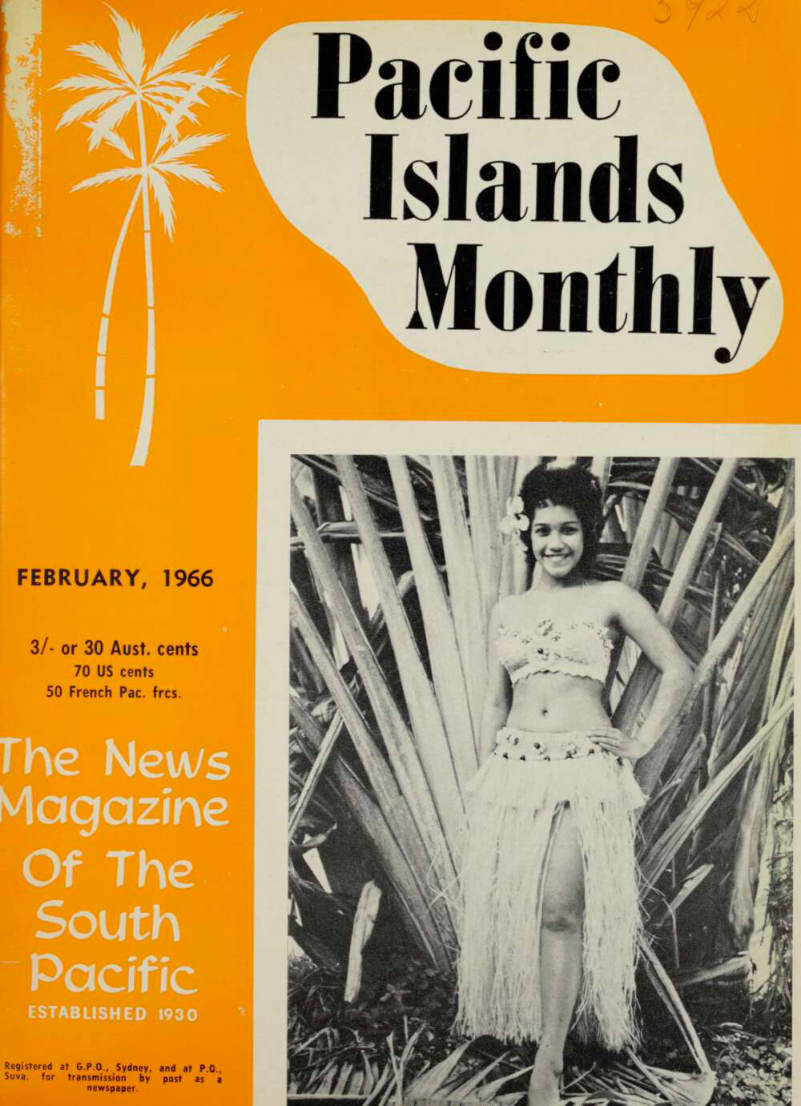 1
1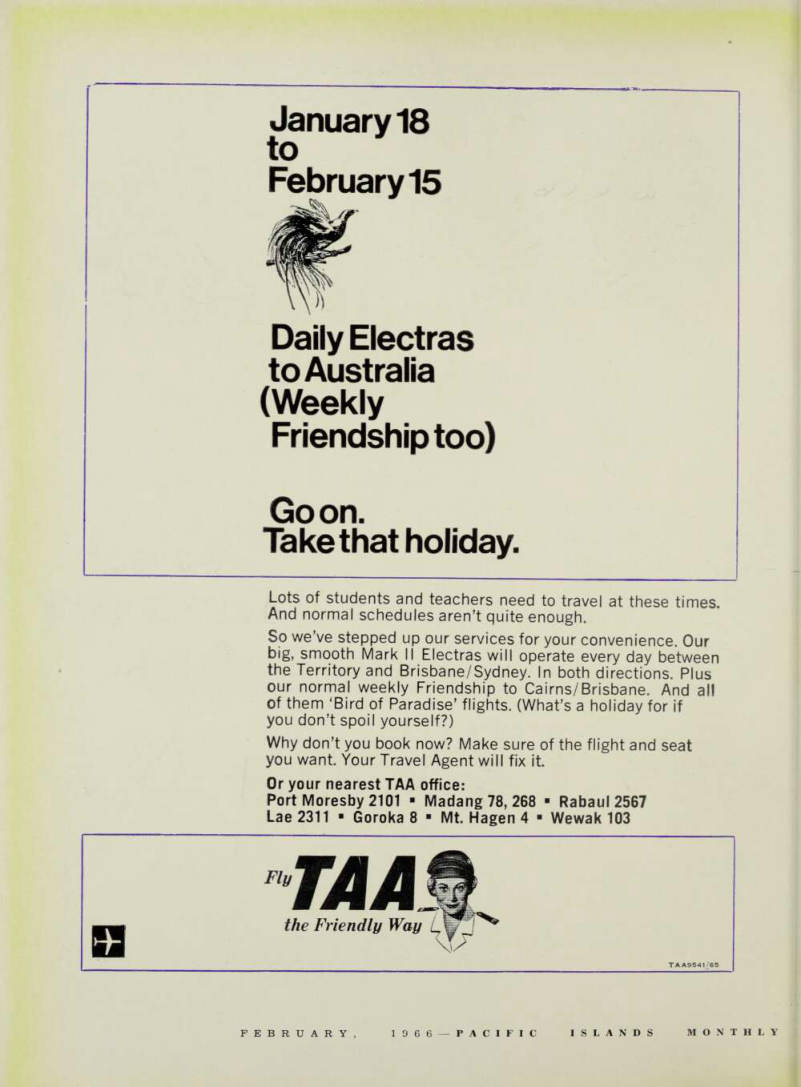 2
2 3
3 4
4 5
5 6
6 7
7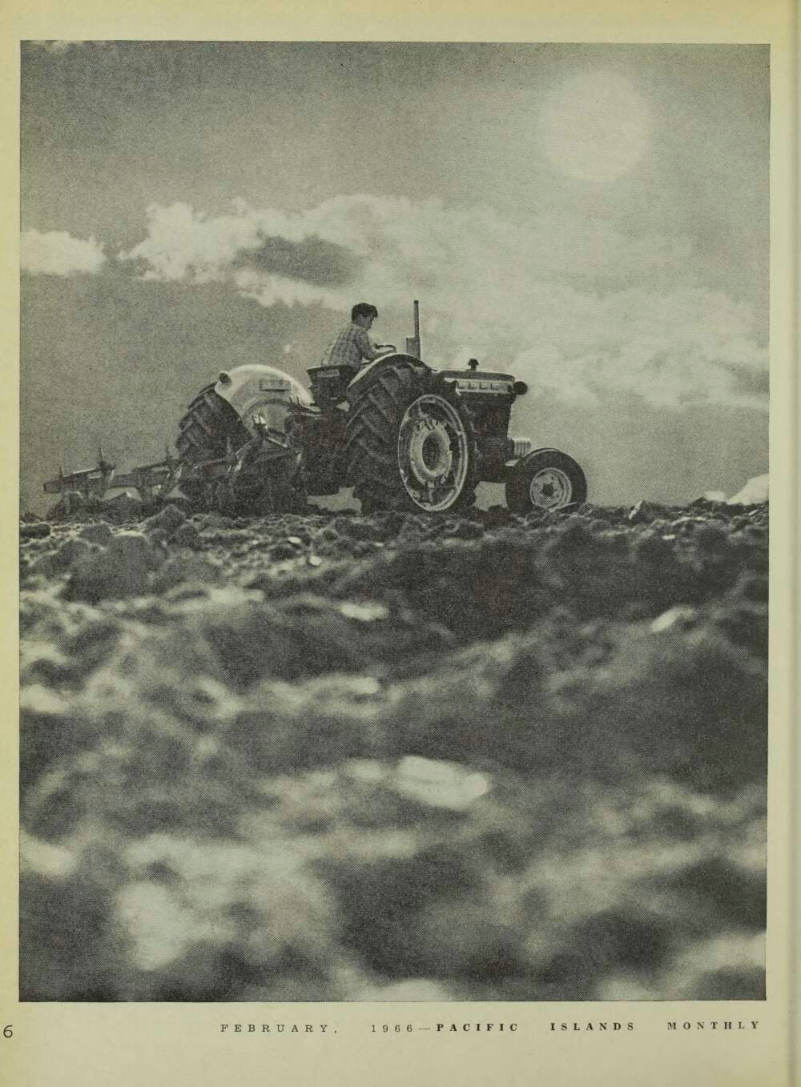 8
8 9
9 10
10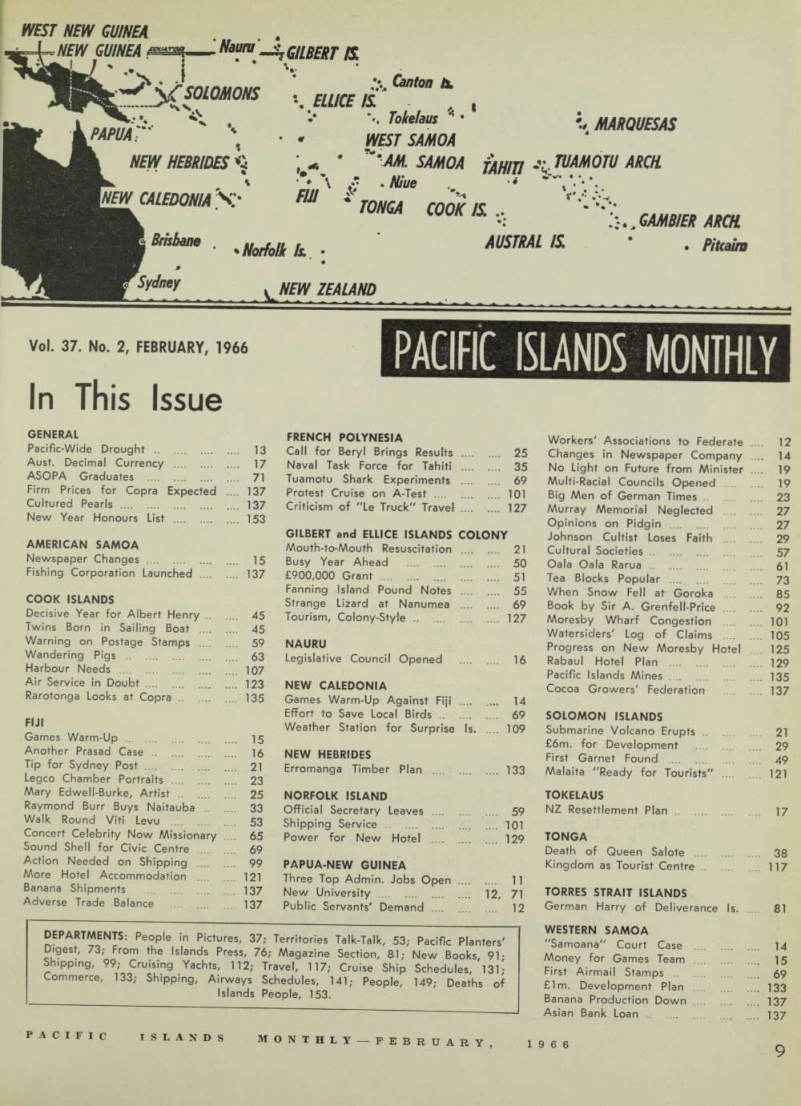 11
11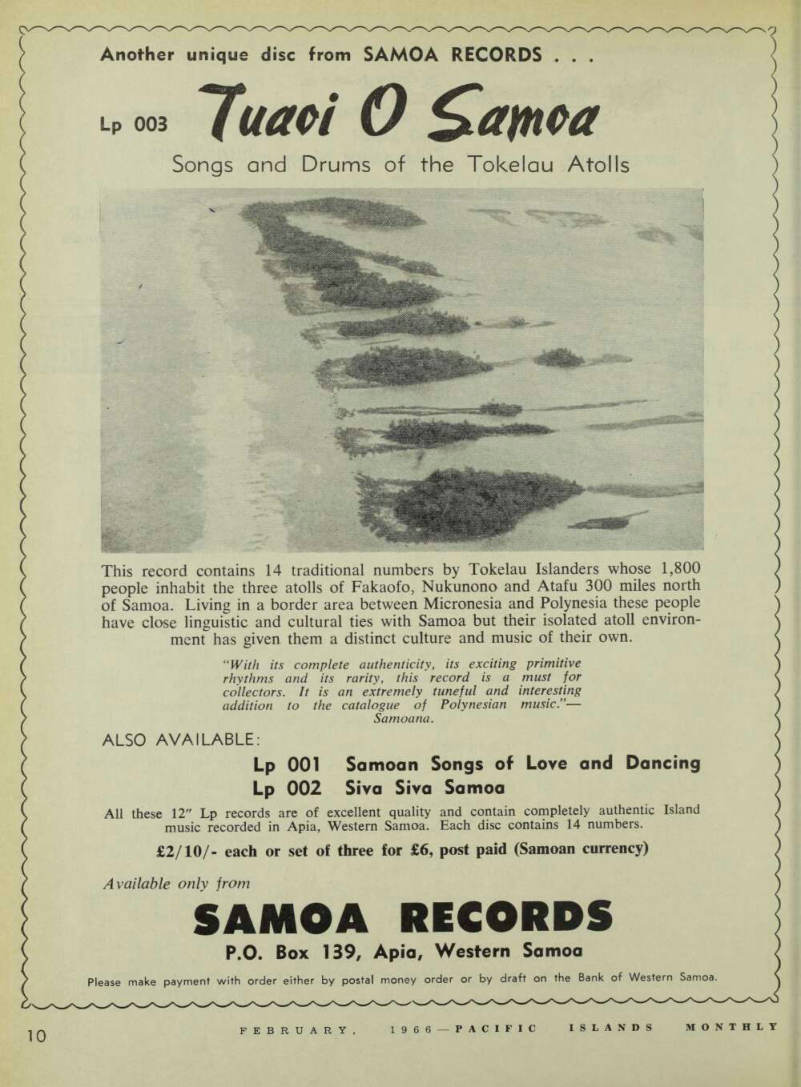 12
12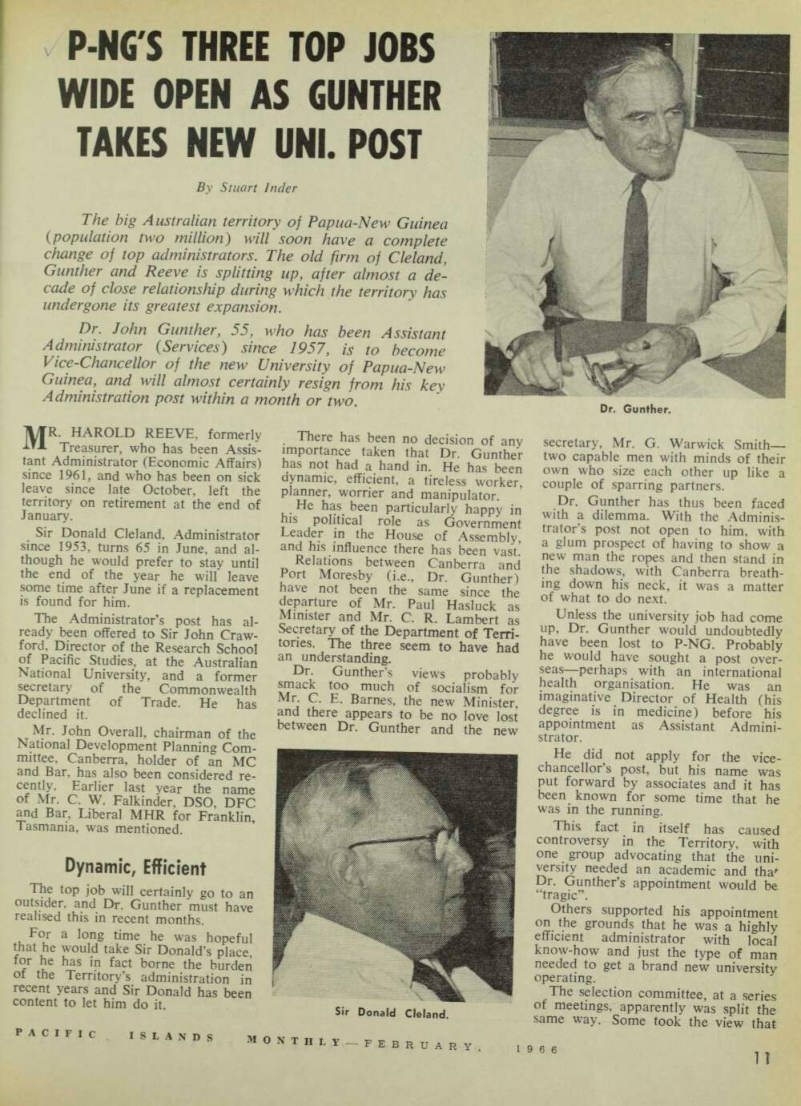 13
13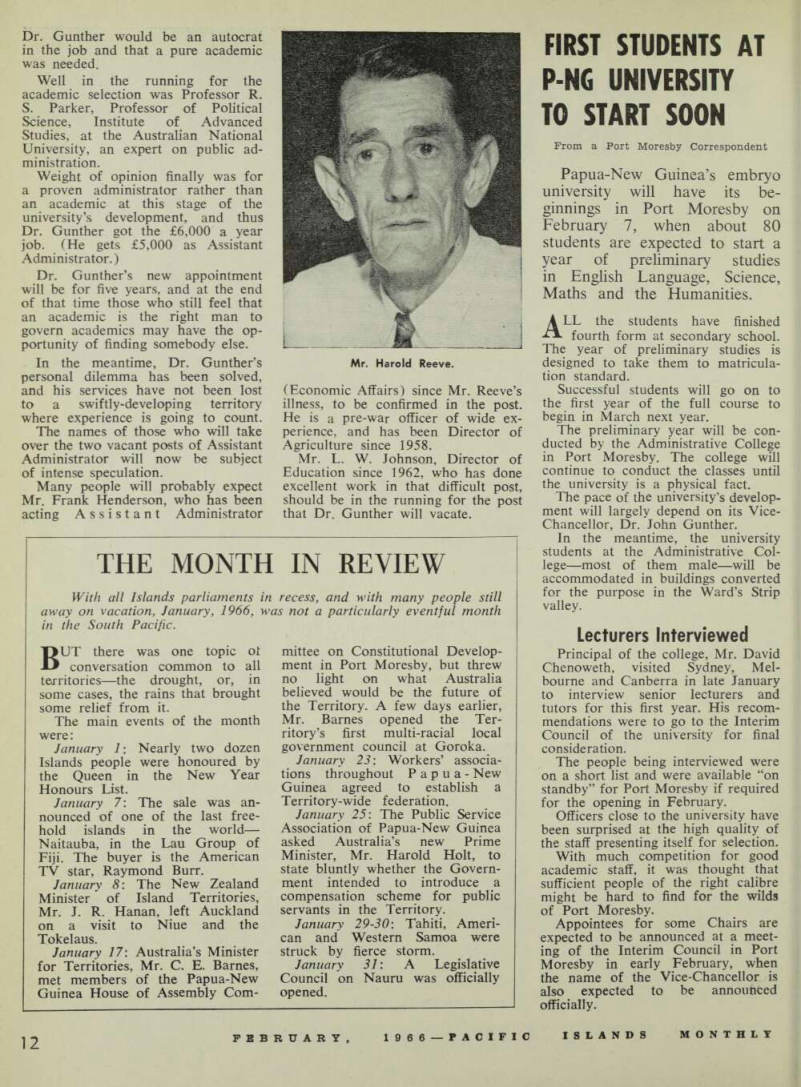 14
14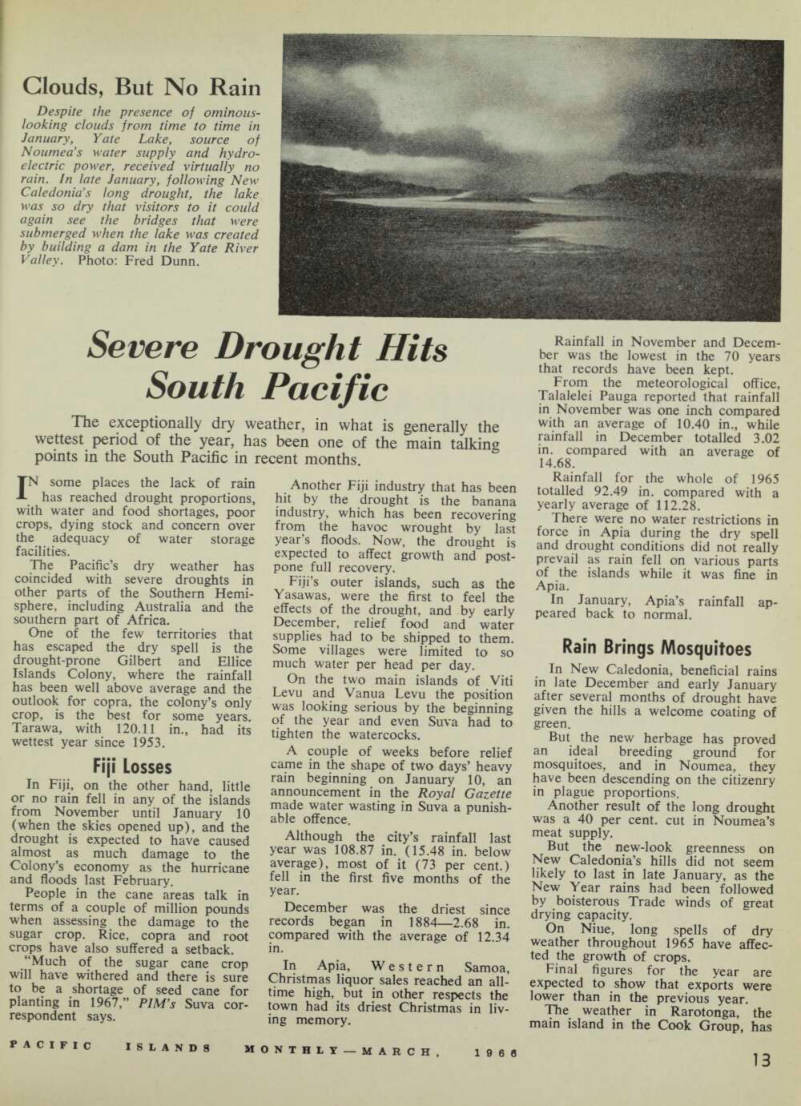 15
15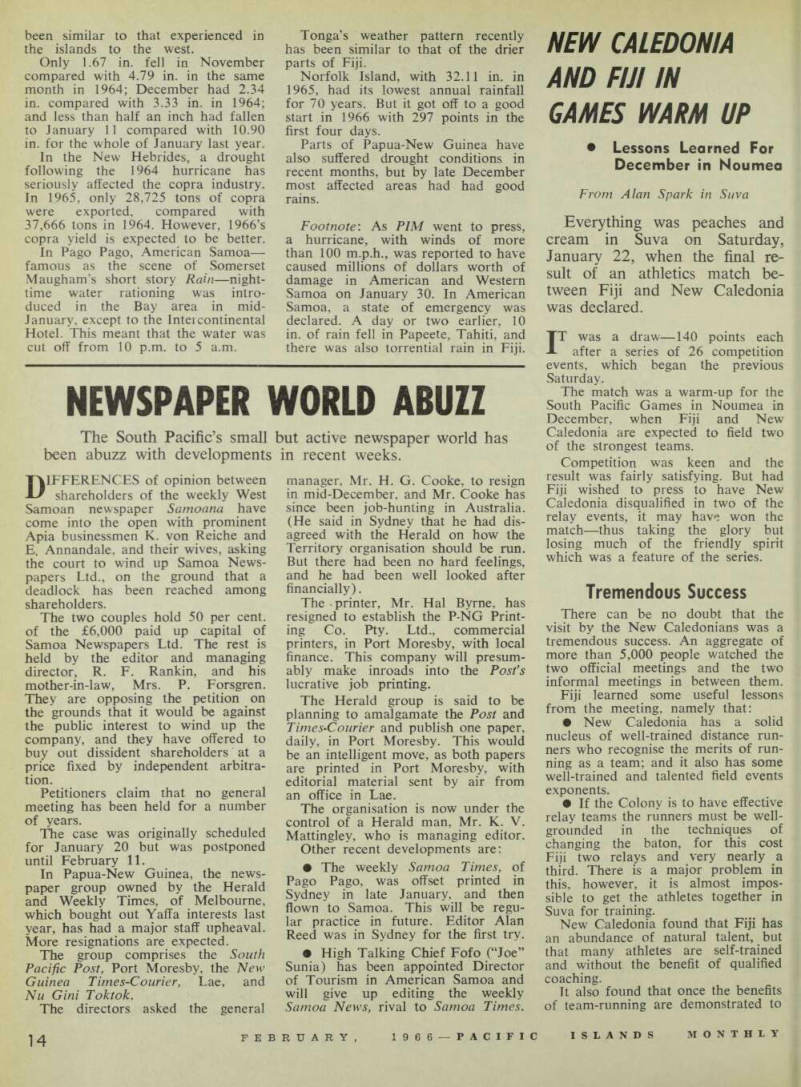 16
16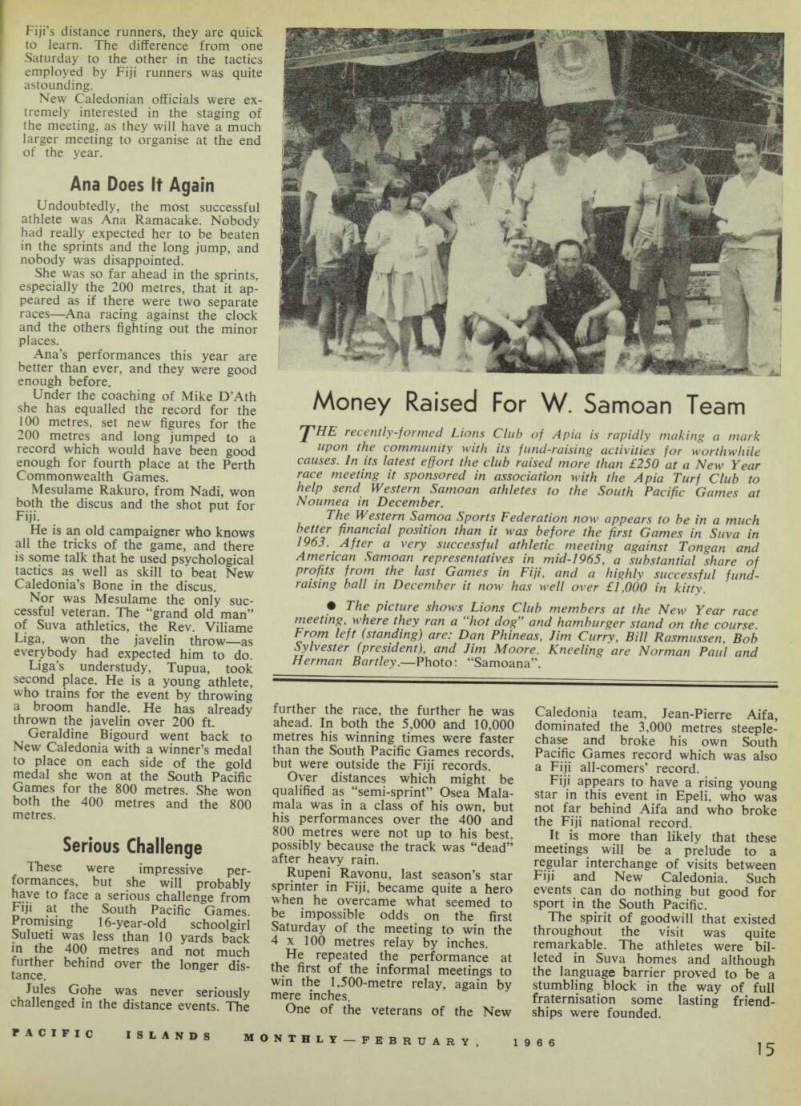 17
17 18
18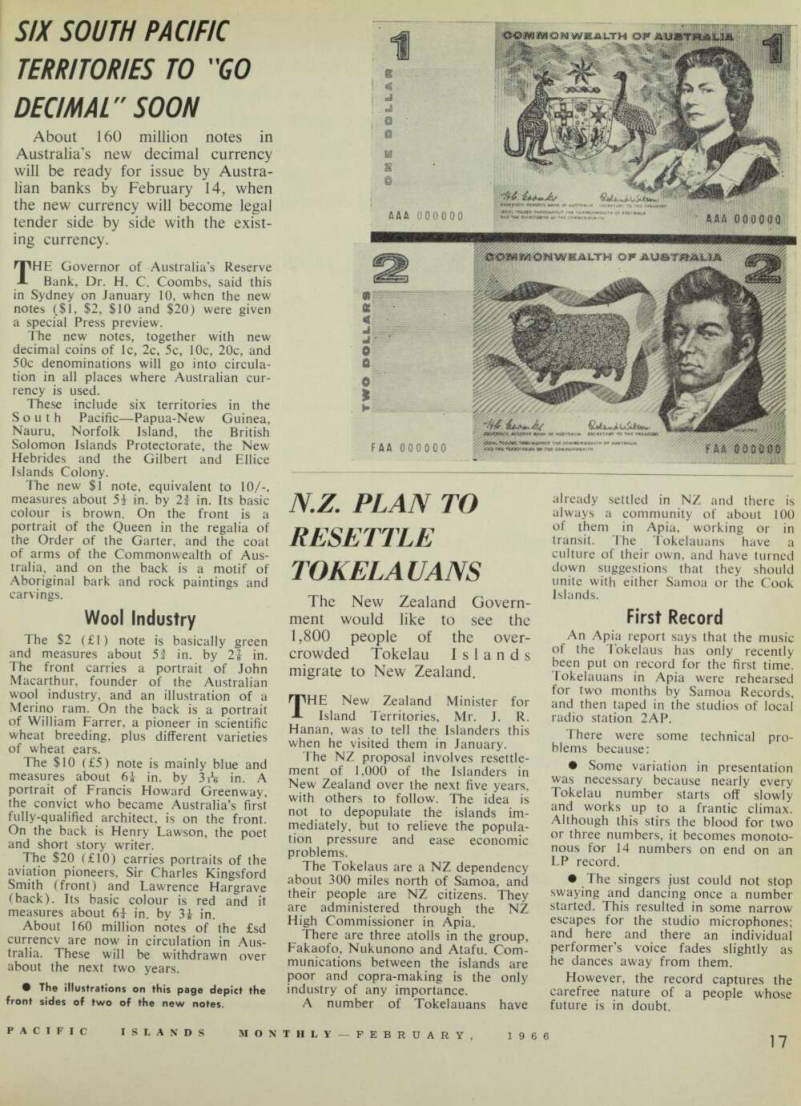 19
19 20
20 21
21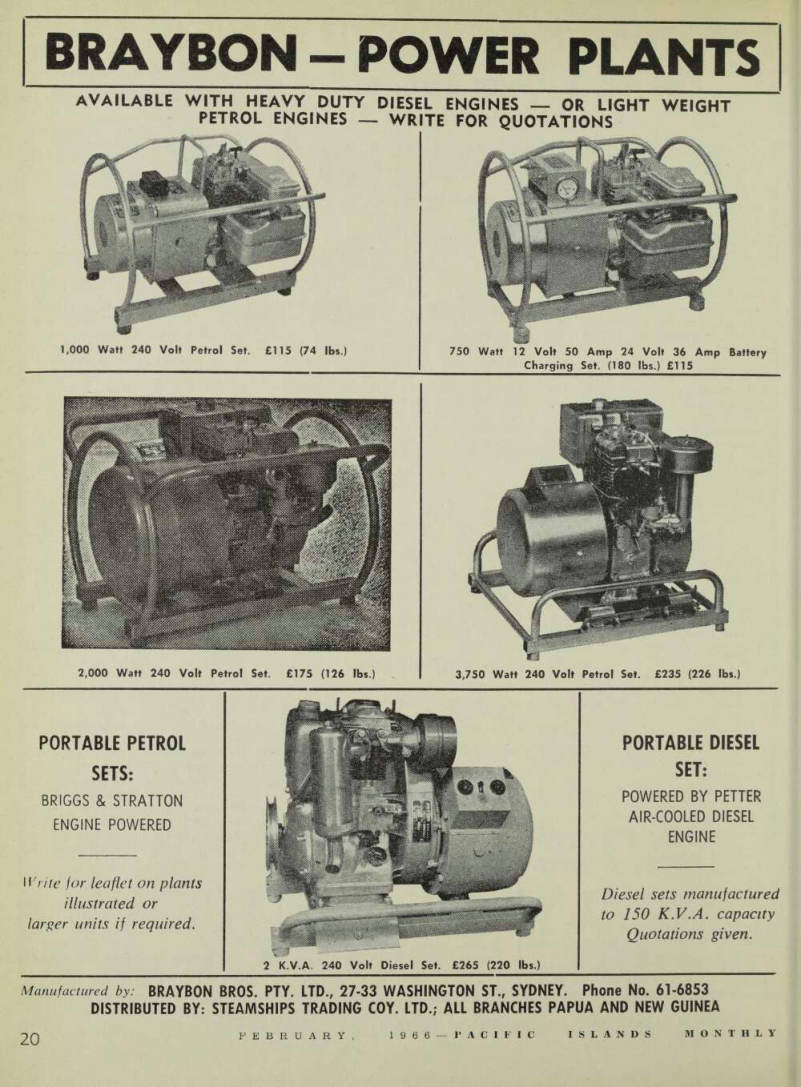 22
22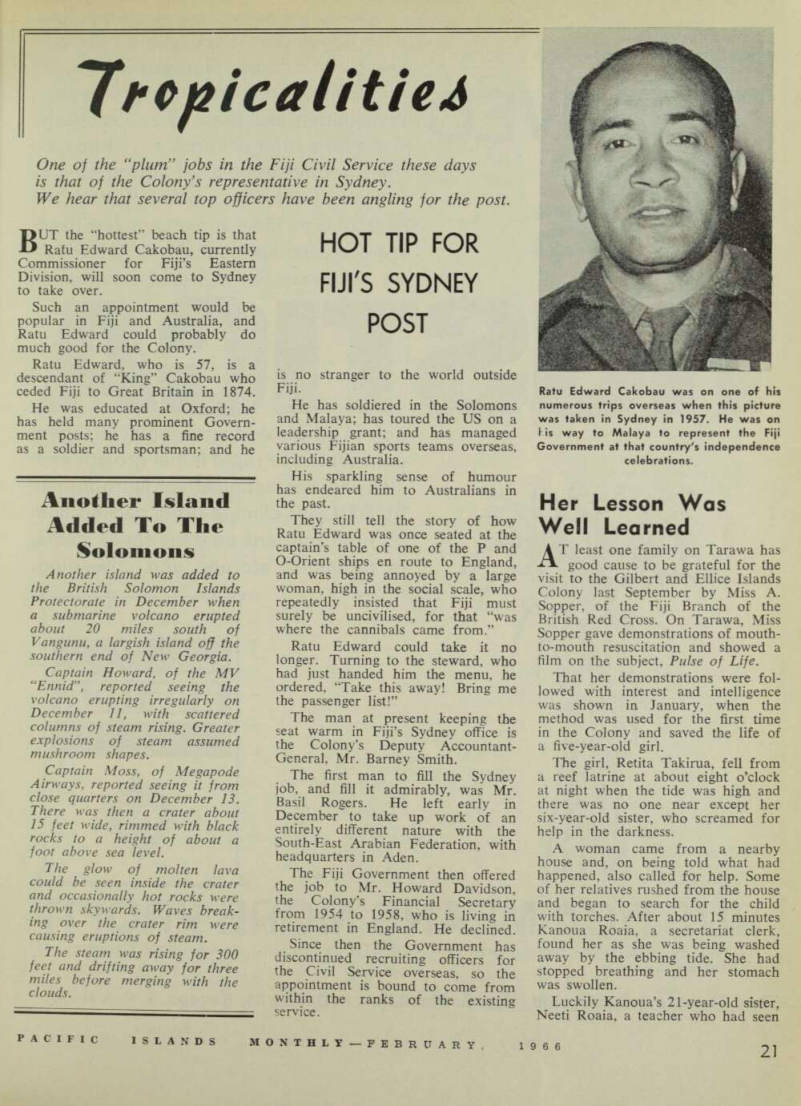 23
23 24
24 25
25 26
26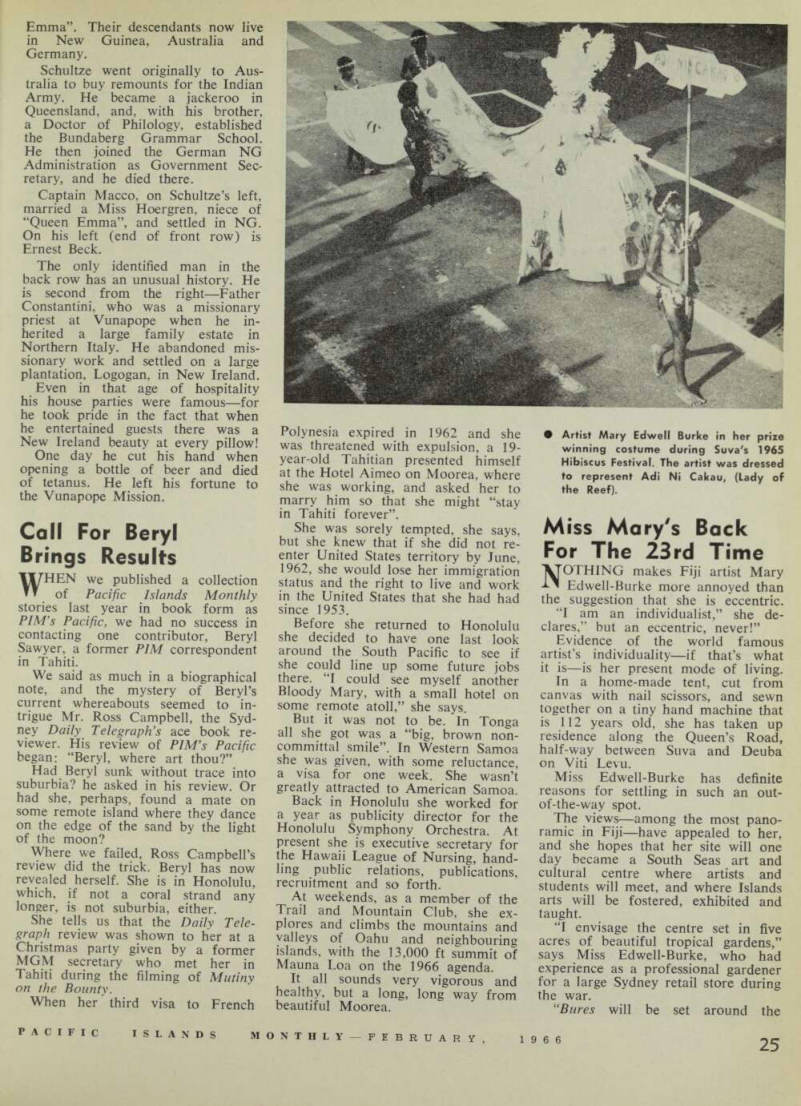 27
27 28
28 29
29 30
30 31
31 32
32 33
33 34
34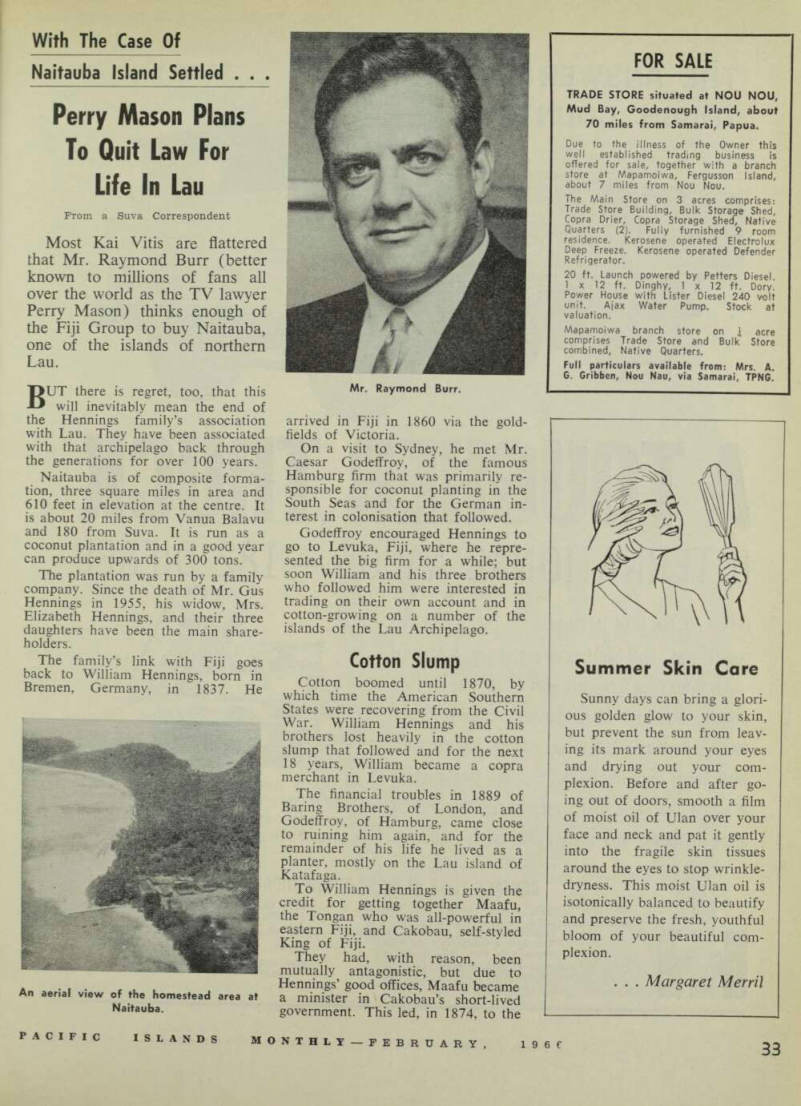 35
35 36
36 37
37 38
38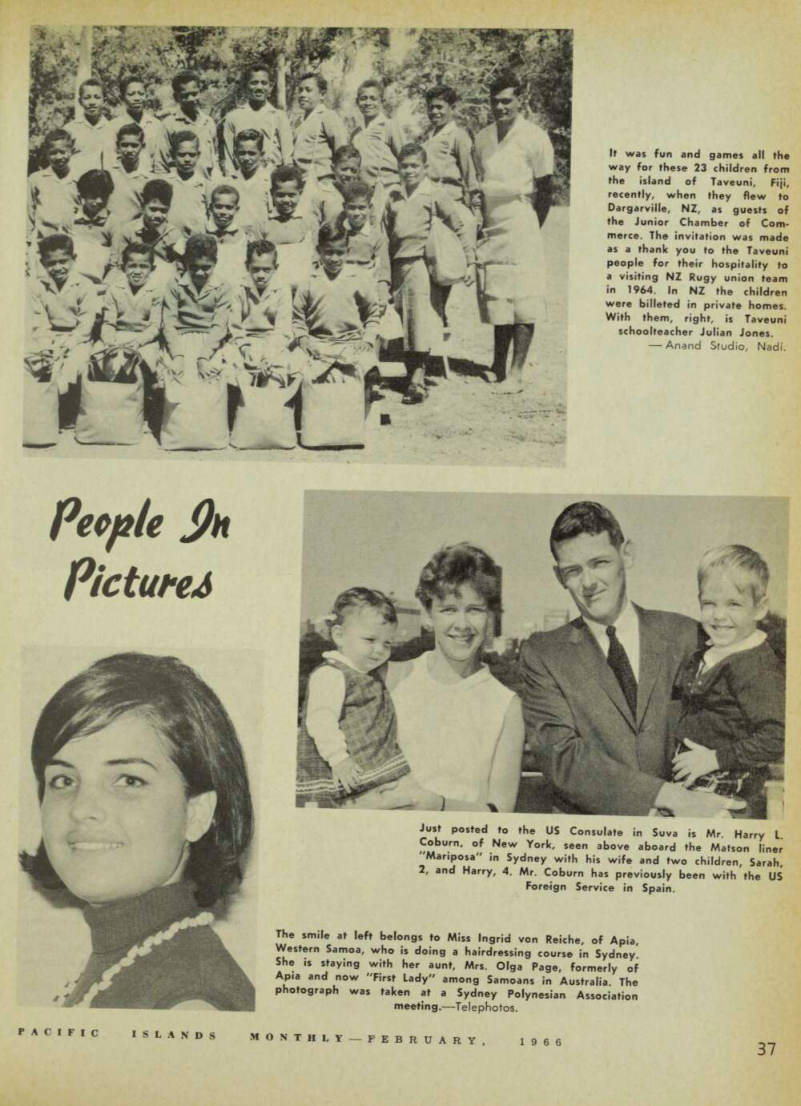 39
39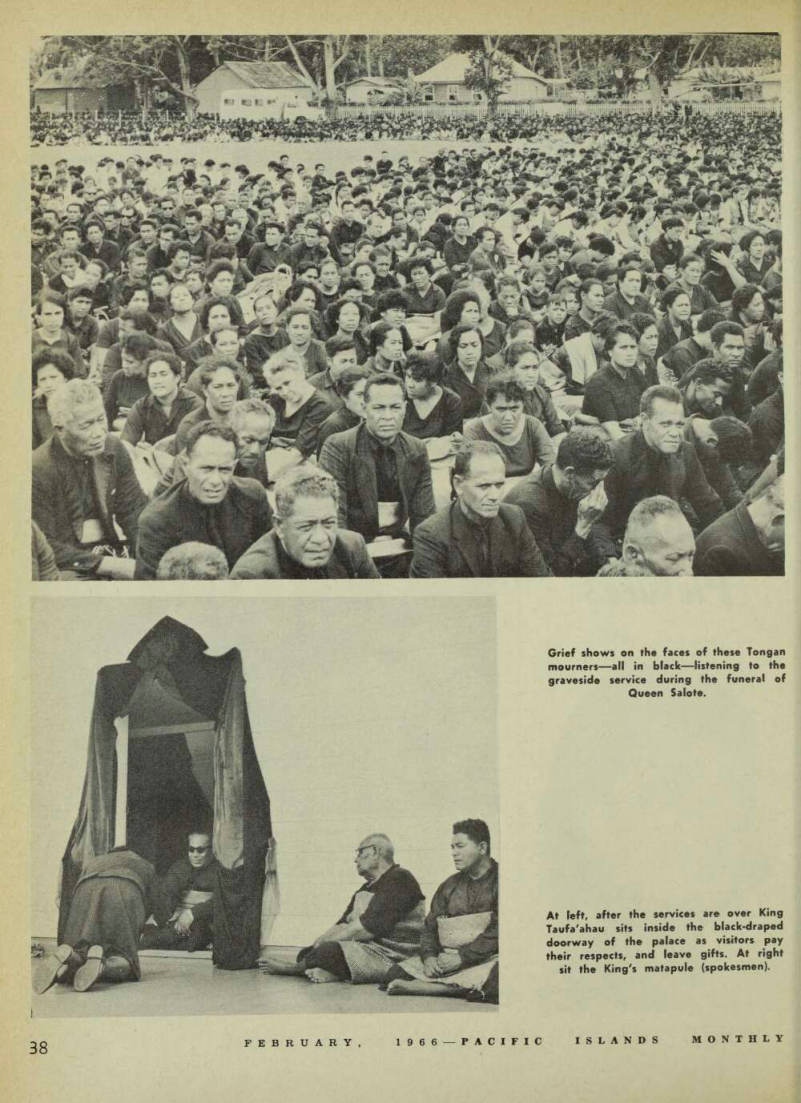 40
40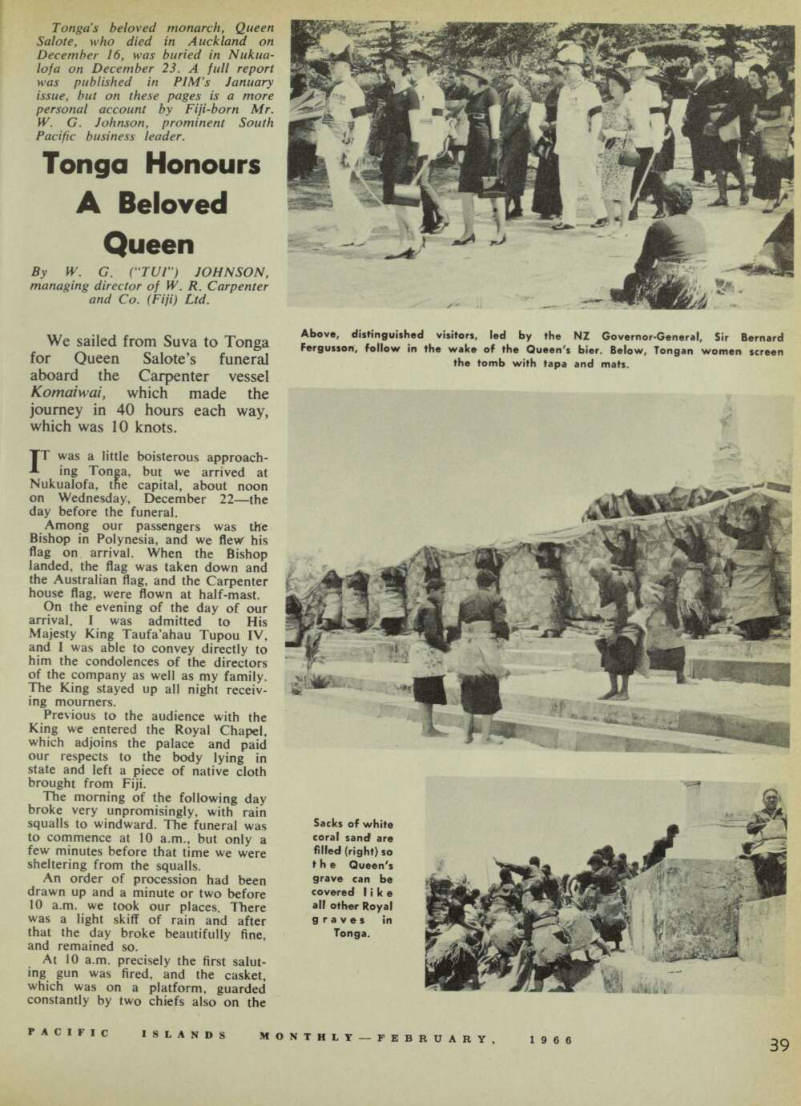 41
41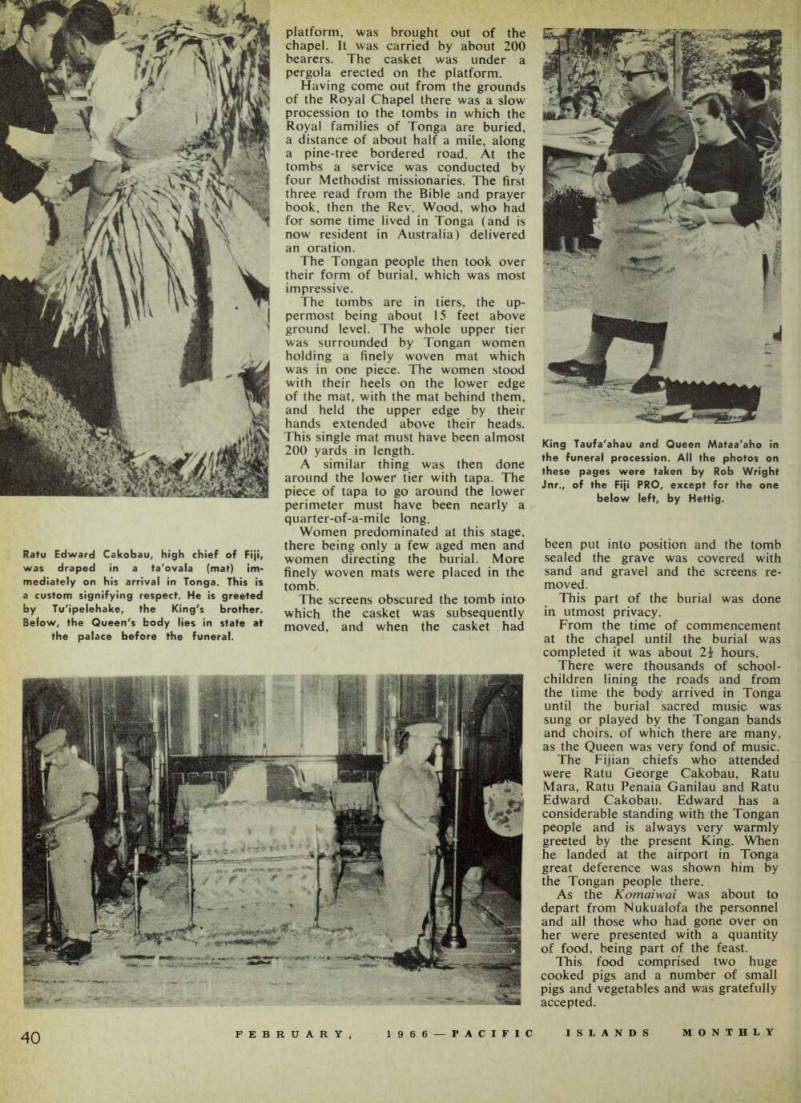 42
42 43
43 44
44 45
45 46
46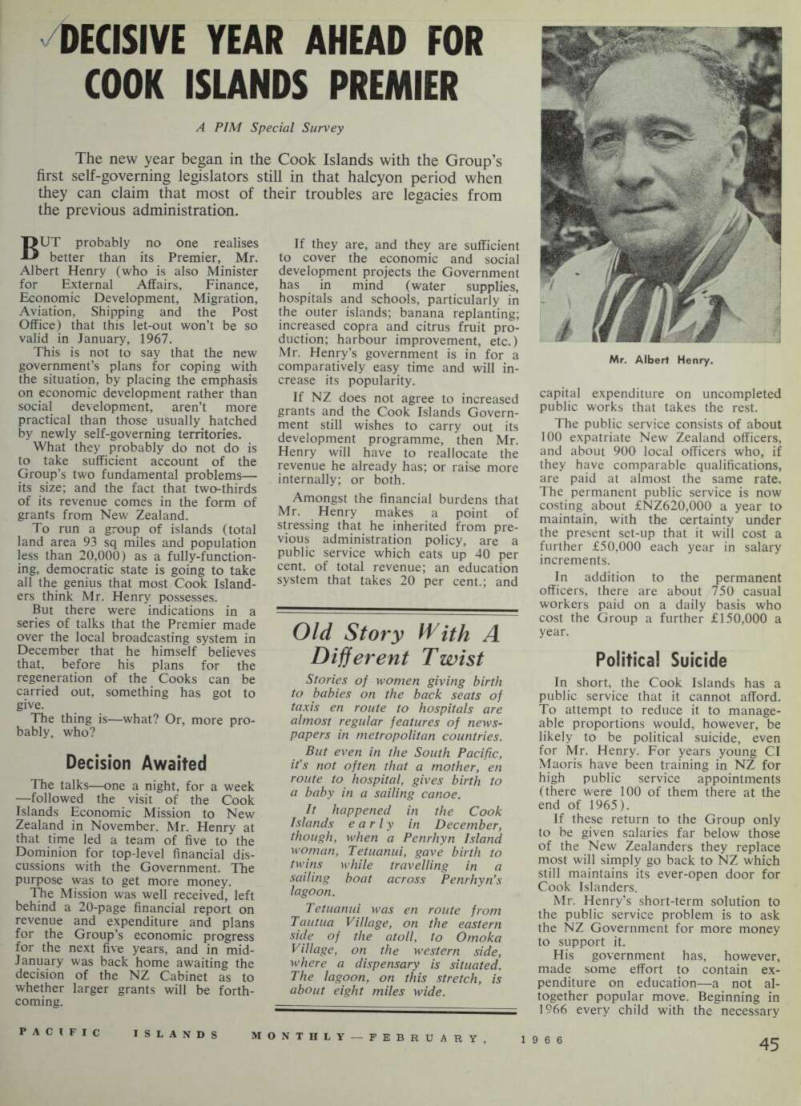 47
47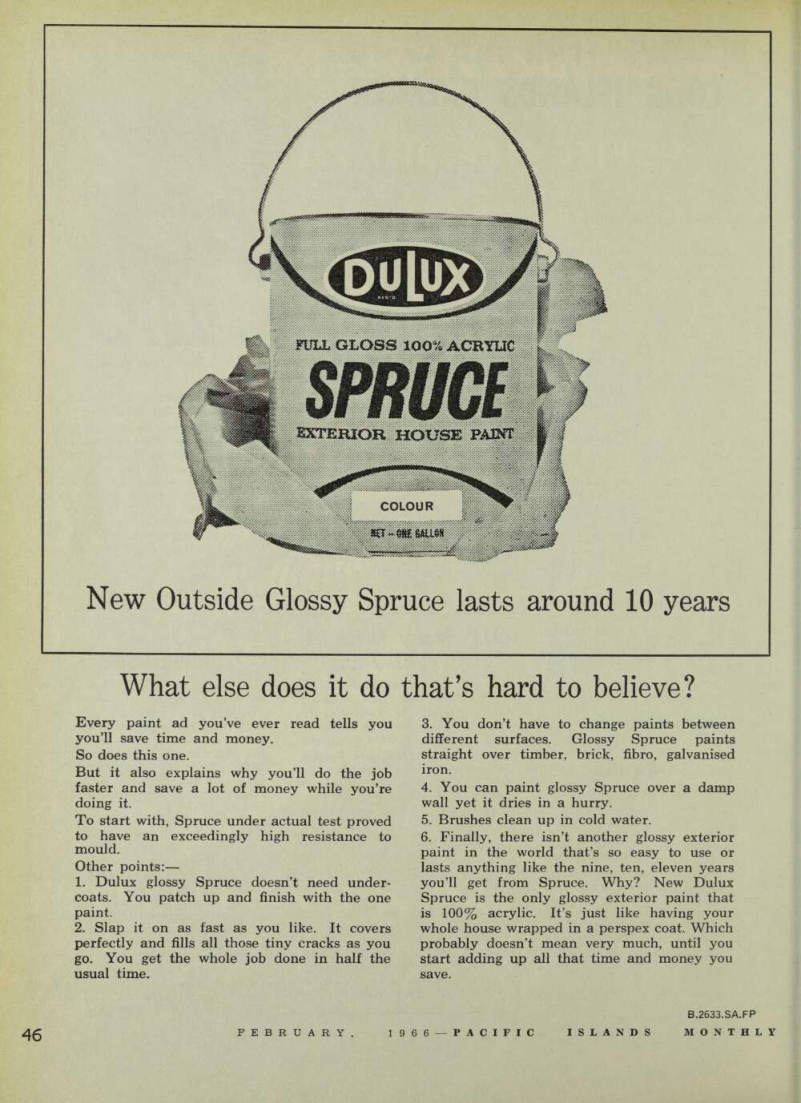 48
48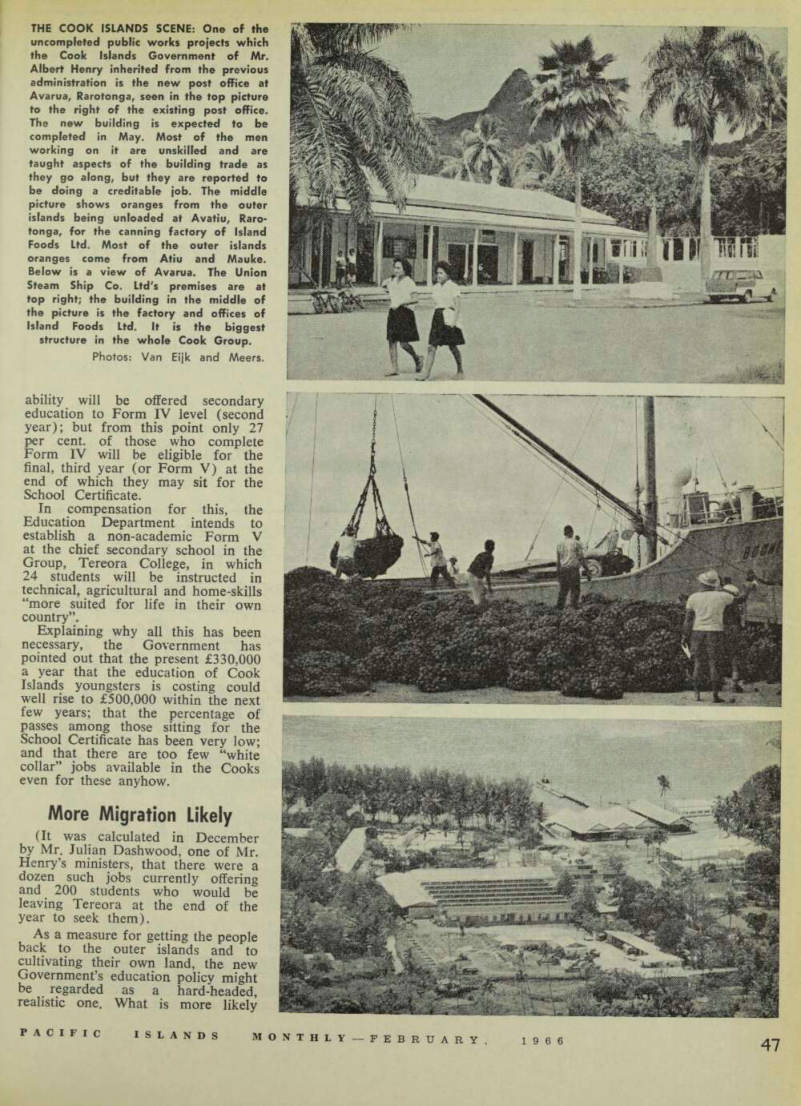 49
49 50
50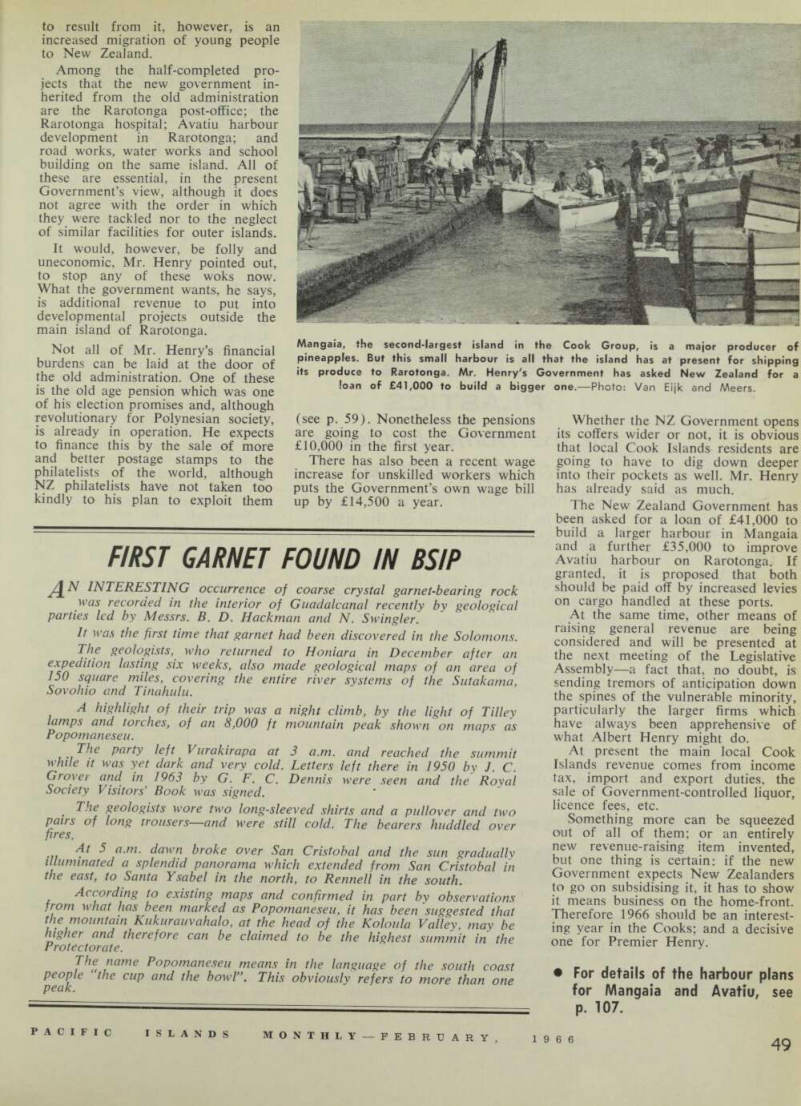 51
51 52
52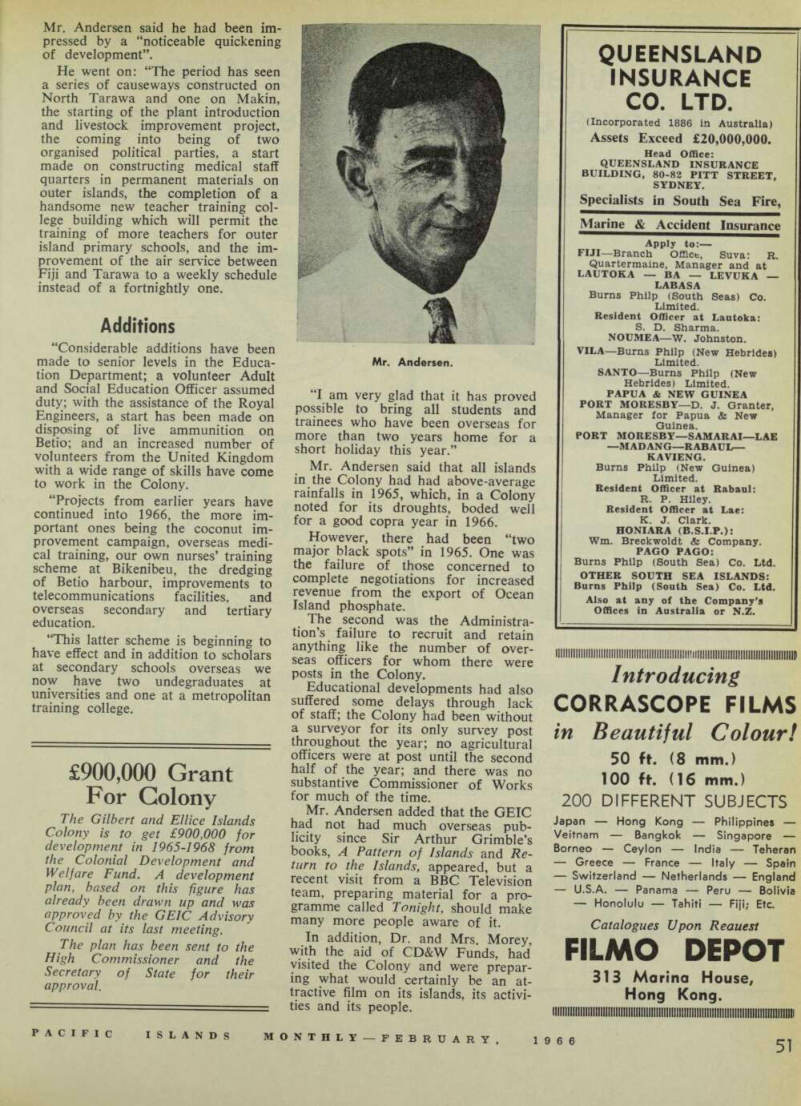 53
53 54
54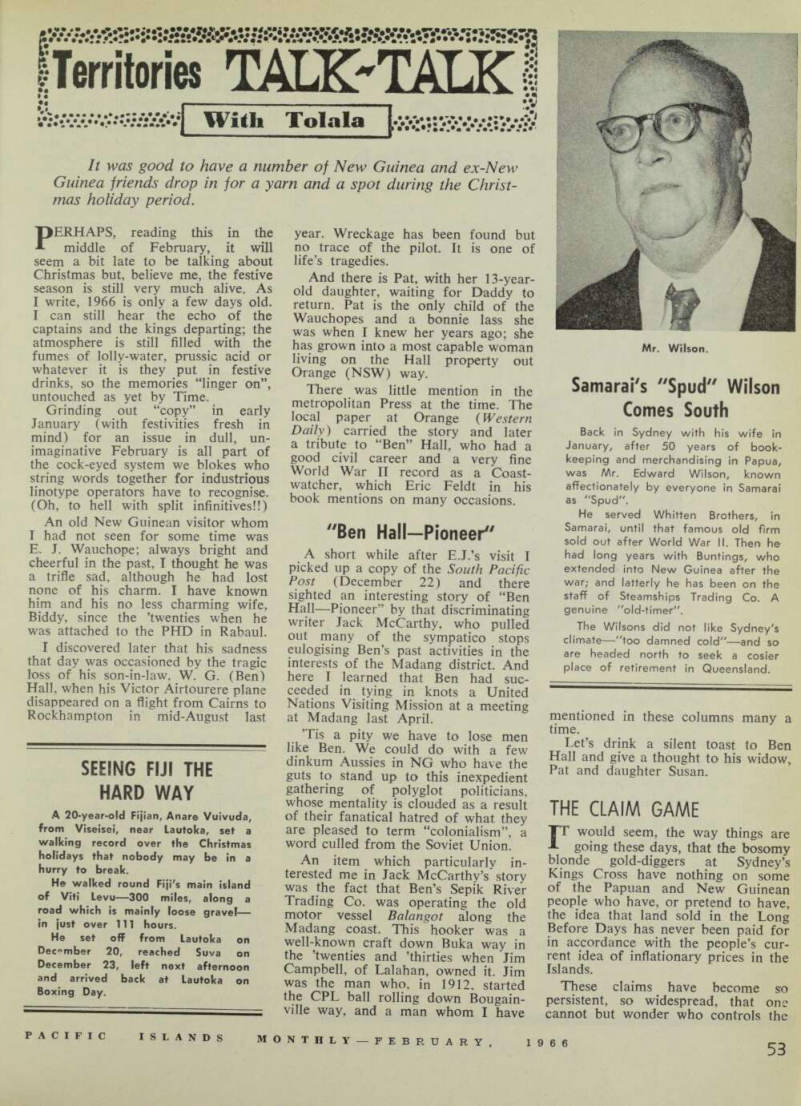 55
55 56
56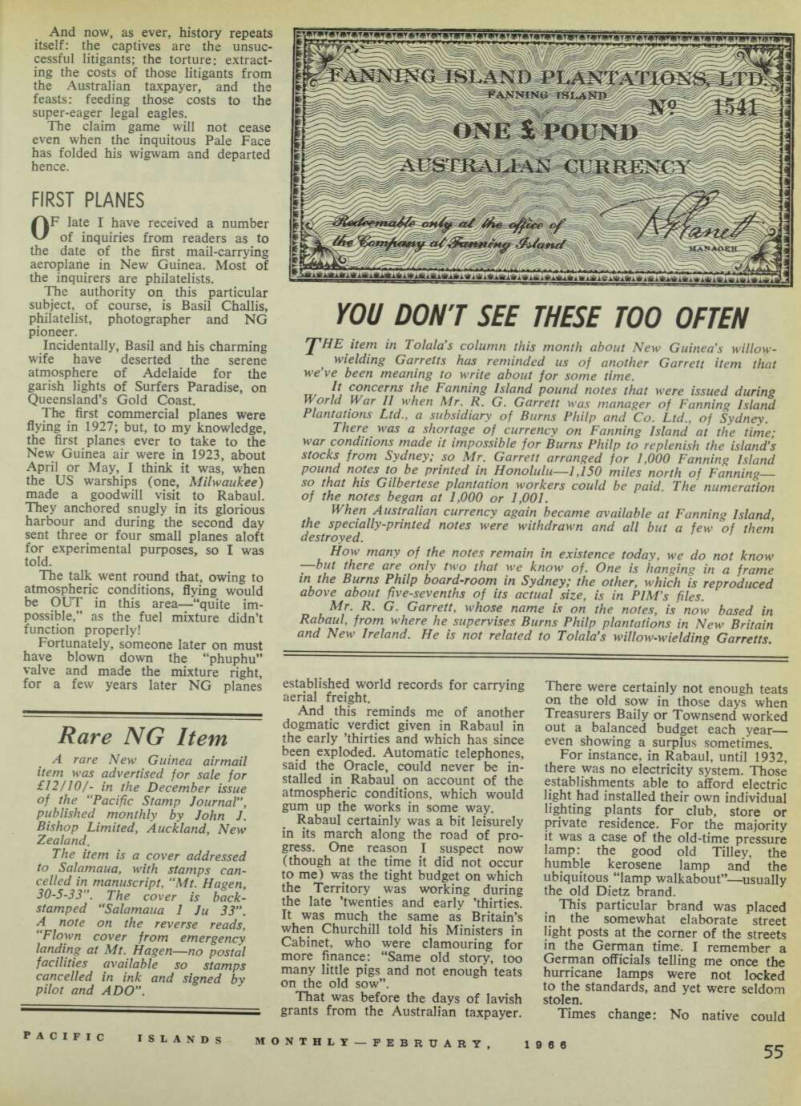 57
57 58
58 59
59 60
60 61
61 62
62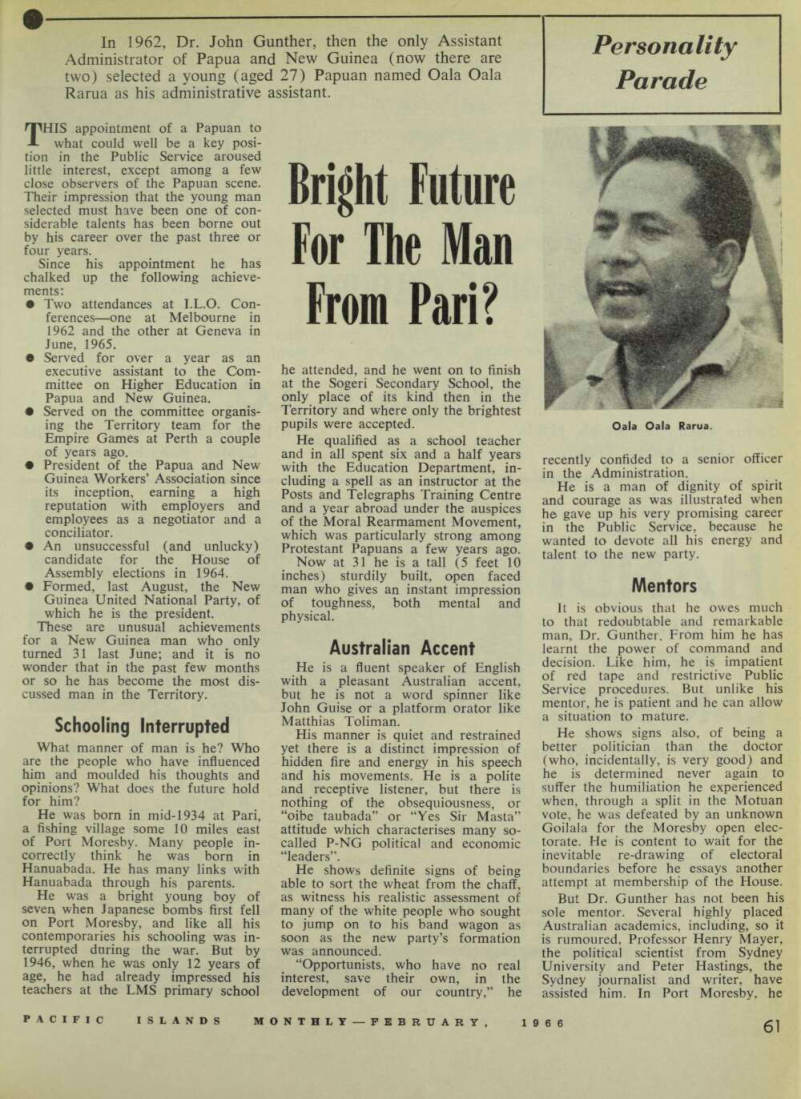 63
63 64
64 65
65 66
66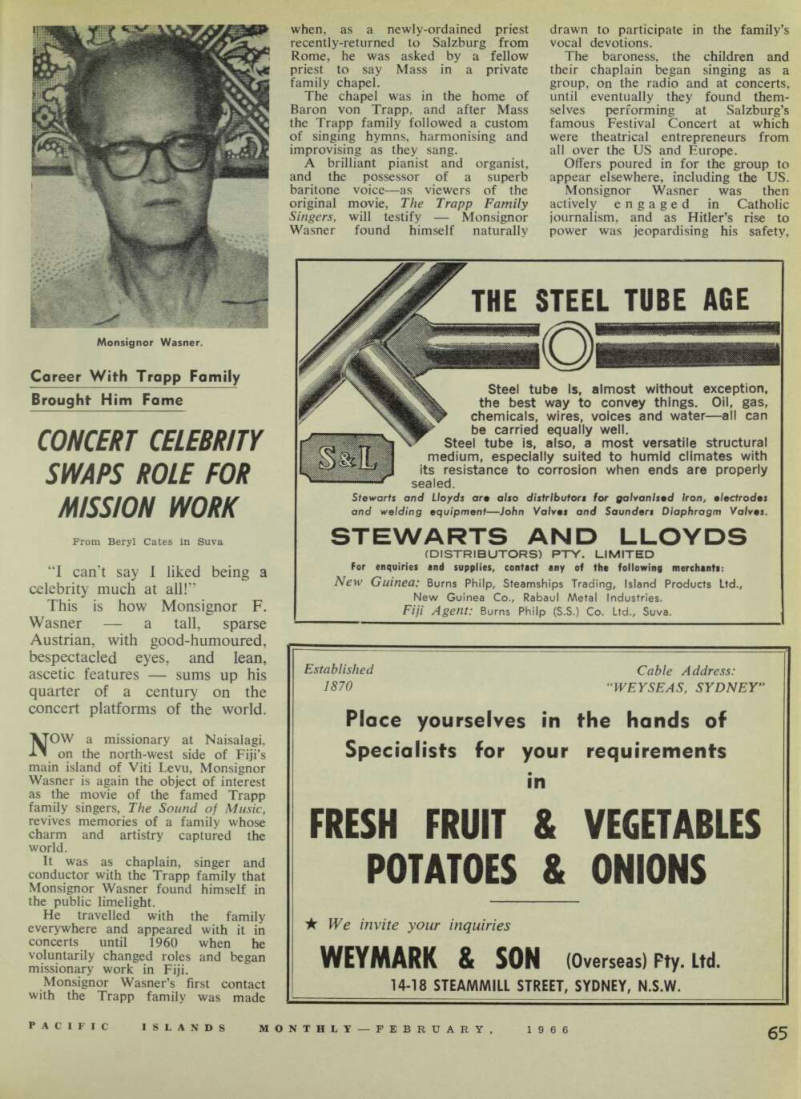 67
67 68
68 69
69 70
70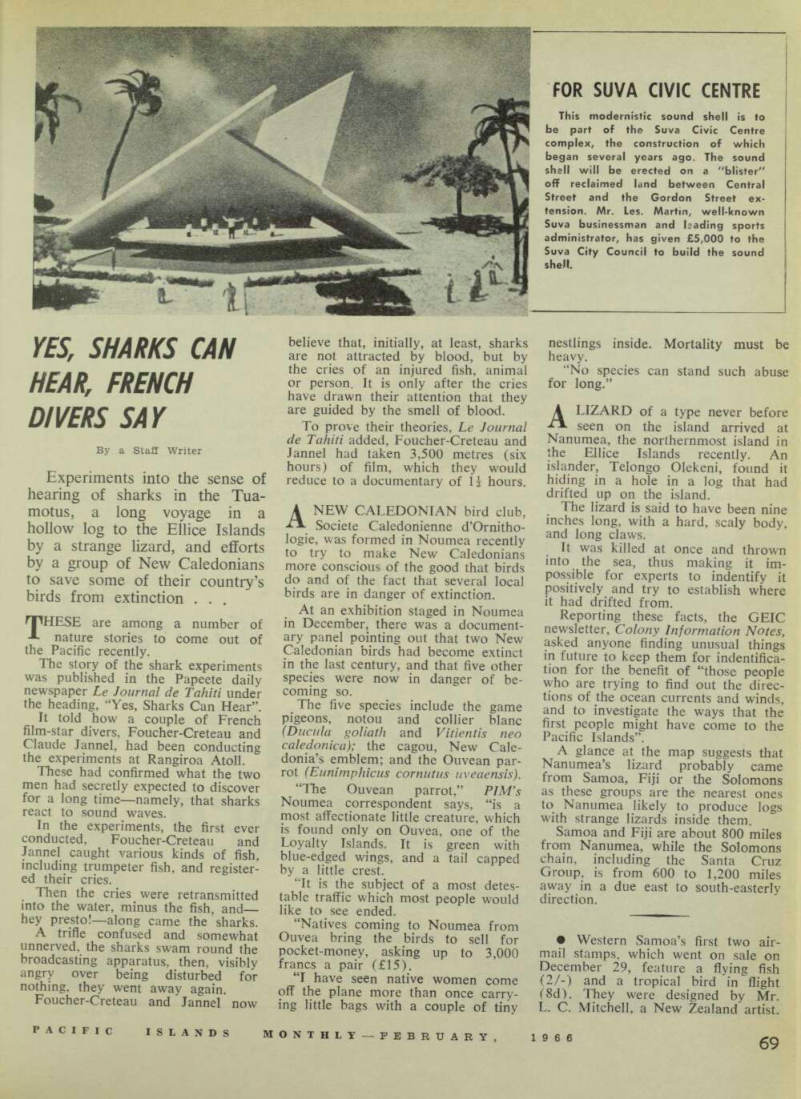 71
71 72
72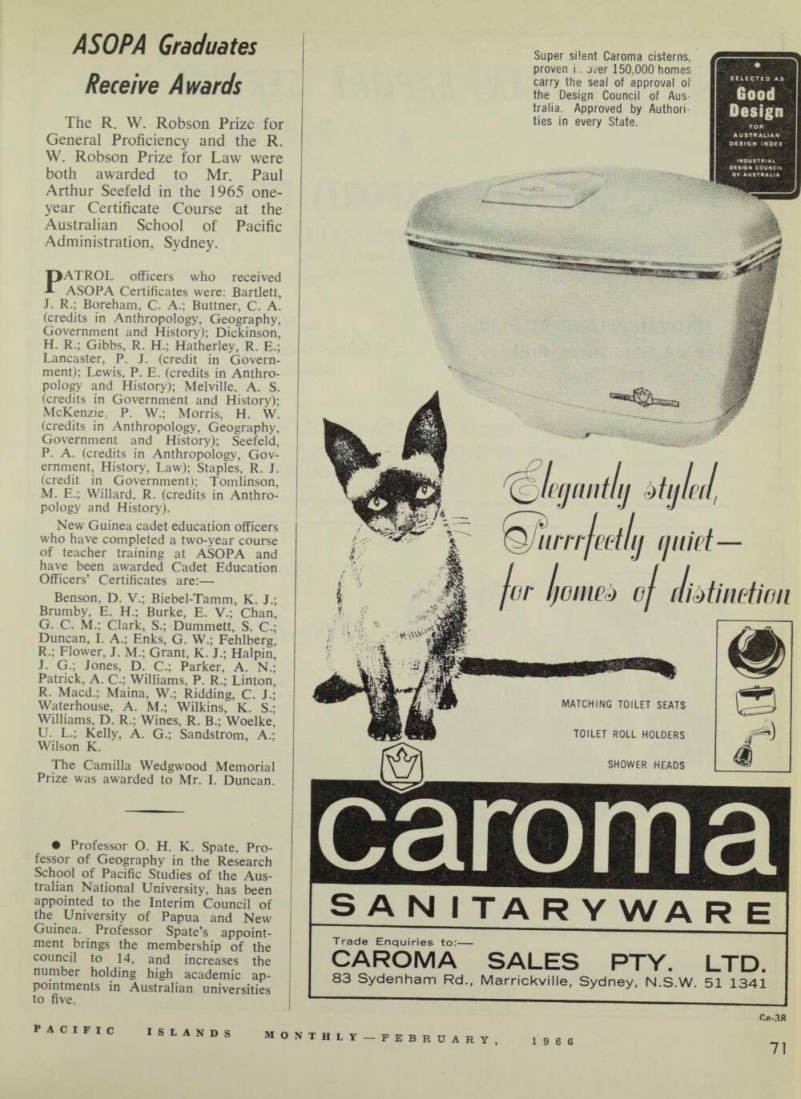 73
73 74
74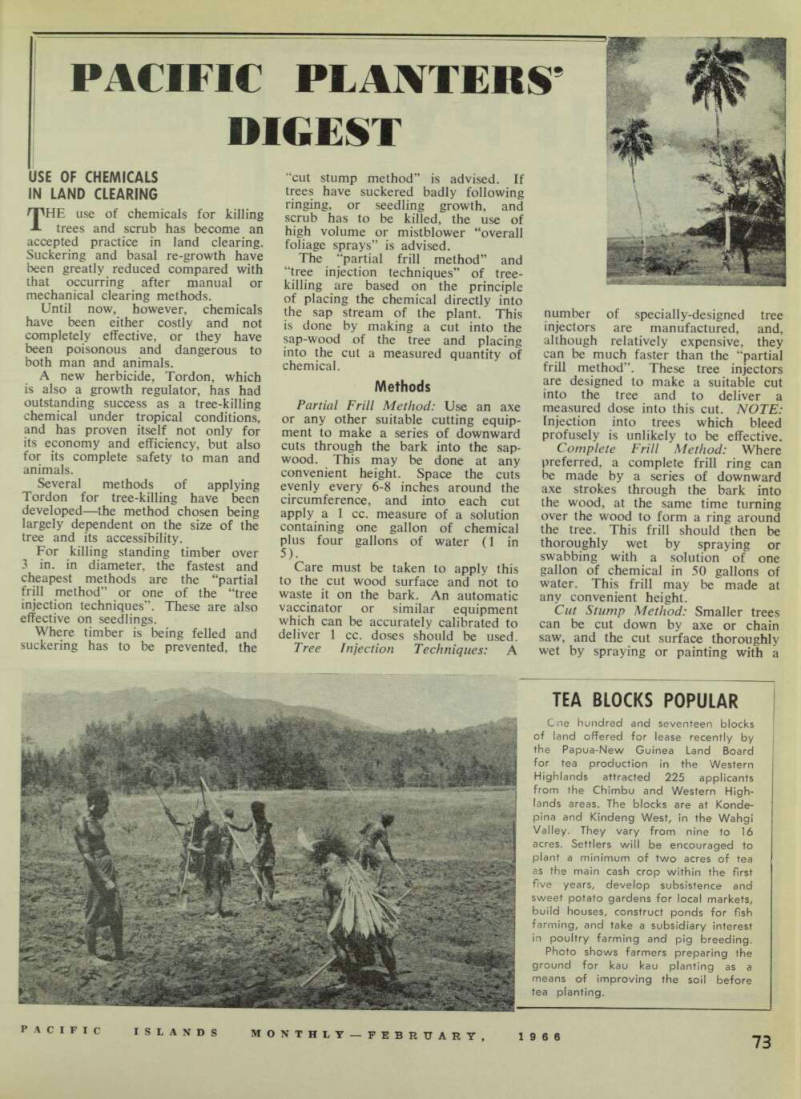 75
75 76
76 77
77 78
78 79
79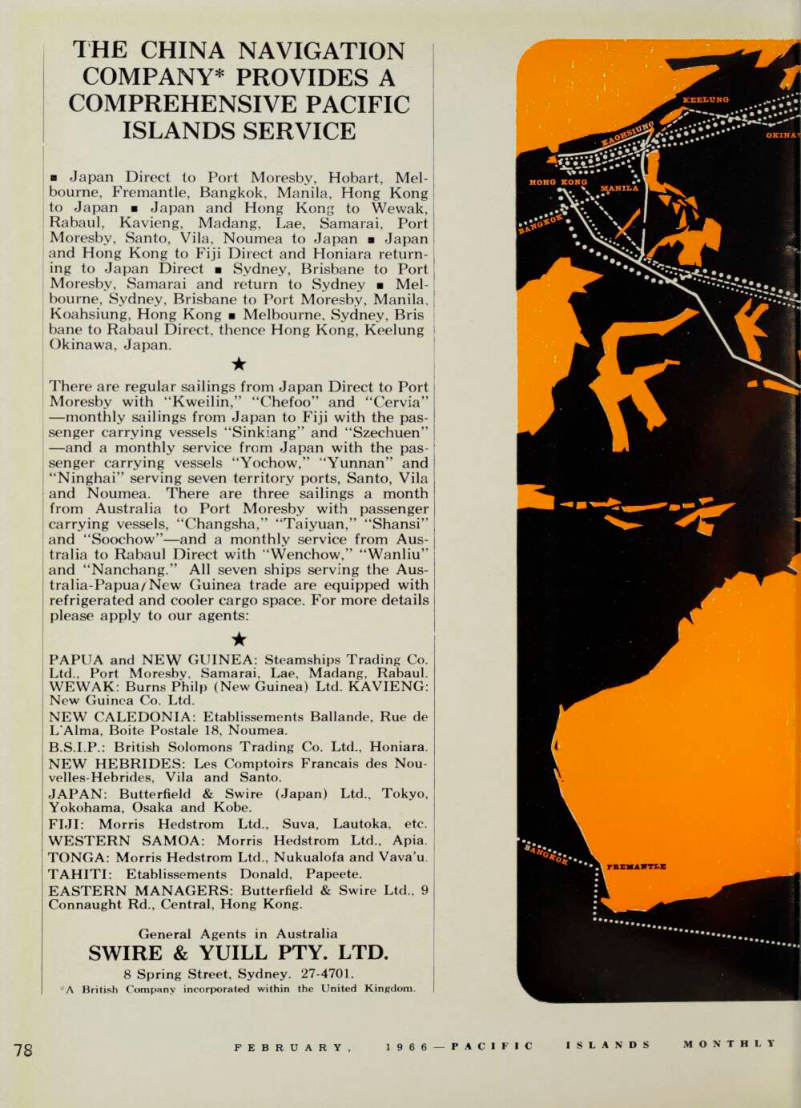 80
80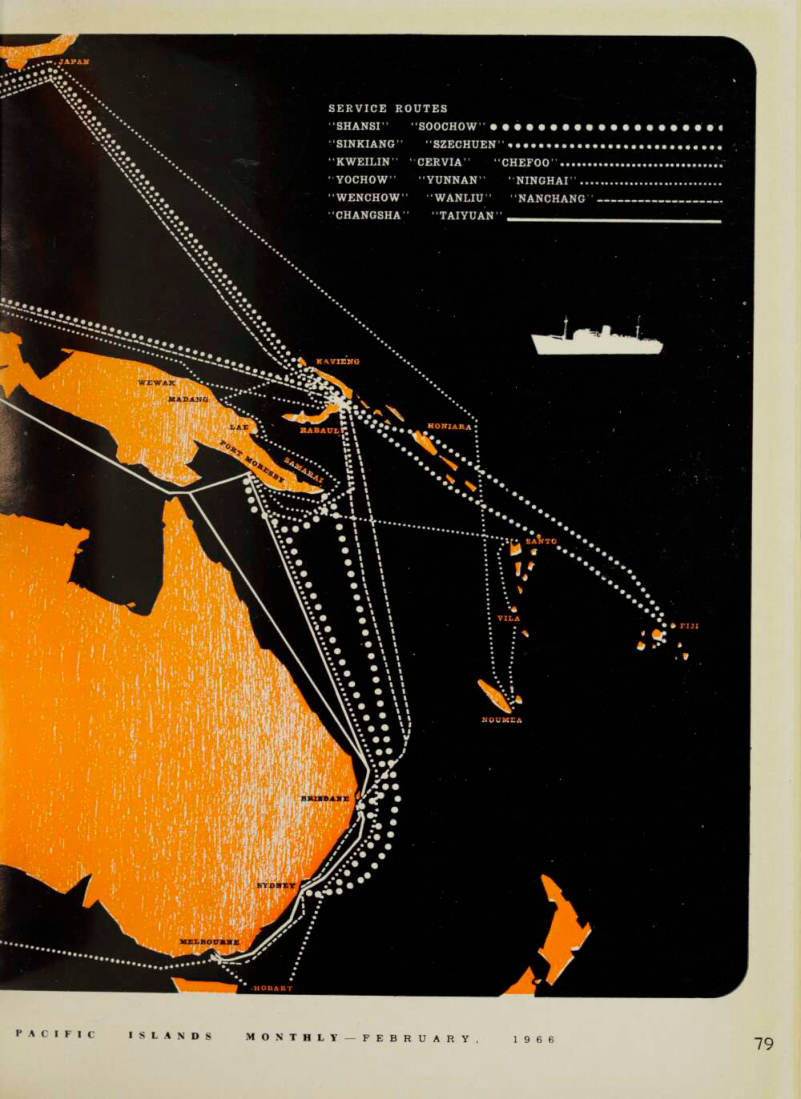 81
81 82
82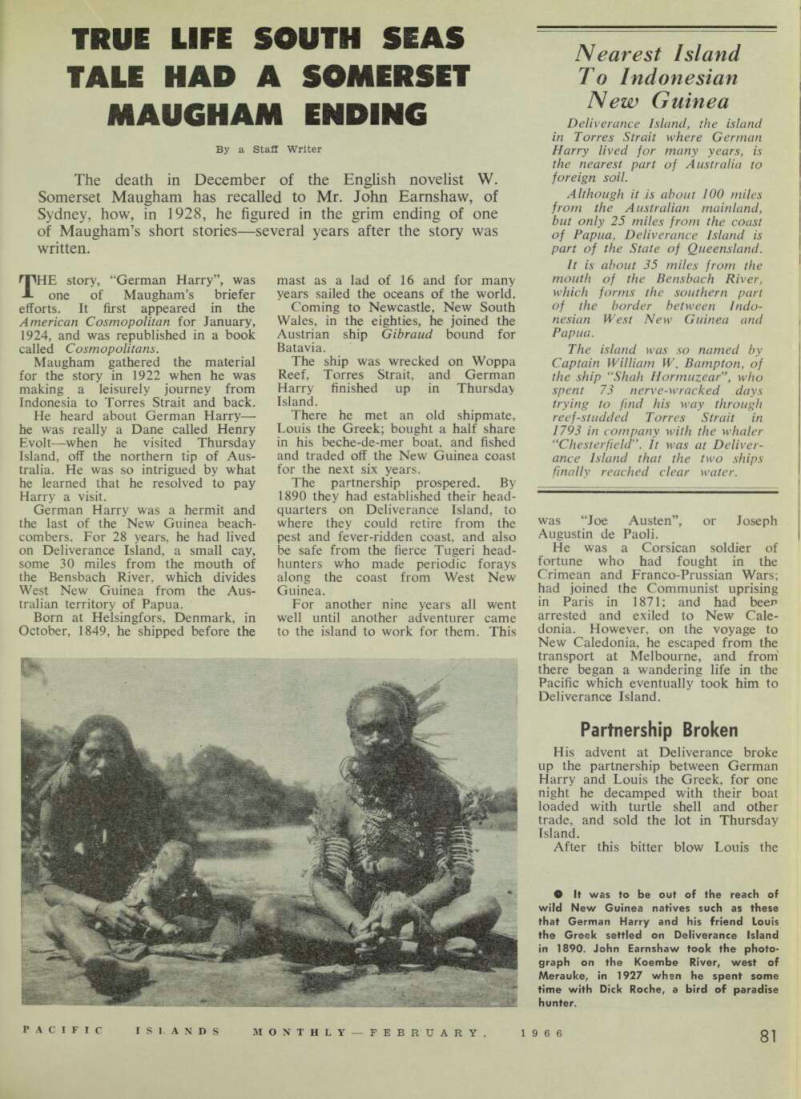 83
83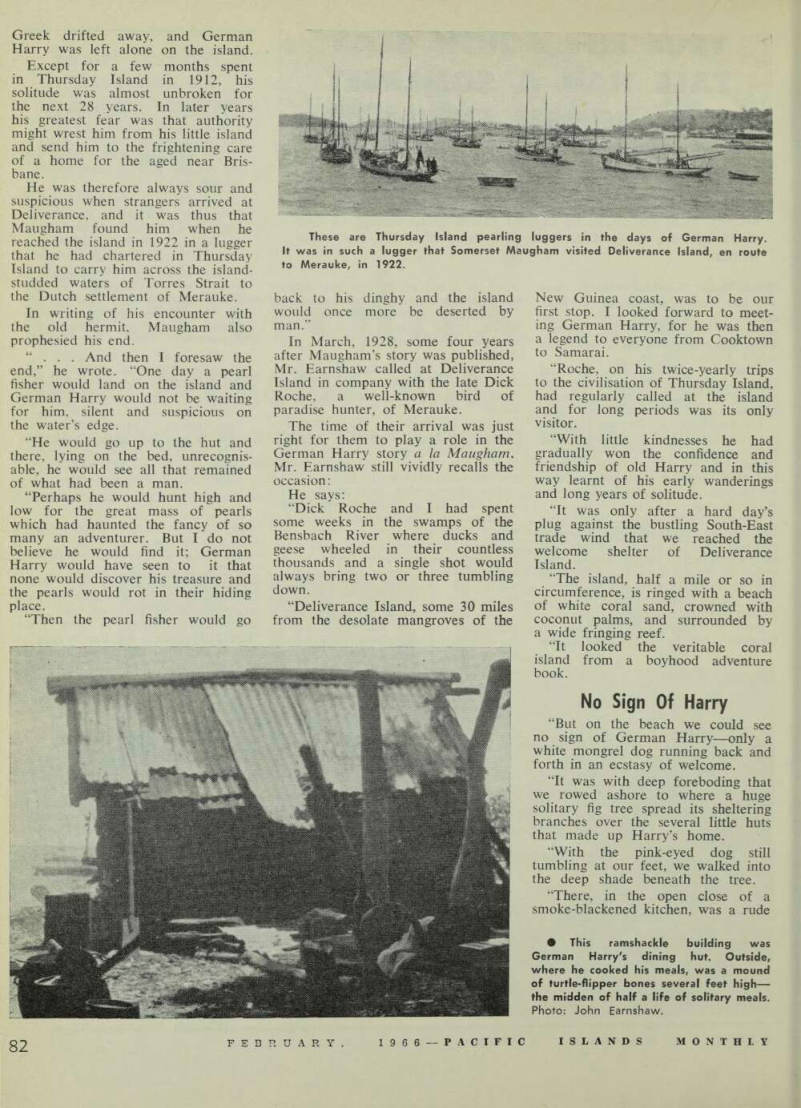 84
84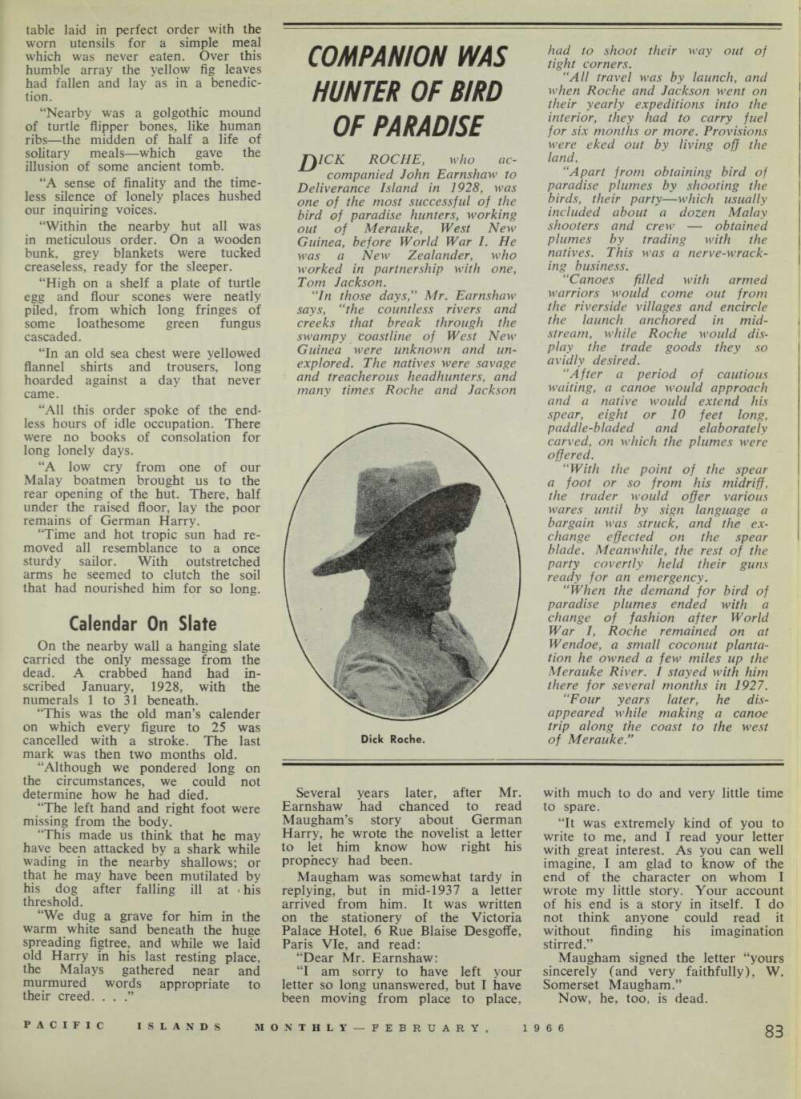 85
85 86
86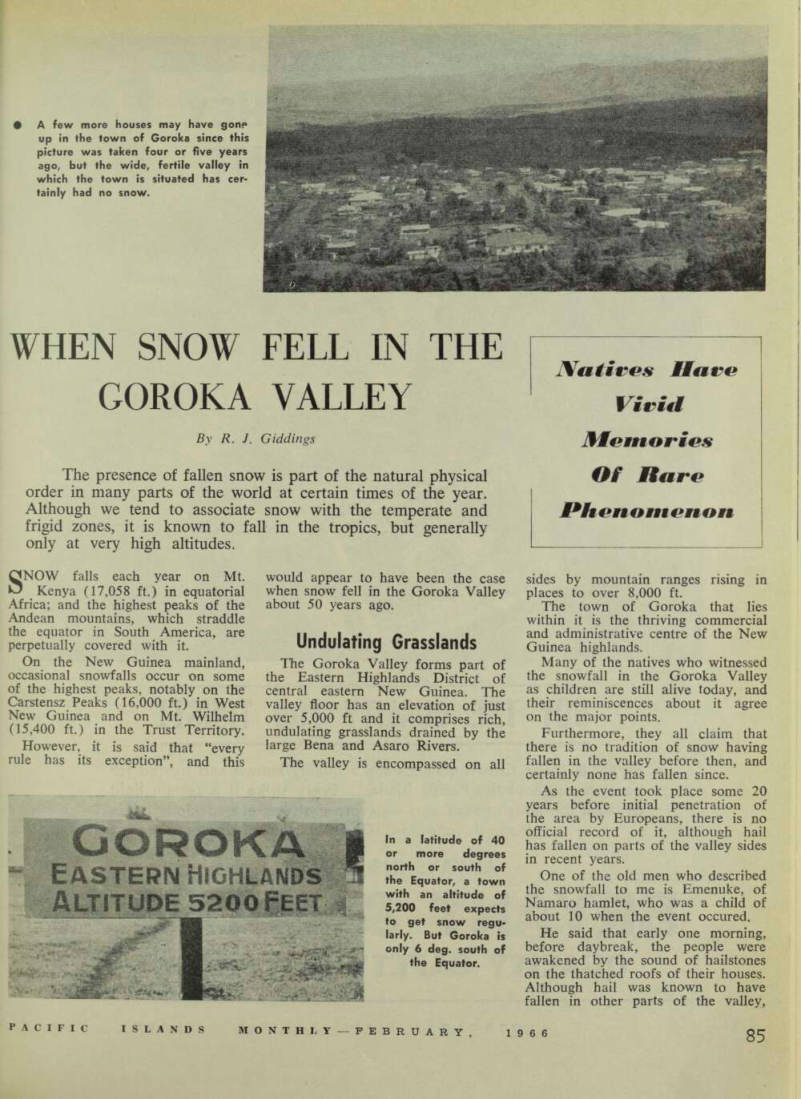 87
87 88
88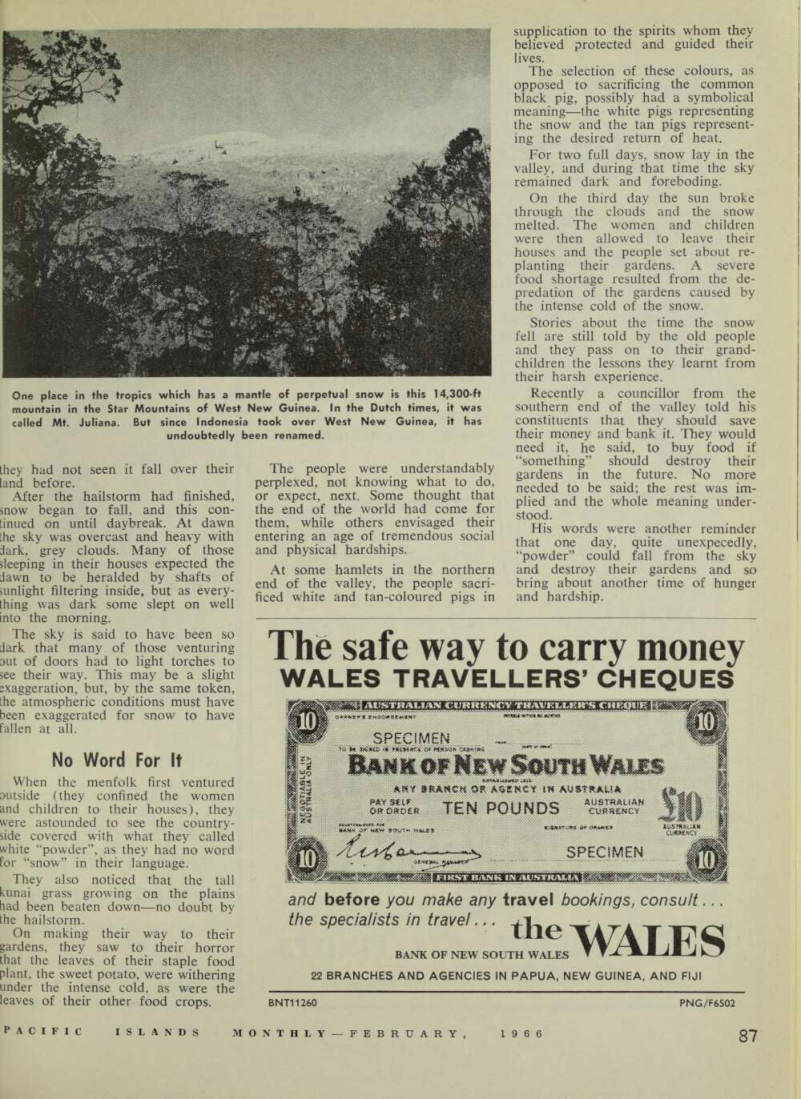 89
89 90
90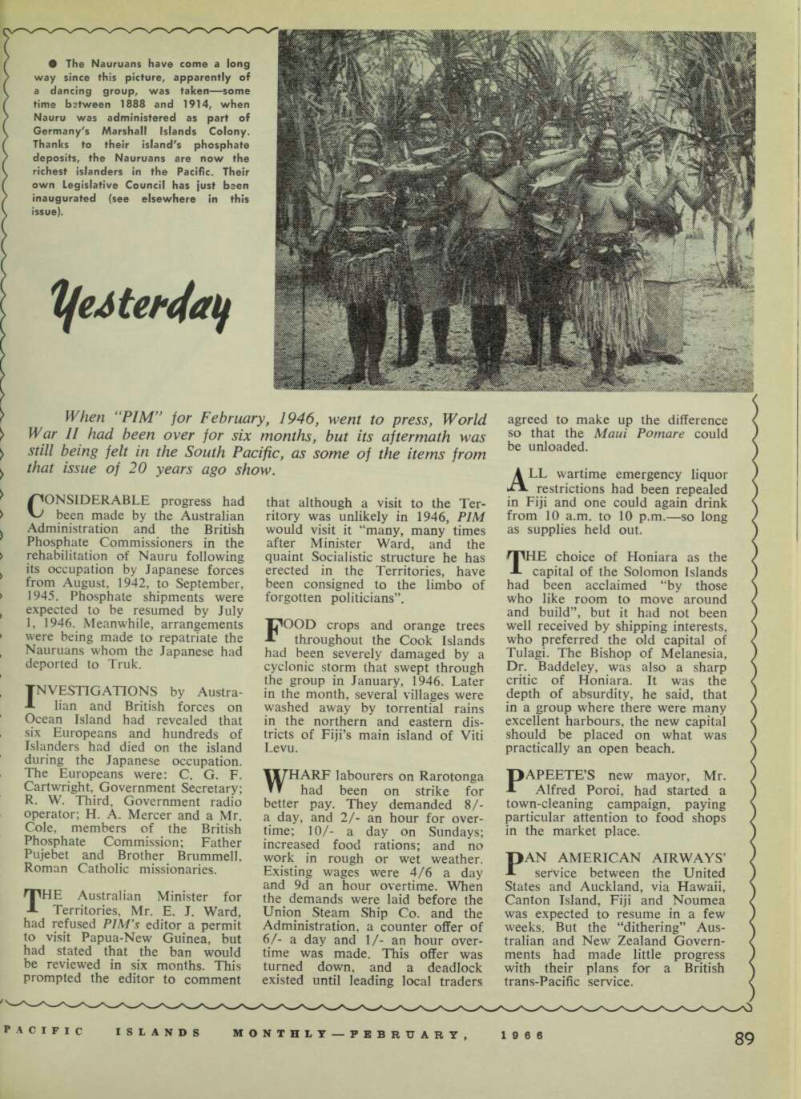 91
91 92
92 93
93 94
94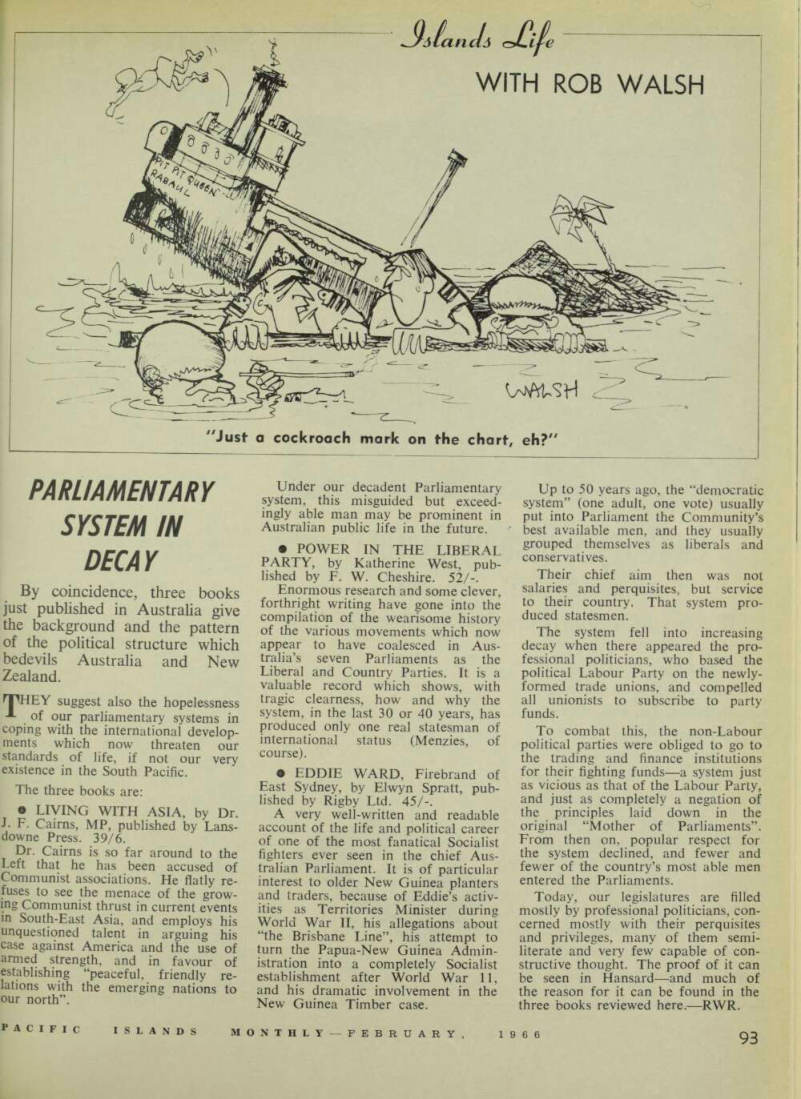 95
95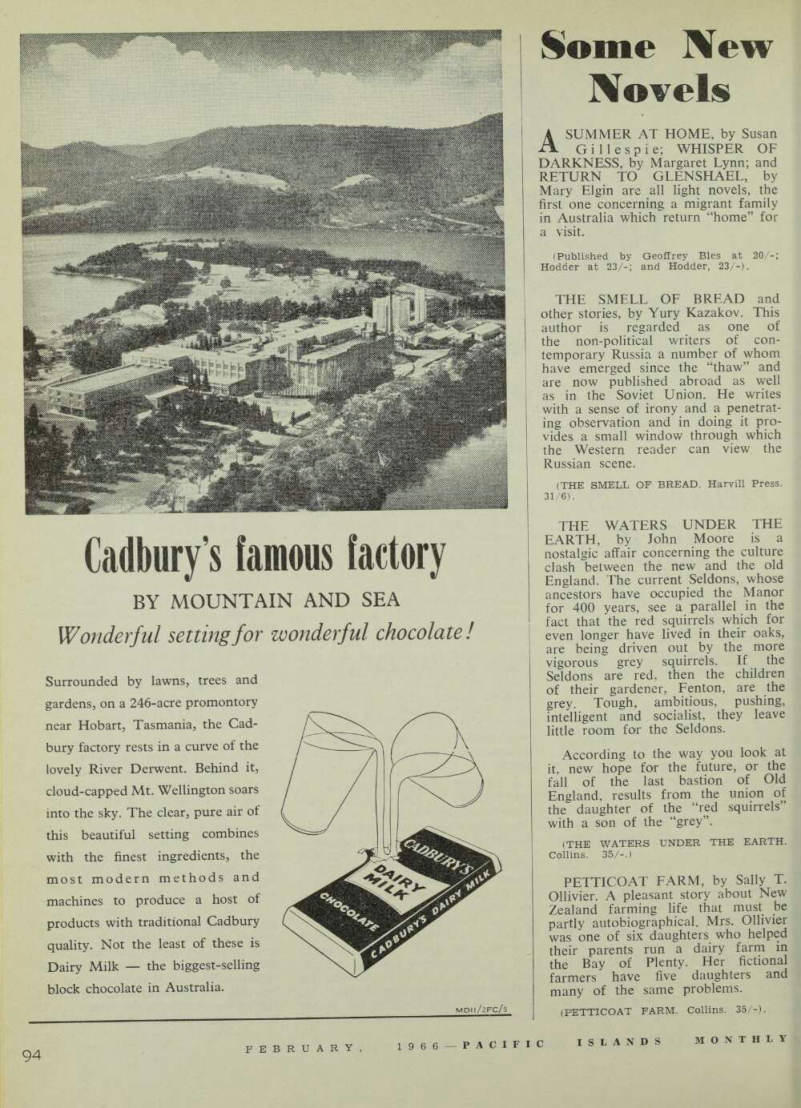 96
96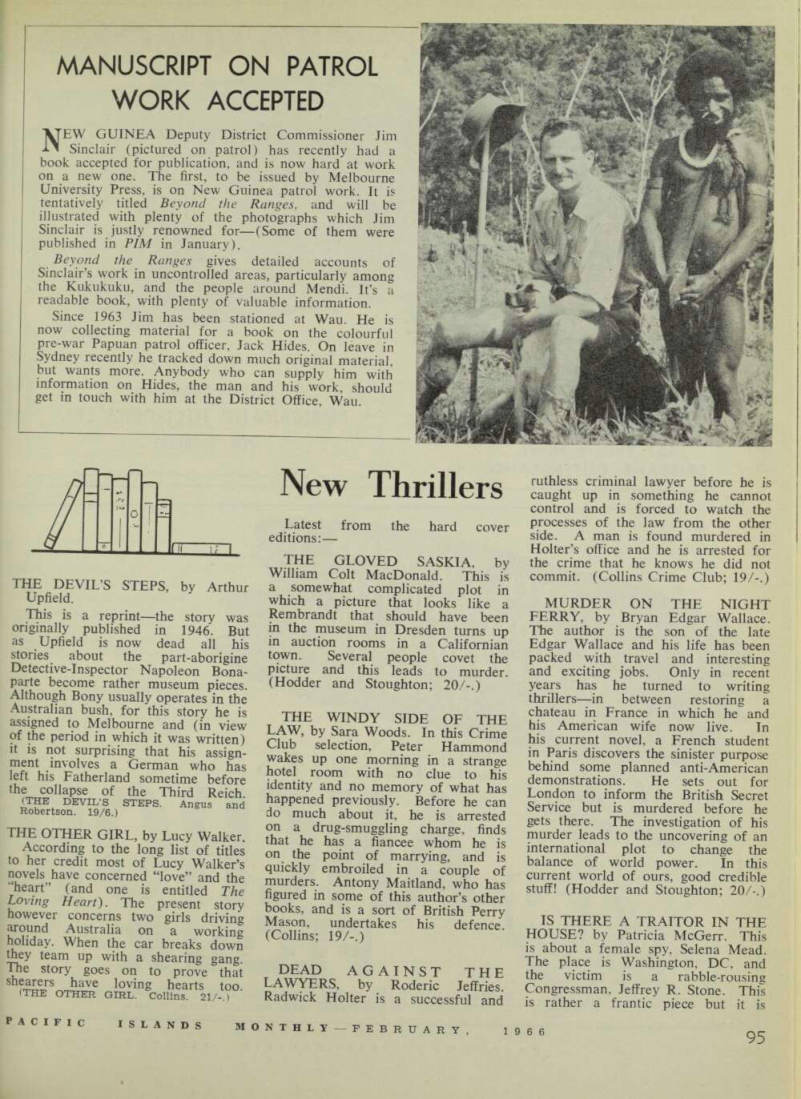 97
97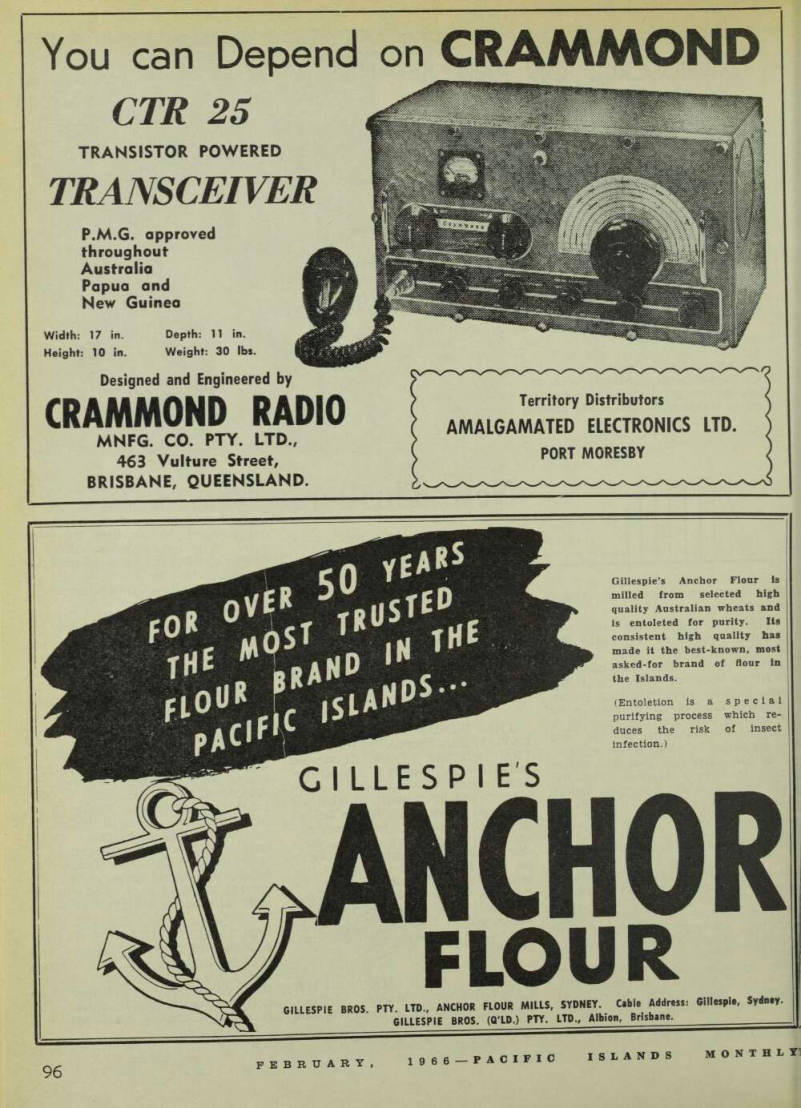 98
98 99
99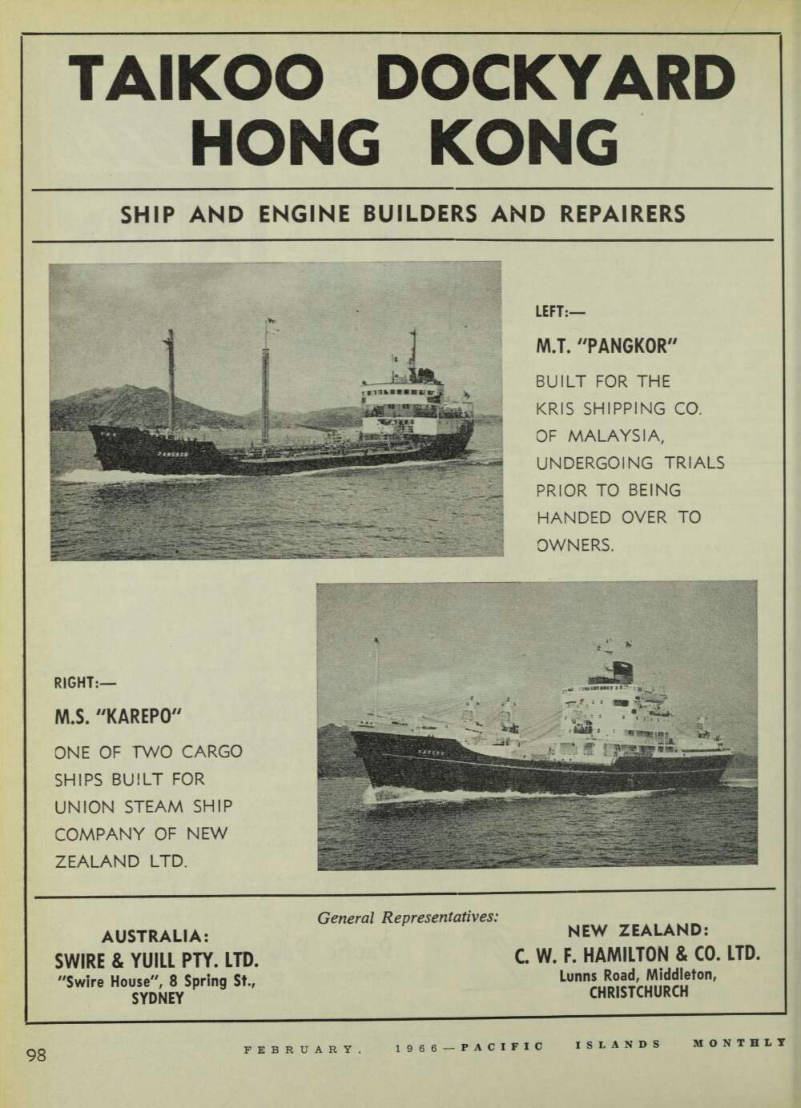 100
100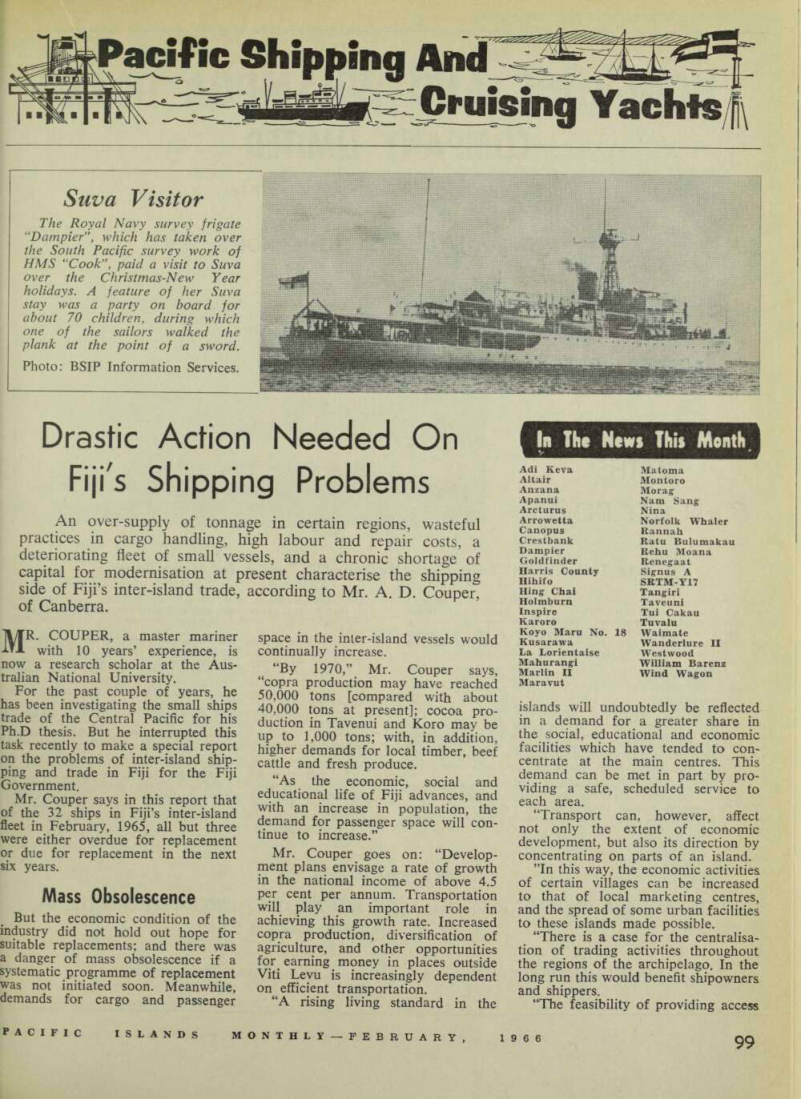 101
101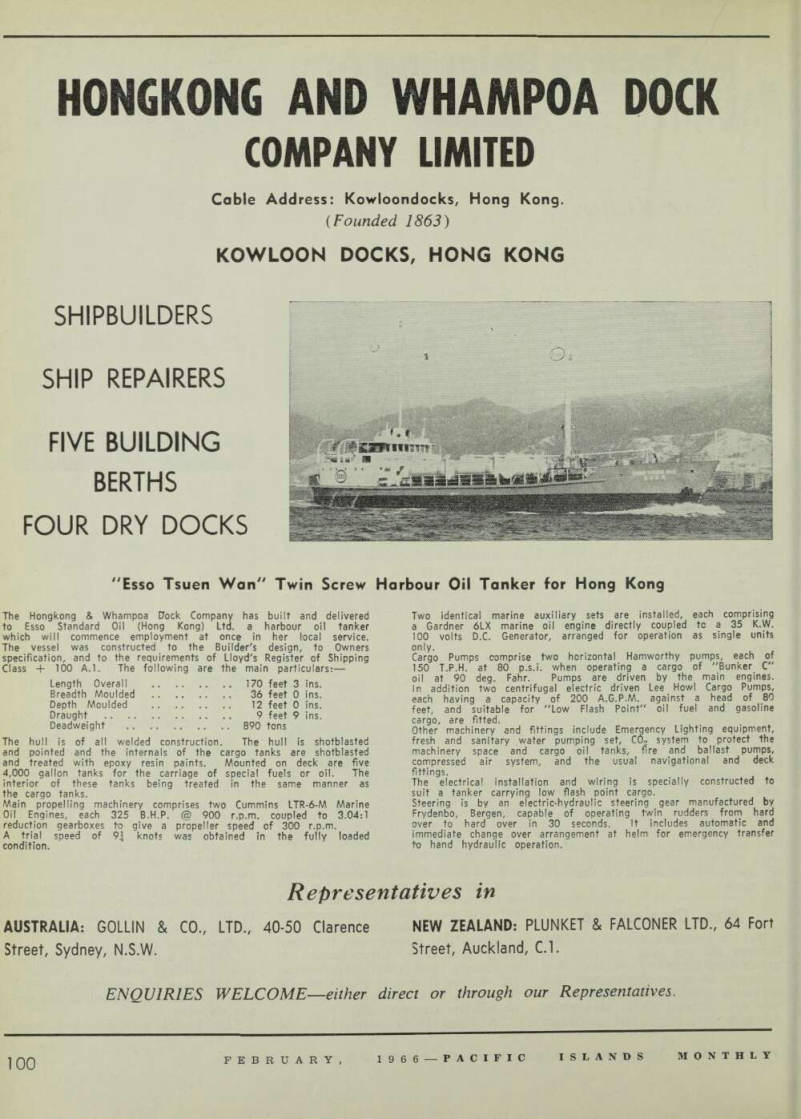 102
102 103
103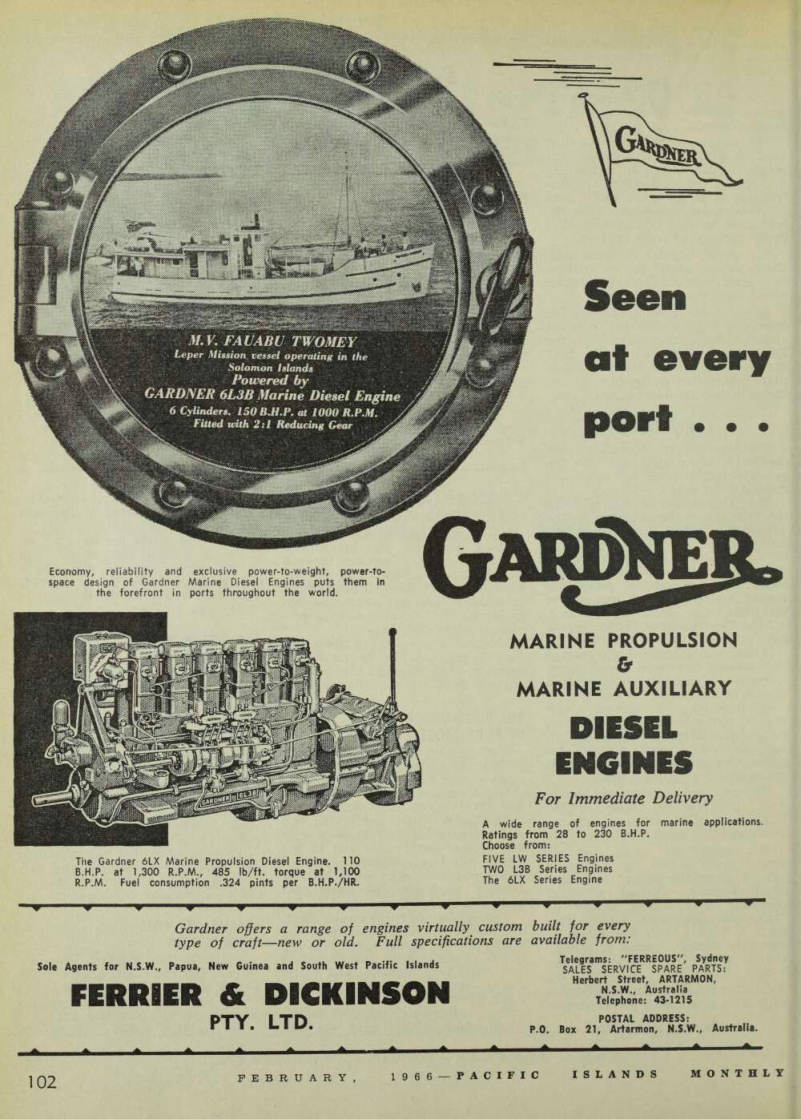 104
104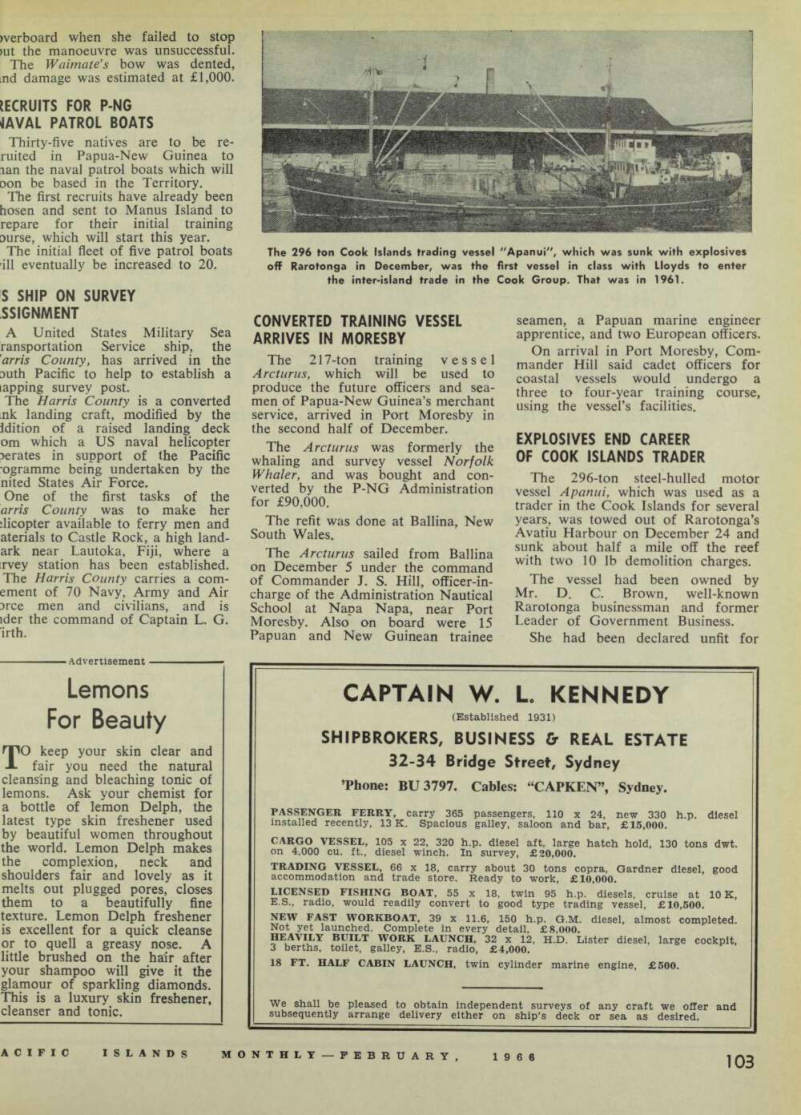 105
105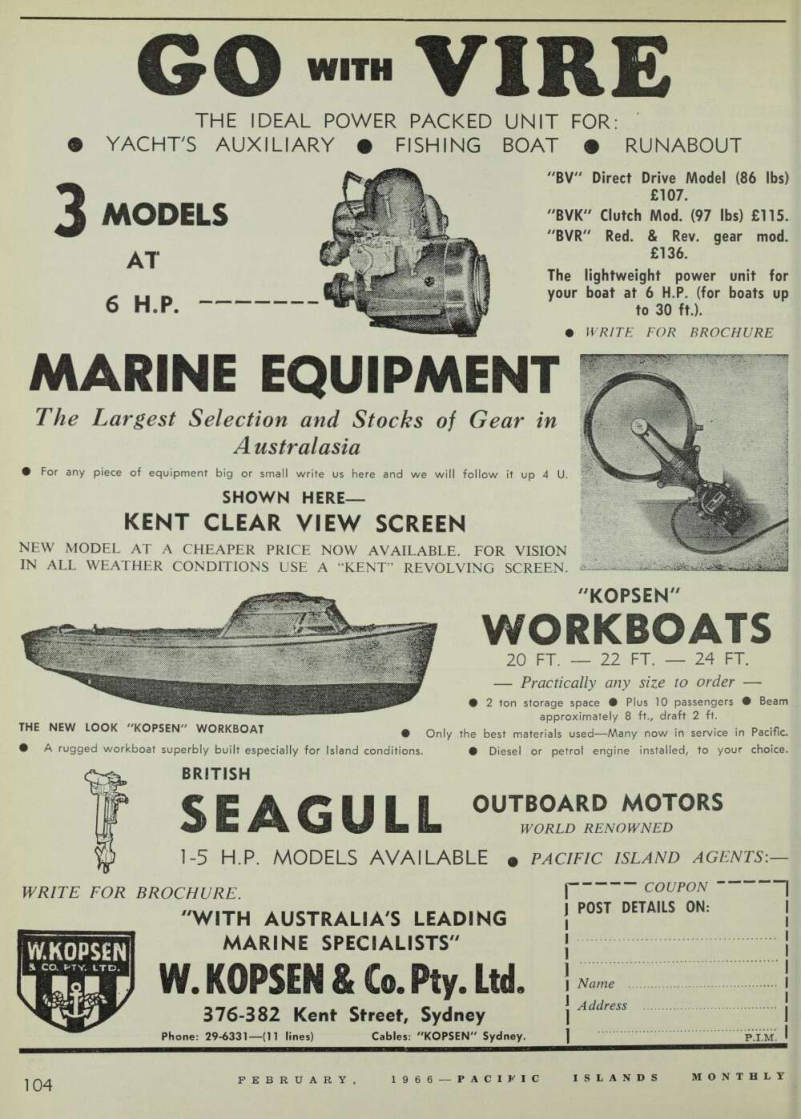 106
106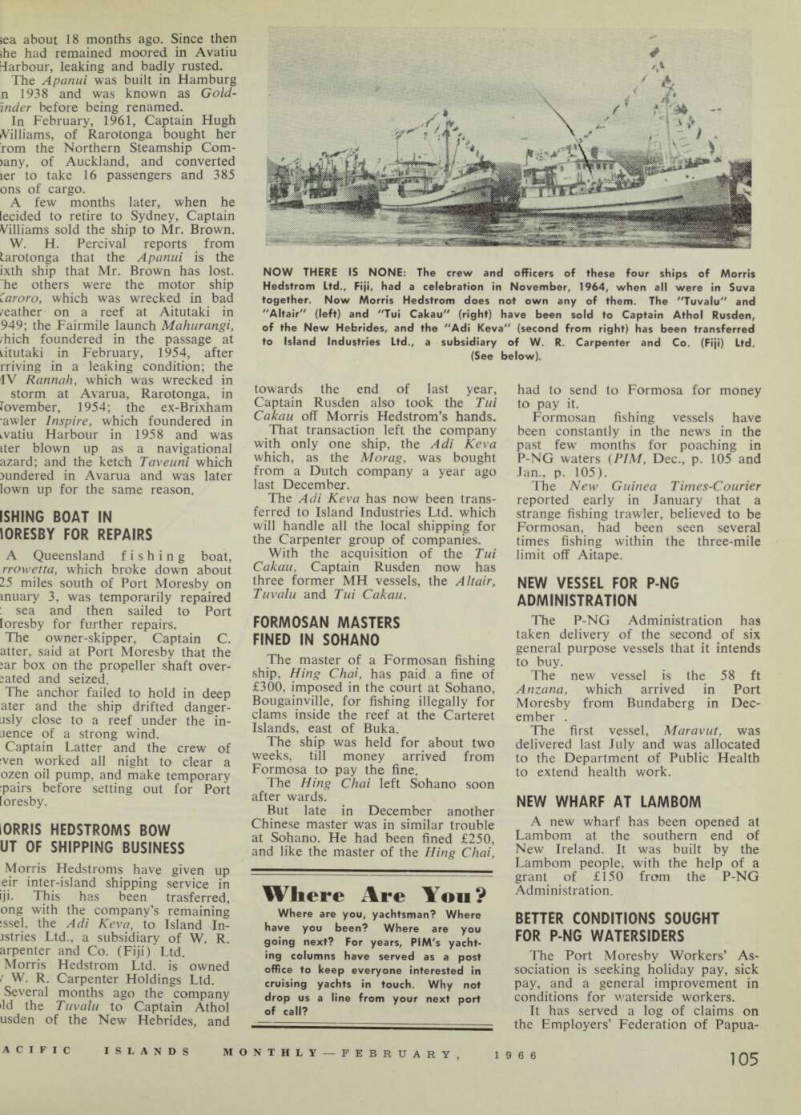 107
107 108
108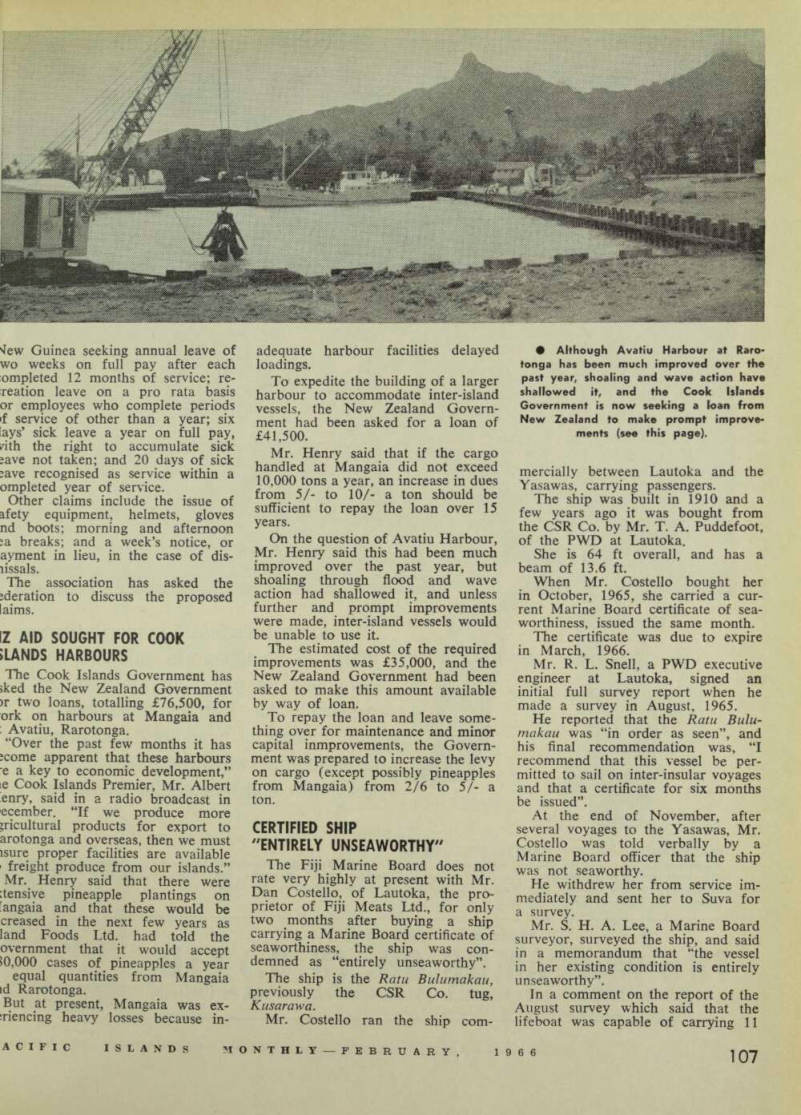 109
109 110
110 111
111 112
112 113
113 114
114 115
115 116
116 117
117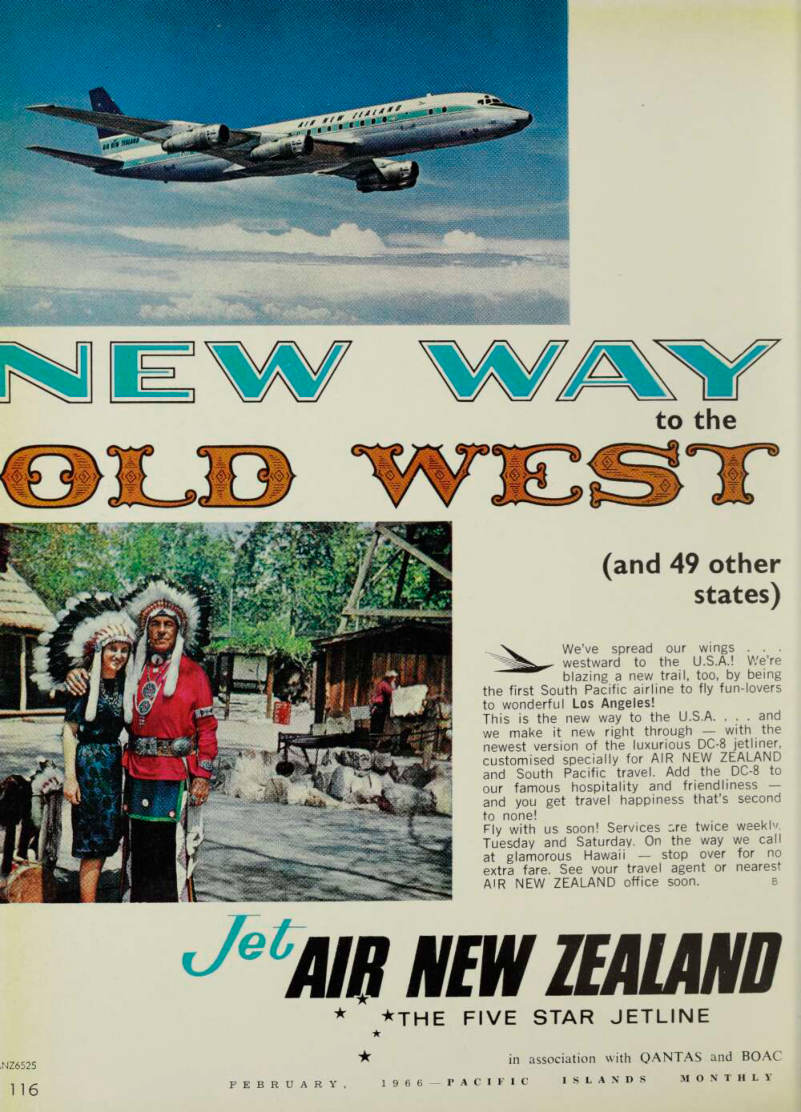 118
118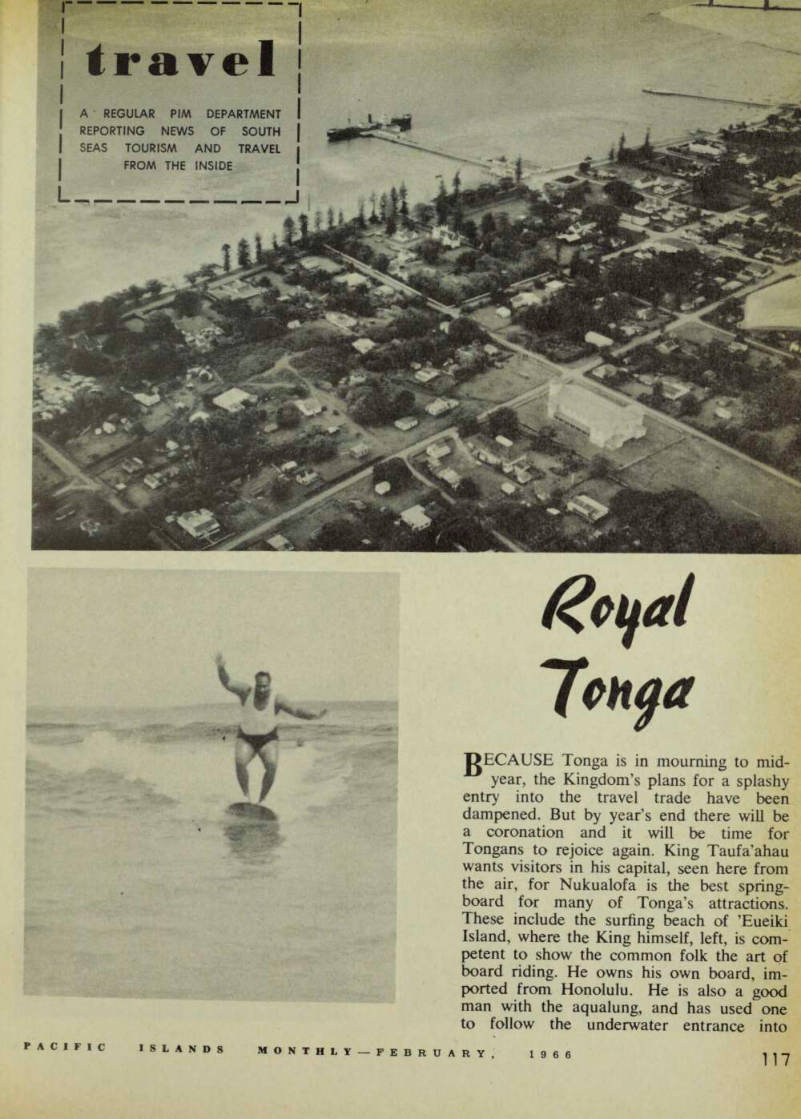 119
119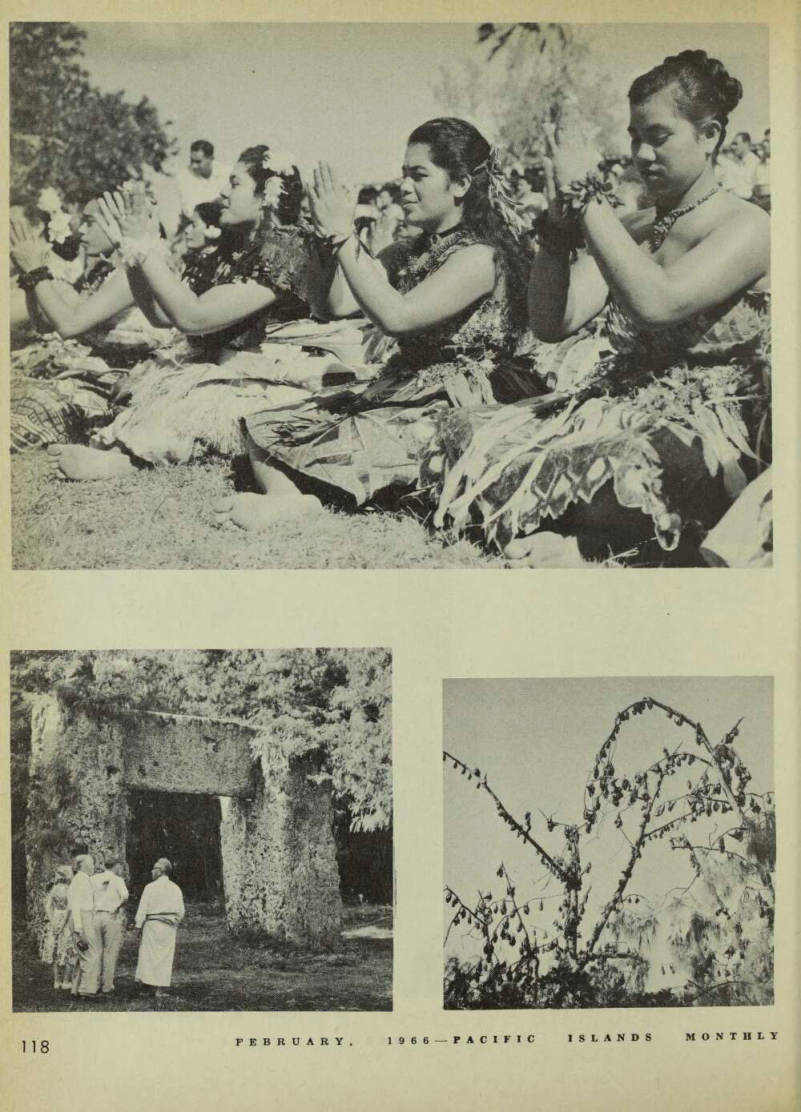 120
120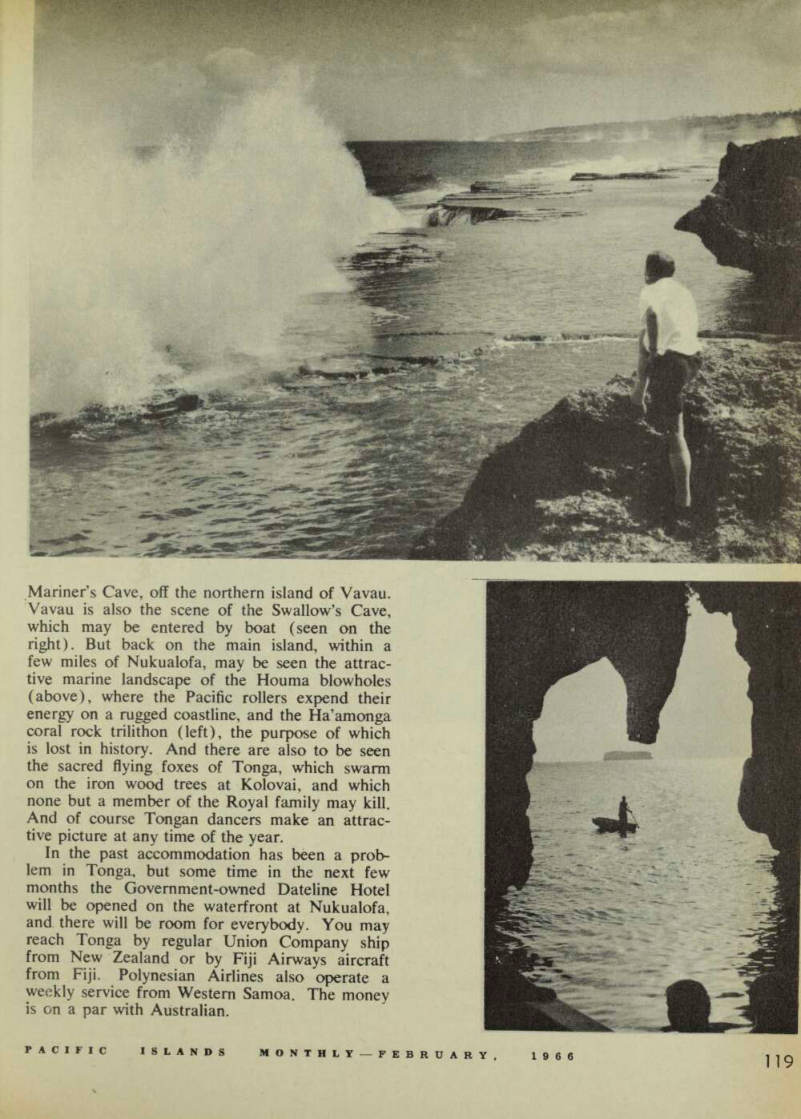 121
121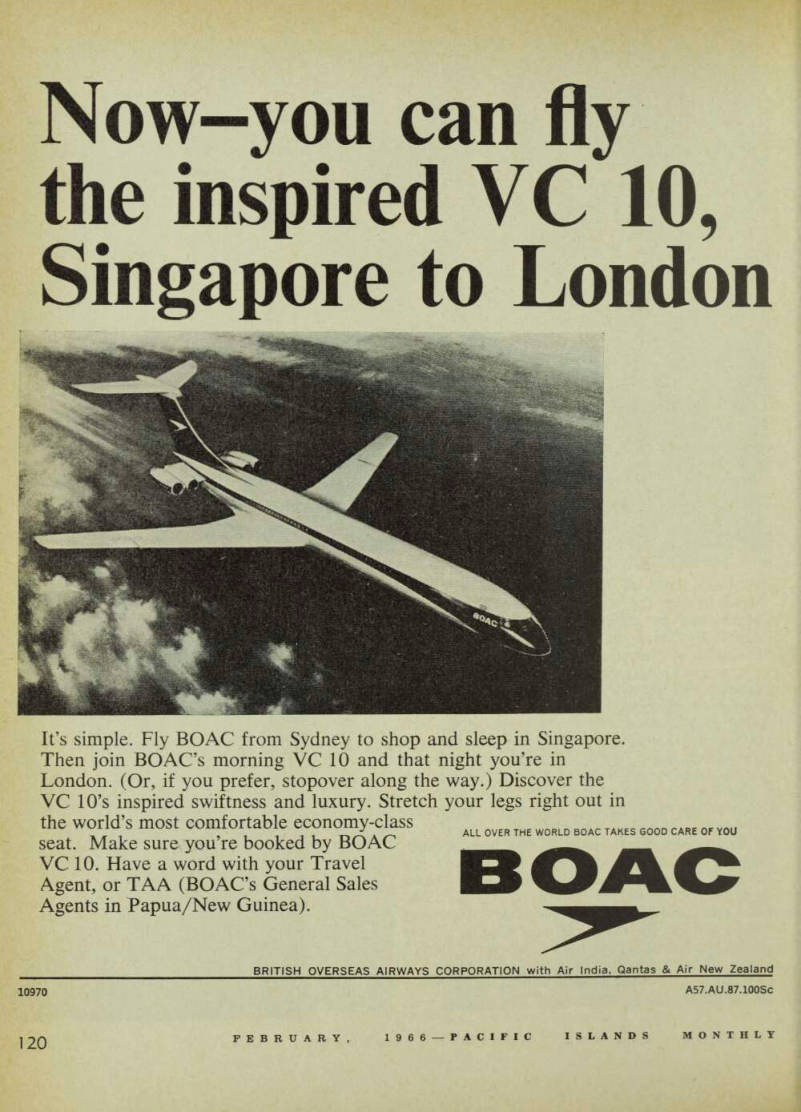 122
122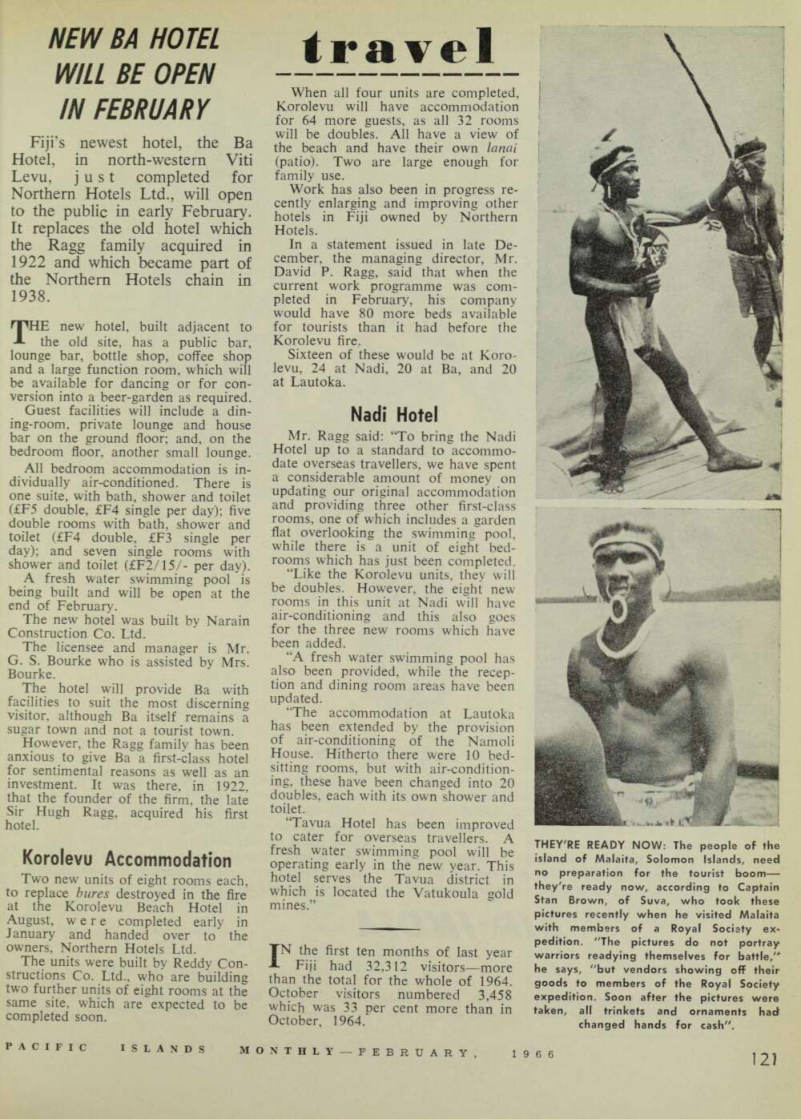 123
123 124
124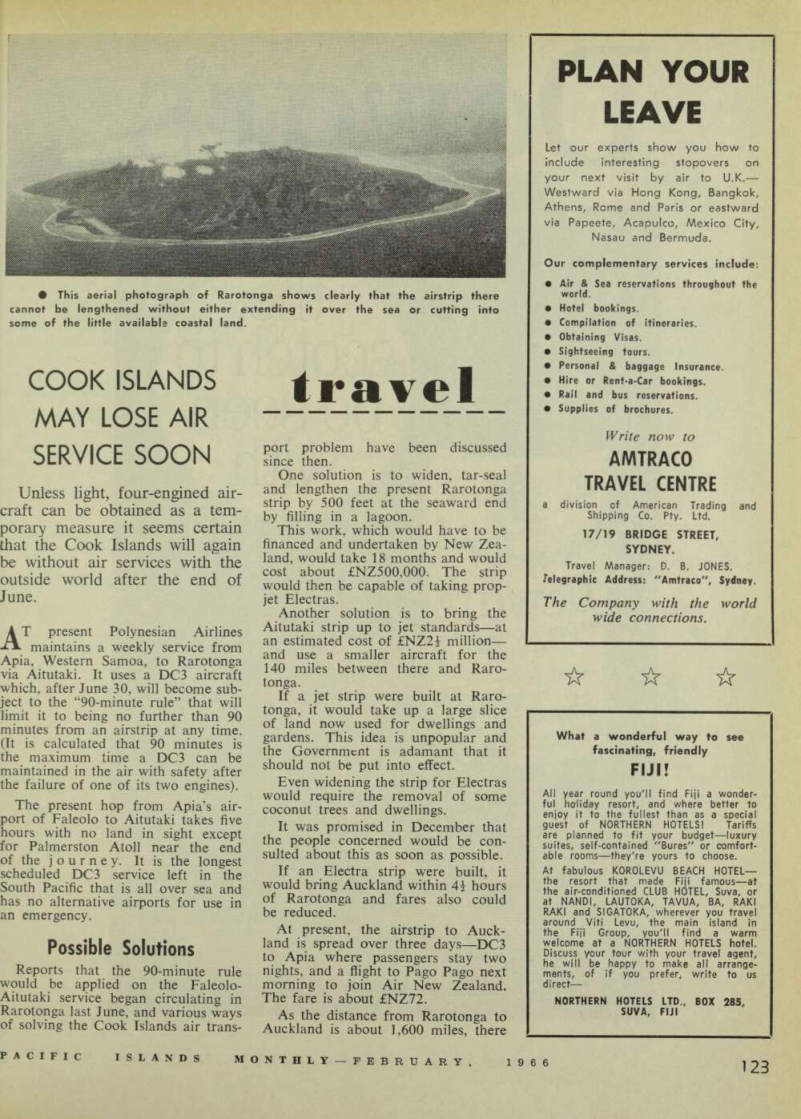 125
125 126
126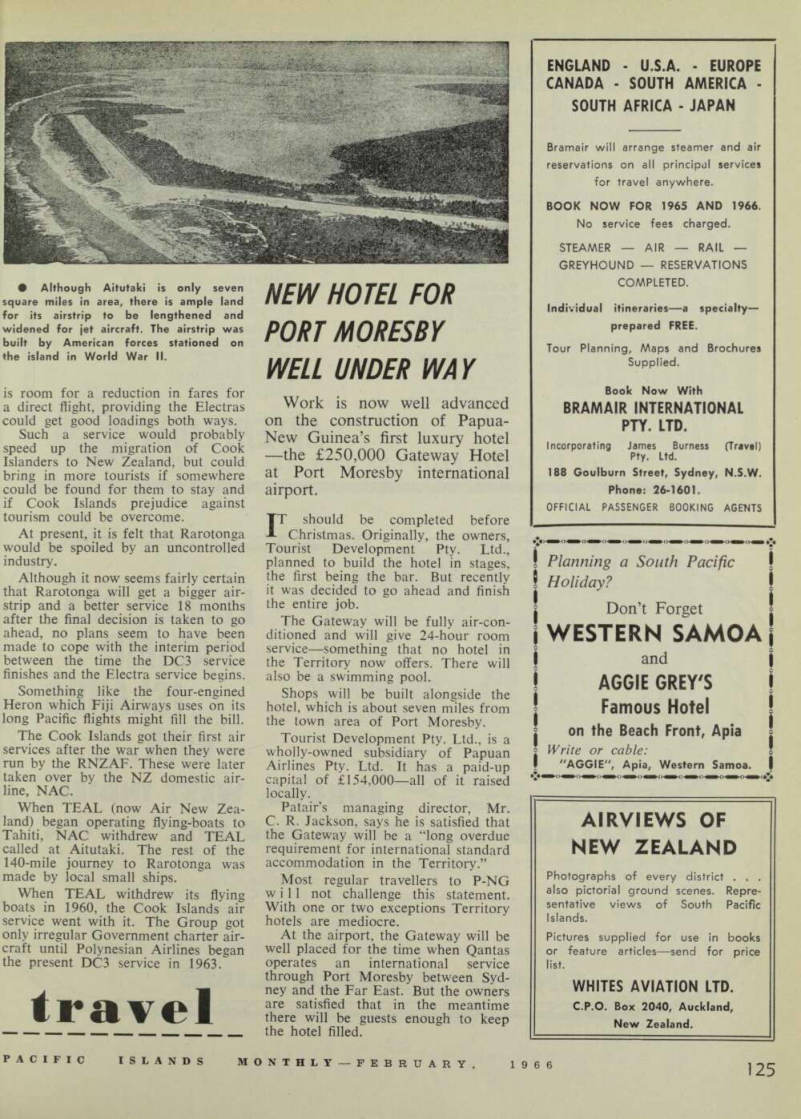 127
127 128
128 129
129 130
130 131
131 132
132 133
133 134
134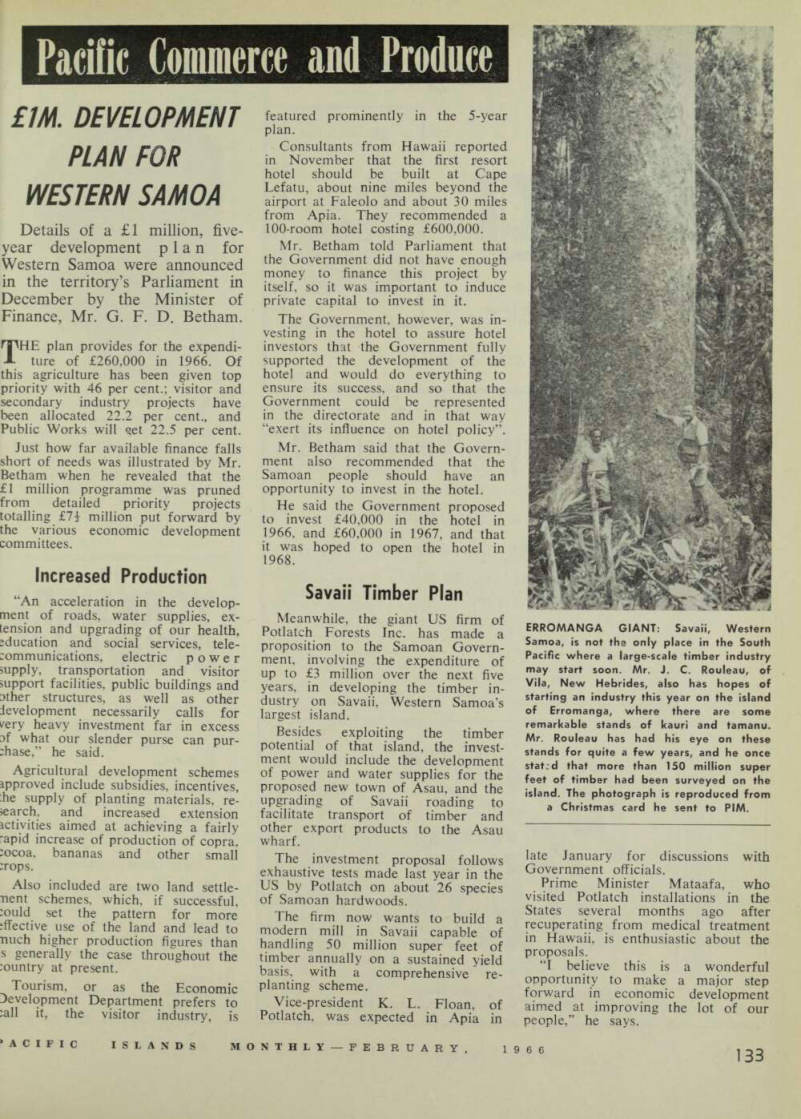 135
135 136
136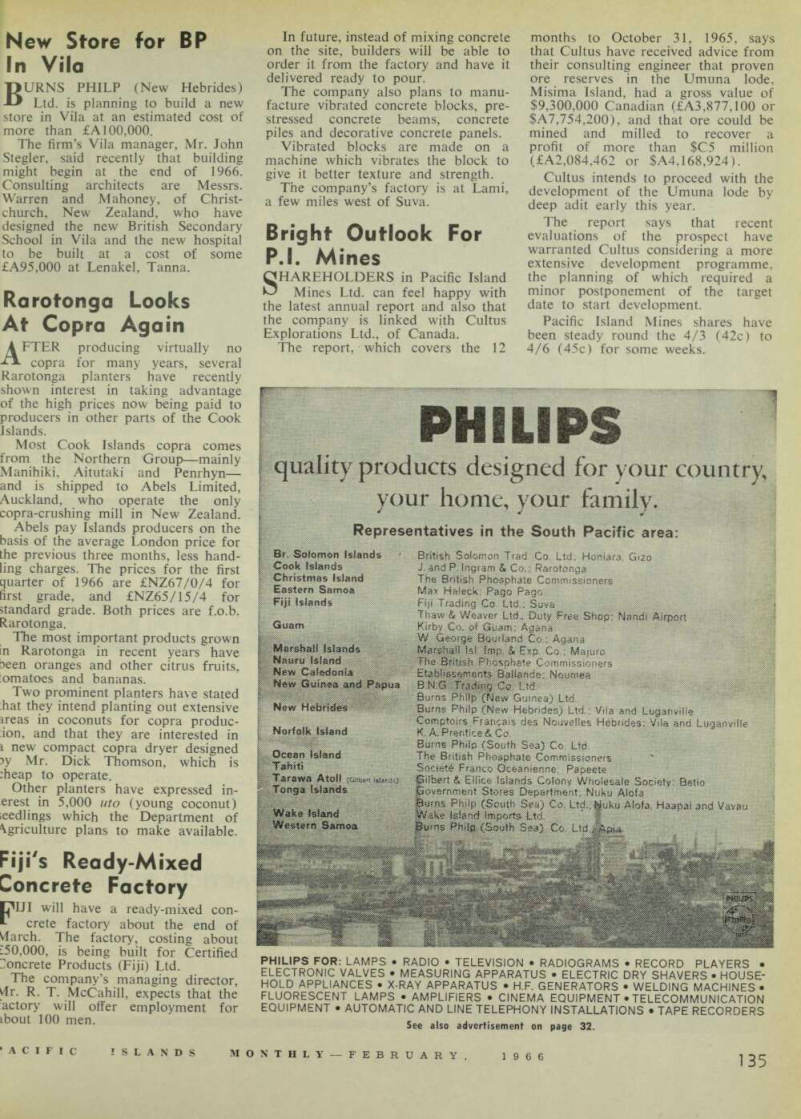 137
137 138
138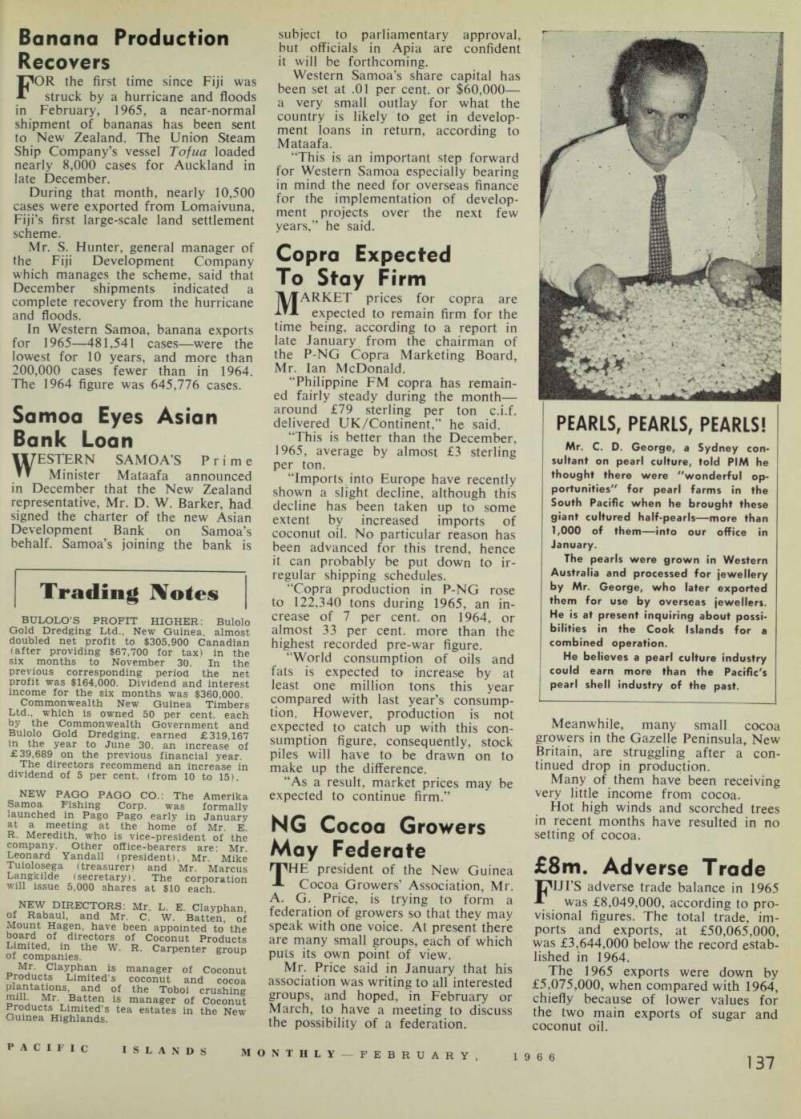 139
139 140
140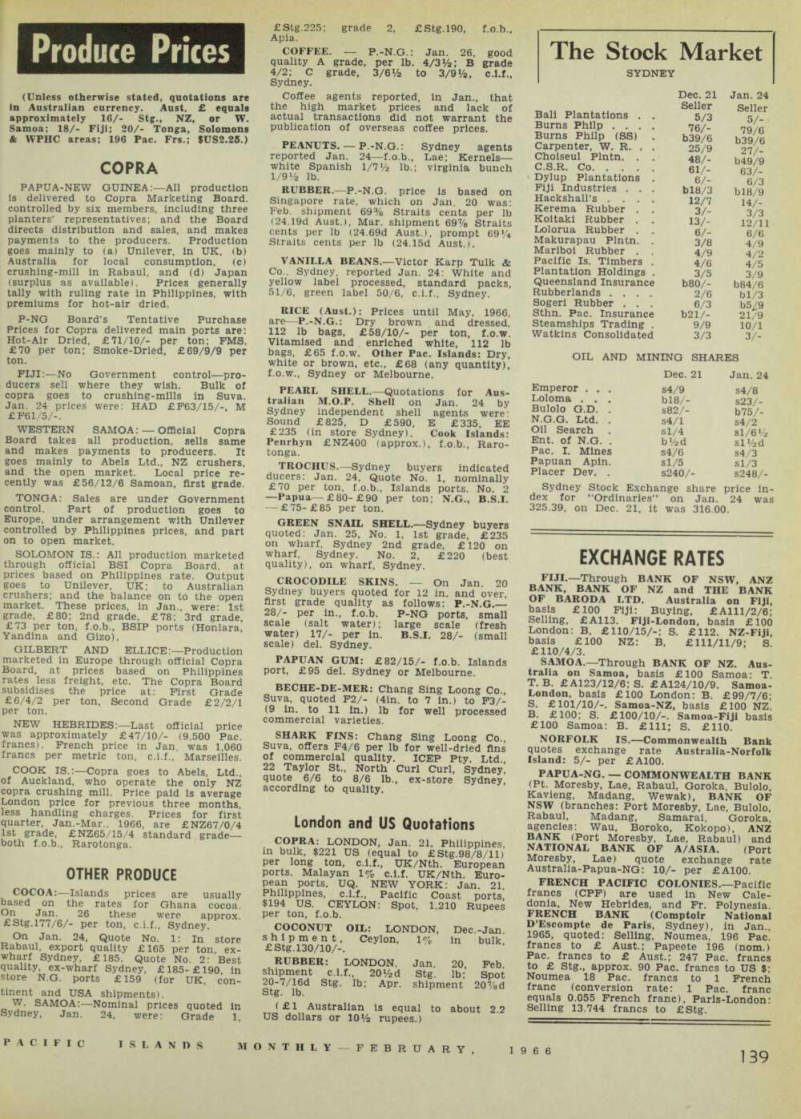 141
141 142
142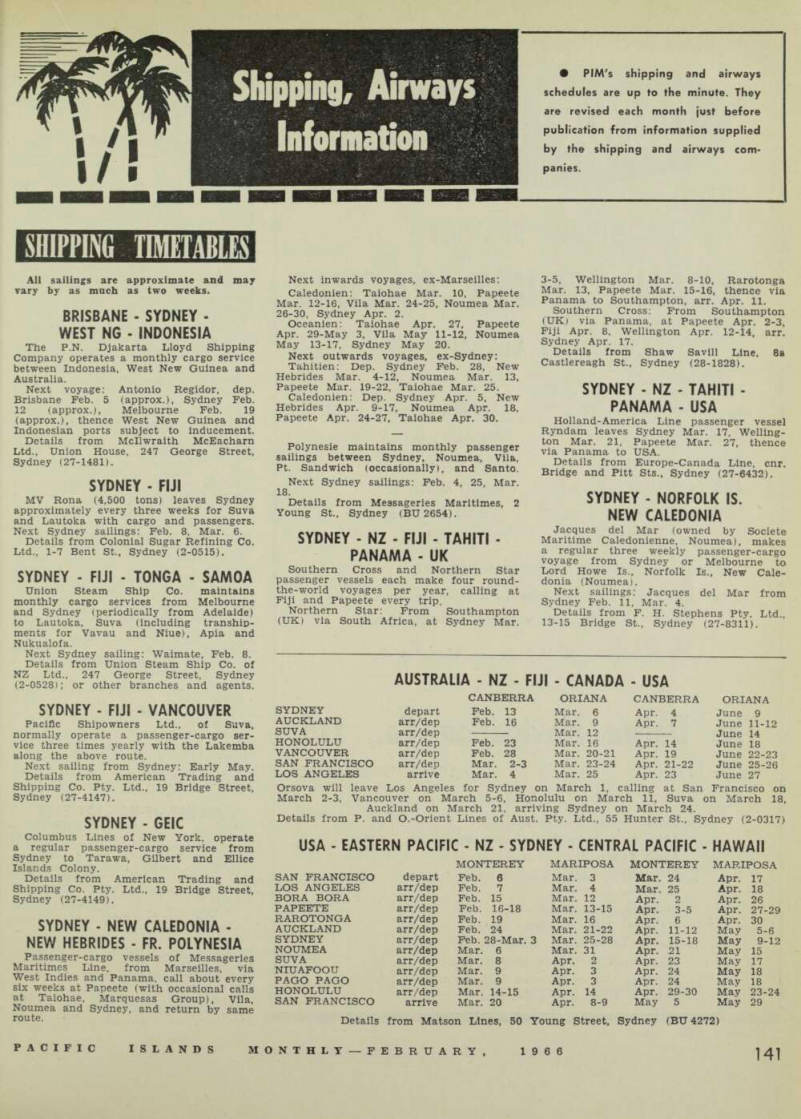 143
143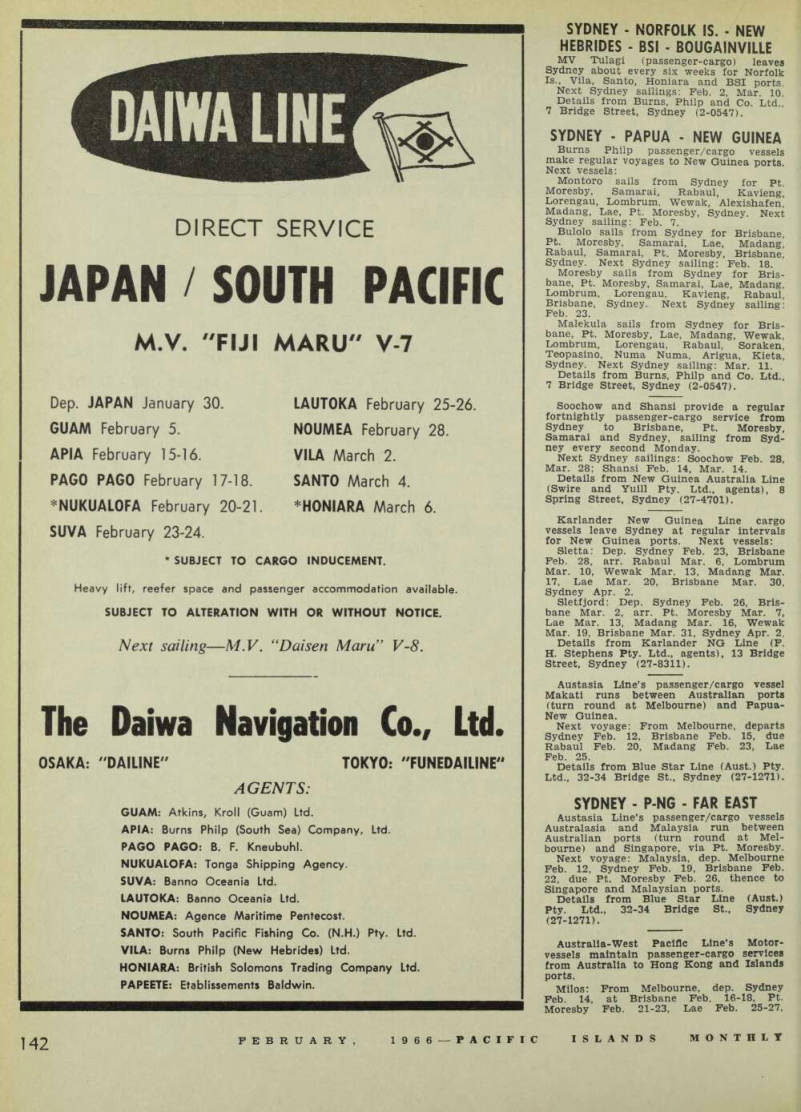 144
144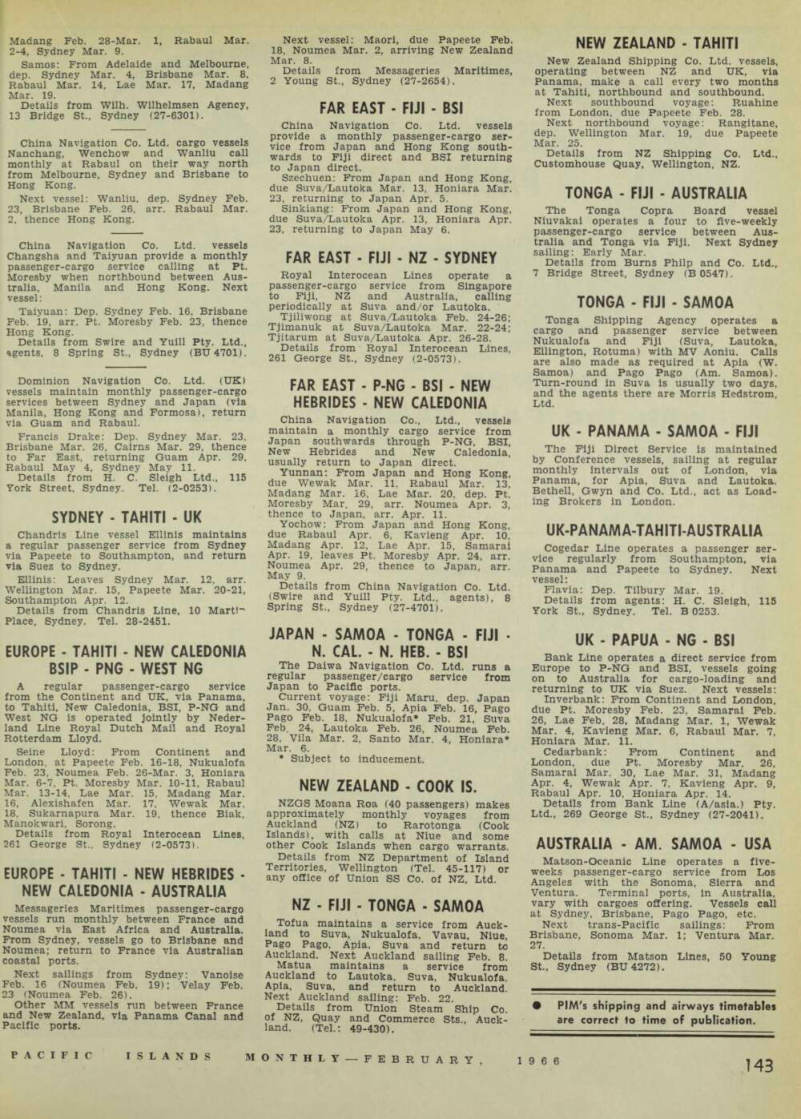 145
145 146
146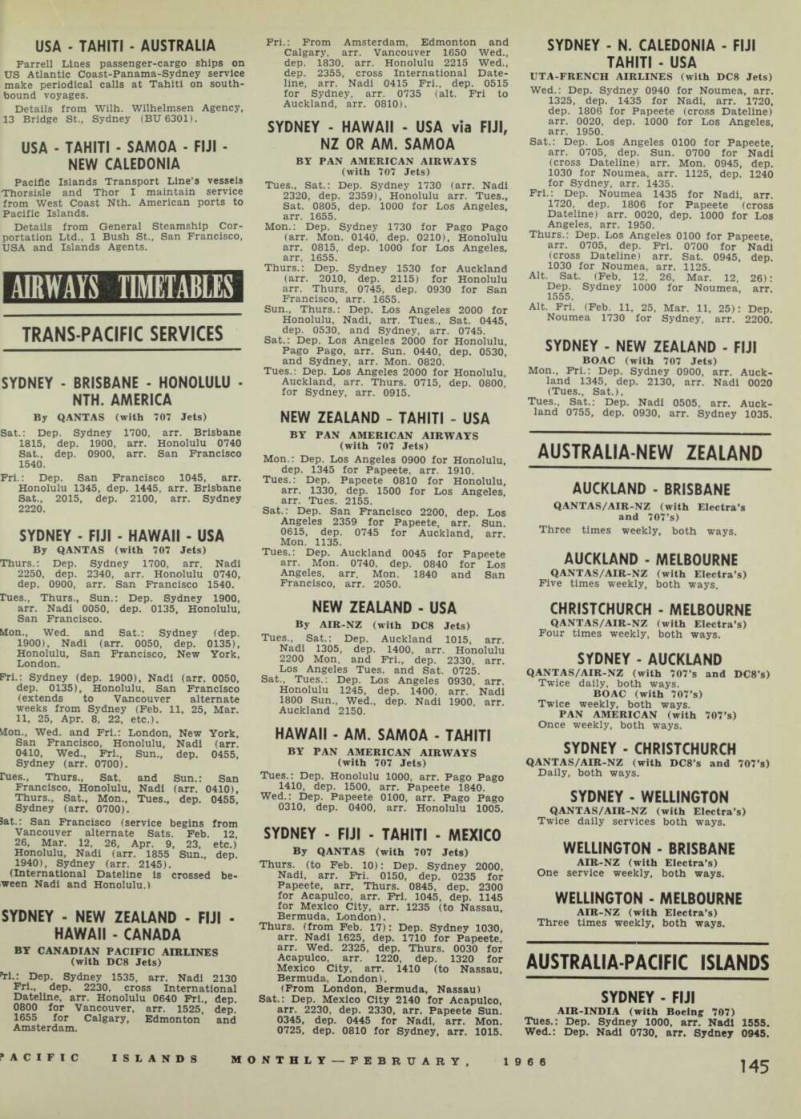 147
147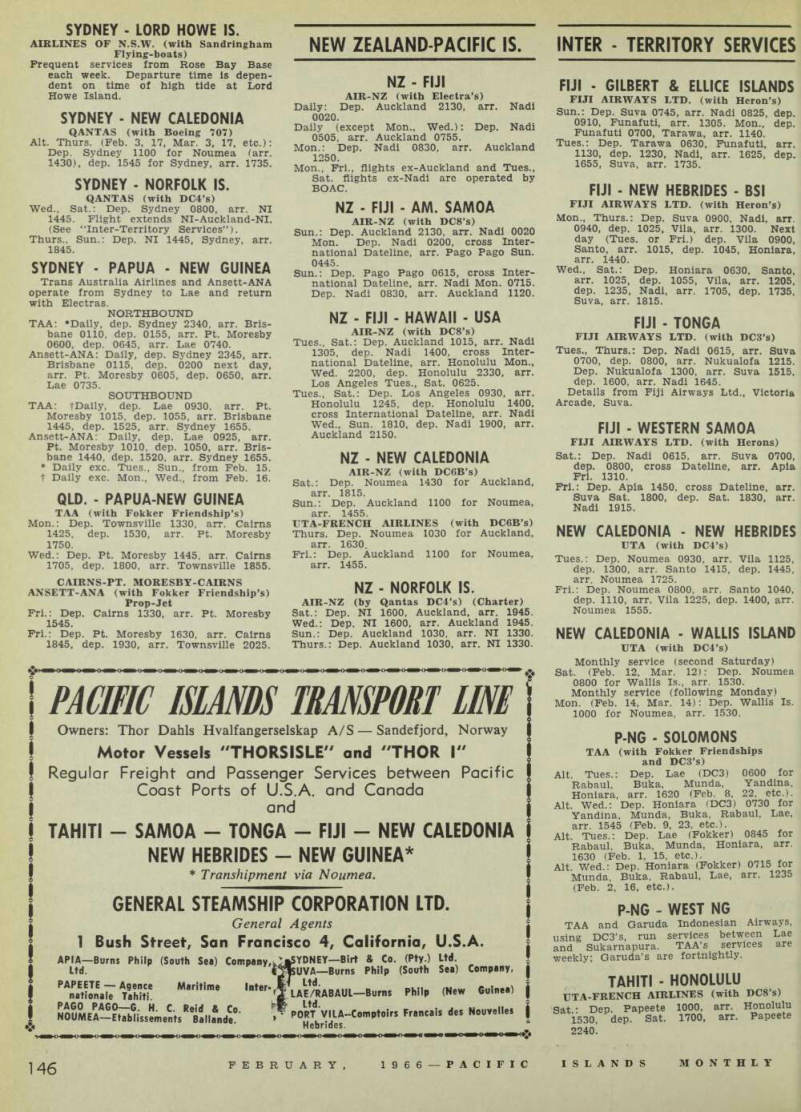 148
148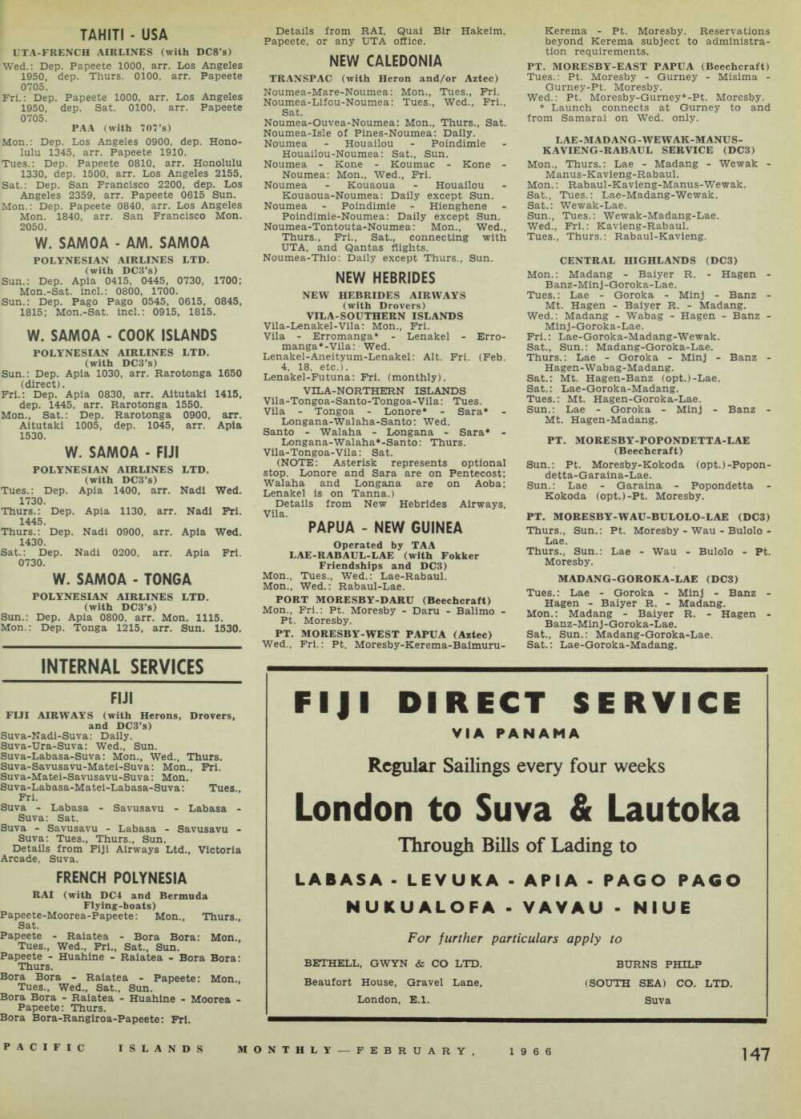 149
149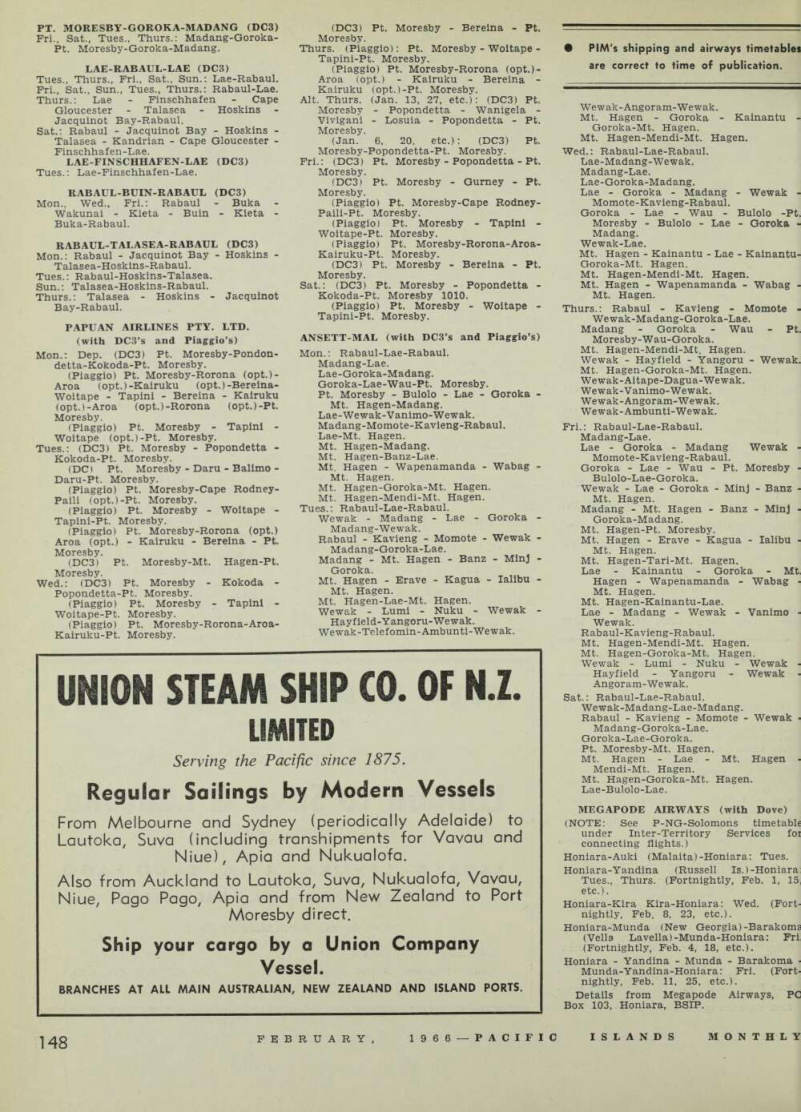 150
150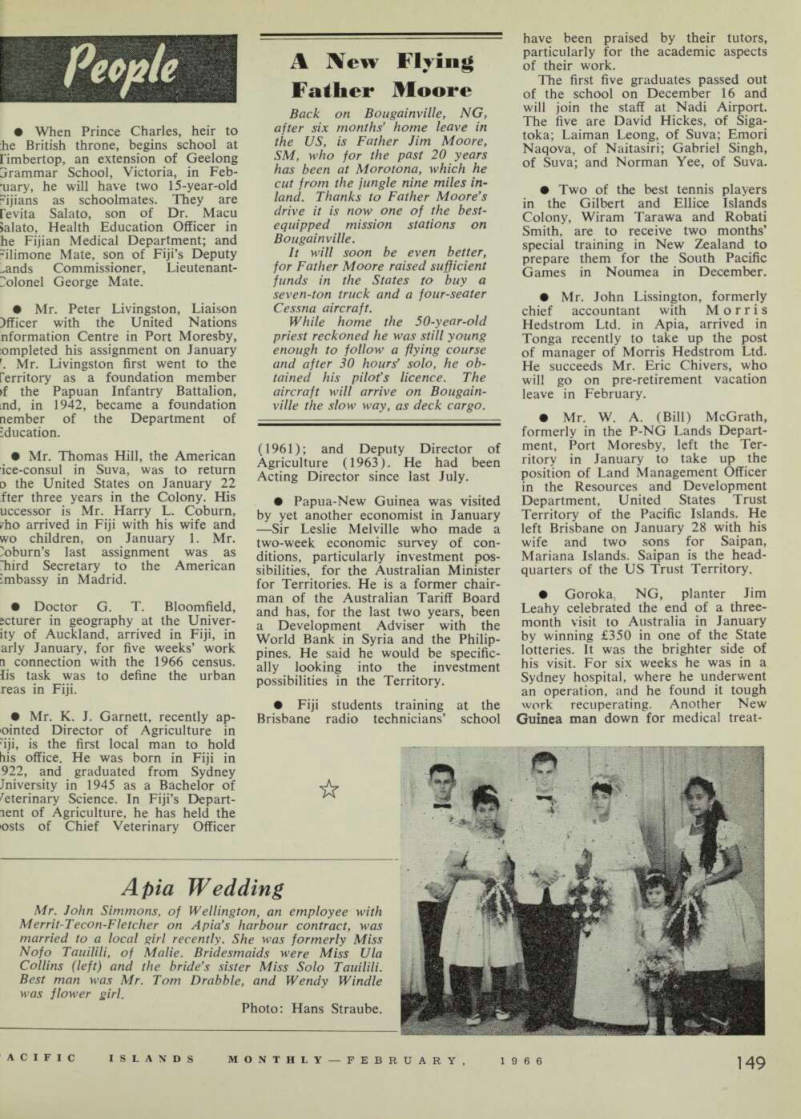 151
151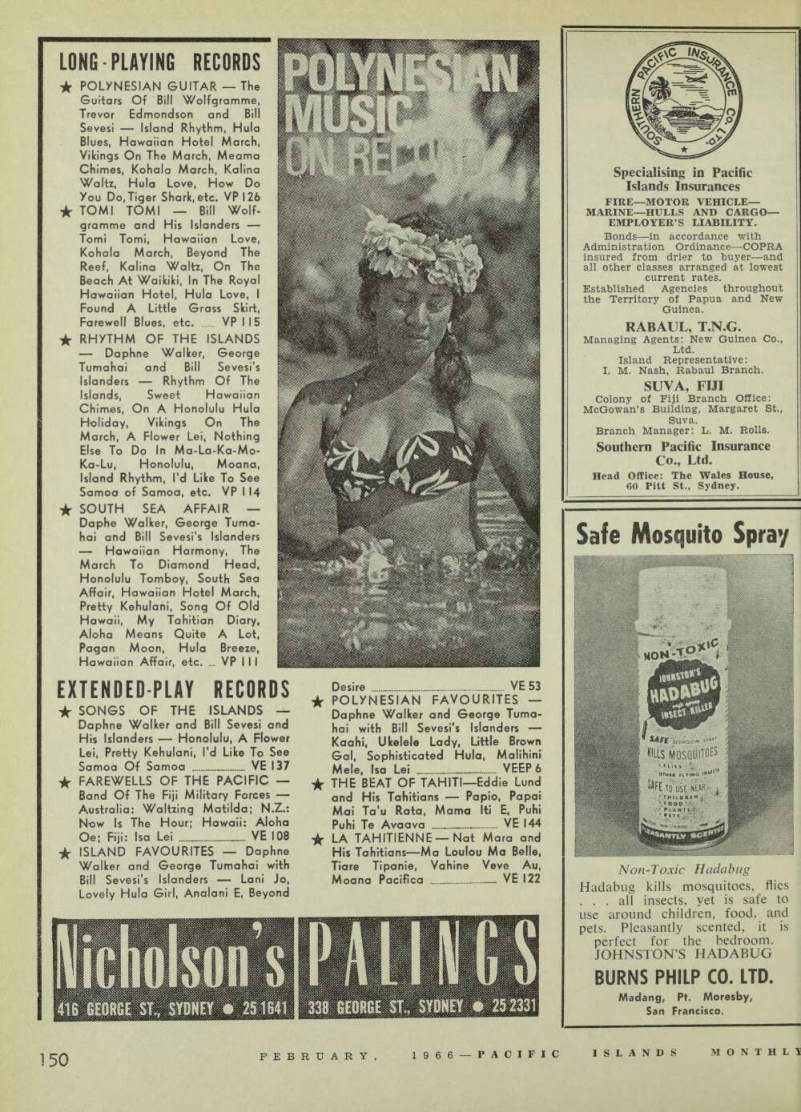 152
152 153
153 154
154 155
155 156
156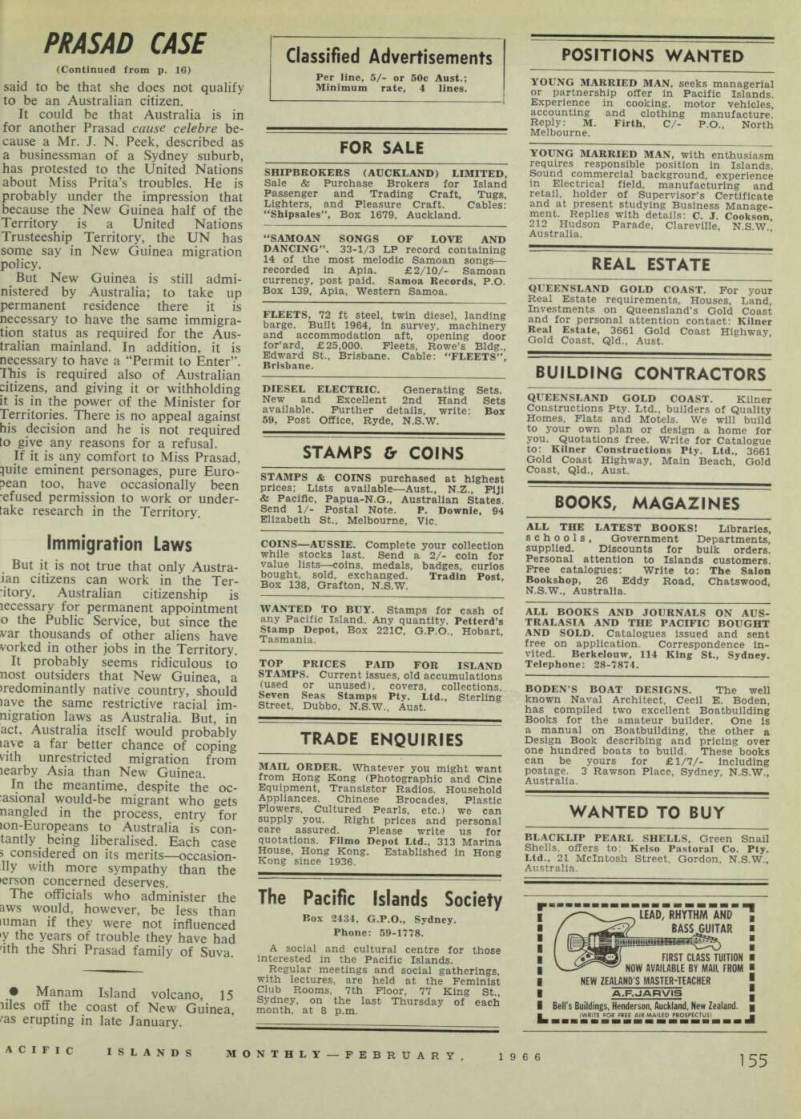 157
157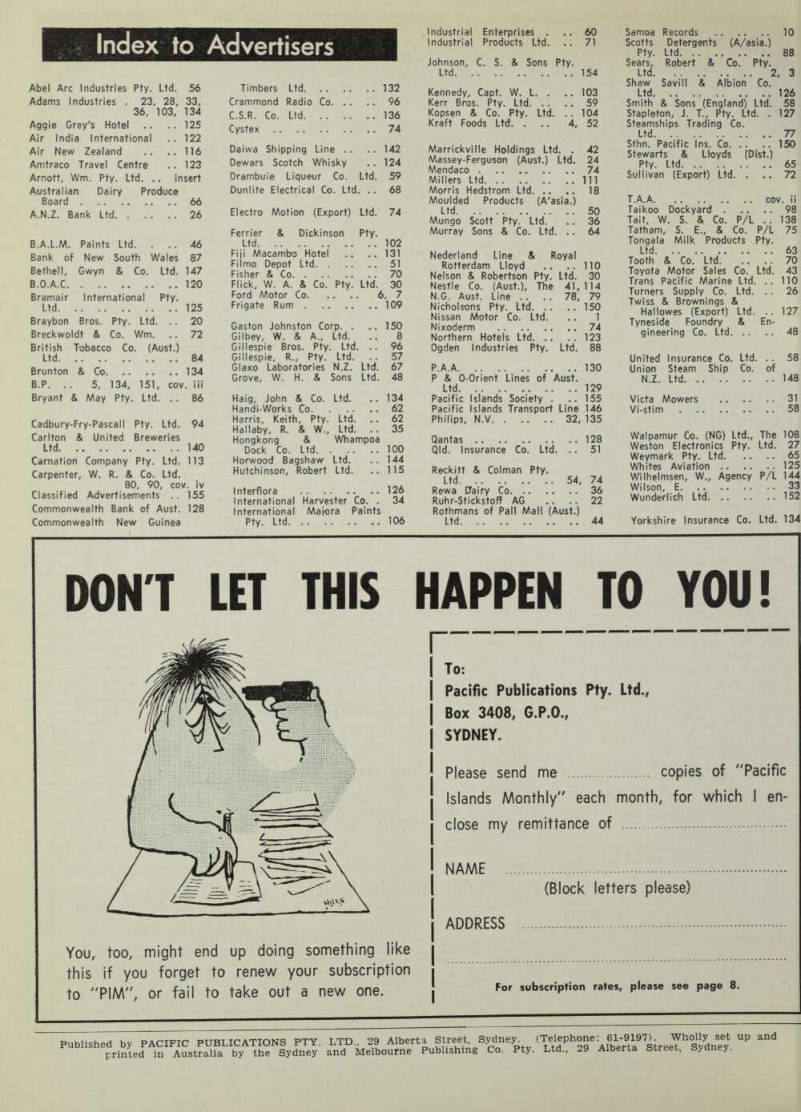 158
158 159
159 160
160