Advertisements & other items, pp. 1-8 (3 items)
sfdf
Pacific Islands Monthly
1966
/- or 30 Aust. cents 70 US cents 50 French Pac. frcs.
sfdf
sred at G.P.0., Sydney, and at P. 0., for transmission by post as a newspaper
TONGA’S MOl)Elt\ KING
OUR COVER: King Taufa'ahau Topou IV, first king on the Tongan throne in almost 50 years, is a modern man —who does not mind being seen carrying a Japanese transistor radio. Educated in Sydney, he holds a law degree from Sydney Univer sity. For a comment on hovy he may fill his new role, see p.' 6.
(Weekly
to
February 15
January 18
Daily Electras
to Australia
(Weekly
Friendship too)
Goon.
Take that holiday.
Lots of students and teachers need to travel at these times.
And normal schedules aren't quite enough.
So we’ve stepped up our services for your convenience. Our big, smooth Mark II Electras will operate every day between the Territory and Brisbane/Sydney. In both directions. Plus our normal weekly Friendship to Cairns/Brisbane. And all of them ‘Bird of Paradise’ flights. (What’s a holiday for if you don’t spoil yourself?) Why don’t you book now? Make sure of the flight and seat you want. Your Travel Agent will fix it.
Or your nearest TAA office: Port Moresby 2101 ■ Madang 78, 268 ■ Rabaul2s67 Lae 2311 ■ Goroka 8 ■ Mt. Hagen 4 ■ Wewak 103
TAA
the Friendly Way / y_j
T A A9541/6S
■ A £ : iv r.t i f y Hi ip P- I f: ;i Attractive variety of texture for this home is gamed by using ‘Fibrolite’ Flat Sheets and ‘Fibrolite’ Coverline on exterior walls.
this is what’s happening
with Fibrolite
Now, more than ever before, you can have individuality in home feature planning. The new range of ‘Fibrolite’ panel designs gives a scope for styling that no other material can match.
Builders are finding this the logical material to provide homes for smart owners . . . they’re also giving them more home for their money.
The ‘Fibrolite’ range of panel designs gives a rich variety of profiles—moulded panels like Weatherboard, Coverline, Shadowline, to name but a few.
Autoclaved ‘Fibrolite’ is today’s best functional material. It is easy to erect and virtually everlasting.
Painting for preservation is unnecessary, but paint stays on and lasts longer. It is weatherproof and termite proof for all time.
There’s a big eye-opener for you and for all home planners in the new range of styles. See them: Weatherboard • Log Cabin • Shadowline • Coverline • Striated • Flat and Corrugated • ‘Asbestolux’ • Colorbord • Tilux.
Hardies
FIBROLITE' WALL AND CEILING PANELS
m Territory Distributors
BURNS PHILP (NEW GUINEA) LTD.
Please send, free and post free, illustrated home planning book, “This is what’s happening with Fibrolite.”
NAME:
ADDRESS:
8M531X-1 this is what’s happening with Fibrolite
w B s mm M ii - The fact that it’s MADE in the Territory makes all the difference. Walpamur has developed its paints in the Territory especially for Territory conditions with a powerful mould-resisting fungicide additive which ensures troublefree finish and outstanding durability.
WALPAMUR QUALITY PAINTS INCLUDE
Walpamur Coloramic Gloss Enamel Walpamur Coloramic Satin Enamel Walpamur Latex Flat Wall Finish Quick-drying Treadwell Floor and Paving Paint Neva rust Roof and Structural Paint Exterior and Interior Undercoats Sealers Primers for Wood and Metal —Anti Fouling Paint.
Made in New Guinea by
THE WALPAMUR CO. (N.G.) LTD.
LAWK ROAD, KONEDOBU, PORT MORESBY Phone 4420. P.O. Box 106, Port Moresby
AU COLOURS
BURNS PHILP (SOUTH SEA) CO. LTD.
GENERAL MERCHANTS AND SHIPOWNERS
SHIPPING, CUSTOMS AND FORWARDING AGENTS
Fiji:
SUVA.
LEVUKA.
LAUTOKA.
LABASA.
SAVU SAVU.
BA.
SIGATOKA.
TAVUA.
ROTUMA ISLAND.
TAVEUNI.
BRANCHES
Samoa: Tonga:
APIA. NUKUALOFA.
PAGO PAGO. HAAPAI.
VAVAU.
NORFOLK ISLAND.
NIUE ISLAND.
AGENTS FOR:
QUEENSLAND INSURANCE CO. LTD.
BURNS PHILP TRUST CO. LTD.
SHELL COMPANY (P. 1.) LTD.
OVERSEAS AGENTS
BURNS, PHILP & CO. LTD., Sydney.
BURNS, PHILP & CO. LTD., London.
BURNS PHILP CO. OF SAN FRANCISCO
SHIPPING AGENCIES
• The New Zealand Shipping Co. Ltd. • Shaw Savill & Albion Co. Ltd. • Port Line Ltd. • Bank Line Ltd. • General Steamship Corporation Ltd. • Blue Star Line • Cunard Line • Compagnle des Messageries Maritimes • British India Steam Navigation Co. Ltd. • Royal Interocean Lines • Nederland Line Royal Dutch Mail/Royal Rotterdam Lloyd.
EXCLUSIVE DISTRIBUTORSHIPS INCLUDE
• AKAI TAPERECORDERS
• DUNLOP PRODUCTS
• EPIGLASS PRODUCTS
• FERGUSON TRACTORS
• HELENA RUBENSTEIN
• HITACHI ELECTRONICS
• HOLDEN VEHICLES
• JOHNSON'S WAXES
• ROLEX WATCHES
• REVLON COSMETICS
• PENTAX CAMERAS
• SUNBEAM APPLIANCES
INTERNATIONAL AIR TRANSPORT ASSOCIATION REPRESENTATIVES for
QANTAS EMPIRE AIRWAYS LTD. AIR NEW ZEALAND LTD.
UNION DE TRANSPORTS AERIENS :: ALITALIA PAN AMERICAN AIRWAYS
ASSOCIATED COMPANIES
BURNS PHILP (NEW HEBRIDES) LTD.
AUTOMOTIVE SUPPLIES CO. LTD.
CORRIE & CO. LTD. • NARAIN FURNITURE CO. LTD.
SPECIALISED SERVICES
EXPERT ADVICE ON WORLD AND LOCAL TOURS
TRAVEL SHIPPING FORWARDING CUSTOMS
FORMALITIES INSURANCE.
REGISTERED OFFICE: SUVA, FIJI
Code Address: "BURNSOUTH"
o o o o *s..
T^ FF \SS^f F '°o«
Whatever the occasion
, nn e to please you there's one 10 h wholesome, finest qu * finest biscuits. here’s a biscuit to please yo u. whatever the occasion.
Here are a few to choose from.
CLIX
A tender golden crisp cracker that tastes as if it is already buttered. The cracker you can eat by itself, or with savouries or dips.
EDINBURGH
SHORTBREAD
Made in the true Scottish tradition with fresh eggs, sugar and rich dairy butter.
Savoury Shapes
Onion ft
shapes/i:
SHAPES
These delicious, one-bite ready-made savouries are ready to serve anywhere, in the convenient tray pack. Savoury Shapes, true nutty flavour.
French Onion Shapes, real onion flavour.
% BROCKHOFF
CRACKERnCHEESE
CRACKER n CHEESE
Two tender crackers sandwiched together with a mellow cheese filling. An instant snack from the bright blue pack. eanut
Crisp
RAISIN
LUNCHEON
TARTAN
i pip td «dj« Short cih«
BROCKHOFF
Malt-o-Millc
Coconut Bar!
BROCKHOFF
.CKtfU.Kl.lj
Salada
BROCKHOFF
M %
SALADA
A crisp, light, golden cracker to enjoy with all meals and snacks. The slight touch of salt brings out the full flavour of all spreads, toppings, & cheese.
Australia’s finest biscuits baked oven-crisp by Brockhoff.
Wrapped in MXXT/A, the most moistureproof ‘Cellophane’ in the world.
Look for the baker on the packet.
BROCKHOFF’S BISCUITS PTY. LTD.
53-71 Huntingdale Rd., Burwood E. 13, Victoria, Australia.
Cables ‘ Brockbick ’ Melbourne.
Telephone 28 0222 UPr
here's how FIAT IMPROVED
THE WORLD'S BEST ISOOcC SALOON
Q Ja Here, now is the latest, faster, roomier, more powerful
even better-value FIAT 1500
NEW LENGTH AND STYLING L . . . . M .
The latest Fiat 1500 is 33 in. longer on the wheelbase, giving that lower, sleeker look. Newly designed front and tail ends include grille with parking lights, new rear and reversing lights.
NEW COMFORT AND ROOMINESS . . . ..
More rear-passenger space, better access, wider rear doors. Improvements to interior desi |n P ro yides still greater 5-passenger comfort. Each door has child-proof lock, armrest and grabstrap. Brake lever now central for best possible quick location. Boot takes 12 cu. ft. of luggage.
NEW SPEED AND POWER „ . . . c .
The four cylinder 1481 cc motor develops 83 B.H.P. at 5,200 revolutions. Top speed lumps to 96 m.p.h. Acceleration 0-60 m.p.h. in 13.2 seconds. Still the speediest, smoothest 4-cylmder car produced in Australia.
NEW ECONOMY r u x ,
Even better fuel economy despite greater power. Now the 10 gallon tankfull could take you up to 315 miles! The double oil filters mean oil changes are 6,000 miles apart.
NEW SAFETY LU . T u * Rubber bumper overrides. Padded steering wheel hub and anti-crash trim on dashboard. The strongest safety belts available. Superb roadholding. Two servo-assisted disc brakes on front wheels, four headlights. Perfect visibility through panoramic windscreen.
NEW TECHNICAL INNOVATIONS
High power/weight ratio of 28.8 pounds per brake horsepower. Improved intake ducts, ignition system and fuel feeding. New twin choke carburettor has vacuum control of second throttle. Electromagnetic fan ensures correct engine temperatures. Larger clutch. 4-speed all-synchromesh gearbox with the fastest, slickest, easiest column change in motoring.
NEW FEATURES
Improved dashboard gives at-a-glance information on "choke out", "hand brake on , water temperature and everything else you need to know. Rear seat has central arm rest. All seats are luxuriously padded and trim throughout is top class. Courtesy lights operate from all doors. Fiat have retained the tried and tested feature favourites from the previous model. These include: Individual front seats with adjustable backrests. Large map pockets on doors. Wonderful heating and air-oonditiomng equipment. Cigarette lighter. Pedal-operated screen washer with full width wipers. No-polish acrylic paint.
NEW GUINEA: Andersens (Pacific) Trading Co., Rabaul.
FIJI: Motibhai & Co., Ba.
SOLOMON ISLANDS; Chan Wing Motors, Honiara.
WESTERN SAMOA: E. A. Coxon & Co., Apia.
Distributors:
NORFOLK ISLAND: Red Rental Car Co.
TAHITI; Agence Tahiti Poroi, Papeete.
NEW CALEDONIA: Agence Automobile, Noumea.
NEW HEBRIDES: Bourgeois & Cie, Port Vila.
As the Maraschino Cherry said to the Italian Vermouth GILBEY’S IS SUCH A GREAT INTERNATIONAL GIN
WHY MIX
W/TH
GILBEY’S
2762 Q
January, 1966 Pacific Islands Monthl
Pacific Islands
Monthly
Owned And Published By Pacific
Publications Pty. Ltd., 29 Alberta
St. (Box 3408, G.P.0.), Sydney.
Telephones: 61-9197, 61-7101, 61-4369.
Telegraphic Address: PACPUB, Sydney.
Chief Executives
Managing Director: R. W. Robson.
General Manager: Selwyn Hughes.
Book Publishing Division
Editor: Judy Tudor.
Pacific Islands Monthly
Editor: Stuart Inder.
Assistant Editor: Robert Langdon.
Branch Offices
Melbourne: Newspaper House, 247 Collins St.
Tel.: 63-7053.
Fiji: Pacific Publications (Fiji) Ltd., Fiji Times Building, 20 Gordon Street, SUVA, Tel.: 25601.
Fiji Times Office, Vidilo Street, LAUTOKA.
Tel.: 420.
Papua-New Guinea: Pacific Publications (N.G.) Pty. Ltd., Portlock St. (P.O. Box 16), Port Moresby. Tel.: 2504. Representative: Mrs.
Joan Carter.
Representatives
New Zealand: J. D. Whitcombe, C.P.O. Box 2229, Queen Street, Auckland. Tel.: 76056.
Hawaii: C. C. Spencer, 203 Yap Bldg., 3465 Waialae Ave., Honolulu. Tel.; 775538.
United States: Mrs. A. L. Craib, 1631 80th Avenue, Oakland 21, California.
Tel.; LOckhaven 8-1201.
United Kingdom; S. R. Warman, Candlewick House, 116-126 Cannon Street, London, E.C.4.
Tel.; Mansion 3674/7, H. A. Mackenzie, 4A Bloomsbury Square London, W.C.I. Tel.: Holborn 3779.
Agents
All main trading firms and stores in the Pacific Islands.
Pacific Publications Pty. Ltd. is the Australian agent for THE FIJI TIMES.
Subscription Rates:
Australia: 3/- or 30 cents Aust. (36/- or $3.60 for 12 months). New Zealand, all British Commonwealth South Pacific Territories, Tonga, New Hebrides and Western Samoa: 3/local currency (36/- local currency per annum).
Elsewhere in the South Pacific: 50 French Pacific francs or 70 US cents (600 French Pacific francs or $B.OO US posted per annum).
Posted to USA, $B.OO US per annum. Posted to the UK and all other countries: £Stg.2.
"Pacific Islands Monthly" is air-freighted to all subscribers and agents in the South Pacific; copies to other areas go by surface mail.
In This Issue
General
British Educational Mission 14 Era of Somerset Maugham 14 New NZ Customs Regulations 25 Decimal Currency 137 Free Trade With New Zealand 138 New W. R. Carpenter Director 140 Steamships in New Field 141
American Samoa
Bigger. Brighter Flag Day 49 New Pago Hotel Opened 121 Easier US Travel Requirements 131
Cook Islands
Copra Problem on Penrhyn 17 Suwarrow's Hermit Stays Put 51 Bravery Medal for Manihiki Man 97
Fiji
Marathon Debate on Constitution .. . 7 Coat of Arms for Suva 7 Queen Mother's Visit 7 Rabi Island Developments 11 Government House "Treasure" 14 Sunday Trading Battle 21 Protests Over Sunday Games 23 Immigration Negotiations 25 Bus Service is Better Now 45 Archaeological Discoveries 69 Rabi, Lautoka Co-operatives 72 New Hotel at Nausori 127 Visitors Bureau Appointments 131 Record Tourist Figures 131 Imports Up, Exports Down 139 Sugar Agreement "Satisfactory" ... 139 New Paper Factory 139 Emperor Mines Wants Subsidy 140 All-Race Political Committee 157
French Polynesia
Presidential Election Figures 10 Glamorous Album of Tahiti 93 New UK Consular Arrangements 133
Gilbert And Ellice Islands Colony
New Political Party 20 Well-Known Men Leave 133 Economic Development Committee 141
Lord Howe Island
Jap Wreck on Middleton Reef 109
Nauru
UN Resolutions I 1
New Caledonia
Presidential Election Figures 10 Matthew, Hunter Islands Annexed 76 New Hotels for Noumea 123 Oil Search in Chesterfields 140
New Hebrides
Presidential Election Figures 10 Increased Customs Duties 11 'Bright Lights' Bring Housing Problem 61 Archaeological Discoveries 69
N,Ue
Minister's Visit 33
Norfolk Island
Polynesian Adze Find 16 Handicrafts Shop New Hotel Planned 131
Papua-New Guinea
Tolai Claim to Vunapope 10 Capital Punishment 13 Johnson Cult Still Flourishing 14 New District Commissioners 16 Coffee Society is Big Business 20
TV Findings Soon 20 Betting, Playing Cards 23 House of Assembly Problems 27 Confusion Over Economic Advisers 31 Visit by Minister New Book by Osmar White 59 Trade Record Patrols Still Arduous Memories of Rudolph Wahlen 84 Call for Action Against Formosans 105 Primitive Man in Pictures H 7 New Hotels for Lae Study of Duty-Free Possibilities 131 Safeguards for Companies
Development Bank
Misima Prospects Bright 139 L, F. McEachern on Fraud Charge 141
Pitcairn Island
New Book by R. B. Nicholson 92
Solomon Islands
Budget Session 11 Volcano's Eruption Predicted 15 No New House for WPHC 16 Shortlands' Isolation Ended 17 Honiara's Population Increasing 27 New Honiara Deep-Water Berth 99
Tokelaus
Visit by Mr. Hanan 33
Tonga
Death of Queen Salote Passive Role Unlikely for New King 6 Queen Salote in Pictures 37
Archaeological Discoveries
Journal of Malaspina Expedition 87 UK Consul's Territory Extended 133
United States Trust Territory
Massive Search for Missing Men 107
Wallis And Futuna
Overwhelming Vote for de Gaulle 10
Western Samoa
Morning After the Night Before 47 New Coconut Process 67 sl.6m. Hotel Urged 127
DEPARTMENTS: Month in Review, 9; Letters to the Editors, 34; Territories Talk- Talk, 53; Planters' Digest, 61; Islands Press, 75; Magazine Section, 81; New Books, 91; Shipping, 97; Cruising Yachts, 111; Travel, 117; Cruise Ships Schedules, 129; People, 133; Commerce, 137; Shipping, Airways Timetables, 143; Deaths of Islands People, 151.
A Family
Queen Was A Family Woman
'J'HIS is one of the last family group pictures with Queen Salote, who was a warm family woman as well as a regal and beloved monarch. It shows the key figures in current events.
With the Queen, from left, is her elder son, Tungi, Tungi's eldest son, Prince Taufa'ahau, Salote’s younger son, Prince Tu’ipelehake, and Prince Aho’eitu, another of Tungi’s sons.
Tungi is now king, Prince Taufa’ahau becomes heir to the throne (and will probably take his father’s old title of Tungi) and Tu’ipelehake is Acting Premier, and will undoubtedly be con firmed in the post. There are other grandchildren not in the picture.
Salote had three sons, but the second eldest, Prince Uiliami Tuku’aho died from a heart ail ment in 1936, aged 16.
Salote was born Princess Salote Mafile’o Pilotevu, at the palace on March 13, 1900, the child of Queen Lavinia Veiongo and King George 11. She was educated in New Zealand, married Tungi (Uiliami Tupoulahi) in 1917 and ascended the throne on April 5, 1918, as Queen Salote Tupou 111, upon the death of her father. She was then 18. The coronation was in September, 1918.
Her husband was Prince Regent and later also Premier until his death in 1941, and their elder son later took the title of Tungi.
Queen Salote was given a number of high British honours during her long reign. In 1932 she was made a Dame Com mander of the Order of the British Empire. She received the GBE (Dame Grand Cross of the British Empire) in 1945 and was decorated Dame Grand Cross of the Victorian Order in 1953.
Last November, fust before she flew to New Zealand, the Queen was created Dame Grand Cross of the Order of St. Michael and St. George—the first woman to receive the distinction.
South Pacific Mourns Death
Of Queen Salote
From “PIM” Correspondents in Nukualofa and Auckland It is hardly surprising that Queen Salote is being missed in Tonga this Christmas. Most of Tonga’s 70,000 people cannot remember the time when Salote was not on the throne, and her death in Auckland on December 16, and her subsequent impressive burial in Tonga’s bleak Royal Tombs, have left them stunned.
SALOTE’s death at 65 brought to an end a reign lasting 47 years and eight months, which was six months longer than that of Tonga’s King George I. She had, as the Rev. Athol R. Penn said during her memorial service in Auckland, “almost come to be regarded as queen of all the Pacific peoples”.
The seriousness of the Queen’s illness was not made known officially, and most Tongans were not prepared for her death. But the end came far more quickly than was expected by even those closest to her.
For years she had suffered from diabetes, but then came complica tions, including cancer, and she had lost seven stone in recent months.
She was flown to Auckland for treat ment on November 4 by an RAF aircraft, accompanied by Prince Tu’ipelehake, Deputy Premier and younger son.
Although in the last 18 months she had taken little part in official functions—she did not open or close the Tongan Parliament for instance —Queen Salote didn’t live in seclusion. She was aways available
to subjects seeking counsel, andb before her departure for NZ inn November each local village, in turner took breakfast at the palace withd the Queen to wish her a speedyy return. Children and villagers linedb the whole route to the airport the si day of her departure for what theyy now know to have been their lastte look at their beloved Queen.
At her Auckland residence, .e Atalanga, on Sunday, December 12, ,S it was found she had difficulty y breathing and she was rushed to o Aotea Hospital with chest complica- -c tions. Prince Tu’ipelehake phoned b his brother, Tungi, the Prince Regent, J in Nukualofa.
The next day Tonga’s radio station n ZCO broadcast the first communique si about the Queen’s condition and on n Tuesday Prince Tungi left on the si first stage of a flight to Auckland b via Fiji, Because of an aircraft fii delay he reached Auckland in the si early hours of Thursday morning two hours too late. Queen Salote s: had died in a coma about 12.15 t that morning.
Tu’ipelehake was among those at her bedside.
Salote’s personal chaplain, Rev.
Lepa Kupu, told Tungi of his mother’s death in a car be tween the airport and the hospital.
In Nukualofa later that moraine Artinp Premier Mahe ’Uli’uli Tupouniua officially announced the Queen’s death and proclaimed that Prince Tungi had become “the only lawful and rightful heir to the throne. by the Grace of God, King of the Kingdom of Tonga” and beseeched God to bless King Taufa’ahau Tupou IV “with long and happy years to reign over us”.
D| ar L rlnth Fvprvwhprp DIdCK vJOin cverywnere Tonga plunged into official mourning for the Queen for six months, and soon the Kingdom had exhausted its supplies of black cloth and more was hurriedly brought from Fiji.
Black was even draped from coconut palms. People began to descend on Nukualofa from the outer islands.
Messages flooded in from all over the world.
In Auckland, where there is a large Tongan colony, the Queen’s body was removed to Government House, where it lay in state from December 17 to 20 as thousands of Aucklanders filed silently past.
On Saturday, December 18, King Taufa’ahau flew home by RNZAF Hercules to be greeted by his people for the first time as their ruler.
There was a gathering of officials
the* "played
National Anthem before King
Taufa’ahau and Queen Halaevalu Mata’aho entered their car.
Later at the old wooden palace (as Premier he had at one time wanted to replace it with a newer model, but Queen Salote wanted no change) King Taufa’ahau received individual declarations of allegiance from Tonga’s traditional group of nobles—men who still hold power m the Kingdom.
Following a State procession from Government House, Auckland, on December 20, Queen Salote’s body was flown to Nukualofa by the RNZAF, accompanied by Prince Tu’ipelehake and other members of the royal family, and nobles. They included the new heir to the throne, young Crown Prince Taufa’ahau, w ho had flown out from school in England. i t was a sa( j home-coming. The remarkable Queen Salote had been idolised in her life-time.
From the airport gates to the aircraft there was a 200-yd length 0 f tapa, with villagers seated each side of it. A colour party of members of the Tonga Defence Force, with distinctive hats turned up on the side, like the Australian Army slouch hat, carried the Queen’s coffin to a funeral car and the procession slowly moved off for the 14-mile drive to the palace.
The whole route was lined with
schoolchildren sitting with bowed heads. Most had waited for up to three hours yet they sat in silent respect in the sun without complaint —a remarkable demonstration, Villagers sat on the roadside behind the children, and as the pro cession reached Nukualofa there was nothing but a great sea of faces The utter silence during this 14 mde drive was an impressive, awe inspiring tribute to the dead Queen, A 21-gun salute was fired as the body was laid m state at th c Chapel, adjoining the g a^ ace . on the foreshores. That night flickering flames from a hundred fires outside the palace walls marked the great Tongan vigil before the funeral on December 23. ca aaa i„ MmLhiL^
50,000 In Nukudioid
Soon an estimated 50,000 people of Tonga’s total of 70,000 had come to Nukualofa to pay homage. The huge problem of logistics was over come the traditional way, with the people bringing food as gifts. The King technically accepts respon sibility for their welfare, but the people themselves arranged for their own shelter and for the distribution and coraect apportioning of the great quantities of food required for this great multitude.
Meanwhile, special aircraft and shipping brought in leaders from all
This was the impressive sight in Nukualofa in December as Queen Salote's body was taken to its resting place on the shoulders of 200 stalwart Tongan men. Also on the huge black-draped bier were two high chiefs. On the left are members of the Tonga Defence Force.
over the Pacific, including the NZ Governor-General, Sir Bernard Fergusson, and Prime Minister, Mr.
Holyoake, and Heads of State, Governors, Premiers and other leaders from virtually every South Pacific group. Nukualofa was soon bursting at the seams.
For three days the Queen lay in state in the Royal Chapel. Outside the palace walls the various villages and islands within the Group were represented, each erecting a small cross engraved with the name of the village or island concerned, in front of which the small fires were kept burning all night with faggots of dried coconut leaves.
When the time came to bury the monarch the final 30 minutes were witnessed by only six people—the royal undertakers.
A large tapa screen placed around the tomb blocked the view of the mourners as the coffin was placed in the vault, and the vault sealed.
Despite the fact the kingdom was experiencing a severe drought, the funeral day produced overcast skies and a few brief showers—in keeping with Tongan tradition that the skies must weep at the passing of a monarch.
The Queen’s coffin was taken to the tombs on a huge black-draped bier, specially built for the occasion, and carried on the shoulders of 200 men, led by the Royal Guard of Honour and the Royal family.
Behind the bier, the funeral procession was headed by the NZ Governor-General and Lady Fergusson, and other dignitaries. The half-mile route was lined by thousands of Tongans, all seated with bowed heads. Thousands more waited at the Mala’ekula, near the tombs.
Tombs Screened
As the procession moved solemnly there was the continual sound of bells, and the roar of a 21-gun salute.
The service at the tombs was con ducted by the Rev. G. C. Harris, president of the Free Wesleyan Church of Tonga. Then the Tongan rites began.
Tongan women came forward with huge tapa cloths and mats, and screened the tombs as the under takers began their task.
There was a deep silence, and only those close to the tombs could hear the low murmur of the under takers’ voices. Hundreds of bags of sand were then handed up for the final formation of the grave, and wreaths were laid.
The bier was seen to be empty as the mats were lowered. Salote was at rest with her ancestors.
* Research scholars in the Department of Pacific History at the Australian National University, Canberra.
Passive
Unlikely For
New King
By A. D. Couper and N. Rutherford
The death of Queen Salote Tupou 111 and the accession of HRH Prince Tupouto’a-Tungi pose a major question concern ing the future direction of affairs
in Tonga.
SINCE 1949 Prince Tungi has been Premier, and during this period he has simultaneously held the posts of Minister for Foreign Affairs, Min ister of Education and Minister of Agriculture.
In addition, Tungi has been chair man of the Copra Board, chairman of the Produce Board, and he has directed the policy of the Tongan Shipping Agency.
Powers of this breadth in a small and predominantly agricultural country have enabled him to exert a strong influence on the most import ant sections of the economy. It is certain, in fact, that the direction which the economy of Tonga has taken during the past few years has been largely determined by the ideas of Prince Tungi.
New Treaty
During 1958 a new Treaty of Friendship was made with Britain which replaced the old treaty of 1900.
Among other things, it removed the requirement that major expenditure by the Government of Tonga had to be approved by the British Consul.
The new treaty may have cleared the way for several bold projects.
Since 1958 the most spectacular de velopments by this small kingdom have been the setting up of a shipping agency and the purchase of new vessels; th e investment in the desiccated coconut industry at Pago Pago; the building of a tourist hotel and shopping arcade in Nukualofa; and the embarking on a major port project at Nukualofa. This wharf con struction is proceeding under a loan from the British Government.
Tongan shipping was originally aimed at providing services within the archipelago, but with new fast ships the agency extended services to Fiji
and Samoa and undertook charters from Rotuma and the Tokelau Islands.
Tungi also recognised the oppor tunities of entering the American market with desiccated coconut; hence the investment in Pago Pago. This latter project led to the purchase of the 2,300-ton Niuvaki to carry nuts between Tonga and Western Samoa.
Tungi’s enthusiasm for attracting tourists to Tonga is well known, and the deep water berth being con structed at Nukualofa is part of this plan, for, on its completion, the large Pacific cruising vessels will be able to lie alongside the town.
The bases of the Tongan economy must nevertheless remain agricultural.
Fishing offers opportunites for diversity and vessels have been pur chased for this purpose.
The greatest change expected on completion of Tungi’s plans will be the virtual ending of the copra industry in Tonga—the people will then be coconut farmers. The aim is to raise the value of coconuts to their highest level—in this case desiccated coco nut, before exporting overseas.
The most interesting aspects of the changes which are taking place in the Tongan economy is the apparent lack of any formal long-term economic planning. The projects so far imple mented were conceived by Prince Tungi and he personally has directed many of them and negotiated with overseas interests to further them.
Apart from shipping, none of the projects has so far reached the stage of earning money for Tonga, but they have been a drain on overseas re serves. Now, with still much to do in the coconut and tourist industry, and overseas reserves to be built up once more, the main initiator may be about to adopt an entirely new role in the kingdom. That is if Tungi follows the conventions of a consti tutional monarch.
Tonga has been a constitutional monarchy since 1875, and for at least the last half century the direction of the political and economic life of the country has been left to a Premier who was nominated by the monarch.
In the early years of constitutional government it was not uncommon for the monarch to intervene directly in political and economic affairs; but under Queen Salote, in particular, it became accepted that the monarch remained above such matters.
As King of Tonga, therefore, Tungi may by this precedent leave the future direction of the projects he has initiated to the government under a Premier.
It seems most unlikely, however, that Tungi will accept such a passive role, and there is nothing in the con stitution which says he should.
Fiji Extremists
The Constitutional Issue
Fiji Extremists Still Offside After Marathon Debate
From a Suva Correspondent
The last chance of bridging the gulf between Fiji’s Indian extremists and the rest of the Colony was swept away in a spate of oratory, in accusation and counter-accusation, but mainly in recriminations, at the Budget session of the Legisla tive Council in December.
NOT since the debates on the con stitution in 1961 and in 1962 has the air in the council chamber been so charged with tension as it was during this session, when Mr. Freddie Archibald, European member for the Northern Con stituency, tabled his motion “that in the opinion of this council the views of delegates to the Fiji Constitutional Conference, as adopted by Her Majesty's Government in a White Paper published in October, 1965, form a satisfactory basis for future political progress in Fiji along con stitutional lines”.
The Executive Council had apparently decided that it would have nothing to do with a debate on the constitution, and some of the unofficial members were a little sore about this.
They thought that if Executive Council had first hammered the matter out, a break would have come in Exco between those who supported the agreement reached at London and those who didn’t—the ones who didn’t being, Mr. A. D. Patel, Member for Social Services, and Mr.
James Madhavan, a member without portfolio. Mr. Patel and Mr.
Madhavan would probably then have had to resign from the Government.
By leaving it to a debate between the unofficials in open council, the Government had spared Mr. Patel and Mr. Madhavan from this course.
Some of the Federation Party’s top men were among those who thought Mr. Patel and Mr. Madhavan should
resign. At a meeting behind closed doors Mr. S. M. Koya, one of the party’s vice-presidents and Indian member for North Viti Levu, and Mr. C. A. Shah, of the party and a nominated member in Legco, are said to have called on Mr. Patel and Mr. Madhavan to resign from the Government. Both refused.
For the Legco debate Mr. Patel doffed his garb of Member for Social Services, and was referred to as the Honourable Elected Indian Member for the Western Constituency.
Mr. Archibald, who fired the first shots, was restrained.
He had not moved the motion with any view to creating dissension, (Continued on p. 155)
he said. The motion would enable members to establish in the minds of the people as a whole that they did not waste public money (in going to London) and that they did strive to do their best.
Mr. R. A. Kearsley and Mr. Tony Moore were also sweetly reasonable.
When Mr. Patel got up he called for the common roll—the same rock on which he and his party’s craft had foundered in London.
He called for one man one vote.
He said cross voting (which had been agreed to in London by the Euro peans and Fijians in what they looked upon as a major concession to Patel’s party) was no use. It would accentuate racial division.
The European representation on the council was such, Mr. Patel argued, that each European vote was the equivalent of nine or 10 Indian votes.
Europeans Hold Power
Indians with 50 per cent, to 51 per cent, of the population would have 12 representatives, Fijians with 43 per cent, would have 14 representa tives and Europeans and others (in cluding Chinese) with 6 per cent, to 7 per cent, would have 10.
Even the Fijians with their 14 seats could not form a government on their own, nor could the Indians.
The Europeans would hold the balance of power.
Mr. Patel put up the United Kingdom’s constitutional set-up as a plank in his argument. It was a hotch-potch of all races, he said, and yet the UK had had for ages a system of representation by common franchise.
This was over-simplification on Mr. Paiel’s part. As any Englishman could tell Mr. Patel, they’d been at it for centuries; they’d been integrating for centuries, and still an English candidate would have little chance against a kilted Scot in an election for a Scottish Highlands seat.
Mr. Patel quoted the United States, Australia and New Zealand as examples of the common franchise system, but was shot down later by Mr. John Falvey, Member for Com munications and Works, who re minded the House that in New Zealand the Maoris have a separate roll.
Tension began to grow as Mr.
Patel. departing from political dialectics, began to take a stand from a racial position.
Perhaps he was needled by the
interjections from Mr. Falvey, Ratu K. K. T. Mara and Semesa Sikivou.
When he began to cite examples of political integration and common franchise he began with the words: u We have outstanding examples in our neighbouring dominions”, and was interrupted by Ratu Mara who asked: “India and Pakistan”?
When Mr. Patel went on to explain why the Federation Party members broke off discussions with the other unofficial members of the Legislative Council before the London con ference, the acid crept into the air.
He used the phrase, “European representatives, and the Fijian repre sentatives led by European members” which brought protests from the other side, Semesa Sikivou asking him whether he was “purposely try ing to be insulting”.
Mr. Patel replied that he was stating a fact.
On a point of explanation, Ratu Mara said that 80 per cent, of the papers for the pre-conference dis cussions were prepared by himself alone.
Mr. Patel told the council that the reason for not continuing the discussions in Fiji was that he and his colleagues were anxious to avoid tension. Because there seemed to be no chance of a compromise on the common roll they broke the talks off, hoping that the problem might be solved in London through the kind offices of the UK delegation. But the UK delegation did not try seriously to compromise. .Mr. Patel added, “The United Kingdom can still make a serious effort to bring about a compromise which would be acceptable to all”.
Mr. Patel’s arguments did not
impress the council, for most of it had been said before.
Mr. R. G. Kermode, a member without portfolio, said they were all agreed on one point—that common roll and racial integration were the ultimate goals. The disagreement was on the timing. The Patel party wanted the common roll now, the rest of Fiji when there had been more integration.
Mr. Patel, said Mr. Kermode, seemed to be impatient about the introduction of the common roll.
Why? he asked.
Mr. Kermode referred to the feel ing of distrust that the majority of people in Fiji had in relation to Mr.
Patel and his party and said: “We must be excused if we are not pre pared to jump straight into a common roll at this stage. I exhort the Federation Party to work towards creating the trust which is essential if we are to achieve the integration of the people and build what the honourable member himself wants, a single nation”.
Tribute
Mr. Kermode paid a tribute to the courage of Mr. Chandra Pal Singh, the nominated member who is a bitter opponent of the Federation Party and who moved over at the London conference to the anti- Federation group.
Mr. Singh, speaking in the council, attacked Mr. Patel and his party, describing them as “the ones who were responsible for mischief and strife that had done great harm to the country, economically, politically and socially”, Josua Rabukawaqa (Northern) was more forthright than most. He referred to the wartime years when Indians refused to join the Fiji defence forces, and exclaimed: “How dare these people come cry ing for equality now?”
Ratu Penaia Ganilau (Western),
Mr. A. D. Patel.
Mr. John Falvey.
who is also Secretary for Fijian Affairs, was more dramatic. He said the Indian political leaders had to change their attitude if Fiji’s people were to live together.
“I have heard threats,” he said, “that there would be moves to wreck or sabotage the implementation of the constitution. I hope those responsible will accept full respon sibility for what might happen if that plan is carried out.”
Some Indian speakers opposed the contention of non-Indians that the indigenous Fijians must have special status in their own country.
Mr. S. M, Koya said: “If every one accepts the proposition that Fijians have a special position, it follows they should have a special position for everything else”.
In future a move would come for “Fiji for the Fijians, Indians and others get out”.
Several members laughed when Mr. Koya alleged that during the constitutional conference period in July and August, “rumours were circulating that arms were being secretly landed to shoot Indians”.
He retorted: “It’s no use laugh ing”.
A Fijian member, Semesa Sikivou replied; “I think that is all it is worth”.
Mr. Koya’s speech lacked the clever dialectic touches of Mr.
Patel’s and consisted mainly of attacks.
Mr. Falvey's Views
Mr. Andrew Deoki, who went a good way with Mr. Patel and his supporters, being for the most part in agreement with them on such issues as the common roll, called for another try at reaching common ground, if not common roll. He said Mr. Patel did not belong to the Federation Party. The party belonged :o him.
It was left to Mr. Falvey to tear Mr. Patel’s case apart. Mr. Patel’s speech, said Mr. Falvey, “started in he gutter and ended in the gutter”
It was “naked racialism”.
There had been a hardening of acial differences, Mr. Falvey said, vholly, solely and grievously at nbutable to the fulminations of Mr. 3 atel and those associated with him He accused Mr. Patel of mis quoting the Governor’s speech, of vrongly defining the cross voting ;ystem, and he threw back at Mr. s atel his own speeches made in the legislative Council in the 1940’5.
At that time Mr. Patel had said hat Fijian interests must always re nain paramount.
Mr. Falvey was able to show that Tr. Patel’s latest reason for break ng off discussions before the London
conference contradicted one made at the time.
Then, he reminded the House, it was on a directive from the Federa tion Party that no good purpose would be served by continuing the discussions, because “vested interests”, including the Fiji Times, the Fiji Public Relations Office and the FBC, had deliberately published distorted news with the sole object of creating an atmosphere of tension, mistrust and misunderstanding.
Government officials took no part in the five-day debate, nor in the final vote, which resulted in 12 votes for and five against the motion expressing approval of the con stitution.
All the Fijian and European members of the council and one Indian (Mr. C. P. Singh) voted for.
The five Indian opponents Included four members of the Federation Party.
After this, what?
There were no predictions this Christmas.
Minerva Reef
Romance Sequel To Minerva Reef
Miss Tokilupe Fifita, 18, a daughter of Captain David Fifita, hero of the Minerva Reef castaways drama, and Carl Ruhen, 29, son of Sydney author Olaf Ruhen who wrote the best selling account of the adventure, Minerva Reef, plan to marry in Nukualofa in January.
The couple met last August when Carl Ruhen went to Nukualofa for a holiday, and stayed with the Fifita family.
The couple plan to live in Aus tralia after their marriage.
Suva's Coat
Has Many
Colours
From a Suva Correspondent Suva’s coat of arms (above)
designed by the College of
Arms in London, and fixed re cently to the wall of the Suva Civic Centre overlooking Vic toria Parade, bears the motto “Valataka Na Dina” which is
Fijian for “Fight for the Right”.
THE figures on the coat of arms represent a Fijian warrior and a European planter.
In the Fiji Legislative Council de bate on the constitution in December, Mr. A. D. Patel, leader of the Fed eration Party and Member for Social Services, said the coat of arms was evidence of a hardening of racial at titudes.
“It depicts a Fijian and a Euro pean and contains an inscription in Fijian meaning ‘Fight for the Right’, but 75 per cent, of the population in Suva is Indian,” said Mr. Patel.
“What is the reason behind choos ing a coat of arms which depicts a Fijian and European with the words ‘Fight for the Right’? Fight against whom?”
The coat of arms was, to say the least, a provocation and a chal lenge to the people belonging to other races, in Suva and outside Suva.
Later, when the session closed, the Speaker, Mr. H. Maurice Scott, eased (Over)
the tension with his own comments, presumably unofficial, on the absence of an Indian representative from the coat of arms, “Personally,” he said, “I think they are very lucky. I think the new coat of arms is terrible!”
Suva’s man-in-the-street was also critical—but his criticism was con fined to the cut of the European’s riding breeks. ‘They look as if they are just out of Bond Street!” said one old hand.
“Do they claim he’s a pioneer?”
But none of this was good enough for Suva’s Mayor, Mr. C. A. Stinson, who in a long and detailed statement hurried to the defence of the city’s coat of arms.
Mr. Patel had “readily insulted the coat of arms of the City of Suva .. . and insulted the city councillors as a body,” said Mr. Stinson, He demanded an official apology from the Member for Social Services, whose remarks had been “gravely inaccurate and harmful”.
He said there had been publicity over every stage of the coat of arms since 1962, when it was first decided to have one. The three hibiscus in the arms represented Fiji’s three races.
“Let me assure the Hon. A. D.
Patel,” said Mr. Stinson, “that in all the 14 years I have been as sociated with the Suva City Council, there has been no secret smouldering along racial lines. I have openly stated on several occasions that during the last few years the racial harmony in the council could not be finer and that all races were working together in a common cause.”
As for Mr. Maurice Scott’s com ment, said Mr. Stinson, he had been “very distressed to hear of it”.
Sir Donald Is
Writing A Book
Sir Donald Cleland, P-NG Administrator since 1952, is cur rently hard at work writing a book. It’s a history of the Ter ritory’s wartime Australian New Guinea Administrative Unit (Angau), with which he was as sociated. He has been collecting detailed information from various wartime officers of the unit .
Sir Donald has still made no announcement about his retire ment. He turns 65 in June, and the popular belief is that he will retire then. But Sir Donald is aware of popular belief and it is far more likely that he will not retire before next December, and finish his book in the mean time.
Up Australian
Despite Warnings On Immigration Laws . . .
Fiji-Indians Buy
Real Estate
From a Suva Correspondent Telephone and cable wires have been humming between Fiji and Brisbane over the last few months over land deals
which a Queensland firm,
Alfred Grant Pty. Ltd., has
been conducting in Fiji.
WORKING through three agents, one an import-export firm at Suva, and the others Indian business men, the company—through an advertisement in the Fiji papers—has been offering building and farm land “just 15 miles from the heart of Brisbane”.
Fiji’s people, the advertisement tells them, can own a first-class free hold block for £45 deposit and £9 per month —the block costing be tween £5OO and £6OO.
“We have land available on the world-famous Kawana Island,” says the company, and “farmlets from five to 10 acres close to Brisbane.” Sales have been brisk in Fiji, especially among the Indians who see in the land the key to Australia’s front door and a chance to set up home there.
The company, it is stated, has always instructed its agents to tell prospective buyers that ownership of land does not automatically open the door to Australia for Fiji’s people.
Warning
But the Australian Commissioner in Fiji, Mr. R. N. Hamilton, re cently found it necessary, however, to sound a warning.
“Persons living in Fiji who buy land in Australia gain no rights what ever of entry or residence in Aus tralia,” he said.
“Nor is there any reason to expect that this situation will alter.
Rumours have come to my notice to the effect that persons who have acquired land in Australia might hope thus to gain special advantages if some modification of the Aus tralian immigration policy were to occur.
“Such rumours should be regarded as entirely without foundation.”
In view of the company’s instruc tions to its agents on the implications of land ownership in Australia by people in Fiji, one would have ex pected that the Australian Com missioner’s statement would have been accepted.
But not long afterwards, the company put out a statement over the name of E. Rowley Pym, over seas manager, which claimed that Australia’s immigration laws must eventually be relaxed.
The statement was sent to Fiji newspapers and was published in one of them before a request from the company to withhold the statement was received.
The statement read: “The name of my company, Alfred Grant Pty. Ltd., was men tioned recently in the news in con nection with the purchase of Aus tralian land and the right of the owners to gain entry to Australia.
“We advertise extensively the fact that the ownership of land by the people of Fiji does not carry any privileges of entry at the present time.
Relaxation "Obvious"
“However, I cannot agree that there is no reason to expect that this situation will alter; on the contrary it is quite obvious to any reason able thinking person that Australia must relax her present immigration laws and fall into line with America and Canada.
“Recently there have appeared re ports of the movement known as a ‘Federation of Oceania’ and it is pleasing to read that the leaders of our great countries are stressing the vital need of free trade and move ments of the people of the South Pacific.
“Mr. K. G. Frazer, who read a paper by the Auckland Manufac turers’ Association, said ‘New Zealand and Australia should agree to lift progressively barriers on the free movement of people from Oceania into both countries.’
In the same issue of the journal in which Mr. Pym’s statement appeared, there was a full-page advertisement from Alfred Grant Pty. Ltd. announcing that to deal with the “ever-increasing demand”, the company had appointed three additional representatives in Fiji. The names of three Indian businessmen followed.
The advertisement, like earlier ones, continued no warning about the ownership of land in Australia carry ing no privileges of entry. • See also "Fiji Negotiations on Immi gration," p. 25.
Advertisements & other items, p. 14 (1 item)
8
JANUARY, 1 9 6 6 P A C I F I C ISLANDS MONTHLY
Take Their
Hon. Members Take Their Shirts Off
From a Suva Correspondent Unofficial members of the Fiji Legislative Council took their shirts off to the Government in one of the dullest Budget debates for years.
And the reason for the combined attack by Fijian, European and Indian members on Financial Sec retary Harry Ritchie’s Budget pro posals? Shirts.
MR. RITCHIE wanted an ad ditional income of £167,000 because likely additional expenditure next year on a National Provident Fund, the Development Plan and other things looked like swallowing up his estimated surplus of about £216,000.
At the time he produced his proposals Mr. Ritchie said nothing about another little matter which was then top secret but which has come out since—increased salaries for certain classes of civil servants in the £BOO-plus bracket, which in a full year will cost Fiji’s taxpayers £226,000. As the increase is retro spective, the Colony will have to find an extra £158,175 this year.
More On Cars, Too
Mr. Ritchie proposed to raise the wind by higher import duties on spirits, piece goods, cars, cinema tograph films and shirts.
Increased duty on cars should bring in £45,000; on films, just a petty cash sum of £2,000; spirits £55,000, and £60,000 from shirts and fabrics. The rest would come from reserves.
During the debate, nobody was critical of the tax on spirits or cars and there was little to do about films, but, to a man almost, the unofficials opposed the tax on shirts and piece goods.
What annoyed the honourable members was that the tax doesn’t go on all shirts. It is only on shirts which the poorer classes buy, children’s shirts (1/- preferential, 2/- general) and others (2/- and 4/-).
Towards the end of the debate, however, Government accepted an amendment from Attorney-General Justin Lewis cutting the increases somewhat.
One unofficial, Mr. C. D. Aidney, voted with the Government on this but in spite of the amendments the
(Continued on p. 141)
other occupants of the opposite benches voted against the tax.
The Government won, 15-9.
One of the most vociferous opponents was Semesa K. Sikivou who brought a parcel of shirts and piece goods into the council chamber.
Waving a shirt at the Government benches, Semesa said, “This is a dis criminatory measure meant largely for the lower income group, and I object to these items very strongly for that reason alone”.
Other speakers took the same line.
Replying to the attack, Mr. Ritchie revealed the real reason for the tax on shirts was that local importers were making a profit at the expense of the country.
The shirts and fabrics were com ing in mainly from sweatshops in Hong Kong and other places, at greatly under-valued prices. Then, after they had reached the shop counter, the price had been greatly increased.
Mr. Ritchie gave figures. He pro duced a list which showed the cost with duty paid at the old rate of various classes of shirts, the retail selling price and the gross profit margin.
Profits ranged from 52 per cent, to 264 per cent., most being well over 100 per cent.
Replying to the argument that the increased duty would put the retail price up, he said there was not enough competition and he did not believe the consumer was a big enough “ass” to accept an increase in price.
It now depends on whether the shopkeepers decide also not to be asses. If they don’t give into the consumers there might be some shirtless people in Fiji.
That was about the only worth while debate on the budget. The remainder of the discussions involved every conceivable subject, but none of them world shattering.
The round - the - island roads— Queen’s Road and King’s Road— were the favourite topic, every speaker from the unofficial side begging the Government to get on with the job of building something reasonable.
Through the Director of Public Works, Mr. J. P. Barron, the Govern ment agreed the roads were poor and that something would have to be done—but what, they didn’t say.
It’s an open secret, however, that they’ve tried the World Bank for funds and that they are also trying one or two other places.
Hospitals, schools, housing, water supplies and a dozen other subjects were touched on and no one lost his temper on any of them. The Government replied to almost every point, and the budget proposals went through, shirts and all.
In Review
The Month
The death of Tonga’s long-reigning and much-loved Queen Salote overshadowed all other events in the Pacific in December, which looked, at first, as if it would be an excep tionally dull month. As it was, the month was probably a bit more lively than usual, even with the customary pre- Christmas slowing-up and the lull over the holidays.
December 5: Electors in France’s Pacific territories went to the polls to elect a new President of France. General de Gaulle was strongly favoured in Wallis and Futuna, and the New Hebrides, but the vote for him was only lukewarm in New Caledonia and French Polynesia.
In American Samoa, Flag Day celebrations and celebrations to mark the opening of Pago Pago’s new Intercontinental Hotel began.
December 6: The biggest air and sea search in the history of the United States Trust Territory began after an 18 ft canoe, with three men aboard, disappeared off Angaur Island, Palau District.
The three men were located, but a search plane, with two men aboard, was lost.
December 9: More than 4,000 people, mainly Fijians, held a protest march in Suva against a move to open shops on Sundays.
December 10: Leonard Francis McEachern, a well-known New Guinea businessman, appeared in court at Port Moresby on a charge of having fraudulently uttered a false document.
December 15: In London, Teehu Makimare, a Cook Islander, received the 1964 Stanhope Medal for Bravery for his outstanding courage, endurance, self-sacrifice and qualities of leadership during an involuntary drift voyage of two months and more than 2,000 miles from Manihiki to Erro manga, New Hebrides, in 1963 in a 17 ft boat.
December 16: By 91 votes to nil, with 10 abstentions, the General Assembly of the United Nations adopted a resolution on 26 territories, considering that the establishment of military bases there was an obstacle to freedom and independence; asking the administering powers to dismantle these bases and allow UN visiting missions to visit the territories; and deciding that the UN should assist the people of the territories to decide their constitutional
status. The 26 territories included nine in the Pacific—-American Samoa, Gilbert and Ellice Islands Colony. Guam, New Hebrides, Niue, Papua, Pitcairn, Solomon Islands and the Tokelaus.
December 19: In the run-off poll for the French presidency, electors in France’s Pacific terri tories voted much as they did in the first election on December 5.
Brian Mansfield Dunn, a 25year-old Seventh-day Adventist missionary, died in hospital at Honiara from a spear wound.
He had been found with a spear in his back at Uru Inlet, Malaita, three days earlier. Dunn, an Englishman, had arrived in the Solomons from Melbourne in November. A 22-year-old Solomon Islander was charged with his murder towards the end of the month.
December 21: By 12 votes to five, Fiji’s Legislative Council approved proposals for a new constitution for the Colony. The five dissident votes were registered by Indian members.
December 22: The United Nations General Assembly adopted resolutions on Nauru calling on Australia to rehabilitate the island and give the Nauruans independence by January 31, 1968. Australia was also asked to set an early date for Papua-New Guinea’s independence.
December 29: Two Australian police officers and six native policemen were injured when 80 Finschhafen natives attacked the Rabaul Police Station in an effort to release several fellow tribes men. The officers were Inspector Max Hayes and Sub-Inspector Fred Mercer.
Him, Anyway!
Lukewarm Pacific Vote For de Gaulle, But . . .
Wallis And Futuna
Stuck Up For
Him, Anyway!
The people of France and most of the French territories around the world may not think as much of General de Gaulle as they used to, but in the small Pacific territory of Wallis and Futuna, they still like him almost to a man.
IN each of the two French presi dential elections in December, all but 15 of the 3,400-odd valid votes cast on Wallis and Futuna went to de Gaulle.
The Wallis and Futuna Islands are two separate groups, 120 miles apart, which lie to the west of Samoa and north-east of Fiji. They have a total population of about 11,000 people and have had the status of a French overseas territory since 1959.
In the first presidential poll on December 5 against five other candi dates, de Gaulle netted 99.75 per cent, of the valid votes on Wallis and Futuna. In the run-off against Francois Mitterand on December 19, when the number of voters was slightly different, he obtained 99.59 per cent, of the votes.
In France, where de Gaulle got only 43.8 per cent, of the votes in the first election, the cartoonists were not slow to make fun of his remark able results in Wallis and Futuna.
One cartoon showed de Gaulle and Madame de Pompadour sitting in a room containing a large-scale map of the world on which the Wallis Islands and the words “99.75 per cent, de Gaulle” were plainly marked.
De Gaulle says to Pompadour: “That is where I’m going to retire,”
Other Territories
In the three other French territories in the Pacific New Caledonia, French Polynesia and the New Hebrides-—General de Gaulle polled much better than he did in France.
But except in the New Hebrides, where Pacific Gaullism was born during World War 11, the results were nothing for the General to enthuse over.
In New Caledonia, de Gaulle gained 15,367 votes (60.28 per cent.)
of the 25,492 votes cast in the first election; and in the run-off he polled 15,896 (65.82 per cent.) to Mit terand’s 8,252.
In French Polynesia, de Gaulle’s figures were 15,574 votes (62 per cent.) against the combined total of 9,367 for his five opponents in the first election. The figures for the run-off were: De Gaulle, 59.72 per cent.; Mitterand, 40.28 per cent.
In the New Hebrides, 86.72 per cent, of the votes were cast in favour of de Gaulle in the first election, and 92.41 per cent. (1,182 to 97) in the run-off.
Some highlights of the elections in the Pacific were: • On Tiga, a tiny coral speck between Mare and Lifou Islands in the Loyalty Group of New Caledonia, the 42 registered electors voted un animously against de Gaulle in the December 19 election. Observers in Noumea are now wondering whether the Tigans will now get an aerodrome that has been promised them, and for which a survey was made some months ago! • Although the people of Tahiti voted overwhelmingly in favour of de Gaulle in the December 5 election, electors on the neighbouring island of Moorea, only 10 miles away, gave most of their votes to his chief op ponent, Mitterand. The only other French Polynesian island that voted against de Gaulle was Rurutu, in the Australs, where Mitterand got 207 votes to de Gaulle’s 173. On the other hand, opposition to de Gaulle was virtually non-existent in many atolls of the Tuamotus and in several districts in the Marquesas. • The run-off poll in New Caledonia was preceded by a frenzied, week-long a campaign in Noumea by a de Gaulle committee. Leaflets were dropped from planes and distributed in the streets, advertisements ap peared in the newspapers, and New Caledonia’s Senator Henri Lafleur published an impassioned letter urging a de Gaulle vote. • The campaign for the December 5 election in New Caledonia was marked by extreme apathy on the part of the electors. But de Gaulle’s campaign committee produced some interesting propaganda in which it claimed that de Gaulle had saved the New Caledonians from all sorts of evils. Not only had they been saved from Japanese occupation by rallying to him in World War IT, but he had saved them from the “horror” of becoming Americans after the war when some US senators suggested that the US should take over New Caledonia as a military base and as payment for some of its wartime losses.
Be Claiming
Will The Tolais
Vunapope Next?
From a Rabaul Correspondent Some of the Tolai people of this z area, who are always dredging around b in the history of land titles, are in- dined to daim that they are the real \i owners of the land at Kokopo on n which the famous Vunapope Mission n now stands. It is understood they y have approached the mission about it. .1 NO one seems to know what they y are basing their claim on, but ti they are arguing that they never t were paid for the land and never t surrendered title to it. Some of the a missionaries are apparently concerned b about the Tolai claims.
Some of the old-timers around b Rabaul say that the original Catholic o Mission was built on the land where 3 the Kokopo Club now stands. That If mission station was destroyed by fire; ;s and one old-timer says it was zi rumoured at the time that Captain n Kolbe (spouse of the famous “Queen n Emma”) incited the natives to com- -r mit arson there because he (Kolbe) (; did not like missions anyway.
Queen Emma's Gift
Although “Queen Emma” was in ni no sense a person devoted to religous zl activities, she had some good friends si among the missionaries; and, to help ql the Roman Catholics to re-establish rb their mission, she gave to them thesr land on which they built Vunapope. .3( In the days before she marriedbt Captain Kolbe, when she still waszs Mrs. Forsayth, Emma acquired muchrlc valuable land in the area adjoininggn Kokopo. She bought it from thesri Tolais at prices which seem ridiculouseu today. She was a careful businesses woman, and she always protectedba her titles by getting some sort ofto receipt from the Tolais, and register-n ing the purchase—usually in Sydney,ys at the consulate which seemed to bead concerned.
As a result, when the Germansm challenged Emma’s land claims aftensi they annexed New Guinea, Emmasrc was able to defend her titles suc-ol cessfully and remained in possession.nc Since the Australians took over imi New Guinea, all land titles have beem* examined and re-examined; and,bc following the Varzin test case ofk> 1964, the High Court of Australia now has made it much more difficultly for wild cat claims to get very farnf
Solomons And
Higher Duties In
New Hebrides
The British Solomon Islands Pro tectorate, and the British-French Condominium of the New Hebrides, being neighbours, decided in Decem ber on the neighbourly action of put ting up local prices in an effort to get more money.
THE decisions were taken at their respective Budget sessions, in Honiara and Vila.
The BSIP will increase stamp duties, postal rates, fares and freights on Government vessels, and duties on spirits, wines and liqueurs, con fectionery, fireworks and piece goods.
The increase on spirits is 10/- a gallon, which is about 1/4 a bottle.
Piece goods go up five per cent.
The BSIP Budget for 1966 is for £A3,422,607, including a British grant-in-aid of £A612,500 —the grant being £4,000 more than last year’s.
The Protectorate will raise a total of an extra £42,000 from the new revenue measures.
The Financial Secretary, Mr. T.
Russell, said the local economy was becoming increasingly buoyant with a healthy increase in export. In the last four years the Protectorate had raised internally £450,000 of increased expenditure.
It was essential to future stability that revenue must be brought up to balance expenditure without having to draw increasing amounts from grants.
In the New Hebrides, the new Budget is for a total of £Stg.9lB,ooo, and an expected deficit of £9,000 is to be met from reserves.
There will be increased duties on tobacco (cigarettes will be up 3d a packet), quality bottled wine, petrol and mats.
The Resident Commissioners had proposed increasing duties on beer, and introduction of an aviation ser vice tax (on airline passengers carried) but these were withdrawn after Ad visory Council discussions.
Said the Resident Commissioners, echoing the sentiments of Mr.
Russell in Honiara: “A serious local financial effort should be made . . . . the budget should not be swallowed up by the recurrent costs of various services.” • Mrs. Agnes Terei, a 26-year old assistant teacher at the Sainte Therese Mission School at Santo, became the first woman member of the New Hebrides Advisory Council at its December session.
The Banabans Get Some Action
PI M’s recent disclosures that the 1,900 Banaban people of Rabi Island, in the Fiji Group, are desperately angry at being ignored by Britain in their requests for higher royalties for Ocean Island phosphate have brought action. The Banabans are not likely in future to be over looked when Ocean Island royalties are discussed.
Since PlM’s main story was published in October (p. 32), the Banabans have had a flood of newspaper and magazine publicity and have been visited by an Australian TV team, which will shortly present a documentary on their problems. A Sydney firm of economic advisers, Philip Shrapnel and Co., has become involved with their case.
Details and full discussion of the GEIC Budget have had to be held up while the Colonial Office has investigated aspects of the Rabi case, and in December the head of the Colonial Office Economic Depart ment, Mr. K. C. Christofas, made a flying visit to Rabi from London.
He later went on to the GEIC, including Ocean Island, and to Nauru.
It is expected the Colonial Office will try to arrange an increase in the royalty rate for the Banabans, to take effect at the same time as the increase to be paid to the GEIC Government.
An official announcement is expected in January.
Everybody's In The Act
The annual ritual in the United Nations General Assembly of telling Australia what it should do about Papua-New Guinea and Nauru was performed with even greater forthrightness than usual in December.
FIRST, after Australia’s delegate, Dudley McCarthy, had raised the customary objections, the As sembly’s Trusteeship Committee passed two African-sponsored resolu tions calling on Australia to set early dates for the two territories’ indepen dence and to rehabilitate Nauru.
The voting was 61-nil with 19 abstentions in both cases.
A couple of weeks later, a plenary session of the Assembly put the screws on Australia even harder. By 84 votes to nil, with 25 abstentions, it called on Australia to set a date not later than January 31, 1968, for Nauruan independence, and to take immediate steps “towards restor ing the island of Nauru for habita tion by the Nauruan people as a sovereign nation”. (The abstainers included Canada, New Zealand, the United States, Britain, France, and several European and Latin Ameri can countries).
By 86 votes to nil, with 22 abstentions, the Assembly urged Aus tralia to give Papua-New Guinea its independence at an early date.
The lack of a specific date in the P-NG resolution probably gave the Australian Government some com fort, as it could interpret this as recognition by the world at large that turning a Stone Age country into one capable of running itself is easier said than done.
But there was little comfort to be extracted from the resolution on Nauru—this being the first one to ask Australia to give Nauru its in dependence by a set date, and the first on the question of rehabilitating the island.
As the Nauruans themselves insist they want independence by January 31, 1968—and will no doubt put a resolution to that effect through their very first Legislative Council meeting when the council is inaugurated at the end of this January—the Aus tralian Government is going to find itself under pressure.
The Nauruans plan to establish a viable economy by the simple expedient of claiming ownership of the phosphate industry and getting the BPC to act as “managing agents”.
They are expected to put up this proposal at a phosphate summit meeting in Canberra in April.
Meanwhile, a committee of experts, comprising Professor J. Lewis, Pro fessor of Agricultural Economics at the University of New England (NSW); a Melbourne consulting en gineer; and an FAO soils expert, is due to go to Nauru soon to study the rehabilitation question, which would involve the shipment of soil to the island.
All-in-all, the Nauru question was hotting-up.
Advertisements & other items, p. 18 (1 item)
Morris
HEDSTROM
LIMITED
HEAD OFFICE; SUVA, FIJI
LONDON OFFICE
Morris Hedstrom Limited Barclay's Bank Buildings, 73 Cheapside,
LONDON, E.C.2.
AUSTRALIAN REPRESENTATIVE
W. R. Carpenter & Co. Ltd. (Merchandise Division) the A.&N.Z. Building 68 Pitt Street, Sydney
REGISTERED CABLE ADDRESS:
DEUMBA—SUVA, MORRISHED—LEVUKA, CAMOHE
SYDNEY, SUVAAAARK—LONDON, MORRISCO
NUKUALOFA, DEUBA—APIA, CODES: ALL
For Friendly Service and complete satisfaction it's Morris Hedstrom Ltd. in General Merchants
Produce Buyers
I Importers and Exporters
Ship Owners
Plantation Owners Commission and Insurance Agents
AGENTS & DISTRIBUTORS FOR:
Adhesive Tapes, Ltd.
Bush Radios, Ltd.
Bowater—Scott Corporation, Ltd. 1 China Navigation Co.
John Dewar Gr Sons, Ltd. Electrolux Limited.
Evinrude Outboard Motors.
Ford Motor Co.
General Electric Co. Ltd, Goodyear Tyre Gr Rubber Co.
Guinness Exports, Ltd.
Medley, Thomas Gr Co. Ltd.
Imperial Chemical Industries, Ltd Matson Navigation Company.
Mobil Oil Australia Pty. Ltd. ■ Max Factor Gr Co. Inc.
Napier Bros. Ltd.
Parker Pen Company Ransomes, Simms Gr Jefferies, Ltd.
Rootes, Ltd.
Smiths English Clocks, Ltd.
Tanqueray Gordon Gr Co. Ltd.
Taubmans, Ltd.
Yorkshire Imperial Metals Ltd.
Morris Hedstrom Limited are
LLOYD'S AGENTS
in Fiji and Samoa
FIJI - SAMOA - TONGA
Tropicalities
NG Wants An Eye For An Eye
Although most Western nations have scrubbed the death penalty from their statute books, the same abhorrence to it is not felt in places like Papua-New Guinea. There, even amongst the members of the local parliament, the good old Biblical philosophy of an eye for an eye still holds good.
Fa man kills another man, should he be allowed just to sit around in a gaol sipping tea and having a good time? According to Tei Abal, a short Highlander who represents Wabag in the Western Highlands, he shouldn’t. He and his people would much prefer to see the man strung up.
Tei Abal had plenty of support from other native members of the P-NG House of Assembly at its session in late November. Most of the members seemed to regard the European view of the situation as namby-pamby and unrealistic. It is obvious that despite all the civilising influences that have been at work in the Territory of late, being “strong”—in all the implications that word has in its Melanesian Pidgin context—is still very much a desir able thing in the eyes of New Guineans, even when it extends to hanging someone for his crimes.
All the hanging talk stemmed from the new Criminal Code Bill, intro duced by the Secretary of Law. The legislation deals with the crime of “wilful murder” and the method of passing and executing sentence.
Automatic Commutation
It does not abolish the death penalty, though its effect is to make this contingency even less likely than at present. What it is striving to do is not merely to do justice but to make it abundantly clear to appear to be done, even to the local popu lace.
Under the present system, when a person is found guilty of wilful murder, the court—meaning the judge—may pronounce sentence of death or “record the death penalty”.
In either case the final decision on whether the penalty is to be carried out or commuted is one for the Governor-General of Australia, but “recording” has come to mean automatic commutation.
Under the new legislation, if the circumstances are bad enough the
judge can Still pass the death sentence, but if there are extenuating circumstances he can pronounce a gaol sentence at once. In other words, in the latter case, he does not have to go through the process of “recording the death penalty”, and then have the whole thing held up fer some months while it is considered in Australia.
In introducing the new legislation, the Secretary of Law, Mr. Wally Watkins, described an incident that had taken place at Mt. Hagen in 1947 when a former Chief Justice had held a trial for wilful murder and he (Watkins) had conducted the prosecution.
At the end of the trial the accused was found guilty, and the Chief Justice had “recorded the death penalty”; but he then went on to try to explain to the murderer and the gallery the processes that had to be gone through before the sentence could actually be carried out.
When the Chief Justice and Watkins tried to leave the Court, however, they were mobbed by the local people demanding that the death penalty be carried out immediately and for a while it seemed that they were going to take things into their own hands and stage a lynching.
Eventually, they were persuaded to await the decision of the Government, but the affair did not end there. The man’s sentence was eventually commuted to a term in gaol—which was served elsewhere in the territory.
For years afterwards, whenever the Chief Justice or Mr. Watkins visited Mt. Hagen, they were be-
sieged by local leaders demanding to know whether the sentence had been actually carried out—and, con eluded Mr. Watkins, no amount of explaining as to why it hadn’t seemed to satisfy them, [Hanging of natives in P-NG has been rare since the war. The last was eight to 10 years ago when a murderer was hanged in Lae. Besides his original victim, he had separately murdered two others while in gaol.] TL fl Af 1 ne 1 ■“OSUre
Govern mpnt' HniiQP
VJOYernmenT nouse fkN the evening of December 11 ” a marquee was erected in Gov emment House grounds, Suva, and on the floodlit lawns the Governor, Sir Derek Jakeway, and Lady Jake way watched with affection a shy, gentle old Fijian lady welcome guests to the reception that followed her adopted daughter’s wedding, The hostess was Beta Sokia, personal maid to Lady Jakeway.
Beta—she is described by Lady Jakeway as “a treasure”—counts her mistress as the eighth Governor’s lady she has attended since she began her employement at Government House 47 years ago.
Beta began her long career in 1918 when, as a young teenager, she be came nursemaid for Sir Cecil and Lady Rodwell’s five children, (Over)
Beta arranges the flowers in Suva's Government House. See "The Treasure at Government House", below.
Photo: Stan Whippy.
She clearly remembers the occasion in March, 1921, when the first Gov ernment House was burned down.
Beta assisted in getting her young charges to safety and then rescued all Lady Rodwell’s jewellery and clothes. Beta lost all her own possessions in the fire and these were replaced by her employers.
So fond of the young nursemaid were the Governor and his wife, and so much did they value her efficiency, they took her with them twice to England on leave and then later to British Guiana, when Sir Cecil was appointed to that country.
In 1928 Beta returned to Govern ment House and resumed work, this time as a lady’s maid to Lady Hudson. In the years that followed she attended Lady Fletcher and Lady Richards before returning to her birthplace, Kadavu, in 1938 for a rest.
In 1945 Beta returned to Govern ment House to attend Lady Gran tham. followed in turn by Lady Freeston, Lady Garvey and Lady Maddocks.
She began working for Lady Jakeway when Sir Derek began his term of office and it is clear she holds in special regard her present em ployer.
"Very Good Lady"
“She is a very good lady,” she says with deep sincerity. “She is always kind. I am very happy work ing for her.”
As well as attending Lady Jakeway Beta does all the floral arrangements in Government House with the skill of one with a flair for floral art.
She takes care of lady guests’ clothes and also is responsible for the linen cupboard.
Her adopted daughter, known everywhere as “young” Beta, she took under her care when the latter was a little girl.
“I wanted someone to be company to me, and to look after me and be kind to me when I get very old. It is not nice to be all alone when you are old,” she explained.
Now “young” Beta has taken her self a schoolmaster husband.
For her bridal outfit “young” Beta wore traditional masi, as did also the six little Fijian girls who attended her- . .
Old Beta had no plans at all for a special outfit for herself for the wedding until Lady Jakeway got to hear of it. Beta was then whisked to the shops at Lady Jakeway’s insistence and materials were chosen for a frock which became Lady Jakeway’s present to the bride’s mother.
Problems Of
Islands Education
THAT joint British educational mission to the South Seas, an nounced only in October, certainly got on with the job without any waste of time. Led by Sir Charles Morris, Britain’s vice-chairman of the Inter University for Higher Education Overseas (above), it had the task of investigating and recom mending on the higher educational needs of the South Seas, other than P-NG, and particularly of looking at the chances of using the old RNZAF base near Suva as a univer sity or college for the Pacific area (see PIM, Nov,, p. 27).
The team was impressed by the need for more teacher-training and tertiary education in the South Seas, and by the lack of institutions to produce leaders.
The habit of sending Islands scholars overseas was no real help, it felt, because the environment was different. Either they failed and came home miserable, or they were suc cessful and stayed among the bright lights, where their new knowledge was not much help to the people at home.
The team felt development of Islands institutions was expensive and complex, and that initial costs would probably have to come from outside, the locals helping with recurrent costs.
Johnson For NG
President, Still
ALTHOUGH there has been little publicity of late about the Johnson Cult on New Hanover it is still flourishing among the 7,000 people of the small island, in the opinion of Nicholas Brokam, who represents them in the Papua-New Guinea House of Assembly. His suggestion is that the Government should now “get tough” with them —tougher than it has been in the
past, when police have marched on the cultists and made many arrests.
The Johnson Cult began sometime before the House of Assembly elec tion in 1964 when some of the New Hanover people decided to boycott the NG elections and elect Pre sident Johnson instead. They sub sequently diverted their local council tax to a fund to pay the President’s fare from America. The President never arrived.
Visits by administrative officers to the island have appeared to be suc cessful in making the people see sense, but the effect has been short lived, according to Brokam. The cult has spread and now a large number of the people are actively anti-Aus tralian, or profess to be.
Brokam thinks it is high time the Administration jumped on the leaders of the cult, and stopped some of the services now given free to the people by Government and the Australian taxpayer.
The Era Of
Somerset Maugham
THE English novelist William Somerset Maugham visited the South Pacific only once in the course of his long life, and only a small fraction of his impressive literary out put was set in the South Seas.
Yet when he died at his home on the Riviera on December 16, a few months short of his 92nd birthday, probably more people thought of him in terms of the South Seas than of anything else, Maugham’s South Seas writings— his novel The Moon and Sixpence, and his short stories Rain, Red, Mackintosh, The Pool and The Fall of Edward Barnard —have taken a hold on the popular imagination in a way that nothing else of his has, although some of his other works were undoubtedly better.
Sure proof of the popularity of the Pacific Stories is the frequency with which other writers invoke Maugham’s name in their own writ ings on similar subjects.
There have been at least three in stances of this in the last few issues of PIM. In October (p. 99), a Suva correspondent spoke of “the top heavy-looking Somerset Maugham type” of Islands vessel; while on p 114 of the same issue another writer described Pago Pago’s Rainmaker Hotel as “a ramshackle establishment: with an atmosphere reminiscent of: Maugham’s Sadie Thompson saga.’”' And on p 49 of this issue, yet another writer speaks of “torrential down pours of the Somerset Maugham j varietv.”
To have ships, buildings and rainr
linked with your name in one journal in a matter of months is a tribute to your universality; and in Maugham’s case it is all the more remarkable considering that it is now nearly 50 years since he visited the South Seas, and almost that long since his South Seas writings were first pub lished.
Much of the Pacific, of course, has changed out of all recognition since Maugham was here. American Samoa is no longer run by the US Navy.
Western Samoa is independent. And the Hotel Tiare in Tahiti, where Maugham stayed, has long ago come down.
But there is still at least one memento of Maugham for tourists to see. This is the Sadie Thompson Inn in Pago Pago. When last we heard, it was owned by Pago busi nessman Max Haleck.
The Fellows You
Meet In Brisbane
AT a Brisbane function, recently we met a professional man who asked after a Suva resident whose name he had forgotten.
“I visited the museum in Suva some years ago,” he said, “and, as I was leaving, I got into conversa tion with a friendly lad who insisted on taking me home, and showering me with hospitality.
“I said to him, ‘Aren’t you taking a risk in treating a perfect stranger in this way?’ The lad just laughed and remarked that there was little
risk in making friends with a man who could spend a couple of hours studying the exhibits in a national museum.
“He was a darned nice fellow. I wish I could remember his name.
It began with S, I think, and he seemed to be interested in the City Council.”
“Would that be Charlie Stinson?” we said. “He’s now regarded as the best mayor Suva ever had.”
Yes, it was Charlie Stinson, and would we convey our warmest re gards to the mayor?
The man in Brisbane was Mr. lan Chester, now a leading Brisbane dentist. He is the great-grandson of that famous H. M. Chester who nearly caused an international in cident in 1883 when—to forestall the Germans—he ran up the Union Jack in Port Moresby.
The Chesters are closely related to the Champion family, who have left their indelible mark upon Papua and New Guinea. Mr. H. W.
Champion, CBE, was Government Secretary in Papua from 1916 to 1942; and his three sons, Ivan, Allan and Claude, were top Administration executives before and after World War 11. All four now are retired and living in Australia. H. W. Champion is still going strong at 85. There are also two daughters.
Ivan Champion gained fame through his leadership of exploring expeditions, and by taking the old Laurahada into very dangerous places during the Jap occupation.
The Laurahada was sold, after the
war, and eventually rebuilt for com mercial jobs. Now and again, to break retirement boredom, Ivan takes command of the Laurahada on charter work.
A few weeks ago, he carried a party of (Papuan) missionaries to a Catholic mission station in West New Guinea, up a river near Merauke.
There, he encountered a number of Indonesian Administration officials, and he reports that they were courteous, helpful and very friendly.
He had no difficulty in carrying out his charter job and returning to Aus tralian waters.
Exciting Moment
For Geologist
WHEN news reached Honiara in December that Tinakula Volcano, in the Santa Cruz Group, had blown its top on the night of November 23, the BSIP’s Chief Geologist, John Grover, was so elated that he told friends it was the “most exciting thing that had happened in his life.” And for John Grover that is real excite ment indeed, for he’s a man who even on ordinary, grey old days is filled with enthusiasm for the little things of life.
The reason for his special excite ment was that he had predicted the eruption about a month earlier, and had issued an official warning to islanders in the Tinakula area to keep clear of the volcano.
A great billowing cloud of ash was
It was at this hotel, the Hotel Tiare in Papeete, that Somerset Maugham stayed when he visited Tahiti in 1917 to gather material for his Gauguin inspired novel "The Moon and Sixpence".
The hotel's immensely popular hostess at that time, Lovaina Gooding, is seen in the inset.
Maugham featured both the hotel and Lovaina in his novel, giving them the names, Hotel de la Fleur and Tiare Johnson.
The hotel was pulled down many years ago, and Lovaina who is said to have represented all that was best in the Tahitian character—died in the 1918 influenza epidemic.
emitted during the eruption. Until then, Tinakula had been quiescent for about 14 years.
In an official report issued on De cember 7, John Grover could scarcely conceal his enthusiasm at this piece of eruption forecasting. He gave credit to Dr. Claude Blot, of Noumea: “Although the prediction of vol canic eruptions ahead of the event is something not yet accepted as possible, this is in fact the second occasion that this has been done officially in the Protectorate,” his report said.
“On October 29, a telegram from the Department of Geological Surveys was sent to the District Commissioner who w T as visiting Santa Cruz, advising of an impending eruption and warn ing people to keep away. The DC replied that the warning had been duly issued. ‘The forecasting has been due to the concepts of Dr. Claude Blot, Chief of Research at the French Oceanic Institute in Noumea, who visited the Solomons in October for 10 days of discussions on his research, and a study of Solomons local structural conditions.
“Monsieur Blot has maintained a close research liaison with the Solomons Chief Geologist for several years.
“On the occasion of this meeting a set of international conventional signs was decided on, and the method of documentation for volcanic and earth quake studies was standardised, en abling the Solomons and the New Hebrides regions of Melanesia to be regarded as one research unit.”
The report added that following the eruption, islanders in the Tin— akula area had seen the volcano flam ing and glowing at nights, but there had been little emission of ash.
This suggested that the volcano’s crater was filling with molten lava, with simultaneous emission of gas— probably sulphur dioxide.
This appeared to be the initial heat ing-up stage of a major eruption and increased activity could be expected during December.
Norfolk Find
Revives Old Mystery
AN unfinished Polynesian stone adze recently found on Norfolk Island has renewed speculation on whether that island was inhabited by Polynesians, or merely visited by them, in pre-European times.
The adze, which has been identified by the Auckland Museum ethnologist, was found in shallow water at the west end of Emily Bay, near the con vict-built Salt House.
It is four inches long and about H inches wide. It varies in thickness, but is not more than one inch through at the deepest part. It is shaped to fit the hand, and bears evidence of flaking, grinding and polishing.
The finder was Ann Hoare, a 13year-old schoolgirl, whose mother, Mrs. Merval Hoare, is an anthority on Norfolk Island history.
“Earlier finds of Polynesian arti facts,” Mrs. Hoare tells us, “were made on Norfolk Island by a Mr.
McPhail, who found an adze on the
sand dunes at Emily Bay in 1929, and by Mr. H. Rabone, who, in 1934, reported his discovery of a number of unfinished adzes and several hundred flakes in the Emily Bay area.
“Today a few Norfolk citizens possess shaped stones which might be artifacts, but they have not been sub mitted for identification.
“Norfolk was uninhabited when Lieutenant Philip Gidley King arrived in 1788 to establish the first penal settlement.
“King recorded later that he had found certain articles that pointed to the existence of previous inhabitants.
These included “a large cluster of plantain trees” found growing on the south side of the island and some stone implements dug up during culti vation in the interior. ‘Though previous occupation of the island by Polynesians may be dif ficult to establish, the occasional dis covery of artifacts points to the pos sibility of accidental Polynesian callers at Norfolk.”
New Hope, Perhaps,
For The Sepik
r’S expected that the appointment of District Commissioners to the three recently-created administrative districts in New Guinea will be an nounced in January.
The three new districts are Chimbu, which has been excised from the old Eastern Highlands District and. which will have its headquarters i station at Kundiawa; West New Britain which will have headquarters;
in the Cape Hoskins area and which will divide the present island of New Britain into two districts; and West Sepik which splits the present Sepik District in two, Wewak remaining the headquarters station of East Sepik, and Vanimo, near the West New Guinea border, becoming the station of the new district.
This is the third time since 1921 that the boundaries of the Sepik Dis trict have been changed. Originally it was much the same as the recent Sepik District except that it was called Aitape and headquarters were at Aitape. About 1924 or 1925, the Sepik River, the lakes at its mouth and the hinterland that ran back to where the borders of Papua, Dutch New Guinea, and the Mandated Terri tory met, were taken out of Aitape and called the Sepik District with HQ at Ambunti. But in 1934 they were all put together again, Aitape and Sepik Districts amalgamating as the Sepik and the headquarters station being placed at Wewak.
The changes, in the Sepik District at least, may mean some advance for the locals, who are a neglected 191 in a Cinderella area. The Sepik residents are hoping so, anyhow.
End Of Isolation
For The Shortlands
THREE Mono Islanders wanting to post airmail letters were among the entire population of Stirling Island, BSIP, to turn out one day recently to greet the first plane to land there in 20 years.
The airstrip on Stirling Island (one of the Shortland Group) was used by fighters during World War II but since 1945 had fallen into dis repair. It has recently been re habilitated by the local people with the help of their council, supported by the Colonial Development and Welfare Fund.
Aboard the Megapode Airways Dove that landed on the strip were the District Commissioner Western, Mr. John Field; the BSIP Comptroller of Posts and Telecommunications, Mr. Dudley Wright; and a well known local trader, Mr. Cyril Ashton.
Leading the 200 people who wel comed the plane was the president of the Local Government Council, Roy Kimisi.
The Shortlands, including Mono and Stirling, are closer to Bougain ville than to the rest of the BSIP, and as ships call there only at long intervals the population of about 1,100 has felt that it is cut off from the rest of the world.
Megapode Airways proposes to
inaugurate a scheduled monthly service to Stirling from Henderson (Honiara) via their existing services to Yandina, in the Russell Islands, and Munda, New Georgia. If this can be done, some of the isolation of the Shortlands will be a thing of the past.
Islanders In A
Spin Over Copra
WE’VE heard of sinking funds, special funds, United Nations Funds, charitable funds and Colonial Welfare and Development funds.
But what, can anyone tell us, is a revolving fund?
Whatever it is, the islanders on Penrhyn, in the Northern Cooks, want the Government to give them one so that they can buy motors and boats to collect copra from the far flung motus around their big lagoon.
Penrhyn, at the moment, is having a copra boom. After producing only 12 tons of copra in 1964, when pro duction went to pot because of a rat plague coupled with a drought, Penrhyn’s production for 1965 was a record 334 tons.
But now that everything is looking so rosy, there are not enough people on Penrhyn to handle production, as the islanders have been moving in droves to Rarotonga and New Zealand.
The result is that many piles of coconuts collected for opening and copra-making have been sprouting before the small labour force has been able to get to them.
Besides asking for a revolving fund to overcome this problem, Penrhyn’s Legislative Assembly representative, Mr. Tangaroa Tangaroa, has asked for a kiln to be built on the island to help with copra-making.
He's Losing Face Over THAT House
From Gabriellle Lawson, in Honiara.
A disappointing aspect of the BSIP Budget for many people is that it has been decided once again to defer construction of a new Govern ment House for the Western Pacific High Commissioner in Honiara.
The excuse is that there is a backlog of housing for married local officers and workers to be made up.
It seems to be a vicious circle—more Government servants, more houses needed, more officers. While that goes on the High Commis sioner continues to live in a patched up army hut with a leaf roof, fighting white ants, in a hot and steamy location by the water, instead of being high on a hill top with the cool night breeze flowing in. Housing for local and expatriate officers continues to use the pick of locations.
It is a sore point with the Melanesians. The Queen’s representative lives in a slum house—there are no two ways about it. The Islanders don’t like it.
Perhaps in next year’s budget they could put up the price of beer by 3d a bottle, and build a new Government House out of the empty beer bottles.
Sir Robert Foster, British High Commis sioner in the Western Pacific.
Hon. Members Vexed: How Do You
Tell A Crocodile's Sex?
By a staff Writer
When do crocodiles become mothers? This vexing question is currently exercising the minds of interested parties in P-NG.
The sex life of crocodiles is just one of the many fascinating facets of debate that are likely to turn up at any time in the Papua- New Guinea House of Assembly.
This one occurred because Mr. Robert Tabua, of the Fly River, is having a second attempt to get a bill passed through the House that will protect small crocodiles. He tried it once before and was defeated; but he is trying again.
Now, crocodiles are a fact of life in many parts of New Guinea and Papua; they are also a lucrative source of income to a few Europeans and a lot of natives. Nonetheless, in some parts of the Territory there are no crocodiles at all and, as Singin Pasom from somewhere in the hills behind Lae succinctly put it, the main concern elsewhere is generally pigs and possums.
The Sepik people, on the other hand, have a vested interest m crocodiles (they’ve probably got more or as many as the Fly River people, anyhow) and they want Tabua and his friends to mind their own business. They have been reported to have said (to their repre sentatives in the House of Assembly); “We Sepik people don’t know anything about Mr. Tabua and his area . . If we want a law regulating the crocodile industry we will pass it through our Local Government Council. It is nothing to do with the people in Port Moresby. It is our business.”
Three hours and several thousand words later, Mr. K C.
Henderson, Director of Agriculture, appeared to put a clincher on the argument. Although his department has tried all over the world, he said, no one has ever made a zoological study of the crocodile and therefore it is impossible to determine at what stage it starts to breed. Furthermore, very few people can even sex crocodiles.
“It might seem on the face of it,” he said, “that the best idea would be to protect young crocodiles, yet in point of fact, in order to keep the species going and maintain the industry, it might be a better idea to protect the big ones and have an open-go at the younger ones.” . On this note of reason (or shortly thereafter), it was decided to defer any action on crocodiles to the next meeting of the House.
Advertisements & other items, pp. 24-25 (2 items)
•• •
m v
ARN
nice W Arnott’s NICE Biscuits Crisp and fine in texture, lightly sprinkled with sugar. o Urn. * Arnott’s LEMON CRISP Biscuits A mixture of sweet and savoury a slightly dry biscuit with a tangy lemon cream. m eatm eAL WH Arnott’s ORANGE SLICE Biscuits Orange cream between tasty vanilla biscuits.
Arnott’s SHREDDED WHEATMEAL Biscuits Wholesome crunchy goodness and the flavour of new wheat.
0 d fa-nut* alt* olsc Arnott’s MILK ARROWROOT Blscuit3 All-day energy for children a favourite with all the family.
Mi Arnott’s SAO Biscuits Ideal for snacks, suppers or between meals ' c Jh Arnott’s SCOTCH FINGER Biscuits Chunky and butter-rich, with the true shortbread flavour. kZ Arnott’s CHEESE JATZ Biscuits Crisp as could be with a fine cheese flavour perfect for entertaining.
There is no Substitute for Quality
mmT
19
PACIFIC ISLANDS M O N T H L Y J A N U A R Y . 1966
Coffee Society
Is Really Big Business
From a Port Moresby Correspondent One of the biggest native enter prises in Papua-New Guinea, if not the biggest, is the Kundiawa Coffee Society. In fact it has become so big and so successful in the 18 months or so that it has been in existence that it has caused all the usual amount of speculation—includ ing some in the House of Assembly, PRESIDENT of the society is old Komdom Aguano, ex-MLC, who was defeated at the House of Assembly elections in 1964 but is still very much Mr. Big in the Chimbu District. The society employs about 400 local people, a European manager and a mechanic and a Papuan secretary. Its factory has all the latest machinery, including an electronic device that picks out dud coffee beans from those that are f.a.q.
The turnover in the first year of operations is said to be something like £500,000. The Chimbu people have a nose for money and it is already being predicted that some time in the future they will be the financial manipulators of the in dependent state of New Guinea. In the meantime they simply like to get their hands on money for the sheer pleasure of possessing it.
The amazing thing about this enterprise is that the vast majority of the shareholders are completely
illiterate. What will happen, local observers are fond of asking them selves, when they produce a few high school graduates?
The whole enterprise is under the guidance of the Co-operatives Branch of the P-NG Department of Trade and Industry and the officer of the branch stationed in Kundiawa is very closely concerned with the society.
The Department not only master minds it, but it is also responsible for audit of the books. It was this aspect of the enterprise that brought Mr. lan Downs to his feet at the
November Assembly Session to question the wisdom of do-it-yourself audits in enterprises as big as this one. He suggested that the audit should be done by some other or ganisation or some other department.
He was not suggesting, he said, that there was anything wrong with the conduct of the Kundiawa Coffee Society as a business, but he did point out that there had been three managers at the mill that processes the coffee in the previous 18 months; and that there was a tremendous amount of money and a tremendous amount of coffee involved.
Mr. Downs got the reply that he probably expected from the official side of the house. Said Mr. Harold Reeve, Assistant Administrator (Economic Affairs): “The Depart ment of Trade and Industry which has undertaken certain duties of audit has done those duties to the best of its ability without any bias and without deference to any outside or competitive influence”.
Nonetheless Mr. Downs was in strumental in having an amendment made to the Co-operatives Societies Bill, 1965, introduced later in the meeting, that goes some way towards meeting his objection to internal audits.
The Motor Boating and Water Skiing Bill failed to make the grade at the November meeting of the P-NG House of Assembly. Those many coastal people who indulge in these sports in the Territory can now relax. The bill sought power to license boats and drivers and to prohibit skiing in certain areas but it was quietly dropped when unofficial members indicated non-support.
Geic Party Leaders
The Christian Democratic Party, the second political party in the Gilbert and Ellice Islands Colony, was formed at a meeting attended by about 70 people on Betio, Tarawa, in late November (PIM, Dec., p. 7). Committee members of the party are (seated, from left): Messrs. Simon F.
Edwards (secretary), businessman and unofficial member of Advisory Council; Temete Tebetaio, MBE (president), retired co-operative officer and unofficial member of Advisory Council; David Murdoch, BEM, (vice-president), foreman. Wholesale Society construction; and Teroron Batiara (treasurer), higher clerical officer with Administration. Standing (from left) are: Messrs. Ikakeau Tonganibeia, Co-op. inspector; Tekinaiti Kaiteie, "Met" observer; Dr.
Tiko Toga, AMO; Messrs. Sam Highland, chief clerk.
Wholesale Society, Tony Moy Tauniu, assistant mechanical supervisor, PWD, and Semisi Peso, assistant supervisor of works, PWD.
Photo: Henry Schutz.
Findings On P-Ng
Tv Due Soon
Professor Derek Broadbent and Mr.
Douglas Brooke, who made up a two-man Commission of Inquiry into television in Papua-New Guinea in October and November will present a report on their findings to the P-NG Administrator, Sir Donald Cleland, in January.
The Commission paid a preliminary visit to the Territory in October to invite appropriate persons to give evidence at formal hearings in November. These hearings were held in Port Moresby, Rabaul, Lae, Bulolo, Goroka and Mt. Hagen.
The Commission's terms of re ference were: "To inquire into . . . the usefulness, technical feasibility and costs of television in the Ter ritory of Papua and New Guinea, not only as an educational medium but as a medium for mass com munication and entertainment."
Fiji's Sunday
Trading War Brings Deeper Issues Into The Open
From John Carter, in Suva
A long line of more than 4,000 people, mostly Fijians, crocodiled its way through Suyas main streets on December 9. It was a protest march, the latest move in a fight which is going on in Suva’s shopping world over Sunday trading.
fpHE shopkeepers want to open on 1 Sundays when passenger liners and cruise ships are in port to catch the solden stream from the pockets of t£°fourists The Fijians object on
religious grounds.
A couple of years ago it didn t much matter. Shops opened or shut almost at any old time because the ordinance was a little threadbare.
Then the Government brought out a brand new ordinance which virtually shoved the whole business of trading hours into the lap of the local authorities. Then the game started. .
Now and again passenger-carrying ships arrive at Suva on Sundays or public holidays.
With duty-free shopping neonlighting Fiji’s name abroad, such an arrival is big business and Suva City Council was not slow in using its powers under the new ordinance to allow shops to open on public hobdays, but it decided against Sunday openings.
This decision was made mainly through the insistence of the Fijian and European councillors. sho T pte e perTand^eh n or g a r nration h s, an? nS tw f o' et a,tempts the by '' Man
councillors to nd Bet N^ in° change its No double m come tax changed hear mat mnnters hands The pi : ian councillors reminded rest about the Dee( i G f Cession position as a Christian a W J guaranteed. Most Fijians cou y Me tbo di sts they pointed were good Methodists, tney poi out. choD keepers continued to , tb eir nads and m ake representachew them 1 hands f fu local’authorities the power to ° f £ e Lions”. make these aecisio r\ L Mintc UarK mmS Then reC ently, just before a s unday cruise ship was due, the counc ii received a letter from the trad ers’ organisations—European and x n di a n making another appeal.
There were dark hints that shipping lines would boycott Suva if they found a closed and shuttered city when that ship came in.
Fijian dockers worked on Sundays, But the P-ure tvas piled speciaf meedng of the council was
, , called, somebody proposed the volte face, and council agreed shops could Qn Sundays for any four hours between noon and 6 p.m. if a cruise ship passed through, The FijianSs deserte d by some but not all the Europeans, grimly fought a rearguard action. , The end came when their acknow ledged leader on the council, Ratu Livai Volavola, Deputy Mayor an as good a Methodist as any of them voted in favour of the shops open g f or four hours only, and outside usual church-going hours, it was like Horatms joining me ran ks of Tuscany. It needed courage f or Ratu Livai to cast his vote as he did. , orcatest He argued that it was Jhe greatest good for the greatest number that mattered that here should be never vote him into the council again, The Fijian population took the
This was the scene in the main street of Suva in December when Fijians demonstrated against Sunday trading.
They marched to Government House, where they handed over a petition to one of the guards at the gate.
Photo: Stan Whippy.
council’s change of heart badly, and that was what the procession on December 9 was about. It was organised by the Fijian Advancement Party. The party has but a modest membership and so far its proclama tions have never raised more than a squeak, but this procession was a surprise.
Party secretary Meli S. Baleilakeba was no doubt acting from the highest of motives when he and his com mittee decided on the march of protest, but the decision has probably helped him politically.
It was thought Meli might attract a couple of hundred willing to protest but more than 2,000 were there in Rodwell Road to start the hymn-singing hike to the gates of Government House.
Methodist Support
Hundreds more joined as the pro cession moved, until there were about 4,000. The majority were members of the Methodist Church, which had now given its active support. Two of its ministers, Rev.
Setareki Nasilivata and Rev. Kameli Cerelala, led the procession in prayer once it reached the “palace” gates.
Said Meli later, “I would have got 10,000 if I had held it later in the evening”.
Meli was photographed handing over a petition to a two-stripe police man, because unfortunately the Governor wasn’t there to receive it.
It protested against Sunday trading and asked the Government to take
the power of deciding shopping hours out of the council’s hands.
The Methodist Church a day or two later made an announcement that though its members recognised that Fiji held people of different creeds, many of whom did not recognise as sacred the Christian Lord’s Day, “nevertheless, we believe that the teaching of the Scriptures that men and women are entitled to a regular rest from their work applies to all sections of the com munity.
Just A Beginning
“Recent trends indicate that the profit motive is replacing the true welfare of the people as a factor in determining public policy. There fore, we view with concern the grow ing practice of Sunday trading and urge our people to refrain from it.”
It seems now that all this is merely a beginning. The Fiji Stevedores’
Union has an agreement with the shipping companies which ends in January. The union intends to insist on a change in the new agreement, precluding the working of ships on Sundays at any port in Fiji, unless there is no day but Sunday on which the ship can be handled, and if the cargoes are perishable.
Continued Sunday trading will widen a rift which has been growing between the Fijian and Indian people and will do nothing to strengthen relations between Fijians and Europeans. Many Fijians blame the Europeans for failing to uphold what they consider to be Christian principles.
Advertisements & other items, p. 28 (1 item)
Vegemite
For vitality choose VEGEMITE*
—the pure concentrated yeast extract
Enjoy VEGEMITE on toast . . . spreads more easily and smoothly than any other extract.
Add VEGEMITE to soup for extra flavour . . . extra Vitamin B.
VEGEMITE sandwiches taste so much better and give more vitality.
VEGEMITE makes a delicious hot drink . . . mixes so easily.
VEGEMITE is the pure concentrated yeast extract, and yeast is the richest known natural source of the essential Vitamin B complex. No other yeast or vegetable extract can give you so much vitality. You need VEGEMITE daily.
Every ounce of VEGEMITE yeast extract contains 1.7 mgm.
Vitamin 81, 1.8 mgm. Riboflavin and 15.0 mgm. Niacin.
VEGEMITE
MADE BY
{kraft}
*Reg’d Trade Marks.
Further Protests At Sunday Games
A strong protest has been made by the Fiji Amateur Athletics Association against Sunday competitions during the South Pacific Games at Noumea next year.
The president, Mr. A. J. Scott, has written to the Fiji Amateur Sports Association, saying that the proposed programme for the Games provides that athletics will take place on four consecutive days, one of them a Sunday. He said that a letter to the Games organisers protesting about certain sports being played on a Sunday had not even been answered.
Mr. Scott pointed out that most members of the Fiji athletics team will be Fijians, and that almost every one of them is a practising member of the Methodist Church. They would object most deeply to competing on a Sunday, and might refuse to compete.
The letter commented: “We are sure that the Games Council cannot be unaware of this factor and can only conclude that the refusal to acknowledge the first letter on this subject must have been activated by motives other than efficiency and co-operation in the staging of the second South Pacific Games.”
Playing Cards,
No Casino, Or Playing Cards, For Keith
From a Port Moresby Correspondent Off-course betting—SP, to give it its Australian name—got the green light, or seemed to, in the Papua-New Guinea House of Assembly in November. It
was agreed by usually disagree
ing members that it was better to let it go on under the lap than legalise it and thus permit bookmakers to advertise them selves.
IN coming to this conclusion (in order to save the natives from themselves) the Treasury gave up the idea of collecting what the proposer of the bill, Mr. Keith Tetley, of Gulf, calculated would be £200,000 a year in tax.
One of the chief opponents of the proposed legislation was Mr, Percy Chatterton, a LMS missionary and the member for the Central electorate.
He seemed to think that the licens ing of betting shops in the Territory would turn it into some sort of Pacific Las Vegas. It would be, he said, “the first step down a very slippery slope.
The next thing will probably take the form of a banner across Ela Beach Road saying ‘Come to Keith’s Casino.’ ”
Native members, he pointed out, had tried to introduce legislation against gambling at the last Assembly meeting.
Mr. W. Watkins, Secretary for Law,
Mr. Keith Tetley.
said that although he did not often agree with Mr. Chatterton he did on this occasion. A few natives patronised SP bookies now but if such betting were legalised it would attract a great many more—to the detriment of the people of the Territory.
The bill was defeated before it reached the second reading stage.
Mr. Tetley had no better luck with his Gaming (Playing Cards) Ordin ance Repeal Bill which he introduced first at the September meeting of the House a few days after the famous Gaming (Playing Cards) Bill had been pushed through by New Guinean members who supported it.
The original ordinance seeks to pro hibit gambling in the Territory by the extraordinary procedure of licensing playing cards which are to be hired from gaming houses but returned thereto as soon as a game is com pleted. It also seeks to prohibit the import or local manufacture of cards.
The reason behind it was that some Highlands members believed that native gambling was ruining the country.
This first bill was introduced by Sinake Giregire of Goroka, and at that stage, endless time was spent in the House while it merits were gone over ad infinitum by most other New Guinean members. More endless time was spent recently when the same speakers said the same things in speaking against Mr. Tetley’s effort to have the ordinance repealed. In the end Mr. Tetley’s efforts were de feated and the original Sinake Giregire legislation stands—awaiting the assent or dissent of the Admin istrator. (See PIM, Dec., p. 19).
In the division only five people sup ported Tetley but it is safe to say that not one European really believes in the Giregire legislation—it is, for
one thing, virtually unworkable-—but nearly all have lent themselves to dangling it before the eyes of bemused New Guinean members as some sort of diversionary sugar-plum.
Quite frequently commonsense ideas from native members are turned down for policy reasons. But in this case there has been smug agreement that “we’ll let you have this one— then you can’t be too annoyed if we turn you down on something im portant.”
In the meantime, while those higher up the line are deciding the ultimate fate of the Gaming (Playing Cards) Ordinance, there has been a reported boom in playing card sales in the Territory.
A GROUP of Fiji businessmen visit ing Auckland in December said many Indian traders were confused over the details of new Customs regulations for New Zealand which were to be applied from January 1 ( PIM, Dec., p. 135), but the regula tions would probably seriously affect trade. The regulations are designed to crack down on New Zealanders returning from overseas with duty free articles. The amendments will reduce the number of duty free cameras the New Zealanders can bring back from two to one, and portable TV sets will be dutiable. The businessmen said they would like to see a New Zealand Customs officer visit Fiji to explain the regulations.
Advertisements & other items, p. 30 (1 item)
Braybon - Power Plants
AVAILABLE WITH HEAVY DUTY DIESEL ENGINES OR LIGHT WEIGHT
PETROL ENGINES WR TE FOR QUOTATIONS
1,000 Watt 240 Volt Petrol Set. £ll5 (74 lbs.) r^ 750 Watt 12 Volt 50 Amp 24 Volt 36 Amp Battery Charging Set. (180 lbs.) £ll5 m 2,000 Watt 240 Volt Petrol Set. £175 (126 lbs.) 3,750 Watt 240 Volt Petrol Set. £235 (226 lbs.)
PORTABLE PETROL
SETS:
BRIGGS & STRATTON
ENGINE POWERED
Write for leaflet on plants illustrated or larger units if required. % * 2 K.V.A. 240 Volt Diesel Set. £265 (220 lbs.)
PORTABLE DIESEL
SET:
POWERED BY PETTER
AIR-COOLED DIESEL
ENGINE
Diesel sets manufactured to 150 K.V.A. capacity .
Quotations given.
Manufactured by: BRAYBON BROS. PTY. LTD., 27-33 WASHINGTON ST., SYDNEY. Phone No. 61-6853 DISTRIBUTED BY; STEAMSHIPS TRADING COY. LTD.; ALL BRANCHES PAPUA AND NEW GUINEA
Fiji Negotiations
On Immigration
"Confidential and delicate negotia tions" on immigration are currently being held between the Fiji Govern ment and the Governments of Aus tralia and New Zealand.
Fiji's Colonial Secretary, Mr. P. D.
Macdonald, revealed this in the December. Earlier, Mr. A. D. Patel, the Member for Social Services, had suggested that Australia and New Zealand should grant six month permits to people from Fiji who wanted to work in those countries.
Mr. Patel said there was an acute shortage of agricultural labour in both countries.
Advertisements & other items, pp. 31-32 (1 item)
Turn grass
into lawn easier with a ’66
WTA
Obtainable from: SUVA MOTORS LTD., Suva, Lautoka.
ISLANDS PRODUCTS LTD., Port Moresby.
NEW GUINEA CO. LTD., Rabaul, Madang, Lae, Kavieng, Kokopo.
No other chocolate can possibly give you
THAT CREAMY, CREAMY
CADBURY TASTE!
r* 7 Nothing else has got that Cadbury taste because there’s a glass and a half of pure, fresh, full-cream milk in every half-pound of Cadbury’s Dairy Milk Chocolate. Another good reason for saying
tfwoMt CadSwtcfA
MDB/2FC/5
THE HIGHEST-SELLING BLOCK CHOCOLATE IN AUSTRALIA
m It is indeed wise to see that your neck is worthy of admiration by giving it daily care during your normal beauty routine.
Fingertip massage with a moist oil will preserve the creamy smoothness of the skin and tone the contours of the neck to keep it youthful and supple. With gentle upward strokes, start at the base of the throat and smooth the oil of Ulan under the jawline, then down the nape of the neck to the shoulders. Keep this up and you will soon have another pretty feature.
. . . Margaret Merril
Prices are cheapest
in Hong Kong
NEW!! BELL & HOWELL
"ELECTRIC EYE" Camaras available 8 m.m. and 16 m.m. Cine AND Photo Models!
BELL & HOWELL 8 m.m. and 16 m.m.
Silent and Sound Projectors and latest models.
Slide-projectors, etc.
GAMI 16 m.m. Subminiature Cameras.
RADIANT PROJECTION SCREENS
CASTLE— Home Movie Films.
Please write for catalogue and prices.
Sole Agents
FILMO DEPOT
313 Marina House, Hong Kong.
Embarrassing Problems Of NG's Half-Way House
NG's Half-Way House
From a Port Moresby Correspondent
The most interesting aspect of the recent meeting of the Papua-New Guinea house of Assembly was the bombshell dropped by Mr. Graham Gilmore, member for South Mark ham, when he took it upon himself to outline what he thought should be the future trend of political development in the Terri tory. It was interesting because of what Mr. Gilmore said; interesting because of the reaction of other members; but most interesting of all because of the House’s inability to deal effec tively with it.
IT has been said many times that Papua-New Guinea is not yet ready for political parties, and especially not ready for party govern ment. This may well be so, but it also poses the question as to whether or not the present form of govern ment in P-NG should not have been held up until such time as the people themselves have a better idea of where their allegiances lie.
The House consists of a minority of 10 official members who are— or who act as though they are —the government in power. The other 54 members, less the Speaker, are there fore placed in the position of being the opposition.
Of course they are not. They con duct their parliamentary life as 53 separate entities, playing a continuing game of political musical chairs. As individuals they sometimes support the government; sometimes they support another unofficial member.
Within half an hour, when some other question comes up, they all change places and are supporting someone else.
In theory this is excellent—true political democracy. In practice it leads to the House’s time being taken up with private member’s bills fre quently so unworkable that some where along the line they are sure to get nipped in the bud. It also allows bombshells of the Gilmore variety—although in many instances this is no bad thing.
Watching the present P-NG House of Assembly at work is to understand perfectly how, in the interests of some discipline, parliamentary politi cal parties developed.
In order to place his Matter of Public Importance before the House, Mr. Gilmore needed the support of three other members—which he got.
His purpose was to bring before the people of Papua and New Guinea the fact that the present administra tive union of the two territories— Papua an Australian territory and New Guinea a United Nations trusteeship territory—was merely a union of convenience.
But some people, he said, were seeking to make the union permanent in an “unholy and quite illegal marriage—a marriage that would be to the detriment of both territories and would produce bastard mutations that would grow and grow more prolific and which would in time end in disaster”.
Mr. Gilmore appeared to think that one of the matchmakers at this
unholy wedding was the chairman of the Select Committee on Con stitutional Development, John Guise, who has called for ideas for a new name for the territory that will cover Papua and New Guinea, a national flag and a national anthem.
Mr. Gilmore accused Mr. Guise of deliberately seeking to implant in the minds of the New Guineans the thought that there was only one political future available to them— political unity with Papua and sovereign independence for that union.
Having made it clear that New Guinea need not join Papua, he then went on to outline how he hoped
that they would do just that— through a series of plebiscites.
The first would be held in New Guinea and through it New Guineans would choose whether they would (a) be a sovereign independent state; or (b) join in free association with an independent state; or (c) be integrated with an independent state.
The next step, said Mr, Gilmore, would be to hold a plebiscite in Papua, where the people would be asked to choose whether or not they would surrender their present Aus tralian citizenship in favour of union with New Guinea “along the path the New Guinea people had already chosen”.
In the event of their electing to join New Guinea, it would then be necessary to hold a third plebiscite in New Guinea, this time to decide whether New Guineans were willing to have Papua as a political partner.
About the time that the first plebiscite was being held in New Guinea, that territory would enter into a series of negotiations with Australia in respect of future rela tions.
Mr. Gilmore felt that if New Guinea made its first act of self determination at once it would dispel much of the feeling of political in security that at present was rife in the territory. He intimated during his long speech that he intended to introduce a bill that would call for this. (He did not in fact do this).
Mixed Reception
Mr. Gilmore’s one-man attempt to solve the combined territory’s politi cal difficulties got a mixed reception.
Some members of the Select Com mittee on Constitutional Develop ment (it was set up last May) felt slighted, or said that they were. They took the view that Mr. Gilmore was trying to usurp the powers that had been specifically given to them.
Nonetheless, within a couple of days the chairman of the committee was able to present an interim report on its deliberations to the House— something that had not been ex pected at that meeting. The report said virtually nothing but it presum ably proved something to someone.
Some of Mr. Gilmore’s European colleagues went to some pains to paint him as a sort of New Guinea lan Smith, cooking up a sneaky plan for a unilateral declaration of independence behind closed doors.
He was also accused of having had secret meetings with the last UN visiting mission to NG.
Dr. John Gunther, Assistant Administrator (Services), made one
of his more-in-sorrow-than-in-anger speeches; and many of Mr. Gilmore’s native colleagues were obviously confused by the whole thing, and said so. Some, of course—and this is fairly frequent in the House— appeared to both support him and oppose him in the same speech.
It was left for New Guinean Paul Lapun (Bougainville) to bring the whole thing down to ground level.
“Can you”, he asked, “put one flag on two houses? This is what my people ask me ... I tell you it is hard work to get the combination of these two countries”.
He went on to say that not only was it difficult to get Papua and New Guinea together but it was
almost impossible to discover what Manus Islanders (for example) thought, or Chimbus or a dozen other people, on any question, Mr. Lapun spoke nothing but the truth. So did Mr. Gilmore, in parts, Although some of what he said in dicated woolly thinking he was right about one thing: the present half-way stage of P-NG politics is frustrating for everyone.
Although the eggs have been scrambled, there is still nothing to bite at. To wonder whether the eggs should have been scrambled at all now, however, comes within the realms of the purely academic, • For Tolala's comment, see p. 53.
Population Up
In Honiara
Provisional figures released from a census on population taken in Honiara British Solo mons, in October, revealed that the population of the capital has nearly doubled since 1959.
The census showed that there are 6,431 people residing in Honiara —an increase of almost 3,000 in six years.
The population total is made up of 4,587 males and 1,844 females.
The census showed that 53 houses out of the total of 1,323 have more than one family living in them at present.
Advertisements & other items, pp. 33-36 (1 item)
CclemaH
KEEP FOOD and DRINKS COLD and FRESH WITH A . . .
n
Snowlite" Coolers
□s Coleman's range of plastic-lined coolers are now available through Robert Gillespie's. Solid Therma Lock styrene insulation all round keeps food colder . . . longer. The exclusive "Royalite" plastic-base covering prevents rust, scuffing, leaks or stain . . . adds strength and resists dents. Wipes clean instantly. The plastic "Royalite” interior is strong and smooth and has no joins. All coolers are constructed from heavy gauge steel, welded and riveted for extra strength and longlife. Deep tray for dry food storage. Choose from three attractive baked enamel colours: green, patio pink, or aqua. Coolers are available with the Mag- Lock latch or Bail handle. The Mag-Lock latch is a magnetic device which is popular on many modern refrigerators. The Bail handle locks upright in an easy-to-carry position.
Represenatives for the Pacific Islands: Robert Gillespie Pty. Ltd. Robert Gillespie Pty. Ltd. Pearce & Co., Ltd, 22 Young St., Sydney Rabaul, Port Moresby, Suva 334 Queen St., Brisbane Lae, Madang Cable: "Robergill".
YOU’RE ON THE TOUGHEST JOB
FAST
*INTERNATIONAL TD-56
/ w-V .• X •v ,, ‘ *.-tn. *.y. ... .<<’ •••. *v : x . ; yx •• • v- :* » X.
Si £ £ % rV SB 3* *?
V as m tsr £V«I •*> r * Two things save you time and money first, TD-sB’s size and weight (it’s easily transported by road or air) and, secondly 3-point linkage ... you hook up your standard 3-point implements and go! TD-5B is the ideal crawler tractor for the tropics, with the power and versatility for clearing, or for general use on plantation and farm.
TD-5B FEATURES INCLUDE
• 37.5 B.H.P. Diesel Engine Torque amplifier—lo forward, 2 Join the many satisfied operators who are already profitably using the Powerful TD-58, another International workmate. reverse speeds Q 5 Roller Track Frame Q 3-Point Linkage Transmission drive power take-off 2 Spool Hydraulic Valve for independent control of blade and linkage 7' 4" wide matched Angledozer available.
International TD-5B in the Islands.
INTERNATIONAL |Ti HARVESTER
iIH iiiiii H For further information contact:— SOLOMON ISLANDS: Solomon Motors Ltd., HONIARA.
NEW GUINEA: N.G.G. Trading Company, LAE.
Steamships Trading Co. Ltd., RABAUL.
New Guinea Goldfields Ltd., WAU.
Hagen Auto Port. MT. HAGEN.
PAPUA: Steamships Trading Company Ltd., PORT MORESBY.
NEW CALEDONIA; Agence Automobile, NOUMEA.
FIJI: Niranjan's Service Station, SUVA.
TAHITI; Hintze & Company, PAPEETE.
NEW HEBRIDES: Kerr Bros. Pty. Ltd., SYDNEY.
INTERNATIONAL HARVESTER COMPANY OF AUSTRALIA PTY. LTD.
HI6B6EPIM
S. E. Tatham & Co. Pty. Ltd.
414 COLLINS STREET, MELBOURNE, AUSTRALIA
Cables: “SET” Telephone: 60-1125 Australian Buying Cr Shipping Agents for Gilbert Cr Ellice Islands Colony Wholesale Society
Pacific Islands Agents
For many leading Australian Manufacturers of
• CONFECTIONERY • BISCUITS
• CANNED MEATS • FLOUR & RICE
• MILK PRODUCTS • SOAP PRODUCTS
etc., etc.
Resident Representatives in
PAPUA and NEW GUINEA
FIJI, TONGA and SAMOA
BRITISH SOLOMON ISLANDS
GILBERT & ELLICE ISLANDS
FRENCH TERRITORIES
Associate Company
S. E. TATHAM (Fiji) LTD.
Suva G.P.O. Box 671 Lautoka P.O. Box 366 Our watchword is SERVICE!
NIGIMY
(NEW GUINEA IMPORT & EXPORT CO.
(NIGIMY) LTD.)
LAE
RABAUL
PORT MORESBY
SUVA
NINTH STREET, P.O. BOX 90. TELEPH: 2718.
AUGUSTA HOUSE, P.O. BOX 63. TELEPH: 2633.
MALONEY'S BUILDING, CUTHBERTSON STREET, P.O. BOX 371. TELEPH: 2572.
BRIJLAL BUILDING, GUMMING STREET, P.O. BOX 677. TELEPH: 24912.
Telegraphic address all branches: Nigimy.
Indenting Agents & Manufacturer's Representatives for Australian & Overseas Products—Produce Exporters in: TERRITORY OF PAPUA & NEW GUINEA • FIJI ISLANDS
BRITISH SOLOMON ISLANDS • NEW HEBRIDES
All
BUILDING MATERIALS
RADIOS
WATCHES
CAMERAS
TEXTILES
ELECTRICAL GOODS
"PERMA SHARP"
STAINLESS-STEEL RAZOR
BLADES
trade and bulk lines such <
TECHNICAL LINES
"JASON" COOK AND BAKE
WARE
CANNED GOODS AND
GROCERIES
WINES—SPIRITS—BEER
"TARAX" FRUIT DRINKS
"FROG" BRAND FLOUR
"SWALLOWS" BISCUITS
"BARASTOC" POULTRY
FEED
"GOLDEN HIGHWAY"
CORNED BEEF
"BOSTON" CANNED
MEATS
"JOHN SILVER" DEEP
FROZEN ICE-STICKS
"BELLARINE" INSECTI-
CIDES, FLY-SPRAY
Australian Buying Office: HAGEMEYER TRADING CO. (AUST.) PTY. LTD.
Hagemeyer House, 40-48 Park Street,
SOUTH MELBOURNE.
Telephone: 69-7436. Telegraphic Address: Hagemeyer.
Own Overseas Buying Offices: Holland Amsterdam
GERAAANY : WUPPERTAL
U.K. : MANCHESTER
U.S.A. : NEW YORK
JAPAN : OSAKA—TOKYO
MALAYSIA SINGAPORE
HONG KONG
/t's Out Business to nuke Vout Business Grow
Puzzling Economics
Of New Guinea's
Economic Affairs
From a Port Moresby Correspondent
Papua-New Guinea, which
now is in the position of having advisers to advise advisers, has digested another expert. The ap pointment of Mr. A. W.
McCasker as Economic Adviser to the Administration, on the recommendation of the World Bank Mission, has been accepted without a murmur. Or almost.
MR. lAN DOWNS, who keeps a censorious eye on such matters for the good of his constituents, had a few words to say on the subject in the House of Assembly in No vember. It could be, he thought, just another classic example of the public services solving another public ser vice problem by appointing another public servant.
The whole set-up of economic ad vice in the Territory seemed confused to him, he said. He felt that Mr.
McCasker might be confused also and that some people within the Administration itself might be con fused.
All Very Confused
“The Treasurer”, Mr. Downs went on, “is an officer who has something to do with economic affairs. Within the Treasurer’s own department there is a Director of Finance (Mr. Ritchie) who has something to do with economic affairs.
“And then we have an Assistant Administrator (Economic Affairs) — —he has something to do with economic affairs—plus the Central Policy and Planning Committee which no doubt has something to do with economic affairs.
“On top of these people—and capable of putting them in their re spective places—we have, in Can berra, a First Assistant Secretary (Economics).
“. . . I do not think [the new appointment] makes a great deal of sense unless the powers and duties of these people are defined and I hope that in this session someone on the Government side can tell us where the Central Policy and Plan ning Committee begins and ends; whether or not the Economic Adviser
will join this committee; whether the Assistant Administrator (Economic Affairs) and Economic Adviser will separate their functions and how these two gentlemen will liaise with the Director of Finance in the De partment of Treasury.
“Also, on top of that, can we also be told how the First Assistant Secretary of Territories in Canberra will fit into this picture? Unless these needs are made clear the public, the officers concerned will be in grave doubt as to what it is all about.”
Mr. Downs got an answer from Dr.
John Gunther, Assistant Adminis trator (Services) the following day.
It ran into three foolscap pages but set out the new Economic Adviser’s main duties thus: (1) To assist, in conjunction with the departments and agencies the availability of resources, both physical and financial for develop ment. (2) To co-ordinate and stimulate the planning activities of the departments and agencies in cluding the preparation of criteria
and policies for development as well as general procedures to be followed by the departments and agencies in the preparation of a contribution to the development plan, both annual and long term. (3) To prepare and maintain a co ordinated development plan for the Territory. (4) To evaluate projects and programmes prepared by the various departments and agencies and recommend priorities for public investment within the framework of a co-ordinated pro gramme. (5) To review progress in the private sector and to re commend ways and means for accelerating and strengthening pri vate development. (6) To review and evaluate progress in the imple mentation of the development plan and recommend appropriate action and change.”
If Mr. McCasker manages to do all that, no doubt even Mr. Downs would agree that he will earn his salary.
Mr. lan Downs.
Advertisements & other items, pp. 37-38 (1 item)
Milk Powders
See and Try Them for Yourself!
THE NEW, IMPROVED
ANCHOR
MILK POWDERS
Ip*. >C!n ■mfaht food obit *BIB «U»C* uT :;on s • • . !&? s • m E SA
OF NEW I
CT
NEW
OF These new Anchor milk powders in the attractive, NEW containers are now available. Try them and you will agree they are easier, quicker, better!
NEW ANCHOR FULL CREAM MILK POWDER
and NEW ANCHOR SKIM MILK POWDER
SOLE DISTRIBUTORS AMALGAAAATED DAIRIES LTD., AUCKLAND, N.Z.
m Zr& m
The Pea-Beu Story
THE story behind the development of Pea-Beu reads somewhat like a fantasy from a fairy-story book. It started some years back, in the laboratory of a young industrial chemist.
He was, at that time, conducting a series of experiments with a facepowder for women and, naturally enough, a certain amount of the powder was carelessly left strewn around the laboratory. It was this typical untidiness of an experimenting chemist that led to a startling discovery and the birth of Pea-Beu.
Much to his amazement he found that each morning numerous cockroaches were lying dead in and around his laboratory. Others, he noticed, were swaying from side to side in a “drunken” state. They died within a short time. Being a man dedicated to science, he was extremely curious, and decided to experiment with roaches to see if he could solve the mystery killings with this harmless non-poisonous face powder.
After a series of tests, he realised that cockroaches will make a very cautious approach to any suspicious object they encounter. They even stand back to “sniff” succulent food and make careful prods with their feelers before feeding. He ascertained, however, that while cockroaches would readily walk over odourless face powder, they inevitably died a short period after doing so. He consequently named the powder Pea-Beu (to associate the original powder with beauty) and experimentation was continued by the A.N.I. Chemical Research, who gave intensive investigation to developing the discovery for general insect control.
Tests were carried out in A.N.I. laboratories to determine th e m powerful killing action of Pea-Beu cockroach powder, not only for cockroaches but for all household pests, and its advantage in “insectproofing” premises and stored articles over long periods. It was found that this insecticide retained its lethal potency indefinitely. That which had been laid in a home for longer than a year effectively sealed the fate of insects who happened to walk through it. It has since been established that this killing action will persist for years.
Another important feature of Pea- Beu is that it is safe and can be used freely even when there are children and pets in the home. It will not harm the lungs. Further, insects cannot become immune to this type of insecticide.
A most interesting development has since taken place. A.N.I.
Chemical Research throughout the world now advise that Pea-Beu has been made available in handy liquid aerosol form to instantly eliminate any household insect pests. Flies, mosquitoes, cockroaches, fleas, bugs, moths and ants are all easily controlled with its extremely high potency combined with the wide, unique “umbrella-spreading” action of Pea-Beu liquid spray, which penetrates to all corners of the room.
While Pea-Beu kills insects with amazing rapidity, it is perfectly safe to use in the presence of young children, where food is stored, or in rooms throughout the house. It comes as a boon to the Territorian housewife, where it is now being made available mainly through local pharmacies and stores.
And Tokelaus
Talks On Niue And Tokelaus
Discussions on the future of Niue Island and the Tokelaus will be held by the NZ Minister of Island Territories, Mr. Hanan, when he visits the islands in January.
Mr. Hanan said in Wellington in December that discussions would in clude economic and social aspects of Niue Island and there would be special talks on constitutional development of the Tokelaus.
Mr. Hanan said he would also ex change views on the possibilities of resettling Tokelauans who had no prospect of being gainfully employed in the islands.
Mr. Hanan, accompanied by Mr.
S. D. Wilson, of the Island Territories Department, will leave Auckland on January 8 on the Moana Roa and arrive at Niue on January 12.
A week later he will leave for Apia, and then he will go to the Tokelaus by RNZAF Sunderland, spending a night on each of the three atolls, Fakaofo, Nukunono, and Atafu.
He will arrive back in New Zea land on January 26.
The Australian Minister for Terri tories, Mr. Charles Bames, will visit Papua-New Guinea for two weeks in January.
He will arrive in Port Moresby on January 9 and fly to Goroka, in the Eastern Highlands, where he will open the new Goroka multi-racial Local Government Council. The Min ister will also spend three days on Bougainville.
Advertisements & other items, pp. 39-40 (1 item)
Millers
R-E-L-A-X
in Big City Comfort
( Wherever you are in the Pacific)
IN INVITING FOAM-RUBBER UPHOLSTERED
LOUNGE CHAIRS FROM
MILLERS LIMITED
From their headquarters in Suva Millers are constantly shipping to islands in the Pacific, items of furniture ranging from expertly - sewn cushions to luxurious lounge suites. Convertible divans, cupboard units . . . whatever you require can be made to order by Millers 7 experienced craftsmen. And don't forget MILLERS stock a delightful range of Fijian raintree in tables, trays, bowls and novelties.
MILLERS
SUVA ( LAUTOK)
G.P.O. Box 296, Suva.
OCEAN TESTED
Arthur River
designed
" MARINER"
25 ft. L.0.A., 15 ft. Beam, 1 ft. 9 in. Draught Sleeps 3 Ocean Going Unsinkable
FOLDING WINGS FOR TRAILING IF REQUIRED
Price: Custom Unit, £1,985 ($3,970); Premier Unit, £2,740 ($5,480); Sailing Shell, £1,420 ($2,840); Hulls only, £650 ($1,300). All prices quoted in Australian currency, f.0.b., Sydney.
Send for illustrated catalogue on 24 to 46 ft. trimarans.
N.S.W. TIMBER INDUSTRIES
(GOSFORD) PTY. LTD.
TRIMARAN SPECIALISTS
Rysdyk House, Pacific Highway, West Gosford, N.S.W., Australia.
SOLE PIVER BUILDERS FOR
S.E. ASIA, PACIFIC AND AUSTRALASIA
TRIMARAN
BURNS PHILP (New Hebrides) LTD.
REGISTERED Office: VILA, NEW HEBRIDES
Branch office at SANTO
Exporters, Importers and General Merchants
Commission, Shipping and Custom Agents
Representatives for BURNS PHILP TRUST CO. LTD., QUEENS- LAND INSURANCE CO. LTD., and LLOYD’S OF LONDON, Agents for SOCIETE DES PETROLES SHELL DES ILES FRANCAISES DU PACIFIQUE, and numerous overseas manufacturers of all classes of merchandise.
Sydney Agents: BURNS, PHILP & CO. LTD., 7 Bridge St.
San Francisco Agents: BURNS-PHILP CO. OF SAN FRANCISCO INC., 311 California St.
London Agents; BURNS. PHILP & CO. LTD., 35 Crutched Friars, E.C.3.
RUIN AND
MLR RAISING
FLOUR.
CL&A. fd if/
ESTABLISHED 1868
Agents for Fiji, Tonga and Samoa: C. SULLIVAN (PACIFIC ISLANDS) LTD., Suva, Fiji
Letters
Naming The Carterets
Sir, —This might be of interest to New Guinea residents and, perhaps, to some other readers of PIM.
Reading through the booklet, The Brave Journey of Philip Carteret, by R. J. Sheridan (Bonito Series), I notice the author is one more of those people who believe “Kilinailau” (or rather “Kilinailan”) is the native name for the Carteret Islands. In this belief also a ship of the Bougainville Company was called the Kilinailau.
Kilinailau (better Kilinailan) is nothing but the native pronunciation for “Green Islands”, which name was shifted to Nissan during the war, I suppose, by some mistake. In the Bougainville District, the Green Island people are always the Carteret people, in spite of the now “official” map.
The native name of the Carteret Islands is “Tulun”, which means “horizon”—the islands are seen from the hills of Buka and Bougainville (Teop), “i tulun”—on the horizon.
Fr. A. Muller
Catholic Mission, Carteret Islands, P.O. Sohano, P-NG.
Material On Nehru
Sir, —This is to bring to the know ledge of your innumerable readers that the Nehru Memorial Museum and Library is collecting letters, photographs and other documentary material relating to the life and work of Jawaharlal Nehru.
In the course of his long, rich and crowded public career, first as a leader of the national movement, then as the Prime Minister of India, he travelled extensively and met and corresponded with large numbers of individuals. It is important that a full record of his activities is col lected, carefully preserved and in due time made available for research to scholars.
This is, therefore, an appeal to all associates, friends and admirers of our late Prime Minister abroad to donate his letters, photographs and other documentary materials, such as Press clippings, films, etc., to the Nehru Memorial Museum and Library, Teen Murti House, New Delhi-11.
Copies of the documents will be supplied for personal record to those donors who wish to have them. Ar rangements will be made to return the originals to those who wish to
keep them, after copies have been preserved at the Nehru Memorial Museum and Library.
J. Moulik,
First Secretary (Information).
Information Service of India, Pitt St., Sydney.
Spaniards In The Pacific
Sir, —In an explanation for those rats on Macauley Island, a writer in your October issue says, “There has never been any suggestion that a Spanish vessel ever reached as far south as the Kermadecs in the south west Pacific”.
Juan Luis Arias, writing in about 1609, states that the pilot Juan Fern andez sailed from the coast of Chile in a small ship, and navigating upon courses between west and south-west, arrived in one month’s time at a coast which as far as could be judged appeared to be a continent.
Having only a small vessel and poorly equipped they returned to Chile, intending to return better pro vided, but the matter was delayed from day to day until Fernandez died (deep water seamen of this period had very brief lives) and the matter was allowed to lapse.
This was the origin of the legend of a great Southern Continent, which wasn’t so far out. The coastline is here, even if the land between is a little narrow.
Fernandez would appear to have done enough authenticated discover ing in his time not to need any fictions, and he was a very weather wise and precise navigator of his period.
Arias is quoted at length by both Burney and Dalrymple,
Charles Wells
Auckland, NZ.
'Unspoiled 7 Vanua Levu
Sir, —Congratulations to PIM on its fearless and forceful article in October about the plight of the Banabans on Rabi Island, Fiji. Apart from the Banabans, a lot of interest ing history could be unearthed on Rabi—some of it best left un disturbed, however.
Did you know that in the very early days, Rabi was sold for £75 in settlement of a debt due to (I think) Levers’ store on Taveuni? I do not know how you could verify this, as most real oldtimers have folded their wings and departed. One of Lever Bros’ early—if not their first—manager on Rabi was William “Tui” Lyons, ex-Queensland Light house Service, and a tough lad, by any standards. One of his sons now
lives at Devo, on nearby Vanua Levu.
When the wise men of the day settled the Banabans on Rabi one or two matters were overlooked, evidently—one relating to medical service, for example. When the TB campaign was launched, no one was allowed to put his toe on Rabi, and when His Lordship the Roman Catholic Bishop called there officially to consider religious teaching he was told to “hook it”—they didn’t want him or his schools, they said!
I have a letter from a resident of Savusavu and she mentions one or two interesting things about tourism on Vanua Levu and Taveuni. Burns
Philp interests are reported to be opening a hotel on Taveuni.
In the early ’fifties, Messrs. Fury and Lord, who operated hotels in the West Indies, gave Taveuni the once-over, evidently with a view to establishing a hotel there. But that suggestion of oncoming tourism gave the horrors to the more conservative folk on Taveuni—they insisted that it would have no advantages for the unsophisticated Fijians, the over worked police, the self-sacrificing missions, and so forth; and so the idea was cann ed.
Little did the Taveunians guess that the Banabans, right alongside, would get over their standoffishness.
and open the way to a new regime!
My correspondent tells me that an ex-police officer has sold his property near Savusavu to a wealthy Aus tralian—that Australian funds may be used to develop tourism there.
They all seem to be bitten by this tourism bug.
Viti Leyu tourism has been getting all the limelight. Don’t overlook tourism developments on Vanua Levu. It is suggested that vested in terests may be moving in there. It would not be surprising if cruising liners, having allowed their tourists one frantic day among Suva’s duty free shops, move to Savsavu Bay overnight, and let them refresh them selves among the “unspoiled” beauties of Vanua Levu.
Fiji Oldtimer
„ . , Brisbane, Queensland.
Mps' Visit To Bsip
I would not wish to comment on that part of the article from a Honiara correspondent ( PIM , Dec., p 8) which refers to my friend, the president of the Democratic Party on which no doubt he will himself be writing to you—but to confine myself to correcting errors of fact in your article within my direct knowledge.
Firstly, my friend the member for Stalybridge and Hyde, Mr. Fred Blackburn, is not a member of the British Government, as your article suggests. He is a backbench Labour MP with a wide field of interests— including the Commonwealth Parlia mentary Association—and, of course, he supports the Government in Parliament.
Secondly, Mr. Blackburn and Sir William Robson-Brown were not entertained in my “home village”— which, incidentally, is on the island of Savo—but at Komimbo, on Guadal canal, where at present I am living.
The two members were entertained there because it was near Tina village, where earlier Mr. Blackburn per formed the opening ceremony of a new type of copra drier which with another new development near Mara voyo —replaces no less than 102 in dividual driers previously used in that region, which is in my constituency.
The drier was of some particular interest to Mr. Blackburn, since it is owned by a co-operative society—of which movement in Britain Mr.
Blackburn is a supporter. Indeed—as he told us—he was himself bom with in 20 miles of Rochdale, where the first co-operative society in the world was founded.
Michael Rapasia, Mlc.
Komimbo, Guadalcanal, BSIP.
Advertisements & other items, pp. 41-42 (1 item)
Taking Chances?
Is
Your Husband
TH AT
Your husband may be very practical in most ways : life assurance, superannuation, investments, property insured and so on. But are you sure that he has made a Will to protect you? If he hasn’t, then he cannot realise that failure to take this vital precaution can oblige a widow to sell her home.
The sooner he knows the facts, the quicker he will act to safeguard your interests. Every Will, too, deserves a professional Executor to carry out its terms efficiently and promptly. A free, 20-page brochure, giving full details of Burns Philp Trust’s professional services, is available at any B.P. Branch.
Trust Officers at Head Office are responsible for the affairs of Islands clients. A senior Trust Officer visits Papua-New Guinea at regular intervals. Write for free advice on your problems. There’s no obligation when you consult B.P. Trust.
BURNS PHILP TRUST
Also Registered Offices at Melbourne, Brisbane, Port Moresby (Papua), and Vila (New Hebrides).
Canberra Agent: BURNS PHILP TRUSTEE COMPANY (CANBERRA) LIMITED.
Suite 11, Landtrust Building, East Row, CANBERRA CITY, A.C.T.
COMPANY LIMITED
Executor • Administrator • Trustee Attorney • Agent.
Head Office: 7 Bridge Street, SYDNEY.
Telegrams: “BURNSTRUST”, SYDNEY.
SHi m a * ■Hi 4 ?**oe m Am o
teN£ p
cream
SWEE
CARNATION
PRODUCT!
Now you can enjoy Peacock Full Cream Sweetened Condensed Milk... a top quality condensed milk made by the producers of Carnation Evaporated Milk. It’s on sale at your local store at a value-for-money price.
Queen's Career
Lookiny Sack On Queen's Career
late Queen Salote Tupou of Tonga was undoubtedly one of the most photogenic sovereigns of the world, as the photographs on this and the next two pages show. In the top picture, the Queen is seen chatting with Tongan students in Sydney in 1961 when she spent her first Christmas in Australia and did some re search at the Mitchell Library for an official history of Tonga. In the lower picture, the Queen is signing the Treaty of Friendship be tween the Kingdom of Tonga and the United Kingdom in May, 1959. This treaty replaced one made in 1900 and ratified in the following year.
Advertisements & other items, pp. 44-48 (1 item)
fcc&n
/x£ea4e.
PAL
IOLHEDBttf
“PALM” and “SALISBURY
99 CANNED MEATS ARE SPECIALLY PACKED FOR THE PACIFIC
PAT DRIPPING Also KEGGED MEATS
FROZEN MEATS
SMALLGOODS
BULK DRIPPING AND LARD
HORNED BEEF
HORNED MUTTON
VfEATREAT
SHEEP AND LAMB TONGUES
JRAISED STEAK
PAT LARD
SANDWICH PASTES
LAMB & GREEN PEAS
STEAK & KIDNEY PUDDING
Price Lists: We will be pleased to forward price lists on application
WESTFIELD FREEZING CO. LTD.
Postal Address: Private Bag, C.P.0., Auckland, New Zealand. Cables; "FIIALORA", Auckland
SUNSHINE FULL CREAM POWDERED MM
gives you fresh, full cream milk! for cooking! for cereals! • 1 T
full crea
: . w Mh w*m i V m ,/ & fern 9k & *
■r W| ; I M w •AW 4«1 it ■^4 H r: LJ □ □= 13-00 HPSSfe
' tr » yl^,
The maneuverability problem and how to get around it Heavy traffic and narrow city streets are apt to restrict the movements of most two-ton trucks.
But not the Toyota Dyna. This truck gets around with ease because it was designed to do just that.
The cab sits right over the front wheels, so you can really shave those corners if ne'cessary.
And the shorter wheelbase gives you a smaller turning radius should you want to go in the opposite direction in a hurry.
Ruggedness is another asset. With six husky cross members bolstering the heavy-duty frame, and a full-floating rear axle that lets you carry a full load at all times, the Dyna is as tough as they come.
It's also as economical as they go, despite the high torque, 85 HP engine. So white the Dyna gives you more maneuverability, it's bound to save you money in the long run.
See the maneuverable, durable and economical Dyna today at the Toyota dealer nearest you.
JAPAN’S LARGEST AUTO MAKER
TOYOTA MOTOR
Distributors: NEW GUINEA & PAPUA: THE PORT MORESBY FREEZING CO. LTD., MARY ST., PORT MORESBY, PAPUA. FIJI ISLAND: AUTOMOTIVE SUPPLIES CO. LTD., P.O. BOX 143, LAUTOKA. AMERICAN SAMOA: BURNS PHILP (SOUTH SEA) CO LTD., PAGO PAGO.
WESTERN SAMOA: BURNS PHILP (SOUTH SEA) CO. LTD., APIA. GUAM; RICKY'S AUTO CO., P.O. BOX 1458, AGANA.
■* T « r A wmmmmmmmmm
TEA TIME
Enjoy the fresher, livelier flavour!
There’s nothing so refreshing as a cup of Kinkara Tea! Kinkara has a fresher livelier flavour ... and you can enjoy it often because Kinkara gives you more cups to the pound. Kinkara has been preferred in Australia for over 60 years... try it and you’ll see why so many families "start the day well with Kinkara”.
Look for the delicious tea time recipes on every pack.
There are 80 in a 11... so start your recipe collection now! s® V
the fresher
livelier tea
WB
TfijothsM Choice.
FLOUR
FLoij r
v 'u 'N«, C »tD Mother’s Choice Plain Flour ~. vitamin enriched, and entoleted for purity. Makes smoother, creamier sauces, batters and gravies. Mother’s Choice Plain Flour is marvellous for pancakes, too! In 2 lb. & 4 lb. packs.
Mother’s Choice Pure Semolina Suji... best for making Halua!
Available in 2 lb. packs and 7 lb. plastic bags.
SUj, A
Me
* * * * * 11 g I B • n
CONSULATE
:r : . cMeniAdSOetA,
FILtSR' TiPmVO CIuARE 1
get away
from the everyday...
swing over to
cool clean Consulate
for that surprising extra it gives you
CONSULATE
THE ONLY VIRGINIA MENTHOL CIGARETTE
ANOTHER FINE PRODUCT OF ROTHMANS OF PALL MALL (AUSTRALIA) LIMITED
Brigand Bus-Operators -
They're A Dying Race
In Fiji Nowadays
From a Suva Correspondent Fiji’s buses, all 430 of them, brightly coloured, mostly windowless, but all certified fit for service, passed a milestone in November.
rwas the end of the first decade of control of the bus industry by the Government under the Transport Control Board, and no doubt all 65 registered operators, including one woman, celebrated, in their hearts at any rate, the occasion.
But there were no celebrations when the Transport Control Board came into being in November, 1955, following a commission of inquiry into the industry.
It was just the reverse. One opera tor even hired an assassin to remove the Senior Certifying Officer, Mr.
Fred Goodrum, because he saw in him a menace to the fat living he was making out of risking lives in his ramshackle outfits.
Touting
The industry was in a serious mess when the Government decided to try to bring law and order to the bus industry, which had more than its share of hi-jackers and brigands.
In those days, although it was an offence to tout for passengers, it was a familiar sight to see a bus leave the bus station and tour Suva before setting off for, say, Nausori, with the driver shouting at the top of his voice, “Any more for Nausori” or its Fijian or Hindi equivalent.
Buses jockeyed for position on the roads, racing each other to spots where passengers congregated. When competition was extra hot, there were cut-price rides. When business was brisk, the fares went up.
Most of that finished in 1955 when the Transport Control Board, under the present chairman, Mr. C. S.
Reay, laid down a formidable set of regulations.
Proper timetables were established.
Operators were licensed for every route. Fares were regulated.
Wasteful competition was elimina ted. Bad, very bad operators, were forced out of business. And a strict check began on the fitness of buses, many of which were banned from the roads.
Murder Attempt
Mr, Goodrum, now the Chief Technical Officer, and Mr. Ray Clendenning, now Senior Certifying Officer, along with Mr. Mike Laird, who is now in Australia, bore the brunt of the fight to establish the new order.
The board and its officers had been in being only a few months, harrying the operators and civilising the industry when the attempt was made on Mr. Goodrum’s life.
A man crept up on his house one night and hurled an iron bar, sharpened into a spear, through the window. It grazed Mr. Goodrum’s throat, but otherwise he was un scathed.
The assailant was arrested, con fessed to the crime, and was given nine years in gaol. He revealed the name of the bus operator, who had hired him for the crime, but the bus operator escaped the law by dying.
On the night of the murder attempt, when he was informed of its failure, he had a stroke and died soon after wards.
No other bus operator went to such an extreme to register his protest. But Mr. Clendenning got a big collection of threatening letters, and Mr. Laird was beaten up on the bus station.
"Civil War"
Meanwhile—in fact, right up to 1962—the operators engaged in “civil war”. Some of the more un scrupulous used to leave bananas filled with large nails on the road for their rivals’ tyres, or nail-studded palm fronds. They also slashed their rivals’ tyres and coils, or stole their spark plugs.
There were even one or two at tempts at arson, but they were half hearted.
Gradually, however, the operators realised the value of control, of pro tection of their routes, of the re moval of bad and unfair competition.
Today, most of the operators are steady-going responsible men.
There is the occasional bad hat, of course. All buses are examined periodically and if they are not fit, their certificate of fitness is with drawn and the bus is taken off the road.
Various ruses have been used to obtain certificates for unroadworthy
The bus transport business is a big operation in Fiji—and getting bigger.
It has its problems, but not as many as it had a few years ago, when the industry was almost in chaos. In peak hours Suva's central bus station, one small section of which is seen here, is jam-packed with scores of buses headed for every point on the com pass, many travelling distances of more than 100 miles on a single route.
buses. One operator, with two buses, but only one gearbox, got a certificate for his first bus, then put the gearbox in the other bus and brought that one in to be certified.
But a hawk-eyed inspector found him out.
Another operator was caught the same way. He had been switching engines.
At one time, an enterprising Suva man made a lucrative living by hiring new tyres to bus operators—the tyres being returned when the board’s examiners had given their buses a clean bill. He went bankrupt in the end because the bus operators re fused to return the tyres, and he could not complain to the police.
Fiji can be proud of its bus in dustry now, and of its Transport Control Board which holds all its meetings in public so that justice can both be done and be seen to be done.
The board issues a precis of pro ceedings at each meeting, plus copies of all applications for amended services and such like.
Metal Bodies
Some of this literature makes humorous reading. There was a woman operator, for instance, who wrote that she would be able to handle a certain service because she was shortly “to be delivered of a new bus”.
The board is now planning to insist on metal bodies for the Colony’s buses instead of wooden bodies, and already such buses are coming on the roads.
Of the 430 registered buses now operating, only five were not locally built.
Three of the importations are luxury jobs operated by the biggest and most efficient company, Pacific
Transport Company, which owns 30 buses.
What about prices? At present, Fiji’s bus fares are among the cheapest in the world. The first mile costs threepence, but after three miles the fare shrinks to just over a penny a mile and stays like that. The longest journey one can make by bus —l6O miles—costs 16/6.
But bus fares are expected to go up soon. The main reason for this is that too many buses stand idle for too many hours.
“We get tremendous peak hour loadings,” Mr. Goodrum says: “We get the workers and school children all at the same time and the bus
companies must cater for them.
Consequently, they have to have enough buses for peak hours and then they have most of their buses standing idle and earning nothing for most of the day.”
Apart from the low fares, the bus operators have only one real com plaint at the moment. There’s too much “piracy” by taxi-drivers, they say.
"Body-Snatching"
The worst “pirates”, the bus operators claim, are the owner drivers who are buying taxis on the never-never and must find their in stalments by the end of each month or lose their taxis.
With more than 1,200 operators in the overcrowded taxi industry— about 700 or them in Suva —there is hardly a living for the little man.
So he has to resort to “body snatch ing” from the buses.
Although it is against the law to tout for passengers and, indeed, to allow a shared fare, the taxi drivers openly compete for passengers with the buses.
Driving ahead of a bus, they draw up at a bus stop and collect seven or eight passengers, all of whom pay no more than the bus fare.
Three miles for sixpence in a com fortable taxi—and most Fiji taxis are comfortable—isn’t to be sneezed at, particularly if a passenger has had a long wait in the hot sunshine or the drenching rain for a bus which is running late.
New Ship For Moresby Calls
The Austasia Line's 6,890-ton passenger-freighter “Malaysia”, which began a service between Australia and Singapore via Port Moresby early last year, will be joined by another ship on that run in January.
The new ship is the 10,890-ton “Australasia”, formerly “Iberia Star”, which carries 160 passengers. The “Malaysia” is seen above alongside the wharf at Port Moresby.
Advertisements & other items, p. 50 (1 item)
Portable
LIGHT
POWERFUL
L4X26T
All transistor portable with four wave bands, including 3 short wave bands. 1.000 mW output!
Sockets for record-player and outdoor aerial.
L3X2ST
All transistor portable with one M.W. and two S.W. bands.
Sockets for earphone and outdoor aerial. i EL 3300 The handy pocket tape recorder EL 3300 is the answer to the demand for a small battery recorder of excellent sound qualities. Slip in the tape cartridge . . . ready for use.
AG 4000 4-speed Portable Record-Player, Runs on inexpensive batteries.
Superb reproduction of all records anywhere, any time.
Fully transistorized.
T
PHILIPS
PHILIPS for complete home entertainment
For Philips' Agents/Distrihutors, see page 110.
Morning After The Night Before
From R. F. Rankin, in Apia.
A cocktail party the night before, a new beer hall catering to politicians, and balmy tropical weather, all proved too much for Western Samoa’s parliamentarians on November 24.
Noticing an unusual number of empty chairs when Parliament opened as usual at 9 a.m., Speaker Amoa Tausilia demanded a roll call.
This revealed that of 47 members only 20 had turned up for work.
With 50 per cent, attendance required for a quorum, the Speaker adjourned the House until the following morning.
Parliament had been convened only the day before to discuss the 1966 Budget.
Still echoing round the empty chamber were the words of the Minister of Finance Mr. G. F. D. Betham, when he had presented his Budget two weeks earlier.
“In the four years of independence, Parliament has recognised its responsibility to the people of our country to provide them and their children with an economy designed to raise the standards of living which they have every right to expect,” he said.
Obviously members agreed with Mr. Betham that any suggestion that a state of panic or crisis existed was merely a figment of the imagination.
Advertisements & other items, p. 52 (1 item)
W. H. Grove & Sons Ltd.
Established 1896
Island Merchants
16-18 FANSHAWE STREET, AUCKLAND
Telegraphic and Cable Address: “Grove”, Auckland. P.O. Box 490, Auckland, New Zealand Entrust your requirements to the firm with more than 60 years 7 practical experience in the Island trade.
REPRESENTING MANUFACTURERS
THROUGHOUT FIJI, SAMOA, TONGA, NEW HEBRIDES, NEW CALEDONIA, SOLOMON ISLANDS, SOCIETY ISLANDS, COOK ISLANDS, NIUE, PAPUA,
NEW GUINEA, ETC.
SHIPPERS OF ALL CLASSES OF NEW ZEALAND MANUFACTURES AND PRODUCE SPECIALLY PREPARED FOR THE ISLAND TRADE WE HANDLE ALL KINDS OF ISLAND PRODUCE IN FIJI as: W. H. GROVE & SONS (FIJI) LIMITED
AUSTRALIA-WEST
PACIFIC LINE
Linking
M.V “SAMOS”
PACIFIC ISLANDS
with the FAR
EAST and AUSTRALIA
Further particulars may be obtained from: MANAGING AGENTS IN AUSTRALIA: WILH. WILHELMSEN AGENCY PTY. LTD., 13-15 Bridge St., Sydney. Phone: 27-6301.
Branch Office at Melbourne: 51 William St. Phone; 61-3031.
AUSTRALIAN AGENTS: Brisbane & Adelaide —Gibbs, Bright fed ISLAND AGENTS: Madang, Lae and Rabaul (New Guinea)—New Guinea Co. Ltd. Port Moresby (Papua)—lsland Products Lt Wewak (New Guinea) —J. A. Corrigan Wewak (1963) Pty. Ltd.
FAR EASTERN AGENTS: Japan—Dodwell & Co. Ltd. Hong Kong and Manila —Everett Steamships Corporation.
American Samoa
Celebrates With VIPs Galore
From Edward Johnson, in Pago Pago
Despite torrential downpours
of the Somerset Maugham
variety, the Flag Day celebra
tions in American Samoa in De cember were the biggest and brightest ever. It’s been a memorable occasion here that will be a highlight in American
Samoan history.
THE occasion, also marking as it did the opening of the big new Samoan-owned Pago Pago Inter continental Hotel, was a time for taking stock of Samoa’s progress, and no opportunities were lost.
Aircraft brought in Senators, Con gressmen, Ambassadors, Governors, Premiers, and a wide selection of other VIPs, including editors and travel writers from all over.
More than 500 guests attended the Government House reception on the evening of December 5. Because of the rain all guests remained indoors.
In the confusion, a Samoan Senator asked somebody to point out Governor John Burns, of Hawaii, whom he had previously met in Honolulu.
He was told to look for a tall man in a maroon jacket. Wending his way slowly through the crowd he suddenly saw a red-coated gentleman, grasped
his hand and said, “It is good to meet you again, Governor Burns”.
The red-coated gentleman re sponded to the handshake, and said, “Thank you for the compliment, but I happen to be John Harold of your Education Department”.
The following day 2,000 people gathered in front of the Administra tion building, where the colours were hoisted as school children sang the National and American Samoan anthems.
Gov. H. Rex Lee, speaking with feeling, said the day was one of the greatest for American Samoa. He praised the Samoans for their co operation in supporting the many changes that had taken place, and said they had managed to blend to
some extent the Samoan way with the ways of the modern world, select ing the best from both.
He particularly thanked Congress man Michael Kirwan for helping Samoa procure funds to create the educational television program, the consolidated schools and many other improvements so badly needed.
Many speakers followed, all paying tribute to some facet of the work, or to Governor Lee.
In spite of the threatening clouds, a huge parade marched from the newly completed modern market place in Fagatogo, down the main road, around the hotel plaza and on to the Utulei High School grounds.
It was the longest parade in Samoa’s history. Nearly every schoolchild in the islands took part.
They were garbed in varied, colour ful costumes, from oiled bright leaves to school uniforms of cotton print.
The Agriculture and 4-H Clubs, Boy Scouts, Girls and Boys Brigades, Police Division in dress uniforms, veterans and the US Air Force were part of the parade. Unfortunately, before the secondary schools and military came by, the clouds opened and a downpour ensued, drenching everyone. The deluge forced a post ponement of all field activities until another day.
The fautasi race, however, went on on schedule in the afternoon. Four
Longboat races are a feature of American and Western Samoan festi vities. Oarsmen such as these get an amazing turn of speed out of their boats. The Samoan word for "long boat" is "fautasi".
longboats took part in the race from the harbour mouth to Pago Pago.
Manu’a’s crew took an early lead and kept it. Leone’s crew in their exuberance snapped three oars and kept even with Fagaitua, but at the close it was Manu’a first, Fagaitua second, Leone third and Pago Pago well back.
A second fautasi race took place during the morning of the next day, winner again being Manu’a, with Leone second, Fagaitua third and Pago covering the rear. Fagaitua had changed coxswains but apparently this did not improve them.
Despite the bouts of rain, sporting events continued throughout the several days of festivities. American Samoans competed against their neighbours from the independent State of Western Samoa in tennis and softball. American Samoa won the women’s and men’s softball. In tennis, Apia took the Vaipapa and Phineas Cups. Pago finally took the Reid Memorial Trophy after a hot contest.
The visitors were transported to Vailoatai on December 7, and found so much entertainment and feasting that they did not return until evening.
Clad In Samoan Finery
The following day schoolchildren from Manu’a presented a song and dance program for visitors gathered at the historic malae. This was the prelude to a magnificent Ta’alolo, in which practically every ranking chief in Samoa appeared, clad in old Samoan finery. The Vaiusu Village Band of Western Samoa led the show and won a big hand. Many tapas, strings of beads and carved boats, and even dancing knives, were provided the visitors. Fine mats were given out —approximately 20 to the top delegates in Samoa.
During the afternoon the Inter continental Hotel was formally opened, and the third and last fautasi race also took place—a stirring affair, for both Fagaitua and Leone crowded close to Manu’a all the way down the course, Manu’a managed to win its third leg by half a length over Fagaitua, while Leone was barely a boat length to the rear of Fagaitua. Pago Pago was again far in the rear, due to an aged and leaky boat.
Other events that took place the last day included a breakfast on the Monterey for 125 guests and a luncheon at the Rainmaker Hotel, in which several Congressmen addres sed department heads and administra tive assistants. • See pictures p. 120.
Advertisements & other items, pp. 53-54 (1 item)
There’S An Apex Belt
FOR EVERY PURPOSE
For obligation-free Advisory
Service contact: —
APEX BELTING (N.S.W.) PTY. LTD.
APEX HOUSE, 496 KENT STREET, SYDNEY.
Phone: 26-6938.
Apex Products are available from leading stockists throughout New Guinea and Papua.
BU A. IfVG
> OPERATING COMPANY C
FOR HOPKINS ODEUM LTD.
Branches and representatives throughout Australia.
A WIDE SELECTION OF
MUSICAL
INSTRUMENTS
at prices to suit every budget
GUITARS
Student round-hole models, IJ? / beautifully finished with steel C / truss rod in neck. Priced from %J 2
BUTTON ACCORDIONS
Famous makes fitted with steel I I / reeds. Suitable for amateurs and I I f/ C professionals. Priced from ... Ofv II I U
MOUTHORGANS
* arhdni *\ A !
Big range to choose from. Models to suit all #1 J ages. Priced from O 3 4
DRUMS
Genuine calf skin heads strong yet light in weight. Attractive finish, complete with carrying sling and sticks. Price 42'e , ~i !•
UKULELES
Ideal for singalongs—parties, etc. Wide variety available. Priced from 27e 6
PIANO ACCORDIONS
Most models are available in beautifully finished nacrolaque in various colours. (a) 20 notes and 80 reeds £B/8/- (b) 20 notes and 120 reeds £l2/12/- 416 George Street, Sydney, Australia
YOU GET THE BEST AT NICHOLSON’S
TO NICHOLSON'S PTY. LTD.
416 George St., Sydney Please forward me information on
in2n3D4D 5n 6Q
INDICATE WITH A CROSS
Name Address
Suwarrow's Hermit Stays
Put In "Paradise"
• When the Cook Islands schooner "Akatere" sailed from Rarotonga on November 18 for Palmerston, Nassau, Pukapuka and Suwarrow Islands, she had on board Mr. John Tariau, the member for Pukapuka in the Cook Islands Legislative Assembly, who had been entrusted by the Government with a possibly difficult mission. His mission was to contact and, if possible, remove from Suwarrow the 27-year-old hermit Michael Swift, a Londoner, who was illegally landed on the island in September from the New Zealand trimaran "Highlight" (PIM, Nov. p. 39).
Here is a report on the outcome of Mr. Tariau's mission, written on December 8 by Mr. T. Nena, a radio operator at Rarotonga's radio station.
From T. Nena on Rarotonga Everyone in these Islands and, for that matter, millions of people all over the world have been eagerly awaiting news about Michael Swift on Suwarrow Island.
SWIFT is very much alive and well, on Anchorage Islet.
It is true that he was contacted by a yacht about six weeks ago. She was the single-hander Heather, which spent a fortnight in Rarotonga, skippered by handsome, bearded Larry Nilsen, from South Africa.
Larry, without notifying anyone in Rarotonga, set sail for Suwarrow Island and upon arrival told Swift that the Cook Islands Government was concerned about his illegal entry to the territory (see panel).
It is not yet clear whether Larry offered Swift a passage, but it is probable that he did. Anyway, Swift elected to stay on Suwarrow, and he was on Anchorage Islet when A.
B. Donald’s schooner Akatere sailed into the lagoon and signalled.
After a while, Swift came to the beach, where he was contacted by John Tariau who gave him the com munication from the Cook Islands Government.
Two Chances
It is not clear whether there was a warrant enclosed. It is clear that the government gave him the oppor tunity to come off on Akatere and he was informed that no further shipping would be diverted for the purpose of contacting him.
Swift elected to stay. He told members of the Akatere that he looked on Suwarrow as paradise.
He would prefer it, he stated, with a family, but even so, it was paradise.
His first two months had been
difficult, he said. He didn’t know what he could eat. He had dived in the lagoon with speargun and mask, and, in his search for fish, had been attacked and chased by a shark. This discouraged him from fishing.
He tried coconuts and finally uto (a young coconut plant with fresh food inside) but after a while his mouth began to bleed.
Swift then decided to catch crabs, boil them, and drink the water.
Apparently he knew which crabs to catch because he chose the tupa, a land crab which is not poisonous at Suwarrow and is good to eat. after toasting on a coal fire.
After drinking the water from the crabs for some days he felt better.
He then decided to begin spearfishing again, and with a weather-eye out for sharks, he managed to catch a few fish. These he ate with uto and coconuts.
In Tom Neale's Shack
Swift is living in the shack occupied by Tom Neale when he lived on the island between 1952 and 1964. Although he has various supplies to help him in his lonely existence, he had no European food when the Akatere arrived, and he was living strictly from what was available on the atoll.
Apparently Swift does not fish with hook and line at this stage; he prefers to rely on his speargun and to play hide and seek with sharks.
What are his plans?
From what I gathered, Swift has
found peace on Suwarrow. He told John Tariau that under no circum stances did he intend to go back to “civilisation” in Europe, but that he hoped, at some future date, to go to Rarotonga.
He said he had no home to go back to in England, but that his father was living.
Swift appeared perfectly normal and seemed to be a quiet, nice sort of a person. After he read the com munication from the Government he said that he wanted to stay on, and that he would clean and take care of the island. He said that as far as he was concerned, he didn’t care if any yachts stopped until late next year.
In my own opinion, Swift is prospecting for the treasure of a Spanish pirate that was buried on Suwarrow more than a hundred years ago.
I myself have been on that island with two local boys for nine months.
I was sent there by the Cook Islands Government to take care of the radio station and give weather reports. (Over)
After two months I started to look for the treasure, but, unfortunately, I found nothing.
Well, I hope you are interested in this bit of news about Suwarrow’s hermit.
As the kerosene of my lamp is getting low. I must say goodnight.
Mr. W. H. Percival, of Rarotonga, reports that when John Tariau and the Akatere’s master, Captain Archie Pickering, went ashore at Suwarrow to contact Swift, they found him look ing the part of a hermit, with his dark brown hair falling to his shoulders and his beard grown long and bushy. Mr. Percival goes on: “Mr. Tariau gave Swift a message from the Cook Islands Government which offered him the choice of re maining on Suwarrow at his own risk, or of travelling to Rarotonga, port of entry and seat of Govern ment of the Cooks, where he might have to face charges of being an illegal immigrant.
“It was made clear to Swift that he had broken the law by landing on Suwarrow without official per mission, and that no other vessels could be diverted to take him off.
“He elected to stay on Suwarrow and wrote a letter to that effect, exonerating the Government from all responsibility.
“Swift told his visitors that he was completely happy on Suwarrow and did not wish to leave. He was un afraid of possible ill-effects from the French nuclear tests to be held in the Tuamotus this year.
“Captain Pickering and a friend gave Swift a rooster and a hen. John Tariau handed him an armful of Aus tralian illustrated magazines, and others gave him coffee, tea and sugar,”
EDITORS’ NOTE: The notion that there is a Spanish pirate’s treasure on Suwarrow seems to have originated in 1855 when John Lavington Evans, supercargo of the Caroline Hort, a ship from Tahiti, is said to have dug up a box of specie on the island containing about 15,000 dollars, with dates “co-incident with the era of Commodore Anson” (about 1740). Later, another man is said to have found 2,400 dollars at the foot of an old iron wood tree. And in 1876, a young New Zealander, Henry Abbott Mair, is said to have found an iron box containing coins and rings set in precious stones.
Mair’s discovery—if not the others — seems to have been authentic. Since Mair’s time, many people have searched for treasure on Suwarrow, but no one, as far as we know, has found any.
Welcome Visitor
Larry Nilsen, of the 28 ft cutter “Heather", who called at Suwarrow in early November en route to New Zealand from Durban and Rarotonga, reported in Nukualofa later in the month that Michael Swift, Suwarrow’s hermit, was more than anxious to terminate his lone vigil.
Nilsen said Swift had looked on him as a very welcome visitor, and had particularly appreciated his supply of canned goods, vegetables and fruit after having eaten nothing but coconuts for weeks. Nilsen is pictured.
Advertisements & other items, p. 56 (1 item)
Holbrooks
WORCESTERSHIRE
SAUCE
Just a drop or two of Holbrooks Worcestershire Sauce gives zest to tomato juice, adds wonderful taste to your meats, fish, soup, and all your cooking.
You’ll probably use sauce tonight. When you do, remember Holbrooks.
For Trade Enquiries: Reckitt & Colman Pty. Limited, Wharf Road, West Ryde, N.S.W., Australia
HADC IN AUSTRALIA
SHAKE THE BOTTI^
A RECKITT & COLMAN PRODUCT
HP6BO
Territories TALK-TALK
With Tolala
JFz7/z t/zls month we enter another Elevenses Year. It is 1966. There is a good game called Elevenses (nothing to do with the office morning tea-break), and I started it back in February, 1922.
808 CROFT, an accountant, and I had arrived at the New Guinea Club in Rabaul after the usual work day at the Expropriation Board office had ceased. The drinks had arrived and I was signing the chit. Writing the date, I remarked: “Two, two, twenty-two. The second of February, 1922. I wonder, Bob, where we’ll be on three, three, thirty-three”. “God knows”, Bob replied. It was then I suggested that wherever we might be we would try and get in touch with each other “just for fun”. Bob agreed.
On March 3, 1933, I had returned to Sydney from a trip to New Zealand and was walking up Martin Place towards Castlereagh Street.
Coming towards me was Bob Croft, whom I had not seen for years.
Naturally we toasted the coincidental rendezvous, expressed hopes for 1944 and exchanged addresses and departed.
There was no mail service where I was on April 4, 1944. I could not write to Bob for I was in the Jap boob in Rabaul. The air blitz was too intense for comfort; not a house was standing in the town. The last building to go was Government House up on Namanula Hill. Our boob was a cave near the quarry up from the Malaquna Road.
The rendezvous I did make in ’44 for ’55 (with somebody else) did not eventuate, for my friend had gone to his Long Rest, and that has also happened to my “date” for ’66. But its a good game if you can last the distance. . . . On 6/6/66 (if I am here) I shall turn down an empty glass, but am making no rendezvous for 7/7/77.
Chips Off
Old Blocks
The seventh meeting of the P-NG House of Assembly, which began on November 23, did not receive much publicity from the Sydney Press, but there was an interesting story in the Sydney Morning Herald by David
White, who attended the opening and managed to get on the beam better than many.
He mentions in particular matters raised in the House by Tom Ellis and Graham Gilmore, both of them Men Belong Before. In describing Tom’s defence of the Government’s attitude to district development com mittees, with his usual forceful sincerity, Tom spoke to the gathering “as a man of authority”. White wrote: “One member said later: ‘lt was an old Kiap talking to natives under his control.’ ”
And in that remark there was no suggestion of umbrage being taken over racial discrimination, which people are so fond of tossing about these days, but a genuine respect for the individual because of his know ledge of local conditions and fair play.
Tom Ellis I remember many years ago hurtling through Rabaul on a motor bike. Even in those days he wore his hat at the Beatty angle. At first he came up to Rabaul to spend the school holidays with his parents, Tom, senior, was Chief Clerk in the
Lands Department and as much a realist then as Tom II is now. Later he was mixed up with radiography out at the X-ray section of the Rabaul PHD at Rapindik and from then on to greener and more lofty pastures in the Administration. In the war he had a fine record with good gongs.
Post-war period was one of adjust ments and finally consolidating his position in his natural environment— native development.
The matter which Graham Gilmore brought up, and which was referred to by writer White, was the ticklish question of the difference in status of Papua, a territory of Aus tralia, and New Guinea, an ex- German colony, administered by Australia as a trust territory under a United Nations charter.
Many people are under the impression that with the amalgama tion of New Guinea with Papua the status of New Guinea changed from a trust territory to an Australian territory. Nothing of the sort.
This difference, however, between Papuan and New Guinean status is seldom, if ever, mentioned in official circles, for reasons best known to officials; so when Gilmore men tioned it in the House there were a few red faces and raised eyebrows among the official members.
It was a characteristic Gilmore gesture. Exactly what his dear old father, Jack, would have liked to have done had he had the oppor tunity; Jack died a few years ago after having lived in the Territory for some 40 years.
Many a controversy was started in pre-war NG as a result of some satirical “Letter to the Editor” which Jack had written to The Rabaul Times. In debate he was not so hot; he was forceful, but not really impressive.
But put a pen in his hand and he would sit down and produce a masterpiece of satire, vituperation and rally-for-action which won every
Graham Gilmore, New Guinea born, and a "true chip off the old block".
Tom Ellis, hat at a rakish angle as usuah.
reader’s attention. And now son Graham charges in, undeterred, a true chip off the old block: fear less, resolute and realistic.
A factor which could (anyway, should ) have brought about an Appreciation of Varied Status is the amazing amount of capital expendi ture in the Papuan territory, while the trust territory must content itself with a little more than maintenance costs.
It reminds me of the days when in the early twenties the Expropria tion Board had a routine answer to all the worrying managers on old German plantations who wrote in asking for material to construct new kilns, bungalows, bridges, wharves and ships.
The answer was: “The policy of the board is, as trustees of the properties, to maintain the asset as taken over as at the date of pre scription. There is no provision for capital expenditure”.
From observations over the past decade or so it would appear that very much the same policy is being pursued now with the trust terri tory.
Where do all the big, substantial buildings go? Where the halls of culture, the schools of learning? In the trust territory? . . . Eliza Doolittle had an answer to that.
And, since the amalgamation of the two territories, it is noteworthy that oil drilling has been confined to the Australian, not the trust terri tory.
Gilmore didn’t get very far with his motion in the House; but he did bring the status question out of moth balls, in which it has been hidden so securely all these years.
The heat of the potato which Graham was handling was reflected in the temperature and tempo of the reply of the Official Shooter, John Gunther, and the gobbledegook about no confidence in the House Select Committee.
Poor J. G. . . . I don’t suppose anyone envies him his catspaw job; Pulling the chestnuts out of the fire for blokes at a higher altitude in the
Establishment. . . . He invariably
makes a good job of it, anyway.
Something Belong Before
A heading in the South Pacific Post reads: “Pottery Clue to Pre historic Race”. It rang a bell as soon as I saw the name of the island— Watom.
And I thought what more delayed thinking could you have than this archaeologist from the Australian National University at Canberra (bless their little hearts), suddenly
realising that prehistoric pottery has been discovered on Watom Island.
Or perhaps, which is far more likely, the PRO looking around for a story for his weekly handout had a sudden brainwave.
I say it rang a bell in my belfry of memories. In this instance going back to the first annual report to the League of Nations by Australia on its activities in the Mandated Territory (1923).
The report proper was the usual blah-blah window-dressing, for un fortunately we adopted this sub missive, pulling-the-forelock-attitude with the League and continued so to do with UN.
But, there was an exceptionally good Appendix B, consisting of a
report from the well-known Papuan geologist, E. R. Stanley, who was a member of the Wattle expedition that tooth-combed portions of the Terri tory in 1920-21.
He had with him on that occasion such experts as Lane-Poole, the timber man; Jimmy Duncan, hydro grapher, and others whom I have forgotten. The nominal leader of the expedition was a blue-chinned chappie named Campbell-Brown.
In this report Stanley specificially mentions old copper ware and pottery which he suspected having been salved from a Peruvian vessel wrecked on the island. Good luck to the archaeologist. In another 20> years someone will have a brain wave and go looking for buried treasure, and find, . . ?
Incidentally, anyone reading Stanley’s report of over 40 years ago and having their finger on the present pulse will realise how knowledgeable that same gentleman was.
That Proclamation
Square
r would seem that the current Rabaul population has little idea where the 1914 Proclamation Square was situated. The Times-Courier stated apropos the “flogging” that it “apparently took place in what is now known as Queen Elizabeth Park, but was then called Proclamation Square”.
Nothing of the kind. That area from Old Chinatown (Kamarere Street) to Namanula Street on the east side of Casuarina Avenue was.
"Poor John Gunther". . . who envies him his catspaw job?
at the the time of the incident, a "beautiful” field of kunai grass with, I think, only three buildings on the whole block. These were Mrs. Hoff’s small bungalow, Steve Whiteman’s pretentious domicile and a non descript two-storey shack on high posts at the corner of Namanula Street and Casuarina Avenue.
Mrs. Hoff, a personality-plus German woman who owned Kolube plantation over on New Ireland, could run to a town house. Steve Whiteman, who was once described by an itinerant journalist of the day as “the best-dressed man in the Pacific”, had a small store in Rabaul.
Whiteman was an ex-employee of Queen Emma and, as biographer R.
W. Robson tells us in his excellent Queen Emma, recently published, she was a lady discriminative in her choice of virile, presentable male retainers in her court. And so one naturally includes among the Aus tralian section Steve Whiteman, along with such handsome and/or lively characters as Fred Jolley, “Whiskey”
Miller, Bob Bunting (uncle of the current Bob) and some others who will remain nameless.
I will leave Steve Whiteman for another day. He was a colourful character, and his wife, Eileen, was no less colourful. But Steve was an individualist: he wore tussore silk suits in Rabaul when everyone else was wearing twill or drill!
It was not until the late twenties that any effort was made to start a recreation ground on the present Elizabeth Park area: a cricket pitch was laid out opposite the Rabaul Hotel in Park Street. Cricket had previously been played on a pitch near the police compound.
Later on a baseball diamond and a football ground were added and then a grandstand was erected at the Pacific Hotel end of the ground.
This grandstand was the site where white residents of Rabaul had their first experience of colour discrimina tion. This was in 1942, when all residents still remaining in Rabaul were marched to the oval by the Jap conquerors and the whites were made to stand in the sun while the Asians and natives were given seats in the stand. This was part of the Co- Prosperity Scheme.
As for the dinki-di Proclamation Square; It lay between the present Toma Street-Central Avenue-Mango Avenue-Tavur Street. It was always an open space in the pre-War II days. Toma Street was the last street from the town going south, the next landmark was the group of Hern sheim & Co.’s old buildings which became the property of Cyril Gascoigne, the local auctioneer.
This group included the double storey bulk store which, for many years, was used as the Masonic Temple for Rabaul Lodge 4468 EC, consecrated on Anzac Day, 1923.
In earlier days—around 1911— the double-storey building was a part of Furst Bismarck Hof hotel, the rendezvous for Rabaul drinkers, with discriminating tastes at the stipulated times.
I remember calling there on oc casions in 1911 and being impressed by the flopping hats of the ladies (the teenagers of that period being Dollie Parkinson, Lulu Hoepfel and Phoebe Horgren. Trust an old man’s memory for a pretty face).
Bits And Pieces
Suggestion : To Methodists looking for their land records as reported in Territory papers; Why not turn up the old Government Gazettes—the German Amtsblatt and our own. At one time, I remember, all land trans actions were recorded in them. They are still available in public libraries. . . . Passed on: H. G. (Tex) Marshall in Sydney late November.
A good soldier of two wars and a good comrade in peace. . . . Keith Johnson, one of the early NG cadet patrol officers who did an excellent job in the service and had a good war record.
Advertisements & other items, pp. 58-63 (1 item)
Cane-ite
Keep coo/ with
INSULATING BOARD FOR WALLS AND CEILINGS
Keeping cool is no problem in the snow country ... no problem in the tropics, either. Cane-ite Insulation keeps you cooler by cutting down heat entering through walls and ceilings. You can watch the thermometer drop, and relax in cool restful comfort. Cane-ite makes air conditioners more effective, too; cuts down noise from outside and adds structural strength. Cane-ite is the key to your cooler comfort. y 2" thickness, 3' and 4' widths in 6', 7', B', 9', 10' and 12 lengths.
EXPCI42
ALL SOULS' SCHOOL
Charters Towers, North Queensland.
Church of England Boarding School for Boys JUNIOR SCHOOL: boys accepted from Grade 3 and upwards.
SENIOR SCHOOL: boys prepared for Public Examinations and the University.
Sound religious and moral training under the care of the Brotherhood of S. Barnabas.
Excellent scholastic results under the guidance of a staff of university graduates and trained teachers.
Individual attention; classes average 25 boys each.
Modern brick classrooms opened 1964, Science Block 1965.
Ample provision for games: 6 ovals, 4 tennis courts, gymnasium and swimming pool.
Healthy climate: 1,000 feet above sea-level.
Fees and other particulars may be had on application to the Headmaster.
The Bro. M. A. P. Mattingley, M.A. (Tas.), Dip.lnst.Ed.(Lond.),
M.A.C.E.
First Term begins Ist February, 1966; boarders return by 31st January. (Telephone 43 Charters Towers)
10 top reasons
w hv a wise man buys
a»a»oa»a»ata • • * ••***> o • • t I • t • • .IS* i a a a > • • i «*t »•» • • » • «»• • a• « • 11 > • s _•> «a • • •tSH • • • • « • s a • • • iS*;. •• "•••
L»VV. * “ '
»®•,2«* o * c © • • I. Comes complete and ready for work and
includes as regular equipment: Lights,
swinging drawbar, large 13.6 —2B
rear tyres, self sealing coupling and
IH Differential Lock.
I. Eight forward speeds and two reverse.
3. “Vary-Touch” automatic draft and
position control. It saves you time.
4. Dual category linkage.
5. 545 r.p.m. Power take off.
6. Self-energising disc brakes.
7. Four cylinder 40 h.p. diesel engine. 8. The most modern design and driver
comfort in the Pacific.
9. Simple maintenance and servicing.
10. Spare Parts readily available throughout
the Pacific.
INLY THE INTERNATIONAL A-414 40 H.P.
fRACTOR OFFERS YOU SO MANY
HONEY-SAVING ADVANTAGES IN THE ONE
tLL-ROUND MACHINE.
. •» *,* * a •, t> » ». ® « \ a*. J*. • a **• a a 6 • a c . .»• a * . • • n o*o « a a a a . a a a«e a • * • • . ~6a. • • t • « •• • • • IJ at* •» •••<•• • * • .SS. \ * •‘r « • •»••• » » •, * • a / *a a ••• a » a • a • • %• • • • t • • a a • a. a» ay >a a ana aaa«» r» a * a*a 'a* **•£*• 1 *a*a*a* ’i *Sa*", I a a a a aaa a a a-a a a a i a a ."a aa a % oo*o a a a . • » a.• “a 'a a O a *_aaa % ' \ *.V a a_a •a •» V • • a*.*. » a « • •• , * a* .
VX-tirM
a • • * ti . a . . I*. • r**aV» a • • •*** •
U se x -
•,a*N*a** o’
.•XV.* • W i/rnoA V • 'a* *• • « • < « t •-•.•a*.- -X
VERSATILE
A-414 mm I m ?jT. x- ->
.•iss*
For further information contact
NEW GUINEA: N.G.G. Trading Company LAE Steamships Trading Co. Ltd., RABAUL.
New Guinea Goldfields Ltd., WAU.
Hagen Auto Port, MT. HAGEN.
PAPUA; Steamships Trading Company Ltd.,
PORT MORESBY.
SOLOMON ISLANDS: Solomon Motors Ltd., HONIARA.
FIJI: Niranjan's Service Station, SUVA.
TAHITI: Hintze & Company, PAPEETE.
NEW HEBRIDES: Kerr Bros. Pty. Ltd.,
SYDNEY.
NEW CALEDONIA: Agence Automobile,
NOUMEA.
HI636EPIM
EXPORTERS
to the Pacific Islands!
BRECKWOLDT & CO. PTY. LTD.
EXPORTERS GENERAL MERCHANTS
324 Pitt St., Sydney, N.S.W.
Box 5027, G.P.0., Sydney, N.S.W. Telephone: 61-7110.
Cable Address: Brewo.
Pacific-l stands
P.O. Box 222, RABAUL/New Guinea
P.O. Box 409, PORT MORESBY/T.P.N.G.
P.O. Box 185, MADANG/T.N.G.
P.O. Box 136, HONIARA/8.5.1.P.
P.O. Box 47, APIA/Western Samoa P.O. Box 369, SUVA/Fiji Islands P.O. Box 352, NOUMEA/New Caledonia Mr. H. M. S. Wright Office:
BRECKWOLDT & CO., HAMBURG/GERMANY.
Offices at: London, Antwerp, Milan, Kuala Lumpur, Bangkok, Hong Kong, Taipei/Taiwan.
Enquiries invited from Australian Manufacturers.
WM. BRKKWOLDT & CO.
x-.-v 84
UHVIiF
They're all better off
l*.d
*llllll
TR
BMS
Brownbuilt
limited
METAL SECTIONS DIVISION
MOROBE CONSTRUCTIONS LIMITED
Saraga Street, Six Mile, Port Moresby, PAPUA.
D. C. WATKINS LIMITED
Angau Drive, Boroko, T.N.G.
JOHN STUBBS & SONS (PAPUA) LIMITED
Lawes Road, Port Moresby, PAPUA.
RABAUL METAL INDUSTRIES
Malaguna Road, Rabaul, T.N.G.
FIJI: REDDY CONSTRUCTION CO. LTD.
a Brown-
built
roof
—toughest, most durable,
most economical roof in
the country!
It stands to reason you get a better roof with versatile Brownbuilt Decking!
EXCLUSIVE Closely-Spaced Vertical Rib Design gives Brownbuilt extra strength and rigidity. Allows broad, unsupported spans wherever necessary. Keeps installation costs down! UNIQUE "Button- Punch" Fixing locks decking sections firmly together in one permanent weathertight unit. And Brownbuilt comes factorycut to your own length requirements for quick, easy installation —with no wasteful left-overs!
For every rural roofing need — roof better for a lifetime . . with Brownbuilt Decking!
Indonesia'
New Guinea 'Could Join Indonesia'
By a Staff Writer
The people of Papua-New
Guinea, after independence,
are more likely to attach them selves in due course to their Indonesian neighbours than anyone else, in the view of Australian author and writer on New Guinea, Osmar White.
IN Parliament of a Thousand Tribes, a book just published in Australia, White says there is a remote chance that after indepen dence the people will become the beneficiaries of some international agency created to assist backward peoples, but a political and cultural link with Indonesia is far more likely.
Although no ethnic link exists be tween the two peoples, and they are temperamentally dissimilar, the dis similarity between New Guineans and Indonesians is “immeasurably less than it is between New Guineans and Australians”, he says.
"Apprentice Indonesians"
White adds, “Expressed in crude terms the truth is that New Guineans would find it much easier to become ‘apprentice Indonesians’ than ‘appren tice Australians’.
“The Indonesian Republic is multi lingual, multi-racial and multi cultural but it is an effective political entity although it embraces so many inconsistencies and inequalities. It has already survived appalling vicissitudes and it will probably con tinue to survive.
“It is, I believe, natural and perhaps inevitable, for the people of New Guinea to gravitate towards Indonesia when political severance from Australia has been effected.
White says New Guineans would find Asian models far easier to imitate than Australian.
New Guinea will not inherit an informed, responsible and experienced central legislature nor a permanent administration efficient by European standards. In time and with luck New Guinea will evolve them, but the changes will be from the bottom up rather than from the top down.
White is against a hastily indepen
dent New Guinea and says that without authoritative guidance from some source for perhaps 50 years the territories will revert to savage disunity. The process of reversion cannot be gauged by examining the history of African decolonisation, for the “Congolese are sophisticates com pared with the Tolais”.
White, an experienced commenta tor who has produced many excellent newspaper reports on New Guinea over the years, says he is aware that his predictions will appear dis appointing, alarming or even offensive to many Australians who have been personally involved “in the New Guinea experiment”.
They may seem to imply the failure of a project in which there have been humanitarian respon sibility and generosity, and on which large sums of money, “and much heroic effort”, have been expended.
But he says the realities cannot be baulked.
Realities
“Much also will depend upon the ability of the Australian electorate to accept the realities of the situation in New Guinea without emotional overtones,” White writes, “and to acknowledge the fact that New Guineans are not children adopted out of charity, from whom loyalty and obedience may justly be demanded by generous foster parents.
“The probability that New Guineans will be forced to seek closer ties with Asia than those which could be fabricated to bind them to Australia during more than half a century of master-servant, teacher pupil association must also be recognised, without resentment or recrimination, if anything of that highly volatile asset, goodwill be tween dissimilar peoples, is to be preserved.”
Parliament of a Thousand Tribes is virtually a potted history of the Territory’s development—a simplified Gavin Souter, with stress on political developments rather than on ex ploration.
It is not a comprehensive work, for it covers too much ground too quickly for the author to be able to explain the finer points of policy.
Osmar White’s views on the future of the Territory are of interest be cause he is a qualified observer with out being emotionally committed.
But it is too early yet for anybody to say that his predictions are more to the point than those of a hundred other observers who think they know where the big Territory is headed.
(Parliament Of A Thousand
TRIBES. Heinemann Ltd. 45/-.)
Advertisements & other items, p. 64 (1 item)
You can rely on ICI Sporting Cartridges
ICI
Shotgun cartridges for dense even patterns and economy.
ICI
Centrefire cartridges for heavier game re-loading components too.
ICI
Rimfires for hard-hitting accuracy and reliablilty.
ICI
Slugs and pellets for lots of fun at low cost.
Shotgun, Rimfire, Centrefire, even slugs and pellets, there’s an ICI cartridge for every shooter. ©
SPORTING
CARTRIDGES
Pacific Planters’
Digest
The Algae Problem
IN many areas where irrigated rice is grown algae are a serious problem. Algae in various forms are found almost everywhere in the tropics. They account for the slip pery slime on concrete paths and the mould-like stain which appears on houses.
Algae are minute plants which often develop into mats on lakes or ponds, reduce water flow in canals and in circulation pipes, or clog drains.
To control the blue-green type of algae in lakes or ponds, a spray of three ounces of Phygon-XL mixed with water per acre-foot will be found effective. For the green algae six ounces should be used.
Do not treat drinking water or shallow ponds which contain desir able fish. Where the growth of algae is heavy one-third of the pond should be treated at a time, to allow fish to move to an area with better oxygen supply.
To keep clear the pipes of industrial water recirculating systems, the chemical should be applied at some point where there is large-volume movement so as to get rapid dis persion through the system. The chemical should be used at the rate of four pounds per million gallons of water twice weekly, or eight pounds weekly.
Algae in irrigated rice is a serious problem. In rice good control has been achieved with the use of phygon, Copper sulphate has shown control in some areas, and yet in others the same material has not achieved the same result. More research will re veal the determining factor or factors which results in copper sulphate hav ing varied control in the tropics.
Mould-like algae on houses and footpaths can be removed with phygon used at the rate of three ozs of the chemical to one gallon water.
If one oz of the chemical is added to one gallon of the paint when paint ing marine craft an effective algae pre ventative is applied.
Coconut Fertilisers
IN most parts of the world where coconuts are grown planters are faced with the problem of lowered soil fertility.
The washing out of the soil by con
stant heavy rains accounts for some loss but most of it is taken away in the copra the plant produces. The copra would normally return to the earth to be the plant food for the palm from which it was taken.
Not only in the Pacific but in other parts of the world, because of this loss of fertility planters are now faced with the problem of lowered copra yields; in many cases also the over-aged palms now need replacing, but the soils have become too poor to properly nourish the replanted trees.
There are three main kinds of fertilizers which will help and these are usually mixed together so as to provide the right amount of plant food in the coconut growing soil. They are: Nitrogen, or N, which is concerned most with the growth and size of the palm; this is obtained from urea.
Phosphorus, or P, which is most needed in connection with flower and fruit development, and is obtained from superphosphate.
Potassium also called Potash, or K, which is concerned in the general nutrition and health of the palms and which is often particularly needed by coconuts; this is obtained from potassium sulphate.
Here is the best general fertilizer mixture for coconuts: Two parts by weight of urea.
Five parts by weight of superphos phate.
Three parts by weight of sulphate of potash.
This mixture should be applied at the following rates: Palms up to one year —\ lb per palm per annum. Palms one-two years old, 1 lb per palm per annum.
Palms two-three years old, 2 lbs per palm. Palms three-four years old, 3 lbs per palm. Palm four-five years old, 4 lbs per palm. Palm five years old and over 5 lbs per palm.
Fertilisers are best applied twice a year rather than all at once.
The small grower can utilise local products to replace some of the im ported fertilisers, e.g., burnt coconut
husks and other wood ashes are good sources of plant food.
Husks can be placed around the base of each tree to act as a mulch while they are rotting, or they can be heaped and, when rotten, spread around the palms. Weeds and rubbish cut from the area should also be spread around the palms as a mulch.
For areas close to the shore sea weed is a valuable source of plant food if it is spread as a mulch and allowed to rot. Coral sand has long been used by experienced planters when preparing planting holes and this sand is of great use on areas of sticky, red clay soils. Coral sand is a form of limestone which sweetens acid or sour soils and also opens up or makes heavy red soils lighter and easier to drain.
Cocoa Troubles
rpHE cold climate beverage, cocoa, A has long been proven a crop well suited for cultivation in tropical areas.
One of the most serious disorders in cocoa plants in the Pacific is black pod disease, also known as brown pod. It has been estimated this disease accounts for 50 per cent, of the losses in cocoa in West Samoa.
A minimum—and probably a very conservative —estimate suggests 10 per cent, of the world production of cocoa is lost through black pod.
The pod disease is caused by a fungus which is most common in humid, tropical weather. It infects other crops and is responsible for economically imported diseases of rubber, citrus, coconut and Palmyra palms.
On cocoa black pod causes pods to rot and the first sign of infection is a minute translucent spot which soon turns chocolate brown. These spots expand rapidly, so that the whole sur face of a mature pod is discoloured within about 14 days.
The fungus sporulates on the sur face of the pod and has the appear ance of a white or yellowish down.
At present there are no varieties of cocoa completely resistant to black pod, although Lafi 7 from Samoa has shown a high degree of resistance in some countries.
Regular and frequent harvesting and removal of infected pods reduces the severity of the disease and copper fungicides such as cupros oxide, copper oxychloride or bordeaux mixture have been most effective in controlling the disease.
Any one of these fungicides acts as a protectant but will not cure an in fection once it has started, hence the need for a frequent checking for in fected pods, and their removal.
The amount and distribution of the fungicide on pods is continually be ing reduced by the action of wind and rain and by pod growth. For these reasons spraying should be repeated fairly frequently to maintain a toxic deposit over the entire pod surface.
Vila’s “Bright lights " Bring Housing Problem
The New Hebrides Condominium Government hopes eventually to introduce a low-cost rehousing scheme for Islanders who have been attracted to Vila by the town’s “bright lights”. The Government hopes that the scheme will be similar to schemes already in operation in Fiji and New Caledonia.
This is stated in a recent newsletter of the British Residency in Vila.
The Newsletter says: “Recent experience has suggested that in creasing numbers of New Hebrideans are seeking employment in Vila and make up some 62 per cent, of the urban and peri-urban population and are creating a problem in the field of housing.
“It seems probable that many of these immigrants are housed too far from their place of work, or experience other difficulties. In addition, property owners are obliged to provide housing for numbers of people whose presence is an embarrassment to them and to suffer the erection of unsightly dwellings on valuable property.
“The Residencies [British and French ] and the Chamber of Com merce are collaborating in a study to determine the requirements of New Hebrideans and other Pacific Islanders living permanently or temporarily in the Vila area with a view to determining how their difficulties may be eliminated.”
Advertisements & other items, p. 66 (1 item)
Nedlloyd Lines
BRITISH SOLOMONS TRADING CO. LTD.
P.O. BOX 94, HONIARA.
GUADALCANAL
GIZO.
WESTERN SOLOMONS.
AUKI.
MALAITA.
Wholesale and Retail Merchants , Shipowners , Airline , Shipping , Customs and Insurance Agents. Importers and Exporters of all Island Commodities and Produce.
CABLES: "TRADE"
OVERSEAS AGENTS:
AUSTRALIA;
D. A. Gubbay Pty. Ltd., 149 Castlereagh Street,
SYDNEY.
JAPAN:
Mitsui & Co., P.O. Box 822,
TOKYO.
U.S.A.:
Burns Philp Company, 311 California Street,
SAN FRANCISCO.
UNITED KINGDOM;
Morris Hedstrom,
73 Cheapside,
LONDON, E.C.2.
INTERNATIONAL AIR TRANSPORT ASSOCIATION REPRESENTATIVES FOR:
Qantas
T.A.A.
Ansett-A.N.A.
Fiji Airways
U.T.A.
J.O.A.C.
Alitalia Lufthansa
AGENTS FOR THE FOLLOWING:
British Motor Corporation Shell Oil Co.
British Solomons Forestry Co.
Ltd.
Messageries Maritime British Phosphate Commission Honda Scooters and Motorcycles Pacific Islands Transport Line Shaw Savill & Albion Co. Ltd.
Philips Electrical Co.
Royal Interocean Lines Canon Cameras Johnson Outboard Motors 8.5.1. P. Copra Board China Navigation Co. Ltd.
Burns Philp & Co. Ltd.
Bank Line Ltd.
Time and Life International Karlander Line (Gizo) P.O. Orient Line Daiwa Line Holland Australia Line C.S.R. Building Materials Lloyds (Sub-Agents) Mikimoto Pearls Toshiba Radios, etc.
Rolex Watches Noritake China Coseley Prefab. Buildings Alfred Grant (Real Estate) EMAIL Limited Longines Watches Fordson Tractors A.M.P. Society McCulloch Chain Saws Seiko Watches A.M.P. (Life Insurance) Yorkshire Insurance (Sub-Agents) Weston Electronics Sitmar Line Lloyds Triestino Black & Decker Pty. Ltd.
MMM (Aust.) Pty. Ltd.
Hoover Ltd.
NEDLLOYD LINES
Managers: ROYAL ROTTERDAM LLOYD—Rotterdam. NEDERLAND LlNE—Amsterdam.
Regular sailings by Fast, Modern, Cargo Vessels from
EUROPEAN PORTS and U.K. via PANAMA
to
PAPEETE, NOUMEA, HONIARA, PORT MORESBY, RABAUL
LAE and MADANG
other Ports called at subject to sufficient inducement.
Vessels are equipped with refrigerated and (deep) freezing cargo space.
Also equipped with facilities for self-loading and discharge of heavy cargo of up to 240 tons.
Most vessels are equipped with comfortable, air-conditioned, passenger accommodation.
For further particulars apply to Agents —
ETS. DONALD TAHITI, AGENCE MARITIME PENTECOST,
Papeete. Noumea.
WM. BRECKWOLDT & CO.,
Honiara.
BURNS PHILP (NEW GUINEA) LTD.
Port Moresby and Lae.
NEW GUINEA COMPANY LTD.,
Rabaul and Madang.
Paper On Cone Shells
A valuable technical paper on poisonous cone shells has just been published by the South Pacific Com mission, Noumea. It is entitled “Poisonous Gastropods of the Conidae Family found in New Caledonia and the Indo-Pacific". Its author, Rene Sarramegna, is Assistant at the Institut Pasteur in Noumea. The paper was originally published in French in July last year. It sells for 5/-Stg.
Advertisements & other items, pp. 67-70 (1 item)
Thanks To Qlaxo Easy Fooe
c * m A HEALTHY CHILD . . .
Glaxo milk-food gave me the right start to a healthy, happy childhood.
It’s pure, nourishing and easily digested. There’s no check to baby’s steady progress with Glaxo.
PERFECT MILK-FOOD FOR BABY
1.8 MU £4 GLAXO LABORATORIES (N.Z.) LTD., PALMERSTON NORTH. N.Z.
mm %
Nothing
quite
Ennmore
: > -1 o' *** There really is nothing quite like Erinmore’s rich, satisfying flavour.
It comes from a century-old blending process SECRET to the makers of Erinmore.
Treat yourself to a tin of Erinmore today - taste the rich flavour of this cool, slow-burning tobacco!
E RINMOR; 3;
FLAKE AND MIXTURE IN VACUUM TINS
EF2
Dewar’s
it never vanes 50G.14
IS K. ■*
b. m jOGtll PriKAW***
the
scotch to
be seen
with
ER MAJESTY THE QUEER / A
SKY Distillers
I ft SONS. LTO
>ld Scotch Whi^.
I *hnDe\^K^onsW i J
I Wl , d,s l 15 ff£r^ rVrt SWi -
Vt o »«OUt DISTIUED. V? =
WHEN
IT
COMES
TO A
QUESTION
OF
POWER
PLANTS
DUNLITE
IS
THE
OBVIOUS
ANSWER
IN THE DUNLITE
RANGE OF OVER
200 MODELS
THERE IS A POWER
PLANT TO EXACTLY
SUIT YOUR
REQUIREMENTS
OPERATE ALL
YOUR PLANTATION
EQUIPMENT
42 KVA
No matter what your power requirements may be Dunlite can supply the exact plant necessary.
With power units ranging from 1 to 75 KVA —in AC and DC —single and 3-phase—petrol, diesel powered, wind driven—with manual, automatic, or remote control starting—there is a plant available to operate all your lighting, household appliances, workshop and plantation equipment, coffee machinery.
Famous "single unit" Dunlite plants are in dependable service all over Australasia —with the fighting forces overseas —with Antarctic expeditions. Wherever ruggedness and economy are essential a Dunlite plant has always been the logical choice.
ITO7SKVA
AC & DC
SINGLE AND
3 PHASE
6 KVA
1.75 KVA
Every Dunlite plant is conservatively rated and precision constructed for long life and utmost efficiency . . . each is fully run-in, thoroughly load tested and tropic proofed, and is a complete, ready-to-run, packaged unit with no special installation requirements.
Ask your nearest distributor for details of Dunlite plants or write direct for a copy of "10 Essentials", which shows how to choose the correct plant for your power needs.
4 KVA
MANUFACTURED BY:
DUNLITE ELECTRICAL CO. PTY. LTD.
21-27 Frome Street, Adelaide, South Australia Cables/lelegrams: "DUNLITECO" Adelaide.
Distributed By: RURAL SERVICES PTY. LTD., 65 Ipswich Road, Woolloongabba, Brisbane.
STEAMSHIPS TRADING CO. LTD., Port Moresby.
N.G.G. TRADING COMPANY LTD., Lae.
NEW BRITAIN ELECTRICAL CO., Rabaul.
COLYER WATSON (N.G.) LTD., Goroka.
W. Samoa Will
Pioneer New
Coconut Process
From R. F. Rankin, in Apia If hopes come anywhere near
expectation, the pilot plant of a
revolutionary new coconut pro cessing factory to be established in Western Samoa could have an incalculable effect in lifting
living standards throughout the
Pacific Islands.
THE plant is being established by the Western Samoan Trust Estates Corporation, the biggest single Samoan producer of copra. It has about 10,000 acres under coconuts.
The new process, using fresh nuts, will yield an oil claimed to be “in comparably the best quality”, leaving a residue of coconut flour ideal for human consumption. The process also allows for production of a num ber of other by-products, including syrup from the milk that is now usually allowed to run to waste.
The pioneer factory will initially handle 18 million nuts a year, accord ing to WSTEC’s general manager, Mr. P. W. Kelly, a New Zealander.
How It Started
How did it all start? The basic process of coconut oil production has changed little in the last 100 years, and this appalled American millionaire Carl Rehmborg, founder of the giant US food processing firm of Nutralite Products Corporation, when he visited Samoa eight years ago.
“Coconut processing is still back in the horse and buggy days”, he said.
“The labour and returns associated with copra will never get the pro ducers out of grass huts.”
Back in the States he put his re search scientists to work, and his team, under the direction of Dr.
Stefan Tenkoff, now president of Nutralite, has worked closely with
Wstec.
Dr. Tenkoff was in Apia in No vember and following a week of dis cussions Mr. Kelly announced estab lishment plans for the new pioneer factory.
The new process will undoubtedly mean more money in the pockets of producers, and it will be watched with great interest.
Advertisements & other items, pp. 71-72 (1 item)
t&c/u&O&cC
LOCK UP WITH
mm
for top security. •
Don’t take risks when your valuable
and often irreplaceable possessions arc
at stake. Invest in a first class padlock—
a Lockwood —for “top security”.
Up to 78,000 different key combinations
ensures that only your key will open your padlock. The shackles are of casehardened steel or all brass, and are
available in various lengths. Most
Lockwood pin-tumbler padlocks can be
“master-keyed”.
Q D night latches.
Sturdy, reliable mcchamsm Avad able with or without stub. Nos. 100. 201 and 206 illustrated.
STREAM LATCHES.
Many popular durable fintogA No. 211 illustrated. No. 200 N*f rostile” also available.
f"'" CyLI "DER MORTK
mflt i locks.
Precision, depen a bility, securit; Moving parts sol brass Over 30 a] Plications in aj Av ailabU at ‘master-key’ ,y, teil 307
LATCH.
Just push door to open, pull it to closol Easy to install and features strong snib.
NO*. 300. 300/101 LATCH
Sturdy. Attract- -I ve • Can be •nibbed from in- * ,de - 300/101 ba» exterior lever handies.
PNEUMATIC CLOSER NO
401. For all doors up to 40 lbs. weight.
NO'i 4*3. 404 HYDRAULIC
CLOSERS.
For all doors. Bracket* and arms for every install ion.
OGDEN INDUSTRIES PTY. LIMITED
Edward Street, Huntingdale, Victoria.
Largest manufacturers of cylinder locks in the Southern Hemisphere.
SIMPLE! SAFE! SILENT! FOOLPROOF!
r ■:
AGENTS
WANTED!
We are very pleased to invite enquiries from established houses for the representation of this popular and fast-selling range.
All enquiries will be received without commitment, and in confidence.
mono
PUMPS & AUTOMATIC
WATER PRESSURE SYSTEMS
★ MONO the simplest and most efficient positive displacement pump your money can buy. GUARANTEED SELF-PRIMING, with positive and powerful suction lifts of up to 27 ft.!
Only one moving part: no valves or gears to cause stoppages or delays.
Handles all liquids, sludges, wastes and solids in suspension. No trouble when sand, silt, light weed, etc., enters the line. Special types for edible fluids, syrups, pastes, etc. The range covers industrial, food processing, agricultural, domestic, marine and mining applications. Details, prices,
etc. free on application.
MONO "M” SERIES PUMP,
165 to 860 g.p.h.
RIGHT Mono "N”
Series Pressure System. 150 to 300 g.p.h.j 30 p.s.l.
EXTREME RIGHT—Mono
“D” Series Pressure System. 450 to 3000 g.p.h.; 50 to 100 p.s.i.
Up to 8000 g.p.h. to special order. hl SERIES PUMP, 100 to 8000 g.p.h.
MONO
MONO PUMPS (Australia) PTY. LTD.
HEAD OFFICE: Lower Dandenong Road, Mordialloc, Victoria. CABLES & TELECRAMS: “Monoausf Melbourne.
Branches and Agencies throughout Australia, New Zealand, Papua and New Guinea.
Charcoal From
Tanna Tells An
Ancient Tale
Evidence that the island of Tanna, New Hebrides, was in habited by man more than 2,000 years ago was collected by two
American archaeologists during
excavations on that island in
February-April, 1964.
THE two Americans are Dr.
Richard Shutler, Jr., and his wife Mary Elizabeth, who also made surveys and excavations on the New Hebridean islands of Aneityum, Aniwa, Futuna, Erromanga and Efate between November, 1963, and June, 1964. Their archaeological in vestigations were the first ever made in the New Hebrides, Tn a preliminary report on their investigations, just issued, they say that a radiocarbon sample of char coal collected at a depth of 126 inches at the bottom of a midden on Tanna gave a date of 420 BC. The midden was in a rock shelter near the modern village of Bethel on the south coast.
Commenting generally on their discoveries on Tanna, the Shutlers said: “We were able to obtain per mission from the Tannese to work only in the southern part of the island. Along that coast we recorded five rock shelters, a large village site, and numerous small midden areas.
They represent, of course, only a small fraction of the probably very
great archaeological resources of the island. . . . The population, at least along the south coast, was evidently small and scattered. The villages appear to have been tiny hamlets which were frequently moved. Caves and rock shelters were used as fish ing camps and refuges, and occasion ally, as burial places”.
The Shutlers’ general comments on their work on other islands were: ANEITYUM: “As on almost all of the islands of the New Hebrides, the extremely dense vegetation makes
Aneityum, the southernmost island of the New Hebrides, was a fruitful centre for archaeological research for Dr. Shutter and his wife in 1963-64. But they found the mountains of the interior particularly difficult of access. The dense vegetation was also a problem.
travel on the island and the location of archaeological sites difficult. . . .
We recorded 20 archaeological sites on Aneityum, 17 of them on the coastal plain and three in the interior. Eleven of the sites are caves or rock shelters and seven are old village sites. In addition there are two areas of basaltic boulders covered with petroglyphs. These represent probably only a part of the sites yet to be recorded on Aneityum”.
The Shutlers said that radiocarbon samples of charcoal taken from the bottom of middens at two sites on the west coast of Aneityum gave dates of 1480 AD and 1100 AD.
Aneityum, the southernmost island in the New Hebrides, is about 17 miles long by 10 miles wide, and roughly rectangular in shape. The interior is mountainous.
ANIWA: “Sixteen archaeological sites were recorded on Aniwa, 15 village sites and one cave. . . . The list probably represents the greater part of the archaeological remains on the island. The Aniwans knew the locations of old villages, knew their names, and were able to re
count traditions concerning the sequence and circumstances of their founding.
“Aniwa, like Futuna its neighbour, is a Polynesian outlier. The inhabitants of these two islands speak closely related varieties of the same Polynesian language.” (Aniwa is a small flat coral island off the east coast of Tanna. It is about four miles long and threequarters to H miles wide.) FUTUNA: “Futuna is a small volcanic island about two miles square lying directly east of Tanna.
Its mountainous central plateau rises 2,000 feet abruptly from the sea.
Suitable lands for villages and fields are severely limited so that the modern population and the archaeo logical sites are concentrated in a few areas. . . . The inhabitants knew the names and locations of old villages, “We recorded 38 sites on the island, 19 rock shelters and 19 open middens. This probably represents pretty nearly the total inventory of archaeological sites on Futuna,”
The Shutlers added that a radio
carbon date of 1045 AD was derived from a sample of charred leaves from an earth oven on Futuna.
ERROMANGA: “Erromanga is a very large volcanic island situated between Tanna and Efate. Bad weather prevented us from making more than a brief visit to the island.
Six caves bearing cultural deposit were noted. . . . The only artifact we have from the island is a large ‘boat’ shaped ground piece of tridacna shell. ... It was said to be shell money and is very similar to a piece of shell money collected on Yap”.
EFATE: “Efate is a large volcanic island north of Erromanga. We
worked . . . only in the area around Vila Harbour. Four village sites and eight rock shelters were found in this area”, The Shutlers said that a consider able collection of pot sherds was made on Fila, a small, sandy island in Vila Harbour. The design element of this was similar to that found on modern pottery from Santo and on archaeological sherds from Fiji and New Caledonia.
Radiocarbon dates obtained from material on Fila Island ranged from 860 AD to 1135 AD. A radio carbon sample of charcoal from the mainland gave a date of 725 AD.
Fiji Finds May Date
Back To 800 Bc
Archaeological work in the Sigatoka Valley of Fiji's main island of Viti Levu has indicated that people may have been living there between 460 and 800 BC.
This was stated recently by Mr.
Bruce Palmer, Director of the Fiji Museum, who added that no radio carbon dates had yet been obtained from pottery found in the valley.
An archaeological team from the Fiji Museum under Mr. Lawrie Birks, of Auckland, is currently working in the area as part of a three-year programme to learn more about migration patterns in the Pacific.
Advertisements & other items, pp. 73-74 (1 item)
For A Sure
KILL OF ALL
HOUSEHOLD
INSECT PESTS,
COCKROACHES.
A product of: Scotts Detergents (A'asia.) Pty. Ltd., Botany, N.S.W., Aust.
Trade Enquiries:
TILLOCK & CO. PTY. LTD.
★ SULLIVAN EXPORT SERVICE *
C, SULLIVAN (EXPORT) PTY. LTD.
66 PITT STREET, SYDNEY
(Corner of O'Connell and Pitt Streets) Telephone: BL 5071 (6 lines). Telegrams and Cables: CHASULL, Sydney.
C. SULLIVAN (Q'LAND) PTY. LTD.
318 Adelaide Street, Brisbane Telephone: 84958. Telegrams and Cables: CHASULL, Brisbane.
C. SULLIVAN (N.Z.) LTD.
Windsor House, Queen Street, Auckland Telephone: 43-307. Telegrams and Cables: CHASULL, Auckland.
Offices at: LONDON, SAN FRANCISCO, HONG KONG,
AND AT SUVA AND LAUTOKA, FIJI;
RABAUL AND LAE, NEW GUINEA.
fresh ...
sparkling
cooling
RESCH’S
SPECIAL EXPORT
PILSENER
Specially brewed for tropical climates ... never affected by even the hottest temperatures . . . refreshing . . . cooling ... invigorating.
RESCHS'
SPECIAL EXPORT
PILSENER
8F.4389.HPA
Polynesia
Tonga discoveries are oldest in Polynesia
Radiocarbon tests of material excavated recently from an archaeological site at Tufu mahina, on the Tongan island of Tongatapu, have been dated to the sth century BC. This is the earliest date of human occupation yet determined in Polynesia.
The previous oldest —120 BC —was established by Dr. Robert C. Suggs from material obtained at Ha’atuatua on Nukuhiva in the Marquesas Islands (PIM, Sept., 1963, p. 89).
The material from Tonga was excavated in 1963-64 by Mr.
Jens Poulsen, a Danish archae logist, who was working under the auspices of the Australian National University in Canberra.
Tonga’s “Chronicle” reported recently that artifacts obtained by Mr. Poulsen from Nukuleka and a site near the Nukualofa lagoon, north of ’Atele College, had both been dated to about the 14th century. Artifacts from the Pea Middle School area had yielded dates from the 15th to 16th centuries.
Advertisements & other items, pp. 75-76 (1 item)
miEs
Wherever you g 0...
...however you go.
The Wales Travel Service can take care of all details for you. Before you make any bookings, consult
the
BANK OF NEW SOUTH WALES
miEs
0* V 0* 22 BRANCHES AND AGENCIES IN PAPUA, NEW GUINEA, AND FIJI 8NT11261
PNG/F6503
KINKELDER Spraying Equipment
Produced by Leading European Specialists in Plant Protection There is a model for
EVERY
PLANTATION,
CROP,
BUDGET and Most makes of Tractors With the "KINKELDER" LOW VOLUME mist blowing system you can SAVE UP TO 40% on your Spraying Costs— Write for free brochure describing this system to: Sole Distributors for Pacific Islands —
KERR BROTHERS PTY. LIMITED
4 O'Connell Street, Sydney.
P.O. Box 3838, G.P.0., Sydney. Cable Address; "Carefulness".
c (?4 m
HELLABY’S
CANNED MEATS
" CROWN ”
” PACIFIC
ARROW
WO m th li
HEUAfiJ
nr
Co-operative
Members ' Debts Eat Up Profits
Registrar Slates Banabans Over Co-operative
From a Suva Correspondent The Banaban community of Fiji’s Rabi Island, who have
recently been complaining about
not getting a fair share of phos
phate royalties from Ocean
Island, their homeland, do not
get much sympathy from Fiji’s
Registrar of Co-operative
Societies, Mr. F. E. M. Warner, on their overall economic situa tion.
IN his annual report for 1964, Mr.
Warner says that their current economic plight is partly their own fault.
The report recalls that the four registered copra-marketing societies in Rabi’s four villages were amalgamated into a single society with branches at the end of 1963.
This was to concentrate the limited available managerial skill and estab lish a firmer control over several stores. These stores, which had been “irresponsibly managed and riddled with unpaid debt”, had threatened to destroy both themselves and the copra-marketing branches.
The amalgamation failed to achieve its purpose due to the con tinuing unwillingness of the members either to discipline themselves or to accept any form of control from their leaders.
“By the end of the first year of operations,” Mr. Warner says, “un paid members’ debts in the stores had consumed the whole of the surplus gained from both marketing and consumers’ branches.
No Penitence
“No penitent reaction resulted from the sad state of affairs. The members, indignant at the loss of their bonus and blaming everyone but themselves, only criticised the department for failure to devise an economic plan under which un controlled and unpaid debt could flourish side by side with profits.”
Mr. Warner says the co-operative holds the monopoly of copra-market ing on the island and much of its
irresponsibility is directly due to the absence of competition.
As it furnishes the only outlet for the members’ produce, it cannot be permitted to fad, and the people have been finally warned that any further failure in the stores, which jeopardises the security of marketing operations, will lead to the closure of the stores.
There were 342 Banaban members of the society in 1964—an increase of 59 on the previous year. Six hundred tons of copra were marketed in 1964, compared with 725 tons in 1963. The value was up, however, by £8,680 and the turnover in the stores increased from £27,004 in 1963 to £39,774. On the other hand, distributable profits were nil in 1964, compared with £5,677 the previous year.
The Banabans are not the only ones to come in for criticism from Mr, Warner. The Lautoka Co operative Association Ltd., in Fiji’s second largest town, almost went on the rocks with its retail store in Namoli Avenue.
During its first year of trading, in 1963, it recorded a turnover of £15,194 but, Mr. Warner complains, “from the beginning its members and committee took only a casual interest in its affairs and, due to careless management and control, it incurred a loss of £1,375,” Mr. Warner adds:— “Trade creditors were owed £2,974. In the interests of the creditors, the department has since been obliged practically to assume control of the management. In carry ing out this task it has received little support from the members either in interest or patronage.
“The cause of failure appears to be the unwillingness or inability of the members to turn from credit to cash trading.”
P-NG Trade Record
Papua-New Guinea’s overseas trade reached a record £6B million last financial year, according to figures released in December.
This is an increase of £l2 million or 21.8 per cent, on 1963-64 figures.
Exports last year totalled more than £24 million and imports more than £43 million.
The Territories’ principal export, copra and coconut products, was worth nearly £lO million.
Cocoa and coffee bean exports were each worth more than £3.5 million.
Australia was the Territories’ best customer, taking more than £ll mil lion worth of exports.
Advertisements & other items, pp. 77-78 (1 item)
Milk
For your health's sake drink
REWA
STERILISED
HOMOGENISED
MILK
STERILISED to retain that farmfreshness months after it’s bottled . . .
keeps indefinitely (unopened) without
refrigeration, because it’s germ-free.
HOMOGENISED for the same constant purity, quality and flavour from first drop to last!
Export Inquiries to P.O. Box 237,
Suva, Fiji
1:1 • •
Rt WA DAIRY
MILK
♦ i • • • »• • * M » * • • * • v.%
MUNGO SCOTT PTY. LTD.
Established 1894
AUSTRALIAN
cc U 4 imm
SYDNEY
AUSTRALIA
FLOUR MILLERS
SUMMER HILL, NEW SOUTH WALES
Cables & Telegraphic Address; SUPERB, Sydney
You can Depend on CRAMMOND
CTR2S
TRANSISTOR POWERED
TRANSCEIVER
P.M.G. approved throughout Australia Papua and New Guinea Width: 17 in.
Height: 10 in.
Depth: 11 in.
Weight: 30 lbs.
Designed and Engineered by
CRAMMOND RADIO
MNFG. CO. PTY. LTD.,
463 Vulture Street,
BRISBANE, QUEENSLAND.
Territory Distributors
AMALGAMATED ELECTRONICS LTD.
PORT MORESBY
7 n / / ✓ *
Qua.ertff’ l e>Mduc'tr~
% 0
PmPimpe/ro/ iron
Australia's best selling non-electric Iron) For reliability, ea,>e of handling, and excellence of quality at a low price, you can't beat the HANOI I It's simplicity itself to operate—NO PUMPING IS REQUIRED. IT'S IMPOSSIBLE TO OVERFILL THE FUEL TANK and one filling does approximately 2 hours effortless ironing. Attractively finished in nickel plate. Spare parts always available.
The PORTABLE OUTDOORS COOKER at a sensible price!
Twin independent burners for fast cooking. Twin tanks for double capacity. Steel case, when opened, acts as triple-wind shield. Rustproof. Noisy or silent burners as required. Small or large porcelain enamel ovens also available separately. HANOl—the lowest priced QUALITY Twin Burner Portable I Better buy HAND!! A\ailahle at leading stores or direct from manufacturers: —
HANOI WORKS
Compo Road, Rocklea,\ Phcitw
472121
BRISBANE QUEENSLAND \AUSTRALIA
from the Islans Press
THERE is no argument against the fact that the American Samoan taxi drivers are among the most notorious in the world for lack of attention to their passengers. Bus drivers are no better. And American Samoa is still one of the few places where one can get a rough bus ride.
The seats are uncomfortable to begin with, and most times the drivers speed and turn the many curves as if the passengers were pieces of cargo.
People still ride in buses and fight for space with sacks of taro, chickens and pigs. Beer drinking is common and drunkards bother passengers.
Certainly it is within the powers of the Commerce Com mission to require proper service out of the taxis and buses. The law gives them that power —with the intention that they will use it for the benefit and protection of the public.
We have seen buses and taxis put on good performances for tourists. Why can’t they do the same for the local people? They get paid just the same.— Editorial in “Samoa News”, Pago Pago.
THE tourist mania seems to have obscured so much of the important issues in this country [Fiji]. Certainly, the tourist business is making money, but only for Suva and its environs. This part of Fiji [Vanua Levu-Taveuni area] sees nothing of it except an occasional ship at Savusavu which is only one small centre of Vanua Levu.
I was once asked in New Zealand, “And how far is Fiji from Suva?” I replied, “Geo graphically, very close, but in every other way, very, very far off”.— Letter from A. Thompson, Taveuni, in “The Fiji Times”, Suva.
WE would like to commend those members of the com munity who are making deter mined efforts to cater for visitors to Norfolk Island who are not solely interested in “duty free” shopping.
With increasing Customs re strictions, it will be most
necessary to develop other attrac tions for a holiday on Norfolk, and the men who make fishing facilities available are to be con gratulated for their initiative and enterprise.
Without proper harbour facili ties, it is quite an expensive and at times hazardous business to put a boat in the water, and we feel that the Council and the Admini stration should give boatmen every co-operation in the installa tion and maintenance of adequate launching facilities. — Editorial in the “Norfolk Islander”.
A MAN had his arm amputated after a terrifying night time chase in the Yonggamugl area north of Kundiawa [New Guinea Highlands]. An axe wound severed the muscle and broke all the bones in the forearm. After unsuccessful treatment in Kundiawa, the man was flown to Goroka, where his arm was amputated below the elbow.
Police are unable to offer any reason for the attack, which occurred on a lonely native walk ing track early in the morning.
After three days’ search, police were able to arrest a man. . . .
Because police feared a revenge attack on the man, he was locked in the Mogl (Yonggamugl) Council House with a policeman.
Two policemen remained outside, and, with the help of some of the councillors, guarded the door and the windows of the Council House.— News item in “Kundiawa News”.
THE strange structure going up in front of A. B. Donald’s Parekura shop is not a model airplane; it’s a benzine station of the super-modern variety which will be designed to dispense with benzine, oil, and motoring supplies.— News item in the “Cook Islands News”, Rarotonga.
STOP and think if it would be possible to locate another similarly sized community as this one, with so many benefactors scattered far and wide over the whole world.
Practically every family on Pitcairn has at least one, and often several friends overseas who,
in ways both great and small, do many favours and perform many services, all of which help in some tangible way to foster the spirit of goodwill which is so often found in the smaller settlements of this world. Editorial in “Pitcairn Miscellany”.
ACCORDING to some mem bers of [Western Samoa’s] Assembly, speaking last week on one of the days when enough members turned up to enable Parliament to proceed with its business, some seconded officers get very highly paid and do not do enough to earn their money.
Retiring Director of Education, C. I. Williams, is one man against whom no member could level such a charge. In fact, Mr.
Williams is so far ahead of MP’s that they have not yet even con sidered his report for 1963—1 et alone last year.— Editorial in “Samoana”, Apia.
IN defiance of rational argu ment, of bitter experience in many parts of the world, and, above all, in complete defiance of facts, the United Nations General Assembly’s Trusteeship Com mittee has issued another UN demand for the political and economic ruination of Fiji, Like the Committee of 24, the Trusteeship Committee commits its blunders in terms that make crystal clear its ignorance of some of the subjects with which it has the temerity to deal. . . .
The committee, we are told, re affirmed the “inalienable right of the people of Fiji to freedom and independence. . . .” What the people of Fiji need most urgently today is complete freedom from people who are determined to make Fiji another Congo or another Cyprus. Editorial in “The Fiji Times’’, Suva.
MAJOR Qualtrough and Sgt.
Cooke, who arrived at Tarawa on Monday’s plane [November 29], are to spend the next three or four months on Betio dealing with the old ammunition that is still on the island. They will not be able to destroy any of it until their ex plosives arrive from Australia, probably in January.— News item in Gilbert and Ellice Islands Colony Newsletter.
France Takes Over Two
Two Of Last Chunks Of No-Man's Land
After nearly two centuries of recorded history without an owner, the French Government of New Caledonia has taken control of Matthew and Hunter Islands, two volcanic chunks of real estate to the south of the New Hebrides chain.
A TWO-LINE notice stating that the British Government had just agreed that Matthew and Hunter should be attached to New Caledonia appeared in the Bulletin d’lnforma tion of the French Residency in Vila, New Hebrides, on November 10.
The two islands had been among the few remaining places on earth that had not been annexed by any government.
The reason for this neglect has been that both islands are actively and continuously volcanic, and are incapable of supporting human life.
Matthew Island is about 150 miles south-east of Aneityum, the southern most island in the New Hebrides.
It has two peaks—one 469 ft high, and one 650 ft high. From the top of the higher peak there is a spectacular flow of lava 90 ft wide.
Hunter Island, 30 miles east of Matthew and three times as large, has an area of about 100 acres. It rises steeply from the sea on all sides to a maximum height of 974 ft.
Matthew Island was discovered in 1788 by Captain Thomas Gilbert, of the British convict transport vessel Charlotte, while sailing from Sydney to Canton. It was named after the Charlotte's owner.
Hunter Island was discovered 10 years later by Captain Fearn of the British merchant ship Hunter, of Calcutta.
These facts gave Britain undeniable claims to sovereignty over the two islands by right of discovery. But it appears that it has not cared to press these.
The New Caledonian Government has presumably taken over the two islands so that any ships that should come to grief there will be under marine law. This was the reason that the British Government annexed Conway Reef to Fiji last year ( PIM, March, 1964, p. 61). Conway Reef is 300 miles south-west of Kadavu, Fiji, and 100 miles or so from Matthew and Hunter.
Matthew Island has been visited several times in recent years by units of the French Navy.
In 1962, two European residents of the New Hebrides lodged a claim to the title over the island with the Joint Court in Vila (PIM, April. 1963, p. 89). The claim was lodged as a joke, but it seems possible that the head-scratching it caused among officialdom was a factor in the latest development in the island’s history.
Matthew Island, as it was in 1962. Volcanic activity changes its appearance from time to time.
Entries Close Soon
For Race To Suva
An entry of 25 to 30 yachts is expected for the Royal Akarana Yacht Club’s race from Auckland to Suva, starting on April 30, 1966.
Entries close on January 30.
The prizes will be: First on handicap, Suva Gold Cup and £200; second, £100; third, £5O; fourth, £25; first on handicap in each division, £25; first to finish, Auckland Harbour Board Cup and £5O; first to finish in second division, Rothman Trophy.
The Royal New Zealand Navy has offered to place HMNZS Endeavour at the club’s disposal as an escort and communications vessel.
The last Auckland-Suva yacht race was in May, 1956.
Advertisements & other items, pp. 80-84 (2 items)
Miumt
RidKidneysof
PoisonsiAdds
If you suffer from Rheumatism, Sleepless Nights, Leg Pains.
Backache, Lumbago, Nervousness, Headaches and Colds.
Dizziness, Circles Under Eyes, Swollen Ankles, Loss of Appetite or Energy, you should know that ▼our system Is being poisoned because germs are Impairing the vital process of your kidneys.
Ordinary medicines can’t help much, because you must kill the fferms which cause these troubles, and blood can’t be pure till kidneys function normally.
Stop troubles by attacking cause with Cystex—the new scientific discovery which starts benefit in 2 hours. Cystex must prove entirely satisfactory and be exactly the medicine you need or money back Is guaranteed. Get Cystex from your chemist or store today.
MIUMt
Mute
If you cough, wheeze, can't breathe or sleep well due to Asthma, Catarrh or Bronchitis attacks, get MENDACO from your chemist or store today.
MENDACO works through the blood and bronchial tubes to dissolve and remove offending phlegm congestion. Then your cough Is curbed, you can breathe freely. sleep like a baby, and regain natural energy.
Satisfaction or money back Is guaranteed. Save this notice.
Fiery Eczema
QbigklyCurbed
Don't let ugly, disfiguring Pimples, Sciemt. Asne, Rlngworm, Psorl uli, Blackheads or Itching, Cracking, Peeling, Burning Skin Trouble* make life miserable and spoil your fun.
Don’t be embarrassed and leel Inferior because of a bad skin Nov every chemist has a new American Hospital Discovery sailed Nlxoderm that stops the itch in T minutes, kills germs and fungus and m U hours begins to heal the skin clear, soft and smooth. No matter hoe long you have suffered or what yoa have tried, get Nlxederm from your chemist to-day under positive guarantee to return /out nonev If not entirely eati«*e«
Steamships Trading Company Ltd
General Merchants, Wholesalers and Retailers, Shipowners, Shipping, Customs, Insurance Agents, Stevedores, Sawmillers Shipwrights and Engineers, Aerated Water Manufacturers, Cold Stores, Rubber, Coconut and Cocoa Planters.
HEAD OFFICE: PORT MORESBY, PAPUA
BRANCHES IN : MADANG POPONDETTA LAE RABAUL
SAMARAI GOROKA MOUNT HAGEN
REPRESENTING:
SHIPPING:
The China Navigation Co. Ltd.
The Karlander Line
AIRWAYS:
Ansett-A.N.A.
Trans-Australia Airlines Ansett-M.A.L.
INSURANCE:
National Mutual Life Association of Australasia Harvey Trinder (N.G.) Ltd. (Insurances at Lloyd's of London)
AUTOMOTIVE & MACHINERY DIVISION:
Armstrong-Holland Pty. Ltd.
British Seagull Co. Ltd.
Carrier Air Conditioning Pty. Ltd.
Crossley Brothers Ltd.
Deutz Plant & Equipment (Aust.) Pty. Ltd.
International Harvester Co. of (Aust.) Pty. Ltd.
Mono Pumps (Aust.) Pty. Ltd.
Outboard Marine International Prince Motors Ltd.
Rootes Ltd. (Export Division) Villiers Engineering Co. Ltd.
Willys-Overland Export Corp.
SHIPYARD & ENGINEERING DIVISION:
Beaufort (Air-Sea) Equipment Ltd.
Hong Kong Steel Ropes Ltd.
Matthews Fire Alarm Pty. Ltd.
Orange Steel Tank Co. Pty. Ltd.
Rolls-Royce of Australia Ltd.
Sidney Williams & Co. (Pty.) Ltd.
FREEZER & COLD STORE:
Farbwerke Hoeghst A.G.
J. C. Hutton Pty. Ltd.
International Canners Pty. Ltd.
Peters-Arctic Sales Division
MERCHANDISE DIVISION:
A.R.C. Engineering (N.S.W.) Pty. Ltd.
Burnie Board & Timbers Pty. Ltd.
Braemar Engineering Co. (Q'ld.) Ltd.
Black & Decker Power Tools Central Agencies—Coates Cottons Cyclax Cosmetics Cyclone Company of Aust.
Dinmore Pottery Daymond Rotary Hoists Email Westinghouse Electrical Eterna Watches Fesq & Co. Red Mill Rum Gillespie Bros. Flour Glenloth Wines, South Aust.
Hanimex Photographic Equipment Hecla Electrical Products Henry York Fertilisers 1.C.1. Plantation Requirements Julius Marlow Shoes James Buchanan's Whiskey John Lysaght (Aust.) Ltd.
Lightburn & Co. Ltd.
Mildura Wines Minnesota Mining & Manufacturing (Aust.) Ltd.
Mobil Oil Aust. Ltd.
N. V. Appleton Louvres Oliver Sportsgoods Ltd.
Phoenix Biscuits Pope Products Ltd.
Reynolds Tobacco, Camel Cigarettes Ramset Engineering Spartan Paints Ltd.
Swift & Co. Ltd., Heatane Gas Taubmans Exports Pty. Ltd.
Turnbull Distributors, Water Sports Goods Taikoo Sugar Thomas Hardy Tintara Wines United Chemical Weedicides Wunderlich Ltd.
AERATED WATER FACTORY:
Jusfrute Ltd.
COFFEE & COCOA MACHINERY:
E. H. Bentall & Co. Ltd.
SYDNEY BRISBANE LONDON
BUYING ENQUIRIES: Nelson & Robertson Pty. Ltd., Nelson & Robertson Pty. Ltd., Whiteaway, Bickley & Bell Ltd., 197 Clarence Street. Sydney. Stanley Street, South Brisbane. 4-7 Chiswell St., London, E.C.I.
THE
CHINA NAVIGATION COMPANY LTD
OF LONDON
m m.s. “YOCHOW" arriving Hong Kong
PROVIDES A COMPREHENSIVE
PACIFIC ISLANDS SERVICE
A monthly service from Japan DIRECT to Port Moresby by “Kweilin,” “Chefoo” and “Cervia.” A monthly service from Japan and Hong Kong to New Guinea and Papuan ports and Noumea by “Yochow,” “Yunnan” and “Ninghai,” with regular call.' at Santo and Vila, returning to Japan direct. A monthly service from Japan and Hong Kong to Fiji direct and Honiara by “Sinkiang” and “Szechuen” returning to Japan direct. Fortnightly service—Sydney, Brisbane to Port Moresby and Samarai by “Shansi” and “Soochow.” A monthly service from Melbourne, Sydney and Brisbane to Port Moresby, thence Manila and Hong Kong by “Changsha” and “Taiyuan.” A monthly service from main Australian ports, including Hobart, to Rabaul DIRECT, thence Manila, Hong Kong, Keelung, Okinawa, Japan by “Nanchang,”
“Wenchow” and “Wanliu.” Passages available on all sailings except “Wenchow” and “Wanliu.”
PAPUA and NEW GUINEA: Steamships Trading Co. Ltd., Port Moresby, Samarai, Lae, Madang, Rabaul.
WEWAK; Burns Philp (New Guinea) Ltd.
KAVIENG: New Guinea Co. Ltd, NEW CALEDONIA: Etablissements Ballande, Rue de L’Alma, Boite Postale 18, Noumea. 8.5.1. P.: British Solomons Trading Co. Ltd., Honiara.
NEW HEBRIDES: Les Comptoirs Francais des Nouvelles-Hebrides, Vila and Santo.
JAPAN: Butterfield & Swire (Japan) Ltd., Tokyo, Yokohama, Osaka and Kobe.
FIJI; Morris Hedstrom Ltd., Suva, Lautoka, etc.
WESTERN SAMOA; Morris Hedstrom Ltd., Apia.
TONGA: Morris Hedstrom Ltd., Nukualofa and Vava’u.
TAHITI: Etablissements Donald, Papeete.
EASTERN MANAGERS: Butterfield & Swire Ltd., 9 Connaught Rd., Central, Hong Kong.
General Agents in Australia
SWIRE & YUILL PTY. LTD.,
8 Spring Street, Sydney. 27-4701.
Electrolux
Kerosene
Deep Freezer
Electrolux kerosene-operated deep freezer conserves up to 100 lb. dry weight of pre-frozen packaged foods for many weeks in tropical ambient temperatures as high as 100 deg. Fahr. (38 deg. Cent.) or even higher, provided there is a drop at night. Even fresh foods (meat, game, fish, vegetables, butter, etc.) may be kept for several weeks or many times longer in C 80 than in an ordinary refrigerator.
Uses no ice or electricity. The Electrolux C 80 operates anywhere by kerosene, economically and with high efficiency.
Anywhere
in the
Tropics . .
I ( s* /i
"r" jMm
% % w (0 iK NEW GUINEA CO. LTD. ISLAND PRODUCTS LTD.
'~ r Rabaul, Madang, Lae, Kavieng, Kokopo.
BURNS PHILP (N.H.) LTD.,
Vila, Santo.
Port Moresby
E. V. LAWSON LTD.,
Honiara.
Choose your
size from
the
Electrolux
new economy line
\ 0 \ Full range of models Low priced Economic to run Luxuriously equipped Efficient Renowned for reliability
NEW COMPRESSOR REFRIGERATORS
For homes with electricity. These elegant models are fitted with extremely economical cooling units which compress electricity costs to the minimum.
KEROSENE REFRIGERATORS
For perfect cooling in non-electrified areas. Electro lux kerosene refrigerators are completely silent and have no moving parts to wear out. m I The .tew Electrolux economy line offers you a full range of refrigerators which caters for everybody—with both compressor models that really economise on electricity and kerosene models. . , There's a wide range of sizes, all beautifully equipped, with plenty of space for food and large bottles. You II find exactly wha you need —in the size that you want —in the Electrolux new economy line.
Distributed by:
W. R. CARPENTER A CO. LTD.
and their agents,
NEW GUINEA CO. LTD.
RABAUL, MADANG, LAE, KAVIENG, KOKOPO
BURNS PHILP (N.H.) LTD., Vila, Santo
ISLAND PRODUCTS LTD.
PORT MORESBY.
E. V. LAWSON, Honiara
Foot-Slogging For
There's Still Plenty Of Old-Fashioned Foot-Slogging For New Guinea's Officers Of The Law
From a Port Moresby Correspondent
Papua-New Guinea may be rapidly nearing
some form of self-government but, in places, the work of bringing the law to the land goes on in much the same way that it did 20 or even 40 years ago.
LONG patrols on foot are as arduous as ever; and New Guinea terrain still remains largely in the perpendicular.
An 80-day patrol that had all the old-time difficulties was recently undertaken by Mr. R. I. Barclay, Assistant District Officer of Ambunti on the Sepik River. He was accom panied by Cadet Patrol Officer K.
Taylor, five members of the Royal Papua and New Guinea Constabu lary, 56 carriers, three interpreters and an aid post orderly.
The patrol would have been of even longer duration than it was, but 66 days out Mr. Barclay was forced to call off further exploration because aircraft, on which the patrol was de pendant for food-drops, were unable to locate the party.
Airdrops fail
The patrol was from Ambunti southward into the headwaters of the Leonard Schultz and April Rivers, which rise in the Central Range on the border between the Sepik District and the Western Highlands District.
The system of supplying the patrol by airdrops of tinned food and rice failed when the party reached the higher mountain regions near the divide between the Leonard Schultz and April Rivers. Fog and heavy cloud obscured the ridges for lone periods. At times, also, the patrol experienced considerable difficulty in finding any sort of drop sites at all.
In the early part of the patrol, taro and bananas were purchased from the inhabitants of the lower reaches of the Leonard Schultz River.
In these relatively open valleys the
air-dropped supplies were successfully recovered and the patrol proceeded at a good pace. Later, when conditions became too difficult for airdrops and no fresh food was available, the weary members of the patrol slept with empty stomachs and just tightened their belts.
The patrol was organised following the discovery during a helicopter survey early last year of new, isolated groups of people in the folds and gorges of the Central Range.
The object was to explore the Leonard Schultz to its headwaters, continuing across the range to the headwaters of the April, and in ad dition to contact the elusive, semi nomadic people who live in the area.
Good camp sites and tracks were to be prepared for subsequent patrols.
Although the patrol was curtailed, the mam purpose was achieved and future patrols will follow to consoli date the first contact, and extend Ad ministration influence to the area.
Almost 600 people were sighted during Mr. Barclay’s patrol although
he estimated a total population figure of 1,200, based on the number of deserted houses and gardens seen during the patrol.
He described the people as timid and sometimes suspicious, although they showed no signs of hostility.
Attempts to contact all groups in the area were hampered by limited knowledge of the various dialects.
One of the groups contacted identified themselves as Kolu people of the Taiwan clan.
Elongated topknots
Describing the unusual headdresses of the Kolu men, Mr. Barclay said: “Almost all the men wore elongated topknots varying in length from three to 15 inches. These topknots were made of bark except for a few in stances when cloth was used. Many of the headdresses were decorated with cassowary plumes attached to the front and spread out fanwise.
“Through the septum and ear lobes, short, carved lengths of lawyer cane
One patrol in New Guinea looks pretty much like another, but they always make a fascinating picture as they set off on the long, long trail.— Photo: J. P.
Sinclair.
protruded. Women also wore these ornaments.”
He said the Kolu men wore long lengths of lawyer cane, about i inch in diameter, around their waists. The women wore grass skirts which covered their bodies from waist to knee.
The Kolu people gave the patrol taro and bananas in exchange for salt, razor blades, fishing lines and hooks, mirrors and small knives.
Commenting on the physical con dition of the people, Mr. Barclay said they were surprisingly healthy looking, apart from a few with yaws and tropical ulcers. These sufferers submitted, after a practical demon stration, to the aid post orderly’s injections. Subsequently, evidence of the success of this treatment was in dicated by the number of people in other groups who volunteered for similar injections. The Kolus had passed the story on ahead of the patrol.
A Kolu guide accompanied the patrol to another Taiwari group known as Aiyumo.
Mr. Barclay said: “We inspected the largest house of this group . . . a formidable structure measuring about 30 ft by 20 ft built on 15 ft stilts. The building had the appear ance of a fortress.
Narrow corridor
“Entrance was by way of a ladder to a narrow corridor running the length of the house. A hole, 4 ft by 2 ft, situated in the wall half-way down the corridor, led to the main room. In the centre of the main room a pole 4 inches in diameter sup ported the ceiling. The pole pierced the floor and was embedded in the earth 15 ft below.”
The people danced around the pole underneath the house during sing sings when they feasted on ceremonial occasions.
Other features of the house were the 3 ft square fireplaces sunk into each corner of the room; also, the storing racks which extended the length of the house and were stacked with firewood, smoked pigmeat, fish, taro, bananas, and bundles of dried tobacco leaves. The walls of the room were decorated with pig jaw bones and skeletons of fish. The fish had been caught on crude hooks made of bone and shell, on lines made from bush vines. Some of the fish skeletons were 2 ft long.
The people showed none of the artistry displayed by Sepik River craftsmen. Three drums in the house bore no traditional carvings or
decorations in any way. Arrows stacked in the house in large bundles were also unadorned. A second aperture off the main room led to a small verandah. From the verandah it could be seen that the house had been built into a large tree trunk.
On the way to contact another group, Mr. Barclay’s party spent 5i hours trying to ferry cargo across a river on a raft. The river was in flood and a strong current defeated attempts to swing across with the party’s stores. Four attempts by the strongest swimmers failed to take the raft to the opposite bank of the swollen river. Finally it was floated down river until it was eventually intercepted at a bend and pulled across.
On another occasion the party forded a river, at knee to chest height, 42 times in nine hours to reach the junction of a large tribu tary in the vicinity of which they planned to select a site for an air drop. They had exhausted food sup plies the previous day and continued foodless for the two following days.
A week earlier they had been with out food for four days. An additional strain on the already reduced physical strength of the party was the search for suitable sites, which sometimes involved hacking a path through
thick jungle, several miles off the pre-arranged course.
Near the April-Schultz divide the patrol sighted several deserted houses a few miles apart from each other.
One of them showed signs of recent occupation. Near the house was a lean-to shelter in which a human skull was found. The jaw bone lay nearby. Both had been coloured a pinkish shade, probably with a paste made from clay.
No response
The patrol’s interpreters called out, hoping for a response from the owners of the house but to no avail.
The party then moved on to one of the other houses. “Progress was very slow,” reported ADO Barclay, “because of a poor track and steep gullies. After 30 minutes we came across an overgrown garden area about three acres in extent. We continued for another 40 minutes and encountered a second garden area about the same size as the first.
The garden had been newly planted with taro.
“A house about 8 ft square and 3 ft above the ground was situated at the eastern end of the garden. It had a sago palm thatched roof and bark walls. Inside, in a central
One of the prob lems that every patrol has to face is obtaining supplies of food. Here a patrol member does some bargaining at a vil lage in the High lands. —Photo: J. P.
Sinclair.
position, was a fireplace with the embers still smouldering.
“Although the inhabitants were obviously nearby they did not re spond to calls. We continued on for another 15 minutes which brought us to a house on top of the divide . . . but this had not been used for some time. From here there was a commanding view of the lower Schultz and middle April Rivers. We camped near the house that night.”
Mr. Barclay said three men were observed surreptitiously watching camp activity. After some time, they were persuaded to approach close enough to receive gifts. Patrol in terpreters tried to establish contact with the men, but their dialect was unknown. However, one of them used a garamut (log drum) to summon other members of his group.
After an hour of drum-beating answering shouts were heard and a middle-aged man and woman ap proached the camp. The man left his bow and arrows on the track and appeared to be well disposed towards the patrol party. Later, shouts were heard from the April River side of the divide and a middle-aged man and a youth appeared. The man was singing in a loud voice apparently in an attempt to keep up his courage.
He was shaking with terror.
Friendly intentions
Every effort was made to assure him of the patrol’s friendly inten tions. Later, the entire group, totalling 23, arrived at the camp.
A feature of the patrol was the determined attempt throughout to divert the party from deep penetra tion. Individual messengers appeared on various occasions from different areas claiming to represent a man named Meriauwe of Wuwuwa, in the vicinity of the April River.
These strangers always offered to act as guides and endeavoured to persuade the patrol to leave the pre arranged course, insisting that the area ahead was completely un inhabited. This was due, no doubt, to the fact that the people were ignorant of the patrol’s purpose; or that the man Meriauwe saw Govern ment influence as a threat to his own.
The patrol did reach the Wuwuwa area before turning back for Ambunti and Meriauwe, when eventually con tacted, received the party with great friendliness. Mr. Barclay described him as “by far the most influential man in the area patrolled ... He sought at every turn to persuade the patrol to abandon the expedition. He is a middle-aged man, unprepossessing in appearance, who had travelled widely in his youth.”
Advertisements & other items, pp. 85-87 (3 items)
81
PACIFIr ISLANDS MONTHLY_ J A N U A R Y , 1966
Australian Butter
-;v II . > : r~ fe m l : ■ “ ’ i Ml , A
IJ'J
A / m * LMm r~ \
This is the
symbol of the finest
AUSTRALIAN BUTTER
AND CHEESE...
LOOK FOR IT ON THE BOX WHEN YOU BUY DAIRY FOODS.
Australian Dairy products are known throughout the world for their quality and high food value.
From sunny Australia's richest pastures, Australian butter and cheese bring health and energy to your whole family. Rich, country milk is processed in modern, wellequipped factories to make the finest butter and
AUSTRALIAN DAIRY
cheese. Strict control ensures that only the finest quality products are exported. Buy Australian Dairy products for nutrition and delicious flavour. Look for the Kangaroo and the word “Australia” on the box!
Trade enquiries to: Australian Dairy Produce Board, 406 Lonsdale Street, Melbourne, Victoria, Australia.
PRODUCE BOARD
83
PACIFIC ISLANDS M O N T H L Y J A N U A R Y , 1966
Rudolph Wahlen—"King of
the Western Islands"
• Stirred by some history in the recently-published book, "Queen Emma", that tireless chronicler, Fred A. Archer, of Rabaul, here describes life in New Guinea's North-West Islands, some 60 years ago. Mr. Archer maintains a correspondence with Mr. H. R.
Wahlen, who made a fortune in the North-West Islands before World War I. He is still a resident of Hamburg and is very much alive at the age of 95.
From Fred Archer , in Rabaul.
I have been having a look recently at the Wuvulu and Aua Islands, and old H. R. Wahlen has been most interested in hearing of them. A couple of his old retainers—yes, a fact! write him letters and get replies. These go and come through me.
I TOOK a plane to Wewak and there caught a ship to Wuvulu, and went ashore and talked to them all, and endlessly shook hands with them. They (old-timers) had heard I was still alive—a legendary figure like Davy Crockett or something— and when I walked among them they could hardly believe their (somewhat dimmed) eyes, and they treated me as one risen from the dead. I, walk ing amongst them said (in Pidgin), “Be not afraid —’tis I!”.
It was interesting to see the old bungalow where I had lived long years ago—built by Wilhelm Leonardt in Wahlen’s day—and there was Leonardt’s grave under the casuarina trees, and that of another German who died not long after Wilhelm— both of blackwater.
One day Dr. Cilento sat on my verandah there and asked if I took quinine regularly. I said I did. He then remarked, “Better not neglect it —or you’ll join those chaps over there”, and he jerked his thumb towards the graves.
Last time I was in Sydney I had a morning meal with a smiling Sir Raphael Cilento, and asked him if he remembered the occasion. He said he did, and added “It was the best advice you could have had, anyway!”
Certain funds in Germany have been made available in various-sized sums to assist backward peoples, and some of this has come to New Guinea —mainly to places that formerly were part of “the German times”.
I suggested to HRW that he,
having been a prominent resident in bygone days, might ask for some assistance for the Wuvulu and Aua people—the erection of a hospital, or a community meeting house, or a school house and teachers’ house. He thought that “the memory of old German days has been about erased but said he would send a letter to the German Foreign Office.
To his surprise the FO came back with a letter saying that the matter would be inquired into. So something may have developed and, if I see H. E. Dr. Ritter I will make bold to ask him; also, to give him a few details of the old “Wahlen in the Western Islands, and about “the
Rudolph Wahlen
King of the Western Islands”, and of the German-designed castle “Wahlenburg” that stands on the top of volcanic Maron Island, stout and square and Rhine-like in conception, designed and supervised in building by a German architect.
What an idea it would be if some Big Masta from the German Embassy, or Consulate, were to go to Madang and there ship by the MV Rudolph Wahlen to Maron (with the picture of HRW hanging in the saloon) and view the old castle built in 1905 (or was it 1903?). and cruise through the Hermits, Anchorites, Ninigos, Wuvulu and Aua, and sundry other islands that formed Wahlen’s domain. It would be an interesting cruise for such a man, among those islands: In gulfs enchanted where the siren sings, And coral reefs lie bare.
There was a lot of romance in Wahlen’s career, and someone should write it now. There is, among the historically minded, a growing in terest in his career.
Refresher interval
Imagine him, when the Western Islands were being planted, calling in his overseers (they all were de veloping some of the far-flung group) every now and then for a refresher interval, at Maron itself, with its wine cellar, electric light, refrigera tion, deer in the bush, fish in the sea, and all sorts of other sea-food available, fresh meat (from the NDL boats that called at Maron on their way from Hong Kong to Rabaul and Sydney) and other things.
You can imagine those overseers arriving for the break, each with his favourite Islands lady, and living “down below” in the beach bungalows, whilst Wahlen lived in the castle on
top, and called them to the banquet and deep drinking when the occasion required. One can imagine them glorying and drinking deep and per haps singing the old drinking-song which went (excuse my translation): Pour out the Rhine wine—let it flow, Like a deep and winding river, For there’s naught can cheer the hearts that pine, Like a deep, deep draught of the good Rhine wine! (etc.).
Germans whom I met in my earlier days here, who had attended, used to sigh and say, “They were great days!” The natives also enjoyed the various festivals when “N’Gipe Pualla” dispensed hospitality. No doubt, but he did things in a kingly fashion.
HRW once told me that when he first went to the Maron area he lived in an old house of native material.
His personal servant, a Manus boy, said “Tch! Tch! We are living in a rubbish house—you do not seem like a Big Masta any more, but like a man who trades in copra”.
So HRW took him to the door and, pointing to Maron Island, told the boy, “Later, I will build a big stone house on top of that hill, and a builder will come from Germany to do it. And a light will shine al ways from the tower to mark the passage through the reef, so that ships can come in and go out at night, as well as in the day!”
HRW said: “The eyes of Biam lighted much and he smiled saying, ‘Then Masta you will be a Big Masta again!’ ”
And so it was.
A recent picture of "Wahlenburg", which H. R. Wahlen had built on Maron Island.
Advertisements & other items, pp. 89-90 (1 item)
Yorkshire
THE
INSURANCE
CO. LTD.
(Incorporated in England)
ALL CLASSES OF
INSURANCE
Including
Fire Accident Guarantee —Motor Workers Marine
PAPUA AND NEW GUINEA BRANCH
James Arcade, Cuthbertson St., Port Moresby.
Manager, J. L. Walters.
CHIEF ISLAND REPRESENTATIVES
Port Moresby . . . E. A. James & Co.
Rabaul A.S.P. (N.G.) Ltd.
Lae W. J. Smyth Madang . . . Rabaul Trading Co. Ltd.
Manus ... Edge!l & Whiteley Ltd.
Honiara, 8.5.1. P. . . E. V. Lawson, Ltd.
Suva ... Williams & Gosling Ltd.
Noumea R. Laubreaux Norfolk Island . . . Martin's Agencies Apia E. A. Coxon & Co.
Advertisement' If you’re in the sophisticated thirties this is the time to enjoy all the glamour and magic of make-up. First and foremost is to give the complexion a radiant youthful bloom by smoothing a film of oil of Ulan over the skin to nourish and to serve as an ideal make-up base. The very essence of sophistication is a skin of milky delicacy, in addition to which the Ulan will guard against the formation of tiny wrinkle-dry lines. .. . Margaret Merril
VB Ml
IJTTER
US
FAM
OR o s : *
Victoria
Bitter
Drink a beer that’s really beer Victoria Bitter. Enjoy its clean, keen, cold taste. Linger over its full-bodied sparkle and get a lift that makes you glad you’re thirsty. Victoria Bitter is a man’s drink which refreshes like nothing else can. Try it. You’ll understand, at once, why Australians and people the world over who know good beer drink “Vic”.
BREWED BY THE
FAMOUS CARLTON & UNITED BREWERIES LTD., MELBOURNE.
IT’S AUSTRALIA’S INDEED THE WORLDS BEST BEER.
C.B 437-48
Montevideo’S Pacific
“Treasure Trove”
By Robert Langdon
Montevideo, capital of the small South American republic of Uruguay, would appear to be an unlikely place in which to find a valuable treasure from the Pacific Islands of nearly two centuries ago.
YET it is there, I learned recently, that a most informative journal kept by an officer of the last impor tant Spanish naval expedition to the Pacific—in the last decade of the 18th century—has been preserved.
The journal contains, among other things, a long description of the expedition’s stay of a fortnight in the Vavau archipelago of Tonga, and a vocabulary of Tongan words.
The man who kept the journal was Lieutenant Francisco Javier de Viana, who served under Captain Alejandro Malaspina on his voyage to the Pacific from 1789 to 1794 in the corvettes Descubierta and Atrevida.
As outlined in a previous article (PIM, Feb., 1962, p. 19), Malaspina’s expedition left Cadiz on July 30, 1789, with the object of preparing hydrographic charts and investigating the commerce and political situations of the places visited.
The two ships rounded the Horn in December, 1789, and spent about two years on the western coast of America before crossing the Pacific to the Philippines. From there, they sailed to Sydney via the New Hebrides and Dusky Sound, New Zealand.
Vavau Visit
After a couple of weeks in Sydney, Malaspina headed for Vavau to take possession of it for the Spanish Crown—the archipelago having been discovered 12 years previously by the Spanish navigator Antonio Maurelle.
From Vavau, Malaspina continued westward to Lima, Peru, rounded the Horn again, touched at Montevideo, and returned to a hero’s welcome in Cadiz on June 21, 1794.
Subsequently, Malaspina was pro moted to the rank of brigadier by the Spanish king and publicly praised by Godoy, the Prime Minister. But
about a year later, while he was visiting his native Lombardy (Italy), he fell out of favour at Court; and on his return to Spain in November, 1795, he was arrested and imprisoned together with a priest, Father Manuel Gil, who had been editing his ex pedition’s journals, charts, drawings and reports for publication.
Simultaneously, the King gave orders that all the papers of Malaspina’s expedition were to be seized and withheld from publica tion.
Malaspina languished in prison for 7i years before being deported to Lombardy and forbidden to return to Spain under pain of death. He died there in 1809.
Meanwhile, the fruits of his ex pedition mouldered in the Spanish archives, and it was not until 1885 that Malaspina’s journal was pub lished in Madrid—in a volume of nearly 700 pages, edited by a Spanish admiral, Novo y Colson.
However, the veil of mystery that had long surrounded his work in the Pacific and elsewhere had already been lifted by the publication in the small Uruguayan town of Cerrito de
Malaspina's ships, "Descubierta" and "Atrevida", are here seen in harbour at Port Refuge in the Vavau archipe lago of Tonga. The picture is repro duced from a drawing done by one of the artists accompanying the Malaspina expedition. The original is in the Nan Kivell collection in the National Library, Canberra.
la Victoria of the journal kept by Lieutenant Viana.
Cerrito de la Victoria, now a suburb of Montevideo, was then the seat of government of the Partido Blanco (White Party), which played a prominent part in the civil wars that plagued Uruguay at that time.
It is not known how Viana’s journal escaped the general seizure of the Malaspina documents ordered by the Spanish king, but the title page of the published version states that it was submitted to the pub lishers, the Imprenta del Ejercito (Army Press), by Viana’s sons. They were apparently living in Uruguay.
Language specialist
News that the original manuscript of the journal was still preserved in Montevideo reached me from an Uruguayan language specialist, Dr.
Olaf Blixen, who used it recently to prepare a study of the Tongan vocabulary it contains for the Boletin de Filologia of Montevideo’s Institute de Estudios Superiores.
Dr. Blixen’s paper, of about 50 pages, will draw attention, among other things, to numerous errors which appeared in the vocabularies published with Viana’s journal in Cerrito de la Victoria and Mala spina’s journal in Madrid.
Dr. Blixen has spent several months recently making a study of the honorific language of Oceania in the University of Honolulu and Hawaii’s Bishop Museum.
Alejandro Malaspina
Wired For
Sound
From Elspeth Robbins, in Suva Most people enjoy their ill nesses in retrospect but after Bill had some ‘middle-aged maintenance’ while on leave in Auckland last year, the results were so enjoyable, they exceeded
all expectations.
YOU see for nearly ten months now Bill hasn’t had to use his hearing aid.
After years of gradually diminish ing hearing, the last 15 years being almost total deafness, it seems un believable to us all and especially the children who had never known their father without an aid, that we can now speak naturally to one another.
On looking back, the children have been brought up in an_ odd atmosphere at times ... a mixture of sign language and shouting, and constant repeating of conversation, even when the hearing aid was on.
One is inclined to be rather abrupt and preremptory with the deaf. Any thing said quietly has to be repeated.
Each repeat is repeated some decibels louder.
A good shake
One soon gets into the habit of shouting information in the briefest of phrases.
Thus, “You are wanted on the telephone, dear” becomes an ugly bawl of “TELEPHONE!” It is probably accompanied by a receiver to-ear posture.
To wake Bill in the mornings, we gave him a good shake, pointed to our watch and beckoned him to get up. Sometimes if he was working in the garden and tea was ready, we threw a small pebble or stick nearby to attract attention, followed by an arm-beckoning-tea-drinking-gesture.
Life was not all like that of course.
We did have conversations, but by and large anything important or dis cussible had to be saved up for some propitious time when Dad could give us undivided attention, when all was quiet and serene and no piercing put side noise occurred to be amplified by the microphone in the hearing aid.
There were no spontaneous conver sations between father and children while out in the garden or even at the table. The clatter of dishes and cutlery, even the munching of food, was amplified by the microphone and conversations started under such con ditions often ended in shouted mis understandings.
The hearing aid was only of value when all else was silent and one person at a time spoke directly into the microphone (usually in a breast pocket).
The operation performed on Bill is called a stapedectomy. It is done under a local anaesthetic, and it in volves replacement of a non-functional bone with a tiny piece of silver wire.
Twenty-five minutes after the com mencement, Bill suddenly heard the doctor say “Pass so and so” . . . Then he heard him say, “I want such and such”, and later again came the clanging of bowls and a tap running.
In one hour and 25 minutes the operation was completed, but some days elapsed before his ear settled down to the new conditions.
New tones
Bill keeps on hearing new tones and depths of sound he hasn’t heard for years.
Sometimes sounds are so different from what he has been used to hear ing through his aid that he has no idea what they are. For some days he rushed outside every time a plane flew over.
One night in bed he said crossly, “Why ever is that car revving up in the street at this hour?”
I eventually traced the “revving car” to Bill’s own chest as he breathed in and out. Bill could also hear his own heart.
Sleep became elusive until he be came used to the night sounds. The birds woke him early in the morning.
He became convinced that the corner of the lounge in which his favourite chair is placed acted as a sound-shell for every creak and bump throughout the house. Motor mowers were an abomination and people should not be allowed to run them!
The disadvantages of audibility are gradually being outweighed as Bill’s ears become more selective in their hearing.
One of his greatest joys is hearing again the rich bass notes in orchestral music . . . Perhaps my greatest joy is being able to talk from room to room. Life is sweeter now that Bill is wired for sound.
yesterday
An eight-page supplement listing all Islands servicemen and civilians who were killed, wounded or decorated in World War II was published in PIM for January, 1946. “In total number,” PIM said, “the men and women of the South Pacific Territories who served (mostly as volunteers ) in World War II may not be impressive; but, in proportion to the total population of the communi ties from which they came, and in relation to decorations won, it is a record not equalled anywhere else in the world”
OTHER features and news items in the issue of PIM for 20 years ago were: NEW rates of income tax had been introduced in Fiji on a sliding scale rising from a mini mum of 1/3 in the £ to a maxi mum of 6/3 in the £ on incomes of £5,000 and over. “The new rates do not seriously affect in comes under £l,OOO per annum”, PIM said. “It is company profits and personal incomes sub stantially over £l,OOO which will bear the really heavy increases.
Fiji still may be regarded as a place of refuge for the family that is trying to live reasonably well on an income of between £5OO and £1,000”.
A DISMAL result of World War II and its aftermath in the isolated Cook Islands, accord ing to a correspondent on Mangaia, was the increasing scarcity of charcoal irons for pressing clothes. “These irons”, the correspondent said, “are hollow, and the palm-bark fuel is slowly consumed inside, the smoke escaping through a curved chimney tube. The toko soon rusts, and at the end of its useful ness the bottom falls out. In normal times, one then buys a new one for 15/-. But Birming ham has, for the past five years, been making goods of a sterner sort; so no new irons can be obtained at all”.
MR. A. WILSON, former member for Wimmera in the Australian House of Repre sentatives, had taken over as Administrator of Norfolk Island.
PERMANENT heads of depart ments of the Papua-New Guinea Provisional Administra tion had not yet been appointed, but acting appointments were: Government Secretary, R. Mel-
rose; Treasurer, W. N. M.
Chester; Public Health, Dr. B. A.
Sinclair; Trade and Customs, T.
B. M. Byrne; District Services and Native Affairs, E. Taylor; Native Labour, J. L. Taylor; Land, Survey and Mines, E. P. Holmes; Forests, J. B. McAdam; Agri culture, W. E. Cottrell-Dormer; Public Works, J. O. Lyons.
Mr. A. C. Turnbull, Ad
ministrator of Western Samoa, who was retiring after 15 years in that territory, had re ceived a knighthood in the New Year’s Honours List. Another new knight was the Fijian leader Ratu J. L. V. Sukuna, who be came known as Ratu Sir Lala Sukuna.
Brigadier-general e. a.
Wisdom, Administrator of the Australian Mandated Terri tory of New Guinea from 1921 to 1932, died in Australia on December 9, 1945. He was the founder of the cadet system in the Territory, which produced a
team of zealous young Australian field officers, many of whom were lost in the Montevideo Mam.
MR. H. S. BARNETT had been appointed Australia’s first consul in New Caledonia. For most of the war, Mr. Barnett had served as Naval Liaison Officer in Noumea.
THE Australian Department of External Territories was try ing to trace 1,200 Nauruans who had been shipped out of Nauru by the Japanese during the Japanese wartime occupation of that island. Police Inspector T, H. Cude, of Nauru, had been detailed to find the Nauruans, who, it was understood, had been taken to Truk (Caroline Islands) in 1943. [The Nauruans were later found to be on Truk].
THE 100th anniversary of the coronation of King George Tupou I, first ruler of a united Tonga, was celebrated in Nukua lofa on December 4, 1945.
One of the most influential literary figures in the history of the South Pacific was a French naval officer, Julien Viaud, who is better known by his pseudonym, Pierre Loti. Loti visited Tahiti in the seventies of last century and wrote an idyllic novel called "The Marriage of Loti". This novel, which has been described as "exud ing the very essence of that romantic charm for ever associated with Tahiti," in duced the artist Paul Gauguin, among others, to migrate to Tahiti.
Advertisements & other items, p. 94 (1 item)
~Tm Veu> Seek* about the sMoh4a
'to***.
This book does much to revive the
QUEEN EMMA
by R. W. Robson
This is the true but colourful story of Emma Eliza Coe, born in Apia, Samoa, in 1850 of an American father and a Polynesian mother. She was high-spirited, eye-catching in the sultry way of part-Polynesian girls, proud of her royal Malietoa blood; welleducated in Sydney and San Francisco.
After her first marriage (in Samoa) ended, she joined an Australian, Tom Farrell, in a trading enterprise, and arrived in then savage, primitive New Guinea in the late 1870’s as his de facto wife.
In New Britain she got possession of rich areas before Germany annexed it as part of New Guinea; Farrell departed; and her Dalmatian lover and her brother were murdered by natives. Later, she married a German officer and just before World War I sold her planting and trading empire for a huge sum. In 1913, in Monte Carlo, in mysterious circumstances, she and and her husband died within hours of each other.
This is not only the story of how a part-Samoan girl entered a man’s world, but also the history of an era when European empirebuilding was accounted a virtue.
PRICE: 30/- SA3, $U.5.4.25
Illustrated; 240 pages, cloth bound.
memory of one of the Pacific’s most
colourful characters. . . — Sydney
Morning Herald.
PlM’s PACIFIC
—Stories from the South Seas
Navigators and painters, poets, writers, sailors, traders, idealists and scallywags have drifted across the Pacific, largest of all oceans, in the last 150 years. Some paused briefly: others stayed to blend their culture with that of the original inhabitants. All have had some part in producing that Pacific mystique that still intrigues the romantic.
Much of this still remains although the Islands are now changing, along with the rest of the world. Thirty-seven of the people who know them best have contributed to PlM’s PACIFIC. They come from all walks of life —from ex-Governors to pub-keepers; from journalists to cruising yachtsmen. But all have worked, lived and sometimes have been born in the Islands.
Their subjects range through personal experience, adventure, discovery, history and travel; there is something about each author in the biographical notes that introduce each of the stories, all of which appeared in the Pacific Islands Monthly between 1950 and 1965.
PRICE: 27/6, $A2.75, $U.5.4.00
Illustrated; 224 pages, cloth bound.
P c . . As varied a crowd of itchy
footed adventurers, beachcombers
and rolling stones as you are likely to meet with in print. . . . Thank you
for rounding up these nomadic
authors and their off-beat stories. . .
—Sydney Daily Telegraph
Order direct from: PACIFIC PUBLICATIONS, GPO Box 3408, Sydney, NSW; or the
following agents:
• “Fiji Times” Office, Gordon Street, Suva • Desai Book Shop, Suva and Lautoka • at all booksellers and stores in ail Pacific Islands • New Zealand-Mr. J. D. Whitcombe C P.O. Box 2229, Queen Street. Auckland • United Kingdom—S. R. Warman, 116-126 Cannon Street, London. E.C.4. • United States—Mrs. A. L. Craib, 1631 80th Avenue, Oakland 21, California. • Booksellers in Australia.
A New Year package
The Month S New Reading
Among the spate of books that annually come on the market at holiday time, there is something for every literary taste. The following are just a cross section suitable for holiday reading; some are worth a permanent place on the bookshelf.
QANTAS RISING, by Sir Hudson Fysh. Possibly a better title to this autobiography would have been Qantas Emerging the narrative finishes in 1934 when the legend of the great international airline that Qantas has become had been well laid but when the airline itself was barely off the ground in a commercial sense.
The story is, in fact, very much a personal one of the man who was one of the founding members of the Queensland and Northern Territory Aerial Service in 1920 and who shortly retires as chairman of Austra lia’s international airline, Qantas.
He was born in Tasmania and left there in 1914 as a trooper in the Australian Light Horse which served in Gallipoli and in the desert in the Middle East. Towards the end of the war he transferred to the Royal Flying Corps and began his lifetime association with aircraft.
In 1919, with Lieutenant P. J.
McGinness, he made an epic journey by Ford Tin Lizzie across the Northern Territory of Australia seeking suitable landing sites for Ross Smith, who was preparing to make the first historic flight from the UK to Australia.
It was during this time that the idea of air transportation to cover Australia’s unroaded interior first presented itself to the two young men, and in the following year, in partnership with a grazier, Fergus McMaster, they formed Q.A.N.T.A.S.
During these formative years Fysh was actively engaged in flying the old-fashioned bi-planes of the infant company. He took part in the ex perimental UK-Australia airmail in 1931 and in 1934 was prominent in forming Qantas Empire Airways which, in conjunction with Imperial Airways, maintained the UK-Austra lian air-link until World War 11, The author proposes continuing the story of Qantas in a second volume which will bring events up to the present. (QANTAS RISING. Angus and Robert son. 52/6).
My Life For Beauty, By
Helena Rubinstein. Every woman who has ever bought a lipstick will probably be a sitter for the blandishments of this book, com pleted just before the beautician-to end-all-beauticians died in her 95th year.
Not only does it tell of Madame’s early life of poverty in Poland, her migration to Australia and her set ting up her first beauty salon in McEwan House, 243 Collins Street (just about opposite the present Hotel Australia), but it gives away all her secrets (or nearly all) for being more beautiful.
Helena was cashing in on beauty long before it was an accepted pro fession. Australia did not hold her long and for the last half century she has been an international figure. (MY LIFE FOR BEAUTY. Bodley Head. 45/-).
NINA’S BOOK, by Eugene Burdick.
The late Burdick (co-author with William Lederer of The Ugly Ame rican) would take on any theme, according to some critics. In this story he has taken on what almost might be the original femme fatale, Nina, who was turned from the path of virtue by a few years (she was in the Resistance) in a Nazi concentra tion camp. The action of the story takes place in France of the 1950’s when an American pilot whom Nina had saved in her more inhibited period, returns for a visit with his bride. From this point on the story shapes in a way that gives full scope for Burdick’s own type of literary frankness. Good characterisation.
Much sex. (NINA’S BOOK. Putnam. 28/-).
The Broken Wing, By Olaf
Ruhen, who is as varied in his themes as he is in his choice of publishers. This is a novel based on a bombing incident over Dresden in 1944. The crew of the Lancaster, which is as much a character as the humans, were two Canadians, two Australians (one of whom was really a New Zealander) two Englishmen and a Dutchman and this interplay of differing backgrounds has much to do with the theme of the novel.
(The Broken Wing. Hodder. 23/-).
SUMMER TALES 2, edited by Kylie Tennant. Although these short stories are billed as “Austra lian”, in fact five of the authors re-
The story of Qantas in the days when most of its planes were as small and as insubstantial-looking as this one is told by Sir Hudson Fysh in his new autobiography Qantas Rising". Actually, this plane—a seven-passenger Beaver— is of quite recent vintage. It was acquired by Qantas in 1954 with three others for service in Papua-New Guinea.
presented are from New Zealand; James Meade has written a story about Fiji ( Cawaki ), and Allan McCluskey one about New Guinea (Death of a Luluai ), The 25 stories in the volume represent almost as many writing styles but there is something to suit most tastes. (SUMMER TALES 2. Macmillan. 25/-).
The Road To Sardis, By
Stephanie Plowman. This is an adult-sized historical novel although it is primarily aimed at young people.
It is the story of a young boy growing up to early adulthood against the background of the wars between Athens and Sparta. As he grows, Athens loses her greatness both as a power and as a moral example to the rest of Greece. Perhaps there is a parallel in this to our own times, although it will appeal most to those young readers who have an interest in ancient Greek history. (THE ROAD TO SARDIS. Bodley Head. 31/6).
The lucky country, by Donald Horne. The appearance of this edition of this particular book reverses the usual order of affairs in publishing. It originally appeared as a paper-back about a year ago and only now in hard covers. The present edition is enlarged and slightly ex panded.
The paperback is said to have sold about 100,000 copies—which in Australia is certainly phenomenal.
In it Horne analyses Australian political and social life as it appears to him in the 1960’s and attempts to show Australians where they are heading, particularly in their relations with other countries.
Lucky country, in Mr. Horne’s sense, is a term of derision, sug gesting that Australians are living in a fool’s paradise—which they pro bably are although whether the author’s solutions are the correct ones is a matter of opinion.
Horne’s book probably had more critics than admirers but at least it has given his countrymen an op portunity to stand off and look at themselves.—JT. (THE LUCKY COUNTRY. Angus and Robertson. 30/-).
Advertisements & other items, p. 95 (1 item)
91
PACIFIr ISLANDS MONTHLY JANUARY, 1966
new history of Pitcairn
Nobbs mystery unsolved in new history of Pitcairn
Since 1808, when Captain Mayhew Folger, of the Ameri can sealer Topaz, discovered the hideout of the Bounty mutineers on Pitcairn Island, a bountiful literature has grown up about what has happened on that island since January, 1790, when the mutineers landed there with their Polynesian wives.
THE latest literary effort on Pitcairn is a history by Robert B.
Nicholson, a New Zealander living in Sydney. He became interested in the island in the 1950’s when he met a descendant of the Bounty mutineers and traced his family tree.
Nicholson’s book, The Pitcairners, claims that although much has been written about Pitcairn, a lot of it has been romance, and that, in an effort to tell the truth, The Pitcairners has been compiled from original material —printed work only being used where it is substantiated by diaries, letters, Admiralty reports and suchlike material.
Although Nicholson has certainly not excluded uncorroborated “printed work” as source material as rigidly as he claims, a glance at his voluminous five-page bibliography shows that he has gone to consider able pains to make his book an ac curate and valuable reference work.
His first chapters, recounting the story of the Bounty mutiny, the mutineers’ subsequent search for a home, and their early, murderous days on Pitcairn, contain no material that previous writers have not thoroughly combed over.
But the author begins to tap some little known and little exploited sources when he gets on to Pitcairn’s early visitors, although experts will notice a few omissions in his account of these.
Not mentioned
The author has not mentioned, for example, the intriguing story of the ship’s boat crew which landed on Pitcairn long before Mayhew Folger’s arrival in the Topaz and collected coconuts while the Pitcairners remain ed in hiding. Nor has he described how, in 1819, Captain James Hender son, of the Hercules, raised a sub scription of 3,500 rupees for the Pitcairners in Calcuta with which he bought numerous necessities for them.
On the other hand, good use has been made of some valuable manu
script material concerning Captain Thomas Raine’s visit to Pitcairn in the Surry in 1821. This is in the possession of Mr. E, C. R. Raine, of Sydney.
Probably the best chapters in the book are those concerning George Hunn Nobbs, an Irish-born adventurer who settled on Pitcairn in 1828, and Joshua Hill, a mad Englishman, who ruled Pitcairn as a dictator from 1832 to 1837.
Nobbs’ story has elements of mystery that have never been plumbed. After a career in the British and Chilean Navies, he arrived at Pitcairn from Peru in a 20-ton boat with a single companion, Noah Bunker.
The two men told the Pitcairners that they had come from Peru with the express intention of settling on Pitcairn, although their boat contained gear for catching seals. Both claimed to be the owner of the boat.
The Pitcairners were not keen to have the two men come among them, but finally consented. Soon after wards, Bunker, who had been sick on arrival, threatened to kill himself; and after two months, he threw him self over a 150 ft cliff, badly injuring himself.
Killed himself
A week later when Jacques Moerenhout, a visitor to Pitcairn, asked him why he had made the voyage from Peru in such a small boat, Bunker answered: “As you may imagine, the reasons were very power ful ones, but I cannot tell you what they were”.
When Moerenhout returned to Pitcairn a month or two after this, he found that Bunker had killed him self from an overdose of laudanum obtained from a passing ship, and that Nobbs had burned all of Bunker‘s papers except the ship’s licence, the bill of health, and the list of crew allegedly at Bunker’s request.
The crew list showed Bunker as captain and Nobbs as chief officer, but the name of the owner on both
the ship’s licence and the bill of health was not that of either man.
There was thus something ex tremely “fishy” about the circum stances surrounding the arrival at Pitcairn of Bunker and Nobbs, and as Nobbs later became an ordained pastor, was received by Queen Vic toria and was a leader of the Pit cairn community when it moved to Norfolk Island in 1856, no history of Pitcairn will really be complete until someone finds out what it was.
Nicholson gives a detailed account of the move to Norfolk and of the events leading up to it—and there, pretty well, his book comes to an end, for Pitcairn’s history over the last 109 years is dismissed in a bare eight pages.
Three invaluable appendices then follow—one listing the dates of birth, death, marriage, etc. of every Pitcairner from 1790 to 1856; one listing the Pitcairners who made an abortive attempt to settle on Tahiti in 1831; and one listing Pitcairn’s chief magistrates from 1838 to the present day.
One of the few clearly erroneous statements in the book is that the Pitcairners, who were seen surfboard riding in 1821, apparently invented that sport themselves, “as there ap pears to be no early record of the sport in Tahiti”.
Surfboard-riding was described by several of Tahiti’s early visitors—one of them being James Morrison, the Bounty's boatswain’s mate.—RL. (THE PITCAIRNERS. Angus and Robert son, Sydney. 47/6).
It is impossible to write a book about Pitcairn without frequently mentioning the name of Christian. This picture, from PIM of November, 1940, shows three generations of the Christian family. They are (standing at rear from left) Edgar Christian, a great-great-grandson of mutineer Fletcher Christian; Warren Christian, Edgar's son; and Errol Young, Edgar's grandson.
Glamorous Album
Depicts Tahiti
In Colour
If anyone, alter all the publi city that travellers have given it over the past 200 years, still has any doubts that Tahiti is one of the world’s most beautiful islands, he should invest forth with in a copy of Tahiti, a col lection of 60 superb colour
photographs by Hubert Sieben.
THE photographs are probably the finest of Tahiti in colour ever published in a single book.
The book, which was printed in Japan, has pages measuring 10 in. deep by 8J in. wide. The pictures have captions in English, French, German and Spanish. There is also an introduction in the four languages.
Of the 60 photographs, exactly half are primarily of Tahiti’s justly renowned women—some of the women exhibiting a much greater expanse of bare skin than the average tourist is likely to see.
The rest of the pictures are mainly of Tahiti’s lush and spectacular scenery; and there are one or two pictures of men. which show that such creatures do exist in Tahiti— a matter one is often inclined to doubt.
As is frequently the case with books of this kind, the introduction is not on a par with the photographs
—the main trouble with this one being its numerous inaccuracies.
The European discoverer of Tahiti, for example, is described as being Pedro de Quiros in 1606, and he is said to have called it the Isle of Love, whereas, in fact, Tahiti was discovered in 1767 by Captain Samuel Wallis.
Also untrue is the statement that Captain Cook was accompanied by a “party of Royal Society bigwigs” when he visited Tahiti in 1769 to observe the transit of the planet Venus. The only member of the Royal Society aboard his ship was Joseph Banks.
But these and other erroneous statements in the introduction are of no real account considering the magnificient photographs. It is merely a pity the introduction was not vetted by someone who knew better.
A LESS glamorous, but equally interesting album of photographs which turned up on our review desk recently is Rebecca and the Maoris, by Gregory Riethmaier. The pictures in this case are in black and white.
They depict Rebecca, an attractive 21-year-old girl, and her friends and associates in the Rotorua area.—RL. (TAHITI. Seven Seas Publishing Pty Ltd., PO Box 1431, Wellington, NZ. 30/-
Nz. Rebecca And The Maoris. A.
H. and A. W. Reed Pty. Ltd., Sydney. 36/6.)
Advertisements & other items, p. 97 (1 item)
Does Nature Interest You ?
If it does, so will MY WEAPONS HAD WINGS, by Hubert W. Simmonds, 0.8. E.
Forty-five years as an entomologist has led the author all over the South Pacific Islands and into Malaya, Zanzibar, Mauritius, South Africa and the Rhodesias from his home in Fiji. Matters of natural history and unorthodox means of travel are written about with engaging simplicity. A book that allows the reader a literary holiday from wars, bombs, politics and other preoccupations of 1965 Man.
With black-and-white illustrations and two colour plates; 164 pages; cloth binding. Price 27/6, plus 1/2 postage (British); 2/2 (Foreign).
May be ordered from the Australian agents:
Pacific Publications Pty. Ltd.
TECHNIPRESS HOUSE, 29 ALBERTA STREET (G.P.O. BOX 3408),
SYDNEY, AUSTRALIA.
Best of the Paperbacks
Fiction
Auntie Mame And Genius,
both by Patrick Dennis, and both still hilarious even after several readings and the worst that Hollywood movie makers could do to Auntie Marne. (Pan; 6/-, 8/-.)
Rape Of The Fair
Country, The Hosts Of
Rebecca And Race Of The
TIGER—aII by Alexander Cordell.
The first is a story of the Welsh mountains in the early days of the 19th century coal and iron boom; the second novel concerns the same characters after they have moved away from the coalfields to south west Wales, where they pit their rebellious strength against the intro duction of toll-gates. The third novel moves across the Atlantic to the early days of the iron and steel city of Pittsburg. As interesting as the books themselves are the tags the publishers have put on the front covers. On number-one: “A tre mendously lusty novel”. On number two: “Running over with lust and strength, sin and righteousness”. On number-three: “. . . Full of heart and decent lust”. (Pan; 6/-, 6/-, 8/-.) NAKED CAME I, by David Weiss, A novel based on the life of the 19th century French sculptor, Rodin, whose life was enmeshed with his great contemporaries Monet, Renoir, Degas and Cezanne, and the artistic revolution they precipitated. (Pan; 11/6.) ROYAL ESCAPE, by Georgette Heyer—one of the more serious historical novels of this author, with young Charles II the hero and his escape after his defeat at Worcester providing the incident, (Pan; 8/-.) GENTIAN HILL, by Elizabeth Goudge. This writer uses Devon, Cornwall and the Channel Islands as the background for her novels and usually captures the beauty of this part of England. This is an historical novel of the days of Nelson. (Hodder; 8/-.) GONE FISHIN’ is part of the adventures of Nino Culotta (as told by John O’Grady), the New Aus tralian who made his debut in They’re a Weird Mob (which is now being filmed). (Humorbooks; 8/-.)
Battle Of The Villa
FIORITA, by Rumer Godden. If this story lacks all the piquant charm of the author’s Greengage Summer it still comes fairly close. Also has been filmed, by Warner Bros. (Pan; 6/-.) CORONATION, Paul Gallico’s best-selling trifle presents one side of the English we seem to hear less about these days. (Pan; 4/-.) MY THEODOSIA, by Anya Seton.
This historical novel is based on the tragic life of the daughter of a famous early 19th century American politician, Aaron Burr. Although the names mean little to non-Americans, as a novel it still stands on its own feet. (Hodder; 8/-.)
Joy In The Morning, By
Betty Smith (A Tree Grows in Brooklyn). The time: 1927; the story: boy meets girl, they fall in love, get married. This novel covers their first year of wedded bliss. The hero of the filmed version is Richard Chamberlain, better known to millions of TV viewers as Dr, Kildare. (Pan; 6/-.)
Angelique In Love, By
Sergeanne Colon. The title will be the most surprising thing to readers who have faithfully followed Angelique’s adventures. The object of her affections in the current instal ment (430 pages—Galon writes only in the giant, economy sizes), is the commander of a pirate ship which bears her off to the New World. (Pan; 9/-.) Miscellaneous
Treasury Of Australian
HUMOUR, collected by Bill Wannan. Australians have been humorous for something like 170 years and this book covers the field pretty widely. About 60 writers and poets are represented, dating from about 1796 and including such stalwarts as Banjo Paterson and C.
J. Dennis right up to the present day’s John O’Grady and Cyril Pearl. (Humorbooks; 10/-.) MA AND PA, by Rose Lindsay.
Rose Lindsay is as much a character as her husband, Norman, and this unorthodox account of her childhood proves it. She was one of nine children of Ma and Pa who all lived
in the bush of what was then rural Lane Cove—now a nearer Sydney suburb. (Humorbooks; 8/-.)
The Shame And The
GLORY, by Terence Robertson.
Just as Gallipoli has special significance for Australians and New Zealanders, so has Dieppe for Canadians. Five thousand Canadians took part in the raid into Occupied France in August, 1942, as a sort of curtain-raiser to invasion of Europe that did not, in fact, come until almost two years later. As a try-out it was a disaster. Over 3,000 Canadians were killed or taken prisoner. The author in this book, tells why and how. (Pan; 9/-.)
Calories Don’T Count—The
paper-back edition of Dr. Herman Taller’s best-seller on how to eat fat and grow slim. Over 2,000,000 copies of the book have been sold. (Pan; 6/-.) Thrillers
The Guns Of Navarone,
South By Java Head And Ice
STATION ZEBRA—aII by Alistair Maclean. The first of the trio, the author’s second novel, first published in 1957 is probably the best thriller of the decade. (Fontana; each 6/-.) All these make good holiday escape reading: THE CRY OF THE OWL, by Patricia Highsmith, in her unusual style of American crime
(Pan, 6/-); A Beauty For
INSPECTOR WEST, a Scotland Yard story of John Creasy (Hodder,
6/-); After The Fine
WEATHER, international intrigue in Austria by Michael Gilbert (Hodder, 6/-); and THE SEA CHASE, which has been Andrew Geer’s most successful sea-saga since first pub lished in 1949. (Fontana; 6/-.) (Pan and Fontana from Wm. Collins; Humorbooks from Ure Smith; Hodder Books from Hodder and Stoughton.)
All Prices Are In Australian
Currency Except Where Other
Wise Stated.
The More Colourful
Side Of Malaya
The term game reserve conjures up, for most people, visions of South and East African safaris. Ronald McKie— better known for his political writings about Malaysia—puts the record straight with The Company of Animals, which is not only the story of King George V National Park in Malaya but of the last white Chief Game Warden there, James Alexander Hislop.
IN between his newspaper assign ments McKie learned of a dif ferent Malaya through Jim Hislop— a Malaya that is still 80 per cent, rain-forest, unroaded and sparsely populated, or not populated at all except by jungle animals.
Hislop began his working life on the estate of the Earl of Moray but after taking a diploma of forestry at Edinburgh he went to Malaya, as a rubber planter, in 1937.
He learned Malay and Tamil until he “spoke Scots with a Tamil accent . . . began his first butterfly collection, began to gather his first books on the trees and animals and birds of this new country. . .
Special Unit
After the fall of Singapore he escaped to Ceylon, joined a special unit and was parachuted behind Japanese lines in Malaya where he spent months organising Malayan Chinese Communist guerrillas who were then fighting the Japanese.
Three years later they were fighting the British and Hislop was a com mander of a unit of Ferret Force during the so-called Emergency that dragged on for almost a decade.
When Ferret Force was disbanded, Hislop became Game Warden for Perak and, in 1957, in the year of Malayan independence, Chief Game Warden. But not for long— two years later the job was “Malayanised” and Hislop was forced to retire.
He could not, however, bring himself to leave Malaya and became, of all unlikely things, a stockbroker in Kuala Lumpur where his home is still within sight of the mountains and from where he can visit the bush as often as possible.
Although part of this book covers McKie’s and Hislop’s journeys into the bush together, a great part of it is devoted to Hislop’s earlier ex periences as a game warden, pro tecting the country’s wild game—still something comparatively new in
Malaya, where the firs fauna protec- *0" measures were taken only in 1922 and where Malayan man had traditionally regarded animals, no matter how decorative, as natural enemies A ' £ , T i Apart from the George V National OCCup r ng - a , rea f a^°ut 2 500 sq. miles just east of the centre of the mountainous country, there are only a few small sanctuaries and, as m Africa the wild herds now seem doomed to eventual anmhilatlon ; Since 1900 when the Malay Peninsula began to be opened up for tin and later for rubber the elephant at OPU leasr «nt estimate is that no more than 1,500 . o oao t i a o „ i,'l of these an.mals and those ‘ y f ast ,u° f * he , d , lVld,ng range > remain in the country.
The seladang or wild ox that originally ranged in large herds on the coastal plains and river valleys has been driven to remote inland
areas and today probably numbers no more than a 1,000 and these are facing extinction.
Of the two types of rhinoceros that once lived in the peninsula, the Javan rhino is extinct and the Sumatran rhino nearly so.
Admired
The Chinese and the Malays, who (says McKie) have always admired the tiger for its strength and beauty and have incorporated it in their coat-of-arms, have for generations shot the beast on sight until there are probably no more than 2,000 left in the whole country and these only in the rugged and undeveloped north and north-east.
The smaller animals and the deer are going the same way. Nor are they entirely safe in the National Park or the few reserves, which are not regularly patrolled and which are continually being nibbled at for land development. Yet Malaya still has the time and the territory to do something about saving her remain ing animals and conserving some of her natural resources. Whether she will is something about which both the author and the man he writes about appear pessimistic.
To those of us who think of Malaya only in terms of interminable argu ments between the Tunku and the Prime Minister of Singapore, this book about a wild and still untamed country comes as a welcome and interesting surprise.—JT.
(The Company Of Animals. Angus
and Robertson. 37/6.)
Advertisements & other items, pp. 99-100 (1 item)
1966 Leaving
EDUCATION
SYDNEY AUSTRALIA
WRITE NOW FOR . . .
1966 LEAVING
& SCHOOL CERTIFICATE
Limited vacancies are available for CIII I TIMF the last Leav. Cert, in 1966. Classes lULL“lllflL average 20 only. HAV 9 CX/CUIMf Qualified teachers will give full lesson l/M I Of L V UilllU coverage, not just supervision of study. SCHOOL Planned home study assignments and JvnWli notes. A good
r en^or p k MASTER COLLEGE
matriculate in one 104 BATHURST ST., SYDNEY, N.S.W. year. Write for details now! AUSTRALIA
BABY NEEDS THIS HELP
TO KEEP HAPPY & WELL!
Unhappy babies can’t tell you what makes them cry with pain and discomfort. Even the most attentive mother sometimes is at a loss to know how to comfort her little one. So frequently it’s teething trouble that causes crankiness, feverishness and other distressing symptoms. You can relieve these troublesome upsets by giving your baby Fisher’s Teething Powders. Since 1876 mothers all over Australia have found Fisher’s Teething Powders the most effective and soothing aid to baby’s sore gums, digestive disturbances and intestinal upsets due to teething. The original Formula is further improved in accordance with the latest medical knowledge.
Another great virtue of Fisher’s Teething Powders is their safety. They do not contain Calomel, Opiates, Bromides or any harmful substances. Even if the babe by mischance should eat several, they could do no harm.
By giving your baby a Fisher’s Teething Powder as needed, you not only keep the little one happy and well, but save yourself all those upsets and nervous tensions that beset a mother when her baby suffers distress. Be sure to get a supply of Fisher’s Teething Powders from your chemist or store. Only 2/6 for 20. If you have any difficulty buying Fisher’s Teething Powders, write direct to Fisher & Co. Manufacturing Chemists, 17 May Street, St. Peters, N.S.W., Australia.
50 TR
FOR
GILLESPIES
Gillespie’s Anchor Flour is milled from selected high quality Australian wheats and is entoleted for purity. Its consistent high quality has made it the best-known, most asked-for brand of flour in the Islands. (Entoletion is a special purifying process which reduces the risk of insect infection.)
NCHOR
FLOUR
GILLESPIE BROS. PTY. LTD., ANCHOR FLOUR MILLS, SYDNEY. Cable Address: Gillespie, Sydney.
GILLESPIE BROS. (Q'LD.) PTY. LTD., Albion, Brisbane.
Cruising Yachts
Pacific Shipping And
Heroic Cook Islander Wins Top Award For Bravery
The 1964 Stanhope Medal for Bravery, the highest yearly award for bravery in the British Commonwealth, was pinned on the chest of a Cook Islander, Teehu Makimare, in London on December 15. The ceremony was performed by the Duke of Gloucester.
THE Stanhope Medal, which is awarded by the Royal Humane Society, was awarded to Makimare for his outstanding courage, endurance, self-sacrifice and qualities of leader ship during an epic voyage in the Pacific in 1963.
In August of that year, Makimare and six companions were blown off course in a storm while making the 26-mile crossing from Rakahanga to their home island of Manihiki in a 17 ft boat. An unsuccessful sea and aerial search was made for them, and they were given up for lost. Two months later, however, Makimare and three companions—three having died en route—struggled ashore at Erromanga, New Hebrides, after having drifted more than 2,000 miles.
One of the survivors later died.
Although the men had had little to eat during their long ordeal, they soon recovered strength in hospital at Vila, and were flown home to an
enthusiastic welcome via Fiji and Samoa.
A British writer, Barry Wynn, later flew to the Cook Islands to interview Makimare and his com panions to obtain material for a book on their epic voyage. The book, The Man Who Refused To Die, is being serialised in an English Sunday newspaper which paid for Makimare’s trip to London to receive the Stan hope Medal.
Makimare arrived in London early in December, and as he speaks little English, was somewhat mystified by the proceedings at a Press con ference at New Zealand House on December 2, although reporters said “he showed a brave face”.
Most of the reporters’ questions were answered by the New Zealand High Commissioner, Sir Thomas Macdonald, and by Mr. Wynn, at whose house in Buckinghamshire Makimare was staying.
Asked what had fascinated him most about London since his arrival, Makimare said: “The freezing breath of the people and the natural ice on the water”.
"Ataluma" Completes
P-Ng Hydrographic Survey
The Australian survey vessel Ataluma left Port Moresby for Townsville, Queensland, early in December after completing surveys of the Collingwood Bay and Daru areas of Papua, These surveys com pleted an extensive hydrographic survey of Papua-New Guinea waters which Ataluma began nearly two years ago.
The survey was undertaken for the Papua-New Guinea Administra tion by Australian Hydrographic Services Pty. Ltd.
Ataluma will be slipped in Towns ville for a thorough overhaul and will then begin a survey in the Gulf of Carpentaria.
"Dampier" Discovers
Undersea Mountains
The Royal Navy survey frigate HMS Dampier left Port Moresby on December 9 for work in the China Straits before sailing for Fiji.
The Dampier has taken over the South Pacific survey work of HMS Cook, which was paid off early in 1964 after going aground and receiv ing severe damage on a reef off Ellington, Fiji.
In the three or four months she has been in the Pacific, the Dampier has discovered two previously un charted undersea mountains some 30 miles north of New Ireland.
The frigate was previously em ployed on the Far East Station. In fact, she was there from the time of being commissioned in 1948—the longest period a British naval ship has spent continually away from the United Kingdom.
In her time in the Far East, Dampier surveyed practically the whole coast of Malaya. Extensive surveys were also carried out around Borneo, and the approaches to Hong Kong.
In the Pacific, surveys centered on various island groups will be made before the ship returns to Singapore in September.
The frigate has been commanded by Commander M. J. Baker, RN, since April 7, 1964.
Teehu Makimare in hospital in Vila after his epic voyage.—Photo: Reece Discombe.
Small Wharf For
Wewak
Two Wewak businessmen, Messrs.
Frank Martin and E. Fitzgerald, plan to build a wharf for small ships on Markham Point, between Boram and Wewak.
The plan is supported by the Wewak Chamber of Commerce. It has been reported that the Admini stration will probably help in the wharf’s construction.
Another Cruiser For
Fiji Tourist Industry
Captain John Foreman, a retired captain of the British India Steam Navigation Co., returned to sea re cently to deliver the 200-ton vessel Havannah from Brisbane to Lautoka, via Noumea.
The Havannah will be used for island tours. She has a spacious saloon and well-appointed cabins.
She averaged 7.1 knots on the delivery voyage.
Tanker Aground
Near Sepik
The P-NG coastal tanker, For so, ran aground near the mouth of the Sepik River early in December while on the way from Madang to Wewak. The crew escaped in boats.
The tanker, which was carrying 36,000 gallons of aviation fuel and other petroleum products, was later refloated and beached for inspection.
Californian Raft
Sinks
Three members of the crew of the 35 ft Californian raft Triton were rescued by the freighter Marie Louise on the night of December 8 after the raft sank, with all her gear, on rocks off the coast of Baja California.
Triton was launched at Capitola, California, on October 16. Her crew of six had planned to drift 7,400 miles to Australia, via the Society Islands. Three of the crew had left the raft before the disaster off Baja California.
Big Salvage Fee For
Athol Rusden
Captain Athol Rusden, of Vila, New Hebrides, earned a five-figure fee in November for salvaging the fishing vessel Kuk Nam No. 5 on the coast of Santo.
“The Kuk Nam No. 5 went ashore on the west coast of Santo near Wonisale early in July,” Captain Rusden tells us in a note. “My tender on a ‘no cure, no pay’ salvage agreement was accepted by Lloyd’s, London, and the wreck was safely delivered to the South Pacific Fishing Co. at Palekula (Santo) on Novem ber 20.
“Our biggest problem was the removal of sand and pebble which
had built up around the hull to a depth of five feet from the keel.
“A bulldozer was landed from Altair, and with heavy triple blocks and tackle made fast to an offlying reef, it was able to pull with terrific power. At various stages of the operation, we had Darega, Altair and Darnley working at the scene of the wreck.
“The salvage fee was over five figures.”
Last Pile Goes In At
New Honiara Berth
The last pile of the BSIP Ports Authority’s new deep water berth at Honiara was driven into the sea-bed on November 20. The diesel pile hammer was operated by the Chief Secretary, Mr. L. M. Davies, who was chairman of the Ports Authority for nine years.
The £220,000 project was then expected to be completed by Christmas, with land reclamation work between the jetty and the shore, the erection of a new transit shed and the reorganisation of cargo storage and handling facilities.
The new berth has a depth of 29 feet alongside and an overall length of 210 feet. It will enable cargo vessels to berth and discharge or load at two hatches simultaneously.
The consulting engineers are Coode and Partners, of London. The contractors are Hornibrook Construc tion Pty. Ltd., of Australia.
Competence Of Fiji
Crews Under Fire
Fiji’s marine laws relating to the competence of crews was under fire late in November when the Fiji Marine Board held an inquiry into the sinking of the inter-island cutter Kailas off Ovalau on October 7. The
It was from this virtually high and dry position that Captain Athol Rusden managed to refloat the "Kuk Nam No. 5".
NEW HEBRIDES PURCHASE: The Morris Hedstrom shipping fleet in Fiji is now down to two ships following the recent sale of the MV "Tuvalu" (pictured) to Captain Athol Rusden, of Vila (PIM, Dec., p. 109). Captain Rusden, who is in partnership with Captain Albert Visser, formerly Morris Hedstrom's shipping manager, now has two ex-MH ships in his fleet. The other is the "Altair".
Kailas was later refloated and towed to Suva for repairs.
The president of the board, Captain E. L. James, who is also Fiji Harbour Master, said after the inquiry that there should be legisla tion to improve the standard of crews of local vessels.
The board did not consider that a formal inquiry was “requisite or expedient”, but it considered that “more care and greater experience among the crew” could prevent similar accidents.
The board expressed “grave con cern that local vessels, in the main, appear to be inadequately manned by experienced crew”.
The board believed that state of affairs would continue until legisla tion was passed to improve the standard of manning and thus pro vide a greater degree of safety for the travelling public.
The master of the Kailas, Captain Andrew Maybir, told the inquiry he thought the compass had a lot to do with the stranding.
The Kailas also had engine trouble, he said.
Isireli Cama, the engineer, said he was steering when the Kailas struck the reef. There was no one in the engine room at the time although the engines were running. He agreed it was wrong for the engines to be running with no one in the engine room.
Mosese Dunadamu, a member of the crew, said he had steered the Kailas, even though he could not read a compass.
He steered through reefs because he had followed the route quite often.
He said he knew the meaning of the different types of beacons in Fiji waters.
New Master For
"Nimvaka!"
Captain C. H. Filmer, master of the Tonga Copra Board’s MV Aoniu, has been appointed substantive master of the board’s MV Niuvakai, which operates between Tonga, Fiji and Australia. He was due to take up his new appointment about Christmas.
Captain Filmer will be the Niuvakai’s fourth commander since early November. Captain Peter Hibberdine retired and returned to
his homeland, New Zealand, after a s P e ll in a Sydney hospital.
Burns Philp, agents for the ship ( n Sydney, then arranged for one of their retired captains, Captain N.
Bickle, to act as master for two voyages.
Captain Bickle handed over in Australia to Captain C. Hill-Willis, w ho sailed the ship back to Tonga, v ia Fiji, to hand over to Captain Filmer.
The first officer, Mr, F. Wales, who has been with the Niuvakai since the Copra Board bought
Captain James.
her about three years ago, made his last voyage to Australia late in November, He left the ship in Melbourne to fly back to Tonga to pick up his wife and family, and then join a ship for England. Mr. Wales will not return to Tonga.
His place as first officer has been taken by Mr. O. Olsen.
The Niuvakai has been earning welcome revenue for Tonga on her Australia-F i j i-Ton ga service since March, 1964.
Except for desiccated coconut, she carries little cargo on her outward voyages from Nukualofa direct to the Australian coast.
But she generally picks up a full cargo for the return voyage, when she calls at Suva and Lautoka.
She calls regularly at Sydney and Melbourne, and often at Port Kembla, south of Sydney, for iron and steel for Islands builders.
There is a strong possibility that this year she will call at Buca Bay, Fiji, for timber cargoes for Aus tralia.
"Magani" Returns
To Service
The Magani, a 60 ft coastal barge, which has been laid up in bay at Badili, Papua-New Guinea, for several years, was surveyed recently and has re-entered the Territory’s shipping service.
She is owned by Mr. Keith Tetley,
Mha.
Her first cargo, which required the installation of special stalls, was to carry a load of cattle, plus some electrical equipment, to Kerema.
Training Ship
For P-Ng
The 217-ton A returns, the new training ship for the P-NG Admini stration, was due at Port Moresby on December 14 on her delivery voyage from Ballina, New South Wales.
The Arcturus was previously the
Norfolk Whaler, a whaling and survey ship.
She is intended chiefly for officer training, but will operate in con junction with the Administration Nautical School at Port Moresby in the training of seamen.
She will be manned by five officers and 30 cadets and trainee seamen.
After four years at sea cadet deck officers will become eligible to sit for a certificate of competency as master of a coaster.
Twelve months spent in the train ing ship as engineer cadet will count towards qualifying time for a certificate of competency as third class engineer.
Thirteen Saved When
Freighter Founders
Thirteen people from the 300-ton freighter Milos del Mar were rescued by the Norwegian vessel Beatrice when she foundered off the northern coast of New South Wales in late November in extremely rough weather.
The Milos del Mar was owned by the Societe Maritime Caledonien and was formerly the Australian Army vessel Tarra. She was bought re cently for the New Caledonia- Norfolk Island cargo service.
She was making her first voyage
Army expansion has been so great in Port Moresby in re cent months that there has been a constant flow of ships to the port bringing materials from Australia. Here the Army vessel AS 3051, the "John Monash", unloads a cargo at the main wharf (inner berth).
Photo: W. McGrath.
:o Noumea for her owners when her Vlaster, Captain Emile Savoie, ■ealised she was taking water. After sending a distress signal, he ordered :argo to be dumped overboard in an ittempt to keep the vessel afloat.
Two RAAF Neptune aircraft from \ustralia were sent to locate the sinking vessel. One circled overhead vhile the other guided the Beatrice, hen 20 miles away, to the scene.
The crew of the Beatrice manned i lifeboat and rescued the officers. ;rew and the one passenger from he Milos del Mar, which, by this ime, had water in the hold up to leek level. There were no casualties.
Captain Savoie said later that the hip had seemed to spring a leak rom stem to stern. :all for action
Against Formosan Fishermen
Mr. Matthias Toliman, Deputy -eader of Elected Members in the 3 apua-New Guinea House of As embly, has called for special con rols to deal with what he called the build-up” of Formosan fishing ships n P-NG waters.
He said the incursions raised political, economic and public health iroblems.
The seamen could even be Com nunists disguised as fishermen, sent o infiltrate the islands.
Mr. Toliman was commenting on he growing number of Formosan ishing ships illegally fishing in P-NG vaters.
Late in November the captains )f two Formosan fishing boats were ined at Sohano, Bougainville, for of the immigration regula ions.
Captain Shui Long, of the Shin Wan, was fined £250, while Captain Lin Fu Cheong, of the Wan Chang, vas fined £lO under a different lection of the regulations.
A day or two after that, Wu Wong ou, master of the Hing Chai, was ined £3OO in the same court for a breach of the immigration laws.
Wu had appeared in the same court )n a similar charge about three weeks earlier and was fined £25. He had
then landed on the Fead Islands to fish for clams.
The Hing Chai was the fifth Formosan boat to be taken under escort for illegally fishing in New Guinea waters in recent months.
Shui did not have enough money to pay the fine and was held under “open arrest” till the money arrived from Formosa.
Early in December the ship’s owners had not sent the money.
Shui admitted spending five days taking clams from the Kilinailau Islands.
New Guineans in the northern islands have indicated that other Formosan fishing ships have been fishing in their areas.
Accidentally Killed
Mr. Emmanuel Kolea, bosun of the BSIP ship Myrtle, was accident ally killed in November at Avu Avu on the Weather Coast of Guadal canal.
He was chopping down a large tree, which suddenly split and struck him fatally on the chest.
Mr. Kolea had served with the BSIP Marine Department since 1957.
Fiji Master Fined
Over Cargo Stowage
Arthur Evans, a Fiji ship’s master, a member of the Fiji Marine Board and managing director of the Princess Shipping Co., pleaded guilty in the Magistrate’s Court in Suva on December 9 to four charges con cerning the stowage of cargo in the Fijian Princess 11.
The charges followed an order by the Assistant Harbour Master, Captain Peter Hough, for the ship to return to a berth on November 17 just after she had left Suva for Vanua Levu via Naselai Point and the Koro Sea.
The prosecution stated that an inspection by Captain Hough and the police revealed that the ship was carrying about 20 tons of sawn timber, three fabricated house parts, furniture and passengers’ effects on the weather deck.
The certificate for the ship did not
Relics Of War
Twenty years after the end of World War II, the remains of bombed ships and other scrap still litter Rabaul Harbour. Recently, 2,000 tons of scrap which had lain on a block in Malaguna Road for about six years were shipped to Japan.
Photo: Max Hayes.
permit cargo to be carried that way.
The deck cargo was not stowed well clear of the running gear of the anchor.
The port anchor was attached to a wire rope and that rope could not have been used without the cargo having first been cleared.
There was timber and galvanised iron on the wheelhouse, which was not allowed, and nine large bags of mail were stowed under the bunks in the crew quarters.
The police alleged that because of the amount of cargo on deck the passengers could not pass from one jnd of the ship to the other unless ;hey climbed over the cargo.
Captain Hough and other qualified people considered that the load made the Fijian Princess II unseaworthy.
The weather at the time was deteriorating.
Mr. R. A. Kearsley, who appeared for Evans, said the boat was loaded juite openly and, in fact, a member 3f the Marine Board had gone on board before she left to check the passengers.
The ship sailed into the stream n front of the Marine Board office, ;rom where she would have been inder observation by the Harbour Vlaster.
Mr. Kearsley submitted that Evans lid not do anything dangerous, and is he was a member of the Fiji Vlarine Board he would not have lone what he did with any sense of £uilt.
Evans was fined £5 each on the charges of carrying cargo in a space lot allowed by the certificate, failing o stow gear well clear of the run ling anchor, and allowing goods to emain on the wheelhouse.
On the fourth charge of carrying he mail in the crew quarters he vas fined £2/10/-.
)Elivery Voyage
F 0 Philippines
The former Australian National dne coastal freighter Enfield dis charged a quantity of building naterials at Port Moresby on Decem )er 13. She was on the delivery r oyage to her new owners, Legaspi )il Company, of Luzon, Philippines.
The vessel, of 584 tons, has been enamed Helen J. She is under the command of Captain Teodoro lufano, a Filipino from Legaspi and carries a Filipino crew.
After leaving Moresby, the Helen r was to discharge more building naterial at Lae and then proceed lirect to the Philippines.
The Helen J was built at Mary >orough, Queensland, in 1948.
Big Sea Search In
U.S. Trust Territory
Two men, from Koror, United States Trust Territory of the Pacific Islands, who were searching by air for three missing Palauans in an 18 ft canoe, were themselves reported overdue and missing in December.
One of the aerial searchers is Mr.
Sid Seid, resident manager of the Van Camp Fisheries branch in Koror.
His companion is another Palauan.
They were searching for the missing canoe-men in a Piper Cub float plane.
According to reports from the Palau District Administrator, Mr.
Boyd Mackenzie, the aircraft left Koror about 7.30 a.m. on December 6 and had still not returned two days later.
The plane is owned by the Van Camp Fisheries and is used to locate schools of tuna. It was piloted by Seid.
The 18 ft canoe, which disappeared on December 5 off Angaur Island, was located about nine days later, 240 miles from Angaur, by a Ryukyu fishing boat after the most intensive search in the history of the Trust Territory.
By December 8, the search for
the missing canoe and the Van Camp aircraft had been intensified, with Joint Sea-Air Rescue Center in Guam sending out four Navy and Coast Guard planes to rake an area about 150 miles off the south-west shores of Peleliu and Angaur Islands.
A Trust Territory SA-16 aircraft also participated in the search, along with all available Government and private small sea craft, including all the tuna fishing boats from Van Camp and Western Carolines fishing companies.
The three Palauans aboard the missing canoe are: Santiago Akino, Kaiichi Delmel, and Hideosi Mereb.
The Palauan who was with Mr. Seid is Mutsuo John.
Wreck Of Japanese
Ship Found On Reef
A party of 15 Lord Howe Islanders discovered a previously un reported Japanese wreck in November while on a pleasure cruise to Middleton Reef in the locally-built boat, Alena.
The crew of the Alena knew of
the wreck of one Japanese fishing boat on Middleton through an ABC news report last May, but were surprised to find that there were two fishing boats on the reef besides the Shaw Saville liner Runic, which ran aground in February, 1961.
An examination of the unreported wreck, which is on the north-western spur of the reef, revealed it to be the Ryosei Maru No. 2, a Japanese fishing vessel of about 800 tons.
A calendar on board had nota tions up to June, 1964. The ship appeared to be complete except for the steering wheel and one compass.
According to the Lord Howe
Island Signal, the boat party reported that the vessel had apparently been engaged in pole and long line tuna fishing. Included in her gear were about 800 glass floats of a type that sell to tourists on Lord Howe Island for about £3 each.
Lord Howe Survey
The Royal Australian Navy survey ship Kimbla was doing survey work in the waters around Lord Howe Island in late November. Kimbla, with CSIRO scientists on board, was reported to be continuing a survey of marine bacteria and plankton which commenced several years ago.
IN USE AGAIN: This 50 ft mast, salvaged from the wreck of a Japanese minelayer which went aground on the coast of New Britain during the war, has been put to a new use in Rabaul. After having been restored to its original condition, the mast was recently erected on the harbour foreshore near the Rabaul Aquatic Club for use as a starting point for yacht and power boat races. —Photo: Max Hayes.
In The News This Month
Aegean Alena Altair Aoniu Apogee Ataluma Beatrice Cassian Mariner Corsaro II Cosa Nostra Dampier Darega Darnley Elsie Enfield Fijian Princess II Forso Havannah Helen J Hing Chai Kailas Kairos Kimbla
Kudu Kuk Nam No. 5 Mamari Marie Louise Milos del Mar Mink Myrtle Niuvakai Neophyte Neophyte Too One Step Runic Ryosei Maru No. 2 Shin Wan Svea Towana Triton Tryphena Tuarangi Tuvalu Verona Wan Chang:
Advertisements & other items, pp. 101-106 (4 items)
97
PACIFIC ISLANDS MONTHLT— J A N U A R Y . 1966
Hong Kong
TAIKOO DOCKYARD
SHIP AND ENGINE BUILDERS AND REPAIRERS
-j, r ' * * - , I
(HiJ. '-"V ' .
tturJt
Mm ■ W\■& L
SSWS
n
gL: j
i K i 3® ’ * , *" v 3s. s Bk. m as :r * i MB Hi 1 r- ®<3B > * IS i
AUSTRALIA:
SWIRE & YUILL PTY. LTD.
"Swire House", 8 Spring St.,
SYDNEY
General Representatives:
NEW ZEALAND:
C. W. F. HAMILTON & CO. LTD, Lunns Road, Middleton,
CHRISTCHURCH
HONGKONG AND WHAMPOA DOCK
COMPANY LIMITED
Cable Address: Kowloondocks, Hong Kong.
(Founded 1863 )
KOWLOON DOCKS, HONG KONG
SHIPBUILDERS
SHIP REPAIRERS
FIVE BUILDING
BERTHS
FOUR DRY DOCKS
Esso Tsuen Wan" Twin Screw Harbour Oil Tanker for Hong Kong The Hongkong & Whampoa (Jock Company has built and delivered to Esso Standard Oil (Hong Kong) Ltd. a harbour oil tanker which will commence employment at once in her local service.
The vessel was constructed to the Builder's design, to Owners specification, and to the requirements of Lloyd's Register of Shipping Class + 100 A.l. The following are the main particulars:— Length Overall 170 feet 3 ins.
Breadth Moulded 36 feet 0 ins.
Depth Moulded 12 feet 0 jns.
Draught 9 feet 9 ins.
Deadweight 890 tons The hull is of all welded construction. The hull is shotblasted and pointed and the internals of the cargo tanks are shotblasted and treated with epoxy resin paints. Mounted on deck are five 4,000 gallon tanks for the carriage of special fuels or oil. The interior of these tanks being treated in the same manner as the cargo tanks. .
Main propelling machinery comprises two Cummins LTR-6-M Marine Oil Engines, each 325 B.H.P. @ 900 r.p.m. coupled to 3.04:1 reduction gearboxes to give a propeller speed of 300 r.p.m.
A trial speed of 9} knots was obtained in the fully loaded condition.
Two identical marine auxiliary sets are installed each comprising? a Gardner 6LX marine oil engine directly coupled to a 35 100 volts D.C. Generator, arranged for operation as single uni Cargo Pumps comprise two horizontal Hamworthy pumps, each ofk 150 T.P.H. at 80 p.s.i. when operating a cargo of Bunker v. oil at 90 deg. Fahr. Pumps are driven by the main engines.£ In addition two centrifugal electric driven Lee Howl Cargo Pumps-e each having a capacity of 200 A.G.P.M. against a head of 85 feet, and suitable for "Low Flash Point" oil fuel and gasolmer Other* machinery and fittings include Emergency Lighting equipment,! fresh and sanitary water pumping set, CO* system to protect thei machinery space and cargo oil tanks, fire and ballast pumps* compressed air system, and the usual navigational and decwo The installation and wiring is specially constructed tft suit a tanker carrying low flash point cargo. .
Steering is by an electric-hydraulic steering gear manufactured byr Frydenbo, Bergen, capable of operating twin rudders from harn over to hard over in 30 seconds. It includes automatic ancr immediate change over arrangement at helm for emergency transfee to hand hydraulic operation.
Representatives in
MJSTRALIA: GOLLIN & CO., LTD., 40-50 Clarence NEW ZEALAND; PLUNKET & FALCONER LTD., 64 Fori
Street, Sydney, N.S.W. Street, Auckland, C.l.
ENQUIRIES WELCOME —either direct or through our Representatives.
Douglas Kenrick (Aust.) Pty. Ltd.
283 Elizabeth St., SYDNEY Cables: "KENRICKWALES", Sydney.
SUPPLIERS OF:
VEIL AUTOMATIC DEODORIZER
and VEIL DEODORANT FLUID (can also be used in spray) for SEWERED and SEPTIC AREAS.
Veil Deodorizer is economical —one fill lasts over 2,500 flushes. No plumbing necessary.
• MISSIONS
• OFFICES
• PLANTATIONS
• HOSPITALS
• SCHOOLS
• HOTELS
• CLUBS
• HOMES, Etc.
EXPORTERS OF
"Triplite" Luggage, Travel Goods, Beauty Cases.
Kangaroo Leather Wallets and Billfolds, Toy Koala Bears, Kangaroos. Kangaroo Fur Handbags, Purses.
Leather and Plastic Handbags in fashion and evening styles. Casual Bags.
Men's Business and Sports Shirts, Shoes, Ties, Shorts, Trousers.
Ladies Blouses, Knitwear, Sportswear; Skirts, Dresses, Cocktail Wear.
Merino Wool Dusters and Dontra Chamois.
THE STEEL TUBE AGE
Steel tube is, almost without exception, the best way to convey things. Oil, gas, chemicals, wires, voices and water —all can be carried equally well.
Steel tube is, also, a most versatile structural medium, especially suited to humid climates with its resistance to corrosion when ends are properly sealed, Stewarts and Lloyds are also distributors for galvanised Iron, electrodes and welding equipment—John Valves and Saunders Diaphragm Valves.
STEWARTS AND LLOYDS
(DISTRIBUTORS) PTY. LIMITED
For enquiries and supplies, contact any of the following merchants: New Guinea: Burns Phi Ip, Steamships Trading, Island Products Ltd., New Guinea Co., Rabaul Metal Industries.
Fiji Agent: Burns Philp (S.S.) Co. Ltd., Suva.
GO BOATING!
GO GO
KOPSEN
WORKBOATS
20 FT. 22 FT. 24 FT.
NEW MODEL
Practically any size to order • 2 ton storage space • Plus 10 passengers • Beam n approximately 8 ft., draft 2 ft.
THE NEW LOOK "KOPSEN" WORKBOAT
® A rugged workboat superbly built especially for Island conditions. .. • Only the best materials used —Many now in service in Pacific.
Many now in service in the Pacific Islands.
Diesel or petrol engine installed, of your choice.
MARINE EQUIPMENT
The Largest Selection and Stocks of Gear in
Australasia
• For any piece of equipment big or small write us here and we will follow it up 4 U. 1. Shown here is the new "SEKURA" Horseshoe shape lifebuoy. • COLOUR: AIR SEA RESCUE ORANGE • CANVAS COVERED FOAM • LIGHT • DURABLE 1
NEW
BIG RANGE OF
HERE
MARINE ENGINES
ARE TWO
BRITISH
Seagull
ff Pacific Islands
AGENT
for the World Known British
"SEAGULL"
Outboards — Full range 1 to 5 H.P.
Write for Brochures and Special Export Prices. £ rr \\
VIRE
6 h.p.
LIGHTWEIGHT
* Power From Package Finland Ideal as Yacht’s Auxiliary for Fishing Boat or Runabout.
MODELS:
"BV" Direct Drive Model (86 lbs) £lO7.
"BVK" Clutch Mod. (97 lbs) £ll5.
"BVR" Red. & Rev. gear mod. £136.
WITH AUSTRALIA'S LEADING MARINE SPECIALISTS"
W. KOPSEN & CO. PTY. LTD.
376-382 Kent Street, Sydney PHONE; 29 6331 —(11 lines). Cables: "KOPSEN Sydney.
100
JANUARY, 1966 PACIFIC ISLANDS MONTHL'
102
JANUARY, 1 9 6 6 -PACIFIC ISLANDS MONTHLH
Lop-Sided, But She Made It
Residents of Nukualofa were astonished to see the 7,460-ton steamer “Lakemba” come into port on November 18, with what appeared to be a list to port of about 17 degrees. The local harbourmaster was in grim control, and the ship was answering in weird manoeuvres to the helm.
The 85 passengers on board had experienced four days of lop sided travel, with water rationing and no beer!
The ship apparently lost stability when water from the lower tanks had to be pumped to the engine room, owing to boiler trouble. With a deck reavily laden with timber, the result was a big list to port and some times a flip over to starboard. The list, at one stage, increased to 21 degrees. Consequently, water ran up through the waste pipes and passengers in the bottom deck found their cabins awash and their articles afloat.
The water tanks were replenished by the Tonga Government’s tug.
Again at her correct angle afloat, unloading took place. The "Lakemba ”, which is owned by Pacific Shipowners Ltd., Suva, sailed for Fiji on November 22. —Dorothy Lavin.
Advertisements & other items, pp. 108-114 (2 items)
at every
port • • .
Economy, reliability and exclusive power-to-weight, power-tospace design of Gardner Marine Diesel Engines puts them in the forefront in ports throughout the world. Below, another Marine Diesel Engine from the Gardner Range. mm *>• The Gardner 6LX Marine Propulsion Diesel Engine. 110 B.H.P. at 1,300 R.P.M., 485 Ib/ft. torque at 1,100 R.P.M. Fuel consumption .324 pints per 8.H.P./HR.
MARINE PROPULSION
MARINE AUXILIARY
DIESEL ENGINES
For Immediate Delivery.
A wide range of engines for marine applications.
Ratings from 28 to 230 B.H.P.
Choose from: FIVE LW SERIES Engines TWO L3B Series Engines The 6LX Series Engine Gardner Marine Diesel Engines never grow old—latest designs and operating features can be incorporated in existing engines. Up-dates your old engine to modern design for only a fraction the cost of a new engine. Complete replacement parts always available.
Gardner offers a range of engines virtually custom built for every type of craft —new or old. Full specifications are available from: Sole Agents for N.S.W., Papua, New Guinea and South West Pacific Islands
FERRIED & DICKINSON
PTY. LTD.
Telegrams: "FERREOUS", Sydney
SALES SERVICE SPARE PARTS:
Herbert Street, ARTARMON, N.S.W., Australia Telephone: 43-1215
POSTAL ADDRESS:
P.O. Box 21, Artarmon, N.S.W., Australia.
TURNERS & GROWERS LTD.
AUCTIONEERS FRUIT & PRODUCE MERCHANTS
AUCKLAND, NEW ZEALAND
WE SPECIALISE IN THE EXPORT TO THE TROPICS OF NEW ZEALAND PRODUCE, POTATOES , ONIONS,
APPLES AND FRUITS IN SEASON
All Inquiries to our Export Organisation:
Turners Supply Company Limited
Box, 1370 Cables Auckland, N.Z. “Tusco”, Auckland
INTERNATIONAL AHIIfOHUHGS
KEEP HER SHIP SHAPE
All boats need an anti-fouling, regardless of how long they spend in the water.
But not all boats require the same anti-fouling. That’s why International have three. .., For craft confined to heavy fouling waters, International make Tropex. It s a special formulation that's been thoroughly tested in tropical waters to ensure maximum protection. “Tropex” is the world's strongest, longest-lasting anti-fouling that doubles the time between slipping and saves you real money.
For larger racing craft that constantly need an extra knot for top performance, Interlux have “Singapore Super Tropical.” It has been proven to keep the hull free of fouling and keep skin friction at a minimum over an amazing period of time.
For smaller yachts, out for a successful racing season, it’s “International Yacht Racing." Throughout the world yachting enthusiasts choose “International Yacht Racing” for maximum protection with minimum drag.
Whatever the size or condition of your boat, there’s an “International Anti- Fouling” designed specifically for it.
Designed to keep her in ship shape from stem to stern. ■I
otii
yacht raciif
NTI-FOULIX*
super trope* roif fouling
INTERNATIONAL MAJORA PAINTS PTY. LTD.
PHILLIP STREET, CONCORD, N.S.W.
AUSTRALIAN UNIT OF INTERNATIONAL PAINTS LTD.,
THE WORLD’S LARGEST SUPPLIER OF MARINE PAINTS. ?\ 0 I n fv ISTRIBUTORS: Burns Philp (New Guinea) ltd. Guinea. m Xnts'’ h |n P theT.rHS br,dei)
Established Cable Address:
1870 “WEYSEAS, SYDNEY ”
Place yourselves in the hands of Specialists for your requirements in
FRESH FRUIT & VEGETABLES
ONIONS
★ We invite your inquiries WEYMARK & SON (Overseas) Pty. ltd.
14-18 STEAMMILL STREET, SYDNEY, N.S.W.
Drambuie
PRINCE CHARLES EDWARD’S LIQUEUR
More and more people are asking for the historic liqueur from Scotland.
The ancient recipe for Drambuie includes old Scotch whisky, heather honey and delicate i
iDRAMBUtf
L*ir iiu
-CUMMINS
DIESEL I
-C —E-" - ❖ \ CD
ensures DEPENDABLE service for its lifetime
i k Whether you cruise for pleasure or profit, Cummins-trained marine diesel engineers are on call to keep your engine in peak operating condition.
Any time, anywhere, call on us for advice, maintenance, Cummins parts and, in the years to come, a complete overhaul or rebuild.
There’s no seaboard service like
Cummins service for Cummins owners.
*Choose from 18 Cummins models from 72 to 825 b.h.p.
CUMMINS DIESEL SALES & SERVICE
(AUSTRALIA) PTY. LTD.
HEAD OFFICE: FERNDELL STREET, SOUTH GRANVILLE, N.S.W. 632 0231 MELBOURNE 546 8691 • BRISBANE 682146 • ADELAIDE 62 1936 • PERTH 651314 • LAUNCESTON 6 2326 Factory: Cummins Diesel Australia, Maroondah Highway, Ringwood, Victoria
TRANS PACIFIC MARINE LTD.
(INCORP. CAPTAIN G. W. DUNSFORD LTD.)
• SALVAGE CONTRACTORS
• SHIP AND CARGO SURVEYORS
• NAUTICAL ADVISORS, COMPASS ADJUSTERS
• ADMIRALTY CHART AGENTS
• SHIP, LAUNCH AND YACHT BROKERS
• NAVIGATION TUITION!
We Arrange Delivery of Vessels and Sell NAUTICAL BOOKS,
SEXTANTS, COMPASSES, and LIFESAVING EQUIPMENT.
“Anything to do with Ships and Shipping'
NAVIGATION FOR YACHTSMEN
This correspondence course by Captain G. W. Dunsford, AA.I.N. (Master Mariner —Square Rigged) has been completely revised. It teaches Ocean and Coastal navigation. Quick, accurate and simple methods, an interesting course beautifully bound and complete with chart instruments, etc. Special Australian Supplement on local coastal navigation. ☆ For further particulars, write:
TRANS PACIFIC MARINE LTD.
P.O. Box 3269, Auckland, C.l. N.Z.
Cables: "PACMARINE" Auckland.
Advertisement
New
Hair Beauty
Hair that is as soft as a whisper, more youthful, cleaner and radiant with rich glowing highlights comes from the modern ‘Peek-In’ Glow shampoo by Delph.
far
Hum
at
its
best
s " v jri(jate
it’s blended Overproof, underproof, in quarts, pints & 5 oz. flasks.
BLENDED AND BOTTLED BY JOHN WALKER AND SONS LTD P 2038.0
PHILIPS
quality products designed for your country,
your home, your family.
Representatives in the South Pacific area:
Br. Solomon Islands Cook Islands Christmas Island Eastern Samoa Fiji Islands Guam Marshall Islands , - Nauru Island New Caledonia New Guinea and Papua New Hebrides Norfolk Island : Ocean Island ; Tahiti Tarawa Atoll {awstiris) Tonga Islands Wake Island 'estern Samoa ii British Solomon Trad. Co, Ltd; Honiara, Gizo J. P, Ingram & Co.; Rarotonga The British Phosphate Commissioners Max Haieck: Pago Pago Fiji Trading Co Ltd.; Suva Thaw & Weaver Ltd,, Duty Free Shop: Nandi Airport Kirby Co. of Guam; Agana W George Bourland Co,: Agana Marshal! lsi. Imp. & Exp Co,; Majuro The British Phosphate Commissioners Etabhssements, Bailan de; Noumea B.N.G. Trading Co, Ltd, Bums Philp (New Guinea) Ltd, Burns Philp (New Hebrides) Ltd.; Vila and LnganviMe Comptoirs Franoais des Nouvelies Hebrides: Viia and LuganviHe K. A. Prentice & Co.
Burns Philp (South Sea) Co. Ltd.
The British Phosphate Commissioners Society Franco Oceanienne: Papeete ilhert & Ellice Islands Colony Wholesale Society: Betio overnment Stores Department. Nuku Alofa urns PhHp (South Sea) Co, Ltd, Nuku Alofa, Haapai and Vavau (South PHILIPS FOR- LAMPS • RADIO • TELEVISION • RADIOGRAMS • RECORD A y.^? C r:* L oId T APp“ ? R wVLmN V G ER M S ACHpNES E .
FLUORESCENT LAMPS • AMPLIFIERS • CINEMA EQUIPMENT •'[| L EQUIPMENT . AUTOMATIC AND LINE TELEPHONY INSTALLATIONS • IAPE RECORDERS See also advertisement on page 46.
Vigour Renewed
WITHOUT OPERATION
If you feel old before your time or suffer from nerves, brain and physical weakness, you wIU find new happiness and health in an American medical discovery which restores youthful vim and vigour quicker than gland operation. It is a simple home treatment in tablet form, discovered by an American doctor. Absolutely harmless and easy to take, but the newest and most powerful Invigorator known to science. It acts directly on your glands, nerves and vital organs, builds new, pure blood, and works so fast that you can see and feel new body power and vigour in 24 to 48 hours. Because of its natural action on glands and nenres, your power and memory often improve amazingly.
1 And* C this~ amazing new^and
and vigour restorer, callec Stim, has been and proved by thousands In America, and is now available at aU chemists here. Get Vi " s “s from your chemist to-day. Fat It to the test. See the big improvement in 24 hours. Take the full bottle under toe guarantee that it must make you fuU of vim. vigour and energy, and feel 10 to 20 years younger, or money back. . r « o, • To restore
Vi-Stim™'-*
Vigour
106
JANUARY, 1966 PACIFIC ISLANDS MONTHLT
Cruising Yachts
• KUDU, 63 ft motor yacht, reached Suva from Auckland on November 22 with her owners, Mr. and Mrs. Michael Callow; their 21year-old son John; Lieutenant- Commander R. Roe, RN, retired (skipper); and Peter Verhoeven, cook.
The yacht is on a cruise round the world which began in Plymouth on March 29 last year. She entered the Pacific via the Panama Canal {PIM, Dec., p. 116). • TRYPHENA, 35 ft ketch-rigged Lodestar trimaran, was back in Auckland in late November, after a cruise to French Polynesia and back, during which the main island groups were visited {PIM, Nov,, p. 115).
Tryphena began her cruise on May 1. Her crew comprised Don Frearson, Leon Hill and Doug Cuthell.
• KAIROS, 32 ft German sloop with Mr. and Mrs. Ernest Koch, of Hamburg, reached Russell, Bay of Islands, New Zealand, on November 25 from Suva and Kadavu, Fiji. The Koch’s are on a voyage round the world, which began in May, 1964. and is expected to last three years.
They will leave New Zealand in April for New Caledonia, Port Moresby, South Africa and home. • TUARANGI, 38 ft double ender ketch, completed a three-year voyage round the world of about 30,000 miles when she sailed into Auckland in late November.
Two of the three members of the ketch’s crew on her return. Jack Crooks, skipper, and Peter Baxter, navigator, made the round trip. The third crew member, Mr. T. Clark, an American, replaced the other original crew member, Jack Hargraves, in Grenada, West Indies.
Tuarangi’s first landfalls after leav ing New Zealand were Lord Howe Island and Sydney. She then sailed up the east coast of Australia and on to Indonesia, Christmas Island, Cocos Island, Mauritius, Reunion and Durban. After a year in Durban,
Tuarangi continued her voyage via the Cape of Good Hope, St. Helena, the West Indies, Panama, the Galapagos, Marquesas, Tahiti and Rarotonga. • APOGEE, 30 ft American yacht lonehanded by Mr, A. Eddy, reached Bay of Islands, New Zealand, in mid-November.
Since he left his home state of Virginia 2i years ago, Mr. Eddy has sailed through the Caribbean and Pacific, making stops at the Galapagos Islands, Tahiti, Cook Islands, Tonga and Fiji.
At one stage, between the Galapagos and Marquesas, he covered 3,000 miles in 22 days. • MAMARI, 28 ft ketch, with owner-skipper John Bracegirdle, Gavin Marks, and Keith Higgins, re turned to Auckland on November 22 after a six-month cruise to Tahiti, Rarotonga, Tonga and Fiji. • VERONA, 131 ft barquentine, skippered by Captain Christopher Sheldon, reached Binnen Point, Madang, late in November. She is on a cruise round the world with 24 young Americans. Calls have been made at several Pacific islands ( PIM, Dec., p. 109). • ONE STEP, 63 ft Chinese junk, which was seen last year at Lord Howe Island, Noumea, and in the Loyalty Islands, caught fire and sank 10 miles off Trial Bay, northern New South Wales, on December 8. (Over)
"Tuarangi" leaving Durban to return to New Zealand.—Photo: Bianca Lavies.
The four members of the crew were rescued by the 10,000-ton Greek vessel Cassian Mariner, which radioed Sydney that all were well.
One Step, which was built in Hong Kong and sailed to Sydney in 1964 by Mr. Dudley Shuter, a Queensland farmer, left Sydney in March last year with a crew of eight on a cruise of the Pacific. Her skipper, Noel Stroud, 30, of Sydney, and crew of photographers, divers, engineers and an artist planned to film and sell underwater adventure documentaries. • AEGEAN, 38 ft Bermuda-rigged ketch with Dale and Betty Nordlund and their two young daughters, Shelley and Jule, has returned to Vancouver after nearly three years of ocean cruising.
The Nordlunds, who worked in Rabaul for several months early last year, sailed from there to Japan via two rarely visited Polynesian outliers —Nuguria Atoll (otherwise known as the Fead Islands), north-east of New Ireland, and Kapingamarangi, the southernmost island in the Carolines. From Japan, Mrs.
Nordlund and the children flew home in eight hours, while Mr. slogged it out by sea with two young Ameri cans as crewmen. His time to Vancouver was 45 days. Date of arrival: late July. • CORSARO 11, 68 ft Italian naval training yacht, arrived in Sydney on December 7 after a two month cruise from Hawaii which in cluded calls at Fanning Island. Pago Pago, Suva, the New Hebrides and Brisbane.
The purpose of her visit to Sydney was to take part in the annual Sydney-Hobart yacht race, beginning on December 26. • MINK, 38 ft ketch, reached Waitangi, New Zealand, in mid- November with owner-skipper Jim White, 25, and Michael Neale, 20,
both New Zealanders; and Downiei Muir, 24, an American. For White,, it was the end of 3i years of ocean i cruising.
White left New Zealand in July,, 1962, and joined the American f yacht Svea in Darwin, in which he, sailed across the Indian Ocean toe Ismailia. During the next fewv months, he was a crew member ofi several yachts cruising the Mediter ranean. He then bought Mink inr Venice; and in September, 1964, t began sailing her home from Maltae with a friend, Harry Hudson.
Hudson became sick in Balboa andfc was replaced by three Americans, oft whom Muir was the only one too complete the voyage. The others leftf in the Galapagos Islands and atfj Tahiti, where Michael Neale signed} on. • NEOPHYTE TOO, 48 ft stoops skippered by well-known American yachtsman Lee Quinn and with an all-girl crew of four, left Porii Moresby on November 30 to sail through Torres Strait to Darwinr Cocos Island, and across the Indian Ocean to the Red Sea and Mediten ranean. .
Neophyte Too, which Quimii bought after his ketch Neophyte wa* cut in two by a freighter off Sydney Heads last June ( PIM, July, p. 107)( arrived in Port Moresby on Novemn ber 28, after an uneventful four-day* crossing of the Coral Sea from Cairns, Queensland. The trip t<: Moresby was to catch the tail enu of the South East Trades to pas? through Torres Strait.
Neophyte Too went on the sh]i in Cairns to make sure she was um damaged after spending two days oic a reef near Cairns.
Quinn’s crew on reaching Moresb were: Pat Seedsman, 22, a Mels bourne secretary; Jennifer Whaite, 20, a Sydney University studemr Camilla Maxwell, 24, a Melbourne teacher; and Barbara Sodt, 29, as advertising copywriter of Chicago^
Home-Built
Recently completed
by Rabaul surveyor John Williams is the 30 ft trimaran "Towana " . The product of 18 months of backyard work, "Towana" will be used in Rabaul racing, a sport which has a big interest for fans of the Aquatic Club.
Photo: Max Hayes.
Beware Of Whales!
ONE of the hazards of being a blue-water yachtsman these days is the possibility of being attacked by a whale, or a school of whales.
In the past 18 months, PIM has reported two instances of yachts being charged and damaged by whales. The first was in September, 1964 (p. 107) when the 50 ft American yacht Easterling was badly holed by a whale between the Galapagos Islands and Marquesas. The second whale story came from Rarotonga {PIM, July, 1965, p. 25) after a whale smashed the port and starboard floats of the New Zealand trimaran Highlight en route from New Zealand to Rapa, French Polynesia.
Now we have reports of two more whale incidents—and although both occurred in the Indian Ocean, they involved yachts that were recently in the Pacific.
In the first case, the 30 ft trimaran Cosa Nostra, which spent some time in Rabaul in 1964, was attacked by a whale off the island of Madagascar. The result?. The rudder was broken off.
Cosa Nostra, which had been making for Durban, reached that port with a jury rudder made from timber and screws from her inside.
The trimaran left Japan in May, 1964, for the United States with Tom Schultz, 22, Doug Bartlett, 22, both Americans, and Peter Wetzel, 28, a German. She is the first vessel of her kind to cross the Indian Ocean.
The second recent whale incident involved lone-hander Frank Casper, of Florida, US, who is sailing round the world in his 30 ft cutter Elsie.
Casper left Port Moresby last June for Cocos Island, Mauritius and Durban.
“One thousand miles off Cocos Island,” Casper told a correspondent in Durban on his arrival there in November, “I got the fright of my life when a big school of whales circled the boat for 20 minutes. I had heard of two yachts being attacked by them. But thank goodness they left without doing any harm.”
Elsie did the 2,400 miles from Cocos to Mauritius in 24 days, and the leg from Mauritius to Durban in 18 days.
Advertisements & other items, pp. 116-120 (2 items)
112
JANUARY, 19 6 6 -PACIFIC ISLANDS MONTHLT
For Beauty
Advertisement
Lemons
TO keep your skin clear and fair you need the natural cleansing and bleaching tonic of lemons. Ask your chemist for a bottle of lemon Delph, the latest type skin freshener used by beautiful women throughout the world. Lemon Delph makes the complexion, neck and shoulders fair and lovely as it melts out plugged pores, closes them to a beautifully fine texture. Lemon Delph freshener is excellent for a quick cleanse or to quell a greasy nose. A little brushed on the hair after your shampoo will give it the glamour of sparkling diamonds.
This is a luxury skin freshener, cleanser and tonic.
QUEENSLAND
INSURANCE
CO. LTD.
(Incorporated 1886 in Australia) Assets Exceed £20,000,000.
Head Office:
QUEENSLAND INSURANCE
BUILDING, 80-82 PITT STREET,
SYDNEY.
Specialists in South Sea Fire, Marine & Accident Insurance Apply to: — FIJI —Branch Office, Suva: R.
Quartermaine, Manager and at
LAUTOKA BA LEVUKA
LABASA
Burns Philp (South Seas) Co.
Limited.
Resident Officer at Lautoka: S. D. Sharma.
NOUMEA—W. Johnston.
VlLA—Burns Philp (New Hebrides) Limited.
SANTO —Burns Philp (New Hebrides) Limited.
PAPUA & NEW GUINEA
PORT MORESBY —D. J. Granter,
Manager for Papua & New Guinea.
PORT MORESBY—SAMARAI—LAE
—MADANG—RABAUL —
KAVIENG.
Burns Philp (New Guinea) Limited.
Resident Officer at Rabaul: R. P. Hiley.
Resident Officer at Lae: K. J. Clark.
HONIARA (8.5.1. P.):
Wm. Breckwoldt & Company.
PAGO PAGO:
Burns Philp (South Sea) Co. Ltd.
OTHER SOUTH SEA ISLANDS:
Burns Philp (South Sea) Co. Ltd.
Also at any of the Company’s Offices in Australia or N.Z.
Robert Hutchinson has a name for making the very best flours, sharps and meals Robert Hutchinson has many years of know-how in producing quality flours, sharps and meals.
These products are brought to you in jute, calico and hessian sacks, flour and meal also being available in drums. An important feature of Hutchinson flours and sharps is that they are entoleted, a process ensuring outstanding keeping qualities even under the most adverse conditions.
Write Robert Hutchinson for full details: a Baker’s Flour ■ Wheaten Sharps ■ Wheaten Meal ■ Biscuit Flour ■ Cake Flour h Hutmill Stock & Poultry Food.
Robert Hutchinson Limited
RHS7
Hartington Street, Glenroy, Victoria, Australia. Telephone 306-7261. Telegraph “Hutmill”
NEW! NESTLES BABY FOODS
Baby’s favourite varieties of Fruits, Custards, Broths and Dinners!
HI mm HT 5?. v ‘ ■ ; I ! 5'.:...;#!’ ’ * > ■ ■ ■■ m : v ; iX
CHICKE
vegetab per
WEIGHT 4 O
CHICKEN & CEREAL
dinner
NET 5 OZ.—PREPARED IN AUSTRM-^
■ ;; : S
Wunderlich is doing wonderful things with
ALUMINIUM WINDOWS
Rooms have a better view!
all self-mating!
Wunderlich has introduced the widest standard size range ever, to meet all wanted requirements in Aluminium Windows. These windows are now self-mating—are easier to erect—are rattle free—weatherproof —and never need painting!
These are just some of the wonderful things Wunderlich is doing with Aluminium Windows.
Re-building or re-modelling? Then write for free colourful literature—it could be that Wunderlich Windows will do wonderful things tor you!
LTD
Head Office: 393 Cleveland St., Redfern, N.S.W., Australia. 69 0366.
ffA ft • • w A
to the
9 %
(and 49 other
states)
We’ve spread our wings . . . westward to the U.S.A.! We’re blazing a new trail, too, by being the first South Pacific airline to fly fun-lovers to wonderful Los Angeles!
This is the new way to the U.S.A. . . . and we make it new right through with the newest version of the luxurious DC-8 jetliner, customised specially for AIR NEW ZEALAND and South Pacific travel. Add the DC-8 to our famous hospitality and friendliness and you get travel happiness that’s second to none! . . .
Fly with us soon! Services ore twice week!'/ Tuesday and Saturday. On the wav we call at glamorous Hawaii stop over for no extra fare. See vour travel agent or nearest AIR NEW ZEALAND office soon.
Je AW IVIW MIAND
* *THE FIVE STAR JETLINE
★ in association with QANTAS and BOAC
The face Of Primitive
travel
The face Of Primitive new guinea
A Regular Piaa Department
Reporting News Of South
Seas Tourism And Travel
From The Inside
PRIMITIVE man lives in the big territory of Papua- A New Guinea. He lives in valleys in the Highlands, on the Sepik plains, in the mountains of the lower central ranges and along the meandering river country of the vast Papuan Gulf. He trades in shells and pigs. He often has many wives, and life sometimes is cheap. He lives virtually side by side with civilised man, but he doesn’t know it. If there is a Government post nearby, and perhaps an airstrip, he might suspect there is a wider world over the ranges, but as to its extent he has no conception. One day he will know. The day is coming
quickly, as the primitive areas of New Guinea shrink month after month. In the meantime, travellers to New Guinea can see primitive man, and his wife, with their flower-bedecked wigs of human hair (if they live in the Southern Highlands), pig tusks through their noses, day on their faces, shells around their necks and tanget leaves on
their rumps. Occasionally they
might even see the badge of the luluai, the Government man, on a primitive forehead. Or a warrior demonstrate his marks manship with bow and arrow.
New Guinea can be reached by air through Fiji or Australia, and the experience is worthwhile.
But plan to go soon.
The pictures on these pages were taken by Deputy District Commissioner Jim Sinclair, an experienced native affairs man, who is no stranger to the primitive face of New Guinea.
paye's new
Hotel
MAIN guest accommodation in Pago Pago’s new Inter continental Hotel, officially opened in December, is in a semi-circle, but individual fales (left) nestle into the curves.
What will undoubtedly be a popular part of the new hotel is the swimming pool, on the edge of Pago’s famous harbour. These photos were taken at the end of November by Rob Wright, who flew to American Samoa aboard Air New Zealand’s inaugural DCS jet service from New Zealand and Fiji.
Gold Is Where
You Find It
By Stuart Inder
Now that New Zealand has finally entered the jet age with the opening, a few weeks ago, of Auckland’s jet airport, the Shaky Isles will shortly begin to feel the effects of intensified tourism.
PARTICULARLY this should ap * ply along that well-worn South Pacific airtrail from America—Tahiti, Samoa, Fiji, New Zealand or New Caledonia and Sydney. The New Zealand leg of that trail will be taken by many more now there are faster ways of getting to Auckland, and more airlines to take you there.
What do you see when you get to New Zealand?
If you are a collector of tourist folders, a keen seeker after all the details of every beauty spot and every road route, then don’t waste time reading any further—go off and look up your nearest friendly travel agent, who gets paid for his enthusiasm whether or not he feels enthusiastic.
I plan to talk about only a small strip of the west coast of the South Island.
A Foreign Land
The fact that even New Zealanders regard “The Coast” as a foreign land (peopled by a fiercely independent tribe of hard-drinking, football playing, coalmining, goldmining, whitebaiting hicks) is fair indication that the place has character worth sampling.
A team of eight of us left Christ church recently for a week’s car tour of that coastal strip, and never was there a mile or a face that we regretted. With tour guides Gavin Stokes, of the NZ Government Tourist Department, and Kevin Bradford, of Air New Zealand, our route took us across the Alps at Arthurs Pass, to the Franz Josef Glacier, up the coast through Grey mouth and Westport, and back to Christchurch through the Lewis Pass.
A simple inexpensive route, which for much of the way can be duplicated by train, but most New Zealanders would consider it in the same vein as a trip to Tibet.
The Coast has people, snow, gold and sane drinking. The drinking laws on The Coast legally are the same as those in the rest of New Zealand.
But the New Zealand Government has long since given up trying to get The Coasters to follow the rest of New Zealand.
Any Coast publican who attempted to close at 6 o’clock would be run out of town on a rail. The exception is Westport, where they close at
6 ©‘clock because it amuses them, but they open again at seven. The other towns just keep right on going, There are more pubs on the West Coast than churches in Western Samoa more pubs in fact than is economically reasonable—but the pubs are a left-over from the great gold rushes of the 1860 s, when towns like Hokitika had a population of F
For a novel souvenir of the West Coast goldfields visitors should call at one of the local court houses and pay 5/- for a miner's right like this one. They can then win enough gold dust to pay for it.
For real comfort, Ml West Coast visitors should make their headquarters at the Franz Josef Hotel (pictured), newest in the chain of the NZ Tourist Hotel Corpora tion. It's within walking distance of the Franz Josef Glacier and within easy drive of some of the old goldfield areas. If their jumping-off point for the coast is Christchurch, best hotel is the new White Heron, right at the airport.
50,000 (3.000 today), and towns that had 6,000 don’t even exist today.
The American Wild West was tame cat in comparison, and the Coasters of today still like to glory in it, and occasionally even act it out.
Although coal rather than gold makes more money for The Coast, there is a latent gold fever in the air. There is still gold in the hills and rivers and on the black sand beaches, and anybody you meet in any pub on The Coast will produce, after a few minutes’ conversation, a nugget or two, or some gold dust in a bottle, and tell you he has got more like that at home.
One day, they all tell you wist fully, the price of gold will go up, and then they will take their mining seriously and make some real money instead of washing an occasional dish.
Pre-war All Black captain Ron King, born a Coaster and now mine host at the King’s Hotel, Greymouth, is one who believes that the oc casional tourist who finds his way to the Coast should be told about the pleasures of gold panning rather than the joy’s of swimming, skiing and sight seeing (which are the at tractions the brochures concentrate on).
"Away From It All"
“You can get away from it all out there,” said Ron, who does so himself quite regularly. “You forget your worries and enjoy a day in the open air. When travellers come my way I’ll be happy to give them a dish, tell him where to get a miner’s righe and drive them out Kumara, or Goldsborough way, to wash a few dishes for the day. They can take home their gold and a suntan with it!”
Bitten with the bug after an hour’s joyful conversation with the gold wise Ron, we drove out next morning with him—in cars loaded with sandwiches and crates of beer—and camped by the side of a creek, in a ghost town overshadowed by the snow-capped Southern Alps.
There we panned for gold—and got good colours in every dish. We put the dust into small bottles, with water to make it look bigger than it was, and farewelled Ron at the end of the day feeling a smug, fit bunch of travelling men.
My miner’s right, and my gold, are back here in Sydney among the Inder family heirlooms, and I couldn’t be more proud of either.
On the West Coast, may their bars and their hearts long remain open.
Advertisements & other items, pp. 125-126 (3 items)
travel
PACIFIC ISLANDS MoNTHLY- J a N U A R Y . 1966
122
JANUARY, 1 9 6 6 -PACIFIC ISLANDS
the inspired VC 10,
Now—you can fly
Singapore to London
' . jv, '' i ■ ail - - m .4. m ALL OVER THE WORLD BOAC TAKES GOOD CARE OF YOU It’s simple. Fly BOAC from Sydney to shop and sleep in Singapore.
Then join BOAC’s morning VC 10 and that night you re in London. (Or, if you prefer, stopover along the way.) Discover the VC 10’s inspired swiftness and luxury. Stretch your legs right out m the world’s most comfortable economy-class seat. Make sure you’re booked by BOAC VC 10. Have a word with your Travel Agent, or TAA (BOAC’s General Sales Agents in Papua/New Guinea). rritish OVERSEAS AIRWAYS CORPORATION with Air India. Qantas & Air New Zealand
A57.AU.87.1005c
10970
For Noumea
Two New Hotels For Noumea
Newest hotel for Noumea is the Hotel Nouvata, which was expected to open just before Christmas at Anse Vata, three miles from the centre of Noumea. It is a luxury hotel, with 50 air-conditioned rooms and a swimming pool.
AN Australian company, Lanray Industries Ltd., has been largely responsible for the erection of the hotel. The company has provided half of the £A370,000 needed, and there are about 75 French and New Caledonian shareholders, including the Bank of Indo China.
Noumea has certainly been in need of a really good hotel, and plans for Nouvata touched off other develop ments. A second hotel, the Chateau Royal is to be opened early in 1966 about a mile further down the beach.
It will have 75 rooms. Some money from UTA, the French airline, has gone into its development.
Says a Noumea correspondent: “With the opening of these two hotels New Caledonia’s hotel problem will be solved. The owners now only have to find enough guests to keep them occupied.”
Advertisements & other items, pp. 127-128 (2 items)
travel
PACIFIC ISLANDS MONTHLY— J A N U A R Y , 1966
Haig
YOUR NEXT
LEAVE
Modern up to the minute homes between Dee Why and Palm Beach available to Island Residents for Holidays. Write for information to:—
J. T. STAPLETON
PTY. LTD.
ESTATE AGENTS.
133 PITT STREET, SYDNEY.
BL 5305, BL 1737
or any of the Branch Offices located at Dee Why, Narrabeen, Mona Vale, Avalon or Palm Beach.
Going to Norfolk Island?
THEN YOU NEED
RAMBLER'S GUIDE TO NORFOLK
ISLAND
7/9 at bookstalls or from Pacific Publications, Box 3408, G.P.0., Sydney (plus 8d postage.)
don't be vague
• • • ask for
Haig
the oldest name
in SCOTCH WHISKY
BAKES
3? famous since 1627 PM64
>«>-» GANT AS EMPIRE AIRWAYS LIMITED, with AIR INDIA. AIR NEW ZEALAND.
Qantas likes people
who haven’t
made up their minds
In world travel, the wider the range of choice, the happier a world traveller is likely to be.
That is why Qantas likes people who haven’t made up their minds—because with Qantas you have a choice of flying along any one of four spectacular jetways around the world. If you’re flying west, you can choose between the Singapore-Bangkok way or the Hong Kong- Orient way. If you’re flying east, you can choose between the Honolulu-U.S.A. way or the Tahiti-Mexico way. And wherever in the world you fly with Qantas you’ll feel at home with Qantas’ unique Australian blend of friendliness and efficiency. Talk it over with your Qantas Travel Agent or Qantas.
Australia's Round-World Airline
QANTAS
45 years of dependable service 8.0.A.C. and SAX
fef-
t --t /
SSSS
Linking the
PACIFIC
ISLANDS
with
EUROPE, WEST INDIES,
NEW ZEALAND, AUSTRALIA and STH. AFRICA
One Class liners, Southern Gross (20,000 tons) and Northern Star (24,000 tons) air-conditioned with the latest in amenities.
Regular sailings approximately every six weeks via Panama Canal and South Africa,' calling at a selection of the following ports: Fiji, Rarotonga, Tahiti, Acapulco, Balboa, Curacao, Trinidad, Barbados, Miami (ft. Everglades), Bermuda, Lisbon, Southampton, Las Palmas, Cape Town, Durban, Fremantle, Melbourne, Sydney, Wellington. Auckland.
For full particulars apply: — Fiji —Any branch or agency of Burns Philp (South Sea Co. Ltd.) Cable Address: Burphil Tahiti Messageries Maritime* Papeete Cable Address: Messagerie Papeete.
SHAW SAVILL LINE
/ / / / / / / / 5 ■c-c s
issaas
New Hotels
For Lae
From a Lae Correspondent Lae at long last is to get adequate first-class accommoda tion.
THE announcement that an ultra modern hotel, approved some 18 months, and which will cost something like £250,000 unfurnished, is to be built at long last, has given encouragement to those planning for a tourist industry of the future.
And. added to this, comes a notice that work on an £BO,OOO air con ditioned motel will also start in January on land bordered by ANGAU Memorial Hospital, Mark ham Road—just at the end of the airport—and the Botanic Gardens. A start will be made on the hotel some time in the new year.
Lae is one Territory town where tourist accommodation is badly needed. What we have, is inadequate —and often embarrassing for a town which is the terminus of the Aus tralia-New Guinea air service, and the port for the rapidly expanding Morobe and Eastern Highlands, The dearth of sufficient decent accom modation here has helped retard the New Guinea tourist industry.
Trans-Air Lodge, originally built by Qantas and now conducted by TAA, offers accommodation as good as anywhere else in Papua-New Guinea, but only airline passengers in transit, and airline crews, may stay there.
Handy To Airport
Lae's only hotel, the Cecil, has more than 40 bedrooms, from singles to family rooms, with some air con ditioned rooms, but it cannot be pre sented as a first class hotel.
The new hotel planned for Lae will be built on two levels.
The land it will occupy is between the Returned Servicemen’s Club and the shopping and business centre, fronting First Street, to Markham Road, almost directly opposite the
terminal at the airport. The general bar will be on the lower level.
A lease for the hotel was taken out in mid-1964, by a subsidiary of Steamships Trading Company Pty.
Ltd.—Lae Hotels Pty. Ltd.
The conditions of the lease called for improvements to the value of £50,000 to be made within two years.
The hotel will be modem in every respect, and it is known that the director responsible for the project, Mr. Don Harvey, spent a consider able amount of time in Australia in 1965 choosing fittings and furnishings for it.
The motel at Lae is to be built and owned by Lae builder, Mr. Neil Leydon, who will leave the running of the motel to experts—Australian Motel Industries.
Mr. Leydon said recently he had come to an arrangement with Aus tralian Motels and he was sure that the motel at Lae would be every thing a tourist or business visitor to the Territory would expect.
The motel will comprise 30 units initially but the plans allow for future extension. All of the units will be air conditioned, and each will contain a single and double bed.
Handicrafts For Norfolk Island
Norfolk Island
From Merval Hoare SOON to be opened in Douglas Drive, Norfolk Island, right opposite the airport, is the Norfolk Island Souvenir Shop. The proprietor is Mrs. Amy Bathie, a descendant of John Adams of the Bounty.
Her shop will specialise in goods made on Norfolk, featuring local designs and, in the main, local materials. About a dozen people, most of them Norfolk Islanders, will contribute their handiwork for sale.
Hand painted frocks and scarves, colourful shells, table-mats and hats woven from flax (moo-oo) and drain flag, ornaments made from island wood, and small basalt paper-weights with Norfolk fish painted on them, are among the local handicrafts to be put on sale.
At present there is very little in the way of genuine Norfolk handi crafts in the shops, though there is a big demand by tourists for local souvenirs—after they have stocked up on the duty-free goods imported from the East.
Advertisements & other items, pp. 129-130 (1 item)
Plan Your
LEAVE
Let our experts show you how to include interesting stopovers on your next visit by air to U.K.— Westward via Hong Kong, Bangkok, Athens, Rome and Paris or eastward via Papeete, Acapulco, Mexico City, Nasau and Bermuda.
Our complementary services include: • Air & Sea reservations throughout the world. • Hotel bookings. • Compilation of itineraries. • Obtaining Visas. • Sightseeing tours. • Personal & baggage Insurance. • Hire or Rent-a-Car bookings. • Rail and bus reservations. • Supplies of brochures.
Write now to
AMTRACO
TRAVEL CENTRE
a division of American Trading and Shipping Co. Pty. Ltd.
17/19 BRIDGE STREET,
SYDNEY.
Travel Manager: D. B. JONES.
Telegraphic Address: "Amtraco", Sydney.
The Company with the world wide connections.
What a wonderful way to see
fascinating, friendly
FIJI!
All year round you'll find Fiji a wonderful holiday resort, and where better to enjoy it to the fullest than as a special guest of NORTHERN HOTELS! Tariffs are planned to fit your budget—luxury suites, self-contained "Bures" or comfortable rooms—they're yours to choose.
At fabulous KOROLEVU BEACH HOTEL— the resort that made Fiji famous—at the air-conditioned CLUB HOTEL, Suva, or
at NANDI, LAUTOKA, TAVUA, BA, RAKI
RAKI and SIGATOKA, wherever you travel i roun^... Vit i Levu / fhe main island in the Fin Group, you'll find a warm welcome at a NORTHERN HOTELS hotel.
Discuss your tour with your travel agent, he will be happy to make all arrangements, of if you prefer, write to us direct—
NORTHERN HOTELS LTD., BOX 285
SUVA, FIJI
Travel with all the trimmings ...
ANSETT-ANA
Golden Orchid Service
(in conjunction with Ansett-MAL) m T &
ANSETT-ANA
GOLDEN ORCHID SERVICE
A DIVISION OF ANSETJ TRANSPORT INDUSTRIES.
Throughout Papua/New Guinea you can rely on Ansett-MAL flights connecting with Ansett-ANA Golden Orchid services to and from Australia.
And on every Golden Orchid flight four hostesses see to it that you enjoy international class service, fine wines and superb meals.
OVERSEAS BOOKINGS: If you’re
going overseas, let Ansett-ANA’s overseas travel experts in the Territory arrange every little detail to suit your individual interests and requirements, Ansett-ANA will book your passage, arrange your tickets, reserve your accommodation, arrange excursions and provide a host of other personalized services to take the guessing out of going.
Consult your Travel Agent or any Ansett-MAL office throughout Papua/ New Guinea, or call at Ansett-ANA.
LAE: Cnr. 4th St. and Coronation Drive. Phone 2291.
PORT MORESBY; Champion Parade.
Phone 2113.
** .asgW %
W X
flv ANSrf
AA4546
Advisers Urge
$1.6m. Hotel For Western Samoa
From R. F. Rankin, in Apia In contrast with the dismal
outlook painted by some experts
in certain fields of agriculture, the tourist industry holds possi bilities of rapidly becoming one of Western Samoa’s major money earners, according to a group of top level consultants from Hawaii.
MESSRS. W. Collins, G. Wimberly and R. Bush made a two-week on-the-spot survey of Samoa’s tourist potential at the request of the Samoan Government in September.
Mr. Collins, who is also associated with the Kerr Harris Foster tourist industry surveys of Fiji and Aus tralia, presented the report to Cabinet in person in November.
If the facilities are provided and promotion is undertaken there will be an increase in visitors of at least 120 per cent, in the next five years, said Mr. Collins. This will mean 20,000 tourists annually, each spend ing between $25-$5O daily during their average four-day stay, adding to the national income more than £500,000 of which he reckoned 60 per cent, would stay in the country.
New Hotel?
The report recommended building a $1,600,000 tourist hotel in the Lefatu area, about eight miles past Faleolo airport and about 30 miles out of Apia.
This area abounds in typical tropical white-sand beaches inside the lagoon, and near the hotel is a swampy area that could be drained for a golf course.
Mr. Collins thought that, starting from scratch, the planned develop ment of the tourist industry in Samoa providing tourists with proper resort areas and facilities, gave Western Samoa a big advantage over Fiji, where such planning was not in evidence.
The Fiji Tra Vel Scene
hotel in Fiji is the small but cosy Hotel Fiji at Nausori, a few miles out of Suva. The hotel is operated by Mr. Barry Gardiner, who for some time was licensee of the old Rewa Hotel, on the opposite side of the river. The new Hotel Fiji is right in Nausori, and not far from the airport which serves Suva. There are 14 beds in the accom modation block at the rear.
The Nausori-Rewa area, with its historic background, has many points of interest for the visitor. The first sugar mill in Fiji was established there (it is now being used for rice) and not far away is the famous island of Ba, and also the beach where the “Southern Cross” took off for Australia on the last leg of the first Pacific air crossing.
The boats in the picture above are water taxis, seen at the Wainibokasi landing at Rewa. They will take passengers anywhere on the many river systems which operate from this centre.
Photos: Rob Wright.
Advertisements & other items, p. 132 (1 item)
|* Air-India
I"' " " s ' v m i nr ' r I X S'* J 1 ML fH p ;y
tJU
ill ki * !
MT m m .3 j 1 if £43 i 1: ill A woman inspired it. An artist designed it.
Devoted artisans lovingly carved its milk-white marble. Persian craftsmen inlaid it with gems.
The rising sun bathes it rose-pink; the moon turns it ice-blue. No photograph has ever truly captured it. But you can.
The Taj Mahal is one of a myriad delights awaiting you in friendly, hospitable India.
Where to go? What to see? You’ll find Air- India so helpful. They work hand in glove with your travel agent in careful trip-planning. And they don’t lose interest in you after you’ve arrived. There are Air-India offices throughout India and in any of them you’ll get a helpful V.I.P. reception. (And we can reserve you a room with a view of the Taj at the splendid Clark-Shiraz hotel. The most modern air-conditioned hotel in Agra.)
|* AIR-INDIA
The airline that treats you like a Maharajah Suva Office: Victoria Parade, Suva (Tel. 25561). Nadi Office: Terminal Building, Nadi Airport (Tel. 4344) In association with BOAC and Qantas 10197 A150a.86.1005c
Cruises In
Schedules For Cruises In The Islands
A regular service for travellers in search of South Seas tours, and for Islands residents and traders who need advance in
formation on shipping move
ments.
P and 0-orient
1966 “Arcadia”, February: Sydney Feb. 14, Auckland Feb. 17, Pago Pago Feb. 20, off Niuafou’ou Feb. 22, Suva Feb. 23, off Norfolk Island Feb. 25, off Lord Howe Is. and Ball’s Pyramid Feb. 26, Sydney Feb. 27.
“Orsova”, March-April; Sydney Mar. 27, Nukualofa Mar. 31-Apr. 1, Suva Apr. 2-3, Noumea Apr. 5-6, Hayman Island Apr. 9, off Lord Howe Is. and Ball’s Pyramid Apr. 11, Sydney Apr. 12.
“Chusan”, May-June: Sydney May 25, Auckland May 28, off Rarotonga May 31, Papeete June 2-4, passing Bora Bora June 4, Lautoka June 9, Suva June 10-11, passing Norfolk Is.
June 13, passing Lord Howe Island and Ball’s Pyramid June 14, Sydney June 15.
“Himalaya”: Sydney July 21, off Norfolk Island July 23, Pago Pago July 25, off Niuafoou July 27, Suva July 28-29, Nukualofa July 30, off Kadavu July 31, off Balls Pyramid and Lord Howe Island Aug. 3, Sydney Aug. 4.
“Arcadia”: Sydney Aug. 30, off Balls Pyramid and Lord Howe Island Aug. 31. Honiara Sept. 3, Lautoka Sept. 6, Suva Sept. 7, Noumea Sept. 9, Sydney Sept. 12.
Toyo Yusan Co.
“Oriental Queen”: Leaves Sydney Jan. 12, Auckland Jan. 18, Bay of Islands Jan. 19, Suva Jan. 22-24, Lautoka Jan. 25, Sydney Jan. 30.
Leaves Sydney Feb. 10, Auckland Feb. 14, Suva Feb. 18-19, Noumea Feb. 22-23, Sydney Feb. 26. Leaves Sydney Mar. 9, Suva Mar. 15-16, Nukualofa Mar. 18, Bay of Islands Mar. 21, Auckland Mar. 22-23, Sydney Mar. 27.
Leaves Sydney Mar. 28, Auckland Apr. 1-2, Vavau Apr. 6, Pago Pago Apr. 6, Apia Apr. 7, Suva Apr. 10-12, Auckland Apr. 16, Sydney Apr. 20.
China Navigation Co.
1966 “Kuala Lumpur”: Leaves Sydney Aug. 2, Wellington Aug. 6-8, Noumea Aug. 12-14, Vila Aug. 15-17, Suva Aug. 19-21, Auckland Aug. 25. Leaves Auck land Aug. 26, Noumea Aug. 30-Sept. 1, Vila Sept. 2-4, Suva Sept. 6-8, Auckland Sept. 12.
Sitmar Line
1966 “Fairstar”: Sydney Jan. 3. Papeete Jan. 10-14, Suva Jan. *2O, Sydney Jan. 24.
“Castel Felice”; Sydney Jan. 27, Auckland Jan. 30-31, Suva Feb. 3-4, Noumea Feb. 6-7, Auckland Feb. 10.
Sydney Feb. 14.
“Fairstar”: Sydney Apr. 2, Suva Apr. 6-7, Pago Pago Apr. 9-10. Sydney Apr. 15.
Chandris Line
1966 “Australis”, January: Sydney Jan. 14, Auckland Jan. 17-18, Nukualofa Jan. 20-21, Pago Pago Jan. 22-23.
Suva Jan. 25-26, Noumea Jan. 28-29, Sydney Jan. 31.
Lloyd-Triestino Line
1966 “Marconi”: Sydney Apr. 7, Nukua lofa Apr. 11, Suva Apr. 12-13, Noumea Apr. 14-15, Sydney Apr. 17.
Cogedar Line
1966 “Flavia”: Sydney July 13, Port Moresby July 18, Darwin July 21-22, Cairns July 26-27, off Whitsunday Passage July 28, Brisbane July 29-30, Sydney Aug. 1.
“Flavia”: Sydney Aug. 1, Melbourne Aug. 3, Auckland Aug. 8, Papeete Aug. 13-14, Bora Bora Aug. 15. Pago Pago Aug. 18, Suva Aug. 21-22. Lautoka Aug. 23, Auckland Aug. 26, Sydney Aug. 30.
Advertisements & other items, pp. 133-134 (1 item)
Holidays in Sydney?
Before you visit Sydney contact us about buying a near-new Holden. We’ll have the Holden you want ready when you arrive. When you leave we’ll BUY BACK AT
A PR E-ARRANGED
PRICE. Why not write us now and get full details. You’ll find it’s cheaper than hiring a car. rl 3 T m (-
SUTTONS MOTORS HOMEBUSH
112 PARRAMATTA ROAD, HOMEBUSH, N.S.W. Phone; 76-0333
Appetising Cheese Grill
A quick, nourishing light meal —with the extra goodness of KRAFT* Cheddar Here’s the simple way to serve appetising, light meals or a nourishing breakfast, and know you’re giving the family the goodness they need. Cheese Grills with KRAFT Cheddar are rich in proteins and vitamins. For each serving: Lightly butter a piece of toast.
Cover with slices of KRAFT Cheddar Cheese, and grill until melted. Top with grilled tomato and bacon.
KRAFTJ
for good food and good food ideas *Reg’d. Trade Mark.
KRAFT
KRAFT Cheddar is rich in protein, vitamins and minerals because it takes a whole gallon of creamy milk to make every pound of this fine cheese. Available in the familiar blue 8 oz. and 1 lb. cartons.
KWI«OA
At Duty-Free
P-NG Looks At Duty-Free Possibilities
From a Port Moresby Correspondent How much would duty-free shops and free ports cost Papua-New Guinea revenue?
This is one of the ques tions being considered by a committee of investigation re cently set up in the Territory under the chairmanship of Mr.
R. L. Claringbould, a senior member of the Department of Trade and Industry, who has always taken an interest in P-NG tourist possibilities.
AN educated local guess is that the Treasury would be £5 million a year out of pocket although how anyone can even guess is hard to see.
At present P-NG has no real tourist industry, so that the people living here would be those most likely to benefit from duty-free goods.
As virtually all tourists now come to P-NG from or via Australia, a better plan might be to extend duty free privileges to them at the Aus tralian end. This would provide the gimmick without the Territory hav ing to lose any revenue at all. As things stand travellers to P-NG are singled out from all others and denied the use of duty-free shops in Australia. (See Graham Pople’s complaint in PIM, Dec., p. 135).
The reasons for this are obscure.
Goods brought into Australia from P-NG are dutiable and goods taken from Australia to P-NG are also dutiable —there is not and never has been any kind of Customs union be tween the two countries. Further more. travellers to the British Solomon Islands who go via P-NG are also barred from buying duty free goods before they leave.
At this stage of its tourist develop ment, an inquiry into duty-free facilities for P-NG seems too long range to make sense. One can also wonder how long it will be before the proliferating number of duty-free shops all over the world will cancel themselves out.
A few years ago Amsterdam and Shannon had the only such shops.
Now every country seems to have got into the act, and you can buy duty-free goods in several South Seas territories.
Mr. Russell Greene’S 21 Ft
cabin cruiser Moonraker II was expected to be in service on Norfolk Island from about Christmas for tourists wanting to try their hands at deep-sea fishing.
Mr. Greene will work in conjunc tion with Mr. Geoff Ryan, who runs a bus service, and who will carry intending passengers from their guest houses to the pier.
Moonraker II will be available for charter, and will carry all necessary equipment for deep-sea fishing.
Mr. William Drury, 45, A
British journalist, has been ap pointed to the new post of managing director of the Fiji Visitors Bureau from January 1. Mr. Drury, who served with the RAF in India, Ceylon and Burma and was demobilised with the rank of flight-lieutenant, is the author of a book, Chindit Column 76.
Since the war, he has worked on news papers in London, Trinidad, Hawaii and San Francisco, and for a news paper and publicity firm in Singapore.
Bureau secretary is Herb Marlow.
MR. KEN PRENTICE, the “Baron of Norfolk Island” (he is the island’s biggest businessman), is plan ning to build a new hotel on a 50acre site on Taylor’s Road, Norfolk Island. Mr. Prentice is also owner of the old Paradise Hotel, in Cascade Road, which, after alterations, is to be re-opened as the South Pacific Hotel.
IN an effort to attract more American tourists to American Samoa, the local government has decided that US citizens and nationals no longer need passports to visit the territory. All that Americans now require is proof of smallpox vaccina tion and onward transportation.
FIJI had 4,800 visitors last August —the first time the monthly total has topped the 4,000 mark. The number was 26 per cent, higher than in August, 1964, the previous record month.
In the first eight months of last year, the Colony had more than 25,000 visitors compared with just over 20,000 in the first eight months of 1964, They included nearly 7,000 from New Zealand, 5,800 from Aus tralia and 6,200 from the United States.
Advertisements & other items, pp. 135-136 (2 items)
Western Samoa
ENGLAND - U.S.A. - EUROPE
CANADA - SOUTH AMERICA -
SOUTH AFRICA - JAPAN
Bramair will arrange steamer and air reservations on all principal services for travel anywhere.
BOOK NOW FOR 1965 AND 1966
No service fees charged.
STEAMER AIR RAIL
GREYHOUND RESERVATIONS
COMPLETED.
Individual itineraries —a specialty— prepared FREE.
Tour Planning, Maps and Brochures Supplied.
Book Now With
BRAMAIR INTERNATIONAL
PTY. LTD.
Incorporating James Burness (Travel) Pty. Ltd. 188 Goulburn Street, Sydney, N.S.W.
Phone: 26-1601.
OFFICIAL PASSENGER BOOKING AGENTS
Planning a South Pacific Holiday?
Don’t Forget
WESTERN SAMOA
and
AGGIE GREY'S
Famous Hotel on the Beach Front, Apia Write or cable: "AGGIE", Apia, Western Samoa.
AIRVIEWS OF
NEW ZEALAND
Photographs of every district . . . also pictorial ground scenes. Representative views of South Pacific Islands.
Pictures supplied for use in books or feature articles —send for price list.
WHITES AVIATION LTD.
C.P.O. Box 2040, Auckland, New Zealand.
m 1
Specialising in Pacific
Islands Insurances
FIRE—MOTOR VEHICLE-
MARINE—HULLS AND CARGO-
EMPLOYER’S LIABILITY.
Bonds —in accordance with Administration Ordinance—COPßA insured from drier to buyer—and all other classes arranged at lowest current rates.
Established Agencies throughout the Territory of Papua and New Guinea.
RABAUL, T.N.G.
Managing Agents: New Guinea Co., Ltd.
Island Representative; I. M. Nash, Rabaul Branch.
SUVA, FIJI
Colony of Fiji Branch Office: McGowan’s Building, Margaret St., Suva.
Branch Manager: L. M. Rolls.
Southern Pacific Insurance
Co., Ltd.
Head Office: The Wales House, 60 Pitt St., Sydney.
HOLBROOKS
PURE MALT
VINEGAR
[Hi? ■ 11 ‘*11(1 1 ij ,-|ITi{ i II
PURE MALT
VINEGAR
p OR PICKLING AND COOKING
MOII3MHS pt" nn
ANOUK* 11
Holbrooks is pure malt vinegar, brewed from barley.
In fact, it’s matured (like wine) in the wood for almost a year, to give just the right acidity with flavour! Then it’s filtered for clarity, and pasteurised (like milk) against bacteria.
Also available for salads and table use is Holbrooks White Vinegar, crystal clear to the last drop.
For Trade Enquiries: Reckitt & Colman Pty. Limited, Wharf Road, West Ryde, N.S.W., Australia
A RECKITT & COLMAN PRODUCT
HP6B4
WILL PURCHASE
At- Full Market Price:
SPECIMEN NATURAL RED AND PINK
CORAL —Fans and branches, any size with minimum breakage and preferably with base attached.
NATURAL PEARLS—In any size and in all shapes and colours.
HINGE PEARLS, BLISTER PEARLS and
other pearl-like formations cut from shells in all sizes and colours.
SPECIMEN MINERALS Natural formations with minimum damage or breakage and preferably in the matrix rock.
GEMSTONE MINERALS Coloured stones of any size or shape (identification of samples at no charge).
Airmail postage plus sample value promptly returned. Sender, please place name and return address on package.
SWOBODA, INC.,
672 No. La Peer Drive, Los Angeles, California 90069, U.S.A.
132
JANUARY, 1966 PACIFIC ISLANDS MONTHLT
People
r r O of the best-known residents of the Gilbert and Ellice Islands Colony left Tarawa for good early in December. Mr. R. Angeloni, the Assistant Resident Commissioner, left for leave in London before settling in Western Australia. Mr. E. H. G.
Blacklock, accountant for the London Missionary Society in the GEIC, left for London to become accountant at LMS headquarters. • Miss Muriel Williams, matron of Suva’s CWM Hospital for the past year, has retired after 17 years with the Fiji Nursing Division. Miss Williams, a New Zealander, planned to visit Hong Kong and England after a rest in New Zealand. 9 Two Regular Army soldiers who played an important part in the recent expansion of the Papua-New Guinea Volunteer Rifles, have been posted to Australia. They are Warrant Officer Ist Class Roy Millen and Staff- Sergeant Herb Jackson, both of whom served in P-NG in World War 11.
WO Millen has been the Regimental Quartermaster Sergeant of the PNGVR for the past 3i years. Staff- Sergeant Jackson has been chief clerk with PNGVR for nearly four years. • Sosiceni Tokainavala Senibula recently became the first Fijian to be commissioned as a lands surveyor. He passed the qualifying examination after a five-year course. In January, he will go to New Zealand for six months’ practical experience with the Lands and Surveys Department. 9 Mr. A. J. M. Young, who has had more than 25 years’ banking ex perience in New South Wales, has taken over from Mr. B. T. Gilmore as manager of the Commonwealth Bank on Norfolk Island, 9 Mr. G. A. E. Longmore, B.Sc., has been appointed headmaster of the new British Secondary School in Vila, New Hebrides, Mr. Longmore has been teaching at the Pangbourne Nautical College, England. He was due in Vila just before Christmas with his wife and seven-year-old daughter. Another master, Mr. J. E.
H. Carter, BA, will arrive in Vila with his wife at the beginning of January. The school is expected to open in April. It will cater initially for 30 children, and will eventually be able to take 150.
• The British Commissioner and Consul in Tonga, Mr. A. C. Reid, paid an official visit to Tahiti in late November following the extension of the jurisdiction of the British Con sulate in Nukualofa to include the territories of French Polynesia. Be fore he left on his trip, Mr. Reid was notified that the French Government had granted him provisional recog nition. • Mr. Barrie Denison Searle arrived in Fiji on December 11 from London to take over from Mr. Kirk land Blair as general manager of the Carreras and Rothmans companies in Fiji. • George Kalkoa, a New Heb ridean for whom a bright future has been predicted, was recently promoted from the Grade B scale to Grade A in the British Service in the New Hebrides. Mr. Kalkoa, now working in Vila, will take up an appointment as Assistant Administrative Officer on the staff of the British District Agent, Central District No. 2, in March. Mr. Kalkoa returned to the New Hebrides last year after a year’s course in public administration in England. • A New Zealand geographer, Murray Chapman, has started a 15month sojourn in remote villages along the Weather Coast of Guadal canal. Mr. Chapman holds an Inter national Development Fellowship from the East-West Centre Institute of Advanced Projects at Honolulu.
He is the first to be awarded this fellowship for research in the Pacific area.
• Mr. R. A. H. Girvan, manager of Morris Hedstrom Ltd., in Western Samoa for the past 6J years, has been transferred to a new post with the Pacific Trading Co. Ltd., of Rabaul. Morris Hedstrom and Pacific Trading are companies in the W. R.
Carpenter group. Mr. Girvan and his family will have a holiday in New Zealand before moving to Rabaul.
Mr. Girvan’s replacement in Apia will be Mr. J. Cheshire, formerly manager of Morris Hedstrom. at Ba, Fiji. Mr. Cheshire has worked in Apia previously—with Burns Philp (SS) Co. Ltd. • Mr. B. Adan, a sanitary engineer from the World Health Organisation, has been in the New Hebrides re cently investigating ways of alleviating the water shortage in various islands.
Mr. Adan was previously in Tonga working on a WHO-supported rural water supply project. 9 The Commonwealth Chief Scout, Sir Charles Maclean, com pleted a seven-week visit to the Pacific in December. He visited the Solomons, New Hebrides, Fiji, Tonga and the Gilbert and Ellice Islands Colony, including Ocean Island. • Mr. L. R. Rex, of Niue, was invested with the insignia of a member of the Order of the British Empire in Wellington in mid-December. New Zealand’s Governor-General, Sir Bernard Fergusson, performed the ceremony.
The citation mentioned Mr. Rex’s services at Niue for more than 42 years as a teacher, an official in terpreter, and as community develop-
Golf Contest
Winner
Players from 18 Pacific Islands golf clubs took part in the annual contest late last year for the Lux Pacific Islands Golf Trophy. The contest, which was held in Apia, was won by Mrs. Mona Bailey (pictured), a member of the Apia Golf Club. She is the first member of that club to win the trophy.
Photo: H. Straube.
ment officer, Administrative Depart ment, since 1963.
Mr. Rex is in New Zealand to assist the Head of the Island Terri tories Department, Mr. J. M.
McEwen, to complete a Niuean dictionary. • Western Samoa’s Director of Education for the past 4\ years, Mr.
Cecil Williams, was due to return to New Zealand in early December with his wife. Mr. Williams is retiring after 2 years with the New Zealand Government. His successor is Mr.
T. E. Dorman, who has been As sistant Director of Education in Western Samoa since last March.
Mr. Dorman, who comes from Dunedin, NZ, has had educational posts in New Zealand, Cyprus and Northern Rhodesia. • After many years of hard work, Dr. George B. Milner, a man who can handle Samoan with the aplomb of a talking chief, has produced an entirely new Samoan dictionary. Dr.
Milner is lecturer in Oceanic Languages in the School of Oriental and African Studies at the London University. In 1955, he was com missioned to prepare the dictionary by the Governments of Western Samoa and American Samoa. To do this, he spent nearly two years in the field collecting new materials and acquaint ing himself with Samoan culture at first hand. Dr, Milner’s dictionary is of 500 pages and has been published by Oxford University Press. • Wing-Commander J. D. Espie has been appointed Resident Air Force Officer in Papua-New Guinea, and
will take up his post in Port Moresby early this year. This will be the first time since the end of World War II that there has been a Resident Air Force Officer stationed in the Terri tory, although for some years during the Korean War, and after, there was an Air Force attache stationed in Port Moresby.
Wing-Commander Espie’s duties are to include liaison with local authorities, and control of RAAF units in the Territory. (A detachment of RAAF Caribou aircraft from the 38 Squadron, Richmond, NSW, is to be stationed in the Territory in early 1966).
• Mr. D. Murgessan, Commis sioner for the Government of India in Fiji, has been busy recently set tling into his new post. He arrived in Fiji in mid-November with his wife and two daughters. He succeeds Mr.
K. N. Sharma who left Fiji some months ago. • Chief Petrus Mailo, of Truk, has been appointed Speaker of the General Assembly of the Congress of Micro nesia (United States Trust Territory of the Pacific Islands). He replaced Mr. Dwight Heine who has become District Administrator, Marshalls Dis trict.
Mr. C. J. Williams.
Advertisements & other items, pp. 138-140 (1 item)
Patrol
The way it takes you over at! kinds of roads and'terrain, will make you glad to own the Nissan Patrol, it’s built sturdy for long hours of tough work in civil engineering, ranching, surveying or construction projects. And it’s also built to give good comfortable rides for shopping, hunting or quick hauling for business and pleasure.
Sand, mud and gravelly surfaces are no problem with its 4-wheel drive and sturdy 145 HP 6-cylinder engine For added versatility, three power take-off points at front, center and rear, provide power for band saws, log hauling or
winch to hoist heavy loads. MM[
Comes with detachable canvas hood.
PATROL
DATSUN BLUEBIRD
Engine: 4-cylinder, 1299 cc, 87 HP. 10.6 m-kg, in line.
Performance: Max. speed 140 km/h, 5 meter min. turning radius, 5 passengers.
NISSAN JUNIOR
Engine: 92 HP, 1883 cc Performance: Max. speed 110 km/h Turning radius: 5.9 meters, 2000 kg capacity □a
DATSUN PICKUP
Engine: 4-cylinder, 1299 cc, 67 HP, 10.6 m-kg, 8.2:1 compression.
Performance: Max. speed 125 km/h, 5.2 meter min. turning radius, 1000 kg payloads.
NISSAN CABALL
Engine: 4-cylinder, 1883 cc, 8.0:1 compression, 92-HP, 16.2 m-kg. torque.
Performance: Max. speed 110 km/h, min turning radius 5.3 meters, 2000 kg payload - . , A I DISTRIBUTORS: Territory of New Guinea: Rabaul Garage Ltd., P.O. Box 63, Rabaul. Fiji: Niranjans *^ a P an s Largest Exporter Of Automobiles A U to Port Limited P 0 Box 450, Suva. American Samoa; B.F. Kneubuhl, Pago Pago, Tutuila. Western Samoa: L5 «H£- i NISSAN MOTOR CO., LTD./Tokyo, Japan H .& J. Retzlaff, P.O. Box 195, Apia. New Zealand: Wilton Motor Body Co., Ltd., P.O. Box 1072, Auckland.
Proads. Suva, Offers Duty Free
Shopping by Mai!
Single Stone Diamond Engagement Ring & )■ 6 Diamond Eternity Ring ¥ V H Omega Seamastet Automatic Watch At Prouds, Suva, you will see the finest collection of watches and jewellery in the Pacific. At Duty Free and low duty prices.
Famous Swiss watches including Patek Philippe, Omega, Tissot, Hamilton, and Prouds own Envoy at almost half mainland prices. Fine jewellery including Diamond Engagement and Eternity Rings and Opals. A beautiful Mikimoto Cultured Pearl Collection at reduced duty prices. Binoculars from Zeiss and Spectator. Also Opera Glasses. French Perfumes from Christian Dior, Lanvin, Caron, Balenciaga and Le Galeon at reduced duty prices. Now at Prouds, Suva.
Safe delivery guaranteed, write for further information.
® PlXHlds
The Triangle, Suva, Fiji. Telephone 2-2619
V P.O. Box 180, Suva
W f X\ ! 3\\yr> fmmt. ■: ■s£ 4* II C a* II dh pjdt .v^m
Get better ploughing - better traction
Team up a Massey-Ferguson 65 Disc Plough with the new MFI3S tractor and you’ve got the best tractor ploughing outfit ever to work tropical country.
Manufactured in Australia’s largest agricultural machinery plant, the MF6S is ideal for the deep ploughing tasks. A fully mounted 2 to 4 disc plough, it features a new furrow assembly, adjustable for lateral and lead settings, providing absolute control of side thrust.
Sealed disc bearings require lubrication only once per season. Discs are 26" or 28" and there’s ample clearance for mixing heavy surface trash with topsoil.
The world’s best selling tractor, the grand new MFI3S gives you all the advantages of the unique Ferguson System in the control of mounted implements.
It is the most efficiently versatile tractor for the jack-of-all-trades agricultural tasks.
GET THE COMPLETE DETAILS FROM YOUR MASSEY-FERGUSON DISTRIBUTOR FIJI, TONGA, WESTERN SAMOA PAPUA, NEW GUINEA: Burns & OTHER PACIFIC TERRITORIES: Philp (New Guinea) Ltd.
Burns Philp (Sth. Sea) Co. Ltd. SOLOMON ISLANDS: R. C. Symes NEW HEBRIDES: Agence Rente- Pty. Ltd., Honiara, cost Santo and Vila. TAHITI: Ets. Donald, Papeete.
NEW CALEDONIA: Meto, Noumea.
EB6O
Pacific Commerce and Produce
Much Of The South Seas Goes Decimal In February
February 14 is C-Day in a large slice of the South Pacific —and in a few islands north of it. February 14 is the day Australia converts to decimal currency after 178 years of £sd. The changeover will be followed by her territories and some other islands in her sphere of influence.
THOSE making the changeover on February 14 are the Australian territories of Papua-New Guinea, Nauru and Norfolk Island; together with the British Solomon Islands Pro tectorate, the Gilbert and Ellice Islands Colony (British) and the British-French Condominium of the New Hebrides. Australian currency is legal tender in all these islands.
By mid-1969, the entire South Pacific is expected to be on the decimal system.
New Zealand will change to decimals in July, 1967, and her changeover date will be accepted by the NZ territories of the Cook Islands, Niue and the Tokelaus, the British island of Pitcairn and the independent state of Western Samoa. All use NZ currency.
Tonga, Too
The British protected Kingdom of Tonga, whose currency is on a par with Australia’s, has also decided to make the change but has not fixed a date. It will probably be in 1967.
The British Crown Colony of Fiji, whose currency is midway in value between NZ and Australian, will be last to change. The date is likely to be June, 1969, but there has been no firm decision.
The new Australian dollar, to be come legal in February, will be equal to the present Australian 10/-. New notes will be issued in the denomina tions of $l, $2, $lO and s2o—which are the equivalent of 10/-, £l, £5 and £lO.
The coins will be 50 cents (silver), equal to 5/-; 20, 10 and 5 cent pieces (cupro nickel) equal to the 2/-, 1/and 6d pieces; and two cent and one cent bronze coins, which have a value of 2.4 d and 1.2 d respectively.
Both the new style money and the old style will be in use together after C-Day, until the £sd pass into history.
Nobody knows when that will be, but
the two currencies will be in opera tion for at least two years.
The territories making the change over in February have been mounting publicity campaigns in recent months, aimed at making the switch as smooth as possible. Most of their publicity material has been distributed through the Australian Decimal Currency Board, which has been campaigning in Australia for several years.
Press, radio, theatres and schools have all taken part in the Islands’ campaigns. Sets of plastic coins and paper money have been distributed in some areas to get the locals used to the look and feel of the new money.
Much of the Islands publicity has been directed at getting across the fact that both £sd and dollars will be legal and that there is no pos sibility that the old money will be revalued.
In Honiara, Mr. J. H. Cameron, the manager of the Commonwealth Banking Corporation, which controls the Protectorate’s only bank, says that if the fact that two currencies are
operating is not fully understood there could be an initial shortage of some denominations of the new coins because of a heavier-than-expected demand.
The amount of Australian coins which has “gone underground” in the Solomons in past years is unknown, he says, but it is thought to be sub stantial. He thinks it will be interest ing to find out how many locals want to convert their cash immediately.
The same problems apply in P-NG, where even the old German marks are still seen occasionally, although they ceased to be legal tender as far back as 1921. They were in regular circulation in some areas, particularly the Sepik, until the outbreak of World War 11. Traders continued to recog nise them, although the Treasury re called all that came into its hands.
Many New Guineans like to bury their silver, despite the growing appreciation of folding money and banks, and “old style” silver coins will probably turn up years hence.
Various Islands officials have been in Australia in recent months, obtain ing information on decimal pro cedures. These include a man from the Western Samoan Government, Mr. John Wendt, and two Tongan Government officials, T. Faha’ivalu Taumoepeau and T. Masiva ’Ofa. (Over)
Many South Pacific stamps will also turn decimal in the next few weeks, to co incide with C-Day in Australia. These are some of P-NG's new stamps. There are 11 definitive stamps depicting butterflies, in denominations of 1c, 3c, 4c, 5c, 10c, 15c, 20c, 25c, 50c, $1 and $2.
Tonga has decided to name its dollar notes pa’anga, and its coins seniti (which is Tongan for cents).
Samples are being manufactured by the firm of de la Rue, England, and these should be received in Tonga early this year. There could be some changes in the designs as a result of the death of Queen Salote.
In Western Samoa the dollar will be called tala and the cents called sene.
The issue of Samoa s decimal coins will be the first occasion on which Western Samoa has had her own coins and the decimal committee there is considering putting out special packs of the new set of coins for col lectors all over the world.
Some people there claim Samoa lost a golden opportunity when she issued no coins on attaining independence.
At that time the country had two Heads of State and two-headed coins could have been issued quite legiti mately. providing a rare collectors i tem —not to mention being a boon to gamblers the world over!
The new coins will bear the head of surviving Head of State, Malietoa Tanumafili, on one side, and the Samoan coat of arms on the reverse.
They will be issued in denominations of 1, 2, 5, 10, 20 and 50 cents.
The dollar notes will be similar in design to the present notes, although slightly smaller. They will be issued in three denominations of one, two and ten dollars.
Present currency is being phased out gradually ready for the change over, but banking officials see a short age looming in certain denominations of coins.
"Dollar Bill" strips like this are being used in Australia and the Islands to publicise the decimal changeover. "Dollar Bill" has become a popular cartoon character.
The new Australian coins have animal designs on their face, the designs of the Australian notes were to be announced in mid-January.
To The Point
People in the New Hebrides, where Australian currency and New Hebrides francs are both in use, should not find it difficult to adjust themselves to the new set-up when Australia adopts decimal currency in February.
If goods in a store are marked in Australian dollars and cents, and a customer wants to pay in New Hebrides francs, all he will have to do to find out what he owes will be to remove the decimal point (if any) and call it francs. Thus $2.25 will be equivalent to 225 francs; 75 cents will be 75 francs.
Advertisements & other items, p. 141 (1 item)
137
PACIFIC ISLANDS MONTHLY- J A N U A R Y . 1 96 6
Affect Islands
Free Trade Plan
Should Not
By a Staff Writer
The Australian-New Zealand limited free trade agreement, which comes into operation
from January 1, is unlikely to
have any noticeable effect on Pacific Islands trade with either of these two countries, accord ing to a PIM survey.
THE present agreement covers items which are produced in limited quantities in the Islands, or not pro duced in the Islands at all.
The Australian fruit industry may take some trade from the Pacific Islands in bananas, pineapples, avocados, mangoes, guavas an d oranges. The operative word is “may”, because before the agreement the tariff on produce imported by New Zealand from either Australia or the Islands was either nil or a token amount.
The story could be different one day if any Islands territory develops its manufactures in a big way and seeks export outlets in either Aus tralia or New Zealand. But the agree ment could be extended to cover these spheres of influence.
P.I.T. Merger
Successful
THE ANG Holdings Ltd. share exchange takeover offer for Pacific Islands Timbers (Holding) Ltd. was going “very well” and was so close to complete success that it did not matter. (See PIM, Dec., p. 145).
Mr. Steven Rich, chairman of ANG Holdings, told PIM this just before Christmas, when he had re turned from Papua-New Guinea in connection with the takeover.
Mr. Rich said the mails had been rather slow because of Christmas, but a count had indicated a success ful bid.
The Pacific Islands Timbers interests would be merged with the tea and coffee interests of ANG Holdings. It was hoped to expand the plantation at Cape Rodney.
Mr. Rich said he thought ANG Holdings would convert Pacific Islands Timbers’ losses of the last two years (£lB,OOO in 1964-65 and £38,013 in 1963-64) into a profit.
Referring to other activities of ANG Holdings, Mr. Rich said the tea project at Banz was going well.
The coffee project (1,200 acres) at Huvei Plantation, Goroka, was also doing well, Mr. Rich said. • Insurance companies in Fiji are to raise rates for motor vehicle in surance following two years’ study of loss figures. The rates were last raised in November, 1958. As a slight relief, a spokesman for the com panies announced that the maximum no-claims discount would be in creased from one third to 40 per cent, after four years without a claim.
Way Clear For NG
Development Bank
THE bill setting up the Papua and New Guinea Development Bank passed all stages at the House of Assembly meeting in Port Moresby in late November.
The main purpose of the proposed bank will be to stimulate develop ment in the private sector of the Territory economy. The bank will provide credit to all races for the purpose of primary production, and the establishment or development of industrial or commercial under takings.
The need for small-scale credit is recognised and the new bank will be able to provide small loans in order to promote more rapid growth of indigenous agriculture and busi ness undertakings.
The bank’s role will be to supple ment the sources of finance available through ordinary commercial lending institutions. As an important corollary of this function, the Development Bank will be required when deter mining whether or not to make a loan, to have regard primarily to the prospects of the borrower’s operations being successful rather than to the amount of security the borrower can supply in support of the loan.
Arrangements are being made for a committee to examine the problems associated with the use of inter mediary bodies such as co-operative societies, local government councils, etc., for the distribution of small scale credit.
The committee will comprise officers of the Reserve Bank, Depart ment of Territories and the Admini stration and is expected to start work in the Territory soon. To simplify the organisation of credit, the new bank will probably take over existing credit schemes, and provision has been made in the bill for the bank to have power to do this in respect of the Ex-servicemen’s Credit Scheme and the Native Loans Fund scheme.
It is intended that the new bank should be set up with initial capital provided by the Administration. In addition there will be the money to become available upon the proposed transfer of the Native Loans Fund.
Fiji Imports Up,
Exports Down
T>ROVISIONAL trade figure’s show -I that for the first 10 months of 1965 the value of Fiji’s exports amounted to £16,700,000, compared with £19,700,000 for the first 10 months of 1964.
Imports increased from just under £22 million for the first 10 months of 1964 to almost £24£ million for the same period in 1965.
During October, exports slightly exceeded imports. Exports were valued at £2,760,000 and imports at £2,343,000.
The reduced total for exports dur ing the first 10 months has been blamed mainly on reduced sugar prices.
Sugar Agreement
'Satisfactory'
Satisfaction at the outcome of the Commonwealth Sugar Agreement negotiations in London was expressed in Suva in December by Mr. A. S. Hermes, managing director of South Pacific Sugar Mills, which owns Fiji’s four sugar mills.
He said the agreement was the main basis of the Fiji sugar industry and, at present world prices, the in dustry could not continue without the agreement. It was gratifying that the agreement had been extended to 1973.
The main element of the negotia ted price—for which Fiji has a quota of 140,000 tons—has now been fixed for three years. In ad dition, there is a variable element in the price which is fixed in relation to the world price of sugar.
It appears likely that for 1966 the variable element will be at the maxi mum, in which case Fiji will receive about £47/10/- a ton—lB/6 a ton more than the negotiated price in 1965.
Bright' Prospects
For Misima
Cultus Exploration Ltd.,
the Canadian associate of Pacific Island Mines, is considering installing a mill to process base metals as well as gold on Misima Island, Papua, The directors reported recently that sampling revealed a high grade lead and zinc ore deposit in the Umuna lode.
Previously, Cultus was only in terested in the property as a gold prospect.
Studies in recent weeks, however, showed that Umuna core samples had caused the company to consider a more extensive development pro gramme.
In September, Cultus announced plans to put a mine into production after a year of exploration.
The Umuna lode has been open and worked for 4,000 ft continuously while Gold Mines of Papua have worked another 1,700 ft.
The total of proven tons of gold bearing ore in the lode is 456,000, the directors reported.
New Paper Company
Starts In Fiji
THE Suva factory of Kiwi United (South Pacific) Limited, was officially opened by the Governor of Fiji, Sir Derek Jakeway, in late No vember.
Kiwi United (South Pacific) Ltd. is a paper converting plant producing corrugated board, paper bags and toilet rolls. The new company is a partnership between the Kiwi Polish Company Pty. Ltd., of Australia, hold ing 53 per cent, of the shares, the New Zealand United Empire Box Company Ltd. with 40 per cent., and the firm of C. Sullivan (Pacific Islands) Ltd. holding 7 per cent, of the shares.
The Kiwi Polish Company has a 50 per cent, shareholding in C. Sullivan (Pacific Islands) Ltd.
One of the largest industrial enter prises in Fiji, the plant has an authorised share capital of £F250,000.
It was designed, built, equipped and commissioned in under 10 months, after exploratory discussions held in Melbourne between the three share holders.
Company Safeguards
In New P NG Bill
THE Papua-New Guinea Com panies Bill, 1965, reached its second reading stage at the Novem ber meeting of the House of As sembly but debate has been adjourned until the next meeting of the House to enable members to study proposed amendments.
The present Companies Ordinance came into effect only in July, 1964.
The amendments contained in the new bill are proposed “in the light of experience gained in implementa tion of the 1964 legislation”.
In view of recent events in Aus tralian commerce the most significant proposals are Clause 6, which relates to the “nomenclature of documents issued”; and Clause 26 that, in certain cases, will make a director personally liable for debts incurred by a company.
It has been the experience in Aus tralia and elswhere, said the Sec retary of Law, who introduced the legislation, that impressive names misleading to the investor have often been used to describe the security of an investment. The new proposals will reduce the descriptions to three clear classifications: (1) Mortgage debenture or mortage debenture stock to be used where
the borrowings do not exceed 60 per cent, of the value of the company’s interest in land. (2) Debenture or debenture stock, which description will be limited to cases where the prospectus discloses adequate backing of tangible assets for the borrowing. (3) Unsecured note or unsecured deposit note. This description will cover all other borrowings; the use of the word “unsecured” being used as a warning to investors as to the value of the security offered.
The proposed Clause 26 will allow the court, at its discretion, to declare a company director personally liable for company debts if he is convicted of obtaining credit for the company at a time when he knows that there is no reasonable chance of the com pany debts being paid.
This, said the Secretary of Law, is aimed at directors of “£2 proprietary companies”, who de liberately allow their company to nin down by incurring large liabilities, by withdrawing large sums by way of salary and allowances and then permitting the company to go into liquidation so that they are left with their ill-gotten gains.
Canned Soft Drinks
For The Islands
THE Australian firm of Cottee’s Limited is now exporting soft drinks to Pacific Islands markets in addition to their already large range of other products.
Previous exports of soft drinks in bottles has been impracticable due to the problems associated with break age, and the reclaiming of bottles after use. With the introduction of soft drinks in cans, Cottee’s are able to export to Pacific areas because of lower packaging, freight and handling costs as well as reduced insurance rates due to the reduced amount of breakage.
The soft drink cans now being ex ported feature a built-in opener in the top.
Cottee’s export manager, Mr. H. J.
Watts, said in December: “We will not be competing with locally-made soft drinks which are marketed, for the most part, among the natives. Our soft drink will cater chiefly for the Europeans in the Islands.”
Rheem Takes Over
W. R. Carpenter Holdings Ltd., which is represented in P-NG by Pacific Trading Company Ltd., announced in December that it pro poses to sell its interest in the New Guinea Drum Company Pty. Ltd. to Rheem Australia Pty. Ltd., in order
to release funds for other develop ment purposes.
New Guinea Drum Company Pty. Ltd. commenced production in October, 1965, following its develop ment as a joint venture by the W. R.
Carpenter and Rheem groups.
Search For Oil
THE Compagnie Francais des Petroles is to begin prospecting for oil in the Chesterfield Islands, a collection of small, rocky outcrops some 450 miles north-west of New Caledonia. New Caledonia ad ministers them.
The company will first make an aerial magnetic survey, and if any evidence of oil is found, it will begin investigations from a base on one of the islands.
Another Carpenter
Comes On Stage
ris nearly three-quarters of a century since Walter Randolph Carpenter first made his impact on the Pacific Islands (in Fiji and at Thursday Island), and 50 years since he established W. R. Carpenter & Co.
Ltd., and 11 years since he died; but his soul goes marching on.
The assets and earnings of the big WRC organisation now are measured in millions, and “young” Randolph Carpenter joined the board of the con trolling company the other day, when shareholders gathered amicably to re ceive the usual gold-edged “statement of accounts”. Randolph’s initials are WR.
Walter brought his three brothers and his two sons, RB and CH, into the original organisation. The brothers, rich and successful men, are retired or passed on; but Messrs. R. B. and C. H. Carpenter now are respectively chairman and vice-chairman of the group.
The new director, “young”
Randolph (he is in his early thirties) is the son of Mr. C. H. Carpenter.
Like most of today’s grandsons, he is inches taller than the previous genera tion, and goodlooking, to boot —God arranged his features nicely, to harmonise with the “Carpenter beak”.
The other Carpenters say he’s the best of the lot, and knows where he’s going. Time will tell. —RWR.
Cattle Tick
At Sogeri
FIVE hundred head of cattle on two properties on the Sogeri Plateau, Papua, were affected by a cattle tick outbreak in late November.
The properties, Sogeri Plantations Ltd., and the Department of Agri
culture Stock Inspector’s holding paddock at Moronumu, were both placed under quarantine, and spray ing was carried out.
Mr. J. Anderson, Chief of the P-NG Division of Animal Industry, said that the outbreak was the second since cattle tick was first eradicated from the Sogeri Plateau in 1955. The present outbreak was probably due to unusually widespread movement of tick infested deer from Wariarata Bluff to Sogeri. The movement was due to dry conditions, combined with the Department’s coffee rust eradica tion activity.
Emperor Mines
Want Subsidy
EMPEROR Mines Ltd. has ap plied to the Government of Fiji for a subsidy. The company says this is necessary to carry out its explora tion, development and research pro gramme. It adds that there has been a recent depletion of its “deferred” ore reserves.
The Fiji Government paid the company a subsidy for three years in the late 50’s and early 60’s.
When the subsidy ended the Government made a remission of port and Customs service tax which did not reach the value of the sub sidy.
American Samoa
'Needs Extra Bank'
SINCE Governor H. Rex Lee be came Governor of American Samoa in May, 1961, the United States Government has poured millions of dollars into Tutuila.
This money has helped to pay for the spectacular Lee Auditorium, the jet airport, educational television, the Mt. Alava aerial tramway, and the new Pago Pago Intercontinental Hotel.
According to the Samoa Times, American Samoa has now “truly entered the 20th century”. But the Times thinks that with only the Government-owned Bank of American Samoa, the territory still has some leeway to make up in the field of banking.
“A full range of banking services should be available,” the paper says.
“These include vacation loans, educa tion loans, home loans, business loans, farm loans, credit references, trust funds and numerous other services. . .
“We commend that one of the com mercial banks wishing to open a branch in American Samoa be en couraged to do so by the Government.
“We are convinced that commercial banking facilities offer a real boost to any developing economy.”
Steamships Enter
A New Field
THE nature of Steamships Trading Co. Ltd. became more complex each year and the company had now entered another field—a partnership with a world-wide company, Societe d’Oxygene et d’Acetylene d’Extreme Orient SA, the chairman, Mr. H. D.
Underwood, said at the company’s annual meeting in Port Moresby in December.
Mr. Underwood said that the partnership was erecting plant to manufacture industrial oxygen and acetylene in sufficient quantities to supply all P-NG requirements.
He said that with one or two minor exceptions, all branches, departments and subsidiaries had traded profitably in the latest financial year.
That, of course, was a reflection of the bigger Territory grant made by the Australian Government, and appearances indicated that the trend would continue.
Body To Deal With
GEIC Problems
AN Economic Development Com mittee has been set up in the Gilbert and Ellice Islands Colony to try to deal in advance with the problems that will beset the Colony when the phosphate deposits on Ocean Island are exhausted in about 15 years.
The committee has grown out of a recommendation by Mr. V. D.
Stace, a former South Pacific Com mission economist, who made a survey of the Colony’s economic problems in 1963.
The committee held its first meet ing in Tarawa in December. Its terms of reference are: • To promote and co-ordinate all economic development projects in the Colony and to advise on all pro posals for Colony resettlement. • To co-ordinate the policies of the Agricultural Department, Copra Board. Co-operative Societies, Loans Board, and Wholesale Society in re lation to the economic development of the Colony. • To evaluate and advise on ways and means for actively encouraging the development of local industries and commercial enterprises. • To consider inter-Colony and overseas communications and trans port needs in relation to the future development of the Colony.
P-NG Man On Fraud Charge
J EONARD FRANCIS McEACHERN, a New Guinea businessman, has been remanded to appear in Rabaul District Court on March 22 on a charge of having fraudulently uttered a false document concerning Sandy Creek Gold Sluicing Ltd.
He was remanded in Port Moresby Court on December 10 on £l,OOO bail, and was ordered not to leave Papua-New Guinea before March 22.
The magistrate rejected an application by Mr. G. Dabb, for the Crown, that McEachern should also be ordered to report each week to the police.
Mr. Dabb told the court that investigations into the case against McEachern were continuing and would take a further three months to complete.
He said the case involved many tens of thousands of pounds and that further charges would be made.
The present charge against McEachern, who was arrested in Port Moresby by Sub-Inspector R. F. Jeffrey, states that he had “knowingly and fraudulently uttered a false document, purporting to be a proxy made by Sandy Creek Gold Sluicing Ltd., dated January 29, 1964, appointing lan Alexander McDougall, of Rabaul, or failing him Leonard Francis McEachern, of Rabaul, as its proxy to vote for it . . .”
In November, Mr. Justice Frost, of the P-NG Supreme Court, restrained McEachern from acting as a director of Cosmopolitan Hotel Ltd., of which Sandy Creek Gold Sluicing is a major shareholder (PIM, Dec., p. 145).
Advertisements & other items, p. 145 (1 item)
Song Of A Shirt
141
(from p. 9)
PACIFIC ISLANDS M O N T H L Y J A N U A R Y , 1966
Produce Prices
(Unless otherwise stated, quotations are in Australian currency. Aust. £ equals approximately 16/- Stg., NZ, or W.
Samoa; 18/- Fiji; 20/- Tonga, Solomons & VVPHC areas; 196 Pac, Frs.; 5U52.25.)
Copra
PAPUA-NEW GUINEA: —All production Is delivered to Copra Marketing Board, controlled by six members, including three planters’ representatives: and the Board directs distribution and sales, and makes payments to the producers. Production goes mainly to (a) Unilever, in UK, (b) Australia for local consumption, (c) crushing-mill in Rabaul, and (d) Japan (surplus as available). Prices generally tally with ruling rate in Philippines, with premiums for hot-air dried.
P-NG Board’s Tentative Purchase Prices for Copra delivered main ports are; Hot-Air Dried, £7l/10/- per ton; FMS, £7O per ton; Smoke-Dried, £69/9/9 per ton.
FIJI:--No Government control—pro ducers sell where they wish. Bulk of copra goes to crushing-mills in Suva.
Dec. 13 prices were: HAD £F62, M £FS9/10/-.
WESTERN SAMOA; Official Copra Board takes all production, sells same and makes payments to producers. It goes mainly to Abels Ltd., NZ crushers, and the open market. Local price re cently was £56/12/6 Samoan, first grade.
TONGA: Sales are under Government control. Part of production goes to Europe, under arrangement with Unilever controlled by Philippines prices, and part on to open market.
SOLOMON IS.; All production marketed through official BSI Copra Board, at prices based on Philippines rate. Output goes to Unilever, UK; to Australian crushers: and the balance on to the open market. These nrices, in Dec., were: Ist grade, £7O; 2nd grade, £6B; 3rd grade, £63 per ton, f.0.b., BSIP ports (Honiara, Yandina and Gizo).
GILBERT AND ELLICE: —Production marketed in Europe through official Copra Board, at prices based on Philippines rates less freight, etc. The Copra Board subsidises the price at: First Grade £6/4/2 per ton, Second Grade £2/2/1 per ton.
NEW HEBRIDES: —Last official price (Dec.) was approximately £A4S (9,000 Pac. francs). French price in Dec. was 1,050 francs per metric ton, c.i.f., Marseilles.
COOK IS.: —Copra goes to Abels. Ltd., of Auckland, who operate the only NZ copra crushing mill. Price paid is average London price for previous three months, less handling charges. Prices for first quarter, Jan.-Mar., 1966, are £NZ67/0/4 Ist grade, £NZ6S/15/4 standard grade— both f.0.b., Rarotonga.
Other Produce
COCOA: — T slands prices are usually based on the rates for Ghana cocoa.
On Dec. 21 these were approx. £ Stg.ls7/10/- per ton, c.i.f., Sydney.
On Dec. 21, Quote No. 1: In store Rabaul, export quality £l6B per ton, ex wharf Sydney, £lBB. Quote No. 2: Best quality, on wharf Sydney, £l4O, in store N.G. ports £l6O-£163 (for UK, con tinent and USA shipments).
W. SAMOA:—Nominal prices quoted in
Sydney, Nov. 22, were: Grade 1, £ Stg.l97/6/-; grade 2, £Stg.lss, f.0.b., Apia.
COFFEE. P.-N.G.: Dec. 21, good quality A grade, per lb. 4/3 Vs; B grade 4/2; C grade, 3/6 Va to 3/9 Va, c.i.f., Sydney.
Coffee agents reported, in Dec., that the quiet market conditions and lack of actual transactions did not warrant the publication of overseas coffee prices.
PEANUTS. P.-N.G.; Sydney agents reported Dec. 21 —f.0.b., Lae; Kernels — white Spanish 1/7 Va lb.; Virginia bunch 1/9Vi lb.
RUBBER. —P.-N.G. price is based on Singapore rate, which on Dec. 16 was: Jan. shipment 70 Vs Straits cents per lb (24.46 d Aust.), Feb. shipment 70% Straits cents per lb (24.63 d Aust.), prompt 69% Straits cents per lb (24.33 d Aust.).
VANILLA BEANS.—Victor Karp Tulk & Co., Sydney, reported Dec. 21: White and yellow label processed, standard packs, 51/-, green label 50/-, c.i.f., Sydney.
RICE (Aust.): Prices until May, 1966, are—P.-N.G.: Dry brown and dressed, 112 lb bags, £5B/10/- per ton, f.o.w.
Vitamised and enriched white, 112 lb bags, £65 f.o.w. Other Pac. Islands: Dry, white or brown, etc., £6B (any quantity), f.0.w., Sydney or Melbourne.
PEARL SHELL. —Quotations for Aus tralian M.O.P. Shell on Dec. 21 by Sydney independent shell agents were: Sound £825, D £590, E £335, EE £235 (in store Sydney). Cook Islands; Penrhyn ' NZ4OO (approx.), f.0.b., Raro tonga.
TROCHV '5. —Sydney buyers indicated ducers: Do:. 21, Quote No. 1, nominally £7O per ton. f.0.b., Islands ports. No. 2 —Papua—£Bo-£9O per ton; N.G.. 8.5.1. £75-£B5 per ton.
GREEN SNAIL SHELL. —Sydney buyers quoted; Dec. 21, No. 1, Ist grade, £235 on wharf, Sydney 2nd grade, £ 120 on wharf, Sydney. No. 2, £220 (best quality), on wharf, Sydney.
Crocodile Skins. On Dec. 21
Sydney buyers quoted for 12 in. and over, first grade quality as follows: P.-N.G.— 28/- per in., f.o.b. P-NG ports, small scale (salt water); large scale (fresh water) 17/- per in. 8.5.1. 28/- (small scale) del. Sydney, PAPUAN GUM: £B2/15/- f.o.b. Islands port, £95 del. Sydney or Melbourne.
BECHE-DE-MER: Chang Sing Loong Co., Suva, quoted F 2- (4in. to 7 in.) to F3/- (9 in. to 11 in.) lb for well processed commercial varieties.
SHARK FINS: Chang Sing Loong Co., Suva, offers F4/6 per lb for well-dried fins of commercial quality, ICEP Pty. Ltd., 22 Taylor St., North Curl Curl, Sydney, quote 6/6 to 8/6 lb., ex-store Sydney, according to quality.
London and US Quotations
COPRA: LONDON, Dec. 17. Philippines, in bulk, $215 US (equal to £Stg.9s/10/8) per long ton, c.i.f., UK/Nth. European ports. Malayan 1% c.i.f. UK/Nth. Euro pean ports, UQ. NEW YORK: Dec. 17, Philippines, c.i.f., Pacific Coast ports, UQ. CEYLON; 1,150 Rupees per ton, f.o.b.
Coconut Oil: London, Dec.-Jan.
shipment, Ceylon, 1% in bulk, £Stg.llB/10/-.
Rubber: London. Dec. 15, Jan.
shipment c.i.f., 20-5/8d Stg. lb; Spot 20-11/16 Stg. lb. <£ i Australian is equal to about 2.2 US dollars or 10Va rupees.)
The Stock Market
Sydney Stock Exchange share price in dex for “Ordinaries” on Dec. 21 was 316.00, on Nov. 20, it was 317.72.
Sydney
1 Nov. 22 Dec. 21 Seller Seller Bali Plantations . . 4/9 5/3 Burns Philp ... 74/6 76/- Burns Philp (SS) 44/6 b39/6 Carpenter, W. R. . . 25/- 25/9 Choiseul Plntn. . . 49/- 48/-
C.S.R. Co
59/9 61/- Dylup Plantations . 6/3 6/- Fiji Industries . . . b!8/bl8/3 Hackshall’s ... 14/- 12/7 Kerema Rubber . . 2/3 3/- Koitaki Rubber . . 11/9 13/- Lolorua Rubber . . 5/9 6/- Makurapau Plntn. . 3/9 3/8 Mariboi Rubber . . 5/- 4/9 Pacific Is. Timbers . b4/4 4/6 Palgrave 2/10 — Plantation Holdings . 3/5 3/5 Queensland Insurance 76/b80/- Rubberlands ... 2/6 2/6 Sogeri Rubber . . . 6/3 6/3 Sthn. Pac. Insurance 22/b21/- Steamships Trading . 9/7 9/9 Watkins Consolidated 3/3 3/3
Oil And Mining Shares
Nov. 22 Dec. 21 Emperor . . . s4/9 s4/9 Loloma . . . bl7/8 bl8/ - Bulolo G.D. . s86/s82/- N.G.G. Ltd. .
S4/7 s4/l Oil Search sl/7 sl/4 Ent. of N.G. . sld bV 2 d Pac. I. Mines s4/l s4/6 Papuan Apin. sl/5 sl/5 Placer Dev. . s231/- $240/-
Exchange Rates
FlJl.—Through BANK OF NSW, ANZ BANK. BANK OF NZ and THE BANK OF BARODA LTD. Australia on Fiji, basis £lOO Fiji: Buying, £Alll/2/6; Selling, £AII3. Fiji-London, basis £lOO London; B, £llO/15/-: S. £ll2. NZ-Fiji, basis £lOO NZ: B, £lll/11/9; S. £llO/4/3.
SAMOA.—Through BANK OF NZ. Aus tralia on Samoa, basis £lOO Samoa: T.
T. B. £AI23/12/6; S. £AI24/10/9. Samoa- London, basis £lOO London: B. £99/7/6; S. £lOl/10/-. Samoa-NZ, basis £lOO NZ.
B. £100: S. £lOO/10/-. Samoa-Fiji basis £lOO Samoa: B. £111; S. £llO.
NORFOLK IS.—Commonwealth Bank quotes exchange rate Australia-Norfolk Island: 5/- per £AIOO.
Papua-Ng. Commonwealth Bank
(Pt. Moresby, Lae, Rabaul, Goroka, Bulolo, Kavieng, Madang, Wewak), BANK OF NSW (branches: Port Moresby, Lae, Bulolo, Rabaul, Madang, Samarai, Goroka. agencies: Wau, Boroko, Kokopo), ANZ BANK (Port Moresby, Lae, Rabaul) and
National Bank Of A/Asia. (Port
Moresby, Lae) quote exchange rate Australia-Papua-NG: 10/- per £AIOO.
French Pacific Colonies.—Pacific
francs (CPF) are used in New Cale donia, New Hebrides, and Fr. Polynesia.
FRENCH BANK (Comptoir National D’Escompte de Paris, Sydney), in Dec., 1965, quoted; Selling, Noumea, 196 Pac. francs to £ Aust.; Papeete 196 (nom.) Pac. francs to £ Aust.; 247 Pac. francs to £ Stg., approx. 90 Pac. francs to US $: Noumea 18 Pac. francs to 1 French franc (conversion rate: 1 Pac. franc equals 0.055 French franc), Paris-London: Selling 13.732 francs to £Stg.
Shipping and Airways
Information
Shipping Timetables
All sailings are approximate and may vary by as much as two weeks.
Brisbane - Sydney -
West Ng - Indonesia
The P.N. Djakarta Lloyd Shipping Company operates a monthly cargo service between Indonesia, West New Guinea and Australia.
Next voyage; Antonio Regidor, dep.
Brisbane Jan. 15 (approx.), Sydney Jan. 21 (approx, i, Melbourne Jan. 29 (approx.l. thence West New Guinea and Indonesian ports subject to inducement.
Details from Mcllwraith McEacharn Ltd., Union House, 247 George Street, Sydney (27-1481).
Sydney - Fiji
MV Rona (4,500 tons) leaves Sydney approximately every three weeks for Suva and Lautoka with cargo and passengers.
Next Sydney sailings: Jan. 15, Feb. 8 approx.).
Details from Colonial Sugar Refining Co.
Ltd., 1-7 Bent St., Sydney (2-0515).
SYDNEY - FIJI - TONGA - SAMOA Union Steam Ship Co. maintains monthly cargo services from Melbourne and Sydney (periodically from Adelaide) to Lautoka, Suva (including tranship ments for Vavau and Niue), Apia and Nukualofa.
Next Sydney sailing; Feb. 4.
Details from Union Steam Ship Co. of NZ Ltd., 247 George Street, Sydney (2-0528); or other branches and agents.
Sydney - Fiji - Vancouver
Pacific Shipowners Ltd.. of Suva, normally operate a passenger-cargo ser vice three times yearly with the Lakemba along the above route.
Next sailing from Sydney: Jan. 27.
Details from American Trading and Shipping Co. Pty. Ltd., 19 Bridge Street, Sydney (27-4147).
Sydney - Geic
Columbus Lines of New York, operate a regular passenger-cargo service from Sydney to Tarawa, Gilbert and Ellice Islands Colony. Next voyage: Santa Rita from Sydney, Tasmanian ports and Melbourne, dep. Adelaide Jan. 21 for Tarawa.
Details from American Trading and Shipping Co. Pty. Ltd., 19 Bridge Street, Sydney (27-4149).
Sydney - New Caledonia -
New Hebrides - Fr. Polynesia
Passenger-cargo vessels of Messageries Maritimes Line, from Marseilles, via West Indies and Panama, call about every six weeks at Papeete (with occasional calls at Taiohae, Marquesas Group), Vila,
Noumea and Sydney, and return by same route.
Next inwards voyages, ex-Marseilles: Tahitien: Papeete Feb. 4-8, Vila Feb. 15-16, Noumea Feb. 17-21, Sydney Feb. 24.
Caledonien; Taiohae Mar. 11, Papeete Mar. 13-17, Vila Mar. 24-25, Noumea Mar. 26-30, Sydney Apr. 2.
Next outwards voyages, ex-Sydney: Oceanien: Dep. Sydney Jan. 21, New Hebrides Jan. 25-Feb. 2, Noumea Feb. 3, Papeete Feb. 9-12.
Tahitien: Dep. Sydney Feb. 27, New Hebrides Mar. 3-11, Noumea Mar. 12, Papeete Mar. 18-21, Taihae Mar. 24.
Polynesie maintains monthly passenger sailings between Sydney, Noumea. Vila Pt. Sandwich (occasionally), and Santo Next Sydney sailings: Jan. 14, Feb. 4.
Details from Messageries Maritimes, 2 Young St., Sydney (BU 2654).
SYDNEY - NZ - FIJI - TAHITI -
Panama - Uk
Southern Cross and Northern Star passenger vessels each make four round the-world voyages per year, calling at Fiji and Papeete every trip.
Southern Cross: From Southampton (UK) via Panama, at Papeete Jan. 2-3, Fiji Jan. 8, Wellington Jan. 12-14, arr.
Sydney Jan. 17.
Northern Star: From Southampton (UK) via South Africa, at Sydney Mar. 3-5, Wellington Mar. 8-10, Rarotonga Mar. 13, Papeete Mar. 15-16, thence via Panama to Southampton, arr. Apr. 11.
Details from Shaw Savill Line, 8a Castlereagh St., Sydney (28-1828).
Sydney - Nz - Tahiti -
Panama - Usa
Holland-America Line passenger vessel Ryndam leaves Sydney Mar. 17, Welling ton Mar. 21. Papeete Mar. 27, thence via Panama to USA.
Details from Europe-Canada Line. cnr.
Bridge and Pitt Sts., Sydney (27-6432).
Sydney - Norfolk Is.
New Caledonia
Jacques del Mar (owned by Soclete Maritime Caledonienne. Noumea), makes a regular three weekly passenger-cargo voyage from Sydney or Melbourne to Lord Howe Is., Norfolk Is., New Cale donia (Noumea).
Next sailings; Jacques del Mar from Sydney Jan. 14, Feb. 4.
Details from F H Stephens Pty Ltd 13-15 Bridge St.. Sydney (27-8311).
AUSTRALIA - NZ - FIJI - CANADA - USA
* Oronsay calls at Lautoka on Jan. 14, 1966.
Chusan will leave Los Angeles on Dec. 26 for a cruise to Sydney via Suva (Jan. 12-13), Nukualofa (Jan. 14) and Auckland (Jan. 17), arriving Sydney Jan. 20.
Orsova will leave Los Angeles for Sydney on March 1, calling at San Francisco on March 2-3, Vancouver on March 5-6, Honolulu on March 11, Suva on March 18. . , Auckland on March 21, arriving Sydney on March 24.
Details from P. and 0.-Orient Lines of Aust. Pty. Ltd., 55 Hunter St., Sydney (2-0317)
USA - EASTERN PACIFIC - NZ - SYDNEY - CENTRAL PACIFIC - HAWAII
Details from Matson Lines, 50 Young Street, Sydney (8U4272)
PIM's shipping and airways schedules are up to the minute. They are revised each month just before publication from information supplied by the shipping and airways com panies.
Oronsay Canberra Oriana Canberra
AnScTAwn de ? J art *I an - 8 Feb - 13 Mar. 6 Apr. 4 £i?Sf LAND arr/dep Jan. 11* Feb. 16 Mar. 9 Apr. 7 arr/dep Jan. 15 Mar. 12 - PAGO PAGO arr/dep arr/dep Jan. 20-21 Feb. 23 Mar. 16 Apr. 14 arr/dep Jan. 26 Feb. 28 Mar. 20-21 Apr. 19 SAN FRANCISCO arr/dep Jan. 28-29 Mar. 2-3 Mar. 23-24 Apr. 21-22 LOS ANGELES arrive Jan. 30 Mar. 4 Mar. 25 Apr. 23
Monterey
Mariposa
Monterey
Mariposa
San Francisco
depart Jan. 16 Feb. 6 Mar. 3
Los Angeles
arr/dep Jan. 17 Feb. 7 Mar. 4
Bora Bora
arr/dep Jan. 25 Feb. 15 Mar. 12
Papeete
arr/dep Jan. 1-4 Jan. 26-28 Feb. 16-18 Mar. 13-15
Rarotunga
arr/dep Jan. 5 Jan. 29 Feb. 19 Mar. 16
Au Cell An U
arr/dep Jan. 10-11 Feb. 3-4 Feb. 24 Mar. 21-22
Sydney
arr/dep Jan. 14-17 Feb. 7-10 Feb. 28-Mar. 3 Mar. 25-28
Noumea
arr/dep Jan. 20 Feb. 13 Mar. 6 Mar. 31
Suva
arr/dep Jan. 22 Feb. 15 Mar. 8 Apr. 2
Niuafoou
arr/dep Jan. 23 Feb. 16 Mar. 9 Apr. 3
Pago Pago
arr/dep Jan. 23 Feb. 16 Mar. 9 Apr. 3
Honolulu
arr/dep Jan. 28-29 Feb. 21-22 Mar. 14-15 Apr. 8-9
San Franc T Sco
arrive Feb. 3 Feb. 27 Mar. 20 Apr. 14
Sydney - Norfolk Is. - New
Hebrides - Bsi - Bougainville
MV Tulagi (passenger-cargo) leaves Sydney about every six weeks for Norfolk Is., Vila, Santo, Honiara and BSI ports.
Next Sydney sailing: Feb. 1.
Details from Burns, Philp and Co. Ltd., 7 Bridge Street, Sydney (2-0547).
Sydney - Papua - New Guinea
Burns Philp passenger/cargo vessels make regular voyages to New Guinea ports.
Next vessels: Bulolo sails from Sydney for Bris bane, Pt. Moresby, Samarai, Lae, Madang, Rabaul, Samarai, Pt. Moresby, Brisbane, Sydney. Next Sydney sailing; Jan. 5.
Malekula sails from Sydney for Bris bane, Pt. Moresby, Lae, Madang, Wewak, Kavieng, Rabaul, Bougainville ports and return to Sydney. Next Sydney sailing: Jan. 18.
Moresby (cargo only) from Melbourne for Sydney, Brisbane, Pt. Moresby, Samarai, Lae, Madang, Rabaul, Lombrum, Lorengau, Sydney. Next Sydney sailing: Feb. 8, Montoro (cargo) from Melbourne for Sydney, Pt. Moresby, Samarai, Rabaul, Kavieng, Wewak, Alexishafen, Madang, Lae, Pt. Moresby, Sydney. Next Sydney sailing: Feb. 20.
Details from Burns, Philp and Co. Ltd., 7 Bridge Street, Sydney (2-0547).
Soochow and Shansi provide a regular fortnightly passenger-cargo service from Sydney to Brisbane, Pt. Moresby, Samarai and Sydney, sailing from Syd ney every second Monday.
Next Sydney sailings: Soochow Jan. 3; Shansi Jan. 17.
Details from New Guinea Australia Line (Swire and Yuill Pty. Ltd., agents), 8 Spring Street, Sydney (27-4701).
Karlander New Guinea Line cargo vessels leave Sydney at regular intervals for New Guinea ports. Next vessels: Sletfjord: Dep. Sydney Jan. 12, Brisbane Jan. 17, arr. Pt. Moresby Jan. 22, Lae Jan. 28, Madang Feb. 2, Wewak Feb. 5, Brisbane Feb. 17, Sydney Feb. 20.
Sletta: Dep. Sydney Jan. 14, Brisbane Jan. 18, arr. Rabaul Jan. 24, Wewak Jan. 28, Madang Feb. 2, Lae Feb. 5, Brisbane Feb. 14, Sydney Feb. 19.
Details from Karlander NG Line (F.
H. Stephens Pty. Ltd., agents), 13 Bridge Street. Sydney (27-8311).
Austasia Line’s passenger/cargo vessel Makati runs between Australian ports (turn round at Melbourne) and Papua- New Guinea.
Next voyage: From Melbourne, departs Sydney Feb. 9, Brisbane Feb. 12, due Rabaul Feb. 18, Madang Feb. 22, Lae Feb. 24.
Details from Blue Star Line (Aust.) Pty.
Ltd., 32-34 Bridge St., Sydney (27-1271).
Sydney - P-Ng - Far East
Austasia Line’s passenger/cargo vessels Austasia and Malaysia run between Aus tralian ports (turn round at Melbourne) and Singapore, via Pt. Moresby.
Next voyage: Austasia, dep. Melbourne Jan. 8, Sydney Jan. 15, Brisbane Jan. 18, due Pt. Moresby Jan. 22, thence to Singapore and Malaysian ports.
Details from Blue Star Line (Aust.) Pty. Ltd., 32-34 Bridge St., Sydney (27-1271).
Australia-West Pacific Line’s Motor vessels maintain passenger-cargo services from Australia to Hong Kong and Islands ports.
Milos; From Melbourne, dep. Sydney Jan. 14, at Brisbane Jan. 16-18, Pt.
Moresby Jan. 21-23, Lae Jan. 25-27, Madang Jan. 28-29, Rabaul Jan. 30-Feb.
I, Sydney Feb. 6.
Tenos: From Adelaide, at Melbourne Jan. 9-14, Pt. Kembla Jan. 16-18, Sydney Jan. 19-24, Brisbane Jan. 26-28, Rabaul Feb. 1-3, Lae Feb. 4-6, Madang Feb. 7-8.
Details from Wilh. Wilhelmsen Agency, 13 Bridge St., Sydney (27-6301).
China Navigation Co. Ltd. cargo vessels Nanchang, Wenchow and Wanliu call monthly at Rabaul on their way north from Melbourne, Sydney and Brisbane to Hong Kong.
Next vessel: Nanchang, dep. Sydney Jan. 15, Brisbane Jan. 19, arr. Rabaul Jan. 24, thence Manila.
China Navigation Co. Ltd. vessels Changsha and Taiyuan provide a monthly passenger-cargo service calling at Pt.
Moresby when northbound between Aus tralia, Manila and Hong Kong. Next vessel: Changsha: Dep. Melbourne Jan. 11, Sydney Jan. 15, Brisbane Jan. 18, arr.
Pt. Moresby Jan. 22, thence Hong Kong, Details from Swire and Yuill Pty. Ltd., agents, 8 Spring St., Sydney (BU4701).
Dominion Navigation Co. Ltd. (UK) vessels maintain monthly passenger-cargo services between Sydney and Japan (via Manila, Hong Kong and Formosa), return via Guam and Rabaul.
Francis Drake; Dep. Sydney Jan. 19, Brisbane Jan. 22, Cairns Jan. 25, thence to Far East, returning Guam Feb. 26, Rabaul Mar, 3, Sydney Mar. 9.
George Anson: Dep. Sydney Feb. 16, Brisbane Feb. 19, Cairns Feb. 22, thence to Far East, returning Guam Mar. 25-26, Rabaul Mar. 30-31, Sydney Apr. 6.
Details from H. C. Sleigh Ltd.. 115 York Street, Sydney. Tel. (2-0253).
Sydney - Tahiti - Uk
Chandris Line vessel Ellinis maintains a regular passenger service from Sydney via Papeete to Southampton, and return via Suez to Sydney.
Ellinis: Leaves Sydney Mar. 13, arr.
Wellington Mar. 16, Papeete Mar. 21, Southampton Apr. 13.
Details from Chandris Line, 10 Marti”
Place, Sydney. Tel. 28-2451.
Europe - Tahiti - New Caledonia
Bsip - Png - West Ng
A regular passenger-cargo service from the Continent and UK, via Panama, to Tahiti, New Caledonia, BSI, P-NG and West NG is operated jointly by Neder land Line Royal Dutch Mail and Royal Rotterdam Lloyd.
Schelde Lloyd: From Continent and London, at Papeete Jan. 8-12, Noumea Jan. 19-22, Tarawa Jan. 25-26, Honiara Jan. 29-30, Pt. Moresby Feb. 2-3, Rabaul Feb. 5, Lae Feb. 6, Madang Feb. 7, Alexishafen Feb. 8, Wewak Feb. 9 Sukarnapura Feb. 10, thence Biak!
Manokwari, Sorong.
Details from Royal Interocean Lines 261 George St., Sydney (2-0573).
EUROPE - TAHITI - NEW HEBRIDES •
New Caledonia - Australia
Messageries Maritimes passenger-cargo vessels run monthly between France and Noumea via East Africa and Australia.
Prom Sydney, vessels go to Brisbane and Noumea; return to France via Australian coastal ports.
Next sailings from Sydney: Vanoise Jan. 13 (Noumea Jan. 20); Velay Feb 2 (Noumea Feb. 17).
Other MM vessels run between France and New Zealand, via Panama Canal and Pacific ports.
Next vessel: Mauricien, due Papeete Jan. 22-26 (approx), Noumea Feb. 2 (approx.), arriving New Zealand Feb. 11.
Details from Messageries Maritimes, 2 Young St., Sydney (27-2654).
Far East - Fiji - Bsi
China Navigation Co. Ltd. vessels provide a monthly passenger-cargo ser vice from Japan and Hong Kong south wards to Fiji direct and BSI returning to Japan direct.
Slnkiang; From Japan and Hong Kong, due Suva/Lautoka Feb. 8-14, Honiara Feb. 18-20, returning to Japan Mar. 3.
Szechuen: From Japan and Hong Kong, due Suva/Lautoka Mar. 5-12, Honiara Mar. 16-18, returning to Japan Mar. 29.
FAR EAST - FIJI - NZ - SYDNEY Royal Interocean Lines operate a passenger-cargo service from Singapore to Fiji, NZ and Australia, calling periodically at Suva and/or Lautoka.
Van Noort at Suva/Lautoka Jan. 17-18; TJiliwong at Suva/Lautoka Mar. 8-10; Tjimanuk at Suva/Lautoka Mar. 29-31.
Details from Royal Interocean Lines, 261 George St., Sydney (2-0573).
FAR EAST ■ P-NG - BSI - NEW
Hebrides - New Caledonia
China Navigation Co., Ltd., vessels maintain a monthly cargo service from Japan southwards through P-NG, BSI, New Hebrides and New Caledonia, usually return to Japan direct.
Ninghai: From Japan and Hong Kong, due Wewak Jan. 12, Rabaul Jan. 14, Madang Jan. 17, Lae Jan. 21, leaves Pt.
Moresby Feb. 3, arr. Vila Feb. 6, Noumea Feb. 10, thence to Japan, arr. Feb. 20.
Yunnan: From Japan and Hong Kong, due Wewak Feb. 23, Rabaul Feb. 25, Madang Mar. 2, Lae Mar. 6, Samarai Mar. 10, dep. Pt. Moresby Mar. 15, arr.
Santo Mar. 18, Noumea Mar. 24, thence to Japan, arr. Apr. 3.
Details from China Navigation Co. Ltd. (Swire and Yuill Pty. Ltd., agents), 8 Spring St., Sydney (27-4701).
JAPAN - SAMOA - TONGA - FIJI • N. CAL. - N. HEB. - BSI The Daiwa Navigation Co. Ltd. runs a regular passenger/cargo service from Japan to Pacific ports.
Current voyage: Tahiti Maru, dep.
Japan Jan. 3, Guam Jan. 9, Pago Pago Jan. 23, Apia Jan. 25, Nukualofa* Jan. 28, Suva Jan. 31, Lautoka Feb. 2, Noumea Feb. 6, Vila Feb. 9, Santo Feb. 11, Honiara* Feb. 15. • Subject to inducement.
New Zealand - Cook Is.
NZGS Moana Roa (40 passengers) makes approximately monthly voyages from Auckland (NZ) to Rarotonga (Cook Islands), with calls at Niue and some other Cook Islands when cargo warrants.
Details from NZ Department of Island Territories, Wellington (Tel. 45-117) or any office of Union SS Co. of NZ, Ltd.
NZ - FIJI - TONGA - SAMOA Tofua maintains a service from Auck land to Suva, Nukualofa, Vavau, Niue, Pago Pago, Apia, Suva and return to Auckland. Next Auckland sailing Jan. 11.
Matua maintains a service from Auckland to Lautoka, Suva, Nukualofa.
Apia, Suva, and return to Auckland.
Next Auckland sailing: Jan. 25.
Details from Union Steam Ship Co. of NZ, Quay and Commerce Sts., Auck land. (Tel.: 49-430).
New Zealand - Tahiti
New Zealand Shipping Co. Ltd. vessels, operating between NZ and UK, via Panama, make a call every two months at Tahiti, northbound and southbound.
Next southbound voyage; Rangitane from London, due Papeete Feb. 1.
Next northbound voyage: Rangitoto, dep. Wellington Feb. 2, due Papeete Feb. 8.
Details from NZ Shipping Co. Ltd., Customhouse Quay, Wellington, NZ.
Tonga - Fiji - Australia
The Tonga Copra Board vessel Niuvakai operates a four to five-weekly passenger-cargo service between Aus tralia and Tonga via Fiji. Next Sydney sailings: Jan. 20, Mar. 4.
Details from Burns Philp and Co. Ltd., 7 Bridge Street, Sydney (80547).
Tonga - Fiji - Samoa
Tonga Shipping Agency operates a cargo and passenger service between Nukualofa and Fiji (Suva, Lautoka, Ellington, Rotuma) with MV Aoniu. Calls are also made as required at Apia (W.
Samoa) and Pago Pago (Am. Samoa).
Turn-round in Suva is usually two days, and the agents there are Morris Hedstrom, Ltd.
UK - PANAMA - SAMOA - FIJI The Fiji Direct Service is maintained by Conference vessels, sailing at regular monthly intervals out of London, via Panama, for Apia, Suva and Lautoka.
Bethell, Gwyn and Co. Ltd., act as Load ing Brokers in London.
Next sailing: Ex-London, Early Jan.
Uk-Panama-Tahiti-Australia
Cogedar Line operates a passenger ser vice regularly from Southampton, via Panama and Papeete to Sydney. Next vessel; Flavia: Dep. Tilbury Feb. 16.
Details from agents: H. C. Sleigh, 115 York St.. Sydney. Tel. B 0253.
UK - PAPUA - NG - BSI Bank Line operates a direct service from Europe to P-NG and BSI, vessels going on to Australia for cargo-loading and returning to UK via Suez. Next vessels: Streambank: Prom Continent and London, due Pt, Moresby Jan. 28, Samaral Jan. 31, Lae Feb. 1, Madang Feb. 4, Wewak Feb. 7, Kavieng Feb. 9, Rabaul Feb. 10, Honiara Feb. 14.
Inverbank: From Continent and London, due Pt. Moresby Feb. 23, Samarai Feb. 26, Lae Feb. 28, Madang Mar. 1, Wewak Mar. 4, Kavieng Mar. 6, Rabaul Mar. 7, Honiara Mar, 11.
Details from Bank Line (A/asia.) Pty.
Ltd., 269 George St., Sydney (27-2041).
USA - TAHITI - AM. SAMOA - FIJI -
Australia
Matson-Oceanic Line operates a five weeks passenger-cargo service from Los Angeles with the Sonoma, Sierra and Ventura. Terminal ports, in Australia, vary with cargoes offering. Vessels call at Pago Pago, Sydney, Brisbane, etc., with occasional calls at Papeete and Suva.
Next trans-Pacific sailings: From Brisbane, Sierra Jan. 20; Sonoma Feb. 20.
Details from Matson Lines, 50 Young St., Sydney (8U4272). • PlM's shipping and airways timetables are correct to time of publication.
Usa - Tahiti - Australia
Farrell Lines passenger-cargo ships on US Atlantic Coast-Panama-Sydney service make periodical calls at Tahiti on south bound voyages.
Next sailings: Australian Surf, at Papeete Jan. 25; Australian Gulf, at Papeete Mar. 23.
Details from Wilh. Wilhelmsen Agency, 13 Bridge St., Sydney (BU6301).
USA - TAHITI - SAMOA - FIJI -
New Caledonia
Pacific Islands Transport Line's vessels Thorsisle and Thor I maintain service from West Coast Nth. American ports to Pacific Islands.
Thorsisle; Prom San Francisco and Los Angeles, arr. Papeete Jan. 9-12, Pago Pago Jan. 16-19, Apia Jan. 20-21, Suva Jan. 24-25, Noumea Jan. 28-30, Pago Pago Feb. 3-5, Los Angeles Feb. 20.
Thor I: Dep. San Francisco Feb. 4, arr.
Los Angeles Feb. 5-8, Papeete Feb. 18-21, Pago Pago Feb. 25-28, Apia Mar. 1-2, Suva Mar. 5-6, Lautoka Mar. 7-8, Noumea Mar. 10-12, Pago Pago Mar. 16-19, Los Angeles Mar. 31-Apr. 1.
Details from General Steamship Cor poration Ltd., 1 Bush St., San Francisco, USA and Islands Agents.
Advertisements & other items, p. 148 (1 item)
Daiwa Line
DIRECT SERVICE
JAPAN/SOUTH PACIFIC
M.V. "TAHITI MARU" V-6
Dep. JAPAN January 3.
GUAM January 8-9.
PAGO PAGO January 22-23.
APIA January 24-25. *NUKUALOFA January 27-28.
SUVA January 30-31.
LAUTOKA February 1-2.
NOUMEA February 5-6.
VILA February 8-9.
SANTO February 10-11.
* SUBJECT TO CARGO INDUCEMENT.
Heavy lift, reefer space and passenger accommodation available.
SUBJECT TO ALTERATION WITH OR WITHOUT NOTICE.
Next sailing — M.V. ( ‘Fiji Maru” V-7.
The Daiwa Navigation Co., Ltd.
OSAKA: // DAILINE // TOKYO: "FUNEDAILINE"
AGENTS:
GUAM: Atkins, Kroll (Guam) Ltd.
APIA: Burns Philp (South Sea) Company, Ltd.
PAGO PAGO: B. F. Kneubuhl.
NUKUALOFA: Tonga Shipping Agency.
SUVA: Banno Oceania Ltd.
LAUTOKA: Banno Oceania Ltd.
NOUMEA: Agence Maritime Pentecost.
SANTO: South Pacific Fishing Co. (N.H.) Pty, Ltd.
VILA: Burns Philp (New Hebrides) Ltd.
HONIARA: British Solomons Trading Company Ltd.
PAPEETE: Etablissements Baldwin.
Airways Timetables
Trans-Pacific Services
Sydney - Brisbane - Honolulu •
Nth. America
By QANTAS (with 707 Jets) Sat.: Dep Sydney 1700, arr. Brisbane 1815, dep. 1900, arr. Honolulu 0740 Sat., dep. 0900, arr. San Francisco 1540.
Fri.; Dep. San Francisco 1045, arr.
Honolulu 1345, dep. 1445, arr. Brisbane Sat., 2015, dep. 2100, arr. Sydney 2220.
SYDNEY - FIJI - HAWAII - USA By QANTAS (with 707 Jets) Thurs.: Dep. Sydney 1700, arr. Nadi 2250, dep. 2340. arr. Honolulu 0740, dep. 0900, arr. San Francisco 1540.
Tues.. Thurs.. Sun.: Dep. Sydney 1900, arr. Nadi 0050, dep. 0135, Honolulu, San Francisco.
Mon., Wed. and Sat.: Sydney (dep. 1900), Nadi (arr. 0050, dep. 0135), Honolulu, San Francisco, New York, London.
Fri.; Sydney (dep. 1900), Nadi (arr. 0050, dep. 0135), Honolulu, San Francisco (extends to Vancouver alternate weeks from Sydney (Jan. 14, 28, Feb. 11, 25, Mar. 11, 25, etc.).
Mon., Wed. and Fri.: London, New York, San Francisco, Honolulu, Nadi (arr. 0410, Wed., Fri., Sun., dep. 0455, Sydney (arr. 0700).
Tues., Thurs., Sat. and Sun.: San Francisco, Honolulu, Nadi (arr. 0410), Thurs., Sat., Mon., Tues., dep. 0455, Sydney (arr. 0700).
Sat.: San Francisco (service begins from Vancouver alternate Sats. Jan. 15, 29, Feb. 12, 26, Mar. 12, 26, etc.) Honolulu, Nadi (arr. 1855 Sun., dep. 1940), Sydney (arr. 2145). (International Dateline is crossed be tween Nadi and Honolulu.)
SYDNEY - NEW ZEALAND - FIJI -
Hawaii - Canada
By Canadian Pacific Airlines
(DCS Jets) Fri.; Dep. Sydney 1535, arr. Nadi 2130 Fri., dep. 2230, cross International Dateline, arr. Honolulu 0640 Fri., dep. 0800 for Vancouver, arr. 1525, dep. 1655 for Calgary, Edmonton and Amsterdam.
Fri.; From Amsterdam, Edmonton and Calgary, arr. Vancouver 1650 Wed., dep. 1830, arr. Honolulu 2215 Wed., dep. 2355, cross International Date line, arr. Nadi 0415 Fri., dep. 0515 for Sydney, arr. 0735 (alt. Fri to Auckland, arr. 0810).
SYDNEY - HAWAII - USA via FIJI,
Nz Or Am. Samoa
By Pan American Airways
(with 707 Jets) Tues., Sat.: Dep. Sydney 1730 (arr. Nadi 2320, dep. 2359), Honolulu arr. Tues., Sat. 0805, dep. 1000 for Los Angeles, arr. 1655.
Mon.: Dep. Sydney 1730 for Pago Pago (arr. Mon. 0140, dep. 0210), Honolulu arr. 0815, dep. 1000 for Los Angeles, arr. 1655.
Thurs.: Dep. Sydney 1530 for Auckland (arr. 2010, dep. 2115) for Honolulu on Thurs. 0745, dep. 1000 for Los Angeles, arr. 1655.
Sun., Thurs.; Dep. Los Angeles 2000 for Honolulu, Nadi, arr. Tues., Sat. 0445, dep. 0530, and Sydney, arr. 0820.
Sat.: Dep. Los Angeles 2000 for Honolulu, Pago Pago, arr. Sun. 0440, dep. 0530, and Sydney, arr. Mon. 0820.
Tues.: Dep. Los Angeles 2000 for Honolulu, Auckland, arr. Thurs. 0725, dep. 0810, for Sydney, arr. 0925.
New Zealand - Tahiti - Usa
By Pan American Airways
(with 707 Jets) Mon.: Dep. Los Angeles 0900 for Honolulu, dep. 1345 for Papeete, arr. 1910.
Tues.: Dep. Papeete 0810 for Honolulu, arr. 1330, dep. 1500 for Los Angeles, arr. Tues. 2155.
Sat.: Dep. San Francisco 2200, dep. Los Angeles 2359 for Papeete, arr. Sun. 0615. dep. 0700 for Auckland, arr.
Mon. 1050.
Mon.; Dep. Auckland 2359 for Papeete arr. Mon. 0655, dep. 0800 for Los Angeles, arr. Mon. 1755 and San Francisco, arr. 2005.
New Zealand - Usa
By Air-Nz (Dcs Jets)
Tues., Sat.: Dep. Auckland 1015, arr.
Nadi 1305, dep. 1400, arr. Honolulu 2200 Mon. and Fri., dep. 2330, arr.
Los Angeles Tues. and Sat. 0725.
Sat., Tues.: Dep. Los Angeles 0930, arr.
Honolulu 1245, dep. 1400, arr. Nadi 1800 Sun., Wed., dep. Nadi 1900, arr.
Auckland 2150.
Hawaii - Am. Samoa - Tahiti
By Pan American Airways
(with 707 Jets) Tues.: Dep. Honolulu 1000, arr. Pago Pago 1410, dep. 1500, arr. Papeete 1850.
Tues.; Dep. Papeete 2100, arr. Pago Pago 2310, dep. 2359, arr. Honolulu 0605 (Wed.).
SYDNEY - FIJI - TAHITI - MEXICO By QANTAS (with 707 Jets) Thurs.: Dep. Sydney 2000, Nadi. arr. Fri 0150, dep. 0235 for Papeete, arr. Thurs. 0845, dep. 2300 for Acapulco, arr, Fri. 1045, dep. 1145 for Mexico City,
arr. 1235 (to Nassau, Bermuda, London). (Prom London, Bermuda, Nassau) Sat.: Dep. Mexico City 2140 for Acapulco, arr. 2230, dep. 2330, arr. Papeete Sun. 0345, dep. 0445 for Nadi, arr. Mon. 0725, dep. 0810 for Sydney, arr. 1015.
Sydney - N. Caledonia - Fiji
Tahiti - Usa
UTA-French Airlines with DCS Jets Wed.: Dep. Sydney 0940 for Noumea, arr. 1325, dep. 1435 for Nadi, arr. 1720, dep. 1806 for Papeete (cross Dateline) arr. 0020, dep. 1000 for Los Angeles, arr. 1950.
Sat.: Dep. Los Angeles 0100 for Papeete, arr. 0705, dep. Sun. 0700 for Nadi (cross Dateline) arr. Mon. 0945, dep. 1030 for Noumea, arr. 1125, dep. 1240 for Sydney, arr. 1435.
Fri.: Dep. Noumea 1435 for Nadi, arr. 1720, dep. 1806 for Papeete (cross Dateline) arr. 0020, dep. 1000 for Los Angeles, arr. 1950.
Thurs.; Dep. Los Angeles 0100 for Papeete, arr. 0705, dep. Fri. 0700 for Nadi (cross Dateline) arr. Sat. 0945, dep. 1030 for Noumea, arr. 1125.
Alt. Sat. (Jan. 15, 29, Feb. 12, 26): Dep. Sydney 1000 for Noumea, arr. 1555.
Alt Fri. (Jan. 14, 28, Feb. 11, 25); Dep.
Noumea 1730 for Sydney, arr. 2200.
Note: Noumea’s international airport is at Tontouta, which is about 50 miles from Noumea itself. The New Caledonian airline Transpac provides a service between Ton touta and Noumea on Wednesdays to con nect with UTA’s service from Sydney.
There is also a bus service from the airport.
Sydney - New Zealand - Fiji
BOAC (with 707 Jets) Mon., Fri.: Dep. Sydney 0900, arr. Auck land 1345, dep. 2130, arr. Nadi 0020 (Tues., Sat.).
Tues., Sat.: Dep. Nadi 0505, arr. Auck land 0755, dep. 0930, arr. Sydney 1035.
Australia-New Zealand
Because days and frequencies of trans- Tasman services change at short notice, it is impossible to give reliable detailed information on the services outlined be low. Intending passengers are advised to check timetables with the airlines or travel agents.
Auckland - Brisbane
QANTAS/AIR-NZ with Electra Mk. ll’s and Boeing 707’s Three times weekly, both ways.
Auckland - Melbourne
QANTAS/AIR-NZ with Eleetra Mk. IF* Five times weekly, both ways.
Christchurch - Melbourne
QANTAS/AIR-NZ with Electra Mk. ll’s Four times weekly, both ways.
Sydney - Auckland
QANTAS/AIR-NZ with Boeing 707’s and DCB’s Twice daily, both ways, with three services a day on most days.
BOAC. with Boeing 707’s Twice weekly, both ways.
PAN AMERICAN, with 707’s Once weekly, both ways.
Sydney - Christchurch
QANTAS/AIR-NZ DOS’s, Boeing 707’s Daily, both ways.
• PlM's airways schedules are arranged
alphabetically from point of departure
under five main headings: Trans pacific Services, Australia-New Zea
land, Australia-Pacific Islands, Inter-
Territory Services and Internal Ser vices.
Sydney - Wellington
QANTAS/AIK-NZ with Electra Mk. ll’s Twice daily services both ways, with three services a day three times a week.
Wellington • Brisbane
AIR-NZ with Electra Mk. II One service weekly, both ways.
Wellington - Melbourne
AIR-NZ with Electra Mk. II Three times weekly, both ways.
Australia-Pacific Islands
Sydney - Fiji
Air-India with Boeing 707 Tues.: Dep. Sydney 1000, arr. Nadi 1555.
Wed.; Dep. Nadi 0730, arr. Sydney 0945.
Sydney - Lord Howe Is.
Airlines of N.S.W. (Sandringham Flying boats) Frequent services from Rose Bay Base each week. Departure time is depen dent on time of high tide at Lord Howe Island.
Sydney - New Caledonia
QANTAS, with Boeing 707 Alt. Thurs. (Jan. 6, 20, Feb. 3, 17, Mar. 3, 17, etc.): Dep. Sydney 1100 for Noumea (arr. 1430), dep. 1545 for Sydney, arr. 1735.
Note: Noumea’s international airport is at Tontouta, which is about 50 miles from Noumea itself. The New Caledonian airline Transpac provides a service between Ton touta and Noumea on Thursdays to con nect with tjie Qantas plane from Sydney.
There is also a bus service from the air port.
Sydney - Norfolk Is.
QANTAS, with Skymaster DC4 Aircraft Wed., Sat. (Mon. Jan. 3, 10, 17, only): Dep. Sydney 0800, arr. NI 1445. Flight extends NI-Auckland-NI. (See “Inter- Territory Services”).
Thurs.. Sun. (Tues. Jan. 4, 11, 18, only): Dep. NI 1445, Sydney, arr. 1845.
Sun. (Jan. 9, only): Dep. Sydney 0030, arr. NI 0715.
Sydney - Papua - New Guinea
Trans Australia Airlines and Ansett-ANA operate from Sydney to Lae and return with Electras.
Northbound
TAA: *Daily, dep. Sydney 2340, arr. Bris bane 0110, dep. 0155, arr. Pt. Moresby 0600, dep. 0645, arr. Lae 0730.
Ansett-ANA: Daily, dep. Sydney 2345, arr.
Brisbane 0115, dep. 0200 next day, arr. Pt. Moresby 0605, dep. 0650, arr.
Lae 0735.
Southbound
TAA; tDaily, dep. Lae 0930, arr. Pt.
Moresby 1015, dep. 1055, arr. Brisbane 1445, dep. 1525, arr. Sydney 1655.
Ansett-ANA; Daily, dep. Lae 0925, arr.
Pt. Moresby 1010. dep. 1050, arr. Bris bane 1440, dep. 1520, arr. Sydney 1655. * Daily exc. Tues., Sun., to Jan. 17 t Daily exc. Mon., Wed., to Jan. 18
Qld. - Papua-New Guinea
TAA, with Fokker Friendship Prop-Jet Mon.; Dep. Townsville 1330, arr. Cairns 1425, dep. 1530, arr. Pt. Moresby 1750.
Wed.: Dep. Pt. Moresby 1445, arr. Cairns 1705, dep. 1800, arr. Townsville 1855.
Cairns-Pt. Moresby-Cairns
Ansett-ANA with Fokker Friendship Prop-Jet Fri.; Dep. Cairns 1330, arr. Pt. Moresby 1545.
Fri.: Dep. Pt. Moresby 1630, arr. Cairns 1845, dep. 1930, arr. Townsville 2025.
Inter - Territory Services
Fiji - Gilbert & Ellice Islands
Fiji Airways Ltd., with Heron Aircraft Sun.; Dep. Suva 0745, arr. Nadi 0825, dep. 0910, Funafuti, arr. 1305. Mon., dep.
Funafuti 0700, Tarawa, arr. 1140.
Tues.: Dep. Tarawa 0630, Funafuti, arr. 1130, dep. 1230, Nadi, arr. 1625, dep. 1655, Suva, arr. 1735.
Fiji - New Hebrides - Bsi
Fiji Airways Ltd., with Heron Aircraft Mon., Thurs.: Dep. Suva 0900, Nadi, arr 0940, dep. 1025, Vila, arr. 1300. Next day (Tues. or Fri.) dep. Vila 0900, Santo, arr. 1015, dep. 1045, Honiara, arr. 1440.
Wed., Sat.: Dep. Honiara 0630, Santo, arr. 1025, dep. 1055, Vila, arr. 1205, dep. 1235, Nadi, arr. 1705. dep. 1735.
Suva, arr. 1815.
Fiji - New Zealand
Air-NZ. with Electra Mk. IPs Daily: Dep. Auckland 2130, arr. Nadi 0020.
Daily (except Mon., Wed.): Dep. Nadi 0505, arr. Auckland 0755.
Mon.; Dep. Nadi 0830, arr. Auckland 1250.
Mon., Fri., flights ex-Auckland and Tues., Sat. flights ex-Nadi are operated bv
Boac.
Fiji - Tonga
Fiji Airways Ltd., with DCS Aircraft Tues., Thurs.: Dep. Nadi 0615, arr. Suva 0700, dep. 0800, arr. Nukualofa 1215.
Dep. Nukualofa 1300, arr. Suva 1515, dep. 1600, arr. Nadi 1645.
Details from Fiji Airways Ltd., Victoria Arcade. Suva.
Fiji - Western Samoa
Fiji Airways Ltd., with Heron Aircraft Sat.; Dep. Nadi 0615, arr. Suva 0700, dep. 0800, cross Dateline, arr. Apia Fri. 1310.
Pri.: Dep. Apia 1450, cross Dateline, arr.
Suva Sat. 1800, dep. Sat. 1830, arr.
Nadi 1915.
New Caledonia - New Hebrides
UTA, with DC4 Aircraft Tues.: Dep. Noumea 0800, arr. Vila 0955, dep. Vila 1505, arr. Noumea 1700.
Thurs.: Dep. Noumea 0800, arr. Vila 0955, dep. 1025, arr Santo 1140.
Fri.: Dep. Santo 0700, arr. Vila 0815, dep. 0845, arr. Noumea 1040.
New Caledonia - Nz
AIR-NZ with DCGB Aircraft Sat.: Dep. Noumea 1030 for Auckland, arr. 1630.
Sun.: Dep. Auckland 1100 for Noumea, arr. 1455.
UTA-French Airlines with DCGB Aircraft Thurs. Dep. Noumea 1030 for Auckland, arr. 1630.
Fri.: Dep. Auckland 1100 for Noumea, arr. 1455.
New Caledonia - Wallis Island
UTA, with DC4 Aircraft Monthly service (second Saturday) Sat. (Jan. 8, Feb. 12): Dep. Noumea 0800 for Wallis Is., arr. 1530.
Monthly service (following Monday) Mon. (Jan. 10, Feb. 14); Dep. Wallis Is. 1000 for Noumea, arr. 1530.
Nz - Fiji - Am. Samoa
AIR-NZ with DCS Sun.: Dep. Auckland 2130, arr. Nadi 0020 Mon. Dep. Nadi 0200, cross Inter
national Dateline, arr. Pago Pago Sun. 0445.
Sun.: Dep. Pago Pago 0615, cross Inter national Dateline, arr. Nadi Mon. 0715.
Dep. Nadi 0830, arr. Auckland 1120.
NZ - FIJI - HAWAII - USA AIR-NZ with DCB’s From Dec. 24 Tues., Sat.; Dep. Auckland 1015, arr. Nadi 1305, dep. Nadi 1400, cross Inter national Dateline, arr. Honolulu Mon., Wed. 2200, dep. Honolulu 2330, arr.
Los Angeles Tues., Sat. 0625.
Tues., Sat.: Dep. Los Angeles 0930, arr.
Honolulu 1245, dep. Honolulu 1400, cross International Dateline, arr. Nadi Wed., Sun. 1810, dep. Nadi 1900, arr.
Auckland 2150.
Norfolk Is. - New Zealand
AIR-NZ by Qantas Skymaster (Charter) Sat.: Dep. NI 1600, Auckland, arr. 1945.
Wed.; Dep. NI 1600, arr. Auckland 1945.
Sun.: Dep. Auckland 1030, arr. NI 1330.
Thurs.; Dep. Auckland 1030, arr. NI 1330.
P-Ng - Solomons
TAA, with Fokker Prop-Jet and DCS Alt. Mon.: Dep. Lae (DCS) 0600 for Rabaul, Buka, Munda, Yandina, Honiara, arr. 1620 (Jan. 11, 25, etc.).
Alt. Wed.: Dep. Honiara (DCS) 0730 for Yandina, Munda, Buka, Rabaul, Lae, arr. 1545 (Jan. 12, 26, etc.).
Tues.; Dep. Lae (Fokker) 0815 for Rabaul, Buka, Munda, Honiara, arr. 1630.
Alt. Wed.; Dep. Honiara (Fokker) 0715 for Munda, Buka, Rabaul, Lae, arr. 1235 (Jan. 5, 19, etc.).
P-Ng - West Ng
TAA, with DCS Aircraft Alt. Tues. (Jan. 4, 18, etc.): Dep. Lae 1000 for Madang, Wewak, Sukarna pura, arr. 1350.
Alt. Wed. (Jan. 5, 19, etc.): Dep.
Sukarnapura 1005 for Wewak, Madang, Lae, arr. 1605.
Alt. Thurs. (Jan. 13, 27, etc.); Dep. Lae 0915, Sukarnapura, arr. 1210.
Alt. Wed. (Jan. 12, 26, etc.): Dep.
Sukarnapura 0935, arr. Lae 1320.
Biak (West No-Lae
Garuda Indonesian Airways (DCS) Alt. Tues. (Jan. 12, 26, etc.): Dep. Biak
1815, Sukamapura, arr. 0825, dep. 0935, arr. Lae 1320.
Alt. Wed. (Jan. 13, 27, etc.); Dep. Lae 1000, arr. Sukarnapura 1235, dep. 1315, arr. Biak 1530.
Tahiti - Honolulu
UTA-French Airlines with DCS Jets Sat.: Dep. Papeete 1000, arr. Honolulu 1530, dep. Sat. 1700, arr. Papeete 2240.
Tahiti - Usa
UTA-French Airlines with DCS Jets Wed.; Dep. Papeete 1000, arr. Los Angeles 1950, dep. Thurs. 0100, arr. Papeete 0705.
Fri.; Dep. Papeete 1000, arr. Los Angeles 1950, dep. Sat. 0100, arr. Papeete 0705.
PAA, with Intercontinental 707’s Mon.; Dep. Los Angeles 0900, dep. Hono lulu 1345, arr. Papeete 1910.
Tues.: Dep. Papeete 0810, arr. Honolulu 1330, dep. 1500, arr. Los Angeles 2155, Sat.: Dep. San Francisco 2200, dep. Los Angeles 2359, arr. Papeete 0615 Sun.
Mon.: Dep. Papeete 0845, arr. Los Angeles Mon. 1840, arr. San Francisco Mon. 2050.
W. Samoa - Am. Samoa
Polynesian Airlines Ltd., with DCS Aircraft Sun.: Dep. Apia 0415, 0445, 0730, 1700; Mon.-Sat. incl.: 0800, 1700.
Sun.: Dep. Pago Pago 0545, 0615, 0845, 1815; Mon.-Sat. incl.: 0915, 1815,
W. Samoa - Cook Islands
Polynesian Airlines Ltd., with DCS Sun.: Dep. Apia 1030, arr. Rarotonga 1650 (direct).
Fri.; Dep. Apia 0830, arr. Altutaki 1415, dep. 1445, arr. Rarotonga 1550.
Mon., Sat.: Dep. Rarotonga 0900, arr.
Aitutaki 1005, dep. 1045, arr. Apia 1530.
W. Samoa - Fiji
Polynesian Airlines Ltd., with DCS Tues.: Dep. Apia 1400, arr. Nadi Wed. 1730.
Thurs.; Dep. Apia 1130, arr. Nadi Fri. 1445.
Thurs.; Dep. Nadi 0900, arr. Apia Wed. 1430.
Sat.; Dep. Nadi 0200, arr. Apia Fri. 0730.
W. Samoa - Tonga
Polynesian Airlines Ltd., with DCS Sun.: Dep. Apia 0800, arr. Mon. 1115.
Mon.: Dep. Tonga 1215, arr. Sun. 1530.
Internal Services
Fiji
Fiji Airways with Herons, Drovers, and DCSs Suva-Nadi-Suva: Daily.
Suva-Ura-Suva; Wed., Sun.
Suva-Labasa-Suva; Mon., Wed., Thurs.
Suva-Savusavu-Matei-Suva: Mon., Fri.
Suva-Matei-Savusavu-Suva: Mon.
Suva-Labasa-Matei-Labasa-Suva: Tues., Fri.
Suva - Labasa - Savusavu - Labasa - Suva: Sat.
Suva - Savusavu - Labasa - Savusavu - Suva; Tues., Thurs., Sun.
Details from Fiji Airways Ltd., Victoria Arcade, Suva.
French Polynesia
RAI with DC4 and Bermuda Aircraft Papeete-Moorea-Papeete: Mon., Thurs., Sat.
Papeete - Raiatea - Bora Bora: Mon., Tues., Wed., Fri., Sat., Sun, Papeete - Huahine - Raiatea - Bora Bora: Thurs.
Bora Bora - Raiatea - Papeete: Mon., Tues., Wed., Sat., Sun.
Bora Bora - Raiatea - Huahine - Moorea - Papeete: Thurs.
Bora Bora-Rangiroa-Papeete: Fri.
Details from RAI, Quai Bir Hakeim, Papeete, or any UTA office.
New Caledonia
TRANSPAC, with Heron and/or Aztec Noumea-Mare-Noumea; Mon., Tues., Fri.
Noumea-Lifou-Noumea: Tues., Wed., Fri., Sat.
Noumea-Ouvea-Noumea: Mon., Thurs., Sat.
Noumea-Isle of Pines-Noumea: Daily.
Noumea - Houailou - Poindimie Houailou-Noumea: Sat., Sun.
Noumea - Kone - Koumac - Kone - Noumea: Mon., Wed., Fri.
Noumea - Kouaoua - Houailou Kouaoua-Noumea: Daily except Sun.
Noumea - Poindimie - Hienghene - Poindimie-Noumea: Daily except Sun.
Noumea-Tontouta-Noumea: Mon., Wed., Thurs., Pri., Sat., connecting with UTA, and Qantas flights.
New Hebrides
New Hebrides Airways, with Drovers
Vila-Southern Islands
Vila-Lenakel-Vila: Mon., Fri.
Vila - Erromanga* - Lenakel - Erro manga*-Vila: Wed.
Lenakel-Aneityum-Lenakel; Alt. Fri. (Jan. 7, 21, etc.).
Lenakel-Futuna: Fri. (monthly).
Vila-Northern Islands
Vila-Tongoa-Santo-Tongoa-Vila; Tues.
Vila - Tongoa - Lonore* - Sara* - Longana-Walaha-Santo: Wed.
Santo - Walaha - Longana - Sara* - Longana-Walaha*-Santo: Thurs.
Vila-Tongoa-Vila; Sat. (NOTE: Asterisk represents optional stop. Lonore and Sara are on Pentecost; Walaha and Longana are on Aoba; Lenakel is on Tanna.) Details from New Hebrides Airways, Vila.
Papua - New Guinea
Operated by TAA LAE-RABAUL-LAE (Fokker Prop-Jet and DCS) Mon., Tues., Wed.: Lae-Rabaul.
Mon., Wed.: Rabaul-Lae.
PORT MORESBY-DARU (Beechcraft and Catalina) Mon., Fri. (Beechcraft): Pt. Moresby - Daru-Balimo-Pt. Moresby.
Thurs. (every 4th week, by Catalina Jan. 13, Feb. 10, etc.): Pt. Moresby- Daru.
Thurs. (Every fourth week, by Catalina Jan. 28, Feb. 25, etc.): Daru-Pt.
Moresby.
Fri. (every 4th week, by Catalina Jan. 14, Feb. 11, etc.): Daru-Pt. Moresby.
Pt. Moresby-West Papua (Catalina)
Wed.; Pt. Moresby - Kerema - Baimuru - Kikori-Baimuru (on request)-Kerema- Pt. Moresby. Reservations beyond Kerema subject to administration re quirements.
Thurs. (every 4th week): Pt. Moresby- Daru-Lake Murray-Daru (Jan. 13, Feb. 10, etc.).
Pt. Moresby-East Papua (Catalina
and Beechcraft) Mon.: Pt. Moresby-Samarai returns Pt.
Moresby, calls at Esa’ala alt. Mon. (Jan. 10, 24, etc.).
Alt Mon.: Pt. Moresby - Samarai - Pt.
Moresby (Jan. 3, 17, 31, etc.).
Wed.: Pt. Moresby - Gurney - Misima - Gurney-Pt. Moresby.
Lae-Mad Ang-Wewak-Manus
Kavieng-Rabaul Service (Dcs)
Mon., Thurs.: Lae - Madang - Wewak - Manus-Kavieng-Rabaul.
Mon.; Rabaul-Kavieng-Manus-Wewak.
Sat., Tues.: Lae-Madang-Wewak.
Sat.: Wewak-Lae.
Sun., Tues.; Wewak-Madang-Lae.
Wed., Fri.: Kavieng-Rabaul.
Tues., Thurs.: Rabaul-Kavieng.
Central Highlands (Dcs)
Mon.: Madang - Baiyer R. - Hagen - Banz-Minj-Goroka-Lae.
Tues.; Lae - Goroka - Minj - Banz - Mt. Hagen - Baiyer R. - Madang.
Wed.: Madang - Wabag - Hagen - Banz - Minj-Goroka-Lae.
Fri.: Lae-Goroka-Madang-Wewak.
Sat., Sun.: Madang-Goroka-Lae.
Thurs.: Lae - Goroka - Minj - Banz - Hagen-Wabag-Madang.
Sat.: Mt. Hagen-Banz (opt.)-Lae.
Sat.; Lae-Goroka-Madang.
Tues.: Mt. Hagen-Goroka-Lae.
Sun.; Lae - Goroka - Minj - Banz - Mt. Hagen-Madang.
Pt. Moresby-Popondetta-Lae
(Beechcraft) Sun.: Pt. Moresby-Kokoda (opt.)-Popon detta-Garaina-Lae.
Sun.: Lae - Garaina - Popondetta - Kokoda (opt.)-Pt. Moresby.
Pt. Moresby-Wau-Bulolo-Lae (Dcs)
Thurs., Sun.: Pt. Moresby - Wau - Bulolo - Lae.
Thurs., Sun.: Lae - Wau - Bulolo - Pt.
Moresby.
Madang-Goroka-Lae (Dcs)
Tues.: Lae - Goroka - Minj - Banz - Hagen - Baiyer R. - Madang.
Mon.: Madang - Baiyer R. - Hagen - Banz-Minj-Goroka-Lae.
Sat., Sun.: Madang-Goroka-Lae.
Sat.: Lae-Goroka-Madang.
Pt. Moresby-Goroka-Madang (Dcs)
Fri., Sat., Tues., Thurs.: Madang-Goroka- Pt. Moresby-Goroka-Madang.
Lae-Rabaul-Lae (Dcs)
Tues., Thurs., Fri., Sat., Sun.: Lae-Rabaul.
Fri., Sat., Sun., Tues., Thurs.: Rabaul-Lae.
Thurs.: Lae - Finschhafen - Cape Gloucester - Talasea - Hoskins - Jacquinot Bay-Rabaul.
Sat.: Rabaul - Jacquinot Bay - Hoskins - Talasea - Kandrian - Cape Gloucester - Finschhafen-Lae.
Lae-Finschhafen-Lae (Dcs)
Tues.: Lae-Finschhafen-Lae.
Rabaul-Buin-Rabaul (Dcs)
Mon., Wed., Fri.: Rabaul - Buka - Wakunai - Kieta - Buin - Kieta - Buka-Rabaul.
Rabaul-Talasea-Rabaul (Dcs)
Mon.: Rabaul - Jacquinot Bay - Hoskins - Talasea-Hoskins-Rabaul.
Tues.: Rabaul-Hosklns-Talasea.
Sun.; Talasea-Hoskins-Rabaul.
Thurs.: Talasea - Hoskins - Jacquinot Bay-Rabaul.
Operated by Papuan Airlines Pty. Ltd. ("Patair”) Mon.; Dep. (DCS) Pt. Moresby-Pondon detta-Kokoda-Pt. Moresby. (Piaggio) Pt. Moresby-Rorona (opt.)- Aroa (opt.)-Kairuku (opt.)-Berelna- Woitape - Tapini - Bereina - Kairuku (opt.)-Aroa (opt.)-Rorona (opt.)-Pt.
Moresby. (Piaggio) Pt. Moresby - Tapini - Woitape (opt.)-Pt. Moresby.
Tues.: (DCS) Pt. Moresby - Popondetta - Kokoda-Pt. Moresby. (DC) Pt. Moresby - Daru - Balimo- Daru-Pt. Moresby. (Piaggio) Pt. Moresby-Cape Rodney- Paili (opt.)-Pt. Moresby. (Piaggio) Pt. Moresby - Woltape - Tapini-Pt. Moresby. (Piaggio) Pt. Moresby-Rorona (opt.) Aroa (opt.) - Kairuku - Bereina - Pt.
Moresby. (DCS) Pt. Moresby-Mt. Hagen-Pt.
Moresby.
Wed.: (DCS) Pt. Moresby - Kokoda - Popondetta-Pt. Moresby. (Piaggio) Pt. Moresby - Tapini - Woitape-Pt. Moresby. (Piaggio) Pt. Moresby-Rorona-Aroa- Kairuku-Pt. Moresby. (DCS) Pt. Moresby - Bereina - Pt.
Moresby.
Thurs. (Piaggio): Pt. Moresby - Woitape - Tapini-Pt. Moresby. (Piaggio) Pt. Moresby-Rorona (opt.)- Aroa (opt.) - Kairuku - Bereina - Kairuku (opt.)-Pt. Moresby.
Alt. Thurs. (Jan. 13, 27, etc.): (DCS) Pt.
Moresby - Popondetta - Wanigela - Vivigani - Losuia - Popondetta - Pt.
Moresby. (Jan. 6, 20, etc.): (DCS) Pt.
Moresby-Popondetta-Pt. Moresby.
Fri.: (DCS) Pt. Moresby - Popondetta - Pt.
Moresby. (DCS) Pt. Moresby - Gurney - Pt.
Moresby. (Piaggio) Pt. Moresby-Cape Rodney- Paili-Pt. Moresby. (Piaggio) Pt. Moresby - Taplnl - Woitape-Pt. Moresby. (Piaggio) Pt. Moresby-Rorona-Aroa- Kairuku-Pt. Moresby. (DCS) Pt. Moresby - Bereina - Pt.
Moresby.
Sat.: (DCS) Pt. Moresby - Popondetta - Kokoda-Pt. Moresby 1010. (Piaggio) Pt. Moresby - Woltape - Tapini-Pt. Moresby.
Operated by Ansett-MAL (with DOS's and Piaggios) Mon.: Rabaul-Lae-Rabaul.
Madang-Lae.
Lae-Goroka-Madang.
Goroka-Lae-Wau-Pt. Moresby.
Pt. Moresby - Bulolo - Lae - Goroka - Mt. Hagen-Madang.
Lae-Wewak-Vanimo-Wewak.
Madang-Momote-Kavieng-Rabaul.
Lae-Mt. Hagen.
Mt. Hagen-Madang.
Mt. Hagen-Kainantu-Lae.
Mt. Hagen-Wapenamanda-Wabag.
Tues.: Rabaul-Lae-Rabaul.
Wewak-Madang-Lae-Madang-Wewak.
Lae-Goroka-Madang.
Rabaul - Kavieng - Momote - Wewak - Madang-Goroka-Lae.
Madang - Mt. Hagen - Banz - Minj - Goroka.
Mt. Hagen - Brave - Kagua - lalibu - Mt. Hagen.
Mt. Hagen-Kainantu-Lae-Mt. Hagen.
Wewak - Lumi - Nuku - Wewak - Hayfield-Yangoru-Wewak.
We wak-Telefomin-Wewak.
Mt. Hagen-Mendi-Mt. Hagen.
Wed.: Rabaul-Lae-Rabaul.
Lae-Madang-Wewak.
Madang-Lae.
Lae-Goroka-Madang.
Lae - Goroka - Madang - Wewak - Momote-Kavieng-Rabaul.
Goroka - Lae - Wau - Bulolo -Pt.
Moresby - Bulolo - Lae - Goroka - Madang.
Wewak-Lae.
Mt. Hagen - Kainantu - Lae - Kainantu- Goroka-Mt. Hagen.
Mt. Hagen-Mendi-Mt. Hagen.
Mt. Hagen - Wapenamanda - Wabag - Mt. Hagen.
Thurs.: Rabaul - Kavieng - Momote - Wewak-Madang-Goroka-Lae.
Madang - Goroka - Wau - Pt.
Moresby-Wau-Goroka.
Wewak-Aitape-Dagua-Wewak.
Wewak-Vanimo-Wewak.
Wewak-Angoram-Wewak.
Wewak-Ambunti-Wewak.
Fri.: Rabaul-Lae-Rabaul.
Madang-Lae.
Lae - Goroka - Madang Wewak - Momote-Kavieng-Rabaul.
Goroka - Lae - Wau - Pt. Moresby - Bulolo-Lae-Goroka.
Wewak - Lae - Goroka - Minj - Banz - Mt. Hagen.
Madang - Mt. Hagen - Banz - Minj - Goroka-Madang.
Mt. Hagen-Pt. Moresby.
Mt. Hagen - Erave - Kagua - lalibu - Mt. Hagen.
Mt. Hagen-Tari-Mt. Hagen.
Lae - Kainantu - Goroka - Mt.
Hagen - Wapenamanda - Wabag - Mt. Hagen.
Mt. Hagen-Kainantu-Lae.
Lae - Madang - Wewak - Vanimo - Wewak.
Rabaul-Kavieng-Rabaul.
Mt. Hagen-Mendi-Mt. Hagen.
Sat.: Rabaul-Lae-Rabaul.
Wewak-Madang-Lae-Madang.
Rabaul - Kavieng - Momote - Wewak - Madang-Goroka-Lae.
Goroka-Lae-Goroka.
Pt. Moresby-Mt. Hagen.
Lae - Mt. Hagen-Mendi-Mt. Hagen.
Mt. Hagen-Goroka-Mt. Hagen.
Lae-Bulolo-Lae.
Solomon Islands
Megapode Airways with a Dove
Dhio4 Mk. Vi
(Note: Fokker week and DCS week refer to TAA services from Papua-New Guinea. See timetable under Inter- Territory Services.) Honiara-Auki (Malaita)-Honiara: Tues.
Honiara-Yandina (Russell Is.)-Honiara: Tues., Thurs. (in Fokker week).
Honiara-Kira Kira-Honiara: Wed. (DCS week).
Honiara-Munda (New Georgia)-Barakoma (Vella Lavella)-Munda-Honiara; Fri. (in Fokker week).
Honiara - Yandina - Munda - Barakoma - Munda-Yandina-Honiara; Fri. (in DCS week).
Details from Megapode Airways, PO Box 103, Honiara, BSTP.
Advertisements & other items, pp. 151-153 (2 items)
Pacific Islands Transport Line
Owners: Thor Dahls Hvalfangerselskap A/S Sandefjord, Norway Motor Vessels "THORSISLE" and 'THOR \"
Regular Freight and Passenger Services between Pacific Coast Ports of U.S.A. and Canada and TAHITI - SAMOA - TONGA - FIJI - NEW CALEDONIA
NEW HEBRIDES - NEW GUINEA*
* Transhipment via Noumea.
GENERAL STEAMSHIP CORPORATION LTD.
General Agents 1 Bush Street, San Francisco 4, California, U.S.A.
APlA—Burns Philp (South Sea) Company, SYDNEY—Birt & Co. (Pty.) Ltd.
Ltd. SUVA—Burns Philp (South Sea) Company, '"“".IT V.MM* “* ri ' in " LAE/RABAUL-Burn, Philp (New 8ui...) NOUMEA— EtVbMsser.ents^Ballfnd. 0 PO „ R ' '(' L A- C ° ,n P' oi ' ! Fr * nt,is
FIJI DIRECT SERVICE
VIA PANAMA
Regular Sailings every four weeks
London to Suva & Lautoka
Through Bills of Lading to LABASA • LEVUKA ■ APIA - PAGO PAGO
NUKUALOFA • VAVAU - NIUE
For further particulars apply to BETHELL, GWYN & CO LTD. BURNS PHILP Beaufort House, Gravel Lane, (SOUTH SEA) CO. LTD.
London, E.l. Suva
UNION STEAM SHIP CO. OF N.Z.
LIMITED
Serving the Pacific since 1875.
Regular Sailings by Modern Vessels
From Melbourne and Sydney (periodically Adelaide) to Lautoka, Suva (including transhipments for Vavau and Niue), Apia and Nukualofa.
Also from Auckland to Lautoka, Suva, Nukualofa, Vavau, Niue, Pago Pago, Apia and from New Zealand to Port Moresby direct.
Ship your cargo by a Union Company Vessel.
BRANCHES AT ALL MAIN AUSTRALIAN, NEW ZEALAND AND ISLAND PORTS.
148
JANUARY. 1 9 6 6 P A C I F I C ISLANDS MONTHLY
Pacific Air Fares
(Approximate Only)
FROM SYDNEY (Aust. currency) TO- Moresby . . .
Single £ s. d. 49 4 0 Return £ s. d. 98 8 0 Lae ... 61 8 0 122 16 0 Rabaul . . . 72 14 0 145 8 0 Noumea . . . 56 18 0 108 3 0 Honiara 96 4 0 192 8 0 Norfolk Is. . 27 10 0 52 5 0 Lord Howe 18 10 0 37 0 0 Nadi ... 85 9 0 162 8 0 Auckland . . 54 10 0 103 11 0 Christchurch . 54 10 0 103 11 0 Wellington . . 54 10 0 103 11 0 Pago Pago . . 121 4 0 230 6 0 Papeete . . . 181 5 0 344 8 0 Honolulu . . . 267 14 0 508 13 0 San Francisco 332 0 0 630 16 0 Vancouver . . 332 0 0 630 16 0 FROM AUCKLAND (NZ currency) 1 TO- Nadi ... 43 0 0 81 14 0 Norfolk Is. . . 20 15 0 39 9 0 Papeete . . . 114 10 0 217 11 0 Noumea k . . 45 10 0 86 9 0 Fares quoted are First Class.
Advertisements & other items, p. 154 (1 item)
The Pacific Islands Society
Classified Advertisements Per line, 5/-; Minimum rate, 4 lines.
TRADE ENQUIRIES
MAIL ORDER. Whatever you might want from Hong Kong (Photographic and Cine Equipment, Transistor Radios, Household Appliances, Chinese Brocades, Plastic Flowers, Cultured Pearls, etc.) we can supply you. Right prices and personal care assured. Please write us for quotations. Filmo Depot Ltd., 313 Marina House, Hong Kong. Established in Hong Kong since 1936.
REAL ESTATE
QUEENSLAND GOLD COAST. For your
Real Estate requirements, Houses, Land, Investments on Queensland’s Gold Coast and for personal attention contact; Kilner Real Estate, 3661 Gold Coast Highway, Gold Coast, Qld., Aust.
BUILDING CONTRACTORS
QUEENSLAND GOLD COAST. Kilner
Constructions Pty. Ltd., builders of Quality Homes, Flats and Motels. We will build to your own plan or design a home for you. Quotations free. Write for Catalogue to: Kilner Constructions Pty. Ltd., 3661 Gold Coast Highway, Main Beach, Gold Coast, Qld., Aust.
BOOKS, MAGAZINES
ALL THE LATEST BOOKS! Libraries, schools, Government Departments, supplied. Discounts for bulk orders.
Personal attention to Islands customers.
Free catalogues: Write to: The Salon Bookshop, 26 Eddy Road, Chatswood, N.S.W., Australia.
ALL BOOKS AND JOURNALS ON AUS-
TRALASIA AND THE PACIFIC BOUGHT
AND SOLD. Catalogues issued and sent free on application. Correspondence invited. Berkelouw, 114 King St., Sydney.
Telephone: 28-7874.
POSITION WANTED
AMERICAN MALE, 24 years, desires challenging position in Pacific area.
Experience includes University, ocean sailing, steward, military, industrial inspection and drilling. Reply; “WRS”, 48 Lumeah Rd„ Melbourne, Australia.
POSITION WANTED
YOUNG AUSTRALIAN, businessman with 8 years’ retail management experience in Australia, and 3 years’ trade store management experience in Pacific Islands, desires responsible position with established firm in the Pacific Area offering good opportunities and accommodation for self and wife. Apply: ‘Manager”, 71 Harrison Street, Box Hill North, Victoria, Australia.
STAMPS & COINS
STAMPS & COINS purchased at highest prices; Lists available—Aust., N.Z., Fiji & Pacific, Papua-N.G., Australian States.
Send 1/- Postal Note. P. Downie, 94 Elizabeth St., Melbourne, Vic.
COINS —AUSSIE. Complete your collection while stocks last. Send a 2/- coin for value lists—coins, medals, badges, curios bought, sold, exchanged. Tradin Post, Box 138, Grafton, N.S.W.
WANTED TO BUY. Stamps for cash of any Pacific Island. Any quantity. Petterd’s Stamp Depot, Box 221 C, G.P.0., Hobart, Tasmania.
TOP PRICES PAID FOR ISLAND
STAMPS. Current issues, old accumulations (used or unused), covers, collections.
Seven Seas Stamps Pty. Ltd., Sterling Street, Dubbo, N.S.W., Aust.
FOR SALE
SHIPBROKERS (AUCKLAND) LIMITED,
Sale & Purchase Brokers for Island Passenger and Trading Craft, Tugs, Lighters, and Pleasure Craft. Cables: “Shipsales”, Box 1679, Auckland.
“SAMOAN SONGS OF LOVE AND
DANCING”. 33-1/3 LP record containing 14 of the most melodic Samoan songs— recorded in Apia. £2/10/- Samoan currency, post paid. Samoa Records, P.O.
Box 139, Apia, Western Samoa.
SCHOONER “OKEANOS” FOR SALE.
39-13, 7-6, 5 ft. Block Island type staysail schooner “Okeanos”. Easily handled by two. Just finished 37,000 miles cruise.
Excellent seaboat, roomy and completely fitted for extended cruising. Two cylinder diesel; light plant; radio tel.; refrig.; dingy; liferaft; squaresail downwind rigg; gas cooking, three permanent bunks; doghouse: head, etc. Good condition — ready to go. American built. Asking: SUSII,SOO. Reply: Capt. Joe Pachernegg, Royal Suva Yacht Club, Suva, Fiji.
FLEETS, 72 ft steel, twin diesel, landing barge. Built 1964, in survey, machinery and accommodation aft, opening door for’ard, £25,000. Fleets, Rowe’s Bldg., Edward St., Brisbane. Cable: “FLEETS”, Brisbane.
DIESEL ELECTRIC. Generating Sets.
New and Excellent 2nd Hand Sets available. Further details, write: Box 59, Post Office, Ryde, N.S.W.
WANTED TO BUY
SEA SHELLS, native art and handicrafts, etc. Contact: South Pacific Traders, Box 127, P. 0., Broadway, N.S.W., Australia.
The Pacific Islands Society
Box 2434, G.P.0., Sydney.
Phone: 59-1778.
A social and cultural centre for those interested in the Pacific Islands.
Regular meetings and social gatherings, with lectures, are held at the Feminist Club Rooms, 7th Floor, 77 King St., Sydney, on the last Thursday of each month, at 8 p.m.
LEAD, RHYTHM AND
BASS GUITAR
, FIRST CLASS TUITION
NOW AVAILABLE BY MAIL FROM
NEW ZEALAND’S MASTER-TEACHER
A.F. JARVIS
Bell’s Buildings, Henderson, Auckland, New Zealand.
(WRITE
Deaths Of Islands People
Molitoni Finau Molitoni Finau, a leading Tongan, died at Vaiola Hospital, Nukualofa, on December 1, aged 84.
He was the son of a Methodist preacher, who with five other boys, was chosen to go to Newington College, Sydney, in 1896.
After a fine career at Newington he went back to Tonga to go into Tupou College, from which he matriculated with a pass of 95 per cent., a record which has not been surpassed.
Molitoni went into the Lands Department and later transferred to the Police Department to reach the rank of inspector.
He left the Government service to go into private practice as a lawyer.
In 1919 he was elected a re presentative of the people in the Legislative Assembly and was never subsequently defeated.
He was noted for his steadying influence in the House and for several constructive motions he in troduced, including one to set up the Post Office Savings Bank and another to provide overseas scholarships for Tongan students.
Molitoni was a foundation member of the Tongan Law Society and a leading figure in the Free Wesleyan Church of Tonga.
He is survived by his second wife and seven children.
Mr. W. S. Bennett Mr. W. S. Bennett, who retired from the board of W. R. Carpenter Holdings Ltd. at the annual meeting in November, died a few days later.
He was in his 90’s.
He joined the board many years ago as Dalgety’s superintendent, under an arrangement between Dalgety and Co. Ltd. and Carpenters, because of Dalgety’s shareholding in the Islands trading firm.
Mr. Bennett remained on the board after Carpenters bought the shares back from Dalgetys, and after he retired from Dalgetys.
Gagaj Tokaniua
Gagaj Tokaniua, a retired District Chief of Oinafa, Rotuma, died on December 4, aged 87.
He was one of the few remaining Rotumans who were born before their island was ceded to Britain in 1881, and was a member of a chiefly family of Oinafa.
He was District Chief for 25 years —from 1936 till he retired in 1961.
Mr. G. F. Purdy The death occurred in Brisbane in December of Mr. George Frederick Purdy, a former planter at Aoba, New Hebrides. He was 60.
For about 10 years before his death, Mr. Purdy had been growing carnations at Mt. Tamborine, Queens land. His wife Vi survives him.
Mr. C. K. Johnson Mr. Charles Keith Johnson, a well known Kokopo planter, died at Rabaul in November. He was 61.
Mr. Johnson went to the Territory in 1927 as a cadet patrol officer.
He left the Administration in 1932 to take up gold mining in the Wau area. He bought Winalin plantation in 1958.
In World War 11, Mr. Johnson rose to the rank of captain with the Coastwatchers on the New Britain south coast.
Samisoni Fotu Samisoni Fotu, a well-known retired Assistant Medical Practitioner in Fiji, died in November at Sawana, Lomaloma, aged 73.
He was one of the first students at the Suva Medical School. He graduated in 1916 as a Native Medical Practitioner.
He served in several parts of the Colony and went on pre-retirement leave in December, 1953.
His eldest son, Tevita, is a medical officer at the CWM Hospital, Suva.
Mr. H. G. Marshall Mr. Herbert George (Tex) Marshall, who died in Sydney re cently, went to Papua after service in World War I.
After World War II he went to Lae, and later to New Britain, where he leased the Maritzoan plantation in partnership with the late Mr. Lou Fay.
When the lease expired the partners took an interest in a Bainings pro perty, and later Mr. Marshall managed Tallilis plantation on the south coast of New Britain, Mr. S. Kensett Mr. S. Kensett, one of the founda tion members of the Konedobu Club, Port Moresby, died in Brisbane in November, aged 57.
Mr. Kensett played a key role in the establishment of the club in 1946, shortly after civil administra
tion was resumed in Port Moresby at the end of the war. He first went to New Guinea in 1937, working as a telephone technician in Rabaul and Wau. He returned to the Territory in 1945 to work with the provisional Administration in Port Moresby and Lae, and returned to Brisbane in 1951.
Mr, Harry Hoerler, Snr.
After a long illness, necessitating his coming to Sydney from Rabaul, Harry Hoerler, Snr., died in St.
Vincent’s Hospital on November 21.
He was 58.
Harry Arnold Hoerler was a well known personality in the Kokopo area, where he had lived for many years engaged in plantation work for the Vunapope Mission.
His father, a master mariner, was a skipper for Queen Emma for a period and later was manager of the Tasman Island trading stations.
After prayers at St. John’s Church, Campbelltown (NSW), the late Mr.
Hoerler was buried at the Sacred Heart Cemetery at Douglas Park (near Campbelltown) on November 27, with relatives from New Guinea at the graveside. He left a widow, Elizabeth, and nine children.—GT.
Mr. Charles Julius Mr. Charles Julius, P-NG Govern ment Anthropologist, died in Port Moresby Hospital on November 29, aged 55. He had been ill for some time.
Mr. Julius was born in NSW. He joined the Public Service of the New Guinea Trust Territory in 1939. working for the Department of District Services and Native Affairs before joining ANGAU during World War IT. He returned to the Territory in the early post-war years to work for the Department of Education. Later he re-joined District Services and Native Affairs, becom ing Government Anthropologist in 1953.
Two of his contributions to Terri tory anthropological research com prise intensive studies of the Trobriand Islanders and the Fore people of the Eastern Highlands. The latter work was of great value to medical scientists when the disease kuru was later discovered in Fore.
Mr. Julius’ duties included lectur ing to newly appointed Territory Public Servants during orientation courses.
Mr. Julius was only the second Government Anthropologist to work in the Territory. The first was Mr.
F. E. Williams, of the Papuan Gov ernment Service, He was killed in an air crash during World War 11. (Over)
High Chief Liufau Tausolia High Chief Liufau Tausolia, of Aua Village, Tutuila, American Samoa, died on November 22 at the age of 91.
Chief Liufau was born in 1874.
He joined the Fita Fita Guard in 1900 and remained in the Navy until 1908. In 1916 he was selected by the family to hold the Liufau title.
He was appointed District Judge in 1938, and served in that capacity until 1945.
The chief is survived by his wife, Fa’afe’ai, eight children and more than 50 grandchildren. His daughter Punipuao, fourth in order of birth is married to High Chief Le’iato, Secretary of Samoan Affairs.
Mr. James V. Knight The death occurred in Lae, NG on November 27 of Mr. J. V. Knight! a prominent Morobe citizen and P-NG State secretary of the RSL.
He was 69, Jim Knight was an original Anzac, who first went to the Terri tory in 1947, living briefly in Samarai and Bulolo before moving to Lae in 1948.
He operated a public accountancy business, in which he was helped by his wife, Constance. Mrs. Knight was always alongside him when he was attending to official chores, for he was associated with a number of Territory organisations, including the Lae Chamber of Commerce, the Morobe District Agricultural Society and the Lae Cricket Association.
His great interest was the RSL and he was appointed State secretary in 1956. For his work he was given an OBE in 1960. He also found time to prepare a fortnightly RSL column for the New Guinea Times Courier.
More than 400 people attended Mr. Knight’s funeral at Lae. Mrs Knight plans to live in New Zealand with their daughter, Mrs. J. Black.
Mr. C. Corbett Mr. Carl Corbett, prominent Suva and a member of one of Fiji’s oldest pioneer families, died on Christmas Day, aged 65.
He was born at Labasa and served with the CSR Co. as an engineer, and with the Government as a seagoing engineer before taking over his father’s butchery business in the early 1920’5.
He conducted the business till he became ill a few months before his death.
He is survived by Mrs. Corbett and a daughter.
Advertisements & other items, pp. 156-160 (4 items)
Squatters’ Tanks & Tankstands
* ;■ m rT-
SOUTHERN CROSS [ GALVAN/SED
For Agricultural and Industrial uses
MADE TO
3E STANDARDS
Economy in purchase. Economy in
manpower to erect. Economy in stor-
age maintenance.
These SOUTHERN CROSS storage tanks 6 ft. or 8 ft. high, with 16-gauge sides, and tankstands with galvanised decking, can be found over the length and breadth of Australia. Easy erection and a wide choice of sizes are special advantages. Heavy galvanising, standard with SOUTHERN CROSS, adds years of life and cuts out maintenance costs. Table on right shows a few sizes available.
Full list of sizes and prices will be sent on request.
BRISBANE: Cnr. Ipswich & Ashover Roads, Rocklea, Qld.
SYDNEY: 1 Grand Avenue, Granville, N.S.W.
NEW GUINEA DISTRIBUTORS:
LAE: V. Bryant, Cnr. 15th and 17 Avenues. MADANG: J. Duncan. POPONDETTA: F. S.
Maynard. PORT MORESBY: T. F. Leonard, Lawes Road. RABAUL: J. T. Chipper & Co.
WESTERN HIGHLANDS DIVISION: K. D. Pryde, Banz.
SQUATTERS' TANKS
From 2,000 gallon capacity £A69 to 40,000 gallon £A343. Tops and bottoms available for all sizes at additional cost.
TANKSTANDS
From 5 ft. to 50 ft. high for 1,000, 2,000, 3,000, and 5,000 gallon tanks.
Send for detailed list of all sizes and prices. ... ft <S
KEEP YOUR COPIES OF
"PIM" INTACT
Folder is neat and
handy
A folder in which you can bind 12 copies of “Pacific Islands Monthly’’ yourself. The folder—similar to the illustration alongside—has a dark green plastic cloth cover with “Pacific Islands Monthly” in gold letters on the back. It will keep your copies of “P.1.M.” in their original condition and make a handy reference library of Pacific Islands affairs, A handsome addition to any library.
Price £l/-/- or $2.00 Aust. post free
PACIFIC PUBLICATIONS PTY. LTD.
29 Alberta Street, Sydney, N.S.W., Australia.
(Box 3408, G.P.0., Sydney.)
New Issue
Now on Sale!
NEW GUINEA
and Australia, the Pacific and South-East Asia 4th Issue Contents include : Papua’s Off-shore Islands Jeremy Beckett A Quite Scandalous Document . . Robert Langdon Kot Bilong Mipela David Fenbury Coffee in New Guinea Ri c Shand West Irian s Refugees Paul van der Veur Fears on the Sepik Wegra Kenu “New Guinea” subscriptions make ideal gifts for friends 20/- per annum (5/- per copy.) At your Bookstall, or from the distributing Agents: THE SYDNEY & MELBOURNE PUBLISHING CO. PTY. LTD. 29 Alberta Street, Sydney (Box 1813, G.P.O.).
W. S. TAIT &
Established 1890
22 JAMISON ST., SYDNEY
G.P.O. Box 5315, Sydney Telegraphic: "Success", Sydney.
FOR PROMPT, CAREFUL AND EXPERT ATTENTION
TO REQUIREMENTS OF MERCHANTS AND TRADERS
THROUGHOUT THE PACIFIC
SOLE DISTRIBUTORS IN THE PACIFIC
'NOBEL" Intercom Telephones 'SEBEL" Steel Furniture 'FAIRWAY" Fibreglass, Lifebuoys etc.
'PLASTEVIC" Vinyl Antifouling Paint. / BREVILLE" Elec. Hair Clippers & Curlers, etc.
'WALTER GREGORY" Aerosol
Insecticidal toiletry, etc.
'SAWMASTER" Woodworking Machinery 'FULDA" Tyres Canned Fish Biscuits Groceries Sacks S.S. Sinks Lawnmowers Cookers all types Fish Lines
AND
Torches Paper Products Pharmaceuticals Furniture Toys Textiles Blankets
WE SELL ON WORLD MARKETS
Coffee Cocoa Shell Copra etc.
Address
22, JAMISON STREET, SYDNEY
G.P.O. Box 5315, Sydney.
Telegraphic: "TAITCO" Sydney.
Specialists in
Hong Kong Clothing
s PTY. LTD
FOR
IMPROVED
RUBBER
YIELDS
Only strong, healthy trees produce high latex yields, and only good nutrition can ensure rapid re-growth of bark.
Complete Fertilizer RUSTICA 15-15-15, with the three main nutrients - nitrogen, phosphoric acid and potash-and essential trace elements, is highly suited to soil fertilization on rubber plantations.
It has been well-proved in combination with Ammonium Sulphate Nitrate RUSTICA 26% N as an additional nitrogenous fertilizer. All RUSTICA fertilizers are climate-proof packed and easily stored and spread, and their high nutrient content reduces costs in transport, storage, and spreading.
RUSTICA
z
RUSTICA MEANS MORE PROFIT
For supplies of fertilizers manufactured by R U H R-STICKSTOFF AG, Bochum, West Germany, and for information, write to: Theo Thomas & Co. Pty. Ltd., Rainau Plantation, P.O. Box 84, Kokopo, T. P. & N. G.
153
PACIFIC ISLANDS MONTHLY_ J A N U A R Y , 1 96 6
January, 1966 Pacific Islands Monthii
Constitutional Debate
155
PACIFIC ISLANDS M O N T H L Y J A N U A R Y , 1966
Constitutional Debate (Continued from p. 7)
Political Body
Move In Fiji To
Form All-Race
A steering committee re
presenting members of Fiji’s
Fijian, Indian, European and
Chinese communities has been set up in Fiji to form a multi racial political alliance of
organisations and individuals.
rPHE committee was appointed at a meeting held in Suva at the end of November. It was attended by Ratu K. K. T. Mara, Ratu P. K.
Ganilau, Ratu E. T. Cakobau, Ratu G. Cakobau, Semesa Sikivou, Messrs.
J. N. Falvey, R. G. Kermode, R. A.
Kearsley, F. A. Archibald, C. D.
Aidney, A. J. Moore and C. P. Singh (all members of Legislative Council), M. V. Pillay, J. S. Singh, Ayodha Prasad, and K. S. Reddy (National Congress), Dr. S. A. Sahib, and Messrs. M. H. Khan (Minority Party), W. Yee, P. K. Seeto, L. Yee, B.
March (Chinese community), A.
Lateef and Vijay R. Singh (in dependent).
Ratu Mara presided.
A statement issued after the meet ing said it was agreed that the desire of the peoples of Fiji to progress peacefully and steadily towards in ternal self-government within the British Commonwealth, always main taining and strengthening the link
with the Crown, and the promotion of goodwill, understanding, harmony and tolerance between the various races should form the corner stone of the alliance.
The report of the constitutional conference held in London recently was unanimously accepted.
The statement went on: “The unanimous feeling of the meeting was that political harmony was essential for Fiji’s economic and political pro gress.
“It was agreed that the time had now arrived when it was necessary to create a political organisation where men and women of goodwill of all races could make their contribution in shaping the political destiny of Fiji.
“The steering committee is to draft a manifesto and a programme is to be placed before a general meeting of the delegates ... as well as other groups and persons who are believed to be interested in the creation of an alliance.
The steering committee consists of Ratu Mara, Mr. Vijay Singh, Mr.
Yee, Mr. Falvey, Mr. Ayodha Prasad Mr. Kearsley, Semesa Sikivou and Dr. Sahib.”
Referring to land in Fiji, the state ment said: “An indication of the will ingness of the representatives to face problems frankly and dispassionately was their attitude to the land question.
“Although this was not discussed at the London Conference, the meet ing accepted the view expressed by Indian representatives that one of the most important factors in the peaceful political and economic development of Fiji was the provision of legisla tion which would give agricultural landlords and tenants a fair deal and would resolve amicably the present difficult situation.
It was agreed that a main plank of alliance policy should be the in troduction of legislation to ensure a fair deal for both agricultural land lords and agricultural tenants.” •In late December, divers were still trying to assess the damage to the Bank Line freighter Crestbank which went aground at Gizo, British Solomon Islands, on December 19.
The ship was carrying 3,000 tons of lead and 2,000 tons of copra when she went on a reef. She was refloated on Christmas Day with the aid of salvage experts from Sydney and Melbourne, and it was thought that repairs might have to be made on the spot before the ship could sail for Australia for an overhaul. The Crestbank came to grief almost exactly a year after another Bank Line ship, Southbank, was totally wrecked at Washington Island.
Advertisements & other items, pp. 161-162 (2 items)
157
'ACIFIC ISLANDS MONTHLY JANUARY, 1966
Needs Abel
0 m s I mm
EVERY
WELDING JOB
NEEDS ABEL
FAST, SURE
EASY TO USE
Abel are the best known, biggest selling range of Arc Welders in Australia. Abel Welders braze, weld and solder better, quicker, more economically than any others. ■m MARK 4: A.C. Arc Welder 400 Amps, down to 75 Amps, continuous welding. Designed for continuous production requirements of light and heavy industry. Use of large gauze and iron powder maximum size electrodes reduces welding time, cuts costs. Primary voltage 380- 480 volts. Electrode range 12 S.W.G. to 5/16 S.W.G. Nett weight 200 lbs.
MARK 3: A.C. Arc Welder 75 Amps, to 275 Amps, continuous welding. A portable dual volt welder, 240/415 volts, the Abel Mark 3 is ideal for use by factory, light industry, tradesmen and garages. Electrode range 4 to 16 gauge. Nett weight 180 lbs.
MARK 1: A.C. Arc Welder 130 Amps, down to 30 Amps, continuous welding. A portable unit heavy transformer equipped for continuous welding with smooth arc stability. For use by tradesmen or in the home workshop, 220-250 volt operation. Electrode range 16 to 10 S.W.G. Nett weight 89 lbs.
JUNIOR: A.C. Arc Welder. 130 Amps, and 80 Amps, continuous welding from 220-250 volts. Ideal for home workshop, garage, factory or plantation. All Abel Welders are 100% insulated, weather and shockproof. Electrode range 12 and 10 S.W.G.
Nett weight 50 lbs.
PAINTS AT TODAY’S PACE
COMPLETELY AIRLESS
JUST PLUG INTO THE NEAREST POWER POINT Electromiser paints anything quickly, expertly with a perfect finish. Does many other jobs, too. Electromiser is just as effective with insecticides, weed killers and garden
sprays. Attractively low priced.
5
TIMES
FASTER
B For further information and prices, write to ABEL EXPORTERS & IMPORTERS, 363 Pitt St., Sydney, Australia
Index to Advertisers
Abel Arc Industries Pty. Ltd. 158 Adams Industries . 26, 32, 52, 85, 110, 112 Aggie Grey's Hotel .. ..131 Air India International .. 128 Air New Zealand .. ..116 All Souls College .. 55 Amalgamated Dairies Ltd. .. 31 Amtraco Travel Centre .. 125 Ansett-A.N.A 126 Apex Belting Pty. Ltd. .. 49 Arnott, Wm. Pty. Ltd. . 18, 19 Australian Dairy Produce Board 82 B.A.L.M. Paints Ltd. . ..160 Bank of New South Wales 71 Bethel I, Gwyn & Co. Ltd. 148 8.0.A.C 122 Bramair International Pty.
Ltd 131 Braybon Bros. Pty. Ltd. .. 24 Breckwoldt & Co. Wm. .. 57 British Solomons Trading Co.
Ltd 62 Brockhoff Biscuits Pty. Ltd. iv Brownbuilt Ltd 58 Brunton & Co 34 B.P. . .. iii, 34, 35, cov. iii Cadbury-Fry-Pascall Pty. Ltd. 26 Carlton & United Breweries Ltd 86 Carnation Company Pty. Ltd. 36
Carpenter, W. R., & Co. Ltd. 79, 80, cov. iv Classified Advertisements .. 150 Crammond Radio Co 74 C.S.R. Co. Ltd 54 Cummins LTiesel Sales & Service (Aust.) Pty. Ltd. . 108 Cystex 76 Daiwa Shipping Line .. . . 144 Dewars Scotch Whisky . . 65 Drambuie Liqueur Co. Ltd. 107 Dunlite Electrical Co. Ltd. .. 66 Ferrier & Dickinson Pty.
Ltd 104 Fiat .. l Filmo Depot Ltd. . .. . . 26 Fisher & Co. . 96 Flick, W. A. & Co. Pty. Ltd. 159 Frigate Rum no Gilbey, W. & A., Ltd. . 2 Gillespie Bros. Pty. Ltd. .. 96 Gillespie, R., Pty. Ltd. . . 27 Glaxo Laboratories N.Z. Ltd. 63 Grove, W. H. & Sons Ltd. 48 Hagemeyer Trading Co. (Aust.) Pty. Ltd 30 Haig, John & Co. Ltd. .. 123 Handi-Works Co 74 Hallaby, R. & W., Ltd. .. 72 Hardie, James & Co. Pty. Ltd. i Hongkong & Whampoa Dock Co. Ltd 100
Hutchinson, Robert Ltd. 113 International Majora Paints Pty. Ltd 106
1.C.1.A.N.Z. Ltd 60
Industrial Enterprises . .. 142 Industrial Enterprises . .. 152 Co 28, 56 Kenrick Douglas Pty. Ltd. .. 101 Kerr Bros. Pty. Ltd 71 Kopsen & Co. Pty. Ltd. . . 102 Kraft Foods Ltd. . .. 22,130 Marrickville Holdings Ltd. . 43 Massey-Ferguson (Aust.) Ltd. 136 Master College 95 Mendaco 76 Millers Ltd 33 Mono Pumps (Aust.) Pty. Ltd. 68 Morris Hedstrom Ltd 12 Mungo Scott Pty. Ltd. . . 73 Murray Sons & Co. Ltd. .. 64 Nederland Line & Royal Rotterdam Lloyd 62 Nestle Co. (Aust.), The 41,114 N.G. Aust. Line 78 Nicholsons Pty. Ltd 50 Nissan Motor Co. Ltd. .. 134 Nixoderm 76 Northern Hotels Ltd 125 N.S.W. Timber Industries (Gosford) Pty. Ltd 34 Ogden Industries Pty. Ltd. 67 Pacific Islands Society . .. 150 Pacific Islands Transport Line 147 Philips, N.V 46,110 Prouds (Fiji) Ltd 135 Qantas 124
Qld. Insurance Co. Ltd. .. 112 Reckitt & Colman Pty.
Ltd 52, 132 Rewa Dairy Co 73 Ruhr-Stickstoff AG .156 Rothmans of Pall Mall (Aust.; Ltd Scotts Detergents (A/asia ) Pty. Ltd 69 Shaw Savill & Albion Co.
Ltd ’24 Stapleton, J. T„ Pty, Ltd. 123 Steamships Trading Co.
Ltd Sthn. Pacific Ins. Co. .. 132 Stewarts & Lloyds (Dist.' c f*T y - Ltd 101 Sullivan Ltd 79 Suttons Motors 129 Swoboda, E. R., Inc 132
T A A
'', cov. 11 Taikoo Dockyard ... 93 Tait, W. S. & Co. P/L . . 154 Tatham, S. E., & Co. P L 29 Tooth & Co. Ltd 70 Toyota Motor Sales Co. Ltd. 42 Trans Pacific Marine Ltd. . . 109 Turners Supply Co. Ltd. . . 105 Union Steam Ship Co of N.Z. Ltd . . 49 Victa Mowers 25 Vi-stim no Walpamur Co. (NG) Ltd., The ii Weymark Pty. Ltd 107 Wilhelmsen, W., Agency P/L 48 Yorkshire Insurance Co. Ltd. 85
Advertisements & other items, pp. 163-166 (3 items)
niitrax
First NON-IRRITANT
Kills flies, mosquitoes, fleas, carpet beetles, silverfish, ants, etc., and resistant cockroaches.
INSECT
KILLER
(jm I'M Flick Niitrax is a new, more effective insecticide with a fast fumigating vapour action. There’s more power in Niitrax because the vapour spreads throughout the room, even killing insects not exposed to the direct spray.
Flick Niitrax is non-irritating—it will not affect even the most sensitive nose or throat. Use it in the bedroom, nursery, living room, kitchen, etc., without fear of residues or irritating odours.
Inspections are free, treatments guaranteed. For your nearest RESIDENT Flick Man enquire through: NEW GUlNEA—Steamships Trading Co.; P. L. James & Co., Rabaul; A. Woodward, Wewak; New Guinea Co., Lae and Madang. FUI—W. A. Flick & Co., Bank of N.S.W.
Building, Phone 3425. NEW CALEDONIA—SocIete Havralse Caledonlenne, Noumea. And BURNS PHTLP BRANCHES everywhere.
NUVAN(R)—trade mark of CIBA Ltd., Basle, Switzerland.
"Remember—one Flick and they're gone!"
Contact Flick Pest Control for expert personal attention I u
What happens to
Hi-Gloss in the boiling
tropical sun?
It shines.
Almost any paints look nice when you first put them on. But Hi-Gloss stays fresh and shiny through tropical sun, high humidity or rain.
That’s why Hi-Gloss is so popular. (It’s the best-selling outside paint in Australia.) People like that special “new paint” look of Hi-Gloss. And they like the way it lasts for years and years. When you paint with Hi-Gloss, you’ll find you don’t have to paint as often (or pay as often). Similar paints just haven’t got that Hi-Gloss staying power. Provided you follow instructions carefully, a brilliant Hi-Gloss exterior gives protection up to five years or more.
You’ll always have a new-looking, bright and cheerful home.
Anywhere under the sun.
GLOSS
N©«SE PAlitf
8.2633.HG.FP
>0: > D
(NEW GUINEA
> Pi
PHILP
GENERAL MERCHANTS, j
& CUSTOMS /
X AGENTS ST
ead Office: Port Moresby, Papua
Cable Address: BURPHIL.
AGENTS FOR
Burns Philp Trust Co. Ltd.
Queensland insurance Co. Ltd.
Lloyds of London Stewarts & Lloyds Distributors Pty. ltd.
Shell Company (Pacific Islands) Ltd.
OVERSEAS AGENTS
Burns Philp & Co. Ltd., all Australian States Burns Philp & Co. ltd., London Burns-Philp Co. of San Francisco Inc.
TRADE INQUIRIES INVITED
SHIPPING AGENTS FOR:
Bank Line Ltd.
Burns Philp & Co. Ltd.
Cogedar Line Campagnie Des Messageries Maritimes Crusader Shipping Co. Ltd.
Cunard Steamships Co. ltd.
Nederland Line Royal Dutch Mail P. & O. Orient Line Royal Rotterdam Lloyd The Indo-China Steam Navigation Co. Ltd.
AIR LINE AGENTS FOR:
Ansett-A.N.A.
Trans-Australia Airlines Qantas Empire Airways International Air Transport Representatives
DISTRIBUTORSHIPS
INCLUDE
Beresford Pumps Briggs & Stratton Engines British Paints Buckingham & Carnatic Textiles Canon Cameras "Cecoco" Machinery Condifionaire Air Curtain Doors International Majora Paints "John" Valves Joseph Lucas Electrical & C.A.V. Equipment Land Rovers & Rover Cars Massey-Ferguson Tractors and Equipment MJkimoto Pearls National Radios & Appliances Noritake Chinaware Pioneer Chain Saws ’
Rover Power Mowers Sunbeam Appliances Tempair Air Conditioners Vauxhall Cars & Bedford Trucks
EXPORTERS OF
Coffee & Cocoa Beans, Peanuts, Rubber & Trochus Shell.
BRANCHES ond SHOPPING
CENTRES
PAPUA: Port Moresby, Boroko, Samarai, Popondetta and Daru.
TRAVEL DEPARTMENT
Consult our experienced personnel for planning world wide travel.
NEW GUINEA: Rabaul, Kokopo, Kavieng, Lae, Wewak, Madang, Goroka, Wau, Butolo, Kainantu and Mt. Hagen.
SHOPPING CENTRE
m n i n u i i i
APITAL £10,000,000
■3 Mums
ERCHANTS
ASSOCIATED
COMPANIES:
Fifty years of Development and Service in the Pacific Islands
NEW GUINEA;
New Guinea Co. Ltd., Rabaul, Madang, Lae, Kavieng.
Coconut Products Ltd., Rabaul.
PAPUA:
Island Products Ltd., Port Moresby.
Wholesalers and Retailers.
Buyers for Island trade of all classes of merchandise from World Markets.
Buyers of Island Produce: Copra, Cocoa and Coffeebeans, etc.
Agents for Australian, European and American Manufacturers including Electrolux, Chrysler, Ford, McCalium's Whisky, Victa Mowers, Enfield Engines
FIJI;
W. R. Carpenter & Co. (Fiji) Ltd.
Morris Hedstrom Ltd., Suva.
Suva Motors Ltd., Suva.
Island Industries Ltd., Suva. w. R Established 1914
BUYING ENQUIRIES
LONDON: Morris Hedstrom Ltd., Candlewick House, 116/126 Cannon Street, London.
SYDNEY: W. R. Carpenter & Co. Ltd., The A.N.Z. Building, 68 Pitt Street, Sydney
CARPENTER & CO. LTD
the A.N.Z. Building, 68 Pitt Street, Sydney, Australia Cable Address:
"CAMOHE"
Telephone: BL 5421 Postal Address: G.P.O. Box 168, Sydney
Published by PACIFIC PUBLICATIONS PTY. LTD.. 29 Alberta Street. Sydney. (Telephone: 61-9197). Wholly set up and orinted
orinted in Australia by the Sydney and Melbourne Publishing Co. Pty. Ltd., 29 Alberta Street, Sydney.
Pacific Islands Monthly- J A N D A R Y , 1 966
Page scans (166)
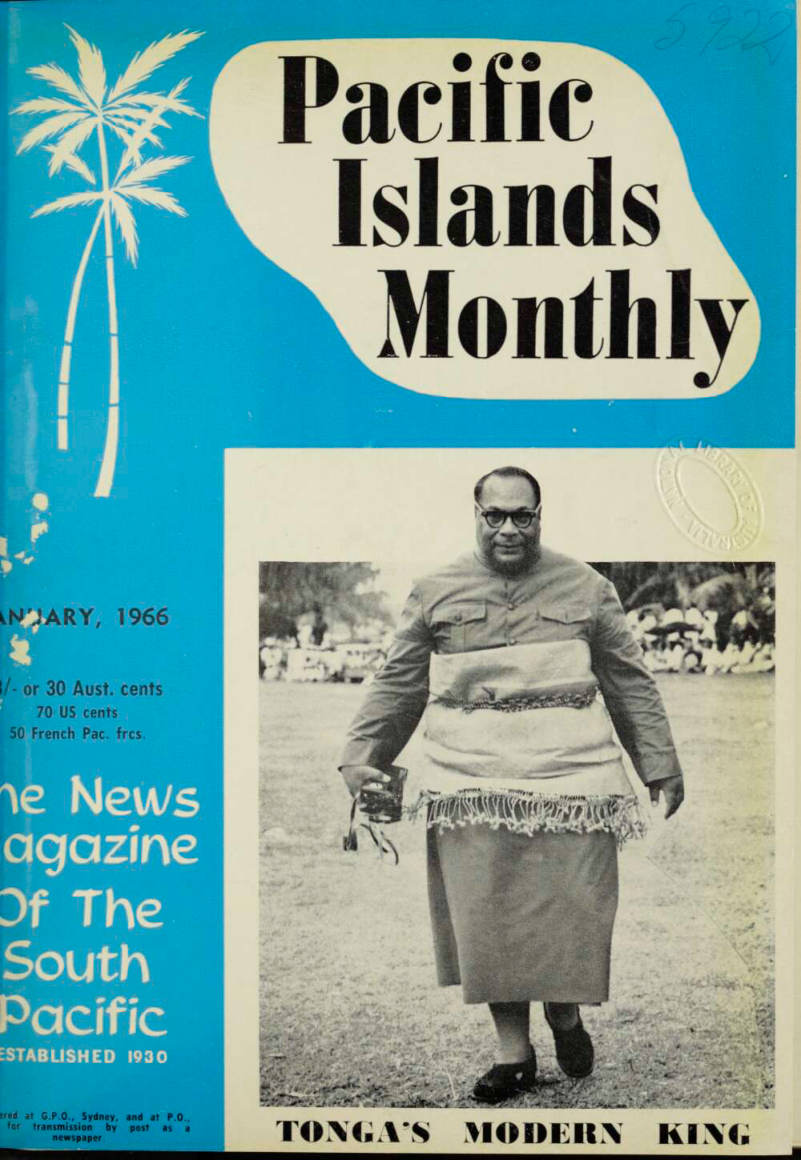 1
1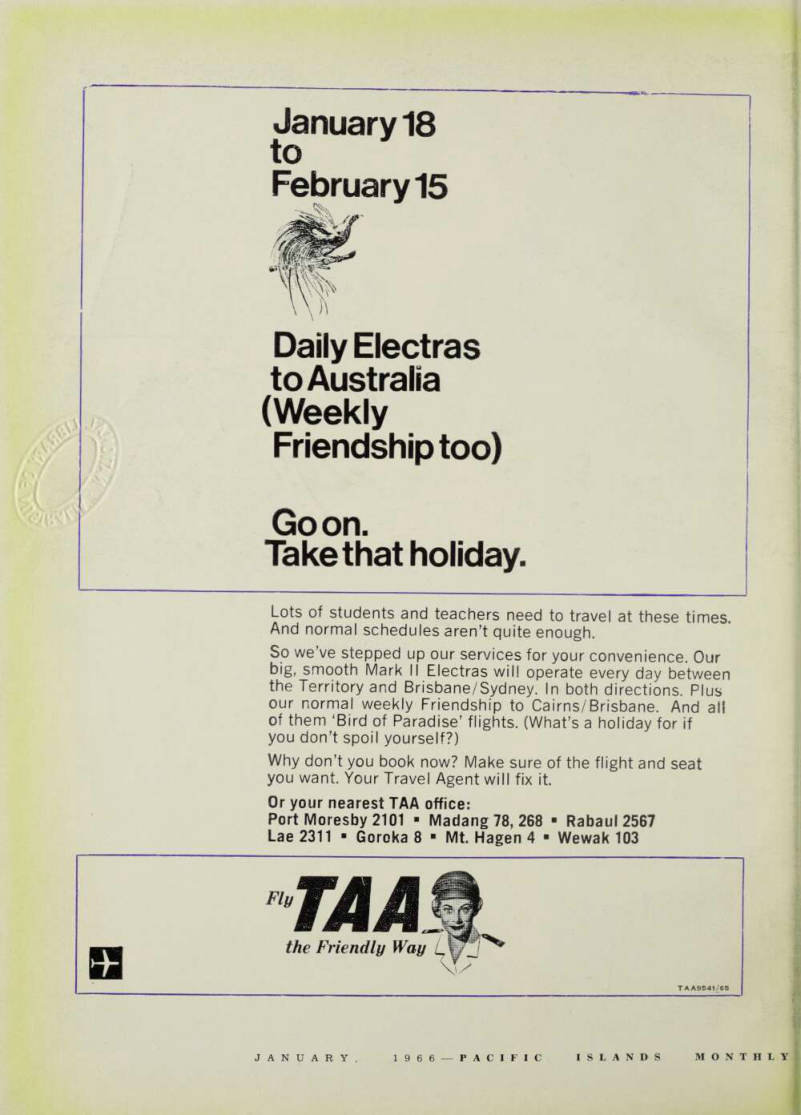 2
2 3
3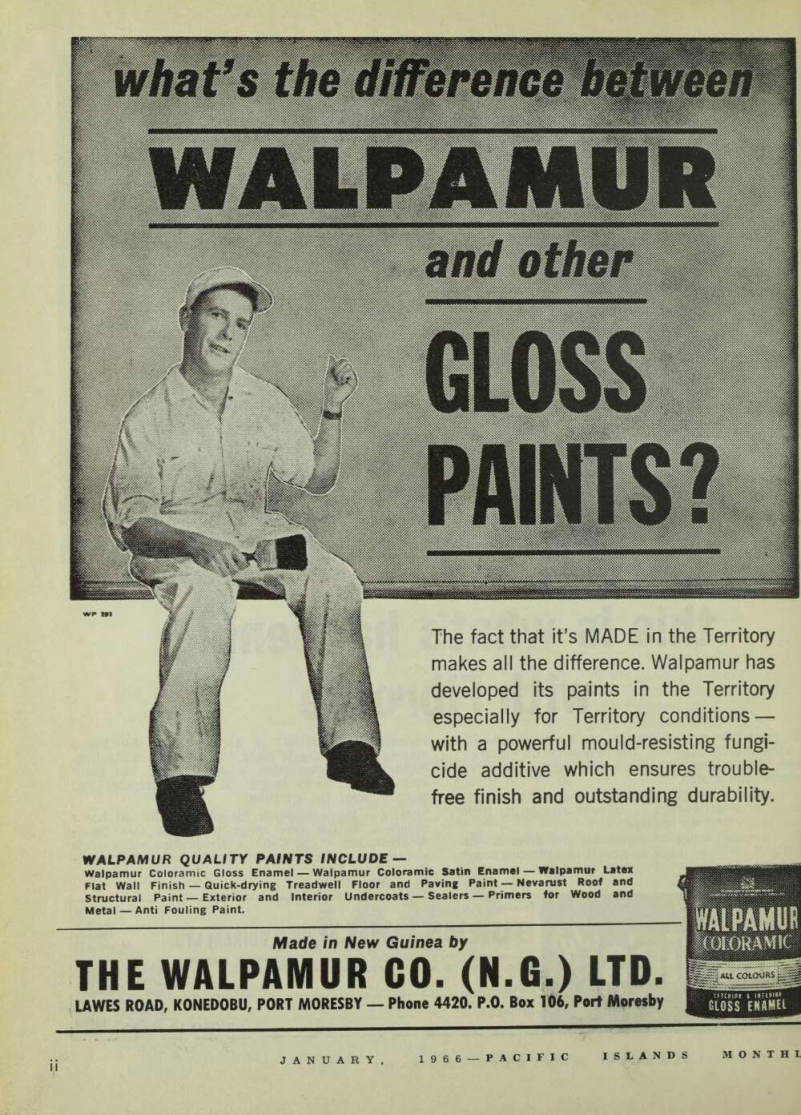 4
4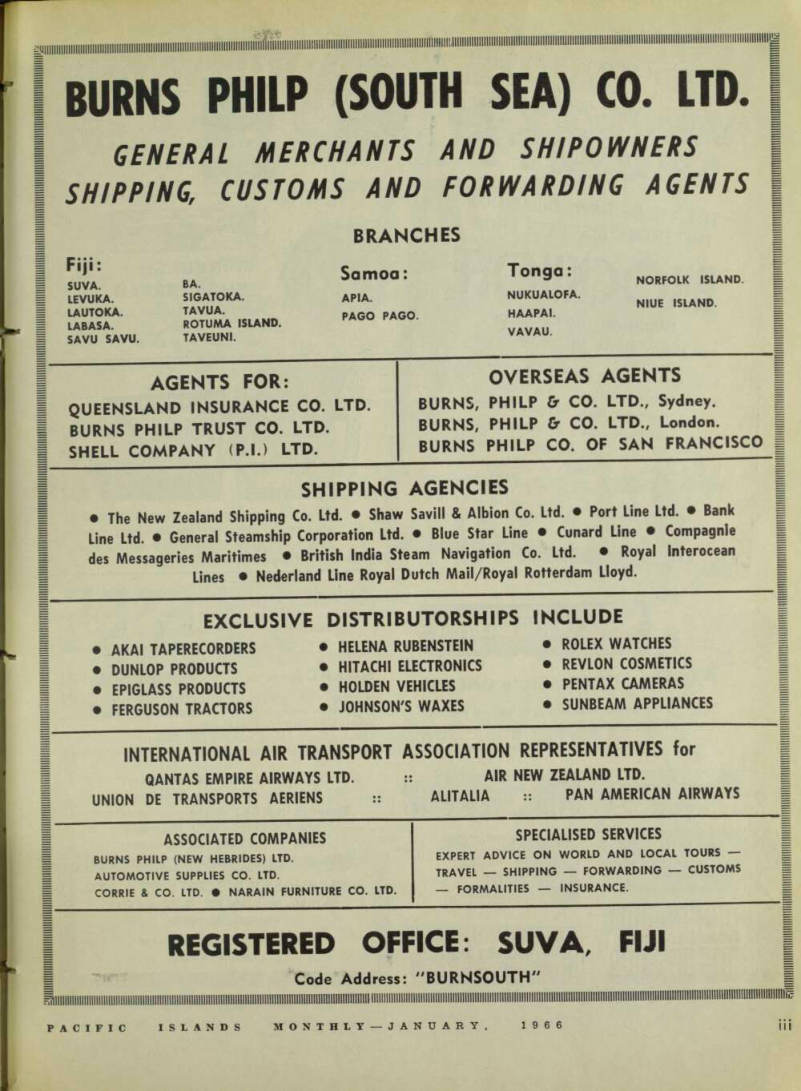 5
5 6
6 7
7 8
8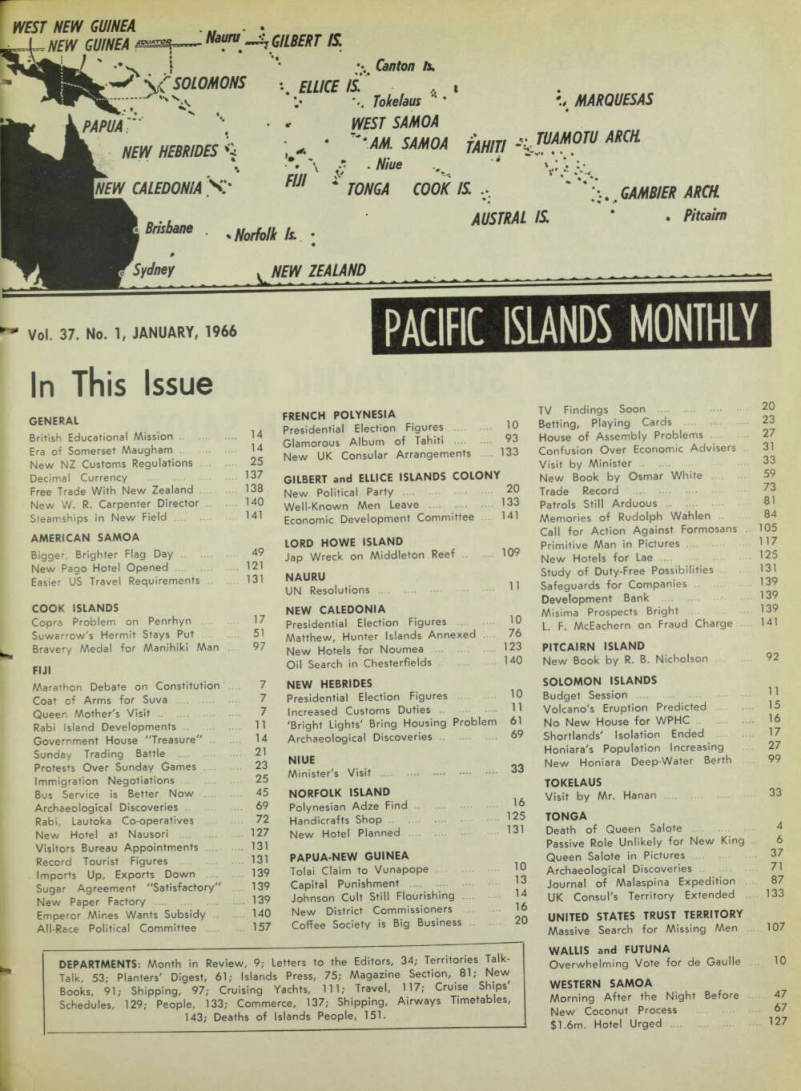 9
9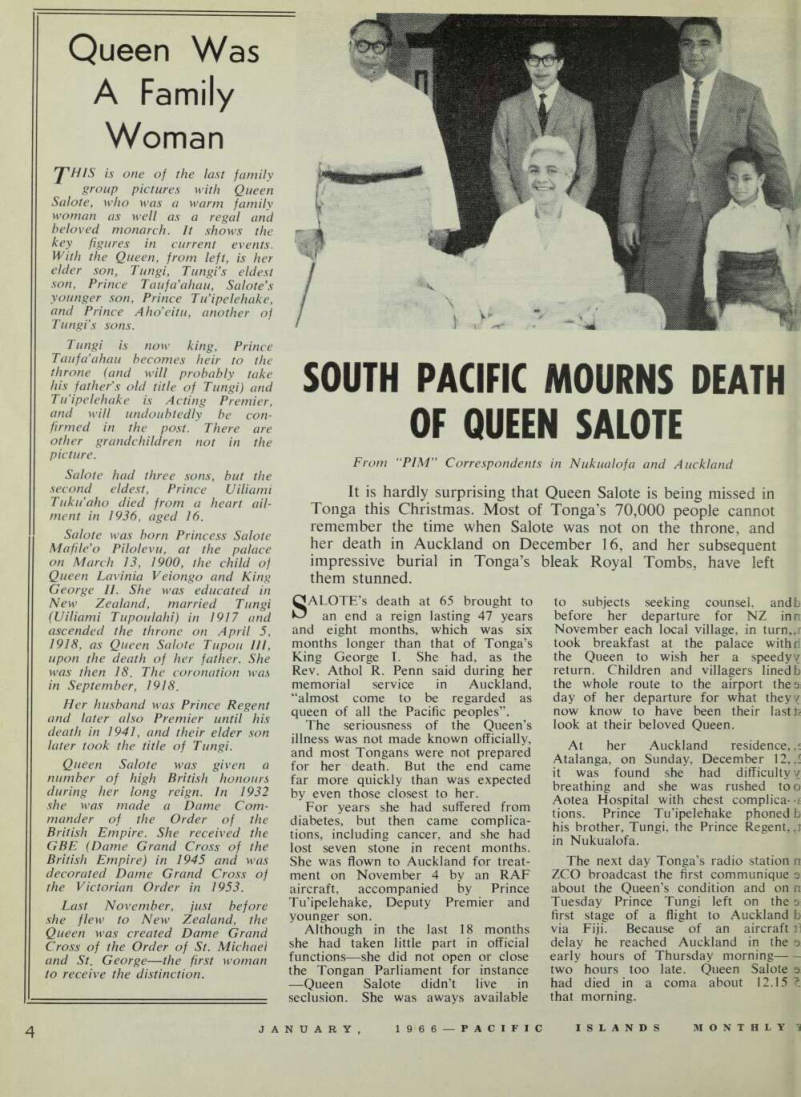 10
10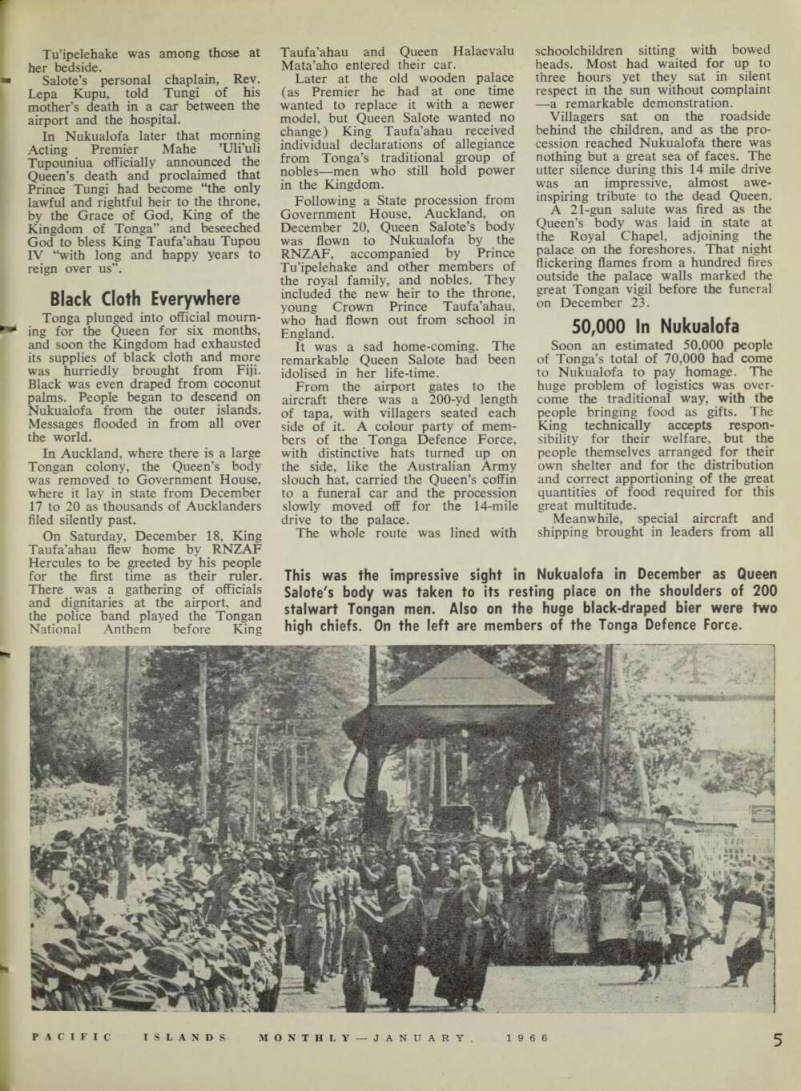 11
11 12
12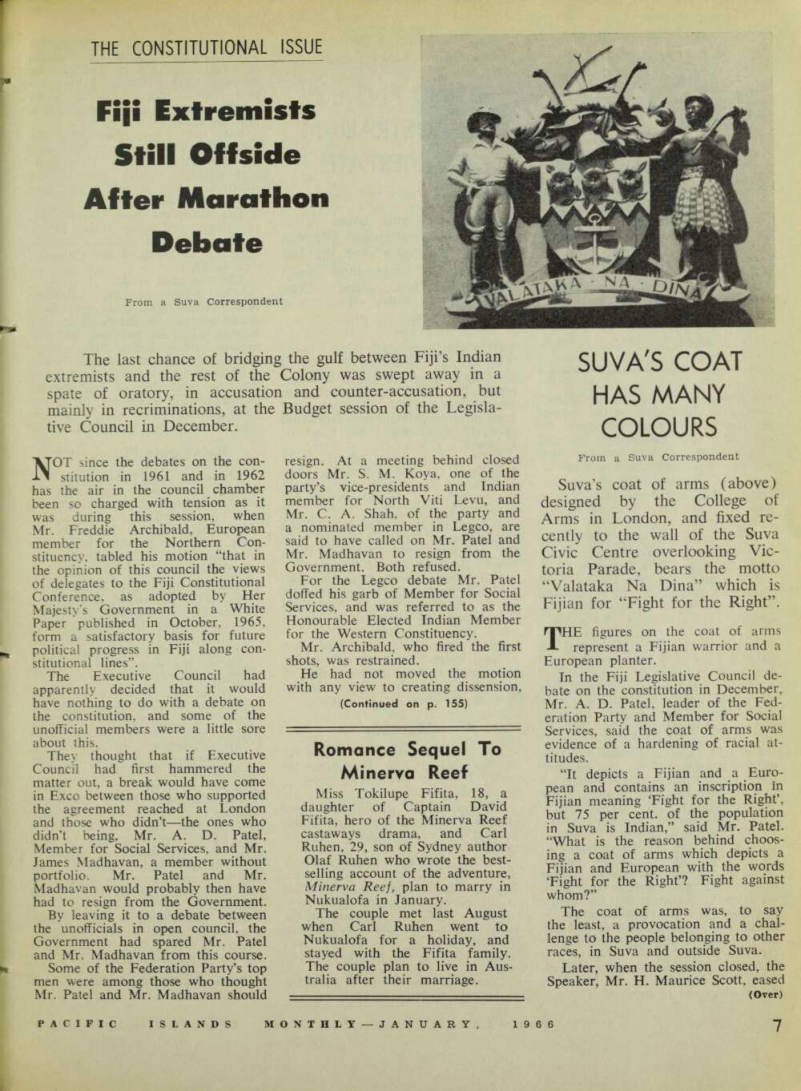 13
13 14
14 15
15 16
16 17
17 18
18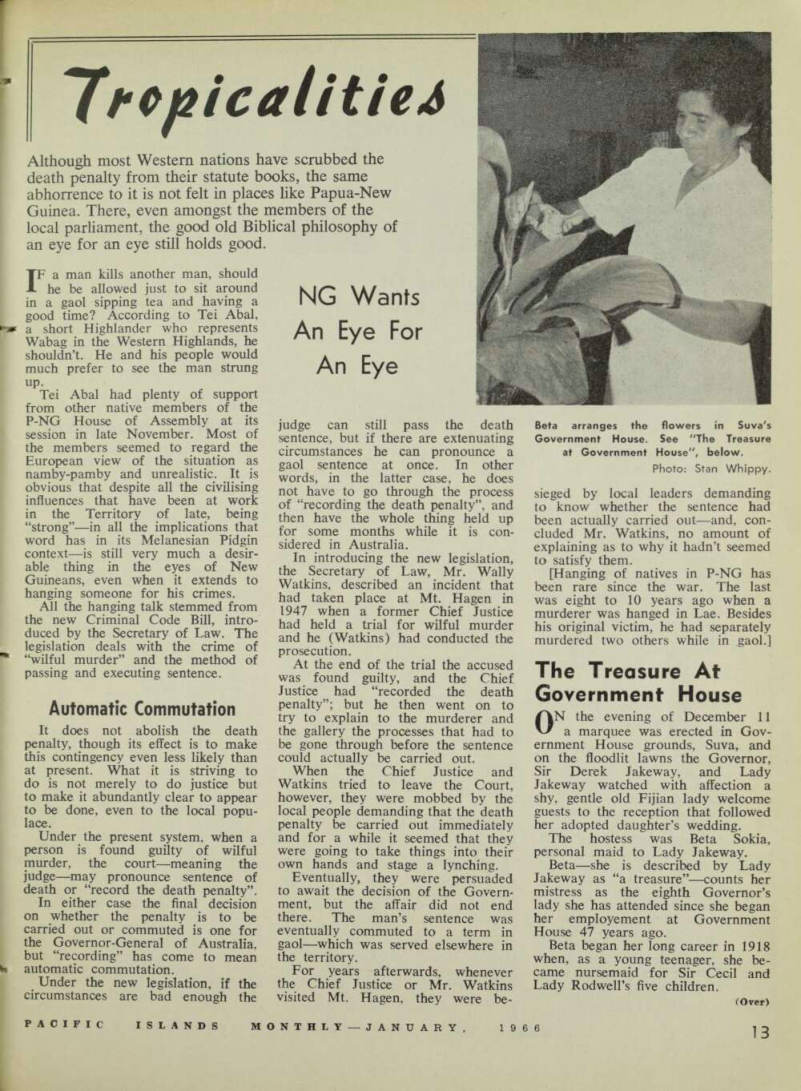 19
19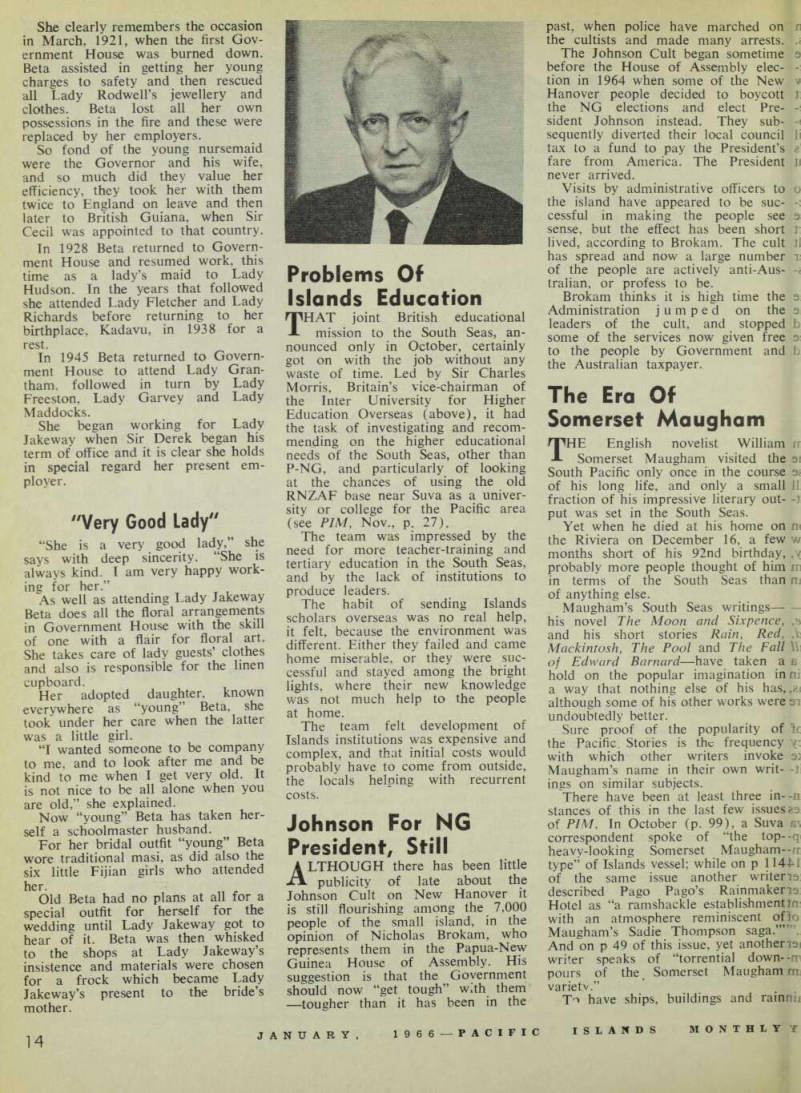 20
20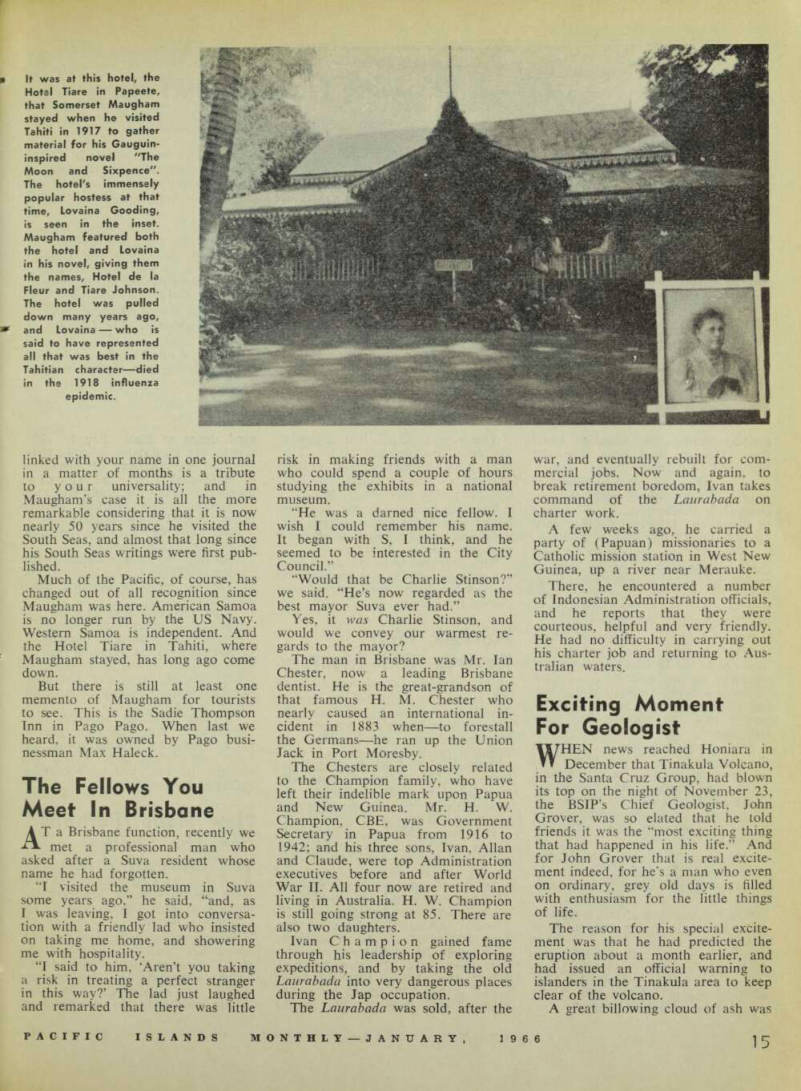 21
21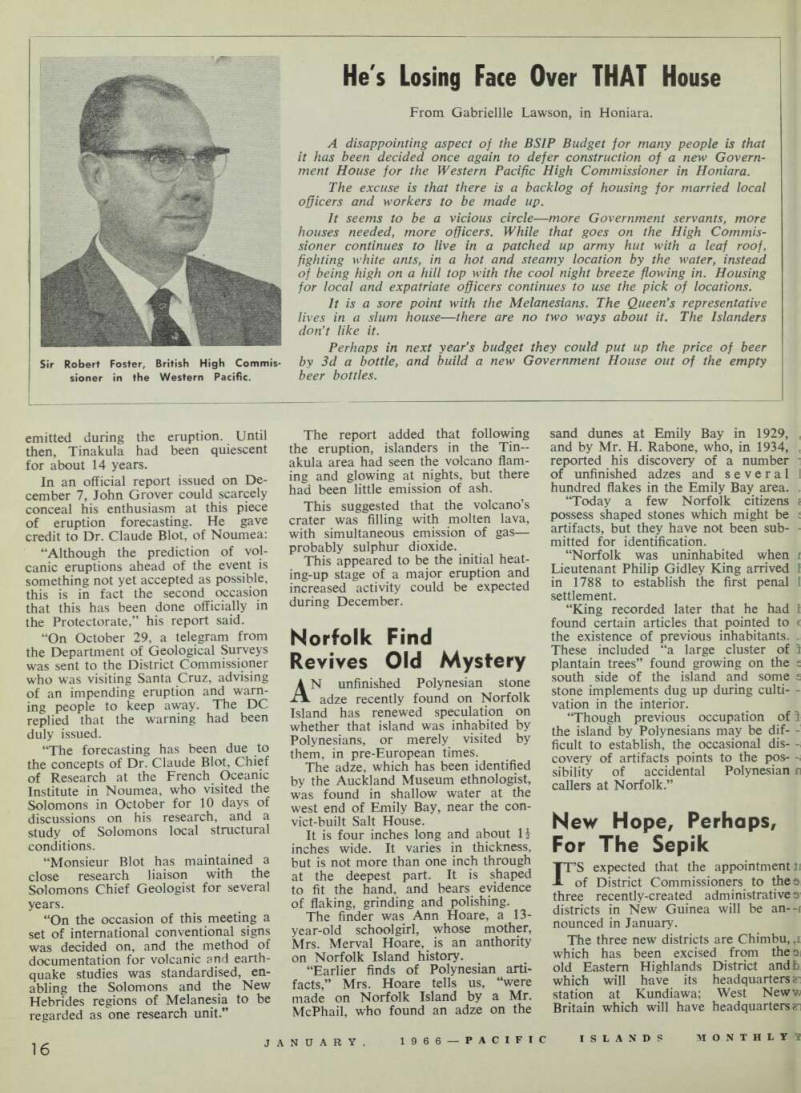 22
22 23
23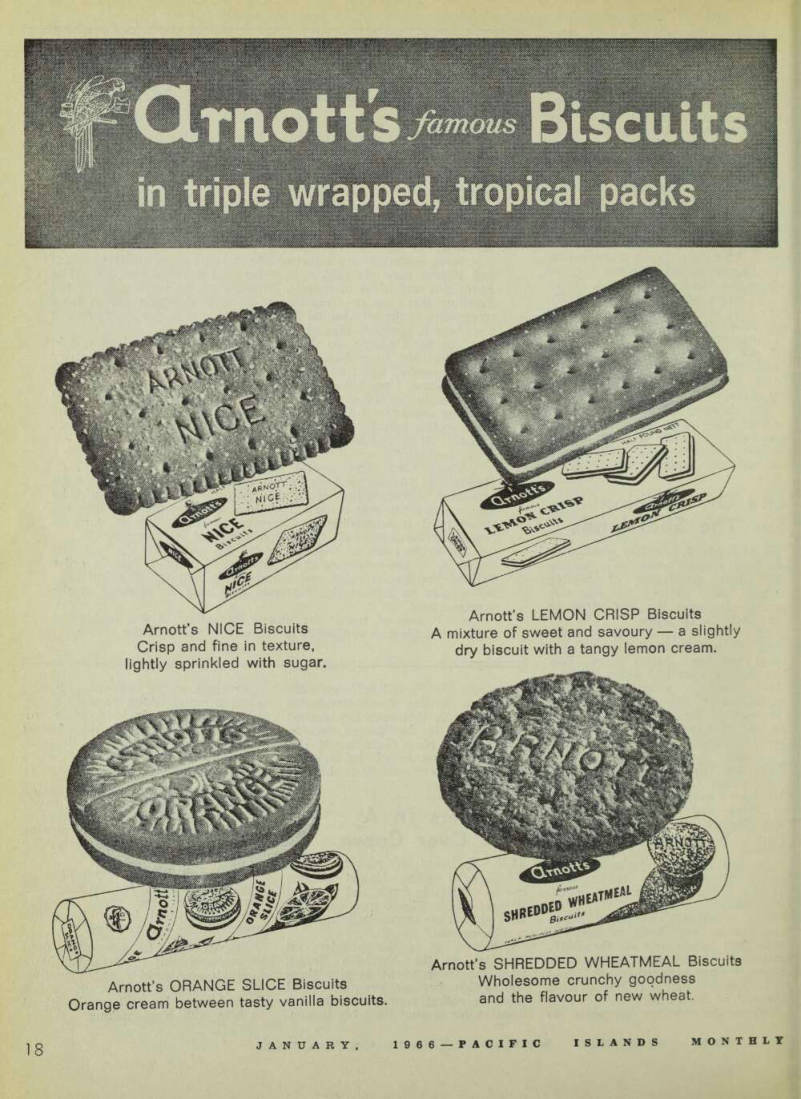 24
24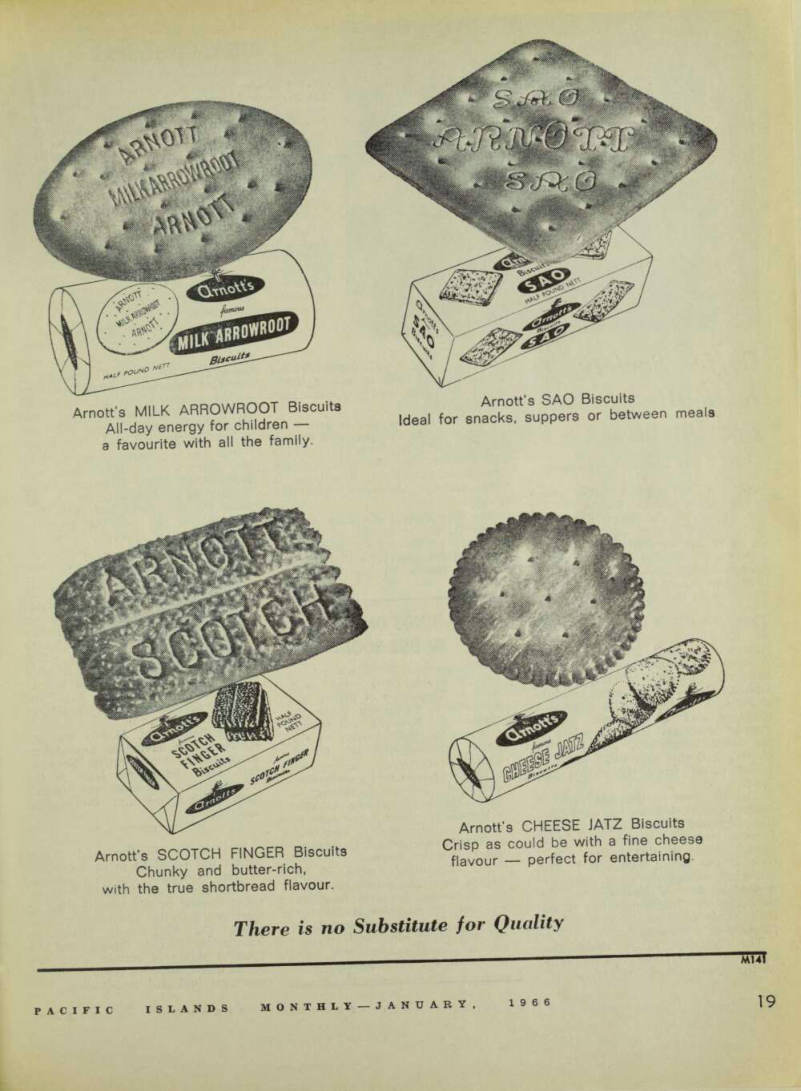 25
25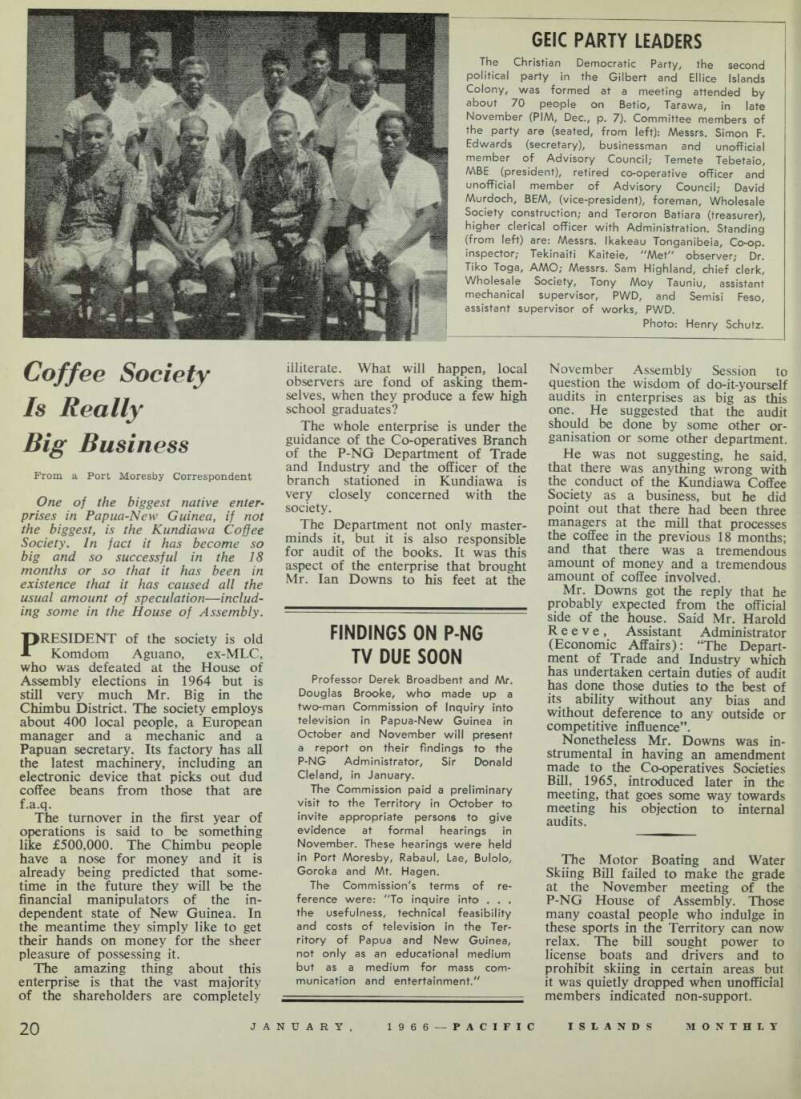 26
26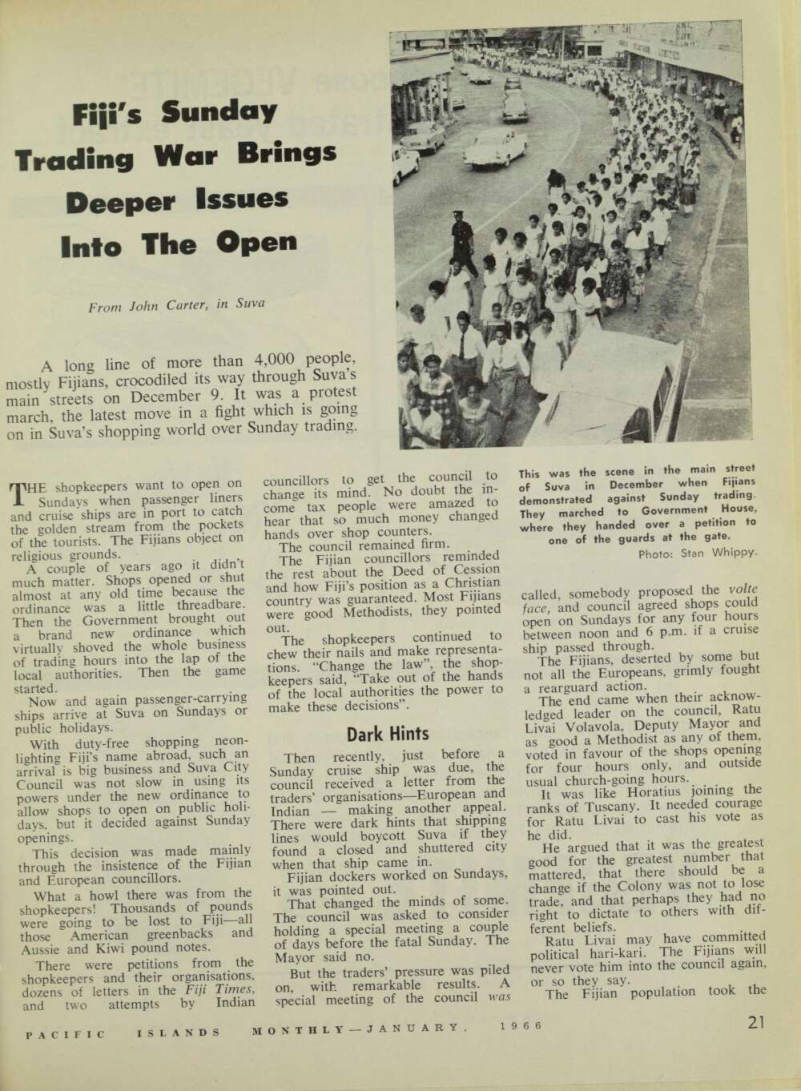 27
27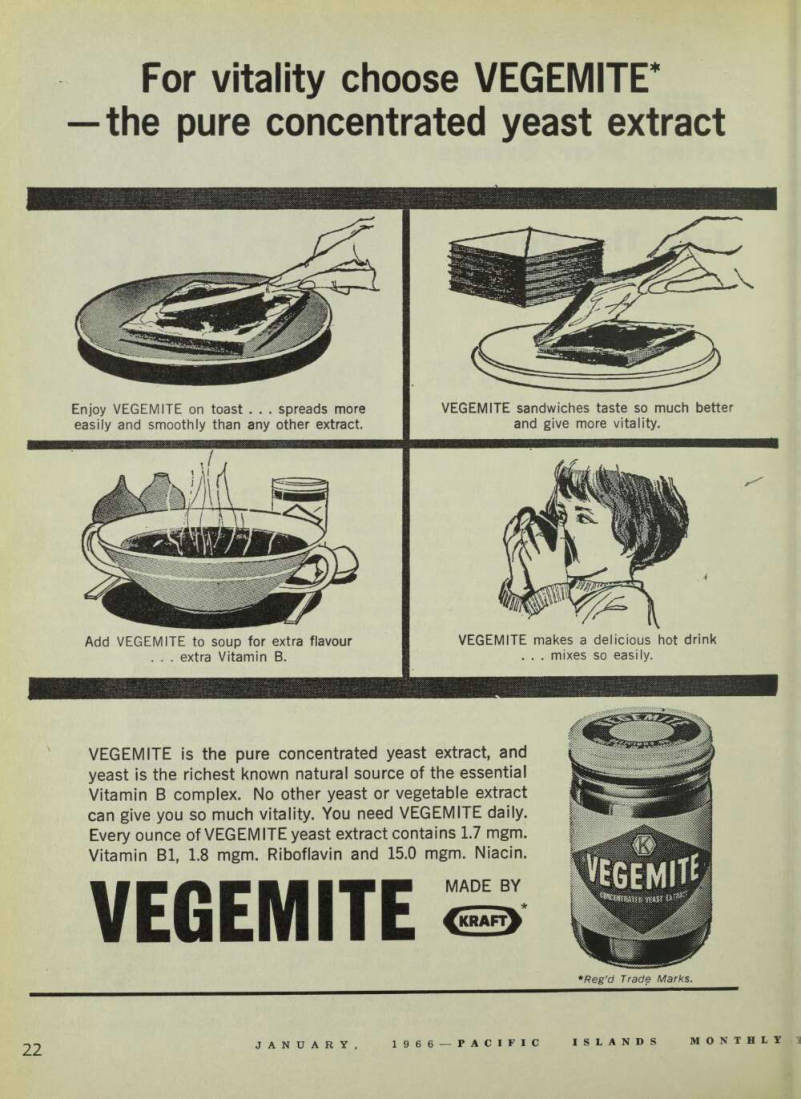 28
28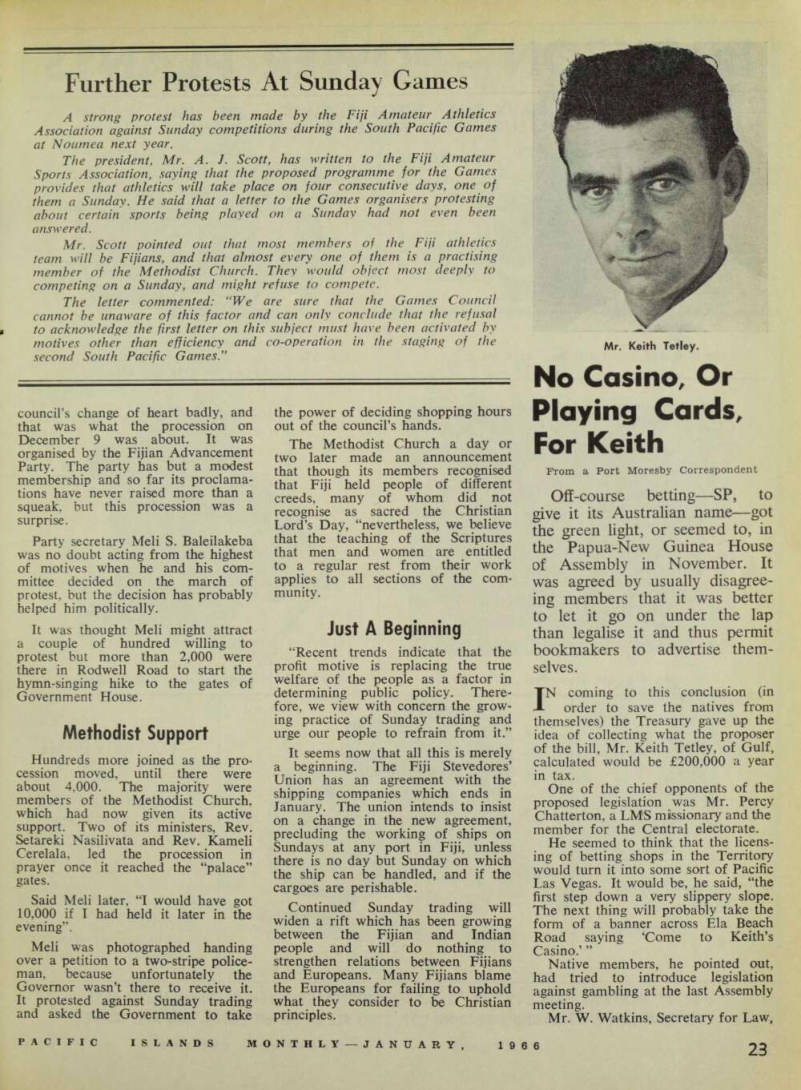 29
29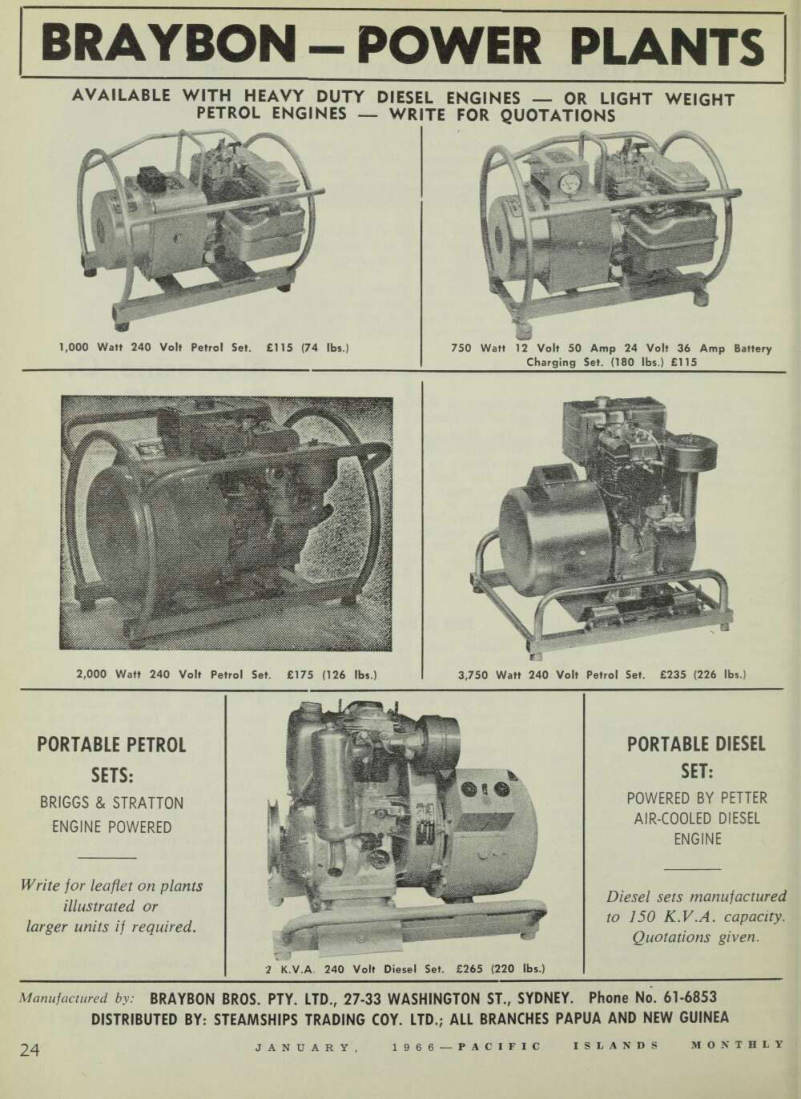 30
30 31
31 32
32 33
33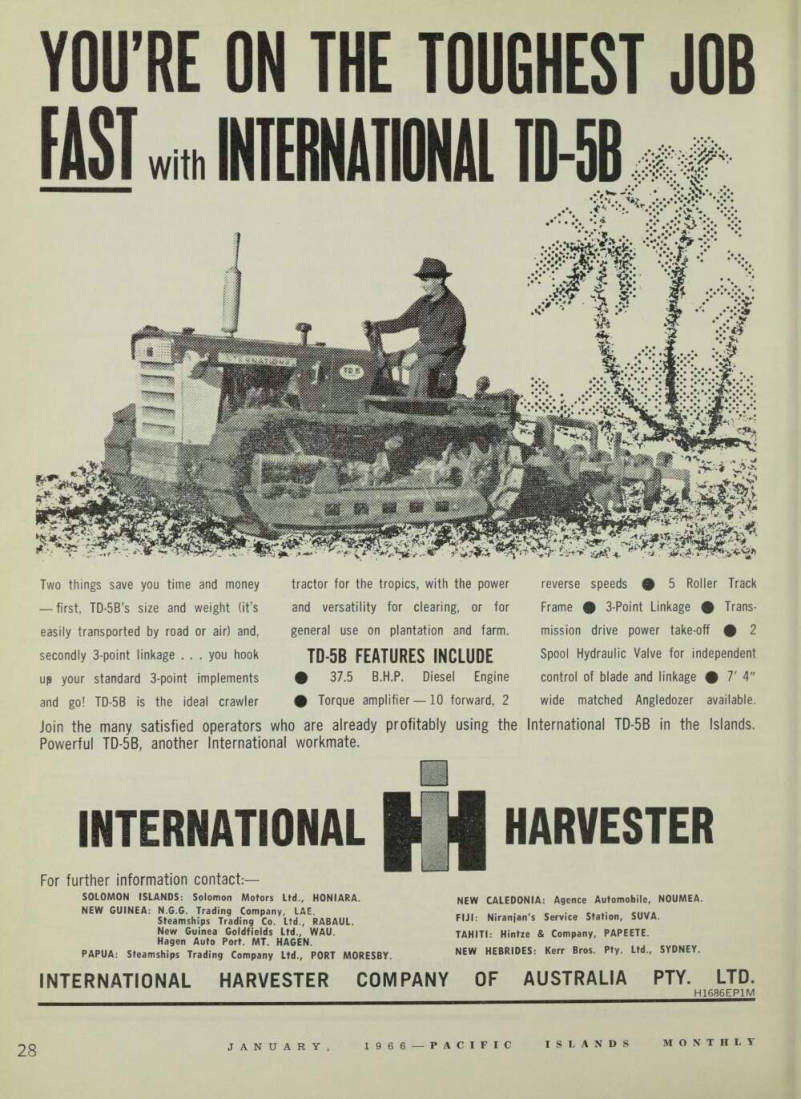 34
34 35
35 36
36 37
37 38
38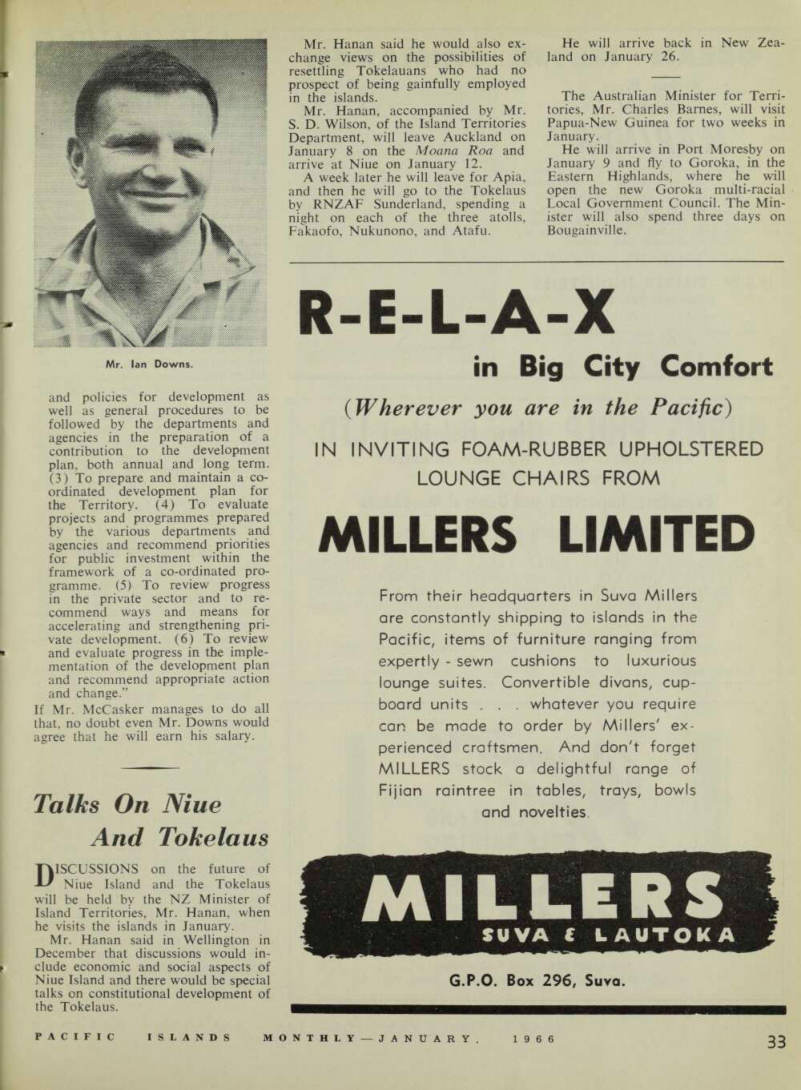 39
39 40
40 41
41 42
42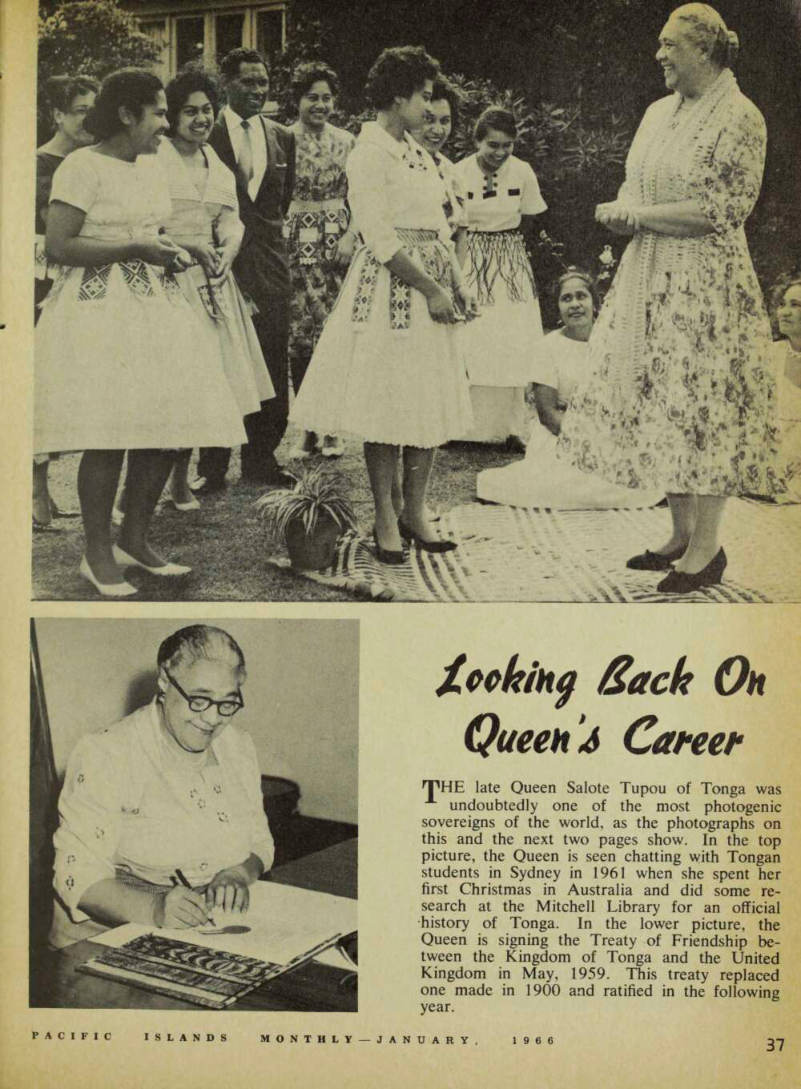 43
43 44
44 45
45 46
46 47
47 48
48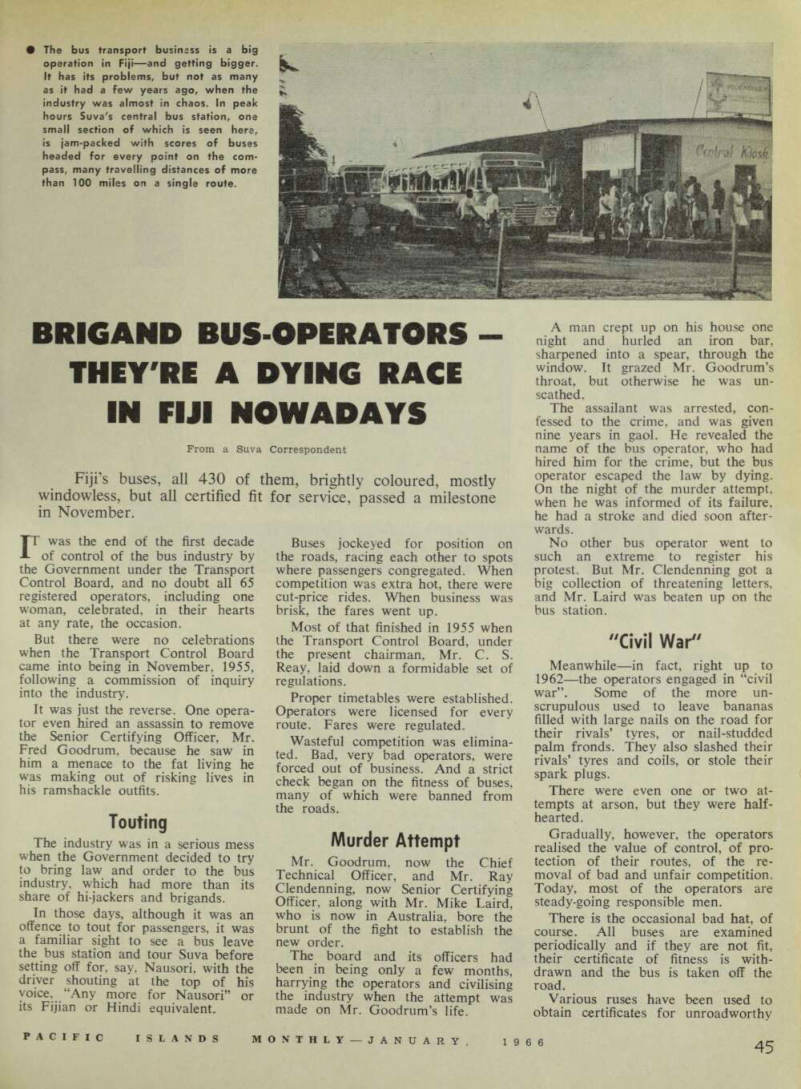 49
49 50
50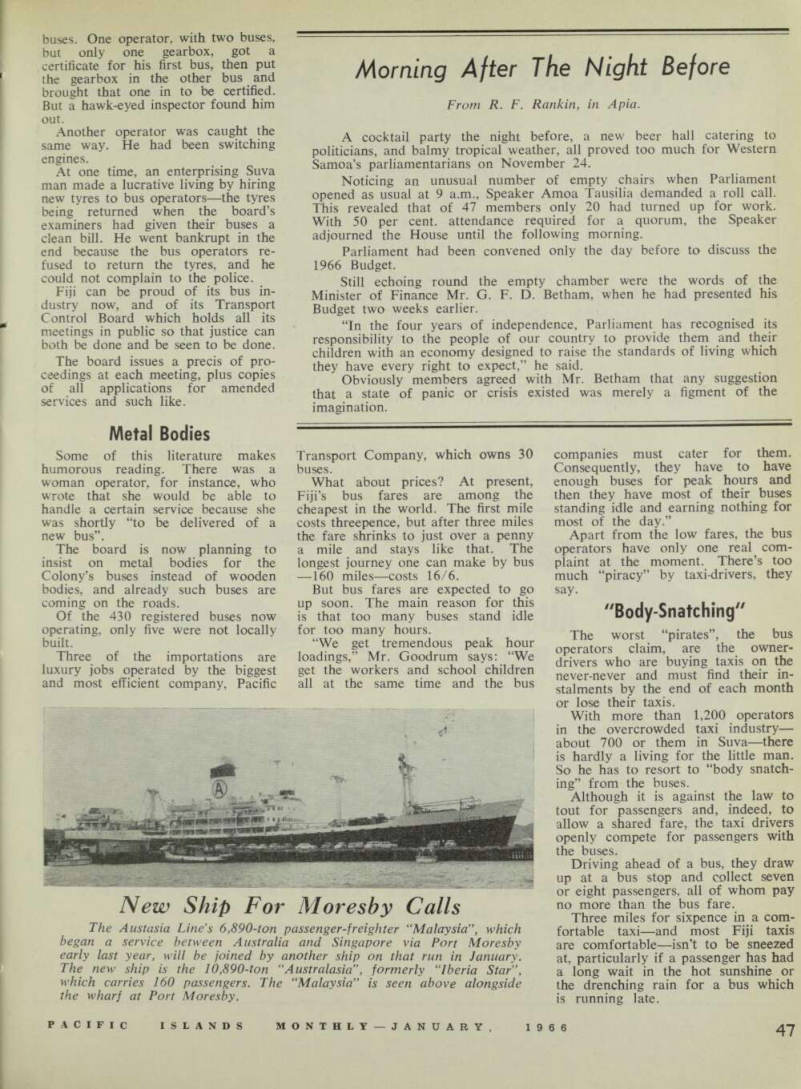 51
51 52
52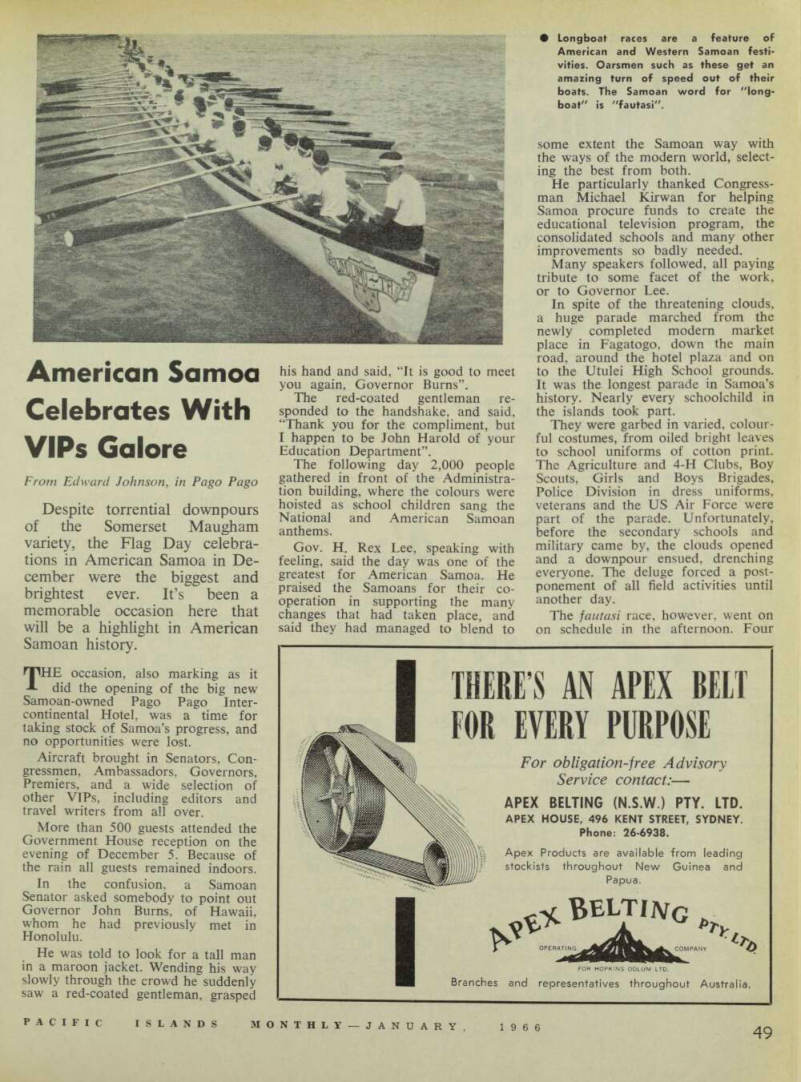 53
53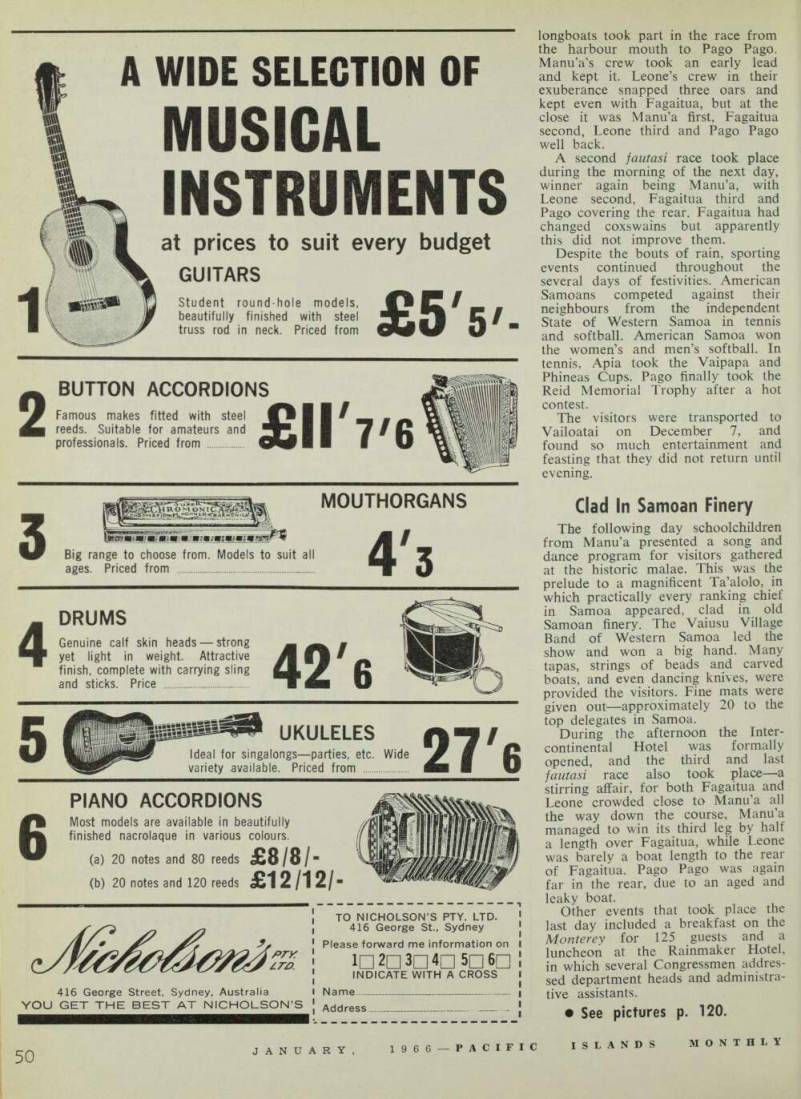 54
54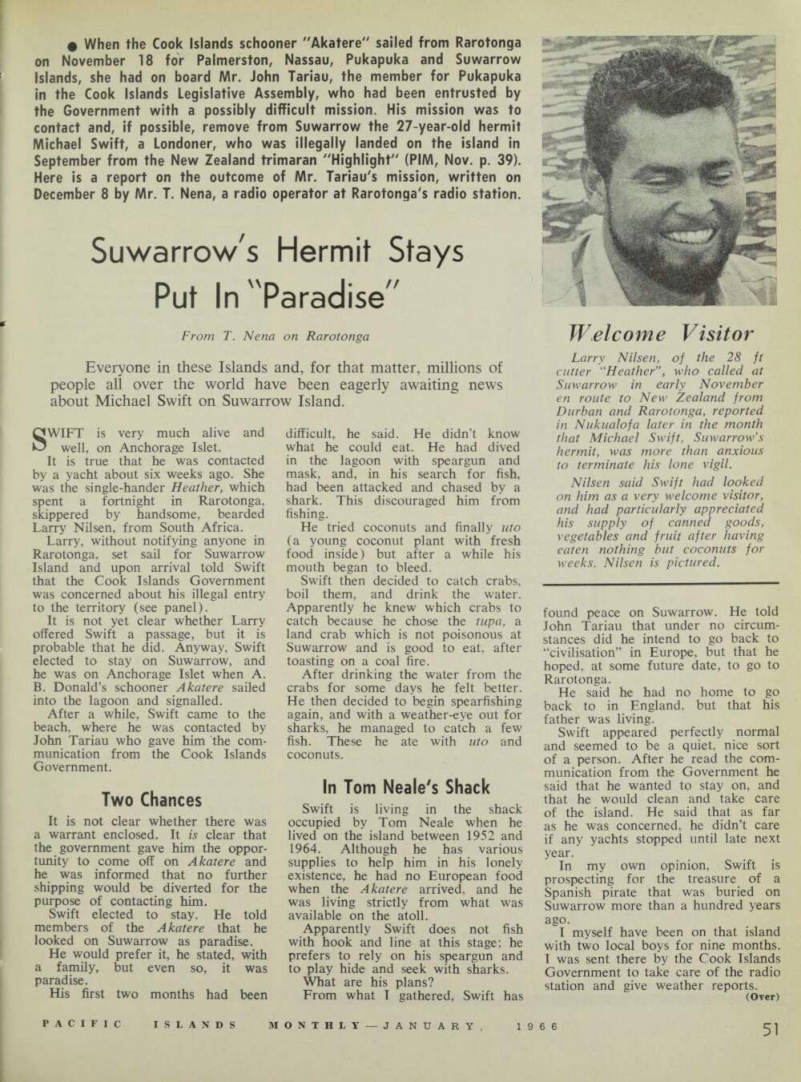 55
55 56
56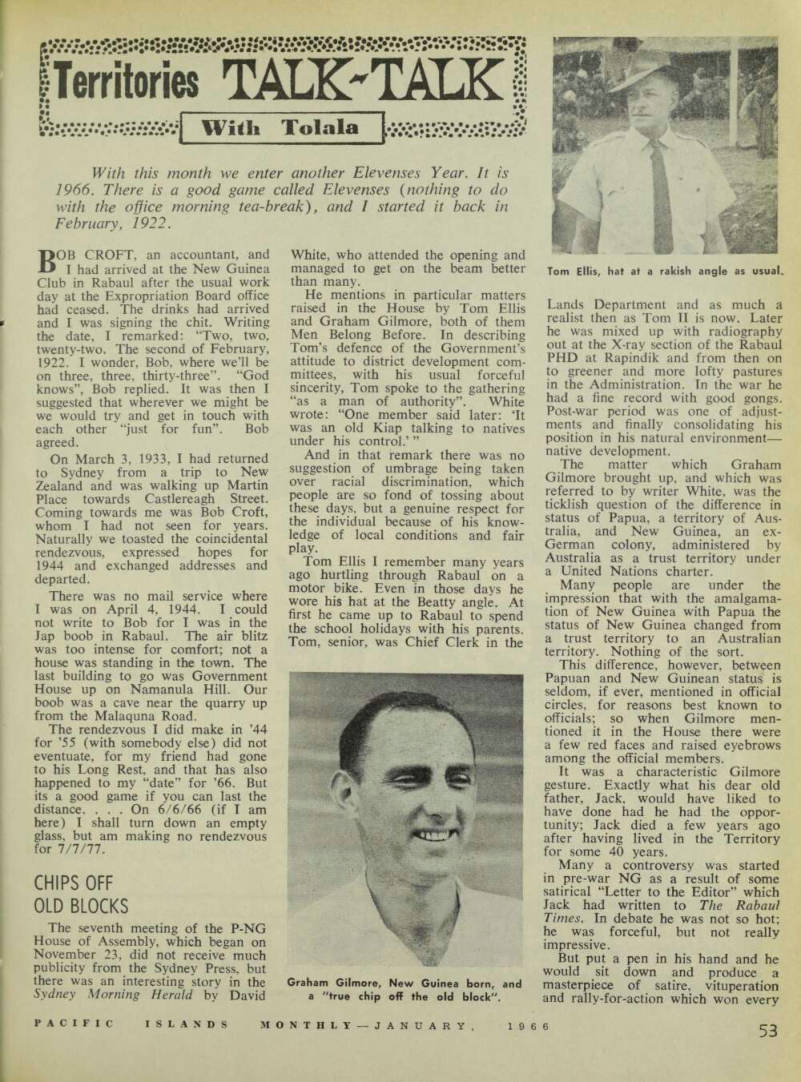 57
57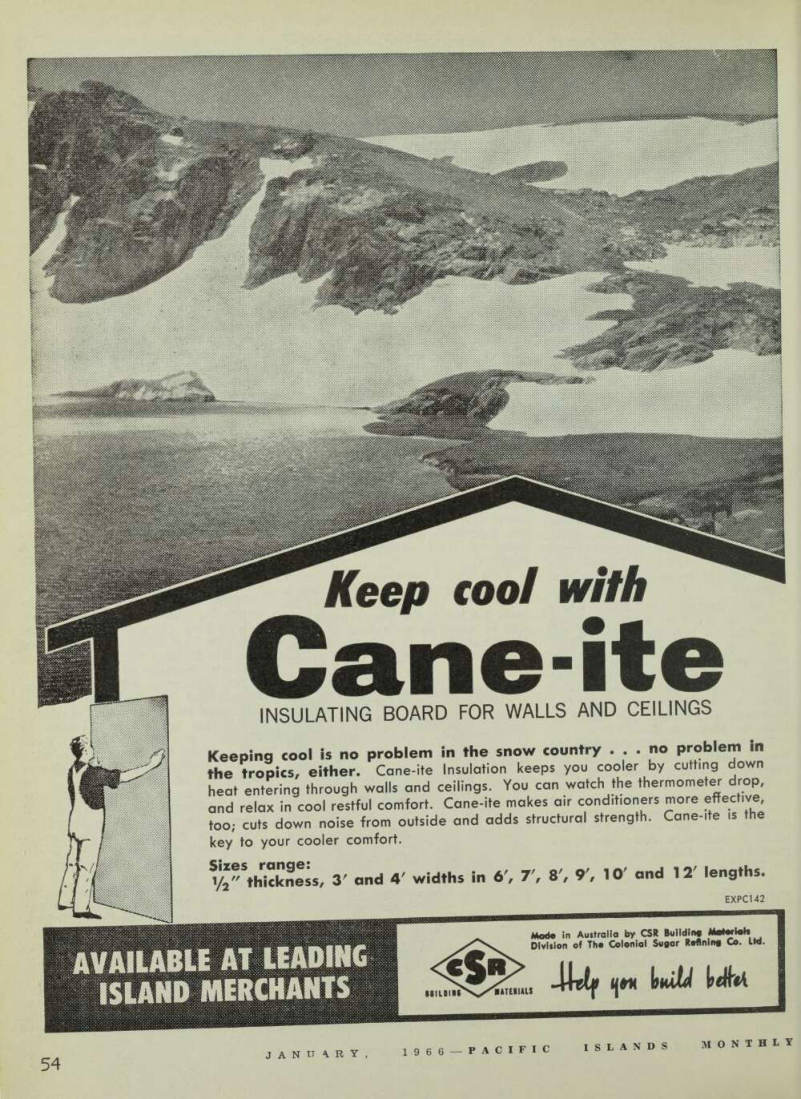 58
58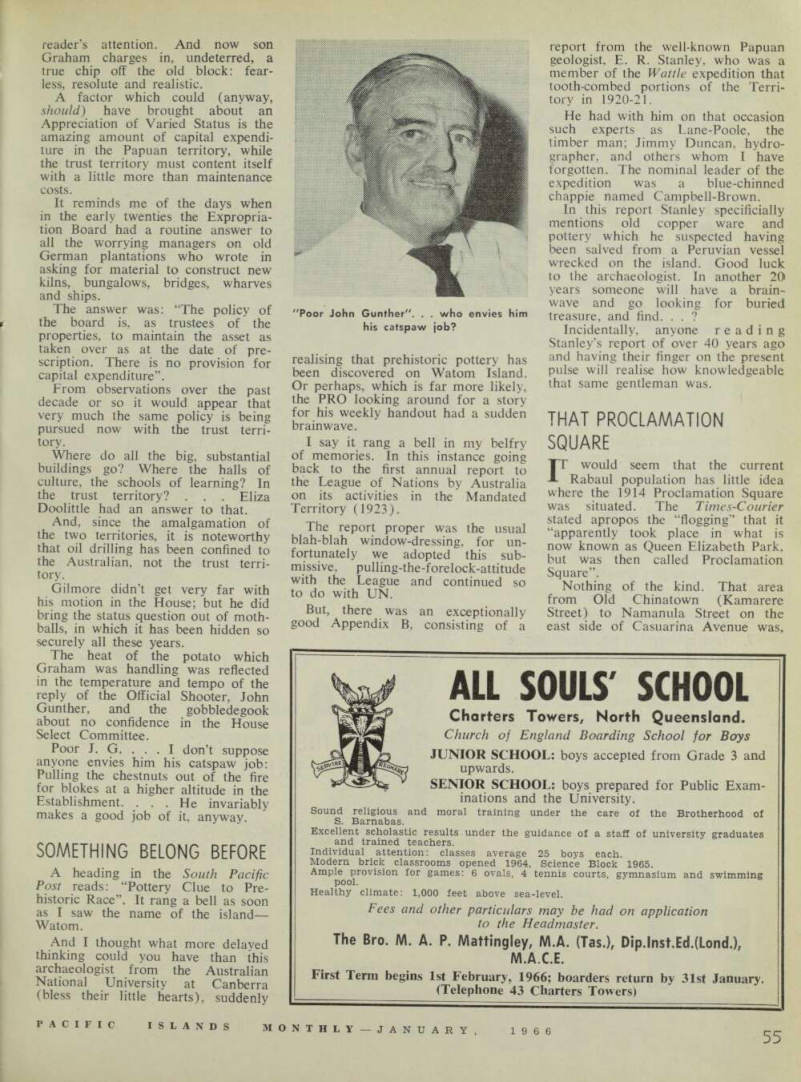 59
59 60
60 61
61 62
62 63
63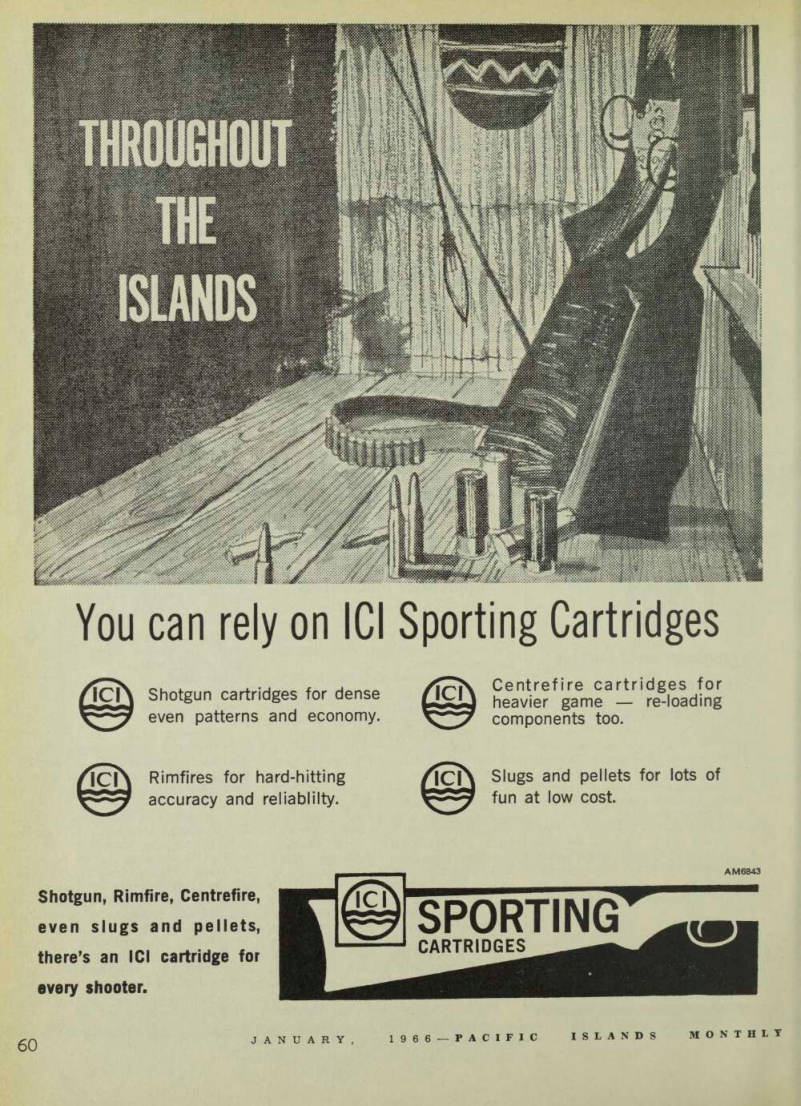 64
64 65
65 66
66 67
67 68
68 69
69 70
70 71
71 72
72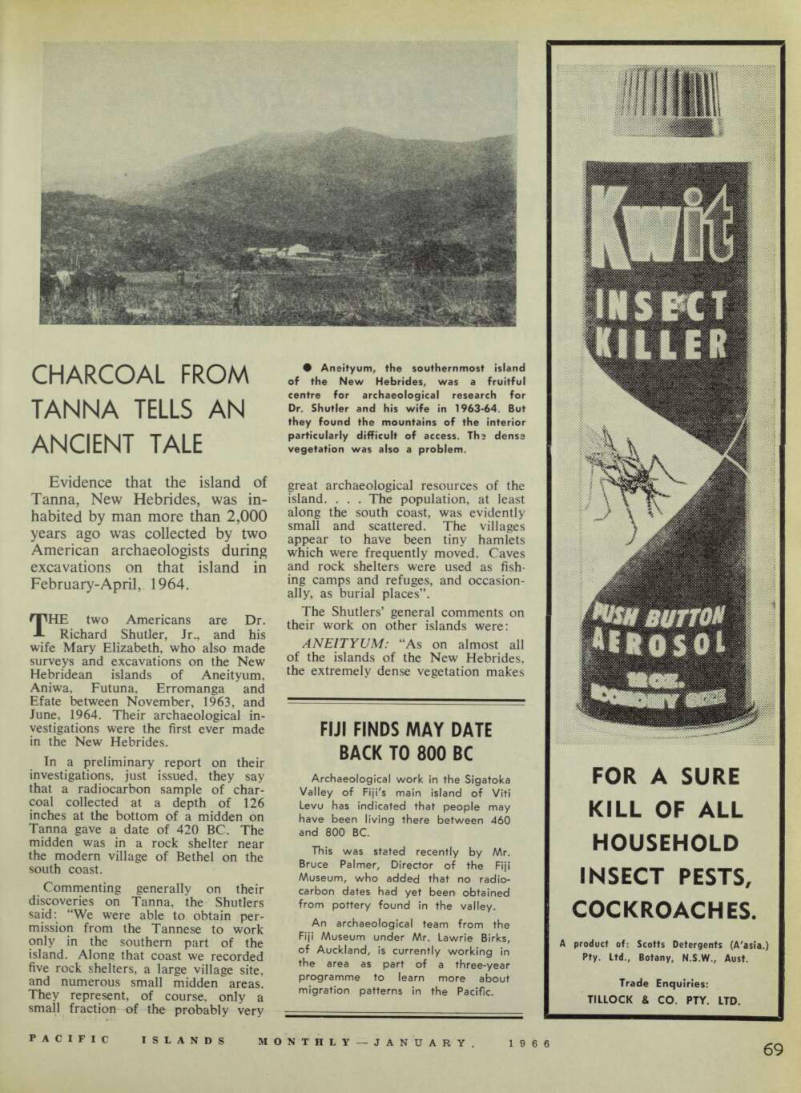 73
73 74
74 75
75 76
76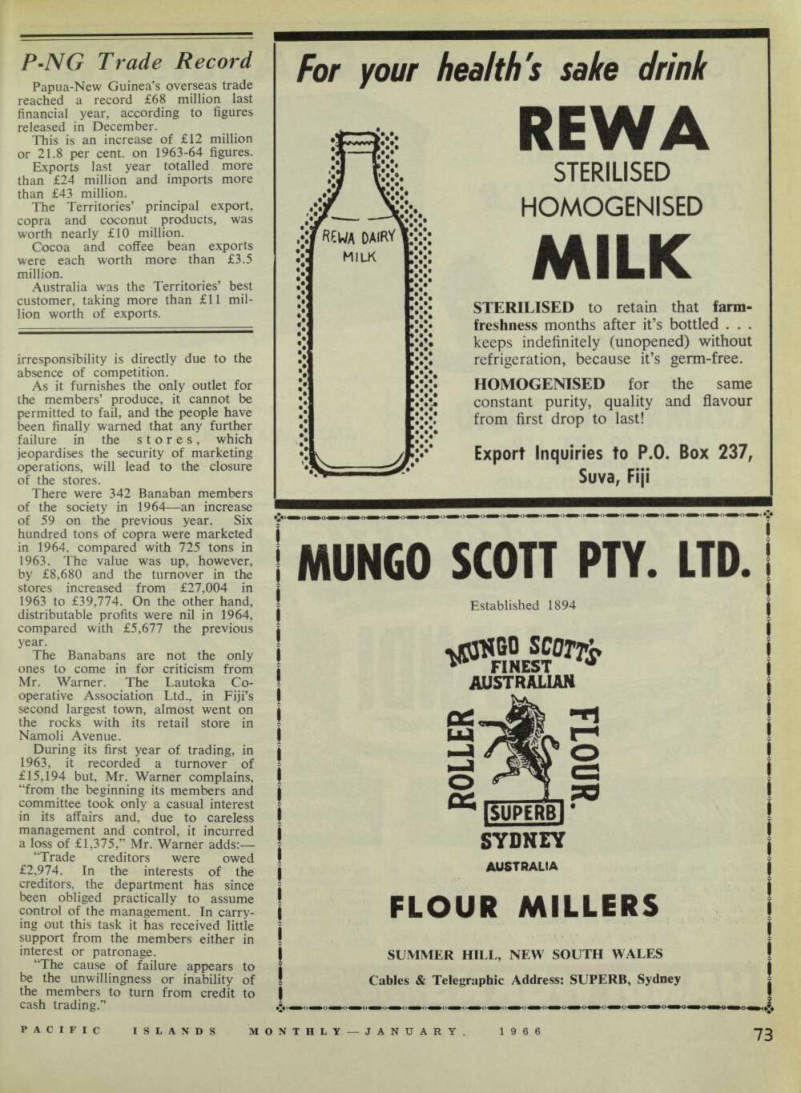 77
77 78
78 79
79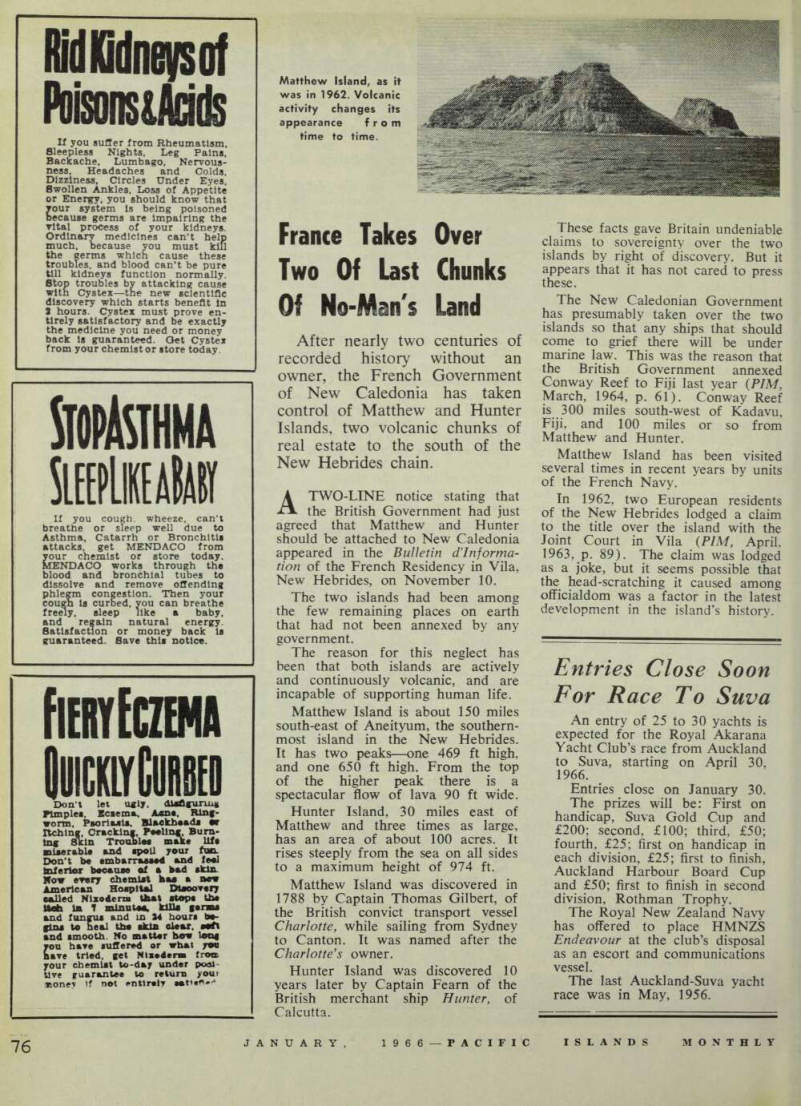 80
80 81
81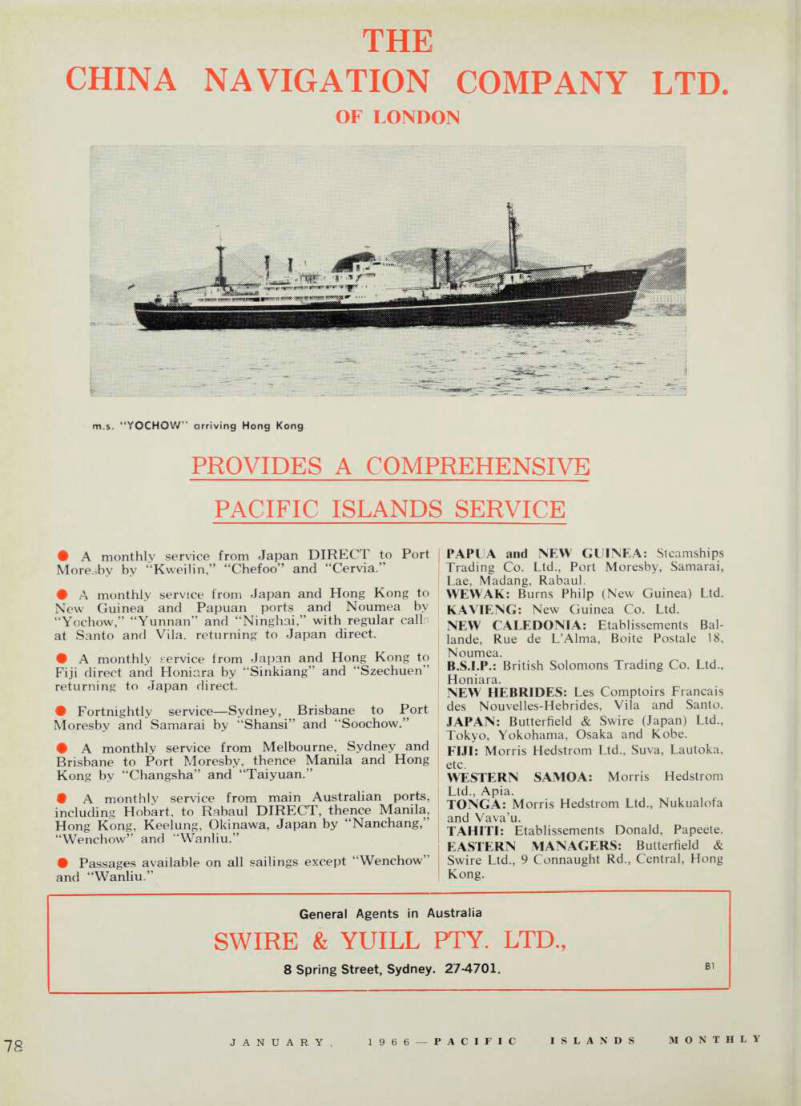 82
82 83
83 84
84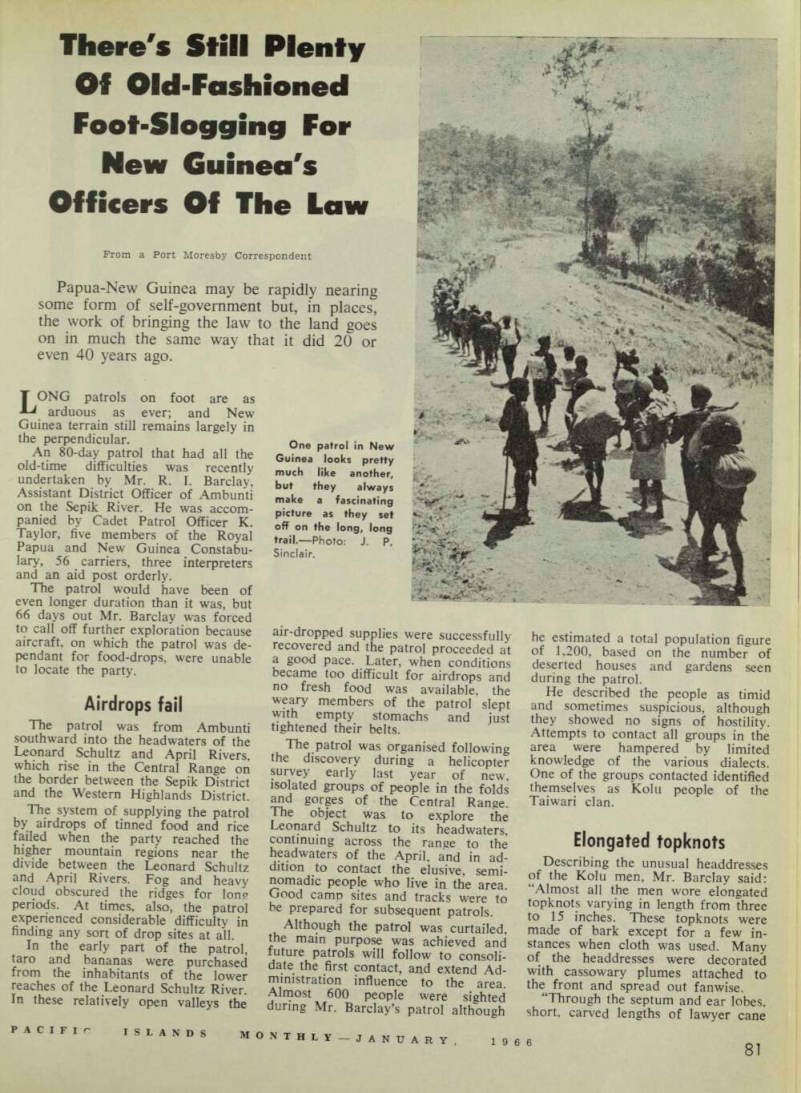 85
85 86
86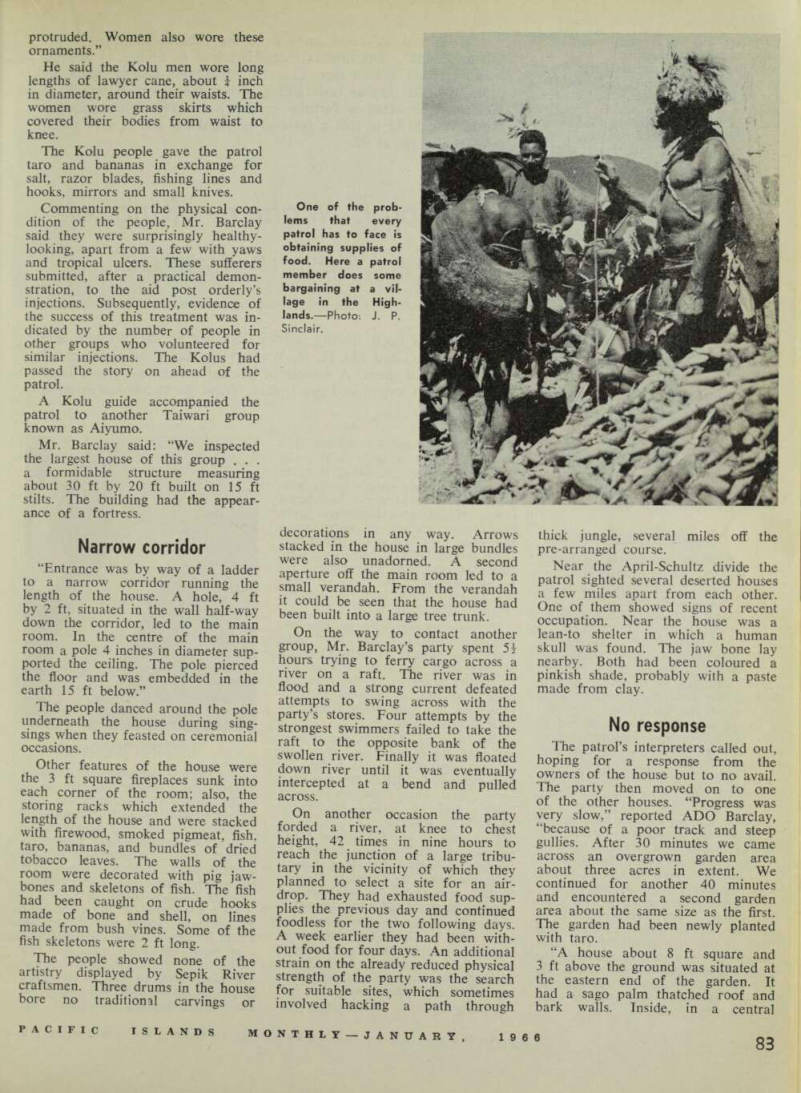 87
87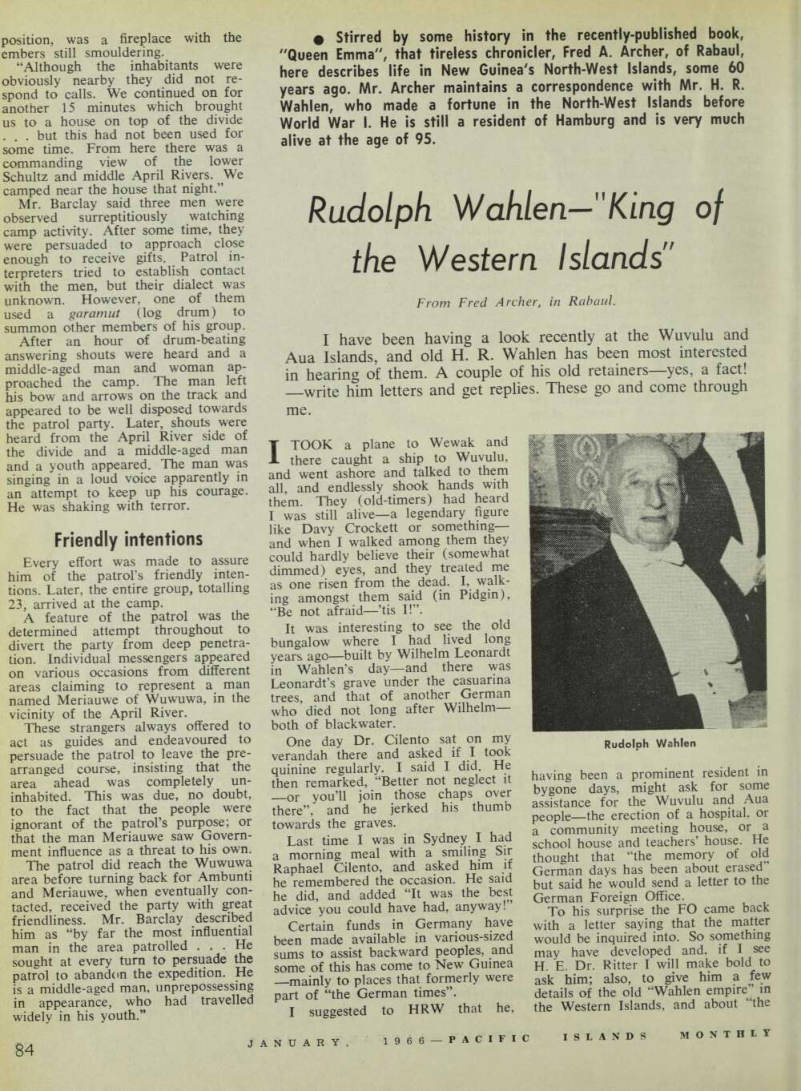 88
88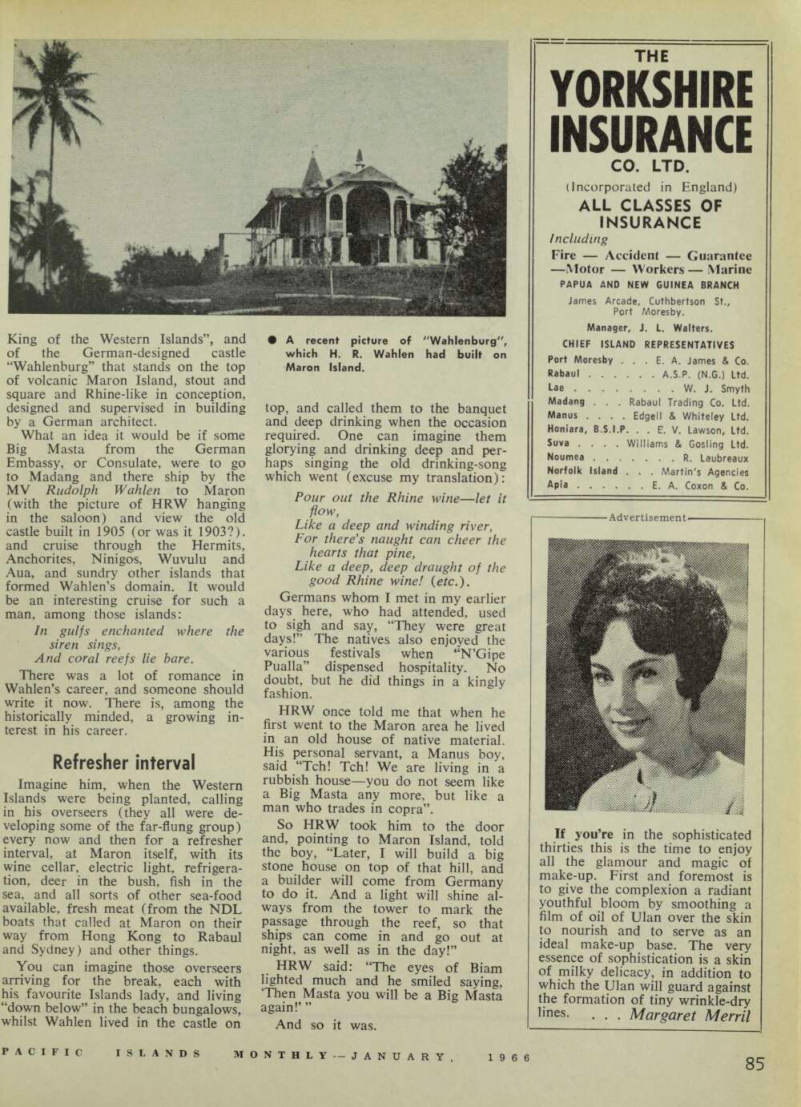 89
89 90
90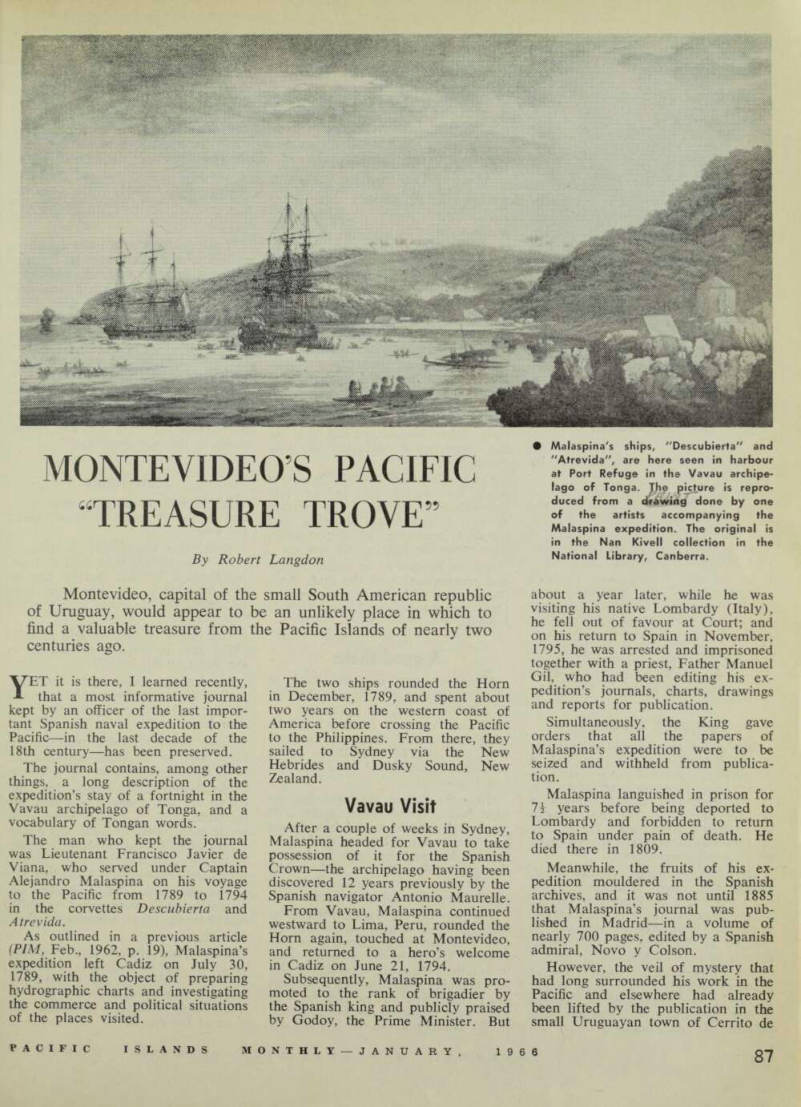 91
91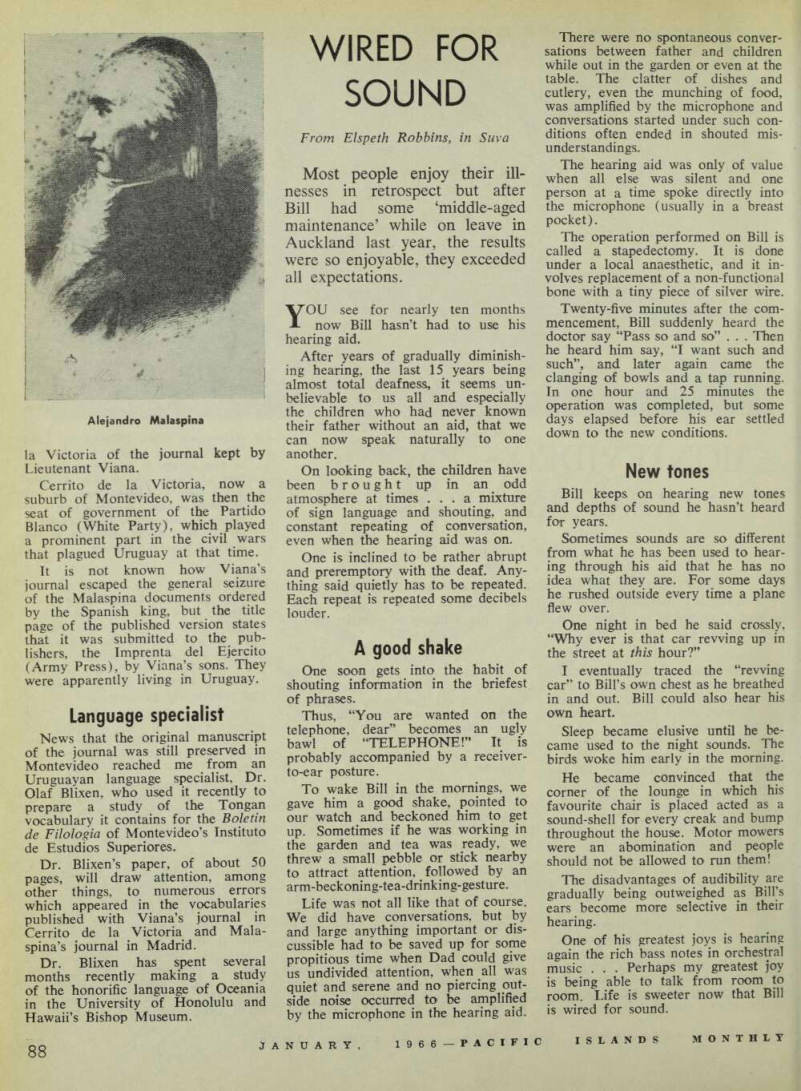 92
92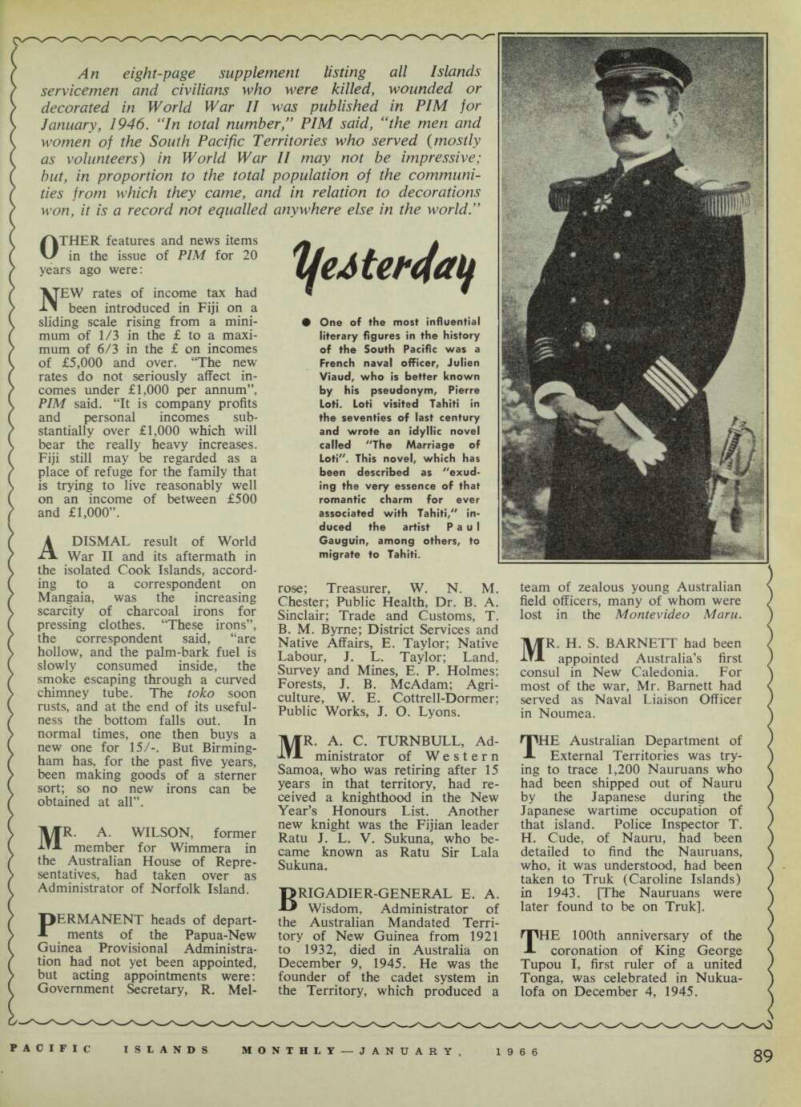 93
93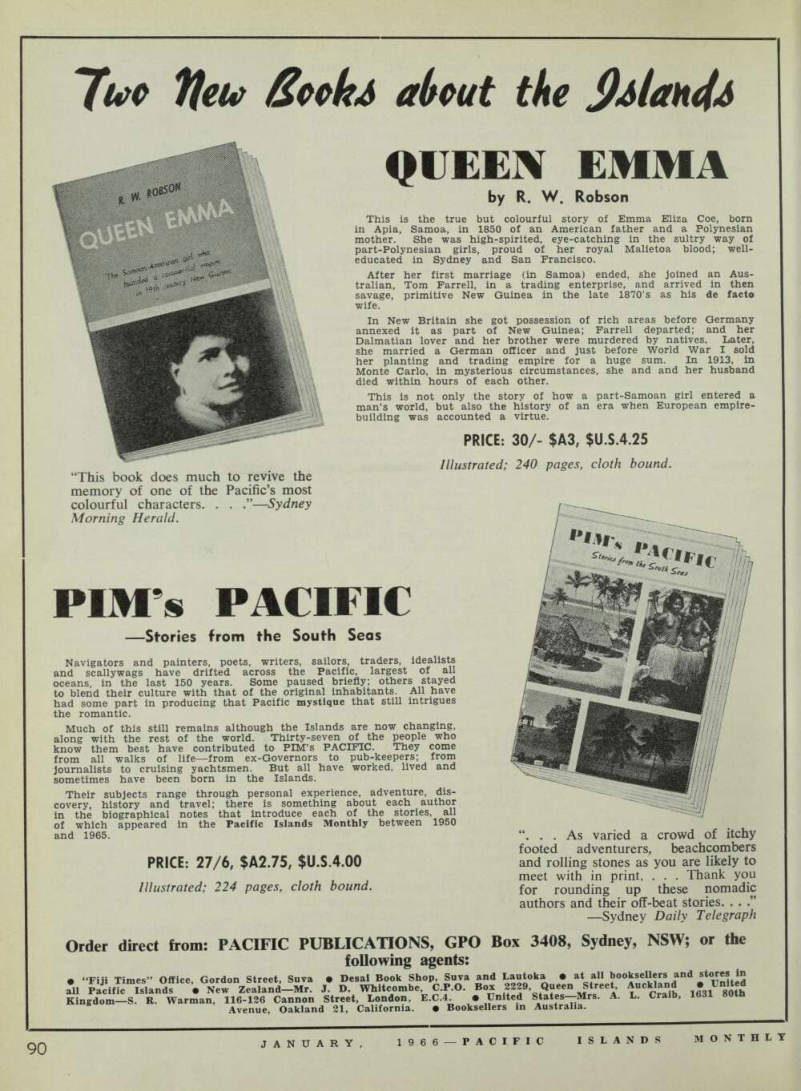 94
94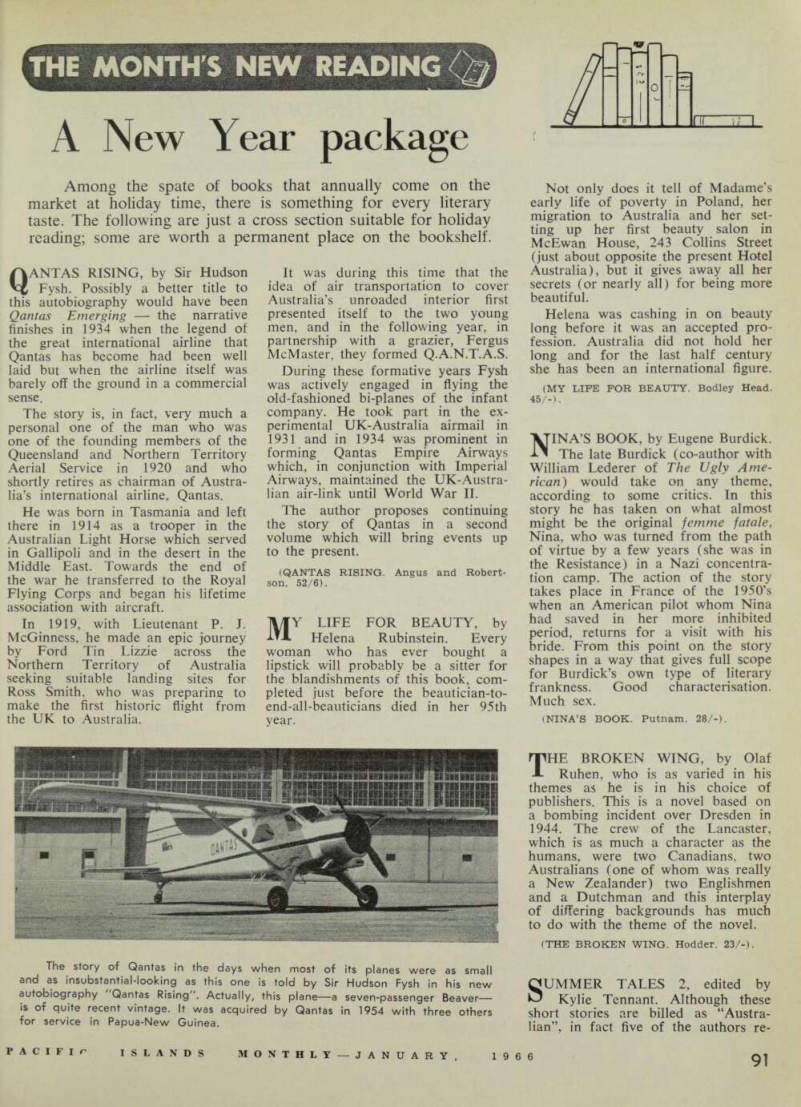 95
95 96
96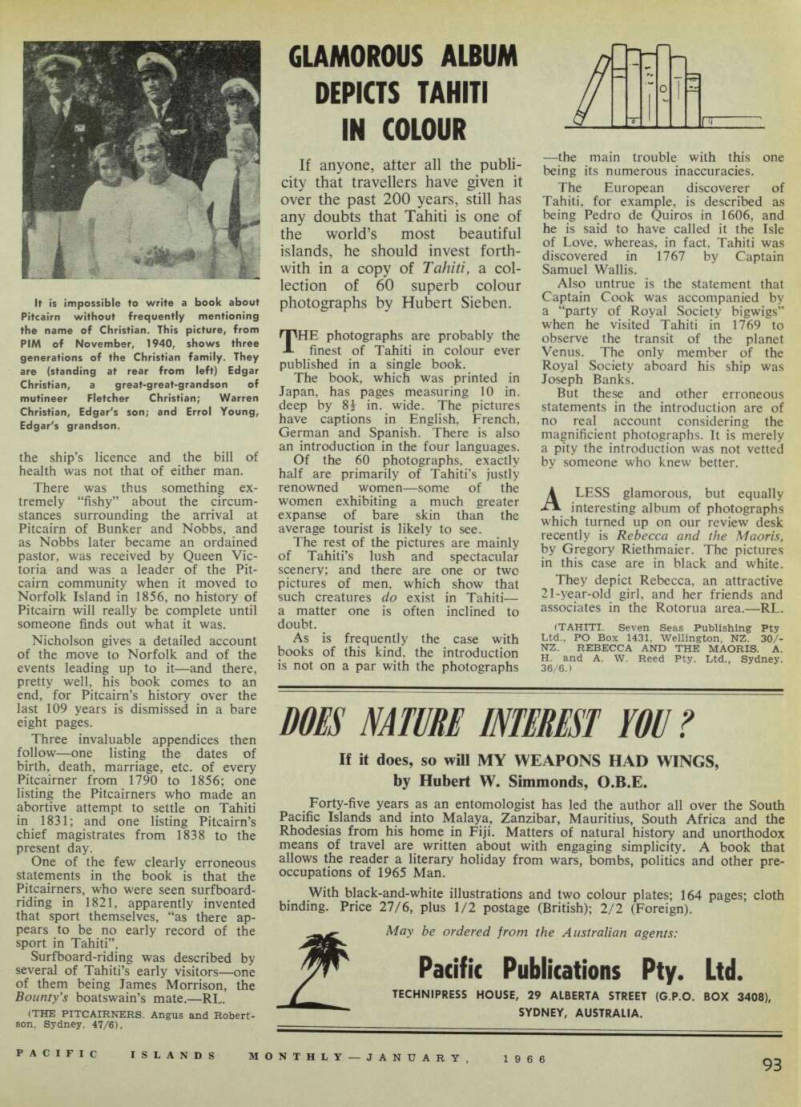 97
97 98
98 99
99 100
100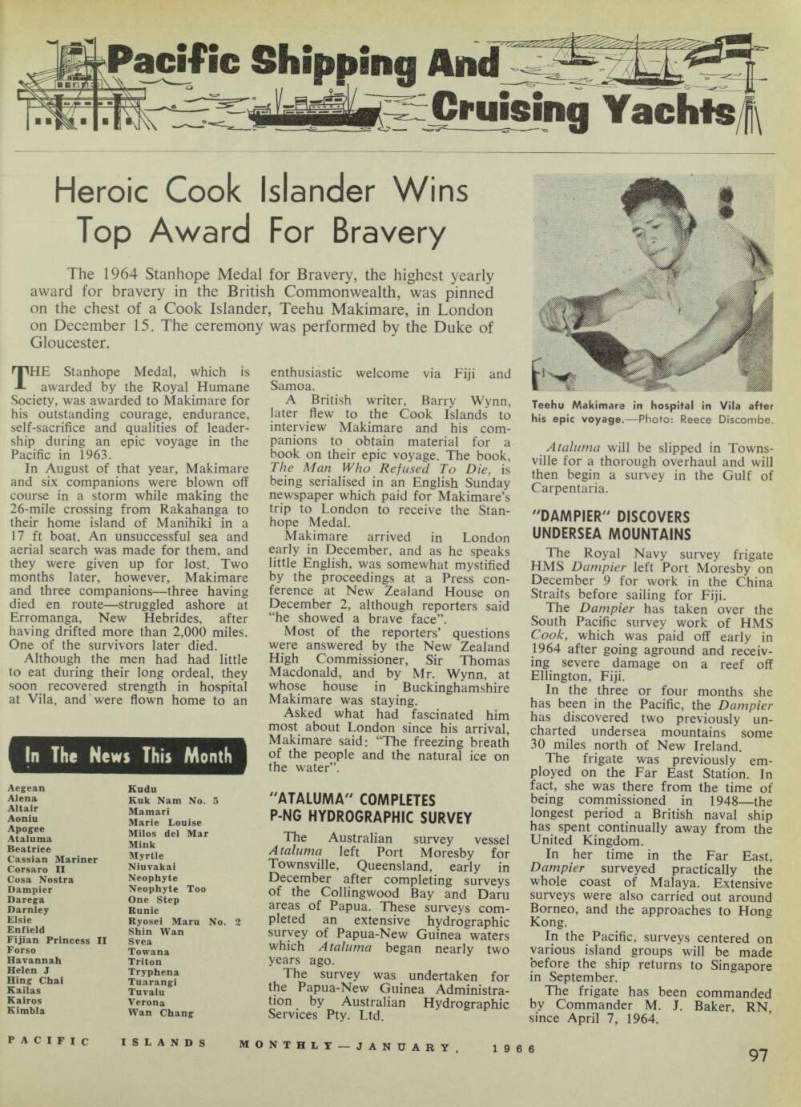 101
101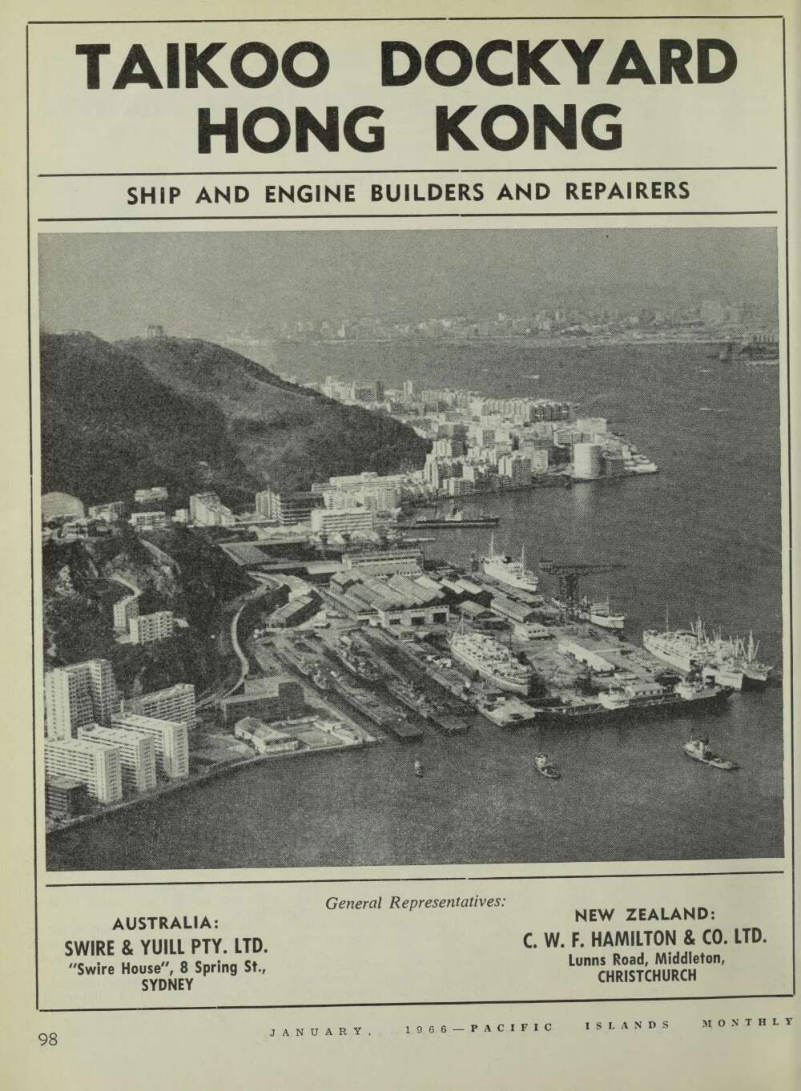 102
102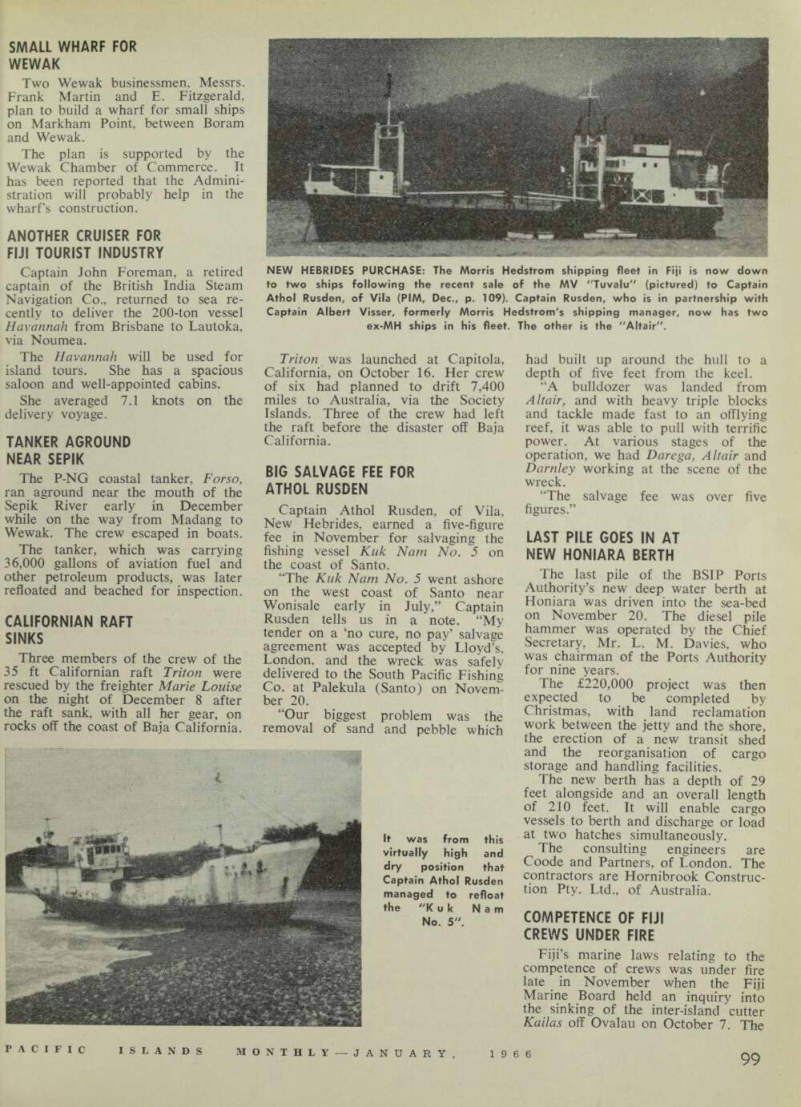 103
103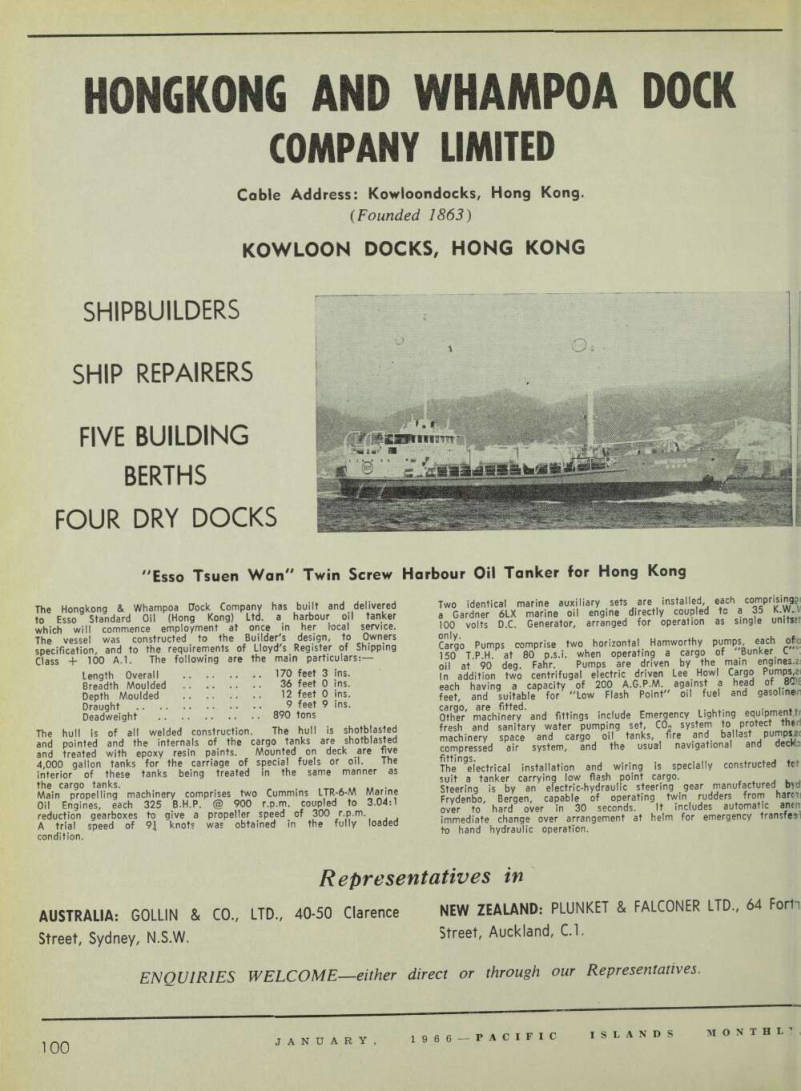 104
104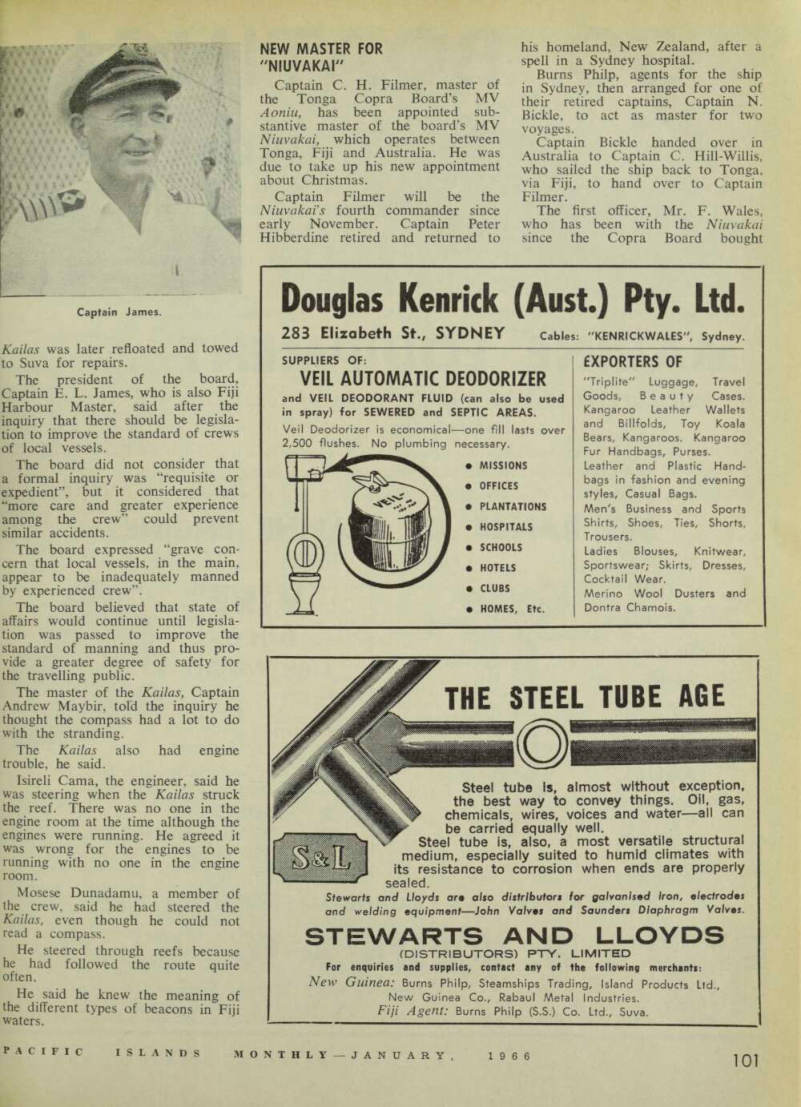 105
105 106
106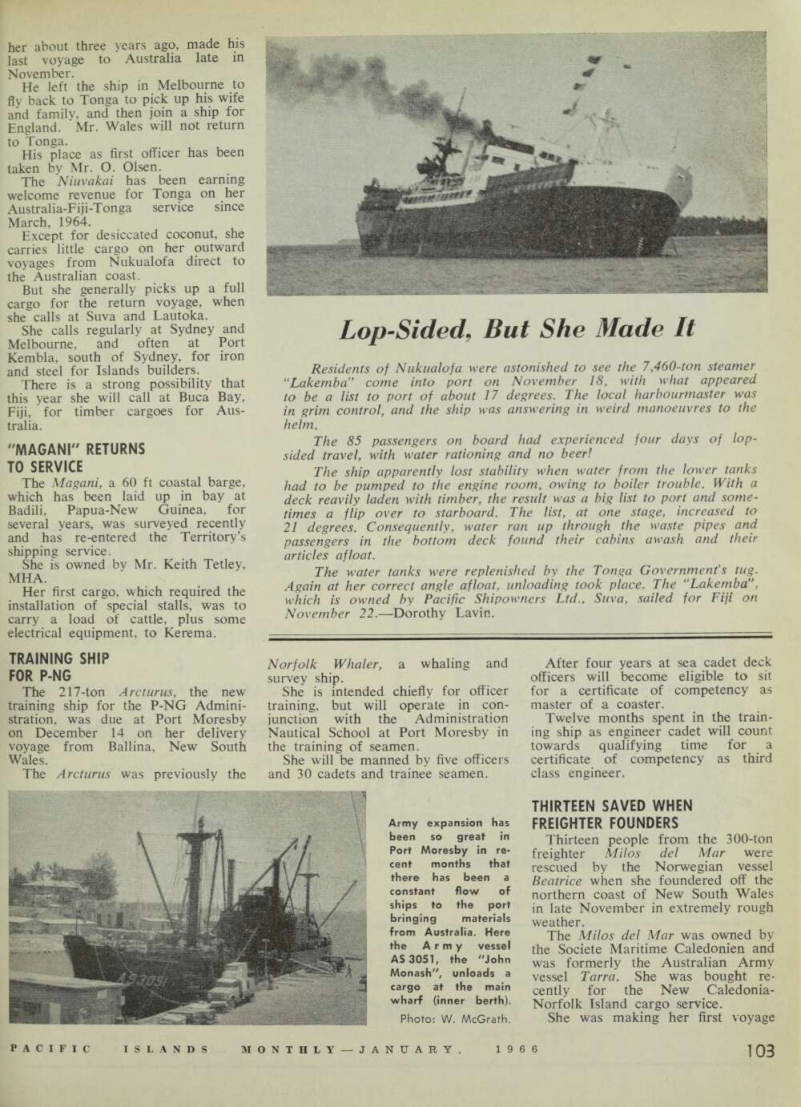 107
107 108
108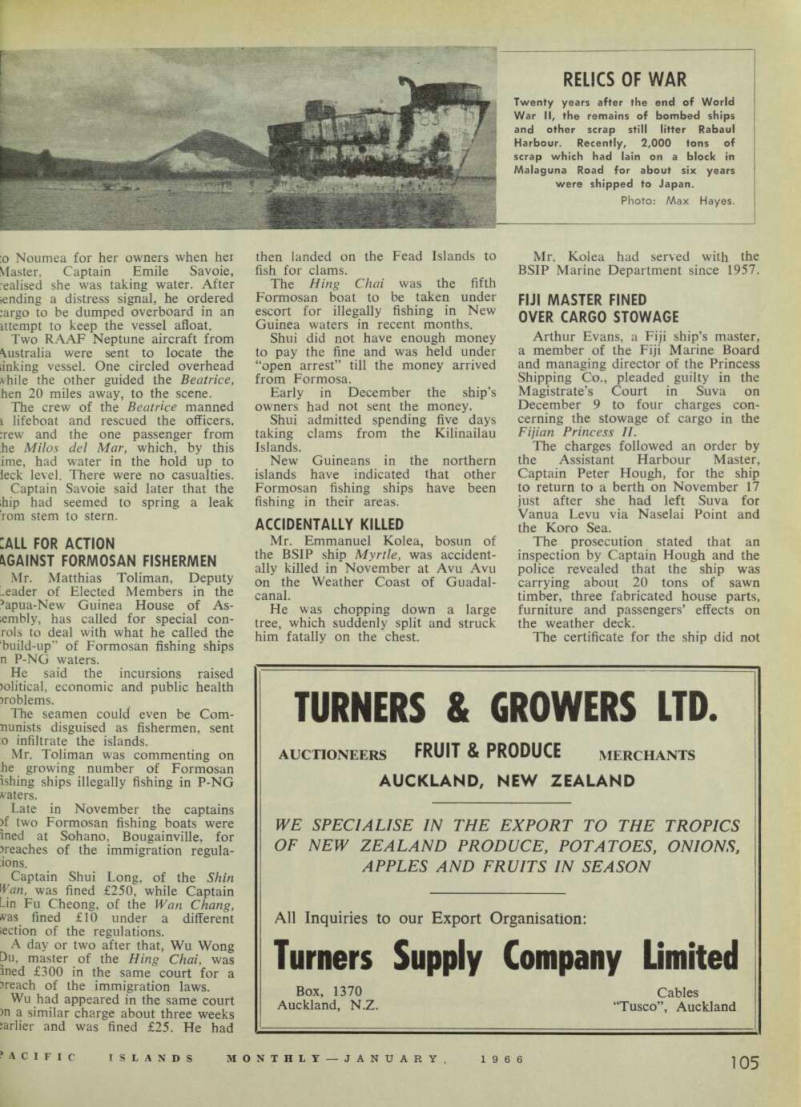 109
109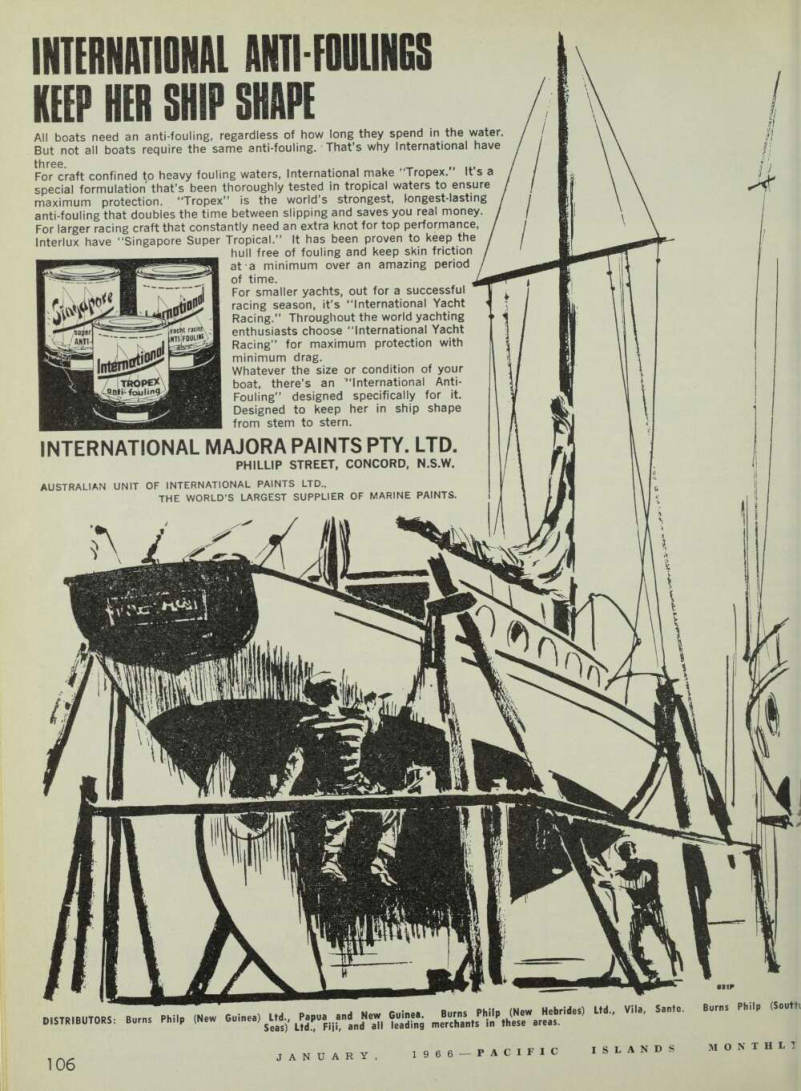 110
110 111
111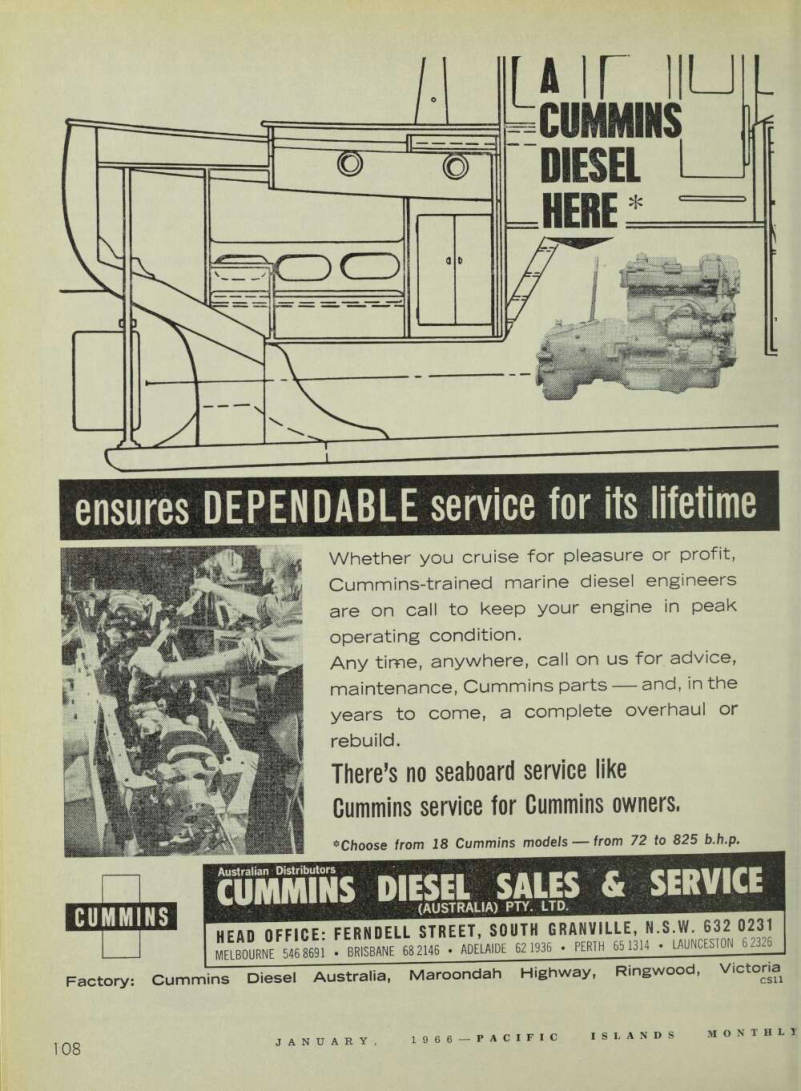 112
112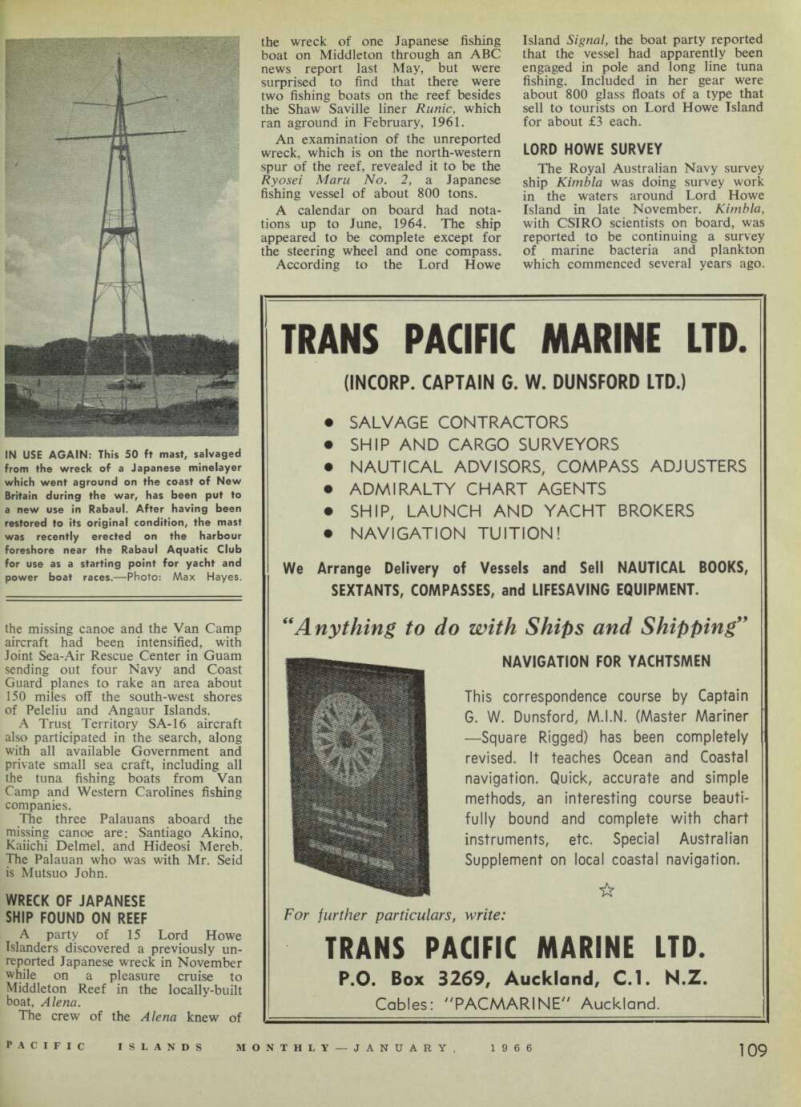 113
113 114
114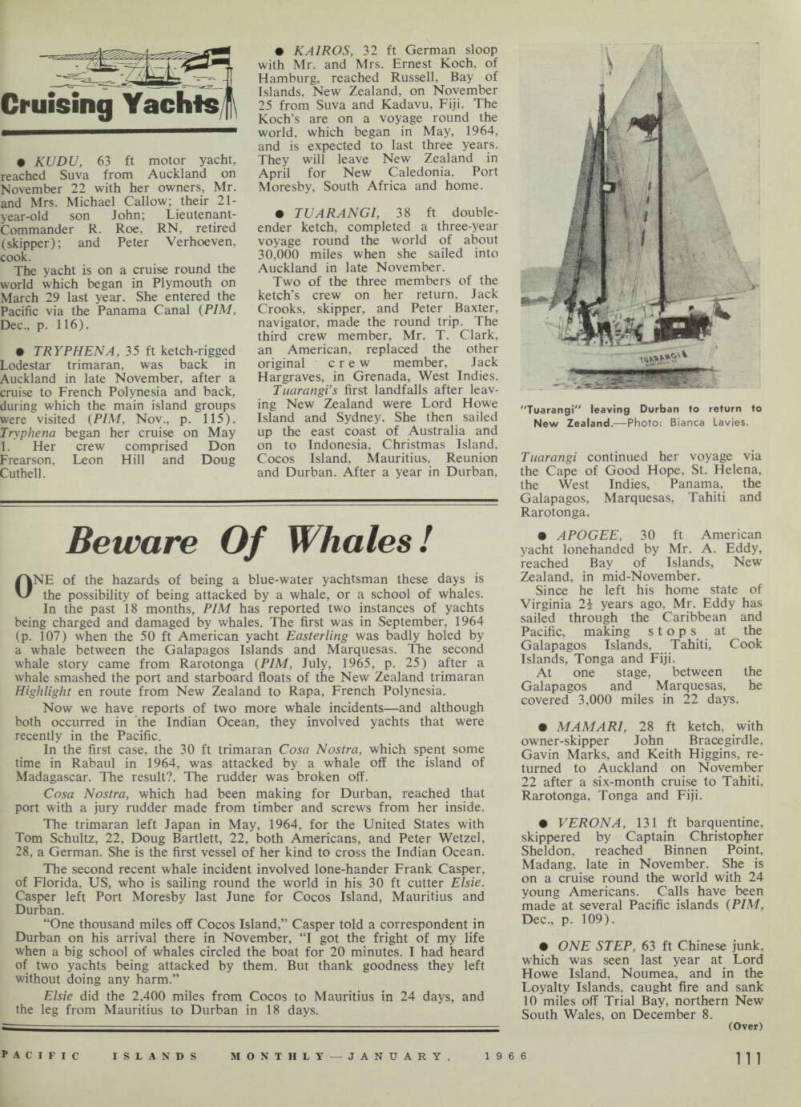 115
115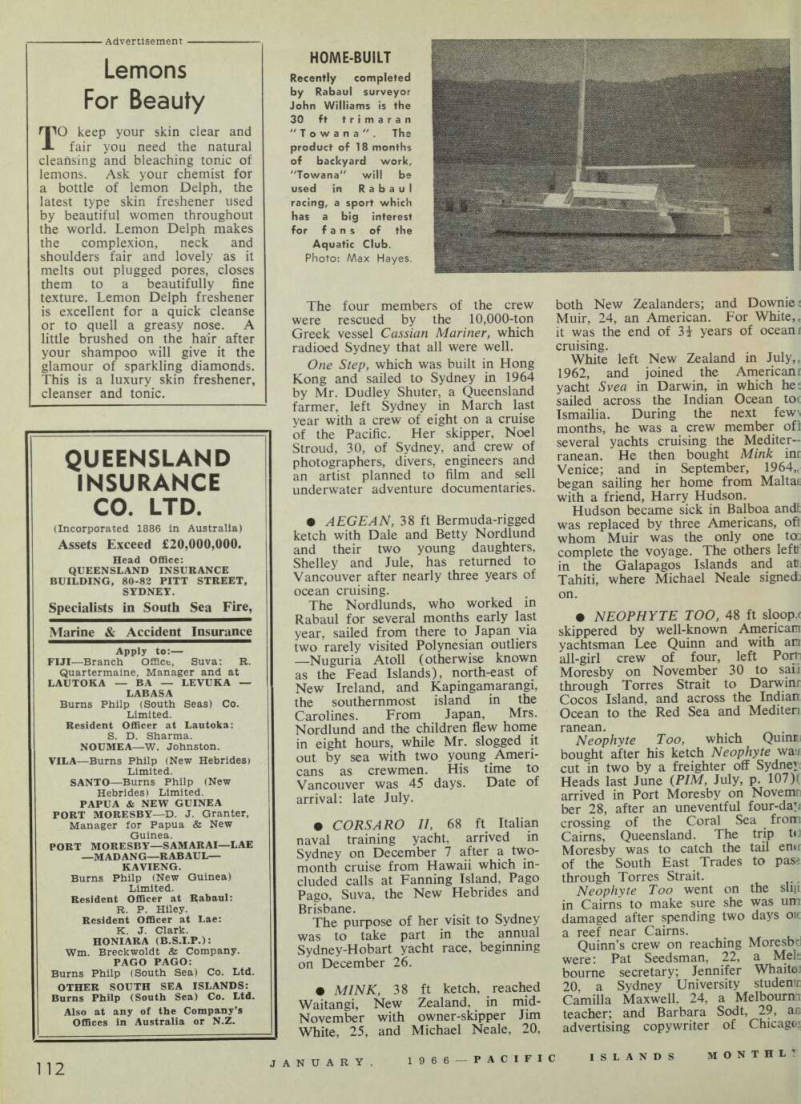 116
116 117
117 118
118 119
119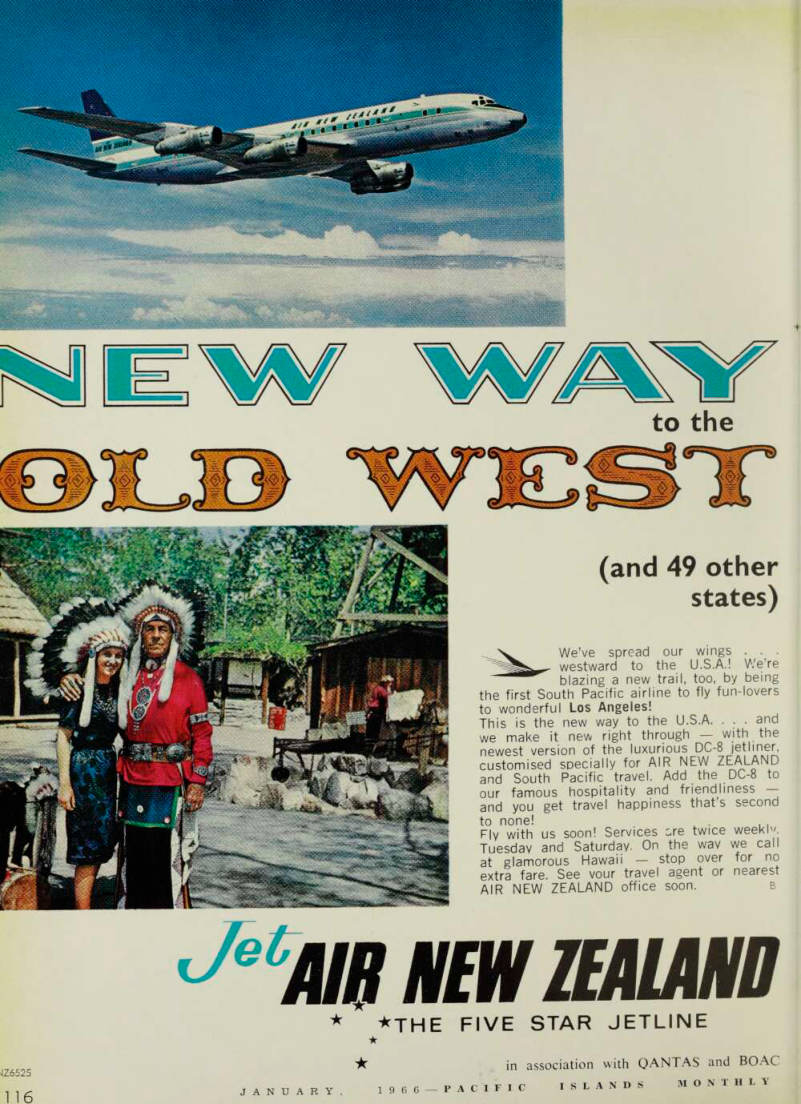 120
120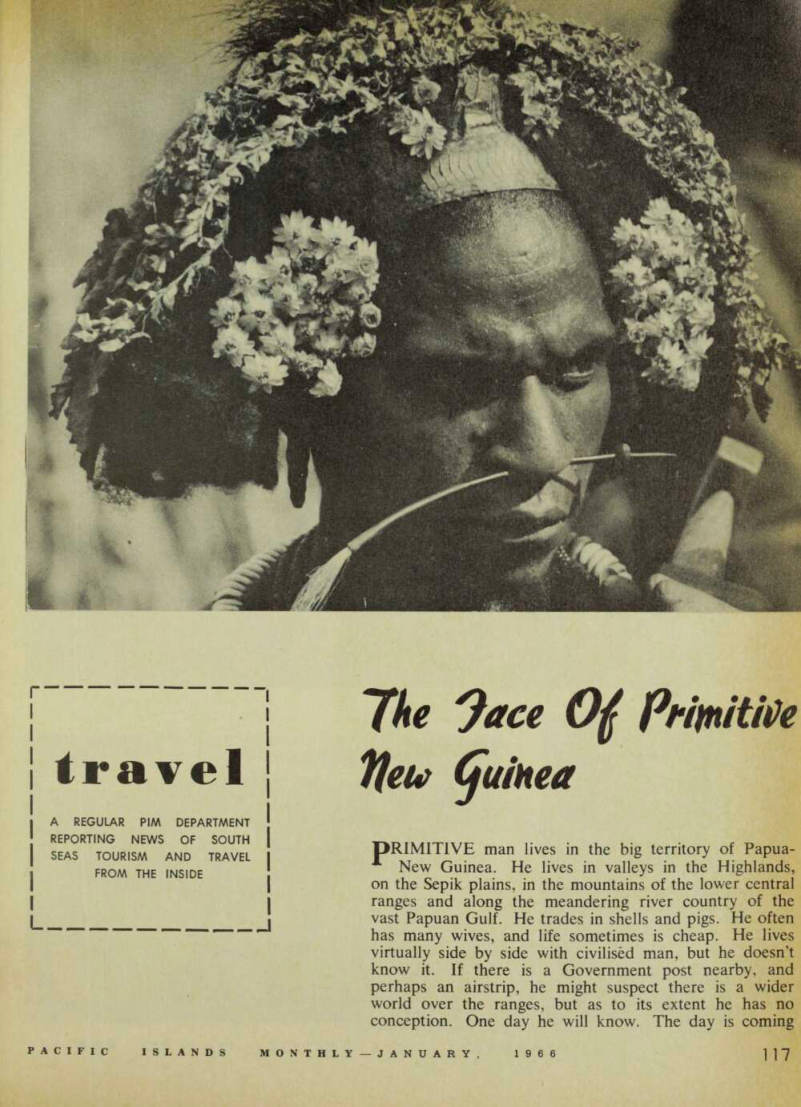 121
121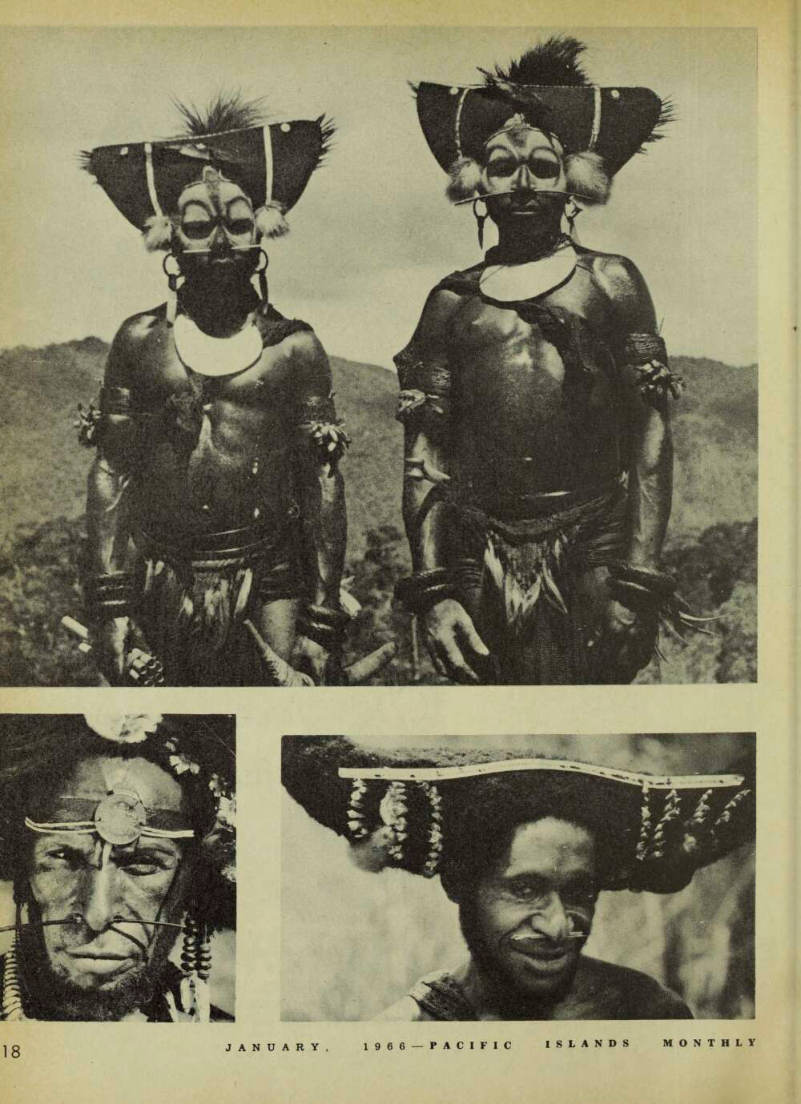 122
122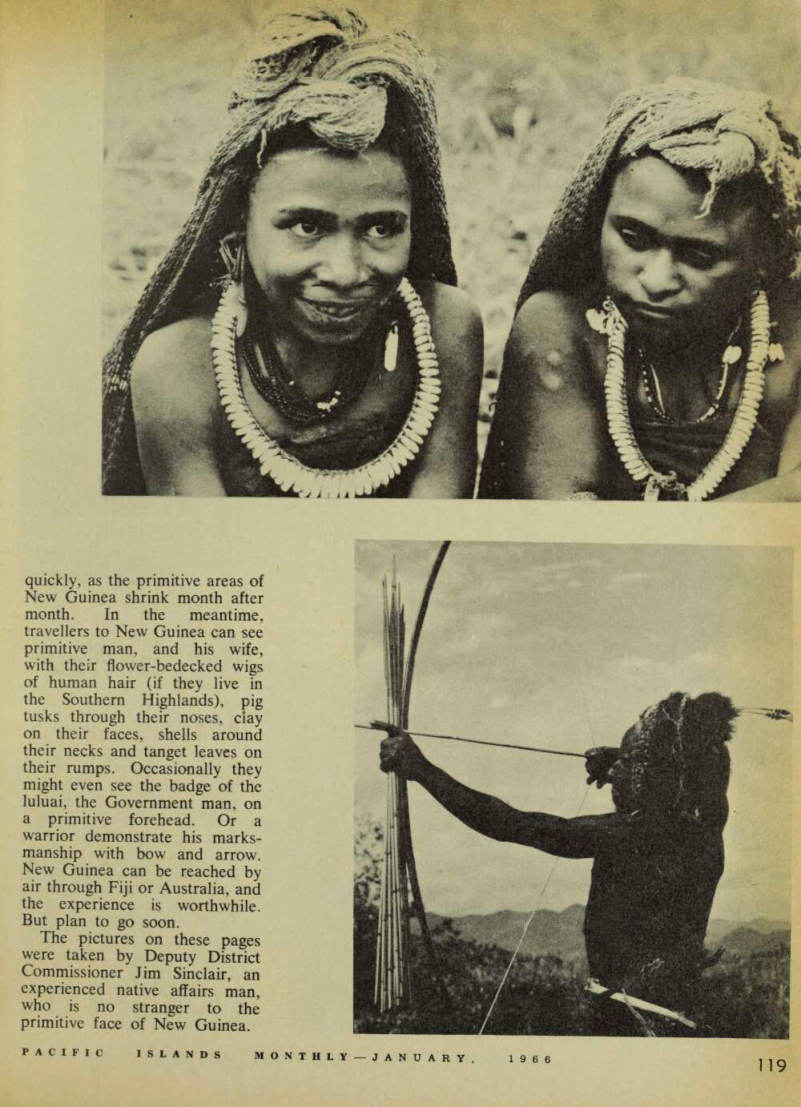 123
123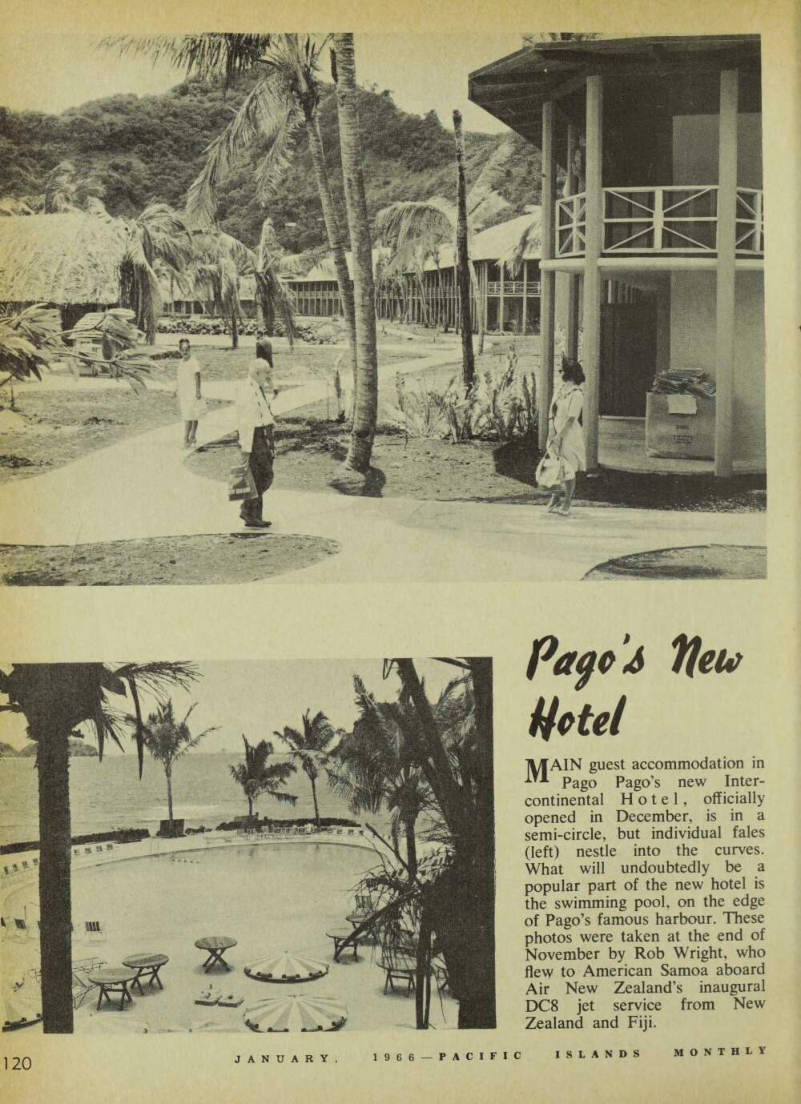 124
124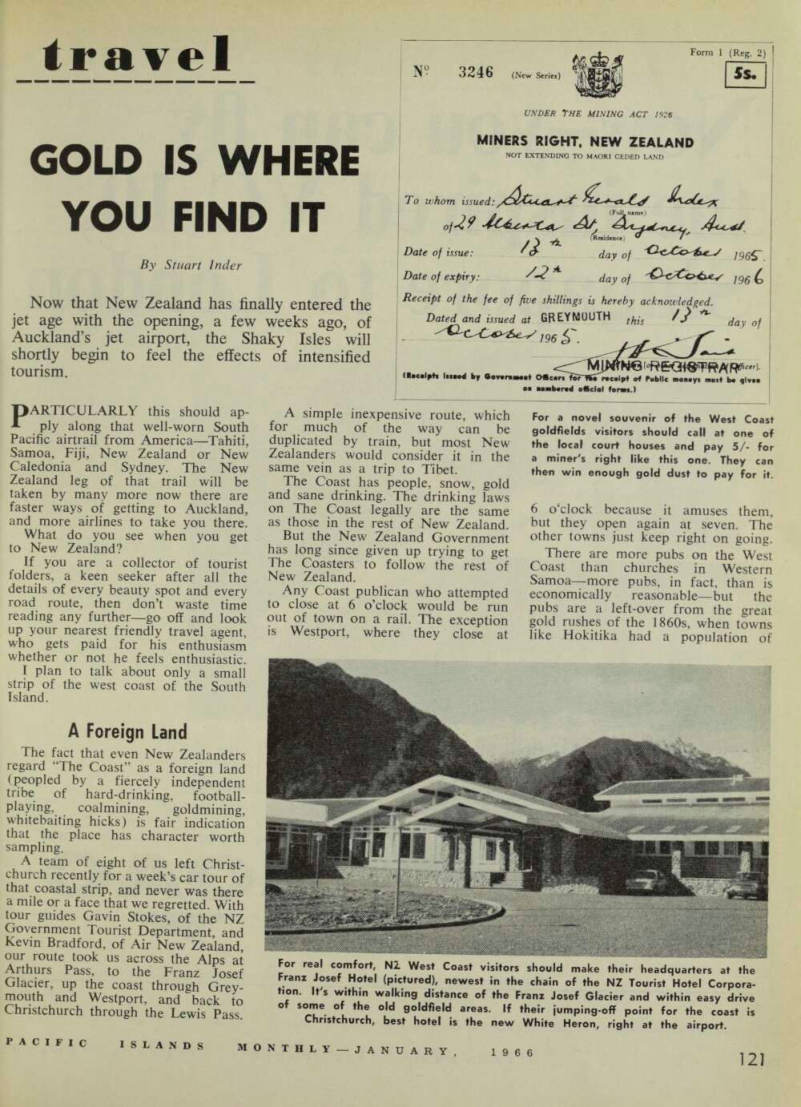 125
125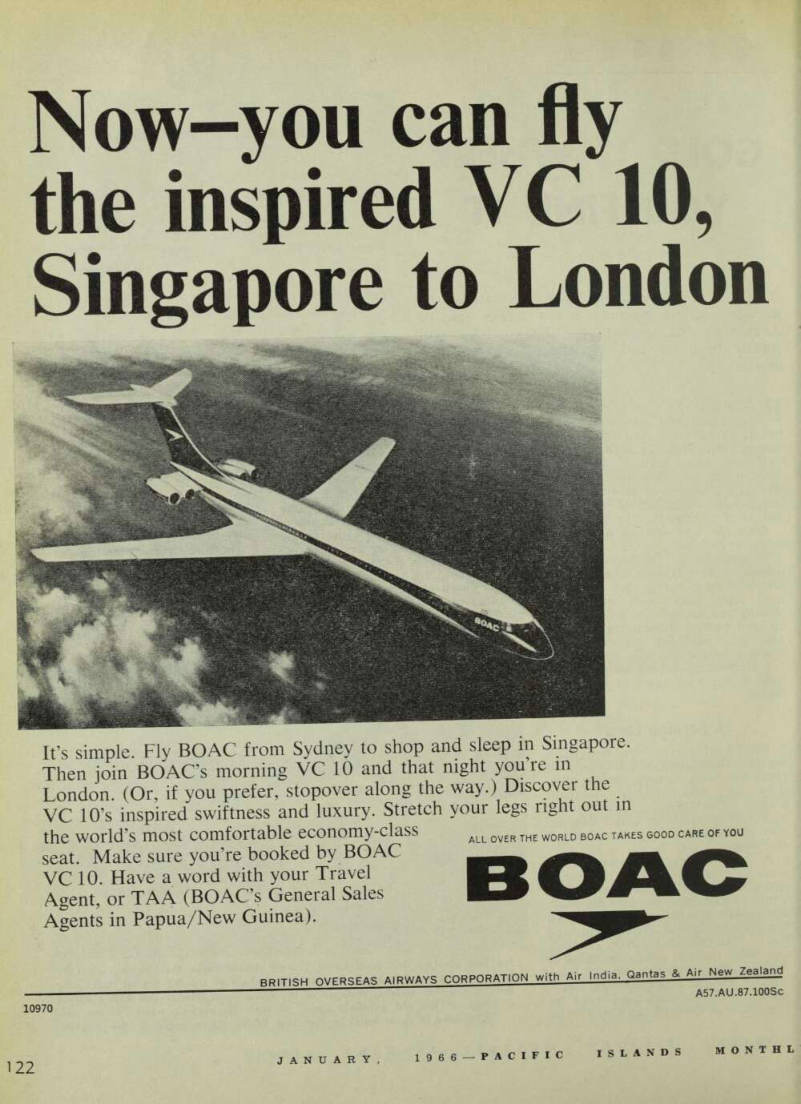 126
126 127
127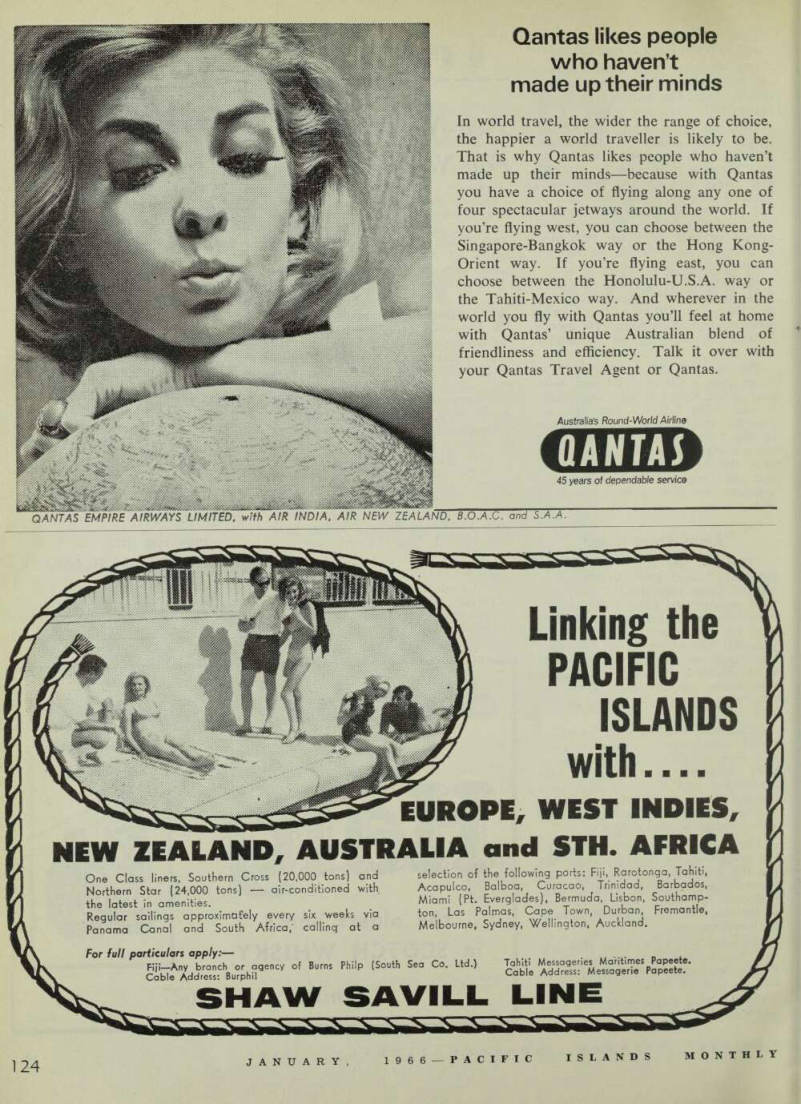 128
128 129
129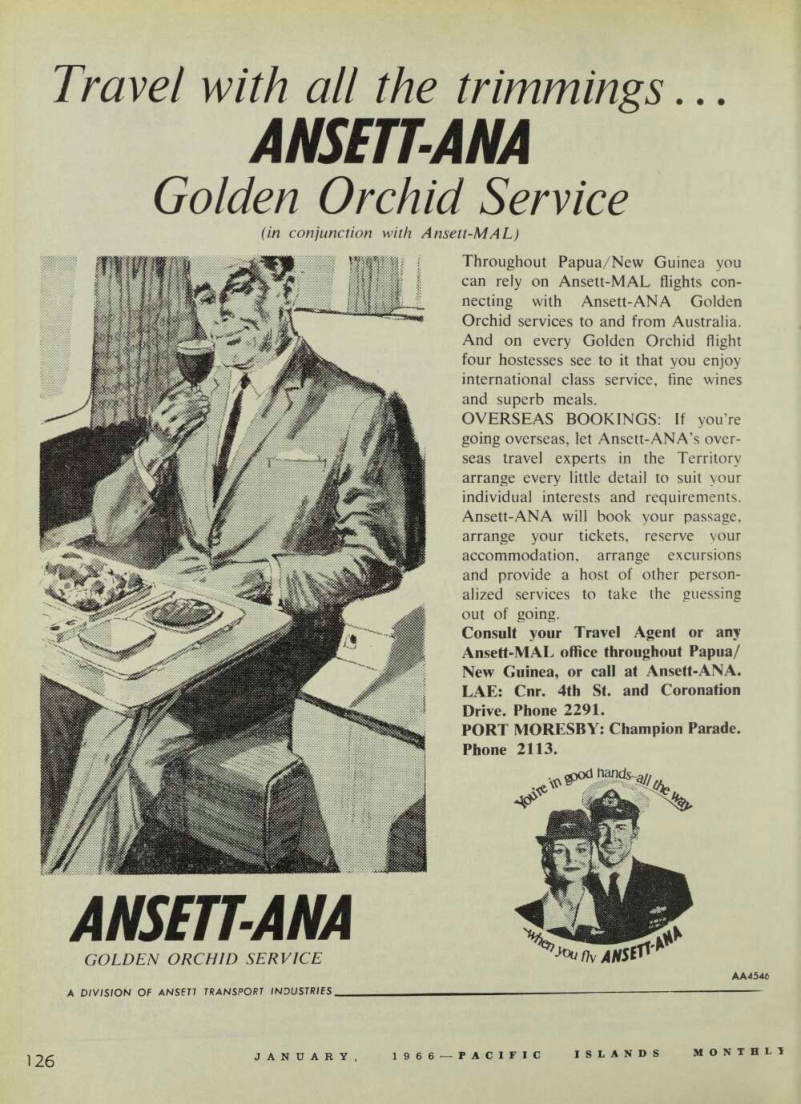 130
130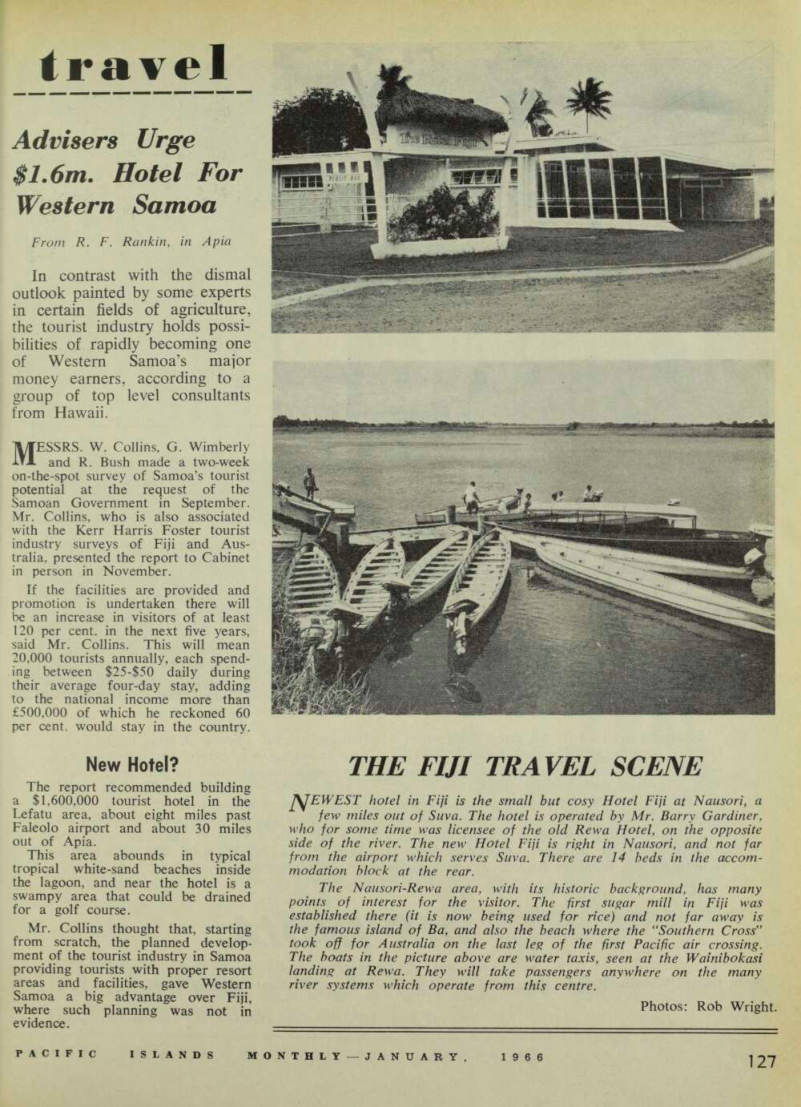 131
131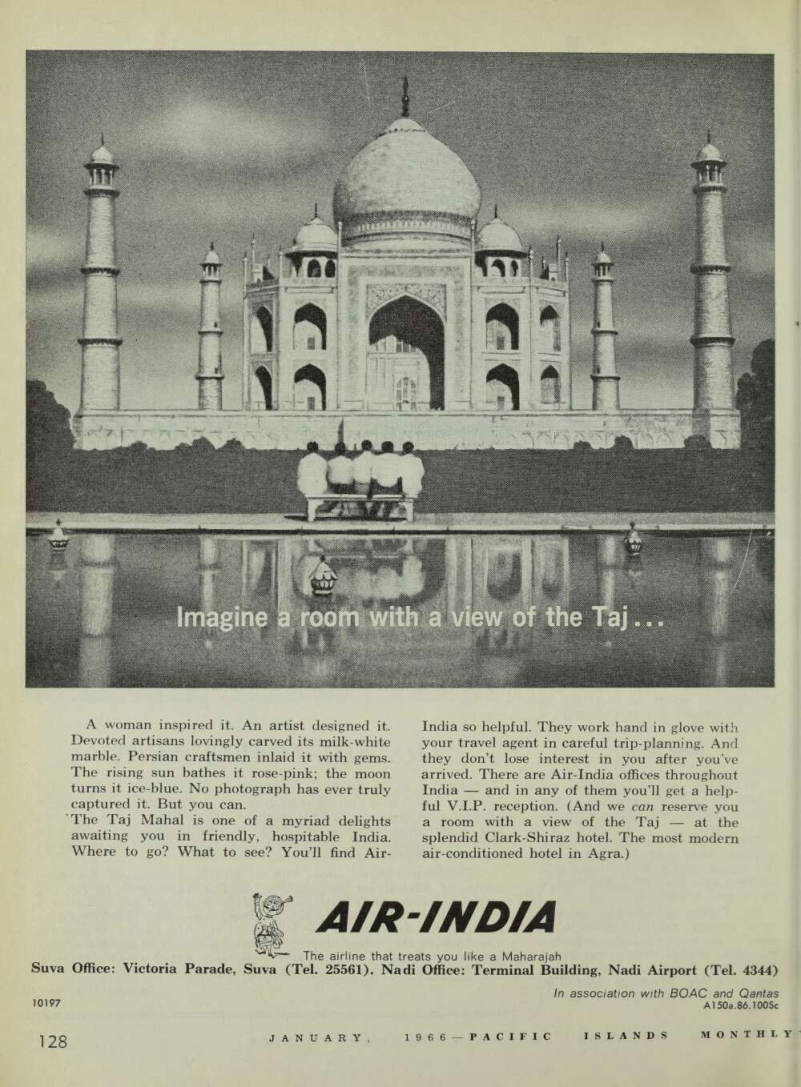 132
132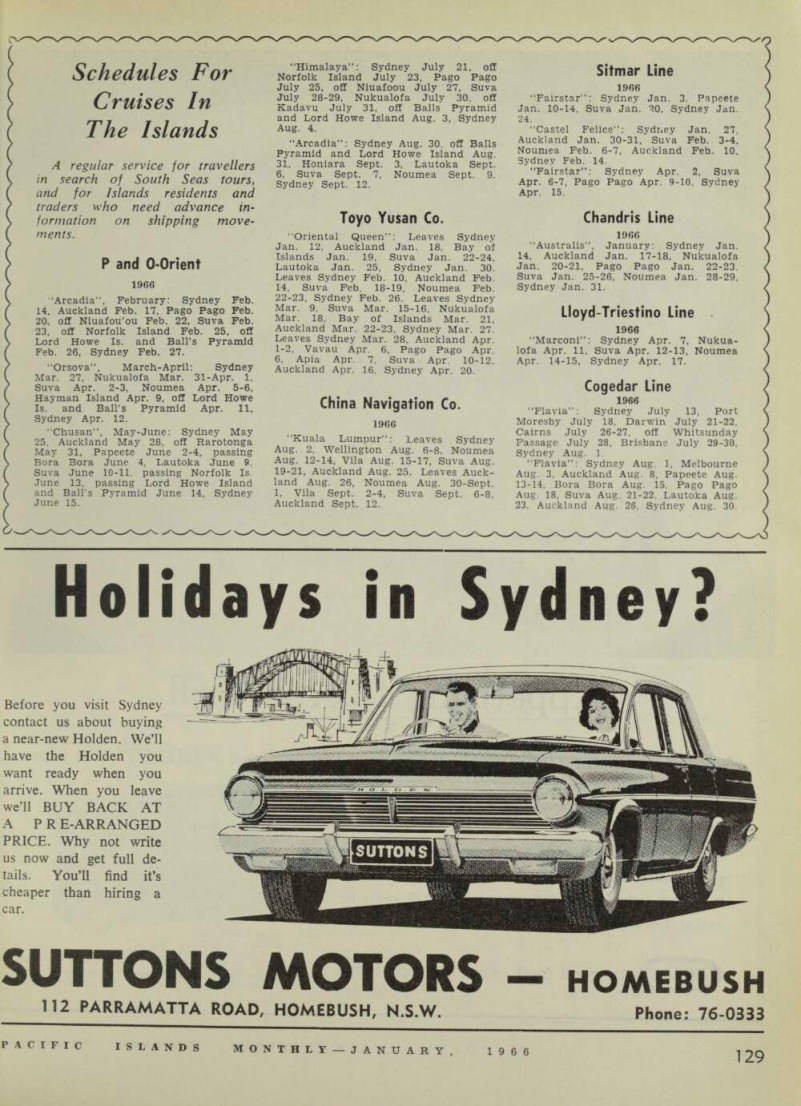 133
133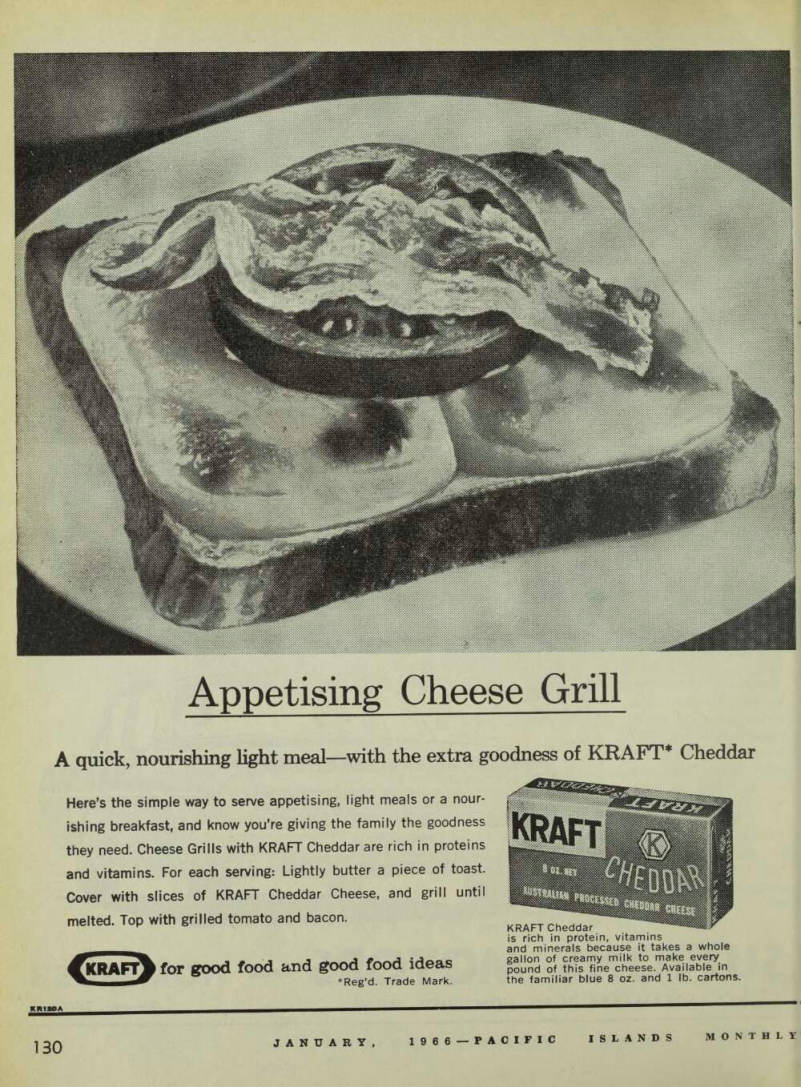 134
134 135
135 136
136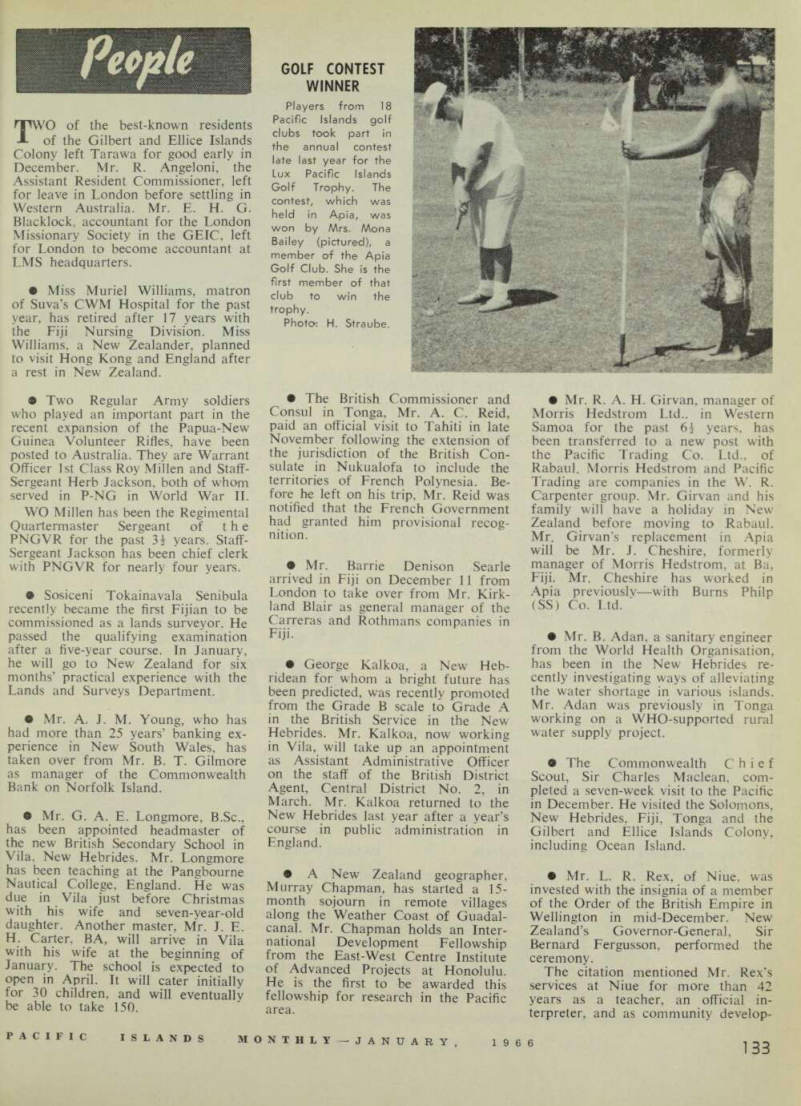 137
137 138
138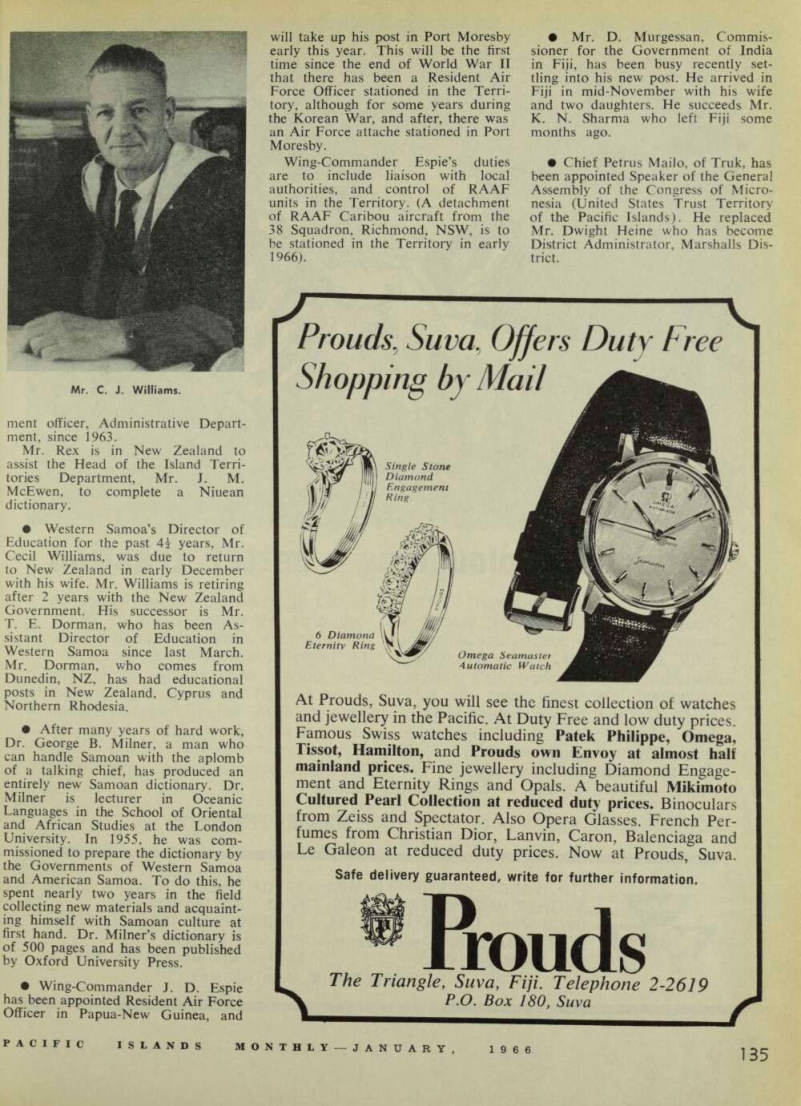 139
139 140
140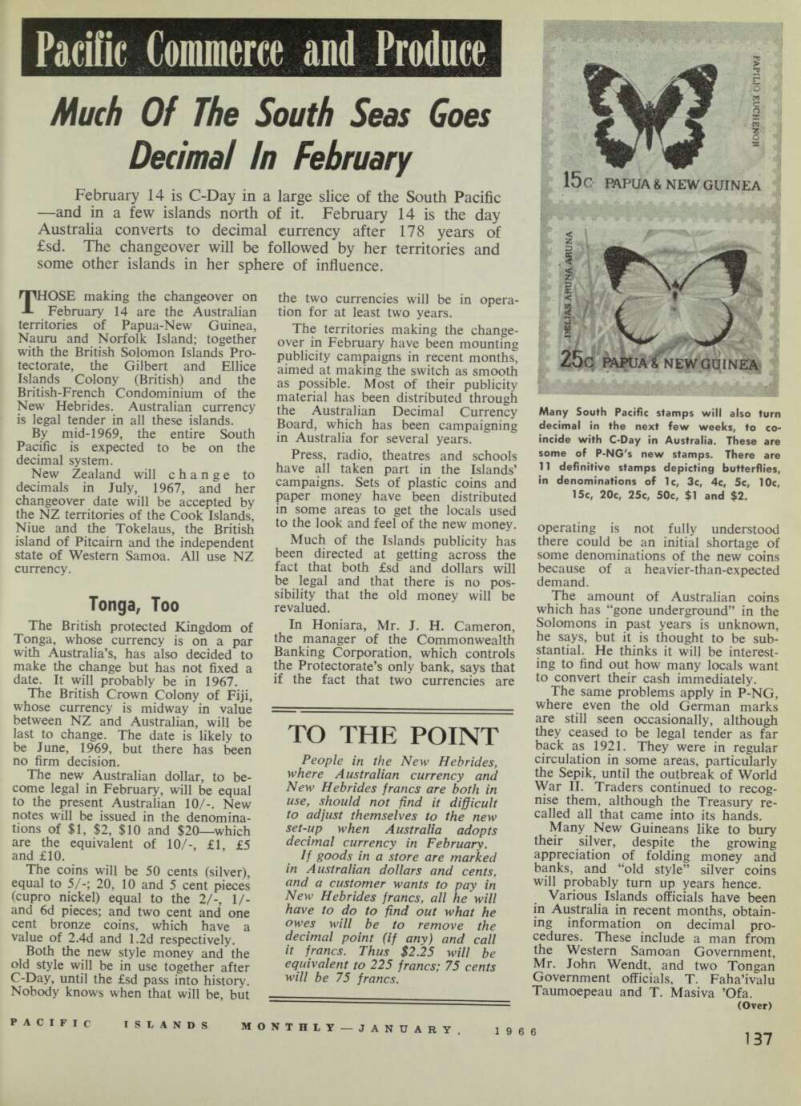 141
141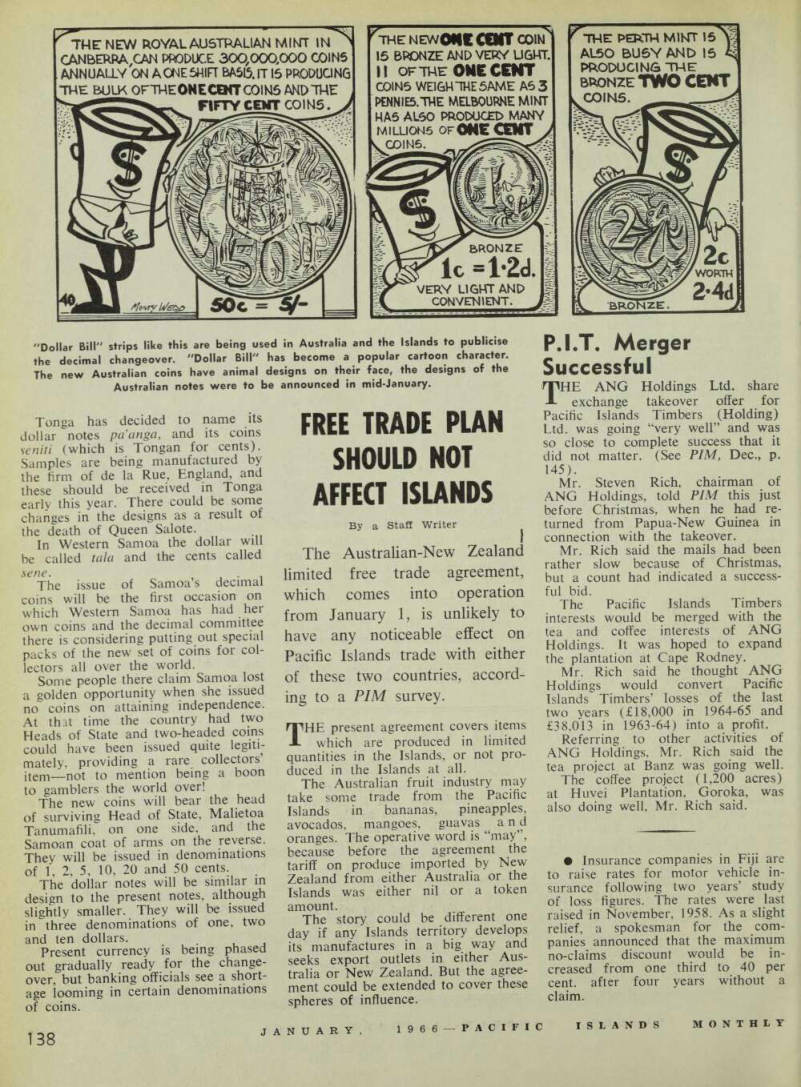 142
142 143
143 144
144 145
145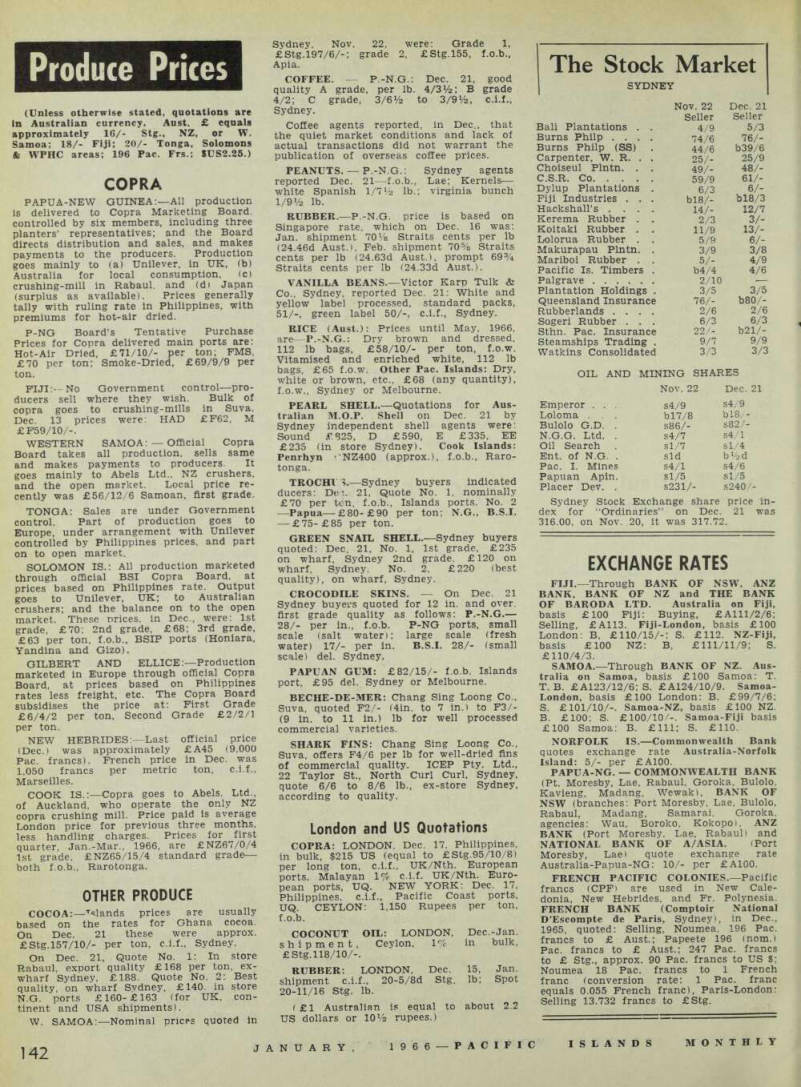 146
146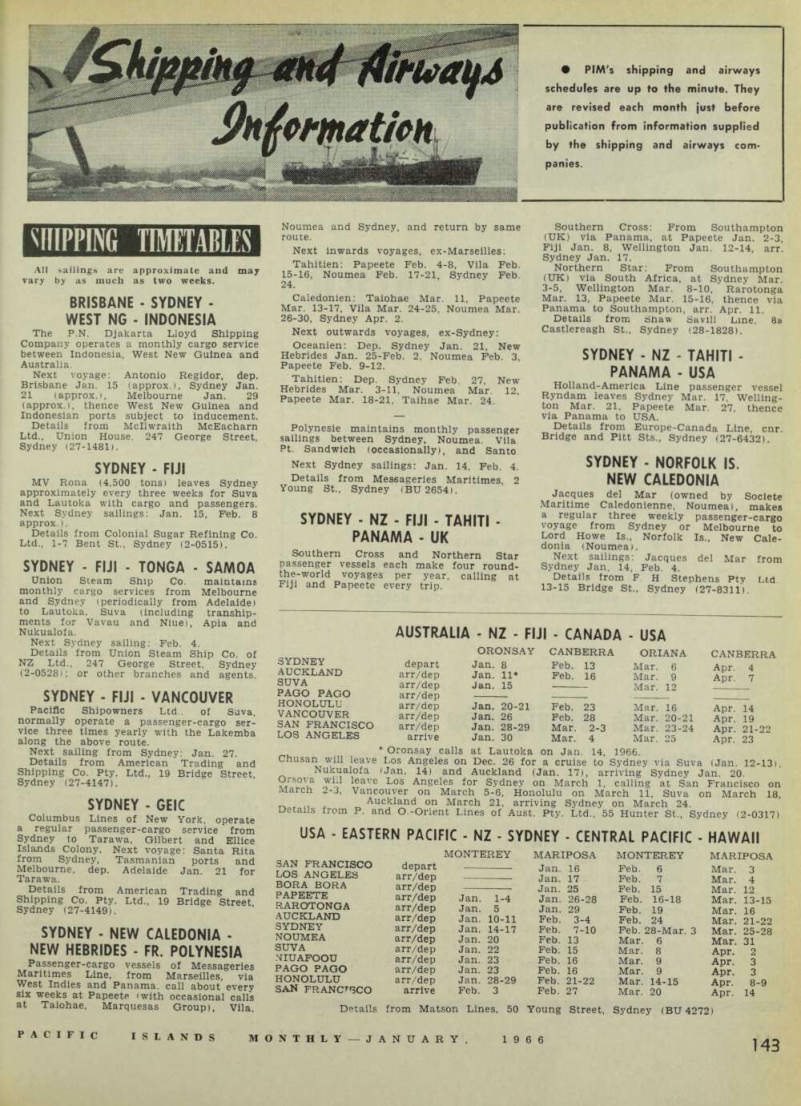 147
147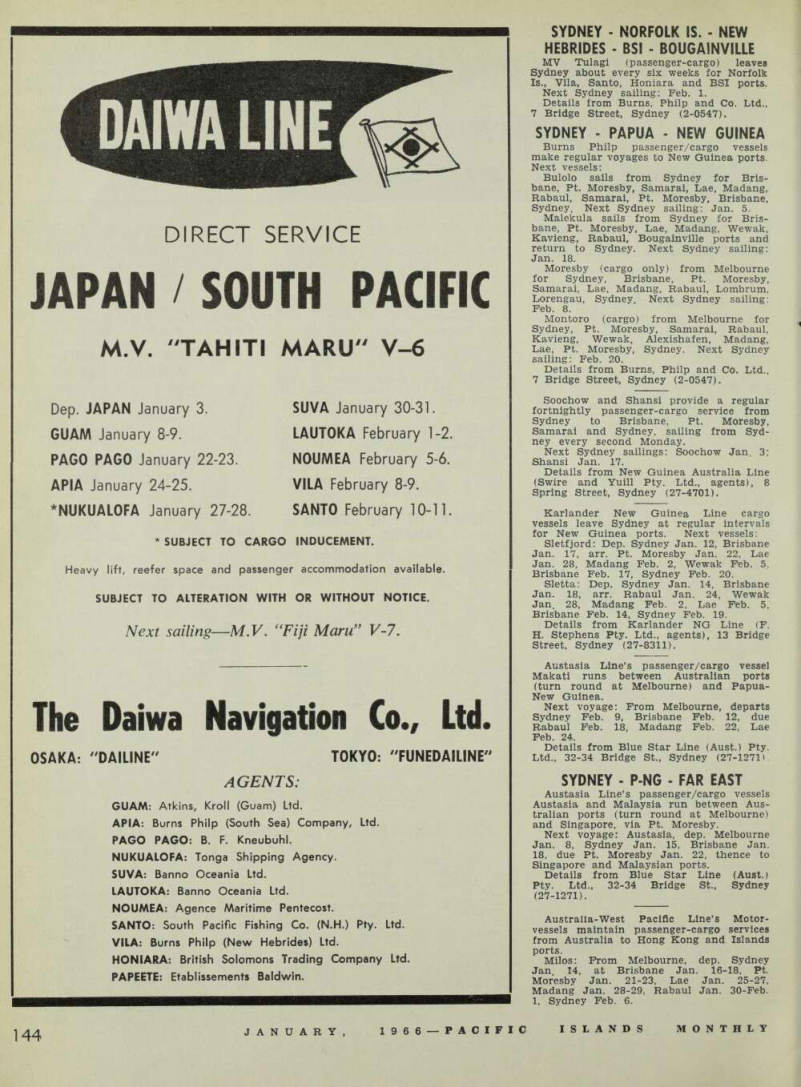 148
148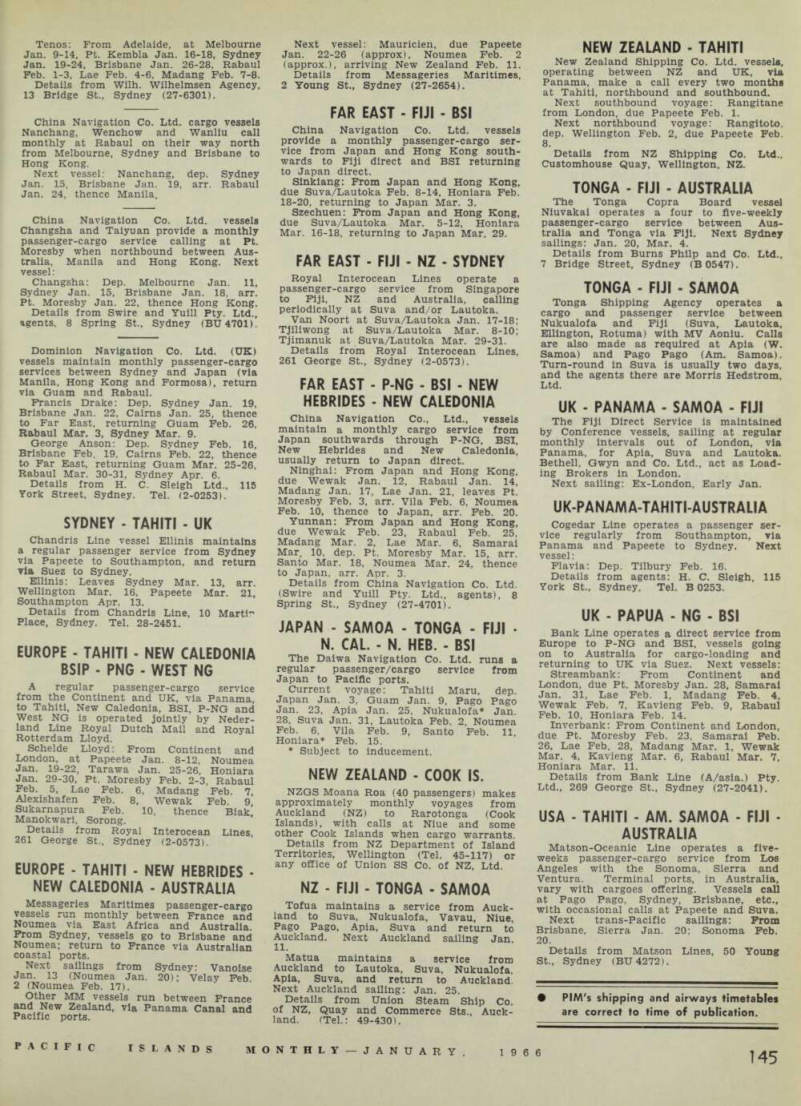 149
149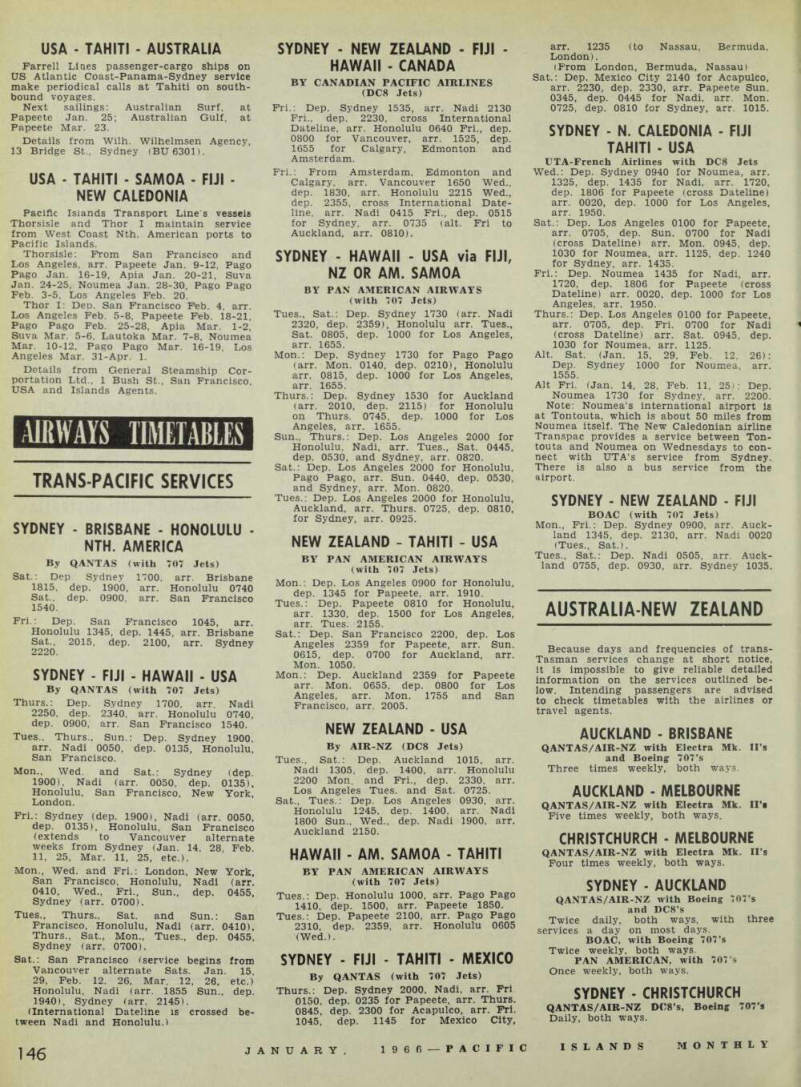 150
150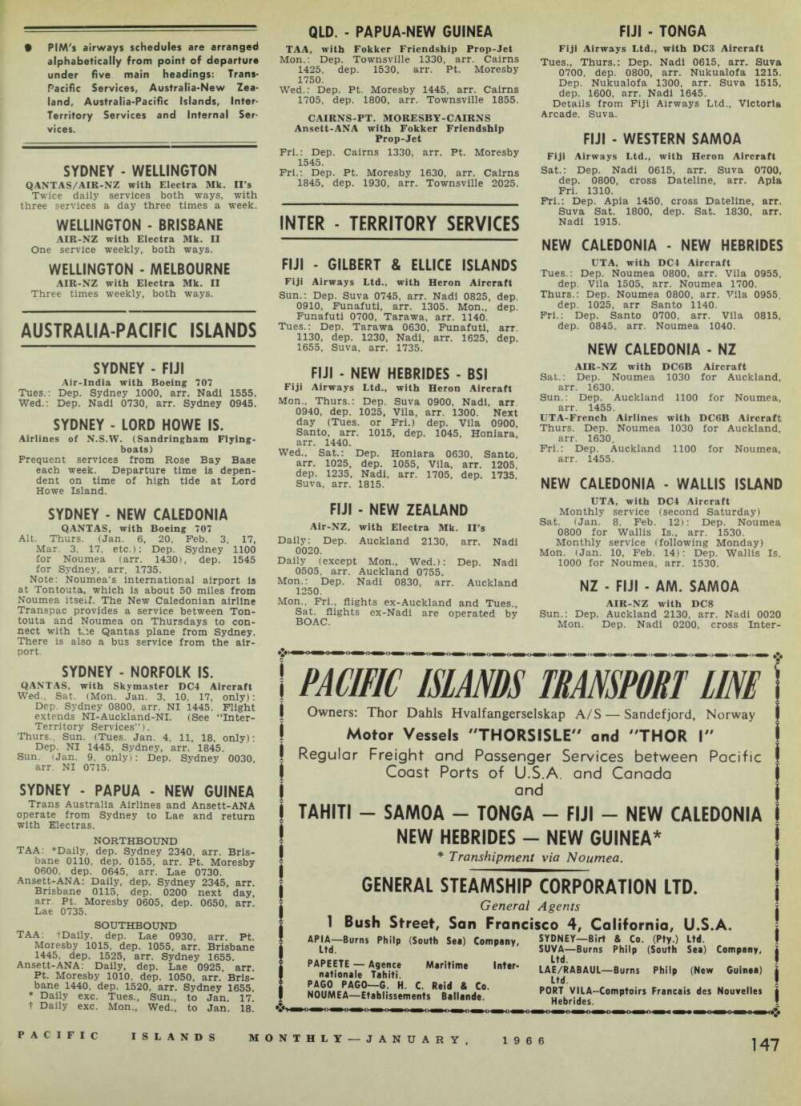 151
151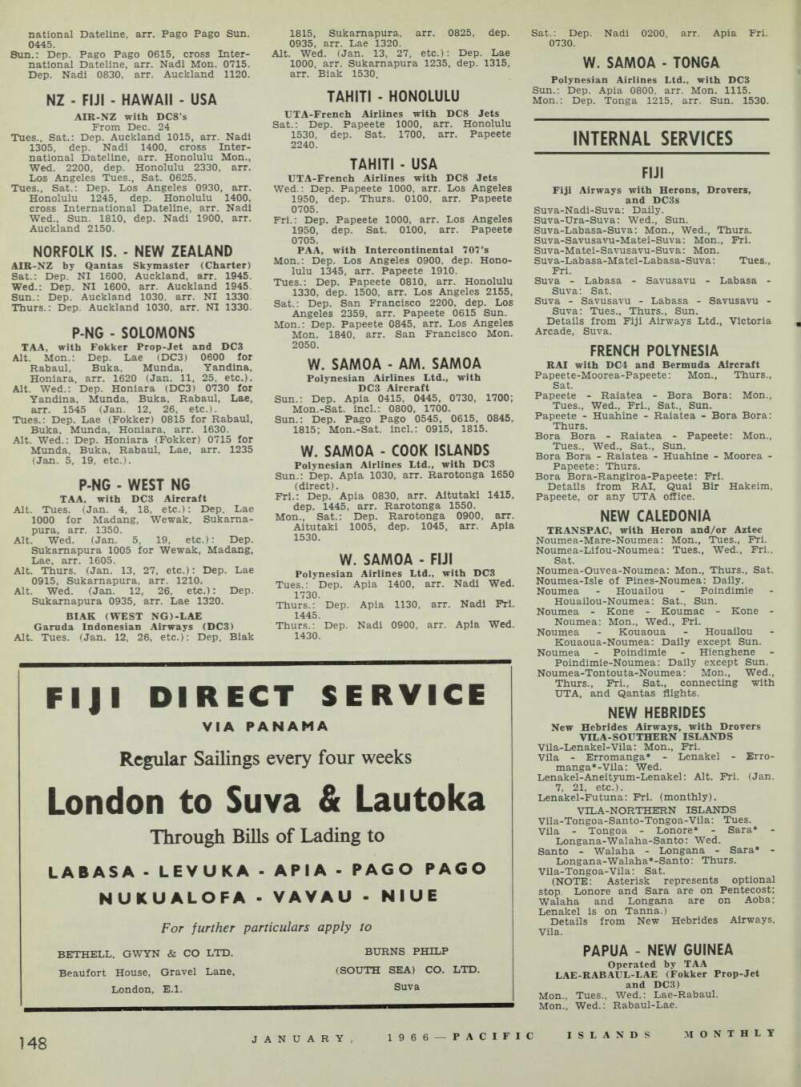 152
152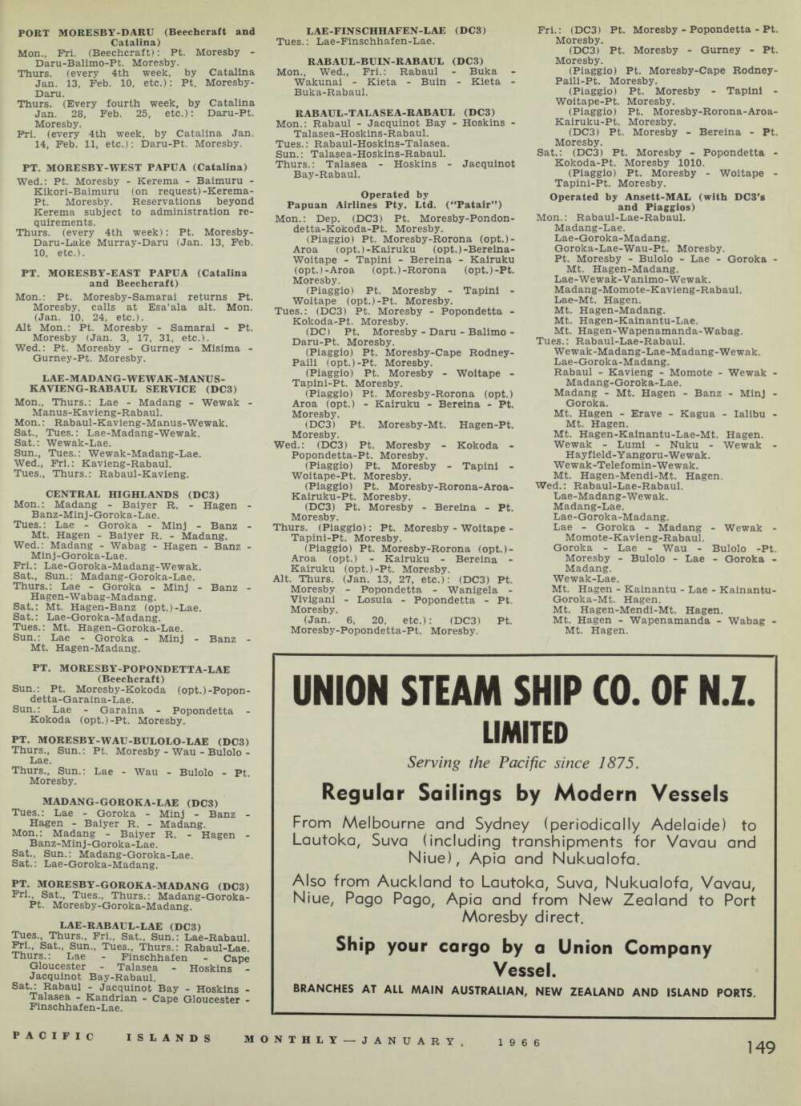 153
153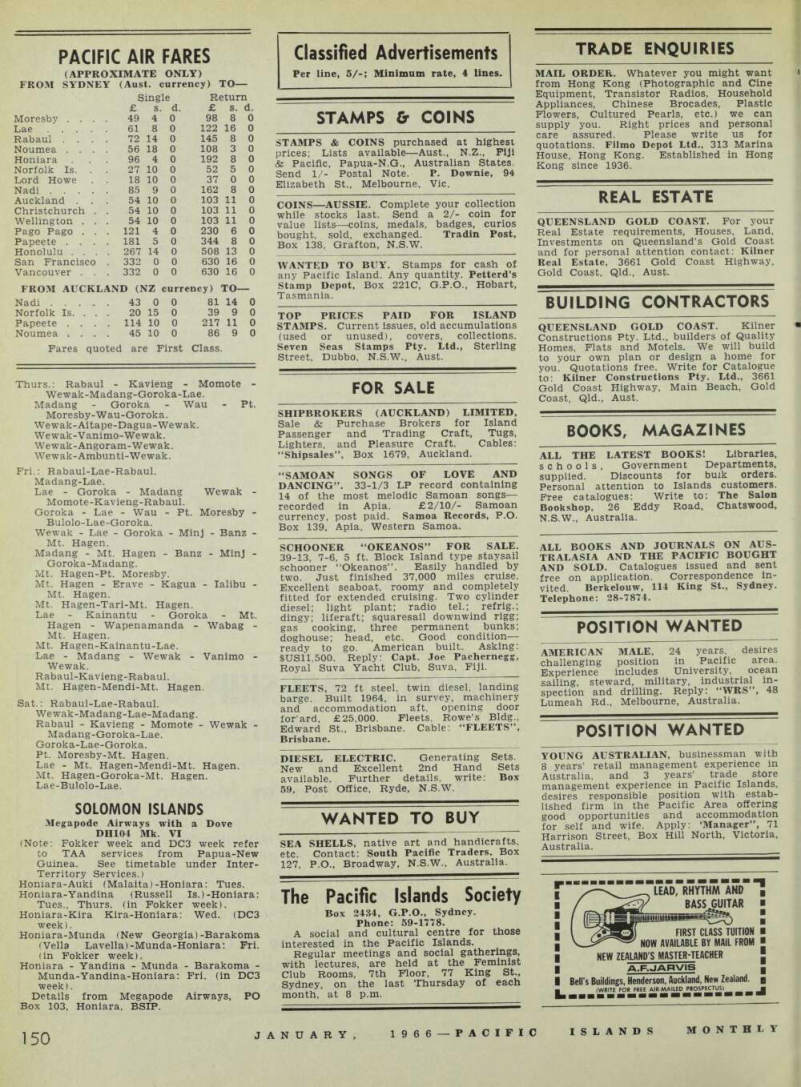 154
154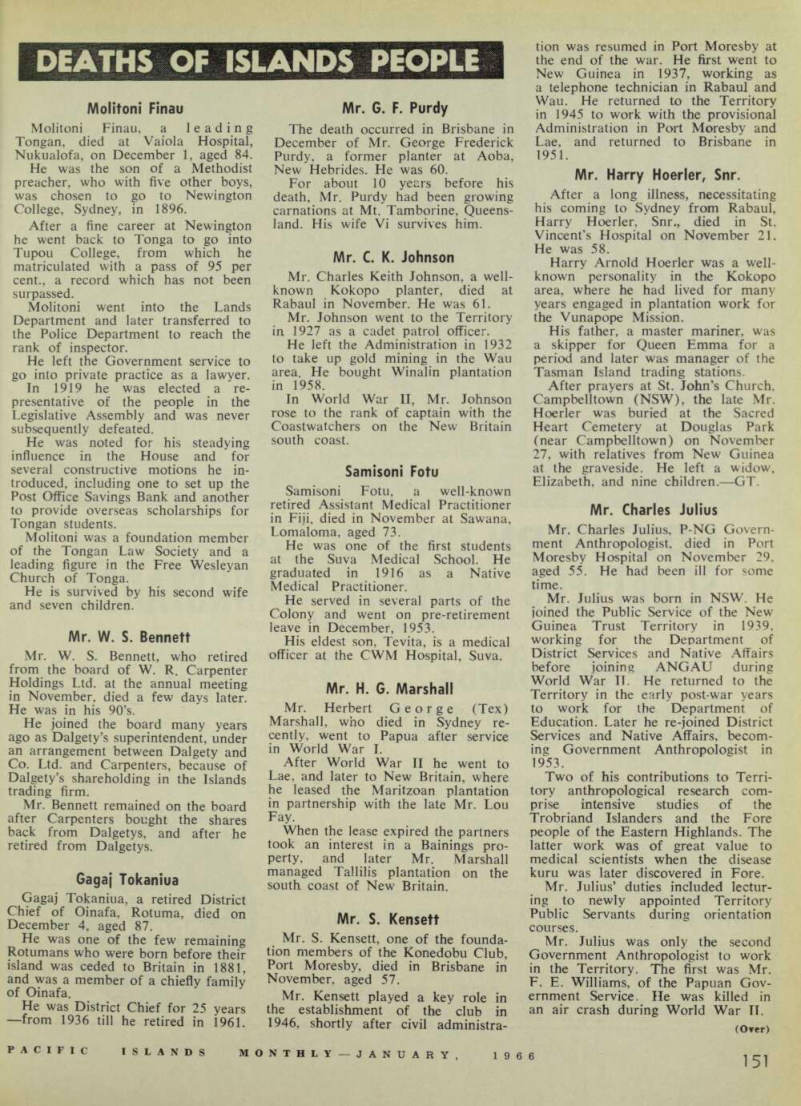 155
155 156
156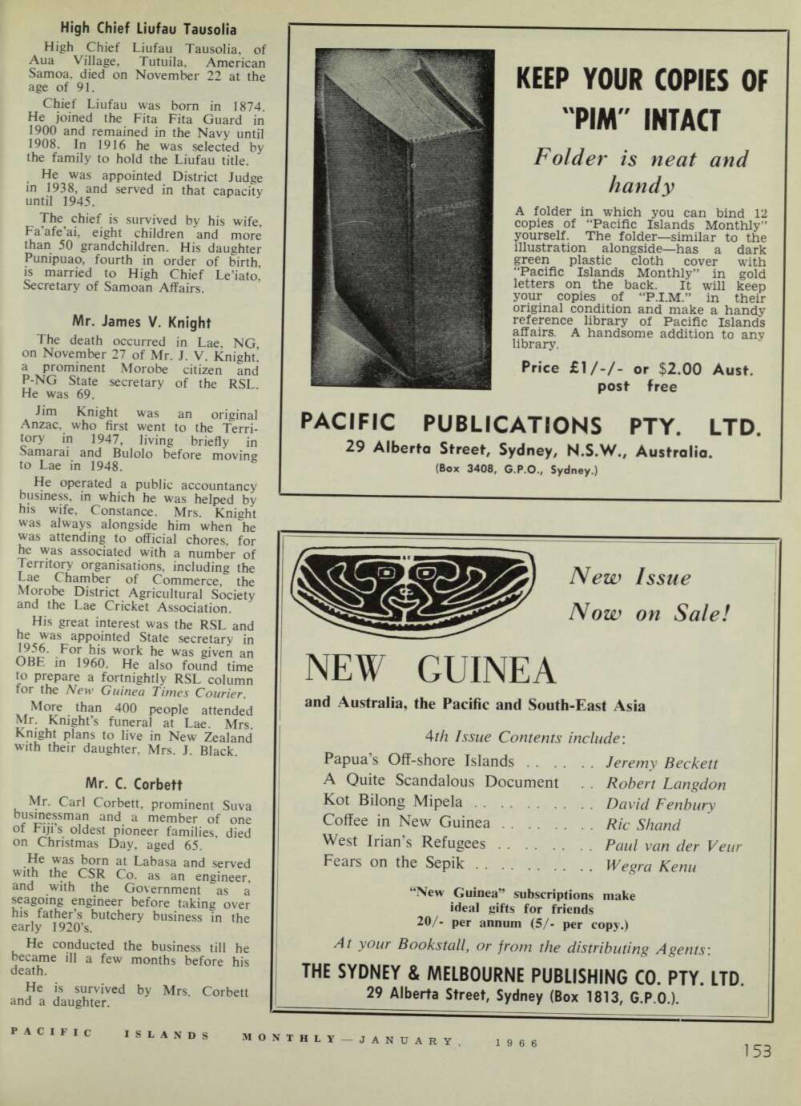 157
157 158
158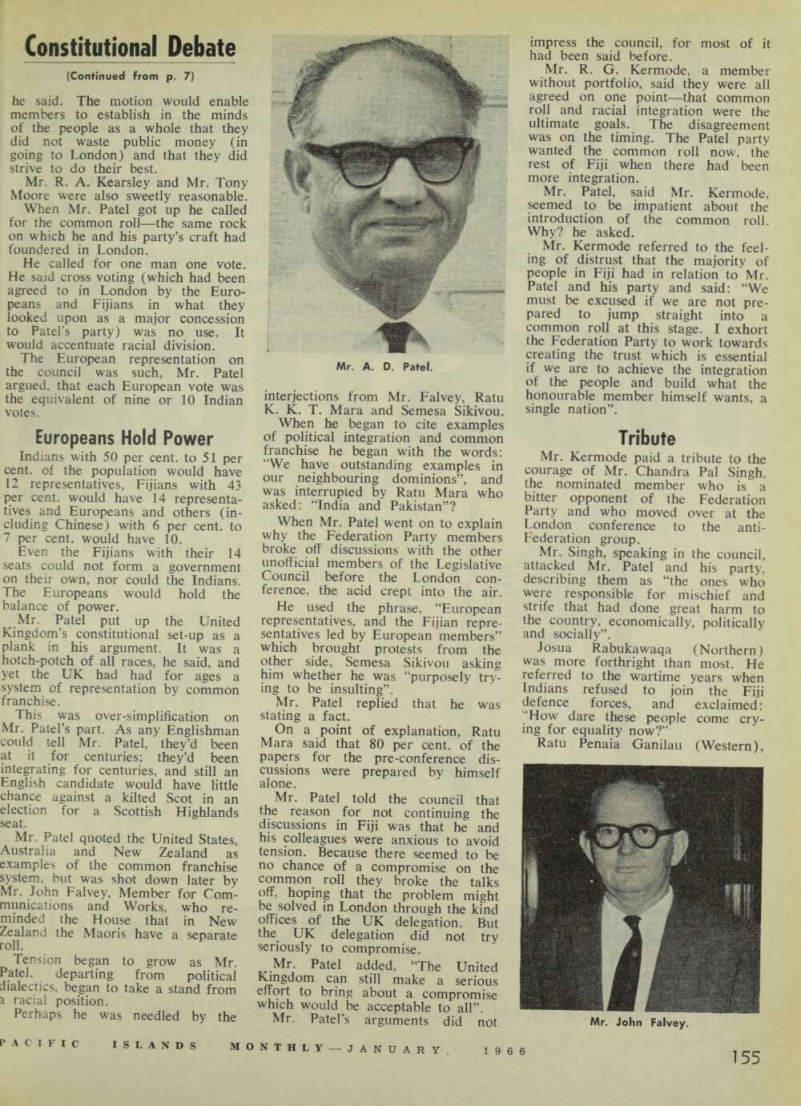 159
159 160
160 161
161 162
162 163
163 164
164 165
165 166
166