Monthly
Pacific Islands Monthly
March, 1965
3/- 60 US cents 50 French Pac. frcs.
r he News Magazine Of The South Pacific
Established 1930
istered at G.P.0., Sydney, and at P. 0., a, for transmission by post as a Newspaper
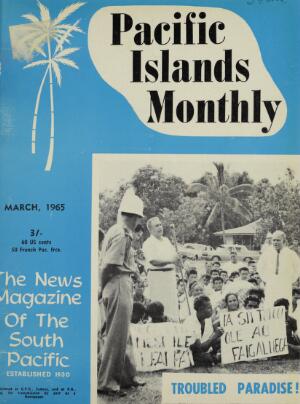
OUR COVER: To outsiders, the islands of the South Pacific are often looked on as paradise, but to those who live there it's sometimes a different story. In Apia, Western Samoa, in February, for example these and other banner-carrying demon strators protested to Parliament over high living costs, etc. (See p. 39 for details.) Photo: "Samoana".
Advertisements & other items, pp. 2-6 (1 item)
When In Australia Fly Taa
f taa
Trans-Australia Airlines operates the largest single domestic airline network in the British Commonwealth, serving 140 cities and centres throughout Australia and Papua/New Guinea.
TAA’s modern aircraft connect with all incoming and outgoing international flights. TAA provides the speed and comfort of pure jet travel within Australia with the introduction of Boeing 727 T-Jets.
TAA Fly-away Holidays. TAA offers a huge range of packaged Holidays to the most popular holiday resorts throughout Australia and Papua/New Guinea.
And TAA takes care of everything travel bookings by air, road, rail or sea, accommodation, sight-seeing tours even theatre tickets!
Contact your nearest Travel Agent or Trans- Australia Airlines Office.
FLY
THE FRIENDLY WAY
Trans-Australia Airlines
TAA72B9/64
Men of tomorrow need today
(that goes for all the family, too.) Nothing nourishes quite like Weet-Bix.
It’s made from Australia’s finest wheat.
Every golden flake is a whole wheat grain enriched with malt and toasted to a delightful crispness.
Every Weet-Bix biscuit is loaded with the sort of energy kids need.
Simply add cold milk in summer. Or hot milk in winter. For an extra treat, add fruit fresh, stewed or tinned.
Weet-Bix
MALTED WHOLE WHEAT BIBCUITB
W 16.5
Triple-wrapped packets
Qrnotts
FAMOUS
Biscuits
Sits \ N N 05 C f 9 O O o <z <c V
... for extra energy
There is no Substitute for Quality K 304
I BURNS PHILP (SOUTH SEA) CO. LTD.
GENERAL MERCHANTS AND SHIPOWNERS
I SHIPPING, CUSTOMS AND FORWARDING AGENTS
AGENTS FOR:
I QUEENSLAND INSURANCE CO. LTD.
BURNS PHILP TRUST CO. LTD.
[ SHELL COMPANY (P. 1.) LTD.
OVERSEAS AGENTS
BURNS, PHILP & CO. LTD., Sydney.
BURNS, PHILP & CO. LTD., London.
BURNS PHILP CO. OF SAN FRANCISCO
SHIPPING AGENCIES
• The New Zealand Shipping Co. Ltd. • Shaw Savill & Albion Co. Ltd. • Port Line Ltd. • Bank Line Ltd. • General Steamship Corporation Ltd. • Blue Star Line • Cunard Line • Compagnie des Messageries Maritimes • British India Steam Navigation Co. Ltd. • Royal Inferocean lines • Nederland Line Royal Dutch Mail/Royal Rotterdam Lloyd.
EXCLUSIVE DISTRIBUTORSHIPS INCLUDE
• AKAI TAPERECORDERS
• DUNLOP PRODUCTS
• EPIGLASS PRODUCTS
• FERGUSON TRACTORS
• HELENA RUBENSTEIN
• HITACHI ELECTRONICS
• HOLDEN VEHICLES
• JOHNSON'S WAXES
• ROLEX WATCHES
• REVLON COSMETICS
• PENTAX CAMERAS
• SUNBEAM APPLIANCES
INTERNATIONAL AIR TRANSPORT ASSOCIATION REPRESENTATIVES for
QANTAS EMPIRE AIRWAYS LTD. :: TASMAN EMPIRE AIRWAYS LTD.
UNION DE TRANSPORTS AERIENS ALITALIA PAN AMERICAN AIRWAYS
ASSOCIATED COMPANIES
BURNS PHILP (NEW HEBRIDES) LTD.
AUTOMOTIVE SUPPLIES CO. LTD.
CORRIE & CO. LTD. • NARAIN FURNITURE CO, LTD,
SPECIALISED SERVICES
EXPERT ADVICE ON WORLD AND LOCAL TOURS
TRAVEL SHIPPING FORWARDING CUSTOMS
FORMALITIES INSURANCE.
REGISTERED OFFICE; SUVA, FIJI
Code Address: "BURNSOUTH"
HAVE YOU
NOTICED
HOW MUCH
BETTER
GILBEY’S
r
GIN
IS!
So why mix with others?
GILBEY’S
GIN
mm/m
Pacific Islands
Monthly
Owned And Published By Pacific
Publications Pty. Ltd., 29 Alberta
St. (Box 3408, G.P.0.), Sydney.
Telephones: 61-9197, 61-7101, 61-4369.
Telegraphic Address: PACPUB, Sydney.
Pacific Islands Monthly
Editor: Stuart Inder.
Assistant Editor: Robert Langdon.
Book Publishing Section
Editor: Judy Tudor.
Chief Executives
Managing Director: R. W. Robson.
General Manager: Selwyn Hughes.
Branch Offices
Melbourne; Newspaper House, 247 Collins St.
Tel.: 63-7053.
Papua-NG: Pacific Publications (NG) Ltd., Theatre Building, Fourth St., LAE. Tel.: 2577.
Fiji: Pacific Publications (Fiji) Ltd., Fiji Times Building, 20 Gordon Street, SUVA. Tel.: 5601.
Fiji Times Office, Vidilo Street, LAUTOKA.
Tel.: 420.
Representatives
New Zealand: J. D. Whitcombe, C.P.O. Box 2229, Queen Street, Auckland. Tel.: 70409.
Hawaii: C. C. Spencer, 203 Yap Bldg., 3465 Waialae Ave., Honolulu. Tel.: 775538.
United States: R. G. Craib, 153 Laidley St., San Francisco 31, California. Tel.: Mission 8-1075.
United Kingdom: S. R. Warman, 73 Cheapside, London, E.C.2. Tel.: City 2355.
H. A. Mackenzie, 4A Bloomsbury Square, London, W.C.I. Tel.: Holborn 3779.
Agents
All main trading firms and stores in the Pacific Islands.
Pacific Publications Pty. Ltd. is the Australian agent for THE FIJI TIMES.
Subscription Rates:
Australia, New Zealand, all British Common wealth South Pacific Territories, Tonga, New Hebrides and Western Samoa: 3/- local currency (36/- local currency for 12 months).
Elsewhere in the South Pacific: 50 French Pacific francs or 60 US cents (600 French Pacific francs or 57.00 US posted for 12 months). Posted to the UK, US and all other countries: £Stg.2 or $7,00 US.
"Pacific Islands Monthly" is air-freighted to all subscribers and agents in the South Pacific; copies to other areas go by surface mail.
In This Issue
General
Big Political Changes Likely 10 Nelson and Robertson Anniversary .. 15 Unclaimed Islands 61 H. W. Simmonds' Autobiography ... 91 Copra Prices Still Going Up 135
American Samoa
Honour For "The Turtle" 12
Cook Islands
Pearls Found at Aitutaki 11 Assembly Elections in April 13 Nail Problem Solved 21 Vanilla-Growing Experiment 70 Rarotonga's Senior Citizens 70
Fiji
Investment, Self-Government Moves .. 9 Too Many Taxis 23 Methodist Church Records 38 Hurricane, Floods 25, 45 Annexation of Conway Reef 61 Stir Over Name "Fijian" 63 Population Figures 65 More Australian Trade Sought 67 Japanese Ship on Reef 109 Congestion at Wharves 109 Shipping Service to Far East 11l Tourism Developments 129 Govt. Interest in Fiji Airways 133 Stock Exchange Proposed 134
French Polynesia
Heavy Rain Damage 51 Death of Princess Pomare 59
Early Moorea Sugar Plantation 81 New Career for "Cheng Ho" 107 First Cultured Pearls Produced 134 Former Governor's Death 144
Gilbert And Ellice Islands Colony
"Southbank" Written Off 23
Lord Howe Island
Ball's Pyramid Conquered 11
Nauru
PIM Special Review 29 "Operation Teenage Uplift" 57
New Caledonia
Noted Leper Woman Dies 9 Airborne "Mermaid" 21 Shortage of Vegetables 38 Welcome Rains 45 Hoarded Dollars 57 Noumea Games Postponed 86 New Hotel at Thio 123 Hostel for Students 125
Niue
No Haste for Self-Government 73
Norfolk Island
Gordon Duvall 87 Building Preservation Finished 119
Papua-New Guinea
House of Assembly Session 7 Move on Constitution 7 Higher Prices Likely 8
Spotlight On Rural Workers 11 Workers' Federation Formed 13 "South Pacific Post" Takeover .. 21, 131 Beatification of Missionary 22 Lae's Cooked Eggs 23 A.B.C. Uncertainty Over Role 26 Discrimination Against Papuans ... 28 Fead Islands 28 Athletes Training Hard 86 Bulominski's Grave 101 Air Service, Booster for Tourism ... 125 Luxury Hotel for Moresby 127 Promising Misima Report 134 Cultured Pearls Experiments 134 Hotels Out of Receivership 134 New Paint Factory 135 Bid for Brewery 135
Solomon Islands
Legco Elections 13 "Coral Queen" Runs Aground 105 Guadalcanal's Ark 109 Work Begins on Honiara Wharf ... 11l Haven for Honiara Yachtsmen 11l
Tonga
Progress on New Hotel 8 New Adventure for Capt. Fifita ... 25 Shipping Service to Australia 107 Surfing at 'Eueiki 129 Decimal Currency Investigation ... 134
Wallis And Futuna
Heavy Hurricane Damage 45 New Administration Vessel 107
Western Samoa
Marchers Protest Over Living Costs .. 39 Apia's Biggest Freighter 109 Independence Celebrations 127 Decimal Currency Plan 134 NZ High Commissioner 141
DEPARTMENTS: Topicalities, 21; Letters to the Editor, 28; From the Islands Press, 76; Magazine Section, 81; New Books, 91; Territories Talk-Talk, 99; Shipping, 105; Cruising Yachts, 113; Travel, 119; Commerce, 131; People, 141; Deaths of Islands People, 144; Shipping, Airways Timetables, 145.
Advertisements & other items, p. 8 (1 item)
Braybon - Power Plants
AVAILABLE WITH HEAVY DUTY DIESEL ENGINES OR LIGHT WEIGHT
PETROL ENGINES WRITE FOR QUOTATIONS
- 1,000 Watt 240 Volt Petrol Set. £ll5 (74 lbs.) 2,000 Watt 240 Volt Petrol Set. £175 (126 lbs.) 3,750 Watt 240 Volt Petrol Set. £235 (226 lbs.) 1,650 Watt 240 Volt Diesel Set. £265 2,000 Watt 240 Volt Diesel Set. £367 Manufactured by: BRAYBON BROS. PTY. LTD. 27-33 Washington st„ Sydney DISTRIBUTED BY: STEAMSHIPS TRADING COY. LTD.; COLYER WATSON (NG) LTD.; TUTT BRYANT (PACIFIC) LTD.
Parliamentary Government
The Fight Opens For Parliamentary Government In Papua-New Guinea
From Stuart Inder, in Port Moresby Here in February the first shots were fired in the fight for parliamentary government for Papua-New Guinea. And first casualties were—as always in a developing colonial situation— the expatriate public servants, 5,000 of whom currently con trol the administrative machinery in this big territory of two million people.
IT wasn’t a bitter fight—although there were occasional signs of temper. It was a fight fought with words, solid arguments, some emotion, tactics and with not a little heart burning, “These people may be wrong but they are terribly sincere and what they are doing, because of their sincerity, must end up being for the general good,” planter lan Downs told the 64-member House of Assembly.
And dour miner Bill Bloomfield said: “We are forced to pass this bill because the Administration has not recognised the political progress, aspirations and the importance of these people.”
Theoretical Command “These people” were the 54 mem bers of the House elected by one million voters on the Territory’s first common roll last year, and now, in theory, in command of the Territory’s Parliament except for financial matters.
“The bill” was an amendment to the Public Service Ordinance, intro duced by the elected members in an effort to take most of the control of the Public Service away from Can berra and put it into the hands of a local Public Service Board.
The amendment was bulldozed through despite the protests of the official members who, in the years when they were in the majority, had bulldozed through many a bill them selves.
It is now up to the Australian Minister for Territories to veto it, or —if he is wiser—send it back with a few suggested amendments to tidy it up. For its details do need tidying up, although its principle is sound and simple.
Its principle is: The time has come for Australia to ease up on the reins;
to practice what it has been paternalistically preaching these last few years.
It has been clear to me in a fascinating week of moves and counter moves that P-NG has now reached the stage that many now-independent British colonies reached after the war; Politictl machinery has been established that cannot be controlled with any certainty by metropolitan interests.
There can be no guarantees now.
Good sense and compromise must prevail.
The particular issue which has now come to a head has been warmly simmering since last year, when the Administration announced two salary scales for the Public Service—a lower one for local recruits, based on the Territory’s future ability to pay.
Such a move was overdue, but the difference in payments between the locals and the staff recruited from Australia was such as to bring the obvious query, “Can we afford to bring up Australians and their wives and families?”
Quiet Resentment The query fell on fertile ground, for New Guineans have for some time been quietly resenting well-paid Australian clerks and bottle-washers who live in large, well-furnished houses at 18/- a week while they hold down jobs that the locals claim they could learn to do if they were given the chance.
And they have resented, too, many of the expatriate wives with their petty prejudices and suburban minds, and even their pouting children.
It’s been the haves and the have nots, with one vital difference: The New Guineans have not been resentful to the point where they are blind to the value of expatriate officers and want to rid the country of them.
They know they can’t do without them and that to attract them here Australia has to bait the hook.
But they do believe that the Terri tory can do without some of them, and that a larger say in Public Service recruitment and salary conditions might help them adjust the position in time.
Mr. Downs gave notice in January that he would move at the February meeting the amendments to the Public Service Ordinance and thus attempt to move another step forward on the road to self-government.
A statement issued by the Minister following this notice seemed to in dicate that Mr. Barnes would be ready to consider the proposal.
But a shock awaited Mr, Downs and his fellow elected members of the Administrator’s Council when they met in February on the eve of Mr. Downs’ presenting his amend ments to the House.
In a “secret communication”, Mr.
Barnes made it clear that he had no intention of allowing any part of the proposed measure to become law.
The elected members of the Council, stung by the Minister’s re fusal to leave them even a loophole for compromise, were now in a dilemma. With a bill about to be in troduced that would have the majority support of the House, how could the House be warned that it would cer tainly be vetoed in Canberra?
This dilemma was resolved by the unprecedented step of calling to gether the elected members of the House at a closed meeting and reading
the Minister’s uncompromising letter to them.
Reaction of the European and many of the elected New Guinean members was of anger at the Minister’s stand.
From most of the native members there was no reaction, simply because the peculiar wording of the Min ister’s letter made it almost impossible to translate it intelligently into Pidgin.
For the next day or two there was constant activity in the corridors and the members’ rooms, as in the House the session droned on with nothing of special interest to break the monotony. A visitor could be for given for feeling that this session was dull, dull, dull—for the trouble that was brewing was all behind scenes.
"Lesson In Compromise"
The difficult question for the elected members to solve was the method of rephrasing the proposed bill so that a collision with the Minister could be avoided. Despite Mr. Barnes’ uncompromising at titude the members appeared de termined to turn the other cheek and prove that sincerity, and not political expediency, was their motivating force.
As Mr. John Stuntz commented: “If the elected members wanted to play politics all they would have to do would be to complain to their electorate that big, bad Canberra wouldn’t let them do the right thing.
But for Canberra’s sake we’ll try to work on Canberra, not the elec torate.”
This view was all the more note worthy considering that the Public Service Association was now irritat ing the elected members by taking a narrow we’ll-fight-to-keep-what we’ve-got stand, and the Administra tion had further inflamed them by introducing economic rentals for expatriate officers, but at the same time announcing payment of “rental allowances” to bring the rents back
to the old figure of 18/5 a week.
These allowances weren’t payable to local officers!
“If every clerk in the place wants to pack up and go home to Aus tralia then good riddance!” said one irate member.
The amending bill was passed after a day-long debate marked on the elected side of the House by speeches appealing to Canberra to please, please intelligently consider what the aim of the bill was; and on the official side by urgent requests to the elected members not to bull doze, not to collide head-on with Canberra but to put the whole thing over to June, when a more considered bill could be introduced.
The House took the view that Canberra could do the considering, especially as one or two new amendments should now make it even more palatable to Mr. Barnes.
Although the loyalty of the official members was beyond question, observers of this week’s activities would have been left with the im pression that the Port Moresby Administration had a sneaking regard for the attitude of the elected members. Said one official: “Hasluck
wouldn’t have dug in his toes the way Barnes did. Barnes has been wrongly advised.”
Certainly if Canberra officials had been present during the week they would have seen for themselves that the repeated cry of the elected members that they “have to take action on the bill because the elec torate wants it” was not a hollow one.
On a dozen other different matters during the week the elected members showed that their electorates were demanding action and that they were going to have to give them action or take the risk of being kicked out.
The situation was illustrated by an outburst from Gaudi Mirau, an intelligent, if choleric Papuan, who protested that he was now bringing up the subject of a Bundi road for the fourth time in four meetings, and that his words were still ignored.
“My people at the elections wanted me to speak about this matter of a road through bush and I cannot stop talking about this because this road must go through . . he shouted.
This, surely, was parliamentary government on the move.
The roads, and the bridges, and the parish pumps all over the Ter ritory will have to be seriously con sidered by 1968, or the next House of Assembly will be packed with men not as sincere, as forgiving, as reasonable, nor as compromising as this parliament has been in its bid to grasp the reins that Canberra boasts it has already handed to them.
FOR TOURISTS: Work is progressing steadily on Tonga's first tourist hotel in Nukualofa due to be completed by the end of the year. The hotel (pictured by Tulua Bros.) will have three storeys in its main block.
At Constitution
P-NG Will Look At Constitution
Papua-New Guinea will set up a select committee of the House of Assembly to draft a programme of constitutional development for the Territory.
Notice of motion to set up the committee was given at the February sitting of the House by the leader of the elected members, Mr. John Guise. He said he would introduce the motion in June, and give details then.
The committee, he said, would meet from time to time and present its final report to the House on or before the second last meeting.
Mr. Guise’s statement was re ceived without comment, but undoubtedly the move will be supported by the House.
P-Ng Can Expect To Pay More
Papua-New Guinea can expect some tariff increases this year. The increases were foreshadowed by the Territory's Director of Trade, Mr. G. D. Cannon, at the February sitting of the House of Assembly.
IN reply to Mr. Percy Chatteron (Central), who asked had any decision been made on an application to bring cheap radios into the Territory duty-free so as to benefit New Guinean radio listeners, Mr.
Cannon said this matter was part of an extensive review of tariffs which was currently going on following the recommendations on p.p. 383-5 of the World Bank Mission report.
The relevant sections of the report
recommend an increase in import duties of about 15 per cent., applied selectively, and that a general review of import duties be undertaken on the basis that more revenue will be needed. It adds: “Imported com modifies sold preponderantly to indigenes should not be excluded.” ...
The World Bank Mission also recommended that reintroduction of export duties be “seriously con sidered”.
Friend To Lepers
Death of Noted Friend To Lepers
The Ducos Hansenian {leper) Sanatorium at Noumea, New Cale donia, suffered a grievous loss in mid-February with the death of Sister Marie Othilde of Jesus, of the Roman Catholic Order of St.
Joseph de Cluny.
SISTER Othilde, who was 66, arrived in Noumea in 1933 with two other sisters especially to nurse lepers. In 1942, Sister Othilde was found to have contracted their disease herself, but this in no way diminished her will or capacity to work. She was especially devoted to the care of native patients.
The French Government re cognised her worth in 1953 with the Cross of the Legion of Honour, which was pinned on her breast in Noumea by a visiting Minister of Colonies. The Institute of the French Academy awarded her a diploma in 1958.
PI M’s Noumea correspondent says: “This magnificent woman, big, red-faced, with a broad smile, was always a tonic for the healthy who met her, and her influence on the sick, especially the younger ones, was immeasurable.”
Sister Othilde’s death came less than two years after that of the South Pacific’s renowned “Leper Man”, P. J. Twomey, {PIM, Sept., 1963, p. 63).
Sister Othilde, wearing the Cross of the Legion of Honour.
Shape Colony's Future
Fiji's Governor Acts To Shape Colony's Future
By Staff Writers in Sydney and Suva
Fiji’s Governor, Sir Derek Jakeway, has been trying hard lately to find a workable formula for Fiji’s political future and to get Australia to invest more money in the Colony.
SIR DEREK has been showing a drive and capacity for doing things and making decisions that the people of Fiji have not been ac customed to.
He has held a series of conferences with Fiji’s communal leaders on the important questions of wider and more effective use of land and the various voting systems that could be adopted in the Colony—common roll, communal roll, or unrestricted franchise.
He visited Australia in February for frank talks with the heads of the big Australian corporations with interests in Fiji, and also with Aus tralian political leaders and heads of Commonwealth Government departments.
Sir Derek’s main theme in these talks was that Australia, in its own interests, should put more money into Fiji—and that it was better to do this now in a comparatively small way as a matter of policy than to “have to come and dig us out later on” with larger amounts.
Self-Generating
“As Fiji is so near to Australia,” he told a Press conference in Syd ney, “it is in Australia’s interests to see that it is prosperous and stable.
“We want Australian money, skill and experience to increase the momentum of development in Fiji.
With this help, we could become self-generating.”
Specifically, according to a Can berra Press report, Sir Derek asked Commonwealth officials for: • Help with the £5 million Nadi- Suya road, including assistance with design and engineering staff and road building equipment. • The extension of Australian credits on favourable terms to con vert the Fiji Agricultural and Industrial Loans Board into a development bank to feed low interest credit directly to develop mental projects. • Assistance by grants in the maintenance and construction of school buildings, • A form of percentage grants to assist in hospital and medical services development.
Sir Derek Jake way returned to Fiji on February 26, and on the same day the Colonial Office an nounced that a conference would begin in London on July 28 “to discuss changes in the constitution of Fiji, with the aim of making further progress in the direction of self-government.”
The announcement said that all 18 unofficial members of Fiji’s Legislative Council had been invited to the conference—these being six Fijians, six Indians and six Euro peans, representing the three major races in Fiji.
"Common Ground"
According to the Governor, at his Sydney Press conference, it is “com mon ground” among these 18 MLCs that, for the time being, complete self-government is not the goal of Fiji, “We have discussed the form that a continuing link with Britain might take and it was agreed that it should include the appointment of a Governor and the Judges of the Supreme Court; that Britain should continue to be responsible for defence and external affairs; and that the Queen should continue to give assent to legislation,” he said.
“The Indians do not want self government because they know that this would immediately create racial strife.”
Asked about the future possibility of the numerically superior Indians outvoting the Fijians, he said: “It is inconceivable that Britain would permit the Fijians to be placed politically under the heel of an immigrant community.”
Sir Derek Jakeway said it might not be possible to evolve “anything like an existing form of democracy” for Fiji, and that it might be neces sary “to tailor things” to suit Fiji’s conditions.
He said he expected continued pressure from the United Nations to give complete self-government to Fiji, but added that it was often forgotten that the United Nations had prescribed three different ways by which a country could be
“emancipated from colonialism.” The three ways were; • By integration with an existing independent country. • By free association with an existing independent country. • By complete independence.
He added: “I think Britain will take the view that its responsibility is not to the United Nations but to the people of Fiji, and that it will endeavour to implement the solution which is in the best interests of the people of Fiji, and which will get the widest degree of agreement from the people of Fiji.”
At the same Press conference, Sir Derek Jakeway said that the two chief barriers to continued racial harmony in Fiji were the problems of land and politics.
He described these problems as “points of acute friction” among the Fijians and Indians, although he did not think anyone could “detect any form of racial disharmony in Fiji” at present.
On the land question, Sir Derek
made it clear that he sees eye to eye with such authorities as Sir Alan Burns in that the Fijians, who own 87 per cent, of the Colony’s land, must be prepared to allow the Indians to make greater use of it and to lease it on more secure terms than in the past.
“My aim and policy is that there should be reasonable security of tenure for the farmer who is farming his land properly,” he said.
When some of Sir Derek’s state ments were reported in The Fiji Times, Mr. C. A. Patel, the secre tary of the Indian Federation Party, issued a statement which caused the Governor some embarrassment. The statement was: “Our party has always advocated and still advocates that Fiji should be given full internal self-govern ment.
“It is incorrect to say that Indians do not desire self-government in Fiji.
"Grave Concern"
“We note with grave concern that his Excellency has thought fit to describe the Indians by implication that they are an immigrant race and that common roll system of voting is not acceptable or desirable.
“Generally, it is considered that his Excellency’s statements have gravely prejudiced the constitutional talks now being held by the unofficial members of the Legislative Council.
“Our party seeks an official state ment whether the views expressed by his Excellency as reported in The Fiji Times are his personal views or that they are the official views held by the Secretary of State for the Colonies.”
Later, at a Press conference in Suva, Sir Derek said he had been sorry to find that some of his replies to the Press in Australia had been taken amiss, particularly by the Federation Party.
He said he had no idea that the term “immigrant race” was offensive, and he would not use it again. But he meant what he said in that the Fijian people had a special position in Fiji, and this was, in fact, guaranteed by the Deed of Cession.
The Governor said he did not say that the Indians did not want self government (as published), but that complete self-government was not an issue. He claimed that the mis report was probably due to Australian reporters not appreciating the dif ference between the terms self government and independence (see panel).
He added that he had never dis
(Continued on p. 143)
cussed a common roll as the Federa tion Party had suggested in a tele gram to the Colonial Secretary, but that Fiji’s special problems would probably merit special treatment.
The Governor’s disclaimers clearly indicate how delicate the political situation is in Fiji, and that great patience, tact, diplomacy and cir cumspection in the use of words will be necessary to make a success of the London conference.
Meanwhile, many people in Fiji take a poor view of the plan to transport the non-official Legco en masse to London for the con ference.
They say: Why transport such a large party to London, at huge expense, when exactly the same purpose could be achieved by allow ing the same people to function as a conference in Suva?
If the idea is that the nomofficial members should talk under the calming influence of high Colonial Office personnel, why not bring these personnel to Fiji—a flight of only
a few hours from London, at a time when Suva’s climate is perfect?
Why the non-official Legco members, anyway? Matters con cerned with constitutional changes were not at issue when they were elected. It is possible—in fact, very likely—that these members will not represent the opinions of their con stituents on constitutional changes.
If a series of broadly-based and, to a degree, alternative proposals on constitutional changes had been an nounced, and the unofficial members had been asked to find out what the people in their districts thought about them, there might have been at least one argument in favor of the Colonial Office procedure.
As it is, its chief merit is that it provides 18 people with the where withal for a picnic in Europe in mid-summer.
The best plan would have been to hold a constitutional convention in Fiji to shape plans and appoint delegates to present these plans at a London conference.
White !
In Black And White !
Shorthand outlines, like photo graphs, do not lie.
This is the opinion of PlM’s assistant editor, Robert Langdon, who has been writing high speed shorthand since he left school 20-odd years ago, and who has reported more sessions of Australia’s Federal and State Parliaments, courts, etc. than he cares to think about.
Langdon, who reported Sir Derek Jakeway’s Sydney Press conference for “The Fiji Times,” says Sir Derek DID say that the Indians “do not want self government”, and not something about independence as Sir Derek now claims.
“Sir Derek used the word ‘self-government’ three times in a matter of minutes,” Langdon says, “and I have them all in my notebook. There is a world of difference between the outlines for ‘self-government ’ and ‘in dependence’, and, of course, they do not sound anything like each other.
“However, I can believe that Sir Derek inadvertently made a slip of the tongue or meant to convey ‘independence’. He was asked questions on many difficult subjects, and, generally speaking, I greatly admired the way he handled them.”
Big Political
Top U.K. Experts Moke Appraisal
Pacific May See
Changes Soon
By a Staff Writer
An appraisal—and probably
a painful one—is now being made of British and Common wealth possessions in the South Seas in relation to world political
developments.
i ALTHOUGH the outcome may not be known for some time, it will without question affect political think ing, and perhaps mean the re-shaping of plans in Pacific and world capitals.
Main fact-gatherer for the appraisal appears to be Mr. Trafford Smith, an Under Secretary of the British Colonial Office, and British specialist in South Pacific affairs.
He has been in the Islands since December, and when he departs for London in late March he will have completed an extensive examination of conditions in the Gilbert and Ellice Islands Colony; the Kingdom of Tonga; the Condominium of the New Hebrides; the British Solomon Islands Protectorate; Pa p u a-New Guinea; and the British Colony of Fiji. He has also visited the South Pacific Commission headquarters in Noumea.
Follow-Up Visit
After leaving Port Moresby on February 23, where he listened with the liveliest interest to debates in the House of Assembly, Mr. Smith had talks in Sydney, Melbourne, Can berra and Wellington, before return ing to Suva for more talks with the Governor, Sir Derek Jakeway. Sir Derek had also made an important trip to Australia only the week before.
Mr. Smith will return to London before the Parliamentary Under secretary for the Colonies, Miss Eirene White, leaves London for a follow-up visit to the Pacific. She is expected to complete arrangements for the Fiji constitutional conference in London.
Britain, Australia and New Zea land control or influence all the South Pacific territories with the exception of French Polynesia, New Caledonia
and American Samoa. Western Samoa and Tonga are under British influence and Britain shares re sponsibility for the New Hebrides with the French.
Britain is well aware that the future security of the South Pacific could be threatened by the growing Com munist power in South-East Asia, and that the only organisation which seeks to co-ordinate developments among the variety of Administrations controlling these widely scattered islands is the South Pacific Com mission, which is a body represent ing the five metropolitan powers, plus Western Samoa.
But SPC activities cover only such matters as health, social and economic affairs, in an advisory capacity, and the SPC carefully avoids any in volvement with political affairs or defence. Under its charter it is not able to be involved Yet the importance of concerted action on a wide range of matters in cluding politics and defence is becom ing more obvious every month and some SPC members are coming around to the belief that the charter may have to be widened. There are some who will oppose widening.
Co-ordination Essential But the fact remains that there must be co-ordination in the South Seas, for with the pressures that are coming, and with the financial, economic and defence aid that will be needed, a fragmented South Pacific will be unworkable.
For how long can Britain be ex pected to finance and protect her South Pacific territories? Has she any right to ask Australia and New Zea land to share her burdens? These countries do enjoy the cream of the trade of the South Pacific.
And how much support can Britain expect from the United States—how much responsibility for the South Seas is the United States willing to take? Must Britain, the US and France share the problems or can they be carried by somebody else?
In the light of events in Africa and Asia these problems cannot be ignored much longer and the continu ance of a laissez faire policy may bring disaster.
Which of the bigger nations will take the initiative? There is now no doubt that British officialdom is mov ing, and both Britain and the South Seas generally are entitled to hope that Australia may not be far behind. • A pearl shell with 15 pearls inside was found in the lagoon at Aitutaki, Cook Islands, recently. It was the first pearl-bearing shell to be found at that island.
Spotlight On
P-Ng's Rural
Workers
From a Port Moresby Correspondent
Papua-New Guinea’s 40,000
rural workers—mostly plantation
labourers—are currently in the spotlight. This is a state of affairs which no doubt would astonish them if only they were aware of it. rFHE spotlight has been sent their J- way as a result of the establishment just before Christmas of a Board of Inquiry into Rural Wages, which has the job of deciding whether: • Wage rates should be varied. • A bonus payment system should be introduced. • The current payment system of wages, plus rations and quarters, should be altered. • The maximum period of service for agreement workers should be varied.
The last similar inquiry, by the Native Employment Board, in 1960, was also fairly extensive.
The pressure for the new inquiry has not come from the rural workers themselves, but, oddly enough, from urban workers.
Rural workers have not expressed dissatisfaction over their wages, but urban workers certainly have, and under the unusual union arrange ments currently operating in the Territory (where “workers’ associa tions” thrive with the active en couragement of an Administration which is conscious that if it doesn’t help nurture these embryo unions to active life then some red-hot imported unionists might) it was only a matter of time before the associations suggested that some body ought to look into the urban situation too. The Administration agreed without demur.
Workers Well Represented The Board of Inquiry so far has had a couple of hearings, at Lae and Madang, and others will follow at various centres, probably until June. Board chairman is the Sec retary for Labour, Mr. N. J. Mason, but another will have to be found soon because Mr. Mason has ac cepted a new post in Sydney.
Other members are Mr. lan
Downs, Highlands planter; Mr. W. J.
Grose, a New Ireland planter; Mr.
B. E. Fairfax-Ross, general manager of the British New Guinea Develop ment Corporation and probably the most experienced man in the Ter ritory on plantation labour con ditions; Sapume Kofikai, vice president of the Goroka Workers’
Association and an Agriculture Department man; Thomas Tobunbun president of the Rabaul Workers’
Association, a schoolteacher; and Lamsisi Pasingus, treasurer of the New Ireland Workers’ Association, who is an experienced co-operatives man. The workers—i.e., the union ists—are thus well represented.
Adventure Rural workers have always had something of a unique role in the emerging New Guinea. For many bushmen who have never seen the sea or a paved road, a two-year agreement to work on the coast is entered into in a spirit of adventure.
The experienced planter with a line of unskilled “busbies” on his hands (brought in by air charter perhaps at a cost of £5OO for the return trip) doesn’t expect to get anything more than he pays for, and accepts it as adventure too, if he is wise. Both sides learn something from the experiment and thus
education-by-example continues.
Whether the actual skills a bushman picks up in his two years are worth the effort—a Highlander working on the coast may be grow ing things he’ll never see again when
World Bank Supports Cash Wage
he goes home—is a problem that the Board will look into.
Not all rural workers are under agreement. The trend is for an in creasing number of natives to work casually (most of them in their own areas).
About half of the entire native work force in the Territory (about 95.000 are in employment, which is little more than 13 per cent, of the estimated adult male population of 600,000) is engaged in agriculture and forestry. Probably about 26,000 of these are agreement workers and 13.000 are casuals.
Cash Wage
An agreement worker for the first year gets a minimum of 30/- a month, and 35/- in his second year, plus accommodation, food, clothing and other articles.
One of the terms of the Board’s inquiry is to see whether this scale should be replaced with an all-in clusive cash wage, as it largely has in the towns. Deductions would be made for food, accommodation, etc.
The World Bank Mission, in its reports released last year, strongly supported the movement towards a full cash wage because it felt it would help workers become familiar with modern economy.
Casual workers are paid weekly, with no extras.
Agreement workers are expected to honour their agreements, although nothing much can be done about it if they don’t.
Casual workers, free to pick and choose, usually choose with shrewd ness, and experienced planters see frequent proof that wages are not their motivating force.
Men will work for the minimum wage if the plantation is the right one. Some will leave higher wages to work at a plantation with lower ones because they prefer to work under a particular manager, or they like the general atmosphere, or other conditions. Often it is because they prefer the food.
Biggest Question
Recently in some parts of the Highlands there has been a shortage of kau-kau and labourers have been leaving plantations where they think they have been issued with too much rice.
Probably the biggest question of all for the inquiry to solve is: If the rural worker is to earn more so that his living standards may be improved, how can rural industry pay for it?
Those close to the industry say that higher wages can be paid only when the worker can be made skilled enough to improve production figures. In other words, his value must be increased.
But are present conditions in the industry such that he has the op portunity to increase his worth?
This opens up many new avenues.
Many in the rural areas are pain fully aware that rural industry gets mighty little Government money considering the amount it earns for the Treasury each year.
The millions being spent in the Territory too often go into roads, expensive housing and blocks of offices, all in the towns, where they earn nothing for anybody.
For those who adopt this line there was more grist for the mill only the other day, when it was announced that Port Moresby’s sprawling European suburbia of Boroko, occupied by Administration workers and their families, mostly from Australia, is to have a new post office—at a cost of a mere £200,000!
There is an argument for a new post office there, as it will eventually be a GPO, but must money be spent now on post offices, court houses and other buildings when so much needs to be done to build up the economy? This has been the burden of the World Bank Mission’s report—and the rural inquiry may well think the same.
Conquered
Ball’s Pyramid Conquered
Four Sydney climbers have become the first men to reach the top of Ball’s Pyramid, the rugged 1,843 ft peak 11 miles from Lord Howe Island.
The climbers are Bryden Allen, David Witham, John Davis, and Jack Petigrew, who reached the summit on February 14. They were members of an expedition sponsored by the “Sydney Morning Herald”.
The four climbers drank a bottle of champagne at the summit to celebrate their suc cess and built a large cairn in which they placed a message.
The expedition achieved what eight previous climbing expedi tions to Ball’s Pyramid had failed to do.
Pago Building
Architects Honour Pago Building
THE Lee Auditorium at Pago Pago and its architects, Wimberly, Whisenand, Allison and Tong of Honolulu, recently received an Honor Award from the American Institute of Architects, Hawaii Chapter, in its annual selection of outstanding Pacific architecture.
This was the first time such an award had been made for a building in the South Pacific.
The Lee Auditorium, commonly known as “The Turtle”, was built for the 1963 South Pacific Con ference in Pago Pago. It can accommodate 800 people, and is used for community activities, meetings, pageants, and dances.
In presenting the award to the architects, the American Institute of Architects jury said: “The design demonstrates the architectural skill in capturing the essence of an indigeneous art form, in this case the traditional fale or long house of Samoa. The jury felt it was difficult to imagine a more appropriate and satisfying solution”.
This was the seventh award for outstanding architectural design received by Wimberly, Whisenand, Allison and Tong. The others have been for buildings in Hawaii.
The firm also designed the apartment units for
government employees and the administration build ing for Pacific Coconut Processing Co. at Pago Pago, and is designing the new hotel now under construc tion in Pago Pago harbour.
The firm’s first assignment in the South Pacific was the Hotel Tahiti at Papeete.
It is now designing a hotel for Yanuca Island, Fiji.
Cooks, Solomons
To Go To The
Polls In April
Elections for new legislatures in two South Pacific territories— the Cook Islands and British Solomon Islands Protectorate — will be held in April.
THE Cook Islands elections—for a new Legislative Assembly— will probably be held on April 20, and will probably be supervised by a United Nations delegation despite opposition from the Soviet Union.
The delegation is also, expected to attend the first meeting of the new Assembly.
The New Zealand Government asked the United Nations in Feb ruary to send a supervisory delega tion to the Cooks, but the Soviet UN delegate, Mr. Fedorenko, op posed the idea on the ground that “it might create an unacceptable precendent for the solution of colonial questions”. However, when PIM went to press, it was expected that Russia would not make an issue of the matter.
At its first meeting, the new Cook Islands Legislative Assembly will be asked to consider whether the New Zealand Government should put
into effect the Cook Islands Con stitution Act which the New Zealand Parliament passed last year. This act provides for self government in the Cook Islands.
The Assembly is expected to accept the new constitution, but the largest political party in the Cook Islands—the Cook Islands Party, headed by Albert Henry—opposes a provision which would make it necessary for an islander to live in the Cook Islands for three years before being eligible for election to the Assembly. This provision would debar Mr. Henry, himself, from election until 1967.
If the new constitution is accepted, a second meeting of the Assembly will probably be held in June at which a Prime Minister would be elected. The Prime Minister, in turn, would then choose his Cabinet.
Solomons Election The elections to be held in the Solomon Islands will be for a re constituted Legislative Council pro vided for in a new constitution which came fully into force in February.
The elections will be held on April 7.
The new Council will have 11 official members and 19 non-official members. Eight of the non-official members will be elected—seven of them by electoral colleges and one, who will represent the electorate of Honiara, by adult franchise.
Besides the eight elected members, two other non-official members will be nominated by the High Com missioner. It is not expected that the nominated members will be chosen until the results of the elections are known.
Self-appointed experts tip that if
no Europeans are elected, the two nominated members will be Euro peans; that if one European is elected, the nominated members will be one European and one Melane sian. If by some strange chance, two Europeans are elected then, pre sumably, both nominated members will be Melanesians.
About 1,100 people have been enrolled for the Honiara electorate —probably less than half of those eligible. A European is expected to have a good chance of winning in Honiara, where the population is composed of Europeans, Chinese, Melanesians from outer areas, Gil bertese and other Islanders.
Electoral colleges will elect three members in Malaita, one in Guadal canal, one in the Eastern District, one from Central District and one from Western.
SEEN IN RABAUL: No, it's not a new fashion in headwear in the Islands. It's popular Rabaul girl Barbara Neale play ing the title role in the Rabaul Little Theatre production of "Sleeping Beauty".
Barbara works for TAA and her father is manager of the Commonwealth Bank in Rabaul.
• This new and elegant High Court building in Honiara, seen here when it was officially opened last October, is also to serve as the BSIP's Legis lative Council chamber.
Photo: Ted Marriott.
Workers' Federation
For New Guinea
A Papua-New Guinea Workers' Federation will be established in Port Moresby in the next few weeks with the assistance of a £2,000 grant from the Australian Council of Trade Unions.
The Federation is expected to have as its members a dozen workers' associations throughout the Territory —all of whom are currently being asked, by secret ballot, whether they will affiliate.
The Federation will have a full time secretary, who must be in digenous, on a salary of £l,OOO a year. Fifty per cent, of local workers' association funds will go to the Federation, one of whose first jobs will be to negotiate for a Territory-wide basic wage.
Advertisements & other items, p. 16 (1 item)
Morris
HEDSTROM
LIMITED
HEAD OFFICE: SUVA, FIJI
LONDON OFFICE
Morris Hedstrom Limited Barclay's Bank Buildings, 73 Cheapside,
LONDON, E.C.2.
AUSTRALIAN REPRESENTATIVE
Morris Hedstrom (Aust.) Pty. Limited Wales House, 27 O'Connell Street,
SYDNEY
REGISTERED CABLE ADDRESS:
DEUMBA—SUVA, AAORRISHED—LEVUKA, MORSTROM
SYDNEY, SUVAAAARK—LONDON, MORRISCO
NUKUALOFA, DEUBA—APIA, CODES: ALL
For Friendly Service and complete satisfaction it's Morris Hedstrom Ltd. in
General Merchants
Produce Buyers
Importers and Exporters
Ship Owners
Plantation Owners Commission and Insurance Agents
AGENTS & DISTRIBUTORS FOR:
Adhesive Tapes, Ltd.
Bush Radios, Ltd.
Bowater—Scott Corporation, Ltd.
China Navigation Co.
John Dewar £r Sons, Ltd.
Electrolux Limited.
Evinrude Outboard Motors.
Ford Motor Co.
General Electric Co. Ltd, Goodyear Tyre Gr Rubber Co.
Guinness Exports, Ltd.
Medley, Thomas Gr Co. Ltd.
Imperial Chemical Industries, Ltd Matson Navigation Company.
Mobil Oil Australia Pty. Ltd.
Max Factor Gr Co. Inc.
Napier Bros. Ltd.
Parker Pen Company Ransomes, Simms & Jefferies, Ltd.
Rootes, Ltd.
Smiths English Clocks, Ltd.
Tanqueray Gordon Gr Co. Ltd.
Taubmans, Ltd.
Yorkshire Imperial Metals Ltd.
Morris Hedstrom Limited are
LLOYD'S AGENTS
in Fiji and Samoa
FIJI - SAMOA - TONGA
Of Vigorous Growth
Nelson and Robertson Pty. Ltd.
Well-Known Islands Firm Celebrates 70th Year Of Vigorous Growth
By a Staff Writer
It is interesting to note how often there is one unknown name in the title of a big trading corporation that has become a household word. For example, the Bums of Bums Philp, and the Hedstrom of Morris Hedstrom are among today’s well known people; but the present generation knows neither Philp nor Morris.
SO it is, also, with the old Islands firm of Nelson & Robertson Pty.
Ltd.
The 50 guests who gathered at a lavish dinner in Sydney on February 18 to celebrate that firm’s 70th birth day joined happily in the toasts proposed by its chairman Norman Nelson; but—asked more than one appreciative diner, attacking the sixth course and drooling over an array of fine wines—where did the name Robertson come from?
Norman Nelson told them, in a speech in which he paid tribute to his father, Ivan Nelson, the founder of the Islands organisation.
Although it is a quarter-century since he died, many of the older
guests remembered Ivan Nelson—a big, powerful Swede who came into the South Pacific long before the turn of the century, along with other Scandinavians who made their mark there, and became prominent as an Islands pioneer, trader, shipowner and organiser.
Partnership
In 1895, he entered into partner ship with Mr. George Robertson, and they engaged vigorously in the South Seas’ expanding trade. They chartered ships, acted as agents for overseas owners, and eventually became ship owners themselves. At one time, they had 11 sailing ships running under the N. and R. flag.
Their activities assisted the growth of Australian trade in all the Islands, from New Guinea right through to Polynesia. They carried Islands pro duce to America, raw sugar from Fiji to Australia for the CSR Co., Austra lian coal to Fiji, Australian hardwood to New Zealand.
Soon after 1900, Ivan Nelson thrust into Western Samoa, formed an association there with another notable Swede, O. F. Nelson—and today N. and R. still are agents for O. F. Nelson and Co. Ltd., of Samoa.
Ivan Nelson urged Samoa to can pineapples and grow cocoa. The pineapple venture failed, but cocoa growing became one of Samoa’s staple industries.
Mr. Robertson retired in 1910, but the name was retained in the registered company; and the tireless Ivan directed his energies to German New Guinea, as a market for Aus tralian goods. N. and R. made profitable contacts with German
plantation owners and Chinese merchants—among them Mr. J. M.
Rondahl, owner of Kabaukaul, Kulon and Makurapau plantations, Mr.
J. O. Mouton, of Kiniguan, and the well-known firms of Alois Akun and Co., Ah Tam, and Achok.
Although two wars swept across New Guinea, bringing ruin and devastation to most planters and traders, including the Rabaul Hotel which N. and R. had acquired and made famous, many of the contacts made by New Guinea folk with “the friendly firm” survived.
German Stores After Australia occupied German New Guinea in 1914, N. and R. were one of the three firms ap pointed by the Australian Govern ment to handle buying for the German stores and plantations.
After World War I, Ivan Nelson went to Europe and got the agency for Aarhus Oilie Fabrik, then operating one of the biggest oilseed crushing mills; and soon he was chartering ships to carry urgently needed copra to Denmark.
The first ship, Vinstra, took a full cargo from Rabaul in 1921; and this traffic continued until the Expro.
Board took over copra marketing.
N. and R. grew and flourished. In 1926 it became the Australian buying agent for “Cappy” Fitch’s new Steamships Trading Co. and, despite all the changes since (in cluding STC’s absorption of Golyer
Mr. Norman Nelson
The late Mr. Ivan Nelson, co-founder of Nelson and Robertson Pty, Ltd.
Watson (NG) Ltd.), N. and R. still buy for STC in Australia.
When Ivan Nelson died in 1941, he was succeeed by son Norman, and the company’s expansion con tinued steadily. A Brisbane office was established in 1951, and in 1953 the company’s New Guinea and Australian interests were separated by the creation of the Rabaul Trading Co. Ltd., to take care of New Guinea business, and the latter company now has offices in Rabaul, Lae and Madang.
The Australian company now confines its activities to buying merchandise, handing shipping agencies—the main one being the John Burke Line, with which N. and R. have been associated for over 60 years; representing overseas manufacturers, such as Archimedes Swedish outboard motors and British Teleflex remote controls.
In the beginning, the staff com prised the founding partners and two clerks. Today, there are 67 on the Australian staff, and 15 Euro peans in the New Guinea offices.
Two senior members of the staff, Messrs. W. E. Ryall and H. R.
Cooper have been there respectively for 60 years and 50 years, and are both directors; but they still are known to Islands old-timers as “Bill” and “Harold”. They embody the spirit of “the friendly firm”.
Staff At Dinner All members of the staff were at the big dinner party, to act as hosts.
The guests gave a very cordial greet ing to the heir-apparent, Norman Nelson’s son, Ivan Nelson 11, now prominent in the organisation.
The guest-list included a large section of New Guinea’s “Befores”.
Here are some of the names: W.
Middleton (Karkar); Bernard Chan (Rabaul); B. Edgell and N.
Whiteley, once of Manus; Ted Fulton, once of Makurapau; M.
Lees, of Tokoa; R. McGregor, of Madang; A. Barnett; Jack Mullaly, of Natava; R. Paul and G. Gadden, of STC; J. Dunbar Reid, of Rabaul.
There also were present a corps of leading businessmen, including Mr. J, Burke, of the Burke Line, and Mr. Frank Vines and Mr. Frank Davies (of Klein wort Benson Ltd. of London) representing various big trading corporations with which N. and R. do friendly business.
Flanking him at the top table, Mr. Nelson had among his guests his lawyer, his banker, his auditor, the Swedish Consul, and other well wishers of that kind. It was a happy dinner and a memorable occasion.
Advertisements & other items, pp. 18-22 (1 item)
Product!
* •• I ' V ■;,v: ■• ' .
Bill ■m
p OLL
etE h£P
c ßeam
SWE
NEW
CARNATION
PRODUCT!
Now you can enjoy Peacock Full Cream Sweetened Condensed Milk... a top quality condensed milk made by the producers of Carnation Evaporated Milk. It’s on sale at your local store at a value-for-money price.
m 9 m mm &
m. fe
'* & ’ m m i #A *: m - V is * A i /* a the perfect balance b e t md fine Virginia tobacco for that Smoother cleaner taste
CRAVEN
“A”
MADE IN ENGLAND
% % * .* *-■ if» Pe
VIRGINIA
CIGARETTES
. JLSIte
-* vs , ; hi I ; y p&l h m mm ■ » ** .^-s“ 9x9 Blue Ripple Tropic Tiles with white feature strips.
OPIC TILE
sbestos floor and wall tile Now you can afford colourful vinyl floors Cool . . . clean . . . colourful Tropic Tiles, with such resilient underfoot comfort. Tropic Tiles are rot-proof and unaffected by tropical conditions.
The durable surface will resist wear and is so easy to keep clean. Tropic Tiles are priced within your budget. Choose from ten decorator colours for kitchens, bedrooms, living areas ... for shops and offices, too.
TROPIC TILES ARE EASY TO LAY
Precision made Tropic Tiles have square corners and machined edges. They fit together perfectly as you lay. All you need are tiles, adhesive and underlay for timber floors.
Lay your own Tropic Tiles and save money.
AVAILABLE AT LEADING
ISLAND MERCHANTS
-t itlf' fjOK \>mU teifeA
LACTOGENS NEW COMPLETE FOKMULA
supplies ail the nourishment your baby needs every day.
L
kIOCEtJ
a ** formula for infant feeding A Wr ***lNS KB. C AHO 0 AND o« 6 * Nlf & hlt Ik j . ...
P ™ containing not less than Mil*
U FLUID OZ. NET
« STRALIA
W:* ' >
nestle
**oo. T«»D» y HAH*
for infant feeding
''DOED VITAMINS A, B, C AND 0 AND ORGANIC IR° N
NET WEIGHT 2V4 LB.
- • ■ -s -- V ; ■' ';V; 77 v ■ ■ 7 ■ ’ •• ■■■ • -: 77 7 • - ■ •
THE GREATEST NAME
IN CIGARETTES
0 m
ROTHMANS KING SIZE
really satisfies
Tropicalities
We happened to be in Port Moresby the other day when the giant Melbourne Herald publishing group announced it had purchased control of the South Pacific Post group, so we can report that the local reaction was “favourable”. Most people were hoping out loud that the takeover would mean a better news coverage by the local papers and a more intelligent interest in Territory developments.
THE South Pacific Post particularly has never enjoyed a reputation in the Territory as a comprehensive newspaper. Over the years, in the hands of various editors, it has fluctuated between the sensational and the dull, and current criticism of it is that it is frequently filled with Administration handouts, and that its editorials seldom discuss local matters with any real depth.
The Post’s younger sister, the New Guinea Times-Courier, in Lae, has in recent years been a much brighter paper and has made a more successful attempt at covering local news. But, it expresses no editorial opinions and carries no leader column.
Journalists who have worked for the papers under the Yaffa owner ship have more often than not been a colourful crowd; some have lasted only for brief but hectic spells before moving on, complaining loudly of low wages, long hours of work, and insufficient staff for the job on hand.
The Melbourne Herald group has a fine reputation within the Austra lian newspaper industry for main taining good working conditions and a high standard of production, and editorial changes will obviously take place in time. The position of Mr.
H. G. Cooke, on the managerial side, is not expected to change.
Three of the Herald group directors were in Port Moresby when the deal was announced—Mr. Keith Macpherson (finance), Mr. John Carter (production) and Mr. Brian Donaldson (legal). Mr. Macpherson was in charge of negotiations. He said there would be no changes.
In late February Mr. Cooke flew to Melbourne for discussions. For a report on the financial side of the takeover, which results in young David Yaffa (aged 31) getting him self a fortune, see our commercial pages.
Rarotonga Nails
Its Problem
A MECHANICAL genius in the Cook Islands Public Works Department seems finally to have solved the problem of Rarotonga’s nail-studded roads—the roads that gave a visiting PIM team in October eight punctures in seven days {PIM, Dec., p. 20). It’s the best news for Rarotongan motorists since the advent of the Model A Ford.
The solution to the puncture problem is a device, made by the Public Works Department, which is fitted with 30 powerful (over)
Three Of A Kind
Here are three Islands couples with at least one thing in common —the spouses in each case are of different races. At top are Anthony Claude Wilson with his Tongan wife 'Eseta Fungavai'-o-fafne Helu, after their wedding in Nukualofa on January 16. The middle picture shows Mrs. Ellayne Chee (the first Euro pean girl in Rabaul to marry a Chinese) with her husband Andrew after the christening of their daughter Deaunt Megan in Rabaul recently.
Below are Mr. Fred Ormston, of Perth, with his Chinese bride, for merly Miss Janet Seeto, after their recent wedding in Rabaul.
Photos'. Hettig {top). Chin H.
Meen {bottom).
ceramic magnets, each with a lifting power of 65 lbs. The device is at tached to the back hydraulic lift of a standard Fordson tractor.
The tractor creeps along the bumpy, unsealed coastal road with the device lowered. The magnets attract nails by the dozen, pieces of wire and other metallic curiosities, which are periodically pulled from the magnets and are deposited in a bucket suspended from the tractor.
This procedure is necessary because the 3i in. diameter ceramic nail attractors are permanent magnets— not electro-magnetic. But the device is doing a first-class job.
During recent preliminary runs, the magnetic tractor captured six bucket-loads of nails in the U miles of busy road that separate the PWD depot and the quarry at Black Rock.
Rarotonga’s roads have become strewn with ironmongery because of nails dropping out of fruit boxes on the way to the sheds.
Forgotten Story Of
NG Missionaries
VTEWS that the Congregation of . Rites at the Vatican is examin ing the writings of Rev. Father Giovanni Battista Mazzucconi as a preliminary to his beatification came as a surprise to the Catholic world in Australia because nobody had ever heard of him, although he was said to be a “missionary to Australia who was killed there in 1855”.
The Sydney Catholic Weekly dug into the story and finally learned, not from Australian sources but from those in Rome, that Father Mazzucconi had died a martyr’s death at the hands of the natives of Woodlark Island, Papua, in Septem ber or October, 1855.
There was then revealed a story of a group of Italian priests who had worked fruitlessly for five years on both Woodlark and on Rooke Island (now known as Umboi, just off the western end of New Britain).
The priests, Marists, finally aban doned the islands and Father Mazzucconi and several others then requested permission to try their hand at this abandoned territory.
For Father Mazzucconi and his fellow priests of the Pontificio Istituto Mission! Estere (P.I.M.E.) —the Pon tificial Institute for Foreign Missions —the way was no easier. They worked under extreme difficulties in the soggy heat, turning swamps into vegetable gardens. But suspicion was their only reward.
Father Mazzucconi, then on Rooke Island, became ill and was eventu
ally sent to Sydney to recuperate. In August, 1855, he sailed back to New Guinea, in the Gazelle. The Gazelle struck one of the reefs near Wood lark and started to ship water. The village elders decided to kill all on board and despite the strenuous opposition of one native who had been a follower of the Catholic religion, Mazzucconi was killed by a hatchet in the middle of the skull, and so was everybody else aboard the Gazelle. Mazzucconi was 29.
According to the Rome story, that same day at his lakeside home in Italy the dead man’s mother saw a shadowy form waving as it passed.
She recognised it as her missionary son and noted the time and date in her diary.
Father Mazzucconi’s fellow priests, back in Australia, organised a search party, found the wreck of the Gazelle, but sailed away after learn ing the natives intended slaughtering them too. With them they took the faithful native Puarer, who had been against the killing of the priest.
The Colonial Government in NSW proposed to send a punitive ex pedition to Woodlark but one of the missionaries opposed the move. He thought it more to the point that Masses be offered in Sydney to Mazzucconi, the martyred priest, who may become a South Seas saint.
Eggs For Breakfast
Dinner And Tea
TF you should hear rumours of an egg shortage in Lae and that the patients at the Aneau Memorial Hospital are so healthy that there
is talk of reducing the staff, then they could be right. It’s all due to the fact that there are eggs and eggs—thousands of cooked eggs— at the Red Cross kiosk in Lae.
The sale of cooked eggs at the hospital kiosk started as an experi ment, but now almost 100 dozen cooked eggs a week go over the counter. New Guinea children, in the Lae area at least, demand a cooked egg in the same way Euro pean children demand sweets.
But the sale of eggs is not only for children—everybody buys them, Doctors at the hospital are both amazed and happy about the egg business, and the doctors them selves—and the nursing sisters— can often be seen buying the cooked eggs as gifts for patients in the wards, particularly the children.
The kiosk was opened last August and it has developed into both a first class business and first class meeting place.
Both visitors and sick make for the kiosk during the day and sit down for a chat on the verandah.
In charge is Mrs. Dewberry, who
took over recently from Miss Pat Robertson, who has now “gone South” to a permanent house in Brisbane, after more than 12 years in Port Moresby and Lae.
Only difficulty about egg sales is the pile of egg shells accumulating, and maybe the time will come when the hospital will have to move out to Mr. Purnell’s chook farm and he will move to the hospital site where he can produce even bigger eggs by raising healthier chooks on the mounds of shellgrit!
“Too Many"
Taxis in Fiji
rpHERE are now 1,100 taxis in Fiji to serve a population of less than 500,000 and that is too many, ac cording to the Colony’s Department of Transport and Civil Aviation.
Visitors, however, may not agree, for Fiji is certainly the best served by taxis of any Pacific island.
Most of Fiji’s taxis are on Viti Levu, the main island, which has a population of about 300,000.
The department in 1963 made an effort to control the number of taxis (there were then 750) when the Controller. Mr. George Smith, intro duced a bill into the Legislative Council to limit the number.
But the combined efforts of a few Fijian members and some Indian members, who were most vehement in their opposition, were too much for the Government, which allowed a free vote, and the bill was over
whelmingly rejected.
The department’s latest annual re port comments: “In their efforts to earn a living, taxis are now poaching bus traffic on a large scale and there is a real danger that some scheduled bus services will, in due course, be come uneconomic”.
Some of the customers at the Red Cross kiosk in Lae enjoying their boiled eggs.
Mermaid, Settles
Suzy, The Airborne Mermaid, Settles In At Noumea
An air ambulance of the New Caledonian airline Transpac had an unusual passenger in early February when it carried a mermaid, which had been captured at the northern tip of New Caledonia, to Noumea.
The mermaid—actually a dugong, which is generally accepted as the source of the mermaid legend—was offered to the owner of the Noumea aquarium on condition that he should "come and get it".
Doctor Catalan, owner of the aquarium, accepted the challenge and chartered the air ambulance.
The dugong, wrapped in wet blan kets and lying on a stretcher, arrived safely in Noumea after a trip of nearly 200 miles.
In late February, Suzy, as the dugong was named, was doing well in its new home. The only snag was finding enough algae—which is what dugongs live on—to feed Suzy.
Advertisements & other items, pp. 24-26 (1 item)
Philips
TURNERS & GROWERS LTD.
AUCTIONEERS FRUIT & PRODUCE MERCHANTS
AUCKLAND, NEW ZEALAND
WE SPECIALISE IN THE EXPORT TO THE TROPICS
OF NEW ZEALAND PRODUCE, POTATOES, ONIONS,
APPLES AND FRUITS IN SEASON
All Inquiries to our Export Organisation:
Turners Supply Company Limited
Box, 1370 Cables Auckland, N.Z. “Tusco”, Auckland
PHILIPS
quality products designed for your country,
your home, your family.
Representatives in the South Pacific area:
Br, Solomon Islands Cook islands Christmas Island Eastern Samoa Fiji islands Guam Marshall Islands Nauru Island New Cafed< Now Guir New Hebr Norfolk Island Ocean Island Tahiti Tarawa Atoll Tonga Islands Wake Island ‘Vestern Samoa British Solomon Trad Co. ltd; Honiara, Gizo J. and P. Ingram & Co.: Rarotonga The Srihsh Phosphate Commissioners Max Haleck; Pago Pago Fiji Trading Co Ltd,; Suva Thaw & Weaver Ltd.. Duty Free Shop: Nandi Airport Kirby Co. of Guam; Agana W George Bourland Co.: Agana Marshall IsL Imp, & Exp Co.; Majuro The British Phosphate Commissioners f Efabijssements Ballande; Noumea B.RG trading: Co. Ltd.
Sums Philp (New Guinea) Ltd.
Burns Philp (New Hebrides) Ltd.; Vila and Luganvilfe Comptoirs Francais des Nouvetles Hebrides: Vila and LuganVille K, A. Prentice & Co, Burns Phtlp (South Sea) Co. Ltd, The British Phosphate Commissioners Societd Franco Oceanienne. Papeete Gilbert & Ellice Islands Colony Wholesale Society Setio iovernment Stores Department. Nuku Alola turns Phtlp (South Sea) Co. Ltd, Nuku Afofa, Haapal and Vavau Vake Island Imports Ltd • Philp (South Sea) Co. Ld,-™***.
PHILIPS FOR: LAMPS • RADIO • TELEVISION • RADIOGRAMS • RECORD PLAYERS • ELECTRONIC VALVES • MEASURING APPARATUS • ELECTRIC DRY SHAVERS • HOUSE- HOLD APPLIANCES • X-RAY APPARATUS • H.F. GENERATORS • WELDING MACHINES • FLUORESCENT LAMPS • AMPLIFIERS • CINEMA EQUIPMENT • TELECOMMUNICATION EQUIPMENT • AUTOMATIC AND LINE TELEPHONY INSTALLATIONS • TAPE RECORDERS (See advertisement on page 48)
BONDS
Australia's greatest name in cotton 11
S’port Briefs
BOILPROOF
ELASTIC
\ WAISTBAND
EXCLUSIVE
SUPPORT
POUCH
W CONVENIENT VJ -
1 HORIZONTAL ’
I / Vs\ m
\ FLY / & /
LZ : a /
Here’s the healthy
comfort a man
needs every day
The “S’port” Brief is shaped to support. It is the only brief with a comfort pouch. And convenient horizontal fly.
You have the choice of two cottons; soft, absorbent Interlock or cool ‘Coral Island’ air-vent cotton.
Available at leading stores throughout the Pacific Islands 8646
Total Toss
The £750,000, 6,000 -ton freighter “Southbank”, which went aground at Washington Island last December, has now been abandoned by the underwriters along with her cargo of lead, copra and cocoa worth about £1 i million.
This is one of a series of photographs taken by Mr. P. F. D.
Palmer, Burns Philp manager at Fanning Island who went to Washington Island with 50 Gil bertese to load copra into the “Southbank” . The ship began to break up soon after the picture was taken.
The 61 survivors of the ship wreck were taken to Honolulu in a US Coastguard cutter after about a fortnight on the island.
Fiji Hurricane
Heavy Toll In
And Floods
Twelve people are known to have died and numerous houses were destroyed in a hurricane and subsequent floods which
ravaged Fiji early in February.
There were also heavy stock and crop losses, and serious
damage to roads, telephone lines
and properties.
THE worst hit islands were Viti Levu and the Yasawas (where the hurricane, with 150 mph winds, was centred for nearly two days).
Taveuni, Beqa, Ovalau and other islands also suffered. More than 2.500 refugees from the Rewa delta alone were cared for in emergency relief centres in the Suva and Nau sori areas.
The Fiji Public Relations Office described the damage as “far more widespread than in the devastating floods which hit the Colony last year”.
Despite the heavy damage, the managing director of South Pacific Sugar Mills Ltd., Mr. A. S. Hermes, estimated the year’s sugar production at about the same figure as last year —308,000 tons. However, a pro duction figure of about 345,000 tons had been expected before the hurri cane and floods.
Houses Destroyed
In the Yasawas, about a quarter of the houses were destroyed and coconut palms, the main cash crop, producing about £75,000 a year, will probably take up to seven years to recover.
On Viti Levu, more than 1,100 houses were destroyed in the eastern
half of the island alone. Damage to food crops, canefields, telephone lines, and roads will run into tens of thousands of pounds.
Flooding of the Rewa and Sigatoka areas represented the main damage on Viti Levu, especially in losses of food and commercial crops and livestock.
The main property losses were: at the Mocambo Hotel, Nadi, where the roof was blown off; at the Emperor Mines installation at Vatukoula, where 160 ft of smokestack fell on a building containing electrical equipment, causing about £20,000 worth of damage; and at Nausori, where Fiji Airways equipment was damaged in the Rewa flood.
On Vanua Levu, there was wide-
spread damage to canefields and coco nut plantations. At Moturiki, Ovalau, Nairai and Gau in the Eastern Division food crops and coconuts suffered heavily, One of the few bright sides to the hurricane was that, when it occurred, a total of £69,000 still remained in a fund set up last year to help flood victims. This money is being handed over for the relief of victims of the latest disaster.
Towards the end of February, the Fiji Visitors Bureau reported that all hotels in the Colony were operating, and that all internal air services had been restored, • See also "Out, Under and About in Fiji's Hurricane", p. 45.
Advertisements & other items, pp. 27-28 (1 item)
Flour,
PLAIN AND
SELF RAISING
CU i/c fob*#/
ESTABLISHED 1868
Agents for Fiji, Tonga and Samoa: C. SULLIVAN (PACIFIC ISLANDS) LTD., Suva, Fiji
KINKELDER Spraying Equipment
Produced by Leading European Specialists in Plant Protection There is a model for
EVERY
PLANTATION,
CROP,
BUDGET and Most makes of Tractors With the "KINKELDER" LOW VOLUME mist blowing system you can SAVE UP TO 40% on your Spraying Costs— Write for free brochure describing this system to: Sole Distributors for Pacific Islands —
KERR BROTHERS PTY. LIMITED
4 O'Connell Street, Sydney P.O. Box 3838, G.P.0., Sydney. Cable Address; "Carefulness".
New Adventure For
Minerva Reef Hero
Captain David Fifita, Tongan hero of the Minerva Reef epic of two or three years ago, plans to build a 20 ft. cutter in Tonga in which to tour the world lone-handed.
Captain Fifita announced his plans in Auckland in February before returning to Tonga in the 42 ft. cutter "Taufale", which he sailed to Auckland last October for a general overhaul.
- •*. ■ i i i - I .M- V - li v % ; ■ ■
In the Pacific Islands
one tuna leads
all others in quality-
Van Camp’s
Production facilities in American Samoa and California U.S.A.
VIA
Van campS Stock these other fine Van Camp products.
A.B.C Uncertainty
Over Role In New Guinea
From a Port Moresby Correspondent The Australian Broadcasting Commission is taking a long, hard look at its role in Papua- New Guinea, in an effort to de cide whether the time has arrived for it to start getting out.
TTNTIL recently it felt that its job was to continue to expand, but now it is not too sure.
With a staff of 120 for its Rabaul and Port Moresby stations—about half of them New Guineans—the ABC’s annual P-NG budget is more than £200,000, and the question is; would all this money be better spent in Australia?
The recent visit to P-NG by the ABC’s general manager, Mr. Duck manton. has brought the matter of the Commission’s future into pro minence.
He was apparently frank in his discussions, and it is likely that a general policy decision on the future may be made soon.
The ABC began operations in Port Moresby in 1947, using an old Army transmitter. Until two or three years ago. when the Administration opened a small radio station of its own in Rabaul, the ABC had the radio monopoly.
New Stations Planned There are still no commercial stations, but Administration stations have spread to Wewak, Daru, Kerema and Goroka, and one is planned for Mt. Hagen this year.
Still others are planned for Madang, Vanimo, Lae, Milne Bay, Bougainville, Popondetta, Mendi, Kavieng, Kainantu, Talasea and Wabag. These will give an extra ordinarily wide coverage of the Territory.
The Administration stations are all low-powered, operating on re stricted hours, and the Administra tion is careful not to describe them as a network—they are small, in dividual stations serving local areas, and using on occasions the local language.
The two ABC transmitters in Port Moresby are each of 10 kw and can cross the rugged terrain with highly specialised services, including world news bulletins relayed from Aus
tralia. A locally-based ABC team of six trained Australian journalists and four New Guinea cadet journalists supply New Guinea with an independent news service.
But the Administration also sup plies news services over its own stations and has recently announced the appointment of a news editor to co-ordinate the work of its largely untrained news staff. He is a former ABC man.
Complementary
The World Bank mission sees the work of the ABC and the Admini stration stations as being complemen tary, and takes the view that there is also room for commercial and Mission stations in the Territory.
Some Missions have already ex pressed a desire to establish stations and the Administration has proposed that a Broadcasting Control Board be set up to control development.
The ABC is apparently not so sure that it has to be a complemen tary part of all this expansion by others.
At the moment, withdrawal by the ABC from the Territory would be vastly unpopular with the Europeans, and with many New Guineans, be cause it supplies needs that can’t be given by the local stations. Territory residents get this service free—radio receivers are not licensed in the Territory because it is thought it would be impractical to police licensing.
But Who Would Take Over?
But it is most unlikely the ABC would withdraw from the Territory before it was satisfied that its build ings and equipment, and its superior know-how in all departments were being passed on to a trained New Guinean staff.
It would also want to pass con trol only to the kind of statutory body it, itself, operates under—a New Guinea Broadcasting Com mission able to carry on the high traditions of the service.
Under these conditions a New Guinea Broadcasting Commission would not need to be fully nativised before a take-over, any more than the Fiji Broadcasting Commission even now has a fully local staff. But an NGBC would need to have a lot more local broadcasting skill than is at present available in the Territory with the Administration. • The British Resident Com missioner in the New Hebrides, Mr.
A. M. Wilkie, has returned to Vila after leave in the United Kingdom.
Advertisements & other items, pp. 29-30 (1 item)
clocks In the world
DIRECT FROM ENGLAND
the most modern
■■ 11? ? ii % 10 W 2 - 3- 8
Smiths Gay Gordon
A 30-hour alarm clock in smartly shaped white case. The dial is blue, pink, yellow, white or black, and there is a calendar model which shows the date as well as the time. The Gay Gordon never forgets to call you in the morning because it automatically re-sets itself each time you wind the alarm.
i Smiths Reveille
Another punctual bedside companion. Available with black figures on white dial or luminous figures on black dial. The metal case is blue, ivory or pink with gleaming polished bezel.
Smiths SECTRONic-tlme without wires or winding.
Transistorised Sectronic clocks run for a year from
an ordinary torch battery.
12 4 Smiths Dexter Sectronic Black, blue or red moulded case with matching dial centre. Gilt
coloured figures and chaplets.
Smiths Minwood Sectronic^ Brass and woodgrained metal case, embossed figures and chaplets and diamond polished rim.
Factory Representatives: S. Smith & Sons (Australia) Pty. Ltd., Sydney.
Morris Hedstrom Ltd., Suva • Global Agencies (New Guinea) Ltd., Port Moresby.
CLOCK & WATCH DIVISION
«ectric House London N.W.2 England
Hoteliers,
Guest House Proprietors,
Ship Owners
and such in the South Pacific area: We are looking for unusual and “off the beaten track” holidays for our clients.
If you have anything to offer, please send details and costs to
"SOUTH PACIFIC PLAYWAYS"
G.P.O. Box 5344, Sydney, Australia.
Advertlsemen REVEAL the full beauty of your eyes. Blend a faint haze of eye shadow that matches the eye colour along the lids.
Now use liner to draw a discreet line along the upper lash roots and extend it slightly at the outer sides. Two light applications of mascara on the lashes complete the eye make-up. Keep the skin around the eyes as smooth as a child’s by patting a film of oil of ulan lightly into the dedicate tissues with your finger-tips.
This moist tropical oil provides the ideal nourishment for the sensitive skin surrounding the eyes. . . . Margaret Merril
The Editons' Maillag
Outstripping New Guinea
Sir, —Your January issue, which, with its many informative articles on tourism and air services, so well illustrated the movement of the Pacific Islands into the modern world, was read by me with immense interest.
With regard to Rob Wright’s feature on Futuna in the New Hebrides, and J. M. Bourke’s story about pioneering on New Guinea’s air trails, your readers may be in terested to know that aid work in the Mount Everest region, which Sir Edmund Hillary says is outstripping his mountain climbing, has resulted in the first effective airfield in the region—built up a grade of one in 10 —at an altitude of 9.500 feet and with a short run-way of only 1,500 feet. Like Wau, which has a grade of one in 12, at an altitude of 3,500 feet, aircraft land uphill and take off downhill.
Although New Guinea pioneered the way with its mountain airfields, it looks as though it is now being outstripped.
John Milne.
Apia, Western Samoa.
Australian Discrimination
Sir, —Recent issues of PIM (Nov,, p. 19 and Jan., p. 33) have again drawn attention to the fact that although Papuans are Australian citizens they do not have the right to enter the country of which they are citizens. They can be given per mission, but this is subject to the decision of officials.
The legislation does not stipulate that discrimination will be practised, but it provides the machinery which enables the Australian Government to discriminate. This is the way the legislation was meant to be and this is the way it works.
Some Papuans are aware that a Supreme Court case would probably show that the present restrictions on the movements of citizens within their own country are illegal. But partly because of the authoritarian nature of the present administration, no Papuan today is prepared to challenge the existing practice, though I have met many in various parts of the country who were aware of this discrimination and understandably annoyed and humiliated by it. Those most humiliated are, of course, those who are most politically aware and who provide much of
the present and future political leadership of the country.
Australian practice is such that, by this action and much other like it, when New Guinea becomes in dependent it will be led by a team of men who have all been insulted and humiliated by Australia. This is unlikely to provide a very sound basis for continued good relations with our closest neighbour. Free trips to Australia for political leaders are at best a short-term palliative, and from my observation are quite ineffective in removing deep-seated humiliations of the kind under discussion.
And irrespective of future reac tions, the present restrictions on Australian citizens who happen not to be white are probably illegal, certainly immoral, and very offensive.
R. G. Crocombe.
Anthropology Department, University of California, Los Angeles, USA.
Stamp Collectors
Sir, —Approximately 12 years ago we contracted poliomyelitis and since then have been wholly confined to a respirator. After about two or three years we decided to start stamp collecting and have had some success, but find stamps from the smaller British islands the hardest to obtain. We would like to ex change with anyone interested, or if anybody has any lying about the house, we would be only too pleased if they would bundle them up and send then on to us.
Max Rawson
Bill Robins
Ward 1.2, Fairfield Hospital, Victoria.
Fead Islands
Sir.—ln your November issue (p. 121), Tolala asked after whom the Fead Islands (125 miles east of New Ireland) were named. I cannot answer that, but this information may help. The Feads (usually known now as Nuguria Islands) were first sighted by Europeans from the whaler Abgarris in 1822 and placed on the charts as Abgarris Island. In 1826, Captain Renneck of the British ship Lyra sighted them again, and it was he. apparently, who named them Fead.
J. G. Peters.
Parramatta, NSW.
Outpost
A PIM Special Review
Life With A Giant On A Mid-Pacific Outpost
By a Staff Writer who was recently in Nauru
Whether or not the visit in March of a United Nations Mission to Nauru will help resolve the general air of frustration and deadlock that surrounds the island and its affairs remains to be seen. But it will focus atten tion once more on this extraordinary 8i square mile heap of phosphate where less than 3,000 indigenous people are trying to live with an industrial giant (in the shape of the British Phosphate Commission), and ex tract tribute from it; and where an Australian adminis tration is trying to see fair play—sometimes, perhaps, not very successfully.
THERE was nothing extra ordinary about Nauru—which was discovered by Europeans in 1798, became the resort of Pacific whalers in the early 19th century, and was annexed by Germany in 1888 as part of the Marshall Islands Protectorate until phosphate was accidentally found there by an Aus tralasian company at the end of the 19th century.
To this extent, the Nauruans can be said to be victims of geology as well as history. Had there been no phosphate, or had it not been discovered until a much later date, Nauru would no doubt have been taken over by Japan along with the former German territories of the Marshalls, Marianas and Carolines at the end of World War I; and, after World War 11, would have become part of the US Trusteeship Territory of the Pacific Islands.
However, the Pacific Phosphate Company which discovered the Nauru deposits was able to make a trading deal with the German administrators, and between 1906 and the outbreak of World War I the phosphate workings were firmly established, and frequent ships carried the pulverised rock off to Australia and New Zealand where it was manufactured into super phosphate. [Phosphatic rock, straight from Nauru, is useless for agri culture until it is treated with
sulphuric acid; in some cases trace elements are also added.] When war broke out in 1914, there was a scramble among Allied nations to occupy German Pacific colonies. New Zealand occupied Western Samoa; Japan occupied the Marshalls, Caroline and Mariana Islands; and Australia took over the former German territory of New Guinea.
Isolated Nauru was a second thought, but because of its associa tion through the phosphate company it was natural that Australia should be interested. In November, 1914, three months after the outbreak of war, it was occupied without resistance by 66 Australian soldiers from the Rabaul garrison, under the command of Major-General W.
Holmes.
Shortly after the Australians had
established themselves, a Japanese battleship and troop carrier arrived, also with the idea of taking possession of the island. As Japan was one of the Allies in that war, they withdrew without incident, leaving the Australians in command.
Nauru became a C class mandate in 1920, held jointly by Australia, New Zealand and the United Kingdom, but for convenience ad ministered by Australia. In 1919, the three Governments bought out the interests of the Pacific Phosphate Company which worked the deposits on Nauru and on Ocean Island, 160 miles to the east, and part of the British Gilbert and Ellice Islands Colony. The price paid was £3,500,000, which was contributed by Australia, New Zealand and the UK in the proportions of 42, 42 and 16. (over)
• It's a pick and shovel job gouging out the phosphate from the pockets in the coral pinnacles on Nauru after mechanical grabs have done the major part of the work. Compare this bird's-eye view of the pinnacles with the one on p. 33.
The agreement between the gov ernments provided for the establish ment of the British Phosphate Com mission of three members, one appointed by each government; the Commission was to be a non-profit making organisation selling its out put at cost of production for the benefit of member countries and each country received a proportion of the output in ratio to the money invested—that is, 42 per cent, each for Australia and New Zealand and 16 per cent, to the United Kingdom.
In practice, however, Australia and New Zealand received the total output until 1954 when the UK exercised its rights due to more accessible North African phosphate becoming too expensive.
The rights of the indigenous Nauruans and Ocean Islanders were safe-guarded by a system of royalties paid on phosphatic rock exported, but the method of calculating this now differs widely in the two islands. And this is one of the basic causes of Nauruan dissatisfaction with the cut they are getting from their sole commercial asset—phos phate worked and exported by the
Bpc.
In the case of Ocean Island, the indigenous people, called Banabans, were re-established on Rabi, one of the Fiji islands, after the war. The BPC has continued to pay royalties on phosphate exported from Ocean, at a flat rate (in 1964) of 25/8 per ton. Of this amount, only 2/8 a ton is paid to the Banabans, and the rest simply goes into GEIC revenue for the benefit of the other 50,000 people in the Colony.
The Nauruan Claims Payments by the BPC for Nauru phosphate exported is calculated in much more complicated fashion.
Payment is made for the land itself, direct to the landowner, and royalties are paid into various funds including a Long-Term Investment Fund (which, in effect, is the Nauruans’ resettlement fund). In addition, the BPC pays the difference between the internal revenue of the Administration and the actual cost of administration which, in 1963, amounted to £530,525.
The rate of royalty and other pay ments were fixed by agreement be tween the Nauruans and the BPC in 1947 for a 20-year term; how ever, various adjustments have been made since. Excluding land pur chases and BPC payments on behalf of the Administration, the Nauruans were getting 3/8 a ton royalty on phosphate exported in mid-1964.
In 1964, the Nauruans, through
their elected Council and their Head Chief, Hammer Deßoburt, claimed that the BPC could afford to in crease the royalties paid to Nauruans from 3/8 to £1 per ton without unduly increasing the price of phosphate to the Australasian con sumer.
This amount was rejected outright by the Australian Government on behalf of the BPC, and the Nauruans compromised with a claim for 14/8 royalty. This amount, they calcula ted, plus the 11/- a ton that had been the BPC contribution to administration in 1963, would bring the total amount up to 25/8 paid by the BPC in respect of Ocean Is. phosphate.
The BPC offered 7/- a ton, and this is where the matter stands.
The Nauruans have many and varied claims in respect of their island and their future, some of which make little sense to other than Nauruans, but their claim for an increased royalty to bring the figure to the amount being paid for phosphate on a neighbouring island is hard to ignore.
The Nauruan Council cannot accept the argument that because there are less than 3,000 Nauruans they should be content to accept less for their phosphate than the Gilbert and Ellice Islands Colony, where 23/- out of every 25/8 paid in royalty goes into revenue for the benefit of the 50,000 islanders living in the Colony.
The Nauruans believe that if the basic value of the phosphate is the same, the amount of royalty paid on it should not be influenced by the number of people who will benefit from it.
The Nauruans also question the right of the BPC to work the phos phate at all; they say that the phosphate deposits on Nauru should
Head Chief Hammer DeRoburt.
revert to the ownership of the Nauruan people.
They believe that the German Administration granted the rights to the Pacific Islands Phosphate Co. without consulting the Nauruans, and that in 1919 the Phosphate Company’s rights were acquired by the BPC also without consulting the Nauruans.
Failing the transfer of the deposits back to the Nauruans, they would like the extraction of phos phate slowed down, so that they might benefit from a phosphate income longer.
At the present rate of extraction, the deposits will likely last about 35 years; but if the BPC carries out its plan for faster extraction they might last only 25 years. The BPC has made an agreement with the GEIC to extract no more than 310,000 tons a year from Ocean Island. Exports from Nauru in 1962-63 were over 1,600,000 tons.
The Nauruans believe that their wishes are ignored by the BPC, which, they say, “refuses to negotiate with them on a proper basis” and which will not produce documents to show either them or the United Nations any cost figures.
They believe, also, that Nauruan phosphate is the best in the world, sold cheapest in the world, to Aus tralasian farmers and that, in effect, they have been subsidising Aus tralian and New Zealand agriculture for years. In view of this, they think Australia should now be pre pared to make any necessary sacrifice in giving the Nauruans the resettlement terms that they want.
Resettlement As they have, for the time being, turned down the idea of resettling elsewhere on Australia’s terms, they believe that the “land that has been denuded of its natural soil for phosphate mining should be re claimed”. They do not think it would be “difficult to obtain volcanic soil from sources most convenient to back-load to the island” in the phosphate ships.
Although resettlement of the Nauruans when the phosphate has run out has been a long-term plan for a long time, it became a live issue only in 1961. Citizenship and resettlement in their own countries was offered by Australia, New Zealand and the UK but for reasons of association and climate it was considered that Australia offered the best prospects.
The three governments would contribute to the cost of resettle-
ment, however, which was calcula ted to be not less than £lO million.
Choice of a resettlement area finally boiled down to two islands off the north Queensland coast — Curtis Island off Gladstone, and Fraser Island off Maryborough.
Members of the Nauru Council told this PIM representative in January that the Nauruans, in fact, preferred Fraser Island, but that this was not offered them. Fraser supports a large timber industry and Queensland interests are apparently reluctant to give this up.
The Nauruans consider that such has been their contribution to Aus tralian welfare that the Common wealth Government should be prepared to buy off those interests, whatever the cost, and offer Fraser to the Nauruans.
Turned Down Curtis Island was offered but the Nauruans turned it down. There were a number of reasons for this but the chief one was the matter of sovereignty. The Nauruans main tain that they want to remain Nauruans and not lose their identity; that they don’t want to be Australian citizens or be absorbed into the Australian community where they would be—or think they would be—second class citizens open to racial discrimination.
As both Curtis and Fraser are so close to the Australian coast as virtually to be part of the mainland this matter of sovereignty is some thing about which the Common wealth and Queensland Governments are equally adamant.
The Nauruans, however quite genuinely—seem unable to under stand this natural attitude and feel that Australia should be willing to
give a piece of itself away in return for a Treaty of Friendship with New Nauru, ex-Curtis Island, and other safeguards.
When matters had reached this stage in 1964, the Nauruan leaders called off any further resettlement plans, and for the time being, at any rate, stated that they would now prefer to remain on Nauru and they would like an elected Legisla tive Council with a Nauruan majority in 1965 and independence by 1967.
The Other Side of the Picture Before the Pacific War, the Nauruans were regarded as the “luckiest islanders in the Pacific” because they had an independent income from their phosphate with out having to do a thing about it, they had an Australian administra tion to look after them, and a huge commercial enterprise like the BPC to work the valuable phosphate, in the most efficient way. Doubtless, no one asked the Nauruans if they felt the luckiest; this was simply the conclusion of the disinterested observer—although the Nauruan be tween the wars was probably happy enough.
The pendulum has now, however.
These are coral pinnacles of a worked out area of Nauru. Mr, J. C. E. Taylor, the BPC manager on Nauru, (left) is seen with a field engineer.
swung right over and the attitude is growing among the Nauruans that they are very hard done by indeed; that the BPC, far from being an efficient producer of phosphate on their behalf, is an exploiter that is tearing up their island and shipping it away to Australia and New Zealand where it is turned into superphosphate and virtually given away to farmers.
The truth probably lies in neither of these extremes. No very up-to date figures of the comparable costs of superphosphate in other countries is available, but according to those published in 1962 (see panel), the cost of superphosphate to Australian consumers is not phenomenally cheaper than elsewhere and dearer than in some places. However, no Australian could spend more than five minutes with a Nauruan leader without hearing the inference that Australian agricultural prosperity has been largely at the expense of the Nauruans.
This attitude is reinforced by that of the BPC, which refuses to explain itself to anyone. It could well be that the Commission is working the phosphate deposits in the most economical and efficient way in the world but as it makes no atempt to prove that it does, critics — particularly the Nauruans—distrust everything it does.
A similar fog surrounds the destruction of the island itself.
Nauru consists of a narrow belt of flat land around the perimeter, a small depression in the south-west corner containing Buada lagoon, and an interior plateau going up several hundred feet which consists of coral
pinnacles up to 30 feet high, between which is packed the phosphatic rock.
When the phosphate is taken out what remain are these pinnacles— acres and acres of them, like a vast graveyard covered with tall tomb stones.
The Nauruans now speak as though all of their island were fertile before the phosphate was taken away but the still untouched part of the plateau hardly bears this out. Little overburden exists over the phosphate, and what there is supports nothing more than a covering of stunted scrub and twisted vines. Coconuts and other food crops are grown around the coastal flat and around Buada lagoon, the areas, where the Nauruans themselves live.
Before the advent of the Phosphate Company the Nauruans necessarily had the same sort of subsistance economy as atoll dwellers and a diet that consisted of little more than fish and coconuts. But it is at least 50 years since the Nauruans had to make do with anything like that; today their food comes out of a shop.
But so far as we know, no in dependent expert has ever pro nounced on what the Nauru plateau might have produced if it hadn’t produced phosphate, and it might be a good idea if someone did and laid this ghost once and for all.
Similarly, it would be interesting to hear an expert on the idea of rehabilitating the island—first sug gested by a Russian member of the United Nations a dozen years ago and now taken up by the Nauruans with more enthusiasm than expertise.
Importation Of Soil It might be possible to import soil to fill the areas between the coral pinnacles, although to a non-technical observer it looks a task of such magnitude as to be impossible. In 1964 the Nauruans suggested that someone from the CSIRO look it over and calculate the cost of rehabilitation. PIM understands that such a report has already been made and that the scheme is not feasible because the soil would work its way through the porous rock, but if this is so it is bad public relations for the BPC not to have announced it.
Finally, there are the Nauruans themselves. Socially charming, with a vast capacity for enjoyment, kindly, they are at the same time stubborn and touchy to a point that no other Islands community has yet been able to afford to be. Moreover, they have a tremendous sense of identity and believe that they are
quite special and unique. And this, of course, is true.
No one knows quite where they came from and whether they are Polynesian with an admixture of Micronesian and Melanesian; or Micronesian with an admixture of Polynesian and Melanesian.
They have a language that no one else speaks and have used it and preserved it to such an extent that although there are less than 3,000 of them and they have been in con tact with the British for over 60 years, there is still an English problem in the schools.
But what really makes them uniquest of all is that they own a valuable property—and own it in a period when the omnipotent eye of the anti-colonialists is not likely to let anyone forget it.
The Nauruans have been shrewd enough to exploit this to the full but whether they have the elasticity of mind of true negotiators is not so obvious. Up to date, the Nauruans seem more prone towards hypnotising themselves into taking up an attitude, and then refusing to budge from it.
Advertisements & other items, pp. 32-36 (2 items)
30
ISLANDS MONTHLY
MARCH, 1965 PACIFI
Cablemakers (A.C.T.) Pty. Ltd.
• This man means business—for
Your local Cablemakers manager can really help you. (And we’ve several branches in each State—one near you!) He’ll give you the full benefit of our world leadership in technical know-how. Of the largest cable stocks in the Southern Hemisphere. Of prompt, reliable deliveries by mobile, radio-controlled vans. Best of all, he backs up all these facilities with a very refreshing brand of service.
NEW SOUTH WALES
Regional Manager: K. L. Ricketts, 110-112 Swanson Street (P.O. Box 22), Erskineville,
N.S.W. 51-6741.
Sydney: F. Newman, 110-112 Swanson Street (P.O. Box 22), Ersklnville, N.S.W. 51-6741.
Metal Manufactures Ltd., Liaison Officer: L. Hughes, 110 Swanson Street, Erskineville.
Enfield Branch: J. E. Faiers, 33 Travistock Street (P.O. Box 61), Enfield. 642-0555.
Newcastle: V. Gleeson, 8 Wood Street Newcastle West. 61-4335, Wollongong: P. Munro, Cnr. Swan & Auburn Streets (P.O. Box 228), Wollongong. 2-5268.
Canberra: G. L. Brown, 32 Geelong Street, Fyshwick, A.C.T. (P.O. Box 43, Kingston). 9-3232.
Tamworth: K. Clark, 99 Kable Avenue* Tamworth (P.O. Box 144). 3-053.
VICTORIA AND TASMANIA
Regional Manager, Victoria and Tasmania: J. Buckland, 141 City Road, South Melbourne, Vic. (G.P.O. Box 4312, Melbourne). 62-5141.
Melbourne: E. W. Bradley, 141 City Road, South Melbourne (G.P.O. Box 4312 Melbourne). 62-5141.
Brunswick Branch; Manager, 5 Florence Street, Brunswick, N.lO, Vic. (P.O. Box 29, Moreland, N. 13). 36-3631.
Geelong: G. deC. Shaw, 76 Little Ryrie Street, Geelong. 9-5831.
Albury: L. H. Walters, 485 Wilson Street, Albury. 2384.
Hobart: A. D. A. Kelly, 44 Brisbane Street, Hobart. 3-3004.
Devonport: J. Stonehouse, 18 Steele Street.
Devonport. 2-3388,
QUEENSLAND
Regional Manager, Queensland: W. J. L North, 75 Sandgate Road (P.O. Box 61), Albion. 6-2168.
Brisbane: W. J. L. North.
Valley Branch: R. A. Henderson, 30 Commercial Road, Valley, Brisbane, 5-3126.
Townsville: B. Sanders, Morey Street, South Townsville (P.O. Box 31, Townsville Central). 6053.
Cairns: V. P. McGrath, 51 McLeod Street, Cairns. 2005.
SOUTH AUSTRALIA
Regional Manager, South Australia: G. J.
Tuckwell, 952 Port Road, Woodville. 45-1441.
Adelaide: G. J. Tuckwell.
Mildura: W. Stead, 165 Tenth Street (P.O.
Box 209), Mildura, Vic. 3-2867.
HEAD OFFICE
688 Pacific H’way, (P.O. Box 174), Chatswood N.S.W. 41-2107.
General Manager: C. G. E. Joslin.
Assistant to General Manager: D. A. Blake.
Secretary: R. T. Roddenby.
Chief Accountant: B. H. Verey.
CABLEMAKERS (A.C.T.) PTY. LTD.
Sole celling agent* for Kembla Cables, made bv Meta / Manufactures Ltd. A4BZ
Mineral
Insulated
Cables
Rubber and
Thermoplastic
Cables
d EN
LEY
Mams
Cables
Distribution Equipment
MANUFACTURED BY
PYROTENAX AUST P/L
MANUFACTURED
MANufACfuRTO
MANUFACTURED BY
: MATTERS AUSTRALIA P/l
POWER
CABIfS
AUST
ASSOCIAT'D
■ ii'R 'i industries . . i 4 : -."V
The answer is on one desk.
Ours.
If you can think of a cable need, we’ve got the cable and a team of experts ready to advise, assist, solve. It’s a service you can enjoy simply by picking up your phone. And dialling our number.
Branches at: Sydney 51-6741; Newcastle 61-4335; Wollongong 2-5268; Canberra 9-3232; Tamworth 3-053; Melbourne 69-1131; Brunswick 36-3631; Geelong 9-5831; Albury 2384; Hobart 3-3004; Devonport 2-3388; Brisbane 6-2168; Valley 5-3126; Townsville 6053; Cairns 2005; Adelaide 45-1441; Mildura 3-2867. cablemakers (a.c.t.) pty. ltd. head office: 688 pacific highway, p.o. box 174, chatswood. 41-2107.
CABLEMAKERS (A.C.T.) PTY. LTD.
Sole selling agents for Kembla Cables made by Metal Manufactures Ltd.
ASQC
NO ORDER TOO BIG!
No matter how large the order no matter how small the detail ACM s sure-fire, reliable attention to all factors
ensures a correctly specified speedy delivery.
ACM have developed through their vast wealth of production knowledge, economical and first quality materials that will guarantee finer functional finish to your products and further, you II find the quality of ACM Products is equally matched by their ability to always deliver orders on time.
Remember, when you think of cotton, think of ACM. • Stockinqette • Fibre • Fibre Pads • All new materials • Products cut to your specifications • Plasto felt • Nu felt • Cotton waste and cleaning cloth • Glazed and garnetted wadding • Insulating carpet and underfelt £2**panv limit • Border wadding • Flock • Floorflex (vinyl floor covering) Consult the leaders in the field
AUSTRALIAN COTTON MANUFACTURE
CO. LTD.
»0-»2 O'Riordan Street. Alexandria, N.S.W Tel. 67 1301-2-3, 67 2505-6-7
Advertisementr clear and freshen the complexion, ease away crow’sfeet, unwanted expression lines and to put more life into your skin, try complexion steaming.
With a towel over your head, steam the face over a basin of hot water to which add a teaspoon of lemon freshener or lemon juice. Beforehand, anoint the skin with oil of ulan so, as the hot water clears the pores, the ulan oil is able to penetrate and nourish. After steaming, pat dry, tone with lemon delph freshener and finish by smoothing in a film of the ulan oil.
Margaret Merril.
SURVEYORS
ANGEL & WEATHERLEY
Registered and Authorised Surveyors
N.S.W., QLD., PACIFIC ISLANDS
Land, mining and engineering surveys Box 376, P. 0., 'Phones:
INVERELL, N.S.W. 786 and 1774.
Cables: ANGSURVEY. Inerell, N.S.W.
NEW GUINEA:
P.O. Box 93, Mt. Hagen.
EXPORTERS TO SOUTH PACIFIC ISLANDS
Pareu Cloth, Irregular Pieces, Fents, Mosquito Nets, Rubber Beach Sandals, Bamboo Ware, Toys, Sun Glasses and General Merchandise.
Enquiries solicited. Please write :
JIRO MITSUZUMI & CO. LTD.
Kobe Port P.O. Box 479, Kobe, Japan
"Saturday morning at Suva Branch’
Everybody likes banking with the
BANK
BNZ
BANK of NEW ZEALAND
People in Fiji like the friendly informal atmosphere of this New Zealand bank and know that the BNZ is operated in their interests.
An excellent, full banking service for savings and cheque accounts with comprehensive facilities for business and private finance is backed by a thorough knowledge of local conditions.
Full Branches at: Suva. Lautoka, Labasa, Nadi.
Agencies in Fiji at: Marks Street (Suva). Nausori, Nadi Airport and Ba.
Represented at Apia (Bank of Western Samoa).
Established in the Pacific since 1876
New Zealand’s Largest Bank
PIMJ
i
jvavm
RAIDER
This wonderful new residual pest killer is available now from all Flick Agents.
Contact Flick Pest Control for expert personal attention. Inspections are free, treatments guaranteed. For your nearest RESIDENT Flick Man enquire through: NEW GUlNEA—Steamships Trading Co.; P. L. James & Co., Rabaul; A. Woodward, Wewak; New Guinea Co., Lae and Madang. FIJI—W. A. Flick & Co., Bank of N.S.W. Building, Phone 3425. NEW CALEDONIA —Societe Havraise Caledonienne, Noumea. And BURNS PHILP BRANCHES everywhere.
Remember—one Flick and they’re gone!” r smt r / n !!& A to
P'*OBL
What It Costs
The Consumers
Costs per ton of superphosphate to consumers, as given in a United Nations report for 1962, were ; Australia £l2/9/0 Denmark £l5/12/4 Finland £l2/10/0 France £l3/8/6 Germany £l6/13/7 Israel .. £l2/10/0 Japan £lB/1/2 Sweden £l4/18/10 South Africa £l7/5/1 United Kingdom £2O/10/0 (less £B/1/3 subsidy ) United States £lO/5/0
Advertisements & other items, pp. 37-40 (1 item)
Pine-O-Cleen
mim i > ulluTT) I
DISINFECTANT
PINE-O-CLEEN
A FRAGRANT ANTISEPTIC
The all purpose disinfectant that
guards your family’s health.
Pine-O-Cleen, with its tangy pine fragrance, kills germs wherever they may lurk— in toilets, sinks, drains, garbage cans and gully traps. Pine-O-Cleen is the ideal antiseptic too directions for bathing cuts and abrasions are on the bottle. Give your family the protection of Pine-O-Cleen.
For Trade Enquiries: Reckitt & Colman Pty. Limited, Wharf Road, Ermington, N.S.W., Australia NP23
WILD
HEERBRUGG
Write for descriptive literature:
WILD (AUSTRALIA) PTY. LTD,
291-295 Sussex Street, Sydney. 'Phone: 26-6945 65 Flemington Road, North Melbourne. 'Phone; 304451
Your level
under a jeep!
Don't worry, it is still ready for use. The new elegant plastic container can withstand pressure of up to 1,400 kg. (over U ton).
Thus the small Wild Levels NKOI and N 10 are now even better protected against possible damage, especially on construction sites.
For the highest requirements specify WILD surveying instruments with Swiss precision.
INF'
The small tilting level Wild NlO, fully protected in its modern plastic container.
LOW COST. . . EASY TO ERECT
HOUSING, STORES, WORKSHOPS
KINGSTRAND frameless aluminium
buildings offer many advantages, chief
among them being economy, transporta-
bility and STRENGTH ... the stressed skin
construction derives its strength from the
deeply troughed sheets, used for walls,
roof and beams, which serve as both structural members and cladding at the same time ... NO SEPARATE FRAME IS REQUIRED.
NOTE THESE SPECIAL KINGSTRAND FEATURES
Simple Construction Prefabrication and standardisation of parts mean speedy erection by unskilled labour with simple tools supplied.
COOLER, more hygienic—Aluminium sheets reflect sun's rays . . . building 10 per cent, cooler . . . smooth surface finish wipes clean with damp cloth.
Structural Strength Standard sheet has compression strength to 3 tons . . . tested to withstand most exacting tropical conditions.
Maintenance Free Corrosion and fire resistant; immune to white ants, rot, vermin . . eliminates maintenance.
Maximum Transportability—Up to 5 complete buildings can be carried on a 5-ton truck . . . can be transported by air to remote sites for emergency housing.
Plan Flexibility—Flexible modular system makes alterations and
additions simple . . . buildings
readily dismantled and re-erected.
TULLOCH
INCORPORATING "ECONO'
BUILDING PRODUCTS DIVISION
CONCORD ROAD, RHODES, N.S.W.
7-3047
ANOTHER FIRST FOR LANGBECKERS
First in Australia First in the World
A startling horticultural development.
"LEDAR" CLIMBING MANDARIN TREE
Now for the first time, a Mandarin tree that climbs. Fantastic but true. First discovered in the fabulous Gayndah Citrus area six years ago. Various tests carried out since, have proven its climbing tendencies. Here is a Mandarin so excitina everyone will want a tree or two in their back yard. 50 exc,Tm9 ' FRUIT DESCRIPTION:— Its bigger and better Ellendale Beauty. Large fruit hiahlv coloured exceptionally sweet, in fact the best Mandarin we have ever tested AND produced on a climbing tree. esTea ANU THERE'S NO DOUBT ABOUT IT, "LEDAR" IS A BEAUTY We have the exclusive World Rights (excluding U.S.A.) Strong, well grown grafted trees available from March, 1965.
BOOK YOUR ORDE-R NOW—DON'T MISS OUT
PRICE: Bare root grafted trees £2/2/- each. (Packing and Freight extra).
Specialising in despatch to New Guinea and Pacific Islands by Air Freight.
Contact: AUSTRALIA'S LEAPING MAIL ORDER NURSERIES
LANGBECKER NURSERIES PTY.
ITD BOX 381 ' P 0 ' bundaberg,
LlU * QUEENSLAND
One Hand Free for Rolling —Controlled Glass Discharge Delivery Pattern Zero Clean-up Time FLUSH
SYSTEM BUILT IN!
The “Polygun” can also be used to spray Polyesters or Epoxies without Glass, Polyurethane Foams and Gelcoat.
HAND
FIBREGLASS SPRAY
SYSTEM
HERMEX COMPANY
G.P.O. Box 609, Sydney,
AUSTRALIA.
"V
TONGALA
REDUCED CREAM
rr.r
TONGALA
deduced cream
THE
PURE
DAIRY
CREAM
Keeps in the can without
refrigeration ready to serve
whenever you want it.
THE JERSEY COW
SWEETENED CONDENSED MILK
THE JE RSEy COly
ft i L
CREAM SWEETENED 1
“CONDENSED MILK ,
from Australia's richest pastures
DISTRIBUTING AGENTS:
W. ANGLISS & CO. (AUST.) PTY. LTD,
Caledonia
Potato Famine Ends In New Caledonia
From Fred Dunn in Noumea.
Noumea’s housewives looked very much like ants with precious
grains of sugar early in February
as they hurried about town
clutching well-filled string bags
containing pounds and pounds of
the humble potato. i A SPUD famine in New Caledonia of several weeks’ duration had just been relieved by the arrival of a cargo from New Zealand.
For some unknown reason, local imports had been unable to take up the slack between the exhaustion of locally produced stocks and the order ing of stocks from Australia.
A few tons arrived from Australia in the first days of the New Year.
But these were soon gone, and it was not until the arrival of the New Zealand refrigerated vessel Knight Templar that potatoes again became available.
The price was a pleasant surprise to housewives, as they had to pay only 18 francs per kilo (9d. lb) for the New Zealand potatoes, compared with 25 francs per kilo for those from Australia.
Expensive Salads
But if the price of potatoes was pleasing to the housewives, the same cannot be said for lettuces. These have been selling for 140 francs per kilo (about 7/6 lb), and as there are only about two average-size lettuces in a kilo, salads are an expensive item of diet.
Other vegetables have also been scarce and dear. This is not unusual at this time of year, but the position has been aggravated by the current drought and some record high tem peratures in January and early Feb ruary which made gardening dis heartening if not almost impossible.
To overcome the vegetable scarcity, cabbages and other vegetables have been imported from Sydney. • Many records of the Methodist Church in Fiji from the 1840’s to 1945 were recently transferred to the Central Archives in Suva for safe keeping.
Over High Living Costs
Samoan Marchers Protest Over High Living Costs
From R. F. Rankin in Apia About 500 people marched through Apia to Western Samoa’s Fono (Parliament House) at Mulinu’u on February 2 to protest to the Government against the high cost of living.
SOME marchers carried hurriedly painted banners and placards calling for higher wages, the re introduction of the banana bonus, and the remission of recent heavy increases in Customs duty. One banner said simply: “We want to eat”.
The march had been proposed two nights earlier at a meeting at the store of Emile Fabricius. The meeting was called by Messrs. R.
Keil and V. MacKenzie, Jr., to dis cuss the cost of living.
More than 70 people turned up, including three Members of Parlia ment, Afoafouvale Misimoa, Amitu anai V. and Galuvao F.
Fonoti loane, a former director of the Bank of Western Somoa and an unsuccessful opponent against Prime Minister Mataafa at the last elec tion, was elected chairman of the meeting. Mr. R. Keil was made secretary.
The meeting resolved unanimously to: • Express dissatisfaction to the Government over the high cost of living caused by the duty increases without any adjustments to the wage structure or any assistance to planters. • To urge the Government to stop work on the Asau wharf until the Apia wharf was completed.
• To ask the Government for the reintroduction of the annual bonus for banana growers.
A proposal by Mr. Keil to hold a demonstration march was enthusiastically received; and another meeting, attended by about 150 people, was held the following night at Fonoti’s home to complete arrangements for the march.
Workers Join In The parade began at 9 a.m. next morning at Keil’s store at Taufusi with a couple of hundred marchers, and grew bigger as it went along.
As the marchers passed various business houses, many workers downed tools and joined in. The first word that many of them had had of the demonstration was over Radio Australia an hour earlier.
More than 20 cars were following the procession by the time it reached the Fonr at Mulinu’u. There, in obedience to orders from police, the demonstrators sat quietly in a semi-circle in front of the building.
Parliament was not in session, but its members were there discussing proposed constitutional changes with Professors Jim Davidson and Colin Aikman. This business was sus pended to let the demonstrators voice their complaints.
Fonoti loane summed up com plaints of the public at the lack of governmental activity to alleviate the difficult living conditions caused by rising costs. He was followed by an elderly orator from Afega, Fata Matua, who urged Parliament to regard the demonstration as a legitimate expression of public concern.
Another spokesman, Tofaeono Taulima, then handed a petition to the Clerk of Assembly on behalf of the marchers.
Tofaeono is a former MP and a master builder with long experience in New Zealand. [According to some reports, members of the Fono then debated whether Prime Minister Mataafa should reply to the marchers, and the general feeling was that he should not. However, Mataafa decided to do so and walked out into the sun.] Mataafa agreed with one of the
The Dogs Went, Too
Even Apia's dogs joined in the protest march to Parliament House on February 2. Here the marchers are seen passing the Burns Philp store, with policemen as escorts. Photo: "Samoana".
speakers that Western Samoa’s con stitution was founded on God, and said: “There is nothing that this House has done that has not been in accordance with this, but I do not think you can say that this demon stration is likewise based in ac cordance with it.”
He added that the House was engaged in other matters and that the petition would be considered in due course.
After an uneasy silence, Tofaeono Taulima rose and said that as a former MP, he knew that the petition would be conveniently forgotten.
“This is not good enough,” he said, raising his voice and shaking his fist. “We want action. If we don’t get immediate action there will soon be a bigger crowd on your doorstep.”
At this the crowd cheered and then moved off calmly.
Three days later, about 100 demonstrators held another meeting at Fonoti’s and decided to form themselves into a body called Faalapotopotoga Filemu (Organisa tion of Peace).
Officials are: Fonoti loane (presi dent), Tofaeono Taulima (vice president), R. Keil (secretary), Tanuvasa Livi (assistant secretary), and Tuala Tamilo, Fata Meafou,
Siusala Anamani, Tolovaa Gasu, Mata’afa, Leoto Vili, Leatulava G., Tuai, Leleua Peni, Fonoti Vainiu, Asiata Semu and Falagaote Mele (committee).
Despite Mataafa’s rebuff to the demonstrators at Mulinu’u, and a somewhat facetious view of the whole thing taken in certain quarters, Cabinet is not treating the demonstration lightly.
Although Parliament went into recess for a month after the meet ing with Professors Davidson and Aikman, several Cabinet meetings were scheduled to discuss the parade and the petition.
There have been parades and demonstrations in the past—during the Mau troubles of the 20’s and
during visits of the UN Mission in the late 40’s. But these were all organised by authority.
The parade on February 1 was the first manifestation of spontaneous public indignation in a demonstra tion springing from the man in the street.
“A healthy development,” said Professor Davidson.
“By the end of the year there will probably be about 20 different political parties in the place,” said another well-informed spectator.
Whatever the end result, partici pants in the first demonstration so enjoyed their new-found democratic freedom that they will be sorry if they achieve success and another parade scheduled for March 2 is called off!
• Apia's protest marchers sit down outside the Fono when requested to do so by police.
Photo: "Samoana"
High Powered!
With UN officials appraising an aid project, and the public irate over increased living costs, Western Samoa’s Head of State, Malietoa Tanumafili, took delivery of a luxurious black Cadillac recently at the duty free price to taxpayers of £2,000.
The car is air-conditioned and has power windows, automatic transmission, power steering, push button radio with electric antenna, soft ray glass and seat belts. It does 12 m.p.g. and generates 480 h.p. It generated a lot more public resentment. —
R.F.R.
Advertisements & other items, pp. 42-46 (1 item)
When Your Problem Is Power Plant-
HAS THE ANSWER!
Dunlite 44 KVA power plant powered by a 57 h.p.
Lister air cooled diesel engine. Available in manual, remote or mains failure control starting.
THERE IS A DUNLITE
POWER PLANT TO OPERATE
EVERY PLANTATION,
WORKSHOP AND HOUSEHOLD
APPLIANCE.
A RANGE OF OVER 200
MODELS FROM 1-50 KVA
AC & DC SINGLE & 3-PHASE
DUNLITE WIND
DRIVEN PLANTS
Australia's finest "free power" plants. Suitable for all conditions and climates ... operate even in 7 m.p.h. breeze.
Generators totally enclosed, dust and waterproof. In 12, 32, 50, 110 V capacity . . . 300 to 1,500 watts.
For over 30 years Dunlite has led the field in the manufacture of lighting and power plants—and can supply the greatest range of units for rural use. Whatever the model best suited to your electrical needs it will offer an economical, trouble free power supply. Every Dunlite plant is fully run in, tropic proofed and thoroughly load tested before dispatch ... it is a complete, ready-torun, packaged unit with no special installation requirements, and one which can be safely maintained by unskilled labour.
Dunlite plants are supplied to the Administration of the Territory of Papua and New Guinea —and have been chosen for their utmost reliability, long life and overall running economy.
DUNLITE BELT DRIVEN
ALTERNATORS
For economical conversion of existing stationary engine to a 240 v.
AC plant. Permits operation of all appliances and equipment. Simple to install—no intricate wiring—and easy to maintain.
Available in 1-30 KVA single phase . . . 12-50 KVA three phase.
WRITE FOR A FREE COPY OF THE
DUNLITE BROCHURE—"IO ESSENTIALS"
which shows step by step what features to look for in a plant—what size is needed to operate all your equipment —and what application is possible from each type of plant.
• OTHER DUNLITE SPECIALTIES:—
32V Petrol/Diesel Plants Belt-driven DC generators ★ DC Electric Motors AC Power Packs Battery chargers.
Manufactured by:
DUNLITE ELECTRICAL CO. PTY. LTD.
21-27 FROME STREET, ADELAIDE, SOUTH AUSTRALIA
Telegrams/Cables: "Dunliteeo", Adelaide.
Distributed by:
RURAL SERVICES PTY. LTD., 65 Ipswich
Road, Woolloongabba, Brisbane.
STEAMSHIPS TRADING CO. LTD., Port
Moresby.
N.G.G. TRADING CO. LTD., Lae.
NEW BRITAIN ELECTRICAL CO., Rabaul.
COLYER WATSON (N.G.) LTD., Goroka.
ANOTHER TREAT FOR RECORD COLLECTORS AND
LOVERS OF ISLAND MUSIC
new releases by SAMOA RECORDS — recorded in Apia SIVA SIVA SAMOA 12" 331/3 Lp 002 £2/10/- (Samoan currency)
post paid containing 14 Samoan numbers.
By lesivi and his Samoan Serenaders, Siaki Laban and his Samoan Islanders, and the Eldares.
ALSO FOUR SINGLE PLAY 45 RPM RECORDS 10/- EACH, POST PAID. 1. Masi Samoa Let me hear you whisper 2. Usi le Faafofoga AAinoi AAinoi 3. Leafa Itulagi Siva Siva AAaia 4. Fia Va'ai atu e ua e Sau Samoan Wedding Siva Lp 001—12 in. SAMOAN SONGS OF LOVE AND DANCING, also available £2/10/-.
Payment in Samoan currency by draft on Bank of Western Samoa or postal money order.
SAMOA RECORDS—P.O. Box 139, Apia, Western Samoa.
Samoan wedding siva Pepese la Vine AAoni Teine o le Atunu'u Pele ua Goto Alofa Lava i le AAanu Fia Va'ai atu e ua e Sau AAinoi AAinoi Masi Samoa Tofa atu e
Leafa Itulagi
Fala Ula e
Malie Tagifai
Usi le Faafofoga
-Advertisement* HAIR that is as soft as a whisper, more youthful, cleaner and radiant with rich glowing highlights comes from the modem “Peek-In” Glow Shampoo by Delph,
CHOOSE McCORMICK
INTERNATIONAL
3-POINT LINKAGE
EQUIPMENT
j GL-230 CULTIVATOR
cuts away, and weeds cane in the one operation—saves four runs with bullocks. The GL- 230 toolbar can also be fitted with cane grubbers.
FOR FULL INFORMATION, CONTACT THESE DISTRIBUTORS:
PAPUA; Steamships Trading Company Ltd., Port Moresby and Samarai.
SOLOMON ISLANDS: Solomon Motors Ltd., Honiara.
NEW GUINEA; N.G.G. Trading Company, Lae.
Colyer Watson (New Guinea) Ltd., Rabaul.
New Guinea Goldfields Ltd., Wau.
NEW CALEDONIA: Agence Automobile, Noumea.
FIJI: Niranjan's Service Station, Suva.
TAHITI: Hintze & Company, Papeete.
NEW HEBRIDES: Kerr Bros. Pty. Ltd., Sydney.
H1412FP1M/A
GA4-2 SLASHER
Clears grass and scrub up to six feet high. Shreds cane trash for easier breakdown into soil. Levels cut cane to ground for better rattooning. Also ideal for maintenance of school grounds and playing fields.
Pi
FOR ALL CANE
FARMING
International Harvester manufacture a complete range of Category No. 1 or No. 2 3-point linkage equipment, specially designed for every phase of cane farming.
GL-325 OFFSET DISC HARROW —For fast
preparation of seed-beds. GL-224 RIPPER For all subsoiling operations. Al-41 DISC PLOUGH 2-furrow for B-275 tractor. 3furrow for B-414 tractor. Al-41 MOULD- BOARD PLOUGH —Available with 2 or 3 furrows. GL-226 REAR BLADE For farm roads, drainage and spreading mill mud.
HI4I2EPI M/B
SEE THE FAMOUS INTERNATIONAL B-275 AND B-414 TRACTORS INTERNATIONAL HARVESTER COMPANY OF AUSTRALIA PTY. LTD.
District Sales Offices in Australian Capital Cities Works: Dandenong, Geelong and Port Melbourne, Victoria
Cheese and Pineapple Salad!
Cool and nourishing with the extra goodness of KRAFT* Cheddar.
the goodness they need.
Cheese and Pineapple Salad: Ingredients: 1 lettuce; 8 oz. KRAFT Cheddar Cheese, cut into cubes; 4 medium tomatoes, cut into wedges; 6 slices of pineapple; French dressing.
Method: Tear lettuce into bite-size pieces, and place in a salad bowl with tomato, pineapple and cheese. Chill. Just before serving, pour over French dressing and toss lightly. 4 servings. for good food and good food ideas Here’s a simple sustaining meal that gives your family KRAFT Cheddar KRAFT Cheddar is rich in protein, vitamins ■Reg’d. Trade Mark.
KRI2OB
In Fiji’s Hurricane
Out, Under And About In Fiji’s Hurricane
By R. W. Robson
Although I have been in and around the Pacific Islands for 50 years, I never have experienced a hurricane. But in early February I sat on the edge of one, and observed. I have no wish to be closer.
1 ARRIVED at Nadi as The Thing appeared in the faraway north.
I got out five days later, while it went bellowing off into the south, to scare the daylights out of Auck land.
Saturday morning, February 6, in serene weather, I breakfasted with Mrs. Marie Hardwick, Fiji’s most conscientious hostess-manager, in the luxurious Mocambo Hotel, overlook ing Nadi Airport.
I learned that although this was the “dead season” for tourists, the traffic hadn’t slackened, and that, as they had 180-200 guests packed in under the Mocambo’s wide-spread roof, I was lucky to have a room.
Tony Wilkinson, with his Fiji Times car, carried me over a dry road, to Sigatoka, Korolevu Beach
and Suva. “Bit of cloud away up around Wallis Island,” he reported.
“Might be a hurricane in the making.”
I looked out over the pleasant, sunny country. Such talk seemed absurd.
Ruminating, I told him that they called them cyclones in Australia, and how the previous week Cyclone Judy had sneaked out of the Gulf of Carpentaria and beaten up the Queensland coast before disappear ing somewhere beyond New Cale don.ia. “Perhaps this is it—you could call it Hurricane Judy,” I said, brightly.
Tony indicated, grumpily, that he had another, and unprintable, name for it. Four days later, I thought of him, and also of Marie Hardwick at the Mocambo, while scores of people in the Lautoka-Nadi area sat atop their houses in the scream ing gale, hammering in nails and putting ropes across their ridge poles.
Suva Battens Down As we approached Suva on Sunday morning, February 7, the ranges between Navua and Suva were swathed in swirling mists.
Tony, weather-wise, said that the “bloody hurricane” might be coming along, and he’d better get back to Lautoka PDQ (which he did, wisely).
We found Suva under a lowering sky, and bothered by a noon radio announcement that a hurricane definitely was building up, north of the Northern Yasawas.
As I went in to lunch I noticed a square-built, bearded man per forming urgently on the telephone.
He was the commander of the beautiful cable-laying ship Mercury , then lying at the docks, and he was calling in all men on shore leave, to take the ship quickly out to sea.
“The wider and the deeper the sea, the better we like it, when these damned things get going,” he said.
Years had passed since Viti Levu had had a visitation, and the meterological law of averages says
that Fiji may expect a real beating up every half-decade. Suva thought this could be it.
By mid-afternoon the black flags (“final warning of hurricane”) were flying on the official flagpoles, and Suva’s Sunday lethargy was gone.
Shopkeepers and anxious land lords came swarming into the main streets, and I saw an interesting display.
Hundreds of numbered planks were hurriedly dug out of dusty sheds and basements behind the shops, and dumped in clattering heaps along the footpaths. Every one—lndians, Fijians, Chinese, and Europeans—whether on the stores’ staffs or not, gave a hand.
They all seemed to know what to do. Each numbered plank or shutter was fitted into corresponding slots above and beneath the glass windows.
I thought all this meant that the unprotected glass could be blown in; but they said the real danger was from debris carried on a 100 m.p.h. wind. This could break the glass, and when a hurricane comes whirling in through a broken window or open door, things really happen.
Helping Hands
Elsewhere, in the little city, men and women—most of them still in their Sunday lounging dress—were climbing over their houses with ropes and shutters, and casting speculative glances at nearby trees, which were tossing wildly in gusty winds of growing strength.
People helped each other. I saw a shapely lady arrive in haste at her corner frock-shop, with two car-loads of briefly-clad girls obviously summoned from some bathing-pool—and begin to drag out planks and shutters.
By now, the Club Hotel was shuttered and fastened, so manager Oscar Betham gallantly led his team
• These pictures give some idea of the havoc wrought by Fiji's huricane in February. Top: The Kings Road, near Verata vilage, about two miles from Nausori, was closed for four days after flodwaters from the Rewa River cut a 50 ft gap across it. Sixteen PWD lorries ran a shuttle service from Nausori Quarry to fill the gap with rocks and get the road open again.
Centre: An Indian family, asleep in this house when it was washed away by the flooded Rewa River, managed to escape before the front of it fell into the river. Below: The Govern ment quarters compound at Nausori was flooded and families living there had to be evacuated. Photos: Stan
Whippy.
of Indian helpers to assist the frock shop girls in a difficult, unac customed task.
By dusk, Suva was shuttered, silent and waiting, under a dark, lowering sky. Most people kept their ears glued to transistors.
The Fiji Broadcasting Corporation did a fine job then, and in the tense days to follow, in constantly reporting on the movement and effects of The Thing.
Unpredictable!
All Sunday night, Fiji waited, grim and ready. But the hurricane remained almost stationary, whirling in the same spot, about 100 miles north by a little west of Suva. We knew it soon must move; but even the weatherwise could not predict its course.
Suva on Monday, February 8, really was a remarkable spectacle.
There was no real hurricane—only heavy, swirling rain (to which the city is well accustomed) and strong gusty winds. There was no reason why there should not be business as usual.
But there was no work in the work force—in fact, many employers and managers reported, with adequate curses, that most of their staffs were missing.
The big stores opened their food sections for an hour, and then closed for the day. The banks did not open —and some traders, with money for deposit—and especially those who wanted to draw cash urgently—• became almost hysterical in their comments.
But under the general anxiety, there was a sort of holiday spirit.
The Fijians enjoyed it no end— they gathered in laughing groups, and splashed happily through the vast, accumulating pools of rain-water.
Deluge
This extraordinary practice—the disappearance of the working folk— has been seen before. It seems to be a survival from the days before radio communication. Then, there was only a limited warning of a hurricane’s approach. It could come within an hour or two of the ap pearance of the black flags, and the people were allowed to grab any transport available and get home and put up their shutters and tie down everything movable.
But now, as we saw on Sunday and Monday, the warning could be issued long before the phenomenon had shaped itself and set its course, and there was not any need for the immediate closure of shops and offices.
Unpredictably, the hurricane stayed
where it was all Monday; but it sent down over Viti Levu and Vanua Levu an almost indescribable deluge of rain. It soon was apparent that, whether hurricane-force winds de veloped over the main centres or not, there would be a major flood disaster in the two main islands.
During Monday night, the hur ricane’s centre began to move very slowly south-west, above the Yasawa chain, and it appeared that North west Viti Levu would really catch it.
By Tuesday morning, radio was the only means of communication
still functioning, as: • All roads had been cut by massive flood-waters pouring down from the central mountains of both Viti Levu and Vanua Levu. • All cross-country telephone lines were out, broken mostly by falling trees. © Phenomenal rain in the centre had lifted the level of the Rewa River above its banks, and the flat country around Nausori, Navua and the Rewa Delta was deeply under water. © Most of Fiji Airways’ Herons had been caught by flash floods on
Nausori airfield (where they had been grounded on Sunday) and were completely immobilised. So all in ternal air services and services to the Solomons, Samoa, Tonga and Gilbert Islands, were cancelled in definitely. • The various international air lines which customarily call at Nadi were over-flying Fiji until further notice.
Bits and pieces of radio messages coming in from officials at various points told us that the Labasa, Ba, Lautoka and Nadi areas, on the edge of the drifting hurricane, were being battered by gale-force winds and lashed by torrential rain.
The Administration did wonders in bridging the innumerable gaps in the communications systems; but anxious Suva could only guess at the over-all picture—and there cer tainly was some panicky guessing.
It was known definitely by Tuesday, however, that there was real disaster in the Rewa area. The surging rise of the river waters not only flooded all the flat country thereabouts, doing incalculable damage to crops and buildings, it also trapped many Fijian villages along the banks. More than 100 persons were reported missing. But the death toll proved to be only about a dozen.
That day, the hurricane’s centre continued to move slowly south west, and out to sea, so that the North-west towns were not shattered.
But it was near enough to ham mer them with 60 to 70 m.p.h. winds, and nearly drown them with rain.
Losses were severe, and general dislocation terrific.
About 3 a.m. on the Tuesday, the gale lifted the roof off the newest blocks of the big Mocambo Hotel, —which was accommodating about 180 guests—and a tremendous task fell upon the management. From then until Thursday (when the in ternational airlines began calling at Nadi again) the half-wrecked Mocambo tried to feed and house the hapless travellers, mostly
tourists, whose bookings had been completely dislocated by the col lapse of all transport, Then the hotel had to close down for reorganisation and repairs, thus further dislocating Fiji’s closely integrated tourist traffic, However, it got back into business in a surprisingly short time, although its bookings had to be drastically reduced, pending the fixing of a new roof.
Other organisations catering for
NOT THIS TIME: Road engineers made sure there was no repetition this time of the damage last March to the bridge across the River Sigatoka at Sigatoka.
On that occasion, as can be seen in this photo by Rob Wright, two sections of the bridge were swept away by floating debris. This time, the engineers had men at every pier of the long bridge fending off floating trees with grappling irons.
Fiji’s tourists also suffered cruel losses in the hurricane, which was at its worst in the 24 hours from midnight on the Monday.
The four big organisations suffer ing the worst dislocation and loss were the Government (roads, bridges, telephone and telegraph lines), the South Pacific Sugar Mills (roads, railways, buildings and damage to the sugar crops), Fiji Airways (complete dislocation of services and damage to property and plant at its Nausori headquarters) and Emperor Mines (destruction of the huge smoke-stack and damage to plant and buildings at Vatukoula).
Smaller concerns suffered heavily.
The Suva City Council staff worked day and night, maintaining services and clearing streets of debris. Fiji Times & Herald Ltd. did wonders in maintaining publication of its morning paper; but the paralysis of all air and road services prevented Fiji-wide distribution of its daily and weekly publications for four or five days. All small shipping services, of course, were completely dislocated.
Mails piled up.
Sun Comes Out On Wednesday morning, February 10, the rain had ceased, winds were down, the turbulent clouds charac teristic of the hurricane had with drawn to the mountain-tops, and the sun appeared shyly.
Streets were strewn with branches and leaves. Water and mud were everywhere. Men were running around restoring services. A police man stood at a respectful distance, warning people about a huge ferro concrete pole which, carrying a mass of power and other lines, at the junction of Gordon and Joske Streets, had cracked at the base and leaned dangerously.
Suva surveyed the scene, and seemed little perturbed. Once more, it had escaped the actual hurricane.
But Suva then still had no idea of what was happening around the Colony. All telephones were still out.
My friend David Ragg, head of Northern Hotels, became impatient.
He had half a dozen hotels out in the unknown—one or two undergoing alterations and additions—and he wanted to know how things' were.
He called for his muscular Fijian driver, Lui. He put new tyres on the back wheels of his trusty Holden. He took along his anxious wife, Maureen, who wanted to know what happened to her newly-married daughter who had been staying at the Mocambo Hotel, awaiting a plane, when the roof came off.
I W3S allowed in the party on ' d,dnt howl lf 1 wet an “ mudd y.
That was :ai drive, that was We left Suva at 10.30 a.m. on Wednesday, via Queens Road; and at 3 a.m. on Thursday I was decanted at Nadi Airport, unshaven and the bearer of much river mud, but well content to DC mere.
There was little traffic on the Queens Road-and not a vehicle identifiable as coming from Nadi.
Landslides and fallen trees on the road to Navua but nothing serious.
The jungle had taken a lashingsmashed trees everywhere. Signs indicated there had been much water over the road at Navua Plains, but we found a depth of only six inches. .. x ,_. . , , ,
Sigatoka Bridge Defended
Thence for 60 miles there were only slips and trees and smashed telephone lines to bother us.
There was much broken vegetation around Korolevu Beach, but the famous hotel was bathed in sunshine. “Place empty, I suppose— they can't get in?” I said. Bill Clarke smiled broadly. “Full—they can’t get out,” and he waved his hand towards crowded lounge and dining-rooms. The trapped tourists looked anything but miserable!
There was no sign of tempest along the Korotogo coast. In a
weather sense, this is Fiji’s choicest area. But we found real trouble as we neared Sigatoka.
That long river had shared the interior mountain deluge with the Rewa, and couldn’t take it and floods had spread deeply across the fertile Sigatoka Valley to damage tobacco, passionfruit and food crops From Korotogo village to the Siga toka bridge, we crlwled carefully through much axle-high water, but we made it; and found the bridge over the t rjver d functioning The road engineers-with bitter memories of last March, when jungle de bris smashed the structure at two places—had men at every pier of the long bridge, with grappling iVons and pole fendi off f he flood b ™ne trees as th c me a i ong on he racing currents e when the t ; ees jammed a t£am with an Metrical saw clambered down the piers an(J D b£ men acing trunks. It was risky work but the bridg£ harmed (The floodi just before we a e °: v£d> had been close to the deck).
We camped despondently at the Sigatoka Hotel, and watched Fijians wading up to their necks in water which covered the highway beyond a hank-up from the lower Siga *, a ’ which now was meeting a high tide. No vehicle had come through from the direction of Nadi, David Ragg and his driver returned an . inspection of the railway bridge with long faces. No dice!
A Boat Meets Us We refreshed while we ud . the tide , 0 , Hours Tater the water fell with astonishi^ ter s ’
and the Holden snorted and sniffed as Lui guided it slowly through the debris-filled mud-holes.
Cuvu was next. We were assured that only a strong swimmer could cross a section there. Lui, with tender care, pushed on into it. The Holden took it merrily, and at last we were out upon the low, cane clad hills—Loma-this and Loma that. I was told that Loma meant love, or good luck, or something.
It seemed appropriate.
Nothing moved on that highway, except the innumerable cows and horses of the Indian farmers—they must turn them out to graze there after dark. I’ve mounted horses often in my youth: this time, several times, I thought I was going to mount one in a Holden. But Lui is a nippy driver.
We saw the headlights of an ap proaching car. “Gripes!” I shouted, “the road’s open!” It pulled up for a word with us. It was a Northern Hotels lorry.
Planner Ragg, before leaving Suva, had left word to tell Lautoka that he was coming. The message eventu ally got through. Lautoka waited; no Ragg; so Lautoka sent the lorry to look for us, with a small boat in the back!
Trouble Ahead The capable young Indian in charge warned us of real trouble ahead, and led us on through the tempest-torn hills (the hurricane really had done its stuff here) into the Nadi Plain. Closely following the lorry we somehow got through the vast pools of shallow water right to the edge of Nadi town.
But the Nadi River had taken charge of the highway between the town and the airport—no crossing there. We turned away inland through a maze of canefields and little roads. The water was deeper and deeper, and somewhere in the middle of it the wetness reached a vital part, and the lorry conked out.
No ignition, no lights. Our Holden settled down comfortably in the water and the mud—but with engine running—and sneered.
The lorry driver gave Lui some directions, and we tackled it alone.
It was dark and exceedingly wet, with splatters of rain. I thought fondly of that boat. The water was so deep that it entered the car and the back seat reoorted four soaking Ragg feet. The Holden went steadily on.
Ten minutes later, the lorry over took us, and led us on through the worst patch of all. and then abruptly up on to a narrow-gauge railway, devoted to sugar.
For a long time, we bumped
slowly along over the sleepers. The water now was over the railway.
Now and again, one of the lorry’s crew got out and waded, to show us what was what. We could not have got through without that lorry.
We turned off the railway towards the now dry highway. This looked like the happy ending. It nearly was, minus the happy part.
The Holden fell, with a fearful crash, into a flood-burrowed hole between rocks. But Lui manoeuvred it out, on to the bitumen. He moved it gently onwards, while we all waited for something to fall to pieces. But we went on at 30 mph.
Maureen Ragg lit her 61st cigarette and said she really had enjoyed her 16-hours’ drive —it had been packed with incident, and now we knew what happened to Fiji travellers in hurricane weather.
I said my thanks and farewells. I took off my hat to that Australian built car. I always have liked Holdens.
Two hours later I was in a Pan American liner—the first in after the blow. The skipper went to Sydney via New Caledonia. The hurricane was now away South west, and the pilot gave it a wide berth.
Damage On Wallis
Heavy Hurricane
And Futuna
The French Islands of Wallis and Futuna, 200-300 miles north-east of the Fijian island of Vanua Levu, suffered heavy damage to houses and food crops when Hurricane Judy blasted through those islands on February 4 and 5. The two islands were also ravaged by a storm last November.
In New Caledonia, the fringe of Hurricane Judy brought some very welcome rains to grazing land, par ticularly on the north-western part of the island. Various rivers were in flood, but no damage was reported.
The southern portion of the island, and particularly the peninsula of Noumea, received very little rain.
Indeed, Noumea, apart from a drizzle or two, has been without rain for months, and there is a water shortage.
Outlying suburbs report having water only a few hours a day and the supply in most of the town is frequently cut off at night to build up the storage for day use.
Advertisements & other items, pp. 47-52 (1 item)
Queensland
ATKINS, KROLL & CO. LTD.
417 Montgomery Street,
San Francisco—California
IMPORTERS EXPORTERS
COMMISSION AGENTS
Exports to the South Seas since 1906.
We specialise in the export of
GENERAL MERCHANDISE
CANNED GOODS
PRODUCE, ONIONS, GARLIC
LUMBER
STRUCTURAL STEEL BUILDINGS
AUTO PARTS
FERTILIZER, ETC
Cable Address: Atiseo, San Francisco.
QUEENSLAND
INSURANCE
CO. LTD.
(Incorporated 1886 in Australia) Assets Exceed £20,000,000.
Head Office:
QUEENSLAND INSURANCE
BUILDING, 80-82 PITT STREET,
SYDNEY.
Specialists in South Sea Fire, Marine & Accident Insurance Apply to:— FlJl—Branch Office, Suva: R.
Quartermalne, Manager and at
LAUTOKA BA LEVUKA
LABASA
Burns Philp (South Seas) Co.
Limited.
NOUMEA—W. Johnston.
VlLA—Burns Philp (New Hebrides) Limited.
SANTO—Burns Philp (New Hebrides) Limited.
PAPUA & NEW GUINEA
PORT MORESBY—R. D. Kennedy,
Manager for Papua & New Guinea.
PORT MORESBY—SAMARAI—LAE
—MADANG —RABAUL—
KAVIENG.
Burns Philp (New Guinea) Limited.
Resident Officer at Rabaul: R. P. Hiley.
Resident Officer at Lae: K. J. Clark.
HONIARA (8.5.1. P.):
Wm. Breckwoldt & Company.
PAGO PAGO:
Burns Philp (South Sea) Co. Ltd.
OTHER SOUTH SEA ISLANDS;
Burns Philp (South Sea) Co. Ltd.
Also at any of the Company’s Offices in Australia or N.Z.
The Datsun Pickup for 1965 lives up to its very name, it's up on everything. .. in more payload trips, livelier performance, better gas mileage and added stamina. Drivers will like the spacious cab with adjustable seat and non-glare dashboard with large parcel tray. Corrugated steel cargo platform holds a full 1-ton payload, the biggest in its class.
Smartly styled, fast and fuel-saving, the
Datsun Pickup is the smartest choice for hauling small to medium-size loads in town or country. A 60-HP Nissan engine powers it to a top speed of 110 km/h (JO
PJLfSUW
Pickup
DATSUN BLUEBIRD
Engine: 4-cylinder, 60-HP, 9.3 m-kg, In-line.
Performance: top speed 128 km/h, 5-meters turning radius, 5 passengers.
NISSAN PATROL
Engine; 145-HP, 3956 cc, 6-cylinder, 32.5 m-kg.
Performance: top speed 125 km/h, minimum turning radius 5.5 meters, 6 passengers.
NISSAN JUNIOR
Engine: 4-cylinder, 1883 cc, 92-HP, 16.2 m-kg. torque. 8:1 compression.
Performance: top speed 110 km/h, minimum turning radius 5.9 meters, payload 2000 kg.
NISSAN CABALL
Engine: 4-cylinder, 1883 cc, 8.0:1 compression, 92-HP, 16.2 m-kg. torque.
Performance: top speed 110 km/h, minimum turning radius 5.3 meters, payload 2000 kg. u n!in i c . of A„M mn h;i a c DISTRIBUTORS: Territory of New Guinea: Rabaul Garage Ltd., P.O. Box 63, Rabaul. Fiji: Niranjans Japans Largest Exporter or Automobiles Auto Port Limited, P.O. Box 450, Suva. American Samoa; B.F. Kneubuhl, Pago Pago, Tutuila. Western Samoa: NISSAN MOTOR CO., LTD./Tokyo, Japan H.&J. Retzlaff, P.O. Box 195, Apia. New Zealand: Wilton Motor Body Co., Ltd., P.O. Box 1072, Auckland.
PHILIPS
MAKE A
HAPPY HOME
HAPPIER
STILL!
Philips contribute to the happiness of all.
Each of the products shown in this advertisement belongs to the group of Philips Home Comfort Appliances, designed to give real comfort and pleasure. A home without these appliances is not quite complete, because comfort and health are part of modern life. Make your happy home therefore happier still!
Take the opportunity to buy efficient, reliable, safe, beautifully designed domestic appliances. Appliances from Philips.
The handy three-speed Philips food mixer HM 3040 whips, beats, mixes and mashes. It is powerful yet compact, light and easy to clean.
The Philips knife sharpener HM 3600 solves all your honing problems. Every kind of knife, small or big, serrated or smooth-edged and every scissor in the house can now be razor sharp again in a few seconds.
The Philips electric coffee grinder HM 3210 makes grinding easy and makes your coffee tastier.
Absolute safety, thanks to the safety lid and the safe push-button switch.
PHILIPS for complete home comfort
(For Philip's Agents/Distributors, see page 22.)
See and Try Them for Yourself!
THE NEW, IMPROVED
ANCHOR
MILK POWDERS
I s 111 #r II ; ai
NEW
Pr oDu CT
NEW
OF Ipiiiiii *" II(fANT MOD ONLY WHtH I^l OF These new Anchor milk powders in the attractive, NEW containers are now available. Try them and you will agree they are easier, quicker, better!
NEW ANCHOR FULL CREAM MILK POWDER
and NEW ANCHOR SKIM MILK POWDER
SOLE DISTRIBUTORS AMALGAMATED DAIRIES LTD., AUCKLAND, N.Z,
a You can rely on ICI Sporting Cartridges •***> >»' *"» da as'^^'ssUdis even patterns and economy. y components too.
ICI
Rimfires for hard-hitting accuracy and reliablilty.
ICl\ Slugs and pellets for lots of fun at low cost.
Shotgun, Rimfire, Centrefire, even slugs and pellets, there’s an ICI cartridge for every shooter. ©
SPORTING
CARTRIDGES
Expensive Rain
In Tahiti
Torrential rain in Tahiti for several days in late January and early February caused damage estimated at between £250,000 and £500,000.
Papeete suffered unprecedented flood damage, particularly to roads, which will need expen diture of about £lOO,OOO to put them in repair again.
Heavy damage was caused by debris piling up before bridges, which thus became dams hold ing the water back.
The thinning of trees on mountain plateaus was also a serious factor in the flooding, because with few trees and little vegetation to hold the water, soil and rocks were swept down the streams, further impeding the rush of water to the sea.
Advertisements & other items, pp. 53-58 (2 items)
New Valspar Super Gloss
f
HOUR
2 4 va ar s
SUPER
GLOSS
WHITE
USE U/C HO 32
NEW VALSPAR SUPER GLOSS
Gives you faster, easier painting-lor a tougher, brighter finish Valspar Super Gloss is famous all over the world because its brilliant gloss is so wonderfully tough and lasting. Yet you'll find it so easy, so smooth to put on.
It dries so quickly, too. No wonder Valspar Super Gloss is always used by experts who want the best results. Use it yourself. Also: Valspar High Gloss Wood Stain, Valspar Clear Varnish, Valspar Yacht Varnish.
Pacific Agents: Morris Hedstrom Ltd., Fiji—Tonga—West Samoa British Solomons Trading Co. Ltd., Solomon Islands Gilbert & Ellice Islands Colony Wholesale Society, Gilbert & Ellice Islands.
Perma-Sharp
stainless steel shaving is here!
■t
Perma Sh
TRIPLE-T.fi
arp
3 times more good shaves
guaranteed from every Perma-Sharp blade
How many good shaves do you get from an ordinary blade? 2- men get at least 6 good shaves with Perma-Sharp 3- men get at least 9 good shaves with Perma-Sharp 5-shave men get at least 15 good shaves with Perma-Sharp- Only Perma-Sharp guarantees you 3 times more shaves because Perma-Sharp stainless steel has already proved its triple-life performance in Britain and U.S.A.
Everywhere men are talking numbers. “I get 9 shaves with one Perma-Sharp blade.” “13 for me.” “17 all close, all comfortablel”
Why Perma-Sharp STAYS sharp It’s friction that causes the painful drag with ordinary steel blades.
Perma-Sharp stainless steel edge slides through bristles —with no more friction than wet ice sliding on wet ice. It’s a new experience in shaving comfort and ease! erma
NEDLLOYD LINES
Managers: ROYAL ROTTERDAM LLOYD—Rotterdam. NEDERLAND LlNE—Amsterdam.
Regular sailings by Fast, Modern, Cargo Vessels from
EUROPEAN PORTS and U.K. via PANAMA
to
PAPEETE, NOUMEA, HONIARA, PORT MORESBY, RABAUL
LAE and MADANG
other Ports called at subject to sufficient inducement.
Vessels are equipped with refrigerated and (deep) freezing cargo space.
Also equipped with facilities for self-loading and discharge of heavy cargo of up to 240 tons.
Most vessels are equipped with comfortable, air-conditioned, passenger accommodation.
For further particulars apply to Agents — ETS. DONALD TAHITI, AGENCE MARITIME PENTECOST, BURNS PHILP (NEW GUINEA) LTD., Papeete. Noumea. Port Moresby and Lae.
WM. BRECKWOLDT & CO., NEW GUINEA COMPANY LTD., Honiara. Rabaul and Madang.
fresh ... sparkling ... cooling
RESCH’S
SPECIAL EXPORT
PILSENER
Specially brewed for tropical climates . . . never affected by even the hottest temperatures . . . refreshing . . . cooling . . . invigorating.
KEEP FOOD and DRINKS COLD and FRESH WITH A . . .
Coleman
"Snowlite"
Coolers
Coleman's range of plastic-lined coolers are now available through Robert Gillespie's. Solid Therma Lock styrene insulation all round keeps food colder . . . longer. The exclusive "Royalite" plastic-base covering prevents rust, scuffing, leaks or stain . . . adds strength and resists dents. Wipes clean instantly. The plastic "Royalite" interior is strong and smooth and has no joins. All coolers are constructed from heavy gauge steel, welded and riveted for extra strength and longlife. Deep tray for dry food storage. Choose from three attractive baked enamel colours: green, patio pink, or aqua. Coolers are available with the Mag- Lock latch or Bail handle. The Mag-Lock latch is a magnetic device which is popular on many modern refrigerators. The Bail handle locks upright in an easy-to-carry position.
Representatives for the Pacific Islands: Robert Gillespie Pty. Ltd. Robert Gillespie Pty. Ltd. Pearce & Co., Ltd. 22 Young St., Sydney Rabaul, Port Moresby, Suva 334 Queen St., Brisbane Lae, Madang Cable: "Robergill".
G.P.O. Box 172, Walu Bay, Cable Address: "BISHLIMITED"
Suva, Fiji. Suva, Fiji.
BISH LIMITED
ENGINEERS —SUVA
Marine, Structural & General Engineers Iron & Brass Founders
AGENTS FOR
DEUTZ Marine and Stationary Diesel Engines Manager: C. G. Wood, A.M.I.AAar.(London)R.E.A.
Residence 'Phone: 5943 Works 'Phones: 3021 & 3022
HI-GLOSS
PAINT
exterior
CONTENTS-ONE GiUON
Can it last 5 years in the tropics 814137 HR We can only claim what we know is true.
It is true that in our own tests in the tropics, DULUX Hi-Gloss was still standing up well after five years.
In temperate climates, some people get six or seven years.
But then, some only get four.
It depends on lots of things. Like the way the wall faces—the surface it’s applied to —whether directions are followed.
Can you expect five years from Hi- Gloss in the tropics?
Probably. But we can’t guarantee paint life. No paint maker can.
What we can guarantee is that the staying-power of DULUX Hi-Gloss isn’t equalled in any other gloss paint.
And that Hi-Gloss lasts longer in the tropics than any other gloss paint.
So why use any other gloss paint?
DULUX Hi-Gloss also goes on easily. And any of the 50 beautiful colours will look just great on your house—for five years. Or more.
54
MARCH. 1965 PACIFIC ISLANDS MONTHLT
To The Solomons
On The Whoop From Nauru To The Solomons
By Judy Tudor
It’s a long, long way to Nauru by air but the return journey we made in late January, in Operation Teenage Uplift, seemed a lot, lot further.
ITHE plane was an old DC4, • normally used by TAA on freighting between Melbourne and Brisbane but for this exercise it had been equipped with five-in-a-row, utility, non-reclining type seats.
The purpose of the expedition was to take holidaying primary school teachers and others back to Nauru and bring 48 Nauru secondary school students back to Australia.
I went along for the ride at the invitation of the Nauru Administra tion and the Australian Department of Territories.
The plane left Melbourne—the Australian focal point of most things Nauruan—at 5.30 p.m., reached Brisbane at 10 p.m., flew all night and reached Honiara, BSIP, a little after 6 a.m., and Nauru at 1 p.m.
It is not a trip one would want to undertake every week but as Nauru has been having one plane service approximately every three years, this chance to take a quick look at the famous island could not be missed.
The return flight carried about half a dozen adults and the 48 Nauruan teenagers, mostly Administration scholarship holders going to school in Australia. The plane left Nauru —with almost everyone on the island watching it—at 7.30 a.m. on Thurs day, January 28, with the idea of getting right through to Melbourne the same day, arriving about mid night.
Oil Leak There was a slight amount of fiddling with the hydraulic system at the end of the runway before we took off from Nauru and by the time we had reached Honiara, four hours later, half the oil in the system that works the undercarriage and the wing flaps had leaked away.
The plane carried three pilots but no engineer and although the engineer of the local BSIP airline did his best, after three hours’ delay the plane was pronounced un serviceable.
Big panic in the ranks—what to do with 48 Nauruan teenagers who have the exuberance of all Poly nesians and a mercurial elusiveness all their own?
These kids could disperse to more ways at once than any I’ve ever seen and the poor bloke from Terri tories Department, Mr. P. J. Allison- Alsop, who had gone along to supervise the operation, lost half a stone in three days just trying to ride herd on them.
Finally, the girls were ac commodated in the Mendana Hotel and the boys at the hospital at the other end of the town, and all ate at the Mendana; but within 24 hours it was difficult to know who lived where. The kids swarmed all over Mr. Ken Dalrymple-Hay’s hotel, with their guitars, mouth-organs, tape-recorders and transistor radios going full blast; they sat up at the cocktail bar and drank large quantities of ginger-pop, bought watermelons from the market and Chinese hats, ukeleles and more transistors from the Chinese stores.
On the second day of the hold up it was announced that Australia required everyone coming from the Solomons to be vaccinated for smallpox, and 16 of the kids were done before the regulations were read a second time, when it was
As planes do not often land at Nauru these days, a big crowd turned up at Nauru's airstrip to welcome the arrival of the first TAA DC-4 to make a charter trip from Australia.
discovered that vaccination was not required.
Meantime the airways agents were trying to communicate with Mel bourne over rescue operations.
After 24 hours it was announced that an Aztec plane from Rabaul was on its way with an engineer and a spare part, and in the hope that it would reach Honiara by dark, the local PWD rigged flood lights
at the airstrip so that the job could be done overnight.
But no plane arrived and it was somehow ascertained —probably by smoke-signal or carrier pigeon— that the part and the engineer would have to await the arrival of the DCS at 3 p.m. on Saturday.
This plane finally arrived and so did the engineer and the part. It took exactly 10 minutes to install it but by then Honiara Airport had run out of hours—at least as far as this flight was concerned. It is not equipped for night landings and had the plane got half way on its journey and then had to turn back it would have been unable to land.
Departure must await the next dawn.
Lively Company
So, three days after we should have reached our destination, we presented ourselves once more at Henderson airfield, counted heads — only two missing and they had merely returned to the hospital to hunt for a mislaid transistor radio— and embarked.
Whatever dampening of spirits there might have been in the Thurs day departure from Nauru had now long dissipated. For seven hours, south-west across the Coral Sea, the plane seethed like an angry ant-hill as kids swopped seats, sang, chewed, whooped and screamed at bumps and played guitars.
I left them in Brisbane and took a jet home. As I left, I heard the Nauruans being called simultaneously on all the public-address systems along the length of the tarmac in Brisbane. They had, of course, seeped out of the stark, uninterest ing international terminal in Bris bane, in short order, and swept like a tide into the coffee shops, cigarette bars and bookstalls of the neighbouring domestic airlines.
Some of the Nau ruan girls make themselves at home on the verandah of the Hotel Mendana in Honiara.
Hoarded Dollars Must
Be"Uncanned"In
New Caledonia
The New Caledonian Administra tion announced recently that it in tended to clamp down soon on the practice by some merchants of pay ing for imports with what are known as "dollars touques" or "canned dollars".
It has been a popular joke in New Caledonia for years that some mer chants made so many dollars during the war, when the American troops were stationed on the Island, that they put them in cans and buried them in their gardens.
Since then, the Administration has more or less tolerated the use of hoarded dollars in the payment of imports, but now it has given the merchants a limited time to convert them.
However, the local Press says there can be very few canned dollars left in the country now after a lapse of 20 years.
Advertisements & other items, p. 60 (1 item)
t&c/lW&4S><£
REWA
STERILISED
A MILK
STERILISED to retain that farmfreshness months after it's bottled . . . keeps indefinitely (unopened) without refrigeration, because it's germ-free.
Homogenised for the same constant purity, quality and flavour from first drop to last!
EXPORT INQUIRIES to
P.O. Box 237, Suva, Fiji
LOCK UP WITH
t&c/lW&4S><£
I
for top security..
Don’t take risks when your valuable
and often irreplaceable possessions are
at stake. Invest in a first class padlock—
a Lockwood—for “top security”.
Up to 78,000 different key combinations
ensures that only your key will open your padlock. The shackles are of casehardened steel or all brass, and are
available in various lengths. Most
Lockwood pin-tumbler padlocks can be
“master-keyed”.
cylinder noi,
lilLh- p . locks.
ff» r===f?l , ecis, °a. dep
ILLZ Tiy * b,li| r. «ecur
TUI M Roving parts s
/ brass Over 30 ill I 9 I pbc ations uj
/j'JLI ; Availabi. aj
master-key' S yst< No Q 100 No 201 0 F? 2W 307
SCREEN
°OOR rot latch.
Just push dooi Qpen, puJJit tod Easy to install matures strong S j
NIGHT LATCHES.
Sturdy, reliable mechanism. Avail able with or without snib. Nos. 100 201 and 206 illustrated.
NO, 300, 300/IQI LATCH
Sfm-dy. Attract- H 1v • Can be stubbed from in- HJ , K.S! lever handles. “ *
STREAM LATCHES.
Many popular No. 211 illustrated. No. 200 Narrostile” also avaflable.
PNEUMATIC CLOSER NO
401. For all doors up to 40 lbs. weight.
NO’s 403 , 404 HYDRAULIC
CLOSERS.
For all doors. Bracket* and arms for every instaL ion.
OGDEN INDUSTRIES PTY. LIMITED
Edward Street, Huntingdale, Victoria.
Largest manufacturers of cylinder locks in the Southern Hemisphere.
Safe Mosquito Spray
:■ *>t‘ n iiPE Non-Toxic Hadabug Hadabug kills mosquitoes, flies . all insects, yet is safe to use around children, food, and pets. Pleasantly scented, it is perfect for the bedroom.
JOHNSTON’S HADABUG
BURNS PHILP CO. LTD.
Madang, Pt, Moresby, San Francisco.
Link Broken With Old Tahiti
Old Tahiti
The death in Tahiti on Feb ruary 5 of Princess Ariipaea Pomare, popularly known as “Mama Momo”, severed a link with the Tahiti of Captain Wallis and Captain Cook of 200 years ago.
Princess Pomare, who was born Louise Moearii Haere raaroa-Temarii on August 6, 1900, was a direct descendant of Amo, the ruling chief of Tahiti’s Papara district at the time of Tahiti’s discovery by Wallis in 1767 and when Cook visited the island two years later.
On October 11, 1919, “Mama Momo” married Prince Ariipaea Pomare, a grandson of Queen Pomare IV, who was queen of Tahiti when the island be came a French protectorate in 1842.
Prince and Princess Pomare had 15 children, of whom 13 — Elvina, Denise, Marcel, Roseline, Yolande, Maeva, Tiia, Henri, Louis, Leopold, Narcisse, Nelia and Juan-Claude—are still living.
Prince Pomare died in July, 1946, at the age of 48.
Advertisements & other items, pp. 61-62 (1 item)
Will Purchase
Advertisement m ■ m IT'EEP the elbows smooth and lovely by using vitalizing cream every night. Cover the elbows with a film of cream and rub into the skin in circular movements until the skin becomes pink and soft looking.
Regular care of the elbows with Ulan Vitalizing Night Cream will keep them soft and smooth.
At Full Market Price:
SPECIMEN NATURAL RED AND PINK
CORAL—Fans and branches, any size with minimum breakage and preferably with base attached.
NATURAL PEARLS—In any size and in all shapes and colours.
HINGE PEARLS, BLISTER PEARLS and
other pearl-like formations cut from shells in all sizes and colours.
SPECIMEN MINERALS —Natural formations with minimum damage or breakage and preferably in the matrix rock.
GEMSTONE MINERALS Coloured stones of any size or shape (identification of samples at no charge).
Airmail postage plus sample value promptly returned. Sender, please place name and return address on package.
SWOBODA, INC.,
672 No. La Peer Drive, Los Angeles, California 90069, U.S.A.
I © Corned Beef Corned Mutton Meatreat Sheep and Lamb Tongues Braised Steak Pat Dripping Pat Lard Sandwich Pastes Lamb and Green Peas Steak and Kidney Pudding Kegged Meats Frozen Meats Smallgoods Bulk Dripping and Lard
THE CHOICE
OF THE ISLANDS
(m i ui
AND
Salisbury
CANNED MEATS
SPECIALLY PACKED FOR THE PACIFIC ISLANDS
WESTFIELD FREEZING CO. LTD.
Postal Address i Private Bag, C.P.0., Auckland, N.Z. Cables "FILALORA", Auckland.
PRICE LISTS FORWARDED ON APPLICATION
W 962
6½ Acres Of
A New Outpost Of Empire
Britain Annexes
Sand For Fiji
After nearly 20 years of get ting rid of huge chunks of its
empire, Great Britain recently
enlarged its empire a little bit by annexing about 6\ acres of hitherto unclaimed land in the South Pacific, plus a formidable
reef, for Fiji.
THIS new outpost of empire is Conway Reef, a hazard to navigators some 300 miles south west of the Fijian island of Kadavu, in latitude 21 deg. 45 min. S,, and longitude 174 deg. 38 min. E.
It is the first land to be annexed in the South Pacific since 1924, when the US Naval Administration in American Samoa assumed control of privately-owned Swain’s Island.
However, the Stars and Stripes were not hoisted there until 1935.
Britain’s annexation of Conway Reef was not a case of neo-im perialist land-grabbing. It was a matter of expedience—to put any ships that came to grief there under marine law, such as the Japanese fishing vessel Fuji Maru No. 2, which was wrecked on Conway last September.
Conway Reef comprises a sandy cay about 6 ft high, 400 yards long and 80 yards wide (about 6i acres), with a reef extending about 7i cables eastward and westward.
Order By Queen Its nearest neighbours are Matthew and Hunter Islands, two small, steep, volcanic, uninhabited outcrops of land, which lie some 150 and 200 miles further to the south-westward from Kadavu, and 150-180 miles south-east of Aneityum, the south ernmost island in the New Hebrides.
The annexation of Conway Reef was made by means of an Order by the Queen in Council published with the Fiji Royal Gazette for January 29. A proclamation by Fiji’s Governor, Sir Derek Jakeway, pub lished with the same Gazette brought the Order in Council into effect from January 30.
The Order stated that Fiji’s boundaries were extended westward by one degree of longitude—from 175 deg. E. to 174 deg. E.—this
being thought the easiest technical way of acquiring the reef.
This westward extension means that Fiji’s boundaries now encompass about 24,000 additional square miles of water —the previous area being about 250,000 square miles, of which only about 3 per cent, was land.
The extension also means that the boundaries laid down by the Deed of Cession of 1874—the area lying between 15 deg. S. and 22 deg. S. latitude and 177 deg. W. and 175 deg. E. longitude—have been altered for the first time.
Discovered In 1838 Conway Reef, once known also as Rapid’s Reef, was discovered by HMS Conway in 1838, and surveyed by Captain Denham, RN, in HMS Herald, in 1856.
Captain Denham landed some mould and planted some coconuts on the cay in the hope that these would provide a beacon for navi
gators. However, it was reported in 1876 that nothing was visible beyond a few scrubby bushes. These bushes, in 1904, were reported to be 10 ft high.
In 1940, an American scientific expedition in the yacht Director 11, captained by Sheridan Fahnestock, landed on the reef and found the wrecks of three old ships, among which were a number of cannon and cannon balls.
When the Fuji Maru No. 2 was wrecked on the reef last September, the Italian cruise liner Fairsky went to her aid, but was told by radio that her help was not needed as another Japanese fishing vessel had been dispatched to the reef. An RNZAF Sunderland from Laucala Bay circled overhead for several hours.
Until rescued 24 hours after going aground, the crew of the Fuji Maru No. 2 lived on the sand cay, where they were able to collect enough wood to make a signal bonfire.—
Robert Langdon.
Looking For An Island Of Your Own?
Although all the largest and most desirable islands in the South Pacific have long been claimed or annexed by one Power or another, there are still a few small and not particularly desirable ones available for anyone who would like to govern them.
The most substantial of these are uninhabited Matthew and Hunter Islands, Conway Reefs nearest neighbours. These islands are shown on some maps as forming part of either New Caledonia or the New Hebrides. But they have, in fact, never been annexed or claimed by any Power.
Both islands are actively volcanic, with sulphureous steam rising from various points. Matthew Island is about 465 ft high, is formed mainly of basalt, and has an area of about 30 acres. (A sketch of Matthew Island, from a photograph, is seen above).
Hunter Island, which rises steeply from the sea on all sides and is 974 ft high, has an area of about 100 acres.
The Marotiri Islands, four small uninhabited rocks 725 miles west south-westward of Pitcairn Island, are also believed to be unannexed, although they are only 45 miles from the French Polynesian island of Rapa.
The other islands still eligible for annexation are either incipient or disappearing coral atolls, usually awash at high tide. The most notable of these are North and South Minerva Reefs, some 260 miles south westward of Tongatapu.
South Minerva achieved notoriety a couple of years ago when the Tongan yacht " Tuaikaepau” was wrecked there and her crew lived in a wrecked Japanese fishing boat until rescued three months later.
Advertisements & other items, p. 64 (1 item)
Vegemite
For vitality choose VEGEMITE*
the pure concentrated yeast extract
Enjoy VEGEMITE on toast . . . spreads more easily and smoothly than any other extract.
Add VEGEMITE to soup for extra flavour . . . extra Vitamin B.
VEGEMITE sandwiches taste so much better and give more vitality.
J VEGEMITE makes a delicious hot drink . . . mixes so easily.
VEGEMITE is the pure concentrated yeast extract, and yeast is the richest known natural source of the essential Vitamin B complex. No other yeast or vegetable extract can give you so much vitality. You need VEGEMITE daily.
Every ounce of VEGEMITE yeast extract contains 1.7 mgm.
Vitamin 81, 1.8 mgm. Riboflavin and 15.0 mgm. Niacin.
VEGEMITE
MADE BY
{kraft}
*Reg’d Trade Marks. krizio
Name's Fijian
What's In A Name?
Plenty When The Name's Fijian
From a Suva Correspondent
Fiji’s Jaycees, a multi-racial
group, but mainly Indians, re cently pased a resolution which
said, essentially, that all people
bom in Fiji should be known as
Fijians.
SUCH an idea is anything but new, but in some quarters the Jaycee’s resolution created quite a stir.
Some Fijians were fiercely critical of the Jaycees, and The Fiji Times, in a leading article, was almost as fierce.
Some Indians were inclined to sup port the idea, others were against it, but, generally speaking, most people couldn’t have cared less.
The Indians who support the name “Fijian” are a small but vociferous section of the community, who, when abroad sometimes describe them selves as Fijians.
This, to the outsider, seems reasonable enough, but critics who have strong views accuse these Fiji- Indians of attempting to cash in on the popularity of the true Fijian abroad.
Proud Name Other Indians say, with some vehemence and with truth, that the name Indian is a proud name—the name of a people who were cultured centuries before the South Pacific was heard of, and, perhaps long before the Fijians came to Fiji.
They prefer, they say, to be known as Indians, but argue that for ex pediency, they would be willing to adopt a name which would indicate that they were born in and belong to Fiji, One Indian, who holds this view, told me that the Indians are looking to the future—to the time when Fiji will have at least internal self-gov ernment.
“Many times,” he said, “the Indians have been accused of owing allegi ance to India, the land of their fathers or grandfathers, and refusing to become part of Fiji. Now, when some of us indicate that we do want to become part of Fiji, even to the extent of changing our ethnical name, and sinking our identity into a common identity with the rest of the
people of Fiji, we are criticised and insulted.
“Surely we would have a chance of finding a common ground on which to work if we all had the same racial name.”
The Fijians, on the other hand, see a political motive in this Indian at titude—a preliminary to a take-over at some dim but not too-distant date.
Frightened Man
The Fijian is a frightened man where his country’s future and his land and his rights are concerned.
He sees in any suggestion which seeks to integrate him with others of different race, an attempt to take over his country.
Some people were surprised at the violent reaction of the Fijian school managers recently to a suggestion that all Fiji’s schools should be integrated.
But there was no cause for surprise.
The Fijians had made their posi tion known. They insist that Fiji is theirs, and, while they will allow others to share in its delights and its drawbacks, it’s “hands off” when it comes to the rights and the customs and the property of the Fijians.
The outsider who looks on dis passionately wonders, however, why there is so much fuss over the adoption of the name Fijian?
The Fijian doesn’t even call him self a Fijian. His name for himself is taukei, or owner, and perhaps that is the hub of the thing as far as he is concerned.
Speaking in a language other than his own, he will tell you he is a Fijian, which in his own mind, means taukei. The two are synonymous.
In other words, if you are a Fijian you are an owner—of Fiji. And the Fijian will permit no one to own his Fiji but the taukei.
Why Not Vitian?
But surely one must sympathise with the non-Fijian born in Fiji. He wants to belong. It is, after all, his country too now, and this is some thing the original Fijian must realise.
So some attempt should be made, and no doubt it will some day, to find a common name for the Fiji-born.
“Fijian” will not accurately de scribe him, not historically at any rate. Fiji is a name given to a group of 300-odd islands by 18th century mariners who first heard of those islands from the Tongans, who pro nounced “Viti”—the Fijians’ name for their country—as “Fiji”.
Viti, then, is the true name, and no one bears it. So what better name
for people of Fiji than Vitians, a term used, incidentally, by one of the missionaries in the days before Fiji had a single Indian?
The name Vitian might eventually be acceptable to the many other ethnic groups—besides Indians—who make up the people of Fiji.
These include the Rotumans, who have been described as a cross be tween Polynesians and Chinese; Fiji born Tongans; Banabans from Ocean Island; Samoans, Gilbertese, Solomon Islanders, part-Europeans, Chinese, and the rest.
Time solved the name problem in England, where once there were Piets,
Saxons, Jutes, Scots, Danes, Norse men, Normans and maybe a few Phoenicians. Today, there are only tnglishmen—that is if you don't sub divide them into Englishmen, Welsh men, Irishmen and Scots. • Indians, who numbered 228,176, comprised exactly 50 per cent, of Fiji’s estimated population of 456,390 at the end of 1964.
There were 189,169 Fijians, 20,634 Europeans and part-Europeans, and 18,290 other Pacific Islanders and Chinese. The population rose 15,089 in 1964.
Advertisements & other items, pp. 65-68 (1 item)
Pacific Publications Pty. Ltd.
NEW AND REVISED
P NG HANDBOOK
PACKED WITH
INFORMATION
THE HANDBOOK
•f
PAPUA aho NEW GUINEA
The 4th Edition of The Handbook of Papua and New Guinea is completely revised and contains many new features not included in the 1961 edition, in over 400 pages of text.
It is an essential reference book for officials, businessmen, commercial enterprises, libraries, tourists and residents.
The latest edition, like the previous ones, contains full details of the structure of the administration and, of particular importance, a summary of the major political changes in the Territory.
Each of the Districts of Papua and New Guinea are treated separately and in detail. 15/000 Names An important addition to the latest Handbook of Papua and New Guinea are the names, addresses and occupations of more than 15,000 non-native residents of the Territory.
Tourist Section A tourist guide, introduced in the 3rd Edition, has been revised and enlarged. There is a full range of maps and an attractive full colour cover.
PRICE; 18/6, plus 1/9 postage, packing, etc., in the British Commonwealth (3/- foreign) or $2.50 U.S. posted.
TECHNIPRESS HOUSE, 29 ALBERTA STREET (G.P.O. BOX 3408),
SYDNEY, AUSTRALIA.
Or from Islands Stores and Booksellers.
Available from the Publishers:
Pacific Publications Pty. Ltd.
W. H. GROVE & SONS LTD.
Established 1896
Islond Merchonts
16-18 FANSHAWE STREET, AUCKLAND
Telegraphic and Cable Address: “Grove”, Auckland. P.O. Box 490, Auckland, New Zealand Entrust your requirements to the firm with more than 60 years' practical experience in the Island trade.
REPRESENTING MANUFACTURERS
THROUGHOUT FIJI, SAMOA, TONGA, NEW HEBRIDES, NEW CALEDONIA SOLOMON ISLANDS, SOCIETY ISLANDS, COOK ISLANDS, NIUE, PAPUA,’
NEW GUINEA, ETC.
SHIPPERS OF ALL CLASSES OF NEW ZEALAND MANUFACTURES AND PRODUCE SPECIALLY PREPARED FOR THE ISLAND TRADE WE HANDLE ALL KINDS OF ISLAND PRODUCE IN FIJI as: W. H. GROVE & SONS (FIJI) LIMITED
GILLESPIES
Gillespie’s Anchor Flour is milled from selected high quality Australian wheats and is entoleted for purity. Its consistent high quality has made it the best-known, most asked-for brand of flour in the Islands. (Entoletion is a special purifying process which reduces the risk of insect infection.)
NCHOR
FLOUR
GILLESPIE BROS. PTY. LTD., ANCHOR FLOUR MILLS, SYDNEY. Cable Address: Gillespie, Sydney.
GILLESPIE BROS. (Q'LD.) PTY. LTD., Albion, Brisbane.
JiweyS7S
HELLABY’S
CANNED MEATS
ff
CROWN
"PACIFIC”
gfl
**o
ARROW
fft HtlLAgy
GAIN GOOD HEALTH
ENERGY AND VIGOUR
WITH AUSTRALIAN
DAIRY FOODS
a The Finest Dairy Foods Have This Symbol Or the Word "Australia" on the Label From Australia’s lush pastures, ample rairJall and year-round sunshine come choice dairy foods—rich in energy, body-building protein and calcium for strong teeth and bones. Everyone who eats for health and energy, as well as for enjoyment, will welcome the news that these fine foods are now arriving regularly from Australia. The latest methods of packaging, refrigeration and transport ensure that they reach you in perfect condition.
Foods Available: Look for top-quality Australian Butter, and Full Cream Milk Powder.
Trade Enquiries:
AUSTRALIAN DAIRY PRODUCE
BOARD
406 Lonsdale Street, Melbourne, Victoria, Australia.
Fiji Battles For Bigger Share
Bigger Share Of Australian Trade
From a Suva Correspondent
Fiji-Australia trade is virtually
one way—in favour of Aus tralia. If Fiji ever had a favour able balance it was probably back in the days of the sandal wood traders, before Cession.
NO one is likely to quibble at the fact that Fiji buys much more from Australia than she can ever hope to sell in return. What irritates people in Fiji is the bar which Aus tralia puts so often on small items which can mean so much to a small businessman in the Islands.
The Fiji representative in Aus tralia, Mr. W. B. Rogers, has run into a number of tariff problems in his efforts to do something for the small Fiji exporter ( PIM, Dec., p. 67).
Now he has in his lap the problem of trying to prevent Fiji’s rapidly growing trade in duty-free luxury goods being undermined by prohibitive tariffs in Australia.
New Australian Customs regula tions, which came into force on January 1, radically changed the picture about the import into Aus tralia of such things as transistor radios, television sets, watches, cameras, binoculars, etc. ( PIM, Dec., p. 12).
Best Buyers
Suva shopkeepers consider that Australian visitors are the best buyers of these goods. But they don’t expect this will continue.
As an example, an Australian who made a Pacific cruise in a luxury liner in January bought at Suva a TV set for £F4O, and a transistor radio for £FB. The Aus tralian Customs hit him on his re turn for £AS7/6/9 duty on the TV set and £A9 on the transistor.
Even though the cost, plus duty of those items, was still well below Australian retail prices, the 100 per cent, increase is going to make a prospective buyer think twice.
Australia no doubt put up this new tariff wall to protect her own secondary industries, and was probably unmindful of the effect her action could have on the restricted economy of a small colony.
The loss or gain to the Australian
revenue is likely to be infinitesimal; but sales of luxury goods mean a /ot to Fiji, for high sales mean greater profits and more for the Treasury in the way of income tax, more money in circulation, and more employment.
In January when the Australian Prime Minister, Sir Robert Menzies, was on a Pacific cruise he stopped off for a day at Suva and had a look at the Suva markets, where local handicrafts are sold.
An official of the Suva Market Curio Vendors’ Association recog nised Sir Robert and was quick to tell him how Australia could help Fiji’s small handicrafts industry. Sir
Robert, experienced politician that he is, was non-committal.
But there could be a break through, for the Australian Govern ment intends to have a survey made of the import of handicrafts, and will then refer the matter to the Tariff Board.
Australia’s tariff works against the Fiji handicraft industry; for example, women’s scuffs, valued at 2/9 attract a duty in Australia of 7/6 plus 25 per cent., while beach hats worth 3/9 each carry a duty of £2/5/- a dozen.
As it is unlikely that Australia would ever be flooded with Fiji handicrafts or that they will
compete with an Australian industry Australia may see fit to cut the present high duties.
The higher tariffs on transistors, etc., is a tougher nut to crack.
Mr. Rogers, in Sydney since last July, has succeeded in getting the Australian Government to have another look at the duty charged on imported timber, where the tariff works against Fiji, although it doesn’t work against Papua-New Guinea and NZ. (PIM, Dec., p. 69).
Australia won’t allow Fiji timber in at the lower rates because Aus tralian timber suppliers say Aus tralian timber is the same or near enough to the same as Fiji, or that there are Australian equivalents to Fiji timber.
Australia says Fiji timber cannot enter Australia at a better rate be cause of GATT, which lays down that a country cannot give additional preferences.
But more recently GATT countries and the United Nations Technical Assistance Board had a conference to see what special tariff arrange ments could be made to help emergent countries, and all GATT signatories agreed they should make special arrangements.
Australia is one of those signatories and Mr. Rogers has pointed out to Australia how she could help the Fiji timber trade by using the special arrangement.
As it happens Fiji is short of timber for her internal requirements, and does not export much to Aus tralia. But an Australian firm is developing vast timber tracts in Vanua Levu and wants to export to Australia all timber it can sell at a competitive price.
The Australian Government has now agreed to have a look at Fiji’s tariff position under the GATT UNTAB “special arrangements”.
Mr. Rogers
Advertisements & other items, pp. 69-72 (1 item)
S. E. Tatham & Co. Pty. Ltd.
~W€l tma mV S. E. Tatham & Co. Pty. Ltd.
414 COLLINS STREET, MELBOURNE, AUSTRALIA
Cables: “SET” Telephone: 60-1125 Australian Buying & Shipping Agents for Gilbert & Ellice Islands Colony Wholesale Society
Pacific Islands Agents
For many leading Australian Manufacturers of
• CONFECTIONERY • BISCUITS
• CANNED MEATS • FLOUR & RICE
• MILK PRODUCTS • SOAP PRODUCTS
etc., etc.
Resident Representatives in
PAPUA and NEW GUINEA
FIJI, TONGA and SAMOA
BRITISH SOLOMON ISLANDS
GILBERT & ELLICE ISLANDS
FRENCH TERRITORIES
S. E.
Suva G.P.O. Box 671 Associate Company
TATHAM (Fiji) LTD.
Lautaka P.O. Box 366 Our watchword is SERVICE!
m a
DAVID BROWN
IMPLEMATIC DIESEL TRACTORS
* 990-52 h.p. * 880-421 h.p.
* Fullest specification in ANY tractor class ★ Highest quality in ANY tractor class
CHECK
THESE
IMPLEMATIC
FEATURES
Multi-speed live P.T.O.
Differential lock Live all-purpose hydraulics with draft control and linkage lock Exclusive anti-wheelslip device (TCU) Extra-high front axle clearance Adjustable drawbar Full range tractormeter Full field and road lighting Category 1 and 2 linkage Hand parking brake Deluxe fully adjustable seat Extra high lift linkage 49-51 Derby Street, Lidcombe, N.S.W.
David Brown Implematic tractors are designed and built in the United Kingdom for better, easier farming under tropical conditions.
David Brown owners in Pacific centres may rely upon the David Brown factory in Sydney, Australia, for a complete technical advisory and replacement parts service.
Ask your nearest David Brown dealer for details of the full range of David Brown Implematic tractors — Or write to:
DAVID BROWN TRACTORS
SOLE DISTRIBUTORS FOR THE FIJI GROUP
MILLERS LIMITED, SUVA. LAUTOKA
LONG-PLAYING RECORDS
if POLYNESIAN GUITAR The
Guitars Of Bill Woltgramme, Trevor Edmondson and Bill Sevesi Island Rhythm, Hula Blues, Hawaiian Hotel March, Vikings On The March, Meama Chimes, Kohala March, Kalina Waltz, Hula Love, How Do You Do, Tiger Shark, etc. VP 126 * TOM I TOM I Bill Wolfgramme and His Islanders Torn! Tomi, Hawaiian Love, Kohala March, Beyond The Reef. Kalina Waltz. On The Beach At Waikiki, In The Royal Hawaiian Hotel, Hula Love, I Found A Little Grass Skirt, Farewell Blues, etc. VP 115
if RHYTHM OF THE ISLANDS
Daphne Walker, George Tumahai and Bill Sevesi's Islanders Rhythm Of The Islands, Sweet Hawaiian Chimes, On A Honolulu Hula Holiday, Vikings On The March, A Flower Lei, Nothing Else To Do In Ma-La-Ka-Mo- Ka-Lu, Honolulu, Moana, Island Rhythm, I'd Like To See Samoa of Samoa, etc. VP 114
★ SOUTH SEA AFFAIR
Daphe Walker, George Tumahai and Bill Sevesi's Islanders Hawaiian Harmony, The March To Diamond Head, Honolulu Tomboy, South Sea Affair, Hawaiian Hotel March, Pretty Kehulani, Song Of Old Hawaii, My Tahitian Diary, Aloha Means Quite A Lot, Pagan Moon, Hula Breeze, Hawaiian Affair, etc. ... VP I I I m* 1 m
EXTENDED-PLAY RECORDS
★ SONGS OF THE ISLANDS
Daphne Walker and Bill Sevesi and His Islanders Honolulu, A Flower Lei, Pretty Kehulani, I'd Like To See Samoa Of Samoa - VE 137
★ FAREWELLS OF THE PACIFIC
Band Of The Fiji Military Forces Australia: Waltzing Matilda; N.Z.: Now Is The Hour; Hawaii: Aloha Oe; Fiji: Isa Lei VE 108
if ISLAND FAVOURITES Daphne
Walker and George Tumahai with Bill Sevesi's Islanders Lani Jo, Lovely Hula Girl, Analani E, Beyond Desire VE 53
if POLYNESIAN FAVOURITES
Daphne Walker and George Tumahai with Bill Sevesi's Islanders Kaahi, Ukelele Lady, Little Brown Gal, Sophisticated Hula, Malihini Mele, Isa Lei VEEP 6
★ THE BEAT OF TAHITI—Eddie Lund
and His Tahitians Papio, Papai Mai Ta'u Rata, Mama Iti E, Puhi Puhi Te Avaava VE 144 if LA TAHITIENNE —Nat Mara and His Tahitians—Ma Loulou Ma Belle, Tiare Tipanie, Vahine Veve Au, Moana Pacifica VE 122
Nicholsons P All IV G 8
416 6EOR6E ST, SYDNEY • 251641 338 SEDUCE ST, SYDNEY •25 2331
The new look for on old friend
MORESBY PAPUA tNEW^
EXPORT SPECIAL
PACIFIC BREWERY Ll^
SOUTH
PACIFIC
The Territories’ finest
LAGER
Brewed just right for your toste
Islands
Senior Citizens
Of The Cook
The total length of residence in the Cook Islands of these "senior citizens" of Rarotonga adds up to more than 500 years.
The picture was taken recently in Rarotonga when the "Pacific Islands Monthly's" publisher, Mr.
R. W. Robson, and book section editor, Mrs. Judy Tudor, invited the oldest residents of Rarotonga to an evening party.
Their names (from left) with their length of residence in the Cook Islands (in brackets) are:— Back row: Mr. Harry Scott (40 years). Judge J. Morgan (28 years), Mr. D. C. Brown (41 years in Rarotonga), Mr. J. H.
Percival ("PIM" contributor).
Second row: Captain J. D.
Campbell (43 years), Mrs. Poko Campbell (60 years) Mrs. Pagett (40 years).
Third row: Captain Andy Thomson (56 years), Mrs. M.
O'Halloran (20 years), Mrs. Ena Scott (55 years), Mrs. Mata Webb (48 years).
Fifth row (partly obscuring Captain Thomson): Mrs. Tudor.
Front row: Mr. Willie Watson (36 years), Mr. David Mcßirney (56 years), Mr. J. H. Webb (50 years), Mr. R. W. Robson, Superintendent J. O'Halloran (20 years).
Crop-Vanilla
Rarotonga Tries A "Millionaire"
Vanilla, a crop which has made millions and millions of francs for French Polynesian growers over the past century or so, has recently been introduced
to Rarotonga.
THE Cook Islands News reports that one planter on Rarotonga, confident that there is a good future in vanilla-growing, now has almost an acre of land under vanilla vines and that many of the plants are doing well.
The planter’s optimism is probably justified, as Mr. Aime Grimald, then Governor of French Polynesia, told the local Territorial Assembly in May last year that French Poly nesia’s vanilla production, along with the other traditional industries, copra and phosphates, had declined markedly in recent times. During the previous 12 months, he said, it had dropped by 16.2 per cent. ( PIM, July, 1964, p. 53).
According to the Cook Islands News, French Polynesia’s vanilla crops are still in difficulties, due to a plant disease.
Vanilla, a species of orchid which the ancient Aztecs of Mexico cul tivated under the name of Tlilli, was introduced to Moorea, Tahiti’s
sister island, by a French Governor, M. Bonard, in 1852.
Twenty-seven years later, an agri cultural commission which examined properties on Moorea and Tahiti, reported that vanilla was growing extensively on both islands and that “all the vanilla plants of Moorea, and even some of those on Tahiti” probably originated from those introduced by M. Bonard.
By World War I, French Poly nesia was producing half of the world’s vanilla crop, the rest com ing from Mexico.
Round about the end of World War I, Tahiti’s vanilla vines were attacked by a disease which killed about half of them. But by 1924, annual production was up to 852 tons, worth 28 million francs. Seven years later, however, the year’s pro duction of 529 tons yielded only 793,000 francs.
The most recent production figures available for French Poly nesia, with values in brackets, are: 1954 130 tons (120,710,000 fr.) 1956 162 tons ( 97,584,000 fr.) 1957 177 tons (128,757,000 fr.) 1959 177 tons (224,500,000 fr.) 1961 195 tons (175,914,000 fr.)
Time-Consuming
The conditions required for suc cessful cultivation of vanilla are a warm, equable and humid climate, still atmosphere, and a rainfall of 80 to 100 inches, well distributed throughout the year.
In Mexico, the flowers of the wild vanilla vine are fertilised by bees and humming birds. But under plantation conditions, these natural agencies cannot be relied on—even in Mexico.
In French Polynesia most of the flowers appear during June and July—the driest part of the year— and they have to be individually impregnated, or “married,” by hand.
This is a long and tedious business, as is the process of drying the long, dark vanilla beans.
On Tahiti and Moorea, the Tahitians frequently grow the vanilla but the “marrying” and dry ing jobs are left to the more patient Chinese.
In Tahiti some people drink the local rum with a couple of vanilla pods floating in it; while on Moorea, guests at the Hotel Aimeo are some times given vanilla pods as souvenirs of their visit. The pods, which have a sickly sweet smell that lasts for ages, are probably the quickest nostalgia-producers that any hotel proprietor ever dreamed up for his customers.
Advertisements & other items, pp. 73-74 (1 item)
that Cadbury taste
Nothing else has got
Cz because there’s a glass and a half of pure, fresh, full-cream milk in every half pound of Cadbury’s Dairy Milk Chocolate
MD3/2FC/4
SPEEDWAY INDUSTRIAL AND DOMESTIC
HEATING EQUIPMENT
★ Available in many sizes not requiring electric power supply.
FOR ALL YOUR HEATING
REQUIREMENTS
Fake advantage of our long experience in the field of industrial and domestic heating.
We can offer expert service in die design and manufacture of treating equipment for every 3ossible purpose. You can >ave time, worry and expense 3y letting us make a recomnendation for your particular reeds.
DRYING EQUIPMENT
We are one of New Zealand’s argest engineering manufacturing companies and specialise in the manufacture Df all gas or electrical drying equipment for every industrial Durpose. We will be pleased :o supply information on any equipment you may be requiring.
STEAM AND HOT WATER BOILERS
Vertical and horizontal for all purposes, 20,000 to 5,000,000 BTU’s fired with light oil, heavy oil, coal gas or natural gas for agricultural and commercial application. m
COOKING EQUIPMENT
Oil burning cooking equipment for all types of cooking.
Illustrated is a stove for hotel or construction camp catering with capacity for 100 to 120 persons.
DOMESTIC AND
COMMERCIAL HEATING
EQUIPMENT
Fully automatic central heating or manually controlled space heaters. A wide range of products to suit all applications.
GREAT SOUTH ROAD, PENROSE, AUCKLAND, NEW ZEALAND P.O. BOX 12024 PENROSE. CABLE ADDRESS: "SPEEDWAY" AUCKLAND NEW ZEALAND
Internal Self-Government
Niueans Won't Be Hurried Into Internal Self-Government
From a Correspondent on Niue Island Secretary of the New Zealand Department of Island Terri tories, Mr. J. M. McEwen, and Professor C. C. Aikman, dean of the law faculty at Victoria University, Wellington, have been visiting Niue Island for talks about the future political
development here.
AT the Assembly meetings and the public meetings held during their visit it was obvious that the people of Niue were not unanimous that Niue should have self-govern ment.
One member of the Niue Island Assembly said Niue was like a little child and was not yet ready for self-government. Professor Aikman replied that the only way to learn to govern was to do it, and Niue was far more ready than many other newly self-governing nations —in Africa, for instance.
The main concern of the members of the Assembly was that with in ternal self-government New Zealand might withdraw her annual finan cial grant, which last year amounted to £285,000, and also technical and other aid.
Mr. McEwen reassured the As sembly on this point, saying that in talks shortly before he left for Niue the New Zealand Prime Minister, Mr. Holyoake, had said any change in the form of govern ment would mean no change in the help New Zealand gave. Mr. Mc- Ewen pointed out that since Western Samoa had become independent New Zealand financial and other aid had increased.
Mr. McEwen said the Minister of Island Territories, Mr. Hanan, asked him to tell the Assembly that the Niue constitution should be as far as possible what the people wanted and the speed at which it was implemented should as far as possible be what the people wanted.
When formal talks on internal self-government ended on the last day of the visit Professor Aikman said that there was no need to draw up an elaborate draft programme showing a specific timetable.
His major proposal was that the previous target of internal self government in 1966 be dropped. He
will also make proposals about the present executive committee, which functions as a cabinet. This will involve the Resident Commissioner remaining as the president of the Assembly and executive committee, and setting out more precisely the functions of the committee.
Professor Aikman added that New Zealand was not “tired” of Niue—as had been suggested—and she didn’t want to get rid of her.
As a result of this visit there is now a general feeling of relief among the Assembly and the people that internal self-government is going to proceed more slowly.
General view until now has been that the New Zealand Government was forcing Niue into self-govern ment.
Address To Public Servants During the visit, Mr. McEwen addressed a meeting of the Niue Public Service, in which he said that future good government of the island by Niueans would depend on public servants, and a stable Public Service was the best guarantee that internal self-government would suceed. He said the confusion in
certain African States since their independence was due to lack of a good Public Service. Mr. McEwen also advised public servants to have nothing to do with party politics.
During the week the Assembly was in session for these important talks the complete proceedings were recorded and then broadcast in the evenings over 2ZN Radio Niue.
This station used a communications transmitter of the Radio Depart ment on a frequency in the broad cast band, but it is seldom operated because there is at present no established broadcasting service on the island.
The broadcasts were well received in all the villages on the island and played a valuable part in telling the Niueans what was happening con cerning constitutional development and land legislation.
The land legislation was also dis cussed at length with Mr. McEwen during his January visit.
Land Legislation
In 1964 the Niue Island Assembly put forward the rather revolutionary proposal that owners of land on Niue who stayed from the island for more than 20 years should lose the rights to their land.
One third of the Niueans live away from the island, mostly in New Zealand, and consequently a lot of good land lies idle.
Niue has an agricultural economy, depending on the export of bananas,
Mr. J. M. McEwen
Mr. J. R. Hanan
copra and kumeras for its income, and the amount of land on the island is limited. In addition the Agriculture Department is encourag in the cultivation of larger tracts of land by mechanical means instead of by laborious hand methods, and quite often it has not been able to proceed because an absentee owner with a piece of land in the midst of a tract suitable for mechanical culti vation has refused to let it be used.
The Niue Island Assembly feels that more should be done to in crease production and so ease the burden on the New Zealand tax payers who support the island.
The proposal for loss of rights to land after 20 years was put into draft land legislation. The legislation included provision for setting aside land for parks and reserves, but the most controversial clause in it was the 20-year one.
Violent Opposition
It has been violently opposed by Niueans living in New Zealand. They held indignation meetings in Wel lington and Auckland (where most of them live) and one result was the formation of a Niue Society in New Zealand.
The members there engaged a lawyer and in December two re presentatives of the society, Lagaua and Mokoniu, travelled to Niue to put forward the views of the society.
Three more representatives of the Niue Society, Mrs. McQuoid, L.
Tuhega and L. Sipeli, also arrived at the same time as Mr. McEwen in January.
The proposal has merit, for idle land under absentee ownership should be utilised. And the person who does cultivate land owned by absentees must have some form of security for the money and time he puts into it.
"Very Unhappy"
Some people think the 20-year proposal is not as revolutionary as it first seemed. If the owner comes back after 20 years he is able to go to his brother, or whoever is the head of the family, and ask for a piece of family land again. And normally he would, by custom, be welcomed back and given land for a house and for planting of crops.
And provided he stayed on Niue for five years he would have re gained full rights to the land again.
Mr. McEwen told the Assembly that he had, 10 years ago, proposed that land titles be lost after 30 years, and the Assembly had reduced it to
20 years. But he had been in creasingly unhappy about the pro posal because to dispossess a man of land in his lifetime was a bad thing.
He said that the Minister of Island Territories, Mr. Hanan, was glad that the Niue Assembly had tackled this problem of land use, whereas the Cook Islands had not.
But the Minister was not happy
with this 20-year absentee owner clause and he would like to see the Assembly find the answer to the problem in some other way.
It appears that some system of leasehold for the land of absentee owners will be the alternative, for in the face of the disapproval of both the Minister and Secretary, the Assembly will probably not go ahead with the legislation.
Advertisements & other items, pp. 76-77 (1 item)
Selling
'.V.
FIRST QUALITY
i Keltic
TTJAVIit
For further particulars contact:
WM. BRECKWOLDT Cr CO
RABAUL—P.O. Box 222. Tel.: 2143
PORT MORESBY—P.O. Box 409.
HONIARA—P.O. Box 136. Tel.: 84
APIA—P.O. Box 47. Tel.: 76-3 R SUVA—P.O. Box 369. Tel.: 3254 For J
H. M. S. WRIGHT
P. 352. Tel.: 3506, Noumea, New Caledonia ■
w
IVe have been providing efficient:
ING
W. S. TAIT £r CO.
PTY. LTD.
22 Jamison Street, Sydney Cables: "SUCCESS"
WE specialise in the requirements of the Pacific Islands.
The experience of 70 years blended with the vigour of youth offers YOU a world-wide buying and selling network which cannot be excelled.
SELLING
SERVICE
Since 1890
r c * m A HEALTHY CHILD . . .
THANKS TO GLAXO BABY FOOB
Glaxo milk-food gave me the right start to a healthy, happy childhood.
It’s pure, nourishing and easily digested. There’s no check to baby’s steady progress with Glaxo.
PERFECT MILK-FOOD FOR BABY
GLAXO LABORATORIES (N.Z.) LTD., PALMERSTON NORTH. N.Z, ✓ m
from the Islands Press
THE speed with which taxis and buses traverse the roads of Viti Levu should be curtailed until such time as the less com plicated sections of the roads are sealed.
At the present time from a tourist’s, and I dare say, from a local user’s, point of view, the roads in the Colony are extremely dangerous.— Letter from Geoffrey J. Wood, Melbourne, in “The Fiji Times”, Suva.
IF [Western Samoa’s] Cabinet was embarrassed, and it certainly should have been, by the picketing of Parliament House [on February 2] by hundreds of people demonstrating against the high cost of living, then it has only itself to blame.
The fundamental reason for the demonstration is that Cabinet, and Parliament for that matter, have failed to bring the people into their confidence. Heavy taxes have been imposed; the people have been asked to make great sacrifices; and still they have not been told why these sacrifices are necessary and what they might achieve.
It is no wonder that after waiting patiently for three years for some positive action from the Government in bettering their lot, the people have finally reached the stage where some of them have decided to let the Gov ernment know in no uncertain manner that some action had better be forthcoming soon or a lot of MP’s will be losing their seats. — Editorial in “Samoana”, Apia.
THE Army in Papua-New Guinea has come a long way in the past few years. . . .
But as fast as it is moving, there is reason to conjecture whether the pace is fast enough.
Despite the tremendous success of the integration of the Papua- New Guinea Volunteer Rifles, our total CMF is little more than 550 men in companies spread throughout the Territory. . . .
The Army in undeveloped countries such as Papua-New Guinea has a significance which goes beyond the sphere of
defence. Its far greater value is education, activity, purpose— the need to increase this in every possible way is a real need.
This country’s greatest asset is its manpower. And yet at present almost half of the adult male population is not engaged in any activity at all. . , .
The role which the Army could play in this Territory in terms of giving incentive to an otherwise aimless section of the population has endless possibili ties.-—Editorial in the “South Pacific Post”, Port Moresby.
THE US Government has to pay for the world’s largest military establishment, an enormous foreign aid programme, a world-wide diplomatic corps, membership in the United Nations, numerous other items commensurate with its domestic and international re sponsibilities.
The Government of American Samoa has no comparable re sponsibilities. Yet this Govern ment charges almost the same tax rates as the Federal Govern ment.—Editorial in the “Samoa Times”, Pago Pago.
IT is hereby notified for gen eral information that Her Majesty’s Government [of Tonga] recently received applications on behalf of members of the public wishing to travel abroad who had outstanding debts with Gov ernment departments.
The Government’s policy in such cases is that residents of Tonga will not as a rule be permitted to leave the Kingdom (on what is frequently expensive travel) until they have obtained financial clearance from Govern ment departments.
Exceptions to this rule are persons travelling on urgent medical grounds, so certified by the Chief Medical Officer.— Public notice in the “Chronicle”, Nukualofa.
THE average weight of an airline passenger is 140 lb, plus 66 lb of baggage, a total
of 206 lb or 6,592 half oz.
Further calculation shows that 6,592 oz at 3/7 per half oz, which is the airmail rate [from Tarawa, GEIC] to London, amounts to £1,252.
The first-class air fare to London from Tarawa, including all extras, is, I understand, £593, so that the Post Office is charging the public £659 more to send a few bags of paper than the air lines charge to send a first-class passenger. The difference to New Zealand is £339, and to Australia £484.
When aerogrammes are con sidered the profiteering is still more blatant, remembering that aerogrammes are all a standard size, about six to the half oz and can be packed in a very small bundle. At six to the half oz, that is six shillings, the equal cost by air would be £2,097 as against the first-class air fare of £539, a difference of £1,504.
The Postmaster’s explanation, I am sure, would be appreciated by all who have to write to overseas.— Letter from “Nimbus” in the GElC’s “Colony Informa tion Notes”.
ONCE again people [in Fiji] have been alarmed un necessarily by fatuous, nebulous warnings of giant waves follow ing earthquakes thousands of miles away.
Another of these silly “it might happen, it might not” messages was put out on Thursday evening following an earthquake some where in the area of the Aleutian Islands at the top of the North Pacific.
Surely the thing to do is to wait until the wave is known to be on its way before giving warning. There’ll be plenty of time in which to act.
As Aesop pointed out centuries ago, this stupid business of cry ing “wolf” causes more harm than good.— Columnist’s item in “The Fiji Times”.
THERE are some funny laws still on the statute books in New Britain. Under one law, a native can still be arrested for wearing a wet shirt.— Columnist’s item in the “New Guinea Times- Courier”, Lae.
Advertisements & other items, pp. 79-82 (1 item)
Steamships Trading Company Ltd.
General Merchants, Wholesalers and Retailers, Shipowners, Shipping, Customs, Insurance Agents, Stevedores, Sawmillers Shipwrights and Engineers, Aerated Water Manufacturers, Cold Stores, Rubber, Coconut and Cocoa Planters.
BUYING ENQUIRIES: N , e ' s ,°" * Robertson Pty. Ltd., Nelson & Robertson Pty. Ltd., Whiteaway, Bickley & Bell Ltd 197 Clarence Street. Sydney. Stanley Street, South Brisbane. 4-7 Chiswell St., London, E.C.I.
the CHINA NAVIGATION «Utd.
OFFERS Monthly passenger service from Port Moresby to Australia and/or Manila/Hong Kong with the well known cargo/passenger liners * WtL 1 m.s. “CHANGSHA" and m.s. “TAIYUAN”
“Changsha” and “ laiyuan” have replaced “Anking” and “Anshun” on C.N. Co’s Australia/Hong Kong service from the beginning of 1965 and this service (monthly in each direction) will in future call regularly at Port Moresby, both Southbound and Northbound offering Territorians a unique new way of enjoying their holidays.
Travel to Australia via Manila and Hong Kong, and return to Port Moresby the same relaxing, comfortable C.N. Co. way —after a break in Australia.
Or—do a round trip Port Moresby/Hong Kong/Port Moresby (slip a ship if you like and spend a whole month in Hong Kong).
Or—simply jump aboard (with a ticket and reservation of course!) for a pleasant relaxing trip straight to Sydney or Melbourne.
Accommodation to suit all tastes: All single and double cabins are air-conditioned.
Cabins with private bathrooms are available.
Or low, low fares (as low as A£llo to Hong Kong) in the economical 3 and 4 berth cabins (but still enjoying the full benefit of the public facilities and superb meals in the air-conditioned dining room).
Relax in the Mandarin Bar.
Loaf in the swimming pool.
AND LEAVE YOUR WORRIES BEHIND
MESSRS
BOOK NOW WITH
STEAMSHIPS TRADING CO. LTD., PORT MORESBY
OR WITH YOUR LOCAL TRAVEL AGENT.
PIMI A 65
THE
CHINA NAVIGATION COMPANY LTD
OF LONDON
X to .f B
Hf I
w ?Tt? i-'X
PROVIDES A COMPREHENSIVE
PACIFIC ISLANDS SERVICE
• Fortnightly service Sydney, Brisbane to Port Moresby and Samarai by “Shansi” and “Soochow.” • A new monthly service from Japan and Hong Kong to Fiji direct and Honiara by “Sinkiang” and “Szechuen” returning to Japan direct. • A monthly service from Japan and Hong Kong to New Guinea and Papuan ports and Noumea by “Chunking”, Chengtu” and “Chekiang” with regular calls at Santo and Vila returning to Japan direct. • A monthly service from main Australian ports, including Hobart, to Rabaul direct thence Manila, Hong Kong, Keelung, Okinawa, Japan by “Nanchang”, “Wenchow” and “Wanliu.” • A monthly service from Melbourne to Port Moresby by
Changsha” and “Taiyuan” (see opposite page).
PAPUA: Steamships Trading Co. Ltd., Port Moresby and Samarai. Cables: ‘Steamships’.
NEW GUINEA: Colyer Watson (N.G.) Ltd., Lae, Madang and Rabaul. Cables: ‘Colyeram’.
NEW CALEDONIA: Etablissements Ballande. Rue de L’Alma, Boite Postale 18, Noumea. Cables: ‘Ballande’. 8.5.1. P.: British Solomons Trading Co. Ltd., Honiara. Cables: ‘Trade’.
NEW HEBRIDES: Les Comtoirs Francais des Nouvelles-Hebrides, Vila and Santo. Cables: ‘Comptoirs Francais’.
JAPAN: Butterfield & Swire (Japan) Ltd., Tokyo, Yokohama, Osaka and Kobe. Cables: ‘Swire’.
FIJI: Morris Hedstrom Ltd., Suva, Lautoka. etc.
Cables: ‘Deuba’.
WESTERN SAMOA: Morris Hedstrom Ltd., Apia.
Cables: ‘Deuba’.
TONGA: Morris Hedstrom Ltd., Nukualofa and Vava’u. Cables: ‘Morrisco’.
TAHITI: Etablissements Donald, Papeete. Cables: ‘Donald’.
EASTERN MANAGERS; Butterfield & Swire Ltd., 9 Connaught Road Central, Hong Kong. Cables: ‘Swire’.
General Agents in Australia
SWIRE & YUILL PTY. LTD.
8 Spring Street, Sydney. 27-4701. Cables: ‘Swireship’
& \lp' e.'J o* O' eA 6 ►® *«• f ?V- -xA' v e>\ 6 E 2 * \?^ nH vV' 6* ★ Length sorted bundles save tallying costs ★ Monthly deliveries eft 71%
mini
fa 2551
Fears Of Slavery Ruined First South
Seas Sugar Plantation 150 Years Ago
By Robert Langdon
French Polynesia, rather than Fiji, might now be the biggest sugar-producing territory in the South Pacific if an English sugar plantation, started on Moorea nearly 150 years ago, had been as successful as it easily could have been.
AS it was, the plantation collapsed in less than 12 months because King Pomare 11, of neighbouring Tahiti, feared that if it became a success, Europeans from New South Wales would take possession of both Tahiti and Moorea and either kill or enslave their people.
The plantation, originally en visaged for Tahiti, was the first of its kind to be established in the South Seas. It was also the first large-scale attempt at agriculture by Europeans on any Pacific island apart from Norfolk Island.
The man who started it was an Englishman called John Gyles, who was sent to Tahiti by the London Missionary Society in 1818 as “an agriculturist as well as a missionary”.
The idea of establishing the plantation had been suggested to the LMS directors during a visit to
London in 1809 by the Rev. Samuel Marsden, the ebullient pioneer churchman of Sydney.
Marsden, who was a confidential adviser to the Missionary Society, believed that the sugar plantation would pave the way for the con version of the Tahitians to Christianity.
He held the theory that “com merce promotes industry, industry civilisation, and civilisation opens the way for the Gospel”.
The sugar project was supported by the Rev. Henry Bicknell, of Tahiti, who happened to be in London (seeking a wife) at the same time as Marsden.
Rebellion However, nine years passed before the project was attempted, because, soon after Marsden suggested it, the missionaries abandoned Tahiti following a rebellion against Pomare 11. Tahiti was then still completely heathen, despite 12 years of effort by the missionaries.
The missionaries re-established themselves on Moorea in 1811-12, and in 1815, after Pomare had defeated his rivals in Tahiti in a bloody battle, Christianity was ac cepted holus-bolus on both Tahiti and Moorea.
Meanwhile, there was apparently no further mention of the sugar project. So when, in August, 1818, John Gyles, with his wife, small family and a sugar mill, arrived in Tahiti in Marsden’s brig Active from Sydney, the missionaries were taken completely by surprise.
However, Gyles and his family were quickly installed in the house of the Rev. W. P. Crook, in Papeete, and in less than a week, Gyles had found a valley between Papeete and Point Venus for his plantation.
On August 26, he planted some canes; then he “lined out” a place for a house which the king ordered to be put up for him.
But before Gyles and his family could move into it, the missionaries on Moorea sent him a letter urging
him to set up his plantation on their island.
As Gyles had not been entirely happy with the way things had been going in Tahiti, he got the approval of the Tahiti missionaries to go over to Moorea to see if conditions there were suitable for sugar growing.
They were. At Opunohu, at the head of Papetoai Bay and not far from Papetoai village where the missionaries had their station, Gyles found a big stretch of good, well watered land, and a chief who was not averse to letting him plant sugar on it.
Back in Tahiti, King Pomare “seemed pleased” when Gyles told him he would probably be moving, and he ordered the chief of Opunohu to provide houses, fences, etc., for Gyles.
At a meeting of the missionaries next day, it was agreed that Gyles should move to Moorea at once, and one of their number, the Rev.
David Darling, was deputed to
The Rev. Samuel Marsden, whose sug gestion to the London Missionary Society led to the establishment of the sugar plantation on Moorea.
King Pomare 11, of Tahiti, who feared that his people might be made slaves if the sugar plantation succeeded.
follow him with the sugar mill when the missionary ship Haweis came in.
Meanwhile, an assistant for Gyles, Isaac Shepherd, had arrived from New South Wales, and before long he and Gyles were in the throes of getting the site for the plantation cleared and fenced, and houses erected.
Many Troubles
The natives were fairly co operative during the first week, but after that Gyles never got much help from them. He also had other troubles—as is shown by a journal he kept, the original of which is now in the LMS archives in London, while a microfilm copy is preserved in Sydney’s Mitchell Library, Writing ruefully on October 5, 1818, Gyles said: “The natives want about 30 fathoms of cloth for felling the wood on the land intended for the canes”.
A few days later he complained he had hurt his hand and was wearing it in a sling, that his children were sick, that the “muskettoes” and rats were trouble some, and that all his native workers had left him because he would “not give them cloth before it is due”.
Meanwhile, Darling had come over from Tahiti with the sugar mill, and another missionary, John Platt, had moved up to Opunohu from Papetoai to help put it up.
The mill, whose equipment in cluded a water wheel, was installed by the end of January, 1819, after which Gyles and Shepherd “lined out cane holes” preparatory to planting.
First Sugar
However, Gyles did not wait for his first crop to make his first sugar.
This was made in mid-March, 1819, with wild cane bought from the natives.
As the natives would not help to turn the mill. Gyles engaged six deserters from the ship King George, which had recently arrived in Tahiti. With the deserters’ help, 50 lb of sugar and molasses were produced.
This success, it seems, excited the curiosity of the natives, for a few days later. Darling engaged a few natives to turn the mill—on payment of a hymn book each.
But the arrangement was not a success, for the natives again wanted to be paid before they had done their work, and when they didn’t get it, one of them set fire to the mill.
This incident, which may have been engineered by Pomare, him self, was the beginning of the end for the plantation.
Gyles went at once to Papetoai to ask the Rev. William Henry what he should do, and Henry agreed that the king should be told about the fire and that “some exemplary punishment” should be inflicted on the offender.
Tour Of Tahiti So Gyles and Darling went over to Tahiti to tell the king. But Gyles’ sense of urgency apparently soon wore off, for before seeking out the king, he made a leisurely tour round Tahiti. In the course of this, he climbed into the mountains to visit Lake Vaihiria, which few Europeans had then seen.
At Matavai a couple of weeks later, Gyles called on a friendly chief who had previously helped him, and this chief now promised to move his machinery and possessions back to Tahiti and to build houses for a new plantation —without charge.
Gyles then told the missionaries that he intended to bring up this proposal at the annual meeting of the Missionary Society in Papeete in about a month’s time.
Back on Moorea, Gyles filled in
the time until the meeting “making a fence to keep out Mr. G. Bick nell’s cattle”, walking round the island with a chief, and making a little more sugar.
But when he proposed moving back to Tahiti at the Missionary Society meeting in mid-May, 1819,
• John Gyles' sugar plantation on Moorea was situated at Opunohu at the head of Papetoai Bay, which is shown in this old picture. The mountain in the background is Mouraoa, which rises to a height of 2,887 ft.
he found that the missionaries would not hear of it.
He also found that King Pomare had also become decidedly anti sugar project, and when he asked why, Pomare said that the captain of an American ship had told him that if the sugar plantation succeeded, the rich people of New South Wales would come and take possession of his islands and either kill or enslave his people.
Pomare added that as far as he was concerned the sugar mill could remain on Moorea and rot.
Back To Sydney Faced with this attitude, Gyles went back to Moorea and prepared at once to return to Sydney to seek new instructions from Marsden.
However, it was not until mid- August, 1819, that he actually sailed, and when he did, his ship called at Raiatea and Huahine, where the missionaries strongly urged him to stay and try his luck again.
Gyles was not prepared to do this without consulting Marsden, but he did promise to return if Marsden was agreeable. Meanwhile, he gave the missionaries a few lessons on the art of sugar-making.
Subsequently, although Gyles never returned to the Islands, the Raiatea and Huahine missionaries were able—thanks to his instruction —to make sugar with some “spare machinery and boilers” sent out by the Missionary Society.
One of the Huahine missionaries, the Rev, William Ellis, recorded in his book Polynesian Researches, published in 1829, that the natives were so “delighted and astonished” at the success of their sugar-making efforts that they began to cultivate sugar for their own use and for bartering with ships.
“The mill we had erected,” Ellis said, “became a kind of public machine to which they brought their produce; and although in some in stances we failed in procuring good sugar, in time the people were so well acquainted with the process as to be able to boil it themselves.
Partial Success “The missionaries in Raiatea also erected a mill more efficient than the one we had constructed in Huahine, cultivated a quantity of cane, made sugar themselves, and taught the inhabitants of the island to do the same. . . .
“In this respect, although the attempt of the [LMS] directors to introduce extensively its cultivation has failed in the first instance, the
natives nevertheless, acquired from Mr. Gyles residence among them an acquaintance with the »w. CeS JV°f m ? nUfactLlr,ng thla . y al “" able article of commerce, which, it is presumed, will prove to the nation an important and permanent advantage.”
Meanwhile, although Gyles’ plantation fell into ruins on Moorea, George Bicknell, a nephew of the missionary, Henry Bicknell, took the most valuable parts of his machinery to Tahiti where he succeeded in producing enough sugar for the missionaries’ tables.
Eventually, also, sugar was again produced on Moorea—in the same area where Gyles had produced In 1839, when Commodore Wilkes of the US Exploring Expedition visited Moorea, he found that the Rev. Alexander Simpson, of Papetoai, was running a plantation at Opunohu with an Irishman as overseer.
Twenty-seven years later, when a couple of English yachtsman, anchored in Papetoai Bay—the first of the many yachtsmen who now criss-cross the Pacific—the Opunohu plantation was m the hands of Simpsons son-in-law, Louis Valles, and a cheery Italian doctor”, Dr.
Michelh.
Another sugar plantation had been started at Opunohu in 1865 bv Alfred Hort, a Jewish merchant* whose young wife Dora later wrote a couple of books on Tahiti T . ... , . J. slands of French Polynesia ln f act > eventually become more tf Jf n self-sufficient in sugar. But f n ner ,? ® Panama Canal was opened n 1 . ’ ]t . was found more fu° n 2 miCa u import sugar from the French Wes * Indies,
Captain Bliqh
, . own back for^th got itS J! s " „own W f,‘ Indle ,? ca ? e
cJe ?™Ca£aS Bligh’Sok m'.he
following;, l792 ’ the voyage in . Nowadays, the only mill produc in& , su B ar in French Polynesia is dndl . n tFe d * st rict of Atimaono on Tahiti, whose product is mainly used in making the local rum.
Atimaono, incidentally, was the site of a huge cotton plantation during the American Civil War a century ago, but the first man to foresee its agricultural possibilities was French Polynesia’s first agri culturist, John Gyles, during his trip round Tahiti in 1819. P
Advertisements & other items, pp. 84-86 (2 items)
Electrolux
Choose your
size from
the
Electrolux
new economy line
V 0 • Full range of models • Low priced • Economical to run • Luxuriously equipped • Efficient • Renowned for reliability
NEW COMPRESSOR REFRIGERATORS
For homes with electricity. These elegant models are fitted with extremely economical cooling units which compress electricity costs to the minimum.
KEROSENE REFRIGERATORS
For perfect cooling in non-electrifled areas. Electro* lux kerosene refrigerators are completely silent and have no moving parts to wear out.
B El Li The new Electrolux economy line offers you a full range of refrigerators which caters for everybody—with both compressor models that really economise on electricity and kerosene models.
There's a wide range of sizes, all beautifully equipped, with plenty of space for food and large bottles. You'll find exactly what you need—in the size that you want—in the Electrolux new economy line.
Distributed by:
W. R. CARPENTER & CO. LTD.
and their agents,
NEW GUINEA CO. LTD.
RABAUL, MADANG, LAE, KAVIENG, KOKOPO.
BURNS PHILP (N.H.) LTD., Vila, Santo
ISLAND PRODUCTS LTD.
PORT MORESBY.
E. V. LAWSON, Honiara
THE
YORKSHIRE
INSURANCE
CO. LTD.
(Incorporated in England)
ALL CLASSES OF
INSURANCE
Including
Fire Accident Guarantee —Motor Workers Marine
PAPUA AND NEW GUINEA BRANCH
James Arcade, Cuthbertson St., Port Moresby.
Manager, K. S. Ewing.
CHIEF ISLAND REPRESENTATIVES
Port Moresby . . . E. A. James & Co.
Rabaul A.S.P. (N.G.) Ltd.
Lae Paul Hyman Madang . . . Rabaul Trading Co. Ltd.
Manus ... Edged & Whiteley Ltd.
Honiara, 8.5.1. P. . . E. V. Lawson, Ltd.
Suva ... Williams & Gosling Ltd.
Noumea R. Laubreaux Norfolk Island . . . Martin's Agencies A P' a E. A. Coxon & Co.
& II
take a new look at Tilux
THE SMART WAY TO PLAN LUXURY BATHROOMS AND KITCHENS— AND SAVE!
Imagine your new bathroom colour-styled in Twilight or Bamboo Weave—two of the exciting and unusual fashion colours in the new Tilux “Weave” patterns.
But don't stop there . . . imagine still further the vanity table you’ve always wanted, the large mirrors with strip lighting; those extras that go to make your bathroom a dream of comfort and convenience.
Glamorous, satin-smooth Tilux is the modern stylesetter for bathrooms that are real conversation pieces; the “just right” background in the modern “big panel” treatment for those luxury fittings.
And Tilux saves you money . . . lets you include many luxury accessories without going over the budget.
Tilux gives you more . . . more style, more long-lasting beauty . . . much more value.
For the kitchen, and the laundry, too. Tilux has a new and exciting role. Tilux is best of all for walls and matching bench tops. Put hot pots on it; cut up vegetables on it—you won’t mark, burn, stain or mar its extremely tough surface.
Best thing is to see the new Tilux range—two patterns, eight decorator colours (Bamboo Weave, Twilight Weave, Pearl Weave, Marbletone, Willow Green, Mist Grey, Rose Pink, Sky Blue). So do send for the Tilux Plan Book, free and post free.
Hardie’s
‘TILUX 1 WALL RAN ELS
Territory Distributors
BURNS PHILP (NEW GUINEA) LTD.
Please send, free and post free, “Tilux Glamour Book”
NAME:
ADDRESS:
T 561 n
83
PACIFIC ISLANDS MONTHLT - M A R C H , 1865
Plan To Use Pitcairners As Moorea
Sugar Workers Came To Nought
A SUGGESTION that the descendants of the Bounty mutineers 77 S^ 0u . ld , 1 ?? tran u sferred from Pitcairn Island to Moorea to work on John Gyles Opunohu sugar plantation may have been seriously followed up it the plantation had not collapsed as quickly as it did missionaries in Tahiti considered this suggestion in February, 1819, after the arrival in Tahiti of the ship King George with a Tahitian rS-n foJ- T? years UteatUan ° a (otherwise Jenn y)> who had lived on Jenny had been abducted from Tahiti in 1789 to be the wife of one of the Bounty mutineers, and had lived on Pitcairn as an unwilling exile until 1817 when the captain of the American ship Sultan offered her a passage back to Tahiti. uuerea r,ntr I ? W A Ver ’ - the Sultan di r n0t go t0 Tahiti ’ and aft er a voyage to Marquisat menCan Jenny WaS dum P ed on Nukuhiva in the after a residence of three months, she was picked up by the Kmg George and brought to Tahiti, where she gave the missionaries an mterestmg and little-known account of the mutineers’ life on Pitcairn which was published m the Sydney Gazette for July 17, 1819 Jenny also said that all the other members of the Pitcairn settle ment would like to move to Tahiti or Moorea. And as Jenny made it clear that everyone on Pitcairn was accustomed to work this gave the missionaries the idea that the Pitcairners would be’ “a g 8 re It acquisition at Opunohu alongside of the sugar works, for the Tahitians
will not labour for any payment”.-
RL.
Advertisements & other items, p. 87 (1 item)
85
PACIFIC ISLANDS M O N T H L Y M A R C H . 1965
May Shine in Noumea, Too
New Guinea's Women Athletes May Shine in Noumea, Too
This special report on progress by Papua-New Guinea's athletes in preparing for the Second South Pacific Games in Noumea in 1966 was written for PIM by MAJOR DON BARRETT, president of the P-NG Amateur Athletic Association. Major Barrett went to the First Games at Suva as manager-coach of the P-NG athletics team. He is currently taking a personal interest in the preparations for Noumea and has sold the idea to P-NG sportsmen that there must be non-stop prepara tion "from now till then".
From Don Barrett, in Rabaul P-NG’s men’s athletes, with a total of seven, won more gold medals at the First South Pacific Games in Suva than any other territory. Next year, in Noumea, their women athletes may win some gold medals, too, for P-NG’s athletes of both sexes are training hard.
SINCE Suva a great deal of atten tion has been paid in P-NG to the training of young athletes. The emphasis has been on finding and encouraging youngsters of both sexes rather than in persevering with older athletes who may already have reached their prime.
In several centres in the Territory, but particularly in the bustling Gazelle Peninsula area of New Britain, registered athletic clubs are are re quired to cater for athletes as young as 13 and 14 years.
Regular competition in a 4i-month
track season is provided for athletes of all ages and of both sexes.
In the Gazelle area regular cross country competition is provided in the “off” season to keep athletes fit and assist in body-building.
One of the most important features of P-NG’s preparations to date has been the staging of coaching camps at Malabunga, some 20 miles from Rabaul. First of the camps was held in January, 1964, and this was at tended by 25 young male athletes. It was such a success that this year the camp was extended to cater for 75
athletes—nearly half of them women.
The Rothman National Sport Foundation sponsored the visit of two well-known Australian athletes to act as coaches at the camp. These were Miss Mary Breen, an Australian rep resentative in women’s field events, and Mr. David Prince, silver medallist in 120 yards hurdles at the Perth Commonwealth Games in 1962.
The camp was an outstanding suc cess and next year at least 100 young athletes are expected to attend and again receive the benefit of expert coaching.
The Athletic Association believes regular competition is essential to even the best coaches and to this end inter-club competitions are now arranged in all centres where athletics is established.
The Territory changed officially to metric distances for all track events in 1964 in the belief that better com parison of times and performances is possible for athletes when they are running over the same distances as are used in the South Pacific Games than in running over “British” distances and using a conversion factor. / More Women Papua-New Guinea took only two women athletes to Suva. Officials ex pect that at least 12 will be selected in the team for Noumea. (Fiji’s women helped mightily in establish ing Fiji’s supremacy at the 1963 Games).
The New Guinea girls are in the main smaller than the Fijians and Samoans and it is in track events rather than field events that they are likely to make their mark.
Most of the girls who won events at the 1964 P-NG Championships
Major Don Barrett, manager of the P-NG Athletics team at the Suva Games in 1963 (left) gives team members Robert Bola and Peter Tavep a work out at Suva.
Photo: Stan Whippy
were only 16 or 17 years of age. Since then they have had the advantage of some serious coaching and are now undertaking carefully planned prepara tion for the 1965 track season. Some excellent performances should be forthcoming.
Edna Niuruna, of Gazelle, last year ran 800 metres only 2 secs, outside the winning time at Suva. This lass is just 16, has plenty of stamina and more determination than many male runners. Lightly built and with long legs she seems likely to develop into a really first-class middle distance runner. 400 Metres Event?
P-NG officials are hoping that 400 metres will be added to women’s events and mention Molly Niuruk, also of Gazelle, as a potential finalist at Noumea.
A whole batch of young women sprinters is coming forward and I’m confident that they will give serious opposition to Ana Ramacake and other Fijian stars.
Several young women hurdlers and long jumpers are also training hard and in these events, too, P-NG hopes for some success at Noumea.
One of the brightest young male stars is 17i-year-old Sailas Tita, who last year at Rabaul clocked 11 secs, for 100 metres and 23 secs, for 200 metres. He is a brother of John Vuai, who was a 200-metre finalist at Suva and a member of P-NG’s winning 4 x 100 m. and 4 x 400 m. relay teams. (He is still a top-line sprinter).
Bill Wellbourne, who is now in his second season in Rabaul, last year clocked 1,54.2 for 800 meters—and should improve this year. Damien Midi, who missed a trip to Suva, ran 49.2 for 400 metres and is already showing fine form this year, Waituka Maina, who was second in 400 metres at Suva is spending two years in Aus tralia studying, and is competing in Sydney athletics. It would not sur prise people here if this pair ran in the 48’s during 1965.
Edward Laboran is still un challenged as high jump champion but several youngsters are literally “on the way up”.
P-NG will be sure to be strong in middle-distance and distance events and the loss of Mike Joyce will probably pass unnoticed as new young stars shine. Already, before the track season has started, Tiap Uraria has run a 1,500 metres within five seconds of Joyce’s record of 4.5.1. Five thousand metres runners will turn in times at least 90 seconds better than the Suva time during this year.
Noumea Games
Date Changed For Noumea Games
The second South Pacific Games in Noumea next year are to be held in early December instead of early September.
The official organiser of the Games, Mr. Tony Bertrand, gave the first news of the post ponement in an interview with a French newspaper after re turning to Paris recently from a visit to Noumea. PlM’s Noumea correspondent says it has since been confirmed that the Games will begin on De cember 5, 1966.
To Norfolk
From Kuwait
Island
After working in the Emirate of Kuwait, in the Persian Gulf, for 16 years, Gordon Duvall, a French born naturalised Britisher, has settled with his wife Kit on a property at Cascade, Norfolk Island.
GORDON, who was born in Dieppe, studied medicine and geology, and worked as a con struction engineer as a young man.
When the war broke out, he joined up and served with the 26th British Military Mission, first as a technician.
His postings included Africa, Singapore and the Pacific, and he rose to the rank of major.
When Stalingrad was badly off for supplies, he was on a weekly trans port run with stores and equipment from Basra, in Iraq, to Russia.
Decided To Settle While serving in the South Pacific he became interested in the Islands and he decided to settle there one day.
In 1948, Gordon went to Kuwait, an emirate of 5,000 square miles in the Persian Gulf, which is the fourth biggest oil-producing country in the world.
He began as transport workshop superintendent with the Kuwait Oil Coy. Ltd., and for the last three of his 16 years there, he was a superin tendent inspecting mobile plant and vehicles.
While on furlough in 1961, he and his English wife visited Norfolk and bought the Cascade property which they took over last March.—
Merval Ho Are.
Gordon Duvall
Advertisements & other items, pp. 89-90 (1 item)
Mthht
Rid Kidneys of
MsonsiAods
If you suffer from Rheumatism, Sleepless Nights, Leg Pains, Backache, Lumbago, Nervousness, Headaches and Colds, Dizziness, Circles Under Eyes, Swollen Ankles, Loss of Appetite or Energy, you should know that your system Is being poisoned because germs are Impairing the vital process of your kidneys.
Ordinary medicines can’t help much, because you must kill the germs which cause these troubles, and blood can’t be pure till kidneys function normally.
Stop troubles by attacking cause with Cystex—the new scientific discovery which starts benefit In 2 hours. Cystex must prove entirely satisfactory and be exactly the medicine you need or money back Is guaranteed. Get Cystex from your chemist or store today.
MTHHt
MUM
If you cough, wheeze, can’t breathe or sleep well due to Asthma, Catarrh or Bronchitis attacks, get MENDACO from your chemist or store today.
MENDACO works through the blood and bronchial tubes to dissolve and remove offending phlegm congestion. Then your cough is curbed, you can breathe freely, sleep like a baby, and regain natural energy.
Satisfaction or money back Is guaranteed. Save this notice.
fIIRYfCZENA
QuicklyCh
Don't let Ugly, disfiguring Pimples, Eczema, Aene, Ringworm, Psoriasis, Blackheads er Itching, Cracking. Peeling, Burning Skin Troubles make life miserable and spoil your fun.
Don’t be embarrassed and feel inferior because of a bad skin Now every chemist has a new American Hospital Discovery called Nixoderm that stops the itch in 7 minutes, kills germs and fungus and in 24 hour* begins to heal the skin clear, soft and smooth No matter how long vou have suffered or what you have tried, get Nixoderm from your chemist to-day under positive guarantee to return >ou» Tnoney If not eptlrelv
BABY NEEDS THIS HELP
TO KEEP HAPPY & WELL I
Unhappy babies can’t tell you what makes them cry with pain and discomfort. Even the most attentive mother sometimes is at a loss to know how to comfort her little one. So frequently it’s teething trouble that causes crankiness, feverishness and other distressing symptoms. You can relieve these troublesome upsets by giving your baby Fisher’s Teething Powders. Since 1876 mothers all over Australia have found Fisher’s Teething Powders the most effective and soothing aid to baby's sore gums, digestive disturbances and intestinal upsets due to teething. The original Formula is further improved in accordance with the latest medical knowledge.
Another great virtue of Fisher’s Teething Powders is their safety. They do not contain Calomel, Opiates, Bromides or any harmful substances. Even if the babe by mischance should eat several, they could do no harm.
By giving your baby a Fisher’s Teething Powder as needed, you not only keep the little one happy and well, but save yourself all those upsets and nervous tensions that beset a mother when her baby suffers distress. Be sure to get a supply of Fisher’s Teething Powders from your chemist or store. Only 2/6 for 20. If you have any difficulty buying Fisher’s Teething Powders, write direct to Fisher & Co. Manufacturing and Pharmaceutical Chemists, 554 George Street, Sydney, Australia.
You can Depend on CRAMMOND
CTR
TRANSISTOR POWERED
TRANSCEIVER
P.M.G. approved throughout Australia Papua and New Guinea Width: 17 in.
Height: 10 in.
Depth: 11 in.
Weight: 30 lbs.
Designed and Engineered by
CRAMMOND RADIO
MNFG. CO. PTY. LTD.,
463 Vulture Street,
BRISBANE, QUEENSLAND.
Territory Distributors
AMALGAMATED ELECTRONICS LTD.
PORT MORESBY
yesterday
With World War II approaching its end, the chief talking point in PIM for March, 1945, was the meeting to be held in San Francisco on the 25th of the following month to create an international organisation, which, it was hoped, would prevent another world war and would take steps to remove the causes of war — greed, poverty, injustice and oppression.
piM said that the future of the mandated territories of New Guinea, Western Samoa, the Caroline, Marshall and Mariana Islands, and Nauru would be among the first subjects discussed by the new world body. Other items in that issue of PIM of 20 years ago were: Australia’s Minister for Terri tories, Mr. E. J. Ward, announced in Canberra that military control of Papua and the Territory of New Guinea south of the Mark ham River would be terminated as soon as it was practicable to reorganise the civil administra tive service. ♦ * * A Pacific Territories Associa tion cruise on Sydney Harbour on February 23, 1945, had drawn the largest crowd of Territorians ever collected in one spot in Sydney. Between 700 and 800 people were estimated to have made the cruise. * * * After 33 years of continuous medical service to the Colony of Fiji, Dr. V. W. McGusty, Sec retary of Indian Affairs and Director of Medical Services, had left on retirement for over seas. * * . * Thirty-nine members of the band of the Papuan Armed Constabulary arrived in Sydney on March 4, 1945, under the charge of Lieutenant D. Crawley, their bandmaster, and Lieut.- Colonel C. Normoyle, chief of police in Port Moresby. * * * The ahu more —Tahitian grass skirt, plus the corselet and head piece which usually go with it— was the only “curio” available in Tahiti that was not ersatz, ac cording to PlM’s crusty Papeete correspondent, A. C. Rowland.
“Most of the other objects offered as ‘curios’ ”, he said.
“are manufactured by Chinamen and Europeans with the aid of noisy, power-driven machines”.
He added that the sale of the ahu more to servicemen during the war had brought considerable dollar prosperity to Tahiti, but most of the gain had “stuck to the fingers of predatory middle men”. * * * The Fiji Information Office had just begun publishing a news magazine for the Gilbert and Ellice Islands. It was called Sail Ho because in the GEIC “the coming of news usually coincides with the arrival of a ship from the outside world”. * * * Mr. Albert C. English, Papua’s oldest European resident, had re ceived official permission to re turn to Papua after a spell as an evacuee in New South Wales.
On June 23, 1883 —61 years earlier—Mr. English, then 20, had landed at Kerapuna to collect natural history specimens.
He later became a Government official and then a planter. * * * New Caledonian nickel in terests expected no fall-off in the demand for their territory’s
nickel following the cessation of an agreement on December 31, 1944, whereby all New Cale donian nickel, except that re quired by Australia, was exported to the United States. It was expected that the entire 1945 production would go to the United States which would make it available to the Governments of war-torn France, Belgium, Holland and Italy.
• This picture of the headstone over the grave at Gravesend, Eng land, of William Mariner, one of the best-known figures in Pacific history, appeared in PIM for November, 1934.
Mariner was one of the crew of the privateer "Port au Prince" which was cut off by the Tongans at Lifuka, Ha'apai, in 1806. Mariner, who was then in his early teens, lived in Tonga for four years.
He later provided the material for a classic book on Tonga, usually know as "Mariner's Tonga". In this he told of a valuable treasure that probably went down in the "Port au Prince" when the Tongans set fire to the ship. (An article on this treasure appeared in PIM last month).
After his early exciting career, Mariner worked quietly in London as a stockbroker, and was finally drowned in his 63rd year when a skiff he was sailing in overturned on the Thames.
Advertisements & other items, p. 92 (1 item)
ViiWiLii
EXPORTERS . . . Catering to the South Pacific
C. SULLIVAN (EXPORT) PTY. LTD.
Telephone; BL 5071 (6 lines).
66 PITT STREET, SYDNEY
(Corner of O'Connell and Pitt Streets) Telegrams and Cables: CHASULL, Sydney.
C. SULLIVAN (Q'LAND) PTY. LTD.
318 Adelaide Street, Brisbane Telephone iJ 4958. Telegrams and Cables: CHASULL, Brisbane.
C. SULLIVAN (N.Z.) LTD.
Windsor House, Queen Street, Auckland Telephone: 43-307. Telegrams and Cables: CHASULL, Auckland.
Offices at: LONDON, SAN FRANCISCO, HONG KONG,
AND AT SUVA AND LAUTOKA, FIJI;
RABAUL AND LAE, NEW GUINEA.
pt-TTtT a
ViiWiLii
... / 9 0 9 Low initial cost, running costs, labour cost and fuel consumption. • Strong construction, excellent design, for dependable running in any tropical weather. 0 Easy to erect, operate and maintain. 0 Runs on oil or solid fuel, with either natural or power driven draught.
There’s a CHULA COPRA DRYER TO SUIT YOUR PLANTATION Please write for full details and the name of your nearest agent.
Fighting Nature
The Month S New Reading
With Nature
The Pacific world of Hubert W. Simmonds, OBE, seen through his autobiography, My Weapons Had Wings, consists of flowers, bird-song, flies, ants and bugs—with only an occasional human by way of contrast. In a region increasingly convulsed by politics it makes a nice change.
THE author is a man of Rent, but has lived in the Antipodes since 1902. Now in his 87th year, he lives in what might be called active retirement in Suva, Fiji. He has, in fact, been retired from the post of Government Entomologist since 1937 but judging by his activities since then one might never know it.
In his years of retirement he has collected wasps from Mauritius and Zanzibar as predators for the rhinoceros beetle pest that infest the coconut plantations of Western Samoa; discovered a beetle in Java that, when introduced to Fiji, rid the Colony of its house-flies; and travelled thousands of miles, on and off duty, in the Pacific, Asia and Africa.
Way Of Life Entomology to him has not been a means of earning a living; it has been a complete and absorbing way of life. His keen observation of the ways of nature is such as to enliven the dullest and most arduous journey and this sense of wonder he has been able to reproduce in his book, even if his encounters with other humans sometimes takes on a tinge of other worldliness.
Perhaps, however, chief among his accomplishments is that he was able to inspire in his wife a similar interest and enthusiasm and, at one stage, just after the outbreak of World War 11, he left her in Mauritius to collect wasps for ship ment to Samoa while he went on to Zanzibar to check on another species.
It is characteristic of the man that his first introduction to Fiji was as an unpaid overseer on a rubber estate on the Wainadoi River, about 16 miles from Suva. This was in 1919 and although he had lived in New Zealand for most of the years since leaving England, there had
been intervening years in South Africa and Queensland which had already fired his interest in tropical insects.
His idea in going to the planta tion—where the rubber trees were planted on unsuitable river flat and are now no more—was to gain experience of plantation manage ment, but within nine months he was asked to join the Fiji Depart ment of Agriculture as acting entomologist.
It was a particularly rewarding time for a man with his interests.
Not only was biological control of pests coming into its own but Fiji’s main agricultural industry—copra— was being threatened by Levuana iridescens, the small purple coconut moth (which is one of the reasons why there are no coconut planta tions on the main island of Viti Levu); while a scale insect Aspidiotus destructor damaged both coconuts and bananas.
In the search for parasites for these pests in the first years of the 1920’5, Mr. Simmonds visited Tahiti and the Cook Islands, the New Guinea mainland and New Britain, the Solomons and the New Hebrides and finally Java and Malaya where, in 1925-26, he found a small Malayan moth called Artona catoxantha which was effectively controlled by a fly called Ptycho myia remota.
Although the Fiji moth differed to some degree from the Malayan moth, Ftychomyia remota showed a
partiality to both and thus the curse said to have been put on V'iti Levu coconuts by an irritated chief some time around 1860 was finally re moved.
Simmonds’ next assignment was in the West Indies where he was to search for a biological control for a weed called Clidemia hirta, botanically, and Roster’s Curse locally, although apparently Mr.
Roster had been wrongly blamed.
In a characteristic note, the author says that the seed of the weed was undoubtedly introduced to Fiji in pineapple plants imported from British Guiana and when it first appeared in the Colony a meeting of local farmers was called to discuss it.
Someone asked where it had first appeared and a younger member of the Roster family arose to say, “On Parr’s place”—meaning the man who had imported the pineapples.
The meeting, however, thought he was referring to his own father— his Pa—and Mr. Roster, Sr., seems thereafter to have been stuck with the dirty deed.
The weed, which for a while spread like wildfire through the agency of the mynah bird, was finally controlled by Trinidad thrips which Mr. Simmonds located during his peregrinations in the West Indies.
The rhinoceros beetle of Asia, Oryctes rhinoceros, perhaps the biggest threat to South Pacific copra production this area is ever likely to experience, was found established
The Rhinoceros Beetle
Mr. Simmonds
and flourishing in Western Samoa in 1909, five years before the out break of World War I and when that Territory was still German.
It was already doing great dam age, was thought to have been intro duced in rubber plants imported from Ceylon and probably it had been there for a considerable number of years unnoticed.
It first became the concern of Simmonds in 1922 when a change of shipping routes put Fiji in the direct line of infestation. But it was not until after his retirement in 1937 that he was able to follow the pest to Asia and investigate its natural enemies, if any.
It was this task, on behalf of the Western Samoa Government, that led him in the years immediately before World War II to Java (where he was incidentally able to find the histerid, Platylister chinensis, which rid Fiji and Samoa of its flies), Malaya, Madagascar, Mauritius and Zanzibar.
Before war closed completely oyer their heads, he and Mrs.
Simmonds were able to ship some predator wasps to Samoa but these colonies failed to establish them selves. Towards the end of the war, however, the RAAF set up a Catalina service from Western Aus
tralia to Ceylon and thence on to the United Kingdom— at the time the WA-Ceylon section being the longest air hop in the world.
The author, therefore, returned to Zanzibar where the wasp parasite Scolia ruficornis offered the great chance of success and arranged to ship colonies! by the RAAF air route to Samoa where they were successfully established.
Although the results of Mr.
Simmonds’ various hunting ex peditions are full of interest, perhaps the real charm of his autobiography lies in the incidental information.
He can stop in full flight, as it were, in the mountains of Tangan yika to describe a meeting with a black and white Colobus monkey; or take time off from a bug hunt in the Solomon Islands bush to make the acquaintance of a “dainty little apnbird . . . deep golden yellow with a black throat;” or to stop the wild rocking of a 50 ton Islands schooner to watch green tree ants at work, or the passing over a mountain saddle of a brilliant butterfly.
It is an unpretentious story, written without journalistic guile, by a man who has lived 80 years with Nature and found it a deeply satisfying experience. The book also carries a message.
Biological Control
In a preface the author says that he will be satisfied if the reader has been given some idea of the superiority of biological control of insect and animal pests over the mass destruction that results from chemical control.
“Much of the forest and bushland that I knew has gone for ever and with it the enchanting animal, bird and insect life it supported. The introduction of exotic birds and other forms of life has further re duced the original flora and fauna so it is hoped that this story may act as a plea for the setting aside of as many areas as possible as Nature Reserves. Only in this way will future generations be able to gain some idea of the glorious forest, bird and insect life which flourished for centuries before being overtaken and destroyed by the march of civilisation.”
The book, in a limited edition, has been published privately in New Zealand under the patronage of the Fiji Society. It has 20 illustra tions including two plates in colour. —JT.
(My Weapons Had Wings. May
be ordered through Pacific Publications Pty. Ltd. 21/- NZ; 27/- Australian.)
This, That
And The Other
Quite a miscellaneous collec tion of books have turned up in
PlM’s reviewing department
lately, so we’ve had a brief look at each of them.
Short Stories
(Joast To Coast, 1963-1964,
is a collection of modern Aus tralian stories, selected by Dr.
Leonie Kramer, Associate Professor of English at the University of
Nsw.
It has, in previous years, been an off-beat collection, but this years crop has been tempered by the inclusion of such authors as John O’Grady ( They’re A Weird Mob), and Lesley (Why Can’t The English?) Rowlands.
The collection of 24 short stories presented in this edition, ranges from the macabre to the lightly satirical and, on the whole, they make interesting reading.—J.McD.
(Coast To Coast, 1963-1964. Angus
and Robertson Ltd. 25/-.)
Russian Autobiography
Fyou have been taking an interest in Russian literature in the last few years, you will no doubt know —as the publishers point out on the dust jacket of his autobiography.
Story of a Life —that Konstantin Paustovsky is “recognised as the greatest figure among living Russian writers”.
This, then, should make you lick your lips in anticipation of reading Story of a Life, particularly as it is described as his masterpiece.
The book covers Paustovsky’s childhood and schooldays in Kiev, the Ukrainian capital, which was a great intellectual centre in pre revolutionary Russia.
It brilliantly evokes the country side and brings to life many of the people of Paustovsky’s early days,
among whom was a geography master called Cherpunov, who was a great admirer of the Russian explorer Miklukho-Maklai. (Miklukho-Maklai, who was partly of Scottish descent, landed on the north-east coast of New Guinea in 1871 to make various scientific in vestigations. ) One day Cherpunov pointed to an emaciated, bearded portrait of Miklukho-Maklai on the wall of his schoolroom and said: “He was a great Russian, Miklukho-Maklai. He was a traveller and a humanist. I don’t suppose you know what a humanist is, but it doesn’t matter, you’ll understand later. He was a great scholar, and he believed in man’s essential goodness.
“He lived all by himself among the cannibals of New Guinea, un armed and slowly dying of fever.
Yet he managed to do so much good to the savages, he showed them so much patience and kindness, that when our corvette, The Emerald, finally came to pick him up and take him back to Russia, they crowded on the beach, wailing and stretching out their hands and call ing him back: ‘Maklai! Maklai!’
“So remember: with kindness you can achieve anything. . , .”
This passage, besides giving a Russian-eye view of a New Guinea explorer, is also a good sample of the quiet, philosophical tone of
much of Paustovsky’s book.
RL.
(STORY OF A LIFE. Harvill Press, London. 31/-. Our copy from Wm.
Collins (Overseas) Ltd., Sydney.)
Farcical Novel
BACK in the early 19th century when King George 111 was king of England and John MacArthur was a big name and rather trouble some fellow in New South Wales, King George 111, in a fit of pique against MacArthur, proclaimed that whoever ruled Parramatta ruled Australia.
The proclamation, however, was not discovered until about 150 years later when Britain was clean ing up her statute books—and the effect of it was that the unwilling Mayor of Parramatta became the rightful ruler of Australia. . .
This, at any rate, is what happens m Mayor's Nest, a farcical first novel by a Parramatta-born Aus tralian, Tony Morphett, who shows a good deal of promise as a
humorous writer.-
RL.
(MAYOR’S NEST. Jacaranda Press. 22/6.)
Verse Makers
Randolph stow, author and poet, selected and edited Aus tralian Poetry 1964, an annual event produced by Australia’s oldest established publishers, probably without much profit to themselves.
Whether or not an interest in poetry is growing in Australia is a moot point; but at least the names of some Australian poets can now be recognised without much trouble.
Poetry Australia, a small magazine edited by Dr. Grace Perry, is also now making some sort of impact.
In any event, Poetry 1964 reprints several poems that first saw the light of day in the magazine—which should please the energetic Doctor who manages a medical practice, a home, family, and writes verse.
One of her own poems also appears in the 1964 collection.
Also there are such familiar names as James McAuley, Douglas Stewart, Rosemary Dobson and Judith Wright—who recently won a £5,000 Britannica award for poetry.
JT.
(POETRY 1964. Angus and Robertson. 15/-.)
Adventurous Whaler
DURING the last few years, Aus tralian historians have been delving more and more into the lives of the lesser known figures of their country’s history, with exceptionally readable results from time to time.
Dr. K. M. Bowden’s Captain James Kelly of Hobart Town is one of the less readable efforts, but is a most scholarly study and useful reference book.
Kelly, who was born in Parra matta in 1791, was an adventurous seaman who became the first man to sail round Tasmania in a small boat. Whaling voyages brought him wealth, and at one time he was master of a whaling and sealing fleet operating out of Hobart.
At the age of 16, he made a sandal wooding voyage to Fiji in the ship King George, when sandal wood taken direct to China fetched from £9O to £lOO a ton, or £5O a
ton in Sydney.
RL.
(Captain James Kelly Of
HOBART TOWN. Melbourne University Press. 35/-.)
For Ten-Year-Olds
THE life of today’s Arnhem Land children provides the back ground for eight more stories by Ann E. Wells. Because the stories all concern the legends and myths surrounding the sun, moon and stars the book is called Skies of Arnhem Land. It is a companion piece to two other books by the same author.
It is attractively illustrated by Margaret Paice and, as children’s books of this type go, is reason
ably priced.
JT.
(Skies Of Arnhem Land. Angus
and Robertson. 16/-.)
Odd Ball
Science-Fiction Noviel,
Froomb, by John Lymington, is about the breaking of the time barrier and the exploration of life after death. The title is short for “Fluids running out of my brakes!”
“Explorer” John Brunt is offered the chance to enter the Hereafter.
He is scientifically killed but remains
radio-controlled so he can be re turned to life after 24 hours.
He learns of an impending disaster in his time and attempts to change the world’s fate.
This book gives an unusual twist to an old theme; it has sex and a finish that leaves you wondering.
It’s good escape reading for those
who like this sort of thing.-
J.Mcd.
(FROOMB. Hodder and Stoughton. 20/-.)
Mining Diamonds
A LITTLE written-about, little known region of the world, South-West Africa, provides the back ground—and almost the principle “character”—in the latest adventure story from Geoffrey Jenkins.
Jenkins doesn’t concern himself with any of the new heart-burnings of the African continent; he con centrates on one of the old ones— diamonds.
River of Diamonds describes a revolutionary attempt to mine diamonds from under the sea off the Namib Desert, where vast and valu able quantities of the stones are already being mined. The syndicate which wishes to do this, early comes up against a 30-year-old mystery in the person of the larger-than-life figure of Fred Shelbourne. Shelbourne holds a concession passed down from the former German Government through a man called Caldwell who had disappeared in the Namid 30 years before. Shelbourne had been with Caldwell at the time and the suggestion is that he murdered him for his concession.
This book is good adventure stuff, made even more enjoyable by the authentic background. The area con tains the richest diamond fields in the world, discovered many years ago by Dr. Hans Merensky, in the face of overwhelming professional scep ticism. The islands off the barren coast are used for their guano deposits and these, the offshore seas and the mainland coastline itself have, in the last 150 years, been the scene of recorded natural phenomena that are indeed much stranger than
fiction.-
JT.
(The River Of Diamonds. Collins.
22/6.)
Advertisements & other items, p. 94 (1 item)
Cullenbenbong"
"WHERE STRANGE PATHS
GO DOWN"
It’s a Winner — Sir!
Many books I go through in one evening, but with 'Where Strange Paths Go Down', by A. M.
Duncan-Kemp, I lingered over every page—it is a grand book."
"It is pleasing the way the author has interwoven station life, and flora and fauna, with the life of the Aborigines. You are sorry when you come to the end."
PRICE 59/6
Posted: 61/7 Australia 62/2 Overseas From all Bookstores
"GREEN MOUNTAINS AND
CULLENBENBONG"
By Bernard O’Reilly
It is a story about pioneering in the mountains both in New South Wales and Queensland.
"A most enthralling book, I am buying copies and sending them to my friends."
"A most human true story."
PRICE 35/-
Posted: 36/8 Australia 38/7 Overseas From all Bookstores Both these books are also obtainable direct from the publishers
SMITH & PATERSON PTY. LTD.
G.P.O. Box 269 D (Kemp Place), Fortitude Valley, Brisbane, Q'ld. m
The World's Speed Kings
In 1902 it was still illegal to travel more than 14 mph on English highways; in 1964, Donald Campbell travelled at 403.1 mph on Lake Eyre, South Australia. Paul Clifton’s The Fastest Men On Earth spans the two eras successfully, even if he fails to expain the cult of speed that sets 20th century man apart from all others.
THAT nebulous thing called the “world land speed record” was the invention of the French who emerged faster than others, from the period when it was neces sary to walk in front of automobiles with a red flag. They still keep a firm grip on it through the rules laid down by the Federation Inter nationale de I’Automobile (or FIA), the international body controlling motor sport.
Some people, of course—like the Americans—are inclined to ignore it and play the game according to their own rules. For example, Craig Breedlove achieved 407.45 mph in Spirit of America in Bonneville in August, 1963, and the Americans still think he is the fastest man on earth. But his record is not recog nised by the international body because, according to the FIA, his three wheeled thrust jet vehicle did not qualify as a car.
Electric Cars The craze for seeing who could travel fastest on land began at the end of the 19th century when a Belgian named Camille Jenatzy, who manufactured electric cars, challenged a French nobleman, Count Gaston de Chasseloup- Laubat, to a car duel. The Count had just set a land speed record, in a French electric car, of 39.24 mph.
While the Count drove cars for fun, Jenatzy manufactured them for profit. To beat the Count, there fore, became not only a matter of honour, but something of a sales gimmick. The contest between the two men, and the Belgian and French cars, was arranged for January 17, 1889, on a straight piece of road at Acheres, near Paris.
At the first attempt, the Count clocked 43.69 mph and retained the record, Jenatzy being able to achieve only 41.42 mph. But over the next three months they met three more times and the honours finally went to the Belgian, who achieved the previously undreamed of speed of 65.79 mph in a hotted up version of his electric car called La Jamais
Contente (The Never Satisfied), which looked like a very large bullet mounted over four, two-ft diameter wheels.
This was about as far as electric cars could go and the next break through had to await the French man Serpollet in his steam car which in April, 1902, reached a speed of 75.06 mph over the measured kilometre.
Petrol Cars From 1903, after a very uncertain start, petrol cars replaced both electric and steam; the 100 mph point was passed as early as July, 1904 (by another Frenchman, Louis Rigolly); and by the 1920’s the British had left everyone else far behind.
Malcolm Campbell, Segrave, Parry and John Cobb became house hold words between the wars. Cobb was still in business after the war and his attempt in September, 1947, at Bonneville set the record at 394.2 mph—a record that stood until Breedlove (unofficially), broke it in the United States in 1963 and Donald Campbell (officially), at Lake Eyre in 1964.
Clifton deals exhaustively with Campbell’s 1963 and 1964 tribula tions—and ultimate success—at Lake Eyre and leaves the reader with the thought that Campbell has already got something more spectacular and faster on the drawing-board than the Blue Bird.
Possibly, therefore, we can look forward to someone in our life-time breaking the sound-barrier while still on the ground—although much of what has happened since 1927 when Segrave passed the 200 mph mark is purely academic for most people.
There seems to have been far more fun in it in the days of Jenatzy and Chasseloup-Laubat when the fastest men on earth used an ordinary piece of road.
The book contains some interest ing photographs dating as far back as La Jamais Contente and as far forward as today’s Blue Bird. —JT.
(The Fastest Men On Earth.
Herbert Jenkins. 26/6.)
Got It For
The Man Who
You Tax Free
The late John A. L. Gunn became famous in Australia in the tax cursed 1950’s for three small books.
The first was called “I Can Get it for You Tax Free”, by E. Kellie (no relation to Ned); the second, “Farmers, Bushrangers, Business men”, by B. Hall (Ben Hall was a bushranger of the early pioneering days); and the third, “Tax Sputniks”, by J. A. L. Gunn and Giovanni Merda di Toro Malachi (you have to be an Australian perhaps to fully understand about bull and malarky). fFHESE books were written with wit, and in them the author had a lot of fun with such august individuals as the income tax com missioner. Their real purpose was to lead the reader in and out of the labyrinths of taxation law and show him how he could legitimately avoid paying too much tax.
Because of these books, and for the more monumental Guide to the Australian Income Tax, which he wrote under his own name, Gunn won fame in a fashion that is usually reserved only for jockeys, cricketers, tennis players and race horses. He was, in fact, one of the world’s few famous accountants.
Wife's Biography
Gunn died at the end of 1962 and just recently his widow, Dorothy Ruth, has produced his biography, which she has called A Light That Shone.
Dorothy Ruth Gunn belongs to the same school of writing as Nola Dekyvere, a pillar of Sydney society who produces a weekly page of prose for a Sunday newspaper and in which no cliche is left unturned.
While the proletariat read Nola for her scintillating light on life in high places, the bourgeois read her for giggles, wriggling i n ecstasy over her corn-fed metaphores.
A Light That Shone should have a ready-made audience in both branches of the Nola cult because Dorothy Ruth writes with a like pen, dipped in the same variety of glucose. It’s a pity her subject had to be J. A. L. Gunn, however. He was probably a good bloke, and already has his monument in the hearts of Australia’s legion of tax payers.
(The Light That Shone
Jacaranda. 29/6.)
Common Whaler
Grey Nurse
Tiger Shark
White Pointer
The five recognised man-eating sharks in Australian waters.—From “Shark Hunters”.
Mako Or Blue Pointer
Sharks Prefer Fish, So Act Like A Man...
T INARMED swimmers who meet with a shark should keep still and avoid kicking their legs in case the shark mistakes them for a struggling fish.
When the shark is close the swimmer should make a sudden movement toward it and then make a noise by smacking the water. The shark should race off—with luck! This is some of the advice offered by Australian shark expert Ben Cropp in Shark Hunters (Rigby Ltd., 37/6) which is both a practical and entertaining book on the habits of sharks in Australian waters.
Detailed notes describe the various species and there are many fascinating photographs of Cropp’s own adventures while shark hunting for science.
Advertisements & other items, p. 98 (1 item)
Gloss
n
what’s the difference
WALPAMUR
- , mm** WP 293
and othir
GLOSS
PAINTS?
.1 : 'i The fact that it’s MADE in the Territory makes all the difference. Walpamur has developed its paints in the Territory especially for Territory conditions with a powerful mould-resisting fungicide additive which ensures troublefree finish and outstanding durability.
WALPAMUR QUALITY PAINTS INCLUDE
Walpamur Coloramic Gloss Enamel Walpamur Coloramlc Satin Enamel Walpamur Latex Flat Wall Finish Quick-drying Treadwell Floor and Paving Paint Nevarust Roof and Structural Paint Exterior and Interior Undercoats Sealers Primers for Wood and Metal —Anti Fouling Paint Made in New Guinea by
THE WALPAMUR CO. (N.G.) LTD.
LAWES ROAD, KONEDOBU, PORT MORESBY Phone 4420. P.O. Box 106, Port Moresby
COtOURS
Best of the Paperbacks
ANEW line in Australasian paperbacks has been launched by Ure Smith Pty. Ltd. in Sydney and A. H. & A. W. Reed, of Wellington, NZ. Called Humour books they are attractively produced —a couple of steps-up-grade from the usual run of their type—but like all Australasian productions, dearer than the imported article.
The first six titles produced in cluded four from the Australian side of the Tasman:
They’Re A Weird Mob, By
John O’Grady, writing as Nino Culotta. This is the Australian best seller of all time—3so,ooo copies of the more expensive edition have been sold and this, Australian wise, puts it in a class by itself.
The paperback version will, no doubt, win even more friends for Nino, the New Australian who found life bewildering among the older hands of Sydney suburbia. (8/-.)
The Dinkum Pommie, By
Bernard Hesl’ing, who is not so much New as Neo Australian— he’s been there since 1928. This is the story of his depommification during which time he was window designer, cosmetician, film executive, gold-digger, writer and cartoonist— among other things. (8/-.)
How To Become A
SCRATCH GOLFER, by Patrick Campbell, is something of a ring-in, in that it isn’t Australasian but was published first, in the hard-cover version, in the United Kingdom.
However, the language spoken by golfers is no doubt universal and Down Under readers won’t have any trouble in understanding. (6/-.)
Why Can’T The English,
by Lesley Rowlands. Half-a-dozen years ago the author, like a big proportion of Australasian girls, decided to finish her education by taking a working holiday in the United Kingdom. She had adven tures, which she tells with a fine sense of the ridiculous. (8/-,) Other paperbacks received this month include:
Gold Dust And Ashes, By
lon L. Idriess. This is probably this writer’s most famous book. It covers the discovery of gold at Wau,
Bulolo and Edie Creek in the Morobe District of New Guinea and the establishment of the unique air service that made it possible to get 2,000 ton dredges into the unroaded interior. New Guinea during its most romantic period. (Pacific Books; 6/-.)
Death Of A Swagman, By
Arthur W. Upfield. Like all of this writer’s stories, the charm lies in its authentic Australian outback atmosphere—in this case, in the far south-west of New South Wales.
Detective Inspector Bonaparte un ravels the clues. (Pacific Books; 6/-.) SANDY’S SELECTION, by Steele Rudd. The folk stories of Dad, Dave and their Selection are hardy perennials. This collection was first published in 1904—and is still collecting readers. (Pacific Books; 6/-.)
Beyond Blue Hills, By
Gwen Meredith. This is based on the ABC radio serial that has now being going on, under different sub heads, into a second generation of listeners. (Pacific Books; 6/-.)
The Mysterious Rider, By
Zane Grey, which proves only that old Westerns never die. (Hodder; 4/-.)
The Hearth And Eagle, By
Anya Seton. The title is the name of a tavern on the New England seaboard and the story concerns the lives of those connected with it.
Early America provides the back ground. (Hodder; 5/-.) Fiction:
The World Of Suzie Wong,
The Passionate Summer, And
THE FEVER TREE, all by Richard Mason. Suzie Wong gave two new words to the Hong Kong waterfront —Suzie and Wong; the other two novels are equally exotic, one being backgrounded by Jamaica and the other India although perhaps neither are quite such a delicious dish as Suzie. (Fontana.)
The Valley Of Spiders And
The First Men In The Moon,
by H. G. Wells. The first is a collec
tion of horror and ghost stories; the second, one of the master’s first essays into science fiction. It was written in 1902 at a time when this type of literature was more fiction than science. The moon, as Wells saw it, was a land of hostile jelly-like creatures, fluorescent fungus and sinister plants, all run by a Brain. (Fontana.)
The Angry Mountain,
Killer Mine And Campbell’S
KINGDOM, all by Hammond Innes, who moves his locales around like someone in the jet-set. The first story climaxes with an eruption in Mt.
Vesuvius, the second with a mine in Cornwall; and the third ends on an impossible peak of the Rocky Moun tains, All contribute to the legend that Innes is “our greatest living story-teller”. (Fontana.) Thrillers And Crime:
The Saint Goes West And
THE SAINT IN MIAMI, by Leslie Charteris; and THE BLACK ABBOT, by Edgar Wallace, merely prove that an old mystery is always good for a new airing. (All Hodder; 4/-.) (Our copies from Ure Smith, Angus and Robertson. Hodder and Stoughton, and Wm. Collins (Overseas) Ltd Sydney.)
Expert Advice
On Wine
Australian wine producers— not to mention Australian wine bibbers—are insisting more and more that the general standard of Australian wines is higher than the general standard in Europe.
However, although it is ad mitted that Australia’s best don’t reach the standard of Europe’s top, they soon will, according to such people as Sydney surgeon Max Lake, who is an expert on wine and who owns his own vine yard in the famed NSW Hunter Valley.
In “Hunter Wine” (Jacaranda, 25/-), Surgeon Lake has pro duced a fascinating little book giving the history of the Hunter vineyards, and including a great deal of practical information on good wines and bad, and how to tell the difference, for those who want to know.
Especially useful is a vintage chart detailing the value of all the breeds that come from the Hunter.
Advertisements & other items, pp. 99-100 (2 items)
97
PACIFIC ISLANDS M O N T H L Y M A R C H . 1965
Hanoi
•Hs.
Specialising in Pacific
Islands Insurances
FIRE—MOTOR VEHICLE-
MARINE—HULLS AND CARGO-
EMPLOYER’S LIABILITY.
BONDS —in accordance with Administration Ordinance—COPßA insured from drier to buyer—and all other classes arranged at lowest current rates.
Established Agencies throughout the Territory of Papua and New Guinea.
RABAUL, T.N.G.
Managing Agents: New Guinea Co., Ltd.
Island Representative: G. D. A. Kent, Rabaul Branch.
SUVA, FIJI
Colony of Fiji Branch Office: McGowan’s Building, Margaret St., Suva.
Branch Manager: L. M. Rolls.
Southern Pacific Insurance
Co., Ltd.
Head Office: The Wales House, 60 Pitt St., Sydney.
MUNGO SCOTT PTY. LTD.
Established 1894
AUSTRALIAN
OS Ui Hrorai
SYDNEY
AUSTRALIA
FLOUR MILLERS
SUMMER HILL, NEW SOUTH WALES
Cables & Telegraphic Address: SUPERB, Sydney
He'd do better with a
HANOI
KERO-PET
Stormproof
LANTERN !
Twice as bright as electric light!
Don't put up with dim, eye-straining light get a HANOI Pressure Lantern for brilliant 300 candle-power lighting in your home, caravat* for fishing, boating ANYWHERE! gives you approximately 12 hours of brilliant lighting.
The HANOI is completely stormproof, easy, safe to use and one filling Beautifully finished, rustproofed. You can pay a lot more for a lantern, but you can't buy better.
AVAILABLE IN KEROSENE AND PETROL MODELS
Other HANOI quality products include: The HANOI Portable Twin- Burner Stovette and the HANOI Pumpless Petrol Iron. Ask for HANDII 3 os 'MSt
HANOI WORKS ./
Compo Road, Rocklea, Pho ni* 47212
BRISBANE QUEENSLAND ,AUSTRALIA
Talk-Talk
With Tolala
Shipping companies operating in Papua-New Guinea came up for some discussion in the third session of the Territorial House of Assembly.
THE main theme centred on privileges enjoyed by one ship ping company and not by others, and it was Jim Grose, MHA for New Guinea Islands Special, of Kavieng, who introduced the bill asking for an open slather for copra-lifting and back-loading. This was later sup ported by lan Downs and eventually passed “on the voices”.
It is just about 30 years ago that the legislative halls of New Guinea echoed to the voice of another Grose —Jim’s father, Bill—debating clauses of another Shipping Bill. It was a very contentious bill, because Can berra, in its usual dictatorial manner, foisted it on the Council at the last moment, merely telling the Admini strator: “Pass it.”
Best Speaker
Bill Grose was easily the best speaker and most logical debater in the House—and the most knowledg able on Administration procedure.
He should have been, for he had filled the positions of Private Sec retary to the Administrator, Govern-
ment Secretary and Superintendent of Police.
He was a planter on the East Coast of New Ireland when he was in the Council.
Bill Grose and Jack Mullaly were the life of the Council at that time, and the most articulate members, upholding the true tenets of demo cracy in an autocratic government (even as it is today in Canberra). . . . And now Bill’s son takes over.
Shipping Control : The
control of transport by the Govern ment has been an old pastime for the Powers That Be in New Guinea.
Not long after the German colonial government took control from the Neu Guinea Kompagnie about the turn of the century, shipping restric tions allowed only NDL overseas vessels to trade with the Colony.
This meant the discontinuance of the BP vessels that used to ply be tween German New Guinea and Sydney on their general Islands run.
The BP ship Moresby was the last out of Simpsonhaven when the re strictions were imposed by the Germans and was the first com mercial vessel to call at Rabaul after the landing of the Australian troops in September, 1914.
Some years followed during which BP enjoyed much the same protective privileges as were accorded to the NDL line.
Ships, all with seven-letter names starting with “M”, and with the draught-board on their funnels, were put into the NG service: Marsina, Morinda, Melusia, Montoro, Matunga and later Mataram and Macdhui, providing a comfortable inter-island service and picking up copra where it offered.
A regular run for some years was Rabaul, Kavieng, Manus, Maron, Aua, Matty, Seleo, Madang, W'itu, Rabaul, then off to Sydney or Brisbane.
COMPETITION : Came the time, however, in the early Thirties when “protective privileges” were no more, and in came the NDL once again.
This time from Hong Kong, the Bremerhaven and Friderun picked up a few tons of copra for the overseas markets.
Then along came the KPM (Dutch line) and the E. and A. line from Sydney, both catering for the passenger service to the East.
I seem to remember that a round trip on an E. and A. vessel, which took you from Sydney via Rabaul, to Manila, Hong Kong and Japan, lasted three months and cost about £9O.
To show how the copra exports were distributed for the month of July, 1938, the following is a dis section of the tonnage exported: By Malaita, 167 tons and Montoro, 179 tons for Australia; by Friderun, 1,546 tons for optional European ports and 388 tons for Germany; by Takachiho Maru, 100 tons for Caroline Islands.
Interesting Reading
HTHE September, 1964, issue of Aus tralian Territories, put out by the Department of Territories, Can berra, reached me at the beginning of February. It was an especially good number insofar as P-NG was con cerned.
Three stories on three varied topics made good reading: “International Trade in Copra and Coconut Oil”, by James P. O’Hagan; “Recent Linguistic Studies on the New Guinea Mainland”, by Dr. S. A. Wurm; and
William James (Jim) Grose, son of Bill, was born in Rabaul in 1926,
William Ernest (Bill) Grose, father of Jim, in the days that Tolala speaks of. The picture was first published in "PIM" for June, 1940, just after his sudden death in Melbourne at the age of 47.
‘“Air Communications in P-NG”, by W. Williams. The data on aviation development, in tabloid form, is instructive and might provide a few clues for lan Grabowski (who, I believe, is working on a history of NG aviation).
There is a good photo of Orm Denny and his wife. One always felt so safe flying with Orm.
It was in 1934, I think, that he flew out over Moresby Harbour, with one of the Dupain girls and myself, to escort in Charlie Ulm on his historic flight from Australia.
Last I heard of Orm he was the Big Wheel (or is it Wing?) in the Flying Doctor Service.
Bulominski's Grave
A NOTE came to hand some time ago (and got lost among my correspondence—which is not un usual) from old Territorian “Blue”
Allan (or, if you prefer it, Colonel H. T. Allan, OBE, MC, etc.) in which he refers to a photo in November, ’64, PIM (p. 89) of Bulominski’s grave in Kavieng.
“The old native in the picture (which was taken in the ’thirties) is still alive,” he writes. “His name is Lepankus. He worked for Bulominski on road-making and was held in high esteem. He was paramount luluai for many a year.”
“Blue” mentions another old-timer —Tom Prince. Says he: “It is hard to believe that it is over 43 years since I handed over Bolegila to him and took over Libba Lossu [planta tion].”
Despite his one-tone name, “Blue” has had a most colourful career in New Guinea. He arrived there in the later part of 1920 and was (to the best of my knowledge), one of Lucas’ “Twelve Disciples”, a name given to the Expropriation Board chairman’s first officers to arrive in Rabaul.
He was stationed in the Kavieng district during his early years in NG, but eventually became interested in the goldfields in Morobe. In the ’thirties he was president of the NG Mining Association and launched an intensive campaign for The Road, from the coast to Wau. It was “Blue” who played a big part in organising, the Pacific Islands Regiment, of which he was the first CO.
I have not seen him for years, but have always had a soft spot for this rough old diamond; it may be be cause he was born on the same day of the month as myself—a few years later.
The Sniping Season
WHAT with seminars, summer schools and surveys being held and made in Canberra and Port Moresby, with Papua and New Guinea being the sitting shots for snipers of every genera, it seems as though Minister Barnes and his departmental minions are receiving more than the average criticism for this time of year.
Whether it is deserved or not is a matter of opinion, but I don’t suppose either the Minister or his minions will be greatly disturbed.
These “cultural” gatherings create a modicum of interest at the time;
some ambitious speaker hands out a copy of his talk to a sympathetic newspaper reporter (and there are such characters, don’t forget) and he makes a story out of it. It bubbles on for a day or so and then dies away, engulfed in the effluvium of bureaucracy.
As it happened some of the recent gatherings just about synchronised with the return of the VIP guests from Kenya. Consequently, they served as a handy peg upon which the travellers could hang the effects of the Kenya virus, with which they had been inoculated during their few days’ tour, but which, nevertheless, seem to have proved more efficacious
than their many years of treatment from their own paternal government.
These elite members of the popula tion have now become somewhat tidy and united in their thoughts and aims, and seem to know where they are going.
I am rather fearful of the day when their less enlightened colleagues, as representatives of the people and with full confidence in the laws of democracy, are told that a bill, passed in the House by an over whelming majority, has not been assented to either by the Admini strator or the Governor-General.
They will realise then that their powers of governing as a body are negligible and, as individuals, they have as much power to govern as back bench members of Her Majesty’s Australian Federal Government which is precisely nil.
Canberra will realise very soon that the old, pre-war style of slapping down and fobbing off members of the Legislative Council of Papua and of New Guinea just can’t be done so easily now with world attention centred on the activities of the House.
The New Guinean Member of the HA today has not yet reached that docile state of our modern civilisa tion where he will feed unquestion mgly from the hand of his political leader.
Bits And Pieces
TTAD a greeting card from Bishop *“• T°ni Wade, SM, one time of Buka and Bougainville, now of Boston, Mass.
The card shows him kneeling at
the birthplace of the Saviour at Bethlehem. . . .
Visitors drop in to see me from all points of the compass. The other day came Chin Meen, Rabaul’s photographer and a very old ac quaintance. He was back from a world tour and en route for Rabaul. . . .
Arriving also from Europe some little time ago came Mrs. Gladys Forsyth (ex Namanula sister, widow of Dick). She spent a working holi day in Europe, during which she met
many NG folk, among them Hazel Cresswell, who lives quite comfort ably, thank you, in Switzerland. . . .
Harry Komachi, just finished his schooling at Ryde and leaving for Madang and a job with Ansett was another visitor. . . . Then there was Amy Campbell, one-time of Buka Passage, but now Amy England, of Greenwell Point. A short while earlier, her son, Matthew, a flight lieutenant in the RAAF, just back from Thailand, dropped in. He is posted to Wagga. . . .
Encountered In Japan: When Rabaul
photographer Chin H. Meen—mentioned by Totala —was in Tokyo for the Olympic Games last year, he met and snapped these two old Rabaul residents, Messrs.
Y. Tabuchi (left) and T. Tashiro, who went there In 1918 and returned to Japan just before the outbreak of World War 11. Mr. Tashiro is now in the Solomons as manager for the NBK company of Tokyo.
Advertisements & other items, pp. 101-106 (4 items)
Pacific Islands March, 1965
OlahdsMaoeY&und
Vigour Renewed
WITHOUT OPERATION
If * you feel old before your time or suffer from nerves, brain and physical weakness, you will find new happiness and health in an American medical discovery which restores youthful vim and vigour quicker than gland operation. It is a simple home treatment in tablet form, discovered by an American doctor. Absolutely harmless and easy to take, but the newest and most powerful Invlgorator known to science. It acts directly on your glands, nerves and vital organs, builds new, pure blood, and works so fast that you can see and feel new body power and vigour in 24 to 48 hours. Because of its natural action on glands and nerves, your power and memory often improve amazingly.
And this amazing new gland and vigour restorer, called VI- Stim, has been tested and proved by thousands In America and is now available at all chemists here. Get Vi-Stlm from your chemist to-day. Put it to the test. See the big improvement in 24 hours. Take the full bottle under the guarantee that it must make you full of vim, vigour and energy, and feel 10 to 20 years younger, or money back.
Vi-Stim
To restore I Vim and L Vigour
Quality
that means so
much costs so little
SOUTHERN
POLYTHENE
PIPING
Made to Australian standard Kll9
HIGH
DENSITY
TYPE
50 All lengths promptly supplied ORDER NOW.
Individual pipe lines up to 16 miles have been supplied for SOUTHERN CROSS customers.
Ask for details of
SOUTHERN CROSS RIGID
P.V.C. PlPlNG—ideal for permanent irrigation and other water supply schemes. In 20 feet standard lengths from |in. to 6in. diameter. & m
SOUTHERN CROSS MACHINERY PTY. LTD.
BRISBANE: Cnr. Ipswich & Ashover Roads, Rocklea, Qld.
SYDNEY: 1 Grand Avenue, Granville, N.S.W.
NEW GUINEA DISTRIBUTORS;
LAE: V. Bryant, Cnr. 15th and 17th Avenues.
MADANG: J. Duncan.
POPENDETTA: F. S. Maynard.
PORT MORESBY: T. F. Leonard, Lawes Road.
RABAUL: J. L. Chipper & Co.
WESTERN HIGHLANDS DIVISION: K. D. Pryde, Banz.
Prices are cheapest
in Hong Kong
NEW!! BELL & HOWELL
"ELECTRIC EYE" Cameras available in 8 m.m. and 16 m.m. Cine AND Photo Models!
BELL & HOWELL
8 m.m. and 16 m.m.
Silent and Sound Projectors and latest models.
Slide-projectors, etc.
GAMI 16 m.m. Subminiature Cameras.
RADIANT PROJECTION SCREENS
CASTLE- Home Movie Films.
Please write for catalogue and prices.
Sole Agents
FILMO DEPOT
313 Marina House, Hong Kong.
Turn grass into lawn easier with a ’65 Obtainable from: SUVA MOTORS LTD., Suva, Lautoka.
ISLANDS PRODUCTS LTD., Port Moresby.
NEW GUINEA CO. LTD., Rabaui, Madang, Lae, Kavieng, Kokopo
SIMPLE! SAFE! SILENT! FOOLPROOF!
r
AGENTS
WANTED I
We are very pleased to invite enquiries from established houses for the representation of this popular and fast-selling range.
All enquiries will be received without commitment, and in confidence.
mono
PUMPS & AUTOMATIC
WATER PRESSURE SYSTEMS
★ MONO the simplest and most efficient positive displacement pump your money can buy. GUARANTEED SELF-PRIMING, with positive and powerful suction lifts of up to 27 ft.!
Only one moving part: no valves or gears to cause stoppages or delays.
Handles all liquids, sludges, wastes and solids in suspension. No trouble when sand, silt, light weed, etc., enters the line. Special types for edible fluids, syrups, pastes, etc. The range covers industrial, food processing, agricultural, domestic, marine and mining applications. Details, prices,
etc. free on application.
MONO “M” SERIES PUMP,
165 to 860 g.p.b.
RIGHT Mono "M"
Series Pressure System. 150 to 300 g.p.h.j 30 p.s.i.
EXTREME RIGHT—Mono
“D” Series Pressure System. 450 to 3000 g.p.h.; 50 to 100 p.s.i.
Up to 8000 g.p.h. to special order.
MONO “D” SERIES PUMP, 100 to 8000 g.p.h.
MONO PUMPS (Australia) PTY. LTD.
HEAD OFFICE: Lower Dandenong Road, Mordialloc, Victoria. CABLES & TELEGRAMS: “Monoaust” Melbourne.
Branches and Agencies throughout Australia, New Zealand, Papua and New Guinea.
R-E-L-A-X
in Big City Comfort
( Wherever you are in the Pacific)
IN INVITING FOAM-RUBBER UPHOLSTERED
LOUNGE CHAIRS FROM
MILLERS LIMITED
From their headquarters in Suva Millers are constantly shipping to islands in the Pacific, items of furniture ranging from expertly - sewn cushions to luxurious lounge suites. Convertible divans, cupboard units . . . whatever you require can be made to order by Millers 7 experienced craftsmen. And don't forget MILLERS stock a delightful range of Fijian raintree in tables, trays, bowls and novelties.
G.P.O. Box 296, Suva.
Ballina, Richmond River , N.S.W.
WOOD AND STEEL SHIP BUILDING
SHIP REPAIRS
AND ALL FORMS OF MARINE
AND GENERAL ENGINEERING
Cargo Copra, island vessels, fishing boats and yachts, cargo winches and windlasses, etc.
QUOTATIONS INVITED
Ships slipped up to 300 tons Owned by:
S. G. WHITE PTY. LIMITED
Diesel and General Engineers
WORKS:
10 Lookes Ave., Balmain, N.S.W.
Phones: WB 2170, W 82171, W 82119.
SYDNEY
CITY OFFICE:
30 Grosvenor St., Sydney Phone: BU 5062
101
PACIFIC ISLANDS M O N T H L T M A R C H . 1865
Pacific Islands M O N T H L T M A R C H . 1065
Cruising Yachts,
Pacific Shipping And
New Islands Freighter In Service In July
Burns Philp’s new Islands freighter, the Moresby, is ex pected to go into service on the Australia-P-NG run early in July. She was scheduled to be launched at the Newcastle State Dockyard on March 6 by Mrs. P. T. W. Black, wife of a BP director.
Moresby will eventually replace tthe passenger-freighter Malaita on the Islands run, but this will not be for a year or two. The Malaita will then be sold. BP also plan to sell the passenger-freighter Bulolo.
In line with Burns Philp current policy the Moresby is to carry cargo only.
Besides general cargo space, the Moresby has five refrigerated com partments, which will carry about 90 tons of refrigerated cargo. Her total cargo capacity will be 3,600 tons.
She will have four 5-ton deck
cranes and cargo handling derricks, and a 20-ton heavy lift derrick to facilitate loading of motor vehicles and other general cargo.
The Moresby will be 300 ft long, 50 ft wide, and will have a draft of 13 ft 7i in. when loaded.
She has trial speeds of 14 knots to her credit.
When the Malaita and Bulolo are withdrawn, the whole Burns Philp fleet will comprise ships built since the end of World War 11.
The ships now in the fleet are the Braeside, Manutai, Tulagi, Malekula, Bulolo and Malaita.
Solomons Vessel
Aground At Ysabel
The RCS Coral Queen went aground on Papari Reef, off the south-west coast of Ysabel, BSIP, early on February 4, and although it was feared at first that she would be a total loss, she was eventually “prised” off and towed to Tulagi.
Damage is extensive.
Captain Farlander, of the Coral Princess, was the hero of the salvage operations, performing what most people thought was an impossible feat. The salvage job involved divers going down and blowing up bits of reef. The Coral Princess, herself, got stuck on the reef for a few hours.
The Coral Princess was one of four ships which went to the Coral Queen's aid soon after she went aground. The others were the Kan gava, Vonu, and MV Maira.
The MV, Maira picked up the passengers and crew of the Coral Queen early on February 4 as they were making their way ashore in three inflatable rafts and a launch.
Explosion In Ship
Kills Three
Three members of the crew of the Margit, a Danish freighter, were killed in an engineroom explosion when the ship was about 1,100 miles south-west of Honolulu about mid- February.
The 24 survivors, including a
The BSIP Government vessel "Coral Queen" which went aground at Ysabel in February.
woman, were picked up by the US Navy cargo ship, Greenville Victory, 11 hours later and were taken to Johnston Island, a base for the US anti-missile programme, about 700 miles south-west of Honolulu.
It was planned that they would be flown to Honolulu.
Among the survivors were two Australian seamen, Kevin Peter Mauritz, 22, and Geoffrey Mauritz, 24.
S.P.C. Trainees Launch
Second Boat
Trainees of the boatbuilding course organised by the United Nations and the South Pacific Com mission at Nouville, New Caledonia, on February 1 launched the motor boat La Desiree, which they built for the Administration of the Wallis and Futuna Islands.
Like the first boat built at the course, La Desiree is a 28 ft motor launch equipped with a 58 HP Perkins diesel engine. Fitted with a capacious hold, she will be used for collecting copra around Futuna and Alofi Islands, as well as for the field tours of the Administrator of Futuna.
Link With Tonga
Via Fiji
The Tonga Copra Board’s Niuva kai has begun a regular freight and passenger service between Tonga and the Australian east coast, via Fiji.
The ports of call are Melbourne, Sydney, Lautoka, Suva, Nukualofa and Vavau.
The service operates on a six weekly basis.
Captain Hibberdine is the regular master of the Niuvakai; and Burns Philp are the Sydney agents for the ship.
The Niuvakai has cabin accom modation for 10 passengers. Deck passengers are carried between Fiji and Tonga.
"Indian Reefer"
Goes Home
The Union Co’s Tar aw era will replace the Indian Reefer on the Islands banana run to New Zealand ports.
The Indian Reefer did her last banana run in January-February before returning to her home port, of Esbjerg, Denmark.
The Tarawera has been engaged in the Australia-New Zealand orange trade, and replaced the Wanaka, laid up, on the Melbourne-Sydney- Fiji-Western Samoa-Nukualofa ser vice in February-March, and ended the run at Auckland.
New Career For Former
Chinese Junk
The former Chinese junk Cheng Ho, which has long been a familiar sight in Papeete harbour, recently began a new career carrying cargo between the Leeward Islands of the Society Group and Tahiti. Voyages will also be made occasionally to the Tuamotus.
The vessel, which has been renamed Hiro, is now owned by Messrs.
Napoleon and Aming, is skippered by Captain Anai, and has a crew of
18. Two new engines give her an average speed of 8i knots.
The Cheng Ho was mentioned frequently in RIM in the 50’s be cause of legal battles about her ownership between Dr. Otto Degener and Eric de Bisschop, who was drowned at Rakahanga several years ago near the end of a voyage from South America on the raft Tahiti Nui.
The junk itself was built in the 30’s, regardless of expense, by Mrs.
Anne Archbold, an American mil lionaress, to provide transport for scientific expeditions in which the Archbolds were interested. She made trips to many islands, including New Guinea and Fiji.
Dr. Degener travelled in the ship
The "Cheng Ho", photographed in Papeete recently.
on many of these expeditions.
The US Navy had charge of the junk during World War 11, and then returned her to Dr. Degener as agent for Mrs, Archold, who agreed to arrangements under which he became owner.
Dr. Degener made an arrangement later with de Bisschop, but difficulties arose and there were many legal complications which were finally resolved by a Papeete Court, in May, 1955, ordering the vessel to be sold.
It was bought by Etablissements Henri Gullois et Cie., Papeete, and went into the inter-island trade in French Polynesia.
Another Jap Fisher
Abandoned
The Japanese fishing ship, Fuji Maru No. 8, which went aground on Veiluvakisalusalu Reef, off Nairai Island, Fiji, on December 23, has been abandoned to the Receiver of Wreck.
All attempts to salvage the ship, insured for £45,000, were abortive.
With spring tides and rough seas pounding her she has settled firmly on the reef.
The ship and all equipment, ex cept loose fishing gear, were valued at £50,000.
Big Freighter
Visits Apia
Shaw Savill’s Medic, which was at Apia early in January, was the most modern, fastest and biggest freighter ever to enter that port.
The Medic, 537 ft long, was launched in England in 1963, and has reached average speeds of 20 knots.
The 6,826 tons of general cargo for Samoa included liquor, motor vehicles, stationery, and tinned food.
She picked up no outward cargo.
Congestion At Fiji
Wharves
Fiji’s commercial boom has brought with it a number of pro blems, not the least of which is almost continuous congestion in the cargo sheds at Suva wharf.
There are now so many imports passing over the wharf that delays in clearing cargo are inevitable, be cause of the congestion and because of Customs clearance requirements.
Because of the congestion and delays, Williams and Gosling, one of the biggest Customs agents in Suva, has had to increase its cartage rates in the Suva area.
However, with expected lower earnings from sugar in 1965, the wharf position could become easier.
Lautoka merchants are also ex periencing trouble clearing their cargoes.
They have asked the Customs Department to allow more time to clear their goods before the imposi tion of triple bond charges.
They also want the present wharf shed enlarged.
Lautoka’s importance as a port has reached a stage not envisaged a few years ago when plans were drawn up for the present wharf, which was opened in 1961.
The greater number of ships which used the port in 1964, was not only a reflection of two good seasons for sugar, but also an in dication of the ever-increasing role north-west Viti Levu has to play in Fiji’s economy.
One hundred and ninety overseas
Guadalcanal Ark
This strange contraption was re cently landed at Honiara, BSIP, from an overseas vessel and late in January was pulled up in the wharf area. It looks like a modern alumi nium caravan welded to a barge and it is said to be furnished with all modern conveniences, including re frigeration. It has been imported by the Forestry Department and, ac cording to the local coconut radio, is to be used by Forestry personnel going about their business in the timber areas of the Solomons.
ships used Lautoka in 1964, com pared with 129 in 1961, and the tonnage of imported cargo passing through the Customs area was 177,355, compared with 115,182 in 1961.
Exports have risen spectacularly to 321,169 tons in 1964, compared with 189,108 tons in 1961. However, the 1961 sugar crop was well below average because cane farmers refused to cut their crop.
The Customs Department collected £1,861,469 at Lautoka in 1964, compared with £1,345,490 in 1963.
5-Year-Old Was 30
Hours At Sea
After Christian Moran, a five year-old boy from Djaul Island, about 120 miles NW of Rabaul, had an argument with his father recently, he paddled out to sea in a canoe.
Currents swept him along the coast of nearby New Ireland and soon a fleet of canoes was out look ing for him.
Thirty hours after he started his voyage, a coastal ship, the Raski, found him in the canoe, near the entrance to Albatross Passage, about 15 miles from his village.
He had been without food and water and was badly sunburnt.
The Raski took him to Kavieng, where he was admitted to hospital suffering from exposure and dehydra tion.
Fast Far East-Fiji
Service
Fiji will soon have a fast new service from the Far East, provided by the China Steam Navigation Co with the Sinkiang and Szechuen, each of a about 3,030 tons.
The Sinkiang and Szechuen will replace the Chengtu, Chungking and Chekiang which have operated a Far East-New Guinea-Fiji service since about the middle of 1958.
The Sinkiang and Szechuen will sail from Japan and Hong Kong direct to Fiji, eliminating New Guinea, and on the return trip to the Far East will call at Honiara.
The new ships will provide a monthly service. The other three ships gave a six to seven-week service.
The Sinkiang and Szechuen will call at Suva and Lautoka and, if necessary, at Levuka.
The Chengtu, Chekiang and Chungking will now terminate their Far East-Pacific service at Noumea.
The last Far East-Fiji service, via New Guinea, will be by the Chekiang, which is due in Fiji about mid-March.
The Sinkiang was scheduled to leave Japan on February 28, and Hong Kong on March 10 for Fiji.
The Szechuen is scheduled to leave Japan on March 30 and Hong Kong on April 10.
The Sinkiang was on the Aus tralia-New Guinea run for many years, but was taken off it about two years ago.
The Szechuen operated between Hong Kong and Keelung in Taiwan for many years.
Ship On Fiji Reef
For A Day
Morris Hedstrom’s inter-island trader, Tuvalu, ran aground at Raviravi Point, about 20 miles west /'of Labasa, on January 19, but floated off the next night on the rising tide.
Early reports were that there was no damage, and that she would continue to work the coast west of Labasa before returning to Suva.
Work Begins On
Honiara Wharf
The Australian contracting firm of Hornibrooks was moving a huge pile-driver into position at Point Cruz, Honiara, BSIP, in late January
to drive the hollow steel piles that will form the outer perimeter of the new wharf.
The wharf, when completed, will be 150 feet long and will be large enough to accommodate the BP and Bank Line vessels at present calling at Protectorate ports.
The wharf is estimated to cost £150,000. Most of it is being financed by a loan from the Com monwealth Bank and the rest from profits from the Port Authority.
The Port Authority will pay off the debt from a port tax; therefore the new wharf will cost the Govern ment nothing. (The Port Authority is a statutory body of half a dozen members. The Financial Secretary is chairman.
Other members include the Marine Superintendent and local business men).
The Americans built a wood and concrete wharf at Point Cruz during their campaign in Guadalcanal in 1942-45, but like most wharves built by the Americans, it fell into disrepair in the years immediately after the war and was too far gone before anyone got around to doing anything about it.
It was finally demolished by nor’west gales to which this coast is subject from December to April.
In The News This Month
Atom Bulolo Centauro Chekiang Cheng Ho Chengtu Chungking Coral Princess Coral Queen Fuji Maru No. 8 Greenville Victory Highlight Hiro Indian Reefer Kahutara Kangava Kismet Korsar La Desiree Lunkentuss Maira Malaita Margit
Medic Minerva Mistress Monsoon Moresby Niuvakai Raski Sea Fever Sea Wife Sinkiang Sirocco Sitisi Solo Szechuen Tahiti Nui Tamarii-Raiatea Tarawera Tuvalu Vonu Wakanui Wanaka Yar Teku
Advertisements & other items, pp. 108-112 (1 item)
at every
a
M. V, ARON A
Patrol vessel operating in Papua & !\etv Guir for the Territory Administration
Powered by
GARDNER 6LX Marine Diesel Engi
6 Cylinders. 110 B.H.P. at 1300 R.P.M.
Fitted with 2:1 Reducing Gear /
at every
port • • .
Economy, reliability and exclusive power-to-weight, power-tospace design of Gardner Marine Diesel Engines puts them in the forefront in ports throughout the world. * m b- 3 The Gardner 6LX Marine Propulsion Diesel Engine. 110 B.H.P. at 1,300 R.P.M., 485 Ib/ft. torque at 1,100 R.P.M, Fuel consumption .324 pints per 8.H.P./HR.
MARINE PROPULSION
MARINE AUXILIARY
ENGINES
For Immediate Delivery
A wide range of engines for marine applications.
Ratings from 28 to 230 B.H.P.
Choose from: FIVE LW SERIES Engines TWO L3B Series Engines The 6LX Series Engine Gardner offers a range of engines virtually custom built for every type of craft —new or old. Full specifications are available from: Sole Agents for N.S.W., Papua, New Guinea and South West Pacific Islands
FERRIER & DICKINSON
PTY. LTD.
Telegrams: "FERREOUS", Sydney
SALES SERVICE SPARE PARTS:
Herbert Street, Artarmon, N.S.W., Australia.
Telephone: 43-1215
POSTAL ADDRESS:
P.O. Box 21, Artarmon, N.S.W., Australia,
Advertisement
Lemons
For Beauty
TO keep your skin clear and fair you need the natural cleansing and bleaching tonic of lemons. Ask your chemist for a bottle of lemon delph, the latest type skin freshener used by beautiful women throughout the world. Lemon delph makes the complexion, neck and shoulders fair and lovely as it melts out plugged pores, closes them to a beautifully fine texture. Lemon delph freshener is excellent for a quick cleanse or to quell a greasy nose. A little brushed on the hair after your shampoo will give it the glamour of sparkling diamonds.
This is a luxury skin freshener, cleanser and tonic.
If it's a
BETTER RUM
you're wanting...
frigate
Overproof, underproof, in il* // / / quarts, pints and 5 oz. flasks //S 6f6/ICf€Cf BLENDED AND BOTTLED BY JOHN WALKER AND SONS LTD. f. 8.6 m tt t i t i t r t ttyir? t j t rrTXmnnm
TAIKOO DOCKYARD
HONG KONG
SHIP AND ENGINE BUILDERS AND REPAIRERS
mm > M m I I I - H « * T ■ ;--t “t ' Si fj\ mrn^
■fcvsfe^
xpfiy]S>%, '- v - if* J i a H Hi m ■ Ik ■£* -J® m
- s fHH|P9| «JI
m m fe T
AUSTRALIA:
SWIRE & YUILL PTY. LTD.
"Swire House", 8 Spring St.,
SYDNEY
General Representatives:
NEW ZEALAND:
C. W. F. HAMILTON & CO. LTD.
Lunns Road, Middleton,
CHRISTCHURCH
don't be vague
ask for
Haig
the oldest name
in SCOTCH WHISKY
Haig? famous since 1627
FOR YACHTS AND POWER BOATS
n // I kA J » V c m e Regatta y acht pai^ A n & H
IRSTIBW
VAM®
l7 14 15 20 / 22
e V V ULCAT£» 19
"TRITON" AGENCY LINES TRADE INQUIRIES INVITED
(1) Stainless steel Marlin spike & pouch; (2) Kopsen Foot pump; (3) "Vortex" pump; (4) "Babcock" Controls; (5) Wall plaques & class models; (6) Riggers vice; (7) "Sveinco" pump & Nylon boat fittings; (8) "Ansell Jones" lifting blocks; (9) Double action Mooring swivel; (10) "R.W.0." stainless steel dinghy fittings; (11) Nylon covered boathook head; (12) "Murray" yacht winches & equipment; (13) A Joy Boathook heads; (14) "Regatta" anti-fouling, paints and varnish; (15) Dekol preserver for wood and canvas; (16) ' Plastibond sealing material; (17) "Rylards" yacht varnish; (18) "Pains" distress signals, new yacht set; (19) "Vulcatex" caulking compound; 20 British Ropes; (21) Mooring Magic Cleat; (22) "C.Q.R." Anchors; (23) S.A.V. Anchors; (24) New "Digger" stainless steel anchors; (25) Racing pennants; (26) "Bonum"scrapers; (27) Alloy pennant staffs & holders; (28) "Pioneer" brand Oars; (29) "Pioneer Sculls & Paddles; (30) Alloy Boathooks, 4 ft, 6 ft & 8 ft; (31) Rubber oar stops; (32) Wind sock inc. fitting to attach to staff; (33) Small & large wind sock separate; (34) "Henderson" bilge pump; (35) Alloy drop rowlocks; (36) Rubber oar protection tip; (37) "Kent" screen; (38) "Ball-Hed" lightweight marine toilet, U.S.A.; (39) "Sekura" Lifebuoys-German (sizes) 24 in. and 28 in.; (40) Gibbon alloy track & slide; (41) "Taft" ski belt; (42) "Sekura" new horseshoe shape lifebuoy (sizes) 26 in. and 31 in.; (43) Taft nylon boating caps; (44) "Skarsten" scrapers full range; (45) "Taft" wet weather clothing—jackets, etc.; (46) "Taft" buoyancy life jackets; (47) fender (small); (48) "Ryprene" wet mufflers (large)—sizes; (49) "Polva" fender—large; (50) "Ryprene" muffler—small; (51) steering set; (52) "Vire" 6 h.p. marine engines; (53) "Volvo" inboard-outboards; (54) "Seagull" outboards, 1-5 h.p.; (55) Aquapower motor outdrive; (56) "Volvo-Penta" 6 h.p. MDI diesel plus a full rrange of petrol and diesel engines; (57) Cheetah propellers.
PLUS THE FINEST SELECTION OF MARINE EQUIPMENT IN AUSTRALASIA. • WRITE FOR FURTHER DETAILS AND PRICES ( name and number of line) TO w * Australia's Leading Marine Specialists Since 1878
W. KOPSEN & CO. PTY. LTD.
376-382 Kent Street, Sydney. 29-6331.
Cables: "KOPSEN' Sydney.
Haven For Honiara Yachtsmen
The Yacht Club at Honiara, BSIP, is a small but pleasant building, right on the foreshore on the western side of Point Cruz. Like all the new buildings in Honiara it shows originality in planning. Most of the yachts attached to it are catamarans, and with their coloured sails they make a brave sight at weekends.
However, the Yacht Club, like much else in Honiara, suffers from the smallness of the local population and the fact that members have had to take on a fair load of debt to build it.
It has to compete for patronage with the Golf Club at one end of the town, the Guadalcanal Club at the other end, and the hotel next door.
Advertisements & other items, p. 114 (1 item)
Hongkong And Whampoa Dock
COMPANY LIMITED
Cable Address: Kowloondocks, Hong Kong.
(.Founded 1863 )
KOWLOON DOCKS, HONG KONG
SHIPBUILDERS
SHIP REPAIRERS
FIVE BUILDING
BERTHS
FOUR DRY DOCKS
"Esso Tsuen Wan" Twin Screw Harbour Oil Tanker for Hong Kong The Hongkong & Whampoa Dock Company has built and delivered to Esso Standard Oil (Hong Kong) Ltd. a harbour oil tanker which will commence employment at once in her local service.
The vessel was constructed to the Builder's design, to Owners specification, and to the requirements of Lloyd's Register of Shipping Class + 100 A.l. The following are the main particulars:— Length Overall 170 feet 3 ins.
Breadth Moulded 36 feet 0 ins.
Depth Moulded 12 feet 0 ins.
Draught 9 feet 9 ins.
Deadweight 890 tons The hull is of all welded construction. The hull is shotblasted and painted and the internals of the cargo tanks are shotblasted and treated with epoxy resin paints. Mounted on deck are five 4,000 gallon tanks for the carriage of special fuels or oil. The interior of these tanks being treated in the same manner as the cargo tanks.
Main propelling machinery comprises two Cummins LTR-6-M Marine Oil Engines, each 325 B.H.P. @ 900 r.p.m. coupled to 3.04:1 reduction gearboxes to give a propeller speed of 300 r.p.m.
A trial speed of knots was obtained in the fully loaded condition.
Two identical marine auxiliary sets are installed, each comprising a Gardner 6LX marine oil engine directly coupled to a 35 K.W, 100 volts D.C. Generator, arranged for operation as single units only.
Cargo Pumps comprise two horizontal Hamworthy pumps, each of 150 T.P.H. at 80 p.s.i. when operating a cargo of "Bunker C" oil at 90 deg. Fahr. Pumps are driven by the main engines.
In addition two centrifugal electric driven Lee Howl Cargo Pumps, each having a capacity of 200 A.G.P.M. against a head of 80 feet, and suitable for "Low Flash Point" oil fuel and gasoline cargo, are fitted.
Other machinery and fittings include Emergency Lighting equipment, fresh and sanitary water pumping set, C0 2 system to protect the machinery space and cargo oil tanks, fire ballast pumps, compressed air system, and the usual navigational and deck fittings.
The electrical installation and wiring is specially constructed to suit a tanker carrying low flash point cargo.
Steering is by an electric-hydraulic steering gear manufactured by Frydenbo, Bergen, capable of operating twin rudders from hard over to hard over in 30 seconds. It includes automatic and immediate change over arrangement at helm for emergency transfer to hand hyydraulic operation.
Representatives in
AUSTRALIA: GOLLIN & CO., LTD,, 40-50 Clarence NEW ZEALAND: PLUNKET & FALCONER LTD., 64 Fort
Street, Sydney, N.S.W. Street, Auckland, C.l.
ENQUIRIES WELCOME—either direct or through our Representatives.
Cruising Yachts
• ATOM, 30 ft ketch from New York, with lone-handed owner skipper Jean Gau, is due to leave Auckland on April 1 for Port Moresby, the Indian Ocean and the Atlantic, Gau, who expects to be back in New York by September, 1966, contributes to several French news papers and the New York Times.
He left New York in May, 1962, and arrived in Auckland on December 10.
The voyage was via France, the West Indies, Costa Rica, Panama, Pitcairn, Tahiti and Samoa.
Gau is French-born, but a naturalised US citizen. For the past quarter-century, he has spent four years afloat followed by four years ashore. • MINERVA, 50 ft ketch from San Francisco, arrived in Auckland recently with owner-skipper Hugh Coram, a retired jeweller and life long yachtsman, and his wife Marge.
The Corams left San Francisco in January, 1964, and sailed via the Marquesas, Tuamotu and Society Islands, and Rarotonga.
They will steer for Sydney about the end of March, where Marge Coram plans to celebrate her birthday in mid-April, although she wouldn’t confide to our Auckland correspondent which one it would be. However, he says: “If this vigorous middle-aged couple con tinue to absorb sun rays and ozone on the high seas, they will be able to forget the calendar for many years”.
From Sydney, the Corams plan to sail to the Barrier Reef, visiting Brisbane along the way, then New Caledonia, Fiji, the Indian Ocean and what lies beyond. From Auck land they will be accompanied by Robert Sintes, 20, who is looking forward to seeing new horizons. • KISMET, an American yacht from Boston, was among the small fleet of cruising yachts tied up at Kings Wharf, Auckland, in mid- February. Kismet is on a cruise round the world. Her owners are skipper James Wales and his wife Patience, and navigator Ken Wunderlich and his wife Bebe.
Sailing from Nukualofa, Kismet made her New Zealand landfall at Russell, Bay of Islands. After two
pleasant weeks there, she came on to Auckland. Plans are to return to Russell in mid-March before continuing round the world. • YAR TEKU, 28 ft sloop, has arrived in Auckland from England under the lone hand of a retired RAF wing commander, C. W.
Bromley, DFC, AFC.
Wing Commander Bromley, formerly of Christchurch, went to England and joined the RAF in 1938. Despite an imposing record as an airman, including the Battle of Britain, he is still full of youthful
vim and vigour. He has now re turned to New Zealand to settle and look for a job.
He plans to sell Yar Teku, a slick lined craft, which, he says, has proved ideal for a lone ocean voyager.
Wing Commander Bromley sailed from Plymouth on September 13, 1963. Being entirely without ex perience in sail, and since his ketch carries no auxiliary power, he took with him an experienced sailing companion as far as Barbados. From there, he went on alone, Eight hundred miles from
Barbados he was becalmed for 19 days awaiting the tardy arrival of the Trade Winds. When the Italian tanker Centauro hove in sight, he hailed her with red flares, and was invited on board by the captain who arranged to send messages home for him to explain his being over due.
The Yar Teku’s voyage was via France, Spain, Portugal, Madeira, Barbados, the West Indies, Panama, the Galapagos, the Marquesas, Tahiti, and Aitutaki. • SOLO, 57 ft Sydney ketch, sailed from Sydney with owner skipper Vic Meyer and a crew of two girls at the end of February for a 12-month cruise round the world. The girls are Miss Rhondda Figgis, a pharmacist, and Miss Elsa Wanstall, a data-process worker, both of Sydney.
Solo will sail north through the Barrier Reef to Darwin, then to Christmas Island, Aden, the Mediter ranean, Madeira, the West Indies, Panama, Hawaii, Tahiti, and home.
Mr. Meyer says girl crew mem bers are “much more reliable, more compatible and don’t get in your hair as much”. He sailed from Tahiti to Sydney in 1963 with two girls as crew, and has since made a Townsville-Sydney trip with only his daughter to help. • SEA FEVER, 42 ft ketch, with Larry, Margaret and Johnny Alexander, recently returned to San Diego, California, after completing a trip round the world in four years, four months and 29 days.
During the cruise, the Alexanders covered 45,000 nautical miles and called at 200 ports in five con tinents. They spent six months or so in the Pacific in 1961-62. Their address is now: c/- R. H. Alexander, 2416 W. 76th Street, Los Angeles, California, USA. • MISTRESS, 35 ft ketch, arrived in Sydney on January 30 from Auckland after a 30-day trip across the Tasman. The crossing was slow because of calms and headwinds.
On board were the owner-builder,
• This snap was taken from the deck of the 22-metre ketch, "Sirocco" as she entered Papetoai Bay, Moorea, recently. "Sirocco", once owned by film actor Errol Flynn, now belongs to Jack Belcher, a Las Vegas architect.
In January, "Sirocco" sailed to Honolulu from Bora Bora for repairs to a cracked mast.
Photo: John Smedley.
Don Burg, of Santa Barbara, Cali fornia, and Mr. Clive Good, who acted as crew.
Mistress left Santa Barbara in June, 1962, and sailed to New Zealand and Australia via Tahiti.
Burg broke the journey at Tahiti to sail to Hang Hau, near Hong Kong. • SEA WIFE, an American yacht, went aground on a reef at Huahine, French Polynesia, in late January, not far from the recent wreck of the inter-island vessel T amarii-Raiatea. On board were the yacht’s owner, his wife, and young child, all of whom were taken off safely. No further details have yet come to hand. • MONSOON, 55 ft ketch, arrived in Honolulu on December 10 after a 36-day trip from Pago Pago.
The ketch, originally from Vancouver where she was built as a fishing trawler, was skippered by Phil Sharp, of Auckland, New Zealand. Aboard as crew were Bob Brodie and Charlie Lees, of Western Samoa.
The trip completed the delivery by Sharp to Monsoon’s new owner, Maurice Phillips, of Honolulu.
The trip was made mostly under power and used 1,700 gals, of diesel fuel. It included two four-day stops at Canton and Palmyra Islands.
Sharp and Lees have since re turned to Pago Pago where Sharp’s boat, the Wakanui, was being cared for by Jim Davies, of Auckland.
They were to continue their cruise from there. • KORSAR, 40 ft doubled-ended cutter owned and skippered by Keith Kibler, left Honolulu on January 20 bound for the Marquesas, Tahiti, Samoa, Fiji, New Zealand and Australia. Aboard as crew are Ken Court, Harald, Conway, and Mary MacDonald. • LUNKENTUSS, 26 ft Swedish ketch with Gunnar Dahlgren and Dag Ekholm, left Durban, South Africa, on January 14 on the last leg of a two-year voyage round the world. She will call at St. Helena, Ascension Island and England on the way back to Sweden.
Lunkentuss was in the Pacific for several months last year during which she called at the Galapagos, Tuamotus, Tahiti, Cook Islands, American Samoa, Fiji, New Hebrides, Port Moresby and Thurs day Island.
• SIT 1 SI, a 40 ft American yacht, called at Honiara, BSIP, on January 25 en route to Santo, New Hebrides. On board were owner skipper J. M. Lavery, his wife and two crewmen.
Sitisi was built in California and sailed from San Diego in 1958 for a Pacific cruise.
Captain Lavery stayed in Madang for two years and then visited Bougainville, calling at Kieta en route to Honiara. • KAHUTARA, a new steel 45 ft ketch, is expected to sail from Russell, Bay of Islands, NZ, about March to Raratonga, then, in
leisurely fashion to Japan, Hawaii, and the mainland US. The owner is Mr. R. R. Kershaw, of Russell, who will cruise with his wife and family of two boys and two girls. • HIGHLIGHT, 35 ft trimaran, arrived at Norfolk Island from Auckland on January 28 and stayed till February 20. Highlight’s crew are John Glennie, skipper, his brother David Glennie and Graham Copp.
The trimaran, which was built at Blenheim, NZ, has sleeping quarters for 11 people. Back in Auckland, Highlight’s crew will prepare for a longer cruise in the South Pacific.
Advertisements & other items, pp. 115-120 (2 items)
Captain Van Gelder & Co.
Ship Brokers • Marine Charters Neutral Bay Yacht Basin, Neutral Bay, Sydney.
PHONE: 92-4387
72 ft x 18 ft x 5 ft H.D.AA.L. in A 1 condition, twin diesels, cruising speed 12 knots, tender & dinghy, ideal charter or survey vessel— £l4,ooo. 65 ft x 15 x 8 ft 9 in., DIESEL SCHOONER John Alden design— £l2,soo, offers invited. 48 ft CHARTER VESSEL in survey, twin diesels, £13,500. 40 ft Twin Diesel Cruising vessel—£ll,soo.
THE STEEL TUBE AGE
Steel tube Is, almost without exception, the best way to convey things. Oil, gas, chemicals, wires, voices and water —all can be carried equally well.
Steel tube is, also, a most versatile structural medium, especially suited to humid climates with Its resistance to corrosion when ends are properly sealed.
Stewarts and Lloyds are also distributors for galvanised Iron, electrodes and welding equipment—John Valves and Saunders Diaphragm Valves.
STEWARTS AND LLOYDS
(DISTRIBUTORS) PTY. LIMITED
For enquiries and supplies, contact any of tha followinf merchants: New Guinea: Burns Philp, Steamships Trading, Colyer Watson, New Guinea Co., Rabaul Metal Industries.
Fiji Agent: Burns Philp (S.S.) Co. Ltd., Suva.
58 tons of insurance for the Empress of Australia j A lute; litter^ 5u mtm* r
Over 58 tons of International Marine Paints were required to protect the Empress of Australia. 58 tons 01 insurance against the ravages of the sea, the salt and the elements. From start to finish, the Empress of Australia was painted exclusively, inside and out and underwater with “Interlux Majora Paints.
“International" and “Tropex" Anti-corrosive and Anti-fouling compositions: “Interlux" Primers, Undercoatings and Marine Gloss Enamels. This same high quality and proven protection is available for your boat when you choose International Marine Paint Products.
INTERNATIONAL MAJORA PAINTS PTY. LTD.
Sydney, Newcastle, Melbourne, Brisbane, Adelaide, Perth.
Australian unit of International Paints Ltd., World's Largest Marine Paint Suppliers International Majora Paints are the world's finest decorative and protective coatings for marine and structural purposes. Through years of constant research and experience, International Majora Paints have developed paints that protect boats, ships, buildings, bridges and wharves from destructive growths and corrosion. For supplies of International Majora Paints and enquiries on any painting problems, contact:
BURNS PHILP (SOUTH SEAS) LTO.
ALL BRANCHES
860 P
Established Cable Address:
1870 “ WEYSEAS, SYDNEY”
Place yourselves in the hands of Specialists for your requirements in
FRESH FRUIT & VEGETABLES
POTATOES & ONIONS
★ We invite your inquiries WEYMARK & SON (Overseas) Pty. ltd.
14-18 STEAMMILL STREET, SYDNEY, N.S.W.
BURNS PHILP (New Hebrides) LTD.
REGISTERED Office: VILA, NEW HEBRIDES
Branch office at SANTO
Exporters, Importers and General Merchants
Commission, Shipping and Custom Agents
Representatives for BURNS PHILP TRUST CO. LTD., QUEENS- LAND INSURANCE CO. LTD., and LLOYD’S OF LONDON, Agents for SOCIETE DES PETROLES SHELL DES ILES FRANCAISES DU PACIFIQUE, and numerous overseas manufacturers of all classes of merchandise.
Sydney Agents: BURNS, PHILP & CO. LTD., 7 Bridge St.
San Francisco Agents: BURNS-PHILP CO. OP SAN FRANCISCO INC., 311 California St.
London Agents: BURNS, PHILP & CO. LTD., 35 Crutched Friars, E.C.3.
Maritime Services Board chooses
power for V I.P. launch
ROLLS-ROYCE
m The Rolls-Royce powered "Governor Phillip” enters service shortly as the Maritime Services Board new V.I.P.
Launch. Rolls-Royce Marine Diesels were chosen because of their reliability, low operating costs and proven performance. Being lightweight and compact... easy starting... with low fuel consumption ... Rolls-Royce Diesels give trouble free continuous running under all climatic conditions. For the exacting requirements of marine propulsion Rolls-Royce offer the best value. t w U
ROLLS
IR
ROYCE
ROLLS-ROYCE OF AUSTRALIA PTY. LTD. 68-70 Marigold St. Revesby, N.S.W. Phone 77-0641
NEW SOUTH WALES
Smith Markwell Pty. Ltd. 22 King Street, Sydney.
VICTORIA:
Smith Markwell Pty. Ltd. 58 Tope Street, South Melbourne.
QUEENSLAND:
Evans Deakin & Co. Pty. Ltd.
Ryan house, Charlotte St. Brisbane
SOUTH AUSTRALIA:
Taylors Marine & Sports Centre Pty. Ltd. 153 Grenfell Street. Adelaide.
WEST AUSTRALIA:
David Bell Pty. Ltd. 136-138 Eastern highway, South Guildford.
TASMANIA:
C. H. Smith & Co Pty. Ltd. 16-22 Charles Street, Launceston.
I IVUOvj Vliui IWllv w*' . papua-new guinea: Steamships Trading Co. Ltd., Port Moresby.
ROLLS-ROYCE PERFORMANCE PROVED DIESELS PAY DIVIDENDS
Make your name stick
No matter what you make, we can put your name on it. We make nameplates for everything, from heavy machinery to household appliances, in anodised aluminium, stainless steel, brass, copper or plastic, etched or printed. Our brightly coloured self-adhesive “Aligrip” aluminium foil nameplates identify hundreds of well known products in everyday use. “Aligrip” makes your name stick to any surface, permanently, economically.
You make
we'll name it!
Tfanufiicctes & Syms
(N.Z.) LIMITED
13 McKelvie Street, Auckland, New Zealand.
C.P.O. Box 5971. Telephone 16-573
SOON FOR SALE
The well-known Cruising Motor-Yacht
"BLUE LAGOON"
With the operation of a substantially larger vessel upon tourist cruises to Fiji's Yasawa Group, the motor-yacht "Blue Lagoon" will shortly be for sale. This 56-foot Halvorsenbuilt craft, formerly the "Governor's Yacht", is fully surveyed by the Fiji Marine Board, and is authorised to carry up to 20 passengers on inter-insular voyages, and up to 40 on short-coasting and harbour and river trips in addition to Master and crew. (The vessel normally carries 10 passengers upon four-day cruises through the Yasawa Group), Powered by twin electric starting full diesel Gardner engines (with all controls centralised at main wheel), the yacht is equipped with an additional wheel on bridge-deck, twin rudders, two Tod fibreglass tenders with Seagull outboard, a fishing-chair, A.W.A.
Teleradio, anchors and chains, an auxilliary battery-charger, a gas-stove, two freshwater showers, three Simpson & Lawrence lavatories, two large Electrolux refrigerators, and is sheathed to above water-line. Inventory will include all furnishings, linen cutlery and crockery normally used in the operation of "Blue Lagoon" Cruises.
An excellent seaboat (having sailed from Sydney to Fiji), the "Blue Lagoon" would be an ideal vessel for operation upon any one of several still undeveloped tourist cruises in Fiji waters —including a one-day cruise from the vicinity of Korolevu to the beautiful island of Vatulele.
Further details, photographs and a copy of builders, Messrs. Charles Whippy & Co., are a recent valuation by Suva's leading boatavailable upon application to — CAPTAIN T. S. WITHERS, P.O. Box 5, Lautoka, Fiji
re
Only Matson Provides
\Exclusively First Class
Service to America
11 words .., for only Matson s MARIPOSA and MONTEREY offer exclusively First Class service to and from America an exacting service that is unusually personal, prompt, perceptive. Your name is important. Your comfort, an imperative. Your wish becomes our pleasure. Tour Matson ships completelyair-conditioned and gyro-stabilised are the only luxury liners especially designed for this tropic route.
Shipboard appointments are elegantly American. Public rooms embody the artistry of prominent designers.
The aura of South Seas openness is especially appealing. each with private facilities are unusually spacious. Tastefully furnished and decorated, they provide charming and gracious living. Cuisine is unsurpassed. Each day’s lavish menus total more than 150 delicious selections. Matson’s wine list is distinguished. A s unique as Matson’s ships are the enchanting ports of call: Noumea, Suva, Niuafo’ou (Tin Can Island), Pago Pago, Honolulu (almost two full days here: a paradise for fun-lover, sight-seer or ardent shopper) and San Francisco. Return departure can be made from either San Francisco or Los Angeles, then via Bora Bora, Tahiti and Rarotonga to Auckland and Sydney. J\l Matson voyage, featuring American service, cuisine and exquisite comforts, is designed and priced to please demanding travellers accustomed to the finest. Isn’t it time for you to enjoy this incomparable experience? Be sure to book early. See your travel agent soon, or contact us. In Sydney, 50 Young Street, Phone 27 4272. In Melbourne, 454 Collins Street, Phone 67 7237.
In Australia Matson serves as general passenger agent for three major American steamship lines: Moore-McCormack, American Export-lsbrandtsen and United States Lines.
117
PACIFIC ISLANDS M O N T H L Y M A R C H . 1965
On Norfolk Island's
Preservation Work Finished On Norfolk Island's Historic Convict Buildings
From Merval Hoare, on Norfolk Island
Work is now virtually completed on the preservation of Norfolk Island’s historic convict buildings—buildings that have been described as “one of the best groups of Australian colonial architecture that can be found”.
FINISHING touches are expected to be applied in March, and the islanders who have been working on the preservation will be used for other Government work so as to keep full employment on Norfolk.
The preservation was begun in 1962 following a grant by the Common wealth Government of £20,000, made in 1961.
It was in 1957 that the buildings were described as “one of the best groups”—the words being used by the then Minister for Territories, Mr.
Paul Hasluck (now Australia’s Min ister for External Affairs).
Mr. Hasluck always took a close interest in Norfolk’s historical legacy.
It was he who was responsible for sending to Norfolk in 1960 a Com monwealth Works Department archi tect, Mr. D. E. Limburg, who sur
veyed all the buildings and ruins and reported on what could be saved or what was worth saving. Mr. Limburg said that without attention final decay was inevitable within 30 years.
His detailed report was in the main adopted, and the Commonwealth Works Department was put in charge of the job. The supervisor on the spot has been Mr. V. Mellish.
It has always been stressed that the work has been preservation, not restoration. Complete restoration is an extremely expensive business.
The work has involved replaster ing, and the removing of certain portions of buildings and the re building of others.
The Kingston bridges have been repaired, the stone work of the creek channels has been reconditioned, and the silos, those huge underground
brick jars which for generations have been uncovered, are now closed in with concrete lids.
The last building to be treated has been the old Commissariat store, now All Saints Church, which has been used as a church since 1874, when, following the destruction of the islanders’ own church in a hurricane, Sir Hercules Robinson gave per mission to the Church of England congregation to use it for that pur pose.
As the preservation of this structure involved considerable repairs both inside and out, the Government agreed that they should be carried out as part of the preservation pro gramme.
The church committee has now leased the middle section, which is the church, from the Government on
The preservation work on Norfolk Island's convict buildings has not restored them to the condition they were in when the photograph at left was taken late last century, but it has prevented many of them from falling completely into ruins—as they were in danger of doing before the work began in 1962. Below is a present-day view of the office of the Royal Engineers, probably the last stone building to be erected on Norfolk with convict labour.
a peppercorn rental of £10 a year, and has agreed to keep it in good repair.
Norfolk Island, which was the second British settlement to be estab lished in the Pacific, has had two penal settlements. The first dated from 1788 to 1814 and the second from 1825 to 1856.
During the first settlement many stone buildings were erected, but none of these is to be seen today.
When the first settlement was abandoned in 1814 the outgoing party set fire to all the buildings so that there would be no inducement for people to settle on Norfolk.
Some livestock—pigs and goats— which could not be caught before the settlement closed, increased greatly during the 11 years the island lay deserted, and the animals must have inflicted considerable damage to the shells of the old structures.
“Perfect Ruin"
When Norfolk was re-occupied in 1825 it was found that the former capital of Sydney (Kingston) was in a state “of perfect ruin”, and Cap tain Turton, the Commandant, ordered temporary quarters to be constructed from the remaining walls.
Later, under the harsh penal system which operated during most of the second settlement, a compre hensive building programme was carried out. More than two dozen large stone buildings, some rising three storeys high, were erected at Kingston.
Let’s look at these old buildings laboriously built by Norfolk convicts.
One group ranges along the water front east of Kingston pier; the other series is situated on the old convict main street called Quality Row.
Built of limestone quarried on the island, the buildings were mainly de signed by officers of the Royal Corps of Sappers and Engineers, and were made to last. In many of them the outer walls are two feet thick, and the inner walls vary in thickness from 12 to 20 inches.
Government House, situated on Quality Row and completed around 1830, is one of the earliest buildings.
In the same street are the Com missariat store, now All Saints Church, which was completed in 1835 and the new Military Barracks, dated 1836, which today houses the Administration offices.
Then there are the old Military Barracks, now used as the Adminis
tration store and workshop, and several spacious residences today occupied by Administration em ployees.
One of the most interesting build ings was the Pentagonal Prison, which was situated near the water front. Its five main radiating arms were composed of cells, and it had five narrow walls, also radiating, which separated the prison sections.
The foundations of the Pentagonal Prison are depicted in a painting by Thomas Seller dated 1835.
Owing to changes in Government policy the prison was still uncom pleted 10 years later and was probably finished around 1847.
Today this prison is in ruins, though its radiating arms are still outlined under grass-grown rubble.
Last Stone Building Near the Kingston pier are several buildings used today as boat sheds, stores and residences. One of these, the Royal Engineer’s Office, is dated 1851, and was probably the last stone building erected during the second settlement, which ended in 1856, when the Pitcairn Islanders arrived from Pitcairn to settle on Norfolk.
The newcomers immediately moved into the Kingston buildings, and some of them, with their descendants, remained in residence until early in the 1900’s.
Over the years many structures be came dilapidated. In 1870, follow ing an outbreak of typhoid on the island, the Earl of Belmore paid a visit to Norfolk, and, after inspect
This photograph of a restored wall on Norfolk Island should be con trasted with the photograph below, showing what is reputed to be Gal lows Gate —before restoration work.
ome Norfolk Islanders say they preferred the convict buildings like this . . . but in this condition they would not have lasted much longer.
ing the buildings, recommended that some of them be demolished.
Today a number of buildings are missing, but, while many were pur posely demolished and the rubble used for sundry projects, it may be presumed that some just deteriorated and fell down through lack of maintenance.
In 1908, following years of dis cord between the tenants and the Gov ernment over the islanders’ rights to the occupancy of the Kingston build ings, nearly all of the tenants were evicted and moved “up country” to live on their allotments.
Since then, various Government departments have made use of some of the buildings; others have remained purely residential. Naturally, they have all, from time to time, required repairs, and, where these have been carried out, they have usually been done at the Government’s expense.
To some Norfolk people who do not favour the perpetuation of these relics of a harsh penal era, the pre servation of Norfolk’s historial structures may seem a waste of money [final cost is about £32,000].
But in addition to the natural attrac tions of its lovely scenery and the substantial draw of its duty-free shop ping facilities, Norfolk Island has something very unusual to offer the tourist in the pleasure and interest of rambling around the old convict settlement of Kingston.
Here in the old stone structures is tangible evidence of a large slice of Australian and Pacific history. The preservation of Norfolk’s old build ings, each of which has its own history and colourful associations, should be regarded by all as of great importance in view of the island’s booming tourist industry.
Advertisements & other items, pp. 121-124 (1 item)
travel
A REGULAR PIM DEPARTMENT
REPORTING NEWS OF SOUTH
SEAS TOURISM AND TRAVEL.
time
after time
after time
after time
after time
and mostly on time.
In mid-Pacific, time flies backwards.
Whole days disappear. In a world that changes rather fast, there’s one thing that’s unchanging Air-India’s Maharajah service. Greenwich couldn’t be more constant. Hour after hour, day and night, Air-India’s pampered passengers are speeding to their worldwide destinations.
New York, London, Moscow, Tokyo . . . to 26 glittering ports-of-call.
AIR-INDIA
The airline that treats you like a Maharajah In association with BOAC and Qantas Being on time is almost an obsession with Air-lndia. And rarely are we embarrassed. Even so, time rather ceases to matter for those who savour the blissful pleasures of the superb cuisine, the exquisitely charming attentiveness of sari-clad hostesses. We note with regret that our Captains refuse to be anything but sticklers for exactitude. Oh well . . . someone’s got to watch the clock . . . even in a Maharajah’s Palace.
Suva Office: Victoria Arcade, Suva.
Lautoka Office: Motibhai Building, Lautoka.
SPREAD
YOURSELF.
When adventure's as boundless as the sky, why constrict yourself? In the cinemascopic funland of the South Pacific, new sights, new sounds, new pleasures are waiting for you in Fiji, Australia, French New Caledonia, New Zealand, Norfolk Island, Samoa. And TEAL is waiting to fly you there speedily, courteously, pleasantly. TEAL treats its passengers to the best of the South Pacific. Its crews are renowned for cheerful, friendly service.
Its service, too, is arrow-swift just hours, to any point you name.
So let yourself go! Fly TEAL the wide, wide choice in South Pacific holidays!
New Zealand’s International Airline, in association with
QANTAS and B.O.A.C.
For Visitors To Big
Nickel Centre
A new hotel, of tourist standard and called L'Auberge de la Riviere, has been opened at Thio on the south-east coast of New Caledonia.
Thio is New Caledonia's most im portant nickel-mining centre.
The hotel has seven rooms with private showers and toilets, and six rooms that have wash basins but share communal toilet facilities.
There is a restaurant and a lounge with a bar.
The new hotel is managed by Mr. Francois Maridas. Tariff for a room with shower, etc., is US $6.40 or £stg.2/5/- single occupancy and US$7.5O or £stg.2/14/- for double occupancy. Meals extra.
Advertisements & other items, pp. 125-126 (1 item)
Burns Philp Trust
A Build-A- Boat book
GET A COPY NOW!
Here's the book for the powerboat man.
Illustrates designs of over 100 motor boats for amateurs to build, including: Cruisers; Runabouts; Inboards; Outboards; Powercat; Speedboats; Angler's boats; Commercial fishing boats; houseboats; Cartop boats; Canoes and Surfboards. The hull types include plywood clinker, carvel, moulded ply, and steel.
There is also good information on: how to convert car engines for boats; selection of a runabout; how to improve performance of any outboard; the new V-Drive, etc.
PRICE 6/- post free
BUILD-A-BOAT
BOAT PLANS CO.
G.P.O. Box 3923, SYDNEY, N.S.W,
You Need
Burns Philp Trust
"On Call''
HANDS THAT NEVER LEAVE THE WHEEL
The professional services of Burns Philp Trust are always at the call of its clients, regardless of where they live or what they want done. Very often the service is of a highly personal nature; a request to a Trust Officer to handle some financial problem.
Today, an ever-growing number of men and women instinctively turn to Burns Philp Trust in an amergency.
They know from experience or hearsay that they will receive sympathetic and prompt attention from an experienced Trust Officer who is accustomed to such problems.
A 20-page brochure, available at any B.P. Branch, explains exactly what B.P. Trust can do for you. Trust Officers at the Sydney Office, however, are solely responsible for the affairs of Islands clients. If you live in Papua-New Guinea, you can see a Trust Officer on his next visit. Or write to Sydney for free advice on your problem; you place yourself under no obligation by consulting B.P. Trust.
BURNS PHILP TRUST
Also Registered Offices at Melbourne, Brisbane, Port Moresby (Papua) and Vila (New Hebrides).
COMPANY LIMITED
Executor • Administrator • Trustee Attorney • Agent.
Head Office: 7 Bridge Street, SYDNEY.
Telegrams: “BURNSTRUST”, SYDNEY. •erra Agent: BURNS PHILP TRUSTEE COMPANY (CANBERRA) LIMITED Suite 11, Landtrust Building, East Row, CANBERRA CITY, A.C.T.
m i a ■ ■ r. wm t; i . il a •: K: V J * I il u •£ mgr 0? / \T4 i;* a' : m *: vl * ; u *dqjc IS m a .. .\ m W
TrJ
■^Cr* /\r
f Lo
J-id 1 ’
Speed
■yo
Rome ]fi
71 A vCH
/rn Girls who fly Qantas simply can’t keep a secret Lady, don’t look but your enthusiasm’s showing. Smart girls know Qantas makes a good ad-dress and they tell the world about that special Qantas zest for fun that makes the perfect travel mix. It all begins with the friendly attention of a Qantas Travel Agent as he smooths your travel plans into something you can slip into a folder. It shows in the friendly and hospitable service you encounter on Qantas round-world V-Jet flights. It’s there where any of the 7,000 Qantas people throughout the world make you feel that travel is specially Australia* Round-worldAirtm» shaped to your measurements. Don’t keep your travel dreams a secret.
Start talking them over today with your Qantas Travel Agent or Qantas.
QANTAS
44 years of dependable service QANTAS EMPIRE AIRWAYS LIMITED, in association with Air India, 8.0.A.C., S.A.A. and TEAL.
Q 67.84.35
New Air Service Should
Boost Tourism In
Papua-New Guinea
From a Port Moresby Correspondent After years of dickering, the tourist industry in Papua-New Guinea at last appears to be on the threshold of real expansion.
The door will shortly be opened to world tourist traffic by means of a new air service connecting Sydney with Port Moresby, Hong Kong and Japan.
THE new route will enable travellers to visit New Guinea en route to somewhere else—something which they cannot do now unless they are
prepared to fight their way aboard small, heavily-booked aircraft operated by Fiji Airways and connecting Fiji with the Solomons.
The Commonwealth Government has made no firm decision on the new route, which has been applied for by Qantas, using 707 jets, once weekly.
The Qantas application was made last July, Since then Ansett-ANA has applied to operate a DC6 service from Port Moresby to Manila.
Obviously, both applications won’t be approved, and in the Territory the betting is heavily on Qantas, which is far better equipped to undertake such a service.
Qantas, however, insists on traffic rights between Sydney and Moresby —rights which are at present divided between TAA and Ansett, operating DC6’s.
Bright Spot
The domestic airlines are fighting the granting of these rights to Qantas. and won’t have Qantas competing on the Sydney-Moresby run even if Qantas charges higher rates for that sector, which apparently it is pre pared to do.
New Guinea people would natur ally prefer the advantages of the 707 as against the rumbling DC6 on the 1,800 miles from Sydney to Moresby, but even if they can’t get those ad vantages they would be more than
This sort of plane, a 707 jet, is what most people Qantas' rivals ex cepted would like to see on the Syd ney-Moresby run.
happy to see the direct connection with the East no matter who operated it.
Whoever does —and it will almost certainly be Qantas —the service should begin by the end of the year.
Territory travel agents regard the new service as a bright spot in what otherwise is a dull travel picture.
For some time these agents have been suffering from the lack of a direct air service out of the Terri tory.
It was once possible to go north through West New Guinea, but this has been stopped since the Indonesian takeover.
Agents report frequent cancella tions of overseas tour parties as soon as they learn that they will have to visit New Guinea through Australia and then return to Australia to get out.
Tourists want to see as much on their routes as they can take in dur ing stopovers, and they don’t like re tracing their steps, which they natur ally regard as an expensive waste.
Accommodation Lacking
Accommodation in the Territory is still a problem—there is not enough of it, and what there is, is too often of indifferent quality. But at last, too, something concrete seems about to be done to improve things.
Steamships Trading Co., is going ahead with plans for a luxury hotel at Lae, main centre for the internal air routes in New Guinea.
And in late February, Papuan Air lines Pty. Ltd,, Port Moresby air carrier, announced plans for a £170,000 hotel to be started almost immediately at Jackson’s Airport, Port Moresby, right next to the terminal. This hotel, The Gateway, was originally to be built with capital from both Patair and Ansett, but Ansett announced last year that it was withdrawing.
Mr. Cliff Jackson, the energetic managing director of Patair, went ahead anyhow and obtained the rest of the money from local sources.
Patair will own all the shares, through a new company being formed called Tourist Development Pty. Ltd.
The Gateway is planned along the lines of Fiji’s Mocambo, and will give 24-hour service (see panel). It is expected to be finished by June next year.
Travellers on the new route will then have a wider choice of hotels in Moresby. And once they can be in duced to stop over, they are cap tured—according to the growing Territory tourist interests.
A Difference
A Hostelry With A Difference
A hostel to accommodate overseas students, or other budget-minded travellers, will be available in Noumea, New Caledonia, from about mid -1965.
It is currently being built in the Vallee des Colons, an area on the town’s outskirts.
The hostel will take the form of a native village, with 10 local-style huts, a hall and com munity cooking facilities.
It is hoped that it will be completed in time to accommo date a group of students from Australasia who have made re servations for May, 1965.
This approach to tourism for young people, who find the cost of accommodation in tourist hotels completely be yond their means, could well be copied by other Islands terri tories which do well out of the travel industry—usually by catering exclusively for the middle-aged to elderly with well-lined pockets.
Advertisements & other items, pp. 127-128 (1 item)
Your Next
LEAVE
Modern up to the minute homes between Dee Why and Palm Beach available to Island Residents for Holidays. Write for information to: —
J. T. STAPLETON
PTY. LTD.
ESTATE AGENTS,
133 PITT STREET, SYDNEY.
BE 5305, BE 1737
or any of the Branch Offices located at Dee Why, Narrabeen, Mona Vale, Avalon or Palm Beach.
ENGLAND - U.S.A. - EUROPE
CANADA - SOUTH AMERICA -
SOUTH AFRICA - JAPAN
Bramair will arrange steamer and air reservations on all principal services for travel anywhere.
BOOK NOW FOR 1965 AND 1966.
No service fees charged.
STEAMER AIR RAIL
GREYHOUND RESERVATIONS
COMPLETED.
Individual itineraries—a specialty— prepared FREE.
Tour Planning, Maps and Brochures Supplied.
Book Now With
BRAMAIR INTERNATIONAL
PTY. LTD.
Incorporating James Burness (Travel) Pty. Ltd. 188 Goulburn Street, Sydney, N.S.W.
Phone: 26-1601.
OFFICIAL PASSENGER BOOKING AGENTS
HI 0 HAVE YOU NOTICED HOW SMOOTH OUR NEW FAN JETS FLY? 2122 Once upon a time, vibration was a major cause of travel fatigue. Not anymore.
Ansett-ANA 727 Fan Jets are vibration-free.
You feel no sensation of flying whatsoever, even cruising at well over 600 mph.
You arrive wonderfully fresh and relaxed, ready to enjoy yourself. Nice thought to remember next time you fly anywhere, isn’t it?
ANSETT-ANA A MEMBER COMPANY OF
ANSETT TRANSPORT INDUSTRIES LTD.
ANSETT-ANA
FAN JETS
SYSTEM OF THE GOLDEN JETS
the Complete Fan Jet / Prop Jet Service
Busy Week For Apia
Accommodation in Apia will be at a premium in the first week of June when the people of Western Samoa celebrate the third anniversary of their country’s independence.
HOWEVER, tourists who can wangle themselves a berth at one of the town’s three hotels— Aggie Grey’s, White Horse Inn or Casino—or anywhere else should be assured of an entertaining time.
Besides the usual speeches,
traditional singing and dancing at Mulinu’u, and the annual fautasi (long boats with up to 14 or more oarsmen) racing on Apia harbour, there will also be an inter-Territory sports tournament and an agricultural show.
The sports tournament is being organised by the Western Samoa Amateur Sports Federation in a major effort to boost interest and standards in local sport.
Teams will be invited to come to Apia from American Samoa, Niue, Tonga and the Cook Islands to compete in athletics, softball, volley ball and tennis.
Fiji’s women’s basketball team, which won a gold medal at the 1963 South Pacific Games in Suva, will also be invited to compete against local players.
The visitors will be billeted with local players and supporters. At the same time, the Federation hopes to have some top Australian sports coaches in Apia, for whom negotia tions are now under way with the Rothmans National Sports Founda tion.
• Photo caption; A "fautasi" (long boat) from the small island of Manono which took part in Western Samoa's independence celebrations in 1962.
Moresby To Open
Luxury Hotel For Moresby To Open Next Year
Tenders for the new luxury, air-conditioned Gateway Hotel, at Jackson’s Airport, Port Moresby, closed in February.
The builders will be required to finish bars, kitchen and service sections by October, and dining rooms and bedrooms by June next year.
There will be 30 twin rooms, all self-contained, and two complete suites. There will be 14-hour room service.
The managing director of the owning company, Tourist De velopment Pty. Ltd., Mr. Cliff Jackson, said in Port Moresby in February that the hotel would have a first-class restau rant with a full selection of wines, and would be of inter national standard.
Advertisements & other items, p. 130 (1 item)
Kodak Colour Pictures
1 A
Save all your good times in.
There’s a Kodak Colour Film to suit every camera and every picture-taking situation. If you want colour prints ask for Kodacolor-X Film. It captures colour in lovely glowing colour prints fits all popular cameras. In sizes 126, 127, 620, 120, and 135. If you want colour slides ask for Kodachrome II Film renowned for its unexcelled true-to-life colour quality and extreme sharpness; OR Kodachrome-X Film a faster film that lets you shoot earlier in the morning, later in the day. The film’s subtle colours are realistic, the pastels are clear, and flesh tones extremely accurate; OR Kodak Ektachrome-X Film for rich vivid colours frankly brighter than life. This film you can process yourself. All these superb Kodak Colour Films are available in pre-loaded Kodapak Cartridges for the new Kodak Instamatic Cameras. It’s Kodak for Colour.
FROM KODAK DEALERS THROUGHOUT THE ISLANDS
KODAK (Australasia) PTY. LTD.
Kodak
Cruise Liner's
Travel Briefs
Views Differ On
Stability
Does the Japanese-owned cruise ship Oriental Queen roll?
A special correspondent in PlM’s February issue, who took an Islands cruise in her, reported that she did roll, “like the Burns
Philp ship Bulolo”.
According to one or two correspondents who have got in touch with us there appears to be disagreement on this point. Some travellers insist that the rolling aboard the Oriental Queen is cer tainly no worse and probably a lot better than in any ship that is un stabilized. The view of the agents, F. H. Stephens, was: “You can say anything you want about the Oriental Queen except accuse her of rolling. She’s not a roller.”
Those interested enough to settle the question for themselves are in vited to try a cruise. Tickets are available at your nearest friendly travel agent! ☆ ☆ ☆ Oscar Wright, until recently skipper of the luxury cruiser Stardust, which makes trips for tourists between Lautoka and the nearby Mamanuca Islands, has started a new tourist venture in Fiji.
He has launched a 20 ft craft in Lautoka to fish for the big stuff off the north-west coast of Viti Levu.
His craft, Kingfisher I, has a 70 hp Zephyr marine engine, and two swivel chairs with gimbals and Penn reels. Bamboo outriggers have been mounted to carry lines and bait well clear of the craft’s wake.
The equipment on board includes masks, snorkels, fins, handlines, an icebox and a small toilet. ☆ ☆ ☆ Mr. Dave Riemy, an experienced hotelier, has been appointed manager of Burns Philp’s, new, six-suite Garden Island Hotel at Taveuni, Fiji, which was due to open in late February. Mr. Riemy has owned and managed several hotels, in Fiji.
Mr. Fred Carter who was originally
engaged for the Taveuni post, has since become catering manager at the Beachcomber Hotel at Deuba, Fiji. This hotel is closed at present for modifications. ☆ ☆ ☆ The air link between New Zealand and New Caledonia, which has been maintained by TEAL with chartered BOAC Comets at the request of the French Government since the TEAL service to Tahiti was terminated just over a year ago, is due to be reviewed on March 31. But the New Zealand Herald forcasts that it will continue throughout 1965. .☆ ☆ ☆ The Reef Lodge Hotel at Koro toga, Fiji, which was handicapped in its first year by limited accom
modation, is to be extended to pro vide 65 to 70 beds.
There will be eight more lanai suites and a luxury bure to accom modate six.
A saltwater swimming pool is also to be built next to the freshwater pool.
Another innovation at the hotel is a diesel-powered launch, which the guests may use on fishing ex peditions. ☆ The number of travellers staying in Fiji last year was 30.42 per cent, more than in 1963. This followed a 30 per cent, increase in each of the two preceding years. Total arrivals were 40,843 compared with 31,725 in 1963. In addition there were 114,715 through passengers com pared with 109.902 the previous year.
Tongan Princess Miotvs llotv
The young lady riding on the surf board is Princess Pilolevu, of Tonga, and she’s coming in on a wave at ’Eueiki, a small island about three miles off the eastern tip of Tongatapu, Tonga’s main island. ’Eueiki has a surf run of 100-150 yards.
Tongas Premier, Prince Tungi, and members of the kingdom’s new Hotel Management Committee are enthusiastic about the tourist possibilities of the surf at ’Eueiki. Prince Tungi has compared it with Hawaii’s Waikiki. However, other people say there’s too much jagged coral about.
Photo: Courtesy of Tonga Government Printer.
Advertisements & other items, p. 132 (1 item)
M.V. Tjiwangi
(FROM PORT MORESBY) IN NOVEMBER ON
ONE OF THE ELEGANT
WHITE YACHTS OF R.I.L.
h 5: * k
TO NEW GUINEA (Port Moresby)
Return from leave in Australia in the easy elegance of a Royal Interocean Line yacht. M.v. Tjiwangi offers full air-conditioning, swimming pools, wide deck space, all outside cabins, superb food and service. If returning to or visiting New Guinea in November, go with Tjiwangi, it’s the nicest way there is!
TO JAPAN-HONG KONG
Take a wonderful trip to Japan in high style in November and save one third on the normal fare. Use the ship as your hotel and save holiday costs. You can fish, climb, ride or enjoy the snow-sport country in Japan. And Hong Kong offers exciting night life, unusual restaurants and shops full of eastern treasures at bargain free-port prices.
TJIWANGI CALLS AT YOKKAICHI • YOKOHAMA
KOBE . OSAKA: ARRIVES AT HONG KONG DEC. 16
FARES TO PORT MORESBY
FROM £A32
First Class from Melbourne £A76 from Sydney £ASS, from Brisbane £A4S.
Tourist Class from Melbourne £AS2, Sydney £A4O, Brisbane £A32.
SAILINGS: Tjiwangi leaves Melbourne Nov. 12, Sydney Nov. 17, Brisbane Nov 20, arrives Port Moresby Nov. 24.
FARES TO
JAPAN-HONG KONG
First Class from Port Moresby to Japan £A136.14.0, Hong Kong £AI62.
Tourist Class from Port Moresby to Japan EA86.5.0, Hong Kong EA107.5.0.
SAILING; Tjiwangi leaves Port Moresby Nov. 24, calls, Yokkaichi • Yokohama • Kobe • Osaka, arrives at Hong Kong Dec. 16th.
TRAVEL THE SOPHISTICATED WAY WITH
Inquire from your accredited travel agent or ROYAL INTEROCEAN LINES, Interocean House 261 George Street, Sydney. 2-057 3.
CB47A
P-NG Newspaper EI Dorado
Pacific Commerce and Produce
Melbourne Group Moves Into P-NG Newspaper EI Dorado
The acquisition by the Herald and Weekly Times Ltd., Melbourne, of a controlling interest in South Pacific Post Ltd., which publishes three newspapers in Papua and New Guinea, is a matter of considerable importance to New Guinea investors.
THIS is because of the size of the figures involved; and because the Territory’s local newspaper readers will in future be catered for by ser vices supplied and controlled by one of Australia’s powerful newspaper groups.
The Post group comprises the thrice-weekly South Pacific Post, the twice-weekly Times-Courier and the weekly Nu Gini Toktok, together with a newsagency shop and stationery supply shop in Port Moresby.
The control of the Australian metropolitan newspaper Press—and, incidentally, of most of the Australian commercial radio and TV stations— now is in the hands of four groups.
They are the Fairfax family, of Sydney; Herald and Weekly Times Ltd., of Melbourne; Sir Frank Packer, of Sydney; and young Rupert Murdoch, of Adelaide and Sydney.
The Syme family, of Melbourne, is on its own, being apparently content with The Age, there.
P-NG Newspaper History
Before the Jap invasion, Papua and New Guinea were served respectively by Papuan Courier , directed by the late E. A. James, and Rabaul Times, run by Gordon Thomas—who still surveys the changing scene from Campbelltown, NSW.
War blew both those newspaper properties to pieces.
Immediately post-war, a lad named Brodie launched a printing and publishing enterprise in Port Moresby.
It did not flourish; the Yaffa Syndicate, of Sydney, appeared early in the picture; and “Ted” Glover, as local managing-editor, and Stanley Eskell, as the Yaffa boss in Sydney, brought the South Pacific Post through some difficult, formative years. The SPP split its activities in two—a subsidiary company launched the New Guinea Times-Courier, distributed in New
Guinea, but printed and controlled in Port Moresby.
Late in the ’Fifties, South Pacific
Post Ltd.—having grimly ploughed
back its profits to finance growth and development began to flourish.
Changes in the Yaffa establishment also occurred. Mr. Eskell went off to another Australian field—he is currently showing up as the probable directing force in a group of New Guinea hotels ( PIM, Dec., p. 144); and Mr. Glover became the managing editor of the important Shipping Newspapers Ltd., in Sydney. Young David Yaffa (his father, the founder, died several years ago) then took charge of the Sydney and Port Moresby companies, some four years ago, with Mr. H. G. Cooke as local general manager, and has handled a period of marked growth and in creasing profit.
After one or two write-ups, in the ’Fifties, the SPP Ltd. settled down with an issued capital of 49,908 £1 shares. In 1961, the list of share holders was approximately as fol lows: Allied Press Ltd 32,389 A. E. Stephens 159 H. Starr 1,500 M - Starr 1,500 H. S. Kienzle 1,125 W. A. Kienzle 1 125 W. R. Frame ’l5O H. S. Byrne 150 R. H. Stares 750 D. C. Gore 37 6 Territory Investments Ltd. . . 375 F. P. Archer 750 G. B. Black 375 E. P. Glover 2,700 J. W. Drake ’459 P. M. Drake 159
J. I. Cromie 450 E. H. Britten 375 K. A. Cottrell-Dormer 300 K. R. Gollan 4,125 Those figures, apparently correct in 1961, represented a total issue of 49,377 £1 shares. The total, according to the 1964 balance-sheet, is 49,908.
The Yaffa shares, 32,890, were held
by Allied Press Pty.; and the share
holders in Allied Press were (in
1961): S. L. Eskell 2.401 Yaffa Syndicate 12,593 J. H. Gammell 300 S. B. Evans 1,000 K. R. Gollan 1,000 D. C. Gore 701 P. M. Gammell 200 Total issued shares 18,846 The Company held 32,389 shares in SPP Ltd.
As far as is known, these people
were closely associated with the Yaffa
interests.
According to the issued balance
sheets, the following were the dis
closed profits of SPP Ltd., after tax):
Front page of the first issue of "Nu Gini Toktok", one of the three newspapers published by South Pacific Post Ltd.
1956 h ĥħ,377 h1960 1ĥ,259 1961 16,775 1962 18,832 1963 37,958 1964 54.825
The directors (after the
Eskell-
Glover regime) were Messrs. David Yaffa, E. P. Glover, J. Fairfax Ross and H. G. Cooke. They followed a very careful policy in pushing dividends up slowly from 10 to 15 and finally 20 per cent., and using accumulating funds for development.
Real And Potential Values This obviously is a valuable pro perty, and it was anticipated in 1964 that there would be some hectic take over bids.
There was a big question-mark over New Guinea enterprise, how ever. Obviously, Papua-New Guinea trading is greatly stimulated by Aus tralia’s policy of making the Terri tory each year an unconditional grant of anything up to £3O million. (It is expected to be £44,500,000 in 1965-66).
Naturally, a great deal of that un earned money has gone to the enrich ment of private enterprise in the Territory. If, for any reason—of which there is no sign now—Aus tralia’s annual grant is much reduced, there must be an agonising readjust ment of the Territory’s economic structure.
There were indications in 1964 that David Yaffa was prepared to sell— at a price. In the opinion of this com mentator, he not only analysed the general situation with wisdom—he also was remarkably successful in handling this sale to the Melbourne Herald group.
There is a provision in the SPP
Articles that shares may not be sold to an outsider until they first have been offered to other existing share holders. But there was no such obstacle to the sale of Allied Press Ltd., which held two-thirds of the issued shares, and which now goes over to Mel bourne Herald for a new issue of 178,000 shares of a nominal value of 5/-.
Nominally, 178,000 Melbourne Herald shares are worth £44,500. The normal annual dividend is from 25 to 30 per cent., equal to say £12,000 p.a.
It is difficult to assess the value of Allied Press 32,780 £1 shares although it is believed they have recently been priced at about £5.
But they were paying a 20 per cent, dividend, so that the Yaffa interests apparently were getting some £6,500 from dividend, and another £4,000 or £5,000 in management fees.
Capitalised, that made Yaffa’s 32,780 shares worth from £50,000 to £BO,OOO. £467,000!
That looks like a fair exchange.
But look at the Stock Exchange quotations, and see what the Yaffa Syndicate has copped! Melbourne Herald 5/- shares are currently quoted at 52/6. Held for dividend.
they could be worth around £12,000 per annum; but sold at today’s Stock Exchange quotation, they could be worth about £467,000.
This makes SPP’s £1 shares worth £l5 each!
This evidence of Melbourne Herald’s directors’ confidence in the future of New Guinea—despite the uneasiness of the Herald’s Denis Warner regarding the future of South- East Asia—will be very comforting to Australian investors in New Guinea generally.
The balance-sheet shows that SPP Ltd. shareholders’ funds, in addition to subscribed capital, were £172,132 at last balance-date—the result of steadily ploughing back profits into development. No one knows what the Yaffa interests originally subscribed, in cash, but one well-informed guess is that it was between £12,000 and £15,000.
Melbourne Herald has invested £44,500 (178,000 5/- shares) and to maintain its usual dividends it will need about £ll,OOO per annum from its New Guinea investment. So far, the SPP shares have been returning a 20 per cent, dividend, or about £6,500 per annum. On recent figures, SPP Ltd. can pay a dividend of 50
per cent., if Melbourne Herald should require it.
Where does all this leave the owners of the SPP shares (one-third of the total issue) which were not in this sale to Melbourne Herald? They are mostly well-known Territory residents, and they appear to be sitting on the pig’s back. Melbourne Herald may buy their shares on the same generous terms as are disclosed in the Yaffa deal; but if Herald does not, Herald has got to see to it that those shares return a handsome dividend. —RWR.
Fiji Stock Exchange
Proposed
A GROUP of Fiji businessmen, mainly accoutants, have formed a company with the object of setting up a Stock Exchange in Fiji. The company. Stock Exchanges (Fiji) Limited, has a nominal capital of £F500.000 in £1 shares.
According to the Articles of Asso ciation, object is to provide a market in Fiji for, and thereby facil itate, the buying of shares, stocks, debentures, debenture stocks, bonds, obligations, and securities issued or guaranteed by any company, by the Fiji Government, by other govern ments, or by various other bodies.
Decimals For Samoa;
Tonga Investigating
WESTERN SAMOA, which uses New Zealand coins but its own banknotes, will change to decimal currency in July, 1967, This is the
same date as the changeover in New Zealand.
Announcing the changeover in February, Western Samoa’s Minister of Finance, Mr. G. F. D. Betham, said the units of currency would be the tala (dollar) and sene (cent).
A New Zealand Treasury official, Mr. C. C. Kilpatrick, arrived in Apia in February to advise on the problems of conversion.
Meanwhile, a Decimal Currency Committee has been set up in Tonga to advise the Government on decimalisation of the currency.
The Tongan Government has so far made no decision to change to decimals, but the Government newspaper Chronicle says it has “contemplated” doing so for some time.
Tonga at present uses its own 4/-, 10/-, £1 and £5 notes, plus Australian coins.
W. R. Carpenter Has
Buoyant Half-Year
W. R. Carpenter Holdings Ltd. will pay an unchanged interim dividend of 1\ per cent, for the half year ended December 31.
The directors expect to maintain the present full rate of 15 per cent, on capital, to be enlarged by a one for-five bonus issue to be made on shares held on March 31.
From July to December last year, the compay had improved results from its copra, neon and insurance interests, but cocoa earned less. Group merchandise sales showed a satis factory increase.
The copra mill operated at full
capacity and estate production was satisfactory. Higher world prices con tributed to the better earnings from copra.
Morobe Hotels Out
Of Receivership
Morobe hotels ltd. is in possession of the Goroka Hotel and the Wau Hotel, and Hotel Cecil Ltd. is in possession of the Cecil Hotel at Lae.
Mr. Stanley Eskell, MLC, of Syd ney. told PIM early in March that the hotels, which had been under receivership since 1962, came out of receivership on February 1.
Mr. Eskell said that Morobe Hotels Ltd, paid-up capital was owned by Sangara Holdings Ltd., which owns all the shares in Hotel Cecil Ltd.
Mr. Eskell is executive director of Sangara Holdings Ltd., and along with Messrs. L. Richardson, FCA, Sydney, and S. Fox, Goroka, is a director of Morobe Hotels Ltd.
Questioned about a possible chal lenge to the ownership of the hotels, Mr. Eskell replied: “The managers are accounting to us and paying money into our bank account, and as far as we are concerned that is all there is to it.”
Promising Report
Prospects of establishing a profitable mining industry on Misima Island, Papua, are still good, according to a report issued to shareholders in February by Pacific Islands Mines Ltd., which, in association with Cultus Explora tions Ltd., of Canada, is engaged in surveying and developing mine leases on Misima.
The drills appear to indicate the presence of gold, silver, copper and lead in promising quantities.
More News About
Cultured Pearls
THE first cultured pearls to be pro duced in French Polynesia have raised hopes of a new and profitable industry in that territory. The pearls were produced at Bora Bora and are 10 to 14 millimetres (half an inch or thereabouts) in diameter.
Le Journal de Tahiti describes them as “perhaps the most beautiful in the world”. It says their tones, varying from black to green to rose, are “excessively rare in cultured pearls”.
Attempts to cultivate pearls in French Polynesia—at Bora Bora and Hikueru Atoll in the Tuamotus — have been under way since July, 1962,
with Japanese know-how and money from FIDES, a French aid scheme.
Meanwhile, a small raft anchored in a quiet backwater of Port Moresby’s spacious Fairfax Harbour is the key to an experiment in pearl production for New Guinea.
The raft was anchored there re cently by Pearls Pty. Ltd., an Aus tralian company which has success fully been producing cultured pearls by Japanese methods in the Torres Strait and at Kure Bay, Western Aus tralia.
Local oysters are suspended from the Port Moresby raft in baskets and every six months there will be a check of their growth, undertaken by a local agent, Mr. Neville Barnes, of Port Moresby.
After 12 months it might be possible to see whether the industry would be a paying proposition for the Terri tory. Production would take two or three years.
It is hoped any Fairfax Harbour pearls will be coloured.
New P-NG Paint
Factory
A DECISION by Taubmans In dustries to establish a paint factory at Rabaul, New Guinea, has been welcomed by the Territory’s sole existing paint factory, the Walpamur Co. (NG) Ltd., which has been estab lished in Port Moresby since 1959.
Walpamur’s managing director, Mr.
Eric Rowe, said in Port Moresby in February that a factory was needed on the New Guinea side, and the establishment of Taubmans wouldn’t interfere with expansion plans of Walpamur.
The Port Moresby factory had grown steadily and production was in
creasing. With the present big build ing programme in the Territory, plus the maintenance requirements of buildings already erected, paint de mand was good, he said, especially for latex finishes. Walpamur made a special product for the Territory, with built-in anti-fungus.
The Walpamur company employs five Europeans and a New Guinea staff of from 16 to 24, depending on needs.
Copra Prices
Continuing Upward
prices in February con- V tjnued upward, the main con tributing factory being the strong consumer demand from Europe, brought about partly as a result of the US strike, although hurricane damage to palms in Fiji and in creased political tension in South- East Asia have been additional factors.
The Papua-New Guinea Copra Marketing Board in its February survey of world trends reported average price for February shipment was agreed at £76/7/6 sterling cif UK/Continuent.
The board reported that future prospects seem to be for a continued good demand, with buoyant prices.
Bid For Guinea
Brewery Ltd.
OOUTH Pacific Brewery Ltd.. Port Moresby, in February, was mak ing a bid for Guinea Brewery Ltd.,
Lae. The two breweries are the only two in Paua-New Guinea.
South Pacific was reportedly offer ing Guinea Brewery shareholders 23/- for each GB £1 share, or two 5/- SPB shares for each GB share.
Both breweries have done well since the lifting of the ban on native drink ing in New Guinea.
P Ng Businessmen
In Hong Kong
Rabaul photographer Chin H.
Meen, who has recently been on an overseas tour, ran into a num ber of New Guinea people in Hong Kong.
Among them were Mr. Peter Lee and his brother Anton, both businessmen from Port Moresby, who are seen chatting with Chinese actors and actresses in a Chinese opera. Peter is the part owner of the new ship "Fortunate Treasure" whose arrival in New Guinea from Hong Kong was de layed in February when the captain was lost at sea on the delivery voyage and the ship re turned to Hong Kong.
In the lower picture, second from left, is Mr. Bernard Chan, of Rabaul, who was reunited in Hong Kong recently with his brothers Anton, Steven and Ludwig. Mr. Bernard Chan, accom panied by his wife and sons Aloysious and Andrew, passed through Hong Kong after a six month world tour which took in the New York World Fair, Tokyo Olympic Games, and East Berlin.
Advertisements & other items, pp. 133-134 (1 item)
Lance Graham & Co.
SIXTH FLOOR, 56 HUNTER ST., SYDNEY.
LANCE GRAHAM Telephone: BW 5721 Member of The Sydney Telegrams and Cables: Stock Exchange “LAGRAM,” Sydney.
Advertisemer.
'V CUPBOARDS, drawers and crevices behind shelves are favourite hide-outs and breeding places of the cockroach. To kill and keep them away sprinkle Pea-Beu Cockroach Powder in these areas. Pea-Beu retains its killing action indefinitely, is odourless, non-poisonous and safe in the presence of food.
WHAT SECRET POWER
DID THIS MAN POSSESS?
a BENJAMIN FRANKLIN (A Rosicrucian) Wi HY was this man great ? How does anyone —man or woman — achieve greatness? Is it not by mastery of the powers within ourselves?
Know the mysterious world within you! Attune yourself to the wisdom of the ages! Grasp the inner power of your mind! Learn the secrets of a full and peaceful life!
Benjamin Franklin like many other learned and great men and women —was a Rosicrucian. The Rosicrucians (NOT a religious organization) first came to America in 1694. Today, headquarters of the Rosicrucians send over seven million pieces of mail annually to all parts of the world.
THIS BOOK FREE!
Write for YOUR FREE COPY of "The Mastery of Life.”—TODAY. No obligation. No salesmen.
A non-profit organization Address; Scribe T.G.H.
MASTERY OF Lift
9
SlTe ROSICRUCIANS (AMORC)
54 Customs St, AUCKLAND, N.Z.
SEND THIS COUPON 1
Scribe T.G.H.
The Rosicrucians (AMORC) 54 Customs St, AUCKLAND, N.Z.
Please send me the free book, The Mastery of Life, which explains how I may learn to use my faculties and powers of mind.
NAME
ADDRESS
CITY STATE.:
Unequalled quality for seven generations
[HENNESSYI
HENNESSY
the name that means most
in brandy
Fiji Airways Has Four
Owners Now
The Fiji Government is to become a shareholder in Fiji Airways Limited on an equal footing with BOAC, Qantas and
Teal.
The chairman of the Board of Directors, Captain G. U.
Allan, said in February the Government investment would amount to £F60,000. At the invitation of the board, the Government will buy 60,000 £1 shares at par bringing the issued share capital of the company to £F240,000. The authorised capital is £F500,000.
Captain Allan said the move does not foreshadow any change in the company’s policy.
Besides providing Fiji’s internal air services, Fiji Airways con nects with the Solomons, New Hebrides, Gilbert and Ellice Group, West Samoa and Tonga.
Advertisements & other items, pp. 135-136 (1 item)
Drambuie
r ‘
PRINCE CHARLES EDWARD'S LIQUEUR
More and more people are asking for the historic liqueur from Scotland.
The ancient recipe for Drambuie includes old Scotch whisky, heather honey and delicate I
DRAMBUIt
PETER HAINS Cr COMPANY
MEMBER OF THE SYDNEY STOCK EXCHANGE
BLIGH HOUSE,
4 BLIGH STREET, SYDNEY
PHONE 28-4385 TELEGRAMS & CABLES HAINSCO SYONEY
VENTURA TRADING CO. PTY. LTD.
247 GEORGE STREET, SYDNEY
Island Merchants and Buying Agents
SOLE AGENTS FOR:
• ARMSTRONG SIDDELEY DIESEL ENGINES
• AJAX LIQUID ALARM RELAYS
• NORMAN PETROL ENGINES
• DUNEDIN ENGINE TESTING EQUIPMENT
• HOLLANDIA CANNED FISH
Distributors for all plantation, farm, trade requirements and merchandise.
Highest Prices obtained for Cocoa, Coffee, Shell and other produce handled on consignment.
Write direct to our Islands Export Manager with over 35 years experience in the Islands.
CABLES: VENTURA SYDNEY
Trading Notes
Packaging Venture: The United
Empire Box Co. Ltd. is associated with the Kiwi Polish Co. Pty. Ltd. and C.
Sullivan (PI) Ltd. in the packaging venture to be established in Fiji, near Suva (“PIM”, Feb., p. 127). The com pany will be known as South Pacific Industries Ltd. and will have a capital of £250,000.
BIG PLACER SALE: Placer Develop ment Limited announced in February that it had agreed to sell all of its coal and transport interests in Aus tralia, subject to certain provisos, for about £5,500,000 Australian. As a result, Placer’s consolidated earned surpms would be increased by about £2 5 T he Purchaser is Universe Tankships Inc., one of the D. K. Ludwie group of companies. e
Produce Prices
(Unless otherwise stated, quotations are in Australian currency. Aust. £ equals approximately 16/- Stg., NZ, or W.
Samoa; 18/- Fiji; 20/- Tonga, Solomons & WPHC areas; 196 Pac. Frs.; 5U52.25.)
Copra
PAPUA-NEW GUINEA;—AII production is delivered to Copra Marketing Board, controlled by six members, including three planters’ representatives; and the Board directs distribution and sales, and makes payments to the producers. Production goes mainly to (a) Unilever, in UK, (b) Australia for local consumption, (c) crushing-mill in Rabaul, and (d) Japan (surplus as available). Prices generally tally with ruling rate in Philippines, with premiums for hot-air dried.
P-NG Board’s Tentative Purchase Prices for Copra delivered main ports are; Hot-Air Dried, £6l/10/- per ton; FMS, £6O/-/- per ton; Smoke-Dried, £59/-/- per ton.
FIJI: —No Government control- —producers sell where they wish. Bulk of copra goes to crushing-mills in Suva.
Feb. 22 prices were; HAD £F67/15/-,
M £F6S/5/-.
WESTERN SAMOA: Official Copra Board takes all production, sells same and makes payments to producers. It goes mainly to Abels Ltd., NZ crushers, and the open market. Local price re cently was £56/12/6 Samoan, first grade.
TONGA; Sales are under Government control. Part of production goes to Europe, under arrangement with Unilever controlled by Philippines prices, and part on to open market.
SOLOMON IS.: All production marketed through official BSI Copra Board, at prices based on Philippines rate. Output goes to Unilever, UK; to Australian crushers: and the balance on to the open market. Local price in February was: Ist grade, £6O/-/-; 2nd grade, £5B/10/-; 3rd grade, £56/-/- per ton, f.0.b., BSIP ports (Honiara, Yandina and Gizo).
GILBERT AND ELLICE; —Production marketed in Europe through official Copra Board, at prices based on Philippines rates less freight, etc. The Copra Board subsidises the price at; First Grade £6/4/2 per ton, Second Grade £2/2/1 per ton.
NEW HEBRIDES: —Price on Feb. 10 was approximately £ASO/-/- (10,000 Pac. francs). French price on Feb. 12 was 1,110 francs per metric ton, c.i.f., Marseilles.
COOK IS.: —Copra goes to Abels, Ltd., of Auckland, who operate the only NZ copra crushing mill. Price paid is average London price for previous three months, less handling charges. Prices for fourth quarter, Jan.-Mar., 1965, is £NZ6I/19/3 Ist grade, £NZ6O/14/3 standard grade— both f.0.b., Rarotonga.
Other Produce
COCOA: —Islands prices are usually based on the rates for Ghana cocoa.
Jan.-Mar. shipment is £ Stg.l47/6/- per ton, c.i.f.,, Sydney.
P.-N.G.: Sydney buyers on Feb. 24 re ported: Quote No. 1; In store, Rabaul, export quality £155 per ton, ex-wharf Sydney, according to quality; £180: quote No. 2: Best quality, on wharf Syd., £l7O, in store, N.G. ports. £143/10/- (for UK, continent and USA shipments).
W. SAMOA: —Nominal prices quoted in Sydney, February 9, were: Grade 1,
£ Stg. 190 (nominal): grade 2, £Stg.l6o, f.0.b., Apia.
COFFEE:—P.-N.G.: February 25, good quality A grade, per lb, 4/5; B grade 4/3; C grade, 3/7 to 3/10, c.i.f., Sydney.
Overseas c.i.f. coffee prices were re ported on February 23 as: Kenya A £Stg.4lB, B £Stg.39s, C £ Stg.3B7; Tanganyika A £ 5tg.397, B £ Stg.3B7, C £ 5tg.375; Uganda Robusta (standard) £ 5tg.225, cleaned and washed £ Stg.23l; Mataari £ 5tg.423; Sannani £Stg.39s; Bukoba Arabica cleaned and washed £ 5tg.373.
PEANUTS.-P.-N.G.: Sydney agents reported Feb. 25 —f.0.b., Lae; Kernels— white Spanish 1/5 lb.; Virginia bunch 1/7 lb.
RUBBER.—P.-N.G. price is based on Singapore rate, which on Feb. 23 was: No. 1 RSS, Spot (March Shipment) 72Vs Straits cents per lb (25.15 d Aust.).
VANILLA BEANS.—Victor Karp Tulk & Co., Sydney, reported Feb. 25: White and yellow label processed, standard packs, 42/-, green label 40/-, c.i.f., Sydney.
RICE (Aust.): Prices until May 1, 1965 —P.-N.G.; Dry brown and dressed, 112 lb bags, £59/10/- per ton, f.o.w, Vitamised and enriched white, 112 lb bags, £65/15/- f.o.w. Other Pac. Islands: Dry, white or brown, etc., £6B/-/- (any quantity), f.o w., Sydney or Melbourne.
PEARL SHELL. —Quotations for Aus tralian M.O.P. Shell on February 25 by Sydney independent shell agents were: Sound £B5O, D £625, E £335, EE £235 (in store Sydney). Cook Islands; Penrhyn £NZ42S (approx.), f.0.b., Raro tonga.
TROCHUS.—Sydney buyers on Feb. 25 indicated the following quotations to Islands producers: No. 1 Papua nominally £9O per ton, f.0.b., Papuan ports; N.G. and 8.5.1.—£85-£9O, f.0.b., Islands ports. No. 2 —Papua—£80-£9O per ton; N.G., 8.5.1. — £75-£B5 per ton.
GREEN SNAIL SHELL.—Sydney buyers quoted on Feb. 25: No. 1: Ist grade only, £235 on wharf, Sydney. No. 2: £220 (best quality), on wharf, Sydney.
CROCODILE SKINS.—On February 25 Sydney buyers quoted for 12 in. and over, first grade quality as follows; P.-N.G,— 24/- per in., f.o.b. P-NG ports, small scale (salt water); large scale (fresh water) 14/6 per in. 8.5.1. 24/- (small scale) del. Sydney.
PAPUAN GUM: £B2/15/- f.o.b. Islands port, £95 del. Sydney or Melbourne.
BECHE-DE-MER: Chang Sing Loong Co., Suva, quoted F 2- (4in. to 7 in.) to F3/- (9 in. to 11 in.) lb for well processed commercial varieties.
ICEP Pty. Ltd., Sydney, are interested in offers of well prepared edible varieties.
SHARK FINS: Chang Sing Loong Co., Suva, offers F4/6 per lb for well-dried fins of commercial quality. ICEP Pty. Ltd., Sydney, quote 6/6 to 8/6 lb., ex-store Sydney, according to quality.
London and US Quotations
COPRA: LONDON, Feb. 23, Philippines, in bulk, $237.50 US (equal to £ Stg.B4/18/8) per long ton, c.i.f., UK/Nth. European ports. Malayan 1% nominal c.i.f. UK/Nth. European ports, UQ. NEW YORK; Feb. 23, Philippines, $2lO US. CEYLON: 1,355 Rupees per ton, f.o.b.
Coconut Oil: London, Feb. 23,
Ceylon, 1% in bulk, UQ.
Rubber: London, Feb. 23, March
shipment 21%d Stg. lb; Spot 22 J /ad Stg. lb; May shipment c.i.f. 2iysd Stg. lb. (£1 Australian is equal to about 2.2 US Dollars or 10 Vz Rupees.)
The Stock Market
Sydney
Sydney Stock Exchange share price in dex for “Ordinaries” on February 25 was 344.49, on January 22, it was 355.93.
Jan. 22 Feb. 25 Seller Seller Bail Plantations . . 6/2 9/6 Burns Phllp ... 83/- 83 9 Burns Phllp (SS) 55/3 54 - Carpenter, W. R. . . 37/6 34/9 Choiseul Plntn. . . 100/- 97 6
C.S.R. Co
69/3 65/3 Dylup Plantations b7/3 7/6 Fiji Industries . . . 21/- 19,6 Hackshall’s ... 16/3 16/3 Kerema Rubber . . 3/9 b2/9 Koitakl Rubber . , 13/3 13/9 Lolorua Rubber . . 5/9 5/6 Makurapau Plntn. . 4/6 4/2 Maribol Rubber . . 6/4 4/9 Pacific Is. Timbers . 4/9 4/4 Palgrave b2/2 2/2 Plantation Holdings . 3/4 b3/- Queensland Insurance 85/6 81/- Rubberlands ... 5/- 2/11 Sogerl Rubber . . 6/7 6/9 Sthn. Pac. Insurance 28/- 26/- Steamships Trading . 12/10 12/- Watkins Consolidated 2/3 2/3
Oil And Mining Shares
Dec. 4, Jan. 22, Feb. 25. 1958 1965 1965 Emperor . . b9/s6/l b5- Loloma . . b30/b24/b23/- Bulolo G.D. b32/b59/b63/- N.G.G. Ltd. b2/3 b3/8 b3 11 Oil Search . b9/9 bl/11 b2 - Ent. of N.G. slid siy 2 d si^d Pac. I. Mines — b4/4 b3/2 Papuan Apln. b4/6 b2/9 b2/6 Placer Dev. b91/b230/b240/-
Exchange Rates
FlJl.—Through BANK OF NSW. ANZ BANK and BANK OF NZ. Australia on Fiji, basis £lOO Fiji: Buying, £AIII/2/6; Selling, £ All 3. Fiji-London, basis £lOO London: B. £llO/15/-; S. £ll2. NZ-Fiji, basis £lOO NZ; B, £lll/11/9; S. £llO/4/3.
SAMOA.—Through BANK OF NZ. Aus tralia on Samoa, basis £lOO Samoa; T.
T. B. £AI23/12/6; S. £AI24/10/9. Samoa- London, basis £lOO London: B. £99/7/6; S. £lOl/10/-. Samoa-NZ, basis £lOO NZ: B. £100; S. £lOO/10/-. Samoa-Fiji basis £lOO Samoa: B. £111; S. £llO.
NORFOLK IS.—Commonwealth Bank quotes exchange rate Australia-Norfolk Island: 5/- per £AIOO.
Papua-Ng. Commonwealth Bank
(Pt. Moresby, Lae, Rabaul, Goroka, Bulolo, Kavieng, Madang, Wewak), BANK OF NSW (branches: Port Moresby, Lae, Bulolo, Rabaul, Madang, Samaral, Goroka, agencies: Wau, Boroko, Kokopo), ANZ BANK (Port Moresby, Lae, Rabaul) and
National Bank Of A/Asia. Port
Moresby, Lae) quote exchange rate Australia-Papua-NG: 10/- per £AIOO.
French Pacific Colonies.—Pacific
francs (CPF) are used in New Cale donia, New Hebrides, and Fr. Polynesia.
FRENCH BANK (Comptoir National D’Escompte de Paris, Sydney), in Feb., 1965, quoted: Selling, Noumea, 196 Pac. francs to £ Aust.; Papeete 196 (nom.) Pac. francs to £ Aust.; 247 Pac. franca to £ Stg., 96.5 Pac. francs to US $: Noumea 18 Pac. francs to 1 French franc (conversion rate: 1 Pac. franc equals 0.055 French franc), Parls-London Selling 13.660 francs to £Stg.
Advertisements & other items, pp. 139-142 (1 item)
Deep Freezer
Electrolux
Kerosene
Electrolux kerosene-operated deep freezer conserves up to 100 lb. dry weight of pre-frozen packaged foods for many weeks in tropical ambient temperatures as high as 100 deg. Fahr. (38 deg. Cent.) or even higher, provided there is a drop at night. Even fresh foods (meat, game, fish, vegetables, butter, etc.) may be kept for several weeks or many times longer in C 80 than in an ordinary refrigerator.
Uses no ice or electricity. The Electrolux C 80 operates anywhere by kerosene, economically and with high efficiency.
Anywhere
in the
Tropics . . .
I ( V. f.
Y! jr \ \
NEW GUINEA CO. LTD.
Rabaul, Madang, Lae, Kavieng, Kokopo 5.C.1.E., Noumea
BURNS PHILP (N.H.) LTD
Vila, Santo
ISLAND PRODUCTS LTD,
Port Moresby
t. V. LAWSON LTD.,
Honiara
/ UK r
Hutchinson
BAKER’S FLOUR • WHEATEN SHARPS
WHEATEN MEAL • BISCUIT FLOUR
CAKE FLOUR • HUTMILL STOCK & POULTRY FOOD -i r Robert Hutchinson Limited offer you the above products in jute, calico and hessian sacks, and flour and meal in drums. All Hutchinson flours and sharps are entoleted, a process which guarantees maximum keeping qualities, even under the most adverse conditions.
WRITE NOW FOR FULL DETAILS
ROBERT HUTCHINSON LIMITED
HARTINGTON ST., GLENROY, VICTORIA, AUSTRALIA
Telephones 306-7261 Telegraph *llie fpsi&mjadi warn in tytousi MiileM
p ¥ o v Jj'S' tj <3, O O 4^ o «! » m
*SSSm&
T*F * o % J . **? • i£*ai r £s^ <*% -V -V % H m «*n Ml
SS9U
noAey pa>|ooo-auioq |B9J joj
saixaim sfloiraa gi
* iN
TTlothgM Ckotee.*
FLOUR
Here’s why Mother’s Choice
Self Raising Flour should
be your choice
* It contains a special raising ingredient perfected for the tropics. lt has been famous for its quality for over 60 years in Australia.
There is a delicious pictured recipe on every pack, which is changed regularly, as well as basic baking recipes.
Buy Mother’s Choice Self Raising Flour in 2 lb. packs and tins and 4 lb. polythene jars.
R AIS]
f M)Bb
LV255
TEA TIME
Enjoy the fresher, livelier flavour!
There’s nothing so refreshing as a cup of Kinkara Tea! Kinkara has a fresher livelier flavour ... and you can enjoy it often because Kinkara gives you more cups to the pound. Kinkara has been preferred in Australia for over 60 years... try it and you’ll see why so many families "start the day well with Kinkara” *
the
livelier
Look for the delicious tea time recipes on every pack.
There are 80 in a 11... so start your recipe collection now!
fresher
tea
LV257 i
People
• Reliable sources in Wellington and Apia belive that Mr. O. P.
Gabites will become New Zealand’s High Commissioner in Western Samoa after popular Mr. Jack Wright retires at the end of March.
Mr. Gabites, a prominent man in the NZ Government service for a long time, has been NZ Consul- General in New York for the past two years. He has visited Western Samoa once or twice and is looked on, by those in the know, as a suitable successor for Mr. Wright in a difficult job. • The new Governer of New Caledonia and French Commissioner in the Western Pacific, Mr. Jean Risterucci, arrived in Noumea on February 14 to take up his post, • Peter Hardie, an Acting As sistant District Commissioner in P-NG, in January became the first European to climb 14,000 ft Mt.
Kubor in the Chimbu region of P-NG’s Eastern Highlands District.
He was accompanied by a Chimbu tribesman. • Mr. J. K. McCarthy, P-NG’s Director of District Administration, and Mrs. McCarthy, left Port Moresby at the end of February on a vacation which will take them on a long tour through Asia, Europe, the UK, and back to New Guinea in November. Acting Director in the meantime is Mr. T. G. Aitchison,
Before he left Port Moresby, Mr.
McCarthy was elected first president of the newly-formed Papua and New Guinea Society, which has similar aims to the Polynesian Society of New Zealand, and which will publish its own academic journals. Senior vice-president is Mr.
Nigel Oram, and junior vice president is Mr. Lepani Watson. • Mr. Donald Kingsmill, formerly private secretary to the Australian Minister of External Affairs, is the new Australian consul in New Caledonia. He replaces Mr. Ivor Bowden who has been appointed to a diplomatic post at the new Aus tralian Embassy in Dublin. PlM’s Noumea correspondent understands that Mr. Kingsmill’s posting is only a temporary one. • Doctor J. Jameson, who has been Regional Medical Officer at Lae for the past six years, has been transferred to Port Moresby. • Timoci Tuivaga, of Matuku, Lau, a former supervising magistrate in the Fijian Administration, has become the third Fijian to qualify as a lawyer. The first was the late Ratu Sir Lala Sukuna, who did not practice, and the second was Noa Nawalowalo, who was admitted to practice in Fiji last year. • Dr. O. W. Parnaby, Associate Professor of History at Auckland University, recently visited Fiji to gather material for a history of Fiji since its cession to Britain in 1874.
The late R. A. Derrick’s History of Fiji covers the period up to 1874. • The Queen has awarded the George Medal to a 39-year-old Fijian, Josateke Tunisau, of Naviti Island
in the Yasawas, for his heroism in going to the rescue of a companion who had been fatally mauled by a shark. Josateke, circled by the shark, swam for 45 minutes with the dying man before reaching a boat. • Mr. R. F. Calvert left the BSIP in February for Sydney, after almost 20 years of Government service. In 1952, he opened the Solomon Islands Broadcasting Service on an ex perimenjtal basis, working in his spare time, and when the present service was made possible by a Colonial Development and Welfare Grant, he was appointed Broad casting Officer. He retired in 1962 and has just completed a final two year contract. • Prince Taufa-ahau, the 16-year old son of Tonga’s Premier, Prince Tungi, carried out his first official duty when he represented his country at Sir Winston Churchill’s funeral in London in January. The young prince is at school in England. Un official reports say Tonga would like to establish a permanent re presentative in London. • Mr. W. C. Groves, a former Director of Education in P-NG and a well-known old Islands hand, has retired from teaching in Melbourne to take up a special visiting fellow ship in anthropology at the Research School of Pacific Studies, Australian National University. He will be engaged in editing field notes in anthropology which he made in New Guinea between 1931-35. • Chief Commissioner of the P-NG Land Titles Commission, Mr.
Cyril McCubbery, has retired from
BACK TO AFRICA: Sub-Inspector Max Kroll, of Rabaul, with his wife June, and their children. Penny, Diane, and Philip, left New Guinea recently to live in South Africa.
Mr, Kroll was born in Kenya, served in the Mau Mau emergency, and came to P-NG in 1963. He was well known in Rabaul.
the Administration and joined the Port Moresby law firm of J. Irwin Cromie as a partner. The firm be comes J. Irwin Cromie and McCub bery. Mr. McCubbery first went to the Territory in 1946 as Deputy Crown Law Officer. In 1963 he was manager of the P-NG team at the First South Pacific Games in Suva.
O After 11 years in P-NG, first as a Public Service Inspector, the Territory’s popular Secretary for Labour, Mr. Noel Mason, has resigned to take up the post of assistant director of the NSW Chamber of Manufactures. Mr.
Mason, who has a law degree, will be responsible for industrial matters and will be based in Sydney from March. • Miss Irene Sexton, for many years Administrator’s secretary in Nauru, returned to the phosphate island in March after several months’ vacation in the East, Japan and the Philippines. • Mr. James Hampstead, a musician and bandmaster in the British Army for 22 years, has been appointed Director of Music for the Fiji Police Band.
P-Ng Photographer
Drowned
A well-known Papua-New Guinea cine photographer, Boris Ronald Cook, 25, was drowned in the Trobriand Islands, Papua, on February 21, while on a film making expedition for the P-NG Adminis tration.
Cook, a former Sydney Press photographer, went to Port Moresby in October, 1962, to join the De partment of Information and Ex tension Services, and shot several small films for them.
He was swimming with another European off Kaibola when both men were washed out by a huge wave. The other man managed to struggle to a reef.
Advertisements & other items, pp. 144-145 (2 items)
Boac
m * m t. & . &
Your easiest way to
BRITAIN
m f » S* V-,
R O M ROLLS-ROYCE H JETS
™ ROYCE
ALL OVER THE WORLD
BOAC
DAILY FROM AUSTRALIA
Whether you join BOAC at Sydney, Melbourne, Brisbane or Darwin, when you fly to Britain by BOAC Rolls-Royce jets 707 or Comet you enjoy a wide choice of departure days and stopover points.
For full details of frequent BOAC services and the facilities offered by BOAC’s world-wide network, see your Travel Agent.
TAKES GOOD CARE OF YOU
BRITISH OVERSEAS AIRWAYS CORPORATION with Air India, Qantas and Teal.
A38.AU.86. IOOSc.
Linking the PACIFIC ISLANDS with
* ’O » *** !B£i - Is * ■ ■' ’
AUSTRALIA
INDI
and
One Class liners, Southern Cross (20,000 Tons) and Northern Star (24,000 Tons) air-conditioned with the latest in amenities. hu full particular* apply: — Fiji—Any branch or agency of Borne Philp (South Sea Co. Ltd.) Cable Address; Burphil.
Tahiti Messagerles Maritimes Papeete Cable Address: Messagerie Papeete
SS, NEW ZEALAND,
SOUTH AFRICA
Regular sailings approximately every six weeks via Panama Canal and South Africa, calling at a selection of the following ports: Rarotonga, Fiji, Tahiti, Acapulco, Balboa, Curacao, Trinidad, Barbados, Miami (Ft. Everglades), Bermuda, Lisbon, Southampton, Las Palmas, Cape Town, Durban, Fremantle, Melbourne, Sydney, New Zealand.
SHAW SAVILL LINE
Shaping Fiji's Future
PA CIFIC ISLANDS MONTHLY MARCH 19 65
Shaping Fiji's Future Continued from p. 10)
Deaths Of Islands People
Mr. Rene Petibon The death occurred in Paris on February 2 of Mr. Rene Petibon, Governor of French Polynesia from 1950 to 1954, who is looked on as one of the chief builders of modem Tahiti.
During his four-year term in the Pacific, he was responsible for several important improvements to shipping facilities in Papeete, the bitumenising of the road around Tahiti, and the building of bridges on this road at Taharuu and Punaruu.
Le Journal de Tahiti said in a tribute that when Mr. Petibon left Tahiti to become Governor of French Somaliland, he left only friends be hind.
Mr. Petibon was 62 at the time of his death.
Father Ernest Sabatier, MBE Father Ernest Sabatier, MBE, a Sacred Heart Missionary in the Gilbert and Ellice Islands Colony since 1912, died on Tarawa on February 13.
Father Sabatier, who was born in France in 1886, spent 53 years as a missionary in the GEIC. He was first stationed at Abemama, but moved to Tarawa at the end of the war.
He wrote two books on the Gilbert and Ellice Islands, and compiled a Gilbertese dictionary and grammar.
Mr. D. Columbus Mr. David Columbus, who devoted much of his life to the development of soccer in Fiji, died in Suva on February 3, aged 52. In his younger days he was one of the outstanding players in the Colony.
Mr. Columbus was in the employ of the Suva City Council when he died.
He leaves a widow, a son and a daughter.
Sister Marie Othilde The death occurred in Noumea in February, of Sister Marie Othilde, of Jesus, who spent 32 years in New Caledonia nursing lepers. (See p. 9 for tribute).
Mr. I. E. Ambler Mr. Lloyd Edward Ambler, ISO, who died suddenly at Auckland on December 28 at the age of 70, served in the Fiji Public Service for many years.
He was bora at Suva and after
education at the Suva Public School joined the Colonial Service in Fiji in 1909.
He transferred to the Western Pacific High Commission, Suva, in 1921, and later went to the BSIP.
He retired in 1949 and went to live in New Zealand.
In World War I, Mr. Ambler went overseas with the Ist Fiji reinforce ments and served in France with the Ist Battalion, KRRA. He later served in Baluchistan with the Indian Army.
In world War II he was a major in the BSIP Defence Force.
Mr. Ambler, is survived by a daughter, Mrs. J. Mackley, and a son, Brian, both of whom live in New Zealand. His wife, Dorothy, died on November 6 last year.
Mr. Cecil McCoy Mr. Cecil McCoy, a well-known member of the British community in the New Hebrides, died in the French hospital in Vila on February 9 after a short illness.
Mr. McCoy, who was 65, managed a trading business on Nguna, a small island off the coast of Efate.
Mr. McCoy was a descendant of the Bounty mutineer, William McCoy, and a member of the McCoy family of Norfolk Island. He came to the New Hebrides soon after World War I and had lived there for more than 40 years. j Mr. I. A. Quintal A popular Norfolk Islander, Mr.
Thomas Augustine Quintal, was accidentally killed by a falling log during logging operations at Norfolk Island on February 11. Mr. Quintal, a farmer, was the son of Atkins Quintal. He was 58. i Mr. J. W. Cox Mr. John Wesley Cox, a friendly Irishman, who served the P-NG Ad ministration in many parts of New Guinea as a road master, died at Rosemount Repatriation Hospital, Brisbane, on February 10. He had been sent to Brisbane from Madang about six months previously for treat ment for a broken leg.
Mr. Cox, who was 78, served as a non-commissioned officer in the British Army before going to New Guinea. In World War 11, he fought with distinction as a guerilla against the Japanese in Borneo, He had five decorations—DCM, MM and Bar, Mons Star and Croix de Guerre.
Mr. Victor Wallace Mr. Victor Wallace, well-known to pre-war NG Territorians, died at the Royal Newcastle Hospital on Jan uary. He was 67.
Mr. Wallace, a Victorian, was in charge of the native constabulary in Rabaul for many years before return ing to Australia about 20 years ago to educate his children. He became Chief Ranger of Kuringai Chase, on the outskirts of Sydney’s North Shore, and retired to Cooranbong in the Newcastle district in 1963.
He left a widow and a daughter.
Mr. V. R. Abrahams Mr. Vivian Rudolph Abrahams, son of a European pioneer in Fiji, died in Suva on February 3.
Mr. Abrahams worked for the CSR Co. Ltd. for many years, and on his retirement from the post of mill overseer at Rarawai, in 1949, he went to Suva to become secretary of the Destitutes’ Relief Committee.
He is survived by Mrs. Abrahams and a son.
Mrs. M. H. Jessop-Yandali The death occurred in Apia in January of Mrs. Margaret Heathering ton Jessop-Yandali, an active social worker, founder of the local Mothers’
Club, and a recently-elected member of Aleisa Council. She was 73.
Mr. L. P. Fay The death occurred in New Guinea on February 18 of Mr. Louis Patrick Fay, a long time resident of P-NG.
He was 74. Mr. Fay collapsed while on his way to Rabaul, where he was to have a medical check to see if he was fit enough to attend the 50th anniversary of the Gallipoli landing with an RSL contingent which is to visit there in April. Mr. Fay was a World War I veteran who was at Gallipoli and who also trained air men in Britain.
He went to the Territory after that war and for many years was on Gilli Gilli plantation, Milne Bay, then owned by Levers. He later went across to the New Guinea islands. He served in the RAAF, in Australia, in World War 11. Old New Guinea residents regarded him as “one of those who was always a gentleman”.
Mrs. J. M. Smith The American flier, Mrs. Joan Merriam Smith, 28, who last year became the first woman to fly solo around the world, was killed in a plane crash in Los Angeles on Feb ruary 17. Mrs. Smith, who made her record flight in a twin-engine Piper Apache, made stops at Port Moresby, Lae and Guam.
Shipping and Airways
Information
Shipping Timetables
Papeete Apr. 20-24, Taiohae Apr. 27.
Oceanien: Dep. Sydney May 17, New Hebrides May 21-29, Noumea May 30, Papeete June 5-9.
Polynesie maintains monthly passenger sailings between Sydney, Noumea, Vila, Pt. Sandwich (occasionally), and Santo.
Next Sydney sailings: Mar. 19, Apr. 16.
Details from Messageries Marltimes, 36 Grosvenor St., Sydney (BU 2654).
SYDNEY - NZ - FIJI - TAHITI -
Panama - Uk
Southern Cross and Northern Star each make four round-the-world voyages per year, two west-bound, then two east bound, calling at Fiji and Tahiti every trip.
Northern Star: From Southampton (UK) via South Africa at Sydney Mar. 4-6, Wellington Mar. 9-11, Tahiti Mar, 16-17, thence via Panama to Southampton, arr. Apr. 12.
Southern Cross: From Southampton (UK) via Panama, at Tahiti Mar. 28-29, Fiji Apr. 3. Wellington Apr. 7-9, arr.
Sydney Apr. 12.
Details from Shaw Savlll Line, 8a Castlereagh St., Sydney (BW 1828).
Sydney - Nz - Tahiti -
Panama - Usa
Europe-Australia Line vessel Seven Seas leaves Sydney May 21, arr. Welling-
All sailings are approximate and may vary by as much as two weeks.
Sydney - Fiji
MV Rona (4,500 tons) leaves Sydney approximately every three weeks for Suva and Lautoka with cargo and passengers.
Next Sydney sailings: Mar. 18, Apr. 12 (approx.).
Details from Colonial Sugar Refining Co.
Ltd., 9 Bent St., Sydney (B 0151).
SYDNEY - FIJI - TONGA ■ SAMOA Union Steam Ship Co. maintains monthly services from Melbourne and Sydney (periodically from Adelaide) to Lautoka, Suva (including transhipments for Vavau and Niue), Apia and Nuku alofa.
Next Sydney sailings; Waiana Mar. 5, Apr. 15 (approx.).
Details from Union Steam Ship Co. of NZ Ltd., 247 George Street, Sydney (B 0528); or other branches and agents.
Sydney - Fiji - Vancouver
Pacific Shipowners Ltd., of Suva, normally operate a service three times yearly with the Lakemba along the above route.
Next sailing from Sydney: Late April (approx.).
Details from American Trading and Shipping Co. Pty„ Ltd., 19 Bridge St., Sydney (8U4147).
Sydney - Geic
Columbus Lines, of New York, sail regularly from Sydney to Tarawa, Gilbert and Ellice Islands Colony. Next voyage from Sydney: Cap Frio, Mar. 25 (approx.).
Details from American Trading & Shipping Co. Pty. Ltd., 19 Bridge Street, Sydney (27-4149).
Sydney - New Caledonia -
New Hebrides - Fr. Polynesia
Vessels of Messageries Marltimes Line, from Marseilles, via West Indies and Panama, call about every six weeks at Papeete (with occasional calls at Taiohae, Marquesas Group), Vila, Noumea and Sydney, and return by same route.
Next inwards voyages, ex-Marseilles: Caledonien: Papeete Mar. 10-13, Vila Mar. 20-21, Noumea Mar. 22-26, Sydney Mar. 29.
Oceanien; Taiohae Apr. 23, Papeete A,pr. 25-28, Vila May 5-6, Noumea May 7-11, Sydney May 14.
Next outwards voyages, ex-Sydney: Caledonien; Dep. Sydney Apr. 1, New Hebrides Apr. 5-13, Noumea Apr. 14,
ton May 25, Auckland May 27, Papeete June 3.
Details from Europe-Australia Line, 291 George Street, Sydney (29-3477).
Sydney - Norfolk Is.
New Caledonia
Jacques del Mar and Milos del Mar (owned by Societe Maritime Caledonienne, Noumea), make a regular three weekly voyage from Sydney or Melbourne to Lord Howe Is., Norfolk Is., New Cale donia (Noumea).
Next sailing: Jacques del Mar from Sydney Mar. 23 (approx.).
Details from F. H. Stephens Pty. Ltd., 13 Bridge St., Sydney (27-8311).
Sydney - Norfolk Is. - New
Hebrides - Bsi - Bougainville
MV Tulagl leaves Sydney about every six weeks for Norfolk Is., Vila, Santo, Honiara and BSI ports.
Next Sydney sailings: Mar. 17, Apr. 28.
Details from Burns, Philp and Co. Ltd., 7 Bridge Street, Sydney (B 0547).
Sydney - Papua - New Guinea
Malekula sails from Sydney for Brisbane, Pt. Moresby, Samaral, Rabaul, Kavieng, Wewak, Alexishafen, Madang,
AUSTRALIA - NZ - FIJI - CANADA - USA
USA - EASTERN PACIFIC - NZ - SYDNEY - CENTRAL PACIFIC - HAWAII
• PIM's shipping and airways schedules are up to the minute. They are revised each month just before publication from information supplied by the shipping and airways com panies.
mh jk
Oronsay
Oriana
Orsova
Oriana
Sydney
depart Mar. 11 Apr. 9 June 4 June 22
Auckland
arr/dep Mar. 14 Apr. 12 June 7 June 25
Suva
arr/dep Mar. 17 Apr. 15 June 10 June 28
Honolulu
arr/dep Mar. 22-23 Apr. 19 June 15 July 2
Vancouver
arr/dep Mar. 28 Apr. 23-24 June 20-21 July 6-7
San Francisco
arr/dep Mar. 30-31 Apr. 26-27 June 23-24 July 9-10
Los Angeles
arr/dep Apr. 1 Apr. 28 June 25 July 11
Honolulu
arr/dep Apr. 6 thence June 30 thence
Suva
arr/dep thence via via thence via via Eastern & West Indies Eastern & West Indies
Auckland
arr/dep European to European to
Sydney
arrive ports to UK UK ports to UK UK Details from P. and O.-Orient Lines of Aust.
Pty., Ltd., 55 Hunter St., Sydney (2-0317)
Monterey
Mariposa
Monterey
Mariposa
San Francisco
depart Feb. 14 Feb. 28 Mar. 26 Apr. 15
Los Angeles
arr/dep Feb. 15 Mar. 1 Mar. 27 Apr. 16
Bora Bora
arr/dep Feb. 23 Mar. 9 Apr. 4 Apr. 24
Papeete
arr/dep Feb. 24-25 Mar. 10-12 Apr. 5-6 Apr. 25-27
Rarotonga
arr/dep Feb. 26 Mar. 13 Apr. 7 Apr. 28
Auckland
arr/dep Mar. 3 Mar. 18-19 Apr. 12 May 3-4
Sydney
arr/dep Mar. 6-8 Mar. 22-25 Apr. 15-17 May 7-10
Noumea
arr/dep — Mar. 28 May 13
Suva
arr/dep Mar. 12 Mar. 30 Apr. 21 May 15
Niuafoou
arr/dep Mar. 13 Mar. 31 Apr. 22 May 16
Pago Pago
arr/dep Mar. 13 Mar. 31 Apr. 22 May 16
Honolulu
arr/dep Mar. 18 Apr. 5-6 Apr. 27 May 21-22
San Francisco
arrive Mar. 23 Apr. 11 May 2 May 27 Details from Matson Lines, 50 Young St., Sydney. (BD 4272)
Lae, Samarai, Pt. Moresby, Brisbane, Sydney. Next Sydney sailings; Mar. 12, May 1.
Malaita sails from Sydney for Brisbane, Pt. Moresby, Samarai, Lae, Madang, Lombrum, Lorengau, Rabaul, Bougainville ports. Next Sydney sailing: Mar. 23 (approx.).
Bulolo sails about every six weeks: Sydney, Brisbane, Pt. Moresby, Samarai, Lae, Madang, Rabaul, Samarai, Pt Moresby, Brisbane, Sydney. Next Sydney sailings: Apr. 9, May 18.
Montoro sails from Melbourne for Sydney, Brisbane, Pt. Moresby, Samarai, Rabaul, Kavieng, Wewak, Madang, Lae, Pt. Moresby, Sydney. Next Sydney sail ing; Apr. 20 (approx.).
Braeside sails about every six weeks; Melbourne, Sydney, Brisbane, Pt. Moresby, Rabaul, Wewak, Madang, Lae, Pt.
Moresby, Sydney. Next Sydney sailing; Apr. 2 (approx.).
Details from Burns, Philp and Co. Ltd., 7 Bridge Street, Sydney (B 0547).
Soochow and Shansi leave Sydney about every four weeks for Brisbane, Pt.
Moresby, Samarai, Sydney.
Next Sydney sailings; Shansi Mar. 15; Soochow Mar. 29.
Details from New Guinea Australia Line (Swire and Yuill Pty., Ltd., agents), 8 Spring Street, Sydney (BU 4701).
Slitan; Leaves Sydney approximately every five weeks for Brisbane, Lae, Madang, Wewak, Brisbane and Sydney.
Next Sydney sailing: Mar. 19 (approx.).
Sletholm: Leaves Sydney approximately every five weeks for Brisbane, Pt.
Moresby, Lae, Madang, Wewak, Sydney.
Next Sydney sailing: Mar. 16 (approx.).
Sletta: Leaves Sydney approximately every five weeks for Brisbane, Rabaul, Wewak, Madang, Lae. Sydney. Next Sydney sailing; Mar. 30 (approx.).
Details from Karlander NG Line (P.
H. Stephens Pty., Ltd., agents), 13 Bridge Street, Sydney (BU8311).
Austasia Line’s vessel Makati runs be tween Australian ports (turn round at Melbourne) and Papua-New Guinea.
Next voyage: Dep. Melbourne Mar. 3, Sydney Mar. 12, Brisbane Mar. 15, Pt.
Moresby Mar. 19, Rabaul Mar. 23, Madang Mar. 26, Lae Mar. 28.
Details from Blue Star Line (Aust.) Pty., Ltd., 17-19 Bridge St., Sydney (BU 1271).
Sydney - P-Ng - Far East
Australia-West Pacific Line’s Motor vessels maintain services between Aus tralia and Hong Kong via Islands ports.
Southbound vessels call at: Rabaul, Madang, Lae, and Australian ports.
Northbound vessels from Sydney call regularly at NG ports.
Tenos: From Adelaide and Melbourne dep. Sydney Mar. 5, due Brisbane Mar. 7-9, Rabaul Mar. 13-15, Lae Mar. 16-19, Madang Mar. 20-23, thence to Hong Kong.
Samos: From Adelaide and Melbourne dep. Sydney Apr. 15, Brisbane Apr. 17-21, thence Rabaul, Madang, Lae, Manila and Hong Kong.
Tenos: From Hong Kong and Manila due Rabaul Apr. 25-26, Madang Apr. 27-29, Lae Apr. 30-May 3, Brisbane May 7-10, Sydney May 12-17, thence Adelaide and Melbourne.
Details from Wilh. Wilhelmsen Agency, 13 Bridge St., Sydney (BU 6301).
China Navigation Co. Ltd. vessels Anking and Nanchang call at Rabaul on their way north from Sydney to Hong Kong. Next vessels; Anking: Dep. Sydney Feb 22 for Bris
bane Feb. 24-25, Rabaul Mar. 2-3, thence Manila.
Nanchang: Dep. Melbourne Mar. 23, due Sydney Mar. 29-Apr. 1, Brisbane Apr. 3-5, Rabaul Apr. 9-10, thence Manila.
China Navigation Co. Ltd. vessels Changsha and Taiyuan provide a monthly service calling at Pt. Moresby in both directions between Australia, Manila and Hong Kong.
Next vessels: Changsha, dep. Mel bourne Mar. 13, arr. Pt. Moresby Mar. 27-28, thence Manila and Hong Kong.
Taiyuan: Dep. Melbourne Apr. 10, arr.
Pt. Moresby Apr. 28-29, thence Manila and Hong Kong.
Details from Swire and Yuill Pty. Ltd., agents, 8 Spring St., Sydney (BU4701).
Dominion Navigation Co. Ltd. (UK) vessels maintain monthly service between Sydney and Japan (via Manila, Hong Kong and Formosa), return via Guam and Rabaul.
George Anson: Dep. Japan Mar. 1, Guam Mar. 5-6, Rabaul Mar. 10-11, arr.
Sydney Mar. 17.
Francis Drake. Dep. Sydney Mar. 3, arr. Brisbane Mar. 5-6. Cairns Mar. 9, Manila Mar. 17-18, Hong Kong Mar. 20-23, Formosa Mar. 25-26, Japan Mar. 29-Apr. 5, Guam Apr. 9-10, Rabaul Apr. 14-15, arr. Sydney Apr. 21.
Details from H. C. Sleigh Ltd., 115 York Street, Sydney. Tel. (2-0253).
Sydney - Tahiti - Uk
Chandris Line vessel Ellinis maintains regular service from Sydney via Tahiti
to Southampton, and return via Tahiti to Sydney.
Ellinis: Leaves Sydney June 20, arr.
Tahiti June 28 and Southampton July 21.
Details from Chandris Line, 10 Martin Place, Sydney. Tel. BL 3383.
Europe - Tahiti - New Caledonia
Bsip - Png - West Ng
A regular cargo and passenger service from the Continent and UK, via Panama, to Tahiti, New Caledonia, BSI, P-NG and West NG is operated jointly by Neder land Line Royal Dutch Mail and Royal Rotterdam Lloyd.
Zeeland: From Continent and London, arr. Papeete Mar. 17, Noumea Mar. 26, Honiara, Apr. 1, Pt. Moresby Apr. 4, Rabaul Apr. 7, Lae Apr. 9, Madang Apr. 10, Alexishafen Apr. 11, Wewak Apr. 12, Sukarnopura Apr. 13, Biak, Manokwari, Sorong.
Details from Royal Interocean Lines, 261 George St., Sydney (2-0573).
EUROPE - TAHITI - NEW HEBRIDES -
New Caledonia - Australia
Messageries Marltimes cargo vessels run monthly between France and Noumea via East Africa and Australia. From Sydney, vessels go to Brisbane and Noumea; re turn to Prance via Australian coastal ports.
Next sailings from Sydney: Vivarais Mar. 17 (Noumea Mar. 25); Vanoise Apr. 5 (Noumea Apr. 12).
Other MM vessels run between France and Sydney, via Panama Canal and Pacific ports.
Next vessel; Iraquaddy (Papeete Apr. 11,
• PlM's shipping and airways timetables are correct to time of publication.
Vila Apr. 22, Santo Apr. 24, Noumea Apr. 26, Sydney May 3).
Details from Messageries Maritlmes, 36 Grosvenor St.. Sydney (BU 2645).
Far East - Fiji - Bsi
China Navigation Co. Ltd. vessels provide a monthly service from Japan and Hong Kong southwards to Fiji direct and BSI returning to Japan direct.
Sinkiang; From Japan and Hong Kong calling at Rabaul Mar. 20, due Suva/ Lautoka Mar. 28-Apr. 3, thence to Honiara, returning to Japan Apr. 19.
Szechuen: From Japan and Hong Kong due Suva/Lautoka Apr. 27-May 5, thence to Japan, arr. May 15.
FAR EAST - FIJI - NZ - SYDNEY Royal Interocean Lines operate a service f rom Singapore to FIJI, NZ. and Aus tralia, with three vessels (TJimanuk, Tjitarum and TJlliwong) calling periodically at Suva and/or Lautoka.
Tjiliwong at Suva/Lautoka Apr. 8-10: Tjimanuk at Suva/Lautoka May 12-14; Tjitarum at Suva/Lautoka May 30-June 1.
Details from Royal Interocean Lines, 261 George St., Sydney (2-0573).
FAR EAST - P-NG - BSI - NEW
Hebrides - New Caledonia
China Navigation Co., Ltd., vessels maintain monthly service from Japan southwards through P-NG, BSI, New
PlM's shipping and airways timetables are correct to time of publication.
Hebrides and New Caledonia, usually return to Japan direct.
Chungking: From Japan and Hong Kong, due Rabaul Mar. 12, Madang Mar. 18, Lae Mar. 22, Kavieng Mar. 15, Pt.
Moresby Apr. 1, Santo Apr. 5, Noumea Apr. 9, thence to Japan via Honiara, arr. Apr. 28.
Chengtu: From Japan and Hong Kong, due Rabaul Apr. 2, Wewak Apr. 11, Madang Apr. 15, Lae Apr. 18, Kavieng Apr. 22, Samarai Apr. 27, Pt. Moresby May 6, Vila May 10, Noumea May 14, thence to Japan via Honiara, arr. June Details from China Navigation Co., Ltd. (Swire and Yuill Pty., Ltd., agents), 8 Spring St., Sydney (BU4701).
JAPAN - SAMOA • TONGA • FIJI - N. CAL. • N. HEB. • BSI The Dalwa Navigation Co. Ltd. runs a regular service from Japan, calling at Guam, Apia, Pago Pago, Nukualofa (opt.), Suva, Lautoka, Noumea, Vila, Santo, Honiara, thence returning to Japan.
Next voyage; Daisen Manx dep. Japan Mar. 7.
New Zealand - Cook Is.
NZGS Moana Roa (40 passengers) makes approximately monthly voyages from Auckland (NZ) to Rarotonga (Cook Islands), with calls at Niue and some other Cook Islands when cargo warrants.
Details from NZ Department of Island Territories, Wellington (Tel. 45-117) or any office of Union SS Co. of NZ, Ltd.
Nz - Fiji - Honolulu -
Nth America
Crusader Shipping Co. has vessels running between NZ and North America, via Pacific ports.
Current voyage; Saracen, dep. NZ Feb. 18, due Levuka Feb. 20-21, Honolulu Feb. 28, thence North American ports, re turning to Auckland Apr, 16.
NZ ■ FIJI - TONGA - SAMOA Tofua maintains a service from Auck land to Suva, Nukualofa, Vavau, Niue, Pago Pago, Apia, Suva and return to Auckland. Next Auckland sailings: Mar. 16, Apr. 13.
Matua maintains a service from Auckland to Lautoka, Suva, Nukualofa, Apia, Suva, and return to Auckland.
Next Auckland sailings: Mar. 2, 30.
Details from Union Steam Ship Co. of NZ, Quay and Commerce Sts., Auck land. (Tel.: 49-430).
NZ - NEW CALEDONIA - P-NG -
Far East
Crusader Shipping Co.’s cargo vessels, running between NZ and the Par East, call at New Caledonia and Papua, and, in some Instances, Guam. Next voyages: Knight Templar: Dep. NZ Mar. 27, arr.
Noumea Mar. 31, Pt. Moresby Apr. 4, thence Singapore and Pt. Swettenham.
Port Montreal: Dep. NZ Mar. 17, due Nukualofa Mar. 20, Guam Mar. 28, thence to Japan.
Details from Shaw, Savlll Line, agents. 101 Queen St., Auckland. (Tel.; 30-310).
New Zealand - Tahiti
New Zealand Shipping Co. Ltd. vessels, operating between NZ and UK, via Panama, make a call every two months at Tahiti, northbound and southbound.
Next northbound voyage: Ruahine, dep. Wellington Mar. 27, due Papeete Apr. 1.
Next southbound voyage: Rangitoto from London, due Papeete Apr. 4.
Details from NZ Shipping Co. Ltd., Customhouse Quay, Wellington. NZ.
Tonga - Fiji - Australia
The Tonga Copra Board vessel Niuvakai operates a service about every six weeks between Australia and Tonga via Fiji.
Next voyage: Dep. Melbourne Mar. 3, Sydney Mar. 10, Lautoka Mar. 17, Suva Mar. 19, Nukualofa Mar. 23, Vavau (opt.).
Details from Burns Philp and Co. Ltd., 7 Bridge Street, Sydney (B 0547).
Tonga - Fiji ■ Samoa
Tonga Shipping Agency operates a cargo and passenger service between Nukualofa and FIJI (Suva. Lautoka, Ellington, Rotuma) with MV Aonlu. Calls are also made as required at Apia (W.
Samoa) and Pago Pago (Am. Samoa).
Turn-round in Suva is usually two days, and the agents there are Morris Hedstrom, Ltd.
UK - PANAMA - SAMOA - FIJI The Fiji Direct Service is maintained by Conference vessels, sailing at regular monthly intervals out of London, via
Panama, for Apia, Suva and Lautoka, Bethell, Gwyn and Co., Ltd., act as Load ing Brokers in London.
Next sailings: ex-London: Mar. 25, Apr. 22.
Uk-Panama-Tahiti-Australia
Cogedar Line operates regularly from Southampton, via Panama and Tahiti to Sydney. Next vessels: Flavia: Dep. Southampton, due Tahiti Mar. 11-12, Sydney Mar. 21-22.
Aurelia: Dep. Southampton Mar. 15, arr. Tahiti Apr. 9-10, Sydney Apr. 22.
Details from agents: H. C, Sleigh, 115 York St., Sydney. Tel. B 0253.
UK - PAPUA ■ NG - BSI Bank Line operates a direct service from Europe to P-NG and BSI, vessels going on to Australia for cargo-loading and returning to UK via Suez. Next vessels; Roybank: From Continent and London, arr. Pt. Moresby Mar. 26, Samarai Mar, 29, Lae Mar. 30, Madang Apr. 2, Wewak Apr. 5, Rabaul Apr. 8, Honiara Apr. 14.
Willowbank: From Continent and London, arr. Pt. Moresby Apr. 23, Samarai Apr. 26, Lae Apr. 28, Madang May 1, Wewak May 3, Kavieng May 5, Rabaul May 7, Honiara May 11.
Details from Bank Line (A/asla.) Pty.
Ltd., 269 George St., Sydney (BU2041).
USA - TAHITI - AM. SAMOA - FIJI -
Australia
Matson-Oceanic Line operates a flve (reeks passenger-cargo service from Los Angeles with the Sonoma, Sierra and Centura. Terminal ports, in Australia, rary with cargoes offering. Vessels call it Papeete, Pago Pago, Suva, Sydney, Brisbane, etc.
Next trans-Paciflc sailings: From Brisbane, Ventura Apr. 9 (approx.); Sonoma May 9 (approx.); Sierra June 1 [approx.).
Details from Matson Lines, 82 Elizabeth 3t., Sydney (8U4272).
Usa - Tahiti ■ Australia
American Pioneer Line ships on US Atlantic Coast-Panama-Sydney service nake periodical calls at Tahiti on south >ound voyage. Next Papeete calls: ‘ioneer Glen Apr. 12; Pioneer Isle May 17.
Details from Wllh. Wllhelmsen Agency, .3 Bridge St., Sydney (BU6301).
USA - TAHITI - SAMOA - FIJI -
New Caledonia
Pacific Islands Transport Line’s vessels i’horsisle and Thor I maintain approxi oately six weeks service from West Coast Ith. American ports to Pacific Islands.
Thor I: Dep. San Francisco Mar. 10, ios Angeles Mar. 11-13, Papeete Mar. 3-25, Pago Pago Mar. 29-31, Apia Apr. -2, Suva Apr. 5-6, Lautoka Apr. 7-8, loumea Apr. 10-13, Vila Apr. 14-15, loniara Apr. 17-18, Allardyce Apr. 19-20, ipia (open), Pago Pago Apr. 26-28, Los mgeles May 11-13, San Francisco May 4.
Thorsisle: Dep. San Francisco Apr. 20, .os Angeles Apr. 21-23, Papeete May 5-7,’
'ago Pago May 11-14, Apia May 15-16, hva May 19-20, Noumea May 22-24, Pia (open), Pago Pago May 28-31, Los Jigeles June 14-16, San Francisco June 7.
Details from General Steamship Cor oration Ltd., 1 Bush St., San Francisco, ISA and Islands Agents.
Advertisements & other items, pp. 147-150 (3 items)
145
PACIFIC ISLANDS M O N T H L Y M A R C H . 1965
March. 1965 - Pacific Islands Monthlf
Daiwa Line
DIRECT SERVICE
JAPAN SOUTH PACIFIC
M.V. "DAISEN MARU" V-5
(D/W 7,474 Tons) Dep. JAPAN March 7.
GUAM March 14.
APIA March 28-29.
PAGO PAGO March 30.
SUVA April 3-4.
LAUTOKA April 7-8.
NOUMEA April 12. ‘VILA April 14, SANTO April 15. ‘HONIARA April 19. * Subject to inducement.
SUBJECT TO ALTERATION WITH OR WITHOUT NOTICE.
Next sailing M.V. “Tahiti Mam”.
The Daiwa Navigation Co., Ltd.
OSAKA: "DAILINE" TOKYO: "FUNEDAILINE"
AGENTS:
GUAM: Atkins and Kroll (Guam) Ltd.
APIA: Burns Philp (South Sea) Company, Ltd.
PAGO PAGO: B. F. Kneubuhl.
NUKUALOFA: Tonga Shipping Agency.
SUVA: Banno Oceania Ltd.
LAUTOKA: Banno Oceania Ltd.
NOUMEA: Agence Maritime Pentecost.
SANTO: South Pacific Fishing Co. (N.H.) Pty. Ltd.
VILA: Burns Philp (New Hebrides) Ltd.
HONIARA: British Solomons Trading Company Ltd.
PAPEETE: Etablissements Baldwin.
The 'Pacific's /Host Modern Cargo . • • Consign refrigerated and general cargo by Crusader, for fast, efficient delivery to leading Pacific Ports. i * 9 % Regular services connect
NEW ZEALAND, PACIFIC ISLANDS. NEW GUINEA,
JAPAN. SINGAPORE, MALAYA. INDONESIA.
HONG KONG. MANILA.
SHIPPING
CO
LTD
n vj snaaaa , r I • 1 -j ■ ir U * « v im s>
AUSTRALIA-WEST
PACIFIC LINE
csfiiss:. - 5
Linking
PACIFIC ISLANDS
M.V. "SAMOS"
with the FAR EAST and AUSTRALIA
Further particulars may he obtained from: MANAGING AGENTS IN AUSTRALIA: WILH. WILHELMSEN AGENCY PTY. LTD., 13-15 Bridge St.. Sydney. Phone: 27-6301.
Branch Office at Melbourne: 51 William St. Phone: MA 3031.
AUSTRALIAN AGENTS: Brisbane & Adelaide—Gibbs, Bright & Co.
ISLAND AGENTS: Madang (New Guinea)— B. J. &J. R. Back. Lae (New Guinea)—A. H. Bunting Ltd. Rabaul (New Britain)—Town Transport Limited. Honiara (Solomon Islands) —British Solomons Trading Co. Ltd. Espiritu Santo (New Hebrides) —D. J. Gubbay and Co. (New Hebrides) Pty. Ltd. Vila (New Hebrides)—Burns Philp (N.H.) Ltd.
FAR EASTERN AGENTS: Japan and Hong Kong—Dodwell & Co Ltd. Manila —Everett Steamship Corporation.
Airways Timetables
Trans Pacific Services
Sydney - Brisbane - Honolulu -
Nth. America
By Qantas Empire Airways, with Boeing 707 V-Jets
Northbound
Sat.: Dep. Sydney 1700, arr. Brisbane 1815, dep. 1900, arr. Honolulu 0740 Sat., dep. 0900, arr. San Francisco 1540.
Southbound
Sat.; Dep. San Francisco 2000, arr.
Honolulu 2300, dep. 2359 Sat., arr.
Brisbane 0515 Mon., dep. 0600, arr.
Sydney 0720.
From March 20, the arrival times at Honolulu on both the northbound and southbound flights will be 10 minutes earlier than shown in the timetable above.
Sydney - N. Caledonia - Fiji
Tahiti - Usa
UTA-Air France with DCS Jet Wed.: Dep. Sydney 0840 for Noumea, arr. 1220, dep, 1420 for Papeete (cross Dateline), arr. Tues. 2240, dep. Fri. 1000, arr. Los Angeles 1955.
Sat.: Dep. Los Angeles 0100 for Papeete, arr. 0730, dep. Tues. 0100 for Nadi (cross Dateline), arr. Wed. 0340, dep. 0535 for Noumea, arr. 0630, dep. 0830 for Sydney, arr. 1025.
Alt. Mon. (Mar. 8, 22, April 5, 19, etc.): Dep. Sydney 1350 for Noumea, arr. 1730, dep. (weekly) 1930 for Nadi, arr. 2215, dep. Tues. 0130 for Papeete (cross Dateline), arr. 0745 Mon.
Sat.: Dep. Papeete 1200 for Nadi (cross Dateline), arr. Sun. 1440, dep, 1540 for Noumea, arr. 1635.
Alt. Sun. Mar. 7, 21, April 4, 18, etc.): Dep. Noumea 1800 for Sydney, arr. 1955.
SYDNEY - FIJI - HAWAII - USA
By Qantas Empire Airways
(Boeing 707 V-Jets)
Northbound
Tues., Thurs., Sun.: Dep. Sydney 1900, arr. Nadi 0050, dep. 0135, Honolulu, San Francisco.
Mon., Wed. and Sat.: Sydney (dep. 1900), Nadi (arr. 0050, dep. 0135), Honolulu, San Francisco, New York.
Fri.: Sydney (dep. 1900), Nadi (arr. 0050, dep. 0135), Honolulu, San Francisco (extends to Vancouver alternate weeks), from Sydney (Mar. 12, 26, Apr. 9, 23, etc.).
From March 21, the arrival times at Nadi (and consequently the following stops), on the northbound flight will be 10 minutes earlier than shown above.
Southbound
Mon., Wed. and Fri.: New York, San Francisco, Honolulu, Nadi (arr. 0410, Wed., Fri., Sun., dep. 0455), Sydney (arr. 0700).
Tues., Thurs. and Sun.: San Francisco, Honolulu, Nadi (arr. 0410, Thurs., Sat., Tues., dep. 0455), Sydney (arr. 0700).
Sat.: San Francisco (service begins from Vancouver alternate Sats. (Mar. 13, 27, Apr. 10, 24, etc.) Honolulu, Nadi (arr. 1855, Sun., dep. 1940), Sydney (arr. 2145). (International Dateline is crossed be tween Nadi and Honolulu.)
By Canadian Pacific Airlines
(Bristol Britannia and DCS Jet)
Northbound
Alt. Fri. (Mar. 5, 19, Apr. 2, 16, 30, May 14, 28, etc.): Dep. Sydney 1255 by Britannia for Auckland (arr. 1845).
Fri.: Dep. Auckland 1930 Fri., arr. Nadi 2335 Fri., dep. 0030 Sat. arr. Honolulu 1205 Fri., dep. Sat. 0700 by DCS for Vancouver, arr. Sat. 1425, dep. 1600 Amsterdam (arr. Sun. 1220),
Southbound
Fri.: Dep. Amsterdam 1400 by DCS for Vancouver (arr. Fri. 1700, dep. 1840), Honolulu (arr. Fri. 2225, dep. Sat. 2355 by Britannia), Nadi (arr. Mon. 0745, dep. 0830), Auckland (arr. 1240).
Alt. Mon. (Mar. 1, 15, 29, Apr. 12, 26, etc.): Dep. Auckland 1340 for Sydney (arr. Mon. 1610).
Sydney - Fiji (Or Am. Samoa)
Hawaii - Usa
By Pan American Airways
(Intercontinental Jet Clippers)
Northbound
Sat., Tues., Thurs.: Dep. Sydney 1730 for Nadi (arr. 2320, dep. 2359), Honolulu and Los Angeles, arr. Sat., Thurs., 1655.
Mon.: Dep. Sydney 1730 for Pago Pago (arr. 0135, dep. 0215), Honolulu and Los Angeles (arr. 1655 Mon.).
A further flight will be leaving at 1730, beginning March 2.
Southbound
Sun., Tues., Thurs.: Dep. Los Angeles 2000 for Honolulu, Nadi (arr. 0445, Thurs., Sat., dep. 0545), and Sydney (arr. Thurs., Sat. 0755).
Sat.; Dep. Los Angeles 2000 for Honolulu, Pago Pago (arr. 0445 Sun., dep. 0530), and Sydney (arr. 0820 Mon.). (International Dateline crossed between Nadi-Honolulu, and Sydney-Pago Pago.) SYDNEY - FIJI - TAHITI - MEXICO By Qantas Empire Airways with Boeing 707 V-Jets
Northbound
Thurs.: Dep. Sydney 2300, Nadi, arr. Fri. 0450, dep. 0535 for Papeete, arr. Thurs. 1135, dep. Fri. 0130 for Acapulco, arr. 1310, dep. 1410 for Mexico City, arr. 1450 (to Nassau, Bermuda, London).
Southbound
(From London, Bermuda, Nassau) Sat.: Dep. Mexico City 2320 for Acapulco, arr. 2359, dep. Sun. 0100 for Papeete, arr. 0500, dep. 0600 for Nadi, arr.
Mon. 0840, dep. 0930 for Sydney, arr. 1135.
NOTE: Alterations in the timetables for the northbound and southbound flights, will become effective on March 25 and March 27 respectively. Intending passengers should consult their travel agents.
Australia-New Zealand
Auckland - Brisbane
QANTAS-TEAL with Electra Mk. IPs Fri.: Dep. Auckland 1830, arr. Brisbane 2050.
Sun.: Dep. Brisbane 1200, arr. Auckland 1755.
Wed.: Dep. Auckland 1000, arr. Brisbane 1220.
Wed.; Dep. Brisbane 1315, arr. Auckland 1910.
Days and frequency of Qantas and TEAL airliners will change and ad ditional services will operate on various
routes during March. For full details please consult your local Qantas office or travel agent.
Auckland - Melbourne
QANTAS-TEAL with Electra Mk. IPs Mon., Thurs., Fri., Sun.: Dep. Auckland 0830, arr. Melbourne 1130.
Mon., Thurs., Fri., Sat.: Dep. Melbourne 1300, arr. Auckland 1930.
Days and frequency of Qantas and TEAL airliners will change and ad ditional services will operate on various routes during March. For full details please consult your local Qantas office or travel agent.
Christchurch - Melbourne
QANTAS-TEAL with Electra Mk. IPs Mon., Tues., Thurs., Fri.; Dep. Christ church 0900, arr. Melbourne 1140.
Mon., Wed., Thurs., Sun.: Dep. Melbourne 1230, arr. Christchurch 1840.
Days and frequency of Qantas and TEAL airliners will change and ad ditional services will operate on various routes during March. For full details please consult your local Qantas office or travel agent.
Sydney - Auckland
QANTAS-TEAL with Electra Mk. IPs Daily: Dep. Auckland 0900, arr. Sydney 1105.
Daily: Dep. Sydney 1300, arr. Auckland 1845.
Daily: Dep. Sydney 0030, arr. Auckland 0615.
Mon., Thurs.: Dep. Sydney 0945, arr.
Auckland 1445.
Mon., Thurs., Sat., Sun.: Dep. Auckland 2000, arr. Sydney 2205.
Tues., Fri., Sat., Sun.; Dep. Auckland 1000, arr. Sydney 1205.
Days and frequency of Qantas and TEAL airliners will change and ad ditional services will operate on various routes during March. For full details please consult your local Qantas office or travel agent.
BOAC, with Comet IV’s Tues., Sat.: Dep. Auckland 0830, arr.
Sydney 1000.
Mon., Thurs.: Dep. Sydney 0945, arr.
Auckland 1445.
PIM's airways schedules are arranged alphabetically from point of departure under five main headings: Trans pacific Services, Australia-New Zea land, Australia-Pacific islands, Inter- Territory Services and Internal Ser vices.
Sydney - Christchurch
QANTAS-TEAL with Electra Mk. IPs Daily: Dep. Sydney 1215, arr. Christ church 1800.
Daily: Dep. Christchurch 1930, arr. Sydney 2135.
Sat.: Dep. Christchurch 0830, arr. Sydney 1035.
Sat.; Dep. Sydney 0100, arr. Christchurch 0645.
Days and frequency of Qantas and TEAL airliners will change and ad ditional services will operate on various routes during March. For full details please consult your local Qantas office or travel agent.
Sydney ■ Wellington
QANTAS-TEAL, with Electra Mk. IPs Daily: Dep. Sydney 1230, arr. Wellington 1825.
Daily: Dep. Wellington 1930, arr. Sydney 2150.
Wed., Fri.: Dep. Sydney 0045, arr.
Wellington 0640.
Wed., Fri.: Dep. Wellington 0800, arr.
Sydney 1020.
Days and frequency of Qantas and TEAL airliners will change and ad ditional services will operate on various routes during March. For full details please consult your local Qantas office or travel agent.
Wellington - Brisbane
TEAL, with Electra Mk. II Sat.: Dep. Wellington 1800, arr. Brisbane 2050.
Sat.: Dep. Brisbane 1030, arr. Wellington 1650.
Days and frequency of Qantas and TEAL airliners will change and ad ditional services will operate on various routes during March. For full details please consult your local Qantas office or travel agent.
Wellington - Melbourne
TEAL, with Electra Mk. II Wed., Sat.: Dep. Wellington 0845, arr.
Melbourne 1145.
Tues., Fri.: Dep. Melbourne 1230, arr.
Wellington 1900.
Days and frequency of Qantas and TEAL airliners will change and ad ditional services will operate on various routes during March. For full details please consult your local Qantas office or travel agent.
Australia-Pacific Islands
Sydney - Fiji
Air-India with Boeing 707 Tues.; Dep. Sydney 1000, arr. Nadi 1540.
Wed.: Dep. Nadi 0730, arr. Sydney 0950.
Sydney - Lord Howe Is.
Airlines of N.S.W. (Sandringham Flying boats) Frequent services from Rose Bay Base each week. Departure time is depen dent on time of high tide at Lord Howe Island.
Sydney - New Caledonia
QANTAS, with Boeing 707 Alt. Thurs. (Mar. 11, 25, Apr. 8, 22, etc.): Dep. Sydney 1100 for Noumea (arr. 1430), dep. 1545 for Sydney, arr. 1735.
Sydney - Norfolk Is.
QANTAS, with Skymaster DC4 Aircraft Wed., Sat.: Dep. Sydney 0800, arr. NI 1445. Plight extends NI-Auckland-NI. (See “Inter-Territory Services”).
Thurs., Sun.: Dep. NI 1445, Sydney, arr. 1845.
Sydney - Papua - New Guinea
Trans Australia Airlines and Ansett-ANA operate from Sydney to Lae and return with DC6B’s. They usually operate on alternate days.
Northbound
TAA; Mon., Wed., Sat. dep. Sydney 2145, arr. Brisbane 2350. Dep. Brisbane 0040 next day, arr. Pt. Moresby 0610, dep.
Pt. Moresby 0700, arr. Lae 0800.
Fri.: Dep. Sydney 2130, arr. Bris bane 2335, dep. Brisbane 0025 Sat., arr. Pt. Moresby 0600, dep. Pt. Moresby 0645, arr. Lae 0745.
Ansett-ANA: Sun., Tues., Thurs., Fri. dep. Sydney 2145, arr. Brisbane 2345, dep. Brisbane 0040 next day, arr. Pt.
Moresby 0610, dep. Pt. Moresby 0700, arr. Lae 0800.
Southbound
Ansett-ANA: Dep. Lae Wed., Fri., Sat., Mon., 0915, arr. Pt. Moresby 1015, dep.
Pt. Moresby 1100, arr. Brisbane 1610, dep. Brisbane 1650, arr. Sydney 1855.
TAA: Tues., Thurs., Sun. dep Lae 0915, arr. Pt. Moresby 1015, dep. Pt. Moresby 1100, arr. Brisbane 1615, dep. Brisbane 1650, arr. Sydney 1855.
Sat.: Dep. Lae 0930, arr. Pt. Moresby 1030, dep. Pt. Moresby 1115, arr. Bris bane 1630, dep. Brisbane 1705, arr.
Sydney 1910.
Old. - Papua-New Guinea
TAA, with Fokker Friendship Prop-Jet Mon.: Dep. Townsville 1350, Cairns, arr. 1445, dep. 1550, arr. Pt. Moresby 1810.
Wed.: Dep. Pt. Moresby, 1415, Cairns,
arr. 1635, dep. 1735, arr. Townsville 1830.
Cairns-Pt. Moresby-Cairns
Ansett, with Fokker Friendship Prop-Jet Fri.: Dep. Cairns 1650, arr. Port Moresby 1910.
Sat.: Dep. Pt. Moresby 0820, arr. Cairns 1040.
Inter - Territory Services
Fiji - Aaa. Saaaoa
PAA, with DC7C Aircraft Sun.: Dep. Nadi 1200, cross International Dateline, arr. Pago Pago 1605 Sat.
Tues,: Dep. Pago Pago 1600, cross Inter national Dateline, arr. Nadi 1810 Wed.
Fiji - Gilbert & Ellice Islands
Fiji Airways Ltd., with Heron Aircraft Alt. Mon. (Mar. 1, 15, 29, Apr. 12, etc.): Dep. Suva 0745, arr. Nadi 0825, dep. 0910, Funafuti, arr. 1305. Next day (alt. Tues.) dep. Funafuti 0700, Tarawa, arr. 1140.
Alt. Wed. (Mar. 3, 17, 31, Apr. 14, 28, etc.); Dep. Tarawa 0700, Funafuti, arr. 1140, dep. 1240, Nadi, arr. 1635, dep. 1720, Suva, arr. 1805.
Fiji - New Hebrides - Bsi
Fiji Airways Ltd., with Heron Aircraft Mon., Thurs.: Dep. Suva 0900, Nadi, arr. 0940, dep. 1025, Vila, arr. 1300. Next day (Tues. or Fri.) dep. Vila 0800, Santo, arr. 0915, dep. 0945, Honiara, arr. 1340.
Wed.. Sat.: Dep. Honiara 0645, Santo, arr. 1040, dep. 1110, Vila, arr. 1220, dep. 1250, Nadi, arr. 1720, dep. 1750, Suva, arr. 1830.
Fiji - New Zealand
PAA, with DC7C Aircraft Sat., Thurs.; Dep. Nadi 0615 for Auck land, arr. 1100.
Sat., Thurs.: Dep. Auckland 1800 for Nadi, arr. 2245.
TEAL, with Electra Mk, IPs Daily: Dep. Auckland 2030, arr. Nadi 0015.
Thurs.; Dep. Auckland 1000, arr. Nadi 1345.
Thurs.: Dep. Nadi 1430, arr. Auckland 1820.
Daily (except Mon.): Dep. Nadi 0515, arr. Auckland 0905.
Mon.: Dep. Nadi 0925, arr. Auckland 1315.
Thurs., Fri., flights ex-Auckland and Fri., Sat. flights ex-Nadi are operated by Qantas under charter to TEAL.
Fiji - Tonga
Fiji Airways Ltd., with Heron Aircraft Sat., alt. Thurs. (Mar. 4, 18, Apr. 1, 15, etc.); Dep. Suva 0700, arr.
Nukualofa 1115. Dep. Nukualofa 1200, arr. Suva 1415.
Details from Fiji Airways Ltd., Victoria Arcade, Suva.
Fiji - Western Samoa
Fiji Airways Ltd., with Heron Aircraft Alt. Thurs. (Mar. 11, 25, Apr. 8, 22, etc.): Dep. Suva 0745, cross Inter national Dateline, arr. Apia 1325, Wed. (Mar. 10, 24, Apr. 7, 21, etc.).
Alt. Thurs. (Mar. 11, 25, Apr. 8, 22, etc.): Dep. Apia 1000, cross Inter national Dateline, arr. Suva 1340, Fri. (Mar. 12, 26, Apr. 9, 23, etc.).
New Caledonia - New Hebrides
UTA. with DC4 Aircraft Tues., Fri.; Dep. Noumea 0800 for Vila (arr. 0955, dep. 1030), Santo (arr. 1145, dep. 1315), Vila (arr. 1430, dep. 1505), Noumea (arr. 1700).
New Caledonia - Nz
TEAL, with Comet 4 Jet Fri.: Dep. Noumea 1430 for Auckland, arr. 1815.
Fri.; Dep. Auckland 1100 for Noumea, arr. 1300.
New Caledonia - Wallis Island
UTA, with DC4 Aircraft Monthly service (second Tuesday) Tues. (Mar. 9, Apr. 6): Dep. Noumea 0630 for Wallis Is., arr. 1400.
Thurs. (Mar. 11, Apr. 8): Dep. Wallis Is. 0800 for Noumea, arr. 1330.
Nz - Fiji - Aaa. Saaaoa
TEAL, with Electra Mk. II Sun.: Dep. Auckland 2030, arr. Nadi 0015 Mon. Dep. Nadi 0215, cross Inter national Dateline, arr Pago Pago Sun. 0550.
Sun.: Dep. Pago Pago 0655, cross Inter national Dateline, arr. Nadi Mon. 0835.
Dep. Nadi 0925, arr. Auckland 1315.
Norfolk Is. - New Zealand
TEAL, by Qantas Skymaster (Charter) Sat.; Dep. NI 1600, Auckland, arr. 1945.
Wed.: Dep. NI 1600, arr. Auckland 1945.
Thurs.; Dep. Auckland 1030, arr. NI 1330.
Sun.; Dep. Auckland 1030, arr. NI 1330.
P-Ng - Soloaaons
TAA, with Fokker Prop-Jet and DCS Alt. Mon.: Dep. Lae (DC3) 0600 for Rabaul, Buka, Munda, Yandina, Honiara, arr. 1620 (Mar. 8, 22, Apr. 5 19 etc ) Alt. Wed.: Dep. Honiara (DCS) 0730 for Yandina, Munda, Buka, Rabaul, Lae, arr. 1545 (Mar. 10, 24, Apr. 7, 21, etc.).
Alt. Tues.: Dep. Lae (Fokker) 0900 for Rabaul, Buka, Munda, Honiara, arr. 1635 (Mar. 2, 16, 30, Apr. 13, 27, etc.).
• PlM's shipping and airways timetables are correct to time of publication.
Alt. Wed.: Dep. Honiara (Fokker) 0645 for Munda, Buka, Rabaul, Lae, arr. 1200 (Mar. 3, 17, 31, Apr. 14, 28, etc.).
P-Ng - West Irian
TAA, with DCS Aircraft Alt. Tues. (Mar. 2, 16. 30, Apr. 13, 27, etc.): Dep. Lae 1000 for Madang, Wewak, Sukarnapura, arr. 1435.
Alt. Wed. (Mar. 3, 17, 31, Apr. 14, 28, etc.): Dep. Sukarnapura 1105 for Wewak, Madang, Lae, arr. 1705.
Alt. Wed. (Mar. 10, 24, Apr. 7. 21, etc.): Dep. Lae 0915, arr. Sukarnapura 1210.
Alt. Tues. (Mar. 9, 23, Apr. 6, 20, etc,): Dep. Sukarnapura 0935, arr. Lae 1330.
Biak (West No-Lae
Garuda Indonesian Airways (DCS) Alt. Tues. (Mar. 9, 23, Apr. 6, 20, etc.); Dep. Biak 1815, Sukarnapura, arr. 0825, dep. 0925, arr. Lae 1330.
Alt. Wed. (Mar. 10, 24, Apr. 7. 21. etc.): Dep. Lae 0915, Sukarnapura, arr. 1215, dep. 1300, arr. Biak 1510.
Tahiti - Usa
UTA, with DCS Jet Aircraft Wed.: Dep. Papeete 1000 for Los Angeles, arr. 1955. Dep. Los Angeles 0100 Thurs., arr. Papeete 0730.
Fri.: Dep. Papeete 1000 for Los Angeles, arr. 1955. Dep. Los Angeles 0100 Sat., arr. Papeete 0730.
Pan American Airways, with Intercontinental Jet Clippers Mon.: Dep. Los Angeles 0900, dep. Hono lulu 1345, arr. Papeete 1910.
Tues.: Dep. Papeete 0745, dep. Honolulu 1430, arr. Los Angeles 2125.
Sat.: Dep. San Francisco 2000, dep. Los Angeles 2359, arr. Papeete 0615 Sun.
Sun.: Dep. Papeete 2200, arr. Los Angeles Mon. 0750, arr. San Francisco Mon. 0955.
W. Samoa - Am. Samoa
Polynesian Airlines Ltd., with DCS Aircraft Between Western Samoa and American Samoa—flight time: 45 minutes.
Dep. Faleolo (W. Samoa): Sun. 0500, 0745, 1900, Tues. 1400, Thurs. 0600, Fri., Sat. 1530.
Dep. Pago Pago (American Samoa): Sun., 0630, 0900, Mon. 0900, Tues. 1515, Thurs. 0715, Fri., Sat. 1645.
W. Samoa - Cook Islands
Polynesian Airlines Ltd., with DCS Between Western Samoa and Cook Islands (Aitutaki and Rarotonga).
Thurs.; Dep. Faleolo 0900, arr. Aitutaki 1500, dep. 1530, arr, Rarotonga 1635.
Fri.: Dep. Rarotonga 0800, arr. Aitutaki 0905, dep. 0940, arr. Faleolo 1410.
W. Samoa - Fiji
Polynesian Airlines Ltd., with DCS Wed.; Dep. Faleolo 1000, arr. Nadi Thurs. 1330.
Thurs.: Dep. Nadi 1430, arr. Faleolo Wed., 2010.
International dateline crossed between Faleolo and Nadi.
W. Samoa - Tonga
Polynesian Airlines Ltd., with DCS Alt. Sun. (Mar. 7, 21, Apr. 4, 18, etc.): Dep. Faleolo 1030, arr. Nukualofa next day 1345.
Alt. Mon. (Mar. 8, 22, Apr. 5, 19, etc.): Dep. Nukualofa 1445, arr. Faleolo Sun. 1800.
International Dateline crossed between Faleolo and Nukualofa.
Agents; Polynesian Booking Office Terminal, Air-Centre Buildings, Beach St., Apia; R. E. Pritchard, Pago Pago; Qantas Empire Airways Ltd., Nadi Airport.
Internal Services
Fiji
Fiji Airways Ltd., with Heron and Drover Aircraft Suva-Nadi-Suva: Two flights daily: Dep.
Suva 0730, arr. Nadi 0815, dep. Nadi 0845, arr. Suva 0935; and dep. Suva 1500, arr. Nadi 1545, dep. Nadi 1610, arr. Suva 1700. Mon. only: Dep, Suva 0730, arr. Nadi 0815, dep. Nadi 1000, arr. Suva 1050 —all Heron flights.
Thurs.: Dep. Suva 1230, arr. Nadi 1315, dep. 1440, arr. Suva 1530.
Suva-Nadi: Dep. Suva daily 1600, arr.
Nadi 1650.
Nadi-Suva: Dep. Nadi daily 0615, arr.
Suva 1905.
Suva - Korolevu - Nadi - Korolevu - Suva: Daily dep. Suva 1600, arr.
Korolevu 1640, dep. 1700, arr. Nadi 1730. Dep. Nadi next day, 0630, arr.
Korolevu 0700, dep. 0720, arr. Suva 0800.
Suva-Labasa-Suva: Dep. 1030 Tues., Wed., Thurs., Sat., Sun. and dep. 0720 Fri.
Suva-Savusavu-Matei-Suva: Dep. 1130 Mon.
Suva-Ura-Savusavu-Suva: Dep. 0720 Wed.
Suva - Savusavu - Labasa - Savusavu - Suva: Dep. 1030 Sat., Sun. Dep. 0735 Tues., Thurs, Suva-Ura-Suva: Dep. 0830 Sun.
Suva - Labasa - Matei - Labasa - Suva: Dep. 1030 Mon., Fri.
Suva-Matei-Suva: Dep. 1030 Fri.
Suva-Savusavu-Suva: Dep. 1200 Wed.
Details from Fiji Airways Ltd., Victoria Arcade, Sua.
French Polynesia
RAI, with DC4 and Bermuda Aircraft Services to the Leeward Group (Isles Sous le Vent), Society Islands.
Mon., Wed., Thurs., Sat.; Dep. Papeete 0800, Raiatea, arr. 0855, dep. 0915, Bora Bora, arr. 0935.
Tues.; Dep. Papeete 0700, Huahine, arr. 0750, dep. 0810, Raiatea, arr. 0830, dep. 0850, Bora Bora, arr. 0910.
Fri.: Dep. Papeete 0700, Raiatea, arr. 0800, dep. 0820, Bora Bora, arr. 0840.
Mon., Wed., Sat.: Dep. Bora Bora 1600, Raiatea. arr. 1620, dep. 1640, Papeete, arr. 1730.
Tues.: Dep. Bora Bora 0930, Tikehau, arr. 1120, dep. 1515, Papeete, arr. 1630.
Thurs.: Dep. Bora Bora 1700, Papeete, arr. 1810.
Fri.: Dep. Bora Bora 0900, Tikehau, arr. 1050, dep. 1410, Rangiroa, arr. 1435, dep. 1505, Papeete 1630.
Details from RAI, Quai Bir Hakeim, Papeete, or any UTA office.
New Caledonia
TRANSPAC, with Heron and/or Aztec Noumea-Mare: Mon., Tues., Fri., dep.
Noumea 1100, 1430, 1430, resp., arr.
Mare 1140, 1515, 1515. Dep. Mare 1200, 1545, 1545, arr. Noumea 1240, 1630, 1630.
Noumea-Lifou: Tues., Wed., Fri., dep.
Noumea 0800, arr. Lifou 0845, dep. 0915, arr. Noumea 1000. Sat. dep.
Noumea 0815, arr. Lifou 0900, dep. 0930, arr. Noumea 1015.
Noumea-Ouvea: Tues. dep. Noumea 1045, arr. Ouvea 1115, dep. 1315, arr.
Noumea 1400. Sat. dep. Noumea 0800, arr. Ouvea 0845, dep. 0915, arr.
Noumea 1000.
Noumea-Isle of Pines: Daily dep. Noumea 1045, arr. Isle of Pines 1115, dep. Mon., Wed., Fri., Sat., 1130, Tues., Thurs. 1120, arr. Noumea Mon., Wed., Fri. 1200, Tues., Thurs. 1140. Sun. dep.
Noumea 0800, arr. Isle of Pines 0830, dep. 1700, arr. Noumea 1730.
Noumea-Houailou: Tues., Wed., Fri. dep.
Noumea 0815, arr. Houailou 0850, dep. 0940, arr. Noumea 1015. Sat., Sun. dep. Noumea 1330, 1530, arr. Houailou 1405, 1605, dep. 1455, 1655, arr.
Noumea 1530, 1730 resp.
Noumea-Poindimie: Tues., Wed., Fri. dep.
Noumea 0815, arr. Poindimie 0910, dep. 0920, arr. Noumea 1015. Sat., Sun. dep. Noumea 1330, 1530 resp., arr. Poindimie 1420, 1625, dep. 1435, 1635, arr. Noumea 1530, 1730.
Noumea-Kone: Mon., Wed., Fri. dep.
Noumea 0745, 1400, 1400 resp., arr.
Kone 0835, 1450, 1450, dep. 0935, 1500, 1545, arr. Noumea 1020, 1550, 1635.
Wed. service is extended to Koumac if sufficient demand.
Noumea-Koumac: Mon. dep. Noumea 0745, arr. Koumac 0900, dep. 0910, arr.
Noumea 1020. Fri. dep. Noumea 1400, arr. Koumac 1515, dep. 1525, arr.
Noumea 1635.
Noumea-Kouaoua: Mon., Wed. dep.
Noumea 0800, arr. Kouaoua 0825, dep. 0915, arr. Noumea 0940. Sat. dep.
Noumea 1335, arr. Kouaoua 1400, dep, 1450, arr. Noumea 1515.
Noumea-Tontouta: Wed. dep. Noumea 0700 and 1250, arr. Tontouta 0715 and 1305, dep. 0745 and 1335, arr.
Noumea 0800 and 1350 (to connect with UTA flights). Thurs. dep.
Noumea 1430, arr. Tontouta 1445, dep. 1530, arr. Noumea 1545 (to connect with Qantas flights).
New Hebrides
New Hebrides Airways, with Drovers
Vila-Southern Islands
Mon.: Dep. Vila 0830, arr. Tanna 0945, dep. 1100, arr. Vila 1215.
Wed.: Dep. Vila 0830, Erromanga (optional), arr. Lenakel 0945, dep. 1030, Erromanga (subject to Govern ment approval), arr. Vila 1145.
Fri.: Dep. Vila 0830, arr. Tanna 0945, dep. 1530, arr. Vila 1645.
Every second Friday a flight is made from Tanna to Aneityum, leaving at 1030 and returning at 1435. Once monthly, a Friday flight is made from Tanna to Futuna, leaving at 1030 and returning at 1445.
Vila-Northern Islands
Tues.: Dep. Vila 0830, arr. Tongoa 0905, dep. 1030, arr. Vila 1100.
Wed.: Dep. Vila 1330, arr. Tongoa 1400, dep. 1430, arr. Pentecost 1505, dep. 1510, arr. Longana 1530, dep. 1600, arr. Walaha 1615, dep. 1645, arr.
Santo 1705.
Thurs.; Dep. Santo 0830, arr. Walaha 0850, dep. 0915, arr. Longana 0930, dep. 1000, arr. Walaha 1015, dep. 1045, arr. Santo 1105. Dep. Santo 1330, arr. Walaha 1350, dep. 1405, arr. Longana 1420, dep. 1435, arr. Pentecost 1505, dep. 1515, arr.
Tongoa 1600, dep. 1630, arr. Vila 1705.
Sat.: Dep. Vila 0830, arr. Tongoa 0905, dep. 1030, arr. Vila 1100. • Calls at Pentecost are optional, if no call is made the stopover at Longana Is 20 minutes longer.
Details from New Hebrides Airways, Vila.
Papua - New Guinea
Operated by TAA LAE-RABAUL-LAE (Fokkcr Prop-Jet) Alt. Tues.: Dep, Lae 0900, Rabaul, arr. 1055 (Mar. 2, 16, 30, Apr. 13, 27, etc.).
Alt. Wed.: Dep. Rabaul 1010, Lae, arr. 1200 (Mar. 10, 24, Apr. 7, 21, etc.).
Port Moresby-Daru (Dcs)
Alt. Fri.: Dep. Pt. Moresby 0845 for Daru, returning same day via Balimo, arr. 1425 (Mar. 5, 19, Apr. 2, 16, 30, etc.).
Thurs. (every 4th week, by Catalina Mar. 25, Apr. 22, etc.): Dep. Pt.
Moresby 0800 for Daru, returning same day at 1420, direct arr. 1630.
Pt. Moresby-East Papua (Catalina)
Wed.: Dep. Pt. Moresby 0800 for Kerema, Baimuru, Kikori, Baimuru (on re quest), Kerema, Pt. Moresby, arr. 1525. Reservations beyond Kerema subject to administration require ments.
Thurs. (every 4th week): Dep. Pt. Moresby 0800 for Daru, Lake Murray, Daru, arr. 1500 (Mar. 11, Apr. 8, May 6, etc.).
Fri. (every 4th week): Dep. Daru 0900 for Pt. Moresby, arr. 1115 (Mar. 12, Apr. 9, May 7, etc.).
Pt. Moresby-East Papua (Catalina)
Alt. Mon.: Dep. Pt. Moresby 0800 for Samarai, Esa-Ala, Samarai, Pt.
Moresby, arr. 1630 (Mar. 8, 22, Apr. 5, 19. etc.).
Fourth Mon.: Dep. Pt. Moresby 0800 for Samarai, Deboyne, Samarai, Pt.
Moresby, arr. 1630 (Mar. 1, 29, Apr. 26, etc.).
Fourth Mon.; Dep. Pt. Moresby 0800 for Samarai, Pt. Moresby, arr. 1630 (Mar. 15, Apr. 12, etc.).
Lae-Madang-Wewak-Manus
Kavieng-Rabaul Service (Dcs)
Mon., Fri.: Dep. Lae 0730 for Madang, Wewak, Manus, Kavieng, Rabaul, arr. 1605.
Mon.: Dep. Rabaul 0730 for Kavieng, Manus, Wewak, arr. 1250.
Sat.: Dep. Lae 0900, for Madang, Wewak, arr. 1155.
Sun., Tues., Thurs., Sat.: Dep. Wewak 0600 for Madang, Lae, arr. 0845.
Wed.; Dep. Kavieng 0630 for Rabaul, arr. 0735.
Tues.; Dep. Rabaul 1245 for Kavieng, arr. 1350.
Central Highlands (Dcs)
Wed.: Dep. Madang 0800 for Wabag, Wapenamanda, Baiyer R., Hagen, Banz, Minj, Goroka, Lae, arr. 1435.
Thurs.: Dep. Lae 0900 for Goroka, Minj, Banz, Hagen, Baiyer R., Wapena manda, Wabag, Madang, arr. 1540.
Sat.: Dep. Mt. Hagen 0650 for Banz (opt.), Lae, arr. 0830.
Sun.: Dep. Lae 0900 for Goroka, Minj, Banz, Mt. Hagen, arr. 1205.
Pt. Moresby-Popondetta-Lae (Dcs)
Sat.: Dep. Pt. Moresby 1130 for Kokoda (opt.), Popondetta, Garaina, Lae, arr. 1405.
Sat.: Dep. Lae 0740 for Garaina, Popondetta, Kokoda (opt.), Port Moresby, arr. 1015.
Pt. Moresby-Wau-Bulolo-Lae (Dcs)
Thurs., Sun.: Dep. Pt. Moresby 1045 for Wau, Bulolo, Lae, arr. 1320.
Thurs., Sun.: Dep. Lae 0730 for Bulolo, Wau, Pt. Moresby, arr. 1000.
Madang-Goroka-Lae (Dcs)
Tues.: Dep. Lae 0900 for Goroka, Minj, Banz, Hagen, Madang, arr. 1330.
Mon.: Dep. Madang 1010 for Hagen, Banz, Minj, Goroka, Lae, arr. 1435.
Pt. Moresby-Goroka-Madang (Dcs)
Sun., Tues., Thurs.: Dep. Pt. Moresby 0800 for Goroka, Madang, arr. 1050.
Sun., Tues., Thurs.: Dep. Madang 0750 for Goroka, Pt. Moresby, arr. 1030.
Lae-Rabaul-Lae (Dcs)
Tues., Thurs., Sat., Sun.: Dep, Lae 0930, arr. Rabaul 1205.
Sat., Sun., Tues., Thurs.: Dep. Rabaul 0600, arr. Lae 0835.
Thurs.: Dep. Lae 0900 for Finschhafen, Cape Gloucester (on request), Kandrian, Talasea, Jacquinot Bay, Rabaul, arr. 1345.
Sat.: Dep. Rabaul 0900 for Jacquinot Bay, Talasea, Kandrian, Cape Gloucester (on request), Finschhafen, Lae, arr. 1345.
Lae-Finschhafen-Lae (Dcs)
Tues.: Dep. Lae 0700 for Finschhafen.
Lae, arr. 0830.
Rabaul-Buin-Rabacl (Dcs)
Wed., Pri.: Dep. Rabaul 0800 for Buka, Wakunai, Kieta, Buin, Kieta, Wakunai, Buka, Rabaul, arr. 1540.
Rabaul-Talasea-Rabaul (Piper)
Mon.; Dep. Rabaul 0800 for Hoskins, Talasea, Hoskins, Rabaul, arr. 1130.
Operated by Ansett-MAL (with DCS’s) Mon.: Dep. Lae 0830 for Goroka, Madang, arr. 1015.
Dep. Lae 0915 for Wewak, arr. 1125.
Dep. Wewak 1330 for Vanimo, Wewak, arr. 1630.
Dep. Lae 0920 for Rabaul, arr. 1200.
Dep. Goroka 0700 for Wau, Port Moresby, Wau, Lae, Goroka, Mt.
Hagen, Madang, arr. 1555.
Dep. Madang 0700 for Goroka, Lae, arr. 0845.
Dep. Rabaul 0545 for Lae, arr. 0825.
Tues.; Dep. Wewak 0800 for Madang arr. 0915.
Dep. Madang 1400 for Goroka. Lae arr. 1545.
Dep. Madang 0700 for Mt. Hagen, Banz, Minj, Mt. Hagen, arr. 0945.
Dep. (Piaggio) Mt. Hagen 1100 for Mendi, Erave, lalibu, Kagua, Mt.
Hagen, arr. 1345.
Wed.: Dep. Lae 0630 for Goroka, Madang, Wewak, Momote, Kavieng, Rabaul, arr. 1600.
Dep. Lae 0915 for Goroka, Madang, Wewak, arr. 1235.
Dep. Lae 0920 for Rabaul, arr. 1200.
Dep. Rabaul 0545 for Lae, arr. 0825.
Dep. Madang 0700 for Goroka, Lae, arr. 0845.
Dep. Mt. Hagen 0630 for Banz, Goroka, Wau, Pt. Moresby, Wau, Lae, Goroka, Madang, arr. 1545.
Dep. (Piaggio) Wewak 0730 for Telefomin, Wewak, arr. 1030.
Dep. (Piaggio) Wewak 1100 for Lumi, Nuku, Wewak, arr. 1315.
Dep. (Piaggio) Wewak 1400 for Maprik, Yangoru, Wewak, arr. 1530.
Thurs.: Dep. Wewak 0730 for Vanimo Wewak, arr. 1230.
Dep. Rabaul 0700 for Kavieng, Momote, Wewak, Madang, Goroka Lae, arr. 1640. ’
Dep. Wewak (Piaggio) 0730 for Aitape, Dagua, Wewak, arr. 0925.
Dep. Wewak (Piaggio) 1000 for Ambunti, Wewak, arr. 1110.
Dep. Wewak (Piaggio) 1200 for Angoram, Wewak, arr. 1300.
Dep. Madang 0730 for Goroka, Wau, Pt. Moresby, Wau, Goroka, arr. 1430 ■p r i . „ Tqq , w , Fn.. Dep. Lae 0630 for Goroka, Madang, W6Wa i k c ’™ Momote > Kavieng, Rabaul. to. noon , , , Gep - L 0920 for Rabaul > arr - 1290 • i’mn 0915 for Goroka > Madang. arr. iioo. (Piagglo) . La ® 0915 „ for ° ™ a K M *;* Hagen, Wapenamanda, Wabag, Mt, Hagen, t , .
Dep. Wewak 0615 for Madang, Lae, ar nor? 8 ??oK 0 „i n^ c * T non’ ba u 0545 Lae ’ arr - ° 825, Dep. Mt. Hagen (Piaggio) 0715 for La n’on ar^/rosol nrrnn , adia " g °, 700 J° T ANARUS, Mt - Hagen, Pa ”f’ Goroka . MmJ, Banz, Mt.
H non’ nnh 1 j 325- r Dep. Goroka 0715 for Lae, Wau, Pt Moresby. Wau, Lae, Goroka, arr. i4 * sS ’
Dep. (Piaggio) Mt. Hagen 0900 for Tari, Mt. Hagen, arr. 1030.
Dep. (Piaggio) Mt. Hagen 1100 for Mendi, Kagua, Erave, lalibu, Mt. Hagen, arr. 1340.
Sat.: Dep - Lae 0915 for Goroka, Madang, ar E; 119 °- Dep. Lae 0920 for Rabaul, arr. 1200.
Dep - Madang 0700 for Goroka, Lae, arr. 0845.
Dep - Rabaul 0545 for Lae, arr. 0825. , Dep - Rabaul 0700 for Kavieng, Momote, Wewak, Madang, Goroka,
Lae > arr - 1640 -
Operated by Papuan Airlines Transport Pty. Ltd. (“Patair”) Mon.: Dep. (DC3) Pt. Moresby 0700 for Popondetta, Kokoda, Pt. Moresby, arr. 1010.
Dep. (Piaggio) Pt. Moresby 0830 for 'Rorona, Aroa, Kairuku, Bereina, Tapini, Woitape, Tapini, Bereina, Kairuku, Aroa (opt.), Rorona (opt.), pt - Moresby, arr. 1330.
Dep. (Piaggio) Pt. Moresby 0820 for Tapini, Woitape (opt.), Pt. Moresby, arr. 0950 ( 30 min. la ter if call made a t Woitape).
Tues.: Dep. (DC3) Pt. Moresby 0830 for Kokoda, Popondetta, Pt. Moresby, arr. 119 °- Dep. (DC3) Pt- Moresby 0730 for Daru, Balimo, Daru, Pt. Moresby, arr. 1350 Dep. (Piaggio) Pt. Moresby 1100 for Cape Rodney. Paili (opt.), Pt. Moresby, arr. 1350 (20 min. later If call made at Paili).
Dep. (Piaggio) Pt. Moresby 0830 for Woitape, Tapini, Pt. Moresby, arr. 1030.
Dep. (Piaggio) Pt. Moresby 1345 for Rorona (opt.), Aroa (opt.), Kairuku, Bereina, Pt. Moresby, arr. 1535 (35 min- later If call made at Rorona and Aroa).
Wed.: Dep - (DC3 > pt - Moresby 0730 for Popondetta, Kokoda, Pt. Moresby, arr. 1010.
Dep. (Piaggio) Pt. Moresby 0830 for Tapini, Woitape, Pt. Moresby, arr. 1030.
Dep. (Piaggio) Pt. Moresby 1345 for Rorona, Aroa, Kairuku, Pt. Moresby, arr. 153?
Dep. (DC3) Pt. Moresby 1115 for Bereina, Pt. Moresby, arr. 1400.
Advertisements & other items, pp. 151-156 (2 items)
149
ACIFIC ISLANDS MONTHLY MARCH, 1965
London to Suva & Lautoka
FIJI DIRECT SERVICE
VIA PANAMA
Regular Sailings every four weeks
London to Suva & Lautoka
Through Bills of Lading to LABASA • LEVUKA - APIA - PAGO PAGO
NUKUALOFA - VAVAU - NIUE
For further particulars apply to BETHELL, GWYN & CO. LTD. BURNS PHILP Beaufort House. Gravel Lane, (SOUTH SEA) CO. LTD.
London, E.l. Suva
UNION STEAM SHIP CO. OF N.Z.
LIMITED
Serving the Pacific since 1875.
Regular Sailings by Modern Vessels
From Melbourne and Sydney (periodically Adelaide) to Lautoka, Suva (including transhipments for Vavau and Niue), Apia and Nukualofa.
Also from Auckland to Lautoka, Suva, Nukualofa, Vavau, Niue, Pago Pago and Apia.
Ship your cargo by a Union Company Vessel.
BRANCHES AT ALL MAIN AUSTRALIAN, NEW ZEALAND AND ISLAND PORTS.
PACIFIC ISLANDS TRANSPORT UNE
Owners: Thor Dahls Hvalfangerselskap A/S Sandefjord, Norway Motor Vessels "THORSISLE" and "THOR I"
Regular Freight and Passenger Services between Pacific Coast Ports of U.S.A. and Canada and TAHITI - SAMOA - TONGA - FIJI - NEW CALEDONIA
NEW HEBRIDES - NEW GUINEA*
* Transhipment via Noumea.
GENERAL STEAMSHIP CORPORATION LTD.
General Agents 1 Bush Street, San Francisco 4, California, U.S.A.
APlA—Burns Philp (South Set) Company, SYDNEY—Birt & Co. (Pty.) Ltd.
Ltd. SUVA—Burns Philp (South Sea) Company, V.hit? M ' ri,ime ,n,er ' IAE/jiABAUL-Burns Philp (New Guii.ee) itllmGr' ’’“"br'ide?" Con ’ p,< ’ irs Francais A” Nouvelles
Thurs. (Piaggio): Dep. Pt. Moresby 0830 for Woitape, Tapini, Pt. Moresby, arr. 1030.
Dep. (Piaggio) Pt. Moresby 1345 for Rorona (opt.), Aroa (opt.), Kairuku, Bereina, Pt. Moresby, arr. 1535 (35 min. later if call made at Rorona and Aroa).
Alt. Thurs. (Mar. 11, 25, Apr. 8, 22, etc.): Dep. (DCS) Pt. Moresby 0700 for Popondetta, Embi, Wanigela, Vivigani, Losuia, Popondetta, Pt.
Moresby, arr. 1345. (Mar. 4. 18, Apr. 1, 15, etc.): Dep. (DCS) Pt. Moresby 0700 for Popondetta, Pt. Moresby, arr. 0900.
Fri.: Dep. (DCS) Pt. Moresby 0730 for Popondetta, Pt. Moresby, arr. 0930.
Dep. (DCS) Pt. Moresby 1030 for Gurney, Pt. Moresby, arr. 1400.
Dep. (Piaggio) Pt. Moresby 1100 for Cape Rodney, Paili, Pt. Moresby, arr. 1310.
Dep. (Piaggio) Pt. Moresby 0830 for Tapini, Woitape, Pt. Moresby, arr. 1030.
Dep. (Piaggio) Pt. Moresby 1345 for Rorona, Aroa, Kairuku, Pt. Moresby, arr. 1535.
Dep. (DCS i Pt. Moresby 1430 for Bereina, Pt. Moresby, arr. 1635.
Sat.; Dep. (DC3) Pt. Moresby 0730 for Popondetta, Kokoda, Pt. Moresby, arr. 1010.
Dep. (Piaggio) Pt. Moresby 0830 for Woitape, Tapini, Pt. Moresby, arr. 1030.
SOLOMON ISLANDS
Megapode Airways with a Dove
DHIO4 Mk, VI
Tues.: Dep. Honiara 0800 and 1600, arr.
Auki (Malaita) 0825 and 1625, arr.
Honiara 0900 and 1700.
Tues., (in Fokker week): Dep. Honiara 0930, arr. Yandina (Russell Is.) 0955, dep. Yandina 1015, arr. Honiara 1040.
Thurs. (Fokker week); Dep. Honiara 0930, arr. Yandina 0955, dep. 1230, arr.
Honiara 1300.
Fri.; (in Fokker week): Dep. Honiara 0800, arr. Munda (New Georgia) 0915, dep. Munda 0925, arr. Barakoma (Vella Lavella) 0945, dep. Barakoma 1000, arr. Munda 1020, dep. Munda 1030, arr. Honiara 1145.
Fri. (in DCS week): Dep. Honiara 0800, arr. Yandina 0825, dep. 0840, arr.
Munda 0925, dep. 0945, arr. Barakoma 1015, dep. 1045, arr. Munda 1105, dep. 1125, arr. Yandina 1210, dep. 1230, arr. Honiara 1300. (Note: Fokker week and DCS week refer to TAA services from Papua-New Guinea. See timetable under Inter- Territory Services.) Details from Megapode Airways, P.O. Box 103, Honiara, BSIP.
NG WOMEN'S CLUB GIFTS
Donations made to the New Guinea Women’s Club in Sydney at functions last Christmas totalled £lB5/12/-.
Donations were: W. R. Carpenter & Co.
Ltd., £100; New Guinea Co., Rabaul, New Guinea Club, Rabaul, each £lO/10/-; Colyer Watson, Rabaul, £10; Mr. and Mrs.
V. B. Pennefather, Mrs. J. Ross, each £5/5/-; Mrs. B. B. Perriman, Mrs. L.
Roberts, each £5; Burns Philp & Co.
Ltd., Mrs. and Mrs. McKay, each £3/3/-; Mrs. E. Good, £3; Mrs. R. Allan, £2/18/-; “Pacific Islands Monthly”, Mrs.
H. H. Page, Mr. and Mrs. J. Dunbar-Reid, Mrs. E. Laird, each £2/2/-; Mrs. M.
Costello, £2; Mrs. C. Bennie, £l/10/-; Mrs. R. Haviland, £l/8/-; Mr. and Mrs.
J. Leeuwin-Clark, Mrs. Young-Whitford, each £l/1/-; Mr. and Mrs. Watt, Mr. and Mrs. H. Whiteman, Mr. and Mrs. Haviland, Mr. and Mrs. C. Normoyle, Mrs. Mokeef, each £1; Mrs. G. Sturgeon, Mrs. P.
Muller, Miss Wall, each 10/-.
Classified Advertisements
Per line, 5/-; Minimum rate, 4 lines.
FOR SALE
FLEETS, in board and outboard cruisers, 30 ft. diesel workboat £1,850, 45 ft. general purpose carvel, 2 way radio, sounder, in survey, £5,500. 60 ft. diesel ocean going ketch, radio, automatic pilot, etc., completely equipped for ocean cruise. Rigid inspection invited £30,000.
Fleets, Rowe’s Bldg., 235 Edward Street.
Brisbane. Cable “Fleets Brisbane”.
SHIPBROKERS (AUCKLAND) LIMITED,
Sale & Purchase Brokers for Island Passenger and Trading Craft, Tugs, Lighters, and Pleasure Craft. Cables: “Shipsales”, Box 1679, Auckland.
“SAMOAN SONGS OF LOVE AND
DANCING”. 33-1/3 LP record containing 14 of the most melodic Samoan songs— recorded in Apia. £2/10/- Samoan currency, post paid. Samoa Records, P.O Box 139, Apia, Western Samoa.
ARE YOU BUYING A CAR IN SYDNEY SHORTLY? A new Volkswagen or used car from Freshwater Motors would be your best answer. Why? Best service in Sydney. Special welcome and V.I.P. treatment for New Guinea and Island friends.
Managing Director, Doug Elphinstone (Ex- Goroka) hopes to hear from you.
Freshwater Motors, 243-259 Pittwater Road, Manly. Telephone: 92-0287.
DIESEL PASSENGER LAUNCH. Length
31 ft. 6 in., beam 10 ft. 6 in., draught 3 ft. 6 in. Vessel all completely new hull. Survey Report and photo available on application. Carl Atkinson, Marine Centre, Box 246, P. 0., Darwin, N.T.
BUSES. Four passenger buses (30 passengers each) 1954 S.B. Model Bedfords. Bodies by Commonwealth Aircraft Corporation. Used on bus route over all sealed roads and maintained regularly. Bodies in original condition. £1,150 Aust. to £1,500 Aust. Delivery in Sydney or Melbourne (Bank draft only). Inspection invited. Bell Street Bus Co. Pty. Ltd., 326 Bell St., Preston, Victoria, Australia. ’Phone: 44-0434.
CRUISER, 48 ft. seagoing twin six' diesel, licensed M. 8.5., 1,000 miles range, luxury features. Income assured. Accept smaller cruiser part £13,800. For brochure write: “8.P.L.”, 18 Grace Ave., French’s Forest, N.S.W.
POSITIONS WANTED
AMERICAN, desires position as manager of hostel either motel, apartment, hotel or club. Experienced and familiar with the South Pacific. Details upon request.
Write airmail to: W. W. Crabtree, 3375Vfe Falcon, Long Beach, Calif., U.S.A.
GENTLEMAN —36, requires postion Pacific area, store management experience, etc., military service (weapons instructor).
Top references. Reply: “T.P.M.”, C/- Box 3408, G.P.0., Sydney.
PENFRIENDS WANTED
LOOKING FOR FRIENDS? Try the
Koala Correspondence Club. Members everywhere. For details send to: Box 184, Camberwell, Victoria, Australia.
ACCOMMODATION, TOURS
For your accommodation, travel requirements, and Crocodile Safari, write to:— I. E. International Travel Service, G.P.O.
Box 5080, SYDNEY.
BOOKS, MAGAZINES
ALL BOOKS AND JOURNALS ON AUS-
TRALASIA AND THE PACIFIC BOUGHT
AND SOLD. Catalogues issued and sent free on application. Correspondence invited. Berkelouw, 114 King St., Sydney.
Telephone; BW 7874.
ALL THE LATEST BOOKS! Libraries, schools. Government Departments, supplied. Discounts for bulk orders.
Personal attention to Islands customers.
Free catalogues: Write to: The Salon Bookshop, 26 Eddy Road, Chatswood, N.S.W., Australia.
TRADE ENQUIRIES
MERCURY OUTERWEAR MILLS. Large
production of carcoat, raincoat, sportswear in various styles, fabrics. Personal service. Please write for free details, catalogue of all coats; P.O. Box 1206, Hong Kong.
MAIL ORDER. Whatever you might want from Hong Kong (Photographic and Cine Equipment. Transistor Radios, Household Appliances, Chinese Brocades, Plastic Flowers, Cultured Pearls, etc.) we can supply you. Right prices and personal care assured. Please write us for quotations. Filmo Depot Ltd., 313 Marina House, Hong Kong. Established in Hong Kong since 1936.
STAMPS & COINS
TOP PRICES PAID FOR ISLAND
STAMPS. Current issues, old accumulations i used or unused), covers, collections Seven Seas Stamps Pty. Ltd., Sterling Street. Dubbo. N.S.W., Aust.
STAMPS & COINS purchased at highest prices; Lists available-—Aust., N.Z., FIJI & Pacific, Papua-N.G., Australian States.
Send 1/- Postal Note. P. Downie, 94 Elizabeth St., Melbourne. Vic.
BUY ISLAND USED STAMPS. Pay
minimum £l/15/- per M for common low values, any quantity. Higher values more. No Aust. or N.Z. Promt remittance, or U.S. merchandise, books, etc.
Special facilities for supplying your hardto-find needs. Merrick Wells, 134 E.
Esther St., Orlando, Florida, U.S.A.
The Pacific Islands Society
A social and cultural centre for those interested in the Pacific Islands.
Regular meetings and social gatherings, with lectures, are held at the Feminist Club Rooms, 7th Floor, 77 King St., Sydney, on the last Thursday of each month, at 8 p.m.
Address for correspondence:—
THE PACIFIC ISLANDS SOCIETY.
Box 2434, G.P.0., Sydney.
Phone: 59-1778.
Index to Advertisers
Adams Industries . 28, 33, 41, 59, 107, 132 Angel & Weatherly .. 33 Air-lndia International . .. 120 Amalgamated Dairies Ltd. .. 49 Ansett-A.N.A 126 Arnott, Wm. Pty. Ltd. .. 2 Aust. Cotton Manufacturing Co 32 Australian Dairy Produce Board 66 Ballina Slipway & Eng. Co. 104 B.A.L.M. Paints Pty. Ltd. . . 56 Bank of N.Z 34 Bethell, Gwyn & Co. Ltd. 150 Bish Ltd 55 8.0.A.C 142 Boat Plans Pty. Ltd 123 Bond's-Wear Pty. Ltd. . .. 24 Bramair International Pty.
Ltd 125 Braybon Bros. Pty. Ltd. .. 6 Breckwoldt & Co. Wm. .. 74 British Solomons Trading Co. Ltd 155 Brown, David Tractors Pty.
Ltd 68 Brunton & Co 25 B.P. .. 3, 115, 123, cov. iii Cablemakers (A.C.T.) Pty.
Ltd 30, 31 Cadbury-Fry-Pascall Pty. Ltd. 71 Carnation Company Pty. Ltd. 16 Carpenter, W. R„ & Co. Ltd. 82, 137, cov. iv Carreras (Overseas) Ltd. .. 17 Classified Advertisements . . 154 Crammond Radio Co 88
Crusader Shipping Co. . .. 147 C.S.R. Co. Ltd., The .. .. 18 Cystex .. 87 Daiwa Shipping Line . . . . 146 Drambuie Liqueur Co. Ltd. 133 Dunlite Electrical Co. Ltd. .. 40 Ferrier & Dickinson Pty.
Ltd 106 Filmo Depot Ltd 100 Fisher & Co 88 Flick, W. A & Co. Pty. Ltd. 34 Frigate Rum 107 Gaston Johnston Corp. . 58 Gilbey, W. & A., Ltd. .. 4 Gillespie Bros. Pty. Ltd. .. 64 Gillespie, R., Pty. Ltd. .. 55 Glaxo Labs (NZ) Ltd. . ..75 Graham, Lance & Co 131 Grove, W. H. & Sons Ltd. 64 Haig, John & Co. Ltd. . . 109 Hains, Peter, & Co 133 Handi-Works Co 98 Hardie, James, & Co. Pty.
Ltd 84 Hastings Deering Ltd. . 156 Hellaby, R. & W., Ltd. . . 65 Hermex Company 37 Hongkong & Whampoa Dock Co. Ltd 112 Hutchinson, Robert Ltd. .. 138
1.C.1.A.N.Z. Ltd 50
Industrial Enterprises Ltd. .. 100 International Harvester Co 42-43 International Majora Paints Pty. Ltd 114
Jiro Mitsuzumi 33 Kerr Bros, Pty. Ltd 25 Kodak (A'asia.) Pty. Ltd. .. 128 Kopsen & Co. Pty. Ltd. .. 110 Kraft Foods Ltd. . . . 44, 62 Kroll, Atkins, & Co. Ltd. . . 45 Langbecker Nurseries Pty.
Ltd 37 Love, J. R., & Co. Pty. Ltd. 140 Mendaco 87 Millers Ltd 103 Mono Pumps (Aust.) Pty.
Ltd 102 Morris Hedstrom Ltd 14 Mungo Scott Pty. Ltd. . . 98 Nameplates & Signs (N.Z.) Ltd 117 Nederland Line & Royal Rotterdam Lloyd .. 54,130 Nestle Co. (Aust.), The 19, 139 N.G. Aust. Line . . .. 78, 79 Nicholsons Pty. Ltd 69 Nissan Motor Co. Ltd. .. 46 Nixoderm 87 Nugget Pty. Ltd 35 N.Z. Forest Service .. .. 80 Oceanic Steamship Co. . ..118 Ogden Industries Pty. Ltd. 58 Pacific Islands Society .. 154 Pacific Islands Transport Line 153 Perma-Sharp Aust. Pty. Ltd. 52 Philips, N.V 22, 48 Qantas 124 Qld. Insurance Co. Ltd. .. 45 Rewa Dairy Co 58 Rolls-Royce of Aust. Ltd. .. 116 Rosicrucians (Amorc), The . . 132 Rothmans of Pall Mall (Aust.) Ltd 20 Samoa Records 41 Sanitarium Health Food Co. 1 Shaw SaviM & Albion Co.
Ltd 143
Smith, S., & Sons (England) Ltd 27 Smith, W. R. & Patterson Pty. Ltd 92 South Pacific Brewery .. 70 South Pacific Playways .. 28 Speedway Products Pty. Ltd. 72 Stapleton, J. 1., Pty. Ltd. . 125 Steamships Trading Co.
Ltd 77 Sthn. Pacific Ins. Co 98 Stewarts & Lloyds (Dist.) Pty. Ltd 113 Sullivan Ltd 90 Swoboda, E. R., Inc 59 T.A.A cov. ii Taikoo Dockyard 108 Tait, W. S. & Co. P/L .. 74 Tatham, S. E., & Co. P/L 67
T.E.A.L 122
Tongala Milk Products Pty.
Ltd 38 Tooth & Co. Ltd 54 Tulloch Ltd 36 Turners Supply Co. Ltd. .. 22 Twiss & Brownings & Hallowes (Export) Ltd. 132 Tyneside Foundry & En gineering Co. Ltd 90 Union Steam Ship Co. of N.Z. Ltd 151 Van Camp Sea Foods Co. .. 26 Van Gelder, Capt., & Co. 113 Valspar Supergloss Paints .. 51 Ventura Trading Co. P/L .. 134 Victa Mowers 101 Vi-Stim 100 Walpamur Co. (NG) Ltd., The 96 Westfield Freezing Co. Ltd. . 60 Weymark Pty. Ltd 115 Wild (Aust.) Pty. Ltd. . 36 Wilhelmsen, W., Agency P/L 148 Withers, Capt 117 Yorkshire Insurance Co. Ltd. 83
Advertisements & other items, pp. 157-160 (2 items)
British Solomons Trading Co. Ltd.
P.O. BOX 94, HONIARA. GIZO. AUKI.
GUADALCANAL. WESTERN SOLOMONS. MALAITA.
Wholesale and Retail Merchants , Shipowners , Airline , Shipping , Customs and Insurance Agents . Importers and Exporters of all Island Commodities and Produce .
CABLES: 'TRADE"
AUSTRALIA:
D. A. Gubbay Pty. Ltd., 149 Castlereagh Street,
SYDNEY.
OVERSEAS AGENTS:
JAPAN;
Mitsui & Co., P.O. Box 822,
TOKYO.
U.S.A.:
Burns Philp Company, 311 California Street,
SAN FRANCISCO.
UNITED KINGDOM
Morris Hedstrom, 73 Cheapside,
LONDON, E.C.2.
Qanras
INTERNATIONAL AIR TRANSPORT ASSOCIATION REPRESENTATIVES FOR:
T A A - Ansett-A.N.A. Fiji Airways
T.A.I.
AGENTS FOR THE FOLLOWING:
Austin Motor Export Corp. Ltd.
Shell Oil Co.
British Solomons Forestry Co. Ltd.
Kauri Timber Co. Ltd.
British Phosphate Commission.
Messageries Maritime.
Honda Scooters and Motorcycles.
Pacific Islands Transport Line.
Shaw Savill & Albion Co. Ltd Philips Electrical Co.
Royal Interocean Lines.
Canon Cameras.
Johnson Outboard Motors. 8.5.1. P. Copra Board.
China Navigation Co. Ltd.
Burns Philp & Co. Ltd.
Bank Line Ltd.
Australia West Pacific Line.
Time and Life International.
Karlander Line (Gizo).
P.O. Orient Line.
Daiwa Line.
Holland Australia Line C.S.R. Building Materials.
Lloyds (Sub-Agents).
Mikimoto Pearls.
Toshiba Radios, etc.
Tarax Soft Drinks.
B.M.C. (Aust.).
Noritake China.
Coseley Prefab. Buildings Megapode Airways (Auki).
Alfred Grant (Real Estate).
EMAIL Limited.
Longines Watches.
HasmcsdeerinG
LAE : PORT MORESBY
CATERPILLAR
REGD. TRADE MARK
SALES • PARTS • SERVICE
CATERPILLAR D 6
SERIES B TRACTOR
Cs & f ~-r
HASTINGS PEERING (NEW GUINEA) PTY. LTD.
Are You a Regular Subscriber?
PACIFIC ISLANDS MONTHLY
. . . keeps you abreast of news and developments in all the Islands Territories. Recognised as THE News-Magazine of the South Seas, RIM provides a complete coverage of affairs and events, and presents their significance against the wider back-
ground of the entire Pacific scene.
Place your order with:
SUBSCRIPTION RATES;
Australia, New Zealand, all British Commonwealth South Pacific Territories, Tonga, New Hebrides and Western Samoa: 3/- local currency (36/- local currency for 12 months). Elsewhere in the South Pacific: 50 French Pacific francs or 60 US cents (600 French Pacific francs or $7.00 US posted for 12 months). Posted to the UK, US and all other countries: £Stg.2 or $7.00 US.
"Pacific Islands Monthly" is air-freighted to all subscribers and agents in the South Pacific; copies to other areas by surface mail.
PACIFIC PUBLICATIONS PTY LTD.
Technipress House, 29 Alberta St., Sydney, Australia, G.P.O. Box 3408, Sydney
» I
(new GUINEA
» K aaaswrf,
v general merchants/!
\SHIPPING & CUSTOMS /
AGENTS
Head Office: Port Moresby, Papua
Cable Address: BURPHIL.
AGENTS FOR DISTRIBUTORSHIPS
Burns Philp Trust Co. Ltd.
Queensland Insurance Co. Ltd.
Lloyds of London Stewarts & Lloyds Distributors Pty. ltd.
Shell Company (Pacific Islands) Ltd.
OVERSEAS AGENTS
Burns Philp & Co. Ltd., all Australian States Burns Philp & Co. Ltd., London Burns Philp & Co. Ltd. of San Francisco
TRADE INQUIRIES INVITED
SHIPPING AGENTS FOR:
Bank Line Ltd.
Burns Philp & Co. Ltd.
Cogedar Line Campagnie Des Messageries Maritimes Crusader Shipping Co. Ltd.
Cunard Steamships Co. Ltd.
Nederland Line Royal Dutch Mail P. & O. Orient Line Royal Rotterdam Lloyd The Indo-China Steam Navigation Co. Ltd.
INCLUDE
Beresford Pumps Briggs & Stratton Engines British Paints Buckingham & Carnatic Textiles Canon Cameras "Cecoco" Machinery Conditionaire Air Curtain Doors International Majora Paints "John" Valves Joseph Lucas Electrical & C.A.V. Equipment Land Rovers & Rover Cars Massey-Ferguson Tractors and Equipment Mikimoto Pearls National Radios & Appliances Noritake Chinaware Pioneer Chain Saws Rover Power Mowers Sunbeam Appliances Tempair Air Conditioners Vauxhall Cars & Bedford Trucks
EXPORTERS OF
Coffee & Cocoa Beans, Peanuts, Rubber & Trochus Shell.
AIR LINE AGENTS FOR:
Anseft-A.N.A.
Trans-Australia Airlines Qantas Empire Airways International Air Transport Representatives
TRAVEL DEPARTMENT
Consult our experienced personnel for planning world wide travel.
BRANCHES and SHOPPING
CENTRES
PAPUA: Port Moresby, Boroko, Samarai, Popondetta and Daru.
NEW GUINEA: Rabaul, Kokopo, Kavieng, Lae, Wewak, Madang, Goroka, Wau, Buloio, Kainantu and Mt. Hagen.
SHOPPfNO CENTRE
ASSOCIATED
COMPANIES:
NEW GUINEA:
New Guinea Co. Ltd., Rabaul, Madang, Lae, Kavieng.
Coconut Products Ltd., Rabaul.
PAPUA;
Island Products Ltd., Port Moresby.
FIJI;
W. R. Carpenter & Co. (Fiji) Ltd.
Morris Hedstrom Ltd., Suva.
Suva Motors Ltd., Suva.
Island Industries Ltd., Suva.
GENERAL MERCHANTS
/y' v Fifty years of Development and Service in the Pacific Islands Agents for Australian European and Americai Manufacturers including Electrolux, Chrysler, Fore McCallum's Whisky, Viet Mowers, Enfield Engines.
LONDON: Morris Hedstrom Ltd., 73 Cheapside, London, E.C.2.
SYDNEY: Morris Hedstrom (Australia) Pty. Ltd., 27 O'Conne St., Sydney.
CARPENTER & CO. LTD.
27 O'Connell St., Sydney, Australia
Wholesalers
and and ailers. trade of all classes of merchandise from World Markets.
Buyers of Island Produce: Copra, Cocoa and Coffeebeans, etc.
BUYING ENQUIRIES
Established 1914 Cable Address;
"CAMOHE"
Telephone; BL 5421 Postal Address: G.P.O. Box 168, Sydne
156
MARCH, 1965 PACIFIC ISLANDS MONTHLY
Published by PACIFIC PUBLICATIONS PTY. LTD., 29 Alberta Street, Sydney. (Telephone: MA9197). Wholly set up and printed in Australia by the Sydnev and Melbourne Publishing Co. Pty. Ltd., 29 Alberta Street, Sydney.
Page scans (160)
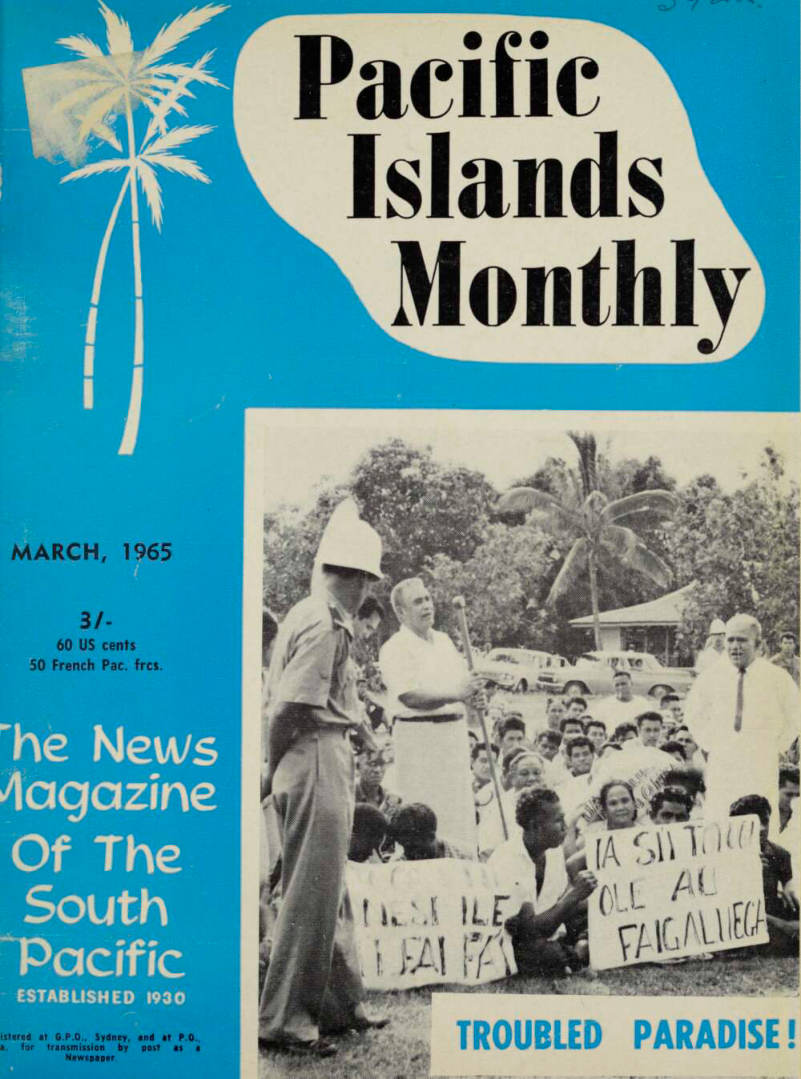 1
1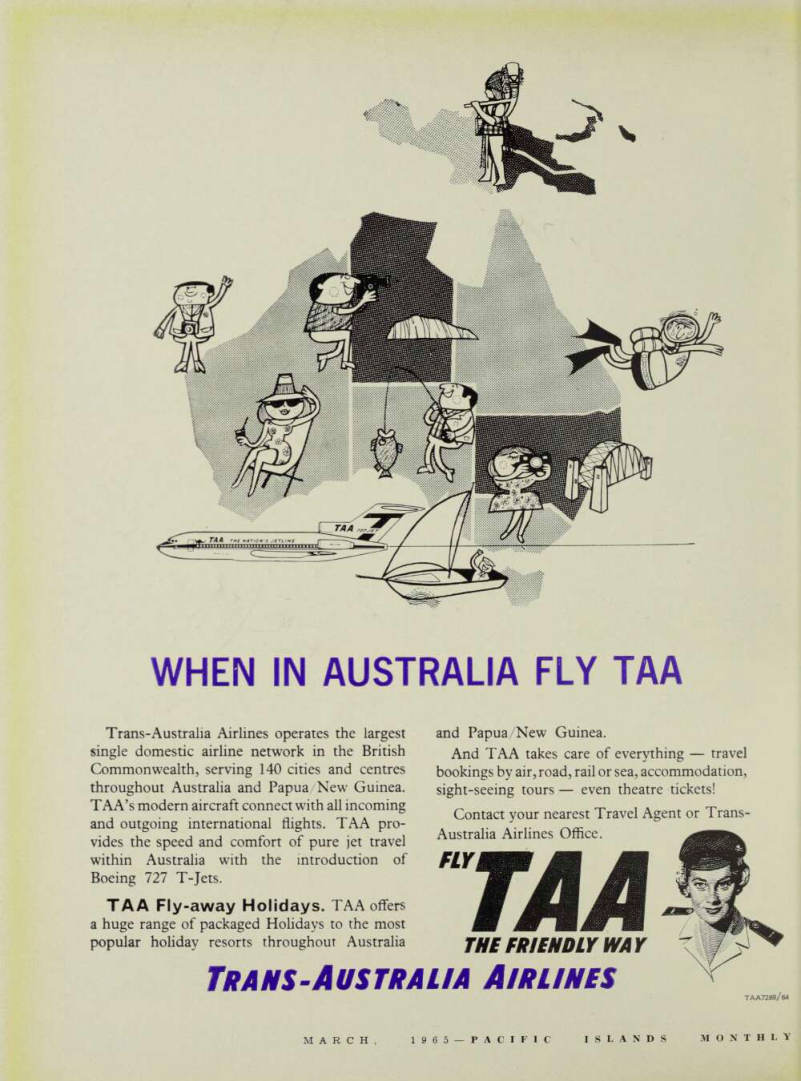 2
2 3
3 4
4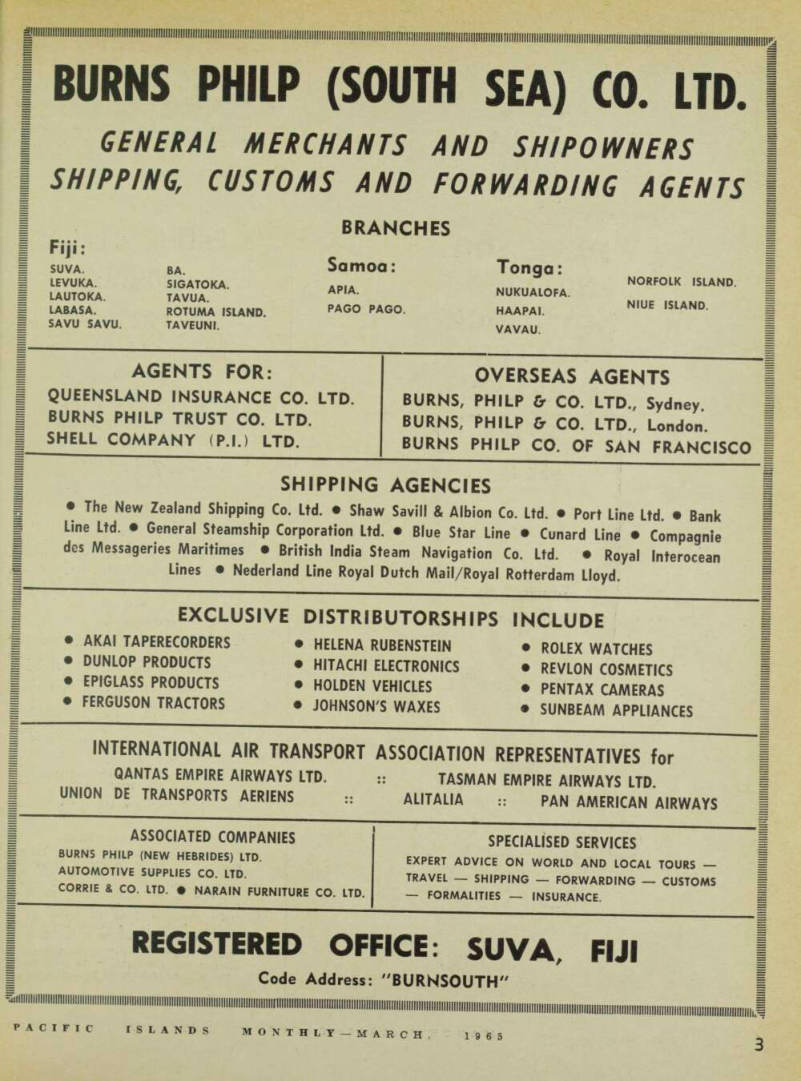 5
5 6
6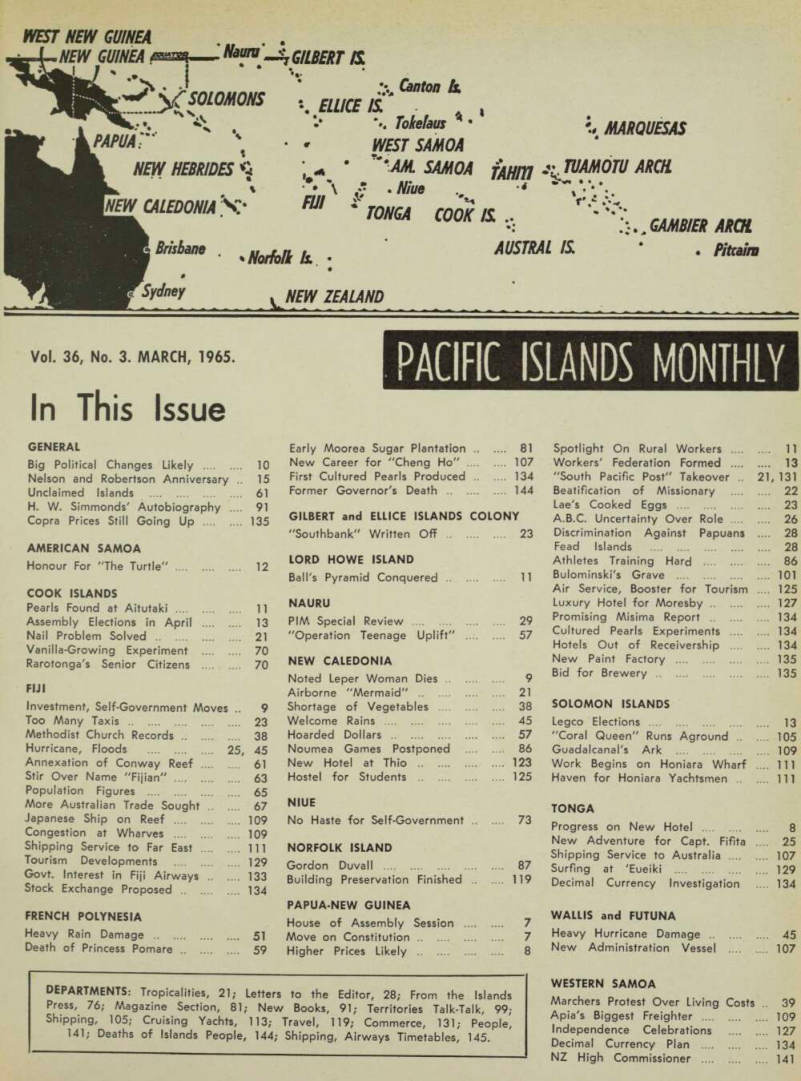 7
7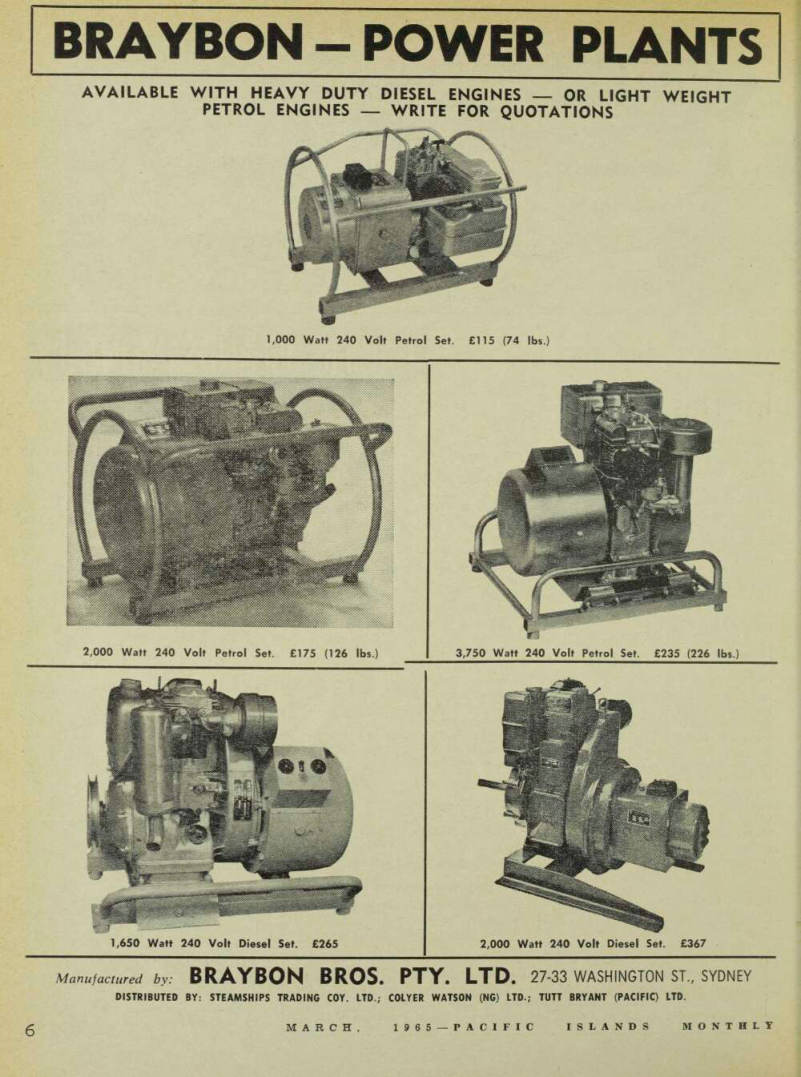 8
8 9
9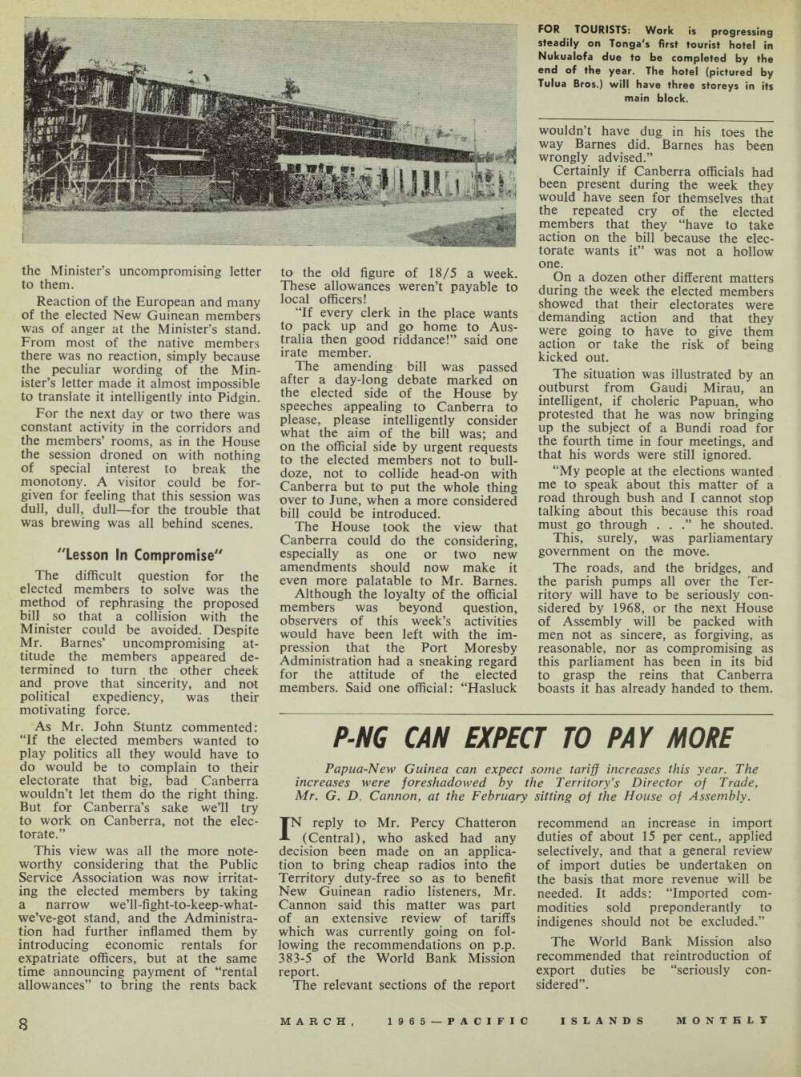 10
10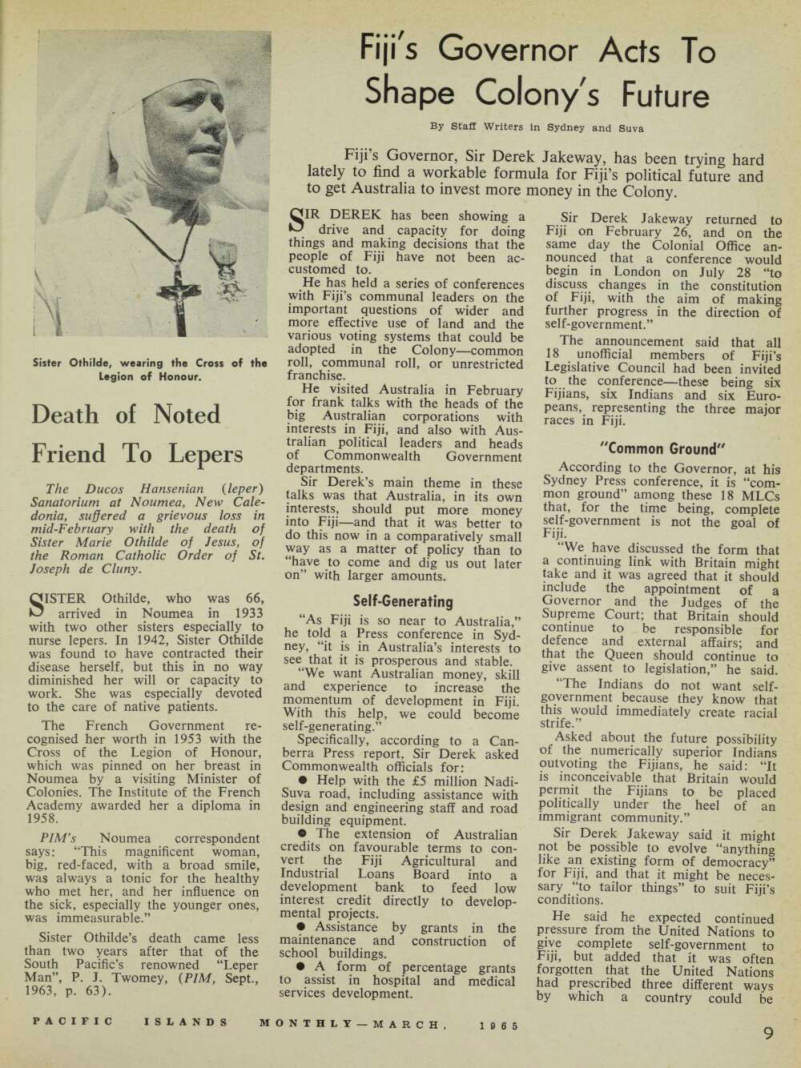 11
11 12
12 13
13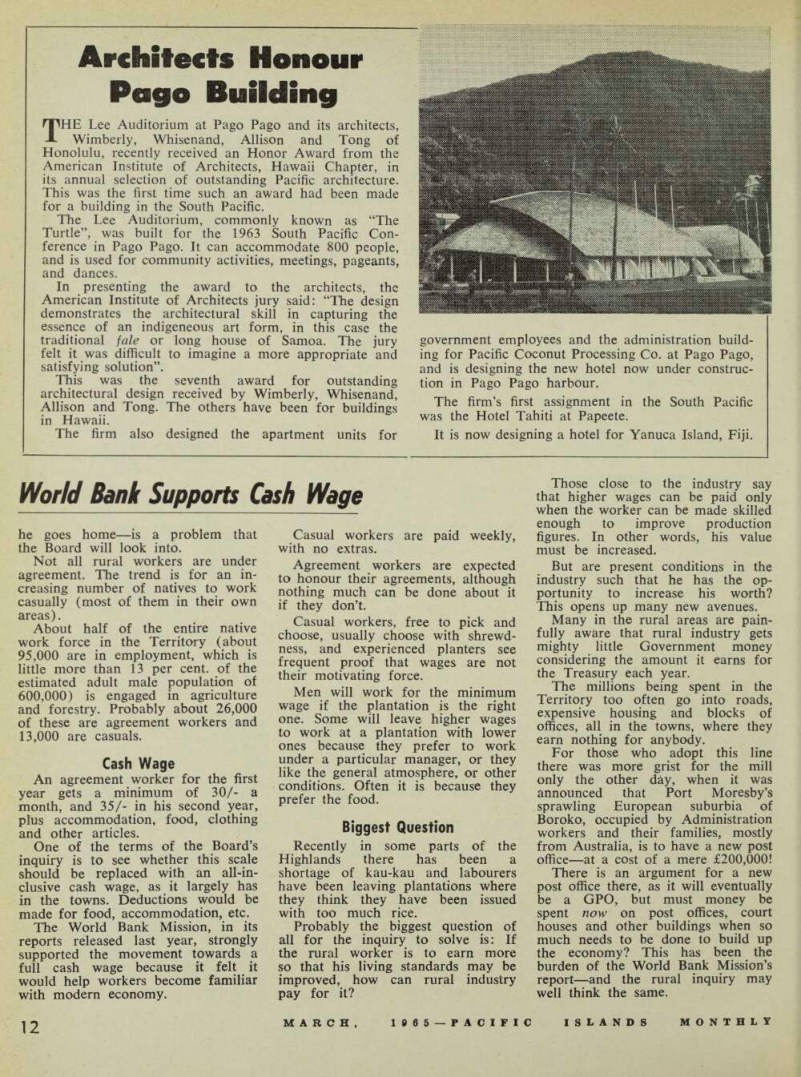 14
14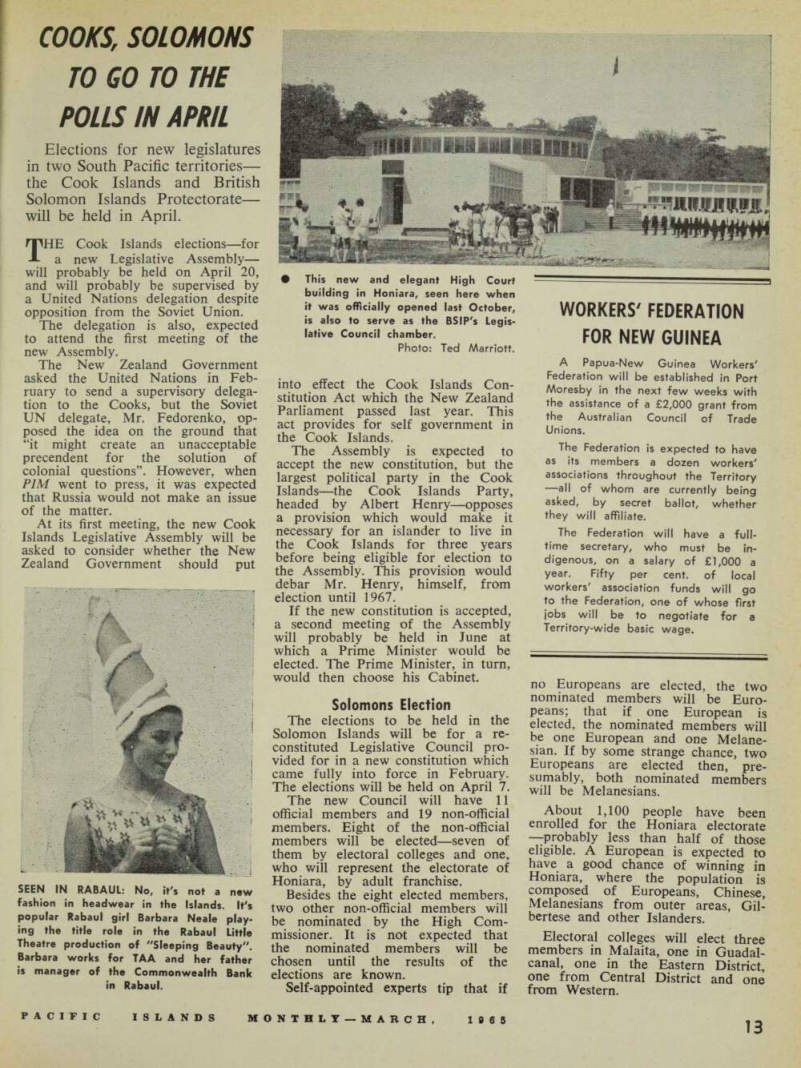 15
15 16
16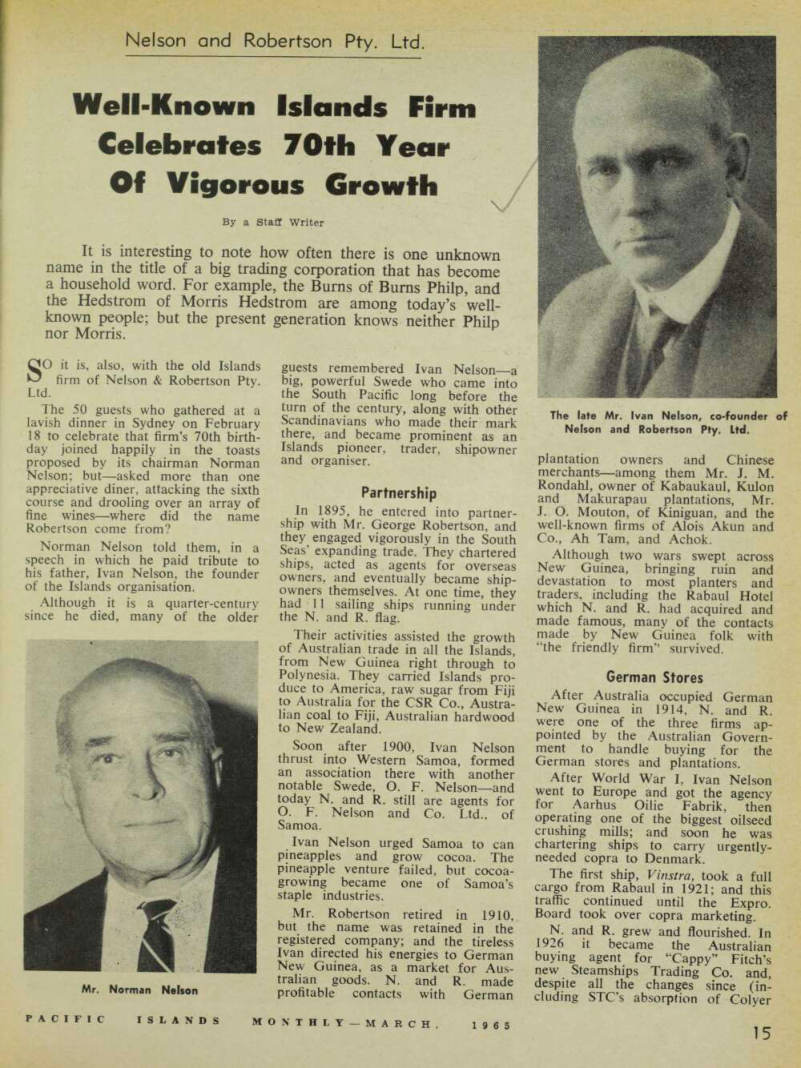 17
17 18
18 19
19 20
20 21
21 22
22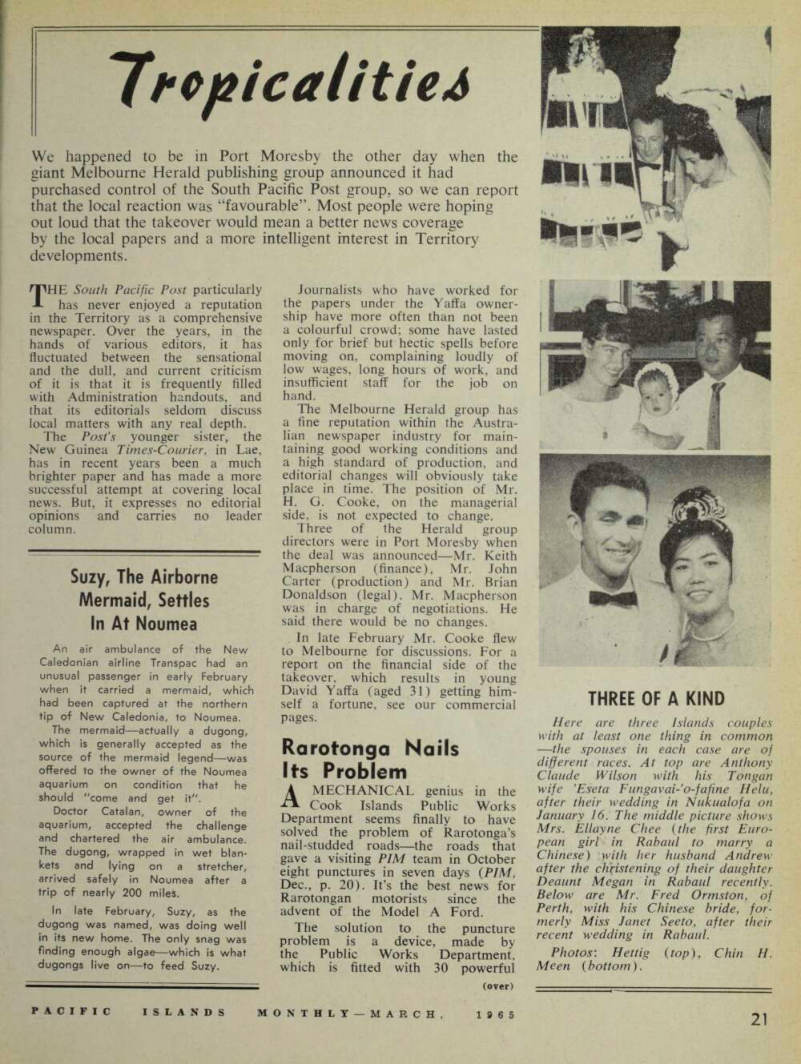 23
23 24
24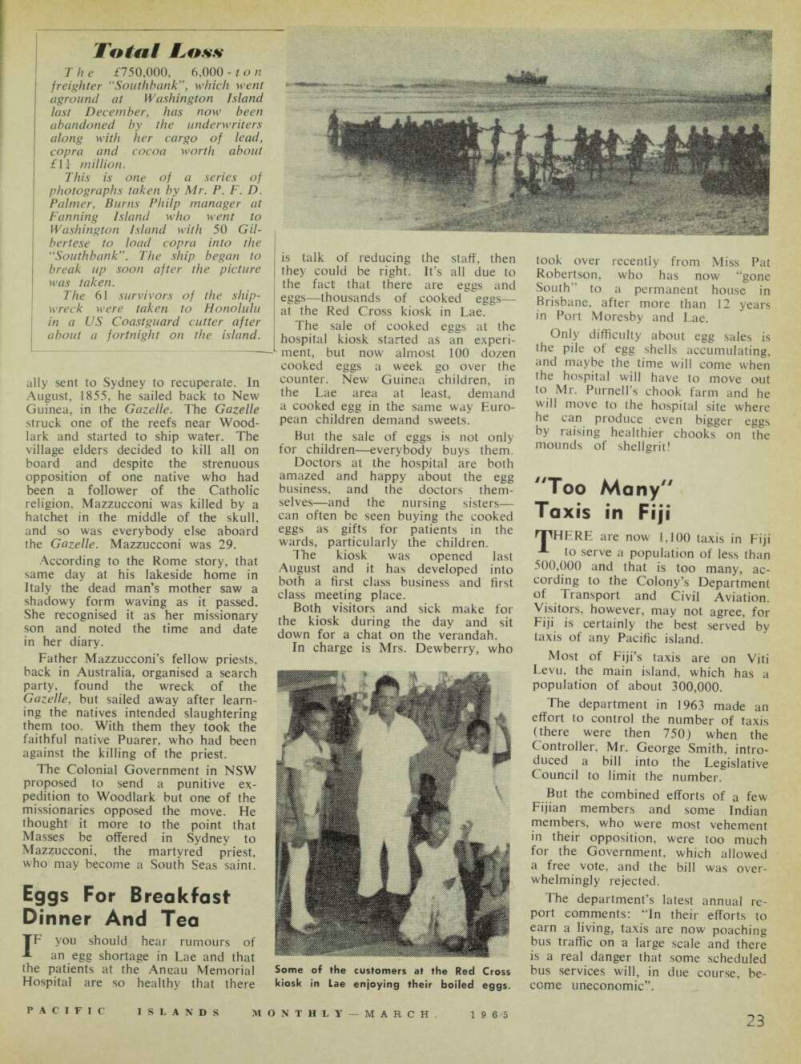 25
25 26
26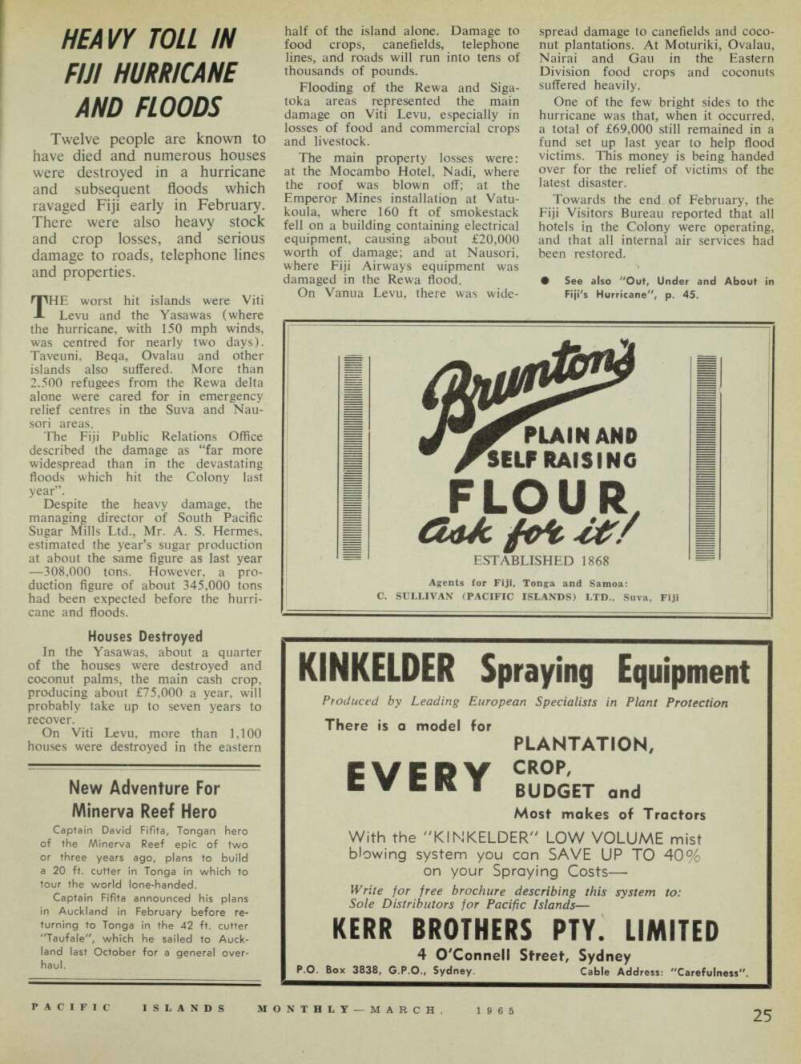 27
27 28
28 29
29 30
30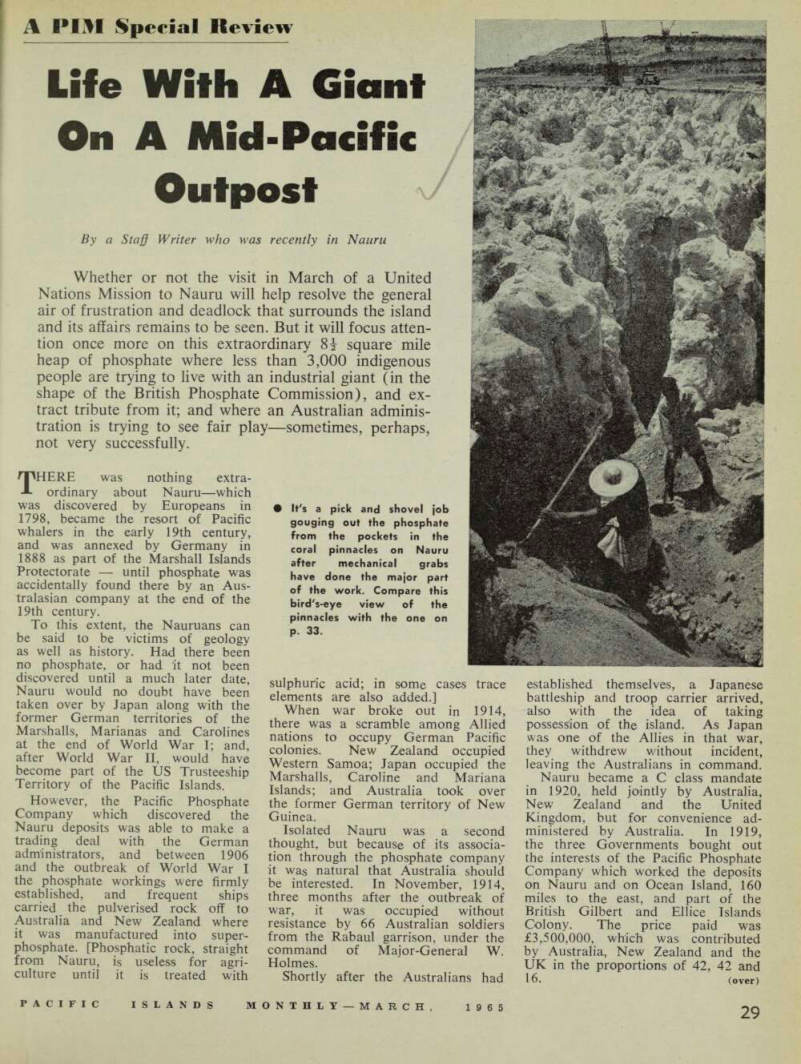 31
31 32
32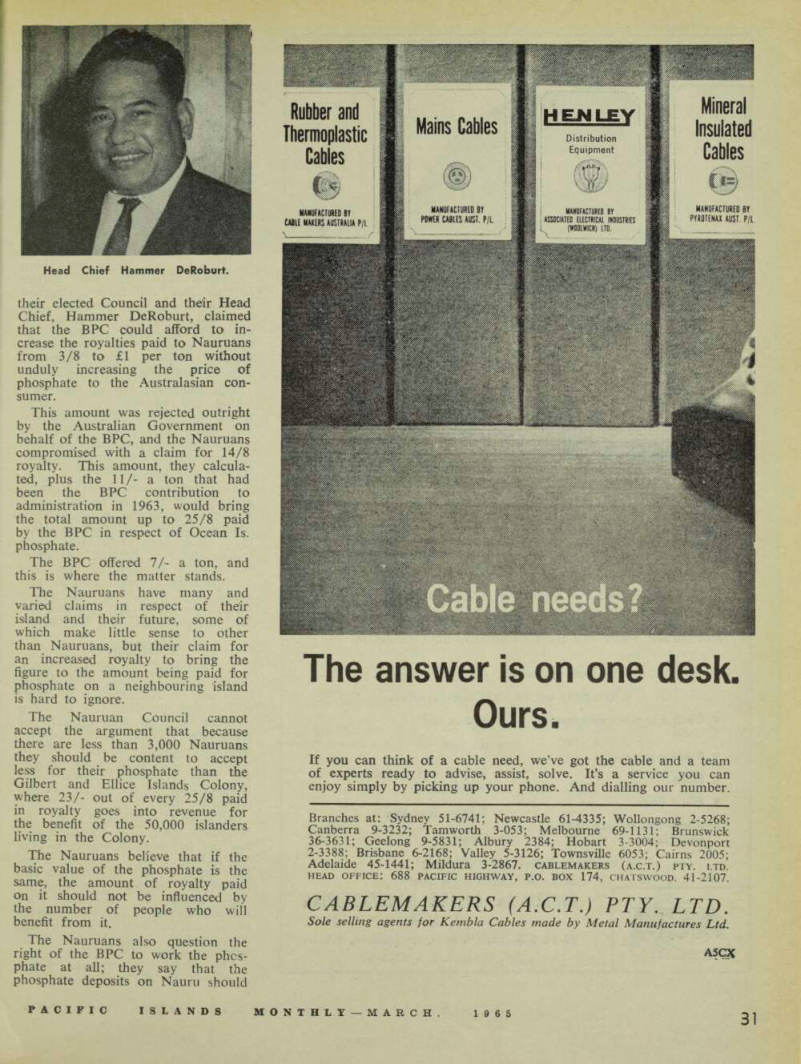 33
33 34
34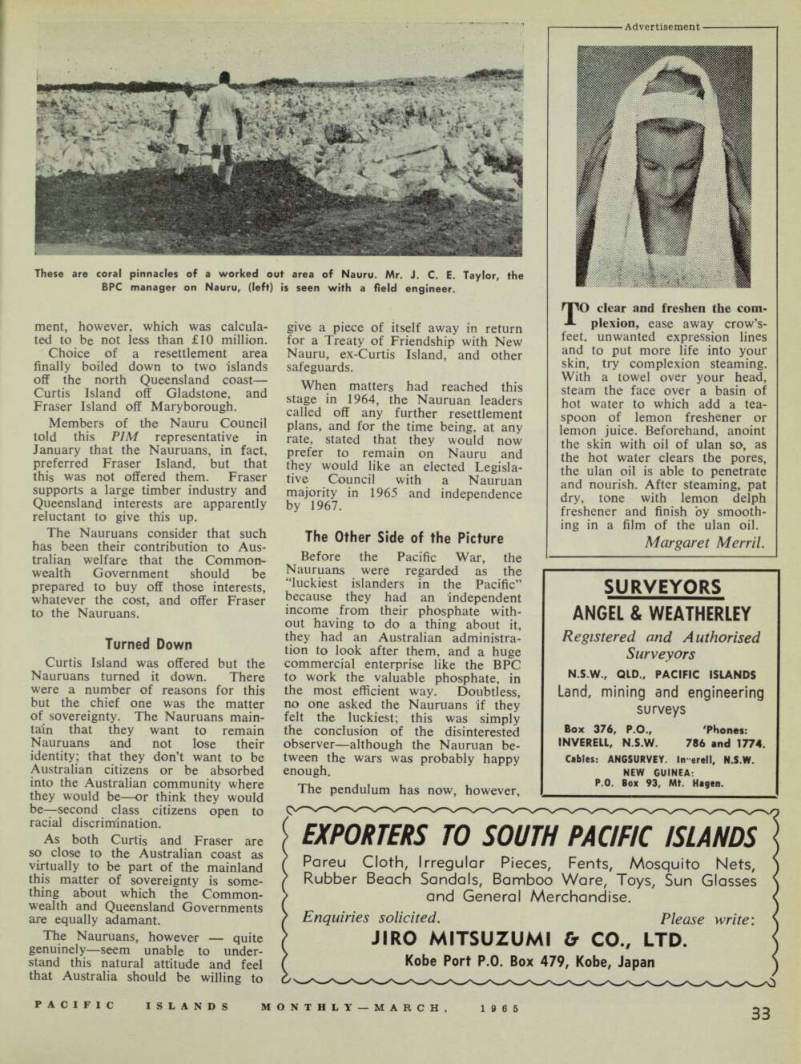 35
35 36
36 37
37 38
38 39
39 40
40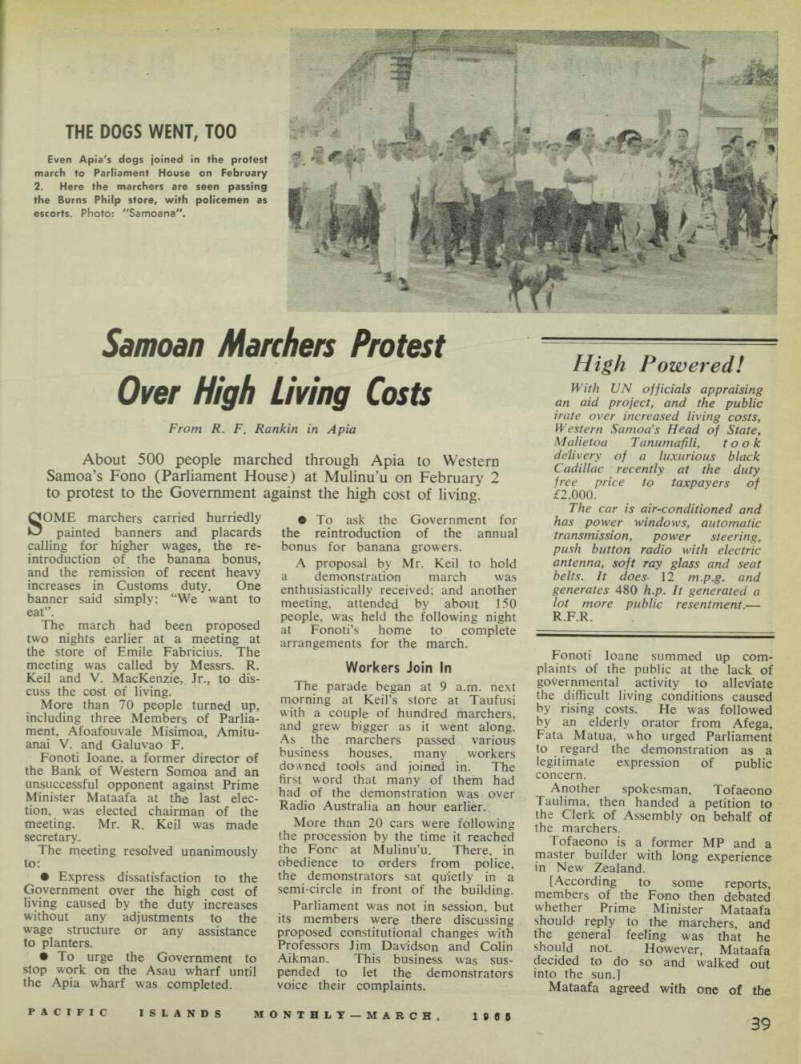 41
41 42
42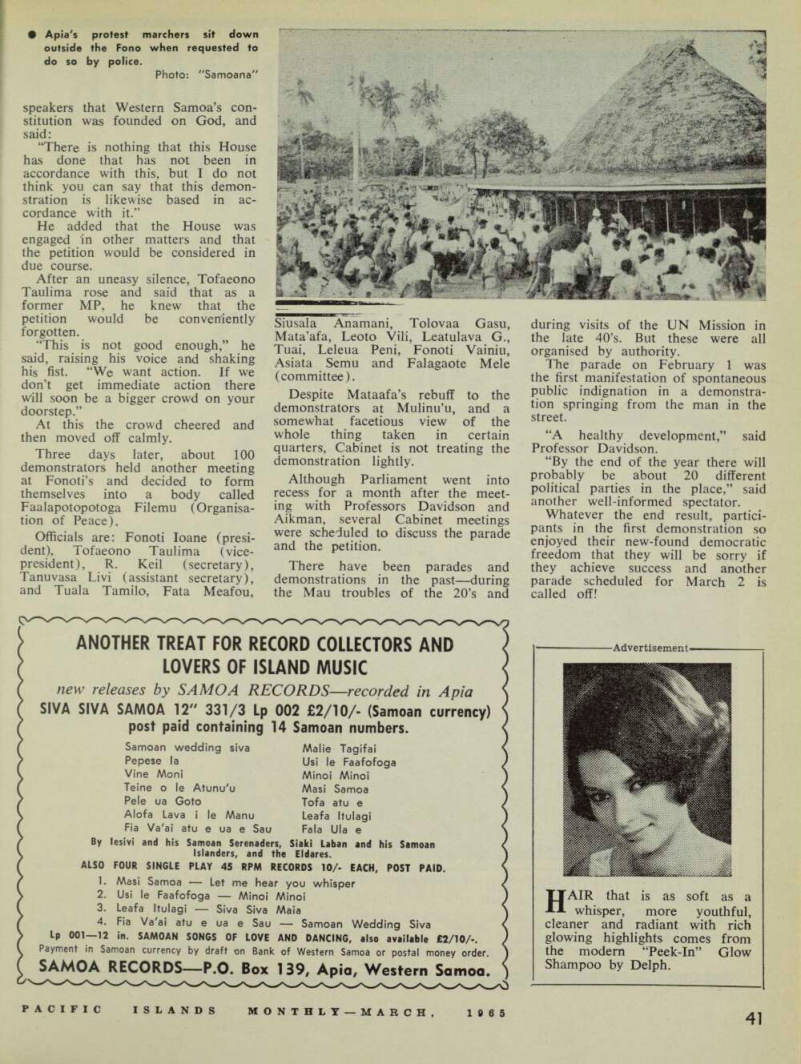 43
43 44
44 45
45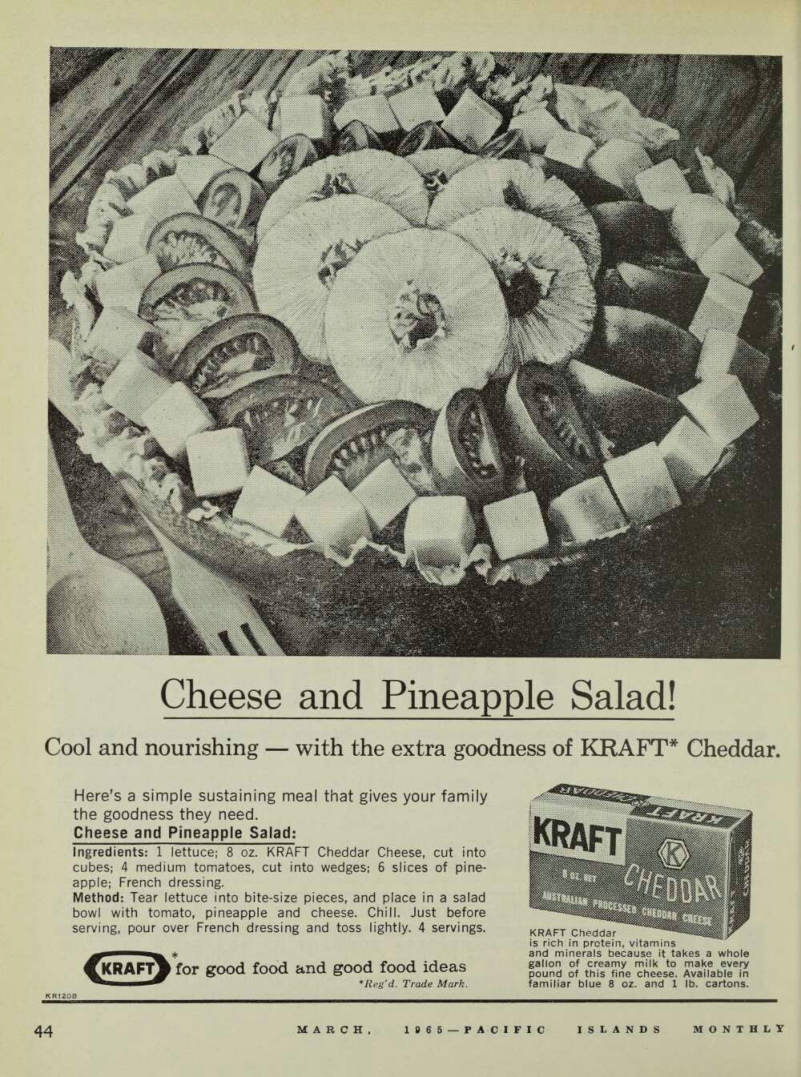 46
46 47
47 48
48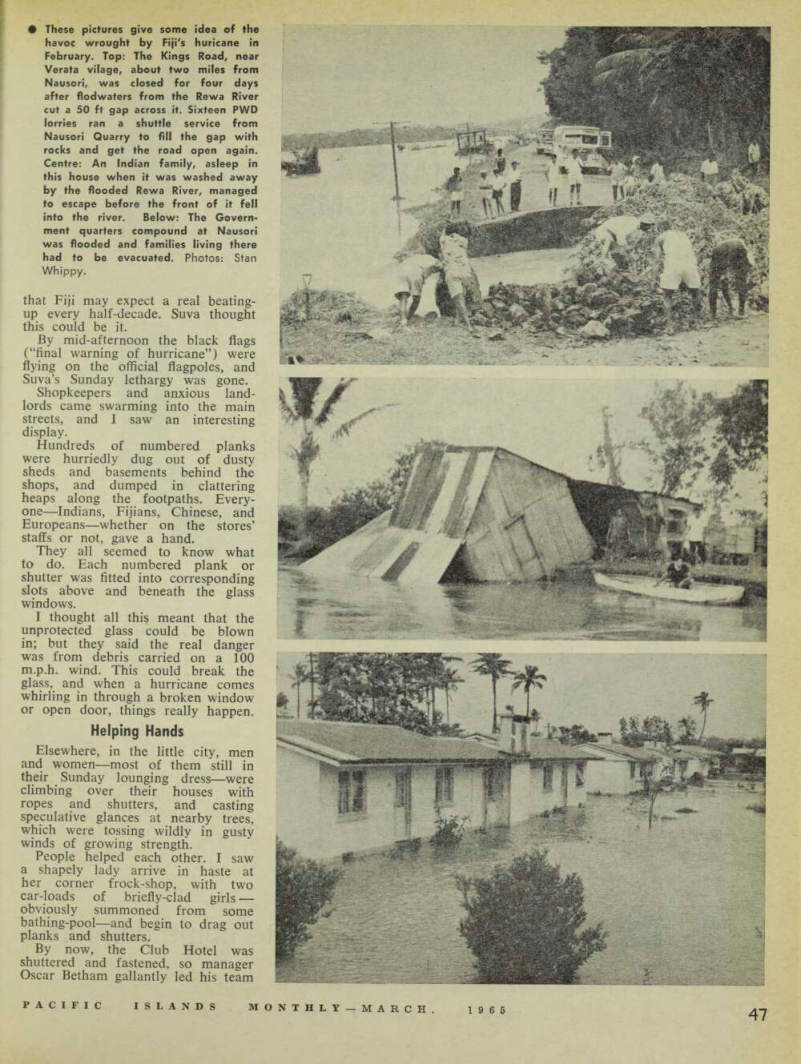 49
49 50
50 51
51 52
52 53
53 54
54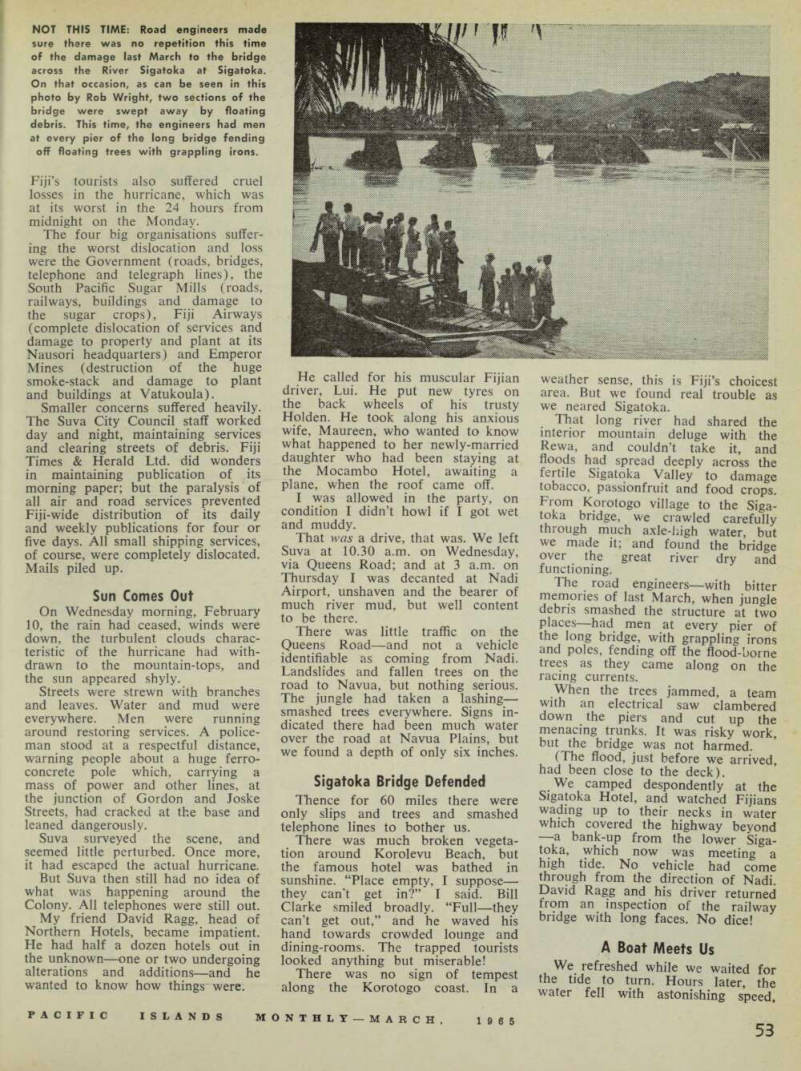 55
55 56
56 57
57 58
58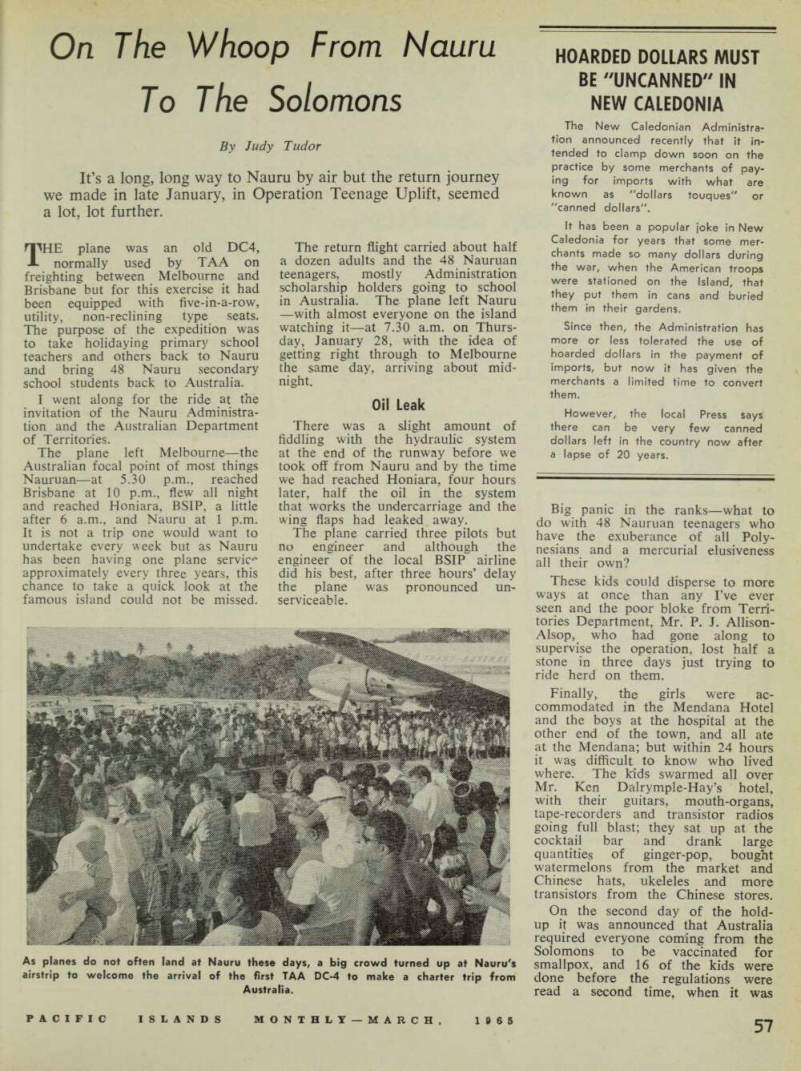 59
59 60
60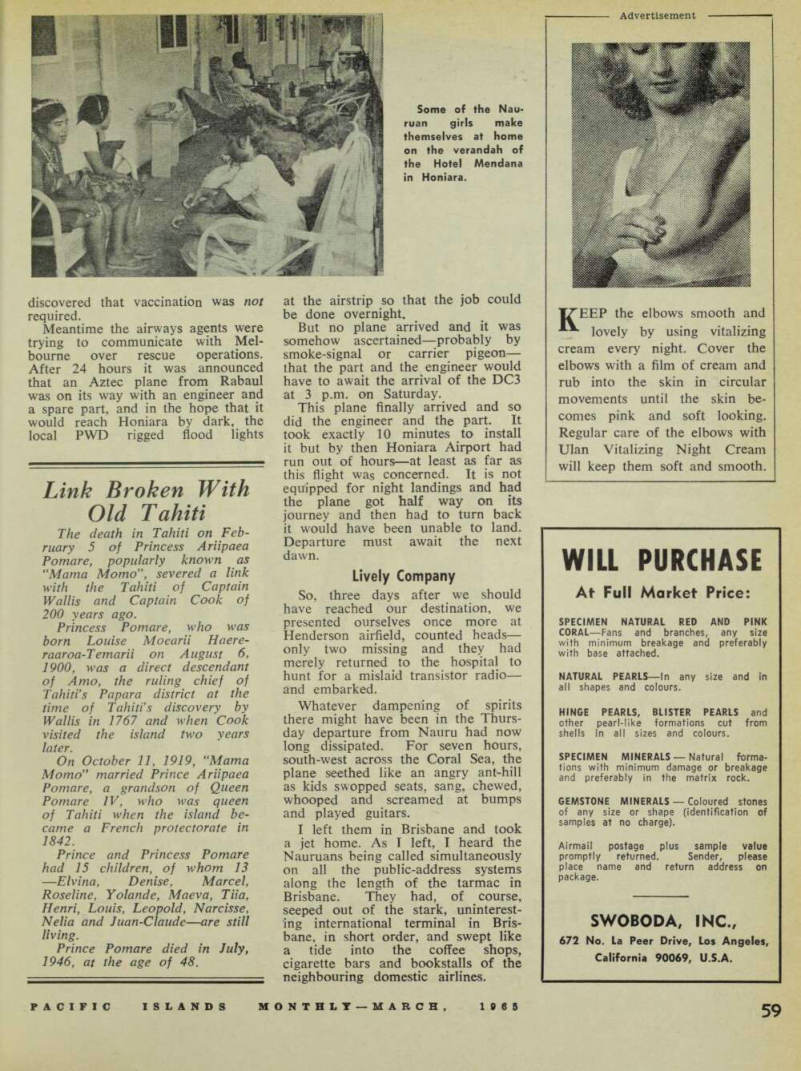 61
61 62
62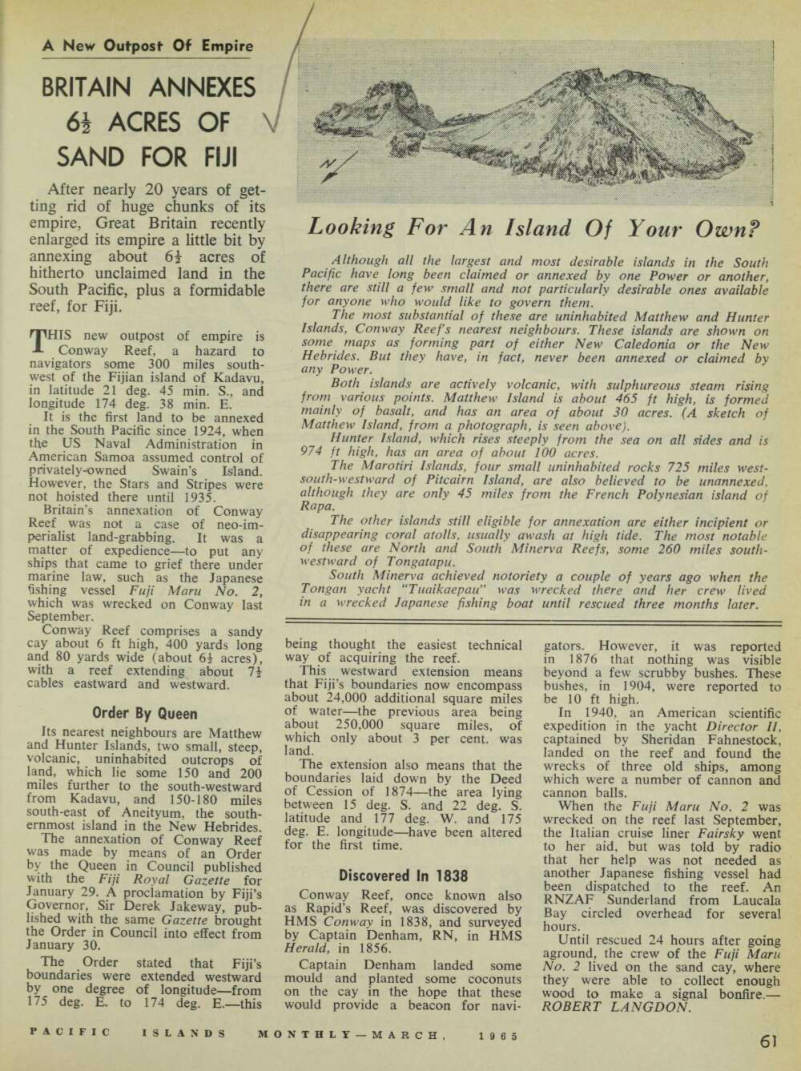 63
63 64
64 65
65 66
66 67
67 68
68 69
69 70
70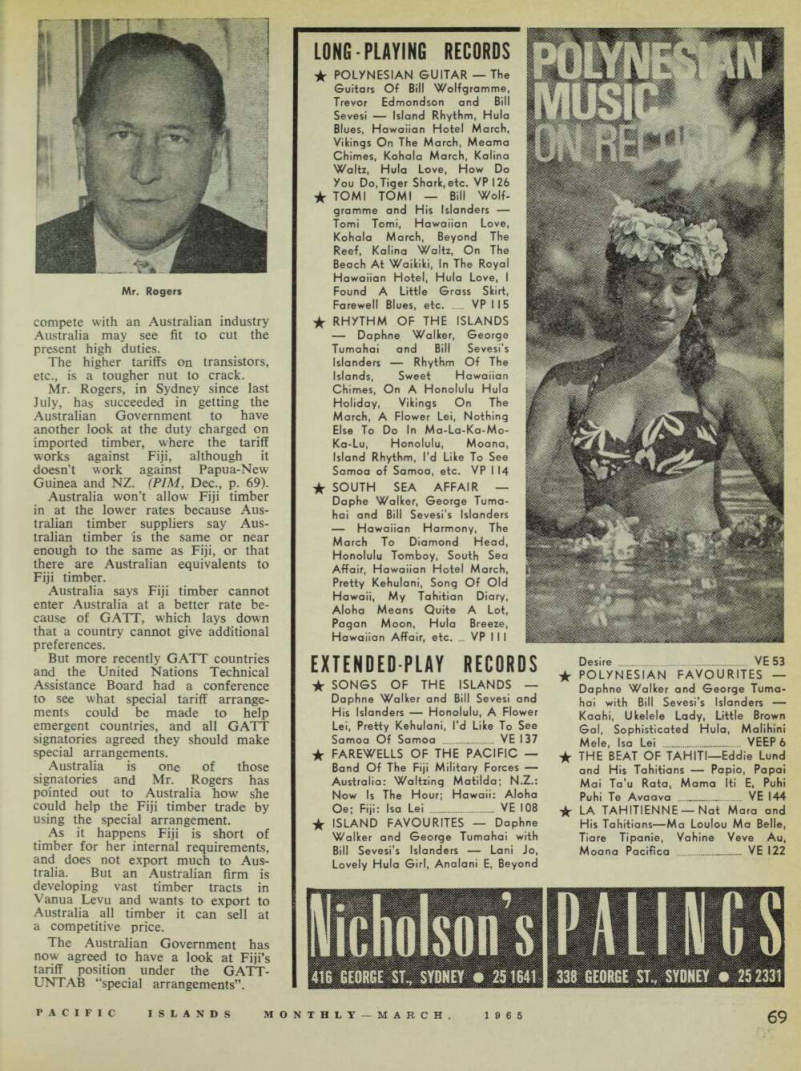 71
71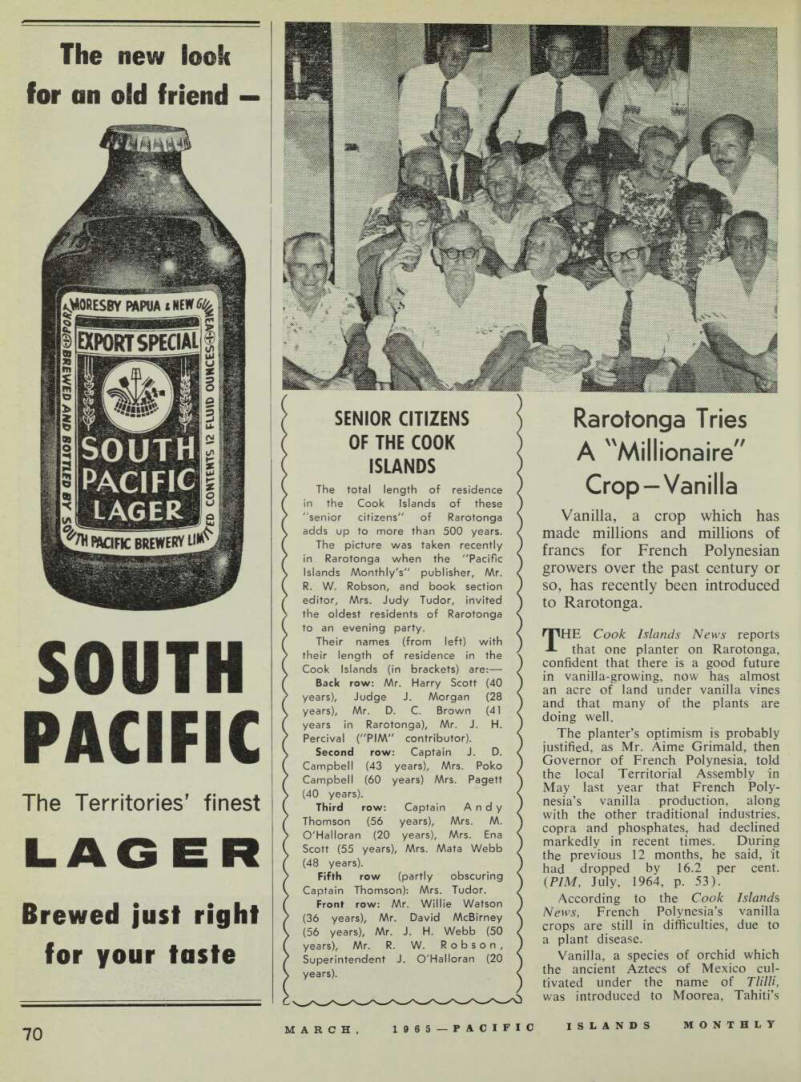 72
72 73
73 74
74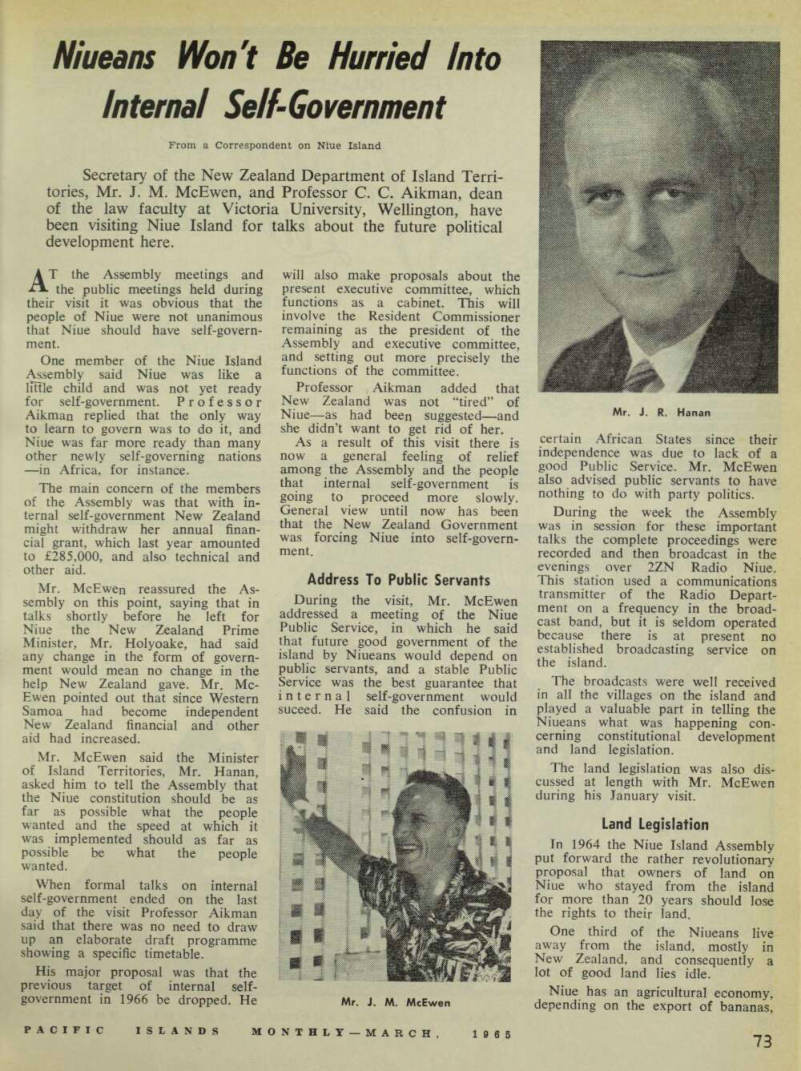 75
75 76
76 77
77 78
78 79
79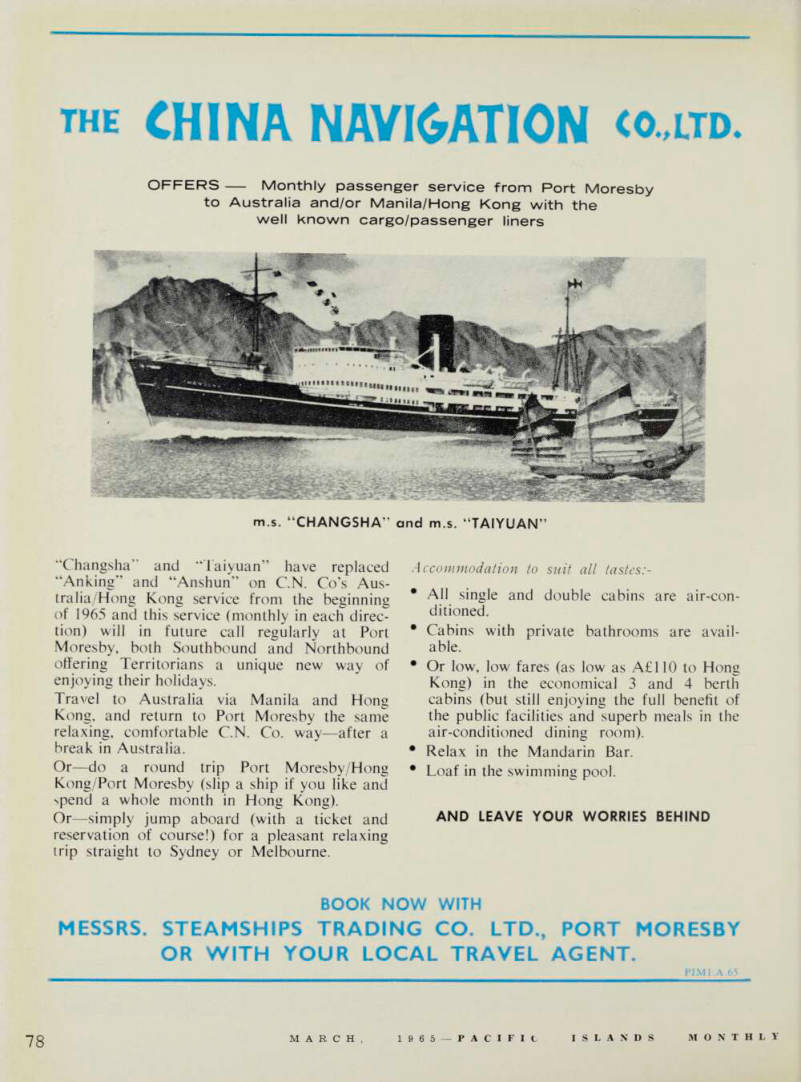 80
80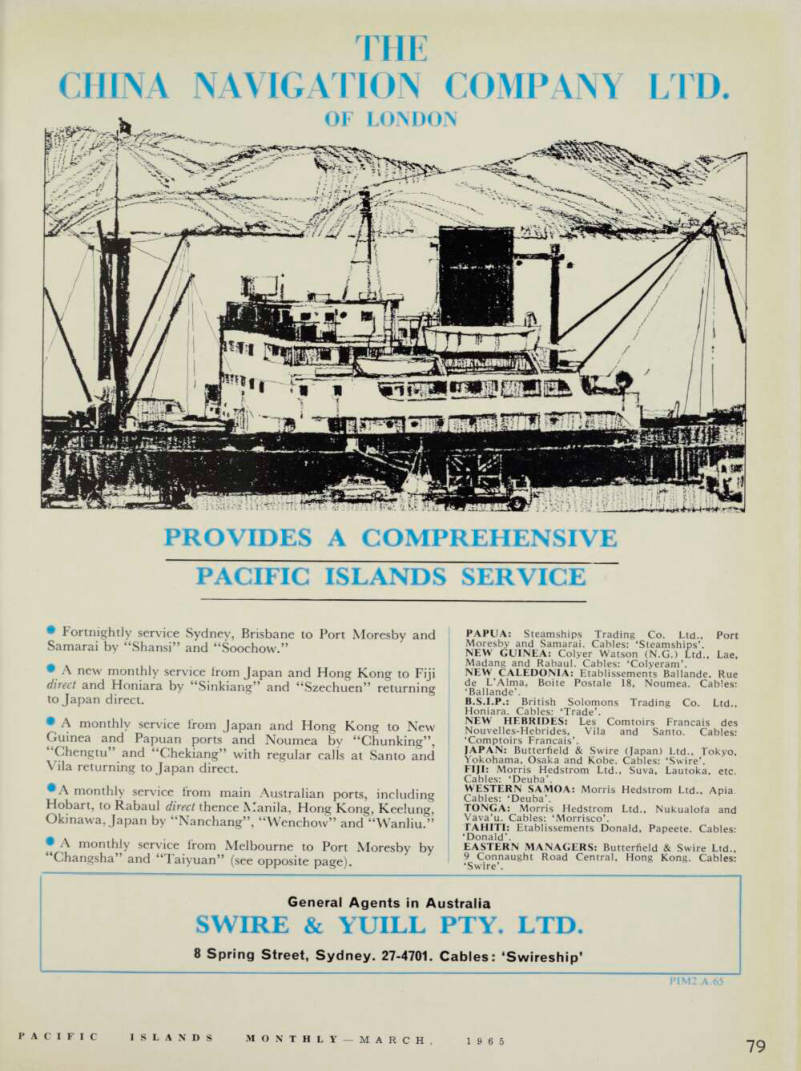 81
81 82
82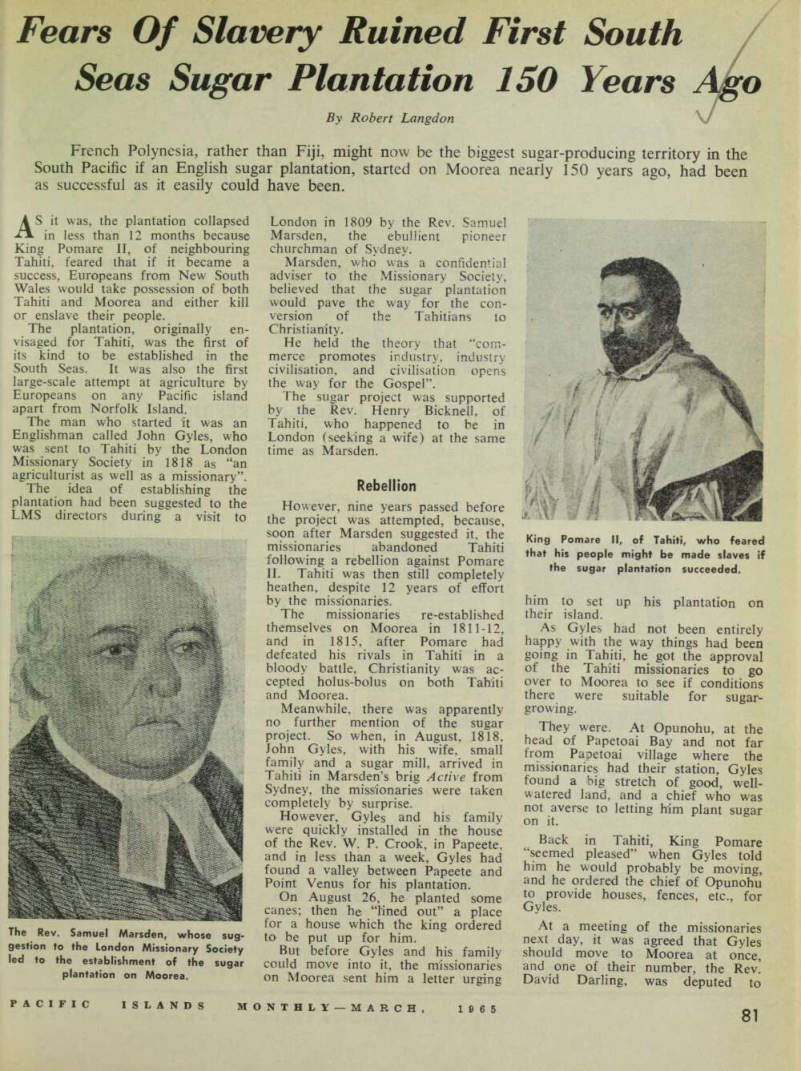 83
83 84
84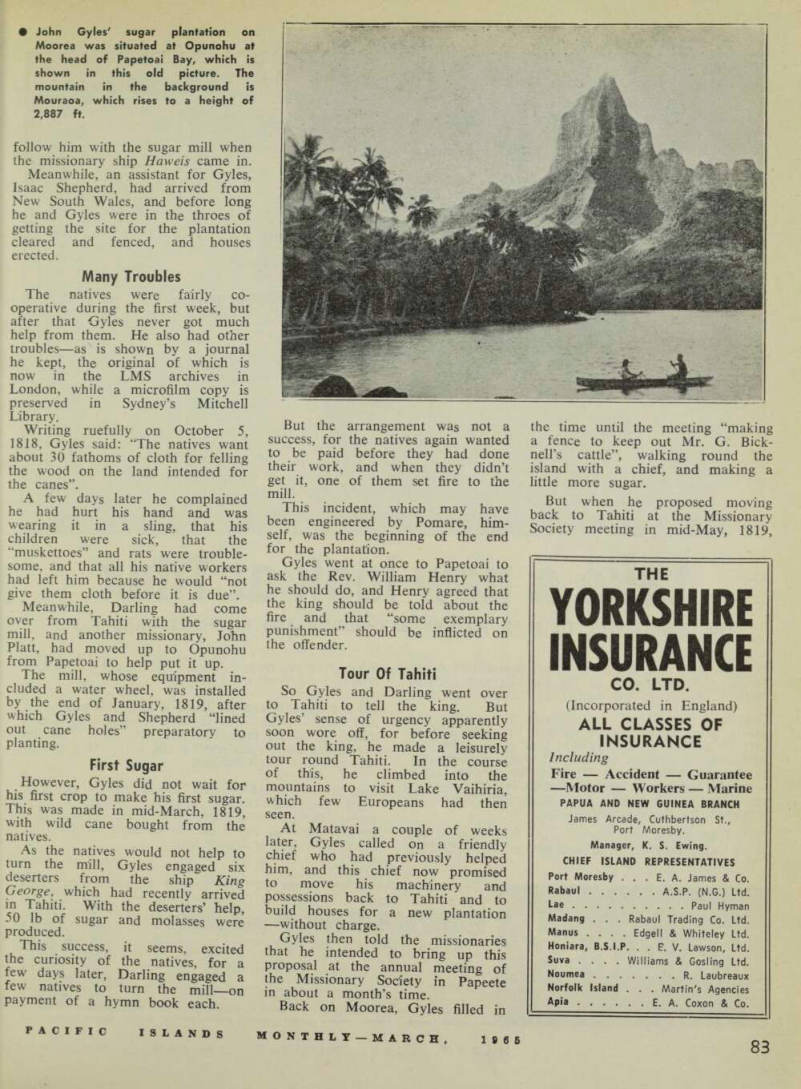 85
85 86
86 87
87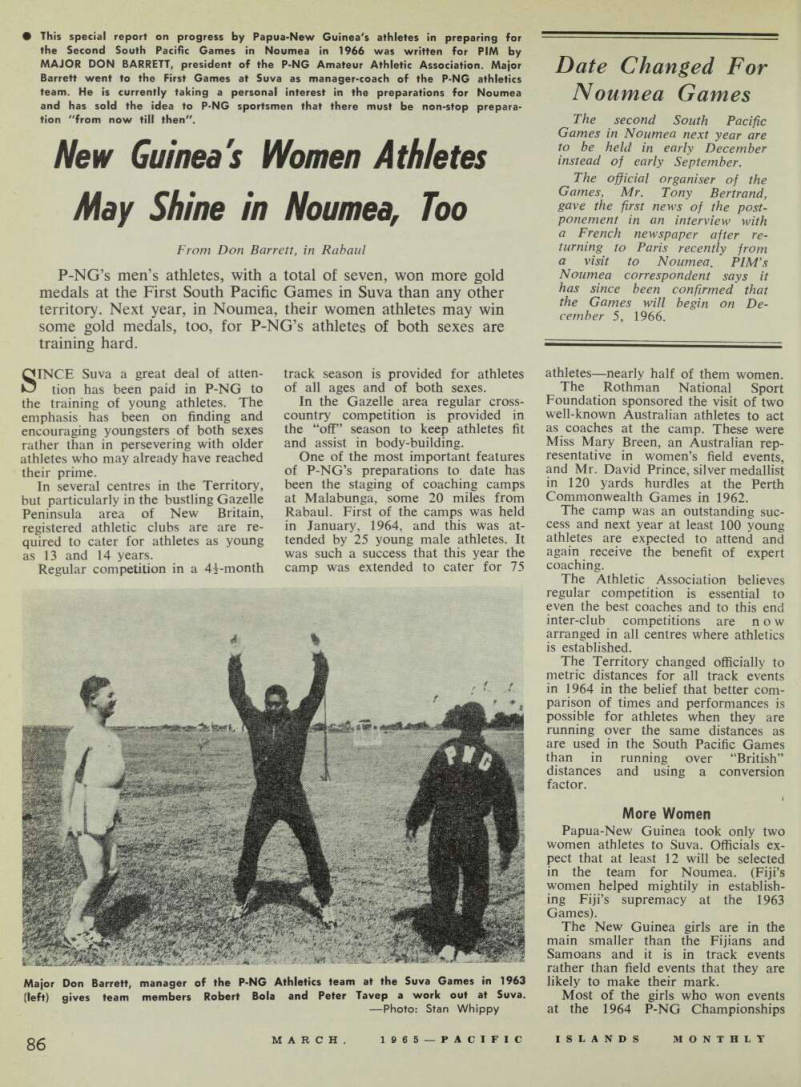 88
88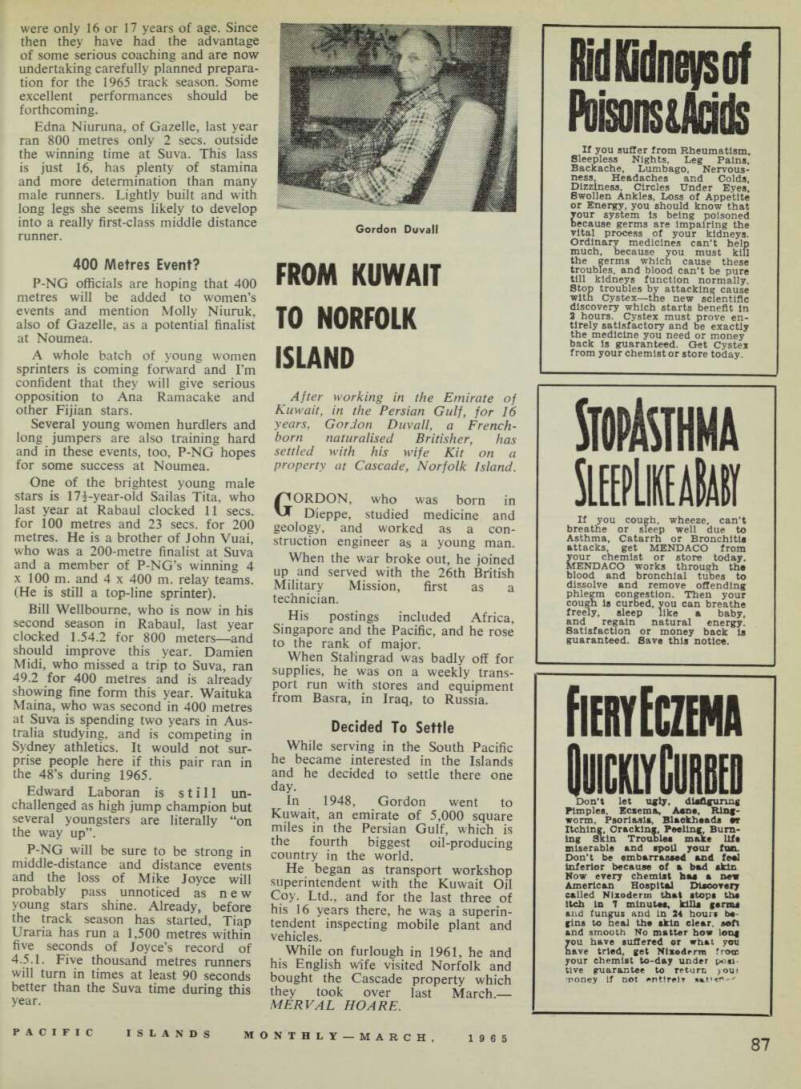 89
89 90
90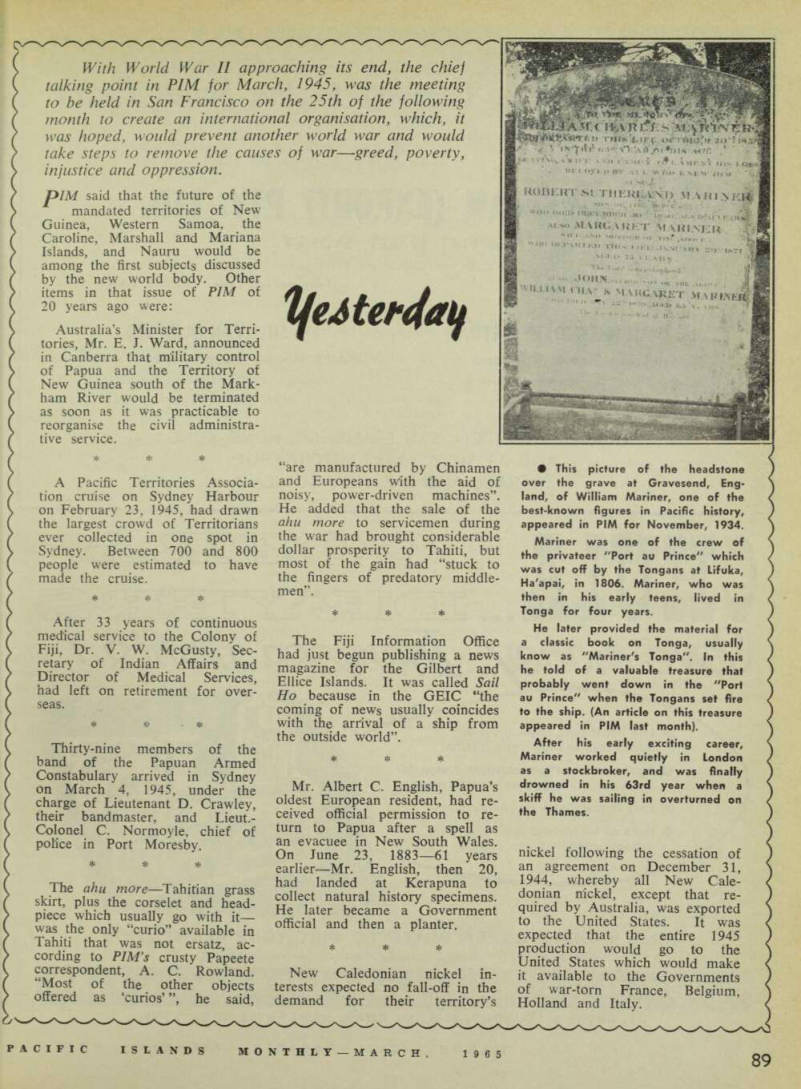 91
91 92
92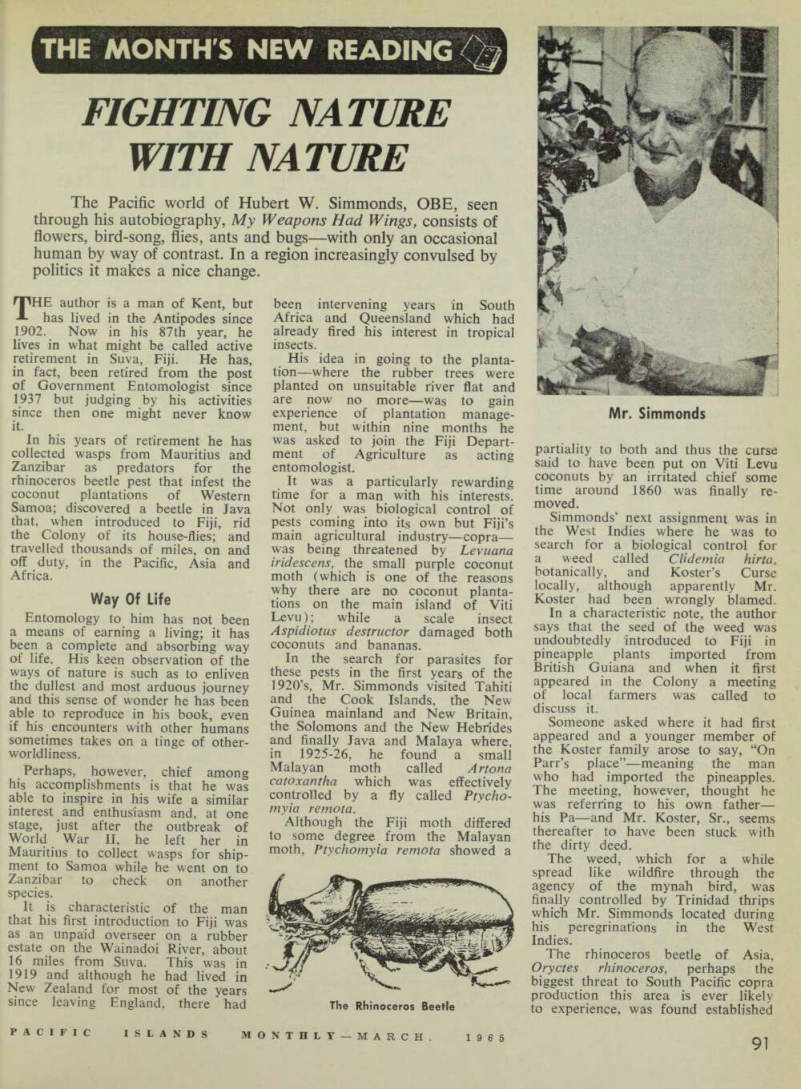 93
93 94
94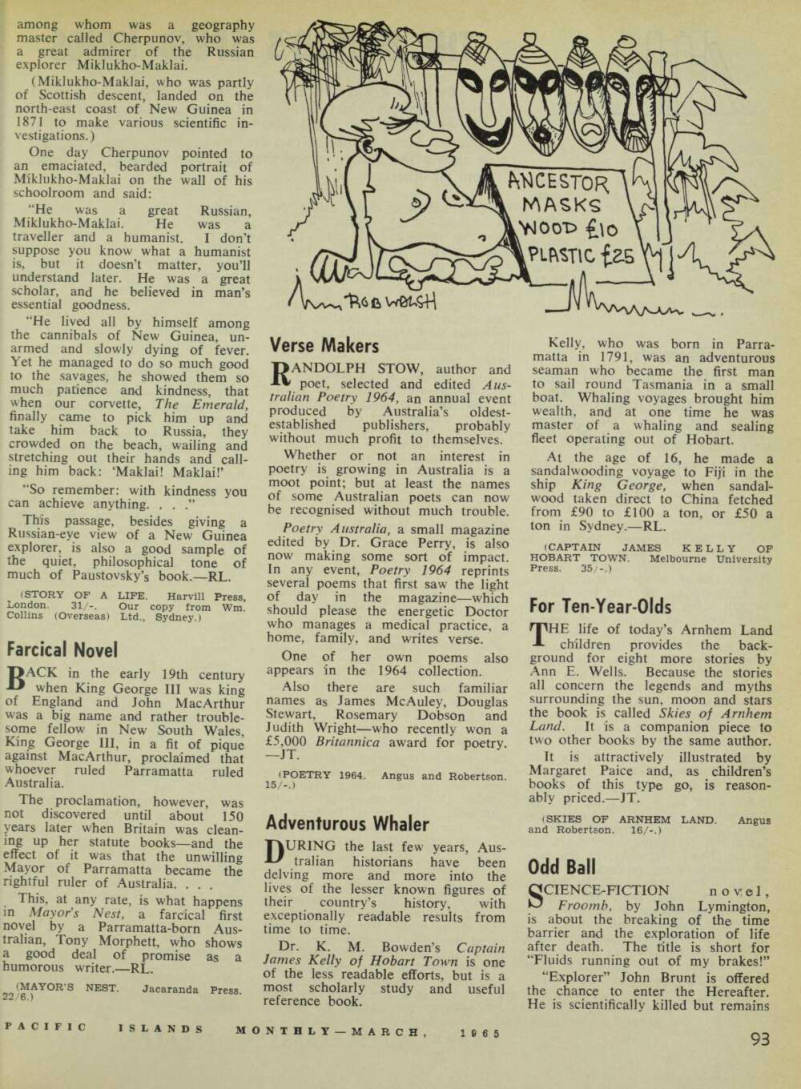 95
95 96
96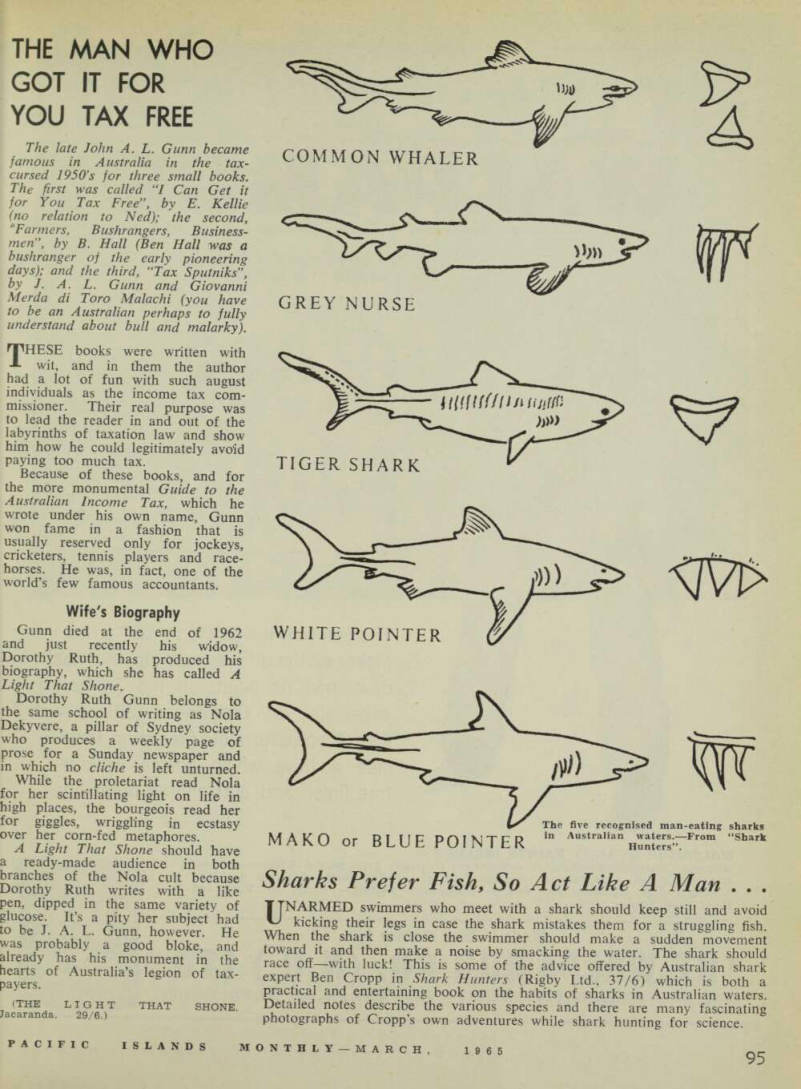 97
97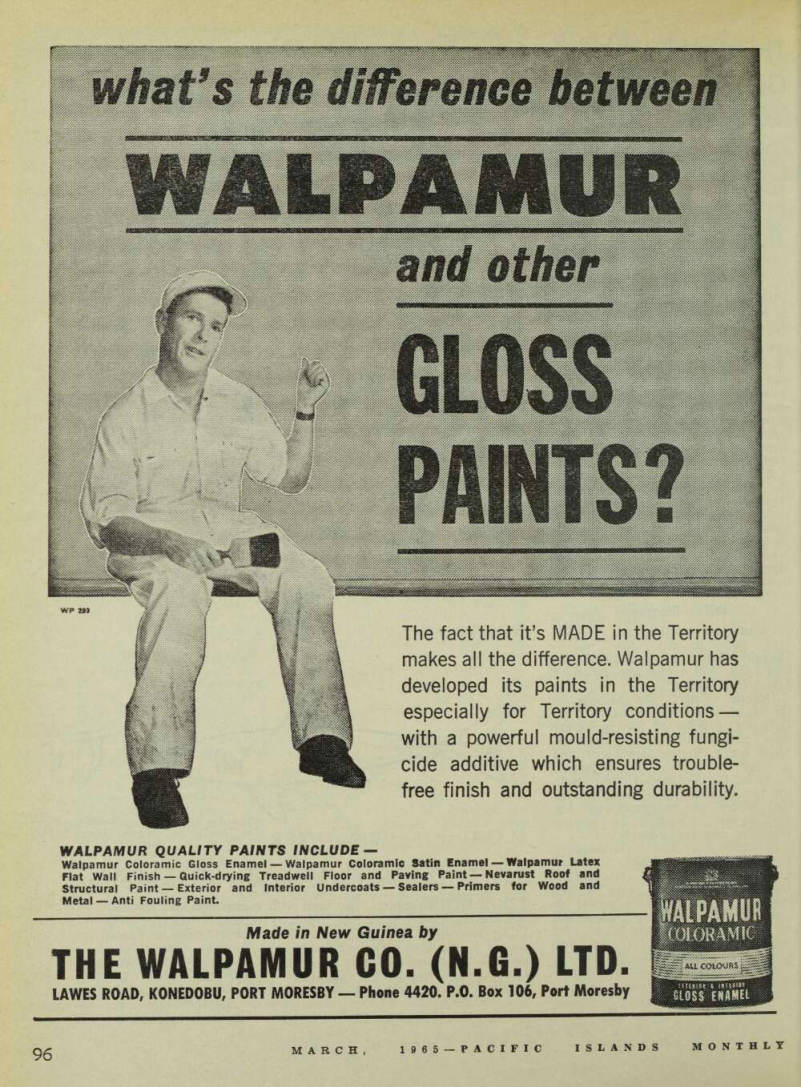 98
98 99
99 100
100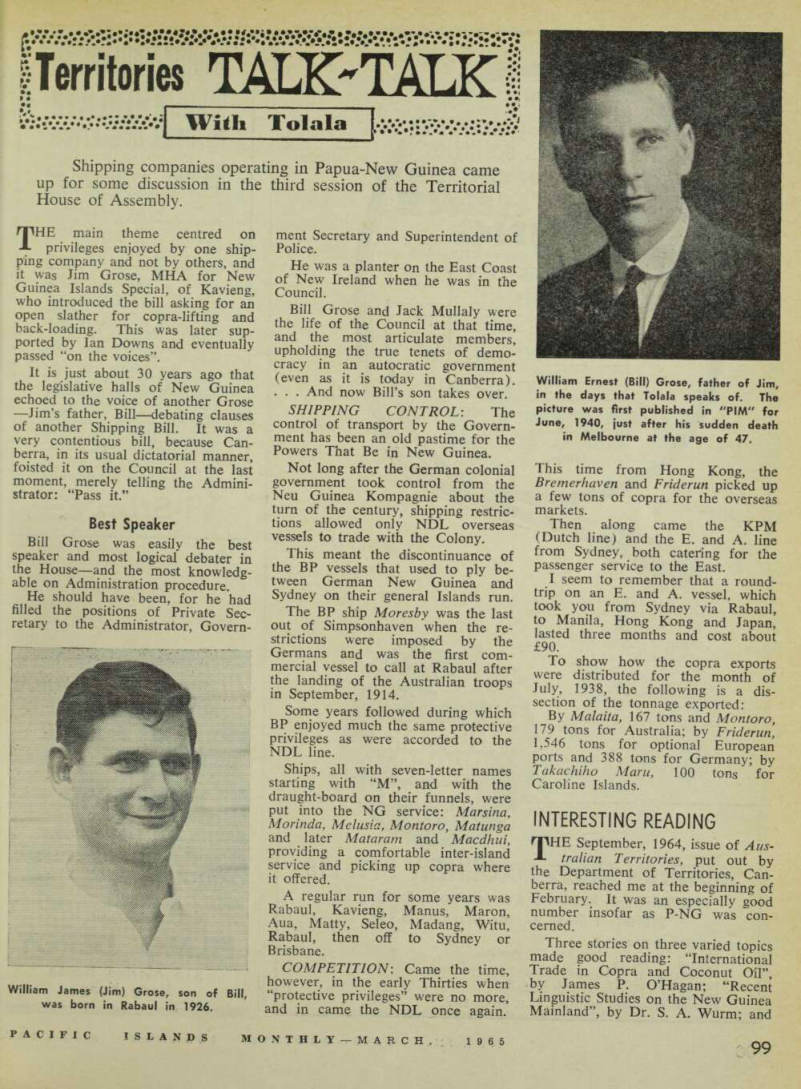 101
101 102
102 103
103 104
104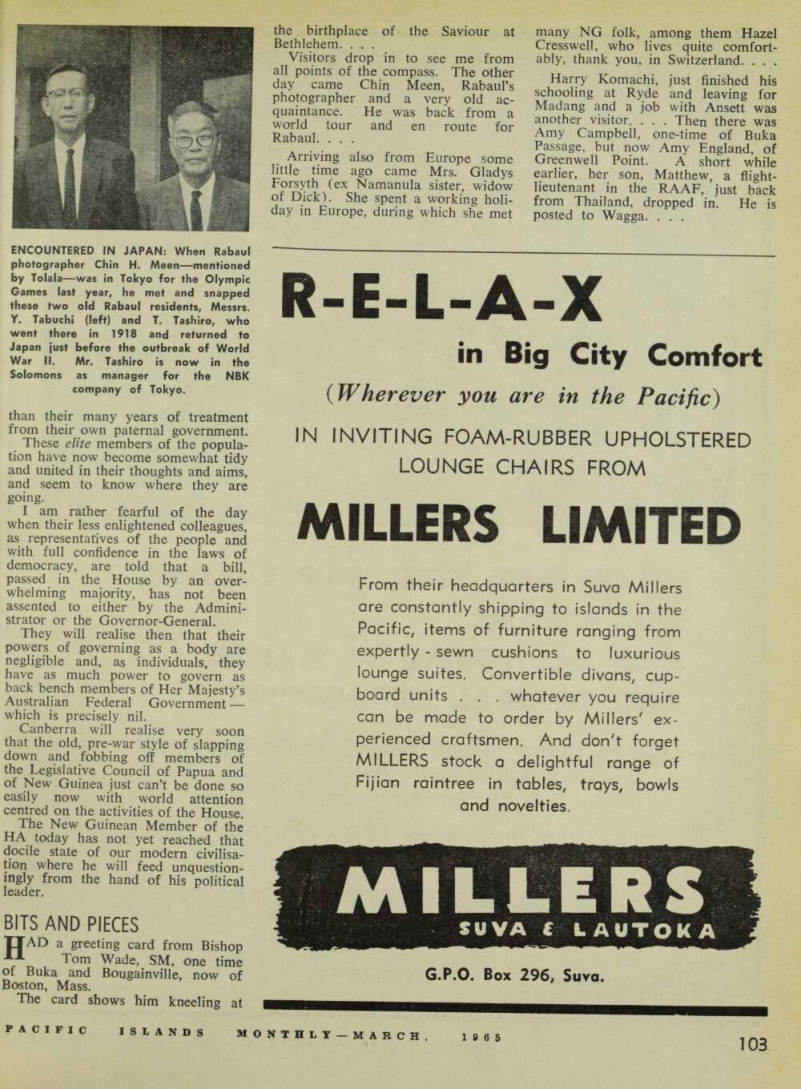 105
105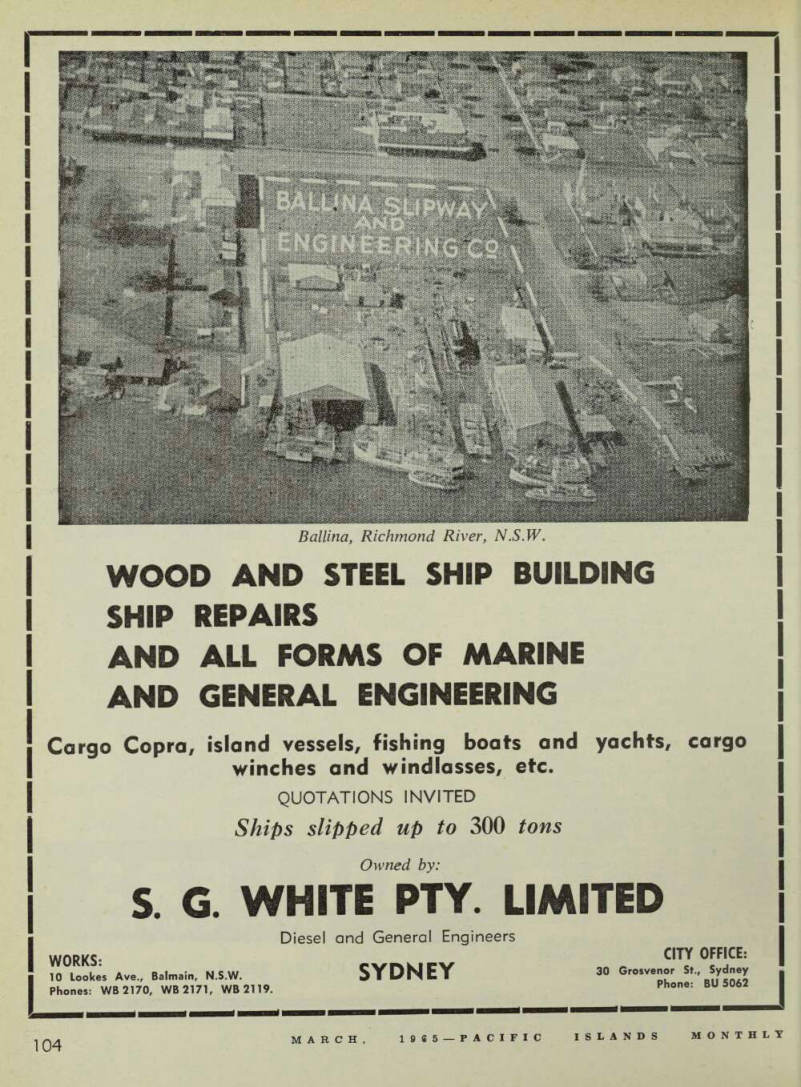 106
106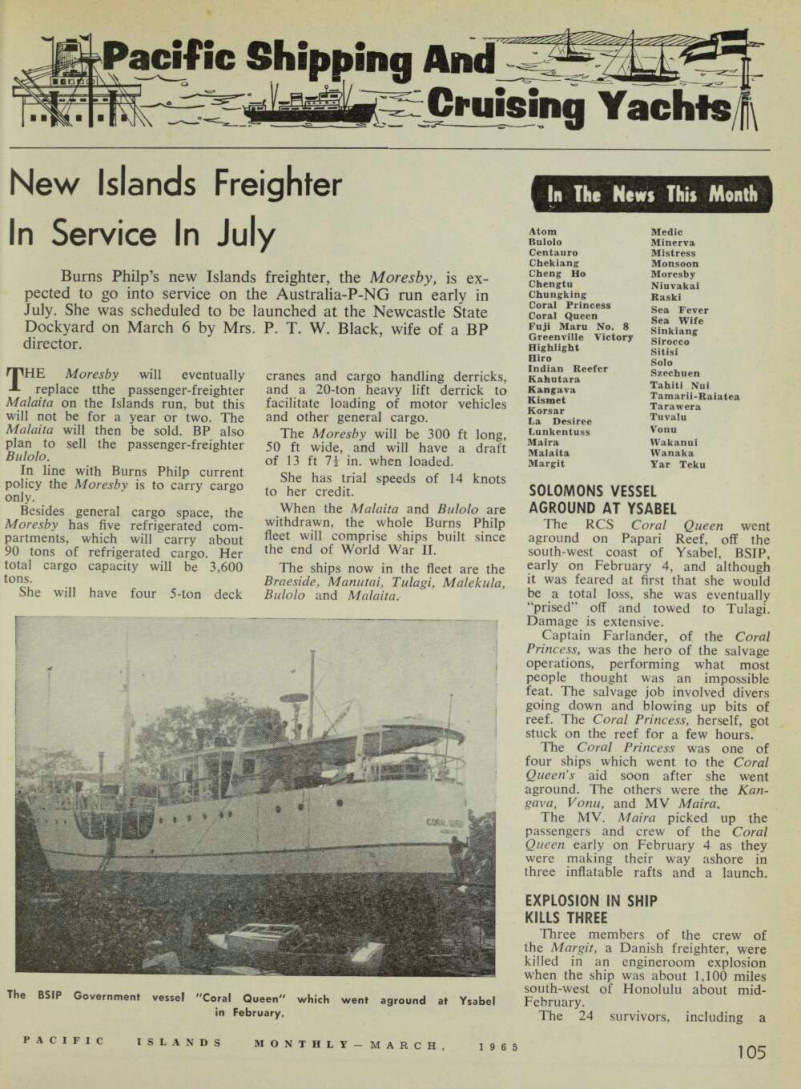 107
107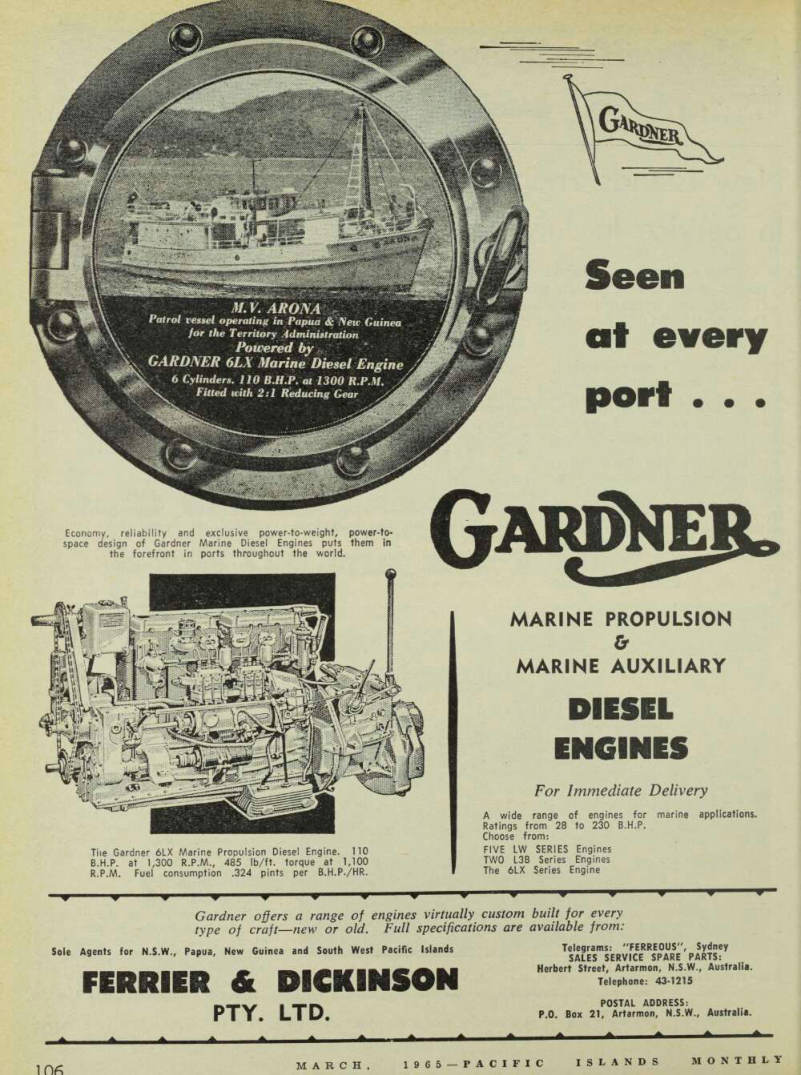 108
108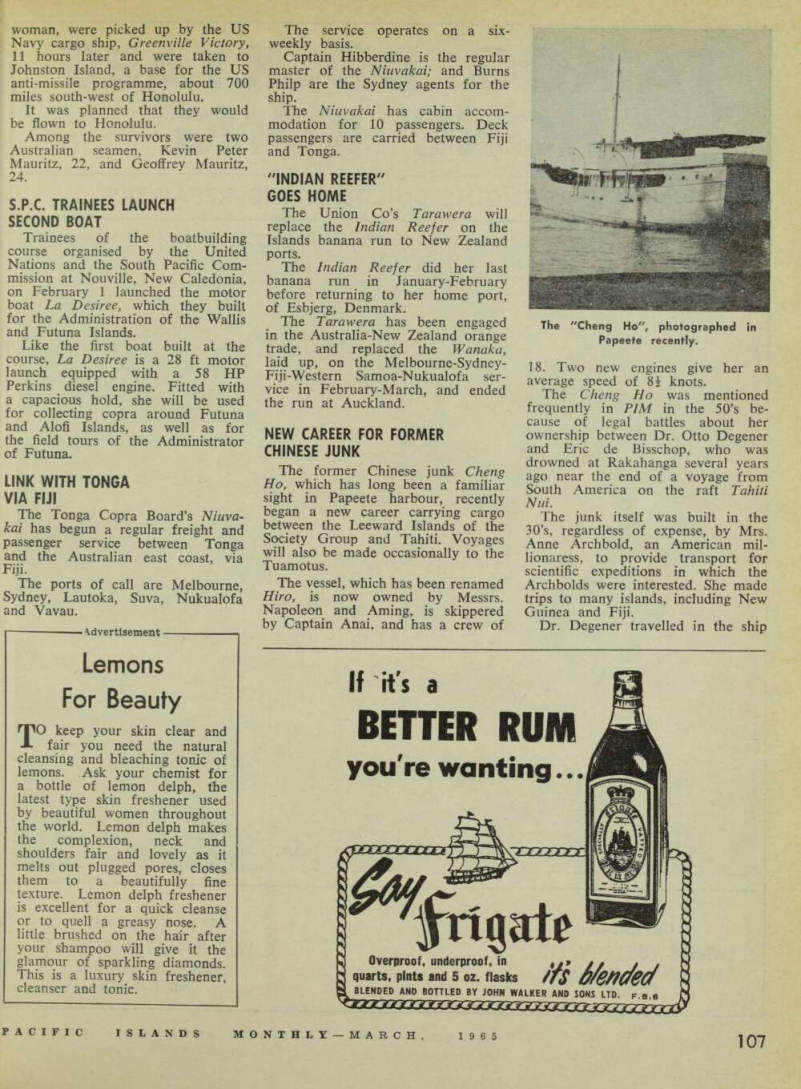 109
109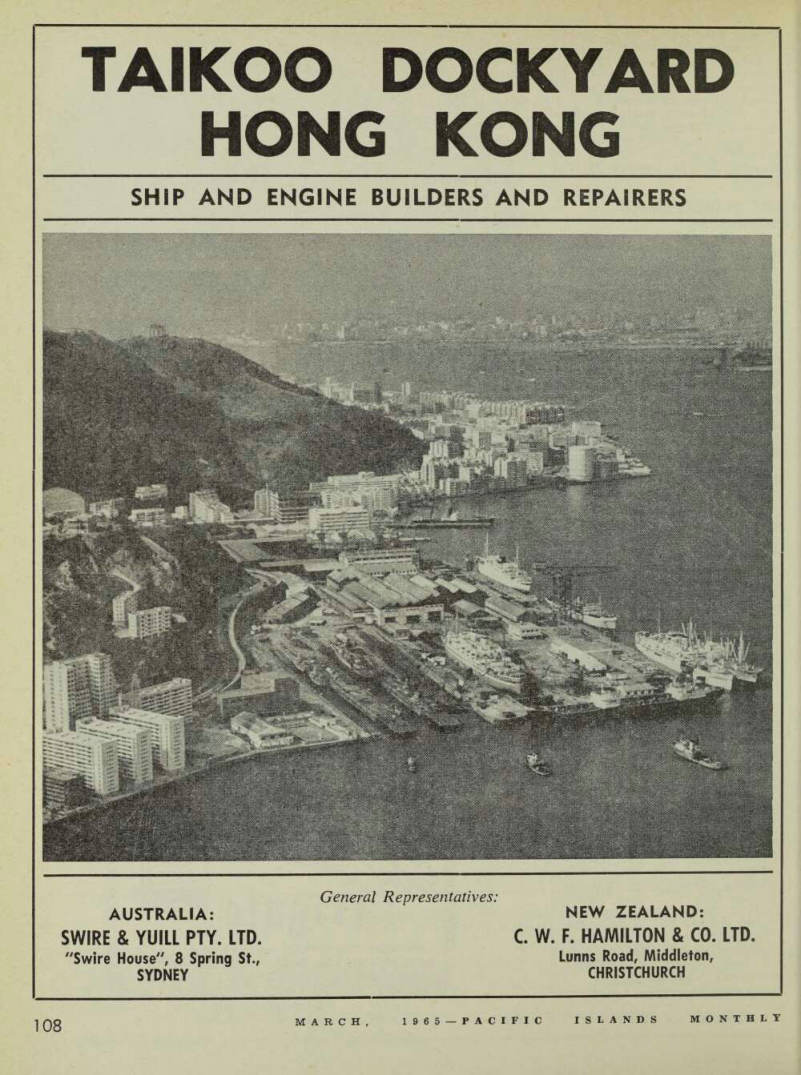 110
110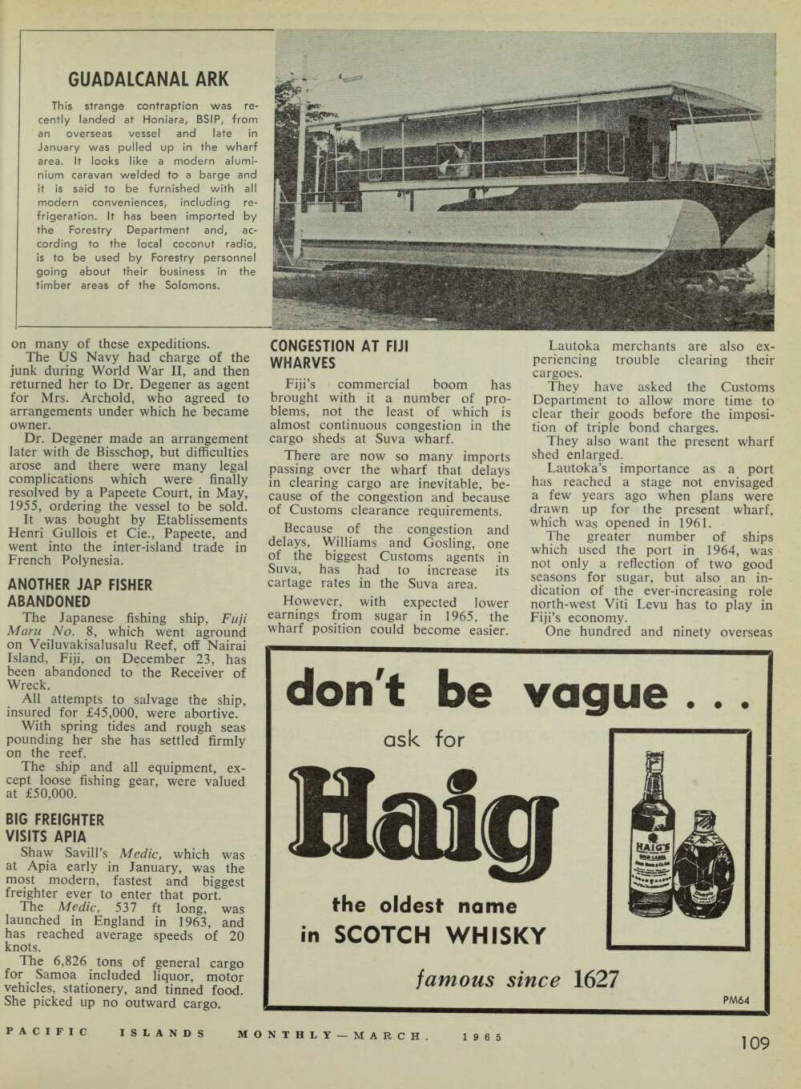 111
111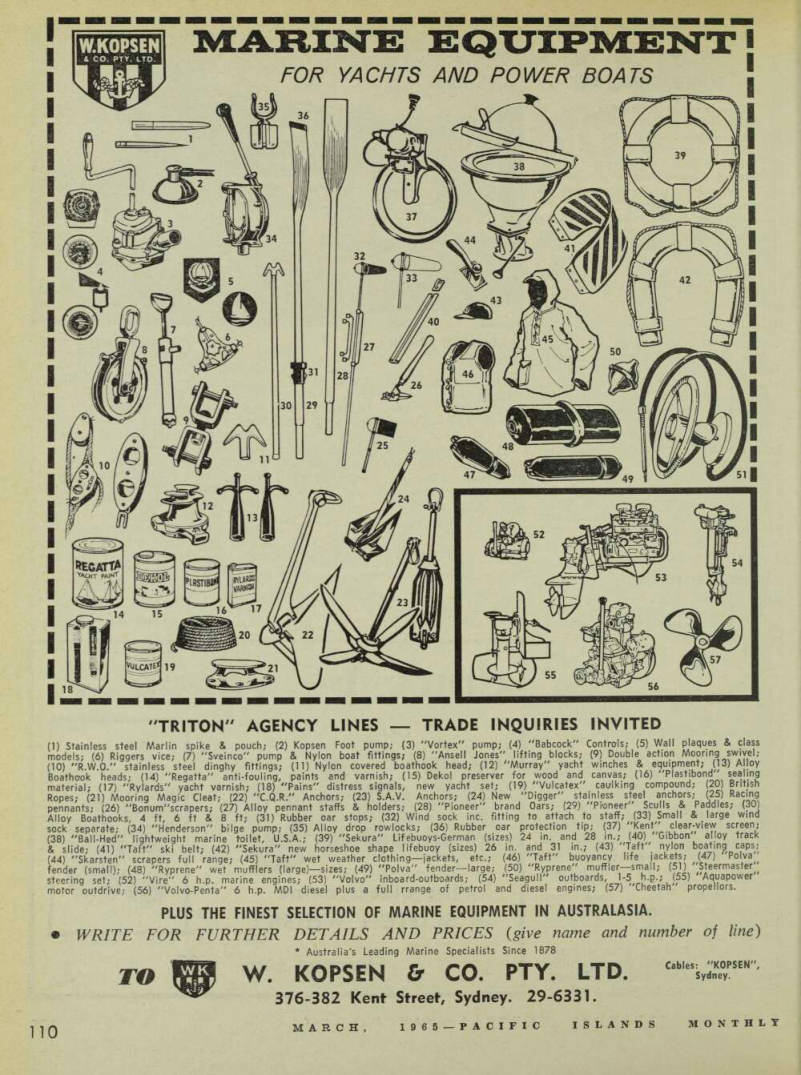 112
112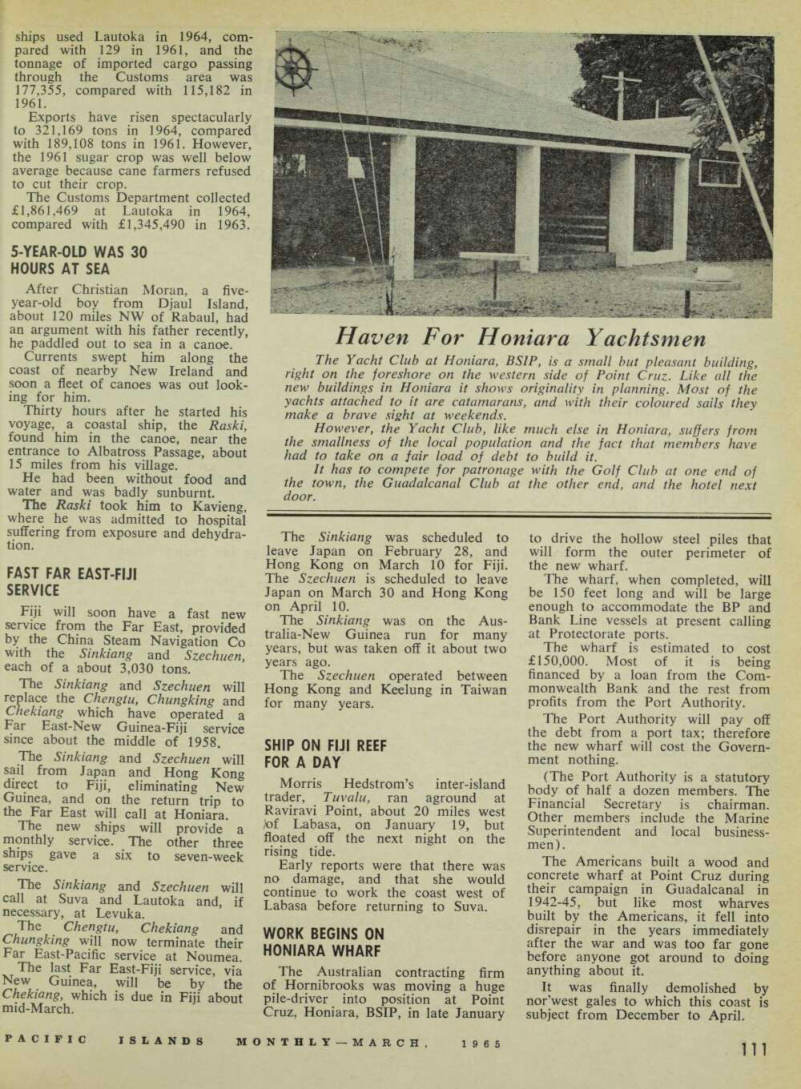 113
113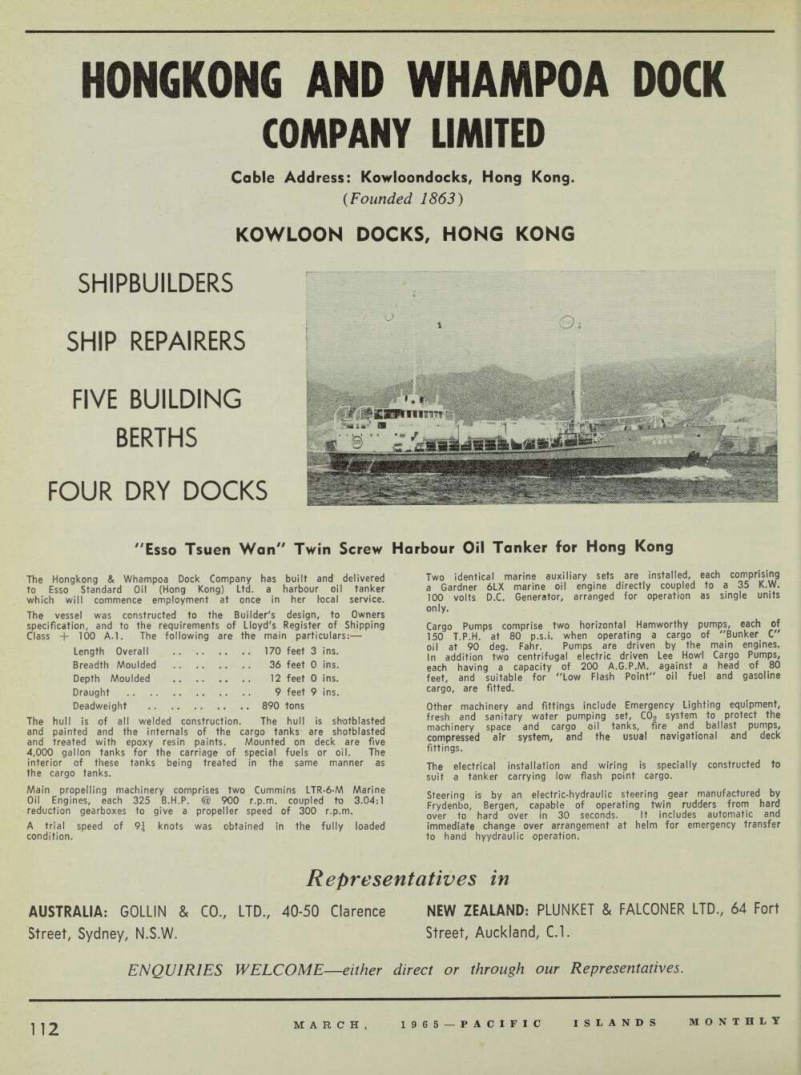 114
114 115
115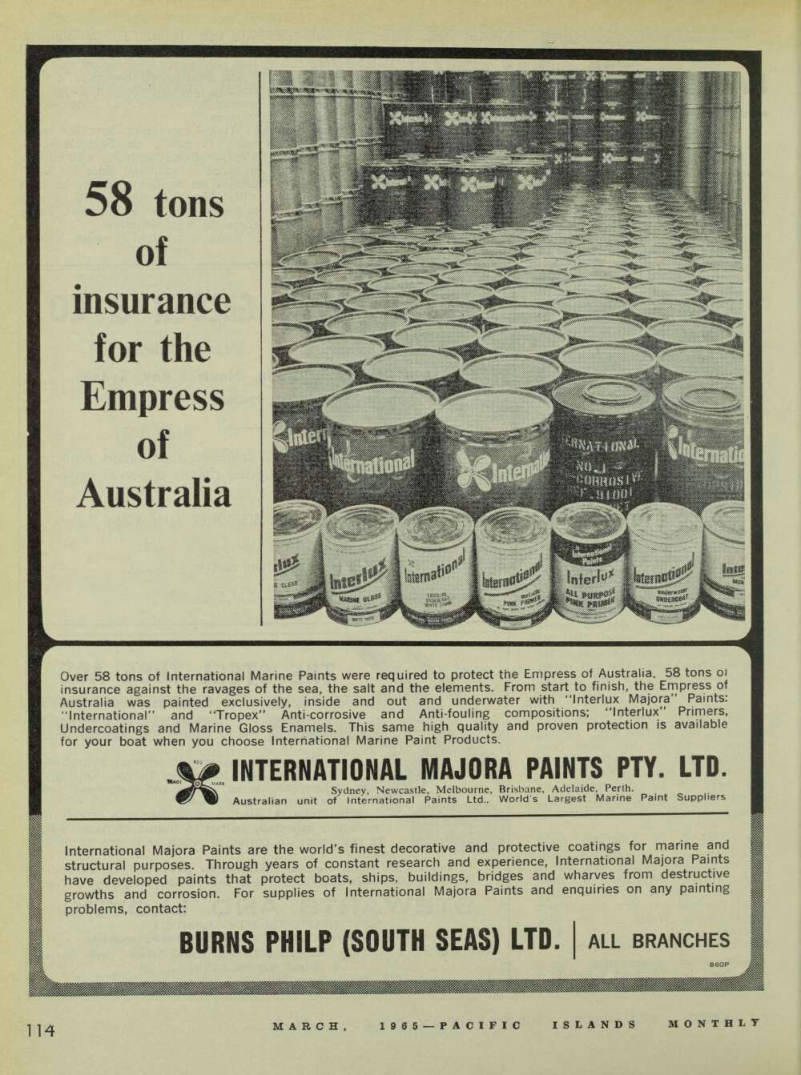 116
116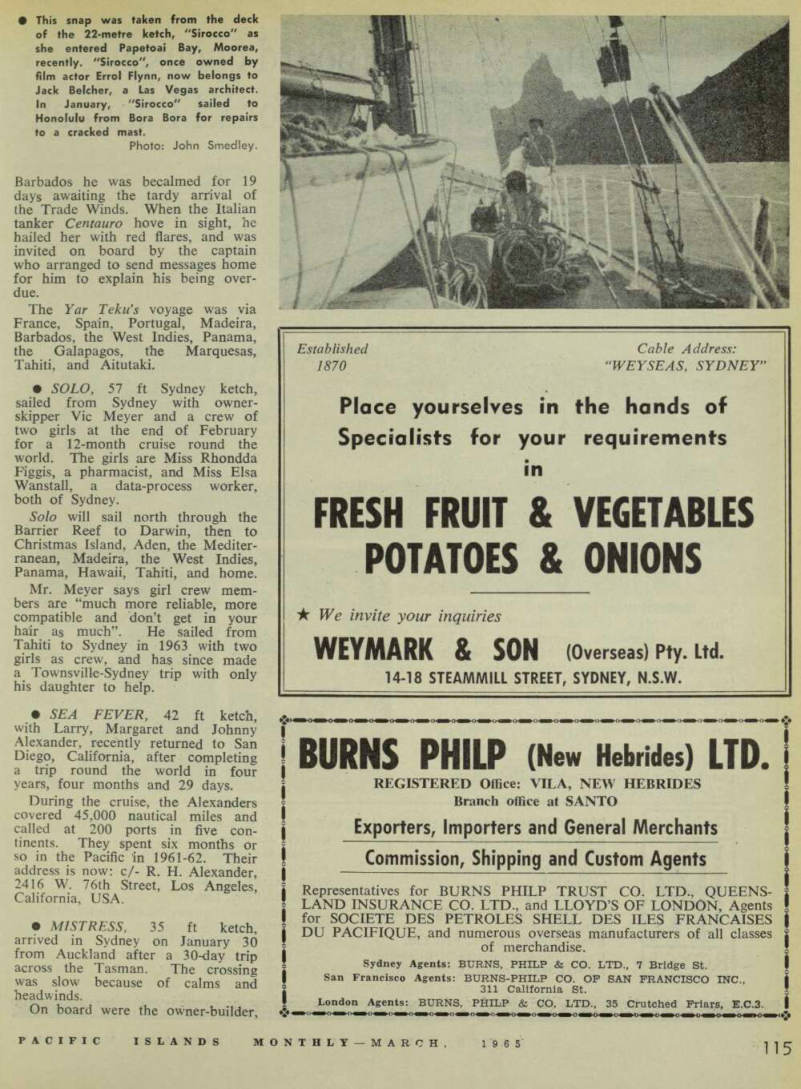 117
117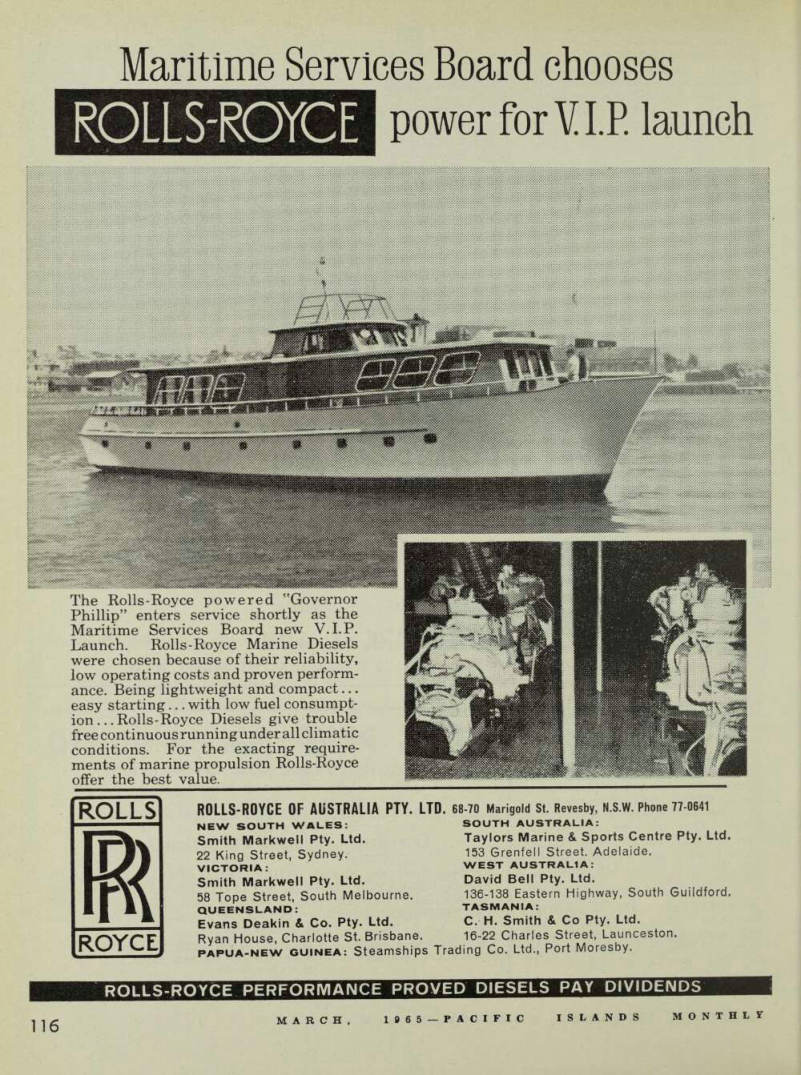 118
118 119
119 120
120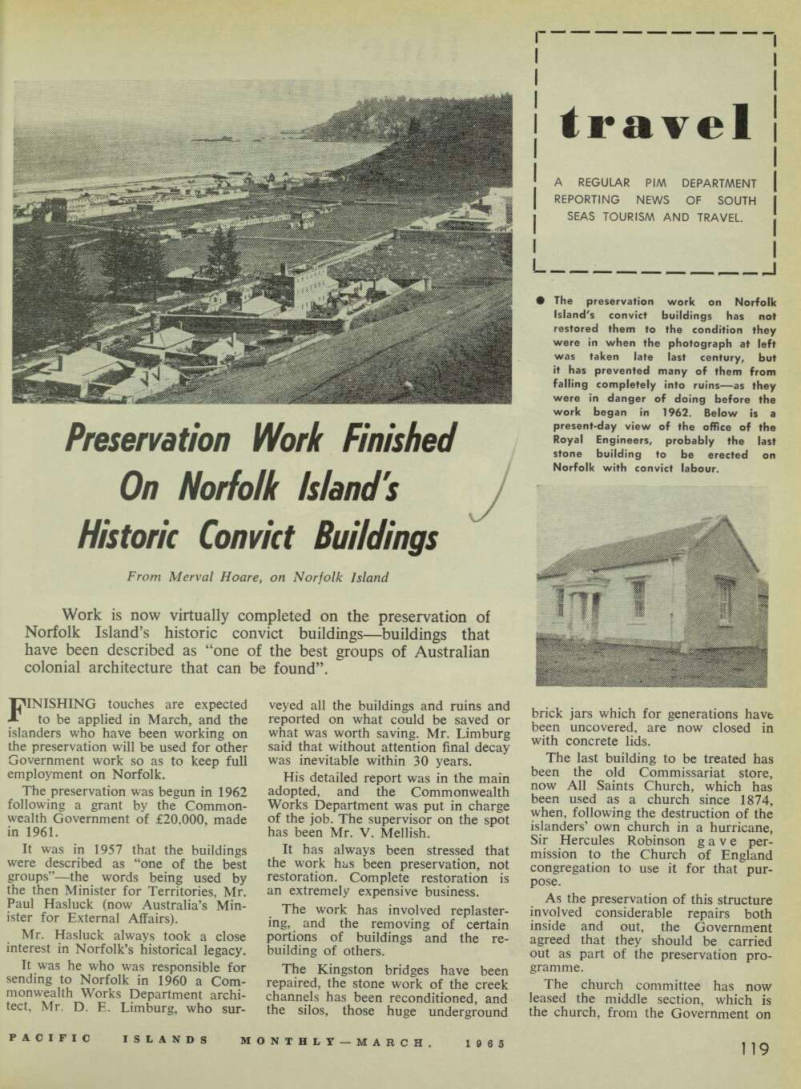 121
121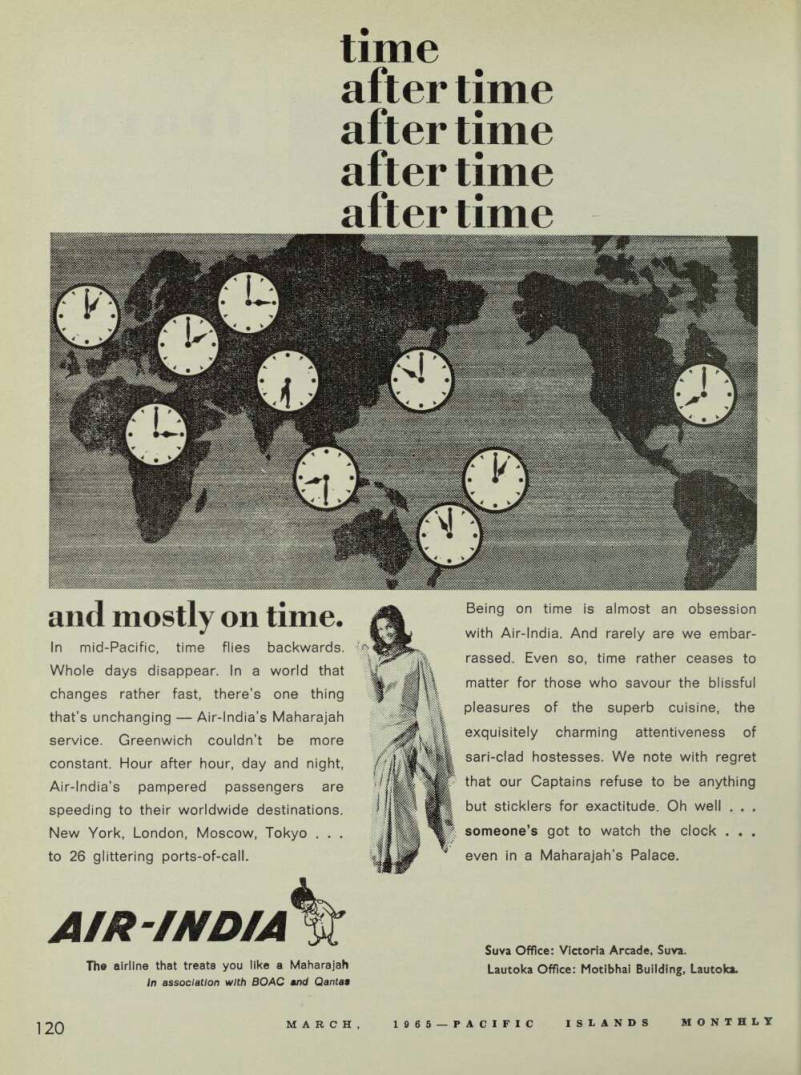 122
122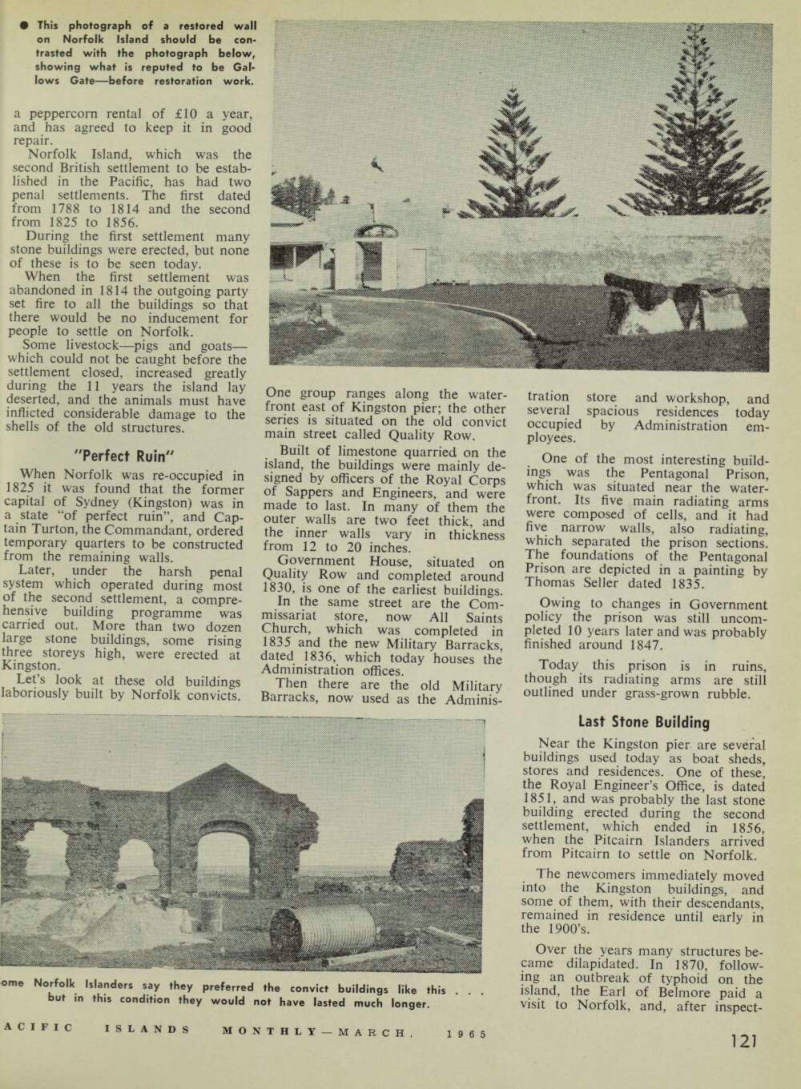 123
123 124
124 125
125 126
126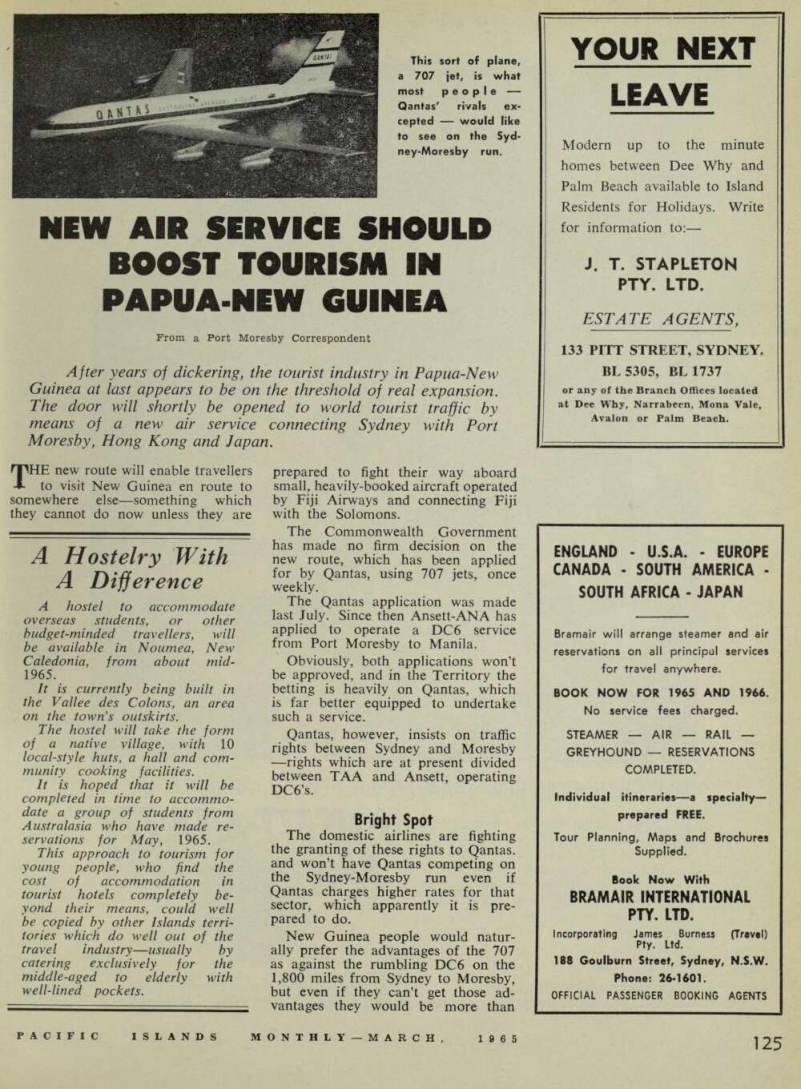 127
127 128
128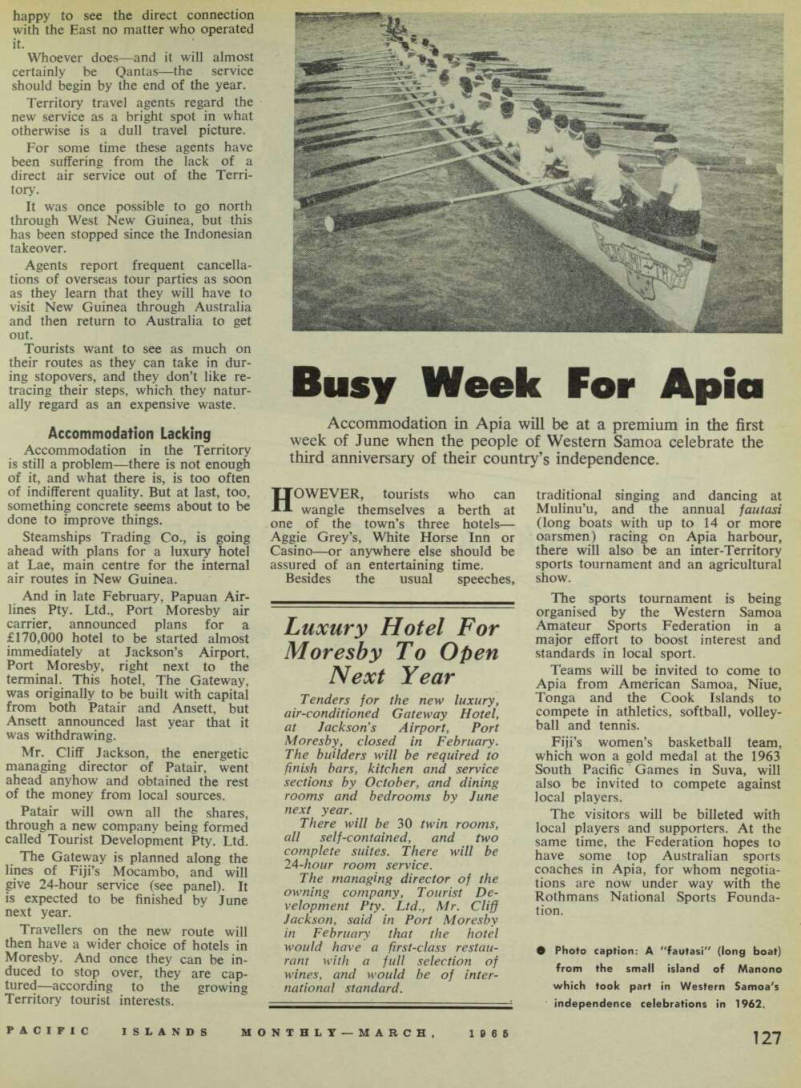 129
129 130
130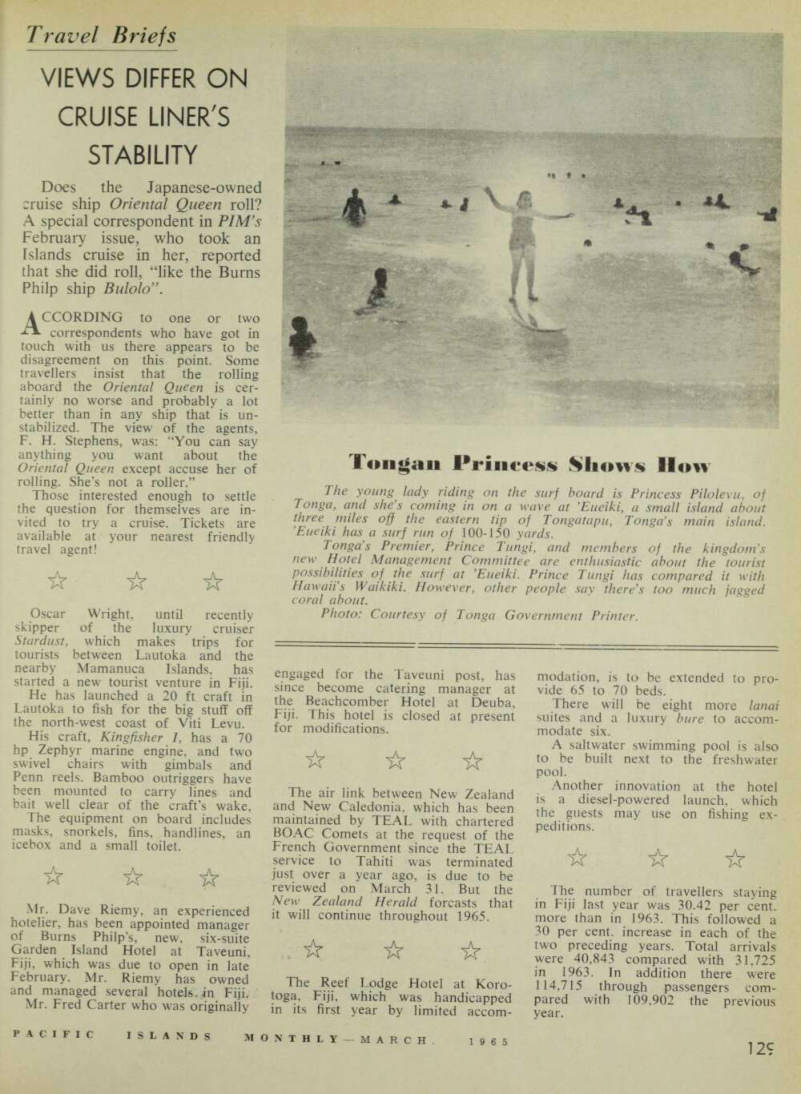 131
131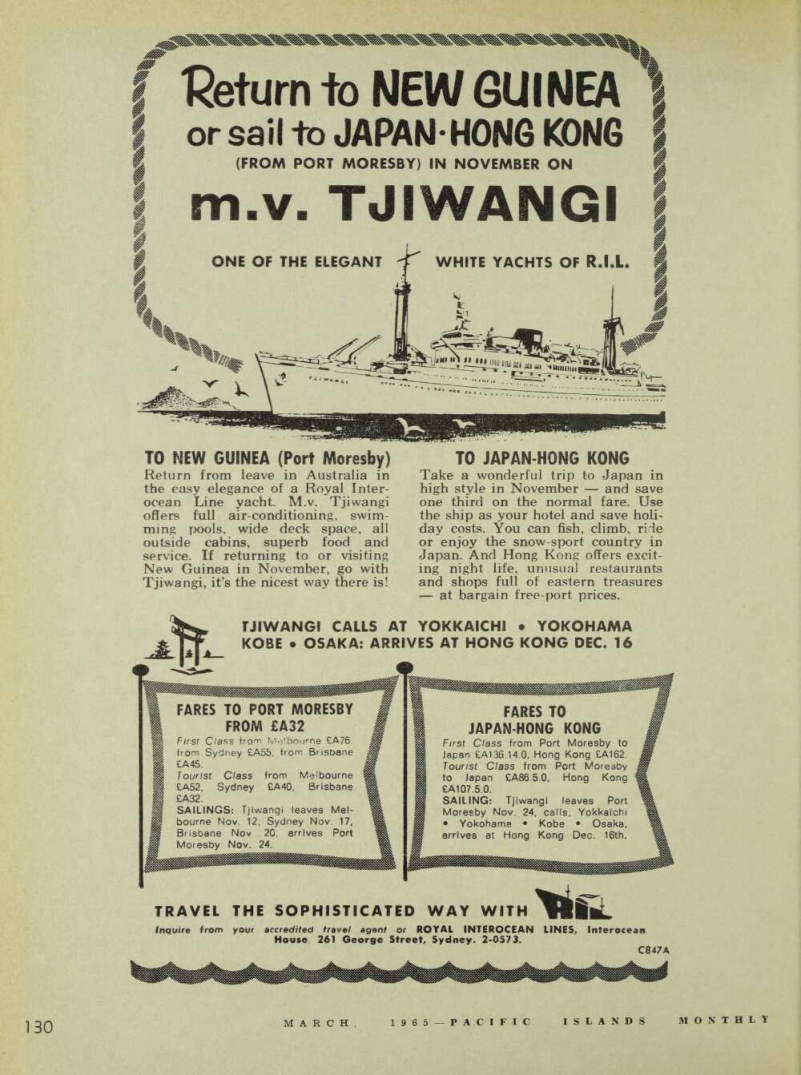 132
132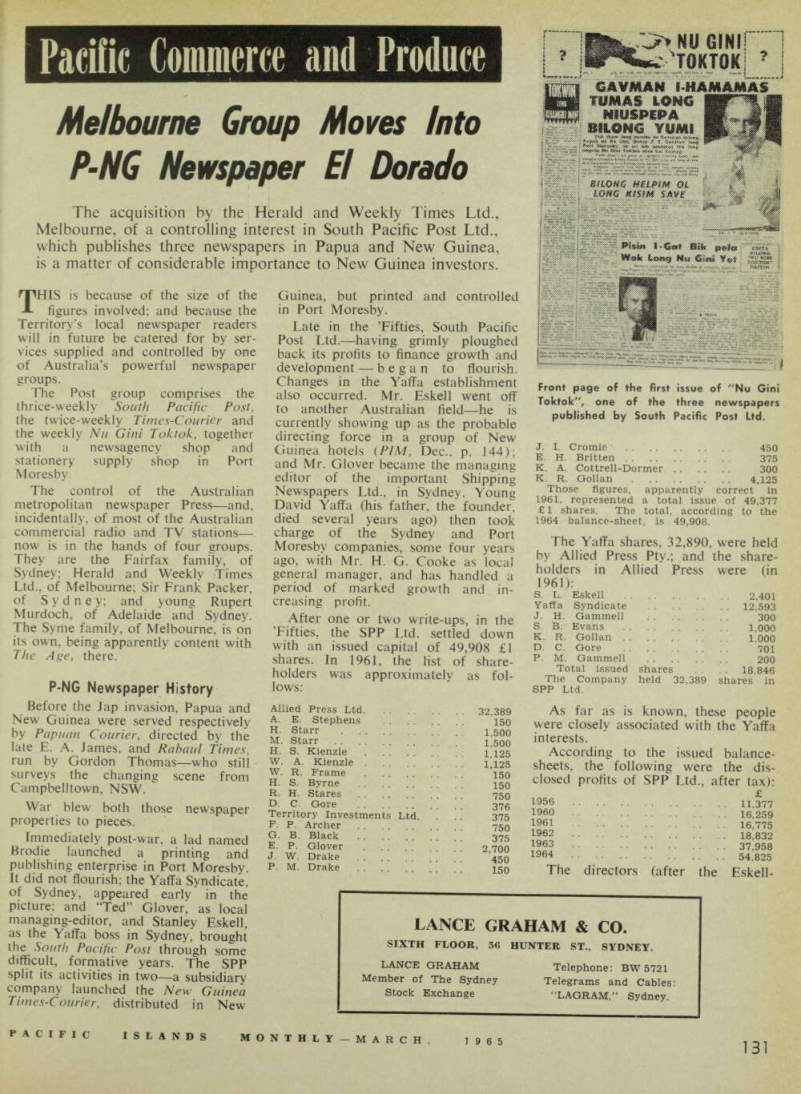 133
133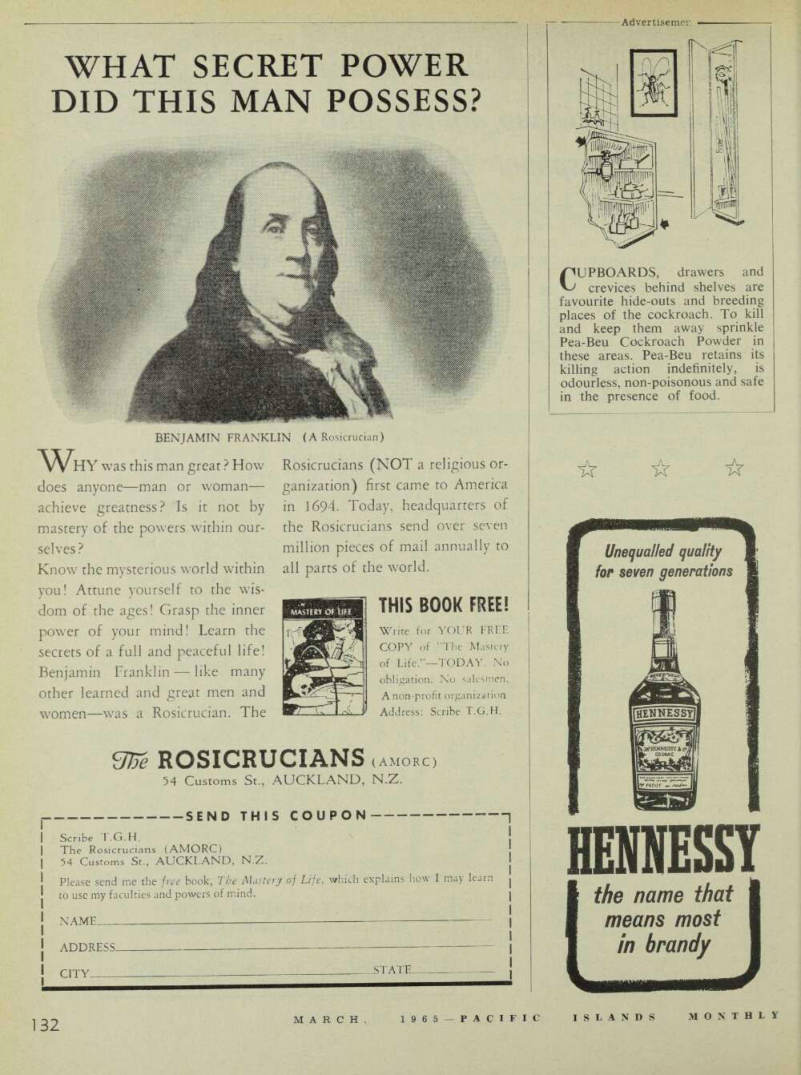 134
134 135
135 136
136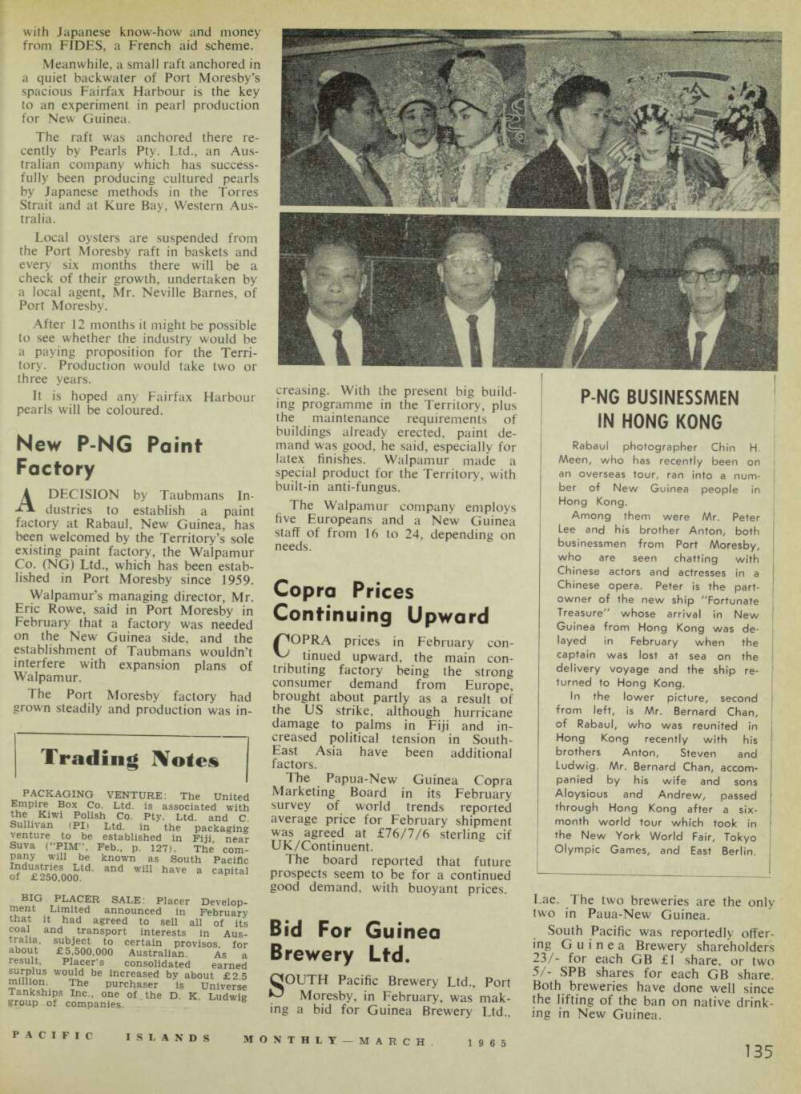 137
137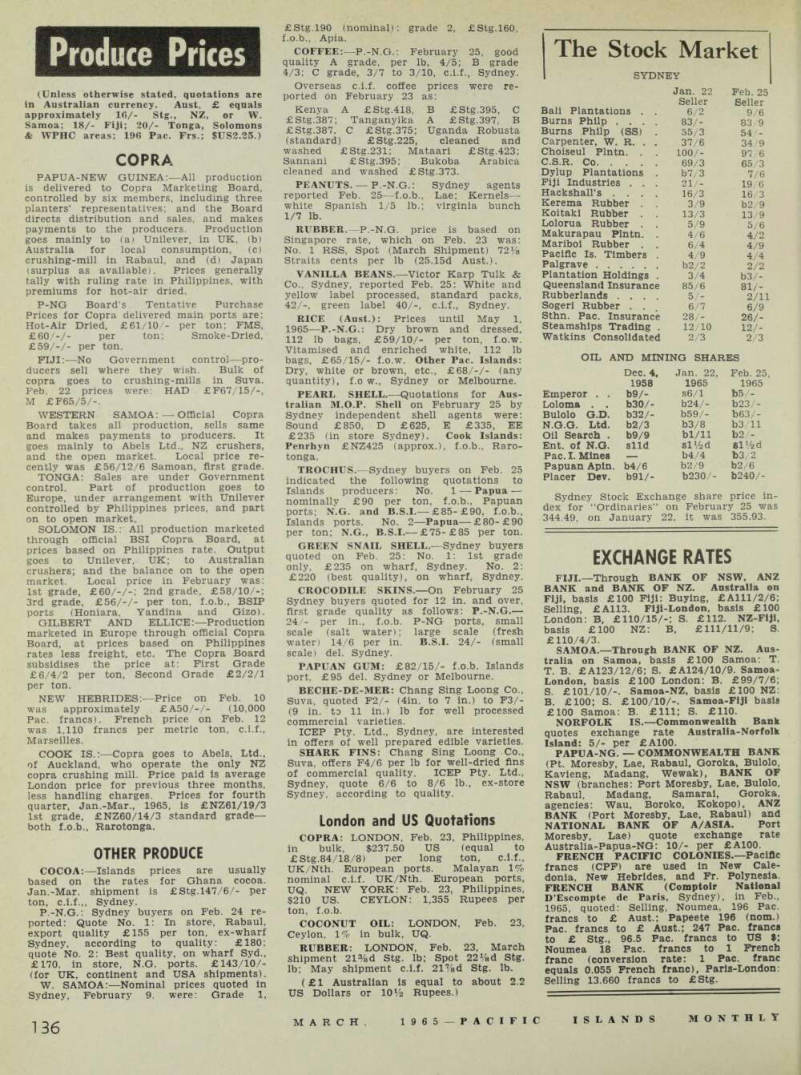 138
138 139
139 140
140 141
141 142
142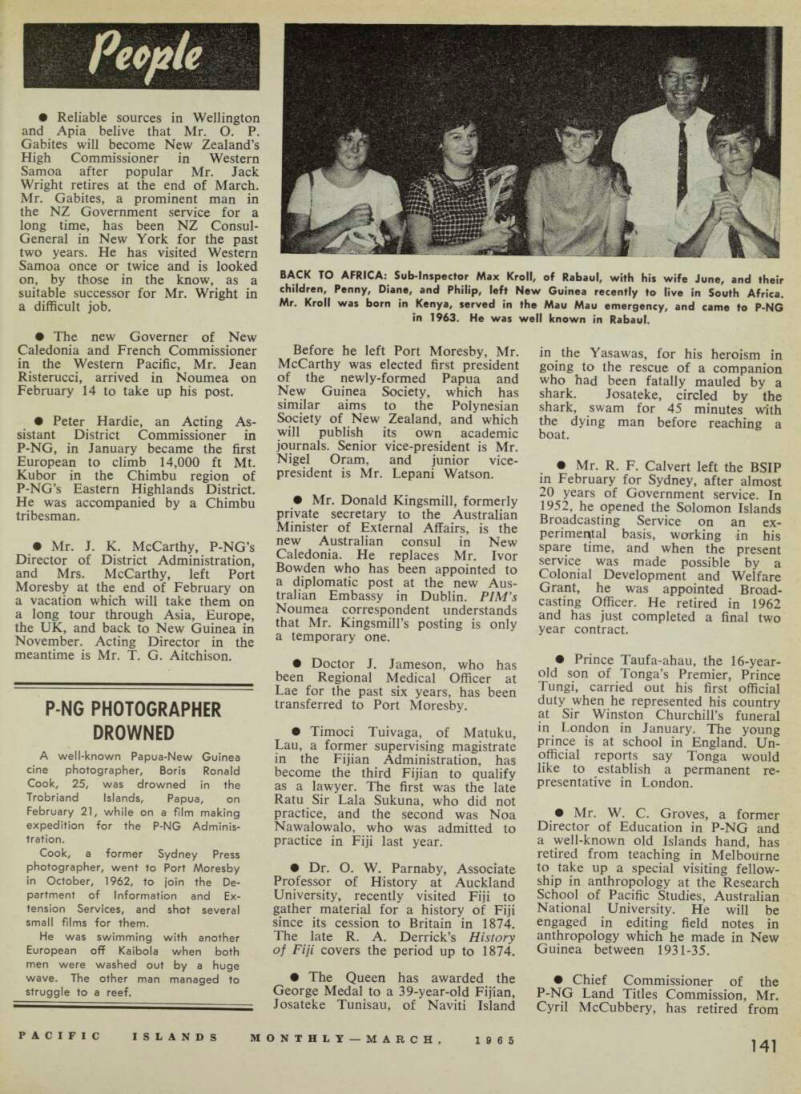 143
143 144
144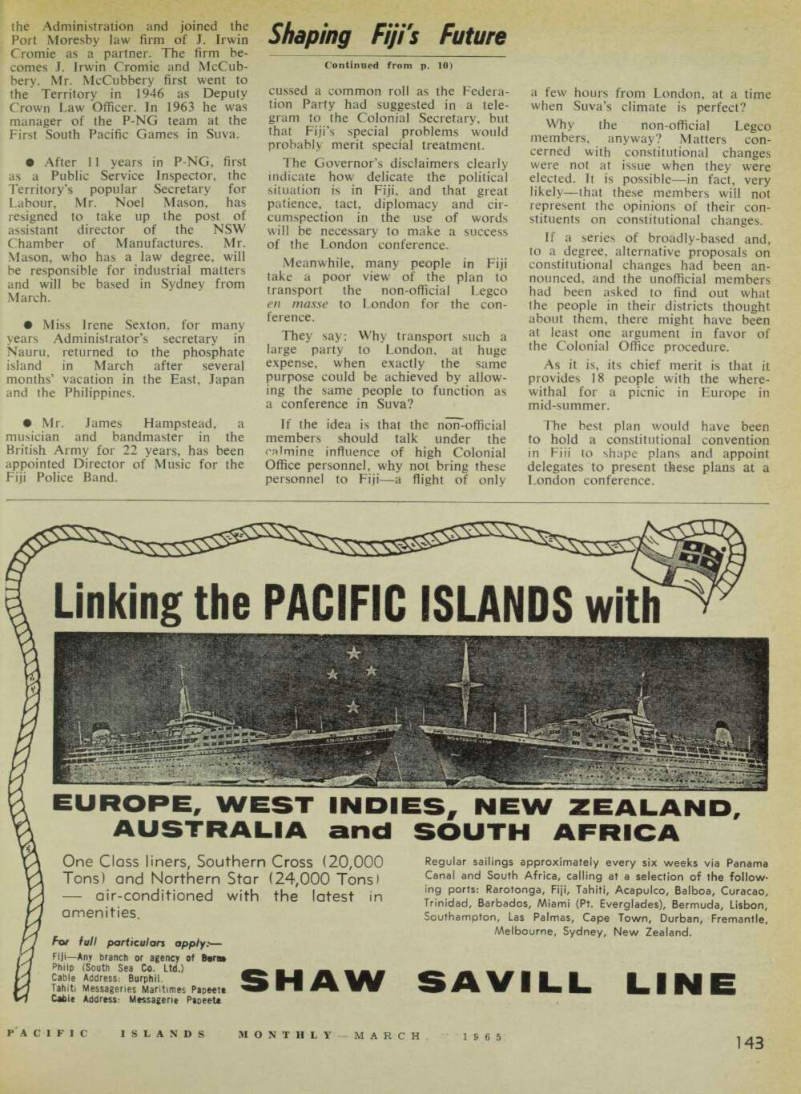 145
145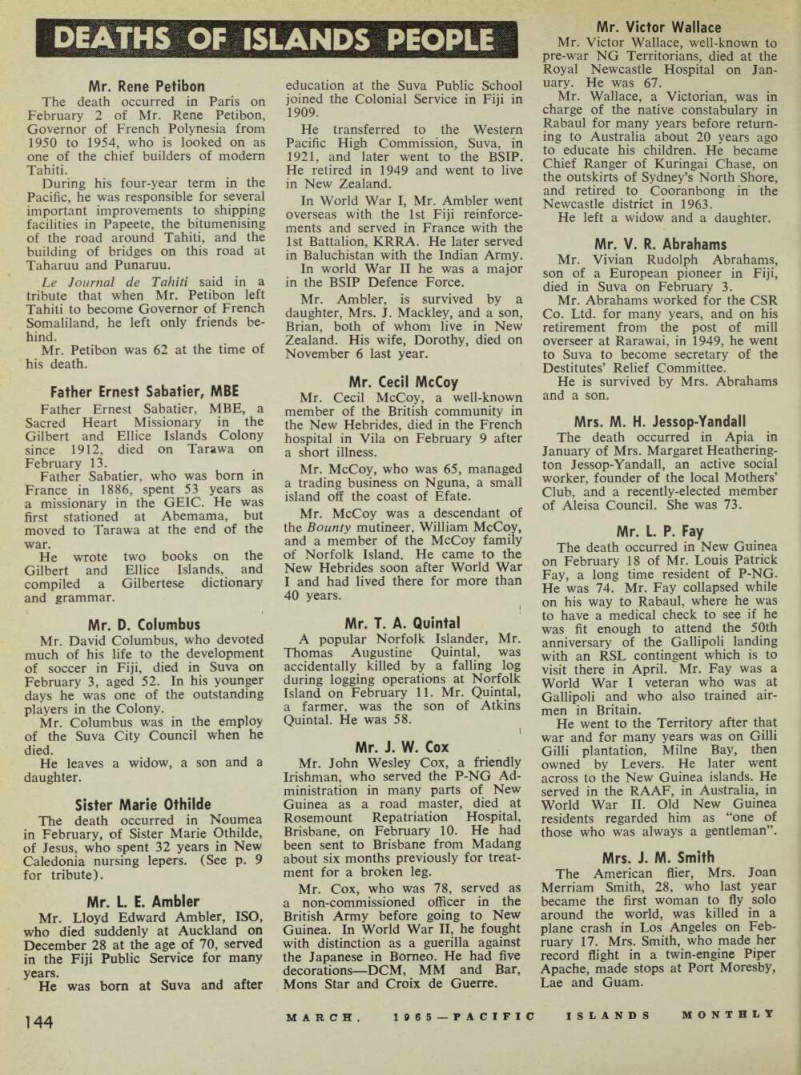 146
146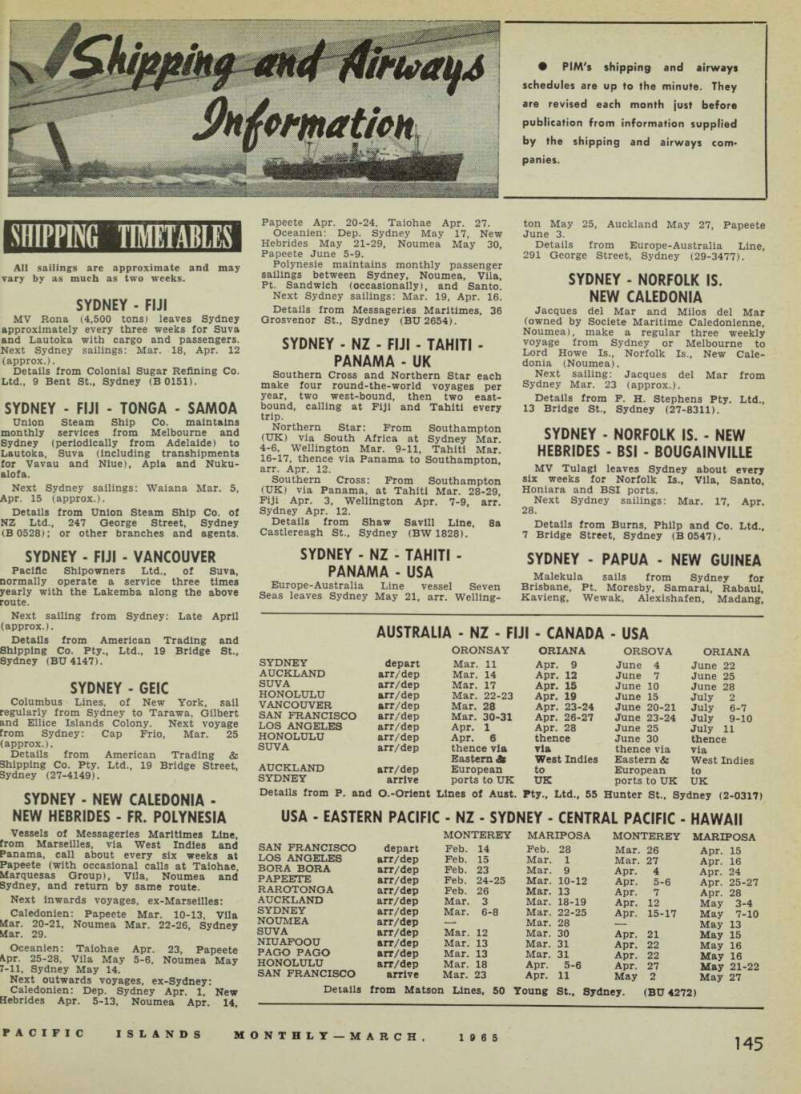 147
147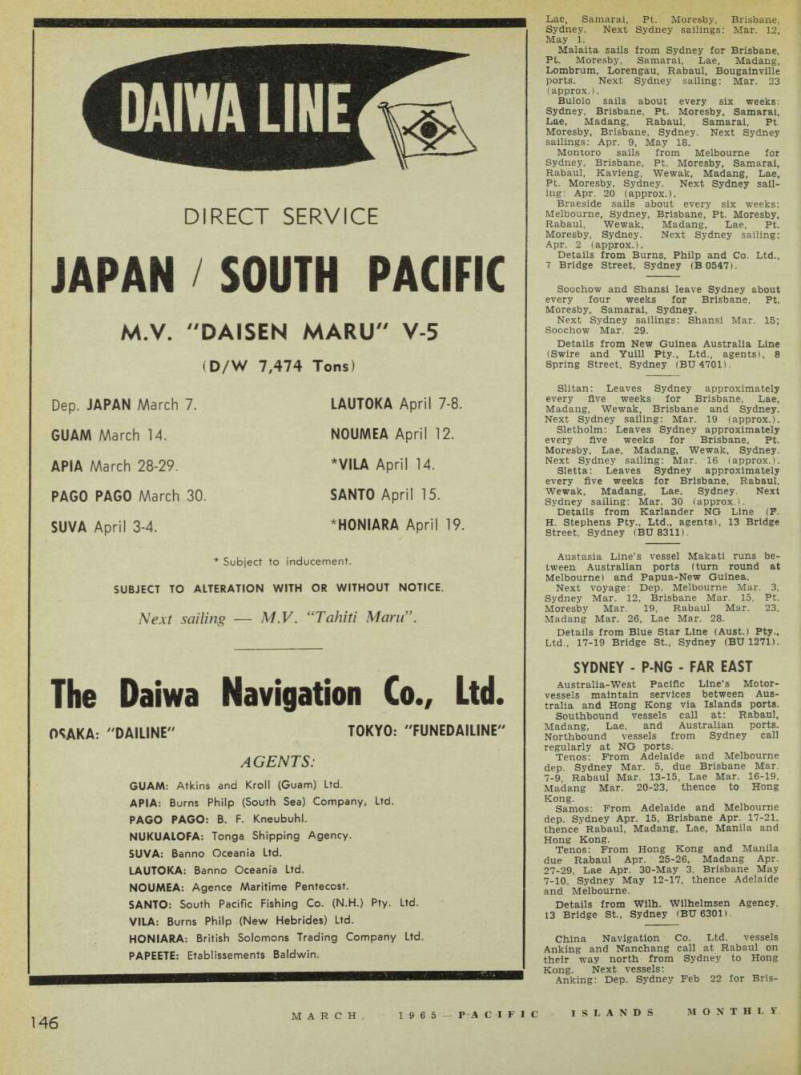 148
148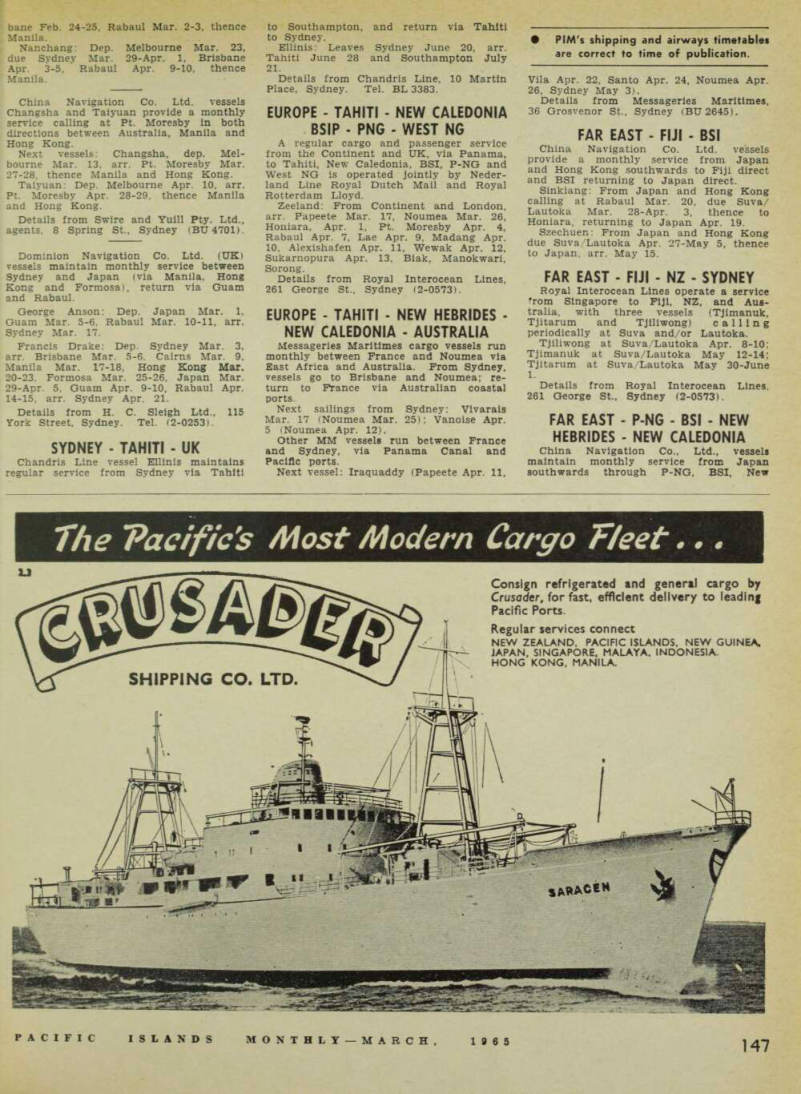 149
149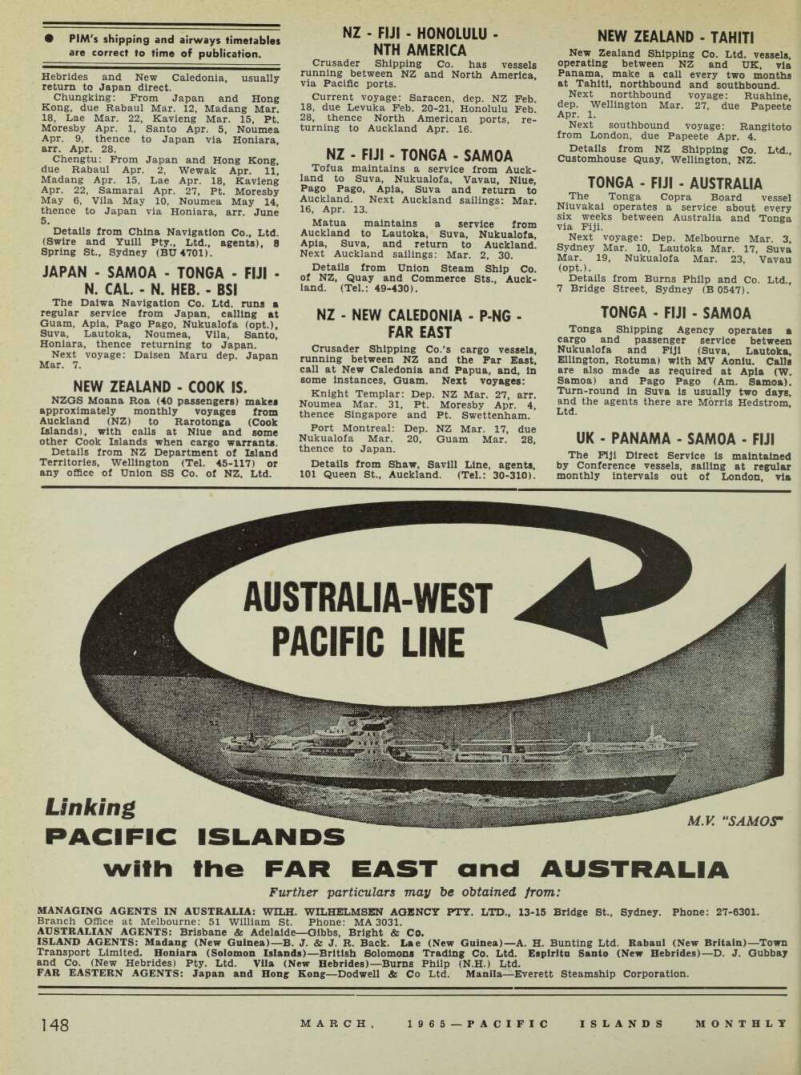 150
150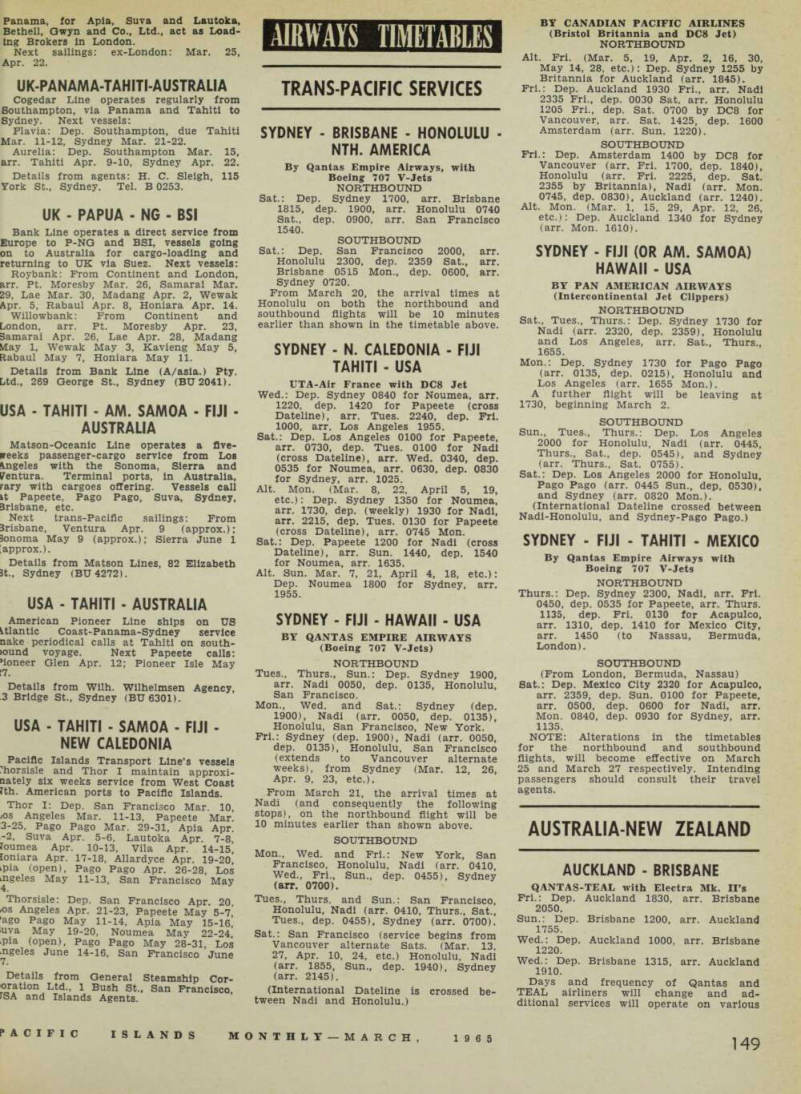 151
151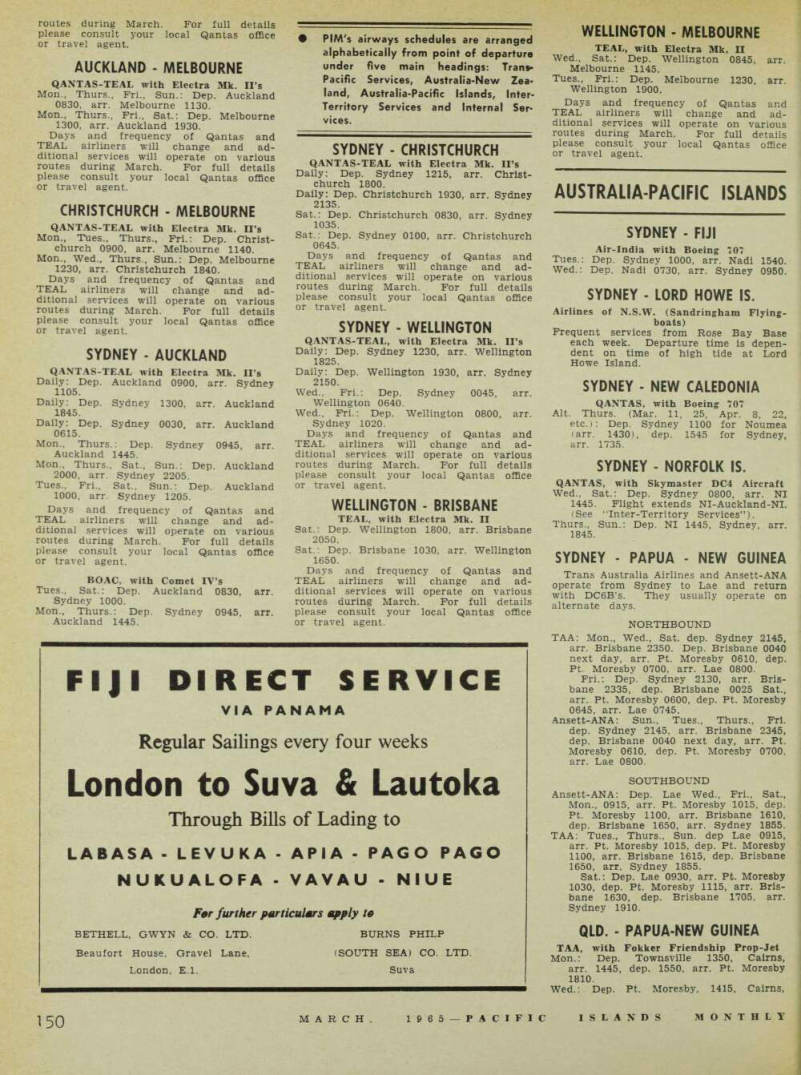 152
152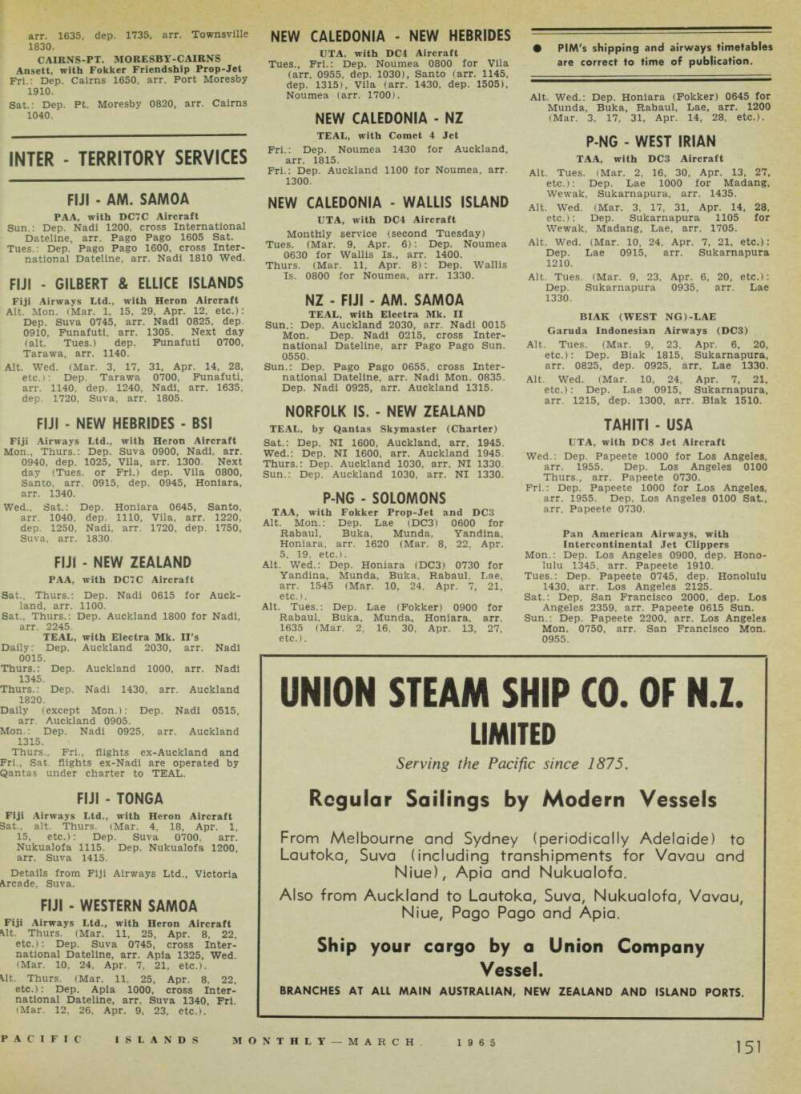 153
153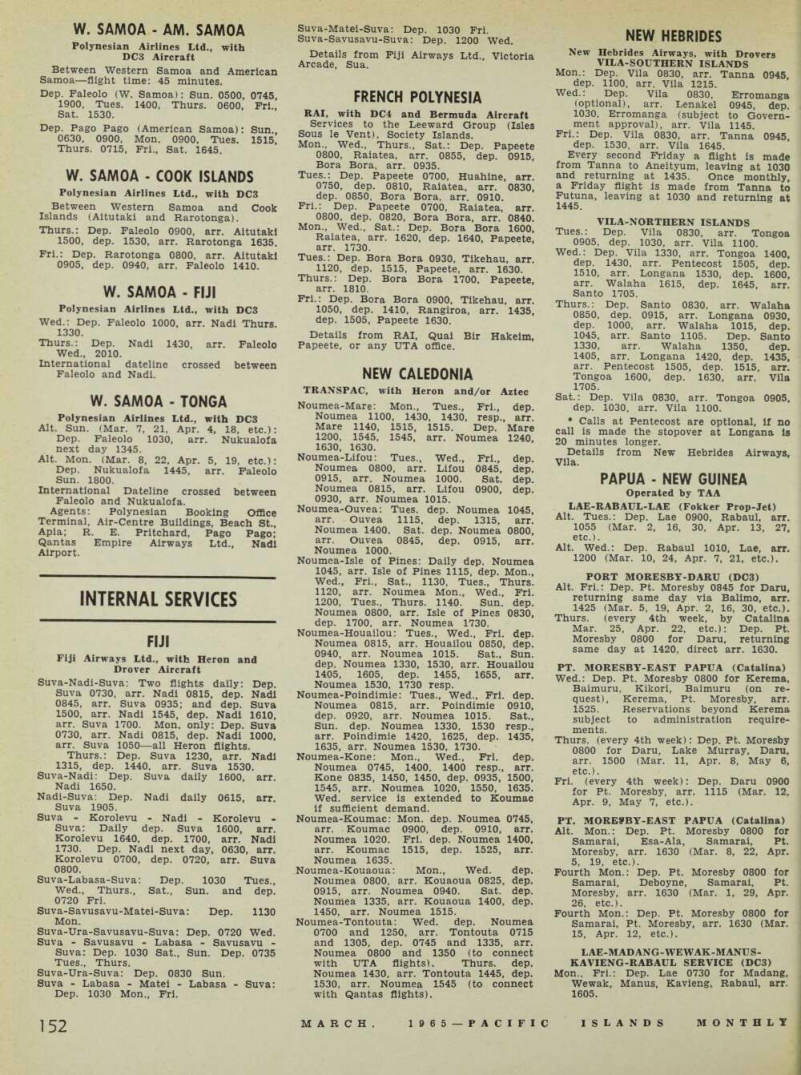 154
154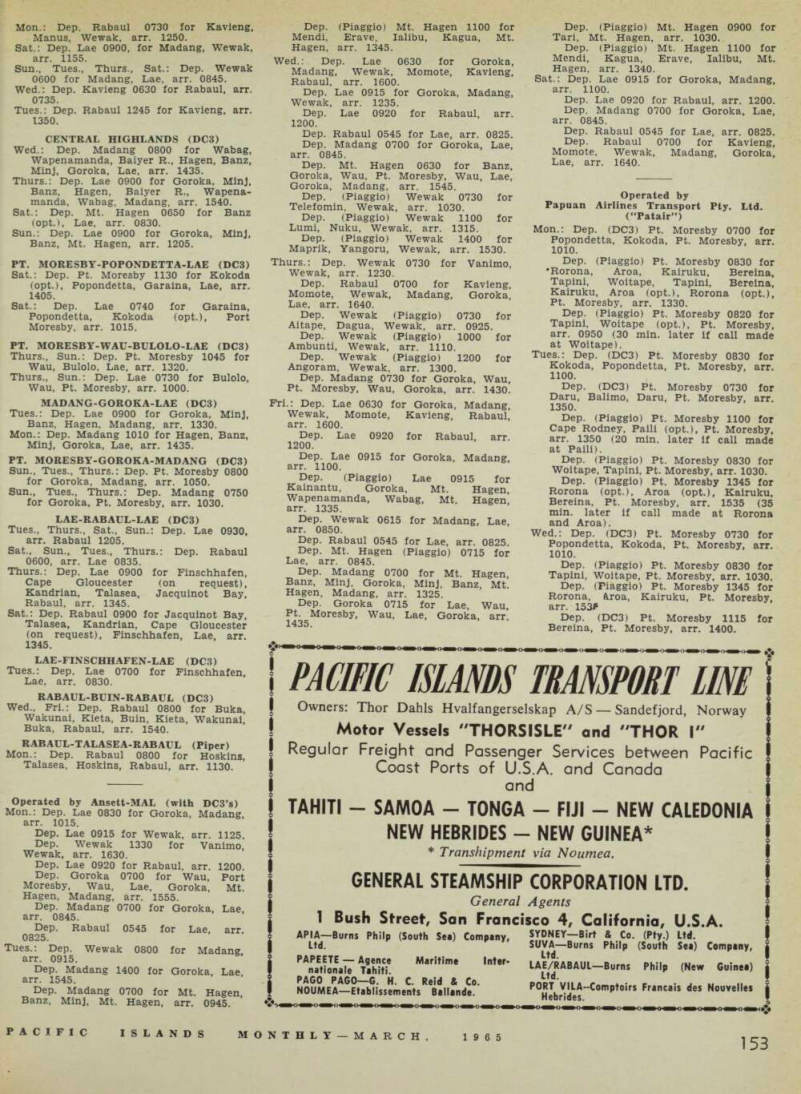 155
155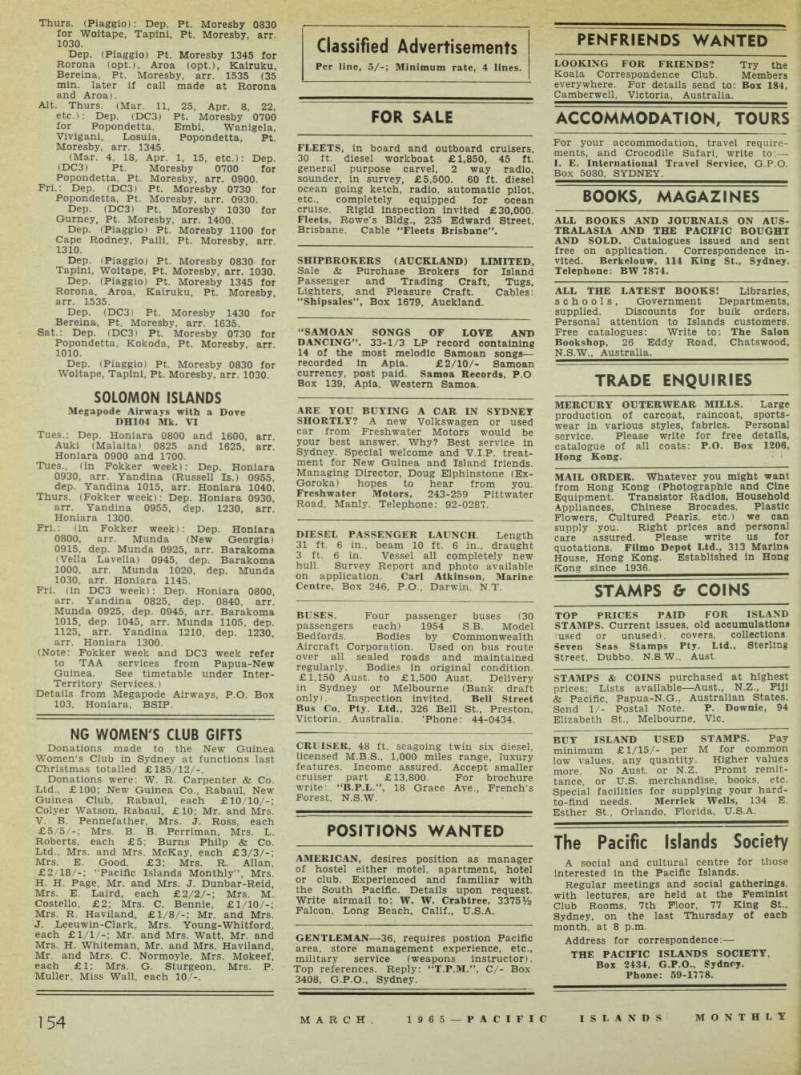 156
156 157
157 158
158 159
159 160
160