Monthly
Pacific Islands Monthly
Ebruary, 1965
3/- 60 US cents 50 French Pac. frcs.
he New is lagazine Of The South Pacific
Established 1930
ered at G.P.0., Sydney, and at P. 0., for transmission by post as a Newspaper
OUR COVER: Further proof that brains and beauty do go together is Miss Lavinia Edwards, a Gilbert Islander who holds a secretarial position in the Solo mons. She recently was sent to Sydney for advanced training so she can instruct others, and it was at a social gathering of the Sydney Polynesian Association that the photographer found her. She's now back in Honiara. —Tele-Photos.
Advertisements & other items, pp. 2-4 (1 item)
When In Australia Fly Taa
s
Mmm
SKPSi
TAA
WHEN IN AUSTRALIA FLY TAA
Trans-Australia Airlines operates the largest single domestic airline network in the British Commonwealth, serving 140 cities and centres throughout Australia and Papua New Guinea.
TAA’s modern aircraft connect with all incoming and outgoing international flights. TAA provides the speed and comfort of pure jet travel within Australia with the introduction of Boeing 727 T-Jets.
TAA Fly-away Holidays. TAA offers a huge range of packaged Holidays to the most popular holiday resorts throughout Australia and Papua/New Guinea.
And TAA takes care of everything travel bookings by air, road, rail or sea, accommodation, sight-seeing tours even theatre tickets!
Contact your nearest Travel Agent or Trans- Australia Airlines Office.
FLY
THE FRIENDLY WAY
Trans-Australia Airlines
TAA72B9/64
HERE IT IS! The Drying News
Small Plantations Have Been
Waiting
For...
A.S.P.
Introduces
FIRST COMPACT COCOA/COPRA DRYER
Ideal for the small plantation, the new Mark 25 direct-fired dryer now enables the small holding to produce uniform-quality crops ... is within the limits of every budget Now, too, the larger plantation has an economical stand-by unit to prevent mould in flush crops.
You are invited to make early enquiries since the demand for the completely new development in drying equipment is certain to be heavy. To avoid disappointment contact A.S.P. in Rabaul or Sydney. / A.S.P. NOW HAS A COMPLETE RANGE OF DRYING EQUIPMENT FROM THE SMALLEST TO THE LARGEST
WRITE FOR FULL DETAILS
AND SPECIFICATIONS
P.I.M.
O I N.R.M.A. HOUSE Sole Agents for T.P. and N.G. 26 Ridge Street jA.S.P. (N.G.) LIMITED NORTH SYDNEY, N.S.W. j Box 166, P. 0., RABAUL, T.N.G.
Cables: “Chatspa,” Sydney 1 Cables: “Chatspa,” Rabaul
Appetising Cheese Grill
A quick, nourishing light meal —with the extra goodness of KRAFT* Cheddar Here’s the simple way to serve appetising, light meals or a nourishing breakfast, and know you’re giving the family the goodness they need. Cheese Grills with KRAFT Cheddar are rich in proteins and vitamins. For each serving: Lightly butter a piece of toast.
Cover with slices of KRAFT Cheddar Cheese, and grill until melted. Top with grilled tomato and bacon.
KRAFTB for good
food and good food ideas *Reg’d. Trade Mark.
KRAFT Cheddar is rich in protein, vitamins and minerals because it takes a whole gallon of creamy milk to make every pound of this fine cheese. Available in the familiar blue 8 oz. and 1 lb. cartons.
People
THE New Year Honours list for Australian territories included four honours for Papua-New Guinea and one for Norfolk Island, Mrs.
Kathleen Welsh received the OBE for her work for aged citizens of Norfolk Island. The P-NG awards were: CMG —Dr. John Gunther, OBE, Assistant Administrator since 1957.
MBE —Sister Kathleen Tweedy, of Rabaul; Vin Tobaining, of Rabaul, a former New Guinea delegate to the UN and ex-MLC; Mr. C. Nor moyle, now of Sydney, who retired last year as P-NG Police Com missioner.
Recipients of New Year Honours in Fiji were: CBE —Mr. James Gordon Rodger, Director of Education.
OBE —John Fraser Griffiths, Ac countant-General; and Robert Bruce Ingleton, former Mayor of Lautoka.
MBE —Guru Dayal Sharma, editor of the Hindi newspaper, Shanti Dut; Alexander Muir, manager of a banana export firm; and William Ewart Donnelly, first principal of Ratu Sukuna Memorial School.
BEM Luke Vukivuki, former union secretary and employee of
Pwd.
Western Pacific High Commission list; OBE The Very Rev. Dennis James Moore, Society of Mary, Vicar Delegate in the Vicariate of the Southern Solomons; and Arthur
Howell Pickwoad, Commissioner of Labour, BSIP.
MBE The Rev, John Veo Bitibule, Methodist Minister, New Georgia, BSIP; Miss Elspeth Edgar, Matron, Paton Memorial Hospital, Vila, New Hebrides; and Temete Tebataio, Assistant Co-operative Societies Officer,, GEIC.
BEM —Buaka Kanoa, Magistrate, Makin, GEIC. • Mr. K. A. Stuart, a Lautoka, Fiji, lawyer, has been appointed Chancellor of the Diocese of Poly nesia. The office had been vacant since the departure of the previous holder, Sir Ragnar Hyne, early in 1958. • Mr. J. R. Rowland, Australian Ambassador - designate to Russia, made a short tour of Papua-New Guinea in January to see something of the Territory before going to Moscow. • A gold medal from the Royal Humane Society of New Zealand was presented in Aitutaki, Cook Islands, on January 18 to Teehu Makimare, an Aitutakian, who was the hero of a 64-day drift from Rakahanga to Erromanga, New Hebrides, in 1963 ( PIM , Nov.. 1963, p. 10). • Mr. Ray Straatman, an ento mologist, and a taxidermist assistant, Mr. Peter Shanahan, are spending three months in Eastern Papua, col lecting insects for the Bishop Museum, Honolulu. Later they will move to the d’Entrecasteaux Islands. • Gilles Artur has been appointed conservateur curator of the Gauguin Museum at Papeari, Tahiti.
The museum, built with the assis tance of the Singer-Polignac Founda tion, is now nearing completion and will be open to the public in the first half of this year, Mr. Artur was born in Brittany but in the last 15 years has been working his way around the Pacific taking an interest in its art and culture. He was a teacher in New Zealand at one stage; has worked in Noumea and in the early 1950’s spent six months with artist Labais, and Freddy Drilhon and his wife, living among the Big Nambas of Malekula, New Hebrides. • Miss Chandra Kuar Mani Ram has been appointed matron at Labasa Hospital, Fiji. She is the first Indian nursing sister to be appointed a matron in the Colony.
• Recent new arrivals on Norfolk Island are Dr. and Mrs. H. G. Davis and Mr. and Mrs. Donald A.
Lawler. Dr. Davis has been ap pointed Government medical officer.
For the last seven years he has been in general practice in Victoria.
Mr. Lawler is the new headmaster of the Norfolk school. He was formerly school counsellor at the Hunter Girl’s High School, NSW. • Chief Justice G. G. Briggs left Honiara, BSIP, in January, for Hong Kong, to take up his new appointment as a Puisne Judge. • Chief Geologist of the BSIP, Mr. J. C. Grover, and Mrs. Grover,
Mr. A. H. Pickwoad, OBE. He retired in December.— Photo: E. P. W. Marriott.
Sister Kathleen Tweedy, MBE. She has been responsible for winning the Tolais over to giving blood donations.
Very Rev. D. J. Moore, OBE. He has been in the Solomons for 28 years.
Photo: E. P. W. Marriott.
are currently on leave and staying in Sydney. • Professor J. W. Davidson, Professor of Pacific History at the Australian National University, was visiting Western Samoa and Fiji in January-February. Professor David son, a former resident of Samoa, takes a close interest in constitutional matters in both Samoa and Fiji. • Dr. Felix Emberson, a son of Mr. and Mrs. Felix Emberson, of Suva, will return to Fiji in March to establish a private practice in Suva. He left Fiji in 1963, after several years with the Medical Department, and opened a practice in East Parramatta, Sydney. He graduated from Sydney University. • During a visit to NZ in January Governor H. Rex Lee, of American Samoa, took time off to make a flying visit with Rear Admiral J. R. Reedy, to NZ and US bases in the Antarctic. Later Governor Lee flew to Washington to attend inaugural ceremonies for President Johnson. • Makea Nui Teremoana Ariki officially opened the new Cook Islands Library in Rarotonga recently.
The marriage of Miss Heather Mary Jones, of Apia, Samoa, is to take place in Neutral Bay, Sydney, on February 6.
Heather is the elder daughter of Captain J. W. Jones (harbourmaster at Apia for many years and, since retirement, a coffee planter in Samoa) and Mrs. Annie Jones, member of an old West Samoan family.
The bridegroom is Mr. E. J. Liebenow, member of a German family now settled in Sydney. The wedding will be attended by the bride's mother, Mrs. Annie Jones, who left Samoa in September on a world tour and is briefly residing in Sydney.
Advertisements & other items, pp. 6-12 (1 item)
Smiths
DIRECT FROM ENGLAND
the most modern
clocks in the world
v< \
Smiths Gay Gordon
A 30-hour alarm clock in smartly shaped white case. The dial is blue, pink, yellow, white or black, and there is a calendar model which shows the date as well as the time. The Gay Gordon never forgets to call you in the morning because it automatically re-sets itself each time you wind the alarm.
4 Smiths Reveille
Another punctual bedside companion. Available with black figures on white dial or luminous figures on black dial. The metal case is blue, ivory or pink with gleaming polished bezel.
Smiths SECTRONic-tlme without wires or winding.
Transistorised Sectronic clocks run for a year from
an ordinary torch battery.
12 4 Smiths Dexter Sectronic Black, blue or red moulded case with matching dial centre. Gilt
coloured figures and chaplets.
Smiths Minwood Sectronic^ Brass and woodgrained metal case, embossed figures and chaplets and diamond polished rim.
Factory Representatives: S. Smith &. Sons (Australia) Pty. Ltd., Sydney.
Morris Hedstrom Ltd., Suva • Global Agencies (New Guinea) Ltd., Port Moresby.
SMITHS
CLOCK & WATCH DIVISION
Seethe House London N.W.2 England
Whatever the season, whatever the surface
Olympic
are the tough, go-anywhere tyres!
They really get to grips with the problem and beat it!
Tough Olympic tyres, with their tenacious treads and excellent traction, are ideal for island service ... for car and truck use alike. Wet, slushy road and track surfaces cease to be a worry with Olympic, the tyres that cope with heat problems, too. That’s because, no matter how rough the conditions, Olympic are built to keep on gripping, keep on the job, and gives miles more wear for your money.
Address enquiries to The Olympic Tyre & Rubber Co. Pty. Ltd., P.O. Box No. 1, West Footscray, W. 12, Victoria, Australia.
BUILT IN AUSTRALIA-AND BUILT TO TAKE IT!
m
SAVoy
SAVOY
A crisp, nutty-flavoured base for savouries, specially treated to ensure that savouries stay fresh for hours.
EDINBURGH
SHORTBREAD
Made in the true Scottish tradition with fresh eggs, sugar and rich dairy butter. there’s one to Make fronds with the biscuits from Bro< * ° ' al , mad e from the most varieties to choose wholesome, fines d Australia - S finest biscutts.
' ' There - S a biscuit to please VOUi whatever the occas.on y ’ -...choose from! vou, whatever Here are a few to choose from. 1
•CKHOHf
MINCE PIES
A delicious fruit mince and rich shortcake biscuit, topped with almond icing.
A wonderful dessert when heated and served with custard. eanut CrU sp
CKEST4
TARTAN
The piped edge Shortcake
MOCRHOff •
MalfoMilk
Coconut Bar SS f d?*e*u>A Onion ghapesMijm
SHAPES
These delicious, one-bite ready-made savouries are ready to serve anywhere, in the convenient tray pack. Savoury Shapes, true nutty flavour.
French Onion Shapes, real onion flavour.
DUNDEE
SHORTBREAD
Traditional Scotch shortbread made from pure dairy butter and sugar and packed in a special presentation gift tin printed with attractive Tartan designs.
Australia’s finest biscuits baked oven-crisp by Brockhoff.
Wrapped in MXXT/A, the most moistureproof ‘Cellophane’ in the world.
Look for the baker on the packet. iili
BROCKHOFF’S BISCUITS PTY. LTD.
53-71 Huntingdale Rd., Burwood E. 13, Victoria, Australia.
Cables ‘ Brockbick' Melbourne.
Telephone 28 0222
YOU KNOW THEY
ALWAYS LIGHT
w
BUY THE QUALITY YOU TRUST!
Bryant & May's Crown matches are a quality known and trusted for years throughout the Pacific Islands. Every strike is a certain light because the match heads and waterproof striker are specially made for tropical conditions. Don't accept substitutes.
ALWAYS INSIST ON
BRYANT & MAY’S /a
QUALITY SAFETY MATCHES W?
- E 2 V
Attractive variety of texture for this home is gained by using ‘Fibrolite’ Flat Sheets and ‘Fibrolite’ Coverline on exterior walls.
this is what’s happening
with Fibrolite
Now, more than ever before, you can have individuality in home feature planning. The new range of ‘Fibrolite’ panel designs gives a scope for styling that no other material can match.
Builders are finding this the logical material to provide homes for smart owners . . . they’re also giving them more home for their money.
The ‘Fibrolite’ range of panel designs gives a rich variety of profiles—moulded panels like Weatherboard, Coverline, Shadowline, to name but a few.
Autoclaved ‘Fibrolite’ is today's best functional material. It is easy to erect and virtually everlasting.
Painting for preservation is unnecessary, but paint stays on and lasts longer. It is weatherproof and termite proof for all time.
There’s a big eye-opener for you and for all home planners in the new range of styles. See them: Weatherboard • Log Cabin • Shadowline • Coverline • Fluted • Striated • Flat and Corrugated • • Asbestolux.
Hardies®
FIBROLITE’ WALL AND CEILING PANELS
Terrifory Distributors
BURNS PHILP (NEW GUINEA) LTD.
Please send, free and post free, illustrated brochure, "Better Homes with Hardie’s.”
NAME:
ADDRESS:
8M531X
BURNS PHILP (SOUTH SEA) CO. LTD.
GENERAL MERCHANTS AND SHIPOWNERS
SHIPPING, ; CUSTOMS AND FORWARDING AGENTS
Fiji
SUVA.
LEVUKA.
LAUTOKA.
LABASA.
SAVU SAVU.
BA.
SIGATOKA.
TAVUA.
ROTUMA ISLAND,
TAVEUNI.
BRANCHES
Samoa:
APIA.
PAGO PAGO.
Tonga:
NUKUALOFA.
HAAPAI.
VAVAU.
NORFOLK ISLAND.
NIUE ISLAND.
AGENTS FOR:
QUEENSLAND INSURANCE CO. LTD.
BURNS PHILP TRUST CO. LTD.
SHELL COMPANY (P. 1.) LTD.
OVERSEAS AGENTS
BURNS, PHILP Cr CO. LTD., Sydney.
BURNS, PHILP & CO. LTD., London.
BURNS PHILP CO. OF SAN FRANCISCO
SHIPPING AGENCIES
• The New Zealand Shipping Co. Ltd. • Shaw Savill & Albion Co. Ltd. • Port Line Ltd. • Bank Line Ltd. • General Steamship Corporation Ltd. • Blue Star Line • Cunard Line • Compagnie des Messageries Maritimes • British India Steam Navigation Co. Ltd. • Royal Interocean Lines • Nederland Line Royal Dutch Mail/Royal Rotterdam Lloyd.
EXCLUSIVE DISTRIBUTORSHIPS INCLUDE
• AKAI TAPERECORDERS • HELENA RUBENSTEIN • ROLEX WATCHES • DUNLOP PRODUCTS • HITACHI ELECTRONICS • REVLON COSMETICS • EPIGLASS PRODUCTS • HOLDEN VEHICLES • PENTAX CAMERAS • FERGUSON TRACTORS • JOHNSON'S WAXES • SUNBEAM APPLIANCES
INTERNATIONAL AIR TRANSPORT ASSOCIATION REPRESENTATIVES for
QANTAS EMPIRE AIRWAYS LTD. :: TASMAN EMPIRE AIRWAYS LTD.
UNION DE TRANSPORTS AERIENS ALITALIA PAN AMERICAN AIRWAYS
ASSOCIATED COMPANIES
BURNS PHILP (NEW HEBRIDES) LTD.
AUTOMOTIVE SUPPLIES CO, LTD.
CORRIE & CO. LTD. • NARAIN FURNITURE CO. LTD.
SPECIALISED SERVICES
EXPERT ADVICE ON WORLD AND LOCAL TOURS
TRAVEL SHIPPING FORWARDING CUSTOMS
FORMALITIES INSURANCE.
REGISTERED OFFICE: SUVA, FIJI
Code Address: "BURHSOUTH" llllll,l 111,1,111 1,1,1 mu mi mi
illllllllllllllllllllllllllllllllllllllllllllllllllllllllllllllllilllllllllllilllllllllllllllH
HAVE YOU
NOTICED
HOW MUCH
BETTER
GILBEY’S
f IS!
GILBEY’S
GINA
So why mix with others?
Pacific Islands
Monthly
Owned And Published By Pacific
Publications Pty. Ltd., 29 Alberta
St. (Box 3408, G.P.0.), Sydney.
Telephones: 61-9197, 61-7101, 61-4369.
Telegraphic Address: PACPUB, Sydney.
Pacific Islands Monthly
Editor; Stuart Inder, Assistant Editor; Robert Langdon.
Book Publishing Section
Editor: Judy Tudor.
Chief Executives
Managing Director: R. W. Robson.
General Manager: Selwyn Hughes.
Branch Offices
Melbourne: Newspaper House, 247 Collins St.
Tel.: 63-7053.
Papua-NG: Pacific Publications (NG) Ltd., Theatre Building, Fourth St., LAE. Tel.: 2577.
Fiji: Pacific Publications (Fiji) Ltd., Fiji Time* Building, 20 Gordon Street, SUVA. Tel.; 5601.
Fiji Times Office, Vidilo Street, LAUTOKA.
Tel.: 420.
Representatives
New Zealand: J, D. Whitcombe, C.P.O. Box 2229, Queen Street, Auckland. Tel.: 70409.
Hawaii; C. C. Spencer, 203 Yap Bldg., 3465 Waialae Ave., Honolulu. Tel.: 775538.
United States: R. G. Craib, 153 Laidley St., San Francisco 31, California. Tel.: Mission 8-1075.
United Kingdom: S. R. Warman, 73 Cheapside, London, E.C.2. Tel.: City 2355.
H. A. Mackenzie, 4A Bloomsbury Square, London, W.C.I. Tel.: Holborn 3779.
Agents
All main trading firms and stores in the Pacific Islands.
Pacific Publications Pty. Ltd. is the Australian agent for THE FIJI TIMES.
Subscription Rates:
Australia, New Zealand, all British Common wealth South Pacific Territories, Tonga, New Hebrides and Western Samoa; 3/- local currency (36/- local currency for 12 months).
Elsewhere in the South Pacific: 50 French Pacific francs or 60 US cents (600 French Pacific francs or $7.00 US posted for 12 months). Posted to the UK, US and all other countries: £Stg.2 or $7.00 US.
"Pacific Islands Monthly" is air-freighted to all subscribers and agents in the South Pacific; copies to other areas go by surface mail.
In This Issue
General
Indonesia Withdraws from UN 10 British Adviser's Visit 22 In Defence of Mynahs 36 Trip on "Oriental Queen" 115 More Pacific Visitors 117
American Samoa
Coconut Processing Plant 127
Cook Islands
Medal for Drift Hero iii "Yankee" Salvage Hopes 110
Easter Island
Separatist Movement 33
Fiji
Talks on Future 9 Confusion Over Tomorrow 18 Problem of Multi-Racial Schools .. . 23 Bure May Be On Way Out 41 Governor To Visit Australia 47 Sports Tempo Increasing 49 Ships On Reefs 101 Shipping Practice Under Fire 110 Suva Slipways 110 Deuba Hotel Being Rebuilt 117 Brighter Future for Levuka 121 Complaint on Suva Smoke 123 Australian Hoteliers Encouraged ... 124 Bridge Closure May Pose Problem .. 124 Better Result from Sugar Likely ... 126 Paper Factory for Suva 127 SPSM's Share Issue 127 Trade Figures 127
French Polynesia
"Monterey" on Reef 9, 101 Strikes Over Taxes, Salaries 29 US Consulate Reopened 81 Rev. Henry Nott's Grave Damaged 83
Gilbert And Ellice Islands Colony
Shipping Service from Sydney 10 "Southbank" Wrecked 21, 99 Storm Damage at Funafuti 103 Sea Freight Rates Up 107 Decimal Currency Plan 125
Nauru
Unidentified Sharks 17 Nauruan Nurses "First" 21 Scouts in Melbourne 27
New Caledonia
New Governor Named 29 Plans for South Pacific Games 55 Long Arm of the Law 80 Dry Welcome for Tourists 113 Tontouta Air Taxi Service 123 Economic Problems 125
New Hebrides
Commentary by Angus Mcßean .. . 57 Vila Navigation Hazards 103 New Air Service Started 123
Niue
Liquor, Land Changes Likely 45 Airstrip Plans 121
Norfolk Island
Auckland Freight Service 110 Popular With Tourists 119
Palmyra Island
Development Plan 127
Papua-New Guinea
University Expected 10 "Presence" in Border Areas 10 Tax Holidays 10 House of Assembly 11 Teachers' Crash Course 11 Fred Hargesheimer's Story 17 More Rare Shells at Rabaul 19 Star Mountains Expedition 19 New Britain Coin Find 35 Aviation Pioneers 37 Japanese-Built Ships 109 Hotels Out of Receivership 125 Bulolo Gold's Profit Drops 127 Trade Figures 127
Solomon Islands
Encounter With Old Friends 19 Budget Figures 69 More La Perouse Relics Found 77 Collision Off Guadalcanal 101 Committee On Tourism 123 Decimal Currency Plan 125
Tonga
Overseas Service Aid Scheme 31 Cargo for Vavau 37 Wreck May Yield Treasure 77 Loan for New Wharf 107 Nukualofa Hotel 113
United States Trust Territory
Congress of Micronesia Elections ... 10 Amelia Earhart 18
Western Samoa
Marine Department Inquiry 10 Rhinoceros Beetle Survey 25 Plain Speaking by Mr. Wright 25 Plans for Produce Show 55 Tribute to Missionary Anthropologist 83 Biscuit Factory 127
DEPARTMENTS: People, iii; In A Nutshell, 10; Tropicalities, 17; Letters to the Editors, 35; From the Islands Press, 72; Magazine Section, 77; New Books, 87; Territories Talk-Talk, 93; Shipping, 99; Cruising Yachts, 111; Travel, 113; Commerce, 125; Deaths of Islands People, 129; Shipping Timetables, 130; Airways Timetables, 137.
Advertisements & other items, p. 14 (1 item)
Braybon - Power Plants
AVAILABLE WITH HEAVY DUTY DIESEL ENGINES — OR LIGHT WEIGHT
PETROL ENGINES — WRITE FOR QUOTATIONS
Q Q* Wm ■mm ■ Illustrated: 25 K.V.A.. Braybon/Perkins Diesel Electric Set. £1,530/-/-- \ 1. K.V.A. 240 Volt Petrol Set. £115. (74 lbs.) 3.75 K.V.A. 240 Volt Petrol Set. £235 (226 lbs.) 2 K.V.A. 24 Volt Petrol Set. £175. (120 lbs.) Manufactured by: BRAYBON BROS. PTY. LTD. 27-33 WASHINGTON ST., SYDNEY DISTRIBUTED BY: STEAMSHIPS TRADING COY. LTD.; COLYER WATSON (NG) LTD.; TUTT BRYANT LTD. (PACIFIC)
Behind-scenes Talks May Shape
Plan For Fiji's Future
From a Suva Correspondent
As the New Year draws closer to the promised constitu tional conference in London, at which the future framework of Fiji administration will be erected, there has been a spectacular amount of talk going on behind scenes in Fiji.
THERE is nothing sinister in this talk—it is natural, considering the issues at stake. Indeed, the big surprise is that the talk did not reach its present pitch long before now.
Out of the talk there is coming a consensus of opinion, or at least a series of clear views, which will allow something to emerge in London which will be acceptable to the majority of the people in multi racial Fiji, where half the population of nearly half a million now is Indian. (See story below).
One good thing that followed the British elections of last year is that Mr. Duncan Sandys is no longer in power as Colonial Secretary, and able to force a decision on Fiji, whether right or wrong. He was inclined to use bullying tactics, and that would not have helped the Fiji situation.
The new view—which reports say has been expressed by Mr. Trafford Smith, Under Secretary at the Colonial Office, who is currently touring the British South Sea pos sessions (see p. 22) — is that there will be no pressure and that it is a case of, “you tell us what you want”.
If this is correct it is tremendously reassuring, and it certainly seems
typical of the known attitude of Mr. Trafford Smith.
Various members of the Fiji Legislative Council have been having meetings with their own racial groups to try to sort out ideas; and the Governor, Sir Derek Jakeway, several weeks ago started a series of general discussions with all of them, so as to collect their opinions.
There have been some bitter struggles among the Indians. This, basically, seems to be a juggling for power.
One Indian view is that the
London conference should merely lay down a general Constitution, and that the details of land and elec torate matters should be worked out by a new government in Fiji. An opposing Indian view is that all details should be firm before the delegates get around the table in London.
There has been a revived Muslim move for a separate electrorate, and this is an added complication.
The Fijians, who also have had meetings, have their ideas pretty well crystalised, but they are saying nothing for publication. They are
"Monterey" On The Reef
This is how the Matson liner "Monterey" looked when she un ceremoniously sat on a reef at Bora Bora, French Polynesia, for 52 hours over the New Year holi days. She eventually was pulled off, with little damage (note the tow line on the starboard) but will go into dry dock. These photo graphs were taken by John Smedley, of the cruising yacht "Sirocco". Story on page 101.
developing a strongly defensive attitude, and they are determined that they won’t have their policy of maintaining a strong link with the Crown “sold down the river”.
Mr. A. D. Patel made a bad tactical blunder by calling a meeting of school managers in Suva, in an effort to make all schools in the colony multi-racial.
The Fijians reacted violently (see p. 23) and wouldn’t have it. Their view seemed to be that if Patel proposed something there was some thing wrong with it. This is not the best mood in which to negotiate, but the fear is very strong with the Fijians that something will be forced on them from outside, particularly with the pressures of the Afro-Asian bloc in the UN. The lessons in British Guiana are still strong in their minds.
The Europeans are doing a certain amount af vague talk, although everybody is agreed that something concrete has to be done. Some leading Europeans—among them Mr.
John Falvey—are working on a general set of principles, and out of this may come something which may be shaped as a new political party, or perhaps an alliance of groups . . .
It is all taking a long time, and some frustration is felt in some quarters—no doubt the Governor feels it. But there is no point in being hurried, and a good deal of agreement may come out of the talk.
New Political Party Meanwhile Ajodhya Prasad, general secretary of the Kisan Sangh, has made a move of the kind likely to cause suspicion and ill-will.
Mr. Prasad last year asked the UN to find space for 80,000 Indians who wanted to leave Fiji (he said), because they were being oppressed.
He has now called a meeting at Lautoka and formed a new party, whose manifesto attacks in every direction the “colonial rulers of the United Kingdom in Fiji”.
Among other things it claims that the “colonial rulers” have taken complete control of all Fijian administration—a claim which ap pears to be based on the fact that the Governor, the Director of Lands and the Secretary of the Fijian Affairs Board are members of the Native Lands Trust Board, and quite ignoring the Fijian majority on the board and the fact that the secretary was previously a Fijian (Ratu Sir Lala Sukuna) and is very likely to be again. But it could well be fodder for the ignorant in the UN.
Outline Is Emerging
The series of talks with the Fiji Governor (see above ) resulted in late January in views being given a general outline.
UNOFFICIAL Legco members have generally agreed there should be no independence at this stage and that there must be a “continuing link with the Crown”, with the Queen’s assent to legisla tion and the appointment of the judiciary by the Crown.
There must be continued UK responsibility for defence and ex ternal affairs, it was also agreed.
All this, of course, is the frame
work of a satisfactory solution to Fiji’s political problems. It remains to be seen how much harmony there can be in filling in the details, but there is much hope in the Colony that these problems can be worked out before the London conference.
It is to be hoped, too, that a full and open report on the whole matter will be put before the Fiji public as a whole, not merely to the Legco members.
Tax Holidays
For P-NG
From a Port Moresby Correspondent While the Administration found itself frequently under fire at the January meeting of the House of Assembly (see opposite), there was one notable occasion when it re ceived the kudos of the elected members—the occasion of the intro duction of the Pioneer Industries Bill.
THIS legislation aims at encourag ing new secondary industries to establish themselves in the Territory.
Bait is a tax “holiday”, for the year the industry commences and for the fol lowing five years. In addition, share holders’ dividends for the same period will be tax free, and any company losses will be allowed as a deduction in the first year after the tax-free period.
It’s a bill that has frequently been asked for, and the Administration was able to claim, rather proudly, that it is an improvement on similar legis lation in some other countries, notably Malaya. It did not mention American Samoa, where there is also pioneer legislation.
Members considered the bill had a good chance of doing what it was de signed to do—that is, make the in vestment climate more attractive and get secondary development.
Primary industry won’t be eligible as “primary industry already receives considerable benefits.”
There was some criticism over this aspect, but it died down later when it appeared that the bill was not too specific on just what industries were pioneer, and that some primary in dustry, such as fish canning, would in fact be eligible.
Eligibility will be decided by the Administrator’s Council, and it seems that the Council will be invited to view things broadly.
Pioneer status may be given a firm that wants merely to export from P-NG, or to a firm which is produc ing goods already being made but whose output can’t meet local de mand.
Status can be given straight manu facturing or processing industries either new to P-NG or new to a par ticular area. It can be given to tourist or transport services, so long as they are not in direct competition with existing services.
Although obviously it will be wait and see when it comes to details, everybody is agreed that the thought is there.
Nutshell
In A Nutshell
• The first general election to the Congress of Micronesia, held in the US Trust Territory of the Pacific Islands on January 19, attracted 28 candidates for the 12 seats in the House of Delegates (Upper House).
Campaigning was intense with four candidates in the Yap, Mar shalls, Marianas and Truk Districts for two seats in each, and six in Ponape and Palau Districts, for two seats in each. • The Australian Cabinet is expected soon to decide to go ahead with establishment of a university for P-NG, in Port Moresby. • A Commission of Inquiry into the administration of the Western Samoa Marine Department began in Apia in late January. The inquiry follows reports from the Auditor- General claiming irregularities in the department. • Indonesia in January officially withdrew from the UN, thus causing apprehension that it would not go ahead with its promise to the UN to give West New Guinea the right of self-determination by 1969. But Indonesia replied that its agreement was also made with the Netherlands, and that its withdrawal from UN made no difference. • Flags were flown at half mast in South Pacific territories, including French territories, in January, following news of the death in London of Sir Winston Churchill. • The Australian Army was interested in creating a “presence” in P-NG border areas, but there would be no stepping-up in patrols, said Brigadier A. L. MacDonald, OC of the P-NG Military Com mand, in Port Moresby on January 20. The P-NG Command has just been established. Previously P-NG has been a military district, with headquarters in Brisbane.
O Columbus Lines, of New York, have begun a regular monthly shipping service from Sydney to Tarawa, having taken over from the Karlander NG Line, Vessels on the service are Cap Delgado, Cap Frio and Cap Vilano.
Assembly Asks: Where Does
New Guinea Go From Here?
From a Port Moresby Correspondent
The January meeting of the P-NG House of Assembly was the third since the Assembly was elected last year, and the first in which the young parliament could be said to have found itself. For the first time the 54 elected members took the initia tive in pressing for the future course of Territory affairs.
THERE was political craftsmanship,
and above all an indication of collective national responsibility. The lead still came, in many instances, from the elected Europeans, but there was no doubt there was general sup port in the chamber. There was no European v. New Guinean split—the Opposition was united, as it has shown itself from the beginning.
In short, the House was beginning to feel its power, and it could be that the testing time—the test on just how far the Government is pre pared to let the members go on matters that might be unpalatable for it—might come sooner than most people thought.
There was the usual spate of minor matters, but the new mood of the House was made plain over four issues ... the Public Service salaries, television, shipping freights, and a Constitution. In each of these matters, the elected members left no doubt of their determination to carry through their views against any pos sible Government opposition.
The significance was not the defeat
of the Government —in fact the tele vision question was the only one in which official members actually found themselves voted down in a division —but the manner in which the elected members planned their stands in Caucus and mounted them in strength on the floor of the House.
Attack On Salaries In a debate as a matter of public importance, 25 elected members set about the Administration’s new Public Service salary structure, and the handling of its introduction.
The attack centred on the discrim inatory features of the wage scales, where salaries of £3,000 a year for Australians are laid beside rates of £5OO a year for New Guineans fill ing the same job. Disparate leave and allowance provisions and the threat to the maintenance of harmonious relations between the races were all stressed.
From the four official members who spoke there were admissions of some anomalies being looked into, and a repetition of the Govern ment dictum that wages for New Guinean public servants must be based on the Territory’s economy, present and predicted.
This pattern was expected, and in fact covered much of the ground already traversed by public debate since the pay scales were introduced last September. The new initiative came with the speech by Mr. lan Downs, farmer member for the High land Special electorate, and a veteran of New Guinea parliamentary affairs.
He planned, he said, to move, at the next meeting of the House an amendment to the Public Service Ordinance which would transfer several important powers from the Minister for Territories to the Admin trator-in-Council.
These powers included the right to fix salaries and allowances, to de termine positions, and to establish or abolish Departments..
And Mr. Downs indicated that this move arose from a special meeting
of the elected members the previous day, in which they rationalised their opposition to the new salaries, and had devised strategy to correct the situation. Mr. Downs felt confident that all 54 elected members would vote, en bloc, to support this transfer of power.
The Govemor-General-in-Council, acting on the advice of the Minister for Territories, may, of course, dis allow this amendment when it comes up in February. But the Australian Government has for the first time since the creation of the House been faced with the necessity of deciding how far it can go in rejecting the expressed wishes of the represent atives of the people of the Territory.
An indication of the Minister’s in tention to resort to soft answers came the next day, when in an un precedented step, Mr. Barnes issued a statement from Canberra during the currency of the sitting, to assuage anger and avert risk of a headlong clash.
He said he did not fear an immedi ate crisis between the Australian Gov ernment and the House of Assembly.
It had emerged that the elected members were concerned to have an effective voice in the government of the Territory, and “this was one of the purposes for which the House of Assembly had been established.” At the same time, in this transitional
Mr. lan Downs.
"E” Courses End
Looking pleased with herself is Pamela Savage, who in January graduated as an E (for emergency) course school teacher at Rabaul.
Pamela's course was the last of the "crash" courses which in five years trained 380 primary school teachers for the Territory.
period, the Australian Government continued to have responsibilities. . Mr. Barnes said he felt sure that just as the Government was fully ready to recognise the position and views of the elected members, so they would be ready to pay regard to tne Government’s position.”
The following day, Mr. Downs, re ferring to this “very graceful action” from the Minister, called for the Administration in Port Moresby to give New Guineans a wider range of responsibilities. s It was unthinkable, he said, for Australia to withdraw almost over night, giving the New Guineans vast responsibilities for which they had not been trained.
He was not afraid of self-govern ment, and nobody else should be. But the answer was a gradual withdrawal and a start should be made now.
As if to back up this feeling the hi M car y. ed °" the voi ces a motion by Mr. J,m Grose, New Guinea Islands, asking, in effect, for the House to be dealt in on any future regarding the Australian subsidy to Burns Philp for its ship ping service to Papua-New Guinea.
BP Shipping Subsidy
tn • a^ ed the Administrator £ adv / se Australian Government xhnntf *?° USe w as very disturbed about further possible restrictions on competition between shipping lines and asked that if the existing agre e : ™l was to be reviewed, the views of the House should be kept in mind. thit^tbfPf 08 ® u aid il was disturbing ml a an/v ght atGS between Aus traha and New Guinea were among out th/ eS L m WOrld ’ and Pointed that th/ Mr ‘ BarnCS had Promised that the agreement would not be re newed until the matter had been de bated m the House of Assembly. the Th r/ ime ther f was no attack on the Government’s policy-just the that/he^R 311 ° f deter mination the issue U,d be heard on for Tt th?x 01 \ the question of television suffered an r ry K that the G o vern ment
Ihn ft embarrassing rebuff, and
also the one in which the elected ? ade . the greatest use of pre-planned tactics. of usiipTV the We f k the possibility of using TV as an educational medium had been raised by some of the mem bers, and a vast disparity had appeared elected" est ' mates t of official and elected members of the cost of pro vidmg a network service for P-NG.
Mr. Gilmore, member for South Markham, later moved for a Com mission of Inquiry into the feasibility and likely cost of a TV network.
Mr. Gilmore visualised a member ship of six—three elected members, one official member, and two out siders, experts in TV or related fields, and that the report be presented by June.
Mr. Carter sought to regain con trol of the situation for the Admin istration by moving to delete the re quest relating to membership, leaving it for the Administrator to choose the Commissioners.
He also sought to give the House, again, his views on the feasibility of TV only to find elected members pointing out that they wanted, not his views now, but the considered re port of the Commission, later. In the end, Mr. Carter’s amendment was de feated in a division by 43 votes to 20, and Mr. Gilmore’s call for a Commission of Inquiry into TV in the Territory was passed on the voices.
The final act of the week, the move for a committee to draft a Constitu tion for the Territory, came in the last hours of the Friday night.
Mr. John Guise, of Papua, the leader of the elected members, gave notice of the move during his final adjourn ment speech. It has always been something dear to his heart. He said 33 of the elected members had earlier that day decided unanimously that steps should be taken to prepare a draft Constitution for P-NG. He said the services of a competent consti tutional lawyer should be obtained for the purpose, and as a first step some form of constitutional com mittee should be set up.
In a reasoned and reasonable
speech, Mr. Guise stressed: “We are not, and I repeat not, speaking of independence. The last thing we want at this time is for people to think that we want Australians to go—that is not the case—or that we want our independence now, before, as we be lieve, we are ready for it.”
He said the elected members be lieved that a draft Constitution was necessary to lay down clearly the lines they expected development should take m the Territory. It should also guarantee that Australian aid and in vestment in the Territory should be continued with a guarantee of security.
Mr. Guise said he felt a request for a draft Constitution was in line with Mr. Barnes’ Canberra statement dur ing the week. Mr. Barnes had said the Government had “no fixed position regarding the operation of tne constitutional or administrative arrangements for the Territory,” and he had also referred to the present “transitional period prior to self-gov ernment.”
Mr. Guise said he believed that that morning’s unofficial meeting on the Constitution was “one of the most important, if not the most important, in the Territory so far”.
Wide Support
About 30 members of the 54 got up in support of the suggestion.
Zure Zurenuoc, member of the Administrator’s Council, commented: “It is not right that we should stop here doing nothing, waiting for the educated natives returning from universities and so on. We must pre pare the way”.
Mr. J. K. McCarthy, Director of District Administration, said he had “long awaited some expression of this sort” and he supported it.
There was, of course, no formal motion, but now that the foundations have been laid by Mr. Guise, more moves will obviously follow.
Throughout the Territory there is sure to be some alarm at the men tion of a Constitution, for there are some who don’t wish to see the future expressed in definite terms.
But most thinking people will support it—and have in fact been asking for such a course for some time.
On the salary question, while it is yet too early to measure general reaction, there are signs that the Public Service may fear any effort to have salary levels fixed locally, be cause this might be a threat to Euro pean salaries. The Administrator’s Council of 11 is numercially domin ated by seven elected members.
Mr. John Guise.
Advertisements & other items, pp. 19-22 (1 item)
The One That Tastes So Good
because there are 43 beans in every cup! w m ls '* K : d. nut# A m \i
tIGO
NESaE
V MARK
v,*i /
ST ANT COFFEE
mm .
Squeezes in
Breezes out!
u
HYSTER
This your problem? Big lifts in tight places, then fast moves outside? Then this is your truck. Hyster S4OB thrives on this kind of handling; breezes in, out and around where other lift trucks are squeezed out. It's got the lot! Manoeuvrability, power steering, cushion tyres and Hyster's exclusive "Monotrol"—one-foot operation for forward, reverse, idling. It's the kind of truck handling savings are made from.
HYSTER
the line that sets the engineering pace for all lift trucks.
HYSTER AUSTRALIA PTY. LTD.
Ashford Avenue, Milperra, N.S.W. Telephone: 77.0511
HA6O.FP
DEALERS:
N.S.W.: Lav/rence Tootill Pty. Limited STH. AUST.: Hy-Lift Limited QLD., N T., N.G : Hastings Deering Pty. Limited VIC.: William Adams Tractors Pty. Limited W.A.: Wiiliam Adams & Company Limited TAS.: William Adams Traders Pty. Limited
i s
TtlotheM CKoieeJ
FLOUR
p Uin
FLOOR
'"•i • .‘'"CD Mother’s Choice Plain Flour ... vitamin enriched, and entoleted for purity. Makes smoother, creamier sauces, batters and gravies. Mother’s Choice Plain Flour is marvellous for pancakes, too! In 2 lb. & 4 lb. packs.
Mother’s Choice Pure Semolina Suji... best for making Halua!
Available in 2 lb. packs and 7 lb. plastic bags.
asag
St* 7°u Na
SUj, A
Me
jig - H* T % &
Eft
M A
TEA TIME
Enjoy the fresher, livelier flavour!
There’s nothing so refreshing as a cup of Kinkara Tea! Kinkara has a fresher livelier flavour ... and you can enjoy it often because Kinkara gives you more cups to the pound. Kinkara has been preferred in Australia for over 60 years... try it and you’ll see why so many families "start the day well with Kinkara”.
Look for the delicious tea time recipes on every pack.
There are 80 in all... so start your recipe collection now!
the fresher
livelier tea
j i - msmm t
All over the world...
SO MUCH
MORE
TO ENJOY
Tropicalities
The shark on the television screen above has the experts tricked at the moment. So far nobody can give it a name, and it could be that it is a species new to science.
THE shark was swimming about the ocean floor off Nauru, at a depth of more than 1,000 ft., when the underwater TV camera caught it in its powerful lights; back on the surface it was photographed. It is about eight feet long.
The TV camera is owned by an American company which is survey ing the sea-bed at Nauru for the British Phosphate Commissioners to see where additional permanent moorings can be put down for BPC ships.
Copies of this photograph and several others showing the shark from various angles were passed on to Dr. F. H. Talbot, Curator of Fishes at the Australian Museum, Sydney, for identification. Dr.
Talbot says he has never seen such a shark before, and a couple of Japanese experts he showed it to are also stumped. Currently the photographs are in New Zealand with an expert there.
In the meantime, while the experts are interested in the sharks the Nauruans are interested in the new BPC ships which are going to use the moorings. The BPC will use bigger ships as they become avail able—and this might mean, the Nauruans think, that the phosphate
deposits on Nauru will be shipped out faster and that the life of the Nauru deposits might be less than the 20 to 25 years currently esti mated.
The Nauruans have made it clear that they would like to see the phos phate deposits reduced at a slower rate rather than a faster one so that they have more time to settle their future.
It’s likely to be a live political issue, and no doubt Australia, NZ and the UK are discussing this aspect in their current series of talks on Nauru’s future.
The Remarkable
American
Fred hargesheimer of Minnesota, who has raised $15,000 almost single-handed in the last five years and built a village school at Evase, New Britain, got some well-deserved publicity in the United States recently.
He appeared on the Jack Paar show, over the CBS network, on Christmas Day; and the full story of how he came to build a school house has recently appeared in the Saturday Evening Post. The article
was written by John Leddy, Paar’s personal PR man and off-sider.
We have told the Hargesheimer story in PIM as it has developed— perhaps with not so much colour as Leddy—and it makes a good story, no matter how many times it’s repeated.
As a young Army pilot, he was shot down over New Britain in June, 1943. He parachuted to safety, not much damaged, and for a month until found by local natives wandered alone in the jungle.
The natives took him to their village and cared for him for some months—at one time he almost died from malaria—until he was con tacted and joined three Australian Coastwatchers —John Stokie, Matt Foley and lan Skinner—who were keeping an eye on the Japanese from a mountain hideout and reporting their movements by radio to Allied HQ. (lan Skinner, by the way, has recently been appointed Civil Defence controller in P-NG).
Finally, nine months after Harge sheimer parachuted into the New Britain bush, the Coastwatchers were able to arrange for him and two Australian fliers to be picked up off the coast by submarine.
Dozens of other American fliers had the same experience as Fred Hargesheimer in the South-West Pacific; hundreds of thousands of Americans passed through the area.
But when they left they were happy to shake the tropical mud from their boots and were determined never to go near the area again.
Fred was different. Although he married, had a successful business career and raised a family, he never forgot the kindness of the New
This shark, on the sea bed at Nauru, didn't know he was appearing on TV.
Britain people who had befriended him. In the middle of 1960 he per suaded his family to take their summer holidays alone while he made a sentimental journey to New Britain. It was on this occasion that he conceived the idea of doing something practical for the people of the area—and a school seemed ideal.
Preliminary estimates put the cost at about $15,000 and in the next three years Fred raised the lot— first by asking friends, later by speaking before organisations.
He and his 17-year-old son Dick set out again for New Guinea in 1963—Fred borrowing the money for his son’s fare and hitching a ride himself on a US Air Force plane on survey work in the Ter ritory. For six weeks they physically helped build the school and then they had to return to the United States.
The school was formally dedicated in July, 1964—and again Fred obtained a leave-pass from his long suffering wife and from the firm he works for. There, too, on this occasion, was Australian Air Com modore Bill Townsend who was one of the fliers rescued with him in 1944, and Matt Foley, one of the Coastwatchers who had assisted in his rescue.
Hargesheimer’s school is unique in P-NG in that it has been officially listed as a (Methodist) mission school yet it is in charge of a European Government school teacher, Jim Bye. Mr. Bye is assisted by another Government teacher, who is a New Guinean, and three New Guinean mission teachers.
When he was in Sydney in January Mr. Bye reported that the school this year plans to erect temporary dormitories to house about 40 students and so enlarge Evase into a boarding school. Permanent dor mitories will be built when there is money enough.
“This must be one of the best schools in New Guinea and I am lucky to be associated with it”, is Jim Bye’s view. Hargesheimer warmly approves Jim Bye’s work.
With the sort of publicity CBS and the Saturday Evening Post have now provided, perhaps fund-raising will be easier. But the real work was done single-handed, without pub licity, by Hargesheimer himself in the three years from 1960.
In the course of his visits to New Guinea he has made scores of friends among Australians and New Guineans. To them he remains the best kind of American and the best kind of ambassador for his own country.
Confusion Over
Tomorrow
“WHAT’S so s P ec^ about Taveuni •» Island in the Fiji Group in the middle of the Pacific Ocean?”
So asks a news handout, accom panied by the above photograph, which was supplied to us—and no doubt a few hundred other journals —by our good friends at BO AC the other day.
BOAC’s handout answers its own question in these words: “It’s where 1965 can shake hands with 1964.
The reason? It’s the International Date Line, the opposite side of the world from Greenwich, and its official name is the 180th meridian.
“The islanders on one side can celebrate New Year first—and then move over to celebrate all over again on the other side of the official sign which BOAC put up at the airfield.
“Confusing? Certainly, but who cares, with TWO New Years to celebrate.”
It’s not a bad New Year angle considering that publicity men are usually scraping the bottom of the barrel for ideas round about Christ mas, but unfortunately the story doesn’t happen to be right, and most of the South Seas know it.
The 180th meridian is not the Date Line for all of its length, as a look at any good map reveals. The
Date Line leaves the meridian for a stretch in the Bering Sea, near the Aleutian Islands, and again near the Gilbert and Ellice Islands.
By travelling east near the GEIC it avoids the Fiji Group, and this was done for the purpose of allowing all of Fiji to follow the same day of the week. That signpost on Taveuni has no practical significance.
Now if the BOAC publicity boys really want an angle they might like to consider publishing a photo of the page one banner of the 96-year-old Fiji Times, which reads; “Published at midnight from Monday to Satur day at Suva, just west of the Inter national Date Line, where the new day begins. The first newspaper in the world every day.”
The Earhart Mystery
THE story that American aviatrix Amelia Earhart, and her navi gator, Fred Noonan, were executed by the Japanese at Saipan in 1937 during their attempted round-the world flight has still got plenty of supporters.
Leading exponent of the theory is Captain Joseph Gervas, US air craft commander, currently based on Okinawa, who has made quite a hobby of digging into the mystery of what happened after Amelia set off from Lae, NG, never to be heard of again.
In a note, Captain Gervas tells us: “I have just returned from the Truk Islands, in the Carolines, after completing a third research trip in the Pacific. After four years we are still determined that we can solve this mystery”.
Captain Gervas may come out with a book on the subject, if he gets the final facts he wants.
Have You Seen Any
Banded Birds?
HUNDREDS of thousands of far travelling birds of many kinds are being captured, marked, and released on mid-Pacific islands in a widespread study of sea-bird migra tion by the Smithsonian Institution, Washington, DC. Although it is known that some kinds of birds perform remarkable annual migra tions of 10,000 miles or more over the North and South Pacific Oceans, the regular travels of most species are unknown or poorly understood.
To learn more about the migra tions of sea-birds, Smithsonian ornithologists have captured and marked over 300,000 birds of 28 different kinds in the Central Pacific with standard, numbered, United
Where Today shakes hands with To morrow—if only they hadn't altered the Date Line. But it's probably enough for most people to be able to say they stood on the 180th meridian —because there are not many places where you can do that.
See below.
States Fish and Wildlife Service aluminium legbands. Of these, over 60,000 have been marked with 4 inch coloured plastic leg-streamers.
Anyone coming into the possession of a banded dead bird in the Pacific Ocean Area is asked to co-operate by returning the band, together with time and place of recovery, as instructed on the band. For live birds, only the band number together with time and place of capture need be sent to the directed address, after which the bird should be liberated so that its further travel may be traced.
Anyone sighting a bird with a coloured leg-streamer anywhere in the Pacific Ocean Area is asked to co-operate by recording the name or description of the kind of bird wear ing the streamer, the colour of the streamer, the date seen, and the latitude and longitude or approxi mate location of sighting. All in formation on birds with coloured leg-streamers should be sent as soon as possible to: Division of Birds, Smithsonian Institution, Washington, DC, 20560.
Each co-operator will be advised where the banded or colour-marked bird was tagged.
Well Met In The
Solomons
WHEN we were in Honiara, British Solomons, recently, we met Mr. George Tokatake, a Gilbertese who is Assistant Resettlement Officer directing the transfer of Gilbertese from the overcrowded Gilbert and Ellice Islands Colony to the Solo mons. When our man—publisher R. W. Robson—and Mr. Tokatake compared notes, they found that they had met over 20 years ago, when the PIM man went ashore on Abemama Island, in the Gilberts, to seek Agnes Murdoch, the part-Gilbertese daughter of famous, old-time Trader Murdoch, of Tarawa.
He found Agnes, then the middle aged widow of the High Chief of
Abemama, and since dead; and thus he met her handsome young teen age son, then the hereditary chief of Abemama—and who now is George Tokatake.
On the same occasion, in Honiara, the PIM man met another old friend in Fijian technician Vavai Tamana (who he had last seen in Suva), and Francis Talasasa, who is the Assistant Secretary for Protectorate Affairs at Honiara. Our Honiara photo thus shows, left to right—Mr. Tokatake (Gilbertese), Mr. Talasasa (Solomon Islands) and Mr. Tamana (Fijian).
A Private Look At
The Star Mountains
THE limestone beds of New Guinea’s central Star Mountains have a thickness of up to 3,000 ft, and the rainfall of the region is 150 to 250 inches a year. As a result some of the world’s largest lime stone caves may be found in this remote area.
In February a private Australian expedition will set out from the Sepik district to find out if this is true and expects to be on the job for several months. The expedition also expects to collect fauna, insects and minerals for some Australian museums.
Co-ordinator is Thomas Hayller who has had wide caving experience in Australia. Other members will be David Cook, a geologist; Barry Craig, of Telefomin, who will be the contact man with the carriers; Michael Shepherd, who is a final year student with the Sydney Uni versity Geography Department; and Mr. Paul Symons, a psychologist who will be looking after radio and provisions.
Rabaul Does It Again
It’s only 12 months since Rabaul, New Guinea, sent ripples along the surface of the international market for shell collectors, when it produced no less than 13 of the rare Conus gloria marts shells. Many of them were sold for high prices to avid overseas collectors. Now Rabaul has produced another rarity—the lesser known rare spotted cowry, scienti fically known as the Cypraea guttata. The Australian shell authority, Joyce Allan, says there are fewer than 12 in world collections. The last one was found on Malaita, BSIP, in 1963 and was sold for an undisclosed price. Rabaul Health Inspector Carl van Eck has these three in his posses sion, which he obtained from a Tolai woman, and he is at present negotiating for their sale to US collectors. They were photographed by Max Hayes, of Rabaul.
Old friends meet in the Solomons. See below.
Advertisements & other items, p. 26 (1 item)
Morris
HEDSTROM
LIMITED
HEAD OFFICE: SUVA, FIJI
LONDON OFFICE
Morris Hedstrom Limited Barclay's Bank Buildings, 73 Cheapside,
LONDON, E.C.2.
AUSTRALIAN REPRESENTATIVE
Morris Hedstrom (Aust.) Pty. Limited Wales House, 27 O'Connell Street,
SYDNEY
REGISTERED CABLE ADDRESS:
DEUAABA—SUVA, MORRISHED—LEVUKA, MORSTROM
SYDNEY, SUVAAAARK—LONDON, MORRISCO
NUKUALOFA, DEUBA—APIA, CODES: ALL
For Friendly Service and complete satisfaction it's Morris Hedstrom Ltd. in General Merchants
Produce Buyers
• Importers and Exporters
Ship Owners
Plantation Owners Commission and Insurance Agents
j AGENTS & DISTRIBUTORS FOR:
Adhesive Tapes, Ltd.
I Bush Radios, Ltd.
Bowater—Scott Corporation, Ltd. 1 China Navigation Co.
John Dewar Gr Sons, Ltd.
Electrolux Limited.
Evinrude Outboard Motors. Ford Motor Co.
General Electric Co. Ltd.
I Goodyear Tyre Gr Rubber Co.
Guinness Exports, Ltd.
Medley, Thomas Gr Co. Ltd. Imperial Chemical Industries, Ltd.
Matson Navigation Company.
Mobil Oil Australia Pty. Ltd.
Max Factor Gr Co. Inc.
Napier Bros. Ltd.
Parker Pen Company Ransomes, Simms Gr Jefferies, Ltd.
Rootes, Ltd.
Smiths English Clocks, Ltd.
Tanqueray Gordon Gr Co. Ltd.
Taubmans, Ltd.
Yorkshire Imperial Metals Ltd.
Morris Hedstrom Limited are
LLOYD'S AGENTS
in Fiji and Samoa
FIJI - SAMOA - TONGA
It's The Real Thing
In The Gilbert
And Ellice Group
From a Tarawa Correspondent So the “real Pacific” is no more? So life in the South Seas has become urbane? So you can’t tell Sigatoka from Sydney or Auckland from Abemama?
WELL, it may be true of some of the South Seas but it certainly isn’t true of the far flung Gilbert and Ellice Islands Colony. Here is a last minute round-up of local news, quoted directly from the official Colony Information Notes, and selected for no other reason than that the items really do picture life as it is in this part of the world: A USAF transport aircraft with doctor and nurse aboard came to the Line Islands on December 23 to take Nei Bineba Kabuta and overseer Tekonau to hospital in Honolulu for a variety of severe illnesses after a week of frantic telegrams which kept the senior wireless operator, Toti Ataia, of Maiana, up all night with the power on at least twice.
The airplane stayed only a quarter of an hour while the patients were transferred from the truck by a hoist.
Many thanks are due to the Medical Department for their ready and swift aid. ☆ ☆ ☆ Christmas came to Christmas Island with a heavy westerly swell beating on the exposed side of the island, which gave fear for the plantation jetty, so that copra stacked on the end awaiting South bank was brought back. A tree fell on the same day in the motor pool between two Land-Rovers parked two feet apart. Not only was no one hurt but neither car was so much as scratched!
Many parties were held over Christmas, arrangements being made at the last minute since it was re ported that Southbank was due on Christmas Eve. Two men were arrested for drunkenness; one is Berenato, of Nukunau, who had put a fist through a soft board wall in the new single quarters; the other was Boborau, also of Nukunau. ☆ ☆ ☆
Southbank had been unable to load at Washington Island since December 21, owing to exceptionally heavy swell. She was reported to have been driven ashore at 7 a.m. on December 26 and in the ensuing attempts to get her off, and later to evacuate 63 crew and passengers including two ladies, the Second Officer, William Mackintosh, was drowned and several of the boatmen were injured when a surf boat was smashed against her side. Among them were Aroika Uereti, of Arorae, loane Kabeia, of Nonouti, and Borauea Tereano, of Arorae.
By 1500 hours, the same day, she had been abandoned as a total loss and by this time had been driven to only 50 yards from the shore.
All others were taken off safely and the vessel began to break up.
All Christmas Island cargo with the possible exception of the new surf boat is feared lost and the fate of the mail was uncertain though hopeful as the vessel was reported high on the reef. Mail was later got ashore as seas moderated, although in very wet and damaged condition.
The funeral service was conducted by Pastor Kireata Pine, of the London Missionary Society.
On December 28 a US coast guard aircraft from Honolulu arrived over Washington and offered to parachute a doctor, but this was refused, being considered un necessary. A coast guard cutter is expected to arrive at Washington Island today.
Salvage of Southbank is reported impracticable but it is thought some of the cargo may yet be saved and
Nurse From Nauru
Attractive Sister Lucy Keke shown here with a young charge in the Nauru Hospital, is the first Nauruan to obtain a general nursing certificate in Australia.
This year she will return to Australia to take her obstetrics certificate. Sister Keke has a sister. Sunshine, who is a trained school teacher, and her brother Ludwig is doing his final year dentistry in Bris bane this year.
experts are said to be on their way from Australia. Moderating weather has much improved situation and hopes.
All preparations made for South bank at Christmas Island are now being unmade and stacks of copra are being once more hidden in the sheds. The plagues of copra bugs of all sorts continue. ☆ ☆ ☆ Mechanic Sireli had an unusual Christmas present when he officially christened his new septic tank on Christmas morning. Previously he had had to “make do”. Foreman Tebae is pushing on the completion of his model. ☆ ☆ ☆ Jan De Cockaigne reports how one night recently the Colony vessel Moana Raoi was 20 miles south of Butaritari on passage to Marakei.
Dusk was falling gently over a calm sea, reddening in the afterglow of the setting run. Suddenly the horrifying shout of “pig overboard” was heard.
The crew reacted with seaman like alacrity to the news that Lulu the sow, and prospective Christmas dinner, was swiftly vanishing astern into the darkening sea. The crimson shot waves became suddenly sinister.
The helm was put over, the ship slowed. Men stood on the rail poised to leap over the side. Ropes were coiled handy.
For a moment Lulu was lost to view in the dark blue swell, but was then seen swimming bravely—but away from the ship. With helm hard over and bare way upon her Moana Raoi slowly closed. With a splash, Tirerei, OS, plunged over board from the port side. The sow changed direction and swam round the bow with Tirerei in pursuit.
The rudder was put hard over the other way.
Tirerei closed and grasped Lulu who now struggled in panic, but he seized her and drew her towards the ship. Over the side went Tekeu, ship’s cook, as the telegraph clanged slow astern. Then many willing hands helped rescued and rescuers back on board.
Lulu clearly was in a bad way.
Mouth to mouth resuscitation was mooted. However, two stalwarts, one on each side, grasped her hind legs and Lulu swung like a pendulum with water pouring out of ears, nose and mouth. An ear splitting squeal announced the treat ment efficacious, and that Lulu felt the indignity not to say the
immodesty of the position for a young lady of breeding. Meanwhile the vessel regained her course, engines were rung away and dark ness fell, closing another episode of gallantry on the high seas. ☆ ☆ ☆ This week the Magistrate of Nukulaelae put two men into prison for an offence of which he thought they were guilty. The assessors had actually found the accused not guilty. Both men were released after one of them had sent a tele gram to the District Commissioner complaining of the treatment they had suffered. ☆ ☆ ☆ The Medical Department reports: “The thin layer of personal medical service was spread fairly widely in 1964. For the first time in the Gilbert and Ellice Islands Colony nine large islands (and Tarawa) have resident doctors, so that over 60 per cent, of the Colony’s popula tion can now get medical care with out swimming for it. Even the amount of walking required has been cut down in a number of atolls by new systems of village clinics visited regularly by doctors and nurses who have acquired motor cycles or boat engines. One would still rather have appendicitis in Bairiki than in Beru, but the situation has improved this year”.
Ng Was There
Married in Hong Kong on Christmas Day were Mr. Leong Kwong-Hon, of Rabaul, and Miss Yee Yuk-King. Of the 200 guests at the reception 25 were New Guinea people, including Mr. Chin H. Meen, of Rabaul, who took the photograph.
Advertisements & other items, p. 27 (2 items)
21
PACI IC ISLANDS MONTHLY FEBRUARY. 1965
For Sale
SYDNEY. Large older type home, 8 bedrooms. Face brick on stone, approx. 45 squares. Land approx. 22,000 sq. ft. High position.
Harbour views, only a few stations from city on North side and a few hundred yards from electric train. Generally in excellent condition, modern bathroom and kitchen also an older bathroom.
Land is zoned for Home Unit development.
Enquiries: —
MR. R. FORSTER
P.O. Box 18 Erskineville, N.S.W. Phone LA 4859.
Adviser Takes
British Pacific
A Close Look
By a Staff Writer
The future of Britain’s Pacific Island territories will be influenced by an extensive tour of the South Pacific now being made by Mr.
Trafford Smith, CMG, an Assistant Under-Secretary for the Colonies, who is principal British adviser on South Pacific problems.
MR. SMITH began his tour in January and will not complete it before March. He is visiting Fiji, the GEIC, Tonga, the New Hebrides, New Caledonia, BSIP, P-NG, Aus tralia and NZ.
There could be far-reaching con stitutional changes in the British Pacific in the next year or two and undoubtedly the data currently being collected by Mr. Smith will be valuable.
In the Gilbert and Ellice Group in early January, where he made his first extensive tour, Mr. Smith told a radio audience that he wanted to take back to London as com plete a picture as possible of what the GEIC wanted in the future. He invited people to give him their views as he went around.
He said no doubt some people feared Britain wanted to give independence to her remaininng colonies “as quickly as possible and so cut down her overseas responsibi lities”, but, he added: “I can assure you that while we do not want un necessary delay in developing local self-government —if only because the absence of it arouses so much criticism (a lot of it sadly ill-in formed) in the rest of the world, especially in the UN—there is no wish from our side to cut our ties with those who want to stay closely linked with Britain. Britain will be glad to continue to help these islands if they wish it.”
Later in the month, visiting Nukualofa, Mr. Smith had talks with the Tongan Premier, Prince Tungi, which were described locally as “of an important nature”. It was stated that Mr. Smith might return in March if further discussions were warranted.
Mr. Smith is due to leave Sydney for Wellington on March 1. Towards the end of April, Mrs. Eilene White, Parliamentary Under-Secretary of State for the Colonies, will visit the Pacific.
Multi-Racial Schools
Pose Fiji Problem
From a Suva Correspondent
If there is one topic which is discussed even more than politics or sport in Fiji today, it is education. From the clubs and cocktail parties in city and towns to the gatherings around the tanoas, or large kava bowls, in the villages, con versation invariably comes back to the question of schools and education.
FOR Fiji is education-conscious and proud of it. How many more countries can boast that, despite the fact education is only for the fee-payers, more than 80 per cent of its children attend school?
Today, there are 564 primary schools in the Colony with a total roll of 84,587 and 57 post-primary schools with a roll of 7,281 students.
Most of these schools enter students for the Cambridge Certificate Examination, while nine provide courses for the New Zealand University Entrance Examination.
At the end of 1963 the total school roll was 38,713 Fijians, 46,116 Indians, 3,231 Europeans and 1,330 Chinese, with the remain ing hotch-potch of other races con tributing 2,478. The sum total represents 81.5 per cent, of the Colony’s children between the ages of 6 and 13.
But problems are developing, and they will continue to develop with the changing political situation. The major difficulty is that the population of the Colony is multi-racial with the two major groups, Fijian and
Indian. Education is becoming a rubber ball, to be tossed from one political group to another. Political bargaining and scheming is colour ing educational thinking.
It has been advocated by some that integration of the various races can best be achieved by multi-racial schools, with English as the medium of instruction from Class 1 onwards.
Apart altogether from the political angle, say some educationists not unexpectedly, multi-racial schools should be the rule where feasible, and, in this respect, the Roman Catholic Mission has given the lead.
But one big hurdle is that, with few exceptions, there cannot be multi-racial schools except in urban areas, as there are large areas of Fiji populated by only one race.
"Vociferous"
The matter of English as the medium of instruction was raised at a recent meeting of school managers at Suva but there were strong arguments against it. Some were advanced by the Director of Education, Mr. Gordon Rodger, and some from the Fijians who saw a connection between a common language and an integrated school, which they did not want.
The English language and multi racial schools got mixed up together and on the last day of the con ference the Fijians—who, through a spokesman, had earlier apologised for their diffidence in speaking on various subjects, and had left the job of ordering their lives to their chiefs—became very vociferous.
On the first day of the conference, the Fijians had been interspersed all over the hall, but on the final day they formed a solid enclave in anticipation of trouble. When the matter of multi-racial schools came up, they vigorously opposed two resolutions, defeating the first and causing a stalemate in the second,
so that the Member for Social Services, Mr. A. D. Patel, who had called the conference and had, pre sumably, chosen the subjects for debate, wisely allowed the matter to drop.
Put simply, the Fijians claimed that with integrated schools their customs would suffer.
But would they? At least one educationist in Fiji thinks they wouldn’t. In the British Isles, he says, where the schools are “inte grated” and where English is used, the national pride and customs of Welsh, Irish and Scot have not been adversely affected.
Furthermore, he adds, it is doubt ful whether the schools are the custodians of native customs. The home and village life are much more powerful factors in influencing a people’s way of life.
It would also seem that a fresh analysis of the whole meaning of education is needed in Fiji.
It is too often felt here that education is the key to a white collar job. But in a Colony like Fiji the number of jobs available is limited and, after parents have spent relatively large sums of money on the education of their children, in the hope that they will obtain good positions in Government, or with business firms, there is a great danger of frustration all round when the jobs don’t eventuate. The defeated scholar often turns round and buys a taxi.
But nobody believes that the Fijian attitude is the last that will be said on the matter of English and multi racial schools.
Fiji's Director of Education, Mr. Gordon Rodger, photographed with SRC educa tionist Miss Marjorie Stewart.
HURT ON TOUR. Mr. and Mrs. R. R. Cell, well-known Suva couple, photographed aboard the "George Anson" in Rabaul while returning home after an extended tour of the East. Their trip was curtailed somewhat when Mrs. Cell fell and broke
her thigh.
Advertisements & other items, p. 30 (1 item)
Cane-ite
Keep
€OO/
with
Cane-ite
INSULATING BOARD FOR WALLS AND CEILINGS
Keeping cool is no problem in the snow country ... no problem in the tropics, either. Cane-ite Insulation keeps you cooler by cutting down heat entering through walls and ceilings. You can watch the thermometer drop, and relax in cool restful comfort. Cane-ite makes air conditioners more effective, too; cuts down noise from outside and adds structural strength. Cane-ite is the key to your cooler comfort.
Sizes range: V 2" thickness, 3' and 4' widths in 6', 7', B', 9', 10' and 12' lengths.
EXPCI 42
AVAILABLE AT LEADING
ISLAND MERCHANTS
m Made in Australia by CSR Buildino Division of The Colonial Sugar Refining Co. ltd.
, -ilrfy ijw \>mU
'Chances
Coming' To
W. Samoa
From R. F. Rankin, in Apia
Popular New Zealand High
Commissioner Mr. J. B. (Jack) Wright is to retire early this year, and in a radio speech sponsored
by the Economic Development
Secretariat the other day he did some plain speaking that found favour in many circles around
Apia.
“T ET us face facts,” said Mr.
Wright. “Such is the pressure of population in terms of available land that, as sure as night follows day, there are going to be changes in Samoa whether we like it or not.”
Mr. Wright claimed that he had heard it said among some people that Samoans should not support economic development because it would destroy their old way of life.
“It could be argued with equal if not greater force and logic that Samoan custom will perish the sooner if we do not throw our weight behind the Government in an endeavour to increase the national income of Samoa,” said Mr. Wright, adding that no one in his right senses would advocate throwing overboard all that was good in Samoan custom.
He said that many of the things now regarded as an integral part of Samoan custom, such as church openings, and fetes, weddings and christenings, etc., were completely dependent on money.
“And to earn money one, un fortunately, has to work. And, as the population grows one has to work harder and harder,” he said.
Mr. Wright pointed out that: • Every day there are 12 more young Samoan mouths to feed. • In 20 years the population could more than double to 300,000. • By the end of the century the population could be half a million. • The average cash income from copra, cocoa and bananas per head has been calculated at only £B/15/- a year compared with £695 per head of the farming community in New Zealand.
“It is perfectly clear that an average cash income of £B/15/- a head is an extremely low amount
for a country with the political am bition of Samoa. But if positive measures are not taken to deal with the situattion it could become worse and not better,” said Mr. Wright.
If standards were not to drop and enough money was to be found to finance schools, hospitals, roads and things that Samoans have become used to, from now on the economy would have to be planned.
Mr. Wright said that Samoa must have a land policy which will entitle the Samoan people to farm, with adequate reward to the individual, every inch of cultivable land.
It must farm this maximum area of land with a minimum number of people.
It must develop profitable in dustries other than farming to ab sorb people who are not engaged in agriculture.
He called for co-operation with the Government in implementing de velopment plans. And with his long years of experience in Samoa, he added cryptically, “Plans are of no use unless they are carried out.”
Taxes Go Up While the public was still digesting the words of Mr. Wright, in a remarkably successful political manoeuvre, the Minister of Finance, Mr. G. F. D. Betham, in a single day rushed through Parliament three bills netting him an expected ad ditional revenue of some £280,000.
With their critical senses ap parently lulled by the spirit of Christmas and a salary increase the week before of 25 per cent, to £5OO a year, members of Samoa’s Parlia ment with unheard of haste approved an increase in business licences from £2 to £3 a year; an increase in com pany income tax to bring in about
All Eyes On
Samoan Beetle
Survey
South Pacific copra pro ducers, together with those in Africa and Asia, are taking a close interest in the current campaign in Western Samoa against the menace of the coco nut rhinoceros beetle, which destroys palms.
The campaign is a five-year one involving $1 million and is being sponsored by FAO/
Spc.
Head of the project is Dr.
C. P. Hoyt, and aiding him are ecologist Dr. D. Hinckley; entomologist, A. Catley; a German insect pathologist K.
Marschall; and two scientists in Africa and Asia. In Samoa, beetles are kept under natural conditions in an effort to dis cover more about their habits.
In the photo above Dr.
Hinckley is seen studying a beetle. His survey has revealed that beetle damage has cut Samoan production by about 25 per cent. —a loss of more than £200,000 on present pro duction. Photo: Samoana.
Mr. J. B. Wright.
£15,000; and increases in customs duty to bring in over £250,000.
Mr. Betham’s flowery circumlocu tion did not fail him.
“Western Samoa’s international image and integrity as a new nation are now under the most severe test and upon our decision today— not an easy or a pleasant one, I grant —will the wheel of destiny turn to recovery and stability, or to decline and possible disaster in our financial situation,” he said.
Secrecy surrounding the bills was so great that even Cabinet ministers did not know what was proposed until the morning they were placed before the House.
“I think the duty has been raised on too many of the wrong things but the PM agreed so what could I do at such a late stage? Sometimes the lot of a Minister is not a happy one,” commented one Minister later.
During discussions on company in come tax it was suggested by Afoa fouvale Misimoa that overseas com panies, by keeping their books at their head office, could show little or no profit year after year. He suggested a tax on turnover.
"New Investment Need"
Others suggested discriminatory taxes against overseas companies, but this was opposed by Amituanai Vili who felt that instead, overseas invest ment should be encouraged to bring new industries needed in Samoa.
The final bill approved without amendment increased maximum in come tax on companies from 8/- in the £ on a net profit of £8,400 to 10/- in the £ effective at £lO,BOO.
The Customs Amendment Bill im posed a new primage duty of lh per
THEY MET IN MELBOURNE . . . .
All roads led to Melbourne over the Christmas holidays when 2,000 delegates turned up at the South Pacific Youth Congress arranged by the Seventh-day Adventist Church. More than 130 of the visitors came from the Islands. The group of attractive girls above came from Western Samoa, the Cook Islands, and Papua. Momi Kuresa, MBE, of Apia, is on the left. Below is the choir from Rabaul which has won first place in the Rabaul Choral Festival for six years, and which gave recitals in 14 Australian centres, from Cairns to Melbourne, en route to the Congress. The choir was widely acclaimed by critics at its concerts. In the centre of the group is Jim Manele, 15, who is playing “The Little Drummer Boy” while the choir accompanies.
cent, on practically all goods im ported and raised duty on beer, cigarettes, luxury goods, and pro ducts lending themselves to local manufacture.
Petrol is up 5d a gallon to 4/3 and beer and cigarettes are expected to go up about 5d from the present 2/10 a bottle and 2/3 a packet of 20.
Duty on dressed timber has gone up 50 per cent, and on cameras, watches, jewellery, perfume and radiograms it has been increased from (Commonwealth) and 45 (general) to 45 and 60 per cent.
Motor vehicles are up likewise.
Duty has also been raised about 5 per cent, on beverages, cabin bread, coffee, confectionery, eggs, fresh and frozen fish, and meat. The many people planning to buy TV sets ex pected to be on sale in Apia shops shortly as a result of nightly telecasts from Pago Pago are taking a second thought with duty at 33£ and 45 per cent.
Some Relief On the other hand the new rates have brought long sought relief to sportsmen and some farmers. The duty on sporting goods, barbed wire and mesh wire for fencing and fish traps, and refrigerators and deep freezers has been reduced.
The additional funds were needed, said Mr. Betham, to wipe out the budget deficit of about £250,000 and to provide funds for the 1965 de velopment programme.
The public, still in the dark about development, and disillusioned with so much talk and so little effective action in increasing national income over the past three years, has not been enthusiastic over the new sacri fices it has been asked to make.
There is a willingness to accept sacrifice provided it proves worth while—it is not yet convinced that this is so in the present case.
And, as a postscript to the three financial bills, Prime Minister Mataafa moved a motion dis enfranchising babies.
In Samoan electorates the vote is restricted to matai (chiefs) but with a by-election coming up early in the New Year, and in an endeavour to secure more votes, there have been many new matai titles granted in that electorate.
“Many of these titles have been given mere infants,” said Mataafa.
After very little discussion the House approved the Prime Minister’s motion restricting the vote in Samoan electorates to matai over the age of 21.
There's A Tax
To Suit Everyone
In Fiji Now
By a Staff Writer
Fiji’s new pay-as-you-earn
income tax system for wage and salary earners came into effect
on January 1 and, as expected,
without any noticeable trouble.
Observers believe that deficien cies in the system, if any, are unlikely to show up for at least 18 months.
ALONG with the new PAYE system, there are new methods of calculating tax —and a couple of new taxes.
The result, in tax collections, could be spectacular, not because individual taxpayers will be taxed more, but because the new Basic Tax, deducted at the source of all income, will pull in a great many people who formerly have been able to escape the net of the tax-gatherer.
Basic tax of 6d in the £ is levied on the total or gross income of all income earners and on the net profit of companies. Employers will deduct the amount from the wages of their employees, unless the employee earns £3/1/6 per week or less, in which event the employer pays the amount (1/6), himself but is allowed this sum as a deduction in his own income-tax return.
In addition to Basic Tax, Normal Tax is levied on chargeable income —that is, the income that is left after certain allowances and deduc tions are made from total income.
The deductions include £320 personal allowance and other allowances for wife, children, dependents, for educa tion of children, insurance premiums and contributions to approved funds.
Rate of Normal Tax, for a charge able income not exceeding £4,750, is at the rate of 1/3 in the £ plus as many times .012 d as there are £’s in the chargeable income. For example, a taxpayer with a charge able income of £l,OOO, would pay at the rate per £ of 1/3 plus 1,000 times .012 d; in other words at the rate of 2/3 in the £—a total of £ll2/10/-.
Where chargeable income exceeds £4,750 the rate is 6/- in the £.
For those lucky people whose chargeable income exceeds £2,000
there is an additional tax—Surtax.
This begins at the rate of 1/- in the £ on chargeable incomes between £2,000 and £4,000 and rises to 67in the £ on incomes over £20,000.
Corrnany Tax and Dividend Tax Companies, generally, pay 6d in the £ Basic Tax on net profits; and Normal Tax of ,5/9 in the £ on chargeable income—which brings the total tax back to the pre-1965 rate of 6/3 in the £. There is no Surtax, A new tax, introduced for the first time from January 1, 1965, is Dividend Tax. This tax, of 5 per cent., is to be charged on all divi dends paid to shareholders of a company. The company concerned will deduct the tax from the divi dends of individual shareholders and remit it to the Department of Inland Revenue. Dividends thus taxed will
. . . These Too
Also visiting Melbourne at the same time as the Youth Congress members were these nine Nauruan Scouts, headed by Ivan Dedogi, who were attending the seventh Australian Boy Scout Jamboree.
This photo was taken in Nauru as they departed on special charter by air—an unusual method of transport in Nauru, which has no regular air service.
(from previous page)
not be liable to Basic Tax, Normal Tax or Surtax in the hands of share holders; nor will it be taken into account in calculating the rate of tax chargeable upon the other income of shareholders.
The new taxes and the manner of collection is based on a report of the Fiscal Review Committee in 1964.
They are designed not so much for collecting more revenue (although this could be the result), as spread ing tax more equitably over the Fiji community. The new system won’t penalise honest taxpayers—to the contrary, the revised scale of allow ances and deductions is exceedingly generous—but it will affect people who to date have evaded tax.
How PAYE Works The PAYE system in the initial stages affects only wage and salary earners, whose Basic Tax, Normal Tax and Surtax are all deducted at the source. The employer having made the deduction from the salaries
of his employees pays the amount directly into the Department of In land Revenue in the following month.
This is a cash transaction—there is no provision for group certificates or tax-stamps, as in the Australian pay as-you-earn system.
Having tax deducted at its source does not absolve the individual tax payer from each year putting in a tax return from which the Depart ment calculates whether the taxpayer has paid too much on his year’s income, or not enough.
So far there seems to be no pro vision for getting at taxpayers whose income is derived from salary and in vestment by way of “provisional tax” on the latter, as in the Australian system. Hie Australian system is an arbitrary method of calculation by the Taxation Department of what additional income the taxpayer is likely to earn in the current year.
The tax, on this, must be paid in a lump sum, in advance.
In Fiji, it seems, taxpayers who
earn money other than salary pay the additional tax after they have received their assessments.
Provisional tax will, however, affect self-employed persons in Fiji although in the initial stages of PAYE the system has not been ex tended to them.
A new method of payment of tax by companies has also been intro duced. Companies now have to make two advance payments of tax to be assessed on the preceding year’s income. By the last day of the company’s financial year, the company must pay 25 per cent, of the tax on its estimated income for the preceding year. Three months after the end of its financial year (when it knows its actual income for the preceding year), it must make a payment of 50 per cent, of its tax, less the first payment made.
Company Method
For example, if a company esti mates at the end of its financial year that it has made a profit of £3,000 m the preceding year, it makes an advance payment of 25 per cent, of the tax thereon—in this case,
later, when final figures are in, it is shown that the company, in fact, made £4,000 profit.
Tax on this would amount to £1,250 and the 50 per cent, second advance payment would be £625, less the first advance payment of £234/7/6—that is, £390/12/6.
Although there are problems with the PAYE system in Fiji—a Colony with thousands of small businesses, extraordinarily mixed community of different social and business back grounds, and an army of spasmodic workers—it is a system under which the Department of Inland Revenue is scarcely likely to lose.
Fiji citizens may expect to see a rapidly expanding department and a small army of inspectors—if this form of taxation follows the same pattern as elsewhere—but in effect the department is also putting every employer of labour to work for it and the extra revenue should be con siderable.
The bulk of the ordinary people, Fijians and Indians, will pay nothing more than the basic tax of 6d in the £ —but everyone who earns anything will pay something, which certainly was not the case before.
The new system retains Tax Reserve Certificates which taxpayers may pur chase in advance against tax assess ments not covered by deductions from salary and which can be used only to pay income tax but are interest-bearing to the extent of 2i per cent, per annum. It also retains the necessity for getting a tax clear ance before leaving the country— something which both Australia and New Zealand cut out several years ago as being unprofitable.
Advertisements & other items, pp. 34-35 (2 items)
Fiji Taxes 'Are Now More Equitable'
28
FEBRUARY, 1965 PACIFIC ISLANDS MONTHLY
Nchor
GILLESPIES
Gillespie’s Anchor Flour is milled from selected high quality Australian wheats and is entoleted for purity. Its consistent high quality has made it the best-known, most asked-for brand of flour in the Islands. (Entoletion is a special purifying process which reduces the risk of insect infection.)
FLOUR
GILLESPIE BROS. PTY. LTD., ANCHOR FLOUR MILLS, SYDNEY. Cable Address: Gillespie, Sydney.
GILLESPIE BROS. (Q'LD.) PTY. LTD., Albion, Brisbane.
New Governor For
New Caledonia
New Caledonia is to have a new Governor. Governor Marc Biros will shortly return to France to resume his former position of Director du Cabinet of the Army Minister. He has been Governor since January, 1963—New Caledonia’s 40th.
The new governor will be Mr.
Jean Risterucci, at present Director of Overseas Territories, under Minister of Overseas Territories Jacquinot. The appointment has caused great interest in New Caledonia because Mr. Risterucci is known to be Mr. Jacquinot’s trouble shooter and visited New Caledonia in 1963. He is a Corsican; and an energetic executive.
Firm Against
Tahitians Stand
Income Tax Plan
For the second time in less than seven years, the people of Tahiti have used a general strike to defeat a plan to introduce income tax and other taxes in
their territory.
THE general strike took place on December 29 when all shops, offices, business houses and cinemas in Papeete closed their doors, and all workers, employers and shop keepers in both Papeete and the districts ceased work.
Except that it was quieter, the strike was almost a replica of one held on April 29, 1958, to protest against an income tax law intro duced in the Territorial Assembly by the then-dominant RDPT— Rassemblement Democratiques des Populations Tahitiennes— an anti- French, pro-independence party led by Pouvanaa a Oopa.
Although Pouvanaa has since been exiled and the RDPT has been dis banded by law ( PIM, Dec., 1963, p. 13), its former members still have majorities in the Territorial Assembly and in the Assembly’s Commission des Affaires Financieres, Economiques et Sociales (CAFES).
Eight Voted For Taxes Since early January, 1965, they also have a majority in the Con seil de Gouvernement —the policy making Council of five members chosen by the Territorial Assembly and presided over by the Governor of French Polynesia.
It was a decision in favour of the introduction of income tax and other taxes by ex-RDPT members in CAFES which led to the general strike on December 29.
The eight politicians who voted for the taxes are: Messrs. Jacques Tauraa, Charles Lehartel, Pierre Colombani, John Teariki, Felix Tefaatau, Marcel Hart and Matani Mooroa, and Mrs. Celine Oopa.
The general strike followed several weeks of lively discussion among the people and in the newspapers on the pros and cons (mainly cons) of the proposed taxes, during which such slogans as: “Impots-Anti- France” appeared on the walls in Papeete.
Le Journal de Tahiti said the suc
cess of the general strike was a “shattering demonstration of the popular will in opposing the new taxes which the ex-RDPT wanted to include in the 1965 budget.”
However, the ex-RDPT actually backed down before the strike was held—their leader, Jacques Tauraa, having declared the previous day that the proposed taxes would not be proceeded with.
On the day of the strike itself, a meeting of CAFES, presided over by Tauraa, was held to decide on other ways of raising revenue in 1965.
These included non-ratification of a proposed regulation which would have reduced entrance duty (Droit d’entree which, in addition to Customs duty, is levied on non- French goods), on certain merchan dise; on in increase in droit d’entree on petrol; and certain other adjust ments in indirect receipts.
The general strike was scarcely over when a mass meeting of local public servants decided to hold a strike on January 6 and 7 as a protest against their failure to get
their salaries aligned with those paid to public servants sent out from France.
Discontent had been mounting for some time among local public servants following the influx in Tahiti of numerous much-better-paid te i. h P lcians ’ troops, sailors and officials for the Mururoa nuclear P r °J ect , etc.
The Government offered local officers pay rises from 10 to 25 per cent, but the officers set their sights on rises of 33 to 66 per cent.
During their two-day strike postal and telephone services were disrupted and a UTA plane was
delayed an hour over Customs clearance before it could take off f or l os Angeles and Paris.
The strike finished on schedule and did not manage to achieve anything concrete. In a debate on the Budget two days later it was proposed by one member of the Territorial Assembly, Mr. Frantz Vanizette, that salaries of local officers be augmented by 60 million CFP instead of the 40 million CFP proposed by the Government. This would have brought them more into line with overseas officers, The motion, however, was defeat ed by the majority.
The two strikes were followed by a spate of editorial comments in local newspapers and by com muniques by public and private figures who wanted to weigh in with their two centimes worth of opinion.
In between the two strikes, the Conseil de Gouvernement was dis solved on a censure motion and rearranged in what one dissenting member of the Territorial Assembly described as the “marriage of the carp and the rabbit”.
The new Conseil consists of three ex-RDPT members, Messrs. Robert Pea, Paul Tefaatau and Pierre Hunter; and two UT-UNR members, Messrs. Emile Le Caill and Gaston Flosse.
They were elected by 23 members of the Territorial Assembly who cast votes; six members abstained and the 30th member, Senator Alfred Poroi, was absent.
The Territorial Assembly met and finished off the Budget session in two days, January 8-9. They budgeted for a total expenditure of 1,324,789,000 CFP which allowed for increased expenditure on social services, and included 40 million CFP for increasing local public servants’ salaries.
New Strike Almost immediately, the local public servants went on strike again in a new protest against their failure to get their salaries aligned with those of the expatriates.
At the same time, they sent a telegram to Mr. Jean Sicurani, Gov ernor-elect of French Polynesia, who was due in Papeete in a few days to replace Governor Aime Grimald, informing him that their quarrel was with the Territorial Assembly. How ever, Mr. Sicurani would not have needed second sight to know that he would have a king-size problem on his hands the moment he reached Tahiti.
As it happened, Mr. Sicurani’s arrival was delayed by a family bereavement, and with no one in Tahiti with sufficient authority to make a decision on the strikers’ de mands, the strike dragged on for eight days. Meanwhile, Papeete, with its mail and telephone services at a standstill, was virtually paralysed.
Finally, on January 21, Mr.
Sicurani arrived—and within hours he and the Conseil du Government had agreed that a further 20 million CFP should be voted for local public servants’ salaries. With this assur ance, the strike was called off.
Next day, the Territorial Assembly unanimously approved the increase.
Advertisements & other items, pp. 35-36 (1 item)
Margaret Merril.
Advertisement BEAUTIFUL shoulders are smooth, supple and either have a gorgeous golden glow from the sun or else are classically, dazzling milk white. It is important that you care for them constantly so any spots or blemishes should be treated by patting with lemon delph skin freshener and then smoothed over with a film of oil of ulan.
This moist oil is isotonically balanced to nourish the skin so that your shoulders quickly acquire a lovely, velvet-textured bloom.
Iron in comfort without fatigue
with the new. . .
Kerosene Self-Healing Iron
• Pre - heats with Built-in pump and Heat is evenly apmethylated spirits large filler opening. plied over basein 90 seconds. plate. • Burns for 2 hours Easily dismantled on one filling. for servicing.
Representatives for the Pacific Islands: Robert Gillespie (N.G.) Ltd. Robert Gillespie (N.G.) Ltd. Pearce & Co., Ltd. 22 Young St. f Sydney Rabaul, Port Moresby, Suva 334 Queen St., Brisbane Lae, Madang Cable: "Robergill".
Coleman
don't be vague ...
ask for
Haig
the oldest name
in SCOTCH WHISKY
Haics famous since 1627 PM64
Tonga Joins
Aid Scheme
From Dorothy Lavin, in Nukualofa After negotiations between the United Kingdom and Tonga, Tonga has joined the many countries benefiting from the Overseas Service Aid Scheme
for expatriate public servants.
THE scheme applies only to ex patriates under contract to the Tonga Government and is retro spective to October, 1963.
In most cases, OSAS salaries rep resent a 25 per cent, increase over existing rates, as an inducement to officers to travel overseas and take up positions in places such as Tonga.
In addition expatriates’ children have the opportunity of education in their home countries. To make this possible, the OSAS pays the fares of the child to and from the country concerned and contributes an amount ranging from £225 a year towards fees at non-subsidised private board ing schools, and from £llB for State subsidised schools.
Provision is also made if private board for the child is preferred.
These allowances are increased for the second and third child in the family.
Although Tonga has achieved a high standard of education for Tongan children, it can be very difficult for a European child to work to and at tain the standard of education of his own country, particularly in secondary school education.
They find much to contend with— a different way of life, different climate, and different teaching methods.
As a result, many officers who
might ordinarily accept positions in the tropics do not do so because they feel their children would be denied the education they could happily cope with in their own country.
The Overseas Service Aid Scheme also opens up the field of choice for personnel, and incorporates the pay ment of part of the travelling ex penses for an officer taking up a position, and his family, as well as fares for overseas long service leave. is a financial aid in itself to any country taken into the scheme.
Tongan
Greeting
Crown Prince Tungi, Premier of Tonga, and Mr. W. D.
Forsyth, Secretary - General of the South Pacific Com mission, have both been doing a great deal of travelling lately but they came together long enough in Nukualofa recently to greet each other. Mr.
Forsyth later saw Queen Salote.
Advertisements & other items, pp. 37-38 (1 item)
Monthly
"Vo fc-rf
Specialising in Pacific
Islands Insurances
FIRE—MOTOR VEHICLE-
MARINE—HULLS AND CARGO —
EMPLOYER’S LIABILITY.
BONDS—in accordance with Administration Ordinance—COPßA insured from drier to buyer—and all other classes arranged at lowest current rates.
Established Agencies throughout the Territory of Papua and New Guinea.
RABAUL, T.N.G.
Managing Agents; New Guinea Co., Ltd.
Island Representative; G. D. A. Kent, Rabaul Branch.
SUVA, FIJI
Colony of Fiji Branch Office: McGowan’s Building, Margaret St., Suva.
Branch Manager: L. M. Rolls.
Southern Pacific Insurance
Co., Ltd.
Head Office: The Wales House, 60 Pitt St., Sydney.
II
A NEW REPRINT
Pacific Islands
Monthly
AVAILABLE SPRING 1965.
JOHNSON REPRINT CORPORATION
111 Fifth Avenue, New York, N. Y., 10003, U.S.A.
NON-IRRITANT Aerosol!
nutrax
Kills flies, mosquitoes, fleas, carpet beetles, silverfish, ants, etc., and resistant cockroaches.
INSECT
KILLER
IB (2)
&I 110 MOSQUITO
Flick Nutrax is a new, more effective insecticide with a fast fumigating vapour action. There’s more power in Nutrax because the vapour spreads throughout the room, even killing insects not exposed to the direct spray.
Flick Nutrax is non-irritating—it will not affect even the most sensitive nose or throat. Use it in the bedroom, nursery, living room, kitchen, etc., without fear of residues or irritating odours.
Inspections are free, treatments guaranteed. For your nearest RESIDENT Flick Man enquire through; NEW GUlNEA—Steamships Trading Co.; P. L. James & Co., Rabaul; A. Woodward, Wewak; New Guinea Co., Lae and Madang. FIJI—W. A. Flick & Co., Bank of N.S.W.
Building. Phone 3425. NEW CALEDONIA—Societe Havralse Caledonlenne, Noumea. And BURNS PHTLP BRANCHES everywhere.
NUVANfß)—trade mark of CIBA Ltd., Basle, Switzerland.
"Remember—one Flick and they're gone!"
Contact Flick Pest Control for expert personal attention. / m Un
W, S. TAIT fir CO.
PTY. LTD.
IVe have been providing
22 Jamison Street,
Sydney
BUYING
Cables: "SUCCESS
and SELLING
SERVICE
Since 1890
WE
specialise
in the re-
quirements of
the Pacific Islands.
The experience of 70 years blended with the vigour of youth offers YOU a world-wide buying and selling network which cannot be excelled.
Easter Islanders
Want A Polynesian Federation
By R. W. Robson
The idea of a Federation of Polynesia has come up again— this time in a strange way and from a remote and isolated
place.
A REUTER’S message in January reported that the residents of Easter Island are clamouring for a separatist decision and that Chile has sent a warship with marines to the island, presumably to subdue the movement. The islanders say they wish to join their nearest neighbour (French Polynesia) in a Federation of Polynesia.
Easter Island is one of the most isolated places in the world—it is 1,500 miles east of Tahiti and 2,000 west of South America, It has been a Territory of Chile since 1888.
Chile’s Government is now push ing through Congress a law under which the Easter Islanders will be incorporated into the metropolitan administration of Chile—and the islanders do not like this.
Chile appears to be annoyed about the situation. It blames the separatist movement upon a French archaeological team which has been at work in Easter Island for some time.
Bare, wind-swept and treeless, the island is 12 miles long by five miles wide, and has no economic value, but is interesting archaeologically— it is the home of two mysteries.
The reason for the gigantic statues scattered around the island, and the meaning of the strange glyph writing upon them, are unknown: and no one has traced the origin of the Easter Islanders.
There is evidence that an early race, which may have had something to do with the rock carvings, were either exterminated or absorbed.
There were between 1,000 and 3,000 people there when the island was dis covered by Roggeveen in 1722, but they were decimated later by European epidemics and, between 1850 and 1870, slavers from South America carried off most of the able bodied men to work South American plantations and guano deposits. By 1900 there were only two or three hundred of these people left.
Since then, under Chile’s care, the population has slowly increased to 800 or 900—not 1,500, as re
ported by Reuter. They speak a language of Polynesian dialect.
A staff member of the Pacific Islands Monthly who called there in 1960 reported that the men swarmed onto the ship in an endeavour to sell their small carved replicas of the famous statues; but, when the visitors wanted to buy, their dollars were of no use—the islanders wanted trousers.
Clothing is in short supply— especially men’s wear—and those travellers who wanted the unusual souvenirs had to part with some of their wardrobe. American women, in particular, were reduced to the necessity of purchasing worn-out pants from members of the crew, and then trading them to the islanders for the statuettes.
In theory, the idea of a Federa tion of Polynesia has something to commend it. The peoples of Poly nesia—principally the French Islands (between Tahiti and the Marquesas), the Cook Islands, American and Western Samoa, Tonga, and the Ellice Islands, and some smaller places—are similar in type and languages; and their archipelagoes are alike, being mostly within the south tropical region of the Pacific Ocean. Psychologically they are very much alike. One might also include the Maoris, of New Zealand, and the islanders of Hawaii— ethnologically, they are the same people.
"An Empty Dream"
But, in practice, the idea of a Federation of Polynesia— at present, anyway—is an empty dream. The French never would surrender French Polynesia, voluntarily. The Maoris now are completely absorbed in New Zealand, and the Hawaiians in the American State of Hawaii. Western Samoa now, like Tonga, is an in dependent state.
Three countries (or archipelagoes) probably would be readily sur rendered by their present admini strators to a Federation of Poly nesia—namelv, the Cook Islands, of which New Zealand gladly would be rid; American Samoa, which really is only a pampered plaything of the United States, and of no real value to that Power; and the Ellice Islands, which are retained by the British Colonial Office simply because the British Colonial Office does not know what to do with them.
If such a Federation ever came into being it would have a hard time economically—it would have to depend, for overseas exchange, upon the sale of copra, and upon the growing tourist traffic.
Advertisements & other items, pp. 39-40 (1 item)
6landsMadeYouno
WILL PURCHASE
At Full Market Price:
SPECIMEN NATURAL RED AND PINK
CORAL —Fans and branches, any size with minimum breakage and preferably with base attached.
NATURAL PEARLS—In any size and in ail shapes and colours.
HINGE PEARLS, BLISTER PEARLS and
other pearl-like formations cut from shells in all sizes and colours.
SPECIMEN MINERALS Natural formations with minimum damage or breakage and preferably in the matrix rock.
GEMSTONE MINERALS Coloured stones of any size or shape (identification of samples at no charge).
Airmail postage plus sample value promptly returned. Sender, please place name and return address on package.
SWOBODA, INC.,
672 No. La Peer Drive, Los Angeles, California 90069, U.S.A.
6landsMadeYouno
Vigour Renewed
WITHOUT OPERATION
If you feel old before your time or suffer from nerves, brain and physical weakness, you will find new happiness and health In an American medical discovery which restores youthful vim and vigour ouicker than gland operation. It is a simple home treatment in tablet form, discovered by an American doctor. Absolutely harmless and easy to take, but the newest and most powerful Invigorator known to science. It acts directly on your glands, nerves and vital organs, builds new, pure blood, and works so fast that you can see and feel new body power and vigour in 24 to 48 hours. Because of its natural action on glands and nerves, your power and memory often improve amazingly.
And this amazing new gland and vigour restorer, called VI- Stim. has been tested and proved by thousands In America, and is now available at all chemists here. Get Vi-Stlm from your chemist to-day. Put it to the test. See the big improvement in 24 hours. Take the full bottle under the guarantee that it must make you full of vim. vigour and energy, and feel 10 to 20 years younger, or money back. % T* ■ • To restore
Vi-Stim
a mm m I:-.-.- . V «• •. mm® ¥ * £ fe** * MF564 Disc Plough, 2, 3 and 4-disc sizes, 26 and 28-inch discs.
wmmusmm
m v MFS6O Toolbars. Straight or arched bars for a wide range of attachments.
MFSBI Offset Disc Harrow 10, 14, 16. 20-disc sizes, 20 and 22-inch discs.
MFS3B Tiller 9, 11, 13-tine sizes the most versatile field tiller of them all.
V- C‘>!
POWER-MATCHED PARTNERS
WITH MORE WORK POWER
Hitch a Massey-Ferguson implement to either the MF3S or the MF6S tractor and you’ll have a top team for the field. These tractors and the full line of power-matched MF implements are winning more new owners every day. Ask any owner . . . he’ll tell you he likes the lugging power and economy of MF tractors . . . he’ll tell you there’s nothing like the Ferguson System for precise, accurate implement control.
Go ahead with the leaders in farm mechanisation . . . standardise on Massey-Ferguson tractors and matched equipment.
SEE YOUR MASSEY-FERGUSON DISTRIBUTOR
New Hebrides Fiji, Tonga, Western New Caledonia Papua and New Guinea British Solomon Islands Condominium Samoa Meto, Noumea Burns Philp R. C. Symes Pty. Ltd.
Agence Pentecost .nd oth"Sth. M «e (Mrifoel.. Tah j ti (New Guile.) ltd. Honiara, Guadalcanal Jf . ... Burns Philp (Sth. Sea) . , Santo and Vila q q Ets. Donald, Papeete
The Editons' Mailbag
Australia's Immigration Policy
Sir, —I read with considerable interest the letter by P. Dwyer {PIM, Jan.) under the heading of “New Guinea’s Pit-Pit Curtain”.
As an Australian who has lived and worked in both Papua-New Guinea and Western Samoa, and been conscious of Australia’s image abroad, I have found that, just as America’s foreign policy seems to tarnish its image overseas, so Aus tralia’s immigration policy is always reflected as a speck in the eye.
Tom Mboya, brilliant and dynamic African leader, in his book, Freedom and After, has this to say, when discussing the Common wealth:— “There are other tests ahead which we can see already: the ‘white Australia’ policy, for example.
This policy must change, and Aus tralians are beginning to realise there is no longer hope for such a policy. There was a time when Australia was so far ‘down there’ away from the world, that she felt she was a world unto her own self.
But today she is growing swiftly closer to her neighbours and the rest of the world. Canada, also, has known its racial problems. ... In January, 1962, Canada dropped many discriminatory aspects of her immigration laws, and one hopes Australia may follow the example of Canada. It would certainly re move a likely cause of antagonism between Commonwealth countries.”
The significant fact about this is, that in the whole book, it is about the only reference to Australia. Let us hope the lead set by President Johnson in overhauling America’s immigration laws is followed.
Congratulations to correspondent P. Dwyer for highlighting the indignity imposed upon fellow Aus tralian citizens who are not wholly of European descent, and for tak ing up the cudgels on behalf of these people. Scientifically, even the terms mixed blood and mixed race are mythical, and defy proper definition.
It is a sad state too, as pointed out by Mr. Oala Gala Rama, when Australians, arriving in Kenya for the Independence Day celebrations, have to be introduced as Australian aborigines, and not just merely as Australians. And I do not feel proud either, when a Samoan
pastor, visiting Australia for the first time, relates to me the rude and undignified reception he re ceived from an ignorant Australian Customs and Immigration official.
Let us have a more enlightened attitude towards our fellow citizens, and our fellow human beings, on this planet and in this modern world, and let it permeate through all sections of the community.
John Milne.
Apia, W. Samoa.
New Britain Coin Find
Sir, —Your story about the dis covery of the 1793 Spanish coin in New Britain ( PIM, Jan., p. 89) was of special interest to me. You may be interested to know that I have in my possession an 1854 English coin, in almost perfect preservation, given to me in 1946, by the elders of the Nakanai people, who are on the north coast of New Britain, The Spanish coin was picked up on the south coast.
I consider my coin came from one of the old whalers that opera ted off the coasts of New Britain last century and even before, or from a “blackbirder”.
When relating their folk lore the Nakanai could tell me much about those old whaling ships, their names, number of masts, etc.
As you no doubt know, New Britain is right in the “fairway” of the route taken by the yearly migration of whales from the opposite poles, and during the period mentioned the whalers operated off the New Britain coasts and did most of their boiling down of blubber ashore.
Those natives could still point out where the huge cauldrons stood and speak of the vast amount of firewood required.
No doubt odd coins would have been given to the locals—or been stolen by them—and being of little or no material use to them, they would have been put away or buried as Totems, or the like.
Jack West.
Rabaul, New Guinea.
Sir, —Reference your article on the mysterious New Britain coin find. Coins are likely to turn up in odd places in the South Seas.
Until 1880, there was no legalised
currency in the Kingdom of Tonga, and English and American coins were circulated, while the Germans used only the Chilean or Bolivian dollar.
Many of the natives refused to accept the dollars in payment for trade, and in the Vavau Group they had gone so far as to refuse to allow them to be used by any traders— in other words, they banished them.
The Germans resented this as an act unfriendly to the Imperial Gov ernment. Pressure was brought to bear, and King George I of Tonga, by Royal proclamation dated August 3, 1880, established as legal tender: All English coins both gold and silver; All French gold coins, and silver five-franc pieces; All gold coins of the United States, and the silver dollar, half dollar and quarter-dollar; Chilean and Mexican dollars and half-dollars.
So no doubt there were many stray coins around the Pacific long before 1880 or even 1793.
J. D. Whitcombe.
Auckland, NZ.
Unfair To Mynahs!
Sir, —We mynahs must speak for ourselves since no man will defend us; [See PIM, Jan. p. 27, for das tardly attack on the “detested” mynah bird]. We are proud of our member ship in the distinguished, intelligent, and highly successful crow family.
Like you humans, we are adap table and readily (if you’ll pardon the expression) colonize new lands.
Some members of our family have striking plumage, beautiful voices, and no nasty habits. One such aristocrat is the Australian magpie, Gymnorhina tibicen, whose presence enhances the charm of Taveuni, in the Fiji group.
Perhaps we mynahs are more plebian and nondescript but even non-birdwatching humans should know that there are two species of us on Viti Levu in Fiji—the Brown Mynah, Acridotheres tristis, often seen around towns and the Gray Mynah, A. fuscus, more common in the country. Both of us came from India, not of our own free will, but at the behest of the mighty CSR Co.
Now to the very important matter of diet. If we are hungry enough, we will eat anything we can get our beaks into. We consume, and inadvertently spread, weed seeds but we damage fruit crops much less often than our cousins the starlings, or the completely unrelated Indian
Bulbul, Pycnonotus cafer bengalen sis.
We mynahs prefer to eat insects and are the only birds in Fiji which swarm into rice or cane fields to consume armyworms. In freshly turned fields, we also eat vast numbers of white grubs and other pests. We are far more useful than the bulbul, the introduced finches, or most of the native birds.
This rumour that we pick on native birds must be stopped. Their disappearance from the lowlands can usually be attributed to changes in the environment other than our arrival.
In Hawaii, native birds retreated as man and goats destroyed the forest. Some became extinct when their food trees vanished and avian diseases were introduced with cage birds and poultry. Pigs and the mongoose, not the much maligned mynah, are enemies of ground nesting birds in Hawaii and Fiji.
We do not compete with in digenous birds since we occupy habitats they never filled. In Fiji, native honeyeaters, flycatchers, swal lows, as well as a swiftlet, a triller, a kingfisher, a white-eye, a finch, and a small parrot, coexist peacefully with mynahs, A final point, as the Apia re presentative of A. tristis, I consider the phrase “very numerous” an in accurate description of our status in Samoa. There are four of us (my wife, two nestlings, and I) living in the Cathedral plus eight fledglings who have moved to the suburbs. This is hardly a population explosion and we certainly cannot have contributed to the rarity of native birds in the lowlands. My kin in Rarotonga may be getting unjustly blamed for damage done by you men.
Mr. Mynah.
Apia, W. Samoa.
New Guinea Air Pioneers
Sir, —I was a little disgusted to read that Arthur Affleck wrote in his book [reviewed PIM, Nov., p. 91] that I had several times written to him to join the PAT in New Guinea.
This was not true. Moreover, his previous boss, Sir Hudson Fysh wrote to me after I had accepted Affleck’s application to join the PAT. I had never heard of Affleck until then and his references were accepted.
Sir Hudson Fysh accused me of taking Affleck away from his (Qantas) services. His actual words, apparently written in temper, were: “Us pioneers must stick together.
It has never occurred to me to take
from another operating company a pilot or mechanic, however much needed, and it would never occur to any self-respecting company to do this”.
I replied that in his application to us for a position as pilot Affleck had said that he had left Qantas and we had engaged him believing that he was seeking employment.
The reason that Affleck was kept on the slower machines was that we had no knowledge of his ability, and he was unknown to us.
He says that some of our
machines were old and slow. We were operating without subsidy and had to make the best of the machines we had. Qantas airlines were sub sidised.
Ray Parer.
Mt, Nebo, Queensland.
Cargo For Vavau
Sir, —Your article about the South Seas cruise ships in your November issue (p. 65) contains certain errors of fact about Vavau.
Firstly, you state that Vavau mer
chants save double handling charges when tourist liners call. While this would be true if we made use of the liners, in fact, no cargo has ever been received by these liners.
We would be quite prepared to use the liners to carry cargo, but since they anchor in the stream, un loading costs nearly as much as normal transhipment charges. We are, of course, always glad to avoid handling charges, but to date we have found Bank Line vessels visit ing here to ship copra more con venient, and we also now have the Tongan vessel Niuvakai which regu larly brings our cargoes direct.
Your statement that visitors to Vavau either have to go ashore in the liner’s boats or see what they can from the liner is also incorrect for we bring them ashore in local launches. The only liners which have used their own launches have been the RMS Caronia and MV Bergensfjord. They do this because they find they can get the passengers ashore quicker with their crews, who are specially trained in ferrying work.
M. G. Strong.
Burns Philp (SS) Co. Ltd., Vavau, Tonga.
Wants Real Estate Adverts
Sir, —I am enclosing my remit tance for another year of PIM. I enjoy reading it very much. One curious thing;—you print a great deal more news about American Samoa than appears in the US Press!
Could you please print more advertisements of Queensland real estate for sale—especially small islands?
Elmer R. Boggs.
Eugene, Oregon, USA.
The Australian Language—
And Pidgin
Sir, —Twenty years ago, I wrote a book called The Australian Lan guage. This was a large-scale study of Australian slang, idiom and speech habits, and included an ex tensive examination of Pidgin English in the Pacific up to that time.
The Commonwealth Literary Fund has now favoured me with a grant to bring that book up to date.
Since more has happened in Pacific social growth after 1945 than in any comparable period of its history, you will be aware that the study I wrote then of Pacific Pidgin or
Beach-la-Mar will have to be re written.
Could I encroach on your space to ask that anyone, anywhere in the Pacific, who could help in this under taking, should send me observations, contributions and suggestions?
Australia and the Pacific Islands are—and have been for more than a century—one of the world’s most fascinating linguistic laboratories. It
is virtually impossible to keep pace with the changes that occur let alone to round up all the linguistic relics of our colourful yesterdays.
That is where your readers come in. Any help they can offer—on Pidgin or on general slang and idiom —will be greatly appreciated.
Sidney J. Baker.
6 Woods Avenue, Woollahra, NSW.
Advertisements & other items, pp. 41-46 (1 item)
The United
dvcrtisement ■ ■ KEEP your skin smooth and pliant by using vitalizing cream every night. Smooth over the skin in a gentle upward and outward movement to feed vitalizing elements to skin cells and replenish a dwindling natural supply. Dry wrinkles will be eased away as the Ulan Vitalizing Night Cream brings youthful softness to the skin.
Insurance Co. Ltd.
(Inc. in New South Wales) m £
FIRE, MARINE AND ACCIDENT
INSURANCES EXPERTLY
ARRANGED
PAPUA AND NEW GUINEA
Lae Branch: 18a Central Ave., Lae.
G. V. Spurrier, Manager.
Port Moresby Office: Cuthbertson Street.
J. A. V. McVean, Resident Inspector.
FIJI
Branch; McGowan Building, Cnr. Margaret and Gumming Sts., Suva.
N. B. Goodall, Manager.
Established Cable Address:
1870 “WEYSEAS, SYDNEY ”
Place yourselves in the hands of Specialists for your requirements in
FRESH FRUIT & VEGETABLES
POTATOES & ONIONS
★ We invite your inquiries
WEYMARK & SON (Overseas) Pty. Ltd.
14-18 STEAMMILL STREET, SYDNEY, N.S.W.
4 t?
& progressive
banking service
throughout the
iiSOUTH
NEST
IMCIFIC
Port Moresby; Champion Parade. Lae: Gnr. Coronation Drive and 7th St. f: Mount r W€^lil®k Victoria Parades# liwtoka; Naviti Street. Sf'
AUSTRAUA'S MOST
PROGRBSSIVEBANK
A-N-ZI CHEQUE ACCOUNTS
‘SAVINGS ACCOUNTS
AHZA9HA
AUSTRALIA AND NEW ZEALAND BANK LIMITED •
South Pacific Hibiscus Nurseries
Australian Div. (Reg.)
Specialising in Exotic Hibiscus
120 VARIETIES,
HAWAIIAN INDIAN CALIFORNIAN AUSTRALIAN
SPECIAL OPENING OFFER —6 Specially Selected Plants £5 including Packaging, Inspection.
NOTE: Although we specialise exclusively in Hibiscus, we can obtain for our Clients, Plants, Shrubs, Seedlings, Seeds of any and all varieties from the Top and Most Reputable Growers in N.S.W. and Queensland.
For Price Lists and further information, write: — Post Office Box 75, CHATSWOOD, N.S.W., AUSTRALIA
THE STEEL TUBE AGE
Steel tube Is, almost without exception, the best way to convey things. Oil, gas, chemicals, wires, voices and water —all can be carried equally well.
Steel tube is, also, a most versatile structural medium, especially suited to humid climates with its resistance to corrosion when ends are properly sealed.
Stewarts and Lloyds are also distributors for galvanised Iron, electrodes and welding equipment—John Valves and Saunders Diaphragm Valves.
STEWARTS AND LLOYDS
(DISTRIBUTORS) PTV. LIMITED
For enquiries and supplies, contact any of tha following merchants: New Guinea: Burns Philp, Steamships Trading, Colyer Watson, New Guinea Co., Rabaul Metal Industries.
Fiji Agent: Burns Philp (S.S.) Co. Ltd., Suva.
W.KOPSEN
FOR YACHTS AND POWER BOATS
J 6
£#irs
V !A J 35 © y I 7 6 8 ■ i 1 €
©ifl ©
lll3 Regatta v acht PAlfJ* 41 <1
SWRi
PLHSTIBON!
16^17 / 14 15 20 / 22 *
v ULCAT£> 19
"TRITON" AGENCY LINES TRADE INQUIRIES INVITED
(1) Stainless steel Marlin spike & pouch; (2) Kopsen Foot pump; (3) "Vortex" pump; (4) "Babcock" Controls; (5) Wall plaques & class models; (6) Riggers vice; (7) "Sveinco" pump & Nylon boat fittings; (8) "Ansell Jones" lifting blocks; (9) Double action Mooring swivel; (10) "R.W.0." stainless steel dinghy fittings; (11) Nylon covered boathook head; (12) "Murray" yacht winches & equipment; (13) Alloy Boathook heads; (14) "Regatta" anti-fouling, paints and varnish; (15) Dekol preserver for wood and canvas; (16) "Plastibond" sealing material; (17) "Rylards" yacht varnish; (18) "Pains" distress signals, new yacht set; (19) "Vulcatex" caulking compound; (20) British Ropes; (21) Mooring Magic Cleat; (22) "C.Q.R." Anchors; (23) S.A.V. Anchors; (24) New "Digger" stainless steel anchors; (25) Racing pennants; (26) "Bonum"scrapers; (27) Alloy pennant staffs & holders; (28) "Pioneer" brand Oars; (29) "Pioneer" Sculls & Paddles; (30) Alloy Boathooks, 4 ft, 6 ft & 8 ft; (31) Rubber oar stops; (32) Wind sock inc. fitting to attach to staff; (33) Small & large wind sock separate; (34) "Henderson" bilge pump; (35) Alloy drop rowlocks; (36) Rubber oar protection tip; (37) "Kent" dear-view screen; (38) "Bail-Hed" lightweight marine toilet, U.S.A.; (39) "Sekura" Lifebuoys-German (sizes) 24 in. and 28 in.; (40) "Gibbon" alloy track & slide; (41) "Taft" ski belt; (42) "Sekura" new horseshoe shape lifebuoy (sizes) 26 in. and 31 in.; (43) "Taft" nylon boating caps; (44) "Skarsten" scrapers full range; (45) "Taft" wet weather clothing—jackets, etc.; (46) "Taft" buoyancy life lackets; (47) Polva fender (small); (48) "Ryprene" wet mufflers (large)—sizes; (49) "Polva" fender—large; (50) "Ryprene" muffler —small; (51) steering set; (52) "Vire" 6 h.p. marine engines; (53) "Volvo" inboard-outboards; (54) "Seagull" outboards, 1-5 h.p.; (55) Aquapower motor outdrive; (56) "Volvo-Penta" 6 h.p. MDI diesel plus a full rrange of petrol and diesel engines; (57) Cheetah propellers.
PLUS THE FINEST SELECTION OF MARINE EQUIPMENT IN AUSTRALASIA. • WRITE FOR FURTHER DETAILS AND PRICES ( name and number of line) * Australia's Leading Marine Specialists Since 1878 TO Rp w. KOPSEN & CO. PTY. LTD. CM %2T CU "‘
376-382 Kent Street, Sydney. 29-6331.
hour
2 4 P a a
SUPER
GLOSS
WHITE
USE U/C NO 32
NEW VALSPAR SUPER GLOSS
Gives you foster, easier pointing-for a tougher, brighter finish How smart everything looks when you paint with Valspar Super Gloss!
And this famous paint not only goes on easier and stays brighter, but it protects your woodwork, walls, and metal pieces as well. Use Valspar Super Gloss around your home, your boat, everywhere. Try also: Valspar High Gloss Wood Stain, Valspar Clear Varnish, Valspar 0 Yacht Varnish.
Pacific Agents: Morris Hedstrom Ltd., Fiji—Tonga—West Samoa British Solomons Trading Co. Ltd., Solomon Islands Gilbert & Ellice Islands Colony Wholesale Society, Gilbert & Ellice Islands.
ftp ~» v -= / S r >r
What
is your
problem!
IS IT LANTANA? use nocweed a
... SCABff MOTH ?
... RICE YELLOWS?
2% DDT DUST AND
EMULSANE 20% DDT
EMULSANE 20% DDT
BUGMASTER-80
MA LA T HION-50
Chemicals are the cure!
Further information about Lane's weedkillers, fungicides, insecticides, fertilizers and disinfectants can be obtained from Mr. A. H. Cates (Telephone Suva 4867), from W. R. Carpenter and Company (Fiji) Limited or by writing directly to Lane's Pty. Limited, P.O. Box 59, Bankstown, N.S.W., Australia. All are at your service.
W. R. CARPENTER & CO. (Fiji) LTD Rodwell Rd., Suva, G.P.O. Box 299 Telephone: SUVA 3801
Bure On
Is The Fijian
The Way Out?
From a Suva Correspondent
Some time within the next five years visitors to a Fijian village in the north-west comer of the main Fiji island of Viti Leva will see a bure shining in isolated splendour, unoccupied. It will be a distinctive sight because it will be the only bure, or native type house, in the whole village. It will be surrounded by wooden-walled, iron-roofed houses, all occupied by Fijians.
AND this, in a coconut shell, is a hint of the shape of things to come in Fiji’s rural areas. The Fiji bure appears to be on the way out—to become a museum piece, The bure in this particular northwest village will in fact be built as a museum piece, to show visitors an example of Fijian handicraft, and as an object lesson to Fijians yet unborn. It will be built only after all the villagers are housed in European-type housing, and the new housing is already rising in this particular village.
The people in this village say that the traditional bure today costs too much to build and maintain. The bure may be picturesque and cool in summer and warm in winter, but more and more villages aim to replace it with ugly wooden structures.
And this is despite the views of
“Frustrated Islands Resident”, who wrote in PIM in December that not enough attention was being paid by Islands Administrations to tradi tional Islands skills, including the skills of cheap home building, Already, of course, the housing problem is becoming acute in the urban areas such as Suva, Lautoka and Labasa, and other growing centres of population, Rrinht linhtc Attrart Bn 9 nr L, 9 hT S Attract Attracted by the “bright lights”, hundreds are leaving their villages every week, the Fijians hastening the process of urbanisation through a desire to try town life on a weekly wage—if they’re lucky—instead of living communally in the way of their ancestors.
The Indians are moving in,
possibly like Pat of the Mountains of Mourne, with the dream of streets all paved with gold.
For several years now, the Fiji Government has attempted to tackle the housing problem through the Government-created Housing Authority which is, in turn, under the aegis of the Fiji Development Company, a subsidiary of the Commonwealth Development Cor poration.
The authority built its first workers’ house in 1959, a year after the authority was constituted, the idea—confined at first to Suva— being to provide houses for workers who must work in the city or town in which they are being housed and who must be earning not more than £l2 a week.
The plan was to provide the worker with a roof over his head at a price inside his financial com mitments, the ceiling being fixed at “not more than 25 per cent, of his income”.
The formula usually presented to the Fijian, who is less inclined than the Indian to worry about any financial situation, is: One month’s rent equals one week’s pay.
All Kinds Of Housing In that way he knows what he is letting himself in for, and the same formula has been adopted for those in the lower income bracket.
Several classes of workers have been provided with dwellings, par ticularly in Suva where the Housing Authority’s holdings now run into thousands of pounds.
There is the duplex or semi detached house, single or double storey, terraced dwellings, usually in rows of six, and flats. Charles Street in Suva affords a good example of the last-named type with two blocks each of 24 flats recently
A view of Fiji's first workers' housing estate, that at Raiwaqa, Suva, where nearly 300 houses have been built since the scheme began five years ago. The traditional bure above is in the village of Naevueva.— Photos: Rob Wright.
completed and occupied, and two more blocks beginning to rise above ground level.
The first scheme was started more than five years ago at Raiwaqa on the city outskirts, and this estate is now a well-established, neatly arranged healthy lung for the city, with a multi-racial community of more than 260 families, their own churches and community centre—a real shop window for housing experts from other territories to look into.
There are plans for another 120 units here and the authority has also made a promising start with embryonic estates at Lautoka and Ba, and blueprints for more dwellings at Labasa and Nadi, The Housing Authority is still experimenting with a lower-cost type house and has four such experimental units which were re cently completed at Raiwaqa. They have cost £567 each and they rent at £5/12/6 a month.
The experiment is considered to be a success and it is hoped shortly to translate this type on to a housing development at Ba, It will supplement estate develop ment but the present trend in rising costs of materials and labour adds, of course, additional difficulties to the task of providing the really low cost housing which the authority would like.
Up to the end of 1964, the authority had built or financed 628 houses and flats to the value of
£540,000 because, apart from build ing for the lower income groups, another subsidiary, Home Finance Company Ltd., advances on loan money with which to build.
Not that the authority hopes to run a gigantic housing scheme for ever and ever. The idea is that the tenants will finally become the owners.
Can Buy Houses Families are housed on a two-year tenancy and if, at the end of the two years, they have proved to be satis factory tenants, then they become purchasers, the rent they have paid over the two years being calculated as part of the purchase price.
The only initial outlay expected from the tenant is a down-payment of £25 when he comes into the house.
Purchase is completed in 18 to 20 years’ time.
That is the scheme which is tak ing care of the housing worries of locals in the £7 to £l2 a week bracket but the majority of the people in the urban areas are below that level, although there is not by any means anything approaching the poverty and destitution of Asia’s teeming millions.
There are, however, thousands of families landless or attempting to eke out a living in the towns away from their own villages.
Putting roofs over their heads is a big problem.
One obstacle so far as Suva is
Visitors to Fiji, anxious to export the Colony's ideas for cheap housing, are inspecting these workers' flats which are being built at Charles Street, Suva.
Fourth from the left is Mr. A. Browning, the Housing Authority's manager.
Photo: Rob Wright, PRO.
concerned is that the City Council’s accepted standards for housing are pretty high.
The council has, however, agreed to a request from the Housing Authority to lower its standards slightly to allow the authority to build a cheaper house in certain specified areas.
But it is generally clinging tenaciously to standards and at the moment is fighting a grim battle with unscrupulous landowners who, dis pensing with the necessity for sub dividing land before building, are creating a black market in shanty towns.
Shacks and hovels made from odd bits of wood, petrol tins and rusty corrugated iron are being built, illegally of course, in their hundreds round Suva’s outskirts.
The builders, innocents abroad from the villages who want to live in the big city, are paying in most cases an exorbitant ground rent to the land-owning Shylocks.
All these shacks are illegal, breaking every land and housing law.
Council Has A Heart Not that the council has no heart.
Several times, Suva’s Mayor, Cr.
Charles Stinson, has expressed regret that legal action has to be taken against the squatters, but it is either that or the creation of filthy slums.
A Roman Catholic priest, Fr.
Hurley, who for years has been fighting to house the poor, has pro vided an idea for a cheap house which can grow and keep pace with its occupants’ fortunes.
This house has the support of the Housing Authority and the blessing of several other bodies. The first batch has been built at a settlement near Suva occupied by the Filafou community, who have now given their name to the type of house which, with Fr. Hurley’s plans, they have built.
The money has been advanced by the Housing Authority and the first of the Filafous are in being. Pro vided land can be acquired cheaply, these houses can be provided in rural and semi-rural areas for as little as £4 a month.
The Filafou house consists of a single room but with a wide verandah all round and the roof overhanging to a distance of several feet. The floor space of the one room house is 300 square feet, but construction is such that additional rooms can be added later, so that the occupant can, in the end, finish up with a house covering floor space of 500 square feet.
That to thousands in this Colony adds up to a palace.
Advertisements & other items, pp. 48-50 (1 item)
PAlisr
what’s the difference be,
WALPAMUR
other
f -fe.
GLOSS
PAlisr
I I The fact that it’s MADE in the Territory makes all the difference. Walpamur has developed its paints in the Territory especially for Territory conditions with a powerful mould-resisting fungicide additive which ensures troublefree finish and outstanding durability.
WALPAMUR QUALITY PAINTS INCLUDE
Walpamur Coloramic Gloss Enamel Walpamur Coloramic Satin Enamel Walpamur Latex Flat Wall Finish Quick-drying Treadwell Floor and Paving Paint—Nevarust Roof and Structural Paint Exterior and Interior Undercoats Sealers Primers for Wood and Metal Anti Fouling Paint.
Made in New Guinea by
THE WALPAMUR CO. (N.G.) LTD.
LAWES ROAD, KONEDOBU, PORT MORESBY Phone 4420. P.O. Box 106, Port Moresby in n w «S
Advertisement
Lemons
For Beauty
TO keep your skin clear and fair you need the natural cleansing and bleaching tonic of lemons. Ask your chemist for a bottle of lemon delph, the latest type skin freshener used by beautiful women throughout the world. Lemon delph makes the complexion, neck and shoulders fair and lovely as it melts out plugged pores, closes them to a beautifully fine texture. Lemon delph freshener is excellent for a quick cleanse or to quell a greasy nose. A little brushed on the hair after your shampoo will give it the glamour of sparkling diamonds.
This is a luxury skin freshener, cleanser and tonic.
QUEENSLAND
INSURANCE
CO. LTD.
(Incorporated 1886 in Australia) Assets Exceed £20,000,000.
Head Office;
QUEENSLAND INSURANCE
BUILDING, 80-82 PITT STREET,
SYDNEY.
Specialists in South Sea Fire, Marine & Accident Insurance Apply to:— FlJl—Branch Office, Suva: R.
Quartermaine, Manager and at
LAUTOKA BA LEVUKA
LABASA
Burns Philp (South Seas) Co.
Limited.
NOUMEA—W. Johnston.
VlLA—Burns Philp (New Hebrides) Limited.
SANTO—Burns Philp (New Hebrides) Limited.
PAPUA & NEW GUINEA
PORT MORESBY—R. D Kennedy,
Manager for Papua & New Guinea.
PORT MORESBY—SAMARAI—LAE
—MADANG—RABAUL —
KAVIENG.
Burns Philp (New Guinea) Limited.
Resident Officer at Rabaul: R. P. Hiley.
Resident Officer at Lae: K. J. Clark.
HONIARA (8.5.1. P.):
Wm. Breckwoldt & Company.
PAGO PAGO:
Burns Philp (South Sea) Co. Ltd.
OTHER SOUTH SEA ISLANDS:
Burns Philp (South Sea) Co. Ltd.
Also at any of the Company’s Offices in Australia or N.Z.
What's
New
Ha
Record...
m
SONGS AND DANCES
OF SAMOA - incl. Sail Sau Ti’A E, Ole Papa, Samoa Ea, Papauta Fia Fia, Sasa, Le Aso Nei Sa Loma, Sau la Ta 0, Lali, Lo Matou Tama E, etc.,
12" L.P. VP 131.
pss ms m&i WOCE rage
THE BEAT OF TAHITI -
Eddie Lund and his Tahitians incl.
Papio, Papai Mai Ta’u Rata, Mama Iti E, Puhi Puhi Te Avaava, 7" E.P.
VE 144.
HIGHLAND DANCES IN
STRICT DANCE TEMPO -
incl. Highland Fling, Irish Jig, Sword Dance, Sailor’s Hornpipe, 7" E.P.
PEP. 11.
SONGS AND DANCES OF
COOK ISLANDS - incl.
Pukapukan Group, Tra La La, Mei Te Ei Inano, Dawn Melody, Pukapuka Drum Dance, Mako, Tira- Maxo, etc., 12" L.P.
VP 135.
THE EXCITING SOUNDS OF
ROY ORBISON - incl.
This Kind of Love, Devil Doll, You’re My Baby, It’s Too Late, Mean Little Mamma, Ooby Dooby, etc.,
12" L.P. FL-31412.
POSA
plays!
WESTIERNS
f - * s r. i
PETER POSA PLAYS
WESTERNS - incl. The Ballad of Jed Clampett, Cotton Fields, Red Wing, Mexicali Rose, 7" E.P.
VE 153.
Niue’S Liquor
May Be
Liberalised
From J. E. Brown, on Niue Because of the increase in the volume and variety of work being handled by the Niue Island Assembly, the idea of establish ing village councils has been
tentatively broached again.
Legislation for the formation of village councils was enacted in 1957 but plans fell by the way side due to two hurricanes.
It is thought these councils would reduce the burden of work on the Assembly and encourage the people of Niue to take an increasing share of responsibility in the control of village and district affairs.
The idea is based on the island councils which have been established in the Cook Islands for many years and are responsible there for such things as roadwork, water supplies, harbour works, planting for export and domestic consumption, etc.
How Affairs Are Handled On Niue, at present, village affairs are handled non-officially by the Assemblyman of the village, the constable, the pastor and the leading patus, or heads of families, with any matters over which there is dispute coming before the Resident Com missioner or the Assembly for de cision.
It is thought that the future coun cils should be elective with the Assemblyman as an ex-officio mem ber, and that they would be re sponsible for control, management and development of all inland and bush roads and for road cleaning, for the maintenance and supervision of village water supplies, for ensuring proper control of fishing grounds and for village cleanliness.
Liquor Situation
They would be encouraged to pro vide market facilities for the sale of produce and to build halls to serve as community meeting places and they could serve as a medium for marketing of agricultural produce overseas.
Meanwhile it seems likely that the conditions under which liquor is sold on the island of Niue may change in the near future.
Under legislation recently enacted, a Liquor Control Authority has been set up. This is under the chairmanship of Mr. Leslie Rex, currently Social Development Officer in the Administration, and all applications for liquor permits will go before the authority for consideration.
The sale of liquor is strictly controlled on Niue, and formerly the Administration of Niue controlled the issue of permits for the buying of liquor without reference to anybody.
Niue operates under a points system, with one point for a quart of beer, 12 points for a quart of spirits and everybody with a liquor permit has a stipulated number of points per month.
More and more beer is being drunk on the island these days because more permits have been issued, mainly be cause more people have the money to buy beer.
It is thought that in line with other Pacific territories the sale of beer at least may be liberalised. In the Cook Islands, for instance, beer may be purchased freely by anybody.
During December the authority decided that the current allocations for all permit holders would be in creased by 50 per cent, and at the same time the authority appealed to all permit holders to realise their re sponsibilities and to refrain from abusing their privileges. It said that the future policy of the authority
would be largely influenced by the behaviour of all concerned during the Christmas and New Year period.
Niue’s controversial land legislation is causing a furore in New Zealand.
Two special sittings of the Niue Legislative Assembly were held dur ing December, especially to hear the views of F. Lui, Sr., and Lagaua, who came to Niue as representatives of the recently established Niue Society in New Zealand.
They put forward the views of the Niuean people living there on the land legislation which will mean changes in ownership of land after a Niuean has been away from the island for 20 years.
The sittings caused great interest and a big crowd attended the sittings, which is a very unusual thing for Niue where the Assembly normally sits without an audience.
Advertisements & other items, pp. 51-52 (1 item)
Turn grass
into lawn easier with a ’65
CTM
Obtainable from: SUVA MOTORS LTD., Suva, Lautoka.
ISLANDS PRODUCTS LTD., Port Moresby.
NEW GUINEA CO. LTD., Rabaul, Madang, Lae, Kavieng, Kokopo.
EASY WAY TO KILL
COCKROACHES, ANTS,
FLEAS, BEDBUGS, TICKS
JOHNSTON'S
NO-ROACH
Scientists recommend that you control cockroaches, ants, and other insects the modern way . . . with Johnston's No-Roach.
Brushed just where you want it, the colourless, odourless coating kills these pests. In just a few days your home is cleared of crawling insects, and the coating remains effective for months to kill any strays. Easy to use.
Sanitary. Available in 8 oz. and 16 oz. bottles.
KILLS
Caches-ANti
IT S NEW I SAFE TO
BREATHE MOSQUITO
AEROSOL
JOHNSTON'S
HADABUG
Press a button and clear the room of all mosquitoes and flies.
Hadabug is safe to breathe, it's non-toxic and quick acting. And Hadabug is pleasantly scented as well. It's safe to use around children and pets, and wonderful to keep handy in the bedroom for a good night's sleep.
Stocked by: BURNS, PHILP & CO. LTD., Papua-New Guinea, New Hebrides, Am. Samoa.
COMPTOIRS FRANCAIS DES NOUVELLES HEBRIDES, New Hebrides.
Enquiries: KAY JOHNSTON, 57 Belmont St., Alexandria, N.S.W., Australia.
UfS mostoOM sr***
WIS MOSQUITOES
• Hill omi# nr me wwrf*
USE NEAR
ckuoriw > 009
PITS
He'd do better with a
HAND)
KERO-PET
Stormproof
LANTERN !
Twice as bright as electric light!
Don't put up with dim, eye-straining light — get a HANOI Pressure Lantern for brilliant 300 candle-power lighting in your home, caravan, for fishing, boating — ANYWHERE! gives you approximately 12 hours of brilliant lighting.
The HANOI is completely stormproof, easy, safe to use and one filling Beautifully finished, rustproofed. You can pay a lot more for a lantern, but you can't buy better.
AVAILABLE IN KEROSENE AND PETROL MODELS
Other HANOI quality products include: The HANOI Portable Twin- Burner Stovette and the HANOI Pumpless Petrol Iron. Ask for HANOI! / X / \ I I X \ \ / N
HANOI WORKS ,/
Compo Road, Rock lea, Phone 47 212
BRISBANE QUEENSLAND \AUSTRALIA
Sir Derek Jakeway
In Australia
The Governor of Fiji, Sir Derek Jakeway, will meet leaders of com merce associated with Fiji when he pays his first official visit to Aus tralia in February.
HE and Lady Jakeway are scheduled to arrive in Sydney on February 17 from New Zealand, for an eight-day visit.
In New Zealand, Sir Derek will discuss matters of mutual interest with the New Zealand Government and the British High Commissioner.
But with huge Australian invest ments in Fiji it is his visit to Sydney, which is the headquarters of several big corporations established in the Colony, which will probably be most useful.
He is scheduled to lunch with the board of the Bank of NSW the day after his arrival, and that evening he will have dinner with the board of the CSR Co. Ltd.
Another important engagement includes a luncheon with Mr. A. H.
Urquhart, chairman of the Sydney Stock Exchange.
It is perhaps not without significance that Sir Derek is scheduled to spend six days in Sydney, the headquarters of many leading Australian companies, and only two in Canberra, where very few “captains of industry” are stationed.
He will leave Canberra on Feb ruary 25 to return to Suva. Lady Jakeway will go on to England from Australia, and will stay there till July.
• Fiji ran away with the First South Pacific Games in 1963. With the next Games only 18 months away, every South Pacific terri tory will be interested in this special report from Suva giving the latest picture of the Fiji sports front.
Advertisements & other items, pp. 53-54 (1 item)
Mungo Scon Pty. Ltd.
Established 1894
AUSTRALIAN
QC UJ
SYDNEY
AUSTRALIA
FLOUR MILLERS
SUMMER HILL, NEW SOUTH WALES
Cables & Telegraphic Address: SUPERB, Sydney
ELECTRO MOTION (Export) LTD.
Suppliers of Guaranteed Reconditioned
Power Plant at a Fraction of Original
Cost Offer:
2.5 KW LISTER START-O-MATIC DIESEL LIGHTING
SETS, 230/1/50 AC, complete, immaculate, tank cooled, fully automatic, start/stop. Price: £l7O, each.
4KW LISTER START-O-MATIC DIESEL LIGHTING SETS,
air cooled, direct coupled. Price: £l9O, each.
All prices quoted include packing, insurance and delivery to your nearest port.
Write for photographs and stock lists of our range of diesel alternating sets, 1-440 KVA, also compressors, pumps, electric motors, machine tools, horizontal diesel engines, etc., to: —
ELECTRO MOTION (Export) LTD.
Borkby Road, Leicester, England.
Cables: "ELMOTION", Leicester, England.
r ' •' ■ S a /i
s i/L
/f 1 H^g : :
Robot 'mechanic’ dives deep for Shell
A maintenance robot called ‘Mobot’ is being used by Shell to work on oil wells at the bottom of the sea.
Lowered from a ship, Mobot swims to a depth of 1,000 feet. Remotecontrolled from the ship, it ‘sees’ with television eyes, and uses its mechanical nose to turn screws, operate valves and grip pipes as it moves around under water. Mobot can work deeper, for longer periods, than any human diver. It’s one of the many inventions that keep Shell ahead of the times, so that motorists can get the benefit of modern products like Super Shell.
Try a fill of Super Shell at any Shell Service Station.
SHELL
It’s got to be good to be Shell QC642148
Fiji Increases
Sports Tempo
From Jack Adlington, in Suva With eyes firmly fixed on the Second South Pacific Games to be staged at Noumea in August,
1966, many sports in Fiji are
ready to move into second gear with a planning and build-up programme once specific details of the events are forthcoming.
SUCH preparedness is only natural in a community as sports minded as this, and with news filter ing through of intensive training schemes afoot in other competing territories, there is a general realisa tion that Fiji will find victory medals more elusive next time.
At the First Games, in Suva in September, 1963, Fiji had a runaway win by capturing 34 of the 59 gold medals, and gaining 175 points in the unofficial score. New Guinea, next in line, gained 9 gold medals for 62 points.
Athletics, which earned Fiji a feast of 12 gold medals and 30 other medals in the Suva Games, are certainly not being neglected now.
The Fiji Amateur Athletic Associa tion are active every Saturday after noon that weather permits and their efforts are beginning to bear fruit.
Stepping up the tempo of prepara tions recently they staged a night meeting under floodlights at Buck hurst Park, Suva—the first of its kind. In spite of threatening storm conditions two national records were bettered and other fine performances were put up by a collection of the Colony’s best athletes.
Navusolo, an 880-metre runner previously, clipped more than two seconds off the 1,500 metre record, while young Manueli cut the junior record for this distance down by half a second.
Star junior sprinter Rupeni was in fine form, winning both the 100 and 200 metres, the former in 11 seconds —an excellent performance on a wet track.
Racule, who ran the P-NG pair, Harrison and Maiana, a close third in the Games 400 metres, ran away from the field to come within 1.2 seconds of the national record.
The greasy track did not suit champion woman sprinter Ramacake who trailed the leader Vake in the 100 metres. Both fell, leaving all rounder Turukawa to snatch an un expected victory.
Triple gold medal winner in the women’s field events in 1963, Turukawa seems as durable and as mighty as ever. She seems to be a certainty for the Fiji team again and will be just as hard to beat.
A bright star has just passed through the orbit of the long distance runners in the shape of young New Zealander Chris Martin.
Here for two running seasons with the RNZAF, Martin ran like a champion in the making.
As well as lowering every long
Fiji's triple gold medal winner in field events, Merewai Turukawa, is reported to be as mighty as ever and a certainty for selection in 1966.
distance running record from the 1,500 metres upward, his style and approach to the sport has left behind a lasting impression and a standard of brilliance which could serve as a landmark for any aspiring runner.
Swimming was another event which earned Fiji a glut of gold medals last time and, fully aware that this supremacy will be challenged in Noumea, organisers and swimmers alike have not been treading water in the interim period.
Being a sport now of the very young it is possible that winners in 1963 are going to find themselves ousted by fresh and younger swimmers surging up from below.
Signs are very evident that swimming since the Games has received a shot in the arm at the other main centres in Fiji.
Both Nadi and Lautoka have many youngsters who will be knock ing at the door of national selection when the time comes.
A national swimming champion ship to be held at Suva in the near future will enable selectors to assess capabilities and will help to provide the nucleus of a swimming team to
Ana Ramacake at Suva gained gold medals for the 100 metres and the 100 metres relay, silver medals for the 200 metres and the long jump and a bronze for the 80 metres hurdles. She's still in business but local competition has increased.
contest for honours in the new pool at Noumea.
New Caledonia will doubtlessly be out to show compatriots in French Polynesia that the men’s basketball supremacy is not their’s for all time, even though it looks that way at present.
But Fiji is determined not to haunt the bottom of the competition ladder in the future, and from being relative newcomers to the sport two years ago, Fiji basketball has literally gone ahead in leaps and bounds during the last two seasons. In Suva particularly, enthusiasts have been pounding the courts with increasing purpose and ability.
More players than ever flocked to the floodlit venue at Buckhurst Park last season, and now with a tour of New Zealand being seriously considered, interest is building up to a promising climax. Provided good coaching is available over the next two seasons, Fiji will take a basket ball side to Noumea that can tangle with the best.
Last year saw the disappearance of many familiar faces from the amateur boxing scene. Notable among those who hung up their gloves was Moses Evans of light middleweight fame who has long been one of Fiji’s best craftsmen in this division.
Few who witnessed the last night of the boxing finals at Suva in 1963 will forget the cool ferocity with which this boxer pounded his Tongan opponent, Tuineau, into sub mission in the first round of the light middleweight contest.
Up-And-Coming Boxers
According to those who are in a position to know, there are several up-and-coming young boxers who are punching their way to the top, and there is ample evidence available that Fiji’s boxing fraternity will be represented by an even stronger team than before.
If Fiji does not expect to be back peddling in the boxing ring, she certainly won’t be pedal-pushing in the cycle racing which is one of the new events to be added to the pro gramme in Noumea. This looks like bringing a certain gold medal to the host country where cycle racing is one of the main sports.
Another sport to be added to the original list is weightlifting. As both Charman’s All Races Club and the Suva Youth Centre have been active in this aspect for many years, a good “heave” of weightlifters from Fiji should be forthcoming.
Especially if Vilitata Qumivutia, Fiji’s heavyweight representative at the Perth Commonwealth Games, is
still in the lifting business at that time.
The gold medal for soccer will surely fall to one of the French speaking sides, whose sparkling brand of play delighted capacity crowds at Buckhurst Park. With a different method of elimination planned for the next Games it seems fairly safe to predict that New Caledonia and French Polynesia will dominate this event.
Fiji’s soccer aspirations are not to be dismissed lightly but even her most rabid supporters would not put her international soccer prowess on the same level as the two sides men tioned.
Players of talent are not lacking in the Colony but the lessons from visiting overseas teams are not learned easily, nor do the players have access to the latest playing and coaching techniques which are changing the game constantly.
Soccer Not So Hot Teams like Lautoka and Ba, who are used to playing on dry hard grounds, have learned how to make the ball do the work better than their associates on the southern side of the island, where soccer grounds for two seasons have been cloying oceans of mud.
Unless soccer selectors can cull, train and coach a better than average international squad and get them playing together regularly, Fiji’s hopes in this field can never be more than mediocre.
The same of course cannot be said for Rugby. With the successful tour of Wales behind them Fiji’s
international squad is unlikely to be beaten by any team in the South Pacific Games, But of course nothing is positive in sport, and if Western Samoa or Tonga hung a win on their much vaunted side, the Fijians would be the first to give credit where it was due.
With the possibility now of over seas tour offers being extended to a Fijian Rugby team, there can be little doubt this sport is going to enjoy an upsurge of interest and attention which will be maintained up to and well beyond the Noumea Games. This recent touring side has won a Rugby reputation for Fiji.
Fiji won the Suva Games tennis gold medal, but not without a struggle. If those on the inside of this racket in Fiji have their way, tennis will be a medal-winning sport again. With this end in view clubs around the Colony are quietly and steadily preparing the framework of a side which should be just as strong as the previous one.
On a slightly different level, table tennis organisers are anxious to maintain their gold medal status.
They view the winning chances in Noumea as good and expect to have a well balanced contingent compris ing old and new players.
Table tennis has gained many keen adherents since the last Games and good players are beginning to emerge from other centres around the Colony. To assess new talent and provide a ghost squad for 1966, an inter-district tournament is being planned for the near future.
With Suva and Fiji national
Western Samoa and Fiji (striped socks) were involved in this mad search for the missing ball during a Rugby clash at the Suva Games. There has been a recent upsurge of Rugby interest in Fiji.—Photo: Stan Whippy.
champion—Vinod Lai—continuing to show devastating form, there is every possibility that the future team will be built around this skilful and experienced player.
A gold medal also came Fiji’s way from the success last time of the women’s seven-a-side basketball team. It was a sport which rarely failed to raise a capacity crowd at the separate venue at Albert Park, Suva.
So successful was this effort by the fairer sex that it has been decided to extend this sport to the women’s five-a-side also. Here again Fiji will not be found wanting for players of determination and agility, that is if the games watched last season are any criterion.
Volleyball
Volleyball has been extended to embrace both men and women. For a sport which requires little in the way of equipment it is surprising that volleyball has not caught on to any organised degree among the agile Fijians.
No doubt attempts will be made later to constitute two representative teams, but they can hardly be expected to do more than participate in the event and hope for the best.
Speculation on how well a terri tory is likely to do in the 1966 South Pacific Games, or how many medals they are hoping to collect, must of course take second place to the fact that to participate in sport ing fashion and to try hard are the real objects in view.
Such was the spirit engendered at the 1963 Games at Suva which were a triumphant success. Knowing each other’s abilities on the field of sport now, competing territories will all be aiming for higher standards and closer competition in the next Games. Bon chance, Nouvelle Caledonie.
IF plans by the Western Samoa Cattlemen’s Association and the Western Samoa Amateur Sports Federation come to fruition, a Pro duce Show scheduled for the annual independence holidays next June, will be the best show ever put on in Samoa.
The cattlemen have hopes of bringing seven genuine Texas cow boys and some New Zealand axemen to perform at the show, and the Sports Federation is trying to get some New Zealand or Australian world class athletes and tennis players to compete in Apia at the same time.
“The appearance of world class
athletes at Apia Park, and the visit of top tennis players, would be a tremendous boost to local sport,” said Federation secretary Tufuga S. Atoa.
Interest in all forms of sport is growing mightily in Samoa, but a big hold up is the lack of suitable playing areas. With Minister of Works F. C. F. Nelson also president of the Sports Federation there is, at least in some official circles, an appreciation and sympathetic attitude towards the problems of sport—even
if there has been, thus far, little action.
Meanwhile work is going ahead in Noumea over arrangements for the Games, The Organising Committee re ported in January that it had received, “with pleasure” offers from several Australian firms to supply free foodstuffs for the Games villages. The committee said it hoped other firms, elsewhere, would follow the example.
Advertisements & other items, pp. 55-62 (1 item)
Filmo Depot
The <£■ —11
Kerosine-Operated r
BATH HEATER
gives you gas or electric
HOT WATER
LUXURY
for Low Cost Installation and £ Operation For full details Phone JF 2014
EVERYDAY PRODUCTS PTY. LTD.
105 Reserve Road, Artarmon, N.S.W.
SURVEYORS
ANGEL & WEATHERLEY
Registered and Authorised Surveyors
N.S.W., OLD., PACIFIC ISLANDS
Land, mining and engineering surveys Box 376, P.O., 'Phones:
INVERELL, N.S.W. 786 and 1774.
Cables: ANGSURVEY, Inverell, N.S.W.
NEW GUINEA:
P.0. Box 93, Mt. Hagen.
Introducing
CORRASCOPE FILMS
in Beautiful Colour!
50 ft. (8 mm.) 100 ft. (16 mm.)
175 DIFFERENT SUBJECTS
Japan — Hong Kong — Philippines — Veitnam — Bangkok — Singapore — Borneo — Ceylon — India — Teheran — Greece — France — Italy — Spain — Switzerland — Netherlands — England — U.S.A. — Panama — Peru — Bolivia — Honolulu — Tahiti — Fiji; Etc.
Catalogues Upon Request
FILMO DEPOT
313 Marina House, Hong Kong.
ESS
LAE ; PORT MORESBY
CATERPILLAR
REGD. TRADE MARK'
SALES • PARTS • SERVICE
CATERPILLAR
No. 12. SERIES E
MOTOR
GRADER
HASTINGS PEERING (NEW GUINEA) PTY. LTD.
Are You a Regular Subscriber?
PACIFIC ISLANDS MONTHLY
. . keeps you abreast of news and developments in all the islands Territories. Recognised as THE News-Magazine of the South Seas, RIM provides a complete coverage of affairs and events, and presents their significance against the wider background of the entire Pacific scene.
Place your order with:
SUBSCRIPTION RATES:
Australia, New Zealand, all British Commonwealth South Pacific Territories, Tonga, New Hebrides and Western Samoa; 3/- local currency (36/- local currency for 12 months). Elsewhere in the South Pacific: 50 French Pacific francs or 60 US cents (600 French Pacific francs or $7.00 US posted for 12 months). Posted to the UK, US and all other countries: £Stg.2 or $7.00 US.
"Pacific Islands Monthly" is air-freighted to all subscribers and agents in the South Pacific; copies to other areas by surface mail.
PACIFIC PUBLICATIONS PTY LTD.
Technlpress House, 29 Alberta St., Sydney, Australia, G.P.Q. Box 3408, Sydney
LOCK UP WITH
, -c/u&QgcC
Li Si I h
for top security..
Don’t take risks when your valuable
and often irreplaceable possessions are
at stake. Invest in a first class padlock—
a Lockwood—for “top security”.
Up to 78,000 different key combinations
ensures that only your key will open your padlock. The shackles are of casehardened steel or all brass, and are
available in various lengths. Most
Lockwood pin-tumbler padlocks can be
“master-keyed”.
night latches.
Sturdy, reliable mechanism. Available with or without snib. No*. 100, 201 and 206 illustrated.
STREAM LATCHES.
Many popular durable fimsha*.
No. 211 illustrated. No. 200 Narrostile” also available.
PNEUMATIC CLOSER NO
401. For all doors up to 40 lbs. weight.
r *~crL.ND E R„ ORTI<
LOCKS.
dcpen *ccurit Moving parts sol brass Over 30 ai
03 I Plications J
AvaiJabJ.
master-key' , y „ enj
LATCH.
Jus ‘ push door to open, pull i, t o close, Easy to install and eatures strong , n ib.
NO . 300 . 300/101 LATCH
ATCH -
snib bed from hi! * ,de - 300/101 bas exterior lever handles.
NO'* 403 . 404 HYDRAULIC
CLOSERS.
U) For all doors. Bracket* and arms for every instat_ion.
OGDEN INDUSTRIES PIT. LIMITED
Edward Street, Huntingdale, Victoria.
Largest manujacturers oj cylinder locks in the Southern Hemisphere.
Dissolve away
your headaches
with Disprin
» TO relieve
PAIN
Disprin dissolves completely and enters the bloodstream faster to bring prompt relief from pain with far less risk of stomach upset.
Get relief with Disprin ... the soluble aspirin.
For Trade Enquiries: Reckitt & Colman Pty. Limited, Wharf Rd., Ermington, N.S.W., Australia.
THE
YORKSHIRE
INSURANCE
CO. LTD.
(Incorporated in England)
ALL CLASSES OF
INSURANCE
Including
Fire Accident Guarantee —Motor Workers Marine
PAPUA AND NEW GUINEA BRANCH
James Arcade, Cuthbertson St., Port Moresby.
Manager, K. S. Ewing.
CHIEF ISLAND REPRESENTATIVES
Port Moresby . . . E. A. James & Co.
Rabaul A.S.P. (N.G.) Ltd.
Lae Paul Hyman Madang . . . Rabaul Trading Co. Ltd.
Manus ... Edgell & Whiteley Ltd.
Honiara, 8.5.1. P. . . F. V. Lawson, Ltd.
Suva ... Williams & Gosling Ltd.
Noumea R. Laubreaux Norfolk Island . . . Martin's Agencies Apia E. A. Coxon & Co.
Unequalled quality for seven generations
[HENNESSY]
HENNESSY
the name that means most
in brandy
mm*** t* J SR
Wunderlich is doing
wonderful things with
ALUMINIUM
SLIDING DOORS
Aluminium Sliding Doors give every room a better view give elegance to entrances will bring outdoors indoors and virtually double the size of your living areas—these are just a few of the wonderful things Wunderlich is doing with Aluminium Doors. Let them do wonderful things for you —be your home modern or traditional in design. Write for colourful literature today.
LTD
Visit Showroom: 393 Cleveland St., Redfern. 69-0366
WUNDERLICH ALUMINIUM DOORS AND
WINDOWS ARE AVAILABLE FROM HARD-
WARE STORES AND TIMBER MERCHANTS
r c * it m A HEALTHY CHILD . . .
THANKS TO GLAXO IABY FOO*
Glaxo milk-food gave me the right start to a healthy, happy childhood.
It’s pure, nourishing and easily digested. There’s no check to baby’s steady progress with Glaxo.
PERFECT MILK-FOOD FOR BABY
1.8 GLAXO LABORATORIES (N.Z.) LTD., PALMERSTON NORTH. N.Z. fsr ft SB
<gnlinenlal
Sole Distributors:
Wm. BreckwoMt & Co.
Famous throughout the World for Troublefree Service - High Mileage Outstanding Quality - Superior Comfort - Maximum Safety Proved under all climatic conditions on every kind of rood in more than a hundred countries (onlinonfal Gumini WerKe Aktiengesellschafl Hannover Largest and Leading Tyre Manufacturers in the Federal Republic of Germany One of the World's Oldest, but Most Modern Tyre Factor!)
RABAUL
P.O. Box 222.
Tel: 2143
HONIARA
P.O. Box 136.
Tel: 84
SUVA
P.O. Box 369.
Tel: 3254
APIA
P.O. Box 47.
Tel: 76-3 R
PORT MORESBY
P.O. BOX 409.
for New Hebrides contact: H . M. S. Wright.
NOUMEA
B.P. 352.
Tel: 3506 &
"OIM
FRAMELESS ALUMINIUM BUILDINGS
KINGSTRAND buildings offer many advantages, chief among them being economy, transportability and STRENGTH . . . the stressed skin construction derives its strength from the deeply troughed sheets, used for walls, roof and beams, which serve as both structural members and cladding at the same time . . . NO SEPARATE FRAME IS
REQUIRED.
AGENCY ENQUIRIES WELCOMED
econo products company
a division of Tulloch Limited
Simple Construction
Pre-fabrication and standardisation of parts means speedy erection by unskilled labour with simple tools supplied.
COOLER. More Hygienic Aluminium sheets reflect sun's rays . . . building 10% cooler , . . smooth surface finish wipes clean with damp cloth.
Structural Strength
Standard sheet has compression strength to 3 tons . . . tested to withstand most exacting tropical conditions.
Maintenance Free Corrosion and fire resistant; immune to white ants, rot, vermin . . . eliminates maintenance.
Maximum Transportability
Up to 5 complete buildings can be carried on a 5-ton truck . . . can be transported by air to remote sites for emergency housing.
Plan Flexibility
Flexible modular system makes alterations and additions simple ... buildings readily dismantled and re-erected.
CONCORD ROAD, RHODES,
N.S.W., AUSTRALIA. 7-3047
And France
It's Timb Britain
Did Better In
The New Hebrides
A candid survey of a “forgotten territory” by ANGUS McBEAN, who recently completed 12 months in the New Hebrides as a school teacher.
With London and Paris reportedly discussing the “famous” Protocol which regulates relations between Britain and France in administering the New Hebrides, it may be hoped that, for the sake of the indigenous inhabitants, and of the long-term interests of European trading and plantation enterprises, a more effective division of responsibilities can be devised.
AT the moment, after 60 years of joint Administration, this small, “forgotten territory”, with its 5,700 square miles of land, its supposed population of about 60,000, and its almost undeveloped mineral, timber and agricultural resources, still has no unified health or education services.
Its copra prices are the lowest in the Pacific. It has only a handful of New Hebrideans educated or trained beyond primary levels— which is not surprising, as it is only a few years since the administering Powers regarded themselves as in the least responsible for the educa tion of the people.
Population Increasing
Continuous depopulation was the hallmark of the entire territory until a few years ago when, after falling to perhaps a third of its pre- European level, the population showed signs of becoming stabilised.
Largely as a result of World Health Organisation efforts, it would seem today to be increasing.
But the New Hebrides is still an empty land. This, in some ways might be for the best, since huge areas of the bigger islands have been alienated by large and shadowy land purchases, many of which would not stand up to close investigation.
Meanwhile, however, they are utilised neither by Europeans nor by natives.
To make up for this, the Con dominum has three Administrations, two sets of police, two or three legal currencies, two National Anthems— and no nationality for the New Hebrideans themselves.
Recently some Australian and New Zealand newspapers carried an article, reprinted from one of the serious London Sunday papers, under the by-line of its Paris corres pondent, describing in glowing terms the idyllic situation in the New Hebrides. According to this, the British and French Governments are vying with each other to provide for the fortunate inhabitants all the benefits and delights of European civilisation. It therefore would seem that, whatever weaknesses may exist in the administration of these islands, public relations are in excellent hands.
Administrators Coy
Unfortunately, the situation is not quite what it was painted in that article or similar effusions describ ing the Condominium as a striking example of international co-opera tion.
It is true that the present teams in the British and French Services are, on a personal basis, maintaining or building up as high a level of friendly collaboration as possible, and that, with very limited budgets, they are now desperately attempting to set the house in order before the expected winds of change begin to blow in their direction.
But the desire in many quarters
to draw as little attention as possible to conditions in the group and the fear of “rocking a boat” bedevil many attempts to present a true picture of the existing situation or to introduce needed reforms.
Administrators do not want to admit facts that might be damaging to the High Commissioners based in Honiara and Noumea, or to the governing powers in London and Paris. Missionaries and business firms do not want to offend local administrations for fear of reper cussions. Traders and plantation owners are happiest when the least outside attention is drawn to the general set-up in the group. Yet all may well be in the same situation as the monkey who, one very cold day, sat in a pot of water as it was gradually heated up on the fire, and was afraid to move until it was too late.
State-less People
For these reasons, the present article is based on personal observa tion or on publicly known facts, and no information was sought or given specifically for publication.
After nearly 60 years of Con dominium “protection” the New Hebrideans are virtually stateless since no New Hebridean, it is generallv believed, can become either
When the British and French flags are raised out side Administration head quarters at Santo, it is an important part of etiquette that they go up together.
Photo: Rob Wright.
a British or a French subject, and there is no New Hebridean State.
It appears, however, that if a New Hebridean opts to serve in the French armed forces he can be given French citizenship. New Hebrideans who are chosen for training abroad, or who for other reasons have to travel, have to make do—by special courtesy arrange ments with identity documents other than a passport.
Three currencies (or even four if we count the theoretical “gold francs” in which postage stamps are expressed) are valid in the territory.
Yet only two—the Australian pound and the French Pacific franc (New Hebridean variety) are current.
These two have a simple conversion rate (one florin equals 20 francs); but because there is no smaller French coin or banknote than five francs, and because the quantity of Australian coins is limited, all prices tend to be rounded up to the nearest sixpence or even shilling and, if not, customers have chewing gum, lollies (at a penny a lolly) or boxes of matches foisted on them as change.
American Legacies
Such roads as exist are mostly legacies from the American Armed Forces’ occupation of parts of the larger islands. But in most cases they have been maintained so badly that the Americans would not recog nise them if they returned.
Airfields, too, have been allowed to revert to bush in many cases.
Admittedly, the present popula tion would not have justified main tenance of all to former standards, but a modicum of essential attention would have held them to a useable level.
Now, fairly considerable sums are being spent in reconstructing some of these roads and airfields, but only too frequently the basic structure
Because of the many native languages and the low standards of education in the Group, Europeans usually have to use Pidgin English when speaking to New Hebrideans. Sir David Trench, a former High Commissioner for the Western Pacific, used Pidgin when he addressed these men at Tanna about a year ago. The middle picture shows policemen of the British Division of the New Hebrides Constabulary outside their station at Vila. Below is a wartime safe, big enough to live in, on a coconut plan tation at Santo. It is one of the many relics of the American troops in the area. —Photos: Rob Wright.
has been weakened by tree-growth or washouts.
Almost alone among the South Pacific territories, the New Hebrides has suffered from continuous de population from the first days of intensive European contact.
It is believed that this trend has now been checked; but, since no census has ever been taken, and there is no official registration of births and deaths, the exact situa tion is not known.
It is generally considered that some 60,000 New Hebrideans now live in the group, a figure which might be half or a third of the original population. Such figures as are available are based on the WHO yaws campaign or on missionaries’ unofficial records.
Scourge
Malaria is, of course, endemic and for this the Europeans cannot be held responsible. Indeed, the New Hebrideans enjoy a relatively strong resistance.
Yaws have been virtually elimina ted as the result of a WHO cam paign some years ago.
On the other hand, tuberculosis is still a scourge. Fortunately, again, the WHO has stepped into the breach and an immunisation cam paign, currently in progress, may check or even eliminate this disease.
Some indication of its prevalence and danger can, however, be given by the fact that in one group of 80 teenage boys known to the writer— a group drawn from favoured environments and under the care and supervision of a trained nursing sister—no fewer than four acute cases of tuberculosis were diagnosed within nine months and had to be hospitalised.
Although—or perhaps because—
a large number of bodies assume responsibility for health matters, tuberculosis, malaria, enteric fevers, dysenteries and other diseases are rampant, and infant and maternal mortality stands at an unknown but certainly extremely high figure.
The Condominium (Joint) Ad ministration, the British Administra tion, the French Administration and half a dozen missions all dabble to a varying extent in medical affairs, with varying methods and from varying viewpoints.
Common to all, however, are in adequate resources in relation to the magnitude of the problem, A very large proportion of the cost of such services as are provided is borne by the patients or by churches in Australia, New Zealand and elsewhere. The amount of money and other assistance contri buted by the two “protecting” powers themselves must be very small certainly when compared with contributions made by Aus tralia and New Zealand to terri tories within their responsibility.
No Secondary Schools As far as education is concerned, the New Hebrides must be unique among Pacific territories with popu lations over 5,000 in that up to now no branch of the Admini stration has provided any true secondary school within the group.
Admittedly, the Presbyterian Mission has maintained for some 10 years a school which, at the cost of great sacrifices by the mother churches in Australia and New Zealand, by the New Hebridean Presbyterian Church and by the pupils and their parents,
Mr. M. Delauney, the French Resident Commissioner.
Mr. A. M. Wilkie, British Resident Com missioner in the New Hebrides. He is at present on leave in England.
seeks to attain post-primary level.
Most of the few New Hebrideans who have been given some form of schooling above the equivalent of Standard 4 or 5 have been taught at this school.
Apart from this, over the last few years an annual quota of from four to six boys has been granted secondary scholarships to the BSIP secondary school on Malaita, and some children from the New Hebrides attend secondary schools in Noumea. Very few, if any, of these are New Hebrideans by race.
Incredible as it may seem, it is only in the past five years that the Administrations have done anything
significant towards educating the people.
Half-way through 1959—as the result, it is believed, of a scathing report on the level of education in the territory—the British Service appointed an Education Officer, Before then, education was entirely carried out on the British side by Protestant missions Presbyterian, Melanesian (Anglican), Church of Christ, Seventh-day Adventist and Apostolic—and, on the French side, by the Catholic Church and the French Evangelical Church, Considerable changes have taken place since 1959. On the British
side, the work of the missions (known as the Voluntary Agencies) has been co-ordinated to a consider able extent and one or two Assistant Education Officers have been ap pointed.
Moreover, last year a teachers’ training college was established at Vila with Colonial Development funds and staffed partly by the British Service and partly by the Voluntary Agencies. It is hoped that an Administration secondary school will be established at Vila next year.
For their part, the French have also begun establishing primary schools.
Altogether there are some 230 primary schools in the British Service, with over 8,000 children attending. In the French Service there are 17 government schools and a slightly greater number of other primary schools, with a total enrol ment of about 4,000 pupils, of whom some 1,700 are in the Government schools.
Little Assistance The primary schools in the British Service, run by the missions, are assisted only indirectly or to a very limited extent by the administering power. All of them suffer from a lack of trained or even educated staff and all depend largely on the villages and the pupils themselves for their construction and main tenance, and the payment of teachers, although in future the Administration will meet most of the cost of trained teachers.
In contrast, the few French schools are established in “key” positions, usually in smart, well designed, costly buildings and are staffed by trained French teachers and/or trained Melanesians, who, in most cases, have been imported from New Caledonia. Here the children are given free education, free text-books and, where necessary, free board.
In the British schools, fees range from a few pounds a year, in the case of village schools, to between £3O and £4O a year at a school seek ing to attain full secondary level.
This is big money to a New Hebridean family and its payment represents a real sacrifice. Multiply it by 10 and you would have its approximate equivalent to an Aus tralian family.
None of this money goes to the European teachers, who are paid by the parent churches.
It has to cover maintenance of buildings, the students’ food and general expenses of the school. To make ends meet, obviously a large
proportion of the children’s time and energy has to be spent in the gardens and plantations providing most of their food.
To see what education in these circumstances really means to a pupil, a specific example is worth more than a dozen generalisations.
A Schoolboy's Life In a case closely examined by the author, the day’s work begins for the boy cooks on duty and for the “cowboys” at about 4.30 a.m.; for the rest at 5.45.
Breakfast served at 6.15 consists of five or six ounces of bread (baked by the boys) and a cup of tea with sugar and milk.
Lessons are from 7.15 till noon, when dinner is served consisting of a plate of rice over which a ladle of “soup” is poured. The “soup” is made for 100 students by taking several gallons of water and adding salt and some leaves of “Chinese cabbage” or other greens (or some pumpkin when available), together with the contents of two 14-ounce tins of corned beef.
From 2 to 5 o’clock each after noon all the students have to work solidly in the gardens or plantations, or on the maintenance or extension of buildings.
Supper consists of manioc or yams boiled in water and, if the boy cooks on duty for the week have been lucky enough to catch some fish or crabs, these are also boiled with the vegetables.
After supper there is an hour or two hours’ “study period”, according to the age of the students, who are, in fact, between 12 and 20 years of age.
The diet described does not vary except that about once a term one
of the school’s cattle is killed. A really big feast is then enjoyed and the rest of the carcase is salted down and made to “spin out” for as many further days as possible.
This is what it means to an indigenous people when they bear almost the whole burden of educa tion themselves. It is what it means when the school’s finances permit only 3/- a week to be budgeted per head for the purchase of food— less than 6d a day per head for the tea, sugar, flour, salt, rice and the fourteen-hundredths of an ounce of meat per day which is all that can be bought for the money.
Yet, even to provide the £35 needed annually to meet this budget represents a heavy and difficult sacrifice for all but a few New Hebridean families.
Police More Important It is typical of the Administra tion’s general attitude that police forces, apparently, are regarded as much more important than educa tion. For example, in the last pub lished budget, in the British Service a total of £38,777 was spent on police forces and prisons; and a total of £21,402 on education.
Comparisons of this relativity with the budgets of England or France, or even with the budgets of other Pacific territories would be very illuminating. One thing is certain: whereas policemen are in conspicuous in a town or village in the administering countries, Vila appears to pullulate with them.
There are, of course, two com
Kawenu Teachers Training College at Vila was the first educational centre of any sort set up by the British Administration in the New Hebrides.
Photo: Rob Wright.
plete sets of policemen and police officers—British and French; and it is generally believed and stated that there are over 50 of them in Vila, whose population would scarcely exceed 3,000. Yet the New Hebrideans are basically law abiding and extremely honest.
Economic Disparities
An aspect of the Condominium administration that causes constant friction and unrest lies in economic disparities, combined with housing shortages and fantastic land prices in the two urban centres of Vila and Santo.
In Vila, for example, where an indigenous labourer does well if he averages £5 or £6 a week, he has to pay £8 or £lO a month for the rent of a single, unfurnished room.
These rooms are without amenities or even a sink. They are rectangular boxes eight feet by 12 or so, with a door, and a couple of windows in long, corrugated-iron buildings that are divided into five or six units.
The cost of construction of these units must have been recouped within one or two years at the most at £8 or £lO a month rent.
While such is the situation of the ordinary New Hebridean, Admini stration employees are, quite rightly, adequately paid and housed while, of course, expatriate European officials in the British Service enjoy what must be regarded as very liberal salary, allowance and furlough conditions.
Nevertheless, all are “poor rela tions” when compared with their colleagues in the French Service— a fact which scarcely ensures the contentment of joint teams.
Figures are not readily available, but it is claimed that French salaries are up to twice the level of their colleagues’ in all branches of the services—from junior New Heb ridean clerks, medical dressers or constables right up to European departmental heads.
Some two years ago, a strike occurred in the police force of the British Service because it was alleged that, rank for rank, the British policemen were receiving less than half the wages of their equiva lent colleagues.
Wholesale dismissals resulted, followed by some wage adjustments, but according to the latest published figures, the British police forces are still not up to establishment strength.
It has seldom been claimed that British Service salaries or wages are inadequate; but the situation becomes unpleasant and bound to result in
dissatisfaction when a joint admini stering power pays salaries and wages that bear no relation to the cost of living in the territory.
It is rumoured, for example, that a New Hebridean non-commissioned police officer in the British Service receiving some £BO monthly was offered over £3OO a month to join the French Service in a similar capacity.
It is also claimed that married couples, both teaching, in the French Service, draw jointly something like £6OO a month.
With such salaries and wages, it is not surprising that the whole cost and wage structure is unbalanced and that there are shocking contrasts in ways of living.
It is therefore gratifying to know that experts in London and Paris are trying to revise the Protocol.
What will emerge from their deliberations is difficult to imagine.
But when you consider the over lapping of individually inadequate services in the realms of health and education, the jostling for prestige in showy, window-dressing projects or activities such as French naval visits and parades, and the disparity be tween the attitudes of the two pro tecting Powers, you wonder whether the group could not be divided into geographical zones of influence and administration, while ensuring that everything possible was done for the eventual independence of the group.
In view, however, of the past attitude towards the education and training of New Hebrideans, the New Hebrides must be regarded as one of the last territories in the Pacific likely to be able to stand on its own feet.
Advertisements & other items, pp. 64-74 (1 item)
Bonds
Australian greatest name in cotton There’s your kind of man-size comfort in a
“Chesty Bond” Athletic
You’ll enjoy the ‘muscle-freedom’ and the streamlined fit. The cotton itself is 100% pure and very thirsty—it absorbs perspiration as only top quality cotton can do. All sizes for men and boys.
Available at leading stores throughout the Pacific Islands 8645
BRITISH SOLOMONS TRADING CO. LTD.
P.O. BOX 94, HONIARA.
GUADALCANAL.
GIZO.
WESTERN SOLOMONS.
AUKI.
MALAITA.
Wholesale and Retail Merchants, Shipowners, Airline,
Shipping, Customs and Insurance A gents. Importers and Exporters of all Island Commodities and Produce,
CABLES: 'TRADE"
OVERSEAS AGENTS:
AUSTRALIA;
D. A. Gubbay Pty. Ltd., 149 Castlereagh Street,
SYDNEY.
JAPAN;
Mitsui & Co., P.O. Box 822,
TOKYO.
U.S.A.:
Burns Philp Company, 311 California Street,
SAN FRANCISCO.
Qanras
INTERNATIONAL AIR TRANSPORT ASSOCIATION REPRESENTATIVES
TAA - Ansett-A.N.A. Fiji Airways
FOR:
UNITED KINGDOM:
Morris Hedstrom, 73 Cheapside,
LONDON, E.C.2.
T.A.I.
Austin Motor Export Corp. Ltd.
Shell Oil Co.
British Solomons Forestry Co. Ltd.
Kauri Timber Co. Ltd.
British Phosphate Commission.
Messageries Maritime.
Honda Scooters and Motorcycles.
General Steamships Co.
Shaw Savill & Albion Co. Ltd.
Philips Electrical Co.
AGENTS FOR THE FOLLOWING:
Royal Interocean Lines.
Canon Cameras.
Johnson Outboard Motors. 8.5.1. P. Copra Board.
China Navigation Co. Ltd.
Burns Philp & Co. Ltd.
Bank Line Ltd.
Australia West Pacific Line.
Time and Life International.
Karlander Line (Gizo).
P.O. Orient Line.
Daiwa Line.
Holland Australia Line C.S.R, Building Materials.
Lloyds (Sub-Agents).
Mikimoto Pearls.
Toshiba Radios, etc.
Tarax Soft Drinks.
B.M.C. (Aust.).
Noritake China.
Coseley Prefab. Buildings.
Megapode Airways (Auki).
Alfred Grant (Real Estate).
EMAIL Limited.
Longines Watches. • To Islands Cordial-makers . . . Pastryooks . . . Confectioners . . . Canners . . .
FOLLOW THE EXAMPLE OF
AUSTRALIA'S LEADING FOOD PROCESSORS
WHO FOR 30 YEARS HAVE CONSISTENTLY USED
GOLD BADGE
FINE QUALITY
ESSENCES and EDIBLE COLOURS
BADGE
n BRAND rr
AND
CO. LTD.
Samples are available for
manufacturers
We are Flavouring Specialists producing highly concentrated soluble essences for the food industries and invite your enquiries, either direct or through your usual buying channels.
KEITH HARRIS & CO. LTD.
Sefton Rood, Thornleigh, N.S.W
Cables Kehar, Sydney
1015 Ann Street, Valley N.l, Qld.
Cables: Keharbris, Brisbane
The new look for on old friend
jkjwORESBY PAPUA iNW%
EXPORT SPECIAL
PACIFIC BREWERY U*\
SOUTH
PACIFIC
The Territories’ finest
LAGER
Brewed just right for your taste
For all your Canvas Goods Quality Canvas and Workmanship Made to measure —made to last
FREE QUOTATIONS AND ADVICE
MILLERS LIMITED, Suva & Lautoka, Fiji tJ.P.O. Box 296, Suva. Cables: "Lumba", Suva.
Rid Kidneys of
PoisonsiAads
If you suffer from Rheumatism, Sleepless Nights, Leg Pains, Backache, Lumbago, Nervousness, Headaches and Colds.
Dizziness, Circles Under Eyes, Swollen Ankles. Loss of Appetite or Energy, you should know that your system Is being poisoned because germs are Impairing the vital process of your kidneys.
Ordinary medicines can’t help much, because you must kill the germs which cause these troubles, and blood can’t be pure till kidneys function normally.
Stop troubles by attacking cause with Cystex—the new scientific discovery which starts benefit in 2 hours. Cystex must prove entirely satisfactory and be exactly the medicine you need or money back Is guaranteed. Get Cystex from your chemist or store today
Mihma
Mntn
If you cough, wheeze, can’t breathe or sleep well due to Asthma, Catarrh or Bronchitis attacks, get MENDACO from your chemist or store today.
MENDACO works through the blood and bronchial tubes to dissolve and remove offending phlegm congestion. Then your cough Is curbed, you can breathe freely, sleep like a baby, and regain natural energy.
Satisfaction or money back Is guaranteed. Save this notice.
Fiery Eczema
Quickly Curbed
Don't let ugly disfiguring Pmples, Eczema Acne Ringworm, Psona-sls Black-head* er Itching, Cracking. Peeling Burning Sain Trouble* make 111* miserable and «poil your fun Don’t be embarrassed and feel Inferior because of a t>*d akin Now every chemist ha* a new American Hospital Discovery called Nixoderm that stop* ih* itch In 7 minutes, kills germs and fungus uiid in 34 hout* oe* gins to heal the skin clear, soft and smooth No matter how Long you have suffered or what you have tried, get Ntxoderm from your chemist to-day under posl tlve guarantee to return youi monev If not entirely satisfied
'V - ' '■' ~"-
GLOSS
USE
paint
WHITE
EXTERIOR
CONTENTS - ONE GALLON
Can it last 5 years in the tropics ? 814137 HR We can only claim what we know is true.
It is true that in our own tests in the tropics, DULUX Hi-Gloss was still standing up well after five years.
In temperate climates, some people get six or seven years.
But then, some only get four.
It depends on lots of things. Like the way the wall faces—the surface it’s applied to—whether directions are followed.
Can you expect five years from Hi- Gloss in the tropics?
Probably. But we can’t guarantee paint life. No paint maker can.
What we can guarantee is that the staying-power of DULUX Hi-Gloss isn’t equalled in any other gloss paint.
And that Hi-Gloss lasts longer in the tropics than any other gloss paint.
So why use any other gloss paint?
DULUX Hi-Gloss also goes on easily. And any of the 50 beautiful colours will look just great on your house—for five years. Or more.
Nothing else has got
that Cadbury taste
I % because.. there’s a glass and a half of pure, fresh, full-cream milk in every half pound of Cadbury’s Dairy Milk Chocolate
MD3 2FC/4
you can
look with
surety to
for the very finest POWER' LIGHTING PLANTS
(or PLANTATION-WORKSHOP-HOUSEHOLD use
UNLITE
As regularly suplied to the
Administration of the Territory
of Papua and New Guinea
Dunlite pioneered the production of generating sets in Australia and have the specialised knowledge of over 30 years of research and service in this field. With a range of over 200 models —from 1 to 50 KVA, in AC and DC, single and three-phase, Dunlite can supply the exact plant necessary for your power requirements. Every Dunlite plant offers an economical trouble-free power supply, while providing extreme reliability, accurate voltage regulation, greater efficiency and ease of maintenance.
DUNLITE WIND
DRIVEN PLANTS
Get your power free from the wind. Dunlite wind-driven, geared lighting plants are suitable for all conditions and climates will operate even in a 7 m.p.h. breeze.
Generators are totally enclosed, dust and water proof. Models available in 12, 32, 50, 110 V capacity . . . 300 to 1,500 watts. m m m m Other Dunlite Power Equipment includes: DC Generators
Packs and Transformers Battery Chargers
DUNLITE
ALTERNATORS
Convert your present stationary engine to a 240 Volt AC power plant. Will operate all AC appliances, power tools, projectors, radios, etc. No intricate wiring simplicity to isstall.
Easy to maintain. Available 1-30 KVA single phase, 12-50 KVA three phase.
DC Motors AC Power
Rectifiers, etc.
Manufactured by:
DUNLITE ELECTRICAL Co. Pty. Ltd.
21-27 FROME STREET, ADELAIDE, SOUTH AUSTRALIA
Telegrams/Cables: "DULITECO" Adelaide.
Distributed by:
Rural Services Pty. Ltd., 65 Ipswich Road, Woollongabba, Brisbane.
Steamships Trading Co. Ltd., Pt. Moresby.
N.G.G. Trading Company Ltd., Lae.
New Britain Electrical Co., Rabaul.
Colyer Watson (N.G.) Ltd., Goroka.
Australia’s top quality unsweetened evaporated milk
BEAR BRAND
MILK
FUIL cream EVAPOR*T* p mm
Ma °S IN AUSTM IIA
mm a M i ii
CHOCOLATE
flavour -fimch..W taa .
'rink'.
To n gal a
FULL CREAM
FLAVOURED
MILK
IN CANS
4 favourite flavours
CHOCOLATE STRAWBERRY
PINEAPPLE BANANA
DISTRIBUTING AGENTS:
ANGLISS 4 CO. (AUST.) PTY
Q Qy Via to
Investigation On
Niue Airstrip
The New Zealand Civil Aviation Department has been investigating the possibility of establishing an emergency airstrip on Niue Island capable of taking Orion and Hercules aircraft.
The reason for the investigation is that the New Zealand Government is concerned about communications with Niue when the Sunderland flying boats are withdrawn from Laucala Bay, Fiji, in 1966.
The strip would be a minimumstandard one.
mss ■ . m Mcr f** 4V s *** °.Af There really is nothing quite like Erinmore’s rich, satisfying flavour.
It comes from a century-old blending process SECRET to the makers of Erinmore.
Treat yourself to a tin of Erinmore today - taste the rich flavour of this cool, slow-burning tobacco!
ERINMORE
FLAKE AND MIXTURE IN VACUUM TINS
Economic Horizon
"Ominous "
On Bsip's
Disappointing figures for
Solomon Islands cocoa and copra production for 1964 were revealed in Honiara in December when the Financial Secretary, Mr. L. M. Davies, made his budget speech to the
Legislative Council.
MR. DAVIES referred to the dis appointing results as “ominous clouds” on the BSIP’s economic horizon, but despite them, he said, the budget for 1965 was at a record figure, with expenditure at just over £3 million.
More important, the budget could be balanced with a reduced grant-in aid.
Mr. Davies said that in 1964 there was a deficit in the BSIP’s visible trade balance of £660,000 compared with £385,000 the previous year. The position had therefore worsened and the Solomons were back where they were the previous year.
Imports at £2,745,000 in 1964 were £660,000, or 30 per cent, higher in value, than those for 1963, while exports increased by £384,000 to £2,086,000.
"Disquieting"
Those concerned with the health of the nation, Mr. Davies said, would be “disquieted to know” that the volume of imports of cigarettes and tobacco had increased by one-third. (Tobacco imports plus liquor were up by £42,000 during the year to £217,000).
Figures for the main exports for 1964, with those for the previous year in parenthesis, were: Copra, 23,900 tons, valued at £1,800,000 (212,650 tons, £1,500,000); timber, 875,000 cubic feet, valued at £157,000 (238,000 cubic feet, £80,000).
Other exports which contributed to the economy in 1964 were: Forty tons of cocoa worth £6,500, shell worth £25,000, and crocodile skins worth £35,000.
Mr. Davies said: “Exports to the United Kingdom and Australia de clined to 50 per cent, and 21 per cent, respectively whilst those to Japan rose to 26 per cent. The pattern of supply of imports remained much the same, with 45 per cent, coming from Australia and 23 per
cent, from Britain.
“Provided that freight rates and prices within the Pacific remain com petitive (and in this context the in crease of freight rates from Aus tralia was depressing) this trend in the pattern of our trading should be to our advantage.
Sugar From Fiji?
“One trusts that importers, in particular, are constantly examining new sources of supply so that every one can benefit from the best quality at the cheapest prices. As an example, one wonders whether sugar and cigarettes could not be imported more cheaply, from Fiji.”
Mr. Davies said that the production of cocoa had been “frankly dis appointing”, in 1963 he had forecast a fivefold increase in production to some 200 tons, whereas only 60 tons would be exported.
“It is a matter of great personal regret to me, who has so persist ently supported the introduction of this crop, that production is so low,” he said.
There were four main reasons for the low production: Difficulty in supervising peasant production, dam age by rats and black pod disease, transport and marketing difficulties, and low world prices because of over production. (Over)
The situation called for increased effort both from extension services and producers.
Mr. Davies said production of copra would be slightly down on the target aimed for of 26,250 tons, and that in the circumstances the pro duction target for 1965 could only be set at 26,000 tons.
“I know that one can’t expect everything to come good at the same time,” he said, “but, my goodness, we need it to do so. I know, too, that the relatively dry months in the middle of the year have affected pro duction but I am quite sure the climate is not the only reason.
“We all know of areas in which copra could be made, but is not made; where coconuts ought to be collected, but remain on the ground; where people ought to be working hard on their farms, but are not doing so; where ships should be calling to carry copra away, but are not arriving.
“It is, I know, of only small help to talk about this. What obviously is necessary is to plan to do something about it.”
Timber Mr. Davies said that developments in the timber industry had not been as great as had been forecast for 1964, but substantial progress has been made.
Some 10,000 acres of timber had been acquired for exploitation, and provided Solomon Islands logs could gain the necessary reputation on the world market, exports were ex pected to expand rapidly in 1965.
The Government aimed to com plete an aerial reconnaissance of the Protectorate’s forests at an early date.
Referring to the aerial geophysical survey to be made in 1965, Mr.
Davies said this would probably begin in May and might take six to eight months. It would be followed by a vigorous ground search for minerals in the most promising areas over a period of three years.
“We are also considering increas ing local production by planning and carrying out settlement schemes for both Solomon Islanders and Gilbertese in suitable areas which are largely uninhabited and capable of growing cash crops,” Mr. Davies said. ‘The Commonwealth Develop ment Corporation is interested in schemes of this type.”
Turning to communications, Mr.
Davies said more thought would have to be given to future transport developments if the Solomons were “to keep in tune with the times.”
Meanwhile, more airfields were being opened, two heavy plant construction units were being formed to build
roads on Malaita, Vella Lavella, and Guadalcanal, old ships were being replaced, and telecommunications were being improved.
Mr. Davies said that in 1964, the number of co-operative societies in creased from 61 to 74. However, some people did not yet appreciate that the co-operative movement offered “the most ready form of direct participation and experience in modern systems of trading available to Solomon Islanders.”
Statistics for savings bank deposits were “vastly encouraging”. One in 16 people in the Protectorate now had an account, and the average in dividual account was £66.
Mr. Davies said that, as a result of the malaria eradication programme on Guadalcanal and New Georgia, the population of the Solomons was increasing at such a rate that there was a danger that the demand for services would outrun the capacity to supply them unless productivity per head could be increased.
“In 1964,” he said, “we assumed a population of some 133,200, about 6,500 of whom were paid workers.
In 1965 we estimate the population would have risen to 137,000.
“The long-term effect of this in crease is to increase the number of dependents without immediately in creasing the number of producers.”
Advertisements & other items, pp. 75-77 (1 item)
Morris Hedstrom
(AUST.) PTY. LTD.
W.e are Australian Agents for:
MORRIS HEDSTROM LTD., Fiji, Tonga,
West Samoa, W. R. CARPENTER & CO. (FIJI) LTD., Suva.
MILLERS LTD., Fiji.
NEW GUINEA CO. LTD., Robaul, Kavieng, Madang, Lae.
ISLAND PRODUCTS LTD., Port Moresby.
G&E.I.C. WHOLESALE SOCIETY, Tarawa.
MORRIS HEDSTROM
(AUST.) PTY. LTD.
ISLAND MERCHANTS
Wales House, 27 O'Connell St., Sydney Box No. 2512, G.P.0., Sydney. Phone: 8L5421.
Cable Address: "Morstrom", Sydney.
Bank of New Zealand, Sydney; Bank of New South Wales, Sydney
BABY NEEDS THIS HELP
TO KEEP HAPPY & WELL!
Unhappy babies can’t tell you what makes them cry with pain and discomfort. Even the most attentive mother sometimes is at a loss to know how to comfort her little one. So frequently it’s teething trouble that causes crankiness, feverishness and other distressing symptoms. You can relieve these troublesome upsets by giving your baby Fisher’s Teething Powders. Since 1876 mothers all over Australia have found Fisher’s Teething Powders the most effective and soothing aid to baby's sore gums, digestive disturbances and intestinal upsets due to teething. The original Formula is further improved in accordance with the latest medical knowledge.
Another great virtue of Fisher’s Teething Powders is their safety. They do not contain Calomel, Opiates, Bromides or any harmful substances. Even if the babe by mischance should eat several, they could do no harm.
By giving your baby a Fisher’s Teething Powder as needed, you not only keep the little one happy and well, but save yourself all those upsets and nervous tensions that beset a mother when her baby suffers distress. Be sure to get a supply of Fisher’s Teething Powders from your chemist or store. Only 2/6 for 20. If you have any difficulty buying Fisher’s Teething Powders, write direct to Fisher & Co. Manufacturing and Pharmaceutical Chemists, 554 George Street, Sydney, Australia.
You can Depend on CRAMMOND
CTR
TRANSISTOR POWERED
TRANSCEIVER
P.M.G. approved throughout Australia Papua and New Guinea Width: 17 in.
Height: 10 in.
Depth: 11 in.
Weight; 30 lbs.
Designed and Engineered by
CRAMMOND RADIO
MNFG. CO. PTY. LTD.,
463 Vulture Street,
BRISBANE, QUEENSLAND.
Territory Distributors
AMALGAMATED ELECTRONICS LTD.
PORT MORESBY
€ ft • / « m
HELLABY’S
CANNED MEATS
" CROWN ”
"PACIFIC"
*RO
ARROW
4S! 54 HEUAey A ft# umi
COR
From the Islands Press
THE shocking figures for the spread of venereal disease in this country [Western Samoa] can be traced to a variety of causes, but most of the blame can be sheeted home to a weak-kneed attitude to the liquor problem.
The Government has con sistently refused to accept the fact that large amounts of liquor are being consumed throughout Western Samoa, and the distri bution is almost completely un controlled . . .
The Government must realise that the people of this country are able to drink intelligently. It is up to the authorities to allow them to drink in properly controlled, pleasant surroundings, so that drinking may be a normal part of adult social life, instead of a secret vice.— Editorial in the “Samoa Bulletin”, Apia.
IF the Fiji Jaycees are sincerely interested in identifying them selves with the future of this country [Fiji], then they should, as a necessary condition of this identification, try to persuade the Fiji Indians to sever all their links with India and align them selves With the indigenous Fijians, who are the source of the political sovereignty which Britain now exercises over Fiji.— Letter from Gone Ni Tabani vono, in “The Fiji Times”, Suva.
IDO not habitually support the inertia of the Australian Gov ernment, but I would like to join the other dogs barking about the proposed Territory university [in Papua-New Guinea].
Is there any real need for such a white elephant except to impress others with our “pro gress” and “sophistication”?
I know that there are some very bright folk in the Territory . . . I believe the educators are trying hard . . . But the fact remains: the general standard of education is low; therefore the matriculation level will be low; therefore the graduation level will be low.
There might be as many as 2,000 matriculants by 1970, which is the earliest year of commencement at the present
rate. Perhaps five per cent, of these would be university material . . . Allowing some failures (Aus tralian rates are 30 to 50 per cent.) and delayed graduations over three and four-year courses, we can anticipate 50 graduates at the end of 1973, 65 in 1974, 75 in 1975; charitably 200.
Now, the buildings are estimated at £A6 million, which will doubtless mean £lO million h the end. Converting to decimals, which will then be in force, this works out at $2O million, plus a conservative $3 million per annum, or $35 million for the first 200 degrees —5175,000 each. And don’t forget, they will only be recog nised (if at all) as minor degrees. —Letter from Peter Wallis Manning, Port Moresby, in the “South Pacific Post”, Port Moresby.
I HAVE recently returned from a visit to our northern island [of the Cook Group]. I was through these islands in 1962 and cannot help but make com parisons. The thing that has astounded me most is the serious increase in drunkenness. . . .
Dances have become such sources of strife and immorality that they have to be disbanded. Serious accidents on the roads and else where are increasing, and, with them, the loss of life. Much of the money earned is going to the bond for “liquid refreshments”, while good food, necessary cloth ing and decent homes are left wanting. —Letter from Gordon A. Lee in the “Cook Islands News”. ris encouraging that the Con stitution of American Samoa is being revised to provide a new Bill of Rights. We hope this will make possible an extension of civil liberties throughout the Territory.
We also hope the Constitution will be revised further in accord ance with a certain principle, held in common with democratic governments throughout the world, including that of the United States—namely, the right of the people to decide, through their legally elected representa
tives, how their tax money is to be spent.
Now that the Federal Govern ment no longer claims that American Samoans are too immature to pay taxes, there is no longer any excuse for denying them control over the Territorial budget.— Editorial in the “Samoa Times”, Pago Pago.
THE sooner more people, par ticularly politicians, acknow ledge that changes have to be made to adapt traditional custom to a modern economy, the sooner the standard of living in Samoa can be raised and, at the same time, the society will gain the stability necessary to withstand the growing pressures of its rapidly increasing population.— Editorial in “Samoana”, Apia.
IAM a retailer dealing in tourist goods, and as such, feel obliged to express my con sidered opinion on the trading which is being permitted [in Fiji] on Sundays and public holidays whenever a ship is in port.
This has become all the more important since provision for the same practice, it is understood, has been embodied in the pro posed Shop Hours Regulations, which are to become effective in 1965.
Myself, and, I am sure, many more retailers, are opposed to trading on Sundays and public holidays on the following grounds: (1) Such practices are not per mitted in Australia or New Zealand where the influx of tourists arriving is higher in com parison to Fiji. (2) Shop assistants do not willingly consent to serve on Sundays and holidays since they naturally feel inclined to pass their weekend with their families. (3) Shopkeepers, themselves, feel reluctant and embarrassed to ask their employees for service on these days, since they appreciate the fact that the employees are obliged to consent in the absence of any alternative.
If trading is not permitted on these days, the shipping com panies’ agents can advise their head offices to arrange the ships itinerary to avoid a call on Sunday. —Letter from “A Re tailer”, in “The Fiji Times”.
Advertisements & other items, pp. 79-82 (1 item)
Steamships Trading Company Ltd
General Merchants, Wholesalers and Retailers, Shipowners, Shipping, Customs, Insurance Agents, Stevedores, Sawmillers Shipwrights and Engineers, Aerated Water Manufacturers, Cold Stores, Rubber, Coconut and Cocoa Planters.
HEAD OFFICE: PORT MORESBY, PAPUA
BRANCHES IN : MADANG POPONDETTA LAE RABAUI
SAMARAI GOROKA MOUNT HAGEN
COLVER WATSON (NEW GUINEA)
u ii'holly owned subsidiary
LIMITED
REPRESENTING:
SHIPPING:
The China Navigation Co.
The Karlander Line Ltd.
AIRWAYS:
Ansett-A.N.A.
Trans-Australia Airlines Ansett-M.A.L.
INSURANCE;
National Mutual Life Association of Australasia Harvey Trinder (N.G.) Ltd. (Insurances at Lloyd's of London)
AUTOMOTIVE & MACHINERY DIVISION;
Armstrong-Holland Pty. Ltd.
British Seagull Co. Ltd.
Carrier Air Conditioning Pty. Ltd.
Crossley Brothers Ltd.
Deutz Plant & Equipment (Aust.) Pty. Ltd.
International Harvester Co. of (Aust.) Pty. Ltd Mono Pumps (Aust.) Pty. Ltd.
Outboard Marine International Prince Motors Ltd.
Rootes Ltd. (Export Division) Villiers Engineering Co. Ltd.
Willys-Overland Export Corp.
SHIPYARD & ENGINEERING DIVISION:
Beaufort (Air-Sea) Equipment Ltd Hong Kong Steel Ropes Ltd.
Matthews Fire Alarm Pty. Ltd.
Orange Steel Tank Co. Pty. Ltd Rolls-Royce of Australia Ltd.
Sidney Williams & Co. (Pty.) Ltd
FREEZER & COLD STORE:
Farbwerke Hoeghst A.G.
J. C. Hutton Pty. Ltd.
International Canners Pty. Ltd Peters-Arctic Sales Division
MERCHANDISE DIVISION:
A.R.C. Engineering (N.S.W.) Pty. Ltd Burnie Board & Timbers Pty. Ltd.
Braemar Engineering Co. (Q'ld.) Ltd.
Black & Decker Power Tools Central Agencies—Coates Cottons Cyclax Cosmetics Cyclone Company of Aust.
Dinfnore Pottery Daymond Rotary Hoists Email Westinghouse Electrical Eterna Watches Fesq & Co. Red Mill Rum Gillespie Bros. Flour Glenloth Wines, South Aust.
Hanimex Photographic Equipment Hecla Electrical Products Henry York Fertilisers 1.C.1. Plantation Requirements Julius Marlow Shoes James Buchanan's Whiskey John Lysaght (Aust.) Ltd.
Lightburn & Co. Ltd.
Mildura Wines Minnesota Mining & Manufacturing (Aust.) Ltc Mobil Oil Aust. Ltd.
N. V. Appleton Louvres Oliver Sportsgoods Ltd.
Phoenix Biscuits Pope Products Ltd.
Reynolds Tobacco, Camel Cigarettes Ramset Engineering Spartan Paints Ltd.
Swift & Co. Ltd., Heatane Gas Taubmans Exports Pty. Ltd.
Turnbull Distributors, Water Sport Goods Taikoo Sugar Thomas Hardy Tintara Wines United Chemical Weedicides Wunderlich Ltd.
AERATED WATER FACTORY:
Jusfrute Ltd.
COFFEE & COCOA MACHINERY:
E. H. Bentall & Co. Ltd.
SYDNEY BRISBANE LONDON
BUYING ENQUIRIES: Ne,son * Robertson Pty. Ltd., Nelson & Robertson Pty. Ltd., Whiteaway, Bickley & Bell Ltd., 197 Clarence Street. Sydney. Stanley Street, South Brisbane. 4-7 Chiswell St., London, E.C.I.
THE
CHINA NAVIGATION
<O.,LTD.
OFFERS Monthly passenger service from Port Moresby to Australia and/or Manila/Hong Kong with the well known cargo/passenger liners. * % 5 1||* 1 •• «' *** m.s. “CHANGSHA” and m.s. “TAIYUAN' “Changsha” and “Taiyuan” have replaced “Anking” and “Anshun” on C.N. Co’s Australia/Hong Kong service from the beginning of 1965 and this service (monthly in each direction) will in future call regularly at Port Moresby, both Southbound and Northbound offering Territorians a unique new way of
enjoying their holidays.
Travel to Australia via Manila and Hong Kong, and return to Port Moresby the same relaxing, comfortable C.N. Co. way—after a break in Australia.
Or —do a round trip Port Moresby/Hong Kong/Port Moresby (slip a ship if you like and spend a whole month in Hong Kong).
Or —simply jump aboard (with a ticket and reservation of course!) for a pleasant relaxing trip straight to Sydney or Melbourne.
Accommodation to suit all tastes:- • All single and double cabins are air-conditioned. • Cabins with private bathrooms are available. • Or low, low fares (as low as A£llo to Hong Kong) in the economical 3 and 4 berth cabins (but still enjoying the full benefit of the public facilities and superb meals in the air-conditioned dining room). • Relax in the Mandarin Bar. • Loaf in the swimming pool.
AND LEAVE YOUR WORRIES BEHIND
BOOK NOW WITH
MESSRS. STEAMSHIPS TRADING CO. LTD., PORT MORESBY
OR WITH YOUR LOCAL TRAVEL AGENT.
P1M165
THE CHINA NAVIGATION COMPANY LTD.
Company incorporated within the United Kingdom)
ft Hi I*-; •> m la =r?
PROVIDES A COMPREHENSIVE
PACIFIC ISLANDS SERVICE
• Fortnightly service Sydney, Brisbane to Fort Moresby and , Samarai by “Shansi” and “Soochow.” • A new monthly service from Japan and Hong Kong to Fiji direct and Honiara by “Sinkiang” and “Szechuen” returning : to Japan direct. • A monthly service from Japan and Hong Kong to New Guinea and Papuan ports and Noumea by “Chunking”, “Chengtu” and “Chekiang” with regular calls at Santo and I Vila returning to Japan direct. ® A monthly service from main Australian ports, including I Hobart, to Rabaul direct thence Manila, Hong Kong, Keelung, Okinawa, Japan by “Nanchang”, “Wenchow” and “Wanliu.” j • A monthly service from Melbourne to Port Moresby by
‘Changsha” and “Taiyuan” (see opposite page).
PAPUA: Steamships Trading Co. Ltd.. Port Moresby and Samarai. Cables: ‘Steamships’.
NEW GUINEA: Colyer Watson (N.G.) Ltd., Lae.
Madang and Rabaul. Cables: ‘Colyeram’.
NEW CALEDONIA: Etablissements Ballande. Rue de L’Alma, Boite Postale 18. Noumea. Cables- ‘Ballande’. 8.5.1. P.: British Solomons Trading Co. Ltd.
Honiara. Cables: ‘Trade’.
NEW HEBRIDES: Les Comtoirs Francais des Nouvelles-Hebrides, Vila and Santo. Cables: ‘Comptoirs Francais’.
JAPAN: Butterfield & Swire (Japan) Ltd.. Tokyo.
Yokohama, Osaka and Kobe. Cables: ‘Swire’.
FIJI: Morris Hedstrom Ltd., Suva, Lautoka, etc.
Cables: ‘Deuba’.
WESTERN SAMOA: Morris Hedstrom Ltd.. Apia Cables: ‘Deuba’.
TONGA: Morris Hedstrom Ltd., Nukualota and Vava’u. CabJ.es; ‘Morrisco’.
TAHITI: Etablissements Donald, Papeete. Cables- ‘Donald’.
EASTERN MANAGERS: Butterfield & Swire Ltd.. 9 Connaught Road Central, Hong Kong. Cables: ‘Swire’.
General Agents in Australia
SWIRE & YUILL PTY. LTD.
8 Spring Street, Sydney. 27-4701. Cables: ‘Swireship’
P1M2.65
Electrolux
Kerosene
Deep Freezer
Electrolux kerosene-operated deep freezer conserves up to 100 lb. dry weight of pre-frozen packaged foods for many weeks in tropical ambient temperatures as high as 100 deg. Fahr. (38 deg. Cent.) or even higher, provided there is a drop at night. Even fresh foods (meat, game, fish, vegetables, butter, etc.) may be kept for several weeks or many times longer in C 80 than in an ordinary refrigerator.
Uses no ice or electricity. The Electrolux C 80 operates anywhere by kerosene, economically and with high efficiency.
Anywhere
in the
Tropics . . . 9 II mM * i m m. m *9* % w NEW GUINEA CO. LTD. ISLAND PRODUCTS LTD.
Rabaul, Madang, Lee, Kavieng Kokopo 5.C.1.E., Noumea
BURNS PHILP (N.H.) LTD
Vila, Santo Port Moresby
fc. V. LAWSON LTD.,
Honiara
Pickings For Divers
Wreck Off Privateer In Tonga Should Provide Good Pickings For Divers
By Robert Langdon
The development of the aqualung since World War II has resulted in skindivers dis covering many old wrecks on the seabed in various parts of the world, some of which have contained relics of great historical and archaeological value (see p. 88) or treasure worth hundreds of thousands of pounds.
SO far, however, there have been few discoveries of this sort in the South Pacific, except at Vani koro (see panel below), mainly
because skindiving has not reached the South Pacific in a big way yet.
When it does, there is at least one wreck—which should not be difficult to find—that will almost certainly yield a worthwhile treasure of old Spanish coins and other valuable items.
This wreck is that of the well armed, 500-ton British privateer Port au Prince, which the Tongans cut off and burned to the water line at Lifuka, in the Ha’apai Group, in 1806.
The Governor of Ha’apai, the Hon. Vaea, told me in Sydney re cently that a diver could probably locate the wreck in a few hours, as the water where the Port au Prince went down was only a few fathoms deep.
Traditions He said the people of Lifuka had several traditions about the exact location of the wreck, but all sites were in a small area off the north western point of the island.
The Hon. Vaea added that the Tongans, themselves, had never searched for the wreck because there was no aqualung equipment in Tonga.
Details of the valuables on board the Port au Prince and the story of how and where these were obtained were set down a century and a half ago in one of the most notable books on the South Seas.
The book, commonly known as Mariner’s Tonga is the story of
William Mariner, one of the crew of the Port au Prince who survived the massacre when the ship was taken. His book was first published in London in 1817, and although it is well known by reputation, few people these days have read it, as it has not been reprinted since 1827.
Mariner was only 13 years old when he joined the Port au Prince in London as clerk to her com mander, Captain Duck. The Port au Prince had a twofold commission: to cruise for prizes among enemy shipping and to search for whales in the Pacific.
Haul Of $4,000 The ship rounded Cape Horn in June, 1805, and put into Coquimbo, Chile, disguised as an American, a month later. There, Captain Duck had his first success as a privateers man when three Spaniards mistook his ship for a smuggler and came on board expecting to find contra band goods.
The officers of the Port au Prince did not disillusion them and told them to bring money on board the following night to make purchases.
The Spaniards came back with $4,000 in cash. This sum was taken from them after they had been
A skindiver gets a crowbar under an anchor from one of La Perouse's ships at Vanikoro. Photo: Reece Discombe.
Captain Died At Cocos Island
entertained until the early hours of the morning and then told they were prisoners of war.
Next day, two other Spaniards came on board with $4OO to buy smuggled goods, and they and their money were separated in the same way as before. Later, four armed boats from the Port au Prince went ashore and plundered several ware houses of 52 hides of tallow, 800 gallons of wine and four pigs of copper; and two of the prisoners were ransomed for $3OO.
Gold, Silver Ore When the Port au Prince put into Caldera, a port to the northward, a few days later, Captain Duck got no loot, but he did get a present of gold and silver ore from the Governor.
On leaving Caldera, the Port au Prince captured three Spanish brigs, one of which, the Begonio, was found to be carrying $l,OOO and plate worth $3OO to $4OO.
The Port au Prince’s next success was in the Peruvian town of Ho, where the church was pillaged of silver candlesticks, chalices, incense pans, crucifixes and several images of silver. All the silver plate that could be found in the town was also taken before the town was set on fire.
On September 22, 1805, the men of the Port au Prince, with those from another British privateer, the Lucy, plundered the town of Chinca.
After an engagement with Spanish warships off Paita, in which the Port au Prince was slightly damaged and suffered several casualties, Captain Duck headed for the Galapagos Islands in company with the Lucy. There all the plate and dollars, which had been taken by the two ships in concert, were equally divided between them.
The two privateers then parted company, the Port au Prince soon afterwards turning her attention to whaling. But while still seeking her first whale, she sighted a Spanish brig, Santa Rosa del Carmo, which was captured and manned as a prize.
At Cocos Island In mid-February, 1806, the Port au Prince put in to Cocos Island, west of Panama, for wooding, water ing and painting. Then she resumed her whaling cruise, but did not sight a single whale in two or three weeks.
At the end of March, off Acapulco, one of the officers of the Port au Prince was given command of the Santa Rosa del Carmo and ordered to sail her to Sydney and sell her and her cargo.
The Port au Prince then resumed her whaling cruise, took several whales, and captured another Spanish ship which yielded $ll7, plus some beef, pumpkin and a couple of bullocks.
In August, 1806, while paying another visit to Cocos Island for repairs, Captain Duck died and the command passed to Mr. Brown, the whaling master. Things went badly for the Port au Prince from then on.
Mr. Brown’s views on privateering did not coincide with those of Captain Duck, and he passed up a chance to capture a treasure-laden Spanish warship off the coast of California, much to the disgust of his crew.
Instead, he sailed to Hawaii for repairs, arriving at Oahu at the end of September, 1806, with his ship leaking badly.
As she had a sick man on board, the chief of the island would not let anyone land for fear that the disease might be transferred ashore; but the Port au Prince was able to take on board a supply of pigs,
fowls, fruit, and vegetables, plus eight Hawaiians who offered their services.
Headed For Tahiti Mr. Brown then headed for Tahiti to make repairs—the leak, meanwhile, increasing to the rate of 9i inches an hour.
To ease the ship, the carronades were removed from the quarterdeck and taken below; the whale oil try works were also taken down, and the bricks were thrown overboard.
By mid-November, it was necessary to work the pumps every hour, and as the ship could make no headway for Tahiti, a course was steered to the westward.
On November 29, 1806, the Port au Prince brought to in seven fathoms of water at the north-west point of Lifuka. This was the same spot that Captain Cook had anchored in 30 years previously.
The Tongans at first acted amicably, but before 24 hours were out it was evident—but not to Mr.
Brown, who seems to have been marvellously naive that the Tongans were up to no good.
On the morning of December 1, even though 300 Tongans had boarded the ship, Brown accepted an invitation to go ashore to view the country.
Soon afterwards, the Tongans
This map shows the three main islands in the northern part of the Ha'apai Group, the anchor indicating the spot where the "Port au Prince" was captured by the Tongans.
William Mariner, in the dress of the Tongans of his day. The picture is re produced from the frontispiece of his book.
Tongans Panicked When Guns Went Off
massacred 22 of his crew who were on deck. Brown himself, and several other men were murdered ashore.
Will Mariner escaped death through being below decks at the time of the massacre. Twenty-four of his shipmates also survived, although it is commonly stated that he was the only one, or only one of a handful, to do so.
Taken To Finau Soon after the massacre. Mariner was marched to the island of Foa, which is joined to Lifuka by a reef.
There, he was taken to see Finau, an important chief, who took an immediate liking to him.
During the next four years, Mariner was a leading member of Finau’s entourage, acting as his adviser in matters of warfare, etc.
The day after his meeting with Finau, Mariner went with him on board the Port au Prince. On Finau’s orders, he and several other members of the crew cut the cables and worked the ship “through a very narrow passage, so full of rocks and shoals as to appear almost un navigable”, to within half a cable’s
length of the shore (300 ft) where she was run aground.
During the next two or three days, the masts were struck and two of the carronades and eight barrels of gunpowder were taken ashore.
Meanwhile, the Tongans stripped the iron from the upper works and knocked the hoops off casks in the hold—iron being a most valauble commodity to them, and their main reason for cutting off the ship.
On December 9, it being spring (high) tide, the ship floated and was warped into low water mark.
That evening, the Tongans set fire to her so that they could get at the iron work more easily.
Guns Go Off The fire, however, produced an unexpected result—all the guns, which were loaded, went off, pro ducing a terrible panic among the Tongans.
Later, when the guns had stopped firing, Mariner went down to the beach and found the ship burnt to the water’s edge.
During the next four years, Mariner probably never learned precisely what the Tongans took from the ship and what they left on board when the exploding guns drove them off.
But it is clear from one passage in his book that they left some of the Spanish dollars behind. This passage concerns a conversation that Mariner had one day with Finau on the subject of money.
Finau expressed surprise that dollars were money, saying he had always taken them to be pa’anga (a kind of bean which the Tongans used in one of their games).
He was therefore exceedingly sorry that he had not taken all the dollars out of the Port au Prince before he had ordered her to be burnt.
“I had always thought,” he said, “that your ship belonged to some poor fellow, perhaps to King George’s cook, for Captain Cook’s ship, which belonged to the King, had plenty of beads, axes, and look ing glasses on board, whilst yours had nothing but iron hoops, oil, skins and 12,000 pa’anga, as I thought. But if every one of these was money, your ship must have belonged to a very great chief indeed.”
When Mariner left Tonga in the American brig Favourite after his
four-year stay, his only wealth comprised 50 or 60 Port au Prince dollars. Some of these had been given to him by a woman who had adopted him as her son, and some he obtained from a Lifuka woman in exchange for beads.
The mention of this small sum in Mariner’s book indicates that at least some of the Port au Prince's treasure was recovered. But there is little doubt that a good deal more —along with many other articles of interest—still await a finder off Lifuka’s north-west coast.
This old cannon, buried breech first near a church in Ha'apai, is reputed to have come from the "Port au Prince", which according to Mariner, carried 24 long nine and 12-pounders, and eight 12-pound carronades. The gun pictured was found some 30 years ago in a Tongan pig-sty on the island of Uiha, south of Lifuka, by Mr. R. Land, of Nukualofa, who placed it in the position shown.
Advertisements & other items, pp. 83-86 (1 item)
At Vanik or o
More La Perouse
Relics Recovered
Divers from the French naval vessel “D linker quoise” recovered further relics from La Perouse’s flagship “Boussole” during an expedition to Vanikoro in December. The relics have been placed in the museum of the Cultural Centre in Vila.
They include 14 silver coins bearing the head of King Charles 111 of Spain, two Chinese coins (probably from Macao, which La Perouse visited), numerous fragments of pottery and porcelain, an anchor, a cannon, bronze drums which belonged to anchor winches, a millstone of granite about two feet in diameter, and a perfectly preserved telescope marked “Nairne and Blunt, London”.
The wreck of the “Boussole” was discovered in June, 1962, by Mr. Reece Discombe, of Vila, who has been on nearly a dozen expeditions to Vanikoro in search of La Perouse relics.
kkM vvn i i niru miv VVITILJIIV
HEATING EQUIPMENT
★ Available in many sizes not requiring electric power supply.
FOR ALL YOUR HEATING
REQUIREMENTS
Take advantage of our long experience in the field of industrial and domestic heating.
We can offer expert service in the design and manufacture of heating equipment for every possible purpose. You can save time, worry and expense by letting us make a recommendation for your particular needs.
DRYING EQUIPMENT
We are one of New Zealand’s largest engineering manufacturing companies and specialise in the manufacture of all gas or electrical drying equipment for every industrial purpose. We will be pleased to supply information on any equipment you may be re-
quiring.
STEAM AND HOT WATER BOILERS
Vertical and horizontal for all purposes, 20,000 to 5,000,000 BTU’s fired with light oil, heavy oil, coal gas or natural gas for agricultural and commercial application. m
COOKING EQUIPMENT
Oil burning cooking equipment for all types of cooking.
Illustrated is a stove for hotel or construction camp catering with capacity for 100 to 120 persons.
DOMESTIC AND
COMMERCIAL HEATING
EQUIPMENT
Fully automatic central heating or manually controlled space heaters. A wide range of products to suit all applications.
SPEEDWAY PRODUCTS LTD
GREAT SOUTH ROAD, PENROSE, AUCKLAND, NEW ZEALAND P.O. BOX 12024 PENROSE. CABLE ADDRESS: "SPEEDWAY" AUCKLAND NEW ZEALAND
The Long Arm
Of The Law
A Noumea businessman, who ordered two cases of goods (including a valuable hunting rifle) to be sent to him while on a visit to France recently, was upset to find on opening the cases in Noumea that they contained nothing but stones.
After the Noumea police were notified, their first move was to try to work out where the stones had come from. A local geologist gave it as his opinion that they could only have come from the Paris basin.
This information and the stones were sent to Paris, where the police tracked down a gang of nine truck drivers who had been stealing merchandise sent from Paris to Le Havre for shipment overseas.
A lot of merchandise was found in their homes, but it has not been disclosed if the Noumea businessman's goods were recovered.
Ocean Robberies
Were Licensed
The “Port au Prince”, being a privateer, was a private ship of war which was licensed by the king to attack enemy shipping.
Her licence to do this was called a “letter of marque”, which, according to the accepted rules of privateering, had to be shown to anyone who fell foul of the ship to prove that her captain was not a pirate.
Privateering continued off and on until the Crimean War in the mid-Victorian era.
yestersday
Although the Allies had regained the control of all Pacific islands including Indonesia by February 1945, PIM said in an editorial that month that the Australian and American troops had by-passed roughly 150,000 Japanese in parts of New Guinea, the Marshall Islands, and the Caroline Islands so that “disturbed conditions” would probably continue there for a long time.
OTHER items in PIM for Feb ruary, 1945, were: The Victoria Cross, awarded posthumously to Corporal Sefanaia Sukanaivalu, of the Fiji Military Forces, was presented to his father, Lote Vulakoro, by Fiji’s Governor, Mr. A. W. G. H.
Grantham, at a ceremonial parade in Suva. * * * Bring Another Glass, a thriller by Mrs. Georgina Seton, wife of a well-known Solomon Islands planter, was published by Angus and Robertson Ltd., Sydney.
PIM said of it in a review that it was “probably the first time in literary history” that a thriller had been based wholly on life in a South Seas territory.” * * * PlM’s Apia correspondent re ported that Western Samoans were returning to their normal work of producing cocoa and bananas as they realised that the dollar-prosperity brought to their islands by the war was “definitely over”. * * ♦ The Islands trading and ship ping firm of Nelson and Robert son Pty. Ltd., celebrated its 50th
Anniversary on February 18, 1944. * * * The wives of several planters in Papua, who were living in Australia as evacuees, had re ceived letters from the Depart ment of External Territories stating that their applications to return to Papua in the near future would be considered.
Although women missionaries and civilian nurses had been allowed to return, no wives of planters had been given permission to do so. * * * Western Samoan leaders left no doubt in the mind of the New Zealand Prime Minister, Mr.
Peter Fraser, that they wished to run their own affairs when they met him in Apia in December, 1944. * * ♦ The three leading stores in Suva—Burns Philp (South Sea) Co. Ltd., W. R. Carpenter and Co. (Fiji) Ltd., and Morris Hedstrom Ltd.—had recently re duced their business hours by half an hour. The new trading hours were 8 a.m. to 4.30 p.m., with an hour’s break from 1 p.m. to 2 p.m., instead of 8 a.m. to
5 p.m. PlM’s Suva correspondent said that the move to shorten business hours would probably be followed by other businesses. * * * A Papuan Association had been formed in Brisbane with the chief object of immediately restoring the Murray Administration in Papua.
This was the scene in Papeete in November, 1906, when the United States Government opened a new con sulate building to replace one that was badly damaged by seas from a hurri cane which swept the Tuamotus on February 7 that year.
The building overlooked the water front and was on land which Queen Pomare IV gave to the United States in the 1830's.
It stood until 1954, when it was demolished because of old age. How ever, it had been closed as a consulate in 1948—the consul having been with drawn for economic reasons.
Now, after a lapse of 17 years, the United States is to open a new consulate in Papeete, with Mr. George Grey, formerly US consul in Fiji, as consul. Mr. Grey moved to Tahiti from Fiji in January.
A long-drawn-out lawsuit over the land on which the consulate was built is currently before the High Court in Paris, following an appeal to the Tahiti courts, by descendants of Queen Pomare, soon after the consulate was closed, claiming that the land should revert to the Queen's estate because it had only been granted to the US for a consulate. The US Government is contesting the case.
Advertisements & other items, p. 88 (1 item)
David Brown
m m
IMPLEMATIC DIESEL TRACTORS
* 990-52 h.p. * 880-42 i h.p.
★ Fullest specification in tractor class
Highest quality in ANY tractor class
CHECK
THESE
IMPLEMATIC
FEATURES
Multi-speed live P.T.O.
Differential lock Live all-purpose hydraulics with draft control and linkage lock Exclusive anti-wheelslip device (TCU) Extra-high front axle clearance Adjustable drawbar Full range tractormeter Full field and road lighting Category 1 and 2 linkage Hand parking brake Deluxe fully adjustable seat Extra high lift linkage
SOLE DISTRIBUTORS
MILLERS LIMITED,
1 49-51 Derby Street, Lidcombe, N.S.W.
David Brown Implematic tractors are designed and built in the United Kingdom for better, easier farming under tropical conditions David Brown owners in Pacific centres may rely upon the David Brown factory in Sydney, Australia, for a complete technical advisory and replacement parts service.
Ask your nearest David Brown dealer for details of the full range of David Brown Implematic tractors— Or write to:
DAVID BROWN TRACTORS ltd!
FOR THE FIJI GROUP
SUVA, LAUTOKA
Noted Missionary's
Tahitians Angry Over Damage To Noted Missionary's Grave
From a Papeete Correspondent The bulldozing of some of Tahiti’s finest coconut and other trees to make way for Army barracks and such like has been a source of intense resentment among the Tahitians since the first troops and technicians for the atomic testing project at Mururoa arrived in Tahiti about 18 months ago.
RECENTLY, this resentment reached a new pitch when a bulldozer, clearing ground in the district of Arue, knocked down a coconut tree which damaged the tomb of the pioneer LMS mis sionary, Henry Nott.
Nott is a revered personage among the Tahitians because of his translation of the complete Bible into their language. This translation established Tahitian as the classic tongue of Central Polynesia and brought with it the majesty of style of the English Bible.
Nott’s grave is on private land at Outu Aiai, near the tomb of King Pomare 11, who was the main collaborator in his translation work.
Consignment Of Pipes
A school of 15 to 20 classrooms is to be built on this land, which, meanwhile, is being used as a depot for a consignment of long pipes, re quired for some purpose connected with the atomic testing project.
The pipes are stacked right up against Nott’s grave, making it almost impossible for anyone to approach it.
The profanation of this grave has come hard on the heels of a decision by the Eglise Evangelique de Polynesie (Polynesian Protestant Church) to build a magnificient tomb for Nott in the old Polynesian style.
Now, it seems, some of the money for this project will have to be used to restore the present one, which is marked by a simple head stone of a type commonly seen in British cemeteries.
The stone bears the inscription: “Sacred to the memory of the Rev.
Henry Nott, Missionary, who departed from this life of sin and sorrow and entered into his rest on the 2nd day of May, 1844, after having endured a great fight of afflictions. He had been, for 48 years, the faithful servant of the London Missionary Society, having been sent out by them to this island in the ship Duff, commanded by Captain James Wilson, in the year 1796. He was translator of the Sacred Scriptures into the Tahitian language. . . .”
A stately ceremony was held at Nott’s graveside on May 2, 1944, to mark the centenary of his death.
On that occasion, the late Mr. W.
W. Bolton, an English historian who lived for many years in Tahiti, said in an oration: “Nott is not famous in Christian circles as are John Williams, of Ra’iatea, Chalmers, of New Guinea, or Baton, of the New Hebrides; but we who know his worth and work rank him amongst the greatest mis sionaries who ever landed on the islands of the Great South Sea”.
A bricklayer by trade, Nott arrived in Tahiti as a single man at the age of 22—one of the youngest in the Duff company.
He proved to be a born linguist.
He was the first missionary to master the Tahitian language and the first to address the Tahitians publicly in their own tongue. This was in 1801.
After the disastrous wars, involv ing King Pomare 11, which induced
Henry Nott.
Nott’s colleagues to abandon Tahiti in 1808 and sail for Sydney, Nott moved to Moorea and continued his missionary labours there—alone.
When the missionaries began dribbling back from Sydney in 1812, Nott made a quick trip to New South Wales to marry “a godly young woman” from London who, with three others, had been sent out by the London Missionary Society to become the wife for a Tahiti missionary.
Returning to Moorea, Nott trans lated the Gospel of St. Luke into Tahitian, and in 1818 this became the third book to be published by the Mission Press on Moorea—the pioneer printing establishment in the South Seas.
After 12 months on Huahine in 1818-19, Nott returned to Tahiti where he lived the rest of his life, except for a single visit to England.
Nott’s translation of the Bible was completed in December, 1835, after 20 years’ labour, and he left for England two months later tx> see it through the press. The Bible was printed to the expense of the British and Foreign Bible Society, and Nott personally presented a specially bound copy of it to Queen Victoria.
He returned to Tahiti in Septem ber, 1840, taking the Bibles with him, and retired from active mis sionary service soon afterwards.
At the time of his death in 1844 at the age of 70, Tahiti had been i French protectorate for two years.
Forgotten
Thereafter, the French gradually )usted the English LMS missionaries, ind the graves of those who had lied in Tahiti became neglected and 'orgotten.
For some reason, the Tahitians wentually moved the headstone Torn Nott’s grave, and one from the icarby grave of the Rev. T. S. tfcKean, to the grass outside the loor of the church at Outu Aiai.
There their significance un mown, because no one could read he inscriptions on them—the two ombstones lay until about 1918 /hen the late Mr. A. C. Rowland, n American long resident in Tahiti, hanced to see them.
With the help of an English riend and some elderly Tahitians f Arue, Mr. Rowland succeeded in the graves of Nott and IcKean, and the headstones were to their original sites.
That is where they stand today— lott’s damaged and profaned by lose who care nothing and know othing of Tahiti of the old times.
Anthropologist
Tribute To A
Missionary
A book about the late Rev.
Father Joseph Roch Deihl,
a Marist missionary, whose name still is revered in Western Samoa, has been published in America by an old friend, Father E. A. Tremblay.
FATHER Tremblay also was a South Seas missionary he served in Tonga. The book is called God’s Redhead —Father Deihl was an auburn-haired lad of 25 when he went to Apia in 1920.
“Joe,” as he was affectionately called, spent 28 years in Samoa, where he was a distinguished missionary-priest, an educationist, an ardent student of anthropology, and a gifted poet.
“I want you to come and see this school,” said Father Deihl to me one day, in Apia, 30 years ago; and he led me into a big room, where there were about 35 boys and girls.
“There—what do you think of them?”
"Best Racial Cross"
They were a fine-looking, bright lot of kids. He showed me some of their work—it was excellent. “These are the best racial cross in the Pacific Islands”, he said, “half- Chinese, half-Polynesian; clever, good-looking, and industrious. We could do with more of them”.
But there were not many more.
It was at that time that the new New Zealand Labour Government deported from Samoa all the Chinese labourers who remained over from the German time, and there were no more Chinese-Samoan unions.
Father Deihl, as an anthro pologist, made a close study of the South Pacific peoples, and he told me that he believed the Polynesian, racially, was about 14 per cent.
Caucasion, 24 per cent. Mongoloid and the balance mostly Negroid.
That, he said, was why the Poly nesian-Chinese cross was so good.
This gifted man, in the late ’forties, developed an organic heart condition; and the Samoans, who loved him very much, subscribed funds to send him to his home town in the US, where he died on October 29, 1948.
Father Tremblay’s little book about God’s Redhead is not only a fine tribute to a friend. It is a valuable addition to the history of missionary services in the Islands.—
Rwr.
Advertisements & other items, p. 90 (1 item)
ViiUiLii
mm ■ m
nil -W
If Il^'i *»&>* mm
W. H. GROVE
& SONS LTD.
Established 1896
P.O. BOX 490, AUCKLAND,
NEW ZEALAND.
ISLAND
MERCHANTS
REPRESENTING
MANUFACTURERS
THROUGHOUT THE
PACIFIC ISLANDS
In Fiji as
W. H. GROVE & SONS
(FIJI) LTD.
CcgCcTXi £r-d
Save Money...Jnosmse /
AMfiil HR
ViiUiLii
• Low initial cost* running costs, labour cost and fuel consumption • Strong construction, excellent design, for dependable running in any tropical weather.
Easy to erect, operate and maintain • Runs on oil or solid fuel, with either natural or power driven draught.
There’s a CHULA COPRA DRYER TO SUIT YOUR PLANTATION Please write for full details and the name of your nearest agent.
TYNESIDE FOUNDRY & ENGINEERING CO. LTD.
ST. PETER’S FOUNDRY. WALKER ROAD. NEWCASTLE UPON TYNE
His Career At
Sea Dates Back
To The 1890'S
A Brett Milder Profile
Captain William Ed
WARD McCOLM is one of the best-known shipmasters around the coasts of Papua and New Guinea, but that is only a small part of his history.
HE was born in Scotland, in the county of Dumfries, in Feb ruary, 1881, and went to school there. When he was nearly 17 he went to sea in the full-rigged ship Indore, of Liverpool, on the Calcutta run.
Four years later he passed for second mate, and remained in the ship until he passed for first mate.
In 1904 he became chief officer of the famous training ship Mount Stewart, also a full-rigged ship, but privately owned, and running regul larly for the Orient Line from London to Australian ports.
Many of the cadets trained under him became well-known shipmasters, including Captain Vogelman, of Burns Philp, Captain Firth, manager of Howard Smith’s at Brisbane, Captain Winn, of British Petroleum, Captains Henderson and Chapman, Sydney pilots, and three of London’s pilots. Two cadets who had pre viously trained in the ship became Captain Mclntosh of the Nimrod, one of Scott’s Polar ships, and Vice-
Admiral Sir George Hyde, of the Royal Australian Navy.
Wife Sailed With Him In 1906, Captain McColm be came master of the Mount Stewart, and remained her master until she was sold for breaking up at Nantes, 20 years later. During this time he married Miss Adelaide Burgoyne, who sailed in the ship with him for 16 years. They had two sons, Don, born in Chile in 1911, who is now in charge of the Highland Cattle Station at Sogeri, Papua, and Malcolm, born in Cardiff in 1914, who was a squadron-leader in the RAF, and after the war became an MHR in Federal Parliament.
After the sale of the Mount Stewart, Captain McColm went to Australia and bought up 10,000 acres of freehold property on the Darling Downs, Queensland, in partnership with the Earl of Suffolk, who later won the George Medal for delousing German bombs in World War 11.
Property Cut Up
When the depression ended the partnership, this large property was cut up and sold as dairy farms, while the McColms retired to Brisbane.
In the Pacific War, Captain McColm went into the shipping branch of the Allied Works Council, and from there into the American Transportation Service as a pilot in New Guinea waters, based first at Milne Bay and finally at Manila in the Philippines. He had the rank of Colonel in that job.
Then he went master of a couple of American ships until he went to Shanghai for three years as Assistant Director of Shipping for
Unnra.
He then returned to New Guinea and served as master in the coastal ships of Burns Philp, the Bougainville Company and Steam ships for five or six years.
He has just returned from a trip overseas, and will live at Sogeri in comparative retirement, to enjoy his robust old age for many more
years.
Brett Milder.
Captain McColm.
Advertisements & other items, pp. 91-92 (2 items)
85
ACIFIC ISLANDS monthly FEBRUARY. 1965
Resch's
EXPORTERS ... Catering to the South Pacific
C. SULLIVAN (EXPORT) PTY. LTD.
66 Pitt Street, Sydney {Corner of O'Connell and Pitt Streets) Telephone: BL5071 (6 lines). Telegrams and Cables: CHASULL, Sydney.
C. SULLIVAN (Queensland) PTY. LTD. 318 Adelaide Street, Brisbane Telephone: B 4958. Telegrams and Cables: CHASULL, Brisbane.
C. SULLIVAN (N.Z.) LTD.
Windsor House, Queen Street, Auckland Telephone: 43-307. Telegrams and Cables: CHASULL, Auckland.
Offices at: London, San Francisco, Hong Kong, and at Suva and Lautoka, Fiji; Rabaul and Lae, New Guinea.
BUYERS OF ISLANDS PRODUCE
fresh . . .
sparkling
cooling
RESCH'S
SPECIAL EXPORT
PILSENER
Specially brewed for tropical climates . . . never affected by even the hottest temperatures . . . refreshing . . . cooling . . . invigorating.
RESCHS
SPECIAL EXPORT
PILSENER
RP.4389.HfA
Colin Simpson Looks At
The Month's New Reading
Colin Simpson Looks At The Soviet Union
If you are a reader-in-bed you would be well advised to buy the traveller’s compact edition of Colin Simpson’s Take Me To Russia. The War and Peace-sized, armchair edition is heavy enough to brain you or wind you should it accidentally slip from your hands.
rHIS is Australia’s favourite travel writer’s most ambitious project et, with 500 pages, appendices, index, 12 photographs and a potted practical ■avel information section, printed n green paper.
It is, in fact, quite a fantastic ook, but for all its bounty it may ot altogether please the average impson reader in that a large wad f it is not devoted to travel and its delights at all, but to the history f the Russian people and what makes icm what they are—Communists.
It is not, in fact, until the reader reaches the penultimate section— Soviet Central Asia—on page 355 that the old Simpson has very much chance to emerge.
Those who were brought up on the James Elroy Flecker legends of the Golden Road to Samarkand, as I was, might wish he had surfaced sooner because in the smallest section of his book is a tantalising glimpse of a land little written about in our age and still seldom visited by Westerners.
Land Of Romance This vast area of country, on the ■‘other side” of the Himalayas, stretch ing as far west as the Caspian Sea and east to China, through which the caravans from Baghdad rolled along the Old Silk Road to meet, in Samarkand, those from Cathay in the days BC, is one of the romance areas of the world.
Here, although the Soviet brand of get-up-and-go has been superimposed by way of the collective farm, the factory, the Opera House and the university, men—a mish-mash of them, Mongol, Turk, Persian or Indian—retain more of their in dividuality than in the rest of the
Ussr.
In this land of violent and ancient history, of alternating bright colours and dun desert, of fascinating ruins built by the rulers of the past along side the biggest cotton-harvester factory in Asia, the Russians have got one of the most extraordinary potential tourist bonanzas in the world.
But if the author is correct, they seem little concerned with this, bent
as they are in projecting the Soviet image in the shape of bigger and better factories rather than dazzling tourists with the picturesque remains of ancient architecture with which they had no part.
Mausoleums, minarets and mosques that were part of a culture foreign to the present rulers have been allowed to crumble away and fall into decay, although restoration work on some of the ruined mosques and domes of Samarkand is going on—but as a painfully slow business.
In his central Asian peregrinations, Colin Simpson visited Bukhara, Samarkand, Dushanbe (formerly Stalinabad), and Alma-Ata —a wholly Soviet city built since 1929 in the centre of an apple-growing district in the Tien Shan Mountains that sep arate the USSR from China.
Ridiculous Restrictions He and the reader leave feeling that more time could profitably be spent wandering there—if free from the often ridiculous restrictions im posed by the authorities through their ever-present Intourist watchdogs.
Not that the author has nothing good to say about Intourist. To the contrary, it is, he says, difficult, if not impossible, to travel in Russia with out a guide who speaks the language.
The guides are not there, as some times alleged, to keep an eye on you.
Nor is it forbidden to go anywhere without a guide, but those who try it find that even the simple business of ordering a meal or asking direc tions can be virtually impossible.
Russia is, nonetheless, full of things that cannot be done, by citizens as well as visitors, and as most of these seem utterly senseless to Westerners this is a frustrating aspect of all Soviet travel.
The best part of the body of this book is its descriptions of how ordinary Soviet citizens live, and its most interesting chapter is that which
Colin Simpson.
begins on page 297 and is called “The Two Moralities; Soviets and Sex.
As most of Western moral laws are based on the Christian religion, it comes as something of a shock to find that this huge nation, which is in a state of Established Paganism, has a code of moral ethics that has not been seen in our society since Victoria went to her grave.
There is no nightclub in Moscow, the Soviet’s biggest city; there are virtually no bars; no paperbacks with covers showing violence and sex; no pornography no prostitution. In dividuals are Puritan in outlook and behaviour, the early practices of free love and divorce for the asking hav ing hardly outlasted the Revolu tionary period. They were said to breed “individualism” and were scrapped because they “didn’t work.”
Communism aims to channel into the work of building Soviet society energies that, in the Western world, dissipate themselves in pleasure and self-indulgence.
In Soviet eyes our society is decadent and to the author’s view this Soviet morality is Communism’s second-front against which our own defences are not in good order.
Although many will find the long build-up of Russian history to the Revolution somewhat exhausting, a great deal of effort has gone into this book—far too much to be rewarded with a corny title like Take Me To Russia (as a follow-up to the author’s more recent numbers, Meet Me In Spain and Wake Up In Europe).
Since the übiquitous John Gunther had cornered all titles beginning with Inside —it is difficult to know what sort of title a book of this sort could be given; but something less Polly annaish than the one it has could
surely be found.-
-JT.
(TAKE ME TO RUSSIA. Angus and Robertson Ltd. 45/-.)
Advertisements & other items, p. 93 (2 items)
87
\ C I F I C ISLANDS MONTHLY FEBRUARY, 1965
In Austraha
ADVERTISING ART
UDGING by the number of people—journalists, printers, and Ivertising men—who have exessed interest in the latest ACIAA mual since it arrived in PIM’s irassed book reviewing department e other day, the annual has a liversal appeal, at least in the pubhing industry.
ACIAA stands for Australian □mmeriacl and Industrial Artists ssociation, and its annual—its cond —covers advertising art and sign in Australia in 1963-64.
The book is a lavish production colour, and black and white amples of the ad-man’s art. lese examples are divided into 10 □ups — illustrations, direct mail, sters, advertisement designs, ckaging, industrial design, trade irks and lettering, TV graphics, vertisement and editorial photoaphy, and advertisements.
The book also contains a list of fists with their addresses and tails of the fields of advertising ; in which they specialise.
ADVERTISING ART AND DESIGN IN
STRALIA. Jacaranda Press. 75/-.)
Diving For Secrets Of The Roman Era
Not everyone has the time and money to spend on underwater archaeology—for most it must remain a spectator sport. Captain Ted Falcon-Barker, who is said to be an Australian and the most ex perienced and intrepid exponent of the comparatively recent science, caters for the latter in Roman Galley Beneath the Sea.
The book, consisting of more pictures than text, which can be read in short-order, describes an expedition to the Balearic Islands and the discovery and the exploration of a Roman galley of the period 50 AD. The galley had apparently been wrecked when carrying wine from Northern Spain almost 2,000 years ago.
Coins, amphorae (the characteristic wine containers of the period), lamps (like Aladdin’s), glass, and bronze jugs and bowls were among the objects recovered.
The story describes the modern diving equipment and techniques used in discovering and exploring the wreck.
But there is little enough about the small group of international divers who took part in the work —even about the gorgeous blonde in the bikini who appears in the photos and is described in the text merely as “Bel Barker, ship’s cook and diver, from Australia”. —IT. (ROMAN GALLEY BENEATH THE SEA. Brockhampton Press, distributed through Hodder. 25/-.)
Frank Clune Does It Again
One of these years, surely, Australian author Frank Clune Australian autnor Trank triune will do the weary Australian
book-reviewing fraternity a good
turn by not writing a single
, , J b book.
WE will then all climb to the top of the nearest church steeple and sing For He's A Jolly Good Fellow and similar paeans of praise. w ... .. • • f i A Meanwhile, it is our painful duty to record that Frank has produced y et another book-his 57th-which is entitled Bound for Botany Bay, and is sub-titled Narrative of a Voyage m 1798 aboard the Death Ship Hillsborough .
The Hillsborough, of course, was a convict transport, and Frank calls her a death ship because 100 people died in her during her voyage from England to Australia.
Frank’s narrative of the voyage is based mainly on a diary kept by a convict called William Noah, which is now in Sydney’s Dixon Library.
Much of the diary is fairly dull reading, but Frank makes it even more unreadable by interpolating all sorts of irrelevant material between his quotations from it.
“I trust my readers will forgive me for deserting the Hillsborough
to dilate on the mutinous doings aboard the Marquis Cornwallis,” he says at the beginning of chapter Three, and before he has gone another page he is “dilating” on the voyage of the missionary ship to Tahiti in 1796 and on how the Tahitians “embraced Christianity” under King Pomare. This is typical.
Despite all the digressions, however the Hillsborough eventually reaches her destination though this turns out to be Sydney Town rather than Botany Bay.
J Irrelevant Passages From , hen unti , the * nd of the bookj Frank meanders , hrough a cent ury or so 0 f Australian history, trac j„g the story of a highwayman called Spencer Wills (who survived the voyage in the Hillsborough ) his w jf e , children, and their descendants, jf anyone else had written Bound j or Botany Bay, it is safe to say that the publishers would have sent it hack to the author with orders to delete all irrelevant passages and gross padding.
But Frank's publishers apparently aren’t game to do that with him, or, maybe, after 56 other books by him. they’ve found that the Aus tralian public will read anything.— RL. (bound for botany bay. Angus and Robertson, Sydney. 42/-.)
Advertisements & other items, p. 94 (1 item)
88
FEBRUARY, 1 9 6 5 - P A C I F I C ISLANDS MONTHLY
Papeete-As The
Camera Saw It
A Century Ago
This picture of Papeete, Tahiti's capital, was taken more than a century ago when photography was in its infancy and a photo grapher was very much a "rara avis".
The photograph shows buildings along the waterfront, looking northward from the approximate vicinity of the present post office and yacht haven. The building on the extreme right (partly cut off) is the United States consulate, which was replaced by another building in 1906. (See p. 81.) The photograph was taken by Gustave Viaud, a medical officer in the French Navy, who was stationed in Tahiti for three years from 1859. This was more than 30 years before the French painter Paul Gauguin arrived in Tahiti.
Gustave Viaud was the elder brother of the French novelist Pierre Loti (real name: Julien Viaud), who wrote a celebrated novel about Tahiti called "The Marriage of Loti", The photograph is from an album of 24 of Gustave Viaud's pictures recently published in an edition of 250 copies by Father Patrick O'Reilly, of the Societe des Oceanistes in Paris.
A process perfected in France in 1851 was used to take the photographs. Father O'Reilly has reproduced them from the original negatives which have been re discovered in France. They are the earliest known photographs of Tahiti, and very probably of any island in the South Pacific.—RL.
Among The He-Men At
Australia's Top End
When Keith Willey says, part way through his book, that “for me the death of a pub is always sad,” he is almost establishing the lietmotij of Eaters of the Lotus , an account of life in the Top End of Australia. Almost, but not precisely.
ALTHOUGH there seems to be an inordinate amount of grogging-on through the 180 pages of his book, there are compensating plums of wisdom.
The theme of the book is Aus tralia’s empty north, but unlike many other writers on the same subject, Willey spent 6i years there, working first as a newspaperman and later as a crocodile shooter.
His wanderings and the scope of his story stretch from Darwin, south along the Bitumen to Alice Springs and west to the Kimberleys, the Ord River Scheme and Kununurra with its vision of new-type pioneering, to meat-works at Wyndham and to Hall’s Creek, Derby and near-busted Broome.
And woven closely in with the pen pictures of these places are pen pictures of the white, black and brindle humans who live in them, and the legends and stories that have grown up around them—stories pathetic and bawdy, scurrilous, sordid, and frequently very funny.
"Gin-burglary"
There is little that is soft and sentimental in this account of Top End pioneering; if men entertain any romantic ideas of “going west, young man”—or north— they hide it well under a tough exterior in which the ability to live rough and the
pastimes of pubs, bars, grogging-on and “gin-burglary” (what in New Guinea Pidgin is termed “pulling Marys”) get top priority.
Men also, of course, raise cattle, prospect, go pearling (although in very small numbers, now) or work at the meatworks of Wyndham and Derby during the brief killing seasons.
Willey’s book captures the spirit of the outback as it no doubt is; but whether its predominant slant towards odd-ball characters will inspire young Australians to go north and pioneer a new frontier (as Willey’s publishers hope the book may), is something else again.
Man With Ideas Most successful pioneering efforts have been built on normality—home, Dad, Mum and the kids—but while Australia’s empty north has been singularly short on this commodity, it has always been long in rugged individualists such as a large propor tion of this book describes.
Willey is a young man with ideas which he expresses well and pungently and which, if they happen to co incide with your own, are fun; but which, if they don’t, probably raise the blood-pressure.
He has small use for proliferating public servants who now infest such places as Darwin; or for Government muddle in the north or dilatoriness.
He thinks that the 38,000-square
mile Arnhem Land aboriginal reserve has outlived its usefulness and that it could be more usefully used other wise. He would like to see Alice Springs and all the territory south of Tennant Creek returned to South Australia, with which it has an affinity; and all the rest of the north, right across to Broome, included in a new administrative and development area called Kimberley.
Most of his ideas are soundly based; some—such as the idea of throwing this northern area open to controlled “Polynesian and Mel anesian migration”—seem off the beam.
Most Polynesians of my acquaint ance would as soon go to the salt mines of Siberia or the guano diggings of Peru as to the undeveloped north of Australia, and 1 doubt whether many Melanesians would be enthusi astic at the prospect, either.
Entertaining
Just as a story, this book is enter taining; and if you can get your sights over the empty beer-cans, gives considerable scope for mental exercise.
It is illustrated with 45 black and white photographs, remarkable mostly for the number that show men drink ing something, and for the fact that no white women and only about three aboriginal women appear in any of them.
Keith Willey recently spent a year or so as a newspaperman in New Guinea, and is currently living on the north coast of NSW. —IT. (EATERS OF THE LOTUS. Jacaranda Press. 39/6.)
Advertisements & other items, p. 95 (1 item)
89
ACIFIC ISLANDS MONTHLY FEBRUARY, 1965
Australian
Nature
IF good wine needs no bush a book like Land of Wonder —the Best Australian Nature Writing doesn’t need a review.
The pieces in this large-sized volume are selected by Alec H.
Chisholm, himself a distinguished naturalist and writer.
His aim has been to “bring together the best writing by the best observers”, and these include such timeless characters as Sir Joseph Banks and Charles Darwin, as well as those of the present day.
The anthology is divided into seven sections —The Landscape; Trees, Flowers and Fungi; The Furred Animals; The Birds; The Reptiles; Insects and the Like; and Life in the Waters.
Well over 100 articles and extracts are included in the anthology, many of the authors not being professional naturalists at all—just appreciators of the Australian scene and good writers.
An excellent Australian gift
book.
JT.
(LAND OF WONDER. Angus and Robertson Ltd. 42/-.) ANOTHER Australian nature book that would make an
excellent gift, particularly for
homesick Australians living over seas, is Australian Bird Songs, an unusual publication of Jacaranda Press.
The book has a 7 in., 45 RPM disc, recording the calls of 19 Australian birds, tucked in an envelope inside the front cover.
The book itself comprises 20 pages of photographs and notes on the 19 birds in question.
The bird songs were recorded in the open by a Danish couple, Carl and Lise Weismann.
Doctor Allen Keast, a former Curator of birds at the Australian Museum in Sydney, provided the
commentary.
RL.
(Australian Bird Songs.
Jacaranda Press. 27/6.)
Best of the Paperbacks
Fact:
Thrilling Cities, By (The
late) lan Fleming. This excursion from James Bond fiction into fact contains seven of the 13 articles the author was commissioned to do for the London Sunday Times in 1959-60. The thrilling cities covered are Hong Kong, Macao, Tokyo, Honolulu, Los Angeles, Las Vegas, Chicago and New York. The articles are, of course, not ordinary travel pieces and some of them are said to have scandalised the staider readers of the Sunday Times when they appeared in that August journal, although the editorial blue pencil had expurgated some passages. These expurgations have been restored for the present book. (Pan; 6/-.)
The Pan Book Of Dreams,
by Muriel Grey. This “illuminating study of the world of dreams” has 2,000 dream interpretations. For example, if you dream of a plough (do people dream of ploughs?), it means that “emotional problems will be followed by great happiness in love and marriage”. There are 1,999 other examples—from “abbot” (a serious situation will call for careful thought); to “Zulu” (better health and a trouble averted). (Pan; 6/-.) BRM, by Raymond Mays and Peter Roberts is the factual account of the men and the background that produced the car that was designed to put Britain back in the inter-
national racing car business. Strictly for addicts. (Pan; 9/-.)
Zoo Quest To Madag
ASCAR, by David Attenborough.
As with other of his safaris, the author went to Madagascar for BBC television and this book is an adjunct to the films he made. It is interesting not only to animal lovers but for his description of the giant island of Madagascar —or Malagasy as it has become since it gained independence from France a couple of years ago. The 1,000 mile long island was once joined to the African continent —but that was at least 50 million years ago. As a result of its separateness, the island has few of the animals of Africa —no apes, antelope, elephants or carnivorous beasts of prey. It has some ancient animals of its own. however—hence the interest of zoologists. (Pan; 6/-.) Fiction:
Dragon Tree Island, By
Norman Lewis, who sets out to prove that you haven’t got to go to the Pacific to find a feudal island
paradise. This one occurs “some where in the Canary Islands”.
Apart from hot-blooded beauties of Spanish descent, the characters in clude a far from frigid English artist. (Fontana.) ARABELIA, by Georgette Heyer.
A Regency romance in which a country parson’s daughter goes to London disguised as an heiress. (Pan; 6/-.)
The Long Summer Of
GEORGE ADAMS, by Weldon Hill, is a very long novel about a small-town American family afflicted by passion and the summer heat.
This author also has the best-seller Onionhead to his credit. (Pan; 8/-.)
The Small Back Room, By
Nigel Balchin—one of the first of this author’s best-sellers; a war-time job about bomb-disposal and the psychological build-up that goes with it. (Fontana.) Thrillers and Crime:
The Crust On Its Uppers,
by Robin Cook. Crime with humour when three escapees from high society leave their environment for big-time crime. (Pan; 4/-.)
Assault On A Queen, By
Jack Finney. Five adventurous men and one woman raise a World War I submarine from the sea bed and bail-up the Queen Mary. (Pan; 6/-.) CRpOKED HOUSE, by Agatha Christie. This is the author’s own special favourite—the one she most enjoyed writing. (Fontana.)
The Fifth Pan Book Of
HORROR STORIES, selected by Herbert van Thai. (Pan; 6/-.)
The Colour Of Murder,
by Julian Symons, was selected by the Crime Writers’ Association as the best crime novel of 1957. THE
Killing Of Francis Lake, By
the same author in 1962 is also first class. (Fontana.) ONE WAY, by Allan Prior—a prison escape story with Dartmoor itself playing a large part in the plot. (Pan; 4/-.) SAMANTHA, by Dorothy Eden, who has produced a Victorian period piece cleverly laced with intrigue. (Hodder; 4/-.) (Our copies from Wm. Collins (Over seas) Ltd., Sydney.)
Advertisements & other items, p. 97 (1 item)
Pacific Publications Pty. Ltd.
PAPUA rn NEW GUINEA
THE HANDBOOK
NEW AND REVISED
P NG HANDBOOK
PACKED WITH
INFORMATION
The 4th Edition of The Handbook of Papua and New Guinea is completely revised and contains many new features not included in the 1961 edition, in over 400 pages of text.
It is an essential reference book for officials, businessmen, commercial enterprises, libraries, tourists and residents.
The latest edition, like the previous ones, contains full details of the structure of the administration and, of particular importance, a summary of the major political changes in the Territory.
Each of the Districts of Papua and New Guinea are treated separately and in detail. 15/000 Names An important addition to the latest Handbook of Papua and New Guinea are the names, addresses and occupations of more than 15,000 non-native residents of the Territory.
Tourist Section A tourist guide, introduced in the 3rd Edition, has been revised and enlarged. There is a full range of maps and an attractive full colour cover.
PRICE: 18/6, plus 1/9 postage, packing, etc., in the British Commonwealth (3/- foreign) or $2.50 U.S. posted.
TECHNIPRESS HOUSE, 29 ALBERTA STREET (G.P.O. BOX 3408),
SYDNEY, AUSTRALIA.
Or from Islands Stores and Booksellers.
Available from the Publishers:
Pacific Publications Pty. Ltd.
Matters South
Of Cricket And
African
Cricketers speak a language
other mere mortals cannot hope to understand. And, by the same token, books written by cricketers and devotees are cal culated, at best, to leave those outside the sacred circle com pletely cold. But, in certain re
spects, R. S. Whitington’s book,
Bradman, Benaud and Goddard's
Cinderellas, is mercifully dif
ferent.
WHITINGTON is a professional journalist turned cricket writer.
He was himself an Australian Sheffield Shield cricketer. In 1958 he went to live in South Africa and as a journalist, accompanied the South African cricket team, the Springbok, to Australia during their 1963-64 tour.
Because it is impossible to write even of South African cricket with out also becoming involved in politics and apartheid, Whitington grasps the nettle and devotes a chapter to the thorny subject. What he has to say can be added to the small amount of commonsense that has been recorded on the matter.
Apart from the two profiles on Australia’s “greats” in cricket — Bradman and Benaud—the rest of the book is concerned with the Springbok tour. Most of it is for cricketers only — but there are humourous sidelights.
Australia’s P.M. and premier cricketing fan, Sir Robert Menzies, played host to the team in Canberra, the author records, and told the South Africans he hoped they won the final test.
“How many votes this remark would have cost Sir Robert,” writes Whitington, “had it been made before an election instead of after a highly successful one is a matter of conjecture ... It was he who stood in front of a barrage of rotten tomatoes on the platform of Fremantle Town Hall [on another occasion], and called to his Labour Party persecutors: ‘You’ll never get a game for Australia, Neil Harvey
would have hit me every time’.”
JT.
(Bradman, Benaud And Goddard’S
Cinderellas. Rigby. 27/6.)
Look At
A Professional Look At Witch Doctors
The experiences and observa tions of Michael Gelfand on native medicine men —or so called witch-doctors—should in terest a great many people in the
South Pacific, although the
author writes specifically of Southern Rhodesian practitioners called nganga .
THE author is now Professor of Medicine at the University of Rhodesia and Nyasaland, in Salisbury, but previously, from the age of 26 in 1939, was a Govern ment Medical Officer in Southern Rhodesia. He was born in South Africa and Africans have been his friends and his concern all his life.
In his latest book, which he has called for want of a better name in English, Witch Doctor, he has re moved a great deal of the Holly wood hoo-ha about the subject. In the context of the people of Mashonaland, a nganga is not a sorcerer, although one of his functions is to provide protection against witchcraft.
When Gelfand started practising medicine in Southern Rhodesia he found that most of his Shona patients had a little each way—they accepted his treatment but at the same time consulted their own nganga, some even seeking leave of absence from the hospital to do so.
Reassurance He learned the part reassurance and confidence played in the re covery of his native patients and this was supplied by the nganga and not by him. This led to his study of these individuals credited with special healing powers whom he met
on a colleague-to-colleague basis.
They operated, he found, under a strict code of ethics, and to be come one was far more difficult, in his opinion, than to go to university and pass the necessary examinations.
A would-be nganga had, first of all, to get the “call” from a departed spirit who had also been a healer, and from there on his success depended on the treatment he gave.
Apart from his practice, a nganga lives the life of any villager, with the same chores and duties and working his own land. Payment for his medical services, however, gives him a higher standard of living.
Although a nganga has other functions than medicine he rarely becomes a political figure.
A Shona doctor practises pre ventive medicine, has a knowledge of herbal remedies that probably warrants further investigation and rids people of evil spirits.
Although Professor Gelfand writes with insight and understanding of the African way of life that tolerates the existence of ngangas, in the ultimate analysis he feels that witch doctors are a bar to progress as they perpetuate a belief in supernatural cures for human ills and in
superstitution.
There is a foreword by Sir Roy Welensky.—JT. (WITCH DOCTOR. Published by Harvill and distributed by Wm. Collins. 37/3.)
Advertisements & other items, p. 98 (1 item)
Protecting Books
In The Tropics
One of the most valuable books ever to be published for librarians and booklovers in the South Pacific is William J.
Plumbe’s “The Preservation of Books in Tropical and Sub- Tropical Countries Mr. Plumbe, a librarian of long experience in Nigeria and Malaya, has gathered together all the latest ideas and formulas (as well as all the old and discarded ones) for protecting books and/or book shelves against mildew, termites, cockroaches, silverfish and bookworms, not to mention firebrats, psocids, brown house moths, mud wasps, hurricanes, dust storms, rats, mice and even squirrels.
(THE PRESERVATION OF BOOKS
IN TROPICAL AND SUB-TROPICAL
COUNTRIES. Oxford University Press. 30/-.)
Territories TALK-TALK
With Tolala
Of all the interesting stories that have appeared in PIM from time to time (and, during my 35 years’ reading there have been plenty), the one which has given me most interest and pleasure was that appearing in the December issue (p. 29) by a “Frustrated Islands Resident” on the waste of local skills in the South Seas.
IT showed how resolute the various administering bodies have been in forcing our atom-age standard of living on near-primitive people in the name of Progress and Education without any option.
Because we are intoxicated with our own special standard of living, it does not necessarily follow that everyone else should be.
It is good to read the views of this contributor, who so neatly cuts down to size some of the inflated bureaucrats who will persist in hav ing constructed the most unsuitable of edifices for dwellers in the tropics —be they of any hue. And for why? the writer asks.
Do we imagine that in the rat race for racial assimilation the native has to be housed in a western style, fibro-walled, iron-roofed struc ture before he can feel that he has been accepted in the Western world? (and who knows whether he wants to be accepted or not?) Stupid and all as is the question, it is surprising how many do gooders and others have that very idea; That the native must adopt our way of life —our homes, our clothing, our thoughts, our morals and (God help them) our manners.
How wrong can they be?
At the moment the Western world is going through what might be, euphemistically, termed a transitional period; but it really is a vacillating, tergiversating stage of our develop ment, and the very subjects which mostly interest the “less advanced peoples of the world” (to use another euphemism!) are the subjects on which the Western world cannot, will not, or is unable to agree: Racial assimilation, educa tion, political freedom, social welfare to name but a few.
Don’t let us imagine that because fibro walls and an iron roof possess a greater status symbol to us than a native-material house that the natives have the same idea.
I recall a chief down in the Short lands (British Solomons) some 50 years ago had a weatherboard house erected on his island for him by an “enterprising” European trader who wanted to ingratiate himself for the chiefs strings of copra.
The chief watched the erection without much interest. It was furnished, a feast was held, after which the chief locked it up and remained in his own native house.
He, himself, was the chief. He had no need to have a house proclaim his status,
Sensible Building: What A
benefit it would be to the emerging people of the Pacific were such a man as “Frustrated Islands Resident” appointed Chief Pooh-Bah of Gov ernment Buildings in the Pacific— with a free hand (no mousy clerk in Whitehall or Canberra telling him what he can do).
Imagine saving 10 to 20 per cent, on building costs of schools, houses, hospitals and offices!
Use Money Elsewhere Imagine the increased comfort, the preservation of Islands scenic beauty and being able to channel from Aus tralia’s annual grant to Papua and New Guinea alone a few odd million pounds more for actual native welfare instead of making the “expatriate” public servants nice and cosy and comfortable in homes to which they were accustomed in Burwood or Balwyn.
I have been told that a dissection of the Australian annual grant expenditure in P-NG makes most interesting reading. I can quite believe it, but I’ve never seen one.
A Lecturer In Architec
TURE: Nor is “Frustrated Islands Resident” the only advocate for native-material buildings. In October, 1963, a senior lecturer in architecture at the Melbourne University, Mr.
Balwant Saini, made an eight months’ survey of building con-
ditions in P-NG under a Common wealth Research Fellowship.
In a New Guinea newspaper he is reported as saying: “I have the greatest admiration for indigenous buildings as they exist. . . . They not only suit the environ ment but have been developed rationally over a long period of trial and error. . . . Once it can be
MEDICAL OFFICER. Geoffrey Tuvi, who recently was one of the first three New Guineans to graduate as Assistant Medical Officers from the P-NG Medical College, Port Moresby, is a Rabaul man. He comes from Raluana.
shown that native materials are as good as imported material—if not better in performance and appear ance—they are likely to become more popular.”
Anyway, 1 note the good old routine of erecting western-type buildings is still maintained and specific Australian interests are getting in for a good slice of the £2O-odd million annual grant.
Personally Speaking: As
for my own experience in New Guinea with native-material build ings—homes, stores or what-you-will —it has been a happy one.
My wife and I have spent many comfortable, cool days in these homes long before ’friges and social status found their way to isolated islands.
I learned from my native teachers a few tricks about tying down the sac-sac roof so that it would stay put during the nor’-westers; which timbers to use here and there and when and where to use this sac-sac leaf.
Alack-a-day: Practical-minded ex perts point the way for saving millions of pounds, but the Estab lishment rolls on and on . . . and on.
Well. I suppose that when you have converted a primitive people to wear trousers and boots and nice, long black narrow ties, you couldn’t very well ask them (even if they can’t afford it) to live in native material houses. . . . Not bloody likely, as the Doolittle woman said.
Those Altruistic Students
AT this time of writing 25 Aus tralian and overseas students are leaving Sydney for New Guinea where “they will brave primitive living conditions” to build extensions
to schools in the Mt. Hagen area and in the Madang district.
If the students’ task is done as efficiently as the students’ Public Relations Officer has done his job, then all will be well.
For the past three or four days I have heard and read in no un certain manner of this philanthropic pilgrimage which, as The Sydney Morning Herald in a eulogistic sub leader said: has “the dual aim of helping the natives in a practical way and promoting racial harmony”. (How much more backward can we bend in our promotion of racial harmony. Methinks we bend too much. And must it always be our task to do the bending?) The leader of the party—a tech nical officer at the Aeronautics Dept, of the Sydney University is reported as saying: “The students would sleep on the floors of dormitories at their work sites . . . build their own toilets and showers and food would be cooked over fires”.
It’s to be hoped that, having to face up to these hardships, they do not get the idea they have the privilege of disseminating any fancy theories or doctrines—religious, poli tical or social—which may further confuse the already over-proselytised minds of the New Guineans, always bearing in mind the fact that the
most embarrassing repercussions come not from what is said, but what the native thought was said.
Abstract subjects are best left alone in conversing with many natives unless you have a compre hensive command of either their own language or pidgin.
The President Johnson mumbo jumbo in New Hanover is a very good example of this.
Let’s hope there is no unpleasant aftermath. New Guineans at the time when these brave builders arrive, are suffering from a form of near-jitters; they are touchy. I would much rather have seen and heard of these altruistic students going up around Kempsey, or that away, and construct houses for the aborigines.
They were an international crowd: From Aussie, US, England, NZ, India, Yugoslavia, Pakistan, Indo nesia and Malaysia. One presumes they were screened, but perhaps Uni away, constructing houses for the action.
When The First
Bombs Fell
ALTHOUGH you won’t be reading this until February, I am writ ing this on January 4, and that is the 23rd anniversary of the first enemy bombs on Rabaul.
To put you in the picture, let me quote the opening paragraph of a two-column-headed story in The Rabaul Times of 9/1/42: “At 10.45 a.m. on Sunday, 16 heavy Japanese bombing planes, flying in forma tion. approached Rabaul from a north-westerly direction and at high altitude”.
This comfortable home, photographed in Buka, Bougainville, more than 30 years ago, is made of native materials —and so is the furniture. See "Tolala's" view on the use of local skills.
Hong Kong
Visit
Photographed while recently holidaying in Hong Kong are Miss Beatrice Chang, of Rabaul, and Mr. and Mrs. Kwan Wah, of Kavieng.
Photo: Chin H. Meen.
Rabaul’S First Bombs: The
story goes on to say the bombers passed over their target, which had been the buildings to the south of the Lakunai airstrip and which happened to be the Rapindik gov ernment native hospital. Score: Twelve natives killed, 11 seriously wounded and eight minor injuries, all due in the main to curiosity to see the bombers instead of going to ground as ordered.
And because there was a pathetic angle about these first casualties, I quote another paragraph from “Around the Town” column, penned by “Gin Sling”. For economy of words in describing such a tragic incident it takes some beating, especially when you compare it with some of the sensational current re ports of minor incidents in P-NG in the Australian Press.
“Gin Sling” wrote: “Some dozen natives from the Woodlark Group in Papua got adrift from their local waters recently and spent a considerable time in a canoe, foodless and waterless, eventually they made Metlik plantation on the toe of New Ireland, and from there they were brought in to Kabakaul by Oscar Rondahl, who handed them over to the government. The cast aways were brought to Rabaul and several of them had the bad luck on Sunday to get in the way of bomb splinters. And they died.”
The whole trouble was due to the fact that the “castaways” hailing from the Woodlarks had been domiciled at the Rapindik native hospital when they were brought in and hadn’t a clue as to what a Japanese bomber meant.
Incidentally, the bombs dropped on January 4 were the only bombs dropped on Rabaul by the Japanese, except, of course, those at Praed Point on the gun emplacements.
The Japs did not want Rabaul destroyed; they wanted it for their most southern headquarters, as a springboard for their attack on Aus tralia. And they got it, but fortunately did not spring very far.
Tench Island
THERE are stories in both Decem ber and January issues of PIM regarding Tench Island, which lies north of Kavieng. The stories are interesting. The December account mentions the first landing in the Australian regime as being in 1931 by Capt. McLaren.
It does not mention, however, that a ban had been placed by the German Government in the early
1900’s on anyone landing, or having any communication with the island.
There was a tacit understanding with the victorious Australians that this ban be continued. The original idea was to eventually make scientific observations, after the lapse of a certain period, of a people left isolated and uninfluenced by the progress of modern civilisation.
Unfortunately the scientific guinea pig had its throat cut in 1931 when Skipper McLaren, ever the zealous missionary, defied the ban. Govern ment reaction was anything but kindly at the time and other mis sionary organisations, who had rigidly respected the ban, were hostile.
Matupi Island
ONCE again Matupi Islanders are in the news concerning an out break of a disease that might be termed anti-survey-peg-itis.
Only the other day I was thumb ing through the autobiography of Dr.
George Brown, the Methodist pioneer missionary, who mentions that when he saw Matupi in 1875 he was told it was a comparatively recent up heaval and some men remembered when it didn’t exist.
So if the truth were known I don’t suppose the chappies who landed on the hot, volcanic beach after the eruption had very much title to it anyway.
Advertisements & other items, pp. 99-104 (2 items)
93
VACIFIC ISLANDS MONTHLY FEBRUARY, 1965
Cullenbenbong"
"WHERE STRANGE PATHS
GO DOWN"
It’s a Winner — Sir!
"Many books I go through in one evening, but with 'Where Strange Paths Go Down', by A. M.
Duncan-Kemp, I lingered over every page—it is a grand book."
"It is pleasing the way the author has interwoven station life, and flora and fauna, with the life of the Aborigines. You are sorry when you come to the end."
PRICE 59/6
Posted; 61/7 Australia 62/2 Overseas From all Bookstores
"GREEN MOUNTAINS AND
CULLENBENBONG"
By Bernard O’Reilly
m It is a story about pioneering in the mountains both in New South Wales and Queensland.
"A most enthralling book, I am buying copies and sending them to my friends."
"A most human true story."
PRICE 35/-
Posted: 36/8 Australia 38/7 Overseas From all Bookstores Both these books are also obtainable direct from the publishers
SMITH & PATERSON PTY. LTD.
G.P.O. Box 269 D (Kemp Place), Fortitude Valley, Brisbane, Q'ld.
You too can join the proud owners of the famous Datsun Bluebird, now a popular favorite in
over 60 countries of the world.
It gives you much more in dependable transportation because it incorporates the finest automotive engineering
and craftsmanship of Nissan. largest passenger
car maker and exporter in the Orient.
PAT SUM
Bluebird
CL
NISSAN PATROL
Engine: 145-HP, 3956 cc, 6-cylinder, 32.5 m-kg.
Performance; top speed 125 km/h, minimum turning radius 5.5 meters, 6 passengers.
DATSUN PICKUP
Engine: 4-cylinder, 60-HP, 1189 cc, 9.3 m-kg, 8.2:1 compression Performance; top speed 110 km/h, 5.2 meters turning radius, payload 1000 kg.
NISSAN JUNIOR
Engine: 4-cylinder, 1883 cc, 92-HP, 16.2 m-kg. torque, 8:1 compression Performance: top speed 110 km/h, minimum turning radius 5.9 meters, payload 2000 kg.
NISSAN CABALL
Engine: 4-cylinder, 1883 cc, 8.0:1 compression, 92-HP, 16.2 m-kg torque Performance: top speed 110 km/h, minimum turning radius 5.3 meters, payload 2000 kg.
Japan's Largest Exporter of Automobiles NISSAN MOTOR CO., LTD./Tokyo, Japan
DISTRIBUTORS:
Port Limited, P.O.
J. & J. Retzlaff, Territory of New Guinea: Rabaul Garage Ltd., P.O. Box 63, Rabaul. Fiji: Niranjans Auto Box 450, Suva. American Samoa; B.F. Kneubuhl, Pago Pago, Tutuila. Western Samoa.
P.O. Box 195, Apia. New Zealand: Wilton Motor Body Co., Ltd., P.O. Box 1072, Auckland,
THE PERFECT FLOUR
From the F ...
Comes the
• WHITE ROSE BAKERS EXTRA
• SNOWSTREAM STARCH REDUCED
• WHEATMEALS OF ALL GRADES
• SHARPS
r *« » v: v » * 3 * 9 fi 3 dl .
WHITE ROSE FLOUR MILLING CO. PTY. LTD.
HAMILTON STREET, HOMEBUSH POSTAL ADDRESS, BOX 57, P.O. HOMEBUSH CABLES; 'WHITEROSE' HOMEBUSH SYDNEY PHONE 760-155 (10 LINES)
■'jm) I S. E. Tatham & Co. Pty. Ltd.
414 COLLINS STREET, MELBOURNE, AUSTRALIA
Cables: “SET” Telephone: 60-1125 Australian Buying & Shipping Agents for Gilbert Cr Ellice Islands Colony Wholesale Society
Pacific Islands Agents
For many leading Australian Manufacturers of
• CONFECTIONERY • BISCUITS
• CANNED MEATS • FLOUR & RICE
• MILK PRODUCTS • SOAP PRODUCTS
etc., etc.
Resident Representatives in
PAPUA and NEW GUINEA
FIJI, TONGA and SAMOA
BRITISH SOLOMON ISLANDS
GILBERT & ELLICE ISLANDS
FRENCH TERRITORIES
Associate Company
S. E. TATHAM (Fiji) LTD.
Suva G.P.O. Box 671 Lautoka P.O. Box 366 Our watchword is SERVICE!
Maritime Services Board chooses
power for V. I.P. launch
I-' A m The Rolls-Royce powered "Governor Phillip” enters service shortly as the Maritime Services Board new V.LP.
Launch. Rolls-Royce Marine Diesels were chosen because of their reliability, low operating costs and proven perform-
ance. Being lightweight and compact...
easy starting... with low fuel consumption... Rolls-Royce Diesels give trouble free continuous running under all climatic conditions. For the exacting requirements of marine propulsion Rolls-Royce offer the best value.
ROLLS
IR
ROYCE
ROLLS-ROYCE OF AUSTRALIA PTY.
NEW SOUTH WALES:
Smith Markwell Pty. Ltd. 22 King Street, Sydney.
VICTORIA ;
Smith Markwell Pty. Ltd. 58 Tope Street, South Melbourne.
QUEENSLAND:
Evans Deakin & Co. Pty. Ltd.
Ryan House, Charlotte St. Brisban papua-new guinea: Steamshi LTD. 68-70 Marigold St. Revesby, N.S.W. Phone 77-0641
SOUTH AUSTRALIA:
Taylors Marine & Sports Centre Pty. Ltd. 153 Grenfell Street. Adelaide.
WEST AUSTRALIA:
David Bell Pty. Ltd. 136-138 Eastern Highway, South Guildford.
TASMANIA;
C. H. Smith & Co Pty. Ltd. e. 16-22 Charles Street, Launceston, ps Trading Co. Ltd.. Port Moresby.
Cruising Yachts
Pacific Shipping Cruising Yachts
A Busy Period Of
Reef-Sitting
December-January was a bad period for reef sitting in the South Pacific. Two big ships, the 18,000-ton Monterey and the 6,000 ton Southbank, were among the casualties—the Southbank a total loss—and a number of smaller vesels followed suit, with varying degrees of success.
The speed with which the South bank, 6,000 tons, disintegrated on a reef off Washington Island in the Line Group on December 26 sealed her fate, according to Mr. P. F. D.
Palmer, Burns Philp manager on Fanning Island.
Mr. Palmer, who arrived in Aus tralia on leave on January 18, had gone from Fanning Island to Washington Island with 50 men to load 444 tons of copra into the Southbank.
There were 62 people on board the Southbank when she went aground, and 61 reached safety.
The casualty was William Mackintosh, 23, of Ross and Cromarty, Scotland, who was the second officer. He was in a lifeboat near the Southbank when heavy surf dashed him against the hull, killing him. Three Gilbertese were injured.
He was buried on Washington Island the same day, after the Southbank was abandoned.
The castaways reached Honolulu in the Coast Guard cutter, Winnebago, on January 11. Among them were two women, Mrs. Fiona Jacob, wife of the Southbank captain, and Mrs.
Maisie Hawkins, wife of the chief engineer.
An early estimate of the loss was £2 million—cargo worth £H million, and a ship worth £750,000.
On board were 1,600 tons of lead, 800 tons of cocoa from Apia, 3,387 tons of copra (1,020 from the BSIP. 1,290 from the GEIC, 726 from Apia and 351, including 58 loaded at Washington, from the Line Islands), a number of new cars and general cargo.
Mr. Palmer said that on Decem ber 20 work went ahead satis factorily and 58 tons of copra were loaded, and between 30 and 40 tons of general cargo were discharged.
The weather changed that night, and on December 21 it was impossible to work.
During the next few days the procedure was for the ship to call him up on shore by radio to find out the position.
On December 26 the ship again came in to find out what the con ditions were like and the first officer, Mr. Angus Mcßain, was on the bridge.
Mr. Palmer said that within seconds of his telling Mr. Mcßain that work was impossible that day the Southbank was aground.
Describing the area, Mr. Palmer said there was a shelf extending from the island into the sea, and at the end of the shelf the depth suddenly increased dramatically.
The time the Southbank grounded
was 7 a.m., and she was about half a mile from the shore. ‘There was a very heavy swell, but the weather was perfect,” Mr.
Palmer said.
“What really sealed her fate was the speed with which she dis integrated. She was heavily laden with lead, and it was her load which killed her.
“By 8 a.m. she was a complete write-off.
“She would be lifted 20 feet or more by the swell and then she would drop that much as the swell passed.”
Mr. Palmer said that from where
Washington Island, where the Bank Line vessel "Southbank" piled up in December.
She struck the reef in the centre of the picture. Washington Island is owned by Burns Philp and operated as part of the Fanning Island Plantations. Fanning is about 80 miles away.
he watched the Southbank the position did not appear as bad as it was and he had suggested to the captain that if the ship made two or three turns she would get off.
Mr. Palmer has been appointed custodian of the wreck, and has delegated his authority to Mr. W.
Frew, who is Burns Philp manager on Washington Island.
He thinks it may be possible to salvage the lead as it will not deteriorate in the salt water, but he considers there is no possibility of saving the cocoa or the copra.
"Monterey" On
Bora Bora Reef
The Matson liner, Monterey, left Sydney on schedule on January 14 after spending 52 hours on a reef at Bora Bora on December 29-31.
Outward bound from Los Angeles on a regular 42-day Pacific cruise under the temporary command of Captain R. I. Caldwell, while Captain Malcolm Peters was on leave, she ran aground while going through a narrow pass in the reef during heavy seas and rough weather.
She hit the reef at 9.30 a.m. on December 29 and was free at 1.30 p.m. on December 31.
The tug Hippopotame and the Doudart de Lagree combined to pull the Monterey off the reef.
The liner was given a clearance on January 2 to continue her cruise after divers made an inspection and reported that her hull had suffered only minor damage.
The Monterey should have stayed at Bora Bora for a day only, and to make up for lost time her calls at Auckland and Sydney were shortened to enable her to leave Sydney on schedule.
She will go into dry dock at San Francisco on her return to the US west coast.
The Monterey went aground just before she was to disembark passen gers for a tour of Bora Bora.
The divers reported that they had found nothing but minor scraping of the hull—a mark 200 ft long on the starboard side.
"Moala" Sinks After
Collision
The Moala, owned by R. G.
Symes Ltd., of Honiara, sank on January 6 after a collision with the Melika, off the Guadalcanal coast, about six miles west of Visale.
The Moala, 83 tons net, was built at Suva in 1947 for Burns Philp (SS) Co. Ltd., and in 1960 when she was sold to Symes she was based at Santo in the New Hebrides.
She is a sister ship to the Macuata, now owned by Lidgards, Auckland,
the Taveuni, which was sold to Dick Brown, of Rarotonga, and the Cora.
An inquiry will be held into the sinking of the Moala.
Aground On Beqa
Reef
A small French ship, the Tamata, went aground on Beqa Reef, Fiji, on December 15 while on the way from Suva to Vila.
Tamata was formerly the Colorado del Mar (Captain Savoie) and was sold recently for the Noumea-Wallis Is. run.
The Burns Philp ship, Zephyr, pulled the Tamata off. The Tamata then went back to Suva under her own power for examination.
The Tamata had earlier taken the passengers of the Aldebaran from Fiji to Wallis Island.
The Aldebaran went aground on Nanukulevu Reef, east of Taveuni, on November 16, and she was pulled off by the Ratanui and the Zephyr on December 18.
Another Jap Fisher
Strikes Reef
Yet another Japanese fishing ship, the Fuji Marti No. 8, has gone aground on a reef in Fiji waters.
She hit Wakaya Reef early on December 24 while on the way from Suva to the Japanese fishing base at Levuka with 30 tons of fish.
Six other ships from the fleet tried to pull her off, but all early attempts failed.
The Fuji Maru No. 8 was the fourth ship of the fleet to go aground in 1964.
Mr. Robin Powell, a well known Levuka engineer, inspected the ship
on the reef and said later it would cost thousands of pounds to pull her off.
Two Die In Beqa
Passage Tragedy
Two Fijian girls were drowned after a 24 ft ferry launch capsized in the passage between Viti Levu and Beqa, Fiji, on December 16. Three big waves turned the launch over.
Asenaca Kunatuba, 6, was be lieved to have been trapped in the engineroom and was not seen again.
The second girl to drown, Lita Leweniqila, weakened during the
swim and although carried ashore on the back of one of the crew, was dead when she arrived.
The remaining passengers and crew, except one, swam to a reef a mile away where they waited for rescue.
The exception was Miriama Naioro, 65, who clung first to the hull and then to a table before she was picked up by the rescue boat.
P-Ng Trawler
On Papuan Reef
Hekaha, a 66 ft P-NG Admini stration trawler, ran aground on a reef near the northern tip of Normanby Island, Papua, on January 2 or 3 and was refloated on January 6.
There were no early reports of damage or injury to any of the all native crew of 10.
Storm Damage
At Funafuti
Westerly winds on December 19, at times reaching 40 knots, destroyed the Meteorological Department’s jetty at Funafuti, in the Ellice Islands, throwing parts of the debris on to dry land.
The boat shed was blown open and it collapsed on the District Commissioners’ motor boat which, somehow, escaped damage.
The sea was so rough that parts of the sea wall collapsed, and the roadway was badly eroded.
The wharf at Vaiaku completely collapsed, the cement casing was
broken and the stone filling spilled out.
Navigation In Vila
Has Its Dangers
T 4 . . . . , .
In dismissing with costs a claim for £6BO, brought by Union Electnque d Outre-Mer m the High Court of the Western Pacific, Vila, for damage done to overhead power cables at Vila by the master of the trading schooner, Tiare Taporo, Mr.
Justice Trainor told the company that they were the authors of their own misfortune .
The case gave an interesting insight into the harbour situation at The defendants were William Bernard Christophers, of Rotorua, New Zealand, owner, and Geoffrey George, captain, of the auxiliary schooner Tiare Taporo.
The High Court decision followed
an appeal by Capt. George against a fine of £lO imposed by the Court of First Instance at Vila for having attempted “to pass underneath the electric supply cable suspended be tween Iririki Island and Vila”. The Court also ordered him to bear the CO st of the damage done to the cable, which was carried away by the ship’s mast, The accident, which occurred in the early morning, when the Tiare Taporo was being brought up the harbour from her anchorage to the f ue i wharf, cut off the power supply to the Paton Memorial Hospital on the island, which lies about 200 yards offshore.
In his judgment Mr. Justice Trainor said: “Any person who places an obstacle across a way tranversed frequently by people, in such a position that it cannot easily be seen by a person keeping a normal lookout, without placing a
The 75-ton "For tunate-Treasure" in Hong Kong. She was scheduled to make her maiden voyage to P-NG in early December but due to engine trouble she planned to sail in January. She is owned by Mr. Benny Kung, of Hong Kong, and Mr. Peter Lee, of Rabaul. The "Fortunate - Treasure" will trade between Bougainville ports and Rabaul.
Photo: Chin H, Meen.
proper warning of its existence, is looking for trouble.
“Any person who places in such a way an obstacle with the lethal possibility that these cables have, without the slightest warning of their existence indeed might well find himself facing a criminal liability.
“That such obstacles are permitted by the authorities to continue un heralded in the harbour of Vila, where there is no pilot or harbour master (in spite of legislation enacted seven years ago establishing these posts); where charts are difficult if not impossible to come by; and even persons with a working knowledge of the port are divided in their interpretation of the purpose of a buoy; is to say the least of it, difficult to understand.”
Earlier in his judgment, Mr.
Justice Trainor said that Mr. Reid, manager of the stevedoring section of Comptoire Francais des Nouvelles- Hebrides, a large importing company with its own ships, had established that there was not, and never was anything to indicate the existence of such a cable.
Mr. Reid had said that a master of a ship with obstacles in his way would naturally be looking at them and would not be looking up at the skies. The cables were “a sort of dark grey colour” and would be difficult for a stranger to see against the blue and grey of the sky.
Another witness, M. Brault, had
agreed that no warning existed so far as the cables in question were concerned.
Capt. Barley, master of the Con dominium ship, the Navaka, had told the Court that the passage into the inner harbour was difficult for a stranger.
Captain George had said in evidence that he had been to the Marine Department at Auckland where he was able to obtain all the charts he wanted except that for Vila Harbour. He had tried again, unsuccessfully, at Noumea.
It was only on his arrival at Vila that he learned that there is no such
thing in the New Hebrides as a pilot or a harbour master.
“I am quite satisfied that, on the day in question, Capt. George did not know of the existence of these wires,” said His Honor.
“I am satisfied that the defendant was perfectly justified in entering the inner harbour without a chart and that he took every precaution before doing so and showed every concern for the safety of his ship and other shipping that was there.
“I think that any master proceed ing up the inner harbour of the Port of Vila, particularly a stranger, must be completely absorbed in the task
of navigation and his failure to see a cable stretched across the fairway at a height of 60 feet is perfectly understandable.”
Nuclear Test Creates
Demand For Shipping
Because of the increase in freight for Tahiti from France for the new nuclear testing area on Mururoa, Messageries Maritimes will add four of its most modern vessels to the France-Noumea run via Panama and Tahiti. These are the Maori, Marquisien, Malais and Mauricien and will be in operation from March, 1965.
The vessels formerly on this run, the Iraquaddy, Godavery and Euphrate will now be placed on the service to Thailand from France.
So that the local importers will not suffer, Messageries Maritimes are chartering other ships to transport merchandise to New Caledonia.
Loan For Tonga's
New Wharf
The British Government has made a loan of £250,000 to the Tongan Government towards the estimated £500,000 cost of the new wharf which will be built at Maufanga ( PIM , Jan., p. 12).
Dew and Co., of Oldham,
England, won the tender to construct the wharf on a reclamation of two to seven acres of reef, depending on the requirements of Government departments and commerce.
The wharf, when finished, is expected to give a sharp boost to Tonga’s tourist industry, for shipping companies are looking for more and more “off beat” ports for their holi day passengers.
Higher Geic
Freights
The GEIC Government has raised internal freight rates to bring them into line with more realistic business practices. The GEIC Wholesale Society followed suit within a few days.
The society’s decision was in keeping with its policy of maintain ing identical freight rates and fares to those applying to Government vessels.
The new rates, which became effective on January 1, are: • Tarawa to (and from) Makin, Butaritari, Marakei, Abaiang, Maiana, Kuria, Aranuka, Abemama, £6/10/- a ton. • Tarawa to (and from) Nonouti, Tabiteuea, Beru, Nikunau, Onotoa, Tamana, Arorae, all Ellice Islands,
Phoenix Islands, Ocean Island £9/10/- a ton. • Tarawa to (and from) Line Islands, Fiji and BSIP, £l2 a ton. • The rates for the carriage of copra throughout the GEIC will remain unchanged at £B/10/- a ton.
In the past the same standard rate was charged for the delivery of cargo and collection of copra, whether to the nearest or furthest islands from Tarawa.
French Oceanographer
In Pacific
Coriolis, the smart-looking vessel of the Office de Recherches Scienti fiques et Techniques Outre-Mer (OSTOM for short), arrived in Papeete, Tahiti, early January, 2i months out from France. Scientists on board included M. Ritchie of the Institut Francais d’Oceanie in Noumea, New Caledonia.
Before arriving at Papeete, Coriolis had spent four days in the Tuamotus area, especially around Mururoa, the forward French nuclear testing base.
The vessel left Papeete after about five days for Noumea, expecting to continue research into albacore and other commercial fish on the way.
"Lakemba" Won't Be
Withdrawn
There is no suggestion that the W.
R. Carpenter-ship, Lakemba, will be withdrawn from the Sydney-Suva- Vancouver run this year, according to a spokesman of the American Trading and Shipping Co., who operate the passenger-cargo vessel.
An Australian financial newspaper had hinted in a series of articles about the Pacific Islands that the Lakemba was to be withdrawn.
The spokesman said that the Lakemba had been offered for sale to test the market, but no suitable offer had been made.
Purchase Of Jap
Ships
New Guinea interests expect to take delivery in February of three lapanese-built 80 ft vessels, each of 100 tons loading capacity.
It is reported that the buyers are the North-West Trading Co., Madang, W. Byrnes and L. Willis, Madang, and Mr. Cliff Batt, of the Western Islands, The cost by the time they arrive in Madang will be about £96,000 (£32,000 each).
They were built by the Uraga Shipbuilding Yard and are powered by Yanmar diesel engines. They are all-welded. (Over)
"Yankee" Salvage
Efforts To Go Ahead
Ownership of the brig Yankee, which was wrecked on the reef at Avarua, Rarotonga, last July, is now in the hands of US shipbuilder and designer, Mr. Bud Sperber, who in January was in Rarotonga planning her salvage. He hoped to winch the vessel off the reef with its own winches, make temporary repairs in Avatiu and sail her to Pago for complete repairs before going on to the West Coast of the US. He was accompanied by Mr. Richard Foudree and Mr. Frank Donaldson. In December Mr. Sperber had flown to the US to iron-out complex legalities effecting transfer of title.
New Bsip Ship
From Sydney
The BSIP Government has bought a 60 ft Halvorsen boat in Sydney, capable of carrying 40 tons of copra.
It has accommodation for four saloon passengers, a bosun, engineer and crew of five. The builders will deliver her in March. The BSIP Superintendent of Marine, Captain G. Douglas, inspected the ship and arranged to buy her for £30,500, delivered in Honiara.
Fiji Practice
Under Fire
A Fiji marine court of inquiry has expressed concern at the practice of allowing uncertificated persons to act as officers of the watch on inter insular trading ships.
The court, after an inquiry into the stranding of the Burns Philp ship, Ratanui near Point Reef Lighthouse on September 8, recom
mended that immediate steps be taken to amend the law to curb such practices.
It also recommended that masters of ships should personally supervise all alterations in course made by uncertificated officers.
However, the court found it un necessary to cancel or suspend the certificate of competence of the master, Captain James Flood, but said he should be censured, and that the censure should be severe.
It also found that the Ratanui stranded because the uncertificated third mate, Isaia Biu, failed to call Captain Flood when the visibility deteriorated considerably, so much so that the lighthouse could not be seen at 4 a.m.
Another cause of the stranding was the failure of Isaia to detect that the ship had gone off course.
The damage to the Ratanui be cause of the stranding was serious in financial terms, but superficial in that she was still seaworthy after the mishap.
During the inquiry Captain A. S.
Lewis, one of the assessors, com mented: “The third mate had 34 years at sea and is still a third mate but doesn’t know anything about it. It is the fault of the master if he puts him on the bridge. It is a shocking exhibition.”
Derelict "Viti"
Is Up For Sale
The Viti, once used by the Governor of Fiji, is now lying derelict at the Auckland waterfront after having been laid up for more than three years.
The Auckland Harbour Master, Captain D. Burgess, regards her as a nuisance because she is taking up berthage between two wharves.
Mr. J. Enright, of Whangarei, bought the Viti early in 1963 after she had been engaged in the trans- Tasman trade, intending to use her as a fishing ship, but that enterprise did not eventuate.
He pays £l7 a month in dues to the Auckland Harbour Board, and has to employ a nightwatchman. He has offered the Viti for sale.
The Viti was built in Hong Kong in 1940 as a luxury ship and cost £70,000.
French Warships'
Pacific Cruise
Two French naval ships, the Jeanne d’Arc and the Victor Schoelcher, visited Sydney early in January in the course of a Pacific cruise.
They were “welcomed” by a slogan-waving “ban the bomb” group, in a launch, as they entered the harbour. The group was demon strating against the proposed nuclear tests in Polynesia in 1966.
Auckland-Norfolk
Cargo Service
Sarabande, 48 ft ketch, arrived at Norfolk Island on December 15 with a cargo of goods from Auck land and left the next day on the return journey.
The owner, Captain Hurley, hopes to make regular freight trips to Norfolk, thus providing a much needed service between the island and New Zealand.
The Sarabande was a French lobster boat till Captain Hurley bought her two years ago and sailed her from Guernsey to NZ with a crew of four girls and five men.
Suva Slipways Can't
Handle Work
The new slipways at Suva wharf are incapable of handling all the ships wanting to use the facilities.
In some cases shipowners have to book space six months in advance to ensure maintenance.
To help to meet the situation the Fiji Standing Finance Committee has agreed to the reconstruction of an old slipway at a cost of £lO,OOO.
The brig "Yankee" is still fast on the reef at Rarotonga, where she struck last July. See story.
Photo: Robert B. Johnson.
In The News This Month
Aldebaran Age Unlimited Cora Coriolis Driftwood Euphrate Fuji Maru No. 8 Fortunate-Treasure Godavery Hekaha Iraquaddy Jeanne d’Arc Lakemba Malika Melika Monterey Moala Macuata
Marquisien Mauricien Maori Pagan Ratanui Sarabande Southbank Sirocco Tiare Taporo Taveuni Tamata Tzu Hang Trekka Viti Victor Schoelcher Yankee Zephyr
Advertisements & other items, pp. 106-110 (1 item)
at every
y\
M. V, ARON A
Patrol vessel operating in Papua & New Guinea
at every
for the Territory Administration
Powered by
GARDNER 6LX Marine Diesel Engine 6 Cylinders. 110 B.H.P. at 1300 R.P.M. A Fitted with 2:1 Reducing Gear m port . . .
Economy, reliability and exclusive power-to-weight, power-tospace design of Gardner Marine Diesel Engines puts them in the forefront in ports throughout the world.
MARINE PROPULSION
MARINE AUXILIARY
a - "
Tiie Gardner 6LX Marine Propulsion Diesel Engine. 110 B.H.P. at 1,300 R.P.M., 485 Ib/ft. torque at 1,100 R.P.M. Fuel consumption .324 pints per 8.H.P./HR.
For Immediate Delivery
A wide range of engines for marine applications.
Ratings from 28 to 230 B.H.P.
Choose from: FIVE LW SERIES Engines TWO L3B Series Engines The 6LX Series Engine Gardner offers a range of engines virtually custom built for every type of craft —new or old. Full specifications are available from: Sole Agents for N.S.W., Papua, New Guinea and South West Pacific Islands
& DICKINSON
PTY. LTD.
Telegrams: "FERREOUS", Sydney
SALES SERVICE SPARE PARTS:
Herbert Street, Artarmon, N.S.W., Australia.
Telephone: 43-1215
POSTAL ADDRESS;
P.O. Box 21, Artarmon, N.S.W., Australia.
New Painting
Manual Helps
All Boat Owners
This complete Boat Painter’s guide has been compiled after 80 years research by International Paints . . . the world’s leading manufacturers of marine paints. Designed to make boat painting more efficient and economical, this comprehensive 36-page guide deals with marine painting in detail. Not just a handbook, but a complete manual! Buy your copy of the International Boat Painter’s guide now only 4/ from leading marine suppliers and paint stores or write, enclosing money order or postal note to:—
INTERNATIONAL MAJORA
PAINTS PTY. LTD.
P.O. Box 4. Concord, N.S.W.
CAPTAIN VAN GELDER & CO.
Ship Brokers • Marine Charters
Neutral Bay Yacht Basin, Neutral Bay, Sydney.
PHONE: 92-4387
65 ft. x 15 ft. x 8 ft. 9 in. Diesel Schooner in A 1 condition, John Alden design, teak finish, owners stateroom, three cabins, large galley, doghouse and full size chartroom. £14,500. 52 ft. Diesel Ketch: Fully equipped, numerous sails. £9,250. 50 ft. Charter Boat: Twin Gardner diesels. Ideal for inter-island tourist trade and big game fishing excursions. Vessel in survey. £15,000 28 ft. Fishing or Workboat: Launched 1964. Bukh diesel. £2,650. 121 ft. Self-Propelled Lighter: Five ton derrick. Survey expired. £5,000 or offer. 63 ft. Ex-Naval Landing Barge; Hull sound, engines require attention. £4,500 — offers invited.
CUMMINS Service the Seaboard
OUT WITH THE OLD
' , r /M- t fW f I
IN WITH THE NEW
CUMMINS
No matter WHAT the trouble may be or WHEN it occurs, we expect our customers to call us whenever they need service. We Tho r.imminc NH.PPn.M lfi«s hh n inline marine have built our reputation on giving prompt, expert assistance diesel engine illustrated here will repower this the kind that keeps your CUMMINS Marine Diesel operating fishing boat. profitably. Remember ANY TIME is the right time to cal! us.
Australian Distributors Ma
CUMMINS DIESEL SALES & SERVICE
( A U STRALI A) PTY. LTD.
CUMMINS
HEAD OFFICE; FERNDELL STREET, SOUTH GRANVILLE, N.S.W. 632 0231 MELBOURNE 5468691 • BRISBANE 682146 • ADELAIDE 62 1936 • PERTH 651314 • LAUNCESTON 6 2326_
Advertisement HOMES can best be kept cockroach-free by dusting all possible hide-outs with Pea- Beu Cockroach Powder. Because of the warmth, cockroaches gather in radio and T.V. cabinets and the areas surrounding refrigerator motors. Sprinkle the crevices with odourless, indefinite-killing action Pea-Beu Powder, which is harmless to humans and pets.
CAPTAIN W. L. KENNEDY
(Established 1931)
SHIPBROKERS, BUSINESS Cr REAL ESTATE
32-34 Bridge Street, Sydney
Phone: BU 3797. Cables: “CAPKEN,” Sydney.
CARGO VESSEL, 750 tons deadweight on 12’ 8” draft, diesel, machinery aft, 2 hatches, 6 winches/derricks, Lloyds class. £45,000 Stg.
STEEL CARGO VESSEL, 110 x 22 x 8, draft, 350 h.p. diesel, cubic capacity 10,500 cubic ft. hydraulic winch, in full survey, £26,500.
CARGO VESSEL, 107 x 24 x 7.6 loaded, carry 140 tons dwt., twin screw Gardner diesels aft, 2 winches/derricks, 2 hatches. In survey, £10,500. 106 FT STEEL TWIN DIESEL VESSEL, speed 14 knots, suitable administration purposes, towing, etc. Well kept. £12,000.
WORKBOAT, 40 x 12.6, 4L3 Gardner diesel 2/1 reduct, radio & E.S. £6,850.
WORKBOAT, 36 x 11.6, strongly built of hardwood 1951, copper sheathed, 40 h.p. Ruston diesel installed 1960. £3,500.
WORK LAUNCH, 32 x 11.6 x 4, 30 h.p. Lister diesel, 2/1 reduct, 3 berths, toilet, galley, 2 way radio, echo sounder, large cockpit. £4,200.
NEAR NEW WORK LAUNCH, 26 x 9.6, built by Fisher, Twin cyl 40 h p diesel, large cockpit. £2,200. 18 FT. HALF CABIN LAUNCH, twin cylinder marine engine. Near new. £525 We shall be pleased to obtain independent Surveys of any craft we offer and subsequently arrange delivery either on ship’s deck or sea as desired.
HONGKONG AND WHAMPOA DOCK
COMPANY LIMITED
Cable Address: Kowloondocks, Hong Kong.
(Founded 1863 )
KOWLOON DOCKS, HONG KONG
SHIPBUILDERS
SHIP REPAIRERS
FIVE BUILDING
BERTHS
FOUR DRY DOCKS
r mm 5s
NEW HARBOUR TUG FOR HONG KONG
A new Kort Rudder tug, "WHAMPOA", built by the Hongkong & Whampoa Dock Company Limited for their own use and constructed under Lloyd's Special Survey for Classification + 100 A 1 "For Service in Hong Kong Colony waters, was taken into service on May 19, 1964.
This vessel had been designed at the yard to serve the purpose of a relatively powerful, yet highly manoeuvreable tug to handle ships during berthing, drydocking and harbour towages. She is 96 ft. 6 in. in length overall, 25 ft. in breadth and 12 ft. moulded depth: her mean draft is 9 ft. 3 in. The tug, of all welded construction (except for rivetted main frame connections), has been specially designed to have a bollard pull of 18 tons. The free running speed is 11 knots. Ample stability in all conditions was considered of primary importance and a G.M. in excess of 2 ft. in the worst condition has been achieved.
Main propelling machinery is a Crossley HGP6/60 turbo-charged marine oil engine, developing 1,150 B.H.P. continuously under tropical conditions running at 600 r.p.m. The engine is coupled by means of a flexible coupling to a Hindmarch/MWD oil operated reverse-reduction gearbox, type M2WR size SA, incorporating a reduction ratio to give a propeller speed of 200 r.p.m.
The engine has been arranged for bridge control by means of Chadburns system of mechanically operated remote engine control system combined with mechanical telegraph, all complete with suitable linkages between bridge, engine and gearbox and haying disconnecting clutch so that orders can be signalled from bridge to engineroom telegraph as a straight forward non-reply telegraph system.
Electrical power at 220 volts D.C. is provided by a Gardner oil engine driving 20 K.W. auxiliary generator, which also drives an air compressor of 18 cu. ft. per minute at 350 lbs. per square inch. A second identical Gardner set also drives a self priming G.S. pump of 45 tons/hour against a head of 75 ft.
The electrically operated anchor and mooring windlass with two independent cable lifters is fitted with warping drums on each end: The windlass operates singly and the warping ends operate independently of the cable lifters. It is capable of breaking out and bringing home two anchors at an average speed of 30 ft. per minute. The after electric warping capstan is capable of a pull from the barrel of 1 ton at 50 ft. per minute. Suppliers: Thos. Reid & Sons (Paisley) Ltd.
Electro-Hydraulic Steering Gear, supplied by Frydenbo is of the "Hydrapilot Super" rotary vane type: this gear incorporates automatic and immediate change over arrangement at the helm for emergency transfer to hand-hydraulic operation.
A patent Towing Hook manufactured at the yard is installed on the aftermost portion of the engine casing and has remote controlled pneumatic releasing mechanism.
Representatives in
AUSTRALIA; GOLLIN & CO., LTD., 40-50 Clarence NEW ZEALAND: PLUNKET & FALCONER LTD., 64 Fort
Street, Sydney, N.S.W. Street, Auckland, C.l.
ENQUIRIES WELCOME—either direct or through our Representatives.
Raftsman Goes
Home
William Willis, 71, Pacific raft voyager, left Australia on January 16 to return to the United States after four months in the Commonwealth. His wife, who flew to Australia after Willis finished his epic “float”, was with him.
They plan to remain on the US west coast till about mid- February, and then go on to New York to arrive about the same time as the raft, Age Unlimited, which was shipped from Australia in December.
Willis hopes to make a triumphant entry into New York in his raft, and then put it on exhibition at the New York World Fair.
Willis hopes Age Unlimited will finish up in one of three museums with which he is negotiating.
Advertisements & other items, pp. 111-115 (2 items)
Turners Supply Company Limited
KINKELDER Spraying Equipment
Produced by Leading European Specialists in Plant Protection There is a model for
EVERY
PLANTATION,
CROP,
BUDGET and Most makes of Tractors With the "KINKELDER" LOW VOLUME mist blowing system you can SAVE UP TO 40% on your Spraying Costs— Write for free brochure describing this system to: Sole Distributors for Pacific Islands —
KERR BROTHERS PTY. LIMITED
4 O'Connell Street, Sydney P O. Box 3838, G.P.0., Sydney. Cable Address: "Carefulness".
TURNERS & GROWERS LTD.
AUCTIONEERS FRUIT & PRODUCE MERCHANTS
AUCKLAND, NEW ZEALAND
WE SPECIALISE IN THE EXPORT TO THE TROPICS
OF NEW ZEALAND PRODUCE, POTATOES, ONIONS,
APPLES AND FRUITS IN SEASON
All Inquiries to our Export Organisation:
Turners Supply Company Limited
Box, 1370 Cables Auckland, N.Z. “Tusco”, Auckland
5. , r - I V : ' ■ ■- i * I Ballina, Richmond River , /V.S.PF.
WOOD AND STEEL SHIP BUILDING
SHIP REPAIRS
AND ALL FORMS OF MARINE
AND GENERAL ENGINEERING
Cargo Copra, island vessels, fishing boats and yachts, cargo winches and windlasses, etc.
QUOTATIONS INVITED
Ships slipped up to 300 tons Owned by:
S. G. WHITE PTY. LIMITED
Diesel and General Engineers
WORKS:
10 Lookes Ave., Balmain, N.S.W.
Phones: W 82170, W 82171, W 82119.
SYDNEY
CITY OFFICE:
30 Grosvenor St., Sydney Phone: BU 5062
Advertisement- V
N3BP
BRING life, beauty and obedience to your hair that yesterday was a problem. Lovely soft waves take the place of hair that was unmanageable glorious highlights replace dull, wispy hair. All this through the discovery of a new shampoo technique which gives the hair the rich “Peek-In-Glow” of beauty.
You look into the hair and see its loveliness at depth. The Delph “Peek-In-Glow” that makes the hair clearer, cleaner and more youthfully beautiful is available from chemists and cosmetic counters. There are three types: “Clear”, “Creamed”, and “Medicated”.
ENAMELS
DECK PAINTS
VARNISHES
ANTI-FOULING
Pvaernat/ona/N
MARINE
The BEST FRIENDS
a boat can have/
Constant research, years of experience and sheer technical “know-how” back all International Marine Paint Products!
Above or below the waterline, there’s an International Paint to protect your boat from harmful parasites, destructive growths and the corrosive action of the sea.
When you buy International Marine Products, you buy essential protection for your craft . . . used by over one-third of world shipping.
Ask for International “Tropex” or “Singapore" antifoulmgs . . . Interlux Marine Gloss, varnishes and deck paints . . . Lagoline Enamels.
Available at all Burns Philp Stores. ”
MADE BY
> INTERNATIONAL MAJORA PAINTS PTY. LTD.
Phillip Street, Concord, N.S.W.
Australian unit of International Paints Ltd.—the world’s foremost authority on protective coatings for marine and structural purposes
tev
TAIKOO DOCKYARD
HONG KONG
SHIP AND ENGINE BUILDERS AND REPAIRERS
RIGHT:—
M.S. "KAREPO"
ONE OF TWO CARGO
SHIPS BUILT FOR
UNION STEAM SHIP
COMPANY OF NEW
ZEALAND LTD.
LEFT:—
M.T. "PANGKOR"
BUILT FOR THE
KRIS SHIPPING CO.
OF MALAYSIA,
UNDERGOING TRIALS
PRIOR TO BEING
HANDED OVER TO
OWNERS.
f . * ; • *
AUSTRALIA:
SWIRE & YUILL PTY. LTD.
"Swire House", 8 Spring St.,
SYDNEY
General Representatives:
NEW ZEALAND:
C. W. F. HAMILTON & CO. LTD.
Lunns Road, Middleton,
CHRISTCHURCH
BURNS PHILIP (New Hebrides) LTD. I
REGISTERED Office: VILA, NEW HEBRIDES
Branch office at SANTO
Exporters, Importers and General Merchants
Commission, Shipping and Custom Agents
Representatives for BURNS PHILP TRUST CO. LTD., QUEENS- \ LAND INSURANCE CO. LTD., and LLOYD’S OF LONDON, Agents I I for SOCIETE DES PETROLES SHELL DES ILES FRANCAISES i j DU PACIFIQUE, and numerous overseas manufacturers of all classes ■. of merchandise.
Sydney Agents: BURNS, PHILP & CO. LTD., 7 Bridge St. j San Francisco Agents: BURNS-PHILP CO. OF SAN FRANCISCO INC., j 311 California St. ■ London Agents: BURNS, PHILP & CO. LTD., 35 Crutched Friars, EC.3. j •^V
For
RUM
at its best.
say
frigate
9ta 3 fended.
Overproof, underproof, in quarts, pints & Sox. flasks.
JOHN WALKER AND SONS LTD.
ONy BLENDED AND BOTTLED BY JOHN WALKER AND SONS LTD. [S • Jr J-c-f * i i r r t ///r'/v / / yy
PLAIN AND
SELF RAISING
FLOUR
CUtk firt
ESTABLISHED 1868
Agents for Fiji, Tonga and Samoa:
SULLIVAN (PACIFIC ISLANDS) LTD., Suva, Fiji
107
• ACIFIC ISLANDS MONTHLY FEBRUARY, 1965
Cruising Yachts
• DRIFTWOOD, 27 ft cutter, arrived in Brisbane on January 8 with owners, Mr. and Mrs. Herbert R. Happoldt, of Los Angeles, after a three years’ voyage across the Pacific. They built the cutter them selves, and used some driftwood, picked up on beaches round Los Angeles, in the keel. The other materials in the cutter are plywood and fibreglass.
The cutter sailed without a motor.
Their longest stretch at sea was 34 days, and the last “leg” was from New Zealand, where they stayed two years.
Mr, Happoldt, 35, is a carpenter boat builder, and his wife is a schoolteacher. • MELIKA, trimaran, will leave Suva in April, after the hurricane season, for the North Queensland coast, via New Caledonia. She is owned by Australian Noel Birchall, who bought her at Suva from a New Zealander, Michael Cole. Cole had sailed the trimaran from New Zealand to Fiji via the Cook Islands, Niue and Tonga, under the name, Waka Torn. ( PIM, Jan., p. 105).
Birchall will have with him as crew John Doolan, 24, also an Australian, and Carl Carlson, 32, a Swede.
Passages to Australia will be avail able for two more, provided they pay their way.
After spending the tourist season on the Queensland coast, Birchall and his crew plan to work their way to Melbourne, where they expect to spend Christmas, 1965. They will then head for the Mediter ranean. • PAGAN, 37 ft yacht, from Brisbane, recently sailed to Lord Howe Island in the fast time of 55 hours.
Her crew comprised the owner, Nick Lockyer, Jack Colly, navigator, and Bill Warlow, Bert Henderson and Peter Brady.
The Pagan was designed by Alan Payne, who also designed Gretel, Australia’s first challenger for the America’s Cup. • TREKKA, 20 ft yawl, reached New Zealand on November 30 from Fanning Island.
On board were Clifford and
Marian Cain, They sailed the yawl to NZ from Monterey, California, via Honolulu and Fanning.
O TZU HANG, 45 ft ketch, with Miles and Beryl Smeeton on board, is at present in Hokkaido, Japan, and will be there till April.
The Smeetons are trying to have her cleaned before setting out again, destination as yet unstated.
Tzu Hang and her owners have appeared in these columns frequently in the last 10 years, the last time in August, 1961, when they were reported off Ibiza in the Spanish Balearics.
The Smeetons are trying to have to the South Pacific and hope some time or other to once again make a cruise. • SIROCCO, 22-metre ketch once owned by Errol Flynn, was en route from Bora Bora to Honolulu in January, with skipper Anthony Carter, M. Smith, mate, and five pay ing crew Bill Davis, Mr. and Mrs. Roger Seastedt, Miss Laurel Bentley and Miss Judy Malone.
Sirocco is owned by a Las Vegas architect. Jack Belcher, who chartered her to Captain Carter for a South Seas cruise, Los Angeles- Tahiti waters and return.
Before Christmas Mr. Belcher flew to Tahiti for some cruising too, but in some heavy seas on a cruise to the Leewards Sirocco cracked her mast, and Captain Carter plans to have permanent repairs made in Honolulu. Sirocco happened to be at Bora Bora en route to Honolulu when the Matson liner Monterey sat on the reef there (see earlier). John Smedley, of Sydney, who signed on in Tahiti as cook, left the vessel at Bora Bora.
"Trekka" and the Cains, in Honolulu.
Photo: Warren Roll.
Advertisements & other items, pp. 117-118 (1 item)
Rewa
Advertisement rpo clear and freshen the complexion, ease away crow’sfeet, unwanted expression lines and to put more life into your skin, try complexion steaming.
With a towel over your head, steam the face over a basin of hot water to which add a teaspoon of lemon freshener or lemon juice. Beforehand, anoint the skin with oil of ulan so, as the hot water clears the pores, the ulan oil is able to penetrate and nourish. After steaming, pat dry, tone with lemon delph freshener and finish by smoothing in a film of the ulan oil.
Margaret Merril.
For Export
REWA
MILK
Sterilised to keep it farm-fresh for months (in unopened bottles) without refrigeration!
Homogenised for the same constant quality and flavour from first drop to last!
P.O. BOX 237, SUVA, FIJI
Address your inquiries to
r,.i.r
What makes Matson the
First Choice of Discriminating
Travellers to
The answer: No other ships are exclusively First Class. It is reflected in our personalized services. The anticipation of your ever)’ wish is a precept and our staff is trained to think in terms of your individual tastes. elegance has a special, American quality. The S.S. MARIPOSA and MONTEREY accommodate just enough guests to favour easy companionship, yet retain space for privacy. Shipboard appointments are unobtrusively luxurious. Public rooms embody the artistry of prominent designers. The aura of South Seas openness is especially appealing. These liners completely air-condkioned and gyrostabilized are especially designed for this tropic route. each with its private bathroom —are unusually spacious. Tastefully furnished and decorated, they provide charming, gracious living. Cuisine is lavish, epicurean. Meals are interspersed with snacks and buffets. Room service is available at any hour.
The liners’ wine cellars are tended as carefully as any on shore. unique as Matson’s ships are the enchanting ports of call: Noumea, Suva, Niuafo’ou (Tin Can Island), Pago Pago, Honolulu (almost two full days here: a paradise for fun-lover, sight-seer or ardent shopper) and San Francisco. Return departure can be made from either San Francisco or Los Angeles, then via Bora Bora, Tahiti and Rarotonga to Auckland and Sydney, ft Matson voyage, featuring American service, cuisine and exquisite comforts, is designed and priced to please demanding travellers accustomed to the finest. Isn’t it time for you to enjoy this incomparable experience? Be sure to book early. See your travel agent soon, or phone us. 50 Young Street, Sydney, Phone 27 4272; 454 Collins Street, Melbourne, Phone 67 7237.
In Australia Matson serves as general passenger agent for three major American steamship lines: MooreMcCormack, American Export- Isbrandtsen and United States Lines.
travel
Dry Welcome For
Noumea Tourists
A Regular Pim Department Reporting
THE INSIDE NEWS OF SOUTH SEAS TOURISM
And Travel.
From Fred Dunn, in Noumea When 1,200 Australian tourists aboard the Sitmar cruise liner Fairstar arrived in Noumea on Sunday, January 10, they found Noumeans in the throes of a quiet, Australian-type Sabbath.
ALL bars, cabarets, cinemas, all establishments serving liquor (cinemas have bars here) were closed for 24 hours effective from the hour of the ship’s arrival (midday).
This hari kari decision had been made by the Restaurant Association of New Caledonia to protest at a new law which comes into force in January. The stay of the Fairstar had been chosen for the “strike” to accent the protest.
The decision must surely rank as the year’s stupidest, because the greatest harm was done to the mem bers of the association themselves.
They certainly lost out on thousands of francs and an immense amount of goodwill.
The resented tax was passed by the Assembly in December and pro vides not only the collection of a tax on drinks consumed in the different establishments, but also an obligation to produce immediately when re quested by a tax inspector the ac counting books or register of the establishment.
The local newspaper, in reporting the “strike” said that “if it caused some inconvenience to the tourists, it had one good aspect . . . there were fewer drunks around town”.
Indeed there are many in Noumea who would like to see the bars closed every Sunday.
But many tourists, not understand ing the reason for the close down, were inclined to think that it was directed at the ship’s visit . . . and themselves. One beefy gentleman was heard to say loudly, “If they don’t want us here . . . why does the shipping company bring us here?”
Noumea cinema-goers were par ticularly furious about the shut down. The air-conditioned cinemas in Noumea are a veritable oasis and a couple of thousand people take advantage of it. In spite of a late radio communique announcing the closure hundreds turned up at the doors and had to return home.
Mr. Jean Brock, agent for the Sitmar line, reports receiving a tele phone call from the Tourist Bureau suggesting that the ship be re-routed and allowed to by-pass Noumea be cause otherwise the tourists might not be entertained. Mr. Brock cer tainly didn’t agree. An open bar is not the only entertainment Noumea can offer, and although there were no dear drinks and navel-waving Tahitian dancers on hand, the tourists do seem to have been entertained on this occasion.
The strike did not run its full time, the bars being opened for business as usual on Monday morn ing. But when Fairstar left on the Monday afternoon the tourists did not leave as much money behind as they might have, and probably some of them took away with them a strange taste in their mouths.
Noumea’s loss was Suva’s gain.
When the Fairstar left Suva after making it the next port of call her passengers had gone on a real spend ing spree.
On the morning of her arrival in Suva the purser reported changing £29,000 before running out of money. He estimated he could have changed another £15,000.
Tonga’S Hotel
Under Way
WORK on erection of Tonga’s first hotel, at Nukualofa, is well under way and it is expected to be completed before the end of 1965.
Above is an artists’ drawing of the hotel, which is being erected by the Tongan Government.
The hotel, in Vuna Road, running along the foreshores, will have 50 double bedrooms—all of them self contained.
The main block, of three floors, will face the sea providing a good panoramic view from all the rooms.
The plan includes a swimming pool, gymnasium, tennis courts and other recreational facilities.
The work which started in June, is being carried out by the Tongan Construction Company. The archi tects are Derrick and Derrick, of Suva.
Tonga is served by Fiji Airways, from Suva, Polynesian Airlines, from Apia, and by a regular Union Steam Ship service from NZ, and its only accommodation at present is in Beach House, Nukualofa.
Advertisements & other items, pp. 119-120 (2 items)
113
PACIFIC ISLANDS MONTHLY—F E B R Z A R Y . 1965
Qantas
World Traveller
Whether you’re 3 or 63, you enjoy the small familiar world of V-Jet travel, where even the furthest city is now only a matter of hours away . . . comfortable friendly hours by Qantas, hours when you can really relax . , . take it easy . . . feel at home . . . enjoy the fine Qantas service, the friendly attention to everything you might possibly need as you fly quickly on your way.
It’s the friendly world of Qantas . . . that makes you feel so very much at home ... a world that makes flying a pleasant, familiar thing like so many other pleasant things in everyday life. Enjoy the V-Jet world, the world that has a friendly place for you and your family and Australia's Round-World Airline
QANTAS
44 years of dependable service friends. Start talking travel today with your Qantas Travel Agent or Qantas.
QANTAS EMPIRE AIRWAYS LIMITED, in association with Air India, 8.0.A.C., S.A.A. and TEAL.
Q 56.84.15
Traveller's-Eye
View Of A
Cruise Ship
Because of a certain amount of controversy over the cruise ship "Oriental Queen", which its Sydney agents say is being boycotted by booking agents doing business for Conference line ships (PIM January, p. 121), we have tried to find out what travel on the vessel is really like.
"Oriental Queen" was, before it was sold to its present Japanese owners, the Australian coastal vessel "Kanimbla". She was built in 1936 and is of 11,004 gross tons. She was a troopship during World War 11. She was operated in Australian waters by Mcllwraith, McEacharn Ltd.
She is at present—as "Oriental Queen" —providing a service across the Tasman and operating cruises to eastern Pacific Islands. Passages to New Zealand and on cruise can cost considerably less on "Oriental Queen" than on Conference ships.
The following was sent to us from Suva by a New Guinea woman who was then in the course of a cruise on the "Oriental Queen" with her husband and two small children.
From a Special Correspondent We have chatted to many of our fellow travellers and asked their opinion of the ship, the meals and the service etc. and generally—now that we are six days out —it can be summed up like this: For the seasoned traveller it is below average, but for those who are travelling for the first time ever it’s “wonder ful”.
IN a sea the ship rolls as only an unstabilised ship of this size can and, to make matters worse, she seems very light and without ballast.
In the rolling department I put her alongside the Burns Philp ship Bulolo, which I have always regarded as very bad.
There are some quite good cabins on C deck but the one we first had on D deck was appalling— it looked sad and depressed and showed all of its 29 years, with three narrow bunks, for the four of us, and a wardrobe smaller than an ordinary domestic broom-cupboard.
We complained and we were shifted into another, slightly better cabin.
Cost of the cruise is governed by the kind of cabin you have and there is “economy” class in two dormi tories—one for males and one for females. Each has bunks in two tiers, a locker for each passenger and a community dressing table.
A group of young girls is in one of these dormitories and they say they are “having a ball”. They are paying only £9B for the two weeks’
cruise and apart from sleeping ac commodation, have the same facilities as anyone else.
This ship would, in fact, be ideal for teenagers out for a good time.
The three-piece band is excellent, although there have been complaints from some of the youngsters that everything in the entertainment line folds up for the night far too early —11.30 p.m—which is probably late enough for those who want peace and quiet.
Entertainment consists of the usual organised deck sports, housie-housie, swimming pool, table tennis and films. There are also a few poker machines, and one afternoon two of the Japanese hostesses performed the tea ceremony.
The library is open for only two half-hour periods a day and the choice of books is very limited.
There is a hairdressing salon (prices about the same as in Sydney) and a shop stocking the usual duty-free Japanese goods.
Touches Of Japan The public rooms are very much as they were when she was Kanimbla, except for some touches of Japan, such as the small tea-ceremony room off the library, festoons of “autumn leaves” around the pillars, a Japanese garden in one corner of the lounge, and some Japanese lanterns else where.
The stewards and stewardesses are Japanese and willing and cheerful.
They try to be of assistance at all times—if they know what you are trying to tell them, which isn’t often, as they speak little English. Apart from this language difficulty, they are far superior to those you’ll find on Australian or English ships.
The food is “average” but, as yet, there have been few of those exotic oriental dishes we were promised— except some Chinese entrees. How ever, the dining room staff is very good.
My greatest grouse is that there are no facilities for small children
whatsoever. I have finally per suaded one of the stewardesses to watch my toddler while I eat, but otherwise I can’t take my eyes off her unless she’s asleep. There is no children’s playroom, no one to mind children, no nursery or children’s room, or separate meals for children —they must eat with the adults.
There is not even a play-pen available to keep toddlers safe while their mothers snatch a quiet moment.
There is no laundry for passen gers’ use either although I under stand that the stewards will do passenger laundry. To date I have been unable to find out from any of them how much they charge.
On this cruise we are calling at Lord Howe, Norfolk Island, Suva and Noumea, which is quite a good selection although the first two are more frustrating than otherwise.
We anchored off Lord Howe for five hours—just looking, as it is impossible to go ashore. We arrived at Norfolk at 6 a.m. and were hustled through an early breakfast in anticipation of getting ashore early while it was still calm. But the Norfolk Island Customs didn’t put in an appearance until 8.45 and it was 9.30 before the ship was cleared.
Passengers were landed 30 or 40 at a time by surf boat towed by a launch and as each return trip took just under the hour it was midday before our party got ashore. We did the shops and went by bus around the island, which was delightful, but by then it was 4 p.m. and time to get to the jetty for the last boat back to the ship.
This ship carries only a few hun dred people but Norfolk Island land ing facilities cannot cope even with this number. The place would be impossible for larger cruise ships.
The delay and bungling during our day at Norfolk Is. is being blamed on the ship’s agent there, who allegedly didn’t arrange to get the Customs officer on the job earlier.
But it seems to me that most of the delay is in getting people between ship and shore.
Advertisements & other items, pp. 121-122 (1 item)
Your Next
LEAVE
Modern up to the minute homes between Dee Why and Palm Beach available to Island Residents for Holidays. Write for information to:—
J. T. STAPLETON
PTY. LTD.
ESTATE AGENTS,
133 PITT STREET, SYDNEY.
BE 5305, BL 1737
or any of the Branch Offices located at Dee Why, Narrabeen, Mona Vale, Avalon or Palm Beach.
ENGLAND - U.S.A. - EUROPE
CANADA - SOUTH AMERICA -
SOUTH AFRICA - JAPAN
Bramair will arrange steamer and air reservations on all principal services for travel anywhere.
BOOK NOW FOR 1965 AND 1966.
No service fees charged.
STEAMER AIR RAIL
GREYHOUND RESERVATIONS
COMPLETED.
Individual itineraries—a specialty— prepared FREE.
Tour Planning, Maps and Brochures Supplied.
Book Now With
BRAMAIR INTERNATIONAL
PTY. LTD.
Incorporating James Burness (Travel) Pty. Ltd. 188 Goulburn Street, Sydney, N.S.W.
Phone: 26-1601.
OFFICIAL PASSENGER BOOKING AGENTS
FEEL LIKE ‘ LIVING ’ AGAIN?
This year have more fun for less money. Enjoy an exciting
amsMifaimm
GOLDEN JET HOLIDAY
Don't you just long to jet away from it all? Far away? To toss work and worry to the winds and feel alive again? Let us plan you an exciting Anseit-ANA Golden Jet Holiday. You get anywhere in Australia the same day by swift Ansett-ANA jet flight. And, it's the holiday you prefer. Like to be alone under a sparkling sky of the desert at night or, listening to the birds before sunrise in a rain forest?
Or do you like crowds? Go-as-you-please or complete packaged holidays, fixing all the details is our business travel, accommodation, sightseeing, even laundry and luggage. Two simple ways to pay. Lay-by or. Fly Now Pay Later.
Ask Ansett-ANA or your Travel Agent for your free “Golden Jet Holiday guide
ANSETT-ANA HOLIDAY SERVICE
0219
Fiji's Beacomber Rebuilds
The Beachcomber Hotel at Deuba Fiji about 35 miles ’ from Suva, ’has ’closed temporarily for extensive rebuilding. It is expected it will reopen about the end of June. Northern Hotels Ltd. sold the Beachcomber to a Canadian syndicate in October, 1963.
15 pc More Pacific
Visitors Last Year
CRUISE and round trip passenger steamship travel increased in all areas of the Pacific during 1964, the Trans-Pacific Passenger Con ference reported in San Francisco in January.
More than 116,000 persons crossed the Pacific last year on the 19 member lines of the Conference, a slight increase over 1963.
The report showed a two per cent, increase in cruise and round trip travel for Hawaii, a 10 per cent, increase in full cruise and round trip travel (with stopovers) for Australia and New Zealand, and a five per cent, increase in cruise and round trip travel (including stopovers) for Orient steamship travel.
Visitors sailing to Australia and New Zealand totalled more than 32,000, highest annual mark of the ’6os.
Another sign of the Pacific’s in creased tourist drawing power, was a 15 per cent, gain in total visitors to the Pacific last year.
Advertisements & other items, pp. 123-124 (1 item)
Linking the PACIFIC ISLANDS with
::s:; ■sN £ • ST .v;,
5, WEST
AUSTRALIA
nd One Class liners, Southern Cross (20,000 Tons) and Northern Star (24,000 Tons) air-conditioned with the latest in amenities.
Fxu full particular* apply: — Fiji—Any branch or agency of Born* Philp (South Sea Co. Ltd.) Cable Address: Burphil.
Tahiti Messageries Maritimes Papeete Cable Address: Messageri* Papeete
> NEW ZEALAND,
SOUTH AFRICA
Regular sailings approximately every six weeks via Panama Canal and South Africa, calling at a selection of the following ports: Rarotonga, Fiji, Tahiti, Acapulco, Balboa, Curacao, Trinidad, Barbados, Miami (Pt. Everglades), Bermuda, Lisbon, Southampton, Las Palmas, Cape Town, Durban, Fremantle, Melbourne, Sydney, New Zealand.
SHAW SAVILL LINE
NEDLLOYD LINES
Managers: ROYAL ROTTERDAM LLOYD—Rotterdam. NEDERLAND LlNE—Amsterdam.
Regular sailings by Fast, Modern, Cargo Vessels from
EUROPEAN PORTS and U.K. via PANAMA
to
PAPEETE, NOUMEA, HONIARA, PORT MORESBY, RABAUL
LAE and MADANG
other Ports called at subject to sufficient inducement.
Vessels are equipped with refrigerated and (deep) freezing cargo space.
Also equipped with facilities for self-loading and discharge of heavy cargo of up to 240 tons.
Most vessels are equipped with comfortable, air-conditioned, passenger accommodation.
For further particulars apply to Agents — ETS DONALD TAHITI, AGENCE MARITIME PENTECOST, BURNS PHILP (NEW GUINEA) LTD., Papeete. Noumea. Port Moresby and Lae.
WM. BRECKWOLDT & CO., NEW GUINEA COMPANY LTD., Honiara. Rabaul and Madang.
TRAVEL— \TS GREAT!
Australia has everything to offer the traveller—from tropics to snow, from magnificent coast-line to primitive culture, from lush pasture to stony desert. ■ . m * And everywhere you travel, whether to a coastal resort or Canberra, there’s a simple, free and convenient way of obtaining money through your Commonwealth Savings Bank account.
You tell us where you’re going. We arrange for you to draw money there.
What could be easier?
And confidentially, there’s only one Bank that has offices EVERYWHERE.
BANK COMMONWEALTH
Australia's Most Helpful Bank
Convict Days
Expert On Norfolk’s Convict Days
From Merval Hoare Norfolk Islander Victor Edwards, who, for the past 16 years has been the sexton at the Kingston cemetery, is a popular man with tourists seek ing historical information about the old tombstones and the important people buried there during Norfolk’s two convict settlements.
ANY sunny afternoon Victor may be seen directing tourists to the more interesting headstones or tell ing them stories of convict times which have been handed down from his Pitcairn forebears.
Victor’s grandfather, John Henry Edwards, was an American sea cap tain who first arrived in Norfolk waters around 1860.
Captain Edwards was in command of the St. Kilda, the ship that took the second party of Pitcairners from Norfolk to Pitcairn in December, 1863. Victor is also descended from Matthew Quintal of Bounty fame, and the Rev. George Hunn Nobbs, the Pitcairn pastor.
As a young man, Victor was en gaged as a whaler around the Norfolk Island coast and later he worked on the land.
In these days, when almost every householder on the island owns a car, Victor Edwards is one of the very few who still prefer to travel on horseback.
But Victor lives on Selwyn Pine Road, a steep bush road on the slopes of Mt. Pitt, and in wet weather, when this road cannot be negotiated by motor traffic, he finds his ; horse, Berry, a reliable means of transport.
Norfolk Island has just been hav ing its peak tourist period. More and more people are arriving by air from Australia and New Zealand— usually staying a fortnight—and the convict ruins are a big attraction And so are duty-free goods.
Mr. Edwards and his horse.
New Fiji Travel Agency
will soon have a new travel company, Fiji Express Ltd., which is being promoted by Mr. Albert Jayant, formerly Air-India’s re presentative in Fiji, and his wife, Mrs. Indira Jayant.
The promoters plan that the com pany’s activities will embrace all aspects of the tourist industry, in cluding the promotion of tours around Fiji.
Mr. Jayant, until he joined Air- India in 1958, had been connected with education in Fiji for 18 years.
Advertisements & other items, pp. 125-126 (1 item)
Wherever You Live,
You Con Turn To
B.P. Trust
Everyone with assets to safeguard—and this means virtually every man and woman—needs specialised professional assistance sooner or later. You may require the services of an Attorney or a Trustee tomorrow. Your family certainly deserves to know that your Will appoints a professional Executor. Burns Philp Trust is ready to accept these and other confidential responsibilities.
A 20-page brochure, available at any B.P. branch, explains exactly what B.P. Trust can do for you. Trust Officers at the Sydney office, however, are solely responsible for the affairs of Islands clients. If you live in Papua-New Guinea, you can see a Trust Officer on his next visit. Or write to Sydney for free advice on your problem; you place yourself under no obligation by consulting B.P. Trust.
BURNS PHILP TRUST
COMPANY LIMITED
Executor 9 Administrator • Trustee Attorney • Agent DIRECTORS; James Burns Joseph Mitchell P. T. W. Black Eric Priestley Lee MANAGER: L. S. Parker.
SECRETARY: J. P. Neilly, A.A.S.A.
HEAD OFFICE: 7 Bridge Street, Box 543, G.P.0., Sydney.
TELEGRAMS: “BURNSTRUST”, Sydney.
CANBERRA AGENT: Burns Philp Trustee Company (Canberra) Ltd.
Landtrust Building, East Row, Canberra City, A.C.T.
Also Registered Offices at Melbourne, Brisbane, Port Moresby (Papua), and Vila (New Hebrides).
J Got the pip with time-wasting holiday transport? Find just "getting there ' eats up too much precious vacation time? Then get up and go swiftly with TEAL to 'most anywhere in the South Pacific. Fiji, Australia, Samoa, New Zealand, Norfolk Island, New Caledonia TEAL provides speedy, frequent links to all these fascinating places. You get more holiday in less time! And flying TEAL, you forget about everything except having fun. TEAL's friendly people, from booking staff to flight staff, will perform those miracles of service that make a TEAL flight so distinguished. Details? For lightning service, rush into your nearest TEAL office or travel agent today.
NEW ZEALAND'S
INTERNATIONAL AIRLINE,
in association with QANTAS and 8.0.A.C.
T 223
Could Improve
Airstrip On Niue Could Improve Cook Is. Service
An airstrip for Niue, 300 niles east of Tonga, appears to )e coming closer to realisation. \riUE is one of the few islands of any significance without a trip and the building of one would 0 more than give Niue an improved onnection with the outside world; : would be an important link on ie present Polynesian Airlines srvice between Western Samoa and Rarotonga, in the Cook Islands.
The Polynesian DC3 currently lakes the 800 miles flight direct, arrying a greatly reduced number f passengers because of the length f the flight and the need for fuel. \o other DC3 service in the South sas crosses such a long stretch of ater.
An airstrip at Niue would allow ie plane to refuel there and thus 1 carry more passengers.
The secretary of NZ Department Island Territories, Mr. J. M.
IcEwen, said recently the depart ed was concerned about what ould happen to Niue when the NZAF Sunderlands were with awn from Fiji next year, and this is the reason for the interest in Niue airstrip. The Sunderland 'ing-boats are used for emergency ghts to Niue.
Major Dickie, of the NZ Army igmeers, arrived at Niue in De mber to investigate the site and to
report back to New Zealand, where, depending on the estimated cost, a decision may be made by the New Zealand Government for the Army to build the airstrip as an exercise.
Many rumours about building it are current on Niue. There is talk of equipment being flown to Tonga and brought to Niue by the Tongan Government’s landing barge, of the New Zealand Navy bringing in the working force of New Zealand Army men, of ships to be chartered to bring in the heavy equipment required so that with the maximum amount of machinery the strip can be built in a crash programme of 20 weeks. And most of the rumours appear to be true.
Left, the old capital of Levuka, on the Fiji island of Ovalau.
Levuka's Future
Is Brighter
Fiji's old capital of Levuka has got a new lease of life as a result of the Japanese fish freezing in dustry which is now based there.
The industry has meant new com mercial and Government building works, and a stepping up in com merce in the town area.
T EVUKA boomed for a time after World War II as a result of copra exports, with the town being an important shipping point. But the situation changed drastically in 1958 when Carpenter’s mill in Suva began taking Fiji’s copra direct, and in recent years Levuka has been depressed. Hoped for booms in bananas and whaling have never eventuated.
Tourism has been one of the hopes for the future, and still is according to the chairman of the Levuka Township Board, Mr. Eddie Ashley, who also operates the island’s only hotel, the Royal.
“But the arrival of the Japanese has now given Levuka a solid base at last, so that we can survive while we expand in other directions,” he says.
There is now a connection by
plane with Suva, but the regular connection with the mainland is via a two hour launch trip from Levuka to the jetty at Natobi, followed by a bus trip of a little over an hour down the coast to Suva. There is one launch service i day.
Japanese ships currently bring ish to Levuka, where they are landled in a freezer and exported.
Fhere are about 20 or 25 Japanese echnicians living ashore, and one nan has his wife. There is a rest louse for Japanese fishermen.
Although before the arrival of he Japanese there were fears that hey and the locals might not be ble to get on, the Japanese have •een mixing very well and there ave been no problems.
Eddie Ashley, who is 48, and /ho has been 25 years in Levuka, ecently made his first visit outside iji- He flew to London as a guest f Air India on a Boeing 707.
Jntil then the biggest city he had sen was Suva.
It was all grander, bigger and etter than I had imagined it,” said ddie on his return. “But I felt ither like a modern Flying Dutch lan, destined to live in air terminal wildings for the rest of my life.”
New Hebrides Air Services
New Hebrides Airways Ltd, have creased their services. This follows e opening of a new airfield at r alaha (on Aoba) and the repair in cord time of a Drover aircraft hich was damaged at Aniwa last ugust. Walaha is the second air >rt at Aoba, and it is on the south sst side of the island.
Mr. Eddie Ashley, licensee of the Royal Hotel, Levuka —Levuka's only hotel—is a well known Mine Host to Islands travellers.
Advertisements & other items, pp. 127-128 (2 items)
'Cific Islands Monthly—P E B R U A R Y , 1965
Drambuie
PRINCE CHARLES EDWARD’S LIQUEUR
More and more people are asking for the historic liqueur from Scotland.
The ancient recipe for Drambuie includes old Scotch whisky, heather honey and delicate i DRAM Bill* A
Your easiest way to
BRITAIN
■** “JlSi
£4 * grs» m r
BOM ROLLS-ROYCE
DAILY FROM AUSTRALIA
Whether you join BOAC at Sydney, Melbourne, Brisbane or Darwin, when you fly to Britain by BOAC Rolls-Royce jets 707 or Comet you enjoy a wide choice of departure days and stopover points.
For full details of frequent BOAC services and the facilities offered by BOAC’s world-wide network, see your Travel Agent.
BRITISH OVERSEAS AIRWAYS CORPOR
ALL OVER THE WORLD
BOAC
TAKES GOOD CARE OF YOU
AT lON with Air India, Qantas and Teal.
A38.AU.86.1005c.
A New Name And New
Briefs:
Routes For Teal
A familiar name will begin to disappear from Pacific air routes on April 1, when Tasman Empire Airways Ltd., known through the world as TEAL, becomes Air New Zealand The airline’s silver jubilee year has been chosen for the death knell of a name that really means something in the South Seas
TSLANDS people will find it hard -*■ to accept the new name, and despite the official explanations for it, many won’t agree it is necessary.
The word Teal has a happy ring about it; it is also the word for a bird.
The New Zealand Civil Aviation Minister, Mr. J. K. McAlpine, ex plained, “This change has been brought about by the very practical need to identify the airline more closely with New Zealand in the wider international aviation scene.
“During 1965 New Zealand’s international airline will be under taking the first big steps in a major expansion programme, the effect of which will be to convert the airline from a regional air carrier in the South Pacific into a fully-fledged trans-Pacific operator, with new routes to North America and the Orient.”
Mr. McAlpine added that the traditional short title, TEAL, would be retained as a brand name for commercial purposes for as long as it suited the company’s best interests.
Air New Zealand later this year will start to take delivery of three DCS pure jets, with which it will extend its services to Los Angeles and through Australia to Hong Kong.
It will dispose of one of its three Electras. The other two will be used for operations in and out of Melbourne and Wellington, neither of which has an airstrip capable of accommodating the DCS’s.
A new jet strip is scheduled to open at Mangere, Auckland, in November, after which Air NZ hopes to start its jet services. ☆ ☆ ☆ Commodore C. V. Edgecombe, Commodore of the P and O-Orient Line, has given Fiji an ultimatum: Do something about the smoke haze along the Suva Harbour fore shore, or I will recommend to my
company that Suva be considered an unsafe port for the Oriana to use”.
The manager of Fiji Industries, Mr. B. P. Smith, which operates a cement factory from which the smoke emanates, replied: “We are prepared to stop the cement works kiln at a moment’s notice if it is considered necessary” .
The Fiji Government plans to write to P and O-Orient head office for further information and, in the meantime, says that rain occasion ally obscures all navigation aids in the harbour while the smoke only affects the leading marks. ☆ ☆ ☆ New Caledonia’s local airline TRANSPAC has begun a new air taxi service from Tontouta airport to Magenta airport in Noumea, thus saving travellers the long and exhausting road trip from Tontouta.
Fare is 300 FP francs each way.
For Solomons
Tourist Drive Plan For Solomons
fpHE Chamber of Commerce of -I the British Solomon Islands Protectorate has set up a sub-com mittee to deal with tourism, which is an industry of growing importance in the Protectorate.
The Government is co-operating and the chamber hopes to issue pro motion literature sometime this year.
One difficulty the industry faces is limited hotel accommodation.
There is one hotel in Honiara, the Hotel Mendana.
The chamber committee, which meets once a month, comprises: Messrs. J. Close (chairman), C.
Cheng (vice-chairman), E. V. Law son, T. Chan, R. Schroeder, A. J.
Blum, G. Chee and J. Curtin and Mrs. D. Falconer (secretary).
Advertisements & other items, p. 129 (1 item)
123
ACIFIC ISLANDS MONTHLY_F E B R u A R Y , 1965
Fiji Encouraging
Australian Hoteliers
The Fiji Government Repi esent ative in Sydney, Mr. W. B. Rogers, has had discussions with the Federal president of the Australian Hotels Association, Mr. Barry Mclnerney, about encouraging more Australian investment in the Fiji hotel industry.
MR. ROGERS wrote to Mr.
Mclnerney setting out details of encouragement the Fiji Govern ment gave to potential investors.
Fie advised that the existing hotels were frequently unable to provide sufficient accommodation, and that travel agents had to refuse bookings because they could not guarantee accommodation.
Mr. Rogers set out six points which he considered might be attractive from the point of view of the Aus tralian hotelier or hotel chain; • The rapidly expanding rate of tourism in Fiji. It is increasing at the rate of between 30 and 40 per cent, a year; . • An agreeable climate with a fairly even temperature range, which made a holiday in Fiji enjoyable at any time of the year; • Low labour costs; • Possible taxation advantages; • Legislation already in existence to assist and encourage the establish
ment of new hotels. (These con cessions are a cash grant, equivalent to 7 per cent, of the total cost of the project, including such amenities as a swimming pool or golf course.
A special depreciation allowance can also be be given. Previously there was provision for a cash grant equivalent to 10 per cent., of the value of materials used in the build ing. Alternatively, there is pro vision for an investment allowance which provides for an amount equal to 55 per cent, of the total capital expenditure to be free of tax); • The free movement of funds from Fiji to Australia.
Mr. Mclnerney, through his asso ciation’s journal, the AHA Review, has advised members of the contents of Mr. Roger’s letter.
CLOSURE of an important bridge in the Northwest district of Fiji in February for essential maintenance work may seriously inconvenience Fiji’s bustling tourist industry.
The bridge is at Vuda, about seven miles from Lautoka, and it will be closed each day from 8 p.m. to 6 a.m. from February 15, for about ifhree weeks. There is no other bridge to allow traffic to move from the international airport at Nadi to the Lautoka area, and because of the shortage of hotel accommodation in the Nadi area, many air travellers stay at Lautoka. Lautoka’s two hotels lately have been fully booked with visitors.
FIRST CALL: The 13,500 ton "Aurelia", of the Cogedar Line, made her first call at Papeete in January, remaining 24 hours before continuing to Sydney via Auckland.
"Aurelia", which shares the Southampton-Australia run with "Flavia", will make two or three other calls at Papeete in 1965. The vessels come out via Panama and return to Europe via Suez.
Pacific Islands
Cruises
A regular service for travellers in search of South Seas tours, and for Islands residents and traders who need advance in
formation on shipping move
ments. For full details of
regular shipping and airways
timetables, see p. 130.
P and 0-orient
"Chusan”, May-June; Sydney May 25, Auckland May 28, Rarotonga (no landing) May 31, Bora Bora June 2, Papeete June 3-5, Suva June 10, Lautoka June 11, Sydney June 15.
“Orcades”, July-August: July 23, Lord Howe (no landing) July 24, Norfolk (no landing) July 25, Nukualofa July 28, Pago Pago July 29, Suva Aug. 1-2, Sydney Aug. 6.
“Oronsay”, Aug.-Sept.: Sydney Aug 26, Lord Howe (no landing) Aug 27, Norfolk Aug. 28, Savusavu Aug. 31, Suva Sept. 1, Noumea Sept. 3-4, Sydney Sept. 6.
"Arcadia”: Sydney Oct. 25, Auckland Oct. 28, Bay of Islands (NZ) Oct. 29, Suva Nov. 1, Lautoka Nov 2, off Norfolk Is. Nov. 4, off Lord Howe Is. Nov. 5, Sydney Nov. 6.
Cogedar Line
"Flavia”: Leave Sydney Mar 18. returning via Rabaul May 1 and Auckland.
Sltmar Line
"Fairsky”; Sydney Apr. 17, Noumea Apr. 20-21, Suva Apr. 23-24, Nukualofa Apr. 25-26, Sydney May "Fairsky”: Sydney July 17, off Hayman Island July 20, Cairns July 21-23, Noumea July 27-28, Brisbane July 30, Sydney Aug. 1.
“Castel Felice”: Sydney Oct. 26.
Auckland Oct. 29-30, Suva Nov. 2-3, Noumea Nov. 5-6, Auckland Nov. 9.
Auckland Nov. 13.
“Fairstar”: Sydney Dec. 22, Noumea Dec. 25-26, Suva Dec. 28-29, Sydney Jan. 2 (1966). 1966 "Fairstar”: Sydney Jan. 3, Papeete Jan. 10-14, Suva Jan. 20, Sydney Jan. 24.
“Castel Felice”: Sydney Jan. 27, Auckland Jan. 30-31, Suva Feb. 3-4, Noumea Feb. 6-7, Auckland Feb. 10, Sydney Feb. 14.
Toyo Yusan Co.
“Oriental Queen”, Mar. 7-24, Sydney Mar. 7, Noumea Mar. 10-12, Suva Mar. 14-15, Auckland Mar. 19-20, Sydney Mar. 24. Mar. 25-Apr. 16, Sydney Mar. 25, Auckland Mar. 29-30, circle Norfolk Island Apr. 1, Noumea Apr. 2-4, Suva Apr. 6-8, Auckland Apr. 12, Sydney Apr. 16. Apr. 28-May 12, Sydney Apr. 28. Rabaul May 4, Guam May 8, Toyko May 12.
Advertisements & other items, p. 130 (1 item)
124
FEBRUARY, 19 6 5 -PACIFIC ISLANDS MONTHLI
Pacific Commerce and Produce
Warning Of New Caledonian Cost Problems
From Fred Dunn, in Noumea Noumea enjoyed itself over the New Year, and there seemed to be money about. But with the festivities at an end there soon came a stern warning of economic problems to come.
THE warning was issued in the first edition for 1965 of the conservative bi-weekly newspaper Bulletin du Commerce. The paper said rising prices were alarming and that two other recent measures would aggravate the situation.
Rise in the price of meat was one and the other was the introduction of a housing fund consisting of an extra 2 per cent, of a worker’s salary, to be added to the social services cost.
It has been estimated that social services, which include family allowance, old age or rather old worker’s pensions, pre-natal care, etc., are at present nearly 36 per cent, of salaries. This percentage is paid into a special fund administrated by a Government supervised service continually growing within itself and thus cost ing more and more to run—which controls and distributes the money for the various social services.
Prices Go Up Practically all the money is paid by the employer over and above the worker’s salary. As the employers do not take this sum from their profits but tack it on to their cost prices, one wonders if the social services really benefit any body. A great deal of the money paid to native workers goes away in the purchase of drink.
Meat, mediocre meat, for there is little super quality here, costs now about 9/- lb. This is some thing extraordinary for a country which, with rational operation of cattle stations, should be producing meat at a competitive export price.
The local wags now claim that unless you snatch your meat pur chases off the scales quickly the price has gone up.
The Bulletin says little has been done over the years to try to force prices down, although 15 years ago the Government had warned that spiralling costs could bring disaster.
The paper says the only real way to raise living standards is to reduce the cost of living. It sees only one solution to the problem—that New Caledonia should be allowed to buy more goods in nearby countries, where prices and transport costs are reasonable. It suggests New Zealand, Australia and Japan. It is pointed out that Japan bought huge quantities of nickel from New Cale donia sending down empty ships from Japan to pick it up.
The Bulletin is aware that this procedure would have to be approved by the Metropolitan Gov ernment which would have to pro vide the foreign exchange. But since all New Caledonia’s foreign exchange earnings are taken by France it seems only fair that a slice should be accorded to the earner.
The Bulletin stresses that it should only be necessary to import essential goods from local sources, instead of bringing them from France but it suggested that this should be given a fair trial.
Many people think the scheme and the proposal is more likely to get short shrift from the Metropolitan Government.
NG Hotels Out Of
Receivership
THE highly complex situation involving the ownership and management of three New Guinea hotels—the Lae (Cecil), Goroka and Wau Hotels (grouped together as Morobe Hotels Ltd. and Cecil Hotel Ltd.) —and which was out lined in some detail in December PIM (page 144), was developed a stage further in January.
The indications are that the hotels will be released from the receiver ship at an early date, and revert to the control of the two companies named.
When the McEachern interests formed or acquired a number of companies in Papua and New Guinea several years ago, they were grouped under the general control of Hamac Holdings Ltd. Among them were the two hotel companies.
The Hamac organisation got into financial difficulties. One result was that the two hotel companies were forced into the hands of a receiver ship in 1962, by a group called “the dissenting creditors”, who were owed £58,000.
By the end of 1964, the hotels had made enough profit to pay the creditors the £58,000. But a liability for interest (no less than £17,000) had developed. What was to be done?
During the receivership, there were changes in the ownership of the two hotel companies. By the end of 1964, it was claimed that Sangara Ltd. had a controlling interest in the hotel companies, and that Mr.
Stanley Eskell controlled a majority of Sangara shares. But any con sequential move in that direction seemed likely to meet a legal challenge from the McEachern interests.
To whom were the hotels to be handed over? What was to be done about the claim for interest?
Attempts were made in January to answer these questions.
By now, the directors of Morobe Hotels Ltd. were Messrs. Lawford Richardson, FCA, Sydney, (a director of many public companies); Stanley Eskell, MLC, Sydney (executive director of Sangara Holdings Ltd.); and S. Fox, of Goroka, who also is secretary.
Mr. Leonard Francis McEachern, at present manager of the Cosmo politan Hotel, Rabaul, in December obtained a temporary injunction against the Morobe Hotels directors, restraining them from holding any meetings or transferring any shares.
But by mid-January the injunction “time lapsed”, and the directors went on with their plans.
Mr, Eskell visited New Guinea about mid-January for a meeting of certain “dissenting creditors” whose interests were protected by a Deed of Trust. The trustees are Mr. James Irwin Cromie, a leading Port Moresby solicitor, and Mr. B. C.
Goodsell, general manager of Burns Philp in Papua-New Guinea.
The trustees had, until then, con trolled the hotels through the Receiver, who is Mr. A. H. Carter, general manager of PMF Co. Ltd., Port Moresby.
The trustees agreed at the January
meeting to hand back the hotels to Morobe Hotels Ltd. and Hotel Cecil Ltd. as at January 31, on the under standing that all the “dissenting creditors” would receive payment of all debts, and also half the interest to which they were entitled under the Deed of Trust. The “dissenting creditors” agreed to waive the re maining interest.
Mr. Eskell told PIM that the meeting discussed matters relating to money owing to pre-receivership creditors. An agreement was reached in principle, to be confirmed in writing by himself, and a meeting to be called by creditors at an early date. . A , , , Morobe Hotels 7 Improvements Mr. Eskell said the two companies would now operate the hotels and would improve them. There was a building plan already approved for Goroka, envisaging additional first class accommodation. Mr. Eskell said this additional accommodation, to be ready this year, would cater for a further 20 occupants, and was being provided to keep up with the increasing tourism demand and the normal requirements of people of the Territory.
There will be improvements at Wau this year.
Improved facilities and better staff facilities are planned for the Cecil Hotel, Lae.
Mr. Eskell said he did not regard the new hotel at Lae, planned by Steamships Trading Co. Ltd. as competition for the Hotel Cecil. It was not possible to expand the Hotel Cecil to give the accommoda tion a new hotel could provide.
The new hotel would cater for the luxury tourist trade, while the Hotel Cecil would continue to meet the normal essential commercial requirements of the Territory and cater for the moderate-priced tourist trade.
He said he expected Morobe Hotels Ltd. and Hotel Cecil Ltd. to invest a substantial amount of new capital in the Territory through the planned expansions.
Biscuits For Apia
THE Apia Biscuit Company has begun biscuit production at a new £NZIO,OOO factory in Western Samoa, competing abainst biscuits ex ported from Fiji. Present production covers local consumption only, but the factory plans to export to nearby American Samoa later. Director of the company is Mr. von Reiche,
Better Result From
Sugar Likely
FIJI should do better financially under the British Commonwealth Sugar Agreement in 1965 than she did in 1964 even though, apparently, the tonnage price is £Stg.4/0/10 lower. The end result will be that the final price is higher.
The lower tonnage price is offset by a special payment, plus a change in assessing the method of payment, plus another 8,000 tons in the quota.
In 1964 Fiji had a quota of 132,000 tons at £Stg.46/0/10 a ton, CIF in bags, London, plus £Stg. 1/6/6 a ton, representing the benefits which accrued to colonial sugar exporters through the opera tion of the colonial certificated pre ference.
For 1965 Fiji has a quota of 140,000 tons at £Stg.42 a ton FOB and stowed in bulk. This naturally represents a big saving compared with the CIF in bag system, plus the £l/6/6, plus a special payment of £3/5/- FOB and stowed, for sugar bought from the less developed countries.
The British Commonwealth Sugar Agreement has been extended for another year—to 1972.
The return to Fiji under the BCSA for 1965 should be more than £6i million, which is a more than useful cushion against depressed world prices, at present less than £3O a ton.
Fiji’s Customs revenue has been increasing rapidly in the last two years because of high sugar prices.
The slump in sugar prices in the second half of 1964 came too late to affect orders already placed for imports.
The lower world prices for sugar are likely to be reflected in the 1965 Customs revenue, which is expected to be much lower than the record £6,306,141 of 1964.
The 1964 figure was about 20 per cent, higher than the 1963 revenue of £4,889,657. In 1962 Customs revenue was £4,150,920.
Kiwi Interest In
Fiji Venture
THE giant Kiwi complex has a 50 per cent, interest in a paper company which will set up a fac tory in Suva. The other 50 per cent, is held by C. Sullivan (Pacific Islands) Ltd.
According to Mr. C. S. Israel, managing director of C. Sullivan (PI) Ltd. the company will manu facture various types of paper pro ducts, including bags, toilet paper, cardboard cartons and packaging.
It has secured land in the in dustrial area of Walu Bay and will erect a factory covering more than 12,000 sq. ft.
Mr. Israel expects the output to be sufficient to cater for Fiji’s needs, and to leave enough over for export to other island groups,
January Report On
Copra Market
A T the beginning of February, copra prices were continuing very firm, and the chairman of the P-NG Copra Marketing Board, Mr. lan McDonald, believed the level was likely to continue in February.
He said it was anticipated that the January Philippines FM price for copra would be £Stg.76/12/6.
Reasons for the firm prices are a shortage of other edible oils, in cluding whale oil, plus adverse seasonal conditions in the Philip pines. The political situation in Malaysia is also having its effect.
Fiji Copra Output
Island Industries Ltd., Who
operate a crushing mill in Suva, have estimated the Fiji-Rotuma copra output for 1964 at 40,803 tons, of which local crushers bought 34,065 tons.
Of the remaining 6,738 tons, 5,067 were exported to Japan and 1,671 to South America.
Unofficial assessments of the value of the crop were about £2,500,000.
Pago Coconut Plant
To Start Soon
FINAL shipment of machinery for the Pacific Coconut Processing plant at Pago Pago was now under way and test runs would be made in the near future, said Prince Tungi, Tonga’s Premier, after returning from a Honolulu meeting of the corpora tion in January.
Tonga shares an interest in the company with an American group.
The corporation plans to export pro cessed nuts to the US.
Prince Tungi added that the Gov ernment-owned Tonga Construction Company also hoped to win a con tract to construct a $1 million build ing o n Palmyra Island, south of Honolulu, involving a motel, offices and a convention hall.
£l2m Building
Contract For NG
CLEMENTSONS (New Guinea) Pty.
Limited, a wholly-owned sub sidiary of Sydney contractor Project Development Limited, in January was awarded a £l2 million contract for construction of Army establishments in Port Moresby and Wewak, to be completed in 1967.
General manager of Project De velopment Corporation Limited, Mr.
B. G. Hely, said the contract would increase the company’s uncompleted contract work in hand from £7 million to £l9 million. It was the largest contract ever awarded to an Australian contractor.
He said particularly attractive features were the taxation rate in Papua-New Guinea (about half the mainland rate) and the possibility that several aspects of the project could qualify for a tax “holiday” under provisions announced by the Federal Government to encourage pioneer industries in P-NG. (see P- 10).
Advertisements & other items, pp. 131-132 (1 item)
Solomons To
GILBERTS AND
GO DECIMAL
The GEIC and the BSIP have both announced they will convert to decimal currency in February, 1966, in line with Australia, Australian currency is used in both territories.
The GEIC Government is now arranging a publicity campaign to educate the public for a smooth changeover. In Honiara, the BSIP Government plans to establish a small committee of Government and private representatives to supervise introduction of the currency.
Chairman of the committee is Mr. T. Russell.
LANCE GRAHAM & CO.
SIXTH FLOOR, 56 HUNTER ST., SYDNEY.
LANCE GRAHAM Telephone; BW 5721 Member of The Sydney Telegrams and Cables: Stock Exchange “LAGRAM,” Sydney.
PETER HAINS & COMPANY
MEMBER OF THE SYDNEY STOCK EXCHANGE
KINDERSLEY HOUSE
20 O'CONNELL STREET, 33 BLIGH STREET, SYDNEY PHONE 28-4385 TELEGRAMS & CABLES HAINSCO SYDNEY
VENTURA TRADING CO. PTY. LTD.
Goldsborough House, II Loftus Street, Sydney have pleasure in announcing their association with the British Merchant House Established T841
GILMAN & CO. LTD.
Importers, Exporters, Merchants ALEXANDRA HOUSE, P.O. BOX 56, HONG KONG Additional to our services from Australia we can now offer to customers in the Pacific Islands the benefit of Gilman & Co. Ltd., 123 years of worldwide experience in merchandising and commodity trading.
Your enquiries either to Sydney or Hong Kong will receive immediate attention.
CABLES: VENTURA, SYDNEY, or GILMAN, HONG KONG
Trading Notes
Bulolo’S Profit Drops: The Profit
of Bulolo Gold Dredging Ltd., for the six months ended November 30, dropped by 56,500 Canadian dollars to 164,400 dollars, when compared with the corres ponding period of the 1963-64 financial year. The latest profit figure includes dividend and interest income. Gold recovery fell sharply from 8,595 oz in 1963 to 4,724 oz, for the latest period.
Rubber Production: The World
will have an excess of at least 250,000 tons of rubber by 1970, according to Senator Gan Teck Yeow, chairman of the Malayan Rubber Export Registration Board. By then world consumption would be between 5.5 million and 5.75 million tons.
As there would be an excess it was up to Malaysia to handle properly the war against synthetics. The Malaysian approach was vital,
Pi Timbers Par Issue; Pacific
Islands Timbers (Holdings) Ltd. plans to consolidate its financial position and provide further funds for expansion by raising £40,000 by the issue of 5/shares at par.
The issue will remain open till Feb ruary 21.
Shareholders will be offered shares without specific entitlements and any shares not subscribed for by shareholders will be taken up by the directors or their nominees.
The directors do not expect to pay a dividend for 1963-64, but expect future profits to be adequate to service the new capital of £165,000.
Loloma Changes Name; An Extra
ordinary meeting of shareholders of Loloma (Fiji) Gold Mines has decided to change the name of the company to Loloma Mining Corporation NL. The original name referred to the gold mining leases held in Fiji which were worked out.
SPSM’S SHARE ISSUE: South Pacific Sugar Mills has extended to February 27 the closing date for applications for shares in the company. SPSM is offer ing 5 million 5/- shares to the public of Fiji at par. Mr. A. S. Hermes, managing director of SPSM Ltd., said the extension was to give more time to a number of people who apparently were contemplating making an application for shares.
Ng Coffee Board: Mr, D. F.
Falconer has been appointed to the NG Coffee Marketing Board to fill the vacancy caused by the resignation of the chair man, Mr. lan Downs. The Board has the power to market P-NG coffee.
NG TRADE FIGURES; Overseas trade for the year ended June, 1964, amounted to £55,812,000, an increase of £9,125,000 or 19.5 per cent., it was announced in Port Moresby in January. Exports in creased by 12.7 per cent, and imports by 23.9 per cent.
FIJI TRADE FIGURES: Provisional trade figures for the first 11 months of 1964, announced in Suva in January, were: Exports, £22,294,000, an Increase of 16 per cent.; imports, £24,643,000, an increase of 33 per cent.
Produce Prices
(Unless otherwise stated, quotations are in Australian currency. Aust. £ equals approximately 16/- Stg., NZ, or W.
Samoa; 18/- Fiji; 20/- Tonga, Solomons & WPHC areas; 196 Pac. Frs.; $U52.25.)
Copra
PAPUA-NEW GUINEA; —All production is delivered to Copra Marketing Board, controlled by six members, including three planters’ representatives; and the Board directs distribution and sales, and makes payments to the producers. Production goes mainly to (a) Unilever, in UK, (b) Australia for local consumption, (c) crushing-mill in Rabaul, and (d) Japan (surplus as available). Prices generally tally with ruling rate in Philippines, with premiums for hot-air dried.
P-NG Board’s Tentative Purchase Prices for Copra delivered main ports are: Hot-Air Dried, £6l/10/- per ton; FMS, £6O/-/- per ton; Smoke-Dried, £59/-/- per ton.
FIJI:—No Government control —producers sell where they wish. Bulk of copra goes to crushing-mills in Suva.
Jan. 25 prices were: HAD £F63/12/6,
M £F6I/2/6.
WESTERN SAMOA: Official Copra Board takes all production, sells same and makes payments to producers. It goes mainly to Abels Ltd., NZ crushers, and the open market. Local price re cently was £56/12/6 Samoan, first grade.
TONGA: Sales are under Government control. Part of production goes to Europe, under arrangement with Unilever controlled by Philippines prices, and part on to open market.
SOLOMON IS.; All production marketed through official BSI Copra Board, at prices based on Philippines rate. Output goes to Unilever, UK; to Australian crushers; and the balance on to the open market. Local price in January was: Ist grade, £6O/-/-; 2nd grade, £5B/10/-; 3rd grade, £56/-/- per ton, f.0.b., BSIP ports (Honiara, Yandina and Gizo).
GILBERT AND ELLICE: —Production marketed in Europe through official Copra Board, at prices based on Philippines rates less freight, etc. The Copra Board subsidises the price at: First Grade £6/4/2 per ton, Second Grade £2/2/1 per ton.
NEW HEBRIDES: —Price on Jan. 23 was approximately £A4S/-/- (9,000 Pac. francs), French price on Jan. 15 was 1,015 francs per metric ton, c.i.f., Marseilles.
COOK IS.: —Copra goes to Abels, Ltd., of Auckland, who operate the only NZ copra crushing mill. Price paid is average London price for previous three months, less handling charges. Prices for fourth quarter, Jan.-Mar., 1965, is £NZ6I/19/3 Ist grade, £NZ6O/14/3 standard grade— both f.0.b., Rarotonga.
Other Produce
COCOA: —Islands prices are usually based on the rates for Ghana cocoa.
Dec.-Feb. shipment is £ Stg.l7B/15/- per ton, c.i.f., Sydney.
P.-N.G.: Sydney buyers on Jan. 22 re ported: Quote No. 1: In store, Rabaul, export quality £l7O per ton, ex-wharf Sydney, according to quality: £195; quote No. 2: Best quality, on wharf Syd., £205, in store, N.G. ports, £lBO-£lB5 (for UK, continent and USA shipments).
W. SAMOA: —Nominal prices quoted in Sydney, January 20, were: Grade 1, £ Stg.lBs; grade 2, £Stg.l6s, f.0.b., Apia.
COFFEE: —P.-N.G.; January 22, good quality A grade, per lb, 4/5; B grade 4/3; C grade, 3/7 to 3/10, c.i.f., Sydney.
Overseas c.i.f. coffee prices were re ported on January 22 as: Kenya AA (Camera) £Stg.42o; Kenya A (Alfred) £ Stg.42o, B £Stg.4oo; C £ Stg.39o; Tanganyika A £ Stg.4oo, B £ Stg.39o, C £ Stg.3Bo; Uganda Robusta (standard) £Stg.226; Bukoba £Stg.372; Costa Rican £Stg.46s; Sannani (ex- Aden) £ Stg.3Bo; Mattari (ex-Aden) £ Stg.39o; New York 2/3 (del. in store Sydney, duty free) A4/4 lb, New York 4 (del. in store Sydney, duty free) A4/3y 2 lb.
PEANUTS.-P.-N.G.; Sydney agents reported Jan. 22—f.0.b., Lae; Kernels— white Spanish 1/5 lb.; Virginia bunch 1/7 lb.
RUBBER.—P-N.G. price is based on Singapore rate, which on Jan. 21 was: No. 1 RSS, Spot, (Feb. shipment) 70% Straits cents per lb (24.67 d Aust.).
VANILLA BEANS.—Victor Karp Tulk & Co., Sydney, reported Jan. 22: White and yellow label processed, standard packs, 42/-, green label 40/-, c.i.f., Sydney.
RICE (Aust.); Prices until May 1, 1965 —P.-N.G.: Dry brown and dressed, 112 lb bags, £59/10/- per ton, f.o.w.
Vitamised and enriched white, 112 lb bags, £65/15/- f.o.w. Other Pac. Islands: Dry, white or brown, etc., £6B/-/- (any quantity), f.o w., Sydney or Melbourne.
PEARL SHELL.—Quotations for Aus tralian M.O.P. Shell on January 22 by Sydney independent shell agents were: Sound £B5O, D £625, E £335, EE £235 (in store Sydney). Cook Islands: Penrhyn £NZ42S (approx.), f.0.b., Raro tonga.
TROCHUS. —Sydney buyers on Jan. 22 indicated the following quotations to Islands producers: No. 1 Papua nominally £9O per ton, f.0.b., Papuan ports; N.G. and 8.5.1.—£85-£9O, f.0.b., Islands ports. No. 2—Papua—£Bo-£9O per ton; N.G., 8.5.1. £75-£B5 per ton.
GREEN SNAIL SHELL. —Sydney buyers quoted on Jan. 22; No. 1: Ist grade only, £235 on wharf, Sydney. No. 2: £220 (best quality), on wharf, Sydney.
CROCODILE SKINS. —On January 22 Sydney buyers quoted for 12 in. and over, first grade quality as follows; P.-N.G.— 26/- per in., f.o.b. P-NG ports, small scale (salt water); large scale (fresh water) 14/6 per in. 8.5.1. 26/- (small scale) del. Sydney.
PAPUAN GUM: £B2/15/- f.o.b. Islands port, £95 del. Sydney or Melbourne.
BECHE-DE-MER: Chang Sing Loong Co., Suva, quoted F 2- (4in. to 7 in.) to F3/- (9 in. to 11 in.) lb for well processed commercial varieties.
ICEP Pty. Ltd., Sydney, are interested in offers of well prepared edible varieties.
SHARK FINS: Chang Sing Loong Co., Suva, offers F4/6 per lb for well-dried fins of commercial quality. ICEP Pty. Ltd., Sydney, quote 6/6 to 8/6 lb., ex-store Sydney, according to quality.
London and US Quotations
COPRA: LONDON, Jan. 21, Philippines, in bulk, $219 US (equal to £Stg.7B/9/5) per long ton, c.i.f., UK/Nth. European ports. Malayan 1% nominal, UK/Nth. European ports, UQ. NEW YORK: Jan. 21, Philippines UQ. CEYLON: 1,090 Rupees per ton, spot paid.
Coconut Oil: London, Jan. 21,
Ceylon, 1% in bulk, £Stg.l22/10/- per ton, c.i.f., UK/North European ports.
RUBBER: LONDON, Jan. 21, February shipment 20-15/16d Stg. lb; Spot 21-5/8d Stg. lb; March shipment 2iy 2 d Stg. lb. (£1 Australian is equal to about 2.2 US Dollars or 10Vs> Rupees.)
The Stock Market
Sydney Stock Exchange share price in dex for “Ordinaries” on January 22 was 355.93, on December 22, it was 361.08.
Sydney
1 Dec. 22 Jan. 22 Seller Seller Bali Plantations . . 6/- 6/2 Burns Phllp ... 84/6 83/- Burns Phllp (SS) 55/- 55/3 Carpenter, W. R. . . 38/- 37/6 Choiseul Plntn. . . 99/- 100/-
C.S.R. Co
69/- 69/3 Dylup Plantations . 7/1 b7/3 Fiji Industries . . . 20/- 21/- Hackshall’s ... 16/6 16/3 Kerema Rubber . . 3/9 3/9 Koitaki Rubber . . 14/6 13/3 Lolorua Rubber . . 6/2 5/9 Makurapau Plntn. . 4/8 4/6 Mariboi Rubber . . 5/11 6/4 Pacific Is. Timbers . 4/9 4/9 Palgrave 2/6 b2/2 Plantation Holdings . 3/6 3/4 Queensland Insurance 85/- 85/6 Rubberlands ... 3/3 5/- Sogeri Rubber . . 7/- 6/7 Sthn. Pac. Insurance 28/- 28/- Steamships Trading . 13/8 12/10 Watkins Consolidated 2/3 2/3
Oil And Mining Shares
Dec. 4, Dec. 22, Jan. 22, 1958 1964 1965 Emperor . . b9/b5/6 s6/l Loloma . . b30/b21/3 b24/- Bulolo G.D. b32/b56/b59/- N.G.G. Ltd. b2/3 b3/10 b3/8 Oil Search . b9/9 b2/bl/11 Ent. of N.G. slid slV 2 d sl^d Pac. I. Mines — b5/4 b4/4 Papuan Apln. b4/6 b3/3 b2/9 Placer Dev. b91/b420/b230/-
Exchange Rates
FlJl.—Through BANK OF NSW, ANZ BANK and BANK OF NZ. Australia on Fiji, basis £lOO FIJI: Buying, £Alll/2/6; Selling, £ All 3. Flji-London, basis £lOO London: B, £llO/15/-; S. £ll2. NZ-FIJI, basis £lOO NZ: B, £lll/11/9; S. £llO/4/3.
SAMOA.—Through BANK OF NZ. Aus tralia on Samoa, basis £lOO Samoa: T.
T. B. £AI23/12/6; S. £AI24/10/9. Samoa- London, basis £lOO London: B. £99/7/6; S. £lOl/10/-. Samoa-NZ, basis £lOO NZ: B. £100; S. £lOO/10/-. Samoa-Fljl basis £lOO Samoa: B. £111; S. £llO.
NORFOLK IS. —Commonwealth Bank quotes exchange rate Australla-Norfolk Island: 5/- per £AIOO.
Papua-Ng. Commonwealth Bank
(Pt. Moresby, Lae, Rabaul, Goroka, Bulolo, Kavieng, Madang, Wewak), BANK OF NSW (branches: Port Moresby, Lae, Bulolo, Rabaul, Madang, Samaral, Goroka, agencies: Wau, Boroko, Kokopo), ANZ BANK (Port Moresby, Lae, Rabaul) and
National Bank Of A/Asia. Port
Moresby, Lae) quote exchange rate Australia-Papua-NG: 10/- per £AIOO.
French Pacific Colonies. —Pacific
francs (CPF) are used in New Cale donia, New Hebrides, and Fr. Polynesia.
FRENCH BANK (Comptoir National D’Escompte de Paris, Sydney), in Jan., 1965, quoted: Selling, Noumea, 196 Pac. francs to £ Aust.; Papeete 196 (nom.) Pac. francs to £ Aust.; 247 Pac. francs to £ Stg., 96.5 Pac. francs to US $; Noumea 18 Pac. francs to 1 French franc (conversion rate: 1 Pac. franc equals 0.055 French franc), Paris-London: Selling 13.660 francs to £Stg.
Deaths Of Islands People
Mr. B. t. Mieubuhl Mr. Benjamin F. Kneubuhl, one of American Samoa’s most out standing old-time residents, died in Southern California on December 17. He was 79.
Mr. Kneubuhl, who was born in Burlington, lowa, arrived in Ameri can Samoa in 1907 when he was serving in the US Navy, He left the navy as a chief quartermaster in 1914 and soon afterwards started his first business venture at Fagatogo with an ex-naval colleague. In 1915 he married Adeliene, daughter of Alfred Pritchard, of Leone.
After a time, Mr. Kneubuhl bought out his partner and also be came shipping agent for the Oceanic Steamship Company, later the Matson Navigation Company.
Mr. Kneubuhl was a self taught lawyer—he took a seven-year course by mail—and he was public defender in several murder cases in Samoa.
He was also a licensed surveyor.
Over the years, Mr. Kneubuhl added a number of shipping, air ways, insurance and commercial agencies to his business, which be came incorporated two years ago as B. F. Kneubuhl Inc.
Mr. Kneubuhl gave quietly and generously to charities, and was a member of the Lions Club of Samoa.
He was the father of six children —four boys and two girls. Of these three live in Pago Pago—Ben Jr., Douglas (Mike) and Francis (Mrs.
Opelle).
Mr. Kneubuhl’s body was sent by air to American Samoa for burial at the family estate at 010, near Leone.
High Chief Tufele High Chief Tufele Faia’oga, a well-known leader in American Samoa, died at his home in Ta’u, Manu’a, on December 21.
In his youth, Tufele toured the United States as a professional entertainer and helped make and direct such Hollywood films as “Moana of the South Seas”.
He returned to Samoa to become District Governor of Manu’a and a County Chief. He later became a member of American Samoa’s Senate and Senior Agricultural Agent for Manu’a.
High Chief Tufele devoted much of his energy and enthusiasm to the development of better communica tions between Manu’a and Tutuila, and it was largely through his
efforts that the inter-island vessel Manu’atele was bought.
High Chief Tufele is survived by his widow Tolua, a son and a daughter. A sister, Grace Pepe Haleck, is the wife of leading Pago merchant Max Haleck.
Mr. F. B. Christian Mr. Frank Bell Christian, a well known Norfolk Islander, died at his home at Ball Bay, Norfolk Island, on December 22, aged 78.
He was the son of Charles Allen Christian, of Norfolk Island, and a direct descendant of Fletcher Christian of the Bounty.
As a young man he worked as a builder at the Melanesian Mission stations at Norfolk and in the Solomons.
Mr. Christian is survived by two daughters, Mrs. Ruth McCoy and Mrs. Christine Sheridan. His wife died some time ago.
Mr. Jerry Scanlan Mr. Jerry Scanlan, of a well-known family in American Samoa, died in Pago Pago on December 20 at the age of 69.
He left three children in the U.S.: Jerry Scanlan, Jr., Edward Scanlan and Mrs. Julie McGrath; and three locally: Sam Scanlan, Mrs. Harry Stevens and Mrs. Mu Faasuka Lutu.
Mr. Scanlan worked for the Gov ernment Supply Deportment for about 12 years, and was a boxing en thusiast who acted either as referee or judge.
Mr. H. H. Draper The death occurred at Beaudesert, Queensland, in January, of Mr. H.
H. (“Blue”) Draper, a pioneer New Guinea miner and planter.
Mr. Draper first went to New Guinea for the Expropriation Board after World War I and was manager of Boram Plantation, near Wewak.
He later tried his luck on the Edie Creek goldfields. He managed W.
M. Middleton’s planation interests on Kar Kar Island, in the Madang district, until not long before World War 11, when he settled at Beau desert, dairy farming. He retired last year.
Mrs. Gladys M. Parham The death occurred in St. Lambert, Quebec, Canada, on November 22, of Mrs. Gladys M. Parham, widow of Mr. W. L. Parham. The late Mr.
Parham, a member of a well known Fiji family, was an official of the De partment of Agriculture, and he died in Tailevu, Fiji, in 1942. Mrs. Parham
then returned to her home town, in Canada, with her two children— Phyllis (now Mrs. C. E. Reeve) and son Lindon, now a university student.
Ratu 0. N. Narokete Ratu Orisi Noibalavu Narokete, a high chief of Kadavu, Fiji, died on Christmas Day and was buried beside the remains of his great-great-grand father, the Qaranivalu, who was in power when Fiji was ceded to Great Britain in 1874.
Ratu Orisi was first a teacher at the Kadavu Provincial School, Vunisea, and then at the Provincial School, Southern, Sawani.
He was later a Native Land Trust Board agent, and then Buli Tavuki, a post he held till his retirement.
Mrs. S. M. Stephens Mrs. Sinai Moli Stephens, 62, wife of Mr. Wilfred Stephens, of a well known Suva family, died in Suva on January 2.
Mr. and Mrs. Stephens lived at Labasa for some years before settling in Suva.
She is survived by her husband and seven daughters, Mr. A. D. Corrie Mr. Alexander David Corrie, a long-time resident of Fiji, died at Lami, near Suva, on January 3, a month or so short of his 91st birthday.
He was born in the Gilbert Islands and was educated in Sydney. He settled in Fiji in 1890, working in many different positions, ranging from hotel steward to a carpenter.
Mr. J. A. Thomas Mr. James Alfred Thomas, chief of the Civil Aviation Department at Lae, NG, died suddenly on January 12, a week before he was to go on leave in Australia, prior to taking up a new appointment in Melbourne.
He went to P-NG in 1957 and after four months at Port Moresby he took up the appointment he held at Lae till his death.
He took an active part in the social life of Lae.
Mrs. Doris Roth The death occurred in Brisbane on January 13 of Mrs. Doris Roth, 64, widow of Mr. Max Roth. She lived in Port Moresby for many years until her retirement to Coolangatta, in Queensland. She is survived by her only daughter, Mrs. Elva Blackmon, Port Moresby, and her brother, Cap tain Arnold Mellor, formerly of the P-NG coastal trade, and now retired in Sydney.
Shipping and Airways
Information
Shipping Timetables
All sailings are approximate and may vary by as much as two weeks.
Sydney - Fiji
MV Rona (4,500 tons) leaves Sydney approximately every three weeks for Suva and Lautoka with cargo and passengers.
Next Sydney sailing: Mar. 3 (approx.).
Details from Colonial Sugar Refining Cos.
Ltd., 9 Bent St., Sydney (B 0151).
SYDNEY - FIJI - TONGA - SAMOA Union Steam Ship Cos. maintains monthly services from Melbourne and Sydney (periodically from Adelaide) to Lautoka, Suva (including transhipments for Vavau and Niue), Apia and Nuku alofa.
Next Sydney sailing: Waiana, late February (approx.).
Details from Union Steam Ship Cos. of NZ Ltd., 247 George Street, Sydney (B 0528); or other branches and agents.
Sydney - Fiji - Vancouver
Pacific Shipowners Ltd., of Suva, normally operate a service three times yearly with the Lakemba along the above route.
Next sailing from Sydney: Late April (approx.).
Details from American Trading and Shipping Cos. Pty., Ltd., 19 Bridge St..
Sydney (8U4147).
Sydney - New Caledonia -
New Hebrides - Fr. Polynesia
Vessels of Messageries Marltlmes Line, from Marseilles, via West Indies and Panama, call about every six weeks at Papeete (with occasional calls at Taiohae, Marquesas Group), Vila, Noumea and Sydney, and return by same route.
Next inwards voyages, ex-Marseilles; Tahitien: Taiohae Feb. 1, Papeete Feb. 3-6, Vila Feb. 13-14, Noumea Feb. 15-19, Sydney Feb. 22.
Caledonien: Papeete Mar. 10-13, Vila Mar. 20-21, Noumea Mar. 22-26, Sydney Mar. 29.
Next outwards voyages, ex-Sydney; Tahitien; Dep. Sydney Feb. 25, New Hebrides Mar. 1-9, Noumea Mar. 10, Papeete Mar. 16-20.
Caledonien: Dep. Sydney Apr. 1, New Hebrides Apr. 5-13, Noumea Apr. 14, Papeete Apr. 20-24, Taiohae Apr. 27.
Polynesie maintains monthly passenger sailings between Sydney, Noumea, Vila, Pt. Sandwich (occasionally), and Santo.
Next Sydney sailings; Feb. 5, 26.
Details from Messageries Maritimes, 36 Grosvenor St.. Sydney (BU 2654).
SYDNEY - NZ - FIJI - TAHITI -
Panama - Uk
Southern Cross and Northern Star each make four round-the-world voyages per year, two west-bound, then two east bound, calling at Fiji and Tahiti every trip.
Northern Star: From Southampton (UK) via South Africa at Sydney Mar. 4-6, Wellington Mar. 9-11, Tahiti Mar. 16-17, thence via Panama to Southampton, arr. Apr. 12.
Southern Cross; From Southampton (UK) via Panama, at Tahiti Mar. 28-29, Fiji Apr. 3, Wellington Apr. 7-9, arr.
Sydney Apr. 12.
Details from Shaw Savlll Line, 8a Castlereagh St., Sydney (BW 1828).
Sydney - Norfolk Is.
New Caledonia
Jacques del Mar and Milos del Mar (owned by Societe Maritime Caledonienne, Noumea), make a regular three weekly voyage from Sydney or Melbourne to Lord Howe Is., Norfolk Is., New Cale donia (Noumea).
Next sailings; Jacques del Mar from Sydney Feb. 26, Mar. 19.
Details from F. H. Stephens Pty. Ltd., 13 Bridge St., Sydney (27-8311).
Sydney - Norfolk Is. - New
Hebrides - Bsi - Bougainville
MV Tulagi leaves Sydney about every six weeks for Norfolk Is., Vila, Santo, Honiara and BSI ports.
Next Sydney sailings; Feb. 8 (approx.).
Mar. 19.
Details from Burns, Philp and Co. Ltd., 7 Bridge Street, Sydney (B 0547),
Sydney - Papua - New Guinea
Malekula sails from Sydney for Brisbane, Ft. Moresby, Samarai, Rabaul, Alexishafen, Madang, Lae, Samarai, Pt.
Moresby, Brisbane, Sydney. Next Sydney sailing: Mar. 5.
Malaita sails from Sydney for Brisbane, Pt. Moresby, Lae, Madang, Alexishafen, Lombrum, Lorengau, Rabaul, Bougainville ports. Next Sydney sailing; Mar. 19 (approx.).
Bulolo sails about every six weeks: Sydney, Brisbane, Pt. Moresby, Samarai, Lae, Madang. Rabaul, Samarai, Pt.
Moresby, Brisbane, Sydney. Next Sydney sailings; Feb. 26 (approx.), Apr. 9.
Montoro sails from Melbourne for Sydney, Brisbane, Pt. Moresby, Samarai, Rabaul, Kavieng, Wewak, Madang, Lae, Pt. Moresby, Sydney. Next Sydney sail ings; Feb. 19, Apr. 20 (approx.).
AUSTRALIA - NZ - FIJI - CANADA - USA
USA - EASTERN PACIFIC - NZ - SYDNEY - CENTRAL PACIFIC - HAWAII
PlM's shipping and airways schedules are up to the minute. They are revised each month just before publication from information supplied by the shipping and airways com panies.
Iberia
Oronsay
Oriana
Orsova
Sydney
depart Feb. 10 Mar. 11 Apr. 9 June 4
Auckland
arr/dep Feb. 13 Mar. 14 Apr. 12 June 7
Suva
arr/dep Feb. 16 Mar. 17 Apr. 15 June 10
Honolulu
arr/dep Feb. 21 Mar. 22-23 Apr. 19 June 15
Vancouver
arr/dep Feb. 26-27 Mar. 28 Apr. 23-24 June 20-21
San Francisco
arr/dep Mar. 1-2 Mar. 30-31 Apr. 26-27 June 23-24
Los Angeles
arr/dep Mar. 3 Apr. 1 Apr. 28 June 25
Honolulu
arr/dep Mar. 8 Apr. 6 thence June 30
Suva
arr/dep thence via thence via via thence via Japan & Eastern & West Indies Eastern &
Auckland
arr/dep Hong Kong European to European
Sydney
arrive Apr. 2 ports to UK UK ports to UK Details from P. and O.-Orient Lines of Aust.
Pty., Ltd., 55 Hunter St., Sydney (2-0317)
Mariposa
Monterey
Mariposa
Monterey
San Francisco
depart Jan. 14 Feb. 14 Feb. 28 Mar. 26
Los Angeles
arr/dep Jan. 15 Feb. 15 Mar. 1 Mar. 27 A
Bora Bora
arr/dep Jan. 23 Feb. 23 Mar. 9 Apr. *±
Papeete
arr/dep Jan. 24-26 Feb. 24-25 Mar. 10-12 Apr. 5-6
Rarotonga
arr/dep Jan. 27 Feb. 26 Mar. 13 Apr. 7 12
Auckland
arr/dep Feb. 1-2 Mar. 3 Mar. 18-19 Apr.
Sydney
arr/dep Feb. 5-8 Mar. 6-8 Mar. 22-25 Apr. 15-17
Noumea
Suva
arr/dep arr/dep Feb.
Feb. 11 13 Mar. 12 Mar.
Mar. 28 30 Apr. 21 22 22 27 O
Niuafoou
arr/dep Feb. 14 Mar. 13 Mar. 31 Apr.
Pago Pago
arr/dep Feb. 14 Mar. 13 Mar. 31 Apr.
Apr.
May
Honolulu
arr/dep Feb. 19-20 Mar. 18 Apr. 5-6
San Francisco
arrive Feb. 25 Mar. 23 Apr. 11 A Details from Matson Lines, 50 Young St., Sydney. (BU 4272)
Braeside sails about every six weeks: Melbourne, Sydney, Brisbane, Pt. Moresby, Rabaul, Madang, Lae, Pt. Moresby, Sydney. Next Sydney sailings: Feb. 12, Mar. 27 (approx.).
Details from Burns, Philp and Cos. Ltd., 7 Bridge Street, Sydney (B 0547).
Soochow and Shansi leave Sydney about every four weeks for Brisbane, Pt.
Moresby, Samarai, Sydney.
Next Sydney sailings: Shansi Feb. 15; Soochow Mar. 1.
Details from New Guinea Australia Line (Swire and Yuill Pty., Ltd., agents), 8 Spring Street, Sydney (BU4701).
Slitan: Leaves Sydney approximately every five weeks for Brisbane, Lae, Madang, Wewak, Brisbane and Sydney.
Next Sydney sailing: Feb. 12 (approx.).
Sletholm: Leaves Sydney approximately every five weeks for Brisbane, Pt.
Moresby, Lae, Madang, Wewak, Sydney.
Next Sydney sailing: Mar. 13 (approx.).
Sletta: Leaves Sydney approximately every five weeks for Brisbane, Rabaul, Wewak, Madang, Lae, Sydney. Next Sydney sailing: Feb. 19 (approx.).
Details from Karlander NG Line (P.
H. Stephens Pty., Ltd., agents), 13 Bridge Street, Sydney (BU8311).
Austasia Line’s vessel Makati runs be tween Australian ports (turn round at Melbourne) and Papua-New Guinea.
Next voyage: Dep. Melbourne Jan. 23, Sydney Jan. 27-Feb. 2, Brisbane Feb. 4-6, due Pt. Moresby Feb. 10, Rabaul Feb. 14, Madang Feb. 18, Lae Feb. 20.
Details from Blue Star Line (Aust.) Pty., Ltd., 17-19 Bridge St., Sydney (BU1271).
Sydney - P-Ng - Far East
Australia-West Pacific Line’s Motor vessels maintain services between Aus tralia and Hong Kong via Islands ports.
Southbound vessels call at: Rabaul, Madang, Lae, and Australian ports.
Northbound vessels from Sydney call regularly at NG ports.
Aros: From Hong Kong and Manila, due Rabaul Feb. 27-Mar. 1, Madang Mar. 2-3, Lae Mar. 5-9, Brisbane Mar. 13-16, arr. Sydney Mar. 18.
Rhodes: From Melbourne, dep. Sydney Feb. 22, due Brisbane Feb. 24-26, Rabaul Mar. 2-4, Lae Mar. 5-8, Madang Mar. 9-12, thence to Manila.
Tenos: From Adelaide and Melbourne, dep. Sydney Mar. 9, due Brisbane Mar. 11-13, Rabaul Mar. 17-19, Lae Mar. 20-24, Madang Mar. 25-27, thence to Hong Kong for dry dock.
Details from Wilh. Wilhelmsen Agency, 13 Bridge St., Sydney (BU 6301).
China Navigation Cos. Ltd. vessels Anking and Wenchow call at Rabaul on their way north from Sydney to Hong Kong. Next vessels: Wenchow: Leaves Melbourne Jan. 21, for Sydney Feb. 1, Brisbane Feb. 4, Rabaul Feb. 8, thence Manila.
Anking: Dep. Melbourne Feb. 17, for Sydney Feb. 22, Brisbane Feb. 25, Rabaul Mar. 2, thence Manila.
China Navigation Cos. Ltd. vessels Changsha and Taiyuan provide a monthly service calling at Pt. Moresby in both
directions between Australia, Manila and Hong Kong.
Next vessel: Taiyuan, dep. Melbourne Feb. 13, arr. Pt. Moresby Feb. 24, thence Manila and Hong Kong.
Details from Swire and Yuill Pty. Ltd., agents, 8 Spring St., Sydney (BU4701).
Dominion Navigation Co. Ltd. (UK) vessels maintain monthly service between Sydney and Japan (via Manila, Hong Kong and Formosa), return via Guam and Rabaul.
George Anson: Dep. Japan Mar. 1, Guam Mar. 5-6, Rabaul Mar. 10-11. arr.
Sydney Mar. 17.
Francis Drake: Dep. Sydney Mar. 3, arr. Brisbane Mar. 5-6, Cairns Mar. 9, Manila Mar. 17-18, Hong Kong Mar. 20-23, Formosa Mar. 25-26, Japan Mar. 29-Apr. 5, Guam Apr. 9-10, Rabaul Apr. 14-15, arr. Sydney Apr. 21.
Details from H. C. Sleigh Ltd., 115 York Street, Sydney. Tel. (2-0253).
Sydney - Tahiti - Uk
Chandris Line vessel Ellinis maintains regular service from Sydney via Tahiti to Southampton, and return via Tahiti to Sydney.
Ellinis: Leaves Sydney Feb. 25, arr.
Tahiti Mar. 5 and Southampton Mar. 28.
Details from Chandris Line, 10 Martin Place, Sydney. Tel. BL 3383.
Europe - Tahiti - New Caledonia
Bsip - Png - West Ng
A regular service from the Continent and UK, via Panama, to Tahiti, New Caledonia, BSI, P-NG and West NG is operated Jointly by Nederland Line Royal Dutch Mail and Royal Rotterdam Lloyd.
Wonosobo; From Continent and London,
arr. Papeete Feb. 2, Noumea Feb. 11, Honiara Feb. 15, Pt. Moresby Feb. 18, Rabaul Feb. 21, Lae Feb. 23, Madang Feb. 24, Alexishafen Feb. 25, Wewak Feb. 26, Sukarnopura Feb. 27, Biak, Manok wari, Sorong.
Details from Royal Interocean Lines, 261 George St., Sydney (2-0573).
EUROPE - TAHITI - NEW HEBRIDES -
New Caledonia - Australia
Messageries Marltimes cargo vessels run monthly between France and Noumea via East Africa and Australia. From Sydney, vessels go to Brisbane and Noumea; re turn to Prance via Australian coastal ports.
Next sailings from Sydney: Vosges Feb. 8 (Noumea Feb. 15); Vivarals Mar. 3 (Noumea Mar. 15).
Other MM vessels run between France and Sydney, via Panama Canal and Pacific ports.
Next vessel: Iraquaddy (Papeete Apr. 11, Vila Apr. 22, Santo Apr. 24, Noumea Apr. 26, Sydney May 3).
Details from Messageries Maritimes, 36 Grosvenor St., Sydney (BU 2645).
Far East - Fiji - Bsi
China Navigation Cos. Ltd. announce the inauguration of a monthly service from Japan and Hong Kong southwards to Fiji direct and BSI returning to Japan direct.
Sinkiang: From Japan and Hong Kong due Suva/Lautoka Mar. 27, Honiara Apr. 7, thence to Japan, arr. Apr. 19.
Szechuen: From Japan and Hong Kong due Suva/Lautoka Apr. 27, Honiara May 8, thence to Japan, arr. May 20.
FAR EAST - FIJI - NZ - SYDNEY Royal Interocean Lines operate a service from Singapore to Fiji, NZ, and Aus tralia, with three vessels (Tjlmanuk, Tjitarum and Tjiliwong) calling periodically at Suva and/or Lautoka.
Tjitarum at Suva/Lautoka Feb. 7-9; Tjiliwong at Suva/Lautoka Apr. 12-14.
Details from Royal Interocean Lines, 261 George St., Sydney (2-0573).
FAR EAST - P-NG - BSI - NEW
Hebrides - Fiji - New Caledonia
China Navigation Cos., Ltd., vessels maintain monthly service from Japan southwards through P-NG, BSI, New Hebrides, Fiji and N. Caledonia, usually return to Japan direct.
Chekiang: From Japan and Hong Kong, due Rabaul Feb. 20, Wewak Feb. 23, Madang Feb. 27. Pt. Moresby Mar. 6, Suva/Lautoka Mar. 12-16, Noumea Mar. 18, thence to Japan via Honiara, arr. Apr. 8.
Chungking: From Japan and Hong Kong, due Rabaul Mar. 12, Madang Mar. 18, Lae Mar. 22, Kavieng Mar. 15, Pt.
Moresby Apr. 1, Santo Apr. 5, Noumea Apr. 9, thence to Japan via Honiara, arr. Apr. 28.
Details from China Navigation Cos., Ltd. (Swire and Yuill Pty., Ltd., agents), 8 Spring St., Sydney (BU 4701).
JAPAN - SAMOA - TONGA - FIJI - N. CAL. - N. HEB. - BSI The Daiwa Navigation Cos. Ltd. runs a regular service from Japan, calling at Guam, Apia, Pago Pago, Nukualofa (opt.), Suva, Lautoka, Noumea, Vila, Santo, Honiara, thence returning to Japan.
Next voyages: Fiji Maru dep. Japan Feb. 1; Daisen Maru Mar. 5.
New Zealand - Cook Is.
NZGS Moana Roa (40 passengers) makes approximately monthly voyages from Auckland (NZ) to Rarotonga (Cook Islands), with calls at Niue and some other Cook Islands when cargo warrants.
Details from NZ Department of Island Territories, Wellington (Tel. 45-117) or any office of Union SS Cos. of NZ, Ltd.
Nz - Fiji - Honolulu -
Nth America
Crusader Shipping Cos. has vessels running between NZ and North America, via Pacific ports.
Next vessel: Saracen, dep. NZ Feb. 10, due Levuka Feb. 13-15, Honolulu Feb. 22, thence North American ports, return ing to Auckland Apr. 9.
NZ - FIJI - TONGA - SAMOA Tofua maintains a service from Auck land to Suva, Nukualofa, Vavau, Niue, Pago Pago, Apia, Suva and return to Auckland. Next Auckland sailings: Feb. 16, Mar. 16.
Matua maintains a service from Auckland to Lautoka, Suva, Nukualofa, Apia, Suva, and return to Auckland.
Next Auckland sailings; Mar. 2, 30.
Details from Union Steam Ship Cos. of NZ, Quay and Commerce Sts., Auck land. (Tel.: 49-430).
NZ - NEW CALEDONIA - P-NG -
Far East
Crusader Shipping Co.’s cargo vessels, running between NZ and the Far East, call at New Caledonia and Papua, and, in some instances, Guam. Next voyages: Port Montreal: Dep. NZ Mar. 19, for Guam, arr. Mar. 28, thence to Japan.
Details from Shaw, Savill Line, agents. 101 Queen St., Auckland. (Tel.: 30-310).
New Zealand - Tahiti
New Zealand Shipping Cos. Ltd. vessels, operating between NZ and UK, via Panama, make a call every two months at Tahiti, northbound and southbound.
Next northbound voyage; Rangitane, dep. Wellington Feb. 27, due Papeete Mar. 5.
Next southbound voyage; Ruahine from London, due Papeete Feb. 8.
Details from NZ Shipping Cos. Ltd., Customhouse Quay, Wellington, NZ.
Tonga - Fiji - Samoa
Tonga Shipping Agency operates a cargo and passenger service between Nukualofa and FIJI (Suva. Lautoka, Ellington, Rotuma) with MV Aoniu. Calls are also made as required at Apia (W.
Samoa) and Pago Pago (Am. Samoa).
Turn-round in Suva is usually two days, and the agents there are Morris Hedstrom, Ltd.
UK - PANAMA - SAMOA - FIJI The Fiji Direct Service is maintained by Conference vessels, sailing at regular monthly intervals out of London, via Panama, for Apia, Suva and Lautoka.
Bethell, Gwyn and Cos., Ltd., act as Load ing Brokers in London.
Next sailings; ex-London; Feb. 25, Mar. 25.
Uk-Panama-Tahiti-Australia
Cogedar Line operates regularly from Southampton, via Panama and Tahiti to Sydney. Next vessel: Plavia: Dep. Southampton Feb. 11, arr. Tahiti Mar. 7, and Sydney Mar. 18.
Details from agents: H. C. Sleigh, 115 York St., Sydney. Tel. B 0253.
UK - PAPUA - NG - BSI Bank Line operates a direct service from Europe to P-NG and BSI, vessels going on to Australia for cargo-loading and returning to UK via Suez. Next vessels; Larchbank; Prom Continent and London, arr. Pt. Moresby Feb. 24, Samarai Feb. 27, Lae Mar. 1, Madang Mar. 4, Wewak Mar. 7, Rabaul Mar. 9, Honiara Mar. 19.
Roybank; From Continent and London, arr. Pt. Moresby Mar. 26, Samarai Mar. 29, Lae Mar. 30, Madang Apr. 2, Wewak Apr. 5, Rabaul Apr. 8, Honiara Apr. 14.
Details from Bank Line (A/asia.) Pty.
Ltd., 269 George St., Sydney (BU2041).
USA - TAHITI - AM. SAMOA - FIJI -
Australia
Matson-Oceanic Line operates a five weeks passenger-cargo service from Los Angeles with the Sonoma, Sierra and Ventura. Terminal ports, in Australia, vary with cargoes offering. Vessels call at Papeete, Pago Pago, Suva, Sydney, Brisbane, etc.
Next trans-Pacific sailings: From Brisbane, Sierra Feb. 6 (approx.); Ventura Apr. 3 (approx.); Sonoma May 7 (approx.).
Details from Matson Lines, 82 Elizabeth St., Sydney (8U4272).
Usa - Tahiti - Australia
American Pioneer Line ships on US Atlantic Coast-Panama-Sydney service make periodical calls at Tahiti on south bound voyage. Next Papeete calls; Pioneer Glen Apr. 9; Pioneer Surf May 1.
Details from Wilh. Wllhelmsen Agency, 13 Bridge St., Sydney (BU 6301).
USA ■ TAHITI - SAMOA - FIJI ■
New Caledonia
Pacific Islands Transport Line’s vessels Thorsisle and Thor I maintain approx mately six weeks service from West Coast Nth. American ports to Pacific Islands.
Thorsisle: Dep. San Francisco Jan. 20, Los Angeles Jan. 25, Papeete Feb. 6-8, Pago Pago Feb. 12-15, Apia Feb. 16-17, Suva Feb. 20-21, Lautoka Feb. 22, Noumea Feb. 25-27, Pago Pago Mar. 3-5, Los Angeles Mar. 19-22, San Francisco Mar. 23.
Thor I: Dep. San Francisco Mar. 10, Los Angeles Mar. 11-13, Papeete Mar. 23-25, Pago Pago Mar. 29-31, Apia Apr. 1-2, Suva Apr. 5-6, Lautoka Apr. 7-8, Noumea Apr. 10-13, Vila Apr. 14-15, Santo Apr. 17-20, Pago Pago Apr. 25-26, Los Angeles May 9-11, San Francisco May 12.
Details from General Steamship Cor poration Ltd., 1 Bush St., San Francisco, USA and Islands Agents.
• Airways timetables begin on p.
137 of this issue. See also
Islands Cruises, p. 124.
Advertisements & other items, pp. 137-142 (1 item)
Australia-West
• PIM's shipping and airways timetables are correct to time of publication.
PACIFIC LINE
Unking
PACIFIC
with the FAR EAST and AUSTRALIA
M.V “ SAMOS *
Further particulars may be obtained from: LTD " 13 ‘ 15 *- Ph °- »««■ f£ B iS^¥£2L£? E 5L TS: Brisbane & Adelaide—Gibbs, Bright & Co.
LimiTfri “S, (N ew Guinea)—B J&J R. Back. Lae (New Guinea)—A. H. Bunting Ltd. Rabaul (New Britain)—Town SdCoSiSw Ptv ( S o 1? ?10118 J™IdlnK 1 dln K Co. Ltd. Esplritn Santo (New Hebrides)-D. J. Gubbay PAR paqttow aSJSSii Ft 7‘ Ltd> (New Hebrides)—Burns Philp (N.H.) Ltd. rAKLASTERN AGENTS: Japan and Hong Kong—Dodwell & Co Ltd. Manila—Everett Steamship Corporation
• PIM's shipping and airways timetables are correct to time of publication.
A page of advice for Corona owners
{and prospective buyers)
WHmwmn -rr m I
:"TTTTTI
mmmmtttnnmmti 1500
THE DO’S AND DONT’S
Do observe the speed limit. (We’d be the last ones to suggest breaking the law.) Still, we know it’s often a temptation to see what your Corona will do. And expressways are inviting. If it’s any solace, you can be sure that your Corona will easily top SOmph. And comfortably stay there.
This is usually a sign of sheer delight for sports car drivers. No doubt it is for you, too. But don’t throw caution to the winds just because your Corona corners with the best of them. Exercise prudence and wait for a rally or an officially sanctioned race to come your way. @ Detour ahead ? Have no fear. Your Corona is rugged enough to take bone-rattling bumps and ruts without developing rattles or breaking apart at the seams. You do have to be careful, though. Or else your passengers may hit the roof.
In case you’re not a Corona owner, this is where you can see and drive one. Drop by the Toyota dealer nearest you. But don’t be surprised if your status changes.
'BUILT TOUGH
TOYOTA
FOR YOU"
MOTOR
JAPAN
Dealers: New Guinea, Papua: The Port Moresby Freezing Co., Ltd., Mary Street, Port Moresby, Papua Fiji Island; Automotive Supplies Co., Ltd., P.O. Box 143, Lautoka: Samoa Island: Burns Philp (South Sea) Co., Ltd., Pago Pago, American Samoa. Apia, Western Samoa.
Every day there are so many ways to use and enjoy
NESTLES IDEAL MILK
US \r i - v a a wm
s? / 11 *
Hutchinson
BAKER’S FLOUR • WHEATEN SHARPS
WHEATEN MEAL • BISCUIT FLOUR
CAKE FLOUR • HUTMILL STOCK & POULTRY FOOD Robert Hutchinson Limited offer you the above products in jute, calico and hessian sacks, and flour and meal in drums. All Hutchinson fours and sharps are entoleted, a process which guarantees maximum keeping qualities, even under the most adverse conditions.
WRITE NOW FOR FULL DETAILS
ROBERT HUTCHINSON LIMITED
HARTINGTON ST., GLENROY. VICTORIA, AUSTRALIA
Telephones 306-7261 Telegraph “Hutmill”
Vdte ncum In MitteM
in its most convenient form
Here’s the liquid milk you can use for cooking and drinking, for creaming coffee, and as a topping on desserts. Carnation Evaporated Milk is simply country-fresh milk with over half the water removed, leaving pure, double-rich milk with the texture of finest dairy cream.
AS MILK
Dilute creamy-rich Carnation with water for pure milk.
One 14i oz. can makes 1§ pints.
Wherever a recipe calls for milk, use diluted Carnation.
Carnation is 100°/o pure and safe
Carnation Evaporated Milk is sterilised not once, but twice the second time after the milk has been sealed in the can. Unopened it keeps indefinitely. No other form of milk is so safe . . . none so nourishing and digestible.
AS CREAM
Pour creamy-rich Carnation straight from the can.
Delicious with coffee, fruits and favourite desserts.
EVA
EP
if WEIGHT 14% 02- U 3
CM2O^
Airways Timetables
Trans Pacific Services
Sydney - Brisbane - Honolulu -
Nth. America
By Qantas Empire Airways, with Boeing 707 V-Jets
Northbound
Sat.: Dep. Sydney 1700, arr. Brisbane 1815, dep. 1900, arr. Honolulu 0740 Sat., dep. 0900, arr. San Francisco 1540.
Southbound
Sat.: Dep. San Francisco 2000, arr.
Honolulu 2300, dep. 2359 Sat., arr.
Brisbane 0515 Mon., dep. 0600, arr.
Sydney 0720.
Sydney - N. Caledonia - Fiji
Tahiti - Usa
UTA-Air France with DCS Jet Wed.; Dep. Sydney 0840 for Noumea, arr. 1220, dep. 1420 for Papeete (cross Dateline), arr. Tues. 2240, dep. Frl. 1000, arr. Los Angeles 1955.
Sat.: Dep. Los Angeles 0100 for Papeete, arr. 0730, dep. Tues. 0100 for Nadi (cross Dateline), arr. Wed. 0340, dep. 0535 for Noumea, arr. 0630, dep. 0830 for Sydney, arr. 1025.
Alt. Mon. (Feb. 8, 22, Mar. 8, 22, etc.): Dep. Sydney 1350 for Noumea, arr, 1730, dep. (weekly) 1930 for Nadi, arr, 2215, dep. Tues. 0130 for Papeete (cross Dateline), arr. 0745 Mon.
Sat.: Dep. Papeete 1200 for Nadi (cross Dateline), arr. Sun. 1440, dep. 1540 for Noumea, arr. 1635.
Alt. Sun. (Feb. 7, 21, Mar. 7, 21, etc.): Dep. Noumea 1800 for Sydney arr. 1955.
SYDNEY - FIJI - HAWAII - USA
By Qantas Empire Airways
(Boeing 707 V-Jets)
Northbound
Tues., Thurs., Sun.: Dep. Sydney 1900. arr. Nadi 0050, dep. 0135, Honolulu, San Francisco.
Mon., Wed. and Sat.: Sydney (dep. 1900), Nadi (arr. 0050, dep. 0135),’
Honolulu, San Francisco, New York Fri.; Sydney (dep. 1900), Nadi (arr. 0050, dep. 0135), Honolulu, San Francisco (extends to Vancouver alternate weeks from Sydney (Feb. 12, 26, Mar. 12 26, etc.).
Southbound
Mon., Wed. and Fri.: New York, San Francisco, Honolulu, Nadi (arr. 0410 Wed., Fri., Sun., dep. 0455), Sydney (arr. 0700).
Fues., Thurs. and Sun.: San Francisco Honolulu, Nadi (arr. 0410, Thurs., Sat., Tues., dep. 0455), Sydney (arr. 0700)! 3a t.; San Francisco (service begins from Vancouver alternate Sats. (Feb 13 27, Mar. 13, 27, etc.) Honolulu, Nadi (arr. 1855, Sun., dep. 1940), Sydney (arr. 2145). (International Dateline is crossed be ween Nadi and Honolulu.)
By Canadian Pacific Airlines
(Bristol Britannia and DCS Jet)
Northbound
tit Fri. (Feb. 5. 19, Mar. 5, 19, Apr. 2, 16, 30, etc.): Dep. Sydney 1255 by Britannia for Auckland (arr. 1845) n.: Dep. Auckland 1735, arr. Nadi 2140
dep. 2235, arr. Honolulu Pri. 1010, dep.
Sat. 0700 by DCS for Vancouver, arr.
Sat. 1425, dep. 1600 Amsterdam (arr.
Sun. 1220).
Southbound
Fri.: Dep. Amsterdam 1400 by DCB for Vancouver (arr. Fri. 1700, dep. 1840), Honolulu (arr. Fri. 2225, dep. Sat. 2355 by Britannia), Nadi (arr. Mon. 0745, dep. 0830), Auckland (arr, 1240).
Alt. Mon. (Feb. 1, 15, Mar. 1, 15, 29.
Apr. 12, 26, etc.): Dep. Auckland 1340 for Sydney (arr. Mon. 1610).
Sydney - Fiji (Or Am. Samoa)
Hawaii - Usa
By Pan American Airways
(Intercontinental Jet Clippers)
Northbound
Sat., Thurs.: Dep. Sydney 1730 for Nadi (arr. 2320, dep. 2359), Honolulu and Los Angeles, arr. Sat., Thurs., 1655.
Mon.: Dep. Sydney 1730 for Pago Pago (arr. 0135, dep. 0215), Honolulu and Los Angeles (arr. 1655 Mon.).
Southbound
Tues., Thurs.: Dep. Los Angeles 2000 for Honolulu, Nadi (arr. 0445, Thurs., Sat., dep. 0545), and Sydney (arr. Thurs., Sat. 0755).
Sat.; Dep. Los Angeles 2000 for Honolulu, Pago Pago (arr. 0445 Sun., dep. 0530), and Sydney (arr. 0820 Mon.). (International Dateline crossed between Nadi-Honolulu, and Sydney-Pago Pago.) SYDNEY - FIJI - TAHITI - MEXICO By Qantas Empire Airways with Boeing 707 V-Jets
Northbound
Thurs.: Dep. Sydney 2300, Nadi, arr. Fri. 0450, dep. 0535 for Papeete, arr. Thurs. 1135, dep. Fri. 0130 for Acapulco, arr. 1310, dep. 1410 for Mexico City, arr. 1450 (to Nassau, Bermuda, London).
Southbound
(From London, Bermuda, Nassau) Sat.: Dep. Mexico City 2320 for Acapulco, arr. 2359, dep. Sun. 0100 for Papeete, arr. 0500, dep. 0600 for Nadi, arr.
Mon. 0840, dep. 0930 for Sydney, arr. 1135.
Australia-New Zealand
Auckland - Brisbane
QANTAS-TEAL with Electra Mk. IPs Fri.: Dep. Auckland 1830, arr. Brisbane 2050.
Wed., Sun.: Dep. Brisbane 1200, arr.
Auckland 1755.
Wed.: Dep. Auckland 0830, arr. Brisbane 1050.
Auckland - Melbourne
QANTAS-TEAL with Electra Mk. IPs Thurs., Fri., Sun., Mon.: Dep. Auckland 0830, arr. Melbourne 1130.
Mon., Thurs., Fri., Sat.: Dep. Melbourne 1300, arr. Auckland 1930.
Christchurch - Melbourne
QANTAS-TEAL with Electra Mk. IPs Mon., Tues., Thurs., Fri.: Dep. Christ church 0900, arr. Melbourne 1140.
Mon., Wed., Thurs., Sun.: Dep. Melbourne 1230, arr. Christchurch 1840.
Sydney - Auckland
QANTAS-TEAL with Electra Mk. IPs Daily: Dep. Auckland 0900, arr. Sydney 1105.
Daily: Dep. Sydney 1300, arr. Auckland 1845.
Tues., Sat.: Dep. Auckland 0830, arr.
Sydney 1000.
Sun., Tues., Wed., Fri., Sat.: Dep. Auck land 1000, arr. Sydney 1205.
Daily: Dep. Sydney 0030, arr. Auckland 0615.
Fri.: Dep. Sydney 1115, arr. Auckland 1700.
Mon., Thurs., Sat., Sun.; Dep. Auckland 2000, arr. Sydney 2205.
BOAC, with Comet IV’s Tues., Sat.; Dep. Auckland 0830, arr.
Sydney 1000.
Mon., Thurs.: Dep. Sydney 0945, arr.
Auckland 1445.
Sydney - Christchurch
QANTAS-TEAL with Electra Mk. IPs Daily: Dep. Sydney 1215, arr. Christ church 1800.
Daily; Dep. Christchurch 1930, arr. Sydney 2135.
Sat., Sun.: Dep. Christchurch 0830, arr.
Sydney 1035.
Sat., Sun.: Dep. Sydney 0100, arr.
Christchurch 0645.
Sydney - Wellington
QANTAS-TEAL, with Electra Mk. IPs Daily: Dep. Sydney 1230, arr. Wellington 1825.
Daily: Dep. Wellington 1930, arr. Sydney 2150.
Wed., Fri., Sat.: Dep. Sydney 0045, arr.
Wellington 0640.
Wed., Fri., Sat.: Dep. Wellington 0800, arr. Sydney 1020.
Wellington - Brisbane
TEAL, with Electra Mk. II Sat.; Dep. Wellington 1800, arr. Brisbane 2050.
Sat.: Dep. Brisbane 1030, arr. Wellington 1650.
Wellington - Melbourne
TEAL, with Electra Mk. II Wed., Sat.: Dep. Wellington 0845, arr.
Melbourne 1145.
Tues., Fri.: Dep. Melbourne 1230, arr, Wellington 1900.
Australia-Pacific Islands
Sydney - Fiji
Air-India with Boeing 707 Tues.; Dep. Sydney 1000, arr. Nadi 1540.
Wed.; Dep. Nadi 0730, arr. Sydney 0950.
Sydney - Lord Howe Is.
Airlines of N.S.W. (Sandringham Flying boats) Frequent services from Rose Bay Base each week. Departure time is depen dent on time of high tide at Lord Howe Island.
Sydney - New Caledonia
QANTAS, with Boeing 707 Alt. Thurs. (Feb. 11, 25, Mar. 11, 25, etc.): Dep. Sydney 1100 for Noumea (arr. 1430), dep. 1545 for Sydney, arr. 1735.
Sydney - Norfolk Is.
QANTAS, with Skymaster DC4 Aircraft Wed., Sat.: Dep. Sydney 0800, arr. NI 1445. Flight extends NI-Auckland-NI. (See “Inter-Territory Services”).
Thurs., Sun.: Dep. NI 1445, Sydney, arr. 1845.
Sydney - Papua - New Guinea
Trans Australia Airlines and Ansett-ANA operate from Sydney to Lae and return with DC6B’s. They usually operate on alternate days.
Northbound
TAA: Mon., Wed., Sat. dep. Sydney 2145, arr. Brisbane 2350. Dep. Brisbane 0040 next day, arr. Pt. Moresby 0610, dep.
Pt. Moresby 0700, arr. Lae 0800.
Fri.: Dep. Sydney 2130, arr. Bris bane 2335, dep. Brisbane 0025 Sat., arr. Pt. Moresby 0600, dep. Pt. Moresby 0645, arr. Lae 0745.
Ansett-ANA: Sun., Tues., Thurs., Fri. dep. Sydney 2145, arr. Brisbane 2345, dep. Brisbane 0040 next day, arr. Pt.
Moresby 0610, dep. Pt. Moresby 0700, arr. Lae 0800.
Southbound
Ansett-ANA; Dep. Lae Wed., Fri., Sat., Sun., 0915, arr. Pt. Moresby 1015, dep.
Pt. Moresby 1100, arr. Brisbane 1610, dep. Brisbane 1650, arr. Sydney 1855.
TAA: Tues., Thurs., Sun. dep Lae 0915, arr. Pt. Moresby 1015, dep. Pt. Moresby 1100, arr. Brisbane 1615, dep. Brisbane 1650, arr. Sydney 1855.
Sat.: Dep. Lae 0930, arr. Pt. Moresby 1030, dep. Pt. Moresby 1115, arr. Bris bane 1630, dep. Brisbane 1705, arr.
Sydney 1910.
Qld. - Papua-New Guinea
TAA, with Fokker Friendship Prop-Jet Mon.; Dep. Townsville 1350, Cairns, arr. 1445, dep. 1550, arr. Pt. Moresby 1810.
Wed.: Dep. Pt. Moresby, 1415, Cairns, arr. 1635, dep. 1735, arr. Townsville 1830.
Cairns-Pt. Moresby-Cairns
Ansett, with Fokker Friendship Prop-Jet Fri.: Dep. Cairns 1650, arr. Port Moresby 1910.
Sat.: Dep. Pt. Moresby 0820, arr. Cairns 1040.
Inter - Territory Services
Fiji - Am. Samoa
PAA, with DC7C Aircraft Sun.: Dep. Nadi 1200, cross International Dateline, arr. Pago Pago 1605 Sat.
Tues.; Dep. Pago Pago 1600, cross Inter national Dateline, arr. Nadi 1810 Wed.
Nz - Fiji - Am. Samoa
TEAL, with Eleotra Mk. II Sun.: Dep. Auckland 2030, arr. Nadi 0015 Mon. Dep. Nadi 0215, cross Inter national Dateline, arr Pago Pago Sun, 0550.
Sun.: Dep. Pago Pago 0655, cross Inter national Dateline, arr. Nadi Mon. 0835.
Dep. Nadi 0925, arr. Auckland 1315.
Fiji - Gilbert & Ellice Islands
Fiji Airways Ltd., with Heron Aircraft Alt. Mon. (Feb. 1, 15, Mar. 1, 15, etc.): Dep. Suva 0745, arr. Nadi 0825, dep. 0910, Funafuti, arr. 1305. Next day (alt. Tues.) dep. Funafuti 0700, Tarawa, arr. 1140.
Alt. Wed. (Feb. 3, 17, Mar. 3, 17, 31, etc.); Dep. Tarawa 0700, Funafuti, arr. 1140, dep. 1240, Nadi, arr. 1635, dep. 1720, Suva, arr. 1805.
Fiji - New Hebrides - Bsi
Fiji Airways Ltd., with Heron Aircraft Mon., Thurs.: Dep. Suva 0900, Nadi, arr. 0940, dep. 1025, Vila, arr. 1300. Next day (Tues. or Fri.) dep. Vila 0800,
Santo, arr. 0915, dep. 0945, Honiara, arr. 1340.
Wed., Sat.: Dep. Honiara 0645, Santo, arr. 1040, dep. 1110, Vila, arr. 1220, dep. 1250, Nadi, arr. 1720, dep. 1750, Suva, arr. 1830.
Fiji - New Zealand
PAA, with DC7C Aircraft Sat., Thurs.: Dep. Nadi 0615 for Auck land, arr. 1100.
Sat., Thurs.: Dep. Auckland 1800 for Nadi, arr. 2245.
TEAL, with Electra Mk. U s Daily; Dep. Auckland 2030, arr. Nadi 0015.
Thurs.: Dep. Auckland 1000, arr. Nadi 1345.
Thurs.: Dep. Nadi 1430, arr. Auckland 1820.
Daily (except Mon.); Dep. Nadi 0515, arr. Auckland 0905.
Mon.: Dep. Nadi 0925, arr. Auckland 1315.
Thurs., Fri., flights ex-Auckland and Fri., Sat. flights ex-Nadi are operated by Qantas under charter to TEAL.
Fiji - Tonga
Fiji Airways Ltd., with Heron Aircraft Sat., alt. Thurs. (Feb. 4, 18, Mar. 4. 18, etc.): Dep. Suva 0700, arr.
Nukualofa 1115. Dep. Nukualofa 1200, arr. Suva 1415.
Details from Fiji Airways Ltd., Victoria Arcade, Suva.
Fiji - Western Samoa
Fiji Airways Ltd., with Heron Aircraft Alt. Thurs. (Feb. 11, 25, Mar. 11, 25, etc.): Dep. Suva 0745, cross Inter national Dateline, arr. Apia 1325, Wed. (Feb. 10, 24, Mar. 10, 24, etc.).
Alt. Thurs. (Feb. 11, 25, Mar, 11, 25, etc.); Dep. Apia 1000, cross Inter national Dateline, arr. Suva 1340, Fri. (Feb. 12, 26, Mar. 12, 26, etc.).
New Caledonia - New Hebrides
UTA, with DC4 Aircraft Tues., Fri.: Dep. Noumea 0800 for Vila (arr. 0955, dep. 1030), Santo (arr. 1145, dep. 1315), Vila (arr. 1430, dep. 1505), Noumea (arr. 1700).
New Caledonia - Nz
TEAL, with Comet 4 Jet Fri.: Dep. Noumea 1430 for Auckland, arr. 1815.
Fri.; Dep. Auckland 1100 for Noumea, arr. 1300.
New Caledonia - Wallis Island
UTA, with DC4 Aircraft Monthly service (second Tuesday) Tues. (Feb. 9, Mar. 9): Dep. Noumea 0630 for Wallis Is., arr. 1400.
Thurs. (Feb. 11, Mar. 11): Dep. Wallis Is. 0800 for Noumea, arr. 1330.
Norfolk Is. - New Zealand
TEAL, by Qantas Skymaster (Charter) Sat.: Dep. NI 1600, Auckland, arr. 1945.
Wed.: Dep. NI 1600, arr. Auckland 1945.
Thurs.; Dep. Auckland 1030, arr. NI 1330.
Sun.: Dep. Auckland 1030, arr. NI 1330.
P-Ng - Solomons
TAA, with Fokker Prop-Jet and DCS Alt. Mon.: Dep. Lae (DCS) 0600 for Rabaul, Buka, Munda, Yandina, Honiara, arr. 1620, (Feb. 8, 22. Mar. 8, 22, etc.), Alt. Wed.: Dep. Honiara (DCS) 0730 for Yandina, Munda, Buka, Rabaul, Lae arr. 1545 (Feb. 10, 24, Mar. 10 24’ etc.).
Alt. Tues.: Dep. Lae (Fokker) 0900 for Rabaul, Buka, Munda, Honiara, arr. 1635 (Feb. 2, 16, Mar. 2, 16, 30, etc.).
Alt. Wed.: Dep. Honiara (Fokker) 0645 for Munda, Buka, Rabaul, Lae, arr. 1200 (Feb. 3, 17, Mar. 3, 17, 31, etc.).
P-Ng - West Irian
TAA, with DCS Aircraft Alt. Tues. (Feb. 2, 16, Mar. 2, 16, 30. etc.); Dep. Lae 1000 for Madang, Wewak, Sukarnapura, arr. 1350.
Alt. Wed. (Feb. 3, 17, Mar. 3, 17, 31, etc.): Dep. Sukarnapura 1105 for Wewak, Madang, Lae, arr. 1705.
Alt. Wed. (Feb. 10, 24, Mar. 10, 24); Dep. Lae 0915, arr. Sukarnapura 1210.
Alt. Tues. (Feb. 9, 23, Mar. 9, 23): Dep.
Sukarnapura 0935, arr. Lae 1330.
Biak (West Ng)-Lae
Garuda Indonesian Airways (DCS) Alt. Tues. (Feb. 9, 23, Mar. 9, 23, etc.): Dep. Biak 1815, Sukarnapura, arr. 0825, dep. 0925, arr. Lae 1330.
Alt. Wed. (Feb. 10, 24, Mar. 10, 24, etc.): Dep. Lae 0915, Sukarnapura, arr. 1215, dep. 1300, arr. Biak 1510.
Tahiti - Usa
UTA, with DCS Jet Aircraft Wed.: Dep. Papeete 1000 for Los Angeles, arr, 1955. Dep. Los Angeles 0100 Thurs., arr. Papeete 0730.
Fri.: Dep. Papeete 1000 for Los Angeles, arr. 1955. Dep. Los Angeles 0100 Sat., arr. Papeete 0730.
Pan American Airways, with Intercontinental Jet Clippers Mon.: Dep. Los Angeles 0900, dep. Hono lulu 1345, arr. Papeete 1910.
Tues.: Dep. Papeete 0745, dep. Honolulu 1430, arr. Los Angeles 2125.
Sat.: Dep. San Francisco 2000, dep. Los Angeles 2359, arr. Papeete 0615 Sun.
Sun.: Dep. Papeete 2200, arr. Los Angeles Mon. 0750, arr. San Francisco Mon. 0955.
• PlM's shipping and airways timetables are correct to time of publication.
W. Samoa - Am. Samoa
Polynesian Airlines Ltd., with DCS Aircraft Between Western Samoa and American Samoa —flight time: 45 minutes.
Dep. Faleolo (W. Samoa): Sun. 0500, 0745, 1900, Tues. 1400, Thurs. 0600, Fri., Sat. 1530.
Dep. Pago Pago (American Samoa): Sun., 0630, 0900, Mon. 0900, Tues. 1515, Thurs. 0715, Fri., Sat. 1645.
W. Samoa - Cook Islands
Polynesian Airlines Ltd., with DCS Between Western Samoa and Cook Islands (Altutaki and Rarotonga).
Thurs.: Dep. Faleolo 0900, arr. Aitutakl 1500, dep, 1530, arr. Rarotonga 1635.
Fri.; Dep. Rarotonga 0800, arr. Aitutakl 0905, dep. 0940, arr. Faleolo 1410.
W. Samoa - Fiji
Polynesian Airlines Ltd., with DCS Wed.: Dep. Faleolo 1000, arr. Nadi Thurs. 1330.
Thurs.: Dep. Nadi 1430, arr. Faleolo Wed., 2010.
International dateline crossed between Faleolo and Nadi.
W. Samoa - Tonga
Polynesian Airlines Ltd., with DCS Alt. Sun. (Feb. 7, 21, etc.): Dep. Faleolo 1030, arr. Nukualofa next day 1345.
Alt. Mon. (Feb. 8, 22, etc.): Dep.
Nukualofa 1445, arr. Faleolo Sun. 1800.
International Dateline crossed between Faleolo and Nukualofa.
Agents: Polynesian Booking Office Terminal, Air-Centre Buildings, Beach St..
Apia; R. E. Pritchard, Pago Pago; Qantas Empire Airways Ltd., Nadi Airport.
Internal Services
Fiji
Fiji Airways Ltd., with Heron and Drover Aircraft Suva-Nadi-Suva: Two flights daily: Dep.
Suva 0730, arr. Nadi 0815, dep. Nadi 0845, arr. Suva 0935; and dep. Suva 1500, arr. Nadi 1545, dep. Nadi 1610, arr. Suva 1700. Mon. only: Dep. Suva 0730, arr. Nadi 0815, dep. Nadi 1000, arr. Suva 1050—all Heron flights.
Thurs.: Dep. Suva 1230, arr. Nadi 1315, dep. 1440, arr. Suva 1530.
Suva-Nadi; Dep. Suva daily 1600, arr.
Nadi 1650.
Nadi-Suva: Dep. Nadi daily 0615, arr.
Suva 1905.
Suva - Korolevu - Nadi - Korolevu - Suva; Daily dep. Suva 1600, arr.
Korolevu 1640, dep. 1700, arr. Nadi 1730. Dep. Nadi next day, 0630, arr.
Korolevu 0700, dep. 0720, arr. Suva 0800.
Suva-Labasa-Suva: Dep. 1030 Tues., Wed., Thurs., Fri., Sat., Sun. and dep. 0720 Fri.
Suva-Savusavu-Matei-Suva; Dep. 1130 Mon.
Suva-Ura-Savusavu-Suva: Dep. 0720 Wed.
Suva - Savusavu - Labasa - Savusavu - Suva: Dep. 1030 Sat., Sun. Dep. 0735 Tues., Thurs.
Suva-Ura-Suva; Dep. 0830 Sun.
Suva - Labasa - Matei - Labasa - Suva; Dep. 1030 Mon., Fri.
Suva-Matei-Suva; Dep. 1030 Fri.
Suva-Savusavu-Suva; Dep. 1200 Wed.
Details from Fiji Airways Ltd., Victoria Arcade, Sua.
French Polynesia
RAI, with DC4 and Bermuda Aircraft Services to the Leeward Group (Isles Sous le Vent), Society Islands.
Mon., Wed., Thurs., Sat.; Dep. Papeete 0800, Raiatea, arr. 0855, dep. 0915, Bora Bora. arr. 0935.
Tues.: Dep. Papeete 0700, Huahine, arr. 0750, dep. 0810, Raiatea, arr. 0830, dep. 0850, Bora Bora, arr. 0910.
Fri.; Dep. Papeete 0700, Raiatea, arr. 0800, dep. 0820, Bora Bora, arr. 0840.
Mon., Wed., Sat.: Dep. Bora Bora 1600, Raiatea, arr. 1620, dep. 1640, Papeete, arr. 1730.
Tues.; Dep. Bora Bora 0930, Tikehau, arr. 1120, dep. 1515, Papeete, arr. 1630.
Thurs.: Dep. Bora Bora 1700, Papeete, arr. 1810.
Fri.; Dep. Bora Bora 0900, Tikehau, arr. 1050, dep. 1410, Rangiroa, arr. 1435, dep. 1505, Papeete 1630.
Details from RAI, Quai Bir Hakeim, Papeete, or any UTA office.
New Caledonia
TRANSPAC, with Heron and/or Dragon and/or Aztec Noumea-Mare: Mon., Tues., Fri., dep.
Noumea 1100, 1430, 1430, resp., arr.
Mare 1140, 1515, 1515. Dep. Mare 1200, 1545, 1545, arr. Noumea 1240, 1630, 1630.
Noumea-Lifou: Tues., Wed., Fri., dep.
Noumea 0800, arr. Lifou 0845, dep. 0915, arr. Noumea 1000. Sat. dep.
Noumea 0815, arr. Lifou 0900, dep. 0930, arr. Noumea 1015.
Noumea-Ouvea: Tues. dep. Noumea 1045, arr. Ouvea 1115, dep. 1315, arr.
Noumea 1400. Sat. dep. Noumea 0800, arr. Ouvea 0845, dep. 0915, arr.
Noumea 1000.
Noumea-Isle of Pines: Daily dep. Noumea 1045, arr. Isle of Pines 1115, dep. Mon., Wed., Fri., Sat., 1130, Tues., Thurs. 1120, arr. Noumea Mon., Wed., Fri. 1200, Tues., Thurs. 1140. Sun. dep.
Noumea 0800, arr. Isle of Pines 0830, dep. 1700, arr. Noumea 1730.
Noumea-Houailou; Tues., Wed., Fri. dep.
Noumea 0815, arr. Houailou 0850, dep. 0940, arr. Noumea 1015. Sat., Sun. dep. Noumea 1330, 1530, arr. Houailou 1405, 1605, dep. 1455, 1655, arr.
Noumea 1530, 1730 resp.
Noumea-Poindimie: Tues., Wed., Fri. dep.
Noumea 0815, arr. Poindimie 0910, dep. 0920, arr. Noumea 1015. Sat., Sun. dep. Noumea 1330, 1530 resp., arr. Poindimie 1420, 1625, dep. 1435, 1635, arr. Noumea 1530, 1730.
Noumea-Kone: Mon., Wed., Fri. dep.
Noumea 0745, 1400, 1400 resp., arr.
Kone 0835, 1450, 1450, dep. 0935, 1500, 1545, arr. Noumea 1020, 1550, 1635.
Wed. service is extended to Koumac if sufficient demand.
Noumea-Koumac; Mon. dep. Noumea 0745,
arr. Koumac 0900, dep. 0910, arr.
Noumea 1020. Fri. dep. Noumea 1400, arr. Koumac 1515, dep. 1525, arr.
Noumea 1635.
New Hebrides
New Hebrides Airways, with Drovers
Vila-Southern Islands
Mon.; Dep. Vila 0830, arr. Tanna 0945, dep. 1100, arr. Vila 1215.
Wed.; Dep. Vila 0830, Erromanga (optional), arr. Lenakel 0945, dep. 1030, Erromanga (optional), arr. Vila 1145.
Fri.; Dep. Vila 0830, arr. Tanna 0945, dep. 1530, arr. Vila 1645.
Every second Friday a flight is made from Tanna to Aneityum, leaving at 1030 and returning at 1435. Once monthly, a Friday flight is made from Tanna to Futuna, leaving at 1030 and returning at 1445.
Vila-Northern Islands
Tues.; Dep. Vila 0830, arr. Tongoa 0905, dep. 1030, arr. Vila 1100.
Wed.: Dep. Vila 1330, arr. Tongoa 1400, dep. 1430, arr. Pentecost 1505, dep. 1510, arr. Longana 1530, dep. 1600, arr. Walaha 1615, dep. 1645, arr.
Santo 1705.
Thurs.; Dep. Santo 0830, arr. Walaha 0850, dep. 0915, arr. Longana 0930, dep. 1000, arr. Walaha 1015, dep. 1045, arr. Santo 1105. Dep. Santo 1330, arr. Walaha 1350, dep. 1405, arr. Longana 1420, dep. 1435, arr. Pentecost 1505, dep. 1515, arr.
Tongoa 1600, dep. 1630, arr. Vila 1705. ♦ Calls at Pentecost are optional, if no call is made the stopover at Longana is 20 minutes longer.
Details from New Hebrides Airways, Vila.
Papua - New Guinea
Operated by TAA LAE-RABAUL-LAE (Fokker Prop-Jet) Alt. Tues.: Dep. Lae 0900, Rabaul, arr. 1055 (Feb. 2, 16, Mar. 2, 16, 30, Apr. 13, 27, etc.).
Alt. Wed.: Dep. Rabaul 1010, Lae, arr. 1200 (Feb. 10, 24, Mar. 10, 24, Apr. 7, 21, etc.).
Port Moresby-Daru (Dcs)
Alt. Fri.: Dep. Pt. Moresby 0845 for Daru, returning same day via Balimo, arr. 1425 (Feb. 5, 19, Mar. 5, 19, Apr. 2, 16, 30, etc.).
Thurs. (every 4th week, by Catalina Feb. 25, Mar. 25, etc.); Dep. Pt.
Moresby 0800 for Daru, returning same day at 1420, direct arr. 1630.
Pt. Moresby-West. Papua (Catalina)
Wed • Dep. Pt. Moresby 0800 for Kerema, Baimuru, Kikori, Baimuru (on re quest), Kerema, Pt. Moresby, arr. 1525. Reservations beyond Kerema subject to administration require ments. , Thurs. (every 4th week); Dep. Pt. Moresby 0800 for Daru, Lake Murray, Daru, arr. 1500 (Feb. 11, Mar. 11, Apr. 8, etc ) Fri. (every 4th week): Dep. Daru 0900 for Pt. Moresby, arr. 1115 (Feb. 12, Mar. 12, Apr. 9, etc.).
Pt. Moresby-East Papua (Catalina)
Alt Mon.; Dep. Pt. Moresby 0800 for Samarai, Esa-Ala, Samarai, Pt.
Moresby, arr. 1630 (Feb. 8, 22, Mar. 8. 22, Apr. 5, 19, etc.).
Fourth Mon.: Dep. Pt. Moresby 0800 for Samarai, Deboyne, Samarai, Pt.
Moresby, arr. 1630 (Feb. 1, Mar. 1, 29, Apr. 26, etc.).
Fourth Mon.: Dep. Pt. Moresby 0800 for Samarai, Pt. Moresby, arr. 1630 (Feb. 15, Mar. 15, Apr. 12, etc.).
Lae-Madang-Wewak-Manus
Kavteng-Rabaul Service (Dcs)
Mon., Fri.: Dep. Lae 0730 for Madang, Wewak, Manus, Kavieng, Rabaul, air. 1605.
Mon.: Dep. Rabaul 0730 for Kavieng, Manus, Wewak, arr. 1250.
Sat.: Dep. Lae 0900, for Madang, Wewak, arr. 1155.
Sun.. Tues., Thurs., Sat.: Dep. Wewak 0600 for Madang, Lae, arr. 0835.
Wed.: Dep. Kavieng 0630 for Rabaul, arr. 0735.
Tues.: Dep. Rabaul 1245 for Kavieng, arr. 1350.
Central Highlands (Dcs)
Wed.: Dep. Madang 0800 for Wabag, Wapenamanda, Baiyer R., Hagen, Banz, Minj, Goroka, Lae, arr. 1435.
Thurs.: Dep. Lae 0900 for Goroka, Minj, Banz, Hagen, Baiyer R., Wapena manda, Wabag, Madang, arr. 1640.
Sat.: Dep. Mt. Hagen 0650 for Banz (opt.), Lae, arr. 0830.
Sun.: Dep. Lae 0900 for Goroka, Minj, Banz, Mt. Hagen, arr. 1205.
Pt. Moresby-Popondetta-Lae (Dcs)
Sat.: Dep. Pt. Moresby 1130 for Kokoda (opt.), Popondetta, Garaina, Lae, arr. 1405.
Sat.: Dep. Lae 0740 for Garaina, Popondetta, Kokoda (opt.), Port Moresby, arr. 1015.
Pt. Moresby-Wau-Bulolo-Lae (Dcs)
Thurs., Sun.; Dep. Pt. Moresby 1045 for Wau, Bulolo, Lae, arr. 1320.
Thurs., Sun.: Dep. Lae 0730 for Bulolo, Wau, Pt. Moresby, arr. 1000.
Madang-Goroka-Lae (Dcs)
Tues.: Dep. Lae 0900 for Goroka, Minj, Banz, Hagen, Madang, arr. 1330.
Mon.: Dep. Madang 1010 for Hagen, Banz, Minj, Goroka, Lae, arr. 1435.
Pt. Moresby-Goroka-Madang (Dcs)
Sun., Tues., Thurs.: Dep. Pt. Moresby 0800 for Goroka, Madang, arr. 1050.
Sun., Tues., Thurs.; Dep. Madang 0750 for Goroka, Pt. Moresby, arr. 1030.
Lae-Rabaul-Lae (Dcs)
Tues., Thurs., Sat., Sun.: Dep. Lae 0930, arr. Rabaul 1205.
Sat., Sun., Tues., Thurs.; Dep. Rabaul 0600, arr. Lae 0835.
Thurs.: Dep. Lae 0900 for Finschhafen, Cape Gloucester (on request), Kandrian, Talasea, Jacquinot Bay, Rabaul, arr. 1345.
Sat.: Dep. Rabaul 0900 for Jacquinot Bay, Talasea, Kandrian, Cape Gloucester (on request), Finschhafen, Lae, arr. 1345.
Lae-Finschhafen-Lae (Dcs)
Tues.: Dep. Lae 0700 for Finschhafen, Lae, arr. 0830.
Rabaul-Buin-Rabaul (Dcs)
Wed., Fri.: Dep. Rabaul 0800 for Buka, Wakunai, Kieta, Buin, Kieta, Wakunai, Buka, Rabaul, arr. 1540.
Rabaul-Talasea-Rabaul (Piper)
Mon.: Dep. Rabaul 0800 for Hoskins, Talasea, Hoskins, Rabaul, arr. 1130.
Operated by Ansett-MAL (with DCS’s) Mon.: Dep. Lae 0830 for Goroka, Madang, arr. 1015.
Dep. Lae 0915 for Wewak, arr. 1125.
Dep. Wewak 1330 for Vanimo, Wewak, arr. 1630.
Dep. Lae 0920 for Rabaul, arr. 1200.
Dep. Goroka 0700 for Wau, Port Moresby, Wau, Lae, Goroka, Mt.
Hagen, Madang, arr. 1555.
Dep. Madang 0700 for Goroka, Lae. arr. 0845.
Dep. Rabaul 0545 for Lae, arr. 0825.
Tues.: Dep. Wewak 0800 for Madang, arr. 0915.
Dep. Madang 1400 for Goroka, Lae, arr. 1545.
Dep. Madang 0700 for Mt. Hagen, Banz, Minj, Mt. Hagen, arr. 0945.
Dep. (Piaggio) Mt. Hagen 1100 for Mendi, Erave, lalibu, Kagua, Mt.
Hagen, arr. 1345.
Wed.: Dep. Lae 0630 for Goroka, Madang, Wewak, Momote, Kavieng, Rabaul, arr. 1600.
Dep. Lae 0915 for Goroka, Madang, Wewak, arr. 1235.
Dep. Lae 0920 for Rabaul, arr. 1200.
Dep. Rabaul 0545 for Lae, arr. 0825.
Dep. Madang 0700 for Goroka, Lae, arr. 0845.
Dep. Mt. Hagen 0630 for Banz, Goroka, Wau, Pt. Moresby, Wau, Lae, Goroka, Madang, arr. 1545.
Dep. (Piaggio) Wewak 0730 for Telefomin, Wewak, arr. 1030.
Dep. (Piaggio) Wewak 1100 for Lumi, Nuku, Wewak, arr. 1315.
Dep. (Piaggio) Wewak 1400 for Maprik, Yangoru, Wewak, arr. 1530.
Thurs.: Dep. Wewak 0730 for Vanimo, Wewak, arr. 1230.
Dep. Rabaul 0700 for Kavieng, Momote, Wewak, Madang, Goroka, Lae, arr. 1640.
Dep. Wewak (Piaggio) 0730 for Aitape, Dagua, Wewak, arr. 0925.
Dep. Wewak (Piaggio) 1000 for Ambunti, Wewak, arr. 1110.
Dep. Wewak (Piaggio) 1200 for Angoram, Wewak, arr. 1300.
Dep. Madang 0730 for Goroka, Wau, Pt. Moresby, Wau, Goroka, arr. 1430.
Fri.: Dep. Lae 0630 for Goroka, Madang, Wewak, Momote, Kavieng, Rabaul’ arr. 1600.
Dep. Lae 0920 for Rabaul, arr. 1200.
Dep. Lae 0915 for Goroka, Madang, arr. 1100.
Dep. (Piaggio) Lae 0915 for Kainantu. Goroka, Mt. Hagen, Wapenamanda, Wabag, Mt. Hagen’ arr. 1335.
Dep. Wewak 0615 for Madang, Lae arr. 0850.
Dep. Rabaul 0545 for Lae, arr. 0825.
Dep. Mt. Hagen (Piaggio) 0715 for Lae, arr. 0845.
Dep. Madang 0700 for Mt. Hagen, Banz. Minj. Goroka, Minj, Banz, Mt.
Hagen, Madang, arr. 1325.
Dep. Goroka 0715 for Lae, Wau, Pt. Moresby, Wau, Lae, Goroka, arr. 1435.
Dep. (Piaggio) Mt. Hagen 0900 for Tari, Mt. Hagen, arr. 1030.
Dep. (Piaggio) Mt. Hagen 1100 for Mendi, Kagua, Erave, lalibu, Mt.
Hagen, arr. 1340.
Sat.: Dep. Lae 0915 for Goroka, Madang arr. 1100.
Dep. Lae 0920 for Rabaul, arr. 1200.
Dep. Madang 0700 for Goroka, Lae arr. 0845.
Dep. Rabaul 0545 for Lae, arr. 0825.
Dep. Rabaul 0700 for Kavieng, Momote, Wewak, Madang, Goroka, Lae, arr. 1640.
Operated by Papuan Airlines Transport Pty. Ltd. (“Patair”) Mon.; Dep. (DC3) Pt. Moresby 0700 for Popondetta, Kokoda, Pt. Moresby, arr 1010.
Dep. (Piaggio) Pt. Moresby 0830 for Rorona, Aroa, Kairuku, Bereina, Tapini, Woitape, Tapini, Bereina, Kairuku, Aroa (opt.), Rorona (opt.), Pt. Moresby, arr. 1330.
Dep. (Piaggio) Pt. Moresby 0820 for Tapini, Woitape (opt.), Pt. Moresby, arr. 0950 (30 min. later if call made at Woitape).
Tues.: Dep. (DC3) Pt. Moresby 0830 for Kokoda, Popondetta, Pt. Moresby arr 1100.
Dep. (DC3) Pt. Moresby 0730 for Daru, Balimo, Daru, Pt. Moresby arr 1350.
Dep. (Piaggio) Pt. Moresby 1100 for Cape Rodney, Paili (opt.), Pt. Moresby, arr. 1350 (20 min. later if call made at Paili).
Dep. (Piaggio) Pt. Moresby 0830 for Woitape, Tapini, Pt. Moresby, arr. 1030.
Dep. (Piaggio) Pt. Moresby 1345 for Rorona (opt.), Aroa (opt.), Kairuku, Bereina, Pt. Moresby, arr. 1535 (35 min. later if call made at Rorona and Aroa).
Wed.: Dep. (DC3) Pt. Moresby 0730 for Popondetta, Kokoda, Pt. Moresby, arr. 1010.
Dep. (Piaggio) Pt. Moresby 0830 for Tapini, Woitape, Pt. Moresby, arr. 1030.
Dep. (Piaggio) Pt. Moresby 1345 for Rorona, Aroa. Kairuku, Pt. Moresby, arr. 1535.
Pacific Air Fares
(Approx. First Class)
FROM SYDNEY (Aust. currency) TO—
Dep. (DCS) Pt. Moresby 1115 for Bereina, Pt. Moresby, arr. 1400.
Thurs. (Piaggio); Dep. Pt. Moresby 0830 for Woitape, Tapini, Pt, Moresby, arr. 1030.
Dep. (Piaggio) Pt. Moresby 1345 for Rorona (opt.), Aroa (opt.), Kairuku, Bereina, Pt. Moresby, arr. 1535 (35 min. later if call made at Rorona and Aroa).
Alt. Thurs. (Feb. 11. 25, Mar. 11, 25, Apr. 8, 22, etc.): Dep. (DCS) Pt. Moresby 0700 for Popondetta, Embi, Wanigela, Vivigani, Losuia, Popondetta, Pt.
Moresby, arr. 1345. (Feb. 4, 18, Mar. 4, 18, etc.); Dep. (DCS) Pt. Moresby 0700 for Popondetta, Pt. Moresby, arr. 0900.
Fri.; Dep. (DC3) Pt. Moresby 0730 for Popondetta, Pt. Moresby, arr. 0930.
Dep. (DCS) Pt. Moresby 1030 for Gurney, Pt. Moresby, arr. 1400.
Dep. (Piaggio) Pt. Moresby 1100 for Cape Rodney, Paili, Pt. Moresby, arr. 1310.
Dep. (Piaggio) Pt. Moresby 0830 for Tapini, Woitape, Pt. Moresby, arr. 1030.
Dep. (Piaggio) Pt. Moresby 1345 for Rorona, Aroa, Kairuku, Pt. Moresby, arr. 1535.
Dep. (DCS) Pt. Moresby 1430 for Bereina, Pt. Moresby, arr. 1635.
Sat.; Dep. (DC3) Pt. Moresby 0730 for Popondetta, Kokoda, Pt. Moresby, arr. 1010.
Dep. (Piaggio) Pt. Moresby 0830 for Woitape, Tapini, Pt. Moresby, arr. 1030.
Solomon Islands
Megapode Airways with a Dove
Dhio4 Mk. Vi
Tues.: Dep. Honiara 0800 and 1600, arr.
Auki (Malaita) 0825 and 1625, arr.
Honiara 0900 and 1700.
Tues., (in Fokker week): Dep. Honiara 0930, arr. Yandina (Russell Is.) 0955, dep. Yandina 1015, arr. Honiara 1040.
Thurs. (Fokker week); Dep. Honiara 0930, arr. Yandina 0955, dep. 1230, arr.
Honiara 1300.
Fri.; (in Fokker week): Dep. Honiara 0800, arr. Munda (New Georgia) 0915, dep. Munda 0925, arr. Barakoma (Vella Lavella) 0945, dep. Barakoma 1000, arr. Munda 1020, dep. Munda 1030, arr. Honiara 1145.
Fri. (in DCS week): Dep. Honiara 0800, arr. Yandina 0825, dep. 0840, arr.
Munda 0925, dep. 0945, arr. Barakoma 1015, dep. 1045, arr. Munda 1105, dep. 1125, arr. Yandina 1210, dep. 1230, arr. Honiara 1300. (Note: Fokker week and DCS week refer to TAA services from Papua-New Guinea. See timetable under Inter- Territory Services.) Details from Megapode Airways, P.O. Box 103, Honiara, BSIP.
Moresby . . .
Single £ s. d. 48 14 0 Return £ s. d. 92 5 0 Lae ... 60 4 0 115 5 0 Rabaul . . . 70 9 0 135 15 0 Noumea . . . 56 18 0 108 3 0 Honiara 92 4 0 179 5 0 Norfolk Is. . 27 10 0 52 5 0 Lord Howe 16 9 0 32 18 0 Nadi ... 85 9 0 162 8 0 Suva ... 91 5 0 175 0 0 Auckland . . 54 10 0 103 11 0 Christchurch . 54 10 0 103 11 0 Wellington . . 54 10 0 103 11 0 Pago Pago . . 121 4 0 278 4 0 Honolulu . . . 282 12 0 536 19 0 San Francisco 350 9 0 665 18 0 Vancouver . . 350 9 0 665 18 0 Papeete . . . 181 5 0 344 8 0
From Auckland (Nz
currency) TO- Nadi ... 43 0 0 81 4 0 Norfolk Is. . . . 20 15 0 39 9 0 Papeete . . . 114 10 0 217 11 0 Noumea . . . • 45 10 0 86 19 0
From Suva
(Fiji currency) TO— Nadi ... 5 16 0 12 12 0 Nukualofa 18 10 0 45 3 0 Apia ... 25 0 0 47 10 0 Honiara . . . 67 10 0 128 5 0 Vila 30 13 0 58 5 0 Santo . . . . 39 14 0 75 9 0
From Nadi
(Fiji currency) TO Pago Pago . . . 31 15 0 60 7 0 Noumea . . . 35 11 0 67 11 0 Papeete . . . 87 5 0 165 16 0 Pares quoted are First Class.
Advertisements & other items, pp. 143-149 (2 items)
137
•ACIFIC ISLANDS MONTHLY FEBRUARY, 1965
Japan South Pacific
DIRECT SERVICE
*M.V. “FIJI MARU" V-3
t (D/W 9,830 Tons)
JAPAN
GUAM
SANTO
VILA
NOUMEA
LAUTOKA
SUVA
PAGO PAGO
APIA
HONIARA
Feb.
Feb.
Feb.
Feb.
Feb.
Mar.
Mar.
Mar. 8 14 22-23 24 26 7-8 9-10 14
M.V. "DAISEN MARU"
(D/W 7,474 Tons)
JAPAN Mar. 5
GUAM Mar. 12
APIA Mar. 26-27
PAGO PAGO Mar. 28
SUVA Apr. 1-2
LAUTOKA Apr. 5-6
SANTO Apr. 10-11
V-5 Mar. 15-16 Mar. 22 * Subject to inducement, t Heavy lift available. •t Passenger accommodation and reefer space available.
SUBJECT TO ALTERATION WITH OR WITHOUT NOTICE.
The Daiwa Navigation Co., Ltd.
OSAKA: "DAILINE'
TOKYO; "FUNEDAILINE"
AGENTS:
GUAM: Atkins and Kroll (Guam) Ltd.
APIA: Burns Philp (South Sea) Company, Ltd.
PAGO PAGO: B. F. Kneubuhl.
NUKUALOFA: Tonga Shipping Agency.
SUVA: Banno Oceania Ltd.
LAUTOKA: Banno Oceania Ltd.
NOUMEA: Agence Maritime Pentecost.
SANTO: South Pacific Fishing Co. (N.H.) Pty. Ltd.
VILA: Burns Philp (New Hebrides) Ltd.
HONIARA: British Solomons Trading Company Ltd.
PAPEETE: Etablissements Baldwin.
PACIFIC ISLANDS TRANSPORT LINE
Owners: Thor Dahls Hvalfangerselskap A/S Sandefjord, Norway
Motor Vessels "THORSISLE" and "THOR I"
Regular Freight and Passenger Services between Pacific
Coast Ports of U.S.A. and Canada
and
TAHITI - SAMOA - TONGA - FIJI - NEW CALEDONIA
NEW HEBRIDES - NEW GUINEA*
* Transhipment via Noumea.
GENERAL STEAMSHIP CORPORATION LTD.
General Agents 1 Bush Street, San Francisco 4, California, U.S.A.
APlA—Burns Philp (South Sea) Company, Ltd.
PAPEETE Agence Maritime nationale Tahiti.
PAGO PAGO—G. H. C. Reid & Co.
NOUMEA—Etablissements Ballande.
Inter- SYDNEY—Birt & Co. (Pty.) Ltd.
SUVA—Burns Philp (South Sea) Company, Ltd.
LAE/RABAUL—Burns Philp (New Guinea) Ltd.
PORT VILA-Comptoirs Francais des Nouvelles Hebrides.
FIJI DIRECT SERVICE
VIA PANAMA
Regular Sailings every four weeks
London to Suva & Lautoka
Through Bills of Lading to LABASA ■ LEVUKA - APIA - PAGO PAGO
NUKUALOFA • VAVAU - NIUE
For further particulars apply to BETHELL, GWYN & CO. LTD. BURNS PHILP Beaufort House, Gravel Lane, (SOUTH SEA) CO. LTD.
London. E.l. Suva
UNION STEAM SHIP CO. OF N.Z.
LIMITED
Serving the Pacific since 1875.
Regular Sailings by Modern Vessels
From Melbourne and Sydney (periodically Adelaide) to Lautoka, Suva (including transhipments for Vavau and Niue), Apia and Nukualofa.
Also from Auckland to Lautoka, Suva, Nukualofa, Vavau, Niue, Pago Pago and Apia.
Ship your cargo by a Union Company Vessel.
BRANCHES AT ALL MAIN AUSTRALIAN, NEW ZEALAND AND ISLAND PORTS.
ACCOMMODATION
AND TOURS
For your hotel and travel requirements, write to; —I. E. International Travel Service, G.P.O. Bov 5080, SYDNEY.
u
The "Pacific's Most Modern
S Consign refrigerated and general cargo by Crusader, for fast, efficient delivery to leading Pacific Ports.
Regular services connect
NEW ZEALAND, PACIFIC ISLANDS,. GUINEA,
X JAPAN, SINGAPORE, MALAYA, INDONESIA.
HONG KONG, MANILA,
SHIPPING
DET
□ n i s * -
Classified Advertisements
Per line, 5/-; Minimum rate, 4 lines.
FOR SALE
FLEETS, in board and outboard cruisers, 30 ft. diesel workboat £1,850, 45 ft. general purpose carvel, 2 way radio, sounder, in survey, £5,500. 60 ft. diesel ocean going ketch, radio, automatic pilot, etc., completely equipped for ocean cruise. Rigid inspection invited £30,000.
Fleets, Rowe’s Bldg., 235 Edward Street, Brisbane. Cable “Fleets Brisbane”.
SHIPBROKERS (AUCKLAND) LIMITED,
Sale & Purchase Brokers for Island Passenger and Trading Craft, Tugs, Lighters, and Pleasure Craft. Cables: “Shipsales”, Box 1679, Auckland.
“SAMOAN SONGS OF LOVE AND
DANCING”. 33-1/3 LP record containing 14 of the most melodic Samoan songs— recorded in Apia. £2/10/- Samoan currency, post paid. Samoa Records, P.O.
Box 139. Apia, Western Samoa.
ARE YOU BUYING A CAR IN SYDNEY SHORTLY? A new Volkswagen or used car from Freshwater Motors would be your best answer. Why? Best service in Sydney. Special welcome and V.I.P. treatment for New Guinea and Island friends.
Managing Director, Doug Elphinstone (Ex- Goroka) hopes to hear from you.
Freshwater Motors, 243-259 Pittwater Road, Manly. Telephone: 92-0287.
COMPLETE DIESEL ELECTRIC
GENERATING SETS FOR SALE. Twin
Diesel Set each 36 K.V.A. Each Set assembled separately on a Steel Bedplate readly for installation. Excellent condition. Had very little use. “MacLaren Brush” Diesel Electric Set of 69 K.V.A.
Complete in every detail. Condition Excellent. Assembled on a Steel Bedplate ready for removal and Installation. Also smaller sizes available. Further details write; P.O. Box 124, Leichhardt, N.S.W., or Ring 73-4919 (Sydney)—All Hours.
50 FT. LICENSED CHARTER CRUISER
“BATAAN”. For details write: Kingsbury, 18 Grace Ave., French’s Forest.
N.S.W., Aust.
REFRIGERATOR, conversion from kero, towns gas to any bottled gas for your boat, caravan, home etc. Easy to fit, new patent changeover unit comp, inc! flame failure device. £l2, plus £l, pack and post. Marine Supplies, 149 Regent St., Redfern, N.S.W. 2-WAY RADIO. Powerful 60 kc, base stn. with 5 mobile sets, aerial. Hardly used. Cost over £1,500 will take £675 cash. 70 ft. steel mast, £65 extra N. Hudson, G.P.O. Box 3923, Sydney
POSITION WANTED
AMERICAN, desires position as manager of hostel either motel, apartment, hotel or club. Experienced and familiar with the South Pacific. Details upon request Write airmail to; W. W. Crabtree, 3375y 2 Falcon. Long Beach, Calif., U.S A
BOOKS, MAGAZINES
ALL BOOKS AND JOURNALS ON AUS-
TRALASIA AND THE PACIFIC BOUGHT
AND SOLD. Catalogues issued and sent free on application. Correspondence invited. Berkelouw, 114 King St., Sydney.
Telephone: BW 7874.
ALL THE LATEST BOOKS! Libraries, schools, Government Departments, supplied. Discounts for bulk orders.
Personal attention to Islands customers.
Free catalogues: Write to; The Salon Bookshop, 26 Eddy Road, Chatswood, N.S.W., Australia.
PENFRIENDS WANTED
LOOKING FOR FRIENDS? Try the
Koala Correspondence Club. Members everywhere. For details send to: Box 184, Camberwell, Victoria, Australia.
TRADE ENQUIRIES
MERCURY OUTERWEAR MILLS. Large
production of carcoat, raincoat, sportswear in various styles, fabrics. Personal service. Please write for free details, catalogue of all coats: P.O. Box 1206, Hong Kong.
MAIL ORDER. Whatever you might want from Hong Kong (Photographic and Cine Equipment. Transistor Radios, Household Appliances, Chinese Brocades, Plastic Flowers, Cultured Pearls, etc.) we can supply you. Right prices and personal care assured. Please write us for quotations. Filmo Depot Ltd., 313 Marina House, Hong Kong. Established in Hong Kong since 1936.
STAMPS & COINS
TOP PRICES PAID FOR ISLAND
STAMPS. Current issues, old accumulations (used or unused), covers, collections.
Seven Seas Stamps Pty. Ltd., Sterling Street. Dubbo. N.S.W.. Aust.
STAMPS & COINS purchased at highest prices: Lists available—Aust., N.Z., FIJI & Pacific, Papua-N.G., Australian States.
Send 1/- Postal Note. P. Downie, 94 Elizabeth St., Melbourne. Vic.
WHITES PICTORIAL REFERENCE
OF NEW ZEALAND
A superb complete visual reference of New Zealand of over 400 pages of whole page representative aerial views of cities, towns and counties, with informative and useful text and
maps. DE LUXE PRESENTATION
BINDING ENZ7/7A.
Coloured enlargements of New Zealand views available in all sizes —send for full price list.
WHITES AVIATION LTD.
C.P.O. Box 2040, AUCKLAND,
New Zealand.
WOJ Mo
IN THE PACIFIC
For biographical details of leading personalities of the Pacific, you MUST have the 9th edition of the “Pacific Islands Year Book”.
This invaluable reference book contains for the first time a self-contained Who’s Who of 156 pages, in which persons of importance in the Pacific are listed.
PRICE: 50/- per copy, plus 2/9 postage, packing, etc. (5/- to foreign countries), or $7.00 U.S. (including postage).
Available from the publishers:
Pacific Publications Pty. Ltd.
Technipress House, 29 Alberta Street (G.P.0., Box 3408), Sydney, Australia.
Or from Islands Stores and Booksellers.
Index to Advertisers
Adams Industries . 29, 35, 43, 103, 107, 111 American Cigarette Co. (Overseas) Pty. Ltd. .. 16 Angel & Weatherly .. .. 49 Ansett-A.N.A 116 A.N.Z. Bank Ltd 36 Arnott, Wm. Pty. Ltd. .. 145 A. (Overseas) Pty. Ltd. i Australian Dairy Produce Board 147 Ballina Slipway & Eng. Co. 106 B. Paints Pty. Ltd. . . 64 Bethel I, Gwyn & Co. Ltd. 140 8.0.A.C 122 Bond's-Wear Pty. Ltd. . .. 58 Bramair International Pty.
Ltd 115 Braybon Bros. Pty. Ltd. .. 8 Breckwoldt & Co. Wm. .. 56 British Solomons Trading Co. Ltd 60 Brockhoff Biscuits Pty. Ltd. 2 Brown, David Tractors Pty.
Ltd 82 Brunton & Co 109 Bryant & May Pty. Ltd. .. 3 B. .. 5, 109, 119, cov. iii Cadbury-Fry-Pascall Pty, Ltd. 65 Carnation Company Pty. Ltd. 136 Carpenter, W. R., & Co. Ltd. 46, 152, cov. iv Carreras (Overseas) Ltd. .. 68 Classified Advertisements .. 143 Commonwealth Bank of Aust. 118 Crammond Radio Co 70 Crusader Shipping Co. . ..130 C. Co. Ltd., The .. 24,146 Cummins Diesel Sales & Service (Aust.) Pty. Ltd. . 102 Cystex 63
Daiwa Shipping Line .. .. 131 Drambuie Liqueur Co. Ltd. 121 Dunlite Electrical Co. Ltd. .. 66 Econo Products Company . . 56 Electro Motion (Export) Ltd. 47 Everyday Products Pty. Ltd. 49 Ferrier & Dickinson Pty.
Ltd 100 Filmo Depot Ltd 49 Fisher & Co 70 Flick, W. A. & Co. Pty. Ltd. 32 Frigate Rum 109 Gaston Johnston Corp. .. 46 Gilbey, W. & A., Ltd. .. 6 Gillespie Bros. Pty. Ltd. .. 28 Gillespie, R., Pty. Ltd. .. 30 Glaxo Labs (NZ) Ltd. . ..55 Graham, Lance & Co 125 Grove, W. H. & Sons Ltd. 84 Haig, John & Co. Ltd. .. 30 Hains, Pet.er, & Co 124 Handi-Works Co 46 Hardman & Hall .. .. 21 Hardie, James, & Co. Pty.
Ltd 4 Harris, Keith, & Co. Ltd. .. 60 Hastings Peering Ltd. .. 50 Hyster Aust. Pty. Ltd. .. 14 Hellaby, R. & W., Ltd. .. 71 Hongkong & Whampoa Dock Co. Ltd 104 Hutchinson, Robert Ltd. .. 135 International Harvester Co 151 International Majora Paints Pty. Ltd 101,107 Johnson Reprint Corp. .. 31
Kerr Bros. Pty. Ltd 105 Kennedy, Capt. W. L 103 Kopsen & Co. Pty. Ltd. . . 38 Kraft Foods Ltd. . .. ii, 148 Lane's Pty. Ltd 40 Love, J. R., & Co. Pty. Ltd. 15 Massey-Ferguson (Aust.) Ltd. 34 Mendaco 63 Millers Ltd 62 Morris Hedstrom Ltd. . 20, 69 Mungo Scott Pty. Ltd. . . 47 Nederland Line & Royal Rotterdam Lloyd .. .. 118 Nelson & Robertson Pty.
Ltd 144 Nestle Co. (Aust.), The 13,134 N.G. Aust. Line .. .. 74, 75 Nicholsons Pty. Ltd 44 Nissan Motor Co. Ltd. .. 94 Nixoderm 63 Oceanic Steamship Co. . ..112 Ogden Industries Pty. Ltd. 51 Olympic Tyre & Rubber Co.
Pty. Ltd 1 Pacific Islands Transport Line 139 Qantas 114 Old. Insurance Co. Ltd. .. 43 Reckitt & Colman Pty. Ltd. 52 Rewa Dairy Co 11l Rolls-Royce of Aust. Ltd. .. 98 Ryson Rural Constructions Pty. Ltd 149 Shaw Savill & Albion Co.
Ltd 117 Shell Co. of Aust. Ltd. . . 48 Smith, S., & Sons (England) Ltd iv Smith, W. R. & Patterson Pty. Ltd 93 South Pacific Brewery .. 61
Speedway Products Pty. Ltd. 78 Stapleton, J. T., Pty. Ltd. . 115 Steamships Trading Co.
Ltd 73 South Pacific Hibiscus Nurseries .. 37 Sthn. Pac. Ins. Co 31 Stewarts & Lloyds (Dist.) Pty. Ltd 37 Sullivan Ltd 86 Swoboda, E. R., Inc 33 T.A.A cov. ii Taikoo Dockyard 108 Tait, W. S. & Co. P/L .. 32 Tatham, S. E., & Co. P/L 97
T.E.A.L 120
Tongala Milk Products Pty.
Ltd 67 Tooth & Co. Ltd 86 Toyota Motor Sales Co. Ltd. 133 Turners Supply Co. Ltd. .. 105 Twiss & Brownings & Hallowes (Export) Ltd. .. 53 Tyneside Foundry & En gineering Co. Ltd 84 United Insurance Co. Ltd. .. 35 Union Steam Ship Co. of N.Z. Ltd 141 Van Gelder, Capt., & Co. 101 Valspar Supergloss Paints .. 39 Ventura Trading Co. P/L .. 126 Victa Mowers 45 Vi-Stim 33 Walpamur Co. (NG) Ltd., The 42 Weymark Pty. Ltd 36 Whites Aviation 143 White Rose Flour Milling Co.
Ltd 96 Wilhelmsen, W., Agency P/L 132 Wills, W. D. & H. 0. (Aust.) Ltd 150 Wunderlich Ltd 54 Yorkshire Insurance Co. Ltd. 53
Advertisements & other items, pp. 150-160 (4 items)
Nelson And Robertson Pty. Ltd
SB & £ o * vP o Over 60 Years Experience as
SHP OWNERS - ISLAND MERCHANTS -
IMPORTERS & EXPORTERS
Merchandise purchased For Clients From All Parts Of The World At Best Factory & Wholesale Prices.
Original invoices supplied-
SOLE AGENTS FOR:
Skandia Diesel Engines.
Archimedes Outboard Motors.
Aster Canned Fish.
El Trust Shot Guns.
Avrika Axes.
Cocoa Beans, Coffee, Trocas Shell and All Island Produce Sold On World Markets At Best Prices. -Quotations on request.
DISTRIBUTORS OF:
• Trade Blankets. • Bush Knives. • Cotton Piece Goods. • Rayon Piece Goods. • Copra Sacks. • And All Trade Requirements.
New Hudson Bicycles.
Take Advantage of Our Branch Office: NELSON & ROBERTSON PTY. LIMITED, Stanley Street, Brisbane —Cables: “Ivan”, Brisbane. or our N.G. Representatives RABAUL TRADING CO. LIMITED, Rabaul and Lae, Guinea—Cables: “Ivan”, Rabaul; “Ivan”, Lae.
South New
NELSON and ROBERTSON PTY. LTD
PLANTATION HOUSE, 197 CLARENCE ST. SYDNEY. BOX 5316 G.P.O.
Cables: “Ivan”, Sydney.
drnotts
B famous
iscu.lt s
sm -Si
TRIPLE
<s■ c * .
WRAPPED
■* .V
PACKS
1 h - 4 m n
Serve simply
with
• • • There is no Substitute for Quality
a ■ I? «* m =jMI
PROOFED
AGAINST
WHITE-ANTS
AND
BORERS
PYNEBOARD
FOR FURNITURE AND BUILT-INS
Pyneboard gives you extra space, saves money, too, because it does not need timber framing. Panels simply glue and screw together to form strong, rigid units. You can easily paint or apply laminates to Pyneboard yourself ... or buy Pyneboard already veneered with actual timber. Panel sizes up to 12' x 6'.
TIM BROCK
THE BUILDER’S BOARD
ALWAYS WHITE-ANT PROOFED
Timbrock is a dark hardboard made from quality Australian hardwoods. Available in a large range of sizes, from 6' to 12' lengths in 4' and 4' 6" widths. Standard or oil-tempered boards in natural and Readi-cote (paint-primed surfaces).
Also textured feature boards. Ask for a free brochure.
AVAILABLE AT LEADING
ISLAND MERCHANTS
Made in Australia: Marketed by C.S.R. Building Maierials v Division of The Colonial Sugar Refining Co. Ltd. m
\[Ay \)HiU
GAIN GOOD HEALTH
ENERGY AND VIGOUR
WITH AUSTRALIAN
DAIRY FOODS
I^3l
AUSTRALIA
The Finest Dairy Foods Have This Symbol Or the Word "Australia" on the Label From Australia’s lush pastures, ample rairJall and year-round sunshine come choice dairy foods—rich in energy, body-building protein and calcium for strong teeth and bones. Everyone who eats for health and energy, as well as for enjoyment, will welcome the news that these fine foods are now arriving regularly from Australia. The latest methods of packaging, refrigeration and transport ensure that they reach you in perfect condition.
Foods Available: Look for top-quality Australian Butter , and Full Cream Milk Powder.
Trade Enquiries:
AUSTRALIAN DAIRY PRODUCE
BOARD
406 Lonsdale Street, Melbourne, Victoria, Australia.
For vitality choose VEGEMITE*
—the pure concentrated yeast extract
£-3 Enjoy VEGEMITE on toast . . . spreads more easily and smoothly than any other extract.
Add VEGEMITE to soup for extra flavour . . . extra Vitamin B.
VEGEMITE sandwiches taste so much better and give more vitality.
VEGEMITE makes a delicious hot drink . . . mixes so easily.
VEGEMITE is the pure concentrated yeast extract, and yeast is the richest known natural source of the essential Vitamin B complex. No other yeast or vegetable extract can give you so much vitality. You need VEGEMITE daily.
Every ounce of VEGEMITE yeast extract contains 1.7 mgm.
Vitamin 81, 1.8 mgm. Riboflavin and 15.0 mgm. Niacin.
VEGEMITE
MADE BY
{kraft}
*Reg’d Trade Marks.
STEEL FRAMES
the ONLY backbone
for tropical buildings
. v S.V- -\ x *v»y A 110 •' vA. A 4 •• v*' i Easy to erect, Ryson’s tubular steel frames build airy, spacious churches and mission schools.
Durable and versatile, Ryson’s pre-fabricated steel frame buildings withstand any weather conditions, including heavy winds and earth tremors, resist all insect attacks. • Simplicity itself to erect. If you prefer, we erect complete buildings on your site at cost. • Easy to ship anywhere. • Ideal for churches, mission buildings, economy dwellings, storage sheds, machinery sheds—in fact all types of buildings. • Wall heights—B-10-12'-14'. Clear spans— 20' to 50'. Verandah or awning trusses— -6' to 16'. ft.
A Ryson’s economy dwellings are practical, roomy and attractive. The price is so low it will amaze you!
Ryson's tubular steel frames come DIRECT FROM FACTORY TO YOU. Easy and quick to erect. Low cost.
Let us quote you without obligation. Send details of wall height, building length and width, and verandah if required. Illustrated literature available on request.
RURAL
CONSTRUCTIONS
RYSON RURAL
CONSTRUCTIONS PTY. LTD.
85 Quay Street, Sydney. Phone 211.4655 Y 5.2.84
TOP SELLING CIGARETTE
IN THE TERRITORY
PLAYER’S
GOLD LEAF
KING SIZE FILTER
cleaner... fresher... more enjoyable
KING SIZE
NG SIZE FILTER
FOR
20
FILTER
THE CLEAN CIGARETTE ... WITH THE FRESHER FLAVOUR C194-4/64
THE BEST TRUCK VALUE IM THE PACIFIC -*¥ * i <8?
ABI3O-2 TONS
I U:
A 8162 - 6V2 TONS
INTERNATIONAL TRUCKS FOR 1965!
AACOIB2 - 8 TONS
sW
V-V»VIftX«X-.\W X
ABIIO-25 CWT
The tougher the job, the more you’ll like International Trucks . . . the best performers, the best value in ’65! There’s an International exactly suited to your needs. Contact your nearest
IH Distributor, today!
ABI2O-IV2 TONS
ia, r .
ABISI-4 TONS
DISTRIBUTORS
SOLOMON ISLANDS: Solomon Motors Ltd., Honiara.
NEW GUINEA: Colyer Watson (New Guinea) Ltd., Rabaul.
New Guinea Goldfields Wau.
N.G.G. Trading Company, Lae.
PAPUA: Steamships Trading Company Ltd., Port Moresby and Samarai.
FIJI: Niranjan's Service Station, Suva.
TAHITI: Hintze & Company, Papeete.
NEW HEBRIDES: Kerr Bros. Pty. Ltd., Sydney.
NEW CALEDONIA; Agence Automobile, Noumea.
INTERNATIONAL HARVESTER COMPANY OF AUSTRALIA PTY. LTD. District Sales Offices: Capital Cities. Works: Dandenong, Geelong, Port Melbourm
H 1361 EPIM
Choose your
size from
the
Electrolux
new economy line
\ G Full range of models Low priced Economical to run Luxuriously equipped Efficient Renowned for reliability
NEW COMPRESSOR REFRIGERATORS
For homes with electricity. These elegant models are fitted with extremely economical cooling units which compress electricity costs to the minimum.
KEROSENE REFRIGERATORS
For perfect cooling in non-electrified areas. Electrolux kerosene refrigerators are completely silent and have no moving parts to wear out.
O i n The new Electrolux economy line offers you a full range of refrigerators which caters for everybody—with both compressor models that really economise on electricity and kerosene models.
There's a wide range of sizes, all beautifully equipped, with plenty of space for food and large bottles. You'll find exactly whal you need —in the size that you want —in the Electrolux new economy line.
Distributed by:
W. R. CARPENTER & CO. LTD
and their agents, NEW GUINEA CO. LTD. ISLAND PRODUCTS LTD.
RABAUL, MADANG, LAE, KAVIENG, KOKOPO. PORT MORESBY.
BURNS PHILP (N.H.) LTD., Vila, Sanfo E. V. LAWSON, Honiara
0 I
(new guinea)
I PH
TOT
iy li2i' * (S'
itf
GENERAL MERCHANTS
& CUSTOMS
AGENTS
H yt
Head Office: Port Moresby, Papua
Cable Address: BURPHIL.
AGENTS FOR
Burns Philp Trust Co. Ltd.
Queensland insurance Co. Ltd.
Lloyds of London Stewarts & Lloyds Distributors Pty. Ltd.
Shell Company (Pacific Islands) Ltd.
OVERSEAS AGENTS
Burns Philp & Co. Ltd., all Australian States Burns Philp & Co. Ltd., London Burns Philp & Co. Ltd. of San Francisco
TRADE INQUIRIES INVITED
SHIPPING AGENTS FOR:
Bank Line Ltd.
Burns Philp & Co. ltd.
Cogedar Line Campagnie Des Messageries Maritimes Crusader Shipping Co. ltd.
Cunard Steamships Co. Ltd.
Nederland Line Royal Dutch Mail P. & O. Orient Line Royal Rotterdam Lloyd The Indo-China Steam Navigation Co. Ltd.
AIR LINE AGENTS FOR:
Ansett-A.N.A.
Trans-Australia Airlines Qantas Empire Airways international Air Transport Representatives
TRAVEL DEPARTMENT
DISTRIBUTORSHIPS
INCLUDE
Beresford Pumps Briggs & Stratton Engines British Paints Buckingham & Carnatic Textiles Canon Cameras "Cecoco" Machinery Conditionaire Air Curtain Doors international Majora Paints "John" Valves Joseph Lucas Electrical & C.A.V. Equipment Land Rovers & Rover Cars Massey-Ferguson Tractors and Equipment Mikimoto Pearls National Radios & Appliances Noritake Chinaware Pioneer Chain Saws Rover Power Mowers Sunbeam Appliances Tempair Air Conditioners Vauxhafi Cars & Bedford Trucks
EXPORTERS OF
Coffee & Cocoa Beans, Peanuts, Robber & Trochus Shell.
BRANCHES and SHOPPING
1 1 %
CENTRES
PAPUA; Port Moresby, Boroko, Samarai, Popondetta and Daru.
Consult our experienced personnel for planning world wide travel.
NEW GUINEA: Rabaul, Kokopo, Kavieng, Lae, Wewak, Madang, Goroka, Wau, Bulolo, Kainantu and Mt. Hagen.
m > :-NG CENTRE
U 6R-/ v c> -s S( fA »« L* B i i
APITAL £10,000,000
SSK
-sf - - ,
GENERAL MERCHANTS
Fifty years of Development and Service in the Pacific Islands
ASSOCIATED
COMPANIES:
NEW GUINEA:
New Guinea Co. Ltd., Rabaul, Madang, Lae, Kavieng.
Coconut Products Ltd., Rabaul.
PAPUA:
Island Products Ltd., Port Moresby.
FIJI:
W. R. Carpenter & Co. (Fiji) Ltd.
Morris Hedstrom Ltd., Suva.
Suva Motors Ltd., Suva.
Island Industries Ltd., Suva. w. R.
Established 1914 Wholesalers and Retailers.
Buyers for Island trade of all classes of merchandise from World Markets.
Buyers of Island Produce; Copra, Cocoa and Coffeebeans, etc.
BUYING ENQUIRIES
Agents for Australian European and Americar Manufacturers including Electrolux, Chrysler, Ford McCallum's Whisky, Vietc Mowers, Enfield Engines.
LONDON: Morris Hedstrom Ltd., 73 Cheapside, London, E.C.2.
SYDNEY: Morris Hedstrom (Australia) Pty. Ltd., 27 O'Conne* St., Sydney.
CARPENTER & CO. LTD.
27 O'Connell St., Sydney, Australia Cable Address: Telephone: Postal Address: "CAMOHE" BL 5421 G.P.O. Box 168, Sydne
147
PACIFIC ISLANDS MONTHLY—p E B R U A R Y . 1965
Published by PACIFIC PUBLICATIONS PTY. LTD., 29 Alberta Street, Sydney, (telephone;: MA 9197). * et up and printed
printed in Australia by the Sydney and Melbourne Publishing Co. Pty. Ltd., 29 Alberta Street, Sydney.
Acific Islands Monthly February, 1965
Page scans (160)
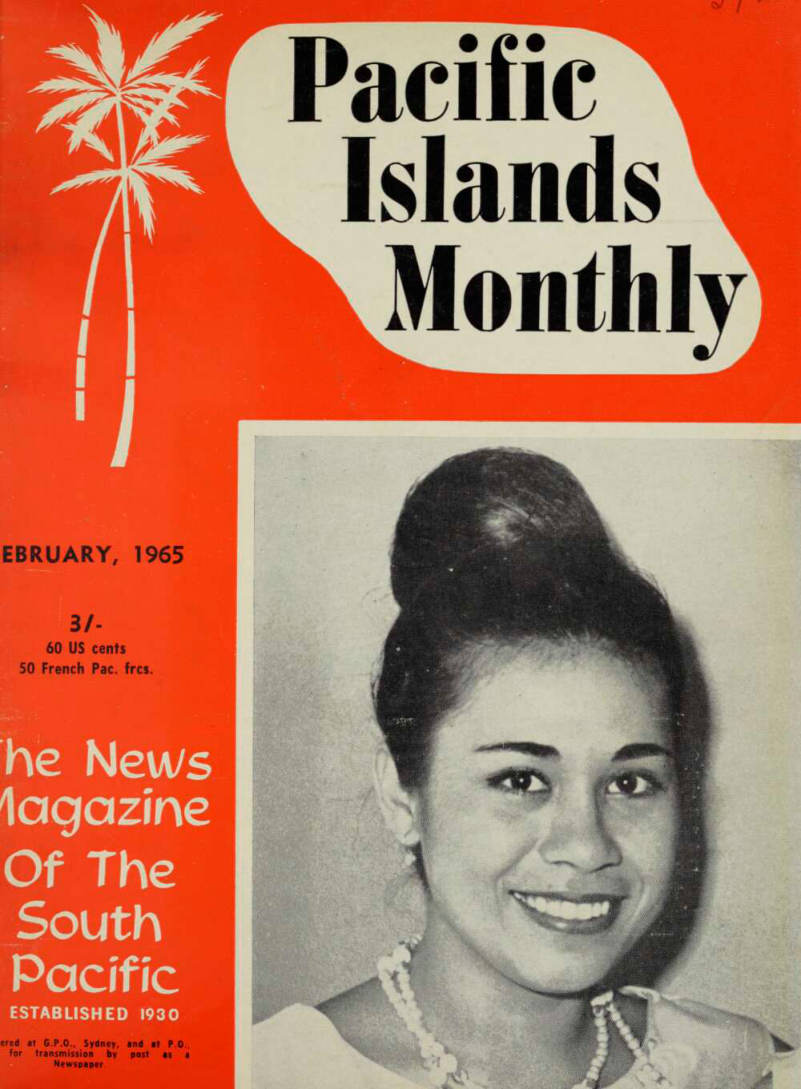 1
1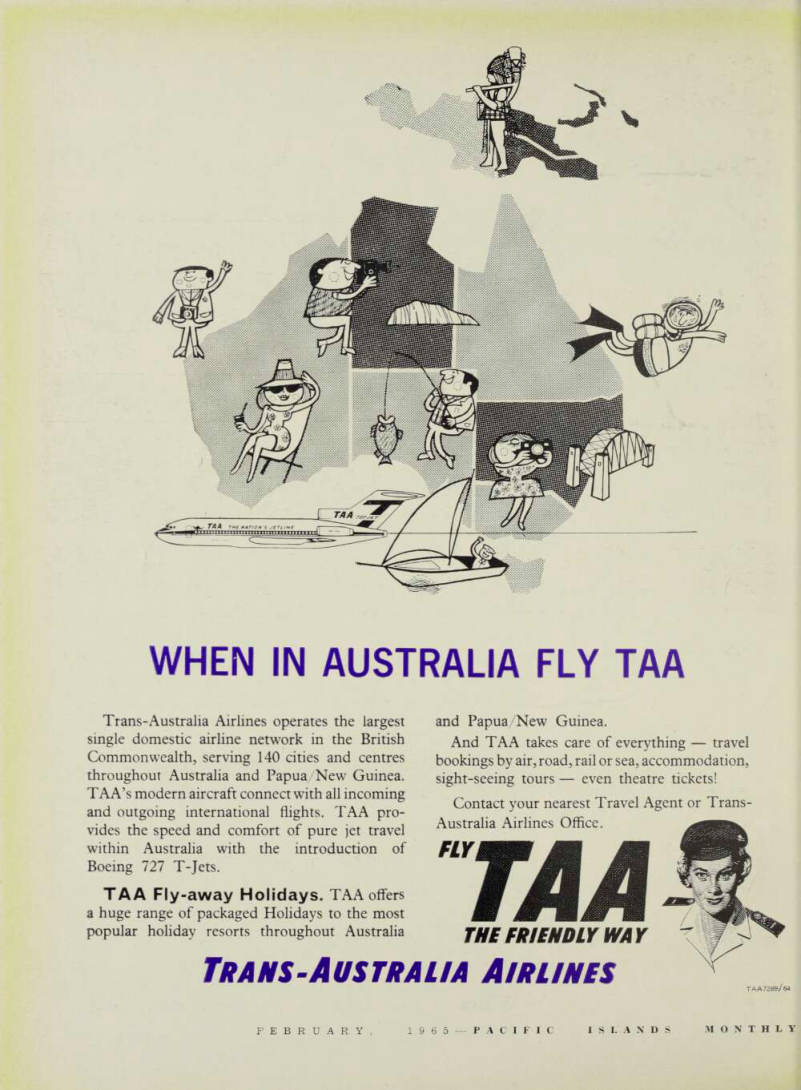 2
2 3
3 4
4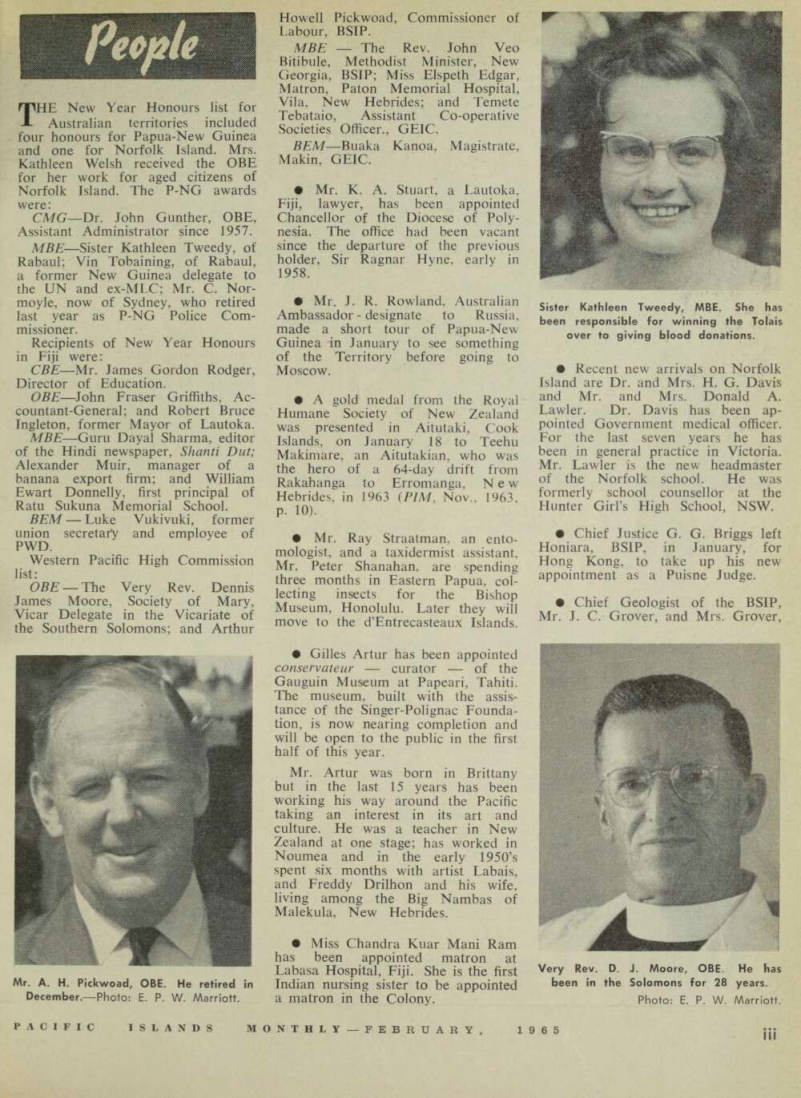 5
5 6
6 7
7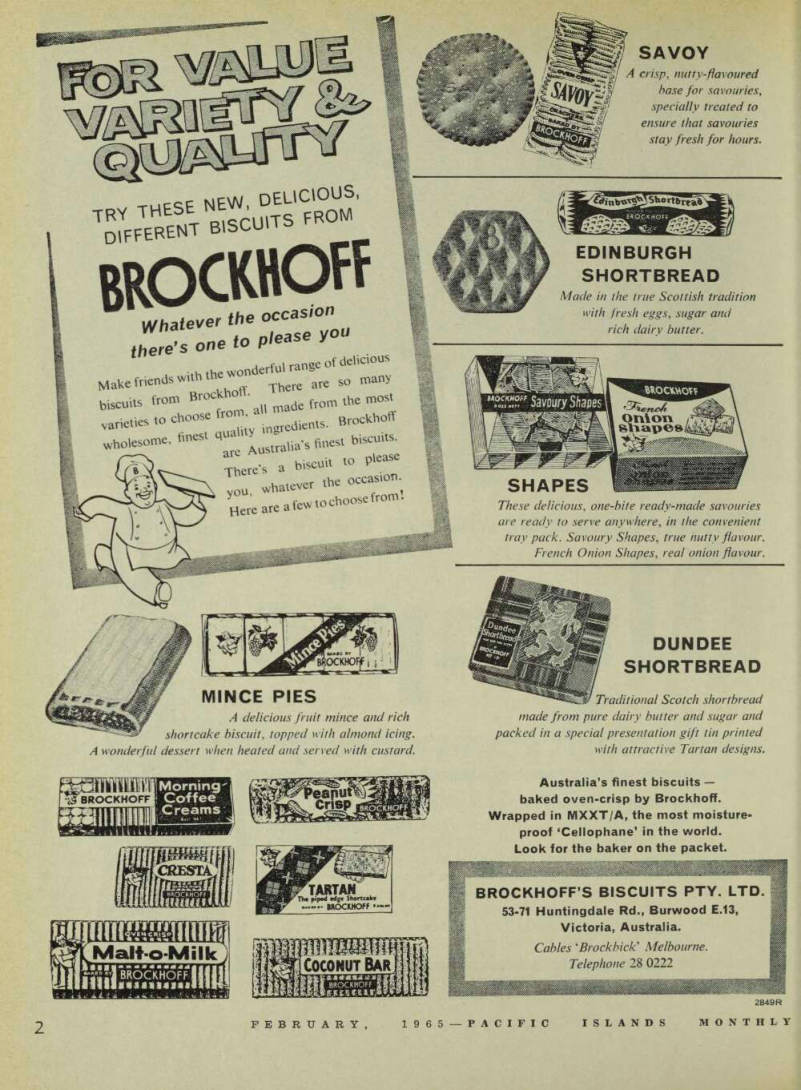 8
8 9
9 10
10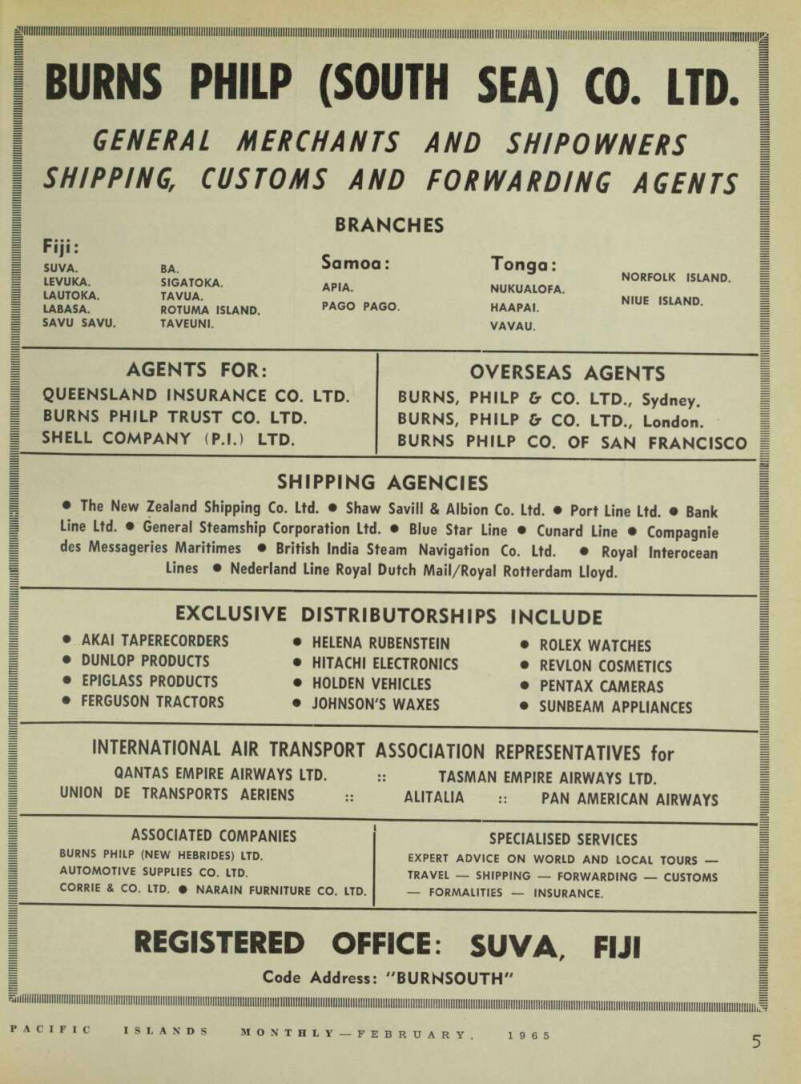 11
11 12
12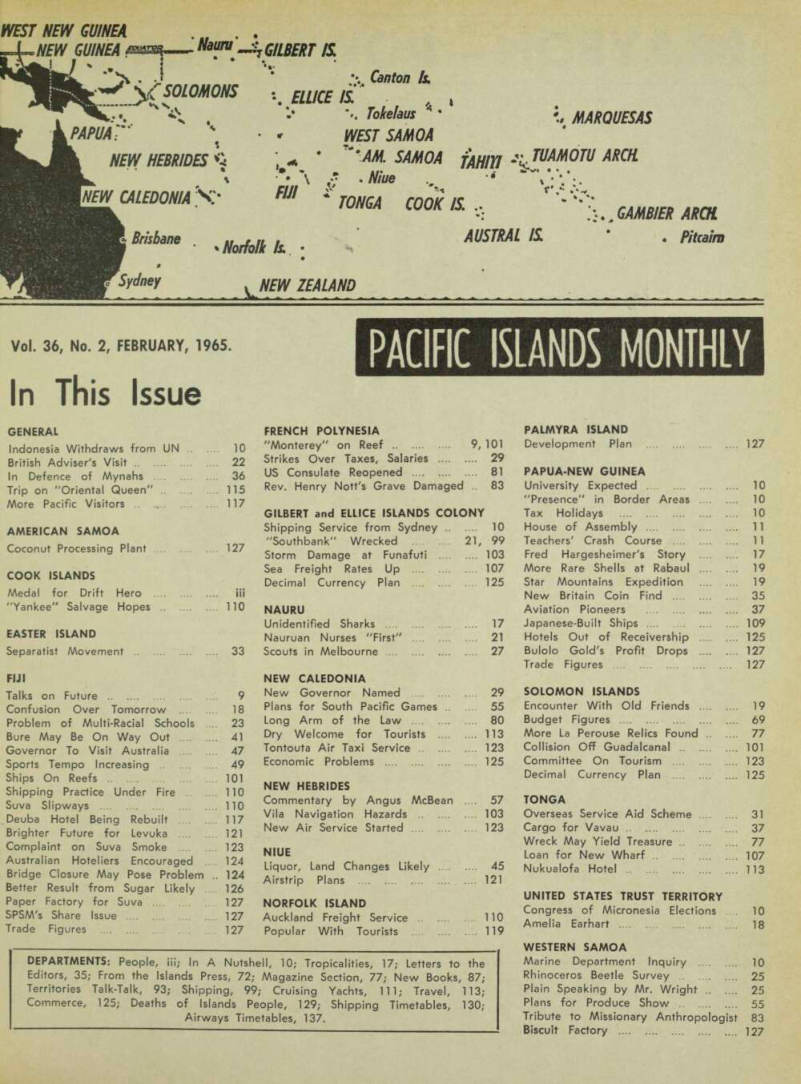 13
13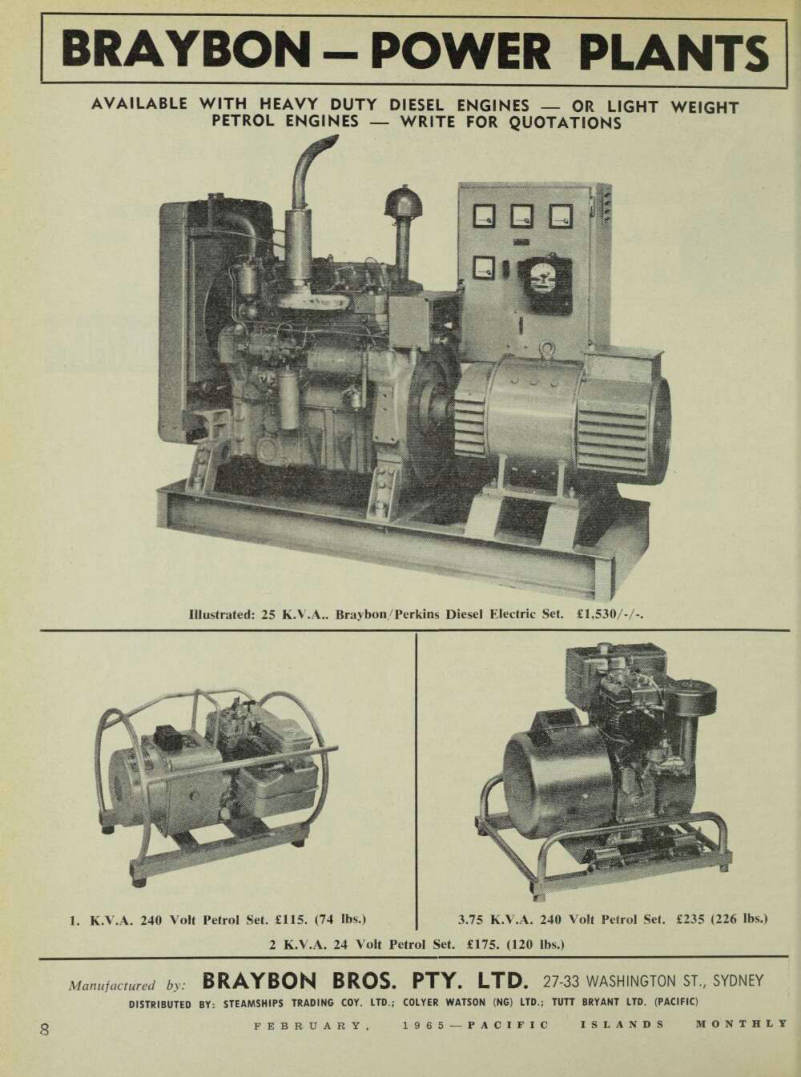 14
14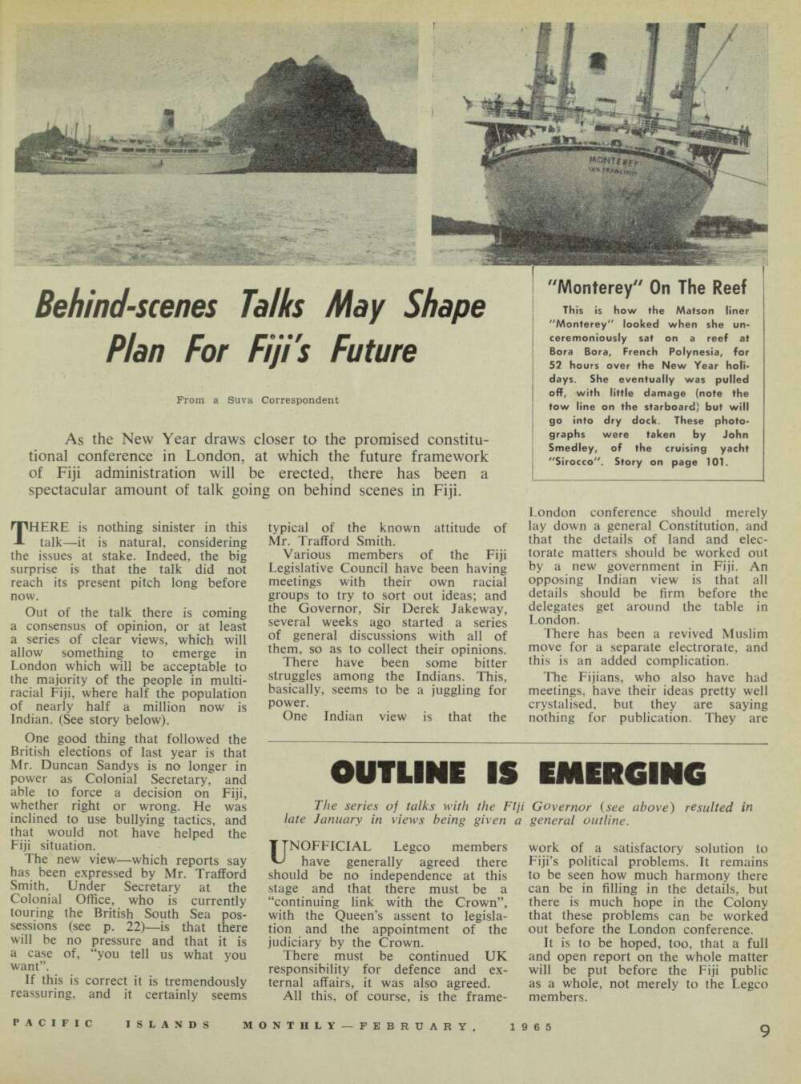 15
15 16
16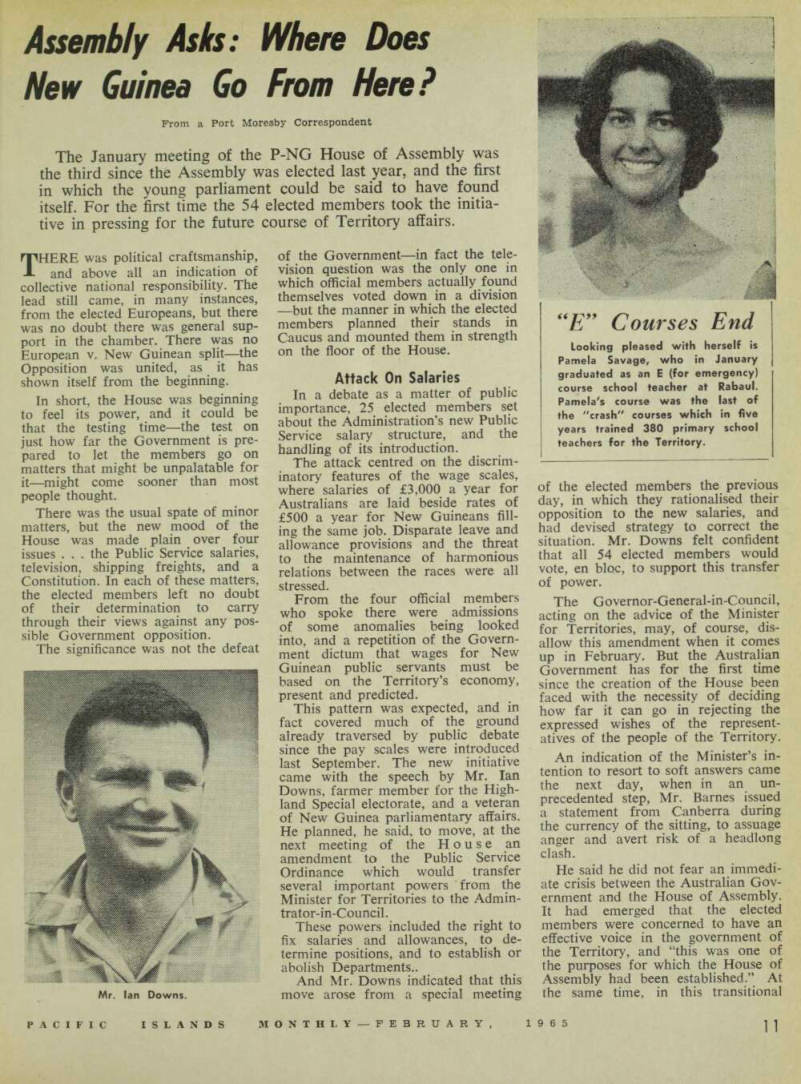 17
17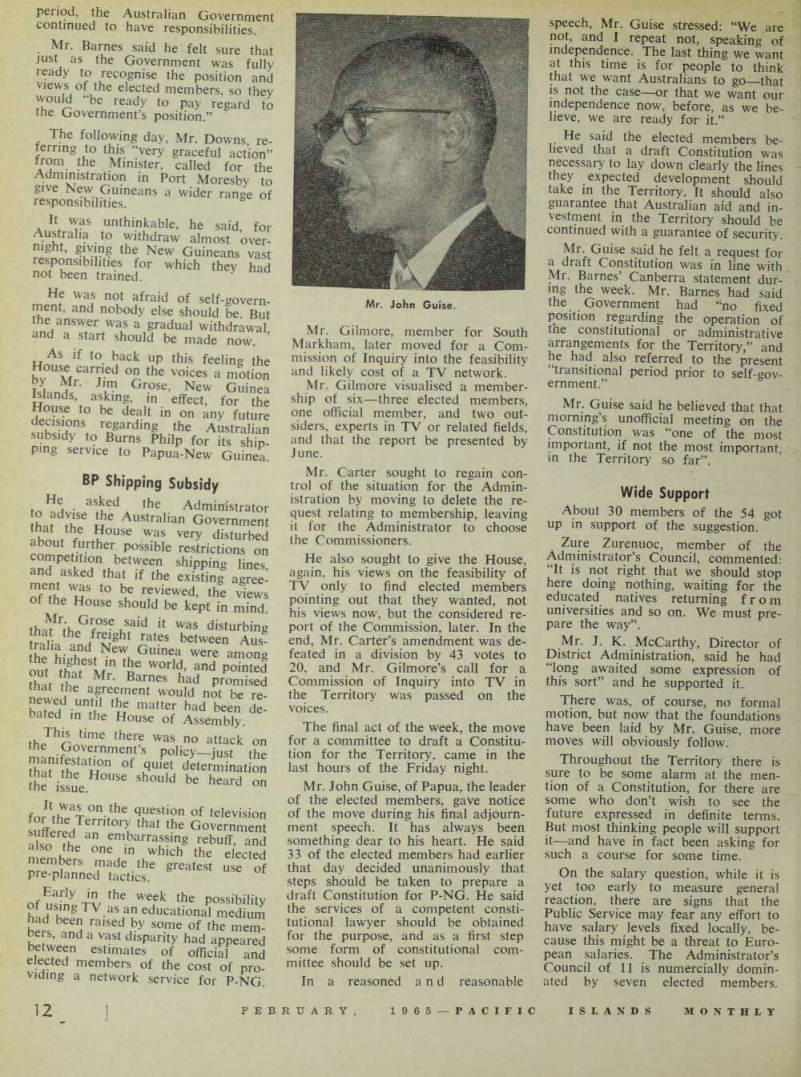 18
18 19
19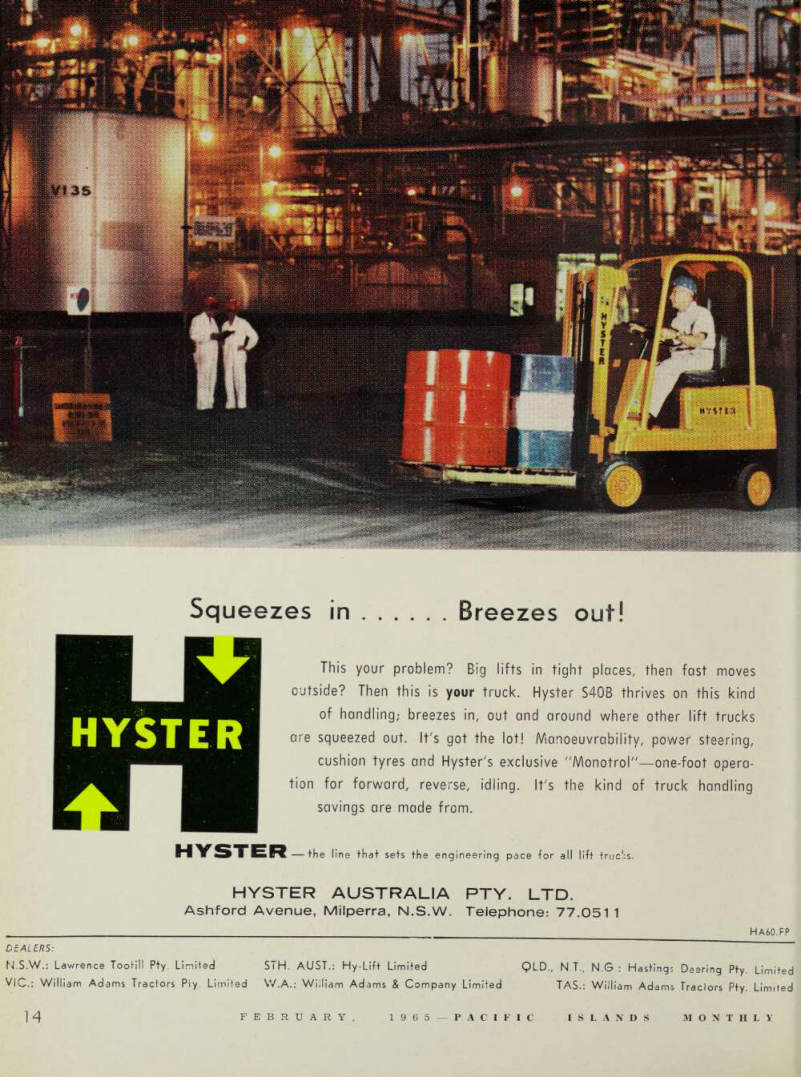 20
20 21
21 22
22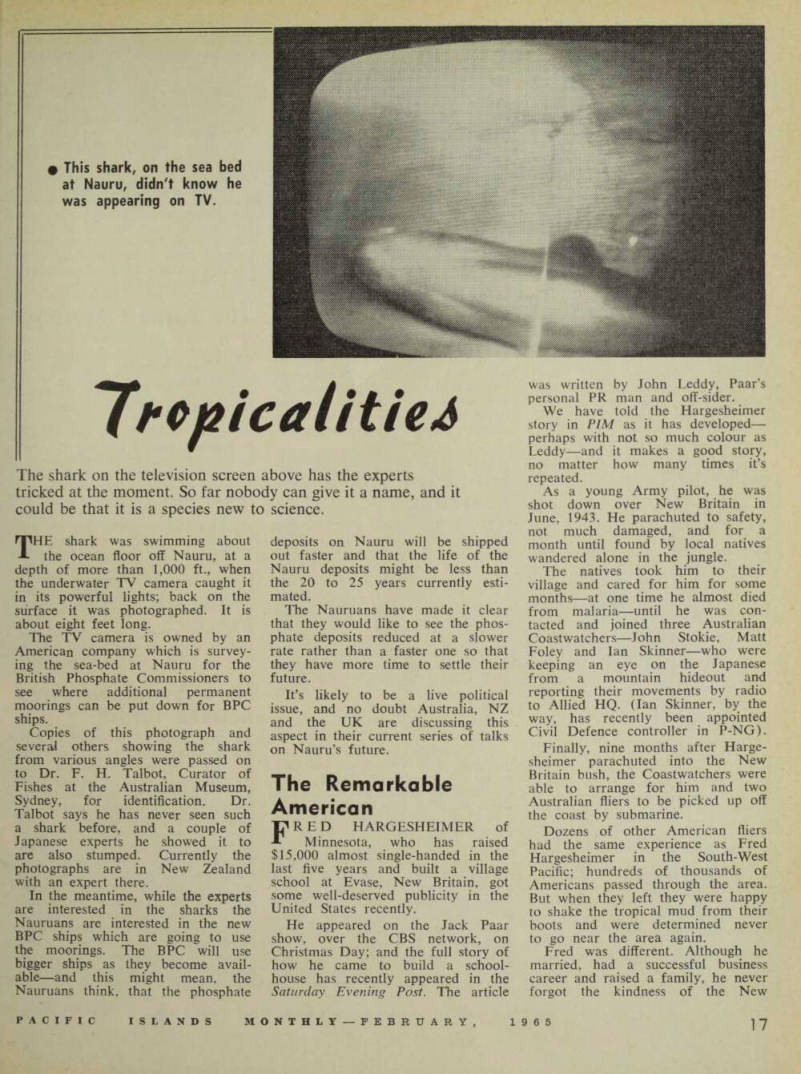 23
23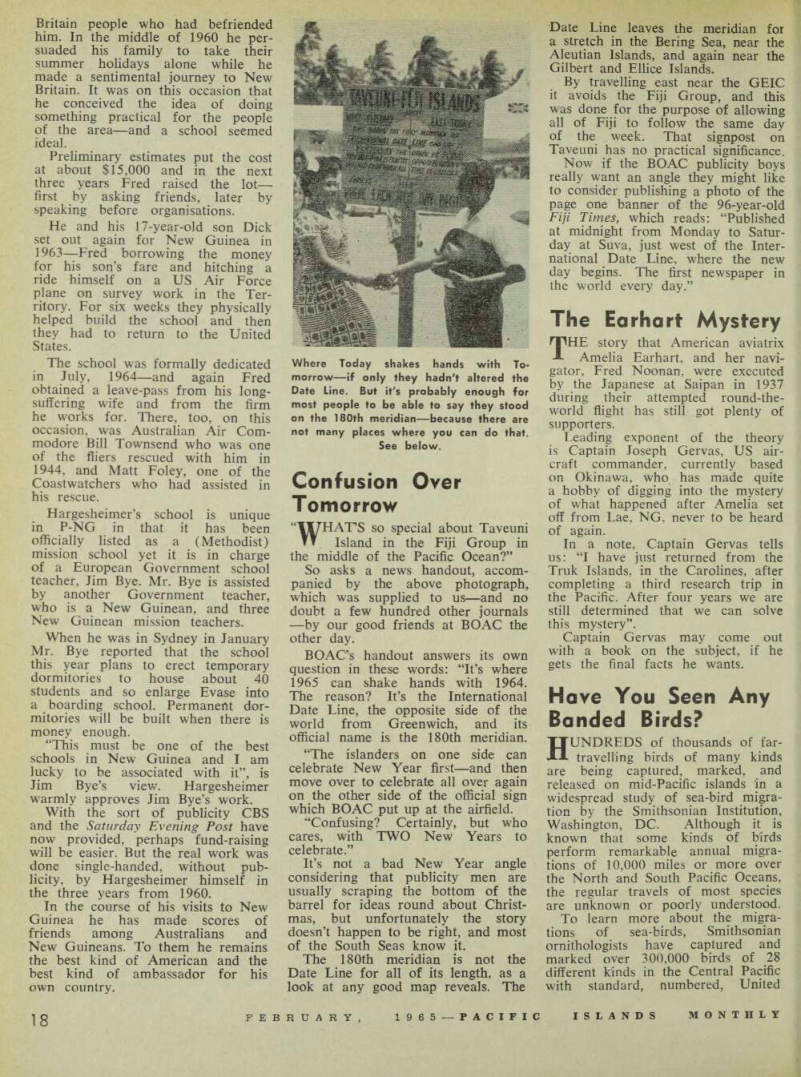 24
24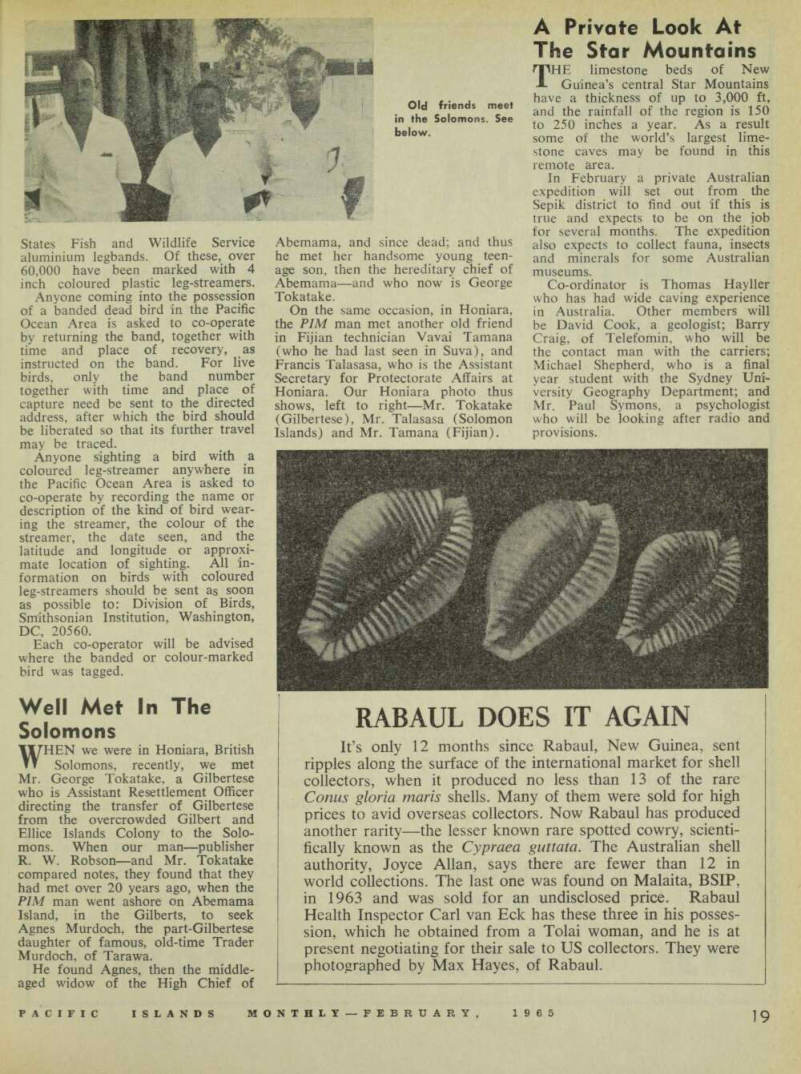 25
25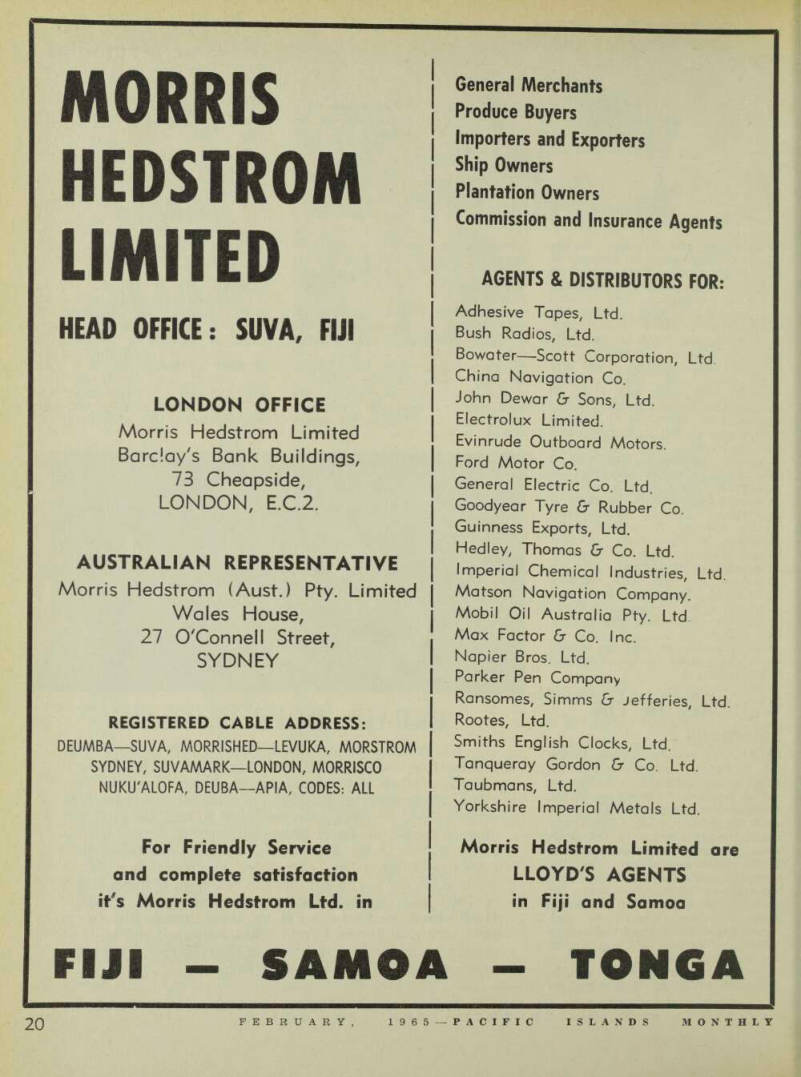 26
26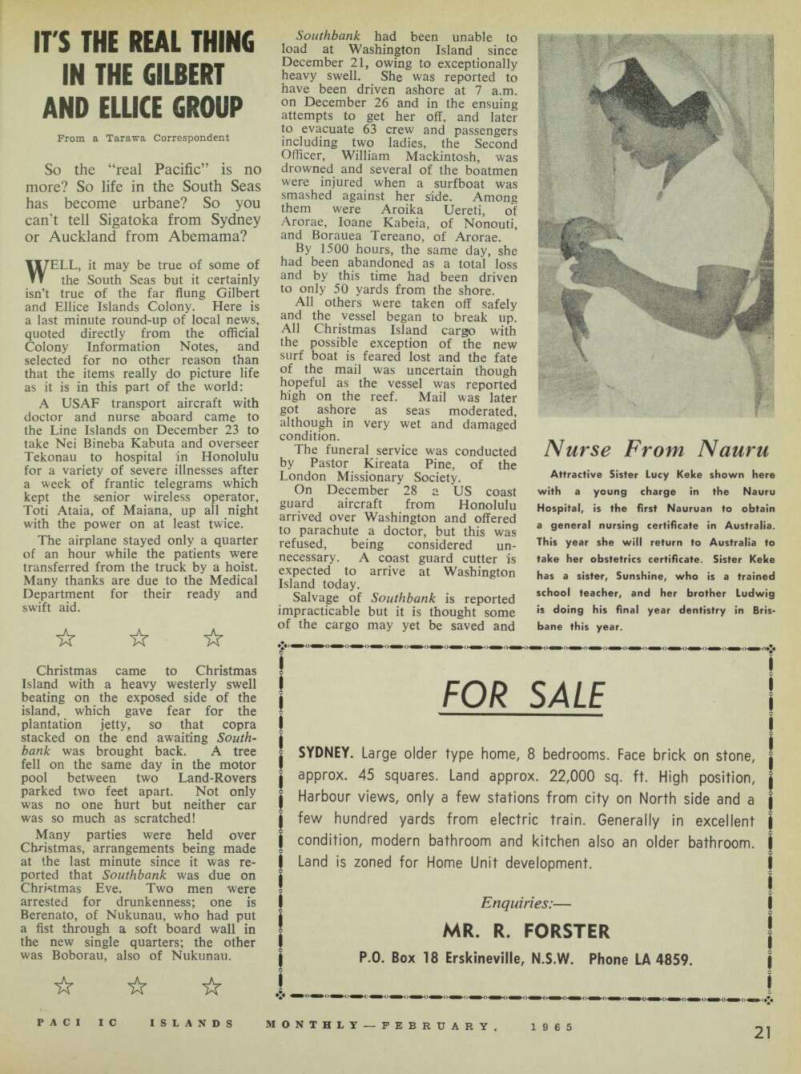 27
27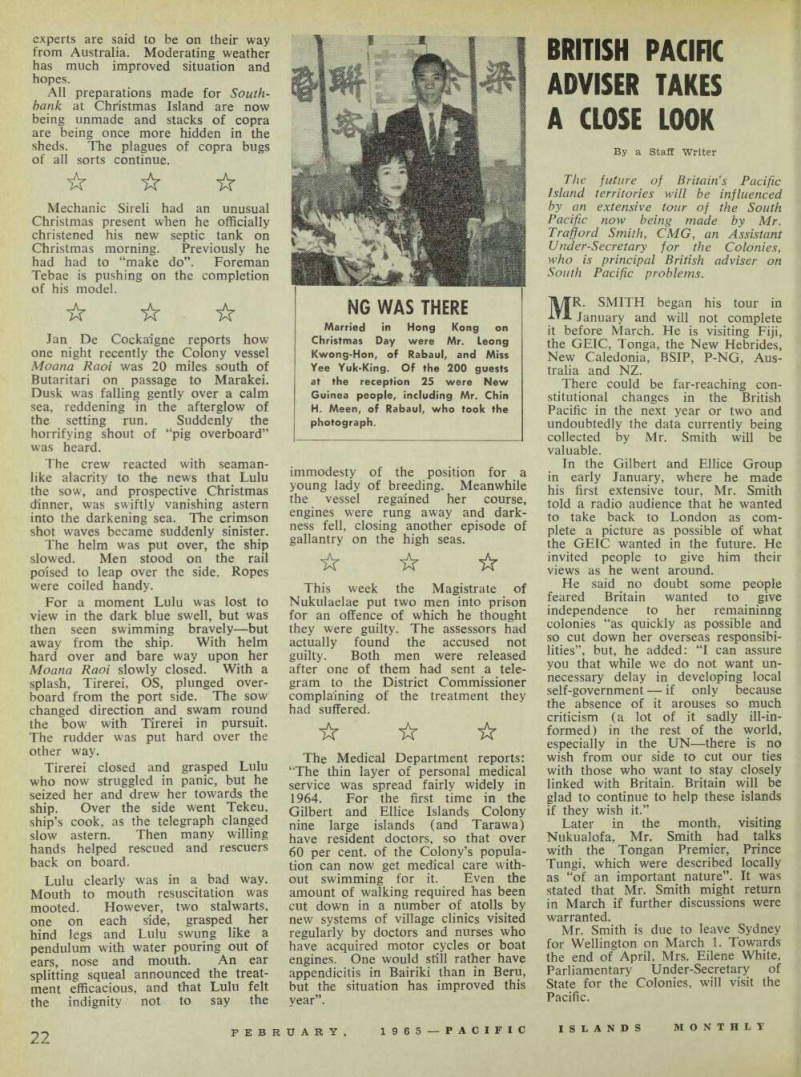 28
28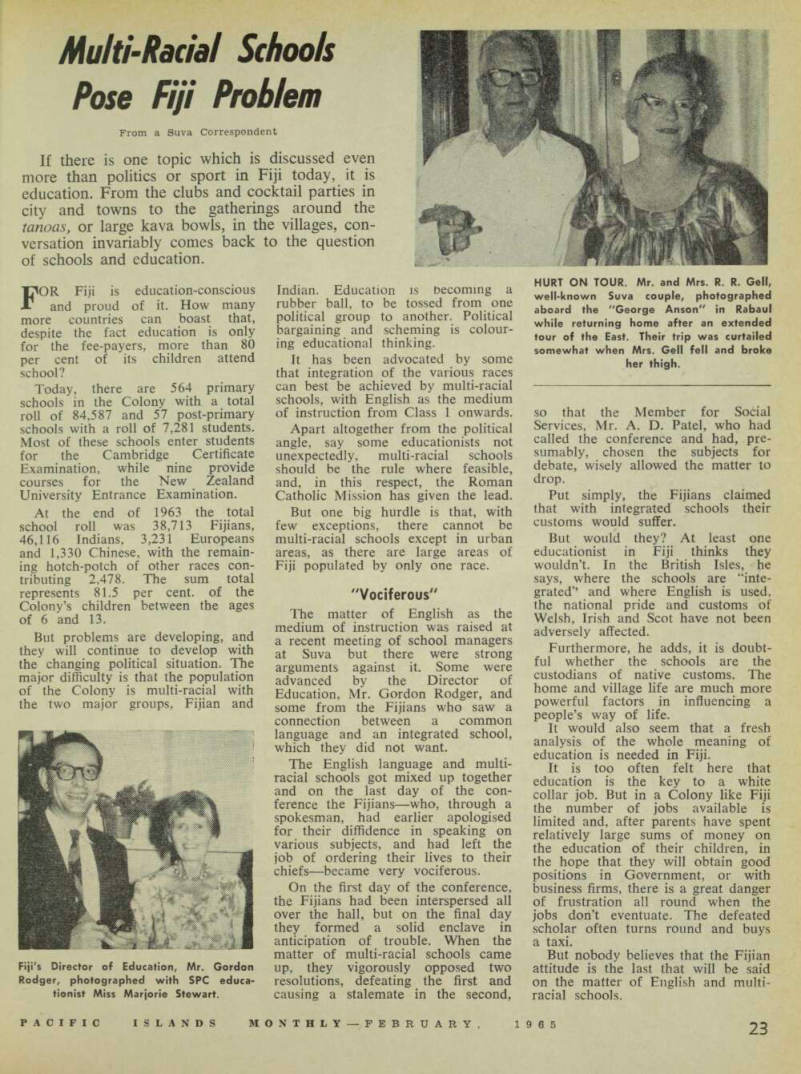 29
29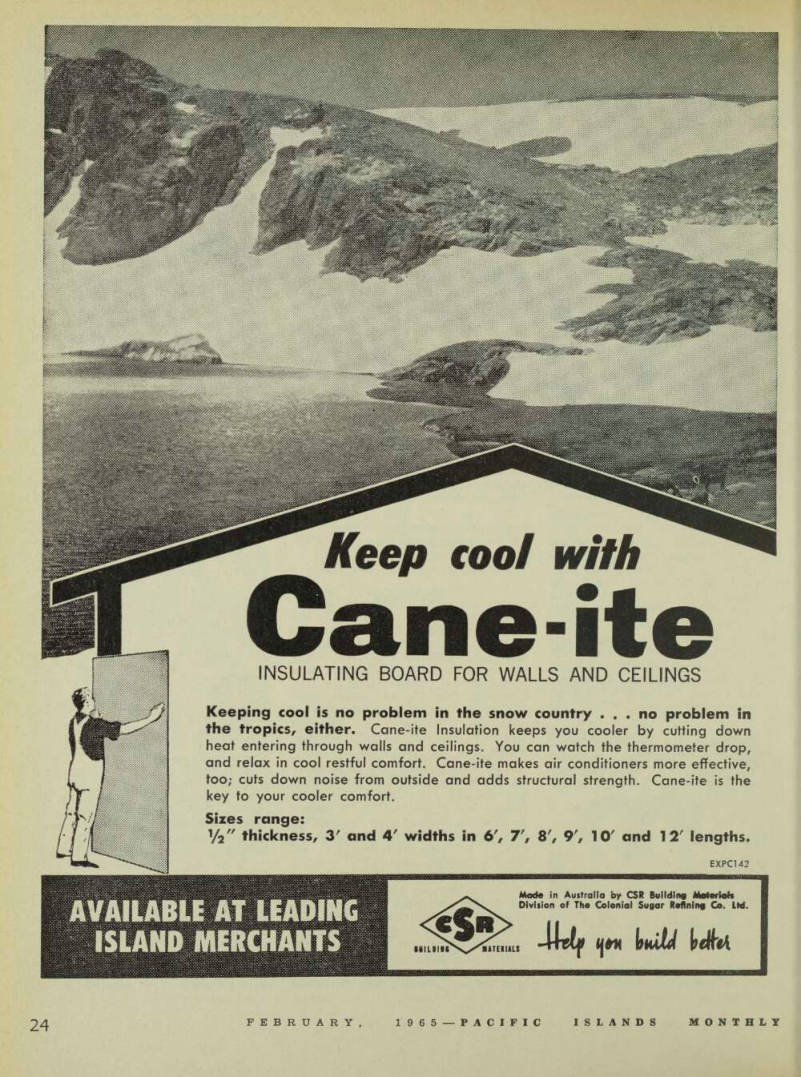 30
30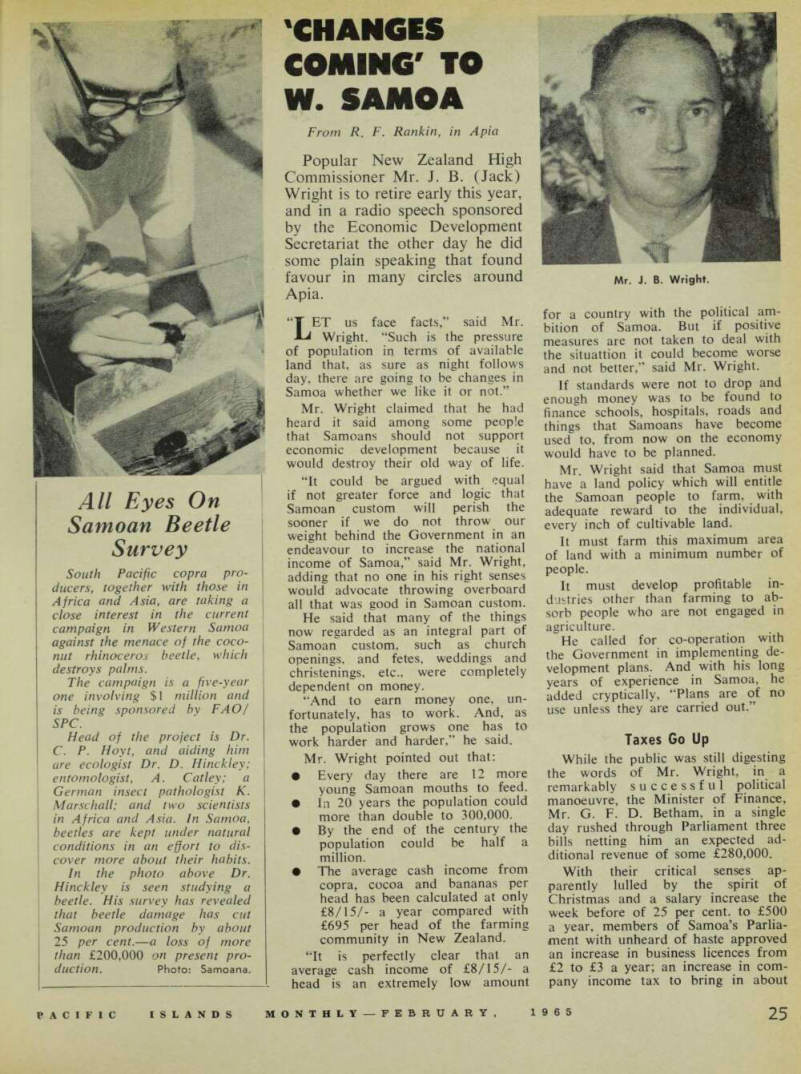 31
31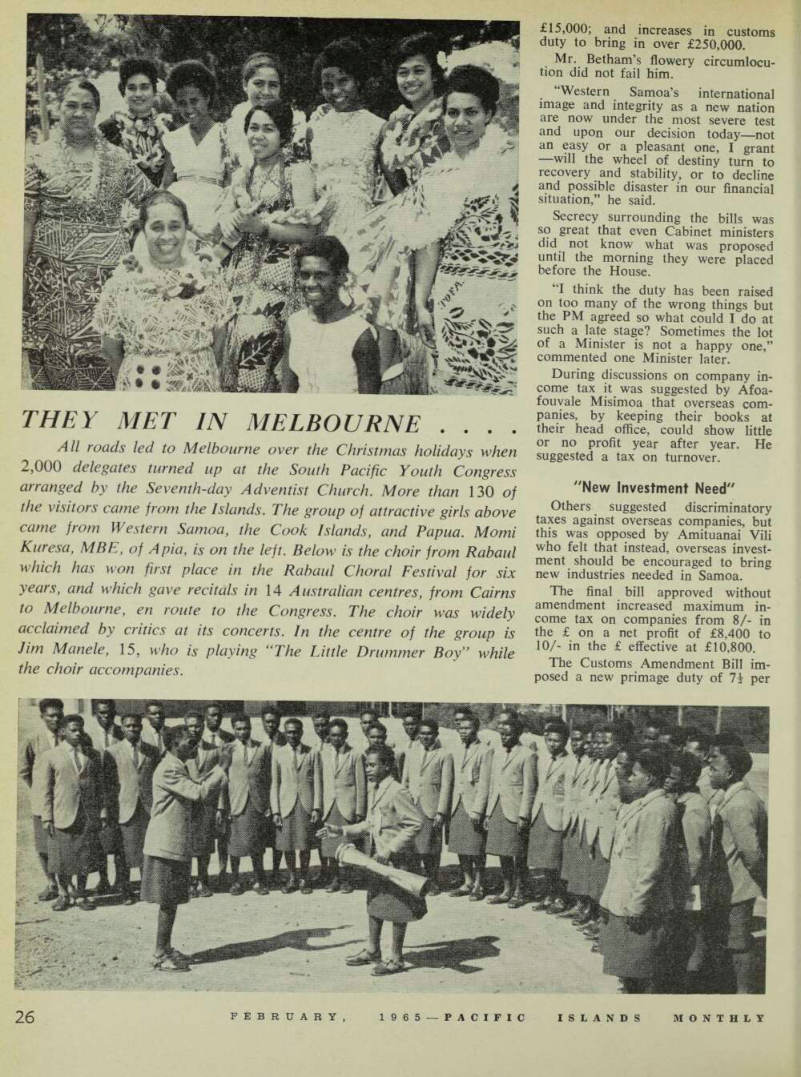 32
32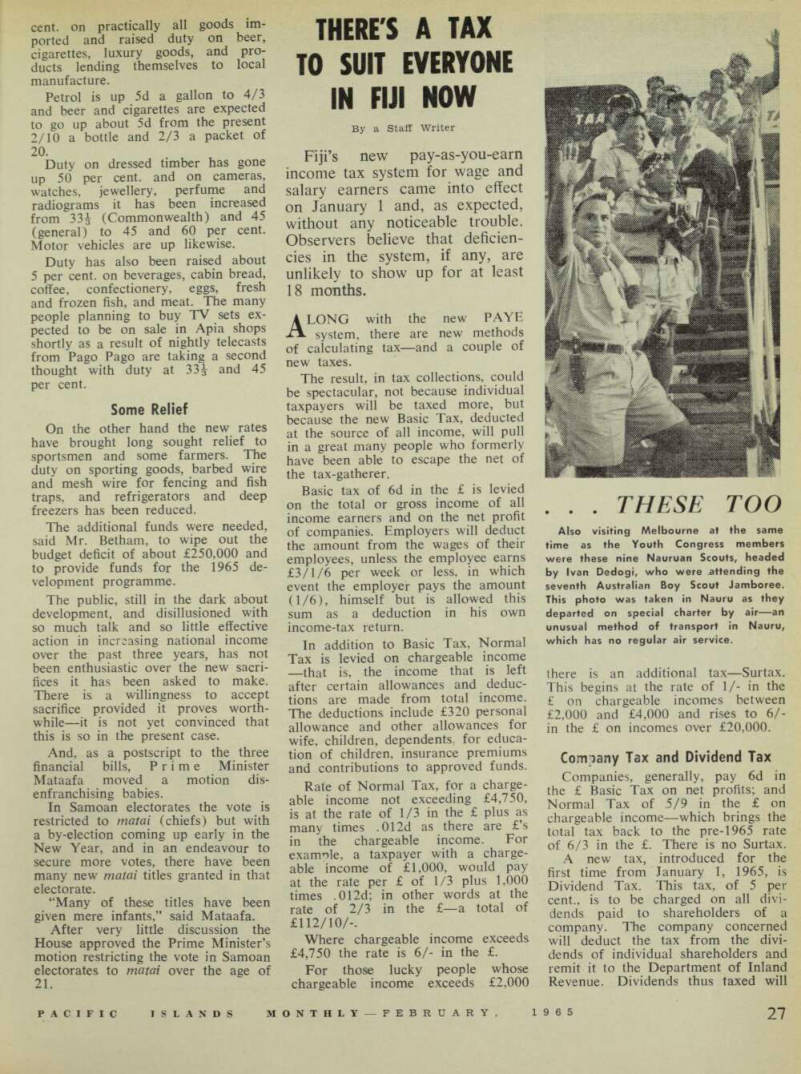 33
33 34
34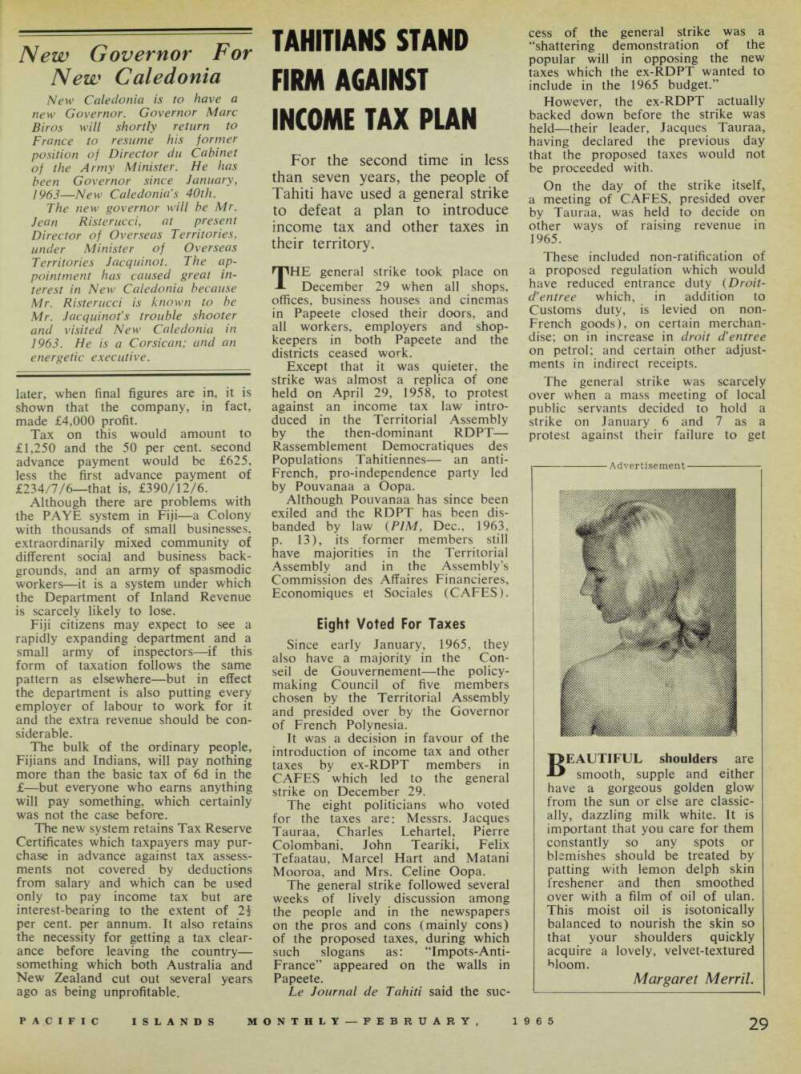 35
35 36
36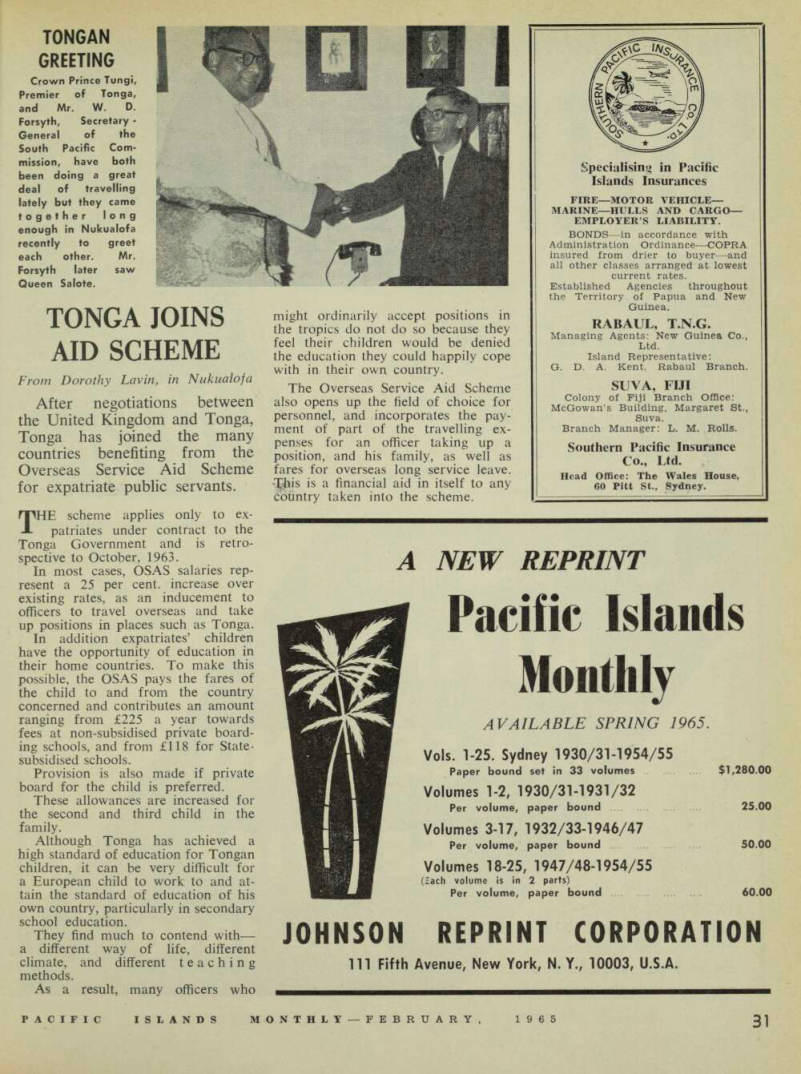 37
37 38
38 39
39 40
40 41
41 42
42 43
43 44
44 45
45 46
46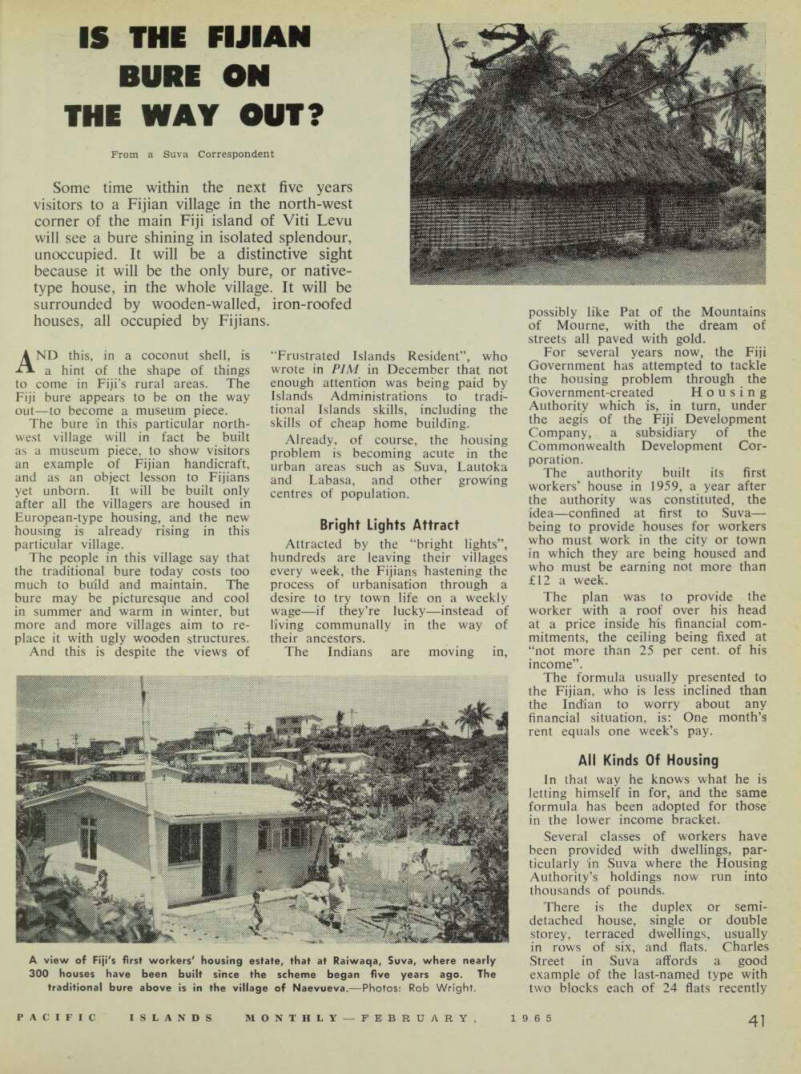 47
47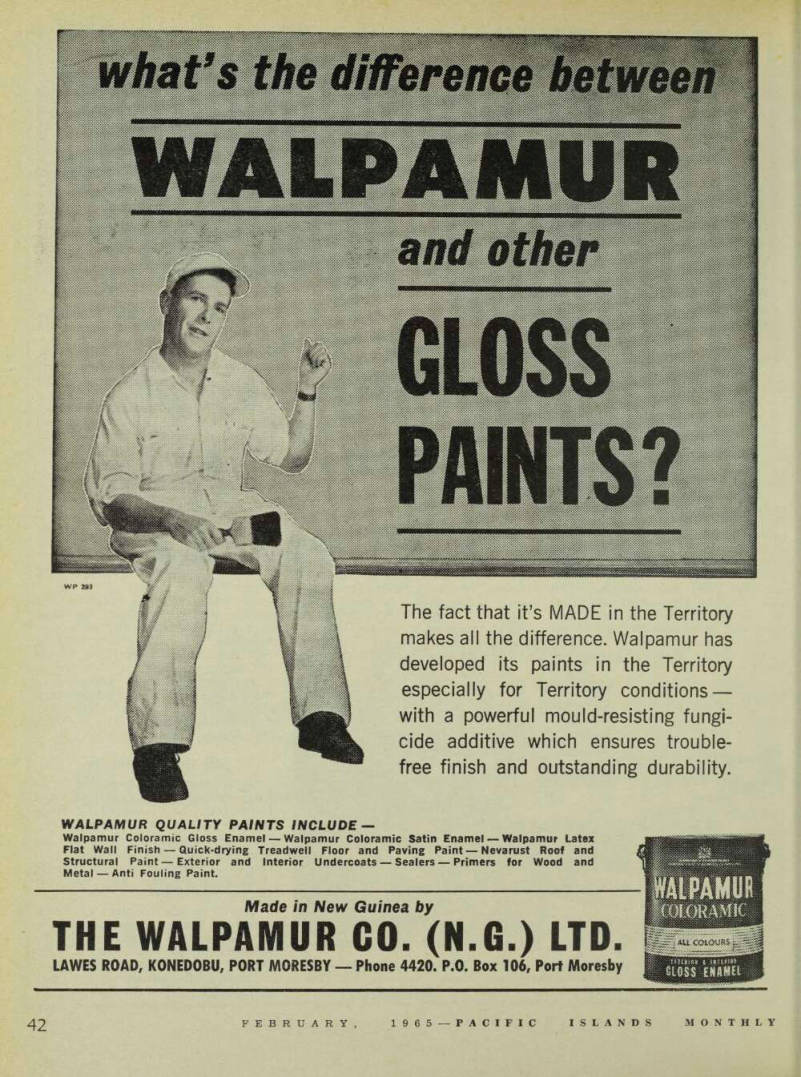 48
48 49
49 50
50 51
51 52
52 53
53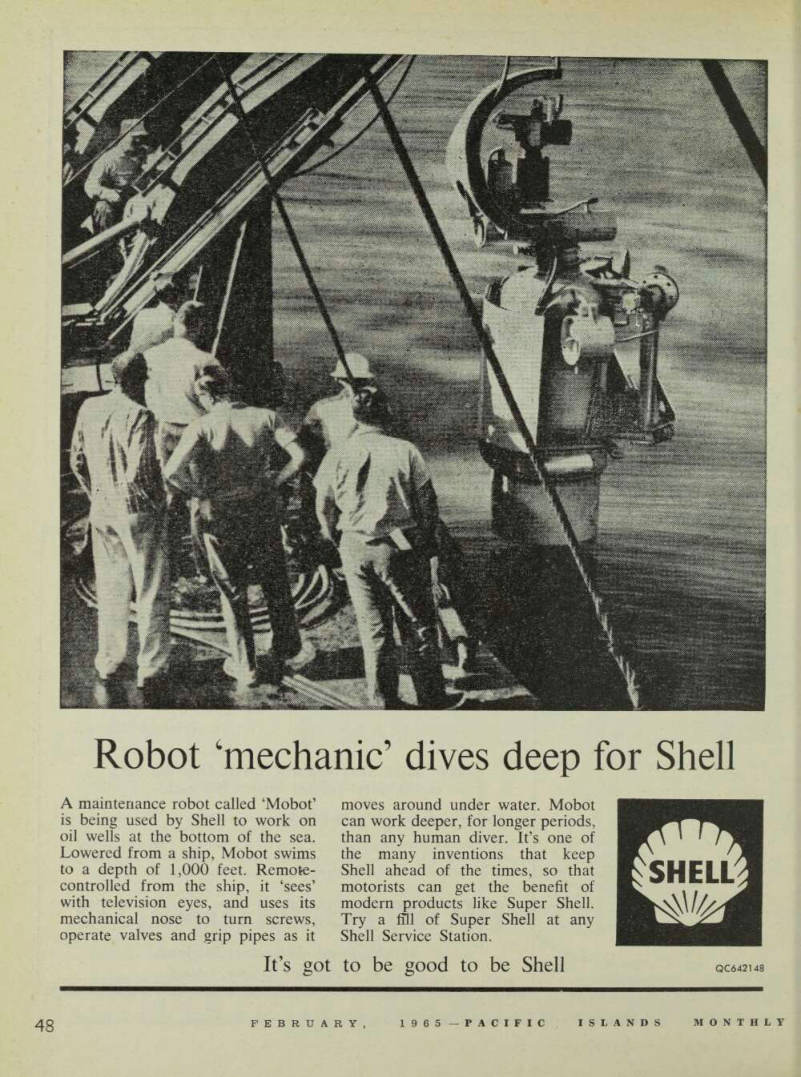 54
54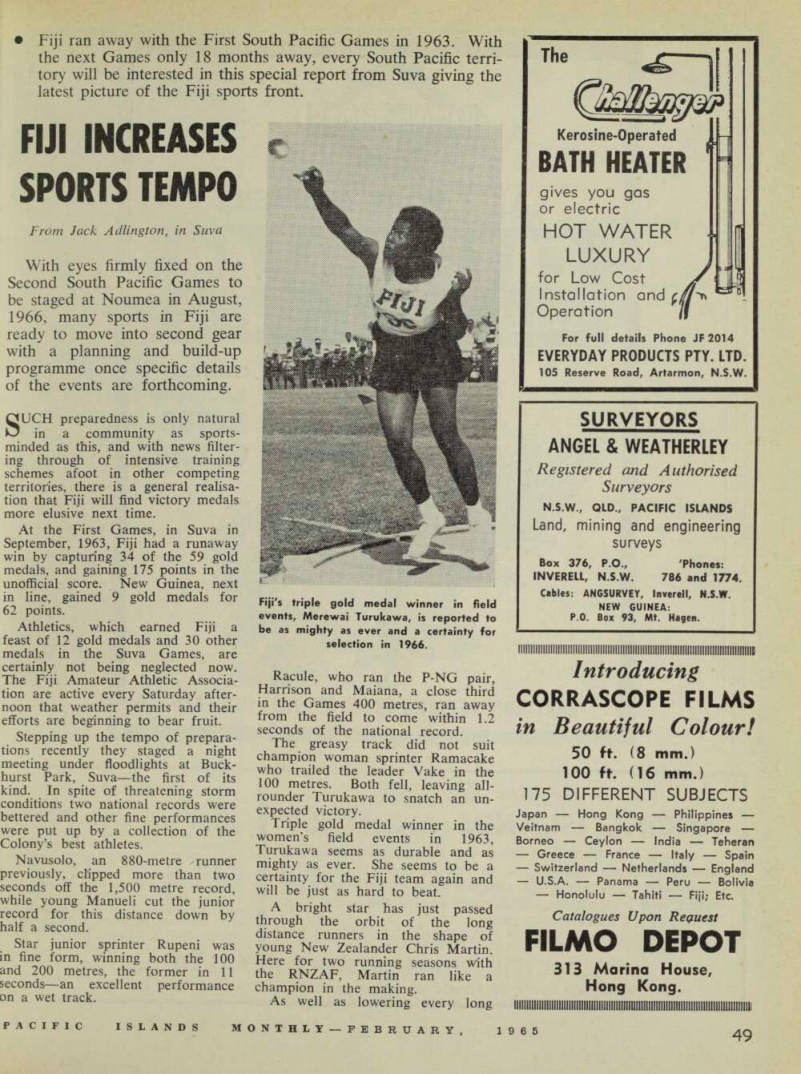 55
55 56
56 57
57 58
58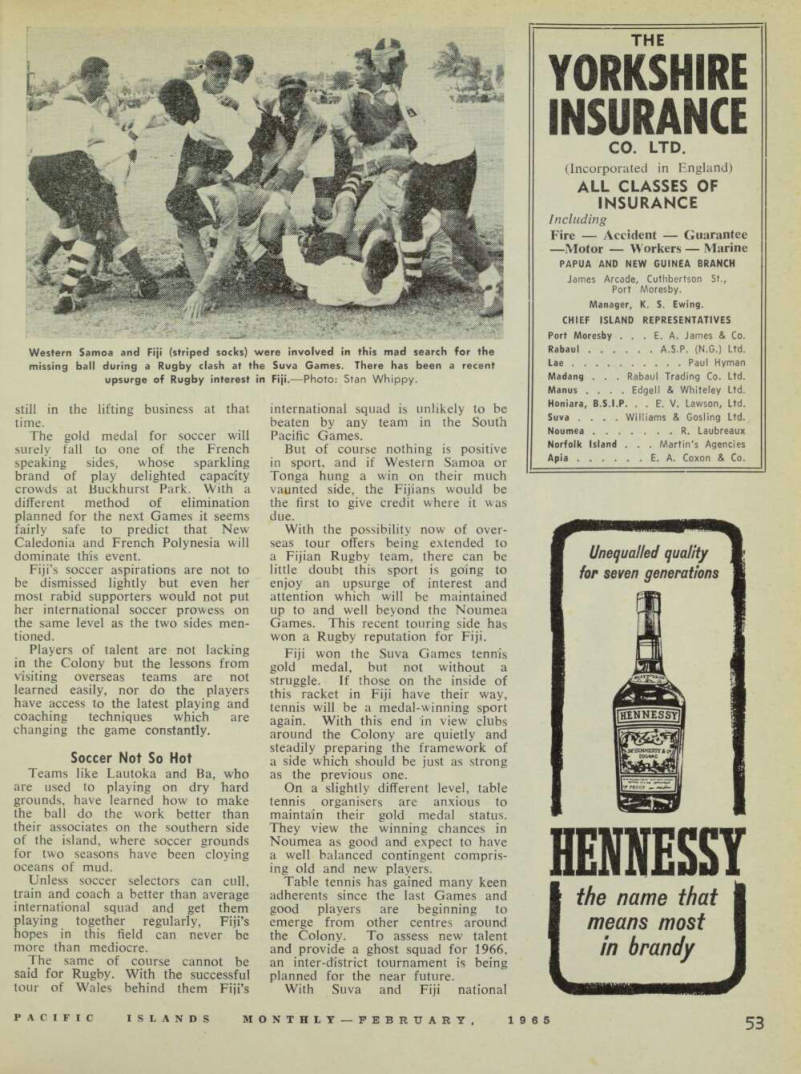 59
59 60
60 61
61 62
62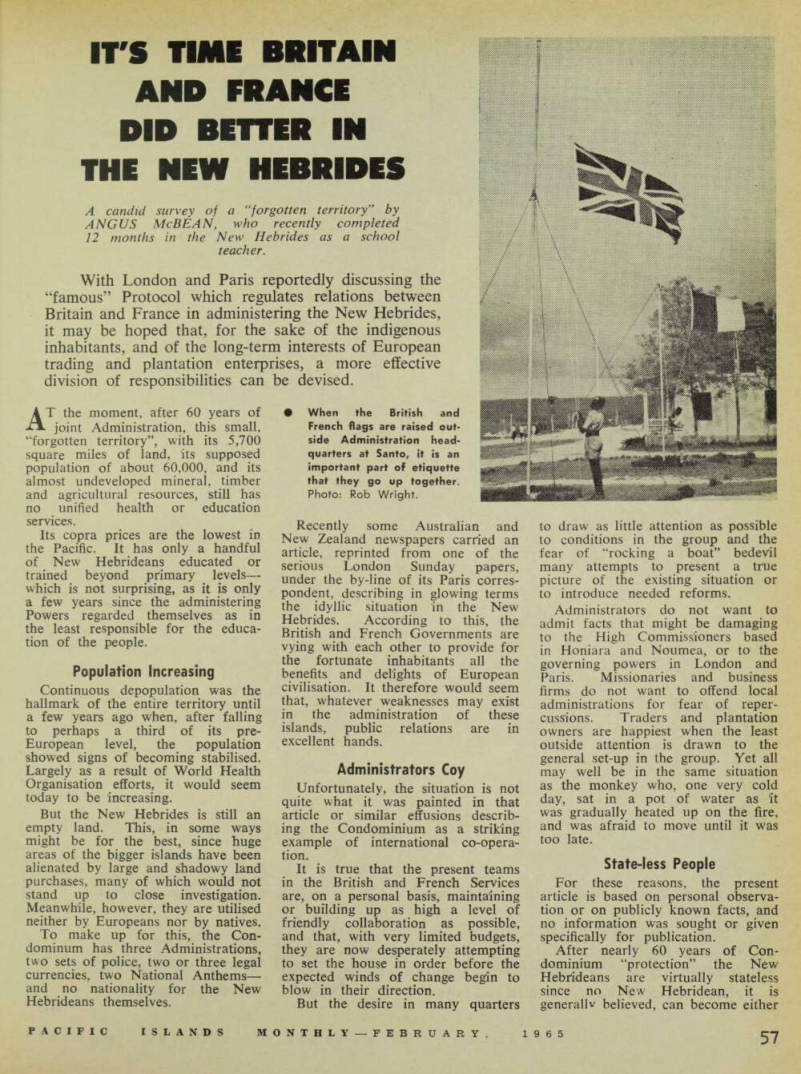 63
63 64
64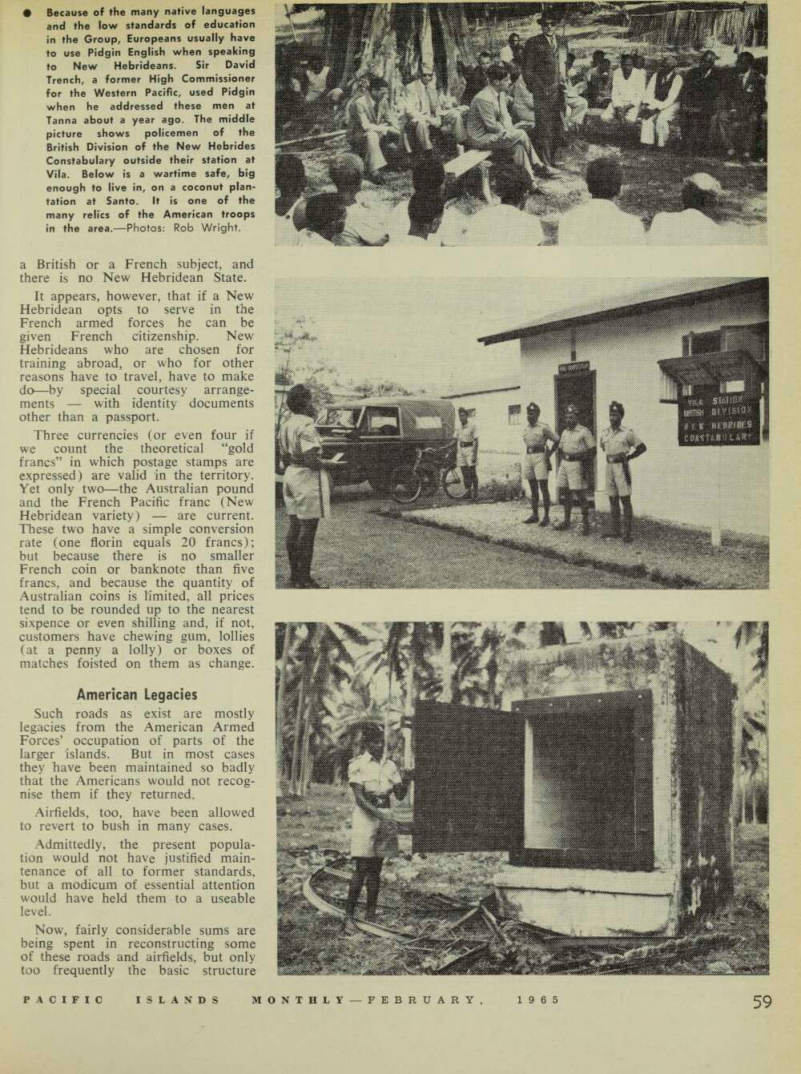 65
65 66
66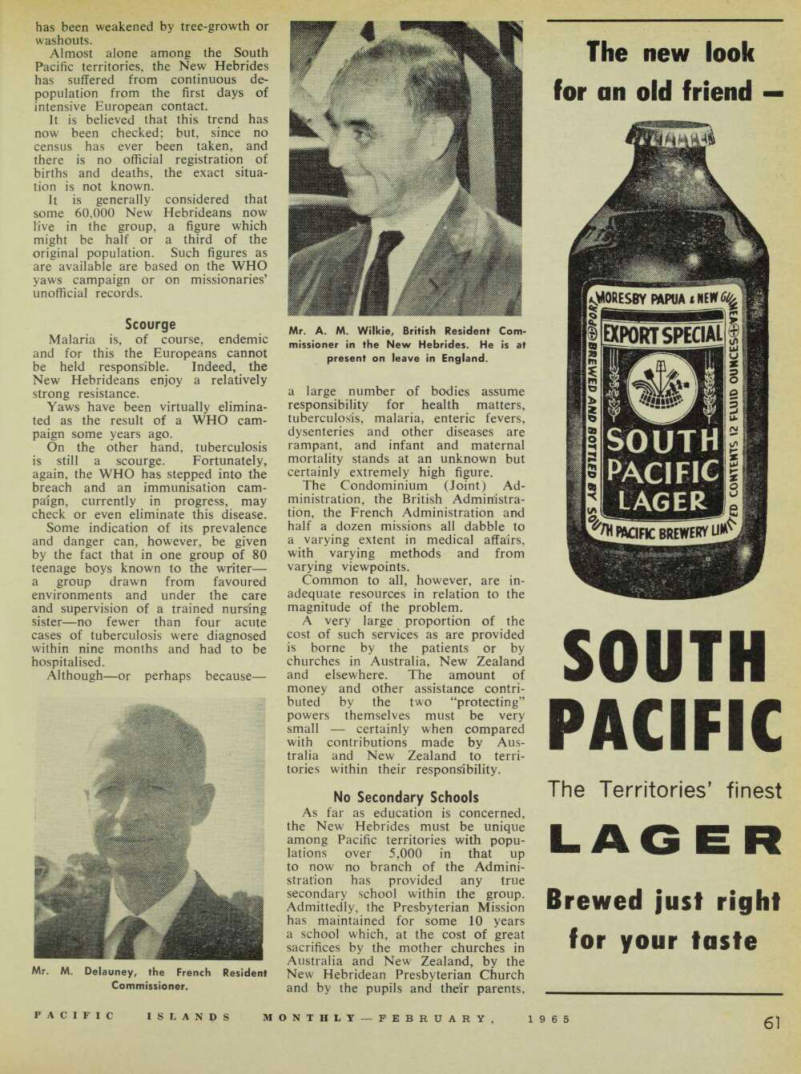 67
67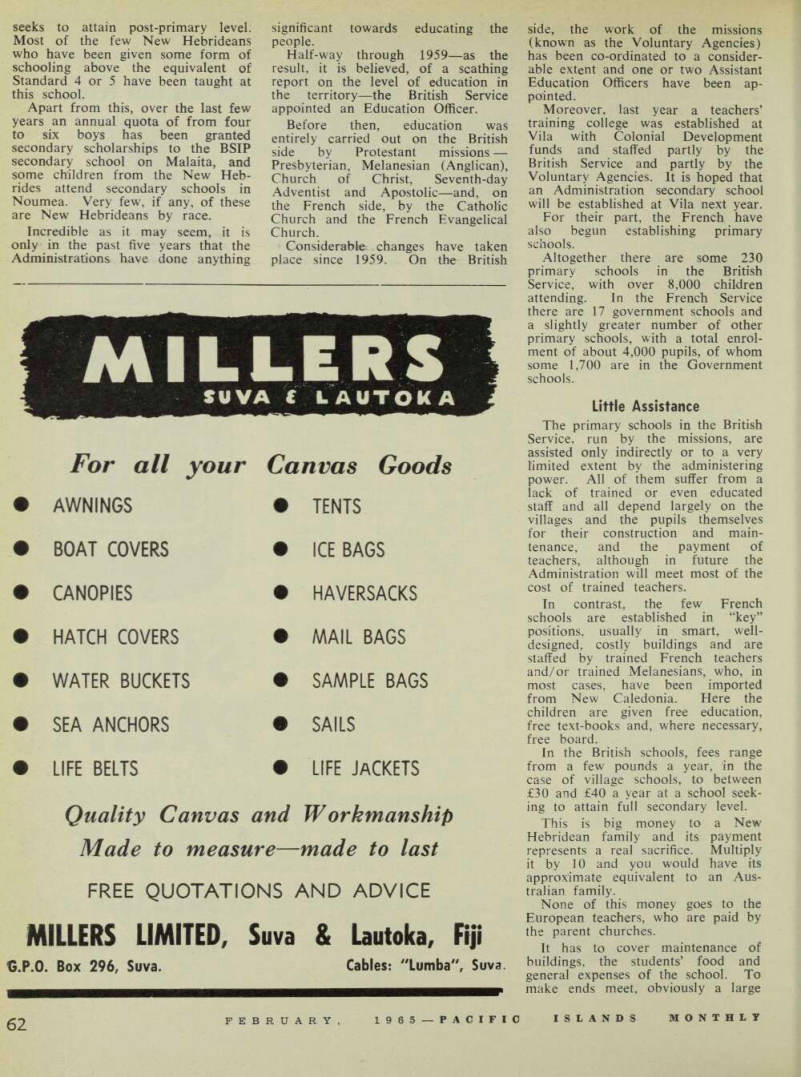 68
68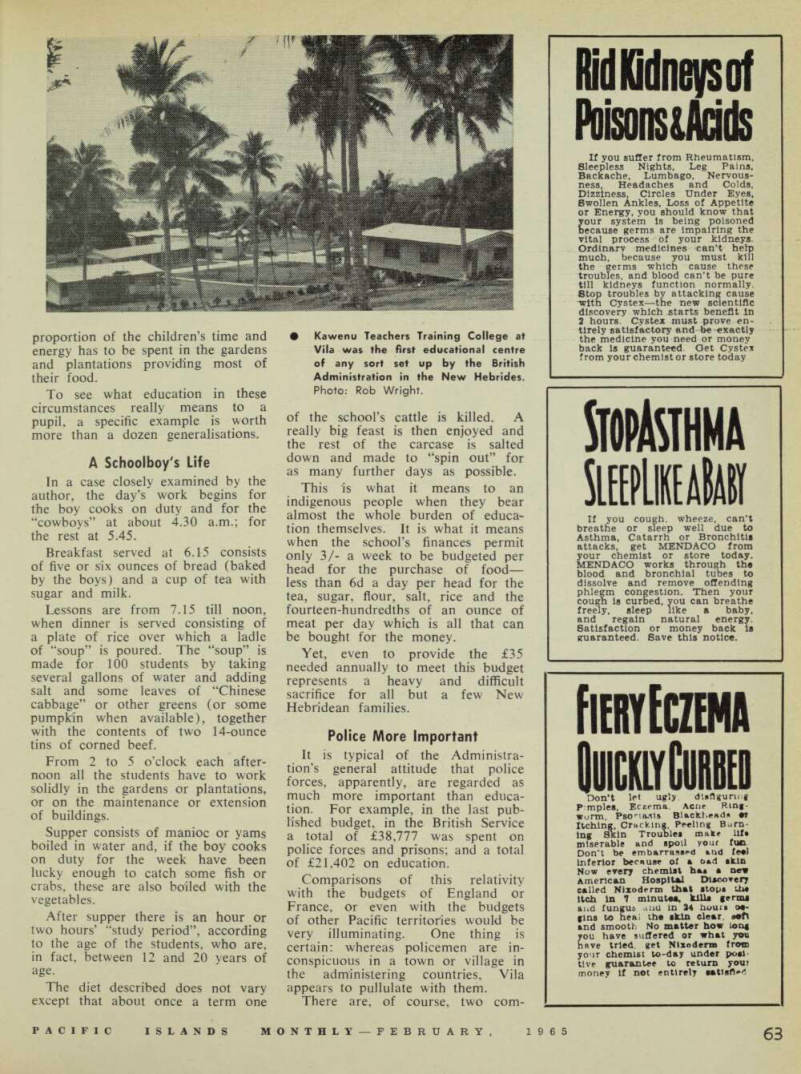 69
69 70
70 71
71 72
72 73
73 74
74 75
75 76
76 77
77 78
78 79
79 80
80 81
81 82
82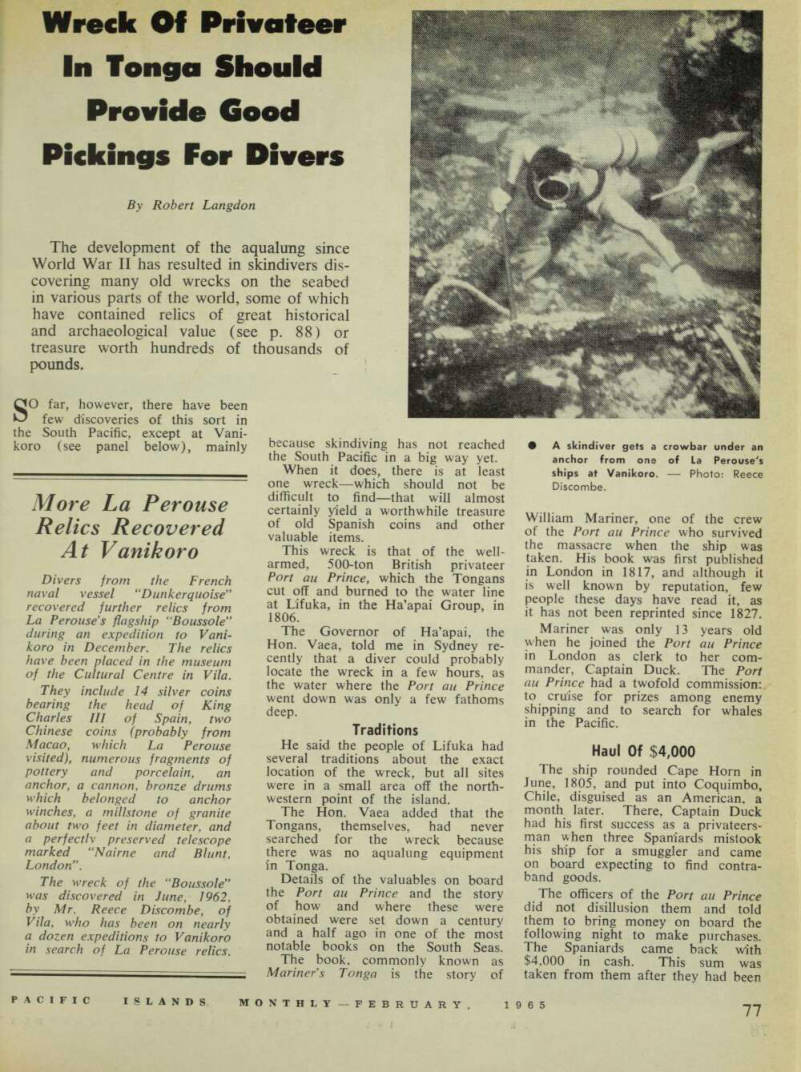 83
83 84
84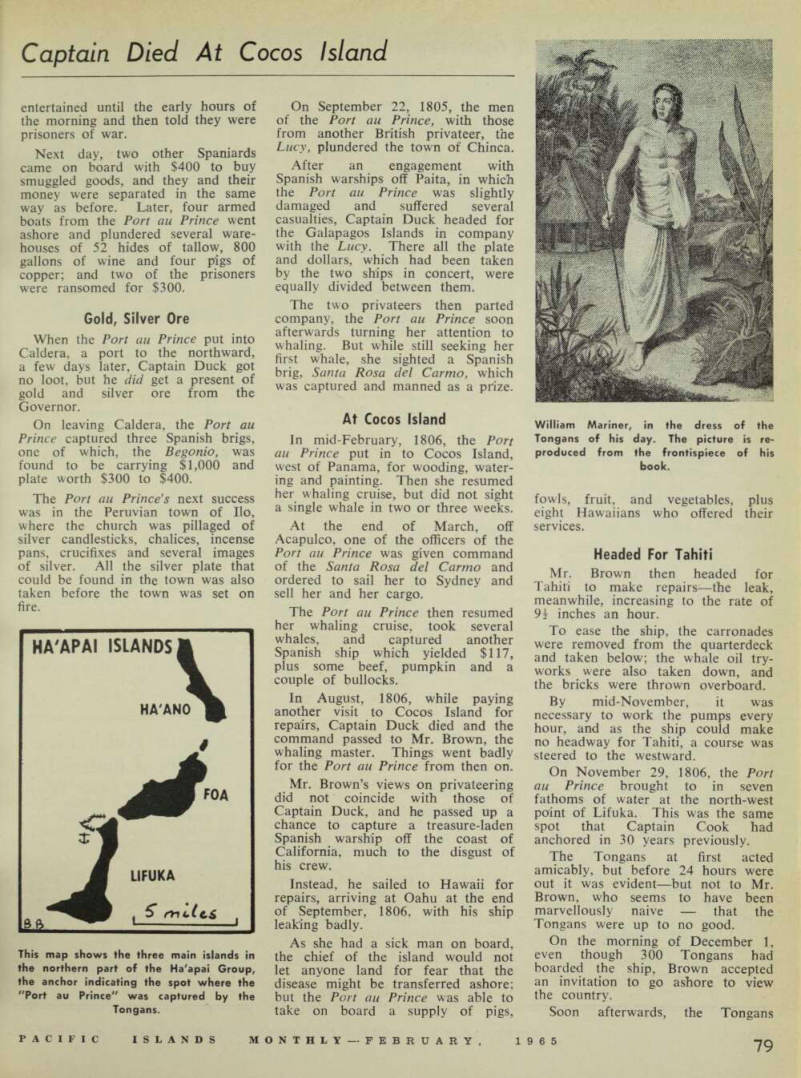 85
85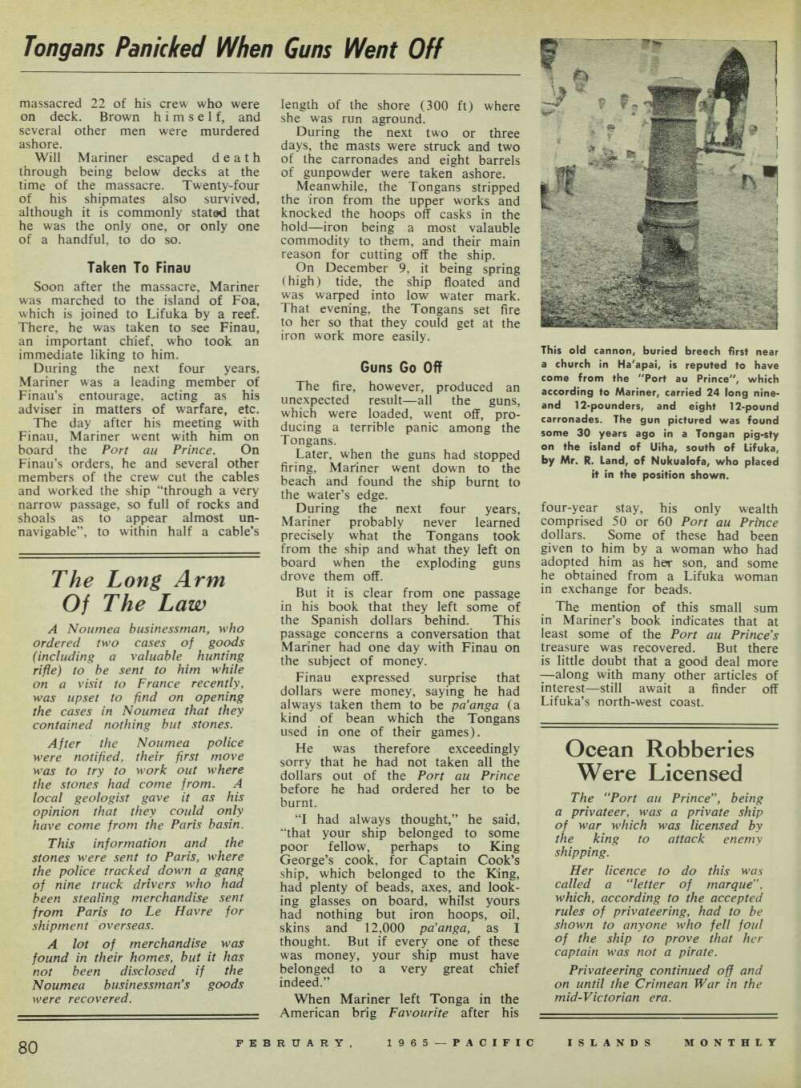 86
86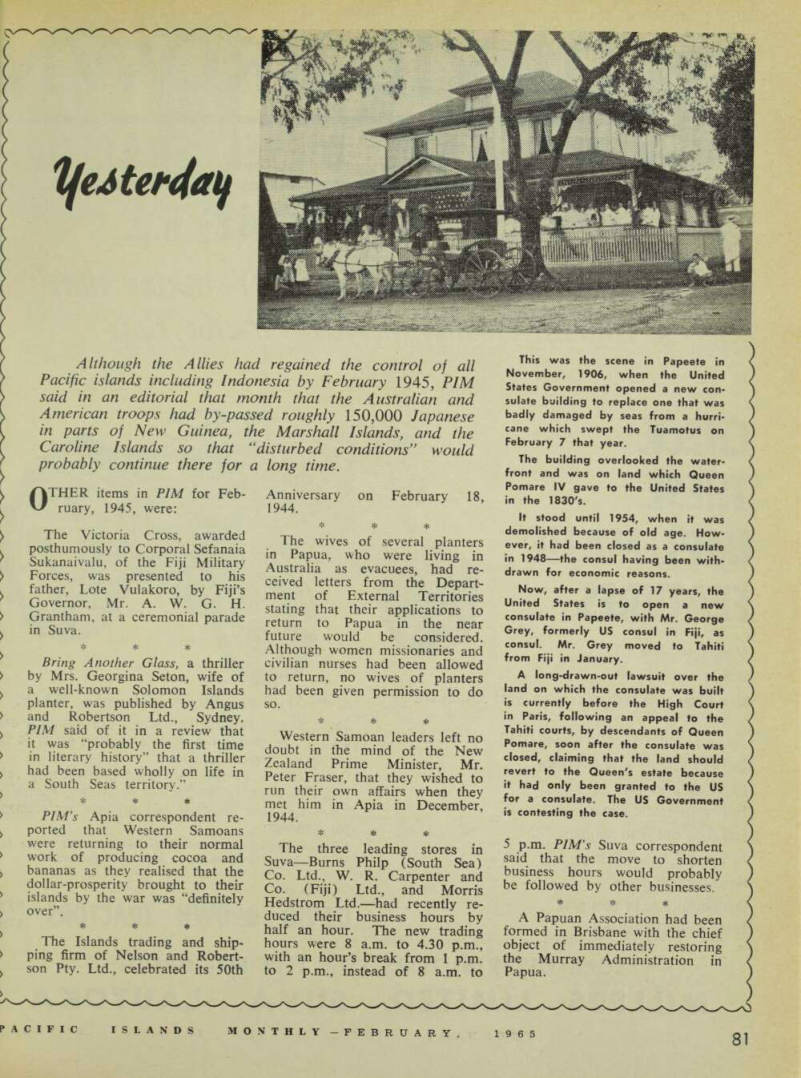 87
87 88
88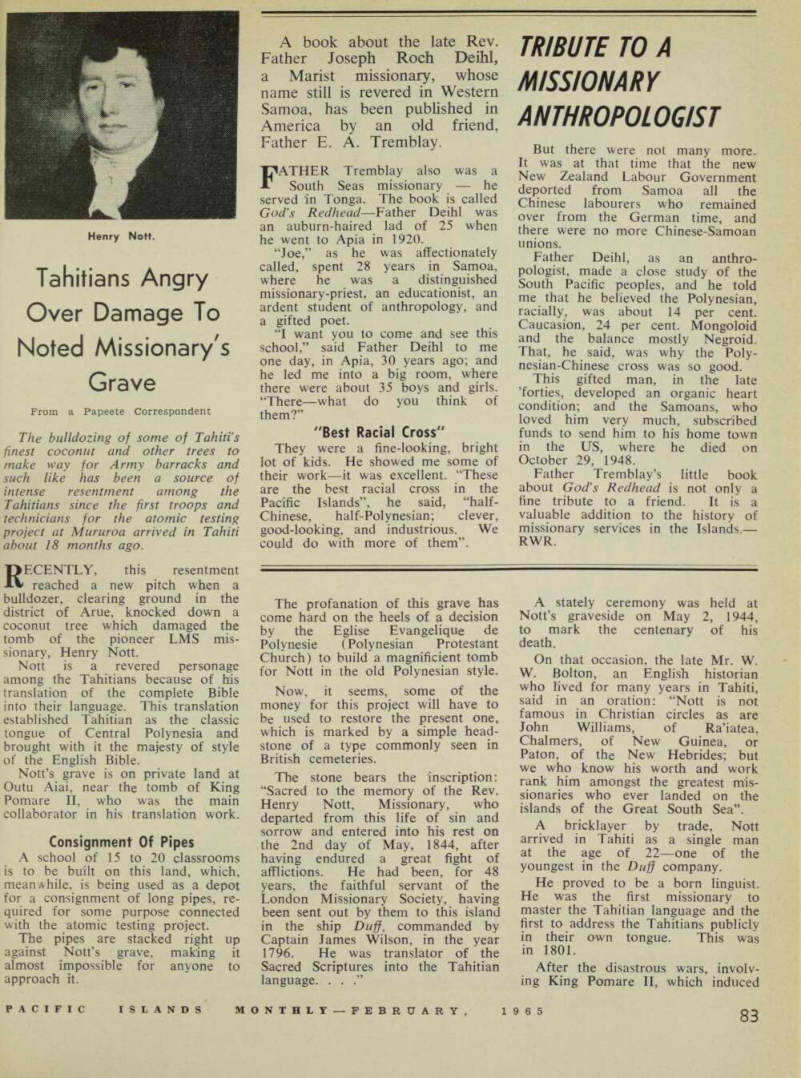 89
89 90
90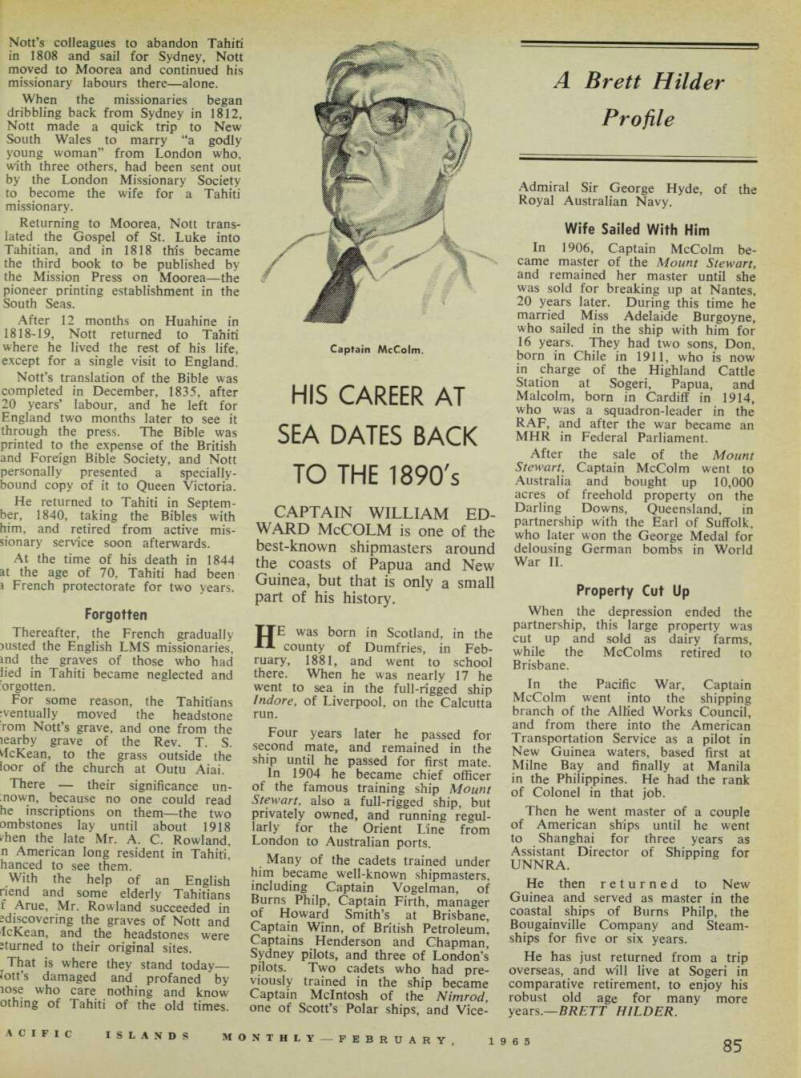 91
91 92
92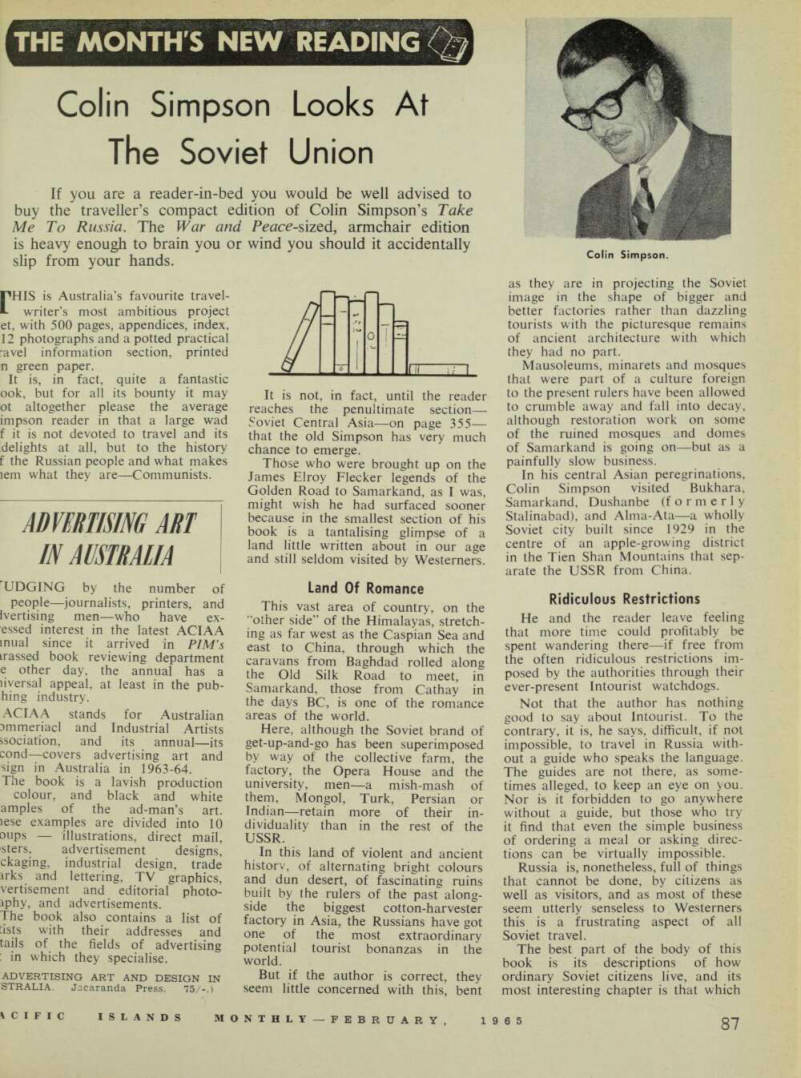 93
93 94
94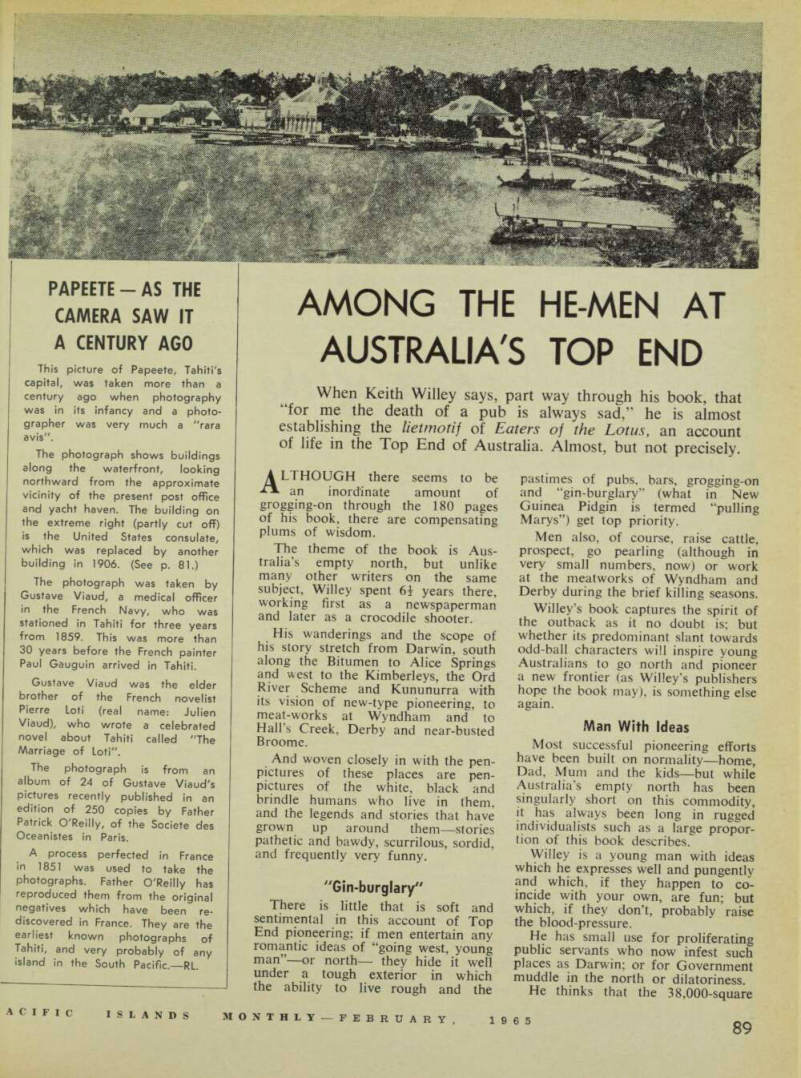 95
95 96
96 97
97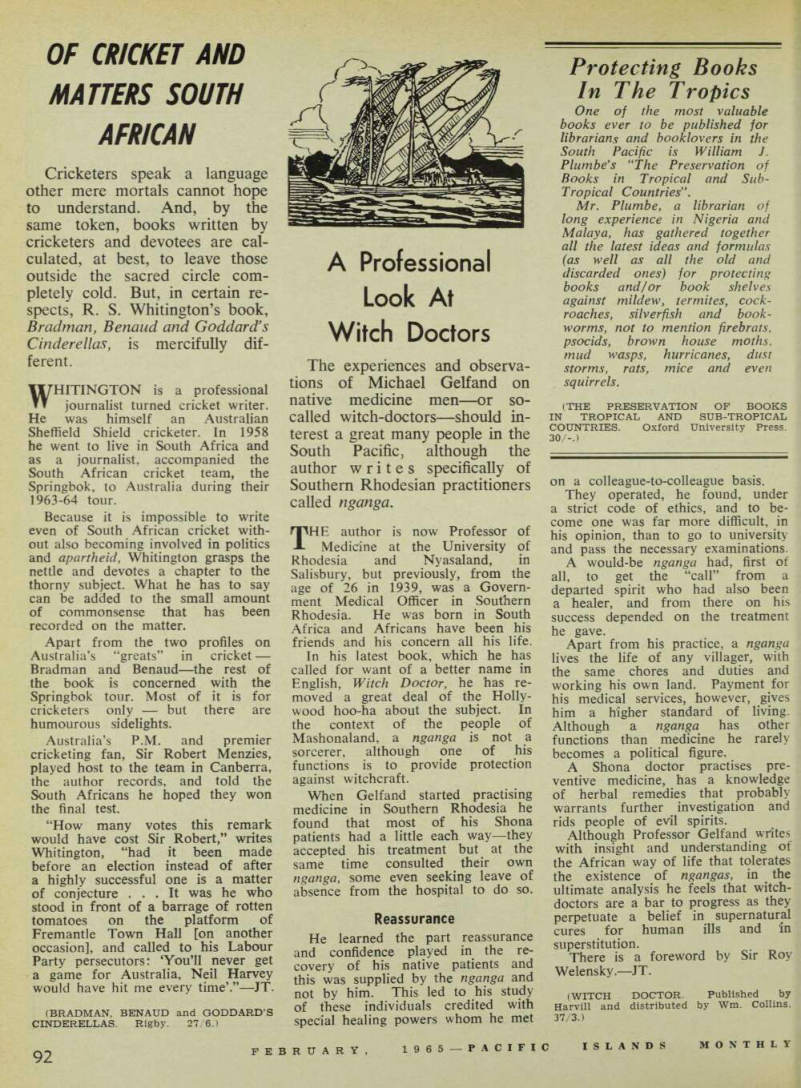 98
98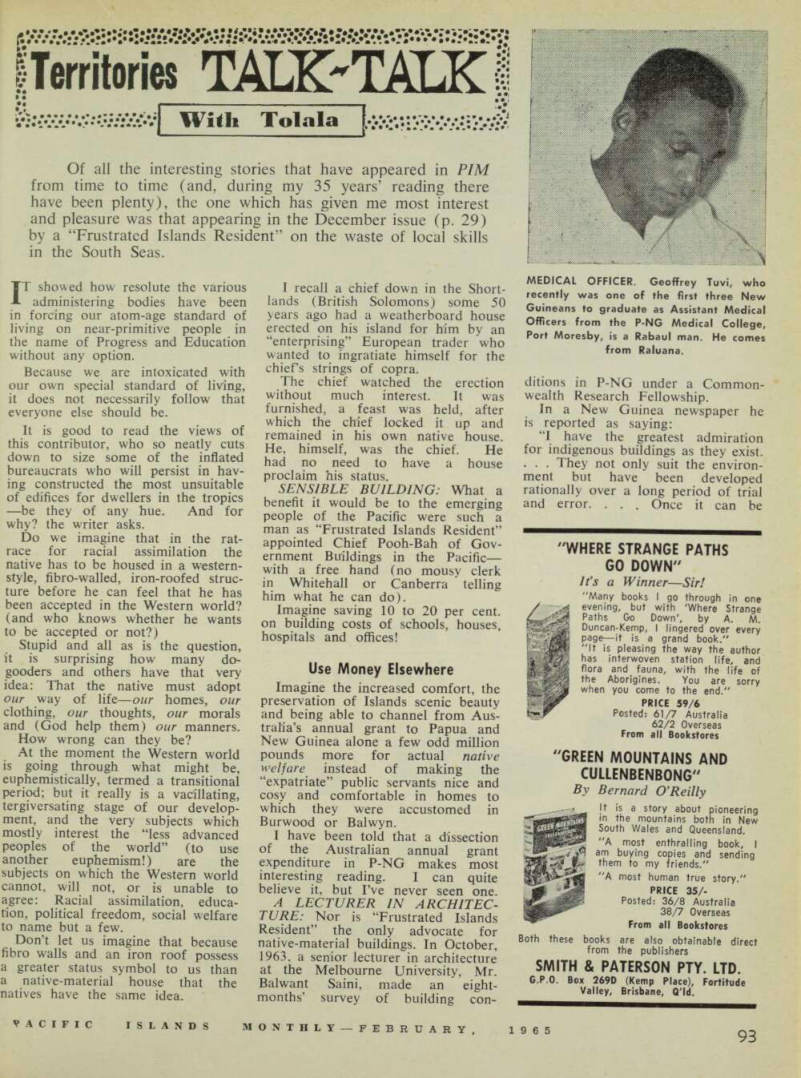 99
99 100
100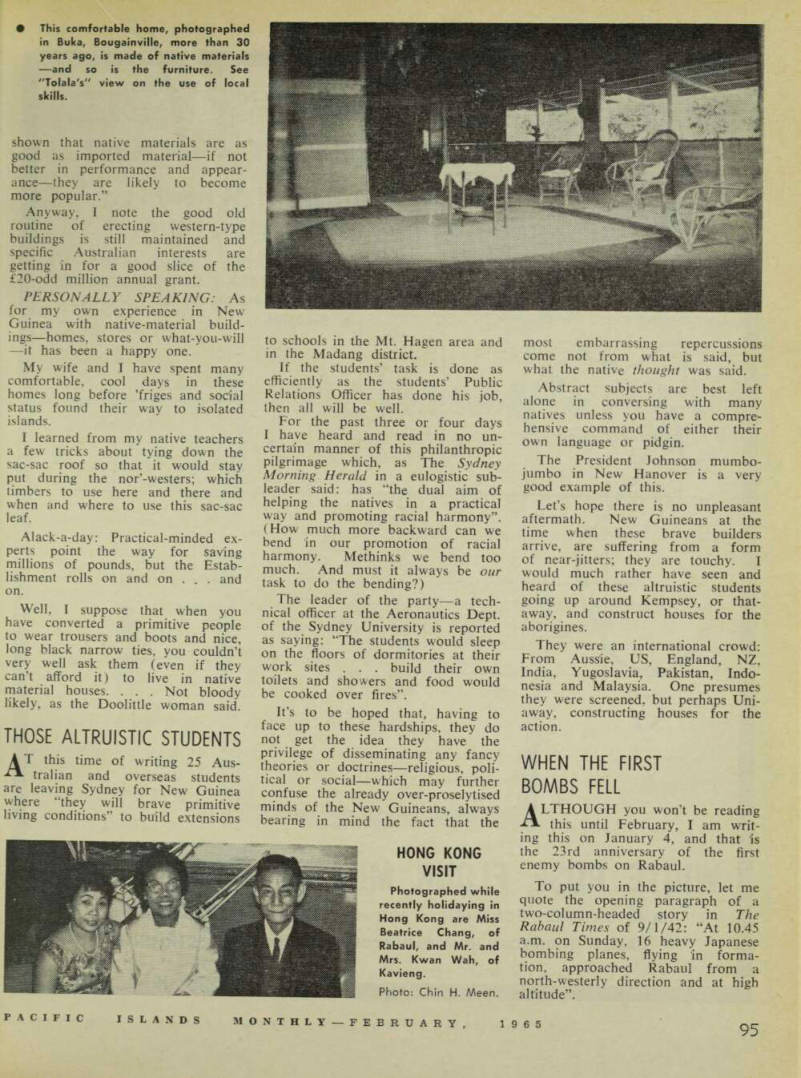 101
101 102
102 103
103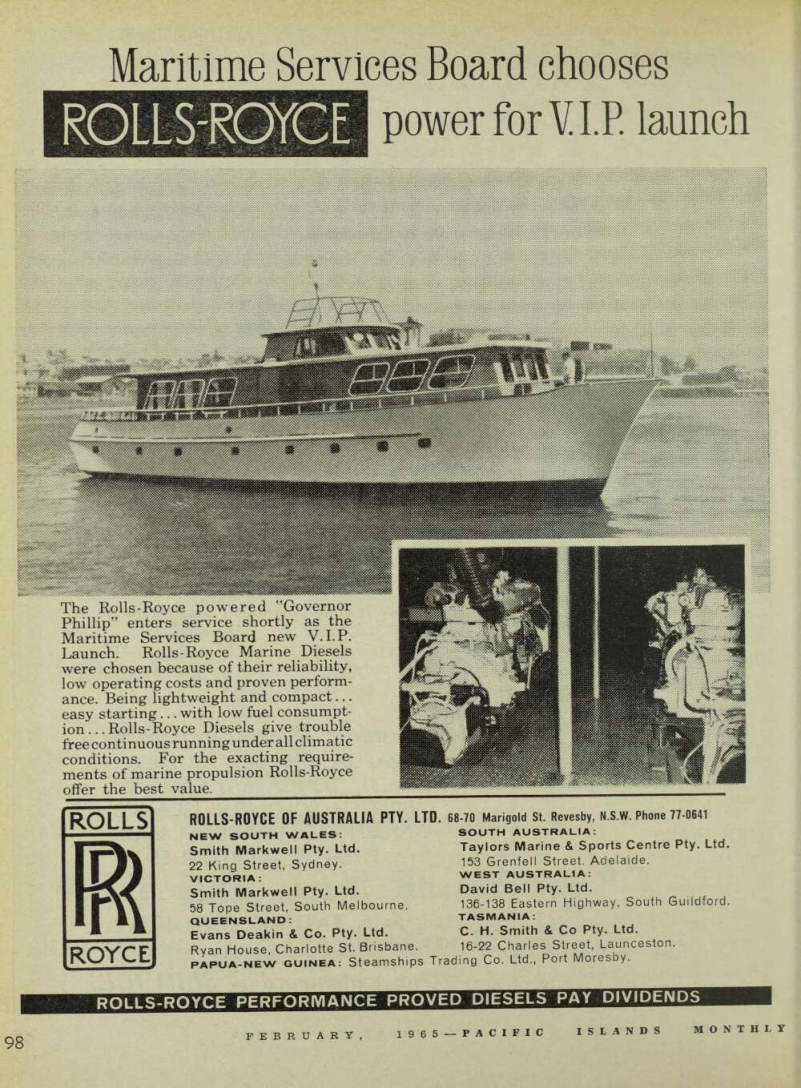 104
104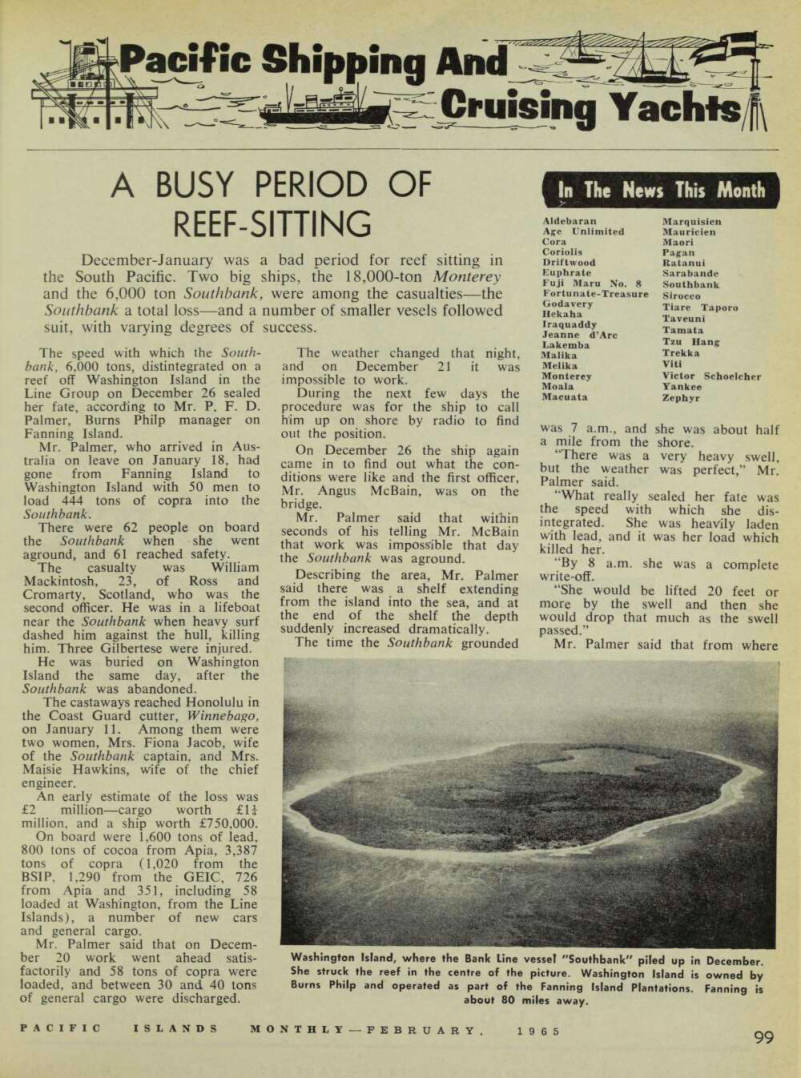 105
105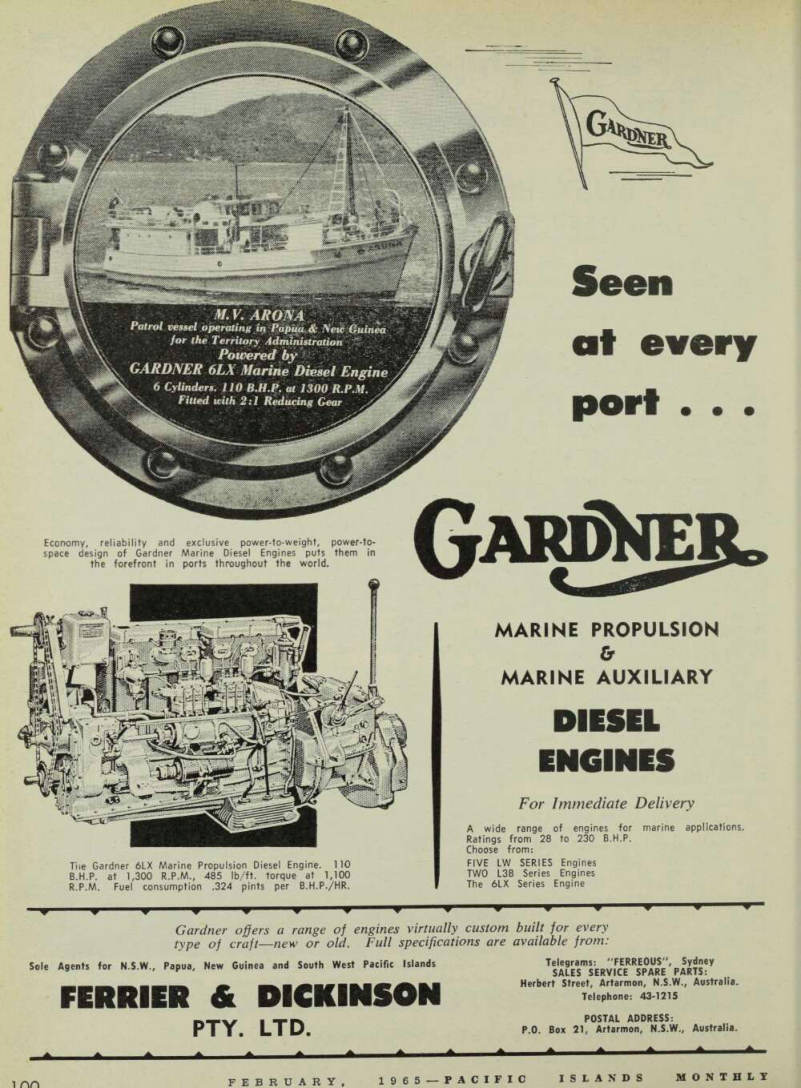 106
106 107
107 108
108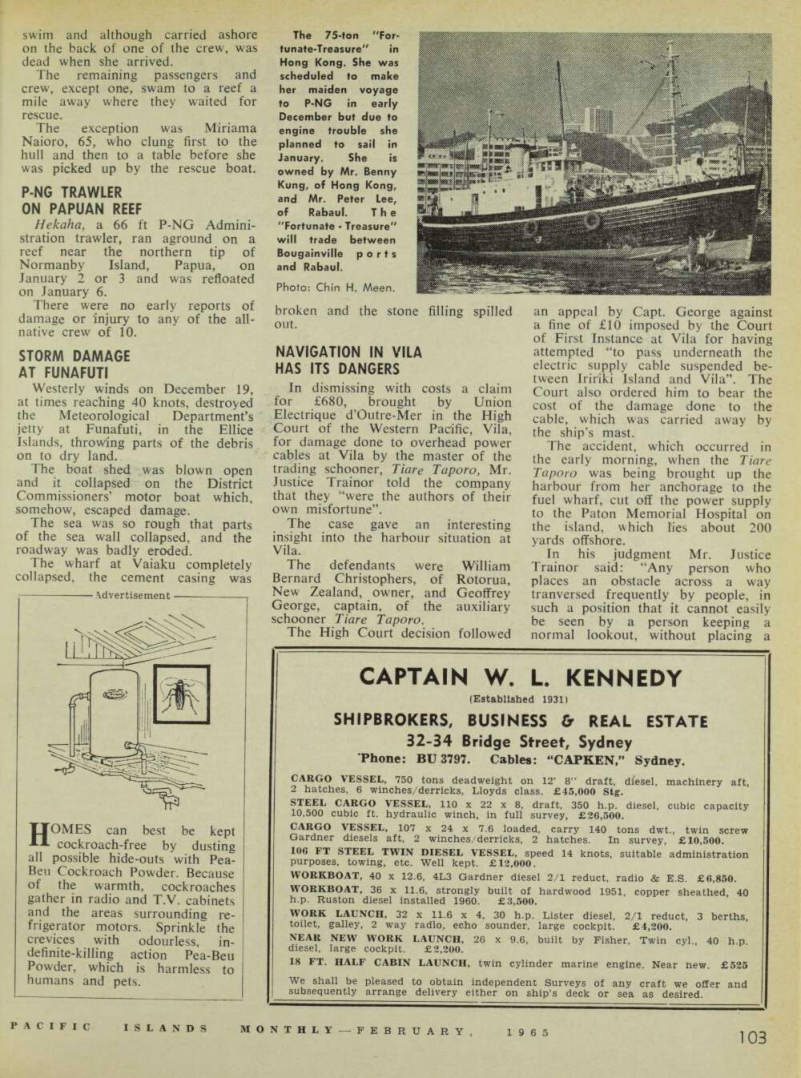 109
109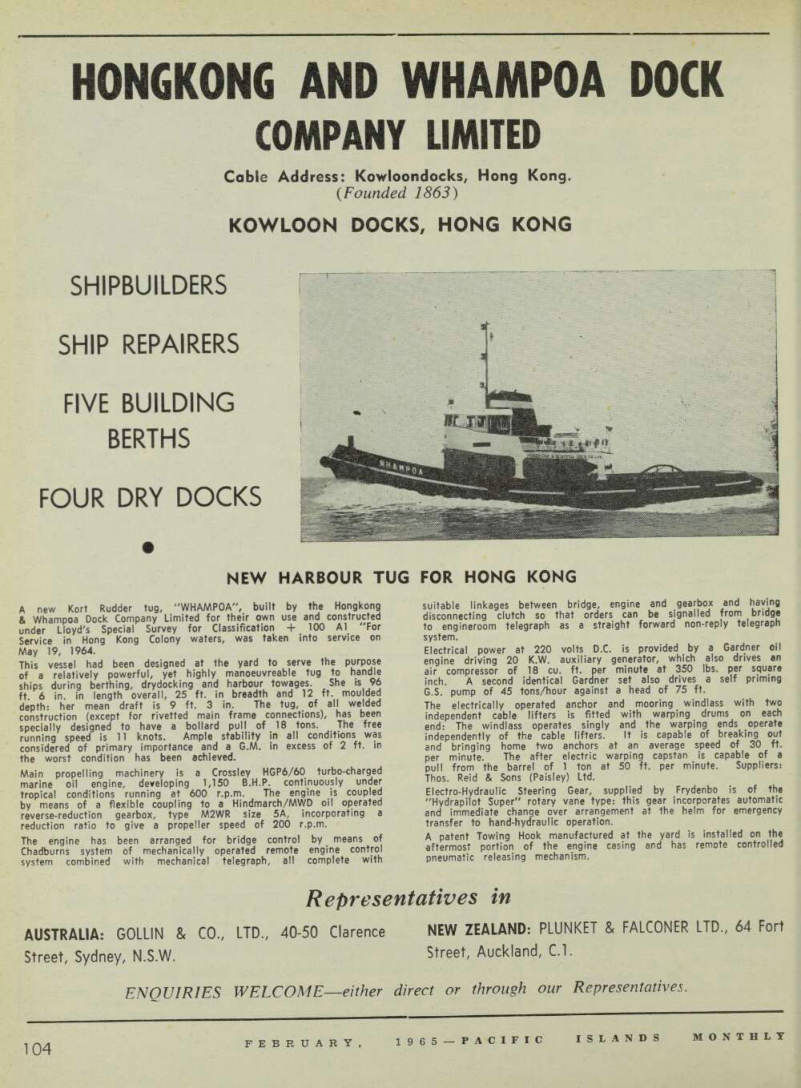 110
110 111
111 112
112 113
113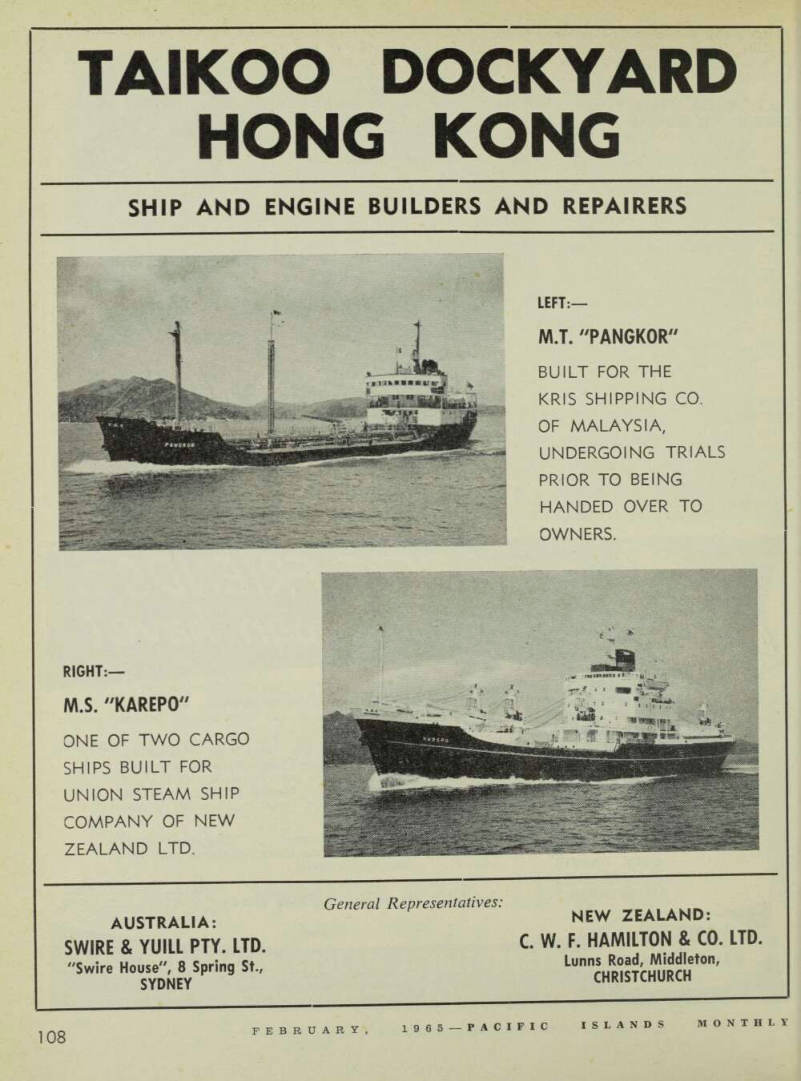 114
114 115
115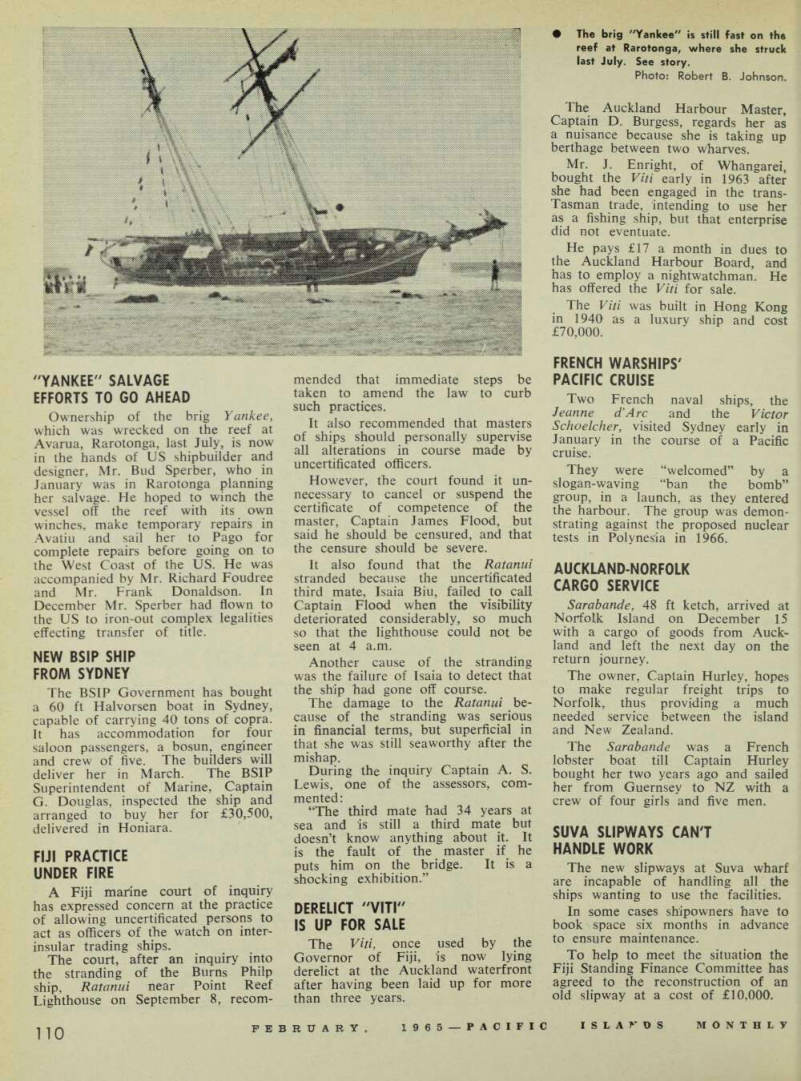 116
116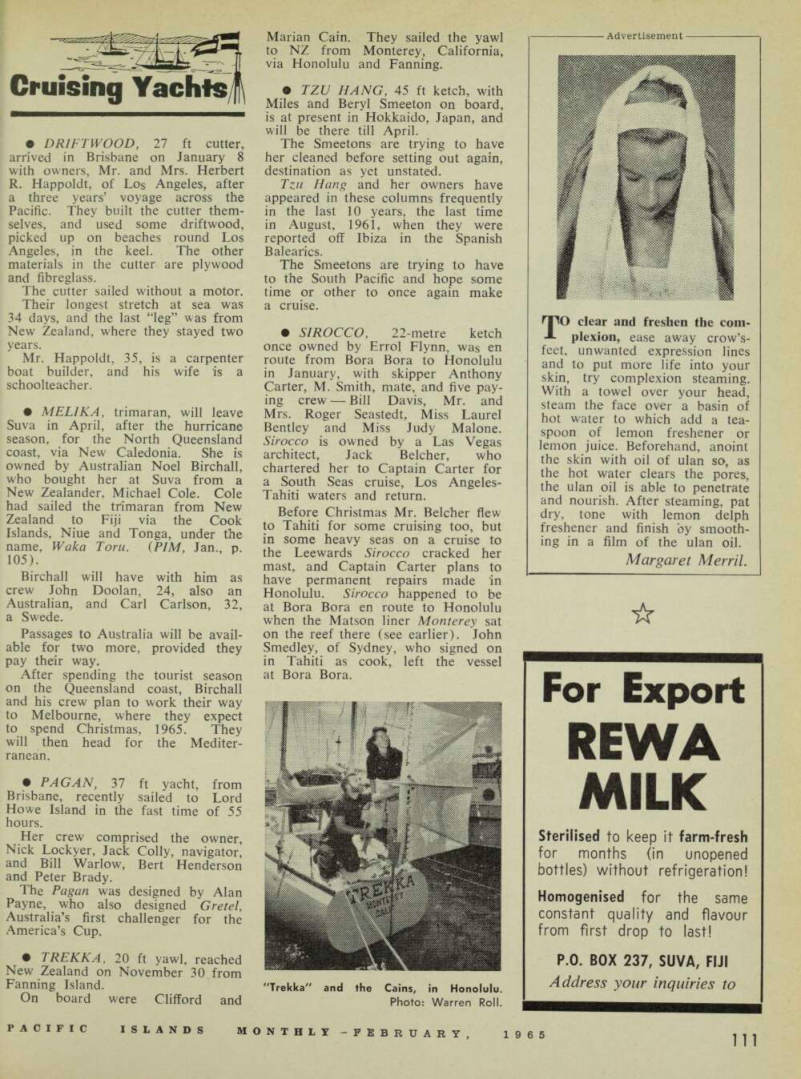 117
117 118
118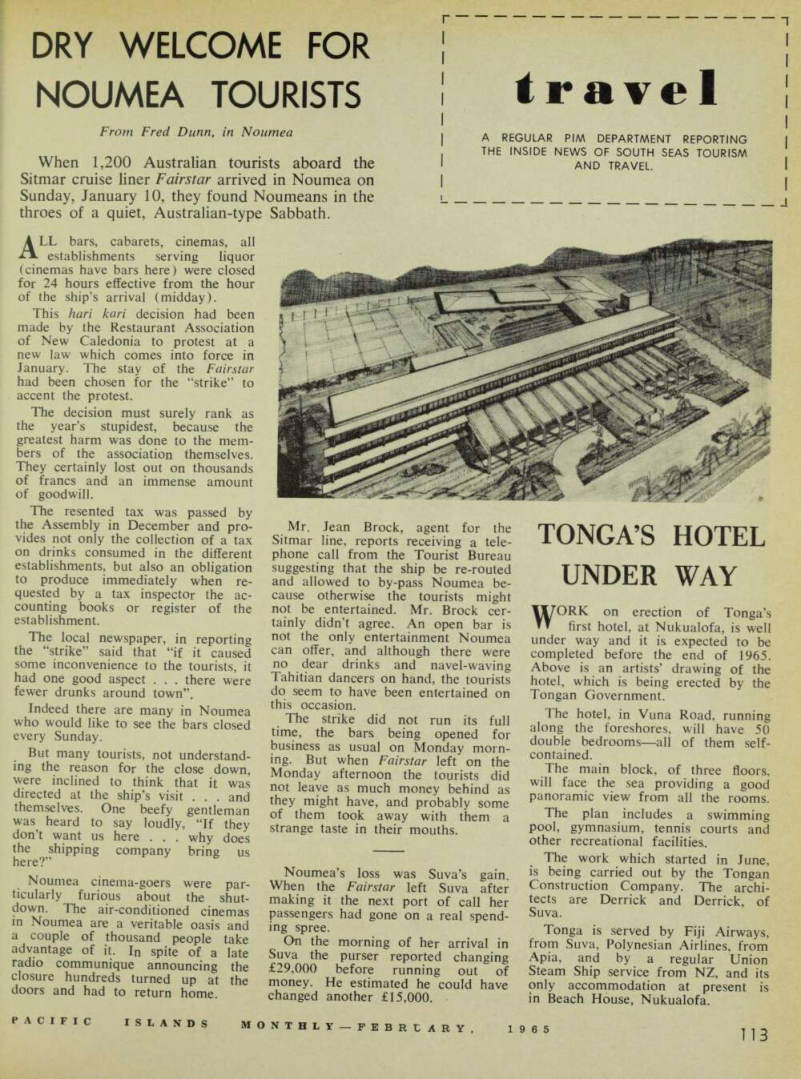 119
119 120
120 121
121 122
122 123
123 124
124 125
125 126
126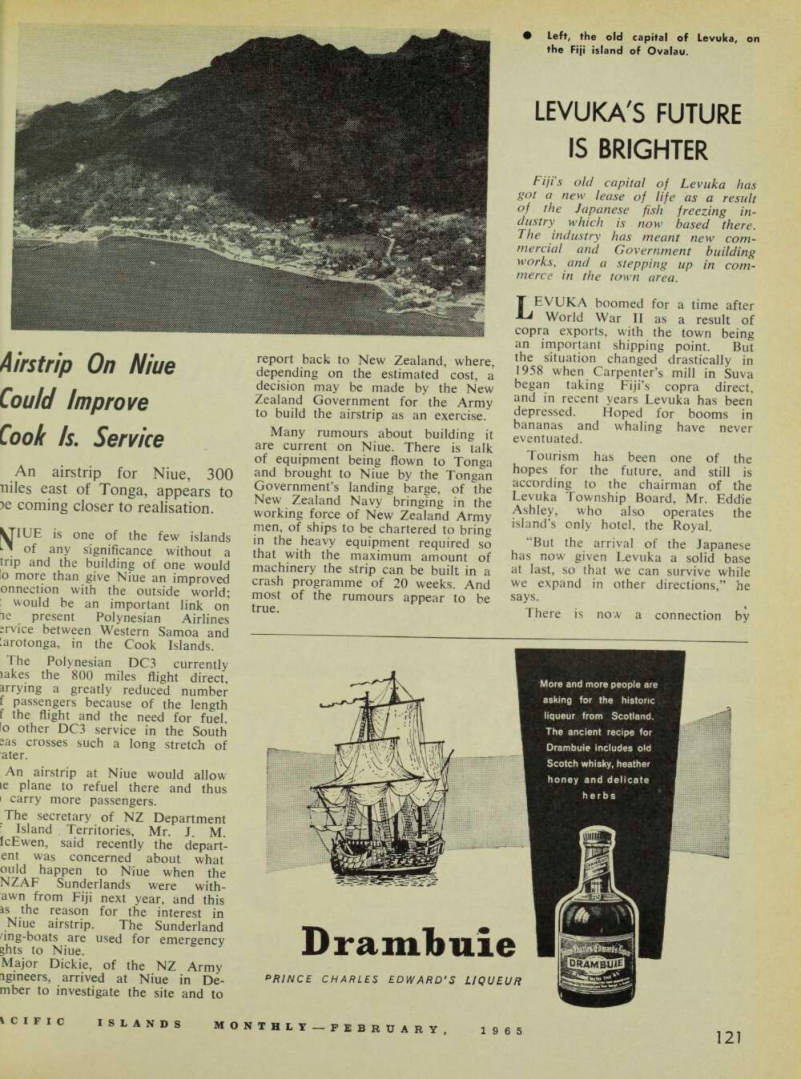 127
127 128
128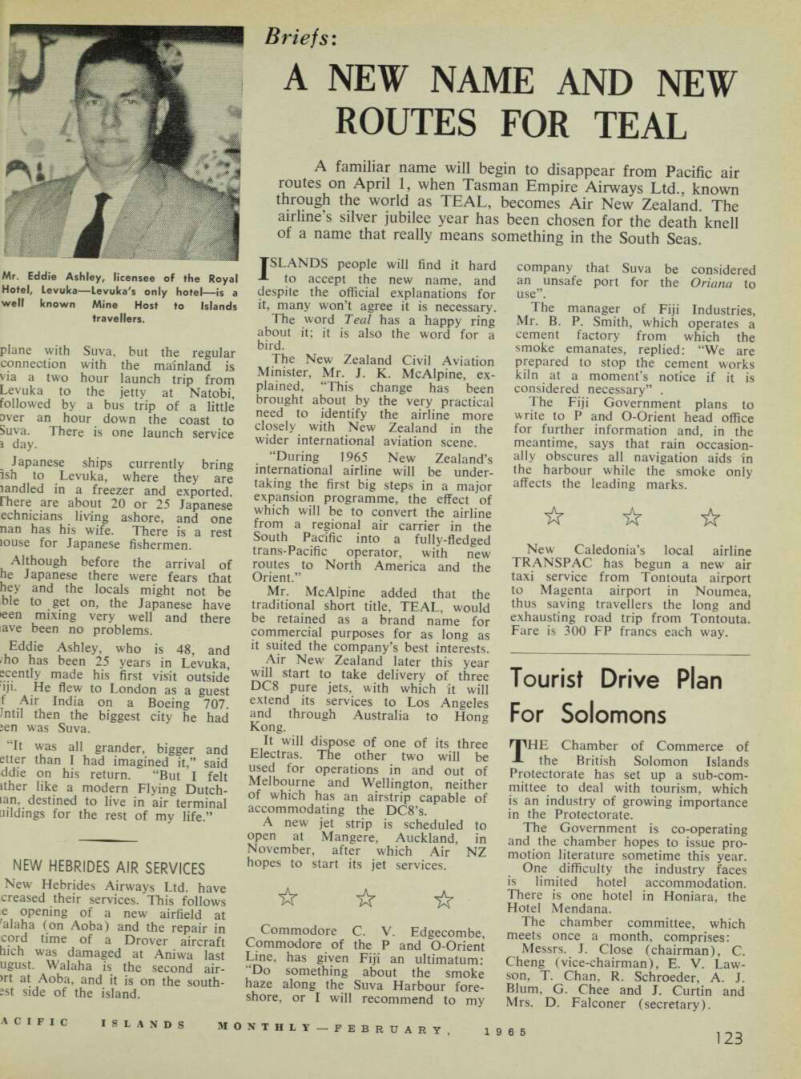 129
129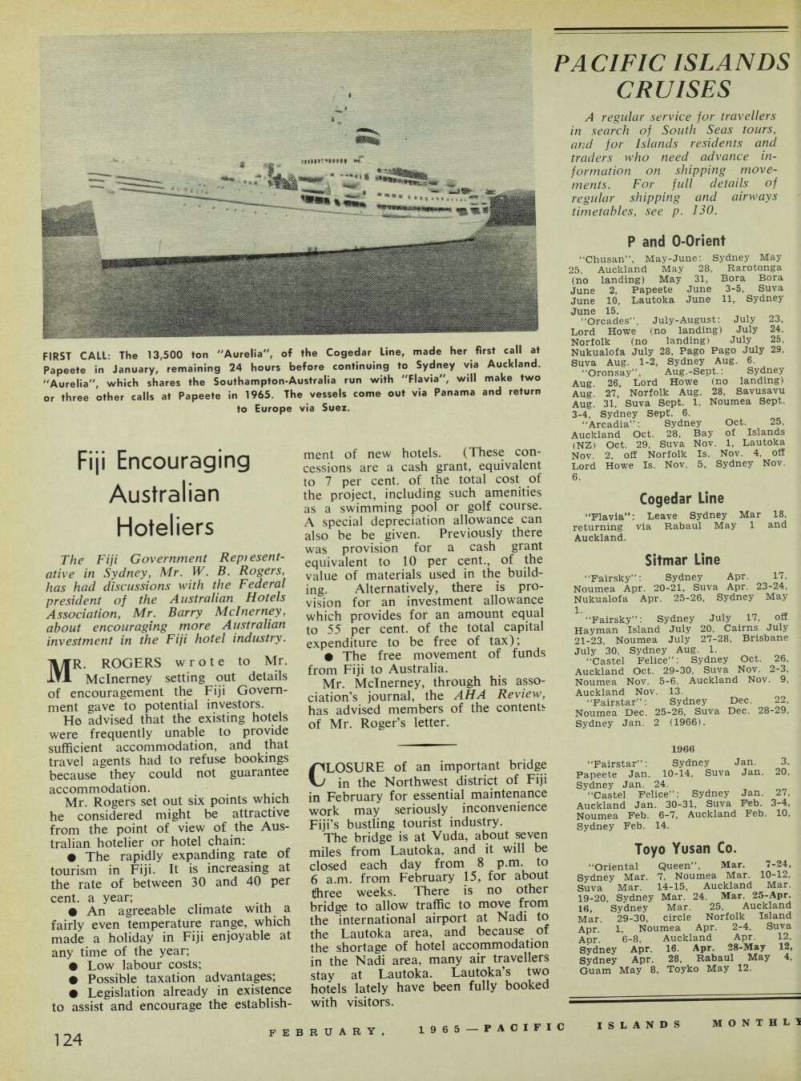 130
130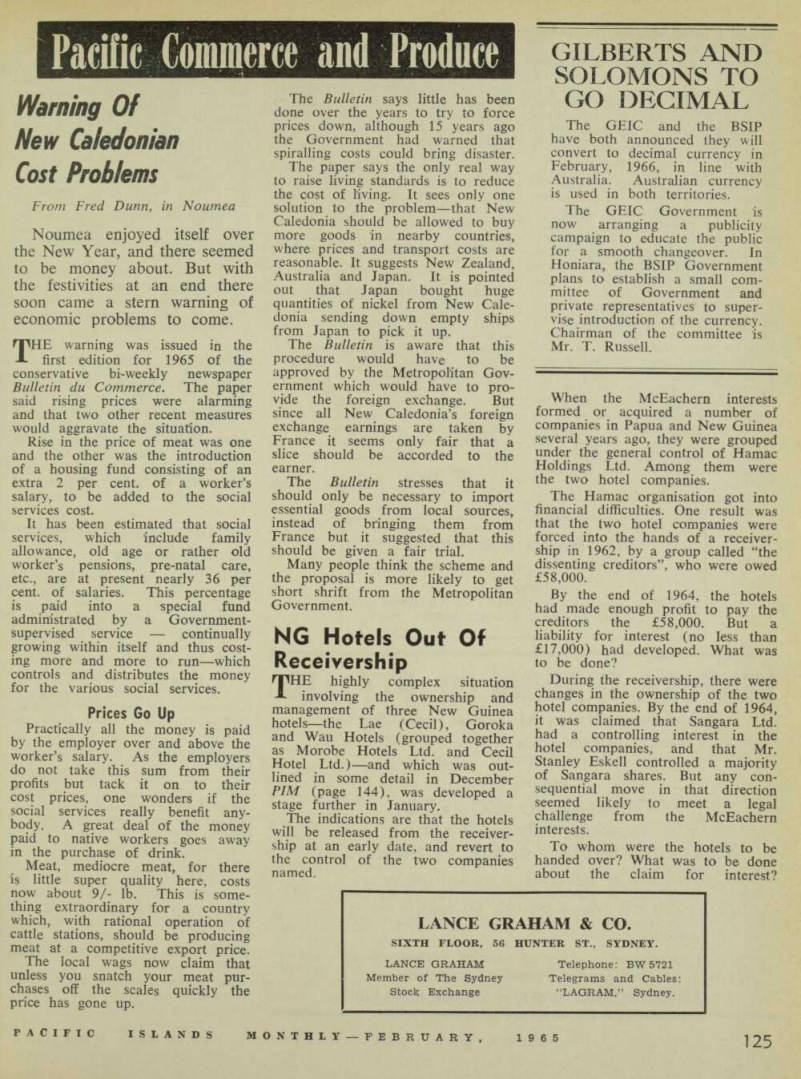 131
131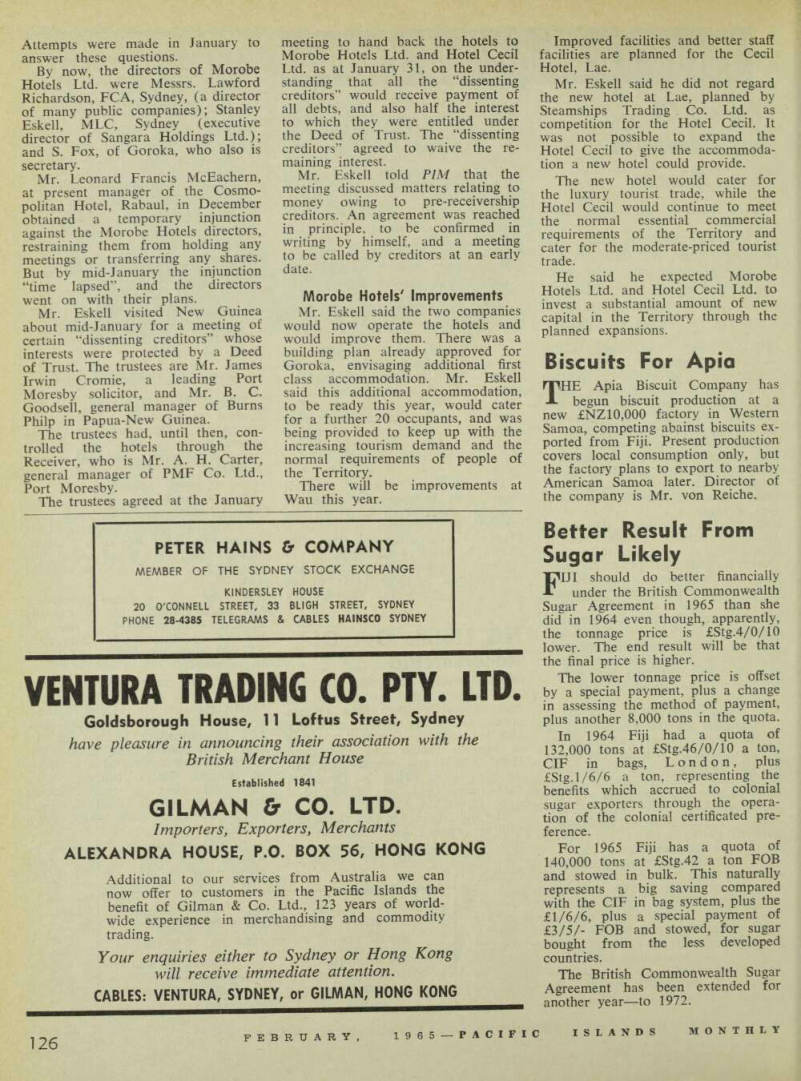 132
132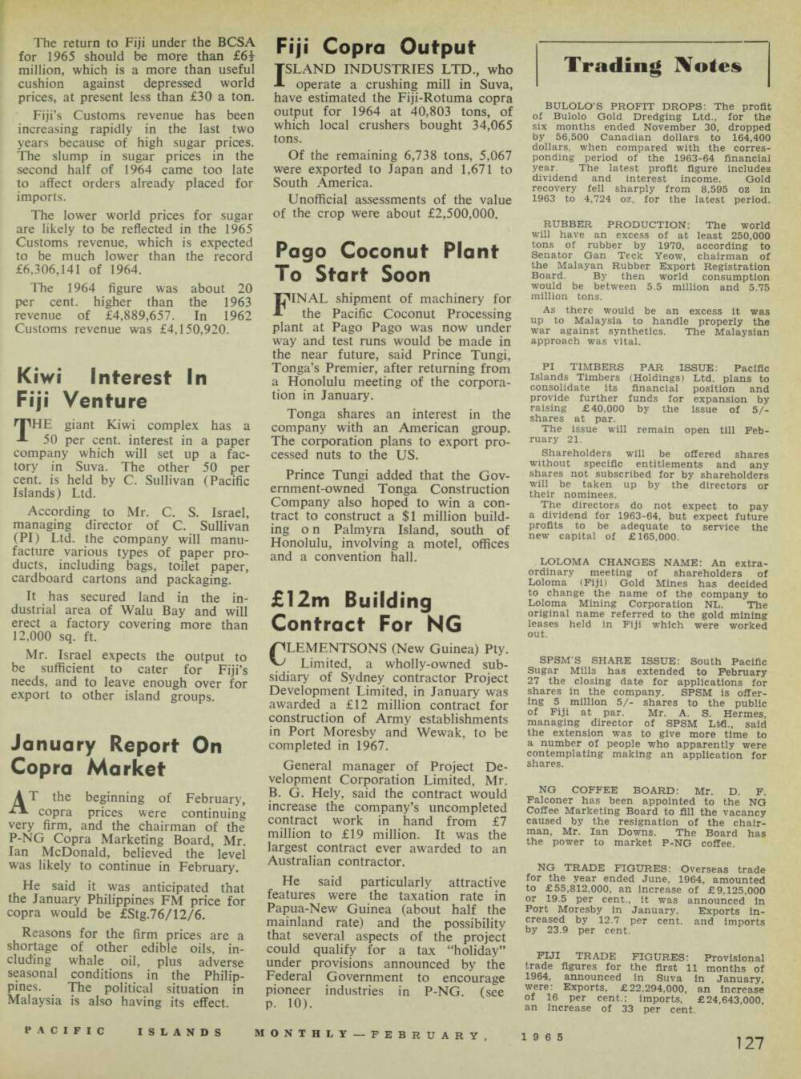 133
133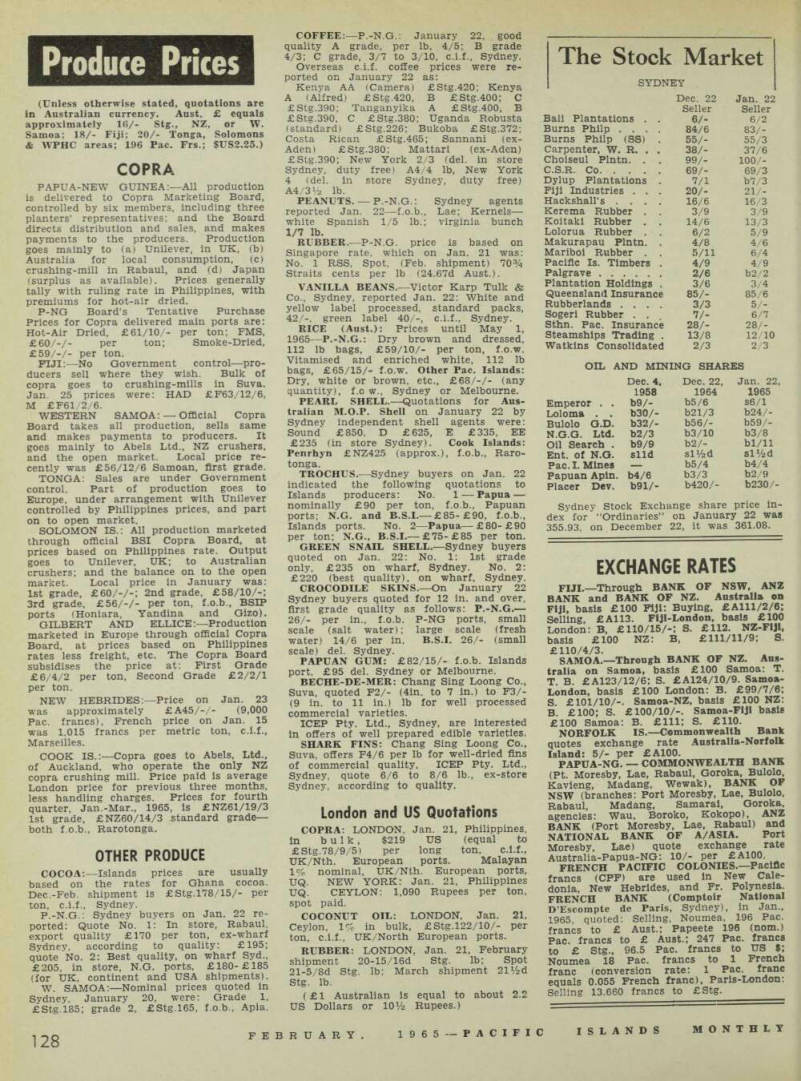 134
134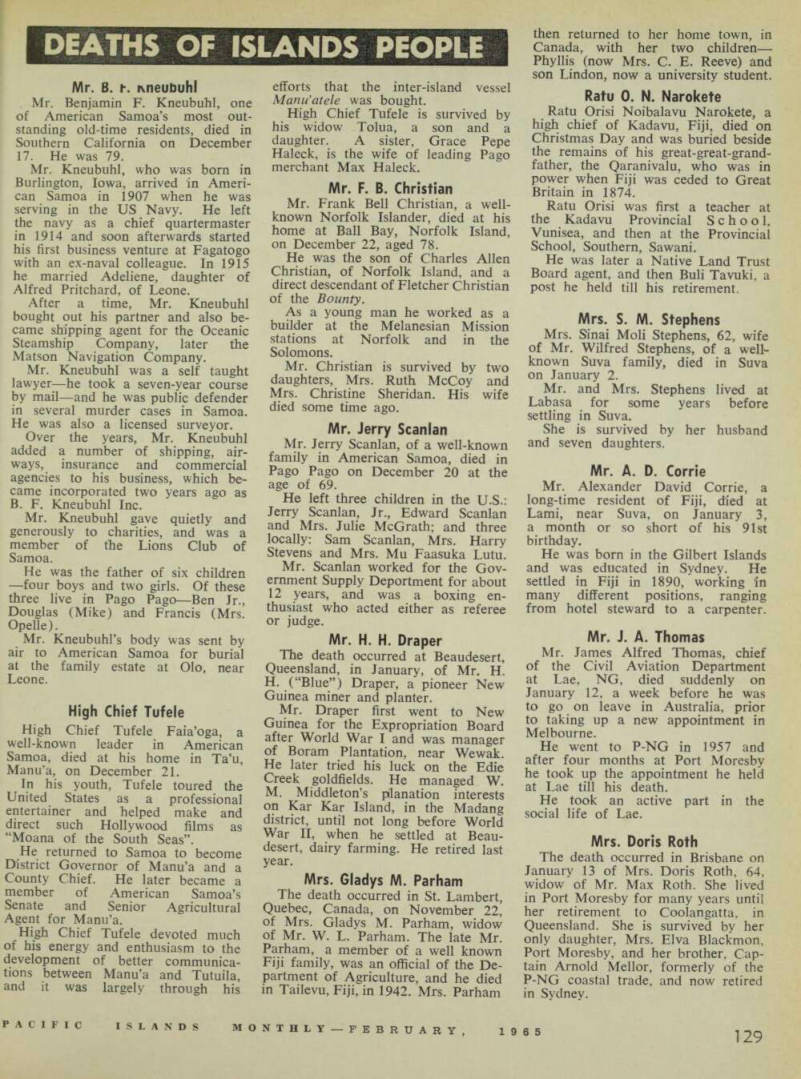 135
135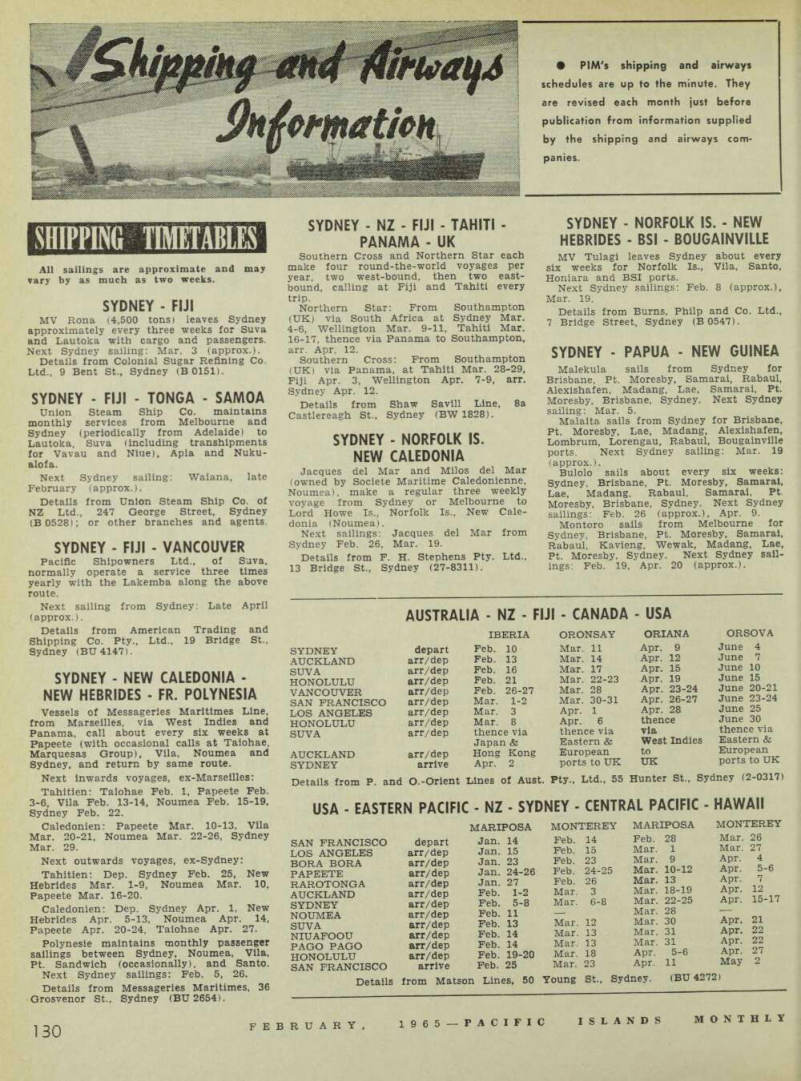 136
136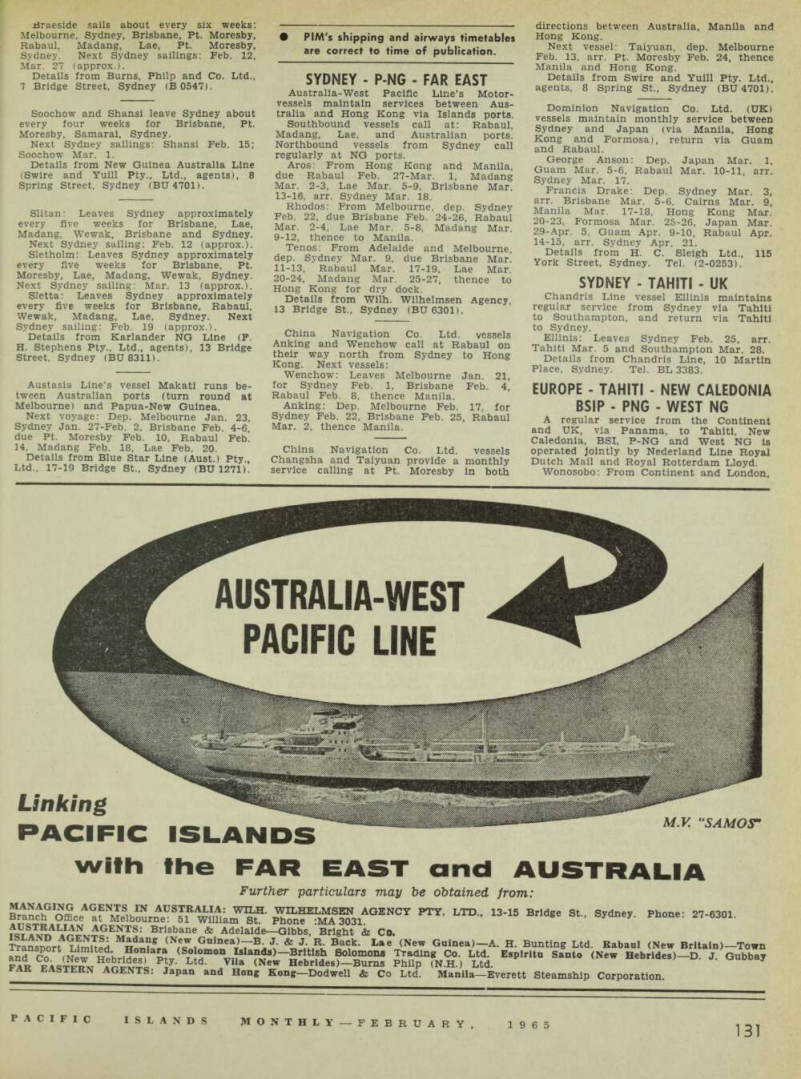 137
137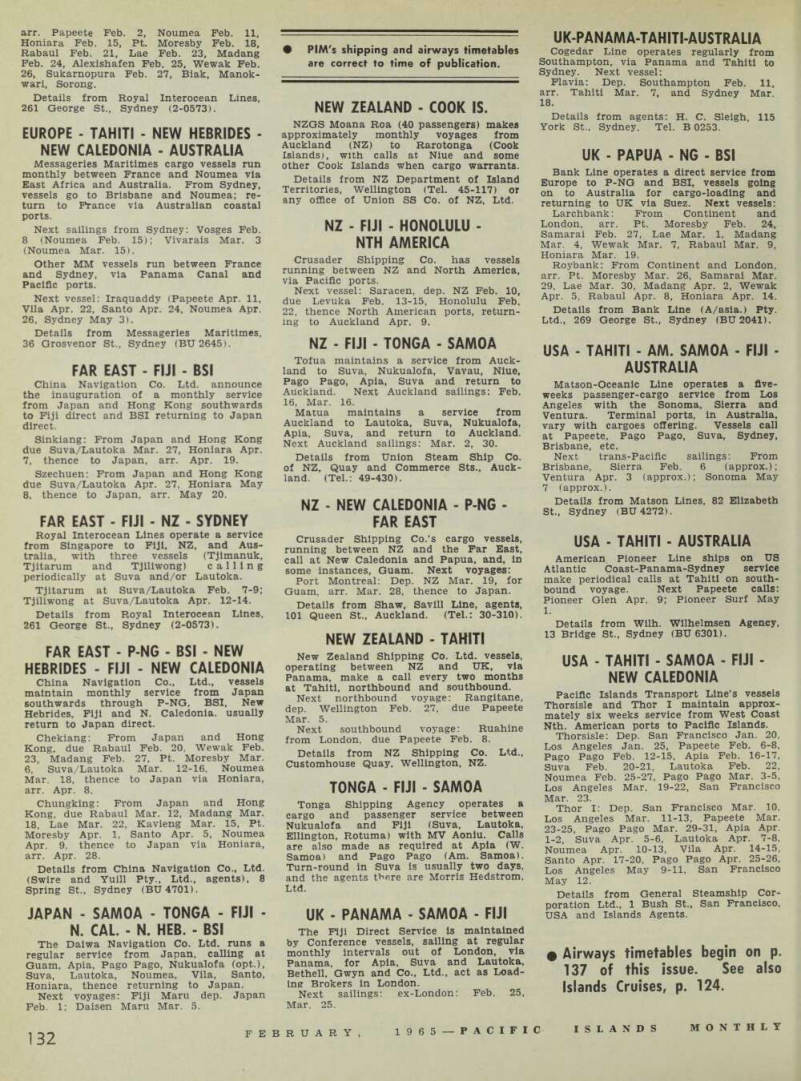 138
138 139
139 140
140 141
141 142
142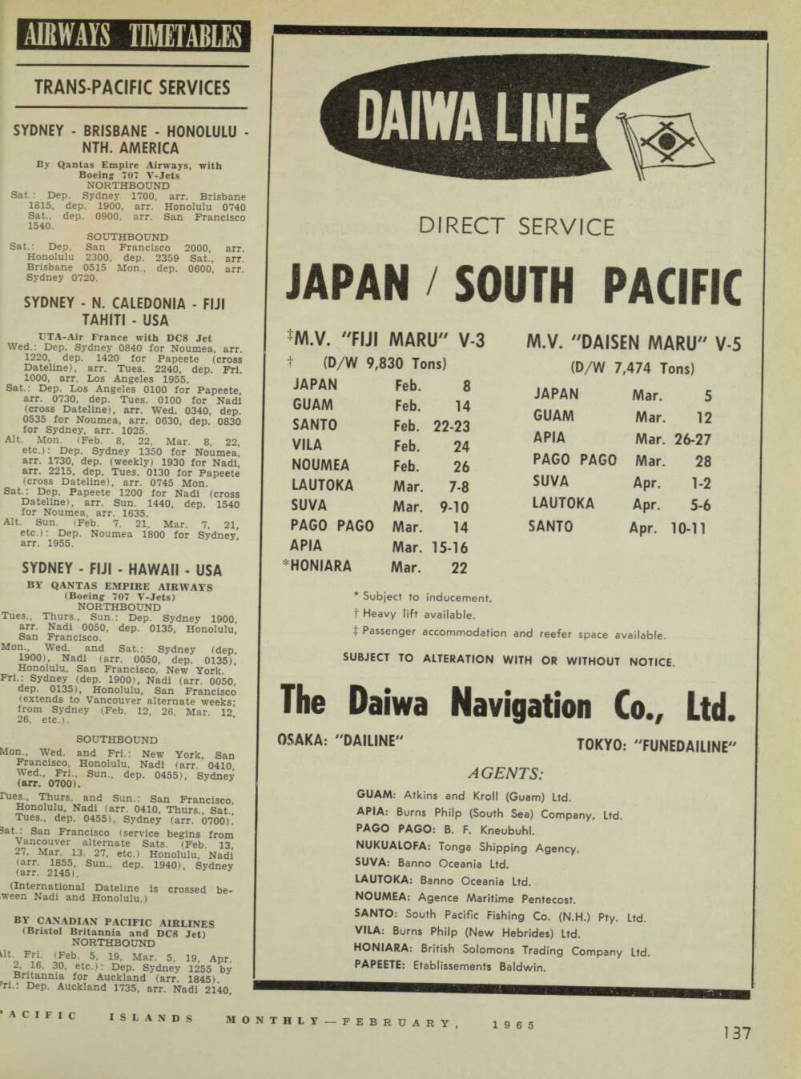 143
143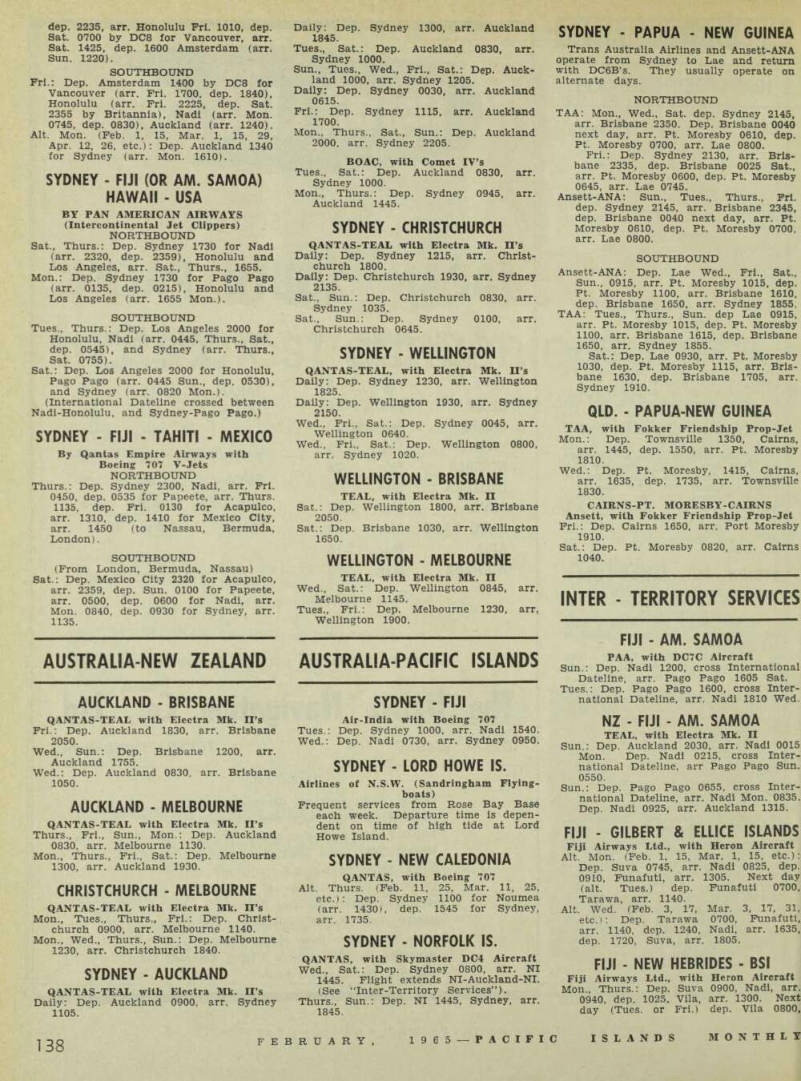 144
144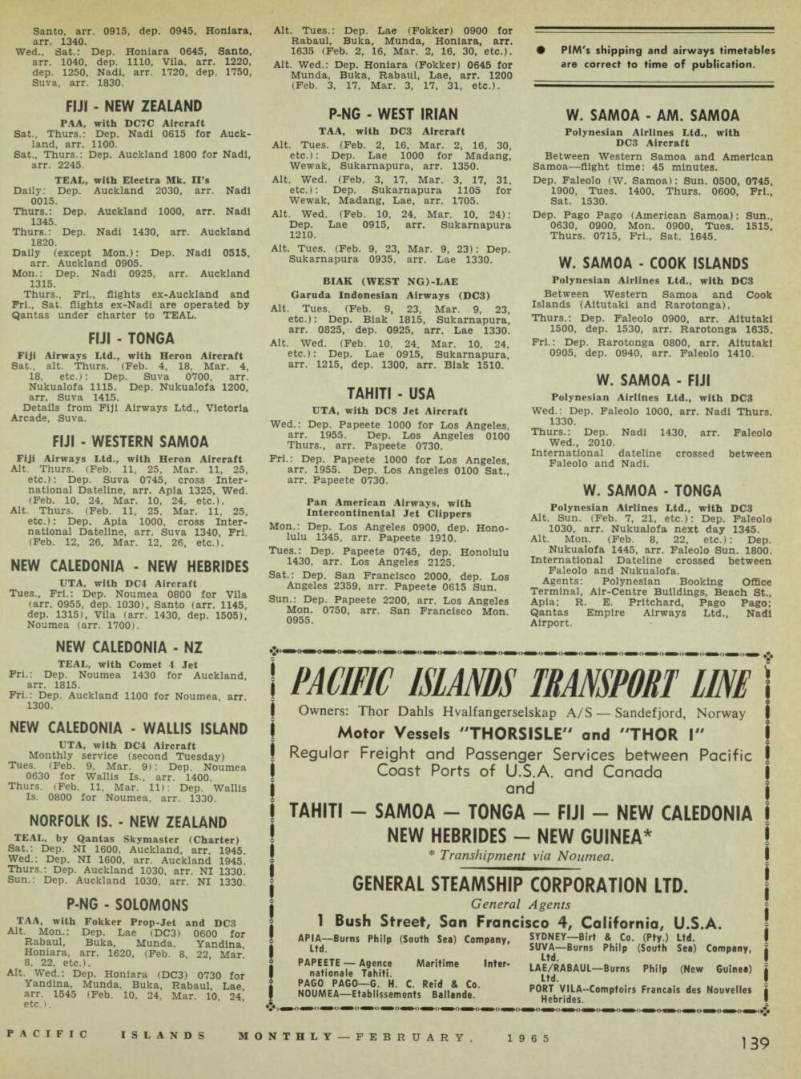 145
145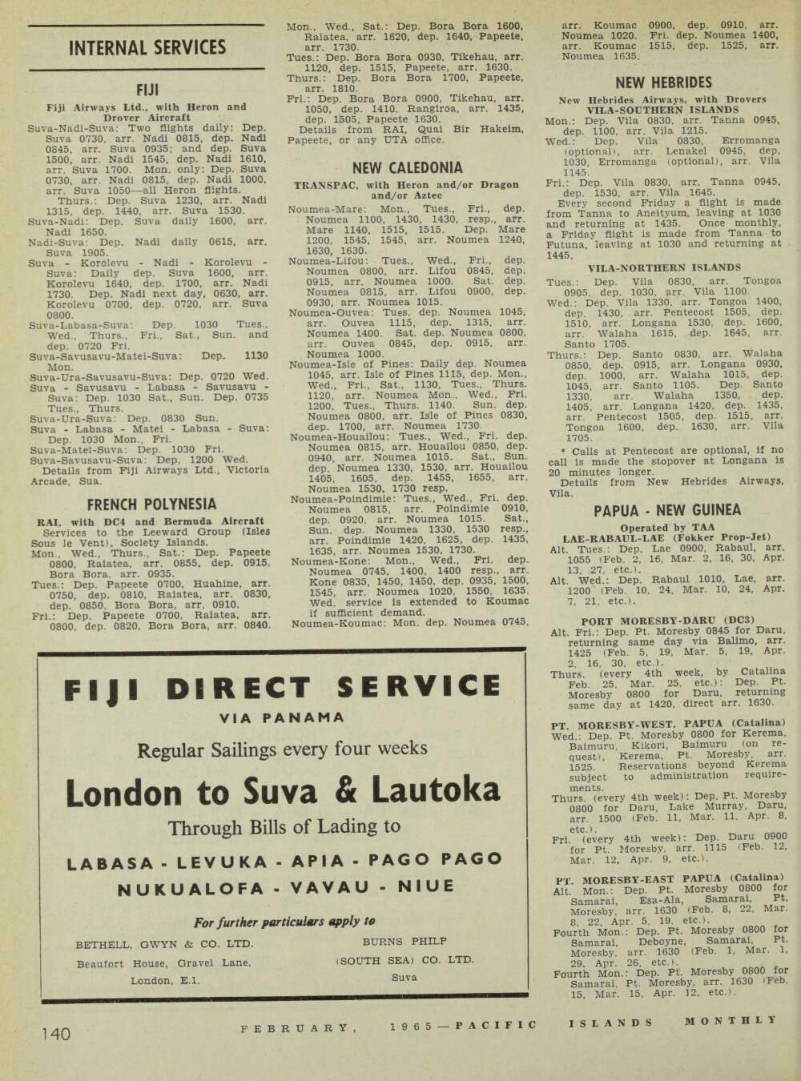 146
146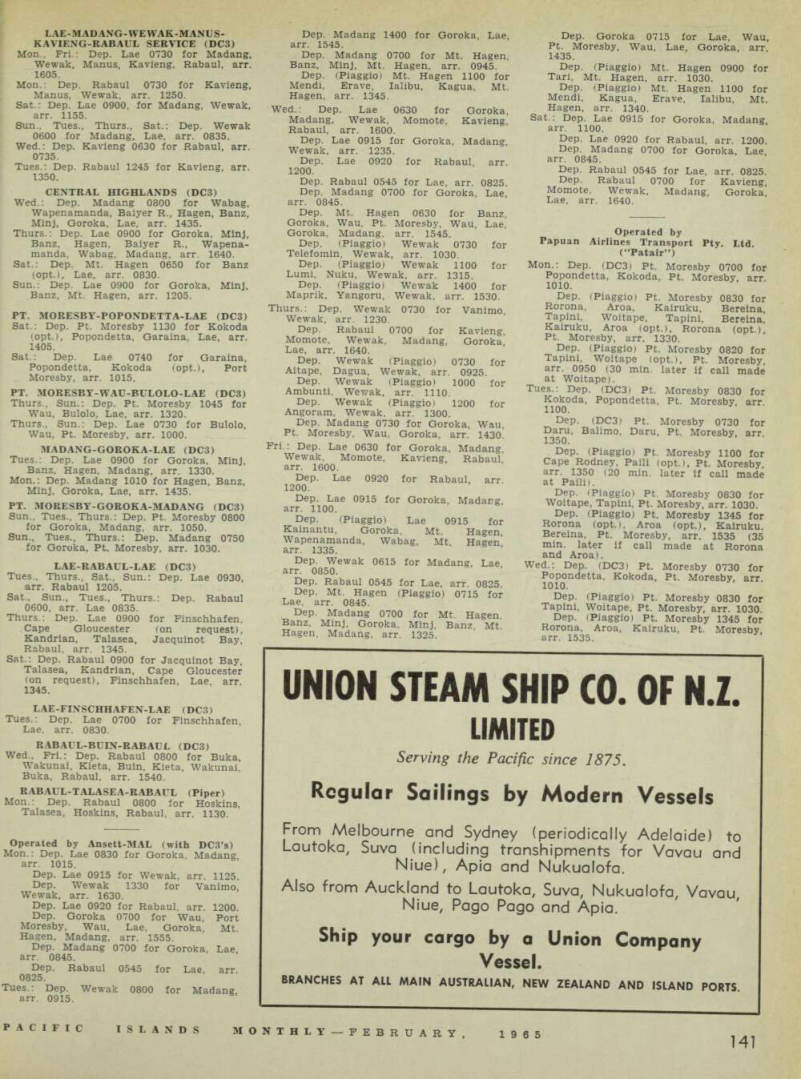 147
147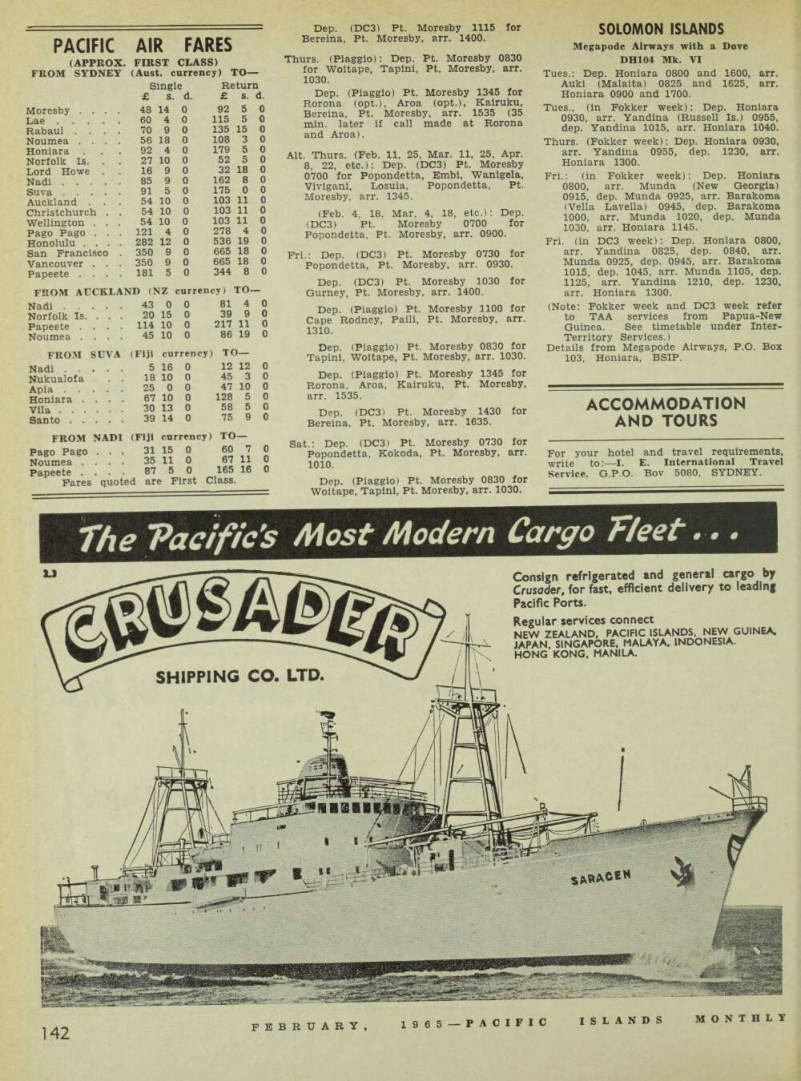 148
148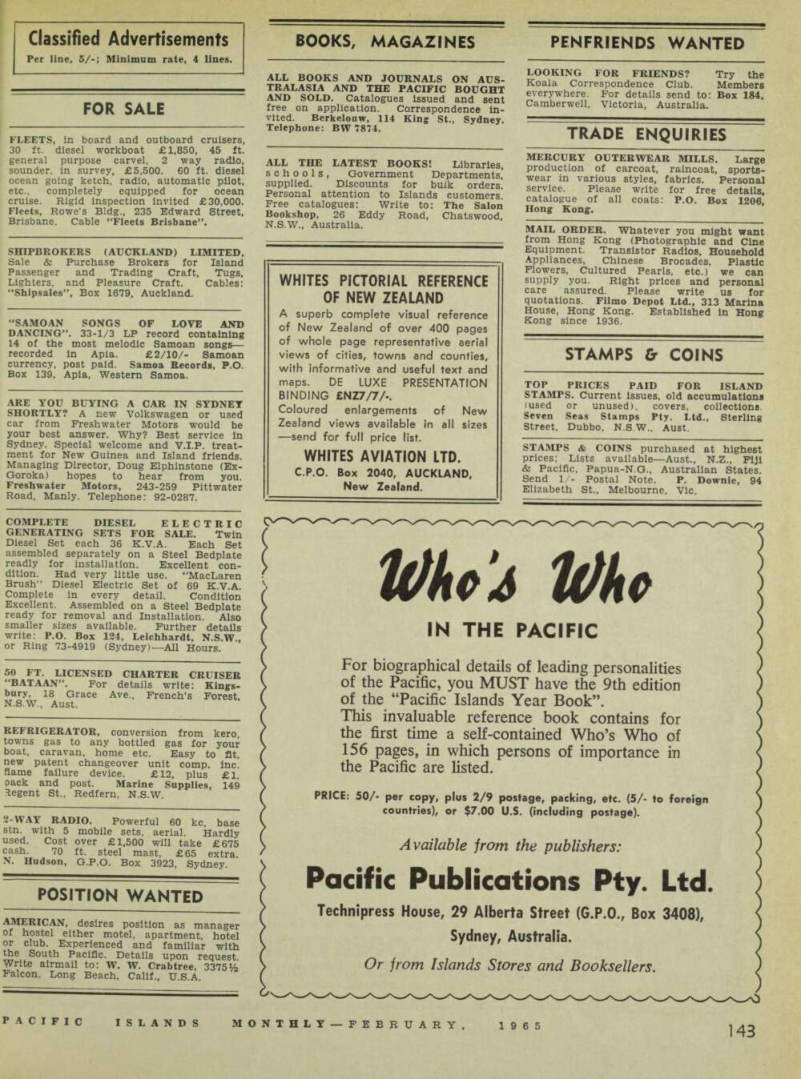 149
149 150
150 151
151 152
152 153
153 154
154 155
155 156
156 157
157 158
158 159
159 160
160