Monthly
Pacific Islands Monthly
Uary, 1965
3/- 60 US cents French Pac. frcs.
- Hews g azine f The outh acific
Bushed 1930
S P 0., Sydney, and at P.O. insmission by post as a Newspaper.
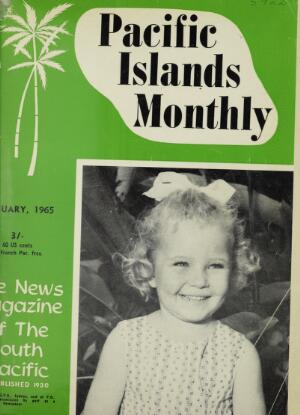
OUR COVER: Four-year-old Paullette Dis combe, youngest daughter of Reece and Jean Discombe, of Vila, New Hebrides, is a genuine South Sea Islander. She was born in Vila and has lived all her life there. Paullette’s father is well-known for his discovery of La Perouse relics at Vanikoro.
Advertisements & other items, pp. 2-8 (1 item)
When In Australia Fly Taa
V. : C
L TaA
TAA thi
WHEN IN AUSTRALIA FLY TAA
Trans-Australia Airlines operates the largest single domestic airline network in the British Commonwealth, serving 140 cities and centres throughout Australia and Papua New Guinea.
TAA’s modern aircraft connect with all incoming and outgoing international flights. TAA provides the speed and comfort of pure jet travel within Australia with the introduction of Boeing 727 T-Jets. and Papua/New Guinea.
And TAA takes care of everything travel bookings by air, road, rail or sea, accommodation, sight-seeing tours even theatre tickets!
Contact your nearest Travel Agent or Trans- Australia Airlines Office.
FLY
TAA Fly-away Holidays. TAA offers a huge range of packaged Holidays to the most popular holiday resorts throughout Australia
TAA
THE FRIENDLY WAY
Trans-Australia Airlines
TAA72B9/64
Triple-wrapped packets
Arnott's
famous Biscuits ... for extra energy There is no Substitute for Quality K 304
GAIN GOOD HEALTH
ENERGY AND VIGOUR
WITH AUSTRALIAN
DAIRY FOODS
The Finest Dairy Foods Have This Symbol Or the Word "Australia" on the Label From Australia’s lush pastures, ample rainfall and year-round sunshine come choice dairy foods—rich in energy, body-building protein and calcium for strong teeth and bones. Everyone who eats for health and energy, as well as for enjoyment, will welcome the news that these fine foods are now arriving regularly from Australia. The latest methods of packaging, refrigeration and transport ensure that they reach you in perfect condition.
Foods Available: Look for top-quality Australian Butter , and Full Cream Milk Powder .
Trade Enquiries:
AUSTRALIAN DAIRY PRODUCE
BOARD
406 Lonsdale Street, Melbourne, Victoria, Australia.
BURNS PHILP (SOUTH SEA) CO. LTD.
GENERAL MERCHANTS AND SHIPOWNERS
SHIPPING, CUSTOMS AND FORWARDING AGENTS
i
I Fiji:
SUVA.
LEVUKA.
LAUTOKA.
LABASA.
SAVU SAVU.
BA.
SIGATOKA.
TAVUA.
ROTUMA ISLAND.
TAVEUNI.
BRANCHES
Samoa:
APIA.
PAGO PAGO.
Tonga:
NUKUALOFA.
HAAPAI.
VAVAU.
NORFOLK ISLAND.
NIUE ISLAND.
AGENTS FOR:
QUEENSLAND INSURANCE CO. LTD.
BURNS PHILP TRUST CO. LTD.
SHELL COMPANY (P. 1.) LTD.
OVERSEAS AGENTS
BURNS, PHILP Cr CO. LTD., Sydney.
BURNS, PHILP & CO. LTD., London.
BURNS PHILP CO. OF SAN FRANCISCO
SHIPPING AGENCIES
• The New Zealand Shipping Co. Ltd. • Shaw Savill & Albion Co. Ltd. • Port Line Ltd. • Bank Line Ltd. • General Steamship Corporation Ltd. • Blue Star Line • Cunard Line • Compagnie des Messageries Maritimes • British India Steam Navigation Co. Ltd. • Royal Interocean Lines • Nederland Line Royal Dutch Mail/Royal Rotterdam Lloyd.
EXCLUSIVE DISTRIBUTORSHIPS INCLUDE
AKAI TAPERECORDERS • HELENA RUBENSTEIN
DUNLOP PRODUCTS • HITACHI ELECTRONICS
EPIGLASS PRODUCTS • HOLDEN VEHICLES
FERGUSON TRACTORS • JOHNSON'S WAXES
ROLEX WATCHES
REVLON COSMETICS
PENTAX CAMERAS
SUNBEAM APPLIANCES
INTERNATIONAL AIR TRANSPORT ASSOCIATION REPRESENTATIVES for
QANTAS EMPIRE AIRWAYS LTD. :: TASMAN EMPIRE AIRWAYS LTD.
UNION DE TRANSPORTS AERIENS ALITALIA PAN AMERICAN AIRWAYS
ASSOCIATED COMPANIES
BURNS PHILP (NEW HEBRIDES) LTD.
AUTOMOTIVE SUPPLIES CO. LTD.
CORRIE & CO. LTD. • NARAIN FURNITURE CO. LTD.
SPECIALISED SERVICES
EXPERT ADVICE ON WORLD AND LOCAL TOURS
TRAVEL SHIPPING FORWARDING CUSTOMS
FORMALITIES INSURANCE.
REGISTERED OFFICE: SUVA, FIJI
Code Address: "BURNSOUTH" aiiiiiiiiiiiiiiiiiniiiiiiiiiiiiiiiiiiiiiiiiiiigiiiiiiiiiiiiiiiiiiniiiiiiiiiiiiiiiiiiiiiiiiiiiiiiiiiiiiiiiiiiiiiiiiiiiiiiiiiiiiiiiiiiiiiiiiiiiiiiiiiiiiiiiiniiiiiiiiiiiM
i
Wunderlich is doing
wonderful things with
ALUMINIUM
SLIDING DOORS
Aluminium Sliding Doors give every room a better view give elegance to entrances will bring outdoors indoors and virtually double the size of your living areas—these are just a few of the wonderful things Wunderlich is doing with Aluminium Doors. Let them do wonderful things for you —be your home modern or traditional in design. Write for colourful literature today.
Visit Showroom: 393 Cleveland St., Redfern. 69-0366
WUNDERLICH ALUMINIUM DOORS AND
WINDOWS ARE AVAILABLE FROM HARD-
WARE STORES AND TIMBER MERCHANTS
best way to beat mould?
Why use three
different paints ?
M
satin
ENA^ g
make it look beautiful,
If you’ve come to think you can’t beat mould, you’re right to a degree. But what you can do is inhibit its growth for as long as possible. dulux Super Satin has special mould resistors added to inhibit fungus growth. Because they’re so good, dulux keeps them secret. But what we can say is that Super Satin stays mould-resistant longer than any other wall paint.
It brushes or rolls on smoothly without runs.
Covers any interior surface, old or new, with an elegant sheen. And the colour you use stays that exact colour for the life of the paint (finger and scuff marks wash off easily).
That’s why we say the best way to beat mould is to make it look beautiful.
Why not pick your beautiful Super Satin colour now.
Metal Weatherboard 3 M Stone Fibro ill
when you can do it all
with one?
This one with Lo-Gloss there are no interruptions. You just keep on painting over timber, fibro, metal, masonry.
There’s just that elegant low sheen; rich, not gaudy. And because its acrylic, it lasts at least two years longer than any other exterior gloss paint.
This means better protection, too. Painting a house in Lo- Gloss takes roughly half the time you would need with an ordinary paint. And afterwards you just wash the brush in water. There’s only one problem: how to make people believe us when we tell them how wonderful Lo-Gloss is.
«G LOS
mtue
IMP
8141 37LG.SS
HAVE YOU
NOTICED
HOW MUCH
BETTER
GILBEY’S
GIN
IS!
So why mix with others? 1
GILBEY’S
GINA
Pacific Islands
Monthly
Owned And Published By Pacific
Publications Pty, Ltd., 29 Alberta
St. (Box 3408, G.P.O!), Sydney
Telephones: 61-9197, 61-7101, 61-4369
Telegraphic Address: PACPUB, Sydney.
Pacific Islands Monthly
Editor; Stuart Inder.
Assistant Editor: Robert Langdon.
Book Publishing Section
Editor; Judy Tudor.
Chief Executives
Managing Director: R. W. Robson.
General Manager: Selwyn Hughes.
Branch Offices
Melbourne: Newspaper House, 247 Collins St Tel.: 63-7053.
Papua-NG: Pacific Publications (NG) Ltd Theatre Building, Fourth St., LAE. Tel.: 2577.
Fiji: Pacific Publications (Fiji) Ltd., Fiji Times Building, 20 Gordon Street, SUVA. Tel.: 5601 Fiji Times Office, Vidilo Street, LAUTOKA Tel.: 420.
Representatives
New Zealand: J. D. Whitcombe, C.P.O. Box 2229, Queen Street, Auckland. Tel.: 70409 Hawah: C. C. Spencer, 203 Yap Bldg., 3465 Waialae Ave., Honolulu. Tel.: 775538 United States: R. G. Craib, 153 Laidley St San Francisco 31, California. Tel.: Mission 8-1075.
United Kingdom: S. R. Warman, 73 Cheapside London, E.C.2. Tel.: City 2355.
H. A. Mackenzie, 4A Bloomsbury Square, London, W.C.I. Tel.; Holborn 3779.
Agents
All main trading firms and stores in the Pacific Islands.
Pacific Publications Pty. Ltd. is the Australian agent for THE FIJI TIMES.
Subscription Rates:
Australia, New Zealand, all British Common wealth South Pacific Territories, Tonga, New Hebrides and Western Samoa: 3/- local currency (36/- local currency for 12 months).
Elsewhere in the South Pacific: 50 French Pacific francs or 60 US cents (600 French Pacific francs or $7.00 US posted for 12 months). Posted to the UK, US and all other countries: £Stg.2 or $7.00 US.
"Pacific Islands Monthly" is air-freighted to all subscribers and agents in the South Pacific; copies to other areas go by surface mail.
In This Issue
General
Putting PIM to Work 28 Two Fables for Our Time 79 "Oriental Queen" Voyages 121 Australian Trade Drive 130 Higher Copra Prices 131
American Samoa
Rare Award for Hero 12 Stir Over UN Visit Suggestion 57 Coast Guard Patrol 97 Tourism Developments 115
Cook Islands
Self-Government In April 9 Albert Henry Returns 20 Absence of Bird Life 26 Pago TV Picked Up 37 Rarotonga Clothing Factory 65
Fiji
London Constitutional Conference ... 9 Legislative Council Session 30 More Duty Free Goods 10 Two Hurricanes 12 WHO Moves To Suva 12 Laucala Bay Base's Future 12 Russian UN Delegate On Colony 27 "Don't Be Museum Pieces" 32 French Ships Refloated 36 "Bodging" Of Taxis 65 Measles Outbreak Helped Start War 81 Need For Slipway At Levuka 101 Tourism Developments 113 Pearl Experiments 132 Gold Mining 132
French Polynesia
Mururoa A-Test Project 25 Ancient Tahitian Relics 82
New Governor 129 Stir Over Income Tax 129
Gilbert And Ellice Islands Colony
Ship Aground On Washington Is. 12 Advisory Council Session 61
Kermadec Islands
Meteorologists Return To Raoul 12
Lord Howe Island
Ball's Pyramid Still Unclimbed 12
Nauru
Strange Sharks Seen 15 Bigger Ships May Call 101 Air Link Planned 119
New Caledonia
New Tourism Arrangements 12, 115 South Pacific Games 124 Spearfishing Championship 124
New Hebrides
Advisory Council Session 13 Internal Air Services 26 Martyrs' Deaths Remembered 29 Land Claims 35 Becoming French 52 UN Seeks Urgent Action 52 Legoj/hd Of Futuna 77 Vila Wharf Plan 95 Planning For Census 142
Norfolk Island
Wheat Plan 14 Harsh Prison Commandant 87
Papua-New Guinea
World Bank Report ... 9, 41, 47, 119, 130 First Native University Graduate 9
Political Future Varzin Land Case 14 Senior Staff Postings 15 New Airstrips 12, 20 Visit By Earl Mountbatten 13 Fuss Over Japanese Gun 13 Paradesia Suggested As Name 25 Aerial Survey Of Moresby 51 New Police Chief 15, 69 Pioneer Aviators 83 Tench Island 83 Mysterious Coin Find 8* Watch For New Fever 107 "Time For Tourist Industry" 119 Airline "War" Over Far East Route 123 Bougainville Timber 132 ASOPA Graduates 142
Solomon Islands
Elected Members For Legco 9 Liquor Restrictions Abolished 38 Another Vanikoro Expedition 101 Growth Of Air Services 117 Rice Future "Looks Good" 131
Tokelaus
Decision On Future 39
Tonga
£500,000 Wharf For Nukualofa 12 Crippled Boy Sits For Exam 17 Prawns Caught At Nukualofa 63 Good Surfing Beach Found 117 No Bananas For Japan 132
West New Guinea
Governor Dismissed 10
Western Samoa
Race For TV Sets 17 Public Servants' Salaries 17 MP's Salaries 17 Citizens Lured To Pago 18 More Mental Illnesses, VD ... 18, 19 Attacks On Government 19 Ships In Hurricane 95 Tourism Developments 115
DEPARTMENTS: In A Nutshell, 12; Tropicalities, 25; Letters to the Editor, 33; From The Islands Press, 72; Magazine Section, 77; New Books, 87; Shipping, 95; Cruising Yachts, 103; Territories Talk-Talk, 107; Travel and Transport, 113; People, 129; Commerce, 130; Shipping and Airways Schedules, 134; Deaths of Islands People, 142.
Advertisements & other items, p. 10 (1 item)
You can rely on ICI Sporting Cartridges
S' You can rely on ICI Sporting Cartridges
ICI
Shotgun cartridges for dense even patterns and economy.
ICf\ Centrefire cartridges for , '~ l * heavier game re-loading components too.
ICI
Rimfires for hard-hitting accuracy and reliablilty.
ICI
Slugs and pellets for lots of fun at low cost.
Shotgun, Rimfire, Centrefire, even slugs and pellets, there’s an ICI cartridge for every shooter. ©
SPORTING
CARTRIDGES
Uni. Graduate
At Last, A P-NG Uni. Graduate
Papua-new guinea in December chalked up some notable educational “firsts”. John Natera, 24, of Yule Island, became the first New Guinean to graduate from a university when he passed his final year at Sydney University for the degree of Bachelor of Science in Agriculture.
In Port Moresby three New Guineans became the first medical students to qualify as Assistant Medical Practitioners from the Papuan Medical College. Previously graduates had come from the Fiji School of Medicine.
The Assistant Medical Practitioners (who in New Guinea carry the title of Dr.) include Amelia Homba, of Popondetta (pictured), who is the first New Guinean woman AMP.
The other graduates are Homo Batton, of the Sepik, and Geoffrey Tuvi, of New Britain. All completed five years study at the college and will now serve two years as interns in Port Moresby. (See also p. 25, “An Appeal From Paradesia”.)
Pacific Territories
It's A Big Political Year For South Pacific Territories
By a Staff Writer
The South Seas launched itself into 1965 amid a flurry of political activity that may well make the year one of the most vital ever.
As the big territory of Papua-New Guinea (population two million ) came face to face with many problems forced on it by its rush towards independence, the Colony of Fiji (population 450,000) was anxiously building up to the climax of a consti tutional conference in London which will set its future path, and either aggravate or lessen racial tensions.
THE Cook Islands were on the threshold of new elections which will give it, a premier, a full cabinet and internal self-government.
The British Solomon Islands were also preparing for elections which will put elected members into the Legislative Council for the first time (see p. 38).
Small Nauru (population 2,500) was all set to welcome a visit in March by a UN Mission which will investigate, among other things, the Nauruans’ desire to be left to run their island as an independent nation, and their request that they be given control of the rich phosphate deposits at present mined by the Governments of Australia, NZ and the UK.
The Problems In Detail Papua-New Guinea, which only last year got its first House of Assembly elected on a common roll, and which is still in the initial stages of experimenting with a system of New Guinean under-secretaries, will in 1965 have to deal with the main points of an exhaustive report on its economy, presented by the Inter national Bank for Reconstruction.
The Bank report, released in December, underlined the main problems of the territory and pro posed a blueprint for the future which will require millions in money and a great deal of hard work to carry out (see p. 41).
Unofficial members of Fiji’s Legislative Council met just before Christmas to discuss the constitutional conference to be held in London.
The meeting was convened by the Governor, Sir Derek Jakeway. The
London conference will work out a constitutional framework, presumably one which will preserve a continuing link with Britain, yet allowing in ternal self-government.
Fiji’s big problem is to find a system which will allow the Fijians and the Indians, each of whom comprise about half the population, to have a satisfactory say in govern ment, and a system which will allow full use to be made of Fijian lands.
Although in December Fiji passed a record £F 14,000,000 budget, (see p. 30) the future of the colony’s economy could well be affected by sugar prices, which have been high in the last year or two but will not continue high.
Cook Islands Future The New Zealand-administered Cook Islands will attain internal self-government this year after elections are held for the Cook Islands Legislative Assembly in April.
A bill setting out the new con stitution for the Group was passed by the New Zealand Parliament in October, but the Constitution will not come into effect until after the Cook Islands Assembly, to be elected in April, has approved it.
The Constitution, as it stands, pro vides for full self-government, but allows for continued association with New Zealand and a common citizen ship—that of New Zealand. The Queen will be represented by a New Zealand High Commissioner and two Cook Islands arikis.
Other features of the Constitution are that the control of foreign affairs and defence is vested in New
Zealand; that the Cook Islands Cabinet will consist of a Premier and four other Ministers; and that a candidate for election to the As sembly must have resided in the Cook Islands for three years before the election.
The residential qualification for elections will debar Mr. Albert Henry, the leader of the Cook Islands Party, from standing for the April elections, as he only recently returned to Raro tonga from New Zealand (see p. 20).
However, it is possible that he may get into office before the year is out as the Assembly may repeal or amend any part of the Con stitution provided it has the support of two-thirds of its members at the second and third reading stages, and provided there is a lapse of 90 days between those stages.
The ease with which the As sembly could amend the Constitution has given concern to some New Zealanders, notably Sir Leslie Munro, formerly NZ’s arribassador to the United States and president of the UN General Assembly, and now a member of the Government party in the NZ Parliament.
In an article in the Auckland Weekly News (recently, Sir Leslie said that although any change made
to the Constitution by the Cook Islands Assembly would require the confirmation of the NZ Parliament, it could prove difficult for the Parlia ment to withhold this.
“Loyal to the Crown as they now are,” Sir Leslie added, “an un scrupulous demagogue might in future sway the Islanders, who are far from sophisticated politically.
An enemy from the north might seek to subvert the Cook Islands through intrigue and wholesale bribery. The islands, while con ventional war is still waged, are too important for us to confront these possibilities with equanimity.”
BSIP Elections The BSIP elections follow a White Paper published by the Government in October, 1963, and which was reported on by a special select com mittee of the Council last April.
Eight unofficial members out of ten in the Council are to be elected and the remaining two are to be nominated. Seven of the eight will be elected indirectly by an electoral college composed of elected members of local councils and the eighth, to represent Honiara, will be elected directly from a common roll.
There are 11 official members in the BSIP Legislative Council, which was created in 1960, plus the Western Pacific High Commissioner, as president.
Even when the Council first came into existence there was criticism of the fact that it contained no elected members.
The BSIP Government has an nounced that it plans eventually for a common electoral roll.
Bonay Loses Job
Indonesia's President, Dr. Soekarno, has relieved Elizier Jan Bonay of his post as Governor of West New Guinea. Another West New Guinean, Frans Kasieppo, for merly Deputy Regional Head of Sukarna pura (ex-Hollandia), has been appointed to succeed him. Bonay, who was 38 when he became Governor after Indonesia took over WNG in May, 1963, previously held several key posts with the Dutch Adminis tration. No reason has been given for his dismissal. Bonay is pictured above.
Ordained In Suva
The Rev. Edward Subramani be came the second Indian priest to be ordained in the Diocese of Polynesia on Advent Sunday (November 29), when the Bishop in Polynesia, Rt.
Rev. J. C. Vockler, performed the ceremony in Holy Trinity Cathedral Suva. The candidate was presented by the Archdeacon of Polynesia, the Venerable C. W. Whonsbon-Aston, and the sermon was preached by the Warden of St. John’s College, Suva, the Rev. Canon John Pittman.
Fiji Extends Duty Free List
From a Suva Correspondent' Fiji has now extended its duty free list. Travellers may now buy furs, electric razors, parts and accesories for cameras and projectors, projector screens and portable typewriters, in addition to the long list of goods which was made duty free in January, 1963. These include radio and TV sets, record players, cameras, watches, telescopes and binoculars.
ALSO now on the list are jewellery, imitation jewellery and perfumes where they come from preferential sources (25 per cent, duty if they come from general sources).
The extension of the very successful duty free arrangements comes at a time when Australia has cracked down on travellers returning to its shores.
As PIM reported in December,
travellers entering Australia are able to bring in only one duty free transistor per person from January 1, 1965, and will have to pay stiff charges on all others.
The Australian decision is bound to have some effect in Fiji because Australians, particularly on Pacific Islands cruises, are regarded by Fiji traders as the biggest spenders of all.
Where Does New Guinea
Go From Here ?
By Stuart Inder
When will Australia make some announcement about the political future of Papua-New Guinea? When will it outline its thinking on what it would like to see Papua-New Guinea be come?
THESE aren’t new questions. But the time has come when they require answers. They must not be avoided any longer if we are to retain the initiative in Papua-New Guinea against increasing world pressures, including the pressures from within.
Yet there is evidence that the question of the Territory’s political future is being avoided by the Aus tralian Government in the belief that although a system of social gradualism in the Territory has been unsuccessful, political gradualism will continue to work.
The official view is, “What right have we to name any dates or to act as spokesmen for the New Guinea people? We will negotiate with the New Guineans on indepen dence when there are some New Guineans with whom to negotiate”.
Problem Of Defence This view came out clearly in Sydney in December at a seminar on New Guinea’s future sponsored by the Council on New Guinea Affairs. The seminar was attended by a wide representation of people concerned with the Territory’s future, including top Commonwealth public servants.
Although the main theme was the military defence of the Territory, it was obvious to everybody that there was no such thing as defence without political security within the Territory.
The West New Guinea-P-NG border cannot be held by Australia against a determined “confrontation” from Indonesia or any other power so long as that power is able to accuse us of “colonialism”, and thus obtain the support that that dirty word is able to bring. Nobody likes to be associated with a “colonial war”.
The Dutch found this out.
Although they were pouring millions into the Territory, and for the first time in their long ownership really making an effort—an effort that ap peared to be succeeding—to produce
a nation, it was the catch phrases of the anti-colonial forces that beat them.
The Dutch made a bid to coun teract this war of words by announc ing a plan for self-determination to take effect within a few years.
The Dutch lost West New Guinea, and the West New Guineans lost their right to a national iden tity, merely because it was easier for Indonesia’s friends, and even her enemies, to cry “colonialism”! from the background than to visit the territory and see the real pic ture for themselves. The poisonous words had been shouted abroad for too long.
For how long will the Australian Government ignore the lessons of West New Guinea? Will we wait, too, until it is too late?
Nobody who knows anything of Papua-New Guinea could fail to realise that there is there a great reservoir of goodwill towards Aus tralia, at this moment. The wish of New Guineans to gain Australian protection is overwhelmingly clear, at this moment, and this is despite the fact that there is “nobody to negotiate with”.
When the time comes to negotiate,
will the negotiators really represent the New Guineans, or will they be the mouthpiece of forces which are both anti-Australian and anti-New Guinean?
Are we to wait for organised agi tation from outside?
Or are we to tell the New Guineans what they want to be told —that is, that we really are con cerned with their future and that we are able to suggest some poli tical ideas to prove it.
The position could hardly have been put better than it was at the seminar by Associate Professor Brian Beddie, of the Department of Poli tical Science at the Australian National University, Canberra.
“It is, of course, quite unreal to suggest that there are [many poli tical options] open to the New Guinea people,” he said. “What they can choose will be largely de termined by what is acceptable to the Australian Government.
"Make It Clear!"
“And if the Government took fully seriously its partnership with the New Guinea people it would surely at this stage seek to make clear what for it are the possible and desirable limits within which the right of self determination can be exercised.”
And experienced Territorian Harry Jackman, speaking from the body of the hall, stressed it: “We hear a lot of talk about the possibility of subversion in New Guinea, but this is closing the stable door after the horse is out. Build New Guinea up and you won’t get a subversive climate. We must build up the economy. We must give them a date for self-determination”.
Advertisements & other items, p. 13 (1 item)
Cartoonist Walsh Takes A Look At New Guinea Defences
"Perhaps we could paint something frightening on the side!"
Climbing Attempt
Ball's Pyramid Defies Another Climbing Attempt
A party of nine Sydney Uni
versity students, who attempted
to climb Ball’s Pyramid in late
November-early December, got
within about 600 ft of the top, and then gave up because of
crumbly rock and overhanging
cliff faces.
BALL’S PYRAMID is a steep volcanic peak which rises from the sea about 10 miles south-east of Lord Howe Island. It is 1,843 ft high.
Every attempt so far to climb it has failed, and the leader of the latest expedition, 22-year-old Richard Higgins, believes that only climbers with international experience are likely to succeed.
Higgins and two other members of his party, David Roots, 32, and David Lambeth, 24, tried to climb the peak last May and got within 500 ft of the top on the south-eastern side.
WHO Moves
To Suva
The World Health Organisa tion representative in the South Pacific, Dr. L. O. Roberts, is moving his headquarters from Sydney to Suva in January. This will get him closer to the scene of WHO’s expanding work in the South Seas.
“Fiji is pretty much the hub of the South Pacific,” Dr.
Roberts said in Sydney in De cember, when he announced the new move. The WHO Sydney office was established in 1956.
Dr. Roberts will have an ad ministrative assistant with him in Suva, plus a WHO engineer, a doctor and a nurse handling maternal and child welfare matters and a doctor for general public health.
WHO teams are working in many islands at the moment.
The work programme for 1965 includes sanitation and water problems in Tonga and Western Samoa, malaria eradication in the BSIP, TB in the New Hebrides and Western Samoa.
Nutshell
In A Nutshell
TWO hurricanes in December, only 15 days apart, just missed the main centres of Fiji. Both originated as depressions near Rotuma, about 240 miles to the north, and most hurricanes which have devastated Fiji have originated in that area.
The first of the December hur ricanes, on the 6th and 7th, threatened the eastern tip of Vanua Levu, Taveuni and Northern Lau, and then veered away.
The second, on December 21, passed to the west of Viti Levu.
Two Fijian children, both about seven, were killed at Narewa Village, when high winds on the fringe of the hurricane uprooted a tree and sent it crashing across a house.
Fiji Airways cancelled all their flights for the duration of the hur ricane, but international operations through Nadi were largely unaffected.
A Qantas Boeing, en route from London to Sydney, via Mexico, was diverted to New Caledonia.
Coconut palms in the Yasawas and Mamanucas were blown down in the storm, and copra production in that area is likely to drop sharply.
Lautoka and Nadi towns suffered minor damage. • The 25-year-old Royal New Zealand Air Force station at Laucala Bay, Fiji, which now has only two Sunderland aircraft, will be officially closed on January 31.
But a reduced establishment will remain there until the middle of 1966 as a detachment of the RNZAF Station, Hobsonville, New Zealand.
The New Zealand Defence Minister, Mr. D. J. Eyre, said during a visit to Suva in December that agreement had been reached in principle between the NZ and Fiji Governments for the base to be used for an educational institute after the RNZAF withdrew.
Mr. Eyre’s statement followed suggestions in Fiji that the buildings and facilities at Laucala Bay could be used as the nucleus of a university. • Nine New Zealand meteoro logists, who were driven off Raoul
Island, in the Kermadecs, on November 22 by a volcanic eruption (PIM, Dec., p. 23), resumed work there on December 11, after being brought back from New Zealand by HMNZS Lachlan. Puffs of steam were then still rising, and there were two or three seismic tremors every hour, but earth tremors have always been common on Raoul, and the steam was hardly more than New Zealanders are used to at such geothermal centres as Rotorua and Wairakei. • Hornibrook Construction Ltd. began shipping plant and equipment from Port Moresby to Misima Island in late November for the building of a £43,000 airstrip. • Tonga can look forward to more visits from cruise ships following the announcement in Nukualofa in De cember that the contract for construc tion of a new £500,000 wharf for Nukualofa has been given to Dew and Company, of Oldham, England. The wharf will be at Maufanga, and will take ships up to 30,000 tons. Work should start by the middle of the year. • The 5,957-ton British ship South bank ran aground in heavy surf off Washington Island, about 1,000 miles south of Hawaii, in late December. The ship was extensively damaged, and its second officer was drowned as Gilbertese copra workers on the island were helping to get the 63 passengers and crew, including two women, ashore. The Southbank, had just finished loading copra when she hit a reef. • New Caledonia’s tourist office.
Office du Tourisme de la Nouvelle Caledonie, will become a Govern ment body from the beginning of 1965. But private interests such as hotels, airlines, shipping companies, travel agencies, the Chamber of Commerce, etc., will be represented on the board. The office’s new status will probably give it more weight in Administration circles. • The United States Soldier’s Medal, a rarely awarded peace-time decoration given to those who have voluntarily endangered their own lives to save another, has been pre sented posthumously to a 27-year-old American Samoan, Specialist Fifth Class Aoese Osimalo. Osimalo saved the life of a child in the disastrous fire at All Hallows’ Church, San Francisco, after a Samoan fire dance last May {PIM, July, 1964, p. 35), and eight days later died from burns suffered in doing so.
That Menaced
The Gun That Menaced Rabaul
When the muzzle of this Japanese gun was found poking out of a hillside in
Rabaul, New Guinea, re
cently, the Rabaul Apex
club decided to dig it out and re-locate it in a Rabaul park as a community ser vice.
But when it was uncovered a shell was revealed jammed in the breech. The Army brought in experts—first from main land New Guinea and finally from Australia—to remove the round.
During extensive prepara tions the barrel was welded, the gun was sandbagged, and a nearby residential area of the town was evacuated in case something went wrong.
And finally the shell was demolished by a charge.
It was then that the experts discovered that the “shell” was a harmless dummy round of a type not seen before.
British Defence Chief
For P-Ng
Chief of the British Defence Staff Admiral of the Fleet, Earl Mount batten of Burma, will visit Papua- New Guinea in late February, en route to Australia. In Australia he will be having discussions with Aus tralian defence chiefs.
Air Age "Changing
New Hebrideans' Mental Horizons”
The development of air com munications into and within the New Hebrides is bringing about far-reaching effects in the mental horizons of the New Hebrideans.
British Assistant Resident A Commissioner, Mr. C. H. Allen, said this in Vila in December in a speech on behalf of himself and the French Resident Commissioner, Mr.
M. Delauney, to open the ninth ses sion of the New Hebrides Advisory Council.
Mr. Allen said: “As men and women travel more between the islands, old barriers and suspicions are being broken down, while from outside the Group we are finding other, nearby Pacific territories taking more interest in local affairs.
“We are seeing a steady and marked increase in the number of technical advisers and experts of the various ministries of the French and British Governments, and of the Governments of New Caledonia and the BSIP to investigate and advise us on our problems, notably in the fields of civil aviation, meteo rology, geology, communications, education, land tenure, survey, forestry, etc.
“We have also had the benefit of visits by experts from international agencies, notably the WHO, FAO, IFO and SPC, and research workers from distinguished universities in the fields of archaeology and urbanisa tion.”
Referring to the Condominium’s economic position, Mr. Allen said
that copra production in 1964 was expected to reach the record figure of 36,250 tons, with estimated exports for the year at 37,150 tons against 35,617 tons in 1963.
Record Copra Production The record production figure had been reached despite serious damage to coconuts by a severe cyclone in the northern part of the Group last February, regular explosions of ash from Lopevi, and Yasur volcano on Tanna, and attacks on plantations by the coconut pest Aspidiotus destructor.
Manganese exports for 1964 were expected to total 73,000 tons, rising tOh^ 0 ’ 000 or even 100,000 tons in Estimated production figures for other exports in 1964 (with those for 1963 in parenthesis) were: Cocoa, 600 tons (811); coffee, 166 tons (217); and fish. 3,080 tons (2,973).
The total value of exports for 1964 was estimated at £5tg,2,911,392 compared with £2,317,712 in 1963, and there was expected to be a favourable balance of external trade, on visible items, of £5tg.611,392 against £143,505 in 1963.
Mr. Allen said it was “encourag ing to note that investment in build ing and construction had continued in the Group during the year, parti cularly in Vila where new buildings were going up in the centre of the town and in the residential areas.
“These permanent works surely reflect a belief in the economic future,” he said.
Mr. Allen added that it had been decided to hold a population census to aid the economic development of the group; that discussions were being held to see if the geophysical survey to be undertaken in the
(Continued on page 142)
Solomons ( PIM, Aug., p. 43) could be extended to the northern islands of the New Hebrides; and that a broadly-based committee was to be set up to advise the Resident Com missioners on economic planning for the period 1965-70.
In the subsequent debates in the Advisory Council, the New Hebridean members participated freely, making what an observer described as “important contributions on the subjects of agriculture, land tenure, liquor laws, health and education”.
Although an interpreter was present to translate into Pidgin English, his services were required by only three New Hebridean members as the others can now express themselves adequately, and, in some cases, fluently in either English or French.
A proposal that the meetings of the Council should be open to the public was readily agreed to—some members stating that not enough publicity had previously been given to meetings.
It was suggested that copies of the Council minutes should be made available at District Agencies and in stores in the main centres, and that Vila Radio, Radio Noumea and
Honiara Radio should transmit news bulletins about the council sessions either during or after the sessions.
The Biudget for 1965—£5tg.838,000 to be provided entirely from revenue —was the main item on the Council’s agenda. Discussion on this gave members the chance to speak on a wide range of subjects, of which copra production received especial attention.
With a view to increasing copra production, the Council recommended that pilot projects should be established throughout the islands to show the beneficial effects of adequate spacing of trees, the clearing of undergrowth and the provision of fertiliser.
In discussions on liquor, there was no demand by either the New Hebridean or European members for further relaxation of existing laws.
Dr. Norma McArthur, Senior Fellow in Demography at the Aus tralian National University Canberra, visited the New Hebrides in mid- December to advise the British and French Resident Commissioners about the proposed census in the Group.
Advertisements & other items, p. 15 (1 item)
13
PACIFIC ISLANDS MONTHLY- J A N U A R Y , 1965
Wheat Plans For
Norfolk Island
Norfolk Island's new Admini strator, Mr. Roger Nott, believes that wheat production can become an important factor in the island's economy by building up pig and poultry production.
MR. NOTT, who has his own farm in NSW, plans to per sonally import two tons of seed wheat, and he will plant about 10 acres at Steele’s Point, an area long regarded as the most fertile, arable land on the island.
Wheat cultivation on Norfolk dates back to 1788, when Lieut.
P. G. King sowed three quarts of this grain a month after he arrived to found the island’s first settlement.
By 1801 there were 374 acres in cultivation.
Wheat was also grown extensively during the second settlement, when the authorities had a large convict labour-force at their command.
Last year a Norfolk Islander, Alan Buffett, planted nine acres of wheat and harvested about seven bags to the acre. Another islander, Eric Adams, received a good return from one acre.
If produced in sufficient quantities wheat could be the means of re viving pig and poultry production.
At present all grains are imported and the high cost of importing makes pig and poultry farming a low profit
proposition.
This plan comes at a time when the bean seed industry, which for many years has been Norfolk’s main export industry, is in the doldrums.
In 1963 only 109 acres of beans were planted and in 1964 the number dropped to 34. Owing to the incidence of the disease “Halo Blight” and the difficulty experienced in competing with the bean seed grown in the Queensland Burdekin Valley, the growing and exporting of seed has become an uneconomic pro position for Norfolk farmers.
Since his arrival, Mr. Nott has been taking a close interest in general agricultural development on Norfolk.
In November he began a stock census of the island, which he said was necessary if the island was to get better production of meat and poultry for an increasing population, including an increasing number of tourists.
And What It Means
THAT New Guinea Land Case And What It Means
By a Staff Writer
In the view of many residents of Papua-New Guinea, the cost of re-establishing the sanctity of Territory land titles— which has now been done as a result of the Australian High Court judgment on the Varzin land case—has been absurdly high. It has also been generally unnecessary.
BLAME has been placed on a section of P-NG officials who began the challenge to the titles in 1958 and then carried it on despite poor grounds.
It has cost Australian taxpayers many thousands of pounds to clear the titles. The group of New Britain Tolais who were the respondents have not had to pay.
It is, of course, right that the Australian Government should sup port certain test cases, no matter who is involved. But in view of the quick way in which the High Court disposed of the case, and the Court’s suspicion that there was probably no real reason for the appeal to have got to the P-NG Supreme Court since it was probably “out of time” by 16 months, many P-NG people are asking whether this was not a classic case of paternalism gone mad, of a bureaucracy bending over backwards to support New Guineans merely because they are New Guineans, and not because they have any firm grounds for complaint.
Varzin Details The Varzin land judgment was handed down in Sydney on Nov ember 30. A full resume of the hearing and judgment was in Dec.
PIM . p. 13, and other articles on the case have been published from time to time, notably in April 1963, p. 39, and June, 1963, p. 11.
Varzin plantation is in the Gazelle Peninsula of New Britain, an area where intelligent Totai people have for some time been making claims to land alienated in the German days, before Australia took over. The owner of Varzin, Mrs. Nora Ellen Richards, (widow of Tom Vernon Garrett, and who married Mr. A.
Richards, of Rabaul) had applied for a new title to the property after the official records were destroyed in the Japanese invasion.
The Land Titles Restoration Ordinance was enacted after the
war to re-establish titles, and the Land Titles Commissioner had recommended granting of a new Varzin certificate. But the Director of Native Affairs, on behalf of a group of Tolais, at this stage objected that the land had never been legally alienated. The Titles Commissioner, after inquiry, rejected the claim and a new title was issued to Mrs.
Richards in 1960.
"Wasn't Taken Seriously"
Up to then nobody had taken the native claim seriously. The Varzin title had been granted by the Germans about 1903 to Rudolf Wolff and when the property was taken over by the Australian Govern ment after World War I it was sold, in 1926, to Garrett by the Expro priation Board for £12,500. This was after an investigation which showed it was clear of all encumbrances.
The title was based on the Torrens system and called indefeasible.
Scores of similar properties were sold under similar conditions.
To the consternation of all Ter ritory land-owning interests, the Tolais in 1962 appealed to the P-NG Supreme Court against the Titles Commissioner’s decision. New Guinea was even more surprised when it learned that while one side of the Government, representing Native Affairs, was advancing the appeal, another side, representing the Expro Board, was resisting it.
Chief Justice Mann, after a lengthy hearing, decided in June, 1963, that there were native claims to be considered, and that a sub stantial part of the land was native owned. The general unease of P-NG land owners now turned to dismay.
It was apparent that if the Mann judgment were to stand, the whole system of P-NG land ownership was in jeopardy.
This was the unhappy position until November 30 last, when the High Court handed down judgment less than three weeks after hearing
the appeal. The judgment reversed Mr, Justice Mann’s decision.
The High Court’s views have been read with sour interest by Territory residents. The High Court judges made it clear that before the Varzin title had been allocated after World War I all provisions of the Registration Ordinance had been observed, all parties had been warned and no claims had been made on behalf of any natives.
The High Court commented; “Nevertheless, the learned Chief Justice [of P-NG] considered himself free at this late stage [1962-63] to embark upon an inquiry as the validity of the claim now made.
In our view this conclusion was demonstrably erroneous”.
Views Erroneous In the High Court’s view, Chief Justice Mann had concluded that the title of the appellant had been destroyed with the destruction of the register and that “the whole foundation of the statutory concept of title is destroyed by the destruc tion of the register itself”.
The High Court commented: “In our view these conceptions are plainly erroneous ... the destruction or loss of a register book accident ally or otherwise, does not destroy the title thus accorded to the
registered proprietor. . . . His
Honour’s conclusions cannot be sup ported by any supposed policy of protection of native land interests”.
The High Court examined at length the Land Titles Restoration Ordinance, enacted in 1951, and said emphatically that the intention of the ordinance was plain—that it was merely for the purpose of restoring
or replacing the destroyed registers and that Mr. Justice Mann was “in error” in thinking otherwise.
The High Court examined the provisions of Section 41 of the Lands Registration Ordinance (under which the Tolais had claimed that native rights could be asserted and established against a registered proprietor even though the register is clear). The Court held that the intention of the ordinance is clearly set out in Section 68, which estab lishes the Torrens system of land titles, “and the effect of such a pro vision is not in doubt”. The Court’s comment: “Nevertheless, the learned Chief Justice considered that the provisions of Section 41 so operated as to make the title of a registered proprietor subject to any claim of native customary rights that might be adversely asserted and established.
In our view this conclusion is erroneous.”
The High Court’s final comments: “These reasons are enough to dis pose of the [Varzin] matter and render it unnecessary for us to express any concluded opinion upon these portions of His Honour’s judgments which decide that there was such irregularity in the actions of the German Administration in the year 1903 as prevented Wolff having a good title to part of the subject land.
“However, as the matter was argued before us by the parties we would wish to say that we have the gravest doubts as to the validity of His Honour’s conclusions and as to the reasoning on which they are founded,”
Strange Sharks Seen Nauru
Two sharks of a species that may be new to science were seen recently at a depth of 1,400 ft off the coast of Nauru while members of an American company, Oceanic Engineering Services, were inspecting the sea-bed with a television camera to see if new moorings could be put down there (See p. 101).
Mr. R. Nevile, chief engineer of the British Phosphate Commissioners, told PIM in Melbourne, that the sharks were about eight feet long and 18 inches wide. They appeared to be without eyes and were not disturbed by the floodlights attached to the television camera, which was trailing a few feet above the ocean floor.
Mr. Nevile added that he intended to refer photographs of the sharks to museum authorities in Melbourne.
In Sydney, the Curator of Fishes at the Australian Museum, Mr.
F. H. Talbot, said it was not unusual to find sharks at a depth of 1,000 ft.
Some, in fact, had been found as far down as 1,000 fathoms. However, those seen at Nauru could be of a species that had never been caught or seen before.
Comings And
Goings
TN one of her final appearances in Rabaul, Mrs. John Foldi, wife of the New Britain District Commis sioner, receives a bouquet of flowers from little Kathie Wilson at the Court Street School, in Decem ber. Mr. Foldi retires to Sydney in January after 36 years service in P-NG. Also retiring is Mr. M. J.
Healy, DC for New Ireland, after 37 years service. Other senior P-NG postings in December were Mr. A.
Gow as DC Eastern Highlands, Mr.
H. P. Seale, as DC New Ireland and Mr. R. R. Cole (below) as P-NG Commissioner of Police. (See also p. 69).
Advertisements & other items, p. 18 (1 item)
Morris
HEDSTROM
LIMITED
HEAD OFFICE: SUVA, FIJI
LONDON OFFICE
Morris Hedstrom Limited Barclay's Bank Buildings, 73 Cheapside,
LONDON, E.C.2.
AUSTRALIAN REPRESENTATIVE
Morris Hedstrom (Aust.) Pty. Limited Wales House, 27 O'Connell Street,
SYDNEY
REGISTERED CABLE ADDRESS:
DEUMBA—SUVA, AAORRISHED—LEVUKA, MORSTROM
SYDNEY, SUVAAAARK—LONDON, AAORRISCO
NUKUALOFA, DEUBA—APIA, CODES: ALL
For Friendly Service and complete satisfaction it's Morris Hedstrom Ltd. in
General Merchants
Produce Buyers
Importers and Exporters
Ship Owners
Plantation Owners Commission and Insurance Agents
AGENTS & DISTRIBUTORS FOR:
Adhesive Tapes, Ltd.
Bush Radios, Ltd.
Bowater—Scott Corporation, Ltd.
China Navigation Co.
John Dewar Gr Sons, Ltd.
Electrolux Limited.
Evinrude Outboard Motors.
Ford Motor Co.
General Electric Co. Ltd.
Goodyear Tyre £r Rubber Co.
Guinness Exports, Ltd.
Medley, Thomas Gr Co. Ltd.
Imperial Chemical Industries, Ltd.
Matson Navigation Company.
Mobil Oil Australia Pty. Ltd Max Factor & Co. Inc.
Napier Bros. Ltd.
Parker Pen Company Ransomes, Simms Gr Jefferies, Ltd.
Rootes, Ltd.
Smiths English Clocks, Ltd.
Tanqueray Gordon Gr Co. Ltd Taubmans, Ltd.
Yorkshire Imperial Metals Ltd.
Morris Hedstrom Limited are
LLOYD'S AGENTS
in Fiji and Samoa
FIJI - SAMOA - TONGA
Sepeti Sits For
His Exam
Sepeti Faloafa, a 17-year-old Tongan boy who broke his neck in a diving accident a couple of years ago, sat for Tonga’s Lower Leaving Examination in November in six subjects — English, Hygiene and First Aid, Tongan Language, Mathematics, History and Music.
As he is unable to write easily, his answers to ques tions in the examination papers were taken from him orally by two examiners. One of the examiners, Mrs.
Fine Fifita, is shown in the accompanying picture.
Sepeti was admitted to Vaiola Hospital in Nukualofa in October, 1962. It then seemed that he would have to lie on his back for life. But after months of patient physio-therapy by Mrs. John Norman, the wife of a Methodist mission teacher, he can now sit up and stand in callipers (PIM, Oct. p. 33).
Mrs. Norman was confident that Sepeti would benefit from sitting for the Lower Leaving, regardless of results.
Samoan TV Sets
Race Is On For First Samoan TV Sets
From R. F. Rankin, in Apia It could well be that Western Samoa’s radio station 2 AP, which went commercial a couple of years ago, will lose a lot of evening listeners in the next few months. The new attraction is TV—from American Samoa.
SINCE Pago began transmission in October (the first in the South Pacific) there have been some suggestions on this side of the islands that reception in Western Samoa wouldn’t be satisfactory. But those fears have come to nought following extensive tests made by technicians of KVZK-TV and the West Samoan Post Office and Radio.
“We never dreamt reception in Apia would be so good. Apia is getting very good fringe reception,” said KVZK-TV’s chief engineer Hank Cronin.
Said Director of Post Office and Radio in Western Samoa, Ernest Betham: “I can say quite certainly that almost the whole of Apia and its environs will get very good re ception”.
The Head of State, at Vailima, and the Prime Minister, at Lepea, are both getting good reception on TV receivers presented them by Ameri can Samoa’s Governor Lee. KVZK now broadcasts entertainment and
educational programmes from 7 to 10 each night except Sunday.
Local firms had been holding off placing orders for TV sets until the quality of reception was officially confirmed. Now the race is on to get the first sets on sale in Apia.
Customs Duty
There is still some question over customs duty. Radios, because of their educational value, come in at 5 per cent, but TV sets, which in the past have been imported only in very small quantities for sale to seconded officers returning to New Zealand, are rated for customs duty at 45 per cent.
There is strong public pressure for the 5 per cent., and a lot of private political support, but by mid- December no decision had been an nounced. (See also p. 37, “Pago TV Picked up in Rarotonga”).
THE patience of Western Samoa’s public servants is wearing thin.
Eight months after they applied for a salary increase to the Government on May 15, they still have not had a reply.
Secretary of the Public Service Association M. Kleis says that public servants have not had any salary adjustment since 1959. From that time until December 31, 1962, the cost of living index, kept by the Government, showed an increase of 13 per cent. Up to June, 1964, the increase is 18 per cent., with an even greater increase expected up to the end of 1964.
With no real cohesion in their ranks however, the Public Service Association is a fairly weak voice and in the current financial crisis public servants will more likely than not just have to grin and bear it.
The association has been trying to reinforce relations with the NZ Public Service Association, which was, before independence, its parent body. ☆ ☆ ☆ IN spite of findings by a Com mission of Inquiry that no in crease in pay for Samoa’s Members of Parliament was warranted, in a burst of pre-Christmas generosity Cabinet in December decided that ordinary MP’s should get a fixed re muneration of £soo—about £lOO rise on previous salaries plus allowances.
The Commission first sat in 1963 and recommended no increase. Parlia ment refused to accept this and Cabinet turned the report back to
the Commission for further considera tion.
Final recommendation made by the Commission early in 1964 was that the previous £lBO a year plus allow ances should be altered to a flat rate of £4OO a year, which came to very much the same thing.
In view of the fact that Public Service salaries are now trailing about 20 per cent, behind cost of living increases over the last four years, the move to increase salaries for MP’s has not been popular with the public.
The Constitution states that salaries of Members of Parliament can be changed from time to time only after deliberations by a Commission of In quiry. But Cabinet is apparently not bound to accept the findings of the Commission.
MP’s have been pressing for higher salaries for the last two or three years. They have been aiming for at least £6OO a year, but with 47 Mem bers legislating for a population ol only 115,000 the Samoan Parliament must already, proportionately per head of population, be one of the most expensive in the world to run.
The salaries, as from January 1 for ordinary members are £4OO plm an allowance of £lOO to cover official duties, and 10/- per hour sitting allowance when serving on com mittees of the House. ☆ ☆ ☆ THE lures of plentiful employment, high wages, and now TV in Ameri can Samoa have proved irresistible to many Western Samoans, and some 5 per cent, of Western Samoa’s popu lation is now residing in Tutuila.
In April, 1964, the Government ol American Samoa demanded passports for all aliens living in Americar Samoa, and the Western Samoar Office for Immigration and Emigra tion began issuing passports to all Western Samoan citizens residing ir American Samoa.
The office reported early Decembei that in seven months it had issuer 3,200 passports for American Samoa ☆ ☆ ☆ According to who pubii< health official Dr. S. Haraldson the tropical paradise of plentiful fooc and not too much work is not th< bed of roses it is sometimes claimec to be.
On the contrary, an increasing number of Samoans are cracking ui under the stress and strain of moderr life.
“Problems connected with menta
health are growing in Western Samoa, particularly in the urban and suburban areas of Apia,” said Swedish expert Dr. Haraldson.
He said that the increasing occurrence of peptic ulcers and mental ailments was evidence of the growing stresses of modern life con flicting with the less complicated traditional way of life.
On the credit side however, Dr.
Haraldson said action on mental health came low in priority after the fight against dirt and disease, and the fact that attention was being paid the problem in Western Samoa indicated the fairly high standard of public health in the country.
He has recommended post-graduate training in psychiatric medicine for Dr. Lealofi Tamasese, who studied in this field on the first WHO fellow ship granted a Samoan medical practitioner in 1955. He would then be engaged full-time on psychiatric treatment in Apia.
At the moment there are 10 serious mental cases accommodated in the gaol at Tafaigata. ☆ ☆ ☆ TNSTALLED as Acting Prime Minister during the seven-week absence in New Zealand for official discussions and medical treatment of Prime Minister Mataafa, Minister of Finance, Mr. G. F. D. Betham, did not have a particularly happy time.
Speaker after speaker in the Budget debate so attacked the Government that in his reply Mr.
Betham was driven to an impassioned defence of Government policy.
“I belive it is a sad commentary for Western Samoa when its second Government since independence, with less than a year in office, is so roundly blamed for everything, even to the physical and human forces beyond man’s control,” said Mr.
Betham.
He claimed that the tenor of remarks during the debate had been that the Government had done nothing at all, or that it had done nothing right and everything wrong, or that it was pushing things too fast, at a pace inconsistent with commonsense reasoning.
“We have had new members in the political scene, whose leadership is yet to be tried and proved within their own constituencies, making sweeping statements of gross in competency in every field of Government operation, including such agencies as the Copra Board and other corporations.
“If such a state of affairs did exist, Western Samoa would today be a shambles—and I ask you, with all sincerity, is this so?” said Mr.
Betham.
Recommendations Disregarded
Charges were made during the debate that Cabinet was completely disregarding the recommendations passed by the House. Members felt so strongly about this that Deputy Speaker Magele Ate said he would be the first to move a motion to remove the present Cabinet if no action was taken on proposals by members. {c Such talk, said Mr. Betham, was bravado”. He said that members did not realise the amount of work falling on Cabinet.
Mr. Betham claimed that with the help of New Zealand and the United Nations, Samoa could point to a formidable list of accomplishments and progressive moves since in dependence”, and that the country was generally acknowledged as providing a good example of sensible approach to independence for other emerging nations.
“There appears to be a cynical delight in some quarters to minimise this progress with exaggerated reports designed to create chaos and con fusion in Government activities.
This helps the contry’s image neither here nor overseas.”
Advertisements & other items, p. 20 (1 item)
Mungo Scott Pty. Ltd.
Advertisement- Mm
mmm**
"r m t* S'*
Tt J
YOUR hair acquires a bewitching, silky beauty and glows with a rich, deep translucence.
This new technique in hair beauty enhances the colour-depths of your natural shade, revealing the glorious highlights and tones in their fullest glory. The Delph “Peek-In” Glow Shampoo that makes the hair look more youthfully clearer and cleaner in just one shampoo is available from chemists and cosmetic counters.
There are three types: “Clear”, “Creamed” and “Medicated”.
"WHERE STRANGE PATHS
GO DOWN"
It’s a Winner — Sir!
"Many books I go through in one Paths Go Down', by A. M.
Duncan-Kemp, I lingered over every page—it is a grand book."
"It is pleasing the way the author has interwoven station life, and flora and fauna, with the life of the Aborigines. You are sorry when you come to the end."
"GREEN MOUNTAINS AND
CULLENBENBONG"
By Bernard O’Reilly
It is a story about pioneering in the mountains both in New South Wales and Queensland.
"A most enthralling book, I am buying copies and sending them to my friends."
"A most human true story."
PRICE 35/-
Posted: 36/8 Australia 38/7 Overseas From all Bookstores Both these books are also obtainable direct
SMITH & PATERSON PTY. LTD.
G.P.O. Box 269 D (Kemp Place), Fortitude Valley, Brisbane, Q'ld. evening, but with 'Where Strange
PRICE 59/6
Posted: 61/7 Australia 62/2 Overseas From all Bookstores from the publishers
MUNGO SCOTT PTY. LTD.
Established 1894
AUSTRALIAN
oc uj
SYDNEY
AUSTRALIA
FLOUR MILLERS
SUMMER HILL, NEW SOUTH WALES
Cables & Telegraphic Address; SUPERB, Sydney
VD Increase
In Samoa
The Samoa Bulletin in December claimed that the next report of the Western Samoa Health Department would con tain “a bombshell” in revealing a big increase in venereal disease in Samoa.
From a rate of less than 10 cases a year, the incidence had increased 139 cases since June, and all had been traced to the growing number of beer joints in the country, said the Bulletin.
The paper said the disease had spread to every district in Samoa, and added: “This pic ture corresponds with that in other parts of the Pacific, but nowhere has the rise in disease been so dramatic as in Samoa”. (See “Rising Incidence of Venereal Disease”, PIM Dec., p. 75).
Advertisements & other items, pp. 21-22 (2 items)
19
PACIFIC ISLANDS MONTHLY- J A N U A R Y , 1 96 5
Henhesst
Advertisement HANDS that are nice to hold can be cultivated by the “hot glove” trick. First soak your hands with oil of ulan and slip them into a pair of rubber gloves, now plunge them into a basin of hot water. When the warm skin has become saturated with the good of the oil, rub with sugar grains mixed with lemon delph freshener to smooth, tone and bleach. Rinse and reapply the oil of ulan to soften and condition.
. . . Margaret Merril.
Unequalled quality for seven generations hennessy
HENHESST
the name that means most
in brandy
THE
YORKSHIRE
INSURANCE
CO. LTD.
(Incorporated in England)
ALL CLASSES OF
INSURANCE
Including
Fire Accident Guarantee —Motor Workers Marine
PAPUA AND NEW GUINEA BRANCH
James Arcade, Cuthbertson St., Port Moresby.
Manager, K. S. Ewing.
CHIEF ISLAND REPRESENTATIVES
Port Moresby . . . E. A. James & Co.
Rabaul A.S.P. (N.G.) Ltd.
Lae Paul Hyman Madang . . . Rabaul Trading Co. Ltd.
Manus ... Edgell & Whiteley Ltd.
Honiara, 8.5.1. P. . . B. V. Lawson, Ltd.
Suva ... Williams & Gosling Ltd.
Noumea R. Laubreaux Norfolk Island . . . Martin's Agencies Apia E. A. Coxon & Co.
OlandsMadeYbund
Vigour Renewed
WITHOUT OPERATION
If you feel old before your time or suffer from nerves, brain and physical weakness, you will find new happiness and health in an American medical discovery which restores youthful vim and vigour quicker than gland operation. It is a simple home treatment in tablet form, discovered by an American doctor. Absolutely harmless and easy to take, but the newest and most powerful invigorator known to science. It acts directly on your glands, nerves and vital organs, builds new, pure blood, and works so fast that you can see and feel new body power and vigour in 24 to 48 hours. Because of its natural action on glands and nerves, your power and memory often improve amazingly.
And this amazing new gland and vigour restorer, called VI- Stim, has been tested and proved by thousands in America and is now available at all chemists here. Get Vi-Stim from your chemist to-day. Put it to the test. See the big improvement in 24 hours. Take the full bottle under the guarantee that it must make you full of vim, vigour and energy, and feel 10 to 20 years younger, or money back.
Vi-Stim
To restore I Vim and L Vigour
Clan Gathers
The Henry
For 1965
From a Special Correspondent About 80 people were on the wharf at Avarua to hear the speech of welcome when political leader Mr. Albert Henry, with Mrs. Henry, returned in mid- December from self-imposed exile in New Zealand, to live per
manently in Rarotonga.
THE smallness of the crowd dis appointed his friends in the Cook Islands Party who regard him as something of a Messiah but there had been counter-attractions— including the arrival of a chartered aircraft with children returning from school for the Christmas holidays.
The supporters of Mr. Henry did better that evening when about 350, almost all Maori, sat down to an elaborate umikai to celebrate his re turn. There was talk of nationalism and “the way of our fathers”.
If the welcome-home to the Cooks was somewhat quieter than expected, the Henry’s departure from Auckland got full newspaper treatment.
Shortly before they left NZ, two petitions signed by Cook Islanders living in the Dominion had been presented to the Government. They asked that a referendum be taken in the Cooks before the new Con stitution comes into effect.
"Future Premier"
The petitions were turned down —mainly because the only referendum that could be taken was whether or not the Cooks should have internal self-government, and this had already been decided by the Cl Legislative Assembly. Further, said a Government spokesman, the Constitution is not inflexible and can be changed at any time if two thirds of the members of the As sembly want it changed.
Mr. Henry, according to one newspaper which was already calling him “the future premier of the Cook Islands”, professed himself puzzled by the petitions and appeared to see in them some sort of plot.
“I’ve a pretty good idea who is behind it,” he was quoted as saying, “and 1 believe there is a group in the Cook Is. and NZ who would
benefit by a delay in the intro duction of the new Constitution.”
The only benefit Albert Henry could get out of an amended Con stitution would be if the three year residential clause for Assembly candidates were dropped. As things are at present, Albert, whether “future premier” or not, is barred from standing at the forthcoming elections because he hasn’t lived in the Cooks for the three years past.
When he left Auckland in early December he said that he still hoped that this “residential difficulty can be overcome”; he also was “con fident” that his Cook Islands Party would win 18 of the 23 seats at the elections.
Albert Henry may be the re vitalising influence that the Cook Islands need but if conservative elements in the Cooks who re member his record in the years before he went off permanently to New Zealand in 1948 (to “educate his children”) are entertaining a lot of misgivings, they cannot be blamed.
He'll Need Wisdom Perhaps Mr. Henry has learned caution and economic sense and has acquired the wisdom of Solomon in the years since 1948.
He’s going to need them all if he puts half his promises into practice —such as increasing the output of copra from its present 1,300 tons to 10,000 tons a year—without dis rupting and disorganising those enterprises that are already contri buting to the economy, A great deal of the talk engaged in, in the last year, by Albert Henry, his followers and the New Zealand Parliament seems to refer to a place with the size, scope and potential of a continent like Aus tralia and not the Cook Group at all.
Not enough people seem able to remember that the Cooks consist of 15 small islands, 93 sq. miles in total area, scattered over nearly a million square miles of ocean and populated by 18,000 Maoris, many of whom have only one ambition— permanent migration to New Zealand.
O A P-NG Department of Public Works survey team will investigate islands north of New Ireland in January for airstrip sites. The islands are Mussau and Emirau in the St.
Matthias Group, and Boang and Tabar Islands. There is an old wartime airstrip on Emirau.
Advertisements & other items, pp. 23-26 (1 item)
King
oun
m v 1 :% A the perfect balance between filter aaid 1
CRAVEN
FIL
KING
I#^ fine Virginia tobacco for that Smoother ■ V cleaner taste A M
MADE IN ENGLAND
\ \ ju
Jrj.
sm % (i® & ' : 1
VIRGINIA
CIGARETTES
THothje>tf& Choice.*
FLOUR
Here’s why Mother’s Choice
Self Raising Flour should
be your choice
lt contains a special raising ingredient perfected for the tropics. lt has been famous for its quality for over 60 years in Australia.
There is a delicious pictured recipe on every pack, which is changed regularly, as well as basic baking recipes.
Buy Mother’s Choice Self Raising Flour in 2 lb. packs and tins and 4. lb. polythene jars.
Rjotliety
i
RAISIN
I
eating Jellies ever!
TnotheM Choice,
Just watch the kids go for the fresh fruity flavours of Mother’s Choice Jellies! You’ll love them, too-because every pack makes a whole pint of delicious jelly. And just look at the wonderful flavours . . . Raspberry, Strawberry, Lime, Lemon, Orange, Pineapple, Port and Tropical Fruit. v?
I Enjoy delicious Mothers Choice Jellies with all your desserts!
Try Mother’s Choice Spanish Delight and Mother’s Choice Flummery . . . delicious! LVJS
SUNSHINE FUEL GEEAM POWDERED MILK
gives you fresh, full cream milk! for cooking! for cereals!
i/y-yt/hfuspy
THE GREATEST NAME
IN CIGARETTES
m
ROTHMANS KING SIZE
really satisfies
Tropicalities
Like everyone else, we’ve got pretty weary of hearing about H-bombs and nuclear tests, particularly the French variety, which are due to make a big bang at Mururoa Atoll in French Polynesia in the next year or so.
BUT whenever the French or the French Polynesians start saying nasty things about the Mururoa pro ject, we feel duty-bound to report them—as we report the French officials who say nice things about the project.
We’ve noticed a couple of nasty statements in the last few weeks.
One was made by the usually well informed French satirical paper Le Canard Enchaine (The Chained Duck). The other was made by the Deputy for French Polynesia in the French Parliament, Mr. John Teariki.
Le Canard Enchaine suggested that there was a strong political motive behind recent announcements by the French Minister for Information, Mr.
Alain Peyrefitte, that the power of French radio stations in the Pacific was to be stepped up. ( PIM , Nov., p. 63.) “The creation of powerful radio
stations to cover the Pacific,” the paper said, “is to flood the surround ing countries with propaganda, with a special eye on Australia and New Zealand, whose comments and pro tests on France’s proposed atomic explosion are beginning to get on the nerves of certain persons,”
Le Canard Enchaine added that the building of TV stations in New Caledonia and Tahiti, which Mr.
Peyrefitte also announced during a visit to the Pacific, was “to combat any movements of independence that might be stirred up by the dollar”.
"Ridiculous"
Mr. Teariki, who has represented French Polynesia in the Chamber of Deputies since 1961, made an attack on the Mururoa testing project early in December during a debate in the chamber on a six-year military pro gramme for France.
He complained that France was treating the islands of the Pacific as a sort of laboratory “without heed for the health of the people”.
The creation of the Mururoa centre, he went on, had already re sulted in the deployment of unprece dented military forces, which could “shackle the decolonisation and democratisation of Polynesia”.
Le Journal de Tahiti, which pub lished Mr. Teariki’s outburst under the heading “A Ridiculous Interven tion In Parliament”, lambasted him in an editorial for being anti television, anti-Mururoa project and anti-everything French.
Mr. Teariki is more than capable of fighting his own battles—but the fact ought not to be overlooked that his views on That Bomb have a great deal of support in all parts of the Pacific.
And France will probably need more than its own equivalent of Radio Australia to convince a lot of people otherwise.
Shipboard Romance: Mr. And Mrs.
Faimatea Leon, a couple from two widely separated parts of the globe, were mar ried in Sydney in July, 1964, and re cently revisited that city on holidays, when they looked in at the Polynesian Association. Faimatea comes from Wallis Island and met Mrs. Leon (then Fraulein Sigrid Husslein, of West Germany) when she was a passenger on the "Polynesien" on which he is an officer.
TRAVELLER FROM RABAUL. Photographed in Tokyo by Chin H. Meen of Rabaul, is Miss Maria Chan, a Rabaul teenager, who, with 16 Australian girls, has been travel ling South-East Asia selling magazine sub scriptions. In 15 months they have travelled through Malaysia, Thailand, the Philippines, Hong Kong and Japan. Mr.
Chin tells us in a note from Hong Kong that Miss Chan has found her job "fascinating".
Paradesia
An Appeal From Paradesia
Ilomo Serikama Batton,
who helped make local New Guinea history in December by be ing named as one of the first three graduate medical officers from the Port Moresby School of Medicine, is a New Guinean with a mind of his own. His interests are wider than medicine.
In the last few years of his studies he has taken an interest in political matters and has written on the role of the South Pacific Commission, and on the future of Papua-New Guinea.
He has been spokesman for his fellow students on Public Service matters and has broadcast over the ABC.
About September, Homo went on record again—this time in an eight page roneoed pamphlet setting out his views on a name for Papua-New Guinea.
He personally distributed about 50 copies to senior officers of the P-NG Administration and to political leaders —some of whom regarded Homo’s views as odd.
But when his quaintly-worded
pamphlet is looked at in the light of an emerging New Guinea nationalism there is nothing very odd about the views of this Assistant Medical Practitioner from the Sepik.
Writes Homo: “The name I desire to suggest is Paradesia, after our much-admired natural fauna, the bird of paradise, and the name is in terpreted as the Island of the Bird of Paradise. . . . The name is a majestic one, so dignified and so sovereigned and unattested by any man’s concept of human degrada tion.”
Homo sees degradation in the name of Papua-New Guinea, because he says it was imposed on the country by Europeans, and to various Euro peans it is still meant to refer to people who are sub-human, people with the “lowest socio-economic standards, of filthy, unhealthy appear ances”.
It could also jefer to a land “wholly inhabited by guinea pigs, and or 21 shillings in currency”, and he sees in this a suggestion that the place is only good for experimenting with, or a place to be bought and sold on the international money market.
Objection to this imposed name (“our tribal leaders never participated in the negotiations as to what national names they wanted”) is an important part of Homo’s pamphlet.
Nor does he like the imposed word Melanesia, “because in the Greek root, Melanin means black pigment, and Melanesia implies that all the islands are black as charcoal and all the people living on those islands must also be black. Impossible; there are a few thousand people who are black in skin colour, but scientific knowledge shows that this can be
Homo Serikama Batton.
changed and I am sure this change will be so in a matter of a few hundred years. .
A new name for Papua-New Guinea, says Homo, is required as “a protection against bullying”, and as a “magic string or tie, tying the peoples and pulling them together for good or bad. . . To do that there must be a binding factor, a common image and a common shield for up lifting the national spirit and for pro tecting the national right of liberty and pursuit for happiness.”
A Lolly For
Being Good
FRICTION between the two internal airlines in the New Hebrides—Hebridair, a French con cern, and New Hebrides Airways, a basically Australian company—has been a recurring theme in PIM re cently.
Now we have a wry note to add to our stories on this subect from the speech which the British Assistant Resident Commissioner, Mr. C. H.
Allen, delivered on behalf of him self and the French Resident Com missioner, Mr. M. Delauney, at the opening of the ninth session of the New Hebrides Advisory Council in Vila in December.
“Talks between the two air com panies continue,” Mr. Allen said, “and as an earnest of our wish that some progress should be made in this matter, we have inserted a token sum of £Stg.l in the budget to allow for a subvention to the two companies when, and at such time, as they come to a satisfactory operating arrangement.”
It all reminds us of our naughty childhood when Mum used to say: “Be good, and I’ll give you a lolly.”
Striking Absence
Of Bird Life
PROBABLY the most detested creature in the South Pacific is the mynah bird, regarded as a native of India, but widely spread in South-East Asia. It now is very numerous in Fiji, Samoa and Raro tonga, Visiting Rarotonga recently after a long absence, we were struck by the absence of all bird life, except mynahs. Mynahs were everywhere— cheeky, squawking, dark - brown things, about the size of starlings, busy in the plantations and scaveng ing around the villages.
A question addressed to Captain J. D. Campbell, a retired officer living in Rarotonga and a noted
amateur ornithologist, brought a flood of angry words.
“They were brought in here about 50 years ago by some New Zealand politicians who were annoyed by hornets—they thought the mynah would attack the hornets,” he said.
“Instead, they attacked every other bird here that was smaller than themselves. According to our records, they have practically wiped out 53 species of birds that once lived in
these lovely valleys. They eat the eggs and the young of other birds, they destroy most fruits left un protected, and they will kill and eat th e young chickens of the domestic fowls, if they get a chance. They ma Y have some uses—but we regard them as an unqualified pest.”
There are swarms of mynahs also in Fiji, where they also are a pest, and have driven out some smaller species of birds. (Over)
Other creatures in Fiji which have attained pest proportions—the mon goose and the giant toad—were introduced to clear up rats and snails which were attacking valuable culti vated crops. But no one now seems to know how the mynahs got into the Colony.
Putting PIM
To Work
WHEN Sydney school teacher F. S. Topham saw his first copy of PIM recently he was both fascinated and appalled. For the reason he was appalled see his verse opposite. His fascination was due to the variety of facts and figures that are to be found in any issue of PIM. He quickly put these to practical use by setting an exami nation paper for his fifth class pupils, with all the questions based on in formation he found in his particular copy. Here is his paper:
Pacific Island Problems
Put on your grass skirts and your thinking-caps and start. 1. From Hong Kong to Macao is 40 miles.
Three hydrofoil ferries make the return trip twice daily.
What is the total mileage of the ferries per day? 2. The Pacific Islands Monthly magazine costs 3/- or 60 US cents.
How many US dollars/cents would equal 6/-? 3. Fiji Airways Ltd. use Heron Aircraft.
Timetable:
Depart. Suva (Fiji Is.) 7.45 a.m.
Arrive Nadi 8.25 a.m. (have breakfast) Depart. Nadi 9.10 a.m.
Arrive Funafuti (Ellice Is.) 1.05 p.m.
How many hrs. mins, is the plane actually fllying on this trip? 4. Study this Shipping Timetable for the trans-Pacific liner Orsova.
AUSTRALIA - NZ - FIJI - CANADA USA and return to AUSTRALIA Sydney depart. Nov. 16 Auckland (NZ) arr. & dep. Nov. 19 Suva (Fiji) arr. & dep. Nov. 22 Honolulu arr. & dep. Nov. 27 Vancouver (Can.) arrive Dec. 2 depart. Dec. 3 San Francisco (US) arrive Dec. 5 depart. Dec. 7 Los Angeles arr. & dep. Dec. 8 Honolulu arr. & dep. Dec. 13 Suva arr. & dep. Dec. 20 Auckland arr. & dep. Dec. 23 Sydney arrive Dec. 26 Get out your atlas, draw a simple
map, mark the places and the ship’s route. (a) How many days are required for the round trip? (b) How many days would a a Fijian take to go from Suva to Canada, US and back to Suva? (c) Which takes longer: Honolulu to Los Angeles or Vancouver to Suva? (d) Which places are not visited twice? How many days will it take a passenger from Sydney to get there? 5. In the British Solomon Islands crocodile skins sell for £1 per inch (provided the croc is 12 in. or more!). An Islander sold a crocodile measuring 4 yds, 2 ft 5 in. How much did he receive? 6. Chang Sing Loong Co. Ltd., of Suva, offer 4/- per lb. for well dried shark fins. If you were smart enough to catch enough sharks to provide 1\ stone of well-dried shark fins how much would you receive? 7. The Sirius was wrecked on a reef at Norfolk Island in 1790.
(a) How many years ago is that?
In 1905, Mr. Isaac Goldie Christian, then aged 17, dived down and recovered the anchor (now in Sydney). (b) How old is Mr. Christian now? 8. Green Snail Shell from the Islands sells for £250 per ton in Sydney.
How much would a cwt. cost?
9. Population:
New Caledonia 80,000 Papua-NG 2,000,000 There are 29,000 white people in New Caledonia (included in above figures).
There are 26,000 white people in Papua-NG (included above), (a) How many coloured people are there in New Caledonia? (b) How many coloured people are there in Papua-NG? (c) How many times as many people live in P-NG than in New Caledonia?
Martyrs' Deaths
Remembered
November 20 last was the 125th anniversary of the death of the famous LMS missionary, the Rev, John Williams, who was massacred at Dillon Bay, Erromanga, New Hebrides, as he was attempting to land from the missionary ship Camden.
Dillon Bay is on the western side of Erromanga. Another mis sionary of the London Missionary Society, the Rev, James Harris, was killed there at the same time as John Williams.
They were the first missionaries to attempt the bring the Gospel to the New Hebrides after the Spanish expedition of Quires in 1606, but they were by no means the last to be murdered at Erromanga.
Four others were killed there between 1861 and 1872—George N.
Gordon and his wife Ellen C.
Gordon (nee Powell) on May 20, 1861; James Macnair, on July 16, 1870; and James D. Gordon (brother of G. N. Gordon) on March 7, 1872.
Erromanga gained such a bad reputation through these murders that for many years it was known in missionary circles as the Martyr Isle, and, as a result, most people gave it a wide berth.
But times have changed.
Nowadays, according to Mr. J. C.
Rouleau, of Vila, who happened to be there on November 20, the
Erromangans celebrate the death of John Williams at Dillon Bay in a ceremony re-enacting the details of his landing and murder.
“This commemoration," Mr.
Rouleau tells us, “is followed by songs and dances, specially dedicated to Williams’ memory. Williams’ tomb as well as those of the other martyrs are all specially visited on this occasion, and it was then that I took the photos I am sending you. . . . I suppose these documents are the first to recall the presence of these tombs in this forgotten part of the New Hebrides.”
The top picture gives some idea of the jungle setting of the tombs of Erro manga's missionary martyrs. Below is the tomb of the Rev. George N. Gordon, his wife, Ellen, and his brother, the Rev. James D. Gordon.
Advertisements & other items, p. 28 (1 item)
Dettol
First Aid-first
Dettol is the chosen antiseptic to help you guard against the risk of septic infection For cuts or scratches you need something more effective than household disinfectants. Nothing you can buy will safely kill germs in wounds like the classic germicide— “Dettol”. No wonder, Dettol is the antiseptic recommended in more than 450 medical text books and papers.
For Trade Enquiries; Reckitt & Colman Pty. Limited Wharf Road, Ermington, N.S.W., Australia
Pssst! The Reds Read It, Anyway
Last June (p. 19), we published this picture of Fiji’s Governor, Sir Derek Jakeway, and Lady Jakeway being carried ashore on a seat of honour at Lomaloma in Fiji’s Lau Group.
The caption to the picture was headed, “Pssst! Don’t Tell The Russians,” because, we said, “last time we published a picture like this, the Russians kicked up a fuss in the United Nations because, they claimed, carrying people lowers the dignity of the carriers.”
Despite our plea for secrecy, it now appears that the Russians got hold of the June PIM themselves, for at a meeting of the United Nations Special Committee on Colonialism in New York in November, the Russian delegate, Mr. Fotin, quoted from page 44 of that issue in an effort to prove that he couldn’t believe the Fijians had "agreed to remain under colonial domination.”
The passage Mr. Fotin quoted was: “Australian corporations own and operate at least 70 per cent, of Fiji’s trade and industry. Australia, annually, sells millions of pounds worth of goods and service to Fiji and buys virtually nothing from it.”
PIM, of course, is not the only source of information that the Russians quote in support of their contention that the British, Australians, New Zealanders and Americans are wicked colonial oppressors.
New Zealand’s Minister of Island Territories, Mr. J. R. Hanan, complained in the NZ Parliament in November that the Communists in the United Nations had picked up arguments on the Cook Islands to use against New Zealand that had been advanced by NZ Labour Party speakers during the parliament’s debate on the Cook Islands Constitution Bill.
Advertisements & other items, pp. 30-32 (1 item)
Flour,
BURNS PHILIP (New Hebrides) LTD.
REGISTERED Office: VILA, NEW HEBRIDES
Branch office at SANTO
Exporters, Importers and General Merchants
Commission, Shipping and Custom Agents
Representatives for BURNS PHILP TRUST CO. LTD., QUEENS- LAND INSURANCE CO. LTD., and LLOYD’S OF LONDON, Agents for SOCIETE DES PETROLES SHELL DES ILES FRANCAISES DU PACIFIQUE, and numerous overseas manufacturers of all classes of merchandise.
Sydney Agents: BURNS, PHILP & CO. LTD., 7 Bridge St.
San Francisco Agents: BURNS-PHILP CO. OF SAN FRANCISCO INC., 311 California St.
London Agents: BURNS, PHILP & CO. LTD . 35 Crutched Friars. EC 3.
PLAIN AND
SELF RAISING
FLOUR,
CiaJc frfc
ESTABLISHED 1868
Agents for Fiji, Tonga and Samoa: C, SULLIVAN (PACIFIC ISLANDS) LTD., Suva, Fiji
TURNERS & GROWERS LTD.
AUCTIONEERS FRUIT & PRODUCE MERCHANTS
AUCKLAND, NEW ZEALAND
WE SPECIALISE IN THE EXPORT TO THE TROPICS
OF NEW ZEALAND PRODUCE, POTATOES, ONIONS,
APPLES AND FRUITS IN SEASON
All Inquiries to our Export Organisation:
Turners Supply Company Limited
Box, 1370 Cables Auckland, N.Z. “Tusco”, Auckland
I’ve read the Pacific Islands Monthly, but now . . .
Give Me Back
My Day-Dreams!
Lithe-hipped doe-eyed maidens With flowers in their hair Sun-kissed palm-fringed beaches Magnolia-scented air Endless days of languid pleasure Love and laughter without measure, Carefree, happy Heaven-on-earth — All I've longed for since my birth!
But now I read of Education, Labour Strife and Arbitration, Airstrips, Cartels, Market Prices, Social Service, Rise in Vices, Mining Beaches, Exploitation, Independence, Legislation, All the unrest, graft and strife That’s part and parcel of OUR life!
Oh no!
Give me back my day-dreams, You cannot take them now!
Diamond-crested breakers Coral reefs crash o’er, And lovely dusky maidens Beckon me ashore, And there in Paradise I’ll reign In perfect peace for every more!
Just give me back my day dreams!
F. S. Topham.
Advertisement EVERY drawer in the home can be effectively cockroachproofed. Sprinkle Pea-Beu Cockroach Powder freely in drawers, line with crinkled crepe paper to allow roaches easier access to powder. Roaches walk unsuspectingly over the odourless powder and die. Pea-Beu remains lethal to roaches indefinitely, yet is non-staining and harmless to humans and pets.
SURVEYORS
ANGEL & WEATHERLEY
Registered and Authorised Surveyors
N.S.W., QLD., PACIFIC ISLANDS
Land, mining and engineering surveys Box 376, P. 0., 'Phones:
INVERELL, N.S.W. 786 and 1774
Cables: ANGSURVEY, Inverell, N.S.W.
NEW GUINEA:
P.O. Box 93, Mt. Hagen.
REWA
STERILISED
A MILK
STERILISED to retain that farmfreshness months after it's bottled . . . keeps indefinitely (unopened) without refrigeration, because it's germ-free.
Homogenised for the same constant purity, quality and flavour from first drop to last!
EXPORT INQUIRIES to
P.O. Box 237, Suva, Fiji E W
Fiji's Annual Spring Cleaning
Was Dirtier Than Usual
From a Suva Correspondent The 10-day December sitting of Fiji’s Legislative Coun cil, one of the longest in its history, was an amalgam of tax and attacks, long wrangles on the Government’s plans for raising more money and sustained attacks on individuals, notably the Commissioner of Police, Mr. R. H. T. Beaumont.
IT is the council’s Budget meet ing which, every year, gives the members, particularly on the un official benches, golden opportunities for speech-making and helping in a general spring cleaning for the beginning of a new year.
It is a time for praising and blaming the Government, for plan ning and suggesting, for speeches good and bad, for attacking and defending and for playing politics.
The members did all these things in their 10-day marathon, and the Government replied, cajoled, de fended, attacked and apologised.
Yet it also laid some firm founda tions for the future, when Fiji paddles its own canoe.
Naturally, finance was the main topic, with the sixpenny basic tax the main bone af contention. And the bone was well chewed, but,
despite a vigorously sustained assault by the Indian members on the un official side, and, to a lesser extent, European member Mr. Freddie Archibald, and a couple of the Fijians, the tax became an ac complished fact.
Until there is a change in the In come Tax Ordinance, all the Colony’s residents, permanent ones and birds of passage, earning just over £lOO a year will pay the basic tax of sixpence in the f.
Fiji also now becomes the first country in the world to initiate a novel form of taxation called “They Pay as You Earn”, which will operate side-by-side with “You Pay as You Earn”.
The former, strenuously opposed by the Indian members, is a system whereby a worker, whose wage—after paying the 6d in the £—is below
Even in the heat and humidity of Decem ber, Fiji's Legislative Council does not forgo the pageantry it has copied from the British Parlia ment. Here the wigged and robed Speaker of the Council, Mr. H.
Maurice Scott, wel comes the Governor of Fiji, Sir Derek Jakeway, to cere monies accompanying the opening of the Budget Session.
Photo: Rob Wright.
£lOO a year, has his tax paid by his employer.
One of the defenders of the system said a reason for it was to encourage employers to pay higher wages.
The opponents of the tax fought it for days—first in the Budget debate and then on a second front when the Income Tax Bill came on the table.
The bill, among other things, gave effect to the basic tax proposal, and once more the chamber echoed to the strains of “Sing a Song of Sixpence” and for a day and the best part of a morning session the council thrashed it threadbare.
It was a foregone conclusion, however, and it went steamrollering through, with one of its Indian opponents, Mr. James Madhavan, Member without portfolio, voting for it. He had to or resign.
Its bitterest opponent, Mr. A, D.
Patel, the Member for Social Services, whom the tax proposal caught out on a limb, managed to escape the embarrassment that over took him at the previous session—of voting for something he had con demned as an ‘“iniquitous measure”.
Business Elsewhere At that meeting he had been called upon to support the proposal as contained in the Fiscal Review Committee’s report, but on this occasion, when the Income Tax Bill containing the “iniquitous” measure was put to the vote on a division and the “ayes” and “noes” were recorded, Mr. Patel’s name did not go on the list. Fortuitously, Mr.
Patel had business elsewhere at the crucial moment and was deprived of voting.
And now, although the song is ended the melody lingers on in the struggle for leadership of the Indian community, and in the sometime scurrilous articles which appear in a portion of the Indian Press.
The Indian community, split into two camps, conducts wordy inter necine warfare through the vernacular Press.
Kisan Mitra, organ of the Kisan Sangh, the cane farmers’ union, which is an implacable opponent of Mr. Patel and his Federation, re cently asked in an editorial: “How long are we going to carry on giving our leadership into the hands of such untrustworthy people?”
Jai Fiji, another Indian paper pub lished in north-west Viti Levu, also took Mr. Patel to task, and, faithfully and viciously, Jagriti, one of the Federation’s supporting papers, re turned the fire.
There were several personal wrangles in the closing stages of the
council meeting, and teeth were bared when the Member for Communica tions and Works, Mr. John Falvey, and Mr. S. M. Koya, Indian member for North Viti Levu, who is a Federation man, clashed violently.
Attacks had been made by Indian members on the Commissioner of Police, and the Public Works Depart ment also came in for a hiding, but there were stout defenders on the Government benches, notably Mr.
Falvey, who put up a good case for the PWD.
Members of the council both praised and blamed Mr. Beaumont.
They said there was dissatisfaction in the police because local men were not promoted while outsiders were
brought in.
One or two alleged that discipline was too hard and that it was more suited to a military force than a Police Department.
One speaker said Mr. Beaumont was to be commended for bringing in an overseas man as head of the Criminal Investigation Department, a man who had been largely responsible for a sharp reduction in the crime rate.
Colonial Secretary Mr. P. D.
Macdonald and Ratu Penaia Ganilau, a Member without portfolio, entered the lists in defence of the Police Commissioner, the former reminding the House that such attacks on in dividuals—especially on the head of
one of the security forces— would not be tolerated in the British House of Commons.
Mr. Koya enlarged upon com plaints against persons and things— all reminiscent of pre-independence days in other one-time colonies when the main aim was to demolish the image of the empire-builder. He also advocated a commission for the judiciary and control over the police.
Mr. Falvey reproved him for what he called a political move and an attempt to impose political control, alleging that Mr. Koya was proposing —perhaps not intentionally, he added
magnanimously—that “certain things we hold sacred should be the subject of political interference”.
Mr. Koya protested that he was innocent of any such intention and that politics had never come into it.
He attempted to demonstrate the purity of his intentions later when he moved that the Government be requested to make necessary inquiries and advise the Secretary of State as to the desirability of establishing for Fiji a Judicial and Legal Commission on the lines of the Mauritius Judicial and Legal Commission.
During his speech he suggested
Mr. Falvey might like to apologise to him for his accusation that he had advocated political interference.
Mr, Falvey refused and threw a cat among the pigeons when he again attacked Mr. Koya and his motives.
Mr. Koya fumed and accused Mr.
Falvey of impugning his conduct and distorting his opinions. Then the scene faded.
It was not, altogether, Mr. Koya’s best meeting. On one occasion he made an oblique attack on The Fiji Times for what he called racialism, and advocated penal action against it, but later he discovered he had been throwing stones in a glasshouse when Attorney-General Mr. Justin Lewis quoted from a speech made at the September meeting by Mr. Koya when, the Attorney-General sug gested, he had also introduced racialism.
And that wasn’t the only occasion on which Mr. Koya found his words being turned against himself.
He suggested the Government Public Relations Officer should be a member of the Fiji Broadcasting Commission, a suggestion to which the Colonial Secretary replied by quoting a speech made at a previous meeting by Mr. Koya to the effect that the further away the FBC got from Government personnel the better.
All-in-all, the last couple of days of the session were colourful and far from dull.
The next session should be more interesting still, when unofficial members will be jockeying for position at the constitutional con ference table in London, when Fiji’s future will be in the balance.
Advertisements & other items, pp. 33-34 (1 item)
Turn grass
into lawn easier with a ’65
CTA
Obtainable from: SUVA MOTORS LTD., Suva, Lautoka.
ISLANDS PRODUCTS LTD., Port Moresby.
NEW GUINEA CO. LTD., Rabaul, Madang, Lae, Kavieng, Kokopo.
R-E-L-A-X
in Big City Comfort
( Wherever you are in the
IN INVITING FOAM-RUBBER UPHOLSTERED
LOUNGE CHAIRS FROM
MILLERS LIMITED
From their headquarters in Suva Millers are constantly shipping to islands in the Pacific, items of furniture ranging from expertly - sewn cushions to luxurious lounge suites. Convertible divans, cupboard units . . . whatever you require can be made to order by Millers 7 experienced craftsmen. And don't forget MILLERS stock a delightful range of Fijian raintree in tables, trays, bowls and novelties
MILLERS
SUVA f LAUTOKA
G.P.O. Box 296, Suva.
Bishop Says: "Don't
Be Museum Pieces"
The Bishop in Polynesia, the Rt.
Rev. J. C. Vockler, recently told pupils at Queen Victoria School, the leading Fijian secondary school, that they should beware of sentimental people who romanticised their country and their customs, and whose loudly claimed friendship disguised a dangerous superiority which sought to keep them in an
anthropological museum.
He added: "Fiji needs what is best in Fijian life and culture, but if we are to live in this present age with all its challenges, problems and responsibilities we need it in modern dress, expressed in modern terms so that the traditions of your fathers can be found not in a museum but living and acting for all to see."
Advertisements & other items, p. 34 (1 item)
32
JANUARY. 1965 PACIFIC ISLANDS MONTHLV
The Editors' Mailbag
P Ng School Figures
Sir, —As a subscriber, I note with interest your statement on p. 36 of the November issue that “it appears that only about 150,000 children of school age are at school (in Papua- New Guinea)”. Actual school en rolments at September 30, 1964, were : Primary ‘T’ 169,408 Primary ‘A’ 4,140 Secondary 6,031 Technical 1,714 Exempt 61J34
Total: 242,427
Primary T’ schools follow a syllabus specially designed for indigenous students; Primary ‘A’ schools follow the NSW Education Department’s syllabus; and Exempt schools are those Mission schools which have not yet reached standards enabling them to be registered by the Administration. The figures listed above cover Administration and Mission schools.
R. C. Taylor.
Port Moresby, Papua.
Information On St. John's
Sir, —l am preparing a short history of St. John’s Church, Port Moresby, which will celebrate its Golden Jubilee in 1965, and I should be very grateful if any of your readers could provide me with reminiscences of the Church and events connected with it in the pre war, and war-time days.
Old photographs of the church would be most valuable, and if the owners would be prepared to lend them, we would have copies made and the originals speedily returned.
Ian D. Stuart,
r. • , , Rector.
Parish of Port Moresby, PO Box 1015, Boroko, Papua.
History Of Palau
Sir,—l read with great interest R A. Lever’s article (PIM, Dec., p. 85) on the plaque commemorating the death of Lee 800, a son of the then Aibedul of Palau, at London in 1784.
Mr. Lever is wrong in stating that almost nothing has been written on the Palau Islands since Keate’s book on the journey of the Antelope I spent six months in the US Trust
Territory of the Pacific Islands during 1963 and was two weeks in the Palau District (Western Carolines).
Many books, articles, theses and other material have been published by English, German, Japanese and American writers dealing with the Western Carolines. A few that come to my mind are: Burnett, H. G. —Being a Palauan (1960); McKnight, R. K .—The Oyahun- Kobun in Palau (1961); US Navy —Civil Affairs Handbook, Western Caroline Islands (1944); Price, W. —The South Seas Adven ture (1936); Semper, K. —Die Palau Inseln im Stiffen Ocean (1873); Tetens, A., and Kubary, J. S.— Die Karolinen Insel Yap (1883); Thilenius, G. —Ergebnisses der Suedsee - Expedition 1908 - 1910 (1913-1934); Yanaihara, T. —Pacific Islands under Japanese Mandate ( 1939).
The librarian of the Pacific Is’ands Central School, Truk, Eastern Caro lines, TI PI, will be able to supply a much longer list.
Harry H. Jackman.
Port Moresby, Papua.
• Mr. Lever said in his article that almost nothing had been written about Palau by British writers since Keate’s book appeared.—Ed.
New Guinea's Pit-Pit Curtain
Sir, —It was interesting to note in your November issue the comments of Mr. Huon de Navrancourt on naturalisation of New Guineans (p. 19) and your mention of the fact that Samoans have virtual unrestricted entry to NZ (p. 13). This illustrates once again the hypocritical attitude of the Australian Government. Mr.
Huon de Navrancourt’s reference to Administration red tape is incorrect —the stumbling block is Australia’s discriminatory immigration policy.
Under the Nationality and Citizen ship Act, an Australian citizen in cludes (amongst others) persons (a) born in Papua or (b) whose fathers were Australian citizens. A child born in Papua of a Papuan mother and an Australian father is therefore quite clearly an Australian citizen
and British subject. Under the Migration Act of the Commonwealth, the Minister may refuse entry into Australia to any person, irrespective of citizenship.
So far there is no discrimination on the grounds of colour, this comes m the application of the law, i.e. in Government policy.
I know of many cases of “white”
Australians born in Papua who travel to and from Australia without having to produce any permit, but a mixed race person is forced to obtain such a permit.
Papuans have also to obtain a per mi j l° T lea^, e - the Ter ritory of Papua and New Guinea. This is a separate subject on which, as a public servant * not allowed to comment.
However, I can comment on Aus tralia s attitude in requiring Papuans (i.e. Australian citizens by birth) to obtain a further permit before they can travel inside their own country, i.e Australia, Papua and Norfolk Island.
Russia has its Iron Curtain, China its Bamboo Curtain, South Africa its segregated zones, and Aus traha is keeping over half a million of its citizens locked behind a Pit-Pit Curtain in Papua. [Pit-pit is a native cane grass growing widely ] Australia has the right ’to make laws to govern its own territory, but nas it the moral right to restrict movement of its citizens on purely racial grounds?
P. Dwyer.
Konedobu, Papua.
Bulominskrs Grave
Sir ’ Your article and photograph on the grave of Count Bulominski the German administrator of New Ireland ( PIM, Nov., p. 89) prompted I° . visi . t the Kavieng Cemeterv which is within five minutes walk of the Kavieng wharf. The grave is situated directly opposite the entrance to the cemetery and is under the large tree as shown in your photo.
The grave is in very good con dition but does not have the lillies growing as shown in the photo It has grass growing on the grave which is outlined with a cement border with very large shells set in the cement A few of these shells had fallen out of position but it only took a minute to put them in place. Your photo looks as if cement had been placed on top of the shells. If this is so, the cement has worn off and the top of a couple of the are broken.
(Mrs.) J. M. Carson.
Kavieng, Papua-New Guinea.
Advertisements & other items, p. 36 (1 item)
Heavy Duty Diesel Electric Sets
BRAYBON
RUSTON POWERED
Air Cooled
COCOA/COFFEE
DRYING PLANTS AS
POWERED BY "BRAYBON"
DIESEL ELECTRIC SETS
HEAVY DUTY DIESEL ELECTRIC SETS
• SELF REGULATING
• SELF EXCITING
• COMPACT
• FLANGE MOUNTED
• TROPIC PROOFED
• ECONOMICAL
• GUARANTEED
The illustrated Braybon/Ruston air cooled fan ventilated diesel plants are manufactured for application where reliable economical power is required for plantations, properties, etc., to operate electric motors, lighting, heating, power tools, pumps, transceivers, domestic appliances and such equipment. These plants have been engineered to give lasting reliable power with absolute minimum of maintenance. Each component is liberally rated for operation in high ambient temperatures, and Alternators are guaranteed for a period of 12 months. Braybon power plants are installed and operating also in the Antarctic Region for the Australian Government as well as throughout the Pacific Islands. Plants can be supplied for off standard voltages and frequency. We manufacture both petrol and diesel sets A. C. and D, C. -from 1 to 100 KVA capacity.
MANUFACTURED BY BRAYBON BROS. SS
27-33 WASHINGTON STREET, SYDNEY - PHONE: 61 6853 (4 LINES) TELEGRAMS: “BRAYBONIAN,” SYDNEY.
DISTRIBUTED BY
TUTT BRYANT (PACIFIC) LTD.
COLYER WATSON (N.G. ) LTD
At Last-After
New Hebrides Court Hears Final Land Claims
They've Done It
37 Years
After 37 years of ponderous labour, the elaborate Joint Court of the New Hebrides has vir tually completed its task of hear ing claims to land dating back to the days before Britain and France established a condo minium in the group in 1906.
IN those days, many land trans actions took place between Euro peans and New Hebrideans, the relevant deeds being filed with the authorities in Noumea, Suva or Vila.
But it was frequently found later that the New Hebrideans had sold the same piece of land to more than one European, that the land over lapped into someone else’s property, or that the vendors did not own the land they sold. Furthermore, plans of the land were often vague, deeds were improperly drawn up, etc., etc.
The setting up of a Joint Court, to put order into this state of affairs was one of the important features of the Anglo-French Convention of 1906 which established the Condo minium.
But the court, with a neutral president and British and French judges, did not start adjudicating land claims until 1927, by which time some of the land transactions were up to half a century old.
Snail-Like Slowness From then on, the court’s work proceeded with such snail-like slow ness and so many interruptions that it became a laughing stock in the Pacific.
However, the court always claimed that the speed of its work was governed by the speed of the Condominium Survey Department, which had to provide surveys of all the properties on which claims were to be heard.
The Survey Department, in turn, claimed that it did not have enough surveyors to do the job required of it, and, moreover, that there was a lack of basic triangulations to which the property surveys could be tied.
As a result, the surveyors had to
carry out triangulation before properties could be surveyed.
Other factors that delayed the work of the Joint Court included: • The hostility of the inhabitants of Epi, which caused the survey of that island to be suspended in 1941. • The outbreak of war with Japan, which caused a survey of Espiritu Santo to be abandoned. • The lack of a neutral president of the court from time to time following the retirement of the various incumbents mainly Spaniards. (Eventually, it was decided to do without a neutral president, and the British and French judges became joint presidents.)
• Overseas leave of the judges; the necessity of the judges to recon cile the British and French legal systems; language problems, etc., etc.
All in all, it is probably a miracle that the Joint Court has got to the end of the claims before it all— the last ones to be settled being those for the islands of Ambrym and Maewo.
The British Assistant Resident Commissioner, Mr. C. H. Allen, who announced this milestone in the Joint Court’s progress at the ninth session of the New Hebrides Advisory Council in Vila in December, said that “the future control of land in the best interests of productive de
velopment” was now being con sidered.
“In particular,” he added, “we feel it is desirable, as far as possible, to make it easier for New Hebrideans to obtain individual registered titles to land.”
At present, the only registered land in the New Hebrides is land that has been surveyed and to which a title has been established in the Joint Court.
Such land is usually land that passed into European hands before 1906, because, except in the few cases where the Joint Court has adjudicated land disputes between one New Hebridean and another, or where a New Hebridean has applied to the court to have the customary title in his land adjudicated on and registered, the New Hebrideans do not have registered titles to their land.
Still Vague
As a matter of fact, the whole question of who owns what in the New Hebrides is, generally, still vague and unsatisfactory, despite the labours of the Joint Court, because no one has ever made a study of customary land tenure, and—to quote the British Administration’s latest biennial report—“the legal position of native land and native reserve land is also obscure”.
However, the report notes that the New Hebrideans have become “land conscious” because of the develop ment of native cash cropping, and that there will be a growing demand
for the survey and registration of their lands.
Traditionally, the report goes on, land was generally held by groups, e.g. lineages, and individuals had rights to use it. But the New Hebridean attitude to land has been changing rapidly.
Four developments that have been particularly observed among the New Hebrideans are that: • The tenure of land used for planting cash crops and permanent economic trees is tending to follow European concepts, while land used for subsistence cropping tends to be governed by traditional customary principles. • Buying and selling of land on European lines is becoming common. • There is a fear of further alienation and a marked desire to re cover land alienated in the past. • New Hebrideans with much de veloped land are anxious to have their lands surveyed and to apply to the Joint Court for title to pre vent other natives from encroaching on their lands under cover of native custom.
An interesting feature of the land situation in the New Hebrides is that there is no Condominium ownership of vacant lands in the same way as there is Crown ownership of land in British countries.
The Condominium owns only the land it has bought, as is the case with the British and French Govern ments. The Australian Government owns some large areas of land that were transferred to it by Sir James Burns early this century.
FROM FIJI: Two people from Fiji who turned up at the Polynesian Association clubrooms recently were Miss Maraia McPherson and Dr. Lomaloma, both of Lautoka. Miss McPherson, who came to Australia as a trainee mental nurse, has completed two years of a three-year course at Gladesville Mental Hospital.
Dr. Lomaloma was on holiday in Australia.
He is a graduate of the Fiji School of Medicine and specialises in tuberculosis treatment in Fiji's Western Division.
Telephotos.
Advertisements & other items, pp. 37-38 (1 item)
Tfanufiiccfes Sr Sty™?
KINKELDER Spraying Equipment
Produced by Leading European Specialists in Plant Protection There is a model for
EVERY
PLANTATION,
CROP,
BUDGET and Most makes of Tractors With the "KINKELDER" LOW VOLUME mist blowing system you can SAVE UP TO 40% on your Spraying Costs— Write for free brochure describing this system to: Sole Distributors for Pacific Islands —
KERR BROTHERS PTY. LIMITED
4 O'Connell Street, Sydney P.O. Box 3838, G.P.0., Sydney. Cable Address: "Carefulness".
Make your name stick
A No matter what you make, we can put your name on it. We make nameplates for everything, from heavy machinery to household appliances, in anodised aluminium, stainless steel, brass, copper or plastic, etched or printed. Our brightly coloured self-adhesive “Aligrip” aluminium foil nameplates identify hundreds of well known products in everyday use. “Aligrip” makes your name stick to any surface, permanently, economically.
You make it .. . we'll name it!
Tfanufiiccfes Sr Sty™?
(N.Z.) LIMITED
13 McKelvie Street, Auckland, New Zealand.
C.P.O. Box 5971. Telephone 16-573
L The Tilley Domestic Iron is designed to make ironing easier. It is comfortable and dean in use, gives fully adjustable heat, and is so economical it makes J pint of kerosene . last 4 hours. It’s beautifully j k made too; take a good J look, soon, at a Tilley Iron. Mk 3
SPACE FOR AGENTS
NAME AND ADDRESS
French Ships
Refloated
The French ship, Aldebaran, was refloated from Nanukulevu Reef, on the easternmost edge of Fiji about 5.30 p.m. on December 18, 32 days after she grounded.
Two Burns Philp inter-island traders, the Ratanui and the Zephyr, worked together to free the Aldebaran, which was later towed to Matei at the north end of Taveuni.
While on the reef the Aldebaran survived a tropical storm on December 5 and 6, although she shifted position to sit parallel with the side of the reef. This made her much more difficult to release.
Another French ship, Tamata, went aground on Beqa Reef, near Suva, on December 16, but was refloated the same day.
Pago Tv Picked
Up In Rarotonga
OAGO PAGO’S new educational television programmes were picked up in Rarotonga, nearly 900 miles away, in late November. The programmes were seen on a set in Mr. Stuart Kingan’s house in Avatiu.
The transmission was received from about 5.20 p.m., when a test pattern was picked up, to after 10 p.m.
The Cook Islands News says: “The early parts of the programme were well received, although there was rapid fading on both sound and pic ture, and quite frequently there was a double or triple image on the screen.
“Previous television reception in Rarotonga has been of stations in Hawaii, and has been via the iono sphere at periods of sunspot maximum. No proper pictures have previously been received, but regular sound reception was received in 1958.
“The reception from Pago Pago was apparently due to what is called ‘ducting’ of the signal in the lower atmosphere, a refraction of the signal that occurs quite frequently over the ocean during certain weather conditions, in particular during trade winds.’’
The Cook Islands News adds that for Rarotonga to receive television programmes normally from Pago Pago, there would have to be aerials 40 miles high at each end.
Advertisements & other items, pp. 39-40 (2 items)
37
PACIFIC ISLANDS MONTHLT-JANUARY. 1905
Coietnan
BOOKS
COLOUR SLIDES
Large catalogue, listing hundreds
of 35 mm. colour slides, all subjects, 1/6. .Book lists 1/-.
State type of books read.
COLOUR PHOTOGRAPHY. 128 pages, 20
in colour 17/.
CINE-PHOTOGRAPHY. 140 pages, 69
colour photos. 17/6
FRANK LEGG—WAR CORRESPONDENT.
New Guinea, etc. 39/.
THE LAST CONFUCIAN. Denis Warner on the S.E. Asian scene. 39/.
THE EYES OF DAMIEN PARER. With 80 photos. Covers Lae, Port Moresby, Salamaua, Kokoda, Bismark Sea, etc. 36/6 LOVE IN THE SOUTH SEAS, by Danielsson. 15 ph-otos, unabridged. 31/.
RASCALS IN PARADISE, by Michener & Day Rogues, Pirates, etc., in South Pacific. 380 pages. 33/.
EAT WELL & STAY WELL. Latest ideas on medical discoveries, diet, etc 350 pages. £1 YOGA FOR YOU. 226 pages, a complete 6 weeks, illustrated home course. 34/6 JUDO & SELF DEFENCE, by Bartlett. 100 lessons, illustrated, as a two year study. 34/6 IDEAL MARRIAGE. 300 pages, illustrated, by Dr. Van de Velde. Covers all aspects 43/-
CAR WORKSHOP MANUALS. All types.
All types of books stocked. Prices include sea-mail post, add extra for airmail, approx. 4/- extra per book.
JACK KERNOHAN, The Bookman
Mt. Dandenong Rd., Montrose, Victoria, Australia.
World Wide Mail Order Service.
Iron in comfort without fatigue
with the new . . .
Kerosene Self-Heating Iron
Coietnan
Pre - heats with methylated spirits in 90 seconds. • Built-in pump and large filler opening. • Heat is evenly applied over baseplate. • Burns for 2 hours on one filling. • Easily dismantled for servicing.
Representatives for the Pacific Islands: Robert Gillespie (N.G.) ltd. Robert Gillespie (N.G.) Ltd. Pearce & Co., Ltd. 22 Young St., Sydney Rabaul, Port Moresby, Suva 334 Queen St., Brisbane Lae, Madang Cable: "Robergill".
2-4 HOUR
Vi
SUPER
GLOSS
I
WHITE
USE U/C NO 32
NEW VALSPAR SUPER GLOSS
Gives you faster, easier pointing-tor a tougher, brighter finish How smart everything looks when you paint with Valspar Super Gloss!
And this famous paint not only goes on easier and stays brighter, but it protects your woodwork, walls, and metal pieces as well. Use Valspar Super Gloss around your home, your boat, everywhere. Try also: Valspar High Gloss Wood Stain, Valspar Clear Varnish, Valspar Yacht Varnish.
Pacific Agents: Morris Hedstrom Ltd., Fiji—Tonga —West Samoa British Solomons Trading Co. Ltd., Solomon Islands Gilbert & Ellice Islands Colony Wholesale Society, Gilbert & Ellice Islands.
GOOD SIGHT WITHOUT GLASSES
You can now correct and strengthen your eyesight with visual therapy and eye exercises.
PEOPLES OF ALL AGES AND OCCUPATIONS CAN BENEFIT.
If you want relief from: Blurred Vision Astigmatism Turned Eyes Short Sight Long Sight Burning Eyes or other annoying eye complaints.
Send,, a stamped addressed : envelope for a Diagnosis Chart.
HORNSBY EYE AID CENTRE, 1 Derby St., Hornsby, N.S.W., Austrolio 11111111111111111111111111111111111111 l
On Liquor In
Open Go Now
The Solomons
From a Honiara Correspondent The final liquor restrictions on Melanesians will be swept away in the Solomons on January 1, when the Protectorate’s new liquor amendment bill comes into force.
UNDER it, all Solomon Islanders 21 years old or over will have unrestricted access to liquor. At present the law allows them to drink only beer.
The new arrangements were ap proved at the December meeting of the BSIP Legislative Council, after a lengthy debate on what was ob viously the most controversial bill ever to come before the Council.
The December meeting was also the last meeting of the fully-nominat ed Council. The new constitution comes into force on February 1, and shortly afterwards elections will be held to fill eight of the ten unofficial seats in a new Council.
First Step
“It is only a first step, and I am confident that before long this country will be ready and eager to take further steps along the road,” said the Western Pacific High Com missioner, Sir Robert Foster, in opening the Council session on December 3.
The amendments to the liquor bill were proposed by a Melanesian member, Mariano Kelesi, last June, who said the section of the ordinance banning spirit drinking was dis criminatory, and that the Melanesians had proved since 1961 that they were able to drink reasonably.
The Secretary for Protectorate Affairs, Mr. M. A. Andrew, told the December meeting that the Govern ment accepted the principle of re moval of a discrimination; the moral issue as to whether natives should
drink had already been decided when beer restrictions had been removed.
Since June the Government had tried to ascertain public opinion, but had found it rather difficult because a number of islanders were opposed to drinking as such. Some people suggested prohibition but this was not the answer.
Mr. Andrew said that probably about one third of opinion was against drinking, about one third was not particularly interested, “but somewhat against it”, and about one third was in favour. The Govern ment thought this was adequate sup port to enable the bill to proceed, especially as nobody was forced to drink anyhow.
Mr. Kelesi said he had been asked by Islanders to get the ordinance amended so that like other Pacific Islanders they could drink on the same terms as Europeans. The old ordinance was undemocratic and unjust. Solomon Islanders could purchase spirits any time on the black market and those who had permits to drink spirits were embarrassed when drinking with those who had not.
Mr. Kelesi said it was not just whisky the Solomon Islanders wanted—but freedom.
Bishop Leonard Alufurai (a
Advertisements & other items, p. 40 (1 item)
38
JANUARY. 1965—PA CM F I C »• IS LA NDS MONTHLY
Tokelauans Want
To Stick With
New Zealand
While the United Nations Special Committee on Colonialism was tell ing New Zealand that it ought to hurry up and give the people of the Tokelaus their independence, the Tokelauan leaders decided at a meet ing of their fono (parliament) in December that they wanted to re main under New Zealand administra tion.
The Tolekauans rejected proposals that they should merge with inde pendent Western Samoa or with the Cook Islands, which will attain in ternal self-government this year.
These decisions were made after Tokelau leaders had visited both Apia and Rarotonga to study the ad ministrative set-ups there.
The Tokelaus, which comprise the atolls of Nukunono, Atafu and Fakaofo, have been administered by New Zealand, through its High Com missioner in Apia, since 1925.
Since 1949, their people have been British subjects and New Zealand citizens. The total population of the group is about 2,000.
Solomon Islander), speaking against the bill, said he knew a few resented the restriction, but he believed an overwhelming proportion of the population objected to the bill. He said he did not see in it discrimina tion, but protection.
Bishop Hill, who was also against the bill, said some people had argued that the churches had influenced the people to sign petitions of protest.
But the churches had every right to help people to arrive at decisions they knew were acceptable to be local standards of living.
Other speakers stressed that although spirit drinking might be a
bad thing the discrimination in banning it was even worse.
The Chief Secretary Mr. M. D.
Irving Gass, said the problem was not easy, and the bill might even be a little premature, but the Government could not forever go on being paternalistic. Islanders had to take responsibility some time.
Father J. M. Wall, supported by Bishop Hill, unsuccessfully sought to have the bill deferred for six months, but the general feeling in the Council was that deferment for this short period would be of no value.
So Solomon Islanders thus become of age, liquor-wise.
Advertisements & other items, pp. 41-42 (1 item)
A. B. Donald Ltd.
ALL SOULS' SCHOOL
Charters Towers,
North Queensland.
Church of England Boarding School for Boys Headmaster: Bro. M. A. P. Mattingley, M.A. (Tas.), Dip.lnst.Ed. (Lend,), JUNIOR SCHOOL: boys accepted from Grade 3 and upwards.
SENIOR SCHOOL; boys prepared for Public Examinations and the University.
Sound religious and moral training under the care of the Brotherhood of S. Barnabas.
Excellent scholastic results under the guidance of a staff of university graduates and trained teachers.
Individual attention; no class exceeds 30 boys.
Modern brick classrooms opened in March, 1964.
Ample provision for games: 6 ovals, 4 tennis courts, gymnasium and swimming pool.
Warm but healthy climate: 1,000 feet above sea-level.
Fees and other particulars may be had on application to the Headmaster.
First Term begins 2nd February, 1965. Boarders return Ist February. (Telephone 43 Charters Towers)
A. B. DONALD LTD.
AUCKLAND, NEW ZEALAND
Cables & Telegrams: "KINGDOM", Auckland. P.O. Box 1509 Fruit, Grain and Produce Merchants, General Merchants and Island Traders Pacific Islands Branches
ETABLISSEMENTS DONALD TAHITI
General Merchants, Shipowners, Importers and Exporters.
QUAI DU COMMERCE PAPEETE B.P. 131
LLOYD'S AGENT. SHIPPING & AIRLINE AGENTS
Branches Society <£ Marquesas Islands
A. B. DONALD (C. 1.) LTD.
General Merchants, Shipowners Importers and Exporters.
RAROTONGA, COOK ISLANDS, P.O. 94.
Branches Throughout Cook Islands
to ft 4
SPECIALLY DESIGNED FOR
PLANTATION AND FARM
Throughout the Pacific, the greatest tractor value in the 40 h.p. class is the very popular McCormick International B-414.
NO EXTRAS TO BUY!
B-414 is specially designed for plantations
and farms in the Pacific area.
Regular equipment includes:
• 12.00-28 4-ply Tyres —Rear. • 6.00-16 4-ply Tyres —Front. © 540 r.p.m. Trans. P.T.O. • Swinging Drawbar and Frame. • Key-type Starter Cutout Switch. • Heat Indicator. • Tractormeter. • De luxe Seat. • Vary-Touch Hydraulics. • Three-point Linkage. • Rear Wheel Weights. • Front End Weight. • Front and Rear Lights. • Self Sealing Coupling. • Automatic Hitch.
McCORMICK INTERNATIONAL B-414
For further information, contact any of the following Distributors: Hi NEW GUINEA: New Guinea Goldfields Ltd., Wau.
N.G.G. Trading Company, Lae.
Colyer Watson (New Guinea) Ltd., Rabaul.
PAPUA: Steamships Trading Company Ltd., Port Moresby and Samarai.
SOLOMON ISLANDS: Solomon Motors Ltd., Honiara.
TAHITI: Hintze & Company, Papeete, NEW HEBRIDES: Kerr Bros. Pty Ltd..
Sydney.
NEW CALEDONIA; Agence Automobile, Noumea.
FIJI: Niranjan's Service Station, Suva.
WTERNaTuSnAITiARVESTER COMPANY OF AUST. PTY. LTD., SOUTH MELBOURNE. WORKS: OANDENONG, GEELONG, PORT MELBOURNE
H1347EP1 M
Spending
The World Bank Report On P-Ng
New Guinea Must Concentrate On Practical Spending
By a Staff Writer
The Administration of Papua and New Guinea was under sharp criticism—more implied than direct—in December in the report of the economic mission which was sent to the Territory by the International Bank for Reconstruction and Development at the request of the Australian Government.
THE Bank’s mission comprised 10 members from six countries.
It assembled in May, 1963, and was in Australia and New Guinea from June to September, 1963.
This never has been officially acknowledged: but it is understood that the mission submitted its draft report to Canberra in June, 1964, and that the Australian Government, having read the Bank experts’ criticism of past performances in P-NG, felt that the thing could be politically dangerous. Parts of the report went back to Washington for redrafting.
Even as it is, the report in broad outline inferentially accuses the Australian Government and its Department of Territories and its Administration of muddled thinking and a lack of realism in its planning and activities in the period since World War 11. It places squarely upon Canberra and Port Moresby the responsibility of largely revising its thinking and planning in relation to the economic future of the Ter ritory.
Recommendation The mission, having been asked by Canberra “to produce a plan to stimulate economic growth and raise living standards in the Territory,” recommends that Australia under takes on expenditure of £50,000,000 a year in the Territory for the next five years.
This would double Australia’s rate of expenditure there—it already makes an expenditure of £25,000,000 a year in grants. The mission says that Australia should provide each year £35,000,000 and should insist that the Territory provide £14,000,000 from its own resources.
Some observers will point out that Australia’s annual contribution al ready is fantastically high in some
other directions. Why £250 millions in five years, anyway?
Although it has kept clear of political planning, this mission ap parently has accepted the view of the Foot Report that P-NG should become self-governing and self-sup porting within a very few years, and therefore will require a great deal of finance and a large reservoir of trained manpower.
The mission insists that the future of the country must lie in the development of agriculture and of forestry. It says that the early export potential consists of copra, coffee, cocoa and rubber. It argues that primary production can be added to substantially by quick development of tea-growing, pyre thrum-growing and cattle-growing.
It says that if there is to be in creased development along these
Mr. Paul Hasluck (above), now Australian Minister for External Affiairs, was for 13 years Minister for Territories, and all the developments and policy planning re ferred to in the World Bank report took place during his regime.
lines it is essential that additional land be made available for Euro peans and recommends a system under which suitable land in selected areas could be leased by Europeans directly from the New Guinean owners. How can we reconcile Mr.
Hasluck’s New Guinea land policies with this? What will UN’s Com mittee of 24 say about it?
The report is definitely against any expansion of the education system by way of new primary schools. But it argues that if suitable personnel is to be available for work in steadily expanding industries, and in the public service, urgent steps must be taken to expand facilities in technical and higher education.
The mission says that future administration must, if it is to achieve its ends, adhere strictly to three basic principles, namely: • A concentration of effort in areas and activities where the pro spective return could be the highest. • The selection of standards suitable to the Territory and which the Territory could afford economic ally. • The fostering among New Guineans of a greater sense of responsibility.
The indication clearly is that the mission wants to see more expert planning in making men and money available in certain areas to do certain things—and avoidance in future of the wasteful across-the board policy which has developed in the past as the result of the Administration having ample money, and ample European staff, and muddled policies whereby to shape the use of both.
The mission insists that in planning expenditure, priority be given to roads, coastal shipping, and the im provement of ports; that available funds be spent primarily on the development of agriculture, forestry, transport, tourism, and technical and secondary education. The Administra-
The World Bank mission believes that air transport will probably continue to be the most economical means of moving traffic in the Territory, and that heavy, immediate expenditure on road links to Mt. Hagen, in the Western Highlands (pictured) is probably not necessary.
Later a road link from the Western High lands to Madang "may become essential", atlhough because of its cost it does not appear to be justified within the next five years. The Hagen airstrip in the top picture will soon be closed and the land used for housing. The business area is in the background, right (for a close-up of the main street, see lower picture), and the residential area is in the background, left (for a close-up, see centre picture).
tion should curb all other spending, especially on general administration.
The mission says that there has been far too much spending under the heading of what it calls “bene volent paternalism”—such as housing for administration personnel, new hospitals, court buildings and housing, none of which could be supported by the Territory’s own resources under present conditions.
The report concedes the necessity of placing more administrative responsibility in the hands of the native people—but under planned conditions which will provide an economy to take care of those costs.
It must be recognised that the need for European skills and example, in relation to both administration and industrial enter prises, will exist for a long time.
Thus, steps should be taken to encourage the Europeans to remain in the Territory.
The mission acknowledges that the development plans it has out lined, will call for a great deal of money, under conditions which at the beginning at any rate would not offer much attraction to overseas investors.
The mission accordingly recom mends the establishment of a
Most Territory coffee estates are vulner able because they are a single crop enter prise, the World Bank mission reports.
Diversification is needed. Biggest coffee acreage in the Territory is in the Eastern Highlands (10,598 acres) and the next is in the Western Highlands (5,253 acres).
Half the Western Highlands acreage has been planted by New Guineans and the mission says that coffee production by indigenes is "one of the top success stories of the Territory". Above, Tony Beirne, manager of Sigri Plantation, Western Highlands, prepares to take a consignment of coffee to the airstrip.
development finance corporation with wide powers, which would provide at least £20,000,000, mainly from the Australian Government, for the purposes indicated, and this presum ably is in addition to the £250,000,000 already envisaged.
The mission recommends early attention to peanut-growing, oil-palm planting, and banana production; while cattle farming should be built up to a total of 300,000 head within ten years, and about half the cattle herds should be owned by New Guineans. It urges the establishment of dairying in the Highlands.
The mission believes that forestry could be built up from a production of 80,000,000 log super feet per annum now, to about 300,000,000 log super feet annually by about 1970.
"Cut Down On Hospitals"
About five years ago Mr. Hasluck, in an uncompromising speech, in sisted that there must be a vast extension of hospital services in the Territory.
The World Bank mission takes the opposite view—it says that this kind of “benevolent paternalism” is no longer appropriate in the Territory.
It says that hospitals and education programmes in the recent past have been more in accord with the standards of highly developed countries overseas, and are quite unrealistic in P-NG. Too much expenditure on primary education is to be avoided until such time as the country’s resources have been developed to a point where it can support such amenities; but that no time should be lost in educating a native elite to undertake administra tion and development.
The mission says that the develop ment of Papua and New Guinea is essentially the responsibility of Aus tralia and Australia must face up to it.
However, if there has been vagueness in Canberra, there also is vagueness in the World Bank mission’s report.
There is no outline of the calcula tions it used to reach its recom mendation that £50,000,000 a year should be spent on development for the next five years. If there is to be development on the scale indicated, a great deal of skilled man-power is needed—the report does not in dicate how this is to be provided.
Apparently, Australia and P-NG are expected to find within the next five years something over £100,000,000 more than they have provided in the last five years; and, in addition, we are to supply some £20,000,000 for a finance corporation.
Does the mission suppose that Australia will find all this money?
The only reason why it should do so would lie in the political dangers which are developing in the Territory following the Foot Report and the Indonesian take-over of West New Guinea. But the mission carefully avoids any reference to either.
Actually there is nothing very much that is new in the mission report—except that a band of experts now has put into very plain and frank language a great deal of the criticism directed against the Canberra-Port Moresby set-up during the past decade. It will be interesting to see what happens now.
New Guinea is entitled to hope that the Port Moresby administration will not carry on in the same way, with some modifications in policy but very little alteration in methods.
• See report by Ray Melrose,
p. 47.
The World Bank mission cannot see fish pond culture being quickly successful as a means of providing fish for High landers. Sources of fish foods need to be developed and pond fish culture, the mission says, "has not been readily ac cepted by the native people". But the mission says marine fisheries could be better developed. These fish ponds are at Mendi, in the Southern Highlands.
Beyond the line of trees the airstrip cuts through the picture.
Advertisements & other items, pp. 43-48 (1 item)
vitalizing cream every night.
■ Advertisement- A SMOOTH elegant neck is soon attained by using vitalizing cream every night.
Cream nightly and once a week wrap a towel, wrung out in hot water, round the neck for a few minutes before creaming. This will help the Ulan Vitalizing Night Cream to add moist nourishment and a lovelier milky bloom to the skin.
Specialising in Pacific
Islands Insurances
FIRE—MOTOR VEHICLE-
MARINE—HULLS AND CARGO-
EMPLOYER’S LIABILITY.
BONDS —in accordance with Administration Ordinance—COPßA insured from drier to buyer—and all other classes arranged at lowest current rates.
Established Agencies throughout the Territory of Papua and New Guinea.
RABAUL, T.N.G.
Managing Agents: New Guinea Co., Ltd.
Island Representative: G. D. A. Kent, Rabaul Branch.
SUVA, FIJI
Colony of Fiji Branch Office: McGowan’s Building, Margaret St., Suva.
Branch Manager: L. M. Rolls.
Southern Pacific Insurance
Co., Ltd.
Head Office: The Wales House, 60 Pitt St., Sydney.
/cdm
P At
I 66
PALM” and “SALISBURY
99 CANNED MEATS ARE SPECIALLY PACKED FOR THE PACIFIC ISLANDS CORNED BEEF PAT DRIPPING Also KEGGED MEATS
CORNED MUTTON PAT LARD FROZEN MEATS
MEATREAT SANDWICH PASTES SMALLGOODS
SHEEP AND LAMB TONGUES LAMB & GREEN PEAS BULK DRIPPING AND LARD
BRAISED STEAK STEAK & KIDNEY PUDDING
Price Lists: We will be pleased to forward price lists on application
WESTFIELD FREEZING CO. LTD.
Postal Address: Private Bag, C.P.0., Auckland, New Zealand. Cables: "FILALORA", Auckland
TONGALA
REDUCED CREAM
THE
PURE
DAIRY
CREAM
Keeps in the can without
refrigeration ready to serve
whenever you want it.
TONGALA
Educed cream <49
THE JERSEY COW
SWEETENED CONDENSED MILK
THE JERSEY Co|y
k few
, CREAM SWEETENED
. . condensed milk from Australia's richest pastures
DISTRIBUTING AGENTS:
W. AN6LISS & CO. (AIIST.) PTV. LTD. 6585 A
QUEENSLAND
INSURANCE
CO. LTD.
(Incorporated 1886 in Australia) Assets Exceed £20,000,000.
Head Office:
QUEENSLAND INSURANCE
BUILDING, 80-82 PITT STREET,
SYDNEY.
Specialists in South Sea Fire, Marine & Accident Insurance Apply to:— FlJl—Branch Office, Suva: R.
Quartermaine, Manager and at
LAUTOKA BA LEVUKA
LABASA
Burns Philp (South Seas) Co.
Limited.
NOUMEA—W. Johnston.
VlLA—Burns Philp (New Hebrides) Limited.
SANTO—Burns Philp (New Hebrides) Limited.
PAPUA & NEW GUINEA
PORT MORESBY—R. D. Kennedy,
Manager for Papua & New Guinea.
PORT MORESBY—SAMARAI—LAE
—MADANG—RABAUL—
KAVIENG.
Burns Philp (New Guinea) Limited.
Resident Officer at Rabaul: R. P. Hiley.
Resident Officer at Lae: K. J. Clark.
HONIARA (8.5.1. P.):
Wm. Breckwoldt & Company.
PAGO PAGO:
Burns Philp (South Sea) Co. Ltd.
OTHER SOUTH SEA ISLANDS;
Burns Philp (South Sea) Co. Ltd.
Also at any of the Company’s Offices in Australia or N.Z.
take a new look at Tilux
THE SMART WAY TO PLAN LUXURY BATHROOMS AND KITCHENS—AND SAVE!
Imagine your new bathroom colour-styled in Twilight or Bamboo Weave—two of the exciting and unusual fashion colours in the new Tilux “Weave” patterns.
But don’t stop there . . . imagine still further the vanity table you’ve always wanted, the large mirrors with strip lighting; those extras that go to make your bathroom a dream of comfort and convenience.
Glamorous, satin-smooth Tilux is the modern stylesetter for bathrooms that are real conversation pieces; the “just right” background in the modern “big panel” treatment for those luxury fittings.
And Tilux saves you money . . . lets you include many luxury accessories without going over the budget.
Tilux gives you more . . . more style, more long-lasting beauty . . . much more value.
For the kitchen, and the laundry, too. Tilux has a new and exciting role. Tilux is best of all for walls and matching bench tops. Put hot pots on it; cut up vegetables on it—you won’t mark, burn, stain or mar its extremely tough surface.
Best thing is to see the new Tilux range—two patterns, eight decorator colours (Bamboo Weave, Twilight Weave, Pearl Weave, Marbletone, Willow Green, Mist Grey, Rose Pink, Sky Blue). So do send for the Tilux Plan Book, free and post free.
Hardies
TILUX’ WALL PANELS
Territory Distributors
BURNS PHILP (NEW GUINEA) LTD.
Please send, free and post free, “Tilux Glamour Book”
NAME: .
ADDRE55:...
T 561 Til
Not Be Enough
World Bank Report
£50M A Year
By RAY MELROSE, Sydney financial expert who recently made a survey of P-NG economy for
Pim.
One thing is certain about
the plan recommended by
the World Bank mission for
the development of New
Guinea—if it is imple
mented to the full, it will cost a great deal more than
the commonly accepted
figure of £50.2 million a year. rR a start, the mission report merely advances this figure as a tentative one, plucked more or less from a very generous arc of sky.
It is evident from the wording of this section of the report that the figures offered are conservative and, as stated, “do not purport to be a firm recommendation on total expendi tures”.
In addition, says the mission, some cost aspects may rise if there is delay in implementing the detailed recommendations. As this report has been in Canberra since June, and there is still a deep silence on the Government’s feelings about it, there ’is no doubt that delay has already occurred and is continuing.
Credit Programme
Then, of course, there is the cost of the credit programme outlined by the World Bank mission and estimated to cost £2O million over the next five years. Once again, the estimates which went to make up that total are only very rough ones which, by general consent, are very much on the low side in the conditions existing today.
A further factor is the continuing inflation affecting wage levels in Aus tralia and New Guinea today, and the big premiums that have to be paid to attract labour and senior personnel to an area such as the Territory in the prevailing conditions of overfull employment.
If I may indulge, like the World Bank mission, in a little bit of sky plucking myself, I would put the total
cost of such a five-year programme
at something like an annual rate of £7O million a year at least, plus whatever the Commonwealth Govern ment spends on defence establish ments and other similar items outside the normal Territory budget.
Most of this spending will, of course, occur in the late 1960’5, assuming that the plan is imple mented. And, also of course, it goes without saying that this will result in an even greater boom than the Territory is now experiencing.
In its general form the report of the World Bank mission is very much as was expected throughout the Territory, and as was forecast in the survey of Papua-New Guinea’s economic potential published in PlM’s November issue.
As a final document it brings together many of the submissions that were made to the mission by interested parties on its tour through the Territory. There is not a great . deal that is new or revolutionary, apart from the very vital matter of emphasis.
The mission has seen the whole problem through eyes that are un clouded by on-the-spot difficulties, or the political necessities of the day.
What it recommends is surely attain able within the time space laid down but it will take a lot more money.
Mr. C. E. Barnes, Australian Minister for Territories, has held his post for 12 months. He said the World Bank report had come "at a crucial time in the de velopment of the Territory" and it would be a basic reference point. The 400-page report, a restricted number of copies of which were released in December in mimeographed form, will not be available in a printed version for several months.
a lot more decisiveness and a lot more courage to implement than the mission has foreseen.
I feel that the people of New Guinea deserve an early statement from the Commonwealth Government about its intentions on this report and the important considerations flowing from it. As the mission so rightly observed, a confident outlook about the future would be aided by “a clearly defined development policy and programme”.
Without a clear indication of what the Government intends to do in implementing this programme, or
otherwise, both the investor and the expatriate Australian working in the Territory are left up in the air as to whether we will face up to the “heavy responsibility” placed upon us by the mission’s report, One area in which I believe the Administration will have the greatest reluctance to implement the recom mendations of the mission is in the matter of land tenure. Yet, in a sense, this is the area which holds the key to the whole future of the smooth development of the economy of the island.
In many centres, new develop
ment is hamstrung by the fact that land is either unavailable or it is necessary to go through months of official handling before a block is made available. In other areas, land that could make an invaluable contri bution to the production and wealth of the community is tied up by archaic tribal laws through which it seems impossible to find a way.
On this problem the World Bank says “where the Administration needs to acquire land it should not hesitate to do so through legal procedures in the event that the owners are reluctant to sell or lease to the Administration”. The report also urges that native owners should be allowed to lease land direct to Euro peans, subject to Administration approval.
It is not enough, as one prominent newspaperman in Australia suggested, that the report should invigorate thinking about the development of the Territory. What is needed is action—strong, direct, and un equivocal so that residents and the world will know where Australia stands on this matter.
With all its shortcomings—and any such document, composed even by a council of Solomons, must have many of them—the mission report does give a firm charter for the development of the Territory.
It is a charter to which we must pay considerable heed for it will be come the book of reference in the United Nations for assessing what
we are doing in the Trust Territory.
Any shortcomings in our per formance, as related to the World Bank mission recommendations, will most surely be taken down and used against us in the deliberations of the Trusteeship Council.
In quite a number of its recom mendations the report runs strongly against what has been regarded as top policy by the Administration.
The reversal of attitude on hospitals and education is one prime example.
After saying how impressed it had been with the standard of medical services in the Territory, the mission reported: “The development of curative health services, and in par ticular of hospital beds to popula tion, has been more in line with those found in some countries of Europe than with those found in the less developed countries.
“Considering the state of develop ment and the wide dispersal of population, the projection of primary Education throughout the Territory is also more in keeping with the standards of highly developed Eountries.
“It is quite unlikely, even on the most optimistic estimates, that con ;inued development along these lines :an even in the long term be supported by the resources of the Ferritory itself.”
Although one can feel profound sympathy for the Administration in his matter, the mission’s judgment s obviously a sound one. On the Dther hand, it is quite evident that if services of a high standard had not seen provided, the Administration would have similarly been in line :or criticism on the reverse count.
It can only be hoped that, in the lew circumstances propounded by he Bank mission, the trend away from new primary school develop
ment and curative medicine does not, in itself, become a fixed policy which will invite criticism in the future.
In the field of education, the Bank mission report can only be interpreted as asking the Administration to set up an elite corps at the expense of mass education. With the short-term view of prompt independence in mind, this is probably a necessary policy in order to provide as quickly as possible the people who will run the newly independent State.
But it will be a poor outlook for the State, and little help to its new administrators, if a large proportion of its subjects is to be illiterate. This
is, perhaps, the greatest contradiction to be found in the report. It may have appeal to the economist but it has . , none at . all to the humanist or political realist.
In quite a number of areas and commodities, the mission has agreed with Administration plans in principle but has also called for greater energy and the achievement of bigger targets, For instance, the report calls for the creation of a national cattle herd of 300,000 head within 10 years, as compared with the Administration plan for 50,000 head in five years, Again, in the projections for forestry operations, the Administra tion had been budgeting on pro
Sir Donald Cleland has been P-NG Ad ministrator since 1953.
duction of 180 million super feet by 1968/69, whereas the mission report has upgraded this figure to 300,000 super feet.
In a statement covering all its proposed production programmes, the mission says that the projections “are not hard and fast, but are guides which are capable of being exceeded under a vigorous admini stration”.
In one area, at least, the report is either guilty of seriously muddled thinking or, at least, the form in which it has been published is con fused. After giving its version of the costs of the proposed programme, the mission says, in effect, that New Guinea should step up its contri bution to the total cost.
At the same time it says that taxes are low, and must remain so as an incentive and, indeed, that further tax concessions should be granted to encourage the establishment of new industries.
Along with these statements, the Bank mission warns against raising too much in loan money within the country, pointing out that these loans, naturally, have to be serviced in the future.
Increased Share Within the general area of these limitations, it is hard to see just what scope has been left the New Guinea Administration to raise the extra money needed to pay for its in creased share of development costs.
Unfortunately, if the Bank mission had any thoughts on this subject, they have not appeared in the pub lished version of the report.
The report makes it plain that substantial numbers of extra personnel will be needed to carry out important parts of its planning but then says it has prepared its budget within the limitations imposed by the manpower position.
In effect it has said to the Admini stration “this is a minimum pro gramme—this is the amount of money and the number of personnel you will need—here are suggestions on how you will get the men and go about the task”.
It is now Australia’s responsibility to find the money and the men and do the job. Anything less would invite censure by the United Nations and irretrievable loss in the Terri tory itself.
O Aerial Survey: Aerial
photographs were to be taken of Fairfax Harbour in December to be used in preparing contour plans for future expansion of Port Moresby.
Advertisements & other items, pp. 49-50 (1 item)
Electro Motion (Export) Ltd.
Suppliers of Guaranteed Reconditioned
Power Plant at a Fraction of Original
Cost Offer:
2.5 KW LISTER START-O-MATIC DIESEL LIGHTING
SETS, 230/1/50 AC, complete, immaculate, tank cooled, fully automatic, start/stop. Price: £l7O, each.
4KW LISTER START-O-MATIC DIESEL LIGHTING SETS,
air cooled, direct coupled. Price: £l9O, each.
All prices quoted include packing, insurance and delivery to your nearest port.
Write for photographs and stock lists of our range of diesel alternating sets, 1-440 KVA, also compressors, pumps, electric motors, machine tools, horizontal diesel engines, etc., to: —
ELECTRO MOTION (Export) LTD.
Barkby Road, Leicester, England.
Cables: "ELMOTION", Leicester, England.
South Pacific Hibiscus Nurseries
Australian Div. (Reg.)
Specialising in Exotic Hibiscus
120 VARIETIES,
HAWAIIAN INDIAN CALIFORNIAN AUSTRALIAN
SPECIAL OPENING OFFER —6 Specially Selected Plants £5 including Packaging, Inspection.
NOTE: Although we specialise exclusively in Hibiscus, we can obtain for our Clients, Plants, Shrubs, Seedlings, Seeds of any and all varieties from the Top and Most Reputable Growers in N.S.W. and Queensland.
For Price Lists and further information, write: — Post Office Box 75, CHATSWOOD, N.S.W., AUSTRALIA
ANOTHER TREAT FOR RECORD COLLECTORS AND
LOVERS OF ISLAND MUSIC
new releases by SAMOA RECORDS—recorded in Apia SIVA SIVA SAMOA 12" 331/3 Lp 002 £2/10/- (Samoan currency)
post paid containing 14 Samoan numbers.
Samoan wedding siva Pepese la Vine Moni Teine o le Atunu'u Pele ua Goto Alofa Lava i le Manu Fia Va'ai atu e ua e Sau Malie Tagifai Usi le Faafofoga Minoi Minoi Masi Samoa Tofa atu e Leafa Itulagi Fala Ula e By lesivi and his Samoan Serenaders, Siaki Laban and his Samoan Islanders, and the Eldares.
ALSO FOUR SINGLE PLAY 45 RPM RECORDS 10/- EACH, POST PAID. 1. Masi Samoa Let me hear you whisper 2. Usi le Faafofoga Minoi Minoi 3. Leafa Itulagi Siva Siva Maia 4. Fia Va'ai atu e ua e Sau Samoan Wedding Siva j Lp 001—12 in. SAMOAN SONGS OF LOVE AND DANCING, also available £2/10/-.
Payment in Samoan currency by draft on Bank of Western Samoa or postal money order.
I-SAMOA RECORDS—P.O. Box 139, Apia, Western Samoa.
Territory Should
Look Into Tv
The World Bank mission recommends that P-NG make a technical survey with the idea of establishing television in the Territory. It says that if the re sults justify it, pilot projects should be started.
The mission points out that just because TV is a recent de velopment of life in advanced countries it should not be thought of as a service that cannot be introduced in primitive areas. It would be especially valuable in P-NG schools.
The mission supported, in principle, the establishment of a greater network of radio stations than P-NG at present has, and if necessary, the licensing of commercial stations. The ABC and the Administration at pre sent have the monopoly on P NG radio.
Advertisements & other items, pp. 51-54 (1 item)
Morris Hedstrom
(AUST.) PTY. LTD.
W.e are Australian Agents for:
MORRIS HEDSTROM LTD., Fiji, Tonga,
West Samoa.
W. R. CARPENTER & CO. (FIJI) LTD., Suva.
MILLERS LTD., Fiji.
NEW GUINEA CO, LTD., Rabaul, Kavieng, Madang, Lae.
ISLAND PRODUCTS LTD., Port Moresby.
G&E.I.C. WHOLESALE SOCIETY, Tarawa.
MORRIS HEDSTROM
(AUST.) PTY. LTD.
ISLAND MERCHANTS
Wales House, 27 O'Connell St., Sydney Box No. 2512, G.P.0., Sydney. Phone: BL 5421.
Cable Address: "Morstrom", Sydney.
Bank of New Zealand, Sydney; Bank of New South Wales, Sydney
AUSTRALIA-WEST
PACIFIC LINE
Unking
PACIFIC ISLANDS
MV. “SAMOS”
with the FAR EAST and AUSTRALIA
Further particulars may he obtained from: MANAGING AGENTS IN AUSTRALIA: WILH. WILHELMSEN AGENCY PTY. LTD., 13-15 Bridge St., Sydney. Phone: 27-6301.
Branch Office at Melbourne: 51 William St. Phone :MA 3031.
AUSTRALIAN AGENTS: Brisbane & Adelaide—Gibbs, Bright & Co.
ISLAND AGENTS: Madang (New Guinea)—B. J. &J. R. Back. Lae (New Guinea)—A. H. Bunting Ltd. Rabaul (New Britain)—Town Transport Limited. Honiara (Solomon Islands) —British Solomons Trading Co. Ltd. Esplrltn Santo (New Hebrides)—D. J. Gubbay and Co. (New Hebrides) Pty. Ltd. Vila (New Hebrides) —Burns Philp (N.H.) Ltd.
FAR EASTERN AGENTS: Japan and Hong Kong—Dodwell & Co Ltd. Manila—Everett Steamship Corporation.
NON-IRRITANT Aerosol!
nutrax
Kills flies, mosquitoes, fleas carpet beetles silverfish, ants etc., and resistant cockroaches.
INSECT
KILLER
IT 110 MOSQUITO DIB
Flick Nutrax is a new, more effective insecticide with a fast fumigating vapour action. There's more power in Nutrax because the vapour spreads throughout the room, even killing insects not exposed to the direct spray.
Flick Niitrax is non-irritating—it will not affect even the most sensitive nose or throat. Use it in the bedroom, nursery, living room, kitchen, etc., without fear of residues or irritating odours.
Inspections are free, treatments guaranteed. For your nearest RESIDENT Flick Man enauire through: NEW GUINEA —Steamshins Trading Co.: P. L. James & Co..
Rabaul; A. Woodward, Wewak; New Guinea Co., Lae and Madang. FIJI—W. A, Flick & Co.. Bank of N.S.W.
Building, Phone 3425. NEW CALEDONIA —Societe Havraise Caledonlenne, Noumea. And BURNS PHILP BRANCHES everywhere.
NUVAN(R) —trade mark of CIBA Ltd., Basle. Switzerland
"Remember —one Flick and they're gone!"
Contact Flick Pest Control for expert personal attention
LOCK UP WITH
Qc/iuxzocC
9
for top security..
Don’t take risks when your valuable and often irreplaceable possessions are at stake. Invest in a first class padlock—
a Lockwood —for “top security”.
Up to 78,000 different key combinations
ensures that only your key will open your padlock. The shackles are of casehardened steel or all brass, and are
available in various lengths. Most
Lockwood pin-tumbler padlocks can be
“master-keyed”.
i No 201 night latches.
Sturdy, reliable mechanism. Available with or without smb. Nos. 1W 201 and 206 illustrated.
STREAM LATCHES.
Many popular durable finishes.
No. 211 illustrated. No. 200 Narrostile” also available. ”,l l""’ CyL,NDE " hort.c 'll II n locks.
Precision, depcni
f. bl ! ty ’ »ecurit 3 Moving parts SQli brass Ov er 30 ac I Plications m ajj A v ail ab J« a * , master-key' system
d °OR TOUCI
LATCH.
lust push door t ° pen - pull it to close to install an, Matures strong smb
NO*. 300, 300/101 LATCH
Sturdy. Attract- H
snibbcdSromin? ™
".si fever handles. “
PNEUMATIC CLOSER NO
401. For all doors up to 40 lbs. weight.
NO’i 403 . 404 HYDRAULIC
CLOSERS.
For all doors. Bracket* and arms for every installation.
OGDEN INDUSTRIES PTY. LIMITED
Edward Street, Huntingdale, Victoria.
Largest manufacturers of cylinder locks in the Southern Hemisphere.
-Advertisementbi W THE woman in her mid-thirties starts on the most important age of beauty—the time of greatest accomplishment when she can be superbly lovely, poised and vital. Now your complexion needs the added benefits of corrective massage each night, so cosset your skin generously with ulan vitalizing night cream applied to the face and neck with spiralling upward and outward movements of the finger-tips. The rich oils revitalise and beautify the skin tissue and banish tiny lines and wrinkles. During the day always smooth on a film of oil of ulan before applying make-up, to provide constant nourishment and ensure a youthful, line-free complexion.
. . . Margaret Merril.
Prices are cheapest
in Hong Kong
NEW!! BELL & HOWELL
"ELECTRIC EYE" Cameras ava „ ab i. in 8 m.m. and 16 m.m. Cine AND Photo Models!
BELL & HOWELL $ m.m. an d i 6 m.m Silent and Sound Projectors and latest models.
Slide-projectors, etc.
GAMI 16 m.m. Subminiature Cameras.
RADIANT PROJECTION SCREENS
CASTLE- Home Movie Films.
Please write for catalogue and prices Sole Agents
FILAAO DEPOT
818 Marina House, Hong Kong.
Way To Becoming French
New Hebrides Now Well On The Way To Becoming French
By R. W. Robson
Where is the Condominium of the New Hebrides going from here? My guess is that—unless Australia awakens very soon to the realities of a comfortless situation—the New Hebrides will be lost to British-Australian influence within a very few years.
THE line of islands (New Cale donia and New Hebrides) which stretch along thousands of miles of Australia’s north-eastern coast, only a few hundred miles away, then will be wholly French. That may not be a bad thing; but I don’t think Aus tralia will like it much.
Please, Messieurs, do not mis understand. Anglo-Saxons have had Frenchmen as their nearest neigh bours for thousands of years; and they have inter-traded, and inter married, and fought furiously together—sometimes as foes, some times as allies—and the relationship has done both of them a lot of good.
But the French, like many folk of charm and vision, are not easy to live with—they like their own way.
And, in relation to Islands admini stration, the policies of the French and the British seem to be ever more divergent.
Self-Government The British now are trying to thrust the New Hebrideans into com plete self-government just as fast— even faster —as the New Hebrideans can take it. The French want them to become integral part of La Belle France.
Personally, I am with the French —even although the history of the Roman empire indicates that funda mentally they are wrong.
However, apart from specious thinking, I am sure that Australia, having enjoyed political isolation and her own way for a hundred years, will not be happy in seeing a new Territory of New Caledonia-New Hebrides created right alongside, shaped by the moguls of French finance, and directed by the arrogant bureaucrats of Paris.
That, I am convinced, is what is coming. The New Hebrides, after 60 years of bumbling Condominium rule, is now being permitted by the cynical British and the wholly in
different Australians to slide com pletely into French control.
In the late 19th century, the British and French were squabbling for possession of the lovely, fertile archipelago. Then the rapid rise of Imperial Germany drove them together. The Condominium was set up in 1906, purely as a stop-gap.
They said it wtoidd not last five years. But it has stumbled along ever since.
We used to call it the “Pan demonium” Government, and when first I saw Vila 30 years ago motor cars driven by the French kept to the right, while the rest travelled stubbornly on the left—as was British and proper. The facts that
serious collisions —of all kinds— were avoided, and that all traffic now keeps to the right, give some measure of the officials’ tolerance and the country’s direction.
Until the 1940’5, the Condominium just slept in the sun. French and British Governments were too busy with two World Wars to bother about it. Traders and planters generally loved the place, with its sketchy laws and easy-going officials. Even today—although officialdom, since the end of World War 11, has been acquiring and using teeth —New Hebrides is about the last happy hunting-ground of unrestricted private enterprise.
There is some similarity between Fiji and New Hebrides. In the beginning, Britain went into and stayed in both groups for the sake of prestige; but it was Australian, and not British enterprise which originally entered and developed each country’s natural resources.
There the resemblance ends. The Australians, with governmental help, established a vigorous, profitable economy in Fiji; but in New Hebrides, meeting the French traders head-on, and being completely un supported by the Australian Govern ment, traders have taken a real hid ing—although remnants still are fighting back.
Australia's Bleak Record Australia’s official record in the New Hebrides should be written across Canberra’s front door, as a shame and a disgrace.
Australia’s South Seas trading pioneer, James Burns, saw the economic value of the New Hebrides, recognised its possible political importance, and regarded the activities of the French and the thrusting ambitions of the Germans with a jaundiced eye. Australians at that time were leading the develop ment in the New Hebrides.
When Australia’s Commonwealth came vigorously into being, Burns made a plan.
About 1906-7 he induced the new
Australian Government to accept, as an unconditional gift, about 100,000 acres of good land to which Burns Philp interests had acquired rights in the archipelago. Australia (argued Burns) would never allow the French to grab the New Hebrides while she held so valuable an estate Religion came into it, too. The Australian Presbyterian Church had established a mission in the archipelago, and Burns helped to build it up, as a counter to the French Catholics. He hoped Austraha would protect the Presbyterians when he was dead, and the Presbyterians certainly fought hard at that tim e to get Australia to support all the development work which was going on.
Well, the famous founder of BP’s has been dead a long time; and the thing that he feared most in the NH —namely, a non-British establishment close to the Australian coast— is nearly here.
Here are some of the factors, noted in a brief visit, which in my
opinion are now giving the Condominium the coup de grace : It clearly is the British policy to get rid of all bothersome and unduly expensive colonial units as soon as practicable. New Hebrides is in that category.
Quite understandably, it is French policy to get ready to take over the New Hebrides, and create a much stronger territory out of New Cale donia and New Hebrides, admini stered as one economic unit, No British interests are affected— oniy Australian. And the Australian interests now are too discouraged and weak to do much. The only Australian commercial units still fighting, as far as I can see, are the Burns Philp company, housed in a mass of rusty tin sheds at one end of Vila; that company’s shipping line; Donald Gubbay’s trading group; a handful of isolated coconut planters; the vigorous New Hebrides Airways, directed from Tanna by “the two Pauls”; and a number of the Christian missions, The Australian Government, which
The New Hebrides Scene: Vila's
fruit and vegetables are sold in an open market on the waterfront. In foreground are taro and plantains.
Below is Main Street, Santo. This view faces towards the main shop ping centre, administrative buildings, and wharf area. A number of new buildings have been erected to take the place of Quonset huts which were left by US Forces after the war.
Photos: Rob Wright.
once had a rich land stake there, could not now care less.
For 30 years, it did maintain an Australian solicitor in Vila, to watch over those ex-Burns lands and ad vance its title claims before the Condominium Joint Court—whose slowness, ponderousness and general uselessness have been a by-word in the South Seas for three generations.
But after World War 11, Canberra withdrew. By one cunning device and another, the Burns-Australian land claims have been whittled away, and it also now seems there may not have been 100,000 acres in the first place. A half-century’s decay has
removed most of the original land marks; new generations of natives " ow 8° b f fol ; e the Court and plead tha j the land originally was theirs ls theirs; and the Court nowadays says to the applicants < most| y Australians) : If you cannot show a detailed claim, supported by P roven k” d marks, and you have not been "taking effective use of the land, then the land goes to the other claimants”
A , ‘ . , . , the other claimants > “J a " otabl . e numb f of u ca K s “’ are eitber Frencb ’. ° r New Hebrideans under French influence, It is current report there that
Canberra recently has indicated its readiness to hand over the remnant to the Condominium Government.
If this is so, there will be a row.
Such a transfer would be virtually a gift to the French. If Australia wants to get rid of the embarrassing gift (say the pro-Australia com mentators), then give the land back to the donors.
Except for what little financing is done through BP interests, the French have—and always have had —a monopoly of credit there. It is accepted as a condition of life that the French Administration, the powerful corporation known as Ballande, and the Banque d’lndo- Chine work together for the advance ment of French interests.
There is nothing improper in that.
But it has meant that the French economic grip on the Territory has grown stronger with the years.
Not long ago, representatives of the Commonwealth Bank of Aus tralia made an inspection. It was thought that a branch would be established there—they even indica ted the premises they would like, in Vila—and they were promised some healthy accounts.
But something must have happened at the political level in Canberra— the plan just faded out.
Power And Light A tight little group of French investors owns UNELCO, the cor poration which, under a 40 years’ franchise, operates the Vila town power and light supply. It makes its own rules apparently, and there seems to be no appeal against its charge of 2/- per unit for light and power, and the much-resented con ditions it lays down for providing services.
For example, the rebels—some of whom have established their own little power plants and claim to be supplying themselves at a cost of about 5d pet unit—say that the contract under which UNELCO, for £17,000, put a supply line into the new radio station, had features which “should be publicised”.
It was supposed that the line would follow the shore for H miles and give service to some intervening residences, etc.; but UNELCO put it underwater, straight across the bay to the radio station, a shorter distance which presumably saved much construction cost.
UNELCO’s franchise has another 20 years to run and, no doubt, it conducts its business in conformity with what it believes to be its rights.
But the franchise does confer a monopoly, and no one —except share holders—loves a monopoly.
There is only one modern develop ment, air transport, that so far has gone in favour of Australian in terests. Fiji Airways has made a remarkable success of the airline which goes through the Hebrides to connect Fiji and the Solomons. New Hebrides Airways, under the drive of Messrs. Bob Paul and Paul Burton, is well and usefully established.
Naturally, the French do not like it.
In their view, of course, the archipelago’s local air transport needs should be provided through Hebridair by the New Caledonian company, Transpac, or the big UTA organisa tion, which sends good planes, on a regular schedule, between Noumea, Vila and Santo. (The French see to it, by the way, that these planes do not connect with services from Sydney, so that all passengers must make a contribution to New Cale donia’s economy by staying in Noumea at least overnight.) The sharp little war for airstrips now proceeding between Hebridair and New Hebrides Airways may provide healthy competition; but most observers in the NH profess to see international or political issues in it.
They remark on the fact, for example, that although Mr. Paul’s occupation of the airstrip land at Tanna has been approved by the Joint Court, Mr. Paul is being em barrassed in his airways fight by his failure, so far, to get an official title to the land. There may be nothing sinister in that, of course —because of the slowness of the Joint Court.
Some New industries Commentators, however, do not see international friction in the establishment of the fishing industry at Palekula, near Santo, by a com pany (in which Mr. Donald Gubbay is prominent) with Japanese and British capital. It looks like a valuable industry for the Con dominium.
Very valuable, also, is the new manganese mine on Efate, now strongly established by the French company, CFPO, which owns the phosphate works at Makatea, in French Polynesia, now approaching exhaustion. Current report is that the new French capital for this excellent establishment came here though a Swiss Bank which handles the funds of the Suez Canal company.
It is symptomatic that there seems always a French warship on the coast, showing the Tricolor; but seldom a British or Australian vessel.
There is no income tax there and that, of course, is most agreeable to the French temperament. Against that, there is a really ferocious in crease in most licence fees.
A man who would sell beer to the New Hebrideans—and the piles of empty cans and bottles around Vila’s untidy streets tell their own
tale —must pay, in addition to £lOO for a public bar licence, £lOO for a native licence, £lOO for a restaurant licence, and £5O for a liquor import licence—£3so Stg. altogether.
Hotelkeepers are faced with murderous costs. A total of £150,000 was reputedly paid for the erection of the small but very modern Vate Hotel, plus some £25,000 for equipment. A New Hebridean hotel servant gets £A3S a month. The Rossi Hotel has just been taken over again, from the lessee, by the Rossi family, and is carrying on. The hotels get a fair number of airways travellers in transit; but a tourist traffic is needed if the hotel industry is to flourish.
Chance Missed If British-Australian politicians had had vision and enterprise, the two large, rich archipelagos of the Solomons and New Hebrides long ago would have been under develop ment as one territory, with maybe a quarter-million people growing into a friendly nation alongside the Queensland coast.
The politicians missed their chance; and my forecast is that, in due course, we shall have, instead, a rich Territory of New Hebrides-New Caledonia coming into nationhood under the more imaginative and enterprising French.
Our hope now should be that we shall have there between the French and the Australians, the happy relationship that has existed for so long between the French and the Colonial Office British.
Mr. Bob Paul, of New Hebrides Airways, photographed several years ago when the company's only plane was a Dragon Rapide. The company now has two Drovers, one of which was repaired and flown back to Vila recently after being damaged while landing at Aniwa last August.
U.N. Committee Asks
For Urgent Action
The Special United Nations Com mittee on the ending of colonialism recently asked the United Kingdom, as the administering power, to take "urgent measures" to grant indepen dence to the New Hebrides, and to give their people the opportunity to express their wishes on the future through "well-established democratic processes based on the principle of universal adult suffrage".
The committee made similar re quests to the United Kingdom on the Gilbert and Ellice Islands, Pitcairn Island and the Solomon Islands (PIM, Dec., p. 15). It made no reference to France as an administering power in the New Hebrides.
The United Kingdom was asked to "undertake steps to accelerate the social and economic advancement" of the New Hebrides and other territories.
The committee added that a UN visit to the territories would be use ful "in assessing the political climate and aspirations of the people".
Advertisements & other items, pp. 56-58 (1 item)
Who Knows
A Man
When to Forget
Like other professional men, a Trust Officer from Burns Philp Trust hears some things that he forgets immediately. Confident of his discretion, clients may tell him much more than is necessary. They ask his advice on any point, knowing that his knowledge and experience are extremely wide, and that his reply will be helpful, sound and unbiased.
Burns Philp Trust specialises in one field only—the confidential handling of other peoples’ financial affairs for short, long or indefinite periods. A 20-page booklet, describing the full B.P.T. services available to clients, can be obtained at any B.P. branch. The affairs of Islands clients, however, are the responsibility of the Trust Company’s Sydney office. A B.P.T. Trust Officer visits Papua-New Guinea at regular intervals. Or you can write to the Sydney office today for a senior Trust Officer’s opinion on your problem.
BURNS PHILP TRUST
COMPANY LIMITED
Executor • Administrator • Trustee Attorney • Agent HEAD OFFICE: 7 Bridge Street, Box 543, G.P.O.
Sydney.
TELEGRAMS: “BURNSTRUST’, Sydney.
CANBERRA AGENT: Burns Philp Trustee Company (Canberra) Ltd.
Landtrust Building, East Row, Canberra City. A.C.T.
Also Registered Offices at Melbourne, Brisbane, Port Moresby (Papua), and Vila (New Hebrides).
THE STEEL TUBE AGE
■HU Steel tube is, almost without exception, the best way to convey things. Oil, gas, chemicals, wires, voices and water —all can be carried equally well.
Steel tube is, also, a most versatile structural medium, especially suited to humid climates with its resistance to corrosion when ends are properly sealed.
Stewarts and Lloyds are also distributors for galvanised Iron, electrodes and welding equipment—John Valves and Saunders Diaphragm Valves.
STEWARTS AND LLOYDS
(DISTRIBUTORS) PTY. LIMITED
For enquiries and supplies, contact any of tha following merchants: New Guinea: Burns Philp, Steamships Trading, Colyer Watson, New Guinea Co., Rabaui Metal Industries.
Fiji Agent: Burns Philp (S.S.) Co. Ltd., Suva.
s*^
’SSS'S^
bbdckhoff
rr:^3l£i::
'“CT
% ~z=z=z
E
KHO
MINCE PIES
/4 delicious fruit mince and rich shortcake biscuit, topped with almond icing.
A wonderful dessert when heated and served with custard.
sgniMMn
CREST 4
|ji. l .I|
If BSOCKHOFf-l
mmum
TARTAN
i piped edge Shortcake
BROCUIOff •
SAVOY
A crisp, nutty-flavoured base for savouries, specially treated to ensure that savouries stay fresh for hours.
Shortbread
EDINBURGH
SHORTBREAD
Made in the true Scottish tradition with fresh eggs, sugar and rich dairy butter.
Onion shapes m 4 Coconut Bar
SHAPES
These delicious, one-bite ready-made savouries are ready to serve anywhere, in the convenient tray pack. Savoury Shapes, true nutty flavour.
French Onion Shapes, real onion flavour.
DUNDEE
SHORTBREAD
Traditional Scotch shortbread made from pure dairy butter and sugar and packed in a special presentation gift tin printed with attractive Tartan designs.
Australia’s finest biscuits baked oven-crisp by Brockhoff.
Wrapped in MXXT/A, the most moistureproof ‘Cellophane’ in the world.
Look for the baker on the packet.
BROCKHOFF S BISCUITS PTY. LTD.
53-71 Huntingdale Rd., Burwood E. 13, Victoria, Australia.
Cables ‘ Brockbick' Melbourne.
Telephone 28 0222
Gets Worked Up
American Samoa Gets Worked Up Over UN Visit Idea
A suggestion that a United Nations mission might visit American Samoa to look into the possibility of greater self-rule for the people of American Samoa was a lively topic in Pago Pago at the end of November.
THE suggestion was made by representatives of Cambodia and Poland at a meeting of the UN Special Committee on Colonialism in New York, at which the administra tion of almost every territory in the South Pacific was discussed. (PIM, Dec., p. 15).
American Samoans first heard about the suggestion when the newly established Samoa Times published a front-page story about it on November 23.
The Samoa Times story resulted in: • An indignant comment by a visiting US Senator that the United Nations had no jurisdiction over American Samoa. • A meeting between Governor H. Rex Lee and the traditional leaders of Tutuila and Manu’a, at which the Governor briefed the chiefs on the present status of the territory’s development programme and clarified “the position of the United States with regard to questions by some United Nations members about American Samoa”.
The chiefs, in turn, told the Governor that they could see no reason why a United Nations mission should visit American Samoa. • Editorials in both the Samoa Times and Samoa News, expressing the view that a UN mission should be allowed to come to American Samoa, as the American Samoans had “nothing to hide”.
The Senator who became so indignant at the suggestion of a UN mission’s visit is Senator Henry M.
Jackson, who was visiting the ter ritory as chairman of the US Senate Interior and Insular Affairs Com mittee.
At a Press conference and meeting with the Governor’s staff, the Senator said that the headline on the
subject in the Samoa Times had “flabbergasted” him.
“This is the United States of America,” he said. “The United Naions has no jurisdiction here.
“The people of Samoa can respond, I think, most effectively to demands heard in the United Nations that Samoa be granted independence.”
Senator Jackson said the goal of the United States in Samoa and the South Pacific was “to lead but not to push”. He hoped to see American Samoa become more self-sufficient as a result of the development pro gramme and he believed the develop ment of tourism could make a major contribution to this goal.
Early next year, he said, the Senate Interior and Insular Affairs Committee would begin a study of the status and future direction of
Terminal Presentation: Mr. William
Mullahey, of Honolulu (left), a Pan American World Airways executive, pre sented a Hawaiian calabash bowl to Governor H. Rex Lee, of American Samoa (right), at the dedication of the new air port terminal building at Pago Pago Inter national Airport on November 23. Guests at the dedication included United States Senator Henry M. Jackson (upper left), chairman of the Senate Committee on In terior and Insular AfFlairs; Representative Michael J. Kirwin, chairman of the Sub committee on Interior and Insular Affairs of the House Appropriations Committee; Tanumafili Malietoa II (centre rear), Head of State of Western Samoa; and Prince Tungi (right rear), Premier of Tonga.
Photo: US Dept, of the Interior.
programmes involving Samoa, the Virgin Islands, Guam and Puerto Rico.
“We will study what our long term policy should be,” he said.
“We hope to be able to draft an organic act which would meet the peculiar requirements of this area.
Caution must be used in approaching this complex problem.
“We must do one thing at a time and act wisely and carefully. I would be against anything that would break down the matai system now, for it is very important for stability during this long period of transition.”
Senator Jackson added: “It is important that we do not do any thing that would create chaos in American Samoa. For this reason, I can see no immediate changes in the traditional system of leadership or in the regulations affecting land ownership.”
Reporting on the meeting between Governor Lee and the traditional leaders of Tutuila and Manu’a, the Samoa News said the Governor told the chiefs that some nations were “clamouring for independence” for American Samoa.
Resolution However, the State Department took the view that the leaders and people of American Samoa expressed their thinking on this subject in a resolution unanimously passed by the Legislature in 1962 which said in essence that “the people of American Samoa are American and do not wish to be independent”.
Samoa News said that the ter ritory’s Senate president, Rapi Sotoa, made a moving response to the Governor in which he said that at the next meeting of the Legislature he would propose that a new re solution be drawn up “to reaffirm our position”. He said the resolution should specifically declare that: • American Samoa is not a colony. • The people of American Samoa have a free government of their own and enjoy the full freedoms other Americans enjoy under the Bill of Rights. • The people of American Samoa have considered the question of in dependence many times, and each time opted to maintain its present political status under American administration and do not wish for a United Nations delegation to visit American Samoa, High Chief Le’iato, who is Secretary of Samoan Affairs, said: “Our forefathers opted to go with the United States, and we intend to keep going that way,”
Advertisements & other items, pp. 59-62 (1 item)
South
The new look for an old friend
MORESBY PAPUA s NEW %
EXPORT SPECIAL
Mn»!?
PACIFIC BREWERY
SOUTH
PACIFIC
The Territories’ finest
LAGER
Brewed just right for your taste
Attractive
contemporary
ceilings
CONTROL
SOUND
"mw'.
A typical Cane-ite Acousti-Tile ceiling in a modern office.
Cane-ite ACOUSTI-TILE
K 'I : A • \ > y
Cane-ite
INSULATES
Ideal for airconditioned areas Takes the noise out of sound. Offices, shops, hospitals, club rooms and commercial buildings are quieter and more dignified, allowing greater concentration and comfort. Cane-ite Acousti- Tiles help control condensation, too.
Cane-ite Acousti-Tiles have a satin, ivory-coloured surface that doesn’t need painting . . . the surface gives a soft reflection of interior lighting.
Choose from three patterns and 12" x 12", 24" x 12" and 24" x 24" tiles. Thicknesses: Va" and 3 / 4 ".
SO EASY TO FIX ... YOU CAN DO IT YOURSELF
EXP.AT.I2OB
Nothing else has got
that Cadbury taste
p because there’s a glass and a half of pure, fresh, full-cream milk in every half pound of Cadbury’s Dairy Milk Chocolate
MD3/2FC/4
BABY NEEDS THIS HELP
TO KEEP HAPPY & WELL!
Unhappy babies can’t tell you what makes them cry with pain and discomfort. Even the most attentive mother sometimes is at a loss to know how to comfort her little one. So frequently it’s teething trouble that causes crankiness, feverishness and other distressing symptoms. You can relieve these troublesome upsets by giving your baby Fisher’s Teething Powders. Since 1876 mothers all over Australia have found Fisher’s Teething Powders the most effective and soothing aid to baby's sore gums, digestive disturbances and intestinal upsets due to teething. The original Formula is further improved in accordance with the latest medical knowledge.
Another great virtue of Fisher’s Teething Powders is their safety. They do not contain Calomel, Opiates, Bromides or any harmful substances. Even if the babe by mischance should eat several’ they could do no harm.
By giving your baby a Fisher’s Teething Powder as needed, you not only keep the little one happy and well, but save yourself all those upsets and nervous tensions that beset a mother when her baby suffers distress. Be sure to get a supply of Fisher’s Teething Powders from your chemist or store. Only 2/6 for 20. If you have any difficulty buying Fisher’s Teething Powders, write direct to Fisher & Co. Manufacturing and Pharmaceutical Chemists, 554 George Street’
Sydney, Australia.
for
GILLESPIES
Gillespie’s Anchor Flour is milled from selected high quality Australian wheats and is entoleted for purity. Its consistent high quality has made it the best-known, most asked-for brand of flour in the Islands. (Entoletion is a special purifying process which reduces the risk of insect infection.)
NCHOR
FLOUR
GILLESPIE BROS. PTY. LTD., ANCHOR FLOUR MILLS, SYDNEY. Cable Address; Gillespie, Sydney.
GILLESPIE BROS. (Q'LD.) PTY. LTD., Albion, Brisbane.
To Grips With Some
GEIC Council Gets To Grips With Some Varied Questions
Should Government offices in the Gilbert and Ellice Islands Colony close for the day at two or three o’clock in the afternoon? Should bicycles be bought for touring officers? What is the British Gov ernment’s policy for three recently abandoned islands in the Phoenix Group? And should reef latrines at Tarawa have electric lights in them?
THESE were some of the questions that occupied the minds of members of the GEIC’s Advisory Council when it met in Tarawa in November.
A member who asked if the present daily working hours of the Govern ment could be changed to end at two or three o’clock was told by the Assistant Resident Commissioner, Mr.
R. Angeloni, that the idea was “at present under consideration”.
This prompted Mr. E. H. G.
Blacklock to ask why the offices should close so early in the after noon, to which Mr. Angeloni replied that “officers work more efficiently in the morning, but standards fall in the afternoons”.
The question of bicycles for tour ing officers came up while the Council was in committee consider ing the Colony’s draft Estimates of revenue and expenditure for 1965.
Several unofficial members re marked that money was being set aside unnecessarily to buy bicycles.
Touring officers, they said, spent much of their time on board ship, and only a few hours on land, and as native governments on the large islands were willing to provide these officers with bicycles, there was no necessity to buy bicycles for them.
When an unofficial member, Henry F. Naisili, pointed out that native governments on the small islands did not possess bicycles, he was quickly told by another unofficial member that touring officers on the small islands did not need bicycles because of the very fact the islands were small.
As no one had anything further to add to this discussion, Mr.
Blacklock raised the question of pro viding electric lights “for reef latrines at headquarters”, saying that such a provision was not necessary “in the interests of the people of the Colony”. However, the Assistant Resident Commissioner pointed out that the provision had been made “following a strong request by the Tarawa Community Welfare Com mittee”.
Phoenix Islands When Falani Pasefika asked about Government policy on Sydney, Hull and Baker Islands in the Phoenix Group, the populations of which have been transferred to the Solomons, the Assistant Resident Commissioner said no policy had yet been formulated, but it was “hoped that the copra potential would be exploited, depend ing on economic considerations and shipping”.
Falani Pasefika then asked if the Government could assess the effects
The chamber of the Gilbert and Ellice islands Advisory Council in Tarawa.
of the new liquor legislation which came into force in January, 1964.
In reply, he was told that the offence of drinking without a permit was now rare, whereas in 1963 this offence made up most of the cases reported. Also, the manufacture of home-made liquors was no longer a problem.
However, whereas in 1963 there were 573 liquor offences before the courts, in the 10 months to October 31, 1964, 530 cases had been reported to police, of which about 50 had not been pursued.
In at least 75 per cent, of all serious cases reported, either one or both parties involved had consumed intoxicating liquor immediately be fore the offence.
In a general debate just before the Council adjourned, Tebau Tiba suggested that the Government pro vide more interesting English language programmes from Radio Tarawa to attract listeners abroad.
However, this idea quickly had cold water thrown over it by Reuben K. Uatioa, who said that since the English broadcasts from Radio Tarawa were done voluntarily, he could not agree to further duties being imposed on the people con cerned.
Constitutional Development
Ruka Kaburoro then got on to a subject that has been much discussed in the GEIC recently—constitutional development. He spoke of develop ments in Jamaica from the time of its discovery until it became an independent nation within the British Commonwealth, and he suggested that the British Government might make similar arrangements in the
Geic.
The question of internal com munications then came up, with Mr.
Blacklock saying that since the
inauguration of an air service from Fiji it had become much quicker to travel from Tarawa to London than from Tarawa to Arorae. (Arorae, the southernmost island in the Gilbert Islands, is 300 miles or so from Tarawa). Mr. Blacklock gested that the Government should do something to improve internal communications.
In reply, the Assistant Resident Commissioner scotched any idea of establishing an internal air service.
Aircraft, he said, were expensive to maintain; and he added that Colony
ships could provide a satisfactory service, anyhow.
Finally, Kirabuke Maio asked whether the Government intended to appoint local officers to the higher posts of the Public Service now held by expatriate officers.
The Senior Assistant Secretary, who replied, said there could be no full localisation of the service until there were islanders capable of efficiently performing the tasks per formed by expatriates, and this would not be until students now abroad returned to the Colony.
Advertisements & other items, pp. 63-64 (1 item)
MlKltt
Rid Kidneys of
PoisonsiAdds
If you suffer from Rheumatism, Sleepless Nights, Leg Pains, Backache, Lumbago, Nervousness, Headaches and Colds, Dizziness, Circles Under Eyes, Swollen Ankles, Loss of Appetite or Energy, you should know that your system Is being poisoned because germs are impairing the vital process of your kidneys.
Ordinary medicines can’t help much, because you must kill the germs which cause these troubles, and blood can’t be pure till kidneys function normally.
Stop troubles by attacking cause with Cystex—the new scientific discovery which starts benefit In 2 hours. Cystex must prove entirely satisfactory and be exactly the medicine you need or money back is guaranteed. Get Cystex from your chemist or store today.
MlKltt
Wirtti
If you cough, wheeze, can’t breathe or sleep well due to Asthma, Catarrh or Bronchltla attacks, get MENDACO from your chemist or store today.
MENDACO works through the blood and bronchial tubes to dissolve and remove offending phlegm congestion. Then your cough is curbed, you can breathe freely, sleep like a baby, and regain natural energy.
Satisfaction or money back is guaranteed. Save this notice.
fiERY Eczema
QuicxlyCurbed
Don’t let ugly, disfiguring Pimples, Eczema, Acne, Ringworm, Psoriasis, Blackheads *r Itching, Cracking, Peeling, Burning Sain Troubles make life miserable and spoil your lon.
Don’t be embarrassed and feel inferior because of a bad skin.
Now every chemist has a new American Hospital Discovery called Nixoderm that stops the Itch in 7 minutes, kills germs and fungus and In 24 hours begins to heal the skin clear, soft and smooth. No matter how long you have suffered or what you have tried, get Nlxederm from your chemist to-day under positive guarantee to return your money If not entirely satisfied
You can Depend on CRAMMOND
CTR
TRANSISTOR POWERED
TRANSCEIVER
P.M.G. approved throughout Australia Papua and New Guinea Width: 17 in.
Height: 10 in.
Depth: 11 in.
Weight: 30 lbs.
Designed and Engineered by
CRAMMOND RADIO
MNFG. CO. PTY. LTD.,
463 Vulture Street,
BRISBANE, QUEENSLAND.
Territory Distributors
AMALGAMATED ELECTRONICS LTD.
PORT MORESBY
S&ise Money.. .Jho/mm jotofite /
nTTTfT a
viiULii
Low initial cost, running costs, labour cost and fuel consumption • Strong construction, excellent design, tor dependable running in any tropical weather. • Easy to erect, operate and maintain • Runs on oil or solid fuel, with either natural or power driven draught.
There’s a CHULA COPRA DRYER TO SUIT YOUR PLANTATION Please write for full details and the name of your nearest agent.
TYNESIDE FOUNDRY & ENGINEERING CO. LTD.
ST. PETER’S FOUNDRY. WALKER ROAD, NEWCASTLE UPON TYNE
First Prawns Caught
PRAWNS from four to eight inches long have been caught in the lagoon at Tongatapu recently for the first time. Tongatapu, the site of Nukualofa, is the main island in the Kingdom of Tonga.
The prawns, which are of good commercial size, were caught in a Japanese treble-mesh net in the deeper areas of the lagoon after Tonga’s Premier, Prince Tungi, had taken an interest in the fishing pos sibilities in the lagoon with the Japanese net set at various depths.
Advertisements & other items, pp. 65-66 (1 item)
Fresh Fruit & Vegetables
Established Cable Address:
1870 “ WEYSEAS, SYDNEY'
Place yourselves in the hands of Specialists for your requirements in
FRESH FRUIT & VEGETABLES
POTATOES & ONIONS
★ We invite your inquiries
WEYMARK & SON (Overseas) Pty. ltd.
14-18 STEAMMILL STREET, SYDNEY, N.S.W.
More and more people are asking for the histone liqueur from Scotland.
The ancient recipe for Drambuie includes old Scotch whisky, heather honey and delicate herbs
Drambuie
PRINCE CHARLES EDWARD'S LIQUEUR
l«l drambuic
Felling, cutting, parting, carpentering
DOLMAR
solves your problems
DOLMAR
Hamburg/Germany Guide Bar Saw Type CL Hipping Saw Type S 150/200 C For big trunks of tropical hard wood with diameter up to 80"
k
IVe have been providing efficient:
BUYING
TiT<
WE specialise in the requirements of the Pacific Islands.
The experience of 70 years blended with the vigour of youth offers YOU a world-wide buying and selling network which cannot be excelled.
W. S. TAIT & CO
PTY. LTD.
22 Jamison Street, Sydney Cables; "SUCCESS"
SERVICE
Since 1890
Game They Play
"Bodging" It's A Game They Play With Fiji's Taxis
By a Staff Writer
Fiji transport officials, who
examined a taxi which came to them recently for the issue of a certificate of fitness, found that the differential had been packed with sawdust.
THAT is only one example of “bodging” discovered recently by examining officers.
“Bodging” is a term the officers use for not making a good job, patch ing up, making do, or doing some thing wrong and trying to get away with it.
The officials say that some of the “bodging” is a deliberate attempt by taxi-owners to deceive them, but in many cases the owners themselves are deceived by back street garages.
“When the “sawdust taxi” first went in for examination, a certificate of fitness was refused, and the owner was given a list of defects to attend to. There were faults in the steering, brakes and transmission.
The taxi went back for inspection four times, and each time a certificate was refused because the defects had not been remedied satisfactorily. By this time the taxi owner was rather irate, because the vehicle was off the road and he had spent a lot of money having the defects “repaired”.
Odd Sound At the fourth inspection the exam ining officers were suspicious of an odd sound, and found the sawdust.
The owner knew nothing about it until the examining officers found it.
What words passed between the owner and his garage have not been revealed.
Another taxi that the examining officers inspected had a half turn of free play in the steering wheel be fore it gripped. When this same taxi was put on the ramp it started to run off. Both the hand brake and foot brake were ineffective, and when the taxi was put into gear the clutch slipped.
The brake master cylinder was leaking, and the handbrake cable had stretched so much that two knots had been tied in it. One door panel had been resprayed. On examination
(Continued on page 67)
it was found that rust had left a large hole. A piece of cardboard had been stuck over the hole from the in side panel and a thin coating of a plastic substance had been used to cover the cardboard on the outside.
The taxi was not relicensed.
In one case a taxi only seven months old was refused a certificate of fitness.
There was free play of half a turn in the steering, the linkage was worn out, and the front suspension was buckled. The floor in the back of the taxi had so many holes in it that it was in two parts with a large gap between. There were no engine mountings and the engine was rest ing on the front chassis frame.
Fatal Accident Another vehicle had been involved in a fatal accident. The footbrake and the handbrake did not work and the steering was so stiff that con siderable force had to be used to turn the wheel.
Another case concerned a bus for which a certificate of fitness was issued. The next day a second bus from the same company was sent in for a certificate of fitness.
Unfortunately for the owner, an examining officer earlier in the day had seen the first bus parked on the road near the owner’s house. It had no gearbox and it was found that it had been removed and fitted to the second bus.
In another case a taxi was re fused a certificate because of a bad knock in the engine. A few days later it was back with the engine running smoothly and a certificate was issued.
Bad Knock Not long afterwards an examining officer saw the taxi being driven along the street. The engine again had a bad knock. On inspection it was found that another engine had been put in so that the taxi would qualify for a certificate. Immediately the certificate was issued that engine was removed and the old one was put back.
Other cases of “bodging” found by inspectors include burring worn king pins with a punch to make them feel tight and safe, and the use of weak mild steel bolts where high tensile steel is needed for safety.
One enterprising man did a lucrative trade hiring out good tyres for vehicles due for inspection. Im mediately after the inspection they came off, and back went the old, worn ones.
Clothing Factory Is A Surprise
In most respects, Rarotonga is right out at the end of the line. But it also has some extraordinary surprises. One of these is the clothing factory of Scott and Watson Ltd. in Avarua where over 200 women are employed making garments for New Zealand. There is nothing similar or on such a scale anywhere else in the South Pacific islands.
Material comes in under bond and the finished product enters New Zealand duty-free. Garments made under mass-production, assembly line methods, include shorts, pyjamas, slacks, and dressing gowns.
The women who work at the factory are probably the highest paid in the Cook Islands and all of them are Outer Islanders, not Rarotongans.
Many of them, as soon as they have saved the fare, go on from the Avarua factory to New Zealand where they have no trouble getting similar work.
Manager of the factory is a New Zealander, Duncan Bertram, who blew in on a yacht some years ago and remained to put his roots down in local soil.
The Avarua factory exists because the Cook Islands are included in the boundaries of New Zealand and because Cook Islanders are NZ citizens. The Cook Islands Maoris will remain NZ citizens after self government this year but Cl businessmen, including the clothing factory owners, are wondering what other implications the new political set-up could have for them after 1965.
Advertisements & other items, pp. 68-70 (1 item)
mono
SIMPLE! SAFE! SILENT! FOOLPROOF!
r m s
PUMPS i AUTOMATIC
WATER PRESSURE SYSTEMS
AGENTS
WANTED!
We are very pleased to invite enquiries from established houses for the representation of this popular and fast-selling range.
All enquiries will be received without commitment, and in confidence. ■; ★ MONO the simplest and most efficient positive displacement pump your money can buy. GUARANTEED SELF-PRIMING, with positive and powerful suction lifts of up to 27 ft.!
Only one moving part: no valves or gears to cause stoppages or delays.
Handles all liquids, sludges, wastes and solids in suspension. No trouble when sand, silt, light weed, etc., enters the line. Special types for edible fluids, syrups, pastes, etc. The range covers industrial, food processing, agricultural, domestic, marine and mining applications. Details, prices,
etc. free on application.
MONO “M” SERIES PUMP,
165 to 860 g.p.h.
RIGHT Mono “M"
Series Pressure System. 150 to 300 g.p.h.; 30 p.s.i.
EXTREME RIGHT—Mono
“D” Series Pressure System. 450 to 3000 g.p.h.; 50 to 100 p.s.i.
Up to 8000 g.p.h. to special order. rasa MONO “0” SERIES PUMP, 100 to 8000 g.p.h.
OBii
MONO PUMPS (Australia) PTY. LTD.
HEAD OFFICE: Lower Dandenong Road, Mordialloc, Victoria. CABLES & TELEGRAMS: “Monoaust” Melbourne.
Branches and Agencies throughout Australia, New Zealand, Papua and New Guinea.
THE HANDBOOK
PAPUA and NEW GUINEA
NEW AND REVISED
P NG HANDBOOK
PACKED WITH
INFORMATION
The 4th Edition of The Handbook of Papua and New Guinea is completely revised and contains many new features not included in the 1961 edition, in over 400 pages of text.
It is an essential reference book for officials, businessmen, commercial enterprises, libraries, tourists and residents.
The latest edition, like the previous ones, contains full details of the structure of the administration and, of particular importance, a summary of the major political changes in the Territory.
Each of the Districts of Papua and New Guinea are treated separately and in detail. 15/000 Nomes An important addition to the latest Handbook of Papua and New Guinea are the names, addresses and occupations of more than 15,000 non-native residents of the Territory.
Tourist Section A tourist guide, introduced in the 3rd Edition, has been revised and enlarged. There is a full range of maps and an attractive full colour cover.
PRICE; 18/6, plus 1/9 postage, packing, etc., in the British Commonwealth (3/- foreign) or $2.50 U.S. posted.
Available from the Publishers:
Pacific Publications Pty. Ltd.
' TECHNIPRESS HOUSE, 29 ALBERTA STREET (G.P.O. BOX 3408),
SYDNEY, AUSTRALIA.
Or from Islands Stores and Booksellers.
iBRil
w&-
what’s thmdiflWehS betwee
WALDAMUD
**lWl WBK
aothen
] m m m WP 293
GLOSS
PAINTS?
The fact that it’s MADE in the Territory makes all the difference. Walpamur has developed its paints in the Territory especially for Territory conditions with a powerful mould-resisting fungicide additive which ensures troublefree finish and outstanding durability.
WALPAMUR QUALITY PAINTS INCLUDE
Walpamur Coloramic Gloss Enamel Walpamur Coloramic Satin Enamel Walpamur Latex Flat Wall Finish Quick-drying Treadwell Floor and Paving Paint Nevarust Roof and Structural Paint Exterior and Interior Undercoats Sealers Primers for Wood and Metal —Anti Fouling Paint.
Made in New Guinea by
THE WALPAMUR CO. (N.G.) LTD. ■
lAWES ROAD, KONEDOBU, PORT MORESBY Phone 4420. P.O. Box 106, Port Moresby
Tackle P-Ng
New Chief Will
Police Problems
From a Port Moresby Correspondent The man with the big job of boosting the morale of the Royal Papua-New Guinea Constabu lary is Sepik District Commis sioner, Robert Rothsay Cole. His appointment as new P-NG Police Commissioner was announced on December 9.
HE replaces Mr. Chris Normoyle, who retired on September 30 after 40 years in the police force, 32 of them in the Territory, and 10 as Commissioner. His retirement was a little earlier than expected, because of pressure put on him by some senior Administration officials who blamed him for police strikes and general discontent during the year.
The police force certainly hasn’t been a happy one, but there have been many reasons for this—includ ing delays in the issue of a new uniform, poor living conditions, low pay, and mismanagement by some young European police officers from Australia who have been unable to understand or gain the respect of the men in the ranks.
Well-Fitted Following Mr. Normoyle’s retire ment there was much activity in seek ing a replacement. Those considered likely to have a chance were retired Army officers, men with academic qualifications, District Officers and District Commissioners.
As PIM commented in reporting this in October (p. 17), anybody “but an ordinary professional cop is ap parently not wanted”.
The choice is now made, and since a professional policeman was not wanted, it would be difficult to find among the unprofessionals a man better fitted for the task of Com missioner than Bob Cole.
Mr. Cole is a popular, efficient DC with wide experience of Territory conditions and of New Guineans. He is no limelighter, but a hard worker.
Born at Dubbo, NSW, now aged 51, he has been with Native Affairs since 1938 and has been District Commissioner in the Sepik since 1957.
He served overseas with the AIF in World War 11, being commissioned in 1941 in the Middle East. He
gained the immediate award of a Military Cross for daring and able leadership while leading a patrol in the Hollandia area of West New Guinea before the Allied landing there. He was a captain with ANGAU until 1945 when he re sumed duty with the Administration.
In announcing the appointment, the Minister for Territories, Mr.
Barnes, said he was confident that Mr. Cole would bring to his new job the knowledge, experience and leader
ship which “would be important factors in maintaining the morale of the force in its essential role of the future development of the Territory”.
The new Commissioner has to assist him the first New Guinean commissioned officers and if he makes use of these men. allow ing them real responsibility, then his new broom will probably sweep clean in quick time. Many Terri torians will certainly be watching with great interest.
Advertisements & other items, pp. 71-73 (1 item)
r
y * \ m A HEALTHY CHILD . . .
THANKS TO GLAXO BABY FOOB
Glaxo milk-food gave me the right start to a healthy, happy childhood.
It’s pure, nourishing and easily digested. There’s no check to baby’s steady progress with Glaxo.
PERFECT MILK-FOOD FOR BABY
1.8 ✓ & GLAXO LABORATORIES (N.Z.) LTD., PALMERSTON NORTH. N.Z.
mm
imssm
i M m MB mt Mvi m Plough, 2, 3 and 4-disc 28-inch discs.
mzmmsmmm
KSS
MF554 Disc IS and sizes
wmmm
* MFS6O Toolbars. Straight or arched MFSBI Offset Disc Harrow 10, 14, 16. bars for a wide range of attachments. 20-disc sizes, 20 and 22-inch discs.
MFS3B Tiller 9, 11, 13-tine sizes —the most versatile field tiller of them all. 4 m
POWER-MATCHED PARTNERS WITH MORE WORK POWER
Hitch a Massey-Ferguson implement to either the MF3S or the MF6S tractor and you’ll have a top team for the field. These tractors and the full line of power-matched MF implements are winning more new owners every day. Ask any owner . . . he’ll tell you he likes the lugging power and economy of MF tractors . . . he’ll tell you there’s nothing like the Ferguson System for precise, accurate implement control.
Go ahead with the leaders in farm mechanisation . . . standardise on Massey-Ferguson tractors and matched equipment.
SEE YOUR MASSEY-FERGUSON DISTRIBUTOR
New Hebrides Condominium Agence Pentecost Santo and Vila Fiji, Tonga, Western Samoa and other sth. Pacific territories Burns Pkilp (Sth. Sea) Co. Ltd.
New Caledonia Meto, Noumea Tahiti Ets. Donald, Papeete Papua and New Guinea Burns Philp (New Guinea) Ltd.
British Solomon Islands R. C. Symes Pty. Ltd.
Honiara, Guadalcanal
For vitality choose VEGEMITE*
the pure concentrated yeast extract
Enjoy VEGEMITE on toast . . . spreads more easily and smoothly than any other extract.
J Add VEGEMITE to soup for extra flavour . . . extra Vitamin B.
VEGEMITE sandwiches taste so much better and give more vitality.
Tv VEGEMITE makes a delicious hot drink . . . mixes so easily.
VEGEMITE is the pure concentrated yeast extract, and yeast is the richest known natural source of the essential Vitamin B complex. No other yeast or vegetable extract can give you so much vitality. You need VEGEMITE daily.
Every ounce of VEGEMITE yeast extract contains 1.7 mgm.
Vitamin 81, 1.8 mgm. Riboflavin and 15.0 mgm. Niacin.
VEGEMITE
MADE BY
-t
\kraft}
K *Reg'd Trade Marks.
from the Islands Press
AS another school year ends, another several thousand youths and girls on the threshold of their adult life will start look ing for jobs. They will find little comfort in the general situation in Western Samoa as they trudge from place to place only to face another “No Vacancy” sign.
It is generally acknowledged that unemployment is becoming a serious problem that will be even more serious in the im mediate future. The fact that the problem is more serious now, and apparently just as far from solution as it was three years ago, reflects little credit on three years of independent government.
Editorial in “Samoana”, Apia.
DEAR CUSTOMERS: The fresh food ex the Cap Vilano was distributed to retail stores on November 18 and it is hoped that we are now over the difficult period in shipping which has kept our freezers bare for the last few months.
Unfortunately, time did not allow butter and cheese to be loaded owing to the strict packag ing requirements of the Queens land authorities. However, we hope to secure a quantity of those two items from another source in the near future.
We would request that you do not “stock pile” fresh food at home since the retail freezer stocks are only replenished once per week, and it means that many people miss out if they are unable to be at the store when the goods arrive. You also run the risk of loss through a fridge failure. Let the Wholesale Society take that risk.— Advertisement in “Colony Information Notes”, a newsletter of the Gilbert and Ellice Islands.
LAST week [mid-November] the traditional leaders of Tutuila and Manu’a, holding the same titles their fathers held 60 years ago when they willingly ceded their islands to the United States, once again declared for all the world to know that their people are American, and do not wish to be anything else.
The deeply-rooted American identification does not stem from
the appreciation for the current development programme made possible by American millions, neither does it stem from a desire to keep the American dollars flowing in. It is the thinking instilled into the Samoans of Tutuila and Manu’a through years of living with Americans, and receiving their education, medical care, protection, and to a certain extent their religion from Americans. Editorial in “Samoa News”, Pago Pago.
WE in Fiji are a disunited conglomeration of different races, all speaking enthusiastically about unity, yet all professing a morbid attachment to racialist terms such as “indigenous Fijian”, '’Fiji Indian”, etc.
The term “Fijian” is a natural choice for a collective description of the peoples of Fiji, and I deplore the emotional arguments that are advanced against such a name. Letter from “Non- Aligned” in “The Fiji Times”, Suva.
Although Pago Pago is only a small seaport by all usual standards, it has a fair number of stores for its size, many of which make available an excellent selection of fine quality merchandise. A casual visitor to the downtown area, however, little suspects this at first glance.
The outsides of many com mercial buildings are in need of repairs and painting. Many stores have interiors that require renova tion, new fixtures, and better furnishings. The entire downtown section, in short, has a sloppy appearance.
This state of affairs does little to inspire confidence in the business community on the part of local people and visitors. It does even less for the pride people like to have in their home town and for their morale. — Editorial in the “Samoa Times”, Pago Pago.
IAM sure that the recent suggestion that Indians and Chinese in the Colony be called Fijians would not have met with so much outspoken criticism if they had shown previous evidence of becoming Fijians.
Instead of taking on a new character in their new home, the majority have generally clung fanatically to the customs, dress and language of their countries of origin.— Letter from “Pro-Fijian” in “The Fiji Times”.
A MATTER of considerable anxiety to the people of Papua-New Guinea and one which contains grave risks as the tension between Australia and Indonesia increases—is the fact that the ground survey of the border between us and West Irian is still unsettled.
Last week [late November] Sir Robert Menzies said: “If Indo nesia invaded our side of New Guinea with force of arms we would resist them with force of arms”.
But it is important to know what it is we are prepared to fight over.— Editorial in the “South Pacific PoM”, Port Moresby.
THERE has been an improve ment : in the " appearance of Goroka in the past month. Along with road improvements have come better drainage for the roads and bigger access to clear storm water.
Over in West Goroka another change in the landscape is taking place in the form of parkland.
Soon to open is the Goroka Local Govt. Council’s new market.
Yes, there have been quite a few changes in Goroka, and there will be more, but the most atrac tive has been the womenfolk, who, under the expert hands of our new hairdresser, Beverley Casey, are pleasing to the eyes of all.— From “Town Talk” in the “Goroka District Newsletter”.
PLEASE, when you come to the hospital out-patient section with the intention of collecting medicines such as cough mixture or any other mixture, please kindly come with a bottle.
I am certain that most, or in fact, all homes have lots of empty bottles lying around to suit the purpose.
Lastly, but not least, please bring a clean bottle. It is noticed that most people come with dirty bottles with oil residue, etc. My duty is to dispense medicines, not to clean your dirty bottles for you.— Public notice signed by P.
Kakauhemoana, Assistant Dis penser, in the Niue Newsletter”.
Advertisements & other items, pp. 75-80 (1 item)
Steamships Trading Company Ltd,
General Merchants, Wholesalers and Retailers, Shipowners, Shipping, Customs, Insurance Agents, Stevedores, Sawmillers Shipwrights and Engineers, Aerated Water Manufacturers, Cold Stores, Rubber, Coconut and Cocoa Planters.
HEAD OFFICE: PORT MORESBY, PAPUA
BRANCHES IN : MADANG POPONDETTA LAE RABAUL
SAMARAI GOROKA MOUNT HAGEN
COLYER WATSON (NEW GITINEA)
a wholly owned subsidiary
LIMITED
REPRESENTING:
SHIPPING:
The China Navigation Co. Ltd.
The Karlander Line
AIRWAYS:
Ansett-A.N.A.
Trans-Australia Airlines Ansett-M.A.L.
INSURANCE:
National Mutual Life Association of Australasia Harvey Trinder (N.G.) Ltd. (Insurances at Lloyd's of London)
AUTOMOTIVE & MACHINERY DIVISION
Armstrong-Holland Pty. Ltd.
British Seagull Co. Ltd.
Carrier Air Conditioning Pty. Ltd.
Crossley Brothers Ltd.
Deutz Plant & Equipment (Aust.) Pty. Ltd.
International Harvester Co. of (Aust.) Pty. Ltd.
Mono Pumps (Aust.) Pty. Ltd.
Outboard Marine International Prince Motors Ltd.
Rootes Ltd. (Export Division) Villiers Engineering Co. Ltd.
Willys-Overland Export Corp
SHIPYARD & ENGINEERING DIVISION:
Beaufort (Air-Sea) Equipment Ltd Hong Kong Steel Ropes Ltd.
Matthews Fire Alarm Pty. Ltd Orange Steel Tank Co. Pty. Ltd Rolls-Royce of Australia Ltd.
Sidney Williams & Co. (Pty.) Ltd
FREEZER & COLD STORE:
Farbwerke Hoeghst A.G.
J. C. Hutton Pty. Ltd.
International Canners Pty. Ltd.
Peters-Arctic Sales Division
MERCHANDISE DIVISION:
A.R.C. Engineering (N.S.W.) Pty. Ltd.
Burnie Board & Timbers Pty. Ltd.
Braemar Engineering Co. (Q'ld.) Ltd.
Black & Decker Power Tools Central Agencies—Coates Cottons Cyclax Cosmetics Cyclone Company of Aust.
Dinmore Pottery Daymond Rotary Hoists Email Westinghouse Electrical Eterna Watches Fesq & Co. Red Mill Rum Gillespie Bros. Flour Glenloth Wines, South Aust.
Hanimex Photographic Equipment Hecla Electrical Products Henry York Fertilisers 1.C.1. Plantation Requirements Julius Marlow Shoes James Buchanan's Whiskey John Lysaght (Aust.) Ltd.
Lightburn & Co. Ltd.
Mildura Wines Minnesota Mining & Manufacturing (Aust.) Ltd Mobil Oil Aust. Ltd.
N. V. Appleton Louvres Oliver Sportsgoods Ltd.
Phoenix Biscuits Pope Products Ltd.
Reynolds Tobacco, Camel Cigarettes Ramset Engineering Spartan Paints Ltd.
Swift & Co. Ltd., Heatane Gas Taubmans Exports Pty. Ltd.
Turnbull Distributors, Water Sport Goods Taikoo Sugar Thomas Hardy Tintara Wines United Chemical Weedicides Wunderlich Ltd.
AERATED WATER FACTORY;
Jusfrute Ltd.
COFFEE & COCOA MACHINERY:
E. H. Bsntall & Co. Ltd.
SYDNEY BRISBANE LONDON
BUYING ENQUIRIES : N sil* n ,, A Robertson Pty. Ltd., Nelson & Robertson Pty. ltd., Whiteaway, Bickley & Bell Ltd., 197 Clarence Street, Sydney. Stanley Street, South Brisbane. 4-7 Chiswell St., London, E.C.I.
JAPAN
CHENGTU CHUNGKING 1
SHANSI i
ANKINC
CHANGSHA NANCHANG
HONG
KONG
RABAUL
m v 1 pi UP m i r—~
THE CHINA NAVIGATION
COMP ANY* PROVIDES A
COMPREHENSIVE PACIFIC
ISLANDS SERVICE
■ Sydney to Brisbane, Port Moresby, Samarai & return to Sydney. ■ Melbourne to Sydney, Brisbane, Port Moresby, Manila, Hong Kong, Taiwan & Japan. ■ Melbourne to Sydney, Brisbane, Rabaul, Manila & Hong Kong. ■ Japan to Hong Kong, Wewak, Madang, Lae, Kavieng, Rabaul, Samarai, Port Moresby, Santo, Vila, Suva, Noumea, Honiara & Japan. f There are three sailings a month from Australia to Port Moresby with the passenger liners M.S. “Changsha”, M.S. “Taiyuan”, M.S. “Nanchang”, M.S. “Soochow” & M.S.
“Shansi”, and monthly sailings from Japan with the cargo vessels M.S. “Chengtu”, M.S. “Chungking” & M.S. “Herbjorn”,
serving seven territory ports.
There is also a new express service from Australia to Rabaul with the passenger liners M.S. “Anking” & M.S. “Anshun”.
All seven ships serving the Australia-New Guinea-Papua trade are equipped with refrigerated and cooler cargo space.
For more details, please apply to our agents: PAPUA Steamships Trading Co. Ltd., Port Moresby and Samarai. Cables: ‘Steamships’.
NEW GUINEA Colyer Watson (N.G.) Ltd., Lae, Madang and Rabaul. Cables: ‘Colyeram’
NEW CALEDONIA Etablissements Ballande.Rue de L’Alma, Boite Postale 18, Noumea. Cables: ‘Ballande’ 8.5.1. P. British Solomons Trading Co. Ltd., Honiara.
Cables: ‘Trade’
NEW HEBRIDES Les Comptoirs Francais des Nouvelles-Hebrides, Vila and Santo. Cables: ‘Comptoirs Francais’
JAPAN Butterfield & Swire (Japan) Ltd., Tokyo, Yokohama, Osaka, and Kobe. Cables ‘Swire’
FIJI Morris Hedstrom Ltd., Suva, Lautoka, etc. Cables: ‘Deuba’
WESTERN SAMOA Morris Hedstrom Ltd., Apia.
Cables ‘Deuba’
TONGA Morris Hedstrom Ltd., Nukualofa & Vava’u.
Cables; ‘Morrisco’
TAHITI Establissements Donald, Papeete. Cables: ‘Donald’
EASTERN MANAGERS Butterfield & Swire Ltd., 9 Connaught Road Central, Hong Kong. Cables: ‘Swire’
General Agents in Australia:
SWIRE & YUILL PTY. LTD.
8 Spring Street, Sydney. 27 4701. Cables: ‘Swireship’ •A British Company incorporated within the United Kingdom
TORN
HOW
SHUN
SfUAN xxxxxxx** /
IS ANT O
V »li A
NOUMEA
Electrolux
Kerosene
Deep Freezer
Electrolux kerosene-operated deep freezer conserves up to 100 lb. dry weight of pre-frozen packaged foods for many weeks in tropical ambient temperatures as high as 100 deg. Fahr. (38 deg. Cent.) or even higher, provided there is a drop at night. Even fresh foods (meat, game, fish, vegetables, butter, etc.) may be kept for several weeks or many times longer in C 80 than in an ordinary refrigerator.
Uses no ice or electricity. The Electrolux C 80 operates anywhere by kerosene, economically and with high efficiency.
Anywhere
in the
Tropics . . . 9 I * /i i m I NEW GUINEA CO. LTD. ISLAND PRODUCTS LTD Rabaul, Madang, Lae, Kavieng, Kokopo 5.C.1.E., Noumea
BURNS PHILP (N.H.) LTD
Vila, Santo Port Moresby
V. LAWSON LTD.,
Honiara
m
DAVID BROWN
IMPLEMATK DIESEL TRACTORS
* 990-52 h.p. * 880-42* h.p.
★ Fullest specification in ANY tractor class * Highest quality in ANY tractor class
CHECK
THESE
IMPLEMATK
FEATURES
Multi-speed live P.T.O.
Differential lock Live all-purpose hydraulics with draft control and linkage lock Exclusive anti-wheelslip device (TCU) Extra-high front axle clearance Adjustable drawbar Full range tractormeter Full field and road lighting Category 1 and 2 linkage Hand parking brake Deluxe fully adjustable seat Extra high lift linkage David Brown Implematic tractors are designed and built in the United Kingdom for better, easier farming under tropical conditions David Brown owners in Pacific centres may rely upon the David Brown factory in Sydney, Australia, for a complete technical advisory and replacement parts service.
Ask your nearest David Brown dealer for details of the full range of David Brown Implematic tractors — Or write to:
DAVID BROWN TRACTORS [£
49-51 Derby Street-, Lidcombe, N.S.W.
SOLE DISTRIBUTORS FOR THE FIJI GROUP
MILLERS LIMITED. SUVA, LAUTOKA
Futuna, New Hebrides,
Legendary Homeland
Of Tonga's Queen
Story and pictures by Rob Wright.
My visit to Futuna had been arranged by John Leaney, British District Agent at Tanna, and we flew to the island in a Drover of New Hebrides Airways piloted by Paul Burton.
THE island lies about 45 miles east of Tanna and down in the heel of the New Hebrides chain.
Up to this time I had known of only one Futuna—the island of that name in the Wallis Group.
F Futuna in the New Hebrides impressed me in three ways. First, it is the only island with Polynesian inhabitants in a predominantly Melanesian setting; secondly, it is the legendary birth-place of the Queen of Tonga; and thirdly, it must have the smallest airstrip in the South Pacific.
We boarded the plane at Lenakel and headed east across Tanna.
Would I like to look in on Mount Yasua the active volcano on Tanna’s east coast? Paul Burton asWpH mp Kea me - Sure I would; So Paul put one wing-tip in the crater (figuratively speaking) and pivoted on it, giving me an exciting bird’s-eye view of the maw of an active volcano. ~. , . . . .
But if this was exciting, it was
merely a setting-up exercise for Futuna, The island is small, with a flat *°pped “ n jL™S B S ° me J; 9 -° feet habl v thp m CeP f Ue Se ? ; V 1S i pr °’ baBI L u* T ex mct t volcano : The base spreads out into jagged promontories delineated by flashing white lines of surf where the ocean crashes against the rocky shores.
Strive as I did, I could see no landing place in this turmoil of wave and rock, until a narrow strip was pointed out to me.
It looked all of two inches long, ran athwart a spur and had raging f l en^ s - As . we we . nl in for r m ®’ figured my insurance po “S as working overtime. , " eed £ ot . ha £ e worried. I P^ U ♦ Burt f on u could have landed on the top of the cone —if he had really wanted to. . Almost all the inhabitants of Ibau village were there to greet us. The stri P was no novelty to them, for man y of the villagers had sweated to . ma^e A’ cutting it out of rock with hand tools and carting away (over j
Futuna's airstrip lies athwart one of the rocky promontories jutting out from the base of the cone which comprises the bulk of the island. As there were no mechanical devices on the island, the strip was made by hand. Ibau village is to the left of the airstrip. In the picture at right, the little Futunese boy sitting on the green of Ibau village is dwarfed by the 1,900 ft. flat-topped cone of Futuna.
On the opposite side of the island is the village of Matangi, which can be reached by a dizzying track over a narrow ridge, with sea and rocks vertically below on both sides. The island has very little flat land and although its 400-odd inhabitants have been offered land in other islands of the New Hebrides, they flatly refuse to leave their rocky fortress. Futuna is the only island in the New Hebrides with Polynesian inhabitants. Below, a Futuna woman weaves a hat. The making of mats, baskets, hats, etc., from pandanus leaves keeps the Futuna women busy.
(from page 77) the spoil in baskets plaited from pandanus.
But they liked to see who arrived with each plane, so the women were bedecked in their finery, with mumu type garments scalloped at the hems in current Futuna style. They wore their brown, light-tipped hair combed upwards in typical Melanesian fashion.
The village was well-kept and clean, with a number of European type wood and iron buildings in terspersed with Futunese thatched houses with eaves that reached almost to the ground.
Under open shelters, the women plaited baskets and the men made lobster pots from split pieces of pandanus roots. Both products are well-known throughout the New Hebrides, as is the fact that Futuna men are skilled fishermen.
It was under one of these shelters that we heard from Lisha the story of the Queen of Tonga.
Lisha had his back propped against one of the shelter supports while his blue-flecked eyes looked out over our heads and away into the distance. The light skin and high and wide cheekbones denoted (next page please)
Futunese girls are shy with strangers and only after some coaxing were these girls persuaded to have their photograph taken. Their brown hair is bleached lighter on the outside and combed up wards in typical Melanesian fashion. The scalloped garments appear to be a current Futuna fashion.
his European and Polynesian an cestry. He spoke in Pidgin.
Pidgin is not easy to understand if one is not accustomed to it, so when I found I was losing the gist of the story, I’d glance appealingly at John Leaney who would translate for me.
At times, Lisha would break into song, for this too was a part of the legend.
A great many years ago—Lisha told us—there lived on Futuna a great chief whose name was Boonga.
He and his wife Sina were well respected, as were their four at tractive daughters.
In due course, the three older girls were married and settled down to normal life on Futuna. But not the youngest.
Spurned
Her name was Sina Finariki and she spurned all advances made by the eligible young men of the island.
One morning Boonga went in to awaken his daughter. Her bed had not been slept in. Never before had this happened.
With his wife, he searched the area, but without success. Then they heard the sound of a song, as though it was sung from a great distance.
Rushing to the jagged rocks which overlooked the sea, they saw a canoe silhouetted against the shim mering light of a dawn sky.
They motioned for it to return, and this it did until a few fathoms from the shore. In it was a hand
some stranger by the name of Siverau, and beside him was their missing daughter, Sina Finariki.
She continued to sing the song they had heard—a song which told them that she was bound to leave with Siverau, to journey across the sea to a land where she was to become queen—the Queen of Tonga.
As she sang, Siverau gently pad died the craft out into the ocean swells until it dwindled to a mere speck in the distance, and the voice was so faint that they could not hear. Then it disappeared.
Leapt Into Sea Deeply grieved over her daughter’s departure, Sina. the mother, leapt into the sea and was overcome by waves and sank to the bottom to become a white patch on the reef.
So great was Boonga’s grief when he saw, first his daughter and then his wife disappear, that he was turned into a large block of stone which, to this day, still looks down on to the white patch which was his wife Sina.
As for Sina Finariki, she went on to become Queen of Tonga—in legend anyway. ... As we had only three hours ton the island, I gave away the idea of climbing over the island to the only other village, Matangi.
Instead, I concentrated on trying to find where the Futunese beached their canoes.
Thus far, all I had seen was a coastline of jagged rocks. But I
cove with a tiny beach on which were beached several canoes. In the rock crevices surrounding the ccve were stowed dozens of lobster pots.
When, finally, it was time to go, the populace again trooped down to the strip to watch as we gained speed and shot off the end of the airstrip into the void, with blue water and spume beneath.
A bank, a turn, a waggle of wings, and a zoom down to grass height—and that was the last I saw of Futuna, legendary mother land of the Queen of Tonga.
In the first picture, Lisha, the story-teller of Futuna (left) rests his fingers lightly on Boonga, the stone which was once the father of Sina Finariki, the girl who be came Queen of Tonga. Boonga turned to stone after his daughter had left the island and his wife Sina had jumped into the sea to become a white patch on the reef. Next to Lisha is British District Agent George Leaney, and Paul Burton, pilot of New Hebrides Airways. The picture at right shows houses in Ibau village the main village on Futuna. These have eaves which reach almost to the ground.
There are also a number of wood and iron buildings.
found a place, a picturesque little A Futuna fisherman weaves lobster pots out of split and dried pieces of aerial roots of the pandanus tree, a tough fibre which resists abrasion and sea water.
When the photo was taken, Natuku was making pots for a commercial enterprise which had ordered 2,000. He could make 10 pots a day at 5/- each. This works out at £2/10/- a day—good money for Futuna.
Two Fables
For Our Time
By "Posea”
Fable I
ONCE upon a time, in the very middle of the sea of Cificap, there was a small island, on which lived a man whose name was Palindromic. He and his family were poor, because this island had little soil, most of it being only a big black rock. The name of this rock was Etahpsohp.
The man could not eat the rock, nor grow food upon it, and so he was poor and he and his family were often hungry. But they were happy, because they knew no other life.
One day there came to this island a magician, whose name was Nam-Etihw. He was a great and powerful magician. He took a pick-axe and broke off a lump of the rock Etahpsohp, and with magical passes and with great effort he transmuted the lump into food for the poor man Palin dromic.
Then he chipped off other lumps, and afterwards more and more lumps, and transmuted them into bicycles and radios and houses and refrigerators and shirts and trousers and boots and knives and more and more food and this and that and the other thing, so that Palindromic and his family became sleek and fat and civilised, and no longer happy.
After many years the rock Etahpsohp was almost worn away, and Palindromic said to Nam- Etihw: “What will you do when the rock is finished, and there are no more lumps to be turned into good things for me and my family?” And Nam-Etihw said; “I shall go away”.
Then Palindromic became very angry and cried out “It is unfair!
You have made me and my family dependant, and you have taken away our rock, and where will we now find all the things which we must have?”
Then Nam-Etihw, who was by now old and very weary, asked: “What do you want me to do?”
And Palindromic said: “You must work a big magic, and make another island, far bigger than this one, and rich and fertile, and you must make houses and roads and schools and drains and swim ming pools; and you must magic ally transport my family and me and you must settle us upon this island; and you must give us all money (for we have now become a horde) from this time forth for evermore.”
Then Nam-Etihw was aghast and cried: “And if I do not, what then?” And Palindromic answered: “Then shall I call upon the Great God NU, who is all-powerful, and he will force you to do what I say.”
And Nam-Etihw was very fearful, for he knew that NU was indeed all-powerful, and he strained and strove, and to this day he yet strives and strains, to make a magic big enough to satisfy all the descendants of Palindromic. But he never can. . .
MORAL : Magic is a mug’s game.
Fable I
ONCE upon a time, in the land of Amanap, a man dug a ditch. It was a beautiful ditch, and other men came from far lands to sail their boats upon it; and they paid handsomely to the man who dug the ditch (whose name was Eeknay) so that he would let them sail their boats.
Now when the men of Amanap saw this they cried: “It is unfair; In the name of the Great God NU you must give us this ditch which you have dug.
We have done nothing to deserve it, and therefore it is ours. For this is the law of NU.”
MORAL : Digging ditches is a mug’s game. too.
Measles Outbreak Helped
Start War In Fiji 90 Years Ago
By R. A. Lever.
An outbreak of measles, which killed off thousands of Fijians, was the main cause of a three-month war in 1876 in the rugged hinterland of Fiji’s main island, Viti Levu.
THE measles germs were picked up in Sydney by the crew of HMS Dido, which took Ratu Cakobau to that city shortly after he had ceded Fiji to Great Britain at Levuka in October, 1874.
The Dido returned to Levuka in January, 1875, from where the measles rapidly spread throughout Fiji as the Fijans had no immunity to it.
The Fijians affected made matters worse for themselves by lying in mountain streams to cool their fevered bodies. In a few months the death toll passed 40,000.
The outbreak came just after a large-scale ceremony was held at which a thousand Fijians renounced heathenism and cannabilism. So to many of them the large number of measles fatalities seemed like vengeance by their recently discarded gods.
The spread of the disease inland
coincided with tribal boundary dis putes, general boredom because inter-village wars were over, troubles fostered by hostile chiefs, and un authorised labour agents.
Village Murders
In mid-April, 1876, matters reached a head in western Viti Levu when women and children were murdered in Nadi and Nadroga Provinces, and other people were killed in villages on the banks of the Sigatoka River.
The Governor, Sir Arthur Gordon, instead of using European troops to put down the rebels, called for volunteers among the Fijians.
The response was astounding— more than could be accepted volun teered. Those who were accepted went into a base camp at Nasau coko, on a tributary of the Sigatoka River.
In command was Gordon’s ADC, Temporary Captain L. F. Knollys, who also held the post of Deputy Commissioner, Colo. He was assisted by A. J. Gordon, Gordon’s private secretary, who was also De puty Commissioner, Nadroga.
The campaign was conducted over about 1,000 square miles of forest covered mountains, on crags, and in ravines honey-combed with lime stone caves.
Rebels 7 Defence The rebels, known as tevoro (devils) had built high stone or bamboo fences as outworks for in ner earthen palisades. They also dug traps and lined them with bamboo stakes.
In addition, they often had access to an intricate system of caves which had never been captured in previous tribal wars.
The law enforcement volunteers faced a supply problem, as every thing had to come in from the coast.
Porters, who had to be escorted, were used for this work.
The food was mainly biscuits, beans, arrowroot and corned beef.
The ammunition consisted of kegs of ball cartridge, bullets, powder and caps. Packhorses were used to carry the ammunition forward.
There was a shortage of service able weapons, as most of those on issue at the start were percussion or old Tower muskets. Only 50 Sniders and a few Enfields were in use.
However, the NZ Government eventually eased matters somewhat by sending 100 Sniders, plus 10,000 rounds of ammunition.
The Fijian volunteers won high praise for their exemplary conduct, even though they were far from their villages, bivouacking in moun tain mists without proper uniform, and often on short rations.
Gordon gave strict instructions that the rebellion was to be put down with a minimum of force.
Submission was to be obtained whenever possible; prisoners were to be captured rather than shot; and the burning of villages and destruc tion of food crops were to be kept to a minimum.
Carrying out his orders and avoiding “emptying the land” made a most favourable impression on the Fijians, whose own methods were far more ruthless, with the killing of captives and the burning of houses the general rule.
Details of the fighting were left to the Fijian chiefs, of whom the Roko
Sir Arthur Gordon, the Governor of Fiji who was involved in the three-month war on Viti Levu in 1876, is pictured here at right. At left is the Governor of New South Wales, Sir Hercules Robinson, who accepted the Cession of Fiji from Ratu Cakobau on behalf of the British Govern ment at Levuka on October 10, 1874.
Ratu Cakobau.
Tui Ba was outstanding. The plan of campaign was for Gordon and about 1,200 men to work their way up from the lower Sigatoka Valley towards the friendly town of Beimana.
Knollys with 500 men (150 regular constables, plus 350 auxiliaries) was to work his way through from Ba, via Nadrua, and join Gordon near Beimana.
The strategically placed Waini mala tribe was friendly and pro tected a garrison, commanded by G.
R. Le Hunte, at Nasaucoko. Le Hunte’s garrison was strong enough to stop a major enemy breakthrough to the west.
The campaign lasted from June to August. Gordon’s contingent cap tured the strongholds of Koroivatuma and Matavanatu, and killed 42 rebels.
An action at Qalimari virtually ended the Lower Sigatoka revolt.
Of 827 prisoners captured, 37 known murderers were condemned to death, but reprieves reduced the number executed to 14. Most of them had murdered women and children at the start of the troubles.
Knollys in the much more rugged Colo country had a stiff battle at Nadua where six enemy were killed.
At Naqaqatabua 56 prisoners were taken without a casualty on either side.
In a six-day engagement at the
Nacawanisa Caves, near Nanuwai, four of the rebels were killed and 50 were captured.
After the fall of what had been regarded as impregnable mountain retreats, Gordon wrote on August 11 that “the war is now quite over”.
With six executions in September and a final five in October, peace came to western Viti Levu. All Europeans, except the Resident Com missioner, were withdrawn, and 150 constables made up a garrison for the interior.
Gordon spent all the time he could in the area, and often had to swim rivers to get about. He lived on the “hard tack” and in conditions which were a far cry from the fresh bread and hot baths of Government House at Levuka.
When the troubles were over Gordon had to give an account to the Secretary of State on why he had not consulted the senior military officer in Fiji before he went after the rebels.
Ridiculous Reply
Gordon had, in fact, approached the officer, Lieutenant-Colonel Pratt, of the Royal Engineers, who gave him a ridiculous answer. He told him to wait for 500 Sepoys from India, or a West India regiment.
In the face of this, Gordon acted on his own initiative by regarding it as a matter for immediate police action, as distinct from employing regular military forces.
Fiji was lucky to have a man such as Gordon for he settled his “little war” at a cost of only £1,600.
Advertisements & other items, p. 84 (1 item)
Hellaby’S
ANCIENT TAHITIAN
RELICS FOR SALE
A collection of 16 Royal relics from Tahiti, which once belonged to the Rev. Dr. Thomas Haweis, founder of the London Missionary Society, was advertised recently in a catalogue issued by the London antiquarian booksellers, Maggs Bros.
Ltd.
The relics included a letter written by King Pomare II to Dr. Haweis in 1818 thanking him for the gift of a watch, two fan handles made of human bones, a coconut oil cup used at the anointing of the Tahitian kings, and an idol called Taroa.
The catalogue price for the relics was £250.
€ & m
Jj/ieeyS7J2
HELLABY’S
CANNED MEATS
ff
CROWN
" PACIFIC
"ARROW
ff *Ro if Ns m 52 to HEU-Agy mm co
Pioneering With
The Pigs On NG's Air Trails
By J. M. Bourke.
Whenever I step into the flying “lounge room" which is the passen ger section of a modern aeroplane, my thoughts go back to those courageous men who pinned their faith in a few strips of three-ply, linen and glue, braced with wire, which made up the principal parts of the crazy kites in which they blazed the air trails of unmapped New Guinea.
IN February, 1927, Pard Mustar landed his DH9 at Wau. This tricky, one-way airstrip was situated on a grass-covered landslide, with a grade of one in 12, and at an altitude of 3,500 ft.
The pilot, having made up his mind to land, had to stick to his intention. To overshoot was fatal.
It meant crashing into the foothills of the 8,250 ft. Mt. Kaindi, which began at the end of the runway.
Despite all these hazards, the Wau airstrip once held the world’s record freight landing.
Hot on the heels of Mustar came that intrepid airman, Ray Parer, flying a DH4, an early addition of the De Havilland family. The de sign of this craft called for so much wire bracing that it looked like a flying birdcage.
Parer pioneered the air trail from Lae to Port Moresby, Considering the circumstances, it was a remark able feat. Modern aids to aircraft navigation were not even thought of. There were no two-way radio communications, so no weather re ports. There were no accurate maps of the area, and the route covered some of the world’s roughest country.
The cumulus clouds, born in the humid valleys and gorges, could rise higher and faster than the fragile craft Parer piloted.
It was a tedious business to coax the aircraft up to the required alti tude, and the trip often occupied between three and four hours. En route to his destination, Parer flew over what looked like thousands of square miles of cotton wool, with occasional islands of jagged rock which marked the top peaks of the main mountain chain. This cloud formation often covered the coastal plain, and extended beyond Port Moresby far into the Coral Sea.
Without the aid of radio com munication, it required considerable courage, an uncanny sense of speed and direction to come down through this “pea soup” and locate the land marks leading to Port Moresby’s small airstrip.
I will never forget my first trip from Lae to Wau with Ray Parer in his old DH4. Arriving at the palm thatched shed which served as a hangar, I noticed a huge boar hobbled in the traditional native fashion for being carried by pole.
The seating arrangements in the DH4 were divided into three sepa rate compartments. The pilot occu pied the centre cockpit with single passenger accommodation fore and aft. After many “hu-sar-low’s” Ray’s native staff succeeded in stuffing the pig stern first into the rear seat.
"No Got Pig"
We took off into a cloudless sky, turned right up the Markham River, and climbed gradually towards the Zenag Plateau, I had an occasional look over my shoulder. The pig, with his nose in the air expressing a sort of smug superiority, seemed to be enjoying the flight.
Over Mumeng the plane de veloped a series of convulsive jerks, and looking back I was hor rified to find that the pig had disap peared. Frantic sign language failed to convey the message to Ray. So, on a small strip of paper, I wrote: “No Got Pig” and handed it back to him. But his expression failed to convey any indication of alarm.
I was never so happy to see Wau airstrip. On landing we discovered that the pig had both hind legs through the fuselage, but luckily they did not touch the control wires.
I said to Ray: “Well, I’ve met up with pigs under various circum stances, but I have never before flown with them, and believe me. there will be no repeat perform ance!”
“That goes for me too, Joe,” he said. “I had the wind up all the way in.”
But Ray was kidding. On his very next trip, he landed at Wau with a full-grown sow in the front seat and another in the back.
Pioneer airman Ray Parer, as Brett Milder saw him three or four years ago.
Historic Picture
The story in PIM last month (p. 81) on a visit to isolated Tench Island, 70 miles north east of New Hanover, P-NG, was of particular interest to Pastor A. G. Stewart, of Sydney.
Pastor Stewart, a pioneer Seventh-day Adventist mis sionary in New Guinea, visited Tench Island in 1931 in the Adventist mission ship “Veilo mani”. This was the first time the island had been visited by Europeans since Australia took over the administration of New Guinea in 1914.
The Tench Islanders in those days went completely naked, and the men wore plaited beards reaching to their waists.
Pastor Stewart is seen with two of them.
Advertisements & other items, p. 86 (1 item)
wmsmi
THE PERFECT FLOUR
From the Finest V/heat ...
Comes the Finest Flour
• WHITE ROSE BAKERS EXTRA
• SNOWSTREAM STARCH REDUCED
• WHEATMEALS OF ALL GRADES
• SHARPS
fr T- * « i WM 5 N ■ d :
"MU?. /■:J’
ENTOLETED
WHITE ROSE FLOUR MILLING CO. PTY. LTD HAMILTON STREET, HOMEBUSH POSTAL ADDRESS, BOX 57, P.O. HOMEBUSH CABLES; 'WHITEROSE' HOMEBUSH SYDNEY PHONE 760-155 (10 LINES)
Yesterday
With the war in the Pacific with Japan just three years old, events were moving rapidly in favour of the Allies. PIM for January, 1945, reported that big American forces from Luzon, the chief island in the Philippines, had just taken im portant Japanese positions in those islands with little opposition.
OTHER news items in that issue of PIM of 20 years ago were: Mr. A. W. G. H. Grantham, CMG, had arrived in Suva to take up the post of Governor of Fiji and High Commissioner of the Western Pacific. (Mr. Grantham was later knighted). % * % It was announced in the House of Commons that surveys of mineral, forest and soil resources would be undertaken in the British Solomon Islands with help from the Colonial Develop ment and Wefare Fund as soon as the necessary personnel could be found. Plans for the economic future of the Protectorate were to be based on the results of these surveys. * * * The Prime Minister of New Zealand, Mr. Peter Fraser, became the first NZ Prime Minister to visit the Cook Islands for 33 years when he arrived at Rarotonga in December, 1944. Mr. Fraser was also New Zealand’s Minister for Island Territories. * * * New regulations published in Canberra gave effect to the Aus tralian Government’s decision to pay war damage compensation to residents of Papua and New Guinea for both indirect and direct war damage. The regula tions provided that compensation was to be paid “in relation to abandoned property in an
evacuated area” and also for “depreciation in value as a direct result of its having been aban doned, or been damaged by fire”. * * * The island of Pott, the north ernmost island in the Belep Group, north of New Caledonia, was available for lease. Mr.
Albert Pagnotte, a Frenchman, who had successfully run a cattle farm and copra plantation on Pott for many years, was retiring to Noumea. Mr. Pagnotte leased Pott from the New Caledonian Government and was interested in handing over his lease to someone else.
PlM’s Rarotonga correspondent, reporting the arrival of the first aeroplane on Rarotonga’s newly completed airstrip, said: “No longer can we call these the remote South Sea Islands. Raro tonga now is only 10 hours away from Auckland,”
The correspondent went on to recall what he called headline dates in the history of Rarotonga.
“In 1823,” he said, “came the missionary John Williams, and with him came transition from Stone Age to cilivisation. It is not certain that the English missionaries were the first white men to visit Rarotonga, for there are stories of gold and silver Spanish coins and fragments of a vessel of the 17th century found on the reef; and of black-bearded white men who came from the sea and lived on the island in the reign of Rau, 300 years ago.”
An article on a perpetual calendar, originated by Lieutenant Willard E. Edwards, of the US Navy Reserve in the Pacific area, was an unusual feature in the January, 1945, issue of PIM. The Edwards calender proposed that the first day of the year should be set apart from any week or month, thus permitting the division of the remaining 364 days into exactly 52 weeks, with the result that the half years, quarters and months would become equal. The first day of the year was to be observed as an international holiday, and the extra day each Leap Year was to be inserted between June and July. This was also to be an international holiday every four years. * * * Tahiti was suffering “a full dress epidemic of dengue fever” and all places of assembly were closed. * * * The Administrator of Western Samoa, Mr. A. C. Turnbull, laid the foundation stone of a new Anglican church at the foot of Vaea Mountain, outside Apia, on December 3, 1944. It was the 50th anniversary of the death of Robert Louis Stevenson, to whose memory the church was to be erected. (Stevenson is buried on Mount Vaea).
Not a stone now re mains of this handsome building the New Guinea Club which stood in Rabaul before the war. It was almost completely flattened in raids by the Royal Aus tralian Air Force and the US Air Force during the Japanese occupation.
The picture was first published in PIM in February, 1939.
Advertisements & other items, p. 88 (1 item)
Jjij/Jilwa
HOUSEHOLD APPLIANCES - WORKSHOP - PLANTATION - COFFEE MACHINERY
GOOD EQUIPMENT
NEEDS
JJiJ/JILWa
POWER
Whatever your power needs, there is a Dunlite plant to exactly suit —specially built for a specific load capacity. The Dunlite range includes petrol, kerosene, diesel, stationary, portable and mobile units in single and three-phase. Dunlite plants are constantly supplied to the Administration of the Territory of Papua and New Guinea. All Dunlite power plants have been proven by years of service to provide extreme reliability, trouble free performance and ease of maintenance.
Every unit is thoroughly load tested, run in, tropic proofed . . . and backed by after-sales service. m m A range of over 200 models
AC & DC—l to 50 KVA
DUNLITE FOR OVER 30 YEARS MAKERS OF
AUSTRALIA'S FINEST POWER PUNTS
WL
DUNLITE WIND
DRIVEN PLANTS
Power free from the wind . . . Dunlite geared wind driven lighting plants are suitable for all climates and conditions—operate even in a 7 m.p.h. breeze. Generators are totally enclosed, dust and water proof. Available in 12, 32, 50, 110 Volts—3oo to 1,500 watts.
DUNLITE BELT DRIVEN ALTERNATORS
Will convert your present stationary engine to a 240 Volt AC plant. Can operate all AC appliances, motors, power tools, radios, projectors, etc.
Simplicity to install. No intricate wiring. Easy to maintain. Available in I—3o KVA single phase, 12 —50 KVA three-phase.
DUNLITE HI-RATE
BATTERY CHARGER
• Simple to operate. • Completely safe. • Portable. • Robust construction.
This charger will charge at trickle, normal or high rate charges.
Special design transformer and tapping gives complete control of charging currents without use of resistors.
DUNLITE
ELECTRICAL CO. PTY. LTD.
21-27 Frome Street, Adelaide, South Australia
Telegrams/Cables; "Dunliteco".
Distributed by:
Rural Services Pty. Ltd., 65 Ipswich Road, Woollongabba, Brisbane.
Steamships Trading Co. Ltd., Port Moresby.
N.G.G. Trading Company Ltd., Lae.
New Britain Electrical Co., Rabaul.
Colyer Watson (N.G.) Ltd., Goroka.
Prison Commandant
The Month's New Reading
Norfolk Island’s Harshest Prison Commandant
Monocled, side-whiskered John Price, commandant of the Norfolk Island penal settlement between 1846-53, was the harshest commandant the island had. His cruelties were legion.
BENEATH a superficial urbanity there was a steely arrogance, and his affectation of manner—his use of the monocle, his delight at speaking to his convicts in their own slang—had an ominous quality for those in his power. He would use any means to break a convict’s spirit.
Yet John Price at times was a man of good parts, with a light and easy way, and he possessed a strange fas cination for many people of his own day.
In The Life and Death of John Price, Australian author Sir John Barry—a judge of the Victorian Supreme Court—examines the man and attempts to explain how an English “gentleman farmer”, of a good and wealthy family, won a place in Australian history as a hated administrator who was battered to death by his own convicts.
Barry makes a good job of it for students of Australiana willing to give his volume their full attention—for this is not a work designed for light holiday reading, but a scholarly mar shalling of facts that requires some study.
The author is not over-free with his own interpretations, but is con tent mostly to let the record speak.
He could perhaps have signposted his road more clearly by stressing points here and there, and letting us have the advantage of more interpreta tions. His excellent documentation is
sufficient check on the validity of his arguments.
Price, says Barry, became the man he did because of the influence of an autocratic father aq.d the existence of a penal system which allowed cruel or bullying or perverted men in control of it to flower. Price, as an other historian said, was “one of those human tigers who, if they can not obtain some uniform to cover their crimes, are apt to get hanged for them”.
But Barry’s book does more than explain Price—it helps underline the horrors of the Australian convict system, not merely the physical cruel ties of Norfolk Island or the Vic torian hulks, which have been dealt with scores of times before, but the horrors of bureaucracy which allowed the system to operate for as long as it did, and allowed men like Price to survive administratively.
Entrenched Bureaucracy
While there were numbers of men willing to speak out —men like the Rev. Thomas Rogers, of Norfolk Island, and Bishop Willson, of Tas mania—they found themselves fight ing a rearguard action against an administration which was both judge and jury of its own crimes, and which held the channels of communi cation and prevented the facts from being known.
Modern bureaucracy is of course no different. It uses every means to
protect itself against what it believes to be unwarranted interference, and it can be beaten only by private citizens who refuse to be humbugged, and by those members of Parliament or the Press who refuse to be hum bugged. Even before his dramatic murder in Victoria, Price’s position was being weakened by the repeated onslaughts of all three of these agencies.
Sir John Barry’s new book is a useful successor to his Alexander Maconochie of Norfolk Island, giving as they do detailed accounts of the methods of both the best and the worst of the commandants of Nor folk’s turgid second settlement period. —SI.
(The Life And Death Of John
PRICE. Melbourne University Press. 50/-.)
Ruins of the penal colony at Norfolk Island.
This photograph was taken earlier this century.
Travel Guides
New Australian Travel Guides
TWO new books in the series of Jacaranda Travel Guides are The Blue Mountains, by Patricia Rolfe, and The South Coast of New South Wales, by Jean Stranger. The Blue Mountains are just west of Sydney and are popular tourist spots.
The Jacaranda guides, published by Jacaranda Press, Brisbane, tell you how to get there, how to enjoy yourself, where to stay and give detailed local history. Good maps and plenty of photographs, some in full colour, make them useful little books, and attractive additions to any library for future reference.
Presumably the publishers would sell more books if their prices were lower. Twenty-seven and six is quite a lot of money for a travel guide.
A guide of a different kind is Australia ’65, a big format book of full-colour photographs taken from one end of Australia to the other, and selling for only 7/6d. The text is merely by the way—the photo graphs make it. They were selected, and the book compiled, by Bob Hewlett, formerly of the Fiji Visitors Bureau, and now running his own publicity and travel firm in Sydney. The publishers are John Sands Pty. Ltd., of Sydney.
Australia ’65 is designed as an overseas gift, or as a souvenir booklet for travellers to Australia.
Shenanigans In The Car
Building Business
Big Wheels and Little Wheels is by L. J. Hartnett “as told to John Veitch”, but as it is told throughout in the first-person, it is L. J. (Larry) Hartnett who will get the credits and the debits.
Apart from a distressing habit of referring to national figures by their first names—Bert, Chif, Bob, etc. —it is an interesting look behind the scenes of the Big Car Business.
MR. HARTNETT was the biggest wheel in General Motors- Holden in Australia for 15 years and, during the war, Director of Ordnance Production. But to the average Australian today, if the name means anything, it is the Hartnett car—the one that didn’t quite come off.
He was, throughout his GM-H career, a somewhat paradoxical char acter in that he was an Englishman, working for otie of the American industrial giants, in Australia, where he became more Australian than a genuine, fair dinkum Aussie.
He graduated from Vickers to the RAF in World War I. In the mid -1920’s he went to Singapore for Guthrie and Co. and this, un expectedly, led to a General Motors job in India and, subsequently, in Scandinavia.
"Limey Hearses"
In the 1920’s one of the GM bosses had acquired the English Vauxhall, almost over the dead bodies of the rest of the hierarchy who could see nothing of value in the “Limey hearses”, and in 1929 Hartnett was invited to help re suscitate this rapidly failing section of the GM empire.
This uphill task was made easier when the British Government of the early 1930’s introduced a 32 per cent.
Customs duty on all imported motor vehicles. This priced Chevrolet trucks out of the market overnight and paved the way for a profitable Vauxhall offshoot the Bedford truck.
It was probably Hartnett’s part of the Vauxhall revival that put him in line for his next job—in charge of the foundering fortunes of the General Motors-Holden merger that had taken place a couple of years previously in Australia.
These were the days when motor car chassis were imported and bodies put on them in Australia. The firm that provided most of the bodies— for General Motors cars as well as
for other makes—was Holden Motor Body Building Co. in Adelaide, the principals of which had started life as saddlers.
During the depression General Motors merged with Holdens and until the arrival of Hartnett in 1934 the new company was leading a cat and-dog existence under the joint managing-directorship of a man from each of the merged companies.
Hartnett’s brief, when he arrived, was to make the new company work or to close it up.
The rest is Australian history.
During Hartnett’s reign he put in the big GM-H factory in what was then the desert of Fishermen’s Bend, Melbourne; got the company out of the red until it began to make millions in profit for happy share holders back in the United States; and laid the foundations for Aus tralia’s own car —the Holden.
He sold the idea of an Australian car to a reluctant GM hierarchy in New York which finally agreed that GM-H should make a complete car but refused to advance any money to finance it.
Two and a half million pounds
for this was provided by the Commonwealth Bank on the say-so of the Prime Minister of the day, Chifley; and a further £500,000 by the Bank of Adelaide. But all of the fantastic profits from Holden sales (£15.5 million in 1962 and £19.2 million in 1963) have gone back to shareholders in America, for GM-H, having acquired the last re maining Australian-owned preference shares in the company, is now 100 per cent. American-owned.
Early in 1947, more than a year
before the first Holden rolled off the production line at Fishermen’s Bend, Hartnett was recalled to New York for re-indoctrination.
“You’ve been in a top war job down there with a socialist govern ment for six years,” he was told.
He had thus become “too Australian” in his thinking. They wanted him back in New York for a while to “get back into the GM team.”
Hartnett, however, was sold on Australia and in living there, so after over 20 years with GM he quit the company, returned to Melbourne and launched a new project of his own.
The Chifley Labour Government had encouraged the production of the Holden car and virtually financed it; they now encouraged Hartnett to produce a smaller rival to it.
But in the four years between 1947 and 1951 during which Hartnett tried to get into production, a great many things had changed in Aus tralia. Chifley, who had given practical help to Hartnett in both the Holden and his own project, died; and in 1949 the Labour Government was defeated by R. G. Menzies.
Hartnett without dwelling too much on the subject, makes it quite plain that he found it far more difficult to make “Bob” co-operate than had been the case with “Chif.”
For its look behind the scenes of big industrial business—particularly big, ruthless American business— what Mr. Hartnett has to say to John Veitch is very interesting, indeed— even if, at times, he seems so much on the defensive one naturally wonders what the other side of the case might be.
He was, of course, not always right and admits it. Probably one of the mistakes of his life—if it could go into that category—was in 1947 when he turned down the VW works which could have been picked up by Australia as war reparations against Germany.
The Wolfsburg plant, originally owned by the Nazi Party, was then being operated by the British Army of Occupation and Hartnett spent three weeks there going over the plant with a fine-tooth comb. He couldn’t see Australians going for the beetle-shaped, rear engined, air cooled car in any great numbers; and he observed that styling changes would be difficult and expensive.
American and English car manu facturers had come to the same con clusions before him. Neither he nor they—raised in the tradition of annual car-style changes were to know that VW would keep the same shape for the next generation.—JT.
(Big Wheels And Little Wheels
Lansdowne. 45/-.)
Australian War Correspondent
Australian radio and TV journalist Frank Legg, who last year produced The Eyes of Damien Parer —the story of Australia’s best-known war photo grapher—has now followed with War Correspondent, which tells of the difficulty of that particular task through Legg’s own eyes, for he was himself an Australian Broadcasting Commission correspondent in New Guinea, Borneo and Japan.
L EGG’S problems weren’t shared by all correspondents; as a radio journalist he frequently found him self with special troubles connected with cumbersome recording gear, but his story nevertheless gives a good account of the difficulties of covering a shooting war. Especially when the enemy is not merely over the next hill but also back at base in the form of unsympathetic and inefficient Army Public Relations officers.
A weakness in the lengthy and
readable account of his New Guinea exploits is the number of errors in it. Names, places, initials are too often wrong, when a little checking would have put them right. The facts of some of his stories are garbled— possibly because he has taken the accounts from the original scripts made at the time—but again, check ing of later sources would have
corrected them.
SI.
(War Correspondent. Rigby Ltd.
37/6.)
Advertisements & other items, p. 90 (1 item)
iV(pi«? J Pirc*#i eli
Wife
Oh, For a French Wife was first published 12 years ago and has been a best-seller ever since, through eight printings and two different publishers.
The current, late 1964 model, is published by Ure Smith Pty.
Ltd.
This is the cook book for non-cooks as well as for cooks.
It combines a lot of entertaining anecdote with the serious business of planning fine meals.
It tells you how to turn potatoes into Pommes-de-Terre and how to boil rice without making glue. It sets out two luncheon menus and two dinner menus, tells you how to make the dishes, and is a lot of fun.
The cooking is by Ted Moloney and Deke Coleman; the amusing drawings by George Molnar.
(OH, FOR A FRENCH WIFE. Ure
Smith Pty. Ltd. 27/6.)
Australia And
Lost Treasures Of Australia And New Zealand
Australia and New Zealand are not particularly famous as the sites of lost and sunken treasures, but if you start collect ing the stories of such treasures that have been handed down the years, it is surprising how many you can find.
SYDNEY accountant Kenneth W.
Byron has collected some 50 or 60 for his book Lost Treasures in Australia and New Zealand.
The piece de resistance of this, it need scarcely be said, is a chapter on the treasure of the Dutch ship Batavia, which ran aground on a reef off the Western Australian coast in 1629 with 11 chests of silver coins, of which one was not recovered at the time.
Interest in the Batavia’s treasure was revived recently when the Aus tralian author Henrietta Drake- Brockman figured out from the records where the Batavia was wrecked and skin-divers followed up her discoveries by locating relics from the ship. One of these, the astro labe, has been valued by an Ameri can expert at $25,000.
Mr. Byron writes of several other treasures that have been found, either after deliberate searches or by accident. Two such discoveries, though not within the area covered by Mr. Byron’s title, were made at Suwarrow Island in the Northern Cook Group and at Woodlark Island, Papua.
The story of the Suwarrow treasure was told by this reviewer in PIM for September, 1962; but the Woodlark Island discovery has not previously been mentioned in PIM.
According to Mr. Byron, the Woodlark treasure was discovered in 1850 when the crew of an unnamed schooner noticed native girls there wearing necklaces of gold coins. The girls pointed to a nearby reef where they had found the coins, and on investigating, the seamen found the wreck of a ship from which they recovered about 500 silver dollars and a number of gold coins.
Mr. Byron adds: “The identity of the wrecked vessel, its exact location and other details remain a mystery”.
Many of Mr. Byron’s other
treasure stories are equally vague when it comes to essential details, and it is pretty safe to say that they are merely the product of someone’s over-vivid imagination.
Some of the stories, moreover, are based on nothing more substantial than a few newspaper stories, written years after the treasures in question are supposed to have been buried or lost.
An example of this is a chapter entitled “Queenscliff’s Loot of Lima”, which tells how a pirate called Benito Bonito is supposed to have buried some treasure, stolen from Lima, Peru, at Queenscliff, Victoria.
Mr. Byron’s authorities for this chapter are nine newspaper articles, the earliest of which appeared on July 13, 1935, whereas the treasure in question is supposed to have been stolen in the first half of the 19th century.
Mr. Byron apparently made no effort to find out if any treasure ever was looted from Lima during that period, but if he had done so, he would have found —as this reviewer did ( PIM, July, 1962, p. 87)—that it almost certainly was not.
However, it must be said in fair ness that Mr. Byron is no blind believer in every treasure story he comes across. A number of those recorded in his book are finally dismissed as improbable, and it is pleasing to note that he does not conclude that a hoard of Spanish coins found on some reef or other, particularly in Torres Strait, must have come from a Spanish galleon.
In fact, on this subject he says: “At no time did the Man'ila-Acapulco galleons use Torres Strait as a sea lane to the Philippines . . . Nor does it seem likely that a galleon would be blown so far off her course that she would enter the Torres Strait area accidentally. As a matter of fact, although the galleon trade was carried on by more than a thousand ships from 1565 to 1815, only about 30 vessels were recorded as being lost — a very small percentage, even by modern standards”.
Mr. Byron adds that Spanish dollars were once widely used as international currency and that when English coins were scarce in 1797 Spanish dollars were officially issued for use as currency in England.—RL.
(Lost Treasures In Australia
AND NEW ZEALAND. Ure Smith, Sydney. 39/6.)
Advertisements & other items, p. 91 (2 items)
89
PACIFIC ISLANDS M o N T H L Y J A N U A R Y . 1965
Mysterious NG
Coin Find
This old Spanish coin, which was found on New Britain, New Guinea, recently may have come from a longforgotten or hitherto unknown shipwreck, or it may even be a clue to some buried treasure.
THE coin, a silver Pilar dollar, bears the date 1793 and the well-worn head of King Charles IV, of Spain.
A New Guinean, who found the coin on a beach at Arawe, was wearing it round his neck when Mr. Harry Spanner, of Rabaul, spotted it and bought it.
Arawe is on the southwestern coast of New Britain —the opposite end of the island to Rabaul. Except during the war, this end of the island has never had more than a handful of European residents, nor any substantial trade with Europeans.
It was, in fact, pretty well unfrequented by Europeans until after the Germans proclaimed a protectorate over New Britain and other parts of New Guinea in 1884.
So it is not easy to account for the coin’s presence at Arawe.
Can any reader offer an explanation?
Some Holiday Fiction
HOWARD Spring’s books flow along like a sluggish stream through an English water-meadow; but as a change from literary psychiatry, four-letter words, sex rampant, violence, murder and super-spies, they have a tranquilising effect.
Winds of the Day, mercifully, has a new set of characters and the reader isn’t asked to grapple with all the septs and siblings of those who appeared in his Dunkerleys and Hard Facts and far too many of the novels that followed.
It is written in the first person, by Alice Openshaw and is largely a 50 years’ chunk out of Alice’s life.
As such, like all Howard Spring’s books, it has a multitude of charac ters who span several generations, some of whom flit into the pages and disappear, some, who become part of the permanent fabric of the book.
Alice was born at the end of the reign of Queen Victoria, in Man chester, and there, in her early teens, became a servant girl.
Unlike most people born in her circumstances Alice had a burning desire for book knowledge. Because of this and her red hair and her get up-and-go personality, Manchester did not hold her very long.
We follow her to Cardiff, to London, to Paris and—as is inevit able in most of this writer’s books — to Cornwall.
Apart from Alice, if this book has any central theme, it is the house, Dros-y-Mor, at the top of a tidal water in Cornwall. And if there is a moral, it is probably that all things are transitory, even the character and personality of people. (Published by Collins. 28/6.) MISS MARPLE, who has seemed lately to have been on the point of shuffling off this Mortal Coil from decrepitude, now turns up, suprisingly enough, at a tourist hotel in the West Indies, in the latest Agatha Christie A Caribbean Mystery.
She has been sent to St. Honore by her loving nephew, to recuperate from an English winter and there upon the usual happens—two people die mysteriously and Miss Marple takes a new lease of life, snooping round in the hibiscus bushes and finally exposing the villain.
Good holiday reading fun, in the best Agatha Christie manner. (Published by Collins. A Crime Club Choice. 22/6.)
Brink Of Disaster, By Guy
Cullingford, is a psychological thriller rather than a who-dun-it, with main plot and a lot of side issues. Robert Cave pushed his girl friend in a canal because she tried on the oldest trick in the world — then went home and told his mean minded spouse about it.
The “gaol” that she and her holier-than-thou aunt and uncle confined him in was a great deal more like hell than the real thing. (Geoffrey Bles. 19/-.)
Frime Writers’ Choice, By
the Crime Writers’ Association, is the fifth collection of stories by members of the Crime Writers’
Association. There are 13 stories in this anthology, written by Val Gielgud, Nigel Morland, Roy Vickers, Herbert Harris, Julian Symons, Berkeley Mather, Michael Gilbert, Josephine Bell, Maurice Procter, Anthony Gilbert, Guy Cullingford, Elizabeth Ferrars and Margery Allingham.
Roy Vickers has edited the book. (Hodder & Stoughton Ltd. 19/-.) A COLLECTION of 15 stories by Australian writers Summer’s Tales I— is planned as an annual event. Most of them were written especially for the collection although some have appeared in Australian publications; four were prize winners in a competition conducted by the Adelaide Advertiser.
A number of well-known names turn up amongst contributors —including Patsy Adam-Smith, Nancy Phelan and Keith Willey who wrote a Northern Territory tale while living in Port Moresby, and who is currently writing a book on P-NG.
Most of the stories are readable and most are on-beat instead of off.
The collection is edited by Kylie Tennant. (Macmillan, Melbourne. 25/-.)
J Ook Three Ways At
MURDER, by John Creasey, is an Inspector West number con cerning a wages hold-up and sub sequent murder.
The story is written from three angles—that of the hunters, that of the hunted and that of the victims— and rattles along at Creasey’s usual pace. (Hodder & Stoughton. 19/-.)
Best of the Paperbacks
Non-Fiction: THE RIVER WAR was Winston S. Churchill's first book of contentporary history, first published in 1899. The war in the Sudan began ™' h , the „ re r Hon , 0f the Ma £ di in ihLlc , < Li r , ag ?" r m n dl l er i nt al ™ost to the end of the t lhl T bac ground to the trouble, but most nLu!L °'L“ n rl" S „ J? ie J ex ped.tion under General Kitchener, relieved Khartoum, where fmioh/ihPfi r a? 1 ), ut» S ( / PP /' and fought the final battle of Omdurman, at which young Churchill was present. (Four Square; 10/-).
My Darling Clementine
by Jack Fishman—the story of Lady Churchill which turns out to be pretty much another story of Winston. (Pan; N.S.).
THE LIFE SAVERS by Ritchie
Calder is a study, in layman’s lan * ua S e .’ ° f toda y’ s wonder-drugs wntte ” happy-ever-after style and ? sa boost for he pharmaceutical industry - ( Pan i 6/-).
The Wildest Game By Peter
R yb> ner and Daniel Manix Peter Ryhiner is about the last of the bring-em-back-alive characters who collect wild animals for zoos, etc.
He actually has a table in the front of the book to show how h better he was at it than Frank Buck Manmx, whose name also appears on the title pa seems only^ 0 hav helped with the writin y (Four Square; 6/-).
TU ’ „
Book Of Animal
SI OKIES is an original and contains „ ° y j; oy Adamson, Stuart Cloete, Robert Ruark, James Thurber and dozens of other well-known writers. (o ver)
OLAF RUMEN'S NEW BOOK, "lively Ghosts" (Hodder and Stoughton, 26/6) is a reminder that the author of "Minerva Reef" is a word spinner who is probably even more at home with fiction. Most of the short stories in "Lively Ghosts" have been published before, and all concern the sea.
Their subjects would fill a Noah’s Ark. (Pan; 8/-.) War:
The Guns Of August
AUGUST 1914 by Barbara W.
Tuchman. This large history covers the period from the death of Edward VII, when nine reigning kings walked in his funeral pro cession, until the end of 1914 and the end of the Battle of the Marne, which resulted in the German retreat from Paris. The author takes this final point because she believes that the Marne was “one of the decisive battles of the world, not because it determined that Germany would ultimately lose or the Allies would ultimately win the war, but because it determined that the war would go on”. After that the Great War dragged on for four more years and “the great words and beliefs of the time before 1914 could never be restored”. (Four Square; 8/-).
The Hunting Of Force Z
by Richard Hough. Force Z was another name for the British battle ships Repulse and Prince of Wales that were sent to Singapore in December, 1941, in the hope of staying Japan’s hand. This is the story of their defeat and of the end of big ships generally. (Fontana; 5/each).
Reach For The Sky—Paul
Brickhill’s story of Douglas Bader. (Fontana; 7/6).
The Tunnel And The
WOODEN HORSE by Eric Williams, both concerning escapes and escape attempts from German POW camps. (Fontana; 5/6 each).
Fiction: H.M.S. ULYSSES, Alistair Mac lean’s first novel, which many regard as his best. The story of the Russian convoys and the destroyer that would not die. (Fontana; 5/6).
Behold A Pale Horse By
Emeric Pressburger—a racy novel about smuggling in the Pyrenees, now made into a movie by Columbia with Gregory Peck and Anthony Quinn. (Fontana; 5/6).
Time For A Tiger, The
Enemy In The Blanket, And
Beds In The East, All By
Anthony Burgess, all about post-war Malaya, and all now collected in one omnibus volume. Separately, by the same author. A CLOCKWORK
ORANGE, which takes a look into the future of London, terrorised by young toughs. (Pan; 11/6 and 6/-).
A Prologue To Love
Taylor Caldwell’s psychological study of a female financial genius who made a fortune of $3OO million but lost the gift of being human.
Reviewed in PIM two years ago. (Fontana; 7/6)).
FIA FIA by James Ramsay Ullman. An untamed native girl on a lush tropical South Seas island.
Yum, yum. (Fontana; 7/6).
THE PRIZE by Irving Wallace— a novel based on the private lives of six imaginary Nobel prizewinners, in which scandal and tragedy are intermingled with fame. (Four Square; 11/6).
MOST SECRET by Nevil Shute— one of his war-time jobs (the best
period for Shute) concerning a British raid on occupied France. (Pan; 6/-).
The Dark Side Of Venus
by Shirley Verel—about a couple of lesbians; and THE GARFIELD HONOUR by Frank Yerby—about 19th century Texas and three women in love with the same man. (Four Square; 6/- each).
The Caine Mutiny, By Her
man Wouk. This omnibus-sized novel of the American Navy in the Pacific during World War II is regarded as an American classic, at any rate in America. It has sold 5 million copies across the world, won a Pulitzer Prize, has been made into a film and a play. (Pan; 8/-.)
With Hooves Of Brass, By
Robert S. Close, an expatriate Aus tralian who now lives in France since his Love Me, Sailor was banned in his home State of Victoria (although it became a best seller in the UK and USA). The current novel is Somerset Maughamish in its hot, breathless Australian summer at Barnard’s tim ber mill, its preacher with biological urge and its shapely waitress who wore nothing beneath her sleeveless dress. (Pan; 4/-.) Thrillers: FEAR IS THE KEY by Alistair Maclean who, far from his native Scotland, writes “a novel of ruthless revenge in the Gulf of Mexico”. (Fontana; 5/6).
Murder In The Mews,
Mystery On The Blue Train
and MURDER IS EASY, all vintage Agatha Christie—l 927, 1928 and 1939 to be precise. (Fontana; 5/6 each).
Colour Scheme, Hand In
Glove And Opening Night,
not quite so vintage Ngaio Marsh— -1943 (NZ period), 1962 and 1951 (London period). (Fontana; 5/6).
THE DEADLINE by Paul Brick hill who turns from the factual {Reach for the Sky ) to thrillers. (Fontana; 5/6).
A GRUE OF ICE and A TWIST OF SAND by Jeoffrey Jenkins, a South African writer who has entered the thriller-adventure field. The first story about the Antarctic; the second about the sea off South West Africa. (Fontana; 5/6). (Pan and Fontana from Wm. Collins (overseas) Ltd.; Sydney; Four Square from Tudor Distributors Pty. Ltd., Sydney).
Selected For The Young And Young-In-Heart
Christine Stewart And Julie
Yager who collaborated in writing Six Horses and a Caravan, were still only 19 and 17 respectively when their book was published. The idea for it and the title had come to them four years previously, when they saw a truck carrying six horses and pulling a caravan coming into Sydney for the Easter Show.
From this, the story of Joanne and Diana Kennedy grew—a story that tells of the adventures of this pair jf 18-year-old twins who were allowed to tour country shows for a /ear with their six horses.
Much of the authors’ own feelings about horses and love of the country lave gone into this imaginative »tory. Young horse-lovers, arm chair or saddle varieties, will love t too. Action illustrations are by ioseanne Fuller, a contemporary of he collaborators.
In 1964 Christine was studying \rts and Julie, Veterinary Science it Sydney University; Roseanne is m art student at East Sydney technical College.
(Six Horses And A Caravan
Fre Smith. 21/-.) A SMALL, paper-backed book of the school-reader type, called Vhere’s Peni has been produced •y the London Missionary Society,
London. It’s written by Brian Ranford.
It would be suitable for use in the Islands—and probably would be read there as an extra-curricular activity.
It would also be suitable in Aus tralian and New Zealand schools or their libraries.
Peni was an Ellice Island boy who worked in the office of the Ellice Islands . Church (LMS) in Funafuti, and who in the course of his duties travelled around in the mission ship John Williams to all the other atolls of the Ellice Group.
The descriptions of the kind of life Peni lives, and of the atolls he visits will be of interest to manv people-even grown-up ones (where is peni? Published by the L ° nd ° n Mlssionary Society - 5 /“ st e--) a .
A MORE expensive children’s book ,^ lth an Islands theme—but excellent value for money — is Lyndon ?° f S u’ S Tun S i o f the Big Reef. Tungi 18 the Son • a west Samoan fisher man wllo * s . to ° P° or to hold a big feast. Tungi turns to and lends a hand.
Mrs Rose is the wife r»f Prmalrl
Rose/of the AuiJralL Departrnem
of Territories, and she and her husband lived in Samoa for a time.
Both have books to their credit.
Tungi of the Big Reef is the work of a craftsman—an excellent story in fine prose, filled with local lore, and suitable for anybody old enough to read. There are some excellent black and white drawings but the artist is not identified. (TUNGI OF THE BIG REEF. Jacaranda Press. 19/6.) THE hero of Jimmy Hurley to the Rescue is, naturally enough, Jimmy Hurley, a 10-year-old Aus tralian boy with an older brother and sister, a father who is a doctor and a mother who went on a holiday.
Most of Jimmy’s excitement hap pened while mum was away and dad had most of his mind on his patients.
Jimmy was the kind of boy things happened to. No one was really sur prised when he ended up rescuing an aboriginal boy from a circus, getting his picture in the papers and being interviewed on TV.
The story, by Carol Odell, is designed for eight to 11 year olds.
It’s illustrated by astra lacis—in small letters.
(Jimmy Hurley To The Rescue.
Angus and Robertson Ltd. 16/-.)
Advertisements & other items, p. 93 (2 items)
91
ACIFIC ISLANDS MONTHLY JANUARY, 1965
(Unless Otherwise Stated All
PRICES ARE IN AUSTRALIAN
CURRENCY.)
Enjoy Your Family
THE job of being a parent is an international one, and it’s under standable that those guides to parent hood usually available in Australia were written in the UK or the US, where populations are such to make expensive books on an extensive subject worth the cost of production.
But it’s nice, finally, to find the Brisbane firm of Jacaranda Press producing a handsome 330-page guide to parenthood from an Aus tralian viewpoint, written by a dis tinguished Australian, Phyllis Cilento, wife of Sir Raphael Cilento, a former Director of Health in New Guinea. She is the mother of film star Diane, and of five other children besides Diane, four of whom are also doctors like their parents.
This book deals in a practical, commonsense fashion with preg nancy, childbirth and childhood, from the early stage to the teen stage. The sections on small children are especially useful and detailed and young mothers will probably get the most value from this book.
But there is material here even for the parent who thinks he is too old to learn.
What to do with a malingering child, the prudent diet for high blood pressure, how to deal with dandruff, bad posture, boils, tem per tantrums, teething, sex, back ward children, teenagers who stay out late, and vague tummy aches— it’s all here.—Sl. (ENJOY YOUR FAMILY. Jacaranda Press. 52/6.)
Advertisements & other items, pp. 95-96 (1 item)
S. G. White Pty. Limited
¥ , am® Ballina, Richmond River, N.S.W.
WOOD AND STEEL SHIP BUILDING
SHIP REPAIRS
AND ALL FORMS OF MARINE
AND GENERAL ENGINEERING
Cargo Copra, island vessels, fishing boats and yachts, cargo winches and windlasses, etc.
QUOTATIONS INVITED
Ships slipped up to 300 tons Owned by:
S. G. WHITE PTY. LIMITED
WORKS:
10 Lookes Ave., Balmain, N.S.W.
Phones: W 82170, W 82171, WB 2119.
Diesel and General Engineers
SYDNEY
CITY OFFICE:
30 Grosvenor St., Sydney Phone: BU 5062
TAIKOO DOCKYARD
HONG KONG
SHIP AND ENGINE BUILDERS AND REPAIRERS
1 ' - I Hi M u m ••• I i » m l m m Wm m ■ 1 m i n ■ V. i . ■H m >■
gif
M * r a ** ■ : , V* i* P m m Pfl Hi
AUSTRALIA:
SWIRE & YUILL PTY. LTD.
"Swire House", 8 Spring St.,
SYDNEY
General Representatives:
NEW ZEALAND:
C. W. F. HAMILTON & CO. LTD.
Lunns Road, Middleton,
CHRISTCHURCH
Cruising Yachts
Pacific Shipping And
Pafific Shipping And Cruising Yachts
Vila, New Hebrides, as seen from Iririki Island on which the British Residency and Paton Memorial Hospital are situated. At present overseas ships anchor in the harbour and unload their cargoes into lighters.
£500,000 Wharf Plan For Vila, New Hebrides
Vila, New Hebrides
After years of talk, Vila, the main port in the New Hebrides, looks as if it will get a wharf capable of ac commodating overseas ships.
A WHARF scheme, estimated to cost £Stg.soo,ooo, has been submitted to the British and French Metropolitan Governments for ap proval, following a meeting of the Vila Wharf Committee in November.
At the meeting, Mr. J. R. Taylor, epresenting Wilton and Bell, a firm jf London consulting engineers, a final report on the building of the wharf.
The Wharf Committee, which :omprises representatives of the British and French Administrations n the New Hebrides and members )f the Advisory Council who live iear Vila, accepted the report’s re :ommendations.
The report recommended that a itrip wharf should be built at 3 ontoon Bay, a site well protected ‘rom the prevailing wind. The wharf vould be constructed on piles and yould allow the Messageries Mari imes ships Caledonien and Polynesie o moor alongside together.
A total of 350,000 cubic feet of transit and storage space would be provided, enabling 3,000 tons of copra to be accommodated at a time.
The estimated cost of £500,000 includes provision of an access road, telephone cables and water supply.
Hurricane Season
Starts Early
The South Pacific hurricane season got off to an early start this time, with a hurricane that developed to the west of Tonga on November 22.
In its subsequent eastward passage, before it died out in southern latitudes way below the Cook Islands, it caused spectacularly high seas in Niue’s Alofi Bay.
The steel pipe uprights for boat day shelters on the wharf were washed completely away and the pontoon barge, which is usually left on the wharf, was afloat on the
concrete decking before it was shifted further up the ramp. High winds and rain battered the island but did little damage.
In the same hurricane, the cruise liner Kuala Lumpur and the freighter Port Chalmers barely escaped serious damage in a gale while anchored in Apia on November 25, Both ships were anchored at buoys near the harbour entrance when winds gusting up to 33 knots struck them. The Port Chalmers, which lay broadside to the wind, began to drag anchor and finished
close to the pile-driving machinery being used to construct the new wharf.
Later, the ship almost went aground in the mud at the mouth of the Vaisigano River; and it was not until seven hours had passed that she was able to back out of the harbour.
The Kuala Lumpur swung danger ously close to the reef at the harbour mouth when four stern lines snapped.
The 103 passengers and 69 crew members were ashore at the time, and they watched helplessly as the ship edged towards the harbour entrance. Finally, the anchors were hauled up and she was able to head for the safety of the open sea.
The stranded passengers and crew were put up for the night at Aggie’s Hotel, the Casino Hotel, the White Horse Inn and at many private homes.
The liner returned next morning to pick up the passengers and crew, and to continue her voyage to Suva.
Noumea-Wallis Island
Service Started
A regular shipping service between Noumea and Wallis Island, via the New Hebrides and Fiji, was recently started by the motor vessel Tamata, formerly the Colorado del Mar. De partures from Noumea will be every 35 days.
The service will facilitate com merce between New Caledonia and Wallis, which, hitherto, had no regular liaison with New Caledonia.
The calls en route will be made at Tanna, Vila, Santo and Suva.
American Samoa
Gets A "Navy"
Two decades ago, at the height of World War 11, 239,000 men of the United States Coast Guard manned a mighty fleet of almost 1,500 ships and boats. Coast Guardsmen par ticipated in every invasion in the Pacific from Guadalcanal to Okinawa.
Today, the Coast Guard is once more established in the South Pacific, but on a rather more modest scale and solely for the purposes of peace.
A young officer, 14 enlisted men, a 95-foot patrol boat and a solitary jeep have been assigned to American Samoa to help save life at sea and to perform the Coast Guard’s other humanitarian duties.
The patrol boat. Cape Providence, is skippered by Lieutenant William Sobeck, of San Antonio, Texas, who
recently brought the vessel south on its nine-day voyage from Kauai, Hawaii, where it was previously assigned.
He is American Samoa’s ranking military officer and is the first armed forces officer to be permanently assigned to the territory since the Navy relinquished administration of American Samoa in 1951.
Lieutenant Sobeck’s tiny command is the most isolated in the Coast Guard and it is also the first in the Southern Hemisphere. It was estab lished because American Samoa’s Governor H. Rex Lee felt it was badly needed in the vastness of the South Pacific, and also because American participation in the search for lost Tongan, Fijian, Western Samoan or Tahitian mariners would be deeply appreciated by other Islands governments and peoples.
The Cape Providence took part in an unsuccessful search in late November for two American school teachers, who disappeared while making a canoe trip from the village of Nua to Pago Pago, 10 miles away, on November 23 (see below).
New Round-The-World
Service
The 15,000-ton liner Ryndam arrived in Sydney on December 14 on her inaugural round-the-world voyage for the Holland-America Line. The ship arrived from Rotter dam, via Southampton, Port Said, Suez, Colombo, Fremantle and Melbourne. In Sydney she embarked passengers and continued her voyage via Wellington, Papeete, Los Angeles, Acapulco, Balboa, Cristobal, King ston (Jamaica), Lisbon and South ampton back to Rotterdam.
Ryndam was built in 1952 and can carry 879 passengers. She is fully air-conditioned and stabilised.
Searched Abandoned For
Missing Teachers
A search was abandoned on November 26 for two American schoolteachers who disappeared in an outrigger canoe off the coast of American Samoa on November 23.
The teachers, Dennis L. Hoff, 28, and his wife, Patricia, 22, left the village of Nua in a native canoe at 9 a.m. on November 23, for a trip to Pago Pago, 10 miles away. They were later seen off-shore about half way to Pago, but when they had not reached Pago by nightfall, friends reported them missing.
The Coast Guard cutter Cape Providence began a search for them at 2 o’clock next morning. She was later joined by Government of American Samoa motor vessels and
Japanese tuna fishing vessels based at Pago. Meanwhile, villagers searched the shore line.
The Hoffs began their trip in good weather but the weather changed rapidly during the early evening. By the time the search for them began, there were high seas, high winds and driving rain.
A Royal New Zealand Air Force flying boat from Laucala Bay, Fiji, joined in the search on November 25.
Hoff and his wife came to Pago Pago last September. Both were graduates of the University of Arizona.
Children Survive Week's
Drift In Punt
After eight days at sea in a 12 ft. open punt, three Fijian children from Vanua Vatu, in the Lau Group, reached Koro Island, about 80 miles away. Their punt capsized on a reef a mile from Koro, and they swam ashore.
The children are Mere Soko, 17, and Marika Nuku and Vili Vaka loloma, both 13.
They left Vanua Vatu on November 29, for a trip of about 30 miles. A widespread search for them, involv
The Coast Guard cutter "Cape Providence" alongside the main dock at Pago Page.
ing ships, aircraft and coastal search parties began three days later.
On Saturday, December 5, it was decided not to continue with the search, and little hope was given for the children’s survival. News that they had reached Koro was received at Suva next morning.
Bigger Vessels
For Nauru
A party of experts from the British Phosphate Commissioners, led by BPC Chief Engineer R. Nevile, was visiting Nauru in November, report edly to find a mooring system which would take ships bigger than the present Tri fleet which operates between Nauru and Melbourne with phosphate.
The present fleet ships are from 10,000 to 15,000 tons. Larger ships would, of course, allow quicker handing of the dwindling phosphate supplies on Nauru, but there has been no official announcement of just what ships are being planned.
The Nauru moorings are difficult because of the extreme depth of water around the island, which has no natural harbours.
The BPC experts planned to inspect the sea bed near the proposed mooring sites with the aid of an American closed-circuit underwater television camera, used normally to study marine life and the geology of the ocean floor in very deep water. They expected to operate it at depths up to 1,400 ft.
"Jacques Del Mar" To
Carry Tourists
The passenger-freighter Jacques del Mar ( ex-Waiben , ex-Morialta), which was recently sold to the Societe Maritime Vate, of Vila, by John Burke Ltd., of Brisbane (PIM, Dec. p. 99) is to carry a small number of tourists on her trips between Sydney, Lord Howe Island and Norfolk Island.
Norfolk News said recently: ‘Captain Savoie is anxious to further the tourist trade and hopes (depend ing on the availability of extra cater ing crew) to have a full complement of passengers (25) in about six weeks time. On his next visit, the captain expects to carry about 12 pas sengers”.
Captain Savoie used to operate the Colorado del Mar on the Sydney- Lord Howe-Norfolk Island run.
This ship was sold recently for a reported £30,000 and will trade in future as the Tamata between Noumea and Wallis Island (see above). As the Colorado del Mar, the ship made her last visit to Ix)rd
Howe and Norfolk early in November.
The Jacques del Mar was built in England in 1940 as a private yacht for King George VI, and was taken over by the Royal Navy as a messenger ship during World War 11.
After the war, as the Morialta, she cruised in South Australian waters between Adelaide and Spencer’s Gulf ports, and then, re named Waiben, plied between Bris bane, Thursday Island and inter mediate ports.
Norfolk News says: “The interior is luxuriously furnished with polished woodwork.” The newsletter adds: “The accommodation consists of 12 two-berth cabins, each with hot and cold water. There is a bar, sports deck, dining room and private lounge”.
Another Expedition
To Vanikoro
The French Navy patrol vessel Dunkerqoise left Noumea for Vanikoro in late November with a group of naval skin divers to retrieve as many relics as possible from the wreck of the Boussole, the flagship of the French explorer La Perouse, which was wrecked on a reef there in 1788.
The wreck was discovered in June, 1962, by Reece Discombe, a New Zealander, of Vila, New Hebrides.
Discombe has been on several French expeditions to Vanikoro to retrieve La Perouse relics, but this time he had to decline an invitation to go again because of pressure of business at his garage and electrical workshop in Vila.
Need For Slipway
at i rviJKA . , - ..
T urgerd n ?e d for a slipway at uka on the Fl J l lsland oi . ° valau has been stressed several times re ce™y. . .
Ratu Edward Cakobau raised the mader . in Legislative Council early m D f, eml ?, er L an 2 a ,f e Y uka shipowner. Mr. Robin Powell, later s “.P.P° r . ted h,m ln an interview with a re P°rter , Mr - Powel !, suggested that Draiba about two miles from Levuka, would be a suitable site for a slipway, . w ,n was needed both to cater for local , sh W and for those which supply fish to the Pacific Fishing C °l?P any T s freezm 8 factory, Japanese have 17 fishing ? hl P s at th , e mc ? ment and thl * number 18 expected to increase soon to about 30, and possibly to 100 in four or five y ears ’ time,” Mr. Powell said.
Nauru, at present, cannot accommodate ships much bigger than this one, the British Phosphate Commission's "Tri-Ellis", of 11,760 tons, but it may do better soon, if a suitable mooring system can be established.
In The News This Month
Barlovento Caledonien Cape Providence Colorado del Mar Cythera Easterling Europe Idler Indian Reefer Jacques del Mar Kuala Lumpur La Cenicienta Neophyte Nikau Okeanos
Polynesie Port Chalmers Ryndam St. Briac Samarang Sirocco Sunbow Suzan Tamata Tautara Valrosa Wai Mlhi Waka Toru Yar Teku
Advertisements & other items, pp. 98-99 (1 item)
“Vire”
AUSTRALIA'S LEADING MARINE SPECIALISTS
SINCE IB7S
★ PRESENT THE AMAZING NEW MARINE ENGINE FROM FINLAND
“VIRE”
For a long time now the boating fraternity have been waiting for a quality 6 h.p. 2 stroke petrol marine engine ideal to power small yachts, pleasure craft, runabouts or fishing boats.
Here it is now from FINLAND the “VIRE” (pronounced “VEEREE”) • COMPACT • LIGHT WEIGHT • POWER PACKED • RELIABLE • QUALITY
"VIRE" MODEL "BV"
• Direct Drive Model. • Weight 86 lbs. • Price £92/-/m »
"VIRE" MODEL "BVK"
Red and Rev, Gear Model.
Weight 117 lbs.
Price £136/-/-.
"VIRE" MODEL
• Clutch Model. • Weight 97 lbs. w rnce t,yz/-/- • Price £97/10/- EVERYMAN'S BOAT MOTOR: An ideal yacht's auxiliary engine for boats up to 35 ft. long including bluebirds, YW. Keelboat, Thunderbirds, Folkboats, etc. Also fishing craft, runabouts with speeds up to 20 knots in fast planing hulls. Wn e for details (coupon below).
NEW PACIFIC ISLANDS AGENT FOR
BRITISH 'SEAGULL 7 OUTBOARDS
W. Kopsen £r Co. Pty. Ltd., Sydney.
“The best outboard motor for the world”
SIZES: 1 TO 5 H.P.—SPECIAL EXPORT PRICE, WRITE FOR DETAILS, COUPON BELOW.
BRITISH
SEAGULL
\\\ II The New Look "Kopsen” Workboat • A rugged workboat superbly built especially for Island conditions. • Only the best materials used. • Diesel or petrol engine installed.
KOPSEN
WORKBOATS
20 22 24 FT Practically any size to order • 2 ton storage space. • Plus 10 passengers. • Beam approximately 8 ft., draft 2 ft.
New Marine Catalogue Available
BIGGEST RANGE OF MARINE GEAR
\W
'VIRE'
COUPON
Please post further details on:
' [ ] "SEAGULL" [
'KOPSEN" Work Boats [ ] Available in the Southern Hemisphere at
W. KOPSEN
& CO.
PTY. LTD.
NAME
ADDRESS
P.I.M. 1
376-382 KENT STREET, SYDNEY.
PHONE: 29-6331.
Cables: "Kopsen” Sydney.
-Advertisement
Lemons
For Beauty
TO keep your skin clear and fair you need the natural cleansing and bleaching tonic of lemons. Ask your chemist for a bottle of lemon delph, the latest type skin freshener used by beautiful women throughout the world. Lemon delph makes the complexion, neck and shoulders fair and lovely as it melts out plugged pores, closes them to a beautifully fine texture. Lemon delph freshener is excellent for a quick cleanse or to quell a greasy nose. A little brushed on the hair after your shampoo will give it the glamour of sparkling diamonds.
This is a luxury skin freshener, cleanser and tonic.
CAPTAIN VAN GELDER & CO.
Ship Brokers • Marine Charters
Neutral Bay Yacht Basin, Neutral Bay, Sydney.
PHONE: 92-4387
65 ft. x 15 ft. x 8 ft. 9 in. Diesel Schooner in A 1 condition, John Alden design, teak finish, owners stateroom, three cabins, large galley, doghouse and full size chartroom. £14,500. 52 ft. Diesel Ketch: Fully equipped, numerous sails. £9,250. 50 ft. Charter Boat: Twin Gardner diesels. Ideal for inter-island tourist trade and big game fishing excursions. Vessel in survey. £15,000 28 ft. Fishing or Workboat; Launched 1964. Bukh diesel. £2,650. 121 ft. Self-Propelled Lighter: Five ton derrick. Survey expired. £5,000 or offer. 63 ft. Ex-Naval Landing Barge: Hull sound, engines require attention. £4,500 — offers invited.
Trader Wrecked
At Tanna
Burns Philp's 248-ton trading vessel "Nikau" became a total loss when she ran aground at the south of Tanna, New Hebrides, early in December. The vessel was under charter to Captain Athol Rusden, who runs several trading vessels in the New Hebrides.
The loss of the "Nikau" was the second sustained by Captain Rus den in less than six months. On July 14, his ship "Sorana del Mar" was burnt to the water line and became a total loss when a cargo of petroleum caught fire off Espiritu Santo.
The "Nikau" was built in Glas gow in 1909. She had been operating in the New Hebrides since June, 1957.
Advertisements & other items, pp. 99-102 (2 items)
97
NTHLY JANUARY. 1965
PACIFIC ISLANDS MO
Hongkong And Whampoa Dock
COMPANY LIMITED
Cable Address: Kowloondocks, Hong Kong.
{Founded 1863 )
KOWLOON DOCKS, HONG KONG
SHIPBUILDERS
SHIP REPAIRERS
FIVE BUILDING
BERTHS
FOUR DRY DOCKS
NEW HARBOUR TUG FOR HONG KONG
, new Kort Rudder tug, "WHAMPOA", built by the Hongkong . Whampoa Dock Company Limited for their own use and constructed nder Lloyd's Special Survey for Classification + 100 A 1 For ervice in Hong Kong Colony waters, was taken into service on 'lay 19, 1964. his vessel had been designed at the yard to serve the Purpose f a relatively powerful, yet highly manoeuvreable tug to handle hips during berthing, drydocking and harbour towages. She is 96 t. 6 in. in length overall, 25 ft. in breadth and 12 ft. mou ded lepth: her mean draft is 9 ft. 3 in. The tug, of all welded obstruction (except for rivetted main frame connections), has been pecially designed to have a bollard pul of 18 tons. The free unning 7 speed is 11 knots. Ample stability in all conditions was onsidered of primary importance and a G.M. in excess of 2 ft. in he worst condition has been achieved. lain propelling machinery is a Crossley HGP6/60 turbo-charged larine oil engine, developing 1,150 B.H.P. continuously under ■opical conditions running at 600 r.p.m. The engine is coupled y means of a flexible coupling to a Hindmarch/MWD oil operated “verse-reduction gearbox, type M2WR size SA, incorporating a eduction ratio to give a propeller speed of 200 r.p.m. he engine has been arranged for bridge control by means of hadburns system of mechanically operated remote engine control ystem combined with mechanical telegraph, all complete with suitable linkages between bridge, engine and gearbox and haying disconnecting clutch so that orders can be signalled from bridge to engineroom telegraph as a straight forward non-reply telegraph system.
Electrical power at 220 volts D.C. is provided by a Gardner oil engine driving 20 K.W. auxiliary generator, which also drives an air compressor of 18 cu. ft. per minute at 350 lbs. per square inch. A second identical Gardner set also drives a self priming G.S. pump of 45 tons/hour against a head of 75 ft.
The electrically operated anchor and mooring windlass with two independent cable lifters is fitted with warping drums on each end: The windlass operates singly and the warping ends operate independently of the cable lifters. It is capable of breaking out and bringing home two anchors at an average speed of 30 ft. per minute. The after electric warping capstan is capable of a pull from the barrel of 1 ton at 50 ft. per minute. Suppliers; Thos. Reid & Sons (Paisley) Ltd.
Electro-Hydraulic Steering Gear, supplied by Frydenbo is of the "Hydrapilot Super" rotary vane type: this gear incorporates automatic and immediate change over arrangement at the helm for emergency transfer to hand-hydraulic operation.
A patent Towing Hook manufactured at the yard is installed on the aftermost portion of the engine casing and has remote controlled pneumatic releasing mechanism.
Representatives in
AUSTRALIA: GOLLIN & CO., LTD., 40-50 Clarence NEW ZEALAND: PLUNKET & FALCONER LTD., 64 Fort
Street, Sydney, N.S.W. Street, Auckland, C.l.
ENQUIRIES WELCOME—either direct or through our Representatives.
don't be vague
ask for the oldest name
in SCOTCH WHISKY
jjaicts famous since 1627
Cyeen ai everu po^
■ I
M.V.ARONA
Patrol vessel operating in Papua & New Guinea for the Territory Administration Powered by GARDNER 6LX Marine Diesel Engine 6 Cylinders. 110 B.H.P. at 1300 R.P.M.
V Fitted with 2:1 Reducing Gear Am
FOR IMMEDIATE DELIVERY
GARDNER 6LX Series 110 b.h.p. at 1,300 r.p.m.
GARDNER LW Series 28 to 94 b.h.p. 2 to 6 cylinders.
GARDNER 6L38 Series 150 b.h.p. at 1,000 r.p.m.
MARINE
PROPULSION
MARINE
AUXILIARY
DIESEL
ENGINES
mm The GARDNER BL3B Marine f Diesel Engine, 200 b.h.p. at 000 r.p.m.
J COMPLETE STOCKS OF SPARE PARTS AND REPLACEMENTS FOR ALL GARDNER MARINE
DIESEL ENGINES—IMMEDIATELY AVAILABLE.
Sole Agents for N.S.W., Papua, New Guinea and South West Pacific Islands
FERRIER & DICKINSON
Telegrams: "FERREOUS", Sydney.
PTY. LTD.
SALES SERVICE SPARE PARTS:
Herbert Street, Attention, N.S.W., Australia P.O. Box Telephone: 43-1215.
POSTAL ADDRESS:
21, Artarmon, N.S.W., Australia
In Brief
• FOR LEPERS: When the Indian Reefer sailed from Lyttelton for Suva in mid-November, she carried 187 cases of gifts for lepers on the segregated Fiji island of Makogai and at the Korovou Rehabilitation Depot near Suva. • TRADER LOST: The French Polynesian trading schooner Suzan became a total wreck when she ran aground on a reef at Tetiaroa Atoll, 26 miles north of Tahiti, in late November. The schooner got into distress between Makatea and Papeete. She was built in 1906.
asrha
• BARLOVENTO, 65 ft luxury schooner, was reported from Tonga early in December to be missing.
Meanwhile, she was safe and sound in Pago Pago, waiting for the weather to clear. She later went on to Suva.
The yacht, which is owned and skippered by Mr. Hardy Wright, of St. Thomas, Virgin Islands, left Rarotonga on November 21 for Fiji, but bad weather forced her to put into Pago Pago, where she arrived on November 28. Rarotonga was immediately notified that she was safe.
A few days later, it was reported from Nukualofa that the yacht was missing and anyone sighting her was asked to inform the Superintendent of the Tonga Marine Department.
It was also reported that the vessel had not been contacted since Novem ber 26, when she was 280 miles east of Uiha in the Ha’apai Group.
Barlovento, which has been knock ing round the Eastern Pacific for the last year or so, has visited the Galapagos Islands, Easter Island, Pitcairn, Mangareva and most of the islands in the Society and Austral Groups since coming through the Panama Canal on an eight-year cruise round the world.
She called at Raivavae, Tupuai and Rurutu in the Australs before reaching Rarotonga in mid-November. On board on arrival at Rarotonga were Mr. Wright, his wife, their son-in law and daughter Mr. and Mrs. J.
Zimmerman, Mr. D. Balfour, Mr. M.
Hurworth, Mr. J. Thompson, two Chinese who joined the schooner in Tahiti, and Mr. Peter Nelson, of Rarotonga, who has been working aboard for the past eight months. • CYTHERA. 50 ft Sydney yacht, owned by Mr. and Mrs. Peter Fenton, which made headlines all over Australia in 1963 when she was stolen from Lord Howe Island, will probably be in the news again soon.
Mrs. Fenton tells us in a note that the NSW Supreme Court case con cerning the Cythera and the Colorado del Mar has been set down for February 22, 1965.
The owners of the Colorado del Mar issued a writ for £lO,OOO against the Fentons for damage and loss of time in arresting the Cythera at Norfolk Island on April 17, 1963, after she was stolen at Lord Howe.
• IDLER, 24 ft Tahiti-type ketch from San Diego, California, was due to leave Papeete on November 23 for New Zealand via Huahine, Raiatea, and the Cook Islands.
Idler, skippered by Sherman Price, reached Papeete from Honolulu several months ago. • VALROSA, sIeek, black French ketch, with skipper Marc Darnois, a crew of 15 and one passenger, returned to Papeete on December 10 a voyage across the Pacific with a party of tourists. The ketch, which is 106 ft long, made an exceptionally quick—one month— voyage from the Solomons to Papeete
against contrary winds, with stops at Wallis Island, Pago Pago and Raiatea. _ra •
mer^ can
£ aC ? W ' W fn by 3 h Iwe e " the , Galapagos , p an . d Marquesas several months ago P/M.
Sept., p. 107), came off the slip in Pa P ee,e t ■" mid-November after re- P?' rs t 0 , , her k whale-damaged hull, The yacht has been in Papeete slnce early August • TAUTARA, 30 ft French yacht, went on the slip in Papeete in November to be repainted, Tautara arrived in Papeete from
France on August 9 with Rene Groznykh and Jean-Marie Noel. • VAR TEKU, 30 ft yacht, sailed solo by Mr. C. W. Bromley, formerly of the RAF, was in Papeete in mid- November en route from England to New Zealand. Mr. Bromley left England on September 13, 1963, with one companion, who left the yacht in the Antilles. • SIROCCO, elegant 22-metre ketch which was once owned by the film actor Errol Flynn, arrived in Papeete from Los Angeles on November 12 under Captain Anthony Carter. She reached the Marquesas in 22 days.
Sirocco, which was built in 1928-29, now belongs to a Las Vegas architect, who was to fly to Papeete with his wife and children to do a spot of cruising in the Leeward Islands of the Society Group. • WAKA TORU, New Zealand trimaran skippered and owned by Michael Cole, and with a crew of two Rarotongan boys, reached Vavau, Tonga, in late November after a voyage from Niue.
The trimaran arrived in Niue from the Cook Islands on November 19, after calling at Aitutaki and Palmerston Island.
According to Mr. J. Edward Brown, Niue’s radio officer, the trimaran was lucky to get through to Vavau, as a hurricane developed a day after she left Niue. Cole’s intention then was to make for Fiji, via Nukualofa.
“Cole had a chart of Nukualofa aarbour, but no chart of the general area of Tonga nor of the reef sur rounding Nukualofa,” Mr. Brown Jays in a note to PIM.
“At 7 o’clock on the morning he vas sailing, he came to me and asked if I had a map of Nukualofa [ could give him. He was apparently lelighted with the small 5 in. by I in. map that I tore from the back )f a British Colonial Office biennial eport on Tonga, declaring it was ust what he wanted.
“He zig-zagged away from Niue, iractically out of control—under the nfluence of a fresh wind. The 'acht’s rudder had been damaged on he way to the Cooks and it was lifficult to control her with her re tired rudder which, it was said, iad been made out of a table top!
“The yacht had no radio trans mtter and only a transistor receiver, vhich wasn’t working very well.
“The owner had no aerial for it, •ut he told me that if he hung on o the aerial terminal it went better.
so he asked me for some wire which he could string around the cabin so he could then get weather reports.
“That was fortunate for him be cause one day out he must have received reports of a hurricane in Tongan waters. And when he arrived at Vavau, somewhat off course, I should imagine he felt himself a very lucky fellow.” • OKEANOS, 39 ft staysail schooner, with well-known yachtsman Joe Pachernegg and his wife Benita, is back in the Pacific again—heading west to Australia.
Okeanos sailed out of PlM’s field of interest about a year ago when she passed through the Panama Canal into the Caribbean.
Mr. P. J, Lyne, assistant purser of the MV Braeside, tells us in a note that the Pacherneggs left Balboa for Australia in late September. Their itinerary includes: Cocos Island, the Galapagos, Pitcairn, Mangareva and Papeete, where they expect to arrive about the end of February. From there they will go to the Cook Islands, Fiji, possibly Madang, New Guinea (where their voyage began about three years ago), and thence to Sydney.
From Madang, Okeanos sailed to Japan, California, the Marquesas, Tahiti, Rapa, Juan Fernandez, up the coast of Chile and Peru from Valparaiso, out to the Galapagos Islands, then to Cocos Island, Balboa and the Caribbean.
Mr. Lyne tells us that in the Caribbean Joe and Benita took a job with Windjammer Cruises Inc.,
of Miami, cruising the Bahamas on the luxury schooner Mandalay.
Meanwhile, Okeanos was left on the slips for sale.
Joe was due to take command of the famous brigantine Yankee after her latest voyage round the world, but as she went aground at Raro tonga and as Okeanos remained un sold, the Pacherneggs took to the Pacific again.
Mr. Lyne adds that the schooner Europe, which we last reported in Vila ( PIM, Nov., p. Ill), is due to leave Port Moresby for Indonesian waters this month. Jerry Scott, from California, joined Europe in Port Moresby. • WAI MI HI, 34 ft Auckland built steel ketch arrived in Honolulu recently on a delivery voyage to her owner, Norman Hacking, of Vancouver. Skipper of the ketch is Phillip Wells, of New Zealand. Crew members were Paul Goodwin, a Kiwi, and Mike Karayan and Denny Grover, both of California, After calling at Apia in June {PIM, Aug., p. 105), Wai Mihi went on to Pago Pago and Suwarrow, Rakahanga and Manihiki in the Cook Group. The voyage from Rakahanga to Honolulu took 33 days. • SUNBOW, “Bud” Guthrie’s 65 ft steel motor-yacht, tied up in Honolulu’s Ala Wai yacht harbour on October 20 after a 10,000-mile trip from Singapore where she was built. • ST. BRIAC, 48 ft French ketch reached Brisbane in mid-November from New Caledonia with Captain
The Auckland-built yacht "Wai Mihl" had a cargo of 28 glass fishing floats when she tied up in Hawaii recently after a cruise through the South Pacific. The floats were picked up at Suwarrow Atoll in the Cook Group, which has been uninhabited since the New Zealand hermit Tom Neale left there 12 months ago. Tom also used to pick up quite a few fishing floats at Suwarrow. They apparently drift there after breaking away from Japanese fishing fleets operating in the Pacific. — Photo: Warren R. Roll.
Didier Depret and his wife. The voyage is an extended honeymoon trip which began after the couple’s marriage four years ago, and is expected to end back in France in 1966.
The trip is being made largely to show that any competent yachtsman can sail round the world.
On his return to France. Mr.
Depret expects to build yachts.
The Depret’s voyage so far has taken in Spain, Portugal, Morocco, the Canaries, West Indies, Panama, the Galapagos, and several Pacific Islands groups, at a cost of £16,000.
From Brisbane, the Deprets will sail to Sydney, and from there they intend to ship St. Briac by freighter to Hong Kong. About April they will be ready to sail home via India and Suez. They hope to meet one or two people to make the cruise with them at a cost of £1 a day. • NEOPHYTE, 45 ft American ketch with Lee Quinn and his all girl crew, arrived in Brisbane in early December from the New Hebrides.
The crew are Barbara Sodt, of Chicago, who has been on Neophyte for 12 months, and two Melbourne girls, Pat Seedsman and Glenda Siede, who both signed on in New Zealand six months ago, but who left in Brisbane.
Neophyte, with Quinn, Miss Sodt, and three new girl crew members, sailed for Sydney on December 18 with the intention of taking part in the Sydney-Hobart yacht race which begins annually on December 26.
The girls put in £1 a day for their food, plus a bond so that they can return home at any time.
Quinn’s main order to the girls— who all wear long hair—is that they must not comb their hair below decks in case it should clog the bilge pumps. • SAMARANG, San Francisco schooner owned by George and Pat Renfro, reached Honolulu from Tahiti on November 23. Aboard with the owners were crew members, Bud Gutzmer and Roy Musgrove. • LA CENICIENTA, 41 ft fibre glass “bounty”, skippered by Dr. B.
T. Richardson, of San Francisco, arrived in Honolulu in late Novem ber, 21 days out of Papeete. Aboard were crew members, Peter Stewart and Nona Okun, both from the US.
The doctor reported a fair trip with south and south-east winds most of the way.
Advertisements & other items, pp. 104-108 (2 items)
Steamships Trading Company Ltd.
SHIPYARD DIVISION OF
PORT MORESBY, PAPUA
a* •a.Y.
A view of Port Moresby showing the Company's shipyards at Paga Point (enclosed within white line).
All Classes of Ship Repairs — Slippi 500
GENERAL ENGINEERING
STEEL FABRICATION
SHIPS' CHANDLERY
SHEET-METAL WORK
ELECTRICAL REWINDS
ENGINEERING SUPPLIES
Representing
BEAUFORT (AIR-SEA) EQUIPMENT LTD. ORANGE STEEL TANK CO. PTY. LTD.
HONG KONG STEEL ROPES LTD. CROSSLEY BROTHERS LTD.
SIDNEY WILLIAMS & CO. (PTY.) LTD. DEUTZ PLANT & EQUIPMENT AUST.
MATTHEWS FIRE ALARM PTY. LTD. ROLLS-ROYCE OF AUST. LTD.
m J
SINCE «»74
S. E. Tatham & Co. Pty. Ltd.
414 COLLINS STREET, MELBOURNE, AUSTRALIA
Cables: “SET” Telephone: 60-1125 Australian Buying & Shipping Agents for Gilbert & Ellice Islands Colony Wholesale Society
Pacific Islands Agents
For many leading Australian Manufacturers of
• CONFECTIONERY • BISCUITS
• CANNED MEATS • FLOUR & RICE
• MILK PRODUCTS • SOAP PRODUCTS
etc., etc.
Resident Representatives in
PAPUA and NEW GUINEA
FIJI, TONGA and SAMOA
BRITISH SOLOMON ISLANDS
GILBERT & ELLICE ISLANDS
FRENCH TERRITORIES
Associate Company
S. E. TATHAM (Fiji) LTD.
Suva G.P.O. Box 671 Lautoka P.O. Box 366 Our watchword is SERVICE!
Linking the PACIFIC ISLANDS with
WEST
AUSTRALIA
and
One Class liners, Southern Cross (20,000 Tons) and Northern Star (24,000 Tons) air-conditioned with the latest in amenities.
For lull particular* apply: — Fiji—Anj oranch or agency of B«ns Phi Ip (South Sea Co. Ltd.) Cable Address-. Borphil.
Tahiti Messageries Maritimes Paoeeto.
Cable Address: Messagerte Paoeete. fmmt,
, NEW ZEALAND,
SOUTH AFRICA
Regular sailings approximately every six weeks via Panama Canal and South Africa, calling at a selection of the following ports: Rarotonga, Fiji, Tahiti, Acapulco, Balboa, Curacao, Trinidad, Barbados, Miami (Pt. Everglades), Bermuda, Lisbon, Southampton, Las Palmas, Cape Town, Durban, Fremantle, Melbourne, Sydney, New Zealand.
SHAW SAVILL LINE
The Tadf/Vs Most Modern Cargo Fleet.
Consign refrigerated and general cargo by Crusader, for fast, efficient delivery to leading Pacific Ports.
Regular services connect
NEW ZEALAND, PACIFIC ISLANDS, NEW GUINEA,
JAPAN, SINGAPORE. MALAYA. INDONESIA.
HONG KONG. MANILA.
U w *
LTD
SHIPPING
CO n n
**BB6B
m n| Ml m m •• O'
i. r w t
GLOS
tropi ma IN
super
FOUL 1
ANTI
* / t
INTERNATIONAL
WORLD-FAMOUS
BRANDS
SINGAPORE SUPER TROPICAL
Craft which lay in heavy fouling waters need this special formulation for complete protection. Thoroughly tested m tropical waters and specially recommended in the new formula red. Also in grey.
INTERNATIONAL TROPEX
The world’s strongest, longest-lasting anti-fouling; doubles the time between slipping. Saves you real money—gives your craft greater protection, greater performance in tropical waters.
INTERNATIONAL YACHT RACING
The choice of yachting enthusiasts throughout the world for good protection with minimum drag. Available in black, green or red.
interlux marine gloss
Proved by actual sea conditions to have a more durable gloss and life than all others, Interlux Marine Gloss therefore gives longer protection. Choose Interlux Marine Gloss and your boat will be a winner!
INTERNATIONAL MAJORA
PAINTS PTY. LTD.
Phillip Street, Concord, Sydney Australian Unit of INTERNATIONAL PAINTS LTD.
Available from: Burns Philp (New Guinea) Ltd., p apua and New Guinea. Burns Philp (New Hebrides) Ltd., Vila, Santo. Burns Philp (South Seas) Ltd.! Fiji, and all leading merchants in these areas.
X
PAINTS
MARINE
621 P
105
ACIFIC ISLANDS MONTHLY JANUARY, 1966
Territories TALK-TALK
With Tolala
The 23 rd of January 23 years ago was undoubtedly the most eventful and tragic day for Rabaul and, eventually, for the whole of New Guinea. It was the day the Japs landed; the second time the town had been captured by an invading force.
THE military angle of that day has been well covered by official and other historians; but the civilian angle has, naturally, not received much publicity.
There were few left to tell the tale of the retreats to Refuge Gully on two occasions; of the message re ceived from military headquarters by the Chief Warden in the Gully on the morning following the first re treat: “Resume normal duties,” said Brass Hat, and that was on the 22nd with Jap troops on the door step and Zeros overhead; of the rather excited meeting in the Gully of the mixed gathering of Asians, Malays, natives, mixed races and whites on the night before the land ing to determine a plan of action.
Would they stay and face it out or get away over the hills “like hairy goats” (a popular term in those days). Many decided to take a chance, to “give it a go”. Yet either way was taking a chance. Some of those who departed around midnight reached safety after weeks of hard ship; for some of them it was cur tains.
Japanese Occupation: Then
early in the morning of the 23rd came our first civilian casualty. The Chief Warden’s dispatch rider—Rogers— came roaring up the hill on his motor bike, fell off at the entrance to the Gully and was brought in with shocking wounds from a machine gun burst and from which he died.
The continued strafing from the air made the Chief Warden (R. L.
“Nobby” Clark) apprehensive for the safety of the Asian, Malay and native women in the Gully, so it was decided that at daybreak a white-flag party
should enter the town and surrender.
This idea was put into effect by the Chief Warden, Hector Robinson (senior public servant in the Gully) and myself arming ourselves with large white flags and marching down Namanula Street to the intersection of Casuarina Avenue, where a fierce looking Jap machine-gun nest was set up.
It was not a happy time walking down there, wondering just what the Nip was going to do. We were greeted with rifle butts and not a burst from the gun, so it could have been worse.
Our surrender resulted in all occu pants of the Gully being escorted to the baseball oval (adjacent to the Pacific Hotel in those days) where we were “frisked” and kept standing about in the sun, with the “coloureds” occupying the grandstand in the shade.
An Unhappy Night: The Day
ended by everyone being herded into
the Kuomingtang Hall at sunset and a ration of rice was issued. The night was made less comfortable by the spasmodic bombing, by our planes, of buildings nearby contain ing army foodstuffs; the repeated crack of rifle fire bringing down native looters throughout Chinatown.
And here, parenthetically, let me say these looters shot by the Japs were usually buried where they fell, so little wonder skeletons and bones are being discovered periodically around the gardens of Rabaul.
According to Hoyle, or some old time edict. I believe victorious troops are given 24 hours in a captured
This picture of Rabaul Harbour was taken during the Japanese occupation by an American airman who flew over it during a bombing raid in December, 1943. Rabaul was pretty well flattened by then.
town as an “open go”. Well, Rabaul was given that treatment on that par ticular night. Homes were looted, local looters shot and. within the Kuomingtang Hall, females were gathered up and raped.
Anti-Rape Tactics: This I
will say: On the next day strictest discipline was enforced. All stores in Chinatown were sealed down and allotted to a certain Butai and I heard of no case of rape by the troops amongst the native women.
There was a strict order from High Command to refrain from interferring with women; it was hoped to estab lish good relations with the native people.
Only a few days after the landing some 3,000 professional ladies arrived under government contract in an attempt to allay any gender hunger amongst the Army, Navy or Air Force.
I believe the attempt was success ful from what one of these girls told me. Their daily tally was about 30, but they usually had a few extras on the side; they received a third of the gross takings. Unfortunately it didn’t allow them to lift the mortgage on the old farm, as the whole lot of them were in a ship which was tor pedoed off the New Hanover coast in 1944. Rabaul was then being closed down owing to the heavy air bombardments. I don’t think there were any survivors, I was sorry to hear of their fate.
I saw one lot depart in a lorry for the wharf for embarkation; they were laughing and singing and, incident ally, I recognised one of my good leather suitcases among their luggage.
The gift, presumably, of some big hearted Nip who had looted my home months before.
But their labours had not been in vain. Later I learned that inter ference with women by Jap service men was comparatively rare. I haven’t heard of any great number of Jap war babies; so I suppose the Little Ladies in the Kimonos did the Territory a good turn.
Export Promotion
When the bottom dropped out of the European Common Market for Britain, Australian exporters sat up, took notice and pushed the buzzer for their sales promotion managers, with the result that streamlining tactics were adopted. Chambers of Commerce, manufacturers and export promotion experts got cracking.
With all the latest gimmicks in the promotion world these Barons of
Export staged trade exhibitions and festivals; they held conferences, symposiums and attractive, floating displays of Australian goods throughout our Near North. And now, at long last, they have realised that the More Adjacent North and our Near East have been neglected.
To remedy this the Department of Trade and Australian Export Promotions Pty. are setting out in the good ship Sletholm round about May next, taking in Papua-New Guinea, BSIP, New Hebrides, Fiji and New Caledonia.
The Old Knights Of The
ROAD: Before World War 11, before trade ships and promotional gimmicks came on the market. New Guinea was quite well served by a handful of Australian commercial
travellers—a good team, too. Each one persona grata wherever he went throughout the Pacific. The doyen of these knights was Bill Chandler; he carried many lines from flour to frocks, journeying from Rabaul to Rarotonga and back again, with head quarters in Sydney. 1 met him first on the old Matunga in 1915, and he had been on the road for many years then. At that time he was having rather a slim time in the New Guinea area with. the military occupation.
In fact New Guinea, up until the Exproboard became less active in the late twenties, was not a good hunting ground for the commercials. They were more or less confined to dealing with the merchants in Rabaul’s China town; the Board had its own buying agency in Sydney—the New Guinea
This abandoned Japanese naval gun was still looking down on Rabaul harbour from the heights well after the war ended.
Trade Agent, which supplied all goods required for Board plantations and retail stores in the usual un imaginative government manner.
As the Board influence waned, in dependent representatives of Aus tralian wholesalers had a better spin and as the 1920’s closed New Guinea had regular visits from Yin Smith and Jim Pym and Harold Cooper who won the hearts of Territorians and proved themselves worthy Aussies in extending Australia’s trade.
Some Trade Figures: These
emissaries of the exporters came, of course, with no blare of trumpets from public relations officers, nor armed with studied promotion tech niques; nevertheless they put up a remarkably good fight against the products of other countries coming into New Guinea, despite the fact that all signatories to the League of Nations were entitled to equal tariff status.
Here are a few trade figures which are interesting in view of Australia’s growing concern at her export trade to the Islands: • New Guinea (not including Papua) total imports 1938-39 £1.3 million, ex Australia £563,594. Total imports 1961-62 £16.7 million, ex Australia £8.7 million; maintaining the 50-50 ratio. • During the period of Civil Ad ministration in New Guinea (1920-21 to 1940-41) the trade balance was a favourable one, i.e., exports ex ceeding imports; however, from 1946-47 to 1961-62 the trade balance was an unfavourable one, with the exception of four years.
There could be a message here for some of these modern planners who have, as yet, not learned to curb their appetites.
All good luck to these chromium plated exhibitions. It’s the way it’s done now. Here’s hoping nothing eventuates before next May to inter fere with their promotion programme.
Old Time Church
Collections
It was in July Talk-Talk I com mented on the method of making their church offerings adopted by the somewhat primitive members of the congregation in the Duke of Yorks some 50-odd years ago.
I came across an interesting book let the other day, printed by the Methodist Mission at Rabaul (accord ing to the imprint, but I expect it was actually at Malakuna) in 1918.
It is in the Blanche Bay dialect and
entitled A Varveai ik are ra Papalum na Lotu ta ra Qunan Bismarck Arki pel (“A Short History of the Work of the Lotu in the area of Bismarck Archipelago”). It was written by Rev. H. Fellmann, chairman of the Mission Society (1902-1911).
It is a concise, comprehensive and valuable addition to the local history of the Mission from the days of Dr.
George Brown in 1875 to 1915.
An interesting table of figures is that detailing amounts obtained each year from the combined “native givings” or vartabars from the year 1868 to 1915.
Starting off in 1886, when the “converts” numbered 3,983, the sum of £4B/18/- was collected. Ten years later it amounted to £3Ol/14/8 and 10 years after that, in 1906, it had grown to £1,243/12/- and in 1915, when church members were 30,914 the amount collected was £1,390/1/3; not forgetting, of course, that World War I was on and conditions were a bit abnormal—even in New Guinea.
The best year’s collection was in 1913 with £3,066.
Those are figures for a time when there were only two competitors in the Vineyard. It would be interesting to know how the average works out now that there are some 50 different purveyors of salvation in the field.
The Old Diggers
CHRISTMAS, for some reason, re minded me of the men who re turned to Civvy Street in 1920-21, working as plantation staff for the Exproboard, which kept them in the Mess at Rabaul while it briefed them.
They were then sent out to the islands.
TROPIC NIGHTS: Many a night in the Mess there would be a number of the lads sitting beneath Tilley lamps, inundated by wogs and moths and flying insects. No electric light in those days, no wire screen rooms nor insect sprays.
In fact there was no street light ing, no taxis and only a very, very few private cars; no picture theatres and no private clubs except for the military; there were three hotels, but a pub-crawl meant negotiating long, dark pads through kunai fields.
The electric torch had not become the handy instrument it is today; even the use of the hurricane lantern (“lamp walk-about”) had as yet not been fully realised by these old soldiers in a new country.
But it was not long before they did find their feet and then they soon knew all the answers from
wangling honorary membership in the military clubs to playing fan tan in the back streets of China town, and accompanied invariably by their “monkey”, armed with the “lamp walk-about”.
The popularity of Rabaul’s night spots could be gauged by the size of the crowd of “house-boys”, with flickering lanterns, squatting outside the door awaiting the departure of their “masters”. And the “boys” often had a more enjoyable evening’s entertainment (at least they had no “hang-over” next day— not
in those years!).
They were a good crowd —for the most part—those Aussie Diggers in New Guinea in the Early 1920 s . . . They were solid types; their relationship with the native— of all classes—was good and there was tolerance and understanding on both sides.
To this good understanding, created by those Aussies, I attribute to a very large extent the laying of the foundation to the general friendly feeling between the two races at present.
Mosquito-Borne Fever
Watch For New Type Of
Public Health Department staff in Papua-New Guinea are keeping a close watch for a new type of mosquito-borne fever which has oc curred in several countries of South- East Asia, and for the type of mosquito which carries it.
When attending a World Organisa tion conference in Manila recently, the Territory's Acting Director of Public Health, Dr. T. K. Abbott, was told that the fever, called Haemorr hagic, was first discovered about 10 years ago in Thailand, and subse quently in India and the Philippines.
Reports indicate that it occurs most frequently among young people, and the mortality is highest among the 10-year-old age group.
No cases have yet been found in Papua-New Guinea.
Advertisements & other items, pp. 110-114 (2 items)
Cheese and Pineapple Salad!
Cool and nourishing with the extra goodness of KRAFT* Cheddar.
Here’s a simple sustaining meal that gives your family
the goodness they need.
Cheese and Pineapple Salad: Ingredients: 1 lettuce; 8 oz. KRAFT Cheddar Cheese, cut into cubes; 4 medium tomatoes, cut into wedges; 6 slices of pineapple; French dressing.
Method: Tear lettuce into bite-size pieces, and place in a salad bowl with tomato, pineapple and cheese. Chill. Just before serving, pour over French dressing and toss lightly. 4 servings.
KRAFT Cheddar is rich in protein, vitamins for good food and good food ideas *Reg’d. Trade Mark. and minerals because it takes a whole gallon of creamy milk to make every pound of this fine cheese. Available in familiar blue 8 oz. and 1 lb. cartons.
KRI2OB
If it's a
BETTER RUM
you're wanting... •verproof, underproof, is quarts, pints and 5 oz. flasks M T 4 ®Jv jLojtjLLiUjaixaxaja loouLf-cCy //s 6/enc/ec/
What's
New
On
Record
SONGS AND DANCES
OF SAMOA incl. Sau Sau Ti’A E, Ole Papa, Samoa Ea, Papauta Fia Fia, Sasa, Le Aso Nei Sa Loma, Sau la Ta 0, tali, Lo Matou Tama E, Jc.,
12" L.P. VP 134.
THE BEAT OF TAHITI -
Eddie Lund and his Tahitians incl.
Papio, Papai Mai Ta’u Rata, Mama Iti E, Puhi Puhi Te Avaava, 7" E.P.
VE 144.
TAHI
HIGHLAND DANCES IN
STRICT DANCE TEMPO -
incl. Highland Fling, Irish Jig, Sword Dance, Sailor’s Hornpipe, 7" E.P.
PEP. 11.
THE EXCITING SOUNDS OF
ROY ORBISON - incl.
This Kind of Love, Devil Doll, You’re My Baby, It’s Too Late, Mean Little Mamma, Ooby Dooby, etc.,
12" L.P. FL-31412.
POSA
PLAYS
WESTIERNS
SONGS AND DANCES OF
COOK ISLANDS - incl.
Pukapukan Group, Tra La La, Mei Te Ei Inano, Dawn Melody, Pukapuka Drum Dance, Mako, Tira- Mako, etc., 12" L.P.
VP 135.
PETER POSA PLAYS
WESTERNS - incl. The Ballad of Jed Clampett, Cotton Fields, Red Wing, Mexicali Rose, 7" E.P.
VE 153.
Nicholson's PALINGS
416 GEORGE ST., SYDNEY • 25164! 338 GEORGE ST;, STOREY •25 2331
See and Try Them for Yourself!
THE NEW, IMPROVED
ANCHOR
MILK POWDERS
■UDICAUT
K
INf AMI FOOD ONLY WHEN
iilliiH A M
- ■ ■ i J
NEW
of new
ealaNP
P «od ZE
UCT
NEW
OF These new Anchor milk powders in the attractive, NEW containers are now available. Try them and you will agree they are easier, quicker, better!
NEW ANCHOR FULL CREAM MILK POWDER
and NEW ANCHOR SKIM MILK POWDER
SOLE DISTRIBUTORS AMALGAMATED DAIRIES LTD., AUCKLAND, N.Z.
■ . m mi
LEISURE?
Then long no longer! Choose today from a hundred holiday places around the South Pacific and TEAL will fly you there in hours. TEAL's 13,000-mile circuit embraces all the romantic, fun-filled vacation-lands of Fiji, Australia, Samoa, New Zealand, Norfolk Island, New Caledonia. TEAL hospitality wins paeans from playboys, plaudits from preachers and pundits and planters. With all experienced travellers, in fact, a TEAL holiday is tops. Details? Your TEAL office or travel agent will go to great lengths to help you
TEAL
NEW ZEALAND'S INTERNATIONAL AIRLINE,
in association with QANTAS and 8.0.A.C.
111
PACIFIC * ISLA N D S MONTHLY —JA N U ARY, 1965
Travel And Transport
What's Happening In
The Central Pacific
By a Staff Writer
The 1964 slogan of the Pacific Area Travel Association that the “Pacific is Terrific” is borne out by the increasing num ber of people from Australasia and North America who are spending large sums of money to go and look at it.
WHILE some countries are cashing in on this boom, others have been slow to get off the mark, but there is money enough in it for all.
The following is a summary of what has been happening in three of the territories on or close to direct routes across the Pacific—Fiji, Western Samoa and American Samoa.
Fiji
Fiji has just completed a record tourist year—one in which the Colony profited by French mistakes in making Tahiti relatively in accessible; and one which showed that the available hotel accommoda tion is now inadequate in mid-year.
The biggest pressure on ac commodation is at Nadi, where almost everyone entering the Colony by air needs accommodation for at least two nights. In addition, Nadi has become a tourist centre in its own right, instead of just an airport on the edge of the sugar-cane as it was five years ago.
A new large hotel-motel, near the airport on a hill opposite the Mocambo, which is now being built by Reddy Construction Co., will do something to help the position. This will have two blocks of motel-type bedrooms, lounge and dining rooms, and a swimming pool. It will be in operation this year.
Resorts on the Korolevu-Korotoga
coast have had a busy year and the next big development here will probably be a new hotel on an island m the lagoon near Cuvu. This will not be until 1966 at the earliest.
Reef Lodge at Korotoga is now completing its first year. This hotel has a delightful location but is handi capped by the fact that it hasn’t sufficient bedrooms to support profit ably the rest of its amenities. There are plans to add more bedrooms and if Reef Lodge is to succeed, this should be before the 1965 winter season.
There has been no extra ac commodation built for tourists in Suva, which is fast reverting to the hotel bottle-neck it was up until the late 1950’5.
Duty Free Fiji
Fiji has also completed its first full year as a duty-free port for such goods as cameras, tape-recorders, transistor radios and watches. These shopping facilities are the number one attraction for cruise-ship Aus tralians who are Fiji’s biggest buyers.
Tourists who visit Fiji by air also carry off plenty of duty-free booty, although they don’t go at it in such a bull-headed fashion as cruise ship travellers, who are happy to forgo
The town of Nadi, which is several miles from the international airport, is filled with interesting shops that make it well worth a visit. This is a view of the main street. Photo: Rob Wright.
all the other delights of Suva for the sake of shopping.
Western Samoa
Western Samoa, which two years ago had many of the same inhibitions about tourists as the Cook Islands, has relaxed a lot of its old rules and regulations.
One reason for this is the develop ment of the local air company, Poly nesian Airlines Ltd., which, since the acquistion of a DC3 aircraft under charter from NZ, has branched out with new routes.
Polynesian now has fortnightly services to Fiji and Tonga, a weekly service (on behalf of TEAL), to Aitutaki and Rarotonga, Cook Islands; and an almost daily service to American Samoa. All this has brought a breath of fresh air into the offices of Western Samoa bureau crats who formerly demanded per mission from the Prime Minister before travellers could set foot in the place and another permit before they could leave.
Passengers in transit now need none of these pieces of paper. Pas sengers to the Cook Is. from Fiji and points south spend one night in Apia on the forward journey and two nights and a whole day on the return from the Cooks to Fiji and Aus tralasia. All this transit accommoda tion is provided at Aggie Grey’s Hotel in Apia and is included in the price of the ticket.
Aggie has added a new block of motel-type bedrooms to her hotel.
All of the rooms are bright and modern, equipped with a refrigerator, have shower and toilet and fan.
Three of the units are air-conditioned.
The friendly, informal atmosphere, plus the patio bar, the swimming
pool and the modern bedroom blocks, have made Aggie’s something of an oasis for those who have to travel further afield in Polynesia.
Polynesian Airlines and Aggie’s have between them revolutionised Western Samoa for travellers in the last two years.
American Samoa
The major revolution that began in American Samoa when it was host for the South Pacific Conference in 1962 is continuing, and before it is through, this territory will have a tourist industry that will add greatly to the national economy.
People who have known American Samoa since the Navy days still find this hard to believe—but all the signs are now there.
A start has been made on the new hotel adjacent to the Goat Island Club which will eventually be demolished. This will be bungalow type, with central dining and lounge rooms. Units will be air-conditioned and be of concrete with shingle roofs -—a form of architecture that blends in well with the Samoan background and has become standard in Ameri can Samoa in recent years.
Ultimately there will be ac commodation for about 200 in the hotel, which is being built with local money plus a government grant and will be run by a Pan American hotel subsidiary.
American Samoa’s new educational TV is also going to pay dividends for the tourist industry. To get the transmitter on to the highest peak so that reception would be possible all over Tuituila, engineers have put a cable-car across Pago’s spectacular inner harbour. At present it is being used for utilitarian purposes
but later it will be used for tourist excursions.
Recently cruise ships have been getting a flowery farewell from the cable-car. As they pull out from the wharf, the cable-car starts out with a load of flowers and when the ship is directly underneath they are showered on the decks. It is a gimmick that probably only Ameri cans would think up—but the tourists love it.
American Samoa got its jet airstrip and its jet service two years ago and its beautiful new terminal build ing at Tafuna only this year. The jet service has proved rather an embarrassment touristwise, because none of the other facilities in Pago matched it. The only accommoda tion is at the Rainmaker Hotel which can be better described as a hostel.
Improved
The Rainmaker has improved con siderably under new management in the last year but it is nowhere near international tourist standard.
It will probably be late 1965 or 1966 before American Samoa gets into its tourist stride but all the signs are that, when the time comes, it will make adjacent tourist spots look to their laurels.
The Americans don’t see it as a place that will hold tourist interest for a long period—Tutuila is too small for that—but they do see it as a pleasant interlude in a Pacific tour. • Citizens of Australia, New Zealand, USA, Canada, Great Britain, Mexico, Japan and many other countries may now visit New Caledonia for up to 10 days without a visa. The only condition required is an onward ticket.
The cable-car terminal built to get American Samoa's TV transmitters up to Tutuila's highest peak, is to be used to give tourists a ride over Pago Pago's spectacular harbour.
This is a view of the new hotel site from the cable-car terminal. The Goat Island Club is hidden behind the clump of trees, centre left. The hotel is being built with local money plus a Government grant and will be run, on completion, by a Pan American Airways subsidiary. The Goat Island Club will either have to find new premises or go out of existence.
Airport Facilities
How Not To Design Airport Facilities
TNCREASING numbers of people A people are asking for the name of the genius responsible for the design of the terminal building at Fiji’s Nadi airport.
Passengers going or coming through the bureaucratic machines which nowadays process all travellers —immigration, customs, health and what-not— are forced at Nadi to climb a flight of steep stairs, up one side and down the other, in order to get across a drive-way between the inside tarmac and the outside world For elderly people, and persons loaded with hand-luggage, this is quite an ordeal.
This writer has been on many of the world’s leading airways, and no where has he seen anything as absurd as the Nadi terminal arrangement.—
Rwr.
Advertisements & other items, pp. 116-118 (2 items)
....... Q * * Pacific Isla N D S Monthly
... Q * * PACIFIC IsLA N D S MONTHLY
JANUARY, 1965 PALI*
Boac
i 'u r*f
Your easiest way to
BRITAIN
m m “
BOM ROLLS-ROYCE
All OVER THE WORID
DAILY FROM AUSTRALIA
Whether you join BOAC at Sydney, Melbourne, Brisbane or Darwin, when you fly to Britain by BOAC Rolls-Royce jets 707 or Comet you enjoy a wide choice of departure days and stopover points.
For full details of frequent BOAC services and the facilities offered by BOAC’s world-wide network, see your Travel Agent.
BRITISH OVERSEAS AIRWAYS CORPORATION wllh
BOAC
TAKES GOOD CARE OF YOU
THE
CHINA NAVIGATION
<O.,LTD.
OFFERS Monthly passenger service from Port Moresby to Australia and/or Manila/Hong Kong with the well known cargo/passenger liners. m i I nit "•***m*m, mM MU » & m.s. “CHANGSHA” and m.s. “TAIYUAN’
“Changsha” and “Taiyuan” have replaced “Anking” and “Anshun” on C.N. Co’s Australia/Hong Kong service from the beginning of 1965 and this service (monthly in each direction) will in future call regularly at Port Moresby, both Southbound and Northbound offering Territorians a unique new way of enjoying their holidays.
Travel to Australia via Manila and Hong Kong, and return to Port Moresby the same relaxing, comfortable C.N. Co. way —after a break in Australia.
Or—do a round trip Port Moresby/Hong Kong/Port Moresby (slip a ship if you like and spend a whole month in Hong Kong).
Or —simply jump aboard (with a ticket and reservation of course!) for a pleasant relaxing trip straight to Sydney or Melbourne.
Accommodation to suit all tastes:- • All single and double cabins are air-conditioned. • Cabins with private bathrooms are available. • Or low, low fares (as low as A£llo to Hong Kong) in the economical 3 and 4 berth cabins (but still enjoying the full benefit of the public facilities and superb meals in the air-conditioned dining room). • Relax in the Mandarin Bar. • Loaf in the swimming pool.
AND LEAVE YOUR WORRIES BEHIND
BOOK NOW WITH
MESSRS. STEAMSHIPS TRADING CO. LTD., PORT MORESBY
OR WITH YOUR LOCAL TRAVEL AGENT.
Solomons In
The Air Age
The year 1964 was the air age (internal) for the Solomons, and 1965 will see a growing list of new airfields being opened for servicing by Mega pode Airways (whose Dove aircraft is pictured). Megapode runs regular services from Honiara to Auki, Yandina, Munda and Barakoma, and offers charter flights between any of these points.
Renovation of Henderson Airfield near Honiara, is also being planned. Henderson is the pivot for Fiji Airways’ twice-weekly service between Suva, Vila and Honiara, which will shortly be increased. This service is so popular that it is difficult to get a seat, and an increasing number of tourists are realising its potential.
Honiara is also serviced by Trans Australia Airlines operating to Australia through New Guinea.
A report by the World Bank on the New Guinea economy (see p. 119), which was released in December, urged that an improved air service should link New Guinea with Fiji, so as to build up the tourist traffic from the eastern Pacific into New Guinea.
Such a scheme, which has been discussed at various times in recent years, would also give support to Solomons tourism.
Because of America’s wartime activities in the Solomons, many Americans are anxious to visit those Islands.
Population of the Solomons is more than 133,000.
Eureka! Tonga
Finds Its Own Waikiki
Tonga’s Premier, Prince
Tungi, who recently began a
search for a good surfing beach in Tonga ( PIM , Dec. p. 125), has now found one that he thinks is as good as the most famous one of all—Waikiki.
PRINCE TUNGI’S discovery is at ’Euaiki, an island of about 260 acres some three miles off the eastern tip of Tongatapu, the main island of Tonga.
According to Tonga’s Chronicle, Prince Tungi has reported—“with much enthusiasm”—that the run at ’Euaiki is shorter than the one at Waikiki, but it is also a shorter distance to swim to the point where the waves break. Like Waikiki, the waves break over a submerged reef before reaching the sandy beach.
Prince Tungi told the Chronicle that he was sure the beach at ’Euaiki would be a big attraction to the many people who now visit Hawaii and other places in search of surf.
It would prove to be one of the main attractions in boosting Tonga’s tourist trade when the new hotel, currently being built in Nukualofa, was completed.
Visitors to Nukualofa, Prince Tungi added, would be able to visit ’Euaiki for a few days, where they would be accommodated in Tongan fates that would be specially built for them.
Prince Tungi intended to visit three other surfing beaches in January that have been reported to him. They are all in the Ha’apai Group—at Mo’unga’one, Huluipaongo and Uoleva.
Advertisements & other items, pp. 119-120 (1 item)
Your Next
LEAVE
Modern up to the minute homes between Dee Why and Palm Beach available to Island Residents for Holidays. Write for information to:—
J. T. STAPLETON
PTY. LTD.
ESTATE AGENTS,
133 PITT STREET, SYDNEY.
BE 5305, BE 1737
or any of the Branch Offices located at Dee Why, Narrabeen, Mona Vale, Avalon or Palm Beach.
ENGLAND - U.S.A. - EUROPE
CANADA - SOUTH AMERICA -
SOUTH AFRICA - JAPAN
Bramair will arrange steamer and air reservations on all principal services for travel anywhere.
BOOK NOW FOR 1965 AND 1966.
No service fees charged.
STEAMER AIR RAIL
GREYHOUND RESERVATIONS
COMPLETED.
Individual itineraries—a specialty— prepared FREE.
Tour Planning, Maps and Brochures Supplied.
Book Now With
BRAMAIR INTERNATIONAL
PTY. LTD.
Incorporating James Burness (Travel) Pty. Ltd. 188 Goulburn Street, Sydney, N.S.W.
Phone: 26-1601.
OFFICIAL PASSENGER BOOKING AGENTS
HOLIDAYS US
There’s always a full range of the glamorous new Holdens at Suttons Sydney’s biggest Holden Dealer. a w
SUTTONS MOTORS
112 Parramatta Road, HOMEBUSH, SYDNEY
SIDNEY?
3 Before you visit Sydney contact us about a new or used Holden. We’ll have the vehicle ready when you arrive, and when you leave we’ll BUY BACK (at a pre-arranged price if it’s a used car). Why not write us now and get full details.
NEDLLOYD LINES
Managers: ROYAL ROTTERDAM LLOYD—Rotterdam. NEDERLAND LlNE—Amsterdam.
Regular sailings by Fast, Modern, Cargo Vessels from
EUROPEAN PORTS and U.K. via PANAMA
to
PAPEETE, NOUMEA, HONIARA, PORT MORESBY, RABAUL
LAE and MADANG
other Ports called at subject to sufficient inducement.
Vessels are equipped with refrigerated and (deep) freezing cargo space.
Also equipped with facilities for self-loading and discharge of heavy cargo of up to 240 tons.
Most vessels are equipped with comfortable, air-conditioned, passenger accommodation.
For further particulars apply to Agents —
ETS. DONALD TAHITI,
Papeete.
WM. BRECKWOLDT & CO
Honiara.
AGENCE MARITIME PENTECOST,
Noumea.
BURNS PHILP (NEW GUINEA) LTD.,
Port Moresby and Lae.
NEW GUINEA COMPANY LTD.,
Rabaul and Madang.
For Nauru
Air Link
Planned
The mid-Pacific phosphate island of Nauru may soon get its own regular air service—under charter arrangement.
THE British Phosphate Commis sioners, who operate the phosphate workings on behalf of Australia, NZ, and the UK, are at present looking at a scheme to establish a charter service between Sydney and Nauru, providing for 26 return flights a year. There would be two return flights every fourth week, using DC4 aircraft.
The principal purpose of the charter would be to provide com munication for officials travelling be tween Australia and Nauru and for the carriage of urgently needed machinery parts, but no doubt other travellers may be able to get on board, depending on the amount of space available.
Nauru has had an airfield since World War II and it was brought up to DC4 standard about five years ago.
It has been used occasionally for mercy flights, and early last year the Australian Minister for Territories, Mr. Barnes, flew there from Can berra on an official visit. In De cember a Qantas DC4 charter flew to Nauru from Melbourne with school children going home for Christmas and unable to obtain passages on the phosphate ships. The flight was via Brisbane and Honiara.
It left Melbourne late in the after noon and reached Nauru a little after noon the following day. Another charter will bring the children back to Australia at the end of January.
Fiji Airways, which operates to Tarawa from Fiji, eventually plans to extend to Nauru.
This was the scene on Nauru in November during Remembrance Day when Nauru remembered its many war dead. This memorial was erected to a former Administrator, Lieut-Col.
F. R. Chalmers, and to Administration and Phosphate Commission officers, who were executed by the Japanese following the occupation of Nauru in World War II. Many Nauruans were deported by the Japanese to northern islands, where they were
treated harshly.
Build Tourist Industry'
It's lime For New Guinea To Build Tourist Industry'
The Australian Government and private interests in De cember were urged to invest substantially in building up a tourist industry for Papua-New Guinea. The International Bank for Reconstruction and Development suggested this in a report to the Australian Government on the economic development of Papua-New Guinea.
THE Bank pointed out that the P NG Administration had never encouraged tourists, because some areas were not safe for visitors and also because the Administration feared that tourists might have a detrimental effect on the New Guineans.
But with the advance of law and order the Administration had shown greater intertest in attracting tourists and the Bank believed a positive policy towards tourism was now called for.
The Bank suggests the Administra tion establish a Bureau of Tourism and that Government instrumentalities recognise the need for loans for the tourist industry. Private interests should invest a substantial share of the money required for such things as hotels and transport.
The Bank comments that the Territory suffers from a lack of direct air connections with the Far East, Europe and North America. There
is only a limited entry in the Honiara service connecting with Fiji, and travellers generally had first to go to Australia and again to return to Australia.
The Territory required a jet service between Sydney and Manila, with a stop in the Territory. Qantas had s . uch a . service which was discon tinued in 1961, and its restoration “might do more than any other single ste P t 0 boost tourism”. (See p. 123.) The ® an k says the Territory is fortunate in having major shipping and airlines . with / e " era > S outh “ tra,l ° n and * e f nv f* e s f tor skould get t °f th f. r to . work „9 ut i:f“™' v P J an ° f a ‘v P g * S experience to work ® as ‘ c ‘™ r p a,' ° u ‘ to f se f.,. that accommodation and other facilities were adequate at key locations.
The report said it was the mission’s v i ew that hotel facilities should main (Over)
tain the atmosphere of the South Sea Islands while providing the amenities. Local materials and de sign should be used whenever possible.
The World Bank’s report on New Guinea’s tourist potential would, in parts, make excellent copy for any travel promoter looking for descrip tive phrases for a tourist brochure.
Take this example: “The Territory has an unusual variety of attractions in the hundreds of tropical islands, and a mainland with one of the world’s great mountain ranges. The climate along the coast and in the islands is warm and generally not unpleasant. In the highlands, it is cool with frost in the higher valleys and even light snow on the high peaks.
“Lush forests, brilliant tropical flowers, birds of paradise, coral and sandy coasts, great rivers and lovely islands afford a great variety of scenery.
“Culturally, the people of the Territory have only recently emerged from the Stone Age, and their cele brations, shows, fairs, sing-sings, customs and way of life are extra ordinary colourful and almost unique.
“The people, the fauna, the flora and the location in the South Seas all add up to a fascinating setting which can provide a pleasant, in teresting and even exciting experience for tourists. The coastal waters afford good fishing—in some areas sport fishing—as well as the mag nificent scenery of the South Sea Islands.”
Advertisements & other items, p. 122 (2 items)
120
JANUARY 1 9 6 5 -PACIFIC ISLANDS MONTHLI
Qantas
World Traveller
Whether you’re 3 or 63, you enjoy the small familiar world of V-Jet travel, where even the furthest city is now only a matter of hours away . . . comfortable friendly hours by Qantas, hours when you can really relax . . . take it easy . . . feel at home . . . enjoy the fine Qantas service, the friendly attention to everything you might possibly need as you fly quickly on your way.
It’s the friendly world of Qantas . . . that makes you feel so very much at home ... a world that makes flying a pleasant, familiar thing like so many other pleasant things in everyday life. Enjoy the V-Jet world, the world that has a friendly place for you and your family and friends. Start talking Australia's Round-World Airline travel today with your Qantas Travel Agent or Qantas. 44 years of dependable service
QANTAS
QANTAS EMPIRE AIRWAYS LIMITED, in osiociafion with Air India, 8.0.A.C. , S.A.A. and TEAL.
Q 56.84.15
Pressure Alleged
On Cruises Of “Oriental Queen”
There is a threat to the future of “Oriental Queen” Pacific cruises, according to Mr. H.
Costello, shipping manager of F. H. Stephens Pty. Ltd., Sydney, agents for the Japanese owners of the liner, which runs services across the Tasman and through the Islands.
TTE alleged in Sydney in December that the Passenger Agency Con ference had instructed shipping agents not to take bookings for cruises by the Oriental Queen, owned by the Toyo Yusen Co. Ltd., Tokyo.
However, the chairman of the Passenger Agency Conference and
the Australia and New Zealand Passenger Conference, Mr. D. J.
Stilwell, said neither Conference nor any group of lines would forbid agents making bookings for the Oriental Queen. u .
He said that the Passenger Agency Conference gave approval or otherwise to agents, provided they came up to certain standards, and met other requirements, but it would not stop agents from making bookings. u • j- -j i , /. thp H< r^n V f er ’ mdlvldual f me ™ be r s of freC ° d ° 38 they wished An individual member might say
to agents that he did not approve of the agents making bookings for another line, but he could not stop the agent from making those book ings.
A „ Mr - Costello, in a public statement, alleged that accredited agents were afraid to refuse to obey the Con ference because of fear of retaliation by members of the Conference „ “e . sa, d the Oriental Queen was providing an essential service between New Zealand and Australia, but that COuld not keep the ° riental Q^en fiiJly employed, so it had planned Pacific cruises, via Auckland.
Advertisements & other items, pp. 123-124 (1 item)
P&O-Orient Lines
iii
~WS
iSii will iiniiiim iiiiii ■! K
. *:^imiiiiimiiiii
illlimMMill _M—*=E» ««•
'&ktAK*
* \ r ' • • >
Travel in Big Ship Comfort
In the big stabilized and fully air-conditioned P & O - Orient liners— the largest and fastest ships operating from Australia to Europe via Suez and to the Far East and North America—there’s every facility to have a good time. To bask quietly and comfortably under the priceless therapy of sea air and sunshine. Good food, splendid service—and bright company whenever you feel like it. Experienced travellers know the advantage of P & O- ORIENT liners in size, space, speed, service and safety—and the many extras available free of charge in these palatial ships.
P&O-ORIENT LINES
Consult any Authorized Travel Agent WORLD-WIDE SERVICES VIA SUEZ - VIA THE PACIFIC AND THE FAR FAST
SPCB
time
after time
after time
after time
after time
i: k 'v * 12 k J
and mostly on time.
In mid-Pacific, time flies backwards.
Whole days disappear. In a world that changes rather fast, there’s one thing that’s unchanging Air-lndia’s Maharajah service. Greenwich couldn’t be more constant. Hour after hour, day and night, Air-lndia’s pampered passengers are speeding to their worldwide destinations.
New York, London, Moscow, Tokyo . . . to 26 glittering ports-of-call.
A Being on time is almost an obsession with Air-lndia. And rarely are we embarrassed. Even so, time rather ceases to matter for those who savour the blissful pleasures of the superb cuisine, the exquisitely charming attentiveness of sari-clad hostesses. We note with regret that our Captains refuse to be anything but sticklers for exactitude. Oh well . . . someone’s got to watch the clock . . . even in a Maharajah’s Palace.
air-india
The airline that treats you like a Maharajah In association with BOAC and Qantas Suva Office: Victoria Arcade, Suva.
Lautoka Office; Motibhai Building, Lautoka.
East-Moresby Air War
First Shots In Far East-Moresby Air War
By a Staff Writer
The suggestion by the World Bank, made in a report to Australia in December, that Papua-New Guinea should be connected to the Far East with a jet service, has touched off an airline war in high places.
THE World Bank suggested the ser vice could be operated by the Australian Government’s international airline, Qantas, or the Government domestic airline, TAA. But within a day or two of the report being re leased, TAA’s privately owned com petitor, Ansett ANA, applied to the Commonwealth for the rights to operate such a service between Syd ney, Port Moresby and Manila.
The Ansett application was no sur prise to many people in aviation circles, because it had been known for some time that Ansett was in terested in flying to Manila. Ansett has a financial interest in Cathay Pacific airlines, which it obtained
when it bought ANA, and it has been lately rumoured that Ansett would like to make an arrangement with a new Philippines airline. Ansett has indicated that it would use DC6B aircraft on the Port Moresby-Manila service. These are the aircraft both Ansett and TAA use between Sydney and P-NG.
There is no doubt that New Guinea people would like to see a through service to the Far East, and that any improvements in air services in the Territory, by any airline, would be to the Territory’s advantage.
But there are complications in the Ansett application.
If it were granted it would mean Ansett would become an international operator, in competition with the official Government flag-c arri e r, Qantas can be depended on to fight such a move, especially as it regards itself as having been shabbily treated in New Guinea by the Government, and it blames Mr. Reg Ansett for much of this.
Qantas Ordered Out Qantas had a monopoly of the Australia-P-NG service, and also operated the major internal New Guinea service, until 1960, when Qantas was ordered out and its ser vices divided between TAA and Ansett. Mr. Ansett had conducted a strenuous campaign to achieve this.
Qantas protested at the time that it had pioneered the New Guinea services, which were only then be ginning to expand, and that New Guinea was a valuable training ground for its pilots. It also pointed out that Qantas would soon put Electra aircraft into the New Guinea service and that TAA and Ansett were planning to use slower DC6 air craft (which are still there four years later).
After packing up in New Guinea Qantas continued to operate a twice weekly service from Sydney to Manila through Port Moresby, using Electras, but this service was reduced to one Super Constellation a week,
and finally, in 1961, the service ceased altogether.
The reason for its failure was that the Government, under pressure from TAA and Ansett, refused Qantas passenger rights between Syd ney and Port Moresby.
Many Qantas officials believed that the Commonwealth was short sighted in allowing this treatment of Qantas, as New Guinea was a valu able link in the air chain to the Far East should the political situation prevent Australian aircraft using Indonesian air space. They felt that the Port Moresby airstrip should be quickly improved.
Oddly enough, it has taken four years for the Commonwealth depart ments responsible to come around to the same point of view. Towards the end of last year, before the World Bank report was issued, there were moves to bring Jackson’s strip to a standard which would allow it to take Boeing 707’s, The strip is at present marginal, but at a reasonable cost, probably about £50,000, both ends could be sealed to make it fully operational, and extra navigational aids added. (These matters were re ported in P/M, Dec., p. 11, before the Bank report was issued).
A 707 (pictured) could fly between Sydney and Port Moresby in less than four hours. The TAA and Ansett DC6’s at present leave Syd ney at 9.45 p.m. and arrive in Port Moresby at 7 a.m. the next day (with no chance of any sight-seeing en route.) Passengers to New Guinea would no doubt be glad to pay a surcharge for the privilege of a faster, more comfortable journey, by Qantas 707, for undoubtedly Qantas would insist it be granted traffic rights if it is to recommence a Far East service through Port Moresby.
Qantas would not readily stand by and see Ansett granted the service in view of the history of the operation so far. But Qantas has been defeated before.
It will be interesting to see how Ansett’s application works out.
Cruise Trippers:
Two New Places For Cruise Trippers: Guam And “The Slot"
WITH the Pacific becoming an increasingly popular pond for holiday cruise ships to sail in, the job of dreaming up new places for the ships to go to is being given more and more attention in the offices of the shipping lines.
Two new places that P and O-Orient Lines have come up with recently are Guam and New Georgia Sound in the British Solomon Islands.
The Himalaya will make P and O-Orient’s first call to Guam next March; and the Oriana will pass through New Georgia Sound during an Oriental cruise next September.
Guam, which was discovered by Magellan in 1521, is the largest island in the Marianas chain. It is an unincorporated territory of the United States and the only duty-free territory under the US flag—elec trical goods from the Far East being its special attraction for bargain hunting visitors.
New Georgia Sound, which is also known as “The Slot,” separates the two main chains of the BSIP. Some of the mountains bordering it attain a height of more than 5,000 ft.
1966 South
Dates Set For
Pacific Games
The organising committee of the Second South Pacific Games to be held in Noumea next year recently decided that the games would extend over 10 days— from Friday, August 26 to Sun
day, September 4, 1966.
rPHE opening ceremony will be held A on the afternoon of August 26, which, it is hoped, will be declared a public holiday. The closing ceremony will also be held in the afternoon.
As laid down in the Games charter, there are three obligatory sports— athletics, tennis and soccer.
Eleven other sports may also be staged in Noumea—cycling, rugby, boxing, weight-lifting, swimming, table tennis, men’s and women’s basketball with five-member teams, men’s and women’s volleyball, and women’s basketball with seven-member teams if participating territories can supply officials.
This would represent four more sports than were staged at the First South Pacific Games in Suva in September, 1963. There, cycling, weight-lifting, women’s volleyball and women’s basketball with five member teams were not on the pro gramme. There was women’s basketball with seven-member teams.
Emblem Contest The Organising Committee of the Noumea Games also decided recently to extend the time limit for its de sign contest for an emblem for the Games, details of which were pub lished in PIM last month (p. 41).
The deadline is now March 1, 1965, instead of January 31, to give people in territories where communications are slow the opportunity to get their entries in on time.
The contest is only open to residents of the South Pacific territories eligible to compete in the Games.
The International Federa
tion of Underwater Sports decided at a recent meeting in Geneva to hold the 1965 World Spearfishing Championship in New Caledonia. At least 60 participants will come from Europe and America, accompanied by at least 40 assistants.
Advertisements & other items, pp. 126-130 (2 items)
Delivered in a -Hv/Vt/j!
* / cC^ Ss
Yes! All orders are given top priority at ACM. Naturally, we don't use our trade mark as a means of transport, but it is readily accepted by all industry as the symbol of
speedy service.
Over 24 years of research and manufacturing techn que are your guarantee that all ACM products are made from only first quality raw materials. You'll find the quality of ACM products is equally matched by their ability to always deliver on time. • All new materials • Product cut to your specifications • Plasto felt • Nu felt • Cotton waste and cleaning cloth • Stockinqette • Fibre • Fibre Pads • Glazed and qarnetted wadding • Insulating carpet and underfelt & «8S
COMPANY
"5^ • Border wadding • Flock • Floorflex (vinyl floor covering) Consult the leaders in the field
AUSTRALIAN COTTON MANUFACTURING
CO. LTD.
90-92 O'Riordan Street, Alexandria, N.S.W.
Tel. 67 1301-2-3, 67 2505-6-7
# Ai
Ai r : M \ />
BAKER’S FLOUR • WHEATEN SHARPS
WHEATEN MEAL • BISCUIT FLOUR
CAKE FLOUR • HUTMILL STOCK & POULTRY FOOD Robert Hutchinson Limited offer you the above products in jute, calico and hessian sacks, and flour and meal in drums. All Hutchinson flours and sharps are entoleted, a process which guarantees maximum keeping qualities, even under the most adverse conditions.
WRITE NOW FOR FULL DETAILS
ROBERT HUTCHINSON LIMITED
HARTINCTON ST., GLENROY, VICTORIA, AUSTRALIA
Telephones 306-7261 Telegraph “Hutmill
Choose your
size from
the
Electrolux
new economy line
va \ o \ \ • Full range of models • Low priced • Economical to run • Luxuriously equipped ® Efficient • Renowned for reliability
NEW COMPRESSOR REFRIGERATORS
For homes with electricity. These elegant models are fitted with extremely economical cooling units which compress electricity costs to the minimum.
KEROSENE REFRIGERATORS
For perfect cooling in non-electrified areas. Electrolux kerosene refrigerators are completely silent and have no moving parts to wear out L n The new Electrolux economy line offers you a full range of refrigerators which caters for everybody—with both compressor models that really economises on eelctricity and kerosene models. ~. r , , There's a wide range of sizes, all beautifully equipped; with plenty of space for food and large bottles. You i V you need—in the size that you want —in the Electrolux new economy line.
Distributed by:
W. R. CARPENTER A CO. LTD.
and their agents.
NEW GUINEA CO. LTD.
RABAUL, MADANG, LAE, KAVIENG, KOKOPO
BURNS PHILP (N.H.) LTD., Vila, Santo
ISLAND PRODUCTS LTD.
PORT MORESBY.
E. V. LAWSON, Honiara
NEW! NESTLE’S BABY FOODS
Baby’s favourite varieties of Fruits, Custards, Broths and Dinners! si
CHICKE
vegetab
* £T WEIGHT 4 OZ.—PREPARED
CHICKEN & CEBEftl
dinner
JJET 6 OZ —PREPARED IN AUSTO
★ Length sorted bundles save tallying costs ★ Monthly deliveries
People
• Mr. Jean Sicurani, the Governor-designate of French Poly nesia, is due to arrive in Papeete on January 15. He will take over from Mr. Aime Grimald. • Sergeant W. J. Prentice, 29, of Dunedin, has been appointed chief officer of police in the Cook Islands.
He replaces Mr, J. M. O’Halloran, who held the post for 16 years. • Father Bassau, of the Sacred Heart Mission at Kaintiba, in New Guinea’s mountains, arrived at Wau in mid-December with a mob of 15 horses after a journey from a tiny mission station in Northern Papua, across the Owen Stanley Ranges.
The distance on the map is only 60 miles, but the journey took Father Bassau three weeks. During his trek, Father Bassau crossed some of the wildest and most rugged country in the territory, where peaks soar to more than 9,000 ft. • The Rev. Cannon Pittman, Warden of St. John’s College, Suva,
will return to pastoral work in New Zealand early in January. The Rev.
Dr. Smythe, Vicar of St. James the Less, St. Kilda, Melbourne, and a lecturer at Melbourne University, will act as Warden until the arrival of the new Warden, the Rev. Dr.
Harvey, from the United States, in July. • Mr. K. D. Harrap, Deputy Commissioner of Labour in Fiji since 1962, has been appointed Com missioner of Labour in succession to the late Mr. John Amputch. Mr.
J. P. Barron has succeeded Mr. J. H.
Common, who has retired, as Fiji’s Director of Public Works. Mr. Barron had been Deputy-Director since 1954. • Mr. lan McDonald, chairman of the P-NG Copra Marketing Board, and Mrs. McDonald, returned to Port Moresby in December after an extensive European holiday. • New Seventh-Day Adventist pastor on Norfolk Island is Pastor G. H. Watson. Pastor Watson had previously been stationed on Pitcairn, Rarotonga and Lord Howe Island. • Miss Robyn Ragg, daughter of Mr. and Mrs. David P. Ragg, of Suva, Fiji, was married on December 19 to Mr. J. D. O’Donnell, an officer of the cable repair ship Retriever, which is based in Suva.
The marriage took place at the Sacred Heart Cathedral in Suva, and many friends of the well-known Ragg family were entertained after wards at a reception at the Club Hotel. • The Venerable C. W.
Whonsbon-Aston, Archdeacon of Polynesia, has intimated to his Bishop, the Rt. Rev. John Vockler, his desire to cease regular active service in the Diocese after the next biennial Synod in September, 1966,
and the leave then due to him.
However, he will return to Fiji. He will than have completed 36 years of service in the South Pacific, in cluding New Guinea, Fiji and much of Polynesia proper. • Noa Nawalowalo, the first Fijian to be admitted to practise as a barrister and solicitor in the Supreme Court of Fiji, has joined the old established firm of Munro, Warren, Leys and Kermode. He was educated at Queen Victoria School, and qualified in New Zealand. • Misima, Papua, on November 28 had its first wedding since the pre-war gold rush days, when Mr.
Albert Munt, of Quartz Mountain, and Mrs. Ruth Avison, of Samarai (formerly of NZ) were married by the Rev. J. Dawes at the Loaga Methodist Mission. The couple will live on Misima. Mr. Munt is from an old Territory family, • The Samoa Bulletin reported in December that the New Zealand High Commissioner to Western Samoa, Mr. J. B. Wright, was expected to retire from his post early in 1965 to live in Western Samoa.
Mr. Wright, who was born in 1909, first served in Samoa in 1936 as Assistant Treasurer and Collector of Customs. He married a local girl, Miss Aileen Fabricius, in Apia in 1938. • The Inspector-General of Over seas Affairs in the French Govern ment, Mr. Debay, caused alarm and despondency in Tahiti in December when he visited French Polynesia to study that territory’s economic affairs, and—according to the local Press—decided to recommend the imposition of personal income tax, taxes on industrial and commercial profits, and certain other taxes.
HOSPITALISED: One of P-NG's most popu lar Administration officers, Mr. F. P. Kaad (pictured), expects to be many months yet in the paraplegic section of Sydney's Royal North Shore Hospital. Dozens of friends visited him over Christmas.
"Freddy" Kaad, Madang District Com missioner, was seriously injured in Sep tember in an aircraft crash in the Madang district in which the pilot. Captain Ray mond Jaensch, was killed. Freddy's spine was injured and he suffered severe burns.
U.S. Missionaries
For New Guinea A group of Americans, the Rev.
Father Burns, Mr. and Mrs. Milton Kempf and the Kempf daughters, Christine, 10, Dobora, 8, Shirley, 7, Linda, 5, Sandra, 4, and Beth Ann, 1, arrived in Sydney recently in the Matson liner "Mariposa" en route to the Sacred Heart Mission at Kavieng, New Ireland, P-NG.
Advertisements & other items, p. 131 (1 item)
129
N T H L Y J A N U A R Y , 1968
PACIFIC ISLANDS M
Pacific Commerce and Produce
"Not Enough Co-Operation"
Steamships' Chief Attacks P-NG Administration
The Papua-New Guinea Administration has not been co operating sufficiently in recent months with commercial enter prises in the Territory, according to the chairman of Steamships Trading Co. Ltd. (Mr. H. D. Underwood).
ADDRESSING shareholders at the company’s annual meeting in Port Moresby in December, Mr.
Underwood said: “There has been a slow but marked deterioration in relations with the sector [of the Administration] concerned with economic development.
“Since it became known that the draft report of the World Bank had reached Canberra, it seems that a curtain has been dropped between the economic sector of the Administration and commercial enterprises which have been long established in the Territory.
“On the day following the release of the World Bank Report, the Administration was unable to make available to your company a copy of the report, although copies had been given to various interested institutions and persons.”
Mr. Underwood said he had made a submission to the Minister for Territories, Mr. C. E. Barnes, which he hoped would lead to closer cooperation between private enterprise and the Administration on economic development.
"Faith Justified"
He went on: “I believe that Steamships’ continuing policy of faith in the Territory has been justified by consistently improving profitability, and that if the various recommendations of the World Bank ... are endorsed and supported by the Federal Government, the economic growth
of Papua and New Guinea during the next few decades will be rapid yet sound.”
Mr. Underwood said the consoh dated net profit of his company for the year was £408,136 compared with £348,993 last year. This represented an earning rate of 24.4 per cent, on average paid-up capital, an improve ment on the previous year’s rate of 22.9 per cent.
Complimenting his staff on this re suit, Mr. Underwood said: It be comes increasingly difficult and costly to obtain staff of suitable calibre for service in this Territory.”
Other points made by Mr. Under wood were that his company had; • Acquired 96 per cent, of the issued capital of Mount Hagen Hotel Ltd., owner of the licensed hotel at Mt. Hagen, and it was proposed to expand the hotel’s facilities consider ably, • Acquired an area of land at Lae, where it planned to build a modern hotel “to cater for an ever-increasing local demand in that developing centre, and to meet a forecasted in crease in the tourist industry” • Recently bought all the issued capital of Korfena Plantations (New Guinea) Ltd, which ran the largest coffee-producing plantation in the Territory.
Mr. Underwood added that his company had financed new invest ment in the Territory in excess of £1 million during the year ended June 30, 1964.
Australian Trade
Drive in SW Pacific
AN Australian trade ship will visit five South Seas territories in May and June, in a drive to arrest the decline in the percentage of Australia’s exports to the area.
Australian Export Promotions is arranging the promotion in con junction with Australian Department of Trade and Industry. Australian Export Promotions is a non-profit organisation set up by the Associated Chambers of Manufactures and the Associated Chambers of Commerce.
The trade ship, the 3,300 ton Sletholm, chartered from Karlander, New Guinea Line Ltd., will visit Papua-New Guinea, the British Solomons, the New Hebrides, Fiji and New Caledonia. Its ports of call will be Port Moresby (4 days), Lae (2 days), Madang (2 days), Rabaul (3 days), Honiara (2 days), Vila (1 day), Lautoka (1 day), Suva (3 days) and Noumea (3 days).
A total of 10,000 square feet of space on three decks will be devoted to displays of goods and products.
It is expected that the ship will be fitted out at the end of April and that it will leave Sydney in the first week of May.
Representatives of companies ex hibiting on the ship will fly to the ports of call to demonstrate and explain their products, and will not travel on the ship itself. Display space in the ship is at present being allocated.
The territories the “floating show case” will visit have a total popula tion of 2,750,000 and a total import bill of more than £75 million a year.
Australia’s income from the area has risen in recent years, but generally its share of the growing market has fallen steadily because of penetration by other exporting countries.
Australia’s share of the Papuan market fell from 68.8 per cent, in 1958-59 to 63.3 per cent, in 1962-63, and during the same period its share of the New Guinea market fell from 65.2 to 54.5 per cent.
The share of the British Solomons fell from 51.1 per cent, to 47 per cent, between 1957 and 1963.
Australian exports to the New Hebrides —49.8 per cent, of the ter ritory’s total imports in 1959—fe1l to 48,7 per cent, in 1963.
In New Caledonia, Australia’s share of the market fell from 25 per cent, in 1952 to 12.56 per cent, in 1962.
AEP officials say the purpose of the trade ship venture is, not only to increase Australia’s share of these
markets, but to demonstrate Aus tralia’s capacity to meet the increasing need for products in the expanding economies of the six territories.
Australian promoters have made good use of trade ships in SE Asia, but none has been sent to the South Seas before. New Zealand business men made a successful drive in the Tofua in July, 1962, visiting New Caledonia, New Hebrides, Fiji, Western and American Samoa, Tonga and Tahiti.
Pacific Island Mines
In New Venture
PACIFIC Island Mines Ltd., which has gold mine interests on Misima, Papua, will join a venture to search for tin and other metals on the Australian mainland. The operating company will be Austral Exploration Pty. Ltd., and the share holders will be Austral-Malay Tin Ltd., Straits Trading Co. Ltd., Singapore, Pacific Island Mines and a syndicate headed by Mr. Yeap
Hock Hoe, a prominent Malaysian banker. A private Canadian syndicate may also participate. Each group will subscribe equally.
Drilling operations begin near Tingha, northern NSW, in early 1965, Pacific Island Mines will finance the new venture by way of an issue to shareholders of one for four shares held on January 4. Applications close on February 12. The PIM 2/6 shares rose to more than 6/- on the Sydney stock exchange before the announcement.
BSIP Rice Future
"Looks Good"
A GOOD future for wet rice in the Solomons was predicted by the regional controller of the Com monwealth Development Corporation for Asia and the Pacific, Mr. W. A.
Belsham, when he visited Honiara in December. He said he was very much impressed with the Corpora tion’s rice scheme at Ilu, The rice was abviously growing well and quite clearly it was a crop that could be grown on the Guadalcanal plains.
According to an official Govern ment statement, Mr. Belsham said
a CDC irrigation expert would visit Honiara in February and subject to the experts’ views and the availability of technical and advisory services, “everything indicated there could be a viable scheme at Ilu”.
Mr. Belsham said he was thinking in terms of a scheme which would meet all the import needs of the Protectorate—about 2,500 tons a y ear — an d such a scheme would not necessarily stop at the domestic market. There was hope of con verting the Solomons into an ex porter of rice, as there was plenty of scope for marketing rice in other Pacific Islands.
Mr. Belsham added the CDC was also interested in future development of oil palms and other cash crops in the BSIP.
Higher Copra Prices
INURING December Philippine
fr, FM c °P ra prices reached their highest level—at £Stg.74/7/9—since mid-July. Short supply was doubt less the reason for this rise as over the past few months some fairly heavy losses of copra and coconut oil have occurred in shipment be tween their origins and Europe. In such cases, crushers are faced with either closing down their works temporarily or going on to the market which they usually do.
Whether the present level will carry on is “uncertain”, but with the recent typhoon weather in the Philippines it does look as though it will, in the view of the P-NG Copra Marketing Board.
Negotiations for the marketing of P-NG copra during 1965 have been completed on similar lines to last year. Disposal will be as follows: Unilever (UK)—4O,OOO tons, 10 per cent, more or less,
Australian Crushers—approximately
30,000 tons.
Coconut Products Ltd.—including the production of their own estate, 40,000 tons, 10 per cent, more or less, Japan—approximately 4,000 tons.
The Board’s financial year ended on December 31, 1964, and indica tions are that the final price distri bution for the year will be in the vicinity of £lO per ton. (Over)
Dollar Bill made his debut in Aus tralian newspapers and on TV screens in December. He's a car toon character designed to help educate the public to the intro duction of decimal currency in Australia and Australian territories in February, 1966. Bill will also be used in P-NG, Norfolk Island and Nauru, and will turn up on brochures and posters, theatre screens and in decimal currency crosswords and puzzles designed to help people in mental con version to the £ s. d. system.
No More Tongan
Bananas For Japan
TONGA, which recently made two shipments of bananas to Japan and was due to make others ( PIM, Dec., p. 12), is unlikely to make any further shipments to that country until February or March this year.
This is because serious damage to Tonga’s banana plantations by gale force winds in mid-November is thought to have wiped out all surplus bananas for overseas markets.
Tonga has been selling bananas to
Japan since May, 1962, under an arrangement with New Zealand that this would only be done when New Zealand could not absorb the entire Tongan crop.
Now, with black leaf streak disease cutting banana production in Fiji and bunchy top doing the same in Western Samoa, New Zealand will probably be able to take all of Tonga’s wind battered crop for several months.
Pearl Experiments
Successful
Experiments to produce cul tured pearls in Fiji have been technically successful. The experi ments, begun early last year at Buresala on the island of Ovalau, were conducted by a Japanese specialist, Mr. Y. Tokito, on behalf of Pacific Holdings Ltd.
Mr. Tokito said recently that a new site would have to be found because muddy water from the Bureta River killed some of the oysters.
Mr. Tokito’s superiors in Japan are confident that, given the right conditions, there will be no difficulty in culturing large blister pearls.
Timber Potential On
Bougainville
A PRELIMINARY forest survey in the Empress Augusta Bay area along the west coast of Bougainville indicates that there may be more than 150 million super feet of com mercial timber in the legion.
Gold Price Depresses
Mining Industry
Criticism of the us gold price policy was made by Mr. J. F.
Wren, chairman of Fiji’s Emperor Mines Ltd., at the company’s annual meeting in December.
Mr. Price said the US Govern ment was “consistent in rejecting any proposals for an increase, apparently because it would be equivalent to depreciation of the US dollar”. (The gold price remains fixed at the 1934 price of 35 dollars an ounce.) Mr. Wren added; “In view of the fact that the pur chasing power of the dollar has declined considerably over the past 30 years it would appear that there is a refusal to admit that sub stantial depreciation has already occurred.
“So long as this policy is followed there is no question but that the gold mining industry all over the world will continue in a depressed state, as the time is approaching when improved mechanisation and research and increased production will not be able to contend with possible further rises in costs, the only solution seeming to be in the granting of government assistance.
“One of the harmful effects of the fixed price of gold is the tendency, and, in many cases, a real necessity to confine operations to mining of high grade ore, neglecting the normal practice of working to an average grade, the result being a reduction in life of a mine.
“Prospecting of any but the more promising areas will decline and the position might well be that there will be an acute shortage of gold, due to an insufficient supply, to support currency requirements.
Many governments, including Aus tralia, have recognised the dif ficulties mining companies are facing and are granting subsidies and concessions to maintain the in dustry.
“Insofar as our company is con cerned, in 1958, the Fiji Govern ment, recognising the importance of the gold mining industry to the economy of the country granted a subsidy of £2 per ounce for three years, the receipt of which enabled us to carry on the special develop ment and capital expenditure pro gramme to increase production.
Your directors are now considering the submission of further proposals for Government assistance and con cessions.”
Advertisements & other items, pp. 132-134 (1 item)
Peter Hains Cx Company
MEMBER OF THE SYDNEY STOCK EXCHANGE
KINDERSLEY HOUSE
20 O'CONNELL STREET, 33 BLIGH STREET, SYDNEY PHONE 28-4385 TELEGRAMS & CABLES HAINSCO SYDNEY
jĵ
ASS AYERS & PURCHASERS
OF
GOLD, SILVER
and PLATINUM
In Bullion, Scrap, Mining By-Products, and Trade Residues.
MANUFACTURERS of
Precious metals in all forms for industry, research, dentist,
jeweller.
SILVER BRAZING ALLOYS AND
SOLDER
ELECTRICAL CONTACTS AND
BIMETAL
SILVER NITRATE AND CYANIDE
GOLD SILVER RHODIUM PLATING
SALTS AND SOLUTIONS
MATTHEY GARRETT PTY. LTD.
824 George Street, Sydney.
Works: Kogarah, N.S.W.
Assayers to the Bank of N.S.W. and the Reserve Bank of Australia.
VENTURA TRADING CO. PTY. LTD.
Goldsborough House, 11 Loftus Street, Sydney have pleasure in announcing their association with the British Merchant House Established 1841
GILMAN & CO. LTD.
Importers, Exporters, Merchants ALEXANDRA HOUSE, P.O. BOX 56, HONG KONG Additional to our services from Australia we can now offer to customers in the Pacific Islands the benefit of Gilman & Co. Ltd.. 123 years of worldwide experience in merchandising and commodity trading.
Your enquiries either to Sydney or Hong Kong will receive immediate attention.
CABLES: VENTURA, SYDNEY, or GILMAN, HONG KONG
Produce Prices
(Unless otherwise stated, quotations are in Australian currency. Aust. £ equals approximately 16/- Stg., NZ, or W.
Samoa; 18/- Fiji; 20/- Tonga, Solomons & WPHC areas; 196 Pac, Frs.; $U52.25.)
Copra
PAPUA-NEW GUINEA;—AII production is delivered to Copra Marketing Board, controlled by six members, including three planters’ representatives; and the Board directs distribution and sales, and makes payments to the producers. Production goes mainly to (a) Unilever, in UK, (b) Australia for local consumption, (c) crushing-mill in Rabaul, and (d) Japan (surplus as available). prices generally tally with ruling rate in Philippines, with premiums for hot-air dried.
P-NG Board’s Tentative Purchase Prices for Copra delivered main ports are: Hot-Air Dried, £6l/10/- per ton; FMS, £6O/-/- per ton; Smoke-Dried, £59/-/- per ton.
FIJI:—No Government control —producers sell where they wish. Bulk of copra goes to crushing-mills in Suva.
Dec. 14 prices were: HAD £PS9/17/6
M £Fs7/7/6.
WESTERN SAMOA: Official Copra Board takes all production, sells same and makes payments to producers. It goes mainly to Abels Ltd., NZ crushers, and the open market. Local price re cently was £56/12/6 Samoan, first grade.
TONGA: Sales are under Government control. Part of production goes to Europe, under arrangement with Unilever controlled by Philippines prices, and part on to open market.
SOLOMON IS.: All production marketed through official BSI Copra Board, at prices based on Philippines rate. Output goes to Unilever, UK; to Australian crushers; and the balance on to the open market. Local price in December was; Ist grade, £6O/-/-; 2nd grade, £5B/10/-; 3rd grade, £56/-/- per ton, f.0.b., BSIP ports (Honiara, Yandina and Gizo).
GILBERT AND ELLlCE:—Production marketed in Europe through official Copra Board, at prices based on Philippines rates less freight, etc. The Copra Board subsidises the price at: First Grade £6/4/2 per ton, Second Grade £2/2/1 per ton.
NEW HEBRIDES:—Price on Dec. 18 was approximately £A4I/-/- (8.200 Pac francs), French price on Dec. 18 was 995 francs per metric ton, c.i f Marseilles.
COOK IS.: —Copra goes to Abels, Ltd., of Auckland, who operate the only NZ copra crushing mill. Price paid is average London price for previous three months less handling charges. Prices for fourth quarter, Jan.-Mar., 1965, is £NZ6I/19/3 Ist grade. £NZ6O/14/3 standard grade— both f.0.b., Rarotonga.
Other Produce
COCOA:—lslands prices are usually based on the rates for Ghana cocoa Dec. 19 shipment is £ Stg. 190/-/- per ton, c.i.f., Sydney.
P.-N.G.: Sydney buyers on Dec. 21 re ported: Quote No. 1; In store, Rabaul export quality £lB3 per ton, ex-wharf Sydney, according to quality: £205- N °- 2: Best quality, on wharf Syd.’ £205, in store, N.G. ports, £lBO-£lB5 (for UK, continent and USA shipments).
W. SAMOA:—Nominal prices quoted in
Sydney, December 16, were; Grade 1, £ Stg. 175; grade 2, £Stg.l6o, f.0.b., Apia.
COFFEE:—P.-N.G.: December 21, good quality A grade, per lb, 4/5; B grade 4/3; C grade, 3/7 to 3/10, c.i.f., Sydney.
Overseas c.i.f. coffee prices were re ported on December 16 as: Kenya AA (Camera) £Stg.42s; Kenya A (Alfred) £Stg.43o, B £Stg.4lo, C £ Stg.4oo; Tanganyika AA £ Stg.42o, A £Stg.4os, C £ Stg.39o; Uganda Robusta (standard) £Stg.2so; Bukoba £ Stg.39o; Costa Rican £Stg.46s; Sanaani (ex-Aden) £Stg.4lo; Mattari (ex-Aden) £ Stg.42o.
PEANUTS.-P.-N.G.; Sydney agents reported Dec. 21—f.0.b., Lae; Kernels— white Spanish 1/5 lb.; Virginia bunch 1/7 lb.
RUBBER.—P.-N.G. price is based on Singapore rate, which on Dec. 18 was: No. 1 RSS, Spot, 69% Straits cents per lb (24.19 d Aust.).
VANILLA BEANS.—Victor Karp Tulk & Co., Sydney, reported Dec. 21; White and yellow label processed, standard packs, 32/6, green label 32/6, c.i.f., Sydney.
RICE (Aust.): Prices until May 1, 1965—P.-N.G.; Dry brown and dressed, 112 lb bags, £59/10/- per ton, f.o.w.
Vitamised and enriched white, 112 lb bags, £65/15/- f.o.w. Other Pac. Islands: Dry, white or brown, etc., £6B/-/- (any quantity), f.o w., Sydney or Melbourne.
PEARL SHELL.—Quotations for Aus tralian M.O.P. Shell on December 21 by Sydney independent shell agents were: Sound £B5O, D £625, E £335, EE £235 (in store Sydney). Cook Islands: Penrhyn (£NZ42S (approx.), f.0.b., Raro tonga.
TROCHUS.—Sydney buyers on Dec. 21 indicated the following quotations to Islands producers; No. 1 Papua nominally £9O per ton, f.0.b., Papuan ports; N.G. and 8.5.1. £B5-£9O. f.0.b., Islands ports. No. 2—Papua—£Bo-£9O per ton; N.G., 8.5.1.—£75-£B5 per ton.
GREEN SNAIL SHELL.—Sydney buyers quoted on Dec. 21: No. 1: Ist grade only, £235 on wharf, Sydney. No. 2: £220 (best quality), on wharf, Sydney CROCODILE SKINS.—On December 21 Sydney buyers quoted for 12 in. and over, first grade quality as follows: P.-N.G.— 26/- per in., f.o.b. P-NG ports, small scale (salt water); large scale (fresh water) 14/6 per in. 8.5.1. 26/- (small scale) del. Sydney.
PAPUAN GUM; £B2/15/- f.o.b. Islands port, £95 del. Sydney or Melbourne.
BECHE-DE-MER; Chang Sing Loong Co., Suva, quoted F 2- (4in. to 7 in.) to F3/- (9 in. to 11 in.) lb for well processed commercial varieties.
ICEP Pty. Ltd., Sydney, are interested in offers of well prepared edible varieties.
SHARK FINS: Chang Sing Loong Co., Suva, offers F4/6 per lb for well-dried fins of commercial quality. ICEP Pty. Ltd..
Sydney, quote 6/6 to 8/6 lb., ex-store Sydney, according to quality.
London and US Quotations
COPRA: LONDON, Dec. 17, Philippines, in bulk, $207 US (equal to £ Stg.74/3/10) per long ton, c.i.f., UK/Nth. European ports, Malayan, 1% nominal, UK/Nth. European ports, UQ. NEW YORK: Dec. 17, Philippines, $lOB US bid per short ton, c.i.f., Pacific Coast ports. CEYLON: 1,095 Rupees per ton, spot paid.
Coconut Oil; LONDON, Dec. 17, Ceylon, 1% in bulk, £ Stg.llB/-/- per ton, c.i.f.’
UK/North European ports.
Rubber: LONDON, Dec. 18, Inter national 1, January shipment 20-9/16d Stg. lb; Spot 21-5/16d Stg. lb; February shipment 20 7 / 8 d Stg. lb. (£ 1 Australian is equal to about 2.2 US Dollars or 10 Vs Rupees.)
The Stock Market
Sydney Stock Exchange share price in dex for “Ordinaries” on December 22 was 361.08, on November 23, it was 359.00.
1 Sydney
Nov. 23 Dec. 22 Ball Plantations . .
Seller Seller 6/8 6/- Burns Phllp ... 92/- 84/6 Burns Phllp (SS) 61/3 55/- Carpenter, W. R. . . 37/10 38/- Choiseul Plntn. 102/- 99/-
C.S.R. Co. ...
73/9 69/- Dylup Plantations 7/5 7/1 Fiji Industries . . . 18/6 20/- Hackshall’s ... 18/- 16/6 Kerema Rubber 3/6 3/9 Koitaki Rubber . bl5/3 14/6 Lolorua Rubber 6/3 6/2 Makurapau Plntn 4/8 4/8 Maribol Rubber 5/- 5/11 Pacific Is. Timbers .
Palgrave ... 5/3 2/4 4/9 2/6 3/6 Plantation Holdings '. 3/6 Queensland Insurance 96/6 85/- Rubberlands . . 3/3 3/3 Sogerl Rubber . 7/- 7/- Sthn. Pac. Insurance 28/- 28/- Steamships Trading . 14/3 13/8 Watkins Consolidated 2/- 2/3
Oil And Mining Shares
Dec. 4, Nov. 23, Dec. 22, 1958 1964 1964 Emperor . . b9/b5/6 b5/6 Loloma . . b30/bl7/6 b21/3 Bulolo O.D. b32/b55/b56/- N.G.G. Ltd. b2/3 b3/4 b3/10 Oil Search . b9/9 b2/oy a b2/- Ent. of N.Q. slid bid slVzd Pac. I. Mines — b4/3 b5/4 Papuan Apln. b4/6 b2/8 b3/3 Placer Dev. b91/b435/b420/-
Exchange Rates
Fiji- —Through Bank Of Nsw, Anz
BANK and BANK OF NZ. Australia on Fiji, basis £lOO FIJI: Buying. £Alll/2/6; Selling, £ All 3. Fiji-London, basis £lOO London: B, £llO/15/-: S. £ll2. NZ-FiJi, basis £lOO NZ: B, £lll/11/9; S. £llO/4/3.
SAMOA.—Through BANK OF NZ. Aus tralia on Samoa, basis £lOO Samoa: T.
T. B. £AI23/12/6; S. £AI24/10/9. Samoa- London, basis £lOO London: B. £99/7/6; S. £lOl/10/-. Samoa-NZ, basis £lOO NZ: B. £100; S. £lOO/10/-. Samoa-Fiji basis £lOO Samoa: B. £111; S. £llO.
NORFOLK IS.—Commonwealth Bank quotes exchange rate Australia-Norfoik Island: 5/- per £AIOO.
Papua-Ng. Commonwealth Bank
(Pt. Moresby, Lae, Rabaul, Goroka, Bulolo, Kavieng, Madang, Wewak), BANK OF NSW (branches: Port Moresby. Lae, Bulolo, Rabaul, Madang, Samara!, Goroka, agencies: Wau, Boroko, Kokopo), ANZ BANK (Port Moresby, Lae, Rabaul) and
National Bank Of A/Asia. Port
Moresby, Lae) quote exchange rate Australia-Papua-NG: 10/- per £AIOO
French Pacific Colonies.—Pacific
francs (CPF) are used in New Cale donia, New Hebrides, and Fr. Polynesia.
FRENCH BANK (Comptoir National D’Escompte de Paris, Sydney), in Dec., 1964, quoted: Selling, Noumea, 196 Pac. francs to £ Aust.; Papeete 196 (nom.) Pac. francs to £ Aust.; 247 Pac. francs to £ Stg., 96.5 Pac. francs to US $; Noumea 18 Pac. francs to 1 French franc (conversion rate: 1 Pac. franc equals 0.055 French franc), Paris-London- Selling 13.660 francs to £Stg.
Shipping and Airways
Snformation
Shipping Timetables
AH sailings are approximate and may vary by as much as two weeks.
Sydney - Fiji
MV Rona (4,500 tons) leaves Sydney approximately every three weeks for Suva and Lautoka with cargo and passengers.
Next Sydney sailing; Jan. 8 (approx.).
Details from Colonial Sugar Refining Co.
Ltd., 9 Bent St., Sydney (B 0151).
SYDNEY - FIJI - TONGA - SAMOA Union Steam Ship Co. maintains monthly services from Melbourne and Sydney (periodically from Adelaide) to Lautoka, Suva (including transhipments for Vavau and Niue), Apia and Nuku alofa.
Next Sydney sailing; Waiana, Jan. 14 (approx.). , Details from Union Steam Ship Co. of NZ Ltd., 247 George Street, Sydney (B 0528); or other branches and agents.
Sydney - Fiji - Vancouver
Pacific Shipowners Ltd., of Suva, normally operate a service three times yearly with the Lakemba along the above route. A . Next sailing from Sydney: Late April (approx.).
Details from American Trading and Shipping Co. Pty., Ltd., 19 Bridge St..
Sydney (8U4147).
Sydney - Geic
Karlander-New Guinea Line vessels sail regularly from Sydney to Tarawa, Gilbert & Ellice Islands Colony.
Next voyage from Sydney mid-January.
Vessel as yet not known.
Details from Karlander NG Line (P. H.
Stephens Pty. Ltd., agents), 13 Bridge Street, Sydney (27-8311).
Sydney - New Caledonia -
New Hebrides - Fr. Polynesia
Vessels of Messageries Maritimes Line, from Marseilles, via West Indies and Panama, call about every six weeks at Papeete (with occasional calls at Taiohae, Marquesas Group), Vila, Noumea and Sydney, and return by same route.
Next inwards voyages, ex-Marseilles; Tahitien: Taiohae Feb. 1, Papeete Feb. 3-6 Vila Feb. 13-14, Noumea Feb. 15-19, S^Cafedonien : 2 Papeete Mar. 10-13. Vila Mar. 20-21, Noumea Mar. 22-26, Sydney Mar. 29. „ .
Next outwards voyages, ex-Sydney; Oceanien; Dep. Sydney Jan. 10, New Hebrides Jan. 14-22, Noumea Jan. 23, Papeete Jan. 29-Feb. 2, Taiohae Feb 5.
Tahitien; Dep. Sydney Feb. 25, New Hebrides Mar. 1-9, Noumea Mar. 10, Papeete Mar. 16-20.
Polynesie maintains monthly passenger sailings between Sydney, Noumea, Vila, Pt. Sandwich (occasionally), and Santo.
Next Sydney sailings; Jan. 15, Feb. 5.
Details from Messageries Maritimes, 36 Grosvenor St., Sydney (BU 2654).
SYDNEY - NZ - FIJI - TAHITI -
Panama - Uk
Southern Cross and Northern Star each make four round-the-world voyages per year, two west-bound, then two east bound. calling at Fiji and Tahiti every trip.
Northern Star: From Southampton (UK) via South Africa at Sydney Mar. 4-6, Wellington Mar. 9-11, Tahiti Mar. 16-17, thence via Panama to Southampton, arr. Apr. 12.
Southern Cross: From Southampton (UK) via Panama, at Tahiti Mar. 28-29, Fiji Apr. 3, Wellington Apr. 7-9, arr.
Sydney Apr. 12.
Details from Shaw Savlll Line, 8a Castlereagh St., Sydney (BW 1828).
Sydney - Norfolk Is.
New Caledonia
Jacques del Mar and Milos del Mar (owned by Societe Maritime Caledonienne, Noumea) carrying cargo only, make a regular three weekly voyage from Sydney
or Melbourne to Lord Howe Is., Norfolk Is., New Caledonia (Noumea).
Next sailing; Jacques del Mar from Sydney Jan. 15 (approx.).
Details from F. H. Stephens Pty. Ltd., 13 Bridge St., Sydney (27-8311).
Sydney - Norfolk Is. - New
Hebrides - Bsi - Bougainville
MV Tulagi leaves Sydney about every six weeks for Norfolk Is., Vila, Santo, Honiara and BSI ports.
Next Sydney sailing: Feb. 4.
Details from Burns, Philp and Co. Ltd., 7 Bridge Street, Sydney (B 0547).
Sydney - Papua - New Guinea
Malekula sails from Sydney for Brisbane, Pt. Moresby, Samarai, Rabaul, Alexishafen, Madang, Lae, Samarai, Pt.
Moresby, Brisbane, Sydney. Next Sydney sailings: Jan. 8, Mar. 5.
Malaita sails from Sydney for Brisbane, Pt. Moresby, Lae, Madang, Alexishafen, Lombrum, Lorengau, Rabaul, Bougainville ports. Next Sydney sailings: Jan. 22, Mar. 12 (approx.).
Bulolo sails about every six weeks; Sydney, Brisbane, Pt. Moresby, Samarai, Lae, Madang, Rabaul, Samarai, Pt.
Moresby, Brisbane, Sydney. Next Sydney sailings: Jan. 15, Feb. 26 (approx.).
AUSTRALIA - NZ - FIJI - CANADA - USA
USA - EASTERN PACIFIC - NZ - SYDNEY - CENTRAL PACIFIC - HAWAII
PlM's shipping and airways schedules are up to the minute. They are revised each month just before publication from information supplied by the shipping and airways com panies.
Arcadia
Iberia
Oronsay
Oriana
Sydney
Auckland
Suva
Honolulu
Vancouver
San Francisco
depart arr/dep arr/dep arr/dep arr/dep arr/dep Jan. 2 Jan. 5 Jan. 8 Jan. 13 Jan. 18-19 Jan. 21-22 Feb. 10 Feb. 13 Feb. 16 Feb. 21 Feb. 26-27 Mar. 1-2 Mar. 11 Mar. 14 Mar. 17 Mar. 22-23 Mar. 28 Mar. 30-31 Apr. 9 Apr. 12 Apr. 15 Apr. 19 Apr. 23-24 Apr. 26-27 Apr. 28 thence via West Indies
Los Angeles
arr/dep Jan. 23 Mar. 3 Apr. 1
Honolulu
Suva
arr/dep arr/dep Jan. 28 Feb. 4 Mar. 8 thence via Japan & Apr. 6 thence via Eastern &
Auckland
Sydney
arr/dep arrive Feb. 7 Feb. 10 Hong Kong Apr. 2 European ports to UK to UK Details from P. and O.-Orient Lines of Aust.
Pty.. Ltd., 55 Hunter St., Sydney (2-0317)
Monterey
Mariposa
Monterey
Mariposa
San Francisco
depart Dec. 20 Jan. 14 15 23 24-26 27 1-2 5-8 11 13 14 14 19-20 25 Feb. 4 Feb. 5 Feb. 13 Feb. 14-16 Feb. 17 Feb. 22-23 Feb. 26-Mar. 1 Mar. 4 Mar. 6 Mar. 7 Mar. 7 Mar. 12-13 Mar. 18 Feb.
Mar. 28 1
Los Angeles
Bora Bora
Papeete
Rarotonga
Auckland
Sydney
Noumea
Suva
Niuafoou
Pago Pago
Honolulu
San Francisco
arr/dep arr/dep arr/dep arr/dep arr/dep arr/dep arr/dep arr/dep arr/dep arr/dep arr/dep arrive Dec. 21 Dec. 29 Dec. 30-Jan. 1 Jan. 2 Jan. 7-8 Jan. 11-14 Jan. 17 Jan. 19 Jan. 20 Jan. 20 Jan. 25-26 Jan. 31 Jan.
Jan.
Jan.
Jan.
Feb.
Feb.
Feb.
Feb.
Feb.
Feb.
Feb.
Feb.
Mar.
Mar.
Mar.
Mar.
Mar.
Mar.
Mar.
Mar.
Mar.
Apr.
Apr. 9 10-12 13 18-19 22-25 28 30 31 31 5-6 11
Montoro sails from Melbourne for Sydney, Brisbane, Pt. Moresby, Samarai, Rabaul, Kavieng, Wewak, Madang, Lae, Pt. Moresby, Sydney. Next Sydney sail ing: Feb. 19 (approx.).
Braeside sails about every six weeks: Melbourne, Sydney, Brisbane, Pt. Moresby, Rabaul, Madang, Lae, Pt. Moresby, Sydney. Next Sydney sailing: Feb. 9 (approx.).
Details from Burns, Philp and Co. Ltd., 7 Bridge Street, Sydney (B 0547).
Soochow and Shansi leave Sydney about every four weeks for Brisbane, Pt.
Moresby, Samarai, Sydney.
Next Sydney sailings: Shansi Jan. 18; Soochow Feb. 2.
Details from New Guinea Australia Line (Swire and Yuill Pty., Ltd., agents), 8 Spring Street, Sydney (BU4701).
Slitan: Leaves Sydney approximately every five weeks for Brisbane, Lae, Madang, Wewak, Brisbane and Sydney.
Next Sydney sailing; Jan. 29 (approx.).
Sletholm; Leaves Sydney approximately every five weeks for Brisbane, Pt.
Moresby, Lae, Madang, Wewak, Sydney.
Next Sydney sailing: Jan. 15 (approx.).
Sletta: Leaves Sydney approximately every five weeks for Brisbane, Rabaul, Wewak, Madang, Lae, Sydney. Next Sydney sailing: Jan. 22 (approx.).
Details from Karlander NG Line (P.
H. Stephens Pty., Ltd., agents), 13 Bridge Street. Sydney (BU8311).
Austasia Line’s vessel Makati runs be tween Australian ports (turn round at Melbourne) and Papua-New Guinea, Next voyage; Dep. Melbourne Jan. 29, Sydney Feb. 5, Brisbane Feb. 8, due Pt. Moresby Feb. 12, Rabaul Feb. 17, Madang Feb. 21, Lae Feb. 23.
Details from Blue Star Line (Aust.) Pty., Ltd., 17-19 Bridge St.. Sydney (BU1271).
Sydney - P-Ng - Far East
Australia-West Pacific Line’s Motor vessels maintain services between Aus tralia and Hong Kong via Islands ports.
Southbound vessels call at; Rabaul, Madang, Lae, and Australian ports.
Northbound vessels from Sydney call regularly at NG ports.
Arcs: From Adelaide and Melbourne, dep. Sydney Jan. 15, due Rabaul Jan. 21-23, Lae Jan. 24-28, Madang Jan. 29- Feb. 1, thence Hong Kong and Manila.
Samos; From Melbourne, dep. Sydney Jan. 25, due Brisbane Jan. 27-29, Rabaul Feb. 2-5, Lae Feb. 6-10, Madang Feb. 11-14, thence direct to Hong Kong.
Tenos: From Hong Kong and Manila, due Rabaul Jan. 22-24, Madang Jan. 25-27, Lae Jan. 28-Feb. 1, Brisbane Feb. 5-8, Sydney Feb. 10-13, thence Adelaide and Melbourne.
Aros: From Hong Kong and Manila, due Rabaul Feb. 25-27, Madang Feb. 28- Mar. 2, Lae Mar. 3-7, Brisbane Mar. 11, thence Sydney, Adelaide and Melbourne.
Details from Wilh. Wilhelmsen Agency, 13 Bridge St.. Sydney (BU 6301).
China Navigation Co. Ltd. vessels Anking and Wenchow call at Rabaul on their way north from Sydney to Hong Kong. Next vessels: Wenchow: Leaves Melbourne Jan. 16, for Sydney Jan. 30, Brisbane Feb. 3, Rabaul Feb. 7, thence Manila.
Anking: Dep. Melbourne Feb. 17, for Sydney Feb. 22, Brisbane Feb. 25, Rabaul Mar. 2, thence Manila.
China Navigation Co. Ltd. vessels Changsha and Taiyuan provide a monthly service calling at Pt. Moresby in both directions between Australia, Manila and Hong Kong.
Next vessel; Changsha, dep. Mel bourne Jan. 14, for Sydney, Brisbane,
Pt. Moresby, arr. Jan. 27-28, thence Manila and Hong Kong.
Details from Swire and Yuill Pty. Ltd., agents, 8 Spring St., Sydney (BU4701).
Dominion Navigation Co. Ltd. (UK) vessels maintain monthly service between Sydney and Japan (via Manila, Hong Kong and Formosa), return via Guam and Rabaul.
George Anson: Dep. Sydney Jan. 27, arr. Brisbane Jan. 29-30, Cairns Feb. 2, Manila Feb. 10-11, Hong Kong Feb. 13-16, Formosa Feb. 18-19, Japan Feb. 22-Mar. 1, Guam Mar. 5-6, Rabaul Mar. 10-11, arr. Sydney Mar. 17.
Francis Drake: Dep. Japan Feb. 3 for Guam Feb. 7-8, Rabaul Feb. 12-13, arr.
Sydney Feb. 19.
Details from H. C. Sleigh Ltd., 115 York Street, Sydney. Tel. (2-0253). cvhmcv TAUITI in/ bTUINtI - I Am 11 - Ul\ Chandris Line vessel Ellinis maintains regular service from Sydney via Tahiti to Southampton, and return via Tahiti to Sydney.
Ellinis: Leaves Sydney Feb. 25, arr.
Tahiti Mar. 5 and Southampton Mar. 28.
Details from Chandris Line, 10 Martin Place, Sydney. Tel. BL 3383.
Europe - Tahiti - New Caledonia
Bsip - Png - West Ng
A regular service from the Continent and uT la sia Ser pa C nama r ° m toTahiti. New Caledonia, BSI, P-NG and West NG is operated Jointly by Nederland Line Royal Dutch Mail and Royal Rotterdam Lloyd.
Wonosobo; From Continent and London, arr. Papeete Feb. 2. Noumea Feb. 11.
Honiara Feb. 15, Pt. Moresby Feb. 18, Rabaul Feb. 21, Lae Feb. 23, Madang Feb. 24, Alexishafen Feb. 25, Wewak Feb. 26, Sukarnopura Feb. 27, Biak, Manokwari. Sorong.
Details from Royal Interocean Lines. 261 George St., Sydney (2-0573).
EUROPE - TAHITI - NEW HEBRIDES r> a ri\Akii a « ■ iffn a i i a
New Caledonia - Australia
Messageries Maritimes cargo vessels run monthly between France and Noumea via East Africa and Australia. From Sydney. vessels go to Brisbane and Noumea; re-
turn to France via Australian coastal ports.
Next sailings from Sydney; Ventoux Jan. 13 (Noumea Jan. 20); Vosges Feb. 8 (Noumea Feb. 15).
Other MM vessels run between France and Sydney, via Panama Canal and Pacific ports.
Next vessel: Iraquaddy (Papeete Apr. 11, Vila Apr. 22, Santo Apr. 24, Noumea Apr. 26, Sydney May 3).
Details from Messageries Maritimes, 36 Grosvenor St., Sydney (8U2645).
Cad Cact Cl Ii Dci
rAK tAb I - NJI - Dbl China Navigation Co. Ltd. announce the inauguration of a monthly service from Japan and Hong Kong southwards to Fiji direct and BSI returning to Japan direct.
Sinkiang; From Japan and Hong Kong due Suva/Lautoka Mar. 27, Honiara Apr. 7 thence to Japan, arr. Apr. 19.
Szechuen; From Japan and Hong Kong due Suva/Lautoka Apr. 27, Honiara May g, thence to Japan, arr. May 20. . CA CT Cl II Kl 7 CYHMFY rAK tAb I - NJI - NZ, - bILMNCI Royal Interocean Lines operate a service from Singapore to Fiji, NZ, and Aus tralia, with three vessels (Tjimanuk,
LautVt""*
Tjitarum at Suva/Lautoka Feb. 7-9; Tjiliwong at Suva/Lautoka Apr. 12-14. **%£*** S)“ 261 George St., Sydney (2 0573).
FAR EAST - P-NG - BSI - NEW lirnnir ... cl kic\ai ra I ChAMIA
Hebrides - Fiji - New Caledonia
china Navigation Co., Ltd., vessels maintain monthly service from Japan southwards through P-NG, BSI, New Hebrides, Fiji and N. Caledonia, usually return to Japan direct.
Chengtu: From Japan and Hong Kong, due Rabaul Jan. 15, Madang Jan. 19, Lae Jan. 23, Samarai Jan. 27, Honiara Feb. 4. Vila Feb. 8, Suva/Lautoka Feb. 11, Noumea Feb. 16, thence to Japan via Honiara, arr. Mar. 9.
Chekiang: Prom Japan and Hong Kong, due Rabaul Feb. 9, Wewak Feb. 13, Madang Feb. 17, Lae Feb. 21, Pt. Moresby Mar. 1, Suva/Lautoka Mar. 7, Noumea
Mar. 14, thence to Japan via Honiara, arr. Apr. 6.
Details from China Navigation Co., Ltd. (Swire and Yuill Pty., Ltd., agents), 8 Spring St.. Sydney (BU4701).
JAPAN - SAMOA - TONGA - FIJI - N. CAL. ■ N. HEB. - BSI The Daiwa Navigation Co. Ltd. runs a regular service from Japan, calling at Guam, Apia, Pago Pago, Nukualofa (opt.), Suva, Lautoka, Noumea, Vila, Santo, Honiara, thence returning to Japan.
Next voyage: Fiji Maru dep. Japan Feb. 2.
New Zealand - Cook Is.
NZGS Moana Roa (40 passengers) makes approximately monthly voyages from Auckland (NZ) to Rarotonga (Cook Islands), with calls at Niue and some other Cook Islands when cargo warrants.
Details from NZ Department of Island Territories, Wellington (Tel. 45-117) or any office of Union SS Co. of NZ, Ltd.
Nz - Fiji - Honolulu -
Nth America
Crusader Shipping Co. has vessels running between NZ and North America, via Pacific ports.
Next vessel; Crusader, dep. NZ Jan. 19, due Levuka Jan. 22-23, Honolulu Jan. 29, thence North American ports, return ing to Auckland Mar. 13.
NZ - FIJI - TONGA - SAMOA Tofua maintains a service from Auck land to Suva, Nukualofa, Vavau, Niue, Pago Pago, Apia, Suva and return to Auckland. Next Auckland sailings; Jan. 19, Feb. 16.
Matua maintains a service from Auckland to Lautoka, Suva, Nukualofa, Apia, Suva, and return to Auckland.
Next Auckland sailings: Feb. 2, Mar. 2.
Details from Union Steam Ship Co. of NZ, Quay and Commerce Sts., Auck land. (Tel.: 49-430).
NZ - NEW CALEDONIA - P-NG -
Far East
Crusader Shipping Co.’s cargo vessels, running between NZ and the Far East, call at New Caledonia and Papua, and, in some instances, Guam. Next voyages: Knight Templar; Dep. NZ Jan. 22, for Noumea, arr. Jan. 25, Pt. Moresby Jan. 29, Singapore Feb. 6, Pt. Swettenham Feb. 11, Manila Feb. 15, thence to Hong Kong, arr. Feb. 18.
Port Montreal; Dep. NZ Jan. 16, for Guam, arr. Jan. 25, thence to Japan.
Details from Shaw, Savill Line, agents, 101 Queen St., Auckland. (Tel.: 30-310).
New Zealand - Tahiti
New Zealand Shipping Co. Ltd. vessels, operating between NZ and UK, via Panama, make a call every two months at Tahiti, northbound and southbound.
Next northbound voyage; Rangitoto, dep. Wellington Jan. 9, due Papeete Jan. 15.
Next southbound voyage: Rangitane from London, due Papeete Jan. 12.
Details from NZ Shipping Co. Ltd., Customhouse Quay, Wellington. NZ.
Tonga - Fiji - Samoa
Tonga Shipping Agency operates a cargo and passenger service between Nukualofa and Fiji (Suva, Lautoka, Ellington. Rotuma) with MV Aoniu. Calls are also made as required at Apia (W.
Samoa) and Pago Pago (Am. Samoa).
Turn-round in Suva is usually two days, and the agents t>>ere are Morris Hedstrom, Ltd.
• PlM's shipping and airways timetables are correct to time of publication.
UK - PANAMA - SAMOA - FIJI The Fiji Direct Service is maintained by Conference vessels, sailing at regular monthly intervals out of London, via Panama, for Apia, Suva and Lautoka, Bethell, Gwyn and Co., Ltd., act as Load ing Brokers in London.
Next sailings: ex-London: Jan. 28, Feb. 25.
Uk-Panama-Tahiti-Australia
Cogedar Line operates regularly from Southampton, via Panama and Tahiti to Sydney. Next vessel: Flavia: Dep. Southampton Feb. 11, arr. Tahiti Mar. 7, and Sydney Mar, 18.
Details from agents: H. C. Sleigh, 115 York St., Sydney. Tel. B 0253.
UK - PAPUA - NG - BSI Bank Line operates a direct service from Europe to P-NG and BSI, vessels going on to Australia for cargo-loading and returning to UK via Suez. Next vessels: Avonbank: From Continent and London, arr. Pt. Moresby Jan. 8, Samarai Jan. 12, Lae Jan. 13, Madang Jan. 16, Wewak Jan. 18, Rabaul Jan. 20, Honiara Jan. 24.
Crestbank: From Continent and London, arr. Pt. Moresby Jan. 21, Samarai Jan. 23, Lae Jan. 25, Madang Jan. 28, Wewak Jan. 30, Rabaul Feb. 1, Honiara Feb. 5.
Details from Bank Line (A/asla.) Pty.
Ltd.. 269 George St., Sydney (BU2041).
USA - TAHITI - AM. SAMOA - FIJI •
Australia
Matson-Oceanic Line operates a five weeks passenger-cargo service from Los Angeles with the Sonoma, Sierra and Ventura. Terminal ports, in Australia, vary with cargoes offering. Vessels call at Papeete, Pago Pago, Suva, Sydney, Brisbane, etc.
Next trans-Pacific sailings: From Bris bane, Sonoma Jan. 23 (approx.); Sierra Feb. 10 (approx.).
Details from Matson Lines, 82 Elizabeth St., Sydney (8U4272).
Usa - Tahiti - Australia
American Pioneer Line ships on US Atlantic Coast-Panama-Sydney service make periodical calls at Tahiti on south bound voyage. Next Papeete calls: Pioneer Surf Jan. 5; Pioneer Gem Mar 2 Details from Wllh. Wilhelmsen Agency 13 Bridge St., Sydney (BU 6301).
USA - TAHITI - SAMOA - FIJI -
New Caledonia
Pacific Islands Transport Line’s vessels Thorsisle and Thor I maintain approx mately six weeks service from West Coast Nth. American ports to Pacific Islands.
Thor I: Dep. San Francisco Dec. 19 Los Angeles Dec. 24, at Papeete Jan' ?; 5 U Pa F Pago Jan - 9 ' ll - A Pia Jan. 12-13, Suva Jan. 16-17, Noumea Jan 19-21, Vila Jan. 22-23, Santo Jan. 24-25 Pago Pago Jan. 28-29, Los Angeles Feb!
Ll-13, arr. San Francisco Feb. 14.
Thorsisle: Dep. San Francisco Jan 19 Los Angeles Jan. 23, at Papeete Feb 3-s’
Pago Pago Feb. 9-11, Apia Feb. 12-13 Miva Feb. 17-18, Lautoka Feb. 19-20 Noumea Feb. 22-24, Pago Pago Feb. 28- Mar. 2, Los Angeles Mar. 16-18, San Francisco Mar. 19.
Details from General Steamship Cor poration Ltd.. 1 Bush St., San Francisco, JSA and Islands Agents.
Advertisements & other items, pp. 136-138 (2 items)
134
JANUARY, 1965 - PACIFIC ISLANDS MONTHLY
Details from Matson Lines. 50 Young St.. Sydney. (BU 4272)
Japan South Pacific
DIRECT SERVICE
M.V. "FIJI MARU" V-3
(D/W 9,830 Tons) * Subject to Inducement REEFER SPACE, HEAVY LIFT AND PASSENGER ACCOMMODATION AVAILABLE.
Subject to alteration with or without notice.
Next sailing M.V. (( Daisen Mam”.
The Daiwa Navigation Co., Ltd.
GUAM: Atkins and Kroll (Guam) Ltd.
APIA: Burns Philp (South Sea) Company, Ltd.
PAGO PAGO: B. F. Kneubuhl.
NUKUALOFA: Tonga Shipping Agency.
SUVA: Banno Oceania Ltd.
LAUTOKA: Banno Oceania Ltd.
NOUMEA: Agence Maritime Pentecost.
SANTO: South Pacific Fishing Co. (N.H.) Pty. Ltd.
VILA: Burns Philp (New Hebrides) Ltd.
HONIARA: British Solomons Trading Company Ltd.
PAPEETE: Etablissements Baldwin.
Dep. JAPAN Feb. 2.
GUAM Feb. 7.
APIA Feb. 18-19.
PAGO PAGO Feb. 20.
Feb. 23.
SANTO Mar. 14-15.
HONIARA Mar. 18.
SUVA Feb. 25-26.
LAUTOKA Mar. 1-2.
NOUMEA Mar. 5-11.
VILA Mar. 13.
OSAKA: "DAILINE"
TOKYO: "FUNEDAILINE"
AGENTS:
UNION STEAM SHIP CO. OF N.Z.
LIMITED
Serving the Pacific since 1875.
Regular Sailings by Modern Vessels
From Melbourne and Sydney (periodically Adelaide) to Lautoka, Suva (including transhipments for Vavau and Niue), Apia and Nukualofa.
Also from Auckland to Lautoka, Suva, Nukualofa, Vavau, Niue, Pago Pago and Apia.
Ship your cargo by a Union Company Vessel.
BRANCHES AT ALL MAIN AUSTRALIAN, NEW ZEALAND AND ISLAND PORTS.
Airways Timetables
Trans Pacific Services
Sydney - Brisbane • Honolulu ■
Nth. America
By Qantas Empire Airways, with Boeing 707 V-Jets
Northbound
Sat.; Dep. Sydney 1700, arr. Brisbane 1815, dep. 1900, arr. Honolulu 0740 Sat., dep. 0900, arr. San Francisco 1540.
Southbound
Sat.: Dep. San Francisco 2000, arr.
Honolulu 2300, dep. 2359 Sat., arr.
Brisbane 0515 Mon., dep. 0600, arr Sydney 0720.
SYDNEY - N. CALEDONIA - TAHITI -
Fiji - Usa
UTA-Air France with DCS Jet Wed.: Dep. Sydney 0840 for Noumea, arr. 1220, dep. 1420 for Papeete (cross Dateline), arr. Tues. 2240, dep. Fri. 1000, arr. Los Angeles 1955.
Sat.: Dep. Los Angeles 0100 for Papeete, arr. 0730, dep. Tues. 0100 for Nadi (cross Dateline), arr. Wed. 0340, dep. 0535 for Noumea, arr, 0630, dep. 0830 for Sydney, arr. 1025.
Alt. Mon. (Jan. 11, 25, Feb. 8, 22, etc.): Dep. Sydney 1350 for Noumea’, arr. 1730, dep. (weekly) 1930 for Nadi, arr. 2215, dep. Tues. 0130 for Papeete (cross Dateline), arr. 0745 Mon.
Sat.: Dep. Papeete 1200 for Nadi (cross Dateline), arr. Sun. 1440, dep. 1540 for Noumea, arr. 1635.
Alt. Sun. (Jan. 10, 24, Feb. 7, 21, etc.): Dep. Noumea 1800 for Sydney arr. 1955.
SYDNEY - FIJI - HAWAII - USA
By Qantas Empire Airways
(Boeing 707 V-Jets)
Northbound
Tues., Thurs., Sun.: Dep. Sydney 1900, arr. Nadi 0050, dep. 0135, Honolulu, San Francisco.
Mon., Wed. and Sat.: Sydney (dep. 1900), Nadi (arr. 0050, dep. 0135), Honolulu, San Francisco, New York Fri.: Sydney (dep. 1900), Nadi (arr. 0050, dep. 0135), Honolulu, San Francisco (extends to Vancouver alternate weeks; from Sydney (Jan. 1, 15, 29. Feb 12, 26, etc.).
Southbound
Mon., Wed. and Fri.; New York, San Francisco, Honolulu, Nadi (arr. 0410 Wed., Fri., Sun., dep. 0455), Sydney (arr. 0700).
Tues., Thurs. and Sun.: San Francisco, Honolulu, Nadi (arr. 0410, Thurs., Sat., Tues., dep. 0455), Sydney (arr. 0700).
Sat.: San Francisco (service begins from Vancouver alternate Sats. (Jan. 2, 16 30, Feb. 13, 27, etc.) Honolulu. Nadi (arr. 1855, Sun., dep. 1940), Sydney (arr. 2145). (International Dateline is crossed be tween Nadi and Honolulu.)
By Canadian Pacific Airlines
(Bristol Britannia and DCS Jet)
Northbound
Alt. Fri. (Jan. 8, 22, Feb. 5, 19, Mar. 5, 19, etc.): Dep. Sydney 1255 by Britannia for Auckland (arr. 1845).
Fri.: Dep. Auckland 1735, arr. Nadi 2140, dep. 2235, arr. Honolulu Fri. 1010, dep.
Sat. 0700 by DCS for Vancouver, arr.
Sat. 1425, dep. 1600 Amsterdam (arr.
Sun. 1220).
Southbound
Fri.: Dep. Amsterdam 1400 by DCS for Vancouver (arr. Fri. 1700, dep. 1840), Honolulu (arr. Fri. 2225, dep. Sat. 2355 by Britannia), Nadi (arr. Mon, 0745, dep. 0830), Auckland (arr. 1240).
Alt. Mon. (Jan. 4, 18, Feb. 1, 15, Mar. 1. 15, 29, etc.): Dep. Auckland 1340 for Sydney (arr. Mon. 1610).
Sydney - Fiji (Or Am. Samoa)
Hawaii - Usa
By Pan American Airways
(Intercontinental Jet Clippers)
Northbound
Sat., Thurs.: Dep. Sydney 1730 for Nadi (arr. 2320, dep. 2359), Honolulu and Los Angeles, arr. Sat., Thurs., 1655.
Mon.: Dep. Sydney 1730 for Pago Pago (arr. 0135, dep. 0215), Honolulu and Los Angeles (arr. 1655 Mon.).
Southbound
Tues., Thurs.: Dep. Los Angeles 2000 for Honolulu. Nadi (arr. 0445, Thurs., Sat., dep. 0545), and Sydney (arr. Thurs..
Sat. 0755).
Sat.; Dep. Los Angeles 2000 for Honolulu.
Pago Pago (arr. 0445 Sun., dep. 0530), and Sydney (arr. 0820 Mon.). (International Dateline crossed between Nadl-Honolulu, and Sydney-Pago Pago.) SYDNEY - FIJI - TAHITI - MEXICO By Qantas Empire Airways with Boeing 707 V-Jets
Northbound
Thurs.: Dep. Sydney 2300, Nadi, arr. Fri. 0450, dep. 0534 for Papeete, arr. Thurs. 1135, dep. Fri. 0130 for Acapulco, arr. 1310, dep. 1410 for Mexico City, arr. 1450 (to Nassau, Bermuda, London),
Southbound
(From London, Bermuda, Nassau) Sat.: Dep. Mexico City 2320 for Acapulco, arr. 2359, dep. Sun. 0100 for Papeete, arr. 0500, dep. 0600 for Nadi, arr.
Mon. 0840, dep. 0935 for Sydney, arr. 1135.
Australia-New Zealand
NOTE: Additional services will be operated on all sectors during December.
Contact your local Qantas office or travel agent for full details.
Auckland - Brisbane
QANTAS-TEAL with Electra Mk. ll's Fri.: Dep. Auckland 1830, arr. Brisbane 2050.
Wed., Sun.; Dep. Brisbane 1200, arr.
Auckland 1755.
Wed.; Dep. Auckland 0830, arr. Brisbane 1050.
Auckland - Melbourne
QANTAS-TEAL with Electra Mk. ll's Thurs., Fri., Sun., Mon.: Dep. Auckland 0830, arr. Melbourne 1130.
Mon., Thurs., Fri., Sat.; Dep. Melbourne 1300, arr. Auckland 1930.
Christchurch - Melbourne
QANTAS-TEAL with Electra Mk. ll’s Mon., Tues., Thurs., Fri.: Dep. Christ church 0900, arr. Melbourne 1140.
Mon., Wed., Thurs., Sun.: Dep. Melbourne 1230, arr. Christchurch 1840.
Sydney - Auckland
QANTAS-TEAL with Electra Mk. IPs Daily: Dep. Auckland 0900, arr. Sydney 1105.
Daily: Dep. Sydney 1300, arr. Auckland 1845.
Tues., Sat.: Dep. Auckland 0830, arr.
Sydney 1000.
Sun., Tues., Wed., Fri., Sat.: Dep. Auck land 1000, arr. Sydney 1205.
Mon., Thurs.: Dep. Sydney 0945, arr.
Auckland 1445.
Daily: Dep. Sydney 0030, arr. Auckland 0615.
Fri.: Dep. Sydney 1115, arr. Auckland 1700.
Mon., Wed., Sat.: Dep. Auckland 2000, arr. Sydney 2205.
BOAC, with Comet IV’s Tues., Sat.: Dep. Auckland 0830, arr.
Sydney 1000.
Mon., Thurs.: Dep. Sydney 0945, arr.
Auckland 1425.
Sydney - Christchurch
QANTAS-TEAL with Electra Mk. IPs Daily; Dep. Sydney 1215, arr. Christ church 1800.
Daily: Dep. Christchurch 1930, arr. Sydney 2135.
Sun.: Dep. Christchurch 0830, arr.
Sydney 1035.
Sydney - Wellington
QANTAS-TEAL, with Electra Mk. IPs Daily: Dep. Sydney 1230, arr. Wellington 1825.
Daily; Dep. Wellington 1930, arr. Sydney 2150.
Mon.. Wed., Fri., Sat.: Dep. Sydney 0045, arr. Wellington 0640.
Mon., Wed., Fri.. Sat.: Dep. Wellington 0800, arr. Sydney 1020.
Wellington - Brisbane
TEAL, with Electra Mk. II Sat.: Dep. Wellington 1800, arr. Brisbane 2050.
Sat.: Dep. Brisbane 1030, arr. Wellington 1650.
Wellington - Melbourne
TEAL, with Electra Mk. II Wed., Sat.: Dep. Wellington 0845, arr.
Melbourne 1145.
Tues., Fri.: Dep. Melbourne 1230, arr.
Wellington 1900.
Australia-Pacific Islands
Sydney - Fiji
Air-India with Boeing 707 Tues.: Dep. Sydney 1000, arr. Nadi 1540.
Wed.: Dep. Nadi 0730, arr. Sydney 0950.
Sydney - Lord Howe Is.
Airlines of N.S.W. (Sandringham Flying boats) Frequent services from Rose Bay Base each week. Departure time is depen dent on time of high tide at Lord Howe Island.
Sydney - New Caledonia
QANTAS, with Boeing 707 Alt. Thurs. (Jan. 14, 28, Feb. 11, 25, etc.): Dep. Sydney 1100 for Noumea (arr. 1430), dep. 1545 for Sydney, arr. 1735.
Sydney - Norfolk Is.
QANTAS, with Skymaster DC4 Aircraft Wed., Sat.: Dep. Sydney 0800, arr. NI 1445. Flight extends NI-Auckland-NI. (See “Inter-Territory Services”).
Thurs., Sun.: Dep. NI 1445, Sydney, arr. 1845.
Sydney - Papua - New Guinea
Trans Australia Airlines and Ansett-ANA operate from Sydney to Lae and return with DC6B’s. TAA runs the service Mondays, Wednesdays, Fridays and Saturdays: Ansett-ANA Sundays, Tues days, Thursdays and Fridays.
Northbound
TAA: Mon., Wed., Sat. dep. Sydney 2145, arr. Brisbane 2350. Dep. Brisbane 0040 next day, arr. Pt. Moresby 0610, dep.
Pt. Moresby 0700, arr. Lae 0800.
Fri.: Dep. Sydney 2130, arr. Bris bane 2335, dep. Brisbane 0025 Sat., arr. Pt. Moresby 0600, dep. Pt. Moresby 0645, arr. Lae 0745.
Ansett-ANA: Sun., Tues., Thurs., Fri. dep. Sydney 2145, arr. Brisbane 2345, dep. Brisbane 0040 next day, arr. Pt.
Moresby 0610, dep. Pt. Moresby 0700, arr. Lae 0800.
Southbound
Ansett-ANA: Dep. Lae Wed., Fri., Sat., Sun., 0915, arr. Pt. Moresby 1015, dep.
Pt. Moresby 1100, arr. Brisbane 1610, dep. Brisbane 1650, arr. Sydney 1855.
TAA: Tues., Thurs., Sun. dep Lae 0915, arr. Pt. Moresby 1015, dep. Pt. Moresby 1100, arr. Brisbane 1615, dep. Brisbane 1650, arr. Sydney 1855.
Sat.: Dep. Lae 0930, arr. Pt. Moresby 1030, dep. Pt. Moresby 1115, arr. Bris bane 1630, dep. Brisbane 1705, arr.
Sydney 1910.
Qld. - Papua-New Guinea
TAA, with Fokker Friendship Prop-Jet Mon.: Dep. Townsville 1350, Cairns, arr. 1445, dep. 1550, arr. Pt. Moresby 1810.
Wed.: Dep. Pt. Moresby, 1415, Cairns, arr. 1635, dep. 1735, arr. Townsville 1830.
Cairns-Pt. Moresby-Cairns
Ansett, with Fokker Friendship Prop-Jet Fri.; Dep. Cairns 1650, arr. Port Moresby 1910.
Sat.; Dep. Pt. Moresby 0820, arr. Cairns 1040.
Inter - Territory Services
Fiji - Am. Samoa
PAA, with DC7C Aircraft Sun.; Dep. Nadi 1200, cross International Dateline, arr. Pago Pago 1605 Sat.
Tues.; Dep. Pago Pago 1600, cross Inter national Dateline, arr. Nadi 1810 Wed.
Fiji - Am. Samoa - Nz
TEAL, with Electra Mk. II Sun.: Dep. Auckland 2030, arr. Nadi 0015 Mon. Dep. Nadi 0215, cross Inter national Dateline, arr. Pago Pago Sun. 0050.
Sun.; Dep. Pago Pago 0645, cross Inter national Dateline, arr. Nadi Mon. 0835.
Dep. Nadi 0925, arr. Auckland 1315.
Fiji - Gilbert & Ellice Islands
Fiji Airways Ltd., with Heron Aircraft Alt. Mon. (Jan. 4, 18, Feb. 1, 15, etc.): Dep. Suva 0745, arr. Nadi 0825, dep. 0910, Funafuti, arr. 1305. Next day (alt. Tues.) dep. Funafuti 0700, Tarawa, arr. 1140.
Alt. Wed. (Jan. 6, 20, Feb. 3, 17, etc.); Dep. Tarawa 0700, Funafuti, arr. 1140, dep. 1240, Nadi, arr. 1635, dep. 1720, Suva, arr. 1805.
Fiji - New Hebrides - Bsi
Fiji Airways Ltd., with Heron Aircraft Mon., Thurs.: Dep. Suva 0900, Nadi, arr. 0940, dep. 1025, Vila, arr. 1300. Next day (Tues. or Fri.) dep. Vila 0800,
Santo, arr. 0915, dep. 0945, Honiara, arr. 1340.
Wed., Sat.: Dep. Honiara 0645, Santo, arr. 1040, dep. 1110, Vila, arr. 1225, dep. 1310, Nadi, arr. 1745, dep. 1830, Suva, arr. 1915.
Fiji - New Zealand
PAA, with DC7C Aircraft Sat., Thurs.; Dep. Nadi 0615 for Auck land, arr. 1100.
Sat., Thurs.: Dep. Auckland 1800 for Nadi, arr. 2245.
TEAL, with Electra Mk. IPs Daily; Dep. Auckland 2030, arr. Nadi 0015.
Thurs.; Dep. Auckland 1000, arr. Nadi 1345.
Thurs.: Dep. Nadi 1430, arr. Auckland 1820.
Daily (except Mon.); Dep. Nadi 0515, arr. Auckland 0905.
Mon.: Dep. Nadi 0925, arr. Auckland 1315.
Thurs., Fri., flights ex-Auckland and Fri., Sat. flights ex-Nadi are operated by Qantas under charter to TEAL.
Fiji - Tonga
Fiji Airways Ltd., with Heron Aircraft Sat., alt. Thurs. (Jan. 7, 21, Feb. 4, 18, etc.): Dep. Suva 0700, arr.
Nukualofa 1115. Dep. Nukualofa 1200, arr. Suva 1415.
Details from Fiji Airways Ltd., Victoria Arcade, Suva.
Fiji - Western Samoa
Fiji Airways Ltd., with Heron Aircraft Alt. Thurs. (Jan. 14, 28, Feb. 11, 25, etc.): Dep. Suva 0745, cross Inter national Dateline, arr. Apia 1325, Wed. (Jan. 13, 27, Feb. 10, 24, etc.).
Alt. Thurs. (Jan. 14, 28, Feb. 11, 25, etc.): Dep. Apia 1000, cross Inter national Dateline, arr. Suva 1340, Fri.
Jan. 1, 15, 29, Feb. 12, 26, etc.).
New Caledonia - New Hebrides
UTA, with DC4 Aircraft Tues., Fri.: Dep. Noumea 0800 for Vila (arr. 0955, dep. 1030), Santo (arr. 1145, dep. 1315), Vila (arr. 1430, dep. 1505), Noumea (arr. 1700).
New Caledonia - Nz
TEAL, with Comet 4 Jet Fri.; Dep. Noumea 1430 for Auckland, arr. 1815.
Fri.; Dep. Auckland 1100 for Noumea, arr. 1300.
New Caledonia - Wallis Island
UTA, with DC4 Aircraft Monthly service (second Tuesday) Tues. (Jan. 12, Feb. 9): Dep. Noumea 0630 for Wallis Is., arr. 1400.
Thurs. (Jan. 14. Feb. 11): Dep. Wallis Is. 0800 for Noumea, arr. 1330.
Norfolk Is. - New Zealand
TEAL, by Qantas Skymaster (Charter) Sat.: Dep. NI 1600, Auckland, arr. 1945, Wed.: Dep. NI 1600, arr. Auckland 1945, Thurs.; Dep. Auckland 1030, arr. NI 1330.
Sun.: Dep. Auckland 1030, arr. NI 1330,
P-Ng - Solomons
TAA, with Fokker Prop-Jet and DCS Alt. Mon.: Dep. Lae (DCS) 0600 for Rabaul, Buka, Munda, Yandina, Honiara, arr. 1620 (Jan. 11, 25, Feb, 8 22 etc ).
Alt. Wed’.: Dep. Honiara (DCS) 0730 foi Yandina, Munda, Buka, Rabaul, Lae, arr. 1545 (Jan. 13, 27, Feb. 10, 24 ; etc.).
Alt. Tues.: Dep. Lae (Fokker) 0900 foi
Rabaul, Buka, Munda, Honiara, arr. 1635 (Jan. 5, 19, Feb. 2, 16, etc.).
Alt. Wed.: Dep. Honiara (Fokker) 0645 for Munda, Buka, Rabaul, Lae, arr. 1200 (Jan. 6, 20, Feb. 3, 17, etc.).
P-Ng - West Irian
TAA, with DCS Aircraft Alt. Tues. (Jan. 5, 19, Feb. 2, 16, etc.): Dep. Lae 1000 for Madang, Wewak, Sukarnapura, arr. 1350.
Alt. Wed. (Jan. 6, 20, Feb. 3, 17, etc.): Dep. Sukarnapura 1105 for Wewak, Madang, Lae, arr. 1705.
Biak (West Ng)-Lae
Garuda Indonesian Airways (DCS) Alt. Tues. (Jan. 12, 26, Feb. 9, 23, etc.); Dep. Biak 1815, Sukarnapura, arr. 0825, dep. 0925, arr. Lae 1330.
Alt. Wed. (Jan. 13, 27, Feb. 10, 24, etc.): Dep. Lae 0915, Sukarnapura, arr. 1215, dep. 1300, arr. Biak 1510.
Tahiti - Usa
UTA, with DCS Jet Aircraft Wed.: Dep. Papeete 1000 for Los Angeles, arr. 1955. Dep. Los Angeles 0100 Thurs., arr. Papeete 0730.
Fri.: Dep. Papeete 1000 for Los Angeles, arr. 1955. Dep. Los Angeles 0100 Sat., arr. Papeete 0730.
Pan American Airways, with Intercontinental Jet Clippers Mon.: Dep. Los Angeles 0900, dep. Hono lulu 1345, arr. Papeete 1910.
Tues.: Dep. Papeete 0745, dep. Honolulu 1430, arr. Los Angeles 2125.
Sat.; Dep. San Francisco 2000, dep. Los Angeles 2359, arr. Papeete 0615 Sun.
Sun.: Dep. Papeete 2200, arr. Los Angeles Mon. 0750, arr. San Francisco Mon. 0955.
W. Samoa - Am. Samoa
Polynesian Airlines Ltd., with DCS Aircraft Between Western Samoa and American Samoa —flight time: 45 minutes.
Dep. Faleolo (W. Samoa): Sun. 0500, 0745, 1900, Tues. 1400, Thurs. 0600, Fri., Sat. 1530.
Dep. Pago Pago (American Samoa): Sun., 0630, 0900, Mon. 0900, Tues. 1515, Thurs. 0715, Fri., Sat. 1645.
W. Samoa - Cook Islands
Polynesian Airlines Ltd., with DCS Between Western Samoa and Cook slands (Aitutaki and Rarotonga). ’hurs.: Dep. Faleolo 0900, arr. Aitutaki 1500, dep. 1530, arr. Rarotonga 1635.
Yi.; Dep. Rarotonga 0800, arr. Aitutaki 0905, dep. 0940, arr. Faleolo 1410.
W. Samoa - Fiji
Polynesian Airlines Ltd., with DCS Ped.; Dep. Faleolo 1000, arr. Nadi Thurs. 1330. hurs.; Dep. Nadi 1430, arr. Faleolo Wed., 2010. aternational dateline crossed between Faleolo and Nadi.
W. Samoa - Tonga
Polynesian Airlines Ltd,, with DCS It. Sun. (Jan. 10, 24, etc.): Dep. Faleolo 1030, arr. Nukualofa next day 1345.
It. Mon. (Jan. 11, 25, etc.): Dep.
Nukualofa 1445, arr. Faleolo Sun. 1800. iternational Dateline crossed between Faleolo and Nukualofa.
Agents: Polynesian Booking Office erminal, Air-Centre Buildings, Beach St., pia; R. E. Pritchard, Pago Pago; antas Empire Airways Ltd., Nadi irport.
Internal Services
Fiji
Fiji Airways Ltd., with Heron and Drover Aircraft Suva-Nadi-Suva: Two flights daily: Dep.
Suva 0730, arr. Nadi 0815, dep. Nadi 0845, arr. Suva 0935; and dep. Suva 1500, arr. Nadi 1545, dep. Nadi 1610, arr. Suva 1700. Mon. only: Dep. Suva 0730, arr. Nadi 0815, dep. Nadi 1000, arr. Suva 1050 —all Heron flights.
Thurs.: Dep. Suva 1230, arr. Nadi 1315, dep. 1440, arr. Suva 1530.
Suva-Nadi; Dep. Suva Mon., Wed., Thurs., Fri. 1600, arr. Nadi 1650.
Nadi-Suva: Dep. Nadi Tues., Thurs., Fri., Sat. 0615, arr. Suva 1905.
Suva - Korolevu - Nadi - Korolevu - Suva: Daily dep. Suva 1600, arr.
Korolevu 1640, dep. 1700, arr. Nadi 1730. Dep. Nadi next day, 0630, arr.
Korolevu 0700, dep. 0720, arr. Suva 0800.
Suva-Labasa-Suva: Dep. 1030 Wed., Thurs., FYi., Sat., Sun. and dep. 0720 Tues., Thurs., Fri., Sat.
Suv a-Labasa-Savusavu-Labasa-Suva: Dep 1030 Tues.
Suva-Savusavu-Matei-Suva: Dep. 1130 Mon.
Suva-Ura-Savusavu-Suva: Dep. 0720 Wed.
Suva - Savusavu - Labasa - Savusavu - Suva: Dep. 1030 Thurs., Sat., Sun.
Suva-Ura-Suva: Dep. 0720 Sun.
Suva - Labasa - Mate! - Labasa - Suva; Dep. 1030 Mon.
Suva-Matei-Labasa-Matei-Suva; Dep. 1030 Fri.
Suva-Savusavu-Suva: Dep. 1030 Tues Wed.
Details from Fiji Airways Ltd., Victoria Arcade, Sua.
French Polynesia
RAI, with DC4 and Bermuda Aircraft Services to the Leeward Group (Isles Sous le Vent), Society Islands.
Mon., Wed., Thurs., Sat.: Dep. Papeete 0800, Raiatea, arr. 0855, dep. 0915 Bora Bora, arr. 0935.
Tues.; Dep. Papeete 0700, Huahine, art, 0750, dep. 0810, Raiatea, arr. 0830, dep. 0850, Bora Bora, arr. 0910.
Fri.: Dep. Papeete 0700, Raiatea, arr, 0800, dep. 0820, Bora Bora, arr. 0840.
Mon., Wed., Sat.: Dep. Bora Bora 1600, Raiatea, arr. 1620, dep. 1640, Papeete, arr. 1730.
Tues.: Dep. Bora Bora 0930, Tikehau, arr. 1120, dep. 1515, Papeete, arr. 1630.
Thurs.: Dep. Bora Bora 1700, Papeete, arr. 1810.
Fri.: Dep. Bora Bora 0900, Tikehau, arr. 1050, dep. 1410, Rangiroa, arr. 1435, dep. 1505, Papeete 1630.
Details from RAI, Quai Bir Hakeim, Papeete, or any UTA office.
New Caledonia
TRANSPAC, with Heron and/or Dragon and/or Aztec Noumea-Mare: Mon., Tues., Fri., dep.
Noumea 1100, 1430, 1430, resp., arr.
Mare 1140, 1515, 1515. Dep. Mare 1200, 1545, 1545, arr. Noumea 1240, 1630, 1630.
Noumea-Lifou: Tues., Wed., Fri., dep.
Noumea 0800, arr. Lifou 0845, dep. 0915, arr. Noumea 1000. Sat. dep.
Noumea 0815, arr. Lifou 0900, dep. 0930, arr. Noumea 1015.
Noumea-Ouvea: Tues. dep. Noumea 1045, arr. Ouvea 1115, dep. 1315, arr.
Noumea 1400. Sat. dep. Noumea 0800, arr. Ouvea 0845, dep. 0915, arr.
Noumea 1000.
Noumea-Isle of Pines: Daily dep. Noumea 1045, arr. Isle of Pines 1115, dep. Mon., Wed., Fri., Sat., 1130, Tues., Thurs. 1120, arr. Noumea Mon., Wed., Fri. 1200, Tues., Thurs. 1140. Sun. dep.
Noumea 0800, arr. Isle of Pines 0830, dep. 1700, arr. Noumea 1730.
Noumea-Houailou: Tues., Wed., Fri. dep.
Noumea 0815, arr. Houailou 0850, dep. 0940, arr. Noumea 1015. Sat., Sun. dep. Noumea 1330, 1530, arr. Houailou 1405, 1605, dep. 1455, 1655, arr.
Noumea 1530, 1730 resp.
Noumea-Poindimie; Tues., Wed., Fri. dep.
Noumea 0815, arr. Poindimie 0910, dep. 0920, arr. Noumea 1015. Sat., Sun. dep. Noumea 1330, 1530 resp., arr. Poindimie 1420, 1625, dep. 1435, 1635, arr. Noumea 1530, 1730.
Noumea-Kone: Mon., Wed., Fri. dep.
Noumea 0745, 1400, 1400 resp., arr.
Kone 0835, 1450, 1450, dep. 0935, 1500, 1545, arr. Noumea 1020, 1550, 1635.
Wed. service is extended to Koumac if sufficient demand.
Noumea-Koumac: Mon. dep. Noumea 0745, arr. Koumac 0900, dep. 0910, arr.
Noumea 1020. Fri. dep. Noumea 1400, arr. Koumac 1515, dep. 1525, arr.
Noumea 1635. & ip urDDincc IMtW ntoKlUti New Hebrides Airways, with Drovers
Vila-Southern Islands
Mon.: Dep. Vila 0830, arr. Tanna 0945, dep. 1100, arr. Vila 1215.
Wed.: Dep. Vila 0830, arr. Erromanga 0915, dep. 0930, arr. Tanna 1000, dep. 1100, arr. Erromanga 1130, dep. 1145, arr. Vila 1230.
Prl de D De is3o Vil trr oB Vi ! a a i64s Tanna ° 945 ' EvSy a* flight Is made Irom Tanna to Aneltyum, leaving at 1030 and returning at 1435. Once monthly. a Friday flight is made from Tanna to Futuna leaving at 1030 and returning at 1445 ’ leavmg at 10J0 ana returning at
■ Vila-Northern Islands
Tues.; Dep. Vila 0830 and 1400, arr.
Tongoa 0905. 1435, dep. 1030, 1600, arr. VUa 1100, 1630.
Thurs.; Dep. Vila 0830, arr. Tongoa ° B ° s - UvFn °!rr'
Irr 0, Bolfn hfn
Longana 1405, dep. 1430, arr. Pentecost 1500, dep. 1515, arr. Tongoa 1600, dep. are optional. If no !?Ps de inn 1 l e pr StoPoVer at LoDgana ls 20 minutes longer.
Details from New Hebrides Airways, vua -
Papua - New Guinea
Operated by TAA LAE-RABAUL-LAE (Fokker Prop-Jet) Alt. Tues.; Dep. Lae 0900, Rabaul, arr. 1055 (Jan. 5, 19, Feb. 2, 16, Mar. 2, 16, 30, etc.).
Alt. Wed.: Dep. Rabaul 1010, Lae, arr. 1200 (Jan. 6, 20, Feb. 3, 17, Mar. 3, 17, 31, etc.).
Port Moresby-Daru (Dcs)
Alt. Fri.: Dep. Pt. Moresby 0845 for Daru, returning same day via Balimo, arr.
1425 (Jan. 8, 22, Feb. 5, 19, Mar. 5, 19, etc.).
Thurs. (every 4th week, by Catalina Jan. 28, Feb. 25, etc.): Dep. Pt.
Moresby 0800 for Daru, returning same day at 1420, direct arr. 1630.
Pt. Moresby-West. Papua (Catalina)
Wed.: Dep. Pt. Moresby 0800 for Kerema, Baimuru, Kikori, Paibuna, Kerema, Pt.
Moresby, arr. 1525. Reservations beyond Kerema subject to administra on rec l u i r 6nients.
Thl l r |- (e Y ery 4th Weak)D ®P- Pt - Moresby 0800 for Daru, Lake Murray Daru, 1500 (Jan * 14> Feb - 11 > Mar - 11 > . e , .
d) b Jl );. .=?
I? 1 , Pt - Moresby, ', 1115 (Jan ' 15 ' Feb - 12 ' Mar - 12 ■ ctc >-
Pt Moresby-East Papua (Catalina)
A,t s “ b ?ai “SJS. "“SM" 0 « '4 “ rr R 1620 <? a “- U ' 25 - Feb ‘ nonn Fourth Mon.. Dep. Pt. Moresby 0800 for samarai. Deboyne, Samarai, Pt.
M°r e sb y arr. 1630 (Jan. 4, Feb. 1, r --i’ nQ „ n - , FIQ " pt Dl m F *h V M 'l rr Tan
?n wJh’ 1630 ' J ’
18 ’ Feb ’ 15, Mar ' 15, etc ' ) -
Lae-Madang-Wewak-Manus
Kavieng-Rabaul Service (Dcs)
Mon., Fri -: Dep. Lae 0730 for Madang.
Wewak Manus Kavieng Rabaul arr ieSs ’ ’ Kavieng ’ Rabaul - arr “""ManS*' KaV ‘ eng ’
Sat.; Dep! Lae 0900, for Madang, Wewak, r,cc Sun-f Tues ./ Sat>; Dep . Wewak 0600 for Madang, Lae, arr. 0835.
Wed.; Dep. Kavieng 0630 for Rabaul, arr. 0735.
Tues.: Dep. Rabaul 1245 for Kavieng, arr. 1350.
Central Highlands (Dcs)
Wed.; Dep. Madang 0800 for Wabag, Wapenamanda, Baiyer R., Hagen, Banz, Minj, Goroka, Lae, arr. 1435.
Thurs.: Dep. Lae 0900 for Goroka, Minj, Banz, Hagen, Baiyer R., Wapena manda, Wabag, Madang, arr. 1610.
Sat.: Dep. Mt. Hagen 0650 for Banz (opt.), Lae, arr. 0830.
Sun.: Dep. Lae 0900 for Goroka, Minj, Banz, Mt. Hagen, arr. 1205.
Pt. Moresby-Popondetta-Lae (Dc3)
Sat.: Dep. Pt. Moresby 1130 for Kokoda (opt.), Popondetta, Garaina, Lae, arr. 1405.
Sat.; Dep. Lae 0740 for Garaina, Popondetta, Kokoda (opt.). Port Moresby, arr. 1015.
Pt. Moresby-Wau-Bulolo-Lae (Dc3)
Thurs., Sun.; Dep. Pt. Moresby 1045 for Wau, Bulolo, Lae, arr. 1320.
Thurs., Sun.: Dep. Lae 0730 for Bulolo, Wau, Pt. Moresby, arr. 1000.
Madang-Goroka-Lae (Dcs)
Tues.: Dep. Lae 0900 for Goroka, Minj, Banz, Hagen, Madang, arr. 1330.
Mon.: Dep. Madang 1010 for Hagen, Banz, Minj, Goroka, Lae, arr. 1435.
Pt. Moresby-Goroka-Madang (Dcs)
Sun., Tues., Thurs.; Dep. Pt. Moresby 0800 for Goroka, Madang, arr. 1050.
Sun., Tues., Thurs.; Dep. Madang 0750 for Goroka, Pt. Moresby, arr. 1030.
Lae-Rabaul-Lae (Dcs)
Tues., Thurs., Sat., Sun.; Dep. Lae 0930, arr. Rabaul 1205.
Sat., Sun., Tues., Thurs.: Dep. Rabaul 0600, arr. Lae 0835.
Thurs.; Dep. Lae 1000 for Finschhafen, Cape Gloucester (on request), Kandrian, Talasea, Jacquinot Bay, Rabaul, arr. 1445.
Sat.: Dep. Rabaul 0900 for Jacquinot Bay, Talasea, Kandrian, Cape Gloucester (on request), Finschhafen, Lae, arr. 1345.
Lae-Finschhafen-Lae (Cessna)
Tues.: Dep. Lae 0700 for Finschhafen, Lae, arr. 0815.
Rabaul-Buin-Rabaul (Dcs)
Wed., Fri.; Dep. Rabaul 0800 for Buka, Wakunai, Aropa, Buin, Kieta, Wakunai, Buka, Rabaul, arr. 1540.
Rabaul-Talasea-Rabaul (Piper)
Mon.: Dep. Rabaul 0800 for Hoskins, Talasea, Hoskins, Rabaul, arr. 1130.
Operated by Ansett-MAL (with DCS’s) Mon.: Dep. Lae 0630 for Goroka, Madang, Rabaul, arr. 1135.
Dep. Goroka 0745 for Kainantu, Lae, Wau, Pt. Moresby, Wau, Lae, Goroka, Mt. Hagen, arr. 1700.
Tues.; Dep. Rabaul 0700 for Wewak, Madang, Goroka, Lae, arr. 1500.
Wed.: Dep. Lae 0630 for Goroka, Madang, Wewak, Momote, Kavieng, Rabaul, arr. 1600.
Dep. Lae 0855 for Goroka, Madang, Wewak, arr. 1215.
Dep. Lae 0920 for Rabaul, arr. 1200.
Dep. Rabaul 0545 for Lae, arr. 0825.
Dep. Madang 0700 for Goroka, Lae, arr. 0825.
Dep. Mt. Hagen 0630 for Banz, Goroka, Wau, Pt. Moresby, Wau, Lae, Goroka, Madang, arr. 1545.
Dep. (Piaggio) Wewak 0615 for Goroka, Wewak, Vanimo, Wewak, arr. 1445.
Dep. Madang 0800 for Mt. Hagen, Banz, Minj, Madang, arr. 1145.
Dep. (Piaggio) Goroka 0815 for Mt.
Hagen, arr. 0850.
Dep. (Piaggio) Mt. Hagen 0630 for Banz, Goroka, arr. 0730.
Dep. (Piaggio) Wewak 0830 for Lumi, Nuku, Wewak, arr. 1105.
Dep. (Piaggio) Wewak 1300 for Maprik, Yangoru, Wewak, arr. 1445.
Dep. (Piaggio) Mt. Hagen 0930 for Mendi, Erave, lalibu, Kagua, Mt.
Hagen, arr. 1200.
Thurs.: Dep. Madang 0730 for Goroka, Wau, Pt. Moresby, Wau, Goroka, arr. 1430.
Dep. Rabaul 0700 for Kavieng,
Momote, Wewak, Madang, Goroka, Lae arr. 1640.
Dep. (Cessna or Piaggio) Mt. Hagen 1330 for Banz, Minj, Goroka, arr. 1450 Dep. (Piaggio) Wewak 0830 for Telefomin, Wewak, arr. 1140.
Dep. (Cessna) Wewak 0830 for Aitape, Sissano, Vanimo, Dagua Wewak, arr. 1215.
Dep. (Cessna or Piaggio) Wewak 1500 for Angoram, Wewak, arr. 1600.
Fri.: Dep. Lae 0855 for Goroka, Madang arr. 1035.
Dep. (Piaggio) Lae 0905 for Kalnantu, Goroka, Minj, Banz, Mt.
Hagen, Wabag, Mt. Hagen, arr. 1310 Dep. Lae 0920 for Rabaul, arr. 1200 Dep. Wewak 0615 for Madang, Lae, arr. 0850.
Dep. (Piaggio) Goroka 0730 for Lae arr. 0825.
Dep. Rabaul 0545 for Lae, arr. 0825.
Dep. Lae 0630 for Goroka, Madang Wewak, Momote, Kavieng, Rabaul, arr.’ 1000.
Dep. Goroka 0745 for Wau Pt Moresby, Wau, Lae, Goroka, arr. 1440 ’ 0800 Mt. Hagen,' Banz, Minj, Goroka, Minj, Banz Mt Hagen, Madang, arr. 1530. -, De ,P- ( ** ia Sgio) Mt. Hagen 0930 for Mendi, Kagua, Erave, lalibu, Mt.
Hagen, arr. 1200. 8 ° 855 f ° r Goroka ’ Ma dang.
Dep. Lae 0920 for Rabaul. arr. 1200 Q JP Cl no>.¥ adang 0700 for Goroka. Lae. arr. 0045.
Dep. Rabaul 0545 for Lae, arr, 0825 Dep Rabaul 0630 for Kavieng' S! m ?i e ;A Wewak| Madang, Goroka, Lae! arr. io4o.
Dep (Piaggio) Wewak 0830 for Ambuntl, Burul, Wewak, arr. 1005.
Operated by Papuan Airlines Transport Pty. Ltd (“Patair”) on.: Dep. (DC3) Pt. Moresby 0700 for mo ■ Kokolia ' pt - Mor “»y'
Dep. (Piaggio) Pt. Moresby 0830 for Rorona, Aroa, Kairuku, Bereina Tapini, Woitape, Tapini, Bereina’
Kairuku, Aroa (opt.), Rorona (opt.) Pt. Moresby, arr. 1330.
Dep. (Piaggio) Pt. Moresby 0820 for Tapini, Woitape (opt.), Pt. Moresby, arr. 0950 (30 min. later if call made at Woitape).
Tues.; Dep. (DCS) Pt. Moresby 0830 for Kokoda, Popondetta, Pt. Moresby, arr. 1100.
Dep. (DCS) Pt. Moresby 0730 for Daru, Balimo, Daru, Pt. Moresby, arr 1350.
Dep. (Piaggio) Pt. Moresby 1100 for Cape Rodney, Paili (opt.), Pt. Moresby, arr. 1350 (20 min. later if call made at Paili).
Dep. (Piaggio) Pt. Moresby 0930 for Woitape, Tapini, Pt. Moresby, arr. 1030.
Dep. (Piaggio) Pt. Moresby 1345 for Rorona (opt.), Aroa (opt.), Kairuku, Bereina, Pt. Moresby, arr. 1535 (35 min. later if call made at Rorona and Aroa).
Wed.: Dep. (DCS) Pt. Moresby 0730 for Popondetta, Kokoda, Pt. Moresby, arr 1010.
Dep. (Piaggio) Pt. Moresby 0830 for Tapini, Woitape, Pt. Moresby, arr. 1030 Dep. (Piaggio) Pt. Moresby 1345 for Rorona, Aroa, Kairuku, Pt. Moresby arr. 1535.
Dep. (DCS) Pt. Moresby 1115 for Bereina, Pt. Moresby, arr. 1400.
Thurs. (Piaggio): Dep. Pt. Moresby 0830 for Woitape, Tapini, Pt. Moresby, arr. 1030.
Dep. (Piaggio) Pt. Moresby 1345 for Rorona (opt.), Aroa (opt.), Kairuku, Bereina, Pt. Moresby, arr. 1535 (35 mm. later if call made at Rorona and Aroa).
Alt. Thurs. (Jan. 14, 28, Feb. 11, 25, Mar 11, 25, etc.): Dep. (DCS) Pt. Moresby 0700 for Popondetta, Embi, Wanigela, Vivigani, Losuia, Popondetta Pt’
Moresby, arr. 1345. (Jan. 7, 21, Feb. 4, 18, etc.); Dep (DC3) Pt. Moresby 0700 for Popondetta, Pt. Moresby, arr. 0900.
Frl.; Dep. (DCS) Pt. Moresby 0730 for Popondetta, Pt. Moresby, arr. 0930.
Dep. (DCS) Pt. Moresby 1030 for Gurney, Pt. Moresby, arr. 1400.
Dep. (Piaggio) Pt. Moresby 1100 for Cape Rodney, Paili, Pt. Moresby, arr.
Dep. (Piaggio) Pt. Moresby 0830 for Tapini, Woitape, Pt. Moresby, arr. 1030.
Dep. (Piaggio) Pt. Moresby 1345 for Rorona, Aroa, Kairuku, Pt. Moresby arr. 1535.
Dep. (DC3) Pt. Moresby 1430 for Bereina, Pt. Moresby, arr. 1635.
Sat.: Dep. (DCS) Pt. Moresby 0730 for Popondetta, Kokoda, Pt. Moresby arr 1010.
Dep. (Piaggio) Pt. Moresby 0830 for Woitape, Tapini, Pt. Moresby, arr. 1030.
Solomon Islands
Megapode Airways with a Dove
Dhio4 Mk. Vi
Tues.: Dep. Honiara 0800 and 1600, arr.
Auki (Malaita) 0825 and 1625 arr Honiara 0900 and 1700.
Tues., (in Fokker week): Dep. Honiara 0930, arr. Yandina (Russell Is.) 0955 dep. Yandina 1015, arr. Honiara 104o’
Thurs. (Fokker week): Dep. Honiara 0930, arr. Yandina 0955, dep. 1230, arr Honiara 1300.
Frl.: (in Fokker week): Dep. Honiara 0800, arr. Munda (New Georgia) 0915, dep. Munda 0925, arr. Barakoma (Vella Lavella) 0945, dep. Barakoma 1000, arr. Munda 1020, dep. Munda 1030, arr. Honiara 1145.
Fri. (in DC3 week): Dep. Honiara 0800 arr. Yandina 0825, dep. 0840 arr Munda 0925, dep. 0945, arr. Barakoma 1015, dep. 1045, arr. Munda 1105, dep 1125, arr. Yandina 1210, dep. 1230 arr. Honiara 1300. (Note: Fokker week and DC3 week refer to TAA services from Papua-New Guinea. See timetable under Inter- Territory Services.) Details from Megapode Airways, P O Box 103, Honiara, BSIP.
Advertisements & other items, pp. 139-142 (3 items)
137
•ACI P I C ISLANDS MONTHLY JANUARY, 1965
139
ACIFIC ISLANDS MONTHLY— JANUARY, 1965
Pacific Mauds Transport Line
Owners: Thor Dahls Hvalfangerselskap A/S Sandefjord, Norway Motor Vessels "THORSISLE" and "THOR I"
Regular Freight and Passenger Services between Pacific Coast Ports of U.S.A. and Canada and TAHITI - SAMOA - TONGA - FIJI - NEW CALEDONIA
NEW HEBRIDES - NEW GUINEA*
* Transhipment via Noumea.
GENERAL STEAMSHIP CORPORATION LTD.
General Agents 1 Bush Street, San Francisco 4, California, U.S.A.
APlA—Burns Philp (South Sea) Company, SYDNEY—Birt & Co. (Pty.) Ltd.
Ltd. SUVA—Burns Philp (South Sea) Company, A na E ttonale Tahit? Mantime ,nter ‘ LAE/RABAUL—Burns Philp (New Guinea) PAGO PAGO—G. H. C. Reid & Co. onoi vn a ♦ • c . J M ..
NOUMEA—Etablissements Ballande PORT VILA-Comptoirs Francais des Nouvelles
FIJI DIRECT SERVICE
VIA PANAMA
Regular Sailings every four weeks
London to Suva & Lautoka
Through Bills of Lading to LABASA ■ LEVUKA - APIA - PAGO PAGO
NUKUALOFA - VAVAU • NIUE
For further particulars apply to BETHELL, GWYN & CO. LTD. BURNS PHILP Beaufort House, Gravel Lane, (SOUTH SEA) CO. LTD.
London, E.l. Suva
Pacific Air Fares
(Approx.
First
Class)
From Sydney
(Aust. currency) TO— Single Return £ s . d. £ s. d.
Moresby ... 48 14 0 92 5 0 Lae 60 4 0 115 5 0 Rabaul ... 70 9 0 135 15 0 Noumea ... 56 18 0 108 3 0 Honiara . 92 4 0 179 5 0 Norfolk Is. . . 27 10 0 52 5 0 Lord Howe 16 9 0 32 18 0 Nadi 85 9 0 162 8 0 Suva 91 5 0 175 0 0 Auckland . . . 54 10 0 103 11 0 Christchurch . . 54 10 0 103 11 0 Wellington . . . 54 10 0 103 11 0 Pago Pago . . . 121 4 0 278 4 0 Honolulu ... 282 12 0 536 19 0 San Francisco . 350 9 0 665 18 0 Vancouver . . . 350 9 0 665 18 0 Papeete ... 181 5 0 344 8 0 FROM AUCKLAND (NZ currency) TO- Nadi 43 0 0 81 4 0 Norfolk Is. . . . 20 15 0 39 9 0 Papeete ... 114 10 0 217 11 0 Noumea ... 45 10 0 86 19 0 FROM SUVA (Fiji currency) TO— Nadi 5 16 0 12 12 o Nukualofa . . 18 10 0 45 3 0 Apia 25 0 0 47 10 o Honiara ... 67 10 0 128 5 0 Vila 30 13 0 58 5 0 Santo 39 14 0 75 9 0 FROM NADI (Fiji currency) TO— Pago Pago . . . 31 15 0 60 7 o Noumea ... 35 11 0 67 11 0 Papeete ... 87 5 0 165 16 0 Pares quoted are First Class.
Advertisements & other items, p. 143 (2 items)
141
acific islands monthly January, 19 . S
P.1.M." Readers
V.
Order a Folder for Your
Copies of
"Pacific Islands Monthly 7 '
A folder in which you can bind 12 copies of “Pacific Islands Monthly” yourself. The folder—similar to the illustration alongside—has a dark green plastic cloth cover with “Pacific Islands Monthly” in gold letters on the back. It will keep your copies of “P.1.M.” in their original condition and make a handy reference library of Pacific Islands affairs, A handsome addition to any library.
Price 18/6 post free
PACIFIC PUBLICATIONS PTY. LTD.
29 Alberta Street, Sydney, N.S.W., Australia.
(Box 3408, G.P.0., Sydney.)
Deaths Of Islands People
Mrs. Lloyd Ambler The death occurred at Auckland on November 6, of Mrs. Dorothy Forster Ambler, wife of Mr. Lloyd Ambler, formerly of Fiji and the British Solomon Islands.
Mrs. Ambler lived in Suva from 1921 to 1945. Her home was always open to officials and their wives from the Western Pacific High Com mission Territories who happened to visit the Colony.
Her brother, the late Major C. A.
Swinbourne. who served in the Gilbert and Ellice Islands Administra tion, was later a president of the Pacific Islands Society in Sydney.
Mrs. Ambler is survived by her husband, a daughter June (Mrs, Mackley of Takapuna, NZ), and a son Brian (who is a bank officer in Gisborne).
Mr. F. W. Brooks The death occurred in Sydney on November 9, of Mr. Fred W. Brooks,
of the Sydney suburb of Fairlight and formerly of Fiji. Mr. Brooks was with the CSR company in Labasa for many years. He left a widow, Gwen, and a daughter, Bonnie (Mrs. W. Arnot).
Adi Mere Adi Mere Naileqe Tavaiqia, the Tui Vuda (head of Vuda), died at the Lautoka Hospital, Fiji, on December 13, aged 57.
She was highly respected through out the Colony as an outstanding leader of the Fijians in her area, and she devoted much of her life to the welfare of the people of her village of Viseisei, near Lautoka.
The spectacular work of Adi Mere and her people in welcoming the Queen and the Duke of Edinburgh when they passed through Viseisei on February 2, 1963, received close at tention from the overseas Press.
She was buried at Viseisei with full Fijian ceremonial.
Certificates For
Asopa Graduates
A GROUP of Papua-New Guinea patrol officers was formally presented on December 3 with cer tificates earned in a course of study at the Australian School of Pacific Administration, Sydney. Mr. G.
Warwick Smith (School Council chairman) presided; the annual re port was submitted by the School Principal, Mr. J. R. Mattes; and the certificates were presented by former Principal, Mr. C. D. Rowley, who is now Director of the Social Science Research Council’s Project on Aborigines.
Patrol officers who received cer tificates were: J. A. Absalom; M. Briar (Credit in Government); R. J. Burke; D. N. Dal gleish (Credit in History); T. J. Downes (Credits in Anthropology, Geography, Government and Law); D. J. Duggan; J. Darras-Wells (Credit in Law); P.
C. Emery (Credit in Law); P. R.
Hunter (Credits in Anthropology and History and Government); P. R.
Kerr; W. McDonald; I. F. Read (Credits in Anthropology, Geography and Law); G. D. Simpson (Credits in Government and Law); R. B. Van Claasen (Credit in Anthropology); N. A. Van Ruth (Credit in Law); A. S. Wright.
R. W. Robson Prize for General Proficiency; T. J. Downes. R. W.
Robson Prize for Law: I. F. Read.
Law Book Company Prize for Law Assignments: I. F. Read.
The following Cadet Education Officers completed their two years course of training and received the Cadet Education Officers’ Certificate
At Asopa:
G. F. Armstrong, Miss M. Bray, P. W. Brigg, R. B. Burlington, Miss M. Grainger, Miss R. M. Gray, P. J.
Hanigan, E. N. Harvey, A. Maggs, L. Minter, P. F. Moses, Miss F. E.
Neilson. Miss J. R. Outram, M. J.
Owner. P. W. Ralfe, J. M. Redfearn, Miss L. Robinson, M. S. Russell, L.
J. Segal, P. A. Smith, Miss B. Tsa, Miss R. M. Vaughan, M. A. Wilson, Miss V. Zander. Camilla Wedgewood Memorial Prize (for most outstanding student): Miss F. E. Neilson. • An anthropologist who special ises in art, Dr. Carl Schmitz, from the Basel Museum, Switzerland, will make a second visit to Papua-New Guinea in February to gather in formation for the Museum’s collec tion of Sepik art work and artefacts.
Advertisements & other items, pp. 144-145 (2 items)
Report From The New Hebrides
142
JANUARY, 1965 —-PACIFIC ISLANDS MONTHLY
Report From The New Hebrides (Continued from page 13)
WhcA Who
Classified Advertisements Per line, 5/-; Minimum rate, 4 lines.
STAMPS & COINS
TOP PRICES PAID FOR ISLAND
STAMPS. Current issues, old accumulations (used or unused), covers, collections.
Seven Seas Stamps Pty. Ltd., Sterling Street, Dubbo, N.S.W., Aust.
STAMPS & COINS purchased at highest prices; Lists available—Aust., N.Z., Fiji & Pacific, Papua-N.G., Australian States.
Send 1/- Postal Note. P. Downie, 94 Elizabeth St., Melbourne, Vic.
POSITION WANTED
AMERICAN, desires position as manager of hostel either motel, apartment, hotel or club. Experienced and familiar with the South Pacific. Details upon request Write airmail to; W. W. Crabtree, 3375V 2 Falcon, Long Beach, Calif., U.S.A.
BOOKS, MAGAZINES
ALL BOOKS AND JOURNALS ON AUS-
TRALASIA AND THE PACIFIC BOUGHT
AND SOLD. Catalogues Issued and sent free on application. Correspondence invited. Berkelouw, 114 King St., Sydney.
Telephone: BW 7874.
ALL THE LATEST BOOKS! Libraries schools, Government Departments’ supplied. Discounts for bulk orders Personal attention to Islands customers’
Free catalogues: Write to: The Salon Bookshop, 26 Eddy Road, Chatswood N.S.W., Australia.
TRADE ENQUIRIES
MERCURY OUTERWEAR MILLS. Large
production of carcoat, raincoat, sportswear in various styles, fabrics. Personal service. Please write for free details, catalogue of all coats; P.O. Box 1206, Hong Kong.
MAIL ORDER. Whatever you might want from Hong Kong (Photographic and Cine Equipment. Transistor Radios, Household Appliances, Chinese Brocades, Plastic Flowers, Cultured Pearls, etc.) we can supply you. Right prices and personal care assured. Please write us for quotations. Filmo Depot Ltd., 313 Marina House, Hong Kong. Established In Hong Kong since 1936.
FOR SALE
FLEETS, In board and outboard cruisers, 30 ft. diesel workboat £1,850, 45 ft. general purpose carvel, 2 way radio, sounder, in survey, £5,500. 60 ft. diesel ocean going ketch, radio, automatic pilot, etc., completely equipped for ocean cruise. Rigid inspection invited £30,000.
Fleets, Rowe’s Bldg., 235 Edward Street, Brisbane. Cable “Fleets Brisbane”.
SHIPBROKERS (AUCKLAND) LIMITED,
Sale & Purchase Brokers for Island Passenger and Trading Craft, Tugs, Lighters, and Pleasure Craft. Cables- “Shipsales”, Box 1679. Auckland.
“SAMOAN SONGS OF LOVE AND
DANCING”. 33-1/3 LP record containing 14 of the most melodic Samoan songs— recorded in Apia. £2/10/- Samoan currency, post paid. Samoa Records, P.O.
Box 139, Apia, Western Samoa.
ARE YOU BUYING A CAR IN SYDNEY SHORTLY? A new Volkswagen or used car from Freshwater Motors would be your best answer. Why? Best service in Sydney. Special welcome and V.I.P. treatment for New Guinea and Island friends Managing Director, Doug Elphinstone (Ex- Goroka) hopes to hear from you.
Freshwater Motors, 243-259 Pittwater Road, Manly. Telephone; 92-0287.
SEXTANT. Bendix model U.S. Air Force Original cost $5OO. Price: $95, f.0.b., Los Angeles. J. R. Amundson, 1107 S. 101 Hi|hway. Redondo Beach, California,
PENFRIENDS WANTED
LOOKING FOR FRIENDS? Try the
Koala Correspondence Club. Members everywhere. For details send to: Box 184 Camberwell, Victoria, Australia.
BELGIAN BOY, 17, wants penfriends from the Pacific Islands. Likes shells and butterflies,, will send stamps in exchange.
Michel Richez, 2 Chaussee de Binche Mons, Belgium.
The Pacific Islands Society
(Founded 1937) Visitors from the Pacific Islands to Sydney, or persons interested in Islands affairs, are invited to communicate with the Honorary Secretary of the above Society which was formed to constitute a social and cultural centre for those interested in the Pacific Islands.
Regular meetings and social gatherings with lectures, are held at the Feminist Rooms, 7th Floor, 77 King St. aydney, on the last Thursday of each Month, at 8 p.m.
Address for correspondence:
THE PACIFIC ISLANDS SOCIETY,
Box 2434, G.P.0., Sydney.
President: Mr. N. H. Foxcroft.
Phone: 59-1778.
WHITES PICTORIAL REFERENCE
OF NEW ZEALAND
A superb complete visual reference of New Zealand of over 400 pages of whole page representative aerial views of cities, towns and counties, with informative and useful text and
maps. DE LUXE PRESENTATION
BINDING ENZ7/7A.
Coloured enlargements of New Zealand views available in all sizes —send for full price list.
WHITES AVIATION LTD.
C.P.O. Box 2040, AUCKLAND,
New Zealand.
WhcA Who
IN THE PACIFIC
For biographical details of leading personalities of the Pacific, you MUST have the 9th edition of the “Pacific Islands Year Book”.
This invaluable reference book contains for the first time a self-contained Who’s Who of 156 pages, in which persons of importance in the Pacific are listed.
PRICE: 50/- per copy, plus 2/9 postage, packing, etc. (5/- to foreign countries), or $7.00 U.S. (including postage).
Available from the publishers:
Pacific Publications Pty. Ltd.
Technipress House, 29 Alberta Street (G.P.0., Box 3408), Sydney, Australia.
Or from Islands Stores and Booksellers.
Index to Advertisers
Adams Industries . 18, 19, 30, 41, 52, 97 Air-lndia International .. 122 All Souls' School .. .. 39 Amal. Dairies Ltd 11l American Cigarette Co. (Overseas) Pty. Ltd. .. 24 Angel & Weatherly .. .. 30 Ansett-A.N.A 145 Arnott, Wm. Pty, Ltd. .. 1 Aust. Cotton Manufacturing Co 124 Australian Dairy Produce Board 2 Ballina Slipway & Png. Co. 93 B.A.L.M. Paints Pty. Ltd. .. 5 Bank of N.Z 147 Bethel I, Gwyn & Co. Ltd. 140 8.0.A.C 114 Bramair International Pty.
Ltd 117 Braybon Bros. Pty. Ltd. .. 116 Breckwoldt & Co. Wm. .. 64 British Solomons Trading Co. Ltd 147 BrockhofF Biscuits Pty. Ltd. 56 Brown, David Tractors Pty.
Ltd 78 Brunton & Co 28 B. 3, 54, cov. iii Cadbury-Fry-Pascall Pty. Ltd. 59 Carpenter, W. R., & Co. Ltd. 76, 126, cov. iv Carreras (Overseas) Ltd. 21 Classified Advertisements .. 143 Crammond Radio Co 62 Crusader Shipping Co. . . . 104 C. Co. Ltd., The .. .. 58
Cystex 61 Daiwa Shipping Line .. .. 135 Donald, A. B„ Ltd 39 Drambuie Liqueur Co. Ltd. 63 Dunlite Electrical Co. Ltd. .. 86 Electro Motion (Export) Ltd. 47 Ferrier & Dickinson Pty.
Ltd 100 Filmo Depot Ltd 52 Fisher & Co 60 Flick, W. A. & Co. Pty. Ltd. 50 Frigate Rum 109 Gaston Johnston Corp. .. 146 Gilbey, W. & A., Ltd. .. 6 Gillespie Bros. Pty. Ltd. .. 60 Gillespie, R., Pty. Ltd. .. 37 Glaxo Labs (NZ) Ltd. . ..69 Graham, Lance & Co 131 Grove, W. H. & Sons Ltd. 144 Haig, John & Co. Ltd. 99 Hains, Peter, & Co 130 Handi-Works Co 146 Hardie, James, & Co. Pty.
Ltd 46 Hellaby, R. & W., Ltd. .. 82 Hongkong & Whampoa Dock Co. Ltd 98 Hornsby Eye Centre .. .. 38 Hutchinson, Robert Ltd. .. 125
1.C.1.A.N.Z. Ltd 8
International Harvester Co 40 International Majora Paints Pty. Ltd 106
Kernohan, Jack 37 Kopsen & Co. Pty. Ltd. .. 96 Kraft Foods Ltd. . .. 71,108 Love, J. R., & Co. Pty. Ltd. 22 Massey-Ferguson (Aust.) Ltd. 70 Matthey Garrett Pty. Ltd. .. 132 Mendaco 61 Millers Ltd 32 Mono Pumps (Aust.) Pty.
Ltd 66 Morris Hedstrom Ltd. . 16, 49 Mungo Scott Pty. Ltd. 18 Nameplates & Signs (N.Z.) Ltd 35 Nederland Line & Royal Rotterdam Lloyd .. .. 118 Nestle Co. (Aust.), The 23, 127 N.G. Aust. Line .. .. 74, 75 Nicholsons Pty. Ltd 110 Nixoderm 61 N.Z. Forest Service .. ..128 Ogden Industries Pty. Ltd. 51 Pacific Islands Society .. 143 Pacific Islands Transport Line 139 Qantas 120 Qld. Insurance Co. Ltd. .. 45 Rewa Dairy Co 30 Samoa Records 48 Shaw Savill & Albion Co.
Ltd 104 Smith, W. R. & Patterson Pty. Ltd 18 South Pacific Brewery .. 57 Stapleton, J. T„ Pty. Ltd. . 117
Steamships Trading Co.
Ltd 73, 102 South Pacific Hibiscus Nurseries 48 Sthn. Pac. Ins. Co 41 Stewarts & Lloyds (Dist.) Pty. Ltd 55 Sullivan Ltd 148 Swire & Yuill Pty. Ltd. .. 116 T.A.A cov. ii Taikoo Dockyard 94 Tait, W. S. & Co. P/L .. 64 Tatham, S. E„ & Co. P/L 103
T.E.A.L 112
Tongala Milk Products Pty.
Ltd 44 Tooth & Co. Ltd 148 Turners Supply Co. Ltd. .. 28 Twiss & Brownings & Hallowes (Export) Ltd. .. 19 Tyneside Foundry & En gineering Co. Ltd 62 Union Steam Ship Co. of N.Z. Ltd 136 Van Gelder, Capt., & Co. 97 Valspar Supergloss Paints .. 38 Ventura Trading Co. P/L .. 132 Vi eta Mowers 31 Vi-Stim 20 Walpamur Co. (NG) Ltd., The 68 Weymark Pty. Ltd 63 Westfield Freezing Co. Ltd. 42 Whites Aviation 143 White Rose Flour Milling Co.
Ltd 84 Wilhelmsen, W., Agency P/L 50 Wunderlich Ltd 4 Yorkshire Insurance Co. Ltd, 20
Advertisements & other items, pp. 146-152 (2 items)
W. H. Grove & Sons Ltd.
Established 1896
Island Merchants
16-18 FANSHAWE STREET, AUCKLAND
Telegraphic and Cable Address: “Grove”, Auckland. P.O. Box 490, Auckland, New Zealand Entrust your requirements to the firm with more than 60 years' practical experience in the Island trade.
REPRESENTING MANUFACTURERS
THROUGHOUT FIJI, SAMOA, TONGA, NEW HEBRIDES, NEW CALEDONIA, SOLOMON ISLANDS, SOCIETY ISLANDS, COOK ISLANDS, NIUE, PAPUA,
NEW GUINEA, ETC.
SHIPPERS OF ALL CLASSES OF NEW ZEALAND MANUFACTURES AND PRODUCE SPECIALLY PREPARED FOR THE ISLAND TRADE WE HANDLE ALL KINDS OF ISLAND PRODUCE IN FIJI as: W. H. GROVE & SONS (FIJI) LIMITED
•if*'
FEEL LIKE 'LIVING' AGAIN?
r his year have more fun for less money. Enjoy an exciting
MMMMm
GOLDEN JET HOLIDAY
Don’t you just long to jet away from it all? Far away? To toss work and worry to the winds and feel alive again? Let us plan you an exciting Ansett-ANA Golden Jet Holiday. You get anywhere in Australia the same day by swift Ansett-ANA jet flight. And, it's the holiday you prefer. Like to be alone under a sparkling sky of the desert at night or, listening to the birds before sunrise in a rain forest?
Or do you like crowds? Go-a>you-please or complete packaged holidays, fixing all the details is our business travel, accommodation, sightseeing, even laundry and luggage. Two simple ways to pay. Lay-by or, Fly Now Pay Later.
Ask Ansett-ANA or your Travel Agent for your free "Golden Jet Holiday" guide.
ANSETT-ANA HOLIDAY SERVICE
0219
EASY WAY TO KILL IT'S NEW! SAFE TO
COCKROACHES, ANTS,
FLEAS, BEDBUGS, TICKS
BREATHE MOSQUITO
AEROSOL
•II
KILLS
ROACHES -AHS
JOHNSTON'S
NO-ROACH
Scientists recommend that you control cockroaches, ants, and other insects the modern way . . . with Johnston's No-Roach.
Brushed just where you want it, the colourless, odourless coating kills these pests. In just a few days your home is cleared of crawling insects, and the coating remains effective for months to kill any strays. Easy to use.
Sanitary. Available in 8 oz. and 16 oz. bottles.
JOHNSTON'S
HADABUG
Press a button and clear the room of all mosquitoes and flies.
Hadabug is safe to breathe, it's non-toxic and quick acting. And Hadabug is pleasantly scented as well. It's safe to use around children and pets, and wonderful to keep handy in the bedroom for a good night's sleep.
Stocked by: BURNS, PHILP & CO. LTD., Papua-New Guinea, New Hebrides, Am. Samoa.
COMPTOIRS FRANCAIS DES NOUVELLES HEBRIDES, New Hebrides.
Enquiries: KAY JOHNSTON, 57 Belmont St., Alexandria, N.S.W., Australia. 4 row N stcmooM s?** 1
BUS MOSQUITOES
• *U«S firms
wE TO USE HEAR >
•tjmesi* f 069 ha«is r*srs / / /
£u/e cow
& i f Australia's best selling non-electric Iron! For reliability, ease of . I.- i ii = lami nriro umi rsn't npat Australia s nest selling non-eiecinc irons roi icnaumi,, «« handling, and excellence of quality at a low price, you beat the HANOI 1 It's simplicity itself to operate—NO PUMPING IS n c iaadhccidic TO n\/PDFI I I TWF Pll irs simpnciiy iiseir to operaie —inu PUMPING IS REQUIRED. IT'S IMPOSSIBLE TO OVERFILL THE FUEL TANK and one filling does approximately 2 hours effortless ironing. Attractively finichoH in nirkal n!s' r o. Soare carts always available. me Tilling 0065 appi UAimaiciy i uooio ciiuiiicw inished in nickel plate. Spare parts always available.
Better buy HAND!! A\ailable at leading fMwwwwiwiiiiw—Baa
unm
The PORTABLE OUTDOORS COOKER at a sensible price!
Twin independent burners for fast cooking. Twin tanks doub,e capacity. Steel case, when opened, acts as triple-wind shield. Rustproof. Noisy or silent burners as required. Small or large porcelain enamel ovens also available separately. HANOl—the lowest priced QUALITY Twin Burner Portable! stores or direct from manufacturers: —
Compo Road, Rocklea,\ Phone 47 2121
BRISBANE QUEENSLAND \AUSTRALIA
% "Saturday morning at Suva Branch'
Everybody likes banking with the
BANK
BNZI
BANK of NEW ZEALAND
People in Fiji like the friendly informal atmosphere of this New Zealand bank and know that the BNZ is operated in their interests.
An excellent, full banking service for savings and cheque accounts with comprehensive facilities for business and private finance is backed by a thorough knowledge of local conditions.
Full Branches at: Suva, Lautoka, Labasa, Nadi, Agencies in Fiji at: Marks Street (Suva), Nausori, Nadi Airport and Ba.
Represented at Apia (Bank of Western Samoa).
Established in the Pacific since 1876
New Zealand’s Largest Bank
PIM.3
BRITISH SOLOMONS TRADING CO. LTD.
P.O. BOX 94, HONIARA.
GUADALCANAL
GIZO.
WESTERN SOLOMONS.
AUKI.
MALAITA.
Wholesale and Retail Merchants, Shipowners, Airline,
Shipping, Customs and Insurance Agents. Importers and Exporters of all Island Commodities and Produce.
CABLES: 'TRADE"
OVERSEAS AGENTS:
AUSTRALIA:
D. A. Gubbay Pty. Ltd., 149 Castlereagh Street,
SYDNEY.
JAPAN:
Mitsui & Co., P.O. Box 822,
TOKYO.
U.S.A.:
Burns Philp Company, 311 California Street,
SAN FRANCISCO.
UNITED KINGDOM:
Morris Hedstrom, 73 Cheapside,
LONDON, E.C.2.
Qantas
INTERNATIONAL AIR TRANSPORT ASSOCIATION REPRESENTATIVES FOR:
Fiji Airways
T.A.A.
Ansett-A.N.A.
T.A.I.
Austin Motor Export Corp. Ltd.
Shell Oil Co.
British Solomons Forestry Co. Ltd.
Kauri Timber Co. Ltd.
British Phosphate Commission.
Messageries Maritime.
Honda Scooters and Motorcycles.
General Steamships Co.
Shaw Savill & Albion Co. Ltd.
Philips Electrical Co.
AGENTS FOR THE FOLLOWING:
Royal Interocean Lines.
Canon Cameras.
Johnson Outboard Motors. 8.5.1. P. Copra Board.
China Navigation Co. Ltd.
Burns Philp & Co. Ltd.
Bank Line Ltd.
Australia West Pacific Line.
Time and Life International.
Karlander Line (Gizo).
P.O. Orient Line.
Daiwa Line.
Holland Australia Line C.S.R. Building Materials.
Lloyds (Sub-Agents).
Mikimoto Pearls.
Toshiba Radios, etc.
Tarax Soft Drinks.
B.M.C. (Aust.).
Noritake China.
Coseley Prefab. Buildings.
Megapode Airways (Auki).
Alfred Grant (Real Estate).
EMAIL Limited.
Longines Watches.
EXPORTERS . . . Catering
C. SULLIVAN (EXPORT) PTY. LTD.
66 PITT STREET, SYDNEY
(Corner of O'Connell and Pitt Streets) Telephone: BL 5071 (6 lines). Telegrams and Cables: CHASULL, Sydney.
C. SULLIVAN (Q'LAND) PTY. LTD.
318 Adelaide Street, Brisbane Telephone 4958. Telegrams and Cables: CHASULL, Brisbane.
C. SULLIVAN (N.Z.) LTD.
Windsor House, Queen Street, Auckland Telephone: 43-307. Telegrams and Cables: CHASULL, Auckland.
Offices at: LONDON, SAN FRANCISCO, HONG KONG,
AND AT SUVA AND LAUTOKA, FIJI;
RABAUL AND LAE, NEW GUINEA.
fresh ... sparkling ... cooling
RESCH’S
SPECIAL EXPORT
PILSENER
Specially brewed for tropical climates . . . never affected by even the hottest temperatures . . . refreshing . . . cooling . . . invigorating.
D »
(new guinea)
D » tw
.GENERAL MERCHANTS, 1
\SHIPPING & CUSTOMS j
AGENTS */
Head Office: Port Moresby, Papua
Cable Address: BURPHIL.
AGENTS FOR
Burns Philp Trust Co. ltd.
Queensland Insurance Co. Ltd.
Lloyds of London Stewarts & Lloyds Distributors Pty. Ltd.
Shell Company (Pacific Islands) Ltd.
OVERSEAS AGENTS
Burns Philp & Co. Ltd., ail Australian States Burns Philp & Co. Ltd., London Burns Philp & Co. Ltd. of San Francisco
TRADE INQUIRIES INVITED
SHIPPING AGENTS FOR:
Bank Line Ltd.
Burns Philp & Co. Ltd.
Cogedar Line Campagnie Des Messageries Maritimes Crusader Shipping Co. Ltd.
Cunard Steamships Co. Ltd.
Nederland Line Royal Dutch Mail P. & O. Orient Line Royal Rotterdam Lloyd The Indo-China Steam Navigation Co. Ltd.
AIR LINE AGENTS FOR:
Ansett-A.N.A.
Trans-Australia Airlines Qantas Empire Airways International Air Transport Representatives
TRAVEL DEPARTMENT
DISTRIBUTORSHIPS
INCLUDE
Beresford Pumps Briggs & Stratton Engines British Paints Buckingham & Carnatic Textiles Canon Cameras "Cecoco" Machinery Conditionaire Air Curtain Doors International Majora Paints "John" Valves Joseph Lucas Electrical & C.A.V. Equipment Land Rovers & Rover Cars Massey-Ferguson Tractors and Equipment Mikimoto Pearls National Radios & Appliances Noritake Chinaware Pioneer Chain Saws Rover Power Mowers Sunbeam Appliances Tempair Air Conditioners Vauxhali Cars & Bedford Trucks
EXPORTERS OF
Coffee & Cocoa Beans, Peanuts, Rubber & Trochus Shell.
BRANCHES ond SHOPPING
CENTRES
PAPUA: Port Moresby, Boroko, Samarai, Popondetta and Daru.
Consult our experienced personnel for planning world wide travel.
NEW GUINEA: Rabaul, Kokopo, Kavieng, Lae, Wewak, Madang, Goroka, Wau, Buloio, Kainantu and Mt. Hagen.
Shop*** NG- CENTRE
i i i i I i
APITAL £10,000,000
mu
ASSOCIATED
COMPANIES:
NEW GUINEA:
New Guinea Co. Ltd., Rabaul, Madang, Lae, Kavieng.
Coconut Products Ltd., Rabaul.
PAPUA:
Island Products Ltd., Port Moresby.
FIJI:
W. R. Carpenter & Co. (Fiji) Ltd.
Morris Hedstrom Ltd., Suva.
Suva Motors Ltd., Suva.
Island Industries Ltd., Suva. ▼ ▼ JH
GENE
Fiftj \b of Developmi
J^<3i96si
ERCHANTS
d Service in the Wholesalers aftcLßetatlers.
Buyers for Island trade of all classes of merchandise from World Markets.
Buyers of Island Produce: Copra, Cocoa and Coffeebeans, etc. gents for Australian European and American Manufacturers including Electrolux, Chrysler, Ford McCallum's Whisky, Vict< Mowers, Enfield Engines.
BUYING ENQUIRIES
LONDON; Morris Hedstrom Ltd., 73 Cheapside, London, E.C.2.
SYDNEY: Morris Hedstrom (Australia) Pty. Ltd., 27 O'Conne St., Sydney.
CARPENTER & CO. LTD
27 O'Connell St., Sydney, Australia Cable Address;
"CAMOHE"
Telephone: BL 5421 Postal Address: G.P.O. Box 168, Sydn>
Published by PACIFIC PUBLICATIONS PTY. LTD., 29 Alberta Street, Sydney,
printed in Australia by the Sydney and Melbourne Publishing Co. Pty. Ltd., 29 Alberta Street, syon y
Page scans (152)
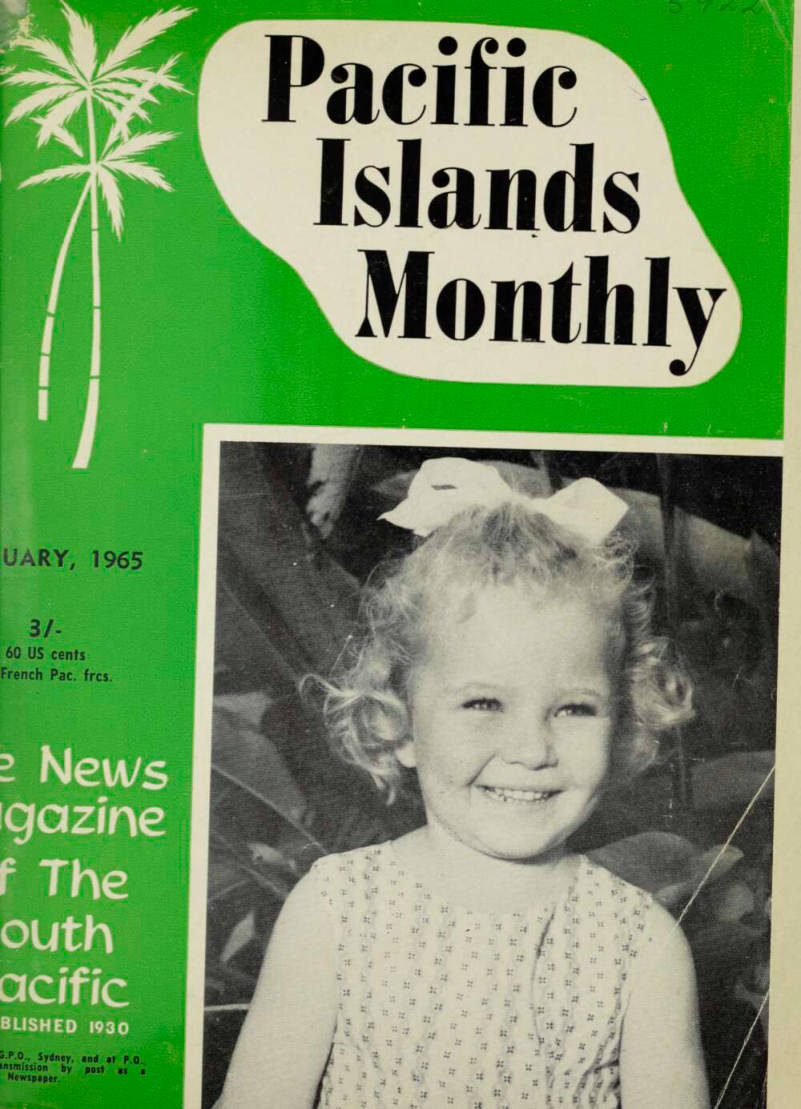 1
1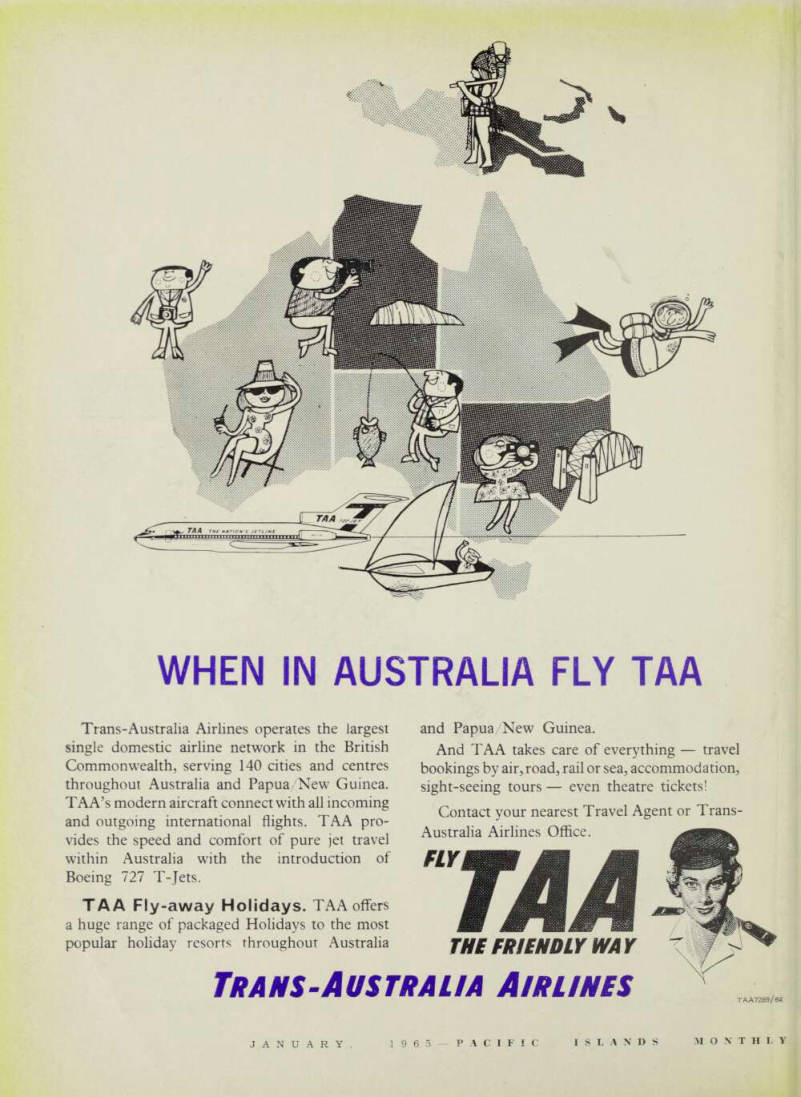 2
2 3
3 4
4 5
5 6
6 7
7 8
8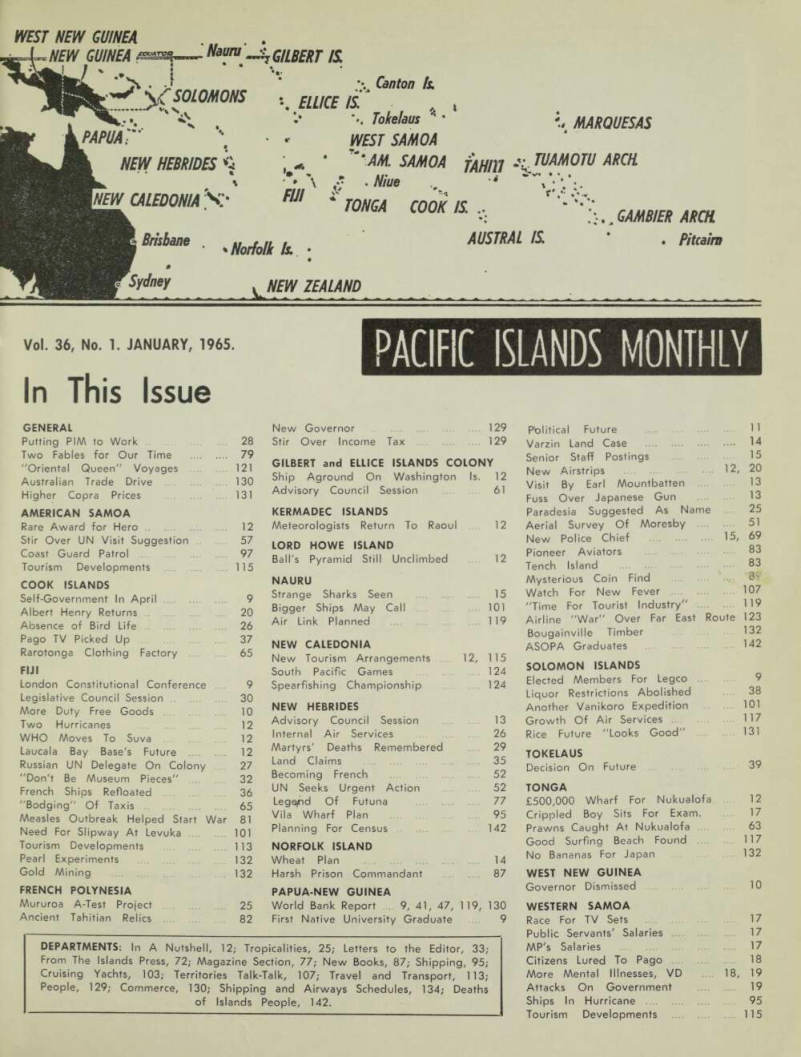 9
9 10
10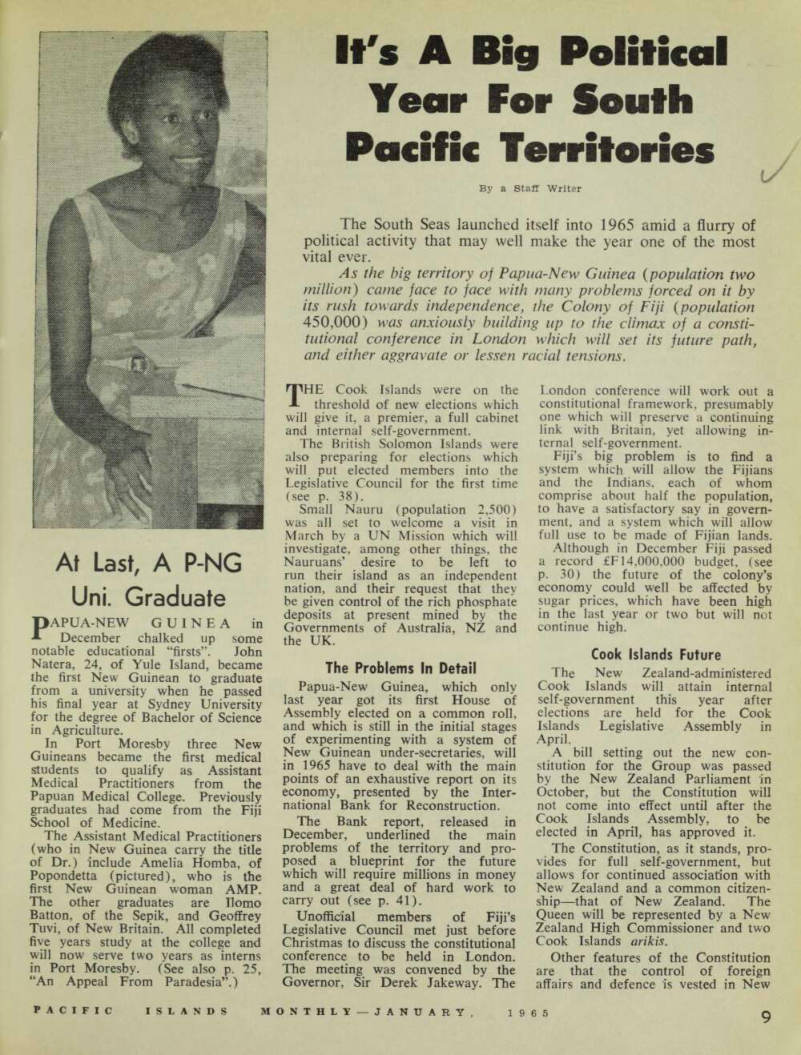 11
11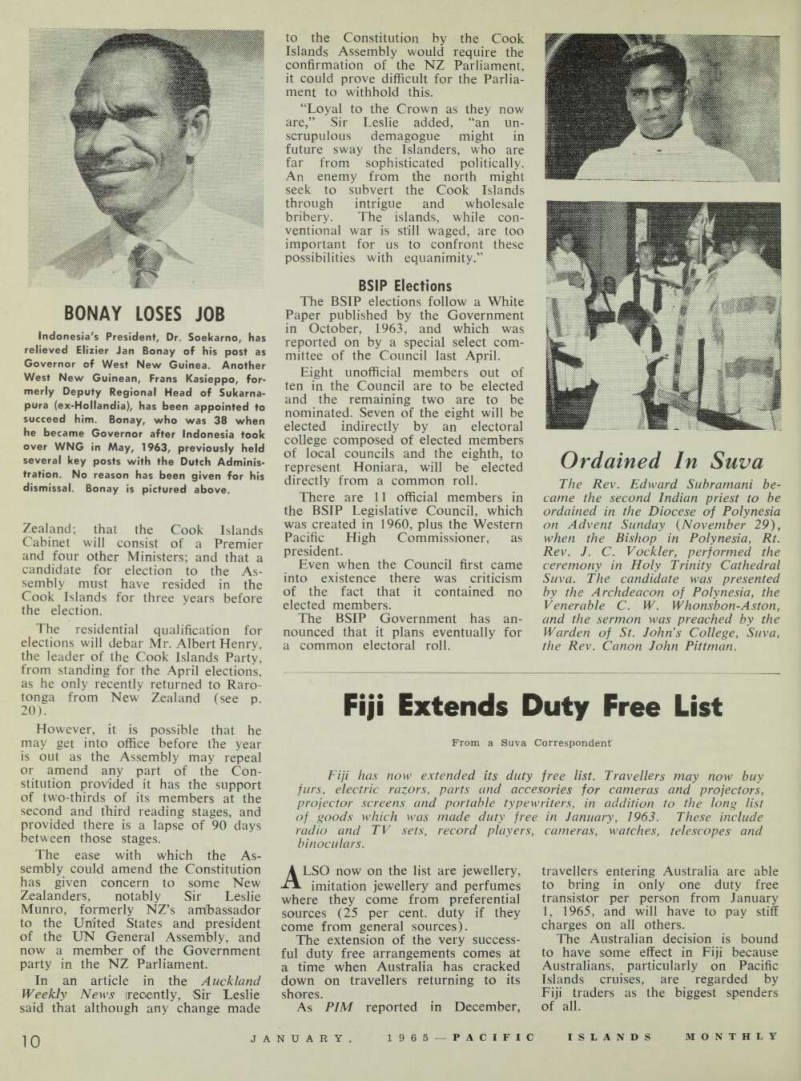 12
12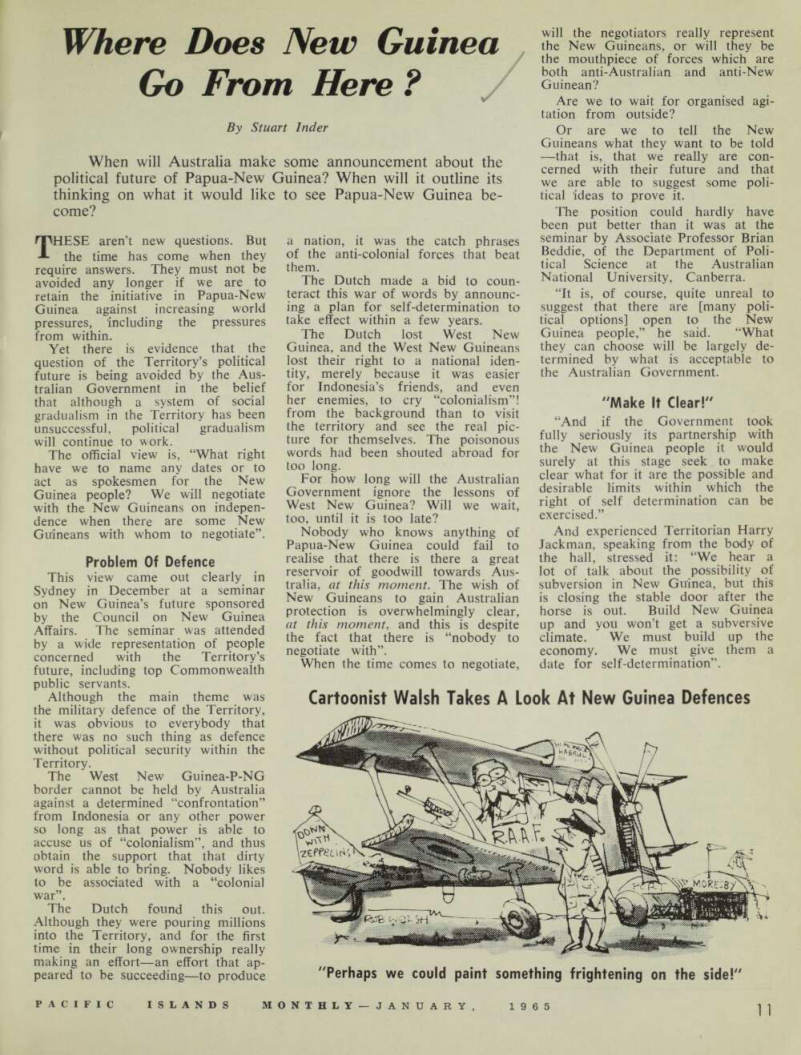 13
13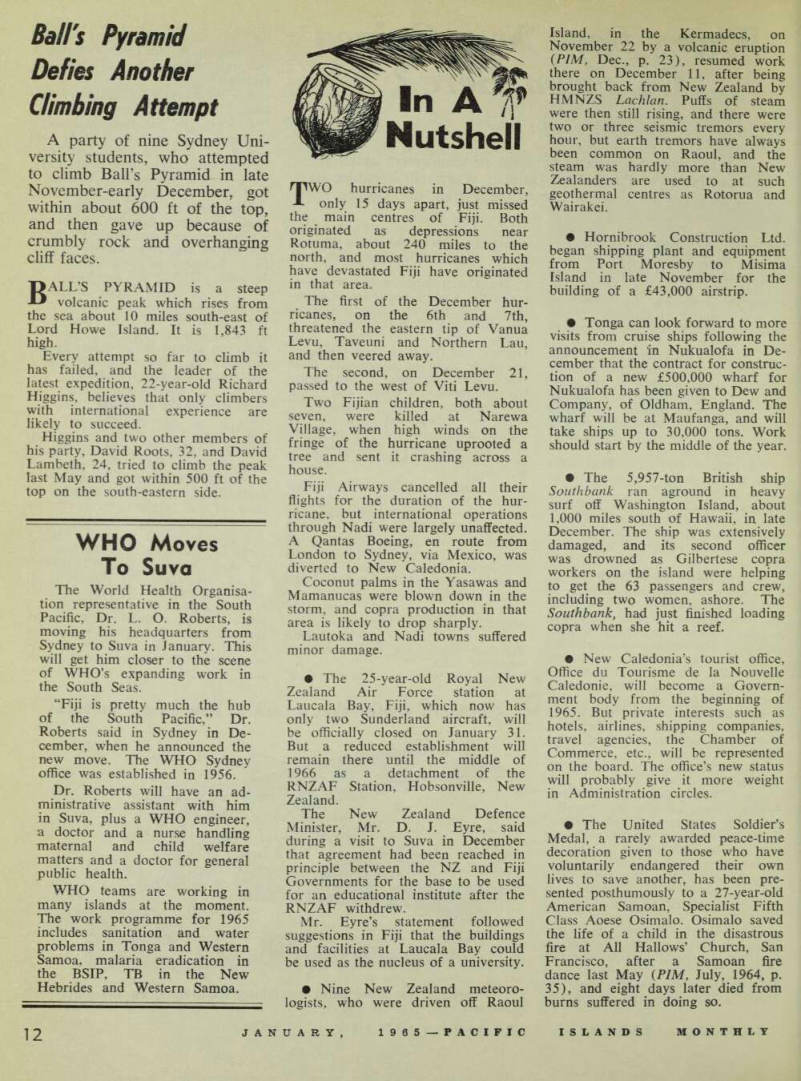 14
14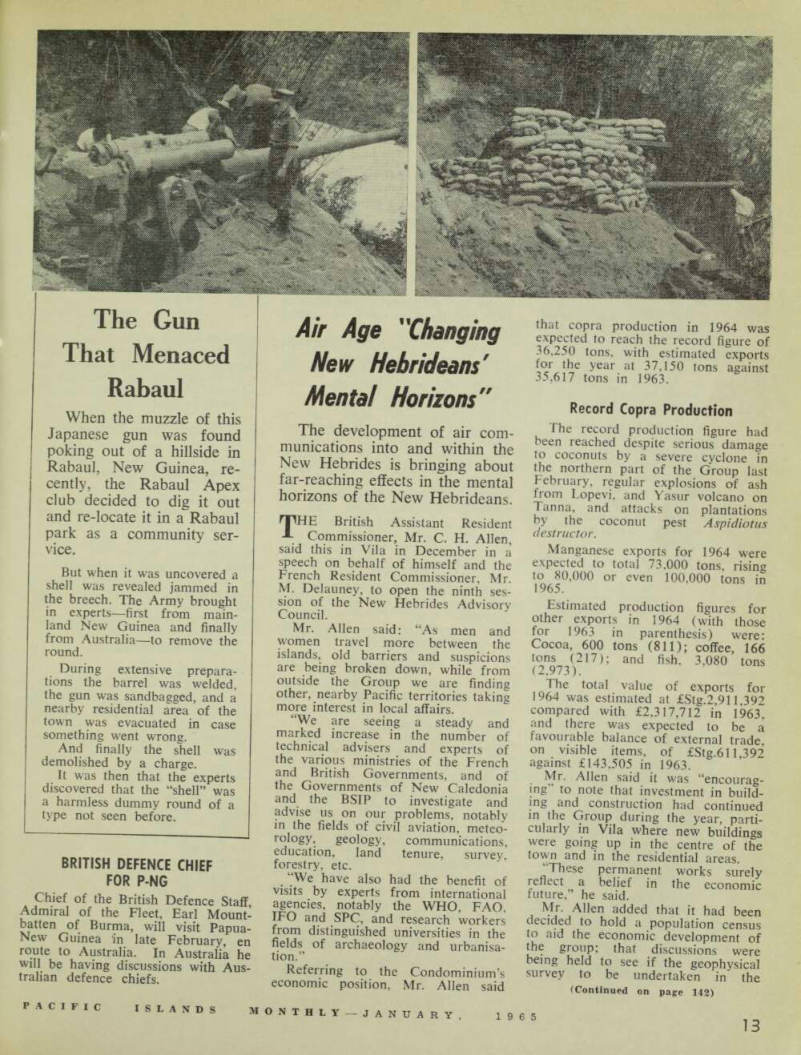 15
15 16
16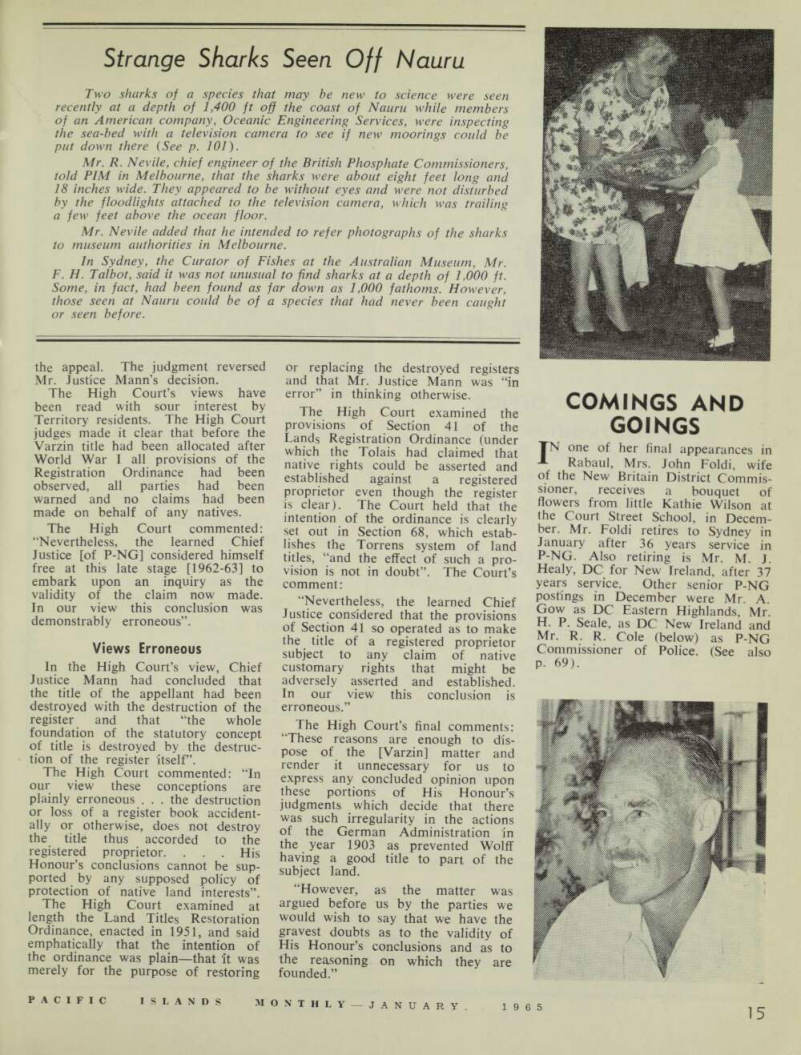 17
17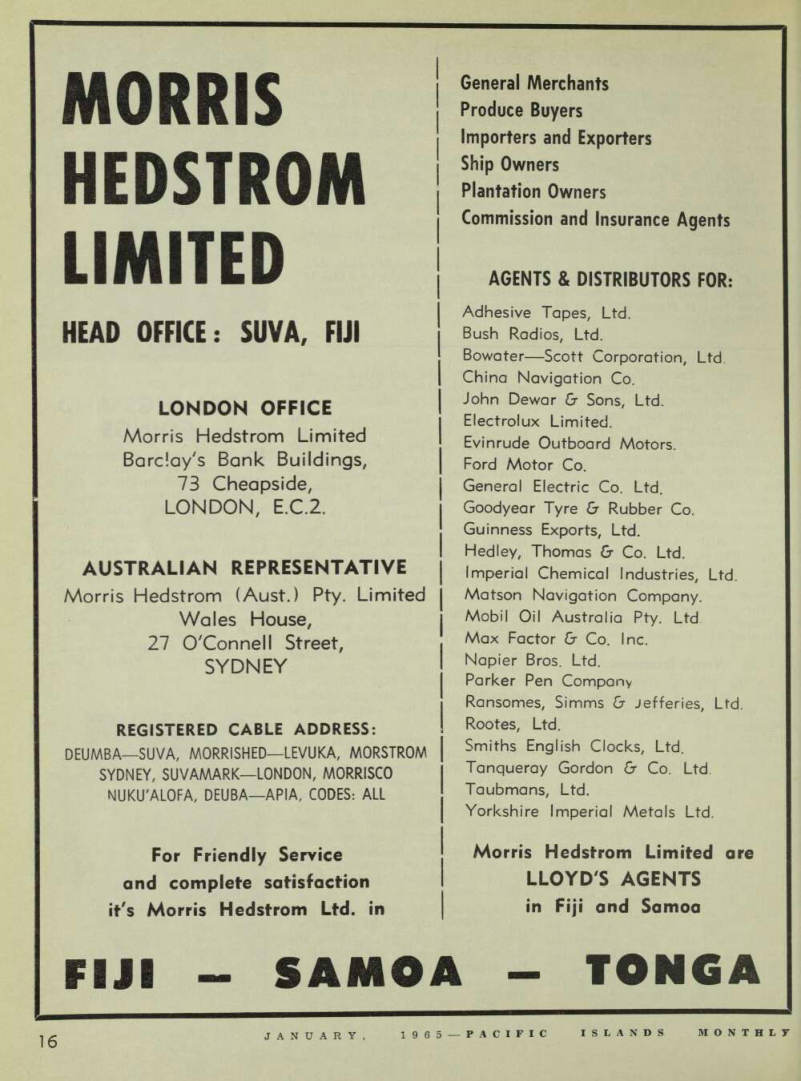 18
18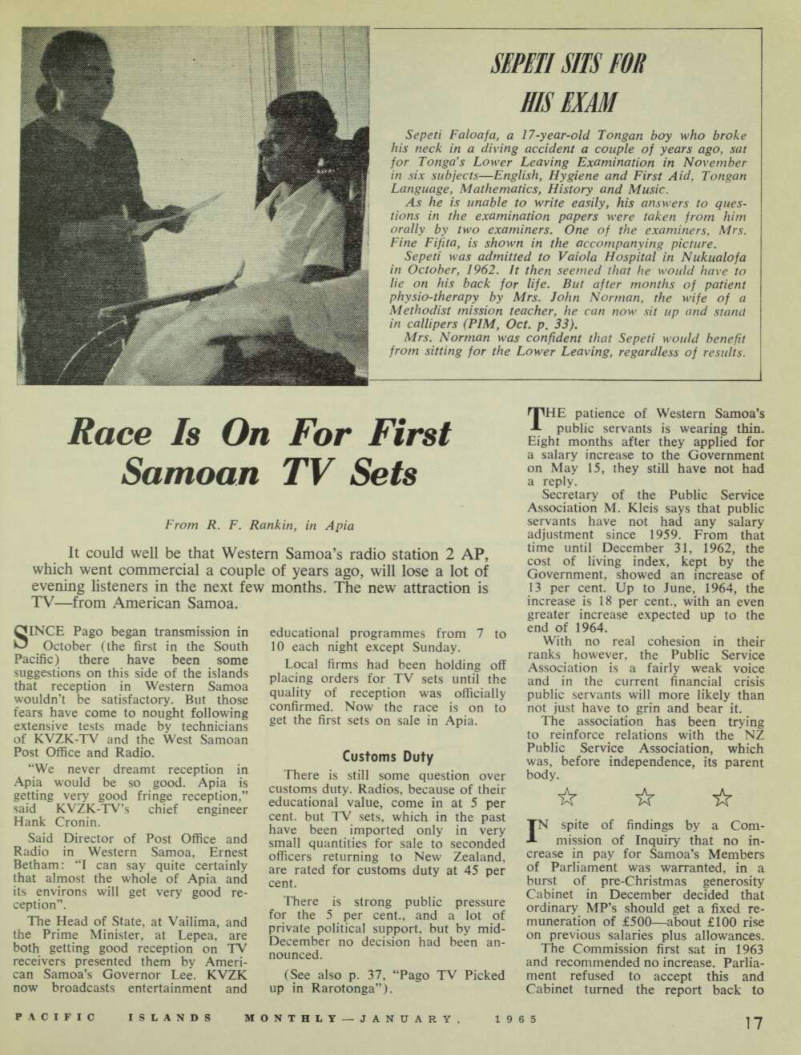 19
19 20
20 21
21 22
22 23
23 24
24 25
25 26
26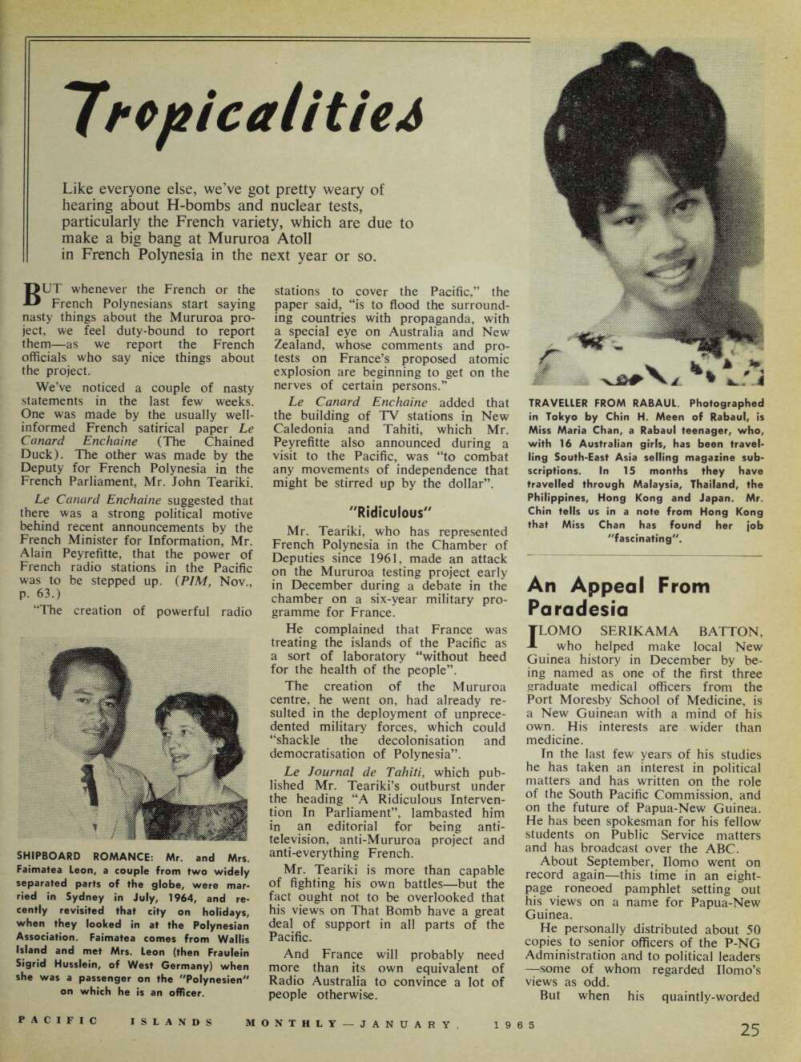 27
27 28
28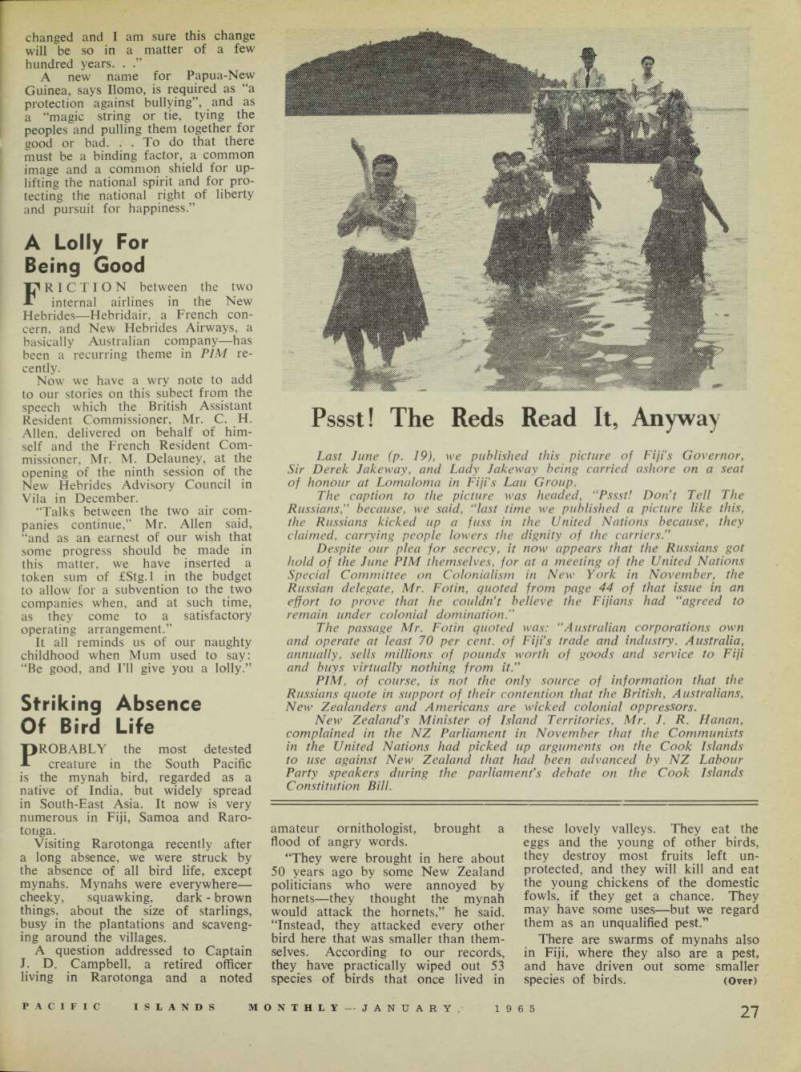 29
29 30
30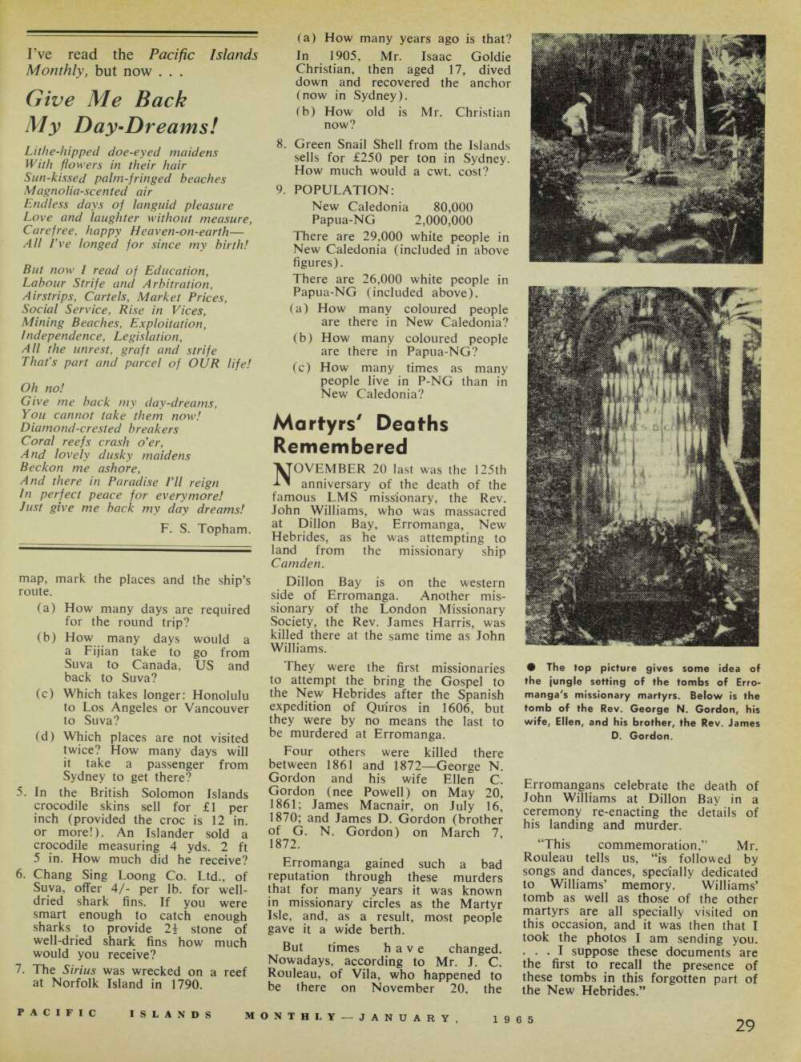 31
31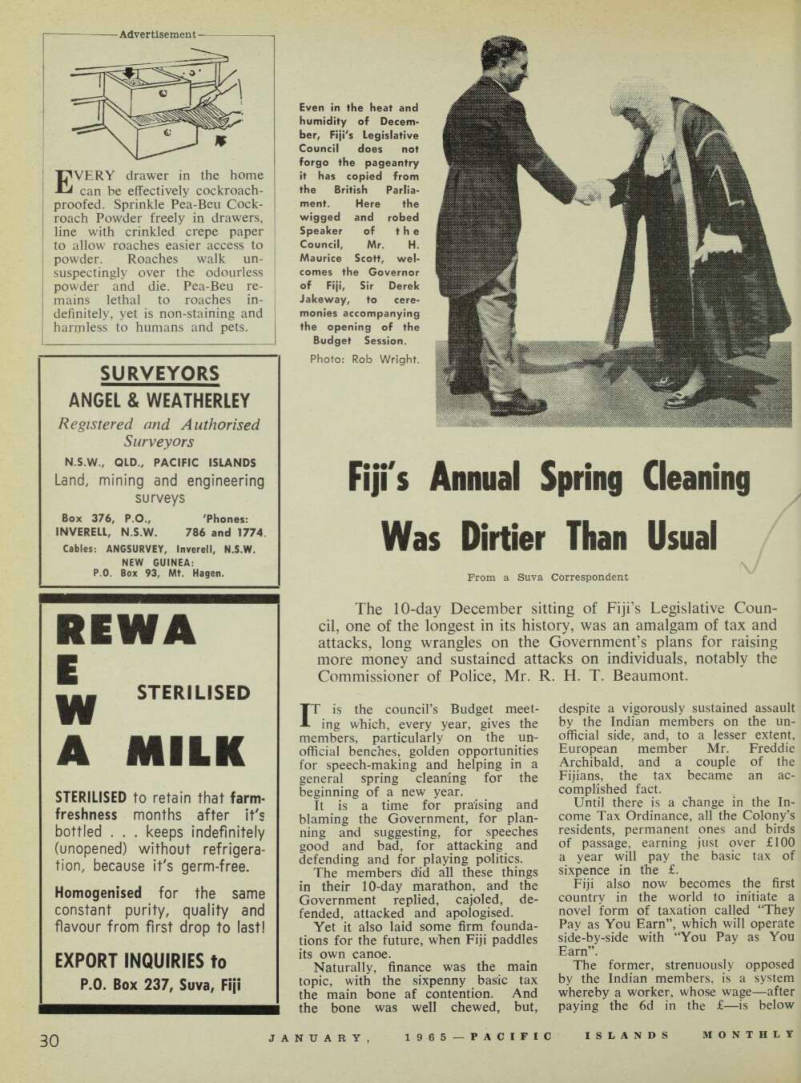 32
32 33
33 34
34 35
35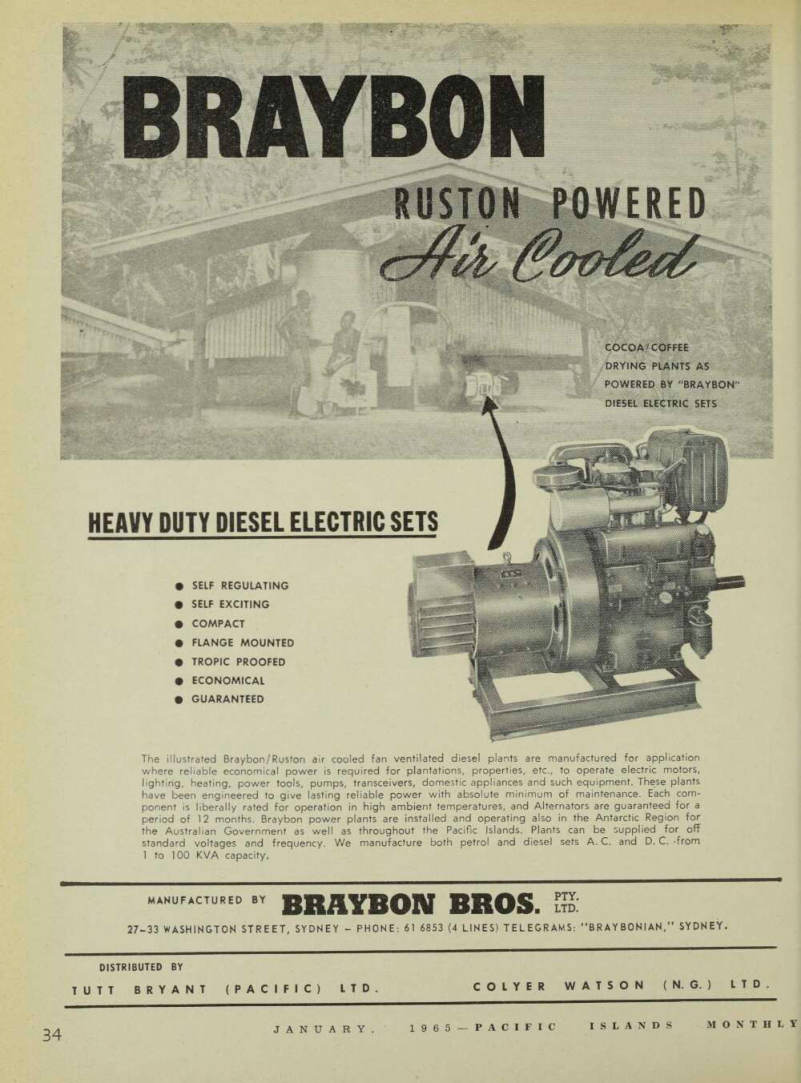 36
36 37
37 38
38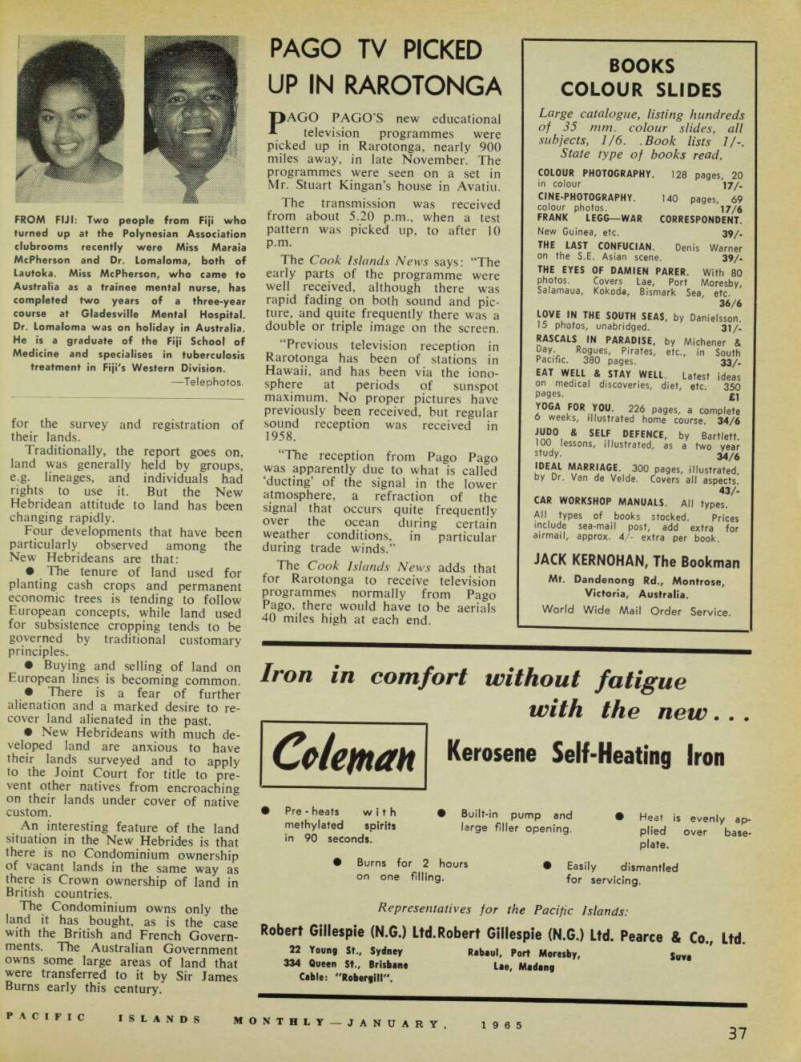 39
39 40
40 41
41 42
42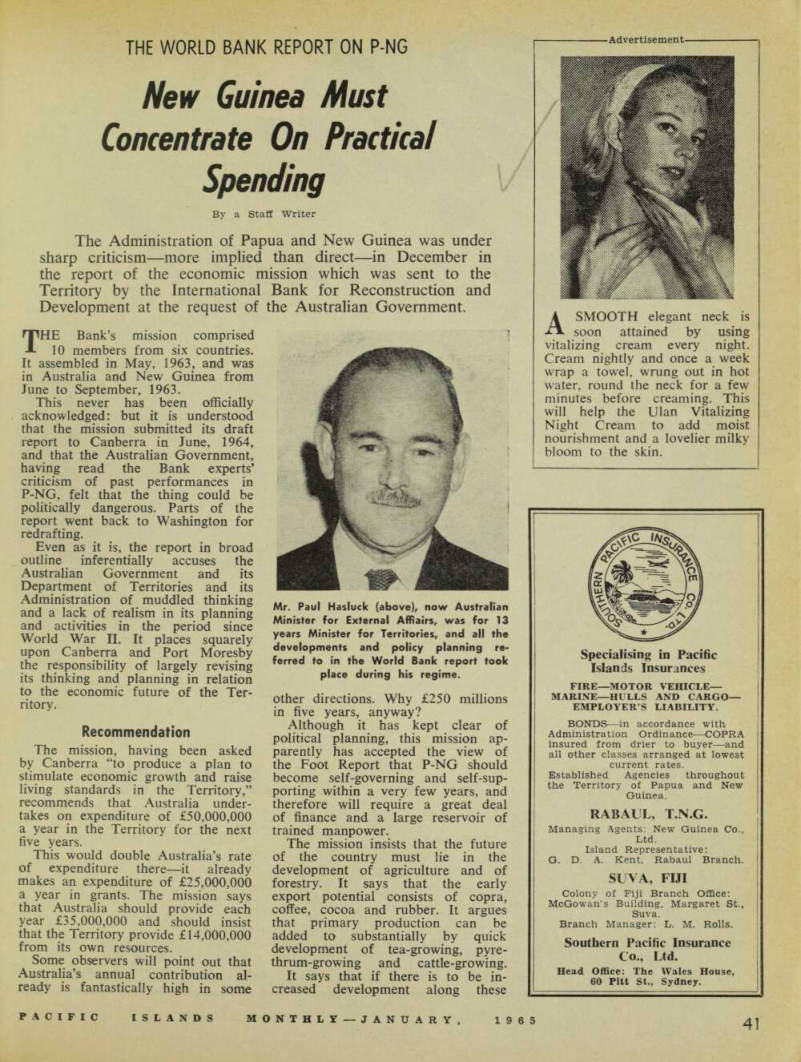 43
43 44
44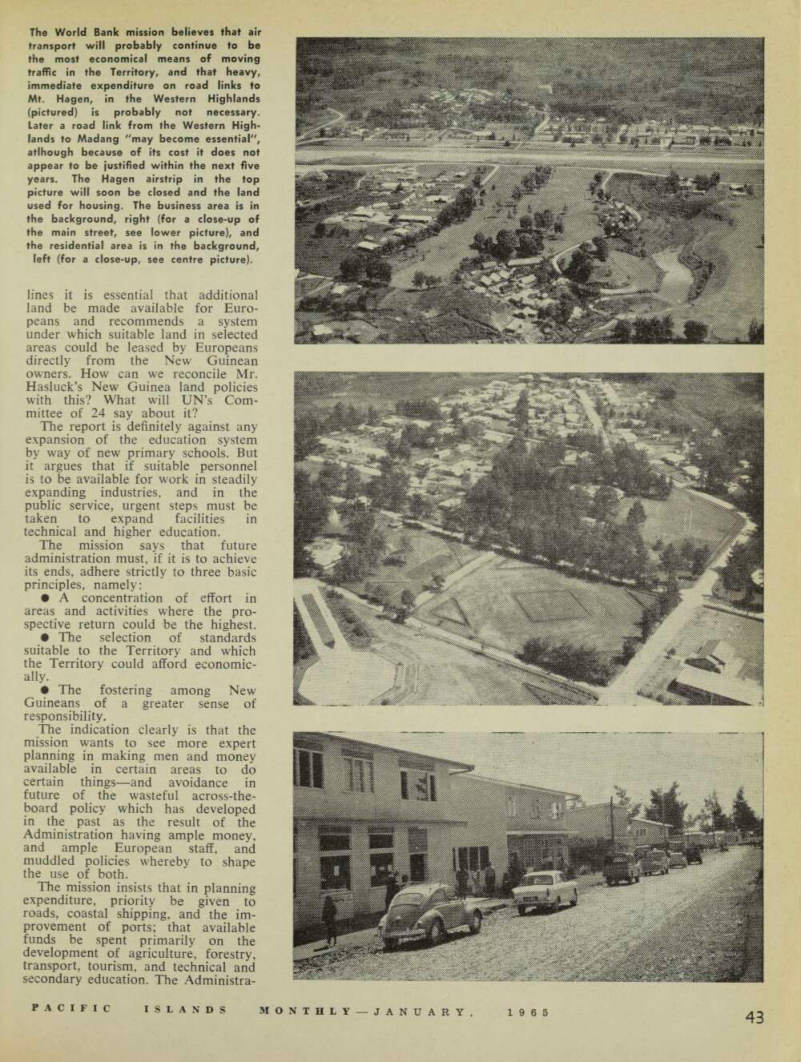 45
45 46
46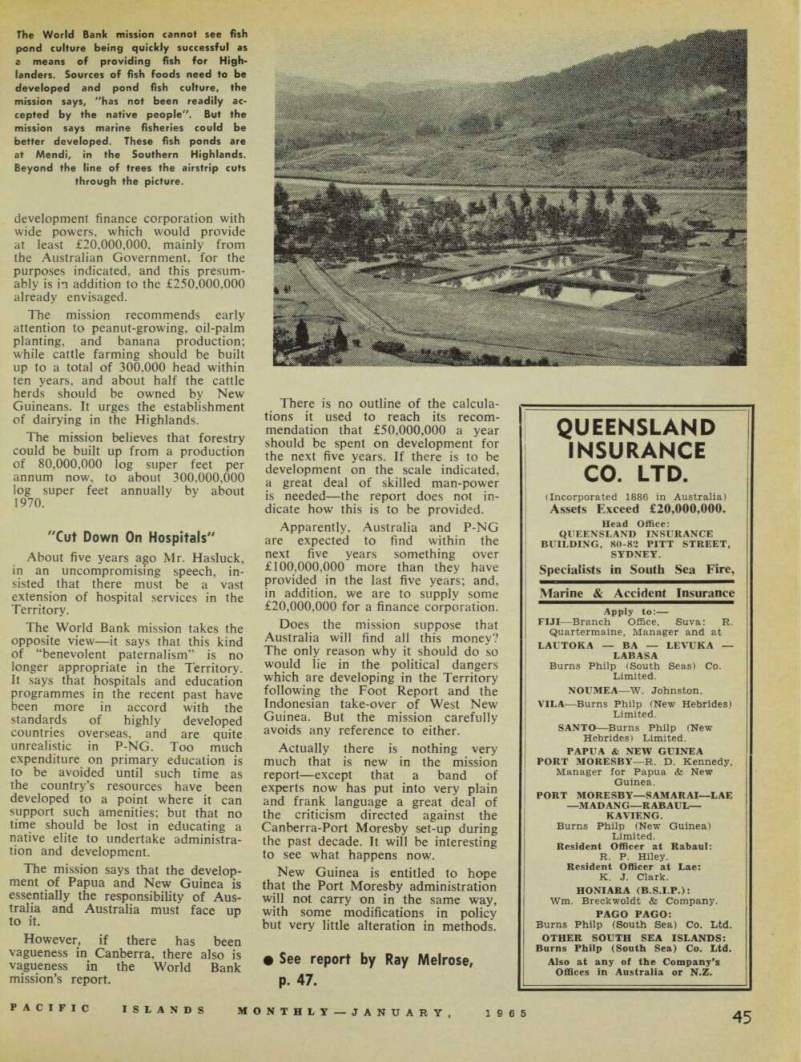 47
47 48
48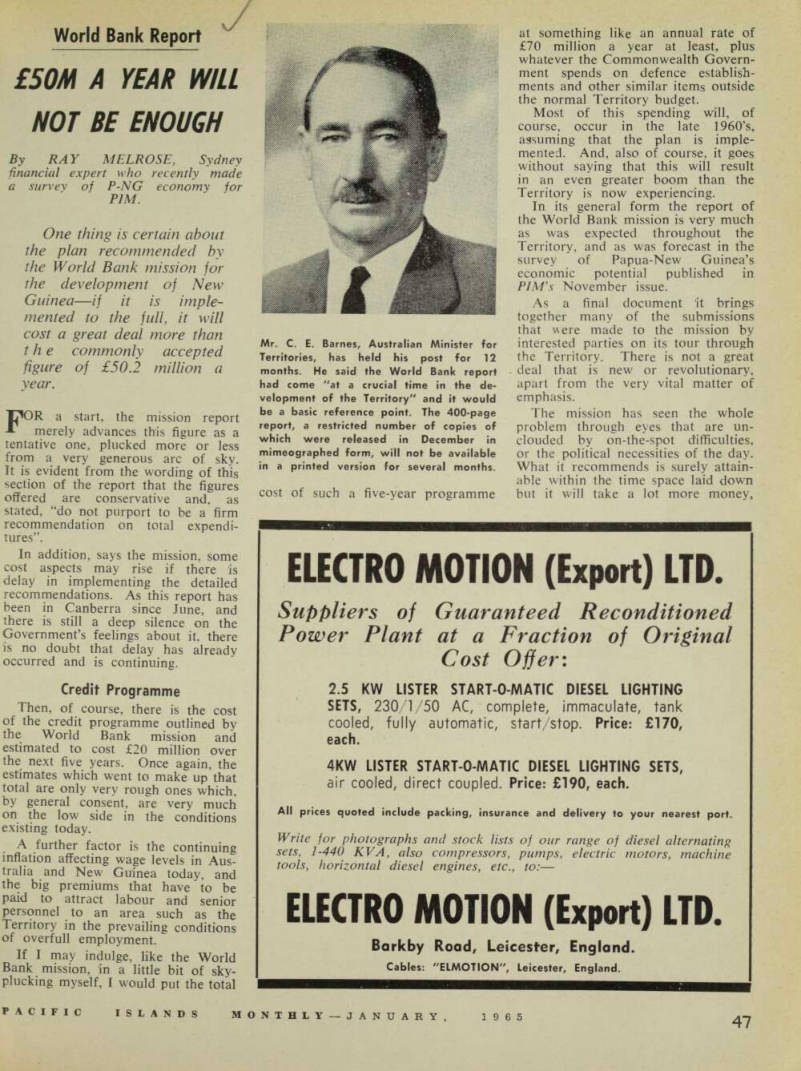 49
49 50
50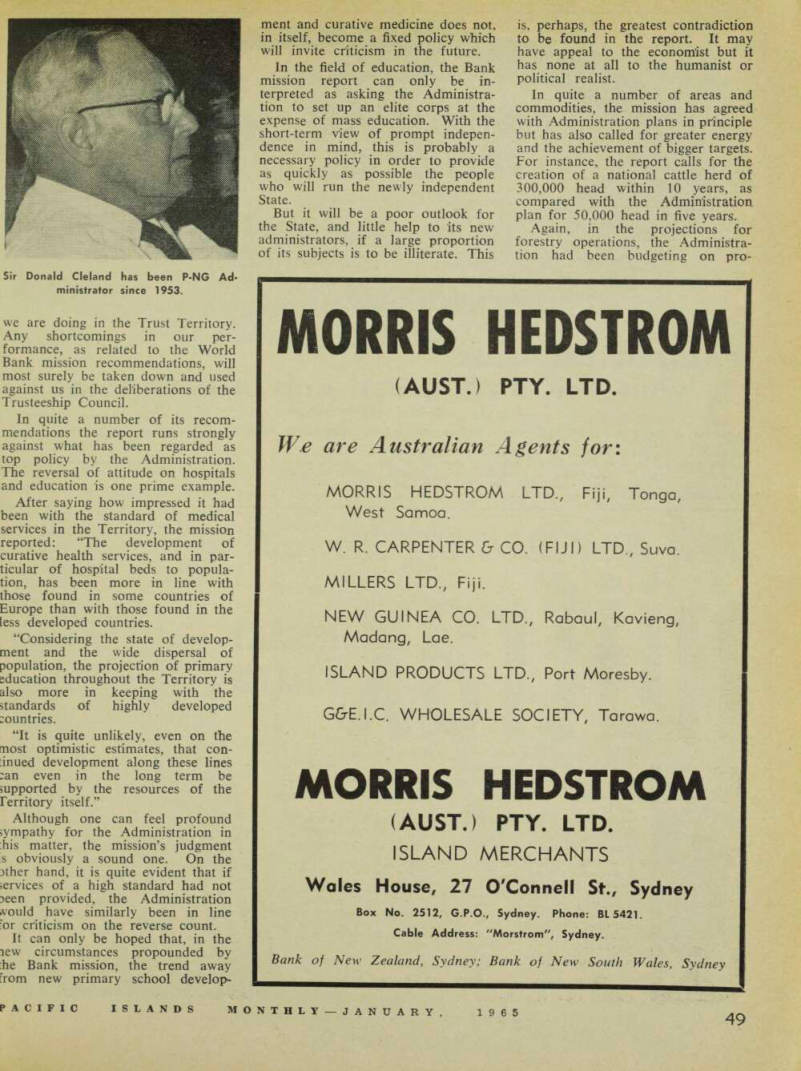 51
51 52
52 53
53 54
54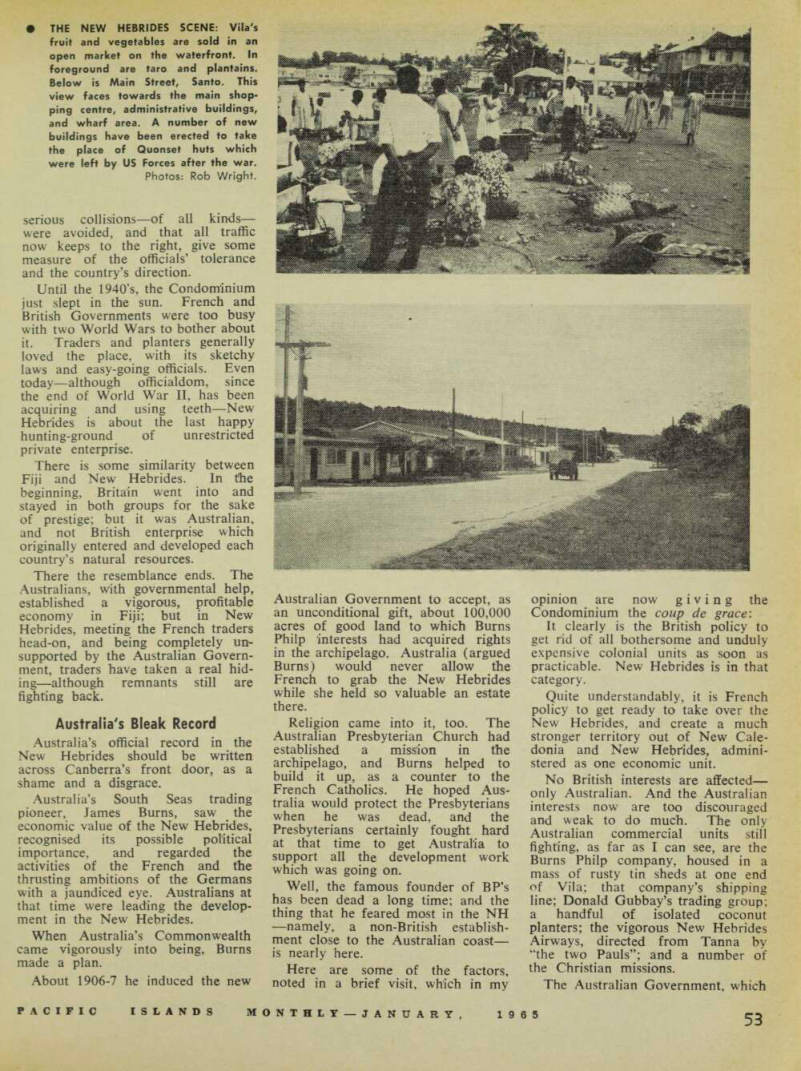 55
55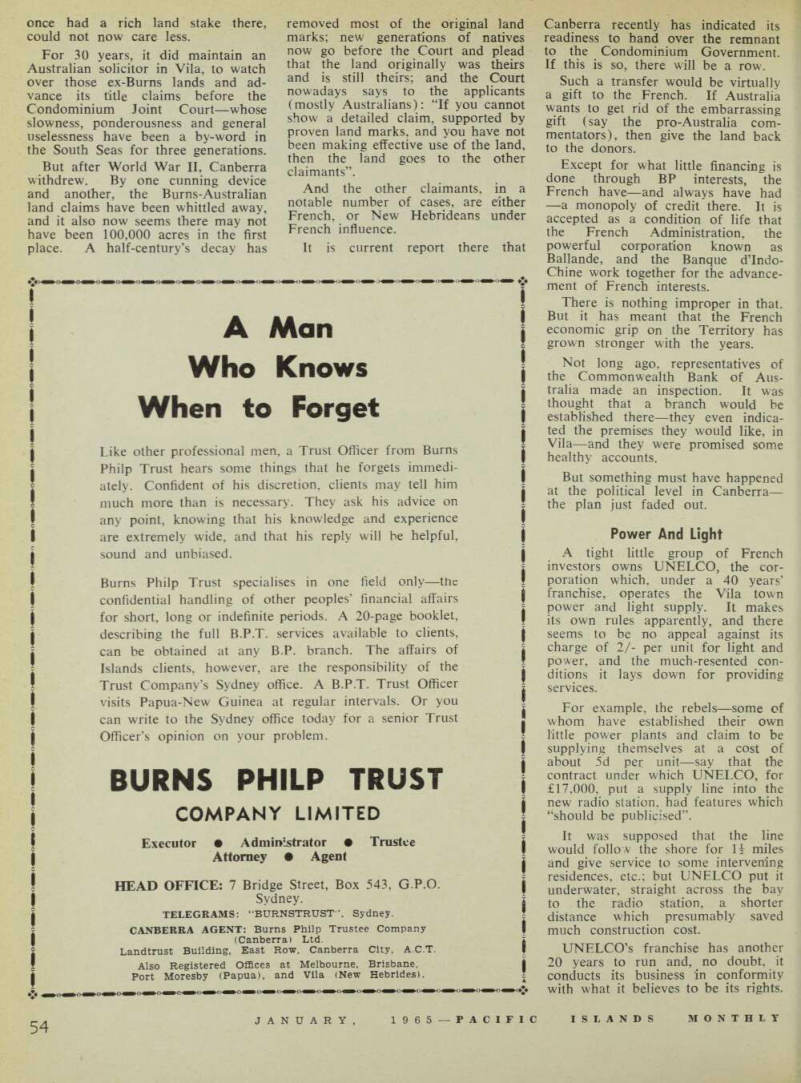 56
56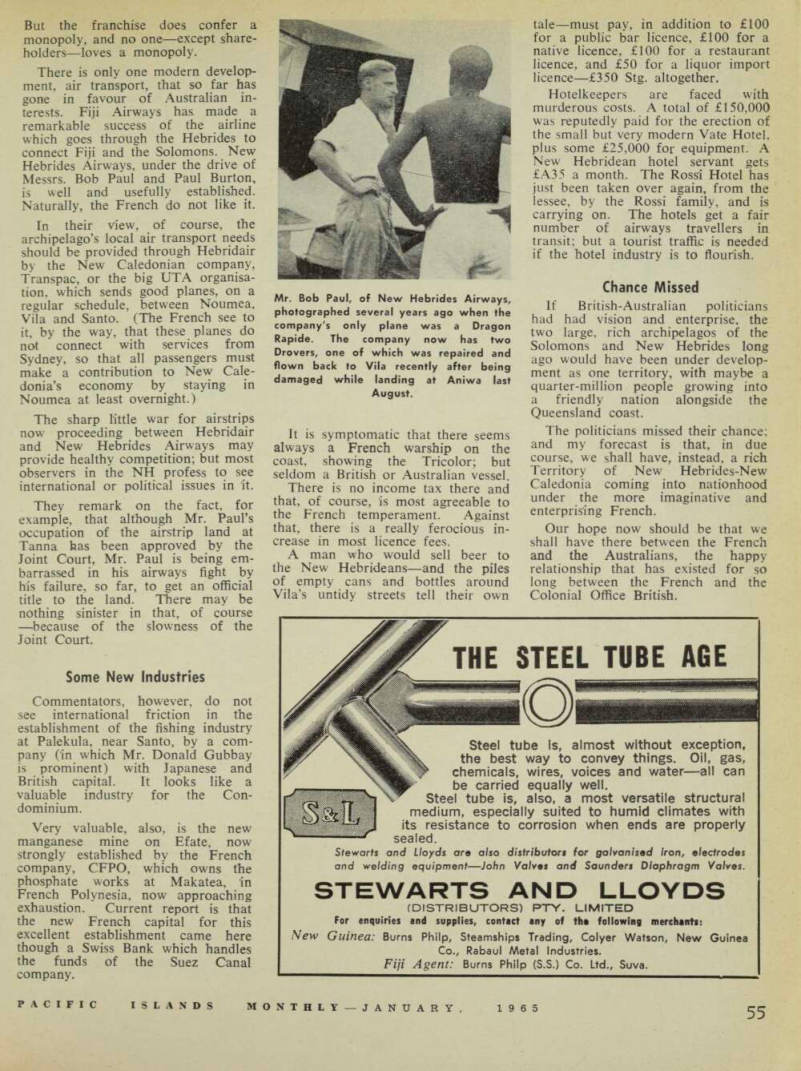 57
57 58
58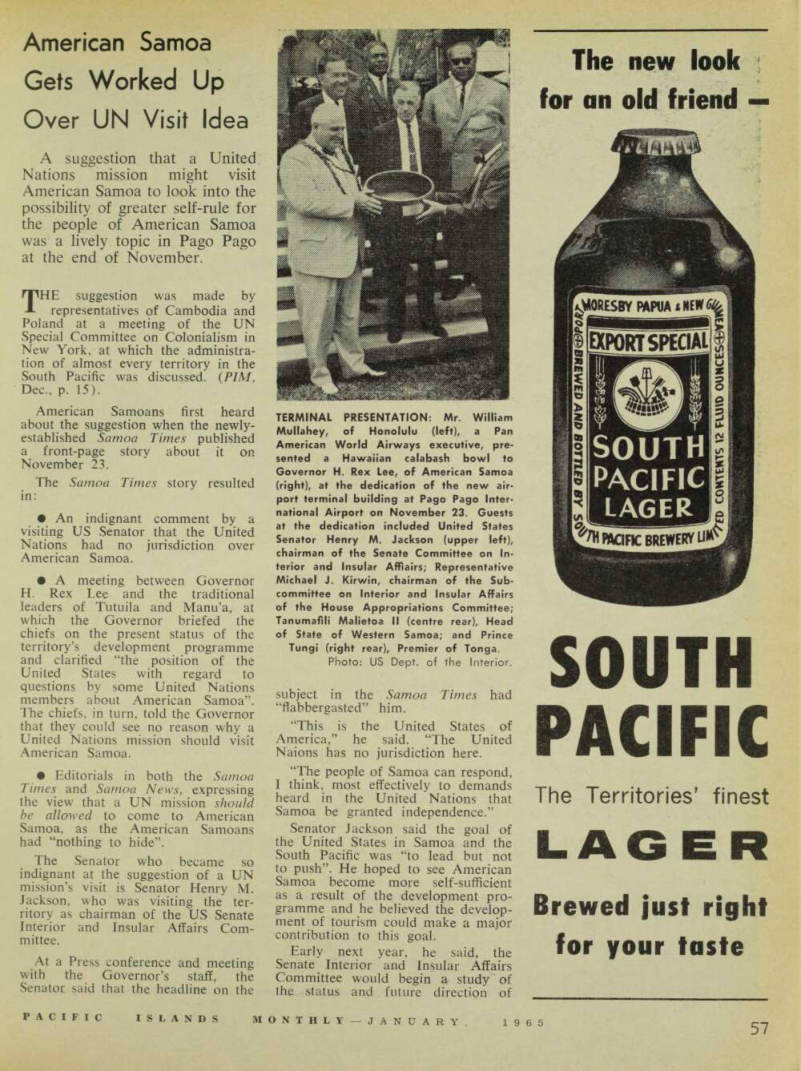 59
59 60
60 61
61 62
62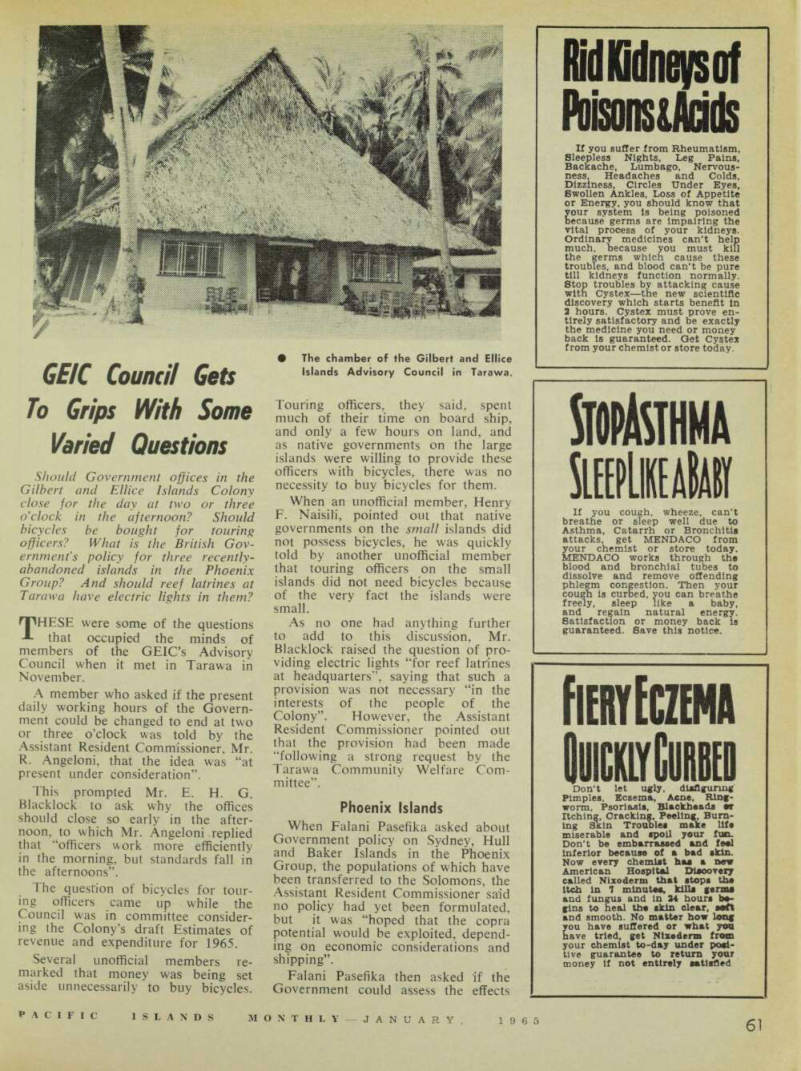 63
63 64
64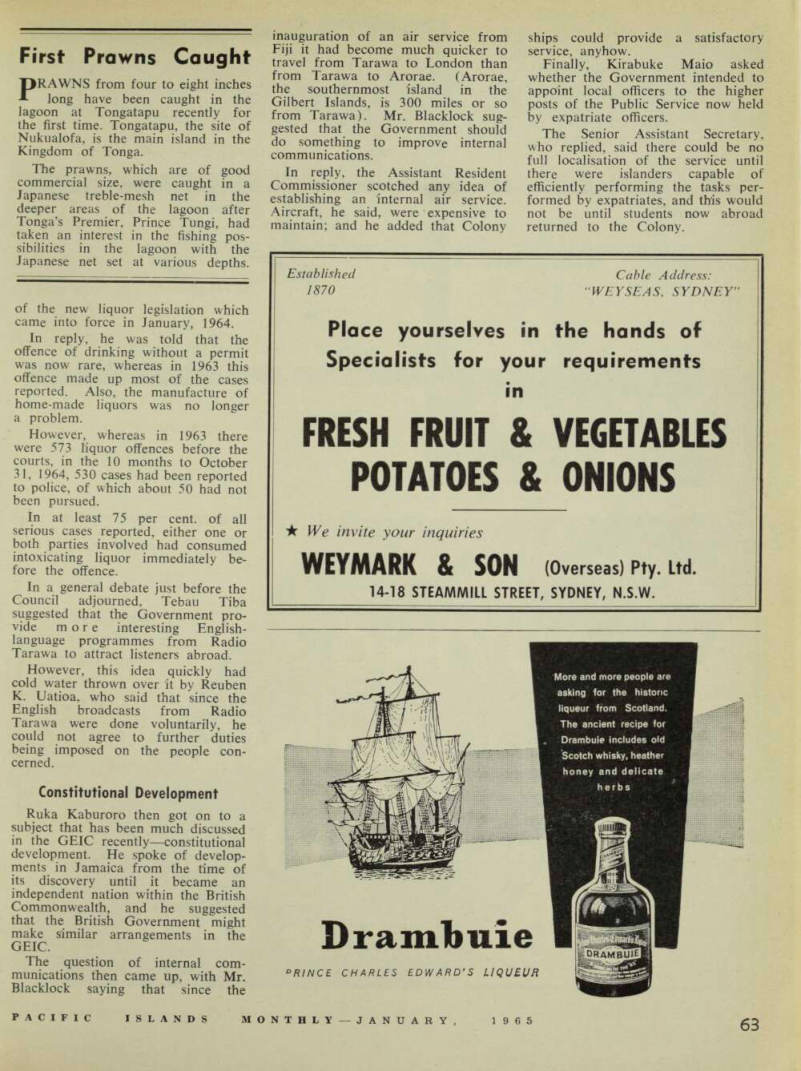 65
65 66
66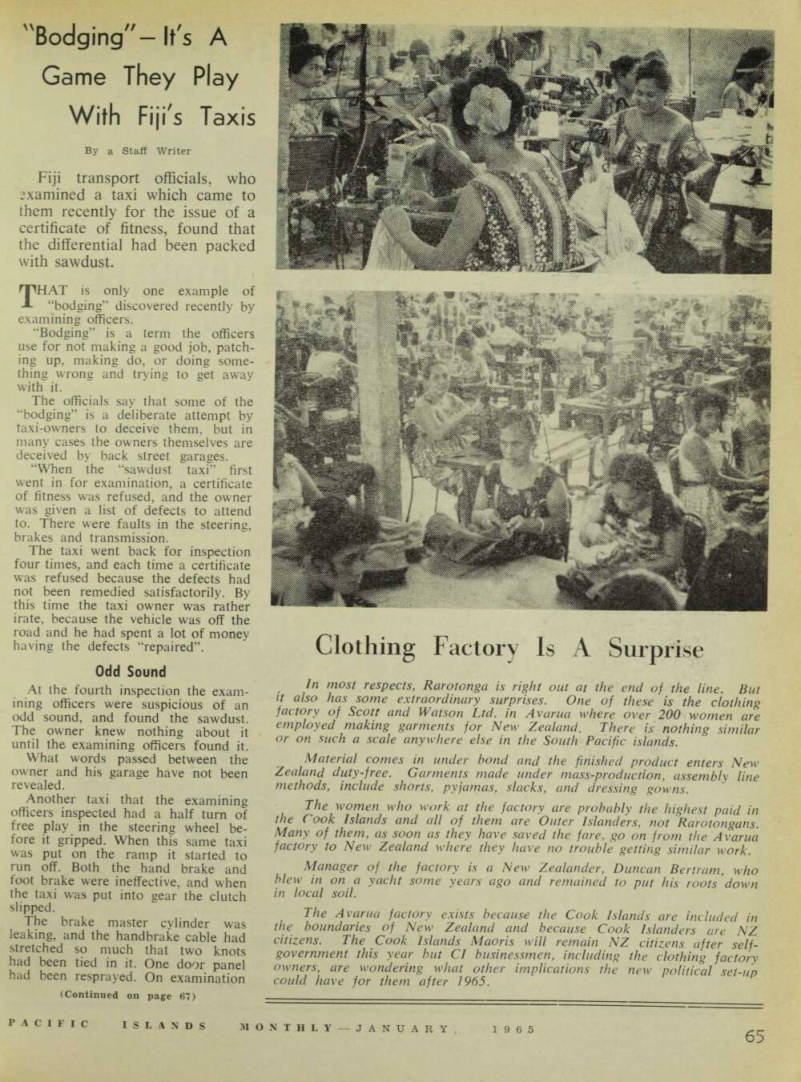 67
67 68
68 69
69 70
70 71
71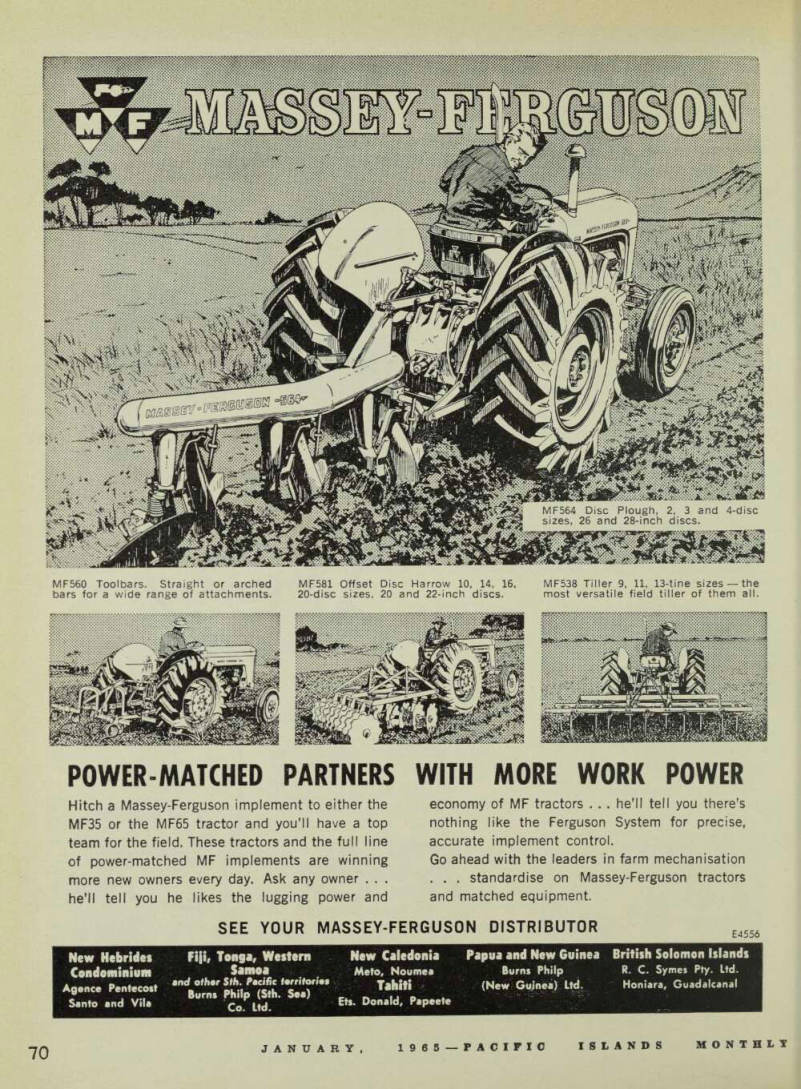 72
72 73
73 74
74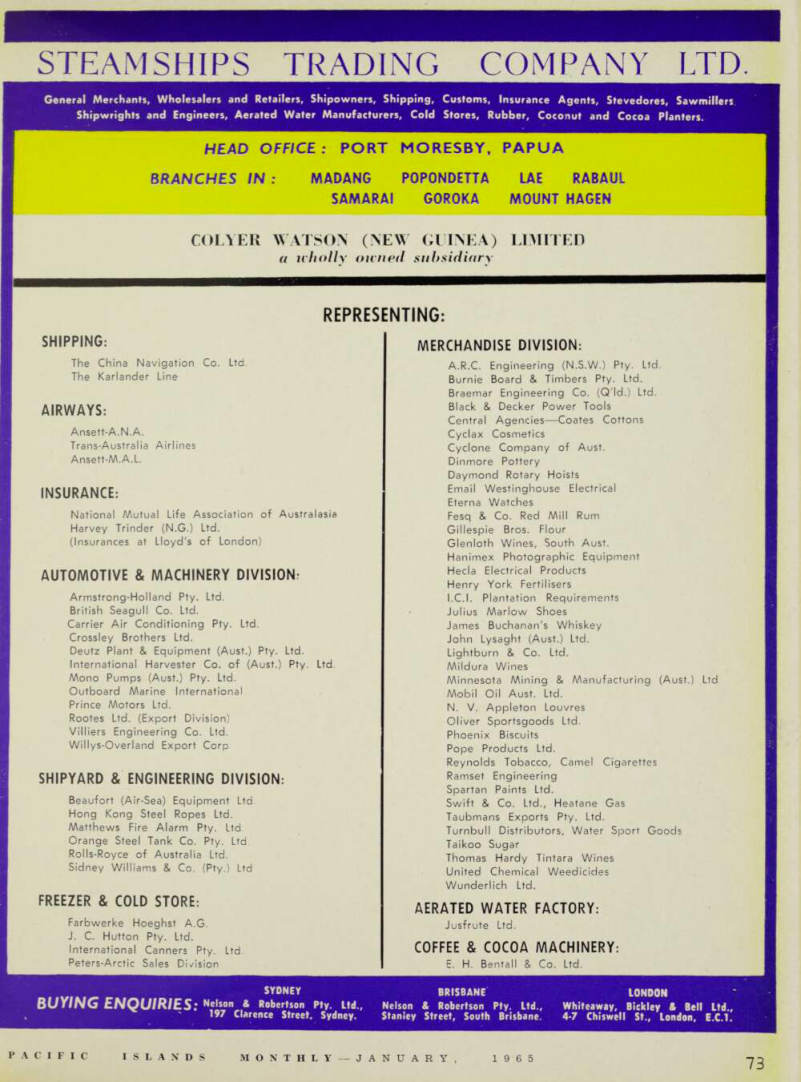 75
75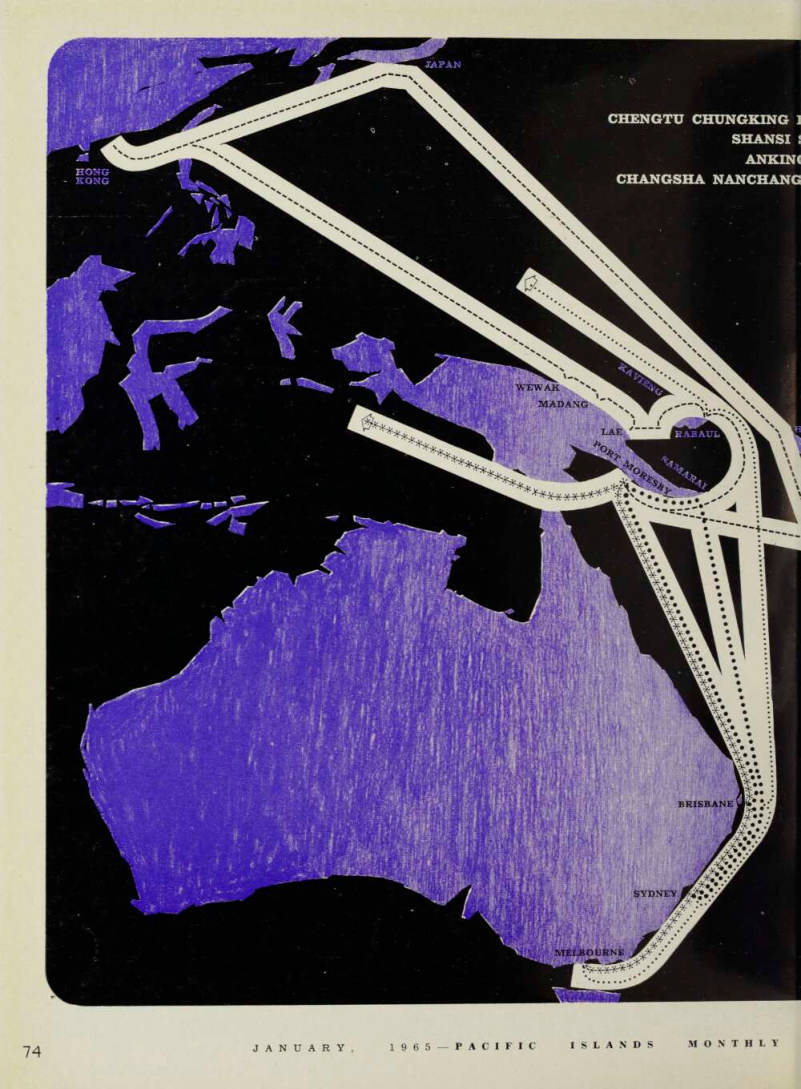 76
76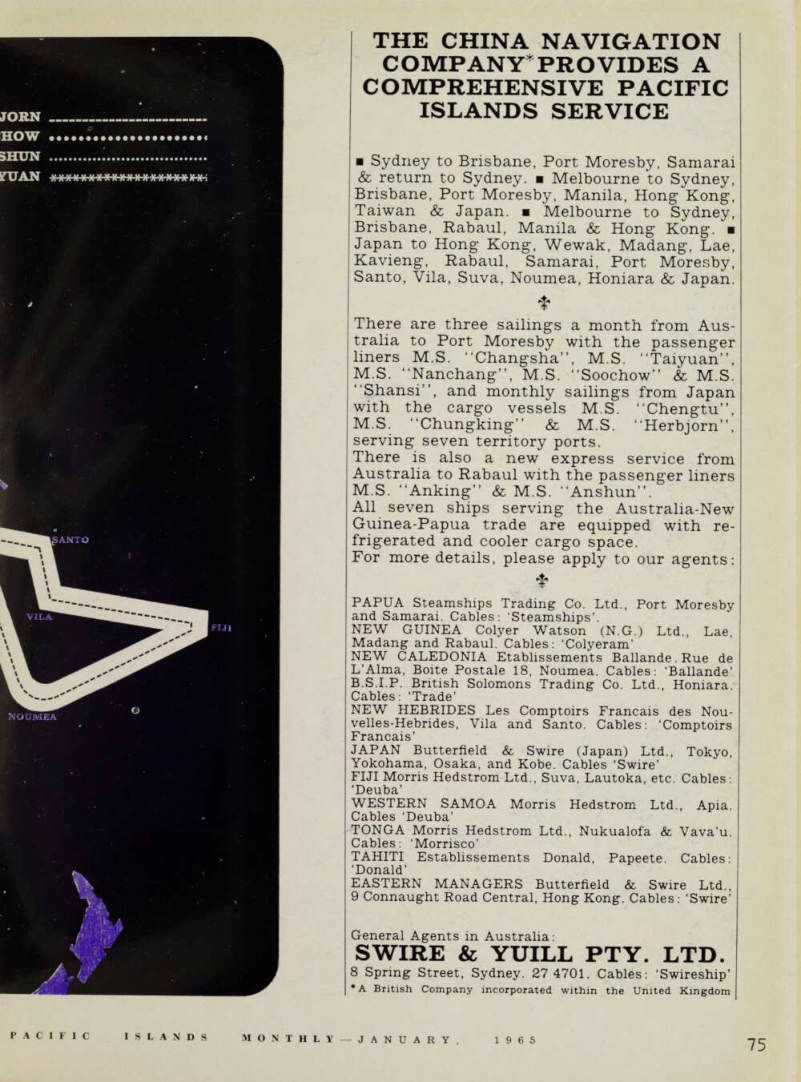 77
77 78
78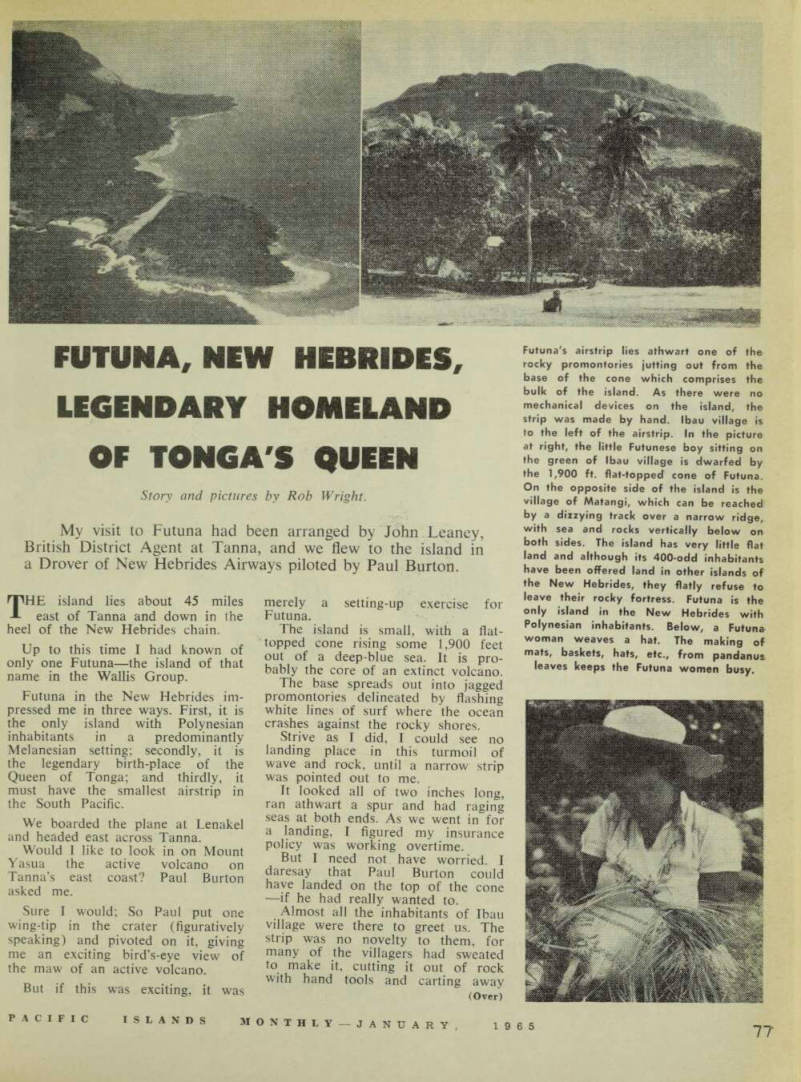 79
79 80
80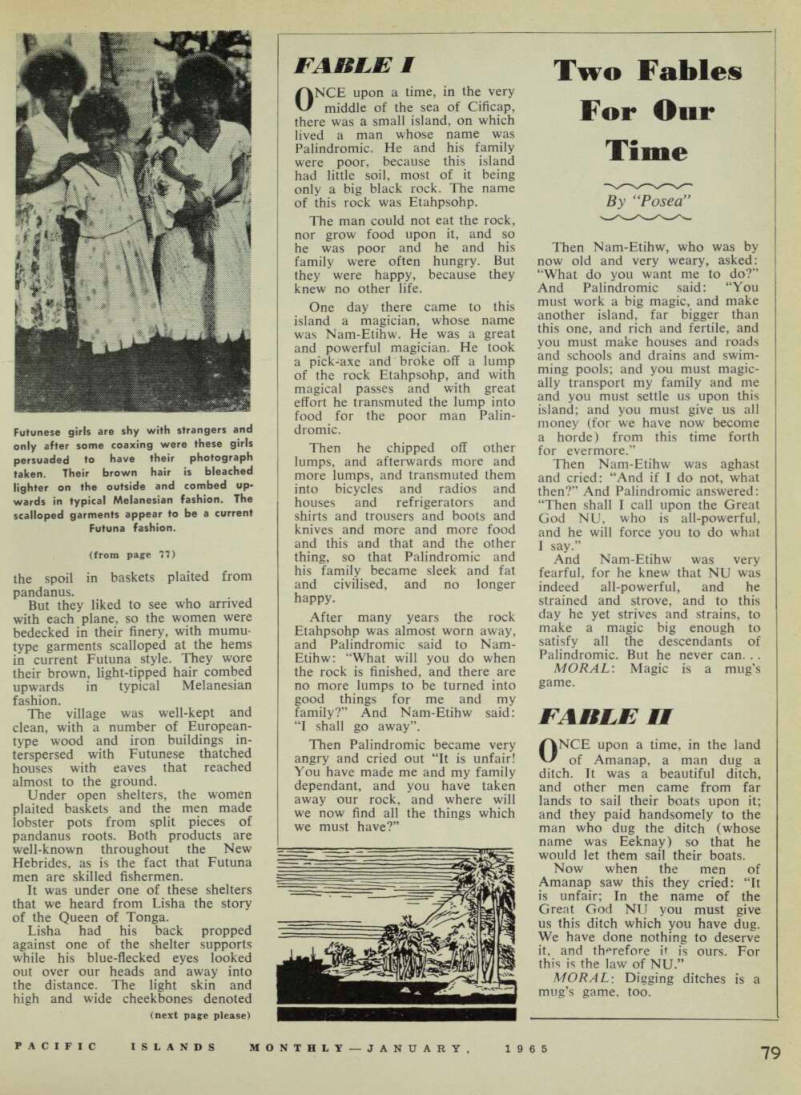 81
81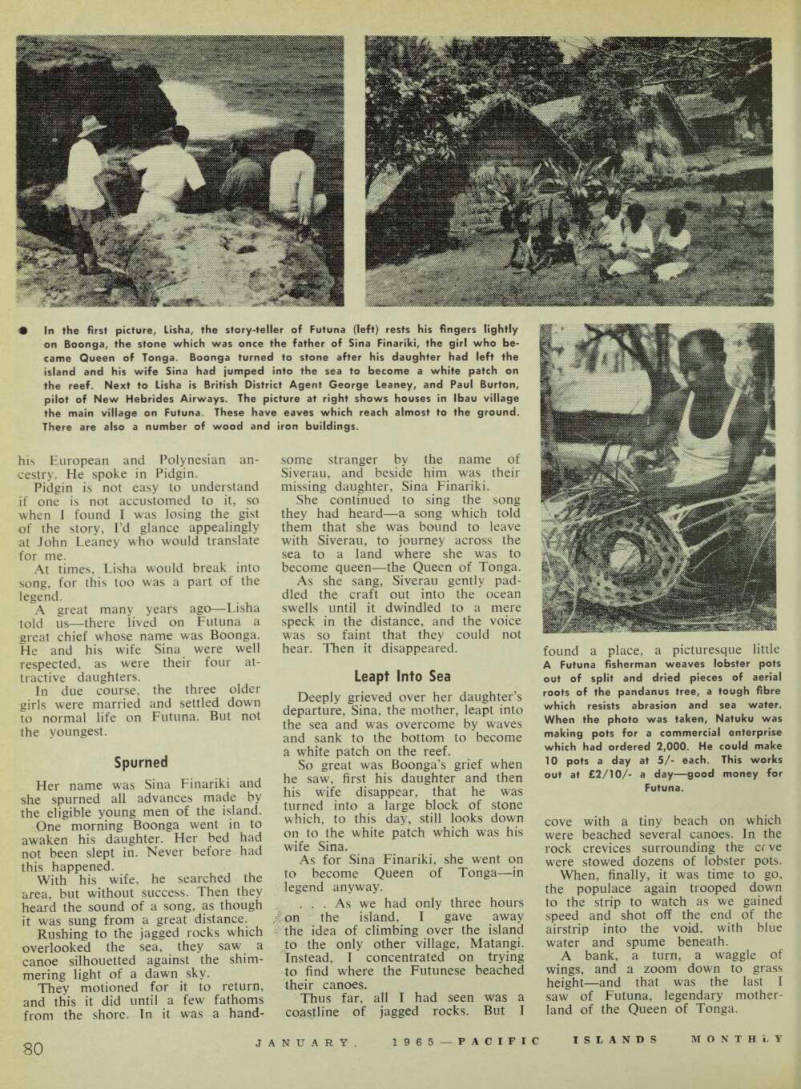 82
82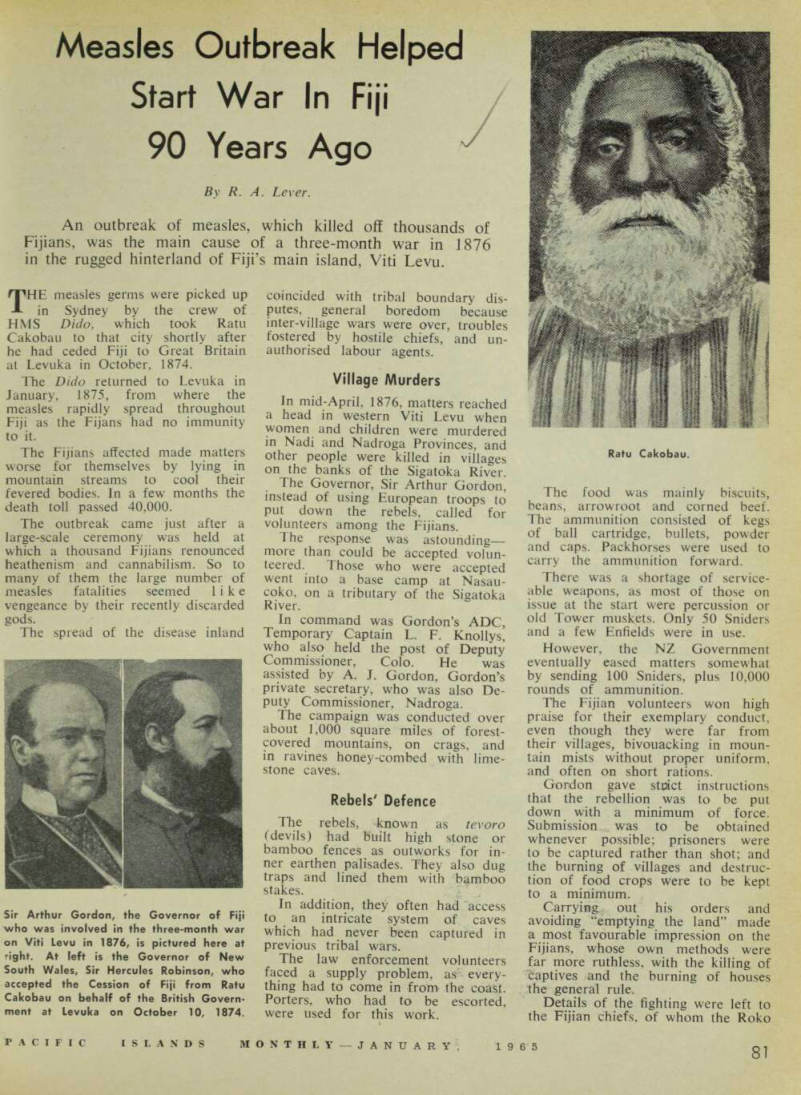 83
83 84
84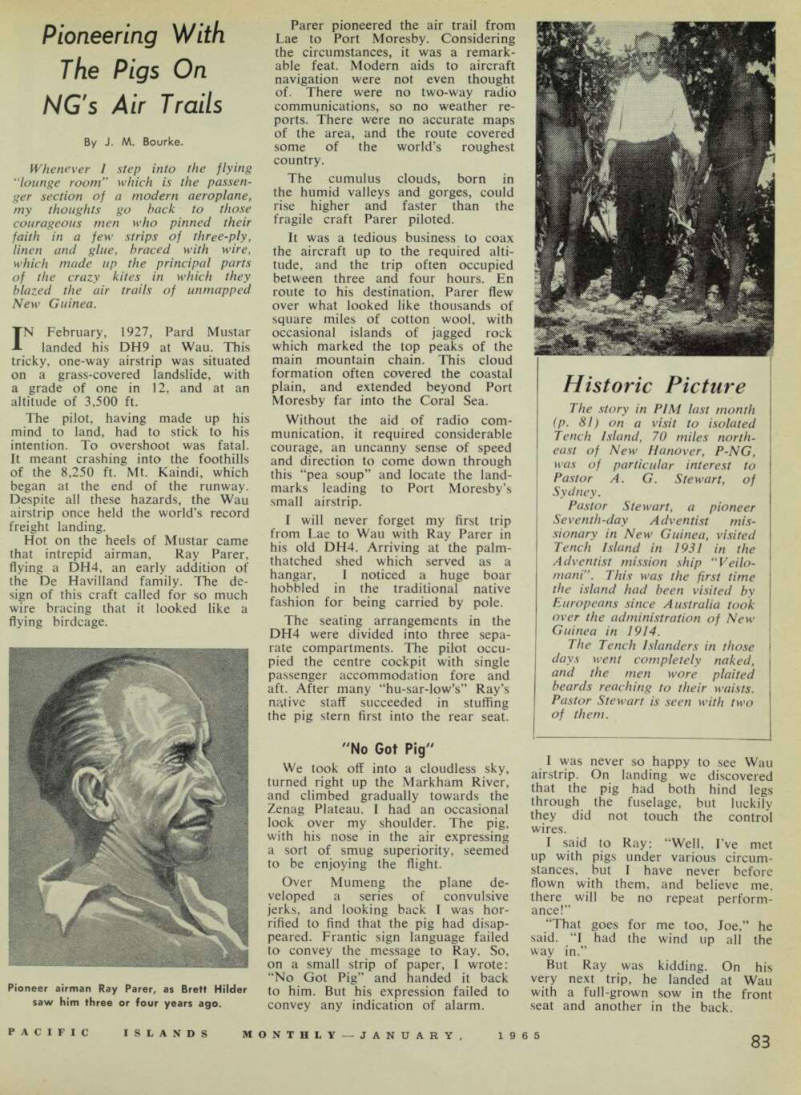 85
85 86
86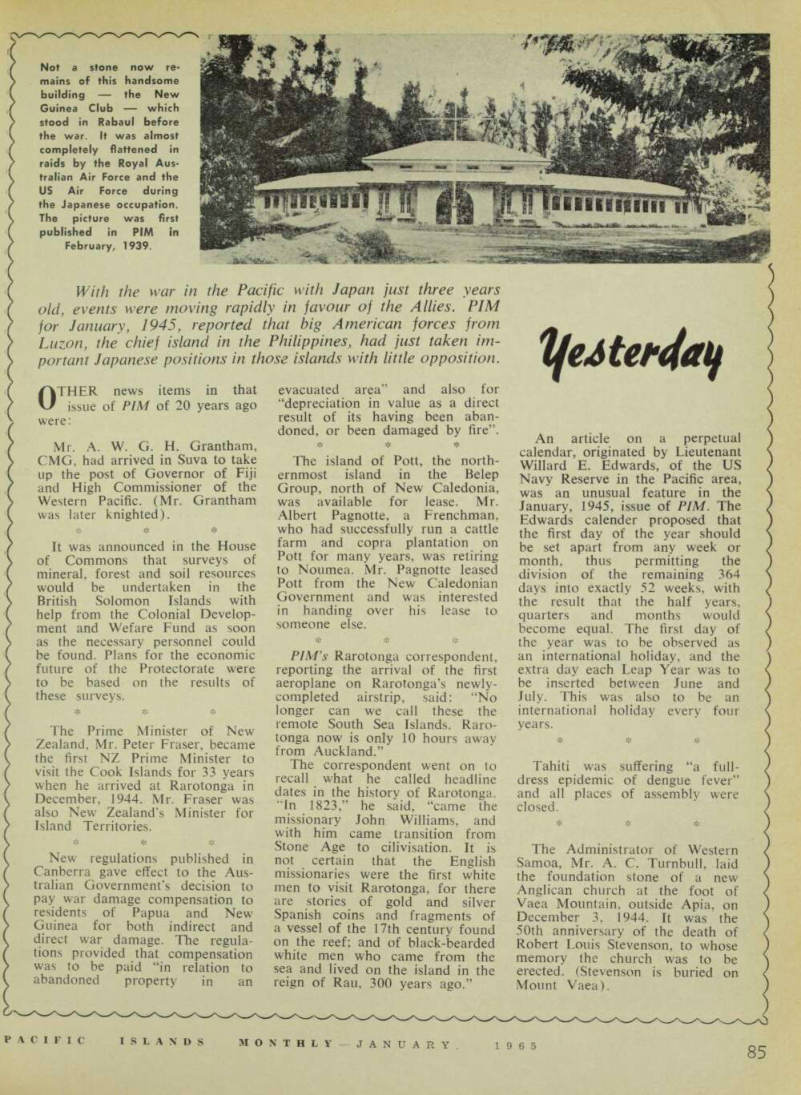 87
87 88
88 89
89 90
90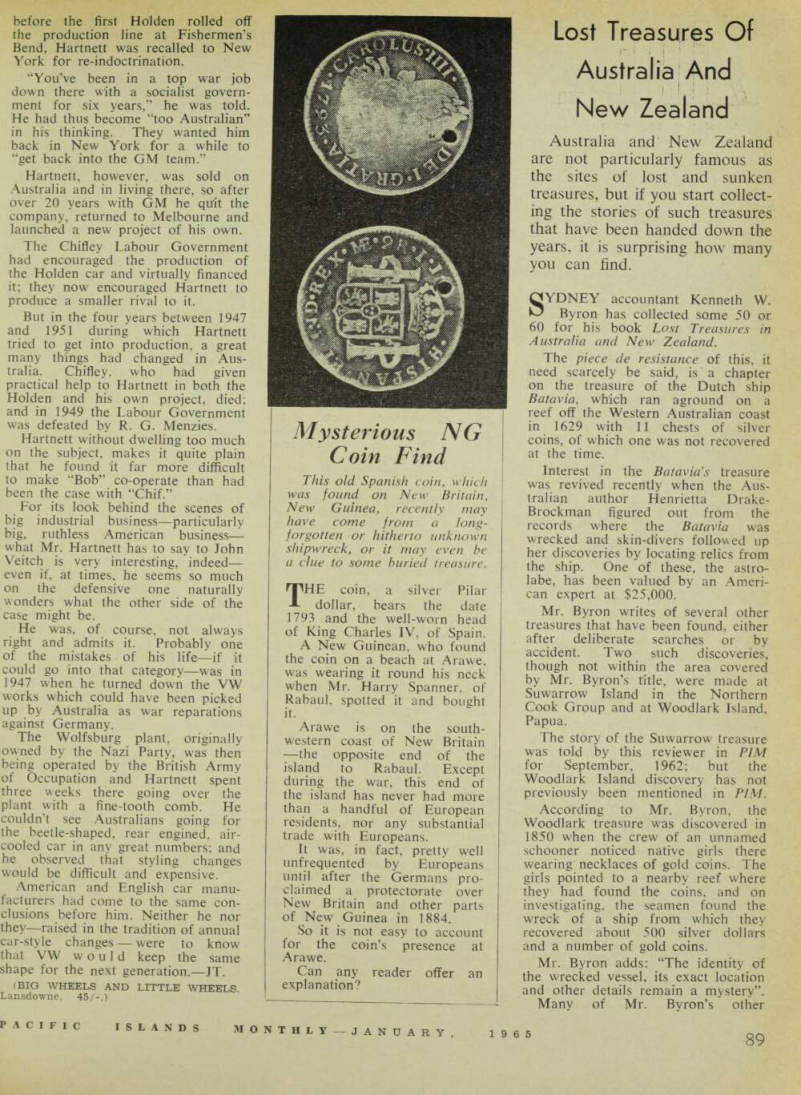 91
91 92
92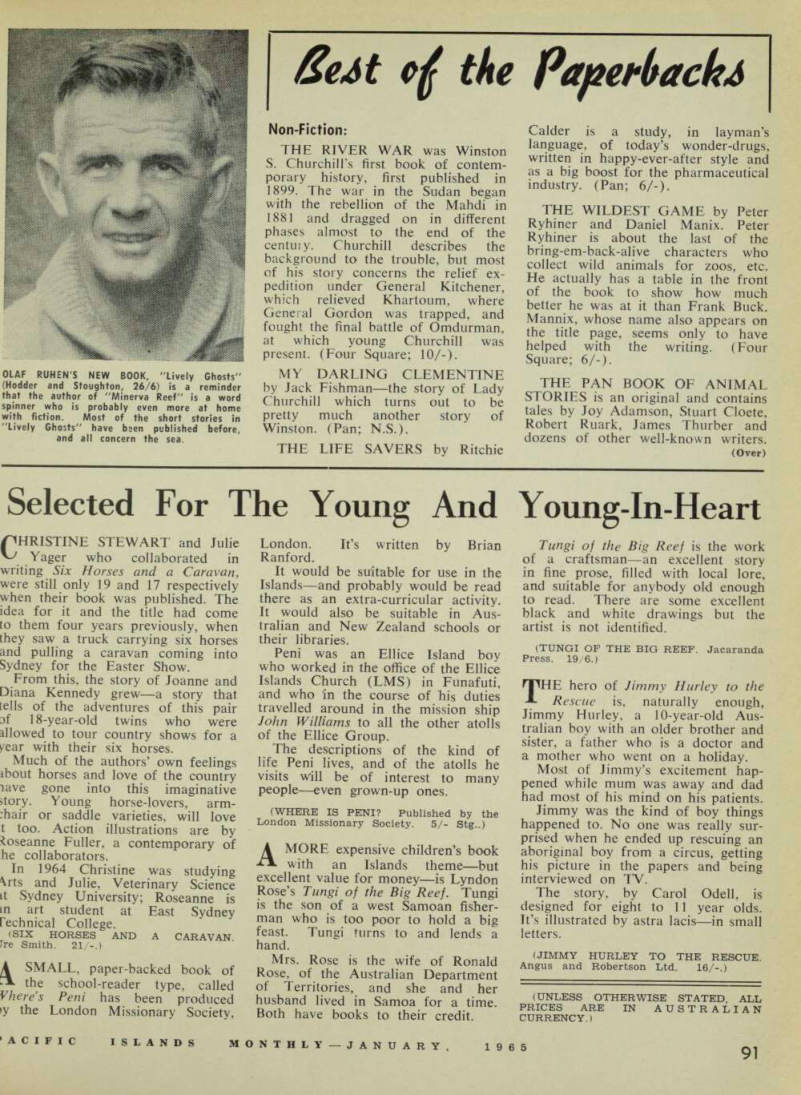 93
93 94
94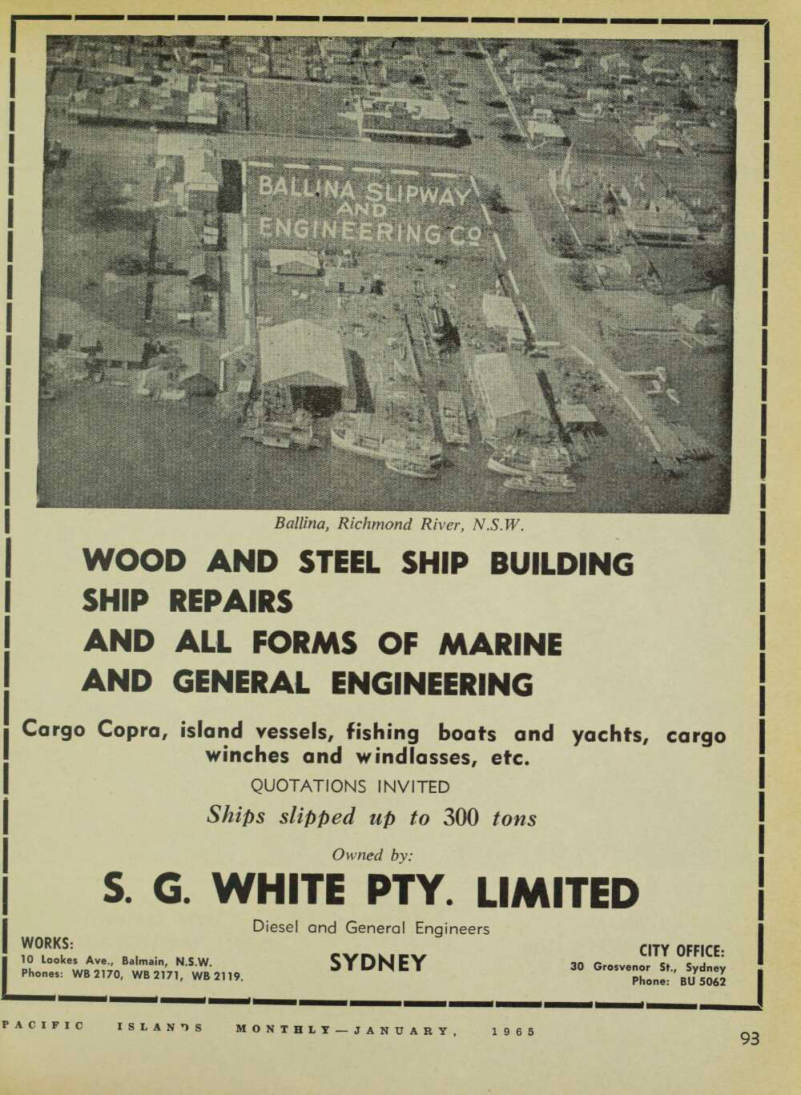 95
95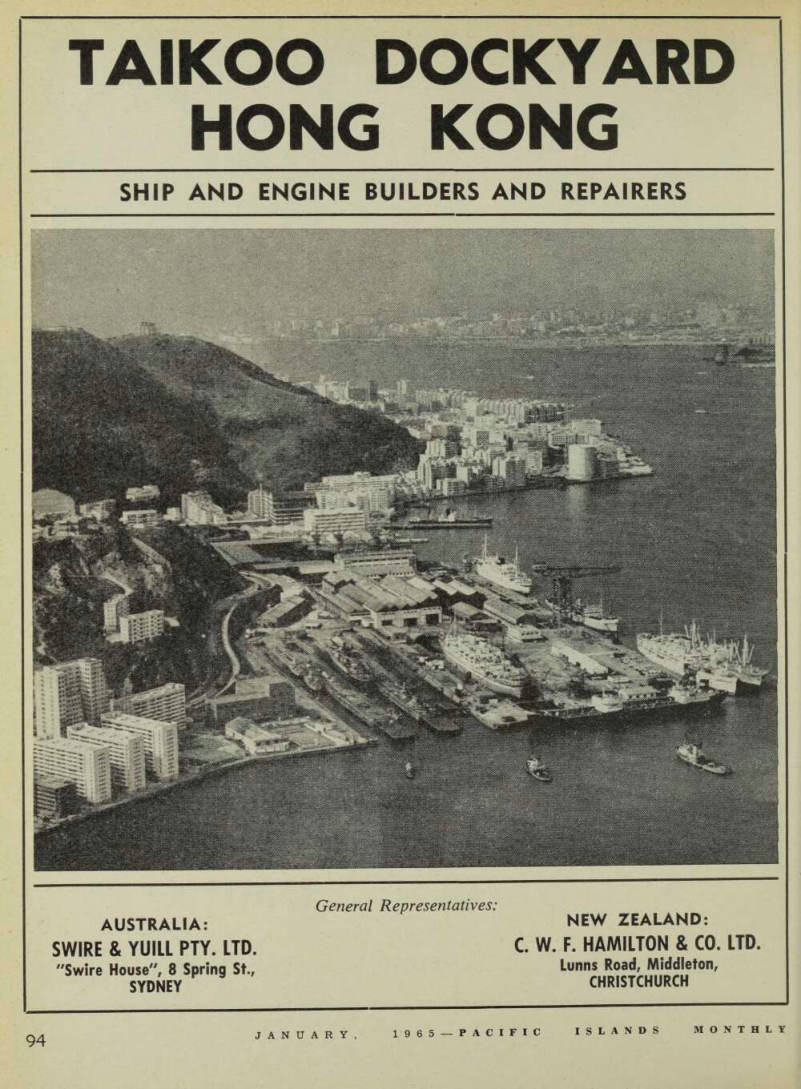 96
96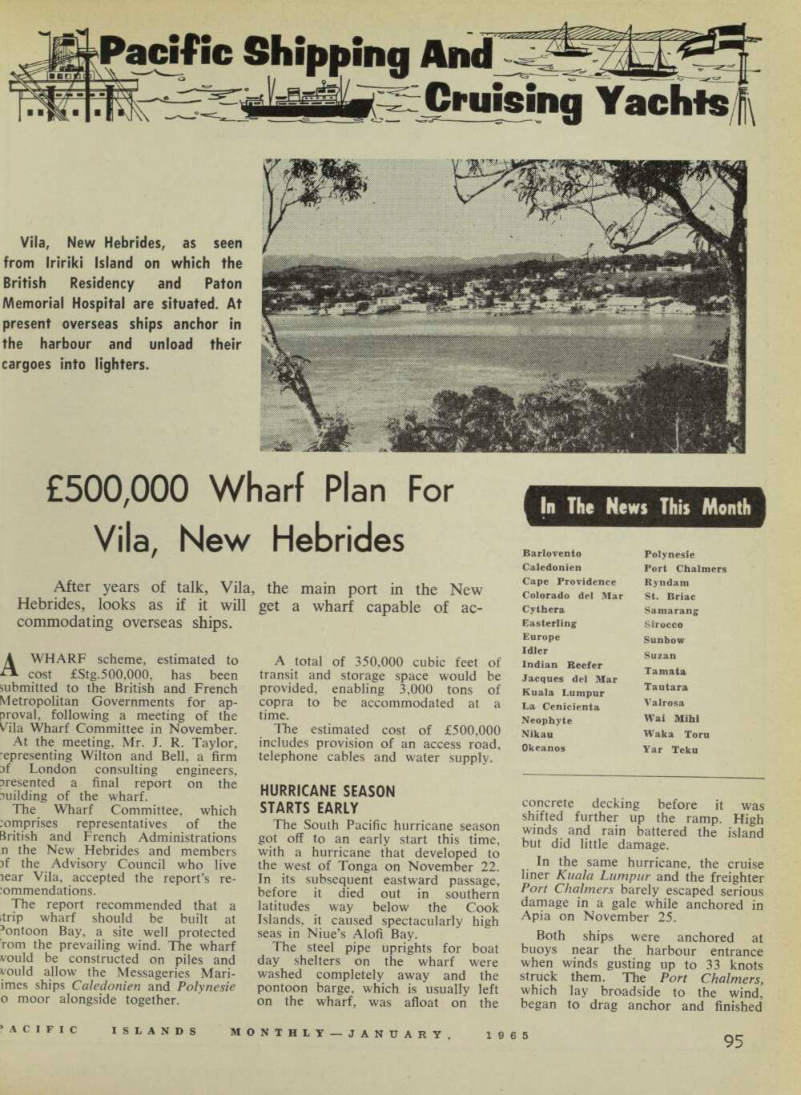 97
97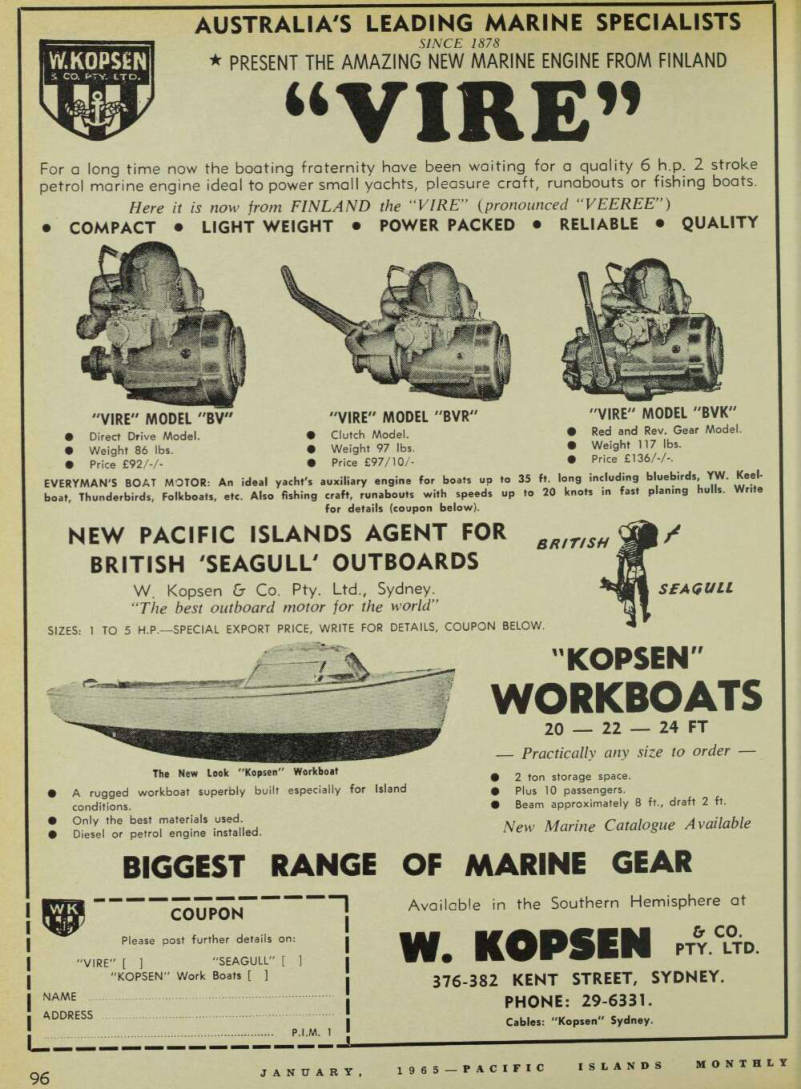 98
98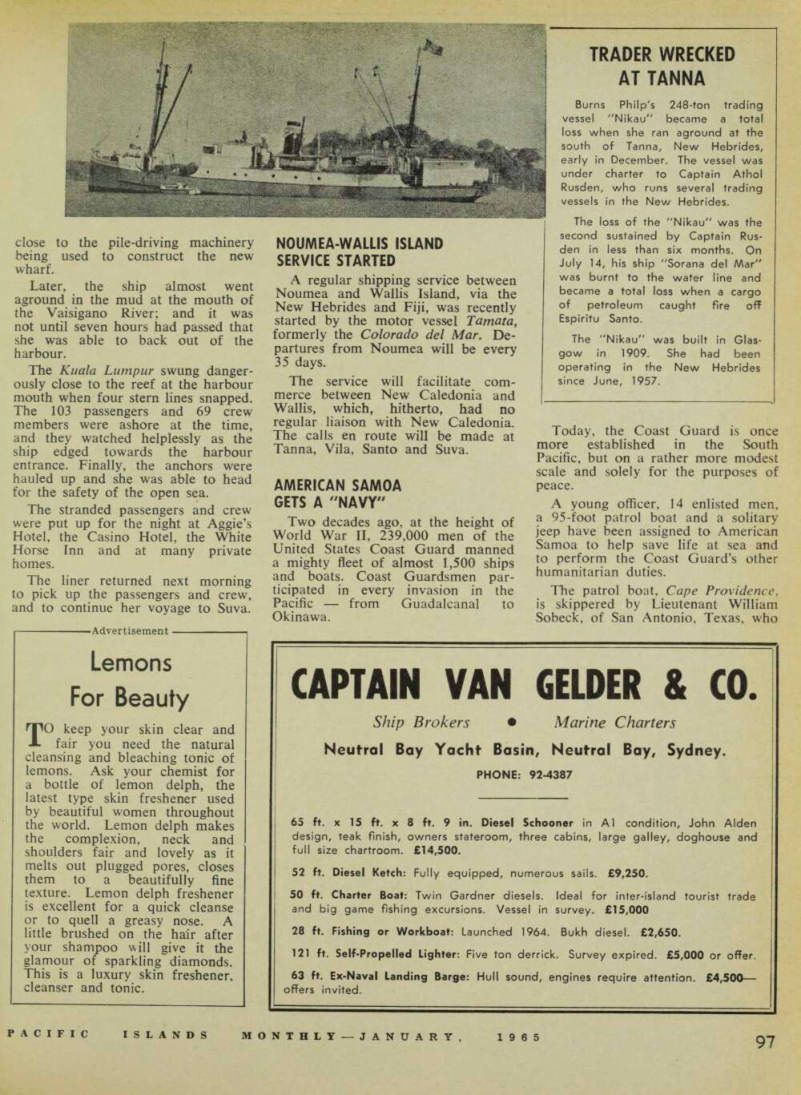 99
99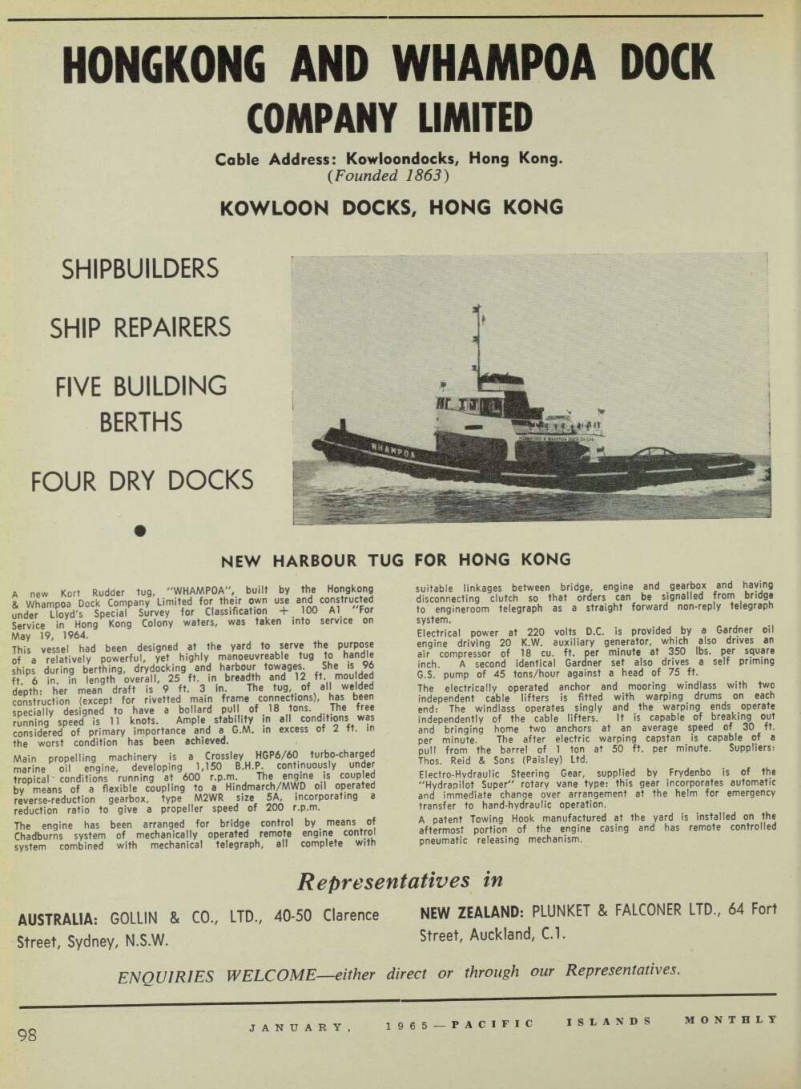 100
100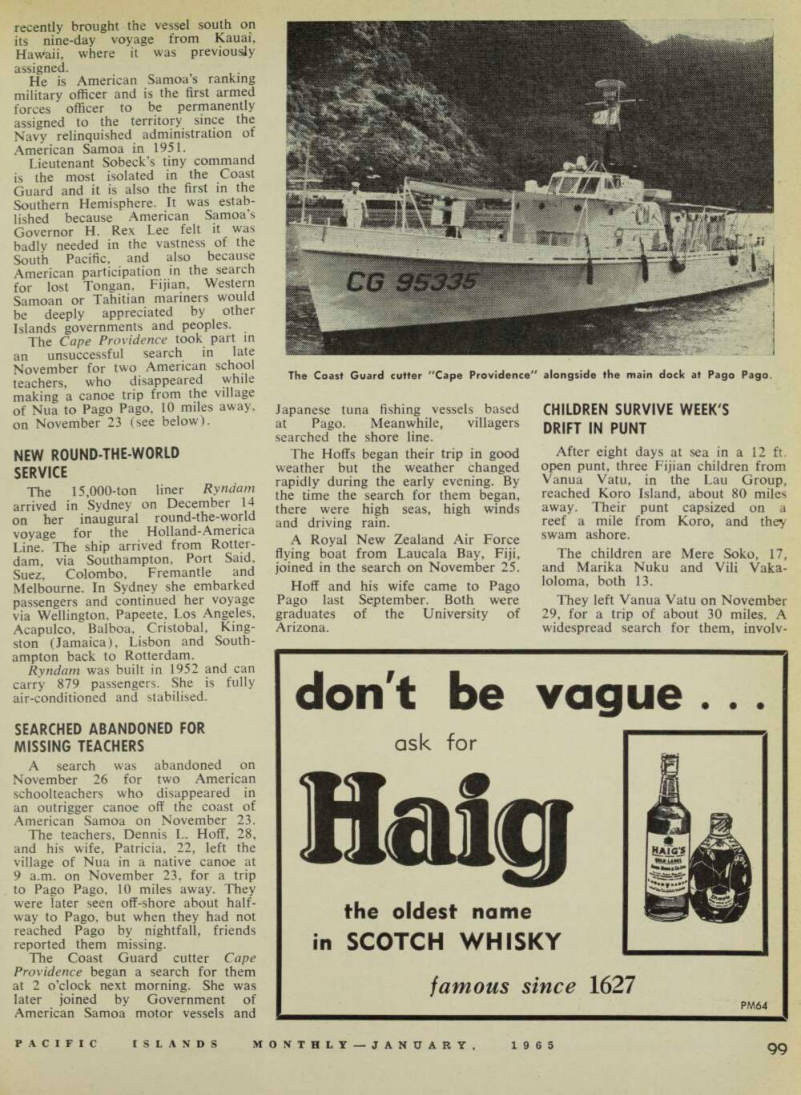 101
101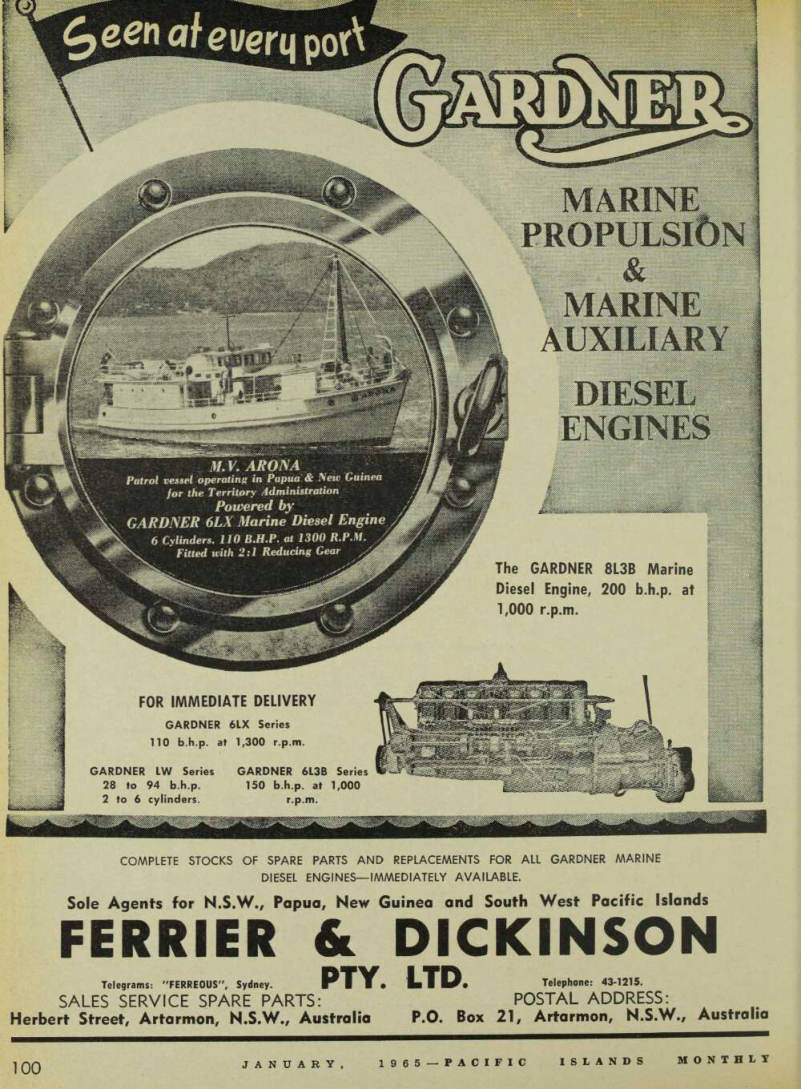 102
102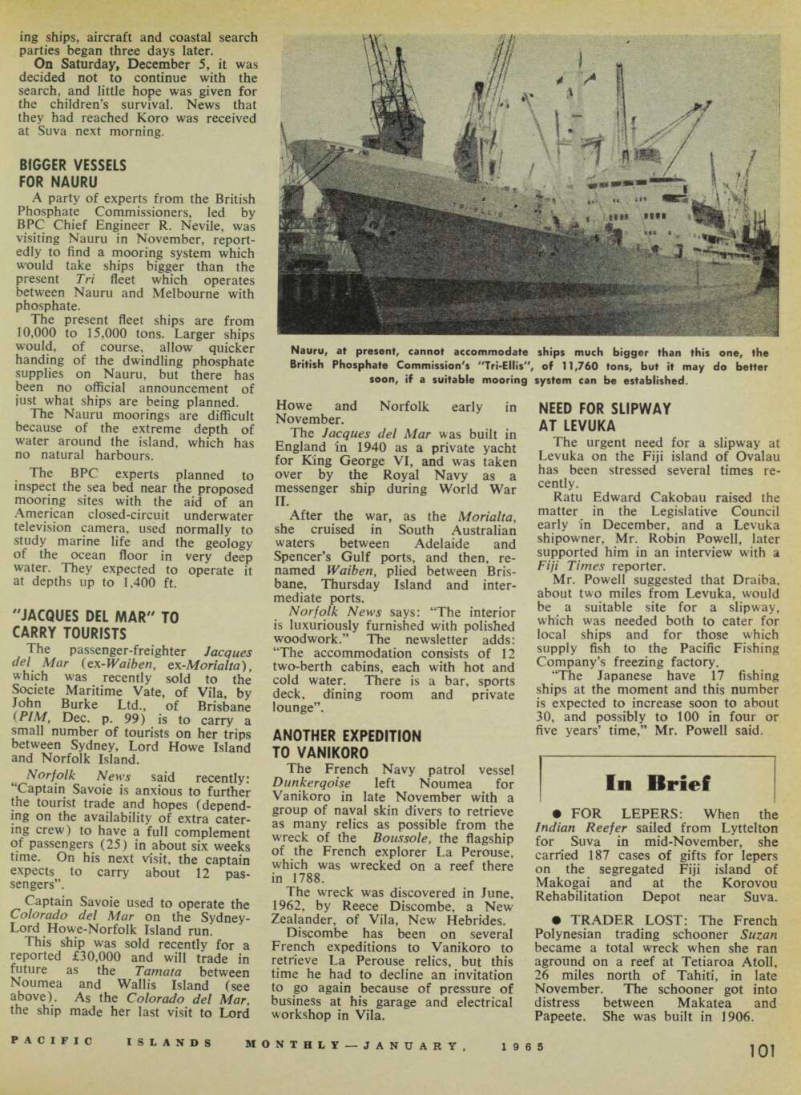 103
103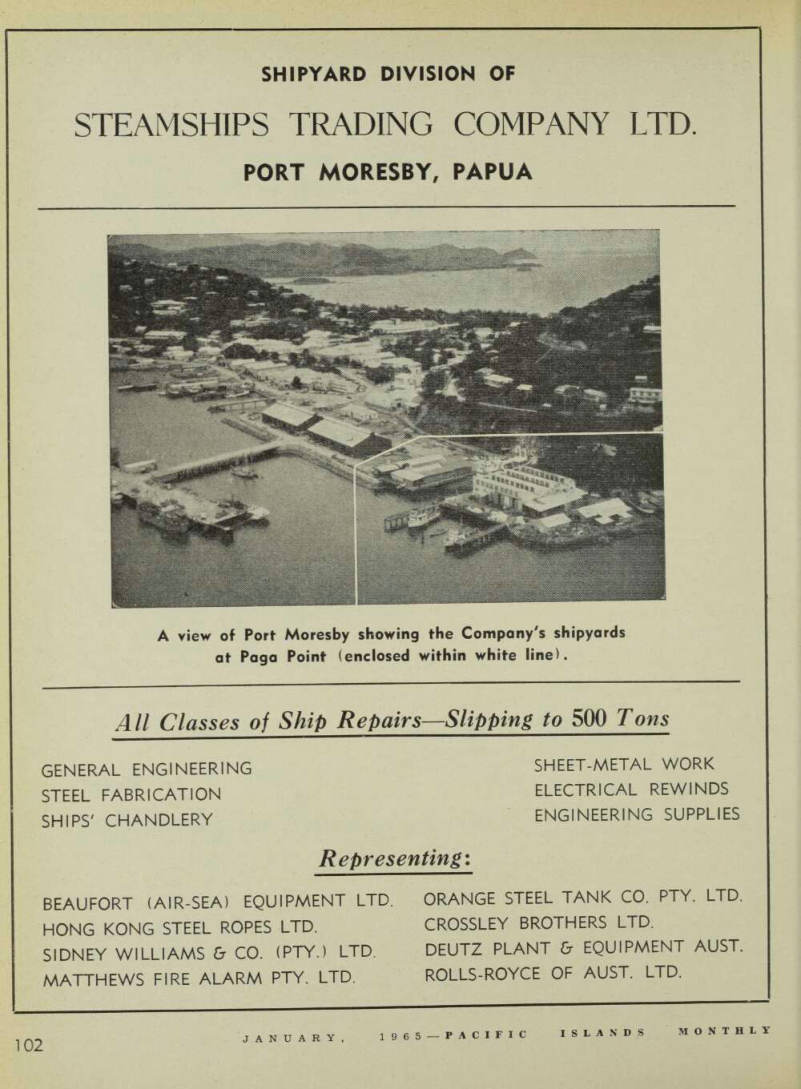 104
104 105
105 106
106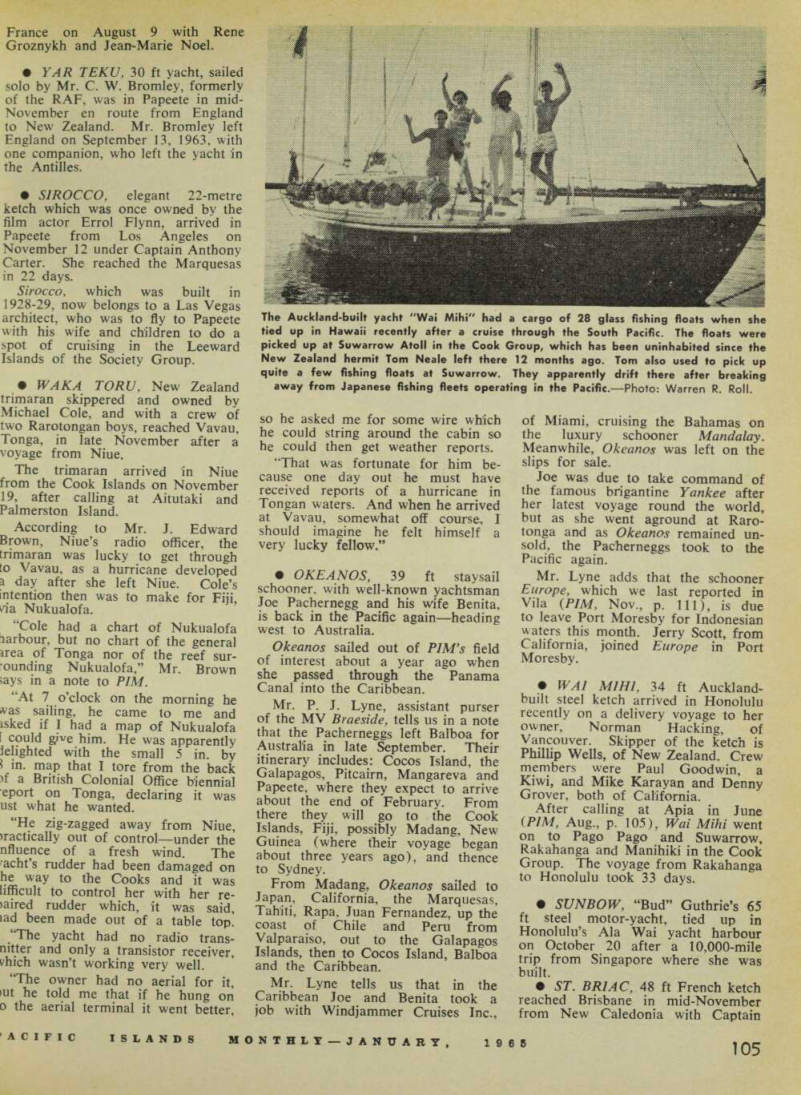 107
107 108
108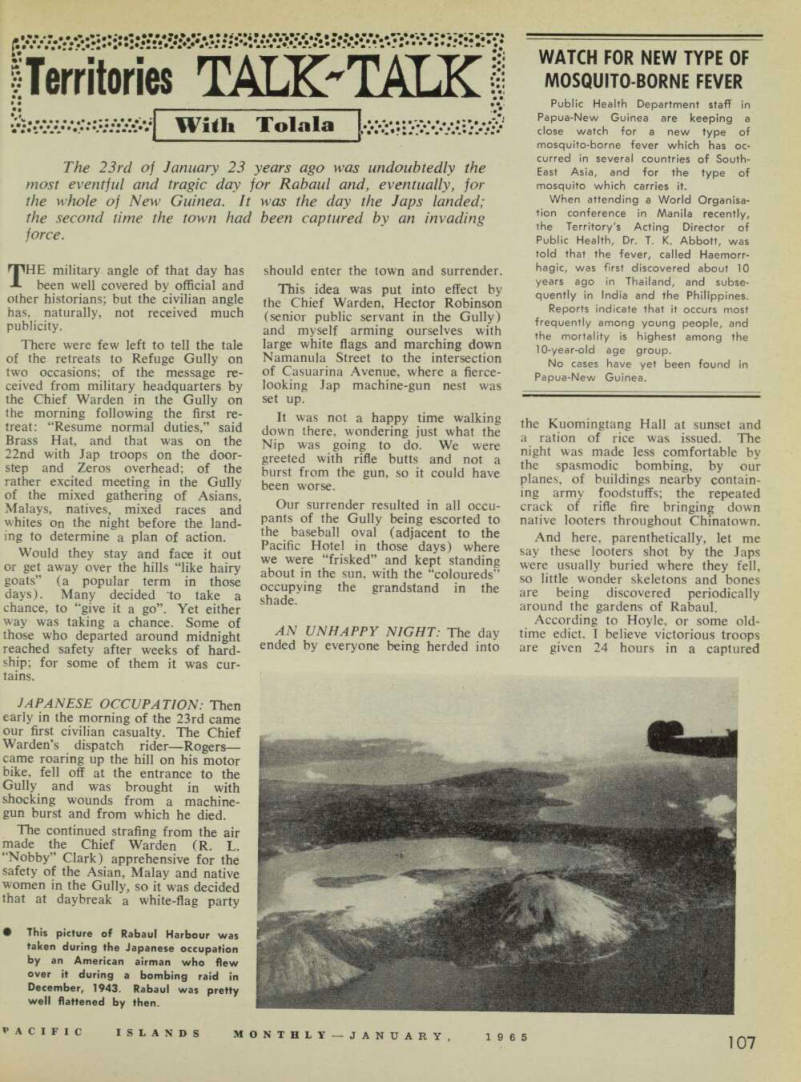 109
109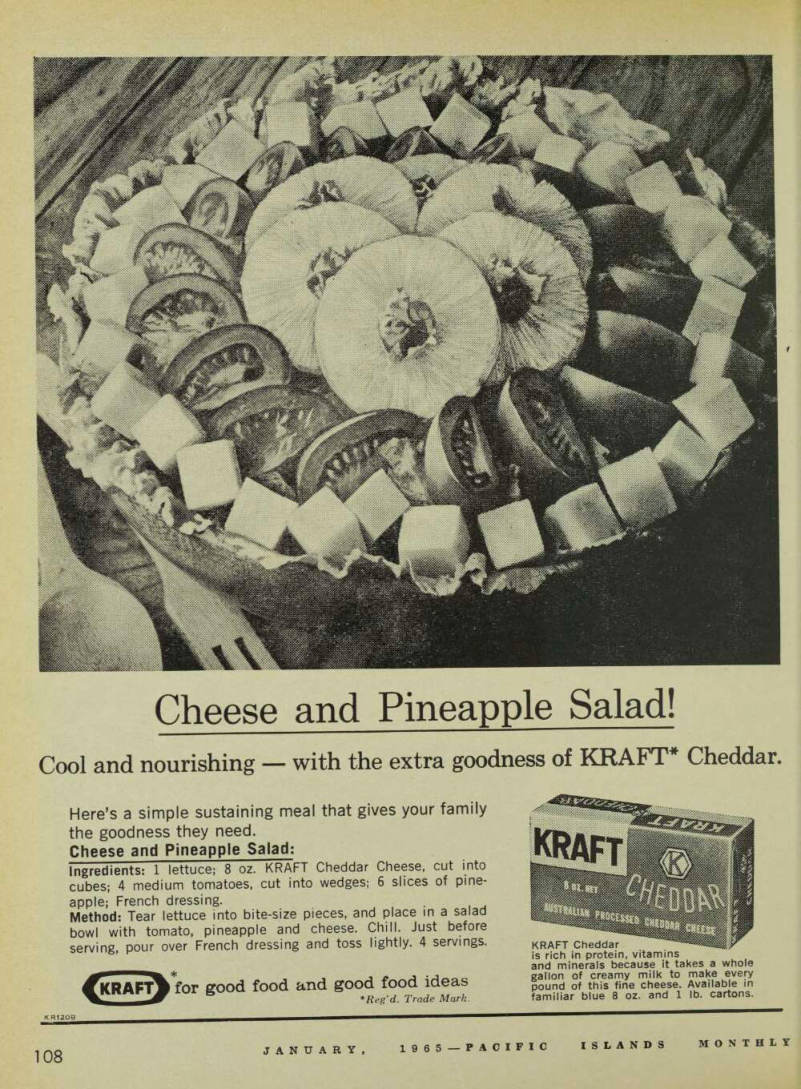 110
110 111
111 112
112 113
113 114
114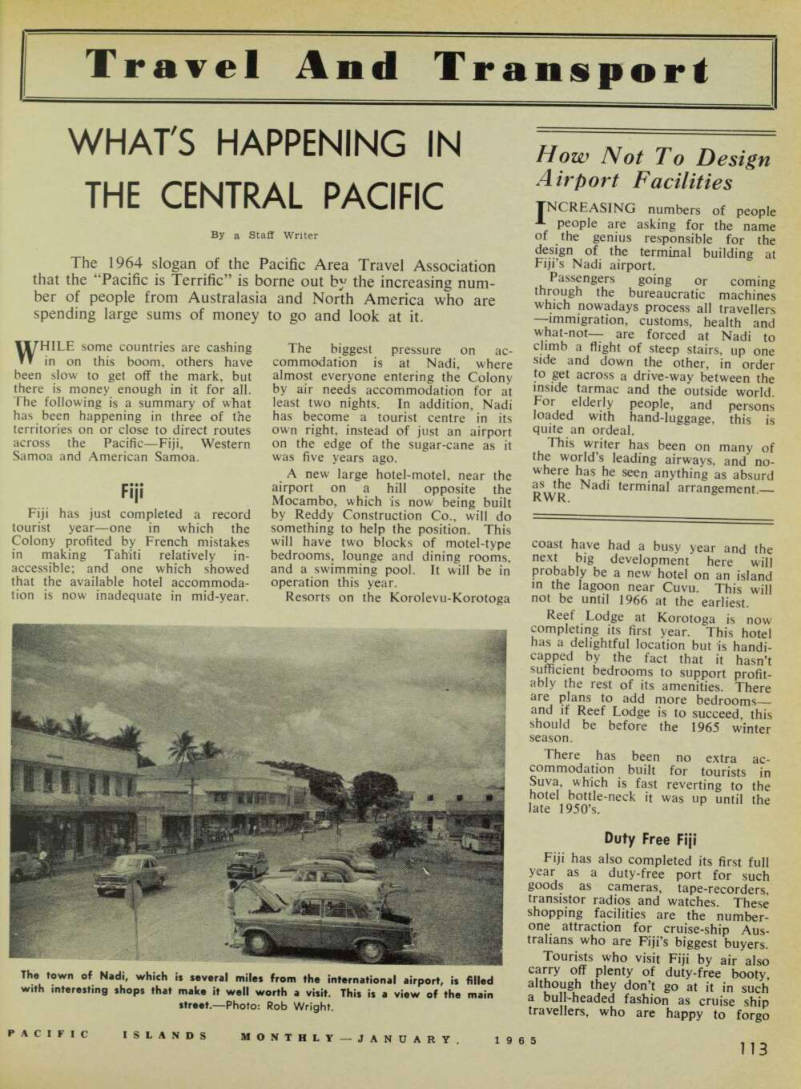 115
115 116
116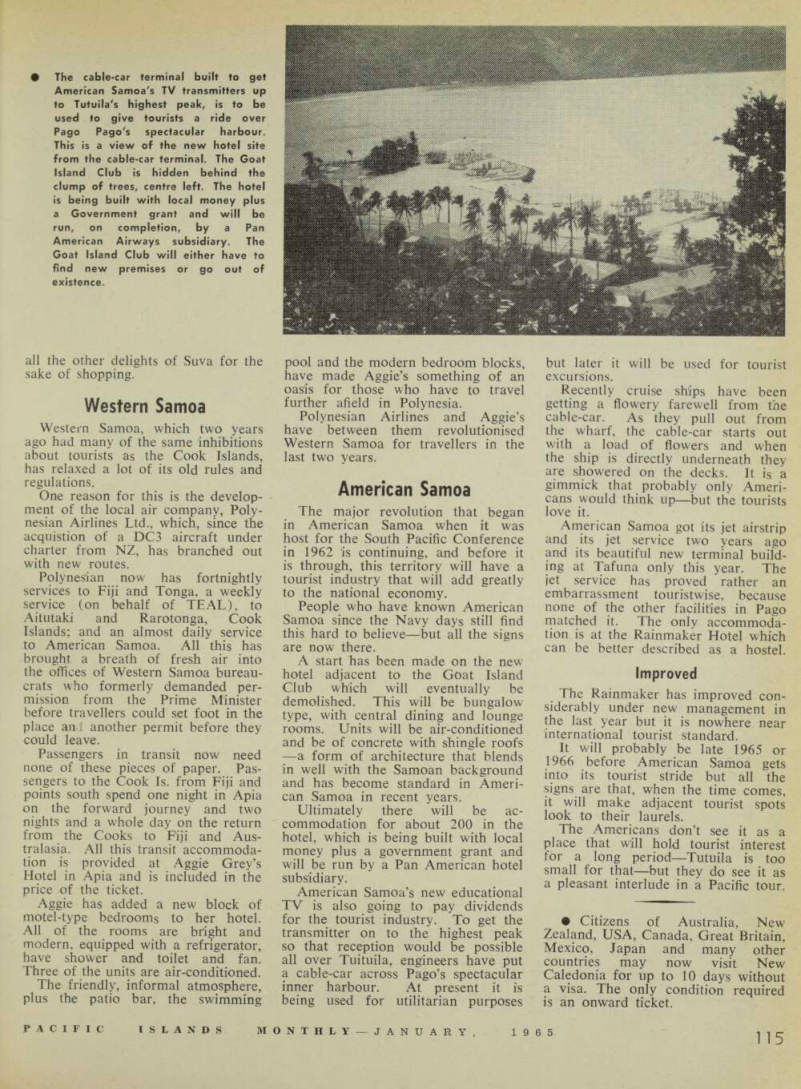 117
117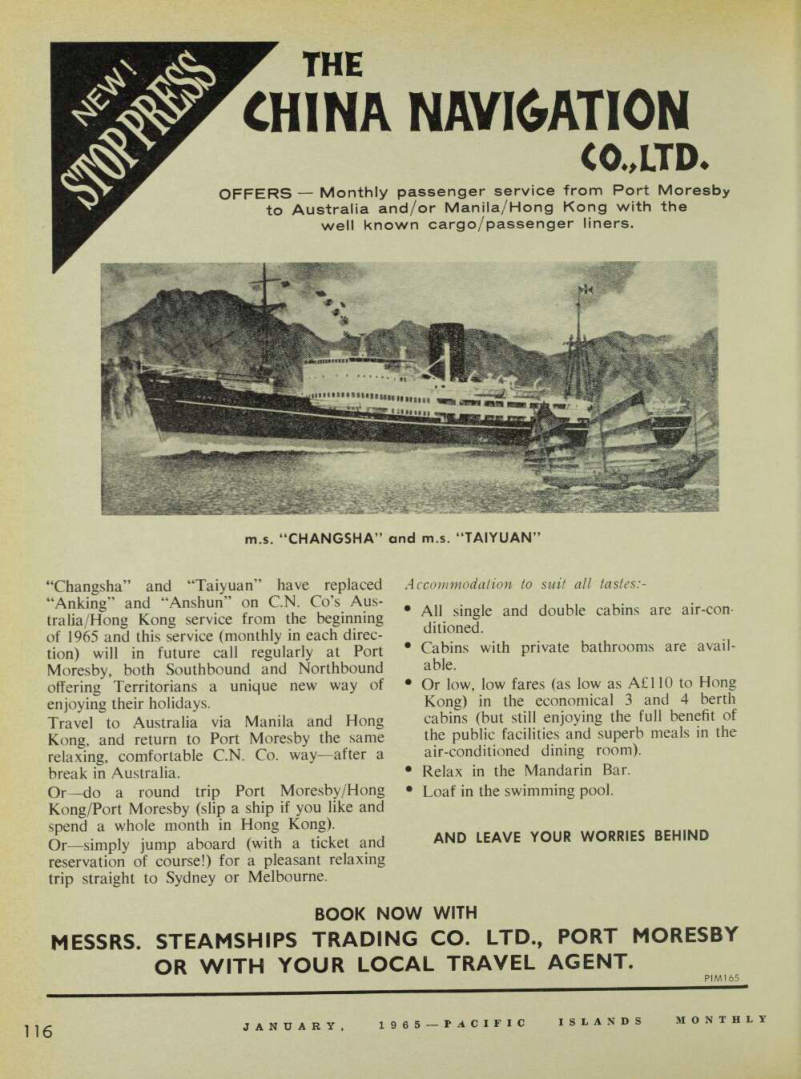 118
118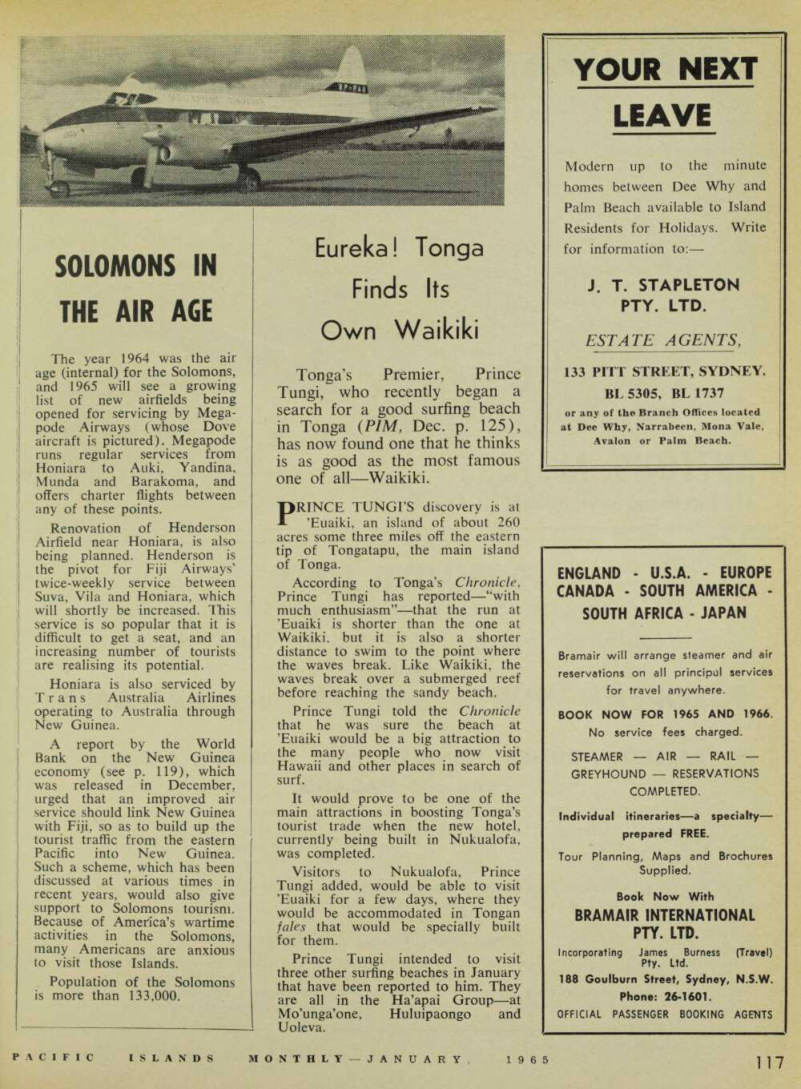 119
119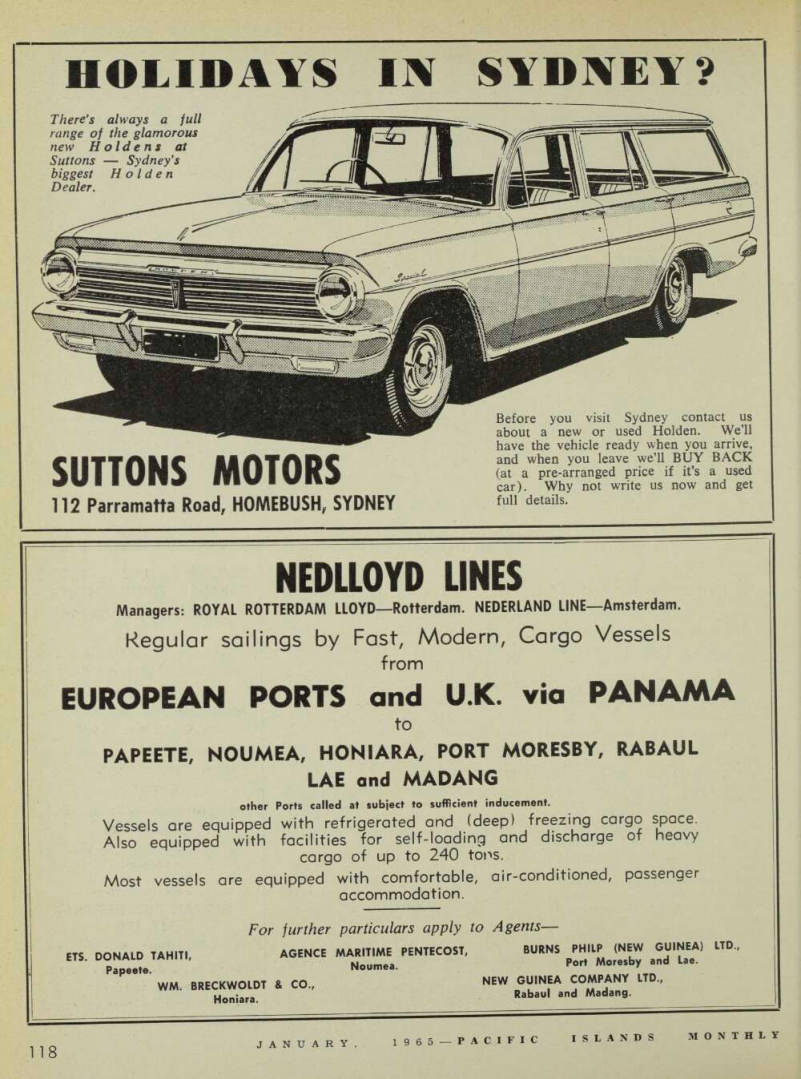 120
120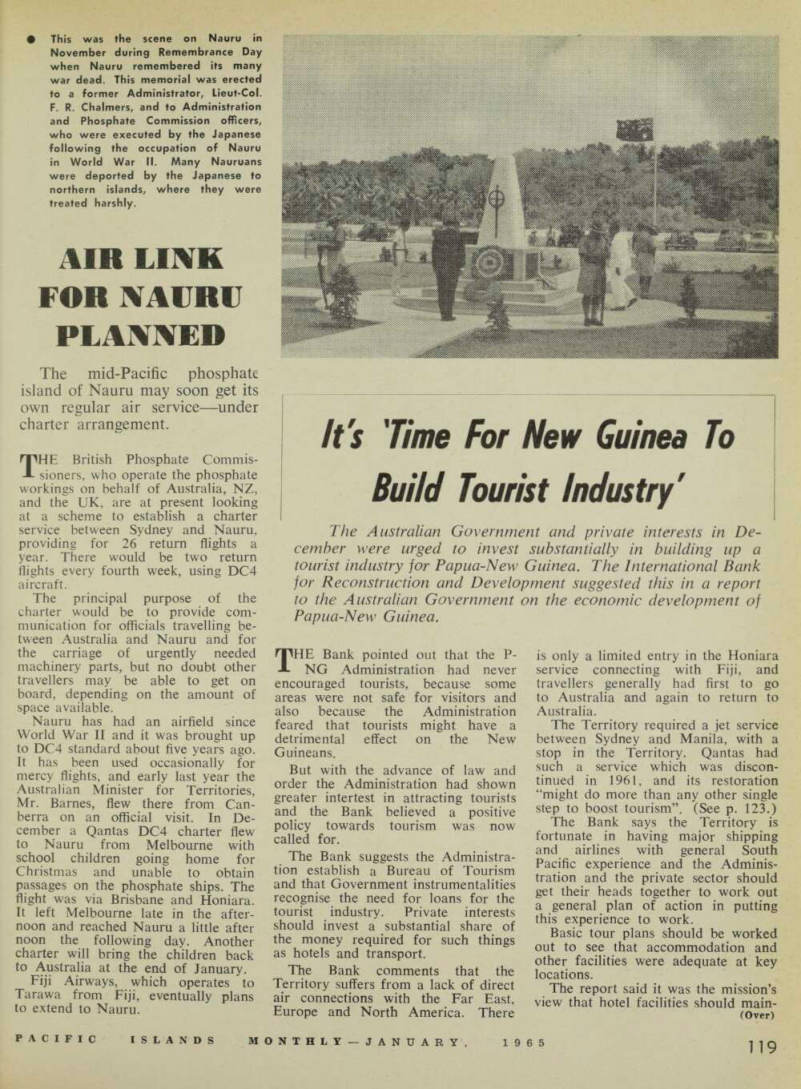 121
121 122
122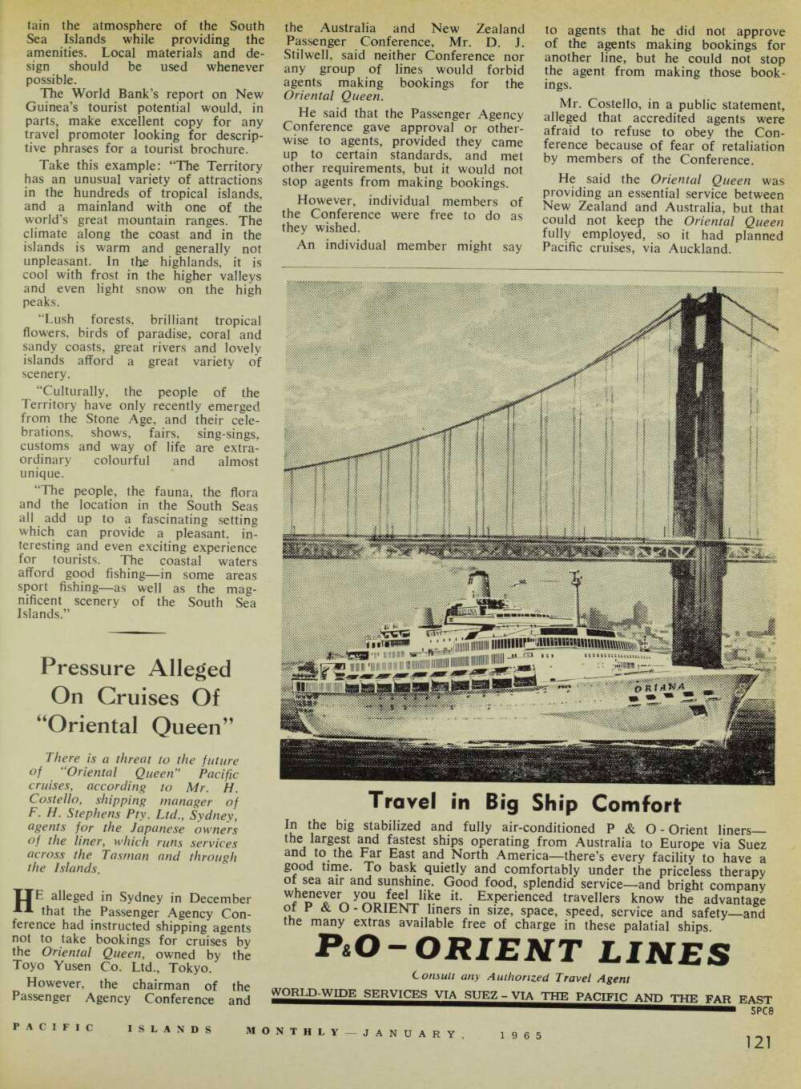 123
123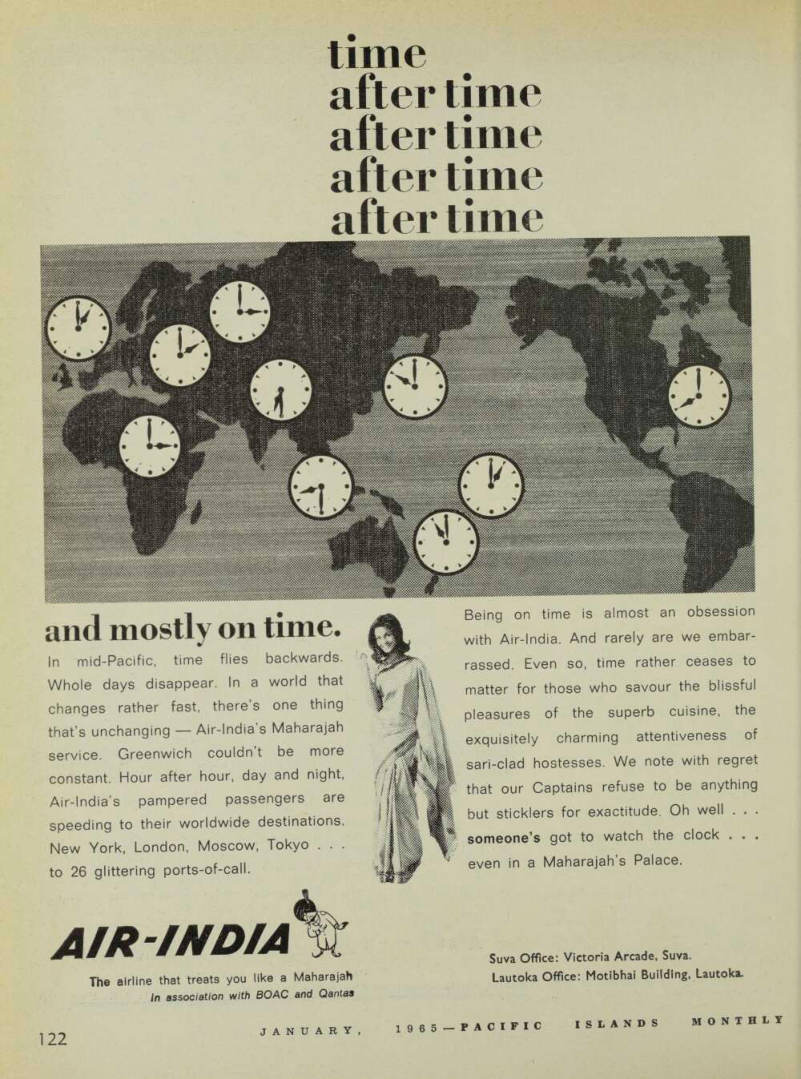 124
124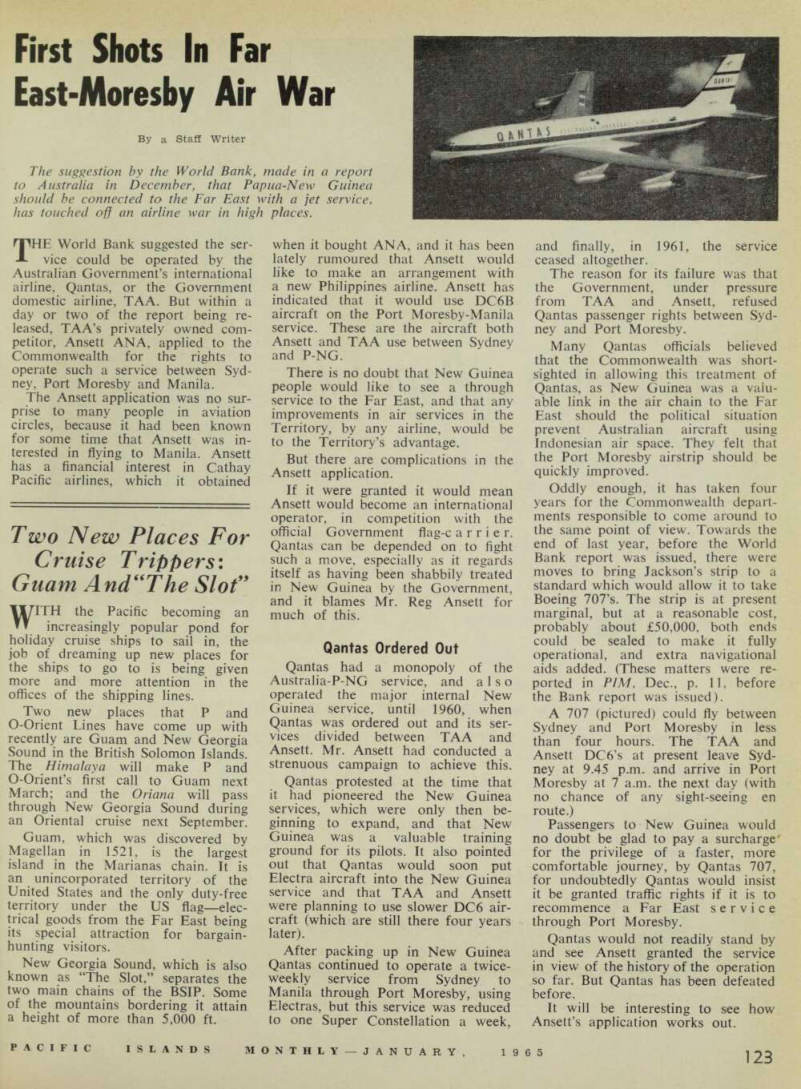 125
125 126
126 127
127 128
128 129
129 130
130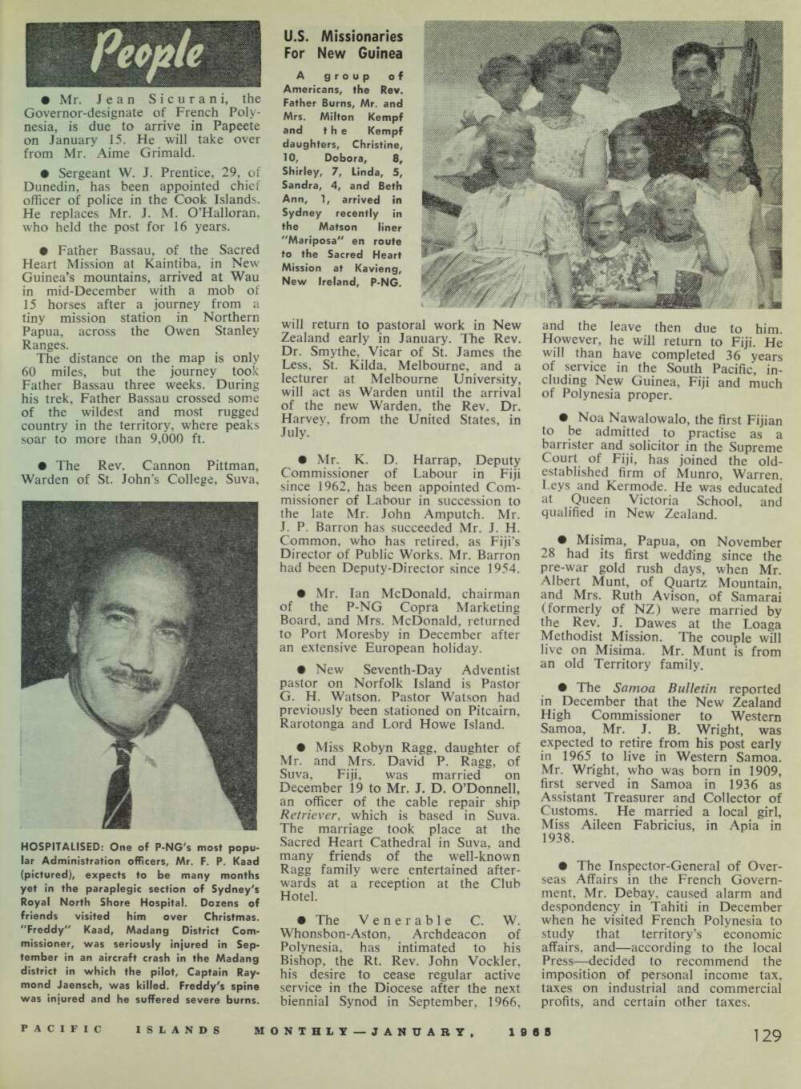 131
131 132
132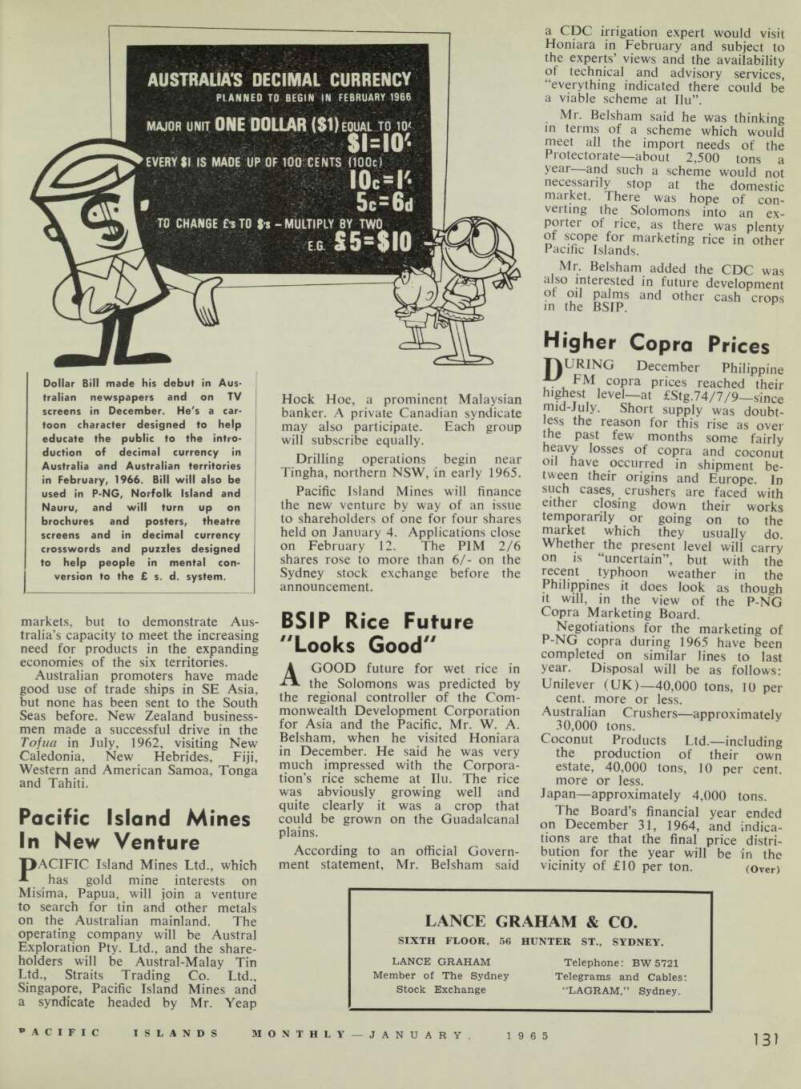 133
133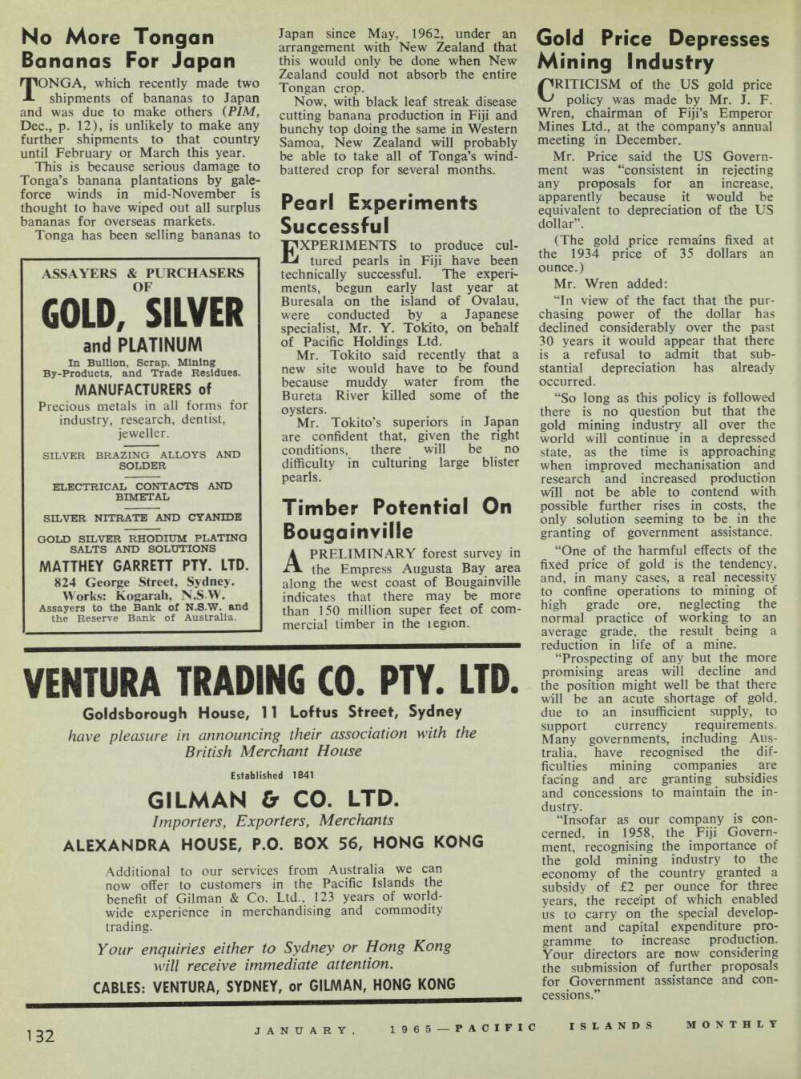 134
134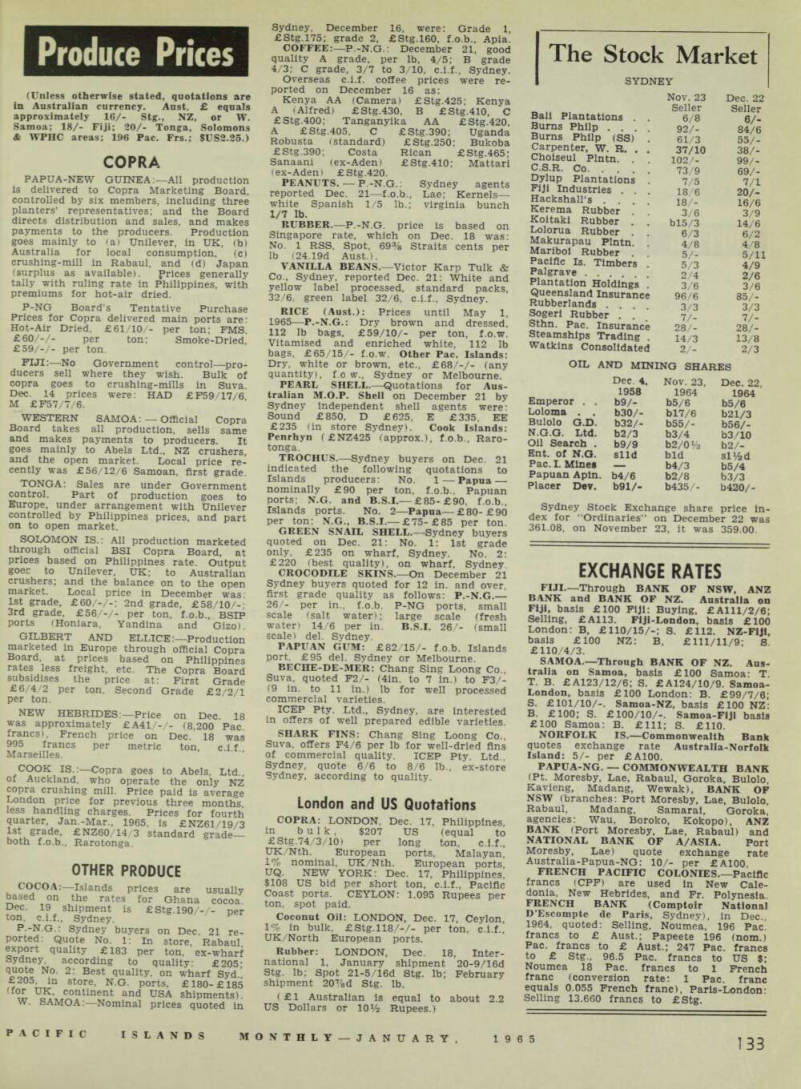 135
135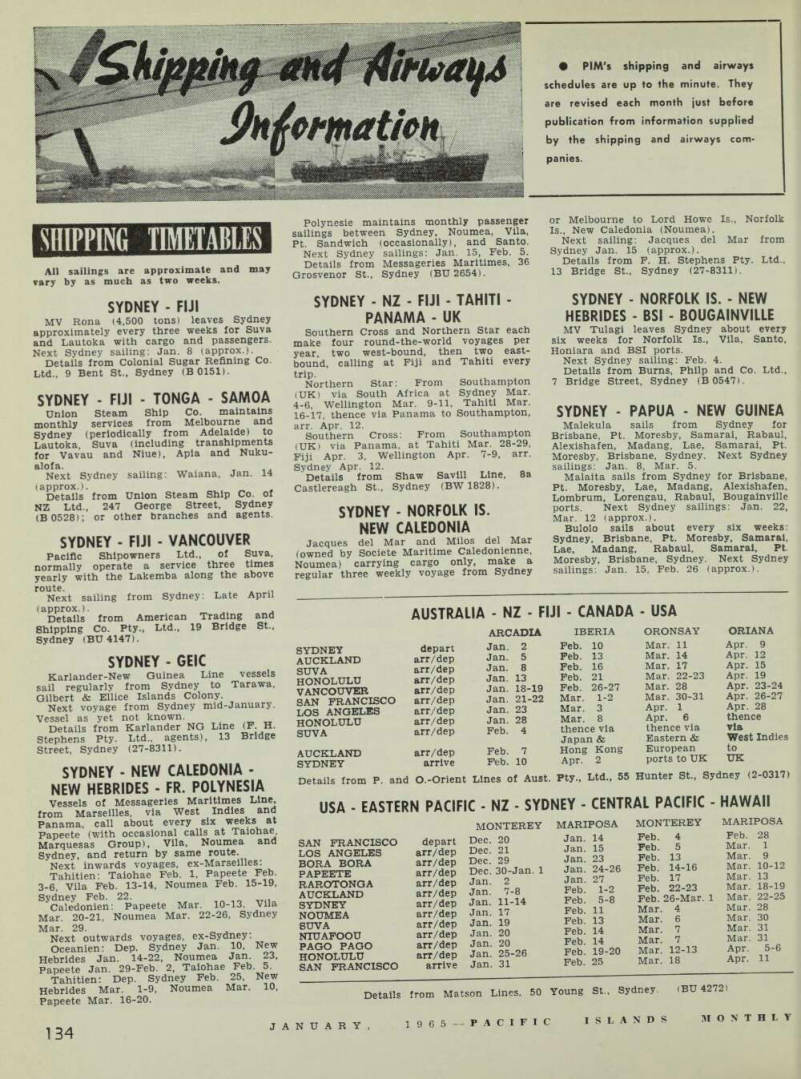 136
136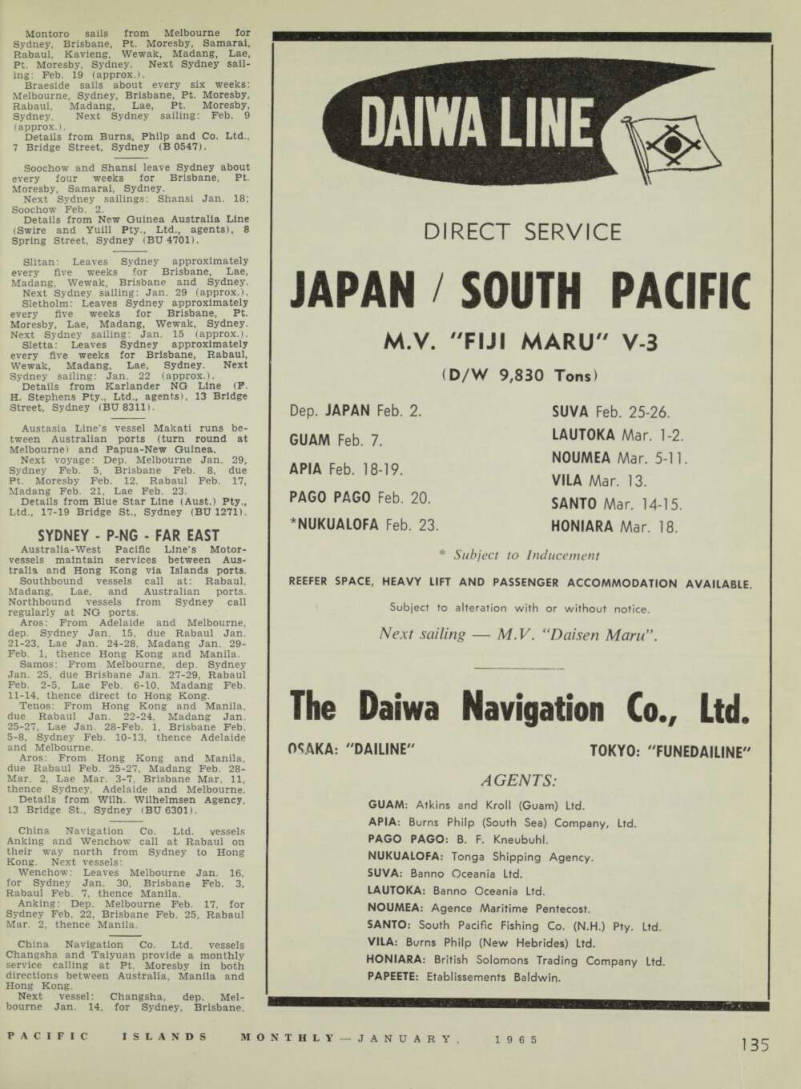 137
137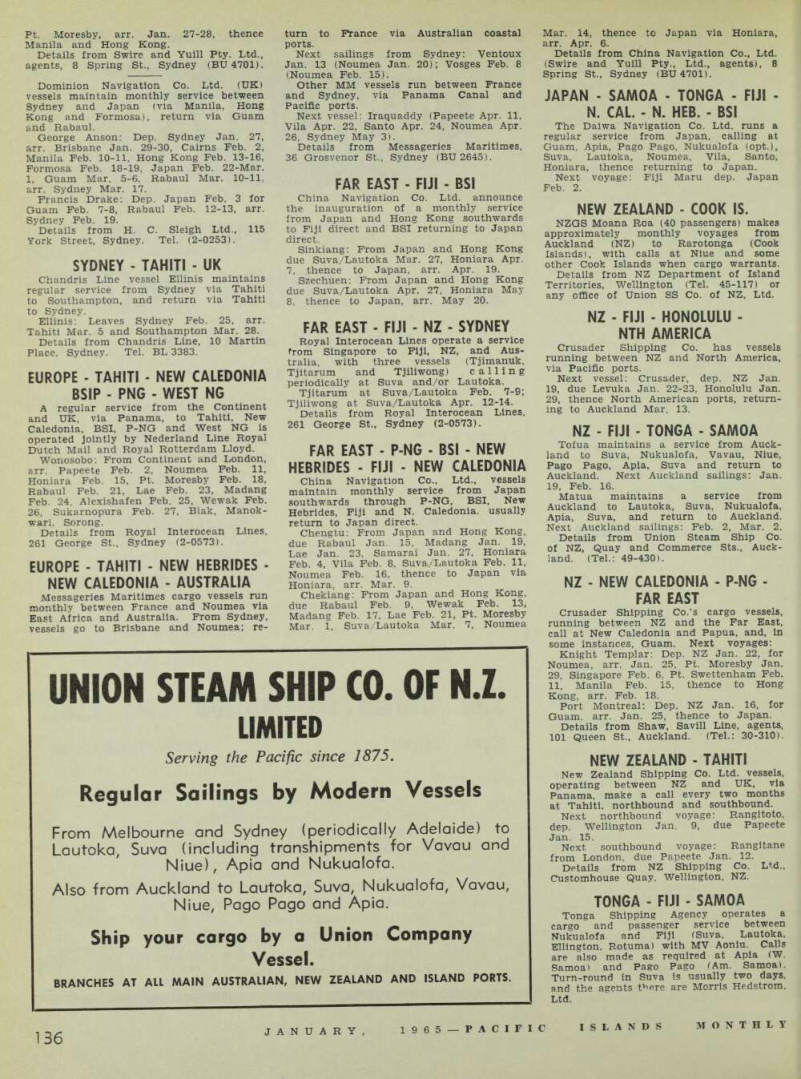 138
138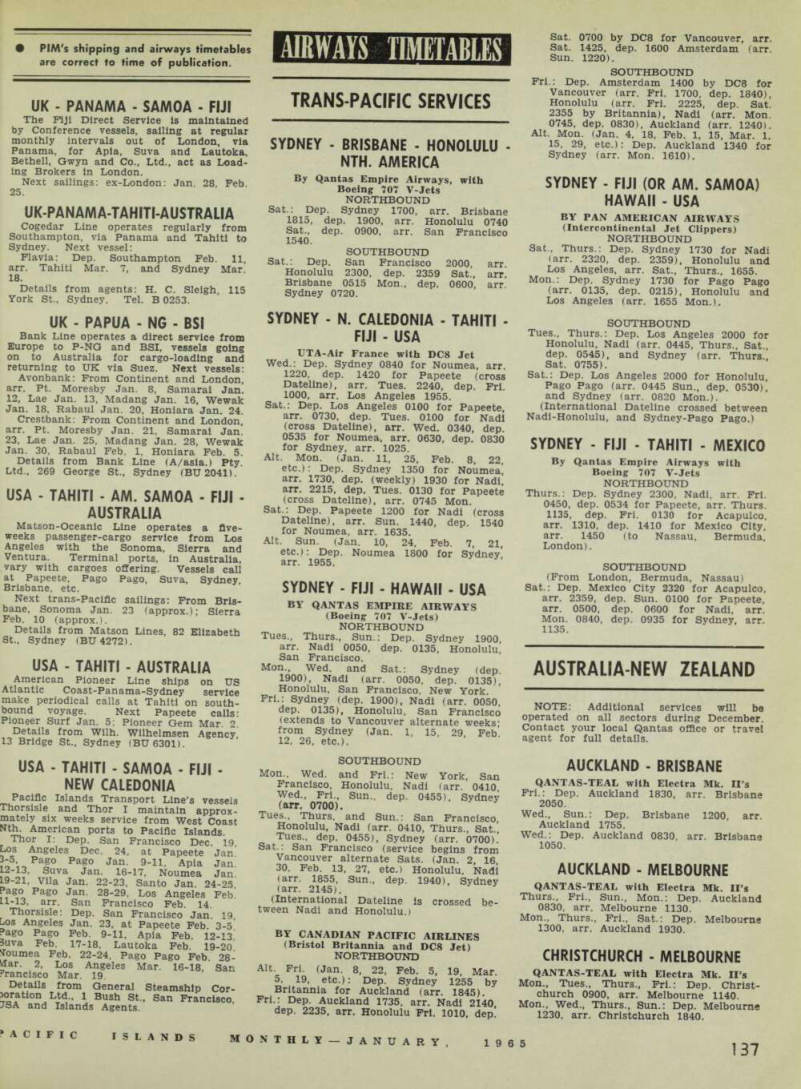 139
139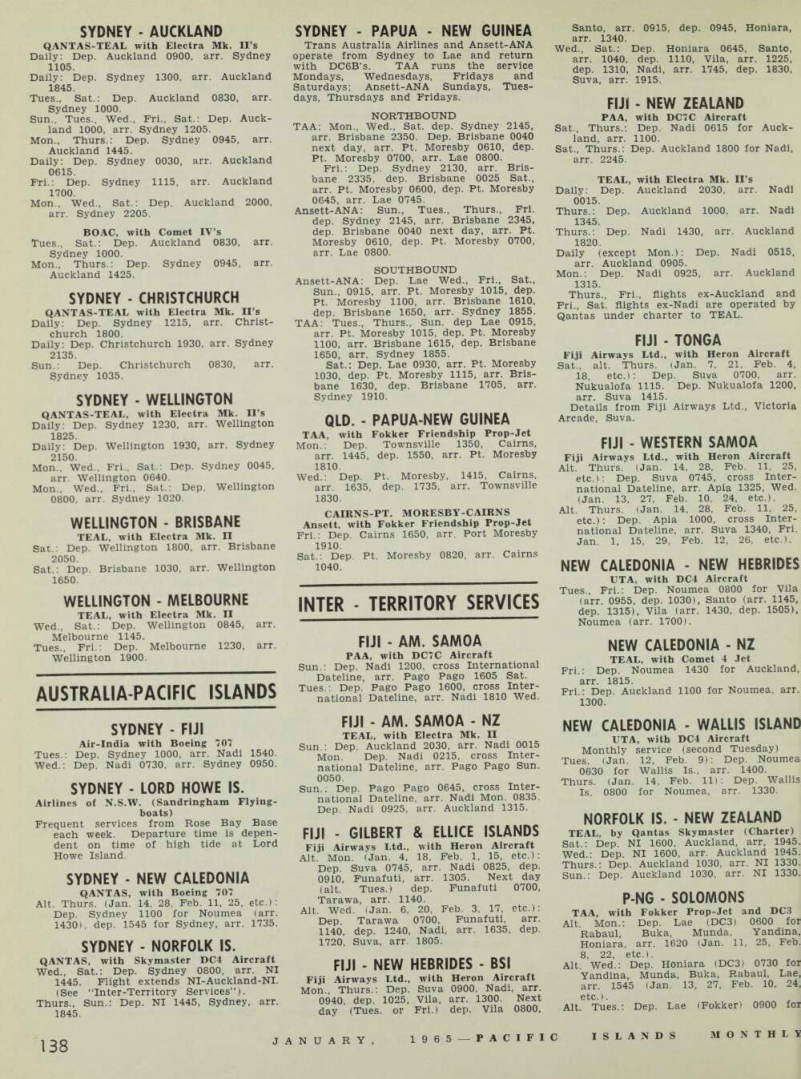 140
140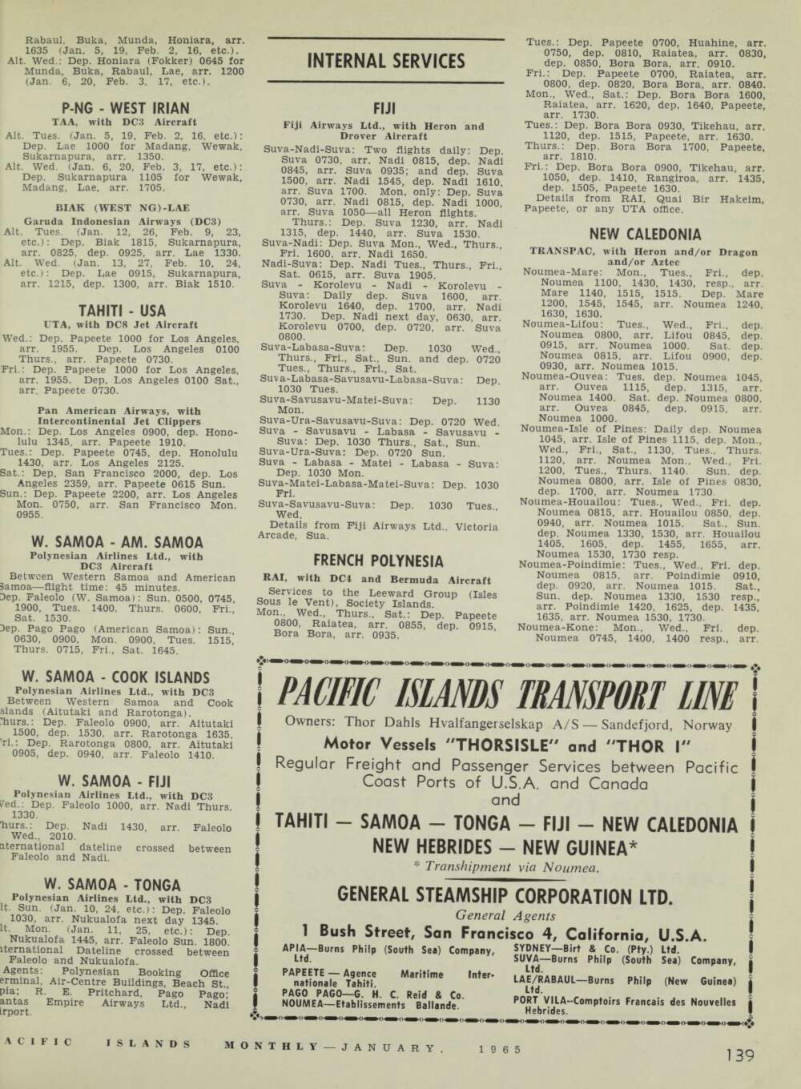 141
141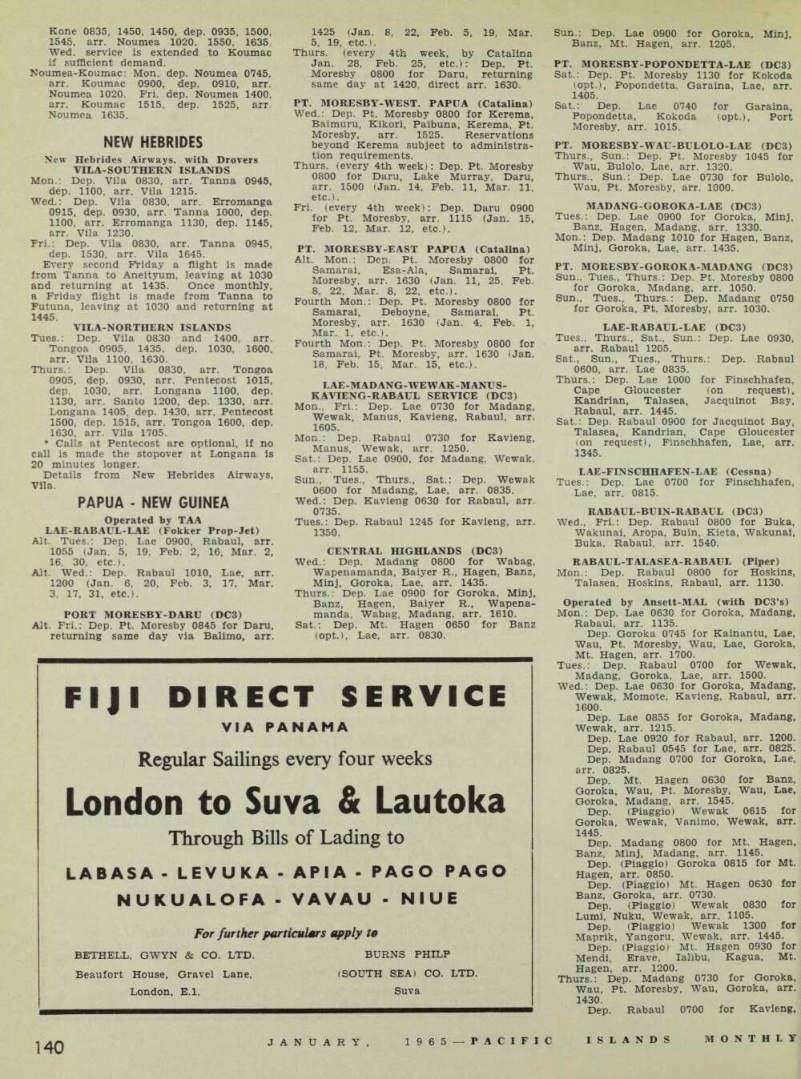 142
142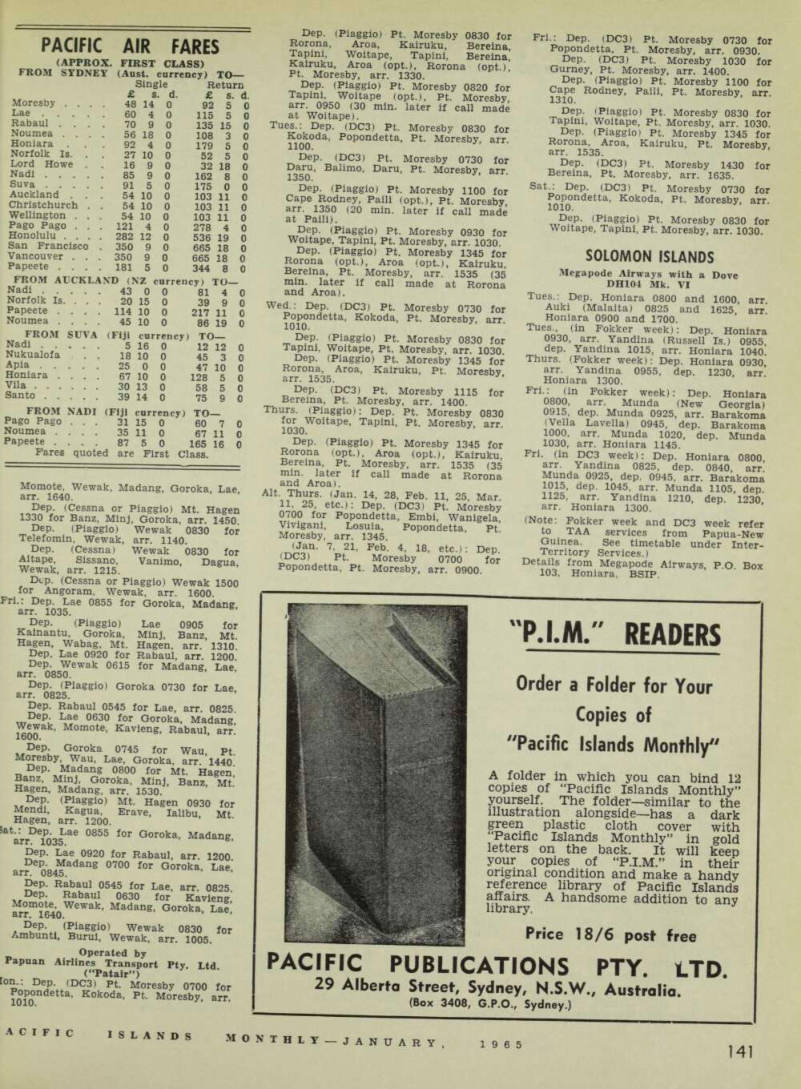 143
143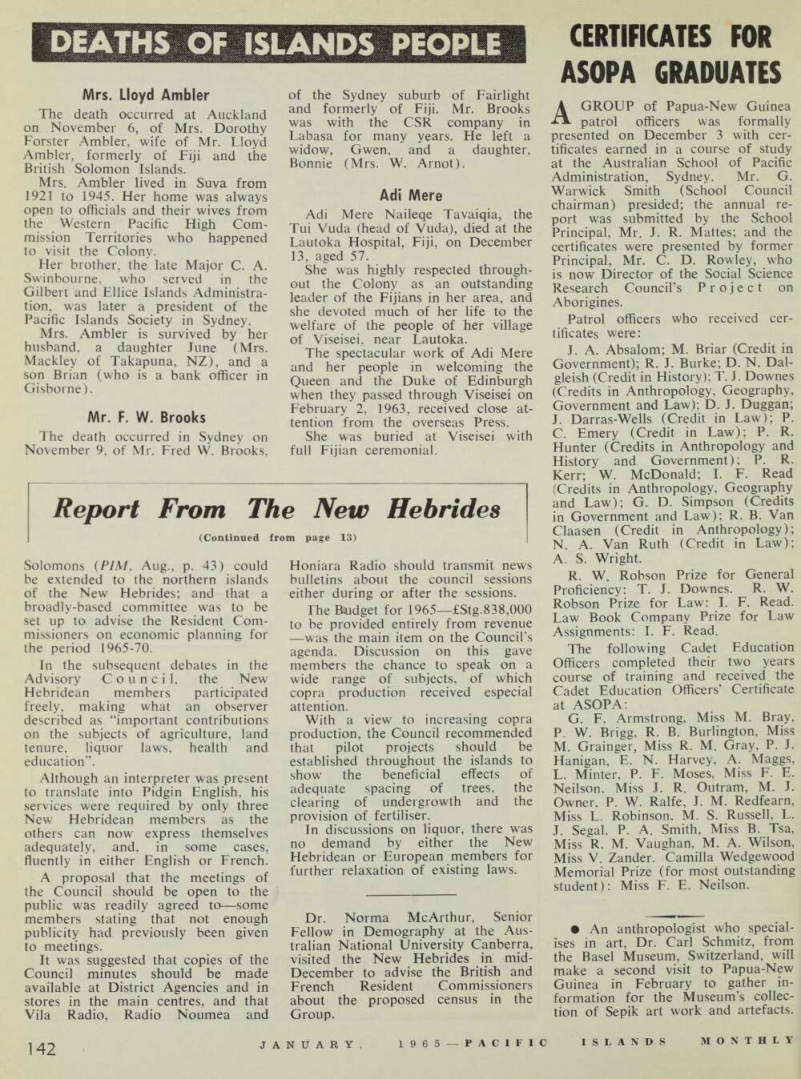 144
144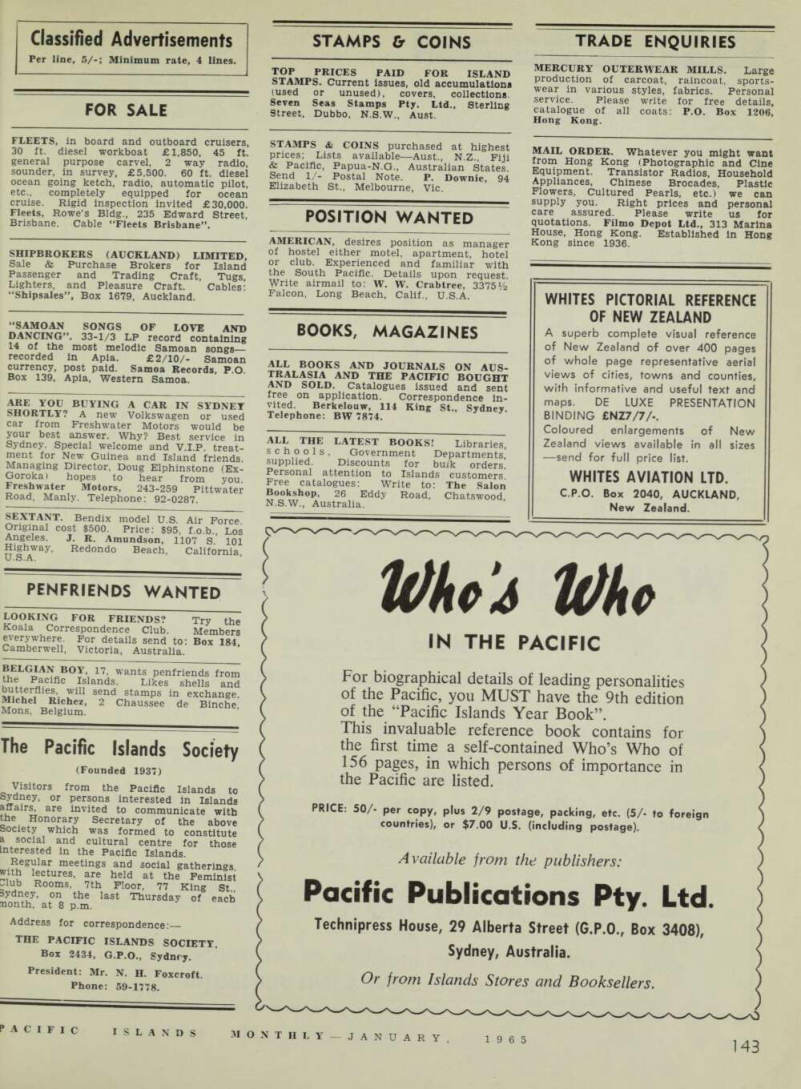 145
145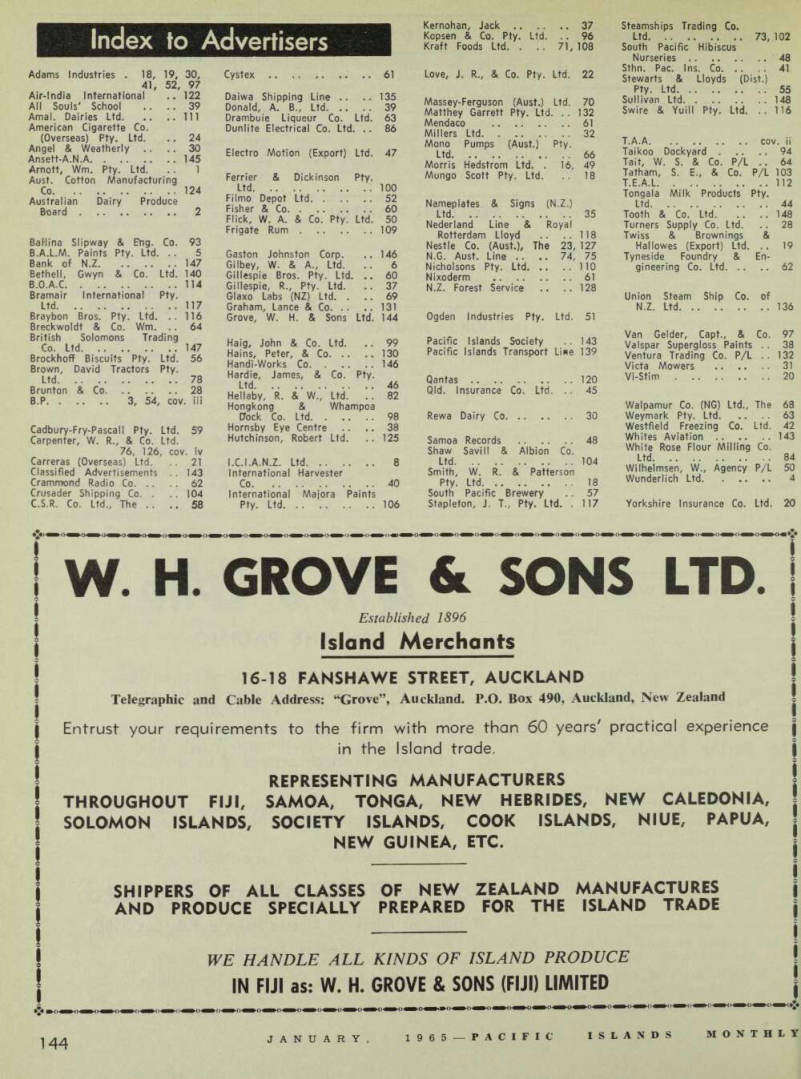 146
146 147
147 148
148 149
149 150
150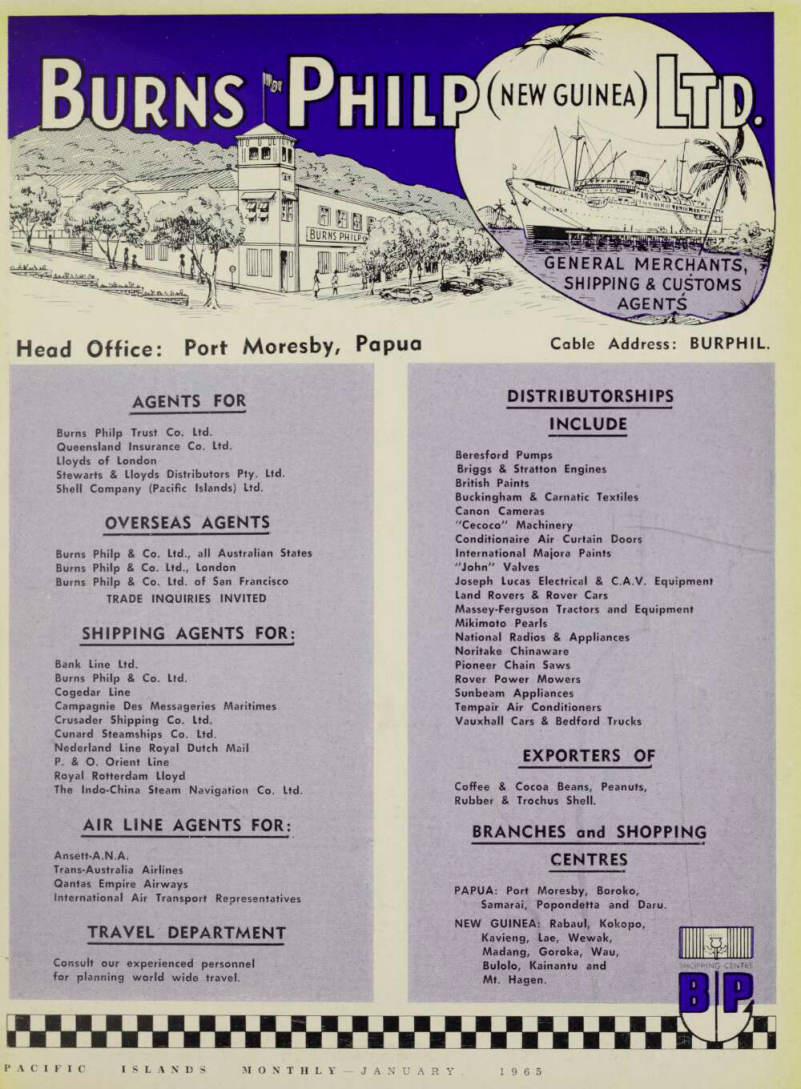 151
151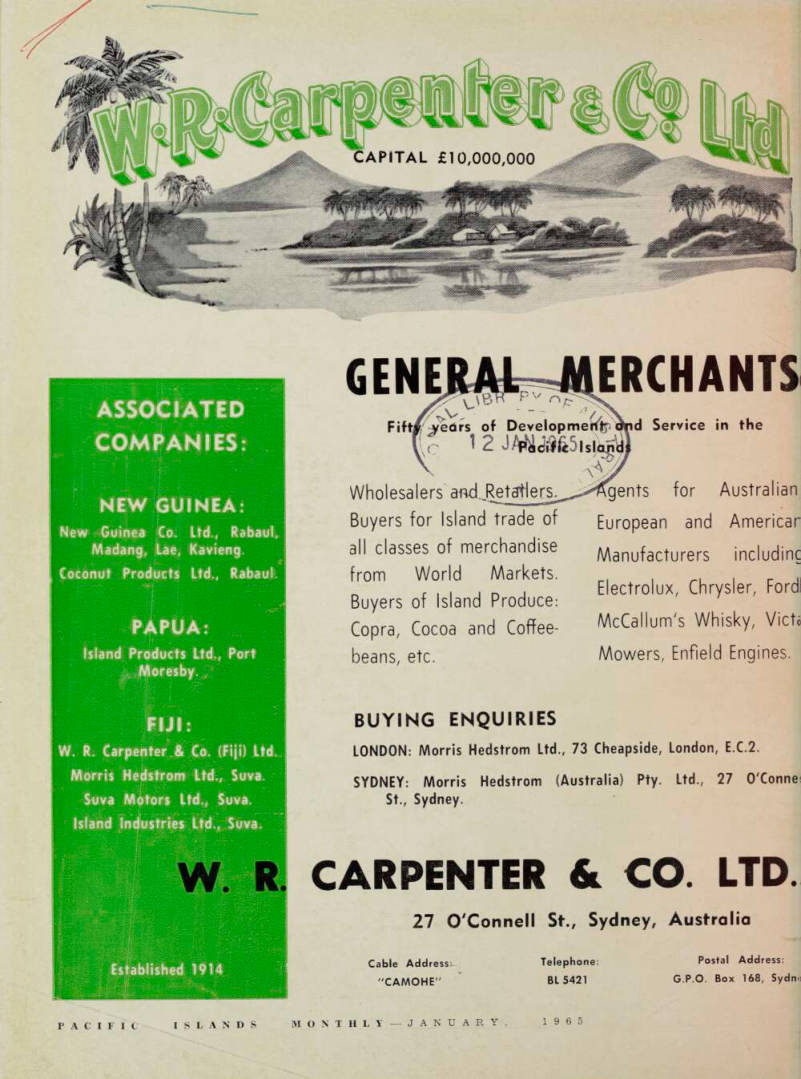 152
152