
Monthly
Pacific Islands Monthly
March, 1964
Vol. 35. No. 3.
he New/s Magazine Of The South Pacific
Established 1930
gistered at G.P.0., Sydney, and at P. 0., /a, for transmission by post as a Newspaper.
THE COVER: Both competant and attrai tive is Miss Lena Dickson, who has jus finished a course in stenography cor ducted by the P-NG Public Servic Institute in Port Moresby—one of thi first two Papuan girls to complete course of this kind. Lena is fror Kwato, in the Milne Bay district. Fa some more facts see "Tropicalities’'. j —Photo: P-NG Official
Advertisements & other items, pp. 2-8 (4 items)
P *° L F 1 C Islands M Ont .. , V
■’IONTHLV_ march 1964
Trans-Australia Airlines
V 3T
TAA
TAA The ■nti- " '
WHEN IN AUSTRALIA FLY TAA
Trans-Australia Airlines operates the largest single domestic airline in the British Commonwealth, serving 140 cities and centres throughout Australia and Papua/New Guinea. TAA’s modern aircraft connect with all incoming and outgoing International flights. This year TAA will provide the speed and comfort of pure jet travL W ' l in Australia with the introduction of Boeing 727 T-Jets.
Australia and Papua/New Guinea.
And TAA takes care of everything travel bookings by air, road, rail or sea, accommodation, sight-seeing tours even theatre tickets!
Contact your nearest Travel Agent or Trans- Australia Airlines Office
FLY
TAA Fly-away Holidays. TAA offers a huge range of packaged Fly-away Holidays to the most popular holiday resorts throughout
THE FRIENDLY WAY
Trans-Australia Airlines
Enjoy VEGEMlTE-
nature’s richest source of
VITALITY
Spreads so smoothly on toast delicious breakfast. for Here’s the wonderful way to get the fresh supply of Vitamin B you and your family need every day for happy vitality. Delicious Vegemite is a pure concentrated yeast extract, and yeast is nature’s richest source of precious “B” group vitamins. Vegemite gives you Vitamin B 1 for healthy nerves, B 2 for firm body tissue, and Niacin for good digestion. Keep up your good health and vitality ... be sure to enjoy your Vegemite daily . . . on toast, in sandwiches and as a soup or gravy flavouring.
KR374/B
S. 4
mu SPEED
)m -r jr /y \ •v m
IMPERIAL'
•243 w
CENTRE EIRE
Cartridges 80 cr
PSP
SINGIt RASH HOlf
\ *v
i \\X A \
IW\ \ \ \ \ v v <■ u. w u
CARTRIDGES —equal to the world’s bes
Whatever your type of gun or game there is an Sporting Cartridge for your requirements. Insist on Sporting Cartridges best value for money. @
SPORTING
AMMUNITION
Made in Australia by
IMPERIAL CHEMICAL INDUSTRIES
OF AUSTRALIA AND NEW ZEALAND LIMITED
ALL COLOURS
THE WALfAMUI CO. (AUtTIALIA) IW
111
WALPAMUR
QUALITY PAINTS
FOF EVERY PURPOSE
FOR EVERY SURFACE
Made in New Guinea by
THE WALPAMUR CO. (N.G.) LTD
LAWES ROAD, KONEDOBU, PORT MORESBY
Telephone: 4420 WPIBO
US OR
FAM
Victoria
Bitter
Drrnk a beer that’s really beer Victoria Bitter. Enjoy its clean, keen oo taste. Linger over its full-bodied sparkle and get a lift that makes yoi ga you re thirsty. Victoria Bitter is a man’s drink which refreshes lik< not mg else can. Try it. You’ll understand, at once, why Australians anc people the world over who know good beer drink “Vic”.
SHEWED B\ THE FAMOUS CARLTON A UNITED BREWERIES LTD., MELBOURNE IT'S AUSTRALIA’S INDEED THE WORLD’S BEST BEER
SIMPLE! SAFE! SILENT! FOOLPROOF!
mono
PUMPS & AUTOMATIC
WATER PRESSURE SYSTEMS
i
AGENTS
WANTED!
We are very pleased to invite enquiries from established houses for the representation of this popular and fast-selling range.
All enquiries will be received without commitment, and in confidence. ★ MONO the simplest and most efficient positive displacement pump your money can buy. GUARANTEED SELF-PRIMING, with positive and powerful suction lifts of up to 27 ft.!
Only one moving part: no valves or gears to cause stoppages or delays.
Handles all liquids, sludges, wastes and solids in suspension. No trouble when sand, silt, light weed, etc, enters the line. Special types for edible fluids, syrups, pastes, etc. The range covers industrial, food processing, agricultural, domestic, marine and mining applications. Details, prices,
etc. free on application.
MONO “M” SERIES PUMP,
165 to 860 g.p.h.
RIGHT Mono “M”
Series Pressure System. 150 to 300 g.p.h.; 30 p.s.i.
EXTREME RIGHT—Mono
“D” Series Pressure System. 450 to 3000 g.p.h.; 50 to 100 p.s.i.
Up to 8000 g.p.h. to special order.
HU MONO “0” SERIES PUMP, 100 to 8000 g.p.h.
MONO PUMPS (Australia) PTY. LID.
HEAD OFFICE: Lower Dandenong Road, Mordialloc, Victoria. CABLES & TELEGRAMS: “Monoaust” Melbourne.
Branches and Agencies throughout Australia, New Zealand, Papua and New Guinea.
HAVE YOU
NOTICED
HOW MUCH
BETTER
GILBEY’S
GIN
IS!
So why mix with others?
GILBEY’S
GINA
1
’ACIFIC ISLANDS MONTHLY MARCH, 1964
5
CIFIC ISLANDS MONTHLY-MARCH, 1964
Pacific Islands
Monthly
A product of Pacific Publications; Pty., Ltd., 29 Alberta St., Sydney.
Publisher: R. W. ROBSON.
Judy Tudor ‘ Stuart Ini
Manager: SELWYN HUGHES.
TELEPHONES: MA 9197, AAA 7101, AAA 43«
G.P.O. Box 3408, Sydney.
Telegraphic Address: PACPUB, Sydney.
Annual Subscription Rates:
(Aust. currency; includes surface postages f**'' T Samoa ' Norfo Nauru, 8.5.1., Cook Is., Tonga, G.&E. Gi Niue, New Hebrides, and Br. Pac: French Pacific Territories £i 7 Australia and N.Z ‘ U ’stg ) BritiSh Commonwealth an <J Foreign (4u U.S.A. and U.S. Pacific TerritorieP ($7; u. 0.; £3] Single Copies (postage extra)’. 2
Branch Office In Papua-Ng
Pacific Publications (NG) Ltd., Theatre Buildin Fourth St., LAE. Tel.: 2577. Miss 5 Robertson, Manager.
Branch Offices In Fiji;
Suva: Fiji Times Building, 20 Gordon St Tel.: 5601.
Lautoka: Fiji Times Office, Vidilo St. Tel.: 42
Representative In N.Z.:
J. D. Whitcombe, C.P.O. Box 2229, Que- Street, Auckland. Tel.: 70409.
Representative In Hawaii;
C. C. Spencer, 203 Yap Bldg., 3465 WaiaM Ave., Honolulu. Tel.: 775538.
Representative In U.S.A.:
G c 153 Laidley St., San Francisc 41, San Francisco, California. Tel.: Missio 8-1075.
Representatives In U.K.:
S. R. Warman, 73 Cheapside, London E C Tel.: City 2355.
H. A. Mackenzie, 4A Bloomsbury Squar London, W.C.I. Tel.: Holborn 3779.
MELBOURNE OFFICE: Newspaper House 24 Collins St. Tel.: 63.7053.
AGENTS: All main trading firms and stor» in the Pacific Islands.
Pacific Publications Pty. Ltd, is the Australia agent for THE FIJI TIMES.
In This Issue
>Ieral
3S Lost 10 v WP High Commissioner 15 d-Shaped Churches 19 ain and France in the Pacific ... 25 >tain Cook's Tortoises 81 Airways' Inter-Territory Service 115 •India to Fly to Nadi 116 codile Hunting 117,122
Erican Samoa
Worried, Disoriented People 63 el Plan for Pago Pago 111
Ok Islands
nomic Improvement 14 otonga May Get Jet Airstrip 67 varrow's Crusoe 83
I And Rotuma
stralian Commissioner Appointed 12
ian Interest in Land 15 idsmen Wanted at Lautoka 18 Lautoka Welcome for "Britannia" 36 I for Rotuma 37 Was Too Smart For Von Luckner 77 :ord Rains 81 ndarivatu's 100,000 Fish Eggs 87 fa Berth To Be Modified 99 >p in Birthrate 11l ny More Tourists 113 :ific Theological College Plan 113 w Variety of Sugar Cane 113 t to Lautoka Library 113 bavatu Estate Sold 116 janese Tuna Project 121 :ord Trade Balance 122 Proposal 122 Itured Pearls 123
French Polynesia
H-Bomb Atolls Ceded To France 18 Communist Fears Follow Recognition of Red China 57 Land Reclaimed Near Papeete 72 Naval Repair Base for Tahiti 116 First Tahitian Girls Become Nuns 117 Cultured Pearls 1 23 Moorea As a Tourist Centre 131
Gilbert And Ellice Islands Colony
Restrictions on Liquor Lifted 40 Harbours Damaged in Storm 99
New Caledonia
Cyclone Ends Long Drought 47 No Publicity on Smoking Danger 111 Last Vietnamese Leave H 3 Study of Little-Known Language 115
New Hebrides
Long Drought 47 Visit to Matthew Island 99 Vila Wharf Problem 103 Last Vietnamese Leave H 3 Archaeological Finds on Aneityum 117
Niue
Old Island Custom 65 Churches to be Rebuilt 113
Norfolk Island
Cruise Ship's Visit 105
Papua-New Guinea
House of Assembly Elections 9, 20, 30, 33, 35 Indonesians to Co-operate on Border 12 Ivan Champion Retires 13 Giant Snails Reach Moresby 14 Aropa Plantation Sold 17
Marriage Guidance Change in PNGVR Training of Stenographers 20 Another Mystery Obelisk 25 Ray Parer's Planes 27 Jap Command Post at Rabaul 27 Mt. Hagen Airport 32 Future of Native Affairs Department 38 Warning on Skin Cancer 43 Plan to Control Drain on Artifacts 45 Big Press Corps In Territory 71 New Wharf for Daru 103 Teak Plantations for Trobriands 113 New Teachers H 5 Patrol Post for Woodlark Island 115 Adventist Medical Plan 116 Timber Exports to Japan 120 Lively Buying of Sangara Stock 122 Encouraging Pyrethrum Tests 124
Pitcairn Island
Islanders Not Worried About Future 13
Solomon Islands
Bride Didn't Come COD 18 First Club for Workers Opened 55 Submarine Volcano Erupts 95 Boatbuilding School at Auki 103 Too Much Thieving 111 King George VI School at Kukum 115 More Gilbertese Settle at Wagina 115 New Ordinance on Plant Diseases 116 Vanikoro Kauri Nearly Cut Out 122
Tonga
Roller Skating Popular 83
United States Trust Territory
UN Tour of Inspection H 3 Tuna Plant for Malakal Island 124
Western Samoa
Boom Is On The Way 11/ 105 Press Freedom 29 Inquiry on MPs' Salaries 41 Expert Criticises Public Service 49 Sugar Cane Experiment 123
DEPARTMENTS: Tropicalities, 17; Letters to the Editors, 25; Territories Talk-Talk, 51; Magazine Section, 77; New Books, 89; From the Islands Press, 93; Pacific Shipping, 95; In a Nutshell, 111; People, 117; Commerce, 120; Deaths of Islands People, 129; Travel Talk, 131; Shipping, Airways Schedules, 134.
Advertisements & other items, p. 10 (2 items)
8
MARCH, 1964 P A r I IT I r T c t * v n c m n XT t n t it
Braybon
GIVES
\y ff
PLUS ALL THE CONVENIENCES
OF
MODERN LIVING
UILGJHLT
BRAYBON LIGHT AND POWER
t
PETROL & DIESEL GENERATORS
GIVE YOU ALL THE CONVENIENCES OF MODERN LIVING
WRITE FOR FURTHER INFORMATION
Si Sag St Manufactured by: ‘ Ha! !AYBON BROS ' PTY 2 7 L 3 T 3 D w E i eC, t riCa ! Engineers and Manufacturers 27-33 Washington Street, Sydney Telegrams: "Braybonian", Sydney
DISTRIBUTED BY
TUTT B «VANT (PACIFIC) LTD.
Election Extravaganza
A Month Of Variety In New Guinea's Big Election Extravaganza
From Judy Tudor, in New Guinea Although some areas of Papua-New Guinea have lived up to the fondest hopes of those who designed the House of As sembly election extravaganza now being played to packed houses here, there are also some areas where the whole performance has turned out to be pure farce.
THE elections are the first on a common roll in Papua-New Guinea (population two million) and hey will result in 54 elected mem bers in a new legislature of 64 mem bers.
I have just stood for some fas-
cinated hours in a polling booth about 45 miles from Madang and watched hundreds of natives go through the usual voting procedure and then poke completely blank ballot-papers into the red plastic ballot-boxes.
For a whole day the futile pro cession went on, broken only occa sionally when some patrol officer, acting as returning officer, and irri tated to desperation by the wasted effort, broke off to upbraid the as sembled voters for their mulishness.
The reason for the extraordinary business was a one-time Administra tion pet, turned prophet, by the name of Yali—or sometimes “King” Yali.
As Yali Singina he is now standing for the new House of Assembly in the Rai Coast open electorate, but Yali’s writ runs strongly all along the Madang coast and also an un comfortable way inland.
Yali is a former policeman and wartime Coastwatcher who for a time after the war was supported by the Administration as one of the country’s earliest “elite”. He had visited Australia and was impressed with the need for his people to work.
He did good work but eventually be came involved in a career as cargo cult prophet. This cult had all the usual overtones of sex and exclusive ness from the Administration, although who was responsible for the excesses—the prophet or his disciples —can be argued.
The Administration cracked down eventually and Yali served a long gaol sentence at Lae. He served it quietly and little has been heard of
him publicly in the decade since his release, but the present Yali mania in the Madang is proof that his in fluence is strong.
On this afternoon, as I watched, it was running strong indeed in this particular pocket of the Madang open electorate. All day the followers of the prophet, like zombies in a waking dream, filed in one door of the shed that was serving as a booth, whispered the name of their village and their own name to a long-suffer ing returning officer, and retired with him to the small polling booth.
The booth was decorated with the pictures of the three candidates for Madang open electorate—two natives and one European woman —and the pictures of the three European candi dates standing for the Madang-Sepik special electorate (reserved for Euro peans).
With the voter induced to sit, the officer would then go into his usual patter (none of these people was capable of marking the paper him self and no absentee voter that I saw was capable of signing his own name).
The officer would point out the
BIGGER AND BETTER; When 64 members crowd into P-NG's new House of As sembly when the House is opened on June 8, space will be at a premium.
The chamber itself will not be enlarged, but space previously taken by the public and by native observers will be used by the members. In February, when this photograph was taken, work was well advanced on three-storey additions to the House to provide office accommodation.
Cost is about £50,000. The main build ing, which was once Port Moresby General Hospital, is in the background.
They All Want To Vote! Crowds
jammed the polling booths in the urban areas of P-NG in February as voting
opened for the House of Assembly.
Polling hours had to be extended in some cases to handle the crush. This was a scene in the Port Moresby area.
Voting is to continue throughout P-NG until March 18, and no votes will be counted until all ballot boxes are returned.
electorate, briefly name and describe them and ask: “Which fella you like mark Number One?”
“Yali,” was the inevitable reply In varying degrees of impatience or resignation the officer would then say for the several-hundredth time- "Yali -e no stand up along Tis Sla hap im e stand up along Rai Coasr tha’s all.” g oast ’
He’d point out the pictures of the locul candidates again and repeat N°w, which fella you like mark Number One.”
Back wou |d come the inevitable reply: “Yali, tha’s all.”
Efforts to extract a choice amongst the three candidates in the non-fn genous special electorate of Madang-Sepik produced no results either, except the reiterated ‘‘Va t tba^ a 1 the officer had expended the rimnlv y iTf of Patience he of thJ S b , bled lnitials on the back hnsillL ba -i 0t - paper ’ folded the blank r wards ’ and gave it to the baltot box d V ° ter l ° PUSh throu 8 h „ , ox - So was democracy abortively served there are two schools of thmS is hC tb ? ania for Yalk h One is that certain sections of the
the nronhet fbat tb S ° beso ,“ e ? about nm* P Ju? het that tbey can thmk of no , solntioi?_f<f tw poSSlbly the correct made bv -T S to run* h d • dlsciples lu^ 11 CoVenn S all three f? o *,!' Ad *“ “ so ]d tu- taiv”^ tl believe /hat A e bad sold the talk that people m Madang vote for candMa,« e «f° v‘m W 7 e - *° Unfortiinat^to^ 6 ! ° f Yab /- choice admirers Jfi- es . s sop histicated ! ? w res t cr °ssed anu Sil? '! 8 ° f n y fo J- X 3 ’ 1 hlm ' not sSndlnJ ° r ?‘ es t J or . »b«:h he was duced bnnrWi 5 11 - 8 18 , s ? tbey pro ‘ will benefit no < l mVal,d ( votes “l at “kine” himself 0 ° ne ’ DOt eVen tbe 8 himself * // . „ Amons JP e "- bmder - - , for eranmd 11 18 tak^ n the Raf d W 1 sacceed m although it Sfnfn i? P£n „ electorate, less than piato°otT? be f 1 that no the temerifv to t “f 68 baVe b ? d erstwhile king d agamSt tbe
Amnno u ■ ,
ultinSte 8 inln w egarded a ? the ultimate in spell-binders and it is the P new Home °f m B l tS into becomT , As T sembl y, he will me 3 potential Jomo Kenyatta
and probably first Prime Minister of an independent Papua-New Guinea.
He has the first requisite of any Prime Minister in an ex-British Colonial territory: that he has spent some time in gaol. But it is equally possible that if he is elected and takes his seat in the House he will lose much of his local mana and amongst the 63 other members be smartly cut down to rightful size.
Two other ex-cultists are contest ing seats in other New Guinea elec torates. One is Paliau Maloat, of Manus, who headed a flourishing cult in that district about the same time that Yali was performing in Madang; the other is Francis Hagai, of Bougainville, a much more recent non-conformist. * * * But the Yali-or-nothing voters are not the only performers capable of getting themselves in a groove. These people were mostly from the hill area behind Dylup plantation, but at the other end of the same polling shed plantation workers voting as absentees had got themselves in an almost identical production-line frame of mind.
Many of them came from districts covered by the Ramu open electorate and these, to a man, voted for
Master Ben,” and refused to give •references to the other three candi ates or to take part in the election if a candidate from the Madang lepik special electorate.
“Master Ben“ is Watson Griffith fall, a European planter near Bogia. dthough he is standing against three lative opponents he is given a good hance of making the grade. (His ibsentee supporters at Dylup who oted “Master Ben tha’s all”, cast icrfectly formal votes and will assist n the good work.) The mob-voters, the hypnotised ,nd the stubborn are only part of he story. At Nagada, nearer Madang own, on Saturday, February 22, oting went with a swing.
This is a Lutheran Mission area »ut local natives made up most ot he voters and here mum and dad >rought the kids along and turned it nto something like a picnic.
The majority of these people were :apable of marking their own ballot >apers and those who were not went martly into the booths and told the eturning officer the candidates of heir choice, in order of preference, or both open and special electorates.
And this happy state of affairs was epeated in dozens of places, all over he Territory, although anyone who magines that more than a fraction )f these people understand the im ilications of what they are doing is icing unnecessarily naive.
"Extraordinary Gambit"
In almost every way the whole operation is one of the most extra ordinary political gambits ever at empted in a primitive country, but, it best, it can be regarded only as a Foundation and by no means a proto type. Before the month-long endur ance vote was a day old, gaps in the system were already showing up.
It is already being freely admitted that in the second election four years hence, reserved or special electorates for non-native residents will be out and that European representation will have to take its chance in open electorates.
Another change that should in all common-sense be made is in abolition of the preferential voting system.
Australians, who have this system, create world records in the number of informal votes they cast every election, but in P-NG, to suit some Australian ego, the same system was forced on to people who are about 1,500 years closer to the Stone Age.
Electorates cover vast areas and no one voter knew all candidates. Euro peans usually voted one and two for their preferences and numbered the rest of the candidates consecutively
(Continued on p. 129)
NG Elections (Continued from page 11) down the paper. Native voters generally didn’t bother; they voted for their first and second preference and let the rest go hang.
In the Australian system all candi dates must be given an order or preference; in P-NG the figure 1 in any square makes the vote valid.
Voting is not compulsory.
Some thought might also be given to a bit more real secrecy in the actual voting. Because it was the first attempt, facilities were given to observers and Press which will never be tolerated again, and probably in publicity value for the Territory it has paid handsome dividends.
It was not necessary to be clairvoyant, however, to see that although local voters could vote in privacy, those who could not mark their papers themselves and had to vote absentee could do so only by calling out the name of their prefer ence to the returning officer.
As there were always at least two dozen other voters within hearing, it is a ready-made oportunity for mob voting and for pressure tactics.
The Sea
More Victims For
TWO more trading ships sank in the South Pacific in February, and two yachts, which have been missing for several months, have now been pre sumed lost.
The two ships which sank are the New Guinea trading vessel Kavieng Trader (pictured) and the 24 ft New Caledonian cutter Saint Gabriel. Five lives were lost in the Saint Gabriel (see p. 103).
The two vessels which are presumed lost are a trimaran which left Sydney last June with a crew of two (see p. 107) and the 30 ft cutter Siga Wale, which left Suva for Auckland in November with a crew of three (see p. 109).
The Kavieng Trader keeled over and sank within six minutes on the night of February 16 about 44 miles south-east of New Ireland.
The crew of 10, who escaped in two lifeboats seconds before the ship went down, were rescued by another trading vessel after they had been adrift for 19 hours.
The rescue ship, the Nordkil, found the ship wrecked men in darkness after having spotted their last two emergency flares. The men earlier used all but ton ship their flarCS m trying t 0 attFaCt a P assin § 10,000tW< o Australian B and eight natives, had lashed their two lifeboats together after leaving the
Kavieng Trader, which was swamped by big seas. The Australians are Captain W. Carruthers and the chief engineer, Neil Owens, both of Rabaul.
The Kavieng Trader sank so quickly that the radio officer had no time to send a distress signal. She had been on her way from Rabaul to Bougainville with a cargo of bulk fuel.
The Nordkil, following almost 24 hours behind on the same course, found the survivors about five miles from where the Kavieng Trader sank.
The Kavieng Trader, originally a North Seas drifter under the Dutch flag, was acquired by the Gona Shipping Company, of Rabaul, in 1962.
She made her maiden voyage to New Guinea in March, 1962, but was burnt out six months later, with the loss of two lives, at Kalubi on the west coast of New Ireland.
The Kavieng Trader was refitted in Rabaul and resumed service late last year.
Is On The Way!
West Samoa’s Boom Is On The Way!
There were some sighs of relief in the Government and elsewhere among forward thinking Samoans when in February the West Samoan Legislative Assembly finally passed the Loan Authorisation and Harbour Development Bill, giving approval to Government plans for deep water wharves to be built at Apia and Asau (Savaii) at a cost of £1,200,000.
DURING the weeks before discussion of the bill there were rumours of growing opposition to Government plans, and even talk of a no-confidence motion. But when it came to the showdown the opposition evaporated. A move by Pilia’e I. to delay consideration of the bill a further three months was defeated by 35 votes to 7.
“This is a tremendous step forward and it assures the success of our first five-year development programme,” said the Minister of Finance, Mr.
G. F. D. Betham. Most people agreed.
It seemed at last that the longpromised boom was on the way, for this kind of development is really big business in Western Samoa.
The wharves on the two main islands will play a vital part in the independent Polynesian State’s economic progress. It is astonishing
that not in Samoa’s long history has there been an overseas wharf at Apia, The contract for Apia calls for dredging the berthing area 36 ft deep at low water, construction of a 600ft wharf, building two big transit sheds; reclaiming an area of 8i acres behind the wharf and reclaiming another 30 acres in front of Apia and along Beach Road and out to the reef, For Asau there will be a 200-ft entrance dredged 36 ft deep, a 400 ft wharf with a big transit shed and reclamation.
A five-man team led by the Min ister of Works, flew to Wellington on February 23 for the signing of the contract with the U.S. firms of Merritt-Chapman-Scott Corporation, Tecon Corporation and the NZ firm of Fletcher Holdings Ltd. who are buliding the wharves as a joint
Key UN personnel In Western Samoa are the Director of Works Mr. B. Claussen (left) and the Regional Adviser to the South West Pacific, Mr. H. Spence (centre), here seen discussing Samoan harbour plans with the Minister for Works, Mr.
F. C. F. Nelson. —Photo: Samoana.
venture known as Merritt-Tecon- Fletcher. «,-fK° th '->^ are to be completed within 22 months Meanwhile the Government has opened the country’s first national development loan for £250,000. Five ye^ r i^ tock carr ies interest of 54% and 10 year stock 5|%. 7 Samnf ’ a ® Week ’? visit t 0 Western bamoa and inspection of develop- Te?t!n Pr( ? gre f’ . chairma n of the UN I e , ch "“> al Assistance Board, Mr t?on a?Th n ; h <f S expressed satisfac- Prograrame he Sam ° an devel ° pme "‘ of H W,^ omme c med that the stability Of Western Samoa was in marked coSs W,th SOme ° ther «ng counfrv°T t,l S the most con servative lh e ever visi, ed,” he said ut c bange is bound to come.”
Diplomat For Fiji
A much closer Australian official interest in the South Pacific will develop following the appointment to Fiji of the first Australian Commissioner, Mr. R. N. Hamilton {pictured).
Mr. Hamilton will arrive in early March. He was to be proceeded in late February by Mr. R. H. Platt, as Second Sec retary, who will open the Commission’s office in the Grand Pacific Hotel, Suva. Mr.
Hamilton, 40, has had extensive overseas experience with the Australian Department of Ex ternal Affairs, and it is assumed he will keep his Government up to date on all developments in the area, not only those in Fiji.
Previously a watching brief has been kept by the Australian Consul in Noumea.
Indonesia To Co-Operate
Many Problems Ahead Yet, But. . .
On Ng Border Survey
By a Staff Writer
Australia and Indonesia are “no longer in conflict” over the definition of the border between Papua-New Guinea and West New Guinea, according to Australia’s Ambassador to Indonesia, Mr. Keith Shann.
MR. SHANN said this in Djakarta late in February just before leaving for Canberra for three weeks of consultations with the Government.
He said that Indonesia would send a survey team to the border area in the “near future”, and that this team would be accompanied by a liaison officer from Australia’s Embassy in Djakarta.
Meanwhile, Australia would re sume its placing of temporary markers along the Australian side of the border, Mr. Shann added.
The erection of the temporary markers was suspended late last year following two incidents with the Indonesians. In the first one, the Indonesians removed some markers; and in the second, an Indonesian patrol resisted an Australian attempt to restore them.
Australia’s Minister for External Territories, Mr. C. E. Barnes, later announced that an Australian survey of the border would not be resumed until it was known whether Indo nesia would co-operate.
Now that this co-operation is forthcoming, it is assumed that the Austrahan-Indonesian survey of the border will be followed by a treaty between the two countries defining the border’s position.
Two Agreements
At present, there is no single agreement covering this, and the two agreements that do exist leave much to be desired.
The definition of the northern section of the border—from the north coast to the junction of the trust territory and Papuan eXn ari^~K S S6t out in notes ®* c *}f° ged , between the Common in 193 Netherlands Governments a tT^ e tv S °“ the^ SeCtion is defined and tb b f WCen Great Britan 1895 th Netherla nds on May 16, The notes on the northern sec
tion of the border have never been published. (A paper containing the notes was ordered to lie on the tables of both the Australian Senate and House of Representatives on November 12, 1936, but it was not printed).
The notes stated that the 141st meridian was to continue to be the boundary between the two territories.
According to PIM of November, 1936, “the 141st meridian was to be deemed a line running true north and south from the middle of a monument placed as a result of observations made by Dutch and Australian surveyors in September, 1933”.
The Anglo-Dutch treaty of May
This monument, erected by the Dutch before the war, marks the P-NG-West New Guinea border on the north coast.
There is another marker, later erected by Australian surveyors, near it.
6, 1895, fixing the southern section if the border, consisted of five rticles, two of which, the third and he fifth, were open to varying iterpretations.
The first two articles said that the order began in the south at the fiddle of the Bensbach River, situated at about 141 deg. 1 min. 7.9 sec. of east longitude”, and lat it proceeded north on that leridian until the Fly River was ncountered.
Article 111 said: “From that point, le waterway ( thalweg ) of the Fly iver forms the boundary up to the 41st degree of east longitude”.
Article IV said that from then on le 141st meridian was the border > the intersection of the boundaries f “the British, Netherlands and German positions”.
And Article V said: “Navigation f the Fly River is free for the ibjects of both contracting powers, ccepting as regards the carriage of arlike stores, and no duty shall be nposed on other goods conveyed y that river”.
It will be seen from Article 111 lat the British and Dutch negotia te did not state whether the )ulge” of the Fly was in Dutch or ritish territory, or whether the irder ran down the middle of it.
And Article V was potentially oublesome in that it gave the Dutch eedom to sail through hundreds of lies of British territory, both south id north of the Fly’s bulge, resumably the Indonesians may aim they now have the same right -that they can if they desire ivigate the Fly to the mouth of that ver!
Until they came to look into the jestion of the border recently, lost Australian officials probably Sieved that the whole of the Fly iver was in their territory.
Infiltrators A report from The Hague in ebruary quoted Marcus Kaisiepo, le of the soundest and most telligent of the Papuan “elite” of utch times, who is now in exile Holland, as saying that the Indo jsians were now spreading •opaganda in West New Guinea med at getting the Papuans to ema n d “unity” with P-NG. ifiltrators were to spread the word i the P-NG side.
In Port Moresby, the Administra ir, Sir Donald Cleland, said he lew nothing of infiltrators. Dr. erbert Feith, a lecturer at Monash hiversity, Melbourne, who had just 'sited West New Guinea, said he ould “be surprised” if there was any uth in Kaisiepo’s claim.
Ivan Champion
Forsakes The Land For The Sea
There was a formidable gathering, headed by the P-NG Administrator, Sir Donald Cle land, at the Public Service Club,
Port Moresby, in February
when Papuan explorer, native
affairs expert and gentleman, Mr. Ivan Champion, retired from Government service.
IN March he will exchange the position of Chief Native Lands Commissioner for that of captain of the 127-ton diesel yacht Laura bada, once Sir Hubert Murray’s patrol vessel. The hulk was rebuilt by a Port Moresby boat builder and she will now carry cargo to various Territory ports under Captain Champion.
Ivan Champion, born in Port Moresby in 1904, a member of a distinguished family, is probably most renowned for his greuelling Fly to the Sepik patrol in 1926, when he accompanied the late Charles Karius across the wildest part of the Terri tory. Another famous expedition was his Bamu-Purari patrol of 1936.
He served with distinction in NG during the Pacific war, piloting units of the Allied fleet and making vital hydrographical surveys.
At that farewell in February, Ivan Champion, after recalling many of the highlights of his career, spoke feelingly of the links that still bind P-NG’s field officers together.
Mr. Ivan Champion.
Everything Will
Come Right, Pitcairners Say
From a Suva Correspondent The people of Pitcairn Island are not worried about the future even though migration to New Zealand has drastically reduced their numbers and their incomes have become smaller because fewer ships are call ing at the island.
Commissioner of the South T" Pacific Office in Suva, Mr. Reid Cowell, discovered this when he went to the island for a month recently to investigate its future prospects. oc Ve little doubt that 70 of the 85 people who live on Pitcairn want to stay there,” he told me on his return to Suva, “and their view is that everything will right itself as * has after previous migrations.
They have a pleasant place to live and can have a fairly comfort able existence selling their souvenirs and agricultural produce.
“But with the withdrawal of pas senger ships there is a gap in the private economy, and the idea now is to organise the islanders to help themselves.”
Souvenir Trade Mr. Cowell said that for many years the islanders had done a brisk trade in souvenirs with passengers in smps of the New Zealand Shipping Co. Ltd., the Shaw Savill Line.
But only the four Shaw Savill ships, Gothic, Athenic, Corinthic and Ceramic, carrying a maximum of 80 passengers, and considerably less in the off ’ season, were calling at Pitcairn now.
However, on his way back to Fiji Mr Cowell spoke to the chairmen ot the two shipping companies in Wellington and found they were anxious to help Pitcairn as much as they could within the limits of good economic sense”.
Mr. Cowell said that one line of approach to the Pitcairners’ economic problem was to build up a mail order market for their handmade souvenirs.
A co-operative enterprise supply ing fresh fruit and vegetables to ships could also help. v Mr. Cowell said that Pitcairn, which had no wheeled transport, except the traditional wheelbarrow might soon get a couple of tractors one with a bulldozer blade, which could cut paths where necessary.
Advertisements & other items, p. 15 (1 item)
13
ACIFIC ISLANDS M O N T H L Y M A R C H , 1964
March Of The Giant Snails
New quarantine regulations were drafted in Papua-New Guinea in February to try to prevent the spread of giant African snails (Achatina fulica) to unaffected parts of the Territory.
THIS action followed the discovery at Boroko, a suburb of Port Moresby, on January 22 of several giant snails which are believed to have reached Boroko in second-hand vehicles brought from Rabaul. The snails were the first of their kind to be found in Papua.
The Japanese, who eat them, intro duced them to parts of New Guinea during the war, and they are now a pest in New Britain, New Ireland, and the Hansa Bay area of the Madang District.
The new quarantine regulations will require vehicles, farm machinery and implements to undergo a pre scribed cleaning process before being removed from affected areas.
Prolific Breeders The P-NG Department of Agri culture is also making small cement bricks impregnated with metaldehyde in an attempt to eradicate the snails from Papua. The idea is that the snails will be attracted to the bricks to lick the lime in the cement, and the metaldehyde content will kill them.
The snails, which grow from 4 to 9 in. long, are bisexual, and it is estimated that one of them can pro duce 11 billion offspring in five years. They lay up to 300 eggs in a batch, and their eggs hatch within a few hours.
Mr. Alan Charles, P-NG’s Chief Inspector of Plant Industry, said after the Boroko discovery that the snails could completely destroy crops and seedbeds overnight.
Young cocoa plants in snail infested areas had to be carefully protected for up to nine months if they were to survive the attacks of the giant snail.
Mr. Charles added that the snails were dormant during dry weather and that their presence in Boroko was only revealed after heavy rain.
The arrival of the snails in Boroko represents another triumph for these creatures, which are moving across the earth like the hordes of Attila.
The snails, which originated in Zanzibar but are no longer found there, were accidentally introduced to Mauritius and Madagascar about 1810. From there they were carried in coffee plants to Ceylon and Bengal.
They rapidly spread throughout India by climbing on trains and falling off over the countryside, and they gradually reached Burma, Malaya, Borneo, and Sarawak.
The snails had reached Hong Kong when World War II broke out. The Japanese, realising their food value, introduced them into their mandated islands (now the United States Trust Territory of Micronesia) and later into New Britain and New Ireland.
Things Are Looking
Up In The Cooks, Top Official Says
The economic situation in Raro\ tonga and the outer Cook Islands wav showing a “real improvement”, ana this was likely to gather increasing momentum as time went on, Mr, F H. Corner, New Zealand's Deputy Secretary of the External Affairs De■' partment, said in a talk over Radio Cook Islands in January.
MR. CORNER, who is also head of New Zealand’s delegation to the United Nations, said that what was. happening politically and constituj tionally in the Cook Islands [the islands are preparing to become inj ternally self-governing next yeari would be of much interest to the United Nations.
He said he did not believe storie; that the economic affairs of the CooH Islands were in such a bad state thaj self-government would not work.
Nor did he believe that CooH Islanders were “lazy, degenerate ano so jealous of each other” that even ti they did elect good people to the Government, they would never trust them and join with them in the haro work needed to make their country s good place to live in.
“I know well,” Mr. Corner said!
“that there are difficult problems to be solved here: for instance, that the income and standard of living of too many people is far too low; that there are not yet enough good jobs and op< portunities for Maori people; thai many of your able young people are moving out of the Cook Islands to find their opportunities elsewhere.
New Opportunities
“But this is changing and I am convinced that there is a bette:; chance of your problems being deall with effectively under the new system: “Self-government can release all the talents of a people. Under selfl government I am sure that many new onnortunities will be created, and that people here will respond to those opc portunities.
“New Zealand has found, as havr other countries, that there is a limii to the things that can be done from outside, however expert and however dedicated the outsiders may be.
“No people can have a feeling oc pride, no country really gets movinga if outsiders do the thinking and th«i pushing.”
Advertisements & other items, p. 16 (1 item)
14
MARCH, 1964 PACIFIC ISLANDS MONTHLI
Of Fiji’s Problems
Need For Wider Airing Of Fiji’s Problems
From a Suva Correspondent The many political problems of Fiji won’t be solved unless all the issues are continually there for discussion, but there is a feeling among many people in Fiji today that far too much is being done or discussed behind closed doors.
rHERE is unmistakable appre hension among thinking Fijians, specially the younger ones, that the aders are not talking enough to the sople. There is also apprehension mong people of all races that ambers of leaders are speaking with vo voices—one in public and one i private or for the benefit of small roups.
As a result, some people are not ire that the Government’s decision i hold the promised constitutional Iks in London—with representatives avelling there from Fiji—is a good ea.
The talks, they think, should be in iji, where people outside the narrow rcle of delegates could know what’s ling on and make their thoughts id wishes felt. This way changes >uld not be imposed from above.
"Lack of Knowledge"
It is the present lack of exact lowledge of real opinions and real ends that is so worrying in Fiji iw, and the situation was under led recently with the publication in he Fiji Times of a long series of ports on the land question •iginally published in the Indian nguage newspapers.
The Indian reports seemed to in cate that this question of land as being made a pretty live issue nong the Indian population (which :counts for almost half the popula m of Fiji) and that Fijian land vnership was being attacked at eetings of Indian farmers.
Anybody who has merely followed e occasional public statements ade by some Indian leaders in nglish could be forgiven for hav g thought that all was sweetness id light, but the recent addresses dicate that the situation is different.
As Fijian MLC Ravuama Vunivalu linted out after the Indian views ere given wider currency at second ing, it was strange that the two [dian MLC’s responsible for some the statements hadn’t made them
recently in the Legislative Council, where they could have been dis cussed.
The MLC’s, Mr. A. D. Patel and Mr. S. M. Goya, are two leaders of the loosely styled “Federation”, a body which first came to public notice in 1960 when there was serious trouble in the Fiji canefields which cost the Colony more than £2 million.
General burden of the recent Indian statements is that the Fijians have most of the land and are going to get more because Indian leases won’t be renewed after they expire; land is being taken from the Indians under the pretext of reserves and the Indians will be landless after independence (which “will surely come”); and the Indian population will have to stop squabbling among
itself and get organised if it is to beat the land problem.
The difficulty, of course, is that the Fijians regard their land as inviolate, and these kinds of rumblings are not going to make tempers any easier—especially when they are carried on behind scenes, What Fiji needs is a full and open airing of all the problems and all the thought-trends, so that attitudes are a matter of record not conjecture, Otherwise there is too much room for mischief-making.
Fiji's
First
Lady
Lady Jakeway, vivacious wife of Fiji's new Governor, Sir Derek Jakeway, says she is thrilled with Fiji. It has far exceeded her ex pectations, and as a keen gardener she is especially enchanted with Government House grounds, Suva, in which this photo graph was taken in February by Rob Wright.
New WPHC Expected In BSIP
BSIP In June
Mr. R. S. Foster, High Com
missioner-designate for the Western Pacific, is expected to take up his duties in Honiara, BSIP, in the third week of June. He will arrive in company with his wife.
The retiring High Commissioner, Sir David Trench, who will be the next Governor of Hong Kong, began saying his farewells in mid-January when he flew to Tarawa, Gilbert and Ellice Islands Colony, for a three-day visit.
Early in February, he made a fare well tour of Santa Ysabel, Gela and Savo; and on February 15, he left Honiara to say goodbye to the people of the Russell Islands.
Advertisements & other items, pp. 17-18 (2 items)
15
ACIFIC ISLANDS MONTHLY-MARCH, 1964
Morris
HEDSTROM
LIMITED
HEAD OFFICE: SUVA, FIJI
LONDON OFFICE
Morris Hedstrom Limited Barclay's Bank Buildings, 73 Cheapside,
LONDON, E.C.2.
AUSTRALIAN REPRESENTATIVE
Morris Hedstrom (Aust.) Pty. Limited Wales House, 27 O'Connell Street,
SYDNEY
REGISTERED CABLE ADDRESS:
DEUMBA-SUVA, MORRISHED—LEVUKA, MORSTROM
SYDNEY, SUVAMARK—LONDON, MORRISCO
NUKUALOFA, DEUBA—APIA, CODES: ALL
For Friendly Service and complete satisfaction it's Morris Hedstrom Ltd. in
General Merchants
Produce Buyers
Importers and Exporters
Ship Owners
Plantation Owners Commission and Insurance Agents
AGENTS & DISTRIBUTORS FOR:
Adhesive Tapes, Ltd.
Bush Radios, Ltd.
Bowater—Scott Corporation, Ltd.
China Navigation Co.
John Dewar Gr Sons, Ltd.
Electrolux Limited.
Evinrude Outboard Motors.
Ford Motor Co.
General Electric Co. Ltd.
Goodyear Tyre & Rubber Co.
Guinness Exports, Ltd.
Medley, Thomas & Co, Ltd.
Imperial Chemical Industries, Ltd.
Matson Navigation Company.
Mobil Oil Australia Pty. Ltd.
Max Factor £r Co. Inc.
Parker Pen Company.
Ransomes, Simms & Jefferies, Ltd.
Rootes, Ltd.
Smiths English Clocks, Ltd.
Tanqueray Gordon & Co. Ltd.
Taubmans, Ltd.
Yorkshire Imperial Metals Ltd.
Morris Hedstrom Limited are
LLOYD'S AGENTS
in Fiji and Samoa
FIJI - SAMOA -
TONGA
topicalities
An organisation called the New Guinea Biological Foundation, whose principals don’t want to make themselves known yet, has pretty well completed the purchase of Robin McKay’s 5,000-acre Aropa Estate on Bougainville, south of Kieta.
9MEBODY else tells us—and we have every reason to believe him hat the purchase price is in the inity of £180,000! fhat in itself is quite a news item. is not often that Islands plantais change hands for that kind of ney.
But there’s more to the purchase n just big figures. When the New inea Biological Foundation takes ;r around about the beginning of y, it plans to use part of the proty in a project to further the logical study of plants for the lefit of people in the tropics. rhe principals of the foundation non-profit-making show, are not pared to say anything more than ‘t just y«, but we hear from rther source that the biological iject could grow into the biggest lertakmg of its kind in the world. c . burpnse We hear also that the foundation financed by wealthy men from all jr the world, who are interested plant biology, especially research o tropical plant life.
Fhe sale of Aropa came as a sur-
prise to Robin McKay‘s many friends, but the knowledge that he has obtained a very good price for it gave them great pleasure, It means that he is reaping the reward of 17 years of hard work, good planning and looking ahead, The general verdict has been “Good for you Robin—you beaut!”
Robin has been “one of the Bougainville mob” who have become known for working together for the good of the community, and who achieved much success by their doctrine of self-help, and no beg pardons.
They k , hammering at the heads in p ort Moresby for what they con . sidered t 0 be their d and ' voiced their objection to being treated as a Cinderella district, Robin always t 0 the fore as presid ent of the Bougainville branch of the NG Planters’ Association, pre sident of the local Returned Soldiers’
League, member of the District Ad visory Council and a director of The Bougainville Company, which ran the inter-island ships from Rabaul.
In the fight to get Kieta recognised as a place needing an overseas ship
ping depot, with wharf and sheds to go with it, he was very prominent.
Now the dream is being realised and Kieta will be on the map, instead of being considered by Moresby as “an outpost somewhere in the Solomons”.
Bougainville, in fact, produces as much copra as the whole of Papua and is becoming increasingly import ant as a cocoa producer.
Company Formed
Robin went to Bougainville when he acquired Aropa Plantation in mid -1947. Plantation labourers were then hard to obtain, it was almost im possible to get building material or plantation suppli.es, and shipping was scarce.
So “the Bougainville mob” got to gether, formed a company and man aged to get a ship, the Polurrian, from England.
She did remarkable service and brought the district to life after the four devastating years of war.
Robin was a first director of the company.
During his years on Aropa, Robin added to the number of coconut palms planted, and put in many thousands of Brazilian rubber trees on the plantation.
The plantation is the only one in Bougainville now producing and shipping away copra, cocoa and rubber—and everything is handled in a modern and efficient way.
Plantation Assistant All this has been achieved by hard work and attention to the job in hand, assisted, of course, by the fertile soil and well-spread rainfall, for both of which the island is famous.
Robin first went to New Guinea
Aropa plantation, on Bougain ville's east coast, is one of the most beautifully situated plantations in the South Seas. In German times it was an experimental station. This view is taken from the house, looking towards Kieta. The smoke that can just be seen in the middle distance is at the far end of the airstrip.
29 years ago —as a plantation assist ant for a Burns Philp-owned planta tion.
He eventually graduated to man ager, and when World War II started he was an early one to enlist in the Second AIF and went overseas to serve in the Middle East. Later in the war, he served in New Guinea with the AIB.
Robin and his wife, Laurie, have always been a popular couple. They shared the trials and worries of the hard post-war rehabilitation years, and always managed to extend hospitality and take part in all social activities, besides lending a helping hand to those who might need it.
They have three growing daughters of school age.
Evolving Country
Robin says he is not leaving the Territory from any sense of financial insecurity in his lifetime, as he thinks the place is on the verge of bigger and better things than have been dreamed of hitherto.
“My reasons for leaving,” he says, “are those of family and the un certainty of my children’s lives and futures in an evolving country. There fore, if 1 am ever going to leave, it is better done while I have plenty of active years ahead [Robin is 46] to build up something in a more secure political clime.
“I have other interests in New Guinea, though, and I intend to re tain and enlarge them so that I will always have a stake in New Guinea and will have plenty of excuse for frequent trips to my home town.
“This is a wonderful country and it has been very kind to me. But I leave with a sense of having built something up and having contributed in a small way to New Guinea’s pro gress.
“It also gives me great satisfaction to know that Aropa will be used for research and the ultimate benefit of the tropical world.”
The Bride Who Didn't
Come C.O.D.
A MAN can’t be blamed for being " a bit upset when his bride-to-be gets snatched away from him, espe cially when he has made a down pay ment on her!
That is what happened recently at Marau on Guadalcanal, and when someone brought news to Honiara that there was going to be trouble over it, a police party went off and came back with eight men. . Th ey appeared in court for disturb ing the peace.
The ringleader was the man who had been “diddled” out of his bride.
He said he had paid his money at Marau for the girl he wanted to marry, and that was the last he saw of the money and the girl. So he col lected a few friends, and they armed themselves with bows and arrows, knives and sticks, and went into Numarere Village.
However, they did not know that a big feast was being held and that everyone from near and far was gathered there.
At the village, the leader rushed up to his lost girl friend’s brother and threatened him. He didn’t get far be cause his friends were soon disarmed and then the police arrived.
In Honiara, the eight men were sentenced to four weeks’ imprison ment in the “cooler”.
This, of course, may cool the ring leader’s ardour for a bride, but he’ll probably still be keen to get his money back.
Great Northwest Will
Blow Its Own Trumpets
T AUTOKA Rotary Club, Fiji, has been looking for persons with the wind up, or for those willing to blow their own trumpet. . Trumpets, and other musical instruments, arrived from overseas the other day—purchased by Rotary
as part of their Fiji Weste Districts’ brass band project, whi has had club members working 1 nearly a year.
With the arrival of the insti ments, 25 in all, retired bandmasi of the Fiji Military Forces, K Alfred Hansard, has been engag to recruit and train volunteer bano men, and now in the near-dorms Lautoka Yacht Club’s premises ( the outskirts of the town the insti ments can be heard on most evenin blowing hot and cold as Mr. Hansa sorts out the players from the h air men. Mr. Hansard helped mou the FMF band into one of the fin« combinations anywhere in t: Pacific.
The Western Districts Band w be welcome in Fiji. Each year t number of public events that wou be enhanced by the attendance of brass band increases, and it is som times difficult to engage the FMF Police bands because of distance, e pense and previous commitments.
Civilisation—The
Brown Man's Burden
IT would seem that the brov man’s domestic authority h; suffered the same fate as that ■ his white counterpart. The nath
JAPANESE INFLUENCE: The Japanese in fluence is fairly obvious in the South Seas these days, and here it is in Tonga.
But this time it was not prompted by trade or by a visiting Japanese film company, but by a fancy dress ball in Nukualofa. The Tongan lasses dressed as Japanese maidens are Misses Lavinia Naufahu (with umbrella) and Marlene Moala. Lavinia, 16, a pupil of the Tonga High School, took first prize. —Photo: August Hettlg.
ig in the urban areas of Papua v Guinea has been dazzled by the ; tness with which his spouse has rped that authority, zealously fol ing the example of her white sis in claiming her place in society, rone are the days of male su nacy when a good thick ear or Tacked skull was the standard tion to any marital dispute. [e is now learning that his wife rights also, and it is these new id rights which are the basis of ly a domestic quarrel, he urban P-NG native has hed such an advanced stage of dopment as to welcome the news re marriage guidance services now red to him as an aid to reconci on with his rebellious spouse, his guidance stems from solutions forward at a series of three inars on marriage counselling 1 at Lae, Port Moresby and aul in February, in the face of growing number of marriage tkdowns in the Territory, he first of the seminars was led in Port Moresby by the P- Secretary for Law, Mr. W. W. kins, and all three seminars were ided over by the Rev. L.
Phillips, Secretary of the Aus an Marriage Guidance Council, or some time now the Territory’s Id Welfare Council has been urbed by the increasing number narital disputes and breakdowns, icularly in the Territory’s urban is.
re "Agonal" Churches
the South Pacific
IERE seems to be a movement afoot in the South Pacific at ent to build churches with more s than the usual four.
He such odd-sided church, ;agonal in design, was opened Christmas Eve at Forari, the iganese mining centre on Efate, v Hebrides; another, in the shape an octagon, is to be built at to, New Hebrides, he new Forari church, which designed by Mr. Dejouany, of French phosphate company :h exploits the manganese asits, is also unusual in being t for the use of two churches le Marist Mission and the sbyterian Church, he church has two altars, one either side of a corner spire, vel seats take the place of pews, that you can face either altar, he octagonal church for Santo be the first permanent building be erected in that town for the iglican) Melanesian Mission.
The architect is Mr. B. E. King, who studied architecture before being appointed the mission’s representative on the teaching staff of Kawenu Teachers’ College, Vila.
The church is expected to cost only about £2,000 to build. It will have a central altar, above which a four-armed cross will be suspended.
According to the mission’s news broadsheet Melanesian Mission, the need for an extension of Anglican
activities in Santo has grown con tinuously as Santo itself has grown, Melanesian Mission does not say why Mr. King decided to give Santo’s new church eight sides, but we , et . octagons to a B oose berry that it wasn t because “6 modelled If 01 l South Pacifies . Th is old church, the site of which 18 Probably little known, is at Papetoai, on the north coast of Moorea, Tahiti’s sister island. It was opened for public worship in 1829, and, as far as is known, it
has been continually in use ever since.
The church took seven years to build, mainly because of the great labour required to obtain the coral blocks needed for its construction and because its workmen had to learn how to do the necessary wood work as they went along.
The church’s designer was the Rev. George Platt, of the London Missionary Society, which estab lished its Pacific headquarters at Papetoai in 1811. The foundation stone for the church was laid on February 20, 1822.
Platt superintended the church’s construction until h e was transferred to Raiatea in 1824. The work was then carried on under the Rev. william Henry, one of the Duff £ IS i S 7Q7 ane si W u h ° arrived in Tahiti in 1797 and who was then described as a carpenter and joiner The church is 60 ft in diameter P d f S are 20 ft hi 8 h - It has four doors, over each of which is an inscription—two in Latin one ln The hl T l a a t ? and °u Q in En §h s h.
The Latin ones have almost been erased by time, but the others are still plainly legible. Translated the one in Tahitian reads ’ the
“This house was begun in the year of our Lord Jesus Christ, 1822, in the reign of Pomare 111.”
Elsewhere is an inscription in French stating that the church was “rebuilt” “renovated” would apparently have been more correct — by the Protestant parishioners of Papetoai between 1887 and 1891.
Herman Melville, the famous author of Moby Dick, who attended services in the Papetoai church dur ing his stay on Moorea in 1842 as a runaway sailor, described it in Omoo as “one of the best constructed and handsomest chapels in the South Seas”.
He added that although the coral was very nearly white when hewn from the reefs, age eventually darkened it so much that, like others in Polynesia, it had become “almost as sooty and venerable as famed St.
Paul’s”.
One of these days, no doubt, some go-getters will realise the church’s potential as a tourist attraction and will put up a notice saying: “This is the oldest church in the South Pacific”.
Until then, the growing number of tourists who pass that way are unlikely to guess that they are in the presence of a bit of genuine Islands history. (See also p. 131.)
New Guinea's First
Since Errol Flynn
TTOLLYWOOD’S newest star, -I-*- Sean Connery, is the husband of Dianne Cilento, who was born in New Guinea nearly 30 years ago, the daughter of Dr. Cilento (now Sir Ray Cilento), who was then Director of Medical Services. Dianne, a blond beauty of great determina tion, fought her way from nothing to stardom in films, in very recent years. Early in her career, she married an Italian public relations man, but the error was rectified by divorce some three of four years ago, and she too is now in Holly wood.
Connery, a dour and tough Scot, who had served in the Royal Navy, s ornehow got a place »n the chorus of South Pacific when it was put on in London; and thence he battled through to stardom. The couple are highly paid now.
A Place At Last For
Papuan Stenographers
T T ’S an odd thing, but Papuan -V Stenographers such as attractive Miss Lena Dickson, on this month’s cover, are graduates of the recently
established P-NG Administrativ College without ever having set fo* in the place. The girls did 12 month training at the Public Service Ii stitute, Port Moresby, but the ii stitute was incorporated into th Administrative College after til college was founded in November just in time for the girls to becom its first graduates.
The Administrative College cours for stenographers is the first trul integrated training course in th Territory. All races receive the sam training. It’s a new step forwari for the local girls; and in efficient the first batch certainly justified th faith placed in them by Miss Noll Gross, who is in charge.
To the present, native girls hav mostly been employed in light ofiic; duties in the Public Service, but won’t be long now before stenc graphers and secretaries are common place.
Advertisements & other items, p. 19 (1 item)
17
ACIFIC ISLANDS MONTHLY MARCH, 1964
France's H-Bomb Atolls
Are Really French Now
Mururoa and Fangataufa, two atolls the Tuamotus that figure in the Frem Government's nuclear testing project the South Pacific, have been ceded France by the Territorial Assembly ■ French Polynesia, Mururoa is to be the main base the testing project, and Fangataufi about 20 miles south-south-east of Mun roa, will be an observation post. TH two atolls are about 775 miles froc Tahiti.
The Territorial Assembly had tH choice of ceding or leasing the two atol to the State. If it leased them, tl?
French Government would have pai the "derisory" rent of 5,000 francs year, and—Assembly members argued it would have felt free of any othu obligations. On the other hand, the said, an outright gift would impose n very important moral debt" on Frano which it would be obliged to honot in the future.
A clause in the deed of cessic guarantees the return of the two atoll to local jurisdiction if the French Go< ernment ever decides it has no furthe use for them.
They’Ve Won The Right To
Defend Their Country
After years of agitation by all races, Papua-New Guinea’s Chinese and native people in February were given the right they had asked for — the right to train themselves to defend their own country!
Volunteers for the Papua-New Guinea Volunteer Rifles —the citi zen’s military force in the big Territory, which has a common border with Asia—are now being accepted from among men other than Euro peans. Present membership is 200 and it has been an all-European show —for some peculiar reason known only to Australian Top Brass and certainly not to New Guinea citizens of every colour. When the chips were down in World War 11, colour made no difference.
The photograph above, taken in Rabaul after the decision was announced, indicates the interest of Chinese residents. They were all filling out applications, and there were some leading citizens among that first batch, including Chin Hoi Meen, who took the picture.
Applications poured in at other centres, too, with probably the heaviest demand in the Highlands areas.
Native recruits are required to have a certain standard of education so that they can follow the English instruction.
There is one matter that hasn’t been ironed out yet to everybody’s satisfaction —that of pay.
Recruits all get 4/11 d a day—but there is an “expatriate allowance” of 29/6 for Europeans and anybody naturalised, which includes many Chinese. This difference in pay scales is already seen as an insult to educated natives earning a fairly good wage, and our tip is that the Army hasn’t had the last word on the subject yet.
Advertisements & other items, p. 21 (1 item)
19
CIFIC ISLANDS MONTHLY MARCH, 1964
A Home Away From
Home
There are not many places in the world these days where you can rent a solid stone house for only a pound or so a week. But that's all you have to pay for this unfurnished building on Norfolk Island, which is under the control of the Administration. The building has a lounge room, two bedrooms, and a kitchen, and is near the waterfront at Sydney Bay. In Norfolk's convict days, it was the office of the Royal Engineers.
Recently, the Administration was planning to do the building up and to lease it on an annual or five-yearly basis.
Shirley Ann Gives
It a Go
Blonde, 24-year-old Shirley Ann Macke liar was the surprise packet nomination of all the open electorates in the P-NG elections. Small, looking like a teenager, she is the wife of a patrol officer in the Madang district and has been the delight of TV cameramen covering the elections.
She has been six years in the Territory, all of them in the Madang area, and although she hasn’t been particularly active in any of the organisations that European women favour in P-NG, she says she has always been interested in the natives.
She has made her bid for the votes of native women who don’t necessarily follow the example of their Australian sisters and vote like their old man.
She has worked hard in her Madang electorate in the last two months, and has made patrols under her own steam along most of the Madang coast and Madang town hinterland.
In the normal course of events she shouldn’t have a hope against her two native opponents; but in the mish-mash this election has turned out to be, fust about anything could happen, and the election of a Selian (the Pidgin equivalent of her Christian names) is not beyond the bounds of remote possibility.
Advertisements & other items, pp. 22-26 (2 items)
20
march, 1964 pacific ISLANDS MONTHL
Right
around
the
worl
■ ' ' «h»
i mm
m ' h i: 4 w C <*• F K ,4 W" m \ mmm ep?li'
CRAVEN
v “A- -t feet balance n filter and tobacco HI % * that smo aner tast
MADE IN
ENGLAND
i
EVAPORATED
MIL
WIGHT 14 V, oz. 03
in its most convenient form
Here s the liquid milk you can use for cooking and drinking, for creaming coffee, and as a topping on desserts. Carnation Evaporated Milk is simply country-fresh milk with over half the water removed, leaving pure, double-rich milk with the texture of finest dairy cream.
AS MILK
Dilute creamy-rich Carnation with water for pure milk.
One I4i oz. can makes 1 § pints.
Wherever a recipe calls for milk, use diluted Carnation,
Carnation is 100% pure and safe
Carnation Evaporated Miik is sterilised not once, but twice the second time after the milk has been sealed in the can. Unopened it keeps indefinitely. No other form of milk is so safe . . . none so nourishing and digestible.
AS CREAM
Pour creamy-rich Carnation straight from the can.
Delicious with coffee, fruits and favourite desserts. 55 evaporated 14’/, 02. U 3
'■'.S'SCS
iis unusual floor design features CSR Vinylfiex Tropic Green tiles with Italian White and Tropic Green feature strip.
CSR EXP. FT. 109
SAVE MONEY!
LAY YOUR OWN
VINYLFIEX TILES
mple, easy-to-follow instructs are packed with your CSR inylflex Tiles ... all you need e tiles, adhesive and underlayent for timber floors. Lay your vn Vinylfiex floor tiles it’s isy and fast.
SR brand polishes and cleaners ep your floors in “new-looking” ndition. Ask for them by name.
You choose from over 70 colours in CSR Floor Tiles Colours and patterns can be combined to suit the character of your rooms, bring you the atmosphere you desire in your home, your office, your store.
Your floors will be cooler because Vinyl is cool ... cleaner, because CSR Floor Tiles are quickly and easily kept clean . . . and they’ll last because CSR Floor Tiles are rot-proof and not affected in any way by tropical conditions. Ask for a free brochure.
CSR \/INYLFLEX • CSR HI-VINYL
FLOOR AND WALL TILES FLOOR AND WALL TiLES
CSR VINYLFIEX AND CSR HI-VINYL
FLOOR TILES ARE AVAILADLE
AT LEADING ISLAND MERCHANTS
B UIIDI ATE RIALS
-Wtlf \ouiU teffei
i K O.' r □ r c -s fi * 5K «K
t Now you can buy
this fresher, livelier tea!
Kinkara Tea is famous for its fresher, livelier flavour. • A wonderfully satisfying tea with flavour that stays fresh cup after cup. Look for this distinctive pack .. you’ll find it at all main stores. Try Kinkara Tea and you’ll always “Start the day well with Kinkara.”
best for the Tropics!
Now that you can buy Mother's Choice Flour, your baking will be even more successful. Mother’s Choice contains a special raising ingredient perfected for the Tropics. Use Mother’s Choice Flour for better baking.
TftotheM g
Choice! %
twcVg
Ulothafl Choine- ’flour
1A
Jitters To The Editors
Rench View On
Ritain In
He Pacific
Sir, —The Pacific Islands lonthly of February, 1964, has ist reached me and I have read ith interest the reply which you iserted on page 45 on the sub ct of the editorial which ap sared in Corail, of which I am
le director-proprietor. That
iitorial was entitled “P/M ccuses France”, and its title is ifficiently expressive for one to tiderstand or imagine its tenor.
MUST first do justice to an accusation of Mr. Lamberty, of into (your correspondent). I did )t publish his letter because of its accuracy and expressions used in which seemed to me to be jurious, and also because I wanted prevent my readers from judging idly of Mr. Lamberty, and, there- Te, of possibly bearing moral ejudice against him.
Having said this, I am obliged to ate that PIM does not usually igage in controversy (you never iblish extracts from the French ress in the Pacific, and I am proud : having started the chronicle). But nes are hard for empires, including at of Great Britain, and you must aw get the sword out because your fty way of looking at things is a iw thing to you.
The fact that you publish a letter om a Dutch citizen to defend your lf and the honour of the Empire roves how right the views of Corail ere.
Since your magazine has always ood in judgment of France in the acific, know, dear colleague, that om now on we will reply to the "tides that attack us unjustly.
Yours, etc.,
D. Tardieu.
Managing-director of Corail magazine oumea, ew Caledonia. • The above is a translation of fr. Tardieu’s letter, the original of hich is in French.
Another Obelisk Sir, —In reference to David Dean’s letter in September about the mystery obelisk on Kaliki Plantation, New Ireland, bearing the word “Planet”
I thought you may be interested in the following. In November, 1947, whilst master of the vessel Winbirra, I took a prospecting party to the Nakanai area of New Britain. It was a Mt Isa-New Guinea Goldfields venture, and included in the party was “Red” Nichols, who was return ing to the area for the first time since the 1926 massacre. His job was to take the party in and then I later took him to Rabaul en route to Brisbane.
Whilst anchored at Planet Bay (New Britain) we explored one of two small islands at Walo and in the dense foliage discovered an obelisk made of cement and brick, and in scribed on it in good legible printing were the words Bremerhaven 1912 Planet Bay 1912 Koln.
It was so interesting that I logged it—on November 17, 1947.
Anything that was of interest in that area was recounted by Red Nichols, who was a good talker about past events, but he could shed no light on this obelisk.—Yours etc.
Matt Fawkner
Sydney What Plane Was That?
Sir, —May I correct your inter esting picture and description of one of my prewar aeroplanes in your issue of last August, p. 27.
This aeroplane is a Fairey Frame 3F military reconnaisance two-bay biplane fitted with a 600 bp Napier Lion engine. It was a metal fabric covered two-seater, which I bought from Davies, who flew it from England in the Centenary Air Race.
I used it in New Guinea on prospecting and survey work when Dick Glasson, Bob Moody and my self were opening up the Aitape and Sepik area for New Guinea Norwest Developement Company (co-directors Blakemore and General Wisdom).
We built the dromes at Maprik, Worn and But and cleared smaller ones.
The Fairey Fox which I flew in the Centenary was a single-bay mili tary biplane fitted with a Rolls Royce Kestool, 12 cylinder V type of 450 hp. I had had large tankage fitted in England for use for carrying petrol at higher rates than ordinary cargo.
Both these planes had to be landed
i the beaches at Port Douglas and bany Pass, Cape York, as the Civil /iation regulations at that time rbade any flight more than 50 iles across the sea without reless.—Yours, etc.
Ray Parer
t. Nebo, -isbane, Qld.
Ray Parer’s letter has touched a chord in the memory of Judy Tudor, one of PlM’s editors, who was mining in New Guinea’s Sepik before the war. In her scrapbook she located the photo of the aircraft on this page and after comparing it with the one PIM published last August (and finding the planes similar ), she asks : Which of the Parer planes is the le in my photo? I was always under ic impression that it was the Fairey ox; that a Wau syndicate had 3ught it and Ray Parer had flown it i the air race from the UK that larked the Melbourne Centenary in 934-35.
But like a lot of other things in lew Guinea it seems as though mine Duld have been the right idea at iched to the wrong information. Ac arding to what Ray says it could be le Fairey Frame 3F.
My picture was taken (by J. L. hipper) at Maprik in early 1938. m the woman looking at the amera. The plane then looked to be i the final stages of disintegration, Ithough when I had met it and Ray ar the first time a year previously it ad seemed a comparatively going oncern.
In the last months of 1936 we icard that Ray had cleared an air trip at a hitherto unknown place ailed Maprik, which was “down in he kunai”, and another at Worn, on he coast, about two hours by pin
nace, or more if you walked, from Wewak. What was more, Guinea Air ways was alleged to be running an air service between the two points.
When we went on leave in 1937 we decided that instead of walking five or six days to Wewak to catch the Macdhui we would walk one day to Maprik and catch the new plane ser vice.
As two-way radio was not then in operation and the only means of communication with Wewak was by native runner, we had no way of tell ing whether any of this was true and when we finally reached Maprik we discovered that a lot of it was not.
The plane service, for example, operated only as required, which was every six weeks, after the ship came in.
Maprik then consisted of a small strip of roughly cut grass, a thatched
house to hold cargo at one side and Ray’s plane pushed under a lean-lo on the other.
We camped in the cargo shed and one evening towards the end of the first week Ray appeared out of the kunai.
Next morning he pushed his plane out, somehow managed to load Mr.
Norman White Snr., two cockatoos, several native women and two boys into the rear cockpit and set off.
Twenty minutes later they glided silently back. The engine of this par ticular plane was cooled by water or some other liquid. The water jacket had developed some fine holes and although Ray usually carried a big wad of chewing-gum to deal with them, this time, in flight, he was un able to get at the seat of the trouble— a hole that sprayed a fine jet on to the distributor and stopped the motor.
At the time he was slightly closer to Worn but it didn’t take him long to remember that at Maprik he had a blow-lamp and other tools while at Worn he had nothing. He had already climbed to a good height so he turned the plane round and with the usual Parer skill and good luck, glided back—although not without terrifying his goggle-eyed passengers.
What happened to the plane after this photo was taken I don’t know but judging by its appearance it left its bones at Maprik.
Last Scars Of The War (Almost) Sir, —Your picture in the January issue showing the Nippon naval anchor removed from the Japanese Navy’s underground command post in Rabaul sent me scurrying to my own photo files.
Enclosed is a photo of the cave’s entrance taken in 1959 when I was re-exploring the South Pacific islands of World War 11. Note the same anchor carved above the door. The camouflaged tunnel leads to the one time secret cavern in downtown Rabaul where the Japanese naval
[?]e photograph at left is the one "PIM" blished last August. From Mrs. Tudor's [?]apbook is the one at right. See letter below.
The colonel's photograph of the old Jap headquarters at Rabaul. See letter at right.
high command plotted its abortive South Pacific strategy.
This photo and many others illustrated a series of articles on “Return to the South Pacific” pub lished in the US Marines’ magazine Leatherneck. The gentleman emerg ing from the cave entrance is Mr.
Len Kent, manager of the New Guinea Club on whose property the wartime command post was located.
Yours, etc.,
Robert C. Hayes.
Lieutenant-Colonel (Retired) United States Marines Mercer Island, Washington, USA.
• Colonel Hayes will regret to hear that our January story turned out to be a little premature. The bulldozers have cleaned up a lot of things around that area but the old Jap headquarters, and anchor insignia, are still there as this issue goes to press. We don’t suppose the Marines would like to import them for their museum?
An Old Hand In St. Helena Sir, —PIM never fails to interest me, and so many items click in my memory.
The picture of the old Papuan
flag, then owned by the Re: R. E. S. Taylor, of Port Macquarii which you published in Februar 1963, recalled to me my first voya§ to the Islands, 46 years ago, when was a fellow passenger to Papua wit Mr. Taylor in the old Marsina. [M!
Taylor died in 1963]. I was the still in my ’teens, travelling to tak up tremendously important duties a junior clerk in the Bank of Ne' South Wales, Port Moresby.
How well I remember those Bi vessels, the Marsina, Morinda an Mindini. I have travelled in all c them, and was already an Islanc resident when the Matunga was fir: posted missing in World War Years later I lived in the same boarc ing house in Vavau, Tonga, with M: Norm Pyne, who had been Matunga purser on her last eventful trip whe captured by the Wolf.
I have often had Islands event recalled to my mind just by casm acquaintances in different parts of th world.
In 1950 I was travelling in the S: St. Magnus from Aberdeen to th Shetland Islands and was a fellov passenger with Captain Andersoi who was in command of the shii taking Colonel Holmes from Rabau to Nauru in 1914.
Here in St. Helena I am the onl; Australian, and there are no oh Islands residents with whom to recal the boundless pleasure of the past so you see how important I viev the safe arrival of PIM. However each morning that I shave, I use j Gillette razor which came from th< trade room of MV Mascot in th< Solomons, in which I made severa trips as supercargo in 1923, am which was wrecked on Utupua Islam in Santa Cruz in March, 1924!
Yours, etc.,
A. H. Green
St. Helena Island, South Atlantic.
The Meaning of "Busy"
Sir, —I was sorry to learn of the death of Mr. A. C. Rowland in Tahiti recently at the age of 91 {PIM, Jan., p. 129).
In the years before the war, 1 was in Rabaul with my sights set for Tahiti. At that time I wrote to your publication (yes, even then I was your reader) asking for detailed information about Tahiti.
You referred me to Mr. Rowland. [PIM’s Tahiti correspondent at that time] cautioning me not to encumber him with unnecessary correspondence for “he is a terribly busy man”.
Well, I never sent my inquiry to him, but succeeded in a few weeks in acquiring a position with a corn
;rcial firm in Papeete, and met ; gentleman in person. When I d him about PlM’s advice, his ly answer was one big chuckle th a remark that was not too ttering.
Anyway, Mr. Rowland could be :n all day and every day riding i bicycle or loitering in front of ; Banque de ITndo-Chine.
I visited Tahiti again last year d found him in almost the exact n doing the same thing (nothing) he did each day during my feral years’ stay in Tahiti, which dws you that “busy” has a ferent meaning in Sydney and in peete, and for that matter in any rt of the world—including Cali rnia. Yours, etc.,
Frank P. Kosik.
isbane, ilifornia, USA.
Press Freedom in Samoa Sir, —Should your magazine have roving reporter with some free He I suggest a visit to Western moa might be well worth his time. iere are some strange goings on re at present.
I shall tell you of the case of Tie revelation of the Elvins’ port”. For the past year Mr. arry Elvins, a United Nations ministration expert, has been here jrking out a scheme and a report i government administration. Mr. vins, an elderly Australian gentle an with a distinguished record of iblic administration, was well liked re by most people though un ipular with a few because of his ankness and direct approach.
A few weeks ago Mr. Elvins fished his report and handed it over the Prime Minister. Mr. Elvins en left Samoa for Australia.
Since then it has become common lowledge the report was hard hitting id would hurt somebody’s feelings.
It was presumed that in the normal anner here the report would be bled in the Legislative Assembly committee, would then probably 5 quietly forgotten and left to ither dust in some pigeon hole in entral Office.
This was not to be, however. The iterprising editor of Samoana news iper, Bob Rankin, got hold of a >py of the report and published in his newspaper.
Since this happy event extra •dinary goings on are reported. Mr. ankin has been questioned by the Mice, police have investigated the overnment Printing staff and staff other Government departments.
Many people agree the Govern icnt must have security and say lr. Rankin is guilty of a breach
of journalistic ethics. This is not so Old time and Samoan residents believe if the Elvins’ report had not been made partly public in this way, the public would never have seen or heard of it again. It is a question of freedom of the Press and of the public’s right to know.
The Government here is becoming increasingly secretive and because of this, high levies for school fees, etc., are becoming increasingly unpopular. A constant stream of mainly American UN personnel are
coming in to whom the Government confides its plans but the ordinary Samoan and local European resident is told nothing.
Poised, or supposedly so, on the verge of a major development plan for harbours, citizens and residents of Western Samoa are not even allowed to see a sketch plan of what their capital and harbour is to look like. Yours, etc.,
“Freedom Of The Press”
Apia, Western Samoa, • See story p. 49
Advertisements & other items, pp. 27-31 (4 items)
25
ACIFIC ISLANDS MONTHLY MARCH, 1964
Beautiful hair styles are now be-
Beautiful hair styles are now being made to look more attractive with the “Peek-in” Glow of beauty.
The rich delightful translucencc you see when looking into the depths of amber or a precious stone—it is not a glitter— not a shimmer or polish, but something far more beautiful. It is a glow that enables you to look into the hair and see its loveliness at depth.
It leaves the hair silkily soft, yet more manageable more youthful, cleaner and radiant and your hair gleams with rich glowing highlights and deep down natural beauty. It imparts a rich lustre that lives deeply down in the waves, to reveal the beauty of the hair and style in their fullest glory.
Discovered by Delph of London the “Peek-in” Glow shampoo clears the hair of lacquer and shellac in just one shampoo. Available from chemists and cosmetic counters, there is “Clear” suitable for all types of hair, “Creamed” for excessively dry or soft hair and “Medicated”, rich in natural oil to eliminate dandruff and promote sound scalp health. (Advertisement)
A/£hV ®
m i I
RAWER
This wonderful new residual
pest killer is available now from
all Flick Agents .
Contact Flick Pest Control for expert personal attention. Inspections are free, treatments guaranteed For ¥ SIDENT Flick Man enquire through: NEW GUlNEA—Steamships Trading Co.; P. L. James & Co., Rabaul; A. Woodward, Wewak; New Guinea S°‘xiVw an D d adan g- FUI-W. A. Flick & Co., Bank of N.S.W. Building, Phone 3425. NEW CALEDONIA —Societe Havraise Caledonienne. Noumea. And BURNS PHILP BRANCHES everywhere.
Remember—one Flick and they’re gone!
PRESSURE
SPRAYi
I m
r * KILLS
r (IKS (STM’
COCKROACHES
L AND ANTS
••6 Jut / V ft* A
AUSTRALIA-WEST
PACIFIC LINE
’fe V V >
Linking
PACIFIC
ISLANDS
M.V. “SAMOS”
with the FAR EAST and AUSTRALIA
TP'iir+'F, -x.- . t managing agents in Australia particulars obtained from; "*•“*• i3 - iB -- —■ AtSTRAIUN AGENTS: i B h. Phone : MA 3031. * SEAND * GENTS: M adanr G ul^J®l ald^- T Glbb s. Brl e ht & Co.
Qubbly^and 1 H . Bunting Ltd. Rabaul (New Britalu)_Tc A^ENT S He^ 5) .^-.. Ltd - r Vna (New HebSlj E.plrlto Santo (New Hebrides )-D. s A-pOaweil & Co. Ltd. Manila • „ Phone: 37-9301 E asxeen agenVsT;— g vn; <&_SSSSt>“SSS. - • Ltd - Manila— Everett Steamship Corporation.
See and Try Them for Yourself!
THE NEW, IMPROVED
ANCHOR
MILK POWDERS
i !J nl ill 111 mm
MEW
ealaN£
UCT
OF
NEW
llpliii;; 5 * N 'NFANT FOOD ONLY WHEN MEDICAUT « c 0
AtAH?
ll CT
NEW
OF These new Anchor milk powders in the attracts, NEW containers are now available. Try them and you will agree they are easier, quicker, better!
NEW jti^^ oß FULL CREAM milk powder
ond NEW ANCHOR SKIM MILK POWDER
SOLE DISTRIBUTORS AMALGAMATED DAIRIES LTD ,
G.P.O. Box 172, Walu Bay, Cable Address: "BISHLIMITED"
Suva, Fiji. Suva, Fiji.
BISH LIMITED
ENGINEERS —SUVA
Marine, Structural & General Engineers Iron & Brass Founders
AGENTS FOR
DEUTZ Marine and Stationary Diesel Engines Manager: C. G. Wood, A.AA.I.AAar.(London)R.E.A.
Residence 'Phone: 5943 Works 'Phones: 3021 & 3022
sion —or for any occasion. Under Black or Tan, is m imst shoes! Kiwi protects again ne that lasts the whole day throug ss L r\ f
27
* A C I F I C ISLANDS MONTHLY MARCH, 1964
29
ACIFIC ISLANDS MONTHLY-MARCH, 1964
They All Say They Know
Where They're Going
Prom PlM’s Port Moresby Correspondent Policy statements from many different parts of the Terri tory appear to show a remarkable similarity to one another ” said Central special electorate candidate Rev. Percy Chatterton in his policy speech in Port Moresby.
AND he was quite right—from the Sepik to Samarai, candidates have thumped similar tubs.
As in elections anywhere, the country’s most promising problems have provided the candidates with their platforms.
There has been little disagreement as to what these problems are, and the only real argument has arisen from the priority each should re ceive.
The great weight of opinion among European candidates is in favour of greatly accelerated economic de velopment through agriculture. To achieve this, they have said, greater attention must be given to the de velopment of communications: roads bridges, ports and airfields.
Few European candidates—or for that matter, natives—have reallv made clear their thinking on the Political development of Papua-New Guinea, but those who have spoken
at length on this vital issue have been in basic agreement.
They say the foundations for a successful multi-racial community must be well laid before independ ence overtakes their country. (And there has been an almost universal acceptance by both European and native candidates that independence is going to come before either wants it.) These then have been the two main talking points for candidates.
Defence of the Territory has been the third biggest talking point.
None of the candidates is satis fied the Territory is adequately de fended and dozens have called on Australia to make added effort here.
Kaindi open electorate candidate, Mr. J. W. Gould, described defence as P-NG’s biggest problem and many have agreed with his priority.
With few exceptions no candidates
have made rash promises on an] matter. Rather, they have beer careful to explain to both their native and European electors that they an in no position to offer anything, a; there are no Government and Opposi tion parties. The Australian Gov eminent will still control the House as it will pay the piper.
Here are some of the points made by candidates on the three mait issues:
Economic Development:
Mr. W. G. Grose, one of three candidates for the New Gurnee Islands special electorate has said “Department of Agriculture Stoak and Fisheries should be overhauled in such a way as to allow it tc function more freely in helping tc develop a viable economy.
“Export production should be en couraged by the maintenance of ar indefeasible land tenure system and by the granting of developmental loans to selected applicants withoul discrimination.”
The old question of secondary in dustries was raised in New Britain by special electorate candidate Mr.
Grainger Morris.
“There is a need to decrease the import export imbalance by actively encouraging the internal production of commodities at present being im ported from overseas,” he said.
A point Mr. Morris made that no other candidate mentioned was the
THIS IS WHY I WANT YOUR VOTE! Electioneering was hot and strong in most areas of P-NG in February. In Port Moresby open electorate, Oala Oala Rarua, a leading local man, and former Government Officer, makes a point; in the centre, Ono, in the Kainantu open, speaks at Agarabi village; Tei Abal, senior medical orderly at the Wabag Administra tion hospital, addresses a meeting in his Wabag electorate (right)
eed for a banking system more osely orientated to Territory con itions and less dependent on Aus alian liquidity changes and con ols.
Sogeri poulterer and businessman Ir. Bert Pikett came up with a Dvel idea: “If I am elected,” he pro laimed, “I will press for a com littee of experts to examine the pro osal that Port Moresby be made a uty-free port.”
Mr, Pikett also told electors he ould work for “a giant industry ex ansion plan in which the Territory ;arns not only to completely feed self, but by which it can produce Dodstuffs for other countries.”
New Britain special electorate can idate Mr. Ron Levi was another dio spoke on the need for secondary idustry. In the Territory’s present conomy too much relied on agri ulture, he said.
Mr. O. 1. Ashton, a candidate for the New Britain special electorate, said the process of opening up new agriculture areas should be hastened.
“Where possible, land should be cleared and planted under coconuts by Administration,” he said.
“When the palms have reached three years these areas should be sub divided into 20-acre blocks and allocated Settlers would then be able to interplant with cocoa, thus providing a dual income and a rapid increase in copra income.”
Ex-MLC Mr. John Stuntz, who is contesting the East Papua special
electorate, has spoken at length on the practicability and desirability of a fish canning industry and of the opportunities being missed in the timber industry, Port Moresby Engineer Mr. Bill Stansfield, who is standing for the Moresby open electorate, said he will press for a wider loans system to allow natives easier access to a living from agriculture, One of his opposing candidates, Sogeri planter Mr. Colin Sefton, agrees.
All have agreed that the pace of economic development will depend
on how much money Administration will allocate to capital works.
They say pressure must be brought to bear to see that a much higher proportion of annual expendi ture goes on roads, bridges, wharves and airstrips.
Taking a broader view, ex-MLC, Goroka planter Mr. lan Downs has said the economy of P-NG is capable of integration with the Australian economy.
“Australia could process much of our primary produce. I don’t see any limits to our economic future if it
is related to Australia’s,” Mr. Downs said.
Another who puts economic de velopment before all else is ex-Patrol Officer Mr, Barry Holloway, who is standing for the Kainantu open electorate.
“With economic advancement social progress naturally follows,” he said. “If we can raise the standard of living of the people we will pro vide them with greater opportunities to learn, to live in a healthier state, and to live peacefully.”
In New Guinea’s Highlands the
native voice on this matter economic development has been pa ticularly strong.
Each of the scores of Highlan. candidates has told his constituen he will press for more and bett: roads, more assistance in leamii farming methods and more help learning to understand the principl! of cash cropping.
Multi-Racial Community:
The question of establishing no the basis on which a multi-raci community may be built, has dra\* hundreds of thousands of won from the 299 candidates.
There have been few occasions c which Papuan and New Guinean cai didates have not said in their polk statements that they would contini to work for harmonious relations b( tween all races.
For years this has been a familk cry, the sincerity of which has bee doubted by many Europeans. Bi there have been no pamphlets printe in Pidgin English or native languag( which do not place this statemei near the top of the list of candidate intentions.
None of the electioneerin pamphlets explains just how the car didate in particular proposes t “work for the continuing harmonior race relations.” But nevertheless, th declared intention is there.
Defence: “Up till now our defence has bee seriously neglected,” said Mr. J. W Gould. “I support the policy c walking softly and carrying a bi stick—but at present we are walkin softly but carrying only a twig.
“I want to see more activity i the Territory from the three Aus tralian armed services.”
Mr. Graham Gilmore and Mi Ron Slaughter are two other can didates who particularly want major build-up in the Territory’s de fences. This matter has received surprising amount of attention b; candidates.
Several candidates have stated u their electioneering material the; would seek a multi-racial PNGVR This is one promise they will nov not have to keep if elected—Arm; Minister Dr. Forbes announced th( admittance of natives to PNGVR lab in January.
The important new 6,000 ft Kaka muga airstrip in the NG Highlands to be known as the Mt. Hagen Air port, is expected to be official!] opened in May. Sites for termina buildings, including a hotel, are beini prepared.
The Sky For
There's Pie In
Some Electors
There are peculiar political platforms being offered by some of the 299 candidates for the elections, and the platforms of some others have achieved curious reactions.
Among the suggestions are that: Money can be grown on trees; there will be cars for all after the elections (natives in one area have been building garages to hold them); all the whites will soon leave P-NG (and some Papuans as a result are preparing to flee their villages to avoid inter-tribal massacres they expect will follow ); everybody in the Terri tory will become immediately rich after the elections. A New Britain report that one candidate suggested black skins would be turned white by injection could not be confirmed, despite official inquiries.
There have been a number of electioneering vote-catching devices, particularly among European candidates. Mr.
“Junior” Buchanan, of Goroka, has been dropping thousands of leaflets from his own aircraft, and Major Don Barrett, of Rabaul, has been using a native piper on the bagpipes to attract attention at his meetings.
Advertisements & other items, pp. 33-34 (2 items)
31
ACIFIC ISLANDS MONTHLY MARCH, 1964
Formed Steel Baths And Basins
with Australia's finest porcelain enamel finish Formed in one-piece steel for perfection of shape and immaculate smoothness, with a high-quality mirror-glaze finish of 'deep colour' vitreous porcelain enamel that resists acids, heat and hard wear for a lifetime of lustrous beauty. Choice of 7 popular colours: Primrose, Aqua Blue, Fawn, White, Turquoise, Pink, Grey.
BATHS
in 3 sizes: 4'3", s', 5'6".
Also a compact Corner Bath.
MALLEYS
PUSH-BUTTON
CISTERN
For years of smooth, troublefree service. Modern styling. Colours to match baths and basins. Three models: Mid-level, Low-level and 7V2pint tor seotic systems. Guaranteed for 12 months.
Ma *-LEVS
BASINS
In a range of wallmounted and pedestal styles.
BRISBANE
ADELAIDE
Order through your usual Islands’ Agents
BUILT BETTER TO SERVE YOU BEST
SYDNEY • MELBOURNE
V 193
A. B. DONALD LTD.
AUCKLAND NEW ZEALAND
Cables and T'grams.; "KINGDOM" Auckland. P.O. Box 1509.
Fruity Grain and Produce Merchants. General Merchants. Shipowners and Island Traders.
PACIFIC ISLANDS BRANCHES
General Merchants (Wholesale & Retail) & Shipowners Importers & Exporters
ETABLISSEMENIS DONALD TAHITI
QUAI DU COMMERCE, PAPEETE. Telegraphic address; "DONALD, PAPEETE"
Branches throughout the Marquesas Islands
A. B. DONALD LTD.
RAROTONGA COOK ISLANDS
Branches throughout the Cook Islands
TURNERS & CROWERS LTD
auctioneers FRUIT & PRODUCE MERCHANTS
AUCKLAND, NEW ZEALAND
WE SPECIALISE IN THE EXPORT TO THE TROPICS
OF NEW ZEALAND PRODUCE, POTATOES, ONIONS
APPLES AND FRUITS IN SEASON
All Inquiries to our Export Organisation:
Turners Supply Company Limited
Box 1370 Auckland, N.Z. Cables: - “Tusco”, Auckland.
It's "Vote 2, Holowei"
From a Port Moresby Correspondent Former Patrol Officer Barry Holloway is fairly typical of the Europeans who have chosen to stand against native candidates in P-NG’s ng native-dominated elections. He is standing for the Kainantu open lectorate because he believes he can help the native constituents, and \e hopes he can win. But the interesting point is he does not consider e could win a second term.
*HE people have emphasised that if elected I must teach the ng candidates the business of an Jted member,” he says. “They e told me, ‘We must have one our own people one day!’ ” )ther European candidates in the open electorates—there are 30 of m standing—have found the same ig. Native voters have told the •opeans that they want them in House because they can help ive constituents at this time.
"he problem, as Holloway and le others know very well, is that re are so many imponderables at ; election because of the inexperi e of the voters that there is no rantee that logic will prevail, or t the voters will get what they ik they want. Among other things, mistakes that have been made fixing electoral boundaries have to be revealed. iolloway, at Kainantu, is opposed five New Guineans, each repre ting an individual language group, tactics are to ask the people not their first preference vote but for ir second.
He says it is on the second prefer ences that he hopes to be elected, because the people fear the election of a man from another language group. He thinks many natives would consider he could represent them better than one of their people from a different group, Holloway, and many others at this election, will be interested to learn j ust how well the voters understand the preference system. Fortunately Holloway is second in order on the ballot paper and this may help him Trusted A 29-year-old Tasmanian with 11 years of Native Affairs service be hind him, Barry Holloway, has been at Kainantu three-and-a-half years, In that time he has established the area’s first two local Government Councils, at Agarabi and Kamono.
Watching him move among the people of Kainantu it soon becomes obvious that he is well liked and trusted. Following a meeting held at Agarabi village by one of his most formidable rival candidates, the crowd
landidates the Rev. Percy Chatterton and Mrs. Ana Frank on the platform at a [?]ort Moresby meeting, and former Patrol Officer Barry Holloway answers a [?]uestion in his Kainantu open electorate. Mrs. Frank is the only native woman [?] stand for the elections. Her electorate, the Port Moresby open, has 12 [?]ontestants —the largest number in any one electorate, although a number of others have 11 candidates.
»f hundreds clustered around asking urn to address them.
“No,” he said, ‘This has been >no’s meeting, it would be unfair >f me to take advantage of the irrangements he has made and speak o you.”
Holloway, or simply “Holowei” as le appears on the ballot paper, at ended this meeting the day after he eturned from an arduous, three-week lectioneering campaign to each orner of his mountainous electorate.
With him he had taken 60 re pected men representing his elec orate’s five language groups, and 30 carriers.
“I am certain the people will not 'ote for anyone who doesn’t pay hem the courtesy of a visit to ex
plain his policy to them,” he says.
“The 60 leaders were the nucleus of a following. As we passed through different language areas I was able to use them as interpreters.”
Holloway has promised his con stituents to help them with their need for roads and schools. He has also told them too little emphasis is being placed on technical education.
“I believe the future of the Terri tory will rely greatly on how many skilled farmers and tradesmen we have when independence arrives, not on how many skilled public servants there are,” he says.
And how will this sincere young man support his wife and twin sons if he goes to the House? He has been offered a position in Kainantu by a commercial firm.
Advertisements & other items, pp. 35-36 (3 items)
33
iCIFIC ISLANDS MONTHLY— MARCH, 1964
Beauty
Advertisement
Lemons That Bring
Give your complexion radiant loveliness with a special type of beauty lemon. It has remarkable properties for beautifying the complexion as it clears, refines and tones the skin to youthful loveliness. It melts out plugged pores, closing them to a beautifully fine texture and gives the skin a glorious bloom. It also helps to clear spots and to quell a greasy nose. This beauty lemon is available from chemists and toilet counters in freshener form.
Ask for Lemon Delph Freshener.
QUEENSLAND
INSURANCE
CO. LTD.
(Incorporated 1886 in Australia)
Assets Exceed £20,000,000.
Head Office:
QUEENSLAND INSURANCE
BUILDING, 80-82 PITT STREET,
SYDNEY.
Specialists in South Sea Fire,
Marine & Accident Insurance Apply to:— FlJl—Branch Office, Suva: R.
Quartermaine, Manager and at
LAUTOKA BA LEVUKA
LABASA
Burns Philp (South Seas) Co.
Limited.
NOUMEA—W. Johnston.
VILA —Burns Philp (New Hebrides) Limited.
SANTO—Burns Philp (New Hebrides) Limited.
PAPUA & NEW GUINEA
PORT MORESBY—R. D. Kennedy,
Manager for Papua & New Guinea.
PORT MORESBY—SAMARAI—LAE
—MADANG—RABAUL—
KAVIENG.
Burns Philp (New Guinea) Limited, Resident Officer at Rabaul: R. P. Hiley.
Resident Officer at Lae: K. J. Clark.
HONIARA (8.5.1. P.):
Wm. Breckwoldt & Company.
PAGO PAGO:
Burns Philp (South Sea) Co. Ltd.
OTHER SOUTH SEA ISLANDS:
Burns Philp (South Sea) Co. Ltd.
Also at any of the Company’s Offices in Australia or N.Z.
n % £S .. '- M MtMlfiVfe* .»•**-* ••. iW ¥
MASSEY- FERGUSON
POWER-MATCHED PARTNERS FOR FAST
RELIABLE PLANTING
Hitch an MFSOO Disc Drill or MFS6O Toolbar Planter to either the MF3S or MF6S tractor and you’re all set to step up planting capacity.
The MFSOO comes in 12, 16, 20 and 24-row sizes and is renowned for its light draft, accurate sowing and uniform fertilising. Cultivating section comprises 13" discs which are raised and lowered by a constant height mechanical or hydraulic lift. Large-capacity, all-steel hppper, with step-up footboards for easy loading. Choose steel or pneumatic tyred wheels.
The MFS6O Toolbar Planter (shown at right) will sow maize, peas, beans, broom, sorghum, turnips, onions and peanuts. Each unit attaches to a single toolbar and is self-contained, with seed and fertiliser box, furrow opener and press wheel. One or two units may be used with the MF3S and up to three with U New Hebrides Condominium Agence Pentecost Santo and Vila the MF6S. Seed and fertiliser are spwn through a partitioned chute, with a divided furrow opener that ensures band placement —seed in the centre and fertiliser on each side. If fertiliser is not required the partition can be repositioned to increase hopper seed capacity.
SEE YOUR MASSEY-FERGUSON DISTRIBUTOR
E 4557 Fiji, Tonga, Western Samoa and other Sth. Pacific territories Burns Philp (Sth. Sea) Co. ltd.
New Caledonia Papua and New Guinea British Solomon Islands Meto, Noumea Burns Philp R- C. Symes Pty. Ltd.
Meto, Noumea Tahiti Ets. Donald, Papeete (New Guinea) Ltd.
Honiara, Guadalcanal
34
MARCH, 1964 PACIFIC ISLANDS MONTHL
New House Will Depend
On Co-Operation
How will the new House of \ssembly, with its 54 elected nembers out of a total member ;hip of 64, manage to govern
effectively?
IfR. lAN DOWNS, a retiring member of the Legislative Council and a candidate considered ilmost certain of election in the lighlands special electorate for the lew House, believes that one of the ecrets will be Government reliance in support from the Under-Secretaries vho are to be appointed from among he ordinary members of the House, rhe Government will use them as it ised the old nominated members.
But the Government will also have o win the co-operation of some other action in the House to get legislation hrough, Mr. Downs says, and thus vill need to enter into “sincere con ultation” with elected members.
It could not, as in the past, intro luce bills without consulting anyone Mr. Downs was speaking to a PIM lorrespondent at Goroka during the lections.
He said Australia had had no ilternative but to constitute a House m the lines of the Assembly.
Voting Blocs
Asked whether he thought groups vithin the new House would form hemselves into voting blocs he said, ‘Yes. But everything must be done
to avoid groups based on racial lines; c^ nnot afford racial divisions.
Thls 18 a great opportunity for a multi-racial government to emerge— we must not lose it.
“The people of the House of Assembly will have to determine the
future of the country and they must do this together as 54 elected members, not as a series of racial or other groups.
“The members must make up their minds on the future of Papua-New Guinea in the first term of the House.
Other people, in Indonesia for instance, are probably already making up their own minds about our future.
“I believe it is just a matter of time before Malaysia and Indonesia settle their differences and with the the Philippines form Maphilindo.
Maphilindo would seek to extend, and Australian New Guinea would be one of their choices.
‘Therefore, the future of this country must soon be decided. The natives must finally be made to re alise they must make up their minds just what kind of independence they want and what relationship with Australia they would desire.”
Mr. Downs suggested a referendum would be worthwhile. Natives were already asking about their future.
His own view was that P-NG could have self-government but remain as sociated with Australia. The P-NG economy could be integrated into Australia’s, and the Teritory’s future “might well depend on how well this could be done,” he added.
Advertisements & other items, pp. 37-38 (1 item)
Mungo Scott Pty. Ltd.
*■ * To keep the neck and throat beautifully young and smooth, always massage in a film of rich vitalising cream before retiring, using a gentle upward and outward movement. As you sleep the rich vitalising Ulan Night Cream will carry on the task of beautifying the neck. This will overcome any tendency to sallowness and “crepey” skin.
Established 1894
AUSTRALIAN
PS LU mam
SYDNEY
AUSTRALIA
FLOUR MILLERS
SUMMER HILL, NEW SOUTH WALES
Cables & Telegraphic Address: SUPERB, Sydney
— 'TmcTTTiT S. E. Tatham & Co. Pty. Ltd.
414 COLLINS STREET, MELBOURNE, AUSTRALIA
Cables: “SET” Telephone: 60-1125 Australian Buying Cr Shipping Agents for Gilbert Cr Ellice Islands Colony Wholesale Society
Pacific Islands Agents
For many leading Australian manufacturers of
• CONFECTIONERY • BISCUITS
• CANNED MEATS • FLOUR & RICE
• MILK PRODUCTS • SOAP PRODUCTS
etc., etc.
Resident Representatives in
PAPUA and NEW GUINEA
FIJI, TONGA and SAMOA
BRITISH SOLOMON ISLANDS
GILBERT & ELLICE ISLANDS
FRENCH TERRITORIES
Associate Company
S. E. TATHAM (Fiji)
Suva G.P.O. Box 671
LTD.
Lautoka P.O. Box 366 Our watchword is SERVICE!
Lautoka Turned
The Queen Mother Couldn't Come, But . . .
On "The Works'
Just The Same
Prom a Lautoka Correspondent
Although an appendicii
operation put an end to tl Queen Mother’s visit to Fiji February, the people of Lautol threw everything but the kitche sink into entertaining the ofi cers and men of the Royal yab Britannia.
THE Britannia, which was to ha taken the Queen Mother to Ne Zealand, reached Lautoka from Tah on February 8, three days after h tour had been cancelled. The Que< Mother had been due to arrive Nadi on February 10.
When the Britannia steamed into sun-drenched Lautoka Harbour, si was greeted by a crowd on the whai front and a telegram of welcon from the mayor.
From then on any disappointme at the cancellation of the Royal vis was funnelled towards the visitii sailors and dispersed in a blanket < welcome and hospitality the like which none but Royal visitors r ceive anywhere.
Messages of Thanks Though the Royal yacht eventual spent a couple of days in Suva b fore setting off for the United Kin dom on February 15, it was Lautol and the Western Districts which r mained as the most pleasant memo: of the visit.
Messages of thanks to all co: cerned from the crew were unanir ous in the hope that they won return in the very near future.
Lautoka’s success in entertainii the visitors in the Royal yacht fc lowed a similar success last ye; when the Britannia called to awa the arrival of the Queen and tl Duke of Edinburgh, at the beginnir of their tour of Fiji, New Zealar and Australia.
Then the Lautoka-ites were d scribed as “letting their hair dowr and throughout the Britannia’s week stay, they allowed no man aboai the opportunity for leisure time.
Advertisements & other items, p. 38 (1 item)
36
march, 1964 PACIFIC ISLANDS MONTHL
Picturesque
Rotuma To Get Aid
More than 400 miles NNW
of Suva, and rising abruptly out
of the sea which surrounds it for more than 200 miles on all sides, is a tiny group of islands called Rotuma.
Rotuma was in the news in
February when a team of Fiji
Government experts, including an agricultural officer and an engineer, sailed from Suva to formulate an economic develop ment plan for the next five years.
The survey team will work in co-operation with the Rotuma Council. people know that Rotuma, isolated like Pitcairn Island, owes its first recorded European dis covery to events arising from the mutiny of the Bounty. In 1791, Cap tain Edwards in the frigate HMS Pandora, while searching for mutineers of the Bounty, visited the group and named it Grenville Island.
It was subsequently visited by Captain Wilson in the missionary ship Duff and by other British and French navigators.
Polynesian Stock
Basically the Rotumans are of Polynesian stock, but their make-up includes many other strains ranging from Mongoloid to European, the latter derived from escaped convicts from New South Wales, deserting sailors from whalers which called for water and fresh vegetables, and others who frequented the group in the early 1800’s. More than 70 Europeans were reportedly living on the island at this stage, most of them violent men who were killed in fights among themselves or with the Rotumans.
The language is unlike any other speech in that part of the world, but it includes words found in the dialects of other Pacific Islands, and modified vowels characteristic of some European and Asian languages.
Christianity was introduced in 1842 by Tongan Wesleyan teachers and these were followed by Roman
THE ROTUMA SCENE: Chief town and trading centre of Rotuma is Motusa, located on a sandy isthmus less than 250 yards across and about a half-mile long, which is seen in the centre picture. At one time possibly the isthmus didn't exist although there is no tradition that the two islands were ever separate. At top is the Morris Hedstrom store, located on the isthmus, and in the background. Burns Philp's store. Rotuma is a land of tombstones— each village has its cemetery and the headstones are often imported and erected at great expense. These pictures were taken by Rob Wright, of the Fiji PRO.
Catholic missionaries of the Marist Order.
In later years, fierce enmity that grew into wars developed between the adherents of the two churches, and in 1879 the distracted chiefs asked that Britain annex the group.
This was done on May 13, 1881.
The group, with a total popula tion of about 5,200, is now divided into seven districts, over each of which is a chief responsible to the District Officer, who in turn is responsible to the Commissioner Eastern, Fiji.
The Rotuman Council of Chiefs meets once a month.
Rotuma is attractive, picturesque, and fertile, with the climate humid but pleasant.
An excellent road encircles the main island and an unusual feature to be seen on the 18-mile drive is the large number of graveyards with an array of elaborate tomb-stones— Rotumans have an almost Oriental reverence for their dead.
The chief industries are the pro duction of copra, the growing of oranges, and the making of finely plaited mats.
Inter-island vessels from Suva call monthly with passengers and stores and to lift copra.
Advertisements & other items, p. 39 (1 item)
37
•ACIFIC ISLANDS MONTHLY MARCH, 1964
Reprieved
New Guinea's
Patrol Officers
From a Port Moresby Correspondent The feelings of uncertain! and uneasiness which for moi than 18 months have su; rounded P-NG’s “glamour” d« partment—the Department o Native Affairs—were dissipate on the last day of January whe Australia’s new Minister fc Territories made an importai decision. 1%/TR. Barnes’ decision assures tt department’s future, and in fa« gives it added authority.
Until his announcement it wa felt by many officers that the depar ment would be abolished or absorbe by another one, despite the views c a special investigation committe which had advocated that the depar ment be retained.
The new decision has been see as a defeat for Professor Derhani who first advocated changes, forme Minister Paul Hasluck and Assistan Administrator Dr. John Gunthe (both of whom are believed to hav been against the retention of th department).
The uncertainty caused a bi number of transfers and resignation as officers saw what they felt ws the writing on the wall. The marc of civilisation—and bureaucracy would mean the functions and jackt of-all-trades approach of the 45 men in the field would be distribute among various other agencies, the felt.
Salary Problem
The trouble is not over yet—then is still a problem about salary scale —but there is no doubt that Mi Barnes’ quick decision was a step L the right direction and that he ha covered himself with glory very earll in his Territories career.
The current reform takes thi department back to the senio position it occupied prior to July 1955.
It was then that its name wai changed from Department of Distric Services and Native Affairs h Department of Native Affairs, and i was stripped of some powers it) officers considered essential.
The January about-face was taker by many DNA officers as a top-leve
mission that the department’s actions should never have been ered in the first place.
The Department of Native Affairs w becomes the Department of strict Administration.
The District Administration sec m of the Department of the Iministrator will be absorbed by ; new department. This means at District Commissioners return the control of Mr. J. K. McCarthy, 10 will head the new department. ; will be responsible to the Admini ator.
The Director of the Department District Administration will be me a full member of the Central ilicy and Planning Committee, a sition the Director of the Depart snt of Native Affairs did not hold.
Assistant Administrator?
It is possible that the Director uld also become an Assistant iministrator (there are already two, le in charge of general matters d the other concerned with onomic and financial policies) but this step were taken it probably ?uldn’t be until after the retirement Mr. McCarthy in about 12 onths. (There is some talk that r. Jerry Toogood is in line for r. McCarthy’s position, but it is rely too early for any firm view i that).
In each district, a District evelopment Committee will be set > and headed by the District Com issioner.
This will be the authority respon se for the district’s development nerally. As such it will give the istrict Commissioner wider powers r er officers of other departments Drking in his district.
The District Officer’s role has idergone a major change. Now : will be a direct assistant to the istrict Commissioner and exercise at authority allotted him by the C. Ht will cease to be the direct lannel of authority between junior ficers and the DC.
Assistant District Officers in charge ; sub-districts are to be known as ssistant District Commissioners, hey wid be responsible to their istrict Commissioners for co •dination at the sub-district level.
The DO's Position There are officers who say the istrict Officer has, in fact, lost ithority. Others don’t agree.
“Just because the ADO now has le high-sounding name of Assistant •istrict Commissioner, it doesn’t lean he outranks his DO,” they say.
Whatever minor arguments are
going on among the old Native Affairs men, most agree the changes are very much for the better.
Many officers believe the views expressed in the Legislative Council by John Guise, Kondom Agaundo, Bonjui and Nicholas Brokam were the deciding factors. These men spoke up strongly in support of the department’s retention.
Meanwhile, some resignations are likely to continue until the basic pay is changed, for there is dis satisfaction about this.
Officers point out that a school principal who may have had no more than a year’s service in the Territory draws more than a District Officer.
A magistrate in the Law Department is paid several hundred pounds more than a DO or ADO, although his
legal responsibilities are exactly the same.
Pressure will obviously be brought to bear for a salary increase now that the department’s future seems assured. • Vila’s maritime salvage expert, Mr. Reece Discombe, who went to Vanikoro early in January to make his fifth search for relics of the ships of the French navigator La Perouse, reached Santo on his return voyage on February 13 in the French Residency vessel Aquitaine. The Aquitaine took Mr. M. Delauney, France’s Resident Commissioner in the New Hebrides, to Vanikoro to see where his famous countryman had been wrecked.
Advertisements & other items, pp. 40-42 (3 items)
R-E-L-A-X
in Big City Comfort
( Wherever you are in the Pacific)
IN INVITING FOAM-RUBBER UPHOLSTERED
LOUNGE CHAIRS FROM
MILLERS LIMITED
From their headquarters in Suva Millers are constantly shipping to islands in the Pacific, items of furniture ranging from expertly - sewn cushions to luxurious lounge suites. Convertible divans, cupboard units . . . whatever you require can be made to order by Millers' experienced craftsmen. And don't forget MILLERS stock a delightful range of Fijian ralntree in tables, trays, bowls and novelties.
G.P.O. Box 296, Suva.
39
ACIFIC ISLANDS MONTHLY— MARCH, 1964
Flour.
PLAIN AND
SELF RAISING
CUA. frft
ESTABLISHED 1868
Agents for Fiji, Tonga and Samoa: C. SULLIVAN (PACIFIC ISLANDS) LTD., Suva, Fiji
THE STEEL TUBE AGE
Steel tube is, almost without exception, the best way to convey things. Oil, gas, chemicals, wires, voices and water —all can be carried equally well. ie\ tube is, also, a most versatile structural medium, especially suited to humid climates with its resistance to corrosion when ends are properly sealed.
Stewarts and Lloyds are also distributors for galvanised iron, electrodes and welding equipment—John Valves and Saunders Diaphragm Valves.
STEWARTS AND LLOYDS
(DISTRIBUTORS) PTY. LIMITED
For enquiries and supplies, contact any of the following merchants: New Guinea: Burns Philp, Steamships Trading, Colyer Watson, New Guinea Co., Rabaul Metal Industries.
Fiji Agent: Burns Philp (S.S.) Co. Ltd., Suva.
SB
PACIFIC
ISLANDS
YEAR
BOOK
and
WHO
WHO
NOW
ON
SALE
The World's Standard Reference Book on the Islands of the Pacific.
PACIFIC ISLANDS YEAR BOOK
and WHO'S WHO
(9th Edition)—Published October, 1963 ° f f co 7 pr . el ] l ensive reference information on commerce, facilities tourist data, etc. Includes new section of over 1,500 biographies of peooli important in the Pacific Islands World. P P P STSjrS*, 1 rh H: Pop “ la, i° o n of ,he Padfic Territories; Early History o Peoples of* o n 9 r $ m J 949-63; The South Pacific Commission; Th, History ri ri, aCl , fic ' Pacific Radio Network; Shipping and Air Services; Brie History and Chronology of War in the Pacific—l94l-45.
EVERY TERRITORY AND ISLANDS GROUP IS DESCRIBED IN DETAIL.
Pacific iS A C s° MPL r E DIRECT , ORY »f *he Christian Missions operating in ,h, geographical Index AND A gen era I! w DEx—th 3 , P ° r ’ s - J h T , is ‘ g'vng the YEAR BOOK increased value as a handy worrofTference'. * a " e ' ive detailed, large fold-out maps and 80 sectional maps PR,CE! 50A per py ' ,o Available from the publishers:
PACIFIC PUBLICATIONS Pty. ltd.
Technipress House 29 Alberta St. (G.P.0., Box 3408), Sydney, Australia.
Or from Islands Stores and Booksellers.
Restrictions On
Liquor Lifted
In The Gelc
Restrictions on the consump; tion of beer and sour toddy b T persons over 21 were lifted ii the Gilbert and Ellice Island;
Colony on January 16, the
Sir David Trench, High Com~
missioner for the Western Pad fic and Governor-designate o Hong Kong, arrived in Taraws on a farewell visit to the Colony PREVIOUSLY, islanders had tc . obtain permits before they coulc drink beer, wines, spirits and soir toddy (fermented sap from the flowei spathe of the coconut palm).
First customers at the Bairik; branch store of the Wholesale Society (licensed for off-sales) were foui Gilbertese women who bought half-a dozen cans of beer each and bore them solemnly away.
Clearly intended as a symbolic gesture, it fell rather flat, perhaps be cause during the last few years the number of permit holders had grown considerably, and with more than a suspicion of bootlegging, most people, at least on Tarawa, who wished to drink, did so.
On the same day opening hours at the Colony’s only public bar, Neii Binobino on Betio, were extended.
But although the house was packed! and a few arrests for drunkenness were made, the occasion passed very quietly.
Recent Progress
Most of Sir David Trench’s time in the GEIC was spent in discussions with Resident Commissioner Mr.
V. J. Andersen but he found time to visit several islands and inspect pro gress since his last visit about 12 months ago.
Recent progress includes; • The completion of the cement causeways across the reefs at Tarawa so that there is now a carriageway from Bairiki to Bonriki. • The building of a small hotel overlooking the sea at Bikenibeu for passengers coming by air when the Fiji Airways Service to the Colony begins soon. The hotel was built by the Government.
To Constituents"
Samoan Mp's Claim
Politicians "Too Poor To Give Hand-Outs To Constituents"
A member of Western Samoa’s
sgislative Assembly claimed in
unary that he and his fellow embers could not meet their
mstituents often enough be
iuse their low pay did not en >le them to provide the band its expected of them on such :casions. *HE member, Magele Ate, was giv ing evidence before a Commis »n of Inquiry into the salaries of dinary members, of whom there j 45.
The commission, which comprises essrs. A. M. Macdonald (chair m), R. S. Frapwell, E. Annadale, Atoa and Leutele Poutoa, is in stigating a Legislative Assembly :ommendation that salaries and al vances of members should total 00 a year, retrospective to January 1964. The present salary is £lBO, as allowances of £l9O.
Some time ago, the commission und that no increase in salaries is justified for the time being. But 2 Assembly referred the matter ck to the commission with the re mmendation that the annual figure ould be £6OO.
Magele Ate’s evidence on band its was among the many strange d differing views on Samoan par imentary life that came out at the mmission hearings.
"Robbed of Dignity"
Another member, Ulualofaiga ilamaivao Vaela’a, claimed that the laries of parliamentarians were not mmensurate with the prestige and gnity of their office. In fact, mem rs were “robbed of dignity” by ing underpaid.
However, Luamanuvae Va’aelua ;i, a former Minister of Health, aintained that the salaries were big tough to cope with the personal penses involved.
Additional money, he went on, luld tempt some members to use it a way that would lower the dignity the office; and he thought that the ;ure of £6OO would not be justified r at least 15 years, possibly 50.
He added; “If salaries were re
duced, it would give constituencies a chance to find people willing to serve their country in the true sense of the word.”
Falesa Pualagi Sam Sa’ili, a staff member of the Audit Department, said the best and most capable men were not taking part in public affairs because the pay was too low.
Sagaga Asi, on the other hand, claimed that parliamentarians should not be paid at all.
“Duties and functions should come before remuneration,” Sagaga said.
Sittings Prolonged
Another member, Lesatele Tapi Va’ai, said that the present sit ting allowances caused members to try to prolong sittings of the As sembly because they were paid by the hour.
He also pointed out that at least five or six country members had settled in Apia, and only went home once a year or once every three years, because they wished to avoid the in volved customs and contributions in their own districts.
Lesatele said the older members were unable to take supplementary jobs in Apia. But they collected food and money by taking part in the ceremonies at funeral and marriage feasts.
Fonoti Vainiu, a planter, told the commission that if salaries were in creased to £6OO a year it would “give rise to a delay in deliberation and de ciding on candidates, and might even result in such tense feeling among them that it would tend to split and jeopardise the harmony and peaceful relationships which have existed in the district in the past”.
The Commission of Inquiry was due to report to the Head of State by February 29, which meant that its findings were not to be made known until after the Legislative Assembly was dissolved on February 7 in pre paration for the elections on April 4.
Newspaper View
The Apia newspaper “Samoa Bulletin” said in an editorial in January that it would be surprising if the Commission of Inquiry into parliamentary salaries decided that Western Samoa was getting “value for money from its ordinary members at the moment”.
“The districts should look for re ports of constructive progress from their members, not money and food,” it said.
“When this attitude is more wide spread, Western Samoa will be approaching working democracy, and executive salaries for members will be justified.”
Advertisements & other items, pp. 43-44 (1 item)
Your Next
LEAVE
Modern up to the minute homes between Dee Why and Palm Beach available to Island Residents for Holidays. Write for information to:—
J. T. STAPLETON
PTY. LTD.,
ESTATE AGENTS,
133 PITT STREET, SYDNEY.
BE 5305, BL 1737
or any of the Branch Offices located at Dee Why, Narrabeen, Mona Vale, Avalon or Palm Beach.
'tys.
Specialising in Pacific
Islands Insurances
FIRE—MOTOR VEHICLE-
MARINE—HULLS AND CARGO-
EMPLOYER’S LIABILITY.
BONDS —in accordance with Administration Ordinance —COPRA insured from drier to buyer—and all other classes arranged at lowest current rates.
Established Agencies throughout the Territory of Papua and New Guinea.
RABAUL, T.N.G.
Managing Agents: New Guinea Co., Ltd.
Island Representative; G. D. A. Kent, Rabaul Branch.
SUVA, FIJI
Colony of Fiji Branch Office: McGowan’s Building, Margaret St., Suva.
Branch Manager; L, M. Rolls.
Southern Pacific Insurance
Co., Ltd.
Head Office: The Wales House, 60 Pitt St., Sydney.
Electrolux
Kerosene
Deep Freezer
Electrolux kerosene-operated deep freezer conserves up to 100 lb. dry weight of pre-frozen packaged foods for many weeks in tropical ambient temperatures as high as 100 deg, Fahr. (38 deg. Cent.) or even higher, provided there is a drop at night. Even fresh foods (meat, game, fish, vegetables, butter, etc.) may be kept for several weeks or many times longer in C 80 than in an ordinary refrigerator.
Uses no ice or electricity. The Electrolux C 80 operates anywhere by kerosene, economically and with high efficiency.
Anywhere
in the
Tropics .
9 ti Vi: n k i % Vs, 3* IS'
NEW GUINEA CO. LTD,
Rabaul, Madang, Lae, Kavieng, Kokopo 5.C.1.E., Noumea
BURNS PHILP (N.H.) LTD.,
Vila, Santo
ISLAND PRODUCTS LTD.
Port Moresby
E. V. LAWSON LTD.,
Honiara
[?]eople: Avoid
Aanting To P-NG [?]eople: Avoid kin Cancer
Following some surprising
mils from a skin cancer survey Papua-New Guinea, the P-NG
jalth Department has decided
conduct an education mpaign on skin cancer pre ntion.
HE survey revealed that 75 per cent, of European school ildren examined at Mt. Hagen and >roka, in the New Guinea High ids plateaus (at from 5,000 to 100 ft) had chronic skin changes lulting from the damaging effects prolonged exposure to sunlight.
The survey was made recently by . A. G. S. Cooper, Director of the leensland Radium Institute. Details ;re announced in Port Moresby in bruary by Dr. R. F. Scragg, P-NG rector of Health.
Dr. Cooper’s report emphasised it unless precautions were taken protect the skin from excessive nlight, skin changes would take ace providing a basis for later velopment of skin cancer.
Indigenous people had a natural otection against damage by over posure to the sun because of their in pigmentation.
Ultra Violet Strength The ultra violet component of nlight which caused the greatest mage to the skin was stronger arer the equator and at high titudes.
Measuring the ultra violet content sunlight at Goroka and Mt. agen, Dr. Cooper found the read gs higher there than at Port oresby and Lae.
This meant that people living in ighlands areas should take the rictest precautions against possible in damage from excessive :posure to sunlight.
Although the ultra violet content ; sunlight was stronger at higher titudes, residents of coastal areas ere also warned to take precautions jainst the development of skin mcer.
The doctors stressed that these recautions should apply to adults i well as children.
However, skin cancer, the result of ;ars of exposure to strong sun line, could be prevented.
Dr. Cooper made the following ;commendations: ► A wide brimmed hat should be
worn out of doors. • Very fair people, prone to sunburn, should wear long-sleeved s ki r t s • The free use of solar protection creams on the forearms and other exposed parts gave added protection. Creams which filtered out ultra-violet light could be obtained from chemists. • Sunbathe, do not sunbake.
Pre-cancerous skin changes and skin cancer were more frequently encountered in Brisbane than in Melbourne. These skin changes were
common amongst Europeans living in the Territory where most people sought medical treatment before cancerous conditions developed.
Dr. Scragg said the Health Depart ment would prepare leaflets and posters to educate parents and children about the dangers of excessive exposure to sunlight in the Territory „ n .
Also, officers of the Health Depart ment would visit schools to talk to children about the need to protect themselves from prolonged exposure to sunlight.
Advertisements & other items, pp. 45-46 (3 items)
43
ACIFIC ISLANDS MONTHLY MARCH. 1964
frigate
If it's a
BETTER RUM
you're wanting...
frigate
Overproof, underproof, in »» » , quarts, pinU and 5 oz. flasks //S 0/6^06(4 M BLENDED AND BOTTLED BY JOHN WALKER AND SONS LTD. f.s.«
KEEP FOOD and DRINKS COLD and FRESH WITH A . . .
Cclematt
"Snowlite"
Coolers
Coleman's range of plastic-lined coolers are now available through Robert Gillespie's. Solid Therma Lock styrene insulation all round keeps food colder . . . longer. The exclusive ''Royalite" plastic-base covering prevents rust, scuffing, leaks or stain . . . adds strength and resists dents. Wipes clean instantly. The plastic "Royalite" interior is strong and smooth and has no joins. All coolers are constructed from heavy gauge steel, welded and riveted for extra strength and longlife. Deep tray for dry food storage. Choose from three attractive baked enamel colours: green, patio pink, or aqua. Coolers are available with the Mag- Lock latch or Bail handle. The Mag-Lock latch is a magnetic device which is popular on many modern refrigerators. The Bail handle locks upright in an easy-to-carry position.
Representatives for the Pacific Islands: Robert Gillespie Pty. Ltd. Robert Gillespie Pty. Ltd. Pearce & Co., Ltd. 22 Young St., Sydney Rabaul, Port Moresby, Suva 334 Queen St., Brisbane Lae, Madang Cable: "Robergill".
TILL THE FAVOURITE!
SALISBURY" and "PALM
CANNED MEATS
Packed specially for the Pacific Islands
CORNED BEEF
CORNED MUTTON
MEATREAT
SHEEP TONGUES
SAUSAGES & TOMATO
PAT DRIPPING
PAT LARD
SANDWICH PASTES
LAMB & GREEN PEAS
STEAK & KIDNEY PUDDING
Also KEGGED MEATS
FROZEN MEATS
SMALLGOODS
BULK DRIPPING & LARD
Price Lists: We will be pleased to forward price lists on application
WESTFIELD FREEZING CO. LTD.
Postal Address: Private Bag, C.P.0., Auckland, New Zealand.
Cables: 'FILALORA", Auckland.
44
MARCH, 1964 PACIFIC ISLANDS MONTHS Is
P-NG Artifacts
Plans To Control Drain Overseas Of P-NG Artifacts
Papua-New Guinea’s Admini tration and the trustees of the *-NG Museum and Art Gallery
re examining proposals for
jgislation which would give the
duseum power to acquire
aluable artifacts intended for
xport.
[PRESENT legislation gives Admin- L istration authority to bar the xport of any artifact but does not rovide for its acquisition by the luseum.
President of the Museum’s trus ts, Chief Justice Sir Alan Mann, ays all the Museum can do now is egotiate for the purchase of any iece on which the export ban has ieen placed.
“Sometimes the intending exporter efuses to sell and valuable pieces are eft to rot in crates,” he said recently.
Sir Alan said he hoped the pro losed legislation would provide for >ne examining authority.
“It would not be the intention of he Museum to ban the export of any )iece to a Museum of standing,” he aid. “Rather, we wish to encourage nterest in the art work of our people.
Wrong Hands
“But it would be desirable that ;enuine artifacts made as part of a raditional culture do not fall into he wrong hands.”
Sir Alan said collectors purporting ;o represent noted overseas museums lad often visited the Territory and *one away with collections of valuable pieces many of which had lever reached the museums to which ;he collector had said they would go.
It was desirable that loopholes in ;he present legislation which allowed this practice and other forms of trickery be closed, he said.
Sir Alan said the Museum had been concerned with the outflow of valuable pieces for some time.
“Basically, the intention is to see that the needs of museums of stand ing are satisfied before those of private collectors,” he said.
“Any future legislation should cover all those artifacts not specifi cally made with a view to their sale —those artifacts made within a cul ture for traditional and cultural pur poses.”
The Chief Justice said a meeting had been called in Port Moresby in January to discuss the encouragement of native carvers and artists.
Scheme for Manufacture The Department of Education and the Department of Trade and In dustry had been present and ex pressed a willingness to co-operate in a scheme which would encourage the manufacture of quality artifacts for sale.
“These pieces would be important to collectors,” said Sir Alan, “because they would represent a current trend in the culture of their makers”.
He said some of the pieces now being made were in fact better re flections of traditional culture than artifacts actually made for cultural purposes.
Local Government Councils in the Sepik, encouraged already by Native Affairs officers, were doing a good trade in artifacts.
Sir Alan said it was hoped Terri tory paint manufacturers would pro duce a paint from earth pigments to simulate the dyes traditionally used.
“This would mean native artists would not have to use the glossy trade store paints many use at present,” he said.
Advertisements & other items, pp. 47-48 (1 item)
Morris Hedstrom
(AUST.) PTY. LTD.
We are Australian Agents for:
MORRIS HEDSTROM LTD., Fiji, Tonga,
West Samoa.
W. R. CARPENTER & CO. (FIJI) LTD., Suva.
MILLERS LTD., Fiji.
NEW GUINEA CO. LTD., Rabaul, Kavieng, Madang, Lae.
ISLAND PRODUCTS LTD., Port Moresby.
G.&E.I.C. WHOLESALE SOCIETY, Tarawa.
MORRIS HEDSTROM
(AUST.) PTY. LTD.
ISLAND MERCHANTS
Wales House, 27 O'Connell St., Sydney Box No. 2512, G.P.0., Sydney. Phone: 8L5421.
Cable Address: "Morstrom", Sydney, Bank of New Zealand, Sydney; Bank of New South Wales, Sydney
PLANTATION - WORKSHOP'
-COFFEE MACHINERY-
HOUSEHOLD APPLIANCES
There's plenty of power for ALL
with the right
ilihUfj'a
POWER PLANT
OVER 200 MODELS-
SINGLE & 3-PHASE—
-1 TO 60 KVA
Similar plants are supplied to the Administration of the Territory of Papua and New Guinea.
Powered by world famous diesel engines Dunlite heavy duty plants—long recognised as Australia's best—offer an economical, trouble-free power supply or all equipment. Every Dunlite plant is expertly designed, conservatively rated and robustly constructed for longer life and greater efficiency. The generators are irectly and solidly connected to the engine, assuring permanent alignment m 8 6 i° f thS plant ’ Tflls makes a compact power unit, eliminating troublesome belts and couplings. The Dunlite Single Unit plant is safer in use because there are no exposed terminals and wires and no danger from be Is ° r moving parts .. . and th e p ant can be safe|y maintained by un . proofed !S th ° rOU9hly rurvin ' full V load tested and tropic
Manufactured by
DUNLITE ELECTRICAL CO. LTD.
FROME STREET (Formerly Tavistock St.), ADELAIDE
SOUTH AUSTRALIA
Telegrams/CabUs: "DUNLITECO" ADELAIDE.
DUNLITE BELT-
DRIVEN ALTERNATOR
The easiest and least
expensive
way to convert
existing
plant to
240 V. A.C.
Can be coupled to existing stationary engine to operate all A.C. appliances, motors, etc. Simplicity to instal—no intricate wiring—easy to maintain.
Available 1,2, 4,6, 10 KVA single phase . . . 10 to 60 KVA three phase.
2 KVA £Bl 4 0
4 KVA £lOO 16 0
6 KVA £164 10 0
10 KVA £196 14 0
12 KVA £l9B 16 0
18 KVA £217 14 0
DUNLITE HI-RATE
BATTERY CHARGER
and For 12 Volt Batteries This charger will charge at trickle, normal or high rate charges. Special design transformer and tapping gives complete control of charging currents without use of resistors. For use on 240 V. A/C mains only, • Simple to operate • Completely safe • Portable • Robust construction £25 packed F. 0.8.
Also manufacturers of
• Petrol or Diesel AC and DC plants • Belt driven AC and DC alternators and generators • DC electric motors • AC power packs • AC plants with remote, automatic, mains failure controls
WRITE FOR FREE LITERATURE
AND EXPERT ADVICE
Distributed by:
Rural Services Pty. Ltd., 65 Ipswich Rd., Woolloongabba, Brisbane.
Steamships Trading Co. Ltd., Port Moresby.
N.G.G. Trading Company, Lae.
New Britain Electrical Co., Rabaul.
Colyer Watson (N.G.) Ltd., Goroka.
Cyclone Brings
End To Long Drought
Cyclone Berthe brought good
ains to New Caledonia early in February, bringing an end to a
iix-months-long drought. But in
nid-February much more rain vas still needed to restore the sland’s lakes to their normal evels.
UNTIL the rains came, fires had ravaged pasture land in the :ountry districts for weeks and many nountain top forests were on fire.
The island’s west coast, which is generally the driest, was particularly lard hit. More than 3,000 cattle vere estimated to have died on the :attle stations there.
In Noumea, water was restricted svery evening to enable the reservoirs supplying the town to refill, and the brigade was frequently called out to combat grass fires around the town.
At the Yate River hydro-electric centre, only 25 million cubic metres of water remained in the system at the end of January, whereas total capacity is 315 million cubic metres.
About half of the electric smelting furnaces at the nickel smelters had to be shut down because of the lack of current from Yate.
New Hebrides Affected, Too Meanwhile, drought conditions were also fairly general in the New Hebrides after exceptionally dry weather for several months. In Vila, only 8.52 inches of rain fell in the last four months of 1963 compared with the 15-year average of 23.36 inches.
Cattle owners in some areas found
it difficult to feed their animals. A plantation owner on North Efate had lost 100 head by mid-January; and a clinic in the same area had to cart water in 44-gallon drums from a river 10 miles away.
On Emae, lack of water for mix ing cement held up work on the new Condominium dispensary, and there was a similar situation on Emau where work could not proceed on the building of a school to replace one destroyed in last year’s hurricane.
By the end of January, following New Caledonia's long drought, there was only 25 million cubic metres of water In the Yate River hydro-electric catchment area.
When completely filled, the catchment holds 315 million cubic metres. —Photo: Fred Dunn.
Lavella Passes On
Wild Man Of Vella
An old man who was known as Wild Peter has died on Vella Lavella, BSIP, after living alone in the bush for 50 years.
Livai Neina, a former policeman, told Wild Peter's story to the District Com missioner, Mr. J. D. Field, recently.
He said his real name was Piripita, and he was a Malaita labourer at Joro veto Plantation in 1913, when he went mad. He ran away into the bush, and built a house in a tree as an observation post.
A sergeant and three police arrested him after a long struggle, handcuffed him and took him to Barakoma. How ever, Piripita escaped during the night, and ran away again.
Thereafter, he stayed in the bush and was very seldom seen by anyone, except in March, 1962, when he came to Simbilando and asked for fire, food and tobacco.
His body was discovered by a hunting party which got lost in the bush.
Advertisements & other items, pp. 49-50 (1 item)
Haig
Advertisement
Summer Beauty
Keep your complexion soft and beautiful without the slightest qualm of wrinkle dryness even in the hottest summer weather. All you need do is to smooth in a film of moist oil before you take to the sun being sure to give special attention round your eyes where the moist oil of ulan should be generous.
Dark glasses will give your eyes added protection and look thoroughly becoming with their new and enchanting frames.
When you come home, especially if you have been swimming, slip into a cool bath before massaging your body with oil of ulan. And finally remember, although the sun is wonderful, don’t overdo the sun-bathing.
Take to the sun gradually. ... Margaret Merril.
"A FAMILY IN FIJI"
A delightful description of life on a small isolated coconut plantation on a beautiful island in the South Seas.
Price: 18/9, plus 1/3 posted (2/3 to foreign countries) or $2.50 U.S. (including postage).
PACIFIC PUBLICATIONS
PTY. LTD.
29 Alberta St. (G.P.0., Box 3408), Sydney, Australia.
Don’t be Vague
ask for
Haig
haio?
THE
OLDEST
NAME IN
SCOTCH
WHISKY
Slap!
Slap!
Slap!
- ; ' ' X Hi ■ ■(■ ~a.. . : : S' ’ ,i '& jl , : ' J ; .i ■ -i . v w ■ ■ * mm mmm- t I V I I ' ’ ’ : Hi : - v' f>'H: ' jS|H| *' 'H , X ' ' s Hi^H *** (A great thing about the sound of Hi-Gloss
you don’t hear it so often)
Houseproud?
Who isn’t?
ter** why
or pay *" ,USt don ’' paint as ° ft “- Us^lL Ur w h ith S Hfr S , all th „ e H° teCtion it needs. **"* h MLM Pam ‘ S P ‘ y ' baCk “‘ h ,ht ' argm pam ‘ in the southern Next thing, make sure when you need an undercoat that it s DULUX Wundercoat.
That way you get the best undercoat, the best top coat, and the best chance of forgetting outside painting for years.
Up to five years. Or more.
I3EB
>OBE PAJ
'HH
of West Samoa's
[?]xpert Critical of West Samoa's public Service
A lot of improvements are eded without delay in the
moan Public Service, accord
l to 76-year-old Australian
ministrative expert Harry
vins.
T the request of the Samoan l Government, Mr. Elvins late last ir completed a year-long survey of ; Public Service. His report arrived the hands of the Government in cember.
It was printed in January and dis puted to Departmental heads at the J of January and was not intended ■ public release until it had been Jed in the Assembly, probably in iril.
A.s things turned out, as with the uterbach-Stace report last year, (vernment security measures again )ke down and details of the report geared in Samoana early in mary. Their appearance caused a isiderable flurry in Government cles, with the police investigating Legislative and Printing Depart nts and even, in good humour, stioning the editor of Samoana, t things quietened down after a ek or so.
Fhe report itself filled over 200 ?es with general recommendations, 1 detailed surveys, organisation irts, salary scales and comment on lividual departments.
Mr, Elvins catalogued the principal ises for the low rate and poor ality of output from public servants • Lack of sound education. • Unsatisfactory mental attitude yards work due to lack of (or ilty) training and guidance. • Poor supervision. • Unpunctuality. • Ineffective application of discip ary code. • Defects in methods, office ;anisation, accommodation or aipment.
The fact is that it is not only the ndard of junior civil servants ich leaves much to be desired; but : standards of far too high a pro :tion of officials in all grades are low as to give serious cause for icern as to the future of the Civil •vice,” said Mr. Elvins. “Something >re, such as in-service training, ist be done without delay.”
Advertisements & other items, pp. 51-52 (2 items)
49
\ C I F I C ISLANDS MONTHLY MARCH, 1964
Pacific Consultants
Consulting Engineers and Architects Vita House, 412 Lower Khyber Pass Road, Auckland, New Zealand.
Reports, Design, Supervision in the field of Civil, Mechanical and Structural Engineering. Highways, Bridges, Harbours, Quarries, Aerodromes, Soil Mechanics, Public Health, Water and Sewerage, River Control, Factories, Buildings, etc.
Principals ROBERT L JAMES, B.Sc., M.1.C.E., A.M.I. Struct. E. ; M.N.Z.I.E.
J. BRUCE WALLACE, 8.E., A.M.1.C.E., M.N.Z.I.E.
J. DON DUNNING, A.M.1.C.E., A.M.I. Struct. E., A.M.1.W.E., M.N.Z.I.E.
Cables: "PASCON". 'Phone: AUCKLAND 549-995.
Have YOU
Made
A Will?
THAT
Before you appoint your Executor, or agree to act in this capacity, you will do well to read a 20-page brochure that is available, without charge, from Burns Philp Trust. It will give you a very good idea of the duties and obligations involved. Even more important, it explains safeguards to be gained by placing your affairs in the capable hands of a professional Executor.
Or perhaps you have a Will that appoints a private Executor. You can relieve your friend of endless worry —and protect your beneficiaries at the same time—by transferring this personal burden to Burns Philp Trust.
Ask for your free brochure at any branch of Burns Philp (South Sea) Limited, Bums Philp (New Guinea) Limited, Burns Philp (New Hebrides) Limited, or contact the Trust Company’s nearest office, DIRECTORS: James Burns Joseph Mitchell P. T. W. Black Eric Priestley Lee MANAGER: L. S. Parker
SECRETARY: E. R. Overton, F.A.S.A.
BURNS PHILP TRUST
Executor • Administrator • Trustee • Attorney • Agent Head Office: 7 Bridge Street, Sydney.
Telegraphic Address: “BURNSTRUST”, Sydney. Box 543 GPO Tel.: 2-0547 Also Registered Offices at Melbourne, Brisbane Port Moresby (Papua), and Vila (New Hebrides).
Canberra Agent: Burns Philp Trustee Company (Canberra) Ltd.
Landtrust Building, East Row, Canberra City, A.C.T.
COMPANY LIMITED
McCormick INTERNATIONAL TRACTORS
EXACTLY SUITED TO YOUR NEEDS!
Sfe - 8414 8275 40 H.P. 35 H.P.
MORE FOR YOUR MONEY
Both tractors have these features as regular equipment:— 10 speed gear-box 3 point linkage Engine driven hydraulics Power take-off Differential lock Adjustable wheel tracks Watertight disc brakes Hand parking brake Automatic trailer hitch Front & rear wheel weights Temperature gauge Front & rear lights De-luxe seat Remote hydraulic coupling Large capacity radiator Swinging drawbar The 8275 tractor has 5.50 x 16 4-ply front tyres and 11.00 x 28 4-ply rear tyres. The 8414 tractor has 6.00 x 16 4-ply in front and 12.00 x 28 4-ply at rear. “Vary-touch” hydraulics, with position and draft control, are a special feature of the 8414.
For further information, see your local IH Distributor today! □
DISTRIBUTORS
H PAPUA: Steamships i racing Company Ltd., Port Moresby and Samarai, SOLOMON ISLANDS: Solomon Motors Ltd., Honiara.
NEW GUINEA; N.G.G. Trading Company, Lae. i? yer „ Watson (New Guinea) Ltd., Rabaul.
New Guinea Goldfields Ltd., Wau NEW CALEDONIA: Agence Automobile, Noumea.
FIJI: Niranjan's Service Station, Suva.
TAHITI: Hintze & Company, Papeete.
NEW HEBRIDES; Kerr Bros. Pty. Ltd.
Sydney.
If,pfx P ” ARVESTER COMPANY OF AUST. PTY. LTD., SOUTH MELBOURNE. WORKS: DANDENONG, GEELONG, PORT MELBOURNI
Territories TALK-TALK
With Tolala
If Territorial official statistics are correct (and there is no reason to assume otherwise for, unlike their commercial counter parts, official statisticians have no “promotional incentive to be other than honest ”) the P-NG Territory does not show the in crease in livestock which one would expect in such a vaunted progressive agricultural country.
recently at some X figures concerning rural in iistries in P-NG as at June 30, ?63, I was prompted to look up an Id report to the League of Nations >r the 1938-39 period from the NG (excluding Papua, of course), he comparative figures are rather iteresting:
Not forgetting, of course, that uring the War II years most live tock on plantations was destroyed.
Another interesting item in those tatistics was on copra production: otal exported from TNG was 3,345 tons; from P-NG in 1963 it 'as 72,499 tons. But if you go by alues that is another matter. TNG eceived only £727,949 for its xported copra, but P-NG raked in a 00l £4,718,000. Nearly four million
quid more for a decrease of 846 tons!
Where Are They?
Some years ago a friend in Sydney gave me some good advice.
He said; “Keep off the back page of The Sydney Morning Herald and the front page of Truth and you’ll be jake”.
Each week-day morning I first turn to the obituaries on the back page (and, unfortunately, as time goes on there are more old Territorians’ names), then I consult “Granny” (who is not Column 8 now but Column 10).
Another section which I always peruse is the “Personal and Missing Friends”, stuck away deep down amongst the numerous ads. I am not expecting to read of a firm of solicitors seeking my own where abouts to tell me I have come into an amount of money, but they might be looking for a friend of mine.
Anyway, in the 1/2/64 issue there were inquiries for: George W.
Farrow, late of NZ and Madang, to contact D. Coglan of Eudlo,
Queensland, and another seeking Helen Mary Madigan, who resided in P-NG for a while in 1958-59, to contact the Public Curator, Port Moresby.
Over to you, George and Helen.
An Old Programme Reports in New Guinea news papers over the past few months indicate that amateur theatricals and
[?]EY WON'T CO-OPERATE: This pilot's [?]e view of the Rabaul airstrip shows [?]w the Matupit volcano prevents pilots [?]om getting a clear run in from one [?]d of it, causing them to bank on their
[?]proach. The Department of Civil Avia
[?]n wants to realign the strip further [?]awards but the Tolai landholders re se to make the land available or ac [?]pt alternative land. The problem is still being discussed.
kj'kjm.,m 1938-39 1963 (TNG only) (P-NG) Cattle 20,565 27,120 Horses 1,309 1,505 Pigs 6,460 5,015 Sheep 1,293 334 Goats 9,791 2,525
concert parties are as active as in the old pre-War II days—if not more so.
There is always some deserving cause which benefits from their activities and, fortunately there are always some talented (and near talented) folk prepared to demon strate their histrionic abilities or vocal or instrumental aptitudes, apart from their charitable desires to be a Do-Gooder for someone receiving a nasty jolt in life’s arena, or some organisation which is scraping the bottom of the bucket for equipment or overhead expenses.
In the early thirties, before the
days of Rotary, Apex or the Lions, Rabaul had a natural-born Do- Gooder organiser, one Freddie Schmahl, who was a translator in the Lands Department. He formed an organisation known as the TONGAS (Territory of New Guinea Aid Society) and to Freddie and his co-workers much credit is due for the assistance given lame dogs over stiles.
Concerts were staged, playlets pro duced and some really excellent shows presented to an appreciative audience, usually in the Regent picture theatre. The two enthusiastic and gifted producers at this time
were Pat Savage, Superintendent ol Government Stores, and Major Ayris, drill instructor of the Native Police, who later went to the gold i fields. Both have since gone tc their rest.
I have before me a programme ol the Rabaul Dramatic and Musicaj Society for a benefit performance for Miss M. von Ziegler, held in the Regent Theatre on November 8, 1938, and “under the Patronage of His Honour Major H. H, Page; DSO, MC, Acting Administrator and Mrs. Page”.
Miss von Ziegler, whose aristocratic German family had suffered some kind of financial loss; joined the NDL shipping line in 1903 and was engaged as stewardess on the steamer Prinz Waldemar which plied between Sydney and Kobe, via Rabaul.
In 1913 she left the sea and was appointed housekeeper of the Euro pean school at Namanula. (Yes. there was a European school there over 50 years ago).
In 1916 (during the Australian military occupation), the school having been closed, she took up land at Valaur and established a poultry farm. The Vulcan eruption in 1937 totally destroyed her house and buildings and, as can be imagined, she was having an uphill battle for an old lady of 76. How ever . . .
ROMS In Action Rabaul’s Do-Gooders got into action and the RDMS put on four playlets and musical sketches, with an opening overture by the orchestra With Mary Backhouse as conductor and pianiste.
The same Mary Backhouse was a tower of strength in the local musical world; she was the wife of Dr. Clive Backhouse, the Gov ernment pathologist and, when evacuated with the other women of!
Rabaul in 1941, became a big wheel in the Sydney Red Cross Library, set-up. She died a few years ago, but hubby was, until 1960, parasitologist at the University otl Sydney.
Other members of the orchestras were: “Jo” (Hannah) Rundnagel and Eric Hopkins, first violins; Sybil Feetum, second violin; Robert!
Cameron, saxophone; Fritz Haslam and Clive Backhouse, guitars; Fritz was also ’cello and Maude Howseir on the drums.
Glancing at the list of artists recalls many old friends.
The plays were produced by “Pat”
Savage; stage manager was “Tony”
Anthony and his assistant was Les
out—both old stalwarts in the nds Department.
Tony was also author of one of ; playlets “Call It A Day”, under ; pen-name of “Dodie Smith”, and j actors were Eva Banks, Bette ;eves, Sidney Tee and Helen ayne.
Another play, “Red Peppers”, by Del Coward, had in its cast Gilbert mton, Joan Woodhill, Albany mton, James (“Pat”) Savage, argaret Byron and Sidney Tee.
This was followed by “Romany lies” and a sketch “Fickle jrtune or the Gypsy’s Warning”, >th consisting of singing, musical ;ms and dancing.
There was a tap dance by Iris :hmidt and her ballet, with Sid. 2e singing “September in the Rain” id, for some reason, that is the le item which has always remained vid in my memory: Sid. Tee vho was a technician in the PHD aboratory) warbling this lively song i very good voice, handsome and ell-groomed and ably supported by
Iris Schmidt, of professional standard and her dancing team of Rabaul’s Bright Young Things, selected for their beauty as well as their terpsichorean ability.
They were: Helen Sweet, Jean Trudinger, Gladys Hamilton, Gwen Cunningham, Doreen Cox, Jean Cunningham, Margot Field and Dorothy Hamilton.
This function was about the last concerted effort made by Rabaul’s artists in the pre-War II period and I prize this old programme for the record it contains of the performers, many of whom have since gone
home, and most of the lasses who formed the Beauty Chorus are now staid matrons with Bright Young Things of their own receiving ballet training.
And so the wheel turns, but the Do-Gooders are always with us.
The Elections An attempt to make any long range prediction as to the outcome of the elections of the House of Assembly at this date (I am writing before February 15 gun is fired) one would require more than a crystal ball or highly-developed
[?]Ugainville Memorial: This Cairn
river stones at Iwi plantation, near [?]ta, Bougainville, is a memorial to [?]mmy" Joyes, much-loved planter who [?]ned Iwi for more than 30 years. The [?]n was erected in 1961 by his friends [?]er Mr. Joyes was killed in a car [?]ident in Queensland. His ashes were [?]ced at the base of the cairn. The [?] Mr. Joyes had arrived in Rabaul in [?]21 and had bought Iwi from the Expropriation Board in 1927.
!xtra Sensory Perception.
But, as one of the last experiments awards self-determination amongst a irimitive people, it has caused world ride interest and many varied ournalistic speculations, especially n Australia.
The elections are unique; insofar is is known there is no strongly irganised political parties, which ndicates the campaign will be a :ase of “dog eat dog”, and a variety >f planks for personal political datforms have been announced by candidates in their policy speeches: idvocacy for hanging, revised dnnk ng laws, self-government, a self iupporting territory and turning riack skins into white resulting in 3henomenal economic changes!
Fantastic? Maybe so; but are :hey so vastly different to some of the gobbledegook we swallow (or are expected to swallow) during Australian hustings?
Those "Forgotten Isles"
It must be a great relief for the native people of Maty, or Wuvulu Island, who have been clamoring for years for an adequate fresh water supply, medical and educational facilities and some sort of com munication with the outside world, at long last for an Assistant Patrol Officer to teach them how to: Build
roads and a footpath around the island; build a copra drier and make copra and how to play “soccer”.
This is according to a NG news paper report.
They have been making copra for half a century and a European owned plantation has been estab lished there for the same period.
How naive can some of these reports be!
Old New Guinea hands talked of old times at Ballina, NSW, recently when Mr. Ted Taylor, former District Officer, had a visit from Mr. and Mrs. Steve Lonergan and Mrs. Alice Dodd.
Wedding Day Hands
Every bride can have the smooth, pale hands of tradition, provided she pampers them with applica tion of lemon delph complexion butter before her wedding day.
Hands take the limelight—for better or worse —when a wedding ring is admired; the softening properties of butter, combined with the refining action of delph lemons, will ensure that they look beautifully fair and petal textured. Ask your chemist for Lemon Delph Complexion Butter.
Advertisements & other items, pp. 54-56 (3 items)
Philips
BURNS PHiLP (New Hebrides) LTD.
REGISTERED Office: VILA, NEW HEBRIDES
Branch office at SANTO
Exporters, Importers and General Merchants
Commission, Shipping and Customs Agents
Representatives for BURNS PHILP TRUST CO. LTD., QUEENS- LAND INSURANCE CO. LTD., and LLOYD’S OF LONDON, Agents for SOCIETE DES PETROLES SHELL DES ILES FRANCAISES DU PACIFIQUE, and numerous overseas manufacturers of all classes of merchandise.
Sydney Agents: BURNS, PHILP & CO., LTD., 7 Bridge St.
San Francisco Agents: BURNS-PHILP CO. OF SAN FRANCISCO INC. 311 California St. London BURNS, PHILP & CO., LTD., 35 Crutched Friars, E.C.3.
PHILIPS
i PHILIPS
: iili : ;• ■ : ' x
quality, products
designed for
your home.
Representatives in the South Pacific area: ra t din 9 G() - LW -> Part Moresby. Rabaul, Lae, .|f|‘ Bntish So omens Trading Corporation, Honiara, British sHmon Islands Bums Phi p (Mew Guinea) Ltd., branches in Papua and New G#fee; Burns Phtlp (New Hebrides) Ltd., Vila and Luganville. 5 Burns Phllp (South Sea) Co. Ltd., Nuku Alofa, Vavau and Burns Phitp (South Sea) Do. Ltd., Pago Pago. Eastern Sa Max Haleck, Pago Pago, Eastern Samoa.
“| ns SE-1 P iS° U !E ! ea) C °- Ud - Apia. Western Samoa.
Burns Phrlp (South Sea) Co. Ltd., Norfolk Island. * Compto.rs Franpais des Mouvelles Hebrides, Vila and Lugs|v| Etabhssements Ballande Noumea, New Caledcma.
Gilbert & Ellice Islands Colony Wholesale Society, Set i. A. Ingram, Rarotonga. Cook Islands. * ■ ■
Oceaniennc.’ Papeete. Tahiti.'
British Phosphate Commissioners, Chrmmas ELEcTffoN?C VALVEI •’ * RECORD CHANGERS • HOLD APPLIANCES • X-RAY APPAR^Tn? A . R uI U ?cr\.lo ECTRIC DRY SH AVERS • HOUSEfluorescent lamps • AMPmE R R A s T^ S r^ H PMA G IofM^ TORS * welding MACHINES • EQUIPMENT* AUTOMATIC AND UNFTPI SSJSIft/ EQUIPMENT • TELECOMMUNICATION AND UNE TELEPHONY INSTALLATIONS • TAPE RECORDERS (See advertisement on page 114) s ands
Established Cable Address:
1870 “ WEYSEAS, SYDNEY "
Place yourselves in the hands of Specialists for your requirements in
FRESH FRUIT & VEGETABLES
POTATOES & ONIONS
★ We invite your inquiries WEYMARK & SON (Overseas) Pty. Ltd.
14-18 STEAMMILL STREET, SYDNEY, N.S.W.
KINKELDER Spraying Equipment
Produced by Leading European Specialists in Plant Protection There is a model for
EVERY
PLANTATION,
CROP,
BUDGET and Most makes of Tractors With the "KINKELDER" LOW VOLUME mist blowing system you can SAVE UP TO 40% on your Spraying Costs— Write for free brochure describing this system to: Sole Distributors for Pacific Islands —
KERR BROTHERS PTY. LIMITED
4 O'Connell Street, Sydney P.O. Box 3838, G.P.0., Sydney. Cable Address: "Carefulness'
BRITISH SOLOMONS TRADING CO. LTD.
P.O. BOX 94, HONIARA.
GUADALCANAL.
GIZO.
WESTERN SOLOMONS.
AUKI.
MALAITA.
Wholesale and Retail Merchants, Shipowners, Airline,
Shipping, Customs and Insurance Agents. Importers and Exporters of all Island Commodities and Produce.
CABLES: 'TRADE"
OVERSEAS AGENTS:
AUSTRALIA;
D. A. Gubbay Pty, Ltd., 149 Castlereagh Street
SYDNEY.
JAPAN: U.S.A.: UNITED KINGDOM:
Mitsui & Co., Mitsui & Co., Morris Hedstrom, P.O. Box 822, 465 California Street, 73 Cheapside,
TOKYO. SAN FRANCISCO 4. LONDON, E.C.2.
INTERNATIONAL AIR TRANSPORT ASSOCIATION REPRESENTATIVES FOR:
Qantas T.A.A. Ansett-A.N.A. Fiji Airways
AGENTS FOR THE FOLLOWING:
T.A.I.
Austin Motor Export Corp. Ltd.
Shell Oil Co.
British Solomons Forestry Co. Ltd.
Kauri Timber Co. Ltd.
British Phosphate Commission.
Messageries Maritime.
Honda Scooters and Motorcycles.
General Steamships Co.
Shaw Savill & Albion Co. Ltd.
Philips Electrical Co.
Royal Interocean Lines.
Canon Cameras.
Johnson Outboard Motors. 8.5.1. P. Copra Board.
China Navigation Co. Ltd.
Burns Philp & Co. Ltd.
Bank Line Ltd.
Australia West Pacific Line.
Time and Life International, Karlander Line (Gizo).
P.O. Orient Line.
Daiwa Line.
Holland Australia Line C.S.R. Building Materials.
Lloyds (Sub-Agents).
Mikimoto Pearls.
Toshiba Radios, etc.
Tarax Soft Drinks.
B.M.C. (Aust.).
Martell Brandy.
Sony Radios, etc.
Noritake China.
Coseley Prefab. Buildings.
EASY WAY TO KILL
COCKROACHES, ANTS,
FLEAS, BEDBUGS, TICKS
JOHNSTON'S
NO-ROACH
Scientists recommend that you control cockroaches, ants, and other insects the modern way . . . with Johnston's No-Roach.
Brushed just where you want it, the colourless, odourless coating kills these pests. In just a few days your home is cleared of crawling insects, and the coating remains effective for months to kill any strays. Easy to use.
Sanitary. Available in 8 oz. and r» •. • i Jf 16 oz. bottles.
Distributed by •
BURNS, PHILP & CO. LTD.
KILLS
ROACHES - ANTS
IT S NEW I SAFE TO
BREATHE MOSQUITO
AEROSOL
JOHNSTON'S
HADABUG
Press a button and clear the room of ail mosquitoes and flies.
Hadabug is safe to breathe, it's non-toxic and quick acting. And Hadabug is pleasantly scented as well. It's safe to use around children and pets, and wonderful to keep handy in the bedroom for a good night's sleep.
PAPUA-NEW GUINEA
NEW HEBRIDES-AM. SAMOA
SALES AGENT. KAY JOHNSTON, 88 Hopetoun Ave., Vaucluse, N.S.W., Aust
JCIC
H-TO
Un 9tOStOOM
Hits MOSQUITOES
• FUll Firms
TO USE SEAR ' k
• (NIISKN -m
• f QOD
•MTS
5* **
53
ACIFIC ISLANDS MONTHLY MARCH, 1964
54
MARCH, 1964 PACIFIC ISLANDS MONTHL
Workers Opened
First Club For
In Honiara
The Western Commissioner, Sir David Trench, officially opened the first workers' club in Honiara, re cently.
The club, a concrete brick building, is at the back of the Joy Biscuit factory, which is owned by Kwan How Yuan Pty. Ltd.
Mr. C. H. Cheng, general manager of Kwan How Yuan, said a gift from Mr. and Mrs. Kuan How Yuan had made the building of the club
possible.
He said the club would be open to all races and would provide recreation facilities and education for its members to improve their way of living. Profits from a beer bar and canteen for light refresh ments would go to benefit the mem
bers. , , . ,
Sir David Trench said the idea of the club was socially admirable, and he hoped it would be widely followed in days to come.
100 Guinea Prize For
New Guinea Play
THE Arts Council of Port Moresby is sponsoring an annual com petition for a one-act play, not longer than 30 minutes, suitable for presentation at the annual Festival of Drama, Lae. Prize is 100 guineas.
This year’s competition closes on March 31, and four copies of each play must be submitted by that date to the Secretary, Box 258, Port Moresby, together with an entry fee of £l/1/-. Application forms are available from the Secretary.
Plays are to have a P-NG theme but do not necessarily have to be set in P-NG.
Advertisements & other items, pp. 57-58 (1 item)
Hellaby’S
• / » o
CANNED MEATS
" CROWN
" PACIFIC
'ARROW
*RO ten
HELUsP
m in
fJJ
immons
\ \)nSL MxyvYVSL, Spoilt S'wxcfe. 1877.
AUSTRALIA’S LEADING
SPORTS STORE’S NEW
SOUTH PACIFIC DIVISION,
720 GEORGE STREET, HAYMARKET. 2 0936
ALL THE NEW SEASON FOOTBALL GEAR
Discounts to all Schools and Sporting Clubs for Bulk Purchases Soccer, Australian Rules and League cate onty 11 With o valve^bladdet bTj^Vn 5 ™ Eur ? pe ’ Selected Re 9 Gasnier Shoulder Pads Jim Kelly Blue Flash Socce. 70/6. Reg Gasnier' N lqh as hT St “ Collarbone P~»ector 39/1! boots. Yearling uppers. Re- Training BaM 66/6 case onlv Australia Tfi S ° CC . er . b ° , pa ' r ‘ luXe ' larger overaM inforced soft toe, i sizes 5-11, With valve bladder 79/9! OalvT ype blJdde *' S” P“ ddin p 59/11 £s^6 - Youths' 2-5, 75/-, type bladder. £6/12/6, pair. Junior model, only 34/9. Kiddies' (no / 11-1, 64/6 ¥r w Zig-Zag 18 panel Soccer Balls. Plain heavy 47/6 case only. Complete 45/9! with two cotton jerseys In a strong box are tweezers. Winged Angel with replace- Specially imported. Exclusive liniment, antiseptic, germicide- able inserts. 12" high £3/8/-. to Mick Simmons. Special dis- and Bovs' qo/ e • i 4 ?/' j astor ol *' safety pins, ban- Famous Futuristic, silver plate counts for big orders. Write, counts for tl'\ T Bandaid ' eyewash ' salt 8 " 42 /- *» 24 " at £l5/18/9. f f b k ° rderS ’ tablets ' thermometer, lint. 99/6. 11*" high Olympia man 54/6.
Mick Simmons Box 18, P.O. Haymarket, N.S.w” Australia' Please send me FREIGHT FREE
NAME
ADDRESS
MARK TICK HERE n IF YOU WOULD LIKE FREE SPORTS CATALOGUE
Recognition Of Red China
Rouses Communist Fears In French Polynesia
The French Government’s decision to recognise Red China roused fears in Tahiti in January of Communist infiltration among French Polynesia’s 8,000-odd Chinese.
AS a result, both the local govem \ menO and the Territorial As embly sent telegrams to Paris “pro isting” against the possible appoint lent of a Communist Chinese consul ri Tahiti.
The Territorial Assembly’s tele jam also urged the French Govern nent to make it easier for the erritory’s Chinese to become laturalised French citizens.
At present, the Chinese are treated is aliens even if they, their parents, heir grandparents, and even their jeat-grandparents were born in the erritory.
To become French citizens, the Chinese have to go through the same formalities and comply with the same renditions as all adult foreigners vishing to be naturalised. The main renditions are that the applicants >peak French, are of good character, md have resided continuously in a French territory for five years.
Although most of French Poly lesia’s Chinese meet these conditions, Fewer than 1,000 of them have be come French citizens—either because the formalities are too troublesome, they see no advantage in becoming French, or because they still look to China as home and hope to re turn there one day.
At Disadvantage
As a result, most of the Chinese are debarred from becoming land owners, from taking part in politics, and from holding government jobs.
However, despite these disadvantages and because of their industry, fru gality and clanishness —and the lack of these attributes among the Tahi tians—the Chinese have major con trol of French Polynesia’s wealth.
The move by the Territorial As sembly to make it easier for the Chinese to become French citizens followed a debate in the Assembly over several days on a proposal put forward by Mr. J. B. Ceran- Jerusalemy on January 22.
This proposal was that the As sembly should draw up a list, before January 30, of all Chinese who
wished to become French citizens and that it should ask the Govern ment in Paris to grant citizenship to them.
Allegiance
Mr. Ceran-Jerusalemy’s object in setting January 30 as a deadline was that General de Gaulle was expected to announce his Government’s recog nition of Red China on the following day. Thus, any Chinese who said they wanted to be naturalised by that date would show that their first alle giance was to France rather than to China.
Mr. Ceran-Jerusalemy said that French Polynesia’s Chinese were divided into three groups: Those sym pathetic to the Kuo-Min-Tang (anti communists); those in favour of Communism; and those who were pro-French, with no desire to main tain links with the homeland of their ancestors.
Mr. Ceran-Jerusalemy claimed that the Nationalist Chinese consul in Tahiti was virtually useless to the territory’s Chinese. He added that with the recognition of Red China, a Communist Chinese consul would probably be appointed to Tahiti, and that his presence and backing would make the local Chinese “more de manding than they were before”.
In debating Mr. Ceran-Jerusalemy’s proposal, the Assembly considered almost as many alternative proposals as it has members. Most members felt that it was time something posi tive was done to “assimilate” the Chinese and so solve the “Chinese problem”, but they could not agree on what to do.
Finallv. all but one of the As sembly’s 25 members voted in favour of a resolution calling on the French Government to make naturalisation conditions easier for the Chinese, but the resolution did not suggest how this should be done.
By a vote of 13 to nine, with three abstentions and one member absent, the Assembly rejected a proposal that the French law on naturalisation should apply in French Polynesia.
This law, which did apply in the
;rritory from 1930 to 1935, gives Dreigners born on French soil the ight to opt for French citizenship on caching their majority.
The Assembly was unanimous in oting on the text of a telegram to e sent to General de Gaulle.
The telegram stated that the Aswas concerned at the consc iences that could arise from the re ognition of Communist China, and it respectfully insisted” that diplomatic rrangements should be made to pre erve French Polynesia from Com munist infiltration.
Nationalist Consul The telegram added that the As embly recommended the easing of onditions for the naturalisation of he Chinese, and that this could be facilitated” by maintaining the Nationalist Chinese consul in Tahiti.
Commenting next day on the result >f the Assembly’s deliberations, Le ournal de Tahiti said: “The debate vill, without doubt, eventually be :onsidered a red letter day in the listory of Tahiti.
"The Chinese problem has been ackled, but not solved. . . There has >een progress towards assimilation, )ut the human problem remains and he political problem is latent.”
Advertisements & other items, pp. 59-60 (1 item)
South
The new look for an old friend
MORESBY PAPUA i NEW
EXPORT SPECIAL
fSmSf brewery in*
SOUTH
PACIFIC
The Territories’ finest
LAGER
Brewed just right for your taste
You enjoy all the goodness of a gallon of whole milk in every pound of
KRAFT CHEESE
AUSTRALIA’S FINEST PROCESSED CHEESE
ft ft ft W * m ft , %: ■ft ft- & ftft y.v !ft ft ft* vft * ;ft ' ip % ft ft Kraft Cheese is made under the most hygienic conditions from creamy, dairy-fresh milk. It takes one gallon of whole milk to make every pound of Kraft Cheese —that is why it is the ideal food for health, strength and energy. Kraft Cheese can be used in so many different and exciting ways sandwiches, salads, grilling and cooking. You can Available in Boz. and 11b. blue cartons always rely on Kraft quality, so insist on Kraft Cheese obtainable everywhere in the familiar blue carton. Kraft Cheese is also available in blue cans and for quickspreading sandwiches and savouries look for Kraft Spreads in the re-usable glasses 4 delicious flavours!
KR373
Problem Started
Tahiti's Chinese Problem Started In Civil War
The American Civil War, which started in 1861, was the primary cause of French Polynesia’s current Chinese problem. The war cut off supplies of raw cotton from the southern United States to the great milling industry of Lancashire, and this, in turn, stimulated the growing of cotton in other parts of the world.
IN 1864, a large plantation was started in Tahiti. But its founder, an Irishman called William Stewart, soon found that the Tahitians would not work for him.
So he induced the French Governor to allow him to import 1,000 Chinese coolies.
The Chinese were brought in from Hong Kong in three contingents: 329 arrived on February 28, 1865; 342 on December 8, 1865; and 339 on January 6, 1866.
The Chinese were indentured for seven years, and had the option of
jmaining in Tahiti at the end of leir contracts.
Most of them, whether they anted to or not, did remain in ahiti at the end of their contracts, ir just when their contracts expired, /illiam Stewart died and his planta on went bankrupt.
After Stewart’s death, the Chinese iok up market gardening. Later, lany of them moved to Papeete and ther islands and set themselves up s traders.
Their numbers were swelled by the nmigration of compatriots from 'alifornia in the 1890’s, and more cached Tahiti in 1910 and 1911 /hen unrest in China sent waves f immigrants all over the world.
By the mid-1920’5, immigration nd natural increase had swelled the umber of those in French Polynesia d 4,000. Immigration was restricted a 1929 and later ceased; but natural ncrease has now brought the popula ion figure up to more than 8,000.
For many years, the Chinese kept argely to themselves, working night nd day, retaining their own eligion and running their own chools.
But in recent years, there has been i tendency among them to adopt the asier-going Tahitian approach to ife, to abandon their religion, and o send their children to French mainly Roman Catholic) schools.
Apart from those who have be :ome naturalised French citizens, the Chinese, in recent years, have been ooked on as citizens of Nationalist Hhina. When travelling abroad, they lave used passports of Nationalist 2hina issued by that nation’s consul general in Papeete. However, the Nationalist Chinese Government’s lecision on February 12 to break 3ff diplomatic relations with France lias complicated an already compli cated issue.
William Stewart.
Advertisements & other items, pp. 61-64 (1 item)
Household Buckets
GARBAGE BINS
SELF-LOCKING,
GALVANISED IRON
For health's sake, get a AAalleys garbage bin with the patented pest-proof 'LOX-IT-ON' lid—the lid that stays securely, firmly in place, keeping out flies and other disease-carrying vermin.
Strongly built in heavy gauge iron, galvanised and reinforced.
Sizes: 7i gal. and Ilf gal. Also 17 gal. with standard lid only.
HOUSEHOLD BUCKETS
• 3 gal. capacity bucket finished in vitreous porcelain enamel, in white, pink or blue. Matching lids available. • 2i-gal. capacity heavy gauge
galvanised bucket.
GALVANISED SANITARY PANS
ENGINEERED FOR
SAFE SANITATION
• Locks securely with airtight seal to keep in odours, keep out pests. • Lid has solid clamps to lock on brass lugs of pan. • Durable heavy-gauge galvanised steel. • Strengthened base.
Model A (Also Model B, Austral, Zollner, Davis).
Order through your usual Islands’ Agents built better to serve you best Sydney • Melbourne • Brisbane • Adelaide
Sr £\ la W:
It’s fun to fly
(when you fly with Qantas) rf’the" enjoyment y^get" wLn“n d '£ ner C ° ffee at 40 000 feet-only a taste everyone. That’s whv we tale, t y ° U Qan 4 ' or we think flying should be fun for than 6,500 Qantas people thinking s f enously - Every little detail perfectly arranged. More Pleasant people booking vonr In ° f y ° Ur n ? eds before you’ve thought of them yourself, pleasant service. Pleasant peonl^at'th^a’ 3^" B I°°! f ?° d- aerving your brinks, giving you Whether you fly near or far, First or Economy tou Ce " treS in the P ‘ aCeS y ° U visit aSuIL 80 mu a h m °. r l When yOU fly with Santas, Agent or Q a ; g taI OUnd ' WOr,d airlina See your Travel
43 YEARS OF DEPENDABLE SERVICE
LOCK UP WITH
.« *DfV ttOEVrir «• *
for top security..
Don’t take risks when your valuable
and often irreplaceable possessions are
at stake. Invest in a first class padlock —
a Lockwood —for “top security”.
Up to 78,000 different key combinations
ensures that only your key will open your padlock. The shackles are of casehardened steel or all brass, and are
available in various lengths. Most
Lockwood pin-tumbler padlocks can be
“master-keyed”.
u able with or without »mb. Nos. 100. 201 and 206 illustrated.
No. 211 illustrated. NO. 200 rostile” also available. 570S. rie , CYUnder locks.
Precision, depend ab »lity, security Moving parts solid brass Over 30 ap- @3 I Plications in a JI Available as a
‘master-key’ system.
307 S " EEN d °or~touch
LATCH.
Just push door to open, pull it to close 1 Easy to install and features strong snib.
NO’. 300. 300/101 LATCH.
Sturdy. Attract- -I ve • Can be snibbed from inside. 300/101 bas exterior lever handles.
PNEUMATIC CLOSER NO.
401. For all doors up to 40 lbs. weight.
NO’. 403 . 404 HYDRAULIC
CLOSERS.
For all doors. Brackets and arms for every installation.
OGDEN INDUSTRIES PTY. LIMITED
Edward Street, Huntingdale, Victoria.
Largest manufacturers of cylinder locks in the Southern Hemisphere,
Triple-wrapped packets
Qrnotts
Biscuits
M o >h:s:;:: * • •••::: •••:; \ \ \ O' & Or §t I 0 O <c V
. . for extra energy
There is no Substitute for Quality
How "American"
Is American Samoa?
» Mr. John F. Alexander, a Honolulu attorney who is also treasurer of the Anthropological Society of Hawaii, visited American Samoa last year to give legal advice to some members of the Samoan legislature to help them during their session. He was soon besieged by individuals with personal problems, legal and otherwise. As a result of his experiences he has written a short article in the quarterly journal of the Anthropological Society, "News From the Pacific", portion of which is republished here. What Mr. Alexander has to say is of interest, for the problem of American Samoa's political future will loom larger in the next few years as America catches up on the develop ment work there, which for so long was neglected. America has made no announcement of what it thinks the future holds for Samoa.
Though devoted to America ind grateful to it for much, the Jamoans, under their infectious 3 olynesian charm, seem to me a
vorried and disoriented people
lot knowing where they are or
vhither they are going.
THE almost standard preface to public utterances of Samoan eaders, “This is the best administra ;ion Samoa ever had, but . . .” is symptomatic as well as comical.
Samoan leaders, conservative by nature, jealous of their culturally im portant status, attached to their traditions and actively or intuitively aware of the chaos that might follow sudden replacement of the fa’a Samoa [Samoan custom] are jittery over the introduction of Western legal principles.
Yet, as many night sessions on the fale mats convinced me, the “winds of change” are blowing in American Samoa from without and within.
The collapse of imperialism, the teaching of American democracy, the recent independence of Western Samoa, have made their impact even on those leaders who cherish most their traditional ways and fear most the consequences of their sudden disappearance.
"Winds of Change" Bring Conflict Rebellion against the matai system is manifest in the conversation of many non-titled Samoans and doubt less is responsible in part for the tremendous out-migration of promis ing youth.
There is lively discontent, displayed in committee meetings of the fono and elsewhere, With the discrepancies between the papalagi and Samoan pay standards—part of the grounds
well of the Samoa mo Samoa. [Samoa for the Samoans].
Aggravating the painful problem of selecting from conflicting values is the present lack of education, the dearth of trained leaders and above all else, the hard fact that legal (hence to a degree cultural) autonomy being largely a function of size and economy, there are rigid limitations on how much Samoan self-rule is feasible.
An area of 76 square miles and a population of little more than 20,000 people (half of them children) would seem to preclude hopes of independence, statehood or even status as an incorporated territory.
Union with Western Samoa pre sents obstacles not immediately apparent and, I gather from Ameri
a and Western Samoans, may not desired by either.
Further compounding their Acuities is the Samoans’ distance miles and importance from the litres of American legislative, ministrative and judicial activity. £ and distance have put Samoa, i a vis its American overlords, in position which could be called ehind God’s back”.
Congressional Languor
Congress accepted cession in 1900 oviding for Samoa’s government the President’s pleasure until rther action. For 63 years Congress s enacted nothing further respect l a government for Samoa.
Except for decisions of the local urt, the weight of whose decisions j highly problematical, there are judicial determinations known to ; covering Samoan rights or moa’s legal status. It is often possible to advise Samoans as to ;ir legal rights individually or llectively.
Samoa is an “unincorporated” ritory and its people are not izens but “nationals”. The legal plications of these terms, bow er, remain almost totally deter bed.
Samoa has a constitution and pslature which, it is my hunch, uld be abolished tomorrow by the terior Department from whence Samoan blessings flow.
I am not sure because the issue s never arisen.
The US Supreme Court hinted, thout deciding (in 1900 relative to ierto Rico) that the whole Con tution does not apply to an nincorporated territory” but that e Bill of Rights probably does, mgress, however, has extended the risdiction of the Federal courts to ost outlying possessions, piificantly omitting Samoa.
Solutions Must Be Found Only a total abandonment of estern technology and a complete version to pre-papalagi economy ►uld seemingly free American imoa from the controls con unmitant with American financial pport.
The Samoans are far too advanced, id devoted to modern medicine, irs, radios and plane travel, to mntenance such a reversion, even it were practicable.
But complete autonomy cannot dst where there is no supporting or economy. Nor can ill Western legal rights be com etely reconciled with the supremacy f Polynesian custom or laws drawn cpressly to preserve the fa’a Samoa.
How much of one must be
swapped for how much of the other?
For Samoan leaders seeking to chart their people’s future, or for chiefs or merchants seeking legal redress of local administrative or judicial error, the answer to this question is painfully hard to find even when the problem itself is fully grasped—which it seldom is, few Samoans (or anyone else) being versed in Constitutional law as it applies to unincorporated territories.
Thus the dwellers in the lovely islands of American Samoa are tossed Uy mnflirtina as well as changing by conflicting as wen as cnangmg winds. To say that the Samoans cannot eat their cake and have it is fiarrllv a solution the same Can be nardiy a solution me same ean uc said of all competing values in wnatever culture.
The optimum solution, on which will depend the welfare of Samoa and to some degree America’s good name in the South Pacific, will call for the nicest possible adjustment of competing values probably over a longish transitional period.
Donations For NG
Women's Club
THE president and committee of the New Guinea Women’s Club,
Sydney, gratefully acknowledge
receipt of the following donations towards their Children’s Christmas party which was, as usual, an out
standing success:—
W. R. Carpenter & Co., Sydney, £100; Colyer Watson & Co., Rabaul, £10; New Guinea Co., Rabaul, £lO/10/-; New Guinea Club, Rabaul, £lO/10/-; RSS & AILA, Rabaul, £lO/10/-; Mrs. R. Allan, £3/3/-; Mr. V. B. Pennefather, £5/5/-; Mrs. H. H. Page, £2/2/-; Mrs. J. Adams, £5; Mrs. L. Roberts, £5; Burns Philp & Co., Sydney, £3/3/-; Mrs. G. Thomas, £3/3/-; Miss Hanlon, £1; Pacific Publications Ltd., £2/2/-; Mr. & Mrs.
Dunbar-Reid, £2/2/-; Mrs. B. B.
Perriman, £5/5/-; Mrs. J. Duncan. £5; Miss J. Ewin, London, 12/-; Mrs. M.
Symington, 10/-; Mrs. E. Moore, £3/3/-; Mr. & Mrs. Bryant, £1; Mrs. Mokeef, £l/2/-; Mrs. Mears, £l/10/-; Miss Wall, 10/-: Mrs. P. Muller, 10/-: Mrs. Watt. 10/-; Mrs. J. Leuwin-Clark, £l/1/-.
Life Ain’t What
It Used To Be
Ten years ago, it was a common sight to see the people of American Samoa walking the streets of Pago Pago in their bare feet and wearing only a lavalava.
Nowadays, walking barefoot is most unusual except for children, and, except for the chiefs, the men inevitably wear colourful shirts and trousers. The chiefs wear tailored lavalavas, shirts, and ties, and more often than not, coats.
As for the women, they used to wear only a lavalava and cotton dress; but these days, this is the garb only of the matrons of portly figure.
Girls wear slacks, shorts —from knee-length to the last vestiges of decency—or even skin-tight toreador pants.
At night, the strains of a ukelele or guitar may occasionally lure a youthful group to dance the Samoan "sivasiva", but far more often they perform the latest version of the Twist to the music of a juke box in a Pago store. —ED JOHNSON.
Advertisements & other items, pp. 65-66 (2 items)
IdigkiyCurbed
BdDdnqsof
Poisons&Acids
If you suffer from Rheumatism, Sleepless Nights, Leg Pains, Backache, Lumbago, Nervousness, Headaches and Colds.
Dizziness, Circles Under Eyes, Swollen Ankles, Loss of Appetite or Energy, you should know that your system Is being poisoned because germs are impairing the vital process of your kidneys.
Ordinary medicines can’t help much, because you must kill the germs which cause these troubles, and blood can’t be pure till kidneys function normally.
Stop troubles by attacking cause with Cystex—the new scientific discovery which starts benefit in 2 hours. Cystex must prove entirely satisfactory and be exactly the medicine you need or money back is guaranteed. Get Cystex from your chemist or store today.
f iery Eczema
IdigkiyCurbed
Don’t let ugly, disfiguring Pimples, Eczema, Acne, Ringworm, Psoriasis, Blackheads or Itching, Cracking, Peeling, Burning Skin Troubles make lire miserable and spoil your fun.
Don’t be embarrassed and feel inferior because of a bad skin.
Now every chemist has a new American Hospital Discovery called Nixoderm that stops the itch in 7 minutes, kills germs and fungus and in 24 hours begins to heal the skin clear, soft and smooth. No matter how long you have suffered or what you have tried, get Nixoderm from your chemist to-day under positive guarantee to return your money if not entirely satisfied
SnMnw
MM If you cough, wheeze, can’t breathe or sleep well due to Asthma, Catarrh or Bronchitis attacks, get MENDACO from your chemist or store today.
MENDACO works through the blood and bronchial tubes to dissolve and remove offending phlegm congestion. Then your cough is curbed, you can breathe freely, sleep like a baby, and regain natural energy.
Satisfaction or money back is guaranteed. Save this notice.
Attention, Essence Users!
BLUE ARK" ESSENCES WILL PRODUCE
A BETTER PRODUCT
Established 1882 Unsurpassed for— * o </> kt r -9 V *
★ AERATED WATERS AND CORDIAi.S
★ SYRUPS
★ CONFECTIONERY
★ CAKES, BISCUITS AND PASTRY
Orders should be placed through your usual Islands’ Agents
ALFRED LAWRENCE
& COMPANY PTY, LTD.,
437 Kent Street, Sydney, Australia It orld-wideSuppliers of Essences and Edible Colours
m "Saturday morning at Suva Branch‘ —— . til JU»U ur UIIL.II
Everybody likes banking with the
BANK
BNZI
BANK of NEW ZEALAND
People in Fiji like the friendly informal atmosphere of this New Zealand bank and know that the BNZ is operated in their interests.
An excellent, full banking service for savings and cheque accounts with comprehensive facilities for business and private finance is backed by a thorough knowledge of local conditions.
Full Branches at: Suva, Lautoka, Labasa, Nadi.
Agencies in Fiji at: Marks Street (Suva), Nausori, Nadi Airport and Ba.
Represented at Apia (Bank of Western Samoa).
Established in the Pacific since 1876
New Zealand’s Largest Bank pimj
64
MARCH. 1964 P ACIFIC ISLANDS MONTHLY
It’s An Old Niue Custom
From J. Edward Brown, in Niue.
We have just had the season when Niueans in dulge in a curious custom called takai, which means to go around the island.
AND every year about Christmas and New Year they do just that, travelling on bicycles, motor cycles and on the backs of trucks, singing and shouting and playing musical instruments. Their bicycles and trucks are decorated with crepe paper and coconut leaves and they’re all very happy.
They don’t stop at any village unless they are invited to, but just keep on going until they arrive back at their home village and so complete the takai.
In the old days—before bicycles, motor cycles and trucks came to the island—they used to walk around, some of them following the cliff edge instead of using the tracks which have now become an encircling road.
At one time also they used to do a takai by canoe, but I’m told that until this year, it has been more than 10 years since anybody has paddled around the
island. This year a Niuean named Akapo, performed a canoe takai. He had planned to do it at Christmas, but on December 21 he decided that as the wind and weather seemed right he would go. He left his village of Tamakautoga at 11 a.m., estimat ing the trip, a distance of some 50 miles, would take him five hours.
He had calm seas all the way until he was off Makefu Point on the western side of the island and nearly home. From there to Tamakautoga the sea was rough and he was blown well out to sea. He finally managed to land at Avatele, the next village past his own, at 3 a.m. and from there he walked home.
It had taken him 16 hours, and it caused a lot of people a lot of worry because he didn’t bother to tell anybody he was doing it!
Advertisements & other items, pp. 67-68 (2 items)
65
ACIFIC ISLANDS MONTHLY MARCH, 1964
Pilsener
BABY NEEDS THIS HELP
TO KEEP HAPPY & WELL!
Unhappy babies can’t tell you what makes them cry with pain and discomfort. Even the most attentive mother sometimes is at a loss to knowhow to comfort her little one. So frequently it’s teething trouble that causes crankiness, feverishness and other distressing symptoms. You can relieve these troublesome upsets by giving your baby Fisher’s Teething Powders. Since 1876 mothers all over Australia have found Fisher’s Teething Powders the most effective and soothing aid to baby’s sore gums, digestive disturbances and intestinal upsets due to teething. The original Formula is further improved in accordance with the latest medical knowledge.
Another great virtue of Fisher’s Teething Powders is their safety. They do not contain Calomel.
Opiates, Bromides or any harmful substances. Even if the babe by mischance should eat several they could do no harm.
By giving your baby a Fisher’s Teething Powder as needed, you not only keep the little one happy and well, but save yourself all those upsets and nervous tensions that beset a mother when her baby suffers distress. Be sure to get a supply of Fisher’s Teething Powders from your chemist or store. Only 2/6 for 20. If you have any difficulty buying Fisher’s Teething Powders, write direct to Fisher & Co., Manufacturing and Pharmaceutical, Chemists, 554 George Street Sydney., Australia.
fresh... sparkling ... cooling
RESCH’S
SPECIAL EXPORT
PILSENER
Specially brewed for tropical climates ... never affected by even the hottest temperatures . . . refreshing . . . cooling . . . invigorating.
[?]Et Airport At
[?]Arotonca May Be
[?]Eal's Answer
The French Government’s decision last December to cancel TEAL’s traffic rights in Tahiti :ould result in the airport at
Rarotonga being extended to
ake international traffic and in he island being developed as a ourist centre.
NEW ZEALAND’S new Minister for Island Territories, Mr. J.
R. Hanan, and six other NZ parlia nentarians will investigate these natters when they visit the Cook Islands in March.
However, Mr. Hanan made it dear in Auckland in January that he New Zealand Government would lot push tourism on the Cook [slanders if they did not want it.
“I haven’t it officially from any one in the Cook Islands that they vant tourism,” Mr. Hanan said. ‘I do know that they are extending he airstrip at Rarotonga, but to get rig planes in you’d have to seal the drip and we wouldn’t want to do that unless tourists were going to use it.
“Tourists could, in turn, bring other secondary industries to the Cooks. We are not sure, however, that they want this.”
Vital Staging Point An international airport at Raro tonga would provide TEAL with the vital staging point it needs in the eastern Pacific to enable it to go ahead with plans to open a southern route to North America.
It would also make TEAL independent of the whims of the French Government over Tahiti traffic rights, and would obviate the necessity of renegotiating such rights.
Furthemore, an international air port at Rarotonga could boost the almost non-existent tourist industry in the Cook Islands. This could provide that Group, which is poor in natural resources, with a major source of income.
The existing airstrip at Rarotonga, which is unsealed, is now being extended from 5,000 to 6,000 ft. To make it suitable for the Lockheed Electras which TEAL now has, it would have to be sealed; and to accommodate the DCS jets which TEAL will acquire in 1965, would
require a further sealed extension to 8,000 ft.
The whole job would probably cost between £500,000 and £750,000.
Rarotonga is about 1,700 miles from Auckland—several hundred miles less than the distance to Tahiti, but roughly on the same line. £ „ . , The idea of extending Rarotonga s airport and developing tourism in that island has been part of TEALs thinking for years, but the impasse t u e Fr if nCh , ov .f Tahiti traffic rights has changed it from a vague pipe dream to a matter for urgent consideration.
TEAL’s general manager, Mr. F.
A. Reeves, said in late December that the Coral Route to Tahiti was “an integral part” of TEAL’s South Pacific tourist promotion programme.
But by the end of January he was whistling a quite different tune.
A jet standard runway at Rarotonga, he said then, would be an alternative to returning to Tahiti and it would be important in the
development of package tours in the South Pacific. ‘We want to develop the South Pacific and package tours are the he went on.
Rarotonga, considered a much mor f, beautiful place than Tahiti, would fill a very important role.
The sooner we get package deals we „ established the sooner we can more of that all important over §eas exc h ange ”
FOOTNOTE: If the NZ Govern ment deddes to bring Rarotonga’s airstrip up to jet standard, the Cook j s i a nders are unlikely to oppose the idea. According to the Cook Islands News, the Leader of Government Business, Mr. D. C. Brown, and the Deputy Resident Commissioner, Mr. m. Hegan, told a top NZ official in January that Rarotonga should be considered as “a very worthwhile alternative” if TEAL continued to be denied the use of Tahiti’s airport, The NZ official is Mr. F. H. Corner, Deputy Secretary of the External Af fairs Department.
For Rarotonga to get into the international aviation picture, it would have to have a sealed airstrip like the one at Faaa, Tahiti (top), which was opened in 1961.
The Faaa strip, 10,000 ft. long, was built by reclaiming the coral reef. It is only five miles from Papeete (on the bay at the top of the picture). Below is the newly-opened terminal building at Faaa. It replaced a temporary structure which had been in use since the airstrip was opened.— Photos; Courtesy of Qantas.
Advertisements & other items, pp. 70-72 (1 item)
Chuls
EXPORTERS ... Catering to the South Pacific
C. SULLIVAN (EXPORT) PTY. LTD.
66 Pitt Street, Sydney (Corner of O'Connell and Pitt Streets) Telephone: 8L5071 (6 lines). Telegrams and Cables: CHASULL, Sydney.
C. SULLIVAN (Queensland) PTY. LTD. 318 Adelaide Street, Brisbane Telephone: B 4958. Telegrams and Cables: CHASULL, Brisbane.
C. SULLIVAN (N.Z.) LTD.
Windsor House, Queen Street, Auckland Telephone: 43-307. Telegrams and Cables: CHASULL, Auckland.
Offices at: London, San Francisco, Hong Kong, and at Suva and Lautoka, Fiji; Rabaul and Lae, New Guinea.
BUYERS OF ISLANDS PRODUCE
CHULS
©smiiua
voVe fnofiey.. .JhosBQQQ /owfite /
• Low initial cost, running costs, labour cost and fuel consumption • Strong construction, excellent design, for dependable running in any tropical weather. • Easy to erect, operate and maintain. • Runs on oil or solid fuel, with either natural or power driven draught.
There’s a CHULA COPRA DRYER TO SUIT YOUR PLANTATION Please write for full details and the name of your nearest agent.
TYNESIDE FOUNDRY & ENGINEERING CO. LTD.
ST ' PETER ’S FOUNDRY, WALKER ROAD, NEWCASTLE UPON TYNE
For a healthier, happier
life in the tropics ...
m m m
OHt MYADEC
CAPSULE DAILY
HELPS MAINTAIN
NORMAL HEALTH!
Hot, humid conditions in the tropics cause heat exhaustion. High temperatures and steaming humidity combine to make the body perspire more freely, with resultant loss of important vitamins and minerals.
This daily deficiency is further aggravated by today’s modern methods in the storage and cooking of foodstuffs, which actually destroy part of its natural vitamin-mineral content.
One Myadec capsule daily, for just 9d. a day, supplies factors essential for resistance to infection and for maintenance of normal appetite. These factors are also important for healthy nerve tissue and improving digestion.
Promote maximum good health in the tropics. Ask your chemist or supplier of Parke-Davis pharmaceuticals for Myadec —the carefully compounded 9-vitamin, 11-mineral capsule.
PARKE-DAVIS
MYADEC
VITAMIN-MINERAL CAPSULES
Bottles of 30 Capsules .. . 22/6 ★ Bottles of 100 Capsules .. . 60/m
MYADEC
CAPSULES
mm rat a?
PABKE, DAVIS £ CO.
itsi-r.p
W. H. GROVE & SONS LTD.
Established 1896
Island Merchants
16-18 FANSHAWE STREET, AUCKLAND
Telegraphic and Cable Address: “Grove”, Auckland. P.O. Box 490, Auckland, New Zealand Entrust your requirements to the firm with more than 60 years' practical experience in the Island trade.
REPRESENTING MANUFACTURERS
THROUGHOUT FIJI, SAMOA, TONGA, NEW HEBRIDES, NEW CALEDONIA SOLOMON ISLANDS, SOCIETY ISLANDS, COOK ISLANDS, NIUE, PAPUA
NEW GUINEA, ETC.
SHIPPERS OF ALL CLASSES OF NEW
AND PRODUCE SPECIALLY PREPARED
ZEALAND MANUFACTURES
FOR THE ISLAND TRADE
WE HANDLE ALL KINDS OF ISLAND PRODUCE IN FIJI as: W. H. GROVE & SONS (FIJI) LIMITED
You can Depend on CRAMMOND
CTR2S
TRANSISTOR POWERED
TRANSCEIVER
P.M.G. approved throughout Australia Papua and New Guinea Width: 17 in.
Height: 10 in.
Depth: 11 in.
Weight: 30 lbs.
Designed and Engineered by
CRAMMOND RADIO
MNFG. CO. PTY. LTD.,
463 Vulture Street,
BRISBANE, QUEENSLAND.
ri A m 1: I ■ I m Territory Distributors
AMALGAMATED ELECTRONICS LTD.
PORT MORESBY
Now Covers
[?]Ig Press Corps
New Guinea
Twenty-eight full-time Euro san journalists and 12 native
idet journalists are now
agaged in the collection and issemination of news in Papua few Guinea. i ND as the result of this, and the V Australian Press’s markedly icreased consciousness of the Terri >ry, P-NG is getting almost daily lentions in Australia’s leading letropolltan newspapers and in L BC national broadcasts.
And, since never before has there een such a gathering of full-time mrnalists there (in 1953 there were nly two, and for many years there 'ere only three) there has been a lash of interests at times.
On January 28 the South Pacific 'ost, edited by John Blair, came out dth an editorial comment that rought down the wrath of one of le “foreign” correspondents, who sked for and got space to reply.
Said the Post editorial: “Papua lew Guinea is in for a renaissance f sensationalism judging from the umber of representatives of the letropolitan Press established here ir about to come. Cliches are [ragged out, and old stories, done to leath years ago, are rehashed; staid cientists are made to look like ;ibbering idiots and responsible nen of standing are startled at their iwn staggering statements”.
"Irate"
Experienced Mirror Newspaper’s orrespondent Keith Willey, now >ased in Port Moresby, wrote a etter to Blair, published in the next ssue, demanding to know what outhern journalists had done to nerit the editorial blast.
Such charges as the Post had made )ften were levelled by politicians ind departmental heads, he said, )ut it was “a bit rough when fellow vork'ing journalists like yourself join he chorus”.
He added that the Post’s abuse was probably actionable if he wanted ;o take it to law, but to do that ‘would be as ludicrous as your own iffort”. The editorial was just another instance of the pot calling
the kettle black, added the irate Willey.
The big build up of journalists started in September, when AAP- Reuter, who for the past six years have maintained a reporter in Port Moresby, posted another, Geoff Herd, to Rabaul to open an office t h ere And in the same month the ABC announced its intention of recruiting a fourth European journalist to its Port Moresby staff.
In mid-December Don Hogg, formerly on the South Pacific Post,
returned to the Territory to free lance.
He represents The Sydney Morning Herald, The Sun, Sun-Herald.
Brisbane’s Sunday Mail, London’s Sunday Express, United Press Inter national and GTV9 Melbourne.
In the second week of January, Mirror Newspapers Ltd. posted Keith Willey full time to Port Moresby, the second journalist employed full time in the Territory by an Aus tralian newspaper group.
The first was Angus Smales who covers the Territory from Rabaul for
the Melbourne Herald and Sun, Sydney’s Daily Telegraph, and others in the group.
Adelaide’s evening newspaper The News, and its Sunday paper, Sunday Mail, are both serviced by Willey.
Wide Representation
All major Australian dailies are directly represented there now either by their own men or by the compre hensive AAP-Reuter service.
The ABC employs four European journalists and two native cadets in its Port Moresby office and one European journalist and a native cadet at Rabaul.
New Guinea’s Times-Courier maintains one European and two
natives in its Rabaul office and two Europeans and two native cadets at Lae.
South Pacific Post Ltd. employs three full-time journalists and one working part-time, all in Port Moresby.
In addition to these independent news-gathering organisations the Department of Information gathers news from Rabaul, Port Moresby and Wewak. Its operation will soon be extended to Daru when an admini stration broadcasting station is opened there.
The Department employs 11 European men and women plus a number of natives who are con cerned with news gathering.
Advertisements & other items, pp. 73-74 (1 item)
M A Healthy Child . . .
THANKS TO GLAXO BABY FOOD
Glaxo milk-food gave me the right start to a healthy, happy childhood.
It’s pure, nourishing and easily digested. There’s no check to baby’s steady progress with Glaxo.
PERFECT MILK-FOOD FOR BABY
GLAXO LABORATORIES (N.Z.) LTD.. PALMERSTON NORTH. N.Z. & -s.sS v V'
\\\ \\ VV\\y.\\\ \\
THE
YORKSHIRE
INSURANCE
CO. LTD.
(Incorporated in England)
ALL CLASSES OF
INSURANCE
Including
Fire Accident Guarantee —Motor Workers Marine
PAPUA AND NEW GUINEA BRANCH
James Arcade, Cuthbertson St., Port Moresby.
Manager, K. S. Ewing.
CHIEF ISLAND REPRESENTATIVES
Port Moresby . . . E. A. James & Co.
Rabaul A.S.P. (N.G.) Ltd.
Lae Paul Hyman Madang . . . Rabaul Trading Co. Ltd.
Manus ... Edged & Whiteley Ltd.
Honiara, 8.5.1. P. . , E. V. Lawson, Ltd.
Suva ... Williams & Gosling Ltd.
Noumea R. Laubreaux Norfolk Island . . . Martin's Agencies Apia E. A. Coxon & Co.
limslUiiifi
Vigour Renewed
WITHOUT OPERATION
If you feel old before your time or suffer from nerves, brain and physical weakness, you will find new happiness and health m an American medical discovery which restores youthful vim and vigour Quicker than gland operation. It is a simple home treatment in tablet form discovered by an American doctor. Absolutely harmless and easy to take, but the newest and most powerful invigorator known to science. It acts directly on your glands, nerves and vital organs, builds new pure blood, and works so fast that you can see and feel new body power and vigour in 24 to 48 hours. Because of its natural action on glands and nerves your power and memory often improve amazingly.
And this amazing new gland and vigour restorer, called VI- Stim, has been tested and proved by thousands In America and is now available at ali chemists here. Get Vi-Stim from your chemist to-day. Put it to the test. See the big improvement in 24 hours. Take the full bottle under the guarantee that it must make you full of vim, vigour and energy and feel 10 to 20 years younger, or money back.
Vi-Stim
To restore Vim and Vigour
Land “Fished” From The Sea
Except for a narrow coastal strip and a plateau on Taiarapu Peninsula, Tahiti has no natural flat land on which its rapidly increasing population can spread themselves.
But it does have this recently-created, man-made area at Fare-Ute, on the edge of Papeete, which was “ fished” from the sea by reclaiming the coral reef. The area, which will be an industrial zone, covers about 35 acres.
The work of reclamation was started in July, 1962, and was com pleted in August last year at a cost of £A600,000. The money was provided by SETIL (Societe d’Equipment de Tahiti et des lies), an organisation in which the capital is partly held by the Government and partly by private concerns.
The reclaimed site has been divided into 65 building lots, all of which have been sold. Six hundred trees have been planted, and about a mile and a half of roads laid down. —Photo: Courtesy of South Pacific Commission
Advertisements & other items, pp. 75-78 (2 items)
Sc-idl ScwUt
THE CHINA NAVIGATION CO. LTD
(A British Company incorporated within the United Kingdom)
SltMt f\ip ll h V./vA
Passenger Liners:
M.S. "SHANSI"
M.S. "SOOCHOW"
M.S. "ANKING"
M.S. "ANSHUN"
Regular services between Australia, Papua and New Guinea.
Sc-idl ScwUt
Regular monthly service with
the modern motorships:
"CHENGTU"
"CHUNGKING"
"HERBJORN"
(Cargo only)
Connecting Japan, Hong Kong,
New Guinea, Solomon Islands, New Hebrides, New Caledonia, Fiji and
Tonga, returning Japan direct.
For further particulars please apply in Agents or refer to the weekly advertisements the ‘South Pacific Post
AGENTS:
PAPUA; Steamships Trading Co. Ltd., Port Moresby, Samarai.
Cables: "Steamships".
NEW GUINEA: Colyer Watson (N G.) Ltd., Lae, Madang, Rabaul.
Cables: "Colyeram".
KAVIENG; New Guinea Co. Ltd. WEWAK: lan A. Simpson Ltd NOUMEA: Etablissements Ballande Rue de L'Alma, Boite Postale 18, Noumea HONIARA: British Solomons Trading Co. Ltd VILA: Les Comotoirs Francaise des Nouvelles-Hebrides.
General Agents in Australia JAPAN: Butterfie'd & Swire (Japan) Ltd., Tokyo, Yokohama, Osaka, Kobe. Cables: "Swire".
FIJI: Morris Hedstrom Ltd.
SANTO; Les Comptoirs Francaise oes Nouvelles-Hebrides APIA: Morris Hedstrom Ltd.
NUKUALOFA: Morris Hedstrom Ltd, TAHITI: Establissements Donald.
EASTERN MANAGERS; Butterfield i Swire Ltd., 9 Connaught Road Central, Hong Kong. Cables; "Swire".
SWIRE & YUILL PTY. LTD
SWIRE HOUSE", 8 SPRING ST,
SYDNEY.
CABLES: "SWIRESHIP" 27-4701
STEAMSHIPS TRADING COMPANY LTD
General Merchants, Wholesalers and Retailers, Shipowners, Shipping, Customs, Insurance Agents, Stevedores, Sawmillers Shipwrights and Engineers, Aerated Water Manufacturers, Cold Stores, Rubber, Coconut and Cocoa Planters
HEAD OFFICE : PORT MORESBY, PAPUA
BRANCHES IN :
MADANG POPONDETTA LAE RABAUL
SAMARAI GOROKA MOUNT HAGEN
COLVER W ATSON (NEW GLTNEA)
a wholly owned subsidiary
LIMITED
SHIPPING:
REPRESENTING:
The China Navigation Co.
The Karlander Line Ltd.
AIRWAYS:
Ansett-A.N.A.
Trans-Australia Airways Ansett-M.A.L.
INSURANCE:
National Mutual Life Association of Australasia Harvey Trinder (N.G.) Ltd. (Insurances at Lloyd's of London)
AUTOMOTIVE & MACHINERY DIVISION:
Armstrong-Holland Pty. Ltd.
British Seagull Co. Ltd.
Carrier Air Conditioning Pty. Ltd.
Crossley Brothers Ltd.
Deutz Plant & Equipment (Aust.) Pty. Ltd.
International Harvester Co. of (Aust.) Pty. Ltd.
Mono Pumps (Aust.) Pty. Ltd.
Outboard Marine International Prince Motors Ltd.
Rootes Ltd. (Export Division) Villiers Engineering Co. Ltd.
Willys-Overland Export Corp.
SHIPYARD & ENGINEERING DIVISION:
Beaufort (Air-Sea) Equipment Ltd.
Hong Kong Steel Ropes Ltd.
Matthews Fire Alarm Pty. Ltd Orange Steel Tank Co. Pty. Ltd Rolls-Royce of Australia Ltd.
Sidney Williams & Co. (Pty.) Ltd
FREEZER & COLD STORE:
Farbwerke Hoeghst A.G J. C. Hutton Pty. Ltd.
International Canners Pty Ltd Peters-Arctic Sales Division
MERCHANDISE DIVISION:
A.R.C. Engineering (N.S.W.) Pty. Ltd.
Braemar Engineering Co. (Old.) Pty. Ltd Burnie Board & Timbers Pty. Ltd.
Butterick Patterns Cottees Ltd.
C.S.R. Building Materials Cyclax (Australia) Pty. Ltd.
Cyclone Co. of Aust. Ltd.
Dorf Taps Pty. Ltd.
Dylon International Ltd.
Email Ltd.
E. Sachs & Co. Ltd.
Eterna (S.A.) Fesq & Co. Ltd. (Red Mill Rum) G. Gramp & Sons Ltd.
Gillespie Bros. Pty. Ltd.
Glenloth Wines Ltd.
Hanimex Pty. Ltd.
Harrison Crosfield (A.N.Z.) Ltd.
Henry H. York & Co. Pty. Ltd.
James Buchanan & Co. Ltd.
J. J. Cash & Sons Pty. Ltd.
John Lysaght (Aust.) Ltd.
Julius Marlow Pty. Ltd.
Lightburn & Co. Ltd.
Mildara Winery Ltd.
Minnesota Mining & Manufacturing (Aust.) Pty. Ltd Mobil Oil Australia Ltd.
N.V. Appleton Pty. Ltd.
Oliver Sports Goods Ltd.
Phoenix Biscuit Co. Pty. Ltd.
Pope Products Ltd.
Swift & Co. Ltd. (Heatane Gas) Taubmans Exports Pty. Ltd.
Turnbull Distributors Pty. Ltd.
Vogue Patterns W. D. & H. O. Wills (Aust.) Ltd William Green & Sons (Grenson) Ltd William Rhodes Ltd.
Wunderlich Ltd.
AERATED WATER FACTORY;
Jusfrute Ltd.
COFFEE & COCOA MACHINERY:
E. H. Bentall & Co. Ltd.
BUYING ENQUIRIES: ltd
197 Clarence Street. Sydney/'
BRISBANE
Nelson & Robertson Pty. ltd., Stanley Street, South Brisbane.
Whiteaway, Bickley & Bell Ltd., 4-7 Chiswell St., London, E.C.I.
Whatever happened to down time?
M Don't ask us how long the exclusive Hyster Oil Clutch will last. We don't know yet! But we do know that operators are getting well in excess of 10,000 hours of service life We know, too, that operators don't keep a spare as they would with conventional clutch plates. We know that the Oil Clutch gives smoother inching and positive engagement. We know that this is the biggest breakthrough in lift truck design since Hyster's still-exclusive "Monotrol."
HYSTER the line that sets the engineering pace for all lift trucks.
HYSTER AUSTRALIA PTY. LTD.
Ashford Avenue. Milperra, N.S.W. Telephone: 77.0511
EALERS
1.5. W.: Lawrence Tootill Pty Limited IC.; William Adams Tractors Pty Limited STH. AUST.: Hy-Lift Limited W.A.; William Adams & Company Limited QLD., N.T., N.G.: Hastings Deering Pty. Lim TAS.: William Adams Tractors Pty. Lim
BURNS PHILP (SOUTH SEA) CO. LTD
GENERAL MERCHANTS AND SHIPOWNERS
SHIPPING, CUSTOMS AND FORWARDING AGENTS
Fiji:—
SUVA.
LEVUKA.
LAUTOKA.
LABASA.
BA.
SIGATOKA.
TAVUA.
ROTUMA ISLAND
BRANCHES
Samoa:—
APIA.
PAGO PAGO
SAVU SAVU. TAVEUNI.
Tonga:—
NUKUALOFA.
HAAPAI.
VAVAU
NORFOLK ISLAND.
NIUE ISL/ND
Agents for:—
QUEENSLAND INSURANCE CO. LTD.
BURNS PHILP TRUST CO. LTD.
SHELL COMPANY (P. 1.) LTD.
Shipping Agents for:
THE NEW ZEALAND SHIPPING CO. LTD.
(Regular First Class. One Class and Tourist Class Passenger Service from NEW ZEALAND PORTS to UNITED KINGDOM via PANAMA.)
SHAW SAVILL & ALBION CO. LTD
(Regular First Class. One Class and Tourist Class Passenger Services from NEW ZEALAND PORTS to the UNITED KINGDOM, via PANAMA; and via AUSTRALIAN PORTS and SOUTH
AFRICA.) , *
PORT LINE LTD.
(One Class Passenger Service from NEW ZEALAND PORTS
to UNITED KINGDOM, via PANAMA.)
BANK LINE LIMITED
, D «neral steamship corporation ltd (Pacific Islands Transport Line. M.V. "Thor I" and MV "Thorsisle".) D blue star line (Regular One Class Passenger Service to UNITED KINGDOM.)
, r , B CUNARD LINE
CanadTand ♦ ,or Tr anS ' Atlantic Services, i-anada and U.S.A., to and from Europe.) ißeau < Fa?T,^. G n E DE I MESSAG ERIES MARITIMES
BRITISH INDIA STEAM NAVIGATION CO. LTD
(Reoular r R °T AL INTEROCEAN LINES
NEDERLAND LINE ROYAL DUTCH MAIL/ROYAL
(Reonlar * ROTTERDAM LLOYD
(Regular sailmgs to U.K./Eorope via Panama and Suet F ' m an<l Toufl *' Passenger Services)
AGENTS AND REPRESENTATIVES
FOR:-
N.V. Appelton Pfy. Ltd. (Naco Sunsash
Louvres).
Ardath Tobacco Co.
Bradford Insulation Industries Pty. Ltd Brush International Ltd.
A. J. Caley & Sons.
Dunlop Rubber Co. Ltd.
General Motors-Holden's Ltd.
Hercules Cycle & Motor Co. Ltd.
Charles Hope Ltd. (Cold Flame Refrigerators).
Huntley & Palmers Ltd.
Joseph Lucas (Exp.) Ltd.
Massey-Ferguson (Export) Ltd.
S. Maw Son & Sons (Surgical Dressings).
McAlpine Refrigeration Ltd.
McLeay Duff & Co.
Mullard (Overseas) Ltd.
O'Cedar Ltd.
Robinson, Thomas & Son Pty. Ltd.
S.F. Appliances Ltd.
Slazengers (Aust.) Pty. Ltd.
Sleepmakers Pty. Ltd.
Standard Motor Co.
Stewart & Lloyds (Aust.) Pty. Ltd.
INTERNATIONAL AIR TRANSPORT ASSOCIATION REPRESENTATIVES for
TRANSPnPTC Q^DfrL EMPIRE AIRWAYS LTD - TASMAN EMPIRE AIRWAYS LTD.
AERIENS INTERCONTINENTAUX ALITALIA PAN AMERICAN AIRWAYS
Code Address:
BURNSOUTH
76
MARCH, 1964 PACIFIC ISLANDS MONTHL
Magazine Section
Pacific Islands Monthly
[?]Kini Mcpherson Was Not
The Brilliant Type,
But He Was Too Smart
For Count Von Luckner
By J. McFadyen, in Suva.
Captain Kini McPherson was not the brilliant type when t comes to science or mathematics, but as a seaman he was second to none.
F|NE glance at the sky, and he could tell you what the wind vas going to do; a glance at the :olour of the sea in the passages and agoons, and he could tell you the ictual depth.
Rain he could foretell with ac :uracy by the feel of the atmosphere
and humidity; while he never forgot the names of discharged crew.
I first met Kini in 1920 at Levuka, the old Fiji capital. He was shaking with laughter at the time, and tears were coursing down his cheeks from half-closed eyes. Even so his eyes struck me as the most “remembering” eyes I had ever seen.
This opinion was confirmed when we met again 12 years later, for he not only remembered my name, but he recalled the clothes I had been wearing, the name of the person who had introduced us and the circum stances of that first meeting.
For many years after that, Kini and I were shipmates—l being the engineer in the schooner he skip pered. Those years were enriched with tales of his younger days, which I often made notes of—questioning him later when I wanted to verify any particular point.
Master of Cutter Like all adventurers, he had a special favourite among his adven tures, and although he would never admit it, I gathered that it was his battle of wits with Count von Luckner in 1917.
Kini was then 28 years old and was master of the cutter Sunbeam owned by Henry Palmer, of Levuka.
The cutter ran to all parts of Fiji delivering cargoes and bringing copra
and other tropical goods to Levuka for shipment overseas.
When Kini’s adventures with von Luckner began, Kini was at Wakaya Island with Vili, a boyhood friend, who was skipper of a small boat called Dakuiviti, which was anchored nearby.
There was a strong wind and the seas were running high, and Kini and Vili were waiting to see if con ditions would improve before they decided whether to go on to the Lau Islands.
They had just finished a plate of bully beef and rice on board the Sun beam when they were surprised to see a small boat with montague rig enter Batimadari Passage and make for the anchorage near the shore. There were six white men and a Fijian on board, Vili knew the Fijian and called out to ask where the strangers had come from.
The pilot replied: “They are from Suva where their steamer is dis charging cargo. They went out sail ing, but the wind became too strong.
So they sailed before the wind, not knowing how to turn back, until
Count and Countess von Luckner, photo graphed in Papeete, Tahiti, in 1937 in specting a gun from the German raider "Seeadler", which he commanded in World War I. The "Seeadler" was wrecked in a tidal wave at Mopelia Island.
they reached Wakaya Lailai and entered the small passage.
“We (meaning the speaker) were out at Wakaya Lailai cutting copra and found them there. We have re ported the matter to the overseer of the island, and he told me to pilot them to the homestead.”
Kini was immediately suspicious because he thought they could not have made the rough seas at dan gerous Nasilai reef between Suva and Levuka.
They must be survivors of a wrecked ship, he told Vili, and added that they looked like Dutchmen or Norwegians.
Kini suggested to Vili that they row over to get a closer look. They did so and one look convinced him that the crew were disciplined by habit, even though they wore no uniform. Their leader (von Luckner, as Kini later learned) and his deputy were in the cockpit, the other four for’ard. The boat was about 25 ft. long.
Kini saw that von Luckner was a powerful man. He had about a week’s growth of beard, and was wearing black trousers with an open grey shirt which revealed a singlet with three buttons. On his head was a once-white cork helmet with a sea gull feather in the band.
Von Luckner stood up, took down a small red-covered book, and thumbed through it until he came to a certain page. Then he unrolled a chart and asked Kini in very good English; “Where is Nukutubu?”
Questions Kini indicated by signs that he knew nothing about charts but that Vili did. So von Luckner gave the chart to Vili and repeated his question.
A couple of other questions fol lowed which Vili answered. Von Luckner seemed satisfied.
Meanwhile, Kini, who was familiar with English-speaking Germans in Levuka, noticed that von Luckner had the same accent; and he whis pered to Vili in Fijian that he was certain the men in the boat were enemies.
At this, Vili said he was frightened and wanted to leave at once, but Kini urged him to stay a few minutes longer.
When they rowed back to the Sun beam Kini told Vili that it was im portant to get word to Levuka as soon as possible, as he had seen arms covered over in the strangers’ craft.
However, Vili refused to go be cause his sail was not strong enough
o withstand the strong wind and leas then running.
“All right, Vili, you give me an sxtra hand and I will go,” Kini said.
Vili gave him a boy named Charlie o help his crew of three.
Meanwhile, Piufau Roberts, the Rotuman overseer of the Wakaya island plantation, and several Fijian vorkers had taken out the estate )unt to ferry von Luckner and his nen ashore.
Noticing this, Kini pulled over in lis dinghy to tell Roberts of his ntention to sail to Levuka.
“A cava e sa lomomu e na ka iqo?” Kini shouted as one of the Fijians carried von Luckner from the mnt to the beach. “What’s on your nind regarding this affair?”
Von Luckner pricked up his ears, md Kini continued (in Fijian): “1 im going to Naova (a native name : or Ovalau) but you tell him (von Luckner) that I am sailing for the Lau Islands.”
Roberts promised to do this, and Kini returned to the Sunbeam to pre iare for the run.
He left just after midday, sailing nto rough seas and strong winds and leading towards the Wakaya light louse to make von Luckner believe le was trying to sail to Lau.
After sailing three or four miles, le headed for Levuka. It was then 12.50 p.m.
Rough Trip
It was a rough trip, requiring ?ood seamanship with the tiller on Kini’s part to prevent the Sunbeam from turning over or breaking her mast.
The cutter berthed at Levuka wharf at 2.05 p.m. which means that the Sunbeam made at least 13 to 14 knots on that famous day as the dis tance from Wakaya to Levuka is 17 to 18 miles.
In his excitement to get the news ashore to his boss, Mr. Palmer, Kini forgot to put his shoes on.
Mr. Palmer, however, was not in his office. So Kini went to Alf McGowan, the local sailmaker, who advised him to telephone the island’s
owner, an old German trader in Levuka!
Another resident. Captain Kadd, told him to go to the police station.
This Kini was in the act of doing when he met the Harbour Master, Captain Robbie, who told him he should report his news to the Customs.
By this time Kini was getting rather tired of the whole business, but he hurried back to the Customs near the wharf.
Levuka Startled Mr. March, the Customs chief, listened to Kini’s tale and told him to wait while he thought the matter out. Meanwhile, a large crowd had gathered, as enlarged versions of Kini’s story had startled Levuka out of its wits.
Presently, a policeman came to Kini, puffing, and asked: “Are you the man who came from Wakaya?”
When Kini replied “yes” he was told that Inspector Hill wanted to see him at once at Totoga police station.
After Kini had told the inspector his story, the inspector rang Suva to “find out if those men are telling the truth”.
This telephone call revealed that no ships had been in Suva for several days.
Inspector Hill also checked on the whereabouts of the steamer Amra, and was told she would be in Levuka the following night.
It was then arranged that Kini should return to Wakaya next day and that Inspector Hill would follow with an armed force in the Amra the morning after.
Blotted Out On Kini’s return to Wakaya, a rain cloud blotted the Sunbeam from sight from the shore, so that von Luckner, if he had been looking out, could never have suspected that the cutter had not come from the direc tion of Lau.
At 5 p.m. that day, the ketch Gleana-A, also owned by Mr.
Palmer, put into the Wakaya anchorage. Kini and his cook rowed
over to her to warn the captain, a Rotuman called Fred Gideon, that the Germans might try to take the ship.
Gideon, in turn, told Kini that he had sighted the Amra making for Levuka by the deep water way, and he added: “I hope to God she arrives in time to save us from these Germans”.
About two hours later, Kini watched von Luckner come out to the Gleana-A in the Dakuiviti dinghy.
Kini kept out of sight as von Luckner spoke to Gideon from the dinghy, eventually asking him to tow his (von Luckner’s) boat to Levuka next day. Gideon, afraid to refuse, agreed.
After von Luckner had gone, Kini told Gideon that he should delay his sailing time as much as possible to allow the Amra time to arrive.
Not Much Sleep “Reef all your sails, have the engineer stall his engines, slow down the hoisting of your anchor, do every thing that will delay your tow,” Kini said.
No one had much sleep that night, and next morning Kini was up early to see what von Luckner was up to.
The Germans were already moving about, and presently one of the crew hoisted the anchor of their launch while von Luckner turned the vessel towards the Gleana-A.
At that moment, almost as if it had been rehearsed, the Amra ap peared from behind Batimadri Point steaming at full speed for the main passage.
Von Luckner could not see her for the moment, but Kini could, and he got into his dinghy and rowed to wards her.
On the way, he passed a boat con
The people of Levuka on the island of Ovalau were "startled out of their wits" when Kini McPherson brought the news that Count von Luckner was at Wakaya.
aining Inspector Hill and several jolicemen. They were rowing juickly towards the Gleana-A.
When Kini told the inspector that he Germans were going to be towed jy the Gleana-A , the inspector called >ut: “I have a better boat to tow hem in.”
Some time afterwards, Kini, with Vlr. C. Ensore, a Taveuni planter, md the captain of the Amra watched :rom the Amra’s bridge as von Luckner and his men were trans ferred, without a struggle, into the lolice craft.
Later, after von Luckner, with >reat surprise, had heard Kini reply n English to Inspector Hill’s con gratulations for his part in the German’s capture, he (von Luckner) isked permission to speak to Kini.
Leaning over the Amra’s rail, he laid admiringly: “You’re a fine ellow, but very lucky.” Kini had qual admiration, when he heard the ull story, for the unlucky von Luckner.
Rewarded Over in Levuka, Kini was hailed i hero, and meetings were held at vhich his deed was often told. When le returned there himself, he was landed a cheque in the town hall is a token of appreciation from the Levuka people.
Three years later, he was given £2l/10/- for his part in the capture if the famous sea raider.
When von Luckner came to the Pacific just before World War 11, fCini prepared to greet him with fine mats, a tabua (whale’s teeth), and ither gifts. But their paths never :rossed again as von Luckner did not visit Fiji on his trip.
Kini eventually died in the native ward at Suva Hospital among the Fijians he loved and sailed with.
Throughout his life his copper brown complexion had always tricked strangers, but he had white blood in his veins.
Von Luckner Sank 14
Ships Before Capture
Captain Felix von Luckner, com mander of the German sea raider "Seeadler", sailed some 30,000 miles between December 21, 1916, and August 2, 1917, playing havoc with Allied shipping.
During those seven months, he captured and sank no less than 14 ships—ll in the Atlantic and three in the Pacific—without taking a single life.
On August 2, 1917, the "Seeadler" herself met disaster when she was wrecked by a tidal wave at un inhabited Mopelia Island in the Society Group.
Undaunted, von Luckner and six of his men set off in an open boat in the hope of capturing another ship in which to continue their harassing raids. On August 21, 1917, they reached Wakaya, Fiji, where Kini McPherson came into the picture.
Yesterday
On February 21, 1944, simultaneously with a Japanese admission that the American Fleet had struck a devastating blow at Truk, in the Carolines, it was announced in Tokyo that the Japanese Army and Navy chiefs-oj-staff had been relieved of their jobs. General Hideki To jo, the Japanese Premier, took over the top Army post himself.
OTHER news items in PIM of 20 years ago included the following: On March 2 American troops made a surprise landing on the Admiralty Islands, 240 miles north of Madang. This, PIM said, had tightened the Allied blockade of the remaining Japanese bases in the South-west Pacific, and had also relieved the Allied supply-line from the constant threat of a flank attack. * * * The appointment was an nounced of the Hon. Mata’afa as a third Fautua (Samoan adviser to the New Zealand Government).
The two other Fautua, Tamasese and Malietoa, had held office for some years. * * * The death occurred on Feb ruary 21, 1944, of Mr. O. F.
“Fred” Nelson, leader of the Mau (Samoan National Movement).
In recognition of gallant and distinguished service in the South west Pacific, Major David Trench, who served in Fiji and Tonga before going to the Solomons, had been awarded the Military Cross. (The recipient of the award is now Sir David Trench, Governor-designate of Hong Kong and British High Commissioner for the Western Pacific). * * In Fiji, an Indian wholesale storekeeper, P. J. Patel, was sentenced to six months’ imprison ment and fined £4OO on a charge of having sold textile piecegoods at excessive prices, the excess profit being £7B. * * * Two anthropologists from Sydney University, Miss Camilla Wedgwood and Dr. lan Hogbin, were appointed to the Australian Army Directorate of Research with the rank of Lieutenant- Colonel to gather material in New Guinea on which the Australian Government intended to base its native educational policy. * * * An article signed with the initials W. M. E. spoke glowingly of the hospitality that a New Zealand Army garrison had received on Norfolk Island. To an island depleted by evacuees to Australia, the garrison had brought new life, the writer said. ❖ % In January and February, Tahiti had been in the throes of its longest, uninterrupted storm since the famous downpour of 1889 when Papeete became a veritable Venice. “During more than a fortnight”, PlM’s corres pondent reported, “our roadways have been rivers, our rivers torrents and the countryside a quaking bog”.
Even as recently as the war years, many of the poorer families of Noumea could not afford to hire a motor hearse, and it was not Unusual to see a horse-drawn hearse heading a funeral procession. These hearses, which looked like Elizabethan-period coaches, were in two colours—black for adults and white for children.
This picture, showing a procession for a Chinese child's funeral, appeared in PIM for December, 1940.
Advertisements & other items, p. 82 (1 item)
Ansett-Ana
GOLDEN ORCHID SERVICE
AS u
FINEST SERVICE TO THE MAINLAND
Flying to the mainland? One ticket is all you need when you fly Ansett- ANA. Just walk into any Ansett-ANA or Ansett MAL office and they’ll take care of everything. You get one ticket and it takes you from any point in Papua/New Guinea to any port on Ansett-ANA’s vast mainland system.
You’ll enjoy the luxury of big Ansett- ANA DC6B airliners three flights weekly to Brisbane and Sydney. Plus speedy prop-jet Friendship services to Cairns and Townsville.
From reservation to destination, you’re in good hands all the way when you fly Ansett-ANA . . . with extra service, extra attention, extra experience.
ANSETT-ANA
GOLDEN ORCHID SERVICE
Corner 4th St. and Coronation Drive , Lae. Phone 2291 Champion Parade , Port Moresby. Phone 2113
odh ands :^
k. fa m
/e/ij/ °u fly
7174 A
Rain, Rain, Rain!!!
More than 2 7\ in. of rain fell in 24 hours at Salialevu, on Fiji's Taveuni Island, several weeks ago, according to statistics issued by the Suva Meteorological Office. Salialevu is the wettest place in Fiji, but this was a record downpour there.
Other heavy falls recorded in Fiji are 26i in. in Suva in 1906, when the rain gauge overflowed and could not record any more, and 35 in. at Rarawai in 1931. The Rarawai gauge stopped recording at 35 in. because it was submerged by floods.
Pleasant Legends
But How True Are They?
By a Staff Writer
One of the advantages (or penalties) of being very old is that you are always “good” for a newspaper story.
George Bernard sh a w found this when he was in his 90’s; Somerset Maugham is finding the same in his old age; and Tui Malila, of Tonga, is yet another who, now that he is old and venerable, is given “the treatment” by newspaper reporters.
Tui Malila, is the ancient tortoise that roams the palace grounds in Nukualofa. His shell is battered, he is apparently blind, and tradition says that he came to Tonga as a gift from Captain Cook.
One of the latest reporters to do a feature on Tui Malila is one Robert Gilmore, who, writing in the Auck land Star, in January, said: “When Tonga builds, soon, her first hotel and starts to seek tourists, her num ber one tourist attraction could be ‘the world’s oldest living animal’. ‘That seemingly undisputed title attaches to a tortoise on whom the
Tongans officially have bestowed the rank of chief.”
Gilmore went on to say that although Captain Cook was said to have left Tui Malila in Tonga in the 1770’5, even Tongan official pub lications did not agree in theii accounts of his arrival in the Group.
The official record of the British Royal visit to Tonga in 1953 states that Cook gave Tui Malila and a female mate to a chief called Sioeli Pangi, and that the chief gave the pair to the king’s daughter.
But a current handbook on Tonga, published by the Government and sold to tourists, says that, “accord ing to palace records”, Cook gave the tortoises to the king.
Gilmore pointed out, correctly, that Cook made no mention of a gift of a tortoise to anyone in Tonga in his “voluminous papers”; and he might have added that there is no record of such a gift in the papers of any of Cook’s companions, either.
This has been pointed out in PIM articles from time to time, writers having thrown serious doubts on the validity of the Cook tradition.
More Old Tortoises However, you really get suspicious when you find out that there are several other tortoises roaming the world today that are also reputed to have been left behind by Captain Cook.
In Sydney’s Taronga Park Zoo, for example, there is an ancient tortoise that used to roam in the Botanic Gardens and which, years ago, is said to have been brought from Tonga where Captain Cook had left it as a gift.
The famous circumnavigator is also said to have left three of the creatures in Tahiti, where, in the years before the war, they used to wander in the grounds of the Papeete Museum.
And if that were not enough, Cap tain Cook is also credited with bring ing an ancient tortoise to the South Atlantic island of St. Helena, This tortoise is called Jonathan.
According to an article released by the United Kingdom Information Service in Australia, Captain Cook presented Jonathan to friends in St, Helena in 1775, and it adds that Cook brought it from the Galapagos.
And that bit about the Gala pagos Islands shows how legends about tortoises—and Captain Cook— come to be made, for these islands were among the few in the Pacific that Cook did not visit.
One of the three tortoises that used to roam the grounds of Papeete's museum before the museum was shifted to its present temporary premises. The girl leaning over it is called Pepe.
Advertisements & other items, p. 84 (1 item)
Sensationally Simple
NEW KODAK INSTAMATIC CAMERA
Just drop in the film and it’s loaded! - 9 X, 9 V ■ v With the new Kodapak film cartridge ... you load instantly, automatically ... for colour or black-and-white pictures.
Now, in the time it takes to read this sentence aloud, you can load the new Kodak INSTAMATIC Camera. No fuss, no fumbling, no threading. Just drop a new KODAPAK Film Cartridge into the INSTAMATIC Camera, close the back and flick the rapid-wind lever the film stops automatically in the correct position for each picture. Takes flash too . . , because the INSTAMATIC Camera is available with a built-in, pop-up Gasholder. 8 « T And with light-tight KODAPAK Film Cartridges you can load anywhere . . . even in brilliant sunshine.
There’s the right KODAPAK Film Cartridge to take the pictures you want Kodak EKTACHROME-X or KODACHROME-X (20-exposures) for colour slides; KODACOLOR-X (12 exposures) for colour snapshots; and KODAK VERICHROME PAN (12 exposures) for black-and-white snaps. Be one of the first to own this revolutionary camera. There’s a choice of six models, here are just three of them . . .
Kodak INSTAMATIC 100 Outfit Kodak INSTAMATIC 300 Camera Kodak INSTAMATIC 500 Camera Featuring built-in pop-up flasholder comes gift-boxed with black-and-white nlm, flashbulbs and batteries. "
Built-in electric-eye measures the light and sets f/8 lens automatically. Tells you when to use built-in flash *'
FROM KODAK DEALERS THROUGHOUT
THE ISLANDS.
KODAK (Australasia) PTY. LTD. Branches in all States.
Precision German-made, featuring builtin exposure meter and fast retractable f/2.8 lens and 1/500 sec. shutter.
KM9OSB/a1
Kodak
Suwarrow's Crusoe
Goes Back To Civilisation
rom W. H. Percival, in Rarotonga New Zealander Tom Neale is ack again on Rarotonga after pending more than three years i almost total isolation on emote and uninhabited uwarrow atoll. He has made o plans to return there. 4S Tom, now aged 61, walked down the gangplank of MV 'odmer on January 19 he looked fit nd well. His few personal belongings icluded some poultry, and a 12 ft ailing boat.
Lonely and beautiful Suwarrow has ascinated Tom Neale from the day e first visited the atoll in mid-1945. le was then engineer on A. B. )onald Ltd.’s schooner Tiare Taporo.
A World War I veteran, Tom had een seaman, planter, storekeeper nd beachcomber, with most of his working life spent in French Oceania nd the Cook Islands when he re olved that he would return to Su warrow to live in self-sufficient soli ade as soon as possible. His chance id not come for seven years.
In October, 1952, he landed at Su warrow with 50 lb of flour, a 70 lb ack of sugar, 40 lb of ship’s biscuits nd a small quantity of tea, coffee nd baking powder, some fishing ear, tools and cats. This was to be is home.
He built a garden and killed off he wild pigs that threatened to de troy it. His cats severely reduced he large population of small native ats. He lived in a three-roomed wooden house which had been built firing the war, and was plentifully upplied with water from three large anks.
"Happy Exile"
Fish, crayfish and coconuts were •art of his regular diet.
Tom led a happy exile’s life of 21 nonths until July, 1954, when he de eded to return to Rarotonga again to ee what was happening elsewhere.
But in 1956, he was back at Su warrow, this time on behalf of the 3ook Islands’ Administration. He ook a census of the Manihiki pearl hell divers who had begun to work iuwarrow’s vast lagoon and pre-
vented them from cutting down trees and burning off the land. He found that thousands of noddies, terns and frigate birds had made Suwarrow their home, and the atoll had been proclaimed a bird sanctuary.
Tom would have liked to stay on alone for a couple of years after the divers left, but he felt he was in sufficiently equipped for such a ven ture, and he returned to Rarotonga to build up his resources.
He did that over the next few years and in November, 1960, he stepped ashore on Anchorage Island, Su warrow’s largest motu. This time he brought with him a 12 ft sailing boat he had built himself at Rarotonga, as well as all the essentials for survival on an atoll—matches, bush-knives, paraffin for his hurricane lamp, a fish spear, and soap.
Once again he set himself up in the three-roomed house, built an open air bathroom, a run for his 30 chickens, and planted another garden.
He Becomes Famous This was to be the beginning of another long stretch of solitude. But a month later, on December 10, his peaceful existence was disturbed by a helicopter from the American Naval vessel, Glacier, an icebreaker bound for the Antarctic. The aircraft had landed to inspect “uninhabited” Su warrow.
A much-garbled report of the American meeting with “hermit” Tom Neale appeared in New Zealand and Australian newspapers, and as a re sult in April, 1961, Tom had another visitor—Noel Barber, a correspon dent for London’s Daily Mail. Barber had specially chartered a schooner at Pago Pago to interview “The Crusoe of Suwarrow”. The story he wrote was syndicated around the world.
Noel Barber arrived with plentiful
supplies and Tom enjoyed a glass of beer and his first cigarette since De cember. Barber gave him fresh bread, butter, a 4 lb joint of beef, tobacco, books and six bottles of whisky. Tom is not a heavy drinker but thereafter he enjoyed a nip of whisky after turn ing in at night.
Tom showed his guest over his house, which contained his “office”, his bedroom, and a neat little kitchen.
He showed him the cookhouse he had built outside, his poultry, and his garden which produced bananas, kumara, breadfruit, papaw, tomatoes and Indian spinach.
Tom says he was utterly happy on his island.
His only fear was of hurricanes, or of breaking a limb and not getting medical attention for it.
When the weather looked bad, he carefully buried his tools so he could retrieve them after the storm, for without tools, he would be lost. But no hurricanes hit the atoll, and he always avoided personal risks.
Never Lonely
He says he never felt lonely. There was always enough to keep him busy —jobs like feeding the fowls, caring for his cats, fishing, gardening, keep ing the bush cut back from his house.
The only time he felt “a little moody” was when he ran out of to bacco and had to live for months without a smoke.
After Barber’s visit, Tom’s subse quent visitors were few, although he often sighted yachts which passed Suwarrow bound from Rarotonga to Tonga, or New Zealand to Tahiti.
They seldom stopped. In fact, no ships called for 14 months after Noel Barber’s visit. Then a Cook Islands’ trading schooner called en-route from Pukapuka to Rarotonga to check on
Popular Sport:
Roller-skating is at present a popular sport in Tonga, and one of the keenest exponents is Princess Piloevu (white dress). She is seen with her friend Georgina Palu lead ing a "skate past" before her brother Prince Taufa'ahau at Vuna Hall, Nuku alofa.—Photo: Hettig.
a rumour that Tom Neale was dead.
Tom was very much alive and still happy.
On October 11, 1962, the yacht Yasme 111, with “ham” radio skipper Danny Weil and his wife on board, called at Suwarrow.
They had brought Tom some stores, books and seeds, although somebody had forgotten to put his mail on board.
Weil’s yacht was equipped with three radio transmitters and five re ceivers so Tom Neale was able to make contact with his friends in Rarotonga over the air.
Misadventure Tom had now been at Suwarrow for almost two years on this stay and had experienced only one mis adventure. He was fishing in the lagoon in his boat when a sudden squall capsized him in about 100 feet of water.
He could have swum to the distant reef, but had no intention of aban doning his boat. After a long, ex hausting struggle, he righted the boat, then discovered he had lost his bailer.
He bailed out with his hands and finally made Anchorage Island after being all the morning in the sea.
Early in 1963, the 99 ft American yacht West Wind called at Suwarrow and her crew spent three days with Tom.
By this time, Tom was beginning to realise that he was getting a little old for his exile’s life, so he regret fully decided he would return to Rarotonga when Suwarrow was again visited by pearl shell divers from Manihiki later in the year.
In May, 1963, the American yacht Tiburon anchored in the lagoon, with Mr, E. Vessey, the owner, his Samoan wife, and their 14-year-old adopted daughter.
They were bound from Pago Pago to Honolulu, but some days after their arrival at Suwarrow the yacht was wrecked in the lagoon when the wind shifted suddenly.
The Vesseys stayed with Tom for 20 days, then HMNZS Pukaki, visit ing the northern Cooks, called in and took them off.
Just before Christmas, the local trading vessel MV Bodmer uplifted about five tons of pearl shell from Suwarrow and returned the divers to Manihiki. Tom was aboard when she arrived back in Rarotonga in January.
Now he faces the problems of find ing somewhere to live and re-adjust ing himself to the ways of modern civilisation.
Advertisements & other items, pp. 86-88 (1 item)
Generating Set
SOUTHERN CROSS
best value in Australia !
★ FULLY AUTOMATIC
SLOWEST OPERATING
COST
★ LONGER LIFE
★ FAMOUS SOUTHERN
CROSS ENGINE
Full range of sets available from I and If Kilowatt D.C. sets to 35 K.V.A. 3 phase A.C. Electric Power Units It's just like city power—switch on a light and your set starts; the last light to be switched off at bedtime stops the set—a big convenience feature in the SOUTHERN CROSS 2.9 K.VA and 6 K.V.A. Single Phase, 240 volt, AC Generating Sets. Minimum voltage drop with changing loads gives you better performance and longer life from appliances. Low operating cost is assured from the famous SOUTHERN CROSS Air-cooled Diesel Engines—the most reliable power units made. In all you get better electrical output with a SOUTHERN CROSS Generating Set. Install this essential living necessity now!
SOUTHERN CROSS
TOOWOOMBA FOUNDRY SALES PTY. LTD.
Cnr. Campbell and Ruthven Sts., Toowoomba, Qld.
SOUTHERN CROSS MACHINERY PTY. LTD.
1 Grand Ave,, Granville, N.S.W.
Local Distributors: J. L. Chipper & Co., RABAUL
T. F. Leonard, PORT MORESBY.
V. Bryant, LAE.
K. D. Pryde, BANZ, Western Highlands Division.
Please send full details of your Name Address (If for School Project—Mark X)
PIM/GS34
m ft
pov
0^
tVBORV
\m
'- PREPARED WAX
PREPARED WAX
FLOOR POLISH
FOR UNO. FLOORS. FURNITURE. LEATHER a MOTOR CAM Piccaninny imparts a glow of youth and beauty to floor surfaces that might otherwise soon begin to show their age. There is nothing more perfect for linoleum or natural wood floors.
Piccaninny's tough wax skin protects surfaces from tropical moisture, wear and tear —saves you hours of work and gives Twice the Shine in Half the Time!
ASK FOR
PICCANINNY
BROWN STAIN FLOOR POLISH
For Jarrah, Cedar, Stained Floors & Woodwork I Piccaninny Polishes are manufactured by
PICCANINNY MANUFACTURING CO.
254 Pittwater Road, Manly, N.S.W., Australia
low cost
to erect
FRAMELESS ALUMINIUM BUILDINGS
G W KINGSTRAND buildings offer many advantages, chief among them being economy, transportability and STRENGTH . . . the stressed skin construction derives its strength from the deeply troughed sheets, used for walls, roof and beams, which serve as both structural members and cladding at the same time ... NO SEPARATE FRAME IS
REQUIRED.
AGENCY ENQUIRIES WELCOMED
econo products company
a division oi Tulloch Limited
Simple Construction
Pre-fabrication and standardisation of parts means speedy erection by unskilled? labour with simple tools supplied.
COOLER. More Hygienic Aluminium sheets reflect sun's rays . . . building 10% cooler . . . smooth surface finish wipes clean with damp cloth.i
Structural Strength
Standard sheet has compression strength! to 3 tons . . . tested to withstand most exacting tropical conditions.
Maintenance Free Corrosion and fire resistant; immune to white ants, rot, vermin . . . eliminates maintenance.
Maximum Transportability
Up to 5 complete buildings can be carried on a 5-ton truck . . . can be transported by air to remote sites for emergency housing.
Plan Flexibility
Flexible modular system makes alterations and additions simple ... buildings readily dismantled and re-erected.
CONCORD ROAD, RHODES,
N.S.W., AUSTRALIA. 7-3047
Felling, cutting,
parting, carpentering
DOLMAR
solves your problems Guide Bar Saw Type CL Distributors:
Wm. BRECKWOLDT & CO
Rabaul - P. 0.8. 222 Honiara - P. 0.8. 136 Apia - P. 0.8. 47 Suva - P. 0.8. 369 Ripping Saw Type S 150/200 C
DOLMAR
Hamburg/Germany
For big trunks of tropical hard wood with diameter up to 80"
Nandarivatu's
100,000
Fish Eggs
By R. A. Lever
The successful introduction of trout into the East African highlands was the inspira tion, just over 20 years ago, of an attempt to do the same thing in the interior of Fiji. rHE decision to import the trout was made by the departmental head then responsible for Fijian isheries, although a senior administrative officer, who lad just arrived from Tanganyika, was against the pro ect because he believed Fiji’s temperatures were too ligh.
Batches of trout ova, numbering 100,000, were im >orted from New Zealand in muslin bags placed on ice ind taken by car up to the hill station chosen for their latching and release.
This was a place called Nandarivatu (meaning “the tone fish” in Fijian), a few miles inland from the lorthern coast of Viti Levu.
A Fijian was detached from the staff of the writer’s aboratory to look after the eggs in the small hatchery milt near a large timber company’s site. The hatchery yas about 2,000 ft up.
On the only occasion that I was able to visit the spot, n June, 1941, the temperature of the water at a depth if two feet was 66 degrees Fahrenheit, Other Fish to Fry According to data from official sources in Tanganyika, he temperature of their trout streams is only 58 deg, o 65 deg. Fahr. so that the Fijian water was, as an icipated, too high.
Despite careful and conscientious work by the Fijian, he young fish did not thrive and failed to become stablished. Six months later, as a result of the apanese raid on Pearl Harbour, people in Fiji had other hings to concern themselves with than fish ova, and he matter has not, I believe, been followed up since.
In Malaya, in 1935, trout were successfully liberated ti the Cameron Highlands at nearly twice the elevation •f the Fijian experiment, but, unfortunately, they failed o breed.
Perhaps readers who are familiar with liberations of iva in Ceylon and elsewhere in the tropics might offer ome comments as to the possibilities of trout acclimat sation in such places as Borneo, Sumatra or Mada gascar. All of these places appear to have the necessary levation, with water at a low enough temperature, for rout fry.
The trout ova released at Nandarivatu, on the northern coast of the Fijian island of Viti Leva in 1940, were received from New Zealand as shown in the top picture. Below is a view of Nandarivatu. — Photo: R. A. Lever.
Advertisements & other items, pp. 89-90 (2 items)
87
MAGAZINE SECTION
ACIFIC ISLANDS MONTHLY-MARCH. 1964
Handbook Of Fiji"
A comprehensive and authoritative reference book with a wealth of information on Fiji.
Price: 15/-, plus 1/3 posted (2/3 to foreign countries) or $2.00 U.S. (including postage).
PACIFIC PUBLICATIONS PTY. LTD.
29 Alberta Street (G.P.O. Box 3408), Sydney, Australia.
He'd do better with a
HANOI
KERO-PET
Stormproof
LANTERN !
Twice as bright as electric light!
Don't put up with dim, eye-straining light get a HAND! Pressure Lantern for brilliant 300 candle-power lighting in your home, caravan, for fishing, boating ANYWHERE! gives you approximately 12 hours of brilliant lighting.
The HANOI is completely stormproof, easy, safe to use and one filling Beautifully finished, rustproofed. You can pay a lot more for a lantern, but you can't buy better,
AVAILABLE IN KEROSENE AND PETROL MODELS
Other HANOI quality products include: The HANOI Portable Twin- Burner Stovette and the HANOI Pumpless Petrol Iron. Ask for HANOI! m x / / \ i i i \ i / \ /
HANOI WORKS
Compo Road, Rockiea, phone 47 212
BRISBANE QUEENSLAND AUSTRALIA
cn y^ rS
rt( ' s “ Gillespie’s Anchor Flour is milled from selected high quality Australian wheats and is entoleted for purity. Its consistent high quality has made it the best-known, most asked-for brand of flour in the Islands. (Entoletion is a speci a 1 purifying process which reduces the risk of insect infection.)
GILLESPIES
NCHOR
FLOUR
GILLESPIE BROS. PTY. LTD., ANCHOR FLOUR MILLS, SYDNEY Cable Address: Gillespie, Sydney.
A Helpful Compilation For
The Month's New Reading
A Helpful Compilation For South Pacific Planners
Another book by C. Hartley Grattan is an authoritatively written historical survey of The Southwest Pacific Since 1900.
Coming now, just when most of the countries of the Southwest Pacific are in the throes of far-reaching political change, and read in conjunction with the same historian’s The Southwest Pacific to 1900, this new book could be of great help to scores of top administrators and politicians. The latter are trying to find answers to South Pacific problems which, literally every day, increase in number and complexity.
T Hartley Grattan’s new book - should happen to lack value as guide to our harried statesmen, could be useful as a weapon of efence: one blow from its 800 ages of heavy paper could fell and ill any pesky commentator who emands that the bureaucrats come p with some really practicable plan )r the future of the South Pacific erritories.
Hartley Grattan, again, has done d enormous job of research. Some f it is indicated in the 46 closely rinted pages of “Suggested Read igs”, at the end of the book, 'herein is listed, it would seem, very scrap of known printed matter earing on the history of the South acific Islands.
More than a score of industrious riters have produced books on the
history and geography of the Pacific Islands in the last decade and, presumably, more such delvers into records will produce books in the next decade. The work of all such researchers will be simplified by Mr.
Grattan’s bibliography; here are all the Pacific Islands references, worthy and unworthy.
The new book is in four impressive sections Australia; New Zealand; the Islands; and Antarctica. The history of the Islands is surveyed and summarised very competently in 150 pages, by a man who has a clear understanding of the com mercial and political implications of hundreds of seemingly unconnected events. An index has been pre pared, painstakingly, for the help of the harassed man in Canberra, or London, or Paris or Washington who might want to use this record in seeking more data on some of the international problems now crowding in on the South-west Pacific.
The summary of historical events in relation to Antarctica should be especially valuable.
This has not been done, in this way, previously, and something of the kind now is needed by the nations which are crowding into that ice girt wilderness. It has just been announced, for instance, that Antarctica is likely to become a popular tourist resort!—RWß.
(The Southwest Pacific Since
1900. Published by the University of Michigan. Our copy from Ure Smith Pty., Sydney. 80/-.)
Can Any Editor
Beat This?
Since the schoolmaster of Pitcairn Island School began publishing the roneoed monthly newspaper "Pitcairn Miscellany" on April 16, 1959, over seas requests for the paper have pushed up its circulation to 300 a month.
Commenting on this in the Decem ber issue, the editor said: "When one realises that Pitcairn's population is under 90, the paper must have one of the highest ratios of copies to population of any similar publication in the world."
Australia’s
Grisly Deeds On Australia’s West Coast
Two hours before daybreak on June 4, 1629, a big, richly laden Dutch merchant ship, the Batavia, ran aground on a reef of the barren Abrolhos Islands, off the coast of Western Aus tralia, while on her way from Holland to the Dutch East Indies.
SO began one of the greatest dramatic tragedies in Australian history, “beside which,” one Aus tralian historian once wrote, “the mutiny on the Bounty is an anaemic tale.”
The wreck occurred when mutiny was brewing in the ship—this being directed against Francisco Pelsaert, the ship’s non-seafaring commandeur (a sort of merchant commodore).
Long Boat Voyage
Of the 250 people aboard, 180 (in cluding Pelsaert) were landed on a small, desolate island before bad weather prevented the ship’s boat from going back for the rest. Mean while, those on board began looting Pelsaert’s sea chest, throwing his papers overboard, and rioting over drinking water.
Less than 36 hours after the wreck, the Batavia’s captain told Pelsaert that he was going to leave the island in the boat to search for water; and
as Pelsaert did not trust him to come back, he decided to accompany him.
Forty-six other people, two of them women, left with the captain and Pelsaert. Less than four weeks later, having covered 1,200 miles, the boat reached the Straits of Sunda where those on board were picked up by a Dutch merchantman and taken to Java.
There the high boatswain was hanged for his part in an assault on one of the Batavia’s 30 women passengers. The skipper was arrested for negligence in wrecking the Batavia. And the Dutch Governor- General ordered the yacht Sardam, with Pelsaert on board, to go to the wreck site in the hope of rescuing those who had been left behind, and of salvaging the ship’s cargo, which included a rich casket of jewels and four chests of cash containing 250,000 guilders.
Meanwhile, on the Abrolhos islands, a mutinous fellow called Jeronimus Cornelisz had assumed command, and a bloody reign of terror began that is probably without parallel.
Between July 4, 1629 (when a soldier was drowned as a punishment for tapping a keg of wine and get ting drunk) and mid-September of that year (when the Sardam reached the Abrolhos from Java), Cornelisz was responsible for the murder of well over 100 of the Batavia’s passengers and crew. Some of the victims, such as the sick, had their throats cut by night; others were killed while trying to escape from Cornelisz; others, again, were publicly decapitated, etc.
Put to Death With a strong band of soldiers at his command, Pelsaert had no trouble in rounding up the murd erers on his arrival at the Abrolhos, and they, in their turn, were put to death after being tried aboard the Sardam.
Cornelisz had both his hands cut off before being hanged on a gallows set up on one of the Abrolhos islands; others had one hand cut off before being hanged, etc.
Pelseart later salvaged some of the Batavia’s valuable cargo and took it hack to Java, where other members °r Cornelisz’s band were condemned and executed.
Needless to say, the story of the atavia has long interested Australian writers, yet it is only now that Pelsaert s account of the affair, as
set down at the time, has been trans lated into English and published.
The person responsible for its pub lication is Henrietta Drake-Brock man, a Western Australian novelist, who first became interested in the Batavia story as a girl, and who began to give serious thought to writ ing a book on the subject in 1938.
After locating Pelsaert’s journals in The Hague, she had them trans lated into modern Dutch by a Dutch scholar, and later rendered into Eng lish.
Mrs. Drake-Brockman used the journals and other material as the basis for a novel, The Wicked and the Fair, which was published a couple of years ago.
Now she has published a factual book. Voyage to Disaster, which.
comprises Pelsaert’s journal, 100 pages on Pelsaert’s life and times* and 10 appendices on related matters* Mrs. Drake-Brockman’s researches* incidentally, led to the discovery by skindivers in 1963 of the remains o;< the Batavia in the Wallabi Group o:< the Abrolhos islands. It had pre-; viously been thought that the Batavia had been wrecked further south in what has erroneously become known as Pelsaert Group.—RL. (VOYAGE TO DISASTER. Published by Angus and Robertson. 42/-.)
Advertisements & other items, p. 91 (2 items)
89
ACIFIC ISLANDS MONTHLY MARCH, 1964
Australian
Poets
Angus and Robertson's new Australian Poets series comprises attractive books at the right price. Each poet is published separately, with a biography, bibliography, notes and introduction.
The six in the current release are
DOUGLAS STEWART, ROSE-
MARY DOBSON, ROBERT D.
FITZGERALD, A. D. HOPE
(all introduced by themselves),
CHARLES H ARP U R (in-
troduced by Donovan Clarke ) and HENRY KENDALL ( introduced by T. Inglis Moore).
The volumes on Stewart and Kendall are each l/6d, the others are all 6/6 d.
The Latest In Brief
SHIRLEY HAZZARD, an Austra lian living abroad, is a regular contributor to the New Yorker, and her first book of short stories, Cliffs of Fall, bears the unmistakeable stigma of that magazine. There is the same precise attention to detail and a studied observation of the trivial.
A gentle irony runs through these stories which despite the fine evoca tion of place, remain inconsequential.
Miss Hazard’s writing is, at times, not far removed from the cliches of the glossy women’s magazines. But she has not inconsiderable talent, and one hopes that she may find a subject worthy of elaboration into a novel.
AF.
(Macmillan. 26/-.) Sydney naturalist David Stead died shortly after finishing SHARKS AND
Rays Of Australian Seas,
but he leaves us a useful memorial.
There are chapters on every kind of shark and ray and their habits, with plenty of clear photographs. It is not, as the dustjacket claims, a “lively, readable book”—those not interested in the subject are not likely to browse through it for long—but as an attrac tive reference book with information enough for the layman, cruising yachtsman, and the more scientifi cally-minded, it is good value. Some no doubt will consider it to be rather a high price for a book of only 200 pages. (Angus and Robertson. 63/-.)
The Road To Harley
STREET, by William Byam, is a re port on a British way of life that has
gone with an Empire, and as such iii is an interesting social document. As. an interesting story it is, unfortu-j nately, a disappointment. One would like to remain on side with Dr. Byam as he recalls his days in Egypt and the Sudan at the beginning of thisj century when he was attached to the Egyptian Army as a medical officen In the first few chapters this octogen-j arian shows promise of taking the reader along with him, but his per sonal story begins to lose interest as, he lays more and more stress on the glories of being a British officer and) a gentleman, and the advantages oh being a damn good shot at gam© hunting. (Geoffrey Bles. Our copy fromr Collins, Sydney. 31/-.)
Recommended For
The Youngsters
THE Silent Isles is the third (and) last) of the Tambai Island series; of adventure stories—the author, R; S. Porteous, having died early lasi* year. Porteous wrote for adults; as well as youngsters—originally stories of the sea, but his two novels.* Brigalow and Cattleman were amongst some of the best stories even written about Australian cattle-statiom life.
His Tambai Island stories ar© much more exotic affairs—and this! one is no exception—with a missing schooner, wandering junks and hi- i jacking on the high seas. (THE SILENT ISLES. Published byj Angus & Robertson Ltd. 18/6.)
Best of The Paperbacks
Novels: Three by Morris West,
)Aughter Of Silence, The
Lig Story And The Second
HCTORY, are in this author’s minor ;ague and never became world best ellers (like The Devil’s Advocate, tc.). The first two have the Italian ackground in which this author is lost at home; but the last of the rio is a departure from West radition and is a story of the nmediate post-war occupation of tustria. (All Pan.)
A House For Mrs. Biswas,
y V. V. Naipaul, is the hilarious, rilliant and poignantly pathetic ccount of how Mr. Biswas, an East ndian journalist in Port of Spain, rinidad, escaped from the octopus mbrace of his in-laws. Although it as a West Indian colonial back round it could be about a poor but spiring Indian family almost any where. (Fontana Library.)
Captain From Connecti
CUT is in the Hornblower tradition y Hornblower’s creator, C. S.
'orester, but Captain Josiah 'eabody is the hero of this one.
Four Square.) In SHIPMASTER, by Gwyn Jriffin, the first mate of an Italian hip on a voyage to Australia literally ops the lot. He suddenly finds imself acting as captain, he runs ito a hurricane, he has to put down mutiny and slap down a Royal Javy commander, a psychopathic pinster and a sadistic widow.
Fontana.)
Something Light, By
dargery Sharp, is just what the title ays—an amusing, pleasant change rom the hard-going of much current ction. (Fontana.) act:
The Hell-Fire Club, By
)aniel P. Mannix, takes a look at he morals of 18th century London, articularly those of the so-called lell Fire Club, dedicated to black aagic, sexual orgies and political onspiracies. What the book might ack in accuracy the author makes ip with droll stories on a wide anvas. (Four Square.)
Quest In Paradise Is David
Attenborough’s readable account of two journeys he made in the South Pacific during which he visited Tonga, New Hebrides, the New Guinea Highlands and Fiji. In the New Hebrides he saw the sensational land-divers of Pentecost; in New Guinea he recorded the dance of the birds of paradise; and in Fiji saw fire-walking and turtle calling. We reviewed the hard cover a few years ago. (Pan; illustrated.)
The Diamond Smugglers,
by lan Fleming, is not a Jamyes Bond thriller but almost as fantastic, though true. It is the account of how the vast smuggling racket that was siphoning-off about £lO million worth of African diamonds per year in the early 1950’s was smashed, with the help of MIS. (Pan; illustra ted.) Thrillers and Crime:
The March Hare
MURDERS, by Elizabeth Ferras, is murder among the English upper middle classes. (Four Square.)
A Man Called Jones, By
Julian Symons, is the story of another perfect murder, that wasn’t, (Fontana.)
The Dance Of Death, By
Algernon Blackwood, is a collection of six spine-chillers for those who like weirdies. And Frank Edward’s
Stranger Than Science Is
based on a US radio series of the same name and presents some of the greatest unsolved riddles of the world. (Pan.)
Self-Improvement Dept.:
Bridge For Beginners, By
Victor Mollo and Nico Gardener, consists of 12 concise lessons that have served as the basis for tuition at the London School of Bridge.
With charts and disgrams. (Pan.)
How To Write English, By
Hugh Jarrett, principal of the Jarrett School of English at Cambridge, explains the basic principles of good English, how to choose the right words and correct idiom and how to write letters, speeches and reports.
It is of particular interest to foreign students as well as to the home grown product whose mother-tongue is a little shaky. (Fontana.)
The French Cookery
BOOK is by internationally known chef, Jean Conil, who has divided his life between cooking in France, cooking on luxury liners and cooking in England—and writing about it.
His book has everything for turning you into a cordon bleu genius. (Pan.)
What To Listen For In
MUSIC, by Aaron Copland, is a revision of a 20-year-old discourse on music, bringing the subject up to date. The author, a noted com poser, is most interesting when he deals with the art of composition and when he gives his opinions on other composers. The straight forward style might well be followed by other writers on music. (Mentor.)
The Wisdom Of China,
edited by Lin Yutang (Four Square)
And The Sayings Of Chuang
CHOU, translated by James R. Ware (Mentor Classics) put the Chinese philosophers in handy form. Better value of the two is Lin Yutang’s.
Asia In The Modern
WORLD, edited by Helen G.
Matthew, is designed to give general readers a background on Asian (and SE Asian) art, religion, geography, resources and politics, and does it well enough if you allow for the American outlook, which sees things differently. Includes a bibliography and index. (Mentor.) Pan and Fontana are distributed by William Collins (Overseas) Ltd.; Four Square and Mentor by Tudor Distri butors Pty. Ltd., Sydney. Prices vary from 4/- to 12/-. All prices quoted in “PIM” reviews are in Australian currency unless otherwise stated.
Paperback Of
The Month
A gripping and extraordinary story among recent paperbacks is Alex ander McKee's "The Golden Wreck" (Four Square, 5/6), which tells of the wreck of the big auxiliary steam, clipper "Royal Charter" on the coast of Wales in 1859.
Although the wreck occurred only a few yards from the shore, 450 men, women and children lost their lives —some of them drowning when they tried to escape with gold that they had brought from the Australian gold diggings.
On the day and day after the "Royal Charter" was wrecked, 133 ships were sunk, 90 were badly damaged, and about 800 lives were lost in British waters as unprecedented winds, of 100 mph and more, howled across Britain.
Advertisements & other items, pp. 93-94 (3 items)
91
MAGAZINE SECTION
•ACIFIC ISLANDS MONTHLY MARCH, 1964
92
MARCH, 1964 PACIFIC ISLANDS MONTHL
cleaner .. . unique process seals in cleanliness
fresher .. . produced right here to international standards more enjoyable . . . because the same blend of Super Grade Tobaccos that have made Player’s GOLD LEAF a top filter brand in England have been matched in local production.
KING SIZE
TNG SIZE FILTER
FOR
20
FILTER
THE CLEAN CIGARETTE... WITH THE FRESHER FLAVOUR V 244 - 9/62;
From the Islands Press
FOR some time a Government agency in Western Samoa, Radio Station 2AP, has been advertising cigarettes and tobacco, but according to official sources in spite of their proven health hazards the Government intends to continue encouraging the con sumption of these products by advertising them over the air.
“Our interest is in making money as a commercial broad casting station,” said one official.
“Church leaders are among the heaviest smokers here. Coffee is just as bad as cigarettes. We do not intend to stop advertising cigarettes,” reportedly said a Cabinet Minister.
Rightly so, people should have freedom to choose their own way of living but it hardly seems proper that a Government agency should actively encourage them towards ill health and suffering.— Editorial in “Samoana”, Apia.
WHILE the announcement of a reduction of the government budget for 1965 by four million dollars has not caused people here to panic, it should be a cause for setting a clear-cut economic policy for these islands.
All of us who have lived here through the past 20 years will readily understand the difference and the changes brought about with 30 million dollars. But like dry land that has gone without water for a long, long period, the first rainfall is insufficient to get it to bear vegetation. . . .
It takes years to prepare an economy for the “take off” stage.
It will take decades and genera tions if the preparation is slow, and investment—both government and private—comes in doses.
There must be a constant flow of a sufficiently large amount into the economy in order to get it to “take off” and carry on under its own power. That is why any more cuts in government spending inside the territory should be a matter of concern. It should be pointed out at this instance that not all, and perhaps not even the largest portion of the 30 million dollars, was left to circulate and multiply in the islands.— Editorial in “Samoa News”, Pago Pago.
IT seems that in spite of the emergence many years ago of Japan as a world Power on Western lines, the survival of the legend of a wholly charming “rickshaw and kimono” life is disturbing to the Japanese people who have to face facts.
The same thing happens in other countries. Britons are often exasperated by the false picture created by tourist folders and travel posters of a country of medieval castles, “olde worlde” villages and Yeomen of the Guard. And in the South Pacific a good deal of damage is done by the legend of a South Sea Island paradise of boundless abundance —where nobody would ever dream of working.— Editorial in “The Fiji Times”.
AFTER my fairly extensive travels in the South Pacific during 1963, I feel I am justified in making comparisons of the islands.
Without doubt, I would say that my short stay in Rarotonga has been by far the happiest of my island holidays. The abundance of the island’s own variety of entertainment items, dances, nukus, etc.—was a delightful and absorbing experience.
The beauty of the trees, the flowers, and the people decorated with eis far surpassed what I have seen in other South Pacific islands. And finally, the friendli ness and happiness of the islanders—with whom I was fortunate to spend all my time —made my stay a very memor able experience.— Letter from Michael J. Brown in the “Cook Islands News”.
WE did not think it was proper for the [Acting] Governor of American Samoa to be best man at a local wedding. It is the agreement among all who cared that he exercised poor judgment when he elected to serve as second man. . . .
Samoans have laid down their weapons and put aside their quarrels and have come together to support a central government under a United States administra tion. Those who considered
themselves kings no longer do so.
They have taken second place in their desire to make their US chosen leader the first—and never the second—man on the islands. —Editorial in “Samoa News”, Pago Pago. . , , Two bull-kittens * and three shemales, all extremely beautiful ship-trained kittens sired by handsome pedigree Fijian wharf-cat. Ideal present for kind-hearted child (if such exists) or would make good Madrasi curry. Contact Moana raoi.—Advertisement in Gilbert and Ellice Islands “Colony In formation Notes”.
IF Tahiti had not existed, it would have been necessary to invent it for literature.— News item in “Le Journal de Tahiti”.
IT is unwise to generalise from one year’s statistics, but the 1963 population figures offer distinct hope that the potentially disastrous steepness of Fiji’s population increase has begun to flatten out.
Immigration restrictions and the progressive “localisation” of jobs in the Colony must have played some part in reducing the overall increase, but in the case of the Indian and Fijian com munities, there has been a distinct drop in the birth rate.
The results will, to the great advantage of Fiji and the happiness of a great many of its people, show themselves in future years in lessened pressure on the Colony’s land and resources, in greater ability to match demand with availability of rewarding work and of schools and medical services, in better health of many mothers and children, and in relief of the crippling financial burden now borne by parents of large families anxious to give their children good food, good educa tion and a decent upbringing in comfortable surroundings.
The pity is that the Colony wide family planning campaign now becoming effective did not start long ago.— Editorial in “The Fiji Times”.
Advertisements & other items, pp. 95-96 (2 items)
93
’ ACIFIC ISLANDS MONTHLY MARCH, 1964
Hong Kong
TAIKOO DOCKYARD
1 Above: M.V.
"HERVAR", one of two motor cargo vessels built for Messrs.
Bruusgaard Kiosterud Drammen, Norway.
Right: "LUNG SHAN", one of two bunkering vessels built to the order of Shell Tankers Ltd., for use in Hong, Kong, supplying fuel and lubricating oils to ships at harbour moorings.
SHIP AND ENGINE
BUILDERS AND REPAIRERS
(DOXFORD AND SULZER LICENSEES)
SALVAGE OPERATORS
« Left: M.V.
"TARAWERA",
all refrigerated motor cargo vessel built for the Union Steam Ship Co. of New Zealand Ltd. 111
AUSTRALIA:
SWIRE & YUILL PTY. LTD.
"Swire House" 8 Spring St.,
SYDNEY
General Representatives:
NEW ZEALAND:
C. W. F. HAMILTON & CO. LTD.
Lunns Road, Middleton,
CHRISTCHURCH
Pacific Shipping And Cruising Yachts
Cruising Yachts
French Line To Put New Ships Into Service Soon
Messageries Maritimes, the French shipping line in which the French Government has a 78 per cent, interest, will put four new ships into service on the Europe-Australia run in the next two years and will begin a service to New Zealand.
THE new ships are the 19,000-ton liner UAustralien and three modern cargo ships of 10,000 tons ;ach. UAustralien, expected to cost £6 million, and the three cargo ships arc now being built.
The cargo ships will replace the Euphrates, Iraoudy and Godavery which Messageries Maritimes now charters. They will be capable of 19 knots, will have limited passenger accommodation and de luxe quarters for the crew.
U Australien will carry 400 passengers and will have a top speed of 21 knots. Another vessel of the same type will eventually be built to replace the Tahitien, which was recently refitted. The refit involved fusing the Ist and tourist classes and the 3rd and 4th classes. The Messageries Maritimes ship Caledonien is to be similarly refitted.
The president of Messageries Maritimes, Rear-Admiral Guillaume le Bigot, announced these plans during a tour of the South Pacific in February
during which he visited Noumea, Sydney, Manila and Hong Kong, Admiral le Bigot added that his company would inaugurate a service of six ships a year to New Zealand to load wool and general cargo, and that it would station a vessel in the Pacific to carry cargo for the islands which was too heavy for local schooners to carry, .
• Trader Aground: The
Cook Islands trading ketch Taveuni went aground at Rarotonga on January 17 after her bow lines (thought to have been untied by children diving from her decks) were loosened. The vessel was slewed round by the current broadside to the wharf and dug her bow into the gravel. A few days later, she was further embedded, her holds were flooded, and she was listing badly. rT „ T Tc n
• Bonanzas For Fisher
MEN: Fishermen at Nauru nave been really “getting amongst em
lately. They have been particularly severe on what are known locally as “wee tuna”.
Akiko and Company recorded a haul of 74 on one day in early December. Not long afterwards, Daroa and Company caught 77 tuna in one day; then Derangatamo Akubor and Frank Dorubenang set a record that looked as though it would be hard to beat for a while— -117 in a day.
O Rarotonga Harbour:
The Cook Islands Administration has agreed to complete the development of Avatiu Harbour, Rarotonga. A loan of £lO,OOO from the Economic Fund will be granted without interest.
Currently sheet-piling is being driven along the eastern bank and along the waterfront through a coral shelf. Soon the coral adjacent to the new pile wall will be blasted, to give a clearance of at least 12 feet at the edge.
• Submarine Volcano
ERUPTS: The Gatokai people in the Western Solomons have reported the eruption of a submarine volcano south of Vangunu on January 2 and 3. They say the volcano rose above sea level, and there was a red glow above it in the night sky.
Since then fish in the southern New Georgia area seem to have vanished.
Mr. Bruce Palmer, master of the Rob Roy, reports that he saw thousands of porpoises and big shoals of fish going into the Marovo Lagoon, possibly to escape from the volcanic disturbance.
In mid-December, HMS Cook
When we published this artist's impression of the 10,000-ton Messageries Maritimes liner "Caledonien'’ in July, 1952, we said that when she came into service at the end of that year she would be "the most important post-war addition to trans pacific passenger shipping". Now, Messageries Maritimes plan to put a bigger and better liner on the Europe-Australia run, and the "Caledonien" is to have a major refit.
iled past the submarine volcano id observed an eruption with a lumn of water rising hundreds of et before falling back into the sea.
About six miles from Munda Bar, e Cook discovered a new submarine ilcano and noted a least depth of I fathoms.
The BSIP’s Chief Geologist, Mr.
C. Grover, says the seismograph the Geological Survey Department owed noticeable variations on the orning of January 2, and that insidering the new volcano near iunda Bar, a recent earth tremor Munda, and the eruption south Vangunu, volcanic activity in the r estern Solomons could be increas g-
• Old Anchor Re
OVERED: An old anchor, which believed to have been used in H 8 to refloat the Burns Philp ship f ocambo, was recovered from the :a at Lord Howe Island in January, he Mocambo was run ashore at ic Malabar end of Ned’s Beach [ter hitting a rock between Soldiers ap and the Admiralty Islets.
The anchor was recovered by a arty organised by Mr. Alan /illiams, and which included Mr. rank Ransome, an expert skin iver.
The party also recovered two ther anchors from the “ship’s nchorage” area. These are believed a have been lost from cargo ships i the past 10 or 12 years.
Mr. Williams proposes to use two f the anchors to make a mooring or a boat he is building. The bird will probably be placed in lylph’s Hole in the lagoon to make safe anchorage for visiting yachts.
• Not Enough Sleep: In
n inquiry in late January into the tranding of the inter-island cutter Aalawai, the Fiji Marine Board ieard a story that is becoming amiliar at its inquiries—that the naster was working long hours vithout sleep.
The master in this case is Luke Vlatemailautoka whose ship hit the eef near Suva Passage about 3.30 i.m. on January 10.
Luke told the board that the SAalawai stranded because he must lave fallen asleep at the helm.
He said the ship had left Maikorokoro, Kadavu, about 7 p.m. an January 9 and about 7.30 p.m. ae was relieved at the helm by one af the crew.
But from that time till 1.30 a.m. an January 10 when he went to relieve the man at the helm, he was on deck. He had no sleep in that
time because they were sailing at night and he did not trust his crew very much.
Detailing his activities in the ship between January 8 and January 10, Luke said that between 10 p.m, on January 8 and the time the Malawai hit the reef at 3.30 a.m. on January 10, he had about two hours’ sleep.
He added that he had no proper sleep between January 2 and January 10.
He had never complained to the owner, Mr. Tim Hurley, about lack 0 f res t. On the other hand, Mr.
Hurley told him several times that he should give himself a rest.
Luke also told the board that he
did not have a look-out man on deck when he resumed duty at 1.30 a m He could see the two leading re d lights at Suva, and did not think he needed a look-out.
Joeli Veileti, the engineer in the Malawai, said the only damage the Malawai suffered when she hit the ree f was to her keel, The board found that the long hours worked by the master and crew had contributed to the stranding of the Malawai and that a formal inquiry was “neither requisite nor expedient”.
In another inquiry—into the
randing of the Government vessel a Marama —the board decided that formal inquiry should be held.
The Ra Marama hit a reef in a assage at Ono-i-Lau on November 5, 1963.
The master, Jovilisi, told the oard that he had twice hit the same ;ef in the same place in the Ra iarama. The first incident was n February 20, 1962, Jovilisi said that on the latest ccasion, he was going through at alf-speed. He considered his ship it the reef because she was meeting 2 mph current and was travelling 30 slowly.
• Suva Berth To Be
iODIFIED: The new Suva ship epair berth, which has been the abject of debate between the Suva 'hamber of Commerce and the jovernment since the berth was n'ished a couple of years ago, will e modified. The main complaint if Chamber of Commerce shipping iterests was that the berth was not [eep enough and could not take ome ships.
Early estimates of the cost of leepening the berth ranged as high is £42,000, a figure which caused he Government, always preaching he need for economy, to shudder.
Now it has been agreed that the acilities can be extended at a cost )f about £3,000. The Public Works Department suggested the extension >f the berth by about 100 ft but hat would have provided only one >erth and would have partially jlocked the entrance to Walu Bay.
Now it has been decided to provide i catwalk joining three existing lolphins which flank the southern ipproach to the slipway. The cat walk will not carry heavy traffic, but will enable electric welders and other ight gear to be placed beside ships.
The provision of a catwalk will allow two ships, each of about 1,000 tons, to be accommodated.
Present estimates are that between 90 and 115 ships use the repair facilities at least once a year, and a lot of them use them twice a year.
• Visit To Matthew
ISLAND: The French Naval vessel Dunkerquoise took Mr. Roland Priam, of the New Hebrides Con dominium Mines Department, and Mr. Andrew Mitchell, of the British Geological Survey in Vila, on a visit to Matthew Island on January 23.
But a heavy swell made it too danger ous for them to land.
Matthew Island is about 150 miles south-east of Aneityum, the southernmost island in the New Hebrides. It is actively volcanic and is rarely visited—the last visitor being the Dankerquoise in July, 1962 (PIM, Sept 1962, p 126).
Mr. Priam, who was aboard the Danker quoise on the last occasion, has reported that the island still looks pretty much the same now as it did then, but that the number of birds nesting on the island has dropped considerably. He added that sulphureous steam was still rising from the crater of the western peak.
E Miniature United
NATONS, The Scripps Oceanographic Institute’s reseach vessel Argo paid a call at Rarotonga in January in the course of a cruise of the South Pacific to study volcanic
action in the area. She carries a crew of 33, plus 14 scientists from the United States, USSR, West Germany, and East Germany, The scientists are collecting rock samples from the various islands and are taking a complicated series ° f heaj measurements which Jill
eventual'yenablethemtodetermme
such things as how long. ago Raro ton«a w f an a , volca "°' The Argo, formerly a US Navy submarine vessel, can cruise tor up to 60 days without putting into port,
—, , Ddattdc Nam
A • G S C HARBOURS DAM AGED: The harbours at Bamki and Betio were seriously damaged in De cember during a 40-knot westerly gale which blew throughout the Gil bert and Ellice Islands Colony for almost seven days, At Betio, high waves broke about
Storm Damage: A
40-knot westerly
gale broke about 30 ft. of concrete near the end of the eastern mole at Betio Harbour, GEIC, in December (see be low) and gave Public Works Department labourers a big re pair job. The gap was patched with drums and stones. — Photo: David Lopian.
) ft of concrete near the end of le eastern mole; and at Bairiki, there as a break on the eastern arm— X)ut 20 ft of concrete being imaged.
Further trouble caused by the wes rly, which began on December 15, as the suspension of the runs of :heduled mail launches between airiki and Betio. These mail unches are the only links between lese two headquarters islets of arawa Atoll, apart from walking on ic reef at low tide.
The two Colony ships RCS ivanga and MV Moana Raoi were impelled to drift off Tarawa on ac >unt of the gale, as surf breaking ;ross the entrance made it impos ble for them to enter the harbour, oth ships were returning from voy »es to the Ellice Islands, and South id Central Gilberts.
The Moana Raoi managed to enter arawa lagoon on the morning oi ecember 20 after sheltering from le gale on the eastern side of [aiana. The Nivanga got in on the : ternoon of the same day, having *ifted off Temaiku.
Many coconut palms were blown iwn at Bairiki and Betio during the orm. One palm tree at Betio fell i the main power lines causing a
temporary power shortage. Another fell on top of a house—no one was inside—and completely crushed it.
At Bairiki, the London Missionary Society church was blown down on the third day of the storm.
• Trading Ship On Reef:
The 300-ton island trader Karu, with about 50 people on board, ran aground on a reef close to shore near the northern tip of Buka Island on January 24.
Early in February it was still un certain whether she could be sal vaged.
The Kara was bound from Rabaul to Bougainville when she struck the reef shortly before daylight.
The passengers were taken ashore for safety while two ships, the Michael and Saposo, sped from Sohano to try to tow the Kara off.
They reached the scene that after noon, but could not shift the stricken ship.
The skipper, Captain B. M. “Jim”
Ritchie, of Rabaul, was later reported as saying that there was no hope of saving the ship.
Kara, owned by G.&M. Shipping Co. Ltd., of Rabaul, was originally an Army supply vessel. She was built during the war.
• Carla Manus Re
FLOATED: The island trading vessel Carla Manus was refloated on Feb ruary 5 from a reef five miles from Rabaul, New Britain.
The ship, valued at £25,000, ran aground on December 20 while try ing to free another vessel from a reef closer inshore. ( PIM , Feb. p. 99.) The Carla Manus, of 78 tons gross, is owned by Mr. Jack Thurston, of Rabaul.
One of the salvagers, Mr. W.
rard, reported that the vessel was dly damaged during the nearly six icks she was aground, and that re irs would be “pretty expensive”.
Early in February, the Carla anus was on a slipway in Rabaul that strong patches could be put er the holes in her hull until she uld be properly repaired.
• High Seas Murder: An
iglish seaman, John Vincent, aged , has been charged in New Zealand th the murder of David Alan >we, chief steward of the Blue Star tie freighter New Zealand Star lile the ship was bound from nama to Suva.
Superintendent W. W. T. Caldwell d Detective Corporal S. Naidu, th of the Fiji Police, travelled th the New Zealand Star when she iled from Suva for Napier at the d of January.
• New Wharf For Daru;
new £BO,OOO wharf being built at am in the Western District of ipua-New Guinea is expected to be mpleted in July. It will be able to ke ships up to 250 ft long. A slip ay to be built next to the wharf will : able to accommodate ships of up 600 tons.
• Keen Boatbuilders: The
tuth Pacific Commission Boat lilding School at Auki, BSIP, has »w completed seven 26-ft ships ice the courses began in July, 1960. ic Islanders who have enrolled for e courses have come from many aces in the Pacific.
Twenty-one out of the first 22 ipils are now working as boat lilders.
The workshop is big enough for ur large cutters to be built at the me time, as well as the power achines and tools needed. It was ;elf built by the first trainees.
The director-instructor of the hool, Mr. C. R. Fisher, is patient
and tireless in his work, and this seems to have brushed off on to the Islanders.
The first jobs to be completed were three fishing boats. The last four were touring launches. One of the touring launches was allocated to the BSIP Department of Agriculture last November.
The training system is based on practical tuition from the very first day so that the trainee immediately feels interested, and day by day can see the result of his labour.
This system was first tested at two small schools in Papua when the late
Sir Hubert Murray was Lieutenant- Governor. Mr. Fisher was in charge of one school and Mr. Swinfield of the other, Mr. Swinfield, who is an Aus tralian naval architect, designed the ships being built at Auki.
The keel of a 52-foot vessel now under construction was laid in October,
• Vila Wharf Raises
POSER: The enlargement of wharf facilities at Vila and possible changes in the orientation of the town if the wharf should be moved from its
resent position were discussed at the Gla Cultural Centre in January allowing lectures on town planning y Professor Kennedy and Mr. Dart, f Auckland University’s department f town and country planning.
Their visit to Vila was arranged y the South Pacific Commission, ibout 60 British, French and New lebridean residents attended their jctures.
In the discussions after the jctures, it was also stated that ratfic on the Vila waterfront was apidly becoming a problem and fould have to be looked into soon, nd that there may be a need for Lich buildings as a town hall and market.
• Famous Schooner Up
OR SALE: The well-known 50ear-old Islands trading schooner 'iare Taporo is up for sale in Auck md.
Her former master for more than 0 years, Captain Andy Thomson, ame out of retirement at his Cook slands plantation to bring the vessel 3 Auckland from Rarotonga.
The Tiare Taporo, of 173 tons, as always been owned by A. B. )onald Ltd., who have replaced her 4th the motor vessel Abatere.
• Big P-Ng Shipbuilding
ONTRACT: The P-NG Admini tration has awarded an £BO,OOO hipbuilding contract to Rabaul’s oboi Shipbuilding Company, which
secured it in competition with Aus tralian tenderers.
This is the first time the Admini stration has let such a substantial contract to a local shipbuilding company.
The contract calls for the building of four general purpose wooden vessels of from 46 to 56 ft in length.
Sydney Naval architect, Mr.
Arthur Swinfield, designed the vessels. They will form part of a five-year shipbuilidng programme to provide replacements for vessels which will eventually become un suitable for use. • NO BUYER YET: Fiji busi nessman Mr. Barry Philp has not yet found a buyer for the Japanese fishing ship Asahi Maru No. 8, which went aground and was abandoned on a reef near Sigatoka in February, 1962. A syndicate headed by Mr. Philp bought the wreck and salvaged it after nine months’ effort.
The Asahi Maru No. 8 was built in Japan in 1961. Of 280 gross tons, she has a 6-cylinder diesel engine which has done less than 6,000 hours. The asking price is £22,500 Fijian currency.
• Work Starts On Apia
HARBOUR: Four American super visors, up to 20 New Zealanders and about 100 Samoans Will be employed for the next two years on the new harbour project at Apia, Western Samoa. The works project manager is Mr. H. C. Washburn, a graduate of the University of Idaho,
who has had experience in the con struction of several big dams.
Material for the project will come from New Zealand, Australia, the United States and possibly Japan.
Preliminary work began in mid- January.
• Visit To Norfolk: The
cruise ship Oriental Queen (which has a duty-free shop operated by K. A. Prentice, of Norfolk Island, on board) arrived at Norfolk on February 2 for a two-day visit. She carried 11 motor vehicles for delivery at the island.
On February 2, 200 of the 400 passengers landed for a tour of the island and four cars were un loaded. However, heavy weather set in later that day and no further cars could be unloaded.
The Oriental Queen left for Auckland at 1 p.m. next day with a number of disappointed passengers.
Yachts
Man Drowned:
Dr. George Lapin, a 42-year-old cruis ing yachtsman and dentist, of Long Beach, California, was drowned while spearfishing on the reef off Korotoga,
Fiji, on January 27. Dr. Lapin arrived in Fiji on December 5 in his yacht Fjord 111.
On the night of the yacht’s arrival in Fiji waters, she went aground on Narai Reef. Dr. Lapin and his three crew members were rescued by the Royal Navy survey ship HMS Cook, which also helped to refloat Fjord 111. ( PIM, January, p. 109).
The three members of Dr. Lapin’s crew left for New Zealand in December. Dr. Lapin remained while his yacht was repaired.
On the day he was drowned, Dr.
Lapin was spearfishing with two others about a mile from the new Reef Lodge. He and his companions had reached a deep gully, known as Ousey’s Gully, on the edge of the reef which local people say is one of the most dangerous stretches of the Korotoga Reef area.
Dr. Lapin was caught in a vicious tidal rip and swept into a corner.
His companions tried to reach him, but the current was too strong.
After his companions raised the alarm, Fijian villagers and police spent 16 hours searching for his body, which was finally found in 65 ft of water, not far from where he had disappeared.
FROM NEW ZEALAND: Yvonne Dahl, 20, and Dennis Lobb, 21, hit the headlines in New Guinea newspapers in January when they reached Rabaul from New Zealand in the 23 ft. cutter "Crewcut". They were then planning to return to NZ via the Solomons and possibly the New Hebrides and New Caledonia. But shortly after wards "Crewcut" was put up for sale at £l,800 or the nearest offer.
In The Newt This Month
Aegaean Argo Asahi Maru No. 8 Atom Australien Barlovento Carla Manus Casco Cook Crewcut Dunkerquoise Equator Euphrates Fjord 111 Godavery Heather Iraoudy John Hanna
Jovilisl Koae Malawai Melbourne Moana Baoi Mocambo Myonie New Zealand Star Nivanga Oriental Queen Ra Marama Rob Roy Saint Gabriel Siga Wale Taveunl Ulapatur Valrosa Voyager
Advertisements & other items, pp. 98-102 (2 items)
S. G. White Pty. Limited
ms V ?? f-V;a v. - H M Ballina, Richmond River, N.S.W.
WOOD AND STEEL SHIP BUILDING
SHIP REPAIRS
AND ALL FORMS OF MARINE
AND GENERAL ENGINEERING
Cargo Copra, island vessels, fishing boats and yachts, cargo
winches and windlasses, etc.
QUOTATIONS INVITED
Ships slipped up to 300 tons
Owned by:
S. G. WHITE PTY. LIMITED
Diesel and General Engineers
WORKS: CITY OFFICE:
10 Lookes Ave., Balmain, N.S.W. SYDNEY 30 Grosvenor St., Sydney Phones: W 82170, W 82171, W 82119 Phone: BU 5062
Af777/77 .. . RATSAK
It kills me, but I love
The proved ratkiller —RATSAK—is certain death to rats and mice.
Safer to humans and easy to use— just place RATSAK in the infested area, puncture the carton and RATSAK flows out. Rats and mice can't resist it. They keep coming back for more until RATSAK kills them.
Manufactured and Distributed by:
GEO. C. WARNER LABORATORIES
Pound Road, Hornsby, N.S.W., Australia.
RATSAK is available in 4 oz., 12 oz. and 5 lb. cartons and in 35 lb. drums. A concentrated product is also available in 8 oz. and 5 lb. containers.
V mmm r at: p oiso N ■ TH* knf\-Cooqu\ Q nt
RATKIU.cn
vho tw SWHtUi j| - -v r**
THE PROVED RAT KILLER
IT m i '■’A a
M.V. MAY AKA
Operating in the !Sew Hebrides Powered by
v GARDNER v
DIESEL EXCUSE
MARINE
PROPULSION
MARINE
AUXILIARY
DIESEL
ENGINES
The GARDNER BL3B Marine Diesel Engine, 200 b.h.p. at 1,000 r.p.m.
FOR IMMEDIATE DELIVERY
GARDNER 6LX Series 110 b.h.p. at 1,300 r.p.m.
GARDNER LW Series 28 to 94 b.h.p. 2 to 6 cylinders.
GARDNER 6L38 Series 150 b.h.p. at 1,000 r.p.m.
COMPLETE STOCKS OF SPARE PARTS AND REPLACEMENTS FOR ALL GARDNER MARINE
DIESEL ENGINES—IMMEDIATELY AVAILABLE.
Sole Agents for N.S.W., Papua, New Guinea and South West Pacific Islands
FERRIER & DICKINSON
Telegrams: "FERREOUS", Sydney. PTY. LTD • Telephone; 43-1215.
SAI -ES SERVICE SPARE PARTS: POSTAL ADDRESS: Herbert Street Artormon, N.S.W., Australia P.O. Box 21, Artormon, N.S.W., Australia
For All Boats
Halvorsen and Kessler Pty. Ltd.
(Successors to Bjarne Halvorsen Ltd.) Bradley Avenue, North Sydney, N.S.W., Australia • Please write for details and prices of the faster, more capacious "L" type cargo vessels in lengths from 50 ft. to 70 ft.
POSTAL ADDRESS: CABLE ADDRESS:
Box 508, North Sydney. Berrysboat, Sydney.
HONGKONG AND WHAMPOA DOCK
COMPANY LIMITED
{. FoundedlB63)
KOWLOON DOCKS, HONG KONG
SHIPBUILDERS
SHIP REPAIRERS
FIVE BUILDING BERTHS
FOUR DRY DOCKS
Cable Address: Kowloondocks, Hongkong M.V. “Nivanga”. Twin Screw Passenger & Cargo Vessel for Government of Gilbert and Ellice Islands Colony. Delivered 1961.
Representatives in
AUSTRALIA
GOLLIN & CO., LTD.,
40-50 Clarence Street, Sydney, N.S.W.
NEW ZEALAND
PLUNKET & FALCONER LTD.,
64 Fort Street, Auckland, C. 1.
ENQUIRIES WELCOME
either direct or through our Representatives
March. 1 9 Fi 4 Pacific I S I, A N I> S Monthly
Japanese "Invasion"
Nine Japanese fishermen who landed on the weather coast of Fanning Island on January 9 were chased off by the plantation manager.
Their ship then went on to Christ mas Island where the captain and 12 men landed from a dinghy be fore the port officials were able to board the ship. The party was look ing for medical attention for a man with a lacerated elbow.
Advertisements & other items, pp. 103-104 (2 items)
101
PACIFIC SHIPPING
ACIFIC ISLANDS MONTHLY MARCH, 1964
Meridian
'he perfect 1 boat's compass
lly compensated for use in the Southern Hemisphere These compasses are precision-made in Switzerland from a strong corrosion resistant anodised aluminium alloy. Special selected jewel and pivot ensure maximum accuracy. Unbreakable glass cover. • Type 1540: Small boat's compass. 360° card, 2° divisions, compass points. Dial in.
Weight If lbs. • Type 1543: Large boat's compass. 360° card divided in 2° with prominent cardinal point markings. Dial 3f in.
Weight 7\ lbs.
For further details, please contact t
(AUSTRALIA) PTY. LIMITED
291-295 Sussex St., Sydney. Phone: 26-6945
ROLLS-ROYCE
i
Australia’s Fastest Trawler?
K k
ifl
1 Mil WE DON’T KNOW... BUT WE DO KNOW:- That at speeds of better than 11 knots this vessel is operating on a fuel consumption of LESS than 3 gallons per hour!
The vessel is the all-fib re glass “Raylene” owned and operated by Messrs.
R. &. J. Freeman of Greenwell Point 9 IS.S.Wand powered by a Rolls-Royce “Falcon” engine , driving a 29" x 22" propeller through a Capitol reversereduction gear , 2:1 ratio.
FOR LOW FIRST COST AND UNEQUALLED ECONOMY OF OPERATION
SPECIFY ROLLS-ROYCE POWER
from.- SMITH MARKWELL PTY. LTD.
22 King Street, Sydney, N.S.W.
Two Ships Lost
The 24 ft New Caledonian cutter “Saint Gabriel”, with an all-native crew of five, was lost in heavy seas in January between Poum, in northern New Caledonia, and the Belep Islands, some 50 miles north. Owner-skipper was Robert Bouedoua, mayor of Belep. “Ulapatur ", a 30 ft workboat formerly owned by Karlan Plantation ( pictured ) sank at its moorings off New Ireland and eight natives sleeping on board had to swim ashore in darkness.
Schooner Of
Move To Salvage
R.L.S. Fame
Captain Fred K. Klebingat, research associate of the San Francisco Mari time Museum, has written to PIM seeking help in tracking down pictures and plans of the schooner "Equator" which took Robert Louis Stevenson to Samoa.
Captain Klebingat tells us that he wants these because Mr. Karl Kor tum, director of his museum, is trying to salvage what is left of the vessel to restore as a museum exhibit. The Kiwanis Club in Everett, Washington State, USA, is also interested.
Captain Klebingat says that the "Equator" was lost "a few years ago" at the mouth of the Quialute River, near the Cape Flattery entrance to Juan de Fuca Strait, Washington State, after having served for years as a towboat.
"Although I have collected data on Stevenson and his stay in the Pacific for years," Captain Klebingat goes on, "so far I have turned up no photos or plans of the 'Equator'.
"The former owners of the 'Equator', now Whiteman, Crane and Stuart, lost all they may have had in the San Francisco earthquake and fire of 1906. A letter of thanks they had from Robert Louis Stevenson addressed to John Whiteman, Jr., was also lost in the conflagration.
"One thing I am sure of is that Stevenson's skipper. Captain Reid, married a daughter of Mr. Greig, who then owned Fanning Island, and that they settled in Sydney.
"There is a chance that some of their descendants are still living there and may possess photos of Stevenson, his family. Captain Reid, Mrs. Reid (the former Miss Greig), and the schooner, and documents pertaining to the crew. If so Mr.
Kortum or I would like to hear about it.
"I am also on the look out for photos of the 'Casco' in the South Pacific, and would like to know more about Captain Otis of that vessel." [The "Casco" was the schooner in which Stevenson first entered the South Pacific. She sailed from San Francisco on June 27, 1888. Captain Otis was her skipper.]
Advertisements & other items, pp. 105-106 (2 items)
103
PACIFIC SHIPPING
ACIFIC ISLANDS MONTHLY MARCH, 1964
Workboats
AUSTRALIA'S LEADING MARINE SPECIALISTS
SINCE 1878
★ PRESENT THE AMAZING NEW MARINE ENGINE FROM FINLAND 44
V1RE
W For a long time now the boating fraternity have been waiting for a quality 6 h.p. 2 stroke petrol marine engine ideal to power small yachts, pleasure craft, runabouts or fishing boats.
Here it is now from FINLAND the “VIRE” (pronounced “VEEREE”) • COMPACT • LIGHT WEIGHT • POWER PACKED • RELIABLE • QUALITY
"VIRE" MODEL "BV"
• Direct Drive Model. • Weight 86 lbs. • Price £138/7/10.
"VIRE" MODEL "BVR'
• Clutch Model. • Weight 97 lbs. • Price £149/6/10.
"VIRE" MODEL "BVK"
• Red and Rev. Gear Model. • Weight 117 lbs. • Price £218/0/10.
EVERYMAN'S BOAT MOTOR: An ideal yacht's auxiliary engine for boats up to 35 ft. long including bluebirds, YW. Keelboat, Thunderbirds, Folkboats, etc. Also fishing craft, runabouts with speeds up to 20 knots in fast planing hulls. Write for details (coupon below).
BRITISH
NEW PACIFIC ISLANDS AGENT
FOR
SEAGULL OUTBOARD MOTORS
W. Kopsen £r Co. Pty. Ltd., Sydney.
“The best outboard motor for the world”
SIZES: 1 TO 5 H.P.—SPECIAL EXPORT PRICE, WRITE FOR DETAILS, COUPON BELOW.
SFAQULL
KOPSEN
n
WORKBOATS
20 — 22 — 24 FT The New Look “Kopsen” Workboat Practically any size to order — A rugged workboat superbly built especially for Island conditions.
Only the best materials used.
Diesel or petrol engine installed.
I Era
i meP
COUPON
I Please post further details on:
VIRE” [ ] "SEAGULL" [ ]
Work Boats [ ]
* "KOPSEN
NAME
ADDRESS
I I I Pl.M. 3 • 2 ton storage space.
O Plus 10 passengers. • Beam approximately 8 ft., draft 2 ft. (Write for details —coupon below)
• BIGGEST RANGE OF MARINE GEAR
AVAILABLE IN THE SOUTHERN
HEMISPHERE AT
W. KOPSEN PTY. LTD.
376-382 KENT STREET, SYDNEY.
PHONE: 29-6331.
Cables: "Kopsen" Sydney.
Destroyer Disaster May
Cut Naval Visits
The Royal Australian Navy may have to curtail exercises by its ships in the South Pacific this year as a result of the loss of the destroyer HAAAS "Voyager" on the night of February 10 in Australia's worst peace-time naval disaster.
The "Voyager" sank after she was cut in two by the aircraft carrier HAAAS "Melbourne" off Jervis Bay, about 100 miles south of Sydney.
Eighty-two men in the "Voyager" lost their lives and 239 were saved.
There were no casualties in the "Melbourne" although the ship was badly damaged. The two ships were exercising together when the disaster occurred.
The Australian Government has ap pointed a Royal Commission to in quire into the loss of the "Voyager'’ and "to bring to light all the facts relating to this most tragic event".
The Royal Commissioner is Mr.
Justice Spicer, Chief Judge of the Commonwealth Industrial Court.
Advertisements & other items, p. 108 (1 item)
Steamships Trading Company Ltd.
SHIPYARD DIVISION OF
PORT MORESBY, PAPUA
■ I m as ■ < m . '*'(: ' as I ■ ... & A view of Port Moresby showing the Company's shipyards at Paga Point (enclosed within white line).
AH Classes of Ship Repairs—Slipping to 500 Tons
GENERAL ENGINEERING
STEEL FABRICATION
SHIPS' CHANDLERY
SHEET-METAL WORK
ELECTRICAL REWINDS
ENGINEERING SUPPLIES
Representing :
BEAUFORT (AIR-SEA) EQUIPMENT LTD.
HONG KONG STEEL ROPES LTD.
SIDNEY WILLIAMS & CO. (PTY.) LTD,
MATTHEWS FIRE ALARM PTY. LTD.
ORANGE STEEL TANK CO. PTY, LTD,
CROSSLEY BROTHERS LTD.
DEUTZ PLANT & EQUIPMENT AUST,
ROLLS-ROYCE OF AUST. LTD.
Cruising Yachts
• VALROSA, beautiful 32-metre ack schooner, which has been king underwater film in the Perlas lands of the Gulf of Panama, will :turn to Balboa, Canal Zone, soon »r provisioning before sailing for capulco, Mexico, and then Tahiti, i a round the world cruise. The icht, which is French-owned, left [arseilles about three months ago ith a crew of 12. • MY ON lE, 36 ft ketch with Dr.
Jbert Gehrman and his wife “Mike,” as due to leave Durban for Cape own in January on the last legs ome to Miami. Myonie began a >und-the-world cruise in November, 961, and spent several months of 962 in the Pacific.
The Gehrmans hope to be home y June of this year. Dr. Gehrman lys the trip so far has given him mterial for three books: an ad mture story; a book on the tech ical side of yachting for future mnd-the-world yachtsmen; and cookery book for yachtsmen. • HEATHER, 28 ft cutter, single anded by Larry Nilsen, reached Durban on December 11. Nilsen ms completed a four-year yacht ruise round the world.
Nilsen left South Africa in 1960 5r the West Indies to join the crew f the yacht Phoebe, which took im to Tahiti.
He sailed from there in an unerican luxury schooner to New Zealand where he bought the leather.
From NZ he sailed back to >urban solo via Brisbane, and the tarrier Reef, Timor, the Cocos slands, Rodriguez and Mauritius. • AEGAEAN, 38 ft ketch with Ir. C. D. Nordlund, of Vancouver, is wife and two young daughters, /hich spent some time in Brisbane ecently, has sailed north for the larrier Reef. The Nordlunds were een in many South Pacific ports last ear. They left Suva in the last week if July (PIM, Sept., p, 105) and ater visited Kadavu, the Great Astrolabe Reef and New Caledonia »efore pushing on to Brisbane where 4r, Nordlund got a job in a boat hop.
• ATOM, a Tahiti ketch from New York, is due to leave Balboa soon with Jean Gau, a French-born single-hander. Now a US citizen, Gau is chef de cuisine at New York City’s Taft Hotel.
For over a quarter of a century, he has been working in the kitchen for four years, then voyaging under sail for four years. He has already been around the world once, and back and forth across the Atlantic six times.
On this circumnavigation, he plans, in the next few weeks, to call at Pitcairn, Mangareva and Tahiti, On her first circuit, tiny Atom weathered the hurricane in which
the famous German windjammer Pamir was lost. • JOHN HANNA, 30 ft ketch, with Klee Wing, 41, of California, J. Counterman, 40, of Michigan, and Isaia Koroi, 21, of Fiji, is still going strong on her round-the-world voyage which has taken her to many ports in the South Pacific. On February 7, she left Lae for a cruise along the New Guinea coast.
The John Hanna left San Pedro, California, on May 4, 1962, and has figured in PlM’s yachting columns many times since then. The last time was in December after she
rrived in Rabaul on October 9 from le Solomons.
From Rabaul, the ketch pushed long the New Britain coast to landrian, where she stayed for two lonths. She moved on to Lae late i January.
Plans on leaving Lae were to call Madang, Wewak, Kota Baru Hollandia) and Singapore, and then ) head for home (San Pedro) via le Mediterranean, Atlantic, Carib ean and Panama Canal. The yachts icn reckon on reaching San Pedro i about two years. • KOAE, 30 ft ketch from Seattle ith Mr. and Mrs. C. B. Taylor, as reached Townsville, North Queensland, after a leisurely cruise p the Barrier Reef. Koae was in le South Pacific last year.
Writing to us from Townsville, Mr. nd Mrs. Taylor say that they have njoyed reading PIM for the past 20 lonths and that it has enabled them 3 know the whereabouts of many achts they have travelled with.
They go on: “Since leaving Suva n September 14, we cruised to Auck md, stayed there one month, then on o Russell in the Bay of Islands, cross the Tasman Sea to Brisbane, laving fair weather across.
“We were held up in Brisbane due d the holidays, then we went up trough the Sandy Cape Strait, on to tfackay, stopping at Pearl Boy, dndeman Island, Prudhoe Island, in ide the Barrier Reef, to Townsville.
Ve will stay here until mid-April due o the cyclone season. Then we will
go on to Cairns, Port Moresby, Indo nesia, Singapore, and on home.
“As crewmen, we have John Burgess and Graeme Morton, of Auckland. They plan on going all the way with us. At present they are looking for work down south until we leave Townsville.
“We met the Aegaean, of Van couver, with the Nordlunds, in Bris bane and cruised with them through the Sandy Cape (See p. 107). Last time we saw Aegaean, we believe she was heading for Maryborough.” • SIGA WALE, 30 ft launch, which left Kadavu, Fiji, for New Zea land in November with a crew of three, appears to have been lost. The
RNZAF made a search for the vessel from Auckland in January, but be cause of lack of details about hei possible whereabouts soon called il off.
The Siga Wale, which was 30 years old, and had an open cockpit, had no navigational equipment apart from a compass. She carried enough food for 40 days and water for a month.
Although she had a radio receiver, she had no transmitting gear.
The Siga Wale’s crew comprised William James Ewins, 61, the owner skipper; his son Robert Ewins, 22; and John Caine, 16, a nephew. They sailed from Suva on November 4, and were last seen leaving Kadavu on November 18.
There was a tropical storm in the area between November 20 and 25.
The harbour authorities in Suva did their best to dissuade Ewins from attempting the voyage. They were supported by several of Ewins’ friends.
But Ewins, who had a reputation for stubbornness, refused to listen to their advice.
A senior police officer at Auckland said in mid-February that there ap peared to be no chance now of find ing the three men alive. • BARLOVENTO, 70 ft Ameri can staysail schooner, with 11 people on board, called at Pitcairn in December. She is on a world cruise extending over five to seven years.
Hope Still Held For Missing Yachtsmen
Parents of two Sydney men who sailed into the South Seas in a trimaran on June 28 last year and have not been heard of since have not given up hope that they are still alive. The men are Paul Cronan, 20 (extreme right), and Richard Sedgeman, 26 (second from right), photographed on the trimaran with relatives just before their departure.
“They may be stranded on some remote island somewhere and we could still hear from them,” Cronan's father told PIM in February.
But Mr. Cronan said he realised that with every passing week there was less hope that the two young men had survived.
Experienced yachtsmen hold out far less hope than Mr. Cronan.
They say it would be a miracle if Cronan and Sedgeman are still alive.
The two men had had no deepsea yachting experience when they took their home-made trimaran out of Sydney Harbour in the depth of winter and headed east. Their parents are not sure of their intended destination, their boat had not been tested for seaworthiness, and its only auxiliary power was an outboard motor.
No attempt to locate the men was made until Mr. and Mrs. Cronan notified the authorities six months after their departure. The RNZAF then made a fruitless radio check to Tonga, Pago Pago, New Zealand, Norfolk Island, the Kermedecs, Rarotonga, Apia, Aitutaki and Tahiti.
Australian laws do not require yachtsmen to report their departure or to submit their vessels to official seaworthiness tests. So there is nothing to stop inexperienced crews in unseaworthy boats heading for what is virtually certain death.
Advertisements & other items, pp. 110-118 (3 items)
portfolio
Post this
coupon now
for
miniature
portfolio
of
LYSAGHT
HOME PLANS
mmmm m /
STEEL
mi m Each one ol these architect created Lysaght plans offers interesting variations on the world-wide trend towards lower-pitched rooflines . . . and is ideally suited to the streamlined ‘new look’ of steel sheet.
Whichever plan you choose, there is no substitute for Lysaght Steel Sheet. No other roofing material is as strong a Lysaght roof is fireproof and weatherproof, with durability ensured by a protective heavy zinc coating of at least 1.75 ozs. per sq. ft. Costs less than most other roofing materials . . . needs little maintenance John Lysaght (Aust.) Limited, Port Line Building, 50 Young St., Sydney, N.S.W.
Please send me, without cost; obligation, the new Lysaght Po folio of Low Cost Home Plans, Address Authorised Steel Sheet distributors: Burns Philp (New Guinea) Ltd., Port Moresby, Rabaul, Samarai, Madang, Goroka, Kavieng, Lae. New Guinea Co. Ltd., Rabaul, Madang, Kavieng, Lae. Colyer Watson (New Guinea) Ltd., Rabaul, Mcs Goroka, Lae, Mount Hagen. Steamships Trading Co. Ltd., Port Moresby, Samarai. Rabaul Metal Industries Ltd., Rabe
Where Are You ?
Where are you, yachtsman?
How long will you be there?
Where are you headed for next?
What are the names of your crew? “PlM’s” yachting columns are for the convenience of yachts cruising the South Pacific.
For years they have been a post office in which cruising yachtsmen keep in touch with each other’s movements. The best way to have the movements of your yacht listed in “PIM” is to drop us a line regularly yourself. Do it from port to port. A few lines on a card will do.
Tell others, through "PIM”!
ff
CORONET 22”
A tough, specious family cruiser which holds the unique distinction of crossing the Atlantic under outboard power. Superb galley, large cockpit and separate toilet.
Glassfibre-sheathed, laminated mahogany construction, with top-quality equipment throughout. A happy combination of beautifully finished wood and everlasting fibreglass, resulting in superb finish and minimum maintenance. Powered by the new Volvo Renta 110 h.p. marine engine, the transom-drive unit offers docile cruising and speeds up to 30 m.p.h. The boat is fully imported from Denmark, a product of traditional Scandinavian craftsmanship. Trailerable.
LENGTH: 22 ft. BEAM: 7 ft. 8 in. DRAFT: 1 ft. 8 in.
CORONET BOATS PTY. LTD., 66 Pitt Street, Sydney. BL 5038. or Inspect at Neutral Bay Yacht Basin.
FOR SAIE
105' x 18' 10" x 9' 3"
Draught Steel Vessel
With 4,200 cubic feet refrigeration in first class condition in survey.
Hull and engine built in Japan 1961.
Main engine less than 6,000 hours.
Powered with latest model Yanmar 6 cylinder diesel engine with turbo fan. Two 30 KVA electric auxiliaries.
Gross tonnage 280. Speed 15 knots.
Engine h.p. 430 at 380 r.p.m.
Electric anchor winch. Easy cargo conversion. Mechanically vented.
Engine room and crews quarters.
Asking £22,500 Fijian currency.
Currently at Suva. Could arrange delivery anywhere in Pacific. Details from:
STUART B. PHILP,
Private Bag, Nadi Airport.
NEDERLAND LINE ROYAL DUTCH MAIL
AMSTERDAM, HOLLAND
ROYAL ROTTERDAM LLOYD
ROTTERDAM, HOLLAND
Regular sailings by Fast, Modern, Cargo Vessels from
EUROPEAN PORTS and UK. via PANAMA
PAPEETE, NOUMEA, HONIARA, PORT MORESBY, RABAUL
LAE and MADANG
Vessels are equipped with refrigerated and (deep) freezing cargo space.
Also equipped with facilities for self-loading and discharge of heavy cargo of up to 240 tons.
Most vessels are equipped with comfortable, air-conditioned, passenger accommodation. to other Ports called at subject to sufficient inducement.
ETS. DONALD TAHITI,
Papeete.
For further particulars apply to Agents —
AGENCE MARITIME PENTECOST, BURNS
BURNS PHILP (NEW GUINEA) LTD.,
Noumea.
Port Moresby and Lae.
WM. BRECKWOLDT & CO.,
Honiara.
NEW GUINEA COMPANY LTD.,
Rabaul and Madang.
A B A m !»
MAR' 1 *!
PAIWI
Wnatio/ja/N
ENAMELS
DECK PAINTS
VARNISHES
ANTI-FOULING
boat can
Constant research, years of experience and sheer technical "know-how” back all International Marine Paint Products!
Above or below the waterline, there’s an International Paint to protect your boat from harmful parasites, destructive growths and the corrosive action of the sea.
When you buy International Marine Products, you buy essential protection for your craft . . . used by over one-third of world shipping.
Ask for International "Tropex” or "Singapore” antifoulings . . . Interlux Marine Gloss, varnishes and deck paints . . . Lagoline Enamels.
Available at all Burns Philp Stores.
MADE BY
f)/?
MARINE JTPAI NTS
> INTERNATIONAL MAJORA PAINTS PTY. LTD.
Phillip Street, Concord, N.S.W.
Australian unit of International Paints Ltd.—the world's foremost authority on protective coatings for marine and structural purposes
In At
Nutshell
DROP IN FIJI'S
BIRTHRATE
Fiji’s population “explosion” shows signs of at least a temporary halt in figures issued recently by the
Colony’s Registrar-General.
The estimated population at the end of 1963 was 441,301 —an in crease of 13,450 during the year, compared with an increase of nearly 14,000 in 1962.
Indians are still the major race in the Colony, but are still not quite 50 per cent, of the population. At the end of 1963 there were 220,175 In dians —7,346 more than in 1962. The indigenous Fijians totalled 183,383, an increase of 5,613.
Part-Europeans at 9,449 showed an increase of 223, Chinese at 5,294 were up 117, and other Pacific Islanders at 12,469 rose by 290.
Europeans were the only ones to show a drop. From 10,553 in 1962 they fell to 10,418.
The Indian birthrate of 39.48 per 1,000 was the lowest since 1939, and compared with 41.86 in 1962 and the peak of 47.93 in 1953. The Fijian birthrate was 37.17 per 1,000 in 1963, compared with 37.84 in 1962, and the European rate was 11.81 per 1,000 for 1963. • The recent US Government report on the dangers of smoking has not been publicised in New Caledonia, and PlM’s Noumea correspondent says it is unlikely that it will be. This, he says, is because the wholesaling of tobacco in New Caledonia—as in France—is a Gov ernment monopoly, from which the Government reaps a terrific profit.
In 1963, New Caledonians con sumed tobacco products to the value
of £BOO,OOO.
• Some people in the Solomons, including Melanesians, are of the opinion that too much thieving goes on in the Protectorate mainly be cause the penalties imposed on the wrongdoers are, in Island language, “something nothing”.
These people had reason to think their opinion was justified at the
employee of the British Solomons Trading Company was found guility in the Central District Court, Honiara, of stealing £4O and was fined only £7, or four weeks’ imprisonment in default.
The £4O was in a box containing a large sum of money that was air freighted from Honiara to Yandina.
On arrival the box was found to be broken, and after everyone who had handled the box had been questioned, the Trading Company employee was arrested. He had £34/18/- of the money in his pocket. • The Area Redevelopment Ad ministration (ARA) of the United States Department of Commerce has announced approval of a $1,010,945 loan to help build a luxury hotel at Pago Pago, on a site at Goat Island.
The hotel, which will be built by the American Samoan Development Corporation, will cost a total of $1,555,300. The Bank of Hawaii will lend the corporation $250,000, and the Bank of Samoa will put up $61,060.
The corporation, which will pro vide $233,295 in equity, raised this sum through sale of stock to 1,200 local investors, none of whom may own more than one per cent, of the organisation’s total capitalisation of $500,000. • The Pitcairn Island Council re cently named one of the island’s headlands after Captain A. C. Jones
—recently-retired Commodore of the Shaw Savill Line, who used to call at Pitcairn in the liner Corinthic.
Captain Jones was awarded the CBE in the New Year’s Honours List. • The Royal Akarana Yacht Club, of Auckland, plans to organise an Auckland to Suva ocean race in April or May of 1966. The Royal Suva Yacht Club will do all possible to help.
A similar race to Fiji was held in 1956.
The Royal Akarana Club com modore says the race to Fiji will be held instead of a trans-Tasman race. • The Education Department on Niue plans to buy two buses to take children to school. At present, the children use bicycles or walk—in some cases, many miles—as there is no public transport system on the island.
However, there is a growing number of trucks available for hire as each Tofua seems to bring one for a local trader.
A correspondent on Niue writes: “I’ve always thought that some enterprising person in the island should import a bus and start a regular scheduled service around the island, but apparently it is not thought to be economic”. (Over)
• A United Nations Visiting Mission was due in Saipan on Feb -uary 10 to begin a month’s inspec ;ion tour of the United States Trust Ferritory. The mission, the sixth ;ince 1951, will be headed by Trustee ship Council vice-president, Mr.
Frank H. Corner, of New Zealand.
Dther members include Mr. Cecil E.
King, of the United Kingdom, Mr.
Chiping H. C. Kiang, of Nationalist China, and Miss Angie Brooks, of Liberia. • Visitors to Fiji last year numbered nearly 24,500 —an increase of 32.8 per cent, over 1962. In addition, nearly 108,000 people passed through the Colony—3l per cent, more than in 1962. • The Queen has given her con sent to the barracks of the Fiji Military Forces at Lautoka, second largest town in Fiji, being named Duke of Edinburgh Barracks. The headquarters of the FMF, near Suva, are called Queen Elizabeth Barracks. • With Niue’s rehousing scheme almost completed following the 1959 and 1960 hurricanes, some of the villages on the island are preparing to repair or rebuild the churches that were damaged in the hurricanes. ‘This,” a Niue correspondent says, “means that the heaps of rubble and gaunt walls without windows and roofs that now denote the churches of Niue will soon disappear.” • Orofara, Tahiti’s leper colony, celebrated its 50th anniversary on February 4. • A Papua-New Guinea Forestry officer, Mr. E. D. Shield, left Port Moresby in January to establish teak plantations in the Trobriand Islands to prevent existing stands of kwila and ebony being cut out. For many years the Trobriand Islanders have been cutting kwila and ebony to make
tables, bowls and artifacts for sale.
Their artifacts have been becoming smaller as the larger trees are cut out. • Vietnamese living in New Cale donia and the New Hebrides have been officially informed that the British liner Eastern Queen will make no more repatriation voyages to North Vietnam after the one scheduled from Noumea at the end of February. Unless they take ad vantage of this voyage, those wishing to be repatriated will lose any claim to be repatriated at the expense of the French Government.
When the Eastern Queen leaves on her last trip, only about 600 Vietnamese are expected to remain in New Caledonia. The liner will have repatriated about 4,400 Viets from New Caledonia and the New Hebrides in seven months after she completes her last voyage.
The Viets were brought into the two territories before the war as in dentured plantation workers. • A Pacific Theological College will be opened in Fiji in 1966. This was approved at a meeting in Suva in February of representatives of the Anglican, Congregational, Methodist, Presbyterian and French-speaking churches in the Pacific.
Nine Pacific churches have for mally approved the establishment of the college and others are expected to do so this year. The primary pur pose of the college is to train leaders for Pacific churches.
A budget of £65,000 for building and establishing the college has been approved and the money is assured. • A new variety of sugar cane bred in Fiji is being released by South Pacific Sugar Mills Ltd., for general planting this year by farmers in the Lautoka area. Named Spartan, it is particularly suitable for sandy soils.
• The British Council which gave Fiji £20,000 towards the cost of a public library at Lautoka, the Colony’s second largest town, has now given another £6,000 for the library.
FIRST OF ITS
KIND: This three storey cement brick building stands out like a monument among all the fibre, tin and timber build ings at Konedobu, Port Moresby, the P-NG administration centre. When com pleted, it will be the first fully air conditioned build ing at Konedobu. — Photo: Papuan Prints.
• Fiji Airways’ service between lausori and Honiara, BSIP, via ila and Santo, New Hebrides, is > be stepped up from three flights fortnight to two a week as soon 5 the airline takes delivery of a ew Series 2 Heron aircraft. The lane will also be used on the roposed service from Nausori to unafuti and Tarawa, Gilbert and llice Islands Colony.
The manager of Fiji Airways, Mr.
D. Ritchie, bought the aircraft i Bombay in January from ndamer Co. Ltd., which recently cquired it from India Airlines Corporation. India Airlines bought ; in 1956 for VIP work.
The purchase has increased Fiji airways’ fleet to two Series 2 Herons, hree Series 1 Herons, one Drover ,nd one Piper Caribbean. • Pitcairn Island’s population, vhich has been declining rapidly >ver the past two years, was down o 83 at the end of January. Of his number, there were only 15 men between the ages of 15 and 60 nsufficient to man their long boats. • Eighty new teachers from Aus tralia took up appointments in Papua and New Guinea during January.
They came from all States of Aus tralia and many were on loan from State Education Departments. After a four-week orientation course in Port Moresby, they were posted to primary, secondary and technical schools throughout the Territory. • The Western Pacific High Com missioner, Sir David Trench, laid the foundation stone of the new King George VI School at Kukum, BSIP, in February. It is expected that the school will open in January, 1966, with 210 students, and that it will expand later to take 300.
Sir David said he had always felt a particular interest in the school, both because of his close connection with the original proposals for start ing it at Auki, and because, with its companion girls’ secondary school, it would be the pivot around which much of the educational system and the future of the Protectorate would revolve. • The P-NG Department of Native Affairs is to establish a patrol post at Guasopa, on Woodlark Island, in the Milne Bay District. This will be the first Government station on the island since World War 11.
Woodlark and the surrounding islands, with about 2,500 people, lie
Woodlark is an old gold mining cen tre which enjoyed boom periods in the pre -war years. During the battle of the Coral Sea. in 1942, American planes operated from the island ' s Guasopa airstrip.
At present the Woodlark Island people are doing some alluvial gold mining. They also have a limited output of copra. 9 a study in French of Nenemas, on£ of the little k nown languages of New Caledonia, has just been published by the Linguistic Society of
centre National de la Recherche au centre inauo &, ®” tl “5 i ue ’ is ken in the t north of the west coast of
NewTaledonia was practically un
untii {945 w hen Maurice Leenhardt published the results of some sU]dies he had made in 1938 . The jsn uya kai arrived at Wagina Q n February 15 with more than 400 Gilbertese settlers from the Phoenix Islands. They were the second batch of Gilbertese to arrive at Wagina.
• Nabavatu Estate in Vanua Balavu, Northern Lau, Fiji, is to be developed as a private, “away from it all” holiday resort.
The estate has been bought by an American syndicate comprising members of the Matson-Roth family, founders of the Matson Navigation Co.; Mr. William Swinerton, presi dent of a construction company in California and Hawaii; Mr. Philip E. Spalding, president of the Hawaiian Western Steel Co., of Honolulu; Mr, Warren Lemmon, manager of Roth Properties Inc., San Francisco; and Mr. Walter K.
Collins, president of Belt Collins and Associates, a Honolulu planning and engineering firm. • A Seventh-day Adventist medical group arrived in Wabag in the Western Highlands of New Guinea in February to establish a preventive medicine programme and inaugurate a training centre in public health. Students will be mainly those from Adventist colleges in the Terri tory of New Guinea.
O Construction of a naval base for the maintenance and repair of vessels attached to France’s atomic testing project in the Pacific is to begin in Tahiti in April. A crew of technicians and engineers from France’s Lorient naval base will arrive in Tahiti soon to work on the base. • On May 1, an ordinance will come into operation in the BSIP which will give the Agricultural Department power to control the introduction of fruit, cuttings and plants into the Protectorate. The object of the ordinance is to prevent pests, diseases and weeds from being introduced from infested places overseas. • Air-India will extend its New York-London-Sydney service to Nadi, Fiji, on August 3.
• New Caledonia had its first shark fatality for many years early in February when a 15-year-old boy, Bernard Taye, was fatally attacked while diving for trochus shell on a reef off Poum in the northern part of the island. The shark bit off a large part of his leg while he was rising from a dive. He died in hospital next day.
O A party of 14 bowlers from Lord Howe Island will go to Norfolk Island in late April or early May in the Colorado del Mar. This will be the first visit by a large party from Lord Howe since a team of cricketers visited Norfolk in March and April, 1937. • The French artist Nicolai Michoutouchkine, who has been working in the Pacific for the past seven years, held an exhibition of his paintings in the foyer of UTA- Air France’s Sydney booking office from February 19 to March 6.
His paintings, which have been displayed recently in Noumea, Papeete, Vila and Honiara, included canvases of New Guinea, Solomons, New Hebrides, Tahitian and Wallis Island subjects.
Also on display were paintings and embroidered cloths by a Wallisian artist, Aloisio Pilioko, whom Michoutouchkine discovered in Noumea in 1959 and has since encouraged. Michoutouchkine des cribes Pilioko as “a Polynesian Albert Namatjira”. • A refresher course for former students of the British Solomons Training College who have become teachers was held at the College in Honiara in the first half of January.
Twenty-two Grade 111 teachers and head-teachers attended—l 4 from Melanesian Mission schools, seven from Catholic Mission schools, and one from a Malaita Council school.
176th ANNIVER
SARY: This year, for the first time, Lord Howe Islanders cele brated the anniver
sary of the discovery
of their island by Lieut. Henry Lidg bird Ball on Febru ary 17, 1788. At a carnival on the
night of February
17, they re-enacted the landing by Ball's party to take pos session of the island.— Photo: Clive Wilson.
P.1.M." Readers
<uk: M
Order a Folder for Your
Copies of
'"Pacific Islands Monthly''
A folder in which you can bind 12 copies of “Pacific Islands Monthly” yourself. The folder —similar to the illustration alongside—has a dark green plastic cloth cover with “Pacific Islands Monthly” in gold letters on the back. It will keep your copies of “P.1.M.” in their original condition and make a handy reference library of Pacific Islands affairs. A handsome addition to any library.
Price 18/6 post free
PACIFIC PUBLICATIONS PTY. LTD.
29 Alberta Street, Sydney, N.S.W., Australia.
(Box 3408, G.P.0., Sydney.)
V* ** t X *«■?*« V Put wings »
si onyo , ur ||*V
*m car! Jlfc** <* • 111 II I i : •v m
SR* V S
» 5' PW \f' 1 mm m m The 1450 mile test ends at Toowoomba.
Stop-and-start driving through Dubbo Ten leading makes lifted previous m.p.g. figures by 5% in the recent Mobil Economy Run! 5% increase means ten more miles from every tankful of Mobil Special. Mobil Special can do it for you, too. Fill up today with Mobil Special and let its Doubled Additive put wings on your car! m m ** f Hi !
Mobil
m. mw 0!
Mobil Special
Try a test
tankful
today
f >«n i Through Gippsland towards the Alps.
G 6 4 10.48
Big Land Deal
Settled-After
20 Years
Twenty years after American forces freed Kwajalein Atoll from the Japanese, the US Trust Territory Government has signed a lease agreement with Marshallese land owners for the use of 682 acres in the Marshall Islands.
The land involved includes Kwa jalein Island, presently used by the Pacific Missile Range, and land used by the Trust Territory Gov ernment as an airfield on Dalap Island, Majuro Atoll.
The lease agreement covered pay ment for past use rights dating to February, 1944, as well as future payments amounting to $750,000.
Since land in the Marshalls is not individually owned, but is held jointly by clan members, many hun dreds of individuals have a stake in land rights. Protracted negotiations were thus needed to arrive at an agreement which would satisfy pre sent landowners and provide for future inheritors.
Advertisements & other items, pp. 115-118 (1 item)
I
POWDER BEFORE
houdayino When you return from your holiday your home will be absolutely cockroach-free if you powder the floors before you go away. Pea Beu non-poisonous, odourless cockroach powder should be used because cockroaches will roam around in it unsuspectingly and be wiped out.
WHAT IS NEW
IN SHAVING?
Dryshaving itself is not new. Philips developed their first Philishave 25 years ago.
But what is new is the general opinion that dryshaving is now in practically all respects betterthan the old-fashioned soap-and-razor shaving. Public opinion changed when Philips came out with the Floating - Head Philishave.
It is a fast shaver. It gives you a comfortable shave. It gives you a really smooth shave. It is so gentle to your skin, that there is no injury whatsoever, as a result of which this Philips Philishave gives you a most hygienic shave.
All over the world, people now say that dryshaving is superior provided you use a superior dryshaver: the Philips Philishave. t mm Bl K
PHILIPS PHILISHAVE
PHILIPS
Philips Philishave 800 Philips Philishave Battery Model For Philips' Agents/Distributors, see page 52
Turn grass into lawn easier with a ’64 9 fir & Obtainable from: SUVA MOTORS LTD., Suva, Lautoka.
ISLANDS PRODUCTS LTD., Port Moresby.
NEW GUINEA CO. LTD., Rabaul, Madang, Lae, Kavieng, Kokopo.
SHELP-
COVERINfI
A
POWDER
A favourite haunt for cockroaches is under the paper linings of drawers and shelves.
This offers an excellent opportunity for wiping them out.
Simply sprinkle Pea Beu odourless, non-poisonous cockroach powder under the shelving paper and all cockroaches will be completely eliminated.
AYWUN POULTRY FARM
Buyers in Papua and New Guinea for a reliable supply of top quality day-old chicks from first class stock.
Old established hatchery, stock acclimatised to the Tropics. Day old pullets, mixed sexes if preferred also S.P.B. Meat Chicks available in quantity all the year round. Send for price list.
We are an S.P.B. franchised hatchery Aywun Poultry Farm, Anderson Street, Cairns, North Queensland, Australia.
Prices are cheapest
in Hong Kong
NEW!! BELL & HOWELL
ELECTRIC EYE" Cameras available in 8 m.m. and 16 m.m. Cine AND Photo Models!
BELL & HOWELL 8 m.m. and 16 m.m.
Silent and Sound Projectors and latest models.
Slide-projectors, etc.
GAMI 16 m.m. Subminiature Cameras.
RADIANT PROJECTION SCREENS
CASTLE— Home Movie Films.
Piecise write for catalogue and prices.
Sole Agents
FILMO DEPOT
313 Marina House,
Hong Kong.
People
pAHITFs Catholic bishop, Most L Rev. Paul Maze, recently ■esided at a ceremony in Tahiti in hich two Tahitian girls took their aal vows as nuns. The two girls, ho will use the names of Sister eronique and Sister Heine, are the rst Tahitians to enter Catholic rders. The Roman Catholic church as been established in Tahiti for lore than 120 years. ♦ * * Dr. Richard Shutler and his wife, ho are seeking and excavating rchaeological sites in the southern lands of the New Hebrides, recently iscovered a large rock shelter used y early inhabitants on Aneityum.
The shelter has 5 ft of solidly acked midden deposits inside it. amples from the deepest level have een sent to the US for radio-carbon ating. This is believed to be the rst time that anything has been sent )r dating from the New Hebrides.
After investigating another rock lelter on Aneityum, the two rchaeologists will work on Tanna, utuna, Aniwa, and Erromanga for ve months.
Mr. Ronald A. Peterson, 34, has taken up the post of Comptroller for the Government of American Samoa.
He is attached to the Administrative Services Department. * * * Mr. Geoffrey Matthews, an Aus tralian crocodile hunter, shot three crocodiles measuring approximately 16, 10 and 8 ft to the north of Port Patteson, in the Banks Group of the New Hebrides, in mid-January. But he had no luck when he searched for the beasts in Big Bay, Espiritu Santo.
Mr. Matthews, who is on a croco dile-hunting expedition in his Thurs day Island lugger Toriana, later sailed for Vanikoro, in the southern Solomons. Mr. Matthews and his wife arrived in the Solomons last October (PIM, Dec., p. 47). * * * Mr. Bruce Palmer, Curator of the Fiji Museum, unearthed ancient bones and pottery in a cave near Walu Bay in February. * * * Suliana Kaloumaira recently be came the first Fijian woman to obtain the degree of Master of Science. She graduated with honours in botany from Auckland University.
Suliana obtained the degree in a year instead of the normal two years.
She intends to return to Fiji to teach chemistry and biology at the Adi Cakobau School for Girls, her old school. * * * One of the most remarkable sights on Niue recently has been watching Percy Walsh, who is in charge of the local sawmill, cycling along the coral roads on a bicycle.
Nothing very remarkable in that, you say. Well, this bicycle has a small wheel in front and a big basket over it the sort of thing that grocery delivery boys once used —which in itself is quite unusual on Niue.
But that’s not all. In the basket, Percy has been carrying two crutches while he pushed the cycle along with one leg. The other leg is encased in plaster because of a severe wound from a portable saw. * * ♦ In Sydney in February from Minj on leave for a few months was long time New Guinea resident Mrs. Lil lian Millar.
Mrs. Jean Maron, and her children, Michele, 7, Alain, 5, and Patrick, two months, left Sydney for Noumea in the Matson liner "Monterey recently. Mr. Maron has been working as an industrial chemist in Melbourne for the last two years and is returning to Noumea to work for a soft drink company.
In this picture he is farewelling his family—he followed later in the "Mariposa .
It was a Fiji honeymoon for Miss Susan Maxwell, who was married in Sydney on January 22 to Mr. Colin MacLeman.
The bride was born in Suva, the daughter of Dr. and Mrs. Richard Maxwell, now of Sydney. Her family ties with Fiji go back over four generations, for her great grandfather. Dr. David Blyth, was in medical practice in Levuka and Suva; her grandfather, Gerald Maxwell, held various senior Fiji Government posts; and her father was Deputy Director of Fiji Medical Services until 1956, when he was appointed Director of Health in Western Samoa for three years. The couple will live in Sydney.
Mr. P. R. Noakes, head of tbes Information Department at thee Colonial Office, is to make a tour off the Pacific to get first-hand know ledge of the area and to discuss in formation services. His itinerary is:: Arrive Nadi from London on Feb-' ruary 23; leave next morning for Vilas and Honiara; return to Fiji on Marchri 7; leave for Australia about Marchd 21. ❖ * * The new Commissioner for Indiae in Fiji, Mr. Krishna Nilakantae Sharma, arrived in Suva in February..' He has succeeded Mr. J. K. Ganju.j * * * The Rev. George G. Carter, headt of the Methodist Mission in the BSIP 0 for the past five years (his title is? chairman of the Solomon Islands?
Methodist District), will return toe New Zealand at the end of the yean to become general secretary of thes overseas mission department of thee Methodist Church of NZ. He will I live in Auckland. * * * The Anglican Bishop in Polynesia,,] the Rt. Rev. J. C. Vockler, has? announced that he has decided to gives up cigarette smoking and return to a* pipe and that cigarettes will no longen be offered to guests at Bishop’s?
Pretty West Samoan girl Miss Honey [?] Crawley was visiting Sydney recently[?] from Wellington, NZ, where she is at- [?] tending business college on a Samoan [?] Government scholarship. When she com- [?] pletes her course she plans to return too Apia to fill a post in the Samoan Public [?] Service.— Tele-Photos.
ruse. This follows American and itish reports on the dangers of jarette smoking. * * * A Royal New Zealand Air Force ;rcy flight left Tarawa on January with the GEIC works foreman, r. David Murdoch, and the Whole e Society’s master boatbuilder, Mr. artin Wilder, for urgent surgical atment in Suva.
Mr. Murdoch is the son of Mr. ;orge Murdoch, who was a trader the Central Gilberts when Robert ruis Stevenson lived at Abemama, d who was appointed Resident rmmissioner in the early 1920’5. ♦ * * Former Lae resident Mrs. B. L. lith, who won prizes in the art :tion in the Lae Show in 1962, Id her own art exhibition in a rfers Paradise, Queensland, art llery in January. Under her aiden name of Anna Collins, she owed more than 40 works, includ g many done in New Guinea.
Mr. W. D. Forsyth, Secretary ieneral of the South Pacific Com lission, is expected to arrive in aipan, Mariana Islands, on March for a series of conferences with ligh Commissioner M. Wilfred God ng on progress and problems in he United States Trust Territory of he Pacific Islands.
[?]nior partner in the Auckland law firm [?] Edwards and Aubin is Mr. William [?]wards, formerly of Nukualofa, Tonga, [?]e son of Mr. Edwin Edwards, who is [?]w retired on his plantation at [?]olonga, Tonga, after many years as [?]ipper of Tongan inter-island ships, [?]illiam Edwards was an outstanding [?]dent at the Tonga High School before [?]king his law degree at Auckland Uni [?]ersity. He is a keen sportsman and NZ Universities at Rugby.
Photo: August Hettig.
Advertisements & other items, pp. 120-121 (2 items)
WjgY S
$ MU* \ K M L >!
• . . because there is a glass and a half of pure, fresh, full-cream milk in every half pound of Cadbury's Dairy Milk Chocolate
MD2S/2FC/9
The Yardstick of
QUALITY
• • • A.C.AA. have been leaders in the field of cotton products for over 22 years. This 22 years of research and manufacturing technique have proved to the trade that when they deal with A.C.AA. they deal with the best. Only high grade raw materials are used in ALL A.C.AA. products and this is your guarantee of top quality. A.C.AA. have borne in mind the everincreasing demands of the buying public for durability, long life, strength and extra comfort from your products. A.C.AA. have developed through their vast wealth of production knowledge, economical and first quality materials your guarantee of finer functional finish to your products. You'll find the quality of A.C.AA. products equally matched by their ability to always deliver orders on time.
Remember, when you think of cotton, think of A.C.AA.
COTTON WASTE
CLEANING CLOTH
STOCKINETTE
INSULATING AND CARPET UNDER-
FELT
FLOCK AND GARNETTED WADDING
GLAZED WADDING AND BORDER
WADDING
NU-FELT
TEASED FIBRE
FIBRE PADS
Consult the Leaders
AUSTRALIAN COTTON
MANUFACTURING CO. LTD.
90-92 O'RIORDAN STREET, ALEXANDRIA, N.S.W.
Phones: AAU 2505-6-7, AAU 1301-2-3.
NAME OR COMPANY
ADDRESS
FOR DETAILS OF AGENCY—PLEASE SEND ME CONDITIONS
119
• A C I F I C ISLANDS MONTHLY MARCH, 1964
Pacific Commerce and Produce
P-NG Timber Exports to Japan Not AH Plain Sailing
Nowhere in the South Pacific has Japan's recent interest in Islands timber had such a startling effect as in New Guinea. After years of virtual hand-to-mouth operations in which many mills could hardly earn a crust, the New Guinea timber business is now looking forward to a boom—thanks to guaranteed markets in Japan.
fFHE Japanese are pleased too, for the Territory’s commercial forests of 120,000 square miles, con taining more than 100,000 million super feet of merchantable logs, are a substantial account on which to draw if South East Asian resources are placed in jeopardy because of politi cal trends, as some of them now are.
Japan, which imports 60 per cent, of its needs from the Philippines and 35 per cent, from North Borneo, realised before anybody else that it would require new sources, and thus she has been active in the South Paci fic timber areas while other suppliers particularly in Australia, have hardly more than pondered the question.
New Guinea and the Solomons have
been the special targets of the Japan ese.
In the last 12 months New Guinea timber has supplied one per cent, of the Japanese market whereas before it supplied virtually nothing. Fifteen months ago only five per cent, of New Guinea timber exports went to Japan, but today 70 per cent, goes there, and the share is growing.
New Guinea timber men hope that New Guinea eventually will supply five per cent, of the Japanese home market.
The Japanese have given the New Guinea industry its first big ex pansion. At the end of the war there were only two sawmills working in the Territory, and timber production
in 1950-51 was only 18 million supeu feet of log. Today, more than 70 sawmills produce more than 80 mil-1 lion super feet a year. The Adminis- C tration planned for an annual log cutn of 120 million super by 1966, but this will be exceeded thanks to thes Japanese effect on the industry.
The trade mostly is in the hands of three New Britain mills exportinga through Japanese companies. One oft the biggest exporters is New Britain’s Thompson and Wright Limited, off* Cape Hoskins, which sells through as
Mr. Norman Payne, one of the director [?] of Thompson and Wright, was in Sydne [?] in January on a rather special occasion— his marriage with Sydney girl Miss [?] Beverley Dalton. The bride will live o [?] New Britain. — Photo: Les Senioic
The main exports of New Guinea timber to Japan come from this area of Cape Hoskins on New Britain. In the picture at left can be seen the Gobernment station plantation intersts and the Caoe Hoskins airstrip. Thompson and Wright Ltd.'s mill, with its adjoinng whart, are a short way down the coast, seen from the air at right-Photos: Austrlian New and Information Bureau.
itract with the New Guinea mber Development Company nited, of Rabaul. This latter com ly is responsible for handling 90 ■ cent, of the present New Guinea )orts to Japan.
Fhompson and Wright is an Aus lian company—a subsidiary of arke Bros. Holdings—but New tinea Lumber Development is a int Australian-Japanese venture lh an Australian manager, •. A. J. McGhie, in Sydney, and
a Japanese representatives in
haul. It is a subsidiary of the uthem Trade and Industry Co. Ltd., Tokyo, which in turn is a sub iary of the big Japanese Nitto le. Chairman of Nitto, Mr. O. kenaka, is also chairman of South i Trade.
Southern Trade handles the mar ting arrangements of New Guinea iber to Japan, and the Nitto line pplies the shipping.
The Nitto Line fills one ship every mth to six weeks with New Britain iber, sailing direct between New itain and Japan. The ships come close where other ships have re >ed, often making use of Japanese irtime charts.
In December the Line launched the )00-ton Austral Maru especially for i NG trade and has decided in inciple to build three others. In late bruary a big team of Japanese sinessmen sponsored by the Sou irn Trade Company, including the mpany’s managing director, Mr. T. >awa, was in New Guinea taking a st-hand look at the situation to plan ture expansion.
The Japanese are regarded as good ople to do business with. They will pply any kind of supporting service lickly and they buy timbers that the lective Australian trade says it >esn’t want, because they have olved special processes to put tim ;r to greater use.
The Japanese business has been a ot in the arm for Thompson and right Limited, which got into the nber business only about six years ;o. Max Wright, now managing rector, went to New Guinea in 1949 a heavy equipment operator with omworks and later started out on s own with Allan Thompson, work g in the Wau area and later con acting with Jack Chipper in abaul. When the company started it on timber it was joined by young orman Payne, as engineer.
The small company found it hard Ding even after it got a lease of Dout 140,000 acres at Cape Hoskins bout four years ago. As recently as iree years ago it could hardly sell
any timber because of a big fall in demand for the local market.
But Max Wright and his team are sound, hard-working men who know the timber business is a tough game and that the boom won’t continue for them unless they continue to run their growing organisation efficiently.
“It’s easy for people to get the idea that we are on top of the world,” says Mr. Wright. “They have us all driving around in Mercedes Benz. But this is a busines where you need capi tal and where machinery break-downs can eat you up overnight. There are big bills for fuel, food, air charters, housing—everything. We have to train staff. The Japanese are still experi menting themselves to try to use as many species as possible, and none of us can run off with the idea that it is plain sailing ahead.”
To underline Max Wright’s point was a case heard in the P-NG Su preme Court in Port Moresby in Feb ruary, when Mr. Justice Smithers issued an order winding up the NG timber company of Pacific Lumber and Development Limited, with debts of nearly £51,000. It had been formed only eight months previously.
This company had tried to cash in on the Japanese market.
Japanese Tuna Project In
Fiji To Start Soon
SEVENTEEN Japanese tuna fishing boats will arrive in Fiji in June to begin fishing for the Pacific Fish ing Co. Ltd.’s freezing works at
Levuka, which are expected to start operating on July 1.
Machinery for the freezing works will arrive at Levuka in March, and a group of experts will come from Japan to install it.
Officials of the fishing company told a PIM correspondent in Feb ruary that when the freezing plant is in full production, the fishing fleet will be built up to about 30 ships.
NG logs head for Japan aboard a Japanese ship. The logs are floated out to the ships, which now run a regular direct service from Japan. — Photo: Australian News and Information Bureau.
Lively Buying of New Guinea
Sangara Stock
REMARKABLE liveliness in the shares of Sangara Ltd. during the past month has given rise to reports that rival groups are trying to get possession of the Sangara cor poration, with a view to securing some important interest in Morobe Hotels Ltd. (the New Guinea cor poration which is the nominal owner of the hotels at Lae, Wau and Goroka).
Back in early January, the 5/shares of Sangara were quoted at around 6d each on the Sydney Stock Exchange. Soon after that, it was noted that thousands of Sangara shares were changing hands on the Stock Exchange almost every working day, and the quotation gradually moved up, penny by penny, until in mid-February the price was around 1/6 per share. It then dropped.
Morobe Hotels Ltd was part of the structure of Hamac Ltd., the big holding company which in 1962-63 passed into the control of McEachern interests.
As the result of a series of complex proceedings which had sequels in the Territory’s Supreme Court, the control and management of Morobe Hotels Ltd. were placed in the hands of a receivership, directed by Messrs Burns Philp (New Guinea) Ltd.
At about the same time Hamac interests became associated with the New Guinea companies of Sandy Creek Ltd. and Sangara Ltd.—the one originally a mining company and the other a plantation owner Morobe Hotels Ltd. under the receivership is reported to have made good profits and the profits in turn are said to be near to discharging the debt which brought the company under the receivership.
Report has it that the interests which ultimately control Sangara will have an important voice in the future control of Morobe Hotels Ltd.; and it is believed that the expected re moval of Morobe Hotels Ltd. from the receivership has stimulated active buying of Sangara shares.
The identity of the new buyers of Sangara shares has not been dis closed; but some interesting develop ments are expected within the next few months.
Favourable Trade
Balance For Fiji
‘pUI had a record favourable visible * trade balance of £1,400,000 for 1*63, according to provisional figures from the Colony’s Commerce B and Industries Office. It was the first
favourable trade balance since 1957, and was only the third year in the last 10 or 12 that the value of ex ports has exceeded that of imports.
In 1957 the favourable trade balance was about £500,000.
The imports for 1963 were worth about £20,100,000 while exports were valued at £21,500,000.
A record sugar crop on a seller’s market was a major factor in the record exports. Fiji exported 269,191 tons of raw sugar, provisionally valued at £13,717,000, compared with 200,403 tons worth £8,332,000 in 1962. Coconut oil exports also ran at a high figure with 1963 ex ports of 19,968 tons valued at £1,869,683, compared with 18,188 tons worth £1,452,918 in 1962.
Gold also rose sharply—from 84,926 oz worth £1,189,000 in 1962, to 111,260 oz worth £1,558,000 last year. Bananas, coconut meal and molasses also rose, but there was a slight decrease in copra.
The breakdown of imports by com modity and country of origin for 1963 has not been completed, but it was expected that the pattern of previous years would be the same, with Australia selling most to the Colony, followed by the United Kingdom, and with Far East countries and territories getting a big ger share of the market.
Three Years Left For
Vanikoro's Kauri
AT the present rate of logging, all the commercially exploitable kauri on Vanikoro, southern Solomons, will be cut out in about three years, according to Mr. Bill Powell, who left the island in Jan uary after several years as manager of the Kauri Timber Company.
The Kauri Timber Company, a Melbourne concern, has been ex ploiting Vanikoro’s kauri since 1924.
Mr. Powell, who spent a total of 7i years at the island, told PIM in Sydney that he did not think it would be worth trying to log any of the other hardwoods on Vanikoro when the kauri was finished.
“Those hardwoods are in some of the roughest terrain imaginable, and the terrific rainfall—about 300 inches a year—would make the extraction of them very expensive,” he said.
Mr. Powell added that Vanikoro’s local population of about 150 natives would have to “scrape for them selves” after the Kauri Timber Com pany pulled out, as there was no other source of wealth there that could be exploited.
At present, the local population is
augmented by about 200 Rees Islanders, some of whom work fox the Kauri Timber Company and somu for the BSIP Forestry Commissionc There are also six Europeans witH: the KTC.
Mr. George Dixon, an Englishc man, has taken over from Mr. Powell: as KTC manager.
Crocodile Skin Prices
Are Rising
A COMBINATION of political unr rest in some of the world’;' major crocodile skin supply area;* and increased interest in crocodile! skins for the manufacture of foot! wear and leather goods is causing: a steady rise in skin prices on the Australian and world markets.
One veteran hunter, Mr, Roy' Moffat, of Darwin, who retireo recently to manage the skin-buying agency of A. C. Galstaun (Aust.J Pty. Ltd., said in February thaif strife in Africa had caused a short! age of supplies from that region an 6 consequently many skin prices rose: from 16/- to 26/- an inch last yean Mr. Bruce Perdriau, Sydney dir ector of A. C. Galstaun, said skinsi of the johnsoni variety were con sidered to be rather inferior due to the presence of a bone-like, calciunn substance under the scales of the belly skin which made the skin diff-i cult to work.
This substance was not present im skins of the New Guinea freshwaten; species and therefore their value wasj improved to the extent that they; brought about 16/- an inch.
Mr. Perdriau said skins of tho Australian and New Guinea salt-; water or estuarine crocodile, which! were probably the best in the world,l were bringing 26/- an inch at present! and a steady rise in price was ex-; pected in the near future on all I skins.
A Darwin report in February said) overseas buyers were then paying as record 27/- an inch for crocodile skins. An average skin 18 in. wides was worth nearly £2O.
Darwin agents predicted a con-i tinued rise in prices.
Australian Firm Still
Interested in Fiji TV
Electronic industries Ltd. om Australia say they are pushing ahead with plans for establishing two television transmitters in Fiji, one ath Suva and one at Lautoka. Mr,.i Graham Warner, general manager ofh the company, visited Fiji about thes middle of February for further dis-j
Ugarcane Experiment For Samoa
ssions with the Government. There ve been no decisions made.
Mr. Warner said that his company reed in January, 1963, to give full :hnical assistance to Fiji television, an application to the Government * a television transmitting licence granted, two-thirds of the shares mid be offered to residents of Fiji.
So far no company has been rmed, but provisionally a numbe' prominent Fiji men have agreed appointment to the board when ; company does come into exist ce.
Sir Arthur Warner, of Melbourne, former Minister in the Victorian ivernment who is chairman of ectronic Industries Ltd., will be airman. Mr. R. L. Munro, a Suva rrister and solicitor, will be vice airman.
The other directors will be Ratu Jorge Cakobau, paramount Fijian ief; Mr. Shri Dhar Maharaj, a iding bus transport operator; Mr.
G. Kermode, a barrister and licitor, and MLC; Mr. C. A. Stin n, Mayor of Suva and leading olographic equipment merchant; d Mr. Peter Warner, a son of Sir •thur, Mr. Graham Warner said it was visaged that television receivers mid be locally made. That would ovide local employment.
Sir Arthur Warner and Mr. Peter amer visited Suva in August. Peter
had sailed the A star from Honolulu to Suva, and his father flew to the Colony to join him. It was soon after that visit that a formal approach was made to the Government.
Whether or not an application is granted is liable to hinge on the terms and conditions which the com pany may ask the Government for.
There are no transmitters operat ing in the South Pacific Islands, although a Government station is now being built at Pago Pago, American Samoa, mainly designed for educational TV for schools. The signal should be received in Western Samoa and perhaps part of Tonga.
Cultured Pearls
Mr. Muroi Churoku, A Jap
anese cultured pearl expert, was in Tahiti on his third visit in January in connection with attempts to establish cultured pearl industries at Bora Bora and Hikueru Atoll in the Tuamotus.
The attempts to cultivate pearls in
French Polynesia have been under way since July, 1962. Their object is to create a new source of income for the territory, whose pearl shell in dustry has been hard hit since plastics began ousting pearl shell as material for buttons.
The cultivations of culture pearls and associated pearl oyster products has been established in Fiji by a Japanese firm, Pacific Holdings.
The company has selected an area of off-shore water a thousand yards long and eight hundred yards wide off the Ovalau Island village of Bure sala.
At the outset, Pacific Holdings is cultivating the MOP Black Lip and Melamela species of pearl oyster, both of which are plentiful in Colony reef waters.
Aimed at cutting out West Samoa's £lOO,OOO annual im ports of sugar, the
first experimental
planting of sugar cane under the direction of UN sugar expert J. J.
Van der Goes is growing to expec tation. A small mill
capable of process
ing 25 acres of cane has been given the Government by FAO, and if the ini tial planting is suc cessful, Samoa will get more mills to make it self-sufficient in sugar. Pictured with Mr. Van der Goes (centre) are
Agriculture Depart
ment employees
Suauu Afioga and G. Duseigneur.— Photo: "Samoana".
Advertisements & other items, p. 123 (2 items)
121
ACIFIC ISLANDS MONTHLY MARCH, 1964
A Refreshing
- Advertisement
Beauty Bath
Little attributes more to beauty than the full luxury of a beauty bath. Pour in a little of your favourite bath oil, relax in the water and dream of sweet loveliness. Add further to your luxury by bathing with a super fatted complexion soap—a good lemon toning soap is best —why shouldn’t your body be pampered occasionally as you would your complexion. Go further. Complete your beauty bath by smoothing in a film of oil of ulan from top to toe. A dusting of your talc and you’ll feel on top of the world. This will give you an aura of fragrance and a body of glorious smoothness. ... Margaret Merril.
The Stock Market
Sydney Sales Prices
Sydney Stock Exchange share price in dex for “Ordinaries” on Feb. 21 was 376.40, on January 20, it was 374.46.
Jan.20 Feb. 21 Ball Plantations . . 6/3 6/5 Burns Philp . . . . 99/- 98/- Burns Philp (SS) 61/- 63/- Choiseul Plntn. . 89/- 89/-
C.S.R. Co. . .
, 80/- 79/9 Dylup Plantations . 10/- 8/9 Fiji Industries . • 17/1 17/3 Hackshall’s . . 19/6 18/9 Kerema Rubber . . 3/9 4/1 Koitaki Rubber , 17/6 17/- Lolorua Rubber . . 8/9 10/6 Makurapau Plntn. . 4/6 5/- Maribol Rubber . . 6/6 6/10 Pacific Is. Timbers . 2/4 3/3 Palgrave . . . 2/6 Va 2/7 Plantation Holdings . 3/6 3/10 Queensland Insurance 107/6 100/- Rubberlands . . . . 3/6 5/1 Sandy Creek . , . . 6d 6d Sangara . . . 9d lid Sogeri Rubber . . . 7/6 7/6 Sthn. Pac. Insurance 33/6 32/- Steamships Trading . 14/9 14/10 W. R. Carpenter . . 36/- 36/- Watkins Consolidated 3/1 3/-
Oil And Mining Shares
Dec. 4, Jan. 20, Feb. 21, 1958 1964 1964 Emperor . .
Loloma . . b9/b30/s7/6 S20/6 s7/l bl9/6 Bulolo G.D. b32/- S62/s52/- N.G.G. Ltd. b2/3 s3/s3/- Oil Search . b9/9 s2/l s2/l s6d Ent. of N.G. slid s3d Pac. I. Mines Ditto Opt. - Papuan Apin.
Placer Dev.
Timor Oil . b4/6 b91/n.q. s6/s3/7 s6/s235/slOd s5/l 52/6 s6/s265/s9 Va d
Advertisements & other items, p. 125 (2 items)
123
ACIFIC ISLANDS MONTHLY MARCH, 1964
A. B. S. White & Co.
Stock and Sharebrokers
H. S. LLOYD, E. C. S. WHITE. O. B. LLOYD, J. L. KING.
K. H. WATERHOUSE. P. C. WOLFE.
MEMBERS OF THE SYDNEY STOCK EXCHANGE
16 O'Connell Sire... Sidney. XSI Church
CABLES & TELEGRAMS; “WHITLOYD”. SYDNEY.
Produce Prices
(Unless otherwise stated, quotations are in Australian currency. Aust. £ equals approximately 16/- Stg., NZ, or W. i a^Pwn lB/ " Fiji ;,J o/ ' Tonga * Solomons & WPHC areas; 196 Pac. Frs.; $U52.26.)
Copra
GUINEA:—AII production is delivered to Copra Marketing Board, controlled by six members, Including three planters’ representatives: and the Board directs distribution and sales, and makes f i to , tbe Producers. Production goes mainly to (a) Unilever, in UK. (b) Australia for local consumption, (c) crushing-mill in Rabaul, and (d) Japan (surplus as available). Prices generally tally with ruling rate in Philippines with premiums for hot-air dried Board’s Tentative Purchase Prices for copra delivered main ports are Hot-A,r Dried. £6l/10/- per tsl; BMs,' lII'/-/- per P £n. S “° k *-Drled, FIJI:—No Government control nm ducers sell where they wish. Bulk P of Feb if 06 ® - t0 crushln g-mills in Suva. ™ fPso/isT 8 Were: HAD £FS3/5/ -> SAMOA : —Official Copra Board takes all production, sells same and makes payments to producers S? goes mainly to Abels Ltd.. NZ lusher. and Up. open market a £ oc " z cently was £56/12/6 Samoan, tot com°ol GA: p S /rt eS ? re u ” der Government Bnrnmi' of Production goes to
. h r«cS- :
locs' 5 to" UnS?ver hlU^? eS to rate ; °“‘P ut market 8 ’ ’ balanc ' e on ‘“ “hfoptn St grade £Rn/ , PnC o . in was: 3rd g gra d d; *£%'/’/ 2nd ! rade ’ £5B /10/-;
marketed in Europe through official Copra Board, at prices based on Philippines rates less freight, etc. The Copra Board subsidises the price at: First Grade £6/4/2 per ton, Second Grade £2/2/1 per ton. ' NEW HEBRIDES:—The latest copra available was approximately £35/10/- (7,100 Pac. francs). French price at that time was 860 francs per metric ton, c.i.f., Marseilles.
COOK K.:—Copra goes to Abels, Ltd., of Auckland, who operate the only NZ copra crushing mill. Price paid Is average London price for previous three months less handling charges. Price for first quarter, Jan.-Mar., 1964, is £NZ6I/0/l i S^ gr r ade ’ £NZ S9/15/1 standard grade— both f.0.b., Rarotonga.
Other Produce
COCOA:—lslands prices are usually based on the rates for Ghana cocoa which -Feb. 2! was £Stg.lB7/6/- per ton. c.i.f., Sydney.
P.-N.G.: Sydney buyers on Feb. 21 re ported: Quote No. 1: in store, Rabaul. export quality £l9O per ton, or on Sydney, according to quality: £2oB > Quote No - 2: Best quality, on wharf Syd., £2OO-£215, in store NG tS |TCA £l u?' £lBs (for UK > Continent and USA shipments).
W. SAMOA:—Nominal prices quoted in Sydney, Feb. 18, were: Grade 1, £Stg.l9s -2, £Stg.lB7/6/-, f.0.b., Apia, COFFEE:— P.-N.G.: February 21, good quality A grade, per lb, 4/- to 4/2; B grade, 3/9 to 4/-; C grade, 2/9 to 3/6 c.i.f., Sydney.
Overseas c.i.f. coffee prices were re on Janua ry 21 as Kenya AA £5t.397-£St.5!B, A £5t.376-£St.4BO, B £St.3BO- £ 5t.452, C £5t.376-£St.3B9; £ U |f 1S T U fi n. £St -?, 75 ’ A £5t.375, B ffJ-360; Tanganyika AA £ 5t.380, A £ 5t.375, B £ 5t.360. On February 7 Uganda Robusta (standard) was £St.33O. — P.-N.G.; Sydney agents reported Feb. 21—f.0.b., Lae; Kernels -1/7 lb Spanlsh 1/5 lb - bunch RUBBER.— P.-N.G. price is based on Singapore rate, which on Feb. 19 was ”°'f23.lM S Au S st° t .' 66y4 Stra ‘ tS Ce ” tS Per
VANILLA BEANS.—Victor Karp Tulk Co Sydney, reported Feb. 20: White ari yellow label processed, standard pack: 34/-, green label 33/-. c.i.f., Sydney.
RICE (Aust.): Prices until May Dry brown and dress©: bag . s> 5 tons and £5B/10/- per ton, f.o.w. Vitamised aif enriched white, 112 lb bags, 5 tons an over, £65/-/- f.o.w. Other Pac. Islands Dry, white or brown, etc., £67/10/- (an quantity), f.0.w., Sydney or Melbourne.
PEARL SHELL.—Quotations for Ana tralian M.O.P. Shell on February 21 Id Sydney independent shell agents wen Sound £750, D £5OO, E £3OO. E £l9O (in store Sydney). Cook Islandb Penrhyn £NZ42S (approx.), f.0.b., Ran tonga.
TROCHUS.—Sydney buyers on Feb. 2 indicated the following quotations Islands producers: No. 1. Papua nominally £9O-£95 per ton, f.0.b., Papuas P?rts; N.G. — £9O, c.i.f., Sydney; 8.5.1.- £9O-£95, f.0.b., Honiara. No. 2.—Papm £llO per ton; N.G., 8.5.1. £lOO pe ton.
GREEN SNAIL SHELL.—Sydney buyes quoted on Feb. 21: No. 1; £283 pet ton, f.0.b., Islands port. No. 2: £3O! (best quality), on wharf, Sydney; or £3O! f.0.b., Islands port.
CROCODILE SKINS.—On February 2 Sydney buyers quoted for 12 in. and oves first grade quality as follows: P.-N.G.- 24/6 per in., f.o.b. P-NG ports, smas scale (salt water); large scale (fres* water) 16/- per In. 8.5.1. 24/6 (smas scale) del. Sydney.
PAPUAN GUM: £B2/15/- f.o.b. Island) port, £95 del. Sydney or Melbourne.
BECHE-DE-MER: Chang Sing Loong Coo Suva, quote F 2- (4 in. to 7 in.) to F3/v (9 in. to 11 In.) lb for well processes commercial varieties.
SHARK FINS: Suva merchants off® P4/6 per lb for well-dried fins of conn mercial quality. Sydney buyers quote 6/<\ to 8/6 lb., ex-store Sydney, according td quality.
London and US Quotations
Copra: LONDON, Feb. 19, Philippines; in bulk, $184.50 US (equal t«f £Stg.6s/19/9) per long ton, c.i.f.i UK/Nth. European ports. Malayans FMS, NQ, UK/Nth. European ports; NEW YORK; Feb. 19, Philippines; $163.50 US per short ton, c.i.f., Pacifhf Coast ports. CEYLON: 910 Rupees pe;9 ton, c.i.f.
Coconut Oil: LONDON, Feb. 19, Ceylona 1% in bulk £Stg.97/10/- per ton, c.i.f.,1 UK/North European ports. Straits, 3y 2 NQ c.i.f.
Rubber: LONDON, Feb. 19, c.i.f., RSR< No. 1 Spot. 19-15/16d Stg. lb, April c.i.fl 20-5/16d Stg. lb, Mar. c.i.f., 20d Stgi lb. (£ 1 Australian is equal to about 2.2.
US Dollars or 10% Rupees.)
Trading Notes
SURVEY: The P-NG Business and)j Advisory service of the Department otc Trade is currently surveying native busi-i ness enterprises in Port Moresby.
PYRETHRUM TESTS: Tests on th®j growing of pyrethrum in the NG High-i lands have been “most encouraging” says?\ a NG Administration report. Theaj Administration hopes it may develop Intoo; a useful cash crop. Australia imported from overseas about £200,000 worth oflc pyrethrum extracts per year.
TUNA: Van Camp Sea Food representatives were in Saipan, US Trusth Territory in February to discuss con--i struction of a tuna freezer plant to beei operational on Malakal Island by July 1..]
Advertisements & other items, pp. 126-130 (2 items)
Ventura Trading Co. Pty. Ltd.
247 GEORGE STREET, SYDNEY
Island Merchants and Buying Agents
MJLE AGENTS FOR:
armstro ng siddeley diesel engines ajax liquid alarm relays
NORMAN PETROL ENGINES
™ E “ N engine testing equipment hollandia canned fish Highest Prke^°ob a tdned n for ll Cocoa ri Coffee^ e shel| U * re H ien /h aDd , merc S> andise ' on consignment. ’ offee » Shell and other produce handled Write direct to our Islands Export Manager with experience in the Islands. over 35 years
CABLES: VENTURA SYDNEY
Muyvesant
Wf
f-JE
iiat)- S/!S r'j
Muyvesant
FILTER
20
RICH CHOICE TOBACCOS
KING SIZE
All over the world much more to
enjoy
THE INTERNATIONAL PASS
SMOKING PLEASURE
Choose your
size from
the
Electrolux
new economy line
NEW COMPRESSOR REFRIGERATORS
For homes with electricity. These elegant models are fitted with extremely economical cooling units which compress electricity costs to the minimum.
VG. \ A Full range of models Low priced Economical to run
Luxuriously equippeo
Efficient Renowned for reliac bility
KEROSENE REFRIGERATORS
For perfect cooling in non-electrified areas. Electro lux kerosene refrigerators are completely silent anr have no moving parts to wear ou + really economises on mod 6 re * r ' 9erators caters for everybody—with both compressor moc you need—in the size that wu 'Lant Ut '.* U *!y e nu'Pped, with plenty of space for food and large bottles. You'll find exactly w xze mat you want— m the Electrolux new economy line.
Distributed by:
W. R. CARPENTER & CO. LTD
NEW GUINEA CO. LTD.
RABAUL, MADANG, LAE, KAVIENG, KOKOPO
BURNS PHILP (N.H.) LTD., Vila, Santo
and their agents
ISLAND PRODUCTS LTD.
PORT MORESBY.
E. V. LAWSON, Honiara
NESTI/E
* 0 ■ * ■
i / r * m r"'"
A I . .'• ' *r o 5f O v: €» s£»•
Islands Deaths
Mr. Ronald George Maclean Mr. Ronald George Maclean, a Territorian, who retired some time ago to live at Leura, New South Wales, died at Leura recently.
Mr. Maclean went to New Guinea after the war as an officer in the Agriculture Department at Keravat.
He later became part-owner of Klein water Plantation and manager of the adjoining property, Vunalama.
Before the war, Mr. Maclean lived in Malaya. When war broke out, he joined the AIF, and he was im prisoned at Changi.
He is survived by his widow, Helen and married son, lan, who now manages Vunalama.
Harry Raeno
Harry Raeno, a Solomon Islander, who served on Methodist mission boats in the BSIP for about 50 years, died on his home island of Mono recently. He was about 94. Harry was at Munda when the first Methodist missionaries arrived in 1902, and he helped to rig the first Methodist mission vessel. He cap tained the mission vessel Tandanya for 27 years in close association with the Rev. J. F. Goldie.
Advertisements & other items, pp. 131-132 (2 items)
NG Elections
129
NG Elections (Continued from page 11)
PACIFIC ISLANDS MONTHLY MARCH, 196
Albums
Nicholson’s - best in music, instruments, records
POPULAR
mmc of . ,
' i a ' ' / A 1 **•. '-r\: aw Stole sssr SI
Choose from these and many other
wonderful song albums at Nicholson’s
...also sheet copies, instrumental,
classical and educational music.
MUSIC OF HAWAll—Ainahau, Akahi Hoi, Aloha Oe, Awaiaulu, Hawaii Ponoi, Hawaiian Waltz, Honesadala. etc 8/6 SONGS FOR EVERYONE—Addio A Napoli, Alouette, Bard of Armagh, etc. 6/6
FAVOURITE SONGS FOR GUITAR—Adios
mmsm -wir Muchachos, Alice Blue Gown, etc. 2/6 FAMOUS SONG ALBUM—Avalon, Grandfather’s Clock, etc. FAMOUS SONGS—Alabama Coon, Bohunkus, Golden Stair, etc. - FAMOUS SACRED SONGS—Adeste Fideles. Agnus Dei, Ave etc. / MEMORIES OF SONG—Ain’t We Got Fun, Dreams Of Long Ago, Get Happy, 4/6 JOVIAL SONGS FOR FESTIVE OCCASIONS-Aloha Oe And When I D.e, Are We Downhearted?, Auld Lang Syne, Australia Will Be There, etc. / HYMNS OF THE PEOPLE —Abide With Me, All Hail The Power, etc. - /' GRANDMA’S SONGS—AIoha Oe, Arrow and the Song, Australia WiU Be There, By The Watermelon Vine, Lindy Lou, etc.
GRANDAD’S SONGS—After the Ball, Alice, Where Art Thou, etc. - 7 MOST POPULAR IRISH SONGS—Mother Machree, Eileen Alannah, etc. /- GOOD OLD TIMERS—BIaze Away. Blue Danube Wa!u, etc SONGS OF MEXlCO—Adelita, Adios Muchachos, Ay! Ay! Ay., Carmela. Cie * Lindo, El Cerfiro, La Borrachita, La Cucaracha, etc. —— —-‘ HAWAIIAN SONG FOLIO No. I—Don’t Sing Aloha, Dreamy Honolulu, Dry Your Eyes Goodbye Hawaii, Hawaiian Love Song, Hawaiian Serenade, etc. _...
HAWAIIAN SONG FOLIO No. 2—Ramona, Hello, Aloha, Blue Hawaii, It Happened In Monterey, Beautiful Hawaiian Love, Honolulu Moon, etc — HAWAIIAN SONG FOLIO No. 3—Yaaka Hula Kickey Dula. • • * The Japanese Sandman, etc. J HAWAIIAN SONG FOLIO No. 4—Lazy Honolulu, My Hawaiian Flower, Sweet Lei Lehua, etc. / Mail Orders —please add 6d. postage.
"'n 1 ••in. pry. m
ITD.
416 GEORGE STREET SYDNEY. TELEPHONE 25-1641
YOU GET THE BEST AT MICHOLSOiyS
BOAC FLIES BOTH WAYS
TO EUROPE AND THE WORLD
& From New Guinea, join BOAC direct Solomons, fly eastward to Britain and services at Darwin, Brisbane or Europe via the U.S.A. Join BOAC y ney. Jet westwards to Europe and Rolls Royce 707 services at Honolulu, Britain via the Orient. From the San Francisco or Los Angeles. and Pal titer p/ B ° AC Jet Servi Stopovers, Tour Facilities y Later Plan, see your Travel Agent, Airline or BOAC. all over the world
BOAC
TAKES GOOD
CARE OF YOU
A13.AU.84.855c
Talk
Travel
"Pacific Islands Monthly" is a member of the Australian National Travel Association and the Pacific Area Travel Association.
Some 10 years ago, an American yachtsman who cruised through the islands of French Polynesia, described Moorea, Tahiti’s craggy, picturesque sister island, as just part of the Tahiti sunset, nothing more”.
“ A LTHOUGH Moorea is the only A land in sight of Tahiti,” he said, “it is an isolated and forgotten land.”
Nowadays, with thousands of tourists flocking to Tahiti each year, those words are no longer true. But it is a fact that only a small fraction of them make the 12-mile excursion from Papeete to Moorea, and those who do seldom stay longer than over night.
Because of this and because it has only a tenth (4,200) of Tahiti’s population and a sixtieth (300) of its vehicles, Moorea still has much of the unhurried, uncosmopolitan, away from-it-all charm that travellers used to find in Tahiti a century ago.
To get there, once you have reached Tahiti, is not difficult. A diesel launch, about the size of a small Sydney Harbour ferry, leaves Papeete every day except Tuesdays at about 9 a.m., and returns to Papeete about 6 p.m. The crossing takes about two hours.
Those wishing to stay on Moorea overnight or longer have a choice of three hostelries —the Hotel Aimeo on Paopao Bay, the Bali Hai (formerly the Matiehani) at Maharepa, and the Tohivea Inn at Afareaitu. All these hotels have bungalow-style accom modation. Their approximate rates Hotel Aimeo —2,000 to 2,500 Pacific francs for single rooms; 2,950 to 3,500 francs, double (American Pl Hotel Bali Hai—6oo to 900 francs (European plan). .
Tohivea Inn—4oo francs, single;
500 francs, double (European plan).
Exchange rates are roughly 196 francs to the Australian <£, and 96.5 to the U.S. $.
The Hotel Aimeo, which stands in sight of some of the most romantic scenery in the world, is run by a Frenchwoman, Mri. Christa Winkelstroeter, who settled on the island with her German husband about 35 years ago. Mrs. Winkel stoeter is assisted by her daughter Jeanne. Both speak excellent Eng lish, but the hotel also employs an
Donald McCallum, of the Hotel Bali Hai, demonstrates three carefree ways of spending the time on Moorea— dancing the "Tamure", messing about with a boat, and talking to the Bali Hai's tame albatross.
American “host,” Jim Smith, especi ally for the benefit of English-speak ing people.
The hotel is noted for its Tahitianr feasts ( tamaraa ) which are held onr Wednesday and Friday nights to thee accompaniment of Polynesian music..
After the feasts, open-air dancing by’ torchlight is staged by dancers fromi the village of Temae.
The hotel Bali Hai, which is a* mile or so from the Aimeo and faces; the open sea, is run by three lively young Americans, Hugh Kelley, , Donald McCallum and Jay Carlisle, , who decided to go into the hotel 1 business after Kelley discovered Moorea’s charm during a yacht trip four or five years ago.
Kelley was formerly a lawyer in Los Angles, McCallum was a manu facturer’s representative, and Carlisle was a stockbroker in southern Cali fornia. They have built much of their hotel with their own hands; and they grow many of their own vege tables.
The Tohivea Inn is run by a Tahitian woman, Pauline, and is also known as Chez Pauline.
Package Tours
Tahiti Tours, a tourist agency situ ated on the waterfront at Papeete, sells several package tours to Moorea.
One, lasting 24 hours, covers the launch trip over and back, meals and overnight accommodation at the Hotel Aimeo, and a visit to neighbour ing Papetoai Bay. One of the in teresting sights at Papetoai is the eight-sided Protestant church, which was built by the LMS missionaries and opened for worship in 1829. It is the oldest church in the South Pacific.
A 48-hour package tour sold by Tahiti Tours is the same as the fore going on the first day. On the second day, there is a tour around the island by jeep or local bus, with lunch at Afareaitu at the Tohivea Inn.
On Sundays, the Bali Hai offers a package tour for $lB, which begins in Papeete at 8.30 a.m. and gets you back there at 11 p.m.
For your $lB, you get a snack of fresh fruit after your arrival by launch; then you can relax, swim or go for a canoe ride until lunch is served at noon. After that, a pro gramme of dancing is staged especi ally for the benefit of photographers.
This is followed by a sightseeing trip to Paopao Bay, and a visit to a vanilla plantation. In the evening, there’s a tamaraa and a singing dancing exhibition by the Temae dancers.
Advertisements & other items, pp. 133-135 (2 items)
131
ACIFIC ISLANDS M O N T H L Y - M A R C H . 1964
England - U.S.A. - Europe
CANADA - SOUTH AMERICA -
SOUTH AFRICA - JAPAN
Bramair will arrange steamer and air reservations on all principal services for travel anywhere.
BOOK NOW FOR 1964 AND 1965.
No service fees charged.
STEAMER AIR RAIL
GREYHOUND RESERVATIONS
COMPLETED.
Individual itineraries—a specialty— prepared FREE.
Tour Planning, Maps and Brochures Supplied.
Book Now With
BRAMAIR INTERNATIONAL
PTY. LTD.
Incorporating James Burness (Travel) Pty. Ltd. 188 Goulburn Street, Sydney, N.S.W.
Phone: 26-1601.
OFFICIAL PASSENGER BOOKING AGENTS
UCAV
Ld to-
rr Who s hard to please? Most of us—when we don t find exactly what we want.
For those who want to be sure they will find welcome, comfort and impeccable service at their destination, we have built in Sydney a hotel in the tradition of the great "little" hotels which one always wants to return to. It is called The Town House.
It is in Elizabeth Bay Road—a stone's throw from King's Cross.
Every one of its 103 spacious rooms has a splendid view, a thoughtfully planned bathroom, individually controllable and silent air-conditioning, television, radio, mood-music, refrigerated cocktail unit.
The furnishings are modern and restrained; the atmosphere is restful. Our staff are dedicated to ensuring that no one shall feel like a room number.
Tariffs are reasonable. Please write us for our rate card and brochure. (A stone's .. EL,Z fBETH BAY ROAD, SYDNEY row from the Alamein Fountain in Kings Cross.) Managing Director: Harry Sebel General Manager: Henry Rose Telephone: 35-3241 Sydney Cables: "Welcomeguest," Sydney TH19.84
HOLIDAYS US
There’s always a full range of the glamorous new Holdens at Buttons Sydney’s biggest Holden Dealer. a i
SUTTONS MOTORS
112 Parramatta Road, HOMEBUSH, SYDNEY
SYDNEY ?
Before you visit Sydney contact us about a new or used Holden. We 11 have the vehicle ready when you arrive, and when you leave we 11 BUY BACK (at a pre-arranged price if it’s a used car). Why not write us now and get full details.
& * £ o LO ~~J o *z ss^: ss
ANNOUNCEMENT
We are pleased to advise our many friends throughout the Pacific Islands that we have recently been appointed Booking Agents for all major Airlines and Overseas Passenger Vessels.
PASSPORTS, TRAVEL AND HOTEL BOOKINGS
ARE ALL ARRANGED WITHOUT CHARGE
For All Your Travel Requirements Consult the
NELSON & ROBERTSON TRAVEL SERVICE
197 Clarence Street, Sydney, OR Our Territory Agents; RABAUL TRADING CO. LTD., LAE—MADANG—RABAUL
Shipping and Airways
Information
Shipping Time-Tabus
All sailings are approximate and may vary by as much as two weeks.
Sydney-Fiji
MV Rona (4,500 tons) leaves Sydney approximately every three weeks for Suva and Lautoka with cargo and passengers Next Sydney sailing; Mar. 24 (approx.).
Details from Colonial Sugar Refining Co Ltd., 9 Bent St., Sydney (B 0151).
Sydney-Fiji-Tonga-Samoa
Union Steam Ship Co. maintains monthly services from Melbourne and Sydney (periodically from Adelaide) to Lautoka, Suva (including transhipments for Vavau and Niue), Apia and Nuku alofa.
Next sailing: Wai a n a Mar. 18 (approx.).
Details from Union Steam Ship Co. of NZ £* d -. 247 George Street, Sydney (B 0528); or other branches and agents.
Sydney-Fiji-Vancouver
Pacific Shipowners Ltd., of Suva normally operate a service three times yearly with the Lakemba along the above route.
Next sailing from Sydney: March 13 (approx.).
Details from American Trading and Shipping Co. Pty.. Ltd., 19 Bridge St Sydney (8U4147). B ’
Sydney-New Caledonia-
New Hebrides-Fr. Polynesia
fJS SS *l S of , Messageries Maritimes Line, Pan a m^ a f,? eS K V * a West Indies an <* Panpp^o’ abou * ever y six weeks at Papeete (with occasional calls at Taiohoe Oroup), Vila, Noumea and Sydney, and return by same route.
Next Inwards voyages, ex-Marseilles: Oceanien: Papeete Apr. 15-18. Vila Apr. 25-20,3 Noumea Pr ‘ 27 ’ 30 ’ arr - Tahitian: Papeete May 20-23, Vila May jSne’7. mea JUne U *’ arr - Sydney Next outwards voyages, ex-Sydney Ma°; ea 9 n -I e 2 n: K?w StohS June f.’ PaPeete May 28 - June >' June hl l3 e! lfi D Xw Sy ?r n l y J Une 10 ’ Noumea oune 13-16, New Hebrides June 17-2^ Noumea June 26, Papeete July 2-6 7 25 ’
Polynesia maintains monthly passenger sailings between Sydney, Noumea, Vila Pt. Sandwich (occasionally), and Santo!
Sydney sailings: Mar. 20, Apr Details from Messageries Maritimes, 36 Grosvenor St., Sydney (8U2654).
Sydney-NZ-Fiji-Tahiti
Panama-UK
Southern Cross and Northern Star each make four round-the-world voyages per year two west-bound, then two east bound, calling at Fiji and Tahiti every trip.
Southern Cross: From Southampton (UK), via Panama, Tahiti Mar. 27-28, Fiji Apr. 2, Wellington Apr. 6-8 arr Sydney Apr. 11, thence via South Africa to Southampton, arr. May 18.
Northern Star: From Southampton 97 n ? ou , th fnca at Sydney May 27-29, Wellington June 1-3, Fiji June 7 Papeete June 11-12, thence via Panama to Southampton, arr. July 6.
Details from Shaw Savill Line, 8a Castlereagh St., Sydney (BW 1828).
Sydney-Norfolk Is.
New Caledonia
Colorado del Mar and Milos del Mar (owned by Societe Maritime Cale donienne, Noumea) carrying cargo only, make a regular three weekly voyage from Sydney or Melbourne to Lord Howe Is., Norfolk Is., New Caledonia (Noumea).
Next sailing: Colorado del Mar from Sydney Mar. 31 (approx.).
Detail from F. H. Stephens Pty. Ltd., 13 Bridge St., Sydney (27-8311).
Sydney-Norfolk Is.-New
Hebrides-BSI-Bougainville
. Mv Tulagi leaves Sydney about every six weeks for Norfolk Is., Vila, Santo, Honiara and BSI ports, Bougainville ports.
Next Sydney sailings: Mar. 12, Apr. 24 (approx.).
Details from Burns, Philp and Co. Ltd. 7 Bridge Street, Sydney (B 0547).
Sydney-Papua-New Guinea
Malekula sails from Sydney for Brisbane Pt. Moresby, Lae, Madang.
Alexishafen, Wewak, Rabaul, Pt. Moresby (approx ) ex *' Sydney sailing: May 2 Malaita sails from Sydney for Bris bane, Pt. Moresby, Rabaul Lombrum Lorengau, Madang, Lae, Samarai,
Brisbane, Sydney. Next Sydney sailinji Apr. 14 (approx.).
Bulolo sails about every six week:: Sydney, Brisbane, Pt. Moresby, Samaras Lae, Madang, Rabaul, Samarai. P= Moresby, Brisbane, Sydney. Next Sydne sailing: May 15 (approx.).
Montoro sails from Melbourne fo Sydney, Brisbane, Pt. Moresby, Samarai Rabaul, Kavieng, Wewak, Madang, Lae Pt. Moresby, Sydney. Next Sydney sailing Apr. 7 (approx.).
Braeside sails about every four weeki from Sydney for Singapore and calls (it cargo inducement offering) at Pt. Moresby (Papua) and Indonesian ports. Nexs Sydney sailings: Mar. 11, early June.
Details from Burns, Philp and Co. Ltd 7 Bridge Street, Sydney (80547).
Soochow: Leaves Sydney about even four weeks for Brisbane, Pt. Moresby Rabaul, Kavieng, Madang, Lae, Pt Moresby, Sydney. Next Sydney sailing Mar. 20 (approx.).
Shansi: Leaves Sydney every four weeks for Brisbane, Pt. Moresby, Samarai Lae, Madang, Rabaul, Sydney. Nexli Sydney sailing: Apr. 3 (approx.).
Details from New Guinea Australia Line (Swire and Yuill Pty., Ltd., agents), 8 Spring Street, Sydney (BU4701).
Elizabeth Boye: Next voyage leaves Sydney Mar. 13 (approx.) for Rabaul, Lae, Honiara, Gizo, returning direct to Melbourne.
Slitan: Leaves Sydney approximately every five weeks for Brisbane, Pt. Moresby Lae, Madang, Wewak, Sydney. Next Sydney sailing: Apr. 3 (approx.).
Sletta: Leaves Sydney approximately every five weeks for Brisbane, Rabaul, Wewak, Madang, Lae, Sydney. Next Sydney sailing: Mar. 27 (approx.).
Details from Karlander NG Line (P H. Stephens Pty., Ltd., agents), 13 Bridge Street, Sydney (BU8311).
Austasia Line’s vessel Matupi runs between Australian ports (turn round at Adelaide) and Papua-New Guinea.
Matupi: Dep. Melbourne Apr. 1, Sydney Apr. 8, Brisbane Apr. 12, Pt. Moresby Apr. 17, Lae Apr. 22, Madang Apr. 24, Rabaul Apr. 27.
Details from Blue Star Line (Aust.) Pty., Ltd., 17-19 Bridge St., Sydney (BU1271).
Sydney - P-NG - Far East
Australia-West Pacific Line’s Motor vessels maintain services between Aus tralia and Hong Kong via Islands ports.
Southbound vessels call at: NG, BSI (quarterly), New Hebrides (irregularly),
PIM's shipping and airways schedules are up to the minute. They are revised each month just before publication from information supplied by the shipping and airways com panies.
Australian ports. Northbound vessels n Sydney call regularly at NZ ports, [ilos; From Adelaide and Melbourne, Sydney Mar. 18, Brisbane Mar. 20, Rabaul Mar. 24-25, Lae Mar. 26-27, iang Mar. 28-29, thence Hong Kong . Manila. , .. telos: From Hong Kong and Manila, Rabaul Mar. 12, Madang Mar. 14, Mar. 17, arr. Brisbane Mar. 21, ney Mar. 25, thence to Adelaide and bourne. (etails from Wilh. Wilhelmsen Agency, Bridge St., Sydney (BU 6301). !hina Navigation Co. Ltd. vessels sing and Anshun call at Ft. Moresby, jua, on their way north from Sydney Hong Kong. Next vessel: tnshun; Dep. Sydney Mar. 24 for Bns le Mar. 26-27, Pt. Moresby Mar. 31r. 1, thence Manila and Hong Kong.
Details from Swire and Yuill Pty. Ltd., mts, 8 Spring St., Sydney (BU 4701).
Dominion Navigation Co. Ltd. (UK) isels maintain monthly service between dney and Japan (via Manila, Hong mg and Keelung), return via Guam d Rabaul. , . 0 Francis Drake; Dep. Sydney Apr. 8, r. Brisbane Apr. 10, Manila Apr. 22, mg Kong Apr. 25. Japan May 4, lam May 15, Rabaul May 20, Sydney ly 27.
George Anson; Dep. Sydney May 9, r Brisbane May 11, Manila May 23, mg Kong May 26, Japan June 4, ram June 15, Rabaul June 20, Sydney me 27.
Details from H. C. Sleigh Ltd., 115 jrk Street, Sydney. Tel. (2-0253).
Sydney-Tahiti-Europe
Nederland Line Royal Dutch Mail’s ranje sails irregularly from Sydney for urope, via NZ, Papeete and Panama anal; occasionally calls are made also ; Suva. „ „ Next northbound Tahiti call: From ydney, at Papeete June 13-14.
Last voyage, to be removed from ;rvice.
Details from Royal Interocean Lines, 261 reorge St., Sydney (2-0573).
Europe-Tahiti-New Caledonia
Bsi-P-Ng-West Ng
A regular service from the Continent ,nd UK, via Panama, to Tahiti, New Caledonia, BSI, P-NG and West NG is iperated Jointly by Nederland Line Royal hitch Mail and Royal Rotterdam Lloyd.
Bengkalis (SMN); From Continent and mndon, arr. Papeete Apr. 13, Noumea 2l, Tarawa (Betio anchorage) Apr. !6, Honiara Apr. 28, Pt. Moresby May Rabaul May 3, Lae May 5, Madang tfay 7, Alexlshafen May 8, Wewak May ), Kota Baru May 10, Biak, Manokwari, Sorong.
Details from Royal Interocean Lines, 261 George St., Sydney (2-0573).
Europe-Tahiti-New Hebrides-
New Caledonia-Australia
Messageries Maritimes cargo vessels run monthly between France and Noumea via East Africa and Australia. From Sydney, vessels go to Brisbane and Noumea; re turn to Prance via Australian coastal ports.
• PlM's shipping and airways timetables are correct to time of publication.
Next sailings from Sydney; Velay Mar. 12 (Noumea Mar. 18); Ventoux Apr. 6 (Noumea Apr. 12), Other MM vessels run between France and Sydney, via Panama Canal and Pacific ports.
Next vessel: Godavery (Papeete June 11, Vila June 23, Noumea June 27, Australia July 5.
Details from Messageries Maritimes, 36 Grosvenor St., Sydney (BU2645).
Far East-Fiji-NZ-Sydney
Royal Interocean Lines operate a service from Singapore to Fiji, NZ, and Aus tralia, with three vessels (Van Cloon Van Noort and Van Neck) calling periodically at Suva and/or Lautoka.
Van Noort calls at Lautoka Apr. 2, Suva Apr. 3; Van Neck calls at Lautoka Apr. 21, Suva Apr. 22.
Details from Royal Interocean Lines, 261 George St., Sydney (2-0573).
Far East-P-NG-BSI-New
Hebrides-Fiji-New Caledonia
China Navigation Co., Ltd., vessels maintain monthly service from Japan southwards through P-NG, BSI, New
Hebrides, Fiji and N. Caledonia, usually return to Japan direct.
Chungking: From Japan and Hong Kong, due Kavieng Mar. 19, Rabaul Mar. 22, Madang Mar. 25, Lae Mar. 28, Pt Moresby Apr. 4, Suva/Lautoka Apr. 8 Noumea Apr. 14, thence to Japan, arr’
May 3.
Chengtu: From Japan and Hong Kong due Rabaul Apr. 7, Madang Apr. 11, Lae Apr. 15, Samarai Apr. 19, Pt. Moresby Apr. 25, Santo Apr. 29, Vila May 2, Suva/Lautoka May 5, Noumea May 12, thence to Japan, arr. June 1.
Details from China Navigation Co., Ltd. (Swire and Yuill Pty., Ltd., agents). 8 Spring St., Sydney (BU4701).
Japan-Samoa-Tonga-Fiji-
N. Cal.-N. Heb.-BSI
The Daiwa Navigation Co. Ltd. runs a regular service from Japan, calling at Guam, Kota Bam (opt.), Apia, Pago Pago, Nukualofa (opt.), Suva, Levuka, Lautoka, Noumea, Vila, Santo, Honiara, thence returning to Japan.
Current voyage; Daisen Maru dep Japan Mar. 12.
New Zealand-Cook Is.
NZGS Moana Roa (40 passengers) makes approximately monthly voyages from Auckland (NZ) to Rarotonga (Cook Islands), with calls at Niue and some other Cook Islands when cargo warrants.
Details from NZ Department of Island Territories, Wellington (Tel. 45-117) or any office of Union SS Co. of NZ, Ltd.
NZ-Fiji-Tonga-Samoa
Tofua maintains a service from Auo land to Suva, Nukualofa, Vavau, Niii Pago Pago, Apia, Suva and return Auckland. Next Auckland sailings: Au 7, May 5.
Matua maintains a service fro Auckland to Lautoka, Suva, Nukualol( Apia, Suva, and return to Aucklan Next Auckland sailings: Mar. 24, Apr. 2 Details from Union Steam Ship O of NZ, Quay and Commerce Sts., Aucc land. (Tel.: 49-430).
NZ-New Caledonia - P-NG-
Far East
Crusader Shipping Co.’s cargo vessel running between NZ and the Par Eas call at New Caledonia and Papua, and, i some instances, Guam. Next voyages: Port Adelaide; Dep. Auckland Mar. I for Nouea Mar. 16, Port Moresby Mai 28, thence Singapore, Pt. Swettenham Manila, Hong Kong and Shanghai (1 inducement), returning to Auckland Am 30. H Port Montreal: Dep. Auckland May for Guam (arr. May 16) and thence ox to Japan.
Details from Shaw, Savill Line, agents 101 Queen St., Auckland. (Tel.: 30-310 X
New Zealand-Tahiti
New Zealand Shipping Co. Ltd. vesselss operating between NZ and UK, vis
ima, make a call every two months ‘ahiti, northbound and southbound, xt northbound voyage; Rangitoto, Wellington Apr. 11. due Papeete 17. ixt southbound voyage; Rangitane . London, due Papeete Apr. 22. itails from NZ Shipping Co. Ltd., omhouse Quay, Wellington, NZ. usader Shipping Co. Ltd., Wellington, makes a call every two months rox.) at Papeete on north-bound ges of its West Coast Nth. American ice. Next voyage: Knight Templar Auckland Mar. 14 (approx.), at sete Mar. 20 (approx.).
Tonga-Fiji-Samoa
inga Shipping Agency operates a o and passenger service between iialofa and Fiji (Suva, Lautoka, igton, Rotuma) with MV Aoniu. Calls also made as required at Apia (W. oa) and Pago Pago (Am. Samoa), i-round in Suva is usually two days, the Agents there are W. R. Carpenter .) Ltd.
UK-Panama-Samoa-Fiji
le Fiji Direct Service is maintained Conference vessels, sailing at regular thly intervals out of London, via ama, for Apia, Suva and Lautoka, lell, Gwyn and Co., Ltd., act as Load- Brokers in London. ;xt sailings, ex-London: Mar. 26, Apr.
UK-Papua-NG-BSI
ank Line operates a direct service from ape to P-NG and BSI, vessels going to Australia for cargo-loading and rning to UK via Suez. Next vessels; !arabank; From Continent and don, arr. Pt. Moresby Mar. 20, larai Mar. 23, Lae Mar. 24, Madang . 27. Wewak Mar. 29, Kavieng Apr. *abaul Apr. 4, Honiara Apr. 8. archbank: From Continent and don, arr. Pt. Moresby Apr. 29, tarai May 2, Lae May 4, Madang r 7, Wewak May 9, Rabaul May 11, iara May 15. etails from Bank Line (A/asia.) Pty. , 269 George St., Sydney (BU2041).
JSA-Tahiti-Am. Samoa-Fiji-
Australia
[atson-Oceanic Line operates a five ks passenger-cargo service from Los :eles with the Sonoma, Sierra and tura. Terminal ports, in Australia, y with cargoes offering. Vessels call Papeete, Pago Pago, Suva, Sydney, »bane, etc. ext trans-Paciflc sailing: From Bris e, Ventura Mar. 30 (approx.). letails from Matson Lines, 82 Elizabeth Sydney (8U4272). .merican Pioneer Line ships on US antic Coast-Panama-Sydney service Ice periodical calls at Tahiti on south-
Australia-NZ-Fiji-Canada-USA
USA-Eastern Pacific-NZ-Sydney-Central Pacific-Hawaii
bound voyage. Next Papeete calls; Pioneer Glen Mar. 16: Pioneer Surf Apr. 7.
Details from Wilh. Wilhelmsen Agency, 13 Bridge St., Sydney (BU 6301).
USA-Tahiti-Samoa-Fiji-
New Caledonia
Pacific Islands Transport Line’s vessels Thorsisle and Thor I maintain approx mately six weeks service from West Coast Nth. American ports to Pacific Islands.
Thor I: Dep. San Francisco Mar 28, Los Angeles Apr. 1, arr. Papeete Apr. 11.
Pago Pago Apr. 17, Apia (open) Apr. 21, Suva Apr. 25, Noumea Apr. 28, dep. Pago Pago May 5 for Los Angeles, arr. May 18, San Francisco May 21.
Thorsisle: Dep. San Francisco May 4, Los Angeles May 8, arr. Papeete May 19, Pago Pago May 25, Apia May 29, Suva June 3, Noumea June 6, Apia (open), dep. Pago Pago June 11 for Los Angeles, arr. June 25, San Francisco June 28.
Details from General Steamship Cor poration Ltd., 1 Bush St.. San Francisco.
USA and Islands Agents.
Orcades
Oriana
Canberra
Oriana
Sydney
depart Feb. 19 Mar. 6 May 3 June 21
Auckland
arr/dep Feb. 22 Mar. 9 May 6 June 24
Suva
arr/dep Feb. 25 Mar. 12 May 12 June 27
Honolulu
arr/dep Mar. 1 Mar. 16 July 1 July 5-6
Vancouver
arr/dep Mar. 6-7 Mar. 20-21 May 16-17
San Francisco
arr/dep Mar. 9-10 Mar. 23-24 May 19-21 July 9-10 July 11 thence via West Indies
Los Angeles
Honolulu
Suva
arr/dep arr/dep arr/dep Mar. 11 Mar. 16 Mar. 23 Mar. 25 Mar. 29 thence May 22 thence via West Indies
Auckland
arr/dep Mar. 26 to UK* to UK to UK
Sydney
arrive Mar. 29 • Via Far East and European ports, arr. Southampton May 3.
Details from P. and O.-Orient Lines of Aust. Pty., Ltd., 55 Hunter St., Sydney (2-0317)
Mariposa
Monterey
Mariposa
Monterey
San Francisco
depart Feb. 27 Mar. 18 Apr. 12 May May A
Los Angeles
arr/dep Feb. 28 Mar. 19 Apr. 13 *± 12 13-15
Bora Bora
Papeete
arr/dep arr/dep Mar.
Mar. 7 8-10 Mar.
Mar. 27 28-31 Apr. 21 Apr. 22-24 May May
Rarotonga
arr/dep Mar. 11 Apr. 1 Apr. 25 May 16 21-22
Auckland
arr/dep Mar. 16-17 Apr. 6-7 Apr. 30-May 1 May
Sydney
arr/dep Mar. 20-23 Apr. 10-13 May 4-7 May 25-28 31
Noumea
arr/dep Mar. 26 Apr. 16 May 10 May
Suva
arr/dep Mar. 28 Apr. 18 May 12 June 2
Niuafoou
arr/dep Mar. 29 Apr. 19 May 13 June June 3 Q
Pago Pago
arr/dep Mar. 29 Apr. 19 May 13 J 8-9 14
Honolulu
arr/dep Apr. 3-4 Apr. 24-25 May 18-19 June June
San Francisco
arrive Apr. 9 Apr. 30 May 24 Details from Matson Lines, 50 Young St., Sydney. (BU 4272)
Advertisements & other items, pp. 137-139 (3 items)
135
PACIFIC ISLANDS M O N T H L Y M A R C H . 1964
Japan / South Pacific
If*
DIRECT SERVICE
M.V. "DAISEN MARU", Voy. No. 2
JAPAN March 12 GUAM March 19 ‘KOTABARU March 24-30 APIA April 13-14 PAGO PAGO April 15
jNUKUALOFA
SUVA April 19 * Subject *LEVUKA April 20 LAUTOKA April 22-26 NOUMEA April 30
VILA May 3
SANTO May 4
HONIARA May 8
to inducement. f Acceptable subject to transshipment at Suva.
SUBJECT TO ALTERATION WITH OR WITHOUT NOTICE.
NEXT SAILING
M.V. "DAISEI MARU
The Daiwa Navigation Co., Ltd.
OSAKA: "DAILINE" TOKYO: "FUNEDAILINE"
AGENTS:
GUAM; Atkins and Kroll (Guam) Ltd.
APIA: Burns Philp (South Sea) Company, Ltd.
PAGO PAGO: B. F. Kneubuhl.
NUKUALOFA: Tonga Shipping Agency.
SUVA: Banno Oceania Ltd.
LAUTOKA: Banno Oceania Ltd.
NOUMEA: Agence Maritime Pentecost.
SANTO: South Pacific Fishing Co. (N.H.) Pty. Ltd.
VILA: Burns Philp (New Hebrides) Ltd.
HONIARA: British Solomons Trading Corp.
2.3
The Pae/f/c's Most Modem Cargo ...
S /
SHIPPING
Consign refrigerated and general cargo by Crusader, for fast, efficient delivery to leading Pacific Ports.
Regular services connect
NEW ZEALAND, PACIFIC ISLANDS, NEW GUINEA,
JAPAN, SINGAPORE, MALAYA, INDONESIA.
HONG KONG, MANILA.
Apply to Managing Agents—
SHAW SAVILL & ALBION CO. LTD.
Branches and Agents throughout the Pacific. □ n ? «Nr 1
SARACEN
UNION STEAM SHIP CO. OF N.Z.
LIMITED
Serving the Pacific since 1875.
Regular Sailings by Modern Vessels
From Melbourne and Sydney (periodically Adelaide) to Lautoka, Suva (including transhipments for Vavau and Niue), Apia and Nukualofa.
Also from Auckland to Lautoka, Suva, Nukualofa, Vavau, Niue, Pago Pago and Apia.
Ship your cargo by a Union Company Vessel.
BRANCHES AT ALL MAIN AUSTRALIAN, NEW ZEALAND AND ISLAND PORTS.
137
ICIFIC ISLANDS MONTHLY MARCH, 1964
Airways Time-Tables
Trans Pacific Services
Australia-Fiji-Hawaii-USA
By Qantas Empire Airways
(Boeing 707 V-Jets)
Northbound
Tues., Thurs. and Sun.: Sydney (dep. 7 p.m.), Nadi (arr. 12.50 a.m., dep. 1.35 a.m.), Honolulu, San Francisco.
Mon., Wed. and Sat.; Sydney (dep. 7 p.m.), Nadi (arr. 12.50 a.m., dep. 1.35 a.m.), Honolulu, San Francisco, New York.
Fri.: Sydney (dep. 7 p.m.), Nadi (arr. 12.50 a.m., dep. 1.35 a.m.), Honolulu, San Francisco (extends to Vancouver alternate weeks; from Sydney, Mar. 13, 27, Apr. 10, 24, May 8, 22, etc.).
Southbound
Mon., Wed. and Fri.: New York, San Francisco, Honolulu, Nadi (arr. 4.10 a.m., dep. 5 a.m.), Sydney (arr. 7.05 a.m.).
Tues., Thurs. and Sun.: San Francisco Honolulu, Nadi (arr. 4.10 a.m., dep. 5 a.m.), Sydney (arr. 7.05 a.m.).
Sat.: San Francisco (service begins from Vancouver alternate Sats.: Mar. 14 28, Apr. 11, 25, May 9, 23, etc.)!
Honolulu, Nadi (arr. 4.10 a.m., dep. 5 a.m.), Sydney (arr. 7.05 a.m.). (International Dateline is crossed be tween Nadi and Honolulu.)
By Canadian Pacific Airlines
(Bristol Britannia and DCS Jet)
Northbound
Alt. Sat. (Mar. 21, Apr. 4, 18, May 2, 16, 30, etc.): Dep. Sydney 11 a.m. by Britannia for Auckland (arr. 450 p.m.).
Weekly from Auckland, dep. 5.35 p m every Sat. for Nadi (arr. 9.40 p.m." dep. 10.35 p.m.), Honolulu (arr. Sat! 10 a.m., dep. Sun. 10 a.m. by DCS) Vancouver, Amsterdam (arr. Mon. 225 p.m.).
Southbound
Weekly from Amsterdam, dep. 2 p.m every Sat. by DCS for Vancouver s™ iiV arr - s H, n - 1035 p ‘ m > deP tH?; i, l-55 i )n3 ‘ by Britannia), Nadi Tl i es- . 7-20 a m -’ de P- 8 -05 a.m.) Auckland (arr. 12.15 p.m.) Alt 's ,™ ar - 24 ■ A P r - ?• 21, May j etc ): Dep ‘ Auckland 1.05 p.m. for Sydney (arr. Tues. 3.35 p.m.).
Nam-nSoiuiSo Dateline crossed betwcen
Australia-Fiji (or Am. Samoa)
Hawaii-USA
By Pan American Airways
(Intercontinental Jet Clippers) northbound
sat Kad??s. s& ssvsfi-
Thurso's. 15° p.m° S Angeles ’ arr - Sa * ■ MO paco De (»r. Si ; <l f n ey 530 »•»>• ‘ot Pago fj“go (arr. 1.50 a.m., den 2 2“? 0 , Hcmohflu and Los Angeles (arr. 5.15
Southbound
Tues., Thurs.: Dep. Los Angeles 8 p.m. for Honolulu, Nadi (arr. 4.45 a.m., Thurs., Sat., dep. 5.30 a.m.), and Sydney (arr. Thurs., Sat, 7.45 a.m.).
Sat.: Dep. Los Angeles 8 p.m. for Honolulu, Pago Pago (arr. 4.45 a.m., dep. 5.30 a.m.), and Sydney (arr. 8.20 a.m. Mon.). (International Dateline crossed between Nadi-Honolulu, and Sydney-Pago Pago.)
Australia-New Zealand
Auckland-Brisbane
QANTAS-TEAL with Electra Mk. ITs Sat.: Dep. Auckland 11 a.m., arr. Bris bane 1.20 p.m.
Sun.; Dep. Brisbane 1 p.m., arr. Auck land 6.55 p.m.
Auckland-Melbourne
QANTAS-TEAL with Electra Mk. IPs Mon., Wed., Fri.: Dep. Auckland 8.30 а. arr. Melbourne 11.30 a.m.
Tues., Thurs., Sat.: Dep. Melbourne 12.30 p.m., arr. Auckland 7 p.m.
Christchurch-Melbourne
QANTAS-TEAL, with Electra Mk. IPs Tues., Thurs.; Dep. Christchurch 9 a.m., arr. Melbourne 11.40 a.m.
Sat.: Dep. Christchurch 7 p.m., arr.
Melbourne 9.40 p.m.
Mon., Wed., Sun.: Dep. Melbourne 12.30 p.m., arr. Christchurch 6.40 p.m.
Sydney-Auckland
QANTAS-TEAL, with Electra Mk. ITs.
Daily: Dep. Auckland 9 a.m., arr. Sydney 11.05 a.m.
Daily: Dep. Sydney 1 p.m., arr. Auckland б. p.m.
Wed., Thurs., Fri., Sun.: Dep. Auckland 1.30 p.m., arr. Sydney 3.35 p.m.
Wed., Fri., Sun.; Dep. Sydney 4.30 p.m., arr. Auckland 10.15 p.m.
Sat.: Dep. Sydney 9.45 a.m., arr. Auck land 3.30 p.m.
Sat.: Dep. Auckland 4.30 p.m., arr.
Sydney 6.35 p.m.
Thurs.; Dep. Auckland 8 p.m., arr.
Sydney 10.05 p.m.
Thurs., Fri.; Dep. Sydney 12.30 a.m., arr.
Auckland 6.15 a.m.
BOAC, with Comet TV's.
Mon., Thurs.: Dep. Sydney 9.45 a.m., arr.
Auckland 2.45 p.m.
Tues., Sat.: Dep. Auckland 8.30 a.m., arr Sydney 10 a.m.
Sydney-Christchurch
QANTAS-TEAL, with Electra Mk. ITs Daily, except Sun.; Dep. Sydney 12.15 p.m., arr. Christchurch 6 p.m.
Daily, except Sat.: Dep. Christchurch 7.30 p.m., arr. Sydney 9.35 p.m.
Sydney-Wellington
QANTAS-TEAL, with Electra Mk. IFs Daily: Dep. Sydney 9.30 a.m., arr.
Wellington 3.25 p.m.
Daily: Dep. Wellington 4.30 p.m., arr.
Sydney 6.50 p.m.
Tues., Sat.: Dep. Sydney 12.30 a.m., as Wellington 6.25 a.m. Dep. Wellingf 8 a.m., arr. Sydney 10.20 a.m.
Wellington-Brisbane
TEAL, with Electra Mk. II Sun.; Dep. Wellington 9.15 a.m., s Brisbane 12.05 p.m.
Sat.: Dep. Brisbane 2.15 p.m., s Wellington 8.35 p.m.
Wellington-Melbourne
TEAL, with Electra Mk. II Sat.: Dep. Wellington 8.45 a.m., as Melbourne 11.45 a.m.
Fri.; Dep. Melbourne 12.30 p.m., as Wellington 7 p.m.
Australia-Pacific Island.
Sydney-Brisbane-Honolulu
By Qantas Empire Airways, with Boeing 707 V-Jets
Northbound
Weekly from Sydney, dep. 5 p.m. eve Sat., arr. Brisbane 6.15 p.m., de Brisbane 7 p.m., arr. Honolulu 7.. a.m. Sat.
Southbound
Weekly from Honolulu, dep. 2.30 p.:. every Sat., arr. Brisbane 7.30 p.i.
Sun., dep. Brisbane 8.15 p.m., ai.
Sydney 9.35 p.m.
Sydney-Lord Howe Is.
Airlines of N.S.W. (Sandringham Flyim boats).
Return flight from Rose Bay base evea Tues. and Sat. Departure time fro Sydney is dependent on time of hiji tide at Lord Howe Is.
Sydney-Norfolk Is.
QANTAS, with Skymaster DC4 Aircrafi FrL: Dep. Sydney 8 a.m., arr. NI 2.-. p.m. Plight extends NI-Auckland-N (See “Inter-Territory Services”).
Sun.: Dep. NI 2.15 p.m., Sydney arr. 6... p.m.
Sydney-Papua-New Guinea
Trans Australia Airlines and Ansett-AN> operate from Sydney to Lae and retUE with DC6B’s. TAA runs the servit; Mondays, Wednesdays, Fridays an Saturdays: Ansett-ANA Sundays, Tue; days, Thursdays and Fridays.
Northbound
TAA: Mon., Wed., Sat. dep. Sydney 9.4 p.m., arr. Brisbane 11.50 p.m. De;s Brisbane 12.40 a.m. next day. arr. P 5 Moresby 6.10 a.m., dep. Pt. Morestf 7 a.m., arr. Lae 8 a.m.
Fri.: Dep. Sydney 9.30 p.m., an Brisbane 11.35 p.m., dep. Brisban 12.25 p.m. Sat., arr. Pt. Moresby a.m., dep. Pt. Moresby 6.45 a.m., an Lae 7.45 a.m.
Ansett-ANA: Sun., Tues., Thurs., Fn dep. Sydney 9.45 p.m., arr. Brisban 11.45 p.m., dep. Brisbane 12.40 a.m next day, arr. Pt. Moresby 6.10 a.ms dep. Pt. Moresby 7 a.m., arr. Las 8 a.m.
Southbound
Ansett-ANA: Dep. Lae Wed., Fri., Satt Sun., 9.15 a.m., arr. Pt. Moresby 10.lt
PlM's airways schedules are arranged alphabetically from point of departure under five main headings: Trans pacific Services, Australia-New Zea land, Australia-Pacific Islands, Inter- Territory Services and Internal Ser vices.
m., dep. Pt. Moresby 11 a.m., arr. risbane 4.10 p.m., dep. Brisbane 4.50 m., arr. Sydney 6.55 p.m.
Tues., Thurs., Sun. dep. Lae 9.15 m., arr. Pt. Moresby 10.15 a.m., dep. t. Moresby 11 a.m., arr. Brisbane 15 p.m., dep. Brisbane 4.50 p.m., rr. Sydney 6.55 p.m.
Sat.: Dep. Lae 9.30 a.m., arr. Pt. [oresby 10.30 a.m., dep. Pt. Moresby 1.15 a.m., arr. Brisbane 4.30 p.m., ep. Brisbane 5.05 p.m., arr. Sydney .10 p.m.
Qld.-Papua-New Guinea
, with Fokker Friendship Prop-Jet Mon.: Dep. Townsville 12.50 p.m., lairns, arr. 1.45 p.m., dep. 2.50 p.m., rr. Pt. Moresby 5.10 p.m. (Mar. 16, 0, Apr. 13, 27, May 11, 25, etc.).
Wed.: Dep. Lae 12.30 p.m., Pt. loresby arr. 1.30 p.m., dep. 2.15 p.m., :airns arr. 4.35 p.m., dep. 5.35 p.m., rr. Townsville 6.30 p.m. (Mar. 18, ipr. 1, 15, 29, May 13, 27, etc.).
Cairns-Pt. Moresby-Cairns
•tt, with Fokker Friendship Prop-Jet Sat.: Dep. Cairns 3.35 p.m., arr. Pt. loresby 5.55 p.m. (Mar. 21, Apr, 4, 8. May 2, 16, 30, etc.).
Sun.: Dep. Pt. Moresby 9.05 a.m., rr. Cairns 11.25 a.m. (Mar. 22, Apr. 1, 19, May 3, 17, 31, etc.).
Ter-Territory Services
Fiji-Am. Samoa
PAA, with DC7C Aircraft .: Dep. Nadi 12 noon, cross Inter lational Dateline, arr. Pago Pago 4.05 ).m. Sat. i.: Dep. Pago Pago 4 p.m., cross [nternational Dateline, arr. Nadi 6.10 ?.m. Tues.
Fiji-Am. Samoa-NZ
TEAL, with Eiectra Mk. 11. .; Dep. Auckland 8.30 p.m., arr, Nadi 12.15 a.m. Mon. Dep. Nadi 2 a.m., :ross International Dateline, arr. Pago Pago Sun. 5.45 a.m.
Dep. Pago Pago 10 a.m., cross [nternational Dateline, arr. Nadi Mon. 11.40 a.m. Dep. Nadi 12.30 p.m., arr.
Auckland 4.20 p.m.
Fiji-New Hebrides-BSI
ji Airways, Ltd., with Heron Aircraft i. and alternate Thurs. (Mar. 19, Apr. 2, 16, 30, etc.): Dep, Suva 9 a.m., Nadi arr. 9.40 a.m., dep. 10.25 a.m., Vila arr. 1 p.m. Next day (Tues. or Fri.) dep. Vila 8 a.m., Santo arr. 9.15 a.m., dep. 9.45 a.m., Honiara arr. 1.40 p.m. d. and alt. Sat. (Mar. 21, Apr. 4, 18, etc.); Dep. Honiara 6.45 a.m.,
Santo, arr. 10.40 a.m., dep. 11.10 a.m., Vila, arr. 12.25 p.m., dep. 1.10 p.m., Nadi, arr. 5.45 p.m., dep. 6.30 p.m., Suva, arr. 7.15 p.m.
Fiji-New Zealand
PAA, with DC7C Aircraft Sat., Thurs.: Dep. Nadi 6 a.m. for Auckland, arr. 10.45 a.m.
Sat., Thurs.; Dep. Auckland 5.30 p.m. for Nadi, arr. 10.15 p.m.
TEAL, with Eiectra Mk. IPs.
Daily: Dep. Auckland 8.30 p.m., arr.
Nadi 12.15 a.m.
Tues., Thurs., Sat.; Dep. Nadi 5.45 a.m., arr. Auckland 9.35 a.m.
Sun., Wed., Fri.; Dep. Nadi 8.45 a.m., arr. Auckland 12.35 p.m.
Mon.: Dep. Nadi 12.30 p.m., arr. Auck land 4.20 p.m. • Wed., Fri., flights ex-Auckland, and Thurs., Sat., flights ex-Nadi are operated by Qantas under charter to TEAL.
Fiji-Tonga
Fiji Airways, Ltd., with Heron Aircraft Alt. Thurs. (Mar. 19, Apr. 2, 16, 30): Dep. Suva 7 a.m., arr. Nukualofa 11.15 a.m.
Alt. Sat. (Mar. 21, Apr. 4, 18): Dep.
Nukualofa 9.30 a.m., arr, Suva 11.45 a.m.
Alt. Sat. (Mar. 14, 28, Apr. 11, 25): Dep.
Suva 7 a.m., arr. Nukualofa 11.15 а. dep. Nukualofa 12 noon, arr.
Suva 2.15 p.m.
Details from Fiji Airways, Ltd., Victoria Arcade, Suva.
Fiji-Western Samoa
Fiji Airways, Ltd., with Heron Aircraft Alt. Thurs. (Mar. 26, Apr. 9, 23, May 7, 21, etc.): Dep. Suva 7.45 a.m., cross International Dateline, arr. Apia 1.25 p.m.. Wed. (Mar. 25, Apr. 8, 22, May б, 20, etc.).
Alt. Thurs. (Mar. 26, Apr. 9, 23, May 7, 21, etc.): Dep. Apia 10 a.m., cross
International Dateline, arr. Suva 1.40 p.m., Fri. (Mar. 27, Apr. 10, 24, May 12. 26. etc.).
New Caledonia-Fiji-Tahiti-USA
UTA-Air France with DCS Jet Wed.; Dep. Noumea 9.25 a.m. for Nadi (arr. 12.10 p.m., dep. Thurs. 1.50 а. cross International Dateline, Papeete (arr. Wed. 7.55 a.m., dep.
Fri. and alt. Wed. 8.15 a.m., Los Angeles, arr. 6.10 p.m.). Immediate connection by Boeing non-stop to Paris.
Sat.: Dep. Los Angeles 1 a.m., Papeete (arr. Sat. and alt. Thurs. 7.30 a.m., dep. Sun. 1 a.m.), cross International Dateline, Nadi (arr. Mon. 3.45 a.m., dep. 5.25 a.m.), Noumea, arr. Mon. б. a.m.
New Caledonia-New Hebrides
UTA, with DC4 Aircraft Mon., Thurs.: Dep. Noumea 8 a.m. for Vila (arr. 9.55 a.m., dep. 10.30 a.m.), Santo (arr. 11.45 a.m., dep. 1.15 p.m.), Vila (arr. 2.30 p.m., dep. 3.05 p.m.), Noumea (arr. 5 p.m.).
New Caledonia-NZ
UTA, with DC4 Aircraft Fri.: Dep. Noumea 8.30 a.m. for Auckland, arr. 3.10 p.m.
Fri.: Dep. Auckland 5 p.m. for Noumea arr. 10 p.m.
New Caledonia-Wallis Island
UTA, with DC4 Aircraft Monthly service (second Saturday) Sat. (Mar. 14, Apr. 11, May 9, etc.); Dep. Noumea 11 p.m. for Wallis Is. (arr. Sun. 6.30 a.m.).
Tues. (Apr. 7, May 12, etc.); Dep. Wallis Is. 4.45 p.m., Noumea arr. 10.15 p.m.
Norfolk Is.-New Zealand
TEAL, by Qantas Skymaster (Charter) Fri.: Dep. NI 4 p.m., Auckland, arr. 7.45 p.m.
Sat., Mar. 21: Dep. NI 2.15 p.m., arr.
Auckland 6 p.m.
Sun. and alt. Sat. (Mar. 21, Apr. 4, 18, etc.): Dep. Auckland 10 a.m., arr.
NI 1 p.m.
P-NG-Solomons
TAA, with Fokker Prop-Jet and DCS.
Alt. Mon.: Dep. Lae (DCS) 6 a.m. for Rabaul, Buka, Munda, Yandina, Honiara, arr. 4.20 p.m. (Mar. 23, Apr. 6, 20, May 4, 18, etc.).
Alt. Wed.: Dep. Honiara (DC3) 7.30 a.m. for Yandina, Munda, Buka, Rabaul, Lae, arr. 3.45 p.m. (Mar. 25, Apr. 8, 22, May 6, 20, etc.).
Alt. Tues.: Dep. Lae (Fokker) 9 a.m. for Rabaul, Buka, Munda, Honiara, arr. 4.20 p.m. (Mar. 17, 31, Apr. 14 28, May 12, 26, etc.).
Alt. Wed.: Dep. Honiara (Fokker) 6.45 a.m. for Munda, Buka, Rabaul, Lae arr. 12 noon (Mar. 18, Apr. 1, 15, 29 May 13, 27, etc.).
P NG - West NG
TAA, with DCS Aircraft Alt. Tues. (Mar. 17, 31, Apr. 14, 28, May 12, 26, etc.): Dep. Lae 10 a.m. for Madang, Wewak, Kota Baru, arr. 2.35 p.m.
Alt. Wed. (Mar. 18, Apr. 1, 15, 29, May 13, 27, etc.): Dep. Kota Baru 11.35 a.m. for Wewak. Madang, Lae, arr. 5.05 p.m.
Biak (West Ng)-Lae
Garuda Indonesian Airways (DCS).
Alt. Tues. (Mar. 24, Apr. 7, 21, May
5, 19, etc.): Dep. Bias 6.15 p.m., Kota Baru, arr. 8.25 a.m., dep. 9.25 a.m., arr. Lae 1.30 p.m.
Alt. Wed. (Mar. 25, Apr. 8, 22, May 6, 20, etc.): Dep. Lae 9.15 a.m., Kota Baru, arr. 12.15 p.m., dep. 1 p.m., arr. Biak 3.10 p.m.
Tahiti-Hawaii
UTA, with DCS Jet Aircraft Alt. Thurs. (Mar. 19, Apr. 2, 16, 30, May 14, 28, etc.): Dep. Papeete 4 p.m. for Honolulu, arr. 9.35 p.m.
Alt. Thurs. (Mar. 19, Apr. 2, 16, 30, May 14, 28, etc.): Dep. Honolulu 11.55 p.m. for Papeete, arr. alt. Fri. 5.20 a.m.
Tahiti-USA
UTA, with DCS Jet Aircraft Fri. and alt. Wed. (Mar. 25, Apr. 8, 22, May 6, 20, etc.): Dep. Papeete 8.15 a.m, for Los Angeles, arr. 6.10 p.m.
Sat. and alt. Thurs. (Mar. 26, Apr. 9, 23, May 7, 21, etc.): Dep. Los Angeles 1 a.m. for Papeete, arr. 7.30 a.m.
Pan American Airways, with Intercontinental Jet Clippers Sat.; Dep. Los Angeles 9 a.m., dep.
Honolulu 1.45 p.m., arr. Papeete 7.10 p.m.
Sun.: Dep. Papeete 9.15 a.m., dep.
Honolulu 4.15 p.m., arr. Los Angeles 11.15 p.m.
W. Samoa-Am. Samoa
Polynesian Airlines Ltd., with DCS Aircraft Between Western Samoa and Amerli Samoa—flight time: 45 minutes.
Dep. Paleolo (W. Samoa): Sun. 8 a..
Mon. 8 a.m., 2 p.m.; Wed. 8 a..
Thurs. 3 p.m.; Sat. 3 p.m.
Dep. Pago Pago (American Samoa): E 9.15 a.m.; Mon. 9.15 a.m., 3.15 p.:.
Wed. 9.15 a.m.; Thurs. 4.30 p.m.; S 4.30 p.m.
W. Samoa-Cook Islands
Polynesian Airlines Ltd., with DCS i Between Western Samoa and Ci!
Islands (Aitutaki and Rarotonga).
Dep. Faleolo 8 a.m. each Friday, s Aitutaki 2 p.m., dep. 2.30 p.m., as Rarotonga 3.35 p.m.
Dep. Rarotonga 7 a.m. every Sat., a Aitutaki 8.05 a.m., dep. Aitutaki 8f a.m., arr. Faleolo 1.20 p.m.
W. Samoa-Fiji
Polynesian Airlines Ltd., with DCS Alt. Wed. (Mar. 18, Apr. 1, 15, 29. eta Dep. Faleolo 11 a.m., arr. Nausf (Suva) next day 2.10 p.m. Du Nausori alt. Fri. (Mar. 20, Apr. 17, etc.) 8 a.m., arr. Faleolo s Thurs. (Mar. 19, Apr. 2, 16, etc.) 1, p.m.
Agents: Gold Star Transport Co. L# Apia; R. E. Pritchard, Pago Pago.
Internal Services
Fiji
Fiji Airways, Ltd., with Heron and Drover Aircraft iva-Nadi-Suva: Two flights daily (Wed., Fri. and Sun. morning timetables 30 mins, earlier): Dep. Suva 8 a.m., arr Nadi 8.45 a.m., dep. Nadi 9.15 a.m., arr. Suva 10.05 a.m.; and dep. Suva 3 p.m., arr. Nadi 3.45 p.m., dep. Nadi 4.10 p.m., arr. Suva 5 p.m.—all Heron flights. iva-Nadi: Dep. (Drover) Suva alt. Wed. 3.05 p.m., arr. Nadi 3.55 p.m. (Mar. 25, Apr. 8, 22, May 6, 20, etc.). idi-Suva: Dep. (Drover) Nadi alt. Thurs. 6.15 a.m., arr. Suva 7.05 p.m. (Mar. 26, Apr. 9, 23, May 7, 21, etc.). iva-Labasa-Suva: Dep. 11 a.m. Wed., Thurs., Fri. and Sat. iva-Labasa-Savusavu-Labasa-Suva; Dep. 11 a.m. Tues. iva-Savusavu-Matei-Suva; Dep. 11 a.m.
Mon. iva-Ura-Savusavu-Suva: Dep. 7.20 a.m., Wed. iva - Savusavu - Labasa - Savusavu - Suva: Dep. 11 a.m. Thurs., Sat., Sun. iva-Ura-Suva; Dep. 7.20 a.m., Sun. iva-Labasa-Matei-Labasa-Suva: Dep. 11 a.m. Mon. iva-Matei-Labasa-Matei-Suva; Dep. 11 a.m. Fri. iva-Savusavu-Suva; Dep. 11 a.m., Wed.
Details from Fiji Airways, Ltd., Victoria rcade, Suva.
French Polynesia
RAI, with DC4 Aircraft Services to the Leeward Group (Isles ms le Vent), Society Islands, on., Sat.: Dep. Papeete 8 a.m., Raiatea, arr. 8.55 a.m., dep. 9.20 a.m., Bora Bora, arr. 9.40 a.m. lies.: Dep. Papeete 7 a.m., Raiatea, arr. 8 a.m., dep. 8.20 a.m., Bora Bora, arr. 8.40 a.m. r ed.: Dep. Papeete 8 a.m., Huahine, arr. 8.50 a.m., dep. 9.10 a.m., Raiatea, arr. 9.30 a.m., dep. 9.50 a.m.. Bora Bora, arr. 10.10 a.m. burs.: Dep. Papeete 8 a.m., Bora Bora, arr. 9.10 a.m. ri.; Dep. Papeete 8.45 a.m., Raiatea, arr. 9.40 a.m., dep. 10.50 a.m., Bora Bora, arr. 10.25 a.m. [on., Fri., Sat.: Dep. Bora Bora 4 p.m., Raiatea, arr. 4.20 p.m., dep. 4.45 p.m., Papeete, arr. 5.35 p.m. ues.; Dep. Bora Bora 9 a.m., Rangiroa, arr. 11 a.m., dep. 3.15 p.m., Papeete, arr. 4.45 p.m. fed.; Dep. Bora Bora 2.45 p.m., Raiatea. arr. 3.05 p.m., dep. 3.20 p.m., Huahine, arr. 3.40 p.m., dep. 3.55 p.m., Papeete, arr. 4.45 p.m. hurs.; Dep. Bora Bora 5.30 p.m., Papeete, arr. 6.40 p.m.
Details from RAI, Quai Bir Hakeim, apeete, or any UTA office.
New Caledonia
'RANSPAC, with Herons and/or Dragons foumea-Mare; Tues. dep. Noumea 2.30 p.m. for Mare, Noumea, arr. 4.30 p.m.
Fri. dep. Noumea 2.30 p.m. for Mare, Noumea, arr. 4.30 p.m. loumea-Lifou; Tues., Wed., Fri. dep.
Noumea 8 a.m. for Lifou, Noumea,
arr. 10 a.m. Sat. dep. Noumea 8.15 a.m. for Lifou, Noumea, arr. 10.15 a.m.
Noumea-Isle of Pines: Mon., Wed., Fri., Sat. dep. Noumea 10.45 a.m. for Isle of Pines, Noumea, arr. 12 noon.
Tues., Thurs. dep. Noumea 8.15 a.m. for Isle of Pines, Noumea, arr. 9.55 a.m. Sun. dep. Noumea 8 a.m. for Isle of Pines, Noumea, arr. 5.30 p.m.
Noumea-Ouvea: Tues. dep. Noumea 10.45 a.m., Noumea, arr. 2 p.m. Sat. dep.
Noumea 8 a.m., Noumea, arr. 10 a.m.
Noumea-Houailou-Poindimie: Wed., Fri. dep. Noumea 1 p.m. for Houailou and Poindimie, Noumea, arr. 4.10 p.m.
Noumea-Kone-Koumac: Mon., Thurs. dep.
Noumea 1.15 p.m. for Kone and Koumac, Noumea, arr. 4.15 p.m.
New Hebrides
New Hebrides Airways, with Drover.
Mon., Fri.: Dep. Vila 8.30 a.m. for Tanna, arr. 9.15 a.m., dep. 3.30 p.m., arr. Vila 4.45 p.m. (Usually a flight is made from Tanna to either Aneityum, Futuna, Aniwa or Erromanga before the scheduled departure for Vila).
Tues.: Dep. Vila 8.30 a.m. for Tongoa, arr. 9.05 a.m., dep. 10 a.m., Vila, arr. 10.35 a.m. (with extension to Pentecost and Santo on demand).
Details from New Hebrides Airways, Vila.
Papua-New Guinea
Operated by TAA PT. MORESBY-LAE (Fokker Prop-Jet) Alt. Tues.; Dep. Pt. Moresby 6.40 a.m., arr. Lae 7.40 a.m. (Mar. 17, 31, Apr. 14, 28, May 12, 26, etc.).
LAE-RABAUL-LAE (Fokker Prop-Jet) Alt. Tues. Dep. Lae 9 a.m., Rabaul arr. 10.55 a.m. (Mar. 17, 31, Apr. 14, 28, May 12, 26, etc.).
Alt. Wed.: Den Rabaul 10.10 a.m., Lae arr. 12 noon (Mar. 18, Apr. 15, 29, May 13, 27, etc.),
Port Moresby-Daru (Dcs)
Alt. Fri.; Dep. Pt. Moresby 8.45 a.m. for Daru. returning same day via Balimo, arr. 2.25 p.m. (Mar. 20, Apr. 3, 17, May 1, 15, 29, etc.).
Pt. Moresby-West. Papua (Catalina)
Wed.; Dep. Pt. Moresby 8 a.m. for Kerema, Baimuru, Kikori, Paibuna, Kerema, Pt.
Moresby, arr. 3.25 p.m.
Alt. Thurs.: Dep. Pt. Moresby 7 a.m. for Daru. D’Albertis Junction, Lake Murray, arr. 1.25 p.m. (Mar. 26, Apr. 9, 23, May 7, 21, etc.).
Alt. Fri.; Dep. Lake Murray 7 a.m. for Daru, Pt. Moresby, arr. 11.40 a.m. (Mar. 13, 27, Apr. 10, 24, May 8, 22, etc.).
Pt. Moresby-East Papua (Catalina)
Alt. Mon.: Dep. Pt. Moresby 8 a.m. for Samaral, Esa-Ala, Samaral, Pt.
Moresby, arr. 4.30 p.m. (Mar. 23, Apr. 6, 20, May 4, 18, etc.).
Fourth Mon.; Dep. Pt. Moresby 8 a.m. for Samarai. Deboyne, Samaral. Pt.
Moresby, arr. 4.30 p.m. (Mar. 30, Apr. 27, etc.).
Fourth Mon.; Dep. Pt. Moresby 8 a.m for Samarai. Pt. Moresby, arr. 4.30 p.m. (Mar. 16, Apr. 13. etc.).
Lae-Madang-Wew Ak-Manus
Kavieng-Rabaul Service (Dcs)
Mon., Fri.; Dep. Lae 7.30 a.m. for Madang, Wewak, Manus, Kavieng, Rabaul. arr. 4.05 p.m.
Mon.: Dep. Rabaul 7.30 a.m. for Kavieng.
Manus, Wewak, arr. 12.50 p.m.
Sat.: Dep, Lae 9 a.m., for Madang, Wewak, arr. 11.55 a.m.
Sun., Tues.: Dep. Wewak 6 a.m. for Madang, Lae, arr. 8.45 a.m.
Wed.: Dep. Kavieng 6.30 a.m. for Rabaul, arr. 7.35 a.m.
Tues.; Dep. Rabaul 12.45 p.m. for Kavieng. arr. 1.50 p.m.
Central Highlands (Dcs)
Wed.: Dep. Madang 9.40 a.m. for Wabag, Wapenamunda, Baiyer R., Hagen, Banz, Minj, Goroka, Lae, arr. 3.55 p.m.
Thurs.: Dep. Lae 9.40 a.m. for Goroka, Minj, Banz, Hagen, Baiyer R., Wapena munda, Wabag, Madang, arr. 4 p.m.
Sun.; Dep. Mt. Hagen 7.20 a.m. for Banz (opt.), Lae, arr. 9 a.m.
Sun.: Dep. Lae 9.40 a.m. for Goroka, Minj, Banz, Mt. Hagen, arr. 12.45 p.m.
Pt. Moresby-Popondetta-Lae (Dcs)
Sat.: Dep. Pt. Moresby 11.30 a.m. for Kokoda (opt.), Popondetta, Garaina, Lae, arr. 2.05 p.m.
Sat.: Dep. Lae 7.40 a.m. for Garaina, Popondetta, Kokoda (opt.), Pt. Moresby, arr. 10.15 a.m.
Pt. Moresby-Waij-Bulolo-Lae (Dcs)
Thurs., Sun.: Dep. Pt. Moresby 10.45 a.m. for Wau, Bulolo, Lae, arr. 1.20 p.m.
Thurs., Sun.: Dep. Lae 7.30 a.m. for Bulolo.
Wau, Pt. Moresby, arr. 10 a.m.
Madang-Goroka-Lae (Dcs)
Tues.: Dep. Lae 9.40 a.m. for Goroka, Minj, Banz, Hagen, Madang, arr. 2.10 p.m.
Mon.: Dep. Madang 11.30 a.m. for Hagen, Banz, Minj, Goroka, Lae, arr. 3.55 p.m.
Pt. Moresby-Goroka-Madang (Dcs)
Sun., Tues., Thurs.: Dep. Pt. Moresby 8 a.m. for Goroka, Madang. arr. 10.50 a.m.
Sun., Tues., Thurs.: Dep. Madang 7.30 a.m. for Goroka, Pt. Moresby, arr. 10.20 a.m.
Lae-Rabaul-Lae (Dcs)
Tues., Thurs., Sun.: Dep. Lae 9.30 a.m., arr. Rabaul 12.05 p.m.
Sun., Tues., Thurs.: Dep. Rabaul 6 a.m., arr. Lae 8.35 a.m.
Sat.; Dep. Rabaul 9 a.m. for Jacqulnot Bay, Hoskins, Talasea, Kandrlan, Cape Gloucester (on request), Finschhafen, Lae, arr. 2.10 p.m.
Thurs.; Dep. Lae 10 a.m. for Finschhafen.
Kandrian, Talasea, Hoskins, Jacquinot Bay, Rabaul, arr 3.10 p.m.
Lae-Finschhafen-Lae (Cessna)
Tues.; Dep. Lae 7 a.m. for Pinsch hafen, Lae, arr. 8.15 a.m.
Rabaul-Buin-Rabaul (Dcs)
Wed., Fri.. Dep. Rabaul 8 a.m. for Buka, Wakunai, Aropa, Buin, Kieta, Wakunai, Buka, Rabaul, arr. 3.20 p.m.
Operated by Ansett-Mandated Air Lines with DCS’s (unless otherwise shown) Mon.: Dep. Lae 6.30 a.m. for Goroka, Madang. Rabaul, arr. 11.35 a.m.
Dep. Goroka 7.45 a.m. for Kamantu, Lae, Wau, Pt. Moresby. Wau. Lae, Goroka, Mt. Hagen, arr. 5 p.m.
Tues.: Dep. Rabaul 7 a.m. for Wewak, Madang, Goroka, Lae, arr. 3 p.m.
Wed.: Dep. Lae 6.30 a.m. for Goroka.
Madang, Wewak, Momote, Kavieng, Rabaul, arr. 4 p.m. . Dep. Lae 8.55 a.m. for Goroka, Madang. Wewak. arr. 12.15 p.m.
Dep Lae 9.20 a.m. for Rabaul. arr. 12 noon.
Dep, Rabaul 5.45 a.m. for Lae, arr. 8.25 a.m.
Dep. Madang 7 a.m. for Goroka, Lae, arr. 8.45 a.m.
Dep. Mt. Hagen 6.30 a.m. for Banz, Goroka, Wau, Pt. Moresby, Wau, Lae, Goroka, Madang, arr. 3.45 p.m.
Dep. (Piaggio) Wewak 6.15 a.m. for Goroka, Wewak, Vanlmo, Wewak, arr. 2.45 p.m.
Dep. Madang 8 a.m. for Mt. Hagen, Banz, Minj, Madang, arr. 11.45 a.m.
Dep. (Piaggio) Goroka 8.15 a.m. for Mt. Hagen, arr. 8.50 a.m.
Dep. (Piaggio) Mt. Hagen 6.30 a.m. for Banz, Goroka, arr. 7.30 a.m.
Dep. (Piaggio) Wewak 8.30 a.m. for Luml, Nuku, Wewak, arr. 11.05 a.m.
Dep. (Piaggio) Wewak 1 p.m. for Maprik, Yangoru, Wewak, arr. 2.45 p.m.
Dep. (Piaggio) Mt. Hagen 9.30 a.m. for Mendi, Erave, lalibu, Kagua, Mt.
Hagen, arr. 12 noon.
Thurs.: Dep. Madang 7.30 a.m. for Goroka, Wau, Pt. Moresby, Wau, Goroka, arr. 2.30 p.m.
R i baul , 7 a-m- for Kavieng.
Momote, Wewak, Madang, Goroka Lae arr. 4.40 p.m.
Dep. (Cessna or Piaggio) Mt. Hagen 1.30 p.m. for Banz, Minj, Goroka, arr. 2.50 p.m.
Dep. (Piaggio) Wewak 8.30 a.m. for Telefomln, Wewak, arr. 11.40 a.m.
Dep. (Cessna) Wewak 8.30 a.m. for Altape, Slssano. Vanlmo, Dagua Wewak. arr. 12,15 p.m. nm ep ; (( ; essna or Piaggio) Wewak 3 p.m. for Angoram, Wewak, arr. 4 p.m.
Frl -, : . ? ep ' Lae 855 a m - for Goroka Madang, arr. 10.35 a.m. ’
Dep. (Piaggio) Lae 9.05 a.m. for HaSn 111 W K Goroka - Minj, Banz, Mt.
Hagen, Wabag, Mt. Hagen, arr. 1.10 12 D noon Lae 9-20 am ' for Rabaul > arr - La?. eP arr W r 5 a oVm 15 am ' Madane - La?, eP an. ,P, 8 a ||‘°L ° orota a ”' fOT 8 25 C a m ßabaU ' 545 am - for Lae. arr.
ast
Dep. Goroka 7.45 a.m. for Wau, Pt.
Moresby, Wau, Lae, Goroka, arr. 2.40 p.m.
Dep. Madang 8 a.m. for Mt. Hagen.
Banz, Minj, Goroka, Minj, Banz, Mt.
Hagen, Madang, arr. 3.30 p.m.
Dep. (Piaggio) Mt. Hagen 9.30 a.m. for Mendi, Kagua, Erave, lalibu, Mt.
Hagen, arr. 12 noon.
Sat.: Dep. Lae 8.55 a.m. for Goroka, Madang, arr. 10.35 a.m.
Dep. Lae 9.20 a.m. for Rabaul, arr. 12 noon.
Dep. Madang 7 a.m. for Goroka Lae, arr. 8.45 a.m.
Dep. Rabaul 5.45 a.m. for Lae, arr. 8.25 a.m.
Dep. Rabaul 6.30 a.m. for Kavieng, Momote, Wewak, Madang, Goroka, Lae arr. 4.40 p.m.
Dep. (Piaggio) Wewak 8.30 a.m. for Ambunti, Burul, Wewak, arr. 10 05 a.m.
Papuan Airlines Transport Ltd. ("Patair”) Local services operated in Papua by Papuan Airlines Transport Ltd.: Mon.: Dep. (DC3) Pt. Moresby 7.30 a.m. for Popondetta, Kokoda, Pt. Moresby arr. 10.10 a.m.
Dep. (Piaggio) Pt. Moresby 8.30 a.m. for Rorona, Aroa, Kairuku, Bereina, Tapim, Woitape, Tapini, Bereina, Kairuku, Aroa (opt.), Rorona (opt.) Pt. Moresby, arr. 1.30 p.m.
Dep. (Piaggio) Pt. Moresby 6.30 a.m. for Tapini, Woitape (opt.), Pt. Moresby, arr. 8 a.m. (20 min. later if call made at Woitape).
Tues.: Dep. (DC3) Pt. Moresby 8.30 a.m for Kokoda, Popondetta, Pt. Moresby, arr. 11 a.m.
Dep. (DCS) Pt. Moresby 7.30 a.m. for Daru, Balimo, Daru, Pt. Moresby, arr. 1.50 p.m.
Dep. (Piaggio) Pt. Moresby 11 a.m. for Cape Rodney, Paili (opt.), Pt.
Moresby, arr. 12.50 p.m. (20 min. later if call made at Paili).
Dep. (Piaggio) Pt. Moresby 8.30 a.m. for Woitape, Tapini, Pt. Moresby arr. 10.30 a.m.
Dep. (Piaggio) Pt. Moresby 1.45 p.m. for Rorona (opt.), Aroa (opt.), Kairuku. Bereina, Pt. Moresby, arr. 3.35 p.m. (35 min. later if call made at Rorona and Aroa).
Wed.: Dep. Pt. Moresby 7.30 a.m. for Popondetta, Kokoda, Pt. Moresby,, arr. 10.10 a.m.
Dep. (Piaggio) Pt. Moresby 8.30 a.m. for Tapini, Woitape, Pt. Moresby, arr. 10.30 a.m.
Dep. (Piaggio) Pt. Moresby 1.45 p.m. for Rorona, Aroa, Kairuku, Pt.
Moresby, arr. 3.35 p.m.
Dep. (DCS) Pt. Moresby 11.15 a.m. for Bereina, Pt. Moresby, arr. 2 p.m.
Thurs.: (Piaggio) Dep. Pt. Moresby 8.30 a.m. for Woitape, Tapini, Pt. Moresby, arr. 10.30 a.m.
Dep. (Piaggio) Pt. Moresby 1.45 p.m. for Rorona (opt.), Aroa (opt.), Kairuku, Bereina, Pt. Moresby, arr. 3.35 p.m. (35 min. later if call made at Rorona and Aroa).
Alt. Thurs. (Feb. 10, 27, Mar. 12, 26, etc.): Dep. (DCS) Pt. Moresby 7 a.m. for Popondetta, Embi, Wanigela, Vivigani, Losuia, Popondetta, Pt. Moresby, arr. 1.45 p.m. (Feb. 20, Mar. 5, 19, etc.): Dep. (DC3) Pt. Moresby 7 a.m. for Popondetta, Pt. Moresby, arr. 9 a.m.
Fri.: Dep. (DCS) Pt. Moresby 7.30 a.m. for Popondetta, Pt. Moresby, arr. 9.30 a.m.
Dep. (DCS) Pt. Moresby 10.30 a.m. for Gurney, Pt. Moresby, arr. 2 p.m.
Dep. (Piaggio) Pt. Moresby 11 a.m. for Cape Rodney, Paili, Pt. Moresby, arr. 1.10 p.m.
Dep. (Piaggio) Pt. Moresby 8.30 a.m. for Tapini, Woitape, Pt. Moresby, arr. 10.30 a.m.
Dep. (Piaggio) Pt. Moresby 1.45 p.m. for Rorona, Aroa, Kairuku, Pt.
Moresby, arr. 3.35 p.m.
Dep. (DCS) Pt. Moresby 2.30 p.m. for Bereina, Pt. Moresby, arr. 4.35 p.m.
Sat.; Dep. (DCS) Pt. Moresby 7.30 a.m. for Popondetta, Kokoda, Pt. Moresby, arr. 10.10 a.m.
Dep. (Piaggio) Pt. Moresby 8.30 a.m. for Woitape, Tapini, Pt. Moresby, arr. 10.30 a.m.
Advertisements & other items, pp. 140-144 (3 items)
138
MARCH, 1964 PACIFIC ISLANDS MONTHL
139
I C I F I c ISLANDS MONTHLY MARCH, 1964
London to Suva & Lautoka
FIJI DIRECT SERVICE
VIA PANAMA
Regular Sailings every four weeks
London to Suva & Lautoka
Through Bills of Lading to LABASA - LEVUKA - APIA - PAGO PAGO
NUKUALOFA - VAVAU - NIUE
For further particulars apply to BETHELL, GWYN & CO. LTD. BURNS PHILP Beaufort House, Gravel Lane, (SOUTH SEA) CO. LTD.
London, E.l. Suva
*9
Linking the PACIFIC ISLANDS with
EUROPE, WEST INDIES, NEW ZEALAND,
AUSTRALIA and SOUTH AFRICA
One Class (Tourist) liners, Southern Cross (20,000 Tons) and Northern Star (24,000 Tons) air-conditioned with the latest in amenities.
Fof full particular* apply: b/.a. an o h or „ agenc V of Burn* Pnilp (South Sea Co. Ltd.) Cable Address: Burphil IS'!' Messageries Maritimes Papeete.
Cable Address: Messagehe Papeete.
Around the world east or west bound via Panama and South Africa calling Fiji, Tahiti, Balboa, Curacao, Trinidad, U.K., Las Palmas, Cape Town, Durban, Fremantle, Melbourne, Sydney, New Zealand. Occasional calls, Miami (PL Everglades), Bermuda, Lisbon.
SHAW SAVILL LINE
PACIFIC ISLANDS TRANSPORT LINE
Owners. Thor Dahls Hvalfangerselskap A/S Sandefjord, Norway Motor Vessels "THORSISLE" and "THOR I"
Regular Freight and Passenger Services between Pacific Coast Ports of U.S.A. and Canada and TAHITI - SAMOA - TONGA - FIJI - NEW CALEDONIA
NEW HEBRIDES NEW GUINEA
GENERAL STEAMSHIP CORPORATION LTD.
- B General Agents F , r .?" eis . e °J' California. U.S.A.
PAPEETE Agence Rationale Tahiti.
PAGO PAGO— G. H. C. Reid &Co APIA-Burns Philp (South Sea) Company, NOUMEA—Etablissements Ballande.
SYDNEY—Birt & Co. (Pty.) Ltd.
SUVA—Burns Philp (South Sea) Company Ltd, LAE/RABAUL—Burns Philp (New Guinea Lt d.
PORT VILA-Comptoirs Francais des Nouvelle: Hebrides.
Pacific Air Fares
(Approx. First Class)
From Sydney
(Aust. currency) TO Single Return i £ s . d. £ s. <t Moresby . . . . 48 14 0 92 5 1 Lae 60 4 0 115 5 ( Rabaul . . . . 70 9 0 135 15 ( Noumea . . . . 56 18 0 108 3 » Honiara . 92 4 0 179 5 ) Norfolk Is. . . 27 10 0 52 5 Lord Howe . . 16 9 0 32 18 ( Nadi 85 9 0 162 8 » Suva 91 5 0 175 0 ( Auckland . . . 54 10 0 103 11 ( Pago Pago . . . 121 4 0 278 4 C Honolulu ... 282 12 0 536 19 0 San Francisco 350 9 0 665 18 c Papeete ... 181 5 0 344 8 0
From Auckland (Nz
currency) TO- Nadi 43 0 0 81 4 0 Norfolk Is. . . . 20 15 0 39 9 0 Papeete ... 114 10 0 217 11 0 Noumea ... 45 10 0 86 19 0
From Suva
(Fiji currency) TO i— Nadi 5 16 0 12 12 O Nukualofa . . . 18 10 0 45 3 c Apia 25 0 0 47 10 (D Honiara ... 67 10 0 128 5 CD Vila 30 13 0 58 5 oo Santo 39 14 0 75 9 CO
From Nadi
(Fiji currency) TO- Pago Pago . . . 31 15 0 60 7 a Noumea ... 35 11 0 67 11 o: Papeete ... 87 5 0 165 16 a
Advertisements & other items, p. 145 (2 items)
143
• ACIFIC ISLANDS MONTHLY MARCH. 1964
The Fiji Times
BOOKS, MAGAZINES
LATEST AUSTRALIAN BOOKS! Minerva
Reef, by Ruhen, 25/- + 1/11. New Guinea: The Last Unknown, by Souter, 42/- + 3/8. Early Artists of Australia, by Rienits, 105/- + 3/11. Patrol into Yesterday, by McCarthy, 42/- + 3/4. Free catalogues. Write to: The Salon Bookshop, 26 Eddy Road, Chatswood, N.S.W., Australia.
ALL BOOKS AND JOURNALS ON AUS-
TRALASIA AND THE PACIFIC BOUGHT
AND SOLD. Catalogues issued and sent free on application. Correspondence invited. Berkelouw, 114 King St., Sydney.
Telephone: BW 7874.
STAMPS
TOP PRICES PAID FOR ISLAND
STAMPS. Current issues, old accumulations (used or unused), covers, collections.
Seven Seas Stamps Pty. Ltd., Sterling Street. Dubbo, N.S.W., Aust.
WE PAY THE BEST PRICE for Pacific Island stamps, obsolete or current, singles, 100’s, I,ooo’s, for private sale or auction.
Melbourne Stamp Auctions, 377 Bourke St.. Melbourne.
TRADE ENQUIRIES
C. S. & JOHNSON YOUNG CO., Box 423, Hong Kong. Exporting consumer goods. Mail order welcome. Importing fungus, pearl shell, shark fin.
MAIL ORDER. Whatever you might want from Hong Kong (Photographic and Cine Equipment. Transistor Radios, Household Appliances, Chinese Brocades, Plastic Flowers, Cultured Pearls, etc.) we can supply you. Right prices and personal care assured. Please write us for quotations. Filmo Depot Ltd., 313 Marina House, Hong Kong. Established in Hong Kong since 1936.
PERSONAL PURCHASE. Mercantile Trading Co., 10/P Alexandra House, Hong Kong, supply what you want. We buy fungus and Islands products. Twentyfour years’ experience. Enquiries welcome.
Classified Advertisements Per line, 4/6; Minimum rate, 4 lines.
FOR SALE
iKI RAKI HOTEL, FIJI. This fully nipped and licensed hotel comprises e self-contained Suite, 2 Double Bedims with Bath and Toilet, 8 Bedrooms th Communal facilities, 2 Bures, Staff larters, Tennis Court and Bowling een. A comfortable country hotel in delightful garden setting of 3 acres, fascinating Fiji. Eminently suitable d a rare opportunity for Owner/ inager Couple to purchase a nice home d a business capable of expansion, ice £17,500 (Fijian) as a going ncern, Stocks at Valuation. For rther particulars apply: Northern dels Limited, G.P.0., Box 285, Suva, ji. ,EETS, 26 ft. diesel general purpose at, 2 way radio, £1,750. 32 ft. diesel jrkboat £2,000. 48 ft. x 16 ft. x 3 ft. in. wooden cargo boat, diesel, lifts 23 ns, in survey, £4,750. Steel cargo ship, esel, lifts 400 tons, in survey, £43,000 g. FLEETS, Rowe’s Bldg., 235 Edward reet, Brisbane, Queensland. Cable: i’LEETS”, Brisbane.
ILL, hire or charter 72 ft. diesel iwered landing barges. 75 ton D.W., 0 ton cubic. Marine Contractors Pty. d., Box 1034, Darwin, N.T., Aust.
SAMOAN SONGS OF LOVE AND
ANCING”. 33-1/3 LP record containing i of the most melodic Samoan songs— ■corded in Apia. £2/10/- Samoan irrency, post paid. Samoa Records, P.O. ox 139, Apia, Western Samoa.
HIPBROKERS (AUCKLAND) LTD. Sale
nd Purchase Brokers for Island issenger and trading craft, tugs, lighters ad pleasure craft. Box 1679, Auckland, ables: “Shipsales”. F. B. Blakey, Agent, hone 4850, Suva.
WANTED TO BUY
ERMAN NEW GUINEA COMPANY
OINS 1, 2 and 10 pfennig; 2, 10 and 3 mark. Contact: Sanderson, 93 leander Drive, Ashgrove, Queensland.
POSITION WANTED
ENIOR wants position, clerical, typing, hipping manifesting. Go anywhere, replies; “R. 8.”, C/- Box 3408, G.P.0., ydney.
ACCOMMODATION
lIRE OR BUY your Volkswagen for outhern leave from Doug Elphinstone, 54 Condamine Street, Manly Vale, lydney, Aust. Telephone; XJ 5108.
"A FAMILY IN FIJI"
A delightful description of life on a small, isolated coconut plantation on a beautiful island in the South Seas.
Price: 18/9, plus 1/3 posted (2/3 to foreign countries) or $2.50 U.S. (including postage).
PACIFIC PUBLICATIONS
PTY. LTD.
29 Alberta St. (G.P.0., Box 3408), Sydney, Australia.
The Pacific Islands Society
(Founded 1937) Visitors from the Pacific Islands to Sydney, or persons interested in Islands affairs, are invited to communicate with the Honorary Secretary of the above Society which was formed to constitute a social and cultural centre for those interested in the Pacific Islands.
Regular meetings and social gatherings, with lectures, are held at the Feminist Club Rooms, 7th Floor, 77 King St., Sydney, on the last Thursday of each month, at 8 p.m.
Address for correspondence;—
THE PACIFIC ISLANDS SOCIETY,
Box 2434, G.P.0., Sydney.
WHITES PICTORIAL REFERENCE
OF NEW ZEALAND
A superb complete visual reference of New Zealand of over 400 pages of whole page representative aerial views of cities, towns and counties, with informative and useful text and
maps. DE LUXE PRESENTATION
BINDING ENZ7/7A.
Coloured enlargements of New Zealand views available in all sizes —send for full price list.
WHITES AVIATION LTD.
C.P.O. Box 2040, AUCKLAND,
New Zealand.
THE FIJI TIMES
Established 1869 Published Every Morning Except Sunday, The Fiji Times is the only English Language Daily Newspaper in the Southern Pacific Islands. It is Distributed by Fiji Airways and Road Bus Services, Every Day, all Details of this Effective Advertising Medium and of Shanti Dut (Hindi weekly) and Nai Lalakai (Fijian weekly) may be obtained at tne Australian Office—PACIFIC PUBLICATIONS PTY. LTD., 29 Alberta Street, Sydney, and 247 Collins Street, Melbourne.
Proprietors: FIJI TIMES AND HERALD LTD. 20 Gordon St., Suva, Fiji NORTH-WEST BRANCH—VidiIo Street, Lautoka.
Index to Advertisers
Adams Industries 25, 33, 35, 47,51, 113, 116, 121 Amalgamated Dairies Ltd. . . 28 American Cigarette Co. (Overseas) Pty. Ltd. . . 125 Ansett-A.N.A. 80 Arnott, Wm. Pty. Ltd. . . 62 Australian Cotton Manufac turing Co 119 Aywun Poultry Farm .. ..116 Ballina Slipway & Eng. Co. 96 B.A.L.M. Paints Pty. Ltd. . . 48 Bank of New Zealand .. 64 Bethel I, Gwyn & Co. Ltd. 139 Bish Ltd 29 8.0.A.C 130 Bramair International Pty. Ltd 131 Braybon Bros. Pty. Ltd. . . 8 Breckwoldt & Co. Wm. . . 86 British Solomons Trading Co. Ltd 54 Brockhoff's Biscuits Pty. Ltd. 146 Brunton & Co. .. 39 B. .. 49, 52, 76, cov. iii Cadbury-Fry-Pascall Pty. Ltd. 118 Carlton & United Breweries Ltd 4 Carnation Company ... 22 Carpenter, W. R., & Co. Ltd. 42, 126, cov. iv Carreras (Overseas) Ltd. .. 21 Classified Advertisements .. 143 Coronet Boats Pty. Ltd. .. 109 Crammond Radio Co 70 Crusader Shipping Co. . . 136 C. Co. Ltd., The . . 23 tex 63 Daiwa Shipping Line .. .. 135 Donald, A. 8., Ltd 32 Dunlite Electrical Co. Ltd. .. 46
Econo Products Company .. 86 Ferrier & Cfickinson Pty.
Ltd 98 Fiji Times & Herald Ltd. .. 143 Filmo Depot Ltd 116 Fisher & Co 66 Flick, W. A. & Co. Pty. Ltd. 26 Frigate Rum 43 Gaston Johnston Corp. .. 54 Gilbey, W. & A., Ltd. . . 6 Gillespie Bros. Pty. Ltd. . . 88 Gillespie, R., Pty. Ltd. . . 43 Glaxo Labs (NZ) Ltd. .. 71 Grove, W. H. & Sons Ltd 70 Haig, John & Co. Ltd. . . 47 Halvorsen & Kessler Pty.
Ltd 99 Handi-Works Co 88 Hastings Deering Ltd. . . . 148 Hellaby, R. & W., Ltd. . . 55 Hong Kong & Whampoa Dock Co. Ltd 100 Hyster Aust. Pty. Ltd. .. 75
1.C.1.A.N.Z. Ltd 2
Industrial Enterprises Ltd. 84 International Harvester Co 50 International Ma|ora Paints Pty. Ltd no Kerr Bros. Pty. Ltd 53 Kiwi Polish Co. Ltd. . . 29 Kodak (A'asia.) Pty. Ltd. . . 82 Kopsen & Co. Pty. Ltd. .. 104 Kraft Foods Ltd. . .. 1, 58 Lawrence, Alfred, & Co. P/L 64
Love, J. R., & Co. Pty. Ltd. 24 Lysaght, John (Aust.) Pty.
Ltd 108 Malleys Ltd 31, 59 Massey Ferguson (Aust.) Ltd. 34 Mendaco 63 Mick Simmons Ltd 56 Millers Ltd 33 Mobil Oil Aust. Ltd. . ..112 Mono Pumps (Aust.) Pty.
Ltd 5 Morris Hedstrom Ltd. . 16, 45 Mungo Scott Pty. Ltd. .. 35 Nederland Line & Royal Rotterdam Lloyd .. .. 110 Nelson & Robertson Pty. Ltd. 133 Nestle Co. (Aust.), The 127, 128 N.G. Aust. Line 73 Nicholson's Pty. Ltd 129 Nixoderm 63 Ogden Industries Pty. Ltd. 61 Pacific Islands Society .. 143 Pacific Islands Transport Line 142 Parke, Davis & Co 69 Philips 52,114 Philip, S. B 109 Piccaninny Manufacturing Co. 85 Qantas 60 Old. Insurance Co. Ltd. .. 33 Robert James & Associates 49 Shaw Savill & Albion Co.
Ltd 140 Smith Markwell Pty. Ltd. . . 102 South Pacific Brewery . . 57 Stapleton, J. T„ Pty. Ltd. .. 41 Steamships Trading Co.
p Ltd 74, 10<( Sthn. Pac. Ins. Co 4J Stewarts & Lloyds (Dist.) Pty. Ltd . 301 Sullivan Ltd 6{( Suttons Motors (Homebush) 13C J- A - A ii Taikoo Dockyard ... 9* Tait, W. S. & Co. P/L .. 14* Tatham, S. E., & Co. P/L 36
T.E.A.L 14®
The Town House . .. . .132 Tooth & Co. Ltd 66 Turners Supply Co. Ltd. . . 32 Tyneside Foundry & En gineering Co. Ltd 68 Union Steam Ship Co. of N.Z. Ltd 137 Ventura Trading Co. P/L .. 124 Victa Mowers 115 Vi-Stim 7Z Walpamur Co. (NG) Ltd., The 3!
Warner, Geo. C., Laboratories Pty. Ltd 9T Westfield Freezing Co. Ltd. 44t Weymark Pty. Ltd 531 Whites Aviation 143 i White, A. B. S., & Co. .. 123!
White Rose Flour Milling Co.
Ltd 147' Wild (Aust.) Pty. Ltd. . ..101 Wills, W. D. & H. 0. (Aust.) Ltd 92!
Wilhelmsen, W., Agency P/L 26* Yorkshire Insurance Co. Ltd. 72:
Advertisements & other items, pp. 146-152 (4 items)
Service
Of/ J, • '■ - . 'oV>r.. ' ■;■■■ ; ■■.'■■. ;-'s. •••*.■.
W? Aare Aeeff providing efficient:
1 :il
riNG
W. S. TAIT & CO,
PTY. LTD.
22 Jamison Street, Sydney Cables; "SUCCESS"
WC 1 specialise in the requirements of the Pacific Islands.
The experience of 70 years blended with the vigour of youth offers YOU a world-wide buying and selling network which cannot be excelled. :r<
SERVICE
Since 1890
0
relaxing
rhere’s no cure quite like i few days at one of New Zealand’s fine resort lotels like The Hermitige at Mount Cook.
Finest food, highest luxury, incredible scenery.
"miumrmn
TAKE
ATONIC
TRIP
NOW
take to TSAlfr
I Run-around the fishing circuit. Big-game in the North of New Zealand, trout near Taupo. REJUVENATING.
TRANQUILLISE yourself in New Zealand where it's always holiday season.
TEAL will whip up your holiday prescription whileu-wait mountains, geysers, hot-pools and all.
nnssssnss
You can hire a self-drive car for as little as £8 a week. Go where you want to when you want 1 a Q to A heady holiday spirit has got into TEAL—now specialising in individually prescribed or pre-packaged tours for ladies and gentlemen of touristic discrimination (who have to trip to budget just the same). * 0 s -<y
ismJm
ml
NEW ZEALAND'S
INTERNATIONAL
AIRLINE
Hr /; is
IN ASSOCIATION WITH
Q ANT AS AND 8.0.A.C.
AP 35 ‘3b
m uoacw* f: m & I
Jftj
4 m if
SALADA
A crisp, light golden crocket with a slight touch of salt to bring out the full flavour of all spreads toppings, and cheese.
CHOCOLATE
ROYALS
A shortcake biscuit base topped with marshmallow and covered with pure, dark chocolate. A milk choco late variety also available with pink marshmallow and raspberry jam £2^ fiesta
CREAMS
Eight delicious pure fruit flavours.
Orange. Chocolate. Custard , Black Currant , Coffee Coconut Lemon and Vanilla 91, Si!
JAM TRUMPS
Full flavoured pure fruit jams sane mched between crunchy biscuit j With novel playing card" symbol\
there's W/ifflUj,
VARIETY
©doaiuiw
in these new and different biscuits
"" BROCKHOFF
Make friends with the wonderful range of delicious biscuits from Brockhoff . . . so many varieties to choose from, and all made from the most wholesome ingredients of the finest quality Whatever the occasion, there's a Brockhoff biscuit to please you! Here are j usi a few to choose from.
Australia's finest biscuits baked oven-crisp by Brockhoff.
Wrapped in MX XT A , the most moisture-pr oof 4 ‘ Cellophane" in the world.
Look for the baker on the packet. me »i iljur I kIIMOn
yiliiiii'
mockhoff »
|C £ * ORAN6F CAKCS
n
BROCKHOFF’S BISCUITS pty. ltd.
53-71 Huntingdale Road , Burwood El 3 Victoria , Australia.
Cables “ Brockbick' Melbourne Telephone 28-0222 .’445
m
THE PERFECT FLOUR
From the Finest ...
Comes the Finest Flour
• WHITE ROSE BAKERS EXTRA
• SNOWSTREAM STARCH REDUCED
• ' • WHEATMEALS OF All GRADES
EMTOIETiD
WHITE ROSE FLOUR MILLING CO. PTY. LTD.
HAMILTON STREET, HOMEBUSH POSTAL ADDRESS, BOX 57, P.O. HOMEBUSH CABLES: 'WHITEROSE' HOMEBUSH SIDNEY PHONE 760-155 (10 LINES)
LAE : PORT MORESBY
» J I : wua mi »w « * i *.V,( •. ** <*
SERIES E TRACTOR
HASTINGS PEERING (NEW GUINEA) PTY. LTD
HD.D7
4 re You a Regular
PACIFIC ISLANDS MONTHLY
islands e ierrrfoript^ r p aSt ° f - n !! ws and develo P m ents in all the South si WM B Js?H BniBed as , THE News of the events and SLW? *• Co ?P le,e covera 9 e of and ground of the er Te the Wider back ’
Place your order with:
ANNUAL SEAMAIL
SUBSCRIPTION RATES:
British Pacific islands, 24/- Aust.; Australia and New Zealand, 30/* Aust.; French Pacific Territories, 27/- Aust.; U.S.A. and U.S. Pacific Territories, $7 U.S.; Elsewhere, 50/- Aust. (40/- Stg.).
Techn P * C,F,C PUBLICATIONS PTY LTD. iprOSS House> 29 Alberta St., Sydney, Australia, G.P.O. Box 3408, Sydney
IRNS PHILP (New Guinea) LTD.
INERAL MERCHANTS, SHIPPING & CUSTOMS AGENTS
Head Office: Port Moresby, Papua Cable Address; BURPHIL W
KAVIENG
WEWAK
RABAUL
/I KOKOPO •!
MADANG \
GOROKA
• A.
KAINANTU LAE
BULOLO •
IVN •
r WAU
POPONDETTA Q
DARU
S3> <3 PORT MORESBY Vboroko
SAMARAI
Branches and Shopping Centres.
IPPING AGENTS FOR:
Bank Line Ltd, Burns Philp £r Co. Ltd Cogedar Line.
Campagnie Des Messageries Maritimes.
Crusader Shipping Co. Ltd.
Cunard Steamships Co. Ltd.
Nederland Line Royal Dutch Mail.
P. Gr 0. Orient Lines.
Royal Rotterdam Lloyd.
The Indo-China Steam Navigation Co. Ltd.
R LINE AGENTS FOR:
Ansett-A.N.A.
Trans-Australia Airlines.
Qantas Empire Airways.
International Air Transport Representatives
lAVEL DEPARTMENT
Consult our experienced personnel for planning world wide travel.
OVERSEAS AGENTS
Burns Philp & Co. Ltd., all Australian States.
Burns Philp & Co. Ltd., London.
Burns Philp & Co. of San Francisco.
Trade Enquiries Invited
AGENTS FOR
Burns Philp Trust Co. Ltd.
Queensland Insurance Co. Ltd.
Lloyds of London Stewarts & Lloyds Distributors Pty. Ltd.
DISTRIBUTORSHIPS
INCLUDE
Beresford Pumps British Paints Buckingham & Carnatic Textiles Canon Cameras "Cecoco" Machinery Conditional Air Curtain Doors Evans Deakin Electrical Generators International Majora Paints "John" Valves Joseph Lucas Electrical & C.A.V.
Equipment Land Rovers & Rover Cars Massey-Ferguson Tractors and Equipment Mikimoto Pearls National Radios & Appliances Noritake Chinaware Pioneer Chain Saws Rover Power Mowers Sunbeam Appliances Tempair Air Conditioners Vauxhall Cars & Bedford Trucks
EXPORTERS OF
Coffee & Cocoa Beans, Peanuts, Rubber & Trocas Shell.
SHOPPING CENTRE
m i i if i i W
CAPITAL £ 1 0,000,000
*3* V
ffIAR
W*. o
ASSOCIATED
COMPANIES:
ERCHANT!
Forty-eight years of Development and Service in the Pacific Islands
NEW GUINEA:
New Guinea Co. Ltd., Rabaul, Madang, Lae, Kavieng.
Coconut Products Ltd., Rabaul
PAPUA:
Island Products Ltd., Port Moresby.
Wholesalers and Retailers.
Buyers for Island trade of all classes of merchandise from World Markets.
Buyers of Island Produce: Copra, Cocoa and Coffeebeans, etc.
Agents for Australia European and Americ Manufacturers includi Electrolux, Chrysler, Foi McCallum's Whisky, Vic Mowers, Enfield Engine
FIJI;
W. R, Carpenter & Co. (Fiji) Ltd Morris Hcdstrom Ltd., Suva Suva Motors Ltd., Suva.
Island industries Ltd., Suva.
BUYING ENQUIRIES
LONDON: Morris Hedstrom Ltd., 73 Cheapside, London, E.C.2.
SYDNEY: Morris Hedstrom (Australia) Pty. Ltd., 27 O'Conne St., Sydney.
CARPENTER & CO. LTD
27 O'Connell St., Sydney, Australia Established 1914 Cable Address:
"CAMOHE"
Telephone: BL 5421 Postal Address: G.P.O. Box 168, Sydne*
145
ACIFIC ISLANDS MONTHLY MARCH, 1964
148
MARCH, 1964 PACIFIC ISLANDS MONTHLY
Printed in an<P Sft?’ Sydney ' (Telephone: MA9197). Wholly set up and oyaney and Melbourne Publishing Co. Pty. Ltd., 29 Alberta Street, Sydney.
Pacific I « I « -Vr _
PACIFIC I « i « -vr
s MONTHLY MARCH, 1964
Page scans (152)
 1
1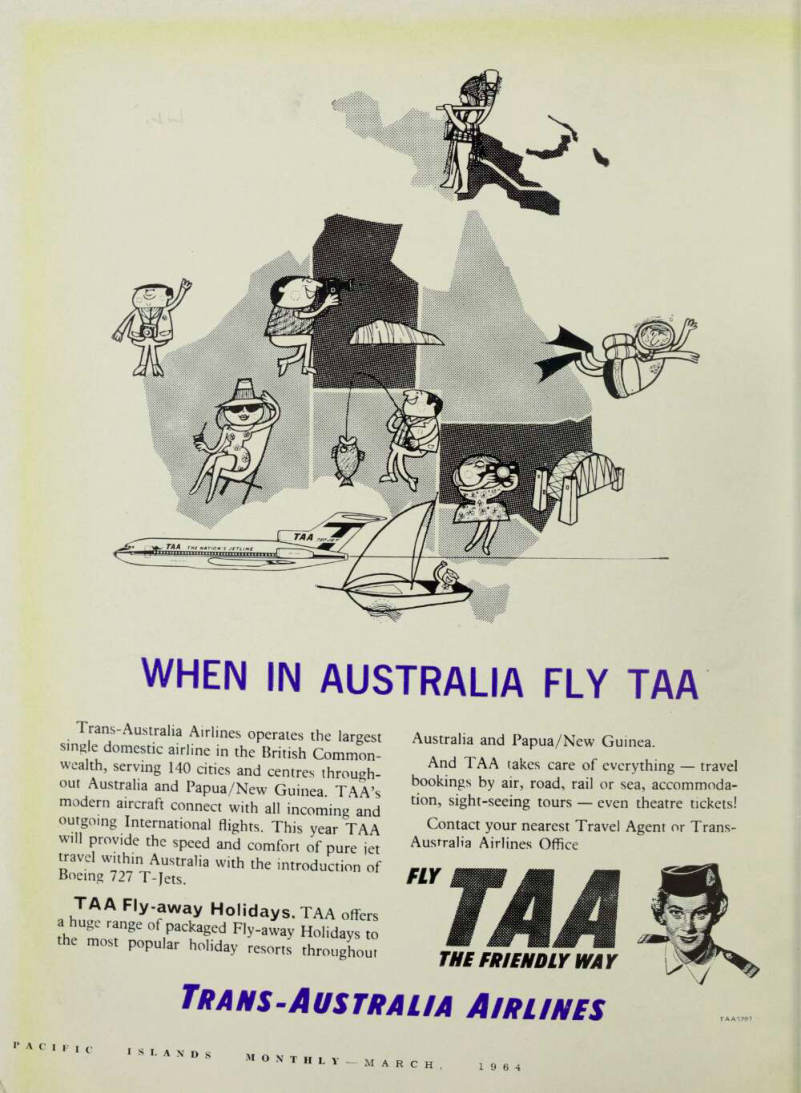 2
2 3
3 4
4 5
5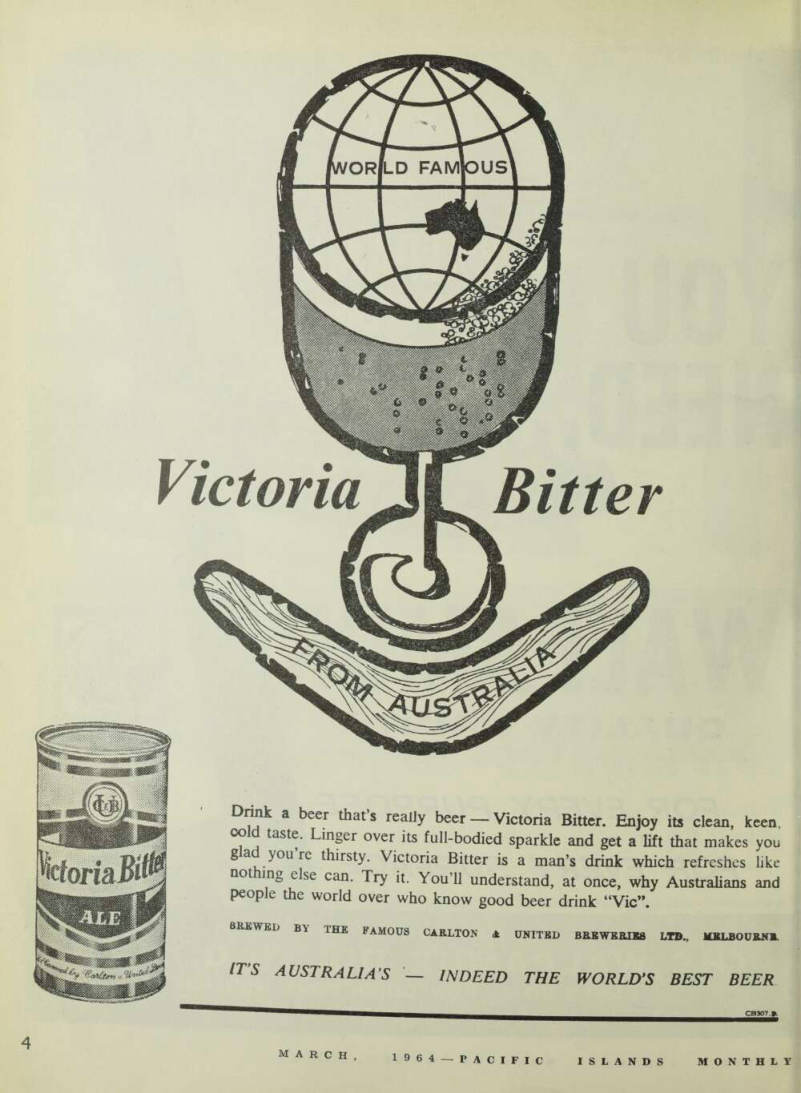 6
6 7
7 8
8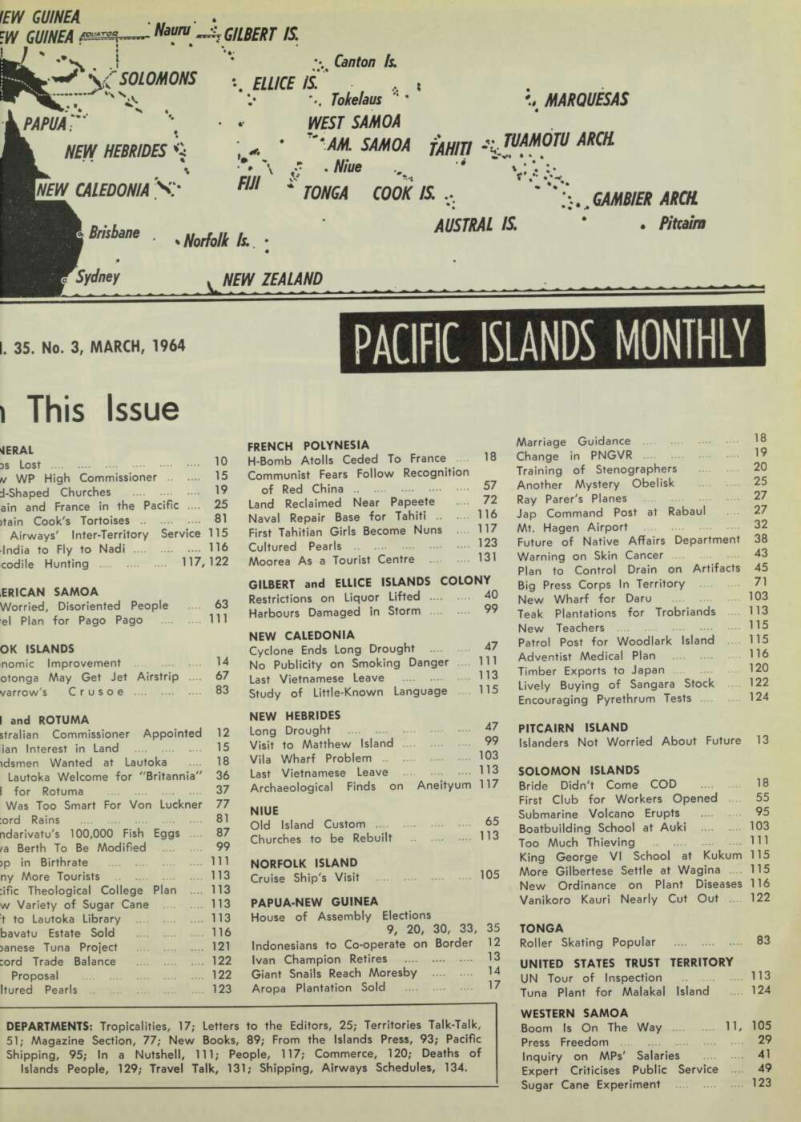 9
9 10
10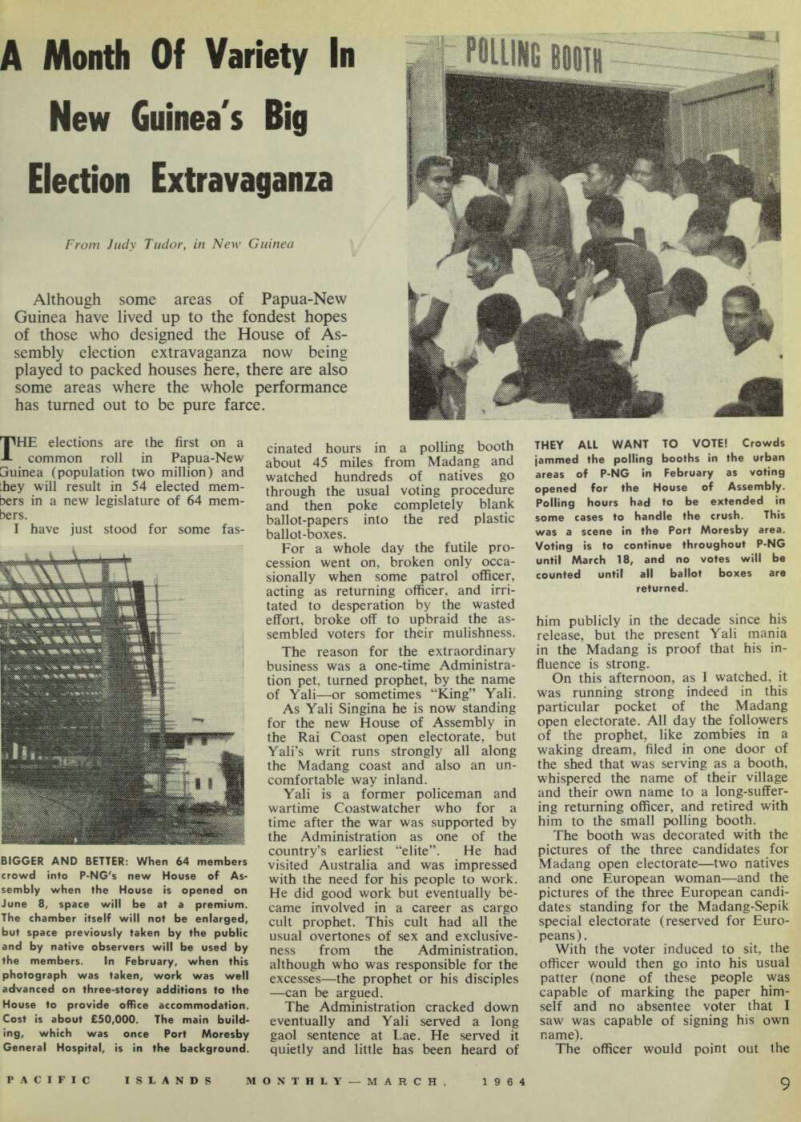 11
11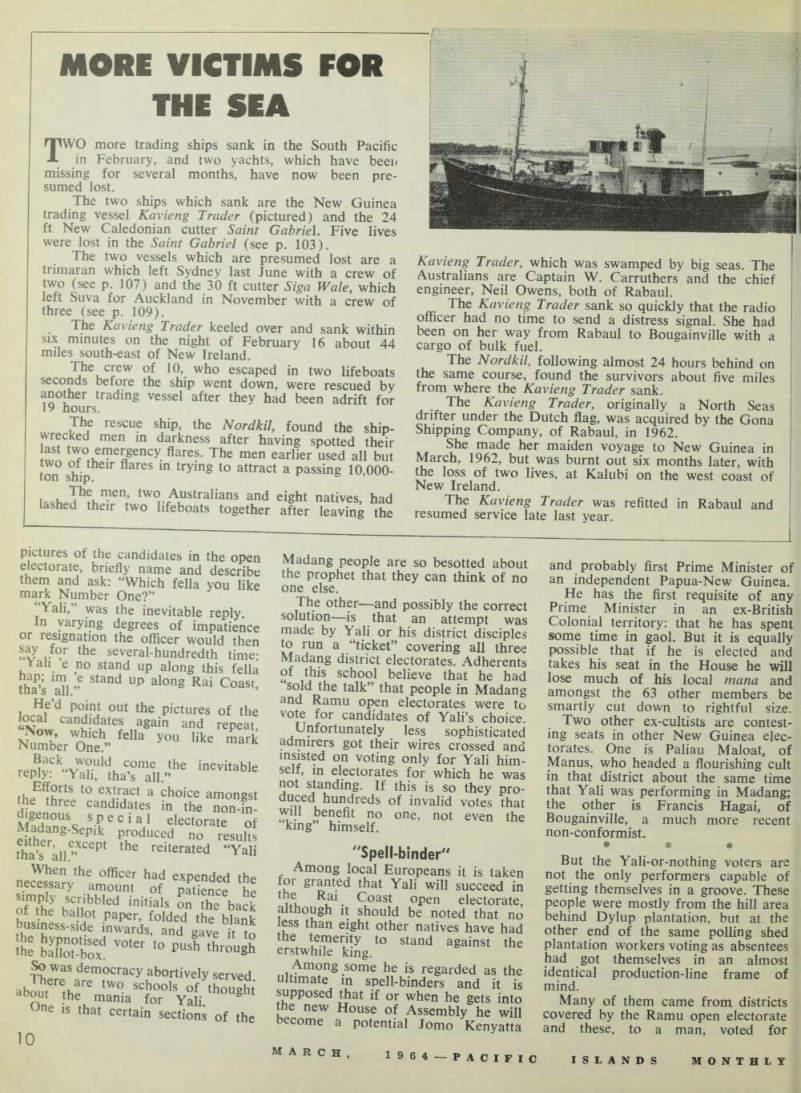 12
12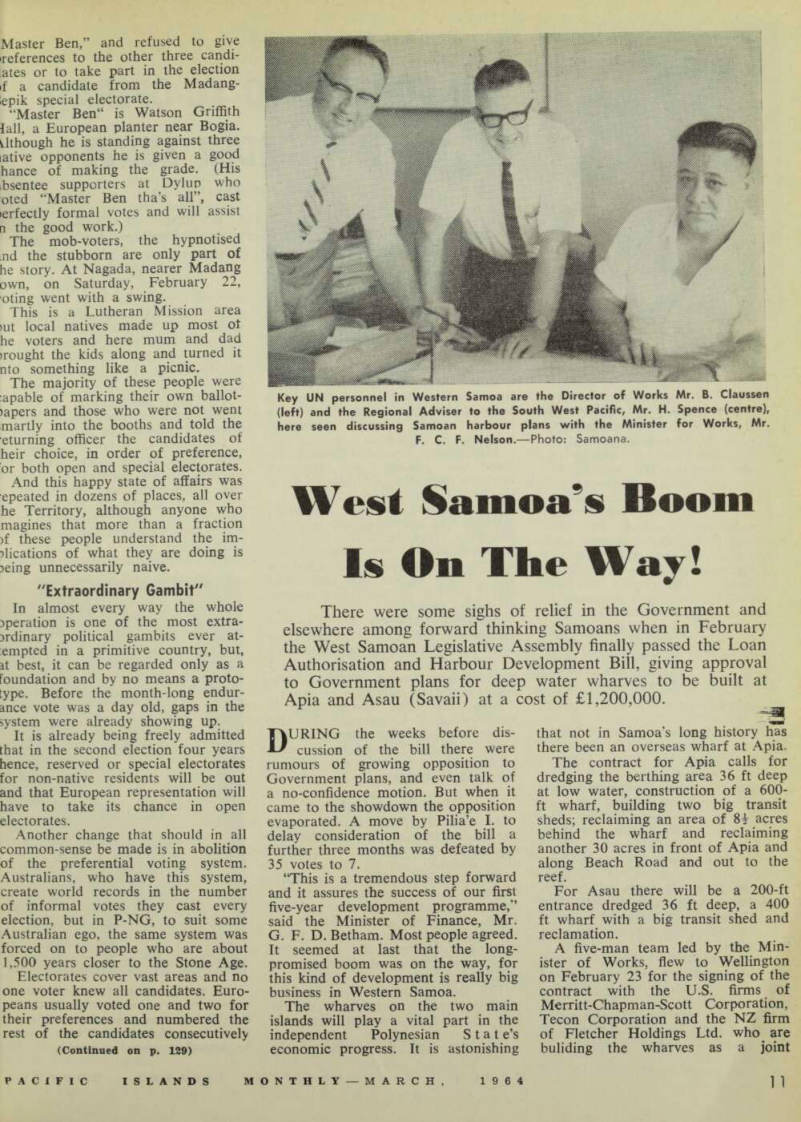 13
13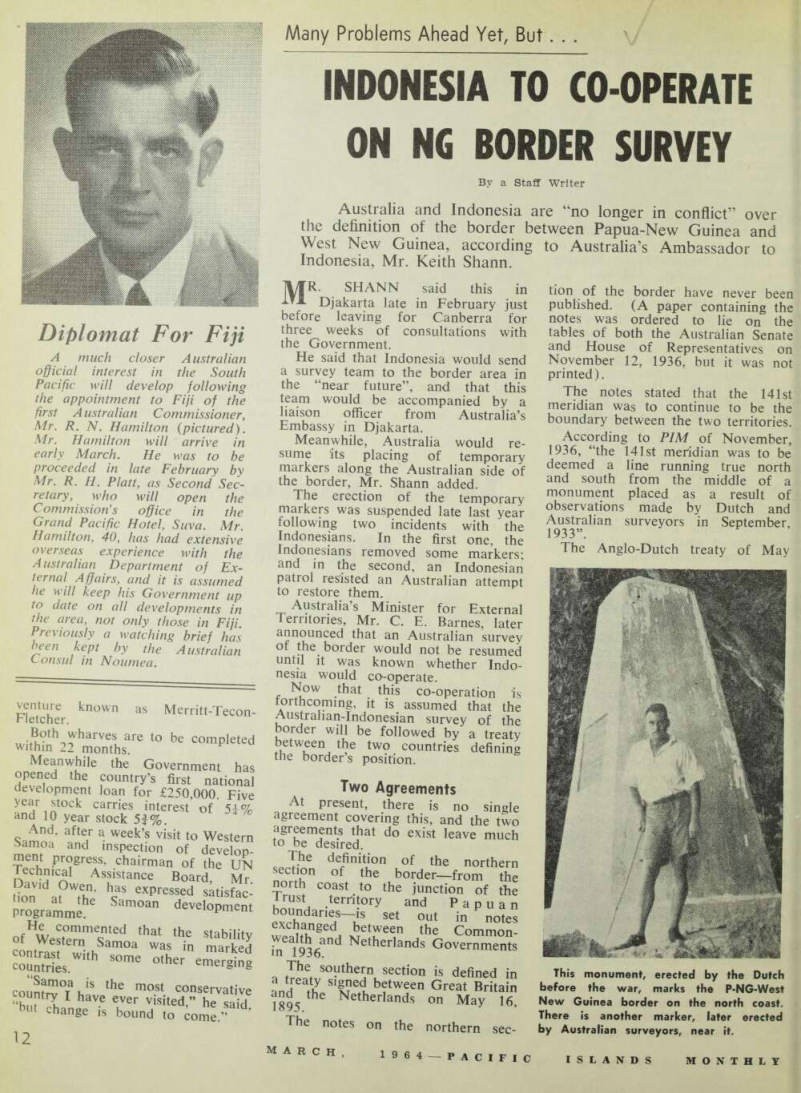 14
14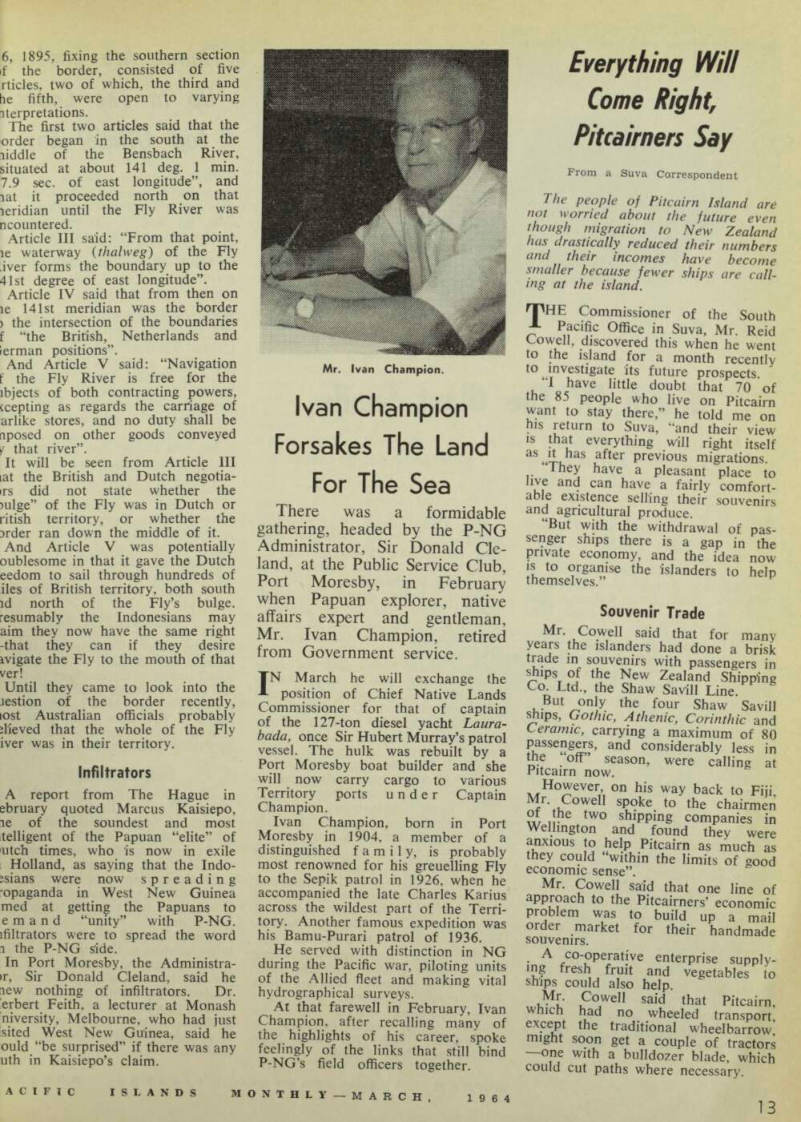 15
15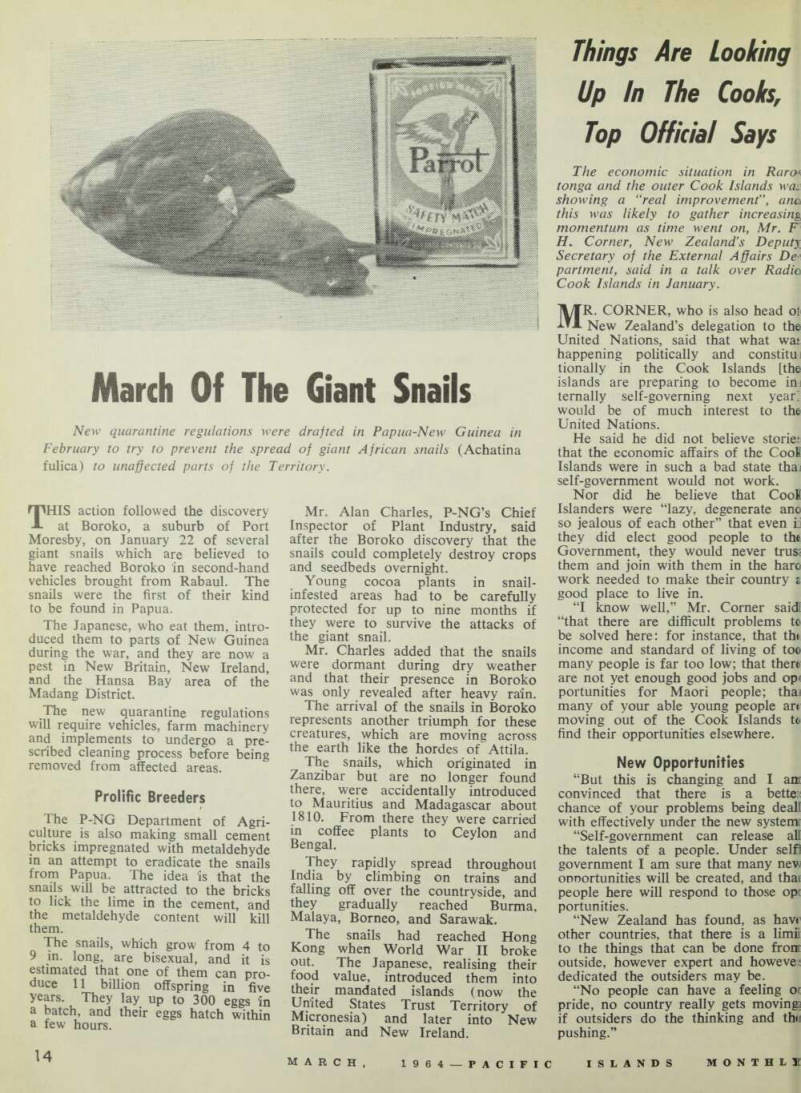 16
16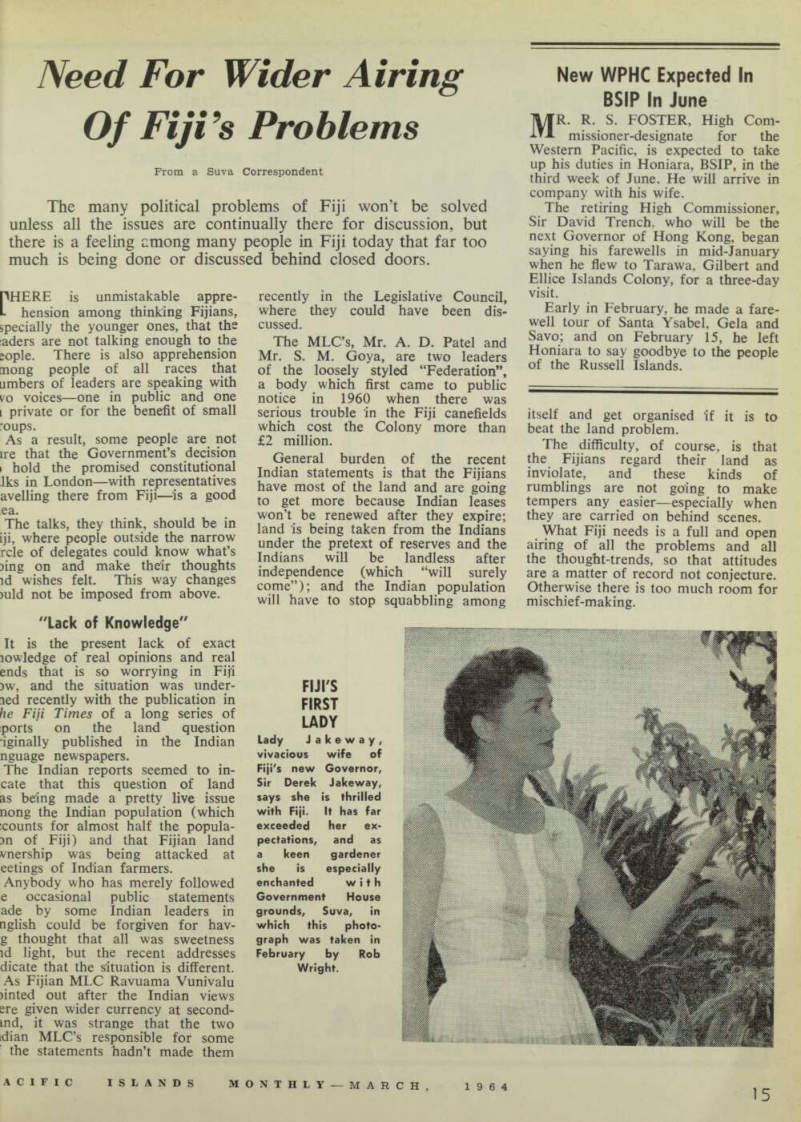 17
17 18
18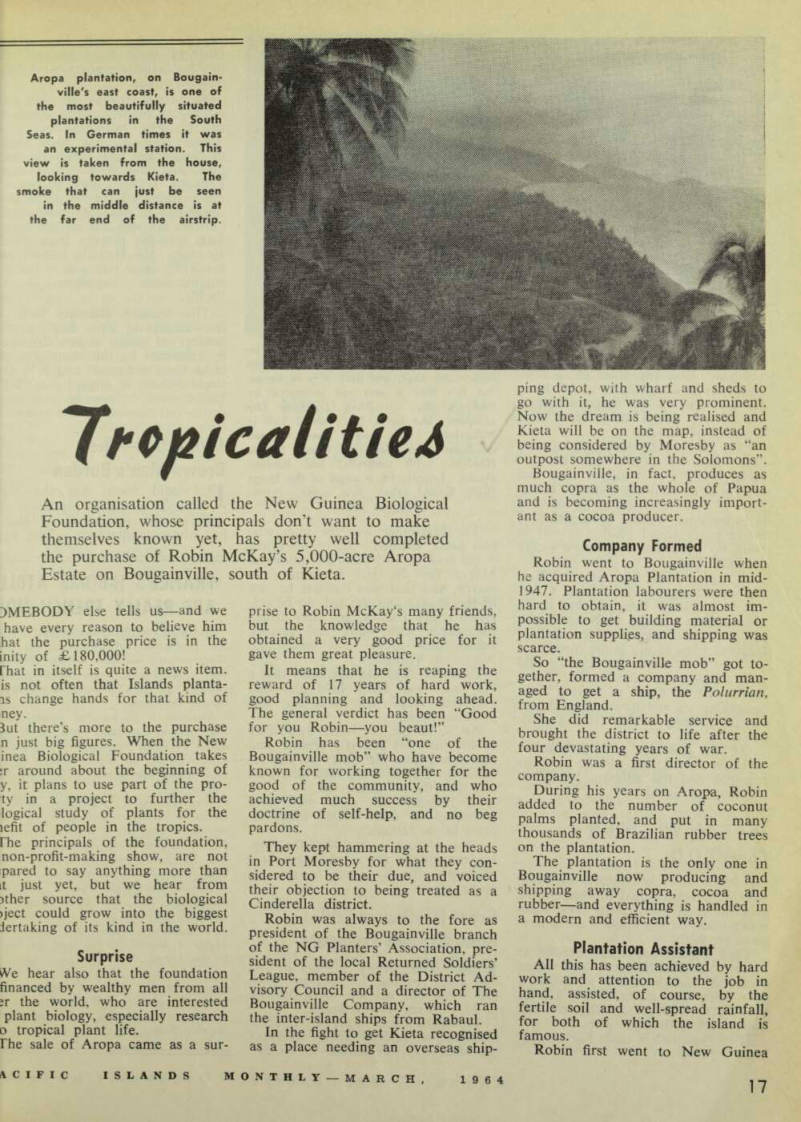 19
19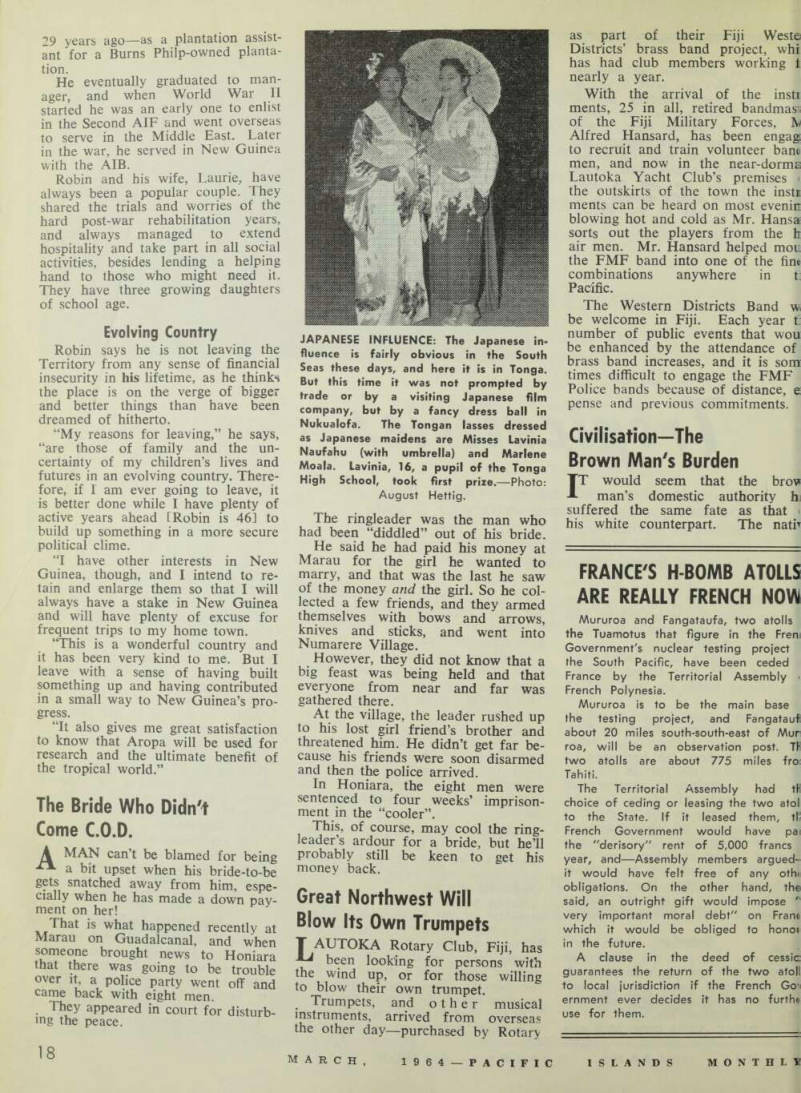 20
20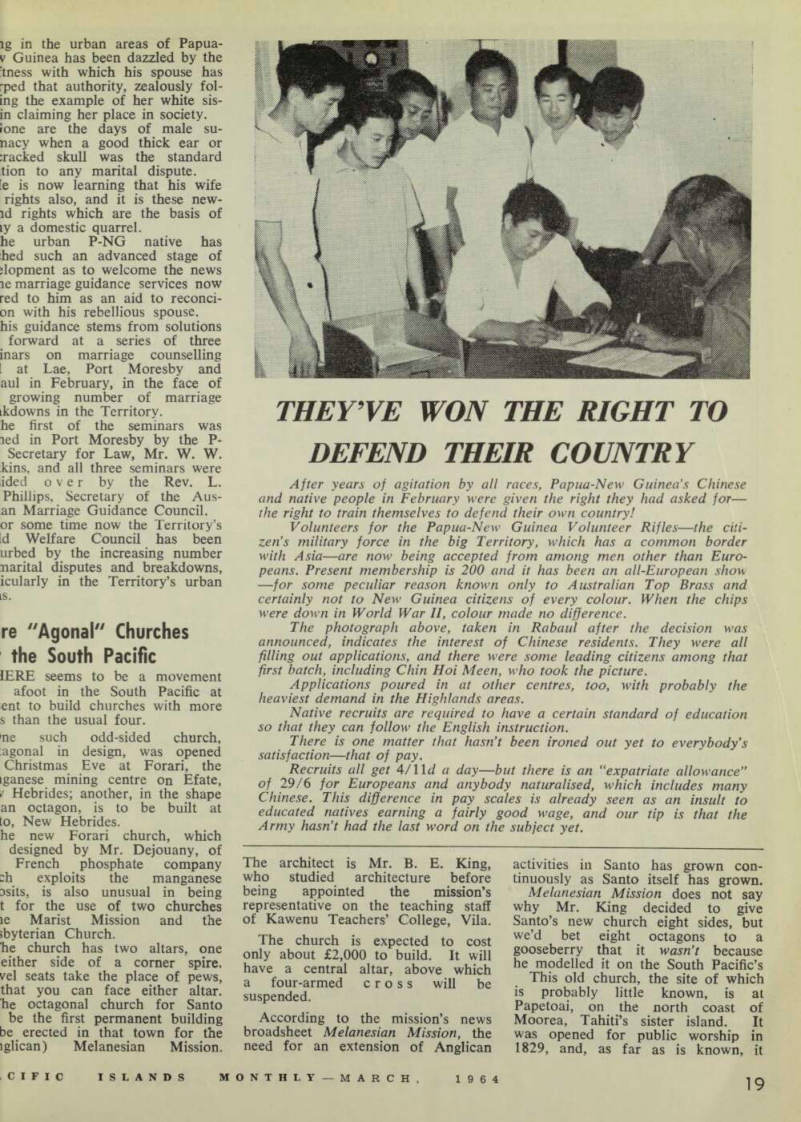 21
21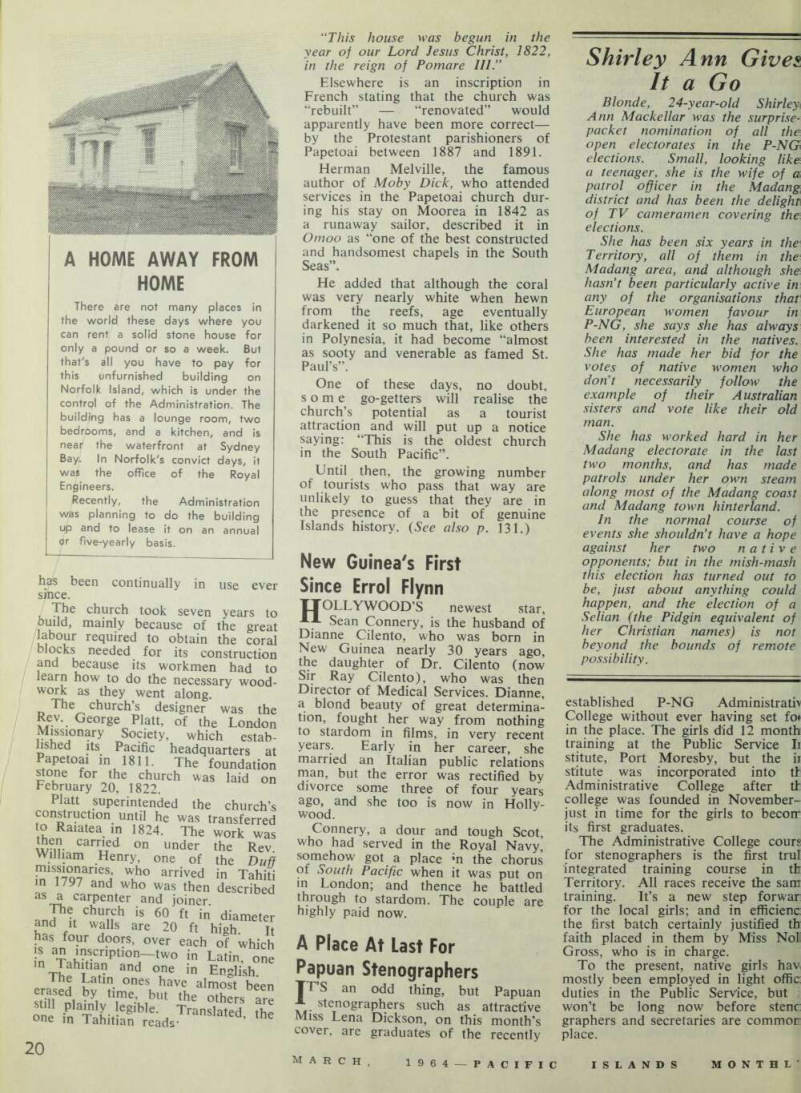 22
22 23
23 24
24 25
25 26
26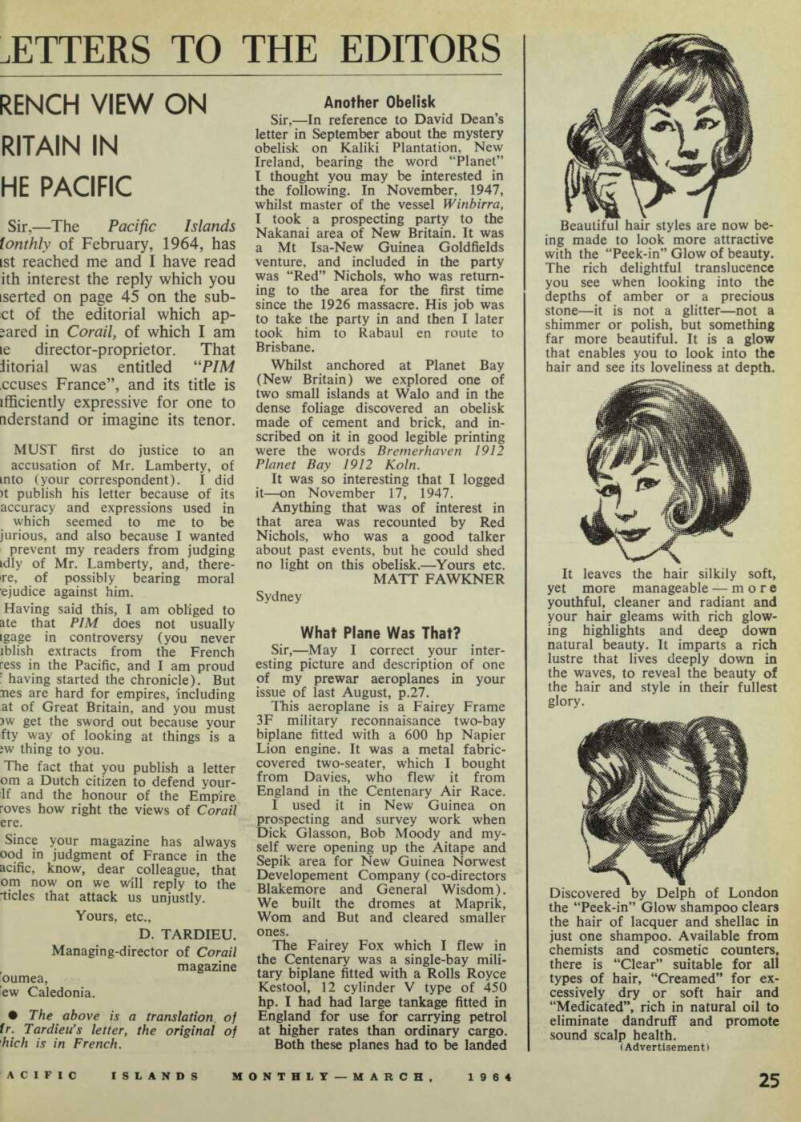 27
27 28
28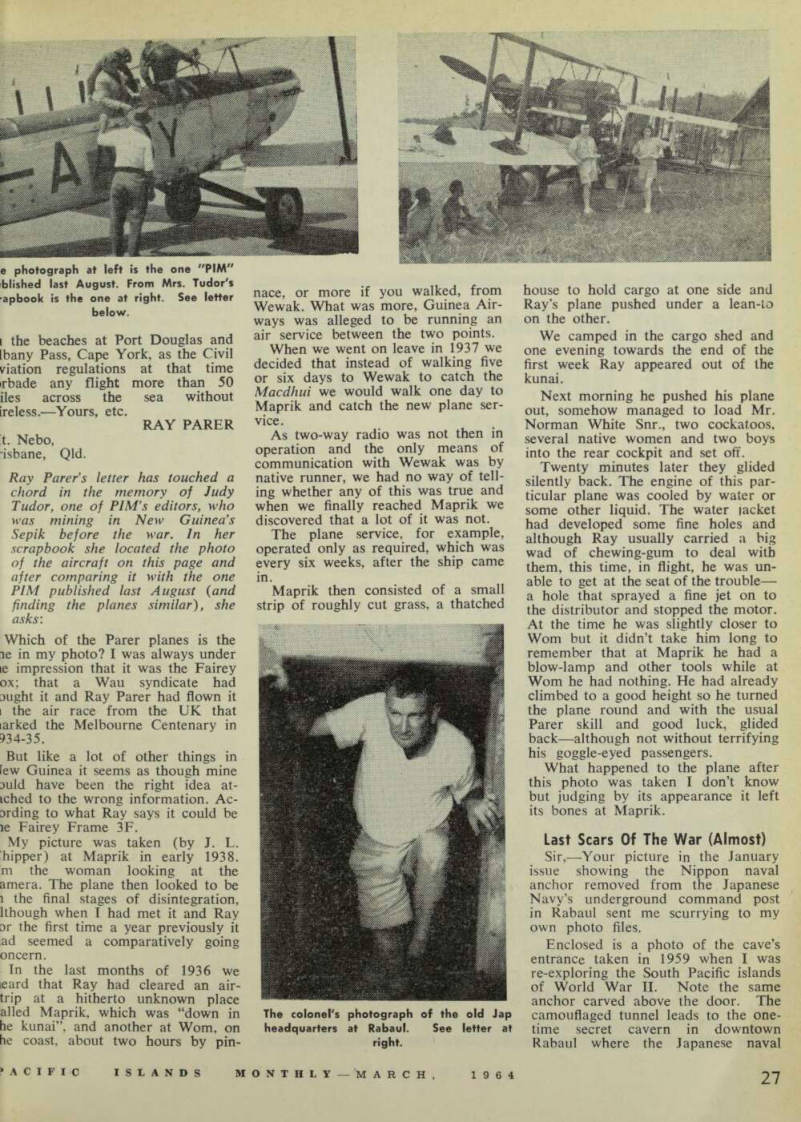 29
29 30
30 31
31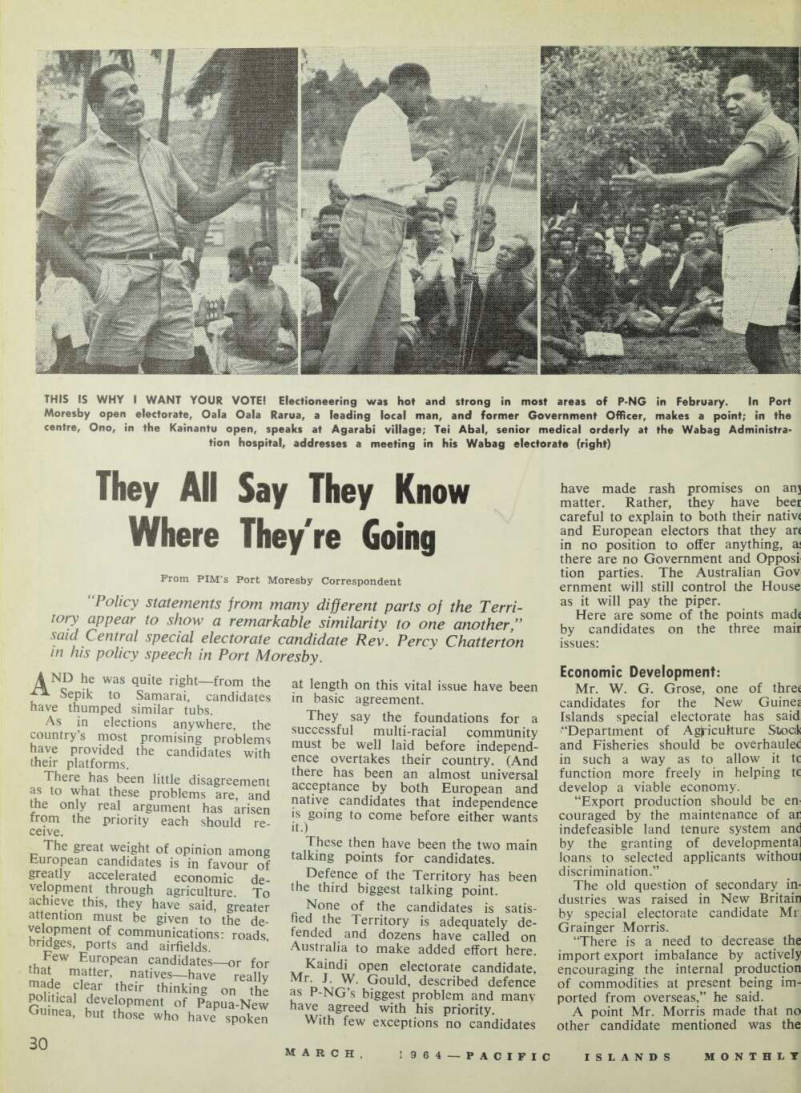 32
32 33
33 34
34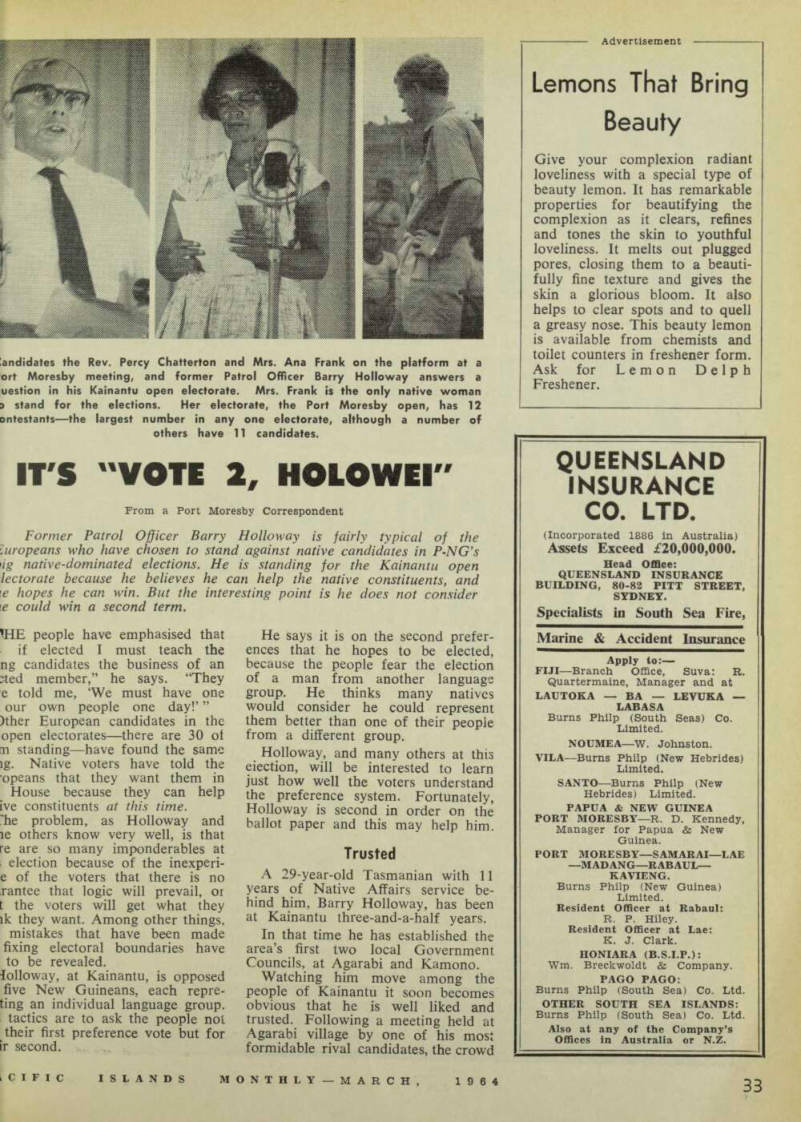 35
35 36
36 37
37 38
38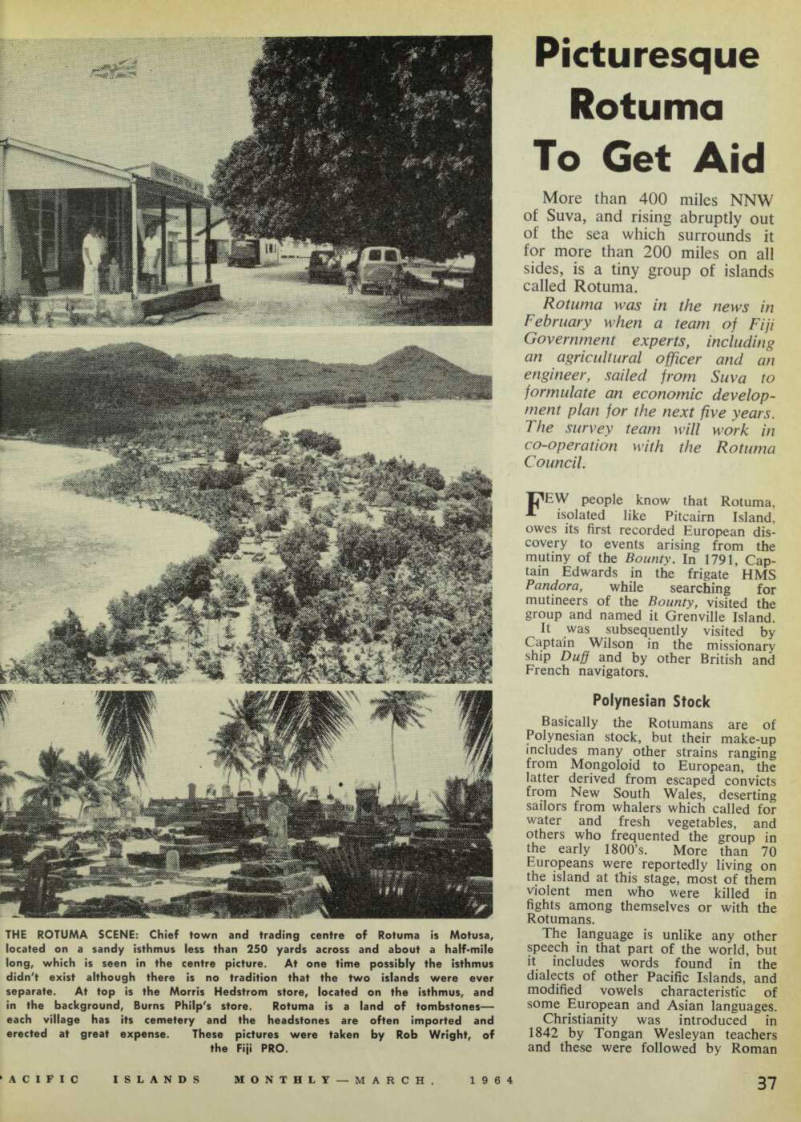 39
39 40
40 41
41 42
42 43
43 44
44 45
45 46
46 47
47 48
48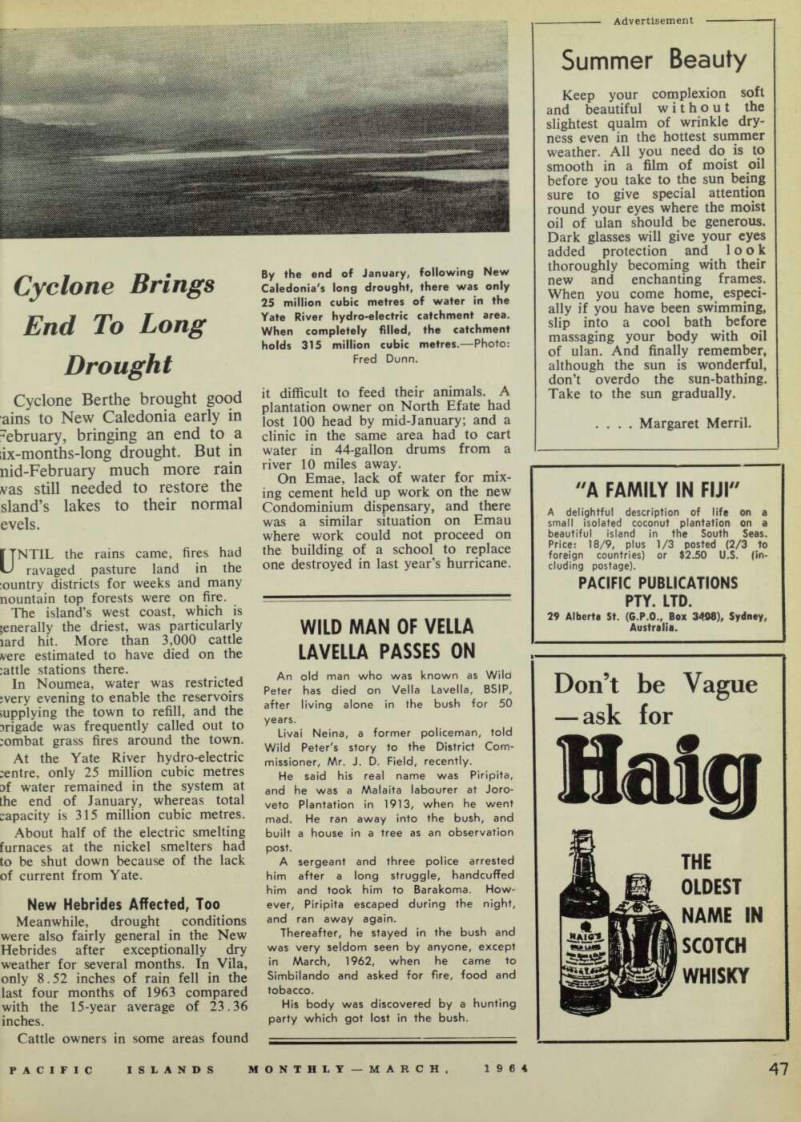 49
49 50
50 51
51 52
52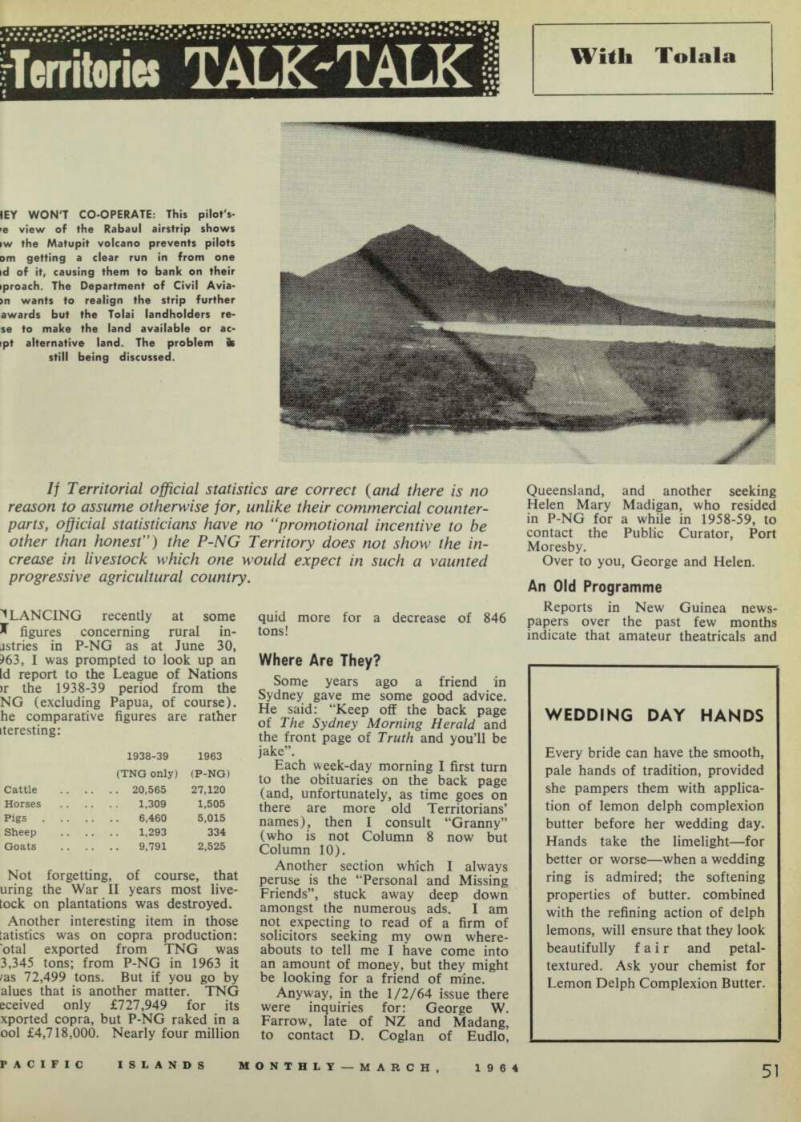 53
53 54
54 55
55 56
56 57
57 58
58 59
59 60
60 61
61 62
62 63
63 64
64 65
65 66
66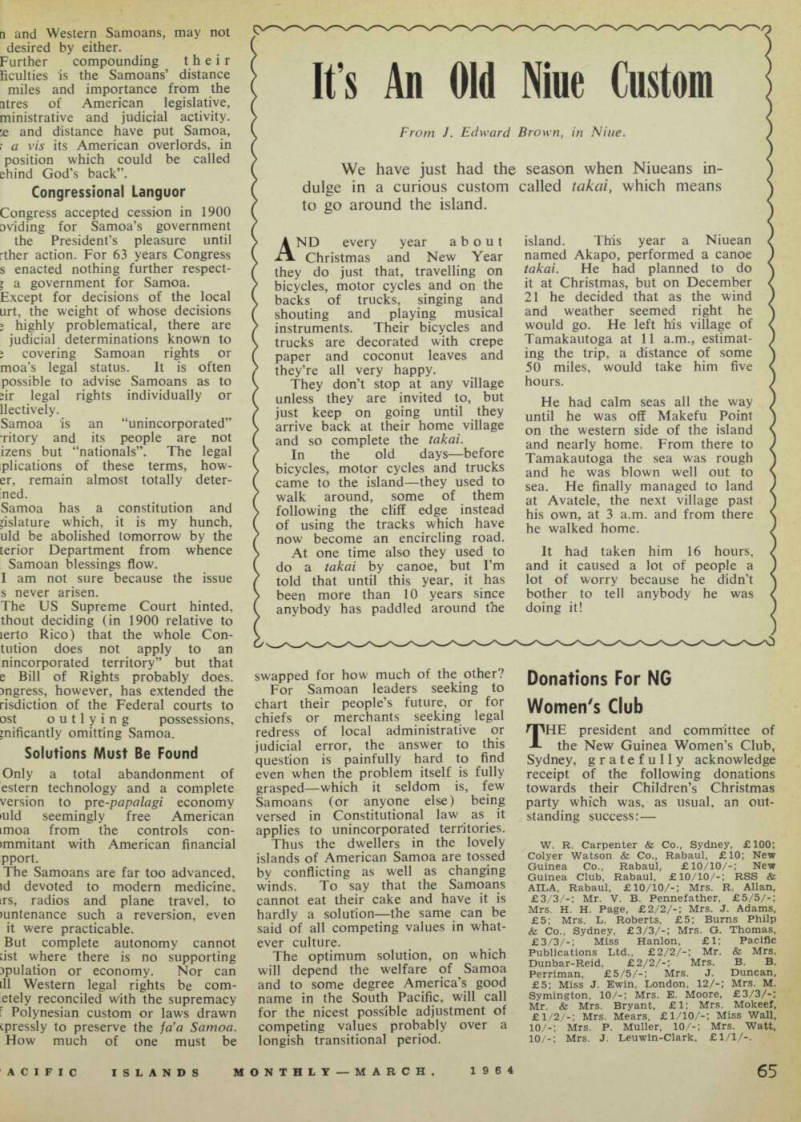 67
67 68
68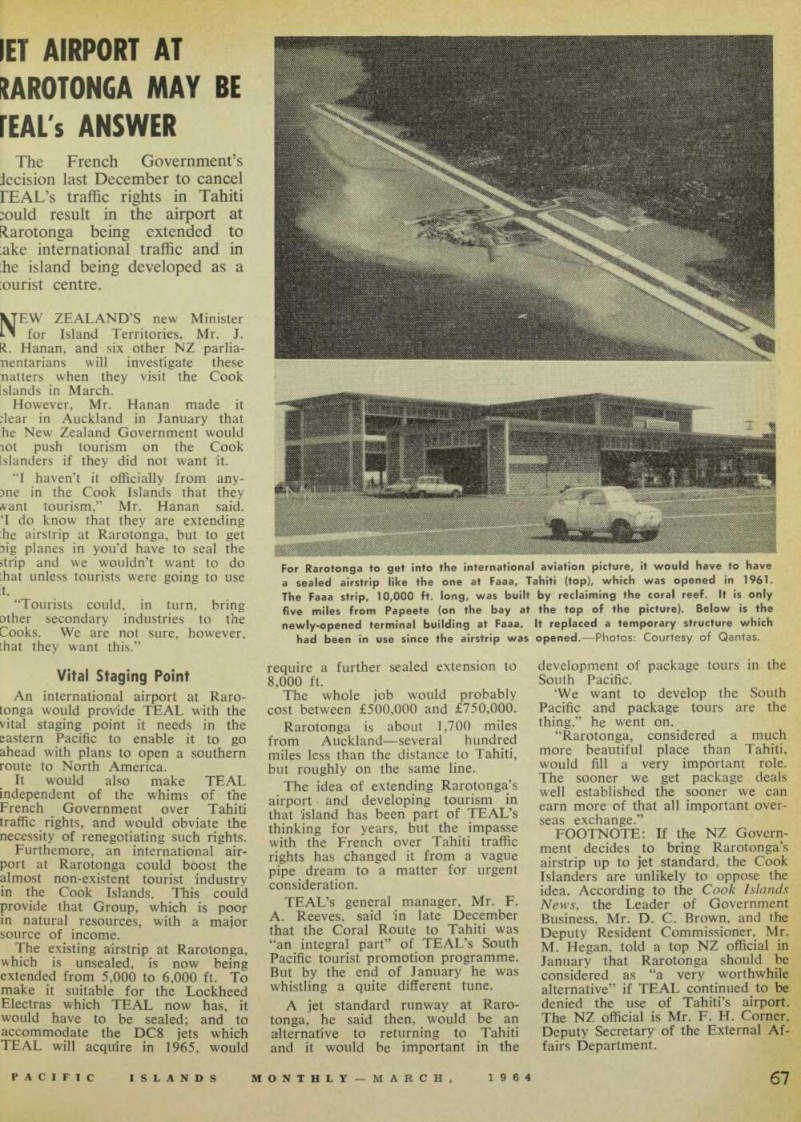 69
69 70
70 71
71 72
72 73
73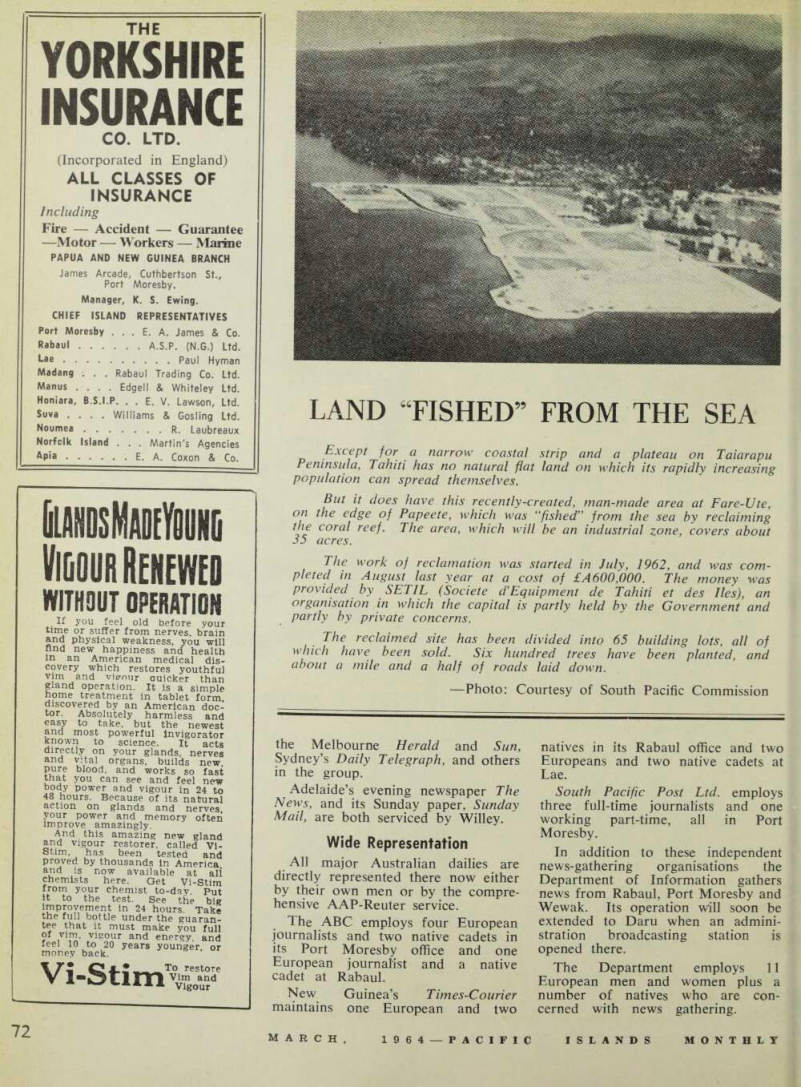 74
74 75
75 76
76 77
77 78
78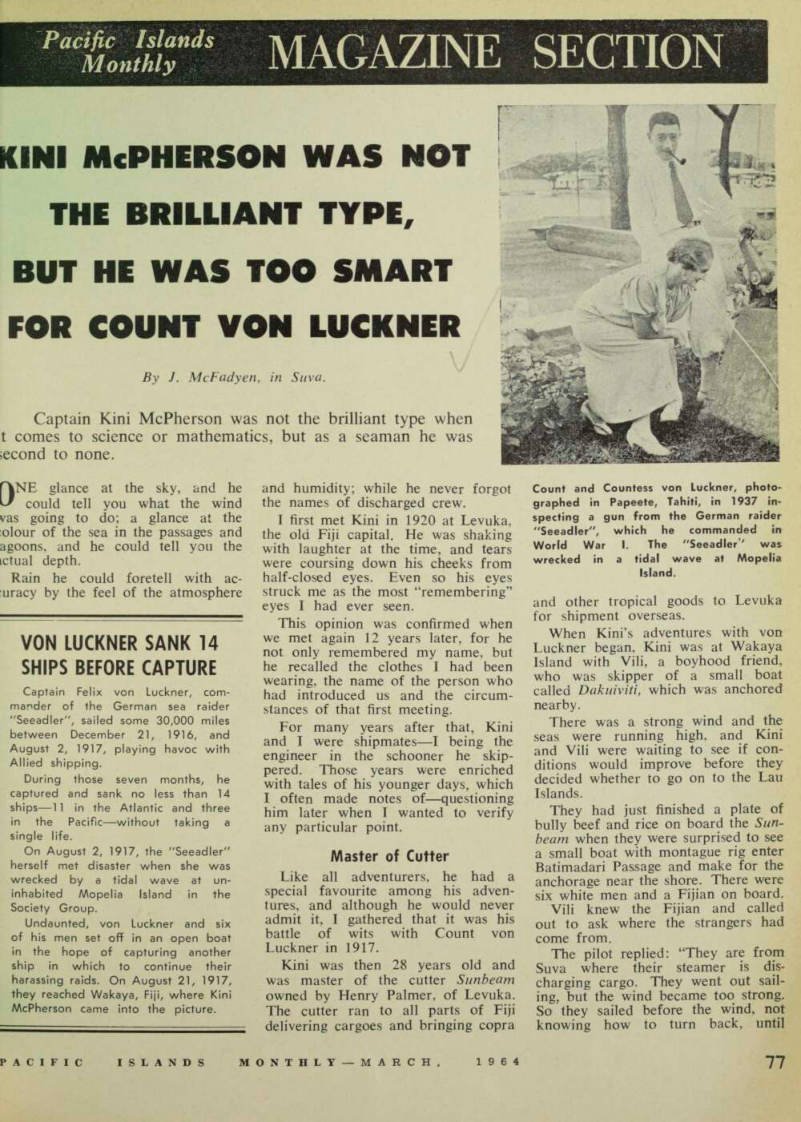 79
79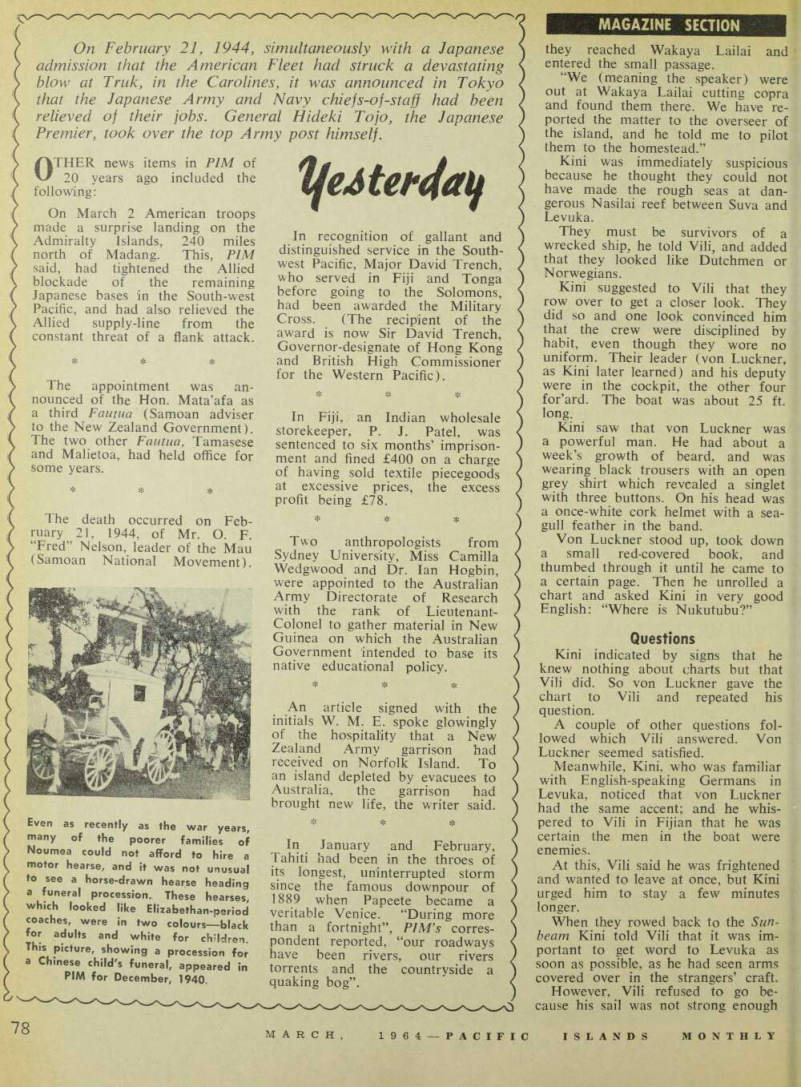 80
80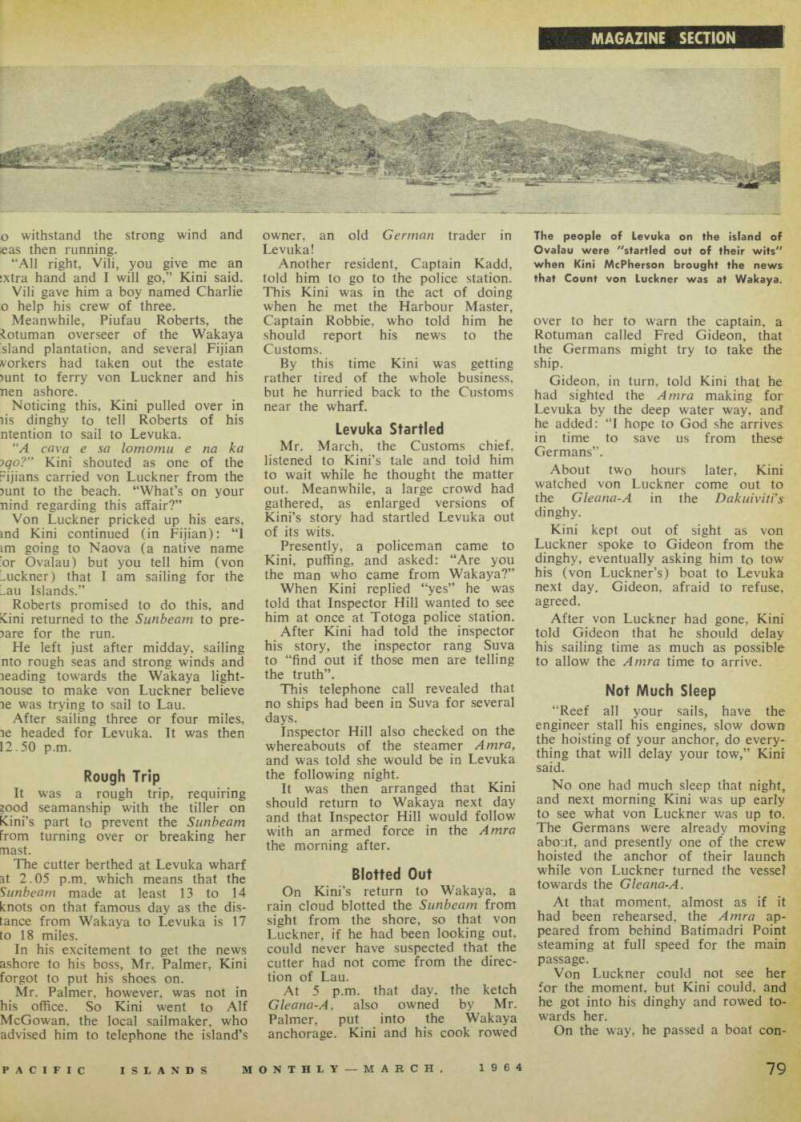 81
81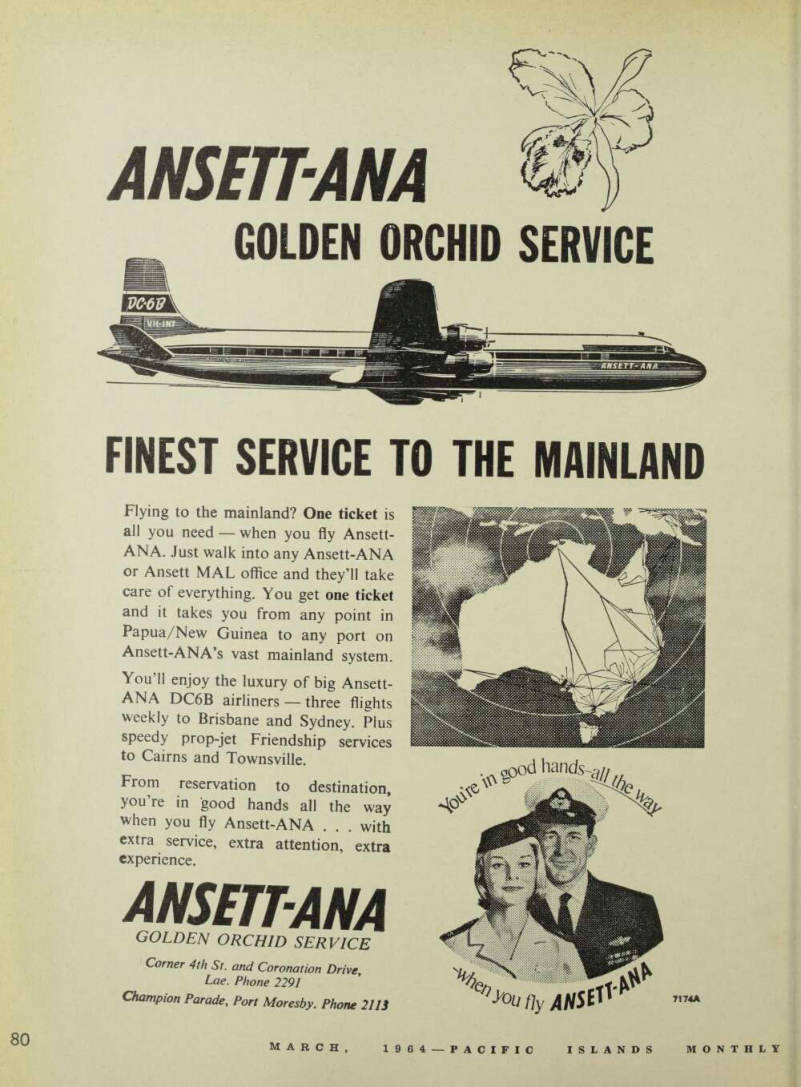 82
82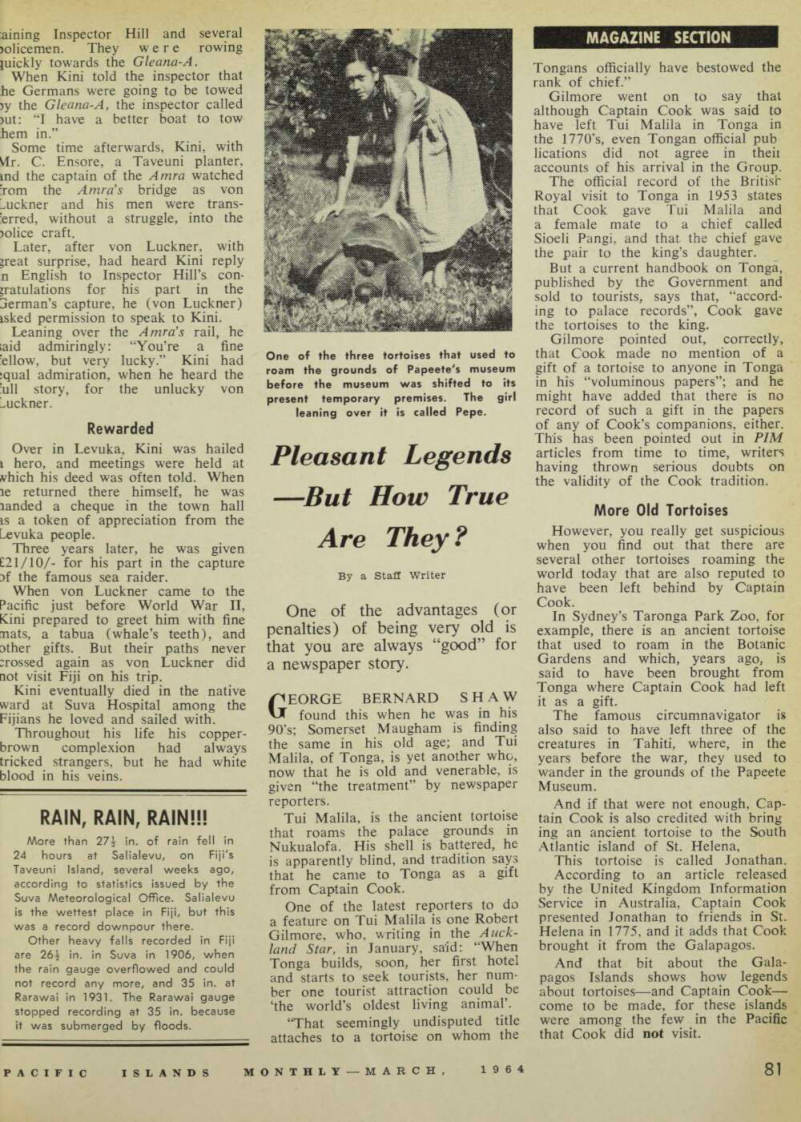 83
83 84
84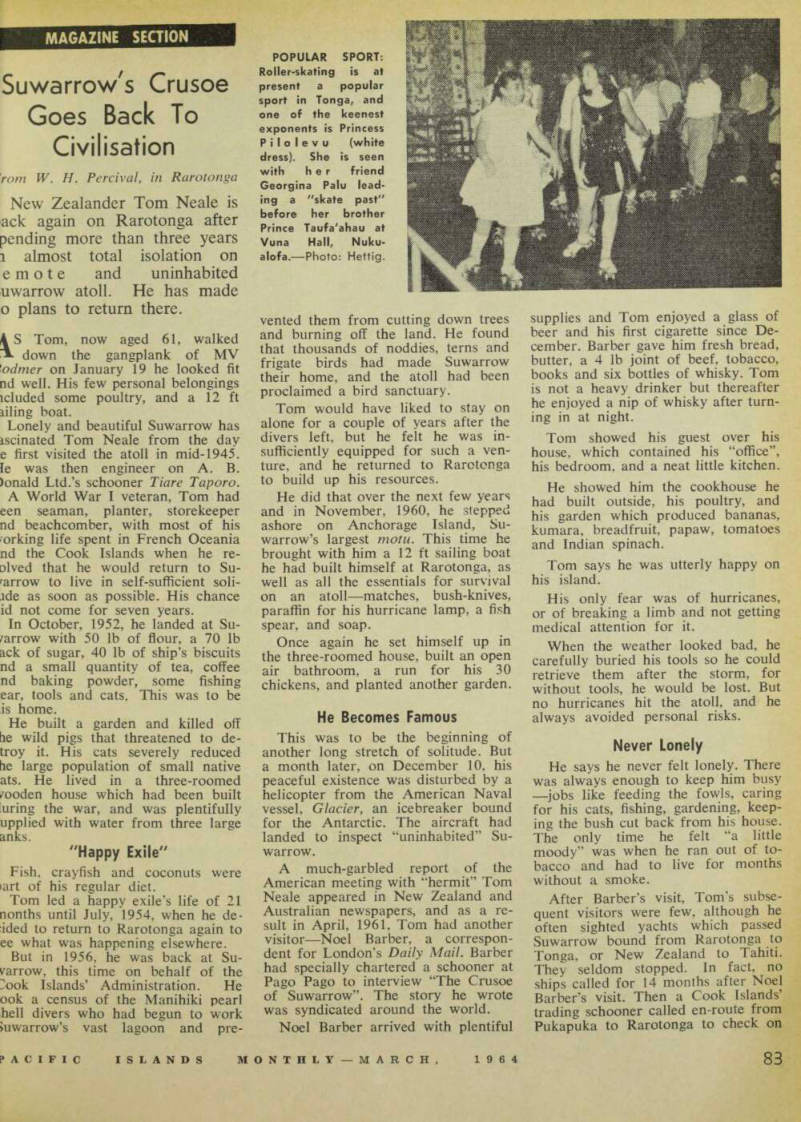 85
85 86
86 87
87 88
88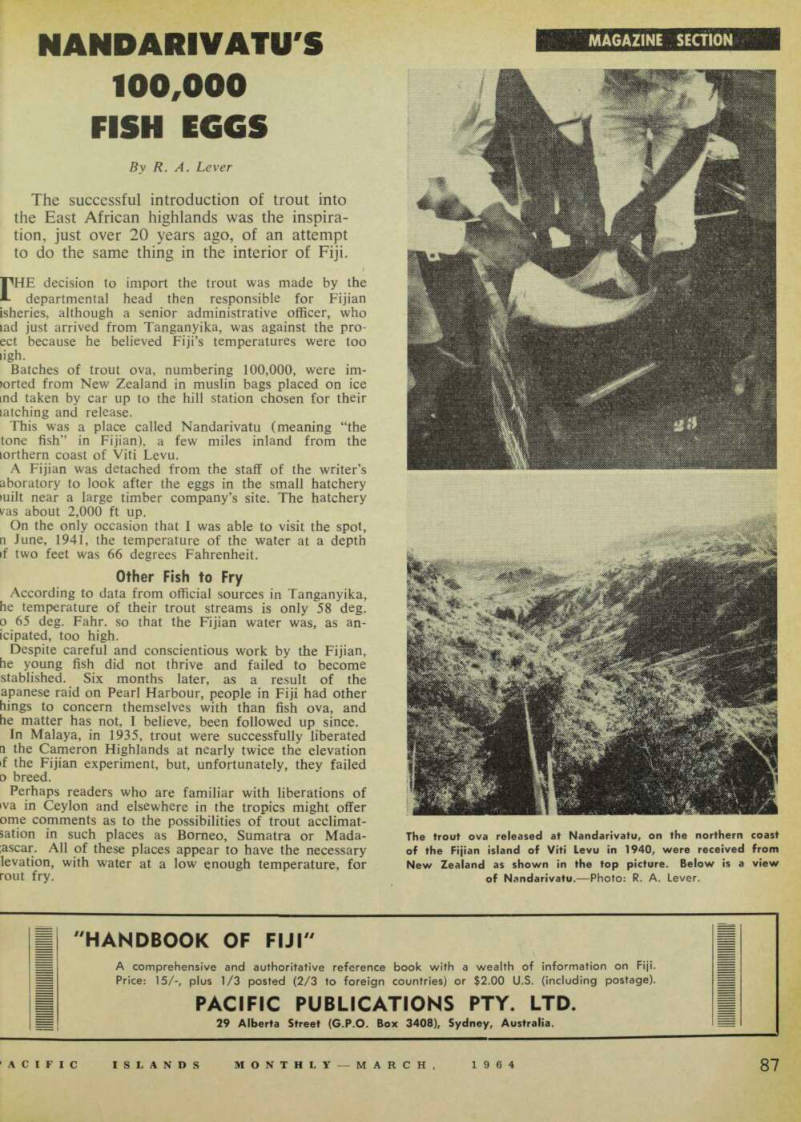 89
89 90
90 91
91 92
92 93
93 94
94 95
95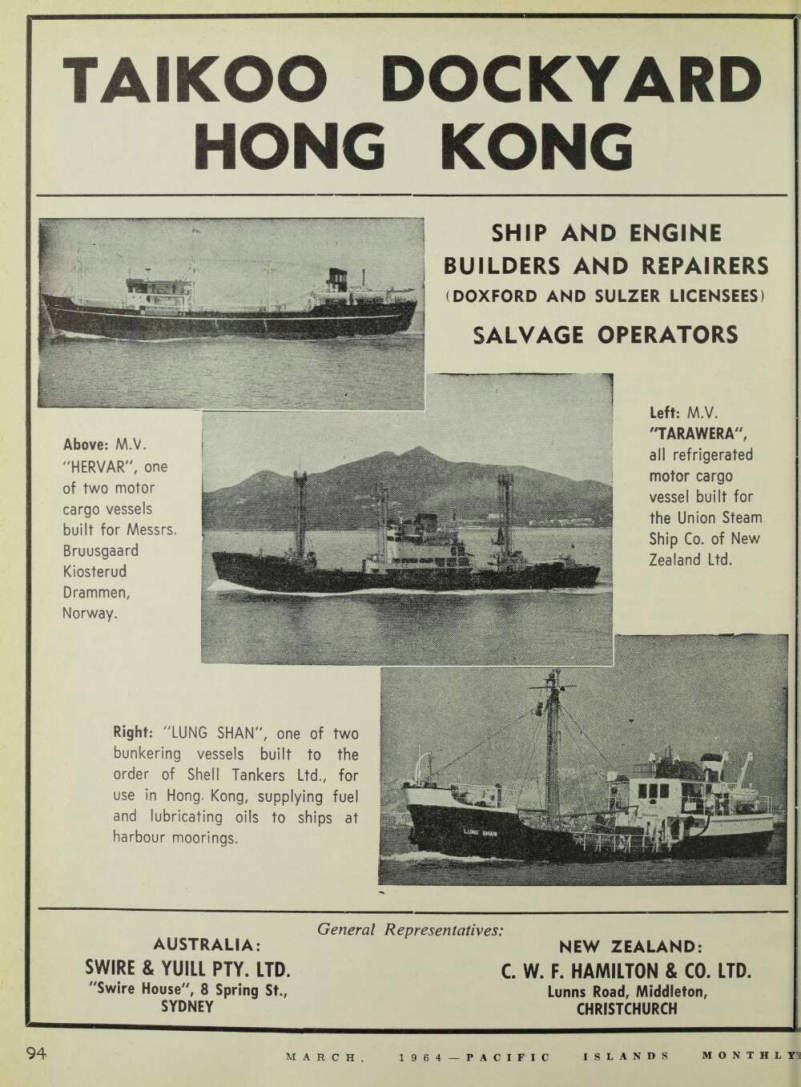 96
96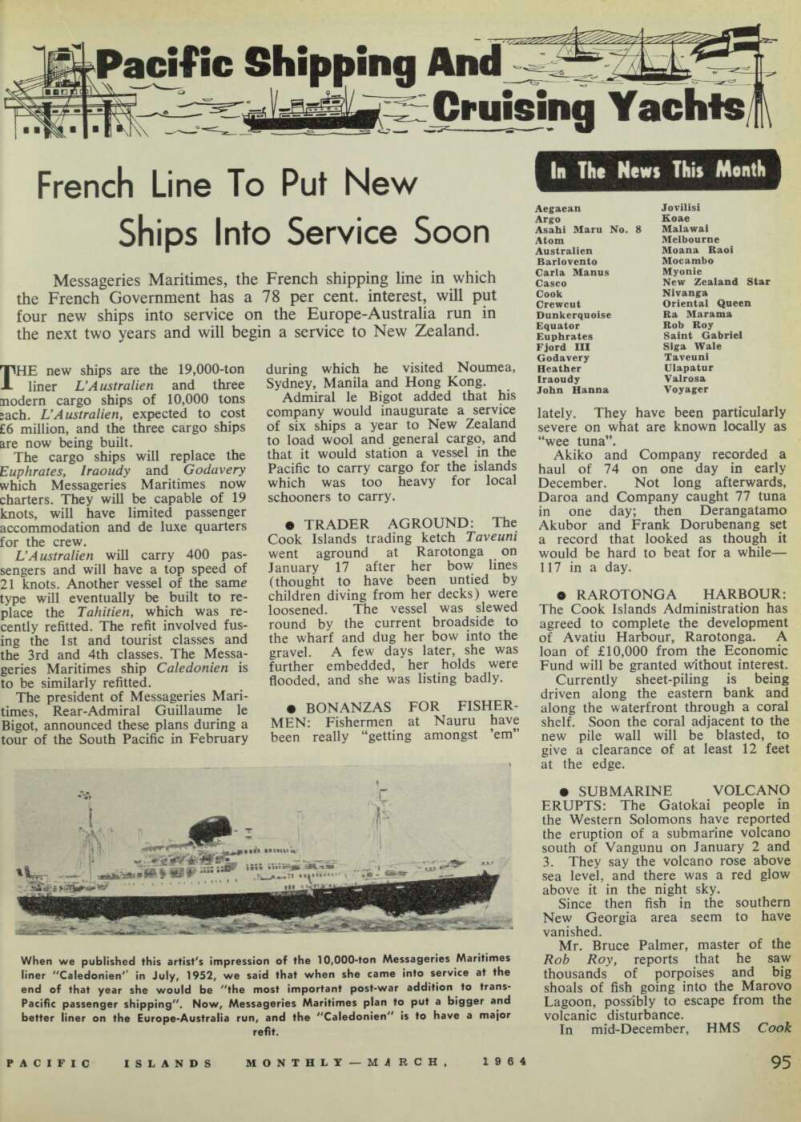 97
97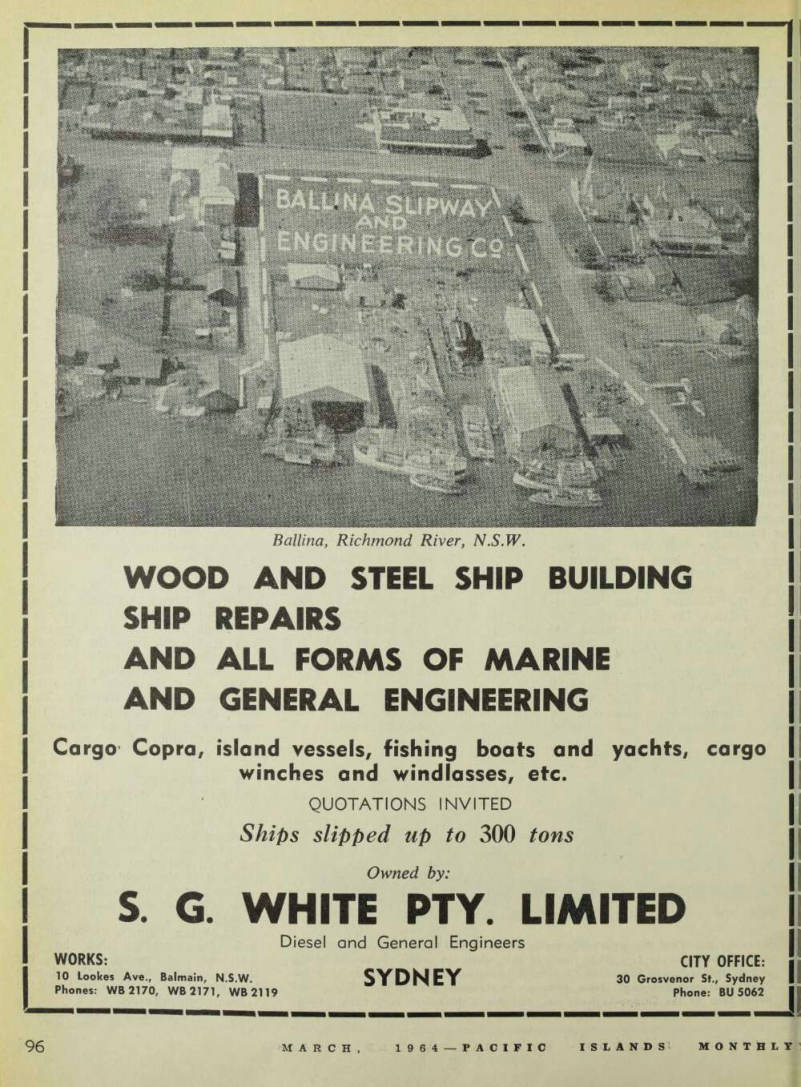 98
98 99
99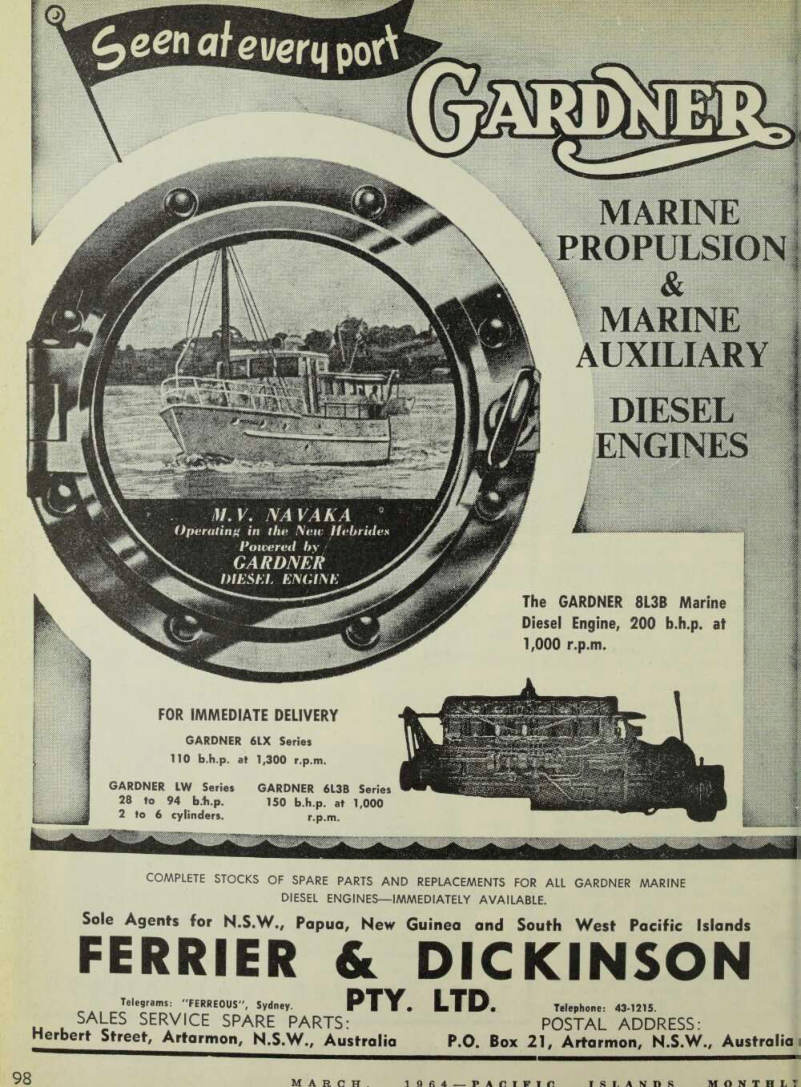 100
100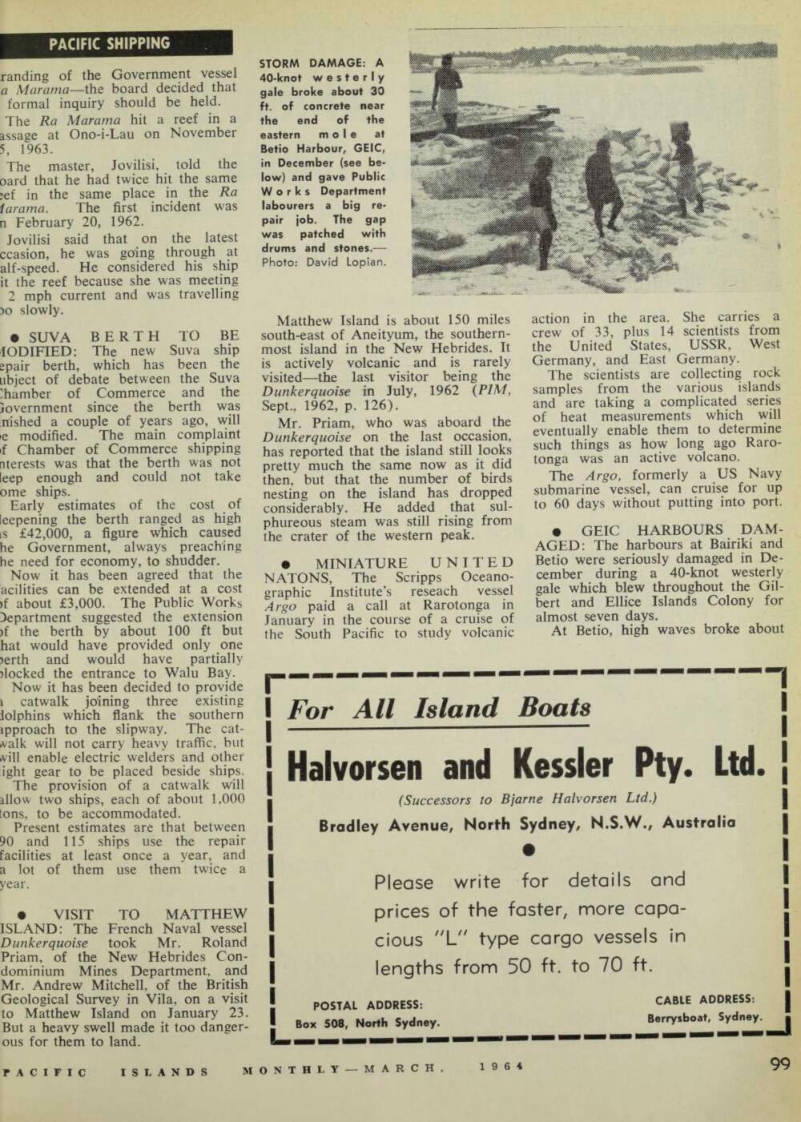 101
101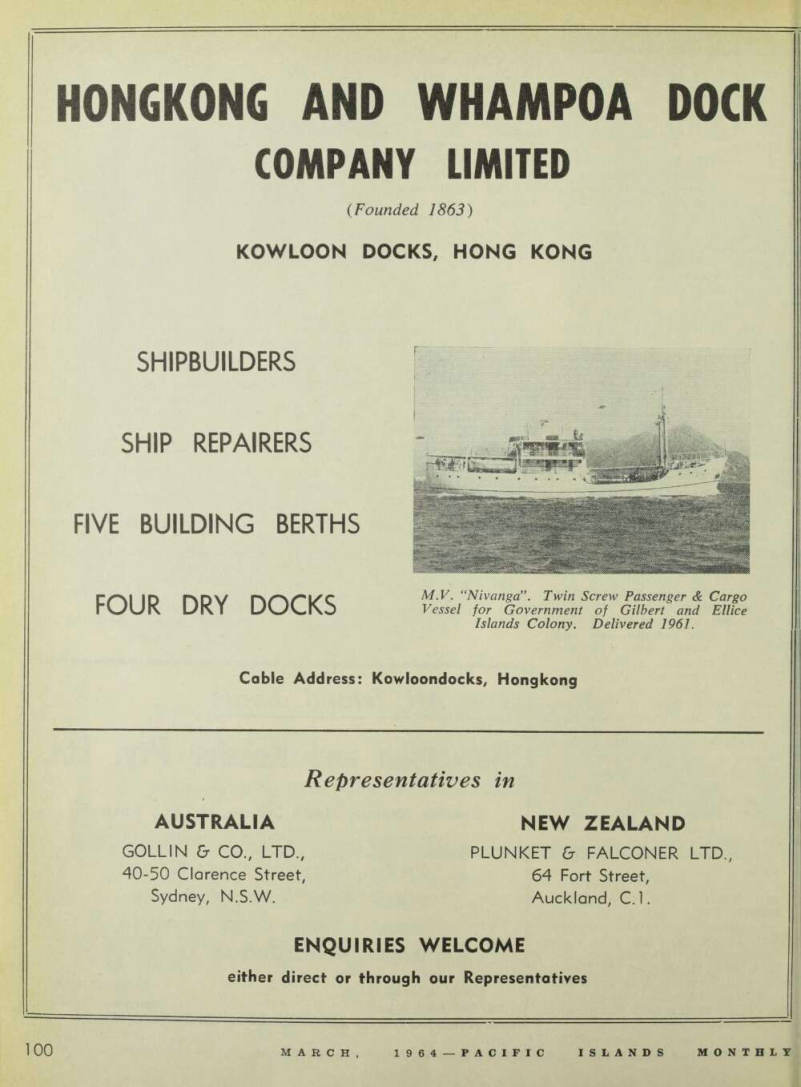 102
102 103
103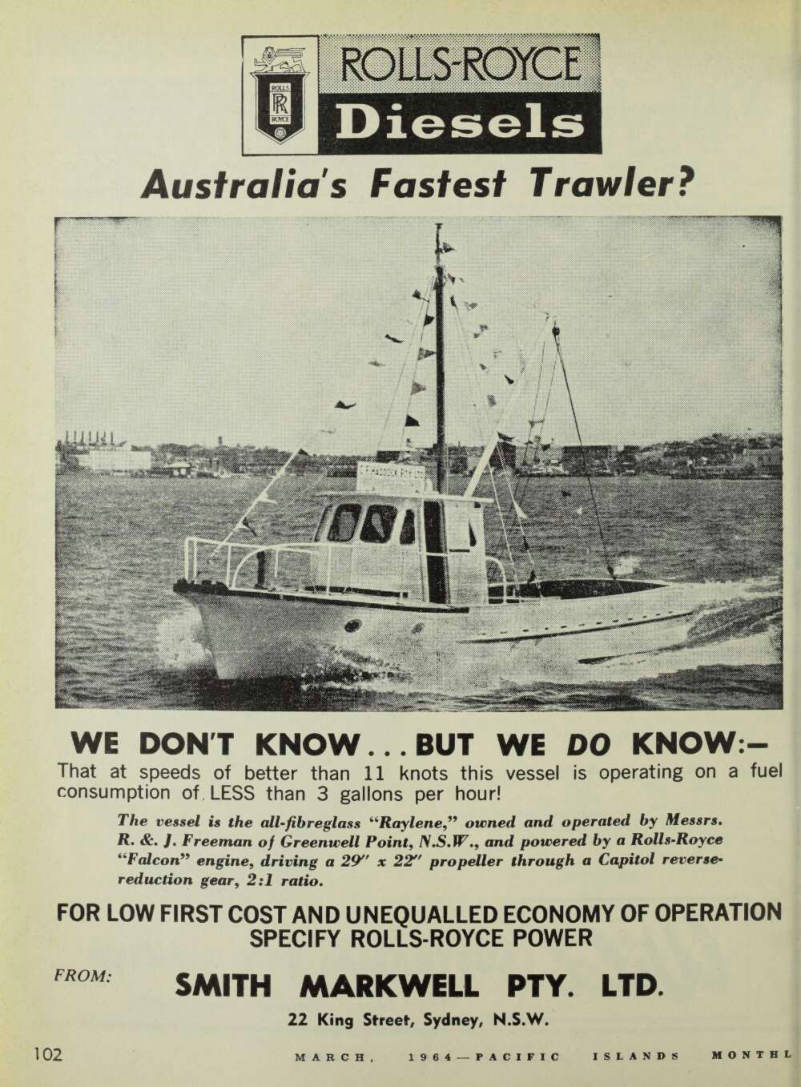 104
104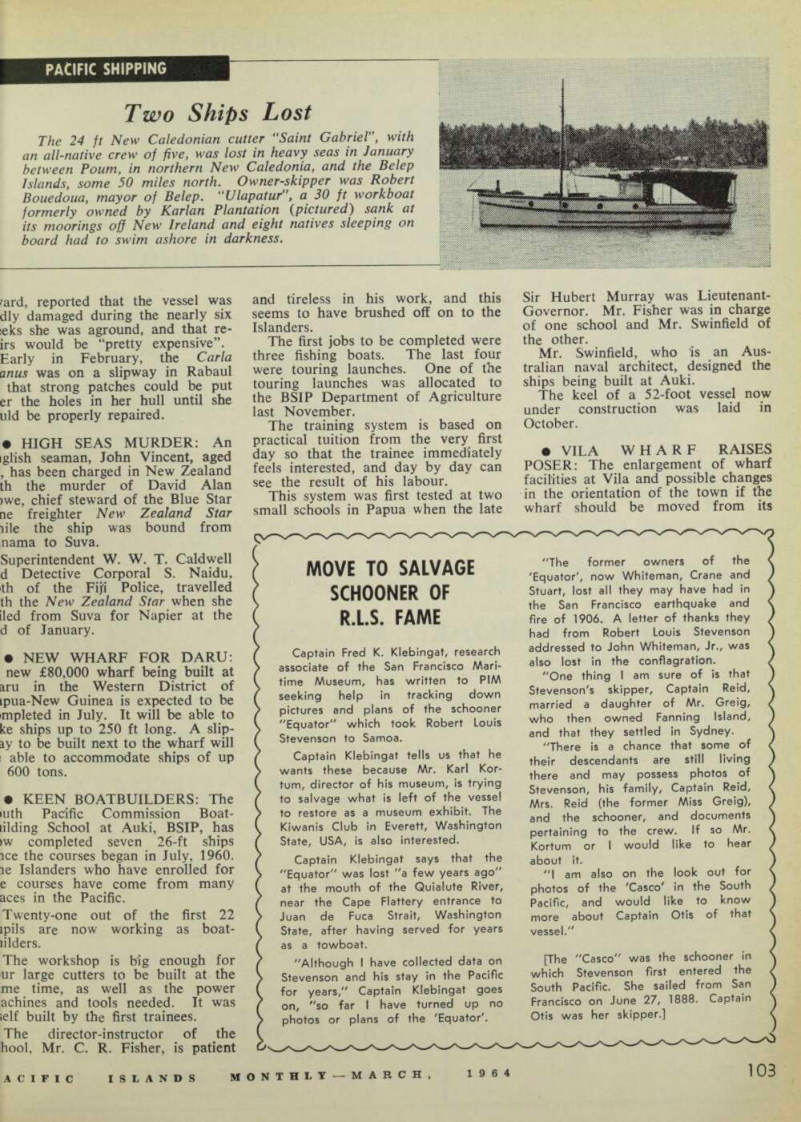 105
105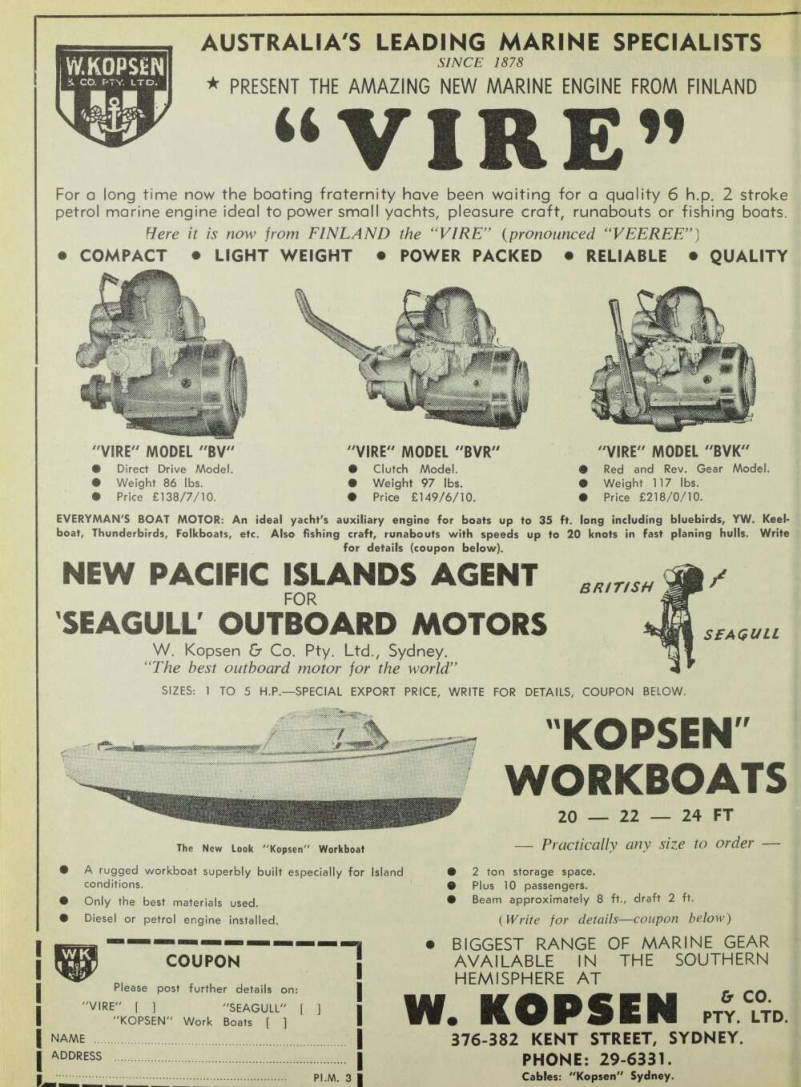 106
106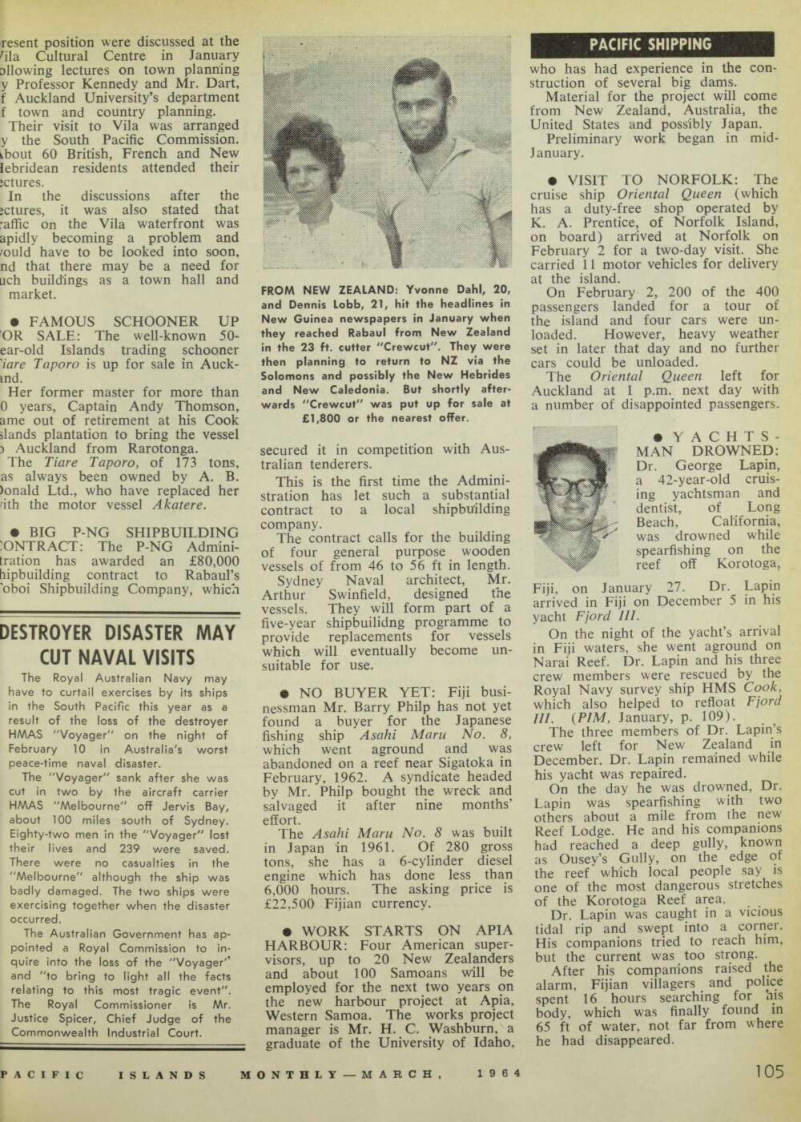 107
107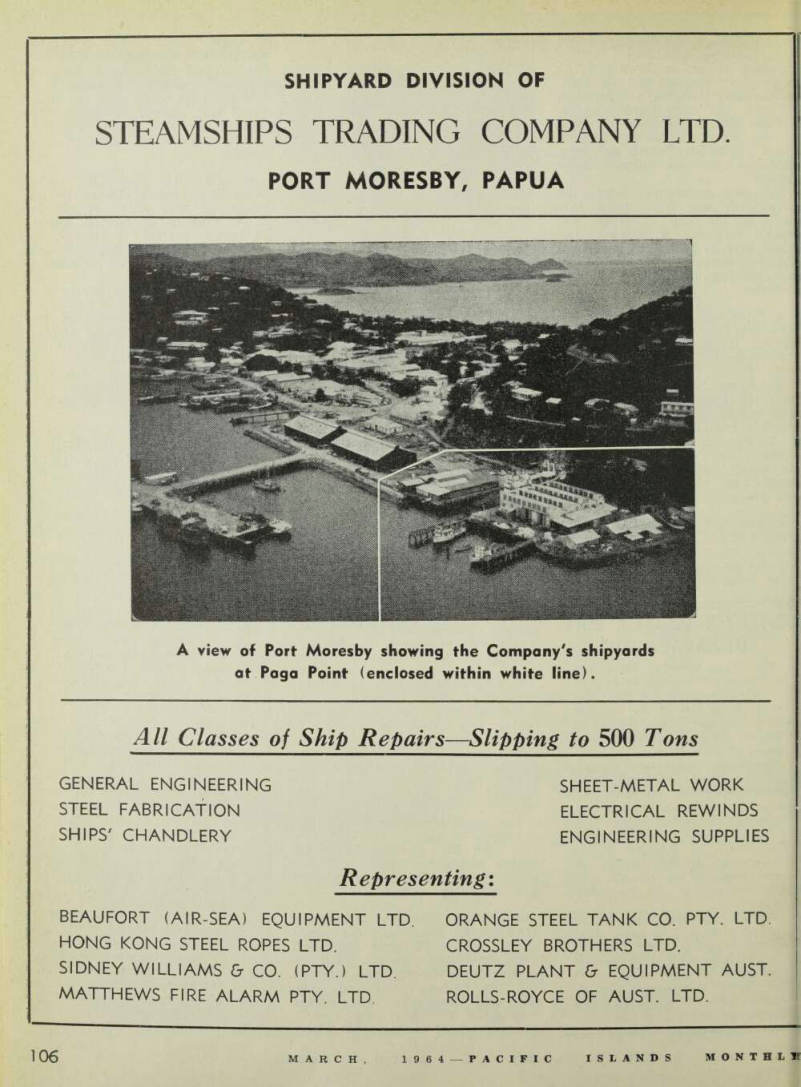 108
108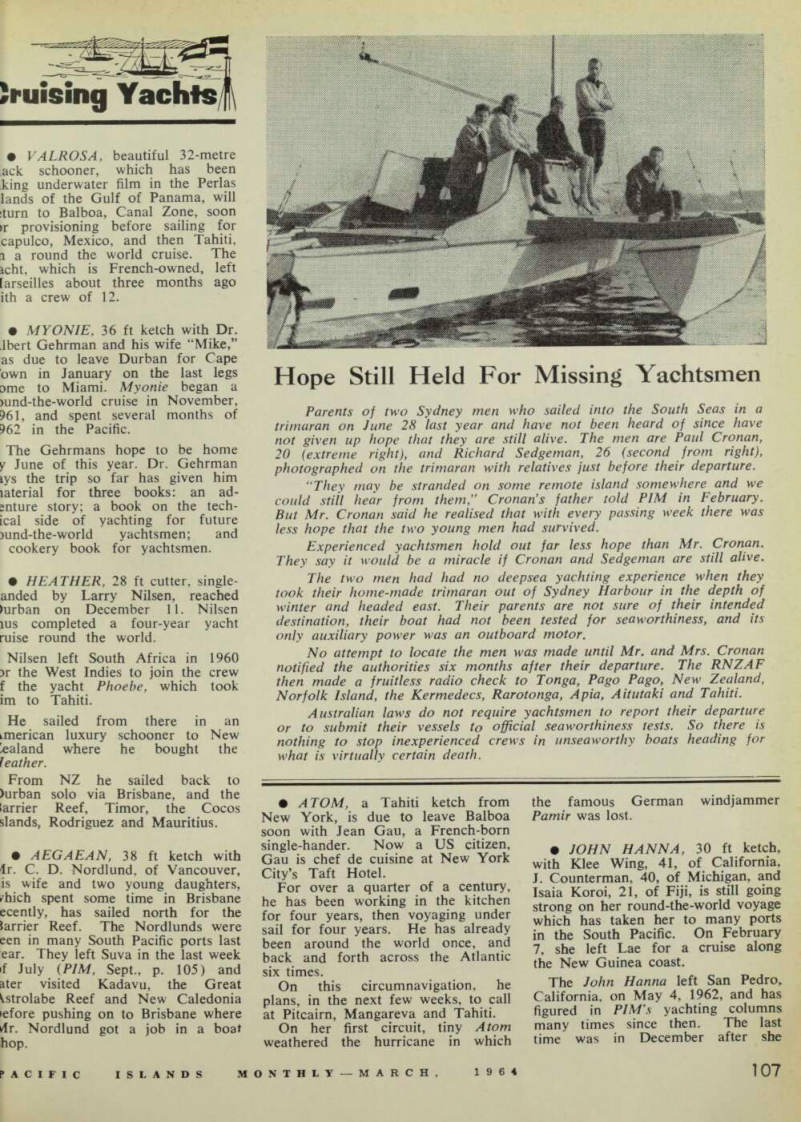 109
109 110
110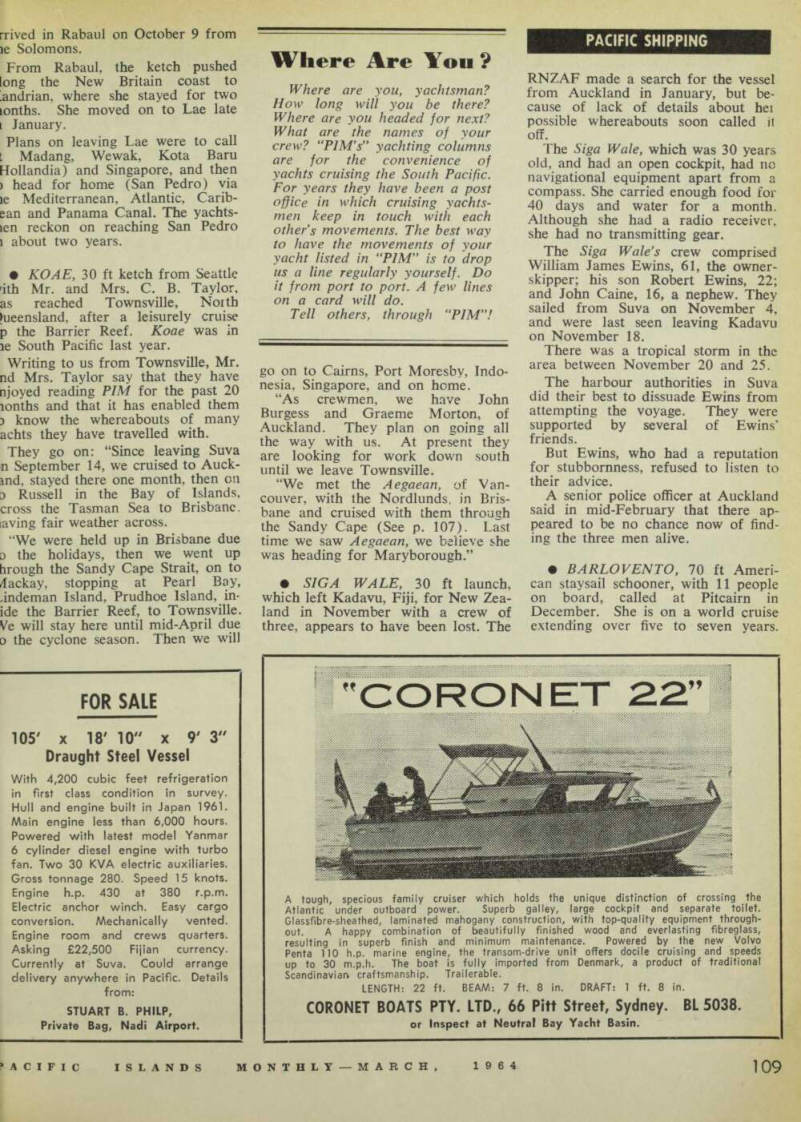 111
111 112
112 113
113 114
114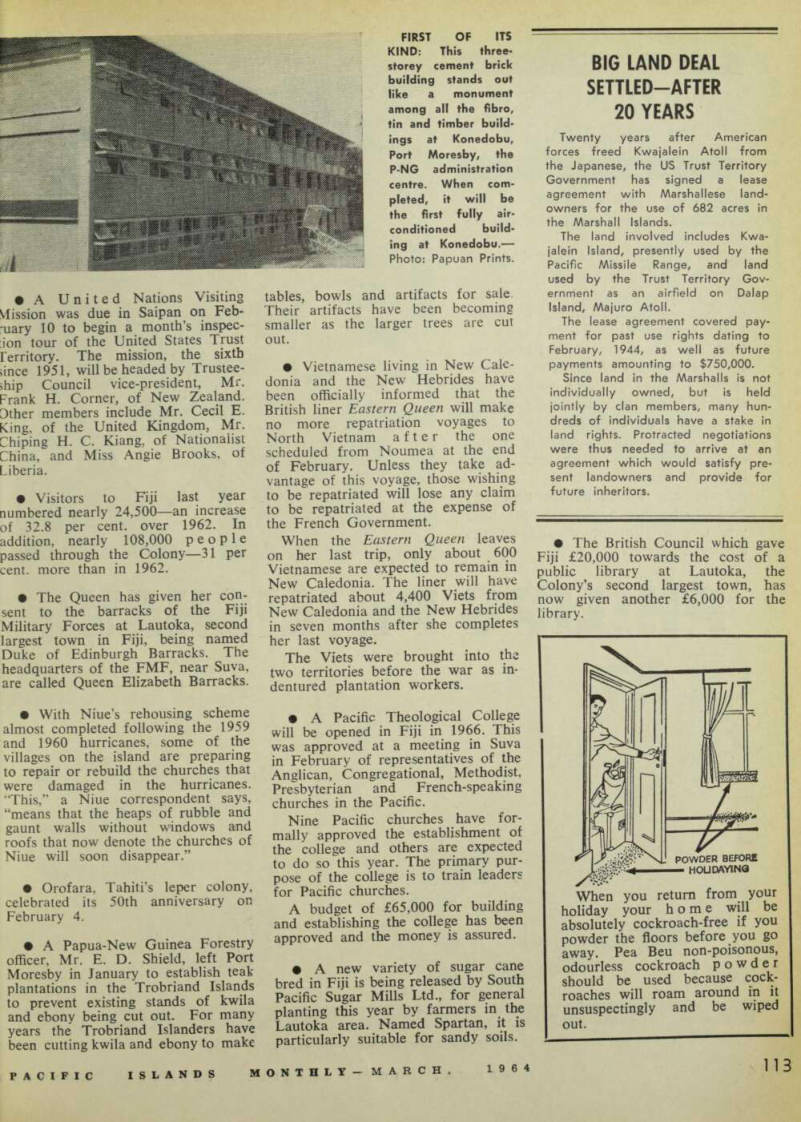 115
115 116
116 117
117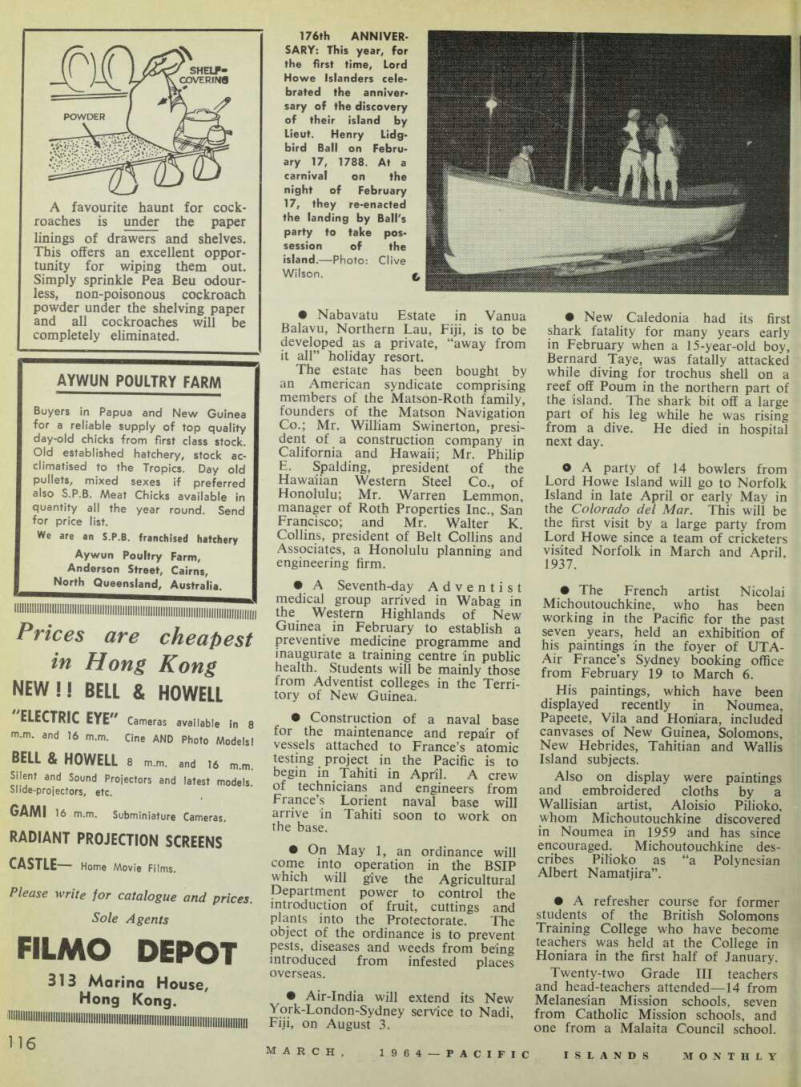 118
118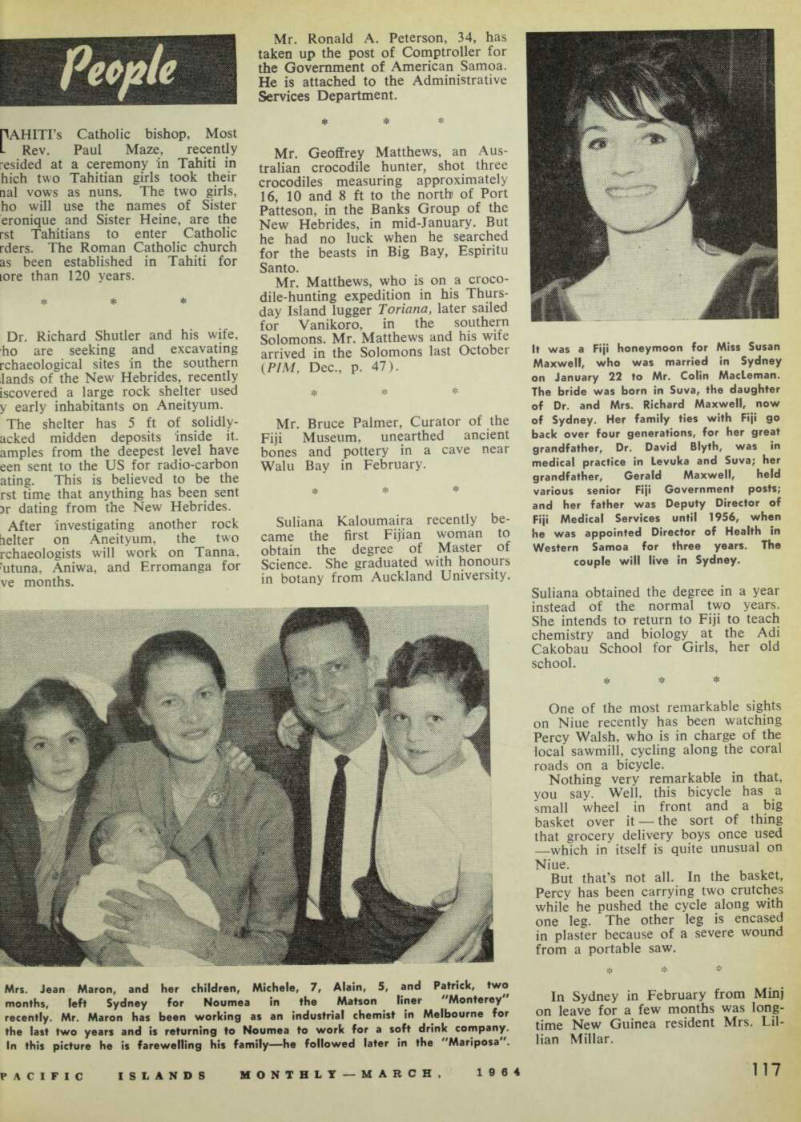 119
119 120
120 121
121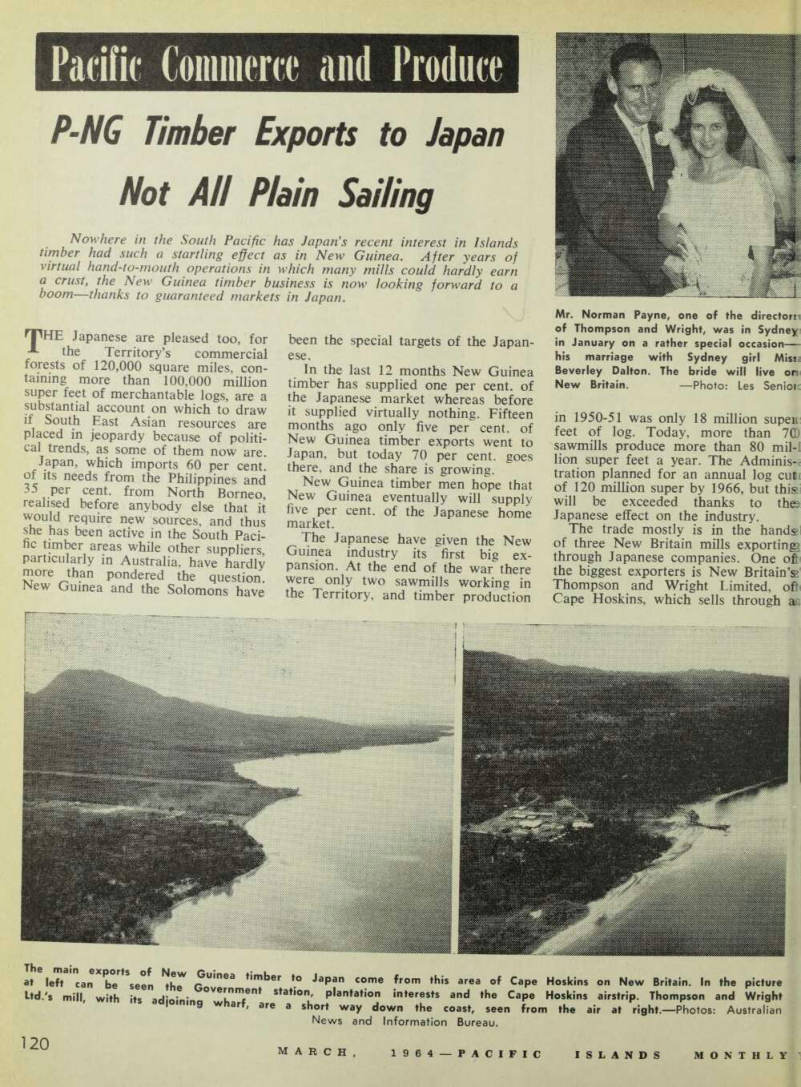 122
122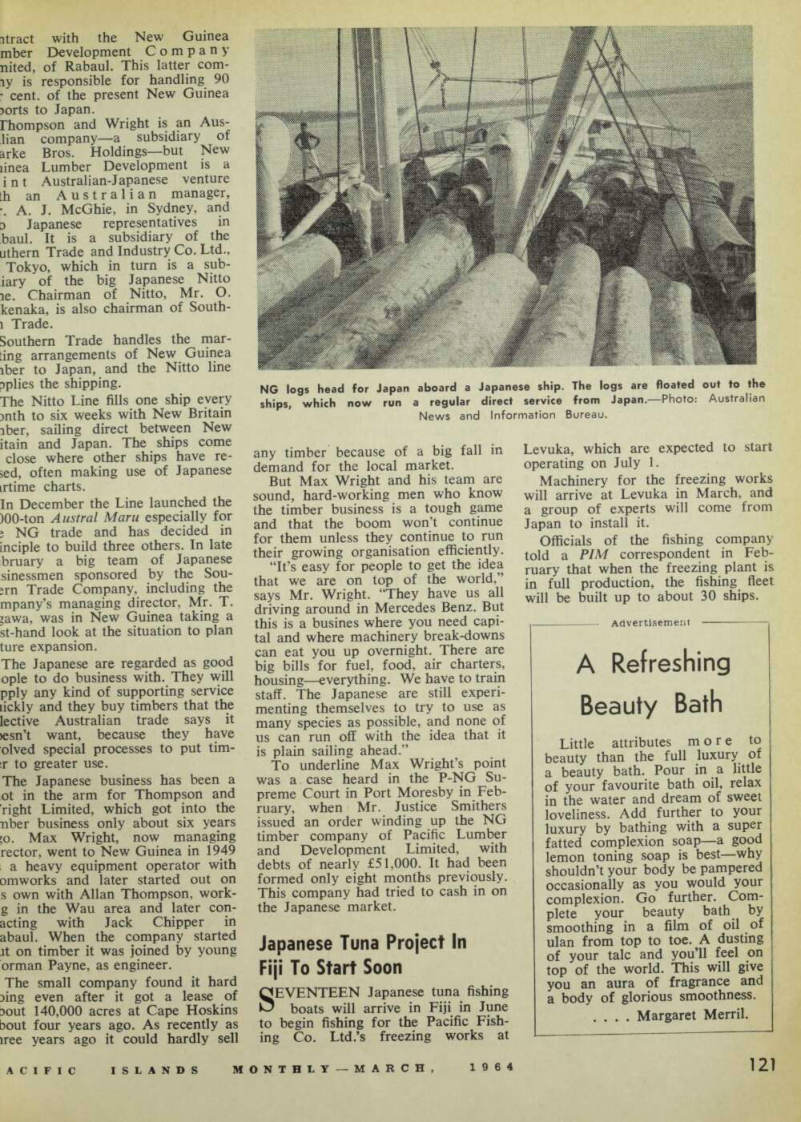 123
123 124
124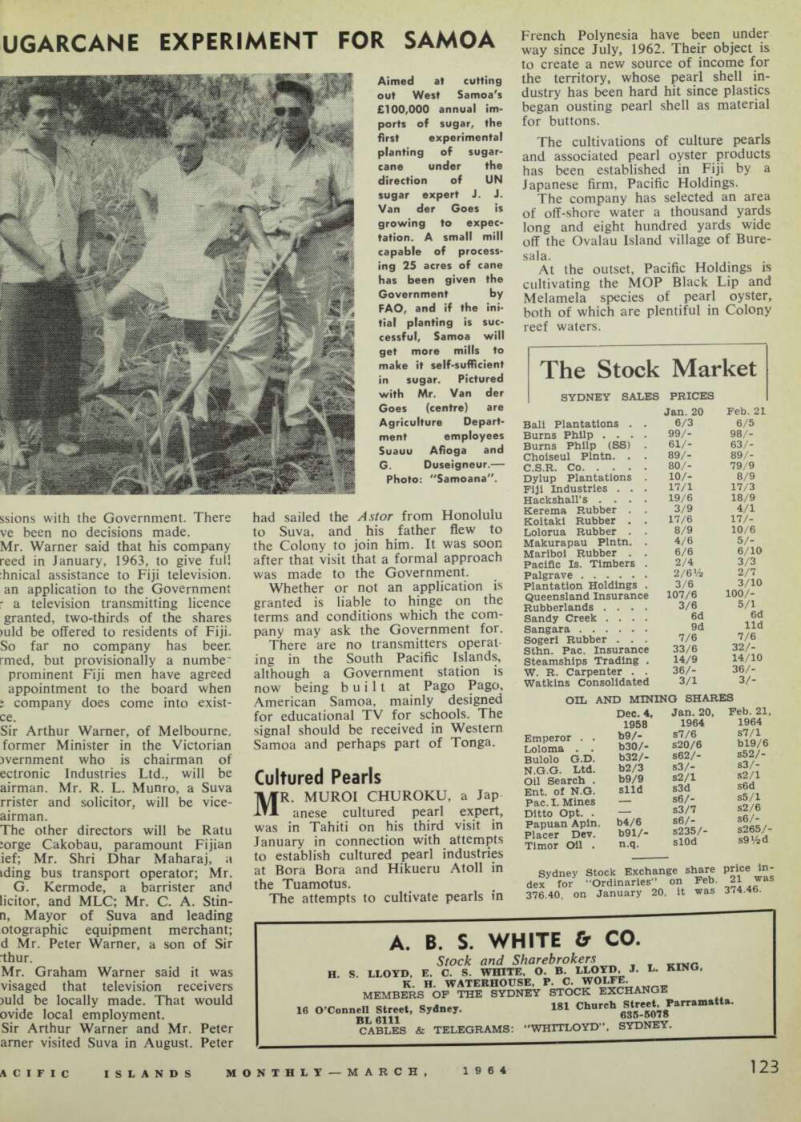 125
125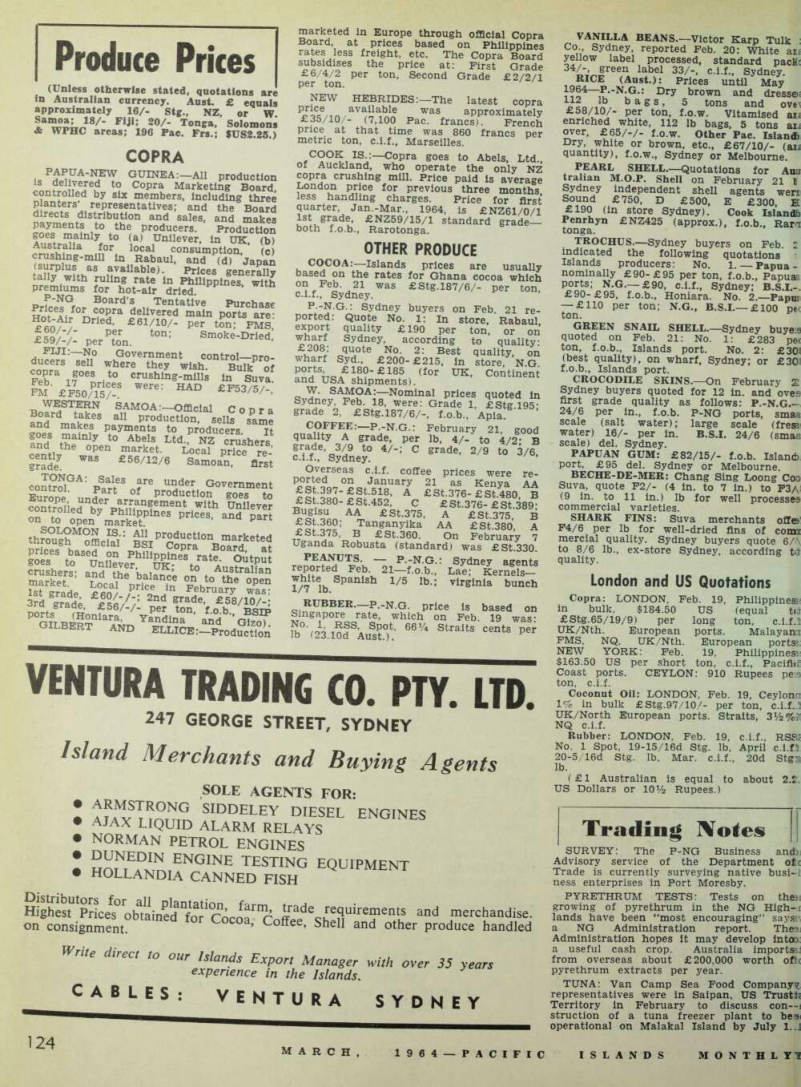 126
126 127
127 128
128 129
129 130
130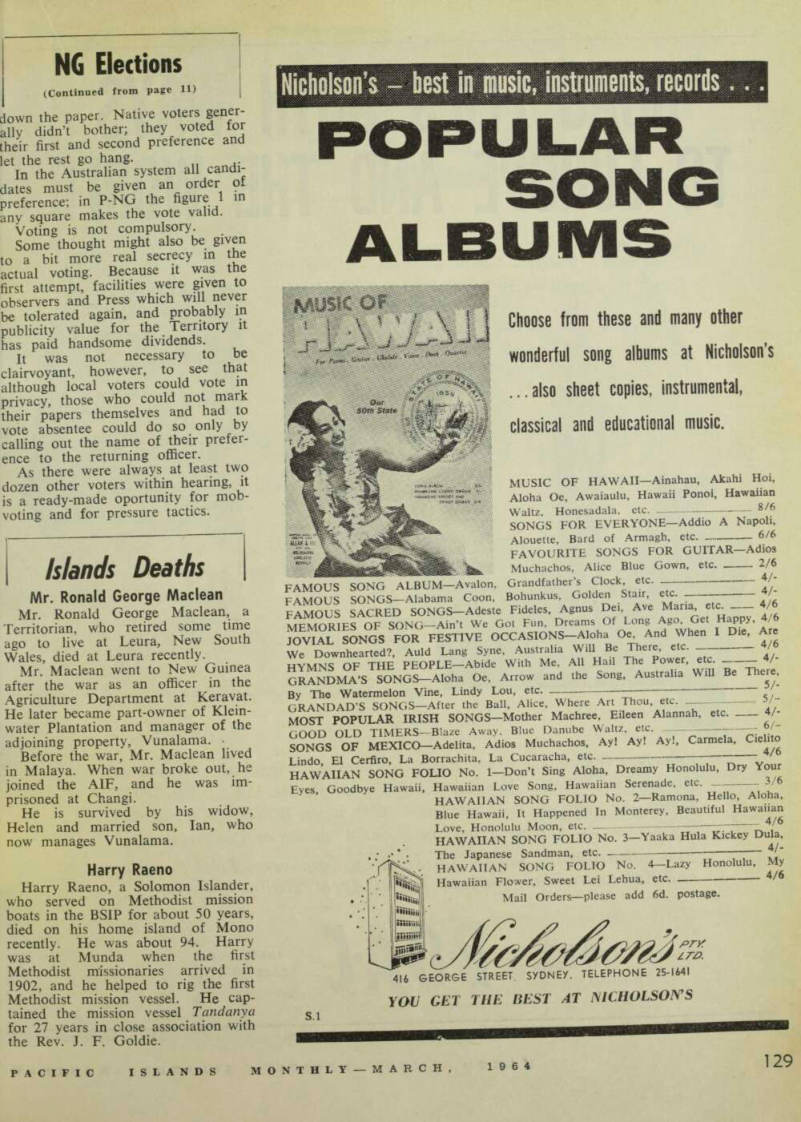 131
131 132
132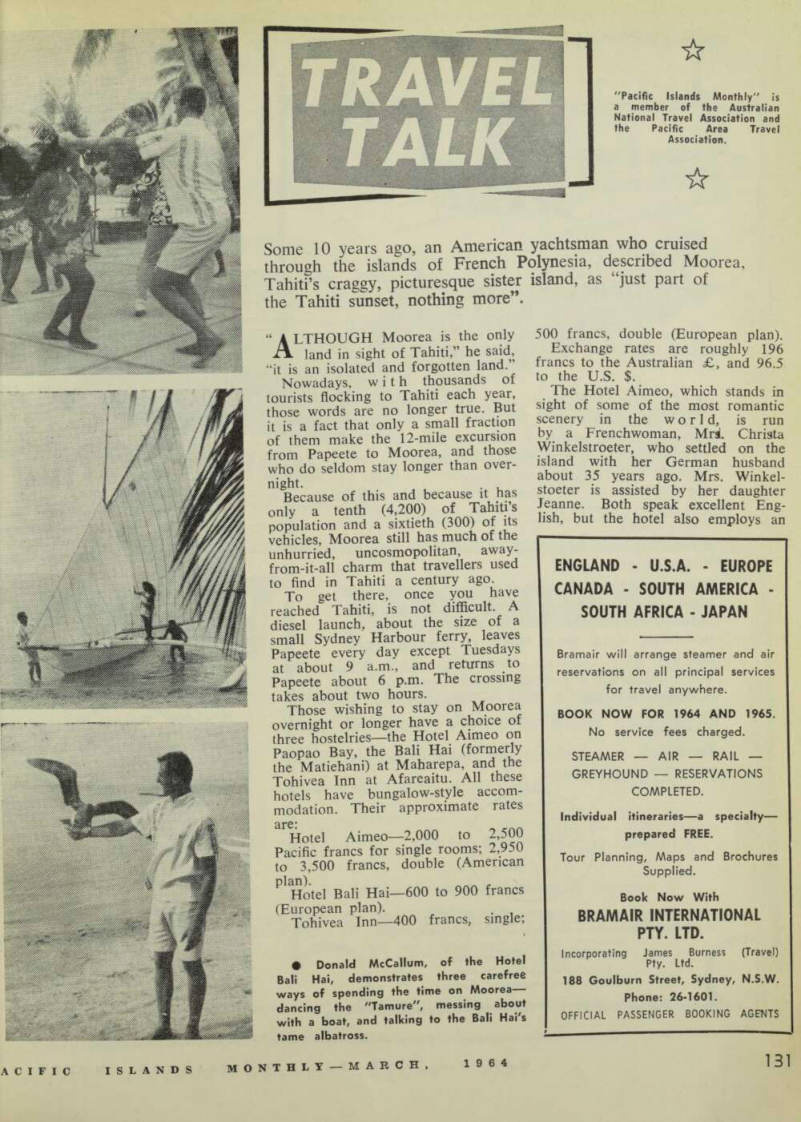 133
133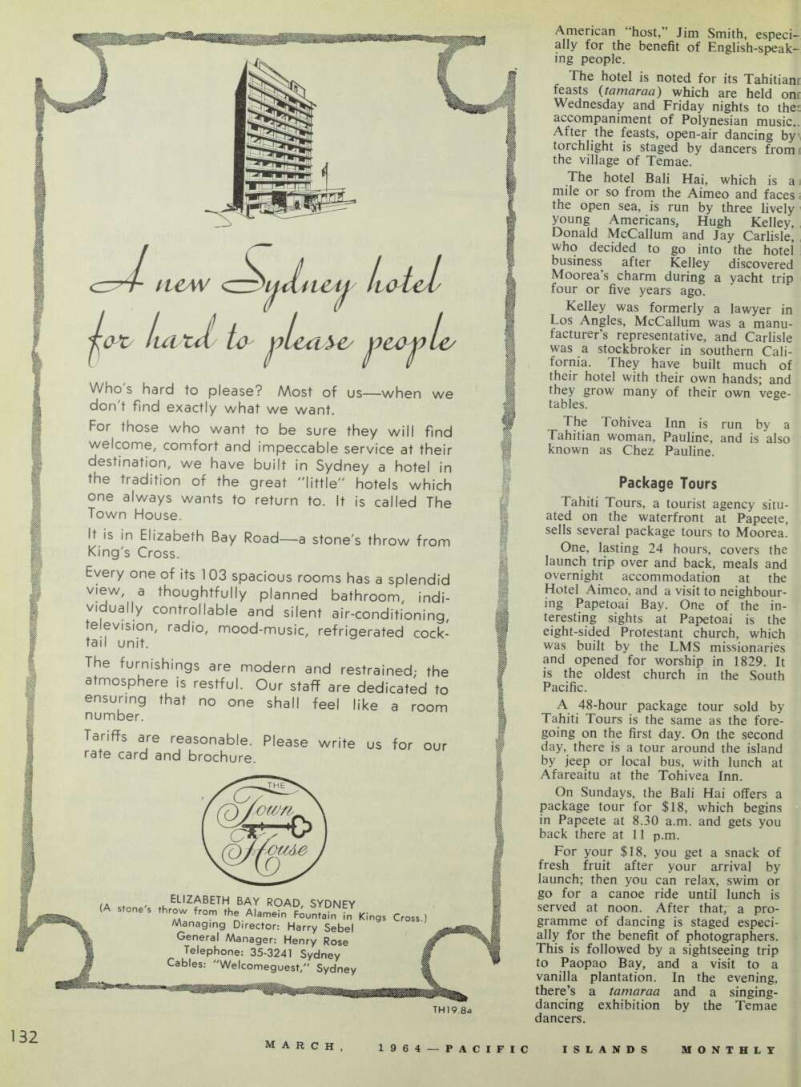 134
134 135
135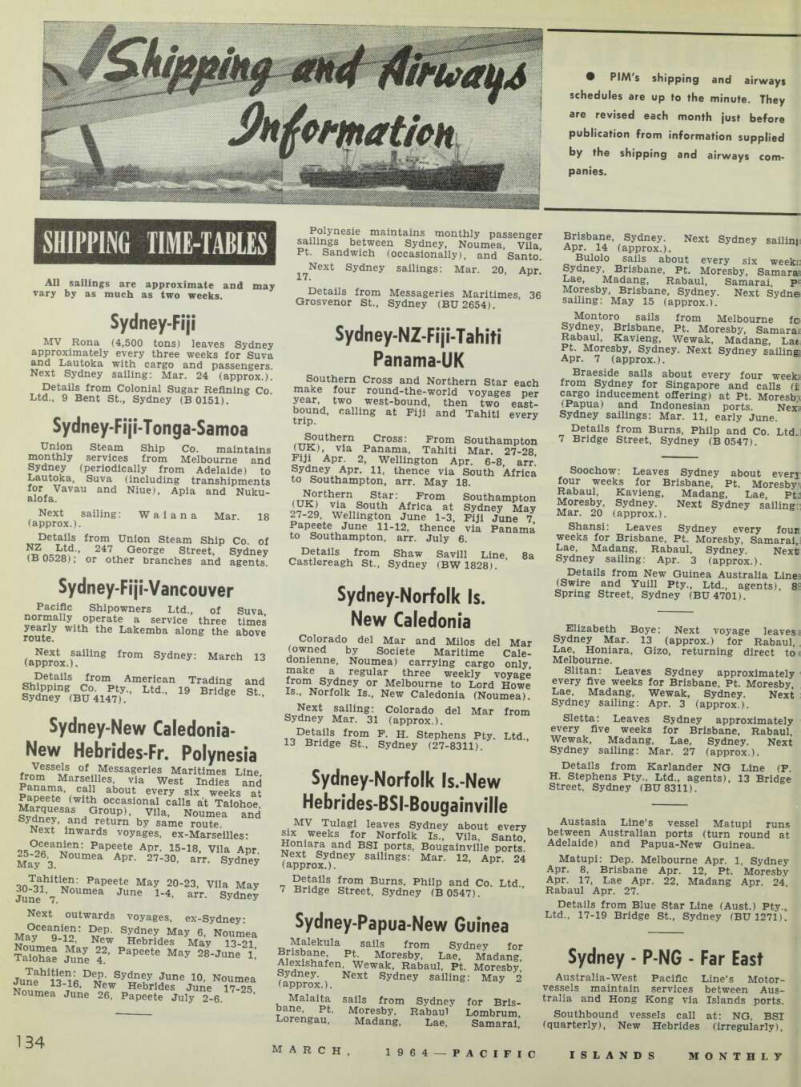 136
136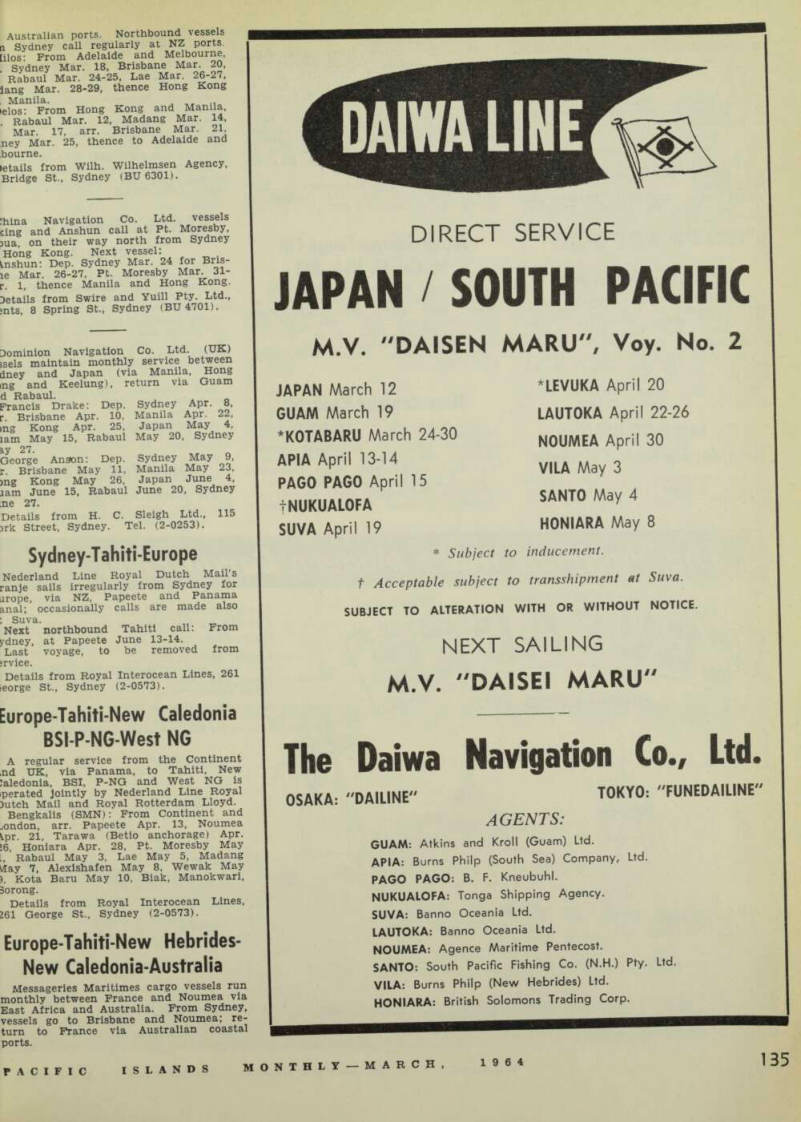 137
137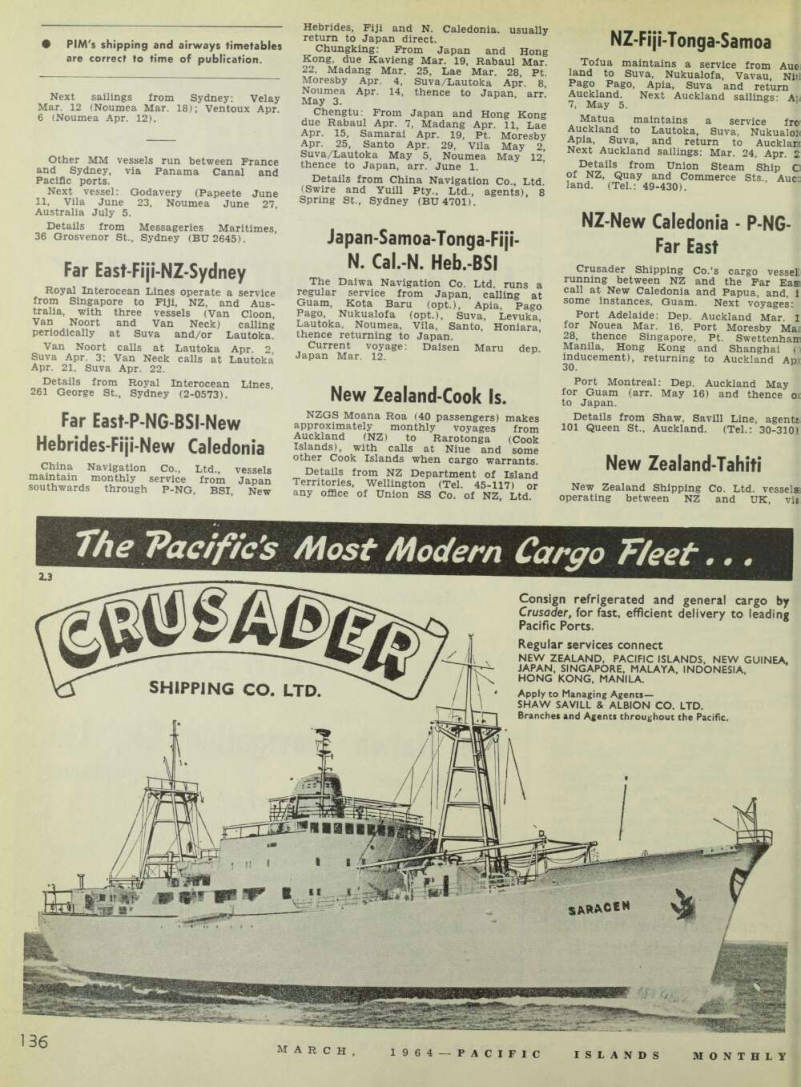 138
138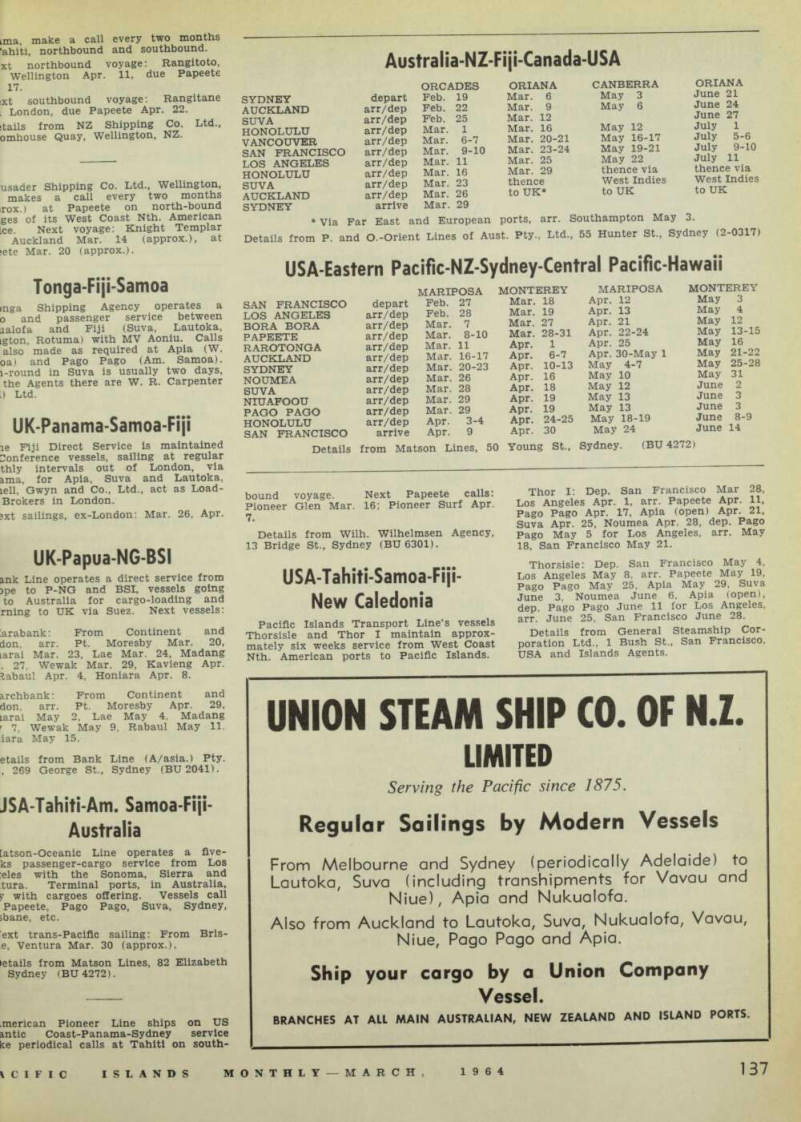 139
139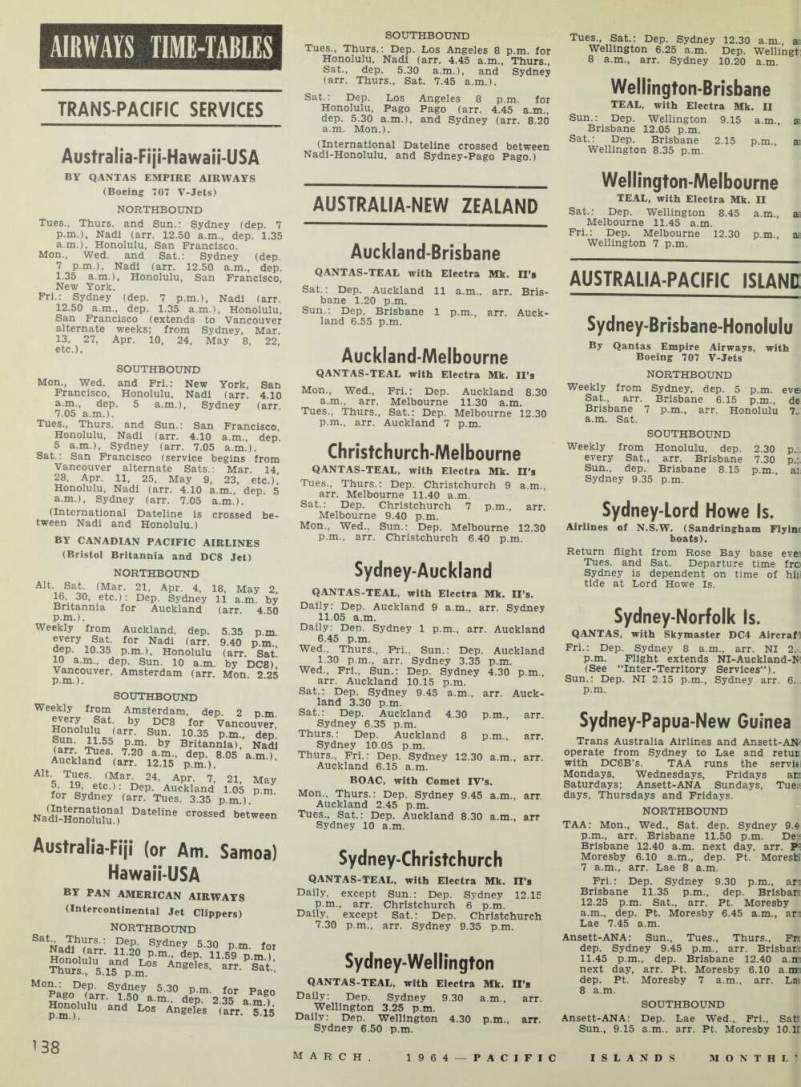 140
140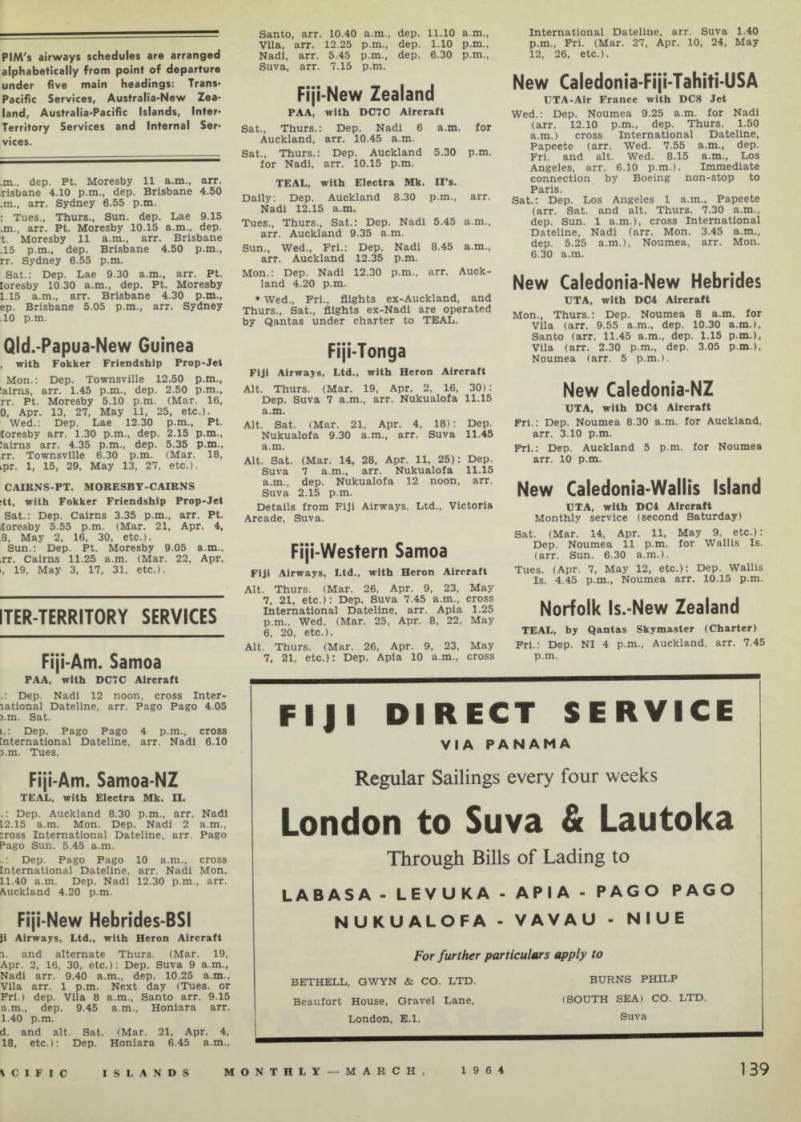 141
141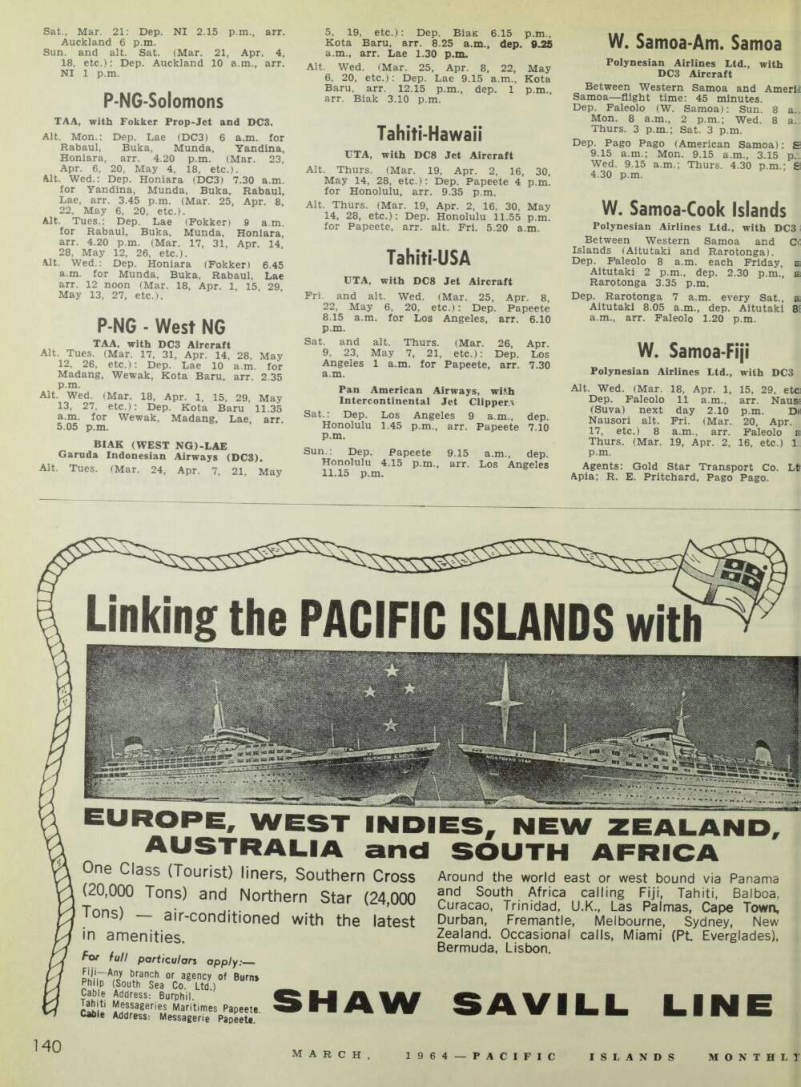 142
142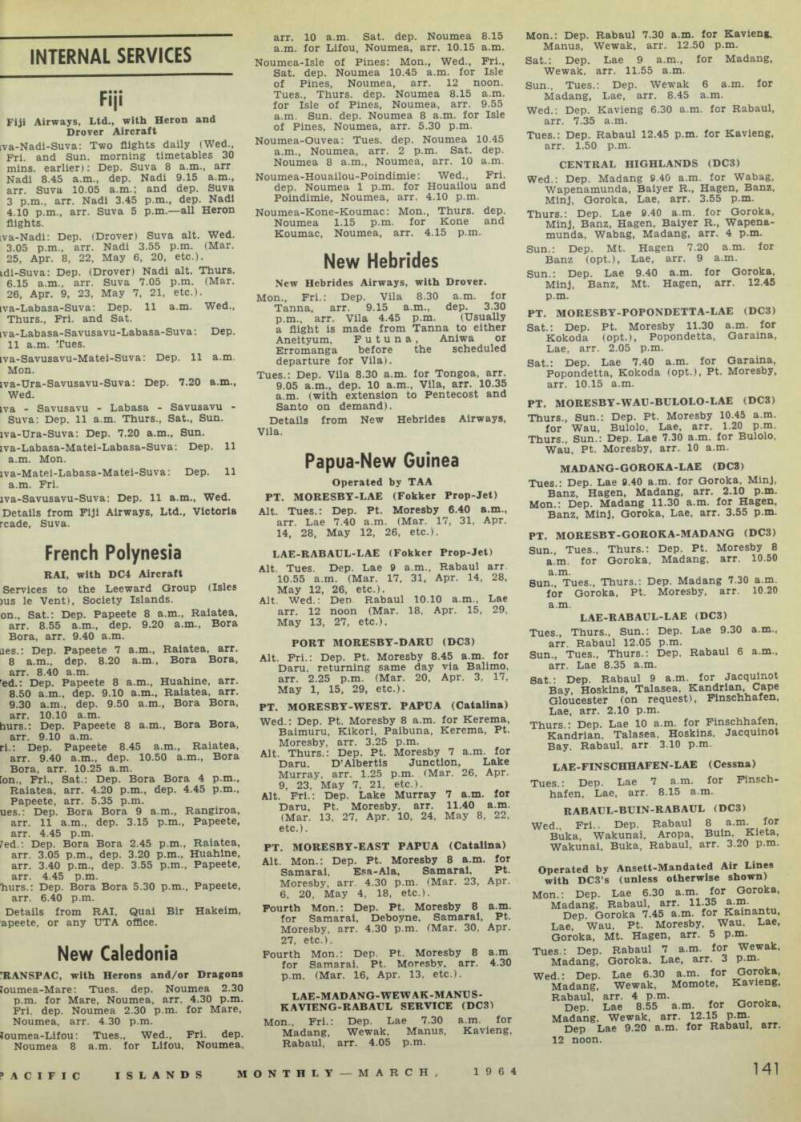 143
143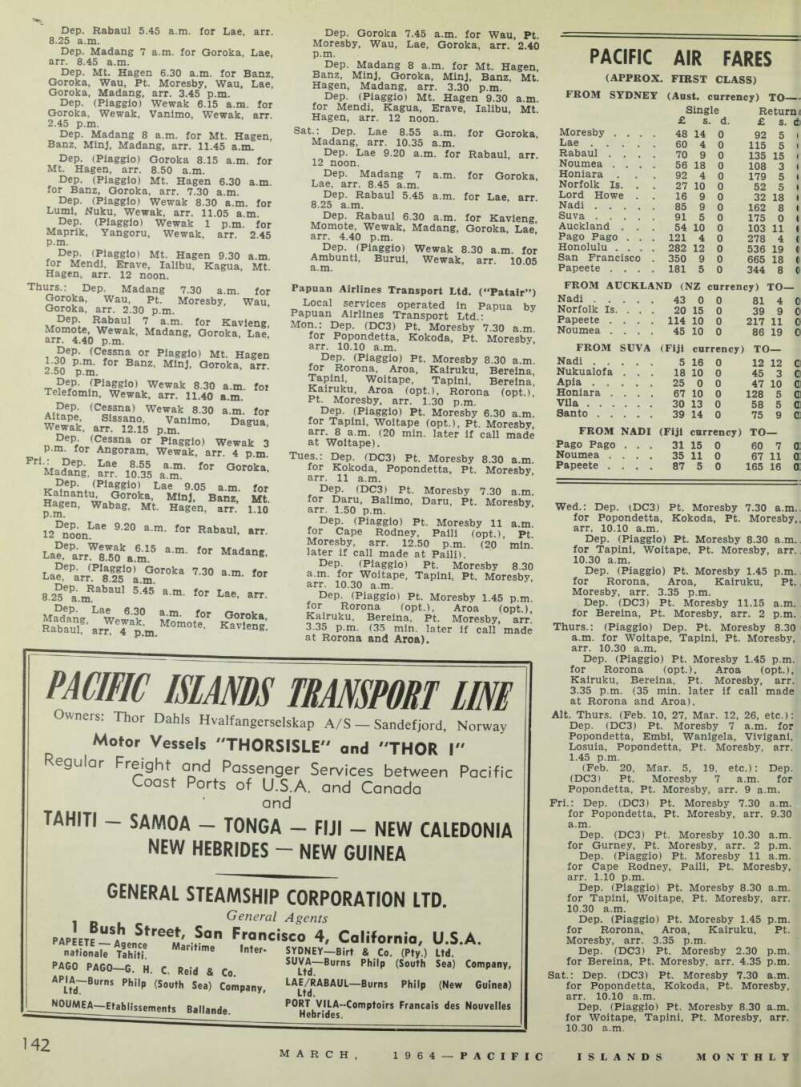 144
144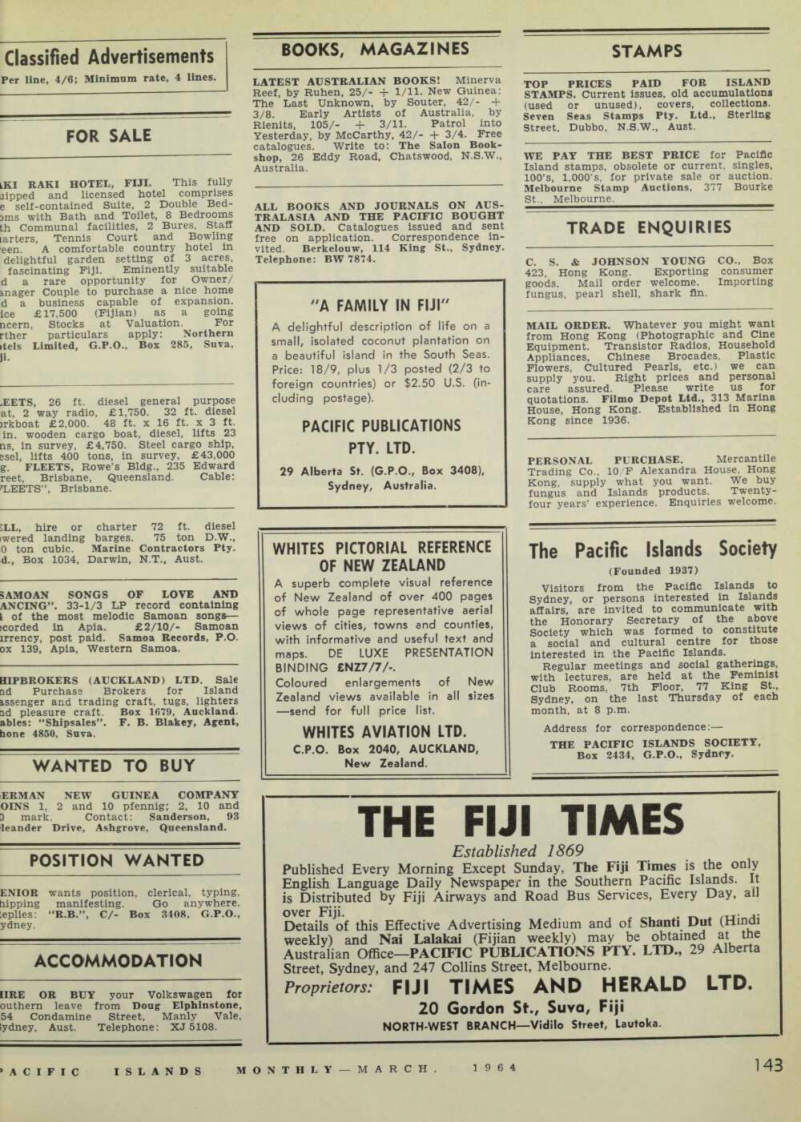 145
145 146
146 147
147 148
148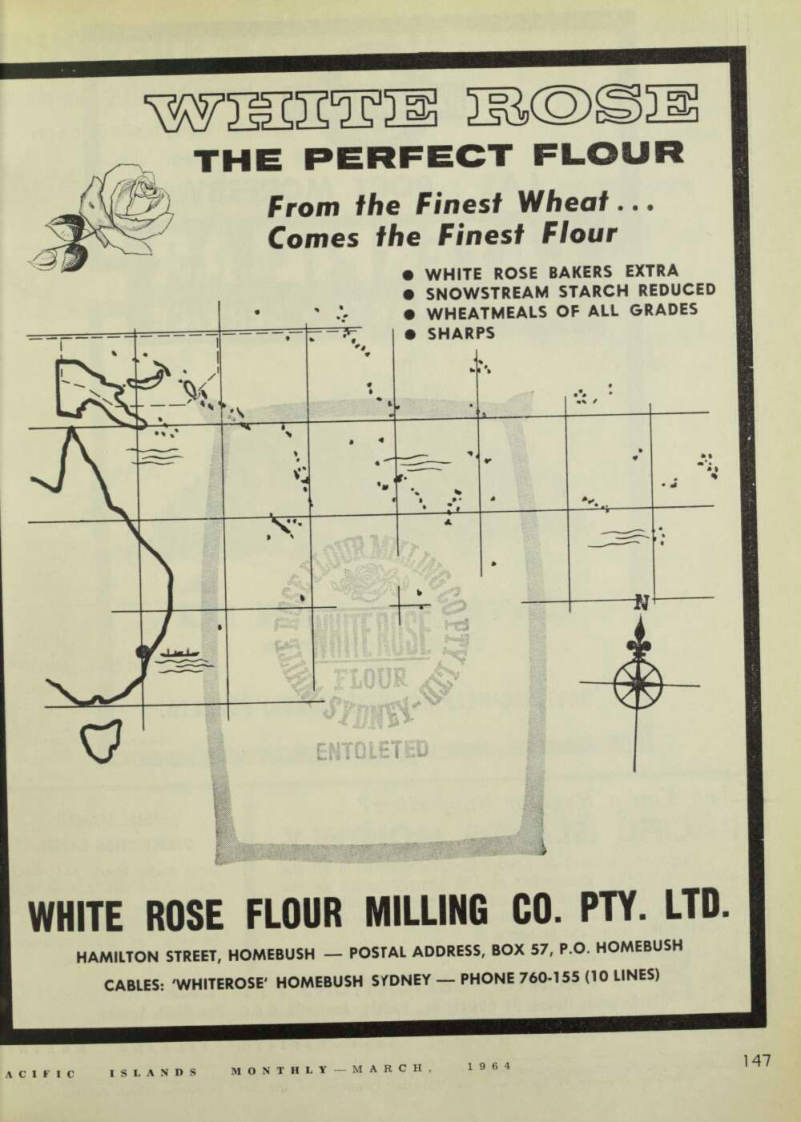 149
149 150
150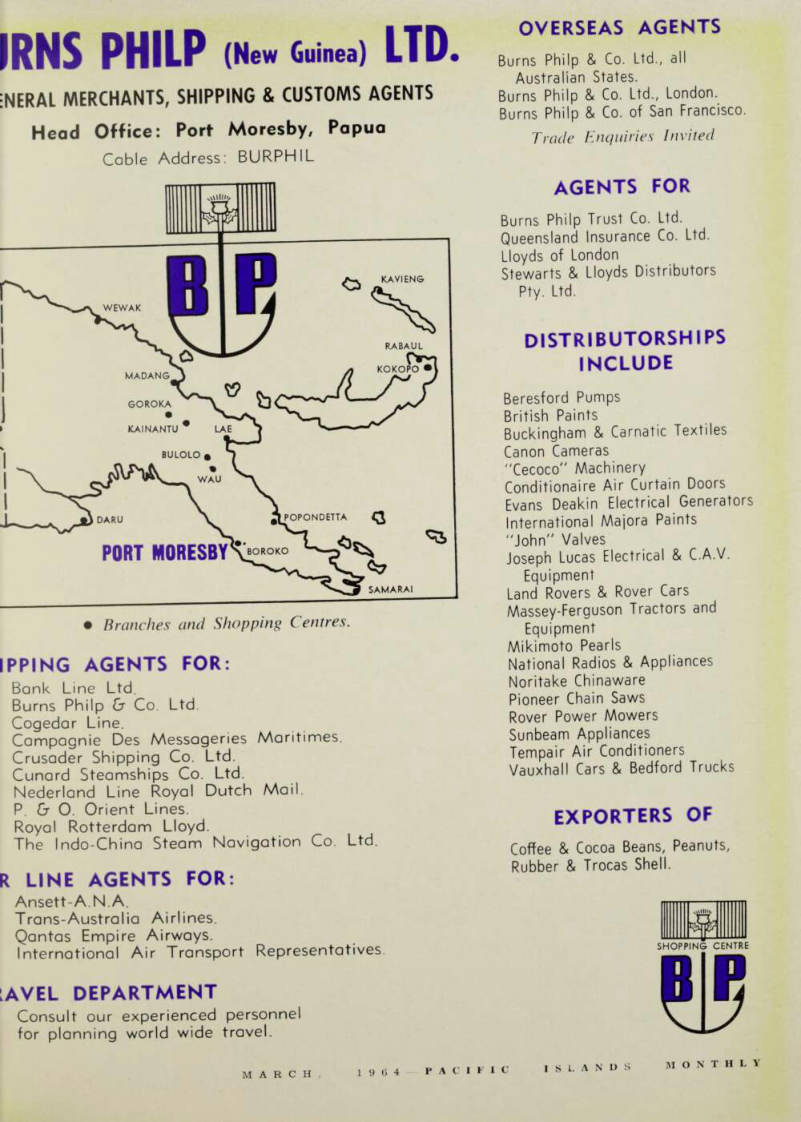 151
151 152
152