Islands
Pacific Islands Monthly
March, 1963
Vol. Xxxiii. No. 8.
News agazine Of The South Pacific
Stablished 1930
red at G.P.0., Sydney, and at P.O , for transmission by post as a Newspaper.
Advertisements & other items, pp. 2-4 (3 items)
See Australia with TAA
Wherever you want to go.
See more, enjoy more, do more than on any holiday before,
and even save money!
LAE
PORT MORESBY
CAIRNS
TOWNSVILLE
ALICE SPRINGS
I I I -
BRISBANE
SYDNEY
AIDE j
CANBERRA Cj
ADE
MELBOURNE
LAE
HOBART
Save on TAA Tourist Class Fares. You can fly TAA from Port Moresby to Brisbane and back for only £69.6.0.
Regular TAA Sunbird services from Lae and Port Moresby to Australia connect with flights to all States linking the Territory to more than 90 ports throughout Australia.
Money saving TAA budget holidays.
There are dozens to choose from in such famous places as the Gold Coast, Central Australia, the Barrier Reef Islands.
TAA Travel Service makes all your holiday arrangements . . . plans personal itineraries and tours . . . arranges accommodation and local tours at your destination.
CONTACT YOUR NEAREST TAA TRAVEL ADVISER;
PORT MORESBY:
Len Vaughan, Cnr. Cuthbertson and Douglas Sts., 'Phone 2101.
RABAUL:
Max Knop, “Augusta House", Mango Avenue, 'Phone 2702.
GOROKA:
Bernie Gamble, Goroka Airport, 'Phone 8.
Tony Dewiss, Coronation Drive, 'Phone 2311.
MADANG:
Henry Ohlmus, Kaislan Avenue, 'Phone 78 or 166.
FLY TAA SUNB/RD SERVICES
throughout the Territory of Papua/New Guinea—and to Australia.
TAA2B33/62S
For safe, economical COOKING...
•mum
Kerosene Non-Pressure Stoves
J Busy housewives will appreciate the economy and ease of cooking on a Coleman kerosene stove . . . brought to the Pacific Islands by Robert Gillespie’s. These well-known stoves are manufactured from heavy-gauge steel . . . precision made, and provide many years of truly economical cooking. Grates are warp-proof . . . fuel bowl and bottle designed to prevent tipping . . . and burners and fuel pipe are aligned to ensure accurate, successful cooking at all times. Three smart models available: No. 341 B—one-burner stove; No. 3428—tw0 burners; No. 344—threeburner stove mounted on a strong stand which has a handy shelf for pots, pans and other utensils. Coleman non-pressure stoves are easily serviced and spare parts are readily available.
Representatives for the Pacific Islands: Co lemoF ,
BERT GILLESPIE PTY. LTD.
22 Young St., Sydney
334 Queen St., Brisbane Cable: "Robergill".
ROBERT GILLESPIE (N.G.) LTD.
Rabaul, Port Moresby
Lae, Madang
PEARCE & CO., LTD.
Suva
INTERNATIONAL TD-5 CRAWLER
I ’ 4 ■
ill
i THIS is your chance to take advantage of McCormick International diesel crawler power —with the TD-5 a compact, sure-footed, 3-point linkage tractor for plantations, farms, contractors and local authorities.
Heavy-duty engineered, the 37-h.p. TD-5 has the proven 4-cylinder B-275 diesel engine that starts easily and gives outstanding economy. TD-s’s features include: fast-acting live hydraulics, full engine power at 540 r.p.m. at the power take-off, high 14" ground clearance— yet low centre of gravity. The exclusive IH Torque Amplifier is available as optional equipment, doubling the gear range to 12 speeds. The TD-5 can be fitted with the McCormick International ASG4 angle dozer blade (shown above) as well as a full range of McCormick International 3-point linkage and trailed equipment. Shown above, fitted to the TD-s's 3-point linkage, is the McCormick International GL-229 Toolbar.
For low-cost earthmoving jobs use the TD-5 fitted with the Drott 4-in-l %-yard capacity bucket and a rear-mounted scarifier. Contact your IH dealer for further information.
INTERNATIONAL HARVESTER COMPANY OF AUSTRALIA PTY. LTD.
District Sales Offices in Australian Capital Cities. Works: Dandenong, Geelong and Port Melbourne, Victoria.
DISTRIBUTORS— NEW GUINEA: New Guinea Goldfields Ltd., Wau; N.G.G. Trading Co., Lae.
Colyer Watson (New Guinea) Ltd., Rabaul. NEW HEBRIDES: Kerr Bros. Ltd., Sydney.
PAPUA: Steamships Trading Co. Ltd., Port Moresby and Samarai.
WEST NEW GUINEA: H. Englebert, n.v. Hollandia. TAHITI: Hintze & Co., Papeete.
NEW CALEDONIA: Agence Automobile, Noumea. FIJI: Niranfan's Service Station, Suva, P.I.M. 373/FP/R SOLOMON ISLANDS: Solomon Motors Pty. Ltd., Honiara.
B M *5
1
CIFIC ISLANDS MONTHLY MARCH, 1963
2
MARCH. 1963 PACIFIC ISLANDS MONTHS
Contents
No. 8. Vol. Xxxiii.
March, 1963
Apprehension About New Guinea's Future 5 Fiji Copra Survey Begins 5 New P-NG Liquor Changes 6 New Changes Proposed for P-NG Legco 7 It's Almost All Over in WNG 7 Progress, Plus Taxes, in the BSI ... 8 West Samoa Has an Unexpected Surplus 9 New Moves on Jap Fishing in Fiji . 9 NZ Will Protest at A-Tests 9 Colonial Office Surveys the South Seas 10 Plans Take Shape for South Pacific Games 11
Commentary 13
The Editors' Mailbag 14 How Fijians See Their Future 15 Suva Could be Vital Defence Base 17 That P-NG University Plan 20
Tropicalities 21
SPC: Men of Experience 29 South Pacific's Oldest Weather Station 31 Norfolk's Cracks in Need of Atten tion 33
Norfolk Tourist Trade Threatened? 35 The Big Population Explosion 37
From The Islands Press 43
Tonga Talks Back on Tourism 43
Territories Talk-Talk 47
Full Story: The Queen in Fiji 53 The Future of the New Hebrides 63 Political Charades on P-NG Future 71 Closer Look at the Fiji Banana Market 73
Magazine Section 83
Pacific Shipping 99
Rags to Riches Building Firm 117 NZ Expedition to Rarotonga 121 P-NG Education Commission 123 Attack on American Samoa's Taxes 125 GEIC Round-up 128 New Caledonia Round-up 130
In A Nutshell 133
People 137
Deaths Of Islands People 141
Travel Talk 142
Commerce, Produce 153
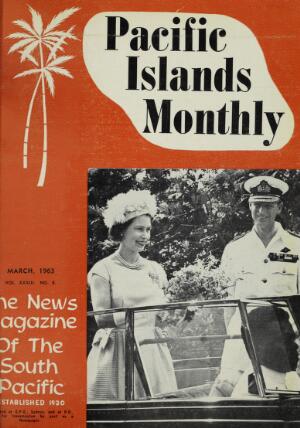
THE COVER: The Queen was "exhausted" after her one day visit to Suva in February, according to one report in an overseas newspaper. The report brought a quick reaction from "The Fiji Times", which replied almost with heat that the Queen had enjoyed her visit and had not been exhausted. As photographic proof the newspaper drew attention to this photograph, taken by staff man Stan Whippy just before the Royal couple boarded the "Britannia" at the end of their visit.
Publisher: R. W. ROBSON.
Editors:
Jdy Tudor Stuart Inder
Manager: SELWYN HUGHES.
Lephones: Ma9197, Ma7101,
MA 4369.
G.P.O. Box 3408, Sydney,
raphic Address; PACPUB, Sydney.
Nnual Subscription Rates:
ust. currency; includes surface postage) c Is.—P.-N.G., Fiji, Samoa, Norfolk, jru, B.S.I., Cook Is., Tonga, G.&E.
'•» Niue, New Hebrides, and Pacific Is £1 4 0 h Pacific Territories .£170 alia and N.Z £1 10 0 British Commonwealth and Foreign /- Stg.) £2 10 0 and U.S. Pacific Territories •00 U.S.) £3 13 i Copies (postage extra) 2 6
Ranch Office In Papua-Ng
: Publications (NG) Ltd., Theatre ng, Fourth St., LAE. Tel.: 2577.
Aiss Pat Robertson, Manager.
Branch Offices In Fiji:
Fiji Times Building, 20 Gordon St.
Tel.: 4043, 2597. ca: Fiji Times Office, Vidilo St.
Tel.: 420.
Representative In N.Z.:
). Whitcombe, P.O. Box 5179, Auckland.
Epresentative In Hawaii:
Spencer, 203 Yap Bldg., 3465 se Ave., Honolulu. Tel.: 775538.
Representative In U.S.A.:
Craib, Box 1455, San Francisco alifornia. Tel.: Mission 8-1075.
Representatives In U.K.:
Ashburn, 73 Cheapside, London, E.C.2. Tel.: City 2355.
Mackenzie, 4A Bloomsbury Square, on, W.C.l. Tel.: Holborn 3779. )URNE OFFICE: Newspaper House, 17 Collins St. Tel.: 63.7053. 15: All main trading firms and ores in the Pacific Islands. : Publications Pty. Ltd. is the ilian agent for THE FIJI TIMES.
Advertisements & other items, pp. 5-6 (3 items)
A Product of Pacific Publications Pty. Ltd., 29 Alberta Street, Sydney
4
MARCH, 1963 PACIFIC ISLANDS MONTH!
Gloss-Mast/
MANUFACTURED TO WITHSTAND AL
TROPICAL CONDITION
c 3
British Paints Limitei
GLOSS-MAST/
BRILLIANT GLOSS ENAMEL
>i" k k I'ainis
isliiS
•itiSiil
"OSLO’S
greatest
COLOUR
3ANGE
One coat covers any colour.
For interior and exterior use.
Gloss-Masta is specially manufactured to stand up to the rigorous tropical climates. It dries overnight with a brilliant, luxurious, porcelain-like finish that looks and wears like baked enamel. In fact Gloss- Masta sets a new standard of exceptional brilliance ... the more you wash it the better it looks Gloss-Masta completely withstands boiling water, steam, grease and all cooking fumes.
So very easy to use . . . Gloss-Masta comes to you in the world's greatest colour range ... ask for your Gloss-Masta colour card at the nearest British Paints Limited depot or store.
fmPURPtf*
Undercoat
„ Surface**
c
ALL PURPOSE
UNDERCOAT
for
paints and enamels
SOLD AND RECOMMENDED BY:
MAXIMUM RESISTANCE TO MOULD
AND FUNGUS IMPORTANT:
For maximum protection against fungus and mould growth always treat new or previously painted surfaces with British Paints Limited's anti-mould solution.
NEW GUINEA:
Burns Philp (New Guinea) Limited: Wau Burns Philp (New Guinea) Limited: Bulolo Burns Philp (New Guinea) Limited: Lae Burns Philp (New Guinea) Limited: Madang Burns Philp (New Guinea) Limited: Goroka Burns Philp (New Guinea) Limited: Wewak Burns Philp (New Guinea) Limited: Kavieng Burns Philp (New Guinea) Limited: Rabaul Burns Philp (New Guinea) Limited: Kokopo Burns Philp (New Guinea) Limited: Daru Burns Philp (New Guinea) Limited: Kainantu Kam Hong: Lae Scotts New Guinea: Lae Tang Mow: Wewak Laurie Chan: Rabaul Wong You: Buka Passage—Bougainville
PAPUA:
Burns Philp (New Guinea) Limited: Port Moresby Burns Philp (New Guinea) Limited: Boroko Burns Philp (New Guinea) Limited: Samara!
Burns Philp (New Guinea) Limited; Popondetta
HONIARA:
A. C. Blair Ltd.: Honiara Ho Kee: Honiara Coral Industries
FIJI;
Burns Philp (South Sea) Co. Ltd.: Suvv Burns Philp (South Sea) Co. Ltd.: Lautti
NORFOLK ISLAND:
Burns Philp (South Sea) Co. Ltd.: Norfolk Island
Renewed Apprehension
About The Future Of New Guinea
From Judy Tudor, in Port Moresby Despite all the shots in the arm reputed to have been given itely by the Australian Minister for Territories, Mr. Paul lasluck, there have been new factors and new fears bedevilling lis already frustrated country. They were crystallised in seeches by two European members of the P-NG Legislative buncil at its February meeting.
dERE is a growing belief in this country,” said Mr. Lloyd •ell, elected member for NG iland, “that Australia would like et rid of us, if it could do so jnably. The pressure seems to late from the Australian Depart ; of External Affairs and Osmar e’s recent exaggeration of this put into words the widespread that does exist.” r. Hurrell was referring to les and the following denials on Guinea’s future, written by (ourne journalist Osmar White irted on pp. 21 and 75 this )• he Department of External rs,” said Mr. lan Downs, elected ber for NG Highlands, speaking he same subject, “has . . . and continue to exercise pressure for her Australian widthdrawal from a-New Guinea.” ter his opening gambit, Mr. ell probed more deeply into what ralia really meant when it had iised Papua-New Guinea the t to self-determination”.
Did self-determination include the possibility of union with Australia?
Because, if so, it was becoming abundantly clear that the possibility that this is what P-NG would choose was already making Australian politicians “recoil in fear”.
“Labour Party leaders,” he said, “can no longer come here happily and face our people, for they are terribly afraid that to encourage them, or to agree to union, would be committing political suicide. Even the Minister for Territories, whom I believe would favour a union, was unable [recently] to answer questions reasonably asked by Stanis Boromilat at Rabaul.
"Colonialism"
“Our control of New Guinea, it seems, will always be regarded as colonialism ... it is a source of irritation between Australia and her Asian neighbours, especially Indo nesia. In short, it is a trouble spot.
However, if we don’t stick to our guns in this area, where next will the trouble spot develop?
“No one fought for West New Guinea, and no one would fight for us.”
During the course of the rest of his speech, in which he developed some of the old fire-and-brimstone that had shaken the chamber to its foundations in his maiden appearance a couple of years ago, Mr. Hurrell accused the Australian Government of “wilfully neglecting” its own in vestors in the Territory; and said that some of the utterances of Mr.
Whitlam, Deputy Leader of the Federal Labour Party, during his recent visit to P-NG had “made him sick”.
Throughout Mr. Whitlam’s visit, said Mr. Hurrell, he showed a com pletely superficial knowledge of Ter ritory affairs and an utter disregard for the rights of European residents.
In Mr. Hurrell’s estimation it would be a case of only Heaven being able to help P-NG if Labour won the next Australian elections.
What was needed from Australia at this moment, he said, was a clear statement as to what was meant by self-determination, in terms of pos sible union with Australia—and a guarantee by the Australian Govern ment of private enterprise in the Ter ritory.
Mr. Downs said that the pressure on members on both sides of the Federal Parliament for Australia to withdraw quickly from New Guinea was very real.
Australian representatives overseas get “worn down” by having to de fend Australia’s continued presence in the Territory— to such an extent that they felt that they must be rid of it at any price. (Over)
The Queen
in Fiji
Queen Elizabeth as Fiji saw her - a charming photograph taken by Rob Wright soon after she had arrived at Lautoka in February. She was in Aus tralia later. For full details of her Fiji visit, with pictures, turn to p. 53.
At the same time, it was said in other quarters that Australia’s pre sence in the Territory embarrasses Australian trade in SE Asia. Others feel that P-NG is a liability in the matter of defence and that Australia should concentrate on “continental defence”. Again, others imagine that the cost of maintaining P-NG could run into £5O million a year within five years and that the “Australian taxpayer is fed-up of having to foot the bill”.
But, he said, it might cost Aus tralia a great deal more if it did withdraw completely. Economically the Territory could not be free—if Australia didn’t help, someone else had to. And what reasonable Australian would be happy knowing that some other country occupied New Guinea?
Some people had suggested that the World Bank would give develop mental loans but the World Bank, or anyone else, would quickly come to the conclusion that P-NG was not a proposition in itself, although in conjunction with Australia it was.
The Territory’s only economic hope was to be linked with an in dustrial country like Australia.
Suggestions made by Mr. Whitlam, and others before him, that P-NG should become part of a federation of Melanesia (linking perhaps the Solomons and the New Hebrides), were highly impractical. It would simply add vast problems of com
munications, hundreds of new language groups and people with new customs, to the complex that already existed within the Territory, and would drag P-NG down, not assist it.
The whole New Guinea situation was misunderstood in Australia, said Downs. Australia could not just give the Territory away and be done with it. It was “physically, defensively and economically impossible”.
Fiji's Copra
Survey Begins On Fiji's Copra
>rd Silsoe, formerly Sir Malcolm tram Eve, began his survey of i coconut industry in February and talks with Government officials Suva. Lord Silsoe is making the ey at the invitation of the Fiji eminent (RIM, Feb., p. 25). fter preliminary meetings with esentatives of the copra industry, ntended to visit some of the copra
lucing areas.
Advertisements & other items, p. 7 (1 item)
5
I F I C ISLANDS MONTHLY MARCH, 1963
New P-Ng Liquor Changes
Papua-New Guinea will have shorter drink hours under a Liquor Licensing Bill introduced into the P-NG Legislative Council in February.
Two hours drinking time will be lost on week-days in hotel bars.
New hours will be from 10 a.m. to 10 p.m. instead of from 9 a.m. to 11 p.m. But the important change will be club hours—which have always been more liberal than hotel hours—and which are now to be brought into line with the new hotel hours.
However, all Sunday trading hours, which also have been brought into line, will be extended.
The Licensing Bill sets up a Licensing Commission with a full-time chairman and with two commissioners in each licensing district. The bill provides for the establishment of tavern licences (similar to hotel licences without the necessity of providing for sleeping accommodation) and for canteen licences for large undertakings more than 10 miles from hotels and taverns. All this is expected to lead to the opening of taverns fringing urban centres thus cutting down congestion in town bars.
The new bill follows closely the recommendations of last year’s Liquor Inquiry Commission.
The Council extended until September 30 the provisions of the temporary liquor ordinance which since last October has allowed NG natives to drink for the first time.
Price of imported beer also went up as a result of the Legislative Council meeting.
A Customs tariff amendment increased the import duty on beer from 7/6 a gallon to 9/6, to protect the two Papua-New Guinea breweries.
New Guinea people drink a great deal of Australian beer.
Teal Interested [?]
British Aircraf[?]
Three senior TEAL executive.
February were in the UK havin closer look at the British Aire Corporation’s long-range comma passenger transport—the VC TEAL is interested in the aircrai a replacement for her Electra f Re-equipment has to be compe in readiness for the opening of' Mangere international jet airport Auckland, estimated as the set half of 1965.
T>OAC, which in April will fly\ ** Tasman for the first time ai extension of its London-Sydney vice, has already ordered VC-lO’s some of its routes.
TEAL general manager F.
Reeves said in Auckland in Febr that the check on the most re VC-10 developments had been le; the last moment so that BAC c; be as far ahead as possible wit! development flying. (The aircraft: flown for the first time last yean French Plan If final agreement could be m at a meeting in May, the Frencht line TAJ will be granted ti Tasman rights from Sydney to At land when Mangere airport is ope This would give the French a roc the-world route through Asia, . tralia, NZ and Tahiti. At present flies from Sydney to Noumea across the Pacific. The French si;i a provisional agreement in Well ton in February.
They Listen To Radio Peking
Prom a Port Moresby Correspondent Favourite radio stations of Papua-New Guinea listeners, accordw to two members of P-NG Legislative Council, are Radio Peking and tr reorganised stations in Hollandia. One reason for this is the low-powerr transmitters of Port Moresby’s ABC short wave radio, they say.
Mr. lan Downs, member for the New Guinea Highlands, said February that Hollandia station’s wave-length was so close to that of ti\ Moresby short wave station—and so much more powerful—that listener could not tune out Hollandia even if they wanted to. Another statw. that swamped everything near it was Radio Peking.
Mr. Paul Mason, member for New Guinea Islands, said the mo listened-to station in Bougainville was Radio Peking. It was impossilA to get Port Moresby and although it was possible to receive the Admin station in Rabaul, most people preferred Radio Peking, anyhow.
He said that he felt that there was something wrong somewhere whu the Australian Government could spend a great deal of money havin Radio Australia broadcast to Asia and Indonesia but could not eqm the ABC’s station in Port Moresby so that local native people com hear it.
Advertisements & other items, p. 8 (1 item)
6
MARCH, 1963 PACIFIC ISLANDS MONTH
WNG—Except
It's All Over In WNG—Except The Formalities
'though the United Nations re ted in February that Indonesia d not be allowed to take over ' New Guinea before May 1, by end of the month the territory pretty well in Indonesian hands.
CEPT for the formal take-over ceremony, about the only things remain to be done are for Indo n troops to take over formally the UN security force—mainly itanis—and for the Netherlands to hand over to the Bank of aesia. ionesia already has numerous y men, civil servants and school ers in the territory, and these do or less as they like. Only the st lip service is paid to UNTEA. ie of the few things the Indo ns have not been able to do 1 UN the idea that the Papuans :lamouring for an earlier formal over. Despite intense propa a, the organisation of marches 'apuans “demanding” immediate lesian sovereignty, and lobbying ew York by Indonesia’s Foreign ster, Dr. Subandrio, UN stood on the May 1 takeover date. >wever, UN has reportedly d to allow Indonesian troops to over progressively from the tanis by April 16, and for In dans to replace Dutch officials iter than March 31. janwhile, most of the Papuans know what’s what have jumped ie Indonesian bandwaggon, and is said about UN representatives ining in the territory until 1969 upervise the self-determination scite promised in the Dutch lesian agreement.
[?] erritories Appointment
STRALIAN Ambassador to Thailand since 1960, Mr. olm Booker, 47, in early March appointed to a new post of ty Secretary to the Department erritories. It’s expected that he )e appointed secretary when Mr. . Lambert retires. Mr. Booker’s ntment was predicted in PIM nuary. ’• Booker has been with the De tent of External Affairs since joining it about the same time ie present Minister for Terri , Mr. Hasluck.
Speaker, Name Change For Legco
From Judy Tudor in Port Moresby The Papua-New Guinea Legislative Council should have its name changed to House of Assembly following the new Council elections in 1964. The new legislature should have an elected Speaker instead of the P-NG Administrator as ex-efficio president, as at present.
THESE are some of the recom mendations made in a second interim report tabled in the P-NG Legislative Council on February 27 by the Select Committee on Political Development. The committee was set up last year. The recommendations for political development it made then have already been accepted by the Commonwealth Government.
The committee’s report delineates 44 open electorates and 10 reserved electorates for the 1964 elections.
Voting age would be 18 and over, voting would be by secret ballot, and elections held every four years, the report proposes.
Reserved electorates (for non indigenous members) would be West Papua, Port Moresby, East Papua, the Northern Markham, Madang- Sepik, the Highlands, New Guinea Islands, New Britain, and Rabaul.
The Council accepted the report, which will be sent to the Miinster.
A Night at the Ballet
Not often do islanders have the opportunity of being entertained by a prima ballerina of world fame in their home town, but Rabaul, New Guinea, in February enjoyed watching Miss Elaine Fifield, formerly of Sadlers Wells, in scenes from ballet. Miss Fifield is a Territorian —wife of planter Les Farley of Cape Rodney, Papua. She appeared in a concert at Rabaul's new RSL hall to raise funds for the P-NG Girl Guides Association. Here she is shown after a scene from "Les Sylphides" with Geoff Absalom, who at another stage played Dr. Coppelius to her Coppelia.—Photo: C. H. Meen.
Advertisements & other items, p. 9 (1 item)
7
3 I F I C ISLANDS MONTHLY MARCH, 1963
Increased Development, More
Taxes For The Solomons
There was good news and bad in the 1963 BSIP budget, introduced into the Legislative Council in February. Best news was that investment in the Solomons is growing and that the Financial Secretary, Mr. L. M. Davies, believes the country “is beginning to stir and wake up”.
WORST news is that the BSIP is still attempting to get a quart into a financial pint pot, with the result that income taxes are going up, liquor prices are going up and people will be paying more for other things.
It was a record budget. Estimated expenditure of ‘f 1,741,000, which is up 14 per cent, or £206,000 on last year, will be covered by an increased Grant-in-Aid of £625,000 so that the budget may balance. The Grant-in- Aid—biggest yet—is up £113,000, or 22 per cent., on last year.
Included in the expenditure is a whopping increase of £161,000 in Government salaries, bringing them to a total of £7oB,ooo—a state of affairs which came under fire by the unofficial members.
The members also protested against the increase in the number of expatriate officers, and also asked for an explanation of the amount allocated for travelling expenses and other allowances.
Mr. E. V. Lawson protested against a proportion of the money obtained from the sale of the Solomons Trading Corporation last year being included in general revenue. He said the money belonged
to the people and should be used for development schemes.
Under the new income ta?d changes, people in the lowest and highest brackets will pay less tax, but the middle group—which is the biggest—will pay more.
Import taxes were raised on beer, spirits and sugar, resulting in another 3d retail for a can of beer and 1/6 a bottle on whisky. The new rate on sugar is an extra farthing a lb but Mr. Davies said the retail mark up was “very large” and it was hoped the increase would be absorbed by the retailer.
New charges didn’t end there.
Private car licences will be doubled from £3 to £6 and other licences will also be increased.
Water and telephone charges, some court fees and medical charges were “put under review”—which obviously means they will go up. Broadcasting advertising charges are also to be in creased for the Government-operated Honiara Radio.
Concessions There were some concessions, in cluding an increase from £7/10/- to £l5 in the amount under which radio sets may be allowed in before attracting duty.
There were concessions for coconut plantings. Planters wi] able to choose for themselvo they want to offset the cost of plantings in one year or over s years.
Mr. Davies said he was sorn see the BSIP increase its relianc British grants but he was not: couraged.
“I believe we are on the edg more rewarding times,” he said.
“1 have no doubt we will event! succeed in our policy of paying way which is, after all, the honourable policy.
Five years ago there had doubt that large scale invest! would ever occur in the Solom but now those doubts were I dissipated, he said.
Earlier, the High Commissii Sir David Trench, also referred ti increased interest shown in Solomons by overseas business © prises, and said he felt the might at last “be on the brinr substantial economic developmem
Jap Agreement
He referred particularly t! recent agreement which gave Japanese timber cutting rights ! five-year period over Baga Islair the West Solomons.
However, in the budget d© Father Leonard Alufurai expn the concern of many when hes that although it was right that seas companies should be encoun to help the local resources should also be equal commti chances for the people of : Solomons, In other islands, he said, oin companies had taken over co of industry and he wouldn’t likes to happen in the Solomons.
Water Shortage
In Rabaul
February was a hot month right throughout the Pacific— even Sydney had its hottest February in 25 years —and in the Gilbert and Ellice Islands and some parts of New Guinea there was a drought. In Rabaul, New Britain, water was being carted in tankers to relieve the situation, and many tankers were kept going to midnight daily to keep up with the orders.
These were photographed filling up at a water tank in mid- February.
Advertisements & other items, p. 10 (1 item)
8
MARCH, 1963 PACIFIC ISLANDS MONTH
With Unexpected Surplus
West Samoa Ends First Year With Unexpected Surplus
Western Samoa completed its first year of independence ot with the expected deficit of £232,000 but with a surplus f £76,000. This, said the Minister of Finance, Mr. G. F. D. letham, in the Assembly on February 15, was a result which /ould “defy the harshest critics”.
R. BETHAM recalled that some critics last year had gone so as to predict disaster and :ruptcy in the first year of in indence. is figures showed reserves had in sed to £695,000 by the end of ctual expenditure for 1962 was 50,611. Departmental spending within the approved vote, r. Betham said Customs receipts -d the £1,000,000 mark for the time. Banana exports showed a increase; coffee exports had in >ed from three tons in 1961 to 28 , but copra exports showed a de i to 12,806 tons. Cocoa exports of 8 tons were a record, r. Betham estimated expenditure 1963 would be £2,144,818, which
would mean a deficit of £275,320, to be met from reserves.
Although the 1962 result was grati fying, said Mr. Betham, the budgets of the last two years gave “little pro vision for developmental work, and another year of similar restraint would not be in Samoa’s interest”.
With all the outside help, which was deeply appreciated, Samoa’s approach to its problems had to be broadened.
He said a development budget would follow receipt of the Economic Survey Report, prepared by Dr. A.
Lautabach and Mr. V. D. Stace, un der the sponsorship of the UN Tech nical Assistance Board. The report was expected soon and this would enable a long term economic plan to be formulated and approved.
It was accepted, he said, that pre ference would be given to agricul tural development.
The Council was adjourned to March 5, when the Budget debate was expected.
See "Commentary", p. 13.
French A-Tests
NZ Will Protest on French A-Tests
Fhe New Zealand Prime Min :r, Mr. Holyoake, said in Feb iry that his Government would >test to France if the French ivernment confirmed a proposal carry out nuclear tests at Man •eva, in the Gambier Archi ago of French Polynesia.
Vlr. Holyoake said this in a :er to Mr. J. F. Hill, of Lmerston North, who is secre y of the Movement for Inter ;ional Co-operation and Dis nament.
The choice of Mangareva as a ting site would bring nuclear ting for the first time into the ithern hemisphere.” the Prime nister said, “and it would be tain to arouse anxiety in ad ent island territories, including i Cook Islands, for which New aland is responsible.”
Vlr. Holyoake emphasised that Government had received no icial confirmation of the French ivernment’s intentions, and Jed that it had sought precise ormation from the French.
Gotz, Now
It’s Sir Leon Gotz, Now
The New Zealand Minister for Island Territories, Mr. F.
L. A. Gotz, was personally knighted by the Queen in Wel lington in February.
Mr. Gotz, who is also Minis ter for Internal Affairs, was created Knight Commander of
the Royal Victorian Order, and has chosen to use his second name with the title.
Sir Leon was the Minister in attendance on the Queen in NZ.
Japanese Fishing
New Moves On Japanese Fishing Industry For Fiji
From our Suva Correspondent New moves have been made in
Fiji on the possibility of Japanese
capital and nationals coming to
the Colony for a fishing industry
at Levuka, Fiji’s old-time capital
on the island of Ovalau.
A PROPOSAL to establish such an industry has been in the air since 1961.
Recently, the Government and representatives of the Pacific Fishing and Canning Company, which has both Japanese and Fiji capital and directors, have had discussions.
According to an official statement released on February 20, the com pany has proposed that a fishing fleet of 30 vessels, each of 99 tons, be based at Levuka in the first instance.
This would rise to 105 vessels eventu ally.
A freezing and fish meat plant would be built at a cost of £lOO,OOO and this would give employment to between 50 and 60 local people.
The official statement went on: “The fishing fleet has sought permits
SCIENTIST. Suliana Kaloumaira, the first Fijian woman to secure a Bachelor of Science degree, has returned to Auckland University to continue her studies for a Master of Science degree. Suliana is the daughter of Asea Kaloumaira, of the Agri culture Department, Levuka.
Photo: S. Whippy.
at the rate of one family for every fishing vessel so that when there are 30 vessels, 30 family permits would be given; when there are 55 vessels, 55 family permits, rising to 105.
Families are expected to remain only four or five years and then return to Japan.”
The statement said decisions on these matters were expected to be made by the end of March, and added: “It is expected that the export of frozen fish from Fiji will earn a con siderable sum in foreign currency and will be of benefit to the colony.
“From the establishment of this industry the Colony will benefit in many indirect ways, and this industry can, undoubtedly, revive the town ship of Levuka as no other industry has been able to do in recent years.”
Some local people who have looked hard at the official statement fail to see how Fiji would benefit much from this industry if it is established.
They say that as all the frozen fish would presumably go to Japan, and as the lion’s share of the capital invested is Japanese, it would be Japan that would get the foreign currency and not Fiji.
Cooks' Scheme Plans to get a Japanese fishing in dustry started in the Cook Islands moved a little closer to reality in January when Mr. Toshiro Kagawa, representative in Pago Pago for Nippon Reizo Kabushiki Kaisha (Japan Cold Storage Company Ltd.) was in Rarotonga. The purpose of his visit was to investigate the har bour facilities and sea conditions at Rarotonga.
Mr. Kagawa’s company operates 40 fishing vessels from Pago Pago, many other fishing boats from such places as Trinidad, the Canary Is lands, Brazil and Sierra Leone, and whaling ships in the Antarctic.
Also in Rarotonga in January were Mr. Shoji Monuki and Mr. Norio Sumita, of the International Fisheries Co-operative, of Tokyo. They have been employed by W. Gregg and Co.
Ltd., of Dunedin, to give technical advice on tuna canning and to in vestigate tuna fishing in Cook Islands waters. I The Gregg company has a canning subsidiary in Rarotonga called Island Foods Ltd., which has been planning for some time to build a canning factory in Rarotonga to process tuna caught by Japanese boats.
(See “Commentary”, p. 13)
Advertisements & other items, p. 11 (1 item)
9
CIFIC ISLANDS MONTHLY MARCH, 1963
Colonial Office Surveys
The South Seas
By a Staff Writer
No British official visitor in history—as far as our records go —ever has made as thorough an inspection of Britain’s South Pacific Territories as Mr. J. E.
Marnham, CMG, head of the Pacific Islands Section of the Colonial Office.
MR. MARNHAM arrived in the South Seas in January with Mr.
Nigel Fisher (Under-Secretary for the Colonies) and Mr. Fisher and Mr, Marnham together visited Solo mon Islands, New Hebrides and Fiji.
In January-February, after Mr.
Fisher returned to London, Mr.
Marnham made a thorough examina tion of conditions in Fiji, Tonga, and Gilbert and Ellice Islands. After a call at Noumea (headquarters of the South Pacific Commission) Mr.
Marnham visited Sydney, Canberra, Melbourne, Wellington, and Washing ton, on his way home.
In Australia, New Zealand and Washington Mr. Marnham had talks with people and institutions connected with the South Pacific Islands—such as the CSR Company, Burns Philp & Co. Ltd. and W. R. Carpenter & Co. Ltd.; the head of the Department of External Affairs in Canberra; Mr.
W. D. Forsyth, the newly-appointed Secretary-General of the South Pacific Commission; the head of the Islands Territories Department in New Zea land; and the principal men of the United Nations Trusteeship Council, in Washington.
The indications are that this visit by Messrs. Nigel Fisher and Marn ham will have definite results.
Mr. Marnham is not exactly a talkative man, so those who saw him got little indication of what Colonial Office may do; but he is a very good listener, and his comments on occa sion can be illuminating.
Strong representations were made in Fiji on behalf of both the Fijian and the Indian communities. A sum mary of Fijian arguments is published on p. 15.
Conference in London A confident, but quite unoc forecast is that the Colonial « will invite a number of repres; lives of each of the racial conn ties in Fiji to proceed to LondJ the public expense; that these will sit in conference in some; able place—Lancaster House, fo ample—and that, under the dency of an experienced Cox Office official, they will be givenc and encouragement to put into a new governmental organisatioc submission to the Colonial Offif the future administration syste; Fiji, It may be taken as certain thr attempt will be made to remove from British control, no matter] large a degree of self-govern may be introduced.
It is possible that steps wii taken to induce Australia to aco larger share in Britain’s response for the welfare of Fiji, seeing tH large a proportion of Fiji’s ecoc is owned by Australian corporal Future of Archipelagoes It was apparent that bothi Fisher and Mr. Marnham gave of thought to the future of the; Hebrides Condominium.
The Condomium was introduo a “stop-gap” some sixty years < but no student of New Hebridese ditions seems to have been abd provide an alternative to this.
Meanwhile, the New Hebridi growing up. It is quite a rich ; pelago, within a few hundred of the Australian coast. The and industrial potential is there- Japanese capital now is entering group, at an increasing rate.
In an administrative sense, o tions within the New Hebrides efficient and harmonious. Prott the decision of the French and K 3 will be to try to continue the dominium, indefinitely.
Colonial Office responsibilities tached to the Colonial Office, bye that are aged and worn but still ing, are the Solomons and the Gf and Ellice. The over-populated of the GEIC seem to have
nomic future: Britain’s one ambi i, apparently, is to keep them self porting.
'he Solomons, where there now over 100,000 people, have a much jer potential. Big-scale develop it is possible; but there can be no glopment without capital, here are indications that the lap se are developing a lively interest nvestment in the Solomons besides New Hebrides. he official attitude of Britain and nee towards these things has not i indicated. But the future of the lipelagoes is a matter of great rest to Australia.
Tarawa Talks i Tarawa, GEIC, a deputation esenting all sections of the com lity had a lively discussion with Marnham, emphasising they led the GEIC to retain a strong with Britain. They said consti mal developments should be slow he villagers could keep pace. Bet transport, including better outside 5, were given high priority by kers. It was also suggested that independent survey should be n of Ocean Island to plan better re development of the phosphate istry. [r. Marnham replied that the UK 1 no intention of forcing consti mal development” in the GEIC. pace would depend on the Terri ’s needs. i the House of Commons in Feb y, a Conservative member, Mr.
P. Channon, apparently annoyed >wing France’s rupture of the imon Market talks, asked that an be made to the New Hebrides dominium. r. Nigel Fisher replied “it was the intention” of the British Gov ient to put an end to the Con inium. [ie story was given prominence in mea newspapers, where a corres lent reported, “Of course, nothing Id please the French more than tin’s withdrawal from the New rides.”
Advertisements & other items, p. 12 (1 item)
10
MARCH. 196 3 PACIFIC ISLANDS MONTH
Jap. Ship Refloated
After 376 days on Fiji’s Siga :a Reef, the stranded Japanese ling vessel Asahi Maru No. 8 s refloated on February 25. The vage team and people lining a arby beach cheered wildly as the p was hauled into deep water.
For background and earlier ry, see p. 103.
Plans Take Shape For South
Pacific Games In Suva
The territories taking part in the South Pacific Games in Suva from August 29 to September 7 have been getting a move on with their plans in the last few weeks.
IN Papua-New Guinea, an asso ciation has been formed at a public meeting in Port Moresby to organise a Territory-wide campaign to send a team to the Games.
The president of the Papua and New Guinea Amateur Athletic Asso ciation, Mr, F. Kaad, who is District Commissioner, Central District, con vened the meeting.
The association will not only work to send a team to Suva, but will con tinue as an organisation to arrange Territory representation at future South Pacific Games.
Officers elected were: President, Dr. J. T. Gunther; chairman, Mr.
Kaad; secretary, Mr, W. H. Williams; assistant secretary, Mr. O. Mc- Cubbery; treasurer, Mr. G. Little wood.
Vice-presidents will be appointed to represent each District centre.
Western Samoa A meeting of the Western Samoa Amateur Sports Federation confirmed early in February that at least 85 competitors and officials of eight different sports would represent Western Samoa at the Games.
The largest contingent will come from the Western Samoa Rugby Union which plans to send 25 players and officials. The Tennis Association and Athletics Association each intend to send 12; ladies’ basketball, 11; men’s indoor basketball, eight; volley ball, eight; bowls, six; and golf, two.
The golf club is the only organisa tion to have named its representatives.
They are A. Macdonald and N. Paul.
Tickets in a Federation £2OO Art
Union are already on sale, and it is expected that a Sports Queen Carnival will wind up fund raising efforts in June.
Over £3,000 is needed to outfit the team, send them to Suva and pay for their accommodation there.
An appeal for public support has been made by Federation president, the Hon. F. C. F. Nelson.
New Caledonia New Caledonia has tentatively entered in six sports at the Games.
They are football, athletics (men and women), boxing, swimming (men and women), basketball (men and women) and table tennis.
However, the nominations for box ing and swimming may be withdrawn.
There are no boxing stars on the local horizon at the moment and swimming has been sadly neglected in New Cale donia for years.
Competition swimming is handi capped by the absence of a swimming pool. The only thing approaching a pool is an Army enclosure in one of Noumea’s small bays. The enclos ing walls are in a bad state, but an effort is to be made to repair them and make the enclosure serve for training.
Local sporting bodies here hope that France will pay the expenses of the trip to Suva.
Meanwhile, an exceptional subsidy has been made to the New Caledonia Tennis League to enable it to send to Australia the young native player N’Godrella Wanaro (born in Fifou, one of the Loyalty Islands) this year. ( PJM, Jan., p. 6.)
These bures which spanned Victoria Parade, Suva, for the Queen's visit in Feb ruary, were soon after re-erected at Buckhurst Park, the main venue for the South Pacific Games, where they will be very useful.
Photo: S. Whippy
Advertisements & other items, pp. 13-14 (3 items)
11
CIFIC ISLANDS MONTHLY MARCH, 1963
12
MARCH, 1963 PACIFIC ISLANDS MONTH!
Morris
HEDSTROM
LIMITED
HEAD OFFICE: SUVA, FIJI
LONDON OFFICE
Morris Hedstrom Limited Barclay's Bank Buildings, 73 Cheapside,
LONDON, E.C.2.
AUSTRALIAN REPRESENTATIVE
Morris Hedstrom (Aust.) Pty. Limited Wales House, 27 O'Connell Street,
SYDNEY
REGISTERED CABLE ADDRESS:
DEUAABA—SUVA, MORRISHED—LEVUKA, MORSTROM
SYDNEY, SUVAMARK—LONDON, MORRISCO
NUKUALOFA, DEUBA—APIA, CODES: ALL
For Friendly Service and complete satisfaction it's Morris Hedstrom Ltd. in General Merchants j Produce Buyers j Importers and Exporters
Ship Owners
Plantation Owners Commission and Insurance Agents
AGENTS & DISTRIBUTORS FOR:
Adhesive Tapes, Ltd.
Bush Radios, Ltd.
Bowater—Scott Corporation, Ltd.
China Navigation Co.
John Dewar Gr Sons, Ltd.
Electrolux Limited.
Evinrude Outboard Motors.
Ford Motor Co.
General Electric Co. Ltd.
Goodyear Tyre £r Rubber Co.
Guinness Exports, Ltd.
Medley, Thomas & Co. Ltd.
Imperial Chemical Industries, Ltd.
Matson Navigation Company.
Mobil Oil Australia Pty. Ltd. i Max Factor & Co. Inc.
Parker Pen Company.
Ransomes, Simms & Jefferies, Ltd. Rootes, Ltd. Smiths English Clocks, Ltd.
Tanqueray Gordon & Co. Ltd.
Taubmans, Ltd.
I Yorkshire Imperial Metals Ltd.
Morris Hedstrom Limited are
LLOYD'S AGENTS
in Fiji and Samoa
FIJI - SAMOA - TONGA
Commentary
Couldn't Happen In
i—Or Could It?
EWS that the Fiji Government is thinking about allowing families fapanese fishermen to settle tem irily in Fiji (p. 9) is an interest development. ccording to the official statement, families will be limited to 105, they are “expected to remain r four or five years and then re to Japan”, hat, of course, may be the theory t. But, despite strict immigration ; and a determination on the part he Government to see that the mese go home, some people may excused for having some mis igs.
'hat would happen, for instance, t the end of four or five years, a d war should break out and it me physically impossible to re late the Japanese? nd if that happened, how would Government keep its promise to ; the number of families to 105? ild it prohibit the children of the families from marrying and hav families of their own? is hardly likely that it would, the result might be that by the of the war, there would be twice nany Japanese in Fiji as there ; originally. Those born in the »ny would have no ties with their eland, and if they wished to re i in Fiji after it again became ible to send them to Japan, it is : possible that diplomatic pressure d be brought to bear to allow i to stay. le facts of history indicate that kind of eventuality is not as etched as it might seem, so it orthwhile to recall just what has iened in the Pacific in the past, almost every case where Asians been allowed to settle in the h Pacific, they have not gone e when the Governments that yed them in expected they would, ike Tahiti, for example. In 1864, French Government passed a law fitting 1,000 Chinese coolies to 3 Tahiti for seven years to work le cotton plantations of the Tahiti on and Coffee Plantation Co.
At the end of seven years, all Chinese who wished to return to ia were to be repatriated, at the tation company’s expense, hat happened? At the end of a years, the plantation company
was bankrupt, its manager in Tahiti was dead, and whether the Chinese wanted to return to China or not, they had no way of getting home. So they stayed, and their numbers have now grown to more than 7,000.
Take the New Hebrides. In 1921, the French authorities permitted Ton kinese to be brought to the Group as plantation labourers. Their term of contract was five years, with the op tion of re-engagement for further terms of one or two years and re patriation at the end of the term.
The repatriation arrangement was strictly adhered to until the Japanese war started. Then it became impos sible to send the Tonkinese home.
Since the war, political conditions in Vietnam (formerly Tonkin) have changed, and although the French authorities in the New Hebrides are willing to send the Tonkinese home, and although most of the Tonkinese want to go, diplomatic difficulties have prevented this.
There is no certainty that these dip lomatic difficulties will ever be solved.
Meanwhile, the 1,000 Tonkinese who were in the New Hebrides when war broke out have increased to more than 2,000.
In New Caledonia, there is a similar situation, with 2,000 Tonkin ese awaiting repatriation following a sudden break-off of repatriation voyages in April, 1961, due to diplo matic difficulties.
These examples may serve as a re minder that, despite the good inten tions of governments and others, un foreseen problems can arise which prevent them from carrying out their promises. What has happened in Tahiti, New Caledonia and the New Hebrides could happen in Fiji, and it is as well to bear it in mind.
Good News From
West- Samoa
THIS time last year the newly in dependent state of Western Samoa was faced with an estimated budget deficit of more than £232,000.
There was even talk of bankruptcy, which brought heated retorts from the Samoan Minister for Finance, Mr. G. F. D. Betham.
Last month Mr. Betham tabled his financial report for the first full year of independence. It showed that his anticipated deficit had resulted in a surplus of about £76,000, and that,
economically, things looked much brighter than anybody had expected.
It’s good news. Mr. Betham de serves credit for his part in it and for the ardent way he has championed the young nation’s cause.
As he himself says, although the first year’s hurdle is over, another year of similar restraint would not be in the best interests of a young and vigorous nation. With the outside help already being received and further help promised for the future, Western Samoa’s approach to its many prob lems ‘must necessarily be broadened in scope and intensity with the least delay”.
Surely Not- 50 Years
For the New Hebrides?
APIM staff writer reports on p. 63, after visiting the New Hebrides, that none of the Europeans he spoke to foresaw the New Hebrideans gov erning themselves in less than a generation, and that some predicted “that self-government is at least 50 years away.”
This must make sad reading in some parts of the Pacific.
It’s not five years since they would have laughed anybody out of New Guinea who talked of self-govern ment there in 30 to 40 years—and they’re now thinking of it in terms of five to ten!
Ten years ago most New Zealan ders in West Samoa would not have believed anybody who tried to insist that Samoa could really be an inde pendent state in 1962, and balance its budget into the bargain!
It is becoming painfully obvious that these days one should be wary of attempting to outline a programme for political progress in the South Seas. The world has suddenly become a small place, with unpredictable pressures operating at unexpected times.
Especially with the complications of a British-French Condominium, no one has a right to expect that the New Hebrides won’t have its pres sures too. They could come from any direction, including from inside, and the fact that most New Hebrides’ resi dents themselves don’t expect them is of little account.
The New Hebrides has now gone on so long without spectacular poli tical development that its time must surely be coming.
Possibly its best hope for the future is a continuation of the Con dominium system, but with develop ment activity greatly stepped up by both partners. There appear to be signs that this is just the approach that is being taken.
Advertisements & other items, p. 15 (1 item)
13
CIFIC ISLANDS MONTHLY MARCH, 1963
The Editors' Mailbag
BSIP Rice-Growing
Experiment Continues
Mr. Ken Dalrymple Hay, of Honiara, is good and mad about a sentence in a PIM story of last October (p. 32). The story was about the BSIP fishing industry, but the line that raised his blood pressure was about rice, and said that “a great deal of money has been wasted on the postwar developments of rice growing in the BSIP”.
“I am amazed that you allowed this to go into print without verify ing the fact,” says Mr, Hay, who himself has been concerned with the experiment, at his Ilu Farm, not far from Honiara. An enthusiastic story about this work appeared in PIM in September, 1960, p. 65, written by a visiting staff writer.
Mr. Hay sees in the passing refer ence to rice in October some kind of deep plot by a local correspondent “to damage an industry which could earn millions and save the BSIP from im porting about 3,000 tons of rice valued at £A240,000 annually to feed the population.”
He continues: “Since the rice campaign was started at Ilu Farm in 1960, the Gov ernment expenditure has been £A4,812, which includes £l,lOO of capital expenditure on machinery. My expenditure is approximately £A20,000, which includes complete fencing of the farm, housing for machinery, purchase of machinery, etc., and salaries and wages. In all a very small expenditure on a venture which could earn a quarter of million pounds annually.
“The Guadalcanal plains, of which Ilu Farm is a part, are ideally suited to the growing of irrigated rice. The land is level and well-drained by creeks, etc., which does not require any clearing of timber. The soil is suitable for rice and the sub-soil is clay which makes it hold the water for irrigation. The water is obtained by gravity from the Nalambu River and the main expenses are making drains and bunds. So far it has de finitely been proved that rice will grow and give yields of over 6,000 lb to the acre, but we are still looking for a type of rice which is not subject to lodging.”
Mr. Hay adds that he hopes a type of rice grown in Surinam (Dutch Guiana) will be suitable.
We say good luck to Ilu Farm and to the BSIP’s rice growing experi ments. But we also point out to Mr.
Hay that BSIP’s experiments with rice didn’t start in 1960 with his own ven ture. Government experiments were going on as far back as 1948 and it isn’t necessary for Mr. Hay to take our correspondent’s comment per sonally.
The Question of a
Whalesteeth Necklace
In friendlier tone is this note from Sydney V. Hagley, of Beaumont, South Australia: I’m sure that the member of the Fijian Armed Constabulary pictured on p. 92, PIM, February, as a proud Polynesian, would turn in his grave if he saw his whalesteeth necklace described as pigs’ tusks.
His necklace is made of split or sliced whalesteeth almost identical with that worn by Ratu George Kada vulevu Cakobau in the picture on p. 9.
Each slender piece is made by cutting a finger-thick sliver from a whalestooth, retaining the natural curve. These are then holed and threaded, being matched for size like pearls, with the longest at the bottom.
May I, again, say how much I en joy PIM. The full factual reporting of the whole Pacific picture is of immense value and PIM should be “required reading” in all our High Schools and, to avoid silly thinking, by all our Parliamentarians! • Sorry about those unfactual pigs’ tusks. We’ve had another try ( p . 27). Since when, by the way, have Fijians been “proud Poly nesians”?
Much Dedicated Work
In the Bayly Clinic
Mr. J. M. Hedstrom writes: The “Tribute to J. P. Bayly” which appeared in your February issue is an admirable tribute to a man who, for his benefactions and particularly for the J. P. Bayly Trust that his will established, will be remembered in Fiji for a long time to come.
However, there is one inaccuracy which I, who knew him for many years, feel sure Mr. Bayly would wish to be corrected. His own benefactions stand on their own merits, and he would not wish their list to be swol
len by gifts which were in fact m;j by others.
Your article refers to “the fui which he handed out publicly throi the Bayly Clinic”. Mr. Bayly provi« the building for the Bayly Clinic, i he equipped it. I believe he paid' salary of a nurse for the initial y© For that handsome gift the co munity, and particularly its poc members, are I believe sincen grateful.
But the free medical attention : drugs (for those who cannot affl to pay), the many thousands pounds worth of free food and do ing and comforts, have in the ei years since the clinic was opened b( provided not by Mr. Bayly but charitable bodies, manufacture merchants, and individuals, bothj Fiji and overseas, by a devoted bj< of voluntary workers in Suva w give freely of their time and lab( and substance, and most of all, Dr. G. R. Hemming, who conceii the idea of the clinic, and withr whose tireless and dedicated work clinic would not exist or function..
Wattle Watchers
Needed
Anybody interested in wattle wat ing?
Mr. R. D. Croll, B.Agr.Sc., of !
Maylands Ave., North Balwyn. v toria, Australia, is making a the wattle family. This family o braces the true wattles ( Acach which have fluffy yellow ball-like flower masses, the Mima (fluffy, too, but often purplish) Calliandras.
Mr. Broil says the Pacific Islas have several members of this fam and he would very much like to fcl from people willing to watch out : specimens for him. He stresses 1 interest in aiding his project J sufficient qualification—some botJ cal knowledge would be helpful not necessary. Would anyone terested in helping this scientific w* please write to Mr. Croll?
We Don't Mind
A note from Professor G. .
Browne, of Melbourne, when re m ing his subscription: Congratulations to Pacific Islet* Monthly. I enjoy it and find it y helpful. Every now and then I j it a mention on Professor Brow* Study, Channel 9, which runs evenings a week. I hope you db mind—it’s generally some very 1 teresting item of news.
Advertisements & other items, p. 16 (1 item)
14
MARCH, 1963 PACIFIC ISLANDS MONTH!
How Fijians
See Their Future
From our Suva Correspondent Fhe Fijians see Fiji’s future con utional status as being somewhat same as the links between Britain 1 the Channel Islands and the Isle Man. They made this clear in ir representations to Mr. Nigel her, the Under Secretary of State the Colonies, when he visited i in January. (“PIM”, Feb., p. 5). e text of the Fijian submission has ce been released by the Fijian airs Board.
HE Board said that the act of cession of the island to the tish Crown in 1874 had, for the an people, a special implication. ly envisaged their country as iched to the Crown—an integral t of the United Kingdom. fhe Board went on: “Her Majesty’s ;, decided by the Chiefs after ision, is ‘Queen of Fiji and Britain’, 1 the Council of Chiefs have from beginning jealously maintained it of directly addressing the r ereign on the occasion of their stings.
It is the Fijian view that the sibility of severance of this link h the Crown—a link forged in a •it of mutual trust and goodwill— uld never be contemplated.
This special relationoship would tear to have its closest parallel in constitutional links between the annel Islands and the Isle of Man 1 the United Kingdom. It is sub ted that before any further con ational change is considered and tainly before there is any move 'ards internal self-government, the ns of the special relationship be en Fiji and the United Kingdom uld be clarified along the lines of relationship between the United igdom and the Channel Islands, or Isle of Man.
We propose a new constitutional jument which would embody this lerstanding of the relationship and uld make provision for the safe irding of Fijian interests, building and strengthening the spirit and 'Stance of the Deed of Cession. ‘There would have to be a precise tatement of the guarantees on ian land ownership. We visualise t the Native Trust Legislation ►uld not be changed or added to
(Continued on page 141)
without the prior consent of the Sovereign and the agreement of the Council of Chiefs. We also stand by the expressed desire of the High Chiefs in the preamble to the Deed of Cession that Fiji should be a Christian State and that therefore no constitutional or administrative changes should take place that would deviate from that intention.
“The provision in the Fijian Affairs Ordinance that all legislation affecting Fijian rights and interests should be referred to the Fijian Affairs Board or, on the recommendation of the Board, to the Council of Chiefs, should be retained and likewise the Governor’s direction to the Public Service Commission to work towards a balance of the races in the Civil Service.
“Subject to a satisfactory solution of the issues we have raised in the foregoing memorial, we would be prepared to initiate, in co-operation with the other principal races, further moves towards internal self-govern ment.
“In this regard, we wish to remind you of the terms of the resolution passed at the last session of the Legislative Council which records the insistence of the Fijian people that the initiative for any constitutional change should come from them.” ( PIM, Jan., p. 5.)
Advertisements & other items, pp. 17-18 (3 items)
15
I C I F T C ISLANDS MONTHLY MARCH, 1963
(Sydney \
BAILEY
BRIDGING
and (Initiate Steel Pontoons
/ FOR SALE, LEASE, \
(hire, HIRE purchase!
AVAILABLE
(THROUGH ALL SALES|
OFFICES OF /
ncROW
(SYDNEY \
BRISBANE \
MELBOURNE I
HOBART • ADELAIDE I
PERTH • CANBERRA I
NEWCASTLE /
AUSTRALIA'S FINEST LIGHTING & POWER PLAN'
KVA
A MODEL FOR
EVERY PURPOSE
Dunlite generators are directly and solidly connected to the engine, assuring permanent alignment for the life of the plant.
Slow engine and generator speeds add years to the working life.
The Dunlite plant is safer because there are no exposed wires and no danger from belts or moving parts . . . and it can be maintained by unskilled labour. Every plant is fully run-in, tropic proofed and thoroughly load tested.
Over 200 plants—l.7s KVA £301; 4 KVA £392; 6 KVA £498; 10 KVA £616. (Press button, remote, or automatic control slightly extra.)
HOW TO CHOOSE YOUR PLANT
new, informative brochure
When you are deciding on a new power plant you need to check that the plant of your choice has all the features you need. The new Dunlite brochure shows step by step what to look for in a plant—what size is needed for your equipment—what application is possible from each type of plant.
WRITE DUNLITE FOR A FREE COPY
MAIL THE COUPON BELOW!
Manufactured by:
DUNLITE ELECTRICAL CO. LTD.
Tavistock Street, Adelaide, S. Aust.
Telegrams: "DUNLITECO"
Distributed by:
Rural Services Pty. Ltd., 65 Ipswich Rd., Woolloongabba, Brisbane.
T.P.N.G. Steamships Trading Co. Ltd., Port Moresby.
N.G.G. Trading Company, Lae.
New Britain Electrical Co., Rabaul.
1 to 60 KV*
AC and DC
SUPPLY ALL POWER NEEDS for your hor
and property—Operate all your equipment
a cost of less than 3d. a unit.
For over 30 years Dunlite have been the recognised leade lighting and power plants. Every product bearing the Di name is guaranteed as being expertly designed, conserval rated and robustly constructed for long life and utmost efficii In all Dunlite engine driven power plants the compact di means greater efficiency with all round economy. Powere; world famous engines, Dunlite plants offer a trouble-free p: supply for radio, 'grams, tape recorders, projectors, ligH power tools and household appliances.
1.75 KVA
Single Cylinde
Lister Diesell
ii Prices quoted— packed and delivered free Main Pacific Port.
DUNLITE ELECTRICAL CO. LTD.
TAVISTOCK STREET, ADELAIDE, SOUTH AUSTRALIA.
Please send me a copy of your "How to Choose Your Plam
NAME
ADDRESS
16
MARCH, 1963 PACIFIC ISLANDS MONTH
Defence Base For
Suva Could Be Vital Air Defence Base For Australia , New Zealand
Australia and New Zealand could do a valuable job for themselves and Fiji by taking a greater interest in Suva as a forward air defence base, says the writer of this article, Mr.
L G. Usher. He says now is the time for a decision to be made. Mr. Usher is editor and publisher of the daily Fiji Times.
From L. G. Usher, in Suva New Zealand newspaper stories that the RNZAF (flying toat) base at Laucala Bay is to be closed shortly have caused ilarm and despondency in Fiji—as well they might.
IE base gives direct employment for 400 Suva people. Some have ked there for 20 years and have wn no other jobs. Most of them )ort families. Some have seen r sons find jobs also at “The Bay”, he base puts between £f million £1 million a year into circula at Suva each year, for goods, ices and rents. rom Laucala Bay, the RNZAF ates the international air-sea □e service, covering thousands of ire miles of the South Pacific, he removal of the survivors of wrecked Tongan yacht Tuaikae from Minerva Reef, was an nple of this work, he principal military role of the is training in anti-submarine : are, but there are many inci al additional advantages in its itenance. is good that hundreds of young ' Zealanders and their families ild have a chance to live and c for a while in another countrv, get to know at first hand people places of the South Pacific, ercy missions that have saved lives of critically ill people from : ar away as the Cooks or the erts; help after hurricanes; trans in emergency; the casual frienc s of the New Zealand airmen— these things have added to per -1 friendships made between the :ala Bay men and their families, the people of Suva, to create a ng of goodwill for New Zealand le tropical South Pacific, here is much more to Laucala than just an overseas Air Force ooked at in all its aspects, it 1 U P to an operation of the )mbo Plan type—but one much e practical and fruitful than most. r hy, then, the proposal to close base? he answer is that nobody is build military flying-boats any more, the Sunderlands now in use at
Laucala Bay are coming close to the end of their useful life.
Plea for Suva Point Field New Zealand proposes to replace them with land-based aircraft— probably Hercules—and at present there is no field near Laucala Bay from which such planes could operate. But there could be.
There are two alternatives.
At Nausori, 15 miles away, there is an airfield, which was built during the war and has since been in regular use in Fiji’s internal air services as the airport for Suva, and, to a lesser extent, for some of the Pacific re gional services.
Nausori airfield is on former cane land in the Rewa delta. It is subject to flooding, and there are drainage problems to be met. Nevertheless, that airfield could be expanded and developed—at a cost.
So could the second alternative— an airfield reclaimed from the sea
along the Suva Harbour foreshore— in the style of Kai Tak airport at Hongkong, or Faaa airport at Tahiti.
The site proposed is at Suva Point —less than two miles from the centre of Suva city, and about the same distance from the ready-made Laucala Bay base, on which New Zealand has spent millions of pounds, and which is in every way a going concern as an air fqrce operational and resi dential centre.
Suva’s airport needs have been recognised for a long time; and in 1961 Dr. K. N, E. Bradfield, Assistant Director General of the Australian Department of Civil Aviation, and Mr. A. S. Reiber, chief roads and aerodromes engineer of the Australian Department of Works, examined the relative merits and engineering prob lems of the Nausori and Suva Point projects. Nausori is 14 miles from Suva, while Suva Point is on the edge of the town.
The investigators were concerned
Portion of the RNZAF base at Laucala Bay. Suva may be seen in the background.
Suva Point is at the left of the picture. Photo: Rob Wright.
primarily with the development oc airport for civilian air traffic, they fixed the approximate cosi. building a field at Suva Poinu £500,000, while Nausori could! brought to a similar standard about £300,000.
They expressed no definite ference, realising that there T considerations other than cost volved; but they suggested, aE practical approach, that some m« be spent on improving the run surfaces at Nausori so that the port could continue to be used! the present, and that a start be rr on reclaiming the proposed siu Suva Point.
They pointed out that the reels tion would be useful, anyhow, i if the airport were not built.
The first part of this suggej: was adopted; and from Colonial velopment and Welfare Funds United Kingdom provided moneys sealing the main Nausori rum and for night-flying navigational most of which could be transfe to Suva Point if an airfield were tablished there.
Defence Point of View The matter of a Suva airport ii no means just a local Fiji affair..
From a defence point of view, Zealand and Australia are dirr concerned.
A forward base in so strategic placed a spot as Fiji has obv defence value; and at Laucala the installations for such a bae from houses, messes and recres; facilities to workshops, administn buildings and a capacious hang are already built and in use.
Anti - submarine activities, patrols to keep a watchful eye Soviet and other “research” i and the like, are of great and gs ing importance, and the Pacific is so vast that an operations c«: 1,000 miles or more out aheau home Australia or New Zealand If is of special value.
Submarine tracking does not : for high-speed aircraft, and the e tive area of search could be gn reduced if all South Pacific ain fence operations were to be t drawn to bases on the New Zes or Australian mainland.
There have been suggestions military operations should be grn on to those at Nadi InternatiJ Airport, 130 miles from Suva,, this would put all defence eggs < one basket, and would mean meo the cost of new base cause those at Laucala Bay woulli much too far away to be of anyv Australia, New Zealand andt
ted Kingdom have an interest in aod airport at Suva, quite apart i defence considerations, hrough membership of the South fic Air Transport Council, they 5 spent millions of pounds on i and on airfields and air traffic ities in British and associated lories in the South Pacific.
Base For Fiji Tirways
hrough Qantas, TEAL and BOAC own Fiji Airways Ltd., which s primarily to cater for Fiji’s ring internal air service needs, which is reaching out increasingly regular services into the South fic regional area (Tonga, Samoa, ' Hebrides, Solomons). •eparations are well under way i service to the Gilbert and Ellice ids, and flights to Tarawa, via afuti, are expected to start this le natural base for Fiji Airways t Suva; and an airfield at Suva, file for day or night flying by aft on the short internal services he longer (but not so long as equire the big and highly costly national air-route jets) South fic regional services would open way to expansion, tpansion would strengthen and olidate the air position of the imonwealth in the South Pacific, benefit all the partners in Fiji rays, as well as aiding the pros y of Fiji and her peoples, le Bradfield-Reiber report was erned only with an airport for ities on the Fiji Airways scale; the situation brought about by need for the RNZAF to change from flying-boats to land planes for a close look at the possibility Dmbining this with a defence base, g the Laucala Bay facilities in :h New Zealand has already in ;d so much. tie Fiji Government, which should ; been forcing the pace—but cer y hasn’t—now shows some signs icing stirred to interest, and is ng of “holding discussions” with r Zealand.
Dr the families of men who will thrown out of work, and the fie who will suffer from the effect Suva’s economy of taking close to nillion from annual circulation if Laucala Base base is closed, the ition is more urgent, and the ibility of personal tragedy more or Australia and New Zealand, is an opportunity to make a contribution to an “under fioped” country, and at the same : bring clear and positive ad ages to themselves.
Advertisements & other items, pp. 19-20 (3 items)
17
CIFIC ISLANDS MONTHLY MARCH, 1963
18
MARCH, 1963 PACIFIC ISLANDS MONT HE
Garbage Bins
t
SELF-LOCKING,
GALVANISED IRON
For health's sake, get a Malleys garbage bin with the patented pest-proof 'LOX-IT-ON' lid—the lid that stays securely, firmly in place, keeping out flies and other disease-carrying vermin.
Strongly built in heavy gauge iron, galvanised and reinforced.
Sizes: 7i gal. and 11J gal. Also 17 gal. with standard lid only.
HOUSEHOLD BUCKETS
• 3 gal. capacity bucket finished in vitreous porcelain enamel, in white, pink or blue. Matching lids available. • 2i-gal. capacity heavy gauge galvanised bucket.
GALVANISED SANITARY
ENGINEERED FOR
SAFE SANITATION
• Locks securely with airtight seal to keep in odours, keep out pests. • Lid has solid clamps to lock on brass lugs of pan. • Durable heavy-gauge galvanised steel. • Strengthened base.
Model A (Also Model B, Austral, Zollner, Davis).
Order through your usual Islands' Agents Sydney • Melbourne • Brisbane
BUILT BETTER TO SERVE YOU BEST
Adelaide I S I
PANS
VI9I
Varied Island Career
Holidaying in Sydney in February was Mr. Edward Tibbo, an Auckland business-man who had an interesting career in the South Seas Islands.
Mr. Tibbo was in the British Army and Navy during World War I, mostly in engineer units, and ended that service when they delivered a small warship to Siam. He came to Sydney in 1920 and, within hours, was engaged by CSR Co. for en gineering service in Lautoka.
In the ’Twenties, Mr. Tibbo spent five years in Western Samoa; took a sympathetic interest in the claims of the Samoans who were defying the
New Zealand semi-military admini stration; and was deported. He re tul\nelto * he CSR service in Lautoka £? d ? a ’ and then he i omed the Theodore-Wren organisation at Va tukoula.
When World War II hit the Pacific, Mr. Tibbo joined the NZ Air Force; transferred to American con struction units; and then was an en gineer on the missionary ship, John Williams V, for a number of years, He made one intriguing remark to PIM : “That Loloma lode dips down under the present Emperor Mine, and if their new digging gets down on to that little lot—look out!”
Advertisements & other items, pp. 21-22 (2 items)
19
CIFIC ISLANDS MONTHLY MARCH, 1963
Turners Supply Company Limited
BISH LIMITED
Registered Office: Suva. Fiji Cables and Telegrams: "BISH" Suva. G.P.O. Box 172.
Engineers, Structural Steel Workers, General Blacksmiths, Boiler Makers, Iron and Brass Founders, Metal Sprayers, Sole Distributors in Fiji for Southern Cross Diesel Marine and Stationary Engines, Generating Set, Windmills, Milking Machines, Pumps, Berkfeld Filters and Water Softeners, etc.
BISH LIMITED
ELIZA STREET, WALU BAY, SUVA
TURNERS & GROWERS LTD.
AUCTIONEERS FRUIT & PRODUCE MERCHANTS
AUCKLAND NEW ZEALAND
WE SPECIALISE IN THE EXPORT TO THE TROPICS
OF NEW ZEALAND PRODUCE, POTATOES, ONIONS,
APPLES AND FRUITS IN SEASON
All Inquiries to our Export Organisation:
Turners Supply Company Limited
Box 1370 Cables: Auckland, N.Z. “Tusco”, Auckland.
;>••• •• ' • from
tiny
totsa. to iTf 1 A
tycoons
from trust accounts to travellers cheques for every banking service under the one roof
BANK COMMONWEALTH
the full service bank
P-NG University
They’ve ‘Practical Built’ That P-NG University
From Judy Tudor, in Port Moresbc Setting up the Commission to si tertiary education in Papua - A Guinea (announced by the Mim for Territories on February 9) resulted in a progressive barn-da in some top Administrative posts\ IT was announced in Port Mon on February 25 that during John Gunther’s absence on Conu sion business, Mr. W. F. Ca (Director of Posts and Telegrapt will be Assistant Administn (Services); and Mr. W. S. Peck< will become acting Director of P.
T.
At the same time Mr. F. P. Ri who normally is District Cornu sioner Central District, but who the nonce will be Executive Of) of the Commission, will have ao in his place as DC, Mr. R..
Galloway.
The first meeting of the Educat Commission will be in Canberra* March 18 and “reconnaissance” w to Territory centres will begin April or early May followed, aU July, with a fact-finding tour of Territory. Evidence will be ta from interested members of public. The whole is expected to somewhere between October December.
Although it is possible, within j frame-work of the terms of refere of the Commission, that it will act that a full-blown university is necessary at present, public opii already has got one built. Out i Ward’s Strip—present location ofl drive-in theatre and the Teach College—is the popular choice j sites for the tertiary education n Some people even have Mr. K> appointed as its first Registrar.
None of this is because Territon are unanimous on the desirability having a University. A very hi proportion thinks that it is a d:l fool idea, but they are also aw that because the people who call 1 tune in this place think that a I versity would be a nice thing to ti (the United Nations and all), ( that is what they will get.
And, say the cynics, it might! the only way of getting these Ins?
University graduates everyone is? anxious about.
For details of the Commission, see page 123.
Advertisements & other items, p. 22 (1 item)
20
MARCH, 1963 PACIFIC ISLANDS MONTH
Tropicalities
The last squeal has not been heard from the cat that was let out of the bag in February on the New Guinea issue.
Melbourne Herald writer Osmar White, who is well known in New Guinea for some excellent articles over the years, drew the first fire when he announced in a Herald article that Australia would try to give P-NG self-government by 1968 and complete its political independence by 1972 at the latest (see p. 75).
[E Minister for Territories, Mr.
Hasluck, promptly denied it as informed and mischievous”, and w as supported a few days later ’rime Minister Menzies, who des id it as “a mischievous story be e it may well create confusion”. d all of which the Melbourne ild replied editorially: fhe sources of the information on :h Mr. White based much of his rt are necessarily confidential. If Herald could disclose those ces the public would be sur :d . . . dr. White based his report on in »ation given him in discussion high authorities in Canberra and hand inquiries in New Guinea. lr. Menzies does not know what Canberra sources were he could should find out.” le Herald said Mr. White had told the electors might “react vourably” to a get-out-of-New lea policy. It was political imite. ie Brisbane Courier Mail, which reported White’s story, corn ed that in Canberra, White had explained to him in detail a gramme of disengagement in Guinea with utmost speed” and the Courier Mail, like the Herald, satisfied its report accurately re ;d the thinking “of powerful ents within the Menzies Govern to which White referred, e don’t profess to know who the wurne Herald’s informant was ive do know that at least a week re the Herald story was published main points were public know : in Melbourne, thanks to Sir rid Kent Hughes. * Wilfrid, a Minister in Mr. zies’ Government untii he was ped, is a man who talks a
great deal of sense on the problem of New Guinea. He was saying quite openly that Cabinet had decided secretly that Australia was to get out of New Guinea in about five years.
How were they to get out in five years? Apparently he didn’t know.
Anyway, that week we were having a drink at a Melbourne hostelry where Pressmen gather, when a fellow we know told us that Osmar White would soon go to New Guinea to fly a kite for some members of the Government who believed that Aus tralia should get out of New Guinea in the next few years. The way we heard it, the Melbourne Herald had been taken into the Government’s confidence.
Pay Dirt
Now this sounded pay-dirt to us, in view of Sir Wilfrid’s utterances, in view of the fact that we knew there had been pressure in Canberra to get Australia out from UN scrutiny, and in view of the fact that kite-flying in the past has been popular with some of Mr, Menzies’ politicians.
It was only last year that Sir Garfield Barwick, the Minister for External Affairs, spilled the beans in an off-the-record statement to the Melbourne newspapers (including the Herald ) about Australia’s change of policy on the West New Guinea problem.
On the strength of all that we heard in Melbourne we published a panel in the February issue (p. 6) saying “it was rumoured in circles close to Australian Federal politics that the Australian Cabinet has re cently decided to give Papua-New Guinea self-government within five years, whether P-NG wants it or not”.
For the record, that little item was set in type and published before Osmar White’s excellent piece came
out in the Herald, but poor old Osmar seems to have taken the full rap. (Osmar, no doubt, is not weep ing about it.) The big question now is—just how accurate is Mr. Hasluck’s denial?
We publish it in full on p. 75, and when you read it we respectfully draw your attention to the following: • The Minister does not deny that Australia could get out of New Guinea in a few years. • He says that Australia will stay there while it is the wish of the people, and that Australia “looks to the legislature of the Territory to express the will of the people”. • Since in 1964 the P-NG Council will have a native majority, who is to say it won’t decide on self government—especially if Australia goes in for some pressure-lobbying on the native members, as the Nether lands did on members of the West New Guinea Council when it was in a similar spot.
Mr. Hasluck is deservedly famed for his skill at saying one thing but meaning another, and it seems to us the only way he is going to stop this cat from running is to announce some fairly firm target dates—as the Netherlands did in New Guinea, and as New Zealand did in Western
Samoa and recently in the Cook Islands.
If he doesn’t he’ll never convince anybody that there is no deep plot going on behind the scenes.
Down With the Hair THE sometimes socially-staid in habitants of Lautoka, Fiji’s second largest town and centre of the Colony’s sugar industry, let their hair down during the visit to the port of the Royal Yacht Britannia.
The ship, with a complement of more than 250 officers and men, arrived at the end of January to wait the arrival of the Queen and Duke of Edinburgh by air from the UK for their South Pacific tour.
With the pick of the Royal Navy aboard, the townsfolk decided the visit called for special measures in keeping with the honour bestowed on the town.
Exactly why it was that the Britannia was to spend its entire seven days’ leave in Fiji in Lautoka, instead of in the capital, nobody knew, al though it was a fact that Mrs. J.
Beatt, wife of a Lautoka police officer, had met the Flag Officer of the Royal yacht, Rear-Admiral J. C.
C. Henley, at a party in London when the Royal tour was being
planned and had painted a picture of sun-drenched Lautoks The Lautoka people, anyhow,, tainly enjoyed the thought that society had its nose put out of by the Britannia's decision, (a Lautoka man remarked to us: “ people are noted for grasping at e social straw”.) Long before the Royal shipc proached the Colony, planning Lautoka had reached a point of] fection, and it could be guarai that every man-jack aboard w have little or no time for i routine.
And so it turned out. The an chain had hardly gone down be the Mayor of Lautoka, Cr. F Ingleton, threw a monster civi« ception at a hotel to greet the ofl of the ship; a reception into v/ Able Seamen Smith and his patriots from the lower-deck man to infiltrate, and still find thems welcome (“Couldn’t have happen: Suva,” said the Lautoka people; kindly).
Having received the official s from the leader of the commu Lautoka townspeople thus proc© to tear-up the town, with no I excuse than “the Britannia’s in p There was a party-a-night, a dl a-night; with licensing hours ext©
over the place, much to the disgust the temperance movements in the trict; with general carryings-on for benefit of keeping the Royal htsmen out of the type of mischief t naval personnel are believed to into if not kept out of.
Homes not often seen even by ny a local resident were thrown le open to the visiting sailors, and ny were invited to move in for duration of their stay—a blessing disguise when they woke up the rning-after-the-night-before to find t Lautoka people have heavy ids in mixing cocktails, leach barbecues, island-night ices, sports fixtures, visits to Fijian ages, and a host of private parties, led up to the kind of hospitality ich, if placed on a regular tourist erary, would have them running k for more just as soon as they ild close off their business affairs home. lach new day saw the town mger in its purpose to leave the rk of hospitality on its visitors, and ship’s complement weaker in its eavour to keep up with the pace, lumming it up later, when the tannia was safely out of reach on high seas, bound for New Zealand a the Queen and Prince Philip ard, was a message from Rear aairal Henley to the Mayor thank him for the ship’s “memorable” t. ,autoka will certainly remember it. )ther Wright Behind the Camera [JI, of course, was loaded down with photographers and newsmen ering the Royal visit. There were least 80 of them there—but they en’t all after the same thing. One tographer, sent all the way from ;land, explained he wasn’t in sted in covering the Fiji tour— job was to get close-ups of the ;en that could be used anywhere any time. He had been sent to because there would be less com tion there from the Press pack i in New Zealand or Australia, mother man was on assignment to nothing else but colour shots of Queen in every change of frock wore. )n the job as usual was Fiji Pub- Relations Office photographer Rob ght, who is an old hand at cover- Royalty these days. He had the -appointed task of being every ;re at once, but he got a hand n an unexpected quarter—from 16-year-old son Rob Jnr., who ws satisfactory signs of following Dad’s footsteps. At present he al ls the Grammar School at Veiuto, a.
Dad put in junior’s hands a 4 x 5 Speed Graphic equipped with a 10 inch lens, and young Rob, as proud of this as he was of his Press pass, snapped what Rob Wright Snr., says were ‘‘some nice Royal shots which fitted in fine with the whole story”.
The one on this page of the Brit annia at Lautoka is his. But the coat, tie and socks which can be seen pro minently in the photograph of Rob Jnr., were all borrowed for the Royal occasion from Dad!
Dog in the Manger Dept.
THE Cook Islands which have been aerially isolated since TEAL withdrew its flyingboat service in 1961, lost the chance of a new air link in January. The New Zealand gov ernment refused to allow Airlines of New Zealand, a privately-owned com pany, to operate a fortnightly service betwen Rarotonga and Auckland with DC4 aircraft.
The Minister for Civil Aviation, Mr. McAlpine, told the company that traffic didn’t warrant it and that the service provided by RNZAF was “adequate”. He said that, in any event, if the service were feasible, TEAL would have prior claim.
Mr. McAlpine must be kidding if he thinks the present service is “adequate”. The CA calibration air craft visits the group every three months and it is virtually impossible for anyone but an official to get a seat on it.
An RNZAF Hastings makes a flight several times a year, but this again is
The "Britannia" in Fiji, with the Royal barge bringing the Queen and Prince Philip ashore. Rob Wright, Jr. (above), took the picture.
Government only—including visit- Cabinet Ministers.
Tie only other way to visit Cooks is to go down from liti on a Matson ship and spend minimum of three weeks there ting for the next; or try to get the Moana Roa from NZ, which a waiting-list a mile long, lone of this encourages anyone to t the Cooks —but if there were a ible air service, the traffic Mr. Mc ine feels is now missing, would i materialise. drlines of New Zealand is ap ;ntly willing to take the risk—it died itself that the traffic was there r being approached by Cook Is is’ interests last year. Money was - found in NZ to increase the jmmodation needs on Rarotonga, olynesian Airlines, of Western 10a, also thinks there is traffic table and has suggested a service yeen the Cooks and Samoa, link up with the regular air-routes iugh there. Details of this were n in PIM in February (p. 125). re is possibility of TEAL being of this deal, n interesting point about ANZ’s :tion is that one of the men with !ose interest in ANZ is Mr. Reg ett, the big kite of Australian tion. A few years ago, when he still empire building, Mr. Ansett le a great song and dance in Aus a at being refused rights to fly New Guinea against the then lopoly of Qantas. e stuck to his guns, with the un acted result that Qantas eventually turfed out of New Guinea en y, and Mr. Ansett went in, ider whether he might be pre id for a similar fight against some time? n Ansett-inspired service between kland and the Cook Islands Id mean that Mr. Ansett need fight his way into the air across Tasman (via Norfolk Island, per ;) to have an aerial network that Id take him north almost to the dor, and eastwards half-way across Pacific. But if he provides better ices—or services that didn’t exist re—who cares?
World and Insect Pests b Come to Pitcairn LCAIRN ISLAND, home of the descendants of the Bounty ineers, has long been renowned me of the most isolated, uncom fialised, fertile and away-from-it slands in the world. But times 5 changed. is no longer isolated, for >ugh fewer passenger ships are ng there than formerly, Japanese
Pitcairn's chief magistrate John Christian was visiting Suva in February for talks with the South Pacific Office on some of the island's problems. He had been wanting to do this for some time but shipping difficulties always seemed to make it hard for him. —Photo: Rob Wright, fishing trawlers are now operating so close to the island that the islanders can see them night after night.
Nor is it any longer uncommercial.
Recently the island got an order from an organisation in the United States for $6OO worth of curios and handi crafts. This was the first time in 173 years of history that the island had found an export market for its pro ducts.
It is no longer as fertile as it was.
After seven generations, Pitcairn’s 1,200 acres have become worked out.
There has also been an increase of blights and insects. So each year it is becoming harder and harder to obtain a living from the soil.
It is no longer away-from-it-all.
The possibility of France establishing a nuclear testing ground at Manga reva, 300 miles away, has brought the danger of radio-active fall-out, and this, in turn, has brought such things as cables from Australian As sociated Press asking for the islanders’ reaction to the French pro ject.
An editorial in the February issue of the island’s roneoed newspaper points out with some foreboding that although the sale of curios and handi crafts will be “of wonderful benefit to our island, one’s enthusiasm for making money when it is so readily available can have its dangers.
“The making of curios,” the editorial goes on, “takes time, and the more curios a man makes, the less time he has for other things such as gardening.
“There are very few who can honestly say they would sooner push their barrow up to their garden and spend the day toiling in the heat of the sun than sit in some pleasantly shady spot carving a fish, bird or any
one of the variety of articles pro duced, using the money thus earned to purchase food.
“And yet is this attitude to the best advantage of Pitcairn? As it is, we have to maintain a constant battle against weeds and insects. To reduce the time so spent by too great an amount is going to give the advantage over to the garden pests.
“It is essential therefore that a balance must be struck between time for carvings, etc., and time for the other tasks which have to be carried out if our island is going to keep its present state.
“Remember, we are not the last generation to live on Pitcairn. In what condition are we going to leave our land to our children?”
A Resort to "Knock 'em Cold"
Development of land for a new tourist resort on the south coast of Fiji’s main island, Viti Levu, was started recently by Barry Philp. Philp is the man who built the New Mocambo Hotel at Nadi’s inter national airport. He is also Fiji’s super salesman of the tourist trade.
The mercurial Philp has already spent 13 years in the Colony pro moting tourism and developing hotel accommodation despite the many problems he’s faced.
He says his latest venture will result in a resort that will “knock ’em cold”. The resort will be few miles on the Sigatoka side of the famous Korolevu Beach Hotel, where Philp has bought a coastal stretch of 400 acres from the late J. P. Bayly.
On it he plans to put everything the tourist will need—from grass huts, for those wanting to go native, to a popcorn machine especially for the American tourist who wants to keep in touch no matter how remote
Mr. Barry Philp.
his holiday venue is. The grass hi of course, will be equipped \i plumbing.
There will be “on the beach” lo tions for those who want to wrig their toes in the sand from their fn door and “bush” shacks linked o by a jungle track to the main reso concourse.
For the conventional tourist, Pi' plans the usual nine-hole golf con a swimming pool built into a sh«j line grotto, a riding stable for tb who wish to break a leg trying thij they ought to have given away y< ago, and general facilities guarant to while away the time with compc lack of boredom.
To be able to devote his em attention to this latest venture, P‘ has sold his Korotogo property,, which he has farmed and raised cs for some time.
Philp’s brother, Tasmanian an tect Colin Philp, is responsible getting Barry’s ideas on to the dn ing board. He has been with Bj: in Fiji for the past few months.
Barry’s biggest problems, as he it, are petty regulations and the 1 of drive of certain govermr officials reputed to be falling o backwards to stimulate tourism.
Relic of the "German Time"
THE Papua and New Gm Museum, Port Moresby, was cently given an interesting relic the “German time” in New Guii It is a red, white and blue flag T a lion rampant in the centre.
The flag is claimed to have If the original flag of the Neu Gm Kompagnie zu Berlin, the Gerr chartered company which admr tered German New Guinea be 2 1900.
Many years ago, the flag was to Mr. R. W. Robson, of Pen Islands Monthly, by Mrs. Helen I ton, of Melbourne. She said thsj was given to her father, in the e part of this century, by a Gen resident of New Guinea. Mr. Roll has now sent it to the museum.
The Neu Guinea Kompagnie formed before 1880 by a Berlin merchants to advocate thea nexation and development of 1 Guinea—a plan to which the Diei that time was opposed.
After the abortive attempts Australian Colonies to annex Guinea in 1873 and 1883, the man annexation took place in It Bismarck then gave the companj charter to administer and develop? colony. In 1889, Germany boughir Marshall, Caroline and Manj groups, in Micronesia, from Sp< revoked the New Guinea charter, t
■nceforth administered the New uinea, Bismarck and Micronesian •chipelagoes in one organisation, ith headquarters at Herbertsohe SCokopo), in New Britain. The capi- J was moved to Rabaul a few years {fore World War I broke out in >l4.
After World War I, the New uinea colonies were given to Aus alia to administer under mandate, id the Micronesian archipelagoes to pan. Japan lost them in World War , and they now are a United States ist.
icial Changes
r is music while you work in Fiji’s cane-fields and native holdings ese days since duty was abolished i January 1, on radio sets imported to the Colony.
The move followed strong pressure im commercial firms to reduce or olish duty on a wide variety of ms sought by tourists. Duties were ;o dropped on cameras, watches, 3e-recorders, and TV sets.
Tourists are certainly buying them, t there has also been a rapid up rge in sales of transistors to local iidents on the lower incomes, for cellent transistors can now be ught for as little as £6 each, duding the cost of an annual re ving licence.
It’s a common sight to see the Jian farmer driving off to his fields his tractor, carrying his lunch-pail is his transistor radio.
Likewise the Fijian, who, disappear ; from his village for the day to
work in his small holding, will often be found reclining in some shady spot with his transistor going full bi ast Nor do they buy just any set at the price they can now afford.
Many insist that they have a good short-wave range, as some say local broadcasting through the Fiji Broadcasting Commission’s transmitters is poor in country areas, and Fijians especially have developed a strong affinity to Radio Australia—received in most parts of Fiji with exceptional c l ar ity Suck It and See IF a speed-boat is going to sink, then much better for it to happen right alongside the wharf as a “controlled experiment”.
That’s what Sub-Inspector Max Hayes, of the Rabaul Police, thought the other day when he decided to find out whether his 14 ft speed-boat really was unsinkable as a result of all the foam material built into it.
He removed the outboard, put in 200 lb in weight to make up for it, and got the men on the local fire truck to fill the boat with water, which they did merrily, as you can see Result- Even with two adults standing in the flooded boat it didn’t sink. Experiment ended.
Doing the Rounds , ..
Captain Cook visited the ” New Hebrides 189 years ago, he noted that the women of Malekula (whom he unflatteringly described as members of “an ape-like nation ) wore hogs tusks bent circular round their right wrists, Nowadays, in Vila, it seems to be the ambition of every European woman to wear hogs tusks bent circular” not only around the right wrist, but around the left one, too.
Such ornaments are expensive and not easy to come by. When we did the roun ds of the Chinese and Tonk inese stores seeking a couple for our own wife (fashion being hard to re sist!), we found only half a dozen rather unsatisfactory specimens re tailing at £3 or £3/10/- apiece.
There was also a whole jawbone, complete with two rather poor tusks and evil-looking teeth for £lO.
The trouble with most of the tusks that come to market is that the pigs that grew them did not manage to get the points to curl round neatly to their starting points and thus form bangles attractive for milady’s wrist, There must me a moral here some where. Maybe it’s this: If Europeans want to ape the old Malekulan women, they ought to teach the pigs to do the rounds!
Santo’s “Bloody
Mary”
Michener’s Bloody Mary
was a Tonkinese woman— and here she is. She, any way, is who many people
in Santo, New Hebrides,
believe was the original
Bloody Mary although the
lady herself did not relish
the reputation.
The photograph was taken in Vila in 1955 by George Bristow, then British District Agent, and now, as far as we last heard, the Registrar of Co-operatives a t Tarawa.
Captain Brett Hilder, of the Malaita, sent it to us after reading our paragraph in Tropicalities, January (p. 18), in which we said we had heard about the New Hebrides Bloody Mary but hadn’t been able to catch up with her.
Captain Hilder is one of those who believe that Santo was the locale for South Pacific—but not us. We say there was no specific locale, and there was no specific Bloody Mary. Any arguments?
Advertisements & other items, pp. 23-28 (7 items)
21
CIFIC ISLANDS MONTHLY MARCH, 1963
22
MARCH, 1963 PACIFIC ISLANDS MONTI
Crammonc
You can Depend
CTR
TRANSISTOR POWERED
TRANSCEIVER
P.M.G. approved throughout' ijjMk
Australia flpp333
Papua and IIF New Guinea Width: 17 in. Depth: 11 in.
Height: 10 in. Weight: 30 lbs.
Designed and Engineered by
CRAMMOND RADIO
MNFG. CO. PTY. LTD.,
463 Vulture Street,
BRISBANE, QUEENSLAND.
on
CRAMMONC
n Territory Distributors
AMALGAMATED ELECTRONICS LTD.
PORT MORESBY
If
ALL COLOURS
I I
WWALMMUI CO. (AUSTRALIA) lW
WALPAMUR
MW// B
PAINTS
PURPOSE
QUALITY
FOR EVERY
FOR EVERY SURFACE
Made in New Guinea by
THE WALPAMUR CO. (N.G.) LTD
LAWES ROAD, KONEDOBU, PORT MORESBY
Telephone: 4420 wpieo
MUNGO SCOTT PTY. LTD
Established 1894
AUSTRALIAN
cc w
msm
SYDNEY
AUSTRALIA
FLOUR MILLERS
SUMMER HILL, NEW SOUTH WALES
Cables & Telegraphic Address: SUPERB, Sydney
POLYNESIAN MUSIC
The widest selection of Polynesian records at the lowest retail price in the world! 12 in. 33s L.P. records at only 30/- each 5% off with orders of 3 or more Here are some of the titles we nc VPI4 Lure of Tahiti —Eddie Lund.
VP2I Meet me in Tahiti—Eddie Lund.
VP24 Little Brown Girl—Toti's Tahitians.
VP4O Echoes from a Distant Lagoon—Eddie Lund.
VPS4 Aloha Samoa —Bill Sevesi.
VPS6 Haka Moko —Eddie Lund.
VPS9 Festival of the South Seas —concert of South Seas artists.
VP6O Lets Dance Tahitian —Eddie Lund.
VP64 The Beat of the Pacific—musical South Seas tour various artists.
VP7B The Tahitians —Royal Tahitians.
VPBO Peeping at Papeete—Nat Mara.
VPBI Rarotonga Calling—Pepe and the Rarotongans.
DLP33OS Soft Sounds of the South Seas.
DLP3367 Hal Aloma at the Luau 400.
DLP3I6S Blue Hawaii.
DLP32B7 Hal Aloma.
DLP336B Great Hawaiian Hits.
DLP34II Soft Sounds from the South Seas, Voi 11.
WE PAY SURFACE MAIL
have in stock — ML7519 Percussion Pineapples.
AEC33O The Haunting Hawaiian Guitar.
A8C329 Adventure in Paradise.
T 715 Favourite Instrumentals of the Islands.
T 904 Hawaiian Shores, Tils2 Hawaii Strings.
T 1409 Hawaii Calls —Exotic Instrumentals.
T 1425 Favourite Selections by Johnny Ukulele.
T 1627 Stars of Hawaii Calls.
CAL PI 004 Hawaii.
CRL57270 The 50th State.
CAL 672 Hawaiian Touch.
DCP3OS7 Lure of the Islands.
KLIO7I The troubadors in Hawaii (32/6).
T 1203 Trade Wind Islands (32/6).
TA01229 Tahiti Dream Island (£2).
TAOIO2BI Fiji—enchanting music of the South Pacific (£2). 001 Samoan Songs of Love and Dancing (£2).
STAGE—AIR MAIL EXTRA
Payment by postal money order or draft on Bank of Western Samoa—all prices in Samoan currency.
SAMOA RECORDS P.O. Box 139, Apia, Western Samoa.
23
CIFIC ISLANDS MONTHLY MARCH, 1963
24
MARCH, 1963 PACIFIC ISLANDS MONTH LI
25
CIFIC ISLANDS MONTHLY MARCH, 1963
March, 1963 Pacific Islands Month
There Are Ladies In
The Snakepit Now
From an AAP-Reuter Correspondent in Port Moresby Two native girls are making history by setting out on possible careers as barmaids.
The girls, Joyce Mahiro and Mary Lewis, are getting their train ing in a hotel bar in Port Moresby known as “The Snakepit”.
The manager of the Moresby hotel, Mr. Anatole De V. Ivanoff said he hired the native girls because he had found the presence of females of the same race as native drinkers sharply reduced “rowdy and boorish behaviour”.
Ivanoff —known simply as “Mister Anatole” during his culinary catering days in Sydney and other centres —said he expected his experiment would spread throughout the Territory.
Legal drinking is comparatively new to natives of Papua-New Guinea—they gained the right only last November.
“The Snakepit” bar is known far and wide.
Before native drinking became legal it numbered among its customers —in the words of one Port Moresby resident—“respectable citizens, no-hopers, crocodile shooters and half-castes, not necessarily in that order”.
Since then, drinking patterns in Port Moresby and the Territory have changed considerably.
For the most part Europeans have withdrawn to hotel lounge bars and private clubs.
One barmaid — European—estimated that in any day of the week the percentage of natives in “The Snakepit” would “come close to 95 per cent”
Advertisements & other items, pp. 29-30 (2 items)
27
ICIFIC ISLANDS MONTHLY MARCH, 1963
Continental Tyres
I
Famous throughout the World for Troublefree Service - High Mileage Outstanding Quality - Superior Comfort - Maximum Safety Proved under all climatic conditions on every kind of road in more than a hundred countries <snlinenlal Ciumini Werke Akliengesellsrhcift Hannover largest and Leading Tyre Manufacturers in the Federal Republic of Germany One of the World’s Oldest, but Most Modern Tyre Factories
Sole Distributors :
Wm. Breckwoldt &
RABAUL SUVA
P.O. Box 222. P.o. Box 369.
Tel: 2143 Tel: 3254
HONIARA
P.O. Box 136.
Tel: 84
APIA
P.O. Box 47.
Tel: 76-3 R for New Hebrides contact: H. M. S. Wright.
NOUMEA
B.P. 352.
Tel: 3506
ant I
NOVELTIES
nil
SSSZ
He
NEW ZEALAND'S FINEST
- THE PACIFIC'S FINEST
Master Agents for Papua, New Guinea and the Pacific Islands R. & VI. HELLABY LTD. AUCKLAND, N.Z
CABLES “HELLABY”
P.O. BOX 2193, AUCK.
Men Of Experience
Changes Likely Soon In The South Pacific Commission
by a Staff Writer
The new Secretary-General of the South Pacific Commission, Mr. W. D. Forsyth, OBE, lately an Assistant-Secretary of the Australian Department of External Affairs, will leave Sydney on March 21 to take charge at Commission headquarters at Noumea. Mr. T. R.
Smith, of New Zealand, whose five-years’ term as Secretary-General expires this month, is due in Sydney late in March.
THE proposed “review con ference” of the Commission, which is to make a special ex amination of the structure, functions and powers of the Com mission, in the light of some 12 years’ experience, and which was expected to assemble in Wellington in early March, will probably be held later in the year.
It is believed that conversations are taking place between the mem ber nations regarding international developments—as, for example, the possible replacement of The Netherlands, and the appearance in the Pacific area of a new nation, in West Samoa.
The photograph on this page of the officials who took part in the last meeting of the Commission (at Noumea in October) is pub lished by courtesy of the SPC’s South Pacific Bulletin. The group gives a good idea of the ex perienced personnel the Commis sion has available for its work.
The names of the people in the group, from left to right, are:
In The Front Row
Mr. Dudley McCarthy, Senior Commissioner for Australia. He is an Assistant Secretary of the De partment of Territories, and takes a leading part in most matters
affecting Australian interests in the Islands.
Dean Knowles Ryerson, Senior United States Commissioner. He is a well-known academic, and has taken a prominent part in the Commission since its establish ment.
Mr. T. R. Smith, retiring Secretary-General. He was a prominent civil servant in New Zealand, at one time Secretary of the West Samoan Administra tion.
Mr. C. G. R. McKay, New Zealand’s Senior Commissioner.
Before retirement, he was an Next page, please
executive officer in the NZ Public Service, and especially in West Samoa. He, like Dean Ryerson, has been a leading figure in the Commission since its establish ment. He has recently announced his retirement as Commissioner.
Mr. H. Nettre, Senior Commis sioner for France.
Sir Kenneth Maddocks, KCMG, Governor of Fiji, who is Senior Commissioner for United King dom.
Second Row
Mr. K, R. Douglas Scott, a new member of the Australian party; former Australian Consul in Noumea.
Mr. T. R. Cowell, of the UK party. He has held several ad ministrative posts in the British colonies in the South Pacific dur ing the last 20 years, and is now in Suva.
Sir David Trench, KCMG, a member of the UK party. He is High Commissioner for the Western Pacific, at Honiara.
John Akunai, of the Papua-New Guinea Administration, a member of the Australian party.
Mr. Carlton Skinner, a member of the United States party.
Mr. B. Hebert, a member of the French party. He is Chan cellor and Acting French Resident Commissioner in the New Hebrides.
Mr. H. M. Loveday, of the Australian Department of External Affairs, who has replaced Mr. D, W. McNicol as Australia’s Second Commissioner.
Mahuru Rarua Rarua, of the Papua-New Guinea Administra tion, a member of the Australian party.
Teariki Tuavera, MLA, of the Cook Islands, a member of the New Zealand party.
Mr. Richard F. Teitano, of the United States party. He is Director of Territories Office, Department of Interior.
Back Row
Dr. Jacques Barrau, a member of the French party. He is the Commission’s Executive Officer for Economic Development.
Dr. Richard Seddon, the Com mission’s Executive Officer for Social Development.
Mr. Edward J. Thrasher, of Department of State, a member of the United States party.
Mr. J. D. Walsh, of the Aus tralian Department of Territories, a member of the Australian party.
Mr. A. M. Wilkie, who was recently appointed British Resident Commissioner in New Hebrides, a member of the United Kingdom party, Mrs. Frances Mcßeynolds Smith, a member of the United States party.
Dr. Guy Loison, the Commis sion’s Executive Officer for Health.
Mr. J. M. McEwen, a member of the New Zealand party. He is Secretary of the Department of Island Affairs.
Mr. Charles Craw, a member of the New Zealand party.
Afoafouvale Misimoa, MLA, of Western Samoa, a mem ber of the New Zealand party.
Mr. R. H. Gardner, of the Department of External Affairs, a member of the Australian party.
Not In Photograph
Mr. George Gray, United States Consul at Suva, a member of the US party.
Mr. F. Lamodiere, a high officer of the French Public Service, a member of the French party.
Advertisements & other items, pp. 31-32 (3 items)
29
c I F I c ISLANDS MONTHLY MARCH, 1963
Ike £PC
30
MARCH, 1963 PACIFIC ISLANDS MONT HE
Ike £PC (from previous page)
EXPORTERS . . . Catering to the South Pacific
C. SULLIVAN (EXPORT) PTY. LTD.
66 Pitt Street, Sydney (Corner of O'Connell and Pitt Streets) Telephone: 8L5071 (6 lines). Telegrams and Cables: CHASULL, Sydney.
C. SULLIVAN (Queensland) PTY, LTD. 318 Adelaide Street, Brisbane Telephone: B 4958. Telegrams and Cables: CHASULL, Brisbane.
C. SULLIVAN (N.Z.) LTD.
Windsor House, Queen Street, Auckland Telephone: 43-307. Telegrams and Cables: CHASULL, Auckland.
Offices at: London, San Francisco, Hong Kong, and at Suva and Lautoka, Fiji; Rabaul and Lae, New Guinea
BUYERS OF ISLANDS PRODUCE
South Pacific's Oldest Weather
Station Has Bright Future
From R. F. Rankin, in Apia For almost 60 years a solitary observatory in mid-Pacific tas been making vital contributions to science. The observatory, it Mulinu’u, near Apia, has been in existence so long that its r alue has probably been overlooked by the layman, who is in lined to take the place for granted.
JT local people were re minded again of the part the jrvatory plays when in January >rmer director of the observatory, Andrew Thomson, made a return ; for the first time in 32 years.
Fhe equipment is splendid,” he . “People should know that the irds maintained by this observa are really excellent, and are a •ce of information about the ;ral Pacific for geographical re ch at leading research centres •ughout the world.
Samoa is a vital centre of observa with great research possibilities terrestial magnetism, seismology meteorology.
My only regret is that more staff time cannot be given for on-the t research here.” )r. Thomson said that with in ised scientific interest in the Pacific i it was likely Apia would be the tre of a number of discoveries in next three years. )r. Thomson was director at linu’u from 1920 to 1930. le recently retired as director of Canadian Meteorological Service, that position he supervised an ex diture of $20,000,000 a year.
Tie observatory was established at
Mulinu’u in 1905 by the German University of Gottingen. It was the first meteorological station in the South Pacific.
Under the successive directorships of Drs. F. Linke, K. Wegener and G.
Angenheister, it gained world-wide attention for the valuable information gathered and research undertaken.
In 1920 Dr. Angenheister returned to Germany, and New Zealand took over the observatory together with the civil administration. However it proved to be too heavy a financial strain for NZ and in 1922 financial support was gained from the Carnegie Institute and the British Admiralty.
Dr. Thomson, who then arrived, was associated with the Carnegie In-
stitute. During his time the German research programme was re-instituted and additional work undertaken.
Extensive investigations were made into the height of the trade and anti trade winds; on atmospheric electric conditions in tropic regions; and on the amount of solar radiation able to traverse the atmosphere.
With independence New Zealand is still running the observatory under an agreement with the Samoan Govern ment, but Samoa will take over more and more responsibility until a Samoan can be placed in charge.
Until recently, a New Zealander, J.
Gordon Keys, was observer-in-charge.
The position has now been taken by an Australian, Tasmanian geo physicist P. J. Milne. Mr. Milne was previously at Port Moresby and on Macquarie Island. Two Samoan ob servers on the staff have been trained in New Zealand.
Left, Dr. Andrew Thomson. Above, pre sent observatory staff, magnetic observer Vaitupu loane (left), observer-in-charge P.
J. Milne and seismology observer losa Anapu. Photos: Samoana.
Advertisements & other items, pp. 33-34 (3 items)
31
iCIFIC ISLANDS MONTHLY MARCH, 1963
Exporters To South Pacific Islands
The Pacific Islands Society
(Founded 1937) Visitors from the Pacific Islands to Sydney, or persons interested in Islands affairs, are invited to communicate with the Honorary Secretary of the above Society which was formed to constitute a social and cultural centre for those interested in the Pacific Islands.
Regular meetings and social gatherings, with lectures, are held at the Feminist Club Rooms, 7th Floor, 77 King St., Sydney, on the last Thursday of each month, at 8 p.m.
Address for correspondence:—
THE PACIFIC ISLANDS SOCIETY,
Box 2434, G.P.0., Sydney.
EXPORTERS TO SOUTH PACIFIC ISLANDS
Pareu Cloth, Irregular Pieces, Rents, Mosquito Nets, Rubber Beach Sandals, Bamboo Ware, Toys, Sun Glasses and General Merchandise.
Enquiries solicited. Please write:
JiRO MITSUZUMI & CO., LTD.
Kobe Port P.O. Box 479, Kobe, Japan
Farmers and Planters agree —
the McCormick International 8414 tractor
has everything they’ve wanted most!
In the McCormick International 8414 there is virtually everything any farmer or planter could want in a tractor. The 8414 is designed, built and equipped by the world’s largest manufacturer of tractors and farm equipment. Practical plantation and farming aids include these regular features: 40 h.p. diesel engine 10-speed gearbox 3-point linkage “Vary-Touch” hydraulics (with position and draught control) Power take-off Differential lock Adjustable wheel tracks Watertight disc brakes Hand parking brake Automatic trailer hitch Front and rear wheel weights Temperature gauge Front and rear lights “De-luxe” seat Remote hydraulic coupling Large capacity radiator Swinging drawbar 6.00 x 16 4-ply front tyres 12.00 x 28 4-ply rear tyres Contact your local IH Distributor for further details of the McCormick International 8414 tracton □ 0 INTERNATIONAL HARVESTER COMPANY OF AUSTRALIA PTY. LTD., District Sales Offices in Australian Capital Cities. Works: Dandenong, Geelong and Port Melbourne DISTRIBUTORS: NEW GUINEA: New Guinea Goldfields Ltd., Wau; N.G.G. Trading Co., Lae.
Colyer Watson (New Guinea) Ltd., Rabaul. NEW HEBRIDES: Kerr Bros. Ltd., Sydney.
PAPUA: Steamships Trading Co. Ltd., Port Moresby and Samarai.
WEST NEW GUINEA: H. Englebert, n.v. Hollandia. TAHITI; Hintze & Co., Papeete.
NEW CALEDONIA: Agence Automobile, Noumea. FIJI: Niranjan’s Service Station, Suva.
SOLOMON ISLANDS: Solomon Motors Pty. Ltd., Honiara.
32
MARCH, 1963 PACIFIC ISLANDS MONTH;
Some Of Norfolk’s Cracks
In Need Of Attention
• Well-known Sydney journalist Ken Murchison recently spent a fortnight’s f holiday on Norfolk Island—and enjoyed every day of it. Back in Sydney [ he wrote this piece for PIM, outlining Norfolk’s strengths and weaknesses as a visitor sees them.
By Ken Murchison
The crumbling walls of Norfolk Island’s old convict settle ment are being restored; the cracks in its present-day economy are in more urgent need of attention.
fEITHER job is likely to be I carried out with complete :cess, nor can be expected to be dertaken without criticism.
Fhe old stone walls are being taired and covered with cement, this looks incongruous now, no übt the restored walls will weather time and there is evidence of an ginal plaster coating on the old 11s anyway.
Perhaps the least successful piece work seen in progress recently is it on a gateway to the outer walls the main prison, where symmetry ; been sacrificed to expediency by icking up one of two smaller
entrances on either side—“instant ruins”, as they say locally.
Although this gateway on the seaward side of the prison is marked by a yellow notice, “Gallows Gate”, some old residents claim that the gate used by the hangman in the convict days of early last century was actually that known as the main entrance, further round. The question is one for an expert; but a cynical view is that the gate look ing out to sea with Phillip Island in the background is a better spot for amateur photographers.
Which are the convicts and which the gaolers on present-day Norfolk depends on the point of view; the hardly-popular opinion expressed there is that the tourist—who scarcely penetrates into Norfolk society, let alone into its thinking—-is the island’s future p incipal source of income.
For various reasons, native born islanders are apathetic about this; “mainlanders” (except from the narrow viewpoint of the shop keepers) are indifferent; and officials apparently unconcerned.
Dwindling Opportunities
Yet in the course of this tourist’s short stay on the island recently, the whaling season failed and the cable station closed. Whaling now seems to have packed up altogether; the cable station certainly has—being by passed by the new Pacific cable route.
This seems to leave the growing of beans for seed as the main local in dustry.
There is talk of new industries and new trading links with Aus tralia and New Zealand; but the casual visitor hears more of failures in both in the past, and sees evidence of dwindling opportunities in the future.
Even in the last financial year, ac cording to the official gazette, the total value of imports rose by
St tourists come by air, and is was a [?]at day recently when the "Wanga [?]a", here seen through Norfolk's [?]ous pines, made a special cruise from Sydney. She will visit again soon.
Photo: Ken Mullen.
£79,000 (mostly in tourist goods) to £360,000, while exports fell by £13,000 to £198,000.
Cows and bulls roam at random over the Kingston common and on most of the roads, and—quite alarmingly—are left wild and un claimed in the more remote parts of the island.
Meanwhile the average tourist’s attention is confined to the shops selling duty-free goods, when so much could be done to establish an all-round tourist industry.
The Qantas (Australia) and TEAL (New Zealand) air services to Norfolk are of their established good standard; but the limited number of comparatively old aircraft, the limitations imposed by local weather conditions and landing facilities, plus a singular incidence of “gremlins”
once the planes (and their crews) reach the island, combine to upset the schedules rather often.
Another feature of the Australian service is the week-end importation of “over-nighters”, travelling very chea P!y on the airline’s doubtless excellent staff travel scheme. Many of t h ese fly 9 qq mi i es tQ descend on “the shops” on Saturday and leave again next day loaded with goods and without even the memory of a hibiscus bloom. Some are no credit to the airline or to tourism.
The small local tourist bureau certainly does what it can, and some private services take visitors to the more accessible coastal lookouts and places of interest; but the poor roads and the rapid run-off from the steep hills put bus tours at the mercy of a heavy shower.
Norfolk Island needs mi reliable air services, a first-cl hotel, a “popular” guest house young people, improved roads i better tourist services, and snr shops to cater for ordinary every* needs.
"Enterprise"
The special shopkeepers criticised by the locals, and no dot their enterprise has brought b( profit and loss to the island; but. is noticeable that the islanders the selves have no stalls for local han crafts or bowls of fruit salad the Lord Howe Island pattern. TT could learn from others.
The Administration, surely, cot provide a large, clear-coloured rr of the island. The shops sell a lii black and white paper map, ano coloured scarf on which the n is wrong; the Registrar’s office s< a small coloured map, and a lat surveyor’s dyeline print which is qi unsuitable.
The island needs, and is gettf some better presentation and list of its historical buildings and convict era, and the colourful stl of its Bounty mutineers’ descendaj A remarkable improvement is be made to the old cemetery, and iij attracting genuine interest, travesty of a museum should made into something worthwhl and the contents possibly transfen to the reputed Wentworth cottt when it is restored.
Above all, the island needs so imaginative planning for tourf without descending to the wr features of “tourism”. It coc consider brightly-painted pony caa boats on the lagoon and round island, and a hire-service of dr: yourself VW or other small stvi cars. In these and many other wr sporting and social entertainment the tourist could be improved.
But the tourist, too, needs to Norfolk Island with eyes other tJ those looking for bargains; make some effort himself to seas for the island’s many attractions;; fact, to repair some of the cracks his own walls.
See also: • Threats to Norfolk Tout Trade? p. 35. • Britain's First South Seas CoM is 175 Years Old, p. 83. • Photographs of restoration Norfolk Ruins, p. 84.
Advertisements & other items, pp. 35-36 (3 items)
33
ICIFIC ISLANDS MONTHLY MARCH, 1963
With the
Advertisement
New Hair Beauty
“Peek-in” Glow
Mrs. COOPER
(Housewife) “I was delighted with the look of my hair after the first application of the delph shampoo. My hair took on a lovely new beauty and sheen. I think the ‘Peek-In’ Glow is really lovely.”
Miss THERESE
(Ladies’ Hairdresser) “An excellent shampoo for all types of hair. It helps to condition the hair without drying, cleans thoroughly and gives the hair a beautiful finish and sheen.”
GROCERY
ORDERS
FOR
EXPORT
... a specialty of Sydney's leading
Export Grocery and Provision House
GROCERY WHOLESALERS
PTY. LTD.
(FORMERLY TRADING AS McILRATH'S PTY. LTD.)
A comprehensive range of well-known brands always available All orders carefully assembled and packed by experienced personnel.
Write for a copy of our complete price list —it will be sent post free by return mail.
Prices are f.o.b. Sydney . . . No buying commission or additional charges for ordinary cases or packing.
GROCERY WHOLESALERS Pty. Ltd.
ROSS AND HEREFORD STREETS, GLEBE, SYDNEY, AUSTRALIA
34
MARCH, 1963 PACIFIC ISLANDS MONTH
On Norfolk Is.
Tourist Trade On Norfolk Is.
Threatened ?
By a Special Correspondent With the introduction of a
ekly plane service between
istralia, New Zealand and irfolk Island, it seemed that irfolk was well on its way to :oming a haven for tourists
• duty-free luxury goods.
UT recent announcements by Aus tralian retailers of photographic lipment may affect the island’s ure as a tourist centre, rhe retailers are disturbed about allegedly steady stream of photo phic equipment particularly neras and projectors flowing m Norfolk Island for re-sale in stralia. fhey claim this is depressing the stralian market to the detriment local retailers. \ccording to the photographic de publication Photo Trade News, German camera manufacturer in remburg has agreed to proposals eliminate Norfolk Island as source his goods. fhe manufacturer’s Norfolk Island nt has been told that in future he i only obtain supplies from the stralian agent and not direct from rmany. •JSW nhotographic retailers are ap ently well pleased by this result I are now pressing for concessions other fields. liey have asked the Minister for stoms, Senator Henty, for the right sell equipment to .bona-fide travel i under the same conditions as se applying at duty-free shops at irnational airports. ~he greatly increased number of
tourists to Norfolk during the past two years has been largely due to the ettorts of Norfolk s importers. . lid is to be clamped down on their sales, the island may again slump into the economic doldrums.
It is obvious that any success in choking off Norfolk’s imports of one category may in turn be applied to another. .
Austrahan radio retailers would no doubt be delighted to restrict the considerable sale of radios, radiograms and TV sets on Norfolk Island.
Norfolk Island’s importers seem to
have committed the cardinal sin of achieving too much success at a time when the Australian mainland has been under an economic trading pall, This has applied particularly to photographic supplies as Australian retailers are facing increasing corn petition from department stores and chain stores, , .
It will be interesting to hear Japan ese reaction to any suggestion that Norfolk should no longer be supplied direct from Japan, as a wide variety of Japanese cameras are offered for sale on the island.
Advertisements & other items, pp. 37-38 (3 items)
35
ICIFIC ISLANDS MONTHLY MARCH, 1963
Nuts?
Unlike the monkey in our illustration, whose service is somewhat whimsical, we, at Colyer Watson, offer a service which you can thoroughly rely on.
Also, unlike the monkey, we are able to offer you a complete range of first class products to satisfy your every need. So, if you do want nuts, you can have them; but, if you want a car too (Humber, Hillman or Sunbeam) it's yours—through Colyer Watson, of course.
A
UIS
*(JTS
Our prices are most competitive, too!
Colyer Watson for —Efficient Service —Top Quality Products
—FOR EVERYTHING YOU NEED
Distributors of: Humber, Hillman and Sunbeam Cars. Commer Trucks. Willys Jeeps and Trucks. Bentail Coffee Machinery. Coventry-Victor Diesel Engines. Metiers Refrigerators. Sherwin- Williams Paints. Killrust Paints. Primus Appliances. Vaughan Radio-Telephones.
VBW Tools. Rental Soap. British Ropes Ltd. Ushers Green Stripe Scotch Whisky.
COLYER WATSON (£.) LTD.
RABAUL • MADANG • GOROKA • LAE
GENERAL MERCHANTS
PLANTATION PROPRIETORS
SHIP OWNERS
ASSOCIATED WITH:
Colyer Watson Pty. Ltd., Sydney, Melbourne, Brisbane, Fremantle.
Colyer Watson & Co. Ltd., Wellington, Auckland, Christchurch.
FHOSE TONGAN KOULAS
There was something wrong with jr arithmetic (page 65 of the January sue), when we discussed Tonga's )Id coin issue some time this year.
The coins will be issued as koulas, ilf-koulas and quarter-koulas. (Koula eans "gold" in Tongan.) The koula ill have a face value of £2O and the her two coins, £lO and £5 respec- /ely.
We said, in January, that the half- )ula would be valued at £5. It on't; it will be worth twice that.
NEVE'S 1
IDEAL
MILK
FULL CWAM
evaporat r: o
36
MARCH, 1963 PACIFIC ISLANbS MONTHL’
Explosion Is Becoming A
South Pacific’s Population Explosion Is Becoming A Bigger And Bigger Headache
By a Staff Writer
Less than 100 years-ago,-the-people ef Polynesia and other islands in the South Pacific were dying off so quickly from Euro pean diseases, particularly tuberculosis, many people thought they would soon become extinct. Nowadays, with better health services, the islanders are increasing so fast that more and more people are wondering and worrying what is to become of them.
HE need to find a solution to the population explosion problem is ent for three main reasons: The islanders are increasing at a faster rate than anywhere else in world.
The small area of their islands leaves room for only limited ex pansion.
Most of the islands have few or no resources apart from the soil and the surrounding ocean.
Tie startling increase in the popu ons of the main Polynesian )ups plus Fiji is shown by the owing figures for 1926 and 1956 the estimated figures for 1971:
These figures show that in Fiji, Tonga, American Samoa and French Polynesia, the population in 1971 will be about 3i times bigger than it was 45 years earlier; in Western Samoa it will be about four times as great; and in the Cook Islands it will be about 2i times as great.
But the land areas of those Groups, of course, will still be the same in 1971 as they were in 1926, and in most cases the islands will have no more physical resources than they had then.
More Jobs Yet such physical resources as the islands do have will have to provide jobs for about twice as many people in 1971 as they did in 1956.
This is because the work force in each Group (i.e. the number of males between the ages of 15 and 59) will have doubled in the short interval of only 15 years.
How are these jobs to be provided when, in some Groups, there are not enough jobs to go round even now?
As far as Fiji is concerned, Sir Alan Burns prepared a detailed (and largely neglected) blueprint for the future for the Fijian Government in 1959. Now, Dr. K. B. Cumberland, head of the geography department at Auckland University, has put forward ideas for Polynesia and Fiji as a whole.
In a recent lecture to teachers train ing for work in the Pacific, Dr.
Cumberland said it was clear that both physical and cultural resources in Polynesia and Fiji must be better utilised, and the soil had to produce more.
“To do this agricultural techniques must be revolutionised, institutional handicaps removed or seriously re duced, and traditional social attitudes modified,” he said.
“With the exception of certain low
1926 1956 1971 160,000 345,737 583,859 ja 27,331 56,838 91,923 tern imoa 38,000 97,327 157,757 irican imoa 9,000 20,154 33,144 k Is. 10,082 16,680 26,776 Poly tsia 34,720 75,127 122,023
•ral atolls, the land can probably pport the growth of population at msiderably improved standards of come until the close of the century, oviding only that these technical id social changes can be made.”
According to Dr. Cumberland, ese changes can only be made by s island people when, “independent d responsible for their own fate, ey come fully to appreciate the le and significance; of traditional ititutional handicaps”.
“So long,” he said, “as misguidedly nevolent administering powers are spared to meet budgetary deficits lich arise from inherent deficiencies indigenous institutions and tech logy, the real difficulties are but iden, masked and avoided.”
Dr. Cumberland said that popula n pressures could also be relieved the development of secondary in stries such as the processing of :ally-produced, and imported, raw fferials.
“The pressing, refining and hydro nation of coconut oil, the manufac e of cigarettes, the brewing of sr and the manufacture of cement Suva comprise a good example,” said.
“Rarotonga’s clothing and juice d fruit-canning industries are an ler. And the remarkable growth the tourist industry . . . has be me a matter of long - term )nomic significance.”
Dr. Cumberland said tertiary in stries would also employ greater
numbers of local people. “With the withdrawal of the administering powers,” he said, “government ad ministration and the operation of social services will become greater avenues of employment for is landers.”
Despite the possibilities for in dustrial employment Dr. Cumberland said that nine out of 10 Pacific Is landers must continue to rely on tropical agriculture.
“This agriculture may become in creasingly commercial and less sub sistence in form and character; it may be vastly improved in technique and efficiency; but it must continue to de pend upon seriously prescribed soil resources,” he said.
“In the last century these soil re sources have frequently been misused.
Disruption of traditional forms of agriculture, and the undermining of chiefly authority in land use practices, the cultivation of commercial export crops, the abbreviation of bush fallow intervals through growth in numbers of village communities, the con version of forest to troublesome tropical grasses by immigrant com munities, and the ruthless exploitation of unstable tropical soils by Chinese market gardeners both on the Rue des Maraichers at Papeete and on the soapstone hills at Nasinu—all these have in recent decades seriously re duced the soil and vegetational re sources available to support today’s and tomorrow’s growing numbers and needs.
“Per capita volumes of agricultural production have often declined over a period of 50 years. This is true of Tahiti, the Cook Islands, Western Samoa and Fiji. Per capita volumes of exports have also fallen. (Over)
‘The disastrous nature of this momic fact has been masked by rise in prices for export com dities, especially from 1941 to 16, and by the mounting subsidies, ;ct an indirect, provided in the in by taxpayers in the administer countries.”
Dr. Cumberland said that the tropolitan administrations must e the blame for the “often hidden erioration in the economic circum ices of the island territories,” and t New Zealand’s approach to its ninistrative problems was a good mple of how things had gone mg.
In the southern Cook Islands,” he 1, “the dozen years or so of British sensibility (1888-1901) was one lively economic development and cessful exporting. Chiefs had :ngth, power and prestige— itical, economic and social. This i a period of native agricultural commercial enterprise when ive - owned schooners provided ir-island transport on a scale not iwn since.
"Costly Policy"
After New Zealand annexation in 1, the Resident Commissioner imed greater powers, native :ials were dismissed, chiefly lority over land and in the or isation of production was under ed, tribal production ceased and ve transport came to an end.
There followed for half a century increasingly costly policy of mis led humanitarianism and an :ial attitude of passive indifference :conomic development.” )r. Cumberland said that New land had made errors which pro ed similar results in Western 10a.
Ie went on: “It is a sad com itary on the results of the New land administration’s economic cies—or lack of policy—that the v Zealand taxpayers’ contribution year to the welfare of the people is £5O for every man, woman child; that the subvention for 2-63 to Cook Islanders amounts £4O a head; and that direct sub es in the past decade to Niue ie amount to £3OO per capita and die Cook Islands £250 per capita.
In addition, of course, there have n indirect forms of assistance nigh New Zealand’s participation the South Pacific Commission, High the government’s uneconomic ration of island trading vessels, . in other ways. )espite his criticism of New land’s economic policies, Dr. nberland said the future of Poly ia depended “in very considerable isure on New Zealand”.
“Asia may be Australia’s ‘Near North’,” he said. “The Pacific Ocean is ours . . . Polynesia itself looks increasingly to New Zealand; and the world’s powers —including distant ad ministering powers—expect New Zea land to have an increasing influence in the future of the South Pacific.”
"Triumph"
Dr. Cumberland said New Zealand had furnished some firm evidence in the last decade of its increasing ability to cope with this important period of its Pacific destiny.
The closing phase of its responsi bility for Western Samoa was “a triumph”, and recent policies in the Cook Islands had brought about “the first significant economic development in 70 years”.
“Polynesia must be prepared to stand on its own feet and accept re sponsibility for its own political, economic and social future knowing it can turn elsewhere, and to New Zealand more especially, for technical assistance, administrative know-how, expert personnel and financial aid, Dr. Cumberland said.
He said that the changing political situation also made it urgent to over haul the form and functions of the South Pacific Commission. There was a strong case for having its technical, research and advisory ser vices strengthened and reinforced.
But if these services were to be made effective, they should be operated by the Pacific island tern
torial administrations and not re motely by administering powers.
Dr. Cumberland said that the mem ber Powers of the South Pacific Com mission should seriously consider re placing the Commission with a South Pacific counterpart of the Colombo Plan.
If Australia and New Zealand were to take the lead in formulating and operating such a plan, they could ensure that the political and economic changes that would inevitably take place in the Pacific would broadly ac cord with their own interests.
The £1 million which New Zealand now spent annually on the Colombo Plan would be much better spent in the South Pacific.
“Why not New Zealand-supported, mechanised hill-country land develop ment ip Viti Levu?” he asked. “Why not expand and bring together all the existing academic and technical train ing facilities in the south-west Pacific —including the Central Medical School—and establish, possibly in Suva, a South Pacific University or University College under the aegis meantime of one of the universities in New Zealand?
“New Zealand now has eight higher educational institutions for a popula tion of less than 2i millions. If a university is justified in the Waikato, the case for one for Polynesia (plus Fiji), with three-quarters of a million people today, a million in less than a decade, and three millions by the century‘s end, is even stronger.”
How Wrong Can
You Be?
In appearance, she had, as yet, none of the symptoms which, in Europe, betray dis ease of the lungs. Her figure was full and as perfect as a Greek statue. But the charac teristic short cough became more frequent, and the blue circles round her eyes grew darker. She was, in fact, a sad and pathetic personification of the Polynesian race as it gradu ally dies out under contact with our civilisation and our vices, soon to be no more than a memory in the history of Oceania. —Pierre Loti, referring to his Tahitian wife Rarahu, in “The Marriage of Loti”, a novel about Tahiti first pub lished in Paris in 1880. Loti visited Tahiti in 1872.
Advertisements & other items, pp. 39-40 (3 items)
37
CIFIC ISLANDS MONTHLY MARCH, 1963
38
MARCH, 1963 PACIFIC ISLANDS MONTH
fUck mm
CONTROL.
For complete control of ANY insect pest, contact the people who know the Islands—W. A. Flick & Co. Whatever your pest problem your resident Flick Man will be quickly on the job with expert advice.
The Research Laboratory in Sydney supplies our local Servicemen with the world’s most up-to-date chemicals and pest control methods.
• QUOTES FREE • TREATMENTS GUARANTEED
• AUSTRALIA'S LEADER IN PEST CONTROL
W. A. FLICK & CO. PTY. LTD.
NEW GUlNEA —Steamships Trading Co., Port Moresby.
Phone: 5774 (after hours).
P. L. James & Co., Rabaul.
A. Woodward, Wewak, New Guinea Co., Lae and Madang.
FIJI— W. A. Flick & Co. Pty. Ltd., Bank of N.S.W.
Building, Suva. Phone: 3425.
COCKROACHES
Remember—one Flick
and they’re gone!
NEW CALEDONIA —Sodete Havraise Caledonienne, Noumea- BURNS PHILP & CO LTD. BRANCHES IN— Fiji: Suva, Lautoka, Labasa, Ba, Rotuma.
Western Samoa: Apia.
American Samoa: Pago Pago.
Tonga: Nukualofa, Haapai, Vavau.
Norfolk Island.
Niue Island.
New Hebrides: Vila, Santo.
ADMIXTURES
RETARDEX used on Concrete formwork for: Easy release and cleaning of formwork.
Surface retarding.
Exposing aggregate.
Keying for plaster.
Bond breaking for concrete slabs.
CONSETT used in Concrete for: High early strength.
Waterproofing.
Slight air entraining.
CURERETE Concrete curing membrane: also Bond breaker for lift slab roofs and tilt-up walls.
DISCON used in Concrete for: Cement dispersal.
Reducing water requirement (12%- 15%).
Retarding initial set.
High early strength.
Considerable increase in compressive strength.
Plasticity and density.
Better placement.
CEMSTIK concentrate for adhesion of plaster and tiles to concrete: Used in Slurry coat gives adhesion.
Used on plaster gives adhesion, abrasive resistance, impact resistance, especially to floors.
Used as surface coat on floors gives dust proofing, oil and chemical proofing.
Stipplecote Concrete Admixtures have been used extensively throughout the Islands and proven under tropical conditions.
Further information on the full range
of admixtures available from
STIPPLECOTE PRODUCTS LTD
KAIWHARAWHARA BOX 2288 WELLINGTOC
From Japan"
Fiji "Can Learn From Japan"
Fiji could learn a great deal from Japan and India on how to wage a battle against over population, The Fiji Times said in an editorial recently.
“This is no easy battle,” the paper said, “but there are few in Fiji more important, and the full resources of everybody concerned with the future hap piness and prosperity of the Colony should be ranged solidly behind every measure that can be employed, by Gov ernment or private organisa tions, to help win it.
“The time has long passed when the question of how to control the number and spac ing of children born should be regarded as something furtive and secret. Sufficient methods have been developed for any married couple to be able to choose at least one which will
be found acceptable, regardless of personal factors or religious or other beliefs.
“In Fiji, the need (for con trolling the rate of population growth) is very clear. Even now there are not enough jobs to go round. Thousands of children of large families have to go hungry or ill-clothed, and live in crowded slums.
“Every possible means should be used to let parents know that it is not necessary for them to have families of excessive size, and they should be told, in precise detail, how they can control both the num ber and spacing of their children.
“There is a vast amount of ignorance or inexact or in complete family planning knowledge in Fiji among the very people who are most con cerned and who would most likely take advantage of the knowledge if they had it.”
Coconuts To Make
Samoans Cut Down
Room For Houses
One of the side effects of the population explosion in Western Samoa is that much-needed coco nut trees are being cut down to make way for houses for the grow ing number of families.
The "Samoa Bulletin" said this in an editorial recently urging a vigorous replanting programme to arrest Western Samoa's rapidly declining copra production. The editorial underlined some of Dr.
Cumberland's comments in the accompanying article.
"Undoubtedly the main reason for the decline in production," the editorial said, "is that there has been practically no replanting for over 40 years and the bulk of our coconut palms are well past their prime.
"The 20 lean years of the de pression were no encouragement
to plant, as the future appeared to hold no prospects of the de mand for copra ever approaching
the supply.
"After the Second World War things were completely reversed.
The bulk of the male labour force was off the land earning wages in stead of replanting, and today much of the unpaid labour of the village who harvested and dried the copra—the women and chil dren—have not the material to occupy them fully.
"Other reasons for the decline in production are simple ones and unavoidable. The sensational in crease in the birth rate is a big factor as 110,000 people consume an amazingly large number of nuts in a year when the coconut is one of the staple foods.
"In Samoa we marry at an early age and a young family must have its own home. It is surprising how many coconuts have to be felled to clear a safe site for a fale, as all who travel the roads must have noticed."
Advertisements & other items, p. 42 (2 items)
40
MARCH, 1963 PACIFIC ISLANDS MONTlkn
Flick
m
FLYe
ijci LUC?
NON-«T** Hl '^
Flick
FLY AND MOSQUITO
KILLER
Instant action aerosol in 6 oz and 12 oz sizes.
More effective Flick formula! Fresh mint scent!
Non-stain spray—test it and see. Aluminium can leaves no rust rings.
Also available in 20 oz. can (right) A QUALITY PRODUCT OF W. A. FLICK & CO.—
AUSTRALIA'S PEST CONTROL LEADER
Write for catalogue of products and special export price schedule to: W. A. Flick & Co. Pty. Ltd., 73 Victoria Ave.,
CHATSWOOD, N.S.W., AUSTRALIA.
5^
FLYe
USE
0UH cgS Ht ekts
20 FLUID
0 W.A
FLICK 8. CO. PTY.
’Remember—one Flick and they’re gone!”
fresh ...
sparkling
cooling
RESCH’S
SPECIAL EXPORT
PILSENER
Specially brewed for tropical climates . . . never affected by even the hottest temperatures . . . refreshing . . . cooling . . . invigorating.
RESCHS
SPECIAL EXPORT
PILSENER
RP 4 3*0 HP
Tahitian Families
Project To Settle
On Moorea
A plan to settle 150 Tahitians families in the Opunohu Valley in the central crater area of AAoorea has been outlined in a re port of the Societe d'Equipment de la Polynesie Francaise, which is in vestigating major problems for the Administration of French Polynesia.
Under the plan, it is hoped to make the life of the settlers pleasant and profitable, thus arrest ing the drift of Tahitians to Papeete and easing the growing population problem in Tahiti. Each family would have five hectares of land.
The report discusses the possi bility of growing cash crops such as vanilla, cocoa and copra, and outlines plans for housing, sanita tion, road construction, etc.
Two New Zealand scientists, J.
Davidson and R. Green, who have
done archaeological research in the Opunohu Valley, review the report on the settlement project in the latest (December) issue of the "Journal of the Polynesian Society."
They say: "There is considerable evidence to suggest that in former times the valley supported a large prehistoric population which was clustered well back in the valley, much of it in an area considered not suitable for habitation under the present scheme of develop ment.
"Tahitians once found this zone most suitable for settlement and exploitation by relying on wet taro cultivation in extensive terrace systems.
"Thus it need not be assigned en tirely to forest production, but could again provide for agricul tural subsistence, given the proper techniques.
"On the other hand, left as a forest preserve, this zone has also spectacular tourist attraction."
Advertisements & other items, pp. 43-44 (3 items)
41
CIFIC ISLANDS MONTHLY MARCH, 1963
42
MARCH. 1963 PACIFIC ISLANDS MONTH!
and SELLING
First NON-IRRITANT Aerosol!
INSECT
KILLER
1 Flick Niitrax is a new, more effective insecticide with a fast fumigating vapour action. There’s more power in Niitrax because the vapour spreads throughout the room, even killing insects not exposed to the direct spray.
Flick Niitrax is non-irritating—it will not affect even the most sensitive nose or throat. Use it in the bedroom, nursery, living room, kitchen, etc., without fear of residues or irritating odours, A QUALITY PRODUCT OF W. A. FLICK & CO.—
AUSTRALIA'S PEST CONTROL LEADER
IVrite for catalogue of products and special export price schedule to: W. A. Flick & Co. Pty. Ltd. 73 Victoria Avenue
CHATSWOOD, N.S.W., AUSTRALIA
NUVAN®—trade mark of CIBA Ltd., Basle, Switzerland.
“ Remember —one Flick and they’re gone!” m / m iln
Fife have been providing efficient:
w.
BUYING
S. TAIT & CO
PTY. LTD.
22 Jamison Street* Sydney Cables: "SUCCESS'
and SELLING
SERVICE
n beei
Since 1890
From the Islands Press
HERE is a concrete personal example of what institutions controlling investing capital (in
Papua-New Guinea) . . . think
about the future under the 1964 four-to-one native majority in the Legislative Council.
Some years ago after sinking over £70,000 in pioneering and developing my farm at Zenag, now producing milk, cream, eggs, poultry, vegetables, pork, beef, etc. ... I asked for and got a loan of £25,000 from the bank to carry on with my develop mental programme.
Last year, I was called upon to repay the principal on terms I could not meet and at the same time provide for some degree of security for the pipe dream utopia envisaged for this country by self styled expert authorities. I re quested an extension of five years on the loan but, in spite of the enhanced value of the farm, this request was refused.
I then offered to further hock 1,700 head of cattle, valuing them at the Admin, cattle subsidy of £37/10/- per head . . . This additional collateral was no in centive to a five-year extension, and I decided to approach the three other banks in Lae . . .
They, very wisely, are not pre pared to take the risk inherent in the premature abandonment of the lives and assets of both ex patriate and native people in this country.— Letter from Michael (Mick) J. Leahy in the “New Guinea Times Courier”.
PERHAPS the biggest problem facing us today (in Western Samoa) is education. It is not possible to educate all our young people to even a low standard, however much we may wish to do so, and the sooner that is realised the sooner there will be worth while results from the large, but still inadequate, sums being spent for that purpose.
There is not the money, the buildings or the staff available now, or in the immediate future, to educate all. To begin with, the population is increasing too fast.
It is imposible to cope with pre sent demands, so how can we expect to deal with the snowballing of the coming years?— Editorial in the “Samoa Bulletin”.
I READ with great interest the article in a recent Newsletter concerning the police dog in Tonga who detected the kumara thief. I wonder if the Administration, the Niue Island Assembly and the Police Department, in particular, could introduce a dog of such in telligence into Niue to help in maintaining law and order on the island?
It would be very useful if a plantation is looted or even when a sixpence is missing from the house, and it would also answer the usual reply from the police when they say, “It’s just too bad, it can’t be proved”. If we have this kind of dog then all that is needed is to telephone the dog and he will do the job in no time.
I think Niue needs him.— Letter from I. Ikimouitagaloa in the “Niue Newsletter”.
THE need for controlling the rate of growth of the world’s population fantastically and dangerously increased by advances in medical treatment and the con trol of killing disease is recog nised by thinking people every where.
In Fiji, the need is very clear.
Even now, there are not enough jobs to go round. Year after year, thousands of children leave school and have nothing to do but loaf round, with mischief—and worse —as the only outlet for their energies.
Thousands of children of large families have to go hungry or ill clothed, and live in crowded slums because, with so many to look after, the parents just cannot afford to pay for adequate food or good clothes, or meet the cost of rent and education. — Editorial in “The Fiji Times”.
IF we decide to have self-govern ment and keep right away from Australia and have separate gov ernment, we will be very sad people in the future . . .
Every Papuan and New Guinean should bear in mind that it is wonderful to go to mother when in time of need. The breast that fed you from your infancy is al ways there.— Letter from Albert Maori Kiki, of Buka, in the ‘South Pacific Post”, Port Moresby.
Tourism
Sourpuss "Sydneysider"
Tonga Talks Back On
• A Tongan who has contributed to PIM before, S. A. Fanamanu, springs to the defence of Tonga in the face of what he took to be a blow below the belt by Sydneysider in a Walk about article ("Tonga Tourist is not Amused"), January, 1963.
The expressed views of the one-day-know-it-all who visits Tonga and becomes an authority overnight, has now become too monotonous and nauseating. One can easily judge that these views are highly seasoned with the more established ones of local critics who are sentenced and banished from civilisation to serve their terms, very much to
their regret, in Tonga.
THE Tongans had quite an ex perience with thousands of soldiers and sailors who landed to defend the islands during World War 11. They introduced into the islands innovations that threw not only our religious beliefs into chaos, but treated our traditional social structures, which had survived for hundreds of years, as a joke, and our customs as nothing. In the so called higher places, it was felt very, very keenly. And to date it still lingers as an unpleasant memory.
Tonga is not yet in the market for attracting tourists’ dollars. Tonga realises only too well that it has not the facilities to offer for the comfort of tourists, since it depends almost entirely on its agricultural strength in limited areas of arable land.
The Tongans have lived simply for hundreds of years; they would love to possess and enjoy all the modern facilities that are consistent with civilised living, but our development is conditioned by our meagre re sources.
Fiji has its natural resources as well as the competition of com mercial enterprises and the financial backing of the British Crown. Tahiti has the financial and trade-backing of a mother country and plenty of arable land, plus its heart-throbbing entertainment attractions. Tonga has
only its own resources and its traditions.
The Tongans still very strongly adhere to their customs because they are their racial inheritance, and it grows with them throughout all the years of their social development.
We cannot possibly throw that out overnight in order that a tourist should get his eight-hour sleep; a tourist, moreover, who is out to see the world with only one object in mind—his personal comfort.
My version of a tourist is some one who will not expect the com forts of his city to be found in Islands ports. He is someone who, with a spirit of adventure, is out to enjoy the finer points in life; to meet new people; to observe new customs; to try little discomforts that linger in memories, and such like. That is what I would expect of a tourist from any of the civilised centres who visits the smaller developing islands of the South Seas.
If a city person expects to be served and accommodated in the Islands as in his own city, then his sense of direction is at fault. He should go north to the comforts and the bright lights of Europe and the United States, but not south where he will be bound to meet with grumpy people, and a lack of his customary comforts.
Europeans who have spent years in Tonga have come to love the island so much that they make it their home. Some are married to Tongan girls and have children who are now contributing in no small
measure to the development of the country and the improvement of the health and status of the people.
Europeans who are in residence have this place for their leisure. I am most curious to know what it is that these remaining Europeans have given up saying anything about.
Government has made an effort to make the European expatriate officers and their families enjoy life here at the expense of taking away lands registered by Tongans as their own homes. One has only to look at the golf links, the tennis courts, the cocktail parties and clubs to see that the picture painted of European life in Tonga is not as grim as Sydney sider made out.
Mrs. Bella Riechelmann has kept a little candle light burning for years for tourists with the true spirit of a traveller. When she retires it will be with great honour and with memories of tourists, especially those who are out to tell others how to put on their shirts properly.
People's Party Can't Cope
The so-called “People’s Party” is certainly heard in any session of the Tonga Legislative Assembly, but people’s representatives are elected by popular vote. Their intellectual capacities cannot possibly cope with Tonga’s problems that extend to over seas transactions, so, to that end, their opinions must be adjusted to the current overseas trends in trade, etc., through clarifications of relevant points but not by authoritative demand from chiefs or government.
The number of university gradm in the whole of Tonga can still! counted on your fingers. Nonee these few represents the people most of them are employed by G ernment.
The presence of Mr. B. L. Au in Tonga, a fine architect and of the Philippines’ top notch gineers, is a glaring fact on asset side of the administrau ledger, since water is one item t is most vital to human developmti Tonga is still developing, and it is to reach the stage of a swimnr pool, with its health hazards. Wht wrong with the blue waters of Pacific Ocean?
Ironically, Prince Tungi was first Tongan to be graduated fn the world-famed University Sydney and in spite of all the offhi designations enumerated by Sydrv sider, he is being paid only as Premier. He was a resident Sydney in many of his most receptr years. He was brought up ami the modern complexities of modJ living right in the heart of the o of Sydney. He is the product one of the highest academic stitutions of Australia, and in activities reflects what Australia H taught him. In him and his ministJ we have entrusted the over development of Tonga.
My views are by no means exposition of sensitiveness criticisms—but rather an express! of loyalty to principles. • Fair enough comment, sa “Sydneysider”, except that, in sps of the heading that landed on tk particular article, she wasn’t in Tom as “a tourist who is out to see t world with only one object in mi\ —his personal comfort”. Or even a tourist. Maybe—after 20 years these peregrinations—it is a case the spirit of adventure, that Panama c speaks about as being essential the enjoyment of the finer points [lslands] life, getting a bit frayed the edges. And not much fun in t\ “little discomforts”, either.
Mrs. Riechelman hasn’t be*, “keeping a little candle light burni\ for tourists”, but tending somethiX about the dimensions of a searo light. If she gives up, then travelled who have to go to Tonga on essentiX business will have to give up, tcs If some good fairy could waft tA building of the Rainmaker Hotel Pago (which is about 60 years moo modern than Beach House), over Nukualofa and combine it with MP Riechelman’s friendly service am excellent food, no one would have bother about any fancy tourist hofa for Tonga for years to come.
A Tongan of note is the Hon. Ve'ahala, a popular member of the Palace staff, who is in charge of the archives. He is also secretary of the Tongan Tradition Committee, which for some time has been gathering material for an official history on Tonga. Ve'ahala is here seen with his family on a visit to Sydney.
Advertisements & other items, pp. 45-48 (3 items)
43
ACIFIC ISLANDS MONTHLY MARCH.
44
MARCH, 1963 PACIFIC ISLANDS MONTHL
TTtoUxeWChmce, flour
5 r N|s3^ □ r p* L * ( & * £ \ & r i ’“V
m Now you can buy
this fresher, livelier tea!
Kinkara Tea is famous for its fresher, livelier flavour.
A wonderfully satisfying tea with flavour that stays fresh cup after cup. Look for this distinctive pack .. you’ll find it at all main stores. Try Kinkara Tea and you’ll always “Start the day well
iwith Kinkara.”
best for the Tropics!
Now that you can buy Mother’s Choice Flour, your baking will be even more successful. Mother s Choice contains a special raising ingredient perfected for the Tropics. Use Mother’s Choice Flour for better baking. i I • '/
TTlotfvena
OtoieeT
•m r
SELF-RAISING
TTtoUxeWChmce, flour
LVIO4/62
Electrolux
Kerosene
Deep Freezer
Electrolux kerosene-operated deep freezer conserves up to 100 lb. dry weight of pre-frozen packaged foods for many weeks in tropical ambient temperatures a« high as 100 deg. Fahr. (38 deg. Cent.) or even higher, provided there is a drop at night. Even fresh foods (meat, game, fish, vegetables, butter, etc.) may be kept for several weeks or many times longer in C 80 than in an ordinary refrigerator.
Uses no ice or electricity. The Electrolux C 80 operates anywhere by kerosene, economically and with high efficiency.
Anywhere
in the
Tropics . .
V H \ IS?
NEW GUINEA CO. LTD.
Rabaul, Madang, Lae, Kavieng, Madang, Lae, Kokopo 5.C.1.E., Noumea
BURNS PHILP (N.H.) LTD.,
Vila, Santo
ISLAND PRODUCTS ITDi
Port Moresby 8.5.1. P. TRADING CORP., Honiari Gizo F.J.R. SIMMONDS, Norfolk Islamr
Territories TALK-TALK
With Tolala
With Soekarno turning somersaults and handsprings in “West ian” and his apparent aspirations for his own brand of neo lonialism, I am surprised that our own P-NG Administration is ► more careful in safeguarding the interests of those people in our irritory who live at no great distance from the West New Guinea irder. A discontented people may soon become fertile soil upon lich an acquisitive neighbour may sow seeds of unrest.
|F particular interest was an article in the Times-Courier, headed Forgotten’ People Seek Adminis tion Aid”. It tells of an interview th the Administrator in Rabaul of ee Wuvulu Islanders who claim ;y have been “sadly neglected”.
Wuvulu, if I remember correctly, is other name for Maty (or Matty) and, and forms part of the Western ands. The “punch-line” in this story 5 in the geographic description en in the NGT-C : The Western Islands, which have more than once been referred to by New Guinea Islands Legco Member Paul Mason as “the For gotten Islands”, are situated 125 iniles north of Wewak and equi distant to West New Guinea. [The italics are mine.) Ihe Western Islanders were asking means to market their copra; de goods at reasonable prices; ter medical attention; at least one ministration native school-teacher; >roper water supply; some system organised welfare service; a wire , set; anti-malarial measures, and y also desired to come under We < (125 miles distant) and not as present under Manus (330 miles wi ly contrast, it was pointed out, islands of Mortlock (140 miles) I Tasman (350 miles) east of lano, Bougainville, had regular ts from trading vessels, had seven ive teachers in the two groups, dical orderlies with supplies and eless receivers.
Sir Donald Cleland was reported have “listened sympathetically”
I said he would see what he could 4ew Guinea readers of reports of h deputations will be able to make ir own evaluation of Sir Donald’s larks. iut surely a man with Sir Donald’s iwledge and intelligence must rea what a potential danger cell is i group of neglected people, “equi
distant to West New Guinea” as they are to Wewak.
Being of the more docile, peace loving Polynesian type, and not im bued with the pugnacious, “direct ac tion” propensities of the Hahalis Bukas (who defied the Government in their fight for their rights and subsequently had a moral victory) these Western Islanders are more or less left out on a limb. Isn’t it realised what “fertile soil” they present in the cold war of international intrigue?
On the other hand the international boundary adjacent to the Mortlocks/ Tasmans is between T-NG and the BSIP, and there is constant (unoffi cial) communication between the Tas mans and Ontong Java (Lord Howe), evert as there is between Buin and the Shortlands.
There is no need to guard against potential “danger cells” to the south ward boundary, but surely the north
western boundaries call for careful attention.
Or are neglected people in this area deemed “expendable”?
Another Potential Cell While on the subject of these “danger cells”, as I am now terming them (with the modification “poten tial”), one must not overlook the offi cial attitude which has occasioned much heart-burning amongst the mixed race people of New Guinea, regarding their application for naturalisation.
Although, perhaps, not numerically strong, the mixed race is nevertheless an important section in a multi-racial community, especially at this time of desired integration and assimilation, for it forms a liaison between the colours. It is as though its members wore bi-focal lenses. They can see both sides of the picture.
As a contented section of the com munity they can be invaluable but thwarted in their desire to become naturalised, they could become “fer tile soil” for wagers of the cold war, and we must not delude ourselves by thinking that there will be no cold
WAY THEY HAVE IN THE ISLANDS: There are all kinds of bridges in P-NG, but this one across the Asaro River at Kami, near Goroka, in the Eastern Highlands, looks a little less substantial than most.
r. As sure as God made little >les, it’ll come. In fact, it’s knock at the door already. }n the other hand, the Adminis tion must guard against possible ckmail by malcontents using this trument to attain their own ends, s a difficult period. But these situa is arise when primitives become icated in social and political con ons. It’s the price of progress '63 vintage). i Gift of lech lefore leaving this topic of mixed e folk let us glance at some of the ss headlines occasioned by the bosity of one, John Guise, MLC East Papua, who is nothing if not al, and rates headlines at the drop the hat.
“The Guiding Mr. Guise” heads article in a Melbourne paper and jrs to him as “church-goer, orator I thinker, is seen by many as the mate national leader ... As an tor he is superb. . ..”
Shift on Control ‘Needed’,” says a ible-column head in Sydney’s lly Telegraph, reporting his ABC est of Honour talk in February. . .
Guise’s Strong Speech,” the South ■ific Post prints in a double column : on the front page, also reporting broadcast talk. neither applaud nor deplore the orted statements by John Guise, has a perfect liberty to express his ti opinions. The point at the ment is that people of mixed races not, or should not be disregarded, ncidentally John Guise did not ak any particular new ground in plea for “policy-making” being asferred from Canberra to the •ritory. This has been a leit-motiv •ressed by public-spirited, thinking idents of New Guinea—of every our —for a considerable period, ing back to the thirties, fhe trouble in those days was that was not “news” for the Press; nor s there a political and Press policy boost the ego of the dark races, the simple reason that the Afro ian influence in international poli ; had not then been born. \nd whether John Guise, in some his other broadcast remarks, is ex sssing the general opinion of all his leagues in the Council, I wouldn’t DW.
Fhere is one point which he should t forget and that is the old adage 3ut “who pays the piper calls the le”.
The sting in Mr. Guise’s broadcast was undoubtedly in the tail: (a) “The only way in which all doubts [regarding P-NG becoming a mere pawn in international politics] is for the Australian Government to make an absolutely clear statement that it intends to preserve the unity of Papua and New Guinea as one country till we ourselves assume full control of our destiny”
And what happens then? (b) “In a modern world, as we all know, there are other nations.
with other beliefs, who are only too ready to cash in on the opportunities provided by discontent.”
How true! (c) “The sails of this bucking ship of state are billowing with the winds of goodwill blowing towards us from the people of Australia and the free world. . .”
Was this a happy metaphor? A southerly wind blowing them whither? Northward? We hope not.
One thing is certain: We shall be hearing more about John Guise in the days to come. (Over)
Information Wanted I quite realise this is no “Miss; Persons Bureau”, but perhaps reao could help me to solve three ques that have been put to me and hr me beaten. (1) E. L. Mauseth writing fn Alden, Minnesota, USA, wants ; information regarding an old idem “Yankee Ned”. His home base T Yorke Island, NW of the Thurs* Island group, but he travelled abr through the South Seas buying pe;; and placer gold dust. Lived to be; and died in 1920. (2) Any information dealing w a Captain William Chatfield, of British East India Company, w came to Goulburn in 1840, wentj Camden and Campbelltown (NS’; area in the 1860’s, remaining uj 1880. Died 1902. (3) Information as to the wh© abouts of any relatives of Harry V* liam Hamilton, who died in the I 1 1920’5. Harry was the founder of I Rabaul Times in 1925. Prior to tj he was Government Printer in Rabc and was a member of the AN&MI He was also a Boer War veteran, was married and had (to my kno ledge) a daughter, both wife s daughter lived in Sydney in 1920’s and visited him in Rabc about 1926.
End of Research Departm© Thank you.
Jock Maclean Is 69 There are not many of the old-ti i residents of the Bainings on Rabif who do not know of Jock Made;; of Rangarere. This month he c© brates his 79th birthday.
He has decided, apparently, to I come a bit retrospective and fro his present home at Woody Poii< Queensland, I have received sou clippings from the Stornoway Gaze a (Scotland) and the Redcliffe Hen (Queensland) which give some id) of the life, packed with adventu and variety, led by this old Scot.
He was born in the bleak Our Hebrides; found himself later tropical New Britain after havii served in the 3rd. Bn. Seaforth Hig landers in Scotland; had a period sea in the Mediterranean fruit traoi then joined the Scots Guards in 19£ in London.
After three years with the Guam he went to Australia and there joinn the Royal Australian Artillery. A J then away to Papua coconut-plantii and pearl-diving. At the outbreak
Var I he walked over the Owen Stan ds from Buna to Moresby to recruit, le served with the 26th. Bn. AIF in : rance and returned to New Guinea i 1920. [He was with the Expropriation ioard and it was at this period of his areer when I met up with him and is charming Luxembourg wife, r hose sister was Baroness von lannsfield.] In 1926 he purchased Rangarere lantation in the Bainings and ex ;nded his interests later in that area ffiich included plantations and a gold line.
Came War II and this phase of his fe is described in the Redcliffe lerald which published extracts from is war diary: Of the retreating sol iers from Rabaul, following the apanese landing there; of their es ape by pinnace and eventual arrival t Buna after sundry adventures.
Little wonder now that Jock en >ys relaxing in the Queensland sun.
“I have been keeping fairly well ” e writes me. “Of course I have ar iritis and a tropical sore on the nkle, otherwise I am fit.”
They breed ’em tough in the Outer [ebrides to say nothing of the dis ipline in the peace-time Guards of le early 1900’s! nother Scot Before we leave the topic of this ardy race from north of the Tweed, must mention another Scot whose ace looked up at me from the pages f the New Guinea Times-Courier. it first I thought it was Nino Culotta, f Weird Mob fame, but it was none ther than McGregor Dowsett on a isit to his old stamping-ground, Rabaul.
He was the founder and ever nergetic worker for New Guinea’s Caledonian Society in the Bad Old )ays of Pre-War 11.
McGregor Dowsett was a person ality, not only in Rabaul but through
out the Territory. Nor was his status necessarily created by his bank ac count. The Caledonian Society, which he so ardently fostered, became a well-known medium for its charitable work, besides organising many a suc cessful social function.
Jim (although he usually received his full name of McGregor Dowsett) made life much brighter for many an inmate of Namanula Hospital when he brought in large bunches of roses from his North Coast gardens.
Last time I had heard of him was from a fellow passenger on Bulolo in 1955, who told me then that McG. D. was a member of the Geelong (Vic.) City Council.
May his shadow never grow less.
Arts and Crafts Mr. Stuart King, an arts teacher in Port Moresby, has urged that the native people should extend village industries. In other words, to make the things their parents made and for which they should have a natural adaptability.
From his photo in the South Paci fic Post, Mr. King, with his tousled hair, does not give the impression of living in an ivory tower; but he has the right idea and it is to be hoped that officialdom gives its imprimatur to his suggestion for the encourage ment of native arts and crafts.
It is something which the Terri tory can cash-in on for years to come —if only it is properly exploited.
From Manus to Bougainville there are hundreds of native craftsmen— men and women—working their looms, making their baskets, weaving anklets and armbands, fashioning pipes and saucepans, all of which could become valuable items of trade and tourist attractions.
As I mentioned not so many moons ago: Where are the Sticks of Aua, with their whale-bone centres and mother-of-pearl inlays? Or the tor toiseshell rings from Matupi Island?
Where the woven mats from Tasman and Mortlocks? The Buin baskets?
The hard-wood carvings from the Sepik? Are they laying catalogued in American museums, picked up by itinerant anthropologists and ethno logists?
Have we thrown away the heritage of these primitive peoples and be come concerned only in civilising them to our way of life so that they forget their own arts and crafts, and thus leave us no trace of their own culture?
Let’s hope not.
Jock Maclean.
Advertisements & other items, pp. 49-54 (6 items)
47
\CIFIC ISLANDS MONTHLY MARCH, 1963
48
MARCH, 1963 PACIFIC ISLANDS MONTHL
Guest's
famous
biscuits
Crisp and crunchy, delightful to eat, Guest’s famous biscuits are available everywhere. They’re really at home in the tropics, too, because they’re kept crisp and fresh in their famous moisture-proof gravure wraps and sealed export tins. Buy some tomorrow. Once you’ve tasted them, you’ll agree that the best biscuit is a Guest biscuit! \
GUESTS
ImmmsNAPs
Export Agents Pacific Islands
S. E. TATHAM & CO. PTY. LTD.
MELBOURNE
Papua & New Guinea
BURNS PHILP (N.G.) COY. LTD.
I iSi ■
GUEST’S ‘BLUE MAGIC’ KRISPY KAN
It saves you £’s in money and lbs. of food, because it keeps biscuits, rice, cereals, etc. crisp and fresh all the time. Stop food waste with a Guest’s “Blue Magic” Krispy Kan, THE BEST BISCUIT IS A GUEST BISCUIT
th or reoccasion (—or ror any occasion, unoer any conditions Kiwi Shoe Polish, Black or Tan, is best lor your shoes! Kiwi protects against i_ •. ... • V thr hole m m 'J I
A. B. DONALD LTD.
AUCKLAND, NEW ZEALAND
Cables and T'grams.: "KINGDOM" Auckland. P.O. Box 1509.
Fruit, Grain and Produce Merchants. General Merchants. Shipowners and Island Traders
PACIFIC ISLANDS BRANCHES
General Merchants (Wholesale & Retail) & Shipowners Importers & Exporters
ETABLISSEMENTS DONALD TAHITI
QUAI DU COMMERCE, PAPEETE .Telegraphic address: "DONALD, PAPEETE"
Branches throughout the Marquesas Islands
A. B. DONALD LTD.
RAROTONGA COOK ISLANDS
Branches throughout the Cook Islands
GIN
PERSONALITY
OF THE
MONTH
Gilbey’s Gin is one of those travelled people you will meet everywhere ... a true international, the same in all lands, not least Australia.
Gilbey’s Gin is an accom-
modating spirit, happy to be
consumed in many ways.
It can be drunk with water and with bitters, with lime juice or ginger ale, with tonic water or that popular newcomer, bitter lemon, and in a host of cocktails, chief of them the ever-popular Martini, not forgetting the new Gilbey’s and Dubonnet.
In mixed drinks Gilbey’s Gin is supreme whether you are an old timer from Out East thirsting for a Singapore Sling or a hostess meditating what to serve at a young people’s party when heavy drinks and potent drinks are definitely out.
To lace a fruit cup, a very discreet quantity of Gilbey’s will provide a beverage to please everyone, harmless yet sophisticated, refreshing as a breeze off the sea on a summer night.
Everywhere young people are coming to recognize a hostess who doesn’t believe in the “do it yourself” system for her guests, who is willing to go to just that little extra trouble with a good mixed drink.
The basis of the best mixed drinks of the world, for tycoons or for teenagers, is Gilbey’s Gin.
Try it yourself ... we know you’ll agree.
GILBEY’S LIMITED
G8854R
Advertisement
Beautiful Eyes
Be lovelier still, by letting your eyes reward you with a new glowing depth of beauty.
First essential, be sure that the eyes themselves are bright and clear. If there is redness or dullness, this can be cleared with a good eye lotion. And then, very important is the choice of youi eye make-up—get good advice on the shades that suit you best and on correct application to ensure just the delicate touch.
Now, having drawn attention to your most attractive feature, your eyes, be sure the delicate skin around them is soft, smooth and line-free—otherwise the eyes could be ageing. To achieve this, pat in moist oil of ulan by day and at night, give this tender skin vitalising treatment with ulan vitalising night cream. You will be amazed how much a little extra eye care will add to your beauty. ... Margaret Merril.
s Specialising in Pacific Islands Insurances
FIRE—MOTOR VEHICLE-
MARINE—HULLS AND CARGO-
EMPLOYER’S LIABILITY.
BONDS —in accordance with Administration Ordinance —COPRA insured from drier to buyer—and all other classes arranged at lowest current rates.
Established Agencies throughout the Territory of Papua and New Guinea.
RABAUL, T.N.G.
Managing Agents: New Guinea Co., Ltd.
Island Representative; G. D. A. Kent, Rabaul Branch.
SUVA, FIJI
Colony of Fiji Branch Office: McGowan’s Building, Margaret St., Suva.
Branch Manager: L. M. Rolls.
Southern Pacific Insurance
Co., Ltd.
Head Office: The Wales House, 66 Pitt St., Sydney.
DO’S AND DONT’S FOR MAKERS
AND USERS OF RAIN WATER TANKS
jL \_j A Every purchaser of a new tank should buy a TECT-A-TANK unit at the same time. With the first filling of the tank, TECT-A- TANK will slow'ly release a corrosive-resistant film on the inside walls, adding years of useful life. Will not affect water in any way . , . never needs replacing. d 1. Have your plumber install a Tect-a-Tank tube in your tank before delivering it. 5. Test each tank for leaks before installing.
After testing, drain
tanks effectively.
2. Always make sure Tect-a-Tank is installed before any water runs into the tank. 6. Always provide the tank with a cover and strainer.
D A c L \ 3. Do not connect tanks in series, either by overflow orthrough common outflow pipes. 4. Prevent as far as possible the contact of soldering flux and flux residues with tank interiors. If this should occur, scrub and flush
thoroughly.
M f 7. Ensure that the bottom of the tank is uniformly supported on the tank stand. 8. Some bituminous paints may be satisfactory for painting inside the tank, but others can seriously affect its life. Contact the John Lysaght office in your State for advice on this matter.
JOHN LYSAGHT
(AUSTRALIA) LIMITED
Offices in: Sydney, Newcastle, Melbourne, Brisbane, Adelaide , Fremantle.
TTBB
49
i C I F I C ISLANDS MONTHLY MARCH, 1963
50
MARCH, 1963 PACIFIC ISLANDS MONTHL
51
ACIFIC ISLANDS MONTHLY MARCH,
The Queen
In Fiji
'Staggering' Welcome
From Correspondents in Suva and Lautoka
When for only the second time in 10 years the Queen saw Fiji in February there was no doubt as to who her most loyal subjects were. The depth of reverence with which the Fijian people greeted her and Prince Philip astounded visitors.
ALTHOUGH the Queen was in fact merely en route to her major tour of New Zealand and Australia, and spent only an hour in the Nadi-Lautoka side of the island and less than a day in the capital, the extent and the quality of the Fijian preparations to wel come her were staggering. Many of the big party of overseas news men who covered her arrival made it clear in their reports that Fiji obviously was not one of the colonies hell-bent for independence from the Crown, The Royal couple reached Nadi by BOAC jet from London at 7 p.m. on February 2—21 hours behind schedule after being delayed by bad weather in Canada and Hawaii.
They drove the 14 miles to Lautoka where they boarded the waiting Royal yacht Britannia, which had been sent ahead, and made the overnight voyage to Suva for the concluding day of their Fiji visit.
In the Nadi-Lautoka area it was the Fijians with their simplicity and sincerity who stole the show. There was a specially remarkable demon-
QUEEN IN SUVA: The Queen, escorted by Sir Kenneth Maddocks, steps on to Suva wharf (top right) after disembarking from the “Britannia . Shorty afterwards she was presented with a bouquet by little Adi Kaunilotuma, daughter of Ratu George Cakobau, paramount chief of Fiji. In later Fijian ceremonies of we lcome the Fijians, above, presented gifts of finely woven mats and tapa. Photos: Rob Wright.
stration by the historic village of Viseisei, through which the Royal car passed en route to Lautoka.
Viseisei, which is the legendary landing place of the first Fijian migration to the island, worked from dawn to dusk for days before the Queen’s arrival, preparing for the brief minute or two which the Queen took to drive through the village at six miles an hour in a closed car.
Everything had to be “just so”. There had been rehearsal upon rehearsal.
The village’s chieftainess, stately and dignified Adi Mere Tavaiqia, revered in her own right by the people of the district, took charge of the welcome preparations for this, the first and last opportunity most of her people would have of seeing a reigning Queen of England.
On the arrival of the Royal car, brilliantly costumed warriors moved out from the roadside carrying bamboo flares and escorted it through the village.
Fanfare Adi Mere’s own drum, used only on occasions associated with her movements, had been sounded to herald the approach of the Royal entourage and a fanfare of warning to the assembled population had been given on a large seashell.
The entire roadside of the village was lined with more warriors in full dress, each carrying a bamboo flare, and on the kerb groups of villagers, again in full costume, were formed into tableux depicting aspects of Fijian life.
Amidst it all, stood Adi Mere, regally dressed as befitting a chieftainess of the Fijian race, ac companied by her ladies-in-waiting and persons of her household.
At Lautoka itself it was very much the same story. On the outskirts of the town, a group of warriors, again carrying bamboo flares, joined the Royal procession and ran alongside the car to the town square as an escort.
As the Queen alighted from her
os: Wright.
OOPS! Heavy rain made this thatched roof decoration so heavy that the crane almost lost its balance. But the job was done eventually, with the fine effect seen below.
Suva streets were gaily deco rated for the Royal visit. Work men (left) erect a set-piece after having completed a motif of crossed war clubs and the Fiji Coat of Arms, above.
ir to receive the Mayor, Cr. R. B. igleton, and his councillors, it was Fijian choir of hundreds that raised > voice in a joyful anthem of wel >me (it could be heard at the wharf, ore than a mile away). It was a ijian reed fan that backed the agnificient bouquet of flowers pre nted to her on behalf of the people ; Lautoka by an 8-year-old Indian rl Satish Kuar.
Again it was hundreds of Fijian ardors in full dress who lined the ile-long road to the wharf, never illiantly lit in normal times, each an holding aloft his flaming imboo torch to illuminate the ueen’s progress and make sure the iver of the gleaming Rolls Royce d not stray into the multitude of )t-holes flanking the road.
It was nearly all Fijian, from the lards at the reception pavilion in e Lautoka town square; to the ampeters of the Fiji Police Force do sounded a fanfare on silver impels to herald her arrival; from e choirs singing her praises and rewelling her at the wharf with Isa ?/, the haunting song of farewell lown to thousands of tourists, and the thousands who trekked two iys from the interior and sailed in 3m the remotest island for that one ief glimpse.
Rarely has Suva’s reef-fringed irbour seen such a spectacle as that e next morning, Sunday, when the 3yal yacht sailed through the main issage and into the harbour. It was the middle of the rainy season it it was sunny Queen’s weather.
The Britannia, with its escort of yachts and power boats from the Royal Suva Yacht Club, steamed slowly to her moorings off the King’s Wharf with the echoes of the Fiji Military Force’s 21-gun salute still rolling in the hills, There was an enormous crowd watching as the Governor, Sir Kenneth Maddocks, and Lady Maddocks accompanied by the ADC and the matanivanua (spokesman) went out to greet the Queen and Prince Philip. Sir Kenneth had first welcomed the Queen at Nadi the previous night, i ,„,i lnvlted t 0 Land Eight Fijian chiefs followed and in their traditional dress performed on board the Britannia the solemn ceremony of cavuikelekele (invitation to land).
After Ratu Etuwate Mataitini had presented the tabua (whale’s tooth) the party returned to the wharf and five minutes later the Queen and Duke set foot on land. Then she heard the great Fijian welcome “Ni mata vinaka mai”, reserved for persons of the highest rank.
Heading the list of those presented to the Queen on the wharf was the Chief Justice of Fiji, Mr. Justice Mac Duff, the Speaker, Mr. Maurice Scott, members of the executive council, the Mayor of Suva, C. A.
Stinson, and Mrs. Stinson, and members and officials of the Council.
Although nobody knew it, tragedy was at hand at that stage. Councillor
This bedroom, with a sitting room attached, was set aside at Government House, Suva, to give the Royal couple an opportunity to rest during their brief, but busy, visit to the capital. Photo: Rob Wright.
J. B. Singh took the Queen’s hai in greeting and talked to her. Minul later, but the Queen was never tol Councillor Singh, slightly indispos previously, collapsed. He died Suva’s hospital shortly afterwards.
Suva’s main streets, decorated wi set-pieces of war clubs and arch of thatch and bamboo, were lined deep with a crowd which from Suv; normal population of about 40,0 had swollen to 100,000.
As the Queen and Prince Phi passed in an open car smiling a acknowledging their welcome th must have again noticed what th experienced on the road to Lautoka the quietly majestic welcome of t Fijians, that deep silence with whi the island people honour Royalty.
The Indians, gay in sport shi and saris, clapped gravely; and t Europeans gave voice to th emotions.
At Albert Park, a kaleidoscope colour, more than 14,000 scho children were congregated. After brief religious service conducted the Rev. H. W. Figgess, Anglic Vicar-General of the Diocese Polynesia, and the Rev. Setar Tuilavoni, head of the Method Church in Fiji, the Queen and Prir Philip, in a specially convert Land-Rover, drove round the park, and out of the ranks of the childn
Lusty Cheers
The youngsters let themselves with lusty cheers and waving fU and from the attitude of Prince Phi it was plain that he was enjoyi himself.
From there the Royal party drc to the nearby grounds of Gove: ment House, where the Fijians, c playing that almost religic reverence accorded to Royal extended to their Queen their homa with age-old ceremonial.
Seated in a Royal pavilion ma from bamboo and leaves the Ro; couple, the Governor and otl members of the Royal party, watch with interest as the Fijians perform their various symbolical tasks deep, solemn silence.
From a large leaf, Adi Li Lalabalavu, wife of Ratu K. K.
Mara, splashed sea-water over bows of a canoe placed on the lav Thus she represented symbolics the passage of a canoe over the to a safe landing.
A tabua was laid on the bow the canoe by Adi Samanu Cakobau, eldest daughter of paramount chief, and when whale’s tooth was laid before Queen’s official spokesman, R: Rusiate Komaitai, it signalled the e of the Qalowaqa ceremony.
Then the Vunivalu of Bau hints*
i George Cakobau, with his iors, chiefly costumed, and with ecklace of boars’ tusks, slowly nted the pavilion steps and 2d before the Queen a large a. nd so the Fijian ceremonies con jd in the noon-tide heat with and television cameras whirring, thousands watching, venty-two men staggered under weight of the enormous yaqona kava) root as it was placed on mats of masi in front of the al pavilion. lis was followed by the yaqona Dony, the solemn mixing of the ina in the tanoa (bowl), linating in the presentation to the m by the cup-bearer of the first (coconut cup) of the liquid, uickly and without pause the ;n drank the kava. When it was puke’s turn she glanced sideways im, a hint of amusement on her as if she was thinking, “Now four turn!” le last of the ceremonies was presentation of the food, a large et of the island’s fruits and
roots and a roast pig which measured seven feet from its snout to its tail. 1 u D tor the first and only time the huge crowd heard the Queen ' i . 1 thank you warmly for the ceremonies of welcome which you aye just performed in accordance Wlth y°” r custom, she said.
My husband and I are very happy to return to these lovely islands and *°. he renew our acquaintance whh the people of Fiji, whose loyalty and devotion to the British Crown has been demonstrated on so many
OC u^i° ns ’ •
Your islands face many difficult problems, but without doubt these
problems will be overcome if they are approached in the spirit of tolerance and understanding, and with the determination to find solu tions which will contribute to the good of all.
“I shall always watch the progress of Fiji with keen interest and shall pray for the happiness and prosperity of its people.”
The luncheon in a specially built shelter in the Government grounds was seen by only a few, the members of Legislative Council and leaders in Fiji. Only a small group saw the investiture that followed in Gov ernment House when the Queen made the awards to those she had
Queen carried out an investiture in [?] rnment House, personally presenting [?] ds to those she had named in New [?] and Birthday Honours Lists. Here [?] .-Col. H. M. Boulton receives the QBE [?] il.) from the hands of the Queen.
Photo: Rob Wright.
med in the New Year and Birthday )nours lists.
As the Duke, wearing an open eked undress bush jacket, with Imiral’s insignia, leaned against a lar—only a spectator like the rest the Queen gave the insignia of the corations to their recipients.
At a steady six miles an hour the »yal car took the Queen and the ike back to the Britannia.
Despite the long ceremonies, the amy humid heat and some fatigue lich she must have been feeling, ; Queen stood with the Duke all ; way, as the car passed through ; Government House grounds be een rows of uniformed youth or nisations, and through the streets the city.
All along the route the people d gathered to catch their last impse of the couple.
For many of the girls the Duke is a romantic figure. As he stood 11, distinguished and handsome in s white uniform with the gold signia of an Admiral of the Fleet, : must have heard some of the rlish remarks of appreciation.
As the Britannia inched away from e wharf the Queen and Duke ipeared on the upper deck and aved the last farewell to Suva and iji.
[?] e of the first bouquets the Queen re [?]ved in the Colony was this one from [?] ractive Satish Kuar, eigh - year - old [?] ghter of a Lautoka councillor. The [?] sentation was made in Lautoka the [?] ht the Queen and Duke arrived at Nadi.
Photo: Rob Wright.
Advertisements & other items, pp. 56-62 (7 items)
To Keep Happy & Well!
BABY NEEDS THIS HELP
-JsaJrtas.? « waswrirsi sssy-s
r^w 8 .h , ble M hat ° aUSes cr u ankiness - feverishness and other distressing symptoms You can reheve these troublesome upsets by giving your baby Fisher’s Teething Powders Since 1876 mothers !L°l e . r AU T h r ha !f- f0l : nd Fi$her ' s . Teethin « Powders the most effective andnothing a to baby’s sore gums, digestive disturbances and intestinal upsets due to teething. The original Formula \ further improved in accordance with the latest medical knowledge. g Formula is n . Another great virtue of Fisher’s Teething Powders is their safety. They do not contain Calomel ttey eouldT no harm* substances. Even if the babe by mischance should eat several,' By giving your baby a Fisher’s Teething Powder as needed, you not only keen the little one when y he^ha'hl y0Urs^ f a11 those upsets and nervous tensions that b<fset a mother b s T u J e to get a suppl y of Fisher’s Teething Powders from your chemist or store. Only 2/6 for 20. If you have any difficulty buying Fisher’s Teething Powders SyXey d ! r Austr°alir. 1Sher & C °” Manufacturing and Pharmaceutical, Chemists, 554 Geofge Street,'
NEDERLAND LINE ROYAL DUTCH MAIL
AMSTERDAM, HOLLAND
ROYAL ROTTERDAM LLOYD
ROTTERDAM, HOLLAND
Regular sailings by Fast, Modern, Cargo Vessels from
EUROPEAN PORTS and U.K. via PANAMA
to
PAPEETE, NOUMEA, HONIARA, PORT MORESBY, RABAUL
LAE and MADANG
Vessels are equipped with refrigerated and (deep) freezing cargo space.
Also equipped with facilities for self-loading and discharging of heavy cargo of up to 240 tons Most vessels are equipped with comfortable, air-conditioned, passenger accommodation.
For further particulars apply to Agents — ETS. DONALD TAHITI, AGENCE MARITIME PENTECOST, BURNS PHILP (NEW GUINEA) LTD., Pa P eete Noumea. Port Moresby and Lae.
WM. BRECKWOLDT & CO., NEW GUINEA COMPANY LTD., Honiara. Rabaul and Madang.
ANSETTANA
GOLDEN ORCHID SERVICE
FF:
FINEST SERVICE TO THE MAINLAND
Flying to the mainland? One ticket is all you need when you fly Ansett- ANA. Just walk into any Ansett-ANA or Ansett MAL office and they’ll take care of everything. You get one ticket and it takes you from any point in Papua/New Guinea to any port on Ansett-ANA’s vast mainland system.
You’ll enjoy the luxury of big Ansett- ANA DC6B airliners three flights weekly to Brisbane and Sydney. Plus
speedy prop-jet Friendship services
to Caims and Townsville.
From reservation to destination, you’re in good hands all the way when you fly Ansett-ANA . . . with extra service, extra attention, extra experience.
ANSETTANA
GOLDEN ORCHID SERVICE
Center 4th St. and Coronation Drive , Lae. Phone 2291 Champion Parade, Port Moresby. Phone 2113
od ha nds-qjjy
a / ' IP
— (Advertisement;
Be Beautiful
at Forty
The secret of a youthfully radiant complextion, even when first youth is past, is simple daily care. Start your personal beauty care at night by removing all make-up with a nourishing milk cleanser. Next work in a layer of rich ulan vitalising night cream massaging gently in a circular movement —always upwards and outwards—tissuing off any surplus. In the morning after brisk patting with toning lemon delph skin freshener give your skin the benefit of moist oil care and protection all through the day. Smooth on a film of oil of ulan before you make up—it will guard against the drying effect of weather and cosmetic pigments and feed your skin with lastingly youthful beauty. ... Margaret Merril.
THE
YORKSHIRE
INSURANCE
CO. LTD.
(Incorporated in England)
ALL CLASSES OF
INSURANCE
Including
Fire Accident Guarantee Motor Workers Marine
PAPUA AND NEW GUINEA BRANCH
James Arcade, Cuthbertson St., Port Moresby.
Manager, K. S. Ewing.
CHIEF ISLAND REPRESENTATIVES
Port Moresby . . . E. A. James & Co.
Rabaul A.S.P. (N.G.) Ltd.
Lae Paul Hyman Madang . . . Rabaul Trading Co. Ltd.
Manus ... Edgell & Whiteley Ltd.
Honiara, 8.5.1. P. . . E. V. Lawson, Ltd.
Suva ... Williams & Gosling Ltd.
Noumea R. Laubreaux Norfolk Island . . . Martin's Agencies A P'a F. A, Coxon & Co.
■ ■lll ltd May
4 BAKE*
Remember
your
forget
about
'Nivaquine'
trade mark A
CHLOROQUINE SULPHATE
For children: syrup in bottles of 4 fl. oz.
For adults: tablets in containers of 10, 100 and 500.
Available from your usual supplier.
An M&B brand Medical Product brand
Manufactured by MAY & BAKER LTD
Distributors MAY & BAKER (AUSTRALIA) PTY LTD me: m n.s.w.
P.O. BOX 41 • FOOTSCRAY W.ll • VICTORIA
TEL: 66-9441
10-14 YOUNG STREET • SYDNEY • TEL: BU 3621
MAY & BAKER (NEW ZEALAND) LTD
P.O. BOX 5050 NAENAE
FORMED STEEL BATHS and BASINS
with Australia's finest porcelain enamel finish Formed in one-piece steel for perfection of shape and immaculate smoothness, with a high-quality mirror-glaze finish of 'deep colour' vitreous porcelain enamel that resists acids, heat and hard wear for a lifetime of lustrous beauty. Choice of 7 popular colours: Primrose, Aqua Blue, Fawn, White, Turquoise, Pink, Grey.
; BATHS
in 3 sizes: 4'3", s', 5'6".
Also a compact Corner Bath.
MALLEYS
PUSH-BUTTON
CISTERN
For years of smooth, troublefree service. Modern styling. Colours to match baths and basins. Three models: Mid-level, Low-level and 7V2pint tor septic systems. Guaranteed for 12 months.
BASINS
In a range of wallmounted and pedestal styles.
MALLEvs
Order through your usual Islands' Agents
BUILT BETTER TO SERVE YOU BEST
nilßNf • BRISBANE • ADELAIDE
V 193
moriaßK
ORILD FAMIOUS
& s 1 1 v* V * * % 9 <* * 9 iO
Victoria
Bitter
Drink a beer that’s really beer Victoria Bitter. Enjoy its clean, keei cold taste. Linger over its full-bodied sparkle and get a lift that makes ya glad you’re thirsty, Victoria Bitter is a man’s drink which refreshes lik nothing else can. Try it. You’ll understand, at once, why Australians an people the world over who know good beer drink “Vic”.
BREWED BY THE FAMOUS CARLTON
UNITED BREWERIES LTD., MELBOURNI
IT’S AUSTRALIA’S INDEED THE WORLD’S BEST BEER
55
IFIC ISLANDS MONTHLY MARCH, 1963
56
MARCH, 1963 PACIFIC ISLANDS MONTE}
57
ACIFIC ISLANDS MONTHLY MARCH, 1963
58
MARCH, 1963-PACIFIC ISLANDS MONTH II
59
CIFIC ISLANDS MONTHLY MARCH, 1963
60
MARCH, 1963 PACIFIC ISLANDS MONT HI!
P-Ng People To Meet The Queen
A delegation of 12 Papua-New Guinea residents, led by the Ad ministrator, Sir Donald Cleland, with Lady Cleland, will be presented to the Queen at Government House, Canberra, on March 12.
WITH the exception of the Ad-
ministrator and hie wifp *ll mimsiraior ana ms wite, all members OI the delegation were born in the Territory.
The members are’
Mr. and Mrs. W. J. Grose, of New Ireland. Mr. Grose is president of the New Ireland Branch of the New Guinea Planters’ Association, and the son of the late W. J. Grose, MLC, for New Guinea.
Mrs. Grose is the daughter of an early settler, the late Mr. Earnest Stanfield.
Vin Toßaining, MLC, of Rabaul, who is a Tolai leader.
Joseph Auna, 25, of Laguia, Bougain-
ville, a communications officer with the Department of Posts and Telegraphs, Miss Fide j u i en uo, 21, of Finschhafen, schoolteacher, now Assistant Information Officer at the UN Information Centre, Port Moresby.
Nyala Tom, field assistant with the Department of Agriculture.
Phillip Bou, 22, of Rigo, now stationed at Minj as a cadet patrol officer.
Miss Mary English, 19, of Port Moresby, a social welfare assistant, Wilfred Moi, 37, of Dogura, assistant medical officer, the first Territory graduate from the Central Medical School.
Vincent Eri, 26, Heavala, Gulf District, the first indigenous assistant district education officer.
Advertisements & other items, pp. 63-64 (2 items)
BURNS PHILP (N.w Hebrides) LTD.
REGISTERED Office: VILA, NEW HEBRIDES
Branch office at SANTO
Exporters, Importers and General Merchants
Commission, Shipping and Customs Agents
Representatives for BURNS PHILP TRUST CO. LTD., QUEENS- LAND INSURANCE CO. LTD., and LLOYD’S OF LONDON, Agents for SOCIETE DES PETROLES SHELL DES ILES FRANCAISES DU PACIFIQUE, and numerous overseas manufacturers of all classes of merchandise.
Sydney Agents: BURNS, PHILP & CO., LTD., 7 Bridge St.
San Francisco Agents: BURNS-PHILP CO. OF SAN FRANCISCO INC., 311 California St.
London Agents: BURNS. PHILP & CO.. LTD., 35 Friars, E.C.3.
FOR OVER 50 YEARS
FOR OVER 50 YEARS
tough, reliable S, & L PIPES and FITTINGS have been specially made for gas, water, steam, etc.
STEEL MERCHANTS and
DISTRIBUTORS also of
GALVANISED IRON
plain or corrugated
ELECTRODES and WELD-
ING EQUIPMENT JOHN
VALVES and SAUNDERS
VALVES (specially suited for difficult fluids).
STEWARTS AND LLOYDS
(DISTRIBUTORS) PTY. LIMITED
Fiji AqcnH: I Buff > Philp (S.S Co. Ltd., Suva
lEBIIESaXSSX&B9
SINCE 1974
★ Columbine Caramels ★ Macßobertson's Confectionery ★ Lifeguard Condensed Milk ★ Keidon Canned Meat ★ Preservene Soap Products ★ Mac's Lilydale Cider ★ Twisties Cheese Krackle Snaps ★ Wing Lee Chinese Foods Available at all Leading Stores throughout the Pacific Export Agents for Pacific Islands: S. E. TATHAM & CO. PTY. LTD.
Phone: 60*1125 41 4 COLLINS STREET, MELBOURNE Cables; "Set", Melbourne ★ Buyers and Shippers ★ Pacific Island Traders
I s
just right!. .
made by
aohhvihw
In the heart of Northamptonshire, more than 1400 John White craftsmen are now producing millions of pairs a year just right in style, comfort and value-for-money.
TRADE ENQUIRIES from bulk-buyers for wholesale quantities can be addressed either to John White Footwear Ltd., Higham Ferrers, Northamptonshire, England or their Agents for the Pacific Islands Messrs. Whiteaway, Bickley & Bell Ltd., 25-31 Moorgate, LONDON, E.C.2. m This smart Oxford style with storm-welt is particularly popular
MADE IN ENGLAND
62
MARCH, 1963 PACIFIC ISLANDS MONTH LJ
Talk Of Self-Government In
The New Hebrides, But It's A Long Way Off
By Robert Langdon, recently returned from Vila.
Although neither the British nor the French Government has made any public statement on the matter, Europeans in the New Hebrides believe that both Governments are working towards eventual self-government for the New Hebrideans.
aOWEVER. none of the Euro peans I have spoken to foresees he New Hebrideans governing them elves in less than a generation, and ome predict that self-government is till “at least 50 years away”.
Both the British and the French re spending much more money in he Group now than they have ever one in their 50-odd years of joint dministration. This is especially o in the field of education, but the Jew Hebrideans still have a long, 3ng way to go before they will be ducated enough to run their own ountry efficiently.
At present, few of the 55,000-odd Jew Hebrideans have had more than wo or three years’ schooling; only handful have reached high school tandard; and there are still a housand or so natives in the interior f Espiritu Santo and Malekula who save had almost no contact with Europeans and, until recently, were annibals.
The New Hebrideans are Melanesians. In their primitive state, bey were regarded as among the sast attractive and most savage teople in the South Pacific. But inder the influence of civilisation, hey have generally become tractable nd likeable people.
Missionaries of the London
Missionary Society arrived in the Group in the 1830’s, and until the last few years, the education of the natives was entirely in the hands of various missionary bodies—both British and French, This has meant that the popula tion has been divided into two camps —one with a British background, and one with a French. But as there is no common native language in the Group (dialects, in fact, differ from village to village), the English and French languages have brought the natives closer together than they would otherwise have been.
There is no joint Education Department for the Group, and it is hard to see that there ever will be.
Because of the language barrier, both Administrations seem destined to deal with education in their own ways.
Big Church Tasks Except for a small primary school at Vila run by a local Parents and Citizens Association and subsidised by the British Administration, all British schools —274 in 1962 with 7,700 pupils—are run by Protestant church missions. The missions, which prefer to be called voluntary agencies, are: Presbyterian (184 schools), Melanesian (51), Seventh-
day Adventist (23), Churches of Christ (13) and Apostolic (3).
However, since 1959, the British Administration has played an in creasing part in the work of educa tion. In that year, Mr. Albert Fowler, a former principal of the teacher training college in Uganda, took up the newly-created post of Senior Education Officer with the Administration. Since then, a British Education Advisory Committee, in cluding representatives of the five voluntary agencies, has been set up.
One of the committee’s aims is to establish a system of primary educa tion common to all five voluntary agencies, consisting of four years of junior primary education and four years of senior primary—the latter to be available to selected students.
The committee has also asked the British Administration to establish a school for secondary education, but the Administration has made no decision on this.
Teachers Trained As a first step towards a higher standard of education, a teacher training college has been built on a hill at Malapoa, about two miles from Vila overlooking the harbour.
The college, Kawenu, was designed to accommodate an annual intake of 36 students for a two-year course, and was mainly built with Colonial Development and Welfare funds.
The first batch of trainee teachers entered the college in mid-March, 1962, and the next 36 were due to start training at the beginning of February. The staff of the college comprises two Government Educa
There is much build ing of new schools in the New Hebrides.
This French one is in Vila.
British Resident Commissioner in the New Hebrides, Mr. A. M. Wilkie.
Photo: Reece Discombe.
ion Officers and three tutors from he voluntary agencies. The principal s Mr. D. F. L. Pritchard, an English nan, formerly on the staff of the Jniversity of Ghana.
At present, the highest level of jducation available in the Group is novided at a Presbyterian school at Dnesua, on the north-east coast of ifate. The top class is about equal 0 top primary classes in Australia >r New Zealand.
The only British-educated New Hebrideans who have bettered the Dnesua standard are those who have >een awarded scholarships provided >y the British Administration. Boys ;o to the King George VI secondary ohool at Auki, BSIP, and girls to iccondary schools in either New Zealand or Australia.
Nine boys are now at Auki and ive girls are in New Zealand. One >oy, Andrew Butu, sat last year for he Cambridge Overseas Certificate, he final examination at Auki after 1 course of four or five years. This s the highest standard of education i British-educated New Hebridean las reached.
The French Administration has ilso taken an increasing interest in he education of New Hebrideans in he last few years. It has now :stablished 15 free public schools, vith an enrolment of 1,060 pupils, hroughout the Group. This com )ares with only five schools in 1959.
Education Other French funds have been ised to subsidise church schools, of vhich 19, with an enrolment of 2,082 mpils, are run by Catholic missions md four (enrolment: 178) are run )y a Protestant mission. A total of :5,690 was also provided last year or students on scholarships overseas —about 95 at high school in New Caledonia, and two at university in France.
The standard of education at the "rench schools throughout the Group s generally lower than at the British ichools. But the French Admini itration is expected to establish soon i teacher training college similar to iawenu College.
Meanwhile, the British Resident Commissioner, Mr, A. M, Wilkie, md his French counterpart, Mr. M.
Delauney, have agreed that there ihould be greater co-ordination in iducation in future.
Two ways in which this will be ittempted will be by avoiding luplication of educational facilities n any area and by providing French feachers to teach French in British schools, and vice versa, when secondary education is introduced.
In an interview, Mr. Wilkie told me that the New Hebrides was faced with two great problems.
One,” he said, “is the adequate preparation of the people of the New Hebrides to take a greater part in the administration of the territory and in public affairs. This means better education and better facilities for training.
“The other great problem is economic development to increase the national production to keep up with population increase and the greater needs of the future. This involves adequate planning in the agri-
cultural, industrial and mining fields.”
At present, the main exports from the Group are copra, frozen fish, cocoa, manganese and coffee.
Mr. Wilkie said that in comparison with other Pacific territories, the economic future of the Group “appears to be hopeful”, He ac jded: “Although some copra plantations are affected by the bug Axiagastus, which is reducing pro duction, there have been considerable plantings by New Hebrideans in the past few years which should lead to a higher production.
[ “There is scope for more cocoa and coffee. The export of fish is doing well. But there has been a temporary setback in the export of manganese.” ( PIM, Feb., p. 43.) Mr. Wilkie admitted that lack Df labour was handicapping the development of the Group, but he said planters had partly overcome this by mechanisation and the use t)f cattle to keep their properties free t)f weeds.
Few of the 2,000-odd Tonkinese ivho were imported before the war to work on French plantations are now jmployed in this work. Most of them have become taxi drivers, office workers, mechanics, carpenters, slumbers, shopkeepers or market gardeners in either Vila or Santo.
New Hebrideans generally do not ;are to work on European plantations : or any length of time unless imenities such as picture shows and ; ree liquor are provided. They can nake more money working on their swn plantations.
About 500 Walli s i a n s and Fahitians and a few Fijians provide some of the skilled labour in the 3roup, but most Europeans say hey are not as efficient as the Fonkinese.
In Vila and Santo, the Europeans lo not look forward to the day when most of the Tonkinese are repatria ;ed—this being the desire of about )0 per cent, of the Tonkinese and he policy of the French Admini stration when political difficulties vith North Vietnam are ironed out.
Fhe repatriation of the Tonkinese vill mean, among other things, that fresh vegetables will no longer be available.
However, by the time the repatria tion problem is solved it is hoped that nany New Hebrideans will have ac juired skills as mechanics and build ng workers.
Meanwhile, the New Hebrideans are showing an increasing interest in the business of government and in the need for co-ordination of govern mental activities within the Group.
There is some talk of self government among them, but they are more interested in learning how government works than in pressing for a greater part in the government of the Group.
Taking part in even the simplest form of self-government is some thing quite new to the New Hebrideans. Only in the last five or six years have local councils been established; and the only body which gives the natives a say (and some experience) in the running of the Group as a whole is the Advisory
Council, established in 1957, which meets only once a year.
Twenty local councils have so far been set up. They are responsible for the maintenance of law and order and the cleanliness and sanitation of the villages in their areas, and the provision of population statistics.
The Advisory Council, which has 16 non-official members, eight of whom are New Hebrideans, has no legislative powers. Its function is merely to advise the Resident Com missioners on matters of national interest. So far there are no plans for the establishment of a Legislative Council.
Higher Training
In most Condominium Govern ment offices there are few New Hebrideans above the status of messenger. But a move is now on foot to train the natives for higher positions, and most of the clerks and counter officers’ jobs will probably be taken over by natives within four or five years.
Although some Europeans speak ominously of the day when the New Hebrideans will take over the running of the Group entirely, it seems that there will be room for European enterprise and capital for many years yet.
One senior official describes the group as “the last refuge of laissez faire capitalism”, and this is a seemingly accurate description.
Any Briton or Frenchman with capital, skills or ideas that will con tribute to the territory’s economy is welcome in the New Hebrides.
There is no income tax or company tax and the Government is normally willing to negotiate low export duties in the early years of the establish ment of new export enterprises.
These incentives apply to all over seas investors.
Although titles to many areas of land are still subject to dispute, there is nothing to stop Europeans from negotiating the purchase of land from the New Hebrideans where their titles to it have been established.
There are many acres of good land, such as the former sheep station at Erromanga, which are lying idle.
In the past, there has been far more French enterprise and capital in the Group than British. The only substantial British firm now estab lished there is Australian—Burns Philp—and except for Government officials, nearly all the British resi dents are either Australians or New Zealanders. (Several Government officials are Australians and New Zealanders, too). (Over)
Great Britain derives almost no >enefit from the New Hebrides as t buys none of the Group’s exports ind provides only a tiny fraction of ts imports.
Australia, on the other hand, pro vides about half of the imports imore than £1 million worth a year) ilthough it buys only about a fiftieth )f its exports.
It is therefore not surprising that nany Australian residents and some British officials feel that Australia should take a greater interest in the jroup.
Australian Interest Understandably, the Australian jovernment is not eager to take iver Britain’s administrative respon sibilities, as these involve much ex )ense and many headaches, but little ;lse.
But as the New Hebrides are of :onsiderable economic and strategic to Australia, an active good neighbour policy towards the Group :ould do nothing but good.
One long-time Australian resident in Vila believes that Australia could win friends and influence people in the New Hebrides by: • Providing a better service on Radio Australia. (“When you turn on the radio these days, especially on Sundays, about the only session you can get is Indonesian”, he says).
• Providing more trips to Aus tralia for leading natives. (“The value of such trips was illustrated recently by the enthusiastic account given to the British Residency’s Newsletter by Mr. Tom Tipoloamata, chairman of the Tongoa Local Council, who visited Australia as guest of the Australian Department of External Affairs”). Prov iding such things as hot air dryers so the native s can im proVe the standard of their copra, o Providing scholarships or a Colombo Plan so that talented natives could B et a better education.
Mr. Wilkie agrees that a Colombo plan would be a good idea . But he says; » The basic problem is provid ing satisfactory education within the Group to a standard which will en able New Hebrideans to take advan tage of educational facilities avail able overseas”. „ . .
Another Government official pu it this way: “Education is essential if Br j ta i n ’ an d France want to get out of tbe New Hebrides without creat ing another Congo”, • More building is going on in Vila now than at any time in its history See the "rags to riches" *cuct n 117 story ot onti, p.
There are many acres of good land lying idle in the New Hebrides—such as this former sheep station at Erromanga.
Advertisements & other items, pp. 66-72 (3 items)
64
MARCH, 19 K 3 -■ PACIFIC I K i AMDS MONTHLY
Myadec
For a healthier, happier
life in the tropics ...
m 1/ jn
ONE MYADEC
CAPSULE DALLY
HELPS MA
NORMAL HEALTH!
Hot, humid conditions in the tropics cause heat exhaustion. High temperatures and steaming humidity combine to make the body perspire more freely, with resultant loss of important vitamins and minerals.
This daily deficiency is further aggravated by today’s modern methods in the storage and cooking of foodstuffs, which actually destroy part of its natural vitamin-mineral content.
One Myadec capsule daily, for just 9d. a day, supplies factors essential for resistance to infection and for maintenance of normal appetite. These factors are also important for healthy nerve tissue and improving digestion.
Promote maximum good health in the tropics. Ask your chemist or supplier of Parke-Davis pharmaceuticals for Myadec —the carefully compounded 9-vitamin, 11-mineral capsule.
PARKE-DAVIS
MYADEC
VITAMIN-MINERAL CAPSULES
Bottles of 30 Capsules .. . 22/6 ★ Bottles of 100 Capsules .. . 60/- A
MYADEC
CAPSULES
i m mm taf. V* 00 k tt 1232-F.P.
HELLABY’S
CROWN BRAND
canned meats
R & w HELLA LTD.
AUCKLAND
W. H. GROVE & SONS LTD.
Established 1896
Island Merchants
16-18 FANSHAWE STREET, AUCKLAND
Telegraphic and Cable Address: “Grove”, Auckland. P.O. Box 490, Auckland, New Zealand Entrust your requirements to the firm with more than 60 years' practical experience in the Island trade.
REPRESENTING MANUFACTURERS
THROUGHOUT FIJI, SAMOA, TONGA, NEW HEBRIDES, NEW CALEDONIA SOLOMON ISLANDS, SOCIETY ISLANDS, COOK ISLANDS, NIUE, PAPUA,
NEW GUINEA, ETC.
SHIPPERS OF ALL CLASSES OF NEW ZEALAND MANUFACTURES AND PRODUCTS SPECIALLY PREPARED FOR THE ISLAND TRADE WE HANDLE ALL KINDS OF ISLAND PRODUCE IN FIJI as: W. H. GROVE & SONS (FIJI) LIMITED
& In the Islands you oan rely on the B.N.Z.
In 1861 the BNZ was established in New Zealand. A few years later —in 1876 the BNZ extended its services to the Pacific Islands. Today, in its Centennial year, the BNZ continues to give a complete commercial and personal banking service in the Pacific Islands. In addition, all branches in Fiji conduct a Savings Bank Division.
BANKof New Zealand
Established in the Pacific Islands since 1876.
Full branches at: SUVA, LAUTOKA, LABASA, NADI (Fiji).
Agencies in Fiji at: Marks St. (Suva), Nausori, . Nadi Airport, Ba. . I Represented at Apia (Bank ol Western Samoa). m a
BANK
WITH THE
BNZ
pici.i
Rid Kidneys of
Poisons&Adds
If you suffer from Rheumatism, Sleepless Nights, Leg Pains, Backache, Lumbago, Nervousness, Headaches and Colds, Dizziness, Circles Under Eyes, Swollen Ankles, Loss of Appetite or Energy, you should know that your system is being poisoned because germs are impairing the vital process of your kidneys.
Ordinary medicines can’t help much, because you must kill the germs which cause these troubles, and blood can’t be pure till kidneys function normally.
Stop troubles by attacking cause with Cystex—the new scientific discovery which starts benefit in 2 hours. Cystex must prove entirely satisfactory and be exactly the medicine you need or money back is guaranteed. Get Cystex from your chemist or store today
msm
If you cough, wheeze, can’t breathe or sleep well due to Asthma, Catarrh or Bronchitis attacks, get MENDACO from your chemist or store today.
MENDACO works through the blood and bronchial tubes to dissolve and remove offending phlegm congestion. Then your cough is curbed, you can breathe freely, sleep like a baby, and regain natural energy. Satisfaction or money back is guaranteed. Save this notice.
Fiery Eczema
Quickly Guud
Don’t let ugly, disfiguring Pimples, Eczema, Acne, Ringworm, Psoriasis, Blackheads or Itching, Cracking, Peeling, Burning Skin Troubles make life miserable and spoil your fun.
Don’t be embarrassed and feel inferior because of a bad skin Now every chemist has a new American Hospital Discovery called Nixoderm that stops the itch in 7 minutes, kills germs and fungus and in 24 hours begins to heal the skin clear, soft and smooth. No matter how long you have suffered or what you have tried, get Nixoderm from your chemist to-day under posltive guarantee to return your money if not entirely satisfied
JAUBMANS „
sutex
HIGH GLOSS
* lo use paint Butex is torture-tested to prove long-lasting protection.
This is the house-paint that makes a big impression. (On upkeep costs, neighbours, & real estate men.) Your place will be a Showplace with TAUBMANS Butex in T8971E "
(Advertisement)
Watch that
Roach
Flick on the light ... a cockroach scurries ... no don’t spray, just watch to find out where it hides and then proof its hiding place against future habitation. This is the most successful way to end your cockroach problem. You will find cockroaches harbour in cracks under tables, at the back of the radio, frig or range, in drawers and shelves all of which can be easily proofed with everlasting, nonpoisonous and odourless Pea Beu Cockroach Powder.
WHITES PICTORIAL REFERENCE
OF NEW ZEALAND
A superb complete visual reference of New Zealand of over 400 pages of whole page representative aerial views of cities, towns and counties, with informative and useful text and
maps. DE LUXE PRESENTATION
BINDING £NZ7/7A.
Coloured enlargements of New Zealand views available in all sizes —send for full price list.
WHITES AVIATION LTD.
C.P.O. Box 2040, AUCKLAND,
New Zealand.
IF YOU HAVE A
WEED
PEST
PROBLEM
our local Agents
BURNS PHIIP
(South Seas) Ltd. can obtain advice for you
DISTRIBUTORS FOR
IVON WATKINS LTD.
NEW ZEALAND
Manufacturers of
Agricultural Chemicals
• Compact, silent, seif priming. Needs no foot valves. Once installed, will operate continuously for years without attention of any kind. 9 Handles any proportion of air and water.
Handles all liquids, all waters, slush, sludge and solids in suspension with equal ease. • Efficiency not impaired when sand, silt or corrosives enter the line. • Only one moving part. No valves or gears. Gives positive suction lifts of up to 25 ft. discharges against heads of up to 300 ft. • Types available for all industrial, agricultural, irrigation, domestic and marine needs. Contact your nearest agent or write now for details. AGENTS' ENQUIRIES INVITED.
PUMP
m, &
mSm/m
m m
MP6I/16R
50 TR
FOR
GILLESPIE'S
Gillespie’s Anchor Flour is milled from selected high quality Australian wheats and is entoleted for purity. Its consistent high quality has made it the best-known, most asked-for brand of flour in the Islands. (Entoletion is a special purifying process which reduces the risk of insect infection).
NCHOR
FLOUR
GILLESPIE BROS. PTY. LTD., ANCHOR FLOUR MILLS, SYDNEY Cable Address: Gillespie, Sydney.
66
MARCH, 1963 PACIFIC ISLANDS MONTHLT
New Guinea's Future
Political Charades On
From a Port Moresby Correspondent
The week February 3-February 10 should long be re membered in Papua-New Guinea as one of the most dramatic and most important in the political development of the Terri tory. The Minister for Territories, Mr. Hasluck, and a Labour Party delegation led by the Deputy Leader of the Federal Opposition, Mr. Whitlam, were working their way on con centric courses around the Territory (but in opposite direc tions), and Mr. John Guise was emerging as the elder states man of Papua-New Guinea.
rHE people were being told, more or less simultaneously (but by lilferent people), that Australia had 10 hope of retaining political control iver Papua-New Guinea beyond the Sixties, and that Australia would not bree independence on the Territory, >r withdraw its support and finances >efore the people asked it to leave.
The slumbering proposal of a uni ersity for the Territory was jolted iwake by the announcement of a Jniversity Commission to examine all spects of tertiary education.
The week got off with a bang on lunday, February 3, when John Juise, MLC, broadcast as the Aus ralian Broadcasting Commission’s Juest of Honour to an Australia-wide udience. Speaking “for my people, nd not only for myself”, Mr. Guise fibred Australia the future friend hip of Papuans and New Guineans in eturn for “greater effort . . . action ow . . . and ... a great deal f . . . policy making . . . trans srred from Canberra to Port loresby”.
Bold Expansion
Pleading that the young people of -NG were no less able than those f Fiji or the Cook Islands or the ritish Solomons, but had not been iven the same opportunities, he ointed out that not a single one had et graduated from university.
He went on to ask for a “bold ex ansion of education at every level”, nd particularly an expansion of the :aching of English as the doorway ) higher education. He described as jsential, more rapid progress in agri alture. He hoped for the develop ient of soap and sugar, and the can ing of fish.
He asked the Australian Govern lent for a declaration that it in :nded to preserve the unity of P-NG, nd not allow the Territory to be
come a mere pawn in international politics.
There was a sting for Australia in the tail of his speech—“. . . I be lieve it is in Australia’s interests to help us along the lines I have sug gested. If you fail to do so, those of us, who are taking the lead, Christians, democrats, friends of Australia, may be unable to check the sense of disillusionment which our people may feel. In the modern world, as we all know, there are other nations, the holders of other beliefs, who are only too ready to cash in on the opportunities provided by discontent”.
Cynics throughout the Territory were soon busy asking who had helped Mr. Guise with his speech, but found no ready answer.
Whether he had help or not, the simple fact remained that overnight John Guise had emerged from ob scurity, had become a national figure and a (self-appointed?) spokesman
for his people, with political prestige and power immeasurably enhanced.
It came as a shock to many in the Territory, as it must have to many in Australia, to find a man of Papua (not a Papuan—he is of mixed race), speaking on behalf of the two million people of the Territory, preparing to deal with governments, and discuss the price of the future.
In Port Moresby they’re saying
. . . former policeman, ex-govern
ment clerk, John Guise has arrived, and will be making much of the political running in the coming years.
Before people could get their breath again after this speech, Mr.
Gough Whitlam and Minister Paul Hasluck were on them with state ment and counter-statement. Much of the heat was directed towards education, or the lack of it.
The main purpose of the Minister’s visit had been to assess educational trends and needs, and ne refused to speak about the problems or plans when he first arrived. Just 10 days later he was wishing he hadn’t, when the Deputy Leader of the Opposition said, “We have been unable to find out what is happening about tertiary education. We can find no evidence of plans about it this year or next year, or the year after”.
Hurriedly in Rabaul, Mr. Hasluck dictated a statement to reporters, an nouncing the appointment of a Com mission to enquire into higher educa tion. Its main job: To study re quirements and prospects tor tertiary education.
It was let slip that Mr. Hasluck could have made this announcement when he arrived in the Territory, but had chosen to delav it until just be fore his departure, on'y to have the wind taken out of ms political sails.
In Port Moresby, Mr. Whitlam was bland. “It is gratifying that the Minister has at last come round to prepare steps to carry out projects
Mr. John Guise, MLC.
Mr. Paul Hasluck, Minister for Territories.
in tertiary education, on which the Labour Party instituted debate in the House of Representatives in April last year.”
Mr. Whitlam also had a few sug gestions to make about the reconsti tution of the Legislative Council, and gave the first indication of what the Labour Party’s attitude would be to the enabling legislation soon to come before the House of Representatives. ; “Forty-four seats are not enough to ensure adequate representation for the two million native people of the Territory,” he said, “when the dual communications, problems of transport and language are con sidered.”
He pointed out that each of the 44 nembers would represent 45,000 con itituents, far more than the average nember of a State Parliament in Australia. Twice as many seats were teeded, he said, thus echoing the vords of lan Downs, Highlands 7 armers and Settlers’ President, peaking in Legco in mid-’62. Downs, n calling for a majority of Papuans ind New Guineans in the Council, uggested one member to about ;0,000 people.
The week in question saw the pub ication in Australian newspapers of n article by Osmar White, currently oving the South Pacific colonial and x-colonial world.
Had Blessings
Representative self-government by 968 and complete political indepen ence by 1972 at the latest, were the irgets for Papua and New Guinea, aid Osmar White, leaning heavily on usually reliable sources”.
White had let it be known in Port loresby that he had come to the erritory with blessings from some nportant quarters in Canberra, to remote the idea of a quick Aus alian withdrawal from Papua-New luinea.
White certainly had got on to a few oints about the reforms under the of Legco, not gener lly known. For example, native nder-secretaries are to be appointed ext year, for the first time.
White had indicated that powerful lements within the Menzies Govern lent were behind the move for haste, dding that he had no reason to be eve Mr. Hasluck approved of the metable he mentioned.
It was four days before the linister came back on this one. He escribed the report as “sheer specu ition”, repeated oft-repeated assur nces about no target dates for olitical advancement, and said again, . . . we will stay in Papua and
New Guinea as long as the people of the Territory need our help. No one other than the residents of the Territory can tell us when to go.
“I ask the inhabitants of the Terri tory to cast from their minds the false and mischevious gossip that Canberra is planning early with drawal. I assure them that it is not.”
He was clearly concerned at the implication of a split in Cabinet over
Png.
the strongest support for White’s story came, perhaps surpris ingly, from the speech that the Deputy Leader of the Opposition de
livered to an Apex-Rotary-Lions- Junior Chamber of Commerce- Contact Club dinner in Port Moresby on February 8. The urgency behind his speech was lost on nobody there.
“There will not be many more years when masters and overseers are required in New Guinea . . . every position in the Territory should be open to the indigenous people . . . every company that hopes to survive more than 10 years will take steps to see that indigenous people are given an opportunity to share in both management and ownership . . . the airline companies should be training
native pilots . . . now is the time to explore a merger with the British Solomons and the New Hebrides.”
To questions (“Why don’t we tell the UN to get out?” and “Papua is an Australian possession, isn’t it?”) Mr. Whitlam gave replies (“Why should we, when almost every person in this room, for example, agrees with the recommendations it made last year?” and “It is, but it is also a non-self-governing-Territory, and the UN might well decide to interest it self in its future”).
His replies indicated he felt Aus tralia was in no position to “go it alone” in this corner of the world, and would have to get out quickly and gracefully, for the sake of her position in Asia.
In frank off-the-record pieces, he told what he thought to be the rea sons why Australia must fix a short timetable for self-government and why it would not countenance P-NG as a seventh State. Even the big businessmen seemed sobered.
The Minister departed for Canberra in a RAAF Dakota on Saturday, Mr. Whitlam returned to Australia in the regular DC6 on Sunday morn ing.
John Guise went home to his house in Lalaura village in a powered canoe.
Advertisements & other items, pp. 73-77 (4 items)
71
ACIFIC ISLANDS MONTHLY MARCH, 1963
Imperial Chemical Industries
» f t I ICI .22 Rimfires embody the indispensable qualities of deadly accuracy, controlled penetration and great shocking power. There’s an ICI Rimfire cartridge to meet all requirements of both field and target shooters.
LONG RIFLE SOLID.'CIVIC
'IMPERIAL' HOLLOW POINT
Shotgun cartridges include the world-famous ‘Grand Prix’ specially developed for lighter types of game, particularly wild pigeons; and ‘Blue Star’, a top-grade waterproof cartridge suitable for both trap and field.
GRAND PRIX'—'BLUE STAR'
A full range of ‘Kynoch’, ‘Dominion’ and ‘lmperial’
Centre-fire Metallics is available in all popular calibres. Also re-loading components.
ICI CENTRE-FIRE CARTRIDGES
Wasp Pellets No. 1 and Black Boy Slugs —the ideal pellets and slugs for air-rifles. mi Manufactured and distributed by Contact your usual supplier for ICI Sporting Ammunition
IMPERIAL CHEMICAL INDUSTRIES
OF AUSTRALIA AND NEW ZEALAND LIMITED
AM3S
FOUNTAIN Self-Raising FLOUR
Fountain Self-Raising Flour is a FIRST
PRIZE WINNER at the ROYAL EASTER
SHOW, SYDNEY.
Try this Prize-Winning
Recipe for Scones
3 cups Fountain Self-Raising Flour 1 teaspoon of salt 1 teaspoon of butter, J pint of milk Sift flour three times with salt added. Rub in butter with fingertips. Mix with a knife.
Knead well and bake for 15 minutes in a moderate oven.
Other Famous
Fountain Products
Rich, Red
FOUNTAIN
TOMATO SAUCE
Vacuum sealed.
Vitamin-filled
FOUNTAIN
TOMATO JUICE.
FOUNTAIN
SOUPS, SPAGHETTI
and
BAKED BEANS
W. C. DOUGLASS LIMITED, FOVEAUX STREET, SYDNEY, AUSTRALIA.
Triple-wrapped packets
Qrnotts
FAMOUS
Biscuits
si ■r&::j&u . \ \ * \ *7 H* Cr <2? o << V sr .
. . for extra energy
There is no Substitute for Quality
K3OC
Furnished
Serviced
Suites
In Sydney
Kanimbla Hall, 19-29 Tusculum St., Potts Point, 5 minutes city, next Kings Cross, modern, 9 floors, harbour views, restaurant, S.C., furn. serviced suites with separate Lounge, Bed and Bath Rms. and Kitchenettes, Refrig., H.W., from £3/3/- daily for 1, plus £l/1/-extra per day for each extra person. Some leased flats for longer periods from £l7/17/- weekly. Write or Phone: FL 4141 (9 lines); after hours, FL 4149. Telegrams: ‘Kanimblahall”, Sydney.
QUEENSLAND
INSURANCE
CO. LTD.
(Incorporated 1886 in Australia) Assets Exceed £18,000,000.
Head Office:
QUEENSLAND INSURANCE
BUILDING, 80-82 PITT STREET,
SYDNEY.
Specialists in South Sea Fire, Marine & Accident Insurance Apply to:— FIJI —Branch Office, Suva: R.
Quartermaine, Manager and at
LAUTOKA BA LEVUKA
LABASA
Burns Philp (South Sea) Co.
Limited.
NOUMEA—W. Johnston.
VILA —Burns Philp (New Hebrides) Limited.
SANTO—Burns Philp (New Hebrides) Limited.
PAPUA & NEW GUINEA
PORT MORESBY—R. D. Kennedy,
Manager for Papua & New Guinea.
PORT MORESBY—SAMARAI—LAE
—MAD AN G—RABAUL—
KAVIENG.
Burns Philp (New Guinea) Limited.
Resident Officer at Rabaul: R. P. Hiley.
Resident Officer at Lae: D. J. Granter.
HONIARA (8.5.1. P.
Wm. Breckwoldt & Company.
PAGO PAGO:
Burns Philp (South Sea) Co. Ltd.
G. H. C. Reid & Co.
OTHER SOUTH SEA ISLANDS:
Burns Philp (South Sea) Co. Ltd.
Also at any of the Company’s Offices in Australia or N.Z.
73
ACIFIC ISLANDS MONTHLY MARCH, 1963
74
MARCH, 1963 PACIFIC ISLANDS MONTHLT
'Out Of P-NG
In 10 Years'
“Australia will try to give P
NG representative self-govern
ment by 1968 and complete its
political independence by 1972
at the latest.”
MELBOURNE journalist Osmar White said this in the Melbourne Herald on February 5. He thus started a lot of rabbits running—see the story above and also p. 21.
The main points of White’s article were : • No official announcement of the target dates was likely to be made until after next year’s P-NG elections, but there would be an all-out effort to stick to the timetable. • Native under-secretaries would be appointed to various departments after the elections. They would be trained for full ministerial responsi bility. • A new P-NG Parliament in 1968 would have its laws subject to assent only by the Australian Parlia ment, and the native under-secretaries would then become full ministers. • Main task of the 1968 chamber
might be to devise a constitution so that P-NG would be a self-governing nation within the Commonwealth. • There was “every indication that powerful elements within the Menzies Government would like to achieve political separation in P-NG by 1972 at the latest”. • In Canberra, foreign affairs ad visers “had long been urging that Australia withdraw from P-NG as soon as possible”.
'Sheer Speculation/
Says Mr. Hasluck
In Rabaul, NG, on February 9, the Minister for Territories, Mr. Paul Hasluck, replied: “The report that political indepen dence by 1972 is planned for Papua and New Guinea’ is sheer speculation by a singularly ill-informed person.
“The gossip and guesses on which the speculation is based have no sub stance in any governmental proposal or planning. I ask the inhabitants of the Territory—and by that I mean in habitants of all races—to cast from their minds the false and mischievous gossip that Canberra is planning early withdrawal. I assure them that it is not.
“The policy of the Australian Gov ernment, frequently reaffirmed, is that we will stay in Papua and New Guinea as long as the people of the Territory need our help. No one, other than the residents of the Terri tory, can tell us when to go. Aus tralia has her own rights and respon sibilities here, and will maintain them and relies on the support of her allies to help maintain them.
“We have committed ourselves to do our utmost to advance the people of the Territory towards self-govern ment and we have also committed ourselves to protect their freedom of choice.
“Whether they choose indepen dence as well as self-government is a matter for them, and we will not force them into independence or our selves abandon our responsibilities to wards them.
“We have refused to give target dates for political advancement be cause we respect the right of the people to choose.
“In keeping with our traditional views of progressive constitutional change, we look to the legislature of the Territory to express the will of the people of the Territory.
“The proposed enlargement of the Legislative Council and the introduc tion of representative government, as recommended by the Council itself, will help the Territory legislature to do so.”
Advertisements & other items, pp. 77-78 (3 items)
75
•ACIFIC ISLANDS MONTHLY MARCH, 1963
76
MARCH, 1963 PACIFIC ISLANDS MONTH L
Seafoam”
DOMINION”
SILVER SPRAY
Flours
MILLED FROM PRIME SELECTED QUEENSLAND WHEATS.
QUALITY ENSURED BY CAREFUL BLENDING AND TESTING IN OUR MODERN
LABORATORY.
ENTOLETED FOR PURITY.
FLOURS AND MEALS AVAILABLE THROUGH YOUR
IN ALL PACKS INCLUDING LOCAL MERCHANT OP
TINS AND DRUMS, QUEENSLAND BUYER.
THE QUEENSLAND CO-OPERATIVE MILLING ASSOC. LTD., Sth. Brisbane
CABLE ADDRESS; "DOMINION", BRISBANE.
Reach for Swallow & Ariell's
QUALITY BISCUITS
IMKI
■e s Windsor Shortbread crisp buttery shortbread.
Perfect for morning and afternoon teas.
Tic Toes are the children's special with the big adult appeal. Raspberry, vanilla, banana flavoured icing.
Saybon biscuits, with just a sprinkling of salt. The perfect savoury base with cheese and tomato.
SE-106
Fiji Takes Another
Look At The
Banana Markets
From our Suva Correspondent
The Fiji Land Development
Authority is hoping to kill two birds with one stone with its latest plan for developing the banana trade.
THE Authority, operating through the Fiji Development Company, plans, if Government is agreeable and will make the finance available, to establish a large banana planta tion producing good quality fruit and, at the same time, to settle families on the land, after the style of the very successful settlement scheme in Malaya.
The Authority has leased from the Native Land Trust Board 3,500 acres of land at Lomaivuna on the Sawani-Serea Road about 25 miles from Suva. It is hoped to make an immediate start on the first phase— settling 100 families on 10 acres of land each, building houses for them and recovering the cost over a reasonable period from the proceeds of the settlers’ sales.
Four acres for each settler will be planted with bananas late this year so that the fruit may start to become available from late 1964 on wards.
Planting material will come initially from a 30-acre banana nursery which has already been established to provide selected quality planting material.
Long Term Crops
In addition, each settler will be encouraged to plant one acre for subsistence crops for his own con sumption and for sale locally.
It is also planned to find a long term economic crop, or crops, for the remaining five acres of each settler’s holding. Among possible erops being investigated is a high yielding variety of rubber. A 10-acre trial has already been started.
Each settler will be provided with bis own house on his section of land and will be assisted to establish him self by the Land Development Authority.
Although financial details of the scheme have not yet been released it can be said that, in the picturesque American style, the Authority is not
dealing in “chicken feed”. The financial risk will be great but what the Authority is aiming at is improv ing Fiji’s overseas banana markets.
Last year Fiji made a bid for the hugely rewarding Japanese market.
One small shipment last October was a great success but—and no doubt there is a Japanese version of the proverb that “One swallow doesn’t make a summer”—the Japs signed no agreements and asked for another and larger shipment in December.
Fiji’s banana marketing board strained every nerve and banana planter to collect the bananas and a large consignment went to Japan, but it was hardlv a success.
The shipment was held up foi various reasons and when the bananas reached Japan they were ir poor condition. The importers pak the agreed price but lost heavily or the deal at the hands of the whole salers.
Chances of Fiji obtaining an agree ment with Japan receded into the background. In fact, they almosi vanished. Japanese importers were however, still ready to talk turkey or bananas—and tackled the Fij Development Company’s representa tive on the question of price.
Ecuador, it seems, has come intc the picture and can guarantee ship ments, in their own craft, of a millior
cases a year of good quality bananas.
And it looks as if Ecuador will grab the Japanese market, unless Fiji can persuade Japan that Fiji can guarantee to deliver any quantity of top quality fruit any time.
One of the reasons why Ecuador has become a serious competitor in the banana market is that it has often taken the risk of first growing the bananas and then looking for a market.
Fiji, on the other hand, has first chased its markets and then looked for supplies. So far, she has always relied on the individual planter, working through a marketing medium, and many planters have been notoriously careless about
quality and quantity.
To supply Japan last December, Fiji raided supplies intended for New Zealand and, according to Mr.
Harvey Turner, chairman of Fruit Distributors Ltd., the official fruit importing organisation, this upset the New Zealanders.
New Zealand has recently signed an agreement with Fiji’s Banana Marketing Board to take about 180,000 cases a year from Fiji, but that is a mere nothing.
Recaptured Trade
Fiji is hoping that if she can tempt New Zealand with exceptionally good quality fruit she can recapture some of the trade she has lost.
The Land Development Authoritv explains the position in these terms: “The Japanese importers are not now prepared to enter into a long-term contract to buy Fiji bananas unti] the pattern of banana imports intc Japan has settled down, and until we are able to satisfy them that Fij has regularly available bananas ol adequate quality and in sufficieni quantity.
In view of these changed circum stances, it is clear that this cannoi be done from existing productior without prejudicing the New Zealanc trade.
“It is also clear that to grow bananas of acceptable quality ir adequate quantity will take time anc money, and that there must remair the risk of market uncertainty until sales contracts are concluded.
“The potential value of the Japanese market, or of an increase ir the New Zealand quota, is, however, of such importance to the economy that the Land Development Authority considers this risk should be taken.”
The settlement scheme itself is dependent on a number of other factors. The Indian does not take kindly to regimentation, and if a Fijian settler finds the going tough he can always go back to his own koro.
But if the scheme is only success ful from the angle of wise exploita tion of Fiji’s land, it will be the forerunner of more settlement schemes. And the next big scheme might provide a hope for the future for dwellers on Fiji’s second largest island of Vanua Levu.
Advertisements & other items, pp. 79-80 (2 items)
77
p i C I F I C ISLANDS MONTHLY MARCH, 1963
Holidays
Save for
in a
WALES
SPECIAL PURPOSE
SAVINGS ACCOUNT
3 O • $(%• < O w\ CVvd
BANK OF NEW SOUTH WALES
SAVINGS BANK
LIMITED
(INCORPORATED IN NEW SOUTH WALES)
O*
MORRIS HEDSTROM
(AUST.) PTY. LTD.
We are Australian Agents for:
MORRIS HEDSTROM LTD., Fiji, Tonga,
West Samoa.
W. R. CARPENTER & CO. (FIJI) LTD., Suva.
MILLERS LTD., Fiji.
NEW GUINEA CO. LTD., Rabaul, Kavieng, Madang, Lae.
ISLAND PRODUCTS LTD., Port Moresby.
8.5.1. TRADING CORPORATION, Honiara,
Guadalcanal.
G.&E.I.C. WHOLESALE SOCIETY, Tarawa.
MORRIS HEDSTROM
(AUST.) PTY. LTD.
ISLAND MERCHANTS
Wales House, 27 O'Connell Sh, Sydney Box No. 2512, G.P.0., Sydney. Phone: 8L5421.
Cable Address: "Morstrom", Sydney.
Bank of New Zealand, Sydney; Bank of New South Wales, Sydney
Pago Factory
Plans Proceed For Pago Factory
Plans are going ahead for the joint Tongan-US manufacturing concern in Pago Pago, said Prince Tungi, Premier of Tonga, speaking in Apia.
The Prince was in Apia for dis cussions with Polynesian Airline officials with a view to establishing a direct air service between Tongat and Samoa.
He called at Apia on his return to Tonga from Pago Pago where he: met American directors of the pro posed coconut processing factory, which is planned to process 90,000,000 nuts annually. It is to be: financed by the Tongan Copra: Board and American interests.
“A start will be made on the factory building in March,” Prince Tungi said. “The automatic) machinery is to undergo a test rum soon for observation in the US Government officials before installa tion.”
Advertisements & other items, pp. 81-84 (5 items)
79
ACIFIC ISLANDS MONTHLY MARCH, 1963
' fJcW- CfiAwrf/udiA
THE CHINA NAVIGATION CO. LTD
(A British Company incorporated within the United Kingdom)
\ J ' \ Passenger Liners:
M.S. "SHANSI"
M.S. "SOOCHOW"
M.S. "ANKING"
M.S. "ANSHUN"
Regular services between Australia, Papua and New Guinea.
Scw*cc
Regular monthly service with the modern motor ships:
"CHENGTU"
"CHUNGKING"
"CHEKIANG"
(Cargo only) Connecting Japan, Hong Kong, New Guinea, Solomon Islands, New Hebrides, New Caledonia, Fiji and Tonga, returning Japan direct.
M—mmm For further particulars please apply to Agents or refer to the weekly advertisements in the “South Pacific Post
AGENTS:
PAPUA: Steamships Trading Co. Ltd., Port Moresby, Samarai.
Cables: "Steamships".
NEW GUINEA: Colyer Watson (N.G.) Ltd., Lae, Madang, Rabaul.
Cables; "Colyeram".
KAVIENG: New Guinea Co. Ltd. WEWAK: lan A. Simpson*Ltd.
NOUMEA; Etablissements Ballande Rue de L'Alma, Boite Postale 18, Noumea HONIARA: British Solomons Trading Co. Ltd.
VILA: Les Comotoirs Francaise des Nouvelles-Hebrides.
General Agents in Australia * til m Bi m.m m m m m m k M a Mhk 6 BRIDGE STREET, SYDNEY.
I Inf IRC Qg Y U ILL |>f¥. LTD* CABLES: "SWIRESHIP". 8U1712 JAPAN: Butterfield & Swire (Japan) Ltd., Tokyo, Yokohama, Osaka, Kobe. Cables: "Swire".
FIJI: Morris Hedstrom Ltd.
SANTO: Les Comptoirs Francaise oes Nouvelles-Hebrides.
APIA: Morris Hedstrom Ltd.
NUKUALOFA: Morris Hedstrom Ltd.
TAHITI: Establissements Donald.
EASTERN MANAGERS: Butterfield & Swire Ltd., 9 Connaught Road Central, Hong Kong. Cables: "Swire".
rrrcccoc fl
jLou> Co At
SWEDISH
Electrolux
Specially designed to give more cooling power from less electricity, the new range of Electrolux refrigerators is the ideal choice.
These elegant refrigerators have many luxury features and all are fitted with the economical new Electrolux cooling unit to keep down running costs.
And there's a size of cabinet in this superb Electrolux range that's just right for you— come to our showrooms and choose it now!
We also have available a full range of Swedish Electrolux electric and kerosene operated refrigerators as well as a complete range of household appliances.
Distributed by: a
NEW GUINEA CO. LTD.
ISLAND PRODUCTS LTD.
Rabaul, Madang, Lae, Kavieng, Kokopo 5.C.1.E., Noumea
BURNS PHILP (N.H.) LTD., Vila, Sanfo
Port Moresby 8.5.1. P. TRADING CORP., Honiara, Gizo F.J.R. SIMMONDS, Norfolk Island
nt)
I I
GENERAL MERCHANTS AND
SHIPPING, CUSTOMS AND FORWARDING AGENTS
Fiji:—
SUVA. BA.
LEVUKA. SIGATOKA.
LAUTOKA. TAVUA.
LABASA. ROTUMA ISLAND.
SAVU SAVU. TAVEUNI.
BRANCHES
Samoa:—
APIA.
PAGO PAGO.
Tonga:—
NUKUALOFA.
HAAPAI.
VAVAU.
NORFOLK ISLAND.
NIUE ISLIND.
Agents for:—
QUEENSLAND INSURANCE CO. LTD.
BURNS PHILP TRUST CO. LTD.
SHELL COMPANY (P. 1.) LTD.
Shipping Agents for:
THE NEW ZEALAND SHIPPING CO. LTD.
(Regular First Class. One Class and Tourist Class Passenger Service from NEW ZEALAND PORTS to UNITED KINGDOM, via PANAMA.)
SHAW SAVILL & ALBION CO. LTD.
(Regular First Class. One Class and Tourist Class Passenger Services from NEW ZEALAND PORTS to the UNITED KINGDOM, via PANAMA; and via AUSTRALIAN PORTS and SOUTH
AFRICA.)
PORT LINE LTD
(One Class Passenger Service from NEW ZEALAND PORTS
to UNITED KINGDOM, via PANAMA.)
BANK LINE LIMITED
GENERAL STEAMSHIP CORPORATION LTD.
(Pacific Islands Transport Line. M.V. “Thor I" and M.V.
"Thorsis'e".)
BLUE STAR LINE
(Regular One Class Passenger Service to UNITED KINGDOM.)
CUNARD LINE
(General Passenger Agents for Trans-Atlantic Services, Canada and U.S.A., to and from Europe.)
COMPAGNIE DES MESSAGERIES MARITIMES
(Regular First Class and Tourist Class Passenger Services from FRENCH OCEANIA to MARSEILLES, via PANAMA.)
BRITISH INDIA STEAM NAVIGATION CO. LTD.
ROYAL INTEROCEAN LINES
(Regular sailings to U.K./EUROPE, via PANAMA and SUEZ.
First Class, Tourist Class and One Class Passenger Services.)
AGENTS AND REPRESENTATIVES
FOR:-
N.V. Appelton Pty. Ltd. (Naco Sunsash Louvres).
Ardath Tobacco Co.
Bradford Insulation Industries Pty. Ltd Brush International Ltd.
A. J. Caley & Sons.
Dunlop Rubber Co. Ltd.
General Motors-Holden's Ltd.
Hercules Cycle & Motor Co. Ltd.
Charles Hope Ltd. (Cold Flame Refrigerators).
Huntley & Palmers Ltd.
Joseph Lucas (Exp.) Ltd.
Massey-Ferguson (Export) Ltd.
S. Maw Son & Sons (Surgical Dressings).
McAlpine Refrigeration Ltd.
McLeay Duff & Co.
Mullard (Overseas) Ltd.
O'Cedar Ltd.
Robinson, Thomas & Son Pty. Ltd.
S.F. Appliances Ltd.
Slazengers (Aust.) Pty. Ltd.
Sleepmakers Pty. Ltd.
Standard Motor Co.
Stewart & Lloyds (Aust.) Pty. Ltd.
INTERNATIONAL AIR TRANSPORT ASSOCIATION REPRESENTATIVES for
QANTAS EMPIRE AIRWAYS LTD. TASMAN EMPIRE AIRWAYS LTD.
TRANSPORTS AERIENS INTERCONTINENTAUX ALITALIA PAN AMERICAN AIRWAYS!
BURNSOUTH
Code Address
March, 1963 Pacific Islands Monthl
81
CIF I C ISLANDS MONTHLY -MARCH, 1963
82
MARCH, H 63 PACIFIC ISLANDS MONTHII
Magazine Section
Pacific Islands Monthly
Britain’s First South Seas’
Colony Is 175 Years Old
From Merval Hoare, on Norfolk Island Norfolk Island, Britain’s first island settlement in the South Pacific, will celebrate its 175th nniversary on March 6. The island’s first settlers were eight officers and men and 15 convicts rom New South Wales, who had arrived at Botany Bay six weeks earlier in Governor Arthur ffiillip’s First Fleet.
)VERNOR PHILLIP’S instruc tions from King George 111 of il 23, 1787, contained an explicit :r concerning the island.
Norfolk Island,” Phillip was told, ng represented as a spot which hereafter become useful, you as soon as circumstances will it of it, to send a small estab nent thither to secure the same Js, and prevent it being occupied he subjects of any other European er.” lillip chose Philip Gidley King, second lieutenant of HMS Sirius, :arry out the onerous task of ing Norfolk Island, ing was told that after he had ided shelter for his little com ity and their supplies he was to cultivating indigenous flax and t seeds given him by the ernor. 2 would be furnished with a four d boat, but was prohibited from ling any boat whose length of exceeded 20 feet; and, if any 1 should be driven to the island,
he was to make it unserviceable pend ing instructions from Phillip.
Provisions for six months were to accompany him, and more were pro mised before that time expired, but strict economy in the matter of food was to be exercised.
Convicts were to labour for the public benefit; prayers for the Church of England were to be read every Sunday; and, finally, trading with visiting ships was forbidden.
King’s title was Superintendent and Commandant of Norfolk Island. With his 23 companions, he left Sydney on February 14, 1788, in HMS Supply, under the command of Lieutenant Henry Lidgbird Ball.
King’s companions were Thomas Jameson, surgeon’s first mate of HMS Sirius; John Altree, assistant to the surgeon; James Cunningham, master’s mate of the Sirius; Roger Morley, weaver; Charles Heritage and John Batchelor, marines; two seamen; and nine male and six female con victs.
Besides provisions and the four oared boat King also took a few do-
mestic animals and fowls, tents, con victs’ clothing, tools and other equip ment.
On the way to Norfolk, the little expedition passed an unknown island which Lieutenant Ball named Lord Howe Island. Nearby, they saw a jagged needle of rock thrusting out of the sea which received the name, Ball’s Pyramid.
At 11 a.m. on February 29, they sighted an island south of Norfolk which King called Phillip in honour of the Governor, and at 1 p.m. the Supply was close in to Nor folk.
During the next five days King, with Lieutenant Ball and other com panions, landed here and there on the coast in the hope of finding a suitable place to disembark the people and stores in safety; but the rugged pre cipitous coastline baffled them at every point.
Landmarks Named As King sailed along the coast he gave names to certain landmarks; others he named later.
Nepean Island was called after Evan Nepean, the Under Secretary of the Home Department; Point Howe was named in honour of the First Lord of the Admiralty; Cook’s.
Rocks, in memory of Captain Cook; Point Hunter after Captain John Hunter; Ball Bay after Lieutenant Ball; Anson Bay after the Parliamen tary representative for Litchfield; and Duncombe Bay after the member for Yorkshire. Mt. Pitt, Sydney Bay, Point Vincent and Collins Head were named after other prominent persons.
The search for a suitable landing place went on until March 5, and King almost despaired of finding one.
“I have nearly made a circuit of (the island),” he wrote at this time, “and found no place where there is a possibility of landing.
“The only prospect which remained
[?] old picture of the pier at Kingston with a ship at anchor in Sydney Bay gives [?] lea of the difficulty of landing at Norfolk Island. Norfolk's first settlers landed near this spot in 1788.
was to search if a passage could be found through the reef which runs along Sidney Bay (which is ye name I give to the bay on the S. W’t side of ye isle.)”
The Supply’s master was sent to examine this place and reported that such an opening did exist. King and Ball hurried to the spot.
“We landed in a fine sandy bay or beach without any difficulty what ever,” King wrote. “Above this beach lay a bank, ye edge of which was surrounded by ye large kind of iris; on piercing thro’ it we found a fine piece of ground; altho’ well wooded (as is every other part of this isle) here I resolved at once to fix, and felicitated myself on having found a place out where I could make a commence ment.”
At daybreak next morning King left the Supply with two boats con taining all the men belonging to the settlement, the tents and some of the provisions and tools. They made an easy landing.
The people were immediately ordered to clear ground to erect the tents on, and the colours were hoisted.
“Before sunsett every thing and person belonging to the settlement were on shore and their tents pitched before the colours were hauled down,” King reported. “I assembled all ye settlement and Lieutenant Ball present. I took possession of ye isle, drinking ‘His Majesty’, ‘The Queen’, ‘Prince of Wales’, ‘Governor Phillip’ and ‘Success to ye Colony’, after which three cheers were given.”
King served two terms of office on the island. He was Superintendent and Commandant from 1788 to 1790 and Lieutenant-Governor from 1791 to 1796.
He worked hard and long to carry out his superiors’ instructions, keep peace and foster his little colony. In 1794 he became seriously ill. “My health is much impaired,” he wrote to Evan Nepean that year, “constant anxiety and uneasiness of mind has done more than a ten years’ continu ance at sea would have occasioned.”
King left the island late in 1796, a sick man. After a spell in England he returned to New South Wales in 1800 as Governor-designate and shortly after became Governor of the Colony. He remained deeply in terested in Norfolk, his first respon sibility and the birthplace of several of his children, and never failed to put forward its advantages whenever its utility was questioned.
Meanwhile, the colony prospered.
After onlv five years the population had risen from 24 to just over 1,000 with the arrival of more convicts and
free settlers. In 1793, 2,000 bushels of wheat, 50 tons of potatoes and many other crops were produced.
In 1806, most of the convicts hav ing served their sentences, the Gov ernment decided to close the settle ment because the convicts were wanted as settlers in Australia.
For the next 20 years, Norfolk Island ran to waste. Then in 1826 another penal colony was established there, but the happy prosperity of the first settlers was not achieved by the second lot.
The new convicts were men of the worst type and many of the officers were no better. Murders, attempted mutinies and many executions took place.
The second penal experiment lasted until 1853 when all the inhabitants were again withdrawn—this time to Tasmania—and Norfolk was again left to the sea birds.
This time, however, the island quickly resettled, for in 1856 ne 200 descendants of the 80, mutineers were transferred there fl Pitcairn Island, which was in of overpopulation.
Some of the Pitcairners, suffe from home-sickness, later returne: Pitcairn. The descendants of t; who remained form the bulk of I folk’s present population.
Until recently, many of the b< ings of Norfolk’s convict eras been allowed to fall into neglect, the Commonwealth Works Dei ment is now restoring them hopes to have its work compl by June.
The occupied buildings are ti restored almost completely. * sufficient work is being done onr others to prevent them from teriorating further.
Gallows Gate, through which obstreperous convicts were marched to meet t [?] hangman, is one of the relics of Norfolk's early days that has recently be [?] restored by the Commonwealth Works Department. The above pictures show t [?] gate before and after restoration. Some Norfolk residents now say they prefer [?] the ruins as they were. And others say this isn't the real gate anyhow. See p. 3 Photos: Ken Mulle [?]
Advertisements & other items, pp. 85-86 (2 items)
83
CIFIC ISLANDS MONTHLY MARCH, 1963
84
MARCH, 1963 PACIFIC ISLANDS MONTB
Yesterday
The war in New Guinea
ooked brighter. The Japs were
• n the run from Wau, and in
act, an important turning
<oint had been reached.
PIM”, of March, 1943, gave
he happy details. Here are
ome other events from that
vsue of 20 years ago: West Samoa and the Cooks were njoying high prices for copra, dso high was the Samoan cocoa rice. Freed by the Administra ion for sale on the open market it ras fixed at a temporary price f £55 per ton for plantation ocoa, and £5O for native cocoa. « • • Fiji was suffering from a serious our shortage. The Fiji Supply nd Production Board had taken ver the distribution of flour, and 11 baking, other than bread, was rohibited. Bakers were ordered 3 cut their bread baking by one tiird. • • • The military had authorised taxations in the blackout during tie hot weather period in Fiji. The our for blacking out was extended a 10 p.m. The concession did ot apply to street or shop light ig. • • * In Western Samoa it was re orted that the “unprecedented icrease in criminal offences con inued unabated”. There was also big increase in the number of {fences against liquor and curfew sgulations. • • • There was still a great deal of onfusion about the possibilities of ew Guinea residents being paid ar damage compensation. Nobody jemed to know who was entitled d what. In Sydney, a Pacific erritories Association, under resident E. A. James, was pressing sr a better definition. * • • Dr. S. M. Lambert, author of Yankee Doctor in Paradise”, Tote to “PIM” to say that some Inglish reviewers of his book eemed to think he had a poor pinion of the Australians, and he ranted to refute this publicly. “If were not an American I would rish to be an Australian”, he rrote. • • • West Samoa announced that romen and children who were vacuated in 1942 could now re urn if they wished, although ifficialdom “strongly advised .gainst their doing so”.
Rocked Like A Palm Tree
Famous Noumea Landmark Once Rocked Like A Palm Tree
By Lew Priday
An impressive introduction to the port of Noumea is the 180 ft. Amedee Lighthouse, standing on a small sandy cay at the narrow entrance to the Boulari Passage, on one of the world’s most dangerous barrier reefs.
A BEACON to navigators for nearly 100 years, it has with stood many a storm and witnessed many a shipwreck, and has been the means of saving countless lives.
The lighthouse, as I was reminded on a recent visit to Paris, was designed by a brilliant engineer named Rigolet, who helped to modernise the French capital. Rigolet also designed one of the most impos ing palaces in Alexandria, Egypt.
In Rigolet’s day the French led the world in lighthouse construction, and it was arranged that Parisians should be the first to admire the tall new beacon for Noumea. To this end the lighthouse was erected by the Navy on the heights of La Villette which dominate the French capital.
It towered there for some weeks before the order came to dismantle it and ship it piecemeal to New Caledonia on a ship named the Emile Peraire.
The Emile Peraire took four months to reach Noumea, which was then called Port-de-France, a name subsequently changed to avoid postal confusion with Fort-de-France, Martinique.
It took the Navy two more years to rebuild the lighthouse on Amedee Island, 12 miles from the town.
The lighthouse was officially opened one hot January day in 1865. , , . 4 New Caledonia had then only just been removed from the authority of the Governor of French Oceania, resident at Papeete, and made an independent colony, under naval
governors, with a base intended to rival that of Britain’s Pacific squadron in Sydney.
The Governor in 1865 was Captain (later Admiral) Guillain, and it was his lady, dressed in her choicest Parisian wardrobe, who per formed the opening ceremony.
A specially chartered ship brought them across the lagoon to the light house. All the worthies of the place were there, plus a few savage chiefs in trousers and military tunics who had been taught to salute the Tri color and stand stiff for the “Marseillaise”.
Cheers went up as Madame Guillain set going the revolving apparatus made to the design of in ventor Fresnel, a design which served the Pacific well in its day, but has since become outmoded.
Too Exhausting
Most of the ladies found it too exhausting to climb the innumerable steps to the top of the beacon in their voluminous skirts. So the speech-making, followed by a cham pagne d’honneur, took place on the ground below.
In those days, Napoleon 111 was showing considerable colonial enter prise, and it was decided to turn New Caledonia, France’s newest Pacific possession, into an important penitentiary colony.
About 25,000 convicts passed through the lighthouse reef to occupy He Nou and other penal centres before transportation ceased in 1897.
The 1870’s also brought about 4,000 political exiles (Communards). To
Noumea's lighthouse is on a sandy islet 12 miles from town at the entrance to the harbour.
i Amedee Lighthouse represented :tly the opposite of New York’s ue of Liberty. he lighthouse also meant ney’s end for hundreds of Aust an and New Zealand miners, and w Sydney barmaids, who flocked 4ew Caledonia during the nickel copper rush of the 1870’s, few years later the island was ;ht in a terrible slump, and most :he diggers were glad to return ic. When the 4,000 Communards ; granted an amnesty and wed to return to France in 1880, ;riod of stagnation set in. hat same year brought anxiety the Amedee Lighthouse, the ny’s pride. In one of the worst ones ever recorded, Noumea and agoon were blotted out for hours, fhen the air cleared, the towns 3le found that the coastline had •ed; everywhere wreckage strewed beaches; and 16 drowned sailors 5 washed ashore.
The lighthouse-keeper’s house, store and bakehouse were washed out to sea, and the lighthouse itself was surrounded by waves.
Although the lighthouse stood firm, the lighthouse-keeper, when rescued, said it had rocked to and fro beneath him like a palm tree.
Since then, the lighthouse has had to withstand ’ a stiff hurricane about once every 10 years, but none has been quite so severe as the one of 1880 A month after Pearl Harbour I
spent a week on sandy Amedee islet at the invitation of the lighthouse keeper. It was a pleasantly relaxed holiday, spent fishing, taking photo graphs, and doing the usual camp chores.
Each day I was drawn to the top not only to inspect the beacon, but to watch the ever-changing sea rolling a thousand unbroken miles to Aus tralia. Landwards I never ceased admiring the gorgeous sunrises, sunsets, and cloud effects over the rugged nickel-rich mountains.
[?] the entrance to Amadee Lighthouse [?] inscription recording its construction [?]aris during the reign of Napoleon III.
Advertisements & other items, pp. 87-88 (3 items)
85
CIFIC ISLANDS MONTHLY MARCH, 1963
86
MARCH, 1963 PACIFIC ISLANDS MONTH
Hand)
■* . » f i ' I* V ' *<n :A .. 1% * iiiiP^ Bread shapes may vary . , . crusts may be tendertopped or golden-crisp . . . but the secret of success is inside the bread you bake. Fine, fluffy, snowyhearted bread begins with good fresh, reliable yeast Dribarm, a special form of Compressed Yeast.
Dribarm is scientifically dried and vacuum-packed, never varying in quality. You make it active so it's always fresh when you want it. Simple to use, Dribarm helps you bake your best bread ever!
DRIBARM Baker’s Yeast
Bill
m j
YEAST CO. OF AUSTRALIA PTY. LTD,
788 Bourke Street, Waterloo, N.S.W.
MBH63?
He'd do better with a
HAND)
KERO-PET
Stormproof
LANTERN !
Twice as bright as electric Don't put up with dim, eye-straining light get a HANOI Pressure Lantern for brilliant 300 candle-power lighting in your home, caravan, for fishing, boating ANYWHERE! gives you approximately 12 hours of brilliant lighting.
The HANOI is completely stormproof, easy, safe to use and one filling •Beautifully finished, rustproofed. You can pay a lot more for a lantern, ■but you can't buy better.
AVAILABLE IN KEROSENE AND PETROL MODELS
Other HANOI quality products include: The HANOI Portable Twin- Burner Stovette and the HANOI Pumpless Petrol Iron. Ask for HANOI! i Wmm i \ i i \ 9 V / >
HANOI WORKSw
Compo Road, Rocklea, phone 47 21a
BRISBANE QUEENSLAND AUSTRALIA
On Niue, They Fill In
No Accounting for Tastes—
On Niue, They Fill In Forms For Fun
By a Staff Writer
One of the curses of modern civilisation is form-filling. You fill in a form when you want a passport, when you want a visa, when you don’t want to pay your income tax but have to, when you buy something on the never-never, and even when you want a railway pass.
MODERN man spends thousands of hours of his life filling in forms—providing officialdom and others with such irrelevant in formation as his mother’s maiden name, his father’s birthplace and the ages of his children (if any).
Most modern men would rather carry bricks than fill in forms.
And most modern officials get a seemingly fiendish pleasure out of making them do it.
But this is not the case at Niue.
Over there, the people fill in forms because they like it. And official dom, which doesn’t like it, is do ing its best to stop the people from doing it!
This topsy-turvy, and possibly unique, situation in Niue was revealed in a recent issue of the Niue Newsletter, in a public notice signed by the postmaster.
The postmaster said that forms were being filled in at the post office “for no legitimate purpose” and were being scattered in the post office writing cubicles.
“Please do not indulge your self in the privilege of filling in forms for no reason at all,” he begged his readers. "This be haviour in itself shows lack of mentality.”
The postmaster also pleaded with the public to take better care of the post office writing cubicles.
“I regret to report,” he said,
“that the use of these cubicles has been abused. Ink has been carelessly splashed on to the glass panels, gum has been applied to the panels, ink has been splashed on the writing platform, used chewing gum is deposited on the ledges, and a host of rubbish, in cluding sweets wrappings, is left in the cubicles. Furthermore, pens seem to develop legs and walk off.”
The postmaster said that if the pens were fastened with a bit of string, this would “only make the challenge to walk off even more irresistible.”
He therefore made it clear that the post office would not put temptation in the way of the leg sprouting pens. But if anyone should put a post office pen in his bag “by mistake,” the post master urged them to “please bring it back.”
“We all make mistakes,” he
added sportingly.
The postmaster was equally sporting on the question of spilled ink. “If you accidentally spill an ink-well,” he said, “ask for a cloth to clean it, or tell us to clean it for you.”
It’s a topsy-turvy world at Niue all right. Imagine anybody being game enough to tell an official at the Sydney GPO to clean up a spilled ink-well!
Advertisements & other items, p. 89 (1 item)
87
CIFIC ISLANDS MONTHLY— MARCH, 1963
Motorised Canoe Found
Ideal For Fishing
Mr. A. L. Phillip, Police Superintendent of Western Samoa, has designed and constructed a canoe which authorities of the South Pacific Commission have found ideally suited for commercial and sport fishing. The canoe has an outboard engine almost amidships.
THE late Mr. H. van Pel, a former SPC Fisheries Officer, inspected the canoe when he visited Western Samoa in July, 1960.
Later he recommended that Pacific islanders engaged in commercial fish ing in areas where there is no shel tered anchorage, or where fishing craft must shoot breakers through reefs, when returning home, could well employ motorised canoes of this type.
Since then, testing of the craft has borne out its original description as one that is cheap to build and main tain, economical to run, easy to handle, and safe.
There are two important advan tages in having the engine almost amidships: • The propeller cannot race even in the roughest weather. This is be cause the motor can never lift out of the water. When the canoe is slid ing on a wave, Mr. Phillips reports, the stern is out of the water but amidships the propeller shaft re mains submerged. • Because the motor is well away from the stern, fishing lines are never in danger of tangling with the pro peller.
In rough weather, according to re ports, the canoe outperforms any con ventional type craft up to 18 feet in length, while its economy in running and maintenance is well below that of
any other type of boat. It can be operated by one or two persons and in calm weather can safely carry a total of 800 lb.
A mast step has been provided five feet from the bow. Mr. Philipp re ports that the canoe sails very well without a centreboard, but would, of course, sail even better with one.
For emergencies, a small nylon sail is left permanently in a locker in the bow. When fishing, the owner never takes a mast but uses a bamboo fish ing rod as a substitute. Operated with a sail in calm waters the craft should make 20 knots or more.
Mr. Philipp uses a 1959 Si-horse power Johnson with long shaft to power his craft, and carries a good paddle as an aid in shooting breakers.
He reports that five gallons of fuel last nine hours at three-quarter speed.
With the throttle at that mark, the boat travels at about nine knots.
Variation in speed with from one to three additional passengers is slight.
Two seats are provided with game fishing rod swivels, one where Mr.
Philipp is seen sitting in the photo graph, and one forward. There are also two rod holders, as shown.
Overall weight of the canoe with fittings and motor is 516 lb. The out rigger pontoon weighs 72 lb. Hull draft with two persons is about seven inches. The canoe can be steered from either cockpit.
Mr. Phillip returns from a fishing trip in his motorised canoe with a 166 Ib marlin and 200 Ib of other fish in the storage compartments.
Bligh Manuscript
Found Among Old Books In Suva
From a Suva Correspondent Discovery in the Suva Lib of about 200 old books lex away in a corner case thr the librarian (Miss J. Damm
in January.
AND, even of greater inte ***■ there was found stuck beU two of the old books, a letter wr by Governor William Bligh, of South Wales, on November 5, 1 to Sir Joseph Banks, the great century botanist and scientist sailed with Captain Cook.
The letter appears to be an ( inal, for Bligh’s signature correspi with one in Bligh’s map of his se< voyage in the Pacific.
How long the books have bee the library Miss Damman is un to establish.
The oldest she found was A 1 age to New Holland, etc. in 1699 Captain William Dampier, printed in London in 1703. 1 there is A Voyage to the South and along the Coasts of Chili (Cl and Peru, dated 1714.
There is a translation of the age of La Perouse round the w in 1785, 1786, 1787 and 1 printed in London in 1798. Anc old book. Voyages of Discoverie the World, deals with the epic: Commodore John Byron in Captains Wallis and Carteret in 1 68 and Captain Cook in 1768-71 Nearer home is At Home in Fi two volumes by Miss C. F. Goi Gumming, printed in 1881.
The letter from Bligh to B: deals with how Bligh found cc tions in New South Wales, the * culty in keeping rebellious sub in order, and how he tried to with Blaxland.
PIM learned in Sydney from Mitchell Library that the Bligh h is listed in Warren R. Dawson’s Banks Letters issued by the Br Museum in 1958. This book every original letter to and f] Banks that is known to exist anc copies of correspondence where whereabouts of the originals is known.
The reference in the book: Bligh’s letter is to a copy made Dawson Taylor between 1833 1844.
Advertisements & other items, p. 90 (1 item)
88
MARCH, 1963 PACIFIC ISLANDS MONTH
Austrians' Discovery
Solomon Islands Lived Up To Their Name After Austrians' Discovery
By R. A. Lever
On the northern coast of Guadalcanal is a large granite ross in memory of a party of Austrian geologists who were filed in the mountains by natives in 1896 while prospecting Dr minerals.
IE memorial, which was erected in 1901, is on Teteri Estate, not from Berande or Penduffryn te where Jack London stayed e 50 years ago. o the casual observer it is “just her monument”, but to those in sted in the history of the Solo is, there is a fascinating story be [ it. ist on 400 years ago when the lish explorer Mendana was seek a southern continent while sail ;wards across the Pacific from
Peru, he discovered the islands of Ysabel, Guadalcanal and San Christo val.
On returning to Peru in June, 1569, he described these islands extrava gantly as the “Islands of Solomon” to suggest gold in the hope that he could induce his countrymen to colonise the new lands.
Mendana was given a colonising licence in 1574, but he did not leave Peru on a second voyage until 1595.
His second expedition included many colonists and their wives. But Men dana failed to find the Solomon Islands again, and after an unsuccess ful attempt to establish a colony in the Santa Cruz Group, his expedition returned to Peru.
No Europeans saw the Solomons again until 1767 when Captain Philip Carteret chanced on them in HMS Swallow in the course of a voyage round the world.
Although the Group retained the name that Medana gave it, it was not until 1929 that any minerals were found to justify its connection with King Solomon’s Mines.
Specimens Analysed
And this is where the Austrian geological party comes in, for the minerals, which included gold and copper, were found when specimens gathered by the Austrians 33 years earlier were analysed.
The leader of the geological party was 46-year-old Heinrich Freiherr von Foullon-Norbeeck, an ex-artillery officer who had studied chemistry and geology in Austria and had travelled in Turkey, Greece, Asia Minor, Canada and Australia.
He was chief geologist on board the Albatros, a gunboat that had been fitted out by the naval section of the old Austro-Hungarian War Office.
Norbeeck’s party consisted of 24 men —an ensign, cadets, bluejackets and mess servants.
They were armed with 8 mm. re peating rifles and revolvers and
carried tents with food and ammuni tion to last eight days. Knives and tobacco were carried for exchange with the natives.
The party’s first objective was to climb the 6,543 ft peak known as the Lion’s Head. This was done be tween August 6 and 8, 1896—just 46 years before the US Marines had to land on the coast below the peak to capture Henderson Field.
Norbeek then decided to climb the 5,328 ft summit of Mount Tatuve.
Eight of his men and three native guides were left at a camp at its base.
The natives pleaded with the white men to call off their climb because they regarded Tatuve as sacred.
When their pleas were ignored, about 20 natives attacked Norbeeck’s party.
Meanwhile, another group of natives attacked the base camp, hav ing lulled the suspicions of its occu pants by giving them bananas and sugar cane.
The total death roll of the Aus trians was five. Two men were killed outright, while Norbeeck and two others died of wounds.
Geological specimens gathered by the Austrians were analysed in 1929, and were found to contain high amounts of copper and some gold.
Thus, three and a half centuries after their discovery, the Solomons finally lived up to their name.
Gold has since been found in several places on Guadalcanal, but the deposits have yet to be profitably exploited.
The memorial to the Austrian geologists on Teteri Estate, Guadalcanal.
For Rabaul
It’s Good Fun For Rabaul Children
[?]old discarded car provides plenty of [?]sement for the children at the Rabaul [?]ral Pre-School No. 1. It is cemented [?] the ground and all parts have been [?]moved except the steering wheel.
Advertisements & other items, pp. 91-92 (3 items)
89
CIFIC ISLANDS MONTHLY MARCH, 1963
90
MARCH, 1963 PACIFIC ISLANDS MONTH
Build distinctively
2V. ■ ■■■v-
with Hardie’s ‘FIBROLITE’
I , t ’ s so , eas y . to give your home the lift in looks that gets mIIISI the admiratlon °f friends and passers-by. Choose from I\llW\\ ft I 111 111 ™ e ra " ge of Hardi e’s Building Materials .. . Shadowline, HI l\\\ Coverline, Striated, Fluted, Weatherboard and Log Cabin 'l\\u\\MU\A l\\ \\ W\ a ? Well as ‘ Tilux ’ coloured patterned sheets . . . each can '\\\ |l| gi ve y° u “only one of its kind” look in your community. l\\\ 1 Fire retardant, white ant and borer proof, ‘Fibrolite’
I\\\ \ \ \ materials cannot rot or decay, need no preservative
l\Ul| painting.
\ \ \ f or full details of the complete range of Hardie's materials — 'l \\\ today's better way of building.
ml m
\\\ UADniPQ building
nnixUlL O MATERIALS
BURNS PHILP (New Guinea) Ltd.
Distributed by I Please send me, free and post free, illustrated brochure, "Bette/ I Homes with Hardie's.'
BURNS PHILP - name
(New Guinea) Ltd. I ADDRESS
[?]Ssorted Journeys To Botany Bay
The Month's New Reading
The 175th anniversary of the founding of Sydney and the ate of New South Wales has resulted in Australian presses nning hot with the output of early “journals”—including emarks on a Passage to Botany Bay, 1787-1792, by James ;ott, a Sergeant of Marines; and Journal of a Voyage to New mth Wales, by John White, Esq., Surgeon General to the ttlement.
PH authors took part in the ;ame expedition but there all resemblance stops. White was irned with the health of the ly and with the flora and fauna e new land but his journal was tally published more for its -five plates of Non descript als, Birds, Lizards, Serpents, ns cones of trees and other al productions”.
Ison stayed seven years in the ly but his journal describes only oyage out in the First Fleet and irst eight months ashore. He the journal at the request of a alist friend in London, Thomas n, who prepared it for publica and had drawings made of the nens that White sent from New Wales. The original publica was in 1790, by J. Debrett, of Tilly, and is now a collector’s valuable as well as rare.
A General Picture lite’s journal is not restricted tural history and the health of harges, however, but gives a al picture of the first faltering pt to settle what seemed to enforced colonists the most nding and inhospitable land, ittle of his own personal life jes; and it is left to a modern ipher, Rex Rienits, to produce foreword, the human-interest by describing White’s liaison a female convict which resulted son whom White later took to nd and educated, geant Scott took quite a dif ; tack to his superior scribe like any true soldier, was far interested in the rations than in ‘Non descript Animals” and ike. Small notes saying “No ie”, or “Marines Rum Stopped”, hrough it. i journal, now published for the ;ime, by the Public Library of under the William Dixson
With Judy Tudor
Foundation, reproduces exactly the style and format of the original which was written in a long, narrow note book with cardboard covers.
The original diary came into the possession of the late Sir William Dixson about the beginning of this century, he having bought it from Angus and Robertson Ltd. who had acquired it from a Miss Russell who appears to have been a grand daughter of a marine who came to NSW in the First Fleet.
How Marine Russell got Marine
ScotPs Journa l is not known and it was not until 1954, two years after it had been bequeathed to the Public Library? that it was proved that Scott was the aut hor. Previously it had been knoW n simply as “the Diary of a Sergeant of the First Fleet”, One thing is certain—no one would have been more surprised than Scott if he could have looked into the future and seen that his occasional
and jottings would one day be ished as an historical document h 25/- to the general reading :c. ott must be the most original ;r who ever put pen to paper sn in an age that was free in ■egard he must be counted some ;of an eccentric. And, except ie recording of rum and ration s or the stopping of same, and •rice of food, was usually a man iw words. : records on January 7, 1788, i the Fleet was off Tasmania, “Lady Penareen [Lady Penrhyn ] j the Signal for Land at i past the Morning which Proved to lothing but fogg”. And on ary 20 that “. . . Lay off the ing of the Bay all Night At 4 ie Morning Made Sale entred ay Bay at 8 OClock AM found Commadore & the 3 Sale that d Us at Sea Here”. i February 7, the Fleet having 1 around to Port Jackson and :onvicts and Marines then hav been landed at Sydney Cove the Governor having made a h to all (telling the convicts all their previous crimes had forgiven), according to Scott, Governer & All the Navey and ;ery officers Dinned together in Larbetery tent for that purpose ne Day the Governer Returned Marines thanks for thier Manley Soldierlike Appearance”. 3tt had taken his wife with him, d most of the married marines, his entry for September 3, 1787 e they were still on board the port Prince of Wales at Rio de ro) says: “Four female convicts one Child was changed to the ree in leu of four that Wee sent the Officers feverits & often 1 Disturbence in the Ship. Same My Wife was deleve’d. of A hter at one OClock PM After ill 27 hours”. [Other child, a son, was born to ouple in July, 1790, in Sydney, children and his wife lived to a home with him to England in the Gorgon at the end lis service—a remarkable ac lishment at a time when every d entry in these early Journals i: “Departed this life Elizabeth, of . . .” or “John, son of’, Marine So and So”—all marked Jly in with the latitude and tude and the state of the ler.
March, 1792, the Gorgon, ;ward bound, was in Capetown during some weeks there Scott
recorded; “We also Recvd. on Bd.
Capt. Ewdards of the R.Navy & two Mateshipmen Who was Cast away in His M. Ship Pandora who Was in Quest of the Bounty a pirats Ship, also ten of the pirats which Captn.
Ewdards took on Shore at Ottiety, the pirets Shipp Cutt in the Night and left them on Shore. . .
Later he records the names of the “Pirats” as Peter Heaward, Meatship man; Wm. Muspratt; Jn. Millward; Jams. Morrison; Thos. Birkett; Thos.
Ellison, and Michl. Burns.
Scott was duly discharged at Spit head in June, 1792, and until the resurrection of his Journal he and his family completely disappeared from sight.
(Remarks On A Passage To
Botany Bay; And Journal Of A
Voyage To New South Wales.
Published by the Library of New South Wales and the Royal Historical Society respectively, both in association with Angus and Robertson Ltd. 25/- and 57/6 respectively.)
J. K. McCarthy, P-NG Director of Native Affairs, whose book will be published at the end of this year.
Writing
Australian Writing
For older children and younger adults How Aus tralian Literature Grew is recom mended reading as a fascinating story of the beginnings and the growth of Australian writing, from the days of the convicts to the new novels of Patrick White.
No development of any con sequence appears to have been missed. The story is told as a whole, with Enid Moodie Heddle’s text generously illustra ted by Iris Millington’s draw ings. There is also a useful check list of Australian books.
(How Australian Literature
GREW. Published by F. W. Cheshire. 19/6.)
A Month For Australian Poets
Anyone who likes poetry — correction, “Australian” poetry can have a 'real wallow this month. No less than four volumes of verse are on offer.
FIRSTLY there is the collection, Australian Poetry 1962, selected by Geoffrey Dutton, containing samples of the work of about four dozen poets who range with their themes from mermaids to the city of Melbourne.
Then, for the more selective types, there is Rutherford and other poems by Douglas Stewart, which deal with such matters as Professor Piccard and silk-worms as well as the title-piece about the NZ scientist who was re sponsible for splitting the first atom.
And Robert D. Fitzgerald’s volume, which is called Southmost Twelve , which doesn’t seem to mean any thing in particular except that this poet has a fondness for numbers — some of his previous efforts being called Eleven Compositions and In sight: Six Versions.
Finally, there is Birds, Judith
Wright’s collection which naturally enough is about birds. Peacocks and willy-wagtails and about two dozen other species are immortalised.
Most of the poems are contem porary in construction —as this ex ample (second and last verse of Fitz- Gerald’s poem called Edge ) shows: The new image, the freed thought, are carved from that inert bulk where the known ends and the unknown is cut down before it—at the mind’s edge, the knife-edge at the throat of darkness.
As all old Squares will realise im mediately, these verses are just not for people brought up on a diet of Palgrave’s Golden Treasury.
(Australian Poetry, 1962, 15/-:
Rutherford, 17/6; Southmost
Twelve, 17/6; Birds, 12/6. All Pub
lished by Angus and Robertson Ltd.)
Advertisements & other items, pp. 93-94 (3 items)
91
IF IC ISLANDS MONTHLY MARCH, 1963
92
MARCH, 1963 PACIFIC ISLANDS MONTHf
Kodak Colour Film
Attention, Essence Users!
BLUE ARK" ESSENCES WILL PRODUC
A BETTER PRODUCT
Established 1882
Unsurpassed for—
* o tp u. •A kj r 7 v
★ AERATED WATERS AND CORDIALS
★ SYRUPS
★ CONFECTIONERY
★ CAKES, BISCUITS AND PASTRY
Orders should be placed through your usual Islands' Agents
ALFRED LAWRENCE
& COMPANY PTY. LTD.,
437 Kent- Street, Sydney, Australia
World-wide Suppliers of Essences
and Edible Colours
Fun’s more fun when you save it 0n...
KODAK COLOUR FILM
► KODACHROME 11. Made for colour slides or movies, Kodachrome II colour film is the ideal film for general colour work.
Gives truer colours, has sharper definition and wider latitude. An ASA rating of 25 allows a longer shooting day. Available for 35mm. slides and Bmm. and 16mm. movies. Price includes processing. colof 55* KODACOLOR. Brilliant colour snapshots are as simple as taking black-and-white.
Just load with Kodacolor film and take pictures as before except now you’re shooting in colour. Made for use with 127, 120, 620 and 135 size cameras even simple box cameras. AN prints are made “super size”.
KODAK EKTACHROME. Available three speeds —ASA 32 (135, 120, 6: sizes); ASA 64 (127 size); high-speed A! 160 (135 size). Gives you superb quali and sparkling definition, even in “Avac able light”. You can process it yourse or Kodak can do it for you.
Kodak
Available from Kodak dealers throughout the Islands
New Guinea Books
A Vintage Year For New Guinea Books
A pointer to increased public interest in New Guinea is the fact that Australian publishers in 1963 will produce three important books on the Territory, and at least two other books will approach publication.
THE three to be published com prise two histories of New Guinea and an autobiography.
Olaf Ruhen’s Mountains in the Clouds looks like being first in the book stores. It is being published by Rigby Ltd., of Adelaide, and is due out in April.
“It is virtually a straight history
of New Guinea; designed to give the background to the country,”
Ruhen said in February. “Apart from the reports on early explora tion the book deals mostly with Papua-New Guinea.”
Mountains in the Clouds will be either the fifth or the sixth book to be published by Ruhen, depend ing on whether a new novel. The Frockmaster is published in London before Mountains in the Clouds comes out in April. Ruhen’s Tangaroa’s Godchild, which is mostly autobiographical and deals with the Pacific, was reviewed in February
Pim.
Angus and Robertson Limited, of Sydney, will follow in September with the publication of Gavin Souter’s, The Last Unknown. This is a history of the exploration of the entire island of New Guinea, from the earliest days to the postwar patrols.
“In working on the book I have uncovered much new material,” said Souter, “There is some interesting new light on many facets of develop ment.” (Over)
Gavin Souter, with daughter Anne.
Souter, who like Ruhen has made several trips to New Guinea and has been on patrol there, is a special writer on The Sydney Morning Herald.
About November, in time for the Christmas trade, F. W. Cheshire, of Melbourne, will produce the impor tant and long-awaited autobiography of J. K. McCarthy, Papua-New Guinea’s Director of Native Affairs, who first went to the Territory as a cadet in 1927. A firm title for the book has not yet been chosen.
“The book deals with the early patrol work and problems in New Guinea, the Pacific War and the effects of it on the country, and post war developments,” said McCarthy, who returned to Port Moresby in
February after leave in Melbourne, where he completed the manuscript.
McCarthy’s book, which is filled with names and events, will be well illustrated with many of his own early pictures.
Advertisements & other items, p. 95 (1 item)
93
I I F I C ISLANDS MONTHLY MARCH, 1963
Kaikai Belong Kong Kong And
Other New Guinea Dishes
There is no need now for New Guinea outposts types to live out of a can not if they have a cook-boy who can read Pidgin.
Just for him—and with English translations just for his boss — E. Veith of the Franciscan Mission, Aitape, has produced a cookery book designed to assist cook-hoys and to make life more endurable for Europeans.
There are 100 pages of recipes covering meat, fish, poultry and casserole dishes, soup, puddings, cakes, scones and bread, sauces and dressings, and Chinese meals.
Here we go on Kari (Curry to you): 1 tin bulmakau, 2 anian, 1 bikpela liklik spun bata, lilik kap wain (masta i makim dispela samting long you), 1 bikpela liklik spun kari.
PASlN:—Katim mit olsem yu katim bret. Katim anian na praim long bata wantaim. Nau putim wain, Kari. Tanim strong.
Putim 2 spun wara moa, nau i stret pinis. Dilim wantaim rais.
In English: Sliced tinned meat or cold poultry, 3 oz. margarine, 2 onions, wineglass sherry or light wine or even beer, 1 dessertspoon curry.
Method: Cut meat into slices. Put butter into saucepan with sliced or chopped onions. Fry light brown. Add other ingredients, btir gently over fire about 10 minutes. 1 spoon of water may be added. Serve with rice.
There are 100 pages of such recipes, designed by the author {a Diploma graduate of the Australian Army cookery school), during 15 years in New Guinea. The hook itself was produced entirely by the senior students of St. Joseph’s School, attached to the Mission at Pes, near Aitape. The work was done on a small Italian hand press, and after each section was printed, the handset type was broken down to he used for the next. The proofs were pulled by a lad of 16 and other students did the collating and binding.
Equally as intriguing as the recipes for Territorians is the list of terms that the author has included in the hook. Pidgin terms such as “longway liklik” or “bikpela taim tumas” are usually capable of elastic interpretation, but for the purpose of cookery, anyway, Author Veith has got them down to the following precise limits’: Liklik taim tumas 5 to 10 minutes; liklik taim = 10-20 minutes; bikpela liklik taim = 1 to 2 hours; bikpela taim tumas = 4 to 6 hours. (COOKERY NOOK. Available from the Franciscan Mission, Pes, Aitape via Wewak, New Guinea, at 7/- Aust. per copy, plus postage.)
A New Pacific Bibliography
A useful bibliography of Pacific material in the social sciences, including education and languages, has recently been pub lished by the Scarecrow Press, Inc., New York, and sells for 10 dollars. Under the title of “Pacific Islands Bibliography”, by F. M. Cammack and Shiro Saito, the 420 pp. list covers a wide selection of Pacific books and unpublished material from the Pacific collection of the Uni versity of Hawaii’s Gregg M. Sinclair library.
Inside Story
Of Pages
And Politic
The late Sir Earl Page Prime Minister of Australia only 19 days but as leader of
Federal Country Party he
quently had the power to n and break Prime Ministers.
A S a country doctor he en politics in 1919 and served tinuously until the election of in which the Liberal-Country F led by Prime Minister Menzies, all but defeated. Page on that ( sion lost what had been regarde< two generations as the “safe” Coi Party seat of Cowper, in the non Rivers District of New South W and he died within a few weeks, 82.
In 1956 he had retired Cabinet rank to complete the of his 40 years in politics and now appears posthumuously Truant Surgeon.
As well as relighting the pol battles of Australia back to Fe< tion, Page gives a lively and e taining account of his own boy: in the Clarence district of b when the world and particularly tralia, was a younger and, in r respects, a much better place th is today.
Disaster Years In those times families were given opportunities—they made t and the Page family perhaps moi than most. They were English si devoted to the principle of educ; and not above taking a page fron book of the Scots (for whom it traditional to see themselves thr university on a sack of oatmeal] attempting to get Earle into Sy University on three tons of pota The 1890’s were disaster year; the young Australian colonies. Ell followed droughts, land booms t and banks closed their doors. It at this stage that young Page ready for university. Most of secondary education had been t! in Grafton although he had beem to Sydney High School for the; year, with the intention of gettiii Exhibition. The Senior Examinn then took place concurrently Matriculation Honours, the entn fee being 30/- for the first £3/3/- for the second. It was that Page should matriculate ano
ly scraped up the three guineas offered the university potatoes, worth 10/- a ton, or maize at a bushel, for the other amount, le University let it be known it had all the potatoes and maize >uld handle so Earle sat only for iculation. the same year he won the Struth bition to the university and with and other prizes and scholarships by coaching other students, he red the faculty of medicine. He then only 15, years younger than r men of his class, and not yet ing long trousers, e graduated in 1901, top of his , at 21, and began his two years enticeship at Royal Prince Alfred pital, Sydney, before becoming a itry doctor in South Grafton. In years before election to Federal lament in 1919 he became a land
owner in Queensland and served in the Australian Army Medical Corps in the Middle East and France. After 1919, although his interest in medi cine did not become less, his interest in politics became greater and finally occupied most of his time.
His book deals with all the political crises and faction fights over this long period and as such becomes some thing of the history of Australia since Federation. But it is even more re markable as an example of the valuable human material that can come from one family.
Earle was one of six brothers, and of the others one became a teacher, one an engineer, one specialised in foreign languages; another, the Rev.
Rodger, became a Methodist mission ary and adviser to the Queen of Tonga; another, Will, also became a doctor, specialising in psychiatry; the last, Harold, after World War I ser vice, joined the Public Service in New Guinea and as Deputy Administrator of the Territory was captured by the Japanese in Rabaul in 1942 and lost his life in the sinking of the Monte video Mara, [Harold Page’s only son, Robert, also lost his life during the war. He was captured by the Japanese after blowing up 40,000 tons of shipping in Singapore harbour by attaching lim pet mines to them, and was executed just a month before the end of the war.] The Page family’s remarkable con tribution to Australian life still goes on and Earle Page’s autobiography is a valuable insight to this, apart from the resume it gives of Aus tralian politics. (TRUANT SURGEON. Published by Angus and Robertson Ltd. 63/-.)
Advertisements & other items, p. 96 (1 item)
94
MARCH, 1963 PACIFIC ISLANDS MONTH
Horse-Riding
With Polish
Australia has always had a putation for having plenty of nsemen of the cattle-drafting id racecourse varieties but in e classical art of horsemanship ey have been supposed, until cently, to have no polish.
The Australian team’s vic ry at the 1960 Rome Olympics anged all that and has given eat stimulus to riding as an t and a sport.
Although the horse as a work rce even in the Outback, is a l ing institution, paradoxically ling as a hobby for young ople has never been more \pular—about 30,000 are mem rs of Australian pony clubs d other organisations and any more have their own > rses.
A Race of Horsemen, ar nged by Zita White, who has en closely associated with <ny club movement in Queens ad, covers every aspect of vning and riding a horse, tether for casual pleasure, for e show ring or even for camp afting and rodeo. Experts in ch field contribute chapters d it is well illustrated by black d white photographs. Although pressly written for Australian 'ungsters who are just begin ng their interest in horse rid g, the expertise is quite valid r any country and any age oup.
A Race Of Horsemen. Pub
ied by Jacaranda Press. 25/-.)
This Month’s
Novels
The novels this month are the only items that vary the monotony of the all-Australian flavour of our reading.
Two are by Scots, about Scotland, and both would have been easier to understand if the publishers had seen fit to include maps of the land north of the Solway. Except for High landers, born and bred, the topo graphy is completely baffling.
THE Fifty-Five rebellion is the background for a romantic historical novel by Nigel Tranter, and the title. Gold for Prince Charlie, indicates the plot.
As the clans dispersed into the Highlands after their defeat at Culloden Moor, near Inverness, and Prince Charles Edward escaped to Skye with a small personal body guard, two French ships came in to Loch nan Uamh to land powder and ammunition and what was a contemporary fortune in louis d’or for the Jacobites. Had it happened two days earlier it would likely have changed the fate of the so-called Rebellion and the history of Europe. As it was, the prospect of unlimited money on men who had lost everything—their homes, their families, their names and their right to jive—was instantaneous and demoralising.
It was then that Duncan MacGregor, son of Gregor Black Knee MacGregor, nephew of Rob
took the self-appointed task of ling the gold, or as much of it e could lay his hands on, for *e Charlie. )w he does it provides the swift n of the story. Although old rically, it is modern in context, way Tranter tells it. Even machs will find it good, fast nture reading; and blown-away > may decide, even at this late
day, to join the Scottish National Party and work for Home Rule for Scotland.
(Gold For Prince Charlie. Pub
lished by Hodder & Stoughton Ltd. 20/-.) A different dish of haggis is Maelstrom, by W. H. Murray. This is an Us and Them international spy ring affair, full of disappearing scientists, M. 1.5. and American Intelligence Agency—all very much 1963.
Interwoven with it is a great deal of yachting lore and mountaineering, in keeping with the author’s own hobbies, he being a yachtsman and mountaineer of international repute.
During the course of the thriller, the characters dash up and down lochs, in an out of the Cairngorm mountains, and the final climax is reached in a whirlpool in the Strait of Corrivreckam off the coast of Argyll. (MAELSTROM. Published by Seeker & Warburg. 22/6.) An Oriental Shangri-la figures in The Valley of Lotus House, an adventure-thriller by James Norman.
When a famous Chinese scholar, Dr.
Li, disappears between Hong Kong and Formosa, his American friend Wilson secretly enters China to try to get him back.
He doesn’t succeed but stumbles upon a legendary Chinese paradise, Shan Ti, where a fabulous Chinese warlord has managed to isolate him self from Communism. There Wilson falls in love with the warlord’s daughter and finally rescues her and not Dr. Li.
The story opens in Upper Burma, with Wilson staggering into a mission hospital carrying the half-dead girl in his arms. For those who like their thrillers with Inscrutable Eastern overtones, this one can be said to cover a lot of territory.
(The Valley Of Lotus House.
Published by Peter Davies. 22/6.) Bernard Thompson’s second novel, O Tell Me Pretty Maiden follows on the tradition established by his first (Love in Quiet Places ) in that it is a saga of English lowbrow village life. Economical in style but lavish with dialogue the story is narrated by teen-age, crippled Nicky Williams. A stern Nonconformist father, a mother who makes two-bob bets, a pimply sister and a philandering lodger make up Nicky’s immediate household but the plotless story takes in most other aspects of village life—gossip, nosey
neighbours, major scandals and minor feuds. Outside all this there is, of * e lar « e stor y o( Nick y’ s io tell me pretty maiden, pub lished by Hodder & Stoughton Ltd. 22/6.) The Little Cif y is th e 36th of Bar bara Goolden’s novels—and no pub lisher produces such a number with out adequate reason. It proves that there is a sufficient number of people who stiff appreciate novels based on sweetness-and-light and the Highest Moral Values—two commodities in which this author specialises, ithe little city. Heinemann. 20/-.)
Advertisements & other items, pp. 97-98 (3 items)
95
CIFIC ISLANDS MONTHLY MARCH, 1963
Seward's Book List
We search the world successfully for rare and out of print books.
A BIBLIOGRAPHY OF BIBLIOGRAPHIES OF THE SOUTH PACIFIC (Leeson) —Issued under the auspices of the South Pacific Commission, 15/-. Postage 1/6. * THE ABORIGINAL (Douglas Lockwood) —The book which won “The Advertiser” £1,250 Adelaide Festival of Arts Award 1962, illust., signed by the author, £l/8/6. Postage 2/-.
IMMIGRATION: CONTROL OR COLOUR BAR?—A background to White Australia” and a proposal for change (Immigration Reform Group), 12/6. Postage 1/6.
FARAWAY LOOK ONE (Peter & Phillipa Scott)—Tells of their travels and fauna met in Australia, N.G., Fiji, Hawaii, illust., 1960, £l/2/6. Postage 1/6.
THE PACIFIC ISLANDS (Oliver)— Their people, civilisations, religions and wars, illust., £3/6/6. Postage 2/3.
Also new and secondhand books on Australia. Art, Natural History, Gardening. Orchids.
Biographies & General Literature. Lists free.
We are Specialists in Microscopes, Prismatic Binoculars, Telescopes, Magnifiers.
Compasses. Barometers, etc.
N. H. SEWARD PTY. LTD.
457 Bourke Street, Melbourne, Australia. MU 6129.
REAL
MASHED
POTATO
.. in seconds
'■ mmmmm v Light and fluffy...the finest mashed potato you ever tasted Imagine! Real mashed potato—in seconds!
A new quick way to serve your family the best farm-fresh potato . . . mashed the way they like it best! Simply take boiling water, add milk and stir in DEB. That’s all. Wonderful nourishment. Wonderful new convenience for you. Ask for Deb Instant Mashed Potato at your store soon. Four man-sized servings to every pack.
WK Betty King, Australia’s leading Home Economist, says: — “You’ll be delighted with new Deb Instant Mashed Potato. Now you get perfect mashed potato every time; light, fluffy and delicious! Try the recipes you’ll find on the DEB pack; they’re easy to make and they add such interest and variety to your meals.”
DEB—Made from the best Australian-grown, farm-fresh potatoes R. 5..
96
MARCH, 1963 PACIFIC ISLANDS MONTI
Antipodean
Vision
The up-surge of interest in Lustralian art has made the isk of selecting Australian aintings for overseas ex ibitions a hot one. When last ear the Commonwealth Art idvisory Board selected Dlonial, impressionist and con jmporary paintings for ex ibition at the London Tate rallery and at the National iallery in Ottawa, the Aus alian newspapers erupted in jntroversy, and both kind ords and nasty ones were sed to describe the skill, or therwise, of the judges.
But the exhibition is cur mtly showing at the Tate and le British critics have been arm enough in their praise, or those who want to judge )r themselves and who can’t lord a trip to London or ttawa, the next best thing is ) get hold of Antipodean ision, the beautifully pro need catalogue of the ex ibition. It has been published y F. W. Cheshire, of Mel- Durne, in co-operation with ic Commonwealth Art dvisory Board and its 24 dour plates and 24 mono iromes are prefaced with use il commentaries on Australian •t trends by Clyde Turnbull, lizabeth Young and Daniel homas. The book also con ins biographical notes on all le artists whose works have Dne on display.
The fine colour plates in ude works by William 'obeli, Donald Friend, Russell rysdale, Sidney Nolan, John Isen, and lan Fairweather.
(Antipodean Vision. Pub
ihed by F. W. Cheshire. 50/-.)
Camera
Story
If you should want a picture - book of Sydney, Soul of a City is the latest of them.
Large black and white plates, with a few in colour, give a pictorial account of what Sydney is like in its 175th year. Photos were taken by Max Dupain; text is by John Thompson and publication by Oswald Zeigler Publications Pty.
Ltd. Distribution is through Angus and Robertson Ltd. and Australian price is 37/6.
Advertisements & other items, pp. 99-100 (3 items)
97
CIFIC ISLANDS MONTHLY-MARCH, 1963
Beauty
Advertisement
Lemons That Bring
Give your complexion radiant loveliness with a special type of beauty lemon. It has remarkable properties for beautifying the complexion as it clears, refines and tones the skin to youthful loveliness. It melts out plugged pores, closing them to a beautifully fine texture and gives the skin a glorious bloom. It also helps to clear spots and to quell a greasy nose. This beauty lemon is available from chemists and toilet counters in freshener form.
Ask for Lemon Delph Freshener.
TAIKOO DOCKYARD
HONG KONG
fcr
SHIP AND ENGINE
BUILDERS AND REPAIRERS
(DOXFORD AND SULZER LICENCEES)
SALVAGE OPERATORS
Above: AA.V.
"HERVAR", one of two motor cargo vessels built for Messrs.
Bruusgaard Kiosterud Drammen, Norway.
Left: M.V.
"TARAWERA",
all refrigerated motor cargo vessel built for the Union Steam Ship Co. of New Zealand Ltd. - & 111 I Right: "LUNG SHAN", one of two bunkering vessels built to the order of Shell Tankers Ltd., for use in Hong Kong, supplying fuel and lubricating oils to ships at harbour moorings.
AUSTRALIA:
SWIRE & YUILL PTY. LTD.
6 Bridge Street,
SYDNEY
General Representatives:
NEW ZEALAND:
C. W. F. HAMILTON & CO. LTD.
Lunns Road, Middleton,
CHRISTCHURCH
98
MARCH, 1963 PACIFIC ISLANDS MONTK
Cruising Yachts
Pacific Shipping And
The well-known island trading vessel Charlotte Donald ank in 30 minutes after striking a rock in the Marquesas jroup on Saturday, February 2. No lives were lost, but the hip was a total loss.
IE Charlotte Donald, of 307 tons, was owned by Etablissements laid, Tahiti, a branch of A. B. laid Ltd., of Auckland, which also a branch and runs vessels in the L Islands. be was on a voyage from Tai-o- Nukuhiva, to Akapa, another quesan port, when she struck the : and sank. /hen the first reports of the ship’s were received, the parent firm in kland did not know who was in imand or what passengers and ;o were carried. Nor did the firm w whether the rock the ship ck was charted. he Charlotte Donald was iched in Fremantle in 1945. She 125 feet long, had twin screws was built of jarrah. •onalds bought her in Singapore 949. She was then named Kina mgan and had been trading in them Borneo waters, ecause of high rates of insurance the hazardous Islands trade, lalds carry their own risk. Her acement value is about £35,000. he loss of the ship leaves Don with three ships, the Taporo, eel motorship of 500 tons added the fleet last year, and the >oners Tiare Taporo and Vaitere. fhe Tiare Taporo, which under t a refit in Auckland recently, ran trouble on December 14. Her nmast broke at the main deck
collar when she encountered heavy seas north-west of Aitutaki when bound for Pukapuka.
However, the schooner reached Rarotonga safely four days later and the damaged mast was removed.
• Japanese Fishing Vessel
CATCHES FIRE: A 90 ft Japanese fishing vessel burned and sank at Pago Pago, American Samoa, on January 26. One crew member, Takeshi Kato, 22, lost his life. He is believed to have been trapped in the vessel.
The ship was receiving diesel fuel at the Government oil dock when some oil apparently spilled on a hot pipeline in the engine room and caught fire. When a Fire Department truck was unable to put the blaze out, a landing craft towed the vessel to the shallow end of Pago Harbour in an attempt to sink it in shallow water. The ship sank with its stern resting on the bottom, but 10 ft of the bow, held up by trapped air, re mained above the surface. It was hoped that the vessel could be re floated and repaired.
This was the third Japanese fish ing vessel operating out of Pago Pago to come to grief in just over a month.
Two others were lost at sea in a violent storm, 200 miles south-west of Samoa, in late December.
O Russian Ship In Apia:
People in Apia took a lively interest
in the Russian three-masted auxiliary schooner Zarja when she visited that port early in February. The Zarja „ which is making a study of the earth’s magnetism at sea and the incidence of cosmic rays at sea level, is the first Russian ship to visit Western Samoa for many years.
The ship, built in 1952, is mainly of wood and various bronze and brass alloys to eliminate the effect of iron.
She was in Suva early in January for an engine overhaul.
The Zarja is under the command of Captain B. Visiljevich Veselov and carries a crew of 24, plus nine scien tists and two stewardesses. Twelve of the Russians played volleyball against two Samoan teams at Vailima. One Russian team won and the other lost.
The local sportsmen decided that the Russians were a very pleasant crowd.
The Zarja has been at work in the Pacific since August, 1962. On leav ing Apia, she sailed for Papeete.
Another visitor to Apia during February was the French frigate Francis Gamier, en route from Wallis Island to Aitutaki and Tahiti.
• Third Time Unlucky: A
28-year-old Fijian, who had emerged unscathed from two previous en counters with sharks, had his left forearm torn when a shark attacked him while he was spearfishing on
The ill-fated "Charlotte Donald", formerly the "Kinabatangan", was launched in Fremantle in 1945. She was 125 ft. long and was built of jarrah.
bruary 8. The man is Jone Wai ti, of Somosomo Village, Gau, in : Lomaiviti Group, lone was on a spearfishing expedi n with 14 others on the main reef front of his village when the shark acked. He dived into the water un a boat, and when he was about chain from it, he saw a shark imming leisurely towards him.
When the shark, which he thought is “tame”, got close to him, he “d to spear it but missed. The ark turned away, but suddenly ned again and came straight at n.
Jone was unable to use his spear ward the shark off, so he grappled th it with his left hand. The shark -e at his left foream and then swam ray.
“It would have made another at :k, I think, if I had not made a lot noise,” Jone said later.
After surfacing, Jone received satment locally and was later picked i by an RNZAF Sunderland and iwn to Suva, where he was admitted the CWM Hospital.
In hospital, he revealed that he d two brushes with sharks while earfishing off his village about five ars ago. On the first occasion, a ark suddenly appeared after he had eared a fish in deep water. The ark snatched the fish and then came him, but it “ran away” when Jone nek his spear in its head.
On the second occasion, a shark ade straight for him, but swam off hen he gesticulated and made a lot : noise.
Jone was the second Fijian shark
victim within a fortnight. On January 29, Savenaca Kuruvakarua, of Suva, received injuries to both arms when he was attacked by two sharks while spearfishing off Yanuca Island, near Beqa.
• Course For Ships’
MASTERS: The first senior course to train P-NG natives as ships’ masters was due to start in Port Moresby in February. Twelve were expected to take the course initially.
It will be held at Napanapa Nautical Training School and will last three months.
Practical and theoretical training
will be given and it is hoped that trainees will pass their local masters’ certificates at the end of the course.
These certificates will permit them to take charge of vessels of up to 50 tons displacement.
• Native-Owned Co-Opera
Tive Builds Wharf: A Co
operative owned and operated by New Guineans has built a wharf at Finschhafen with all facilities for the berthing of 300-ton coastal vessels.
It will be used by the co-operative’s own ship, the Vitiaz, and will be available to other vessels at the usual commercial berthing fees. (Over)
[?]im of the Gau Island shark attack, [?] year-old Jone Waitaiti. Photo: S. L.
Whippy.
ie co-operative is the Finschhafen keting and Development Society ted which has nearly 7,000 New lea shareholders, and is chiefly ged in collecting and marketing sholders’ primary produce. Its lal turnover is around £30,000. ie new wharf, built of concrete steel, is at Buki, about two miles i Finschhafen where the co ative has also built storage sheds, ts, and provided transit accom ation for New Guineans. The rf is designed for all-weather fling of cargo, and overhead gear lifting heavy cargo will be in ;d soon. ie co-operative can also refill s’ water tanks, re-fuel vessels and ide a stevedoring service. The perative employs a wharf clerk 24-hour supervision of wharf ities is maintained.
New Vessel For Us
Ist Territory; The Mv
>h Star sailed from Portland, ;on, on February 6 for the US t Territory of the Pacific Islands Guam. The vessel is being ight to Guam by the Pacific Navi m Company (Jones & Guerrero) :r a special agreement with the ,t Territory Government, n arrival in Guam, the North will be registered in the Trust itory with home port at Saipan, ianas District. She will be re ed the MV Pacific Islander as Indian Bureau, from which the was acquired, wishes to retain name North Star for use on an r vessel. tie vessel is of 3,500 gross tons, will join the Trust Territory fleet it the Pacific Micronesian Line ation, and will serve as a logistic ily vessel to the Trust Territory ict centres from Japan and m. The Pacific Islander is
scheduled to leave Guam about March 15, probably for the Yap and Palau Districts.
• Almost Salvaged: The
nine month-long struggle to get the stranded Japanese fishing vessel Asahi Mam No. 8 from its prison on the Sigatoka Reef, Viti Leyu, Fiji Isles, was reaching a climax in Feb ruary.
The Asahi Maru went aground on February 14, 1962, and was aban doned and later sold by its Japanese owners to a local syndicat.e The syndicate, principals of which are Fiji businessman Barry Philp and Public Works engineer Graham Dewes, with a small team of local workman, has laboured con tinuously since to move the ship from the reef-edge toward a deep lagoon which opens to the high seas through a narrow channel.
At the period of high tides in mid- February, it was moved more than half a mile towards the lagoon and was then sitting within 150 ft of deep water.
Hundreds of empty drums, tyre tubes, glass floats (left on board when the ship was abandoned), and
tons of bamboo logs, have been used to float her along as wind and tide favoured.
In excellent condition, and worth many times her purchase price of £1,610 to her present owners, the ship has already been offered for sale by the syndicate and attracted several inquiries from overseas interests.
With intact engines and ancillary equipment, all in full working order, it is not anticipated she will lie long at her destined moorings in the Sigatoka Lagoon before she is once more in active work.
• Cable Layer Returns To
UK: The Cable and Wireless Ltd. cable-laying ship Mercury left Papeete to return to the United King dom on February 6, after having laid the first section of the new COMPAC cable between Suva and Honolulu.
The cable is being put down in three sections.
The Mercury began laying the first section on January 22 and fin ished the job on January 31—1,170 nautical miles of cable having been put down. In the UK, the Mercury will pick up a new supply of cable for the second stage of the Suva- Honolulu link. She is expected to re turn to the Pacific in May.
Meanwhile, the cable ship Monarch is laying the Vancouver-Honolulu section of the COMPAC cable.
• Big Grog Cargo For
WNG: The Dutch vessel Karossa lifted a cargo of between 7,000 and 8,000 cartons of beer from Port Moresby for West New Guinea ports early in February. The cargo was consigned by Port Moresby’s South Pacific Brewery and was worth about £lO,OOO. It was the largest consign ment the brewery had ever made.
The manager of the brewery, Mr.
W. H. Johns, said his company had
Courtesy Call:
Seen recently on a three-day visit to Rabaul was the French frigate "La Perouse". A crew of all races proved popular in town.
Various sporting events were arranged for them.
Rescue Ship: The
"Elizabeth Helen" (formerly the Army ship "Vasey") was on the scene shortly after the coastal vessel "Inaha" sank off the New Britain coast on January 19.
She rescued all crew members and took them to Rabaul. (PIM, Feb., p. 145.)
n exporting beer to Marauke for ut two years. Previously consign its had averaged about 1,200 car 5. He thought the reason for the •a demand was that other over -5 countries had stopped exporting r to West New Guinea. > boatbuilding instruc
Ts Visit To Spc Head
ARTERS; Mr. C. R. Fisher, the ;ctor and instructor of the boat [ding course at Auki, BSIP, from iO-1962, was due to visit Noumea m February 13 to 23 for talks ti South Pacific Commission staff.
Fisher has been reappointed as ictor and instructor for the next irse due to open in Auki in early rch. In Noumea, Mr. Fisher was iccted to visit Nouville where a ond boatbuilding course will be iducted for French-speaking inees simultaneously with that at ki.
• Talks On Wharf For
LA; Mr. D. V. Buck, senior part • of Wilton and Bell, consulting pneers of London, who designed : Suva Wharf reconstruction pro t, visited Vila in late January to cuss the modified Vila wharf pro t. Vila has no wharf at present During his visit, Mr. Buck obtained ther information on the nature of ; harbour bottom in the area which s been selected as the best site for • wharf and had talks with rep icntatives of the Joint Administra n.
Mr. Buck also attended a Vila barf Committee meeting at which confirmed that it was feasible to ild a wharf on the site selected,
irther pile-driving trials which
>uld now be carried out would able the best method of construc m to be decided, he said.
He showed the committee a revised an for a wharf, likely to be within e financial reach of the Condomin m. This wharf plan would not [able two overseas ships to be arked at one time, as in his original an, but it would enable all holds ! the biggest ships calling at Vila to : worked at one time.
• For Savusavu Tourists:
landing stage is to be built at akama Wharf, Savusavu, Fiji, so iat tourists can land from cruise ners. P and O—Orient liners are to ;gin calling at Savusavu soon.
Fiji’s Standing Finance Committee as approved the spending of £l,OOO n the landing stage. This follows a irvey at Savusavu by officials of the and O—Orient Line and the Suva [arbour Master, Captain E. L.
James. The existing wharf was found to be unsuitable for the landing of tourists from liners anchored in the bay.
• Tolai Wharfies Back At
WORK: Tolai wharf labourers, employed by Burns Philp (New Guinea) Ltd., returned to work on February 11 after a three-day stoppage. The New Guinea Times-Courier reported that the Tolais had resigned en masse after Burns Philp discovered that the company’s acting stevedore was planning a stevedoring company of his own employing Tolai labour. The acting stevedore was reported to have
been dismissed by BP’s Rabaul manager, Mr. Monty Stobo.
However, a Press release issued by the P-NG Administration said that the cause of the stoppage was a dis ’
P u * e ov . e f wages, It said that an agreement, ending the dls P ut u e ’ was Sl B ned at ? meeting tended by 60 wharf rep resentatives of BP, and Mr. D. Par <? f th e Department of Labour, an J d i h , at thls eo ntamed a new wage schedule for BP wharf labourers, The agreement is for 12 months from February 11. The new wage rates, with old rates in brackets, are:
linary labourer, 15/- per shift /-); winchman, 17/6 (14/-); g boss, 20/- (16/-). omamia, a Tolai leader, said at meeting that he had not heard a move by any other group of Hirers to form a co-operative, vever, the Administration Press ase said it had been reported that ii labourers were still considering idea of a co-operative, he Assistantant Administrator, John Gunther, said after the ement that the Administration been worried at one stage of the e that "good sense would not ail”. He added: “But we are sed that the dispute has been aoniously resolved.” uring the strike, the Deputy ler of the Opposition in the Aus an Parliament, Mr. E. G. Whit who was visiting P-NG, attacked Administration radio station in ml for not mentioning the strike s programmes. j said that the ABC had used itrike as its lead news item, and the Administration’s radio silence le trouble was one of the strike’s disturbing aspects, he silence of the Administration i station will undermine the con ze of New Guineans who were ing,” he said. “They would know ervice was not comprehensive in ct to Administration radio re of Legislative Council debates.”
Mission Ship Repaired;
Melanesian Mission’s ship 'em Cross, which went aground Auki, BSIP, in October and was ted in November, was slipped lagi recently. Only the false-keel bout 30 pieces of copper sheath ad to be replaced, ile on the slipway she was sur and found to be structurally . She was ready for sea after minor repairs were done at niara.
Fewer Ships Call At Pit-
N: Only 39 ships called at Pit- Island in 1962 compared with i 1961. This meant that the ers had fewer opportunities to ouvenirs—their only source of e. : island’s roneoed newspaper, 71 Miscellany, said in its issue nuary that the reduction in the ir of visiting ships was serious self, but the situation was led by the fact that the ships were no longer calling were ;w Zealand Shipping Company’s Rangitiki and Rankitata. Also, Villem Ruys made only two
196 S 1 laSt yCar COmpared with four in The paper added; “The regular callers, Athenic, Ceramic and Gothic, which together over the year visit us about 22 times, each carry a maxi mum of between 70 and 80 passen gers. There have, however, been sev eral occasions when the passenger ac commodation in one or other of these ships was less than half full.”
• Collier In New Role;
The 900-ton Fijian Trader, trading on Australia’s east coast and in the Islands for her new owners, the Fijian Shipping and Trading Com pany, of Suva, made her first visit to Newcastle early in February. She was well known there previously as the coal collier Dunmore.
The ship was built at the end of World War II as a tanker for the United States Army. She was later converted to take general cargo and until 1953 sailed under the Dutch flag as the Nassau. For the next nine years, as the Dunmore, she carried blue metal to Sydney from Kiama on the south coast of NSW, and coal from Newcastle.
Her skipper. Captain C. Wheeler, was formerly master of the Tung Feng which plied between Australia and Japan. Eleven Fijian crewmen were flown to Sydney to join the ship {PIM, Jan., p. 101.)
• For Islands Run; The New
motor cargo vessel Slitan arrived in
Australia recently on her maiden voy age from Las Palmas and the UK. {PIM, Feb. p. 105.) The Slitan will trade between Australian east coast ports, New Guinea and the Solomon Islands for the Karlander New Guinea Line Ltd., of Lae.
After loading cargo in Melbourne, Sydney and Brisbane, the ship was due to leave in early March for Port Moresby, Samarai, Rabaul, We-
Madang, Lae and Honiara. She ider the command of Captain Oftedal, a newcomer to Aus-
Death Of Well-Known
T: Captain Albert Lefevre, a mown pilot who had boarded reds of ships at the entrance to lea Harbour and had brought safely through the maze of reefs eir berths, died in Sydney on iry 18, aged 39. He had gone ydney for medical treatment, body was brought back to lea in the Caledonien and 1 in Noumea cemetery on Feb -13. ?tain Lefevre was a member of few Caledonian Pilots’ Associa- Despite his comparative youth, as a highly skilled member of ofession. He had had experience ost oceans of the world both icer and master, went to France some years ago ring the Nickel Co.’s ship i te to Noumea. For some years ptained units of the Nickel Co.’s and was well known on the lea-Pt. Kembla run. 1956 he passed his pilotage nation and started service in lot Syndicate of New Caledonia, as highly rated by masters of 5 using New Caledonian waters, •tain Lefevre came from a ’ whose tradition was the sea. ather, who died a few years was Captain Lucien Lefevre, a reputed to have salt water i veins. He was one of the Cape Horners”. He used to sailing vessels around the Horn lio, New Caledonia, to load ore. He married in New )nia, settled there, entered the Syndicate and finally became n of the Port (harbour master) umea. The old “Cap” had the ction of seeing two of his sons e New Caledonian pilots, tain Albert Lefevre leaves a , formerly Miss Michelle Daly, young daughter. His elder r Lucien is still in the pilot
Replacement For
iWAI\ The Manutai, replace for Burns Philp’s 434-ton trader mi, which was wrecked off near Santo, last March, was [ Vila, New Hebrides, on Feb -16 from Fiji. The Manutai )rmerly the London Missionary fs ship John Williams VI. vill operate in the northern i of the New Hebrides, and onnect with every visit of the Accommodation for up to assengers in two cabins is sle. Fares are £2 a day.
In The News This Month
Abacus Asahi Maru No. 8 Athenic Blue Peter Ceramic Charlottle Donald Craig J II Dunmore Elizabeth Helen Fijian Trader Fortune Francis Gamier Geneve Gothic Hunikai Inaha John Hanna John Williams VI Kalona Karossa Koonya La Perouse Manu Moana Manutai Mercury
Monarch Monsoon Myonie Nassau Neophyte North Star Okeanos Pacific Islander Rangitata Rangitiki Slitan Southern Cross Staghound Taporo Tempest Tiare Taporo Tuarangi Tulagi Tung Feng Vaitere Vasey Vitiaz Willem Ruys Yanawai Zarja
Advertisements & other items, pp. 101-110 (9 items)
99
ICIFIC ISLANDS MONTHLY MARCH, 1963
100
MARCH. 1963 PACIFIC ISLANDS MONTH
ilii'if
VKKOPSEN
& CO. PTV. LTD.
AUSTRALIA'S LEADING MARINE SPECIALISTS
* SINCE 1878 *
4 THE BOATMAN
(1) * new * "RYPRENE"
MARINE WET MUFFLERS
Silence your Engine with the amazing Ryprene Muffler —Australian Made.
• QUIETER • LIGHTER • LEAKPROOF
• NON-CORROSIVE • APPROVED
NEOPRENE
MODELS: GUARANTEED
B. Up to 125 H.P. Petrol; up to 55 H.P. Diesel.
C. Up to 175 H.P. Petrol; up to 90 H.P. Diesel.
<2) VOLVO - PENTA
MARINE ENGINE-MD 1
THE
MARINE DIESEL. MDI
Here is the ideal Marine Engine for Boats from 18 ft. to 25 ft, long with power packed performance, fuel economy and easy maintenance. A wise choice if it's a Volvo-Penta Marine Engine. A full range available. Superbly engineered in Sweden.
13)
PAINS DISTRESS SIGNALS
Ships Parachute Rockets, Red Flares, Lifeboat Parachute Rockets, Orange Smoke Signals. Approved.
A MUST FOR SAFETY ON YOUR BOAT.
Available as a set in a watertight box or separately.
(4)
Stainless Steel
WIRE ROPE
A FULL RANGE OF ALL STAINLESS STEEL AND
GALVANISED WIRE ROPES.
RIGGING A SPECIALTY.
Talurites and Hand Splicing Done. Wire Rope Slings, Shackles, Thimbles, Blocks by Ansell Jones, etc., in stock.
——COUPON
Please post further details on: (1) RYPRENE [ ] (2) AAD 1 [ ] (3) PAINS [ ]
(4) S/S WIRE [ ]
! NAME
J ADDRESS
i P.I.M. 3
W. KOPSEN . °o
376-382 KENT ST. f SYDNEY
Phone: 29-6331 (11 lines) Cables: "KOPSEN" Sydney
iW p.O. Box 146. Phone: 2-1519.
PHOENIX SHIPBUILDING
& ENGINEERING co. pty. ltd.
Woods Point, Devonport, Tasmania, Australia.
Builders of coastal vessels in wood or steel
UP TO 150 FT. IN LENGTH
Slipways from 5 to 700 tons.
Experienced Design Staff.
FISHING BOAT REPAIRS.
Quotations Given
Builders of all types of Islands Ships Delivered by our own crews. Plans, specifications, and quotations prepared.
Photo shows “KENDEC”, second Pilot vessel to he built and delivered to The Pilot's Association, Noumea.
I n m tffll i mm it ■ - ,
CAPRICORN CHARTERS
BOATBUILDERS Established 1930.
MARYBOROUGH, QUEENSLAND, AUSTRALIA
Marine Diesel Engines
Best yet in the 9-11 h.p, range These outstanding performers designed by Stuart Turner Ltd., England, have proved all claims for their low fuel consumption, easy hand or electric starting, and tough reliability at all times. Supplied with all standard installation equipment including propellor shaft and coupling, stern tube with bearings and propellor for fishing vessels, pleasure craft, etc. Detailed specifications available upon request.
. . . and the STUART
Marine Auxiliary Plant
For marine generating plants in 300, 500 and 700 watt capacities for battery charging or direct running without batteries, D.C. or A.C. In all usual voltages. A drive can be taken through clutch and chain to a general service or bilge pump.
Depend on STUART Service, Sales and Spare Parts from the Marine Engine Supply House of
PERRIER & DICKINSON PTY. LTD.
Herbert Street, Artarmon, N.S.W. Telephone: 43-1215.
Postal Address: P.O. Box 21, Artarmon. N.S.W. Cables: "FERREOUS", Sydney.
* V 3P f “ Ballina, Richmond River, N.S.W.
WOOD AND STEEL SHIP BUILDING
SHIP REPAIRS
AND ALL FORMS OF MARINE
AND GENERAL ENGINEERING
Cargo, Copra, island vessels, fishing boots and yachts, cargo winches and windlasses, etc.
QUOTATIONS INVITED
Ships slipped up to 300 tons Owned by:
S. G. WHITE PTY. LIMITED
WORKS:
10 Lookes Ave., Balmain, N.S.W.
Phones: W 82170, W 82171, W 82119 Diesel and General Engineers
SYDNEY
CITY OFFICE:
30 Grosvenor St., Sydney.
Phone: BU 5062
If it's a
BETTER RUM
you're wanting...
frigate
Overproof, underproof, in quarts, pints and 5 oz. flasks W BLENDED AND BOTTLED BY JOHN WALKER AND SONS LTD. F.s.e 'tec /Ys Mended
XJY7YZ&Z
J
HONGKONG & WHAMPOA DOCK CO., LTD.
(Founded 1863)
KOWLOON DOCKS, HONG KONG
SHIPBUILDERS
SHIP REPAIRERS
FIVE BUILDING
BERTHS
FOUR DRY DOCKS
• Cable Address:
KOWLOONDOCKS,
HONGKONG
Representatives in Australia
GOLLIN & CO.
LTD.
v— r-M' . mm O 40-50 Clarence St., Sydney, N.S.W.
MV "Kion Seng No. 3”. Twin Screw Timber Carrier for Kion Seng Milling Company, Kuching, Sarawak. Delivered 1961.
I D 1 if
iV.K CORAL PRINCESS
Powered by GARDNER BL3 Diesel Engine j 8 Cylinders l !52 b.h.p. at 900 r.p.m. 1
FOR IMMEDIATE DELIVERY
GARDNER 6LX Series 110 b.h.p. at 1,300 r.p.m.
GARDNER LW Series 28 to 94 b.h.p. 2 to 6 cylinders.
GARDNER 6L38 Series 150 b.h.p. at 1,000 r.p.m.
MARINE
ROPULSION
MARINE
AUXILIARY
' #1
DIESEL
ENGINES
■ill
The GARDNER BL3B Marine Diesel Engine, 200 b.h.p. at 1,000 r.p.m.
COMPLETE STOCKS OF SPARE PARTS AND REPLACEMENTS FOR ALL GARDNER MARINE
DIESEL ENGINES— IMMEDIATELY AVAILABLE.
Sole Agents for N.S.W., Papua, New Guinea and South West Pacific Islands
FERRIER & DICKINSON
Telegrams: "FERREOUS", Sydney. PTY. LTD • Telephone: 43-1215.
SA LES SERVICE SPARE PARTS: POSTAL ADDRESS: Herbert Street, Artarmon, N.S.W., Australia P.O. Box 21, Artarmon, N.S.W. Australis:
FOR SALE
COMPOSITE CARGO LIGHTER, Length 114 ft.,
Beam 23 ft. 6 inches. Draws 10 ft. 6 inches! 143 net tons. Carries 240 tons cargo, Planking 3 inch New Zealand Kauri, Twin Glemffer Diesel Engines 160 H.P. each. Two Winches and Four Derricks. Price; £7,000.
VIVIAN SIX CYLINDER DIESEL ENGINE, 120
H.P. recently overhauled with new sleeves and Pistons. £4OO F. 0.8., Townsville.
VIVIAN EIGHT CYLINDER DIESEL ENGINE, 160
H.P. little use. £7OO F. 0.8., Townsville.
MATT. TAYLOR & CO.
Palmer Street, Townsville, Queensland.
Specialists in Building Kinds of Vessels
Up to 300 feet in Length
Since the War over 270 vessels and small ships have been built for: Singapore, Thailand, 6. N Borneo, Brunei, Solomon Islands, Korea, United States of America, Malaya, Indonesia, Sarawak, Vietnam, Australia, Marshall Islands. 4 —*f«»T * sil vmmmmm. •« , mamma mw i Ferry "PULAU AMAN", launched February, 1959, for Penang.
Malaya. Seats 460 passengers, 32 cars. Voith-Schneidef propulsion.
CHEOY LEE SHIPYARD
KOWLOON, HONG KONG
Cable Address: "CHEOYLEE", Hongkong.
REPRESENTATIVE IN AUSTRALIA
F. H. Stephens (Vic.) Pty. Ltd., off 544 Flinders Street, Melbourne C.1, Victoria, Australia.
mmz mmm
W. H. GROVE
& SONS LTD.
Established 1896
P.O. BOX 490, AUCKLAND,
NEW ZEALAND.
ISLAND
MERCHANTS
REPRESENTING
MANUFACTURERS
THROUGHOUT THE
PACIFIC ISLANDS
In Fiji as
W. H. GROVE & SONS
(FIJI) LTD.
AUSTRALIA-WEST
PACIFIC LINE
r.*■« «
Linking
M.V. “SAfo
with the FAR EAST and AUSTRALIA
Phone: 27-630 U
Further particulars may be obtained from:
MANAGING AGENTS IN AUSTRALIA: WILH. WILHELMSEN AGENCY PTY. LTD., 13-15 Bridge St., Sydney.
Branch Office at Melbourne: 51 William St. Phone; MA 3031.
AUSTRALIAN AGENTS; Brisbane & Adelaide—Gibbs, Bright & Co. T f K»>w Britain)- ISLAND AGENTS: Madang (New Guinea)— B. J. & J. R. Back. Lae (New Guinea)— A. H Bunting Ltd. Babanl (New Bntai ) Transport Limited. Honiara (Solomon Islands)—British Solomons Trading Co. Ltd. Espintu Santo (New Hebrides)—D. J. Gubb.
Co. (New Hebrides) Pty. Ltd. Vila (New Hebrides)—Burns Philp (N._H.) Ltd.
FAR EASTERN AGENTS: Japan and Hong Kong- -Dodwell & Co. Ltd.
102
MARCH, 1963 PACIFIC ISLANDS MONTHL
103
CIFIC ISLANDS MONTHLY-MARCH.
104
MARCH, 1963 PACIFIC ISLANDS MONTH
105
ACIFIC ISLANDS MONTHLY MARCH, 1963
107
1 F I C ISLANDS MONTHLY MARCH. 1963
108
MARCH, 1963 PACIFIC ISLANDS MONT 1
News Of Cruising Yachts
O MONSOON, Herb Hope’s 47 ft.
San Diego-registered yacht, was due to leave Auckland about February 7 to cross the Tasman to Australia.
Monsoon had been in New Zealand since early December after a 10-day voyage from Suva.
Mr. John Burgess, of Tuakau, who sent us news of Monsoon, said she was continually in the public eye at Auckland’s Marsden Wharf. Coco, Skipper Herb Hope’s pet Indian Minah, daily attracted a gallery of admirers as he wolf-whistled and wel comed visitors with his “Hi!”
Mr. Burgess said the yacht would have a crew of four for the Tasman crossing—the skipper, cook-deckhand Barbara Boulter, Eric Johnson, an Australian, and Gary Wheeler, a New Zealander. • TUARANGI, 40 ft. double ender ketch, reached Sydney from Russell, New Zealand, on January 23 on the first stage of a voyage round the world. Tuarangi has a crew of four: Peter Baxter, Jack Crooks, Jack Hargraves and John Morton. Three of the crew took seven years of their spare time to build the ketch in their home town of Invercargill, in NZ’s South Island.
ter a leisurely cruise up the NZ ist, they left Russell, at the top of North Island, on January 5. They nt five days at Lord Howe Island the way to Sydney, and their ns were to stay in Sydney for a nth before sailing to the Great rier Reef and on to England via Cape of Good Hope. > CRAIG J 11, 20 ft ketch, which yton J. La Londe, of Los Angeles, single-handing from New Zealand Los Angeles, arrived in Rarotonga January 15. Craig J II has no ine. Her owner intended to stay Rarotonga for a week before ding for Tahiti. La Londe sighted otonga three days before he made t. > KALONA, yacht ex-Honolulu, reported to be 25 miles north of otonga on January 16. She was ected to anchor at the island that moon. Aboard the yacht are R.
Mcllvride, skipper, W. J.
Larthy, mate, Dave Hamon and e Siess. Kalona reached Penrhyn nd on January 8 and left for otonga the following day. > ABACUS, Park and Gloria rthose’s yacht, and four others 2 all “waiting out the season” in a early in February before going The other four were Fortune, i Dave and Nellie Goeffney, of lolulu; Geneve, with Michel mod, of Geneva, Switzerland; ■ Peter, American enthnologist Phillips’ 40-ton motor yacht; and John Hanna, with C. K. Wing J. Counterman. was reported earlier that the ffneys were planning to visit Aus a in Fortune before returning to 'aii. Blue Peter was last reported be going to New Zealand for irs. And Mermod’s Geneve is g single-handed round the world i Callao.
T. Wing said in a cordial note i Suva that the John Hanna was g on to Vila and Malekula, New rides, after the hurricane season, nee leaving Tai-o-Hae, in the quesas, last July, the yacht had sd Ua Pou, Takaroa, Manihi, ;ete, Moorea, Huahine, Raiatea, aa, Bora Bora, Aitutaki and Pago ). r. Wing said he had written rs to PIM from three of those 5, and that as we reported in uary that we had not heard from John Hanna since July, the letters st have gone astray somewhere”. :y must have! We haven’t re id any of them). r. Wing added that the Royal ( Yacht Club had graciously
nded its hospitality to the crew all the yachts in port. “They ; made all of us feel at home, we will always remember”, he KOONYA, formerly of Sydney, :h left Hawaii with skipper Les res for California early in )ber, was up for sale in Los eles in December. Captain Ed :, of Long Beach, California, in Jtter to PIM which took two ths to reach us, said she was in i new condition, showing excellent and attention”. “She is for sale gside my sloop Salute ,” he added, aptain Fink also reported that the ir Hunikai, owned by a Mr. stopher, had reached Tahiti by of the Marquesas from San o. “His family and a friend had ;ry pleasant sail,” Captain Fink MANU MOANA, 40 ft. cutter, red at Guam from Truk just re Christmas. Owner-skipper is Richard J. Powley, an Auckland ulting psychologist. Miss Denise rali, of Auckland, is a crew iber. Leah Wheeler, of Truk, sent us this news, said that the iu Moana had made a mercy trip i Truk to the Hall Islands “carry a medical officer and food sup for the distressed Hall Is ers”. Leah Wheeler’s letter, which
took two months to reach us, also reported that Captain A 1 and wife Mike Gehrman’s 36 ft. cruiser Myonie arrived in the Palau Islands from Truk just before Christmas.
The Gehrmans, who are on a world cruise, left their home port of Miami in November, 1961. • NEOPHYTE, Lee Quinn’s 40 ft. yacht with an all-girl crew of four, reached Honolulu on January 21, 25 days out of San Francisco. The crew is Giselle Mayer, 22, Jackie Miller, 24, Susan Bird, 20, and Mrs. Karol Hope, 20.
During the month of Neophyte’s arrival, Hawaii suffered the slings and arrows of outrageous weather, with gale after gale sweeping in from the
south-west. Neophyte was the only smallship which saw fit to ignore the weather implications of the North Pacific.
The operation got more publicity in Hawaii than Lindbergh’s crossing of the Atlantic. But local yachtsmen coldly considered Quinn’s attractive vessel to be aptly named since: ★ Not even mad dogs and English men make trans-Pacs in January; and ★ All-girl crews are old, old hat.
However, Neophyte appeared in good shape when she arrived under jib and mizzen, except for a lashing around the mainmast at the spreaders.
She had had several bad days in a gale shortly before arriving. (Over)
[?] ER: Still to be seen in Simpson Har [?], Rabaul, is the roving ketch "Stag [?]d", skippered by owner Paul Hurst. [?] "Staqhound" has been in and out of [?] ul for over a year. Hurst is at present [?] ting a crew member before con tinuing.
Quinn’s wife, who was surfing on Oahu when Neophyte arrived, was to join the vessel as first mate for a voyage to the South Pacific. • OKEANOS, with Joe Pacher negg, his fiancee Benita Burge, and Ludwig Syassen, left Papeete on January 31 for a long stretch of lonely voyaging. Okeanos, a 39 ft. staysail schooner, which had been in Papeete since early December, was off to visit Rapa, the southernmost inhabited island in French Polynesia, and from there she was going on to Valparaiso. (Rapa is the island where the women are said to outnumber the men by six to one.) Joe, in a cheery note to PIM be fore sailing, said Tahiti was “a nice place for a time, but expensive for longer”.
“Besides,” he went on, “it is not the destination of a seaman to rot in harbour, so tomorrow we will be off for Rapa and Valparaiso.
“Benita and I will be alone for the biggest part of this trip. But as far as Rapa we’ve got a chap, Ludwig Syassen, on leave from Port Moresby, to come with us. He wants to find out about all those girls on that is land, he says.
“We will stay a few days at Rapa and then head towards the south-east, 35-40 degrees South, and then steer for Juan Fernandez and Valparaiso.
Should these latitudes prove to be difficult, we might head further north, probably towards Callao. Peru.
“The Okeanos is now well fitted out and well prepared, and we hope to arrive in South America by the middle of April.”
Joe added that he would send PIM a story about rarely-visited Rapa from his next “big stop”. We are looking forward to receiving it. ® TEMPEST, 28 ft. cutter, re turned to Auckland in January after a two-year, 17,000-mile cruise in the Pacific. The Tempest left Auckland in April, 1961, with a crew of four, including the co-owners, Messrs. R.
Jones and M. Nell, of Tauranga, New Zealand. Two crew members left at various stages of the voyage to return home and were replaced by two other Kiwis.
The Tempest carried a doctor and oxygen from Rarotonga to Aitutaki to save the life of a baby and touched bottom twice while entering Aitutaki’s long, narrow passage. From the Cook Islands, the cutter sailed to Honolulu where the crew took on the
job of sailing a retired Los An] businessman’s 34 ft. ketch home him—he having had enough aftei Los Angeles-Honolulu trip.
Last June, the Tempest set ot return home via Christmas and ning Islands, but atomic tests mai necessary to detour to Tahiti.
Noumea was the next port of and then the Queensland coast visited. Here the crew encounter severe electrical storm that coni them to a small coral lagoon, ai whale which lashed at their boat its tail but missed. • Where are you, yachtsrr Where have you been—wl are you going next? Drop a postcard at your next por call.
Rapa, the picturesque island in French Poly nesia where the women are said to outnumber men by six to one, will be one of the stopping places for Joe P achernegg's schooner "Okeanos" on her latest cruise.
Advertisements & other items, pp. 111-116 (5 items)
109
IFIC ISLANDS MONTHLY MARCH. 1963
The Ohlt Mower Better Last Tear's Victa
A NEW IDEA IN
GRASS CUTTING
BALANCED
MOWING
WITH REAR
GRASS CATCHER
Obtainable from: SUVA MOTORS LTD., Suva, Lautoka.
ISLANDS PRODUCTS LTD., Port Moresby.
NEW GUINEA CO. LTD., Rabaul, Madang, Lae, Kavieng, Kokopo.
m a T *ft The best cigarette in the world . . . preferred around the world Discover how rich and satisfying a cigarette can be when no expense is spared in making it.
STATE EXPRESS
555
FILTER KINGS
SEP.7.FP.jyB. 11.62.
VEGEMITE
Nature’s richest source of
vitality
so good in SO many ways
Spreads so smoothly on toast and biscuits Makes a delicious hot drink So nourishing in sandwiches y< Enriches gravies and soups Vegemite is the only pure concentrated yeast extract, and yeast is Nature’s richest source of precious B group vitamins —the vitality vitamins.
The body cannot store up these vitamins —it needs a fresh supply daily to build healthy nerves, firm body tissues and clear skin. That’s why Vegemite should be an essential part of the family diet every day!
KR.
Here it is . . .
The marine engine which sets new standards
of value for the Australian market
The new Rolls-Royce “Falcon” diesel gives you a smooth, rugged, 137 S.H.P. continuously, not just in sprints, with a fuel consumption which will delight you.
Capitol hydraulic reverse-reduction gears give you silken-smooth operation, in all ratios from direct drive up to 4:1, with handed pairs available.
You can buy this product of traditional craftsmanship for as little as £1,823 plus Sales Tax.
CONSULT
N.S.W.
and
PACIFIC
SMITH MARKWELL PTY. LTD., 22 King Street, Sydney. BX 6508
Telegraphic address: "OAKEN", Sydney
Specialist Suppliers in Marine Power, Fishing Gear are Marine Electronics
PLAIN AND
SELF RAISING
FLOUR.
d&k fo*c
ESTABLISHED 1868
Agents for Fiji, Tonga and Samoa: C. SULLIVAN (PACIFIC ISLANDS) LTD., Suva, Fiji
KINKELDER Spraying Equipment
Produced by Leading European Specialists in Plant Protection There is a model tor
PLANTATION,
EVERY BUDGET and
Most makes of Tractors With the "KINKELDER" LOW VOLUME mist , blowing system you can SAVE UP TO 40% on your Spraying Costs— Write for free brochure describing this system to: Sole Distributors for Pacific Islands —
KERR BROTHERS PTY. LIMITED
4 O'Connell Street, Sydney P.O. Box 3838, G.P.0., Sydney. Cable Address: "Carefulness".
Warnock Bros. Limited
AUCKLAND, N.Z.
Manufacturers of well known brands of Laundry Soap
"KIA ORA" AND NATURU
Also: "Foam" Soap Powder Detergent "Electric" Pumice Sand Soap Obtainable from Auckland and Island Merchants
111
C I F I C ISLANDS MONTHLY MARCH, 1963
112
MARCH. 1963 PACIFIC ISLANDS MONTH
113
CIFIC ISLANDS MONTHLY MARCH, 196
Hair Glow
Makes The Hair Glow
The hair takes on a delightf: glow after using a new type < shampoo. It is not a glitter or shimmer —but it enables you 1 look into the hair like lookir into amber and you see tl beauty of the hair’s colour ; depth. Grandma tried to pr« duce this glow by giving tJ hair 100 brushes a day hi now the “Peek-In” glow as it called, is achieved by just on shampoo. This new Lemon an Vinegar Shampoo by Delp! which imparts the “Peek-In Glow, was perfected in Europi and is now available from or chemists and toilet counters.
Advertisements & other items, pp. 116-118 (3 items)
114
MARCH, 1963 PACIFIC ISLANDS MONTH
115
ACIFIC ISLANDS MONTHLY MARCH,
Seif Raising
■n ?•; . .
lir
White
Wings
SUPERISE
FINEST because it is silk-sifted.
Only a really fine-textured flour can give you perfect results.
FINEST because it contains added vitamins. When you bake with White Wings Flour—Self Raising or Plain— you give your family vitamins they need.
FINEST because it contains Superise.
Superise is the exclusive rising ingredient that makes all baking rise higher and more dependably.
SEIF RAISING
FLOUR
CONTAINS CREAM OF TARTAR 10% ACID PHOSPHATE 90% Serial No X 3392
BRITISH
]OOD HOUSEKBEPDJG INSTITUTE 1
g iTHAvrrrf
REFUND OF MONEY OR REPLACEMENT
IF NOT IN CONFORMITY WITH THE
INSTITUTE'S STANDARDS
The only flour in the Tropics with the British Good Housekeeping Seal of Approval for quality and purity, with money-back guarantee.
WHITE WINGS
Self Raising or Plain
FLOUR
>ue>eA~txy~ttw
WWF.PIM.23
THE GREATEST NAME
CIGARETTES
IN (#
ROTHMANS KING SIZE
really satisfies
Changing The Face
Of Noumea
The New Caledonian building firm, Societe Caledonienne d’Enter prises et de Travaux, has helped change the face of Noumea in the past few years, adding numerous modern style buildings to the older Colonial look of France’s “Paris of the South Seas”. The view of Noumea, right, shows in the middle foreground the new suburb of Sud Pacific, built entirely by SCET. There are between 500 and 600 houses there.
[?] e is the three-storey barracks in [?]mea for military NCO's, their wives [?] families, completed by SCET last year, [?] middle photograph depicts the new [?] ary hospital, and below is Noumea's [?] est department store, completed three [?] s ago for Societe Havraise Cale donienne.
"Rags To Riches" Building
Firm May Soon Move To The Solomons And Fiji
By Robert Langdon
A French building construction company, which has grown phenomenally from small beginnings in New Caledonia since the war, expects to open a branch in the Solomons later this year and it may also move into Fiji. The company already has branches in the New Hebrides and French Polynesia.
THE parent company in New Cale donia is called the Societe Cale donienne d’Enterprises et de Travaux, commonly known as SCET. In the New Hebrides, the firm is known as SHET—the word “Hebridaise” being substituted for “Caledonienne”; and in French Polynesia it is called SPET —the “P” standing for “Poly nesienne”.
A Frenchman, Mr. R. Faure, founded the parent company 12 years ago. He started with literally nothing, beautifying the servicemen’s cemetery at Bourail, New Caledonia, for the War Graves Commission.
Now his organisation is the biggest building firm in the South Pacific, em ploying more than 1,000 people.
Among the bigger works it has carried out are the enlargement and reconstruction of Tontouta Airport, Noumea, the construction of the air port at Faaa, Tahiti, and Le Nickel s wharf at Noumea.
Other notable projects it has com pleted at Noumea include: • An entire suburb of 500 to 600 houses called Sud Pacific. The houses have two bedrooms, a kitchen, a combined dining room and lounge, a bathroom, verandah, pantry, garage, refrigerator and stove. They are rented to people with low incomes at about £2 a month, the New Cale donian Government subsidising the rent. » Noumea’s biggest department store. This building, of two storeys, was completed three years ago for Societe Havraise Caledonienne. • A military hospital, completed last year. • A three-storey barracks for military NCO’s, their wives and families, completed last year at a cost of about £130,000. The barracks contains flats of seven rooms each.
SCET is now building a second bar racks nearby. (Over)
I A block of 12 flats for naval cers. ;CET began operations in the New brides in 1959 and it has already npleted projects costing about >O,OOO. It is now the biggest con iction firm in the Group, with re than 160 employees, fhe firm’s first job in the New brides was at Forari, where it It an ore-washing plant and ore rage shed for the Compagnie mcaise des Phosphates de I’Oceanie, ich operates the Forari manganese josits.
Fhe firm moved to Vila in 1961,
having acquired a separate existence as SHET the previous year. SHET has since built a modern head quarters at Tagabe, just outside Vila, where it has a store for building materials, a workshop for the main tenance of mechanical equipment, staff quarters, and a plant for making concrete blocks and pre-stressed con crete beams. Up to 4,000 concrete blocks and nearly 8,000 feet of con crete beams can be made a day.
The mechanical equipment at Tagabe includes a crane, cement mixers, vibrators, a compressor and two motor pumps, which are used to
pump water to the works from a nearby river. The electric generator has a capacity of 20 kilowatts.
SHET is also building its own joinery workshop in Vila.
The manager of SHET is lean, dark-haired Mr. Georges Deleplanque, 39, who holds a degree of civil en gineering from Belgium’s Louvain University.
He worked in the Belgian Congo for 13 years and returned to Belgium “with five bob and the clothes I stood up in” at the height of the Congo crisis in July, 1960.
In November, 1960, he and his
wife migrated to Australia, arriving there “knowing no one and very little of the language”. Mr. Deleplanque worked at Charters Towers, Queens land, and Whyalla, South Australia, for 16 months before landing his job with SHET.
It is undoubtedly largely because of his ability, energy and enthusiasm that SHET has progressed so fast in the New Hebrides.
In January, SHET was doing 11 jobs in Vila. It was building a Presbyterian Church, a two-storey office block for the French Adminis tration, two schools for the French
Catholic Mission, three houses : Condominium radio officers, a joim workshop, clubrooms for the RSL private house, and extensions to Tagabe headquarters. Three foreir and 111 workmen were employed these projects.
SHET also had a foreman and workmen engaged on jobs at Tan in January. These jobs included' public school for the French Admir tration, a French hospital, an ofl3 for the Condominium radio offic and houses for the Presbyteri Mission and the British Medk Officer.
Mr. Deleplanque told me in V in January that SHET had invest £175,000 in the New Hebrides.
He added: “We are discussing pis to build a new bishop’s house in V for the French Catholic Mission a a new bridge over the river near Vi and to bitumenise about three mii of Vila’s roads.
“On Tanna, we are discussing t building of a new Presbyteri Mission hospital and a new scho for them. ‘ SHET has also been associat with New Hebrides Airways for abo a month. We are going to repair t airfield at Tanna, and then do wo on airfields at Tongoa and Malekrj “Our organisation will extend the Solomons this year and possil to Fiji later.”
MARRIED IN NG: Miss Rowena Wa,[?] Hongkong, to Mr. Jimmy Wan, at[?] Lutheran Church, Lae, and (below) [?] Rebecca Wong to Mr. Lloyd Chee, at [?] Rabaul Memorial Church. The Chees t[?] a honeymoon cruise to Europe.
Photos: C. H. Meen and Larry CH[?]
Advertisements & other items, pp. 119-120 (2 items)
117
CIFIC ISLANDS MONTHLY MARCH, 1963
Oliv
progress on tracks . . .
For farm, plantation,
)r industry...
equipment
Man and his machine have built a new face on much of the earth’s surface during the last century.
The machine, man has found the hardest working and most reliable, is the Oliver Tractor. Oliver’s have always been good. But, today’s Oliver is better—it is the outcome of more than 100 years experience and know-how. It is versatile, dependable and economical.
Today’s range of Olivers includes crawler and wheel tractors. There is one suitable for your type of project.
For information, contact your Oliver agent or write direct to us at Oliver International.
OLIVER OC-12
Crawler Tractor Type: Diesel Drawbar h.p.: 53.05 Flywheel h.p.; 61.5 D.B. pull in first 12,965 lbs.
OLIVER OC-15
Crawler Tractor Type: Diesel Drawbar h.p.: 94 Belt h.p.; 104 D.B. pull in first gear; 17,218 lbs.
Address all enquiries to
OLIVER INTERNATIONAL S.A.,
P.O. Box 42, Rosebery, N.S.W., Australia.
Telegraphic Address: "SYDOLIVER".
gear 0
OLIVER OC-96
front-end Loader Capacity; 1J cu. yd.
Width of bucket: 66 in.
Engine h.p.; 57 Operating weight: 14,570 lbs.
Speeds: 4 forward, 4 reverse Steering: Power operated Clutches
OLIVER
Their Own Hall
RSL Men In Vila Will Soon Have Their Own Hall
British ex-servicemen in Vila, New Hebrides, will soon have one of the finest meeting places in the South Pacific. They are putting up a two storey building on a block of land overlooking Vila Harbour.
The erection of the building has grown out of an idea put forward when six Australian ex-servicemen met in Vila on Anzac Day, 1953. They decided that as there was no place in Vila where they could hold gatherings, the best thing to do was to put up a building of their own.
Their first move towards this end was to form a British ex-servicemen's association. This now has a member ship of about 100, including 10 Fijians, two Solomon Islanders and four Frenchmen who served in the British forces, and there is also a
ladies' auxiliary.
The president of the association is an Australian, Bill Reid, who said in January: "The ladies' auxiliary has done a lot to raise the funds to put up the building. They have raised about £l,OOO at card evenings, ker messes and so forth since they started two years ago.
"The British Government has leased us the land and has encouraged us to go ahead with our plans. We intend to put up about £2,500 worth of building, and then we hope to get a loan on it to finish the project.
"We have a good friend in SHET, the building contractor, which is doing its best to keep within the financial limits of our association.
"The wiring, painting and furnish
ings are all being done by members of our association in their spare time.
"The building will comprise a main hall with a large verandah overlooking the harbour and a trophy and games room underneath the verandah. It will be of concrete blocks with prefabri cated reinforced concrete beams.
"So far, everything that has been put into the building has been raised by ladies and members.
"We will complete the lower floor trophy and games room first and this will serve as our headquarters until the rest of the building is completed.
"The foundation stone was laid by the British High Commissioner in the Western Pacific, Sir David Trench, and work started in mid-November. We expect to move in in February."
Mr. Reid added that the plans for the building had been drawn by Mr.
George O'Brien, superintendent of the British Administration's Works Depart ment, who had supervised the work step by step.
Mr. O'Brien is one of the associ ation's vice-presidents. Other officers are: Messrs. Geoffrey Wilson (vice president), George Marshall (treasurer), Dave Kay (secretary) and Lai Waqa, Don Havendon and John Coleman (committee members).
The aims of the association are to: • Keep British ex-servicemen to gether and assist distressed mem bers. • Keep alive the traditions of the Navy, Army and Air Force. • Entertain visiting ex-servicemen. • Promote friendly relations with other countries.
At present, the only clubs in Vila that have their own premises with drinking facilities are the New Hebri des Club and the Tennis Club.
Bill Reid says: "Our club will fill a real need, as up to now there has been nowhere for members to drink except at the hotel."
Advertisements & other items, pp. 121-122 (3 items)
119
ACIFIC ISLANDS MONTHLY MARCH, 1963
Cool,
REFRESHING-
The lager that really satisfies... t
NEW • HANDY • QUICK
FOR YOUR
HOME • WORKSHOP • AUTO
Save Time and Trouble
FREES
nuts, bolts, heat risers, locks, latches and similar parts.
PROTECTS
sporting and marine equipment, battery terminals, all metal parts and trim against
DRIES OUT
electrical systems that have been shorted by water or moisture condensation.
LUBRICATES
hinges, guns, reels, casters, pulleys, and all moving metal parts.
Ml i a Va ■ m Available in 2 oz. and 12 oz. Aerosol Cans
Pacific Islands Agents:
NELSON & ROBERTSON PTY. LTD.
Plantation House'
BX 2871.
197 Clarence Street, Sydney.
Cables: "IVAN", Sydney.
OBTAINABLE FROM: Steamships Trading Co. Ltd., Port Moresby.
AND ALL LEADING STORES.
120
MARCH, 19 6 3 PACIFIC ISLANDS MONTH LI
Rarotongan History
New Zealand Expedition Revives Interest In Rarotongan History
Under the influence of an archeological expedition from New and’s Canterbury Museum, natives of Rarotonga spent seven cs in December and January busily delving into their history.
IS was the first time an archaeo logical expedition had carried out : in Rarotonga, which is of great est to scientists and historians be ; of its possible role as a staging t for the Maori migrations to Zealand. le expedition was led by Dr. ;r Duff. Other members were Duff’s two sons, Robin and lan, and Mrs. B. N, Norris, of the erbury Museum Archaeological :ty, and Mr. R. H. Parker, an rienced member of the Auckland 'ersity Archaeological Society, supervised the excavations, r. Duff preceded the main party Rarotonga to obtain the co ation of leading chiefs of the i main tribal areas, Au-Ki-Tonga, timu and Arorangi.
Co-operation
lie chiefs were afraid at first that archaeologists might desecrate the aes and other ancient places in ■ areas. But once Dr. Duff made sar that the expedition would con its operations to surveying and rding the history of these places, e was no limit to the co-operation he chiefs and their people, big band of local volunteers took in the investigation of the first —a house site at Arorangi. After n days of digging, the biggers re ed that a stone paepae, which had acted the attention of the ex itors, was probably of a house ted just before or just after the Dduction of Christianity to the
Arorangi tribal area in the 1820’s.
Just before Christmas, the post holes outlining two side walls and one end wall had shown up, and it was reported then that further digging would probably show the method of house construction used before the missionaries introduced the new style of coral lime construction.
The top soil layers at the northern end of the site revealed evidence of a house occupied by the owners of the property until a few years ago.
This evidence was an iron axe-head
and a broken pounder of calcite im ported from Mangaia.
Below and inland from the paepae, traces of one or two houses of the pre-Christian period were found.
Among the finds there were three broken adzes under the ground and several on the surface.
However, the museum party was mainly interested in tracing back the successive stages of disturbance of the soil. In this, they were greatly helped and impressed by the local volunteers who showed great skill in detecting when one soil layer changed into another.
While this work went on, Dr. Duff and another expedition member
[?] o volunteers [?] Rarotonga's [?] Teachers' Train [?] College use [?]ls to scrape [?] layers of soil [?]veal part of the [?]lations of an [?]t house at [?]ngi.
Photo: ''Cook [?]Is News".
visited other districts to inspect locate well-known maraes and ko in co-operation with leading chid Dr, Duff said on his return New Zealand that pre- and f Christianity houses that had been vealed bore no resemblance to Maori houses in New Zealand.
“One result of our visit,” Dr. 1 added, “was a revival of into among the Rarotongan Maoris their history. Through the activ of the expedition, the Maori pe learnt the value of their old artifi which were formerly thrown a or given away. The nucleus c valuable collection was given to expedition to hand over to museum.
“Although finds of artifacts \ chiefly confined to stone adzes, visit made known the existence more varieties than had been viously reported. As older cult levels are reached on later e: ditions, it should be possible to a date the different adze types t different cultural periods.”
Dr. Duff said that because the Rarotongans apparently made t fish hooks of wood, none was seei found, and stone pounders were prisingly rare.
First of a Programme He said that the expedition’s v, was New Zealand’s first contribu to an archaeological programme Topical Polynesia requested at 1 acific Science Congress in Hono in 1961. Under that programme, Bishop Museum in Honolulu asked New Zealand institutions collaborate in archaeological inv* gations of the Cook Islands, Pitc; Island and Western Samoa.
“Expeditions are planned later year by Otago University to Pitca and by the Auckland University Western Samoa,” Dr. Duff said. 8 these expeditions have been finar through a grant from the Ameri National Science Foundation.”
FOOTNOTE: A paepae is a c* or open space round the house c chief or any person of note, o< defined by stones set in the gro; or by a raised platform of stones coral. A marae is a sacred pi usually consisting of an area of If enclosed by four straight sides nr ing almost at right angles. A ka is the seat or royal court of a 11 chief. Some koutus had one or m maraes within their confines.
Advertisements & other items, pp. 123-124 (3 items)
121
CIFIC ISLANDS MONTHLY MARCH, 1963
Fresh Fruit & Vegetables
Advertisement
Avoid Cockroach
Poisons
The latest method of cockroach control eliminates constant spraying and the possibility of contamination of food by residual poisons: A non-poisonous, odourless and everlasting cockroach proofing powder should be used so that health is not endangered.
Crevices in the building as well as in furniture can be proofed and made completely immune from cockroach habitation. This method of killing cockroaches plus proofing rs far better than trying to poison them through their hard shells. Proofing is economical and easy as the Pea Beu Cockroach Powder never loses its effective killing action.
Established Cable Address ;
18 70 “WEYSEAS, SYDNEY ”
Place yourselves in the hands of Specialists for your requirements in
FRESH FRUIT & VEGETABLES
POTATOES & ONIONS
★ We invite your inquiries WEYMARK & SON (Overseas) Pty. Ltd.
14-18 STEAMMILL STREET, SYDNEY, N.S.W.
, . the
MAGIC
of MUSIC
Mm WA ’Busilacchio" piano accordion, 80 "Dolnet" clarinet. B-flat. Boehm basses, 37 piano keys, 2 treble system, case. Blackwood £49/10/tone chrnqes. With case £77/10/-. (7/8 wkly.), ebonite £37/10/- "Col oye" guitar, round hole, "Hohner" melodeon or bush 18 frets, recommended by famous accordion with 2 stops £lO/15/- TV recording star himself. £6/10/-. 3 stops £l2/7/6, 4 stops £l4.' "Busilacchio" button accordion, "Challenge" drum outfit, bass and diatonic or chromatic tuning. snare drums, cymbal, pedal, stand.
Single row £l5, double row £22. pr. of sticks, brushes. £46/10/-.
CHOOSE FROM AUSTRALIA’S BIGGEST RANGE
Mouth organs from 7/6, ukuleles from 30/-, “Melodicas” from 88/-, bongos from £7/10/-, the best in music, records, tape recorders. Free leaflets. •fifiiii nnum
PZX
/727. 416 GEORGE STREET. SYDNEY. N.S.W. • TELEPHONE: 25-164
122
MARCH, 1963 PACIFIC ISLANDS MONTH
Commission To Eeport
Eeport On P-NG Education
om an AAP-Reuter Correspondent in Port Moresby commission has been ap
ated to report on the develop
it of higher education in
ma-New Guinea, including the
iblishment of a university.
IE Minister for Territories, Mr.
Hasluck, told a Press conference ; that he hoped the commission ild be able to start its work early VI arch. he commission chairman would Sir George Currie, former Vice mcellor of the University of New land. \embers would be Dr. John Gun *, Papua-New Guinea Assistant ninistrator; and Professor O. H.
Spate, Professor of Geography at Australian National University.
Tie commission will, among other igs, report on: Tie establishment at the earliest cticable date of an institution or itutions to provide education at or r university level; the range of rses, degrees or diplomas to be irded; standards of entry and of duation; facilities likely to be r red in successive stages of the de ipment.
Several Matters )ther matters of inquiry will be: Tie present and prospective num s of students for tertiary educa i; their educational requirements 1 vocational opportunities; rela iship with universities in Australia; relationship of medical, agricul al and teacher-training schools — ;ady established or planned—with r university that might be recom nded for the Territory, n a separate statement Mr. Has k also reported at length on the □lt of a personal tour of educa lal facilities in the Territory. He i his tour had shown him that “at t we are near the breakthrough in ication”.
Tard work and planning over the t decade had resulted in “many irtening signs”.
Pens of thousands of children were w advancing through the schools such a rate that intensive develop
merit and greatly increased financial provision would have to be made in the next five years to keep ahead of their needs.
Mr. Hasluck said the major requirement was still for teachers, and the major bottleneck was still primary education. He added: “For 10 years I have been demanding more and more in primary education and have incurred some criticism outside the Territory for doing so. Events have justified the policy. We will continue it. Without it we would never have gained today’s results.”
P-NG Man Will Be
UN Observer in Kashmir
Inspector Frank Hoeter, MBE, in charge of the police in the Goroka area of New Guinea, who is also a major in the PNGVR—the NG unit of the Citizen Military Forces —will leave Sydney in April for 12 months as UN military observer in Kashmir.
He has been given leave of absence while he takes up this post. He will be accompanied to Kashmir by his wife, Ruth.
Advertisements & other items, pp. 125-126 (3 items)
123
ICIFIC ISLANDS MONTHLY MARCH, 1963
R-E-L-A-X
in Big City Comfort
( Wherever you are in the )
IN INVITING FOAM-RUBBER UPHOLSTERED
LOUNGE CHAIRS FROM
MILLERS LIMITED
From their headquarters in Suva Millers are constantly shipping to islands in the Pacific, items of furniture ranging from expertly - sewn cushions to luxurious lounge suites. Convertible divans, cupboard units . . . whatever you require can be made to order by Millers' experienced craftsmen. And don't forget MILLERS stock a delightful range of Fijian raintree in tables, trays, bowls and novelties.
G.P.O. Box 296, Suva.
W »- J
More work
WITH MASSEY-FERGUSON 560
There’s no finer combination to produce more work at less cost than a Ferguson System tractor equipped with a MFS6O Toolbar and matched tools.
If you want to furrow, plant, till or cultivate, quick changes of attachment make it possible for you to spend more productive time on the job less in making adjustments.
at less cost!
TOOLBAR AND MATCHED TOOLS
Available with straight or arched bars for either Cat 1 or Cat 2 tractors and built for rugged use, the 2" square steel bars will hold any settings you like to clamp on, take all the punishment your land can hand out.
This is the way to low-cost farm mechanisation. Ask your Massey-Ferguson Distributor for full particulars.
581 DISC HARROW
is tool bar mounted for Cat. 1 or 2 tractors. An extremely manoeuvrable harrow for orchard, vineyard, cane and small-field cultivation. * K
560 TOOLBAR RIGID
TINES. Double Toolbar is built up as a rigid tine cultivator. Light or medium tines. Wide range of points. 560 PLANTER is ideal for market gardeners, maize, peanut and other row crops. All-metal seed and fetiliser hop per with adjustable $ partition.
560 TOOLBAR
SPRING TINES.
Identical to those used
on Massey-Ferguson
Drill Cultivators. Points are available to suit all cultivating requirements.
MASSEY-FERGUSON world leader in farm mechanisation
DISTRIBUTORS:
New Hebrides Condominium Agence Pentecost Santo and Vila
Fiji, Tonga, Western
Samoa and other sth. Pacific territories Burns Philp (Sth. Sea) Co. Ltd.
New Caledonia Meto, Noumea Tahiti Ets. Donald, Papeete Papua and New Guinea British Solomon Islands Burns Philp R. C. Symes Pty. Ltd. (New Guinea) Ltd. Honiara, Guadalcanal E 979
124
MARCH, 1963 PACIFIC ISLANDS MONTHL
Bitter Attack On New Tax
“The Smell Of Dictatorship"
Bitter Attack On New Tax Law For American Samoa
From a Pago Pago Correspondent The president of American Samoa’s Chamber of Com icrce, Mr. Douglas (“Mike”) Knuebuhl, has made a bitter ;tack on a new income tax bill, passed by the territory’s mate and Legislative Assembly in late January.
E bill provides for a 2 per cent, tax on wages that are too low to □vered by the graduated scale of ne tax, and imposes the regular ed States tax on all higher ies and income, and on corpora r. Knuebuhl attacked the bill a special meeting of the Cham of Commerce. He described the as “unjust, unsuited to American aa, and harmful to the economic social growth and development of rican Samoa”. j said the chamber had chosen and High Talking Chief Mulita ele to go to Washington to :nt the chamber’s views on the Ve believe that the manner used resenting this bill in the legis e and the methods used to ram bill through are undemocratic,” aid. ts a citizen of the United States, mot bring myself to believe what seen happen here in the past weeks. t has the resemblance of colonal
ism and the smell of an ugly dictator ship. The people of the United States and their elected representatives in Congress and leaders in the Federal Government would not condone this if they knew about it.
“We intend to let them know what has happened. We are convinced that justice and a democratic government can exist here in American Samoa.
“I’m ashamed at this point that I’m a citizen of the United States, and I’m sure that every other citizen of the United States would feel the same if they knew what has happened here.” , , .
The tax bill was passed by the Senate by 12 votes to two, and by the Assembly by 11 votes to 5 after a week-long debate.
Government Concerned
When Governor H. Rex Lee intro duced the bill, he said the US Con gress had expressed considerable con cern over Samoa’s tax system.
Congress realised that import duties in Samoa on food, clothing and other items created a substantial
burden for many Samoan people and that many people and a corporation or so were making big money and could afford to pay taxes but were not doing so.
Governor Lee said he had been directed to have a study made and to take steps immediately to remedy the situation.
A tax expert had come to American Samoa to make this study and had later made the proposals in the bill with other officials in Washington.
“The bill will increase the taxes of people with large incomes,” Gov ernor Lee said, “but a large share of the Samoan people will actually be paying less, as the bill eliminates im port taxes entirely on food and other necessities and places a tax on luxury items.
“The goal is to make this a free port eventually so Samoa can trade freely and build up industries and en courage trade in this part of the Pacific.
Other Bills “US citizens in Samoa who now pay income taxes will continue to do so, but their money will be returned to the Samoan treasury in due course.
“If this tax bill is approved, the land tax will be repealed and also the current head tax. All wage earners will be assessed a flat 2 per cent tax.”
Governor Lee introduced four other bills at the same time as the tax bill. The most important, the Industrial Bill, is designed to en courage more industries to American Samoa by granting tax privileges during the formation of new busi nesses.
After introducing the five bills, Governor Lee said: “I would like to
Old Glory Gone
Mango Avenue, Rabaul, whose mag nificent mango trees fell to the axe man in 1960 during road-widening, has recently been under fire at the Rabaul Town Advisory Council as “the hottest street in the SW Pacific". A replanting scheme in the centre has not been very successful. Some trees have died and vandals have damaged others. Certainly the old glory has gone from the street, as this picture shows.
re-emphasise that I think Samoa i the threshold of a very great deve ment.
“This island is going to h shining example in the South Pa —an example for all other is: areas.
“We need to have the laws, t ever, to implement this hope development. If we do not, this velopment means nothing.”
The tax bill was then placet; the hands of Senator Aumoeulac Committees on Ways and Means, during the next few days public h ings were held to get the opinion businessmen and others interested!
Several businessmen strongly posed the bill, claiming that it being rushed through the legislai without thorough study.
However, Mr. Gilbert Van Ca president of the Van Camp T Company, told the committee he thought the bill was a just < and that he would abide by it * his company would remain in opt tion in American Samoa if it vt passed.
Mr. Van Camp said that his c: pany had operated at a loss in its year in American Samoa and then graduated into the pi category. If the tax bill had been effect a year ago, American San would have collected half a mill dollars from Van Camp.
Later, Governor Lee addressed legislature on the tax bill a sec: time.
He said: “The bill has been c: cised because of its form. The c: cism is that the bill is incomplete cause it must be read together v
Governor Lee.
US Internal Revenue Code of 1. as amended. although this criticism is valid, it Id not be allowed to affect your ion about the merits of the bill— is, you should consider carefully the bill does, and not be in iced too much by the form of the mother criticism is that we Id not enact a tax bill now, but Id wait until a better bill can be ed. These critics say that some of income tax bill would be all , but not this bill, and, what is ; important, not now.” le Governor added that the bill [d not discourage new industry as would be exempted from all 5, including the new income tax, 10 years if that was necessary to I the industry to American aa. ffer the tax bill was passed, ;rnor Lee and his Specal Assis- Mr. James C. Flannery, left for hington to discuss the 1964 »et with the Congressional Ap riation Committee.
Advertisements & other items, pp. 127-128 (3 items)
125
CIFIC ISLANDS MONTHLY MARCH, 1963
126
MARCH, 1963 PACIFIC ISLANDS MONTH
Lock Up With
II a
for top security ••
Don’t take risks when your valuable and often irreplaceable possessions are at stake. Invest in a first class padlock—
a Lockwood—for “top security”.
Up to 78,000 different key combinations
ensures that only your key will open your padlock. The shackles are of casehardened steel or all brass, and are available in various lengths. Most
Lockwood pin-tumbler padlocks can be
“master-keyed”.
NIGHT LATCHES.
Sturdy, reliable mechanism. AvaUable with or without »nib. No*. MW. 201 and 206 illustrated.
STREAM LATCHES.
Many popular durable &iu»MA No. 211 illustrated. No. 200 "Narrostile" also available.
S "f eri " CVUNDE " mor t ,
'■ r,/ * LOCKS.
Precision, depe
ability, securi| Moving parts so brass Over 30 j (& j Plications in s AvaiJabl* « a master-key’ Iystw
°OOR TOU<
LATCH.
Just push door open, pull it to cl o < Easy to instaii aj features strong sni
NO’s 300, 300/101 LATCH
Sturdy. Attract- CH Can be •mbbed from in- • j de. 300/101 exterior lever handle*.
PNEUMATIC CLOSER NO.
401. For all doors up to 40 lbs. weight.
NO’* 403 . 404 HYDRAULIC
CLOSERS.
For all doors. Brackets and arms for every installation.
OGDEN INDUSTRIES PTY. LIMITED
Edward Street, Huntingdale, Victoria.
Largest manufacturers of cylinder locks in the Southern Hemisphere.
Mass Of Valuable
Pacific Data
Ir. Edwin J. Bryan, Curator Collections at the Bishop ;eum, Honolulu an d a titist widely known in con ion with Pacific Islands >rds and cultures is at
;ent visiting Australia, New
sdonia, New Zealand, Fiji,
toa and Tahiti. His tour is ig made in his capacity as tager of the Pacific Scientific >rmation Centre.
IE Centre has an interesting back ground. During the war in the fic, the United States comman required all kinds of data cover islands history, life, physical con ms, resources. The data was ered and treated, irrespective of , Mr. Bryan had a great deal to vith the collection, which included isands of aerial photographs of fic Islands.
Tien the war was over, the United es proposed to “dump” much of material, just as millions of ars’ worth of war equipment was mped”. Mr. Bryan interposed, and
got possession of a mass of priceless material, and permission to store it in Honolulu, in association with the Bishop Museum; and, ever since, he has had charge of it.
It is available to any person, any where, who is seeking data on the lands in and around the Pacific, especially in the fields of geography, natural and social sciences.
The chief problem is to make this material more readily available to persons and institutions interested,
and this is the basic purpose of Mr.
Bryan’s tour. This part of his work is being actively and financially sup ported by the South Pacific Commis sion.
Mr. Bryan is the author of an ex tremely valuable book on the islands of the Central Pacific called Ameri can Polynesia. It is the only book outlining the history of and condi tions on these islands, some of which, such as Malden, Starbuck and Vostok, are now uninhabited.
Advertisements & other items, pp. 129-130 (2 items)
127
CIFIC ISLANDS MONTHLY MARCH, J 963
r
to t: ✓ v m A HEALTHY CHILD . . .
THANKS TO GLAXO BABY FOOD
Glaxo milk-food gave me the right start to a healthy, happy childhood.
It’s pure, nourishing and easily digested. There’s no check to baby’s steady progress with Glaxo.
PERFECT MILK-FOOD FOR BABY
GLAXO LABORATORIES (N.Z.) LTD., PALMERSTON NORTH. N.Z. £
You enjoy the goodness of a
gallon of milk in every pound of
KRAFT PROCESSED
CHEDDAR CHEESE
AUSTRALIA’S FINEST PROCESSED CHEESE
0
WAFT
Available in 20z., 40z., 12oz. f blue cans. 5.
S* Available in Boz. blue cartons
KRAFT
%mm Che«s« Spread All in slim re-usable glasses.
Kraft Cheddar is made under the most hygienic conditions from creamy, dairy fresh milk. It takes one gallon of milk to make every pound of Kraft Processed Cheddar Cheese—that’s why it is the ideal food for health, strength and energy. Kraft Cheddar can be used in so many different and exciting ways ... sandwiches, salads, grilling or cooking. Kraft Cheddar Cheese keeps its mild, consistent flavour in all temperatures. * For quick-spreading sandwiches and savouries try
KRAFT SPREADS
4 Delicious Flavours • Blue Cheese Spread • Gorgonzola Cheese Spread • Cheddar Cheese Spread • Cream Cheese Spread KR4378
Drought-Stricke
News From The Geic[?]
Drought-Stricke Islands Get Vital Supplies
Emergency supplies of j
and water were taken to j and Gardner Island in Phoenix Group of the Gil and Ellice Islands Colony in
January.
colony ship Ninikoria tool A supplies—so tons of water 80 tons of food—from Tarawa.
Gardner and Hull have been al: without rain for 18 months, coconuts are left on Gardner, ] of the vegetation is dying, and water in the only remaining us well has turned brackish.
Another relief trip is planned April when it is hoped to put as some small water distillation p specially ordered from England.
Beru, in the Southern Gilt which has also been suffering i drought, was due to receive a by the Resident Commissioner, V. J. Andersen, late in Febn Reports say that food and wat€ becoming scarce on Beru.
Mr. Andersen also planned to Aranuka and Maiana during month. After these visits he will 1 seen all islands in the Colony ex Niulakita. * * * Mr. J. D. Marnham, head of: Pacific and Indian Ocean Departr of the Colonial Office, arrived Tarawa by RNZAF aircraft January 27 and returned to Fiji e on the 31st. During his visih toured Bairiki. Betio and Bikenii held discussions with the Resii Commissioner, Mr. V. J. Andei the Civil Servants’ Association, pa and representatives of the Gilber and Ellice communities.
Local leaders asked him for : but sure constitutional developc and made a strong plea for fi from the United Kingdom to fin; this.
Mr. Marnham told them that: UK had no intention of forcing . stitutional development and he tioned the leaders against expeo too much.
[r. V. D. Stace, a New Zealand lomist on secondment from the th Pacific Commission, arrived 'arawa from Noumea via Suva on same plane as Mr. Marnham. Mr. e will make an informal survey lie agencies and facilities available the encouragement of capital lation. He will make proposals the best use of the Colony’s icial resources to promote its lomic development. [r. Stace’s survey will include a y of the wholesale and retail ing system, co-operatives, the •a industry, the freight system, ngs and loan facilities, and the my development plan. He expects >e in the Colony until about mid ch. * * * British Solomon Islands Protec te lands survey party, consisting the Crown Surveyor, Mr. J. B. nney, Mr. P. Blume, and 10 itants, has been studying Colony I survey and land tenure problems >Jorth Tarawa with the assistance he Colony Lands Officer. he party will make recommenda s to the Colony Government on ible means of consolidating highly mented land - holdings, many of :h are not more than a few yards * * ❖ number of GEIC natives left iwa for Honiara in the Ninikoria ntly for a new life in the Solo ls. Some were to settle at White jr; others went to new settlements he Shortlands. he GEIC, which comprises 37 II islands spread over about two ion square miles, has been suffer from over-population for years. 37 islands have an area of only square miles. In 1958, the popu m was more than 42,000 and it been increasing rapidly.
Advertisements & other items, p. 130 (1 item)
128
MARCH, 1963 PACIFIC ISLANDS MONTH
Two-Timers!
The GEIC Co-operative Depart nent received a claim from an sland co-operative recently that al hough 18 pairs of shorts had been nvoiced to it, only 18 shorts irrived. A message from Tarawa ays the co-operative is convinced Ms 18 shorts short.
Yachtsmart Danny is “Fed Up"
WITH gallons of Pacific Ocean pouring every few minutes into his 51-ft yacht Yasme 111 through a worm-riddled hull, !? an " y Wei'- making his third ate ™ pt . ! , I r °H k he uTv 20 °"
A V , , And, he only just made it.
Danny, tanned a rich mahogany colour, had two pumps working at top speed all the way from Wallis Island, with another pump standing by in case he needed it.
Danny planned to stay three
weeks in Suva before going to America to rejoin his wife, who accompanied him on the earlier part of his trip. - Tm ttin rather fed up » he said. “There’s a job waiting for me as an electronics engineer and as this is my third round-the-world tri , miht as well finish » H Danny has had endless trouble since he made his first attempt to sail round the world in Yasme I in 1956 (PIM, Oct. p. 120 and Teb. p. 115).
Advertisements & other items, p. 131 (2 items)
129
CIFIC ISLANDS MONTHLY MARCH, 1963
Problems Today
Solve
Tomorrow's
, THAT ,
f The
Men and women who place their financial affairs in the hands of Burns Philp Trust Company Limited make a sound choice. The Company’s remarkable expansion since 1938 emphasises its ability and efficiency. Today, Trust and Agency Funds under its management exceed £40,000,000.
An experienced Executor for your Estate, a Trustee for any purpose, an Attorney to take charge when you go abroad. . . Burns Philp Trust offers these and more. The Company can also relieve you of similar responsibilities imposed by relatives or friends.
It is easy to find out exactly how the Company can give you greater confidence in your future. A most useful 20-page brochure is available at any branch of Burns Philp (South Sea) Limited, Burns Philp (New Guinea) Limited, Burns Philp (New Hebrides) Limited, or from the Trust Company’s nearest office.
DIRECTORS: James Burns Joseph Mitchell P. T. W. Black Eric Priestley Lee MANAGER: L. S. Parker
SECRETARY: E. R. Overton, F.A.S.A.
BURNS PHILP TRUST
COMPANY LIMITED
Executor • Trustee • Attorney Custodian Trustee • Administrator Head Office: 7 Bridge Street, Sydney.
Telegraphic Address; “BURNSTRUST”, Sydney. Box 543. G.P.O Tel.: 2-0547 Also Registered Offices at Melbourne, Brisbane Port Moresby (Papua), and Vila (New Hebrides).
Canberra Agent: Burns Philp Trustee Company (Canberra) Ltd.
Landtrust Building, East Row. Canberra City, A.C.T.
Telephone; J 2045, J 4153
Music For
The Prince
It was a time for Tongan music in Sydney in February when Prince Tu'ipelehake, son of Queen Salote, and Princess Melenaite (both at rear), ar rived aboard the "Mariposa" on a trip to the US and England. These Tongan students provided the entertainment in the visitors' honour. The couple will return to Auckland in May in time to greet their children on school holi days.
Native Ketch From Shipwreck
• Fred Dunn's New Caledonia Round-Up
Quick Work And Lady Luck Save Native Ketch From Shipwreck
A smart piece of inter-departmental work saved a native ketch from destruction on New Caledonia’s notorious Havanah Passage Reef on February 13. The ketch is the 15-ton Tuno, belonging to a Mare Island native co-operative.
/\N the morning of February 13, ” the Tuno was approaching New Caledonia from Mare when the en gine stopped some five miles from the entrance to Havanah Passage and about half a mile from Kie Islet.
The engine could not be restarted and the ketch began to drift towards the breakers where, almost a year ago, the ketch Lakeleo was lost.
Miraculously, perhaps, the ketch’s radiophone was in order, and the cap tain called Noumea. There, the small ships section of the radio service picked up the message and sent it on to the pilot boat Kendec, which was on her way to Havanah Passage to put a pilot aboard an incoming ship.
Meanwhile, as the Tuno had not been able to give her exact position, a plane of the local airline, Transpac, flying to Noumea from the Isle of Pines, was asked to change route and give her exact position.
This was done, and the information was passed to the Kendec, which reached the Tuno with no time to spare and took her in tow.
However, at certain tides, Havanah Passage is a very nasty piece of water
• . . and the Kendec had chosen the wrong tide to be towing the Tuno.
Seven times the tow line parted be fore the Tuno was safely anchored in the port of Goro, where, later, an other ketch took her in tow to Noumea. The Kendec suffered some superstructure damage in the towing mishaps.
This was the second time in less than 18 months that the Tuno had been in trouble near Havanah Pas sage. In October, 1961, her engine failed, also as she was approaching New Caledonia. On that occasion she did go aground, but as it was high tide at the time, little damage was done. However, it took three tugs three days to get her off and into Noumea.
Just before the latest mishap, while the Tuno was loading at Mare, a laden truck, backing on the new wharf there, backed a little too much and disappeared in the water. * * * The public has been very dissatis fied lately about a decision prohi biting the importation of fruit, except
apples, to New Caledonia. The I which mainly affects Australian New Zealand importers, dated fi February 14.
The reason given for the ban that there was plenty of local f on the market. But probably the reason was the desire to curtail penditure of foreign exchange.
As the local paper pointed ■ there is, indeed, a plentiful supply mangoes, water melons, bananas rock melons, but many people allergic to mangoes and w melons, and their vitamin conten open to question.
Two of the fruits affected by ban are grapes and peaches, wl many people buy for their childr health. So it seems that althougl saving in foreign exchange is b« made, it is at the expense of children.
Meanwhile, foreign exchange still available to import foreign t’ dancers, singers, hypnotists and ol artists with acts of dubious culti value. * * * Negotiations for the establishm of a Japanese tuna-fishing base: Noumea may be upset by the Fre: authorities in Paris. It is underst: that the authorities are seeking to pose a tax of one franc on each k gramme of tuna taken from I* Caledonian waters.
Local editorialists have prote:; that such a measure is more than just as the fish would simply be loaded from one Japanese ship to other ship of the same flag. T added that local authorities had gi the Japanese an assurance that tH would be no tax on tuna fished New Caledonian waters.
Earlier, on January 29, the Tei
u, mother ship of some 50 Jap e trawlers operating near New idonia, arrived in Noumea to sship fish to the Banshy Mam. )tal of 435 tons were transferred shipment to Japan. The Tenyo u then took on fuel oil and food svictual the trawlers at sea. le Tenyo Mam has two crews, of 58 to run the vessel, and an r to look after the fish. She also ies two policemen to maintain r and represent the Japanese eminent. be ship was in mourning when docked at Noumea, as, a few s off the New Caledonia coast, a r member was caught up in a :h and was killed instantly, arlier, at Santo, New Hebrides, a f member was bitten by a shark :h had been hoisted on deck and her man got a big fish hook in leek. Both men were left in hospi n Santo. * * * igh Chief Naisseline, of Mare, jd the question of equal treatment New Caledonian natives in a re debate in the Territorial As bly. He said that natives should * the same rights as other French
citizens, particularly as they now had to do the same military service as Frenchmen.
High Chief Naisseline asked that the Native Affairs Bureau be abolished and that native affairs be handled through the same channels as those of other citizens.
He also pointed out that whereas civic marriages, essential under French law, are conducted by the mayors of each centre in the case of white citizens, natives still have to appear before the local gendarme to be married. This, according to the high chief, is discrimination.
Another point he made was that whereas a white citizen is issued with a livret de famille when he marries for the recording of births and deaths, a native citizen does not get one.
Following High Chief Naisseline’s speech, the question of allowing natives access to all types of liquor came up for discussion.
The Government promised to take up this prickly subject later. As for the weddings, it promised that a changeover from gendarmes to mayors would be made as soon as
possible.
Calling The
Cooks
A visitor to Australia in February was Temangi Moerua, now with the Cook Islands radio station as an announcer, but well-known in Wellington where he was with the Department of Island Territories and for some time the man be hind the popular radio session "Calling the Cook Islands". Moerua Visited Sydney and Melbourne on vacation.
Advertisements & other items, pp. 132-135 (4 items)
130
MARCH, 1963 PACIFIC ISLANDS MONTH
131
CIFIC ISLANDS MONTHLY MARCH, 1963
Ilk
>«tt § The Famous "ANCHOR" Family includes . . .
• ANCHOR UNSWEETENED (EVAPORATED)
CONDENSED MILK
• ANCHOR FULL CREAM MILK POWDER
• ANCHOR SKIM MILK POWDER
• ANCHOR PAT BUTTER
• ANCHOR CHEDDAR CHEESE
Also ACORN BUTTER (in tins) and SNOWFLAKE
UNSWEETENED CONDENSED MILK
SOLE DISTRIBUTORS: AMALGAMATED DAIRIES LTD.,
AUCKLAND, N.Z.
From Australia to anywhere... you can depend on BOAC
THE
ROLLS
ROLLS R ROYCE
R
ROYCE
Al RLINE
1 J 3 f m t&iL V Fly reliable BOAC ROLLS-ROYCE 707’sor ROLLS-ROYCE COMETS to the East, Europe, Britain, USA All over the world Rolls-Royce is a by-word for sheer quality, for sumptuous comfort, for perfection in travel . . . for utterly dependable precision engineering. And all over the world on BOAC jet routes Rolls-Royce engines supply the mighty power for BOAC Rolls-Royce 707’s and Comets.
That’s how BOAC have won their big reputation for reliability and regularity. You can be sure you’re in good hands when you fly BOAC! 5 Services weekly from Sydney—3 from Melbourne For details of BOAC services. Stopover facilities, and “Fly Now—Pay Later ” plan, see your Travel Agent, Airline or BOAC,
ALL OVER THE WORLD
BOAC
TAKES GOOD CARE OF YOU
BRITISH OVERSEAS airways corporation with Air-India, Qantas and TEAL.
145a/ER/62/86. IOOSc.
YOUR NEXT
LEAVE
Modern up to the minute homes between Dee Why and Palm Beach available to Island Residents for Holidays.
Write for information to:—
J. T. STAPLETON
PTY. LTD.,
ESTATE AGENTS,
133 PITT STREET, SYDNEY.
BL 5305, BL 1737
or any of the Branch Offices located at Dee Why, Narrabeen, Mona Vale, Avalon or Palm Beach.
QiandsMadiYgund
Vigour Renewed
WITHOUT OPERATION
If you feel old before your time or suffer from nerves, brain and physical weakness, you will find new happiness and health In an American medical discovery which restores youthful vim and vigour quicker than eland operation. It Is a simple home treatment In tablet form, discovered by an America* deetor. Absolutely harmless and easy to take, but the neweet and most powerful lavlgorator known to science. It acts directly on your glands, nerve* and vital organs, builds new. pure blood, and works so fast that you can see and feel new body power and vigour la 34 to 41 hours. Because of Its natural action on glands and nerves, your power and memory of tea improve amaalngly.
And this amaslng new eland and vigour restorer, called VI- Stim, has been tested and proved by thousands In America, and Is now available at all chemists here. Oet Ti-Stim from your chemist to-day. Put It to the test. See the big improvement in 34 hours. Tak* the full bottle under the guarantee that It must make you full of vim, vigour and energy, and feel 10 to 30 years younger, or money back.
Te roster* I Via a*d
i Vlceor
Vl-Stlm
132
MARCH, 1963 PACIFIC ISLANDS MONTHI
Nutshell
In A Nutshell
\ reception at South Pacific
tnmission headquarters at
umea on February 5 marked 16th anniversary of the SPC’s ndation. Hosts were the re
tig Secretary-General, Mr. T.
Smith, and Mrs. Smith, jrybody of note in Noumea mded the successful function. * * * l road now being built between o, in southern Bougainville, and Kara airstrip, follows for nine is an embankment of a wartime mese railway line. Road workers e uncovered many relics—includ one Jap landmine which, when [oded, turned out to be just above irge dump of similar mines. A series of explosions which Dwed blasted a hole in the new i 16 feet deep and 30 feet wide, nobody was hurt. The workmen uncovered a Jap gravel-crushing it, which is to be equipped with ;w motor and put to work by the ninistration. * * * rom February 1 Fiji people re— ing permits to enter New Zealand s been able to apply for them in instead of having to send to NZ them. $ $ lonours for the steepest airstrip in G—which is a country of jliarly sited airstrips—looks like ig claimed by a new strip at nteba, in the Gulf District of ua, 35 miles in from the coast. people are a branch of the :ukuku. The new strip is 1,600 long but one short section of it a 19 degree slope. Only Cessna raft can use it because they are orne within a few minutes. In ition to the steep slope the air > has a huge cluster of rocks ig one side of it, and until these blasted out aircraft have to keep he other side. * * * raffle control lights are being :ted in Georges Clemenceau Street,
and its intersection, in Noumea, as part of a road safety campaign. In a bid to prevent accidents more than 300 driving licences were suspended in New Caledonia in 1962—nearly twice the number as in the preceding year. ❖ * There was a near accident to a Heron aircraft operated by Transpac in February when a native passenger dropped a bottle of spirits of salts on the floor as the aircraft was taking off from Noumea for the Isle of Pines. The fumes flooded the cabin, almost suffocating pilot and passen gers, before the pilot was able to stop the aircraft. TTie salts were to be used by the passenger for cleaning sea shells. ♦ * * More than 20 miles of a 60 mile road linking Buka Passage with Kessa, on the northern part of Buka Island, Bougainville, have now been completed. In February the road was being continued in the Hahalis village area—scene of riots last year over tax troubles. The villagers had com plained, among other things, of the poor state of the road. * * A 120 ft. tubular steel span bridge —one of the biggest in P-NG—has just been completed near Talasea, in New Britain. It crosses the Kulia River, ♦ * * A second Administration broadcast ing station, VL9CD, is expected to be
opened at Wewak, in the Sepik district of New Guinea, at the end of March. The Admin i s tr a tion already operates a station in Rabaul and plans to put in a chain of
them. Mr. Roger Wilson, who established the Rabaul station, will be in charge at Wewak. The new station will be under-powered to begin with, says the P-NG Director of Information, Mr. L. R. Newby, but a more powerful transmitter will be bought in Australia. * * * Four Fijians were killed by light ning near Nadi, Fiji, on the same night. Three of the Fijians, two men and a 17-years-old girl, were members
Mr. L. R. Newby.
of the one family, who were sitti their bure when the lightning s and set it on fire. They were 1 instantly but other members oi family who were present esc from the blazing hut, despite si shock. * * * As the result of an anony] donation of £2,000 received on last day of the New Zealand Le Trust Board’s annual appeal, cash receipts for the first time to £lOO,OOO. Final day for the a] was January 31. * * * With the establishment recent] a new Local Government Counc Normanby Island, in Papua’s ft Bay District, P-NG now has councils—all established in the la: years. * * * An Australian Citizen Mil Force team of engineers from toria in January-February built bridges near Wewak, in the NG 5 district, for the NG Administra The engineers were flown to NG their annual fortnight’s camp. In same area the Regular Army’s Squadron is at present working or Wewak-Maprik road, building a airstrip, a new taxiway at We airport, brick houses for the ministration and is sealing five r of road between the airport Wewak. * * * Troops of the Pacific Islands I ment and of a visiting Austrs Army Special Air Service Comi caused a traffic jam in Port Mor< in February when they pan through the town en route to Kokoda Trail, where they eng; in large scale military exercises, SAS troops flew to Port Mon from Western Australia in t: RAAF transports. * * * Hundreds of Apia residents; February got their first inside T of what has become a local landm —a new residence for the New 1 land High Commissioner, Mr. J Wright, which has recently been c pleted after a long time builc Cocktail parties were given on evenings. The house is described “magnificent”, but what it cost not has announced. Most reports pu at between £30,000-£40,000. Be; Independence last year, the E Commissioner occupied Vailima,.
L. Stevenson’s old home, whicH now used as a VIP residence by' Samoan Government. The new ho for Mr. Wright, built by Sami
lesmen under the supervision of Ministry of Works officials R. :e and J. Rankin, is at Latava, a farther up the road from lima. ♦ * * mother new building in Apia, stern Samoa, is a roller-skating :, opened in February by an enter ing local businessman, Steve cival. Mr. Percival is a former r. Auckland”, who says he hopes rink is merely a first step in his i to give Apia youth a sports ? and a gymnasium. Mr. Percival soon erect floodlights on the rink t can remain open on week nights. ♦ * * patrol led by Acting Assistant trict Officer J. D. Fitzer in >ruary was endeavouring to find alley or pass through the towering estone barriers of the Star Moun ts area on the West New Guinea- JG border. The patrol included rol Officer R. W. Henderson, a veyor, 10 police and 50 carriers, left Kiunga in January. Official louncements said the patrol was rying out routine exploratory rk, but in fact one of its main poses was to have a good look the kind of border country that stralia will be sharing with Indo ;ia when the UN pulls out of West w Guinea in May. ♦ * * \ large area of parkland overlook ; the Upper Bulolo Valley, near m, NG, in May will be dedicated
[?]ILE LIBRARY: Two mobile libraries, [?]pped with several thousand books [?]with 16 mm movie projectors, which [?] presented on Independence to [?]oa by the US, have proved very [?]lar in the villages. In February the [?]ice was extended to the island of [?]ii. Here is one of the bookmobiles [?]g driven on to the "Rendy" at the wharf at Apia. Photo: Samoana.
as the J. B. McAdam Memo Park, in memory of the man v was P-NG Director of Forests tween 1946-59. Mr. McAdam d in office. The park includes Kj Lake, where a monolith will erected carrying a bronze plaque. * * * Work is nearing completion or hydro-electric scheme for Mendi, the southern Highlands of N Guinea. It will give a power sup of about 120 kilowatts. * * * Fiji had more than 18,000 visit during 1962—24 per cent, more tl in 1961. * ❖ * An American charitable as ciation, the Pathfinder Fund, \ donate £F3OO towards the foun tion of a Family Planning Associat for Fiji. The Government will a open up all its rural health cent as family planning units. Fi °* birthrate is a rapid 39 i 1,000. * * * Mt. Hagen Agricultural Show \ be P-NG’s glamour show t year—the Governor-General of A tralia. Viscount d’Lisle will attend The show has been specially ] forward to May 18 from early Ji to fit it into the Governor-Genen schedule. This will be his first v to the Territory.
He will arrive in the Territory May 1 and stay until May 22. Ap from his Mt. Hagen date the dels of his itinerary have not yet be worked out. * * * About 80 US ex-servicemen World War 11, members of t Second Marine Division Associate were to visit American Samoa in I: February on a chartered aircraft, “1 old times sake”. * * * At a meeting of coffee growers Wau, NG, in February, it was o cided to form a Coffee Marketii Board. Two executive officers, B Downs and Lloyd Hurrell, we elected to help make it a legal entii The board will have the job of ; ranging the orderly marketing of t!
NG coffee crop; it will be financed levy of one farthing a lb on all cofff exported, and will have six membe —4hree European growers, two natit growers and one administration a pointee. Board headquarters w probably be in Goroka.
Advertisements & other items, pp. 136-138 (4 items)
134
MARCH, 1963 PACIFIC ISLANDS MONTH
Nylex
r~ > <*■> I*^ >*
TTTI —r
/ v Z' Nylex Garden Hose and Polyethylene Water Pipe Nylex Polyetnylene Building and Mulch Film 0 Nylex V.nyl Print Curtaining / Nylex Floor Tiles
NYLEX
PLASTICS
for the Home, Industry
and Agriculture
You'll find hundreds of uses for Nylex plastics in the home and on the plantation! Many industries benefit from the greater efficiency and economy of Nylex Plastics . . . and the workmanship and materials are guaranteed. See how Nylex Plastics can help you!
Nylex Garden Hose Nylex Housewares Nylex Vinyl Print Curtaining Nylex Pressure Hose Nylex Furniture Fabric Nylex Styrene Foam Insulation and Building Material Nylex Super-Vinyl Floor Tiles Nylex Toilet Seats Nylex Playmate Toys Nylex Polyethylene Water Pipe Nylex Polyethylene Building and Mulch Film
Note —the name is
NYLEX
Manufactured by
MOULDED PRODUCTS
(Australasia) Limited
Australia's largest and most experienced plastics organisation For further information write to Export Division, Nylex Products Pty. Limited, Nepean Highway, Mentone, Vic.
, , . because there is a glass and a half of pure, fresh, full-cream milk in every half pound of Cadbury’s Dairy Milk Chocolate
n i
HAXQ^
Uii wx'lik i SSf
LMI MVj
(arnation
AO ... Kxr — Here’s the easiest way to give your family lots of pure, fresh milk every day. Stock up with Carnation!
Carnation is pure, fresh cow’s milk reduced to extra creaminess. It needs only H times its own volume of water to bring it back to normal-strength, high-grade milk.
Carnation Milk is canned just as it comes from the cow. Nothing is added only some of the water is removed.
For your protection Carnation is pasteurised and sterilised after the cans have been sealed.
Unopened, it keeps indefinitely.
In handy 6 oz. or economy 14J oz. cans, 48 to the carton.
(arnation Milk
from contented cows. >1:
MILK IN ITS MOST CONVENIENT FORM
135
ICIFIC ISLANDS MONTHLY MARCH, 1963
136
MARCH, 19 6 3 PACIFIC ISLANDS MONTH L.
People
[ajor G. S. Gate has been ap ted commanding officer of the Battalion, Fiji Infantry Regiment, ;uccession to Lieut.-Col. H. M. [ton, who has been transferred to reserve. Colonel Boulton had i CO since 1959. Major Gate, is to be promoted to lieutenant nel, won the Military Medal with Fijian regiment in the Solomons ng the war, while a platoon 2ant. * * * t, K. Lamacraft in February re -1 as Chief Commissioner of the Scouts Association of P-NG. He to go to Australia to study for igree at Sydney University.
ilien Seeto, 16, of Rabaul High >ol, who in 1962 passed the ensland Junior Examination with highest pass of all P-NG students, attend Newington College, ley, this year. ♦ * * alani Pasefika, widely known in Gilbert and Ellice Islands, where
Rabaul in February was roving New [?] nder Errol (Bill) Allison, who was [?] is way from the UK to Nauru. He [?] already travelled through many [?] tries, mostly by walking or by get [?]lifts. He got from Djakarta to [?]ndia on an Indonesian transport [?] . Allison is the author of "Kiwi at [?] " and he has a brother in Nauru he wants to see.
he has worked for the Administra since 1933, has begun pre-retiren leave at Funafuti. He has been a the Treasury at Tarawa since war, and among other things has b a member of the Copra Board an director of the Wholesale Society. 1942 he was attached to the Naval Intelligence and accompai the American forces from Sar when they occupied Funafuti. * * * A Papuan Medical Officer, gradi of the Central Medical School, Si in February was appointed Aci District Medical Officer for Manus District of New Guinea, is Dr. Kila Wari, who will be sponsible for all health work in district while the District Med Officer, Dr. I. A. Sirko, goes on lej He is the first indigenous person tc promoted to the post.
Dr. Gerald Hoult, a New Zealam who has been medical officer of Methodist Mission in the Solomc with headquarters at Roviana, N Georgia, for the past 14 years, been obliged to withdraw fn mission work because of ill health The Methodist Mission board Auckland has been appealing foi successor among young doctors, may find difficulty in securing; volunteer as dedicated as Dr. Ho has proved to be in the difficult yes of reconstruction following the war Dr. Hoult has degrees in be medicine and dentistry. He qualifi as a dentist before undertakings medical course for the express r
Taking over in P-NG from Cpl. A [?] Brown, who has toured the Territory [?] four years detonating explosives left [?] from the war, is Cpl. Barry Moore, of [?] Australian Army. Cpl. Moore takes [?] this important task for the next two ye [?] He is based at Port Moresby, and [?] tour the Territory regularly.
se of becoming a medical mis mary. In particular Dr. Hoult has en identified with the campaign ainst leprosy in BSI, travelling und his extensive mission area of :ntral Solomons in the doctor’s boat ivided by the NZ Leper’s Trust >ard. During one furlough Dr.
Dult studied at Sydney to obtain a jloma in tropical medicine.
A predecessor of Dr. Hoult’s in !I mission work, Dr. E, G. Sayers, 10 served the Methodist Mission in 2 1930’5, is now Dean of the NZ ;dical school in Dunedin $ * * New Guinea’s present “crash” edu tion campaign could mean the ,tive people would be ready to ok after themselves in 10 years, istor E. L. Martin, a Seventh-day dventist missionary in New Guinea, Id a Melbourne television audience February.
‘fore moving to Port Moresby to take > the position of marine engineer and rveyor with the Administration, Charles nclair, and his wife, are here seen at a farewell party in Rabaul.
Sir Leonard Isitt, chairman of EAL since 1947, will retire from the rline in April. Sir Andrew McKee ill be new chairman, and deputy mirman will be Mr. G. N. Roberts. * * * Mrs. Joan Brierley, well known in ew Guinea as private secretary to le District Commissioner at Rabaul, as recently been visiting Hongkong, ad that area. En route she was lined at Port Moresby by her sister, Irs. Parker, formerly a resident of abaul. * * * The president of the Pacific Islands Dciety, Mr. N. H. Foxcroft, and Irs. Foxcroft, have returned from ieir world wander, and he presided ; the Society’s annual general meet ig in Sydney in February. The Dciety, formed in Sydney prior to forld War 11, is now 25 years old.
Advertisements & other items, pp. 139-142 (5 items)
137
CIFIC ISLANDS MONTHLY MARCH,
Deodorant
p .
A Concentrated Germicide
ANTISEPTIC
DISINFECTANT
DEODORANT
Now available in the new one-pint ceramic labelled bottle Pic-a-lyptus is a non-poisonous, non-staining germicide PIC-A-LYPTUS is a product of the Piccaninny Manufacturing Company.
Renowned makers of Fine Polishes and Household Cleaners
The
Yardstick of
QUALITY
• • • • Fa A.C.AA. have been leaders in the field of cotton products for over 22 years. This 22 years of research and manufacturing technique have proved to the trade that when they deal with A.C.AA. they deal with the best. Only high grade raw materials are used in ALL A.C.AA. products and this is your guarantee of top quality. A.C AA. have borne in mind the everincreasing demands of the buying public for durability, long life, strength and extra comfort from your products. A.C.AA. have developed through their vast wealth of production knowledge, economical and first quality materials your guarantee of finer functional finish to your products. You'll find the quality of A.C.AA. products equally matched by their ability to always deliver orders on time.
Remember, when you think of cotton, think of A.C.AA.
COTTON WASTE
CLEANING CLOTH
STOCKINETTE
INSULATING AND CARPET UNDER-
FELT
FLOCK AND GARNETTED WADDING
GLAZED WADDING AND BORDER
WADDING
NU-FELT
TEASED FIBRE
FIBRE PADS
Consult the Leaders
AUSTRALIAN COTTON
MANUFACTURING CO. LTD.
90-92 O'RIORDAN STREET, ALEXANDRIA, N.S.W.
Phones: AAU 2505-6-7, AAU 1301-2-3.
NAME OR COMPANY
ADDRESS
FOR DETAILS OF AGENCY—PLEASE SEND ME CONDITIONS
AUSTRALIA
FOR HOLIDAYS?
A UNIQUE OPPORTUNITY
is offered by KRIEWALDT’S
if your Holidays are around
the corner!!
If a car will be an advantage whilst you are in Australia for your holidays see Kriewaldt’s and they will guarantee you the happiest holiday deal. Kriewaldt’s plan works like this. On reaching Sydney or Adelaide, you purchase a Warranty “K” used car from Kriewaldt’s, and travel where you will.
Kriewaldt’s Warranty covers all parts and labour for the first month, even if your vehicle is on Hire Purchase.
WARRANTY
5
USED CARS
from KRIEWALDT’S
At the end of your holiday, whether it be one month or four, your car valued at under £6OO will be repurchased by Kriewaldt’s at the original purchase price, less £35 for each month used. If your Warranty “K” car is valued at over £6OO, the depreciating figure is £45 each month. With Kriewaldt’s you can have any car you want —be it Renault, Puegeot, Holden or VW. No mileage restrictions are set —£35 or £45 per month is all you pay for the car. Further, if necessary you can leave your car in Adelaide or Sydney, regardless of the city in which you purchased it.
IEWALDT'S
191 WILLIAM ST., SYDNEY
PHONE 31-8292
430 KING WILLIAM ST., ADELAIDE
PHONE 8-2043
5969/82
BUY YOUR NEW EQUIPMENT THROUGH THE LEADING DISTRIBUTOR OF
ELECTRIC & PETROL-POWERED
WOODWORKING
MACHINERY
For maximum performance at minimum cost, we recommend Australia’s finest combination woodworking machine . . .
AUSTREC
The varied operations of this portable, accurate and powerful time saver NEED NO CHANGE- OVER. Ideal Building Trade machine, for—RIPPING,
PLANING, DRILLING, REBATING,
MORTISING, GROOVING,
SANDING, MOULDING.
Fitted with 10" saw, 5" jointer, and U h.p. Single Phase Motor . .
£179/10/- F. 0.8. SYDNEY
For builders requiring an easily portable yet HEAVY DUTY machine, the invariable choice is
Portable “SUPER-SAW”
Cross-cutting and Trenching Machine
Ideal for cross-cutting, trenching (special trenching head available as optional extra), mitring, creeper-cutting also cuts plastic or aluminium. Available with any required length of stroke; also available in STATIONARY MODEL for joinery.
EASY TERMS AVAILABLE
AUSTRALIAN TRADE I
EQUIPMENT CO. PTY. LTD. I
694
PARRAMATTA
ROAD,
CROYDON,
N.S.W., AUST.
FILL IN & POST THIS COUPON TODAY
A IE
for every purpose..
f for the builder, joiner, ■ timber mill or the home workshop— • Combination woodworking machines.
Saw benches.
Tenoning Machines.
Black & Decker Portable Tools.
Jointers. □ □ □ □ □ □ □ □ □ Sanding Machines. □ • Routers.
Guillotines Thicknessers.
Mortising Machines.
PLEASE MARK ABOVE
WHERE PARTICULARS
ARE REQUIRED. FILL IN
YOUR NAME & ADDRESS
& POST THE COUPON/
LIST TO: AUSTRALIAN
TRADE EQUIPMENT
CO. PTY. LTD.
NAME
ADDRESS.
P.I.M. 36:
138
MARCH, 1963 PACIFIC ISLANDS MONTHI
139
ACIFIC ISLANDS MONTHLY MARCH, 1963
140
MARCH, 1963 PACIFIC ISLANDS MONTH LJ
Deaths Of Islands People
Richard Seddon Waddingham
„ tragic car accident in February led the Nadi area of Fiji of a ular figure, Mr. Richard Seddon Idingham, of Vuda Point. 0 one saw what happened but ut noon on February 8, Mr. Wad ;ham was found by Fijians and ans dying in a badly damaged car • the Natabua Bridge. nly minutes before, he had left house and driven down a per [y sound stretch of road towards toka. For some reason his car left the road along a stretch and hed into a tree. [r. Waddingham died on the way .autoka Hospital. he Waddingham family has been ciated with the Lautoka and Nadi icts for many years. Mr. Wad ham, who was 59, spent the le of his working life in the cal department of the Govern t service. hat service began in 1924 with appointment as a third-class clerk Jadi. It ended in 1958 in district inistration in the Western District.
Dultry farming followed at Vuda it, on land adjoining the property his brother, Albert, formerly ager of the Lautoka branch of is Philp (South Sea) Company. n enthusiastic fisherman, Mr.
Idingham had a retiring dis tion, and, although he played ; part in the district’s social life, lad a wide circle of friends, e leaves a widow, formerly Miss mdoline Garnett, and a son, iam, who is married and living in tralia. is three brothers are Mr. Albert Idingham, Mr. S. M. Wadding , who retired last year from the of senior accountant in the Ac itant General’s Department, and Jack Waddingham, one-time ager of the Ba Hotel and now Burns Philp at Ba.
Mr. Jack Hutchison tie death occurred in Auckland ntly, at the age of 91, of Jack ■Jutchison, who was a trader in ga for 65 years. tr. Hutchison belonged to a well vn Auckland family. The 90’s of century were depression days in 1 Zealand and when Jack Hutchi finished his apprenticeship to an kland firm, he, like many others, d find nothing to do. He was
offered a post in Tonga. After a short time in Nukualofa, he went to Vavau, which became his Tongan home.
When the firm for which he worked decided to pull out of Tonga, he bought their Tuanuku station and set up in business for himself. About 30 years ago, he retired from business and moved to Neiafu. An interesting sidelight on his business ability is shown by the fact that when he sold his business, he had no book debts.
His years of retirement were not spent in idleness. For a time he ran a picture theatre in Neiafu, and many local residents received help and en couragement from him.
Mr. Hutchison married in Vavau, but his wife died some years ago.
His son, his daughter and two grand sons live in Auckland. One other daughter died a few months ago.
Mr. George Kiss The death occurred in Suva in February of Mr. George Kiss, one of the pioneers of Fiji’s banana in dustry. Mr. Kiss, who was 78, was born in Sydney and went to Fiji as a young man to work with the Colonial Sugar Refining Company.
He took up farming in the Vun idawa area when a market developed in Australia for bananas from Fiji, and with the late Mr. A. H. Witherow and Mr. H. L. Gerrard. he organised an extensive export industry.
Mr. Kiss turned to dairying and livestock breeding at Serea when the Australian banana market collapsed, and continued with this until 1944, when he sold his farm and moved to Suva. He became one of the most active members of the Suva Bowling Club.
Mr. Kiss is survived by his widow, two sons and a daughter.
Mr. Wilfred Hesper McKinlay
Mr. Wilfred Hesper (“Mac”) Mc- Kinlay, a well known planter in P-NG, died in Namanula Hospital, Rabaul, in February.
Mr. McKinley was born in Christ church, New Zealand, and served in Greece, Crete, and the Middle East during World War 11. He suffered much ill-treatment in a prisoner-of war camp in Italy, and was finally repatriated after being removed to Germany.
After the war, he spent a holiday with friends at Pondo Plantation, in
the Bainings area of New Britain, and this led to his purchase of an adjoining plantation, Tonui, which he worked for about a year.
His wartime illness then compelled him to go south for a long series of operations, after which he took up a trading post in Bougainville and then bought an area of virgin jungle there which he converted into Mac- Kiwi Plantation, a model of its kind.
Mr. McKinlay, who married in 1958, is survived by his widow, Mrs.
Nancy McKinlay, a stepson and two stepdaughters.
High Chief Mauga Palepoi
The death occurred in Pago on February 7 of High Chief Mauga Palepoi, holder of a powerful Samoan title. He was 60. Holder of the title before Mauga Palepoi was Mauga Moimoi, who was one of those who signed the Deed of Cession of Ameri can Samoa, and who died at 83.
Mauga Palepoi was a Senator for his county until the time of his death. He left a wife, four sons and four daughters.
Advertisements & other items, p. 143 (1 item)
Fiji's Future
141
Fiji's Future (from p. 15)
CIFIC ISLANDS MONTHLY MARCH, 1963
Everyone
Pacific Cruises For Everyone
This is the year for Pacific cruising. From Sydney, NSW, you can ship British, Italian, Dutch, American, French or Swedish, to a large range of South Seas Islands and sometimes on to Asia, at prices to suit any pocket.
1N many respects, a cruise is still the best way to see many of the Islands, combining as it does trans port and the accommodation that is still missing from some of the more unspoiled places. For many people, too, the days at sea are as enjoyable as those spent in port.
The ships that will Pacific cruise this year, out of Sydney, range in size from under 10,000 tons to over 40,000 tons. In addition, some shipping lines have what might be called regular cruise routes. Here are some of the companies and their ships that will interest prospective tourists: • The P & O-Orient vessels Strathmore (23,000 tons); Orsova (29,000 tons); Oriana (42,000 tons); Orcades (28,000 tons); Chusan (24,000); Iberia (30,000 tons). With the exception of the one-class Strath more, all vessels have first and tourist classes. This company’s head-office address for passenger bookings is 2 Spring Street, Sydney. • The Matson Company’s 20,000 ton vessels Monterey and Mariposa.
Accommodation is all first-class but fares vary according to cabin. Sydney head-office is Berger House, 82 Elizabeth St., Sydney. • Burns Philp Line which has half a dozen ships that make regular voyages to the South-West Pacific islands but whose 6,000 tons Bulolo is the one that most interests tourists; head-office in Sydney is 7 Bridge Street. • The China Navigation Com pany which owns the Kuala
Lumpur (12,500 tons) and the smaller vessels ( Shansi, Soochow, etc.) of the New Guinea-Australia Line. Swire and Yuill Pty. Ltd., of 6 Bridge Street, Sydney, are their agents. • The Australia-West Pacific Line, which has the big freighter-passenger vessels Delos, Milos, Aros, Tenos and Samos. Swedish-owned, their Sydney agents are Wilh. Wilhelmsen, 13 Bridge Street, Sydney.
• Messageries Maritimes, which operates the small passenger-freighter Polynesie. Sydney address is 36 Grosvenor St., Sydney. • The Union
The
Pacific
Steam Ship Company which operates the Tofua and Matua on South Paci fic round voyages. Sydney head office is 247 George Street; and in Auckland, NZ, it is Cnr. Quay and Commerce Sts. • Lloyd Triestino which is bring ing the new 27,500 tons Galileo into service in April. Sydney agents are Gilchrist Watt & Sanderson Pty. Ltd., 17 O’Connell St., Sydney. • Dominion Line, which has begun operating the 7,500 tons Francis Drake and George Anson.
Agents are H. C. Sleigh Ltd., 115 York Street, Sydney. • F. H. Stephens Pty. Ltd., which is agent for the 10,000 tons ex-trans-
Tasman liner Wanganella; Sydr address is 13 Bridge Street. • Cogedar line which has t Aurelia (14,000 tons), and (16,000 tons) and is Italian; H.
Sleigh Ltd. (see above) is Sydc agent.
Regular Voyages
The vessels that make regu' round-voyages in the Pacific and which tourists can book are: Bulolo which makes montl voyages to Papua-New Guinea po out of Sydney and Brisbane.
The Mariposa and Monterey wh( route is San Francisco, Los Angel Bora Bora, Papeete, Rarotonj Auckland, Sydney, Noumea, Su 1 Niuafo’ou, Pago Pago, Honoloi and San Francisco. (There is a per cent, reduction available on 1 round-trip fare for the voyages le: ing Sydney on Sept. 23, Oct. 14, N< 7 and Nov. 28).
Tofua and Matua with a rou route that takes them from Auckla to Suva, Nukualofa and Vav (Tonga), Niue, American Sanu Apia (Western Samoa) and reti to Auckland.
Milos, Delos, Tenos, etc., wh< route from Sydney to Hongkc and Japan is via Manila and whc return is via New Guinea ports, a occasionally also via Honiara, B 5 and Santo, New Hebrides to A tralia.
Francis Drake and George Am which go via Manila to Hongkc and Japan and return via Guam a Rabaul.
The Polynesie which makes regui voyages from Sydney to Noumi
New Caledoc and Vila and S: to, New Hebrid and return to S; ney.
The Sham Soochow and S kiang which m» regular voyaj
from Sydney and Brisbane to Pap< New Guinea ports and return.
In addition to these round voya; there are, of course, the regu trans-Pacific, Australasia-Amen voyages of the P & O-Orient 0 vessels; those of Messageries Ms times— Tahitien and Caledont across the Pacific and through Panama to Europe; those of Sh r Savill’s 20,000 ton Southern Cr and 24,000 ton Northern Star: a Royal Dutch Mail vessels Wilß Ruys and Oranje, which cross Pacific on round the world voyage Cruises for the Year Of the straight-out special cruii from Sydney in 1963, the follow\ just about cover the field:
The "Pacific Islands Monthly" is a member of the Australian National Travel Association (ANTA) and the Pacific Area Travel Association (PATA), which are pledged to promote tourist travel in their areas.
L pril 19: Wanganella, to Brisbane, 'man Is., Noumea, Brisbane; 17 5; from £Bl/5/-. (One-class), .pril 7: Flavia, to Rabaul, Japan, igkong, Formosa, Manila; 37 5; from £275. (One-class), pril 11: Strathmore, to Tonga, a, Noumea; from £lO2. (One s). lay 7: Orsova, to Port Moresby, aul and Honiara, BSIP; 12 days; n £B9 tourist; £125 first class, me 4: Wanganella, to Auck [, Suva, Apia (W. Samoa), Vavau Nukualofa (Tonga), Bay of nds and Auckland, NZ; 25 days; n £lsl/5/-. (One-class), me 12: Oriana, to Suva, Pori resby, Hayman Island; 11 days; n £BS tourist; £l3l first-class.
Line 21: Orcades, to Savusavu i), Suva and Noumea; 11 days; n £7B tourist; £ll7 first class, aly 3: Wanganella, to Port resby, Rabaul and Honiara, P; 16 days; from £95/15/-.
Lily 13: Chusan, to Auckland, otonga (Cook Is.), Bora Bora and eete, Suva and Lautoka; 21 days; n £162 tourist; £219 first-class, uly 20: Galileo, to Brisbane and imea; 7 days; from £49 tourist; first-class, mgust 6: Wanganella, to Noumea Hayman Island; 10 days; from /15/-. (One-class), mgust 19: Aurelia, to Nukualofa Vavau (Tonga), Suva and usavu (Fiji); 15 days; from £lO2. le-class). eptember 20: Wanganella, to :kland, Suva, Apia, Vavau, aialofa, Bay of Islands, Auckland; days; from £lsl/15/-. (One s). ictober 15: Iberia, to Suva, anese ports and Inland Sea, Hong g, Barrier Reef; 32 days; from 7 tourist; £329 first-class, ictober 21: Kuala Lumpur, to :kland, Suva, Apia Vavau and aialofa, Auckland; 28 days; from 4. All first-class. This vessel 1 makes a cruise originating in *apore on August 10 and includ- Australian ports Rabaul, Japan Hongkong.
Jovember 2: Wanganella, to fldand, Suva, Noumea and Bris e; 17 days; from £9B/15/-. (One s). ill fares are quoted in Australian rency and all cruises terminate in ney.
Fiji's "Other" Island )ne interesting note is that Savu u, Fiji, is on the cruise pro mme this year—for the P & O ent liner Orcades in June and for Cogedar Line Aurelia in August. ; people of this area of Vanua ru (the “other” island of Fiji),
have waited a long time for this recognition and are sure to put their best feet forward on both occasions.
In spite of the expensive Hibiscus Highway that extends from Savusavu Bay to Buca Bay this part of Fiji is, in many respects, little changed since Cession. It is a copra district and the tourists are certain to find it one of the most unspoiled parts of the South Pacific with a lot to offer.
No doubt Vanua Levu residents who feel that Fiji’s main island of Viti Levu gets most of the tourist limelight are suitably gratified that the account will be evened up to the extent of two cruise ships this year.
Abroad
Duty Free in Sydney
THE duty-free shop at Sydney’s Kingsford Smith Airpott is al ready well known to overseas travellers. Now, to make things even easier for prospective purchasers, Duty Free Stores Pty. Ltd. has opened a viewing centre at 4 Castlereagh Street, City, just next door to the P. & 0.-Orient building (now under construction), and only a minute away from the Qantas building in Hunter Street.
In spacious, ground-floor premises you can view all the duty-free goods on offer, make your selection weeks before leaving and without all the pre-embarkation flurry, pay for it, and know that it will be delivered to you on aircraft or ship.
Up to recently, duty-free shopping was only for air travellers but now the same goods can be delivered to passengers leaving Australia by ship.
If the vessel leaves Sydney direct for an overseas destination you can have it immediately the ship is outside the port; if the vessel calls at other Aus tralian ports after leaving Sydney you collect your goods after the last Aus tralian port is left behind. The goods are kept in bond for you on board up to that point.
There are still a few tricks to the business, however. If you break your journey or even change planes in any Australian airport or Australian terri tory airport, you forfeit the right to buy duty-free goods.
If, for example, you go to Noumea or New Zealand, you can do as much duty-free shopping as you like; but if you go to the Solomon Islands or West New Guinea through New
Guinea, even though they are twice as far as to NZ (and a lot more foreign), you cannot buy duty-free goods.
If you go to Europe or Singapore, the Far East or Africa from Sydney, you are in the clear if you remain “in transit” at Perth or Darwin. But if you break your journey at either place, or even change planes, duty free goods are not for you. (This means that although you can buy duty-free goods if you go to Johannes burg by Qantas, you cannot if you go by South African Airways which ter minates its trans-Indian Ocean service at Perth, WA.) Sydney’s Duty-Free Stores stock the usual range of goods—cameras, tape-recorders, portable typewriters, binoculars, watches, perfume, tran sistor radios, etc. Prices are roughly about two-thirds what you pay for them retail, in Australia. For ex ample a Canon 8 mm zoom movie camera which sells for £A97 retail is priced at £A6O in the duty-free shop; an Underwood portable typewriter, in a zipp-case, which normally sells at about £A39/10/- retail is £A2B/10/in the duty-free shop.
All of which adds up to the fact that if you want to do some heavy, high-priced luxury goods buying, it is cheaper to take a trip to New Zealand or Noumea and get them duty-free.
Advertisements & other items, pp. 144-146 (4 items)
142
MARCH, 1963 PACIFIC ISLANDS MONTHI
143
CIFIC ISLANDS MONTHLY MARCH, 1963
England - U.S.A. - Europe
CANADA - SOUTH AMERICA -
SOUTH AFRICA - JAPAN
Burness will arrange steamer and air reservations on all principal services for travel anywhere.
BOOK NOW FOR 1963 AND 1964.
No service fees charged.
STEAMER AIR RAIL
GREYHOUND RESERVATIONS
COMPLETED.
Individual itineraries —a speciality—
prepared FREE.
Tour Planning, Maps and Brochures
Supplied.
Book Now With
JAMES BURNESS TRAVEL
Direction: John Rigg.
ST. JAMES BUILDING,
107 Elizabeth Street, Sydney, N.S.W.
Phone: BW 1417
OFFICIAL PASSENGER BOOKING AGENTS
o
relaxing
There’s no cure quite like a few days at one of New Zealand’s fine resort hotels like The Hermitage at Mount Cook.
Finest food, highest luxury, incredible scenery.
ATONIC
TRIP
NOW
take to TEAL
Run-around the fishing circuit. Big-game in the North of New Zealand, trout near Taupo. REJUVENATING.
<sss^^
TRANQUILLISE yourself in New Zealand where it's always holiday season.
TEAL will whip up your holiday prescription whileu-wait mountains, geysers, hot-pools and all.
You can hire a self-drive car for as little as £8 a week. Go where you want to when you want to. ■J- A heady holiday spirit has got into TEAL—now specialising in individually prescribed or pre-packaged tours for ladies and gentlemen of touristic discrimination (who have to trip to budget just the same).
M/yyvw
NEW ZEALAND'S
INTERNATIONAL
AIRLINE
IN ASSOCIATION WITT
QANTAS AND 8.0.A.0
AP3S-&
144
MARCH, 1963 PACIFIC ISLANDS MONTH
Shipping Time-Tables
ydney-Papua-New Guinea
sailings are approximate and may vary by as much as two weeks. ilekula sails from Sydney for jane, Nth. Qld. ports, Pt. Moresby, arai, Lae, Madang. Alexishafen, ak. Kavieng, Rabaul, Pt. Moresby, ,ey. Next sailings; Mar. 29, May 25 call at Lombrum and Lorengau). ilaita sails from Sydney for Bris , Pt. Moresby, Samara!, Rabaul, arum, Lorengau, Madang, Lae, Sam- Brisbane. Sydney. Next Sydney sail- Apr. 6 (after Rabaul will call: ken, Teopasino, Numa Numa, Arigua Kieta, before returning to Sydney), 25 (special trip: Norfolk Is., Vila, o, Honiara, BSI ports, Kieta, ;ainville ports, Rabaul. Madang, Lae, irai, Brisbane, Sydney), ilolo sails about every six weeks: icy. Brisbane, Pt. Moresby, Samarai, Madang, Rabaul, Samarai, Pt. >sby, Brisbane, Sydney. Next Sydney ags; Apr. 2, May 11 (approx.), jntoro sails from Melbourne for iey, Brisbane, Nth. Qld. ports (subject ermit), Pt. Moresby, Samarai, Rabaul, :eng, Wewak, Madang, Lae, Pt. ssby, Sydney. Last Sydney sailing: 3. Next Sydney sailing: Apr. 27 rox.). itails from Burns, Philp and Co., Ltd., •idge Street, Sydney (80547). ansi; Leaves Sydney about every four ;s for Brisbane, Rabaul, Kavieng, ang, Lae, Pt. Moresby, Sydney. Next iey sailings; Mar. 15, Apr. 19. ochow: Leaves Sydney every four :s for Brisbane, Pt. Moresby, Samarai, Madang, Rabaul, Sydney. Next iey sailings: Mar. 8, Apr. 6. ote; Itineraries of Shansi and how have been switched, commencing ;h sailings.] ttails from New Guinea Australia Line re and Yuill Pty., Ltd., agents), 6 ge St., Sydney (BU1712). lina Navigation Co. Ltd. vessels ng and Anshun call at Pt. Moresby, la, on their way north from Sydney Hongkong. Next vessel: ishun: Dep. Sydney Mar. 23, Pt. ;sby Mar. 30-31, thence Manila and Ikong. iking: Dep. Sydney Apr. 22, Pt. ;sby Apr. 29-30, thence Manila and ?kong. •tails from Swire and Yuill Pty. Ltd., its, 6 Bridge St., Sydney (BU 1712). izabeth Boye: Leaves Sydney ap imately every five weeks for Port esby, Samarai, Wewak, Madang, Lae, iey. Next Sydney sailings; Mar. 22, 25 (approx.), evik: Leaves Sydney approximately y five weeks for Rabaul, Madang, Lae, nsville, Sydney. Next Sydney sailings; . 13, Apr. 15 (approx.), itan: On first voyage in this service, Sydney Mar. 6 for Brisbane, Pt. esby, Samarai, Honiara, Gizo, Rabaul, rak, Madang, Lae, Sydney. Next iey sailing: Apr. 5 (approx.).
Btails from Karlander NG Line (P.
Stephens Pty., Ltd., agents), 13 Bridge Sydney (BU8311). astasia Line’s vessel Matupi now runs reen Australian ports (turn round at
Adelaide) and Papua-New Guinea—the extension every third voyage to Borneo has been cancelled.
Matupi: Dep. Sydney Mar. 23 for Brisbane Mar. 25-26, Pt. Moresby Mar. 31, Lae Apr. 4, Madang Apr. 6, Rabaul Apr’. 9, Cape Hoskins for timber-loading (if inducement), then direct to Sydney, due May 6.
Details from Blue Star Line (Aust.) Pty., Ltd., 17-19 Bridge St., Sydney (BU1271).
Sydney-NG-Far East.
Australia-West Pacihc Line’s motor vessels maintain services between Aus tralia and Japan via Islands ports.
Southbound vessels call at: NG, BSI (quarterly), New Hebrides (irregularly), and Australian ports. Northbound vessels from Sydney call regularly at NG ports.
Delos; Dep. Hongkong, southwards, Mar. 10, for Manila Mar. 12-13, Vito-Sagay
Mar. 14-16, Nth. Borneo ports Mar. 17-20, Rabaul Mar. 29-30, Madang Mar. 25-26, Lae Mar. 27-28, Honiara Apr. 1, Vanikoro Apr. 3-5, Brisbane Apr. 9-10, Sydney Apr. 12. Dep. Sydney again Apr. 17 for cargo-loading at Southern Australian ports.
Aros: Dep. Sydney Mar. 22 northwards for Brisbane Mar. 24-25, Rabaul Mar. 29-30 La ° Mar. 31-Anr. 1. Madang Anr. 2-3, Manila Apr. 9-10, Hongkong Apr. 12.
She will not proceed to Japan but, after docking, dep. Hongkong Apr. 18 south wards for Borneo, NG ports (Rabaul May 2-3, Madang May 4-5, Lae 6-7), Bris bane and Sydney, due May 16.
Details from Wilh. Wilhelmsen Agency, 13 Bridge St., Sydney (BU6301).
Dominion Navigation Co. Ltd. (UK) vessels Francis Drake and George Anson will inaugurate a new monthly service
Australia-NZ-Fiji-Canada-USA
Details from P. and 0.-Orient Lines of Aust. Pty., Ltd., 2-6 Spring St., Sydney (80532).
USA-Eastern Paciflc-NZ-Sydney-Central Pacific-Hawaii
Details from Matson Lines, Berger House. 82 Elizabeth St.. Sydney. (8U4272).
in March from Sydney to Japan, via Manila, Hongkong and Keelung, returning via Guam and Rabaul.
Francis Drake: Dep. Sydney Mar. 20, will call on return voyage at Guam Apr. 26-27 and Rabaul May 1-2.
George Anson: Dep. Sydney Apr. 20, will call on return voyage at Guam May 27-28 and Rabaul June 1-2.
Details from H. C. Sleigh Ltd., 115 York Street, Sydney. Tel. (2-0253).
Sydney-West NG
Pour weeks service by Dutch motor vessels carrying passengers and cargo from East Australian ports to West New Guinea, Hollandia (opt.); thence Manila, Hongkong and China (opt.); thence Singapore, Fiji, NZ, and return to Aus tralia. Next Sydney sailing: Van Neck Apr. 2—after which this service will be discontinued.
Details from Royal Interocean Lines, 261 George St., Sydney (2-0573).
Sydney-Tahiti-Europe
Nederland Line Royal Dutch Mail’s Oranje sails irregularly from Sydney for Europe, via NZ, Papeete and Panama Canal; occasionally calls are made at Suva and Papeete.
Next northbound Fiji call: From Sydney dep. Mar. 22, due at Suva Mar. 29.
Next northbound Tahiti call: From Sydney dep. June 12, due at Papeete June 19-20.
Details from Royal Interocean Lines, 261 George St., Sydney (2-0573).
New Zeaiand-Tahiti
New Zealand Shipping Co. Ltd. vessels, operating between NZ and UK, via Panama, make a call every two months at Tahiti, northbound and southbound.
Next southbound voyage: Rangitane, dep. London Mar. 13, due Papeete Apr. 8.
Next northbound voyages: Rangitoto, from Wellington, due Papeete Mar. 15; Remuera, dep. Wellington Apr. 6, due Papeete Apr. 11.
Details from NZ Shipping Co. Ltd., Customhouse Quay, Wellington, NZ.
New Zeaiand-Tahiti
Vessels of Crusader Shipping Co. Ltd., Wellington, NZ, call every two months (approx.) at Papeete on north-bound voyages of West Coast North American service. Next voyage: Saracen dep.
Auckland Apr. 16, at Papeete Apr. 23.
Regular two-monthly calls at Papeete and occasionally at Suva are made by Tasman Pacific Service (a West German owned shipping company) with its vessels Cap Corientes and Cap Domingo, running between NZ ports (Including Napier) and the west coast of USA.
UK-Papua-NG-BSI
Bank Line operates a direct service from Europe to P-NG and BSI, vessels going on to Australia for cargo-loading and returning to UK via Suez. Next vessels: Firbank: From the Continent and London, due at Port Moresby Mar. 21, Samarai Mar. 23, Lae Mar. 25, Madang Mar. 26, Wewak Mar. 28, Rabaul Mar. 30, Honiara Apr. 3, thence possibly Noumea.
Beaverbank: From Continent, dep.
London Mar. 13, due at Pt. Moresby Apr. 18, Samarai Apr. 20, Lae Apr. 22, Madang Apr. 24, Wewak Apr. 26, Rabaul Apr. 27, Kavieng Apr. 29, Honiara May 1.
Details from Bank Line (A/asia.) Pty.
Ltd., 269 George St., Sydney (BU2041).
Europe-Papeete-Noumea-
Bsi-P-Ng-West Ng
A regular service from the Continent and UK, via Panama, to Tahiti, New Caledonia, BSI, P-NG and West NG is
operated Jointly by Nederland Line Dutch Mail and Royal Rotterdam L Seine Lloyd (RL): From Continen United Kingdom, due Papeete Mai Noumea Apr. 1, Honiara Apr. 5 Moresby Apr. 8, Rabaul Apr. 12, Apr. 14, Madang Apr. 16, Hollandia 17.
Karimun (NL): Prom Continent, London Mar. 23, due Papeete Ap] Noumea Apr. 29, Honiara May 2 Moresby May 4, Rabaul May 7, Lae 9, Madang May 11, Hollandia May Details from Royal Interocean 261 George St., Sydney (2-0573).
NZ-West Pacific-Far Eas
Cargo vessels of Crusader Shlppin (UK), running between New Ze and the Far East, call at Noumea Caledonia), and Pt. Moresby (Papua) in some instances, Guam. Next vc Saracen, formerly on this NZ De’ ment Service, will be replaced by K Templar (refrigerated and general ci and now will join Crusader on the Coast of North America service.
Knight Templar: Dep. Auckland 30 for Noumea May 4, Pt. Moresby 8, thence Singapore, Pt. Swettei Manila, Hongkong and Shanghai.
Details from Shaw, Savill Line, a 101 Queen St., Auckland. (Tel. 30-;
Far East-Sth. West. & Cer
Pacific
China Navigation Co., Ltd., v maintain monthly service from , southwards through P-NG, BSI, Hebrides, Fiji and N. Caledonia; u return to Japan direct.
Chungking: From Japan, Hong Manila and Guam, due Madang 24, Lae Mar. 27, Kavieng Mar. 30, R Apr. 1, Pt. Moresby Apr. 8, Suva/La Apr. 13, Noumea Apr. 21, Bourail ( due arr. Japan May 6, when she enter dry dock.
Sinkiang: Dep. Japan Mar. 23 Hongkong Mar. 28-31, Hollandia (i Madang Apr. 12, Lae Apr. 16, Sa Apr. 23, Rabaul Apr. 28, Pt. Me Apr. 29, Guam (opt.), then Japan.
May 15.
Chengtu: Dep. Japan Apr. 5 for I kong Apr. 9-13, Guam (opt.), Mj Apr. 23, Lae Apr. 26, Rabaul Api Samarai May 3, Pt. Moresby Ms Santo May 12, Vila May 15, I Lautoka May 17, Apia May 25, Pago (opt.), then Japan, due June Details from China Navigation Co.. (Swire and Yulll Pty., Ltd., agent Bridge St., Sydney (BU1712).
Sydney-New Hebrides-BS
Bougainville, Etc.
MV Tulagi leaves Sydney about six weeks for Norfolk Is., Vila, S Honiara and BSI ports, Bougainville Next Sydney sailing: Apr. 13 (will e: to Gilbert Group and Fanning Is. back to Honiara, Purvis, Lunga, Yan Pepesala, Somata and Honiara befon turning Sydney).
Details from Burns, Philp and Co.. 7 Bridge Street, Sydney (B 0547).
Sydney-New Caledonia-
New Hebrides-Fr. Polyne-
Vessels of Messageries Marltimes from Marseilles, via West Indies i Panama, call about every six week Papeete (with occasional calls at T
Oriana Arcadia Oronsay Orsova
SYDNEY depart Mar. 10 Apr. 5 Apr. 19 May 22 AUCKLAND arr/dep Mar. 13 thence Apr. 22 thence SUVA arr/dep Mar. 16 Far East Apr. 25 Par Fast arr/dep Mar. 20 Apr. 29 Apr. 30 June 1?
VANCOUVER arr/dep Mar. 24-25 May 4-5 May 5-6 June 19-20 arr/de P Mar - 27-28 May 7-8 May 8-9 June 22-23 arr/dep Mar. 29 May 9 May 10 June 24 HONOLULU arr/dep Apr. 2 May 14 thence June 29 SUVA arr/dep thence thence UK via thence arr/dep Far East Far East Panama Far East SYDNEY arrive and UK and UK Canal and UK
Monterey
Mariposa
Monterey
Mariposa
San Francisco
depart Mar. 17 Apr. 11 May 2 Mav 2fi
Los Angeles
arr/dep Mar. 18 Apr. 12 May 3 May 28
Bora Bora
arr/dep Mar. 26 Apr. 20 May 11 June 4
Papeete
arr/dep Mar. 27-29 Apr. 21-23 May 12-14 June 5-7
Rarotonga
arr/dep Mar. 30 Apr. 24 May 15 June 8
Auckland
arr/dep Apr. 4-5 Apr. 29-30 May 20-21 June 13-14
Sydney
arr/dep Apr. 8-11 May 3-6 May 24-27 June 17-20
Noumea
arr/dep Apr. 14 May 9 May 30 June 23
Suva
arr/dep Apr. 16 May 11 June 1 June 25
Niuafoou
arr/dep Apr. 17 May 12 June 2 June 26
Pago Pago
arr/dep Apr. 17 May 12 June 2 June 26
Honolulu
arr/dep Apr. 22-23 May 17-18 June 7-8 July 1-2
San Francisco
arrive Apr. 28 May 23 June 13 July 7
[arquesas Group), Vila, Noumea and r, and return by same route. ; inwards voyages, ex-Marseilles: nesien: Papeete Apr. 16-20, Vila 9-30, Noumea May 1-5, Sydney May donien: Tai-o-hae May 25, Papeete 7-31, Vila June 7-8, Noumea June Sydney June 16. outwards voyages, ex-Sydney: iien: Dep. Sydney Apr. 1, a Apr. 4-7, New Hebrides ports Apr.
Joumea Apr. 16, Papeete Apr. 22-27, tiae Apr. 30. nesien: Dep. Sydney May 10, a May 13-17, New Hebrides ports B-26, Papeete June 2-7. nesie maintains monthly passenger s between Sydney, Noumea, Vila, .ndwich (occasionally), and Santo.
Sydney sailings: Mar. 29, Apr. 19, 0. ils from Messageries Maritimes, 36 nor St., Sydney (8U2654).
ney-Norfolk Is.-Noumea-
New Hebrides
rado del Mar (owned by Societe ne Caledonienne, Noumea), carry rgo only, makes a regular monthly from Sydney to Norfolk Is., Caledonia (Noumea) and New es ports. Next Sydney sailings: L 6 (approx.), Apr. 15 (approx.), ils from F. H. Stephens Pty. Ltd., dge St.. Sydney (27-3605).
urope-Sydney-Noumea
;o vessels of Messageries Mari run monthly between France and a via Fr. East Africa and Aus
tralian ports. From Sydney, vessels go to Brisbane and Noumea; return to France via Australian coastal ports.
Next sailings from Sydney: Vosges Mar. 11 (Noumea Mar. 18); Vivarais Apr. 8 (Noumea Apr. 15).
Other MM vessels run between Prance and Sydney, via Panama Canal and Pacific ports. Next vessel (name not yet known): Papeete May 12, Noumea May 23, Vila May 27.
Details from Messageries Maritimes, 36 Grosvenor St, Sydney (8U2654).
NZ-Fiji-Tonga-Samoa
Tofua maintains a service from Auck land to Suva, Nukualofa, Vavau, Niue, Pago Pago, Apia, Suva and return to Auckland. Next Auckland sailings: Mar. 19, Apr. 16, May 14.
Matua maintains a service from Auckland to Lautoka, Suva, Nukualofa.
Apia, Suva, and return to Auckland.
Next Auckland sailings: Apr. 2, Apr. 30, June 4.
Details from Union Steam Ship Co. of NZ, Quay and Commerce Sts., Auck land. (Tel.: 49-430).
Tonga-Fiji-Samoa
Tonga Shipping Agency operates a cargo and passenger service between Nukualofa and Fiji (Suva, Lautoka, Ellington, Rotuma) with MV Aoniu. Calls are also made as required at Apia (W.
Samoa) and Pago Pago (Am. Samoa).
Turn-round in Suva is usually two days, and the Agents there are W. R. Carpenter (Fiji) Ltd.
Sydney-Pacific Ports-
Panama-UK
Southern Cross and Northern Star each make four round-the-world voyages per year, two west-bound, then two east bound, calling at Fiji and Tahiti every trip, Southern Cross: From Southampton (UK), via Panama Canal, at Papeete Mar. 29-30, Suva Apr. 4, Wellington Apr. 8-10, Sydney Apr. 13-15, thence via Sth.
Africa to Southampton, due May 20.
Northern Star: Dep. Southampton Apr. 23, via Sth. Africa, for Sydney May 29-31, Wellington June 3-5, Suva June 9, Papeete June 13-14, thence via Panama Canal to UK, arr. Southampton July 8.
Details from Shaw Savill Line, 8a Castlereagh St., Sydney (BW 1828).
New Zealand-Cook Is.
NZGS Moana Roa (40 passengers) makes approximately monthly voyages from Auckland (NZ) to Rarotonga (Cook Islands), with calls at Niue and some other Cook Islands when cargo warrants.
Details from NZ Department of Island Territories, Wellington (Tel. 45-117), or any office of Union SS Co. of NZ, Ltd.
N. America-Tahiti-Central
Pacific-NG
Pacific Islands Transport Line’s vessels Thorsisle and Thor I maintain approxi mately six weeks service from West Coast Nth. American ports to Pacific Islands.
Thor I; From USA, at Papeete Mar. 10-12, Pago Pago Mar. 16-18, Apia Mar.
19-20, Suva Mar. 23-25, Noumea Mar. 27-29, Townsville Apr. 2-4, Rabaul Apr. 7-8, Apia (open), Pago Pago Apr. 16-18, Los Angeles May 1-3, San Francisco May Thorsisle: Dep. San Francisco Apr. 12, Los Angeles Apr. 13-16, Papeete Apr 27-29. Pago Pago May 3-5, Apia May 6-7, Suva May 8-9, Noumea May 11-13, Apia (open), Pago Pago May 20-22, Los Angeles June 5-7, San Francisco June 8.
Details from General Steamships Cor poration Ltd., 432 California St., San Francisco, USA, and Islands Agents.
US-Tahiti-Pago Pago-Fiji-
Australia
Matson-Oceanic Line of San Francisco operates a regular five-weeks passenger cargo service from Los Angeles with the Sonoma, Sierra and Ventura. Terminal ports, in Australia, vary with cargoes offering. Vessels call at Papeete, Pago Pago, Suva, Sydney, Brisbane, etc.
Next trans-Paciflc sailings: From Bris bane, Ventura Mar. 30 (approx.); Sonoma Apr. 27 (approx.).
Details from Matson Lines. 82 Elizabeth St., Sydney (8U4272).
American Pioneer Line ships on US Atlantic Coast-Panama-Sydney service make periodical calls at Tahiti on south bound voyage. Next Papeete calls: Pioneer Star Mar. 27: Pioneer Reef May 23.
Details from Wllh. Wilhelmsen Agency 13 Bridge St., Sydney (BU6301).
Sydney-Fiji-Vancouver
Pacific Shipowners, Ltd., of Suva (sub sidiary of W. R. Carpenter and Co.) normally operate a service three times
yearly with the 10,000 ton, 98-passenger vessel Lakemba along the above route.
She is off the Pacific run at present, however, engaged on charter work in the Far East until late Mar.; she is expected to resume her normal run from Sydney on Apr. 20 (approx.).
Details from American Trading and Shipping Co. Pty., Ltd., 19 Bridge St.
Sydney (8U4147).
Sydney-Fiji
MV Rona (4,500 tons) leaves Sydney approximately every three weeks for Suva and Lautoka with cargo and passengers (accommodation for eight). Next Sydney sailings: Mar. 20, Apr. 11 (approx.).
Details from Colonial Sugar Refining Co.
Ltd., 9 Bent St., Sydney (B 0151).
Milos del Mar (owned by Societe Maritime Caledonienne, Noumea) is now on a cargo run from Melbourne and Sydney to Fiji, calling at Suva and Lautoka. Next Sydney sailing: Mar. 23.
Slagen, which was on charter trips for a time between Australia and Fiji, will not now return to Norway—she has been chartered in the East to run between Sumatra and Borneo.
Details from P. H. Stephens Pty. Ltd., 13 Bridge St., Sydney (27-3605).
Sydney-Fiji-Tonga-Samoa
Union Steam Ship Co. of NZ Ltd. maintains regular monthly services from Melbourne and Sydney, and periodically from Adelaide, to Lautoka, Suva (in cluding transhipments for Vavau and Niue), Apia and Nukualofa.
Next sailings; Kawerau Apr. 9 (approx.); Waiana May 8 (approx.).
Details from Union Steam Ship Co. of
NZ Ltd., 247 George Street, Sy (B 0528); or other branches and ag
Sydney-(or NZ)-North
America
Cargo vessel Waihemo operated by Union Steam Ship Co. of NZ, Ltd., n tains a two-monthly service across Pacific, from Melbourne and Sydne Vancouver and USA ports. Occasioi calls are made at Fanning Island route.
Next Sydney sailing: Waihemo Ma' (apnrox.).
Waitemata, from NZ ports, makes < or four trips yearly to Vancouver Rarotonga and Papeete).
Details from Union Steam Ship of NZ Ltd., 247 George St., Sy (B 0528); and other branches and agi
UK-Panama-Samoa-Fiji
The Fiji Direct Service is mainta by Conference vessels, sailing at re§ monthly intervals out of London.
Panama, for Apia, Suva and Laut Bethell, Gwyn and Co., Ltd., act as L ing Brokers in London.
Next vessel, ex-London; Mar. 28.
Far East-Fiji-NZ-Sydney
Royal Interocean Lines operate a sei from Singapore to Fiji, NZ, and . tralia, with three vessels (Van Cl Van Noort and Van Neck) ca! periodically at Suva and/or Laut Next calls at Fiji; Van Cloon Apr Van Neck May 5.
Details from Royal Interocean Lines, George Street, Sydney (2-0573).
Advertisements & other items, pp. 147-150 (5 items)
145
ICIFIC ISLANDS MONTHLY MARCH, 1963
Pacific Islands Transport
FIJI DIRECT SERVICE
VIA PANAMA
Regular Sailings from
London to Suva & Lautoka
Through Bills of Lading to LABASA - LEVUKA - APIA - PAGO PAGO
NUKUALOFA - VAVAU • NIUE
For further particulars apply to BETHELL, GWYN & CO. LTD. BURNS PHILP 138 Leadenhall Street (SOUTH SEA) CO. ltd.
London E.C.3 Suva
PACIFIC ISLANDS TRANSPORT
Owners: Thor Dahls Hvalfangerselskap A/S Sandefjord, Norway Motor Vessels "THORSISLE" and 'THOR I"
Regular Freight and Passenger Service between Pacific
Coast Ports of U.S.A. and Canada
and
TAHITI SAMOA TONGA FIJI NEW CALEDONIA
NEW HEBRIDES - NEW GUINEA
GENERAL STEAMSHIP CORPORATION LTD.
General Agents PAPEETE —Agence Maritime Internationale Tahiti.
PAGO PAGO—G. H. C. Reid & Co.
APIA —Burns Philp (South Sea) Company,
LIU.
NOUMEA—Etablissements Ballande.
LIU.
LAE/RABAUL—Burns Philp (New Guinea) Ltd.
PORT VILA-Comptoirs Francais des Nouvelles Hebrides.
Linking the PACIFIC ISLANDS with
■!mummmw. h ' Mm \ One Class (Tourist) liners, Southern Cross (20,000 Tons) and Northern Star (24,000 ; Tons) air-conditioned with the latest ' in amenities.
I For full particulars apply: —
NEW ZEALAND,
SOUTH AFRICA
Around the world east or west bound via Panama and South Africa calling Fiji, Tahiti, Balboa, Curacao, Trinidad, U.K., Las Palmas, Cape Town, Durban, Fremantle, Melbourne, Sydney, New Zealand. Occasional calls, Miami (Pt. Everglades), Bermuda, Lisbon.
Fiji—Any branch or agency of Burns Phiip (South Sea Co. Ltd.) Cable Address; Burphil.
Tahiti Messageries Maritimes Papeete.
Cable Address; Messagerie Papeete.
SHAW SAVILL LINE
The "Pacific's Most Modem Cargo F/eet...
Consign refrigerated and general cargo Crusader, for fast efficient delivery to leac Pacific Ports.
Regular services connect:
NEW ZEALAND, PACIFIC ISLANDS, N
GUINEA, JAPAN, SINGAPORE, MALA,
INDONESIA, HONG KONG, MANILA.
Apply to Managing Agents:—
SHAW SAVILL & ALBION CO. LTD.
Branches and Agents throughout the Pacifr I 9 9 I
SHIPPING
mm
iiiffe *!«»«
7 . ’ Mmmm
mr-mm «
U SS 1
146
MARCH, 1963 PACIFIC ISLANDS MONTH)
147
I F I c: ISLANDS MONTHLY MARCH, 1963
148
MARCH, 1963 PACIFIC ISLANDS MONTH!
[?]Rways Time-Tables
Rans-Pacific Services
l. Australia-Fiji-Hawaii-
Nth. America
Jy Qantas Empire Airways
(Boeing 707 V-Jets)
Northbound
, Thurs. and Sun.; Sydney (dep. 7 m. Nadi (arr. 12.50 a.m., dep. 1.35 m.), Honolulu, San Francisco.
Wed. and Sat.: Sydney (dep. p.m.), Nadi (arr. 12.50 a.m., dep. 35 a.m.), Honolulu, San Francisco, ;w York, London.
Sydney (dep. 7 p.m.), Nadi (arr. 1.50 a.m., dep. 1.35 a.m.), Honolulu, ,n Francisco (extends to Vancouver ternate weeks; from Sydney, Mar 15, Apr. 12, 26, May 10, 24, etc.).
Southbound
Wed. and Fri.: London, New York, n Francisco, Honolulu, Nadi (arr. 10 a.m., dep. 5.30 a.m.), Sydney xr. 7.35 a.m.).
Thurs. and Sun.: San Francisco, jnolulu, Nadi (arr. 4.40 a.m., dep. 30 a.m.), Sydney (arr. 7.35 a.m.).
San Francisco (service begins from incouver alternate Sats.: Mar. 16, l, Apr. 13, 27, May 11, 25, etc.), jnolulu, Nadi (arr. 4.40 a.m., dep. 30 a.m.), Sydney (arr. 7.35 a.m.). ternational Dateline is crossed be i Nadi and Honolulu.) itas/TEAL Electra International Mk. •craft from Auckland connect at Nadi ed., Thurs., Fri., Sat., Sun., and Mon.
Qantas northbound flights, and on , Wed., Thurs., Fri., Sat. and Sun.
Auckland, with Qantas south-bound s. (See Table 19).
Y Canadian Pacific Airlines
Bristol Britannia and DCS Jet)
Northbound
Sat. (Mar. 9, 23, Apr. 6, 20, May 18, etc.); Dep. Sydney 11 a.m. by •itannia for Auckland (arr. 4.50 m. ly from Auckland, dep. 5.35 p.m. ery Sat. for Nadi (arr. 9.40 p.m., p. 10.35 p.m.», Honolulu (arr. Sat. i a.m., dep. Sun. 9 a.m. by DCS), incouver, Amsterdam (arr. Mon. 1.45 m.).
Southbound
ly from Amsterdam, dep. 2 p.m. ery Sat. by DCS for Vancouver, onolulu (arr. Sun. 9.35 p.m., dep. in. 10.35 p.m. by Britannia), Nadi xr. Tues. 6 a.m., dep. 6.45 a.m.), ickland (arr. 10.55 a.m.).
Tues. (Mar. 19, Apr. 2, 16, 30, May : , 28, etc.); Dep. Auckland 11.45 m. for Sydney (arr. Tues. 2.15 p.m.). ternational Dateline is crossed be i Nadi and Honolulu.)
A. Australia-Fiji (or Am.
noa)-Hawaii-Nth. America
By Pan American Airways
(Intercontinental Jet Clippers*)
Northbound
Thur.: Dep. Sydney 5 p.m. for Nadi irr. 10.55 p.m., dep. 11.40 p.m.), bnolulu and Los Angeles (arr. Thurs., un. 4.30 p.m. i. Connections at Hono ilu for San Francisco, Portland and Battle.
Tues.: Dep. Sydney 10 p.m. for Pago Pago, Am. Samoa (arr. 6.10 a.m., dep. 6.50 a.m.), Honolulu and Los Angeles (arr.
Tues. 9 p.m.).
Southbound
Tues., Fri.: Dep. Los Angeles 7.30 p.m. for Honolulu, Nadi, (arr. 4.15 a.m., Thurs., Sun., dep. 5 a.m.) and Sydney (arr. 7.10 a.m. Thurs., Sun.).
Sun.: Dep. Los Angeles 7.30 p.m. for Honolulu, Pago Pago (arr. 6.15 a.m.
Mon., dep. 7 a.m.) and Sydney (arr. 9.55 a.m. Tues.). (International Dateline is crossed be tween Nadi and Honolulu, and between Sydney and Pago Pago.) • PAA use DC7C aircraft on connecting services Nadi-Auckland and Nadi-Pago Pago (Am. Samoa). (See Tables 21 and 21A) -
Sectional Services In
Pacific
2. Sydney-New Guinea
Trans Australia Airlines and Ansett-ANA operate from Sydney to Lae and return with DC6B’s. TAA runs the service Mondays, Wednesdays, Saturdays; Ansett- ANA Tuesdays, Thursdays, Fridays.
Northbound
Mon., Wed. and Sat. (TAA) Dep. Arr.
Sydney, 9.45 p.m. Brisbane, 11.50 p.m.
Tues., Thurs., Sun. Tues., Thurs., Sun.
Dep. Arr.
Brisbane, 12.40 a.m. Ft. Moresby, 6.10 a.m.
Dep. Arr.
Ft. Moresby, 7 a.m. Lae, 8 a.m Tues., Thurs. and Fri. (Ansett) Dep. Arr.
Sydney, 9.45 p.m. Brisbane, 11.45 p.m.
Wed., Fri., Sat. Wed., Fri., Sat.
Dep. Arr.
Brisbane, 12.45 a.m. Ft. Moresby, 6.05 a.m Dep. Arr.
Pt. Moresby, 6.50 a.m. Lae, 7.50 a.m.
Southbound
Tues., Thurs., and Sun. (TAA) Dep. Arr.
Lae. 9.15 a.m. Pt. Moresby, 10.15 a.m.
Dep. Arr.
Pt. Moresby, 11 a.m. Brisbane, 4.15 p.m.
Dep. Arr.
Brisbane, 4.50 p.m. Sydney, 6.55 p.m.
Wed., Fri. and Sat. (Ansett) Dep. Arr.
Lae, 9.15 a.m. Ft. Moresby, 10.15 a.m Dep. Arr.
Ft. Moresby, 11 a.m. Brisbane, 4.10 p.m.
Dep. Arr.
Brisbane, 4.50 p.m. Sydney, 6.55 p.m.
2A. Qld.-New Guinea
TAA, with Fokker Friendship Prop-Jet Alt. Mon.: Dep. Townsville 12.40 p.m., Cairns arr. 1.40 p.m., dep. 2.45 p.m., arr. Ft. Moresby 5.05 p.m. (Mar. 18, Apr. 1, 15, 29, May 13, 27, etc.).
Alt. Wed.: Dep. Lae 12.30 p.m., Ft.
Moresby arr. 1.30 p.m., dep. 2.15 p.m., Cairns arr. 4.45 p.m., dep. 5.30 p.m., arr. Townsville 6.30 p.m. (Mar. 6, 20, Apr. 3, 17, May 1, 15, 29, etc.).
Cairns-Pt. Moresby-Cairns
Ansett, with Fokker Friendship Prop-Jet Alt. Sat.; Dep. Cairns 3.35 p.m., arr. Ft.
Moresby 5.55 p.m. (Mar. 9, 23, Apr. 6, 20, May 4, 18, etc.).
Alt. Sun.: Dep. Ft. Moresby 9.05 a.m.. arr. Cairns 11.25 a.m. (Mar. 10, 24, Apr. 7, 21, May 5, 19, etc.).
Cairns-Pt. Moresby-Brisbane
Ansett, with DC4 (Air Cargo Only) Alt. Mon.: Dep. Cairns 6.30 a.m., arrive Ft. Moresby 9.25 a.m. Dep. Ft. Moresby 11.30 a.m. (same day), arr. Brisbane 6 p.m. (Mar. 11, 25, Apr. 8, 22, May 6, 20, etc.).
3. P-NG Internal Services
Operated by TAA
Pt. Moresby-Lae
(Fokker Friendship Prop-Jet) Alt. Tues.: Dep. Ft. Moresby 6.40 a.m., arr. Lae 7.40 a.m. (Mar. 19, Apr. 2, 16, 30, May 14, 28, etc.).
LAE-RABAUL-LAE (Fokker Prop-Jet) Alt. Tues. Dep. Lae 9 a.m., Rabaul arr. 10.55 a.m. (Mar. 5, 19, Apr. 2. 16, 30, May 14, 28, etc.).
Alt. Wed.: Dep. Rabaul 10.10 a.m., Lae arr. 12 noon (Mar. 20, Apr. 3, 17, May 1, 15, 29, etc.).
Port Moresby-Daru (Dcs)
Alt. Fri.: Dep. Ft. Moresby 8.45 a.m. for Daru, returning same day via Balimo. arr. 2.25 p.m. (Mar. 22, Apr. 5, 19, May 3, 17, 31, etc.). (Over)
Pt. Moresby-Western Papua
(Catalina) Wed.: Dep. Pt. Moresby 8 a.m. for Kerema, Baimuru, Kikori, Kerema, Pt. Moresby, arr. 2.10 p.m.
Alt. Thurs.: Dep. Pt. Moresby 7 a.m. for Daru, D’Albertis Junction, Lake Murray, arr. 1.15 p.m. (Mar. 14, 28, Apr. 11. 25, May 9, 23, etc.).
Alt. Fri.; Dep. Lake Murray 7 a.m. for Daru, Pt. Moresby, arr. 11.30 a.m. (Mar. 15, 29, Apr. 12, 26, May 10, 24, etc.).
Pt. Moresby-Eastern Papua
(Catalina) Alt. Mon.: Dep. Pt. Moresby 8 a.m. for Samarai, Esa-Ala, Samarai, Pt.
Moresby, arr. 4.30 p.m. (Mar. 11 25 Apr. 8, 22, May 6, 20, etc.).
Each fourth Mon.: Dep. Pt. Moresby 8 a.m. for Samarai, Deboyne Lagoon, Samarai, Pt. Moresby, arr. 4.30 p.m. (Apr. 1. 29, May 27, etc.).
Each fourth Mon.: Dep. Pt. Moresby 8 a.m. for Samarai, Pt. Moresby, arr. 430 p.m. (Mar. 18, Apr. 15, May 13, etc.).
Lae-Madang-Wewak-Manus
Kavieng-Rabaul Service (Dcs)
Mon.; Dep. Lae 7.30 a.m. for Madang, Wewak, Manus, Kavieng, Rabaul, arr’ 4.05 p.m.
Mon.: Dep. Rabaul 7.30 a.m. for Kavieng, Manus, Wewak, Madang, Lae, arr. 4.05 p.m.
Sun.: Dep. Lae 9 a.m., for Madang Wewak. arr. 11.55 a.m.
Tues.: Dep. Wewak 6 a.m. for Madang.
Lae, arr. 8.45 a.m.
Wed.: Dep. Kavieng 8 a.m. for Rabaul, arr. 9 a.m.
Fri.: Dep. Lae 7.30 a.m. for Madang, Wewak, Manus, Rabaul, arr. 3.25 p.m.
Tues.: Dep. Rabaul 12.45 p.m. for Kavieng. arr. 1.45 p.m.
Wed.: Dep. Rabaul 8.10 a.m. for Manus.
Wewak, Madang, Lae, arr. 4.05 p.m.
Central Highlands (Dcs)
Wed.: Dep. Madang 9.40 a.m. for Wabag, Wapenamunda, Baiyer River, Hagen.
Banz, Minj, Goroka, Lae, arr. 3.55 p.m.
Thurs.: Dep. Lae 9.40 a.m. for Goroka, Minj, Banz, Hagen, Baiyer R., Wapena munda, Wabag. Madang, arr. 4 p.m.
Pt. Moresby-Wau-Bulolo-Lae (Dcs)
Thurs., Sun.: Dep. Pt. Moresby 10.45 a.m. for Wau, Bulolo, Lae, arr. 1.20 p.m.
Thurs., Sun.: Dep. Lae 7.30 a.m. for Bulolo.
Wau, Pt. Moresby, arr. 10 a.m.
Madang-Goroka-Lae (Dcs)
Tues.: Dep. Lae 9.40 a.m. for Goroka, Minj, Banz. Hagen, Madang, arr. 2.10 p.m Mon.: Dep. Madang 11.30 a.m. for Hagen, Banz, Minj. Goroka, Lae, arr. 3.55 p.m.
Pt. Moresby-Goroka-Madang (Dcs)
Sun., Tues., Thurs.: Dep. Pt. Moresby 8 a.m. for Goroka, Madang, arr. 10.50 a.m.
Sun., Tues., Thurs.: Dep. Madang 7.30 a.m. for Goroka, Pt. Moresby, arr. 10.20 a.m.
Lae-Rabaul-Lae (Dcs)
Tues., Thurs., Sun.; Dep. Lae 9.30 a.m., arr. Rabaul 12.05 p.m.
Sun., Tues., Thurs.: Dep. Rabaul 6 a.m., arr. Lae 8.35 a.m.
Sat.: Dep. Rabaul 9 a.m. for Jacqulnot Bay. Hoskins, Talasea, Kandrian, Finschhafen, Lae, arr. 2.10 p.m.
Tues.: Dep. Lae 10 a.m. for Finschhafen.
Kandrian, Talasea, Hoskins, Jacquinot Bay, Rabaul, arr. 3.10 p.m.
Lae-Finschhafen (Cessna)
Thurs.: Dep. Lae 7.30 a.m. for Finsch hafen, Lae, arr. 8.45 a.m.
Rabaul-Buin-Rabaul (Dcs)
Fri.: Dep. Rabaul 8 a.m. for Buka, Wakanai. Aropa, Buin, Aropa, Wakanai, Buka, Rabaul, arr. 3.20 p.m.
Alt. Wed. (Mar. 20, Apr. 3, 17, May 1, 15 29, etc.): Dep. Rabaul 9.30 a.m.
for Buka, Wakunai, Aropa, Buin Wakunai, Buka, Rabaul, arr. 4.50 p.m.
Operated by Ansett-Mandated Air Lines With DC3’s (unless otherwise shown) Mon.: Dep. Lae 6.30 a.m. for Goroka Madang, Rabaul, arr. 11.35 a.m.
Dep. Goroka 7.45 a.m. for Kainantu, Lae, Wau, Pt. Moresby, Wau, Lae, Goroka, arr. 3.50 p.m.
Tues.; Dep. Rabaul 7 a.m. for Wewak, Madang, Goroka, Lae, arr. 3 p.m.
Wed.: Dep. Lae 6.30 a.m. for Goroka Madang, Wewak, Momote, Kavieng Rabaul, arr. 4 p.m.
Lae 8.55 a.m. for Goroka, Madang, Wewak, arr. 12.15 p.m.
Dep. Lae 9.20 a.m. for Rabaul, arr 12 noon.
Dep. Rabaul 5.45 a.m. for Lae. arr 8.25 a.m.
Dep. Madang 7 a.m. for Goroka, Lae arr. 8.45 a.m.
Dep. Goroka 7.45 a.m. for Wau, Pt Moresby, Wau, Lae, Goroka, Madang arr. 3.45 p.m.
Dep. (Piaggio) Wewak 6.15 a.m. for Goroka, Wewak, Vanimo, Wewak, arr 2.45 p.m.
Dep. Madang 8 a.m. for Mt. Hagen, Banz, Minj, Madang, arr. 11.45 a.m.
Dep. (Piaggio) Goroka 8.15 a.m. for Mt. Hagen, arr. 8.50 a.m.
Dep. (Piaggio) Mt. Hagen 6.30 a.m. for Banz, Goroka, arr. 7.30 a.m.
Dep. (Piaggio) Wewak 8.30 a.m. for Lumi, Nuku, Wewak, arr. 11.05 a.m Dep. (Piaggio) Wewak 1 p.m. for Maprik, Yangoru, Wewak, arr. 245 p.m.
Dep. (Piaggio) Mt. Hagen 9.30 a.m. for Mendi, Erave, lalibu, Kagua, Mt.
Hagen, arr. 12 noon.
Thurs.: Dep. Madang 7.30 a.m. for Goroka, Wau, Pt. Moresby, Wau Goroka, arr. 2.30 p.m.
Dep. Rabaul 7 a.m. for Kavieng, Momote, Wewak, Madang, Goroka, Lae arr. 4.40 p.m.
Dep. (Cessna or Piaggio) Mt. Hagen 1.30 p.m. for Banz, Minj, Goroka, arr 2.50 p.m.
Dep. (Piaggio) Wewak 8.30 a.m. for Telefomin, Wewak, arr. 11.40 a.m.
Dep. (Cessna) Wewak 8.30 a.m. for Aitape, Sissano, Vanimo, Dagua, Wewak, arr. 12.15 p.m.
Dep. (Cessna or Piaggio) Wewak 3 p.m. for Angoram, Wewak, arr. 4 p.m.
Fri.; Dep. Lae 8.55 a.m. for Wau, Goroka, Madang, Momote, Madang, arr. 3.30 p.m.
Dep. (Piaggio) Lae 9.05 a.m. for Kainantu, Goroka, Minj, Banz, Mt.
Hagen, Wabag, Mt. Hagen, arr. 1.10 p.m.
Dep. Lae 9.20 a.m. for Rabaul, arr. 12 noon.
Dep. Wewak 6.15 a.m. for Madang, Lae, arr. 8.50 a.m.
Dep. (Piaggio) Goroka 7.30 a.m. for Lae, arr. 8.25 a.m.
Dep. Rabaul 5.45 a.m. for Lae, arr. 8.25 a.m.
Dep. Lae 6.30 a.m. for Goroka, Madang, Wewak, Kavieng, Rabaul, arr. 3.15 p.m.
Dep. Goroka 7.45 a.m. for Wau, Pt.
Moresby, Wau, Lae, Goroka, arr. 2.40 p.m.
Dep. Madang 8 a.m. for Mt. Hagen, Banz, Minj, Goroka, Minj, Banz, Mt.
Hagen, Madang, arr. 3.30 p.m.
Dep. (Piaggio) Mt. Hagen 9.30 a.m. for Mendi, Kagua, Erave, lalibu, Mt.
Hagen, arr. 12 noon.
Sat.: Dep. Lae 8.55 a.m. for Goroka, Madang, arr. 10.35 a.m.
Dep. Lae 9.20 a.m. for Rabaul, arr. 12 noon.
Dep. Madang 7 a.m. for Goroka, Lae, arr. 8.45 a.m.
Dep. Rabaul 5.45 a.m. for Lae, arr 8.25 a.m.
Dep. Rabaul 6.30 a.m. for Kav Momote, Wewak, Madang, Goroka, arr. 4.40 p.m.
Dep. (Piaggio) Wewak 8.30 a.m Ambunti, Burui, Wewak, arr. a.m.
Papuan Airlines Transport Ltd. (“Pati Local services operated in Papus Papuan Airlines Transport Ltd. indue Mon.: Dep. (DCS) Pt. Moresby 7.30 for Popondetta, Pt. Moresby, arr. a.m.
Dep. (DCS—freight only) Moresby 10 a.m. for Kokoda, Moresby, arr. 12.20 p.m.
Dep. (Piaggio) Pt. Moresby 8.30 for Rorona, Aroa, Kairuku, Ber Tapini, Bereina, Kairuku, Aroa (c Rorona (opt.), Pt. Moresby, arr. p.m.
Dep. (Piaggio) Pt. Moresby 6 for Tapini, Woitape, Pt. Moresby. 8 a.m.
Tues.: Dep. (DCS) Pt. Moresby 6.30 for Popondetta, Pt. Moresby, arr. a.m.
Dep. (DCS) Pt. Moresby 9 a.m.
Garaina, Lae, Garaina, Popondetta Moresby, arr. 2.35 p.m.
Dep. (DCS) Pt. Moresby 9.15 for Daru, Balimo, Daru, Pt. Mon arr. 5.50 p.m.
Dep. (Piaggio) Pt. Moresby 8 for Woitape, Tapini, Pt. Moresby, 10 a.m.
Dep. (Piaggio) Pt. Moresby ] p.m. for Cape Rodney, Paili, Moresby, arr. 3 p.m.
Dep. (Piaggio) Pt. Moresby 3 for Rorona (opt.), Aroa (o Kairuku, Bereina, Pt. Moresby, 4.55 p.m.
Wed.: Dep. (DC3) Pt. Moresby 7.30 for Popondetta, Kokoda, Pt. Mon arr. 10.10 a.m.
Dep. (Piaggio) Pt. Moresby 8 for Baimuru, Erave, Mendi, Ka Erave, Pt. Moresby, arr. 3.10 p.m.
Dep. (Piaggio) Pt. Moresby 8 for Tapini, Woitape, Pt. Moresby, 10 a.m.
Dep. (Piaggio) Pt. Moresby 3 for Rorona (opt.), Aroa (o Kairuku, Bereina, Pt. Moresby, 4.55 p.m.
Thurs.: Dep. (DC3) Pt. Moresby 7.30 for Popondetta, Embi, Wanii Losuia, Popondetta, Kokoda, Moresby, arr. 3 p.m.
Dep. (Piaggio) Pt. Moresby 8 for Woitape, Tapini, Pt. Moresby, 10 a.m.
Dep. (Piaggio) Pt. Moresby 1 for Cape Rodney, Paili (opt.), Moresby, arr. 3 p.m.
Dep. (Piaggio) Pt. Moresby 3 for Rorona (opt.), Aroa (oi Kairuku, Bereina, Pt. Moresby, 4.55 p.m.
Fri.: Dep. (DC3) Pt. Moresby 7.30 for Popondetta, Pt. Moresby, arr. a.m.
Dep. (DC3) Pt. Moresby 10.30 for Gurney, Pt. Moresby, arr. 2.30 Dep. (DCS) Pt. Moresby 3.30 for Bereina, Pt. Moresby, arr. p.m.
Dep. (Piaggio) Pt. Moresby 8 for Tapini, Woitape, Pt. Moresby, 10 a.m.
Dep. (Piaggio) Pt. Moresby 3 for Rorona, Aroa, Kairuku, Ber (opt.), Pt. Moresby, arr. 5.20 p.mi Sat.: Dep. (DCS) Pt. Moresby 8.30 for Kokoda, Popondetta, Pt. More arr. 11 a.m.
Dep. (Piaggio) Pt. Moresby 8 for Woitape, Tapini, Pt. Moresby, 10 a.m.
Dep. (Piaggio) Pt. Moresby 11 : for Paili, Cape Rodney, Pt. Mores arr. 1.15 p.m.
Dep. (Piaggio) Pt. Moresby 3 p.m. r Rorona (opt.), Aroa (opt.), airuku, Bereina, Pt. Moresby, arr. 55 p.m.
3A. P Ng - West Ng
E-HOLLANDIA (West New Guinea) TAA, with DCS aircraft Thurs. (Mar. 7, 21, Apr. 4, 18, May 16, 30, etc.) dep. Lae 9 a.m. for adang, Wewak, Hollandia, arr. 1.35 n.
Pri. (Mar. 8, 22, Apr. 5, 19, May 3, ', 31, etc.): Dep. Hollondia 11.35 a.m. r Wewak, Madang, Lae arr. 5.05 m.
Biak (West Ng)-Lae
3aruda Indonesian Airways with DCS Aircraft ruda Indonesian Airways operate ortnightly service between Biak, ndia and Lae with DCS aircraft. It sets at Biak with KLM’s DCS service irope. (Table 4).
Thurs. (Mar. 14, 28, Apr. 11, 25, ay 9, 23, etc.): Dep. Biak 6 p.m., ollandia arr. 8.10 a.m., dep. 9.10 a.m., r. Lae 1.10 p.m.
Fri. (Mar. 15, 29, Apr. 12, 26, May i, 24, etc.); Dep. Lae 9.15 a.m., Hol ndia arr. 12.05 p.m., dep. 1.05 p.m., T. Biak 3.10 p.m.
4. Australia-West NG
KLM Royal Dutch Airlines ekly DCS service between Sydney Fri. 10.35 a.m.) and Holland, calling iak, West NG (arr. Fri. 3.30 p.m., 4.30 p.m.), Manila (Philippines) and erdam (arr. Sat. 12.10 p.m.), Dep. erdam Wed. 2.30 p.m., via Manila and (arr. Fri. 12.30 a.m., dep. 1.30 a.m.) Sydney (arr. Fri, 7.15 a.m.).
5. N. Guinea-Solomons
with Fokker Friendship Prop-Jet and DCS Aircraft Tues.: Dep. Lae (DCS) 6 a.m. for abaul, Buka, Munda, Yandina, oniara, arr. 4.20 p.m. (Mar. 12, 26, pr. 9, 23, May 7, 21, etc.).
Wed.: Dep. Honiara (DCS) 7.30 a.m. r Yandina, Munda, Buka, Rabaul, ie, arr. 3.45 p.m. (Mar. 13, 27, Apr. 17, May 8, 22, etc.).
Tues.: Dep. Lae (Fokker) 9 a.m. r Rabaul, Buka, Munda, Honiara, T. 4.20 p.m. (Mar. 19, Apr. 2, 16, l, May 14, 28, etc.).
Wed.: Dep. Honiara (Fokker) 6.45 m. for Munda, Buka, Rabaul, Lae ■r. 12 noon (Mar. 20, Apr. 3, 17, May 15, 29, etc.).
6. Sydney-Noumea
QANTAS, with Boeing 707 Jet s. Dep. Sydney 10.15 a.m., arr. oumea 1.45 p.m. s.; Dep. Noumea 3 p.m., arr. Sydney 50 p.m.
Paris-Sydney-Noumea-Fiji-
Tahiti-USA-Paris
TAI, with DCS Jet Aircraft Paris Mon. 5 p.m., eastbound for thens, Beirut, Karachi, Bangkok, ligon, Darwin, Sydney (arr. Wed. 25 a.m.).
Sydney Wed. 9.40 a.m. for Noumea irr. 1.25 p.m., dep. 3.30 p.m.), Nadi
(arr. 6.15 p.m., dep. 7.05 p.m.), cross International Dateline, Papeete (arr.
Wed. 1.10 a.m., dep. alt. Wed. (Mar. 13, 27, Apr. 10, 24, May 8, 22, etc.) and Fri. 10 a.m., Los Angeles, Montreal, Paris (arr. Sun. 8.15 a.m.).
Dep. Paris Fri. 5.30 p.m. westbound for Montreal, Los Angeles (dep. alt.
Thurs. (Mar. 14, 28, Apr. 11, 25, May 9, 23, etc.) and Sat. 1 a.m.), Papeete (arr. alt. Thurs. and Sat. 7.25 a.m., dep. Sun. 1.40 a.m.), cross Inter national Dateline, Nadi (arr. Mon. 4.25 a.m., dep. 5.25 a.m.), Noumea (arr.
Mon. 6.30 a.m., dep. 9.10 a.m.), Sydney (arr. Mon. 11 a.m.).
Dep. Sydney Mon. 1 p.m. for Darwin, Saigon, Rangoon, Karachi, Teheran, Rome, Paris (arr. Tues. 2.15 p.m.).
7A. Tahiti-Hawaii
TAI, with DCS Jet Aircraft Alt. Wed. (Mar. 20, Apr. 3, 17, May 1, 15, 29, etc.): Dep. Papeete for Honolulu, arr. 9.05 p.m.
Alt. Thurs. (Mar. 21, Apr. 4, 18, May 2, 16, 30, etc.): Dep. Honolulu 11.45 p.m. for Papeete, arr. alt. Fri. 5.20 a.m.
78. Tahiti-USA
TAI, with DCS Jet Aircraft Fri. and alt. Wed. (Mar. 13, 27, Apr. 10, 24, May 8, 22, etc.): Dep. Papeete 12 noon for Los Angeles, arr. 8.10 p.m.
Sat. and alt. Thurs. (Mar. 14, 28, Apr. 11, 25, May 9, 23, etc.): Dep. Los Angeles 1 a.m. for Papeete, arr. 7.25 a.m.
8. Sydney-Lord Howe Is.
Airlines of N.S.W. with Sandringham Flying-boats Regular return flight from Rose Bay base each Tues. and Sat. (with extra flight Thurs. as required).
9. Sydney-Norfolk Is.
QANTAS, with Skymaster DC4 Aircraft Every Sat.: Dep. Sydney 8 a.m., arr. NI 2.45 p.m.; dep. NI next day, Sun., 2.45 p.m. for Sydney, arr. 6.45 p.m. Flight extends NI-Auckland-NI. (See table 12).
10. New Caledonia-New
Hebrides
TAI with DC4 Aircraft Thurs., Sat.: Dep. Noumea 8 a.m. for Vila (arr. 9.55 a.m., dep. 10.30 a.m.), Santo (arr. 11.45 a.m., dep. 1.15 p.m.), Vila (arr. 2.30 p.m., dep. 3.05 p.m.), Noumea (arr. 5 p.m.).
11. Noumea-Wallis Is.-Tahiti i
TAI with DC4 Aircraft Monthly (second Sunday), dep. Noumea, Mar. 10, Apr. 14, May 12, etc.
Dep. Noumea, Sun., 11 p.m. for Wallis Is. (arr. Mon., 6.30 a.m., dep. 8 a.m.). cross International Dateline, Papeete (arr. Sun., 7.05 p.m.).
Dep. Papeete, Tues., 8.30 a.m., cross International Dateline, Wallis Is. (arr.
Wed., 3.15 p.m., dep. 4.45 p.m.), Noumea (arr. 10.15 p.m.).
12. Norfolk Is.-Auckland
TEAL, by Qantas Skymaster (Charter) Every Sat.: Dep. Norfolk 4 p.m., arr. Auckland 7.45 p.m. Ret. next day, Sun.; dep. Auckland 10.30 a.m., arr. Norfolk 1.30 p.m. (See Table 9).
13. Sydney-Auckland
QANTAS and TEAL jointly, with Electra International Mk. ll’s Daily: Dep. Auckland 9 a.m., arr. Sydney 11.05 a.m.
Fri., Sat., Sun.*: Dep. Auckland 1.30 p.m., arr. Sydney 3.35 p.m.
Daily: Dep. Sydney 1 p.m., arr. Auckland 6.35 p.m.
Mon., Fri., Sat.t: Dep. Sydney 4.30 p.m., arr. Auckland 10.05 p.m. * Also operates Mar. 14 (Thurs.) and Mar. 27 (Wed.). t Also operates Mar. 27 (Wed.), Mar. 31 (Sun.).
BOAC, with Comet IV’s An extension of the present BOAC London-Sydney service to Auckland is tentatively scheduled to commence from Sydney on April 4, thence regular twice weekly flights Sydney-Auckland-Sydney as under: Mon., Thurs.: Dep. Sydney 9.45 a.m., arr.
Auckland 2.45 p.m.
Tues., Sat.: Dep. Auckland 8.30 a.m., arr.
Sydney 10 a.m.
14. Sydney-Christchurch
QANTAS and TEAL jointly, with Electra International Mk. ll’s Wed., Thurs., Sun.; Dep. Sydney 9 a.m., arr. Christchurch 2.50 p.m.
Tues., Sat.: Dep. Sydney 12.15 p.m., arr.
Christchurch 6.05 p.m.
Mon., Tues., Thurs., Fri., Sat.: Dep.
Christchurch 7 p.m., arr. Sydney 9.05 p.m.
15. Christchurch-Melbourne
QANTAS and TEAL jointly, with Electra International Mk. ll’s.
Wed., Thurs., Sun,: Dep. Christchurch 4 p.m., arr. Melbourne 6.40 p.m.
Mon., Thurs., Fri.: Dep. Melbourne 11.30 a.m., arr. Christchurch 5.40 p.m.
16. Sydney-Wellington
QANTAS and TEAL jointly, with Electra International Mk. ll’s.
Daily: Dep. Sydney 9.30 a.m., arr. Welling ton 3.30 p.m.
Daily; Dep. Wellington 4.30 p.m., arr.
Sydney 6.50 p.m.
17. Auckland-Melbourne
QANTAS and TEAL jointly, with Electra International Mk. II Tues., Fri.; Dep. Auckland 8.30 a.m., arr.
Melbourne 11.30 a.m.
Tues., Fri.: Dep. Melbourne 12.30 p.m., arr. Auckland 7 p.m.
18. Auckland-Brisbane
QANTAS and TEAL jointly, with Electra International Mk. II Sat.; Dep. Auckland 11 a.m., arr. Bris bane 1.30 p.m.
Sat.: Dep. Brisbane 3 p.m., arr. Auck land 8.45 p.m.
19. Auckland-Fiji
TEAL, with Electra International Mk. ll’s Daily (except Mon.)*: Dep. Auckland 8.30 p.m., arr. Nadi 12.15 a.m.
Tues.: Dep. Nadi 1.30 p.m., arr. Auckland 5.20 p.m.
Wed., Fri., Sun.: Dep. Nadi 8.45 a.m., arr. Auckland 12.35 p.m.
Thurs.*, Sat.*: Dep. Nadi 5.45 a.m., arr. Auckland 9.35 a.m. • Wed., Fri., flights ex-Auckland, and Thurs., Sat., flights ex-Nadi are operated by Qantas under charter to TEAL.
20. Fiji-Am. Samoa-Tahiti
TEAL, with Electra International Mk. II Mon.; Dep. Nadi 3.30 a.m., cross Inter national Dateline, arr. Pago Pago Sun. 7.10 a.m., dep. 7.45 a.m., arr. Papeete Sun. 12.50 p.m.
Mon.: Dep. Papeete 7 a.m., arr. Pago Pago 10.25 a.m., dep. 11 a.m., cross Interna tional Dateline, arr. Nadi Tues. 12.40 p.m.
21. Fiji-New Zealand
PAA, with DC7C Aircraft Sun., Thurs.: Dep. Nadi 5.45 a.m. for Auckland, arr. 10.30 a.m.
Sun., Thurs.: Dep. Auckland 5.30 p.m for Nadi, arr. 10.15 p.m.
21 A. Fiji-Am. Samoa
PAA, with DC7C Aircraft Mon.; Dep. Nadi 12 noon, cross Inter national Dateline, arr. Pago Pago (Am Samoa) 4.05 p.m. Sun.
Tues.: Dep. Pago Pago 9.30 a.m., cross International Dateline, arr. Nadi 11 40 а. Wed.
22. Fiji Internal Services
Fiji Airways, Ltd., with Heron and Drover Aircraft Suva-Nadi-Suva: Two flights daily (Wed., Fri. and Sun. morning timetables 30 mins, earlier): Dep. Suva 8 a.m., arr Nadi 8.45 a.m., dep. Nadi 9.15 a.m., arr. Suva 10.05 a.m.; and dep. Suva 3 p.m., arr. Nadi 3.45 p.m., dep. Nadi 4.10 p.m., arr. Suva 5 p.m.—all Heron flights.
Suva-Nadi: Dep. (Drover) Suva Wed. 305 p.m., arr. Nadi 3.55 p.m.
Nadi-Suva: Dep. (Drover) Nadi Thurs. б. a.m., arr. Suva 7.05 a.m.
Suva-Labasa-Suva: Dep. 11 a.m Wed Thurs., Fri. and Sat.
Suva-Labasa-Savusavu-Labasa-Suva: Dep
11 a.m. Tues.
Suva-Savusavu-Matei-Suva: Dep. 11 a m Mon.
Suva-Ura-Savusavu-Suva: Dep. 7.20 am Wed.
Suva - Savusavu - Labasa - Savusavu - Suva: Dep. 11 a.m. Thurs., Sat., Sun.
Suva-Ura-Suva: Dep. 7.20 a.m., Sun.
Suva-Labasa-Matei-Labasa-Suva; Dep. 11 a.m. Mon.
Suva-Matei-Labasa-Matei-Suva: Dep. 11 a.m. Fri.
Suva-Savusavu-Suva; Dep. 11 a.m., Wed.
Details from Fiji Airways, Ltd., Victoria Arcade, Suva.
23. Fiji-Tonga
Fiji Airways, Ltd., with Heron Aircraft Alt. Thurs.: Dep. Suva (Nausori) 7 a.m., arr. Nukualofa (Fua’amotu airfield Tongatapu i 11.15 a.m. (Mar. 21.
Apr. 4. 18. May 2, 16, 30, etc.).
Alt. Sat.: Dep. Nukualofa 9.30 a.m., arr.
Suva 11.45 a.m. (Mar. 9. 23, Apr. 6. 20, May 4, 18, etc.).
Alt. Sat.: Dep. Suva 7 a.m., Nukualofa arr. 11.15 a.m., dep. 12.30 p.m., arr.
Suva 2.45 p.m. (Mar. 16, 30, Apr. 13 27, May 11. 25, etc.).
Details from Fiji Airways, Ltd., Victoria Arcade, Suva.
24. Fiji-Western Samoa
Fiji Airways, Ltd., with Heron Aircraft Thurs.; Dep. Nausori (Suva) 7.45 a.m., cross International Dateline, arr. Apia (Faleolo Airfield, Upolu) 1.25 p.m. Wed.
Thurs.: Dep. Apia 10 a.m., cross Inter national Dateline, arr. Suva 1.40 p.m Fri.
25. Fiji-New Hebrides-BSI
Fiji Airways, Ltd., with Heron Aircraft Mon.: Dep. Nausori 8.30 a.m., Nadi arr. 9.15 a.m., dep. 10 a.m., Vila arr. 12.30 p.m. Next day (Tues.) dep. Vila 8 a.m., Santo arr. 9.15 a.m., dep. 10 a.m., Honiara arr. 1.55 p.m.
Wed.; Dep. Honiara 6.45 a.m., Santo arr. 10.40 a.m., dep. 11.15 a.m., Vila arr. 12.30 p.m., dep. Vila 1.15 p.m., Nadi arr. 5.45 p.m., dep. 6.30 p.m., Nausori arr, 7.20 p.m.
25A New Hebrides
New Hebrides Airways with Drover Aircraft Mon., Thurs. dep. Vila 8.30 a.m.; arr. Tanna 9.45 a.m.; dep. Tanna 3.30 p.m.; arr. Vila 4.45 p.m. Usually a flight is made from Tanna to either Aneityum, Futuna, Aniwa or Erromanga before the scheduled departure for Vila.
On other days, the plane is available for charter.
Details from New Hebrides Airways, Vila.
26. Hawaii-Tahiti
South Pacific Airlines with Super-G Constellation Aircraft Fortnightly from Honolulu to Faaa International Airport, Papeete.
Alt. Fri. (Mar. 15, 29, Apr. 12—thence weekly): Dep. Honolulu 11 p.m., arr.
Papeete Sat. 8 a.m.
Sat. (Mar. 16, 30, Apr. 13 —thence weekly): Dep. Papeete 10 p.m., arr.
Honolulu Sun. 7 a.m.
Details from South Pacific Airlines, 311 California St., San Francisco, USA.
27. New Caledonia-NZ
TAI with DC4 Aircraft Fri.: Dep. Noumea 8.30 a.m. for Auckland. arr. 3.10 p.m.
Fri.; Dep. Auckland 5 p.m. for Noumea arr. 10 p.m.
28. Samoan Inter-Island
Polynesian Airlines Ltd., with Percival Prince Aircraft Between- Western Samoa (Faleolo air field) and American Samoa (Pago Pago) —flight time; 45 minutes.
Dep. Faleolo (W. Samoa): Sun. 7 a.m., 2 p.m.; Mon. 7 a.m., 9.15 a.m., 2 p.m.; Tues. 7 a.m.; Wed., Thurs., Fri., Sat. 9.15 a.m.
Dep. Pago Pago (Am. Samoa): Sun. 8.15 a.m., 4.30 p.m.; Mon. 8.15 a.m., 10.30 a.m., 3.15 p.m.; Tues. 8.15 a.m.; Wed., Thurs., Fri., Sat. 10.30 a.m.
Booking agents: Gold Star Transport .Co. Ltd., Apia; R. E. Pritchard, Pago rago.
29. French Polynesia
RAI, with DC4 Aircraft Services to the Leeward Group (Isles Sous le Vent), Society Islands.
Mon., Wed., Sat.: Dep. Papeete 8.15 a.m., Raiatea arr. 9.05 a.m., dep. 9.35 a.m., Bora Bora arr. 9.55 a.m.
Mon.: Dep. Bora Bora 4.30 p.m., Raiatea arr. 4.50 p.m., dep. 5.10 p.m., Papeete arr. 6 p.m.
Wed., Sat.: Dep. Bora Bora 10.30 a.m., Raiatea arr. 10.50 a.m., dep. 11.10 a.m., Papeete arr. 12 noon.
Other local RAI inter-island services are operated with Bermuda flying-boat.
Details from RAI, Quai Bir Hakeim, Papeete, or any TAI office.
30. New Caledonia
TRANSPAC. with Herons and Rapi Noumea-Mare: Tues., Fri. dep. Noun p.m. for Mare, Noumea, arr. 4 p Noumea-Lifou: Tues., Wed., Fri.
Noumea 8 a.m. for Lifou, Noumea, 10 a.m. Sat.: Dep. Noumea 2 p.n Lifou, Noumea, arr. 4 p.m.
Noumea-Ouvea: Tues. dep. Noumej a.m. for Ouvea, Noumea, arr. 1.30 Sat.: Dep. Noumea 8 a.m. for O Noumea, arr. 10 a.m.
Noumea-Houailou-Koumac: Wed., Sat.
Noumea 1 p.m. for Houailou and mac, Noumea, arr. 4.25 p.m.
Noumea-Isle of Pines: Mon., Wed., Sat. dep. Noumea 10.45 a.m. for of Pines, Noumea, arr. 12 noon. !
Dep. Noumea 8 a.m. for Isle of F Noumea arr. 5 p.m.
31. Micronesia
PAA, with Albatross Flying-boats Using Grumman Albatross twin-mo: amphibian flying-boats, PAA operab service throughout the Trust Territoi Micronesia (Caroline, Marshall Mariana Groups) for US Governr Details from High Commissioner of Trust Territory, Saipan, Mariana US Trust Territory of the Pacific Is
32. Darwin-Dili
Weekly service from Darwin (Nort Territory) to Dili (Portuguese Timo] run by Transportes Aereos de Timor, a Fokker Friendship (chartered TAA) between Darwin and Baucau ('.
Timor), and Dove aircraft bet' Baucau and Dili.
Wed.: Dep. Darwin 8 a.m. for Bai arr. 8.30 a.m., dep. 10.30 a.m., Dili 1.15 a.m.
Wed.; Dep. Dili 7.30 a.m. for Bav arr. 8 a.m., dep. 10 a.m., Da arr. 1 p.m.
Advertisements & other items, pp. 151-153 (4 items)
149
CIFIC ISLANDS MONTHLY MARCH, 1963
Union Steam Ship Co. Of N.Z.
LIMITED
Serving the Pacific since 1875.
Regular Sailings by Modern Vessels
From Melbourne and Sydney (periodically Adelaide) to Lautoka, Suva (including transhipments for Vavau and Niue), Apia and Nukualofa.
Also from Auckland to Lautoka, Suva, Nukualofa, Vavau, Niue, Pago Pago and Apia.
Ship your cargo by a Union Company Vessel.
BRANCHES AT ALL MAIN AUSTRALIAN, NEW ZEALAND AND ISLAND PORTS.
150
MARCH, 1963 PACIFIC ISLANDS MONTH
151
CIFIC ISLANDS MONTHLY MARCH, 1963
Pacific Air Fares
(Approximate
Only)
From Sydney
(Aust. currency) TG Single Return Ta £ s. d. £ s. d . r Moresby . . . 48 14 0 92 5 0 Lae 60 4 0 115 5 0 Rabaul . . . 70 9 0 135 15 0 Noumea . . . 56 18 0 102 8 0 Honiara . . . 92 4 0 179 5 0 Norfolk Is. 27 10 0 49 10 0 Lord Howe . 16 9 0 32 18 0 Nadi . . . . 85 9 0 153 17 0 ii Suva 92 0 0 167 0 0 Auckland . . . 53 15 0 96 15 0 i; Christchurch , 53 15 0 96 15 0 i* Wellington . . 53 15 0 96 15 0 u Pago Pago . . 110 17 0 199 11 0 u Honolulu . . . 282 12 0 508 14 0 i.
San Francisco 350 0 0 630 17 0 u Vancouver . . 350 9 0 630 17 0 u Papeete . . . 181 5 0 325 5 0 1-2 Biak 103 15 0 186 15 n i Dili 99 5 0 198 10 0 3J
From Auckland (Nz
currency) T* Nadi ... 41 7 0 74 0 0 IS Norfolk Is. . . 19 15 0 35 11 0 i: Papeete . . . 114 10 0 206 2 0 is Noumea . . . 45 10 0 81 18 0 T
From Suva (Fiji
currency) TO— Nadi ... 4 14 0 8 19 0 2S Nukualofa . . 18 10 0 35 3 0 21 Apia ... 25 0 0 47 10 0 2' Honiara . . . 67 10 0 128 5 0 2S Vila 30 13 0 58 5 0 2< Santo ... 39 14 0 75 9 0 2"
From Nadi (Fiji
currency) TO— Pago Pago . . 28 18 0 51 19 0 21 Noumea ... 32 13 0 58 16 0 7 Papeete . . . 87 5 0 157 1 0 n Pares quoted are First Class.
Advertisements & other items, p. 154 (1 item)
152
MARCH, 1963 PACIFIC ISLANDS MONTH
Pacific Commerce and Produce
New American
Interest In
Fiji Fishing
tar Kist Foods, which has its
iquarters in California, has
stered a new company in Fiji,
-Kist Fiji Limited, with a
dnal capital of £5,000 in £1
es. is interested in fishing and cold
torage in Fiji.
i articles of association reveal its aims include the acquisition, essing and selling of fish also in r Pacific Island territories, and
acquiring, buying, selling,
:ing and packing any food, fish
marine products and by-products,
le directors, all of California,
Joseph J. Bogdanovich, John J. and Nicholas F. Trutanic. ar Kist will operate a tuna
ing factory in Pago Pago soon,
I Japanese tuna fleets,
hether the Fiji company is being
orted by Japanese interests is not vn.
ey Says NZ Not
ly for Air Freighters
v Zealand is not ready yet to air it its goods overseas, an inter tmental survey team, reinforced by e representatives, has reported to *Z Government. A freighter service 1 have to work for a time at a loss, at present only 15 per cent, of ible cargo space is used on outbound nger flights. team, formed several months ago, led senior officials of TEAL, National lys Corporation, Civil Aviation nistration and the Department of itries and Commerce. . G. N. Roberts, now deputy chair of TEAL, has been one of the est advocates for increased air it. e team assessed NZ’s potential air i traffic to Australia and the Pacific served by TEAL, and interviewed than 100 primary producers, manu rers and exporters, suits indicated that there was no bility for some years of sufficient i to fill the present capacity of luled outwardbound passenger air- Also, the coincidence of the NZ Australian growing seasons largely nated development of an out-of n trans-Tasman market.
\. "Looking For Ways to
mrage P-NG Investment"
f-government for a Papua-New ea unable to support itself economic would be a “sham”, the Territories
Minister, Mr. Paul Hasluck, told a Press conference during his January-February P-NG tour. “One has to face the reality that this country will be economically dependent long after it wishes to become politically independent”, he said.
“Australians have got to work for the advancement of this country,” he said, “and the economic advancement being sought is not possible without invest ment from outside. The aim is not only for original investment, but re investment.”
Mr. Hasluck said the Australian Gov ernment had not found any single scheme proposed so far to protect P-NG invest ment “that appeals to us as workable”.
The Government was investigating the possibility of encouraging investment by granting inducements in taxation and tariffs. One suggestion—and no decisions had been reached —was for a deprecia tion scheme enabling investors to write off assets in a comparatively short period.
But Mr. Hasluck repeated a point he had hammered at during his visit to the Territory last September; That security rested on confidence that the present gov ernment and future governments could be counted on to act in a reasonable and honourable way.
In a speech at Pt. Moresby last year, Mr. Hasluck said it had been reported to him that there was disquiet and un certainty in the Territory among both natives and Europeans. Asked whether the situation had changed, he replied: “I think in the Territory today there is a feeling of greater stability than there was after events in West New Guinea and after the report of the UN visiting mission”.
How to Promote Confidence
In P-NG—The Opposition View
While Territories Minister Paul Hasluck was on tour in P-NG (see above), Mr. E.
G. Whitlam, Deputy Opposition leader, was there also. At the end of his trip he had this to say: Australia should no longer hesitate to follow Britain’s example in accepting offers of financial and expert assistance from UNESCO, the International Labour Organisation, World Health Organisation and the International Development As sociation (an affiliate of the World Bank, which is expected to make an economic survey of the Territory this year).
The administration and private business shared the blame for lack of more positive action in rr’scting and training natives for positions of responsibility.
Australia’s allies with Pacific respon sibility—USA, Britain, NZ and France— had acted much more spontaneously and far more promptly in providing such training. It was the duty of Australians to train the population for positions of responsibility in all walks of life. It was also in Australia’s interest to give this
training in order to have future co operative neighbours.
The Australian Government could pro mote confidence in two ways. Firstly, it could prepare and announce plans for public works and projects for some years ahead. Secondly, the Australian Govern ment could establish or guarantee an Investment Corporation and Development Bank to finance new economic prospects and joint ventures.
First Tongan Desiccated
Coconut on Sale in NZ
First shipment of desiccated coconut from the factory and plant established in Nukualofa, Tonga, late last year, went on sale in Auckland, NZ, in February.
The initial consignment arrived in 25 lb tins, but the next shipment is expected to include 50 lb containers. From April, the coconut will be packed in 25 lb and 50 lb multiwall paper bags.
Eventually, Tonga hopes to become the main supplier of desiccated coconut to NZ—at present, the Dominion’s 1,200 tons imported yearly come from Ceylon and the Philippines.
Later on, as Tonga’s desiccated coconut production is increased from the factory, exports will go also to Australia.
Pacific Mines Strikes
A New Lode
An upwards move in quotations for Pacific Island Mines Ltd. probably is due to a cautious report issued by chair man G. W. Noe on February 18. The Company is driving an adit on its Misima Island lease (Eastern Papua), seeking the famous Umuna lode, which gave such phenomenal returns prior to World War 11. It is calculated that the lode will be intercepted some 900 feet in, about the end of May.
But, early in February, 408 feet in, the adit intercepted a lode “which con tains sulphides of copper, lead, zinc and iron”. The report says; “Although not visible, gold and silver probably are associated with the sulphides”.
Samples were air-freighted to Port Moresby for analysis.
Prospect of Declining Copra
Supplies; Oils and Fats, too
Early in the year UK prices reached a level that made copra less attractive in relation to competitive oilseeds, so Philippines interests reduced prices in order to maintain the demand, thus giving a monthly average of £Stg. 66/2/6 per ton, which was the price February ship ments from P-NG were effected at, stated Mr. I. McDonald, chairman of the P-NG Copra Marketing Board in his latest report.
Papua-New Guinea production on the basis of actual receivals into the Copra Board depots, totalled 110,639 tons during 1962—about IV2 per cent, up on 1961, he reported.
There appears to be some nervousness and lack of certainty on overseas oil seed markets at present, commented Mr.
McDonald. Perhaps this results from the fact that after some years when pro
duction has been increasing regularly, there is now the prospect of slightly declining supplies, with, at the same time, an increase in consumption require ments. This opposite development of world demand and supply will probably swing the market in favour of sellers, as buyers are now inclined to build up stocks, thus creating a demand bigger than would have been justified by actual consumption requirements alone. Despite this, it is not expected that anything spectacular will happen in the market.
Should there be any continuation of the dry weather experienced in late 1962 in the Philippines, there will be a further downward trend in copra supplies from June onward. This, added to continued low supplies from Indonesia, might have an effect on prices.
This year’s ground nut crop in the 13 large exporting countries is expected to be down about 325,000 metric tons on last year’s total. Similarly, the soyabean crop will be smaller by around 600,000 metric tons, although there is still a size able carry-over to be dealt with.
Palm kernels and palm oil exports from the Republic of Congo increased during 1962 and Malayan palm oil production was also up.
In marine oils, the first Antarctic catch has been disappointing, Australian pro duction has declined, as has been the case with Japan.
Over-all, 1962-63 production of oils and fats raw materials is expected to reach 33.465.000 metric tons compared with 33.506.000 metric tons in 1961-62—not a great drop, but enough to worry con sumers as it could mean the beginning of a trend.
Norfolk Is. Whaling Co.
Up For Sale
Because of a scarcity of migrating whales, the several whaling stations of Norfolk Island and Byron Bay Whaling Co. Ltd. in recent years have had a lean time of it, culminating finally in the liquidation of the company at the end of last year.
One of the liquidators, Mr. A. D.
Bridges (the other is Mr. A. W. Butterell) visited Norfolk Island in January to look over the whaling station conducted by its Nl-registered subsidiary, Norfolk Island Whaling Co. Ltd., and assess the possibility of continuing the industry there.
As a result, NI Whaling was put up for sale in February, tenders for its 170.000 £1 shares being called for until March 6. Assets of NI Whaling are: Land, buildings £23,604 Ships (tanker and 4 chasers) . . 49,216 Plant, furniture, and vehicles . . 57,515 Stocks and stores 22,603 £152,938 At the same time, tenders were called for 150,000 £1 shares in North Coast Whaling Pty. Ltd. (a NSW company with unappropriated losses for taxation purposes and assets listed as £182,010) and 25,000 £1 shares in Barrier Whal ing Co. Ltd. (in receivership), the NZ subsidiary.
Offers were called for the shares as a whole or in respect of each separate
company “with preference being given for a sale to permit of their continuance as going concerns”. It was pointed out that all the companies in the group are subject to joint and several guarantees in favour of certain unnamed creditors aggregating £81,663.
On Norfolk Island at the end of January, Mr. Bridges told the Administra tor that “it was his desire that the industry should continue here and that he would make every effort to see that it did continue”.
The Administrator was told that if certain negotiations in Australia were successful the whaling station would either operate on a restricted basis dur ing the 1963 season or be mothballed for opiating at a future date, possibly in Mr. Bridges was accompanied to Norfolk by Mr. M. J. Thomas, a senior executive of BP (Australia) Ltd.
Sangara (Holdings) Ltd.
Retains Its Board
Moves to replace some of the existing directors of Sangara (Holdings) Ltd. were defeated at an extraordinary general meeting of shareholders held in Port Moresby, Papua, on February 20.
The meeting was called by Mr. H. H.
Stitt, Hamac Holdings Ltd., and the receiver for Territory Finance Corporation Ltd., Mr. D. M. Allen, who claimed to hold “not less than 10 per cent, of the paid capital of the company”, and they sought to remove Messrs. E. H. Tyther leigh, J. H. Wallace, G. H. Notson, D.
Southerland, and Dr. A. M. Dan (Latec Investments Ltd.). Dr. Dan later announced publicly that he was not a director of Sangara. In mid-1962 Latec Investments was considering a finance transaction with Sangara, involving his joining the board, but the arrangement was not concluded, he said.
In a circular to shareholders before the meeting, Sangara (Holdings) directors pointed out that the three subsidiaries.
Hotel Cecil Ltd., Morobe Hotels Ltd. and Sangara Plantation Development Co. Ltd., which are now under receivership, are currently earning profits of about £3,000 per month. Native drinking in NG had substantially increased turnover at all the company’s hotels, and they hoped the improved results would influence creditors to agree to operate the companies until the amounts owing have been paid in full.
The complex company affairs of Sangara (Holdings) Ltd., Hamac Holdings Ltd. and a number of other allied P-NG concerns have occupied the attention of Territories residents for a year or so now, with move and counter-move—but the end still does not appear to be in sight.
Oil Search Selects
Second Well Site
Oil Search Ltd. is pressing on with the search for oil in Papua, despite disappointing results from the lamara No. 1 well. The site for a second lamara well will be located about 12 miles south of the No. 1 hole.
A reconnaissance party in February left for the area to examine the problems of access and water supply for drilling.
The new well is prompted by traces of hydrocarbons found in the No. 1 well.
Burmah-Murphy will not exercise its option to take up 50 per cent, of the Papuan licence areas of Oil Search Ltd.
The option expired on February 10. The Burmah-Murphy group is a partner ship of the Burmah Oil Co. of London and Murphy Corp. of El Dorado, Arkansas, USA.
Advertisements & other items, p. 155 (2 items)
153
CIFIC ISLANDS MONTHLY MARCH, 1963
A. B. S. White & Co.
Stock and Sharebrokers
H S LLOYD. E. C. S. WHITE. O. B. LLOYD, J. L. KING,
K. H. WATERHOUSE, P. C. WOLFE.
MEMBERS OF THE SYDNEY STOCK EXCHANGE
16 O’Connell Street, Sydney. 181 Chnrch Street Parramatta.
BL 6111 boo-DUio
CABLES & TELEGRAMS: “WHITLOYD”, SYDNEY.
P-Ng Copra Prices Up
P-NG Copra Marketing Board announced on February 26 that, as from March 1, the tentative price for copra delivered to Board Depots will be increased by £4/10/- per ton on all grades. See p. 155 for details.
Economic Outloo [?]
'C'EBRUARY, on Australian Stock changes, was subdued for the part, with generally lower turnovers, “ordinaries index’’ of 304.61 on Feb 3 26 was much the same as a month Federal Ministers in early February conferences with representatives of dustry and commerce, from \ emerged the main impression that progress of the nation’s economy wa sufficiently energetic. Some recovery place in 1962, but business leaders \ the Government to take more poi action to accelerate expansion and the economy this year.
Prime Minister Menzies during month announced that Dr. James Ve: head of CSR Company, will be chai: of the proposed Economic Enquiry, that the terms of reference have broadened in scope (see “PIM” 1962, p. 166). Other members Professor Sir John Crawford (direct< the Research School of Pacific Stv ANU, and a former head of the Comi wealth Department of Trade), Prof P. H. Karmel (Adelaide economist), D. G. Molesworth (chairman of I Walker Ltd., which has been assoc, with virtually every Australian prii product and export), and Mr. K. : (chief of the large Melbourne retail ganisation, Myer Emporium Ltd.).
Sydney Sales Prices
Jan. 24, Feb.
Ball Plantations . . 4/3 4/2 Burns Phllp ... 79/- 75/6 Burns Phllp (SS) . 50/3 48/6 Cholseul Plntn. . . 188/- 185/-
C.S.R. Co
57/- 58/3 Ditto Con. 10/- . . 41/6 42/6 Dylup Plantations . 5/8 5/8 Fiji Industries . . . 11/- 10/- Hackshall’s ... 16/1 16/6 Kauri Timber . . . 4/9 4/- Kerema Rubber . , 5/- 4/9 Koitakl Rubber . . 12/4 11/9 Lolorua Rubber . . 8/3 7/1] Makurapau Plntn. . 2/3 2/4 Maribol Rubber . . 6/3 6/- Pacific Is. Timbers . 2/8 4/- Palgrave 2/1 2/8 Plantation Holdings . 2/6 2/3 Queensland Insurance 122/6 98/- Rubberlands ... 4/6 4/6 Sandy Creek ... 5d 5 1 Sangara 7d 6c Sogeri Rubber . . . 7/- 6/1C Sthn. Pac. Insurance 28/- 30/10 Steamships Trading . 11/11 10/9 W. R. Carpenter . . 27/9 26/9 Ditto New 27/5 26/2 Watkins Consolidated 3/- 2/6
Oil And Mining Shares
Dec. 4, Jan. 24, Feb< 1958 1963 19<
Fiji
Emperor . . b9/b7/6 b'( Loloma . . b30/b52/bt
Papua-New Guinea, Etc.
Bulolo G.D. b32/b68/s74/v N.G.G. Ltd. b2/3 bl/HVa bl/9G Oil Search . b9/9 b2/6 S2/21 Ent. of N.G. slid b5d b4d Pac. I. Mines — bl/4 Sl/11 Ditto Options . — b6d b7Vi Papuan Apln. b4/6 b8/3 b6/6 Placer Dev. b91/b244/b245 Timor Oil . n.q. bl/5 bl/5
Advertisements & other items, p. 156 (1 item)
154
MARCH, 1963 PACIFIC ISLANDS MONTH
Lands Produce
iless otherwise stated, quotations are ustralian currency. Aust. £ equals iximately 16/- Stg.. NZ, or W. a; 18/- Fiji; 20/- Tonga, Solomons PHC areas; 196 Pac. Frs.; $U52.25.)
Copra
PUA-NEW GUINEA;—AII production ilivered to Copra Marketing Board, oiled by six members, including three ers’ representatives: and the Board ;s distribution and sales, and makes ents to the producers. Production mainly to (a) Unilever, in UK, (b) alia for local consumption, (c) ing-mill in Rabaul, and (d) Japan lus as available). Prices generally with ruling rate in Philippines, with urns for hot-air dried. 1G Board’s Tentative Purchase s for copra delivered main ports are: iir Dried, £59/-/- per ton; FMS, 10/- per ton; Smoke-Dried, 10/- per ton.
I:—No Government control —pros sell where they wish. Bulk of goes to crushing-mills in Suva.
February 25 prices were; HAD i/10/-, FM £F4B/-/- (exclusive of a delivery bonus of £FI per ton). 3 STERN SAMOA:—Official Copra I takes all production, sells same makes payments to producers. It mainly to Abels Ltd., NZ crushers, to Unilever, UK. Local price re ' was £56/12/6 Samoan, first NGA:—Sales are under Government Dl. Part of production goes to »e, under arrangement with Unilever jlled by Philippines prices, and part i jpen market. jOMON IS.: —All production marketed gh official BSI Copra Board, at i based on Philippines rates. Output to Unilever, UK; to Australian ers; and the balance on to the open ;t. Local price in Feb. was: rade, £52/-/-; 2nd grade, £5O/-/-; rade, £4B/-/- per ton, f.0.b., BSIP (Honiara, Yandina and Gizo). alture Dep. figures issued in January BSI Copra production to end of 1962, at 21,647 tons compared with i tons for the 11 months to Nov., jBERT AND ELLlCE:—Production ;ted in Europe through official Copra I, at prices based on Philippines less freight, etc. The Government iy to producers is: £7/15/5 per ton >t grade, and £3/14/7 for 2nd grade. 5V HEBRIDES:—On Feb. 25, the price was approximately £37/10/l Pac. francs) per ton delivered Santo. French price then was 880 s per metric ton, c.i.f., Marseilles.
DK IS.: Copra goes to Abels, Ltd., ackland, who operate the only NZ crushing mill. Price paid is average tn price for previous three months, handling charges. Price for first er Jan.-Mar., 1963, is £NZS2/8/7 rade, £NZSI/3/7 standard grade— f.o.b., Rarotonga.
Other Produce
DOA: —lslands prices are usually on the rates for Ghana cocoa which eb. 25 was £Stg.l97/10/- per ton, Sydney. s price trend of basic West African s continued to be upward. Ghana Bting Company is remarkably well
sold for the time of year, according to overseas reports—it is estimated that its sales are around 310,000 tons, against purchases of 334,000 tons; however, it is doubtful whether the original purchases estimate of 400,000 tons will be achieved.
P.-N.G.: Sydney buyers on Feb. 25 re ported: Quote No. 1; In store, Rabaul export quality £2lO per ton, or on wharf Sydney, according to quality: £2OO-£220; quote No. 2: Best quality, on wharf Syd.’ £2oo’ £210 ' £215: in store ’ NG - Ports, W. SAMOA:—Nominal prices quoted In Sydney in mid-Feb. were; Grade 1 £Stg.2so; grade 2, £Stg.23s, f.0.b., Apia.
COFFEE.—P.-N.G.: Feb. 25, good quality A grade, per lb, 4/- to 4/2- B grade, 3/9 to 4/-; C grade. 2/9 to 3/4, c.i.f., Sydney.
Overseas c.i.f. coffee prices were re ported on Feb. 25 as: Kenya A, f.a.q., £Stg.36s, B Stg.3so. C £Stg.3ls; U/G £Stg.2Bo; Tanganyika AA £Stg.34o, A £Stg.32s, B £Stg.3lo; Uganda Robusta £Stg.l9B.
PEANUTS: P.-N.G.: Sydney agents quoted Feb. 25:—F.0.b., Lae; Kernels— White Spanish, 1/4 lb; Red Spanish, 1/2; Virginia Bunch, 1/7, in shell 1/1, RUBBER:—P.-N.G. price is based on Singapore rate, which on Feb. 25 was: No. 1, RSS, Spot, 77 Straits cents per lb (26.85 d Aust.).
Reports from UK last month said that factory demand has continued and fairly large quantities of rubber have been sold for the second half of this year and for the whole of 1964. Brokers anticipate a shortage of supplies during the early part of 1963, but they consider there will be considerable quantities available later in the year.
VANILLA BEANS: Victor Karp Tulk & Co., Sydney, reported Feb. 25: White and yellow label processed, standard packs, 37/-, green label 36/-, c.i.f., Sydney.
RICE (Aust.): Prices until April 30, 1963 —P.-N.G.: Dry brown and dressed, 112 lb bags, 5 tons and over, £59/-/- per ton, f.0.w.; under 5 tons £59/10/-. Vitamised and enriched white, 112 lb bags, 5 tons and over, £65/15'f.0.w., under 5 tons, £66/5/-. Other Pac. Islands: Dry, white or brown, etc., £67/10/- (any quantity), f.0.w., Sydney or Melbourne.
PEARL SHELL.—Quotations for Aus tralian M.O.P. Shell in mid-Feb. by Sydney independent shell agents were: Sound £825, D £550, E £3OO, EE £l9O (in store Sydney). Cook Islands: Penrhyn £NZSOO (approx.), f.0.b., Raro tonga.
TROCHUS.—Sydney buyers in mid-Feb. indicated the following quotations to Islands producers; No. I.—Papua— nominally £lOO per ton, f.0.b., Papuan ports; N.G.—£9o, c.i.f., Sydney; B.S.L— -£95, f.0.b., Honiara. No. 2.—Papua— £loo per ton; N.G., B.S.L—£9O per ton.
GREEN SNAIL SHELL.—Sydney buyers quoted on Feb. 25: No. 1: £305 per ton, f.0.b., Islands port. No. 2: £2BO (best quality), on wharf, Sydney; or £290, f.0.b., Islands port.
Crocodile Skins.—On Feb. 25
Sydney buyers quoted for 12 in. and over, first grade quality as follows: P.-N.G.— 18/- per in., f.o.b. P-NG ports, small scale (salt water); large scale (fresh water) 12/- per in. 8.5.1.—18/- per In. (small scale) del. Sydney.
PAPUAN GUM: £B2/15/- f.o.b. Islands port.
BECHE-DE-MER: Chang Sing Loong Co., Suva, quote F 2- (4 in. to 7 in.) to F3/- (9 in. to 11 in.) lb for well processed commercial varieties.
SHARK FINS: Suva mechants offer F4/6 per lb for well-dried fins of com mercial quality.
London and US Quotations
Copra: LONDON, Feb. 19, Philippines, in bulk $175 US (equal to £Stg.62/8/7) per long ton, c.i.f., UK/Nth. European ports. Malayan, FMS, delivered weights, c.i.f. UK/Nth. European ports—not quoted on London market in Feb. NEW YORK: Feb. 21, Philippines, $155 US per short ton, c.i.f., Pacific Coast ports.
CEYLON: 940 Rupees per ton c.i.f.
Coconut Oil: LONDON, Feb. 21, Ceylon, 1% in bulk, £Stg.97/10/- per ton, c.i.f., UK/North European ports. Straits, 3%, £Stg.93/-/-, c.i.f.
Rubber: LONDON, Feb. 22, c.i.f., RSS No. 1 spot, 23-l/16d Stg. lb, Apr. shipment 23Vsd Stg. lb, Mar. shipment 22 %d Stg. lb. (£1 Australian is equal to about 2.2 US Dollars or IOVa Rupees).
Advertisements & other items, pp. 157-158 (3 items)
155
CIFIC ISLANDS MONTHLY MARCH. 1963
Ventura Trading Co. Pty. Ltd.
247 GEORGE STREET, SYDNEY
Island Merchants and Buying Agents
SOLE AGENTS FOR:
• ARMSTRONG SIDDELEY DIESEL ENGINES
• AJAX LIQUID ALARM RELAYS
• NORMAN PETROL ENGINES
• DUNEDIN ENGINE TESTING EQUIPMENT
• HOLLANDIA CANNED FISH
Distributors for all plantation, farm, trade requirements and merchandise.
Highest Prices obtained for Cocoa, Coffee, Shell and other produce handled on consignment.
Write direct to our Islands Export Manager with over 35 years experience in the Islands.
CABLES: VENTURA SYDNEY
Classified Advertisements
Per line, 4/3; Minimum rate, 4 lines.
FOR SALE
BEAUTIFULLY LOCATED PROPERTY to
sell because of departure overseas.
Located at the famous seaside resort of Omokoroa near the tourist town of Tauranga, N.Z. Three large sections with waterfront and glorious scenery over the Bay of Plenty, New Zealand’s best and mildest climate. Planted in lawn, shrubs and fruit trees, etc. On one section stands a three bedroom house, fully furnished and with all modern electrical equipment and a large garage. Price only £7,000. Apply: Dr. A. Widmer, R.D.2., Omokoroa, Tauranga, New Zealand.
FLEETS, 60 ft. steel general purpose boat, built 1956, wheelhouse for’ard, 90 h.p.
Gardner diesel, 2:1 reduction, ice room and hold space, £6,500. 66 ft. wooden diesel cargo boat, lift 40 tons, in survey, £7,000. FLEETS, 235 Edward Street, Brisbane. Cable: “Fleets”, Brisbane.
“SAMOAN SONGS OF LOVE AND
DANCING”. 33-1/3 LP record containing 14 of the most melodic Samoan songs— recorded in Apia. £2/10/- Samoan currency, post paid. Samoa Records, P.O.
Box 139, Apia. Western Samoa.
REFRIGERATORS guaranteed completely reconditioned Kerosene Electrolux, Hallstrom, 12 months free service. Electric SEALED units only, four years free service from £24/10/-, Aust., F. 0.8.
Leaflets EAST COAST AGENCY PTV.
LTD., Box 4809. G.P.0., Sydney.
SHIPBROKERS (AUCKLAND) LTD. Sale
and Purchase Brokers for Island passenger and trading craft, tugs, lighters and pleasure craft. Box 1679, Auckland.
Cables: “Shipsales”. T. B. Blakey, Agent, Phone 4850, Suva.
ELECTRICITY PLANT 6 KVA—24O volts,
10 h.p. Fetters Diesel. Perfect condition, £ A 350 f.0.b., H. A. C. Smith, 328 Flinders Street, Melbourne, Victoria, Australia.
LANDING BARGES. 70 ton Capacity, Diesel Powered, surveyed for overseas.
For sale, charter or hire. Any type of cartage, anywhere. Reply: Marine Contractors, Box 1034, Darwin.
NORFOLK ISLAND. Furnished house for sale. Freehold in 2% acres—Light and Power. Enquiries to: Coombs, Duncombe Bay, Norfolk Island.
TRADE ENQUIRIES
C. S. & JOHNSON YOUNG CO., P.O, Box 3038, Hong Kong. Export Hong Kong Chinese manufactured goods. Import Island produce. Enquiries welcome.
WANTED TO BUY. Native art, handicrafts, weapons, musical instruments, sea shells, etc., from Pacific area. Contact; South Pacific Traders, Box 127, Broadway, Sydney, Australia.
PERSONAL
GENTLEMAN interested in Pacific Islands requires correspondents in all islands.
Wide general interests, particularly philately, natural history, education.
Airmail Please. R. W. Stoddart. 163 Flatts Lane, Normanby, Middlesbrough, Yorks, England.
PENFRIENDS WANTED
FRIENDLY CORRESPONDENCE and
exchange of stamps with all Pacific Islands wanted. All letters answered promptly. Ronald Green, 27 Queen St., Concord, N.S.W., Aust.
WANTED
ARTIFACTS. Carved wooden ancestor figures, masks, shields, gope boards, hooks, drums, other wood sculpture in old, authentic styles of native carving.
Museum quality. Write details, price wanted to: Museum Institute, P.O. Box 1393, Palo Alto, California, U.S.A.
COINS AND CURRENCY NOTES OF
PACIFIC AREA issued prior or during World War 11. Highest prices paid by collector. Write with details to: Rossi, Trade International, 63 Kingsway, South Melbourne, Victoria, Aust.
WANTED—TO BUY OR EXCHANGE for
butterflies and moths (Lepidoptera) from New Guinea, Solomon Islands, etc.
William W. Thrasher, R.D. Route 2, Box 44, Garrettsville, Ohio, U.S.A.
MOUTON TOKENS or any metal or paper money or tokens used in New Guinea. Would be grateful for any information concerning their use. Sydney V. Hagley, 20 Garden Avenue, Beaumont, South Australia.
STAMPS
TOP PRICES PAID FOR ISLAND
STAMPS. Current issues, old accumulations (used or unused), covers, collections.
Seven Seas Stamps Pty. Ltd., Sterling Street. Dubbo, N.S.W., Aust.
STAMPS. Pacific Islands Used issued at highest market prices. Send for your Free Copy of the only Catalogue giving complete listing of buying prices for Fiji, Australia, New Zealand. Papua-New Guinea and other Pacific stamps. P. J.
Downie, 94 Elizabeth St., Melbourne, C. 1., Victoria, Australia.
ACCOMMODATION
FURNISHED FLATS, Cremorne, Sydney Water frontage, large, comfortable, two bedrooms, linen and cutlery, 10 minutes to city. Enquiries: Nelson & Robertson Pty. Ltd., Q.P.O. Box 5316, Sydney, Aust.
POSITION WANTED
YOUNG MAN, 27, seeks respor position in islands. Jack of all tr wide experience management and control Australia and United Kingd* Coolie foreman Mid. East. Will pr own passage. Replies to; “R.C.H.”, Box 3408, G.P.0., Sydney, Aust.
BOOKS, MAGAZINES
ALL BOOKS AND JOURNALS ON
TRALASIA AND THE PACIFIC BOU
AND SOLD. Catalogues issued and free on application. Correspondence vlted. BerKeloaw, 114 King St., Syi Telephone: BW “874.
"HANDBOOK OF FIJI"
A comprehensive and authoritative refe book with a wealth of information on Price: 15/-, plus 1/3 posted (2/3 to ft countries) or $2.00 U.S. (including postal
"A FAMILY IN FIJI"
A delightful description of life on a < isolated coconut plantation on a bea island in the South Seas. Price: 18/9, 1/3 posted (2/3 to foreign countries $2.50 U.S. (including postage).
PACIFIC PUBLICATIONS PTY. L'
29 Alberta St. (G.P.0., Box 3408), Sy Australia.
NOW ON SALE
THE 1962-63
POWER FARMING
TECHNICAL ANNUAL
Complete data on your plantation machinery, 500 pages —fully illustrated. 17/6 per copy, post free.
Order from "POWER FARMING", G.P Box 1813, Sydney, Aust.
THE FIJI TIMES
Established 1869 Published Every Morning Except Sunday, The Fiji Times is the only English Language Daily Newspaper in the Southern Pacific Islands. I is Distributed by Fiji Airways and Road Bus Services, Every Day, all over Fiji.
Details of this Effective Advertising Medium and of Shanti Dut (Hind weekly) and Nai Lalakai (Fijian weekly) may be obtained at thi Australian Office— PACIFIC PUBLICATIONS PTY. LTD., 29 Albert.
Street. Sydney, and 247 Collins Street, Melbourne.
Proprietors: FIJI TIMES AND HERALD LTD. 20 Gordon St., Suva, Fiji NORTH-WEST BRANCH—VidiIo Street, Lautoka.
156
MARCH, 1963 PACIFIC ISLANDS MONTH
Index to Advertisers
»ty. Ltd 15 lated Dairies Ltd. . 131 Industries 51, 57, 69, 97, 114, 121 .N.A 56 Wm. Pty. Ltd. .. 74 m Cotton Manu ing Co 138 in Trade Equipment .td 140 Slipway & Eng. Co. 104
N.S.W 77
: N.Z 66 Gwyn & Co. Ltd. 145 i 19 132 Bros. Pty. Ltd. ..159 Idt & Co., Wm. .. 28 Paints Ltd 4 & Co 113 . 61, 82, 129, cov. iii J. (Travel) Pty. Ltd. 143 Fry-Pascall Pty. Ltd. 135 & United Breweries 6O n Company Pty. Ltd. 136 r, Ltd. 46, 80, cov. iv i Charters .. 102 ee Shipyard .. 107 Vatson (NG) Ltd. .. 35 wealth Bank of Aust. 20 id Radio Co 22 Shipping Co. .. 148 67 A. B„ Ltd 49 , W. C. Ltd 73 Electrical Co. Ltd. 16
Ferrier & Dickinson Pty.
Ltd 102, 106 Fisher & Co 54 Flick, W. A. & Co. Pty.
Ltd 38, 40, 42 Frigate Rum 105 Gilbey, W. & A., Ltd. V . . 50 Gillespie Bros. Pty. Ltd. .. 70 Gillespie, R., Pty. Ltd. .. 1 Glaxo Labs. (NZ) Ltd. .. 127 Grocery Wholesalers Pty.
Ltd 34 Grove, W. H. & Sons Ltd 66, 108 Guest, T. B & Co. Pty. Ltd. 48 Handi-Works Co 86 Hardie, James & Co. Pty.
Ltd 90 Hastings, Deering Ltd. .. 158 Hellaby, R. & W., Ltd. 28, 65 Hongkong & Whampoa Dock Co. Ltd 105
1.C.1.A.N.Z. Ltd 72
International Harvester Co 2, 32 Kanimbla Hall 75 Kerr Bros. Pty. Ltd 113 Kitchen, J. & Son Pty. Ltd. 96 Kiwi Polish Co. Pty. Ltd. . . 49 Kodak (A'asia.) Pty. Ltd. .. 92 Kopsen & Co. Pty. Ltd. ..100 Kraft Foods Ltd. . .. 111, 128 Kriewaldt, E. E. & Co. Ltd. 139 Lawrence, Alfred, & Co. P/L 92 Love, J. R., & Co. Pty. Ltd. 45 Lysaght, John (Aust.) Pty.
Ltd 52
Malleys Ltd 18, 59 Massey Ferguson (Aust.) Ltd. 124 Matt Taylor & Co 107 May & Baker Ltd. . .. 58 Mendaco 67 Millers Ltd 123 Mitszumi, Jiro & Co. Ltd. . . 31 Mono Pumps (Aust.) Pty. Ltd. 70 Morris Hedstrom Ltd. . 12, 78 Moulded Products (A'asia.) Ltd 134 Mungo Scott Pty. Ltd. .. 26 Nederland Line & Royal ' Rotterdam Lloyd 54 Nelson & Robertson Pty. Ltd. 120 Nestle Co. (Aust.), The 36, 81 N.G. Aust. Line 79 Nicholson's Pty. Ltd 122 Nixoderm 67 Ogden Industries Pty. Ltd. 126 Oliver Australasia Pty. Ltd. 118 Pacific Islands Society .. 31 Pacific Islands Transport Line 145 Parke, Davis & Co 64 Phoenix Shipbuilding & En gineering Co. Pty. Ltd. . 101 Piccaninny Manufacturing Co. 137 Qantas 160 Qld. Insurance Co. Ltd. .. 75 Queensland Co-operative Milling Ass. Ltd., The . . 76 Rothmans of Pall Mall (Aust.) Pty. Ltd 116 Samoa Records 26 Seward Ltd 95 Shaw Savill & Albion Co.
Ltd 147
Smith, Markwell Pty. Ltd. .. 112 South Pacific Brewery . ..119 Stapleton, J. T., Pty. Ltd. . . 133 Steamships Trading Co. Ltd. 157 Stewarts & Lloyd Pty. Ltd. 61 Stipplecote Products Ltd. .. 38 Sthn. Pac. Ins. Co 51 Sullivan Ltd 30 Swallow's Biscuits Pty. Ltd. 76 T.A.A cov. ii Taikoo Dockyard 98 Tait, W. S. & Co. P/L .. 42 Tatham, S. E„ & Co. P/L .. 102 Taubman's Ltd 68
T.E.A.L 144
Tooth & Co. Ltd 40 Turners Supply Co. Ltd. .. 19 Union Steam Ship Co. of N.Z. Ltd 149 Ventura Trading Co. P/L .. 155 Victa Mowers 109 Vi-Stim 133 Walpamur Co. (NG) Ltd., The 24 Watkins, Ivon Ltd 69 Warnock Bros. Ltd. .. ..114 Weymark Pty. Ltd 121 White, John, Footwear Ltd. 62 White Wings Pty. Ltd. .. 115 Whites Aviation 69 White, A. B. S., & Co. .. 153 Wills, W. D. & H. 0. (Aust.) Ltd 110 Wilhelmsen, W., Agency, P/L 108 Yorkshire Insurance Co. Ltd. 57 Yeast Co. of Australia Pty.
Ltd 86
Advertisements & other items, pp. 159-164 (3 items)
Eamships Trading Company Ltd.
PORT MORESBY, SAMARAI and POPONDETTA
Wholesale and Retail Merchants, Shipowners, Planters, Sawmillers, Slipway Proprietors,
Engineers, Shipping, Customs and Insurance Agents
\GING AGENTS FOR;
lALANDS LTD.
801 RUBBER LTD.
IERLANDS LTD.
:ma rubber ltd.
AGENCIES:
NEW GUINEA-AUSTRALIA LINE.
CHINA NAVIGATION CO. LTD.
LOLORUA RUBBER ESTATES LTD.
HARVEY TRINDER (N.G.) LTD.
STRONG-HOLLAND PTY. LTD.
th Moving and Logging Equipment.
.ER ENGINEERING PTY. LTD.
SOLE DISTRIBUTORS for:
HILLMAN, HUMBER AND SUNBEAM CARS
INTERNATIONAL HARVESTER CO. OF AUST. LTD
International Motor Trucks. nsportation and Material Handling Equipment. Int e r national Industrial Tractors and Equipment.
YS-OVERLAND EXPORT CORPORATION
3 Vehicles.
McCormick-International Farm Tractors and Equipment.
Australian Agents:
NELSON & ROBERTSON PTY. LTD., 197 Clarence St., Sydney and Stanley St., South Brisbane
!«r«. ie>i N'V
SERIES E TRACTOR
HASTINGS PEERING (NEW GUINEA) PTY. LTD.
Are You a Regular Subscriber?
PACIFIC ISLANDS MONTHLY
. . . keeps you abreast of news and developments in all the Islands Territories. Recognised as THE News-Magazine of the South Seas, PIM provides a complete coverage of affairs and events, and presents their significance against the wider background of the entire Pacific scene.
Place your order with:
ANNUAL SEAMAIL
SUBSCRIPTION RATES:
British Pacific Islands, 24/- Aust.;; Australia and New Zealand, 30/- Aust.; French Pacific Territories, 27/- Aust.; U.S.A. and U.S. Pacific; Territories, $7 U.S.; Elsewhere,* 50/- Aust. (40/- Stg.).
PACIFIC PUBLICATIONS PTY LTD.
Technipress House, 29 Alberta St., Sydney, Australia, G.P.O. Box 3408, Sydney
The sign ol*
d^rciubon
QUALITY PRODUCTS
i mm Illustrated are the 2 and 4 k.v.a. 'Braybon' direct coupled air cooled diesel sets. Units are available as push button electric start, or remote start/stop, in capacities from 2 k.v.a. to 60 k.v.a. output. Starting winding and battery charging can be given at 24 or 32 volt as required, with A-C voltages at 110; 240; or 415 volt, single or three phase, 50 or 60 cycles.
Weight: 72 lbs.
JTERY CHARGING SET—I 2, 24 or 32V01t £lOB/10/- F. 0.8. Sydney
JFACTURED BY:
PORTABLE 240 VOLT PETROL SET—
-1,000, 1,500, or 2,000 Watts
From £lOB/10/- F. 0.8. SYDNEY
QUOTATIONS GIVEN WITHOUT OBLIGATION
BRAYBON BROS. PTY. LTD
one: MA 6853.
Electrical Engineers and Manufacturers 27-33 Washington Street, Sydney Telegrams: "Braybonian", Sydney.
Distributed by: TUTT BRYANT (NG) LTD., Port Moresby, Rabaul, P-NG. L. T. STAPLES, P. 0., Rarotonga, Cook Islands.
S : / 1 m m A 'L w mt m m . * ' i I: Sr Wf U
FLIGHTS A TO
urnniwv-jns
Qantas. In oisociaflon with Air India. 8.0-A.C., S.A~A and TEAL.
Q81.84.J.
INERAL MERCHANTS
[NEPAL SHIPPING
CUSTOMS AGENTS
Agents for: ■ns Philp (South Sea) Co. Ltd •ns Philp (New Hebrides) Ltd. •ns Philp Trust Co. Ltd. jensland Insurance Co. Ltd. ! Shell Co. of Australia Ltd. /ds of London warts & Lloyds (Distributors) ty. Ltd.
Australian Agents: ■ns, Philp & Co. Ltd. (All States) London Agents: ns Philp & Co. Ltd., London, :.C.3.
San Francisco Agents: ns Philp Co. of San Francisco
EXPORTERS OF:
FFEE BEANS, COCOA
ANS, PEANUTS, RUBBER
d TROCAS SHELL
OVERSEAS
TRADE
ENQUIRIES
INVITED
For service throughout the Islands
HEAD OFFICE:
PORT MORESBY
BRANCHES;
Port Moresby Kainantu Samarai Madang Kovieng Kokopo Wewak \ Goroka / \ Rabaul / \ Bulolo /
\ Daru /
V\Wau /.
/Sk
DEPOTS:
Kainantu Popondetta
SULO
TF6RTU.ISfcR
sH * 0$ c o 8P
ELECTRICAL
GOODS
TRACTORS
AND
machinery
U STATIONERY
Sty D p^ptßY
FLOOR COVERINGS
Sugar <t>V
{URNS PHILP (NEW GUINEA) LTD.
ASSOCIATED
COMPANIES:
NEW GUINEA:
New Guinea Co. Ltd., Rabaul, Madang, Lae, Kavieng.
Coconut Products Ltd., Rabaul.
PAPUA:
Island Products Ltd., Port Moresby.
FIJI:
W. R. Carpenter & Co. (Fiji) Ltd.
Morris Hedstrom Ltd., Suva.
Suva Motors Ltd., Suva.
Island Industries Ltd., Suva.
GENERAL MERCHANT
& Forty-eight years of Development and Service in th< Pacific Islands Wholesalers and Retailers.
Buyers for Island trade of all classes of merchandise from World Markets.
Buyers of Island Produce: Copra, Cocoa and Coffeebeans, etc.
Agents for Australi European and Amerii Manufacturers includ Electrolux, Chrysler, Fc McCallum's Whisky, Vi Mowers, Enfield Engir
BUYING ENQUIRIES
LONDON: Morris Hedstrom Ltd., 73 Cheapside, London, E.C.2, SYDNEY: Morris Hedstrom (Australia) Pty. Ltd., 27 O'Con St., Sydney.
CARPENTER & CO. LTI
27 O'Connell St., Sydney, Australia Established 1914 Cable Address:
"CAMOHE"
Telephone; BL 5421 Postal Address; G.P.O. Box 168, Sy y
158
MARCH, 1963 PACIFIC ISLANDS MONTHE
160
MARC H , 1963 PACIFIC ISLANDS MONTI
Published by PACIFIC PUBLICATIONS PTY. LTD., 29 Albert Street, Sydney. (Telephone: MA9197). Wholly set up printed in Australia bv the Sydney and Mfelbourne Publishing Co. Ptv. Ltd.. 29 Alberta Street. Sydney
Page scans (164)
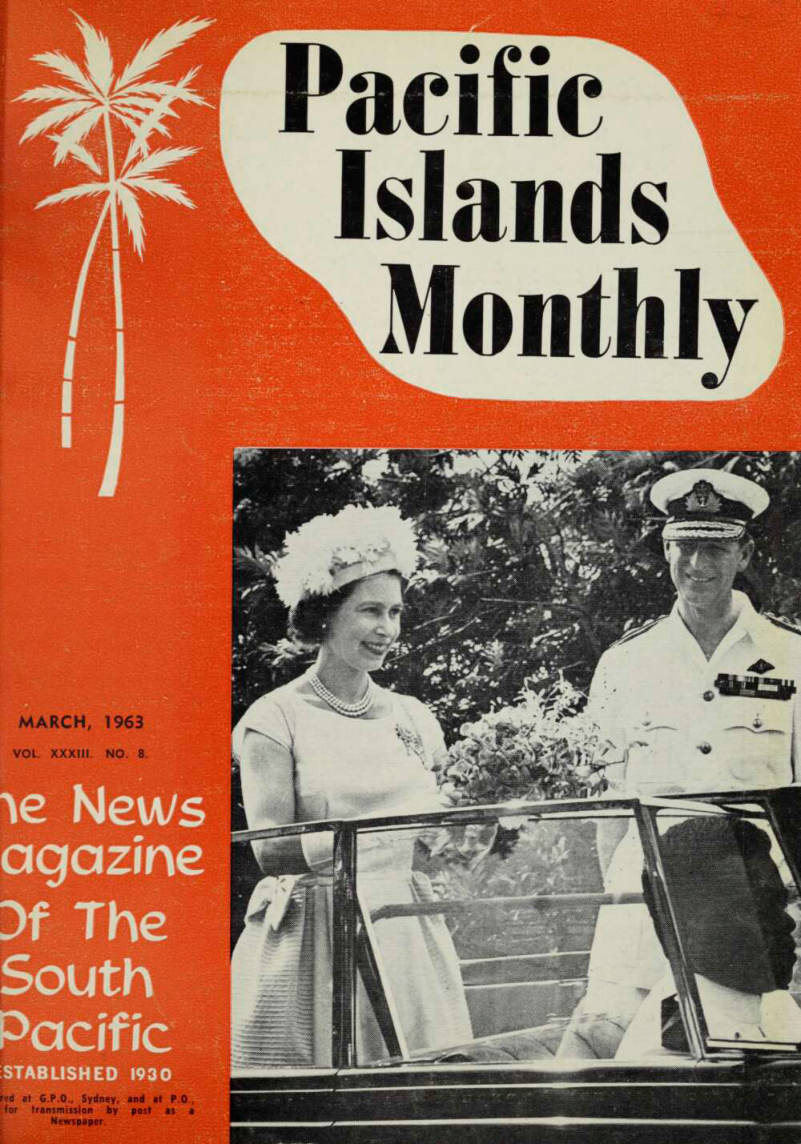 1
1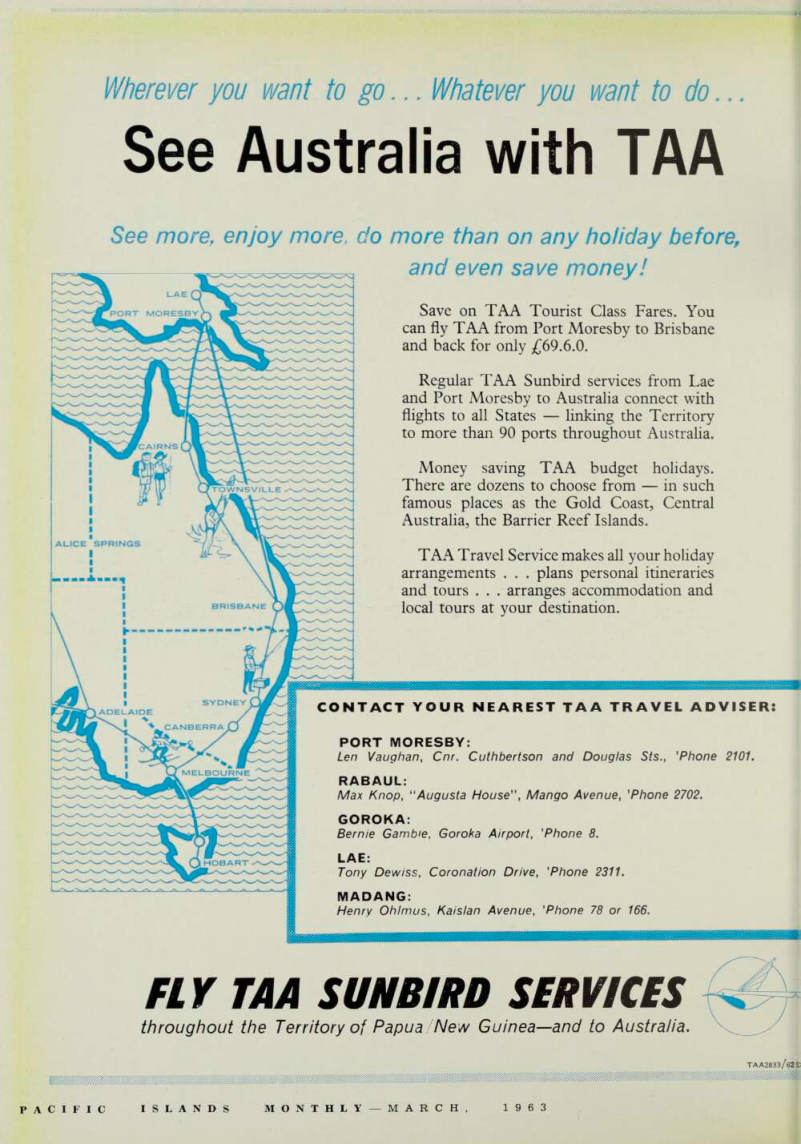 2
2 3
3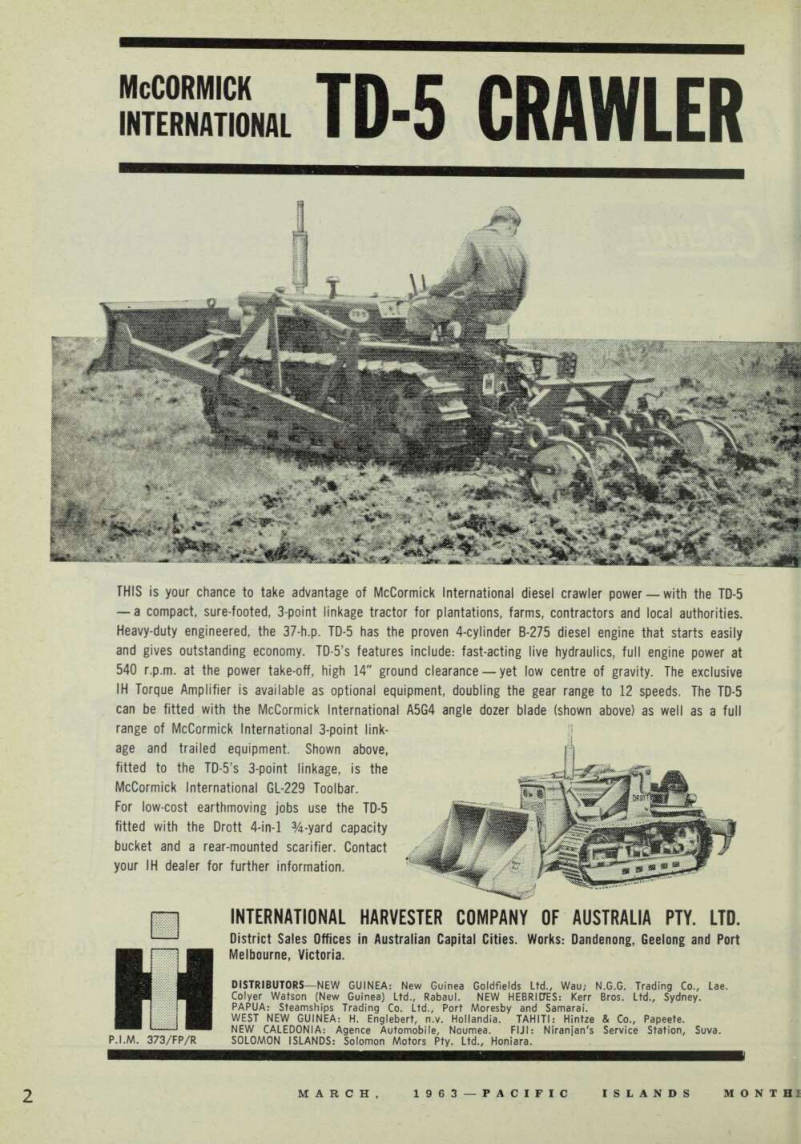 4
4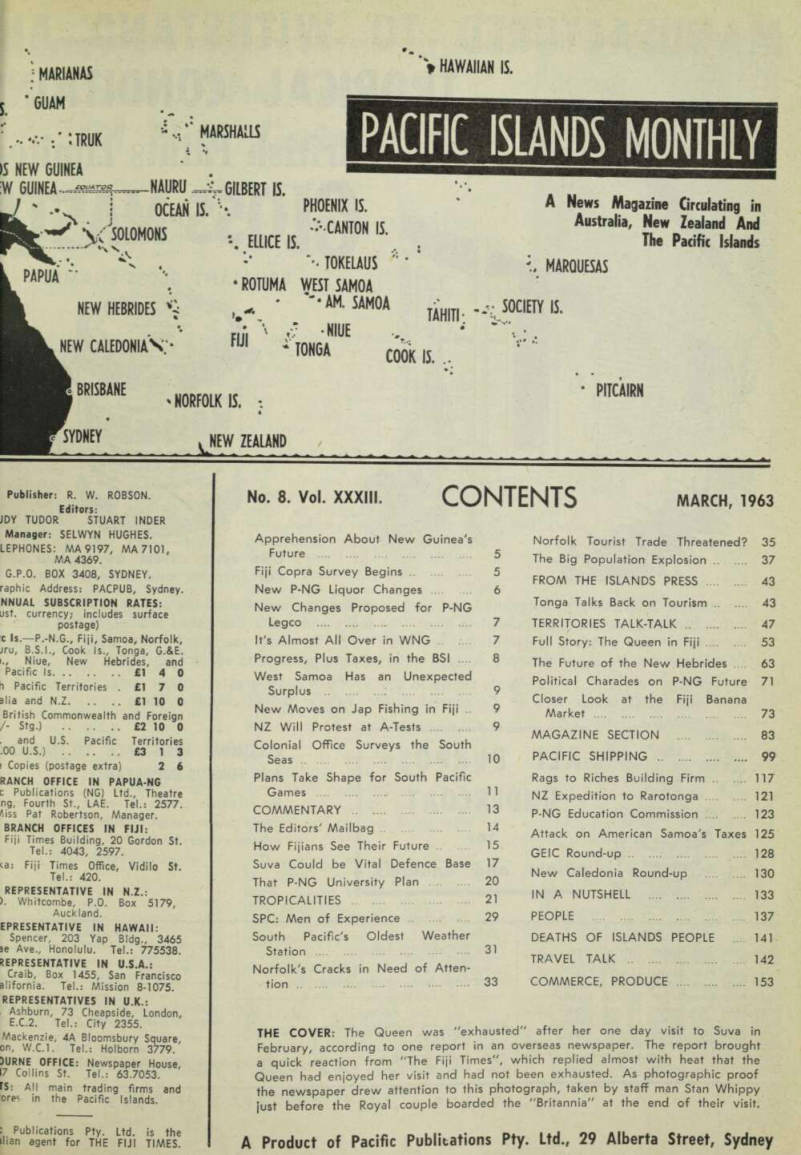 5
5 6
6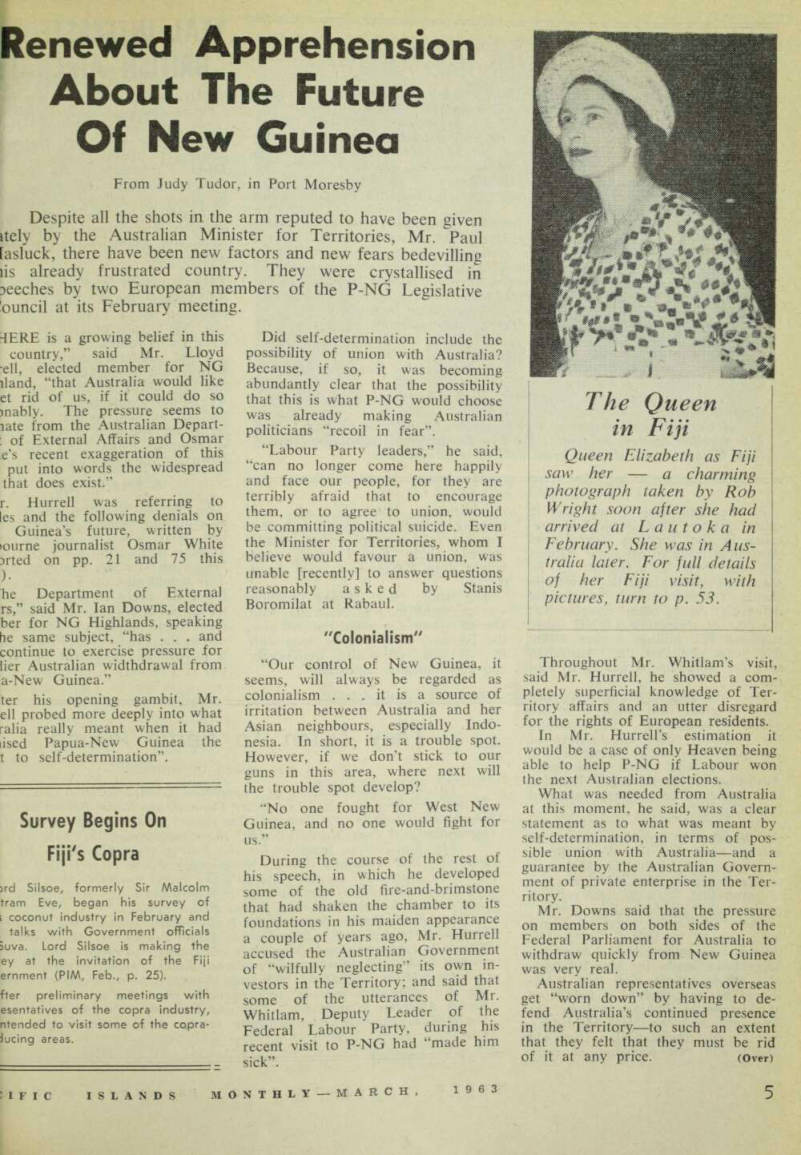 7
7 8
8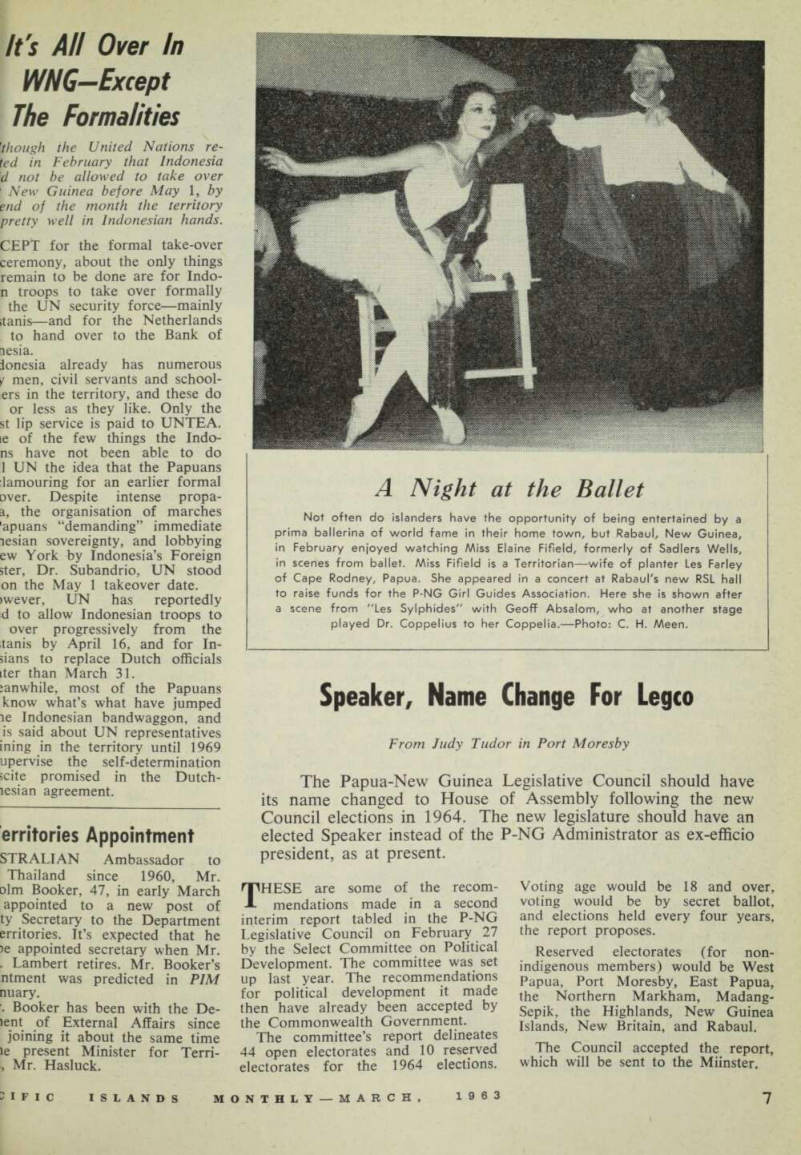 9
9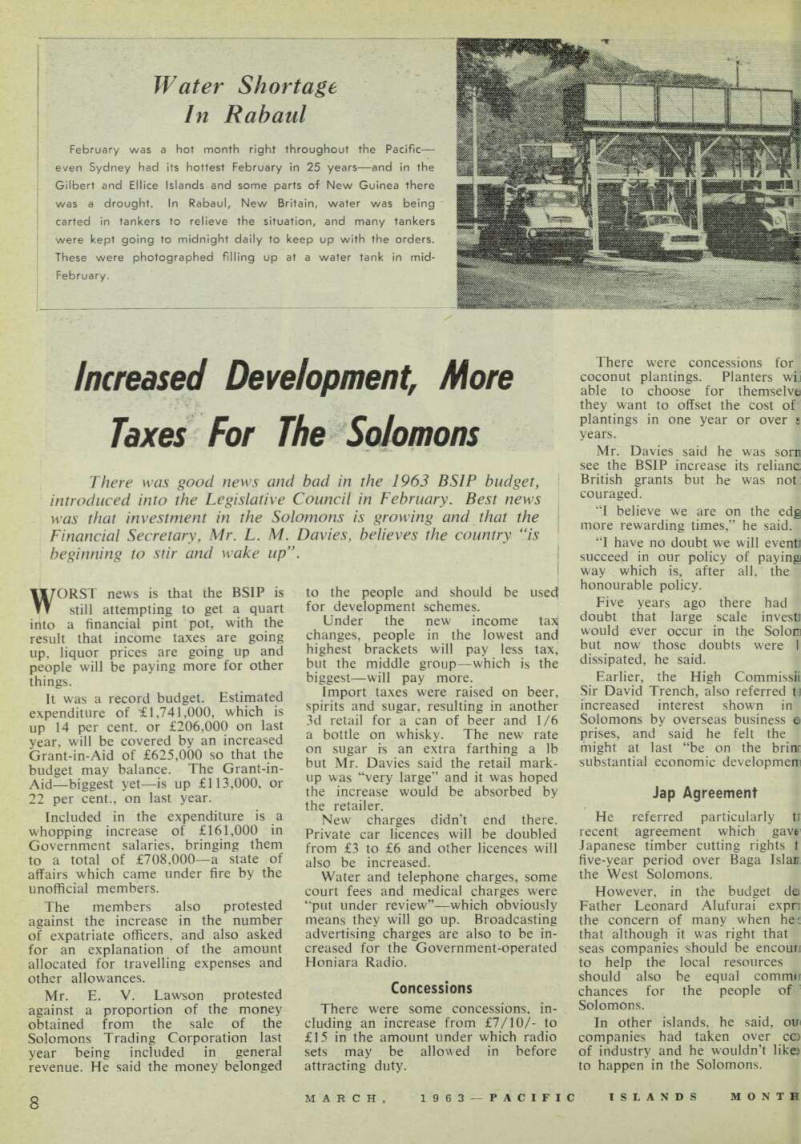 10
10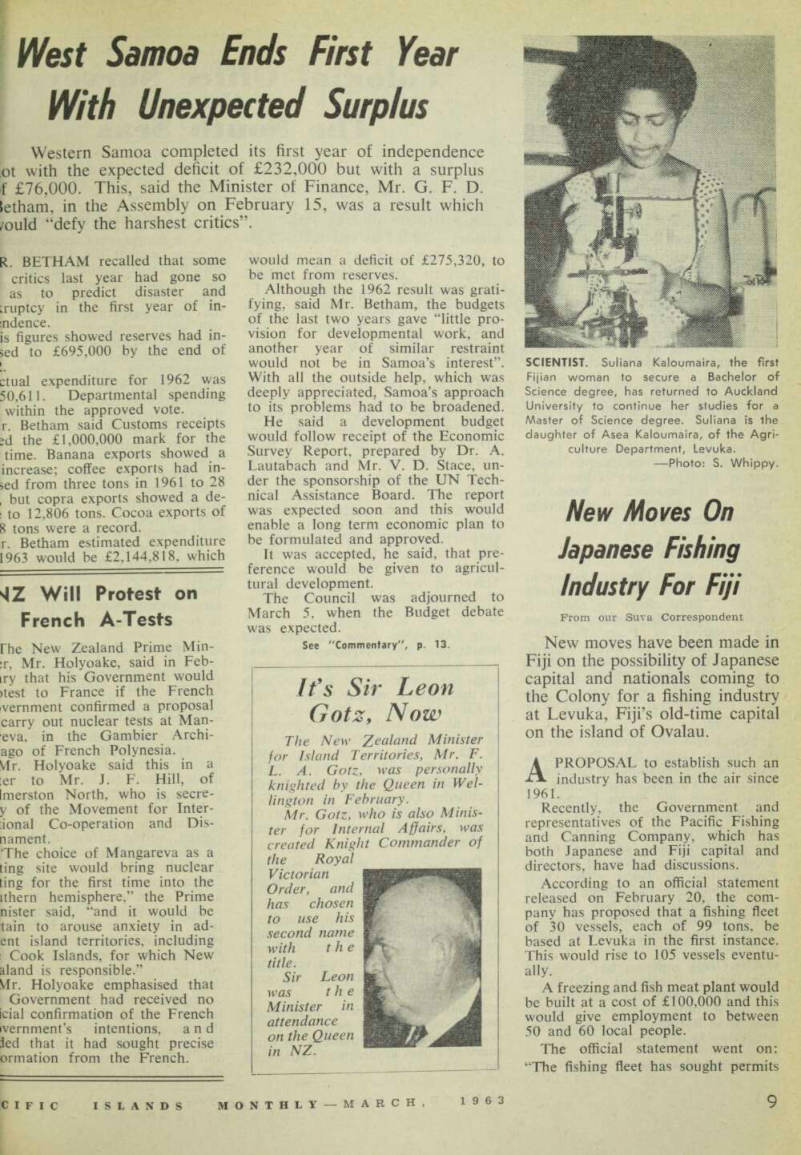 11
11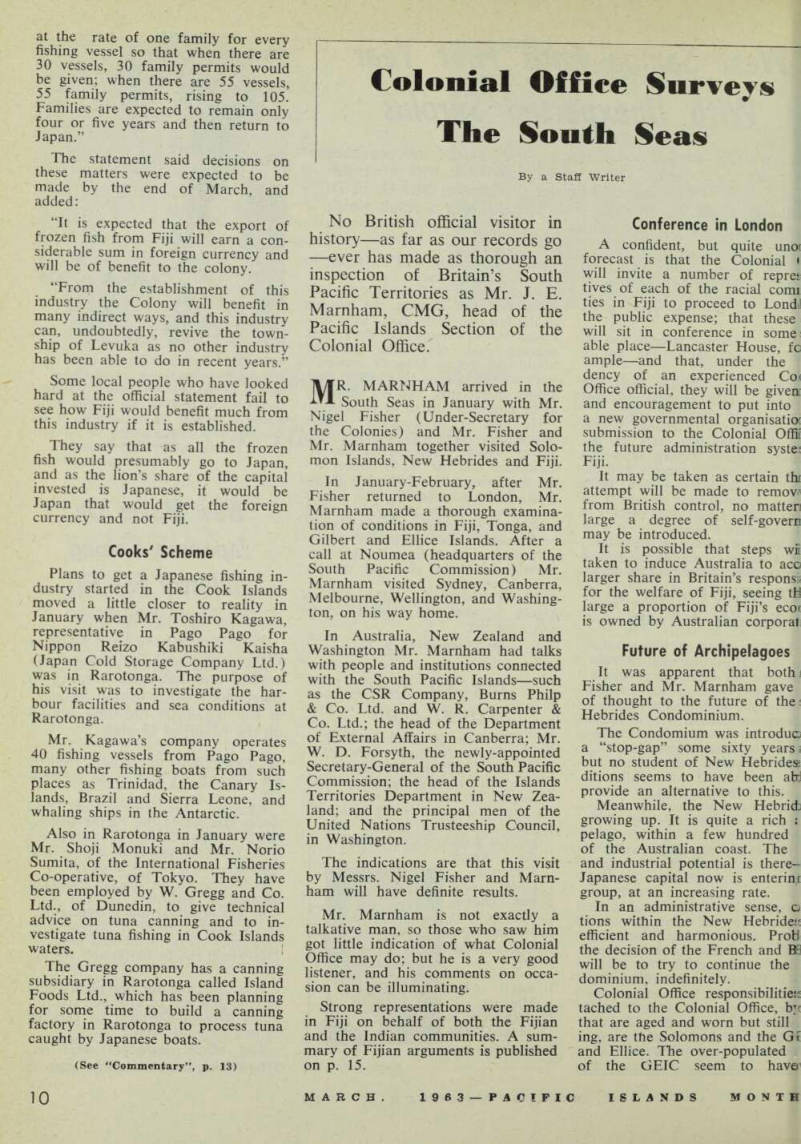 12
12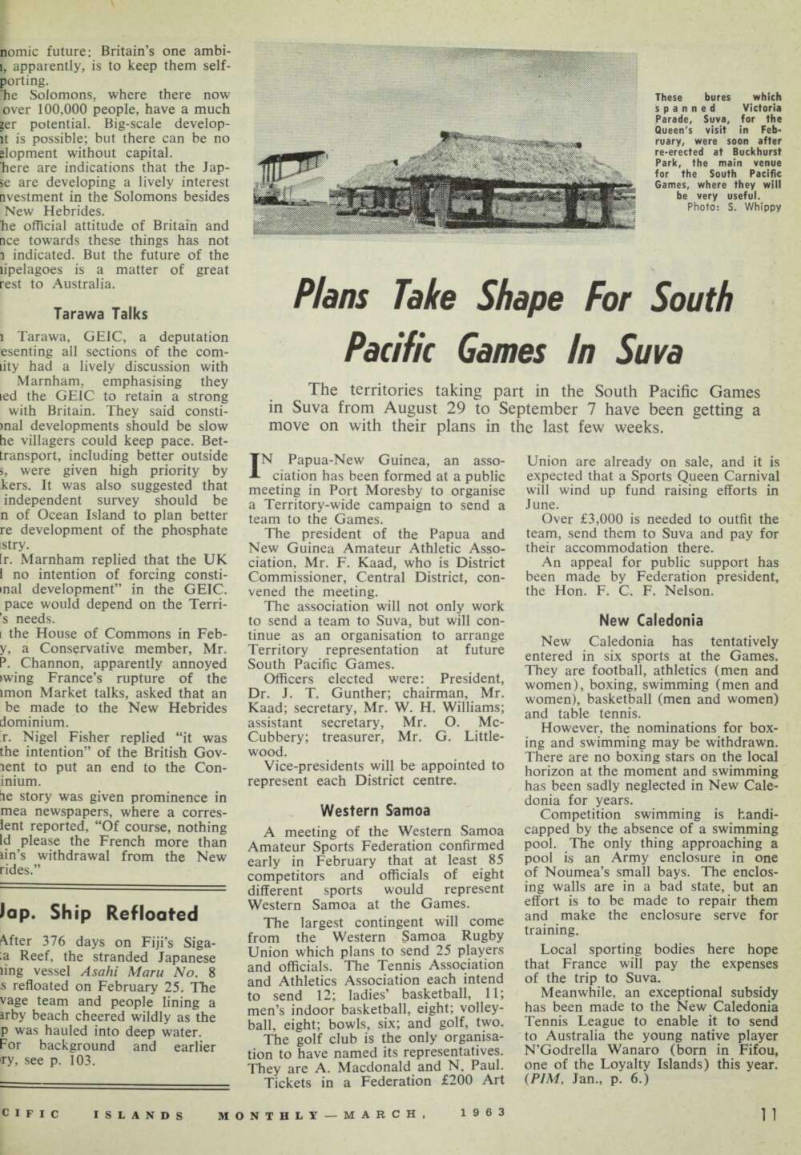 13
13 14
14 15
15 16
16 17
17 18
18 19
19 20
20 21
21 22
22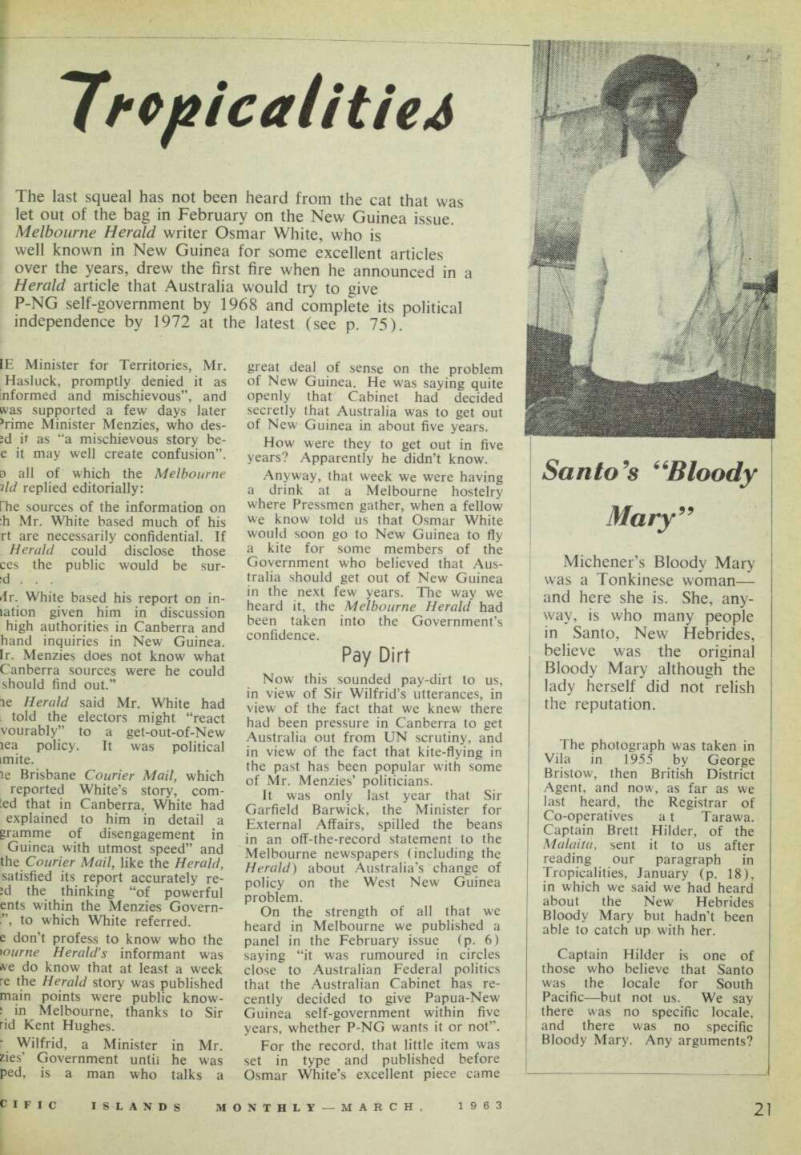 23
23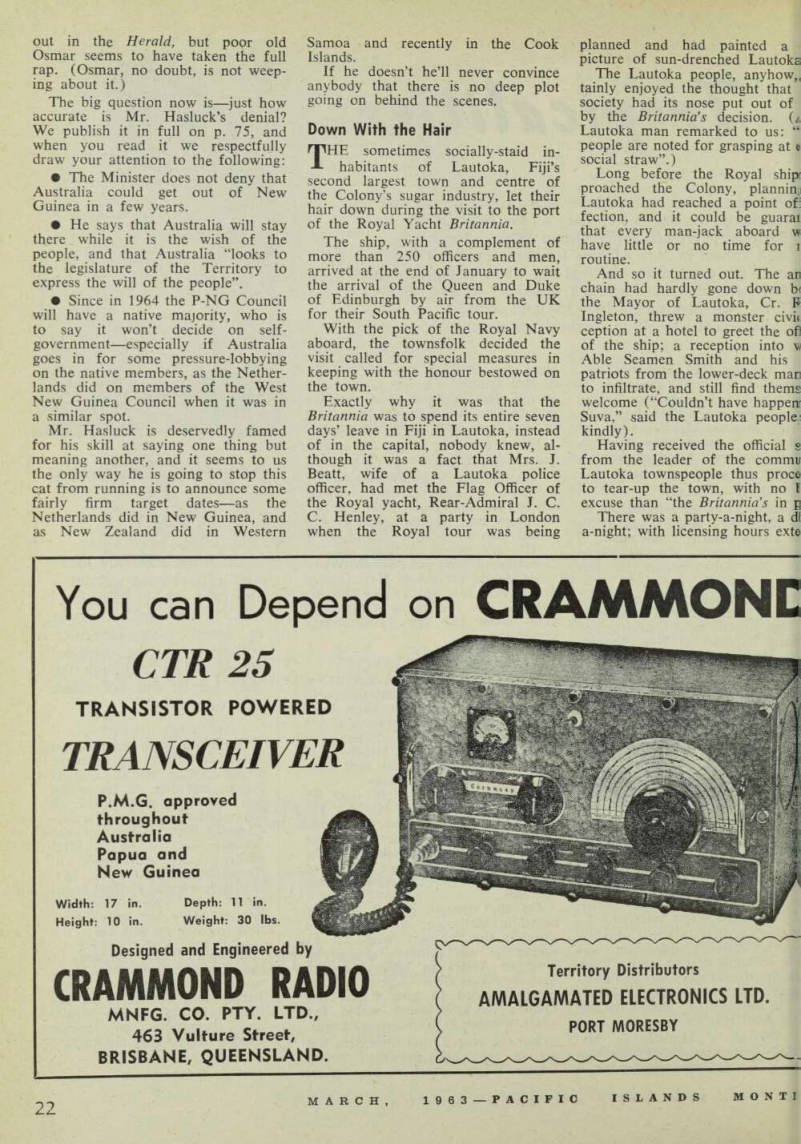 24
24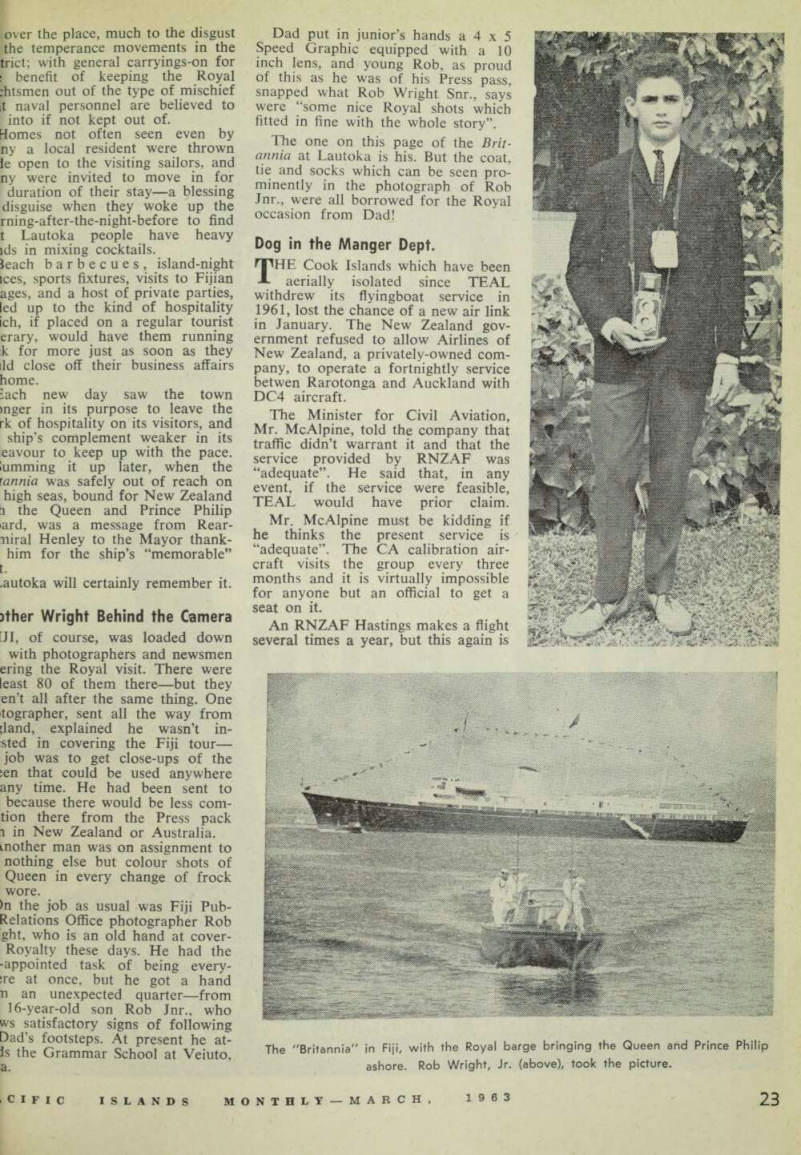 25
25 26
26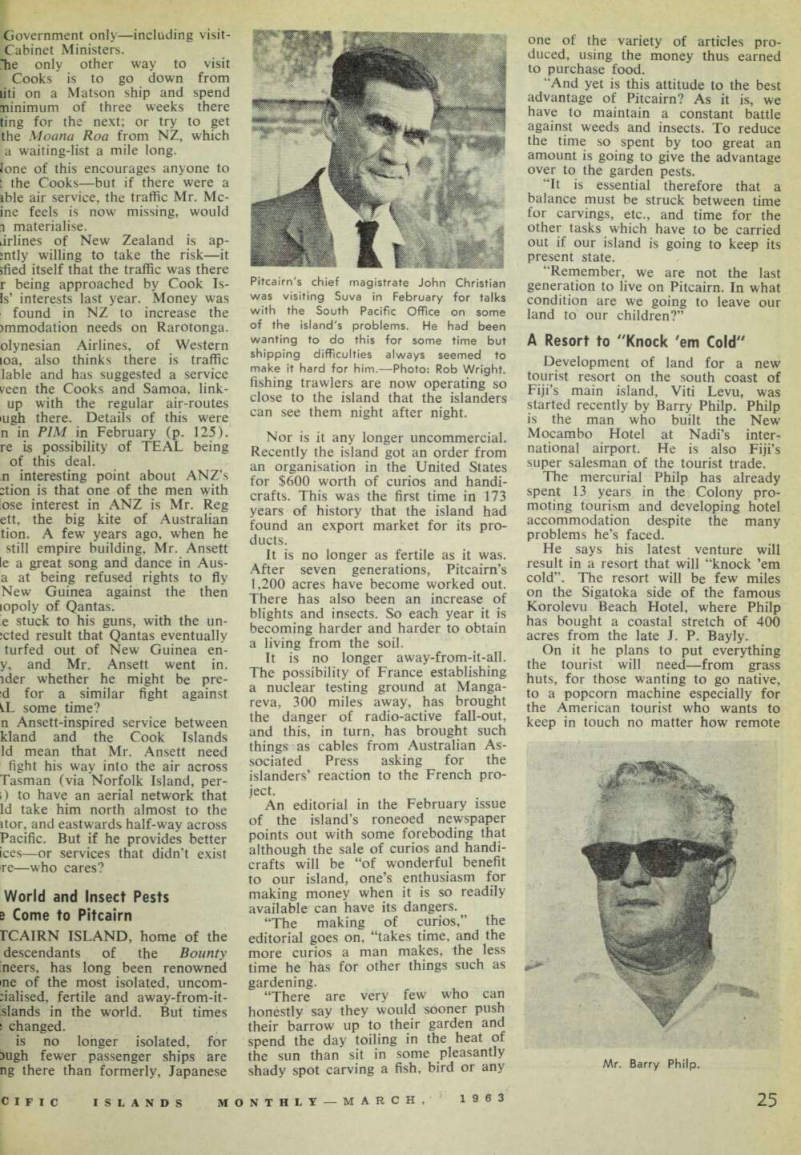 27
27 28
28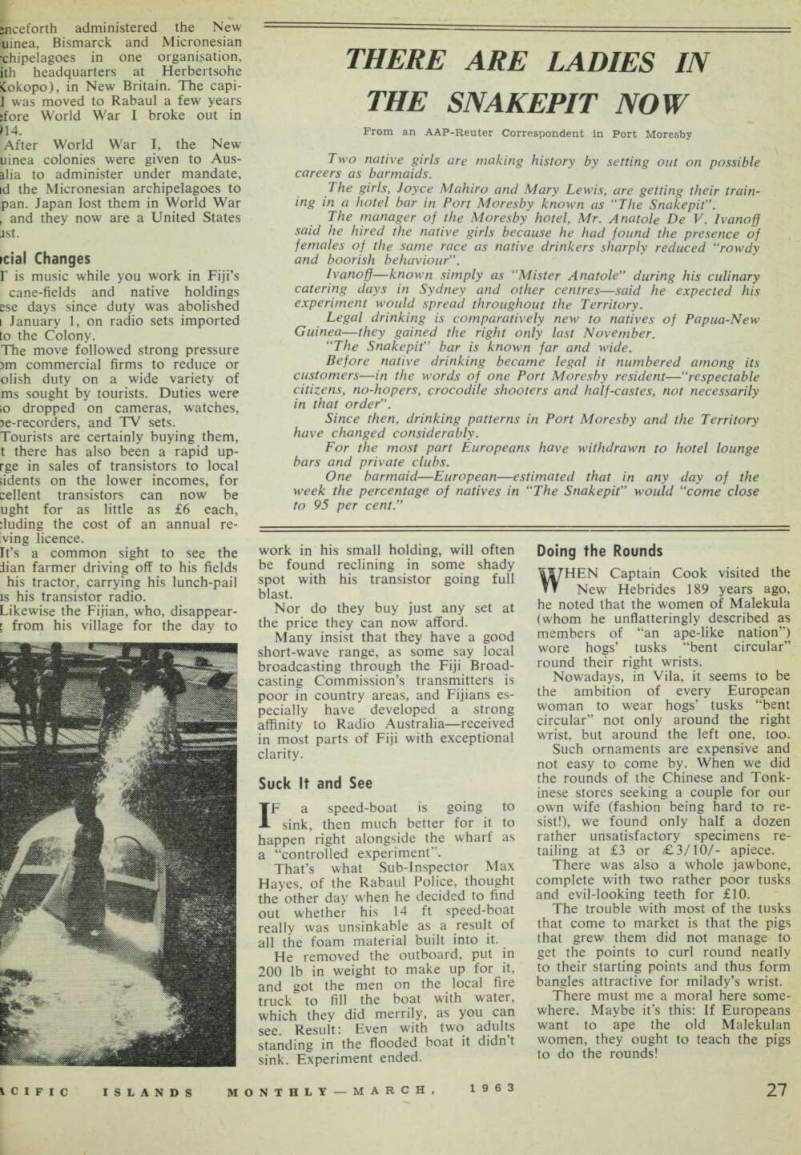 29
29 30
30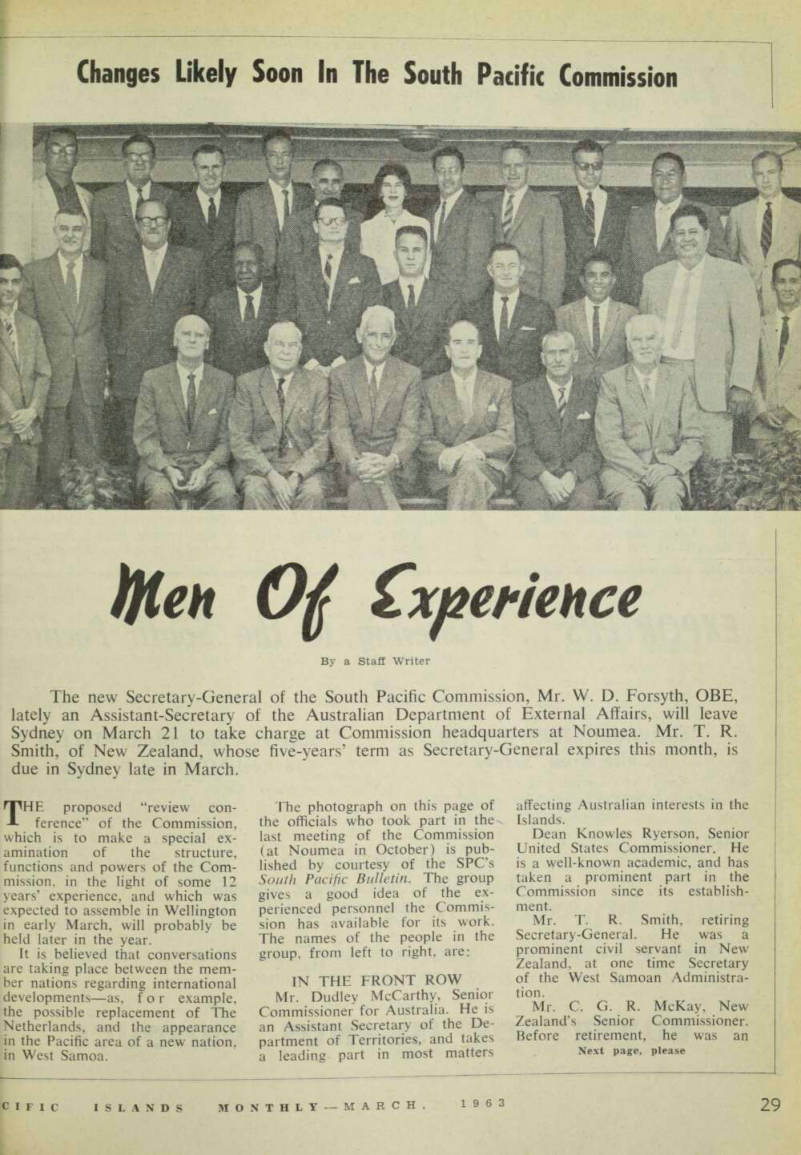 31
31 32
32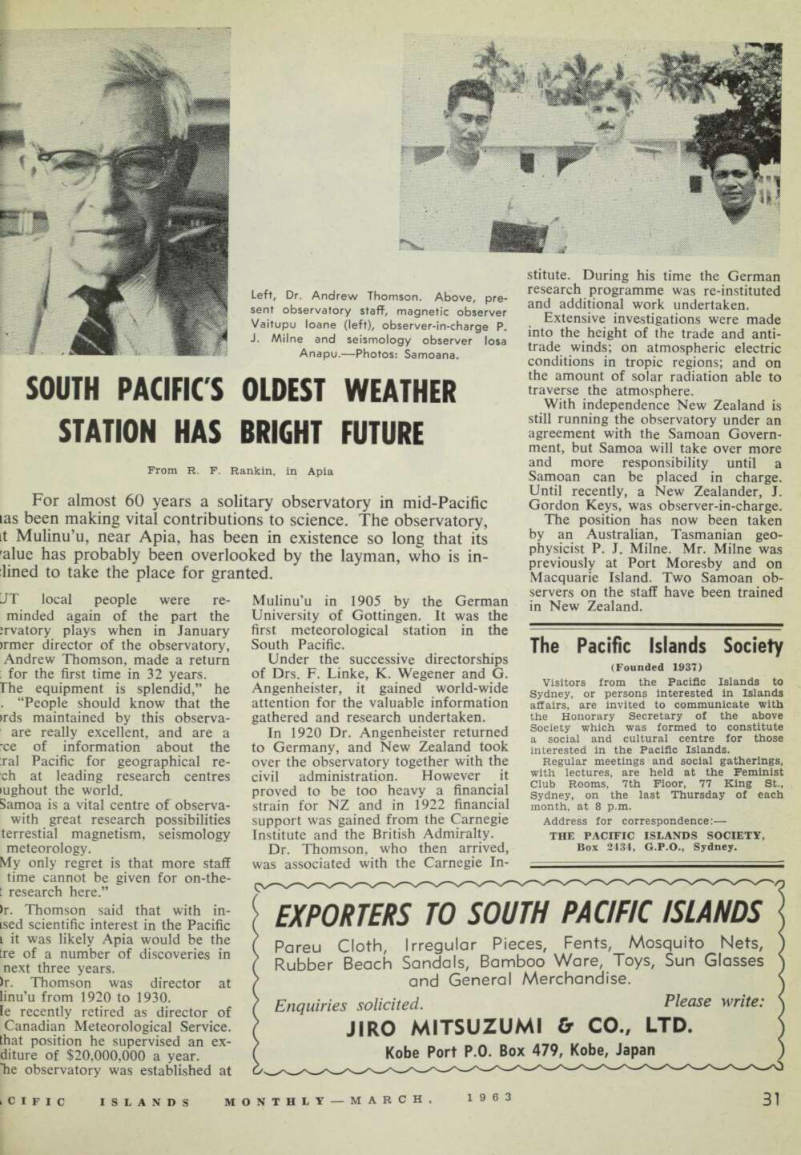 33
33 34
34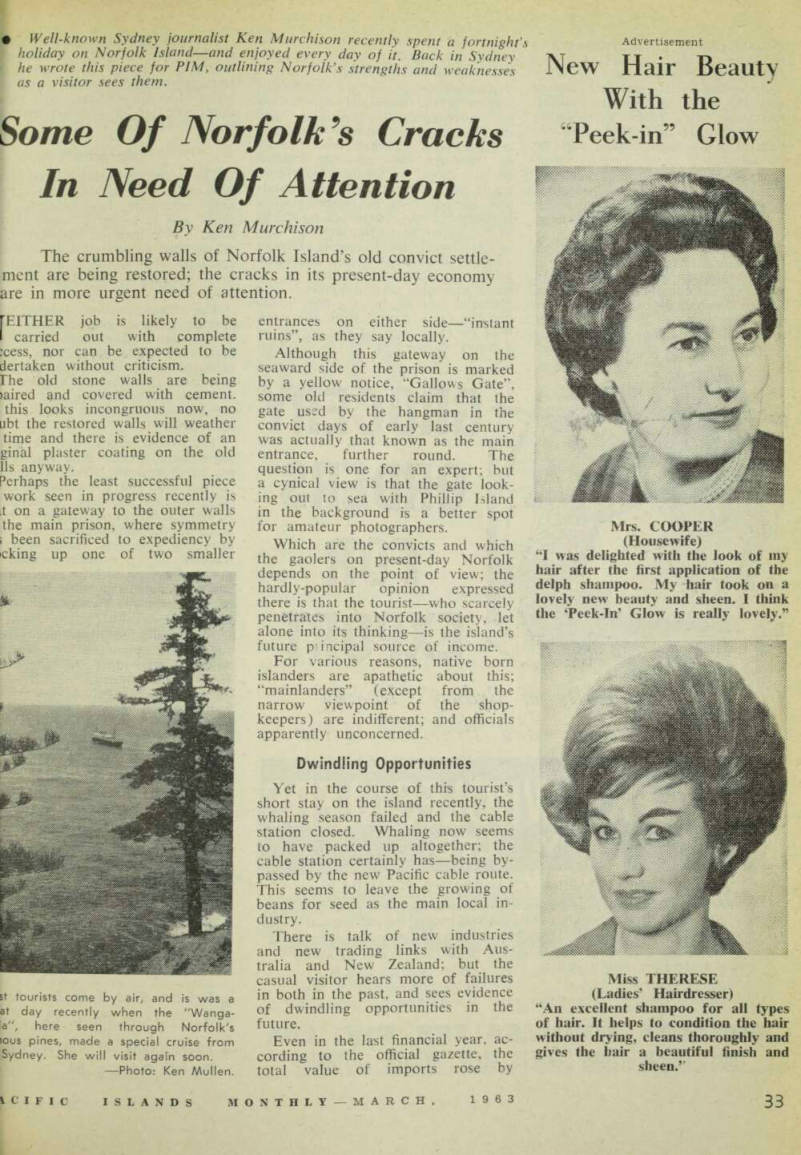 35
35 36
36 37
37 38
38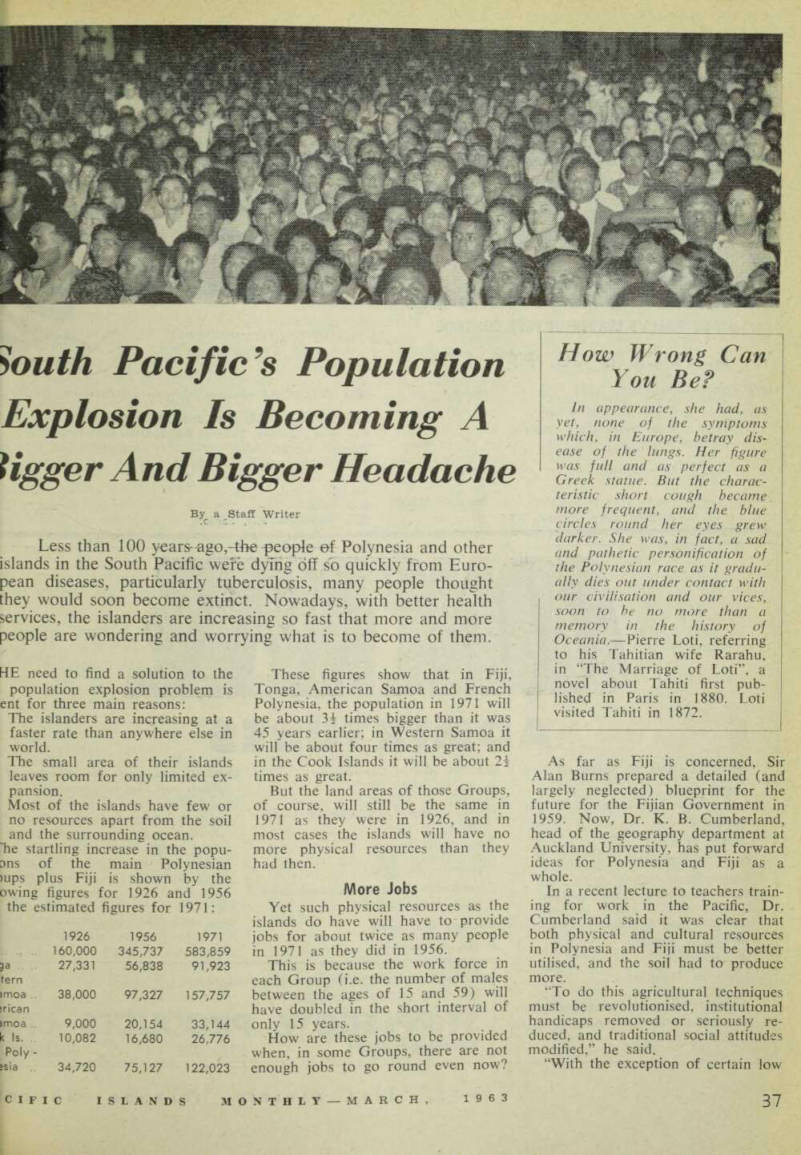 39
39 40
40 41
41 42
42 43
43 44
44 45
45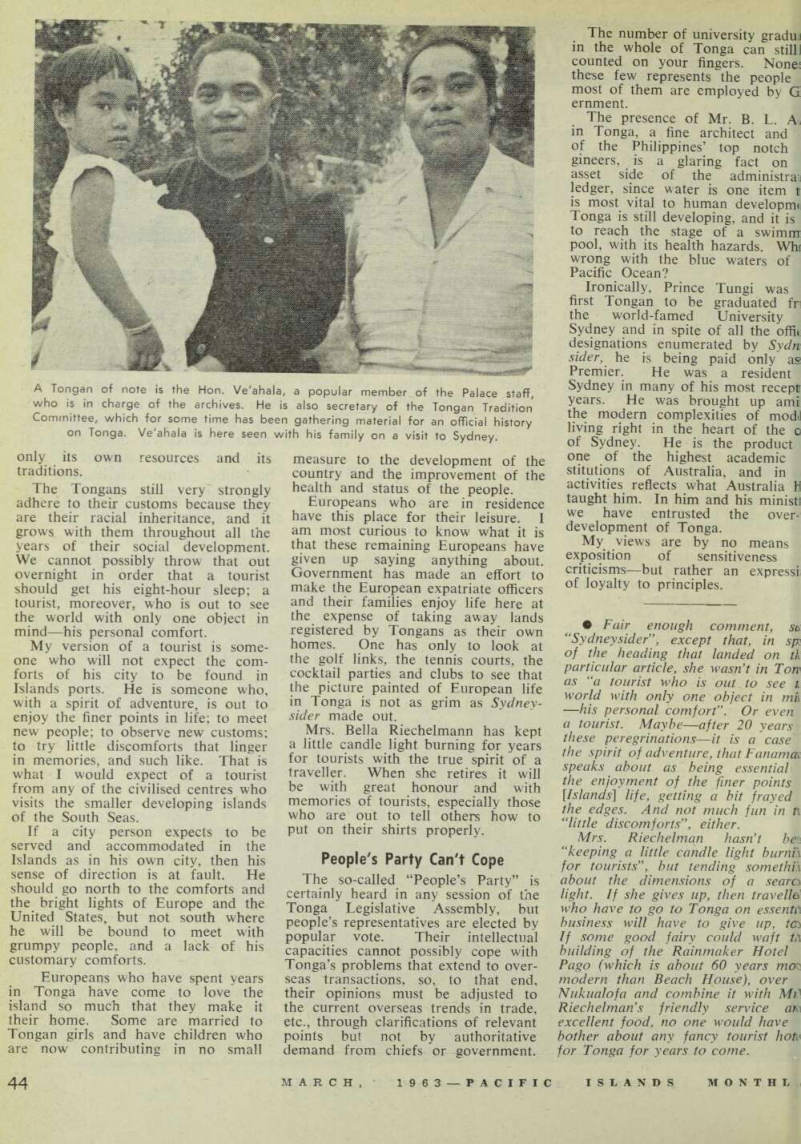 46
46 47
47 48
48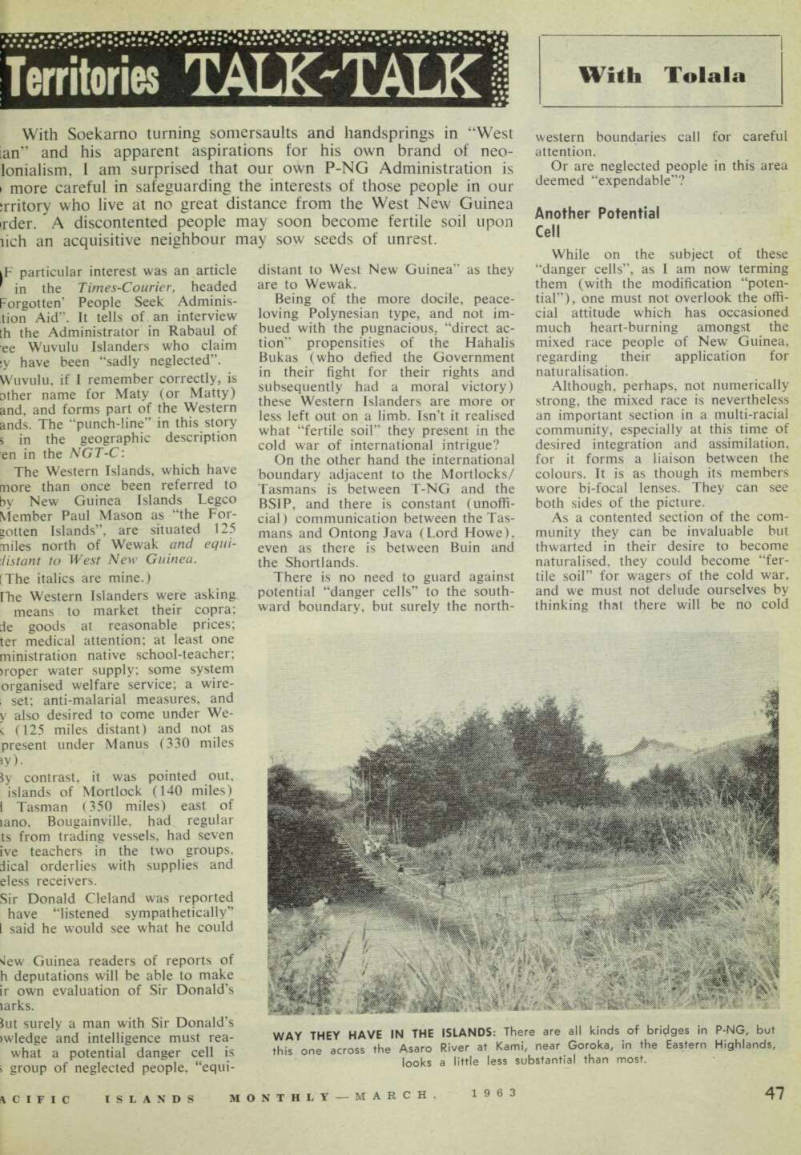 49
49 50
50 51
51 52
52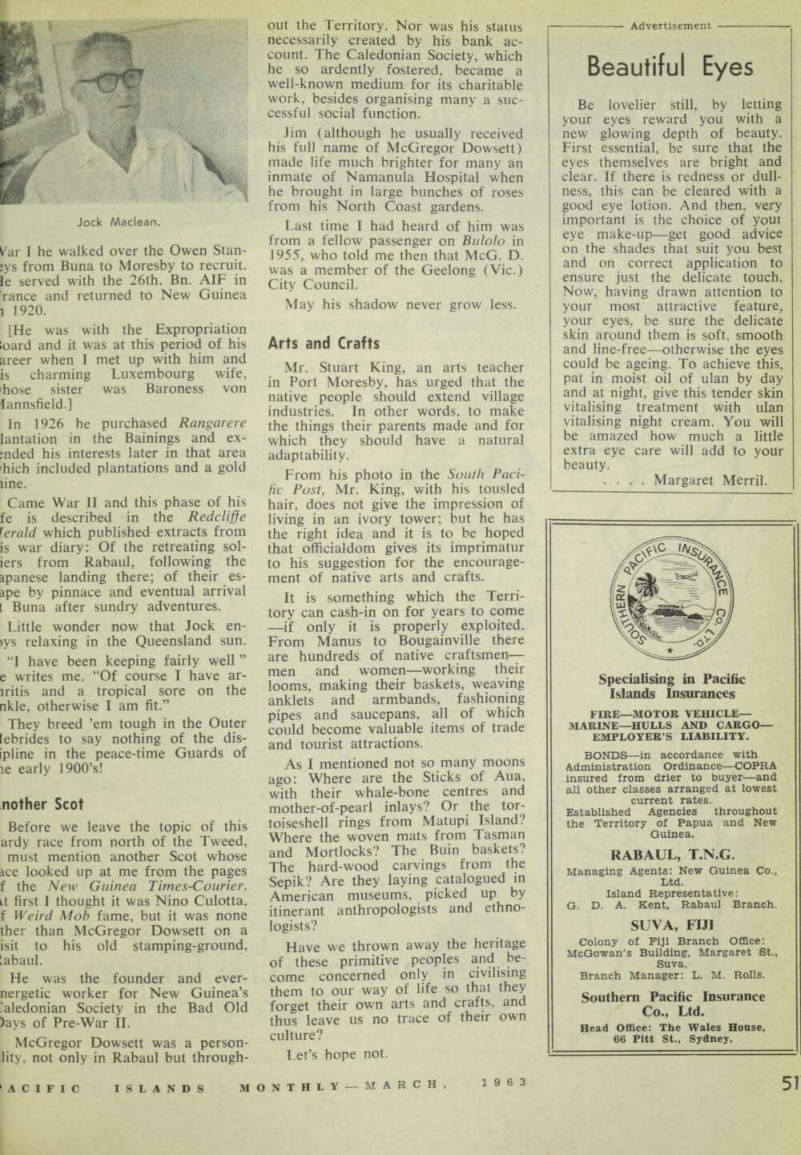 53
53 54
54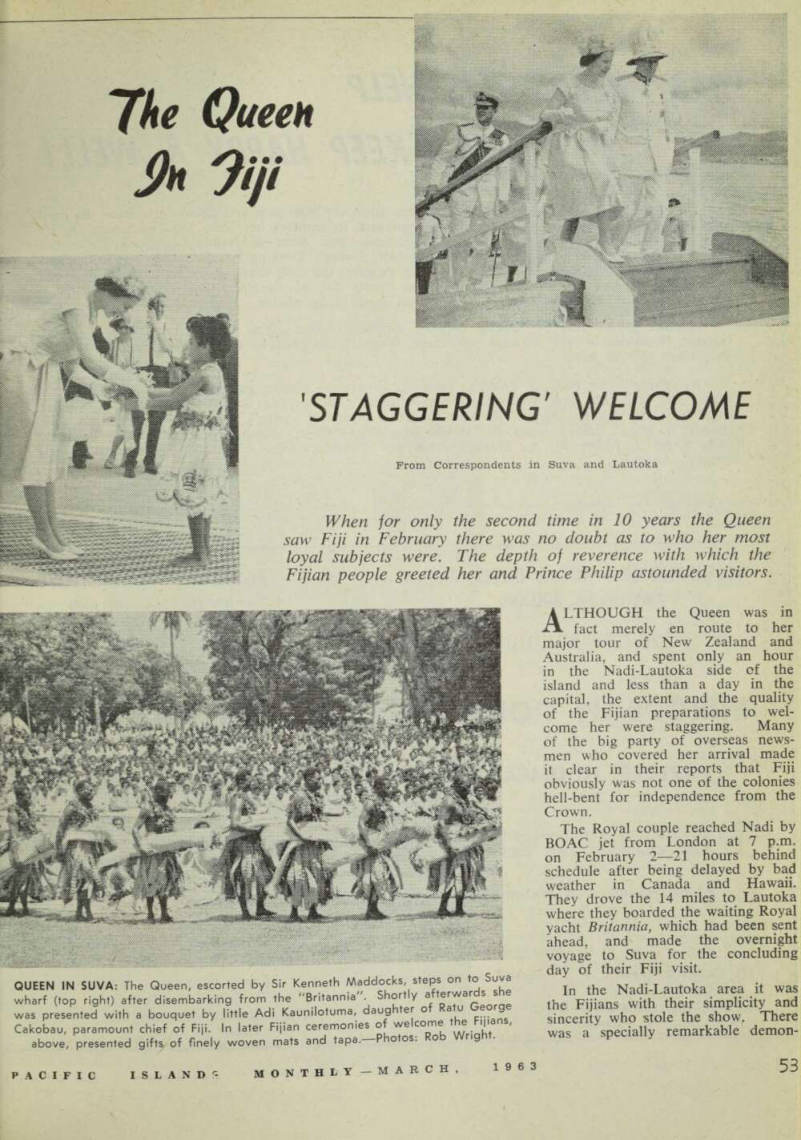 55
55 56
56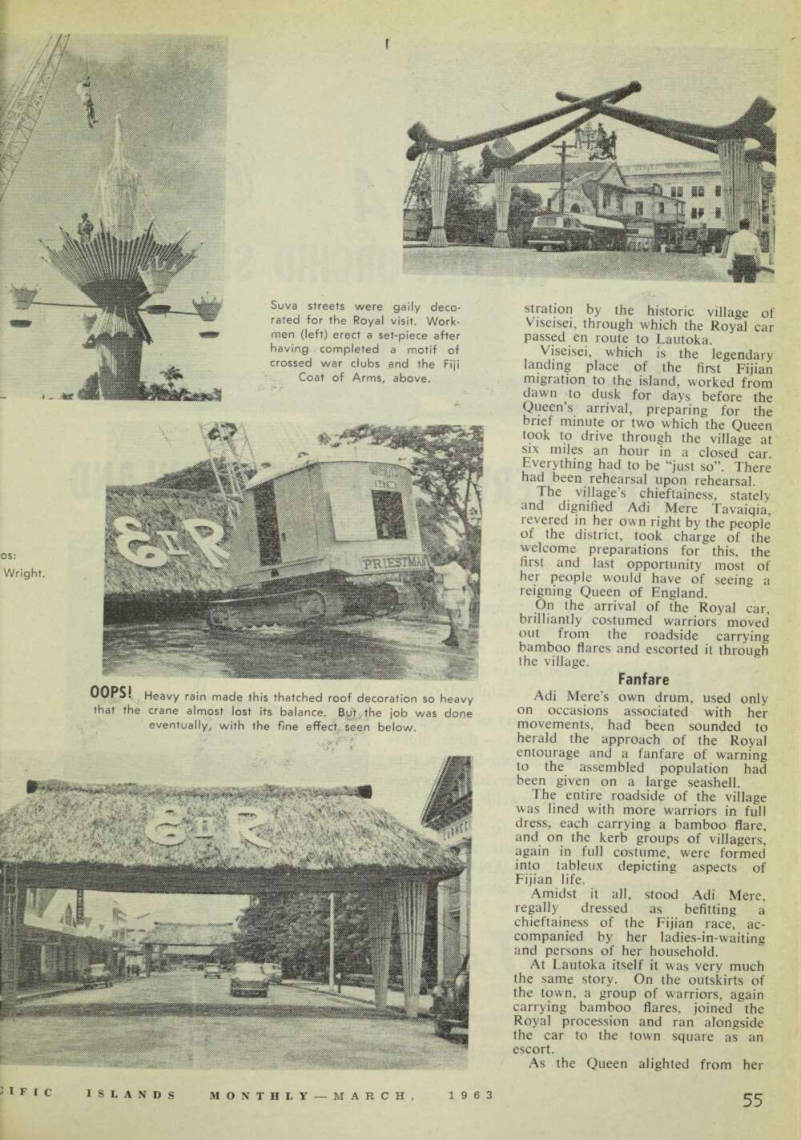 57
57 58
58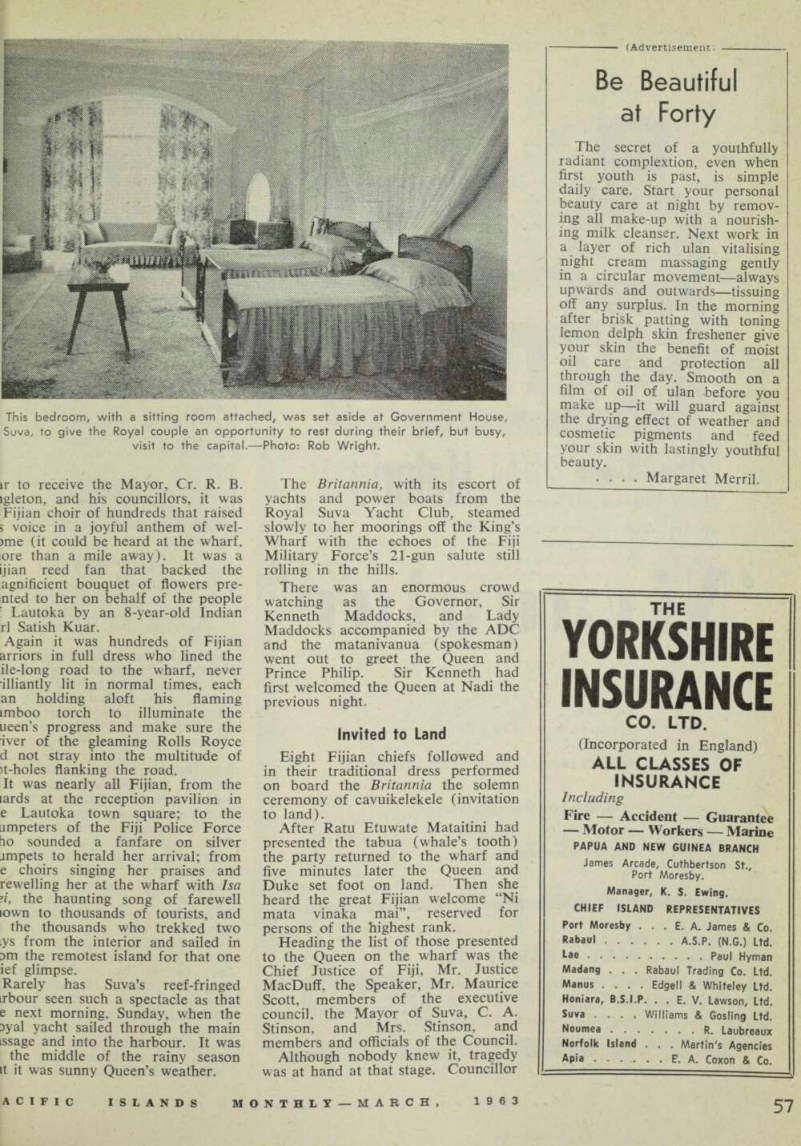 59
59 60
60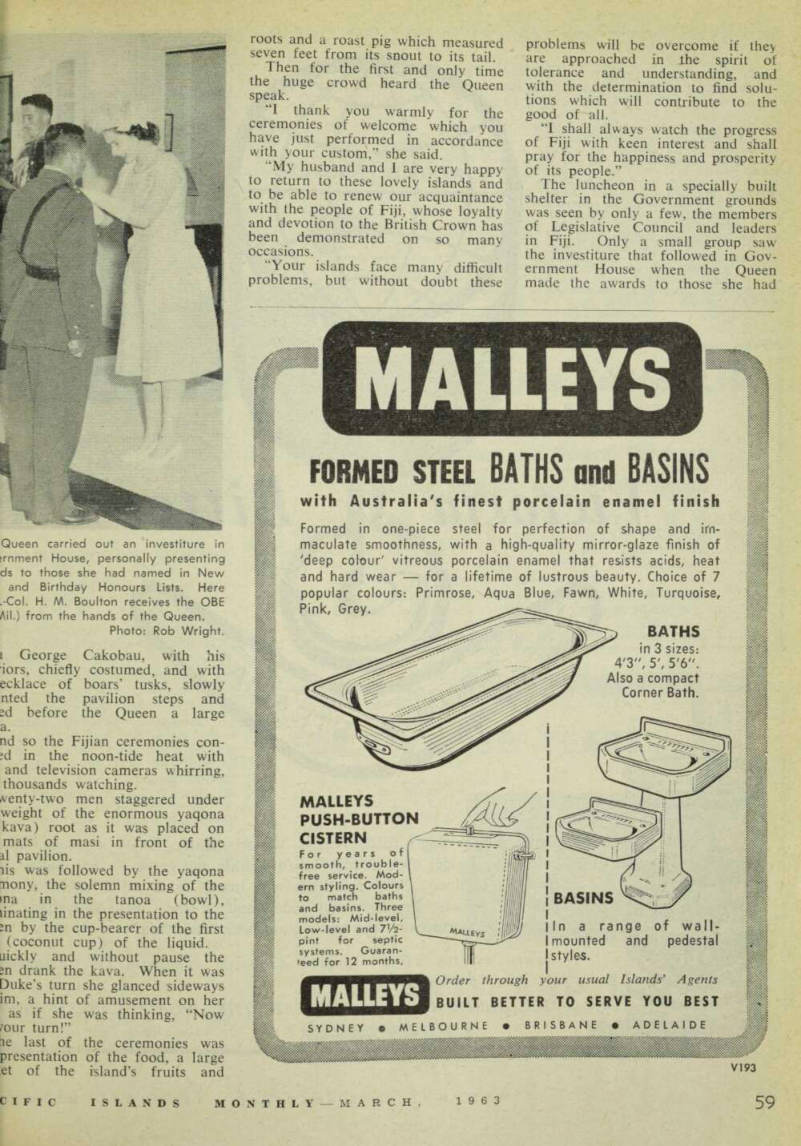 61
61 62
62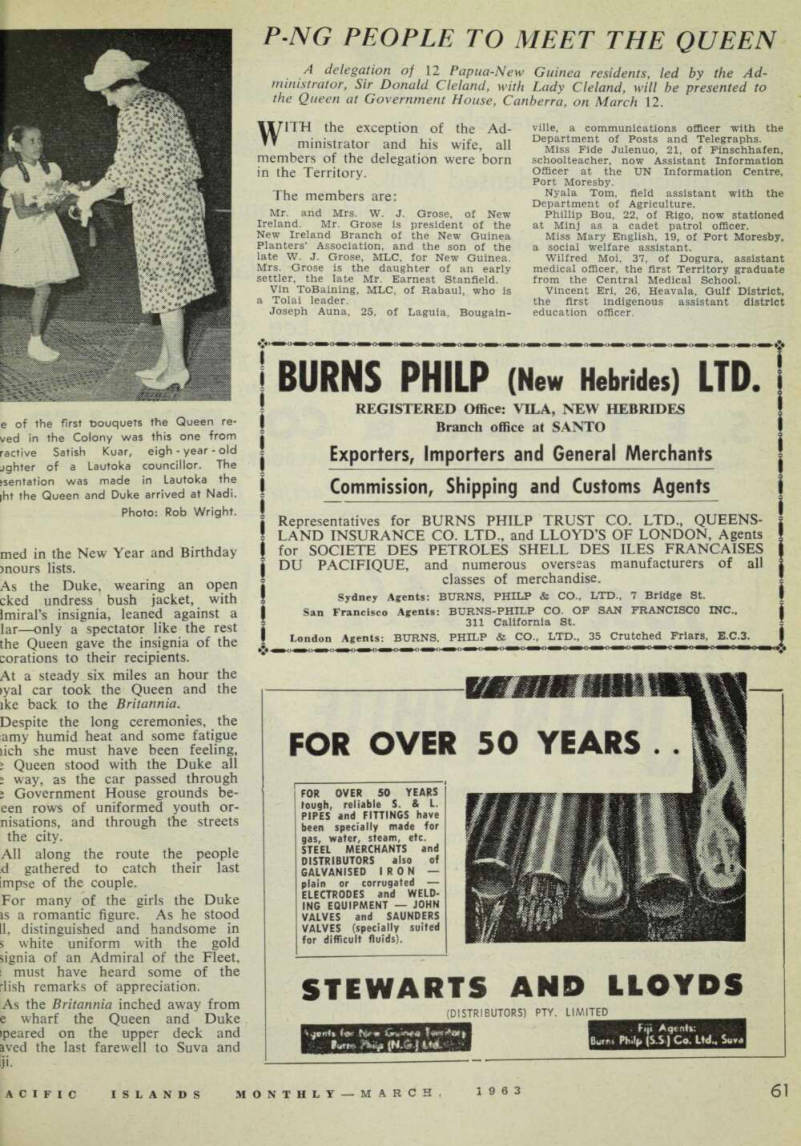 63
63 64
64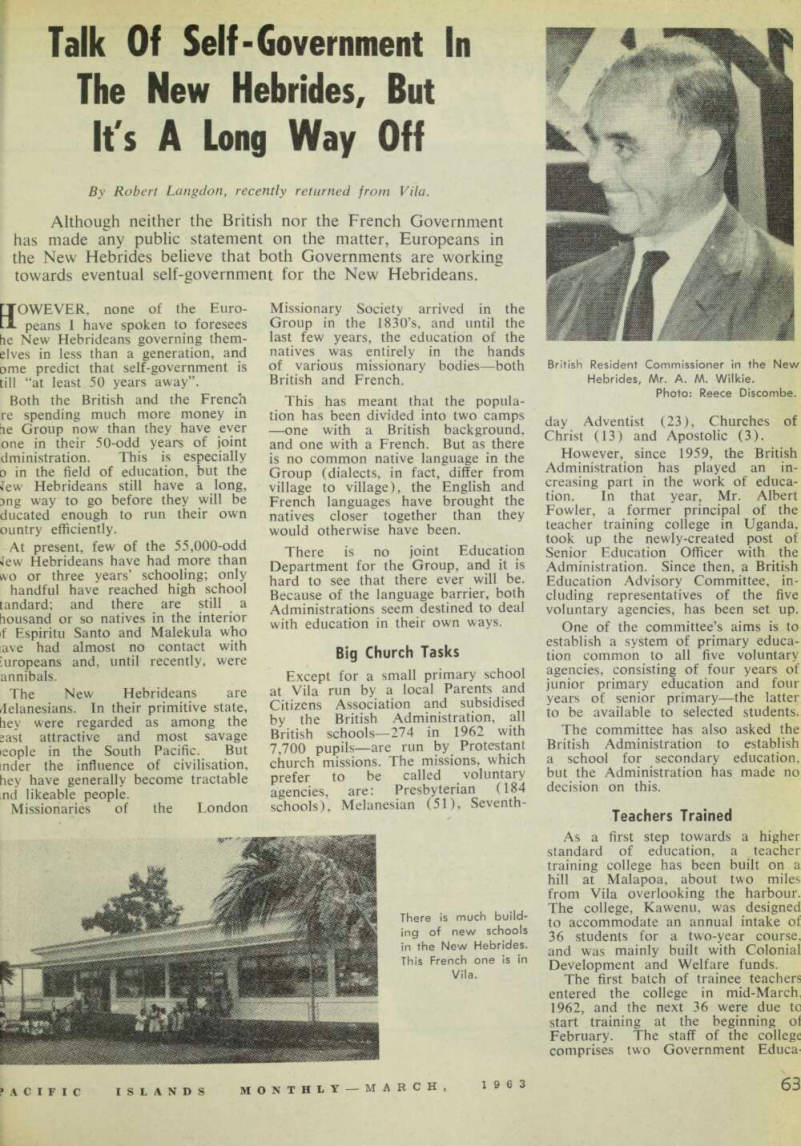 65
65 66
66 67
67 68
68 69
69 70
70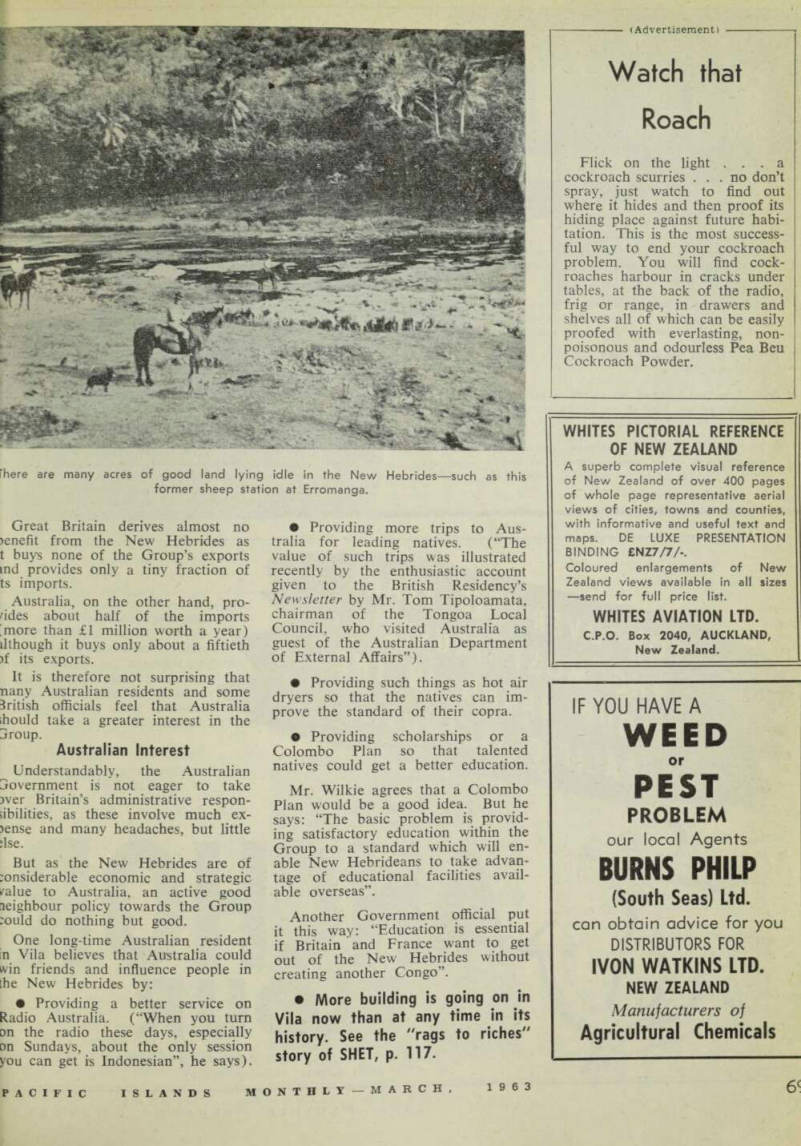 71
71 72
72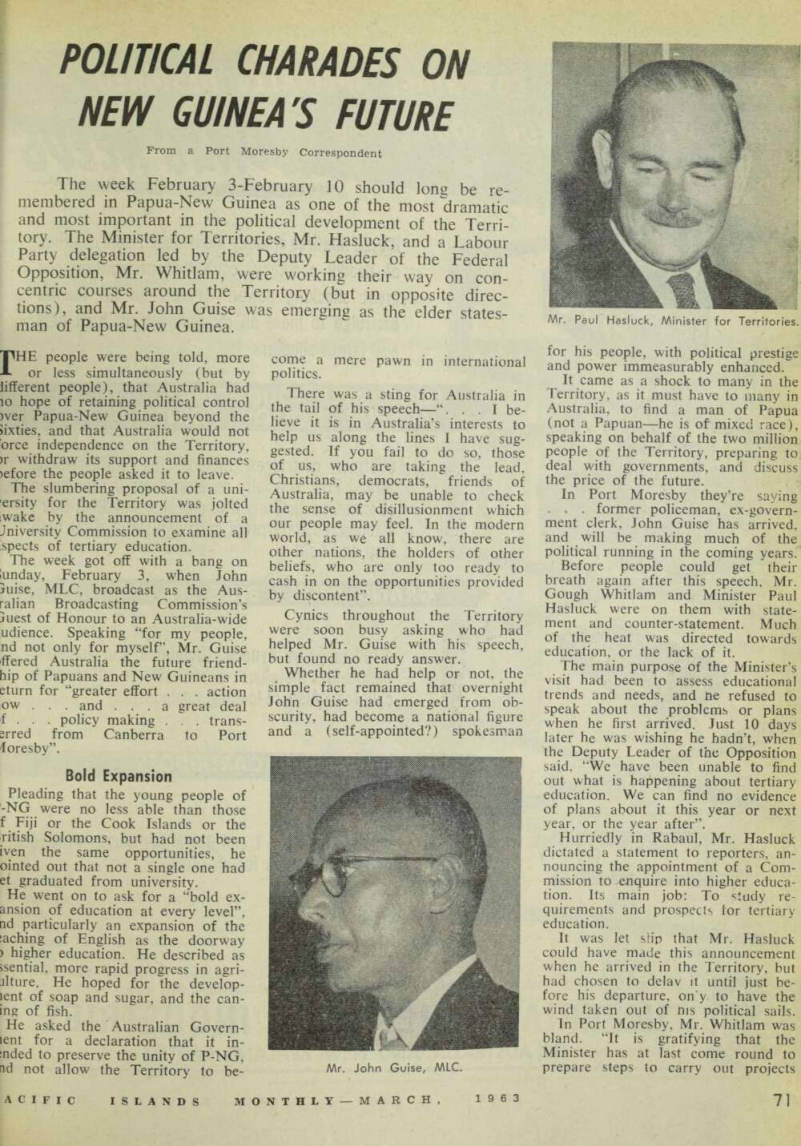 73
73 74
74 75
75 76
76 77
77 78
78 79
79 80
80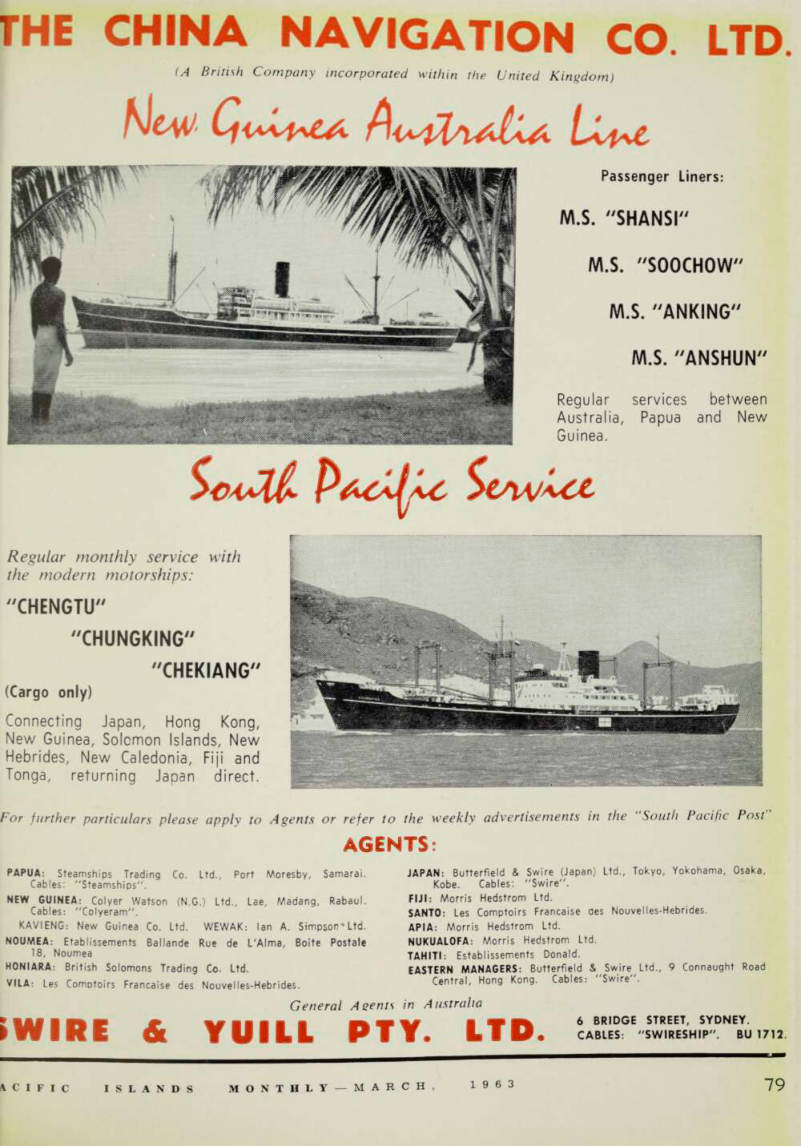 81
81 82
82 83
83 84
84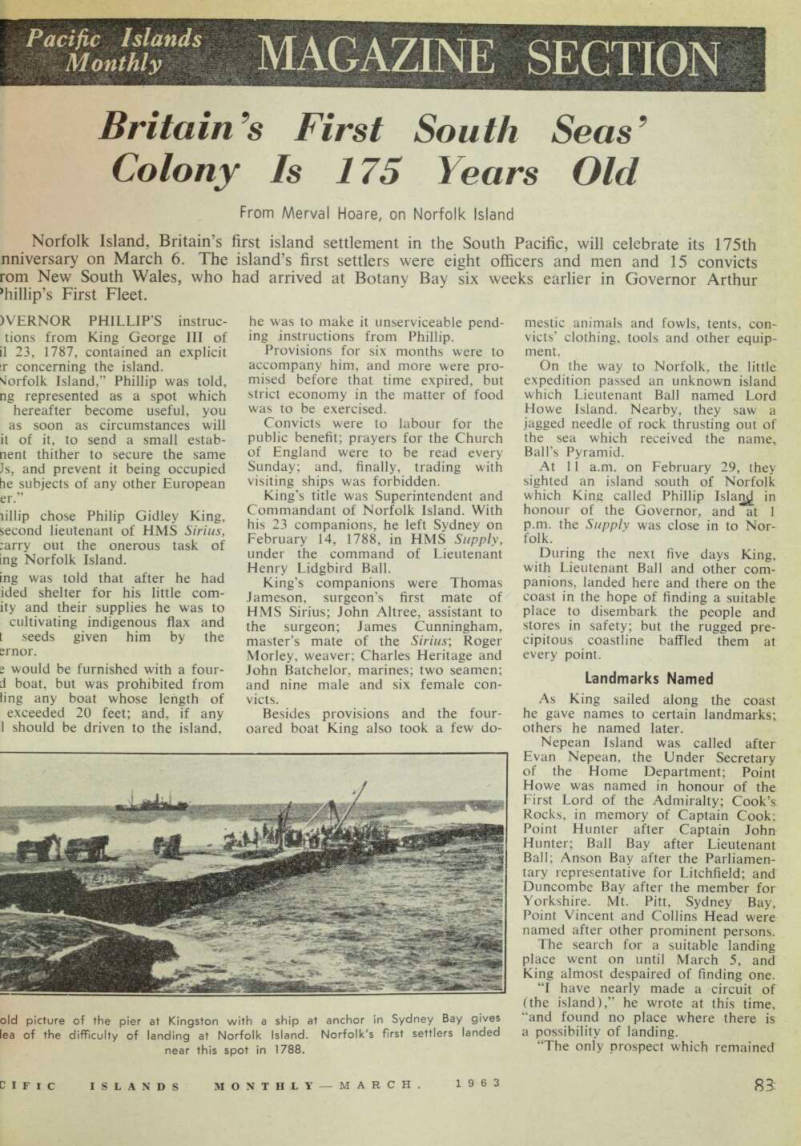 85
85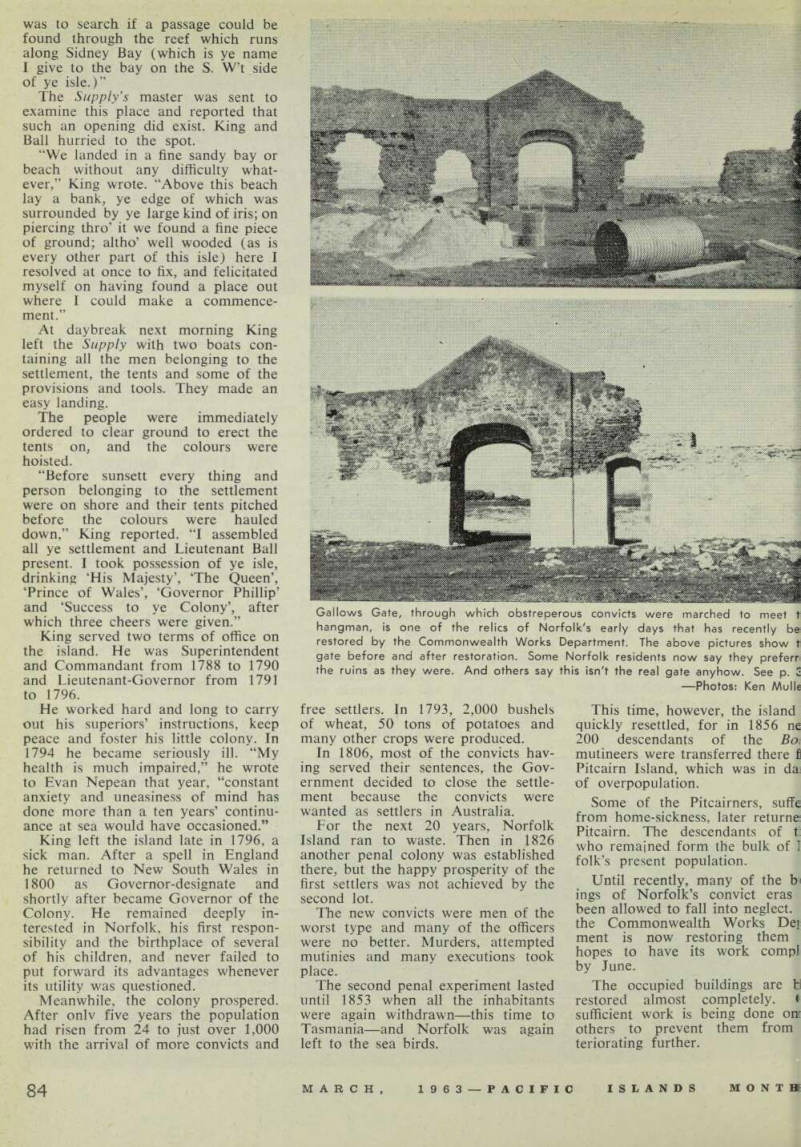 86
86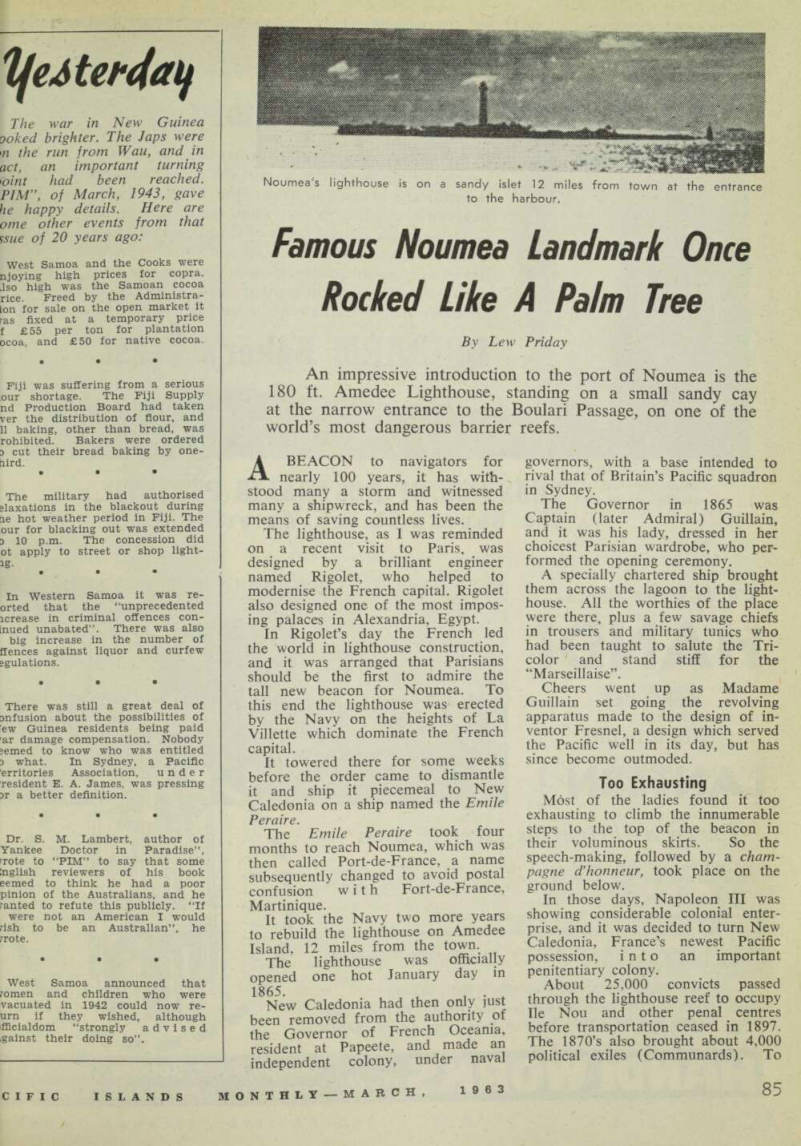 87
87 88
88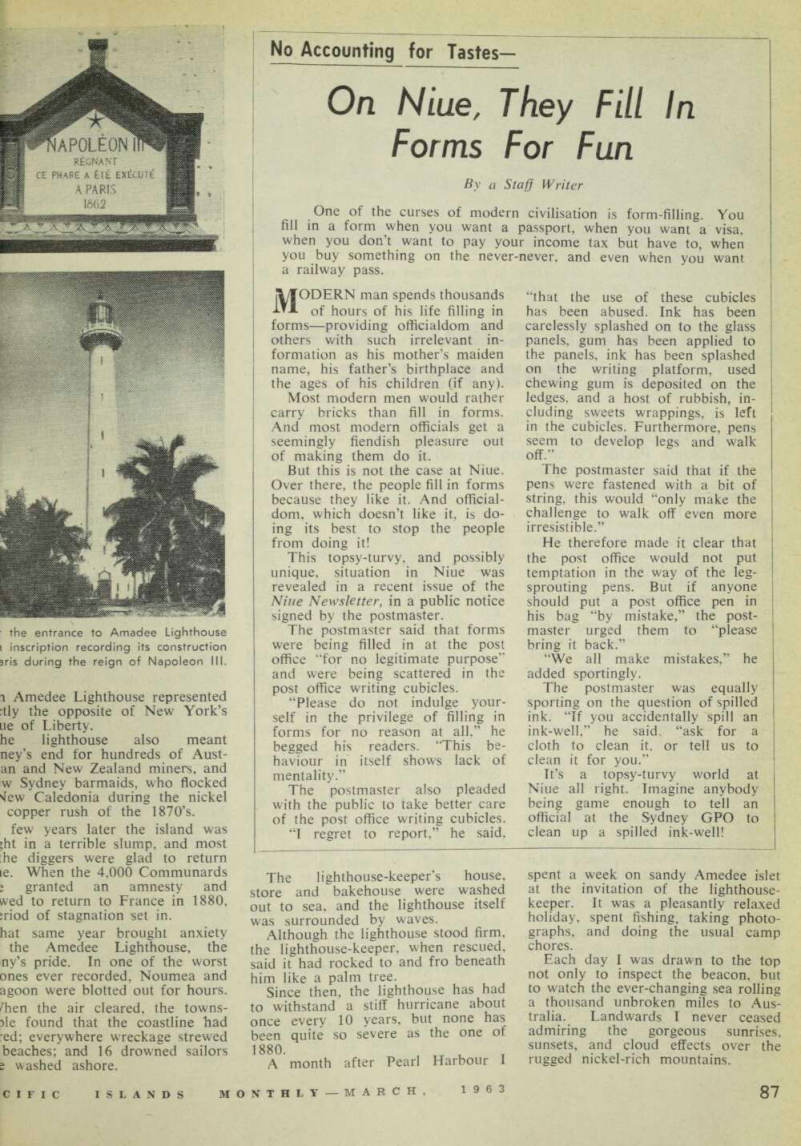 89
89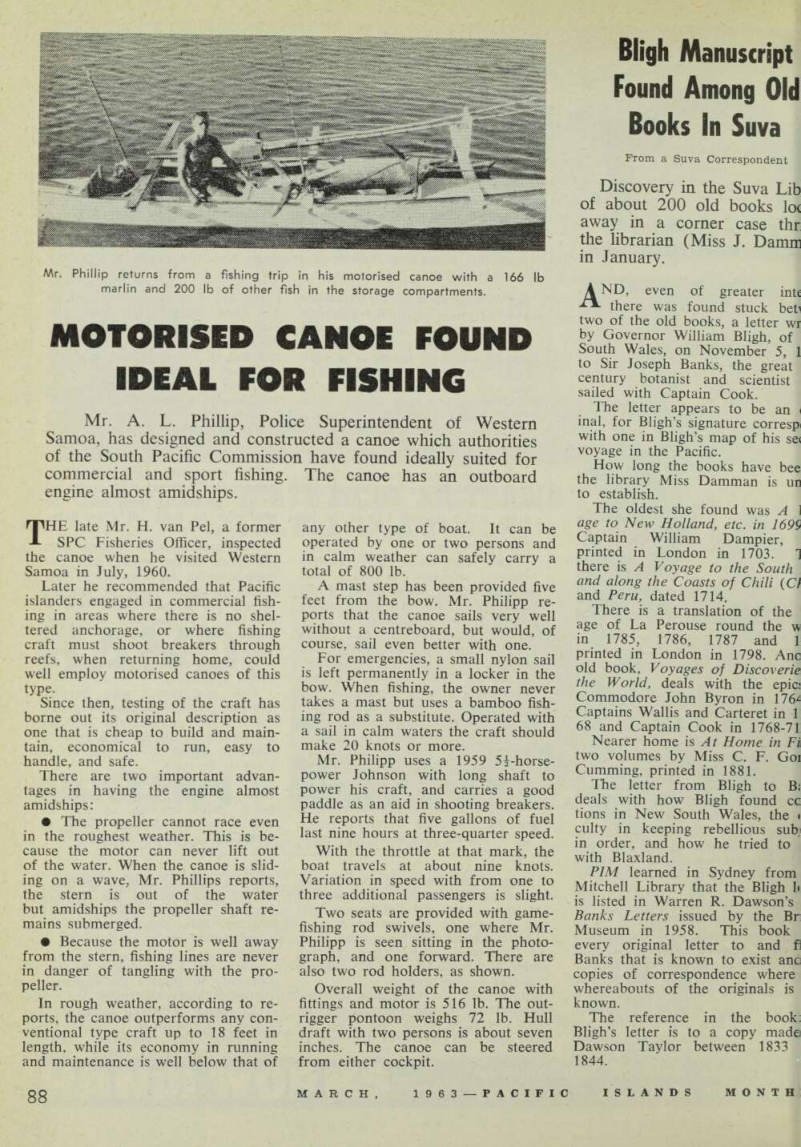 90
90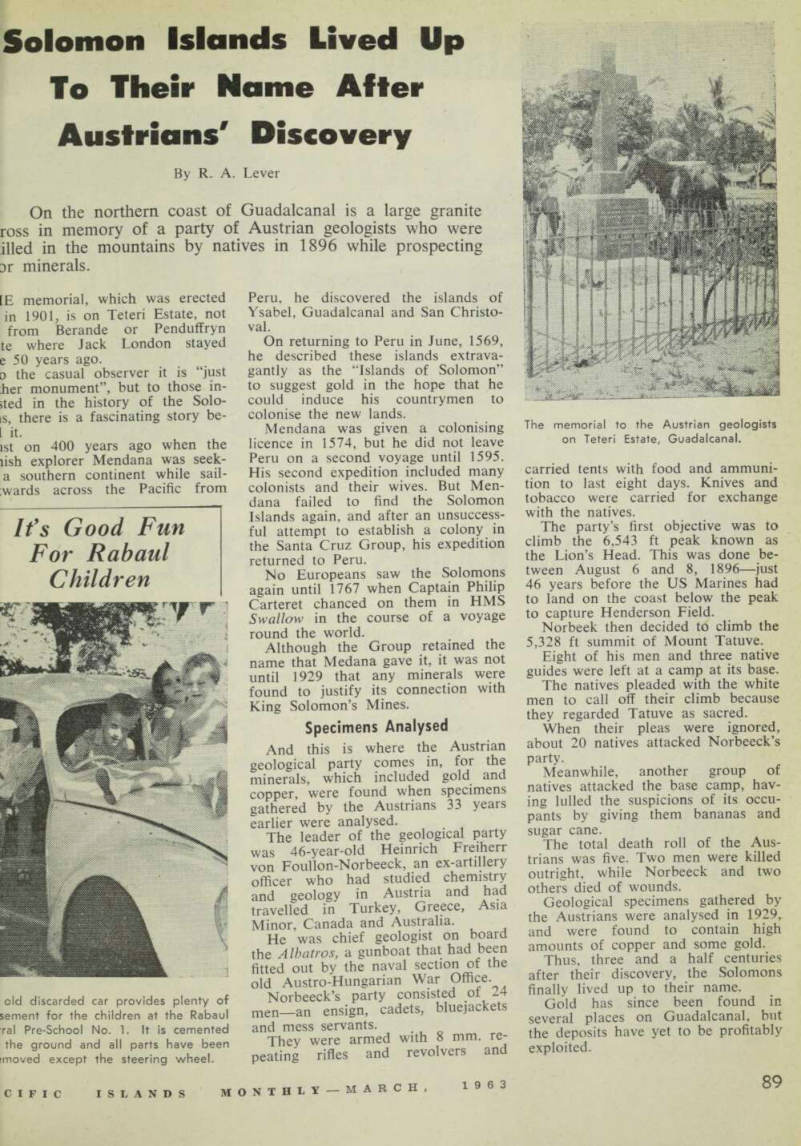 91
91 92
92 93
93 94
94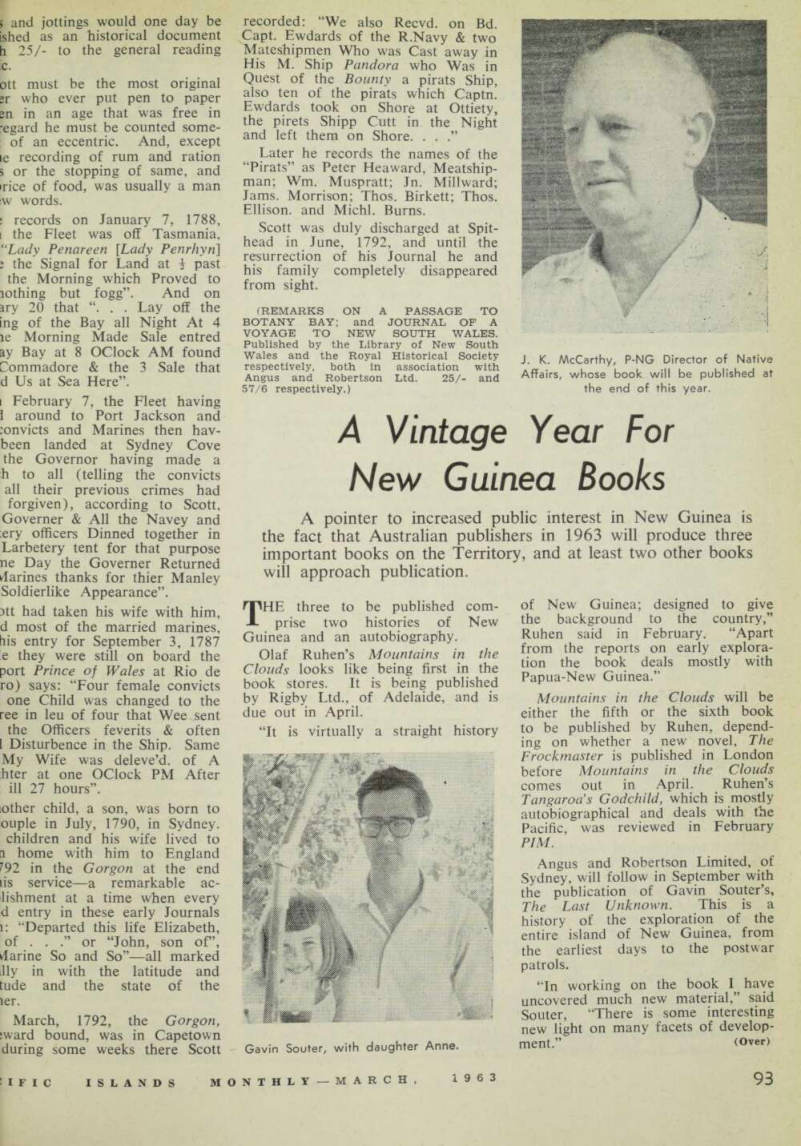 95
95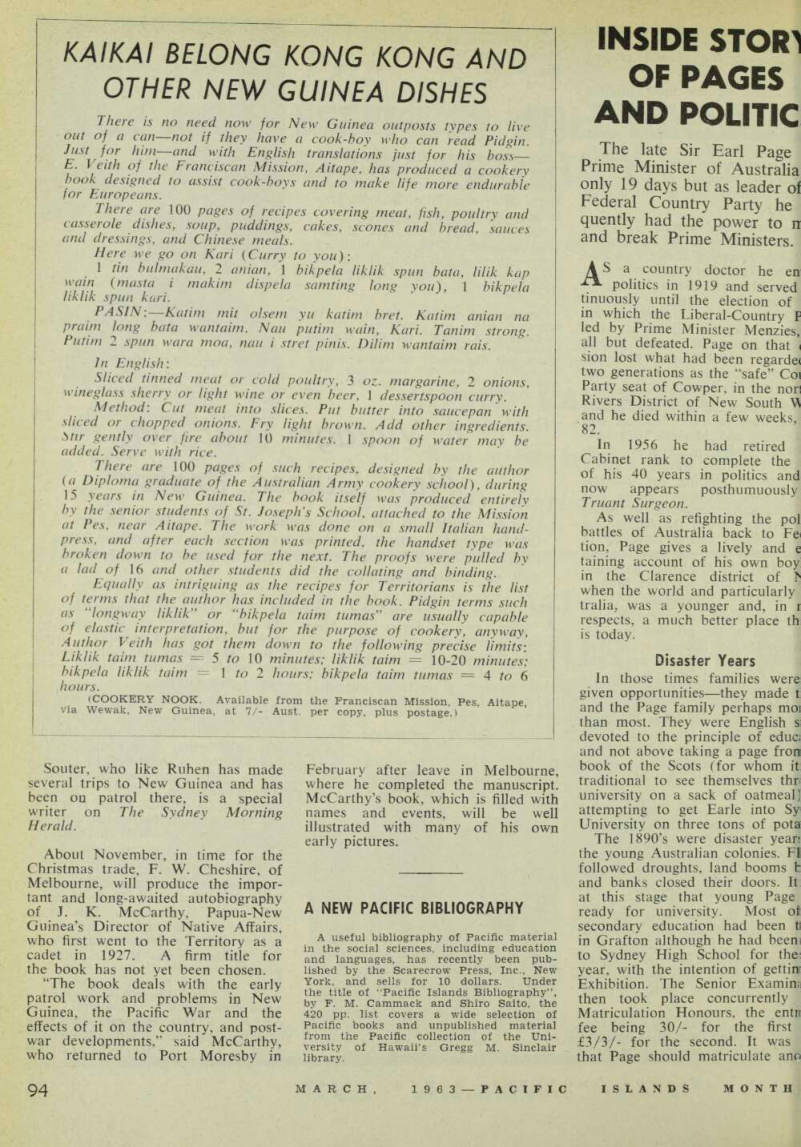 96
96 97
97 98
98 99
99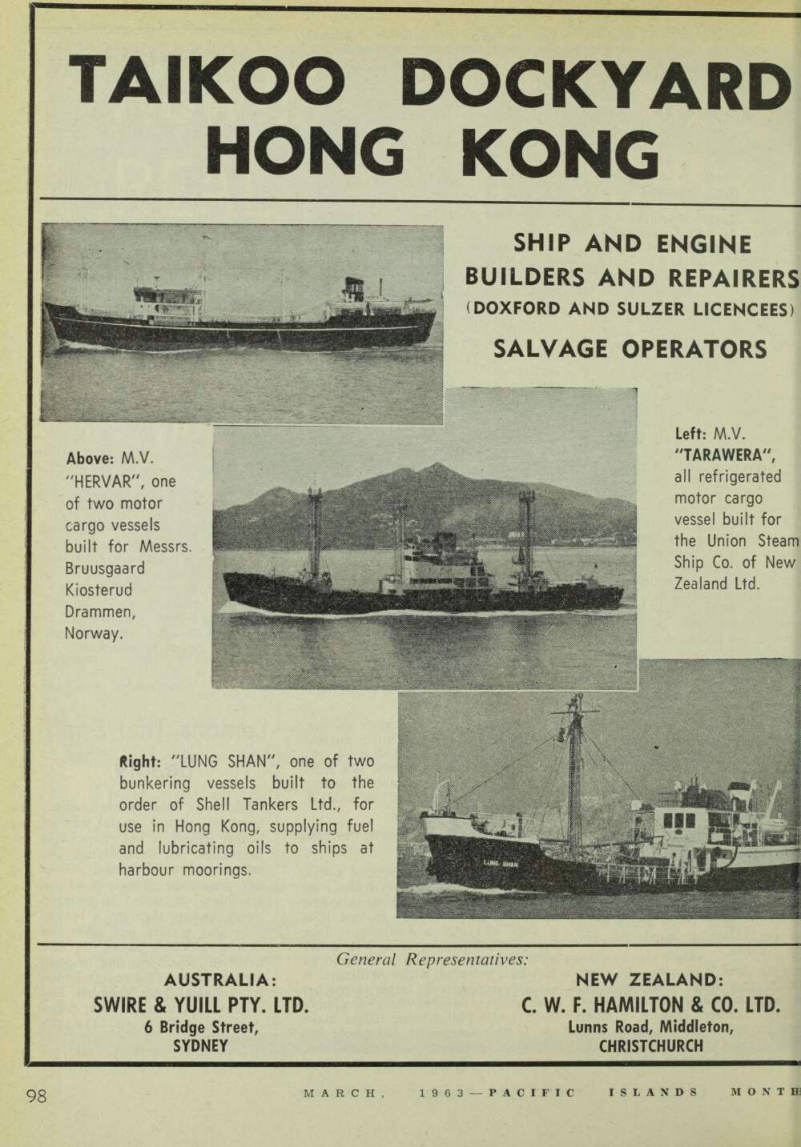 100
100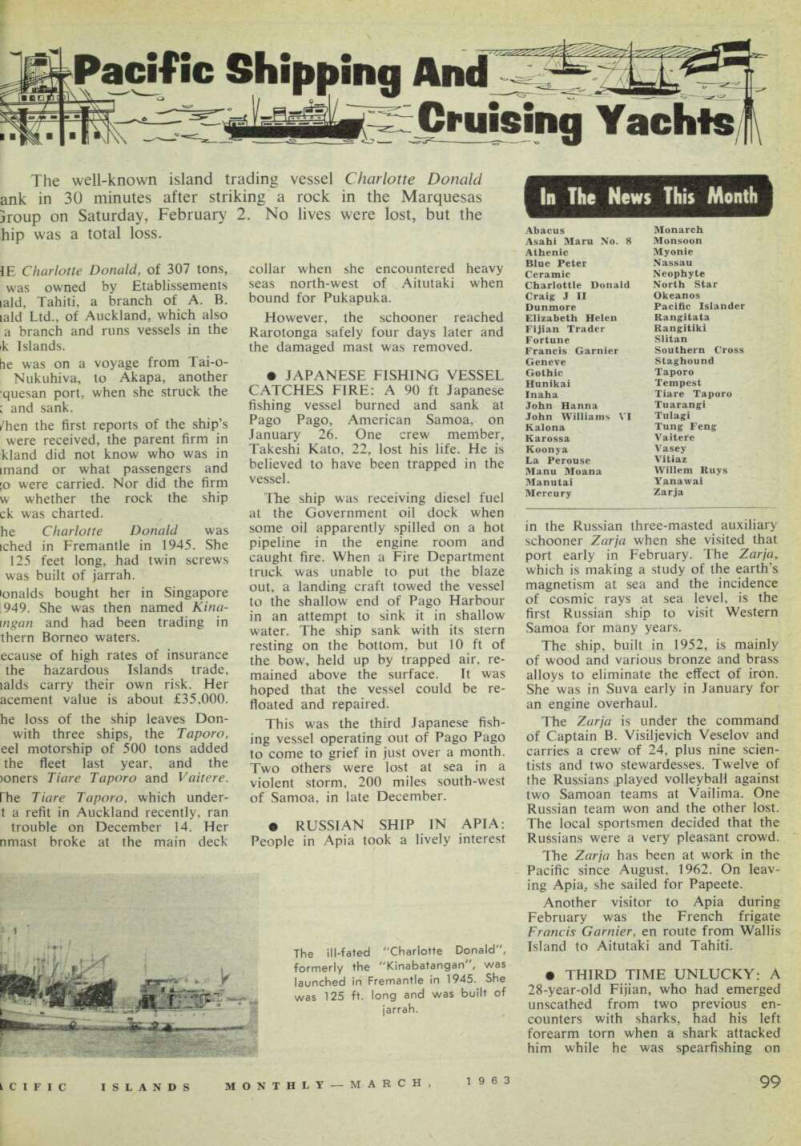 101
101 102
102 103
103 104
104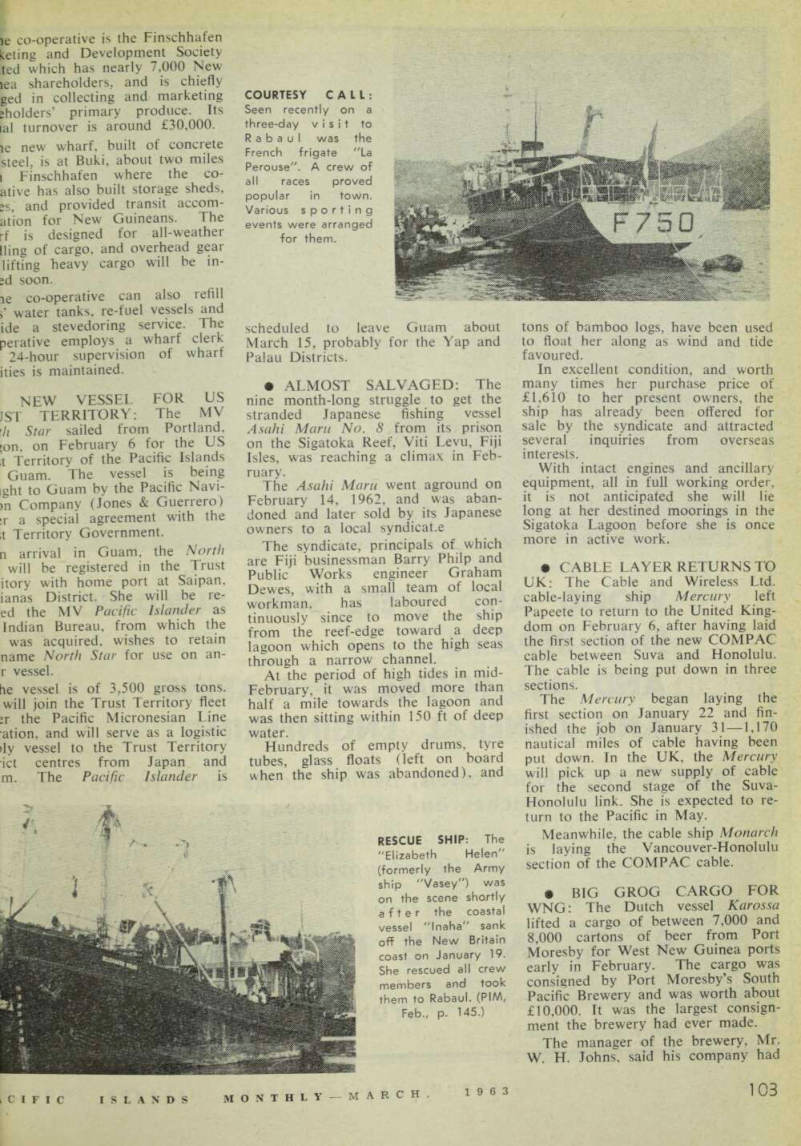 105
105 106
106 107
107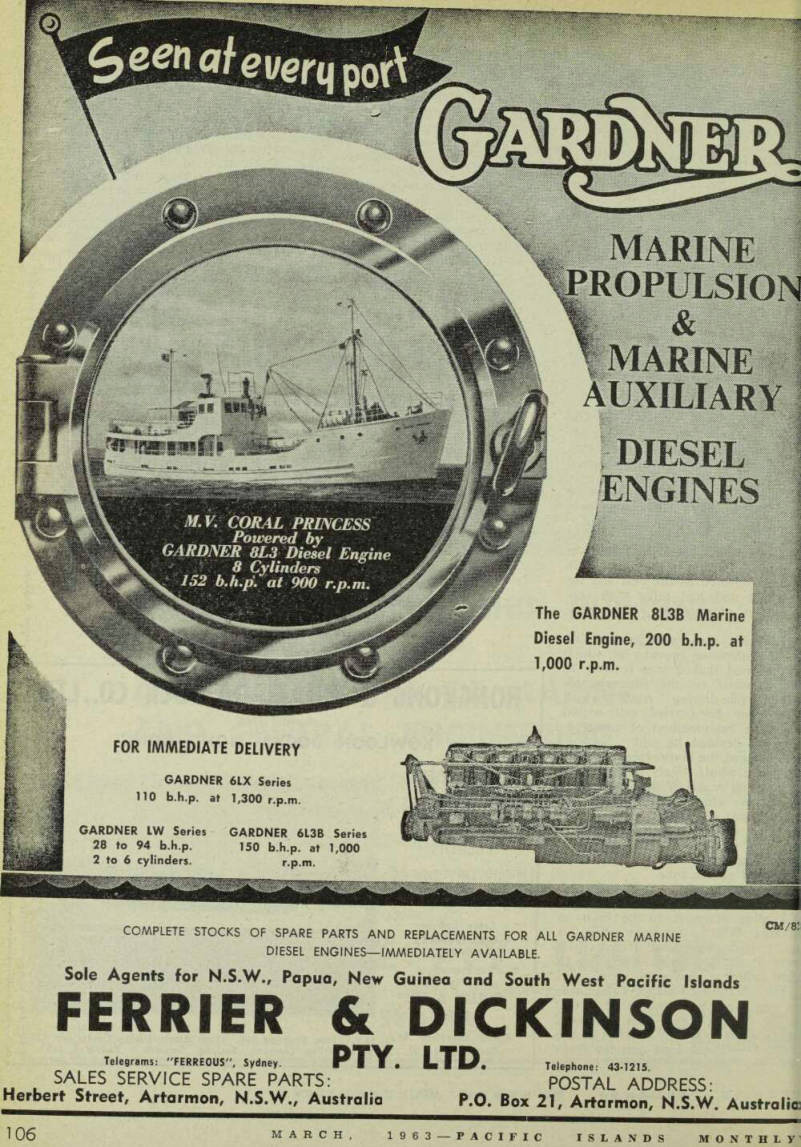 108
108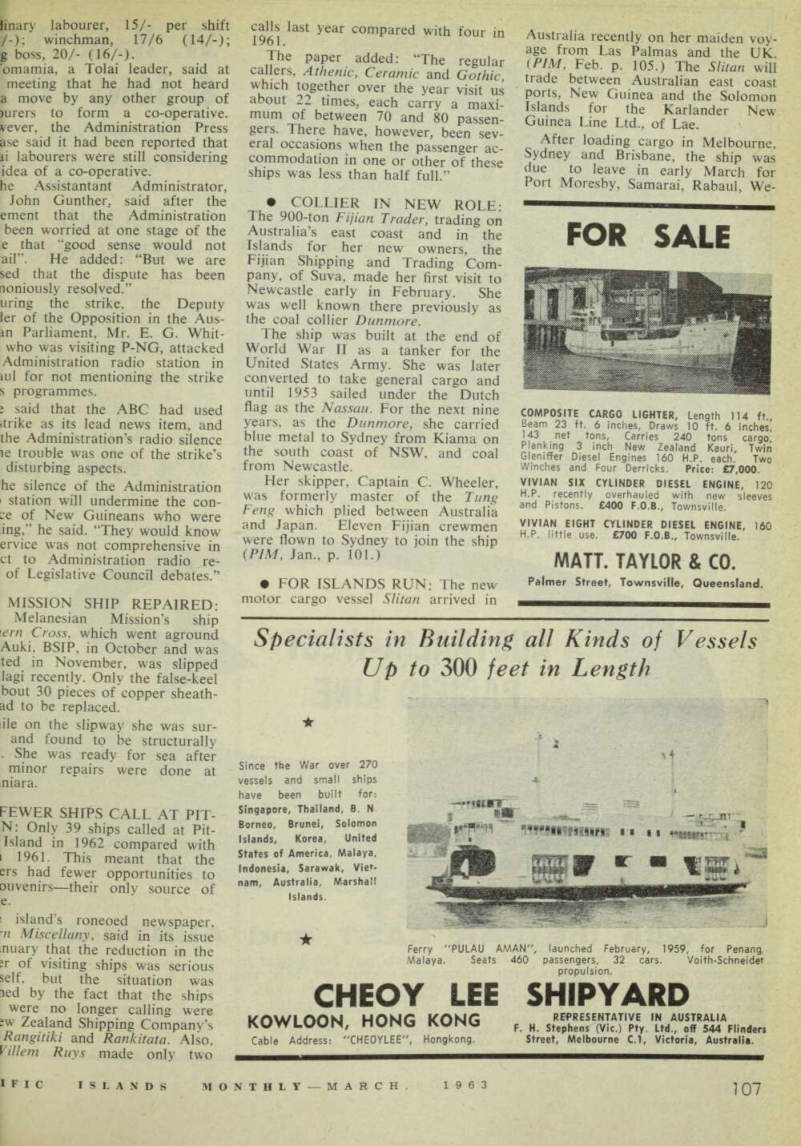 109
109 110
110 111
111 112
112 113
113 114
114 115
115 116
116 117
117 118
118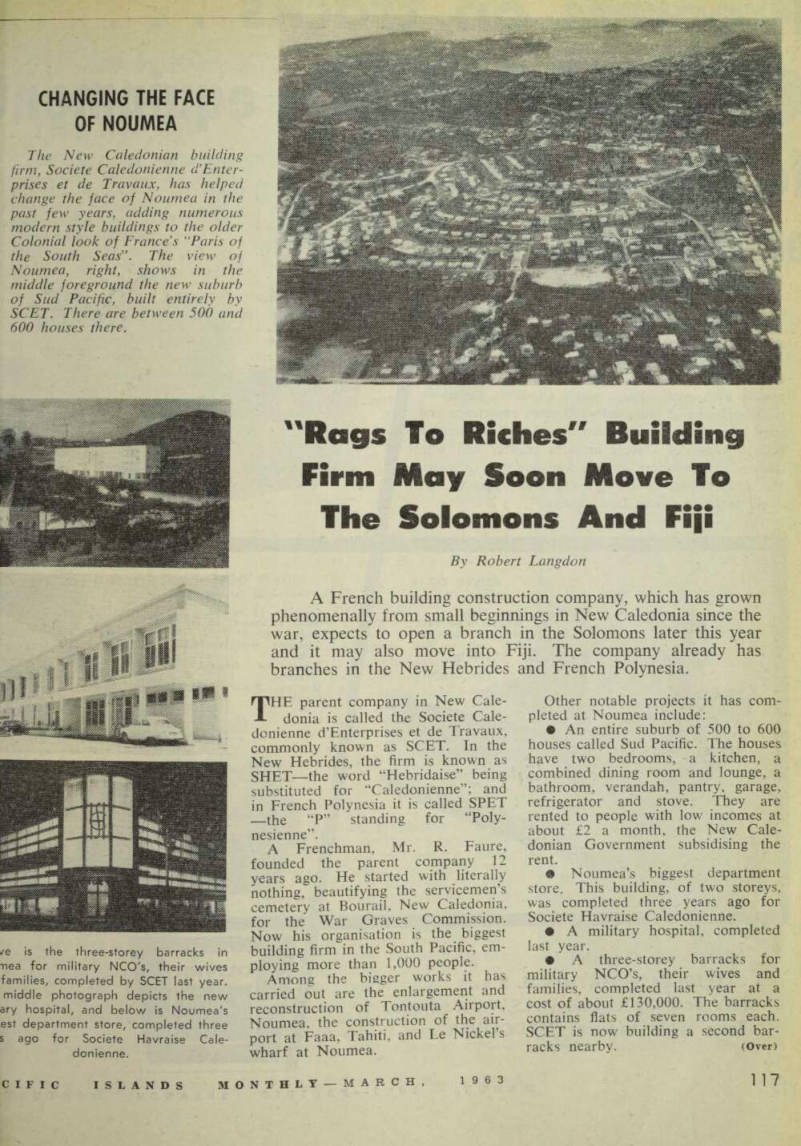 119
119 120
120 121
121 122
122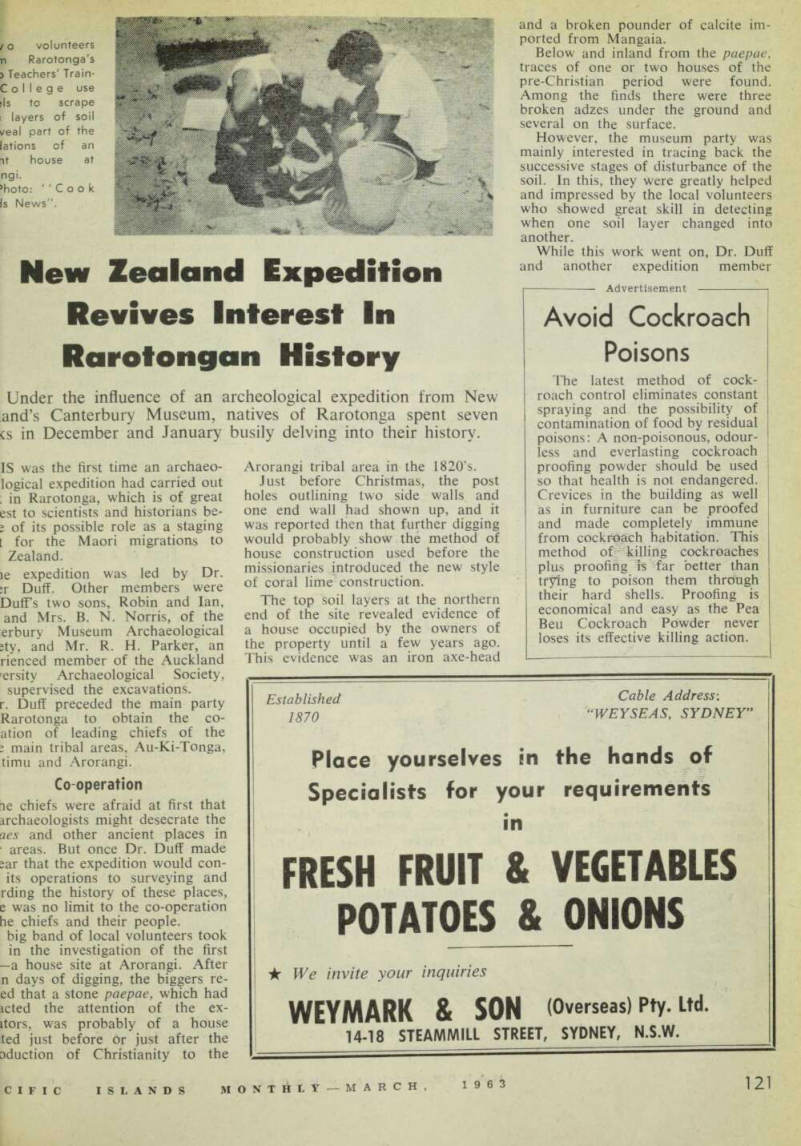 123
123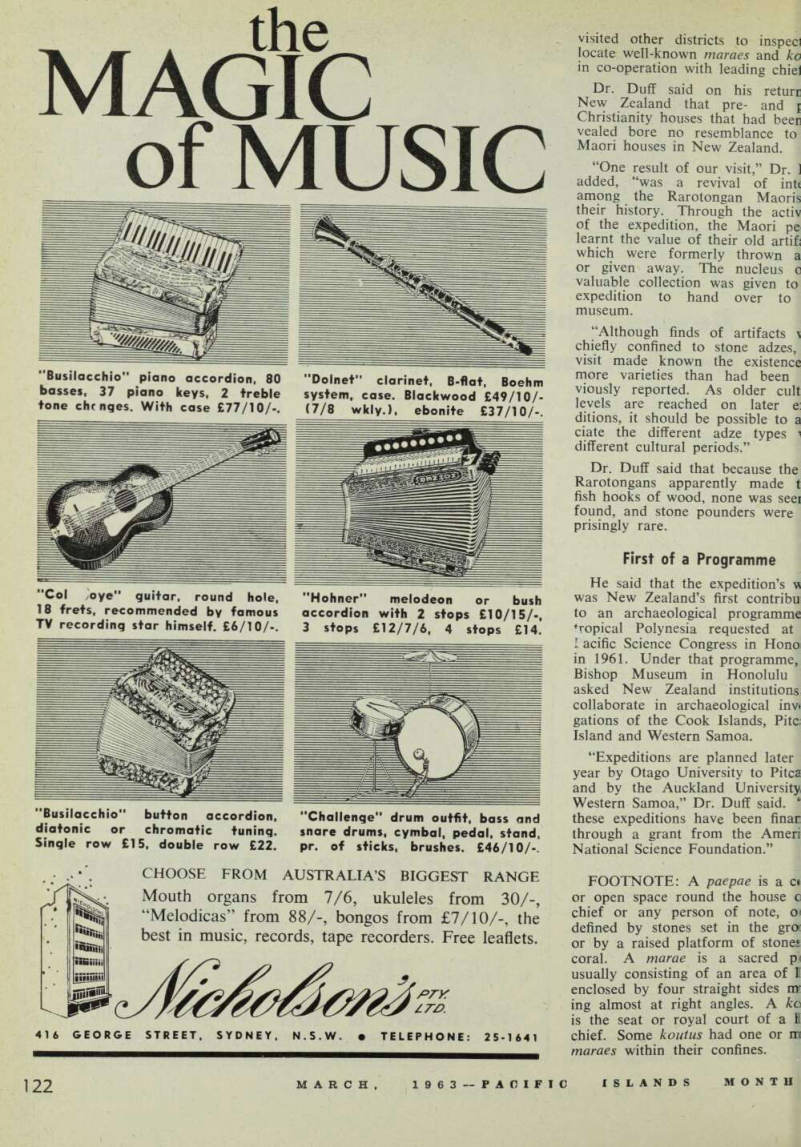 124
124 125
125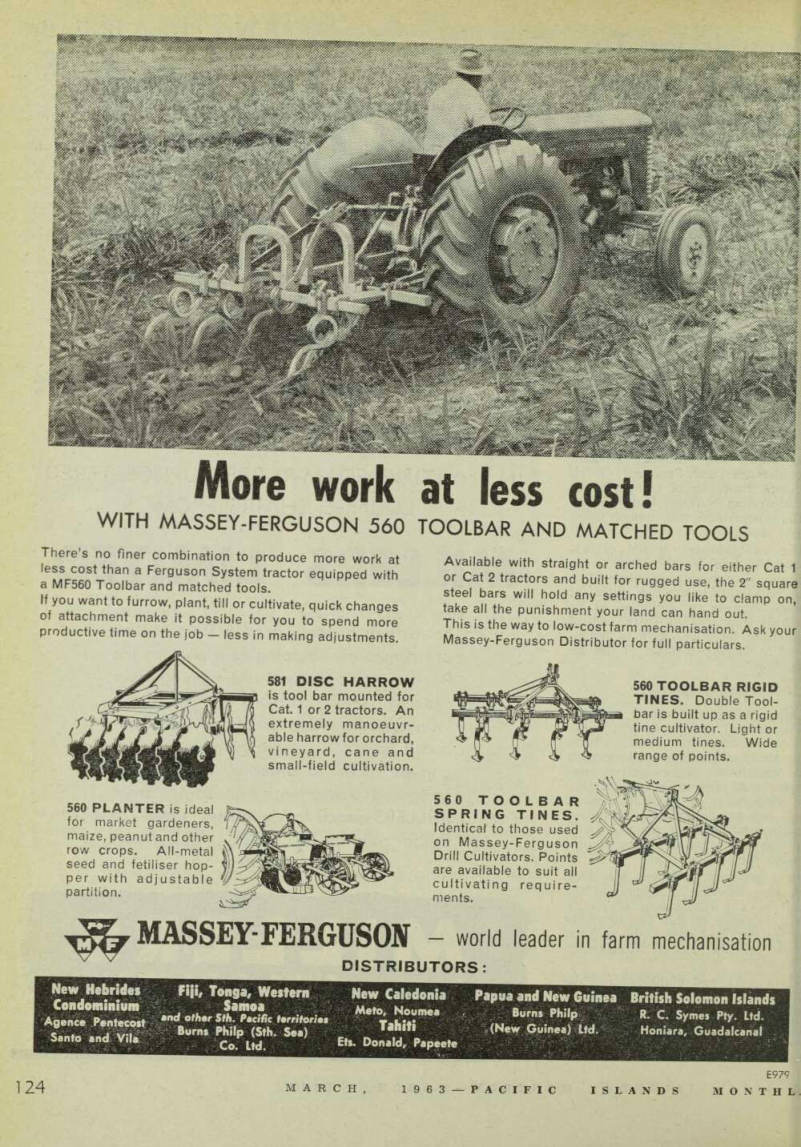 126
126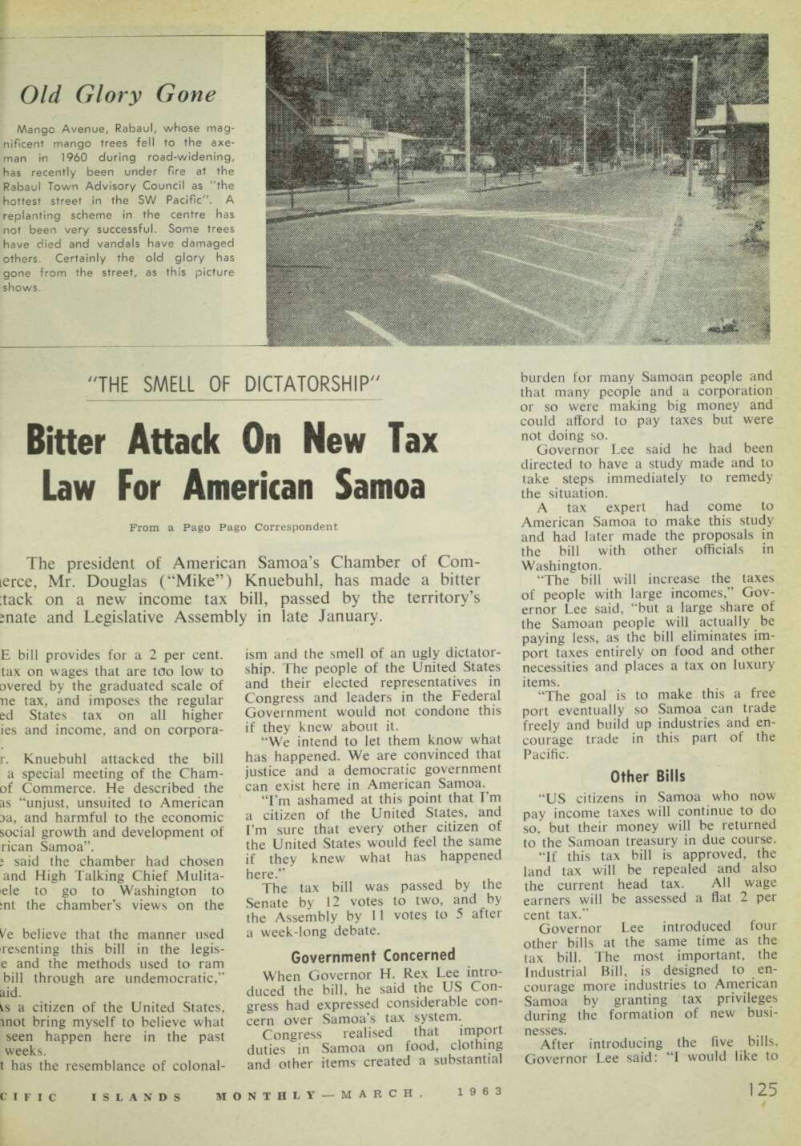 127
127 128
128 129
129 130
130 131
131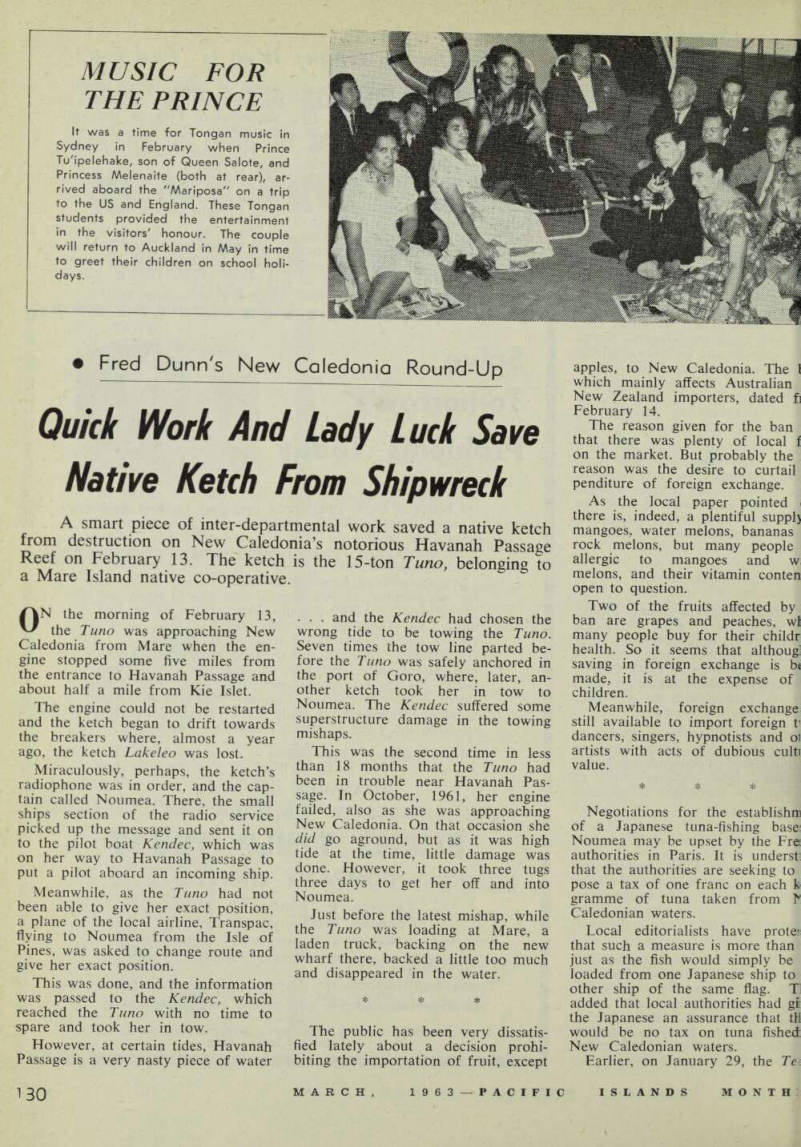 132
132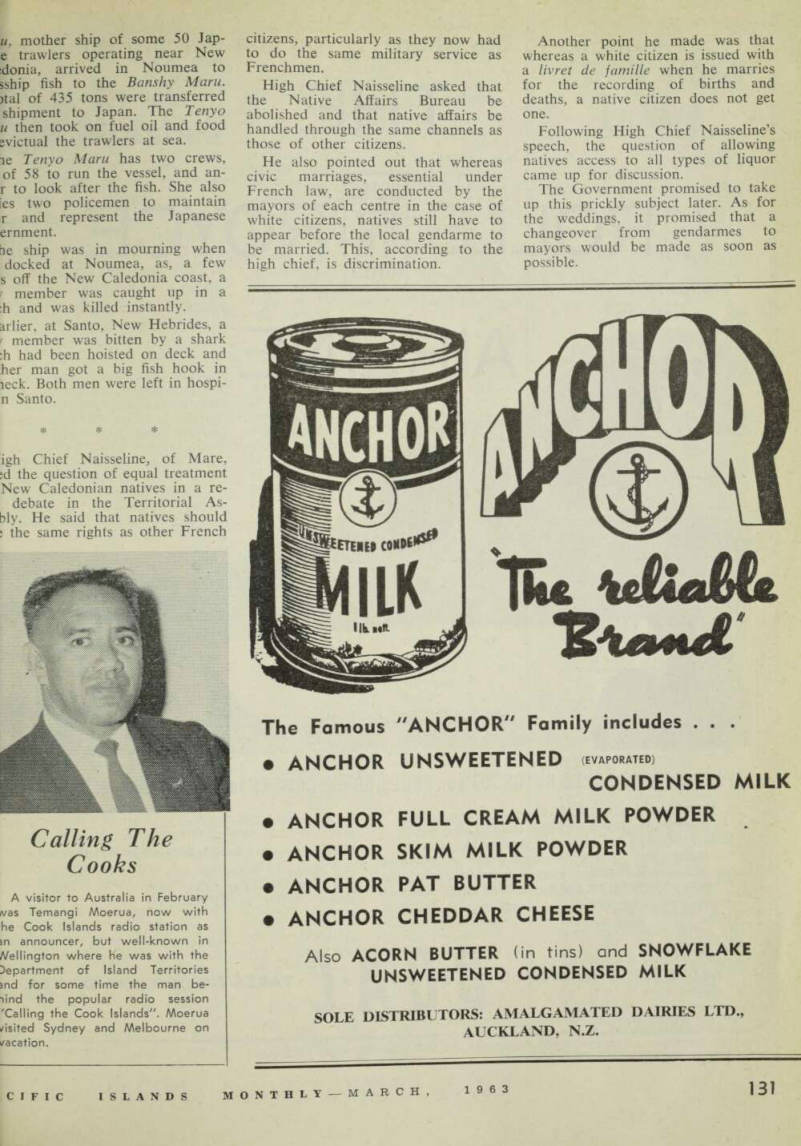 133
133 134
134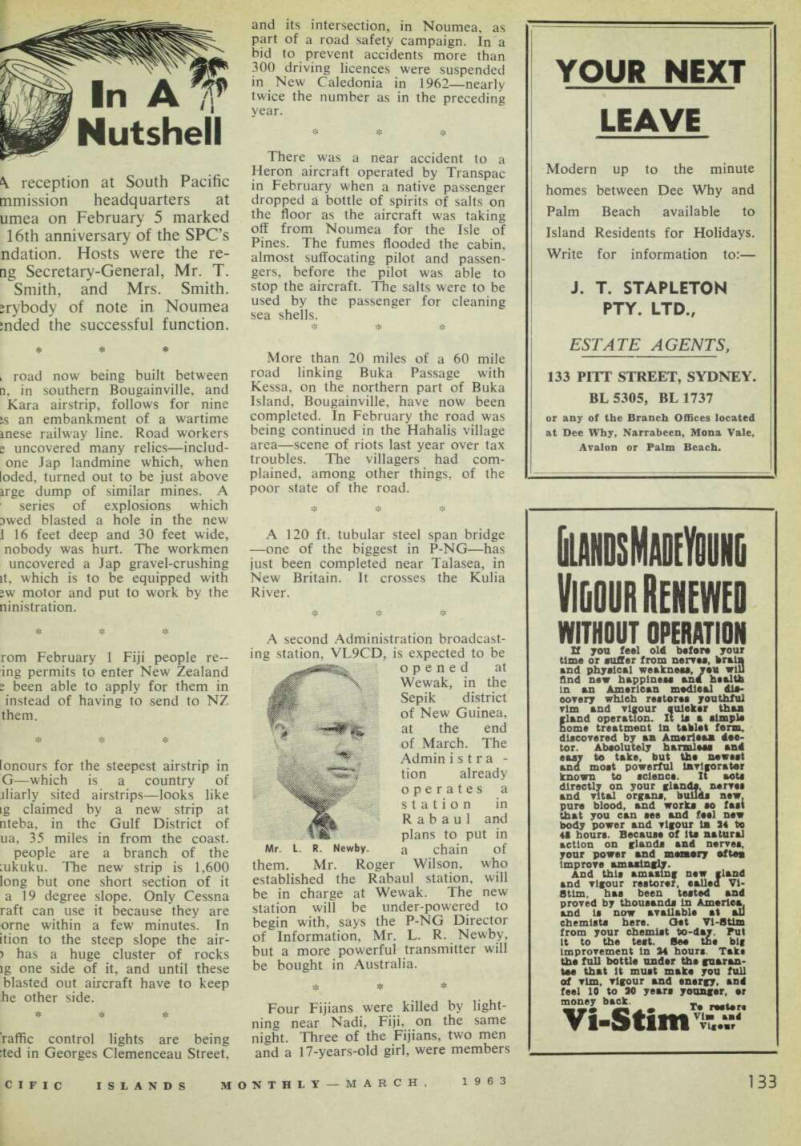 135
135 136
136 137
137 138
138 139
139 140
140 141
141 142
142 143
143 144
144 145
145 146
146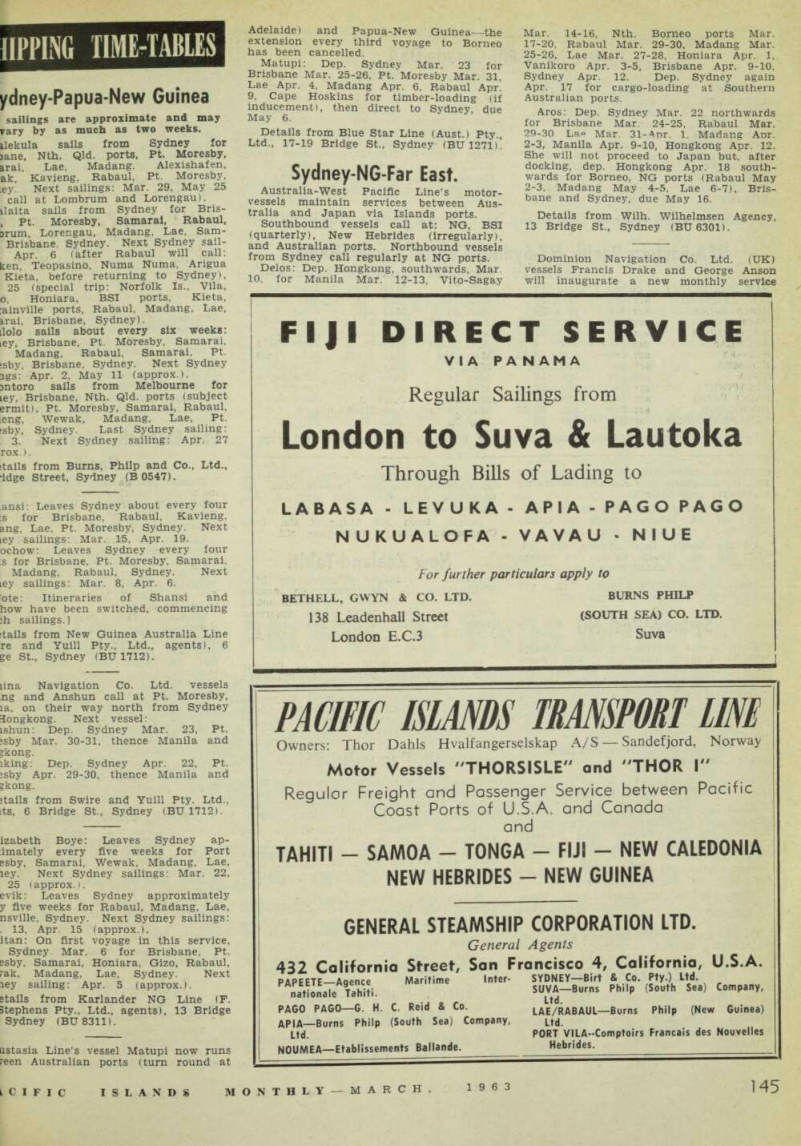 147
147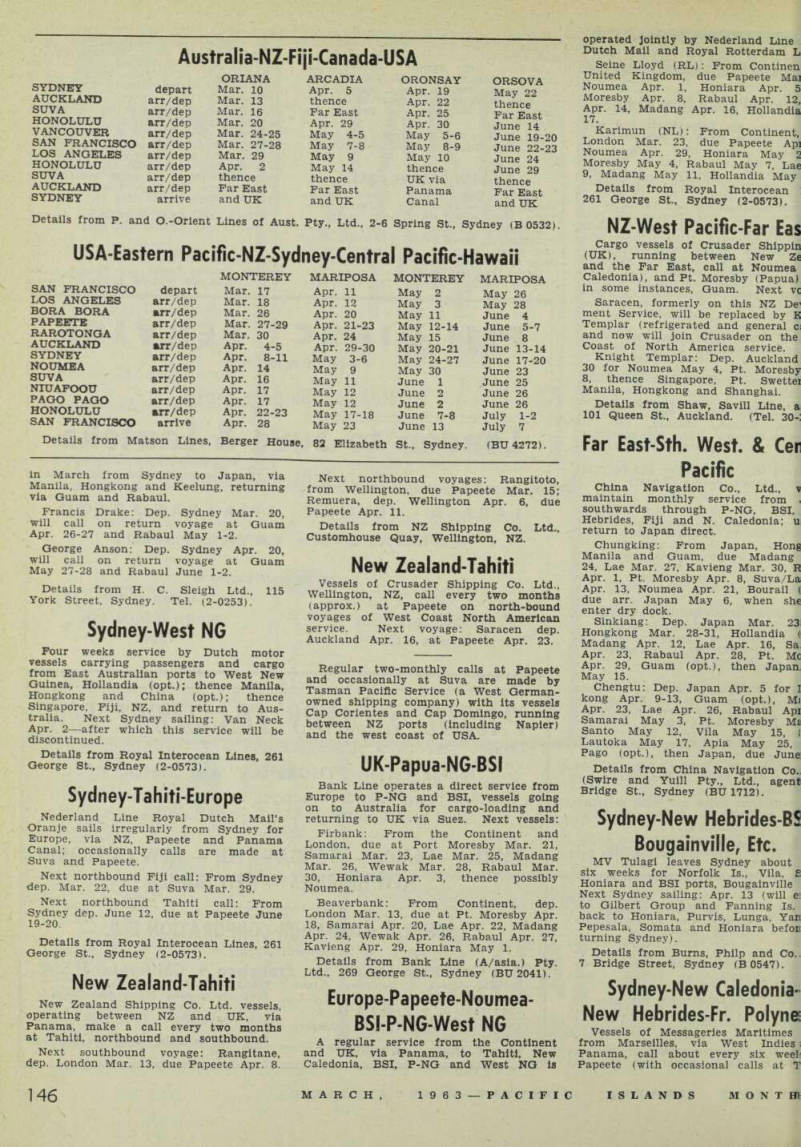 148
148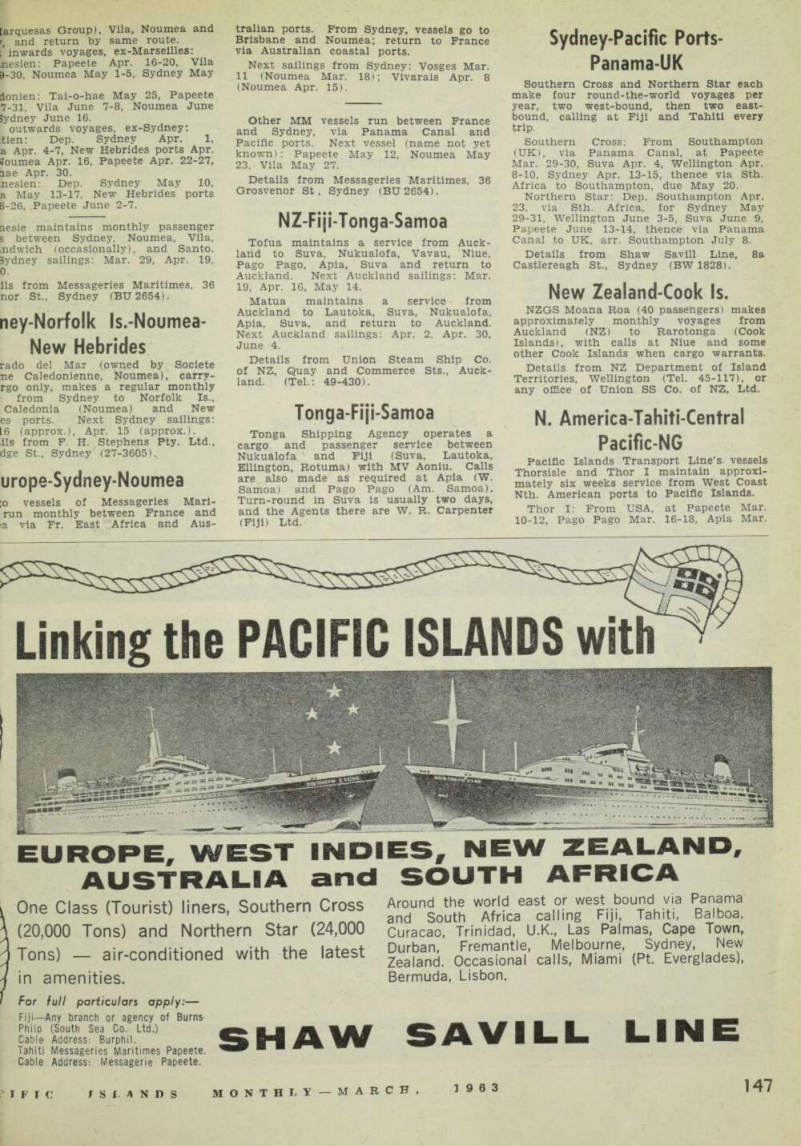 149
149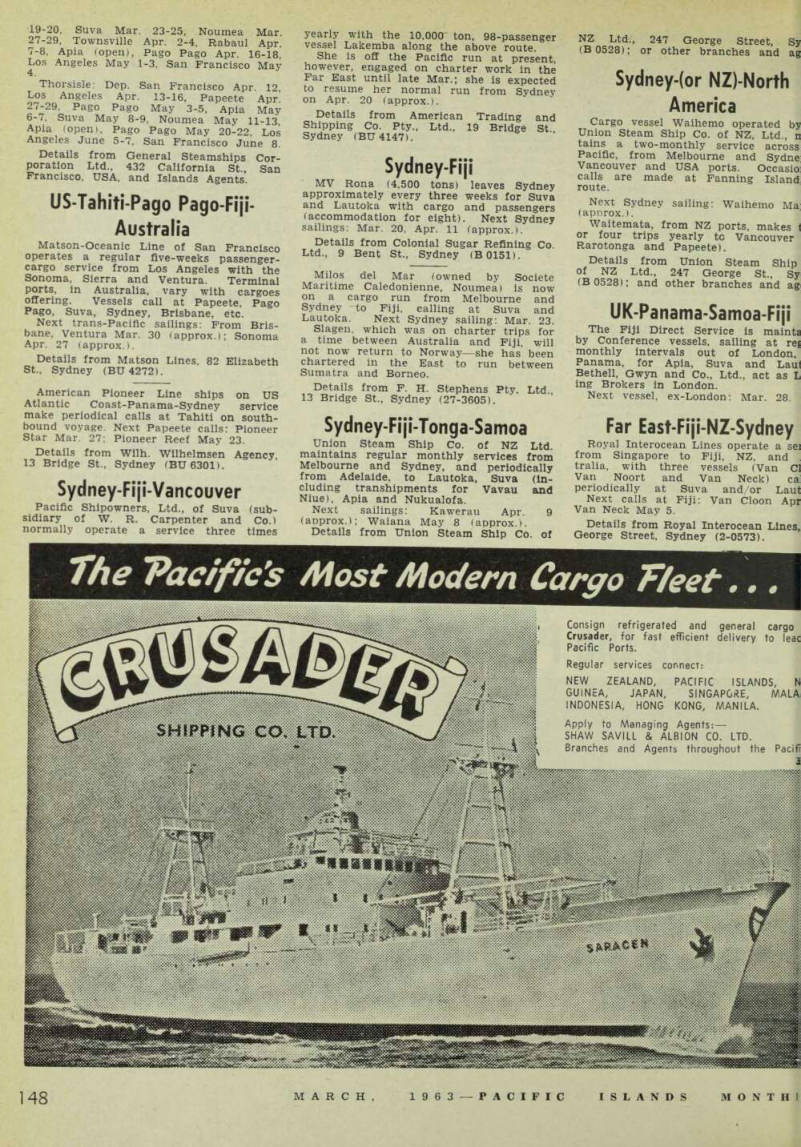 150
150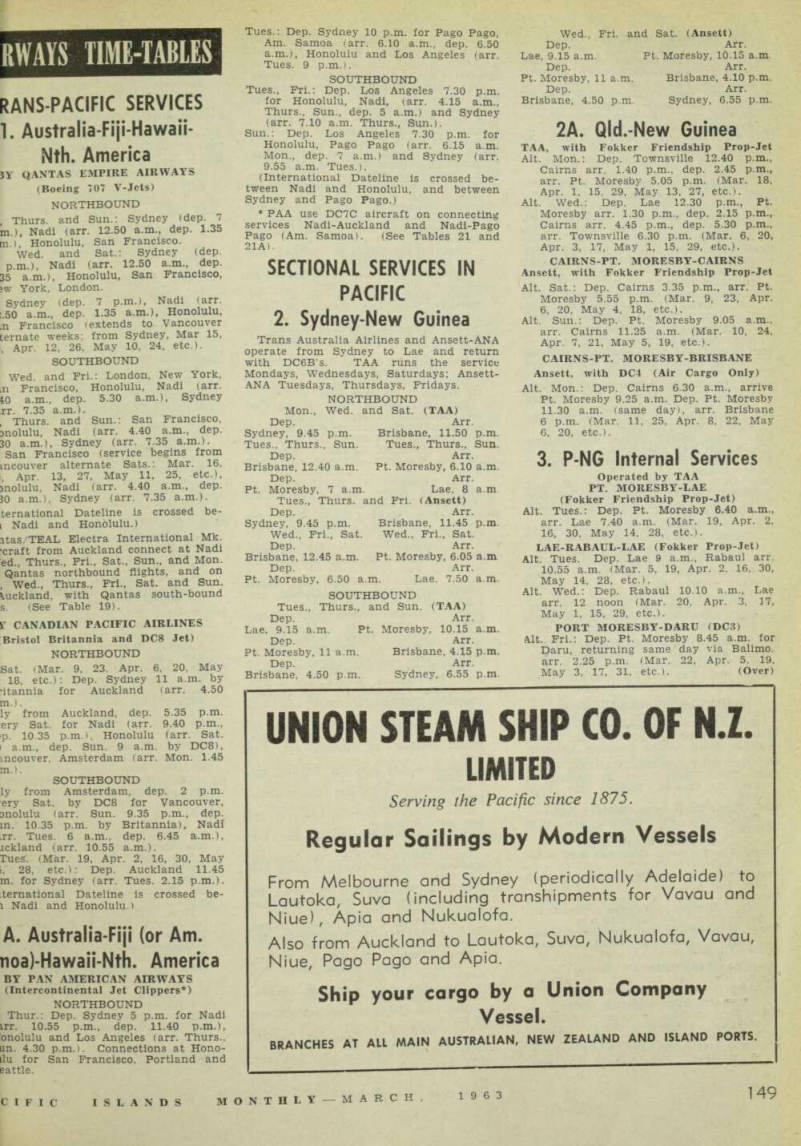 151
151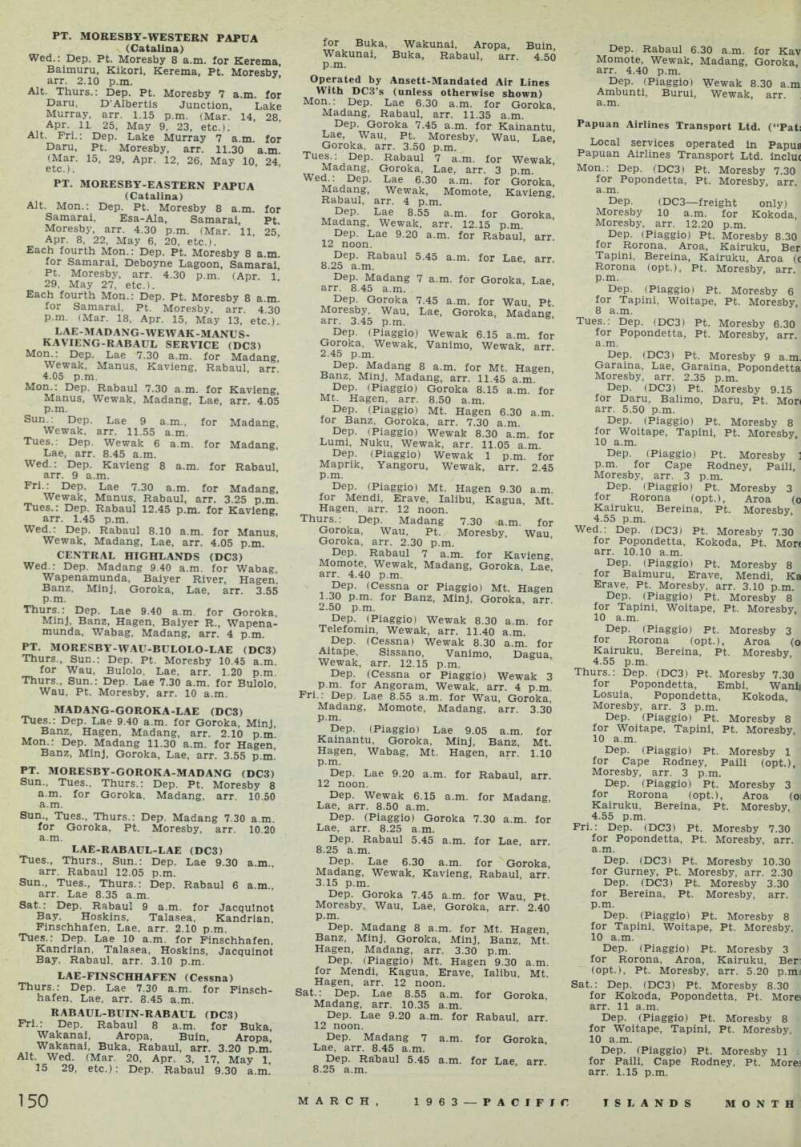 152
152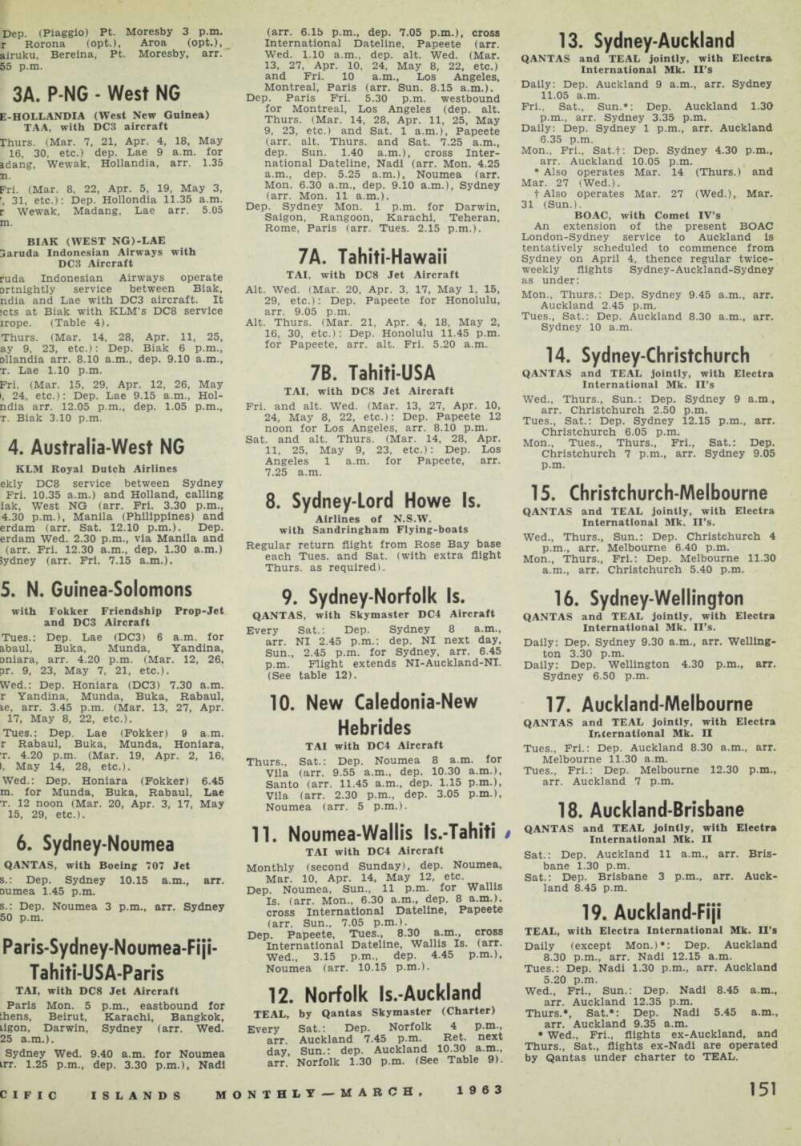 153
153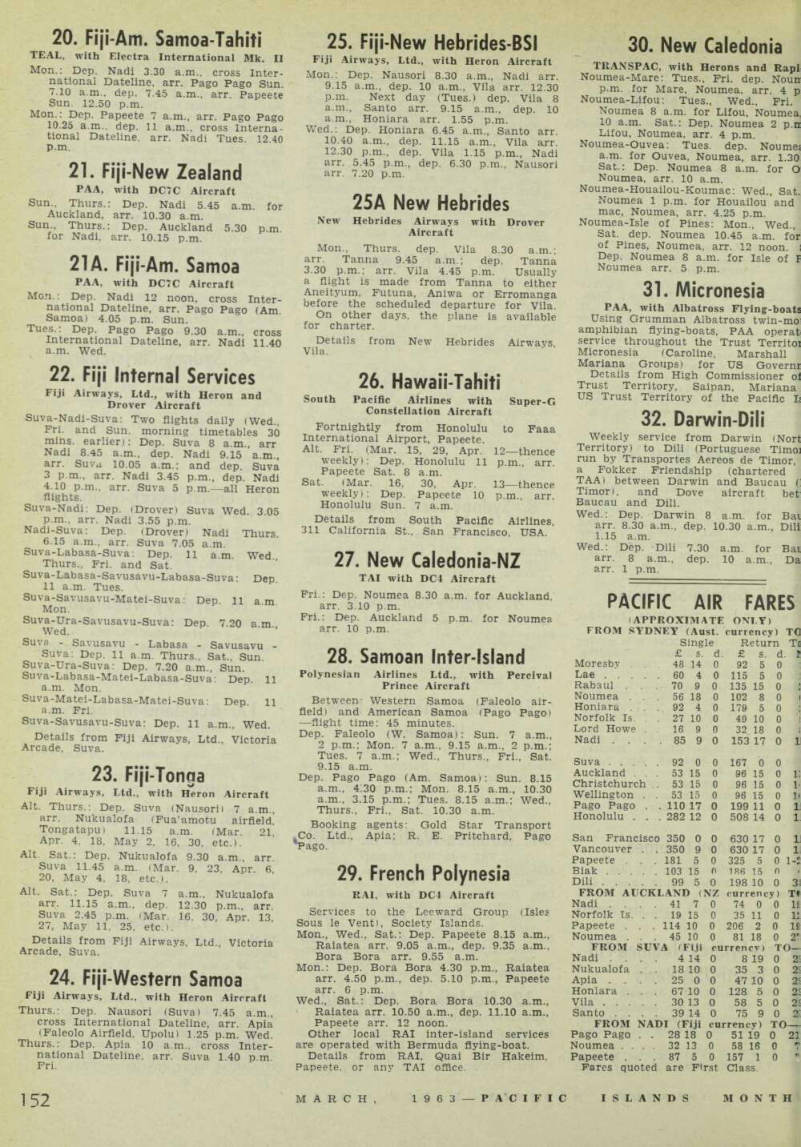 154
154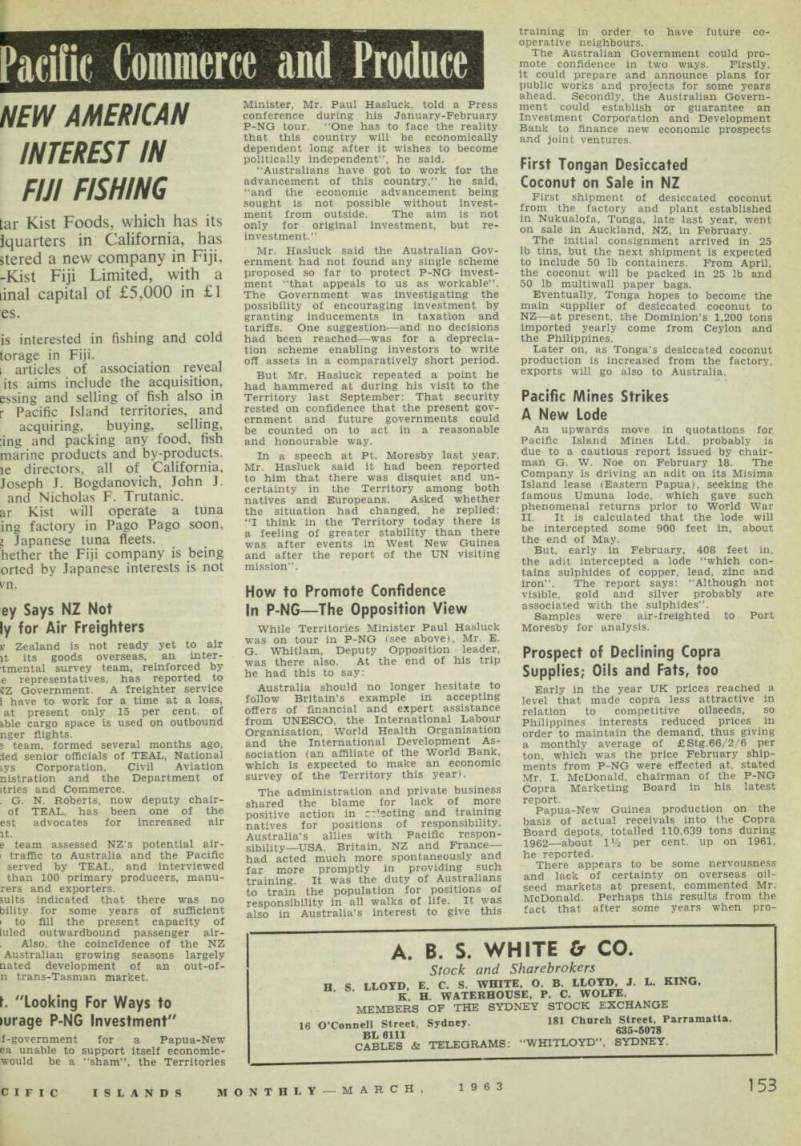 155
155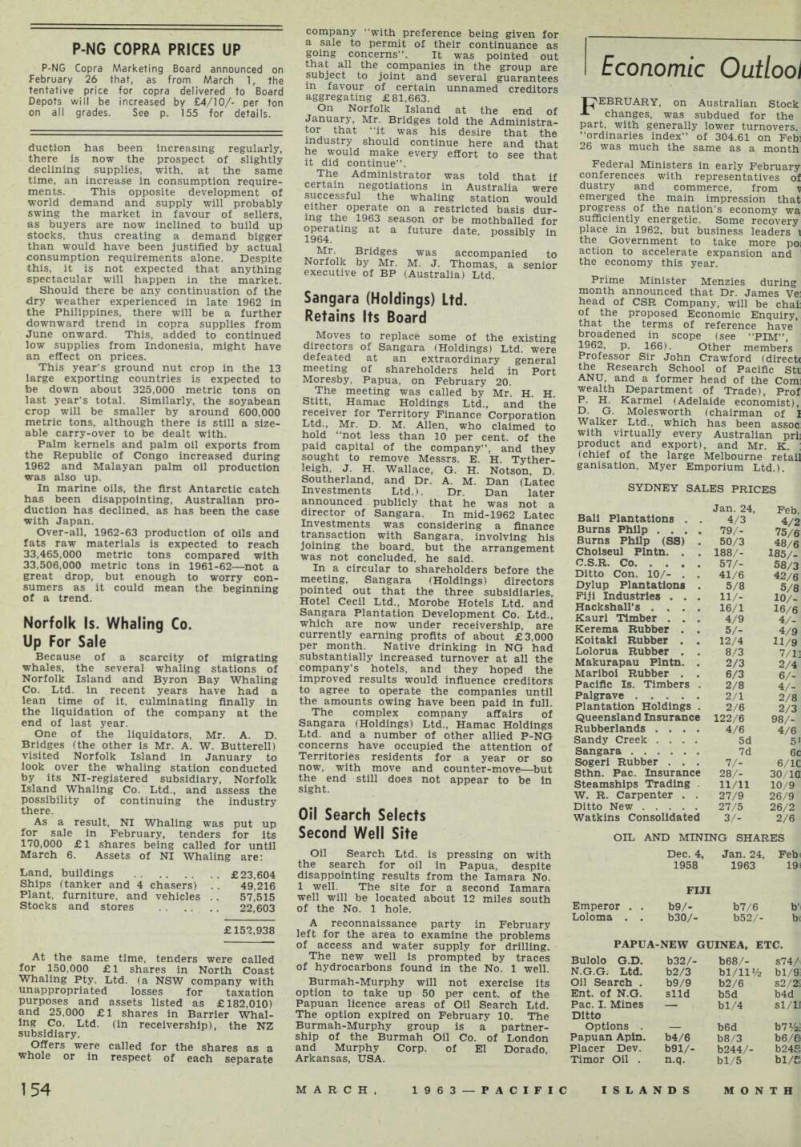 156
156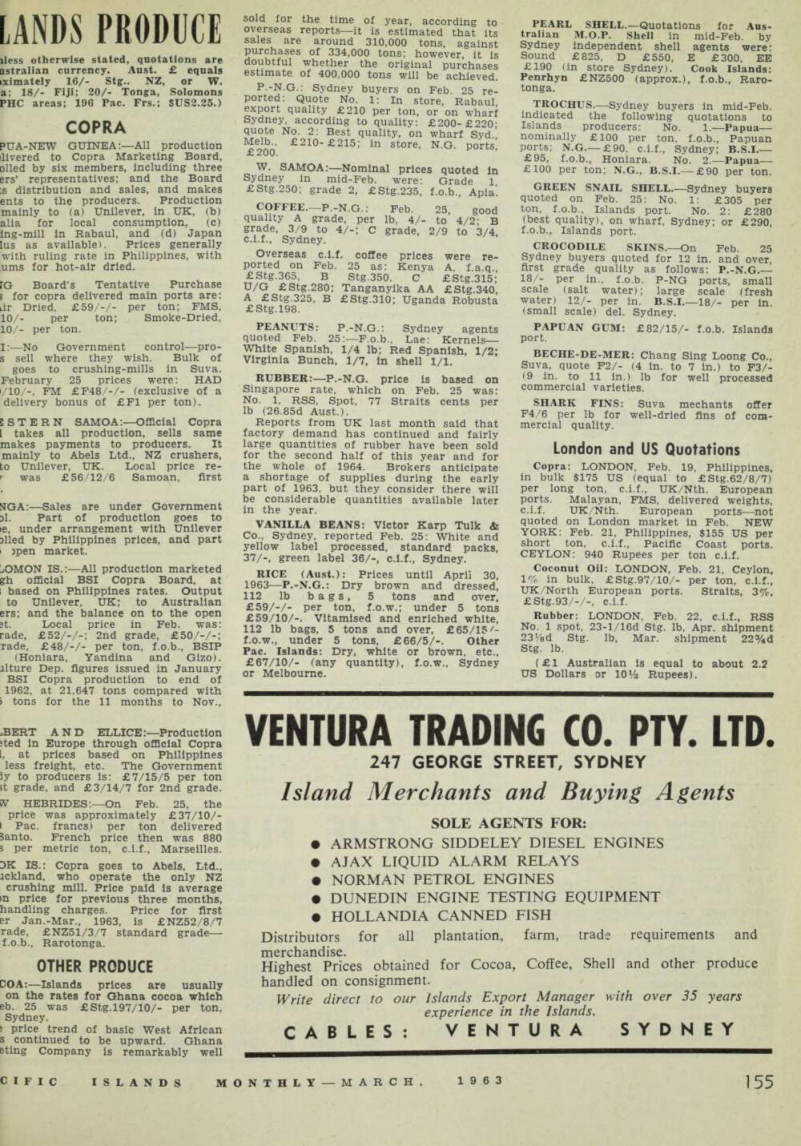 157
157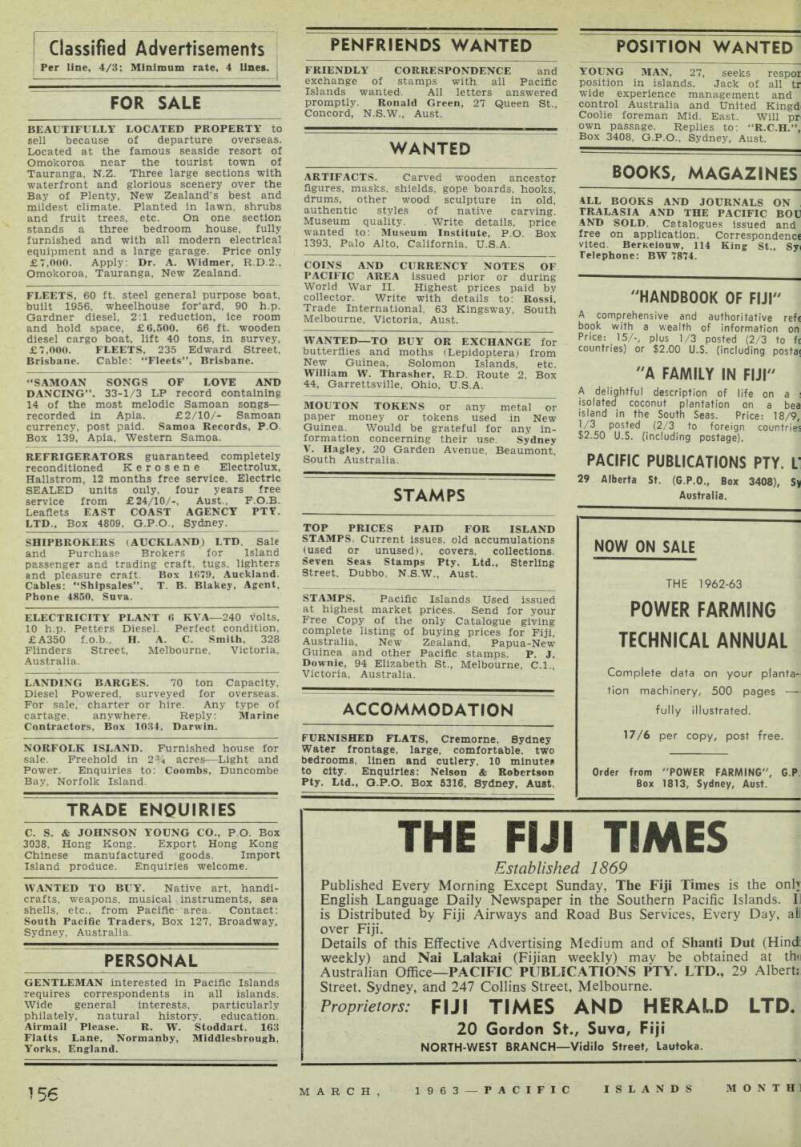 158
158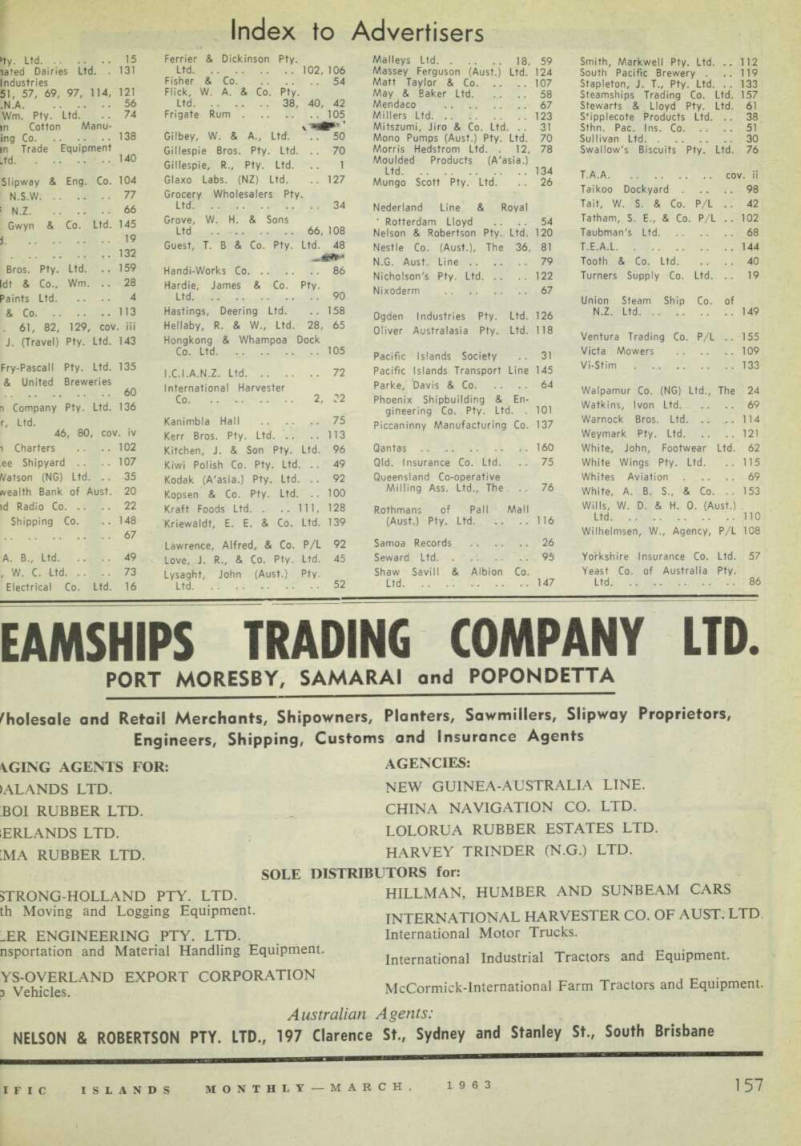 159
159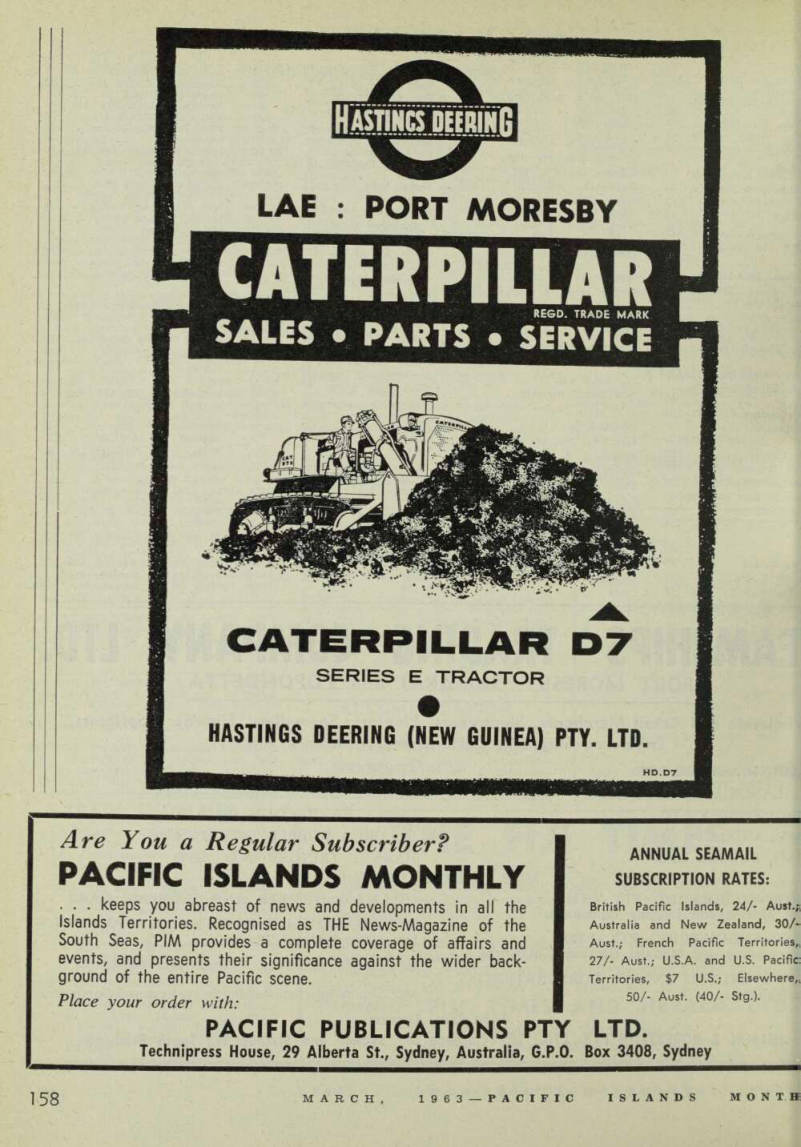 160
160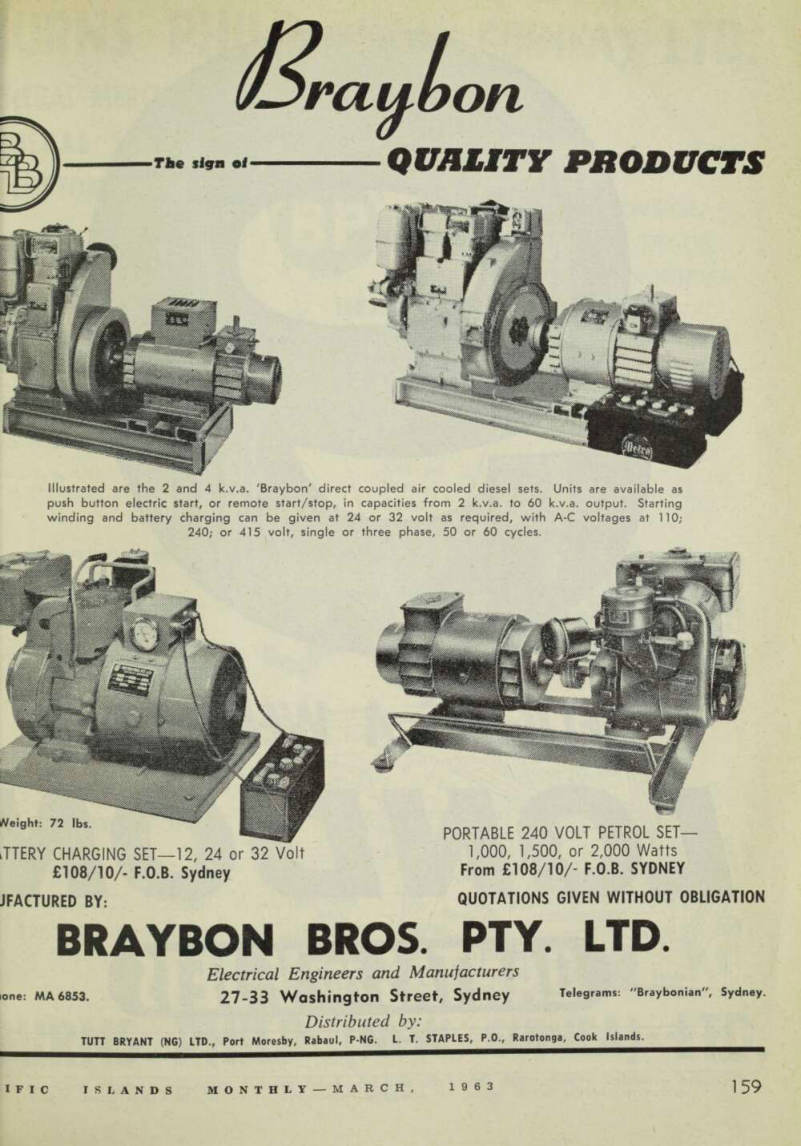 161
161 162
162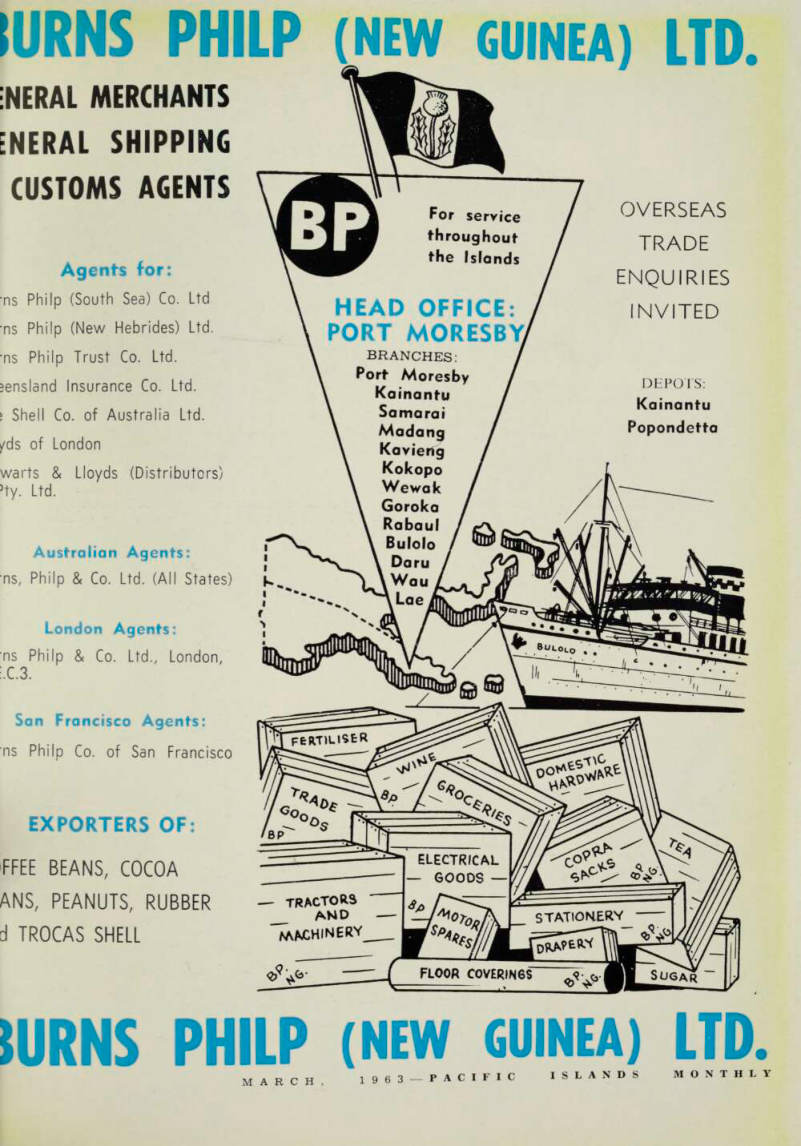 163
163 164
164