
Monthly
Pacific Islands Monthly
April, 1963
Vol. Xxxiii. No. 9.
Neu/s lagazine Of The South Pacific
Established 1930
tered at G.P.O., Sydney, and at P.O., for transmission by post as a Newspaper.
THE COVER* On the white sands not far from Watta Watta plantation, near Kokopo, New this New Guinea lad from Talasea, named Sammy, was riding a turtle his father had just caught when Sub-inspector Max Hayes, of the Rabaul police, snapped the happy picture.
Advertisements & other items, pp. 2-4 (3 items)
See Australia with TAA
Wherever you want to g 0... Whatever you want to do.
and even save money!
PORT MORESBY
I
CANBERRA
Save on TAA Tourist Class Fares. You can fly TAA from Port Moresby to Brisbane and back for only £69.6.0.
Regular TAA Sunbird services from Lae and Port Moresby to Australia connect with flights to all States linking the Territory to more than 90 ports throughout Australia.
Money saving TAA budget holidays.
There are dozens to choose from in such famous places as the Gold Coast, Central Australia, the Barrier Reef Islands.
TAA Travel Service makes all your holiday arrangements . . . plans personal itineraries and tours . . . arranges accommodation and local tours at your destination.
CONTACT YOUR NEAREST TAA TRAVEL ADVISER;
PORT MORESBY:
Len Vaughan, Cnr. Cuthbertson and Douglas Sts., 'Phone 2101.
RABAUL:
Max Knop, “Augusta House", Mango Avenue, 'Phone 2702.
GOROKA;
Bernie Gamble, Goroka Airport, 'Phone 8.
LAE:
Tony Dewiss, Coronation Drive, 'Phone 2311.
MADANG:
Henry Ohlmus, Kaislan Avenue, 'Phone 78 or 166.
FLY TAA SUNBIRD SERVICES
throughout the Territory of Papua New Guinea—and to Australia.
TAA2B33/62
/h *//Hseartess. ..
r : - <• ; #■
Kerosene LANTE
lobert Gillespie’s bring to the Pacific Islands Coleman’s ghtweight lanterns. These popular brand-name lan- “rns maintain a steady, dependable light in high winds nd torrential rains. Triple nickel-plated with brass Dunts. Two models available: No. 237—up to 500 c.p.; 10. 249—up to 300 c.p. .. . both tested to 200 lb. presure. Quick to light . . . just preheat with methylated pirits. No need to repump each time lantern is lit the positive shut-off valve keeps pressure in the fount.
Representatives for the Pacific Islands: *\ L Col Easily serviced and spare parts readily available.
RT GILLESPIE PTY. LTD.
22 Young St., Sydney
34 Queen St., Brisbane Cable: "Robergill".
ROBERT GILLESPIE (N.G.) LTD.
Rabaul, Port Moresby
Lae, Madang
PEARCE & CO., LTD.
Suva
W.KOPSEN
& CO. PTV. LTD.
AUSTRALIA'S LEADING MARINE SPECIALISTS
* SINCE 1878 *
-PRESENT-
★ new ★
RYPRENE WET MUFFLER
The quieter, lighter, leakproof, non-corrosive, neoprene marine wet muffler.
Models Approved Guaranteed (B) Up to 125 H.P. Petrol. Up to 55 H.P. Diesel £12:0:0 (C) Up to 175 H.P. Petrol. Up to 90 H.P. Diesel £16:0:0 Prices plus Tax
D=> ★ new ★
LOKIN CLUTCH
Just released , the new Lokin marine clutch with — • Easy adjustment • Does not overheat • Compact & silent • Vibrationless • Complete with propeller shaft coupling.
MODELS
(1) For Engines up to 10 H.P. ££l7 10 0 (2) For Engines up to 30 H.P. £27 10 0 Prices plus Tax
C.Q.R. ANCHORS
The plow like anchor known for their terrific holding capacity. The C.Q.R. relies on design not weight for holding power and is so easy to handle. Sizes from 5 lbs. to 170 lbs.
PAINS
DISTRESS SIGNALS
Play safe in case of emergencies on your boat (such as engine failure) and carry a set of Pains’ distress signals. • Red flares, ship's parachute rockets. • Orange smoke signals, lifeboat parachute rockets, separately or as set. Set comes in watertight box.
COUPON
Please post further details on: "Lokin" Clutch □ "Ryprene" Wet Muffler □ "Pains" Distress Signals □ C.Q.R. Anchors Q TO
■ NAME
I ADDRESS
S4
W. KOPSEN T v CO TD
376-382 KENT ST., SYDNEY
Phone: 29-6331 (11 lines) Cables: "KOPSEN" Sydney
1
FIC ISLANDS MONTHLY— APRIL, 1963
2
APRIL, 1963 PACIFIC ISLANDS MONTI
Pacific Islands Monthly
Publisher: R. W. ROBSON.
Editors:
Jdy Tudor Stuart Inder
Manager: SELWYN HUGHES.
1Ephones; Ma9197, Ma7101,
MA 4369.
G.P.O. Box 3408, Sydney.
iraphic Address: PACPUB, Sydney.
Annual Subscription Rates:
,ust, currency; includes surface postage) ic Is.—P.-N.G., Fiji, Samoa, Norfolk, uru, B.S.I., Cook Is., Tonga, G.&E. p., Niue, New Hebrides, and . Pacific Is £1 4 0 :h Pacific Territories .£170 •alia and N.Z £1 10 0 British Commonwealth and Foreign )/- Stg.) £2 10 0 k. and U.S. Pacific Territories f.00 U.S.) £3 13 e Copies (postage extra) 2 6
Branch Office In Papua-Ng
'ic Publications (NG) Ltd., Theatre ling, Fourth St., LAE. Tel.: 2577.
Miss Pat Robertson, Manager.
Branch Offices In Fiji:
: Fiji Times Building, 20 Gordon St.
Tel.: 5601. oka: Fiji Times Office, Vidilo St.
Tel.: 420.
Representative In N.Z.;
D. Whitcombe, P.O. Box 5179, Auckland.
Representative In Hawaii:
C. Spencer, 203 Yap Bldg., 3465 ilae Ave., Honolulu. Tel.: 775538.
Representative In U.S.A.:
3. Craib, Box 1455, San Francisco California. Tel.: Mission 8-1075.
Representatives In U.K.:
D. Ashburn, 73 Cheapside, London, E.C.2. Tel.; City 2355. k. Mackenzie, 4A Bloomsbury Square, ndon, W.C.l. Tel.: Holborn 3779. .BOURNE OFFICE: Newspaper House, 247 Collins St. Tel.: 63.7053. !NTS: All main trading firms and stores in the Pacific Islands. ?/* n..Ll! i* m.. I iJ
Contents
No. 9. Vol. Xxxiii.
April, 1963
Swift Changes to Fit P-NG for 1964 5 Indonesian Take-Over Poses Serious Problems for P-NG 8 An Indonesian West New Guinea 10 Hurricane Damages Tongan Banana Crop 10
Commentary 13
The Editors' Aaa Ilb Ag 14
From The Islands Press 15
Old Norfolk Island Document Dis covered 15 New Guinea Aviation "Must Con solidate" 17 End of the Road for NG's Native Affairs Department 21 Fiji's Future Could be in the Hands of Five Men 25 Isle of Man a Pattern for Fiji? 28 SYDNEYSIDER Goes Walkabout 29 BSIP's Wet Rice Scheme 33 Wider Issues Behind the Rabaul Wharf Strike 37 Rabaul Land Dispute 39 New Fiji Development Chief Ready for the Challenge 43
Territories Talk-Talk 47
Suva's Stage is Almost Set for the South Pacific Games 53 Islanders Need "Greater Freedom of Movement", Says a Contributor 57 Rotuman Wants Some Action 61
Fiji Prepares for First General Election 63 BSIP Development Shows Hopeful Signs 69 German South Seas' Veteran Still Going Strong 71 Samoans Differ on Freedom of
Speech 75
NZ Silent on Future of Fiji Air Base 78
Magazine Section 83
Pacific Shipping 100
New Caledonian News Round-up .. 117 What to Do With the P-NG Copra Fund?
BSIP Aviation Gets Off the Ground 119 Where They Live in New Guinea ... 121 New Look for New Guinea Air Services 122 BOAC Crosses the Tasman 125 Norfolk Island By-election 127 World Bank Survey of P-NG 128 Melanesian Light Unveiled 129 BSIP Copra Workers Get Increase 130 Praise for Governor Lee 131
In A Nutshell 133
People 137
Deaths Of Islands People ... 141
Travel Talk 142
Shipping, Airways Timetables . 145
Commerce 153
Advertisements & other items, pp. 5-6 (3 items)
. _ ■ . rn_ .!£. Daaklirstlnnc Ptu I trl 90 Alberta Street. Svdnev
. ■ . rn_ .!£. Daaklirstlnnc Ptu I trl 90 Alberta Street. Svdnev
4
APRIL, 1963 PACIFIC ISLANDS MONTH II
Tffaiuce /-Ctti4k£4-
The world-wide organisation of
British Paints Limited
presents the world famous range of
Including:
Tffaiuce /-Ctti4k£4-
Brilliant Gloss Marine Enamel,
General Purpose Oil Paint,
Gloss Hull Paint, Non-Skid Deck Paint,
77 Brillspar #/ Marine Varnish,
Engine Enamel Primers, Undercoats,
"Koplastik 77 Anti-Fouling,
Giant 77 Brand Anti-Fouling,
Copper Bronze Anti-Fouling,
Water-Rinsable Degreaser,
Strip-Masta 7 Paint and Varnish Remover,
iPavrvti rap*
h ®R'UIANT GLOSS
V&rrcr AMO BEAUtiW
FREE “LITTLE SHIP” HANDBOOK
Ask your British Paints authorised ''LITTLE SHIP" agent for a FREE "LITTLE SHIP" HANDBOOK and COLOUR CARD. Complete painting specifications for all marine craft and useful, practical hints on all craft care.
JV Exc,us A i M e r ; GUARANTEED Products to PROTECT T[
AND BEAUTIFY ALL MARINE CrtAFT
PROTECT
AFT
Port
SOLD AND RECOMMENDED BY:
Burns Philp (New Guinea) Limited: Moresby.
Burns Philp (New Guinea) Limited: Samarai.
Burns Philp (New Guinea) Limited: Wau.
Burns Philp (New Guinea) Limited: Bulolo.
Burns Philp (New Guinea) Limited: Lae.
Burns Philp (New Guinea) Limited: Madang.
Burns Philp (New Guinea) Limited: Goroka.
Burns Philp (New Guinea) Limited: Wewak.
Burns Philp (New Guinea) Limited: Kavieng.
Burns Philp (New Guinea) Limited: Rabaul.
Burns Philp (New Guinea) Limited: Kokopo.
Bums Philp (New Guinea) Limited: Daru.
Burns Philp (New Guinea) Limited: Kainantu.
Steamships Trading Company: Port Moresby.
Kam Hong: Lae.
Scotts New Guinea: Lae.
Tang Mow: Wewak.
Laurie Chan: Rabaul.
Wong You: Buka Passage-Bougainville.
HONIARA, 8.5.1. P.
A'. C. Blair Ltd.,, Honiara R. C. Symes Pfy, Ltd., Honiara.
Coral Industries
FIJI
Burns Philp (South Sea) Co. Ltd., Suva.
Burns Philp (South Sea) Co. Ltd., Lautoka.
Narain Construction Co., Suva.
NORFOLK ISLAND
Burns Philp (South Sea) Co. Ltd., Non Island. £
Swift, Fundamental Changes To
Fit P-Ng For 1964
From Judy Tudor, in Port Moresby One way and another 1964 will probably turn out to be the momentous year in Papua-New Guinea’s history. For the first time it will have a legislative body removed from Port Moresby or Canberra domination and it will have, as well, new judicial and administrative machinery that will completely change the fundamental principles of government as they have been known there since the 1880’s.
TO this extent 1963 is a year of preparation. The bills already before the present Legislative Coun cil and postponed for debate later this year will, when passed, lay the foun dation for far-reaching and funda mental changes and provide a basis upon which some form of self government could be erected long be fore the 10 years now envisaged by most people in Papua-New Guinea.
The most important of the bills in
dicating the shape of things to come are those seeking to set up local and district courts. There is also the Land (Tenure Conversion) Bill and enab ling legislation still to come for set ting up the new legislative body to be called the House of Assembly.
Another fundamental change in the 1963-64 period will probably be the demise of the Department of Native Affairs, as such [see p. 21]. Although long the glamour department (under this or other names), in both Terri tories, the very heart and core of ad ministration in primitive and more sophisticated areas alike, its powers and functions are already being whittled away and distributed else where. Concurrently in this period there will probably be changes in the areas and functions of the districts— six in Papua and nine in New Guinea —as they are now known.
Battle For The Native Members The new House of Assembly will have 10 official members, 44 mem bers elected from open electorates— which means they will all be native— and 10 non-indigenous members elected from reserved electorates. In the present Legislative Council of 37 there are 12 native members—half of them elected. Of the 12 only four or five have been of value to Council deliberations; the rest have such limited horizons as to be useless; or they are virtually inarticulate.
It is just a matter of mathematical calculation then, to arrive at the con clusion that of the 44 native members in the new House of Assembly, about 30 of them will find their first term of office in parliament bewildering and at best educational; and it is also pretty obvious that control of the House will early develop into a mat ter of whether it will be the 10 offi cial members or the 10 non indigenous elected members who will control the native members and carry them along.
In the past, the interest of the ex
Building Boom
Self-government is a main con versational topic in P-NG today, yet it hasn't dampened the builders and the people who pay for them.
New buildings are going up every where in Port Moresby. Below is the new entrance to the Boroko Hotel, and, lower, the new P-NG Electricity Commission building.
patriate residents of Papua-New Guinea in local politics has been pathetically weak, to the extent that although thousands were eligible to vote, only hundreds elected to do so.
Part of this apathy was due, of course, to the fact that the Council was dominated by official members, and as a reflection of this, it has also been difficult to interest Europeans in standing for the elected seats In 1964 Europeans will have to find candidates for 10 seats, and they will have to be men who not only represent European interests but who have influence and prestige amongst the native people.
Possible Candidates A challenge of this sort usually throws up the right people and already there are whispers in the Ter ritory that certain high-placed Gov ernment officers near retiring age, whose mana is high with the natives, may resign to contest the elections as private members. If past experience is any guide, this could be a good thing— two of the most vigorous elected members of the present Legis lative Council, lan Downs and Lloyd Murrell, are both ex-Administration officers converted to private enter prise.
If the P-NG Administration appre ciates the fact that the new House of Assembly can be led only through the native members, there could be a
new line-up of talent on official benches, also. If, however, it relies, as in the past, in a solid phalanx of departmental heads it could find itself left for dead in the battle for the native mind.
Although they may be technica talented in their own line of count: departmental heads do not ha direct contact with the natives in t districts as do the District Comm sioners, District Officers and Ass tant District Officers.
But whatever may be the outcon of this struggle for influence, there: nothing more certain than that t new legislative set-up will allow Ni Guinea, by sheer weight of numbe; to get its own back on Papua—ai in particular on the galloping grow that is Port Moresby, Although all the foundations a being laid for the painless severan of the Territory from Australia, wh and if it is expedient, the Admin tration continues to build in P» Moresby as though it intended to sti a thousand years.
The suburb of Boroko, whi houses the bulk of European pulx
More Evidence
Here is more evidence of the big building boom in Port Moresby—new homes spreading outwards from Boroko, Port Moresby, over the hills and into the gullies. The homes are worth more than £5,000 each and are so close that neighbours can spit at each other through the front windows.
At the bottom of the page is an other example of progress—Borns Philp's drive-in store at Boroko.
nts, continues to spread, month month and almost day by day, some monstrous rash of high d, fibro boxes, up the dry water es and over the hills, ese hideous little austere houses, d to cost over £5,000 apiece, ed together so close that neigh could toss biscuits into each s front windows, are ready to become the world’s most ex ve tropical slum when the time s for Europeans to move out the natives to move in. d not only in houses does Port sby benefit. In a rush of central n to the head, the capital of the ined Territory has had almost other aspect of construction and :es lavished upon it as well in ist 15 years. e native electorate may be in ilate but it isn’t blind. Already have been murmurs, and after elections in 1964, New Guinea have the numbers to call the Of the ten reserved European >rates, only three are in Papua, le 44 open electorates, only a i are on the Papuan side of the ir.
Advertisements & other items, pp. 7-8 (2 items)
5
CIFIC ISLANDS MONTHLY APRIL. 1963
6
APRIL, 1963 PACIFIC ISLANDS MONTHL
Polurrian’ Lost Off Bougainville
Rabaul, April. 1.
Twenty-nine survivors were rescued from the sea off Bougainville March 31, following the sinking of the Bougainville Company’s 135-ft, 4 net ton vessel “Polurrian”.
iLY reports said the Polurrian, Captain Peter Fenwick, had been ute from Sohano to Rabaul with ; 40 people aboard but no details vailable until three rescue ships ing the survivors reach here.
Other survivors might still be picked up.
Polurrian, registered at Suva, was brought to Bougainville from UK in 1951 as a copra carrier for the Bou gainville Company, formed by Bou vainville planters.
Highlands Members May Be
Key To Next NG Council
When Papua-New Guinea gets its big new Legislative Council in 1964 with its overwhelming elected native majority, the native members from the Highlands might well turn out to be its stabilising influence.
John Gunther, P-Ng
11..
Assistant Administrator, predieted this when speaking at Sydney University in March, where he presented the Ninth Maitland Oration. . 1 ; (The Oration is in honour of a Sydsurgeon the late Sir Herbert " e ur j on - me late sir ' Dr. Gunther told an audience which overflowed the Great Hall that the Highlands people were an intelligent and important group in NG, who would maintain their identity as a group in the Council where other native members would not. The Highlands members would thus be a stabilising force in the Council during a period in which instability
could be expected while leaders began to emerge.
He said it was inevitable that the native members would form groups in the new Council.
In the present Council there were about five groups. Three nominated native members always supported the Administration, but the others voted according to their own views, as did the elected native members.
They had not always done this. At first, the elected native members had voted as a bloc with the Australian elected members.
Dr. Gunther said he felt it probable that in the 1964 Council the 17 mem bers representing the Highlands people would group together under the guidance of the Australian they elected.
Theirs would probably be a “most conservative” bloc and the Adminis tration would have to win support through its. policies.
Dr. Gunther said he felt native electors in 1964 would elect their own countrymen to represent them in parochial matters but their white representative would be elected be cause of his knowledge of business or farming. They would look to him to promote the economy, while the native member would interest him self in social and political matters.
Off To New
Spc Post
The South Pacific Commission's new Secretary-General, Mr, W. D. Forsyth, took up his new post at Noumea in March. Earlier, at a Canberra cere mony, he was sworn in by Australia's Senior Commissioner on the SPC, Mr.
Dudley McCarthy. This photograph
of Mr. Forsyth and his charming wife was taken on the Matson liner "Mari posa" shortly before their departure from Sydney. Mrs. Forsyth will later return to Canberra to supervise the schooling of their youngest daughter.
Mr. Forsyth is a former Australian Ambassador to Vietnam.
Indonesian Take-Over Poses
Flying Trouble-shooters for Border:
Indonesian Take-Over Poses Serious Problems For P-NG
From Stuart Inder, in Canberra Indonesia has told Australia that it will not necessarily accept the present boundaries of the P-NG-West NG border after Indonesia officially takes over West New Guinea on May 1.
ALTHOUGH high Australian offi cials regard this as merely a “routine legal” statement with no ul terior motive (for the border was fixed by the Dutch) they are appre hensive that a dispute may arise very soon in one particular area, known as the Waris enclaves.
This is an area in the Sepik where West New Guineans have for years been living on the Australian side of the border and where even the Dutch flag was flying until the Netherlands left last October.
Since last October West New Guinea has been under the control of the United Nations but it will be officially handed over to Indonesia on May 1.
Treaty of 1895 The border between the two Terri tories generally follows the 141st meridian. At one stage it follows the Fly River where the Fly bulges into West New Guinea territory—a device made so that the whole of the Fly was got into the Australian side .
Under the Treaty that fixes this, made between Holland and Britain in 1895, both sides are entitled to
navigate on the Fly at this point, al though they are not permitted to use the river “for the carriage of warlike stores”.
The Waris enclaves are about 50 to 80 miles south-east of Hollan dia, and 150 miles west of Wewak.
The Dutch thought the area was their territory because of the confusion over the position of the frontier, and several Dutch schools were estab lished there. Later, when it became clear that the area was Australian territory the Dutch still remained be cause the geographical situation made it easier to approach it from West New Guinea than from the Austra lian side of the border.
Dutch Co-operation
Australia made amicable arrange ments with the Dutch, under which the administrative control exercised by the Dutch in the area, would in due course be taken over by the ad vancing Australian patrols. Australia eventually established a patrol post and airstrip at Amanab, nearby.
Last year, when Indonesian pres sure on the Dutch brought a series of political developments unexpected
in their swiftness, Australia decided move quickly to take over the Wi area so there would be no disp with Indonesia.
There was urgent, almost fran action to extend Australian admii tration to the area. New roads w put through, surveyors were flown and patrols explained to the 1c people what was happening. The t der was surveyed accurately at i point. PIM reported these events; September, 1962, p. 17.
"Incidents"
News of the border developme were reported in some Indones newspapers, via The Hague. The ports were said to have brought p tests in Indonesia against 3,000 sc being handed over by the Dutchi the Australians without the villag themselves having been consulted.
Australian officials have now it Used they were probably too late making their bid and that this a is likely to be in dispute. There hi already been some signs of this the spot.
The Waris enclaves, potential trouble spot on the West New Guinea border.
The Scots Are
Back!
In Rabaul recently on a business and pleasure trip was Mr. J. H.
MacGregor Dowsett, a long-time Territorian (from 1917 to 1947). Be fore the war he was owner of Tokaiya plantation near Rabaul, and these days he is on the council at Geelong, Victoria. He is, if you hadn't already suspected, a Scot.
here should be no reason why all present border, as confirmed by Treaty in 1895, should not be jgnised by Indonesia. But abbles over the people in the ris area could well create embar ment, lobody wants any border inci ts, and Australia is not likely to dally admit that they are a pos lity but I am convinced there are le worried people in high places ause of the imminent take over in st New Guinea. ; is no coincidence that the P-NG ninistration chose Wewak, in the ik, as the site for its second 0 broadcasting station (the other n Rabaul). The new station was ned by the Administrator, Sir laid Cleland, on March 25. It bring news in Pidgin several ;s a day. 1 opening the station the Adminis or did not mention that its trans ;ers would soon be replaced with e powerful ones ordered in Aus lia. They are required so that lio Wewak can better compete i the powerful transmitter at pre operated by the UN across the der in Hollandia.
Quarantine Problem he UN station presents plenty of fit music and is popular in the ik. But in May, Hollandia will be imed Kotabaru and the Indo ans may well change the tune of transmitter too.
Indoubtedly the biggest cause of rehension by the Australian Gov nent is the matter of quarantine rictions. hree of the most feared animal ases are firmly established in In esia—foot and mouth disease, ch attacks all cloven-footed ani s, Newcastle disease, which at :s poultry, and rabies, which at ts all warm blooded mammals, in ling man.
If these diseases pass to West New Guinea and then across the border there is also a possibility of them getting to Australia. But they would cause vast damage in New Guinea— foot and mouth disease could deci mate the native pig population.
Australia wants Indonesia to tigh ten quarantine restrictions between Indonesia and West New Guinea, but has met with a great deal of diffi culty. There have been published re ports that Indonesia has “rejected” the Australian moves, and Australia has officially denied this. While it is certainly true that avenues have not been closed. I understand that Indo nesia has not been showing much co operation and understanding and that Australian health authorities are more concerned about this than they will admit publicly.
Special Plan
To help meet the position Austra lia has got under way a scheme of
border quarantine control using specially trained teams of trouble shooters who can be flown to border areas at 24 hours notice.
The teams, based in Port Moresby, would operate in fully-equipped DC3 aircraft, and would be able to carry out spraying and vaccination cam paigns.
Six airstrips along the Australian border, from Vanimo on the north coast to Morehead on the south coast, are now being brought to DCS stan dard (Vanimo is already at a suitable standard) so that this scheme can operate as soon as possible.
Australian officials do not delude themselves that these teams can be 100 per cent, effective. The border is too long and too rugged to be adequately controlled, either from a defence or a quarantine point of view.
Much will depend on the goodwill, sincerity, and co-operation of Austra lia’s big new neighbour.
Off To See The Queen
Children from Australia's three island territories, Papua-New Guinea, Norfolk and Nauru—were all in Canberra in March to see the Queen. Some came es pecially from their island homes; others were selected because they were attending school in Australia. At a garden party in Canberra, the Queen spoke to many of the children. The Nauruan children were later given a grand tour of Sydney and Melbourne. The group in the photograph are some of the P-NG school children who flew from Port Moresby.
Advertisements & other items, p. 10 (1 item)
8
APRIL, 1963 PACIFIC ISLANDS MONTH]
This Far And No Farther!
From our Lae Correspondent
“We say to Dr. Soekamo, ‘This far and no farther’, and in saying it we must support it by strengthening our forces both in Australia and in the Territory”
MR R F BUNTING, president of the New Guinea Branch of the RSL said this when addressing the annual Congress of the branch in Lae in March Mr Bunting said that Indonesia had taken over the 700,000 people of West New Guinea by threat of force Dr Soekarno had recently stated that he “was surrounded by imperialists”, and since Australia and NZ covered his southern sector it
could only be assumed that he con sidered them imperialists.
“Indonesia has the largest Corn munist membership of any country outside Russia and China, said Mr.
Bunting, “and so it is logical to state that on the takeover of West New Guinea there will be many Corn munists migrating who will have the opportunity of spreading their m sidious propaganda the whole length of our boundary.”
Advertisements & other items, p. 11 (1 item)
9
CIFIC ISLANDS MONTHLY APRIL 1963
An Indonesian
West New
Guinea Soon
Although Indonesia formally takes over control of West New Guinea on May 1, the take-over was in fact almost completed by early April.
Practically all fields of administration in the former Dutch territory were under the control of the Indonesians.
Indonesia had also issued a Pre sidental edict explaining the situation expected after May 1.
A MONG other things the edict said that the Governor of West New Guinea may, in the event of physical disturbances, call in the help of the military. Whether this meant that President Soekarno was anticipating the “enemy’s” next move, nobody knew.
According to an official statement from the Indonesia Information Ser vice at Canberra, Soekarno would pay a visit to West New Guinea soon after the take-over. Mr. Sudjarwo Tjondronegoro. Chief Indonesian Representative with the UN in West New Guinea, was quoted as saying, “The people here are anxiously await ing the visit.”
Officially, the West New Guinea people are going to nominate Presi dent Soekarno as “Mahaputra” (eld est son) of their area at a traditional ceremony when he arrives. And, says the same official source, the West New Guinea people are “eagerly an ticipating the date of May 1, when only one flag—the red and white of Indonesia—will fly in West Irian.
They see it as a symbol of the unity of the Indonesian people from Sabang to Merauke”.
The Presidential edict says that West New Guinea will take the form of a province.
It says that pending elections, West New Guinea will have a Legislative Assembly which will be made up of persons who, before the transfer of the territory to Indonesia, had func tioned as members of the existing leg islature and who will be officially confirmed as members of the West New Guinea Regional House of Rep resentatives.
To keep things under control there will also be an executive of five to be appointed by the President, in con sultation with the Governor.
And in another announcement in March, Holland and Indonesia agreed to resume normal relations and to ex change diplomatic missions with min isterial rank.
Visiting
Pilot
Unlucky
The man with the bandaged head has reason to be unhappy.
He is Mr. Raymond Lambert, of Miami, Florida, who crashed his five-seater Piper Apache aircraft in Fiji on March 13 while he was de livering it from the US to Christchurch, NZ. He had 23 stitches put into a wound on his forehead but considered he was lucky to be alive. The aircraft was a complete write off.
The plane crashed near Nausori airport, not far from Suva, when Mr. Lambert was giving a demonstration to Fiji Airways chief pilot, Capt. M.
J. F. Morrissey, who was also aboard. Capt. Morrissey es caped with a shaking.
Photo: Stan Whippy.
Tonga's Banam
Crop Damaged
By Hurricane
Banana exports from Tc are expected to be set b several months as a result c hurricane which roared ac the Tonga Group in the first of March. The hurricane rooted numerous banana pa carrying mature fruit.
TT has been reported that 69 nat A houses were flattened and European-style houses were sevc damaged at Haafeva and Nomuki the Haapai Group, and at Niuat< tapu, in the Keppel Islands. T three islands took the full force the hurricane.
At Haafeva, the Free Wesh Church and the Church of Tc were also destroyed.
First news of dangerous wea reached Nukualofa late on Marc when it was learned that a hurrie was moving to the north of Niue towards the Keppel Islands in the north of the Tonga Group.
The hurricane continued on course during the next three d Twenty-five houses, a wharf and p tations were damaged in the Kepi but the only casualities were horses killed by a falling tree.
The hurricane then turned gn ally to the south-west, damaged s< crops in Vavau, and continued d< the west coast of Tonga. Its inter increased as it approached Haa and the MV Matua, which sa through it on March 13, recoi winds of up to 90 knots (see p. 1» At the same time as the hurric struck Haapai, Tongatapu, about miles south-west, experienced * high winds and torrential rain wl did considerable damage to banana crop, blew down trees disrupted power and telephone vices.
The Tongan Premier, Prince Tu left Nukualofa on March 15 in Government vessel Hifofua to as the situation in Haapai. The Hifo also carried medical and emerge supplies.
Meanwhile, the Government ; Aoniu took supplies to Niuatoputi which is about 150 miles north: Vavau.
Advertisements & other items, p. 12 (1 item)
10
APRIL, 1963 PACIFIC ISLANDS MONTH
Prince Tungi Sees Hurricane Damage
ga's Premier, Prince Tungi, made an on-the-spot inspection of Tonga's hurricane damage ,n March. In the two top pictures, he ,s n (in the big straw hat) at Haafeva, Haapai, one of the worst-hit islands. The centre pictures show a flooded village on Nemaha h water so deep that the villagers had to use canoes; and a coconut palm felled in the hurricane. Below is one of the demolished houses at Haafeva; and, at right, a sand dune pushed up by high seas 30 yards from the beach.-Photos; Tulua Bros.
Advertisements & other items, pp. 13-14 (3 items)
11
i C I F I c ISLANDS MONTHLY APRIL. 1963
12
APRIL, 1963 PACIFIC ISLANDS MONTHL
Morris
HEDSTROM
LIMITED
HEAD OFFICE: SUVA, FIJI
LONDON OFFICE
Morris Hedstrom Limited Barclay's Bank Buildings, 73 Cheapside,
LONDON, E.C.2.
AUSTRALIAN REPRESENTATIVE
Morris Hedstrom (Aust.) Pty. Limited Wales House, 27 O'Connell Street,
SYDNEY
REGISTERED CABLE ADDRESS:
DEUMBA—SUVA, MORRISHED—LEVUKA, MORSTROM
SYDNEY, SUVAMARK—LONDON, MORRISCO
NUKUALOFA, DEUBA—APIA, CODES: ALL
For Friendly Service and complete satisfaction it's Morris Hedstrom Ltd. in
General Merchants
Produce Buyers
Importers and Exporters
Ship Owners
Plantation Owners
Commission and Insurance Agents
AGENTS & DISTRIBUTORS FOR:
Adhesive Tapes, Ltd.
Bush Radios, Ltd.
Bowater —Scott Corporation, Ltd.
China Navigation Co.
John Dewar Gr Sons, Ltd.
Electrolux Limited.
Evinrude Outboard Motors.
Ford Motor Co.
General Electric Co. Ltd.
Goodyear Tyre Gr Rubber Co.
Guinness Exports, Ltd.
Medley, Thomas & Co. Ltd.
Imperial Chemical Industries, Ltd.
Matson Navigation Company.
Mobil Oil Australia Pty, Ltd.
Max Factor Gr Co. Inc.
Parker Pen Company.
Ransomes, Simms Gr Jefferies, Ltd.
Rootes, Ltd.
Smiths English Clocks, Ltd.
Tanqueray Gordon Gr Co. Ltd.
Taubmans, Ltd.
Yorkshire Imperial Metals Ltd.
Morris Hedstrom Limited are
LLOYD'S AGENTS
in Fiji and Samoa
FIJI - SAMOA - TONGA
Commentary
e World (On Your
n Terms)
i£ Australian propensity for look ing after yourself, no matter how 1 it is on the other fellow, is on lay again this month, danders have seen it before. New nea people saw it when Australian Jucers protested at the import into tralia of New Guinea passion t, peanuts and plywood, iji people saw it many years ago n Australian growers protested at import of Fiji bananas, urrently, Australian photographic ers are protesting because icras and equipment are being jght back to Australia in increas amounts by tourists visiting free cheap ports—and apparently the ers are out to stop it. b do it, some of them will go to extent of hounding the tourist self. . report in The Sydney Morning aid in March, apparently inspired the trade, said, “One German :er has already stopped photo )hic supplies to a small free port, :h has close and direct contact l Australia. The maker also is nining possible action for other s and no doubt others will follow lead.” went on: rhe big ‘pay off’ for the tourists n occurs when they return to tralia with their bargain pur se.
Hie need for repairs and servicing ;s with cameras just as it does i any other precision piece of ipment.
Few Australian camera and equip it importers will repair or service is purchased in the free ports.
Iheir recording systems and hods of identification give them jick clue to the country in which as purchased, and they are quick emind the camera owner of this Importers also have pointed out some cameras have been sold i flaws.
Tourists should weigh up the pros cons of the cheap overseas pur se against the possible future Diems after their return.” he “small free port” referred to
is Norfolk Island. PIM reported in March (p. 35) that the Australian traders had started their attack on this Australian territory, presumably because Norfolk Island importers had made the mistake of achieving too much success.
The fact that increased trading helps Norfolk to improve a serious economic plight does not move the traders one jot. Nor apparently are they concerned that the British Crown Colony of Fiji introduced duty-free trading on many items, in cluding cameras, in January to help improve Fiji’s position—in short, to help people eat. From the economic point of view Australia does very well indeed in Fiji—a great deal better than Fiji does in Australia, but this apparently fails to interest photo graphic traders.
Pressure groups like this with ap palling narrow minds would be better occupied by lobbying in Canberra to have Australian tariffs reduced so that Australians at home may pay prices more attuned to the world level. And they may even find room to cut their own profit margins, as traders have in Fiji and Norfolk.
Time to Be Forthright
On the MG Border
WITH Indonesia’s take-over of West New Guinea virtually com plete—May 1 is nothing but a date on a calendar —it would be nonsense to deny that there is disquiet in both Papua-New Guinea and Canberra.
Publicly, Australia takes the atti tude that all is sweetness and light; that Australia and Indonesia have no problems likely to cause dispute be tween them. Fortunately, Australia has not buried its official head in the sand completely and is making an ef fort to protect its new border against the dangers of foreign propaganda and new diseases.
But it will find soon enough that it will have to do even more than it is doing—that it simply can’t depend on Indonesia —or any other govern ment —to always do the right thing by Australian standards.
Australians are entitled to hope, in the circumstances, that Australia s spokesmen can be a little more forth right with Indonesia than they have been.
What is wrong with telling the In donesians that we don’t like their quarantine methods and that we are going to do something about it our selves for our own protection?
What is wrong with telling the In donesians that we don’t support the ideals of their Communist Party and that we can be expected to protect the P-NG people against its machina tions?
What is wrong with telling the In donesians that we are happy enough the way P-NG is being groomed for independence and that we expect no interference from any source under the control of Indonesia?
What is wrong with telling the In donesians —now, this month—that we want to be realistic, straightforward and honest about our mutual border problems—and those that might yet arise—and share the island of New Guinea in a firm, not uneasy, friend ship?
In short, what’s wrong with telling them where we stand and inviting them to be just as forthright?
What Plans For
Papua's "Fax"?
The contribution of nomin ated members of the P-NG Legislative Council have been considerable since the inaugura tion of the Council in 1951 and none has given more than Mr. B.
E. Fairfax-Ross, of Port Moresby, who has stayed the whole course.
There is no provision in the 1964 House of Assembly for nominated members but there is a reserved electorate of Port Moresby, wide open for the taking. But will Mr. Fairfax- Ross contest it? It seems doubt ful, which is a great pity.
In 12 years of Council debates he has been one of the few who has not at any time talked either tripe or with tongue-in-cheek.
With his commonsense and mod erate views his gravel voice and capacity for the apt and pic turesque phrase, he has the ability to reduce both sides of Chamber to size and to slice through the morass of wordy fancy to bring members back to reality.
Advertisements & other items, p. 15 (1 item)
13
C I F I C ISLANDS MONTHLY APRIL,
The Editors Mailluay
Vote 1, A. C. Yava
,- r» .
Mrs. Thomas B Davis, of Camanl- 10, California, writes ; For about a year now, I have been an interested reader of the Pacific Islands Monthly, which we receive in our Technical Library at the United States Naval Missile Center at Point Mugu, where I am employed.
One reads interesting bits about persons whom one would not normally know about, i.e., missionaries, teachers, and other usually considered unimportant people. PIM is like a small town news-sheet.
For this reason, I have looked through each issue as it arrived, fully expecting some mention of a young Fijian who spent some six years studying in this country and who has returned with a Bachelor of Science degree from the University of Colorado and a Bachelor of Theology degree from the Western Bible Institute, both institutions of learning located at Denver, Colorado.
In addition, he served as South Pacific delegate at a Christian Literature Seminar held at Green Lake, Wisconsin last summer, has taught at the Western Bible Institute, and was ordained prior to his departure from this country.
In addition to all this, Alifereti C.
Yaya returned as South Pacific Gen eral Secretary of Christian Literature under the Methodist banner and is, at this moment, principal of the first in digenous high school located at Nau sori which has facilities for some 400 students and 10 teachers.
Mr. Yaya spent nine days in Cali fornia before his sailing on the Oriana, December 3, spoke some 24 times, both formally and informally and was well received by all who heard him.
Mr. Yaya has done work on his Master’s degree which he hopes to complete in Australia soon.
I have been under the impression that this young man, through no word of his, however, is most unusual. It does not seem a casual thing for the average young 19-year-old to receive a scholarship and travel some 5,000 miles or more to study. Great things can be expected from this young man in the future years. Perhaps in not the way that some would like since he has dedicated his life to God for the extension of His kingdom.
I trust that this brief bit of in formation will incite you to get busy and investigate this young man and present him to the people, too. The January issue of PIM has just been received here and I would have en joyed seeing the picture of this man on the cover instead of Aggie Grey’s.
Let’s give the coming personages a bit of attention, too.
How Many Dollars
Make a £?
Apropos a panel in PlM’s Feb ruary issue, page 75, the Bank of American Samoa has sent us a copy of its latest rates of exchange, US dollars against the £Stg. It shows that the bank pays $13.75 for a £5 Stg. traveller’s cheque, not $12.50 like the Rainmaker Hotel. The Bank said also; “You are correct in stating that our bank is open for business from 8 a.m. to 12 noon daily, Monday thru Friday, but our staff is on duty from 7.45 until approx. 5 p.m. daily.
“In many instances we have ac commodated tourists requiring US dollars in the late afternoon when they have approached us.” • We are very glad to hear it.
We didn’t say that the bank gave the same rate as the Rainmaker—only that we were told [by the Rainmaker ] that it did, and that we had no way of finding out because while we were
there, Friday afternoon thru week-end, the bank was closed, don’t know how tourists “approi the bank” and get accommoda when it’s closed. When we were t it ‘shut up at noon” we didn’t e\ try. We patronised, instead, a gene store up the street where the rate also $2.75 to the £Stg. While were there getting it, an Amerh came in to cash what looked to his pay cheque.
He said that in the four years h been in Pago the bank had ne once been open during the hours could have used it and he theref had never been inside it. This fell might also be talking through his h if so it proves that not only are th people in Pago who don’t know h many dollars make a £, but so who don’t appreciate the facilh offered by their local bank.
Nick the Greek
Mr. W. Middleton, of Silex Ra Mosman, NSW, was very interes in the photograph of Nicho Minster, alias “Nick the Gree: which we used on p. 97 of the F ruary issue. It illustrated the revi of Olaf Ruhen’s latest book on i Pacific titled Tangaroa’s Godchild.
Mr. Middleton took that pha graph himself, way back in 1911 1912. He remembers he took it the verandah of the Bank of NS on the island of Samarai.
“Nicholas was always very ave; to having his photograph taken a the manager and myself had to t a lot of persuasion to get him clean and reasonably dressed,” writes K Middleton, adding “probably would have looked the part better his old clothes!”
Nick the Greek (see below).
Without Fear
or Favour
For the second time in two years the Fiji Police Commis sioner, Mr. R. H. T. Beaumont, in March fell foul of the Colony’s traffic laws. “Potting” himself, he reported to his head quarters that he had just driven the wrong way along a one-way street in the heart of Suva.
He realised he had broken the law when he noticed that other drivers, pedestrians and police men were staring at him “with obvious horror” as he bowled merrily along. For his unwitting breach of the law he severely reprimanded himself, and promised not to repeat the of fence.
After his previous offence, in August, 1961 ( for failure to re new his vehicle registration ) Mr.
Beaumont had to “front” the magistrate, and pay a fine. He had reported himself on that oc casion, too.
Advertisements & other items, p. 16 (1 item)
14
APRIL, 1963 PACIFIC ISLANDS MONTHU
From the islands Press
rHE rule of law is endangered in this territory (of Papua- Guinea). We are forced to pend lavishly on court buildings nd highly paid defence counsel, yhile scrimping on our detective »ranch and underpaying our lolice force.
Cut-price detection, onus of »roof on an undermanned law mforcement body, and free lefence for the accused! What tther country offers such delights o its criminal element?
The rule of law is not enhanced >y fancy architecture or Mozartian vigs on the bench. It lives on mly so long as it has the con idence of the people.
Right now the confidence of the aw-abiding taxpayer is at a pretty ow ebb. —Letter from “Citizen” n the “South Pacific Post”, Port Moresby. [F you go fishing in the morning, put your hand into the water, say, a foot deep. If the water is varm, then you know fishing will dc very good. But if the water is :old, then go back home, luck vill be against you. —Letter from j correspondent in the "Niue Newsletter”. rHE need for the proper physical education of youth las been recognised by all in iependent states except, un fortunately, Western Samoa —by he appointment of official sports Erectors and councils. The health and welfare of youth as a national asset now demands more than the activities of a few men and women who can devote only their spare time to the organisation of youth activities.
A request by the Government to the United Nations for the ex tended appointment of a national sports organiser would un doubtedly be received sympathet ically.—Editorial in the “Samoa Bulletin”.
IT is now three years since Ali Mohammed, South Seas heavy weight wrestling champion, has
defended his title. As a rule, every champion should defend his title every six months.
I lost that belt by default through no fault of mine, except maybe through throwing a couple of policemen and spectators out of the ring, and turning on to the referee, too. I have paid for that dearly by being disqualified.
Now I am demanding a return match to prove to the public that I am the rightful owner of the belt. —Letter from Gabriel Stephens, Jnr., alias Killer Kowal ski, of Samoa, in "The Fiji Times”.
THE introduction of alcohol to the native diet (in P-NG) has brought about quite a few novel problems. One of these is pro duced by the thin line defining the difference between some of the OP rums and methylated spirits.
It is still illegal to consume methylated spirits in anything but lamps, stoves and other combus tible articles. But some brands of OP rum, although quite as effec tive for these purposes, can also be used to produce a powerful im petus on the human frame.
Now, when alcohol was com pletely taboo to the native popu lation, policing was easy. A couple of cops got the native suspect to position and while one said “blow” the other smelt the issuing breath and the two decided the issue there and then.
However, the latest situation has led to what is now known as the “flame” test. This has no connec tion with the dusky flames attend ing the party, but is done with a common match.
The suspect is jockeyed into position and asked to blow a match out. If he succeeds he is re garded as just a common drunk, whereas if the suspect himself blows up he is taken in on sus picion of having drunk metho.— Letter from Lance H. Wilkinson, Port Moresby, in the “South Paci fic Post”.
Land Dispute
Norfolk Is. Find
Discovery Of Old Document Settles Land Dispute
By Robert Langdon
The discovery in New Zealand recently of an historic document on the granting of land to the original settlers on Norfolk Island from Pitcairn has finally settled an argument that has cropped up from time to time for more than 100 years.
THE Norfolk Islanders have fre quently claimed that the whole of the island was given to them un reservedly by the British authorities.
But the recently-discovered document proves that this was not the case.
The document is a letter dated June 25, 1856, from Captain Stephen G. Fremantle setting out the condi tions under which the land at Nor folk was transferred to the Pit cairners. , .
Captain Fremantle, who was the senior Naval officer on the Australian station, anchored off Norfolk Island in HMS Juno on June 23, 1856—15 days after the first settlers arrived from Pitcairn in the ship Morayshire.
Subject to Governor His letter was addressed to the chief magistrate of the Pitcairners.
Mr. Frederick Young. It read: “All arrangements made by me community of Pitcairn Islanders as to the distribution of the land on Nor folk Island are to be subject to the approval of H.E. Sir W. T. Denison, Governor Genl. of N.S.W.
“The whole of the coast line in cluding the jetties; & the roads now made thro’out the Island are to be reserved as public property.
“The following buildings are also to be retained as belonging to H.M.
Governt.
The gaol The Government House The Chaplains House “Also 200 acres of cleared land at Longridge for a glebe and 500 acres elsewhere.
“The Islanders however are not de barred from making any temporary use of the above mentioned grounds & buildings. They are to understand
that they are not allotted as prop to any individual.
“This is communicated by direc of H.E. the Governor General.”
Stephen G. Fremantle Captain of H.M.S. Jur Senior Officer in Austi Norfolk Island June 25 1856 Captain Fremantle’s letter found by Mrs. Merval Hoare, of I folk Island, among a collection Bishop Selwyn’s correspondence cently deposited at the Auckland stitute and Museum Library as a 1 in perpetuity by the Bishop of Ai land, the Right Rev. E, A. Gow Bishop Selwyn was Bishop of I Zealand and head of the Melane Mission from 1841 to 1861.
The Melanesian Mission was first body to obtain a grant of 1 on Norfolk after the arrival of Pitcairners. The Islanders hotly puted the right of the Governor New South Wales to make this gi at the time.
Advertisements & other items, p. 17 (1 item)
15
ICIFIC ISLANDS MONTHLY APRIL, 1963
"Coral Queen" W[?]
Take BSIP Athlet[?] To Suva Games
LOCAL donations to the Bri Solomon Islands fund to s competitors to the Pacific Games Suva in August reached £1,048 March and organisers calculate t they need now only a couple hundred pounds more to be in clear.
In addition, the BSIP Govermr has generously put the Protectoi vessel Coral Queen at the organise disposal and competitors and offic will travel to and from Suva on I free of charge.
Cash donations have been as lows: Local Councils, £339; dividual donations, total of £2 BSIP Copra Board, £100; Po Authority, £100; Commercial era prise, £128; King George VI Schu £72; Police Sports, £7l; Miss organisations, £l5.
It is expected that the BSIP send a Soccer football squad of players and a manager, and proba eight track and field athletes.
Preliminary selection of the athld will be made after the Police Sp«< about June and then, after intent training, the final trials will be H in early August.
Advertisements & other items, p. 18 (2 items)
16
APRIL, 1963 PACIFIC ISLANDS MONTH K
Disinfectant
'M /? ■ : • : ?- ” V» Concentrated Germicide
ANTISEPTIC
DEODORANT
Now available in the new one-pint ceramic labelled bottle Pic-a-lyptus is a non-poisonous, non-staining germicide PIC-A-LYPTUS * a product of the Piccaninny Manufacturing Company.
Renowned makers of Fine Polishes and Household Cleaners
NG Aviation Must Consolidate,
Not Reconstruct
From a Special New Guinea Correspondent
Five years ago, Shane Paltridge, Senator of the Common wealth of Australia, Minister of State for Civil Aviation, paid a visit to Papua-New Guinea. On his return to Canberra, he nulled Qantas out of New Guinea, and put in instead the dual airline system of Trans-Australia Airlines —Ansett-A.N.A. that Dperates in Australia.
Enator Paltridge In March
completed his latest inspection r of the Territories, complete with retinue of top-ranking Depart ntal advisers, and Territorians are >nde r i n g what revolutionary mges will follow the Ministerial estigation this time.
Well, the answer is—none.
Fhe dual system has proved itself, the opinion of the Minister, and ; job ahead is one of consolida te not reconstruction. ‘There is not the slightest doubt it Papua-New Guinea is enjoying ;ter service, better comfort, and safer safety than ever before,” he terated throughout his tour.
As the Department of Civil iation sees it, the regular airlines * doing a good job, the charter erators still have their place in the rritory, the carriage of freight, one the most important tasks in Papua ;w Guinea, is well under control, sts, though rising, are still reason le.
To round off the rosy picture, new CA facilities will be provided in a
few places (see p. 122), and every thing will be got ready for the intro duction of Electra aircraft on the main route from Australia, when they are discarded in favour of jets on the inter-capital runs.
Humming their hymn of praise for the two-airline system. Shane Paltridge and his officers were in no mood to listen to criticisms of the scheme. (Main beefs are irregular
freight services with constant off loadings, and failure to transfer off loaded freight to the opposition line for the next day’s service.) They glossed quickly over the high capitalisation involved when two companies moved in to do the work of one. This cost TAA and Ansett Transport Industries together £400,1)00 last financial year, , taking their total capital investment in Papua and New Guinea to more than £3 million.
And Minister Paltridge, happily looking forward to the arrival of Electras on the trunk service late in 1964, overlooked the fact that Qantas, had it stayed in New Guinea, had planned to have Electras on the run three years earlier than that.
But everything was not sweetness and light on the visit. The Ministerial party handed out some sharp cuffs during its tour.
In Goroka, “Junior” Buchanan, the traffic clerk who rose to own his own fleet of five Cessnas, flying under the banner of Territory Air Lines, was
Aircraft in P-NG must continue to carry out the role undertaken by motor transport in other parts of the world, according to the official view. P-NG residents would agree with it—the last Hagen show could not have taken place without the aerial transport seen here on Hagen airstrip.
told to get out of the Southern H lands, the province of “Junior’s” Cessnas have been s ping in and out of Mendi and o Southern Highlands ports, skimc the cream off the runs that An MAL hold the licence for. (An MAL inherited the licence f MAL, who in turn took it < from Bobby Gibbes’ Gibbes-S< Airways.) Said Director-General Ander “We told Buchanan that he must cut the heart out of the reg operator flying airline routes. He be given a reasonable time to ad himself to his proper role—if doesn’t, the shutters will fall.”
The proper role of TAL and ol charter operators, Paltridge Anderson made quite clear dui their visit, was to develop a taste air services in the rugged outback Papua-New Guinea. Flying chc single-engined aircraft, to fields enough only for such planes, t had the task of pioneering and velopment.
As the traffic grew, and the regi lines moved in with expensive mi engined planes, carrying more frei and giving a bigger margin of saf« they must retreat, and find r frontiers to operate in.
Romance is Past There lay the message in the M ister’s tour for those who would it—aviation in the Territory grown up. Gone are the belt skelter days of cut-throat charter ing. The romance in the industry ] in the pages of the past.
There are now more than I land aerodromes in Papua and N Guinea. (As well as about 20 alig ing areas for flying boats.) Of the only 17 are owned by DCA— others are Administration, Mission private strips. DCA acts as c« sultant and technical adviser to Administration, and also licenses aerodromes used for landings commercial aircraft.
In the financial year up to June 1962, almost 300,000 passengers flf in and out of Territory airports, a freighter aircraft lifted 56,000 to of freight. The extent to which freight remains th e lifeblood Papua-New Guinea’s remote highlas areas is shown by the fact that II year, Madang airport handled 17,1 tons of freight.
This figure was exceeded by or two airports in Australia—Melbourr 21,400 tons, and Sydney, 19,400 to< Goroka, the crossroads of t Eastern Highlands, received as shipped out a total of 9,800 tons freight, almost as much as the a, ital city of Brisbane (11,700). Aj
his with a fleet of planes in which Bristol freighter is the biggest aft! his freight is carried today in sup of steady economic growth, not, n the romantic record-shattering ; of the goldrushes, to ship in i heavy dredges. Then, the planes rned to the coast empty, oday they carry out an increas y important cargo of coffee, :tables, and highlanders to pro the essential labour on coastal tations and in the towns, he magnitude of the aerial trans task in New Guinea is under i by the statistics of the fleets, nere 40 aircraft in the three air 5, TAA, Ansett-MAL and Papuan ine Transport, carry the vast bulk he traffic. nd the front-line aircraft, for ;enger and freight haulage, re n the 23 DC3’s that are used •ywhere there are fields big ugh to let them land, lost of the DC3’s used in the ritory were built during the war, have been flying for about 20 rs. Few of the parts in them are / original equipment, but the ply of spares never seems to dry How Much Longer?
Nevertheless, many people are
idering how long the DC3’s can p going, and what will take their ce when they have to go. At pre t, there is no replacement in sight hin the financial reach of the •ritory’s airlines. The book value a DC3 is around £15,000, and ;rest on its capital cost is there e an insignificant part of the line’s cost structure. The modern livalent of the DC3, the Fokker iendship, can cost, with spares, up
to £300,000, and interest repay ments become a staggering burden.
At this point, the utilisation of the aircraft becomes the critical factor.
There is no night-flying in Papua- New Guinea. Cumulo-nimbus clouds towering up to 60,000 feet dominate the mountains, and can tear a plane to shreds should it venture into them.
Only some few key coastal aero dromes are equipped with runway lighting, and for many years to come, it will not be possible to provide navigational facilities capable of guiding planes automatically into dangerously-situated airports, even if they can safely negotiate th e mountains and the storms.
The 23 DC3’s in Papua and New Guinea average, throughout the year, a bare 2i hours flying time a day.
In Australia, the major airlines manage to keep their front-line planes, Electras, in the air for more than nine hours a day. Ansett-ANA and TAA average about 6i hours daily with their Fokker Friendships, while small airlines do even better.
The Australian record for utilisa tion at the moment is held by Mac- Robertson Miller Airlines of Western Australia, which manages to keep its own Friendship flying an average of more than KH hours a day, all through the year.
These figures make it quite plain that Papua and New Guinea cannot hope for planes like the Friendship for a long time to come.
Senator Paltridge puts it this way: “When a small aircraft manufac turer sees the need for a replace ment for the DC3 for countries like Papua-New Guinea, and other similar parts of the world, and at the same time, sees the possibility of making it at acceptable cost, you will get the plane you want.”
Until then, the people of the Territory will bump around the country on the mixed freight runs, continue to strip the mudguards off their cars to get them into planes for the Highlands, and become even more familiar with the old DC3’s.
But if the planes remain the same, the safety standards are vastly im proved. It is now some years since the Department of Civil Aviation put an end to the old post-war per formance standards that permitted
DC3’s to take off with 30 or more passengers. There was a storm of protest at the time over this action, but in a quite unspectacular fashion, it has been responsible for saving many lives.
The fact is, the old standards allowed a DC3 to be loaded so heavily that it could not maintain
height on one engine, if the other failed during take-off. This might have been an acceptable risk when there were only two or three aircraft flying, but today there are 46 engines that can fail on take-off.
The Department of Civil Aviation sees the immediate future as a time of steady growth and development for aviation in Papua and New Guinea. It is not so sure about the long term.
Air transport, in the long run, it believes, will not fully develop an area. Aviation brings “pocket” but not “area” development.
In his annual report to Parliament last year, Senator Paltridge pointed out that because of the immense capital cost of pushing road projects through rapidly in New Guinea, it was clear that air transport must continue to substitute for the largely non-existent surface transport, and must provide communications to new or slowly developing outposts, “However,” he said, “the air transport industry must be developed now towards its correct ultimate role of providing safe, fast and regular passenger services; the fast and frequent distribution of mail; and the
fast freighting of items which their value or the required urge of their delivery can absorb higher cost of air transport.”
The Territory can look for development of aviation along th lines.
Advertisements & other items, pp. 19-20 (3 items)
17
ACIFIC ISLANDS MONTHLY APRIL,
Monofilament Fishing Line
... On 500 yard spools . . .
Breaking Strain 20 lb 24 lb 30 lb 32 lb 36 lb 50 lb Price 16/- ea. 20/- ea. 24/- ea. 26/- ea. 30/- ea. 40/- ea.
For all fishing tackle and sporting goods requirements —
SMITH, SONS & REES LTD.
10-32 Wentworth Avenue, SYDNEY, or Box 5088, G.P.0., SYDNEY, N.S.W., AUST.
Nylex Garden Hose and Polyethylene Water Pipe Nylex Polyethylene Building and Mulch Film m I# $ Nylex Vinyl Print Curtaining y
T7TX
Nylex Furnishing Fabric Nylex Floor Tiles
NYLEX
PLASTICS
for the Home , Industry
and Agriculture
You'll find hundreds of uses for Nylex plastics in the home and on the plantation! Many industries benefit from the greater efficiency and economy of Nylex Plastics . . . and the workmanship and materials are guaranteed. See how Nylex Plastics can help you!
Nylex Garden Hose Nylex Housewares Nylex Vinyl Print Curtaining Nylex Pressure Hose Nylex Furniture Fabric Nylex Styrene Foam Insulation and Building Material Nylex Super-Vinyl Floor Tiles Nylex Toilet Seats Nylex Playmate Toys Nylex Polyethylene Water Pipe Nylex Polyethylene Building and Mulch Film
Note— the name is
NYLEX
Manufactured by
MOULDED PRODUCTS
(Australasia) Limited
Australia's largest and most experienced plastics organisation For further information write to Export Division, Nylex Products Pty. Limited, Nepean Highway, Mentone, Vic.
18
APRIL, 1963 PACIFIC ISLANDS MONTHL
Rationalisation By Science
An inkling of the science used to achieve airline rationalisation in istralia was given by Donald George Anderson, Australia’s Director mcral of Civil Aviation, when he toured Papua and New Guinea with j Minister, Senator Shane Paltridge, early in March.
Said Don Anderson during one stop in their whirlwind tour: “We had a bit of trouble deciding which airline, TAA or Ansett- WA should operate the service to New Guinea on which days, when mtas pulled out.
“Both airlines came to me asking for the same days—they had picked it the best traffic days for themselves. I told them to go away and talk over.
“But still they couldn’t agree, so it was decided by a toss of the coin, nd Ansett lost. The Ansett fellows reckoned that the TAA chaps hadn’t un the penny properly.” (Ansett flies to New Guinea on Wednesdays, Fridays and Saturdays. iA on Sundays, Tuesdays and Thursdays. The Sunday and Tuesday ghts are regarded as the most lucrative.)
Advertisements & other items, p. 21 (2 items)
19
ACIFIC ISLANDS MONTHLY APRIL.
Summer Beauty
Advertisement
Keep your complexion soft and beautiful without the slightest qualm of wrinkle dryness even in the hottest summer weather. All you need do is to smooth in a film of moist oil before you take to the sun being sure to give special attention round your eyes where the moist oil of ulan should be generous.
Dark glasses will give your eyes added protection and look thoroughly becoming with their new and enchanting frames.
When you come home, especially if you have been swimming, slip into a cool bath before massaging your body with oil of ulan. And finally remember, although the sun is wonderful, don’t overdo the sun-bathing.
Take to the sun gradually. ... Margaret Merril.
EXPORTERS TO SOUTH PACIFIC ISLANDS
Pareu Cloth, Irregular Pieces Fents Mosquito Nets Rubber Beach Sandals, Bamboo Ware, Toys, Sun Glasses and General Merchandise.
Enquiries solicited. Please write:
JIRO MITSUZUMI & CO., LTD.
Kobe Port P.O. Box 479, Kobe, Japan
Archbishop Strong
Enthroned
A RCHBISHOP Phillip Strong, Ang lican Bishop of New Guinea for 26 years, was enthroned as Arch bishop of Brisbane, at St. John’s Cathedral, Brisbane, on March 28.
He had left the Territory a fortnight earlier after a long round of fare wells.
Archbishop Strong said on his de parture that a great deal of mission ary work still remained to be done in P-NG and the challenge was greater than ever”.
After his enthronement, the Rt.
Rev. David Hand, 44, coadjutor to Archbishop Strong in New Guinea, was unanimously elected by the Anglican General Synod’s House of Bishops as Bishop of New Guinea.
P-NG’s Education
Commission Meet
Commission on Tertiary ] . cation in P-NG, which was pointed in February, met briefly Canberra in March to plan its tine. It decided to make its first to P-NG on April 28 to gather b ground, but it would not take dence in public in P-NG until it rr a second visit there beginning on . 7. The Commission will also I public hearings in Australia, the of them in Canberra on May 28.
The members of the Commis: are Sir George Currie, Professor H. K. Spate and Dr. John Gunt The Commission will report oi wide field concerning what edi tional institutions are needed P-NG. Their report is expected by end of the year.
Advertisements & other items, p. 22 (1 item)
Chula
<Shve ffio/iey...JhGSVQBQ /omfite /
% Low initial cost, running costs, labour cost and fuel consumption.
Strong construction, excellent design, for dependable running in any tropical weather. • Easy to erect, operate and maintain. • Runs on oil or solid fuel, with either natural or power driven draught.
There’s a CHULA COPRA DRYER TO SUIT YOUR PLANTATION Please write for full details and the name of your nearest agent.
FOUNDRY & ENGINEERING CO. LTD.
ST - PETER’S FOUNDRY, WALKER ROAD, NEWCASTLE UPON TYNE
Most Famous Department
End Of Road For Most Famous Department
From a Staff Writer in Port Moresby
Proposed new legislation aimed at severing the executive d judicial functions of Papua-New Guinea administration will obably have the most profound effect on the Territory. Among her things it will probably bring about the end of the Depart mt of Native Affairs—until recently the “glamour depart snt” of P-NG.
i pending legislation seeks to et up Local and District Courts i Territory, in place of the Native s of New Guinea and the s of Petty Sessions of Papua, previously were courts largely the jurisdiction of officers of )epartment of Native Affairs.
' legislation seeking to do these follows closely the recom ations made by Professor D. P. im, Professor of Jurisprudence : University of Melbourne, who a report to the Minister of ories in December, 1960.
' report is a privileged docu and whaf it contained has never made public— except in a state by the Minister to the Aus i Parliament in October. 1961. ! Minister, Mr. Paul Hasluck, m that occasion that Professor m considered that the basic ess of P-NG’s system of justice a the relations between the ive and judicial arms of Gov nt at all levels. He considered rith the Territory turning over a paternal form of Government aething more closely resembling stern democracy, it was neces
sary to provide a judicial system serving the law quite independently of the executive.
Mr. Hasluck went on to say that in the past it had been inevitable and advantageous that in areas of first contact with primitive people, the Native Affairs officer had undertaken all functions of Government—con ducted the census, kept the peace, settled disputes, investigated crime and, in his capacity as a magistrate of the Court of Native Affairs, dis pensed justice.
New Magistrates
In more advanced areas, changes had already been made, and full time qualified stipendiary magistrates had taken the place of Native Affairs officers. The time was now ripe, he inferred, for taking matters a step further. Amongst the essential pre requisites of self-government for Papua-New Guinea, he said, was a system of justice quite divorced from Administration.
The new proposed legislation creat ing- lower courts, and in effect bring ing all people in the Territory under
a single system of justice, stems from the Professor’s report and such points in it upon which the Minister agreed.
Opinion in the Territory differs widely as to whether it is too soon to attempt anything of the sort or not.
Some feel that, unless there is some prior attempt to get native people to settle their own domestic problems, the lower courts will be clogged with petty village troubles that now are traditionally left for Assistant District Officers to deal with.
Others believe that it would be a good thing to make the natives them selves assume the responsibilities of making decisions instead of putting their disputes over dogs and wives or gardens into the lap of the nearest ADO, and that therefore the estab lishment of lower courts is a step in the right direction.
Also stemming from the Derham report is a decision to enlarge the area of responsibility of the Royal P-NG Constabulary, so that it will take on the same role as police forces everywhere—the job of apprehend ing criminals, no matter where. The Constabulary does this in P-NG now, of course—but only in the major towns.
In primitive areas this work has always been done by patrol officers, working for the Department of Native Affairs. They have apprehended the law-breakers, dispensed justice through native courts and then acted as gaolers, too.
They have been, in fact, both judge
Scenes like these —taken by J. Jordan on a patrol on the move in the Nembi Valley area of P-NG—have helped make the work of New Guinea patrol officers famous overseas. But thanks to proposed new changes in P-NG, the role of the Depart ment of Natives Affairs is changing too, and an era is coming to an end.
jury, and with the spread of Using influences it was inevitable this role would have to change. he change will necessitate many ce stations—dozens more will be aed throughout P-NG, particularly the Highlands, in the next few ■s. More police will be needed to I them. Many stations will be cted by native police officers—32 ntial officers are at present being led in Port Moresby ( PIM , lan., 0). hus the role of the Department Native Affairs, which for three •ters of a century has been the 1 point of native administration, aanging. Another of its functions, of Native Co-operatives, has idy been transferred to the new artment of Trade and Industry.
"Frustrating"
r hile all this may be considered itable in the light of the speedy ical development that P-NG is having, and while it follows the ;rn already set in other countries, s nevertheless frustrating and ng to the men in the Depart t. rose near the top have given all adult years to the service to ; ends? Young men who have recently entered what was re ed as a worthwhile, stimulating, nturous career are presented with »or future. orale is way down. There have many resignations. Those in middle years are desperately ing around for a new career at me in their lives when most jr jobs have been filled by those ed for them. “Insecurity” in Guinea is as much a problem :he patrol officer as it is for pri enterprise—and perhaps more No Excitement Left hat is likely to be left with the Department is an oversight of ve Affairs District Officers, the lich will, in time, outgrow the for supervision; a watching brief lative political development; and irovision of some sort of advisory ce on native culture and >ms. is unlikely that many of the who have given so much to ves Affairs will feel very excited le prospect. was suggested at the last meet of the P-NG Legislative Council as Professor Derham was alleged
to have recommended that the educational qualifications of the police force be raised to matricula tion standard, the easiest way out of the whole problem was to transfer all patrol officers from Native Affairs to the police force. The idea may be less of a joke than the proposer thought.
In t e r-departmental consideration has already been given to the new status of the Native Affairs Depart ment with an appropriate change of name. Some of the suggestions (De partment of Cultural Affairs and De partment of Home Affairs are two of them), indicate which way some people see the old department’s future place in the scheme of things.
Whither the DC?
Bound up with the changes brew ing in the Native Affairs Department is the future role of District Com missioners. To the layman, the DC is already a sort of sub-governor of his District and because the people who succeed to the office are former Native Affairs District Officers, the DC is, in the Districts, apt to be re garded as head of Native Affairs.
In fact, of course, the DC is an offi cer of the Department of the Admin istrator, which department is re sponsible for policy and planning and not for Administration. In the Districts, the DC is the top represent ative of the Native Affairs Depart ment, and in fact much depends on the personalities of both the DO and the DC as to how the district is run these days.
Whether, with the final eclipse of the Native Affairs Department, the District Commissioners will really assume the office of District Gov ernors to whom all District personnel are responsible; or whether something else is planned for them, is some thing that, at present, nobody knows.
Advertisements & other items, pp. 23-26 (5 items)
21
IFIC ISLANDS MONTHLY APRIL, 1963
22
APRIL, 1963 PACIFIC ISLANDS MONTH
Gaydei
4 S *r>
TAUBMANS
DUO-PLASTI
GAYDEi
Everyone succeeds with Gaydec. No paint smell, no brush marks, no hard work ,
Who said this paint was odourless?
What about the sweet smell of success?
Your place will be a Showplace with TAUBMANS Gaydec in T8987D
SHELF-
COVERING
POWDER
A favourite haunt for cockroaches is under the paper linings of drawers and shelves.
This offers an excellent opportunity for wiping them out.
Simply sprinkle Pea Beu odourless, non-poisonous cockroach powder under the shelving paper and all cockroaches will be completely eliminated.
FOR SALE
COMPOSITE CARGO LIGHTER, Length 114 ft..
Beam 23 ft. 6 inches. Draws 10 ft. 6 Inches, 143 net tons. Carries 240 tons cargo.
Planking 3 inch New Zealand Kauri, Twin Gleniffer Diesel Engines 160 H.P. each. Two Winches and Four Derricks. Price: £7,000.
VIVIAN SIX CYLINDER DIESEL ENGINE, 120
H.P. recently overhauled with new sleeves and Pistons. £4OO F. 0.8., Townsville.
VIVIAN EIGHT CYLINDER DIESEL ENGINE, 160
H.P. little use. £7OO F. 0.8., Townsville.
MATT. TAYLOR & CO.
Palmer Street, Townsville, Queensland.
HIRE 16MM FEATURE FILM PROGRAMMES
Two hour programmes comprising, shorts, cartoons, and one feature film are available for hire for only £4, to Pacific Islands residents.
Write for details and catalogue to:
HIRING SERVICES,
Pacific Islands Film Library Division
Box 146 Post Office, Potts Point, N.S.W., Australia
For a healthier, happier
life in the tropics.,.
1/ m
ONE MYADEC
CAPSULE DALLY
HELPS MAINTAIN
NORMAL HEALTH!
Hot, humid conditions in the tropics cause heat exhaustion. High temperatures and steaming humidity combine to make the body perspire more freely, with resultant loss of important vitamins and minerals.
This daily deficiency is further aggravated by today’s modern methods in the storage and cooking of foodstuffs, which actually destroy part of its natural vitamin-mineral content.
One Myadec capsule daily, for just 9d. a day, supplies factors essential for resistance to infection and for maintenance of normal appetite. These factors are also important for healthy nerve tissue and improving digestion.
Promote maximum good health in the tropics. Ask your chemist or supplier of Parke-Davis pharmaceuticals for Myadec —the carefully compounded 9-vitamin, 11-mineral capsule.
PARKE-DAVIS
MYAD
VITAMIN-MINERAL CAPSULES
Bottles of 30 Capsules .. . 22/6 ★ Bottles of 100 Capsules .. . 60/- A k
MYADEC
CAPSULES
tmmm mm* <3* ■
23
C I F I C ISLANDS MONTHLY APRIL, 1963
24
APRIL. -19.6 3 PACIFIC ISLANDS MONTH!
Fiji's Future Could Be In The Hands
Hands Of These Five Men
By R. W. Robson
To a degree that few people fully recognise, the future of he rich British Colony of Fiji depends upon the individual [ualities of a handful of highly-placed Englishmen.
April the following people are coming or going, or are about to and their movements and de ms will give shape to early events
fiji:
\ The Governor, Sir Kenneth Mad ks, will complete his five-years i and leave the Colony in Sep ber. Because of the great amount luthority held by Fiji’s Governor, qualifications and personality of man holding the position matter :eat deal. here is no indication of who will :eed Sir Kenneth Maddocks. • Fiji’s Development Commis er, Mr. Eric Bevington, is on the it of retirement —he leaves Fiji in il. Economic development in Fiji, ; ully planned and shaped, is vital he future of this rapidly-growing ulation; so the advent of Mr. ington’s successor (Mr. W. B. ers, from Tanganyika) is being ously awaited. So far as Fiji is :erned, he is a completely un wn quantity. (See interview, p. i The British Under-Secretary for Colonies, Mr. Nigel Fisher, and Chief of the Pacific Islands Sec at the Colonial Office, Mr. J. E. nham, have just returned to Lon-
don, after a painstaking examination of political and economic conditions in Fiji. Upon their decisons—es pecially in relation to future govern mental methods—a great deal de pends. Both gentlemen—especially Mr. Marnham—made a favourable impression in the South Pacific. • Lord Silsoe (better known as Sir Malcolm Trustram Eve) has just completed a close examination of the copra industry in Fiji. It is hoped that his findings and recommenda tions will help the Government to stimulate and expand coconut plant ing in the Colony, These hopes are based on the fact that the Trustram Eve Commision of Inquiry into the Fiji sugar industry a couple of years ago has brought peace and stability —for the present, at any rate —to Fiji’s top revenue-producing organisa tion.
Ineffective Burns Report The success of the Sugar Commis sion has thrown into sharper focus the disappointment of Fiji in the failure of high officialdom to give real effect to the recommendations of the Burns Commission of 1959-60, The Commission was headed by one of Britain’s most successful colonial administrators—Sir Alan Burns; its job was done with great thoroughness; and it faced up, four square, to certain conditions which have retarded —and still retard—the development of the Colony.
A majority of the recommenda tions were “accepted”; but the three or four principal—and vital—changes proposed were either carried out in efficiently, or avoided altogether.
That was due as much, perhaps, to Fijian native intransigence as to offi cial failures. But it does not alter the fact that now, seen in retrospect, the Burns Commission was a sorry waste of time and money.
Sir K. Maddocks 7 Term There is much public goodwill in Fiji towards Sir Kenneth Maddocks,
He arrived in the Colony under a double disadvantage—he had spent most of his official life in Africa, where the size and character of British colonial problems were as dif ferent from those of Fiji as they well could be; and he walked straight into a bitter feud which had convulsed the sugar industry.
Fiji’s “old hands” demanded that the sugar trouble be handled with speed, strength and ruthlessness. And they were quite right. Most of the trouble was due to subversive plot ting.
But Sir Kenneth, quite naturally, handled this very prickly handful with velvet gloves. Powerful and im patient people, knowing the true background, were yelling for action; and when the new Governor hesitated uncertainly, he was accused of fumb ling and indecisiveness.
However, it paid off. If he had acted quickly and stamped on the necks of the mischief-makers—apd they certainly were asking for it—he might not have secured the services of Trustram Eve. Trustram Eve had the qualities most needed at that junc ture —clear vision and strength—and his report was accepted in toto. The net result is that when Sir Kenneth departs he will have in his record the credit of a settlement of the long festering sugar trouble.
Tribute to Lady Maddocks Apart from controversial matters of administration, Sir Kenneth Mad docks’ governorship has been a happy one. He is a courteous, kindly man, highly esteemed in the social sphere;
Sir Kenneth Maddocks.
Mr. Nigel Fisher.
and probably there never has be« Suva’s Government House, a G< nor’s wife more highly regarded Lady Maddocks.
She has taken a deep, sincen terest in social work of all kinds; it now is being discovered that s] a secret worker—much of the that she has given and is givin needy and distressed people has kept clear of publicity. Her skill charm as a hostess have bro much public goodwill to Govern] House.
Trustram Eve and Coconuts Sir Kenneth may also gather ki again, through the employmenl Trustram Eve (now Lord Silsoe) A sniping war has been goinf for some time between a sectioi the coconut-planters and the dire( of the Carpenter copra-crushing : The planters argue that they sh be more kindly treated by the mil The millers contend that they ] treated the planters pretty generc and that, in any event, they are titled to some consideration bee they have established a secondarj dustry which retains for the cou a larger, measurable part of the c seas buyers’ money.
Trustram Eve may clarify the i tion, and his report could help o nut planting generally. But, proba we shall never know what, exa< are his conclusions.
In this inquiry, he does not c the Queen’s Commission: he is sin reporting to the Governor, at Governor’s request. His report is privileged, as would be the repor a Royal Commissioner. In o words, if it is published and any i or interest felt themselves misre sented, it could be the basis o claim for damages.
However, we can be sure Trustram Eve’s report, published not, will support the two consid! tions chiefly concerned—namely, encouragement of more planting, the assistance of private enterprist establishing secondary industries.
That Development Job Mr. Bevington has been a II time in the British colonies of South Pacific. His steady rise to post of Fiji Financial Secretary based on outstanding merit, and mi people were sorry to see the end his service there.
There has been no paean of pr for his short term as Developm Commissioner. Both his friends his critics agree that the fault, if s was not his.
It was a mistake to select for that it a dyed-in-the-wool, dedicated blic servant of the Colonial Office 1001. Few such men have the lon and drive which create effi nt profitable industries out of ural resources. If they have such alities, they soon get out of the il service, where they usually are nstrung by bureaucracy, and enter 0 private enterprise, for their own filment and enrichment.
Fhe job of Development Commis ner in Fiji calls for an imagination ich can link available natural re irces to profitable industry; organ tional skill, to maintain liaison be jen government and development; hlessness, which can sweep aside ural and man-made obstacles; and ictical, down-to-earth common ise, which knows that funds for the ablishment of industries will not ne indefinitely from God or Gov iment. >uch men are rare. Someone said ently: “Barry Philp would have de a first-class Development Com jsioner.” The man who organised original Mocambo Hotel; planned 1 built the new Mocambo; built ! profitably sold that large estab iment at Korotoga; salvaged the mded Japanese ship; and now is rling men and machines into a “de opment project” on the Korolevu ist —he has the qualities of which relopment commissioners are made.
Fhe Burns Report, which created Development Commissioner post, o recommended the setting up of Natural Resources Council, com sed of men with sound practical Jerience and ideas. Why was that ommendation ignored?
Such a Council should have been lilable for the help of Mr. Beving i. Instead, as far as we know, Mr.
Bevington went to top bureaucrats— the only world he knew—for advice and direction.
Is the incoming Mr. Rogers to have the help of a Natural Resources Council? Or are his chief assistants to be the corps of well-groomed young Englishmen, shaped in public schools and assembled by Mr. Bev ington from the ranks of the Fiji public service? They are hand-picked men, embryo Colonial Secretaries and Governors —but what do they know
about the development of natural re sources?
The Isle of Man There is a belief in some quarters that the Colonial Office, in order to meet the peculiar position in Fiji, and especially the expressed wish of the Fijians themselves, will propose for Fiji a constitution similar to that of the Isle of Man.
The Isle of Man (in the Irish Channel, between England and Ire land) is much smaller than Fiji—
Lord Silsoe.
141,000 acres and 56,000 people. It is nominally part of England, and it is under British protection, but it always has enjoyed almost complete self-government. It has two Chambers (one partly nominated and one wholly elected on adult suffrage) in its local parliament, and the adminis tration is presided over by a Gover nor appointed by the British Crown.
The Channel Islands, similarly part of England, have a somewhat similar administration, but in that case it is split up among a series of Councils which administer the different islands.
For a detailed report of the situation in the Isle of Man, see accompany ing article.
Advertisements & other items, pp. 27-30 (4 items)
25
C I F I q ISLANDS MONTHLY APRIL. .19 63
26
APRIL, 1963 PACIFIC ISLANDS MONTHII
Kraft Processed
You enjoy the goodness of a
gallon of milk in every pound of
CHEDDAR CHEESE
AUSTRALIA’S FINEST PROCESSED CHEESE
Kraft Cheddar is made under the most hygienic conditions from creamy, dairy fresh milk. It takes one gallon of milk to make every pound of Kraft Processed Cheddar Cheese—that’s why it is the ideal food for health, strength and energy. Kraft Cheddar can be used in so many different and exciting ways ... sandwiches, salads, grilling or cooking. Kraft Cheddar Cheese keeps its mild, consistent flavour in all temperatures.
For quick-spreading sandwiches and savouries try
KRAFT SPREADS
4 Delicious Flavours • Blue Cheese Spread • Gorgonzola Cheese Spread • Cheddar Cheese Spread • Cream Cheese Spread
KR437B
m Available in 20z., 40z., 120 z .( blue cans. m Available in Boz. blue cartons. kraft freaw Cheese Spread All in slim re-usable glasses.
m A HEALTHY CHILD . .
THANKS TO GLAXO BABY FOOD
Glaxo milk-food gave me the right start to a healthy, happy childhood.
It’s pure, nourishing and easily digested. There’s no check to baby’s steady progress with Glaxo.
PERFECT MILK-FOOD FOR BABY
1.8 OLAXO LABORATORIES (N.Z.) LTD.. PALMERSTON NORTH. N.Z
* THE DULY MOWER BETTER THAR LAST YEAR’S VICTA
A NEW IDEA IN
GRASS CUTTING
BALANCED
MOWING
WITH REAR
GRASS CATCHER
Obtainable from: SUVA MOTORS LTD., Suva, Lautoka.
ISLANDS PRODUCTS LTD., Port Moresby.
NEW GUINEA CO. LTD., Rabaul, Madang, Lae, Kavieng, Kokopo.
27
ACIFIC ISLANDS MONTHLY APRIL, 1963
Isle Of Man: Pattern For Fiji ?
Fijian members of the Legislative Council in the last 12 months or » have stated in no uncertain terms that if there are to be constitutions changes in the Colony that they must be consulted first. They furthe insist that they must approve of any changes.
WHEN they met the Under secretary of State for the Colonies, Mr. Nigel Fisher, in Jan uary, they submitted that Fiji’s future constitutional status should be something similar to the links which bind Britain with the Channel Islands and the Isle of Man ( PIM , March, p. 15).
What are the political arrai merits on the Isle of Man? Here t are: In 1801, when Government b ness connected with the Colonies 1 transferred from the Secretary State, no change was made in resj of business concerning the Isle Man (and the Channel Islands). S business still rests with the He Secretary.
The United Kingdom is responsi for foreign relations and exter affairs, and it has also been foi convenient to apply such Uni Kingdom legislation as merch shipping, aerial navigation and po: services.
The Isle of Man has a bicamt system of government, and 1c government. In general the ish manages its own affairs, except matters mentioned above. But la though emanating from the isla depend for validity by Orders m; by the Queen-in-Council.
Thus, while in domestic affairs island is virtually an independ democracy, approval of the laws n with the Queen-in-Council, the Pr Council and the island’s assembly The island is headed by a Li tenant-Governor, who is the rep sentative of the Crown and cl executive officer. (At present Lieutenant-Governor is Sir Ron Garvey, KCMG, who was Goven of Fiji from 1952 to 1958, and tf retired from the Colonial Service The Lieutenant-Governor is sponsible for the finances of the isla and prepares the budget, thus termining the funds available for spending authorities, the Boards Tynwald. In addition he presides o the Legislative Council.
Tynwald, which is probably oldest legislature in the world, composed of two branches, the Hoi of Keys, with 24 members elected universal adult suffrage, and Legislative Council. In the Legislat; Council there are four ex-offii members, four members elected the Keys, and two nominated by t Lieutenant-Governor.
The two branches sit separat for detailed consideration of legis: tion, but together as Tynwald ; its final passage and for certain otH matters, such as the appointment members to the Boards of Tynwat
Advertisements & other items, p. 30 (1 item)
28
APRIL, 1963 PACIFIC ISLANDS MONTHL
No "When" For Drinkers
Sydneysider Goes Walkabout No "When" For Drinkers
Most of the things the experts predicted would happen, have happened, since the lid was taken off native drinking in Papua-New Guinea; but, paradoxically, it has all turned out
better than expected.
lUROPEANS have flown the public I bars; native savings-bank acants have gone down instead of ; sales of such basic commodities bread in towns like Port Moresby, ye fallen by some thousands of ives a week; public bars have ived inadequate for anything even notely resembling civilized drink- ;; and there are about six times ire arrests for drunkenness per •nth than during blanket prohibin However, native drunks have ived amiable rather than riotous; re have been no brawls on racial mnds—to the contrary, the native itleman in his cups is likely to im far more friendly relationships
:h his European opposite-number
om he happens to encounter than would when cold sober; and there aear to be no more indecent asilts, rapes or general mayhem than rmal—possibly because the major of native drinkers still drink to drunk rather than to boost their jrage or their spirit of adventure.
Nonetheless, few observers could edified by the sights to be seen any hotel, most evenings and parularly on Fridays and Saturdays, ring the present phase of mass
wallow. Recently, during a visit to the Territory, your Sydneysider went along to make some observa tions on the spot, It was Saturday afternoon and a roar of sound and the occasional crunch of a breaking glass came out of the public bar. In , , the , E ll1 ™ and the tobacco smoke, black faces loomed up like something peering out of a jungle and the centre of the room was full of moving bodies crowding several deep round the bar.
Out in the beer-garden, once ex clusively the meeting place of Euro pean drinkers, were seated the over flow—or those who like to sit while drinking, or preferred air to smoke, with their beer. But no natives sat on the higher terrace or m the lounge marked Resident Guests only (although few of the Euro pean drinkers there were guests in th e house),
"Pretty Brisk"
Finally, we detached an acquamt ance who serves in the public bar “to help out” and he came, bringing a glass of beer and mopping his face, to join us.
“Pretty slow today,” he said, smk-
ing down exhausted. “You should have been here last night.”
We said trade looked pretty brisk to us but, he said, no —nothing out of the ordinary. The evening after pay-day was the time.
Native drinkers were, he said, not more difficult to deal with than Euro peans—not quarrelsome or anything —but they were different, and the ways they were different took some getting used to.
“A European,” he said, “will come up to the bar and say ‘Three middies, mate,’ pay for them, take them, and go.
“A native will stand there for a bit, produce a few bob, shove them at you and say he wants a bottle of beer. You’ll get it for him. Then he’ll produce another few bob and say he wants another bottle. You’ll get that. He’ll fossick around in his pocket, get some more coins and say he wants a can of beer. So you’ll get that —then he’ll produce a bit more dough, push it over and say he’ll have some rum!
“This is old trade-store fashion, of course, but when there are people six deep round the bar it nearly drives us up the wall and slows down serving practically to stalling speed.”
We watched a couple of happy in digenes get up from the tables in the beer-garden, meet in the middle of th« gravelled walk, prop each
The native patrons in this beer garden at Boroko, Port Moresby, are generally well-behaved. Biggest trouble in most P-NG hotels is that many native drinkers aren't yet house-broken. But they're learning.
Temperance signs like these on Port Moresby buses request drinkers to "Say No", or "Don't Pour Your Money Down the Drain". But few natives understand their meaning.
other up and weave together like a couple of large grubs during the mating season.
“Then they get sick,” said our mend. “Europeans—through long practice, I suppose—know when they are going to get sick and have the sense to get outside. But these blokes don’t seem to have a clue. They sit there looking bug-eyed and do nothing about it—then up she comes!
Like a flood—all over themselves, all over anyone who’s near, all over the floor. Other drunks walk in it, and what do you have? A pigsty!”
We watched a couple below us toss half a glass of rum into a middy of beer and swig it down.
“And the lavatories!” said our
friend, “I’ll swear half these coots hadn’t been in a lavatory before and they didn’t know what to do.
At least they knew what to do, but not where to do it! During a big session, we have to clear the whole place occasionally, and hose out the lavatories and the bar before we can let anyone back again!”
It sounded, we agreed, like hell —but what was to be done about it? He thought the situation would gradually right itself. For economic reasons alone, the first wild splurge was already petering out and already there were emerging a few sensible types who would sit quietly over one small bottle of beer and then leave.
A great deal of the trouble mij have been avoided if drinking h been introduced differently, thought, and this sentiment is echc by most publicans throughout 1 Territory.
Lifting the blanket prohibition natives was designed to remove rac discrimination but because no Eui pean now drinks in a public b public bars have become jungles.
If drinking could have been troduced in such a way that Em peans and natives drank in civiliz fashion together, some people cc nected with the liquor trade f( that natives would have exercis more control. Natives drink at o: dal functions with Europeans ar it was pointed out, few of them ma exhibitions of themselves. But wh they get amongst their own kind, the public bars, many of them * like animals, who have not be house-broken.
Genuine Regrets
A woman publican, perhaps si prisingly, said that if she had h way all native drink sales would 1 controlled by native councils and t] profits of the trade kept out private pockets and ploughed bai into the community.
Although all hotels in the Territo now have a bigger turnover than ev before, most publicans genuinely r gret what has happened to their hote and many are making plans for ai conditioned lounges and other d vices to lure their departed Europe* customers back again. Even witho the lures, some are already hack but not in the public bars.
Most hotels were unprepared f« the influx of native drinkers (thei was a naive belief in the Territoi that natives would prefer to drir at home), but few are planning t build new bars or other amenities f« the native trade. One reason fc this attitude is the proposed ne: liquor ordinance that is to be debate at the next Legco meeting.
This provides for taverns whic will have facilities for supplying foe and drink but will not need 1 supply accommodation. You don need a crystal ball to realise th« taverns in strategic positions in sue places as Koki and Hohola, in Poi Moresby, and out in the Tolai vii lages in Rabaul, would drain off mo< of the native custom that now fine its way into established residents hotels.
Strong Brew Wanted
Some people are of the opinioc that a special brew of beer with low alcoholic content would haw
en a good thing—but judging by g drinking pattern of the majority, w would fall for it. Those hardened inkers who have illegally been im ping concoctions of methylated d other spirits for years find plain er very dull, as it is—and usually ix a liberal portion of rum with to brighten it up.
Grog, too, is still a status sym il and for this reason draught beer spurned and big bottles are shionable. So for the same reason imported beer—at least up until higher duty was slapped on it in arch.
So far the temperance boys, who ;re supposed to go to work as on as drink became legally avail ile, have made little headway. The ily sign of their presence is a few lall posters in New Guinea and [vertisements on the back of some >rt Moresby buses.
The bus advertising is feeble and rgely a wasted effort. Few natives n understand why they should be lowed to drink, on the one hand, id begged not to do so on the her, and many take the art-work i the buses to be some sort of Ivertisement for a new brand of ;er called “No”. Certainly natives ith the price of a bottle of beer their pockets are not saying “No” -but rather “Yes, Yes, Yes”—and st grogging on.
Advertisements & other items, pp. 31-32 (2 items)
29
ACIFIC ISLANDS MONTHLY APRIL, 1963
Xwith
Stop
paddling—
motorize
Xwith
unuuman
B-22 is the motor for you? 12 h.p., 21 cu. in. (345 c.c.) 3,000 r.p.m.
BRONZE
in the water.
A SWEDISH PRECISION, SLOW-REVVING
MOTOR SPECIALLY AAADE FOR TROPICAL
CONDITIONS.
EXPORT PRICE: £l5O Australian F. 0.8. under Bond, Sydney.
Pacific Islands Agents:
NELSON & ROBERTSON PTY. LTD.
Plantation House /# , 197 Clarence Street, Sydney. 6X 2871 Cables: "IVAN", Sydney,
Many Changes In
Top Fiji Posts
T'UI’S triennial game of musical - chairs in the top Government osts will start again in May when le Colonial Secretary (Mr. P. D. facdonald) goes on leave. He will e succeeded by the 40-years-old Mr.
R. Bain for about two months.
Ir. Bain is about to move from the übstantive post of Controller of )rganisation and Establishment to iat of Assistant Colonial Secretary.
From mid-July the Acting Colonial Secretary will be Mr. H. P. Ritchie, he Financial Secretary, who is at iresent on leave. Mr. Ritchie will ict in the chief executive officer’s »ost for some time, at least till Mr.
Macdonald returns, and possibly for ome weeks after that. Presumably vhen the Governor (Sir Kenneth Maddocks) retires in September Mr.
Macdonald will act as Governor till he new Governor arrives.
Thus Mr. Ritchie, who went on leave in January, will have very little to do with the preparation of the
1964 Budget. This will necessarily be in the hands of Mr. R. M. Major, who is filling Mr. Ritchie’s substantive post. , , . .
Other .changes m the top posts m Ftji include the retirement of the Commissioner Western, Mr. J. A. C.
Hill, the posting to Labasa as Commissioner Northern of Mr C. A.
SeUer, and the appointment of Mr.
J B Claydon as Acting Controller of Organisation and Establishment.
Mr. Hill will be succeeded by Mr.
J. S. Thomson, an experienced officer, much of whose service has
been connected with the Fijian ad ministration. The previous Com missioners Northern, Mr, W. W. A.
Miller, will act as Assistant Colonial Secretary from the end of May till the middle of July and will then be seconded to the Land Development Authority.
Ratu Edward Cakobau, who is at present on leave, will take over from Ratu Penaia Ganilau at the end of May as Deputy Secretary for Fijian Affairs. Before he went on leave Ratu Penaia Ganilau at the end of Eastern, and he has previously been Deputy Secretary for Fijian Affairs.
Advertisements & other items, pp. 33-34 (2 items)
MILLERS LIMITED, Suva & Lautoka, Fiji
i A
SUVA C LAUTOKA
For all your Canvas Goods
AWNINGS
BOAT COVERS
CANOPIES
HATCH COVERS
WATER BUCKETS
SEA ANCHORS
LIFE BELTS
TENTS
ICE BAGS
HAVERSACKS
MAIL BAGS
SAMPLE BAGS
SAILS
LIFE JACKETS
Quality Canvas and Workmanship
Made to measure —made to last
FREE QUOTATIONS AND ADVICE
MILLERS LIMITED, Suva & Lautoka, Fiji
G.P.O. Box 296, Suva.
Cables; "Lumba", Suv*
COFFEE AND COPRA
PLANTERS CHOOSE-
UNJ
DOWPON *- for grassy weeds
Clear your copra and coffee plantation of PARA GRASS, GUINEA GRASS JOHNSON GRASS and all other grassy weeds with DOWPON*, the modern grasskiller containing Dalapon." (* Reg . T.M. of The Dow Chemical Co.)
NOCWEED A or MCPA
for broadleaf weed control
"Either NOCWEED MCPA or NOCWEED A5O will give excellent control of PRICKLEY SOLANUM, TAR WEED, PURPLE RATS TAIL and other broad leaf weeds occurring in copra and coffee,"
KOPI for black pod control
"LANE'S KOPI a superfine micronised copper oxychloride is the recommended control for BLACK POD disease attacking coffee and cocoa."
Further information about Lane's weedkillers, fungicides, insecticides, fertilizers and disinfectants can be obtained from Mr. A. H. Cates (Telephone Suva 4867), from W. R. Carpenter & Co., from Suva Motors Ltd., or by writing directly to Lane's Pty., Ltd., P.O. Box 59, Bankstown, N.S.W., Australia. All are at your service."
W. R. CARPENTER & CO. (FIJI) LTD. SUVA MOTORS LTD.
Rodwell Rd., Suva, G.P.O. Box 299 Naviti Sf., Lautoka Telephone: SUVA 3801 Telephone: LAUTOKA 7
32
APRIL, 1 9 6 3 - PACIFIC ISLANDS MONTH II
BSIP Enthusiastically Tackles
Wet Rice Project
From a Staff Writer
The present Ilu Farm rice-growing project, about 14 miles from Honiara, BSIP, has raised considerable interest in the Protectorate —and some scepticism. It is the successor to a few other BSIP rice-growing schemes that proved abortive but, in spite of the fact that there are still a couple of ifs about this attempt, it has a better chance of success than the others.
pHE present scheme is based on the L knowledge—painfully gained in SIP, P-NG and elsewhere —that [elanesians are not interested in owing the crop; and that to es blish a successful industry that can educe rice to compete with an im )rted product, it is necessary to be illy mechanised.
The rice grown at Ilu has been echanically planted and harvested, he rice previously grown there has sen dry rice; the present experiment -and it still cannot be considered uch more than that—is with fully rigated rice.
Two Mile Canal Water is brought onto the rice fids through a two-mile canal dug om the Nalambu River and com leted at the end of 1960 on the Ivice of agricultural scientist Dr. A. . Ballantyne, who was sent out by ic Colonial Office to study BSIP’s ce potential. From the canal the ater is run into the prepared mnds” through gates that regulate le level of water and after use it nally drains off into a nearby creek.
Ilu Farm, which is owned by Mr.
'. Dalrymple-Hay, is 348 acres, but illy 20 acres and the five acres at resent used by the Department of agriculture for field trials, can be rigated from the present water jpply and even that has its lapses.
Water is Vital Ilu Farm is in a 60-80 inch annual linfall area, but like most other acifie areas in these latitudes, it can Dmetimes have a dry wet-season and n uncomfortably wet dry-season.
Too much rain when the grain is eady for harvest can mean disaster; 30 little water during the growing eriod of the rice can be just as un ortunate. So the water-supply is the irst “if’ in the present scheme.
The Nalambu River, even in the
dry season, produces ample water but the present barrel intake is inadequate when the river falls below a certain level.
In a photograph, taken after heavy rain in the hills, the barrel is taking its full capacity but the river has got to fall only a little before an in adequate amount is fed into the barrel. What is required is an efficient weir that would keep the level of the river at a depth that could be run off through the intake and down the canal in sufficient volume all the year through.
The whole business of the weir has now, however, developed into some thing of a vicious circle: No one seems prepared to build the weir until it is proved beyond doubt that large-scale production of rice is possible; at the same time, it is pretty impossible to prove that rice can be grown commercially until there is something more reliable than the stop-go water supply at present in existence.
Enthusiasts The two men most concerned with the scheme are Mr. John Holsheimer, the agricultural officer in charge of the experimental side of Ilu rice project; and Mr. Charlie Lawrie, manager of Ilu Farm, who is in charge of the commercial side of the development.
Both are enthusiastic and are hop ing that, failing more practical help, Nature will produce the right com bination of weather just once and allow them to show that rice can be grown commercially at Ilu.
The second “if” in the scheme is the type of rice grown. Ideally, a great deal more experimentation in types should have been undertaken before any variety was planted com mercially but the owner of the farm was naturally anxious to do some thing more ambitious than sow experi-
ntal plots, and about 20 acres of outh American variety have been nted this season. dost types of rice will grow well »ut some of them grow too well I too tall, the stalks tending to id over and tangle and become icult or impossible to harvest chanically. Mr. Holdsheimer, a duate of a Dutch university, who ently spent a year at Trinidad’s titute of Tropical Agriculture, is jeful that the selection of a really isfactory type for Ilu is not far
Eggs, Too
Mr. Lawrie, as well as his rice >wing, is in charge of Honiara’s sh egg supply. There are about 100 birds at Ilu at present, pro sing an average 600 eggs a day, lich are all sold locally.
The hens arrive from Queensland day-old chicks and spend their tire productive lives in batteries of re cages producing for Honiara eakfasts. The flocks are continually ing expanded with the ultimate aim supplying all of BSIP’s egg needs.
Charlie Lawrie has spent the last years in BSIP and New Guinea id before that had experience in :e-growing in Australia’s Murrum dgee Irrigation Area. He is assisted his Ilu work by his Edinburgh )rn wife, Helen, who has made one ; those swift adaptations to environ ent for which pioneering Scots are mous.
Water
Rice
In the BSIP
PIM staff writer took these pictures Honiara in March of the BSIP's [?]ter into rice" scheme. The rice is [?]ated direct from the Nalambu River, [?]ling into a barrel intake (top) and [?]ing by gravity along a two mile canal through the jungle. Lower two photos [?] the water flooding the Agricultural [?]artment's experimental bunds and, [?]lly, rice growing on a commercial [?]e. The water drains off into a creek.
Advertisements & other items, pp. 35-38 (3 items)
33
ACIFIC ISLANDS MONTHLY APRIL, 1963
With the
ADVERTISEMENT
New Hair Beauty
“Peek-in” Glow
The hair takes on a delightful glow after using a new type of shampoo.
It is not a glitter or a shimmer —but it enables you to look into the hair like looking into amber and you see the beauty of the hair’s colour at depth. Grandma tried to produce this glow by giving the hair 100 brushes a day but not the “Peek-In” glow as it is called, is achieved by just one shampoo.
Mrs. COOPER
(Housewife) “I was delighted with the look of my hair after the first application of the Delph shampoo. My hair took on a lovely new beauty and sheen. I think the ‘Peek-In’ Glow is really lovely.”
Miss KENNY (Ladies’ Hairdresser) “The ‘Peek-In’ Glow shampoo is ex cellent in every way for all types o hair. It clears the hair of dulling filn and lacquer build-up, lathers well cleans thoroughly, and brings out th< natural beauty 7 and highlights.”
I
Wake up tired appetites with Continental soup When jaded appetites need gentle coaxing, simply serve four big bowls of appetising Continental brand Chicken Noodle. Its rich, tempting chicken aroma and flavour will make your family want to eat. Continental brand’s fine ingredients are flavour-sealed in a moisture-proof foil packet. Try Continental brand Chicken Noodle Soup tonight!
Taste the home-made goodness in Continental brand Soup C 5.106
i' * */Ar %
best cigarette
in the world . . . preferred around the world Discover how smooth, rich and satisfying a cigarette can be when no expense is spared in making it.
STATE EXPRESS
555
FILTER KINGS
SEP.7.FP.jyB. 11.62
35
ACIFIC ISLANDS MONTHLY APRIL. 1963
Rabaul Wharf Strike
Wider Issues Behind Rabaul Wharf Strike
By a Staff Writer
The near-miss palace revolution in Rabaul’s stevedoring in dustry in February has left little behind it that will benefit any one; and a lot of public speculation founded on reports that leaked out of the screen of silence that surrounded most of the events that led up to the incident.
E4E wharf trouble was not, as the administration press release said M, March p. 105), a dispute over ►es. An increase of wages all nd was merely, in the end, a way getting the Tolai wharf labourers to *et their own ambitions about rung a company of their own, and back to work under the old con ons. he trouble arose out of an at pt—half-backed and badly organ 1, as it turned out—by two Euro ns and the Tolai villages who now ply wharf labour to the Burns Ip stevedoring organisation, to n a stevedoring company of their i. he germ of the idea began with a ladidir man called Tomamia who acted as a Burns Philp stevedore who alleged that he had been mised European wages but was getting them. [There is doubt he was promised anything of the ; but he now is getting £4O per ith plus overtime.] Enter Mr Warnock dmamia approached Mr. Tom nock, who was then taking the :e of Burns Philp’s chief stevedore le the latter was on leave, and ;d for his assistance in forming a edoring company of Tolai natives, /arnock sought the advice of other opeans and told Tamamia that if thing were to be done, all eight iges which customarily supplied )ur to BP stevedoring company it join together in the new enter e—-that Tomamia’s village of ladidir was not enough, ome time later a truck-load of 60 ai representatives headmen, lers, etc. from eight different is arrived in Rabaul, and con ed Mr. Warnock. It was at this :e that they decided to form a il stevedoring company, cutting estimated profits of £40,000 per um 10 ways.
rA [An unofficial estimate by other stevedoring interests puts the value of the industry in the port of Rabaul
nearer £70,000 than £40,000 p.a.] Each of the eight villages involved was to have a one-tenth share of pro fits; Mr. Warnock was to have one tenth; and the other tenth was to go to “another European”.
A long-time Territorian told a PIM reporter in March that he was Euro pean No. 2. He said, moreover, that it was a scheme he had thought a lot about in past years, but he had always “been too lazy” to do anything about it.
Up to this stage it looked like any other commercial proposition—the chance for eight native communities to have an annual income between them of at least £30,000 and the two European “brains” behind it to get something like £4,000 per annum apiece. (Over)
It was a plan, one might suppose, that would commend itself to the Administration, which is falling over itself to launch native private enterprise; and it had, surprisingly, the sympathy of many quite conservative elements in Rabaul who saw nothing obnoxious in the idea of launching such a stevedoring company.
But from this point on the idea became less a plain commercial proposition, and more like a Middle Eastern revolutionary plot, with wharf labourers surreptitiously working in their leisure time, making slings and nets and other gear, biding their time until they could present the established stevedore company with a fait accompli, and take over the port operations themselves. It probably was at this stage that everyone
concerned placed themselves offside, One reason for this secrecy was, no doubt, that any industry that brings in a profit of £70,000 per an num—or even £4o,ooo—has more to running it than the mere desire to have £40,000. It needs organisation, office staff, credit facilities, premises and equipment.
It was in providing the most rudi mentary items of equipment that the organisers brought about premature discovery of the plan by the party most directly concerned—Burns Philp & Co.
Mr, Monty Stobo, BP manager at Rabaul, had gone to Toboi for a swim; and, afterwards, he wandered through the nearby bush. By accident, he came upon a group of natives busily making cargo slings. His
curiosity was aroused, and he < tioned the natives. They said they making the slings for “Masta To Much intrigued, Mr. Stobo se quiries afoot; and, in consequt he had an interview with Mr. ’ nock, and when Warnock si quently resigned from the BP se the whole of the Tolai steved< force resigned with him, en m They urged him to proceed, at < with the formation of the new i pany; and, with him, they act worked one overseas ship.
But that was the end of then terprise. By February 7, the ships coming in to Rabaul were on Burns Philp agency. The po] Rabaul ground to a halt.
The Department of Trade anc dustry then got into the act by s ing a representative to Rabaul Port Moresby, and he came c heavily on the side of the establi enterprise.
The Tolais talked back, and talked war; and when Mr. War realised that he was now involve something he couldn’t control talked peace, they left him for c A wage increase tossed into ring by Burns Philp at the cr moment decided the issue; The T took the cash in hand and waivee rest, and went back to working the ships. By February 11 it wa over.
Mr. Warnock Leaves Soon after, Mr. Warnock anc family left Rabaul on “exte leave” in Australia, their fares by Burns Philp. They are not pected back—although one Ra super-optimist believes that wher Australian Labour Party become; Australian Government Mr. War will go back as the local Ministei Labour!
The seven-days wonder left Ra with confused and divided opu Some see Warnock as a tragic innocent victim. Others, just as s< one who bit off more than he c chew.
While some, with good reasons rive no comfort from a vision ol port of Rabaul being dominatec Tolai entrepreneurs (the new i for native private enterprise), o see some advantages in the idea.
No one has gained anything j the incident—Rabaul people, wlu directly will have to foot the bit the pay-increases, least of all. perhaps the most significant thing; emerges is that the Tolais, in spii their sophistication and capacity plots, settled so readily when chips were down for 3/- a day rise in lieu of their original g! vision of £30,000 a year clear pro
Advertisements & other items, pp. 39-40 (3 items)
37
CIFIC ISLANDS MONTHLY APRIL, 1963
frigate
tIJJJJ J J J'TJ I J y J 7 7 / / / / /TT7
For
RUM
at its best. ..
say
frigate
9th 3tended.
U & <K Overproof, underproof, in quarts, pints & Soz. flasks.
BLENDED AND BOTTLED BY JOHN WALKER
3^ '77 mzrrmYir/'/z
KER AND SONS LTD. f\
F.7.6/^V /y7/7777777^.
BURNS PHILP (New Hebrides) LTD.
REGISTERED Office; VILA, NEW HEBRIDES
Branch office at SANTO
Exporters, Importers and General Merchants
Commission, Shipping and Customs Agents
Representatives for BURNS PHILP TRUST CO. LTD., QUEENS- LAND INSURANCE CO. LTD., and LLOYD’S OF LONDON, Agents for SOCIETE DES PETROLES SHELL DES ILES FRANCAISES DU PACIFIQUE, and numerous overseas manufacturers of all classes of merchandise.
Sydney Agents: BURNS, PHILP & CO., LTD., 7 Bridge St.
San Francisco Agents: BURNS-PHILP CO. OF SAN FRANCISCO INC., 311 California St.
London Agents: BURNS, PHILP & CO., LTD., 35 Crutched Friars, E.C.3.
PLAIN AND
SELF RAISING
FLOUR,
d&k frft, i#/
ESTABLISHED 1868
Agents for Fiji, Tonga and Samoa: C. SULLIVAN (PACIFIC ISLANDS) LTD., Suva, Fiji
FOR OVER
FOR OVER 50 YEARS
tough, reliable S. & L.
PIPES and FITTINGS have been specially made for gas, water, steam, etc.
STEEL MERCHANTS and
DISTRIBUTORS also of
GALVANISED IRON
plain or corrugated
ELECTRODES and WELD-
ING EQUIPMENT JOHN
VALVES and SAUNDERS
VALVES (specially suited for difficult fluids).
50 YEARS
STEWARTS AND LLOYDS
(DISTRIBUTORS) PTY. LIMITED
BSBSSES93S9I
38
APRIL, 1963 PACIFIC ISLANDS MONTH
"Confidence Und " As Land Comes
Land Comes Into Dispute
By a Staff Correspondent
Heavy rain in mid-March did something to ease the three months long drought in Rabaul, New Guinea, but did not obliterate the fire scars on the sides of Namanula Hill and elsewhere where natives, who have claimed these areas back from the Administration, are burning off for new gardens.
IN this they are probably jumping the gun as up to March 20 no final orders had been made pending survey, and decisions of the Titles Commissioner are also subject to appeal to the Supreme Court.
During the hearing of claims some months ago, the Titles Commissioner indicated that he would restore to the Administration title to the Botanical Gardens and reserve, also police barracks and gaol area and the flat on the top of Namanula Hill; but he indicated that the balance of Nama nula, excluding the road and two Methodist Mission blocks, would be
restored to the Director of Native Affairs as trustee for claimant natives.
After the claims were made, advice was sought both privately and by Administration from old German citizens now living in West Germany but who were in New Britain at the time Rabaul was established as the German New Guinea capital between 1903 and 1910. These people were of the opinion that because these areas were entered in the German Groundbook it proved that they had been acquired legitimately by the then German Government 60 or more years ago.
New Line of Thought The claims made in 1962, by local people mostly from Nordup, for sections of Rabaul town land, includ ing the old Botanical Gardens site and the Namanula residential and hospital area—regarded as unassail ably Administration property for the last 60 years—started a whole new line of thought on property owner ship in the New Britain area.
The further claim—not yet resolved —on the title of the private planta tion property of Varzin, in the Kokopo area, has still further under mined confidence.
Rabaul, say some of its once optimistic citizens, is now a dying town where even the Chinese are tak ing their money out and reinvesting it in Australia or Port Moresby.
The hearing of an appeal to the Court began in Port Moresby re cently in respect of Varzin and no judgment has yet been made.
Evidence in the case has shown that this property had been taken over by the Custodian of Expropri ated Property from German owner ship after World War I and was sub sequently put up for sale in the tenders which closed on March 31, 1926.
In the catalogue issued by the
Rabaul's Loss
Is Moresby's
Gain
Rabaul old-timers are complain ing that the town is dying on its feet because Chinese businessmen are investing the money they make there either in Australia or Papua.
There has been a big shift of Chinese capital into Port Moresby in the last two years, apparently on the theory that Papua is safer than the UN Trust Territory. Until 1957, when NG Chinese were naturalised, they were not per mitted to operate in Papua, but the movement to Papua was until re cently fairly slow. Talk of self determination for the Territory ap pears to have caused its accelera tion. These two photographs show new Chinatowns in the Port Moresby suburbs of North Boroko (top) and the wholly native suburb of Hohola.
Pro Board at the time, the title 5 described as follows: The property is entered in the German] Groundbook and has >een surveyed. The survey is icceptable to the Administration, rhe records do not show any lative rights over the property, rhe Groundbook does not show my record of Government im jrovement conditions. The Custodian guarantees a freehold itle subject to the conditions of lales set out on pages 21-28 [of he catalogue]. fhe property was described as of f hectares, about half of it planted coconuts, and situated on the kopo-Toma Road, about 20 miles m Rabaul. It had a “substantial dwood bungalow” and the usual res, copra driers and livestock. A p issued with the old Ex-Pro ard catalogue in 1926 showed that rzin adjoined an area described as dive reserve”.
Fhe property had originally been nted up by a German called )olf but how he had acquired the )perty is not recorded in the Ger m Groundbook [the German Ad nistration’s system of recording id titles], although the fact that it s so recorded satisfies surviving ex w Guinea German nationals that acquisition had been investigated d had been considered, by the then :rman Administration, legal and iding.
It is a matter of history that while this property in the early days, oolf’s wife and child were murdered native raiders and that the small tte of Queen Emma, Caroline ismina Coe, who later grew up to come the wife of Kurt A. Schultze d the mother of the present H. L.
Schultze, was saved only when native servants hid her in an attic.
After Varzin was expropriated as enemy property and put up for tender by the Board, it was disposed of to the late Tom Garrett; it was inherited by his widow, who now is Mrs. A.
Richards. The fact that Mr. Richards is the Rabaul Delegate of the Custodian of Expropriated Property, which instrumentality guaranteed the title of Varzin in the first place, merely adds to the interesting jig saw.
The merits of the claims made by the natives and of the owners’ reply, cannot be discussed here—the case is
still before the courts, and sub judice.
But the implications of the Varzin and other cases—namely, that it is possible after all these years to chal lenge titles apparently established 50 or 60 years ago—have greatly alarmed property-owners in the Gazelle area.
If titles are subject to challenge, bank overdrafts and other financial accommodation cannot be secured, and the whole plantation system as it has been known in New Britain for 60 years, totters on its founda tions.
Rightly or wrongly, New Britain residents blame certain “young misc h i e f-making Administration officers” for the way in which this challenge to the validity of land titles has developed. They make the bullets, say the residents, and certain Tolais are only too willing to fire them.
“The Minister for Territories must have his face right out of shape by continually keeping his tongue in his cheek,” said one planter, savagely, in March.
“He comes up here and spouts rubbish about attracting new capital to this Territory, while those of us who have spent 30 years in the blasted country have this sort of thing dropped in our laps in our old age ”
As this went to press Tolai natives made claims against Ravelien and Matanatar plantations near Kokopo (now owned by Plantations Holdings); and Vu Vu on North Coast.
Rabaul, where new land claims have set many people thinking.
Advertisements & other items, pp. 42-44 (4 items)
40
APRIL, 1963 PACIFIC ISLANDS MONTHL
Exports:
For complete control of ANY insect pest, contact the people who know the Islands—W. A. Flick & Co. Whatever your pest problem your resident Flick Man will be quickly on the job with expert advice.
The Research Laboratory in Sydney supplies our local Servicemen with the world’s most up-to-date chemicals and pest control methods.
• QUOTES FREE * TREATMENTS GUARANTEED
• AUSTRALIA'S LEADER IN PEST CONTROL
W. A. FLICK & CO. PTY. LTD.
NEW GUlNEA —Steamships Trading Co., Port Moresby.
Phone: 5774 (after hours).
P. L. James & Co., Rabaul.
A. Woodward, Wewak, New Guinea Co., Lae and Madang.
FIJI— W. A. Flick & Co. Pty. Ltd., Bank of N.S.W.
Building, Suva. Phone: 3425.
COCKROACHES
Remember—one Flick
and they’re gone!
NEW CALEDONIA —Societe Havraise Caledonienne, Noumea.
BURNS PHILP & CO LTD. BRANCHES IN— Fiji: Suva, Lautoka, Labasa, Ba, Rotuma.
Western Samoa: Apia.
American Samoa: Pago Pago.
Tonga: Nukualofa, Haapai, Vavau.
Norfolk Island.
Niue Island.
New Hebrides: Vila, Santo.
EXPORTS:
NEW GUINEA-PAPUA, PACIFIC BUNDS
A large firm of Importers & Exporters situated in Sydney, Melbourne and Perth is desirous of extending operations in above territories, to which end they would be interested in taking over a going concern.
Interested parties are asked to communicate with advertiser under "Opportunity", c/- Box 3408, G.P.O. Sydney, Australia.
i
P.1.M." READERS
Order a Folder for Your
Copies of
"Pacific Islands Monthly"
A folder in which you can bind 12 copies of “Pacific Islands Monthly” yourself. The folder —similar to the illustration alongside—has a dark green plastic cloth cover with “Pacific Islands Monthly” in gold letters on the back. It will keep your copies of “P.1.M.” in their original condition and make a handy reference library of Pacific Islands affairs. A handsome addition to any library.
Price 17/6 post free
PACIFIC PUBLICATIONS PTY. LTD.
29 Alberta Street, Sydney, N.S.W., Australia.
(Box 3408, G.P.0., Sydney.)
NEDERLAND LINE ROYAL DUTCH MAIL ROYAL ROTTERDAM LLOYD
AMSTERDAM, HOLLAND ROTTERDAM, HOLLAND
Regular sailings by Fast, Modern, Cargo Vessels from
EUROPEAN PORTS and U.K. via PANAMA
to
PAPEETE, NOUMEA, HONIARA, PORT MORESBY, RABAUL
LAE and MADANG
Vessels are equipped with refrigerated and (deep) freezing cargo space.
Also equipped with facilities for self-loading and discharging of heavy cargo of up to 240 tons.
Most vessels are equipped with comfortable, air-conditioned, passenger accommodation.
For further particulars apply to Agents — ETS. DONALD TAHITI, AGENCE MARITIME PENTECOST, BURNS PHILP (NEW GUINEA) LTD., Pa P eete - Noumea. Port Moresby and Lae.
WM. BRECKWOLDT & CO., NEW GUINEA COMPANY LTD., Hon ' ara - Rabaul and Madang.
First NON-IRRITANT Aerosol!
nutrax
Kills flies, mosquitoes, fleas, carpet beetles, silverfish, ants, etc., and resistant cockroaches.
INSECT
KILLER
Flick Nutrax is a new, more effective insecticide with a fast fumigating vapour action. There’s more power in Nutrax because the vapour spreads throughout the room, even killing insects not exposed to the direct spray.
Flick Nutrax is non-irritating—it will not affect even the most sensitive nose or throat. Use it in the bedroom, nursery, living room, kitchen, etc., without fear of residues or irritating odours.
A QUALITY PRODUCT OF W. A. FLICK & CO. —
AUSTRALIA'S PEST CONTROL LEADER
Write for catalogue of products and special export price schedule to: W. A. Flick & Co. Pty. Ltd. 73 Victoria Avenue
CHATSWOOD, N.S.W., AUSTRALIA
NUVAN® —trade mark of CIBA Ltd., Basle, Switzerland.
“Remember—one Flick and they’re gone!” m Uh
41
ACIFIC ISLANDS MONTHLY APRIL, 1963
42
APRIL, 1963 PACIFIC ISLANDS MONTHL
Ready For The Challenge'
New Fiji Development Chief Ready For The Challenge'
By a Staff Writer
A tall, well-built quietly-spoken Englishman spent 34 hours in Sydney on March 22 and 23 talking to top business men closely associated with Islands trade. The information he gleaned will serve as a useful background in a key post he is now filling in Fiji as Development Commissioner. He is Mr. W.
B. Rogers, former soldier with a brilliant career in World War II who became a colonel in the Bth Army at the age of 29.
LTR. ROGERS frankly confesses that he is a stranger to the Paci ic and only aware of the problems acing Fiji through reading and con ersations with men who know the Colony well. He has plenty of ideas or future development, and spoke reely to PIM about what he would
like to achieve. But, he emphasised, until he had first hand knowledge, he was “only guessing”. He is ready to face the challenge Fiji offers.
While waiting in London to go out to Fiji, and aboard the Oranje, he read the Burns Report, which is now the emasculated blueprint for Fiji’s future; Professor Spate’s voluminous report on the Fijian people; and Der rick’s History of Fiji up to Cession.
He also read the 1960 Colonial Office report on Fiji.
Six-Year Contract Mr. Rogers is going to Fiji on con tract for six years to fill a post simi lar to one he held in Tanganyika for a couple of years in the late 1950’5.
That post was Tanganyika Trade Commissioner for Southern Africa, While holding that post he was able to develop the export trade in about 15 different commodities in territories to the south.
From that post he became Per manent Secretary for External Affairs and Defence in Tanganyika, working directly through the Prime Minister, Mr. Macmillan, on foreign affairs. He retired from the Colonial Service from that post and was living in the south of France when he was offered the appointment of Fiji Development Commissioner.
“It seemed most attractive to me,” he said.
Import Gaps
“I have made plans only in the broadest outline. There is the busi ness of increasing production and establishing markets, which is elemen tary. There are gaps in imports which we might be able to fill in. I notice there are large imports of rice, and could we not catch more fish?
“It struck me there was a gap of £2,000,000 or so in imports which it might be possible to reduce, but I am
only guessing. I know the business of establishing markets only too well.
There is always the difficulty of breaking into markets, and then get ting deliveries to sample and sche dule. You can trade efficiently to start, but it can be an uphill struggle.”
Mr. Rogers suggested that cotton was a good peasant crop, and had done well in Tanganyika, but that ter ritory’s great competitor was the United States. He had found strong US competition in selling cotton to Rhodesia.
Oil Palms Mr. Rogers said that he had in spected a Colonial Development Cor poration oil palm seed project at Singapore on the way out. He under stood that this palm produced more oil to the acre than coconuts, and might be well worth a try in Fiji.
Touching briefly on sugar, Mr.
Rogers said it would be a wonderful thing for Fiji if the export quota could be increased. The capacity was there and the production could be in creased rapidly.
At ports of call along the Austra lian coast Mr. Rogers called on a number of business houses and De partment of Trade officials to talk about Fiji trade.
“I met some very interesting people in Melbourne,” he said.
At Sydney his host for the day was Mr. Hugh Sullivan, Australian Gov ernment Trade Commissioner for the Pacific Islands. Mr. Sullivan intro duced Mr. Rogers at business houses which trade with Fiji. He lunched on the day of his arrival with Mr. H. G.
Nicholls, chief inspector of the CSR Co. Ltd. for Fiji and chairman of South Pacific Sugar Mills Ltd., Mr.
Fiji's new development Commissioner, Mr.
W. B. Rogers, photographed in Sydney.
R. B. Carpenter, chairman and jo managing director of W. R. Carp ter and Co. Ltd. and Mr. C. H. C penter, vice-chairman and joint m aging director of the same organi tion.
Those He Met At a Trade Department functi Mr. Rogers met the following o cials and representatives of busin firms: Messrs. H. K. K. Cook, Regioj Director, Trade Department; B.
Perriman, and Eric Spring, of W.
Carpenter and Co. Ltd.; J. C.
Harper and J. C. Moreing, Bui Philp and Co. Ltd.; C. O. Hand!
CSR Co. Ltd.; Chamber of Mai factures; R. Hetherington, Hetherii ton Kingsbury Pty. Ltd., shippi agents and brokers; W. J. Holm Sydney manager of the USS Co.
NZ Ltd.; E. R. Fordham, exp< manager for Pacific area of Rii growers Co-operative Mills Ltd.; L. Hynds, export manager, Gord Edgell and Sons Pty. Ltd.; T.
Playfair, export manager mason sales division, CSR Fibreboa Group; J. E. Beveridge and R. L.
Allen, Industrial Public Relatic Service of Australia Pty. Ltd.; C.
Jeeves, export sales manager, AW Ltd.; C. Sullivan, C. Sullivan P Ltd.; R. Law, Nelson and Pty. Ltd.; W. G. E. Parry, cha man, NSW Flour Millers Council; T. M. Rose, associate director, Gol] and Co. Ltd.; Peter Campbell, mana ing director, John Campbell and C Pty. Ltd.; W. Johnston, manag< trade and commerce, internatior division of Bank of NSW; R. > Probert, sales director, Vincer Chemical Co. Pty. Ltd.; R. Wrigl manager, Young and Co. (Aust Ltd.: Arthur Dash, senior manage foreign division, Commonweal Bank head office; T. Metcalfe, W liam Angliss and Co. (Aust.) Pt Ltd.; A. Ottawa, export divisia William Angliss and Co. (Aust.) Pt Ltd.; R. W. Mann, vice-president, e port development group, Chamber Commerce and a director of Ge Kellaway and Sons (Eastern) Pt Ltd.; L. W. Clarke, overseas tradii division (Fiji Government section Dalgety Trading Co. Pty. Ltd.; R. I McAlpine, manager for Pacil Islands sales. Nestle Co. (Aust.) Lto A. E. Strachan, export manager.
Kitchen and Sons Pty. Ltd. tt The first census in the Gilbe: and Ellice Islands Colony will be he; in April. The Census Commissione: Mr. J. B. McCaig, has recently visits all GEIC islands to train enumer tors.
Be A-Test Site,
Mangareva Not To
Paris Paper Says
The Paris newspaper Le Monde re ported on March 15 that although the island of Mangareva in the Gambler Archipelago of French Polynesia had been frequently mentioned as a new site for French atomic tests, it did not seem that this information was well founded.
Le Monde was discussing reports that France was to explode an atomic device in the Sahara, and that it was understood that this test would not be the last.
"It is already envisaged that a new series of aerial explosions will be car ried out at a different site, this time near an expanse of sea," the news paper claimed. It added that Man gareva did not seem the likely site.
The Sahara explosion that Le Monde referred to took place on March 18, and on March 25 Australian Associated Press reported from Paris that if, as was reliably reported, the test was a success, "it probably means France now has the atomic trigger for the first H-bomb she hopes to explode in the Pacific next year".
So there is still a difference of opinion on whether France will use Mangareva or some other island in the Pacific for future tests, and until an official announcement is made, everyone will be guessing.
Advertisements & other items, pp. 46-48 (3 items)
44
APRIL. 1963- — PACIFIC ISLANDS MONTHL
Two New Books
ON F1J1...
HANDBOOK OF FIJI
(Ist Edition) —224 pages. Published August, 1962.
This new "Handbook" is as comprehensive and authoritative as our "Pacific Islands Year Book" and "Handbook of Papua and New Guinea", which are recognised as standard reference books.
The "Handbook of Fiji" contains all information about Fiji—history, geography, details of administration, taxes and tariffs, education, agriculture, industries, etc., etc.
There is a special TOURIST SECTION —what to see, where to stay, how to get there.
There are lists of Fijian Government officials, trading corporations, manufacturers and business firms, and social and sporting clubs and associations. Numerous sectional maps—together with a folding coloured map of the whole Group—are included; also a detailed index of place-names and subjects.
A handy reference book with a wealth of information on Fiji.
PRICE: 15/-, plus 1/3 postage, etc. (2/3 to foreign countries), or $2.00 U.S. (including postage).
HANDBOOK
OF FIJI
A FAMILY IN FIJI
By Lema Low—l6o pages. Published September, 1962.
A delightful description of life on a small, isolated, coconut plantation on a beautiful island in the South Seas. Well illustrated — and a striking, artistic cover.
With charm, simplicity and great good humour. Daughter Lema describes the life and experiences of her family, from its arrival on a Fiji Plantation in 1928, through the Depression years of the '3o's, to the Yanawai gold discovery and the beginning of World War 11.
A Book for ALL the Family. The Ideal Present for a Friend.
PRICE: 18/9, plus 1/3 postage, etc. (2/3 to foreign countries) or $2.50 U.S. (including postage). mm mm Order your copies now either direct from the publishers:
PACIFIC PUBLICATIONS PTY. LTD.
29 Alberta St., (G.P.O. Box 3408), Sydney, Aust.
or from:
• "Fiji Times" Office, Gordon Street, Suva, Vidilo Street, Lautoka • Desai Book Shop, Suva and Lautoka • and at other booksellers and stores in the Colony • New Zealand —Mr. J. D. Whitcombe, P.O. Box 5179, Auckland • United Kingdom—Mr. W. D. Ashburn, 73 Cheapside, London, E.C.2.
Choice?
self-raising
Fiona
wotheni
' V’ V «
Choice;
I {NKICHtF
I Ulothe^
k r^ U N ,aR
tik
“**B tstm mmm
PC H
<s y^ self
HAISING
Ho
floor
W S ■*m k s&° t * «
SELF-RAISING FLOUR
OTHER’S CHOICE con-
ins “Aerophos” the rais- ? ingredient that needs )isture plus oven heat to Uy activate it. omen in New South Wales :e Mother’s Choice best for . their cooking, because it’s reliable, no matter what e climate. That is why it is e top selling Self Raising our.
tested-
best
for the
tropics
YOUR scones, biscuits, cakes and pastries will always rise to perfection when you use Mother’s Choice Self Raising Flour.
They’ll be better for you too, because Mother’s Choice is Vitamin enriched.
Buy Mother’s Choice Self Raising Flour in 2 lb and 4 lb cartons, and in 5 lb, 25 lb Calico bags. Ask for Mother’s Choice Plain Flour too, it’s of the same high qaulity.
TRADE SUPPLIES AVAILABLE THROUGH YOUR SYDNEY BUYING AGENTS Other Mother’s Choice quality tested products available are Spanish Delight, lummery. Jelly Crystals, Mocha Whip and Cordial Base. And for a really good cup of tea try KINKAR .
LVSI/61
Electrolux
Kerosene
Deep Freezer
Electrolux kerosene-operated deep freezer conserves up to 100 lb. dry weight of pre-frozen packaged foods for many weeks in tropical ambient temperatures a« high as 100 deg. Fahr. (38 deg. Cent.) or even higher, provided there is a drop at night. Even fresh foods (meat, game, fish, vegetables, butter, etc.) may be kept for several weeks or many times longer in C 80 than in an ordinary refrigerator.
Uses no ice or electricity. The Electrolux C 80 operates anywhere by kerosene, economically and with high efficiency.
Anywhere
in the
Tropics . . . 9 n -fc’
SC , Y! i * f % m i S'
NEW GUINEA CO. LTD.
Rabaul, Madang, Lae, Kavieng, Kokopo 5.C.1.E., Noumea
ISLAND PRODUCTS ITI
Port Moresby
BURNS PHILP (N.H.) LTD.,
Vila, Santo
8.5.1. P. TRADING CORP., Honiai
Gizo F.J.R. SIMMONDS, Norfolk Islai
45
ACIFIC ISLANDS MONTHLY APRIL. 1963
Territories TALK-TALK
Whether politicians are becoming more susceptible to criticism and crying “touche” when a point finds its mark, or whether crystal-gazing journalists are becoming more outspoken is a matter, I suppose, time alone can tell.
February issues of the p-ng newspapers were agog over a statement from Minister Hasluck concerning the published remarks of journalist Osmar White, in which it was stated Australia would try to give P-NG representative government by 1968 and political independence by 1972.
Osmar White’s article appeared in Melbourne and Brisbane papers and brought forth a stout denial from the Minister, who described the re port as “sheer speculation by a singularly ill-informed person”.
With Tolala
Osmar White, in commenting upon the Minister’s statement, is reported as describing him as “politically dis honest”, giving his reasons and con cluding with: “The only way Mr.
Hasluck will restore confidence is by announcing what the Commonwealth Government will do—not by telling us tediously what it will NOT do”.
NG Coastal MLC, Somu Sigob, in the Legco, on the other hand, said there was not one man anywhere who could say in how many years the people of the country would be ready for self-government.
I am inclined to think that Osmar White made a gaffe when, in an interview with the NG Times-Courier, he said he had spent a total of seven years in the Territory since 1933.
“In fact I suppose you could call me a genuine ‘B-4’ ”.
He should know by now that any one rating as a “B-4” is looked upon with a jaundiced eye, especially where officialdom is concerned!
Taking a broad view of the in cident it would seem that it is little more than a storm in a tea-cup and methinks the Minister doth protest too much. Let us hope it does not assume the dimensions of the English Vassal spy inquiry.
Perhaps if Osmar’s pigmentation had not been the same as his name there would have been less fuss about the whole thing. Some native MLC s say some unkind things and get away with it.
Optimists and
Pessimists Quite a lot of printer’s ink has been spilled by diligent public relations officers of the Department of Territories in publishing brochures and handing out Press statements dealing with P-NG’s natural potentialities, and its educational,
PIPING THE "STILL": Able Seaman [?]ite, one of the nine natives to join [?]AS "Banks" (see below), pipes the [?]ill" on the departure of HMAS "War
[?]o" from Sydney.
Off To Manus:
History was made in Sydney in March when nine native members of the P-NG Division joined HMAS "Banks" and headed for Manus where the ship will be stationed. It was the first time the RAN had almost fully manned a ves sel with P-NG men.
"Banks" is a 300ton, wooden, all purpose vessel un der the command of It. Peter Mellish.
The top picture shows Lt. Mellish with Petty Officer Muyu and Lt. George Rogers. Below, from left, are A/B Isom,
A/B Maguri, M/E
Nano, and L/M/E Atsi.
lomical and social development, ut this being an age of promotion the public having become more ess immune to sales talk, I hied to the fountain-head and asked :ral old-time NG planters for their vs on current conditions. [ere is what an Optimistic New ain planter, of over 30 years’ srience, wrote to me: Jative drinking : Generally speak the Tolais (hardened and ex enced drinkers that they are) are / well behaved; the ones that se trouble are the Papuans and iks.
Tie Rabaul police close all bars at ) p.m, Friday and Saturday; native ice wear riot helmets and carry ans; European police have side is. This is a result of several lent attacks on police since the oduction of native drinking, fhe “battle-dress” is only worn, course, when closing the bars, ts off to the police for the excellent they’re doing.
Education: Some village schools running two shifts a day to cope h the insatiable demand for educa n.
Chinese : The position of the inese community in a future in- Dendent state is very precarious leed. There is a very deep under went of resentment amongst the lais against the Chinese.
Administration : There are a lot dedicated public servants, par ularly amongst District Services, 10 really take an interest in the hire of the country.
Native Labour : Generally speaking there is less trouble now-a-days than in the Good Old Days. Casual labour seems to be more settled too; as a matter-of-fact, half of my plantation strength is now casual. This is a result of too much labour competing for too few jobs, which in my opinion is a good thing!
Indonesians : This is where our main trouble lies, and I think we’ll have a few incidents with “Menzies’
Allies” before the decade is out. It is getting very hard to distinguish between the “half-castes” and the local Tolai girls who now wear skirts and blouses and the usual trimmings that all females are prone to.
In conclusion, he adds, “I can sum up by saying that the local populace is friendly towards us, and now treat us as partners, not master servant relationship. This, I think is a good thing and I have no fears at all when independence does come, I hope my predictions are correct, because I love the country and its peopl€ ;\ u r„ • And the following from another planter, with over 40 yea penence in the Territory, an over-all view of conditions, “You’ll see what Paul Hasluck says about private investment. As 1 see it all this talk about encouraging private investment is all hooey; they
[?]lai drinkers, such as this one, are [?]rally well behaved, according to [?]la's New Britain friend. But the tans and Sepiks give trouble.
are actually wanting to discour and so get the Europeans out of way before independence, or \ yo u will!
“Mr. X (naming a resident ' oyer 40 years’ in the Territory) the Government tendency is to value land all the time—and political conditions are helping— so, there is less for the expatri to worry about if they do get pus out, or they may see the writing the wall and quit sooner than ot wise! I have no delusions about matter.
“I sometimes wonder if indigene might wake up to the that he needs the private enterp merchant as a means of demonst ing how a business, or plantation such, can be developed and made pay, instead of just capsizing th sands into a project; like the Adm stration does, with wastage of fu and over-capitalisation apparent along the line.
“But I think the indigenes imaj this money comes along throi some magic process and will c tinue to do so after independer These days I look upon myself an observer only—whilst the s sinks!”
I make no comment on eit opinion, but leave it to readers make their own assessment. . . 1 opinions were expressed without writers’ knowledge that they mi be published.
A New World With our changed manner living it is not to be wondered t] we find new words added to (
dictionary.
Latest word that has come to notice is “nong-nong”, mentioned a Sydney Sunday paper column He says that the word “nong” has popular meaning of “a noodle, dope, a brainless person” and as for further information.
Author Olaf Ruhen (not unkno’ to P-NG folk) in giving him answer refers to John Murphy’s bo on Pidgin and suggests its derivati is “an Australian confusion of t word long-long, derived from one the native languages of the Gaze: Peninsula”.
Long-long (sometimes spe log-log ) is a Blanche Bay diale word meaning “crazy, mad, foolish Intoxicating liquor is (or, perha one should say was ) referred to tava na long-long (water of fooliss ness, or mad water).
Olaf Ruhen is probably rig! especially with regard to the “Au tralian confusion”.
We seem to have the unhapi knack of confusing our consonants
live words as, for instance “lap i” (a loin cloth) which is a con cted form of lava-lava (Samoan gin) and “pul-pul” (a flower) im the Blanche Bay dialect pur-pur.
In German times lava-lava only erred to the long, gaily-coloured iterial, usually fringed and worn >re as a status symbol by socialite irys and boss-boys. The ordinary n cloth (2 yards of calico) —which s usually called Turkey Red and ?plied in bolts of 10 to 20 yards d was a monthly issue to native >ourers —was called a mal.
I remember when a Rabaul hostess, :ently arrived from Australia, was plaining to some guests from a ip in port: “The word lap-lap, my ar, comes from the fact that it is apped about the lap. You see? id the words for flower is “pul-pul”, cause you pull it. So simple, isn’t 59 Most P-NG folk realise that dif ■ent native tribes pronounce the nsonants differently. The pro mciation used in the original dialect ould be the one adopted generally.
Perhaps now that the Territory has few students of linguistics travelling out they will put things right, lough I doubt it. Common usage, iwever inaccurate, takes precedence this slap-happy age. ie Police Band It was in the middle thirties that first heard the police band march g along the Rabaul streets playing e “Invercargil March” with all the irve, inspiration and martial atmos lere which regimental bands create i the more civilised parts of the
world. The display was an un qualified success and Sergeant Dan Crawley (as he was then) was a very happy man. The months of train ing he had forced upon his bands men had been repaid.
A news item from Port Moresby tells of his retirement this month (April) and Sir Donald Cleland at a Press conference had said that Dan’s successor would most likely be Sergeant (First Class) Eramus, “a native of New Britain who joined the constabulary 20 years ago”.
Sir Donald then went on to extol the musical capabilities of Eramus, which are not at all surprising in view of the training which Dan Crawley insisted upon with all his bandsmen from the start, I remember attending several practices of the band in the middle thirties and was surprised to notice that Dan insisted all members should have a thorough knowledge of the theory of music as well as being able to blow into a mouth-piece and work the right fingers.
It might be apropos here to men tion that the real originator of the band was a schoolteacher —J. H. L.
Waterhouse—who was in charge of the Nodup Village School, at the eastern foot of Mount Mother and just down from Namanula, JHL was somewhat of an Imperialist. For some years he was collecting botanic specimens for Kew Gardens (London) travelling extensively through the BSIP and later published a book of Solomon Island linguistics.
He was connected with mission work for a while and eventually took over the government school at Nodup, which became a show-place in the thirties for any passing VIP and tourists.
His students were outstanding singers and wizards at mental arithmetic and several of them were “mirror handwriters”.
In the mornings when school opened there was a general parade outside the building, the flag was raised and two or three buglers sounded a fanfare.
These buglers became the nucleus of Rabaul’s police band, and it was here that the seed was sown, en couraged by the Administrator (Tom Griffiths) and diligently developed by Dan Crawley—in the face of much discouragement from his colleagues and veiled ridicule from the public generally!
Thank you, Dan. You have had the patience of Job over these long years and I hope the Territory shows its gratitude to you in some concrete form. And I mean just that; Some lasting, visible token for the work you have done.
of Ruhen . . . Nong-nongs are long-long.
Advertisements & other items, pp. 49-54 (6 items)
47
ACIFIC ISLANDS MONTHLY APRIL, 1963
48
APR JI, 1963 PACIFIC ISLANDS MONTHL
(Australia) Limited
Every purchaser of a new tank should buy a TECT-A-TANK £ nit J* the same time - With th e first filling of the tank, TECT-A- -IANK will slowly release a corrosive-resistant film on the inside walls, adding years of useful life. Will not affect water in any way . , . never needs replacing. ft 1. Have your plumber install a Tect-a-Tank tube in your tank before delivering it. 2. Always make sure Tect-a-Tank is installed before any water runs into the tank. 3. Do not connect tanks in series, either by overflow or through common outflow pipes. 4. Prevent as far as possible the contact of soldering flux and flux residues with tank interiors. If this should occur, scrub and flush
thoroughly.
A f 5. Test each tank for leaks before installing.
After testing, drain tanks effectively. 6. Always provide the tank with a cover and strainer. r 7. Ensure that the bottom of the tank is uniformly supported on the tank stand. 8. Some bituminous paints may be satisfactory for painting inside the tank, but others can seriously affect its life. Contact the John Lysaght office in your State for advice on this matter.
JOHN LYSAGHT
(AUSTRALIA) LIMITED
Offices in: Sydney , Newcastle , Melbourne , Brisbane , Adelaide , Fremantle.
TTBBac
PRESBYTERIAN AND METHODIST SCHOOLS' ASSOCIATION
THORNBURGH
AND
BLACKHEATH COLLEGES
CHARTERS TOWERS, NORTH QUEENSLAND
For BOYS AND GIRLS from GRADE 3-UNIVERSITY-MATRICULATION Courses available: —ACADEMIC, MUSIC and
COMMERCIAL, INDUSTRIAL,
ART OF SPEECH taught.
HOME SCIENCE.
Excellent sporting facilities, swimming pool, good climate.
Second term commences on Tuesday, 14th May, 1963.
Applications are invited for Bursaries to be awarded on results of this year's Scholarship Examination.
Prospectus from the Principal, G. E. Thomson, 8.C0m., or Secretary, City Mutual Bigs., 90 Queen Street, Brisbane, Queensland.
Warnock Bros. Limited
AUCKLAND, N.Z.
Manufacturers of well known brands of Laundry Soap
"KIA ORA" AND HATURU"
Also: "Foam" Soap Powder Detergent "Electric" Pumice Sand Soap Obtainable from Auckland and Island Merchants
D D
TON
teCORD
T©TI'S TAHITIANS
''Little Brows* Gal of Tahiti/ 1 " 12-lsich LP* SONGS Pakakina, Fakateni, Taku Moe, Tahiti Nui, Te Oriori Ra, A Rutu. DRUMS Tiare Tahiti, Otamu, Ina, Tu E, Te Arapo, Hivinau VIKING No. VP24
FIJI -t* 1 ® Kabu-Kei-Rewa Men’s Choral
COIN’ SAMOAN—4S
With Bill Sevesi [S’° U ?AMoi h N e -i. di p a p a a u Sc ho o 1 G i rls’ Cho i r Islander^° AN EP — Samoan Surf Riders.
TAHITI~D4Nirprt^ dl D Und and His Tahinans A NIGHT lN C fAHTTI^~^ E p dle T Lu " d and His Tahitian s -ZZIL-J FASCINATING FIJI—4S Playmales RET / r ?sle S y ENDER b/ " WHErl'do'vOU COME FROM?- VP47 and His VE79 V 126-25 V 126-26 ... VE74
.. VES7
RCA. 101394
COMF'a L LITTLE CONNITO-Four Seasoiis I OTSTFK29O
SS l ::Sedon ' i “
DALIIJa b/wl:ha A CRA CHARLm T £l'1 N FRIED Bobby Rydell C0L.D04317 LOV ,“^ K ,S S “ “ t „ V odel= FESTFK296 ia N SoNF A ?Kl^/ S0^ E v? DV ' S WAITING—Gene McDaniels C °UB°sslo ALL ALONE AM I b/w SAVE ALL YOUR LOVIN’ FOR ME Brenda Lee
FEST.FK27S
SA 'wn'l N Dasi“ Jm E ANP MY SHADOW—Dean Martin, M book b w i heard you cried tXst ni< R ht ßlS,: R: " 128 Sandy Stewart IT’S UP TO YOU b/w I NEED YO~U—mck''Nelson Y OU ARE MY SUNSHINE b/w YOUR CHEATIN’
Ray Charles
HEART—
PYE.PPI92
L0N.HL2046
RAINBOW b/w TOWN CRIER— Tommy Roe AmVaRMK3OB R Afi TR AHP Cat; k a,, cat ttit a n .. AJ\IrAK.MK.3Oo
FEST. FK-311
RAG TRADE RAG b/w SOUTH—Graeme Bell SHUTTERS AND BOARDS b/w AM I THAT EASY TO FORGET Jerry Wallace NORTHERN TERRITORY b/w THEME FROM BLACK ORPHEUS— Andy Sandstrom
L0N.HL2026
CBS-8A221001
Choose from comprehensive stocks of many thousands of records including all types of music-classical, popular, jazz, country-andwestern, humorous and educational—write f ree catalogue! 251641
416 GEORGE SI., SIOKEY
Advertisement
A Refreshing
Beauty Bath
Little attributes more to beauty than the full luxury of a beauty bath. Pour in a little of your favourite bath oil, relax in the water and dream of sweet loveliness. Add further to your luxury by bathing with a super fatted complexion soap—a good lemon toning soap is best —why shouldn’t your body be pampered occasionally as you would your complexion. Go further. Complete your beauty bath by smoothing in a film of oil of ulan from top to toe. A dusting of your talc and you’ll feel on top of the world. This will give you an aura of fragrance and a body of glorious smoothness. ... Margaret Merril.
Specialising in Pacific Islands Insurances
FIRE —MOTOR VEHICLE —
MARINE—HULLS AND CARGO—
EMPLOYER’S LIABILITY.
BONDS —in accordance with Administration Ordinance —COPRA insured from drier to buyer—and all other classes arranged at lowest current rates.
Established Agencies throughout the Territory of Papua and New Guinea.
RABAUL, T.N.G.
Managing Agents; New Guinea Co., Ltd.
Island Representative: G. D. A. Kent, Rabaul Branch.
SUVA, FIJI
Colony of Fiji Branch Office; McGowan’s Building, Margaret St., Suva.
Branch Manager: L. M. Rolls.
Southern Pacific Insurance
Co., Ltd.
Head Office: The Wales House, 66 Pitt St., Sydney.
If he’s not eating as well as he should try a little
MARMITE
the appe
builder
* BrUT D ''EAST AND VEGETABLf BUM
MAKES YOUNGSTERS HUNGRY AS YOUNG LIONS
Finicky eaters soon become hearty eaters when you give them Marmite on toast ... as a hot drink . . . blended into soups and gravies. Out on its own for sparking tired appetites, making youngsters hungry as young lions! Saves money, too, because you use much less. At good grocers everywhere. % H’
49
ACIFIC ISLANDS MONTHLY APRIL, 1963
50
APRIL, 1963 PACIFIC ISLANDS MONTHL
51
•ACIFIC ISLANDS MONTHLY APRIL, 1963
Suva's Stage is Almost Set
For South Pacific Games
From our Suva Correspondent
The 100 per cent, fit-looking athlete featured on the badge of the first South Pacific Games is rapidly nearing the starting tape at Suva's Buckhurst Park.
THE track is laid, the grand-stands, pavilions and changing rooms are almost completed, and the stage is set for the grand opening of the first combined athletic games ever held by the South Pacific territories.
All that is wanted now is the arrival of the opening day, August 29, the crowds and the fine weather.
The fine weather is probably the most doubtful ingredient, bearing in mind Suva’s record. North-west Viti Levu pointed to that with scorn when Fiji was asked to be host to the Games and Suva was chosen in preference to Lautoka, which has more sunshine (but less of everything else) for such an event as the Games.
With the arrival at Suva some weeks ago of Mr. Francis Joseph Coyne, the Director of Organisation, from the United Kingdom, the real job of organising the Games got under way.
Fourteen territories will be taking part, but because of a hurricane which, as hurricanes do, put their economy back more than somewhat, Guam and Trust Territories had reluctantly to withdraw.
The competing territories now will be: American Samoa, British Solomon Island Protectorate, New Hebrides, Cook Islands, Fiji, French Polynesia, Gilbert and Ellice Islands, Tonga, Nauru, New Caledonia and depen dencies, Niue, Papua-New Guinea, Wallis and Futuna Islands and Western Samoa.
Sports Events
There has been a little pow-wow behind the scenes regarding the sports in which competition will take pla^ 6.
Some argued the difficulty of fix ing a programme some time before hand of official sports which will take the field for sure, even though entries may be poor.
It was eventually decided that the following sports will take place, however few entries there are.
Athletics, men and women; indoor basketball, men and women; boxing; association football; lawn tennis, Rugby football; swimming, men and
women; table tennis, men and women; volleyball.
Any other sports will be subject to cancellation if entries are low.
These are described as unofficial sports, and any not supported by at least four entries will be deleted.
News from the other territories is that teams are training hard and there is likely to be some magnificent displays in the athletics, swimming, boxing and soccer events.
Fiji is a little worried about its soccer entry, a problem which is in the melting pot at the moment.
Soccer Split
Soccer in the Colony has been almost entirely an Indian sport and for 28 years a well organised Colony wide Football Association has functioned as a parent body, jealously guarding its status and the good name of the game.
Now comes a split due to a wrangle last year over the action of the South India Association in invit ing a New Zealand club to visit Fiji.
The Fiji Football Association excommunicated the South Indian officials responsible for the invita tion, after they had refused to bow the neck to the FFA. The tour did not take place but there has been a backwash of ill feeling, and a SC A S splinter group called the Fiji Soccer Federation has now been formed and of course any Clubs joining the federation are automatic ally expelled by the FFA which is the only soccer body recognised by the Fiji Amateur Sports Association, the body which decides who is and who is not acceptable as a com petitor in the Games.
The rebels have taken some of Fiji’s leading players, so that if the breach is not healed before the Games open, Fiji’s soccer entry may not be of the strongest.
Money is one of the most impor tant ingredients for the success of the Games. A “Mammoth Lottery is well on the way to raising £4,000 towards the £5,000 which the South Pacific Games fund raising committee was asked, at the outset, to find.
NEW POSTS. Lieut.-Colonel George Mate, MC, MM (above) and Lieut.
Kiniviliame Cava, MBE (below) have recently been appointed to new posts in the Fiji Military Forces. Lieut.- Colonel Mate has succeeded Lieut.- Colonel H. M. Boulton, OBE, MC, ED, as commanding officer of the 2nd Battalion, Fiji Infantry Regiment. He was commissioned in April, 1944, and has served with distinction in the Solomons and Malaya. Lieut. Cava, formerly bandmaster of the Fiji Military Forces, was recently appointed Director of Music to the Forces, and promoted from the rank of Warrant Officer. He has served in the Solomons and Malaya. Photos: Rob Wright
But the committee hopes to do tter than that. It has already lected £2,000 with bazaars, dances, Icerts and what-have-you, so that ans a sure £6,000, and the com ttee has raised its sights on a ),000 target. fhat figure is not the whole bill Fiji. Altogether, the Games will t Fiji about £30,000. fhe Government has made grants £21,000, most of which has been ired into Buckhurst Park to make the finest sports centre in the ith Pacific.
Worth £5,000
Vhen the athletes race over the :k they will be running on £5,000th of work and materials, and the id accommodation has been ;nded to take another 800 or more :tators.
Jnder the stands are new showers changing rooms, and quite an Hint of cash has gone under- Lind —into the drainage, wo new floodlit basketball courts e been constructed, and other is spent on improvements here there to bring Suva’s facilities to a standard which other ntries will find hard to beat in re years. he village, temporary home of competitors, will be spread md three places at Suva, here is accommodation for 250 at Teachers’ Training College, nen will be quartered at the mmar School hostel and the nee will find themselves at the mmar School at Veiuto where srooms will be made into nitories. he only drawback to these other admirable arrangements is that e will have to be a speedy nation on September 9, because pupils will want the places the iwing day.
Flag Problem
nother problem exercising the Is of the officials is the problem lags and victory anthems. When ictory ceremony is staged, the ling territory’s flag will be run :he flag staff and the band will •ly a few bars of music. s many of the territories have same flag—Union Jack or Tri ur—and the same national em, something else to distinguish victors is needed for each terri he organisers, therefore, are open uggestions for flags and identify tunes.
Advertisements & other items, pp. 55-56 (2 items)
53
•ACIFIC ISLANDS MONTHLY A P R I L t
ss %s~£ nsf S#rF r f“
BABY NEEDS THIS HELP
TO KEEP HAPPY & WELL!
r “arisi'?? .n crts? r ,o s. sssrs
ss %s~£ nsf S#rF r f“
further improved in accordance with the latest SicaT knowledge 8 ' ° ng,nal F ° rmU ' a ,s . ® y giving your baby a Fisher’s Teething Powder as needed, you not only keep the little one happy and well, but save yourself all those upsets and nervous tensions thatbesetammher rhemis? e or b s a tore SU Si r iv 2/Tfor 20 T ‘° f‘ 3 supp 'y of Fisher ’ s Teethin g Powders from your cnemist or store. Only 2/6 for 20. If you have any difficulty buvins Fkhpr’s Tppthincr Sydney d ! r A C isttali^ Sher & C °" Manufacturin 8 and Pharmaceutical, Chemists, 554 George Street!
Attention, Essence Users!
BLUE ARK” ESSENCES WILL PRODUCI
A BETTER PRODUCT
Established 1882 Unsurpassed for—
V* I C
* o sP A r -9 (r °UR V
★ AERATED WATERS AND CORDIALS
★ SYRUPS
★ CONFECTIONERY
★ CAKES, BISCUITS AND PASTRY
Orders should be placed through your usual Islands’ Agents
ALFRED LAWRENCE
& COMPANY PTY. LTD.,
437 Kent Street, Sydney, Australia World-wide Suppliers of Essences and Edible Colours
Residential
Support for Games Residential Qualifications
By. Norman Baxter
The two-year residential quali
fication for South Pacific Games
aspirants has upset some people
in Papua-New Guinea. A columnist in the Port Moresby South Pacific Post has described the provision as “ridiculous” and a bombshell to many. The rule will exclude a number of ex patriates who had excellent chances of representing some of the island groups at Suva in August-September, says the Post.
THE Post columnist charges that the French wrote the clause into the Games constitution at Noumea when the Games were being planned, and suggests that they were frightened Papua-New Guinea would stack their squad with Australian stars.
Exactly!
The wise residential provision in serted by the Games founders ensures that no territory will be able to “stack” its team. In my view the term could be even longer say three years. After all, the Games are for genuine Pacific Islanders, and not for those people who might be posted to an island for a term of two or three years.
Inevitably Small
Teams from the Islands at major meetings, such as the Olympic or Commonwealth Games, are inevitably small, because of financial stringency, plus limited ability. They do not have the facilities which are available in metropolitan countries to bring athletes, except in very rare instances, to something approaching world standard. The number of first-class coaches in the Islands is very small.
A few expatriate top-notchers at Suva could scoop the pool and take all the medals, eventually, to terri tories outside the South Pacific. In Fiji, for example, there could be out standing athletes or swimmers, or soccer players, or Rugby footballers, serving in the Colony for limited terms of no more than two and a half years in the RNZAF or the teach ing profession. They are welcome in
Fiji, let there be no doubt about it, but they have no natural right to represent the Colony in any sport.
The same argument can apply to Australians in Papua-New Guinea for a limited term, or Frenchmen in New Caledonia or Tahiti.
Rules Are Clear The rules are quite clear: Indigenous people are eligible at all times to represent the territory of their birth. Thus an Indian or Euro pean may represent Fiji, a Japanese may appear for the US Trust Terri tory. a European may represent French Polynesia, and a Samoan or a Tongan, born in Fiji, may repre sent Fiji, If indigenes happen to be born outside the South Pacific Games region they may represent, at their choice, the territory of either parent.
Before a competitor becomes eligible to compete for another terri tory he has to live in that Terri tory for at least six months before the Games. However, expatriates must have lived in the territory they represent for at least two years before the Games.
The South Pacific Conference definition of “indigenous” means a person born within a territory, irre spective of race, and not necessarily aboriginal. Expatriates are those born outside the South Pacific Games region, neither of whose parents was born within the region.
The Papua-New Guinea team at Suva may number 70, according to the Administrator of the Territory, Sir Donald Cleland. In a recent broadcast he said that the overall cost for such a team could be as much as £20,000. Naturally, the final composition of the team would de pend on the amount of money avail able, and the competitive standards reached.
The P-NG Administration will pro vide a subsidy on a £ for £ basis, so that if the full financial objective is reached sporting bodies and the public will have to raise £lO,OOO.
Advertisements & other items, p. 58 (2 items)
56
APRIL. 1 9 6 3 PACIFIC ISLANDS MONTH
Just for a little while. The truth is we like junior passengers. We like their chatter, the appreciation
appreciation and their tuck-shop appetites. We like the way they find everything ne and wonderful. All over the South Pacific from Tahiti to Australia, travelled famili fly TEAL —and have been doing so for years. For details of students concessions s« your travel agent or TEAL office.
NEW ZEALAND'S INTERNATIONAL AIRLINE
IN ASSOCIATION WITH QANTAS AND BO
AP97.Bd
Freedom Of Movement
Islanders Need Greater Freedom Of Movement
By an Optimistic Native New Guinean
Now that the South Pacific Commission review conference is to be held in New Zealand soon, what will the member nations discuss? Will they decide whether or not this is an era of great expansion and progress in economics, education, social, cultural and political development amongst the peoples of the South Pacific Islands?
[TILL they make any recommenda » tions for free movement between e different island groups, and for e development of indigenous iding enterprises, and personnel changes among us, the Pacific landers?
I am loath to say it—but in the st a great dishonour has been done us by refusing to recognise our brts to build our own businesses d to develop our political aspira ins by allowing us to move freely peoples of one great ocean.
I do not deny that efforts have en made by the governments of s Pacific nations, since the South icific Commission came into opera m, to bring us together in organ id conferences. But we have never en encouraged to move about out le these official arrangements.
Radical Changes Needed Now I think is the time to make me radical changes and to encour e our movement. The first step >uld be for the Governments to :ruit Islanders to executive staff, ichers, medical personnel and sinessmen into other islands, wher er there is need for them.
In Papua-New Guinea, for ample, there are no other Pacific anders doing any executive jobs, idling or social work, except for handful of Samoans who are now ling some exceptionally good work the L.M.S. mission field. But sre are no Papuans or New Liineans doing the same work in moa or in any other Pacific island.
I do not blame my own people r their inability. In the past 50 ;ars or so, education has been nied to us, and this is our real tback today.
Not until after the Second World ar were we able to receive some lucation —most of it of a primary mdard. With this primary educa )n we are now capable of running
"Optimistic New Guinean", who contributes this article unsolicited, is a student at the Papuan Medical College, Port Moresby. Although he supplies his correct name, he points out that he "does not want to be seriously involved in poli tical aspects of things at the present stage of my career, yet I feel it is urgent that the opinions of Pacific Islanders should be made known". He adds that his piece is "not written with the intention of hurting the morale of any Ad ministration or public ser vant", but he feels his sugges tions are worth consideration by the South Pacific Commis sion.
our local affairs, able to cultivate our political aspirations and organise our businesses, perhaps only under the pressure of necessity. But these can collapse any time if no adequate education is provided for us, and we are able to have free movement and experience outside our own secluded area.
How disconcerting it is to hear, year in and year out, the same old remark that Papuans and New Guineans are completely ignorant, incapable, ineffective and altogether lacking in the ability to manage their own affairs. No sensible person should make such inhuman remarks without realising how badly we had been ignored in the past, I am not the only one who takes such a stand in the wilderness.
There are many conscientious Pacific
nders who feel the same and Ratu i Vuiyasawa is doubtlessly one of n. In his article in December, 2. PIM he suggested a Colombo I for Fiji and the Pacific Islands, may say that such remarks as e (that we are ignorant and pable) are often deliberately e to save the colonialists their [ faces, and at the same time )urage potential leaders among communities.
"Ought to be Exploited"
iese go as far as to show the nial administration’s unspoken ition to oppress and exploit us, ad of promoting us to respon positions. They consider that the backward peoples, are the source of labour, that we ought ie oppressed and exploited, and what limited resources we have Id be exhausted before we have to see where we are. The nialist must maintain his mono and the prestige of colonialism, bygone years, to ensure the ex ce of the colonial power and security of the colonial admin tion, grants were made from the ler countries, more wages were out to expatriate officers instead raining available indigenous per el, who could easily fill some ions at less salary. If there were 001 s , hospitals, scholarship mes and other public amenities, were provided not for the best ests of our people, but to the ests of most expatriates.
Papua-New Guinea there are j potential leaders, at present, are really efficient and deter :d organisers in various fields; rtheless, they are always ob :ted by the Administration be e of some mysterious fear, do not know on what account Id we be kept down—for fear of petition, rivalry, racial prejudice narchism?
Education Overlooked astralia and New Zealand, as our ibouring colonial countries, have ie past lived up to the wishes of Parliaments, have fulfilled some heir own ambitions and, above have brought us towards semi rnment. But in their frenzy to 1 about these goals and to fulfil : ambitions they have overlooked Essential step in promoting us self-government: An adequate ation for us. would be a gratifying and Eying move, both for us and for i, if they would make an all effort now to provide educa for us at all levels.
They could also hand over the present Australian School of Pacific Administration to the S.P.C. for the training of Islanders, so that the Islands people could be taught there about the administration of their own countries.
Ihe S.P.C could also grant scholarships to all Islands territories, whose best student could obtain secondary and university education.
Secondly, an Inter-Pacific Travel Bureau should be set up by the Commission, with the head office at the headquarters of the Commission.
Agents can be represented at ali travel centres, and provision be made for setting up new agencies on other islands. The agencies should be manned by the indigenous personnel, in co-operation with the main shipping and travel service companics, along lines agreed upon between the Commission and these companies.
Thirdly, technical staff, social, ad ministrative and medical personnel could be recruited among Islanders on an exchange system. This would do much to reduce some of the most grievous financial setbacks encoun tered b y paying higher salaries to expatriate officers. This would leave more capital available to the Ad ministrations and to private enter prise to develop the Islands soundly. , Fourthly, if the above could be some solution to the present difficult problems, it would also be sound as an initial step forward towards *h e h°P e of Pacific Federation. A further step could be taken to weld a Federal Government through the Islands representation in the S.P.C. with the Islands administra tions as States. The final creation of the Pacific Federal Government would result in the gradual take-over of responsibilities from the S.P.C.
Advertisements & other items, pp. 59-62 (5 items)
57
ACIFIC ISLANDS MONTHLY APRIL, 1963
OlandsMadeYDond
The UNITED
Insurance Co. Ltd
(Inc. In New South Wales) w SM fSHtS
FIRE, MARINE AND ACCIDENT
INSURANCES EXPERTLY
ARRANGED
PAPUA AND NEW GUINEA
Branch: 18a Central Ave., Lae.
Q. V. Spurrier, Manager.
FIJI
Branch: McGowan Building, Cnr. Margaret & Cumming Sts., Suva.
H. McVey, Manager.
OlandsMadeYDond
Vigour Renewed
WITHOUT OPERATION
If you feel old befere your time or suffer from nerves, brain and physical weakness, you will find new happiness and health In an American medical discovery which restores youthful vim and vigour ouleker than aland operation. It Is a simple home treatment In tablet form, discovered by an American deetor. Absolutely harmless and easy to take, but the newest and most powerful Invigorates known to science. It acts directly on your glands, nerves and vital organs, builds new. pure blood, and works so fast that you can see and feel new body power and vigour In 24 to id hours. Because of Its natural action on glands and nerves, your power and memory often improve amaslngly.
And this amaiing new gland and vigour restorer, sailed Vl- Stlm, has been tested and proved by thousands In America, and Is now available at all chemists here. Qet Vl-Stlm from your chemist to-day. Put It to the test. See the big Improvement in S 4 hours. Take the full bottle under the guarantee that It must make you full of vim, vigour and energy, and feel 10 to 30 years younger, or money back.
Te rosier* i Vim and L Viceor
Vl-Stlm
GOPI TEXTILES AND INDUSTRIALS
201, CENTRAL HOUSE, P.O. BOX 2366, HONGKONG
CABLE ADDRESS, "GOPITEX" HONG KONG
MANUFACTURERS , EXPORTERS & IMPORTERS
Textiles, Towels, Hosiery, Shirts, Blouses, Trousers, Pyjamas, Knitted Ready Made Garments, Imitation Jewellery, Wrist Watches, Safety Matches, Soaps, Rubber and Leather Footwear, Canvas Shoes, Plastic Goods, Umbrellas, Flashlights, Metalware, Aluminiumware, Enamelware, Hardware, Chests and Furniture, Toys, Dolls, Canned Goods, Biscuits and Candies, etc.
BANKERS: THE MERCANTILE BANK LTD
BANQUE NATIONALE POUR LE COMMERCE ET L'INDUSTRIE Factory: GOPIKA GARMENT FACTORY, P.O. Box 2366, Hong Kong
ENQUIRIES SOLICITED FROM WELL-ESTABLISHED
IMPORTERS AND AGENTS FROM OVERSEAS MARKETS
He'd do better with a
HAND)
KERO-PET
Stormproof
LANTERN
Twice as bright as electric light HANOl—the handiest and most reliable lantern you can possibly buy! Its 300 candle power will give you brilliant lighting everywhere and anywhere; indoors or outdoors —and it's absolutely stormproof! Pressure operated—one filling of kerosene will last for at least 12 hours —it's simple to operate, efficient and safe.
The attractively finished, rustproofed HANOI Pressure Lantern is available in either kerosene or petrol burning models from your local store or direct from the manufacturers.
Other quality HANOI products for comfortable, convenient outdoor living include: The HANOI Portable Twin Burner Stovette and the HANOI Pumpless Petrol Iron.
Ask for them—you can't buy better! * \ X \ / / ✓
HANOI WORKSw
Compo Road, Rocklea, phone 47 212
BRISBANE QUEENSLAND AUSTRALIA
m <S* f » £ [mot
DELIGHT IN THE TOUCH OF
THE YOUNG DAY'S FRESHNESS
VAR I) LEV ENGLISH LAVENDER
Yardley Lavender. Spray Mist. Lavender Soap. Bath Salts.-Talc, Dusting Powder
BUY YOUR NEW EOUIPMENY THROUGH THE LEADIHG DISTRIBUTOR OF
ELECTRIC & PETROL-POWERED
WOODWORKING
MACHINERY
For maximum performance at minimum cost, we recommend Australia’s finest combination woodworking machine . . .
AUSTREC
The varied operations of this portable, accurate and powerful time saver NEED NO CHANGE- OVER. Ideal Building Trade machine, for—RIPPING,
PLANING, DRILLING, REBATING
MORTISING, GROOVING,
SANDING, MOULDING.
Fitted with 10" saw, 5" jointer, and 1} h.p. Single Phase Motor . . £179/10/- f.o.b. Sydney For builders requiring an easily portable yet HEAVY DUTY machine, the invariable choice is
Portable “SUPER-SAW”
Cross-cutting and Trenching Machine
Ideal for cross-cutting, trenching (special trenching head available as optional extra), mitring, creeper-cutting also cuts plastic or aluminium. Available with any required length of stroke; also available in STATIONARY MODEL for joinery.
EASY TERMS AVAILABLE
if,
AUSTRALIAN TRADE
EQUIPMENT CO. PTY. LTD.
I 694
PARRAMATTA
ROAD,
CROYDON,
N.S.W., ADSL
A E
for every purpose.
f for the builder, joiner, timber mill or the home workshop— • Combination wood- I I >. I I working machines • Saw benches. • Tenoning Machines. • Black & Decker Portable Tools. • Jointers. □ □ □ □ □ □ □ □
Sanding Machines. Q ]
• Routers. • Guillotines • Thicknessers. • Mortising Machines.
PLEASE MARK ABOVE
WHERE PARTICULARS
ARE REQUIRED. FILL IN
YOUR NAME & ADDRESS
& POST THE COUPON/
LIST TO; AUSTRALIAN
TRADE EQUIPMENT
CO. PTY. LTD.
NAME.
ADDRESS
FILL IN & POST THIS COUPON TODAY
PAM
58
APRIL, 1963 PACIFIC ISLANDS MONTH
59
C I F I C ISLANDS MONTHLY APRIL, 1963
60
APRIL, 1963 PACIFIC ISLANDS MONT
Rotuman Wants
Some Action
Rotuma needs its own ten-year de opment plan and its own Resident mmissioner to carry it out, says a tuman correspondent in a letter to M”. The correspondent, who for dication signs himself “Rotuman riot”, says Rotuma should not itinue to come under the Com isioner for the eastern district of i, whose headquarters are at mka.
E suggests that control of Rotuma should be passed to either Aus ia or the United States, and that icr country should grant a loan of i million —perhaps at the rate of million a year for 10 years, ust why Australia or America uld think Rotuma is important ugh to spend £10,000,000 on its elopment, the writer does not say. his letter serves to illustrate a at of view held by a number of umans, who are annoyed because / do not have any representation the Fiji Legislative Council, totuma is the principal island of mall group which lies about 240 es NNW of Fiji. The island is only it miles long with a maximum th of two and a half miles. It is uded in the British Crown Colony Fiji.
Cannot Waste Time We cannot waste our time and : the Communists a chance to en- Rotuma.” ‘‘Rotuman Patriot” ;es. “But if the British and Ameri -5 refuse to help them God will iuade Russia to do it.” le continued that the dependency Rotuma on Fiji was not in the d of Cession. This decision was le by the Colonial Office, who sidered it a wise move, iut the Rotumans had suffered; r had lost their Resident Commis icr, who was an Englishman who d on the island,
le makes these points:
► The Resident Commissioner uld be at Rotuma and the appoint it should be made by London, shington or Canberra (depending the administration in control); ► Only specialist Europeans should allowed in as they would have to paid higher salaries; and ► Rotumans living in other terri es should return to assist in the elopment, and migration of other :s, except Fijians, should be pro ted.
Papuans Clear Deserted
Islands
Papuans have started to clear four deserted islands in the Strathord Group, about 50 miles north-west of Misima, in the Milne Bay District.
The Papuans are from Misima and are members of the Ewena Cooperative Society. ..
After travelling to the Group by canoe, they began their work on Panamote Island, where they found
plenty of food, including pigs, bush fowls, eggs, and fish, Their first work was to build houses and plant food crops from the banana suckers, and taro and s^°°‘s they took with ihe Papuans are operating 70 acres of coconuts planted on the islands under an agreement with the owner, Mr. F. Anderson, who lives in Australia.
Advertisements & other items, pp. 63-64 (3 items)
61
C I F I C ISLANDS MONTHLY APRIL, 1963
Turners Supply Company Limited
TURNERS & GROWERS LTD.
AUCTIONEERS FRUIT & PRODUCE MERCHANTS
AUCKLAND NEW ZEALAND
WE SPECIALISE IN THE EXPORT TO THE TROPICS
OF NEW ZEALAND PRODUCE, POTATOES, ONIONS,
APPLES AND FRUITS IN SEASON
All Inquiries to our Export Organisation:
Turners Supply Company Limited
Box 1370 Cables: Auckland, N.Z. “Tusco”, Auckland.
KINKELDER Spraying Equipment
Produced by Leading European Specialists in Plant Protection There is a model for
PLANTATION,
EVERY BUDGET and
Most makes of Tractors With the "KINKELDER" LOW VOLUME mist blowing system you can SAVE UP TO 40% on your Spraying Costs— Write for free brochure describing this system to: Sole Distributors for Pacific Islands —
KERR BROTHERS PTY. LIMITED
4 O'Connell Street, Sydney P.O. Box 3838, G.P.0., Sydney. Cable Address: "Carefulness".
lilf
mm
W. H. GROVE
& SONS LTD.
Established 1896
P.O. BOX 490, AUCKLAND,
NEW ZEALAND.
ISLAND
MERCHANTS
REPRESENTING
MANUFACTURERS
THROUGHOUT THE
PACIFIC ISLANDS
In Fiji as
W. H. GROVE & SONS
(FIJI) LTD.
umiill
FIRST QUALITY
J ft
naiviii
For further particulars contact:
WM. BRECKWOLDT & CO.
RABAUL—P.O. Box 222. Tel.: 2143
HONIARA—P.O. Box 136. Tel.: 84
APIA—P.O. Box 47. Tel.: 76-3 R SUVA—P.O. Box 369. Tel.: 3254 New Caledonia and New Hebrides please contact
H. M. S. WRIGHT
B.P. 352. Tel.: 3506, Noumea, New Caledonia
62
APRIL, 1963 PACIFIC ISLANDS MONTHI
First General
Fiji Prepares For
Election
Prom a Suva Correspondent Fiji’s new constitution which broadens the franchise and in creases the size of the Legisla tive Council is now in full opera tion following its publication as
a supplement to the Fiji Royal
Gazette. The first general elec tion under the constitution will be held late in April or early in
May.
THE new council will consist of a Speaker, the Colonial Secretary, the Financial Secretary and the Attorney-General as ex officio members, 16 other official members (heads of Government departments) and 18 unofficial members. The Government thus retains a majority of one, although it is doubtful if it would ever use it. If a majority of unofficial members show them selves opposed to a measure the Government, rather than wield the big stick, would gracefully enough back down as in the past.
Other Changes
The new constitution also deals with the office of Governor and the set-up of the Executive Council.
Exco will consist of the Colonial Secretary, the Financial Secretary, the Attorney-General and members appointed by the Governor. In the past the Executive Council has com prised those officers, plus the Sec retary for Fijian Affairs, and four unofficial members, one of each race elected by their colleagues in the Legislative Council, and another European.
Till the change in the constitution, the Legislative Council was made up of a Speaker, 16 official members (including the ex-officio members) and 15 unofficial members.
In the old council the set-up among the unofficial members was; Five Fijians chosen from a panel of 10 submitted by the Council of Chiefs, three elected and two nominated Europeans and three elected and two nominated Indians. (Over)
Face Lift for South Seas Venice
An informal discussion on the bridge at Nubukalou Creek, Suva, has a brighter background these days now that the area has been cleaned up. Fiji’s own Venice has been something of an eyesore for a long time because people dumped rubbish and stacked fire wood on one of the banks of the canal. The Suva City Counci has now built a retaining wall, and beautified the verges with flowers and shrubs, making a worthy picture for visitors.
Photos: Rob Wright
For the next council four repre ntatives of each race will be elected j popular franchise and two Euro pans and two Indians will be )minated by the Governor. The ouncil of Chiefs has the right to ime the nominated Fijians and has ready done this. The chiefs selected atu Edward Cakobau and Ratu
eorge Cakobau.
At the coming general election ijians, men and women, will vote >r the first time, as also will Euro ;an and Indian women.
The qualifications for an elected lember of the council are: • A British subject who has pached the age of 21; • Ability to speak and read nglish well enough to take an active art in the proceedings; • Residence in the Colony for not pss than two years out of the nmediately preceding three years; • Registration as a voter; and • Either a property qualification r an income of not less than £3OO year.
Since the announcement last year bat Fijians would have a direct vote or the first time there has been ntensive speculation about possible :andidates, and of the final outcome >f the election. Only one of them it this stage seems sure of election, latu K. K. T. Mara, in the Eastern Constituency, whidi takes in the provinces of Lau and Lomaiviti.
Ratu Mara, son of Ratu Tevita Uluilakeba, the Tui Nayau (para mount chief of Lau) has a strong following in his natural area, and no one has so far seen fit to offer as an alternative candidate.
In the Central Constituency there should be an interesting fight between Semesa Sikivou, who has been in the Legislative Council since 1956 and who is now Acting Assistant Director of Education in Fiji, and Ratu Livai Volavola, Deputy Mayor of Suva, a former schoolteacher who is now on the staff of the Fijian Affairs Board, with a former Assis tant Medical Officer, Waqabaca, making it a three-cornered contest.
Both Semesa and Livai have strong followings in the populous provinces of Rewa and Tailevu, and both have been campaigning hard for some months. Each is well known and the votes they command will probably be sufficient to keep Waqabaca out.
The North-Western Constituency also promises an interesting fight as two “locals” will be taking on outsiders. The candidates for this constituency so far are the Deputy Secretary for Fijian Affairs (Ratu Penaia Ganilau) whose natural area is Cakaudrove with headquarters on Taveuni, Ratu William Toganivalu
Ratu Edward Cakobau
from the chiefly island of Bau, head jarters of Tailevu Province), Peni faqasima, a Suva City Councillor, id a native of Nadroga, and the introversial Apisai You Tora better known as Mr. Mohammed ora), of Ba Province.
This constituency embraces the rovinces of Nadroga-Navosa, Ba nd Ra, which are noted for their arochialism. This parochialism is n unknown quantity, and could litigate against Ratu Penaia, who as a distinguished war record, ulminating as commander of the iji Battalion in Malaya, and who as been a hard worker for Fijian welfare. Ratu Penaia has declared lat he will not go in for any Hyde ark electioneering campaign, but lans to confine himself to a few roadcast addresses and some news aper publicity.
Unknown Quantity
Ratu William Toganivalu is some liing of an unknown quantity in the lolitical sphere and if the going is ikely to be hard for Ratu Penaia •ecause he is not natural to the area, t will be harder for Ratu William.
Peni Naqasima has had some ex lerience of local body politics after 8 months on the Suva City Council, ind a good background in Fijian idministration as a clerk in the Fijian )ffice. If parochialism comes into t he will command more votes than mybody else in Nadroga-Navosa, but le may not do so well in Ba and *a.
Tora has a certain following in the trade union movement, and could pick up a few votes among the workers. He is very confident, but could get a shock when the numbers go up. His decision to stand for the council had an interesting side effect —as a professed candidate for the Legislative Council he dis qualified himself as a member of the Sugar Advisory Council. The Government invited Tora to resign— Tora refused. After considerable correspondence between the Colonial Secretary (Mr. P. D. Macdonald) and Tora, the Governor ended the matter by revoking Tora’s appoint ment.
The Northern Fijian Constituency will see Ravuama Vunivalu, a mem ber of the council and an outsider, taking on three who are natural to the area. Ravuama, who hails from Tailevu, will have as one of his opponents, Adi Salanieta Tuiloma loma, paramount chief of Labasa, so far the only woman candidate of any race. Provincialism could also play a part in this election, and Ravuama is personally not well known there. He recently spent a week’s leave in Vanua Levu and Cakaudrove, but that is believed to have been his only visit ever to that part of the group. Two school teachers, also born in Vanua Levu, may stand, and could complicate the issue. Ravuama’s prospects, at the best, are shaky.
But the interest will be keen till the numbers go up—strangely enough the Europeans and Indians seem more interested in the Fijian elections than they are in selecting their own representatives for the next five years.
Ravuama Vunivalu
Mohammed Tora
Advertisements & other items, pp. 66-70 (3 items)
64
APRIL, 1963 PACIFIC ISLANDS MONTHL
Ansett-Ana
GOLDEN ORCHID SERVICE
v w n a
FINEST SERVICE TO THE MAINLAND
Flying to the mainland? One ticket is all you need when you fly Ansett- ANA. Just walk into any Ansett-ANA or Ansett MAL office and they’ll take care of everything. You get one ticket and it takes you from any point in Papua/New Guinea to any port on Ansett-ANA’s vast mainland system.
You’ll enjoy the luxury of big Ansett- ANA DC6B airliners three flights weekly to Brisbane and Sydney. Plus speedy prop-jet Friendship services to Cairns and Townsville.
From reservation to destination, you’re in good hands all the way when you fly Ansett-ANA . . . with extra service, extra attention, extra experience.
ANSETT-ANA
GOLDEN ORCHID SERVICE
Corner 4th St. and Coronation Drive , Lae. Phone 2291 Champion Parade. Port Moresby. Phone 2113 han - /
fly ANSI T*
I&CHEN TESj-jJI
TRIPLE
SEALED
fertile
TROPICS
The superior quality of Fountain Self-Raising Flour is maintained from the mill to your kitchen by the special 3-individual wrapping-for-the-tropics packs. 2 lb. packets or 2 lb. and 7 lb. tins.
FOUNTAIN Self-Raising FLOUR
Fountain Self-Raising Flour is a FIRST
PRIZE WINNER at the ROYAL EASTER
SHOW, SYDNEY.
Try this Prize-Winning
Recipe for Scones 3 cups Fountain Self-Raising Flour 1 teaspoon of salt 1 teaspoon of butter, f pint of milk Sift flour three times with salt added. Rub in butter with fingertips. Mix with a knife.
Knead well and bake for 15 minutes in a moderate oven.
Other Famous Fountain Products Rich, Red
FOUNTAIN
TOMATO SAUCE
Vacuum sealed.
Vitamin-filled
FOUNTAIN
TOMATO JUICE.
FOUNTAIN
SOUPS, SPAGHETTI
and
BAKED BEANS
W. C. DOUGLASS LIMITED, FOVEAUX STREET, SYDNEY, AUSTRALIA.
W. H. GROVE & SONS LTD.
Established 1896
Island Merchants
16-18 FANSHAWE STREET, AUCKLAND
Telegraphic and Cable Address: “Grove”, Auckland. P.O. Box 490, Auckland, New Zealand Entrust your requirements to the firm with more than 60 years' practical experience in the Island trade.
THROUGHOUT FIJI,
SOLOMON ISLANDS,
REPRESENTING MANUFACTURERS
SAMOA, TONGA, NEW HEBRIDES, NEW CALEDONIA
SOCIETY ISLANDS, COOK ISLANDS, NIUE, PAPUA*
NEW GUINEA, ETC.
SHIPPERS OF ALL CLASSES OF NEW ZEALAND
AND PRODUCTS SPECIALLY PREPARED FOR THE
MANUFACTURES
ISLAND TRADE
WE HANDLE ALL KINDS OF ISLAND PRODUCE IN FIJI as: W. H. GROVE & SONS (FIJI) LIMITED
ED
T HE
GILLESPIE'S
Gillespie’s Anchor Flour is milled from selected high quality Australian wheats and is entoleted for purity. Its consistent high quality has made it the best-known, most asked-for brand of flour in the Islands. (Entoletion is a special purifying process which reduces the risk of insect infection).
NCHOR
FLOUR
GILLESPIE BROS. PTY. LTD., ANCHOR FLOUR MILLS, SYDNEY Cable Address: Gillespie, Sydney.
COOL,
REFRESHING-
The lager that really satisfies... 1 m f w
OR LD
FAM
US £ m * lii &
Victoria
Bitter
Woriai^l
. '*» Drink a beer that’s realiy beer Victoria Bitter. Enjoy its clean, keen, cold taste. Linger over its full-bodied sparkle and get a lift that makes you glad you’re thirsty. Victoria Bitter is a man’s drink which refreshes like nothing else can. Try it. You’ll understand, at once, why Australians and people the world over who know good beer drink “Vic”.
BREWED BY THE FAMOUS CARLTON <fe UNITED BREWERIES LTD., MELBOURNE.
ITS AUSTRALIA’S INDEED THE WORLD’S BEST BEER
66
APRIL, 1963 PACIFIC ISLANDS MONTHLII
Hopeful Signs
BSIP Development Shows Hopeful Signs
It was what the BSIP prouced and sold overseas which ould establish the standard of t, . , . .v vmg in the Protectorate, the inancial Secretary, Mr. L. M. lavies, said when he produced ic IQAq hnHopt is izuj uuugci. .
E revealed that m 1962 exports were valued at £1,635,000, while nports, at £2,233,000, left a trade ap of £598,000. This showed that le Protectorate was buying much lore than she was apparently earnig overseas.
That was something which could ot continue indefinitely, he said.
Because of the low copra price the ading position was expected to eteriorate. To offset the wrong alance of trade it would be ecessary to produce locally some of ic goods now imported, and to raise xports. ...
Mr. Davies told the Legislative 'ouncil that the population increased rom 106,000 in 1957 to 130,000 in 963. By far the greatest increase 'as in the younger groups, which leant that the Protectorate had an icreasing number of young people a feed and to educate before there ras an increased number of workers o contribute substantially to the conomy. .
Nevertheless, Mr Davies throughiut his review of the Protectorate s inancial position, was optimistic ather than pessimistic. .
As an indication he quoted Savings lank investments, making a comlarison between 1957 and 1962. In December, 1957, £189,000 was on leposit in 2,360 accounts. Five years ater the figure had risen to £406,000
in more than 7,000 individual ac counts* “J ho u s f “ s who are tempted to doubt whether some of the basic principles of a cash economy and of savings are understood will wel come these figures,” Mr. Davies said, Increasing company registrations were also a pointer to a sound economy, and so was the amount in vested in buildings, plant, factories, plantations, etc.
Although 1962 copra production of 23,700 tons was less than 1961, it was comforting to see output main tained at a fair level. It was also most encouraging to see that in 1962 Solomon Islanders produced more than h a if G f the total production for t h e fi rst t i me Encouragement The seco nd and equally encourag ing f ea ture was the rate of new planting achieved by Levers, who, wit h a production of 5,300 tons a year> acco unted for about 23 per cent, Q f t Q ta i copra exports. It was corn forting to know that the plantation production at least was secured for t^e future Davies said that he was sure would be watching, with excite emerging cocoa industry, Sq (he Government had spent £200,000 directly on the industry, p anned t 0 spend a further £ „ 00( f 0 in 1963 The seve n bags of COCQa exported in i 960 became 21 tons j n 1962, and would increase , efold ; n i 964 to 240 tons, 1 . ... , . .It is true that wh f a u ere A going on the world price had[faltered and some of our factors' locally continue to make gloomy forecasts
The Legislative Council of the British Solomons in session.
)out the future of this enterprise,” 5 said.
But he added that members of the Hindi might be reassured by a atement in a leading British news iper at the end of 1962 forecasting firm future in cocoa. The upward »nd in consumption was strong and It likely to be reversed very easily.
“I have high hopes for this in istry,” he said.
Mr. Davies said that provision was ain made in the 1963 Estimates r an expanded land survey service d 1963 should see the first registra m of guaranteed land title.
“I am sure that land owners will :reasingly appreciate the economic d financial benefit of secure title land which, among other things, 11 enable them to raise capital on is security so that an owner can velop his own land if he so sires,” he said.
Capitalist Optimism
He continued that there were en uraging signs that capitalists viewed ; BSIP resources with some timism. The Government was re iving more inquiries and more time is being spent by representatives of ivate firms in surveying and making juiries in the Protectorate.
“There is also a hopeful atmos ere, not only in Honiara, but in tier parts of the Protectorate, in lich investment, particularly in ires and other enterprises, is being ade,” Mr. Davies said. “An ex nsion of our secondary industry the production of tin cans has curred during the year, while the st one, biscuit making, has become small exporter. The charges are acting new permanent buildings, w schools and houses, “Generally I feel the country is ginning to stir and wake up. I pe it will stay awake, for there is jch to be done.”
Laziness Referring to labour matters Mr. ivies said no industry could cope th deep ingrained laziness. Noth l would do greater harm in the xt few years than for labour to ntinue to enjoy a reputation for v productivity or not taking advan ce of training courses.
Low production was the only ele ;nt which might jeopardise reason le progress to national solvency, ople could be educated to appreci -5 that, but regrettably higher educa m did not always result in higher oductivity. with the 1963 Estimates r. Davies said that Protectorate
revenue —money raised from the Protectorate’s produce and by her own efforts was estimated at £965,000, or an increase of £90,000 over the 1962 Estimate. Of this sum, £64,000 was expected to accrue from revenue as part of the proceeds of the sale of the BSI Trading Corporation. Import duties were expected to yield £311,000 in 1963.
The High Commissioner, Sir David Trench, reviewing the previous 14 months, referred to several matters with which the Financial Secretary dealt in detail. He said jt was pleasing to see the increased interest shown in the Protectorate by over
seas business enterprises in a number of fields.
The quickening of interest in the utilisation of timber resources was particularly promising, and it was also gratifying to note that there had been a marked increase in the ex penditure on geological prospecting by mining companies and private persons.
The Commonwealth Geophysical Company of Canada had continued its prospecting projects and the Homestake Mining Companies had taken out prospecting licences cover ing 250 square miles of Guadalcanal.
The Geological Survey Department
ad continued its survey work on [alaita, Ysabel and Bellona. Some reliminary work had been done in reparation for the forthcoming geo lemical prospecting research project, ad the nickel prospecting project as continued on St. George Island y a prospector financed by over ;as interests.
On the commercial side Sir David ud he was pleased to note the litiative shown by investments made i new stores and enterprises in Gizo, uki, Honiara and elsewhere.
During the session the Acting hief Secretary, Mr. R. Davies, said lat some members had referred to axiety being experienced in the rotectorate about changes in the orld outside. He could give an isurance that there was no question I Britain deserting the people of le Solomons. He was surprised that ayone had thought it necessary to ik. The Government’s job was to lucate the people to play an ever icreasing part in the modern world.
On the political side a motion that le Government should immediately it a target date for election of icmbers to the Legislative Council dore the end of 1964, with the bject of at least one European mem sr being elected before that date, as lost. The Acting Chief Sec tary said the Government had mch sympathy with the motion, and lere was “no conflict of opinion”.
However, too much haste could e just as embarrassing as delay. ; was essential that the step should e properly planned. The Govern lent’s first task was to introduce a roper system of elected local [Hindis. A Local Government Bill )r a later meeting of the council r ould contain provision for making
electoral rolls in local council areas.
He hoped these would form a sound foundation for further advance.
The council unanimously approved proposals contained in an Education White Paper as a general aim of policy. The Chief Education Officer, Major G. F. Bovey, who moved the motion, said the proposals were based on the need to produce each year boys and girls with adequate secondary education for training as teachers, AMD’s, administrators, and in many other occupations, Bishop Hill supporting the motion said he voted for it m the belief that the Government would administer it in a liberal way, and would recognise the right of the churches m matters concerning their faith.
Father J. M. Wall said he had been waiting for something like 29 years
for the White Paper. The paper took missions in as co-operators and the missions generally were in full agreement with it.
Some aspects had appeared to missions as disorganising what they had built up in carrying the burden of education during about 60 years, and be asked the Government for an assurance that, in implementing the P lan > the Government would deal as as possible with missions, allowing them to co operate, and not regarding them as servants The Acting Secretary for Protector ate Affairs, £j r . M . A. Andrew, gave the assura ’ nce Father Wall sought, He said proposals for detai , e d opera tion of the plan would all come before the Education Advisory Corn mittee, on which missions were repre sented.
Sir David Trench
Hair Glow
Makes The Hair Glow
The hair takes on a delightful glow after using a new type of shampoo. It is not a glitter or a shimmer—but it enables you to look into the hair like looking into amber and you see the beauty of the hair’s colour at depth. Grandma tried to pro duce this glow by giving the hair 100 brushes a day but now the “Peek-In” glow as it is called, is achieved by just one shampoo. This new Lemon and Vinegar Shampoo by Delph, which imparts the “Peek-In”
Glow, was perfected in Europe, and is now available from our chemists and toilet counters.
Advertisements & other items, pp. 71-72 (1 item)
Furnished
WHITES PICTORIAL REFERENCE
OF NEW ZEALAND
A superb complete visual reference of New Zealand of over 400 pages of whole page representative aerial views of cities, towns and counties, with informative and useful text and
maps. DE LUXE PRESENTATION
BINDING ENZ7/7A.
Coloured enlargements of New Zealand views available in all sizes —send for full price list.
WHITES AVIATION LTD.
C.P.O. Box 2040, AUCKLAND,
New Zealand.
Furnished
Serviced
Suites
In Sydney
Kanimbla Hall, 19-29 Tusculum St., Potts Point, 5 minutes city, next Kings Cross, modern, 9 floors, harbour views, restaurant, S.C., furn. serviced suites with separate Lounge, Bed and Bath Rms. and Kitchenettes, Refrig., H.W., from £3/3/- daily for 1. plus £l/1/-extra per day for each extra person. Some leased flats for longer periods from £l7/17/- weekly. Write or Phone: FL 4141 (9 lines); after hours, FL 4149. Telegrams: ‘Kanimblahall”, Sydney.
\ n Hi
Bor satin finish pM
tile 10 year tested latex pant
RESENE
Is a time tested and proven latex paint incorporating Polyvinyl Acetate resins (P.V.A.) and top grade pigments. Important features are: available as an interior Satin finish or a specially formulated exterior Semi-Gloss; bridges hair cracks in stucco; moisture and mould resistant.
Proven oyer 10 years, under tropical conditions. Used exens'vdy by N.Z. Ministry of Works throughout the Islands.
Wraps buildings in a plastic cocoon yet retains elasticity to meet the extremes of heat and cold.
Specially suitable for masonry surfaces, concrete, asbestos cement board and stucco. Light, fast and lime-fast colours.
PRINCIPAL AGENTS: Burns Philp, Suva; Angus MacDonald, Apia.
STIPPLECOTE PRODUCTS LTD.
KAIWHARAWHARA P.O. BOX 2288, WELLINGTON
fresh ...
sparkling
cooling
RESCH’S
SPECIAL EXPORT
PILSENER
Specially brewed for tropical climates ... never affected by even the hottest temperatures . . , refreshing . . . cooling . . . invigorating.
'RESCHS
SPECIAL EXPORT
PILSENER
RP.4 3M.HP
Still Going Strong
German South Seas Veterans Still Going Strong
Back before World War I, Germany had a colonial empire in the Pacific Ocean which took in Western Samoa, New Guinea, the Bismarck Archipelago, and the Marshall and Caroline Islands. Much of the German colonising effort came through Hamburg, and today, nearly 50 years later, a number of distinguished old Germans still maintain a South Seas Club in that city. Mr. Fred Archer, of Rabaul, recently sent us the above photograph of some of the club members. They are, from left to right, Mr. Heinrich Rudolph Wahlen, General von Lettow-Vorbeck, Dr. Helfferich and Dir. Gust.
G. Hardorp.
Mr. Wahlen, who made his fortune in New Guinea’s North west islands, bought much of the valuable New Britain property of Messrs. E. E. Forsayth & Co. (“Queen Emma”) in 1912. He is now 89 and in magnificient fettle. He says he expects to reach his century. General von Lettow-Vorbeck was the commander of the German forces in East Africa when World War I broke out. Dr.
Helfferich, a former German consul, was in the Netherlands Indies when war came. Mr. Hardorp is an old associate of Mr. Wahlen and a director of several Hamburg companies.
Advertisements & other items, pp. 73-76 (3 items)
71
ACIFIC ISLANDS MONTHLY APRIL, 1963
BO AG announces 4 new services..
Direct Comets from Brisbane
to Europe
Rolls Royce 707*s to
Hong Kong
Comets to New Zealand Direct Comets from Melbourne to Europe via Tel Aviv Commencing April, BOAC adds 4 New Services from Australia to the World. For full details of all BOAC flights, Stopover and Pay Later facilities, see your Travel Agent, Airline or BOAC.
Seven services weekly from Sydney.
ALL OVER THE WORLD
Wkt
British Overseas Airways Corporation with Air-India, Qantas and TEAL. TAKES GOOD CARE OF YOU
A4AU86.85Sc
h t
GROCERY
ORDERS
FOR
EXPORT
... a specialty of Sydney's leading
Export Grocery and Provision House
PTY. LTD.
(FORMERLY TRADING AS McILRATH’S PTY. LTD.)
A comprehensive range of well-known brands always available All orders carefully assembled and packed by experienced personnel.
Write for a copy of our complete price list —it will be sent post free by return mail.
Prices are f.o.b. Sydney ... No buying commission or additional charges for ordinary cases or packing.
GROCERY WHOLESALERS Pty. Ltd.
ROSS AND HEREFORD STREETS, GLEBE, SYDNEY, AUSTRALIA
fa* * u
QUALITY PAINTS
ALL COLOURS
111
WALPAMUR
QUALITY PAINTS
FOR EVERY PURPOSE
FOR EVERY SURFACE
Made in New Guinea by
THE WALPAMUR CO. (N.G.) LTD
LAWES ROAD, KONEDOBU, PORT MORESBY
Telephone: 4420 WPIBO
74
APRIL, 1963 PACIFIC ISLANDS MONTHL
Should Speech Be Free?
Samoans Beg To Differ
From an Apia Correspondent The question of freedom of speech has had quite an airing in estem Samoa lately following Prime Minister Mataafa’s criticism critics in general and local newspapers in particular in his New ;ar radio speech. ( PIM, Feb., p. 127.)
OME letter writers to the news papers have supported their ime Minister; others have sported the Press; and the editor the Samoan Bulletin, Mr. Russell, s found it timely and apparently :essary to write an article on the tiefits of free speech.
One letter writer to Samoana said felt something should be done out the newspapers’ criticisms, lich he claimed were “a very ious breach of custom”.
“As a Samoan,” he said, “I feel it the remarks by the Samoa lletin and Samoana newspapers unst our Prime Minister in his iw Year speech . . . are not in :ordance with custom and tradition this land.
“Samoan people regard the use of ise remarks against their matais as yery serious breach of custom.”
Another correspondent in Samoana d he agreed wholeheartedly with ; Prime Minister’s remarks, and it freedom of speech should be ifined to matais.
“The views of the two newspapers i foreign views which certainly do t apply to conditions in Western noa and the manner in which we
run our Government under the administration of the matai system,” he said.
“According to our custom and tradition, insulting words create practically all troubles in Western Samoa and trouble arises in a Samoan family when a taule’ale’a insults his matai.
“True Samoan people respect their leaders and freedom of speeches, in my opinion, should apply to matais only.”
A third correspondent, supporting the Press, said he could not under stand the narrow-minded idea that the Government should be run under the administration of the so-called matai system, and that freedom of speech should be restricted to matais.
He went on: “It seems to be the habit, whenever one wishes to support one’s views on matters such as we have had lately, to bring up the matai system. But the matai have already given their consent that from now on the country will adopt a much wider way of government, based on democratic principles, of which freedom of speech is one of the most important.
Sydney Example
“It is a shame that only our two local papers were criticised by the PM. It’s sure good proof that these were the only people in this country who truly realised the importance of self-government, and the results that will arise if we, with those who run the Government, ignore our obliga tions in this respect.
“Do we consider our two local newspapers as outsiders? I don’t think so. They are owned within this country.”
Mr. Russell’s article on freedom of speech drew attention to the “amaz ing degree” of freedom of speakers in Sydney’s Domain on Sunday after noons, “To listen to them, one is appalled for a start,” Mr. Russell said. “The Prime Minister of Australia, his Cabinet, Members of Parliament and the Judges of the Courts are bluntly called thieves, crooks and grafters
Fiame Mataafa
o not only rob the working man • fill their pockets but actually itch the food away from babies.”
Hr. Russell said that some of the lakers were cranks, but if all the akers were not allowed to get their 10 m off their chests to the public, ey would loudly acclaim they were ng persecuted, that they were ityrs suppressed by a tyrannous 'eminent who feared the truth.
Freedom of speech,” he added, a most precious thing. Far better t the people can hear and read themselves and use their own »wledge and judgment rather than e poisonous, insidious whisperings their ears from unknown, under und organisations, which cannot
; questioning or ridicule.”
? OOTNOTE: One of the criticisms t Samoana has made against the vernment recently is that its Press :ases are “few and far between, lorn telling the whole story, and itting what is unfavourable”, s criticism now seems to have :ed point because, on February 2, ss News, a daily information et issued by the Government >lic Relations Office, appeared for last time after more than 20 years publication. The publication was pended because radio station 2AP begun commercial broadcasting . Cabinet feared that it might lose ;nue if Press News continued to ept notices at cheaper rates than broadcasting rates.
Advertisements & other items, pp. 77-78 (3 items)
75
iCIFIC ISLANDS MONTHLY APRIL, 1963
Pest
IF YOU HAVE A
WEED
or
PEST
PROBLEM
our local Agents
BURNS PHILP
(South Seas) Ltd. con obtain advice for you
DISTRIBUTORS FOR
IVON WATKINS LTD.
NEW ZEALAND
Manufacturers of
Agricultural Chemicals
QUEENSLAND
INSURANCE
CO. LTD.
(Incorporated 1886 in Australia) Assets Exceed £18,000,000.
Head Office:
QUEENSLAND INSURANCE
BUILDING, 80-82 PITT STREET,
SYDNEY.
Specialists in South Sea Fire, Marine & Accident Insurance Apply to:— FIJI —Branch Office, Suva: R.
Quartermaine, Manager and at
LAUTOKA BA LEVUKA
LABASA
Burns Philp (South Sea) Co.
Limited.
NOUMEA—W. Johnston.
VILA —Burns Philp (New Hebrides) Limited.
SANTO —Burns Philp (New Hebrides) Limited.
PAPUA & NEW GUINEA
PORT MORESBY —R. D. Kennedy,
Manager for Papua & New Guinea.
PORT MORESBY—SAMARAI—LAE
—MAD ANG—RABAUL—
KAVIENG.
Burns Philp (New Guinea) Limited.
Resident Officer at Rabaul: R. P. Hiley.
Resident Officer at Lae: D. J. Granter.
HONIARA (8.5.1. P.
Wm. Breckwoldt & Company.
PAGO PAGO:
Burns Philp (South Sea) Co. Ltd.
G. H. C. Reid & Co.
OTHER SOUTH SEA ISLANDS:
Burns Philp (South Sea) Co. Ltd.
Also at any of the Company’s Offices in Australia or N.Z.
~wki
SINCE I 9 J 4
★ Columbine Caramels ★ Macßobertson's Confectionery ★ Lifeguard Condensed Milk ★ Keidon Canned Meat ★ Preservene Soap Products ★ Mac's Lilydale Cider ★ Twisties Cheese Krackle Snaps ★ Wing Lee Chinese Foods Available at all Leading Stores throughout the Pacific Export Agents for Pacific Islands: S. E. TATHAM & CO. PTY. LTD.
Phone: 60-1125 414 COLLINS STREET, MELBOURNE Cables: "Set", Melbourne ★ Buyers and Shippers ★ Pacific Island Traders
You can Depend on CRAAAMOND
CTR 25
TRANSISTOR POWERED
TRANSCEIVER
P.M.G. approved throughout Australia Papua and New Guinea Width: 17 in.
Height: 10 in.
Depth: 11 in.
Weight: 30 lbs.
Designed and Engineered by
CRAMMOND RADIO
sC&s ft m
MNFG. CO. PTY. LTD.,
463 Vulture Street,
BRISBANE, QUEENSLAND.
Territory Distributors
AMALGAMATED ELECTRONICS LTD.
PORT MORESBY
76
APRIL, 1963 PACIFIC ISLANDS MONTH I
Army Now!
Government Doesn't Like It, But . . .
They're In The
he Army and Immigration mrtments in Australia had sharp ?rences of opinion in February •n it was revealed that the Army enlisted two Fiji-born Indians for years. Handled first on a regional s in New South Wales, the blem soon found its way to iberra for top level discussions veen the two departments. A cy statement was expected to be ed when the departments came jome sort of an agreement.
IE Immigration Department, in the early stages of the dispute, tended that the Army should er have enlisted the two men, its attitude then was that the men must leave Australia at the of their term in 1965.
The subjects of the inter-departmental storm are Corporal J. Raju and Private G. Krishna. At the time Raju was at Ingleburn Camp, t n p e mnnr»r < !f e J’, and £ rishnawas on porary duty in New Guinea.
A third party, the NSW Regular Defence Forces Welfare Association, entered the picture on behalf of the two men. Its attitude was that they should remain in the Army.
Brigadier G. P. Mead, on behalf of the association, made this statement when the matter became public: . , Krishna and Raju obtained passports with the idea of going to England where—as British subjects—
they could remain as long as they liked. Both are well educated and very popular. They applied to join the Army.
“But after a while the Immigration Department became interested and took a dim view of it. They said the two lads were in Australia on a visitor’s visa and should not have been enlisted.
“They also contended that Krishna ?. nd Ra ) u k " ew they could stay only P. onth ! and ]* a ? deliberately ® n J. lsted *° get ar ° und th ? regulations This was uncalled for, because both boys thought the law was the same as in England, and that they could stay indefinitely.”
Advertisements & other items, p. 79 (2 items)
77
ICIFIC ISLANDS MONTHLY APRIL. 1963
Morris Hedstrom
(AUST.) PTY. LTD.
We are Australian Agents for:
MORRIS HEDSTROM LTD., Fiji, Tonga,
West Samoa.
W. R. CARPENTER & CO. (FIJI) LTD., Suva.
MILLERS LTD., Fiji.
NEW GUINEA CO. LTD., Rabaul, Kavieng, Madang, Lae.
ISLAND PRODUCTS LTD., Port Moresby.
8.5.1. TRADING CORPORATION, Honiara,
Guadalcanal.
G.0E.1.C. WHOLESALE SOCIETY, Tarawa.
MORRIS HEDSTROM
(AUST.) PTY. LTD.
ISLAND MERCHANTS
Wales House, 27 O'Connell Sh, Sydney Box No. 2512, G.P.0., Sydney. Phone: 8L5421.
Cable Address: "Morstrom", Sydney.
Bank of New Zealand, Sydney; Bank of New South Wales, Sydney
Fiji Air Base
Nz Silent On
Future Of
From a Suva Correspondent The New Zealand Chief of the Air Staff, Air Vice Marshall I. G.
Morrison, visited Fiji in March and on his return to NZ was as com municative as an oyster about the future of the RNZAF base at Laucala Bay, in Fiji. Fiji is concerned that the base, which means so much to the economy of Suva, may be closed because the RNZAF has bought new Hercules aircraft. (“PEM”, March, p. 17).
AIR Vice Marshal Morrison did say, however, that he had had confidential talks with the Govern ment of Fiji on the future of RNZAF maritime operations from the Colony.
He added: ‘The RNZAF has made certain re commendations to the New Zealand Government on a land-plan replace ment aircraft for the new obsolete flying-boats. I can give no indication about when the Government will make any decision on these recom mendations”.
He uttered a platitude, a sop as it were to newspaper reporters seeking hard news, when he said it had been most gratifying to him to see the close co-operation and mutual re spect between the people of Fiji and
the Laucala Bay station. Many Fiji people had emphasised to him the importance they attached to the ability of the RNZAF to fulfil its maritime role in the area.
The Fiji Times, commenting on the purchase of the Hercules aircraft, said the end of the use of flying boats must mean the closure of Laucala Bay, unless the base could be adapted for use by the Hercules.
Closure of the base would mean the loss of about £.750,000 a year spent in Fiji and about 400 local men and women employed directly at the base would be thrown out of work.
The only possibility of a base re maining in the Suva area would be the quick development of an airport at Suva Point, capable of taking the
Hercules. Finance rules that ou far as Fiji’s resources are concer unless there is a Colonial Deve ment and Welfare grant for specific purpose, or unless Aush and New Zealand weigh in. The ( alternative is to convert Nadi t dual civil-military airport.
Air Vice Marshal Morrison’s decessor, Air Vice Marshall M.
Calder, visited Fiji in May last ] on a farewell tour and in an ir view gave a qualified answer al the future of Laucala Bay. He then that no decision had been rr about a replacement for the ag< Sunderlands.
However, the Sunderlands t still had about five years of us life in them, so the natural infere was that the Laucala Bay base wc remain in existence till 1967.
Air Vice Marshall Calder did ignore the possibility of some sor land plane being based at Suva P 1 should a decision be made to reel land for an airstrip. He sugge; this was worth examining, and laying the strip could be a operative effort between Fiji New Zealand.
It appears that since Air T Marshal Calder relinquished his ideas have changed.
While Hercules transports certainly land on the sea, like the RNZAF Sui[?] lands, they are capable of landing [?] pocket handkerchief-sized airfield in n conditions. The RAAF has put there good use in the Pacific—such as time they took hurricane relief to (above).
Advertisements & other items, pp. 80-84 (6 items)
78
APRIL, 1963 PACIFIC ISLANDS MONTH
Potatoes & Onions
Established Cable Address :
1870 “ WEYSEAS, SYDNEY "
Place yourselves fn the hands of Specialists for your requirements in
FRESH FRUIT & VEGETABLES
POTATOES & ONIONS
★ We invite your inquiries WEYMARK & SON (Overseas) Pty. Ltd.
14-18 STEAMMILL STREET, SYDNEY, N.S.W.
THE CHINA NAVIGATION CO. LTD
(A British Company incorporated within the United Kingdom)
I w Lifxt
v J a Passenger Liners:
M.S. "SHANSI"
M.S. "SOOCHOW"
M.S. "ANKING"
M.S. "ANSHUN"
Regular services between Australia, Papua and New Guinea.
Regular monthly service with the modern motorships:
"CHENGTU"
"CHUNGKING"
"CHEKIANG"
(Cargo only)
Connecting Japan, Hong Kong,
New Guinea, Solomon Islands, New Hebrides, New Caledonia, Fiji and
Tonga, returning Japan direct.
A - : : For further particulars please apply to Agents or refer to the weekly advertisements in the “South Pacific Post
AGENTS:
PAPUA: Steamships Trading Co. Ltd., Port Moresby, Samarai.
Cables: "Steamships".
NEW GUINEA; Colyer Watson (N.G.) Ltd., Lae, Madang, Rabaul.
Cables: "Colyeram".
KAVIENG: New Guinea Co. Ltd. WEWAK: lan A. Simpson Ltd.
NOUMEA: Etablissements Ballande Rue de L'Alma, Boite Postale 18, Noumea HONIARA: British Solomons Trading Co. Ltd.
VILA: Les Comotoirs Francaise des Nouvelles-Hebrides.
JAPAN: Butterfield & Swire (Japan) Ltd., Tokyo, Yokohama, Osaka, Kobe. Cables: "Swire".
FIJI: Morris Hedstrom Ltd.
SANTO: Les Comptoirs Francaise oes Nouvelles-Hebrides.
APIA: Morris Hedstrom Ltd.
NUKUALOFA: Morris Hedstrom Ltd.
TAHITI: Establissements Donald.
EASTERN MANAGERS; Butterfield & Swire Ltd., 9 Connaught Road Central, Hong Kong. Cables; "Swire".
General Agents in Australia
(WIRE & YUILL PTY. LTD.
6 BRIDGE STREET, SYDNEY.
CABLES: "SWIRESHIP". BU 1712
LilQ
a
CU; CcM
\ SWEDISH
Specially designed to give more cooling power from less electricity, the new range of Electrolux refrigerators is the ideal choice.
These elegant refrigerators have many luxury features and all are fitted with the economical new Electrolux cooling unit to keep down running costs.
And there's a size of cabinet in this superb Electrolux range that's just right for you — come to our showrooms and choose it now!
We also have available a full range of Swedish Electrolux electric and kerosene operated refrigerators as well as a complete range of household appliances.
Distributed bv: \P. 0f & 0 Q Rabaul, Madang, Lae, Kavieng, Kokopo 5.C.1.E., Noumea
BURNS PHILP4N.H.) LTD., Vila, Santo
Port Moresby 8.5.1. P. TRADING CORP., Honiara, Gizo F.J.R. SIMMONDS, Norfolk Island
Top Speed-Up to 17.4 m.o.h
£ J 8 ■au* 4 (I 7 4
OtUtf
HYSTE R®
has it!
Newstead Wharves & Stevedoring Co. (Pty.) Ltd. of Brisbane, Queensland, keep things moving with Hyster H.80.B. • Choice of three transmissions — exclusive oil clutch, two-speed power shift, and three-speed synchromesh. >* Dry type air filter eliminates dust problems. ° Exclusive upright design with minimum of wearing parts. » Power steering standard. 8 Optional side shift, load grab, or revolving load grab.
Speed, dependability, manoeuvrability, accessibility—you get all four with HYSTER, yet HYSTER costs no more.
FOR FULL INFORMATION CONTACT YOUR LOCAL HYSTER DEALER
NEW GUINEA
Hastings Deering
(New Guinea) Pty. Ltd.
Milford Haven Road, Lae
N. HEBRIDES
METO
7 Rue Jea-Jaures Noumea, New Caledonia
NEW ZEALAND
Gough, Gough
& Hamer Ltd. 145 Cashel Street, Christchurch
FIJI
Suva Motors Ltd.
Victoria Parade Suva
H HYSTER AUSTRALIA
PTY. LTD.
ASHFORD AVENUE, MILPERRA. N.S.V/.
Manufactured in: Australia • Portland, Oregon • Danville, III. • Peoria, III. • Kewanee, 'PHONE 77 051 1 III. • Brazil • England • France • The Netherlands • Scotland • Union of South Africa TRACTOR WINCHES • LOGGING ARCHES • EXCAVATORS
EARTH COMPACTORS • FOLDING GOOSENECK TRAILERS
LIFT TRUCKS • STRADDLE TRUCKS • KARRY KRANES HA42.84
GENERAL MERCHANTS AND SHIPOWNERS
SHIPPING, CUSTOMS AND FORWARDING AGENTS
Agents for:—
AGENTS AND REPRESENTATIVES
QUEENSLAND INSURANCE CO. LTD.
BURNS PHILP TRUST CO. LTD.
SHELL COMPANY (P. 1.) LTD.
Shipping Agents for
THE NEW ZEALAND SHIPPING CO. LTD.
(Regular First Class. One Class and Tourist Class Passenger Service from NEW ZEALAND PORTS to UNITED KINGDOM, via PANAMA.)
SHAW SAVILL & ALBION CO. LTD.
(Regular First Class. One Class and Tourist Class Passenger Services from NEW ZEALAND PORTS to the UNITED KINGDOM, via PANAMA; and via AUSTRALIAN PORTS and SOUTH
AFRICA.)
PORT LINE LTD.
(One Class Passenger Service from NEW ZEALAND PORTS
to UNITED KINGDOM, via PANAMA.)
BANK LINE LIMITED
GENERAL STEAMSHIP CORPORATION LTD.
(Pacific Islands Transport Line. M.V. "Thor I" and M.V, "Thorsisle".)
BLUE STAR LINE
(Regular One Class Passenger Service to UNITED KINGDOM.)
CUNARD LINE
(General Passenger Agents for Trans-Atlantic Services Canada and U.S.A., to and from Europe.)
COMPAGNIE DES MESSAGERIES MARITIMES
(Regufar First dass and Tourist Class Passenger Services from FRENCH OCEANIA to MARSEILLES, via PANAMA.)
BRITISH INDIA STEAM NAVIGATION CO. LTD
ROYAL INTEROCEAN LINES
(Regular cargo sailings Chinese Mainland Ports, Hong Kong and Singapore to Fiji en route to New Zealand ports.)
NEDERLAND LINE ROYAL DUTCH MAIL/ROYAL
ROTTERDAM LLOYD
(Regular sa.l.ngs to U.K./Europe via Panama and Suez.
First and Tourist Class Passenger Services.)
FOR:-
N.V. Appelton Pty. Ltd. (Naco Sunsash Louvres).
Ardath Tobacco Co.
Bradford Insulation Industries Pty. Ltd Brush International Ltd.
A. J. Caley & Sons.
Dunlop Rubber Co. Ltd.
General Motors-Holden's Ltd.
Hercules Cycle & Motor Co. Ltd.
Charles Hope Ltd. (Cold Flame Refrigerators).
Huntley & Palmers Ltd.
Joseph Lucas (Exp.) Ltd.
Massey-Ferguson (Export) Ltd.
S. Maw Son & Sons (Surgical Dressings).
McAlpine Refrigeration Ltd.
McLeay Duff & Co.
Mullard (Overseas) Ltd.
O'Cedar Ltd.
Robinson, Thomas & Son Pty. Ltd.
S.F. Appliances Ltd.
Slazengers (Aust.) Pty. Ltd.
Sleepmakers Pty. Ltd.
Standard Motor Co.
Stewart & Lloyds (Aust.) Pty. Ltd.
INTERNATIONAL AIR TRANSPORT ASSOCIATION REPRESENTATIVES for
QANTAS EMPIRE AIRWAYS LTD. TASMAN EMPIRE AIRWAYS LTD.
TRANSPORTS AERIENS ALITALIA PAN AMERICAN AIRWAYS
REGISTERED OFFICE; SUVA, FIJI
Code Address: "BURNSOUTH"
79
ACIFIC ISLANDS MONTHLY APRIL, 1963
80
APRIL, 1963 PACIFIC ISLANDS MONTH L
81
C I F I C ISLANDS MONTHLY APRIL, 1963
82
APRIL, 1963 PACIFIC ISLANDS MONTH!
Magazine Section
Pacific Islands Monthly
Metal Detector May
Reveal Important
La Perouse Relics
By Robert Langdon
When Mr. Reece Discombe, a maritime salvage expert of Vila, New Hebrides, goes to Vanikoro in the southern Solomon Islands later this year to complete the salvage of a cargo of jetti soned brass, he hopes to make a thorough investigation on land for relics of the expedition of the famous French navigator La Perouse.
A PEROUSE, in the ships i Astrolabe and Boussole, was ■ecked at Vanikoro 175 years ago. jmains of the Astrolabe was found Captain Peter Dillon, an Irish aman, in 1827; and Discombe, mself, found the wreck of the mssole last year (see story p. 87).
But there are still several mysteries nnected with La Perouse that have >t been solved. One is: What be me of the ship that survivors of s Astrolabe and Boussole are said have built at Vanikoro? Another Did the survivors of the two ships iry articles ashore at Peu, the esent headquarters of the Kauri mber Company, of Melbourne? ad a third mystery is: Did they so bury some treasure?
It is these last two mysteries that iscombe —with the aid of a metal lector —hopes to throw some light i. He has good reason to hope at his investigations will be fruitful icause: • It is on record that each of La mouse’s ships carried “a million of
French livres in the coins of different nations”. ( PIM, Dec., p. 83). • Coins of different nations have been coming to light at Vanikoro for more than 130 years. • Many relics of the La Perouse expedition have been found on and under the ground at Peu and else where since 1924. • The captain of a Japanese pearl ing lugger put into Vanikoro about 30 years ago with a map which purported to show where La Perouse’s treasure was hidden.
The fact that there were some survivors of the Astrolabe and Boussole who lived on Vanikoro for some time and built a ship there is well authenticated.
Even before Dillon visited Vanikoro in September, 1827, he was told a story to this effect by a native called Rathea at the island of Tikopia. Rathea, a Tikopian, had lived on Vanikoro for about five years and had returned home at about the beginning of 1826.
According to him, the ship that
the La Perouse survivors built was a two-masted vessel and was made from the remains of one of the French ships that had been wrecked on the reef off Peu. The French men had lived within a wooden fence while they built their ship, and had had to contend with continual hostility from the Vanikorans during its construction.
Rathea’s story was confirmed by an old man of 60 to 65 whom Dillon interviewed when he reached Vanikoro. This man said that the French had taken “plenty of moons” to build the ship and that one man had kept watch at the fence during its construction. Two men had re mained behind after it sailed. One had died about three years before Dillon’s visit; the other had fled to another island.
Another Vanikoran called Owallie told a similar story, but put the time for the construction of the ship at “five moons”.
Later, one of Dillon’s officers visited the spot at Peu where the ship was said to have been built. He said it was about an acre in extent, fronted on the south by the sea, on the east by a river (now called the Laurence), and on the north and west by woods.
“It is the best adapted spot on the island either to build or launch a vessel at,” the officer said, “there being no rocks in the vicinity of the shore, and the banks of the rivulet abounding with timber.
“It is the only clear spot on the whole coast, and evidently made so by human hands; and as the islanders could not have any object in clearing it, I naturally conclude it must have been cleared by the wrecked persons who resided here and built their ship.
“I examined all the place care
Peu, the headquarters of the Kauri number Company at Vanikoro, is the spot
[?]nere survivors of La Perouse's ships
[?]oussole" and "Astrolabe" are said to [?]ve built a two-masted vessel 175 years [?]o in which to escape from the island, [?]merous relics of the survivors have [?]en found at Peu in the last 30 years.
Photo: Reece Discombe.
fully for the remains of a stone or wooden fortification, but could not trace anything of the kind. If the fence was built of wood, it has had time enough in 39 years’ exposure to the weather to be rotted away and totally annihilated; and there is neither a stone nor rock in the neighbourhood with which to build one more durable.
“My search for inscriptions was equally fruitless, as the trees about the clear ground are not sufficiently large to admit of one, and, as I have stated, there are no rocks about there.
“I examined very minutely every spot around, but could not discover the least trace of Europeans ever having been there. I also examined the trees on the banks of the river, but found neither inscription, nor plate of brass, copper or lead on any of them.
“I saw up the river, however, the stumps of trees that had been cut down with axes many years ago, and of which I have no doubt the vessel was built which the natives speak of.
“I learnt that the wood with which the vessel was built was cut up the river and rafted down the stream to the clear spot where the vessel was built.”
No inscriptions
Dillon learned nothing more about the construction or fate of this ship, nor did he find any inscription or record anyhere else on the island to tell of what La Perouse’s men had done there or where they intended to go on leaving it.
However, he did obtain numerous relics of the expedition which the natives said had either been washed ashore or had been recovered by them at low tide from the wreck off Peu.
One of his officers also got a number of relics from the Peu wreck, including a Spanish dollar. The Spanish dollar was the only coin that Dillon came across.
In the following year, the French navigator Dumont D’Urville visited Vanikoro in search of further relics of La Perouse. He made a point of showing the natives coins and asking them if they had ever seen such objects, and although these enquiries did not produce any treasure, several of the natives told him that gold, silver and copper money had been found at Vanu, some six miles north of Peu.
During the next 100 years, French expeditions visited Vanikoro in 1848 and 1883 in search of more La Perouse relics and brought away
some anchors and other odds and ends.
Apart from these expeditions, Vanikoro had few European visitors —the island being given a wide berth because of its bad reputation for malaria. Meanwhile, the fact that La Perouse’s ships had been lost there was pretty well forgotten.
Then in 1921, there was a new awakening. In that year, Captain A.
Middenway, an officer of the BSIP Government and a Fellow of the Royal Geographical Society, went to Vanikoro with a party of timber experts to investigate the possibility of exploiting the island’s stands of kauri.
Captain Middenway was well in formed about the La Perouse story, and during the 11 days he spent on the island, he questioned the natives thoroughly about the survivors of his two ships.
“I found that although they were in possession of a quantity of old iron, bolts, old hammers and ship’s gear,” he wrote later, “they could give no information at all on the fate of the survivors. They, how ever, could show me the spot where the vessels were wrecked and stated that they themselves had revovered some of the articles they had in their possession.
“They also produced a number of Spanish Pilar dollars, one of which, dated 1784, I was fortunate enough to secure. They informed me that
some of the coins had been hand down to them by their own peop and others had been found at P and on the banks of a river on t Temua coast, where once had be the largest village on the island.”
About three years later, a compa called San Christoval Estates L sent a party of timber-getters Vanikoro to begin exploiting t island’s kauri, and during their st of several months another Spani coin and other traces of La Peroi were found.
Mr. Frederick Ashby, who, 1955, was living at Nadarivatu, F: and who was a member of the timb< getting party, wrote about the d coveries in PIM for June, 1955.
Mr. Ashby said that his party h found a clear space of about 10 aci which they were led to believe w cleared by La Perouse’s men wh they built a boat to escape fro Vanikoro.
He also referred to stories th La Perouse had carried “a large sto of gold and Spanish coins which deposited on the island,” and to how a Japanese pearler with a lugg and half a dozen divers had cor to Vanikoro in search of this treasu while he (Ashby) was there.
“I find it hard to believe that f Frenchmen left bullion behind,” V Ashby wrote, “but Eto, the Jap, h a map which he afterwards sa showed where the gold was burie “Anyway, he had his dive
In 1959, when a French expedition visited Vanikoro in search of relics o[?] of La Perouse, Wiewo, one of the oldest native inhabitants of the island, too them to this heap of stones which he claimed was the grave of some of L[?] Perouse's men.
Photo: Reece Discombe[?]
excavating near the place where, i believe, the present settlement (of Peu) is situated. Certainly they dug jp a large silver coin like a Spanish loubloon. It was much pitted, but t caused a little gold rush among is.
“However, I think it unlikely that he wily Jap would have shown it o us unless he had exhausted every possible avenue that might have led 0 wealth.”
Another member of San Christoval Estates who found relics of La *erouse at Vanikoro was a Mr. C. 2. Kirk, whose discoveries were [escribed in an article in the Aus ralian Museum Magazine for anuary-March, 1924.
Among Mr. Kirk’s discoveries was 1 shoe buckle, which, according to he article, was found “on the surface it a spot where a forge had been reeled, fire clinkers and small pieces if lead being found in the neighbour ed”.
“Moulded bullets were found with he shoe buckle,” the article went on, and spanners and the head of a omahawk were picked up about four hains away, likewise other buckles, Ipanish dollar pieces, and various dds and ends.”
A short time after this, the timber etting rights of San Christoval Estates were taken over by the Vanikoro Kauri Timber Company nd another band of timber-getters /ent to the island.
The foreman of this party was one id Cross, who, according to the lydney Bulletin of April 2, 1925, /as also the finder of a Spanish coin.
It is a silver coin of Charles V of Ipain dated 1773”, the Bulletin said.
It is about the size of a dollar and xceptionally well preserved. It was ound near the surface at a spot /hich tradition alleges to have been .a Perouse’s camping ground”.
Two Coins Another man who acquired some Ipanish coins at Vanikoro about this ime is Mr. C. L. Dawe, of Smith Itreet, Epping, New South Wales, /ho went to the island in October, 924, as storekeeper and radio perator.
Mr. Dawe told me recently that bout three years after his arrival, a lative came to his store with a [uarter dollar of Ferdinand VI of ipain dated 1754 which he tried to ise to buy a bag of sugar. The lative said he had found the coin it Tanema, about five miles east of *eu.
About three weeks later another lative brought him a coin dated 1781 >earing the head of King Charles 111
of Spain, which he said he had found at the Ambi River, about a mile to the north-west of Peu.
Mr. Dawe added: “At the end of 1924 or early 1925 when we were putting down the foundations for a blacksmith’s shop at Peu, we found a number of other La Perouse relics about 50 yards from the water’s edge.
“Among these were four metal drums about 3 ft high and 15 in. across some 2 ft below the surface which disintegrated when we touched them, some musket balls, 118 grains of shot, two musket flints, a copper ornament probably used on a belt, and a lot of pieces of broken crockery about three-eighths of an inch thick, Mr. Dawe said.
“Later, after a hurricane which washed part of the foreshore away, I found a piece of copper about 2 ft long and 1 ft wide sticking out of the ground.”
Yet another man who has a story to tell about the discovery of Spanish coins is Mr. Fred Jones, of Clifton Gardens, New South Wales, who ran a store at Vanikoro from 1926 to 1957.
Mr. Jones told me recently that some time between 1928 and 1930, a Santa Cruz Islander uncovered a lot of Spanish coins in rows when he was digging near a mound at Peu.
The native told him this story several years after the event when he brought three of the coins to Mr.
Jones’ store which Mr. Jones bought from him for five or six shillings.
“This native,” Mr. Jones went on, “said that when he made his dis
covery he called a Chinese gardener, Ah Fook, who was working nearby, and just as he did so, the District Officer walked by.
“Ah Fook told the native not to say anything about the coins, and later he persuaded the native to give them to him by saying that he would get into trouble if he kept them.
“The native, who kept three of the coins, told me that the hoard he found would have filled about three-quarters of a kerosene tin.
Allowing for some exaggeration, it still sounds like a lot of coins.
“As for Ah Fook, he left Vanikoro during the depression, and I heard many years later that he had sold the coins in Hongkong as old silver.”
Mr. Jones also told me that after heavy rain he had found a number of musket balls at Peu over the years.
In September, 1926, Captain Middenway, who had visited the island in 1921 (as described above) returned to Vanikoro as an admini strative officer of the BSIP Govern ment.
He stayed on the island this time for 13 months, and during this period the natives showed him five mounds of stones in the vicinity of Peu and two prominent mounds near the former village of Temua, which the natives claimed were the graves of white men.
Old Mounds “These mounds were in no way connected with the native burial grounds,” Captain Middenway wrote, “and their condition supported the natives’ contention that they were very old.”
In 1959, when Reece Discombe visited Vanikoro with a French expedition searching for relics of La Perouse, he was also shown some heaps of stones which an old Vanikoran native claimed were the graves of white men.
Digging beneath these mounds revealed no relics or bones; but earlier, at Vanu, some pieces of crockery were dug up after the natives had led them to the spot.
In the lieht of all these discoveries (and probably many others that have not been reported), there seems to be little doubt that extensive work with a metal detector could uncover many further relics of the La Perouse expedition.
And who knows? There may yet remain to be found an inscription on metal or even a diary in a metal con tainer that will finally tell the world what really happened to La Perouse’s men after their ships met disaster 175 years ago.
La Perouse
Advertisements & other items, p. 88 (2 items)
86
APRIL, 1963 PACIFIC ISLANDS MONTHL
Steamships Trading Company Ltd
PORT MORESBY, SAMARAI and POPONDETTA
Wholesale and Retail Merchants, Shipowners, Planters, Sawmillers, Slipway Proprietors,
Engineers, Shipping, Customs and Insurance Agents
MANAGING AGENTS FOR: AGENCIES:
COCOALANDS LTD. NEW GUINEA-AUSTRALIA LINE.
MARIBOI RUBBER LTD. CHINA NAVIGATION CO. LTD.
RUBBERLANDS LTD. LOLORUA RUBBER ESTATES LTD.
KEREMA RUBBER LTD. HARVEY TRINDER (N.G.) LTD.
SOLE DISTRIBUTORS for:
ARMSTRONG-HOLLAND PTY. LTD. HILLMAN, HUMBER AND SUNBEAM CARS Earth Moving and Logging Equipment.
INTERNATIONALHARVESTERCO.OFAUST.LTI
FOWLER ENGINEERING PTY. LTD. International Motor Trucks.
Transportation and Material Handling Equipment.
International Industrial Tractors and Equipment.
WILLYS-OVERLAND EXPORT CORPORATION
Jeep Vehicles.
McCormick-International Farm Tractors and Equipmet
Australian Agents:
NELSON & ROBERTSON PTY. LTD., 197 Clarence St., Sydney and Stanley St., South Brisbane
ICE CREAM
and M •in i i'lg
NOVELTIES
NEW ZEALAND'S FINEST
- THE PACIFIC'S FINEST
Master Agents for Papua, New Guinea and the Pacific Islands R. & W. HELLABY LTD. AUCKLAND, N.Z.
CABLES “HELLABY”
P.O. BOX 2193, AUCK.
Remains Of "Boussole"
Found In Deep Water
Mr. Reece Discombe, a diver and engineer of Vila, New Hebrides, whose discovery of the wreck of La Perouse’s ship Boussole at Vanikoro was reported in PIM in January (p. 11), gave me further details of his discovery when I visited Vila recently.
)ISCOMBE, who took part in two French expeditions to Vanikoro 1958 and 1959 to recover relics ! La Perouse, said he made his scovery when he went to the [and last June to investigate the issibility of salvaging a cargo of ass jettisoned from the motor issel Milos several years ago.
“Having studied the accounts of ;ter Dillon’s expedition of 1827 id Dumont D’Urville’s expedition 1828, he said, “I decided that le possible spot where the Boussole ay have sunk was on the outside the reef, near Bruat Passage, about 'o miles from Wreck Passage where e Astrolabe was lost.
“I went out in a boat to Bruat tssage with two Santa Cruz landers who work for the Kauri imber Company and began my arch wearing a mask, snorkel and ppers.
“After swimming about 300 yards »ove and on the outer side of the ef, I came to a chasm in the reef
where the water was about 40 ft deep. I was swimming over this chasm when I suddenly spotted an anchor on the bottom similar to those we had recovered from the Astrolabe.
“Then I saw another anchor several feet away standing on end against the wall of the chasm. Both anchors had a crust of coral over them. I swam back at once to the boat, put on my aqualung and dived down for a closer look.
“It was not until I reached the bottom that I realised the anchors were so big—the one on the bottom being about 10 ft long.
“Then I swam in towards the blind end of the chasm and saw the out lines of several other objects— cannons, more anchors, wheels and ballast blocks. I felt certain that I had finally found the remains of the Boussole.
“But it was not until I returned to Vanikoro in December to salvage the Milos’ brass that I was able to bring up an object that definitely
proved it. This was a lead ingot that had on it the same arsenal markings as ingots recovered from the Astrolabe.”
Discombe said that in December he used explosives to loosen or expose objects on the bottom. The blasting revealed five lead ingots, six anchors ranging from 15 to 8 ft (some broken by continual rusting), four brass wheels about 12 in. in diameter and weighing 60 to 70 lb each, a brass wheel about 6 in. in diameter, and a bundle of iron rods.
The smaller of these objects were brought to the surface and taken back to Vila.
Discombe said he had also re covered what appeared to be part of an officer’s sea chest and some of its contents, which had been embedded in the coral. These items included a silver shoe buckle, a gold coin, ah eyeglass, a pair of callipers, a bosun’s pipe chain, part of a bone knife handle, some copper nails and a piece of copper about half an inch wide. The piece of copper appeared to be the hasp of the sea chest.
Millstone Found “In December,” Discombe added, “I also had another look at the spot where the Astrolabe went down.
“When I had last seen it in 1959, there was a lot of rubble left by previous blasting.
“Since then the seas had washed the rubble away and many objects had been revealed that I had not seen before. Among these were pieces of broken glass, iron ballast blocks, iron rods, wooden planks, drums of some sort and a millstone about 2 ft across and weighing about a hundredweight. I brought the millstone back to Vila.
“The millstone, I think, positively establishes that the wreck at Wreck Passage is that of the Astrolabe as that ship is known to have had millstones on board, driven by a windmill, for grinding grain. There is no mention in the records of the Boussole having millstones on board.
“Until my discovery of the mill stone, nothing that had been brought up from the Wreck Passage wreck identified it for certain as the Astrolabe. It was merely presumed to be the Astrolabe.”
Robert Lang Don
Reece Discombe (left) examines two brass wheels that he recovered from the wreck of the "Boussole" in December. At right, his daughter Janet inspects the millstone from the "Astrolabe".
Advertisements & other items, p. 89 (1 item)
87
ACIFIC ISLANDS MONTHLY APRIL, 1963
yesterday
The Japanese made a blunder, second only to their failure to follow up Pearl Harbour, when they did not attack Fiji early in the Pacific war, said Sir Maynard Redstrom in an interview with American United Press, m New York. The Japanese had stopped at the Solomons and the Gilberts when a few boatloads of soldiers certainly could have taken, and prob-
ably held, Fiji. PIM in April,
1943, gave Sir Maynard’s , • „ 4.u view. Here are some other events reported in that same issue of 20 years ago: Mr. A. C. Turnbull, who had been Acting Administrator of Western Samoa, was at long
last appointed Administrator. In the eight years before his sub stantive appointment Western Samoa went through some dif ficult times. Samoan products were practically unsaleable in 1941 —Mr. Turnbull tried to steer the Administration and the country through the economic crisis with a minimum of trouble and suffer ing. * * * A cyclone at Rarotonga and other islands in the Cooks de molished many buildings. Orange, banana and other food crops suf fered heavily. The loss of much exportable fruit was expected to affect the New Zealand market.
The increased value of house property in Noumea was shown by the sale of a small hotel restaurant known as the Cafe de Paris in the Latin Quarter. A few months earlier it found no buyer at 200,000 fr., but it was sold for 450,000 fr. * * * Having responded promptly to the invitation extended by the Australian Minister for External Territories to evacuated residents of Papua to make application to return to their copra and rubber plantations, many scores of plant ation owners were waiting im patiently for some answer to their letters. * * * Fourteen months had elapsed since Japan entered the war and not until then was a marked food shortage noticeable in Fiji.
Meat and bread were the two principal foodstuffs which were in short supply. Worse, stocks of Scotch whisky were very low.
Drapery and general lines were short, and cigarettes had been out of stock for over a month. * * * Pacific Islands could expect an influx of young men who, seeing many of the groups for the first time as servicemen, would return as new colonists when the war ended, wrote a Fiji correspondent commenting on the engagement of Miss Jenny Bryce, of Navua, Fiji, to Harry Whitford, of New Zea land. * * * The Queen of Tonga’s second son. Prince Jione Gu, enrolled for a two-year course at the Gatton Agricultural College, Queensland.
This was in conformity with custom which compelled all chil dren to do an agricultural course at school—agriculture being the basis of Tongan life. * * * The social event of the year in Tahiti was the marriage of Elvina, eldest daughter of Prince and Princess Ariipaea Pomare, and M.
Maurice Bouchard,, at the Bethel Chapel, Papeete. The bride, whose Tahitian name, Hina Arii, is of great antiquity, was the great great granddaughter of Queen Pomare IV, of Tahiti.
Looking through our files at the "Pacifi c Islands Monthly" office recently we came across this "me photo graph of a Tahitian fish erman with his nets, taken about 25 years ago.
The photo graph was used as a cover picture in the issue of PIM for November, 1939.
Advertisements & other items, p. 90 (1 item)
88
APRIL, 1 963 PACIFIC ISLANDS MONTHL
Volcanic Island
Wanted: One Barren,
To Be Landlords Of
By a Staff Writer
Two European residents of the New Flebrides have given officials of the Joint Court in Vila a minor headache by lodging a claim to the title over Matthew Island, a barren, volcanic islet about 150 miles south-east from Aneityum.
HE two residents are Mr. Bob Paul, an Australian, of Tanna, J a Mr. Martinez, a Frenchman, Vila. They have not told court [dais why they want a title to the md. In fact, when asked, they ; reported to have “just laughed”.
Dn the face of it, any ambition become landlords of Matthew and is only a laughing matter, :ause, as a piece of real estate, i island is one of the most useless reels of land in the South Pacific, [t is miles from anywhere. There no water on it. It has no vegeta n except grass, and no animal life art from crabs and sea birds.
Besides all this, it is volcanically ive—so much so that its appear :e has altered several times in the it few years.
Still, there is nothing to stop any ; who wants to from laying claim such a place, and it is the busi ts of the Joint Court to sit in Igment on land claims in the New brides. rhis is where the headache comes for neither the Joint Court nor pone else has any idea whether itthew Island is in the New brides or not.
Vulcanologists say that it is part that Group, but the few reference oks that bother to mention it say is part of New Caledonia, rhe convention of 1906 between ance and Great Britain on the joint ministration of the New Hebrides es not throw any light on the
matter, as it does not define what the Group consists of.
The reference books are of no real help either, as they do not say how, when or why New Caledonia took Matthew Island under its admini strative wing.
However, as the island is value less and difficult to land on, it seems probable that no one from New Caledonia has ever planted the French flag on it and taken formal possession.
It is understood that the Joint Court has referred the matter of sovereignty to London and Paris in the hope that someone there has a dossier of information about it.
If these inquiries should reveal that no one has, in fact, physically taken possession of the island and that New Caledonia’s claim is merely based on an official proclamation, then a complex problem in inter national law could arise.
The problem is: Can a nation annex an island simply by saying it is theirs? If not, then who does own Matthew Island?
Probably the only body competent to deal with this question is the International Court of Justice at The Hague. And one can imagine learned lawyers arguing their heads off for years before this august body without really convincing anyone, as there is no international agreement on what a nation must do to obtain sovereignty over unoccupied lands or islands.
The United States view, announced
in 1938 when the question of sovereignty over several Central Pacific Islands arose, is that: • First claim to title over un discovered territory rests on dis covery. • But if discovery is not followed up by “reasonable occupation”, this is insufficient. • The United States has the right to occupy any island because of (a) discovery, (b) former occupation, (c) failure of any other nation to occupy, or a combination of the three.
The British view seems to be that the planting of a flag and/or the erection of a “this is ours” notice is sufficient to establish sovereignty.
This is all that has happened in the case of several uninhabited Pacific islands which Great Britain claims, among which are Oeno, Henderson and Ducie Islands in the vicinity of Pitcairn Island.
As far as is known, no one has ever lived on Matthew Island. So, according to the United States view, the first claimant to the title over the island would be Great Britain as its discoverer, Captain Thomas Gilbert, was an Englishman.
Captain Gilbert, who also dis covered the Gilbert Islands, was a merchant seaman whose ship, Charlotte, was part of the First Fleet which brought the first convicts to Australia in 1788.
The ship was owned by a man called Matthew who chartered it to the British Government as a convict transport. After the convicts were landed in Sydney, Captain Gilbert made a voyage to Canton to collect a cargo of merchandise to take back to England. It was on this voyage that Matthew Island was discovered and named after the Charlotte’s owner.
Gilbert sighted the island after a squall at 1 p.m. on May 27, 1788, and at 6 p.m. it bore east and was four or five miles distant.
“It appeared like a high rock ris ing out of the water,” Gilbert wrote, “and seemed to be about five or six miles in circumference. The top of it appeared to be fertile; and I
Sketch of Matthew Island, as seen from the northern side, based on an aerial photograph taken by a French Navy Lancaster aircraft on October 29, 1958.
The old peak on the left is 469 ft. high.
The new peak, seen with its spectacular 90 ft. wide stream of lava, is 650 ft. high.
ought I saw something on it which id the resemblance of an animal eding It was surrounded on all les w,th a great variety of b.rds At seven wore ship to the southird and made short tacks fore d on, intending to land in the arning in order to take possession it and to procure refreshments lich we stood much in need of; t finding at daylight that the rrent had set considerably to leeird, and the sea running very high, did not think it prudent to get a at out.”
Captain Gilbert thus failed to fulfil eat Britain’s present-day ideas on at is necessary to establish r ereignty over the island. But if tain tvanted to occupy the island some purpose, no doubt Captain bert’s act of discovery would be d as a strong argument in support her right to do this. )n the other hand, if the United tes wanted to occupy the island, vould no doubt claim that it had ry right to do so as Gilbert’s :overy was not followed up by asonablc occupation”, n view of all this, where do ssrs. Paul and Martinez stand in ard to their claim to Matthew n d? t would seem that: ► In applying to the Joint Court Vila, they are applying to the mg body for a title to the island, sovereignty is already claimed by nee, and its administration (such
as it is) is in the hands of the New Caledonian Government , If th wish avoid djs ti French so y vereigm the ° X>, U a , to the appr * pr y iate co y rt ia Caledonia ‘ T . ’ r- * u re P re P t 0 dispute French sovereignty, then they would ~, ave to apply to the International Court of Justice, • If they wanted to make out a strong case for themselves before the International Court, the best thing to do would be to occupy Matthew Island, renounce their present citizen ship, and declare themselves Matthew Islanders and heads of a Matthew Island Government. (This, at any rate > might give them the support of the United States!) To occupy the island would not be an easy matter. For one thing, it is away from the regular trade routes, so it would be necessary to charter a ship to get to it.
Secondly, as there is nothing to live on except crabs, grass, seabirds and possibly fish, prospective colonists would have to take their own food with them or be prepared to live an extremely hard and under nourished life. They would have to take clothing and building materials, too.
Finally, if any colonists did man age to establish themselves on the island, they would probably live in daily terror of being blown off the island again by a volcanic eruption
or of being washed into the sea by a stream of lava.
Until a few years ago, the nautical instructions maintained that the island had only one summit. But in 1949, the captain of a passing merchant ship reported that another summit had appeared to the west of the old one and that the island itself was three times bigger than it was said to be.
Since then, units of the French Navy have visited the island in 1954, 1958, 1960 and 1962, and each time volcanic activity has caused the island to look a little different from what it did before.
In 1954, an oceanographer and a geologist landed on the island and found numerous dead sea birds strewn all over the place. The bodies of the birds were not in a state of putrefaction, so the scientists con cluded that they had been killed in an eruption only a few days earlier.
There was no sign of life on the island at that time.
In 1958, a French Naval Lancaster aircraft flew over Matthew Island and took a number of photographs.
When compared with photographs taken in 1954, it was found that the appearance of the new summit had changed—obviously as a result of volcanic activity during the previous four years. The airmen also reported that no living birds were seen.
Stream of Lava After Mr. Roland Priam, the Mines Officer of the New Hebrides Condominium Government, visited Matthew Island on July 27 last year in the French Naval vessel Dunkerquoise, he reported that a great deal of sulphureous steam was rising from the craters of the new peak, and a spectacular stream of lava, about 90 ft wide, was running into the sea.
Mr. Priam also reported that the island was surrounded by greenish yellow water which seemed to in dicate the presence of submarine fumaroles (gas-emitting holes) on the submerged slopes.
The island was bare of vegetation except for a few plants on the rocky slopes of the old peak, but thousands of sea birds had found a haven there. A few crabs were also seen.
No one is known to have visited Matthew Island since the Dunker quoise. So it could be that it is now 10 times bigger than it was when Captain Gilbert discovered it, or, conversely, it may have exploded and disappeared in smithereens beneath the sea.
If it is still there—whatever its shape or form—my view is that any one who wants it can have it.
Just to show that Matthew Island is not a myth, a pho tograph of it, as seen from the south, is reproduced above.
The photograph was taken in July last year by Mr. Roland Priam, Mines Officer of the New Hebrides Condominium Gov ernment. Below are sketches of the island from the west, taken in 1954 and 1962. The sketches show how the appearance of the crater in the new peak has changed in only eight years.
Advertisements & other items, pp. 91-94 (5 items)
89
ICIFIC ISLANDS MONTHLY APRIL, 1963
90
APRIL, 1963 PACIFIC ISLANDS MONTH L
Methyl Benzine
••» m
...FOR WORLD'S BEST SPORTS CAR
Nostrils wide, one of the latest Ferrari sports cars hurtles to victory in Sicily’s famous Targa Florio. This 447-mile race along twisting, narrow mountain roads is one of the world’s most gruelling sports car events.
The flying Ferraris, racing on Super Shell with Methyl Benzine, have been taking the honours all over Europe.
Among their many victories was the French classic Le Mans 24-hour race, which they won for the third year in succession, Italy’s wily designer, Enzo Ferrari, races his cars exclusively on Super Shell with Methyl Benzine straight from the pump.
You can get the best out of your car by using Super Shell with Methyl Benzine straight from the white pump at your Shell station.
SHELL
FOR POWER IN PETROL... METHYL BENZINE IN SUPER SHELL It’s got to be good to be Shell
PS63IS4.F
3 %
just right!..
made by
AOHHWHK
mmmmmmwwM''
In the heart of Northamptonshire, more than 1400 John White craftsmen are now producing millions of pairs a year just right in style, comfort and value-for-money. with This smart Oxford style storm-welt is particularly populai TRADE ENQUIRIES from bulk-buyers for wholesale quantities can be addressed either to John White Footwear Ltd., Higham Ferrers, Northamptonshire, England or their Agents for the Pacific Islands Messrs. Whiteaway, Bickley & Bell Ltd., 25-31 Moorgate, LONDON, E.C.2. MADE IN ENGLAND
l/Ve have been providing efficient:
BUYING
W. S. TAIT CO
PTY. LTD.
22 Jamison Street Sydney Cables: "SUCCESS"
and SELLING
SERVICE
n3mvnTM‘l *^' I|UI
Since 1890
91
F 1 C ISLANDS MONTHLY APRIL, 1963
92
APRIL, 1963 PACIFIC ISLANDS MONTH
Gallows
The Month S New Reading
From Quarterdeck To
Since John Knatchbull, son of a British baronet and a rela tive of Sir Joseph Banks, was hanged in Sydney in 1844 for murder, he has figured in everything written about him as a villain. It now turns out he was not as black as was painted.
The fellow was a “psycho case”, and in these enlightened days he probably would have escaped the hangman.
3IS is the main message of a book launched in Sydney in rch, amid a splurge of publicity. ;ures and photostats were cir ited to reviewers, advance articles ut the book—with such ggerated headlines as “Was he the ickiest man in all our history?”— eared in the newspapers, and the the book came out leading ney citizens were entertained with ctails in the old Woolloomooloo >1 outside of whose walls itchbull had been publicly hanged years previously.
Not Ned Kelly r. Colin Rodericks John Knatch (from Quarterdeck to Gallows ) plenty of interest for students of traliana. It is doubtful if it has general appeal its publishers ously think it has, for John tchbull does not enjoy the popu notoriety of a Ned Kelly, and average Australian probably n’t care a jot whether Knatchbull a dastardly dog or a misunder i nut, hn Knatchbull was an educated , who had commanded a man o’ for the Royal Navy in Nelson’s
day. He was transported to Aus tralia in 1824, at the age of 34, for stealing—and there seems to be evidence that his sentence was much more severe than it should have been because the judge was biased against him. Knatchbull himself blamed his brother for influencing the judge.
Knatchbull spent 19 years in NSW, including seven, from 1832 to 1839, at Norfolk Island under Major Joseph Anderson, a tyrant whom Dr.
Roderick helps paint in his true colours.
Dr - Roderick would have had no book t 0 edit if it had not been for the discovery a few years ago of Knatchbull’s life story, written by himself while in the condemned cells at Woolloomooloo. Dr. Roderick, using this document as a base, has delved into the official records—in England, Norfolk Island, and Sydney —and compares fact with fact.
In some places the official record is wrong, but more often than not the comparison shows up Knatchbull as a pathological liar, a man who lived in a world of Walter Mitty, who had a persecution complex, who was in fact a “moral defective”.
Although he was accused more than once of taking a part in mutiny —once aboard the ship en route to Norfolk Island and again at Norfolk Island—Roderick’s investigations in dicate he never took a leading part in physical revolt or engaged in perilous enterprise.
Knatchbull, in Dr. Roderick’s view, was not himself always aware of his own actions, for his mind was a confusion of fantasy and reality.
Knatchbull was probably not aware of the seriousness of the crime which finally brought him to the gallows —the murder of a widow for her money. His mind rejected the identification of himself with the man who had done the deed—it was, said Knatchbull in his own narrative, a person whom he “knew to be a bad character”.
Finally, in the death cell he turns to religion, and dies penitent.
Of special interest is the fact that at his murder trial Knatchbull’s legal counsel, Robert Lowe, made a plea of moral insanity—insanity of the will—for the first time in a British court, but this was rejected. Lowe himself was severely criticised publicly for his temerity in advanc ing this argument—the trial judge leading the way by describing it as “approaching to blasphemy”. Pre sumably it was blasphemous be cause it suggested that somebody else besides the Devil had led the accused away from the righteous path of God.
While this book certainly sheds new light on Knatchbull, it will be of real interest to many because of its glimpses into convict life, and the Sydney and Norfolk Island of the bad old days.—Sl. (JOHN KNATCHBULL—from Quarter deck to Gallows. Published by Angus and Robertson. 30/-.)
first page of John Knatchbull's story, written in the old Woolloomooloo Gaol whilst he was awaiting the hangman.
John Knatchbull
Advertisements & other items, pp. 95-96 (3 items)
93
C I F I C ISLANDS MONTHLY APRIL, 1993
94
APRIL, 1963 PACIFIC ISLANDS MONTH U
KSsb|
! \ * ii. ■ x IW* -
PSHfIMI
. 2= fm& A m ■ ■ m i *m m
KSsb|
ssn
ms®. m. m* ' sm * -A r m m / lIS
Paperbacks
Best Of The Paperbacks
The Once And Future
ING, by T. H. White. Neo-classical, lied as a masterpiece when first blished, this is the Middle-Ages jend of King Arthur and his lights, retold in modern language d modern dialogue. (The Fontana brary; 8/9.) LANDFALL, by Nevil Shute. ily the fourth of this author’s vels to appear in paper-back, it is e of his “straighter” war stories, itten before he had reached his sr, fey period. Flying-Officer ambers is believed by the Brass ts to have bombed and sunk a tish submarine in the Channel, ile Chambers himself feels that it s one belonging to the enemy, e pretty barmaid of a Portsmouth el, who is the only one who ees with the hero, supplies the e interest. (Pan; 5/6.) iNEMY OF ROME, by Leonard ttrell. In 218 BC Hannibal set from Spain with 100,000 troops d some elephants), to conquer ne, by the back door. Over 2,000 rs later Cottrell covered 4,000 es by caravan along the same te, crossing the Pyrenees, the s and the Pennines to follow mibal’s route; he stayed in the e sites as Hannibal’s legions and n it all comes the reconstruction the campaign and as much as • will be known about the ancient rior himself. Illustrated and with •s. (Pan; 5/6.) 'EAR ABBY, by Abigail van En. Miss van Buren is a well wn syndicated columnist in the ted States, supplying an advice le-lovelorn column to 200 Erican newspapers. However, she lovelornist with a difference— replies are usually short, neat wisecrackingly to the point, at ; so far as this collection is con ed. The more serious problems, more serious solutions have been t with elsewhere, leaving a book entertaining reading.
He Best Of Mikes, Also A
iction, being a selection from :s of Hungarian humourist, rge Mikes. Mikes arrived in ion in 1938 to represent a group Budapest newspapers and re led on to become a humourist, • scriptwriter and journalist. His book, “How to be an Alien” me an immediate best-seller. ; 5/6.)
The “Bounty” Mutiny
Kon Tiki Man’s View Of The “Bounty” Mutiny
Swedish writer Bengt Danielsson, who has lived mainly in Tahiti since he took part in the Kon Tiki expedition in 1947, served as a special adviser to Metro-Goldwyn-Mayer two or three years ago during the making of the Marlon Brando film version of the Mutiny on the Bounty.
JUDGING by the book on the famous mutiny that he has now written, M-G-M must have ignored a good deal of his advice because the character of Bligh, as portrayed by Danielsson, differs considerably from that in the film, as portrayed by Trevor Howard.
Possibly it was because the film makers did not see eye to eye with Danielsson on what sort of man Bligh was that Danielsson felt obliged to add yet another book to the already voluminous literature on the Bounty.
Danielsson’s book bears the rather lame title: What Happened on the “Bounty”. But the author says, somewhat arrogantly, in a foreword that it should really be called The True and Complete Story of All that Happened on Board the “Bounty” on her Voyage to the South Seas 1787- 1789 with an Account of What Happened after the Mutiny to the Protagonists in the Drama.
The book is, in fact, a very fair account of what did happen, or probably happened, in the Bounty
before, during and after the mutiny —probably the fairest account that has yet been published, But it would not be true to say that Danielsson’s account is “true”, as any account of the Bounty’s celebrated voyage must necessarily be based on the word of partial witnesses, Danielsson, for instance, accepts the story that two of the Bounty’s midshipmen—Thomas Hayward and John Hallett—were asleep on duty when the mutiny broke out.
He also accepts the story that just before Bligh was forced into the open boat, he appealed pathetically to Christian: “I’ll pawn by honour, I’ll give my bond, Mr. Christian’ never to think of this if you’ll desist!
Consider, I have a wife and four children in England, and you have danced my children on your knee”.
Now, it is quite possible that both Hayward and Hallett were asleep when the mutiny broke out. It is likewise possible—although it would have been completely out of char acter—that Bligh did make the
The "Bounty" mutineers cast Bligh and his men adrift off Tonga.
pathetic appeal attributed to him.
But there is no certainty that either of the stories is true. The man responsible for them—James Morrison, the Bounty’s boatswain’s mate —wrote them down several years after the events allegedly occurred, and he then had good reason to be bitter towards Hayward, Hallett and Bligh, as they had almost had him hanged.
Many other instances could be given of Danielsson’s acceptance of stories as truth which are not necessarily true. There are also a number of instances where his re search was not as “complete” as he claims it to have been.
He says, for example, that the sending out by the Admiralty of HMS Pandora to hunt down the mutineers was “a rather wild project”.
This was not really the case, as, before the Pandora was com missioned, the Admiralty had re ceived information (incorrect, as it turned out) that the mutineers had settled on the island of Aitutaki.
The information about Aitutaki came from a Lieutenant George Mortimer, who visited Tahiti in the ship Mercury in 1789, shortly after the mutineers called there to collect livestock for a settlement at Tupuai.
Mortimer wrote an account of the Mercury’s voyage which was pub
lished in London in 1791 and was later translated into other languages.
Yet Danielsson says that “the activities of this ship have always been a mystery to maritime historians” and that only recently has the mystery been solved.
Even so, Danielsson does not men tion the fact that on August 9, 1789, the Mercury passed within two miles of Tupuai, where the mutineers were then living, and “fired two guns to draw the attention of the in habitants”.
Fortunately for the mutineers, it was dark at the time, so the Mercury's people did not detect the presence of the Bounty at the island.
If they had, the story of the Bounty would no doubt have ended very differently: There may have been no Pitcairn settlement and no later transfer of the mutineers’ descendants to Norfolk Island.
Literal Errors This brings up another quite serious fault in Danielsson’s book — the great number of literal and care less errors. The mutineers’ descend ants, for instance, are said to have been transferred to Norfolk Island in 1836 whereas the date was 1856.
On the other hand, because of Danielsson’s personal knowledge of Polynesia and its inhabitants, he gives a much better picture of the Bounty people’s life in the islands than any writer before him.
As for Bligh, Danielsson pictures him as a brilliant seaman, navigator and leader; one who was more than ordinarily kind to his men compared with most sea captains of his day.
His chief faults, in Danielsson’s view, were his quick temper, violent tongue and overbearing manner; and it was these faults, in a dispute over coconuts on April 27, 1789, that sowed the seeds for the mutiny on the following day.
Summing up, Danielsson says: “The mutiny on the Bounty can be interpreted almost as a class struggle; a revolt of the oppressed, neglected, poverty-stricken and homeless seamen against a privileged and overbearing gentleman-class, the chief repre sentative of which in their eyes was Captain Bligh.
“Had not the leader of the mutiny himself been a gentleman, it is more than likely that the latent hatred which existed among the wretched seaman-class for their superiors at this time would have resulted in a bloody massacre rather than the astonishingly quiet and courteous affair that the mutiny in fact was.”— RL.
(What Happened On The
BOUNTY. Published by George Allen & Unwin. 41/6.)
Advertisements & other items, p. 97 (1 item)
95
C I F I C ISLANDS MONTHLY APRIL, 1963
Connoisseurs
A Mystery For The
Veteran who-dunnit writer Agatha Christie is in vastly good form for her new mystery, The Mirror Cracked from Side to Side —which, in case you don’t know it, is what happened when Lord Tennyson’s Lady of Shalott felt the hand of Doom upon her.
Miss Christie —or Agatha Christie Ltd., as she now is— has been interested in writing West End, long-playing mystery plays in recent years and some of her books have seemed to indicate that her hand had lost some of its cunning in this par ticular department. The Mirror, etc., proves that it is not so.
A Miss Marple—Chief-Inspec tor Dermot Craddock number, it concerns some dark happen ings at the Hall. Excellent characterisation, an astringent appreciation of the contemporary scene and a well-sustained plot will please Christie fans.
(The Mirror Cracked From
SIDE TO SIDE. Published by Collins. 20/-.)
The Tragedy O[?]
Bert Hinkler
Although aviator Bert Hinl has been dead for 30 years, story is only now told.
R. D. Mackenzie, In Solo,
all the facts down and man in the telling to capture some of flavour of the golden age of avia of the twenties and thirties anc the rather retiring, indepenc stubborn, and in some ways ti figure of Hinkler.
Yet it could have been a b book. The story is somei pedestrian in its pace —a little much “local boy makes good” ii approach.
Only in his epilogue do Mackenzie’s words underline for reader the tragedy that could been brought out better en n As he says, “Looking back over last years of Hinkler’s life, or constantly aware of a chain of fortunate scenes which heralded end, and the fact that—given a less barren, less eroded and sc by world depression—his undor talents should have prospered borne fruit to a much greater e?
But the combination of the ecom crisis and his retiring nature shunned publicity led to an inevii end”.
Bert Hinkler, born in Bundai Queensland, had a consul ambition from youth to becoc
Bert Hinkler, in 1931.
ier. At 14 he built himself a pair f wings with arm sockets in the ope of flying with them, but he soon talised that “the main power gained y my two short legs running at their ardest” was not enough for him to scome airborne so his invention ent on the scrap-heap.
Later he joined up with the merican airman Wizard Stone as s mechanic in a barn-storming ;reer, but it was not until World 'ar I that he won a licence himself ith the infant Royal Air Force.
First Solo Flight In the hard years that followed, nkler made the first solo flight >m Britain to Australia, the first »ht across the South Atlantic from st to east and many more less portant flights—but as dramatic d as dangerous—in other spheres Fore being killed in a crash in the lian Alps.
He was at that time, January, 13, making another attempt at an gland-to-Australia record.
Because of the world depression, I a whole series of events which >eared to be quite out of his itrol, Hinkler time and again had eat his heart out in frustration.
Vhile his faith in aviation was dfied, life saw to it that he was the man to justify it publicly, death undoubtedly was a tragic ;te, cutting short the career of a n who could well have surpassed igsford Smith in achievement.— SOLO. Published by the Jacaranda s. 25/-.)
Advertisements & other items, p. 98 (1 item)
96
APRIL, 1 9 6 3 -PACIFIC ISLANDS MONTE
On. How To Raise Lions
Anyone who has lived in a household ruled by a domestic cat will understand something of the troubles Mrs. Joy Adam son has with her lions. But it is obvious, reading between the lines of her fourth book on the subject, Forever Free, that every one doesn’t share her sentiments.
ELSA, the lioness, who was the heroine of Born Free, Living Free and Elsa, the Story of a Lioness (mostly pictures) dies early in the current book and George and Joy Adamson assume the responsibility for Elsa’s three part-grown cubs, Little Elsa, Jespah and Gopa.
Trouble develops almost immedi ately because the cubs, unlike Elsa, had never been more than partly tame, and heavy-booted Authority demanded that they be removed from the area for fear that, in their part civilised state, they might attack humans.
Most people, at this stage, would have quietly given the cubs to a zoo; the Adamsons, however, decided to find the cubs a new home, and after shopping around amongst African game reserves selected the Serengeti, in Tanganyika. This meant a trek of 700 miles from where George was located as a game-warden near Mt.
Kenya and, as a considerable amount of time was involved, his resignation from his post.
The move was further complicated by the fact that the cubs disappeared soon after Elsa’s death and began raiding African huts for domestic goats (which seems to prove that they were already well enough equipped to do their own hunting).
But finally the cubs were rounded up and captured—Jespah with the head of an African’s spear buried in his rump—and the long journey accomplished. In Serengeti, Joy and George settled down to the business of being papa and mama to the cubs, but it wasn’t long before tension grew up between the Park Trust and the Adamsons—the one holding that the cubs were advanced enough to fend for themselves and should be left to their fate; the Adamsons be believing that they were still too young to leave home.
Public Relations Job This went on for several months until the cubs decided things, by losing themselves in the vast Serengeti.
Joy Adamson’s stories of Elsa and her cubs have interested people all over the world and, in their own way, have done a great public relations job for Africa and its assorted game parks. It remains to be seen now how much more she is going to try to wring out of the situation, and, if she is wise, she will leave it where it lies.
Forever Free has, to a very large extent, departed from being the story of animals to being a story of the emotions of humans about animals.
The photos in this book are magnificent and anyone contemplat ing a visit to East Africa would be well advised to acquire it on that account alone.—JT. (FOREVIR FREE. Published by Collins. 35/-.)
Advertisements & other items, pp. 99-100 (4 items)
97
D 1 F I C ISLANDS MONTHLY— APRIL, 1963
Seward's Book List
search the world successfully for rare and out of print books. tARKS ON A PASSAGE TO BOTANY BAY (1787-1792 (James Scott—Sergeant of tnes). A first Fleet Journal, £l/5/-. Post 3/-.
IT HAPPENED ON THE “BOUNTY" (Bengt Danielsson), £2/1/6. Post 1/9.
RNAU OF A VOYAGE TO NEW SOUTH WALES, with 65 plates of Nondescript aais, Birds, Lizards, Serpents, Curious Cones of Trees and Other Natural uctions (James White, Surgeon General to the Settlement), originally published , edited Alec. H. Chisholm, £2/17/6. Post 2/-. [ATJIRA OF THE ARANDA (Vic Hall) —Story of the tragic and controversial rahan Aboriginal Artist, col. and B/W plates, £l/12/6. Post 1/6. * SUTHERLAND (Russell Bradden) —Biography of the famous Australian Soprano, £l/8/-. Post 1/9, OF CONSENT (Norman Lindsay), illust. by author, £l/2/6. Post 1/6. new and secondhand books on Australia, Art, Natural History, Gardening, Orchids, raphies & General Literature. Lists free. are Specialists in Microscopes, Prismatic Binoculars, Telescopes, Magnifiers, lasses, Barometers, etc.
N. H. SEWARD PTY. LTD.
457 Bourke Street, Melbourne, Australia. MU 6129.
Unless Otherwise Stated All
BOOK PRICES QUOTED ARE IN
AUSTRALIAN CURRENCY.
TAIKOO DOCKYARD
HONG KONG
1 ffr « vl
SHIP AND ENGINE
BUILDERS AND REPAIRERS
(DOXFORD AND SULZER LICENCEESI
SALVAGE OPERATORS
1 Above: M.V.
"HERVAR", one of two motor cargo vessels built for Messrs Bruusgaard Kiosterud Drammen, Norway.
Left: M.V.
"TARAWERA",
all refrigerated motor cargo vessel built for the Union Steam Ship Co. of New Zealand Ltd. ■ 111 1 Right: "LUNG SHAN", one of two bunkering vessels built to the order of Shell Tankers Ltd., for use in Hong Kong, supplying fuel and lubricating oils to ships at harbour moorings.
AUSTRALIA:
SWIRE & YUILL PTY. LTD.
6 Bridge Street,
SYDNEY
General Representatives:
NEW ZEALAND;
C. W. F. HAMILTON & CO. LTD.
Lunns Road, Middleton, rupKiruiißrH
98
APRIL, 1 9 6 3 PACIFIC ISLANDS MONTE
Cruising Yachts
Pacific Shipping And
The MV Matua was hove to in a hurricane for nearly 12 hours on Wednesday, March 13, during a voyage from Suva to Nukualofa. The hurricane forced the ship to make for Apia, which she reached on March 15.
[ER skipper, Captain P. Bennett, said in Apia it was the worst storm ; had ever experienced and that : had never known such low sibility. Between 9 and 11 p.m. (thing could be seen but spray lipping horizontally through the air. ic ship was hove to from 6 a.m. 2 p.m.
The Matua encountered the hurri ne near the island of Tofua in the )nga Group, where the Bounty utineers cast Captain Bligh adrift 1789. The maximum speed of e wind was estimated at 90 knots, e wave height at 45 ft and the ip’s roll at 35 degrees. Barometer adings fell to 28.5 degrees.
The wind blew the awning off e starboard bridge and poop decks id the waves stove in the steel ilwarks and twisted and broke the ;el railings and ladders. All deck rgo was washed overboard.
The Matua was carrying 63 saloon issengers and 25 deck passengers, le saloon passengers were confined their cabins during the worst of
the storm, and the deck passengers were transferred to the music room.
Neither the crew nor passengers suffered major injuries.
• Commercial Fishing
OFF DARU ISLAND: Administra tion Papuan and New Guinean fisheries trainees and workers helped to catch the first commercial load of fish delivered by sea from Daru re cently.
The fish were caught on a com mercial fishing trip organised by Mr.
D. Pederson. Previously commercial consignments of fish have been delivered by air from Daru.
The fisheries trainees are working with Mr. Pederson to gain practical experience in commercial fishing.
Mr, Pederson, in his own ship Mercia and using Administration nets, made test hauls in creeks and other fishing grounds where nets had not previously been used. During about five days of fishing, the men caught 3,500 lb of fish, mostly barramundi. They fished off Daru Island, at the mouth of the Oriomo
Little Ships
In The Sun
Suva's commercial fleet of cutters, schooners, and other inter-island ves sels was transferred to the recently completed north face of the King's Wharf at Suva while the south face is undergoing reconstruction. At their new haven, the ships made an attrac tive picture for Rob Wright in the March sun.
• Britain’S Oil Tanker
LEAD; The British tanker fleet has regained its place as the largest in the world. In the second half of last year it increased by 620,000 tons to 11.162,794 tons.
The world tanker fleet stood at 3,321 ships, of 70,352,697 tons, at December 31 last—a rise of 4.8 per cent, for 1962.
• Visit To Norfolk
ISLAND; The Royal New Zealand auxiliary Tui revisited Norfolk Island in March. The ship, commanded by Lt.-Commander Harrison, carries seven other offices, crew of 16 and four scientists. She is engaged on oceanographic surveys between New Zealand and Norfolk Island.
The Tui visited Norfolk Island in luly last year and collected marine and biological specimens from the surrounding waters.
• Coaster Turns Up
SAFELY. The 40ft. coastal vessel Delight, which was overdue for sev eral days early in March on a voyage From Mussau Island, in the St. Mat- Lias Group, to Kavieng, New Ire land, turned up safely at Emirau Island on March 5. Delight was apparently adrift for some time, but temporary repairs enabled her to reach Emirau. An air and sea search For the ship had begun when the Delight turned up.
• Kieta Wharf Progress.
Work on the new wharf at Kieta, Bougainville, BSIP, i s progressing satisfactorily, according to Mr. C. W, Crouch, construction manager of the P-NG Department of Works and Housing, who visited Kieta recently.
Mr. Crouch said that a large amount of earth, forming a head land, had been blasted away. The earth had been pushed into the sea to form earthworks for the new wharf.
He said a copra shed and two other large steel sheds would be erected on the built-up area. Piles would be driven in at the end of the earthworks to form a T-shaped wharf.
• Ship Overloaded: The
owner of a Malaita cutter-boat New Baku was convicted in the Central District Magistrate’s Court in March on a charge of carrying 41 persons when the vessel’s certificate of sea worthiness limited the permissible number to 10.
The owner, who is also the bosun, said that after a conversation with a BSIP Marine Department officer last year, he thought he could carry 25 passengers and five crew, and he thought his licence would be issued on those terms. He said he got his
new certificate of seaworthiness in January but nobody had explained it to him.
The 41 passengers were carried on a night voyage from Makwanu to Honiara. Mr. J. L. Bergelin con victed the accused and ordered him to pay a fine of £lO.
• Deep-Water Berth For
HONIARA: It looks as if Honiara is going to get its deep-water berth at last. The High Commissioner for the Western Pacific, Sir David Trench, said at the February sittings of the BSIP Legislative Council that
all obstacles to the Port Authority’s wharf scheme had been overcome and the Government had given un qualified approval to proposals for the construction of a deep-water berth at Honiara.
The estimated cost of the projecl is about £170,000, and funds will come partly from the Ports Authority and partly from a loan from the Commonwealth Savings Banks. The berth will allow the largest ships visiting the BSIP to discharge cargc alongside, and will mean a quicker turn-around than is possible with the present lighterage system.
• Voyage In Own
JAWLER: Harmony, a 58 ft [wler, reached Auckland at the end ’February after a si-month voyage England. The master, Mr. Bill rris, of Northcote, New Zealand, ught the trawler during a trip to igland last year because he “wanted make a voyage in a small boat”, s crew of 10 included his son [I, who celebrated his 14th birth y at sea. The trawler called at ain, the Canary Islands, the West lies, Trinidad, Panama, and the ilapagos, Marquesas and Society oups. The passage from the ciety Islands took 12 days.
• Back To Survey: The
yal Navy survey ship, HMS Cook, nt back to her survey of Bligh iter early in March after Royal ir duties in New Zealand. The ok took part in the centennial emonies at Waitangi, in the Bay Islands, on February 6, the day ! Queen arrived there, and then nt on to Auckland to take on )plies. f\fter her Bligh Water survey she s due to leave for Auckland in ril to give the crew a fortnight’s ve, and then return to Fiji.
• Warship At Moresby:
brief visitor to Port Moresby in bruary was HMS Llandaff, based Singapore, which had been detailed standby duty during the Queen’s ht over the Pacific. She is a thedral - class aircraft - direction *ate, and, with HMNZS Otago, s responsible for monitoring the yal flight between Honolulu and di. fhe Llandaff is capable of operat offensively in anti-submarine and ivoy escort roles. She was launched 1956 and has a displacement of 00 tons. She is 340 ft long, has
a 40 ft beam, and a complement of 15 officers and 210 men. In her armament are a three-barrelled anti submarine mortar, a twin 4.5 in. gun forward, and a twin 40 mm. gun aft.
©Copra For South
AMERICA: A modern Norwegian ship Polar Vind arrived at Santo on March 1 to load 2,000 tons of copra for South America. The loading of the cargo was impeded by bad weather, which was general through out the New Hebrides during the first week-end of March.
• New Look Tourists: The
Union Steam Ship Company has found the pattern of tourist traffic changing, according to the company’s acting manager, Mr. E. R. Horn.
The change has been brought about by the introduction of duty free shopping for a limited range of items in Fiji.
Mr. Horn, whose company’s ships, Tofua and Matua, call regularly in Fiji, Tonga and Samoa, said recently that at Suva tourists went shopping instead of sightseeing. But at Nukualofa, for example, more than two-thirds of the passengers went sightseeing.
• Suva Visitors: Hms Loch
Fada, a Royal Navy frigate, and the USS East Wind, an American ice breaker, visited Suva in March.
Officialdom was quiet about the purpose of the Loch Fada’s visit, but the inference was that she would be one of the safety patrol ships during the return flight to London of the Queen and the Duke of Edinburgh.
The East Wind, which has a complement of 15 officers and 190 enlisted men, was on her way back to the United States from duty in the Antarctic.
• Sold For Scrap: The
4,873-gross ton ship Suva, which was well known in South Pacific waters, will be delivered to a Hongkong
Big Timber Cargo;
The "Sin-ei Maru" recently called at Rabaul with the big gest consignment of timber to leave New Britain for Japan— 1,448,000 super feet of mixed New Guinea timbers from the Talasea area. A few days later the "Shoho Maru" took another 1,000,000 super feet. This ship is from Nitto Line, which will call regu larly at Rabaul.
And Now Up For Sale!
The Japanese fishing ship "Asahi Maru No. 8", which was refloated from a reef near Sigatoka, Fiji, on February 25 is now up for sale and has already brought inquiries from potential buyers. The ship was abandoned by her former owners and was bought by former hotel entrepreneur, Mr. Barry Philp, and a PWD engineer, Mr. Graham Dewes, for £1,600. It took them more than a year to refloat her. Salvage operations started about nine months before their efforts were successful.
Photo; L. J. Wilkinson.
ihipbreaker’s yard in April or May ; or breaking up. The ship has been icld to a Hongkong scrap firm and s reported to have realised £l3/12/i ton on her light displacement, rhe Suva, which was owned by >acific Shipowners Ltd., was built at Junderland, England, in 1938. Pacific Jhipowners own two other ships, the r ,459-ton Lakemba and 400-ton ii Sokula (see this page for further eference to the latter).
• Young Stowaway: When
he CSR ship, Rona, arrived at Suva m her March voyage she had on >oard a 15-year-old boy who had towed away at Sydney. He hid in i lifeboat until the Rona was about (0 hours out of Sydney, and was hen discovered walking along the leek.
In the lifeboat were an air rifle, icveral sheath knives, a map of the South Pacific, and a piece of luncheon ;ausage.
The boy had to work for the re minder of the voyage, and while he Rona was in port he was con ined to his cabin.
• Award For Com
MISSIONER: The Royal Australian Mavy recently awarded its Volunteer Reserve Decoration to the Resident Commissioner in the Gilbert and Cilice Islands Colony, Mr. V. J.
Midersen.
• Luxury Cruise: The
Sergensfjord, a luxury cruise liner, vhich called at Suva recently, was he second visitor of its kind within i month “laden with American nillionaires”. The Bergensfjord was Dn a three-month cruise of the Caribbean, Pacific and the Far East jorts. She arrived at Suva from Mew Caledonia, and then sailed for Fonga. Suva duty-free traders were lisappointed with the visitors. Instead Df buying cameras and radios, they seemed more interested in curios.
File first luxury liner with American ;ourists was the Kungsholm. Each iner had previously made Pacific :ruises.
• On Solomons Reef: It Was
reported from Honiara in March that the ship Cape Torrens had gone aground on a reef on the eastern side of Manaoba Island, at the north eastern tip of Malaita, BSIP, early an February 28.
The ship was abandoned after the Coral Princess had made five attempts to refloat her.
• Ai Sokula Strands: The
inter-island trader, Ai Sokula, ran on a reef between Nasautabu Passage and Mubulau Island about 2 a.m. on March 10 while on a voyage from Savusavu to Suva. She was refloated about two hours later under her own steam, and reached Suva about 7i hours later.
She was carrying a number of deck passengers and the usual crew.
Seas were moderate and there was no panic. As the tide was rising, the master, Captain Robert Croker, decided to wait till high water before attempting to free the ship. At high
tide, with her kedge anchor out, the Ai Sokula floated off.
The Ai Sokula is owned by Pacific Shipowners Ltd., a subsidiary of W.
R. Carpenter & Co. (Fiji) Ltd.
O Meat For Visiting
SHIPS: The Syndicat Agricole, a consortium of plantation owners and agriculturists of Efate, New Hebrides, has recently completed the construe tion of a cold storage unit in Vila.
It is hoped that all meat slaughtered on Efate plantations will be stored in the building for sale to Vila
I Visit To Kadavu: The
S Company trader, Waiana, was eduled to call at Naikorokoro, iavu, Fiji, in March for a cargo timber. It was the first time the npany had sent an ocean-going r to the island, but if the experi it is successful it will not be the he Waiana was scheduled to load ut 50,000 super feet of sawn ber and logs, and then sail for :toka, Apia, Nukualofa and ddand. he company decided to send the ana to Naikorokoro after NZS Lachlan surveyed the lorage and found it suitable for s of up to 6,500 tons, efore the turn of the century, avu was a regular calling place ocean vessels and had a port of y, Galoa, on the opposite side he island from Naikorokoro.
New Mission Ship In
P: The London Missionary ety’s new 125-ton ship John iams VII, which was officially ed by Princess Margaret in don on November 29, has now hed the Pacific. Late in Feb iry, she was en route to Honiara ;et a radio repaired before con her maiden voage to Tarawa, eanwhile, her predecessor, John iams VI, which has been bought Burns Philp and renamed
Manutai, was in Vila. The Manutai, which will be used as a trader in the New Hebrides, has been consider ably altered. A store has been built amidships.
• Voyage Banned: The Fiji
police intervened early in March to prevent a voyage by a 15-ton motor launch, the Sitaram, from Lautoka to Pago Pago. They ordered the crew to take the launch from Ellington, about 60 miles east of Lautoka on the north coast of Viti Levu, back to Lautoka.
The owner, Mr. Andrew Singh, said the police told him they had reason to believe the launch was on its way to Pago Pago. He told the police he knew nothing about the projected voyage, and took the advice of the police who interviewed him at Suva, to return to Lautoka as quickly as possible.
The Sitaram had returned by the
time Mr. Singh arrived. He said later he believed a relative in whose charge he had left the Sitaram had decided to go to Pago Pago for some reason, and had stocked the launch with food, a large supply of fuel, and water. He had left Lautoka on February 28.
The Sitaram had called at Elling ton before leaving for the high seas, and a member of the crew had told the Rakiraki police of the projected voyage. It was then that the police intervened and ordered the Sitaram back to Lautoka.
Mr. Singh said: “The passage would have been disastrous. The Sitaram is a well-built vessel, but they had no charts and only a com pass on board, and none of the crew has any experience of the sea outside Fiji waters. This, coupled with the recent bad weather, would have meant a serious risk”.
Mr. Singh normally uses the
[?]tchers and to visiting ships. The [?]ding will hold up to 60 carcases three refrigerating chambers. The [?] Polynesien was expected to bring freezing unit to Vila on March 8.
Friendly Girls:
When the French Navy's fast escort ship "Commandant Riviere" arrived in Noumea in February, the local girls, such as the one at left, lost no time in mak ing friends with her crew.
Photos; Fred Dunn.
Sitaram for pilotage work. T launch was formerly one of t Natovi-Levuka ferries, providing daily connection between Suva a Levuka.
• Fill-In Skipper: Mr. T(
Lowe, well-known New Hebric trader and shipowner, is acting master of the RCS Euphrosyne di ing the absence on leave in the I of her regular skipper, Captain Ki: wood, from March to July.
• Launching Of New Co
Dominium Vessel: Mada
Delauney, wife of the French R( dent Commissioner in the N Hebrides, is expected to launch i new Condominium vessel Na Vt in Sydney in April when she pas through on her return from holid; in France. The ship is being bi by Messrs. Lars Halvorsen Ltd. is 47 ft long, and will replace Condominium vessel Don Quijote
• New Ship For Tong;
According to a report circulating Nukualofa, Tonga’s Premier, Prii Tungi, is to go to Norway soon buy a small steamer, said to c £500,000, for Tonga’s new coco processing project (with the Am cans in Pago). It is also rumou that a loan is to be negotiated London to build a new wharf Nukualofa. Old hands in Tonga somewhat amused by the fact t it was only five years ago that new treaty of Friendship was sigi with Great Britain giving Tonga freedom to look after its c financial affairs. Now, it see Tonga is to put the hard word the Old Country for a loan!
• Lost Boat’S Long Drii
Two fishermen fishing off the v coast town of Bourail, New C donia, found a small waterlog boat late in February which pro to be one that had disappeared Noumea, about 100 miles away, December 24.
The boat, Pauly Thunder, built be powered by an outboard mo had belonged to a 20-year-old sai Daniel Charles, who was serving military time at the Naval base Noumea.
On the morning of December Charles expressed the intention changing the mooring place of boat—an operation that should b taken no more than 20 mini: He was never seen again.
It now seems probable that he t: his boat for a run on the lagoon that the boat either hit a sun object or was turned over by a wave.
rhe wrecked boat must then have ;n carried out through one of the f passes and drifted up along the ist with the currents, probably ped by prevailing winds. \fter Charles disappeared, an air rch was made for him a consider e distance up the west coast, as it 5 presumed that the boat may have fted towards Bourail.
» Fleet Consolidation:
; P and O Line will consolidate passenger fleet by the end of this r, according to the company’s lual report. All pre-war ships will withdrawn from service to leave combined P and O-Orient Line i a fleet of high-class, post-war >s, all air-conditioned. t FIJI REUNION: Captain Stan wn, owner of the Fiji cruise lit Maroro (formerly the Hifofua ) a two-day reunion in March with r oung brother, Ralph, whom he not seen for 25 years. The nger Brown, who used to work mow and ice at Antwerp docks, Jenly decided recently to go to v Zealand, where he obtained a lion with the USS Company. For years he was chief engineer of South American Saint Line, for the 18 months before leaving New Zealand he was engineering ;rintendent for a Norwegian ping company. /here did these two “old salts” 1 their reunion—at Nadi Airport!
Grant For Kia Wharf:
BSIP Government recently ap red an application by the Ysabel ncil for a grant of £2OO from mial Development and Welfare ds to pay one-third of the cost ebuilding the Kia Wharf. The rf will be reconstructed to take s of the size of the Coral Queen Coral Princess.
Native Rescues Five
1IES: A young native in a speed : rescued five babies after a ►e overturned in heavy seas 200 s from Rabaul, in late February, le native, named Thomas, later ribed how cries like “lonely 5 in the night” led him to where babies, their five mothers and a were floundering near their dogged canoe. lie accident occurred in Buka Pas , between Buka Island and Bou ville Island. ie group were Bougainville iders attempting to go from one ge to another when heavy seas nped their canoe, lomas set out in a speedboat
from Boms Plantation when he heard cnes above the noise of the waves.
Thomas twice endangered his own life by cutting the speed boat’s motor so that the cries could direct him He took the five babies into the speed boat and showed the six adults the direction of the shore so they could start swimming.
A huge wave overturned the speedboat on the return trip and Thomas rescued the five babies single-handed.
• Collision In Suva. A
Bank Line ship, the Fleetbank, had
a brush with the Union Steam Ship Company’s Matua at King’s Wharf Suva, on March 11.
XT 4 , , , Net result was a dented plate and a broken stern flag mast for the vr , u ? some scratched paint on Fleetbank s starboard side, The Fleetbank, which had come from Tarawa the previous night, and anchored in the stream, was mov ing t 0 her berth.
She came in on an angle to the Matua, which was alongside the main face of the King’s Wharf with
t stern almost level with the corner the Walu Bay Wharf, There was a grinding of plates as e ships touched. The starboard le of the Fleetbank lurched against £ Mama’s stern, and the former's ngway carried away the Matua’s rn flagpole.
The Matua shook and men work l in her hold dashed on deck, but few seconds later the Fleetbank is past without further mishap.
• Lae Wharf Damaged:
ie Bank Line ship Carronbank maged 60 ft of Lae’s wharf on arch 9. and five double fender es and some fendering were pushed 0 the sea. If the piles can be vaged and are not too badly darn ed, they will be used to rebuild : wharf. If they can’t be used, is estimated that repairs to the arf will cost £2,500.
• Shark Fishing Has
»TENTIAL: Experimental catches P-NG Administration fishery inees indicate that shark fishing ir the Trobriand Islands could be :ommercial proposition.
Vlr. K. I. Tomlin, Agricultural icer, Milne Bay District, said in irch that recently three trainees, ristopher and Milali, from Dobu, 1 Albert Kaka, of Kiriwina, fished h a set-line anchored at each end d held up with glass floats.
The set-line used 13 large hooks baited with small fish, each hook being fastened with 600 lb breaking strain trace wire.
Half an hour after setting the line, the trainees caught a 6 ft shark weighing 135 lbs. While it was being hauled in, sharks broke the heavy trace wire on three of the hooks.
Later another shark weighing 90 lbs was hauled in.
The next morning the set-line was inspected. A large stingray and a small 80 lb shark were hooked.
Several more trace wires were broken.
While these wires were being re paired, a large 13 ft shark circled the line. The trainees noticed the
shark had lengths of trace-wire hang ing from its mouth.
Later in the day, the line was again inspected and a 12 ft shark weighing 450 lbs was hauled on board the fisheries vessel, MV Pearl.
Another 14i ft shark, weighing between 800 and 900 lb. broke the trace-wire and escaped while being hauled on board.
• New Lighthouses For
LAUTOKA: Two new lighthouses are to be built at Vio Island, off Lautoka, this year. They will “place*’ the island, which is a navigational hazard, for vessels approaching the new wharf from the south-west.
The new lanterns, lit by acetylene
IN SUVA: Yachtmsan Danny Weil, of [?]asme III", who has been making his [?]ird attempt to sail around the world, [?]ached Suva on February 20 with gai [?]ns of water pouring into his yacht [?]rough a worm-riddled hull. He has had much bad luck on his voyages that [?] is giving up his efforts at circum vigation. (PIM, March, p. 129.) Photo: Stan Whippy.
and automatically controlled by valves, were ordered last Jan y and delivery, in Fiji, is expected t August. he Public Works Department will t by driving six (three for each thouse) heavy steel box piles into coral reef off Vio Island.
Cylindrical reinforced concrete ithouses will then be constructed these foundation piles.
'he new lighthouses have not been ned yet, but are known as Lau a Red and Lautoka Green at their sent design and construction stage, he outer light, will act, in con ation with the existing wharf head t, as a lead for vessels approach from the south-west, and will ne a safe course for a vessel reaching the new wharf, f all goes well, another light se will be constructed on Curacao :k. later in the year.
'his structure will replace the tie Rock buoy, which is liable to I its moorings during heavy ther and could well break adrift t hurricane.
L “reconnaissance in force” will made by the Public Works •artment floating pile driver, and
an attempt made to drive a very heavy steel box pile into the solid coral at Curacao Rock.
If this pile-driving attempt is suc cessful, two more piles will be driven and thus form the essential, three legged foundation for a new light house there.
The United Kingdom is providing 90 per cent, of the funds required to build these new lighthouses by way of a Colonial Development and Welfare Fund grant.
News Of Cruising Yachts
• SEA FEVER, 42 ft ketch, with Larry and Margaret Alexander, which spent six months or so in the Pacific in 1961-62, turned up in Athens just before Christmas. Sea Fever left Syd ney on April 1 last year and later called at Mombasa, Aden, Massawa, Shadwen Island, Suez, Port Said, Beirut, Cyprus, the Greek islands of Castelrosso, Rhodes, Seini, Kos, Levita, Amorgos, Mikonos, Delos, Siros, Kea and finally Athens. The Alexanders, who are Americans, reckon on getting back to the United States about June.
Back To The
Tropics
Mr. and Mrs. John Rothery and their children, Philippe, 14, Helene, 11, and Eric, 8 (above) were among the passengers in the Matson liner "Mon terey" when she left Sydney on a recent voyage to the United States.
The Rotherys were on their way home to Noumea after a six-weeks holiday in Sydney. Mr. Rothery, an Austra lian, is manager of the Pentecost Travel Service in Noumea. His wife is a New Caledonian. They have lived in Noumea for the past 14 years.
Below are Mr. and Mrs. Richard Seymour, formerly of Tasmania, who left Sydney in the "Monterey" for Fiji via Noumea. Mr. Seymour has been appointed to the position of powerhouse superintendent of the Suva City Council. The couple have two daughters, Lynda, 9, and Nancy, 7, who were asleep when the picture was taken. Mr. and Mrs. Seymour spent many years in Malaya and are looking forward to living in the tropics again.
• ASTOR, 73 ft Australian schooner, which was defeated by the American yacht Ondine in the last Sydney-Hobart yacht race, left Sydney on March 9 to take part in the trans-Pacific race from Los Angeles to Honolulu, which begins on July 4. Astor’s owner-skipper, Mr. Peter Warner, 32, of Cammeray, New South Wales, planned to sail via New Zealand, Tahiti. Honolulu and San Francisco. The schooner carried a crew of seven Australians, a New Zealander and an American for this voyage. She will take on another five Americans for the race, Mr. Warner said in Sydney before leaving that Astor would use a super size ballooner sail called a golly wobbler in the race. It was three and a half times as big as Astor’s mainsail. It would be set on the opposite side to the spinnaker and all other sails would be taken down.
Mr. Warner added that the spin naker and gollywobbler had a total area of 6,000 square feet, which gave the schooner tremendous lift and speed when running before the wind. • MOAIA, 36 ft ketch, with skipper Ray Overton and A 1 Blanchette, arrived in Honolulu re cently after a 30-day voyage from Papeete, Tahiti. Ray reported a routine trip. Moaia had quite a spell in the Marquesas last year after a voyage from Manzanillo, Mexico. • WEST WIND, an American yacht, called at Honiara, BSIP, in late February in the course of a world tour which began in 1961 and has already taken her to a dozen or so countries.
West Wind is a 99-footer, skippered and owned by Captain Cochran. She began her cruise in Germany and has visited Lapland, the Scandinavian countries, the Mediterranean, Africa and the West Indies. After passing through the Panama Canal, the yacht took a party of scientists to the Gala pagos Islands to collect animals and birds for the Philadelphia Zoo. This resulted in a cargo of lizards and penguins being shipped to Mexico.
Later, West Wind called at the Society Islands, Samoa and Suwar row. At Suwarrow, according to the first mate, Mr. John Parkinson, the passengers and crew enjoyed three days of the best fishing they had ever had—with the atoll’s only inhabitant, New Zealander Tom Neale.
From Honiara, West Wind in tended to go on to New Guinea and then Bangkok.
C’EST LA VIE, Lyall Price’s tiny sloop, arrived in Honolulu re cently 24 days out of the Marquesas, with Lyall grumbling about five days of calms following 19 days of very good sailing. With Lyall was crew man Tu Mihi. PIM last had news of C’Est La Vie in October, 1961, when she arrived in Nelson, New Zealand, from Sydney, bound ultim ately for Tahiti.
TAN GIRO A, aNZ sloop, which Pete Byam, of Maui, Hawaii, bought recently in New Zealand, reached Honolulu recently. Pete plans to use the vessel in Hawaiian waters.
TAHITI, 30 ft ketch, with her well-known skipper Lorin (Smitty) Smith, left Honolulu early in March for Papeete and Rarotonga with Leo Wayshner, of Honolulu, as crew.
Tahiti seems to have been out of circulation or out of the South Pacific (or both) for some time, as this is the first news we’ve had of her since November, 1960, when she arrived in Honolulu from Tahiti.
HISTORIC SHIP: HAAS "Supply", the first ship to enter Sydney Harbo[?] (with the First Fleet in 1788) was seen again in Sydney in March for Australi[?] 175th anniversary celebrations which the Queen attended. The 1963 versio[?] half the original's size, was built by RAN shipwrights on the flight deck the aircraft carrier HMAS "Sydney". She wasn't seaworthy—she was built ov[?] an Army duck—and drove, not sailed, into the Sydney Showground. Belo[?] Rear Admiral G. G. O. Gatacre, Flag Officer-in-Charge, East Australia Area, han aboard a small cannon before the "Supply" heads for the pageant.
In The News This Month
Ai Sokula Matua Asahi Maru No. 8 Mercia Astor Moaia Bergensfjord Na Vaka Carronbank New Baku Cape Torrens Ondine C’Est La Vie Otago, HMNZS Commandant Riviere Pauly Thunder Cook, HMS Pearl Coral Princess Polar Vind Coral Queen Polynesien Delight Rona Don Quijote Sea Fever East Wind, USS Shoho Maru Euphrosyne Sin-ei-Maru Fleetbank Sitaram Harmony Supply, HMS John Williams VI Suva John Williams VII Tahiti Kungsholm Tangiroa Lachlan, HMNZS Tofua Llandaff, HMS .
Loch Fada, HMS a, f” a , 7 .
Manutai West W,nd Maroro Yasme 111 River, north of Daru, and in several other rivers 20 miles to the west of Daru.
Mr. Pederson said later the total haul was sold in Port Moresby within a few hours of reaching port. The Mercia was equipped with a freezer which could hold 12,000 lb of fish.
Some of the next catch would be sold in Port Moresby and the balance at Horn Island, off the coast of
Queensland.
Advertisements & other items, pp. 101-118 (14 items)
99
ACIFIC ISLANDS MONTHLY APRIL, 1963
100
APRIL, 1963 PACIFIC ISLANDS MONTH L
Aqua-Cleai
AUSTRALIA-WEST
PACIFIC LINE
Linking
M.V. “SAMOS
with the FAR EAST and AUSTRALIA
Further particulars may be obtained from:
MANAGING AGENTS IN AUSTRALIA: WILH. WILHELMSEN AGENCY PTY. LTD., 13-15 Bridge St., Sydney Phone- 27-6301 Branch Office at Melbourne: 51 William St. Phone: MA 3031.
AUSTRALIAN AGENTS: Brisbane & Adelaide—Gibbs, Bright & Co.
ISLAND AGENTS: Madang (New Guinea) —B. J. & J. R. Back. Lae (New Guinea) —A. H. Bunting Ltd. Rabaul (New Britain) —To Transport Limited. Honiara (Solomon Islands) —British Solomons Trading Co. Ltd. Espiritu Santo (New Hebrides) —D. J. Gubbay a Co. (New Hebrides) Pty. Ltd. Vila (New Hebrides) —Burns Philp (N.H.) Ltd.
FAR EASTERN AGENTS; Japan and Hong Kong—Dodwell & Co. Ltd.
Vessels equipped with.
DUNLOP
Closer Stowing I
INFLATABLE
LIFERAFTS
I
are prepared for
ANY
emergency ■ m The British Ministry of Transport has made Inflatable Liferafts part of the mandatory safety equipment for vessels over 50 ft. For smaller vessels, the Self same essential life-saving equipment is available in Inflating the Dunlop "Seafarer" (4 man capacity) and the "Seamaster" (4 to 23 man sizes).
Launching is done by throwing overboard the raft in its container, giving a sharp pull on the operating lanyard. This releases carbon dioxide stored in a cylinder on the raft, causing automatic inflation of the liferaft and its canopy.
Stability in rough seas, drogue, flares, paddles, etc., and protection for survivors are some of the features of Dunlop Inflatable Liferafts —for maximum "Safety at Sea"!
AQUA-CLEAI
Gives Complete Protection
against fresh and salt water
CORROSION
AQUA-CLEAR introduced into fresh or salt water systems, metal tanks, pipes, etc., seals the metal against rust and corrosion and all types of scale deposits.
AQUA-CLEAR has an affinity for any metal and is especially effective in preventing rust, scale and corrosion in cooling systems, in engines and other types of equipment. m Further details and supplies of
“AQUA-CLEAR” LIQUID or
CRYSTALS contact: All enquiries within
PERRIER & DICKINSON PTY. LTD
Australia, New Guinea and the Pacific Islands to:
HERBERT STREET, ARTARMON, N.S.W. TELEPHONE: 43-1215.
Postal Address: P.O. Box 21, Artarmon, N.S.W. Cables: "Ferreous", Sydn*
P.O. Box 146. Phone: 2-1519.
PHOENIX SHIPBUILDING
& ENGINEERING co. pty. ltd.
Woods Point, Devonport, Tasmania, Australia.
Builders of coastal vessels in wood or steel
UP TO 150 FT. IN LENGTH
Slipways from 5 to 700 tons.
Experienced Design Staff.
FISHING BOAT REPAIRS.
Quotations Given
H 3K - 9 i 1 o i ■ m s m mm m m ■ ■•v;^ |S I % *, ■ ■I i -t. j I *an 5 .• M H "*•* ■ ■ tp*. in ■ Ballina, Richmond River, N.S.W.
WOOD AND STEEL SHIP BUILDING
SHIP REPAIRS
AND ALL FORMS OF MARINE
AND GENERAL ENGINEERING
Cargo, Copra, island vessels, fishing boats and yachts, cargo
winches and windlasses, etc.
QUOTATIONS INVITED
Ships slipped up to 300 tons
Owned by:
S. G. WHITE PTY. LIMITED
WORKS:
10 Lookes Ave., Balmain, N.S.W.
Phones: WB 2170, W 82171, W 82119 Diesel and General Engineers
SYDNEY
CITY OFFICE:
30 Grosvenor St., Sydney.
Phone: BU 5062
MARINE
ROPULSIOr
D ... £ A: H m i-
: SYNDICA TE PROFESSIONAL
DES PILOTS OF NEW CALEDONIA
Powered by GARDNER BL3B Marine Diesel Engine t 8 Cylinders. 200 B.H.P. at 1,000 R.P.M Fitted with 2:1 Reducing Gear. &
MARINE
AUXILIARY
DIESEL
ENGINES
The GARDNER BL3B Marine Diesel Engine, 200 b.h.p. at * 1,000 r.p.m.
FOR IMMEDIATE DELIVERY
GARDNER 6LX Series 110 b.h.p. at 1,300 r.p.m.
GARDNER LW Series GARDNER 6L38 Series 28 to 94 b.h.p. 150 b.h.p. at 1,000 2 to 6 cylinders. r.p.m.
COMPLETE STOCKS OF SPARE PARTS AND REPLACEMENTS FOR ALL GARDNER MARINE
DIESEL ENGINES— IMMEDIATELY AVAILABLE.
Sole Agents for N.S.W., Papua, New Guinea and South West Pacific Islands
FERRIER & DICKINSON
Telegrams: "FERREOUS", Sydney.
PTY. LTD.
SALES SERVICE SPARE PARTS:
Herbert Street, Artarmon, N.S.W., Australia P.O.
Telephone: 43-1215.
POSTAL ADDRESS:
Box 21, Artarmon, N.S.W. Austr
CAPTAIN W. L. KENNEDY
(Established 19311
SHIPBROKERS, BUSINESS & REAL ESTATE
32-34 Bridge Street, Sydney
Phone: BU 3797. Cables: “CAPKEN,” Sydney.
STEEL CARGO VESSEL, about 450 tons dwt. in Lloyds Class, one hold, two hatches, engine aft, £22,500.
STEEL CARGO VESSEL, carry 225 tons cargo (some refrigerated space) in Commonwealth Survey, diesel engine aft, £22,000.
CARGO VESSEL, 115 x 25, dwt. 170 tons, 2 holds, 10,000 cu. ft., 270 h.p. diesel at 300 r.p.m., space for crew and 8 passengers, hydraulic winch, in full Commonwealth survey, £22,500. This vessel is available for sale or bare-boat charter.
CARGO KETCH, 80 x 22, twin screw, diesel, deck winch, one hold, large hatch, £4,000.
STEEL TRAWLER, type cargo vessel 60 x 15.6 x 7, 5L3 Gardner Marine diesel, Owners keen to sell, £6,500.
LAUNCH, 25 x 9, Lister diesel, well kept, £1,250.
WE HAVE SEVERAL HULLS, under construction from 25 to 45 ft. In some cases these can be finished to buyers’ requirements. Further details on application.
We shall be pleased to obtain independent Surveys of any craft we offer and subsequently arrange delivery either on ship’s deck or sea as desired.
HONGKONG & WHAMPOA DOCK CO., LTD.
(Founded 1863)
KOWLOON DOCKS, HONG KONG
SHIPBUILDERS
SHIP REPAIRERS
FIVE BUILDING
BERTHS
FOUR DRY DOCKS
Cable Address:
KOWLOONDOCKS,
HONGKONG
Representatives in Australia gollin & co.
LTD.
Wm 40-50 Clarence St., m.L "The Lady Maurine". Twin Screw Teakwood Launch for Sydney, N.S.W. Hong Kong Government. Delivered 1953.
kmi
ROLLS-ROYCE 1
s
Here it is . . .
The marine engine which sets new standards
of value for the Australian market
m ■> The new Rolls-Royce “Falcon” diesel gives you a smooth, rugged, 137 S.H.P. continuously, not just in sprints, with a fuel consumption which will delight you.
Capitol hydraulic reverse-reduction gears give you silken-smooth operation, in all ratios from direct drive up to 4:1, with handed pairs available.
You can buy this product of traditional craftsmanship for as little as £1,823 plus Sales Tax.
Specialists in Building all Kinds of Vessels
Up to 300 feet in Length
- ... 4 m flSiWa *Wt Since the War ove: 270 vessels and small ships have been built for: Singapore, Thailand, B. N.
Borneo, Brunei, Solomon Islands, Korea, United States of America, Malaya, Indonesia, Sarawak, Vietnam, Australia, Marshall Islands.
M.V. "AKTlNA"—Lighthouse and Buoy Vessel for the Federation of Malaya, Penng. Delivered to Penang on 25/6/1958.
CHEOY LEE SHIPYARD
KOWLOON, HONG KONG
Cable Address: "CHEOYLEE", Hongkong.
REPRESENTATIVE IN AUSTRALIA
F. H. Stephens (Vic.) Pty. Ltd., off 544 Flinders Street, Melbourne C.l, Victoria, Australia.
TOUGH, WORK-HUNGRY
/ 0
cwu/tnaMesi
L
proved-in-use on TALU
Coffee Plantation, NEW GUINEA!
Proved efficient
Proved reliable
Low initial cost
Low operating cost
Simple-to-use bandmaster L 150 rotary cultivators are currently being operated by unskilled labour at Talu Coffee Plantation, Bantz, in the New Guinea Western Highlands. conditions varying from cold and rain to heat of over 100°F., and soils from sandy loam to heavy clay.
Landmaster's 4V2 h.p. air-cooled engine did not over-heat, but provided ample power continuously without stalling at any angle.
Landmaster's light weight is an important factor, too, when higher transport costs must be considered.
Why not have more bandmaster details? Send the coupon today!
ISLAND DISTRIBUTION:
FROM COMPANY'S PLANT
Landmaster L 150's reliability and effectiveness has been rigorously tested by independent agricultural authorities in Australia, India, Britain, Kenya, Tanganyika, Uganda and other countries throughout the world. These tests prove the rugged Landmaster L 150 the best and most effective small tractor and rotary cultivator money can buy.
During the tests the Landmaster L 150 was operated under all New Guinea Distributors: Tom F. Leonard, General Engineers, Box 8, Port Moresby.
South Pacific Trading Co., P.O. Box 58, Rarotonga, Cook Islands.
BALLARAT, VICTORIA
10222 R
LANDMASTER L 150 & GARDENMASTER SBO
Produced In Ballarat. Victoria, by /
FIRTH CLEVELAND *
LANDMASTER DIVISION
m Please send me completely free and without obligation details of the Landmaster L 150.
NAME
ADDRESS
th or L special occasion - I- ■ {■ - or for any occasion. Under : any conditions Kiwi Shoe Polish, f ! Black or Tan. is best for pr ’ shoes! Kiwi orolecfs aeainst V ne that moisture fasts the whole da
CSOOTD
SHOE POLISH
A. B. DONALD LTD.
AUCKLAND, NEW ZEALAND
Cables and T'grams.: "KINGDOM” Auckland. P.O. Box 1509.
Fruit, Grain and Produce Merchants. General Merchants. Shipowners and Island Traders
PACIFIC ISLANDS BRANCHES
General Merchants (Wholesale & Retail) & Shipowners Importers & Exporters
EIABLISSEMENTS DONALD TAHITI
QUAI DU COMMERCE, PAPEETE. Telegraphic address: "DONALD, PAPEETE"
Branches throughout the Marquesas Islands
A. B. DONALD LTD.
RAROTONGA COOK ISLANDS
Branches throughout the Cook Islands
Triple-wrapped
packets
& *9 h; V c; V 5c <0 x> O * $ v * % K X A & k a
delicious buttered
or plain
Qrnotts
FAMOUS
Biscuits
There is no Substitute for Quality
"Do-It-Yourself
Con Be
Overdone
\ na / m /rut There are any number of tasks that even the most enthusiastic advocate of self-help will shun. They should include accepting full responsibility for the financial affairs of relatives and friends. However, simply because they are unaware of their commitments, people become involved in probate Executorship. Others more fortunate, wrestle with the problems of a Trustee or an Attorney.
A little knowledge cannot be dangerous when it is pul to good use. You will find the duties and obligations of an Executor. Trustee and Attorney clearly presented m a 20-page brochure, offered with the compliments of Burns Philp Trust Company Limited. Your copy is available at any branch of Burns Philp (South Sea) Limited, Burns Philp (New Guinea) Limited. Burns Philp (New Hebrides) Limited, or from the Trust Company’s nearest office.
DIRECTORS:
James Burns P. T. W. Black Joseph Mitchell Eric Priestley Lee MANAGER: L. S. Parker
SECRETARY; E. R. Overton, F.A.S.A.
BURNS PHILP TRUST
COMPANY LIMITED
Executor • Trustee • Attorney Custodian Trustee • Administrator Head Office; 7 Bridge Street, Sydney.
Telegraphic Address; “BURNSTRUST”, Sydney. Box 543. G.P.O Tel.; 2-0547 Also Registered Offices at Melbourne. Brisbane. Port Moresby (Papua), and Vila (New Hebrides).
Canberra Agent; Burns Philp Trustee Company (Canberra) Ltd.
Landtrust Building, East Row, Canberra City, A.C.T.
Telephone; J 2045, J 4153
Australia’s
most versatile
pump
JET
SOUTHERN
CROSS
PUMP
i ns 1 4 H.P. Electric Motor 30 gal. Pressure (capital cities, Toowoomba, Rockhampton, Cairns).
Unit £\6l Townsville,
a profitable
investment for:
• Suction Lifts up to 20 ft. without using ejector, with electric motor or SOUTHERN CROSS vertical shaft, aircooled petrol engine. • Suction Lifts up to 20 ft., and total heads up to 260 ft., using ejector, with electric motor or SOUTHERN CROSS vertical shaft, air-cooled petrol engine. • Suction Lifts up to 100 ft., using ejector, with electric motor or SOUTHERN CROSS vertical shaft, air-cooled petrol engine. • Any of the electric motor units can be used in conjunction with pressure tanks to give automatic water supply. • Installation over bores or wells or for pumping from surface supplies—pump can be off-set, if required, without any special mounting base or fittings.
Send for details NOW
TOOWOOMBA FOUNDRY
SALES PTY. LTD.
Cnr. Campbell & Ruthven Sts., Toowoomba, Qld.
Please send full details of your Name Address
PIM/jpi'3
(If for School Project—Mark X)
SOUTHERN CROSS
MACHINERY PTY. LTD.
1 Grand Avenue, Granville, N.S.W.
Local Distributors : J. L. Chipper & Co., RABAUL.
T. F. Leonard, PORT MORESBY (Upper Port Road).
V. Bryant, LAE (Cnr. 15th and 17th Streets).
K. D. & A. H. Pryde, BANZ, Western Highlands Division.
YOUR NEXT
LEAVE
Modern up to the minute homes between Dee Why and Palm Beach available to Island Residents for Holidays.
Write for information to:—
J. T. STAPLETON
PTY. LTD.,
ESTATE AGENTS,
133 PITT STREET, SYDNEY.
BL 5305, BL 1737
or any of the Branch Offices located at Dee Why, Narrabeen, Mona Vale, Avalon or Palm Beach.
THE
YORKSHIRE
INSURANCE
CO. LTD.
(Incorporated in England)
ALL CLASSES OF
INSURANCE
Including
Fire Accident Guarantee Motor Workers Marine
PAPUA AND NEW GUINEA BRANCH
James Arcade, Cuthbertson St., Port Moresby.
Manager, K. S. Ewing.
CHIEF ISLAND REPRESENTATIVES
Port Moresby . . . E. A. James & Co.
Rabaul A.S.P. (N.G.) Ltd.
Lae Paul Hyman Madang . . . Rabaul Trading Co. Ltd.
Manus ... EdgeM & Whiteley Ltd.
Honiara, 8.5.1. P. . . E. V. Lawson, Ltd.
Suva ... Williams & Gosling Ltd.
Noumea R. Laubreaux Norfolk Island . . . Martin's Agencies Apia E. A. Coxon & Co.
PREMISES
LEAD TO
fNCREI^
LET FRANK G. O’BRIEN SHOW YOU HOW TO INCREASE YOUR BUSINESS Modernisation brings in greater turnover and increases net profit.
Prefabricated shopfronts, and complete shop interiors, which can be installed by local builders. Wide range of counters, gondolas and display fittings available.
OUTSIDE INSIDE
- I 8 T *'• Mi ■ Enquire through your usual Island merchant. Use our planning and advisory service.
FRANK G. O'BRIEN LIMITED
AUSTRALIA'S PREMIER SHOPFRONT AND SHOP FITTING SERVICE FoBl 84 223-231 Botany Road, WATERLOO, N.S.W.
M u ■ vs m f*4 '/y as SB
102
APRIL, 1963 PACIFIC ISLANDS MONTHL
103
iCIFIC ISLANDS MONTHLY APRIL, 1963
104
APRIL, 1963 PACIFIC ISLANDS MONTH
107
C 1 F I C ISLANDS MONTHLY APRIL, 1963
108
APRIL, 1963 PACIFIC ISLANDS MONTH
109
CIFIC ISLANDS MONTHLY MARCH, 1963
110
APRIL, 1963 PACIFIC ISLANDS MONTH
111
1 C I F I C ISLANDS MONTHLY APRIL, 1963
112
APRIL, 1963 PACIFIC ISLANDS MONTH!
113
C I F I C ISLANDS MONTHLY APRIL, 1963
114
APRIL, 196 3 PACIFIC ISLANDS MONTH!
arty English Missionaries
Honoured At Lifou Centenary
• Fred Dunn's New Caledonia Round-Up
About 1,000 people took part in ceremonies to mark the centenary of the Pastoral School of Bethanie, at Chepenehe, Lifou Island, in New Calendonia’s Loyalty Group on Sunday, March 10.
MONG those who attended were k Pastor Peteru Ihily, president of native Protestant church; Pastor bert Murray, of the Presbyterian urch in the New Hebrides; and iresentatives from surrounding is ds.
Bethanie is a school for the train of native Protestant missionary itors. It was opened in 1862 by nuel MacFarlane, a Methodist mis nary from Manchester, England.
VlacFarlane and his wife, formerly sabeth Ursula Joyce, taught at the tool until 1867 when they left ou after a dispute with the French ivernment. In 1866, MacFarlane npleted a Lifouan translation of New Testament.
Some time after the MacFarlanes jarture, the Bethanie School—like er schools started by British mis naries in the Loyalty Islands—was en over by French Protestant mis ns.
Fhese schools date back to the time the famous LMS missionary John lliams, who, in 1839, left Samoa the brig Camden with a number Samoan teachers to spread ristianity throughout the south st Pacific.
Missionaries Landed Williams was killed when he ded at Erromanga, New Hebrides, ; the Camden went on and landed Samoan teachers at the Isle of ics, the Loyalties, and the Bay of Vincent on the west coast of New ledonia.
Phe first church on Lifou was built a Samoan called Fao at Ahrare d, near Mou, on the island’s ithern coast. English missionaries ne later.
Hostility developed between the iverts of the English missionaries 1 those of French missionaries who »an work in the Loyalties in 1868. en, in 1884. a decree was promul ;ed making the teaching of French npulsory at all schools established the Group.
Phis resulted in the English mis
sionaries being forced out of the Group, and it is on record that when they passed through Noumea, they were sneered at as “English Tar tuffes.”
Even so, Lifou, and the other Loyalty Islands still retain a good deal of the influence of the English missionaries—the game of cricket, plum puddings, jam tarts and many English words.
Until World War 11, the natives spoke almost as much English as French, and the French authorities did not look on this with a very friendly eye. However, with the ad vent of compulsory schooling, the French language has become more or less universal. But the survival of English words in the natives’ vocabu laries is a point of great fascination to visitors.
Members of a Vietnamese Associa tion in New Caledonia have written an open letter to the French authori ties demanding immediate repatriation to North (Communist) Vietnam.
The letter pointed out that Mr.
Rock Pidjot, Vice-President of New Caledonia’s Government Council, had stated on his return from Paris some weeks ago that repatriation of the Vietnamese might be resumed “in the near future” (PIM, Feb. p. 135).
The letter called on the French authorities to honour their promises, given some years ago, that the Viets would be repatriated. ❖ * * A noted ornithologist, Mr. Etche par, of the Paris MuseunT of Natural History, spent several days in New Caledonia recently, en route to In donesia and Malaya, where he will advise on measures to protect bird life.
During his stay, Mr. Etchepar urged that every effort should be made to protect New Caledonia’s flightless bird, the cagou, which is also the country’s emblem. He said resen es should be created so it could breed in security.
At present, the cagou is in danger
of extinction. One of its greatest enemies is the domestic dog gone wild. Apart from its running speed, the cagou has no means of defence.
Shimura Kako, a Japanese nickel smelting firm with plants in Tokio and Osaka, has entered into a long term contract with Noumea’s Societe le Nickel. It will soon take delivery of some 480 tons of refined nickel, followed by another 1,000 tons in September. $ $ $ As a result of public indignation, the New Caledonian Government has lifted its recent ban on the importa tion of all foreign fruits except apples ( PIM, March, p. 130).
However, there is a catch in the lifting of the ban, as only apples may be imported by ship. All other fruits must come by air.
This, of course, means that only limited quantities of fruit other than apples can be imported and these fruits will be very expensive. The Government’s decision seems to say, in effect: “If the public wants fruit, let them pay for it.” sf! sfs One hundred young men, called up to do their military service this year, have volunteered to do their “time” in Metropolitan France. Two-thirds of the conscripts are Melanesians.
In New Caledonia: The Very Rev.
Father Buckley, Superior General of the Marist Fathers, with headquarters in Rome, was in New Caledonia recently on a visit of inspection to Marist mis sions. Father Buckley, an American, is seen at right greeting a member of one of the missions. New Caledonia has 56 Marist father missionaries, the greatest number in the Pacific.
Photo: Procure Mission.
Advertisements & other items, pp. 119-120 (3 items)
117
ICIFIC ISLANDS MONTHLY APRIL, 1963
118
APRIL, 1963 PACIFIC ISLANDS MONTHI
d^rctubon
The sign oI
QUALITYPHODUC7
i I Illustrated are the 2 and 4 k.v.a. 'Braybon' direct coupled air cooled diesel sets. Units are available as push button electric start, or remote start/stop, in capacities from 2 k.v.a. to 60 k.v.a. output. Starting winding and battery charging can be given at 24 or 32 volt as required, with A-C voltages at 110; 240; or 415 volt, single or three phase, 50 or 60 cycles.
Weight: 72 lbs.
BATTERY CHARGING SET—I 2, 24 or 32 Volt £lOB/10/- F. 0.8. Sydney
MANUFACTURED BY;
PORTABLE 240 VOLT PETROL SET—
-1,000, 1,500, or 2,000 Watts
From £lOB/10/- F. 0.8. SYDNEY
QUOTATIONS GIVEN WITHOUT OBLIGATI
BRAYBON BROS. PTY. LTD
Telephone: MA 6853.
Electrical Engineers and Manufacturers
27-33 Washington Street, Sydney
Telegrams: "Braybonian", Syd Distributed by: TUTT BRYANT (NG) LTD., Port Moresby, Rabaul, P-NG. L. T. STAPLES, P. 0., Rarotonga, Cook Islands.
Copra Fund?
What To Do With The P-NG Copra Fund?
From a Port Moresby Correspondent A more practical use for the
ipua-New Guinea Copra Stab
sation Fund ( PIM, Feb., p.
[) than just letting it sit there to rn interest was suggested at the ;bmary meeting of the P-NG sgislative Council by Mr. John untz, member for Eastern ipua.
Mr. Stuntz would like to see some the interest on the Fund (it now tiounts to about £150,000 per mum), used in research into e possible local manufacture of ap, margarine, etc., from local ipra. The constitution of the Fund Duld permit this, he said.
Mr. Stuntz pointed out that though production of copra has me up, income from exported copra 1962 was £3i millions less than 1960.
One result of this was that planters ere employing about 25 per cent, ss labour now than three years ago id this lack of spending power was :ing felt right through the com unity. . , Other experts disagree with Mr. untz in his contention that the in rest or any part of the capital of e Fund can be used as he suggests.
It can, they say, be used only for lying a bounty on copra, and to ter this will need amending legisla 3n. To get the amending legislation ill require a very big howl from in rested parties and a great deal of •essure brought to bear in the right iaces.
Legal opinion has been sought id has quite definitely established lat individuals engaged in the copra idustry have no equity whatsoever i the Fund—mostly because the riginal payments into it were ssessed as export duty and part of lat duty was put into a reserve fund.
People who are in a position to now what they are talking about are f the opinion that the Fund will yentually end the way of 90 per snt. of such funds—be put into Con ilidated revenue and never be card of again.
At present the Fund represents a smpting plum to any administration -at Dec. 30, 1962, it amounted to 3,796,609 and is increasing off its wn fat by way of interest.
Everyone’s Not Happy
With BSIP Air Link
From a Honiara Correspondent The long-awaited link air service between the British Solomon Islands and the New Hebrides, which materialised at the end of 1961, and is now operated by Fiji Airways on a weekly basis, is turning out to be only a partial blessing, pleasing some of the people only some of the time .
FROM the beginning of March, the Fiji Airways service leaves Fiji each Monday, makes an overnight stop in Vila, New Hebrides, and arrives in Honiara, BSIP, at 2 p.m.
Tuesdays.
Two hours later, the TAA plane from Lae (a Fokker Friendship one week and a DC3 the next), also ar rives at Honiara. The following morning, around seven, both planes depart again—the Fiji Airways plane for Nadi which it reaches about 7.30 the same evening; the TAA plane for Lae, via BSIP and Bougainville airports and Rabaul. BSIP’s aerial communication with the outside world then ceases for another week.
Not So Pleasing Some of the people who are pleased by the new arrangement are the very few who want to travel quickly between the New Hebrides and New Guinea, or vice versa; and BSIP public servants going on leave to Europe who can now (with a little bit of luck), make a connection with Qantas at Nadi on the same day they leave Honiara.
Those who find the new arrange ment useless are those who have busi ness in all the groups of the SW Paci fic but for whom one night in Honiara is too short while eight days is about twice too long.
Apart from the too-short or too long stay in Honiara, the limited capacity of the Fiji Airways aircraft, which carries about 10 passengers, is also an obstacle to those who ima gine they are going to do a grand tour of the SW Pacific.
Booked Far Ahead With the Overseas Aid Scheme now extended to BSIP, air travel to the UK by the shortest route is just about obligatory for leave-going civil ser vants. The shortest route to the UK from BSIP is via Nadi and the USA, and the 10 seats on Fiji Airways’
Heron are almost solidly taken up by these travellers.
It is therefore necessary, at present, to book at least three months in ad vance to be sure of a seat on a FA plane out of Honiara for New Heb rides airports or Fiji.
The TAA planes from the New
RABAUL WEDDING: Married recently at the Rabaul Church of St. George the Martyr were Mr. and Mrs. Robin Staude. The charming bride was formerly Estelle East, well-known Rabaul girl. The best man was Mr. Jim Fraser and the bridesmaid Ellayne East. The couple will live permanently in Australia.
inea end, being over twice as large FA’s Herons, are now just barely ring with the once a week schedule ometimes by the expedient of the ilts nursing quite large children, iffic offering at present probably [rants another service every alter e week—that is, three planes in a tnight. [his would relieve pressure on the sting service and allow people who ated only a few days in the Pro orate to arrange their schedules ordingly. While this still would get over the hurdle imposed by fact that FA can now only cope h the civil service traffic, it would mit a means of exit via New inea and Australia or via New inea, Biak and Manila.
Quick Mail
things stand at present, Fiji ways service from Fiji via the tv Hebrides to Honiara provides ck mail service between the Pro orate and Fiji and a means by ich civil servants who plot their /e long in advance can get a run g start on their way to the UK. spur-of-the-moment travellers aid do well, for all practical pur es, to disregard it as a means of ting from New Guinea back to stralia via New Caledonia, or to , via New Hebrides. This present ation may be helped when the al BSIP company (see below) gets ng, but only if it is permitted to an occasional charter to Bougain e or New Hebrides. )ne by-product of the first meeting Fiji Airways and TAA aircraft Honiara on March 5 (previously Airways arrived in Honiara Mon s and departed Tuesday morn s), was the chaos it produced in niara’s one residential hotel. [he Mendana Hotel has a recep i area that could accommodate the ole population of Honiara at a ch, but it has only 12 bedrooms I 24 beds. On March 5 it suddenly I to accommodate two air crews, iving passengers from the two nes and passengers who were de ting next morning. There were, of irse, not enough beds to go round.
Confusion reigned for some hours 1 out of it grew a rolling party that ;an at the Guadalcanal Club and led at the hotel between 2 a.m. and vn—to the fury of those guests 0 had managed to get a bed and 1 decided to sleep in it.
By the following week’s “plane ;ht” most of the accommodation übles had been ironed out.
BSIP Local Service Crowley Airways of Lae is ex
pected to begin its local BSIP opera tions in April. The company will use Henderson Field 10 miles from Honiara, as a base and hangar and workshops have recently been com pleted. A two-engined, 10 passenger De Havilland Dove will be used.
The services will be non-scheduled, at least initially, and the operation will have to stand on its own feet— there will be no government subsidy.
The Protectorate was peppered by war-time strips down the western chain of islands bordering the Slot, or
New Georgia Sound, and while some of these have reverted to secondary growth, an adequate number is still serviceable. These include Henderson Field, Honiara; Yandina (private Lever Bros, strip), in the Russell Islands; Barakoma on Vella Lavella; and Munda, on New Georgia. Segi Pt. airstrip on SE end of New Georgia is being reconditioned; a new strip at Kirakira, on San Cristoval, will be built during 1963.
Everything is set to go in BSIP local aviation. Its success or failure will depend on just how well it is
patronised by government and private enterprise. It would be a thousand pities if it were allowed to fail; for too long development in the Group has been geared to the communica tions provided by small-ship.
Something speedier might now give the Protectorate the extra shove that it needs at this stage of its history.
GEIC Service Fiji Airway's projected air service between Fiji and Funafuti, Ellice Islands, and Tarawa, Gilbert Islands, will probably begin about the end of the year, and possibly some time in October. The service is expected to be fortnightly.
The Secretary of State for the Colonies recently approved an appli cation for £46,800 from Colonial Development and Welfare funds for airfield facilities in the GEIC, and the GEIC Government will contri bute a further £5,200.
The scheme provides for the en largement of an airstrip at Bonriki on Tarawa to make the strip 6,800 feet long and 400 feet wide, and for clearing and surface repairs to a wartime strip 5,500 feet long at Funa futi.
Accommodation for passengers and air crew will be provided at Tarawa, and navigational aids will be set up at Bonriki and Funafuti and at an intermediate point.
Advertisements & other items, pp. 121-122 (3 items)
119
ACIFIC ISLANDS MONTHLY APRIL.
120
APRIL, 1 963 PACIFIC ISLANDS MONTH L
Oliver
for farm, plantation.
equipmen
or industry...
Versatile, dependable, economical—just some of
the features of the Oliver range of crawler and
wheel tractors. Australian or American-built, each
tractor is backed by over 100 years experience and know-how—the name OLIVER is your guarantee of reliable and efficient performance. There is an Oliver tractor ideally suited to your requirements, whether you are developing a farm, plantation or industrial project. For further information please write to us.
OC-46-4 Specifications:
OC-46 front end loader illustrated) engine—3 cylinder aas or diesel drawbar H.P.: 24.75. Belt H.P.- 27 31 D B Pull first gear: 5,124 lbs. Track width: 46 in. ' Bucket trudf ° CU 9n easi * y on 3 ton OC-4 available with track widths 31 in., 42 in 46 in 60 m and 68 in. A large range of attached equipment, including dozers, backhoes, 3-point linkage equipment and timber winches is available.
Address all enquiries to
OLIVER INTERNATIONAL S.A.,
P.O. Box 42, Rosebery, N.S.W., Australia.
Telegraphic Address: "SYDOLIVER".
OC-9 Specifications:
Model: OC-9. Type: Belt H.P.: 54.7. Flywhee 57. D.B. Pull in lbs.: Power shift transr troque converte standard equipme
Oliver 1800/1900 Wheel Tractors
Specifications: 1800; Model: 1800. Engine: Oliver 6*cylinder diesel.
Belt H.P.: 80. Drawbar H.P.: 70. Lower-gear Pull: 11,040 lbs. Weight without ballast; 10,570 lbs. Tyres; 18 x 26. 1900: Model: 1900. Engine: G.M. 4-cylinder, 2-cycle diesel. Belt H.P.: 102.
Drawbar H.P.; 90.0. Lowgear Pull: 12,475 lbs.
Weight without ballast: 11,500 lbs. Tyres: 18 x 26.
OLIVER
New Guinea
Where They Live Ix
Papua-New Guinea has a non-indigenous population of oc nn nf i a fiAQ 2!) d3U, made up ot 14,648 males, who outnumber the females, at 10,682, bv about 4,000. These figures are contained in supplementary census information, released by the P-NG Bureau of Statistics on March 7. The figures were correct for the Commonwealth Census of June 30, 1961.
SELECTED figures of various centres of population, together with the total district populations are; p a p Ua , r Central— Port Moresby town area, 6,396 (3,510 males, 2,886 females); Sogeri, 229; total, 7,708 in the district.
Gulf— Kerema, 100; total, -01 m the district.
Milne Bay —Samarai, 265 (135 males, 130 females); Goodenough Island, 19; Trobriands, 38; Misi ma, 67; Woodlark Island, 16; t t 1 804 1 Northern Ponondetta 29~> Northern Popondetia ml 17 . 4 LI h ° ~..
Sou hem Highlands - Mendi, 1 z/ tot J B 37n males, 123 females); total, 370.
Papua total 9,794 (5,490 males, 4,304 females).
New Guinea Bougainville Sohano, 177 (102 males, 75 females); Kieta, 89; Buin, 50; Buka Island North, 6; total. 438.
Eastern Highlands Goroka township, 478 (278 males 200 fe males); balance of sub-district, 2 75; Chimbu, 203; Kainantu, 292; total, 1,248.
Madang Madang township, 691 j bala n ce ° f sub ‘ district ’ 420; 376; total, 400.
Morobe Lae, 2,396 (1,351 males, 1,045 females); Wau, 324 24; Salamaua, 6; total, 3,887.
New Britain —Rabaul township, 3,462 (1,947 males, 1,515 fe males); balance of sub-district, 429; Wide Bay, 71; Jacquinot Bay, 46; Kokopo country west, 14; Kokopo (Vunapope), 332; Kokopo country east, 287; total 4? g 35 New Ireland —Kavieng town ship, 427 (252 males, 175 fe males); Kavieng east coast, 85; Namatanai district, 116; total, 806. c w . , n , ■ township, m £6o (389 males 171 females), balance of sub-district, 31; Map rik sub-district, including Yangoru, Dreikikir and B urui Road area, 156; Ambunti, including May River administrative area, 32; An goram> gg . Aitape sub . di ; tricti ex . eluding Vanimo administrative area, 49; Vanimo administrative ’ ’ Te i efomin 16 . tota i ’ ’ ’
Western Highlands —Mt. Hagen, 385 (231 males, 154 females); Minj, 183; Wabag, 197; Lagaip, 27; total, 792.
New Guinea total (9,158 males, 6,378 females).
Advertisements & other items, p. 123 (1 item)
121
ICIFIC ISLANDS MONTHLY APRIL, 1963
New Guinea
A New Look Fc New Guinea Air Services
The March decision, a years of talk, to get on \
building Lae, New Guinea
modem airport will give Te tory aviation a new look in 19 And not before time.
Australian Department
Civil Aviation experts in Mi decided to bring Lae airstrip uj Electra standard by lengthening existing runway at the Mark) Valley end.
This, it was decided, was the of the three proposals—the o two being to (a), lengthen the s at its Huon Gulf end by filling the area between present shore and the reef and extending the s out over the water; or (b), buih a completely new strip crossing present strip at an angle.
The plan adopted—to lengthen airstrip at its landward end— mean moving the present na market from the north side of Ms ham road; and relocating the pres roundabout at the junction of Ms ham and Milford Haven Roads will also require some new rout of both these roads around the i runway.
Ready by 1964
The new strip will be more tl 6,000 feet long, but will still be ab 200 feet short of recognised Elec standard length. With a gc approach from the sea, this is regarded as significant.
It is anticipated that the marl will be rehoused in the old gove ment sawmill building in the IV ford Haven area.
The work on the runway is e mated to cost about £.100,000 s will be undertaken by Comm wealth Works Department. The s strip is expected to be ready Electras some time in 1964.
At present the Australia-N Guinea service is operated by A tralia’s two major domestic airlii and both use obsolescent DC6 pisl aircraft that are inadequate for traffic. Their inadequacies have come more apparent since To torians have become more “tour class” minded.
When tourist-class was first int duced on the PNG-Australia servJ patrons shied off but now the k
as caught on, as it has m the rest f the world, and almost half of me eats provided are now tourist.
These DC6 planes, however, were ever designed for anything of the ort and the division of the first-class fheat from the tourist chaff is the aost rudimentary seen in any air raft on a long distance route.
The aircraft also have an in dequate galley—consisting of a ouple of cupboards built around he only entrance —and only two avatories, located right forward, hat must serve the whole plane.
Vhen the planes are filled to opacity, as they frequently are, it imply means that about half the :ustomers are denied the use of toilet acilities in the pre-dawn scramble jefore landing at Port Moresby.
In one way and another the pre ;ent air services to the Territory rom Sydney, with their midnight stop n Brisbane and their 6 a.m. un washed and unshaven arrival m Port Moresby, qualify as one of the most uncomfortable long air journeys in the world.
Lae's New Terminal As well as a new airport, Lae is to have a new terminal. Plans to build the terminal were approved in 1962 but building has been held up pend ing the move of TAA office personnel into new quarters. TAA’s new offices, at the rear of the present terminal, are now almost complete and when they are occupied, work will com mence on extensions to the terminal.
These will be built around the pre sent structure —which was originally built after the war by Qantas which then ran the New Guinea internal services as well as the service to Australia—and will allow the airlines to carry on business much as usual.
The new terminal will have a wide cement concourse in front where customers will have a better chance than they have at present of finding somewhere to sit; it will have more space for airline reception counters; separate quarters for health, immigra tion and Customs examinations; greatly extended refreshment bar and bookstall; and th e present toilet facilities will be multiplied several times.
The new terminal is expected to be complete before the end of the year if there is no further delay in TAA taking up its new quarters.
The present terminal, built at a time when a once or twice a week DC3 provided the Australia-New Guinea service, is completely in
adequate for present-day require ments and on a Sunday morning be tween 8 and 10.30, when Lae residents come down to buy Australian Sun day newspapers and add their num bers to the travellers, the small build ing seethes like a stirred-up ant heap and is about as comfortable as a Pitt Steet departmental store in Christmas week.
After a brief eclipse around 1959, when the main Australian air service terminated at Port Moresby, Lae is now again the main dispersal point of intra-Territory air-services.
Now, of course, added to the
normal pressure on space, the Terri tory’s 1963 conception of non-dis crimination also becomes a factor to be reckoned with. In practice this often works out that although all people are equal, some are more equal than others and travellers from Australia decanted at Lae to change planes for Rabaul or Madang or else where, find that a large proportion of the available seating capacity is taken up by native policemen; native students going somewhere on courses; native observers going to Legco or just plain native families taking a load off their collective feet.
Advertisements & other items, pp. 124-126 (3 items)
122
APRIL, 1963 PACIFIC ISLANDS MONTH L
Chip Bath Heaters
MODEL "A" (Down-draught type) Gives you steaming hot water in abundance, at low cost. Easy to install and operate. Solidly constructed to give a lifetime of dependable service. Available in galvanised or chrome-plated finish. With or without stand.
For added venience you convert your Malleys Model "A"
Chip Bath Heater to kerosene burning simply by putti n g a Malleys Kero-heat Adaptor in place of the usual downdraught cone.
"INSTANTA"
(Up-draught type; Gives peak performance from either high or low pressure water supply.
Up-draught principle with in-built grate and ash tray to facilitate cleaning. Solid construction, first-grade materials. Available, in galvanised or chrome-plated finish. With or without shower.
Order through your usual Islands' Agents.
BUILT BETTER TO SERVE YOU BEST
con can
SYDNEY
MELBOURNE
BRISBANE
ADELAIDE
M 156
Nuts?
Unlike the monkey in our illustration, whose service is somewhat whimsical, we, at Colyer Watson, offer a service which you can thoroughly rely on.
Also, unlike the monkey, we are able to offer you a complete range of first class products to satisfy your every need. So, if you do want nuts, you can have them; but, if you want a car too (Humber, Hillman or Sunbeam) it's yours—through Colyer Watson, of course.
Our prices are most competitive, too!
A ' t t
lUS
*UIS
Colyer Watson for—Efficient Service— Top Quality Products
—FOR EVERYTHING YOU NEED
S2?"Ilr"n t d Sunbeam Cars, Commer Trucks.
Coffee Machinery. Coventry-Victor Diesel E Z D na n cef vau g han Radio-Telephone VBW mS Tools in,S pen,a'r So’ap Trhish Ropes l.d. Ushers Green Stripe Scotch Whisk • * -
COLYER WJITSON (.S.) LTD.
RABAUL • MADANG • GOROKA • LAE
GENERAL MERCHANTS
PLANTATION PROPRIETORS
SHIP OWNERS
ASSOCIATED WITH;
Colyer Watson Pty. Ltd., Sydney, Melbourr Brisbane, Fremantle.
Colyer Watson & Co. Ltd., Wellington, Aucklar Christchurch.
I’m not really a Duchess
V/th*? 11 * its nice to be treated like one!" says Qa M h The smi]e anticipated for you the W® .' fi e flattenng and fr 'endly way things are ST you T ,e “" •'“ h T” 1 " : p by Q * nt “ d " lm " 42 *-» the oldestand effiJencv of Oantl« worId ’ is one - Mother is the knowhow efficiency of Qantas people, developed through standards of training and skill o^the^Qantas^TO? 6 V V**!?’ *“* b the «*«» -d "uperiori Lmerdai 6 *** m ° S ‘ th ° r ° UghIy aircraft in Today, Qantas is a world-wide organisation of over 6,500 knowledgeable people, each contributing to the feeling of comfort and dependability that invites comments like, “I'm not really a Duchess, but it’s nice to feel I’m being treated like one!”
CUED
42 YEARS OF DEPENDABLE SERVICE
OANTAS mm AiRWMS UmITe ft in association with ~r M!o. B.O.A.C.. SAA. and TEAL Q89.84.23
BOAC Crosses
The Tasman
By a Staff Writer
BOAC will enter the trans >man service on April 4, when 'omet 4 leaves Sydney at 9.45 i. for Auckland. This flight I herald a twice-weekly service
ween London and Auckland,
first regular pure jet service 3 the Dominion and the first ect service between London I New Zealand.
Comets will leave Sydney each Monday and Thursday at 9.45 .. and will arrive at Auckland at 15 p.m. (NZ time). The return its will leave Auckland at 8.30 . on Tuesdays and Saturdays and arrive at Sydney at 10 a.m. The net will thus stop-over at Auck i for about a day and a half after Thursday flight. tOAC, which has a round-the ld service in the Northern Hemis re, now only needs rights to rate between Auckland and Hono i to have a round-the-world ser ; taking in part of the Southern nisphere. As Fiji is a British >wn Colony, BOAC is unlikely to
have any difficulty about using Nadi, so all that remains is Nadi-Honolulu.
It is the expressed intention of the airline to get into the South Pacific, and on present indications the traditional operators in that area may soon have a new competitor.
BOAC with its pure jet service will offer stern competitions on the trans- Tasman route to Qantas and TEAL.
TEAL, when owned by the Australian and New Zealand Governments, en joyed a monopoly of Tasman traffic.
When sole control passed to New Zealand, TEAL (reluctantly, although
it would never officially admit it) had to share the traffic with Qantas, an arrangement which seems to have worked out well for both airlines.
Both Qantas and TEAL, till Auck land’s new Mangere airport opens, will be at a disadvantage with BOAC for they offer Electra turbo props against the Comet jets.
Another possible round-the-world service taking in Asia, Australia, New Zealand and Tahiti by the French airline TAI was discussed at Welling ton in February. ( PIM , March, p. 6).
A French Government and airline
[?]S SUGAR: Nanise Nasilasila, who won title of Miss Sugar at the 1962 Lautoka [?]ar Festival flew to Honolulu for two [?]eks in March as the guest of Canadian [?]ific Airlines. The all-expenses-paid holi day was part of her first prize.
Photo: S. A. Whippy.
egation discussed at Wellington, 1 also earlier in Australia, the pos ility of French jetliners flying the sman when Mangere international port is opened in 1965. provisional agreement was aed at Wellington, and at Mel irne proposals and counter-pro ;als were discussed. A firm agree nt should follow.
Mr. R. Vergnaud, leader of the inch delegation and a member of French Civil Aviation Depart nt, said at Auckland that a weekly vice was envisaged through Syd r and Auckland each way, the ser e to start as soon as Mangere was med.
Zealand, under the provisional cement, would have the right to its jets beyond Tahiti to Hono n and North America once rights re obtained from the United tes Government.
Mr. Vergnaud said that the Aus lian Government was also seeking hts to fly through Tahiti, and hough last year it had dropped this luest, it still hoped to obtain them.
He did not know what would ppen if the Australian Government used the Tasman rights. The pro sed jet service would be run by J using DCB’s.
FAI for the last six years has been ming a weekly connecting service :ween Auckland and Noumea, tim -5 the arrival to fit in with the jet vices. TAI also has rights to fly tween Auckland and Tahiti, but so • has not exercised them.
Prime Minister Mataafa being intro duced to players in the main game before he officially opened the 1963 rugby season at Apia Park, West Samoa, in March. The Prime Minister is himself a former star player. With rugby being played at the South Pacific Games later this year, competition to make the tour is particularly keen among the growing number of Samoan players.—Photo; Samoana.
Advertisements & other items, pp. 127-128 (3 items)
125
CIFIC ISLANDS MONTHLY APRIL, 1963
• wkdam/>
t W. HELLABV
Lr 0 .
m
HELLABY’S
CROWN BRAND
canned meats
R. & W HELLARY LED.
AUCKLAND
LAE : PORT MORESBY
CATERPILLAR
REGD. TRADE MARK
SALES • PARTS • SERVICE
CATERPILLAR
955 TRAXCAVATOR
Regd. Trade Mark Also available Caterpillar 933 & 977 Traxcavator
HASTINGS DEERING (NEW GUINEA) PTY. LTD.
Are You a Regular Subscriber?
PACIFIC ISLANDS MONTHLY
. . . keeps you abreast of news and developments in all the Islands Territories. Recognised as THE News-Magazine of the South Seas, PIM provides a complete coverage of affairs and events, and presents their significance against the wider background of the entire Pacific scene.
Place your order with:
PACIFIC PUBLICATIONS PTY
Technipress House, 29 Alberta St., Sydney, Australia, G.P.O.
ANNUAL SEAMAIL
SUBSCRIPTION RATES:
British Pacific Islands, 24/- Aust.; Australia and New Zealand, 30/- Aust.; French Pacific Territories, 27/- Aust.; U.S.A. and U.S. Pacific Territories, $7 U.S.; Elsewhere, 50/- Aust. (40/- Stg.).
LTD.
Box 3408, Sydney
126
APRIL, 1963 PACIFIC ISLANDS MONTHL
Living Standards'
Islanders in NX ‘Menace to Living Standards'
A leading New Zealand farmer considers that migration of Pacific Islanders to the Dominion should be stopped because they could be a menace to the standard of living.
The farmer, Mr. Fielden Thorp, is president of the Paeroa branch of Federated Farmers, and has made extensive tours overseas.
THE problem Mr. Thorp said, was one which should concern Maoris as well as Europeans. Indians and Pacific Islanders were accustomed to long hours of work at low pay, he said. Their high birthrate would have the effect of gradual domination in any avenues of production.
New Zealanders would have to do their own work if they were to avoid competing with migrants. Mr. Thorpe said it was nonsense to say the New Zealand Government could not re fuse entry to the Islanders. He quoted the British Government’s action to stop indiscrimnatne entry of West Indians into Britain as an example.
Not all members of the branch agreed with Mr. Thorp, and many considered the matter was not one with which Federated Farmers could deal. However, by a majority of one they decided to ask that some restric tion be placed on the entry of Pacific Islanders as immigrants.
Is. By-Election
Mr. A. S. Bathie Wins Norfolk Is. By-Election
Mr. A. S. Bathie was the successful candidate at a by election on March 13 to fill a vacancy on the Norfolk Island Council caused by the recent death of Mr. T.
B. Bailey. Mr. Bathie polled 237 votes. His only oppo nent, Mr. G. G. F. Quintal, polled 174 votes.
IN campaigning for the vacancy, Mr. Bathie said that Norfolk Islanders should have more say in their own affairs and that the way to achieve this was to obtain broader advisory powers for the Norfolk Island Council.
Under the present Norfolk Island Ordinance, the Council has powers to deal only with domestic matters. But it has refused to take over these powers until it is given control over revenue and expenditure, power to make the island’s own laws (subject to the approval of Commonwealth Parliament) and freedom of initiative in developing the island.
Mr. Bathie said his platform had been drawn up following a meeting of residents to consider a form of Council for Norfolk Island that would be acceptable for all con cerned.
It took into account a statement by the Minister for Territories (Mr. Has luck), who said when he visited Nor folk Island in August, 1961, that the Australian Government was not likely to surrender its own powers over the island, but that if a proposal on the government of the island was sub mitted that looked reasonable and within the range of the island’s capa bility, it would be considered on its merits.
Advertisements & other items, p. 129 (1 item)
127
ICIFIC ISLANDS MONTHLY APRIL. 1963
World Band
Survey Of
P-Ng
Mr. Kenneth R. Iverson head a mission from the I national Bank for Reconstnu
and Development to Papua
New Guinea about the midd this year. mission will make a cor hensive review of the econ potentialities of P-NG.. Its re mendations will be designed to the Government to plan a dev ment programme to expand stimulate the economy and thus the standard of living of the pe said the Australian Minister Territories, Mr. Paul Hasluck March.
Mr. Hasluck said the parti tasks of the mission would be: • To assess the resources o Territory and the factors affe economic growth; • To assess as far as practii the amount of capital likely t« available to the Territory approximately the next five ai half years from internal and ( sources; • To examine the effect of cu policies and measures on the devi ment of the economy and i recommendations they con necessary or desirable to secure most effective rate and patten development in both the public private sectors; and • To recommend in broad on the allocation of resources likel be available for investment in various sectors of the economy.
Mr, Hasluck said he expe other members of the missior include experts in general econ< development and in specialised f such as agriculture, industry, ti port, health and education. S would be from inside the bank some from outside it.
He said the Australian Governr welcomed the bank’s decision, bank had had long experience conducting general economic vestigations, and reports of its su missions had always been of siderable value to the governm concerned. Development in P was now at a stage where a com hensive review of the economy c; be particularly useful for fu planning.
Advertisements & other items, p. 130 (1 item)
Kwit
For Cleaner
Sparkling Dishes
WASH
UP
with
KWIT
Co *c e . ”r*AT£o K * % H % fa * Af Op **>• A Favourite with the Australian Housewife.
FULL ENQUIRIES FROM ISLAND AGENTS
REPRESENTATIVE: DAVE MOORE
TILLOCK & CO. PTY. LTD.
549 Kent Street, Sydney, N.S.W.
Bsip Disaster
In Memory Of
The service for the dedication of the light and the memorial tablet was read alternately by Bishop Hill and Bishop Stuyvenberg. Pastor Harrison read the lesson.
The MV Melanesian was a 118-ft., 240-ton steel vessel, built in Hongkong for the Protectorate Government and was less than two years old when she disappeared. She had been a 100 per cent. A 1 classification at Lloyds three months before her last voyage.
S|>e left Sglufou on July 9, 1958, for Sikaiana, and reported her position at 9 p.m. on the following day as 25 miles west of Sikaiana, and her ex pected time of arrival there as 1 p.m. that day. This was the last message received.
The ship was due to return to Sulufou on July 12, and when she did not return, four Government ships were sent to look for her.
Fifteen other ships, both Govern ment and privately owned, and two Qantas DC3 aircraft later joined in the search.
The first wreckage was sighted by Lever's Cape Torrens and the Catholic Mission's Salve Regina eight days after contact with the Melanesian had been lost. Further small pieces of wreckage were picked up during the next few days off the east coast of Malaita.
All wreckage appeared to have come up from a great depth. On July 20, the Cape Torrens recovered the body of the bosun, David Daewo, from the sea. The bodies of the other 63 people on board were never found.
In a simple and moving service con ducted jointly by the Melanesian Mis sion, the Catholic Church and the Seventh Day Adventist Mission at the Rua Talatoa Light, BSIP, on March 15, the High Commissioner for the Western Pacific, Sir David Trench, un veiled a tablet in memory of 64 people who died when the MV Melanesian foundered in unknown cir cumstances in July, 1958.
The light, erected by public sub scription, is mounted on a 60-ft. white painted steel lattice-work tower.
It is on the northern coast of Rua Talatoa Island, looking towards the dangerous reefs at Rua Sura, and across to the west coast of Malaita, where many passengers joined the Melanesian for her last voyage on which all on board were lost.
The Bishop of Melanesia, the Right Rev. A. T. Hill, the Catholic Bishop of the South Solomons, the Most Rev. D.
Stuyvenberg, and Pastor R. A. Harri son, of the Seventh Day Adventist Mission, conducted the service.
At 3 p.m., the High Commissioner, the Acting Chief Secretary, Mr. R.
Davies, and the Director of Medical Services Dr. J. D. MacGregor came ashore from the R.C.S. Coral Queen and walked to a small leaf structure in front of the memorial tablet, at the base of the light. The tablet was veiled with the Protectorate Marine Ensign.
Advertisements & other items, pp. 131-132 (2 items)
129
CIFIC ISLANDS MONTHLY APRIL, 1963
Beauty
SAUCER
newspaper
POWDER
To rid your home of cockroaches, set this simple trap in all rooms where they are observed. If jam is not readily available for the saucer, use food bait. The powder must not have an insecticide poison smell otherwise the insects will become suspicious and it must have a permanent action so it can be relaid each night. Therefore Pea Beu powder is recommended. Cockroaches walking over the powder, will retire to their hideouts and die. Also sprinkle the Pea Beu in drawers and back of range, frig, and radio.
The Pacific Islands Society
(Founded 1937) Visitors from the Pacific Islands to Sydney, or persons interested in Islands affairs, are invited to communicate with the Honorary Secretary of the above Society which was formed to constitute a social and cultural centre for those interested in the Pacific Islands.
Regular meetings and social gatherings, with lectures, are held at the Feminist Club Rooms, 7th Floor, 77 King St., Sydney, on the last Thursday of each month, at 8 p.m.
Address for correspondence;—
THE PACIFIC ISLANDS SOCIETY,
Box 2434, G.P.0., Sydney.
Advertisement
Lemons That Bring
Beauty
Give your complexion radiant loveliness with a special type of beauty lemon. It has remarkable properties for beautifying the complexion as it clears, refines and tones the skin to youthful loveliness. It melts out plugged pores, closing them to a beautifully fine texture and gives the skin a glorious bloom. It also helps to clear spots and to quell a greasy nose. This beauty lemon is available from chemists and toilet counters in freshener form.
Ask for Lemon Delph Freshener.
MUNGO SCOTT PTY. LTD.
Established 1894
AUSTRALIAN
cc U 4 mm
SYDNEY
AUSTRALIA
FLOUR MILLERS
SUMMER HILL, NEW SOUTH WALES
Cables & Telegraphic Address: SUPERB, Sydney
POLYNESIAN MUSIC
The widest selection of Polynesian records at the lowest retail price in the world! 12 In. 33£ L.P. records at only 30/- each 5% off with orders of 3 or more Here are some of the titles we now have in stock — VPI4 Lure of Tahiti —Eddie Lund.
VP2I Meet me in Tahiti—Eddie Lund.
VP24 Little Brown Girl—Toti's Tahitians.
VP4O Echoes from a Distant Lagoon—Eddie Lund.
VPS4 Aloha Samoa—Bill Sevesi.
VPS6 Haka Moko—Eddie Lund.
VPS9 Festival of the South Seas —concert of South Seas artists.
VP6O Lets Dance Tahitian—Eddie Lund.
VP64 The Beat of the Pacific—musical South Seas tour various artists.
VP7B The Tahitians—Royal Tahitians.
VPBO Peeping at Papeete—Nat Mara.
VPBI Rarotonga Calling—Pepe and 'he Rarotongans.
DLP33OS Soft Sounds of the South Seas.
DLP3367 Hal Aloma at the Luau 400.
DLP3I6S Blue Hawaii.
DLP32B7 Hal Aloma.
DLP336B Great Hawaiian Hits.
DLP34II Soft Sounds from the South Seas, Vo I 11.
ML7519 Percussion Pineapples.
A8C330 The Haunting Hawaiian Guitar.
A8C329 Adventure in Paradise.
T 715 Favourite Instrumentals of the Islands.
T 904 Hawaiian Shores.
Tils2 Hawaii Strings.
T 1409 Hawaii Calls—Exotic Instrumentals.
T 1425 Favourite Selections by Johnny Ukulele.
T 1627 Stars of Hawaii Calls.
CALPIOO4 Hawaii.
L 57270 The 50th State. 1mL672 Hawaiian Touch.
DCP3OS7 Lure of the Islands. ! L I 071 The troubadors in Hawaii (32/6).
T 1203 Trade Wind Islands (32/6).
A 01229 Tahiti Dream Island (£2).
TAOIO2BI Fiji—enchanting music of the South Pacific (£2). 001 Samoan Songs of Love and Dancing (£2).
WE PAY SURFACE MAIL POSTAGE—AIR MAIL EXTRA Payment by postal money order or draft on Bank of Western Samoa—all prices in Samoan currency.
SAMOA RECORDS P.O. Box 139, Apia, Western Samoa.
BSIP Copra
Workers Get Big Wage Increase
Lever’s Pacific Plant tions Pty. Ltd. has agreed increase the wages of all i workers in the BSIP by 2 per cent., retrospective
from February 1. T 1
agreement was made after series of conferences wi the Solomon Islands Wo kers’ Union.
OTHER agreements are that bonus system will cease; th; eight-hour day will be worked; the minimum copra cutters’ daily put must be 300 lb; and that minimum brushman’s daily o must be 45 palms brushed gr level.
Lever’s now has the biggest development area of coconuts ii Pacific, according to Dr. J. Barra the South Pacific Commission.
Dr. Barrau visited Yandina cently to see the progress being i with the Coconut Agronomy Sch started by Lever’s Agronomist, Greene, and now carried on in junction with the Government.
Recent Development
Dr. Barrau said later that the recent development was the fellii trees on forest land at Loavie, ning from the spacing and fert trial plots almost to Sunlight Pas and the planting of new coc< among the felled timber.
The spacing and fertiliser plots were giving some indicatio the degree of resistance to attac Brontispa of various types of coc< Further experiments were I made with the planting of new c nuts among old groves to deter: how long the young trees could n tain their growth rate in compet with the old palms, and at what they must be removed.
Dr. Barrau added that he was much impressed with the pro; made since his last visit to Yan about two years ago.
Other news of the BSIP copn dustry is that 2,237.6 tons of c were produced in the Protectorat January this year. This is 120 above last year’s January produ* figures.
Advertisements & other items, p. 132 (1 item)
130
APRIL, 1963 PACIFIC ISLANDS MONTH
Happened”
He’s “The Best king That Ever
American Samoa’s Gov mor H. Rex Lee is “the
sst thing that ever hap
sned in Samoa”, according
> Mr. Raymond C. Tum uli, president of the Pacific
'oconut Processing Cor
oration, which is opening a
2 million plant in Pago
ago.
EL TURNBULL said this recently in a letter to the Honolulu Ad ser in which he stated that Gov r Lee had been wrongly criticised “railroading” through a new in b tax law for American Samoa 4, March, p. 125). lie vociferous criticism has been lirected in that the Congress and ite of American Samoa voted the and not Governor Lee,” Mr. ibull said. lie time to attack an unwanted measure is prior to its enactment, r a bill is passed and becomes opponents should ‘secure the hes’ and line up with the Ad stration.
Ve (Mr. Turnbull’s corporation) ed against the proposed tax law he Senate Committee hearings, arguments were in the form of tions put to the Senate, section lection.
"No Better Champion" fhese questions were asked in iish and then translated into oan. The final vote on this bill one vote shy of unanimity, f the Senators and Congressmen American Samoa hadn’t even read proposed bill or known what they : approving, then they should ; deferred their vote until the lar session of Congress began in ch, giving themselves ample time ead and understand the new bill.” [r. Turnbull said American Samoa never had a better champion for Samoans than Governor Lee. e results under Governor Lee are irent,” he said. “His long-range ming for the betterment of erican Samoa indicates even iter accomplishments, rhe least any of us could do, that lie Samoans and the businessmen.
is to help him accomplish his future goals in making Samoa more inde pendent in business and education, as well as politically.”
FOOTNOTE: On February 25, Governor Lee made the first long distance telephone call from Pago to the United States. On March 6, ground-breaking ceremonies were held at Nua village to mark the start of the erection of the first of 27 new public schools in American Samoa.
Acting Post for Mr. Leydin
Mr. R. S. Leydin has been ap pointed Acting Administrator of the Northern Territory for about six weeks from March 26 while the Ad ministrator, Mr. Roger Nott, is ab sent on recreation leave.
Mr. Leydin, a former Government Secretary in the Northern Territory, is at present Administrator of Nauru.
He will return to Nauru after his acting appointment in Darwin.
Advertisements & other items, pp. 133-134 (3 items)
131
CIFIC ISLANDS MONTHLY APRIL, 1963
the light
WORLD-WIDE
orm Lae
H 246 700% British Mad
the light
that never
fails...
The Tilley Storm Lantern is proof against wind and weather... giving 12 hours of brilliant light on one filling (1± pints of ordinary kerosene).
For economical everyday use, for unfailing service in an emergency, you can put your trust in
TILLEY.
-w In case of difficulty write for name of your nearest stockist to: FIJI: M-. K. WITHERIHGTON, 2 Burns Philp Building, SUVA.
AUSTRALIA & NEW GUINEA: T. H. BENTLEY PTY. LTD. 1092 Mt. Alexander Rd.. Essendon, W. 5. Australia.
BOKU FULLY AUTOMATIC
ICE
me Output per hour: About 7 gallons.
Quantity of mix per batch: About 1 gallon.
Freezing time per batch: About 8-12 minutes.
Electric motor: 2 h p
CREAM MACHINI
With the
BOKUEUROPA-
SUPER AUTOMATIC, 7 GAL.
You can make your own exclusive
Continental-type Ice Cream ( Gelato ).
The BOKU-EUROPA-SUPER 7 GAL. ensures fast freezin trouble-free and easy operation, maximum productic in minimum space and a product of unsurpassed quali The beautiful stainless steel cabinet, made in Austral can be made to customer's specifications.
FEATURES:
• Built-in Australian-made refrigeration unit. • Fully self-contained. • Rotating stainless steel mixing/freezing bowl. • Revolutionary rotating automatic spatula. • No brine. • Storage compartments optional.
KASPER REFRIGERATORS PTY. LTD
EST. 1934
77 Railway Parade, Erskineville, Sydney, N.S.W.
Australia's Leading Soda Fountain Manufacturers.
m
The inside story ...
Bread shapes may vary . . . crusts may be tendertopped or golden-crisp . . . but the secret of success is inside the bread you bake. Fine, fluffy, snowyhearted bread begins with good fresh, reliable yeast Dribarm, a special form of Compressed Yeast.
Dribarm is scientifically dried and vacuum-packed, never varying in quality. You make it active so it’s always fresh when you want it. Simple to use, Dribarm helps you bake your best bread ever!
DRIBARM Baker’s Yeast
il
FROM YOUR LOCAL
STOREKEEPER OR FROM
YEAST CO. OF AUSTRALIA PTY. LTD.,
788 Bourke Street, Waterloo, N.S.W.
M8H632
132
APRIL, 1963 PACIFIC ISLANDS MONTH
Nutshell
In A f Nutshell
[N American scientist, Dr. Farring- L ton Daniels, Emeritus Professor Chemistry at the University of isconsin, is investigating the pos ality of using solar energy for the filiation of water in South Pacific ands with poor or no water pplies. He hopes to achieve his ject with the aid of an inexpensive istic solar still.
Dr. Daniels visited New Zealand cently and gave a public lecture ider the sponsorship of the Royal iciety on the use of solar energy. * * * An Anglican church for the St. ancis Society, is being built at jki. Port Moresby. The church, lich will cost about £12,000, will •Id about 400 people. A basement 11 accommodate 30 students in two issrooms. $ $ $ Norfolk Island will issue two pos ge stamps next year to mark the 10th anniversary of the founding of e Melanesian Mission. The stamps ill be designed from coloured slides bmitted to Norfolk’s Stamp Design ammittee by Messrs. C, Keenan and r , N. S. Newbald. Mr. Keenan’s de depicts the interior of St. Bar ibas Chapel; the other is an exterior ew of the chapel.
Three other slides depicting scenes i the island have been chosen for series of stamps to be issued in >64. The slides were submitted by iessrs. H. Arthur and J. Carr and Irs. L. Marsh.
A total of 4,288 earthquakes were registered in Vila, New Hebrides, during the year ended December 31, 1962. This compared with 3,566 quakes the previous year. The greatest number of quakes last year was in October when 1,097 were recorded.
Vila’s seismological station is in the basement of the Condominium Mines Department building. It was installed by the Institut Francais d’Oceanie and has been operating since 1960. The station works in close co-operation with the Institut’s two other stations at Noumea and Koumac, New Cale donia.
Of the 1,097 quakes registered in Vila in October, 180 were strong enough to be recorded at the New Caledonian stations. All the epi centres were to the west of Efate, the island on which Vila is situated.
The epicentres of 814 of the quakes registered in Vila during the year were localised in the New Hebrides. Three of these quakes were above magnitude 6 but below magni tude 7 on the Mercalli scale. * S'! * The Niue Assembly received a re quest recently from the New Zealand publishers A. H. & A. W. Reed for help in preparing a projected atlas of the Pacific. * * * Ten young women from the Tokelau Islands arrived in New Zea land recently to work as domestics.
They are the first assisted immigrants to go to New Zealand under a trial plan organised by the Departments of Labour and Island Territories. * * * Qantas has bought “Albany Court”, a 12-storey building in Collins Street, Melbourne, for £480,000 for use as Victorian headquarters. The re modelled building will include a modern ground floor sales office, and
Cars Are
Cheap
Housing is expen sive in Port Moresby these days. But cars sell cheaply. This is part of a whole yard filled with good secondhand vehicles, most of which can be bought on £20 deposit.
a booking office. Qantas interest Melbourne is expected to incn greatly in the next few years as Tullamarine jet airport nears comi tion. * * * Preparations for the establishrr of a radio telephone link betw Apia and Suva are now in the f stages. When the link is establisl West Samoan telephone subscril will be able to make contact v any place on the world link. * * * A sensational jewel robbery t( place in Noumea early on Ma 26, when a jeweller’s shop wind was broken and thieves made with jewellery valued at 500,( francs (£2,500), according to lo newspaper reports. The French li Tahitien, which was in port and ( to sail from Sydney later t morning, was held up for th hours and searched, but with result.
This was the second big jei robbery in Noumea in 12 mont Last year, another jeweller’s shop v robbed of watches and jewelli valued at one million francs—i biggest robbery in Noumea’s histo * * * The Condominium Agricultu Station at Tagabe, near Vila, N Hebrides, recently opened up an ai of bush on a plateau about 400 above the station, and a mile aw from it. The bush was first cut and then treated with hormone we( killer. The area has been fenced, a is now completely grassed over, will be used for running cattle. * * * A group of 16 Papua-New Guin natives visited Canberra in March watch Parliament in action. The fii party of natives went to Canber last September on the inauguration a programme enabling natives to g first hand knowledge of how ti Parliamentary system functions.
With one exception, all the nativ who made the latest visit we Local Government Councillors.
Three of them were members < the present Papua-New Guinea Legi lative Council. * * * The next session of the Papua-Ne Guinea Legislative Council will ope on June 3. Major business will ii elude the resumed debate on the ne Liquor Ordinance which gives nativ< complete drinking equality wit Europeans, but will reduce hours c business in hotels and clubs.
Norfolk Island’s newest shop, hich specialises in Eastern goods— idios, cameras and the like —was uened recently at Burnt Pine by ussell and Jan Greene. Mr. Greene so operates one of the island s four otor repairs workshops and Jan as, until recently, librarian at the ingston Public Library. Their new •nture brings the number of Nor sk’s shops catering for tourists with ongkong and other Eastern com lodities to seven. * * * Six Papuans and New Guineans ave been promoted from assistant atrol officers-in-training to assist it patrol officers. They are the first atives to be appointed assistant atrol officers. The men are Jack agita, Leana Gari, Rowland Kekedo, asil Koe, Raga Kopi and Wasengula evi.
They will undertake some of the iities of European patrol officers, id will carry out census patrols and ther administrative duties.
They are expected to be put in large of patrol posts when they ave gained sufficient experience. * * * People from three villages on roodenough Island in the Milne Bay hstrict of P-NG have cleared and jpaired an airstrip at Vivigani which ras built by ANGAU officers in 943 and used by Australian and merican forces during the war.
Officials of the Department of Civil iviation have certified it for use by >C3 aircraft. A Patair DC3 was :heduled to land at Vivigani on larch 14 to fly two American tourists rom Goodenough Island to the robriands. ♦ * ♦ A P-NG Administration geologist rill lead a patrol from the upper rea of the Fly River to Dam dur ig April to look for commercial auxite deposits. The geological sur ey will last two weeks.
The geologist is Mr. G. Brouxhon, if the Department of Lands. He and lis party will fly to Kiunga then ravel by ship down the Fly River o Dam. * ♦ ♦ About 200,000 high-yielding rubber ree seeds, recently imported from rialaya, have been planted in many •arts of P-NG.
The trees will be grown in nurseries intil they reach a height of about six eet. They will then be sent to Agri mltural stations for sale to farmers vorking on new settlement farms hroughout P-NG.
The trees are expected to be ready :or transplanting during the next wet season.
In December, 1871, three ye before Fiji was ceded to Brit Fiji’s King Cakobau offered £. sterling “for the first and best c of 20 tons of sugar produced fr local sugar cane”. Nowadays, ab I 4 million tons of sugar cane grown in Fiji by about 12,700 farm on farms averaging about 10 aci Sugar has been Fiji’s main exp since 1883.
These facts are given in a ronet pamphlet on Fiji’s sugar indusl issued by South Pacific Sugar M Ltd., Suva, for the use of sch< teachers. SPSM has also issued coloured wall chart on the indus and a printed pamphlet on “H Fiji’s Raw Sugar is Made” for 1 use of schools. * % ❖ Causeways are to be built acr< tidal passages on Tarav OblC, which at present restr journeys from Colony headquarti at Bairiki to the hospital and scho. at Bikeibeu to two four-hour peric each day. The Secretary of St; for the Colonies has approved amer ment of the GEIC’s £20,000 Colon Development and Welfare Scher for road impovement to include t building of the causeways. * ❖ * The Fiji 1963 trades and industri fair will be held at Suva from Se «/ ml ? er^ 9 to —during Hibisc Week. The fair organisers, the Sm Jaycees, are planning to spend at lea £5,000 on a new exhibition hall.
The organisers confidently expe that, like last year, there will be e hibitors from both Fiji and overse; —in bigger numbers.
The fair committee chairman, M Vijay Singh, said the fair would 1 the largest and most extensive ev« held in Fiji. * ❖ * Maternal and child health will fc the main subjects at a rural healt conference to be held by the Sout Pacific Commission at Papeete frot April 18 to 27. At least 12 territoric will be represented. Two top-leve consultants engaged for the cor ference are Dr. N. R. E. Fendal Director of Medical Services, Kenys and Dr. Wiktoria Winnicka, Directa of the Maternal and Child Healt: Division, World Health Organisatior The Research Council of the SPC will concentrate on health matter when it meets at Papeete from Apri 29 to May 2. Most Research Counci members will attend the health coni ference.
Advertisements & other items, pp. 135-138 (3 items)
133
ICIFIC ISLANDS MONTHLY APRIL. 1963
Quickly Curbed
Rid Kidneys ot
Poisons&Acids
If you suffer from Rheumatism, Sleepless Nights, Leg Pains.
Backache, Lumbago, Nervousness, Headaches and Colds, Dizziness, Circles Under Eyes, Swollen Ankles, Loss of Appetite or Energy, you should know that your system is being poisoned because germs are impairing the vital process of your kidneys.
Ordinary medicines can’t help much, because you must kill the germs which cause these troubles, and blood can’t be pure till kidneys function normally.
Stop troubles by attacking cause with Cystex—the new scientific discovery which starts benefit in 2 hours. Cystex must prove entirely satisfactory and be exactly the medicine you need or money back is guaranteed. Get Cystex from your chemist or store today.
Mczema
Quickly Curbed
Don’t let ugly, disfiguring Pimples, Eczema, Acne, Ringworm, Psoriasis, Blackheads or Itching, Cracking, Peeling, Burning Skin Troubles make life miserable and spoil your fun.
Don’t be embarrassed and leel inferior because of a bad skin.
Now every chemist has a new American Hospital Discovery called Nixoderm that stops the itch in 7 minutes, kills germs and fungus and in 24 hours begins to heal the skin clear, soft and smooth. No matter how long you have suffered or what you have tried, get Nixoderm from your chemist to-day under positive guarantee to return your money if not entirely satisfied
Mm
ilffllßl*
If you cough, wheeze, can’t breathe or sleep well due to Asthma, Catarrh or Bronchitis attacks, get MENDACO from your chemist or store today.
MENDACO works through the blood and bronchial tubes to dissolve and remove offending phlegm congestion. Then your cough is curbed, you can breathe freely, sleep like a baby, and regain natural energy.
Satisfaction or money back is guaranteed. Save this notice.
\V
MILK
oM W mm • • • because there is a glass and a half of pure, fresh, full-cream milk in every half pound of Cadbury’s Dairy Milk Chocolate
MD2S/2FC/9
oust Gilbey’s Gin is one of those travelled people you will meet everywhere ... a true international, the same in all lands, not least Australia.
Gilbey’s Gin is an accommodating spirit, happy to be consumed in many ways.
It can be drunk with water and with bitters, with lime juice or ginger ale, with tonic water or that popular newcomer, bitter lemon, and in a host of cocktails, chief of them the ever-popular Martini, not forgetting the new Gilbey’s and Dubonnet.
In mixed drinks Gilbey’s Gin is supreme whether you are an old timer from Out East thirsting for a Singapore Sling or a hostess meditating what to serve
PERSONALITY
OF THE
MONTH
at a young people’s party when heavy drinks and potent drinks are definitely out.
To lace a fruit cup, a very discreet quantity of Gilbey’s will provide a beverage to please everyone, harmless yet sophisticated, refreshing as a breeze off the sea on a summer night.
Everywhere young people are coming to recognize a hostess who doesn’t believe in the “do it yourself” system for her guests, who is willing to go to just that little extra trouble with a good mixed drink.
The basis of the best mixed drinks of the world, for tycoons or for teenagers, is Gilbey’s Gin.
Try it yourself ... we know
you’ll agree.
GILBEY’S LIMITED
68834 R
LOCK UP WITH
CFV
m
for top security ••
Don’t take risks when your valuable
and often irreplaceable possessions are at stake. Invest in a first class padlock—
a Lockwood—for “top security”.
Up to 78,000 different key combinations
ensures that only your key will open your padlock. The shackles are of casehardened steel or all brass, and are
available in various lengths. Most
Lockwood pin-tumbler padlocks can be
‘master-keyed”.
S ”f* ri * ,CrL 'ND ERMO|n
IIM D LOc KS.
ff r r [ cc,s ' on . de P ,
JLL-AIqI L ,Uty ’ »ecuri
J|] M I Mov,n g parts S. iff / bras « Over 30 •if I 0 & I in
//•I—l J ( Av ail«bU «,
liJ master-key- iy#ta No too No 201 0 206
397 SCREEN
door tou . latch.
Juat Push door open.puJJ.it to cl,
y**y to instaJJ ,
feature! strong s , night latches.
Sturdy, reliable mechanism. A Taxable with or without «nib. Not. ICO, 201 and 206 illustrated.
NO*. 300, 300/JOI LATCH
Sturdy. Attract- CH •nibbed from hi? n
Jlde. 300/101 "O R
t££!si" &
STREAM LATCHES.
Many popular durable finiihei No. 211 illustrated. No. 200 "Narrostilo** also available.
PNEUMATIC
CLOSER
NO 401 For doors up lbs weight
NO’i 403 , 404 HYDRAULIC
CLOSERS.
For all doors. Brackets and arms for every installation.
OGDEN INDUSTRIES PTY. LIMITED
Edward Street, Huntingdale, Victoria.
Largest manufacturers of cylinder locks in the Southern Hemisphere.
134
APRIL, 1963 PACIFIC ISLANDS MONTHL
People
Dr. Guy Loison, Executive Officer ir Health in the South Pacific Com ission, was due in Vila, New Heb des. early in March accompanied f an entomologist, to complete in stigations into the transmission of >sinophilic meningitis by rats and ugs carrying infected worms in their jdies. It is thought that when in cted rats or slugs come in contact ith garden vegetables, the vegetables •e contaminated, and may cause this pe of meningitis in people who eat iw green vegetables which have not »en washed.
A doctor employed by the Papua siew Guinea Administration recently pent a month in cholera areas across he border in West New Guinea. He s Dr. C. Hoogland, District Medical Dfficer in Kainantu.
His visit was arranged by the P-NG rlealth Department in collaboration yith authorities in West New Guinea, md its purpose was to “learn to treat diolera patients and how to deal with i cholera outbreak”.
The outbreak across the border has token a large number of lives, and precautions have been taken to pre vent the spread of the disease into Australia-administered territory, in cluding a campaign of immunisation-
[?]n Sydney on holidays—Mr. and Mrs. A. [?]lattar. Like many Islands people visiting Sydney they visited the Polynesian Asse [?]iation, where this photo was taken. Mr. and Mrs. Sattar came from Suva.
Dr. Hoogland said a similar cai paign had been completed in W< New Guinea and medical teams we visiting houses of the sick to tre patients. * * * Mr. Donald Gubbay, well-knov businessman of Santo, New Hebridt left Santo on March 9 for a busine trip to Australia and Japan. He e pects to be away for about six week Mr. Gubbay is head of the fir D. J. Gubbay & Co., which operat the tuna industry at Santo in associ tion with Japanese interests.
M. Marc Biros, the new Frencl High Commissioner in the Pacific was due to make his first visit to th< New Hebrides late in March. M Biros was due in Vila in the French Naval vessel Commandant Riviere or March 21, and was to spend sever days in the Group. His itinerary in cluded a tour of Efate, and visits tc Santo, Palekula, Vao, Norsup, Lamap, Tongoa and Tanna. M. Biros was due to return to Noumea direct from Tanna. * * * Mr. M. Delauney, the French Resi dent Commissioner in the New Heb rides, returned to Vila on February 28 after three months’ leave ini France. Before leaving France, Mr., Delauney was received by the French President, General de Gaulle, whoi told him that he and his Government: were following with the greatest in terest the problems of development im the New Hebrides.
Mr. and Mrs. Danny Yager, after thei[?] marriage in March at the historic S[?] Barnabas Chapel, Norfolk Island. Th[?] bride was Miss Carol Simmons.
Photo: Raymond Hoare[?]
The New Zealand Minister of [sland Territories, Sir Leon Gotz, will dsit the Cook Islands in April for >olicy discussions with the executive jommittee of the Cook Islands Legis ative Assembly.
He will travel in the Government motor vessel Moana Roa, which is to make a special tourist cruise to Raro tonga and the Southern Cooks.
The Moana Roa will leave Auck and on April 11, arriving at Raro tonga on April 16 and leaving on April 18 to visit Aitutaki, Atiu, Mitiaro, Mauke and Mangala.
Sir Leon last visited Rarotonga in June, 1962.
Among those who helped pack the Great Hall of Sydney University in March to hear Dr. John Gunther, Assistant Administrator of P-Nu, de liver the ninth Maitland Oration, were a number of present and former Ter ritorians. They included: Mr. and Mrs. H. H. Reeve, Mr. and Mrs.
Orme Denny, Mr. and Mrs. R E- Young, Dr. H. N. White, Mr. Bob Bryant, Mr. F. P. Kaad, Mrs. C. L.
Anthony, Mr. and Mrs. A. t.
Stephens, Mrs. Lucy Duyer, Mr.
Dudley McCarthy and author Colin Simpson. ♦ * ♦ Sergeant First Class Erasmus, of Raluana, New Britain, is likely to succeed Senior Inspector David Crawley as conductor of the RPNG Constabulary Band when Inspector Crawley retires soon. Sgt. Erasmus has been with the band for 20 years.
Mr. and Mrs. Ross Bridge, of Sydney, en tertained a large farewell party in their stateroom aboard the "Mariposa" in March when they left Sydney for Suva. Mr Bridge was to take up a position with the Bank of New South Wales in Suva.
The couple were married only a few days before their departure.
Advertisements & other items, pp. 139-142 (3 items)
137
PACIFIrC ISLANDS MONTHLY APRIL,
Vitality
VEGEMITE
Nature’s richest source of
so good in SO many ways
So nourishing in sandwiches Spreads so smoothly on toast and biscuits u ■'% Makes a delicious hot drink Enriches gravies and soups Vegemite is the only p concentrated yeast extract, and yeast is Nature’s richest source of precious B group vitamins the vitality vitamins.
The body cannot store up these vitamins —it needs a fresh supply daily to build healthy nerves, firm body tissues and clear skin. That’s why Vegemite should be an essential part of the family diet every day!
ft from
tiny
totsfa to
tycoons
from trust accounts to travellers cheques for every banking service under the one roof
BANK COMMONWEALTH
the full service bank C 8.18.82
in its most convenient form!
Here’s the most convenient way to keep plenty of fresh cow’s milk always on hand ... stock up with double-rich CARNATION.
Pasteurised and sterilised for your protection, CARNATION Milk is pure, rich cow’s j *ll- f/\ avtro r*roominPCC JlTld i ( i 6 oz. or economy I4£ oz. cans. 48 to the carton. i i i
CARNATION.
•WWniHH •
EVAPORATE
from contented cows
THE FINEST POWER PLANTS
AT THE KEENEST PRICES ARE:- i
dunlite
w II I* Prices quoted packed, delivered FREE main Pacific ports. conLrvatively 6 robustly cons^ru'JteTfor 0 ’ aS ,. f bein9 ex P ert, V designed, Powered by world-famous Diesel n i-+ i 009 il^ 6 utmost efficiency, free power supply fo a dTo rlZn \ offer ec onomical, trouble-
•se.:= s* =•“ slt n
J unit P fs" fuM ° fce - Safely main,ained b V unskilled labour Every Dunlite
1 xjsi ss
240 V AC SINGLE AND 3 PHASE
1-60 KVA
Over 2°o piants to choose from. Illustrated is 1.75 KVA sinole cylinder. Lister diesel powered plant, £3Ol. 4 KVA twin cylinder thre Powered, air-cooled diesel, with manual control, £392 6 KVA • cylinder, air-cooled diesel, £498. 10 KVA with Lister HA2' aircooled diesel, £6,6. (Plants also available with diefel BSS button > remote, or automatic control slightly extra.
DUNLITE BELT DRIVEN
ALTERNATORS
The easiest and least expensive way to convert existing plant to 240 V AC. Permits operation of radios, grams, projectors, AC household appliances. Simplicity to install . . ! ntr ' cat ® wiring—easy to maintain.
Available 1 2 4,6, 10 KVA single phase • • • 10 to 18 KVA three phase. 2KVA £Bl 4 o
4KV A £lOO 16 0
6KV A £164 10 0
10KVA £i9 6 i 4 o
DUNLITE HI-RATE
BATTERY CHARGER
For 6 and 12V Batteries • Simple to operate • Completely safe • Portable • Robust Construction Jhirno C c ha c 9er • 'T' I J - charge at trick,e ' norm al or high rate charges. Special design transformer and tapping gives complete control of charging currents without use of Resistors £25 packed FOB.
ALSO MANUFACTURERS OF
• 32v. PETROL/DIESEL PLANTS
• BELT-DRIVEN DC GENERATORS
• DC ELECTRIC MOTORS
• AC POWER PACKS
Write for Free Literature and Expert Advice
HOW TO CHOOSE YOUR PLANT
New, Informative Brochure.
When you are deciding on a new power plant you need to check that the plant of your choice has all the features you need. The new Dunlite brochure shows step by step what to look for in a plant—what size is needed for your equipment—what application is possible from each type of plant.
Write Dunlite today for a Free Copy
Manufactured by:
DUNLITE ELECTRICAL
Tavistock Street, Adelaide, S. Aust.
Telegrams: "DUNLITECO"
DISTRIBUTED BY;
Rural Services Ply. ltd., 65 Ipswich Rd„ Woolloongabha, Brisbane.
T.P.N.G. Steamships Trading Co. Ltd., Port Moresby.
N.N.G. Trading Company, Lae.
New Britain Electrical Co., Rabaul.
139
pacific islands MONT B L T - ap blL . 11,1
Deaths Of Islands People
[?]ormer Governor of New Caledonia [?]ies In Noumea
M. Henri Camille Sautot, a former overnor of New Caledonia and a >rm e r French Resident Com issioner in the New Hebrides, died a clinic in Noumea on March 25 ter a short illness. He was 78.
I. SAUTOT, who was affection ately known as “Papa”, will go wn in history as the man who pt the French flag flying in the cific after the fall of France in 40.
M. Sautot was born in 1885 at lurbonne les Bains, in the Haut arne, France. After schooling in mcy, he entered the Colonial vice in 1922, and in 1929 he acted Governor of the islands of St. irre and Miquelon.
Later, he was French Resident immissioner in the New Hebrides. 1935, he acted temporarily as tvernor of Tahiti; and he then re ned to his post in the New brides. He was there when France I in mid-1940.
Dn July 20, 1940, M. Sautot lied Frenchmen in the New brides to the Free French flag— :y were the first Frenchmen to so—and on September 13 of that ir, General de Gaulle named him •vernor of New Caledonia, with the >sion of rallying Frenchmen in that ritory to the Free French move nt.
Bscorted by the Australian Naval iser Adelaide, M. Sautot sailed Noumea in a tanker. He was night to Noumea wharf in a pilot it and met by a large crowd, in ding members of the local “de ulle committee”. \t the head of this crowd, M. itot walked to Government House, rched into the office of the Vichy vernor, Colonel Denis, and almost rally threw him out of the office, his, in fact, scuttled out the back )r of Government House and was ir interned and shipped off to 10-China with other “Petainists”. \s Governor, M. Sautot dealt irgetically and competently with chaos then reigning in New ledonia. He organised the forma ts of a Pacific Battalion, composed
of New Caledonian and Tahitian volunteers, which left New Caledonia on May 5, 1941 (Sautot’s birthday) and won fame at Bir Hackeim in the Libyan campaign, and later fought in France and Germany.
In March, 1942, M. Sautot wel comed the US General Patch to New Caledonia and co-operated actively in the organisation of the defence of New Caledonia by American forces.
Meanwhile, Rear-Admiral Thierry d’Argenlieu, whom de Gaulle had appointed French High Commissioner in the Pacific, had arrived in New Caledonia. Friction developed be tween him and M. Sautot and finally, on May 5, 1942, d’Argenlieu’s men seized M. Sautot and deported him to Auckland.
General de Gaulle later sent M.
Sautot as Governor to the Free French colony of Oubanghi Chari, now the Central African Republic, He held this post until his retirement in 1946, and then returned to New Caledonia with his wife, a New Caledonian girl who had gone to Oubanghi Chari to marry him. He retired with the rank of honorary Governor-General.
In Noumea, he entered municipal politics and served for five years as Mayor of Noumea. He brought the same energy to municipal affairs as he had shown in higher administra tion.
Messages from all over the world arrived in Noumea the day following Mr. Sautot’s death.
Mr. James Louis Daly Mr. James (Jim) Louis Daly, one of the most respected men in New Caledonia, died at his home in Noumea on March 23. Mr. Daly, who was in his sixties, had led a life of labour —first on his family proper ties and later when he entered the commercial world. At his death, he was one of the heads of the big import-export house of Barrau.
Mr. Daly was a member of an Irish family which arrived in New Caledonia nearly 100 years ago.
He saw service in the First World War and was a prominent member of the Returned Soldiers Association.
He served in the first elected As sembly known as the Conseil General and he was a member of the historic Assembly which passed the motion in 1940 after the Petain armistice “that New Caledonia refused to recognise such armistice and decided
Lady McNicoll
Lady Hildur Marschalck McNicoll, widow of Brigadier-General Sir Walter McNicoll. Administrator of New Guinea from 1934 to 1942, died at her home at Rose Bay, Sydney, on March 16. Her maiden name was Wedel-Jarlsberg, and she was a daughter of Baron Oscar Wedel- Jarlsberg, who came to Australia from Norway in the 1860’s.
In the first World War Lady McNicoll was president of the 10th Brigade comforts fund. She later maintained a close association with returned soldier organisations.
Lady McNicoll was an active mem ber of the New Guinea Women’s Club, the Country Women’s Associa tion, the Girl Guides, and many Syd ney musical organisations.
She is survived by four sons— Major-General R. R. McNicoll, Master-General of the Ordnance; Rear-Admiral A. W. R. McNicoll, Flag Officer Commanding the Aus tralian Fleet; Mr. F. R. McNicoll, a Melbourne engineer, and Mr. David McNicoll, Editor-in-Chief of Austra lian Consolidated Press.
M. Sautot to continue the fight at the side of Great Britain”, After the war, Mr. Daly took little further interest in politics, devoting himself to business and returned soldiers’ activities.
He left a widow and one daughter, Madame Albert Lefevre, whose husband died in January ( PIM , March, p. 109). Mr. Daly’s funeral was the biggest ever seen in Noumea.
More and more people are looking to the Pacific as a place to spend their holidays, and with the winter coming on, the best time of the year to go there will soon be with us. So this month, we’ve devoted the whole of our Travel Talk to
Pacific topics.
GROUP air travel by all inter national airlines serving the Pacific was introduced on April 1 for economy class travel on scheduled flights. Under the scheme, groups of 15 or more may travel together from Australia to Hawaii or the United States west coast and back at individual fares as low as £268/-/- to Hawaii and £332/10/- to the US west coast.
This is a saving of £ll5/1/- be tween Australia and Hawaii and £142/10/- between Australia and places such as San Francisco, Los Angeles and Seattle. The new fares are comparable with charter flight rates, and eliminate the need for groups to charter and fill an aircraft.
The adoption of the Group Fares Scheme by Qantas, PAA and CPAL completes a round-the-world circle of this type of economy travel.
Almost any group is eligible for the new rates under these conditions: • Members must have joined the group at least six months before travel; • The group must be a recognised organisation; and • It must not have been formed purely to obtain the cheaper travel rates.
The new fares may be used in con junction with the 90 dollars for 90 days PAA-Greyhound plan, and the “6 ’n 6” plan recently introduced by Sheraton Hotels. The Greyhound plan gives unlimited bus travel within the US for a three-month period for £A4O/3/7. The Sheraton “6 ’n 6” plan makes available comfortable accommodation and first-class meals for an all-inclusive £AS/7/2 a day.
Latest on Norfolk Island Visitors to beautiful Norfolk Island
have the choice of a good range of accommodation at reasonable rates at the hotel, guest houses and flats.
The island’s Tourist Bureau handles all inquiries and bookings free of charge. Here is the latest list of accommodation available: Central Guest House, accommoda tion for 8; tariff, £A2/5/- or £NZI/16/- a day (full board).
Glen Lyon private hotel; accommo dation for 20; £A2/10/- or £NZ2 a day (full board).
Paradise Hotel; accommodation for 56; £AI7 or £NZI3/13/- a week (full board).
Redleaf Guest House, accommoda tion for 10, £2/5/- or £NZI/16/- (full board).
Sandlyn Lodge, accommodati for 14 in main house and five additional cottage; £2/5/- £NZI/16/- (full board).
Hillsdene and Kozee holiday fla choice of bed-sitting room or thi bedroom, each self-contained, eh linen, crockery, etc., providi Laundry of household linen includ in rent; £A6 a week for two, 1( a week each for more.
Torrie Glen flats; all fully funis! and self-contained; £AI3/10/-aw( each.
Wellington Flat, suitable for c person only; fully self-contain £A2/10/- a week.
Bishop’s Cottage, accommodati for four; fully self-c onta i n e £A6/10/- a week.
Try Fiji's Coral Gardens
Fiji has coral gardens equal those of the Barrier Reef and riv those of the famous Bora Bora co gardens according to televisi cameramen and skin-diving < thusiasts who visited the Colony cently. The 12 members of the pai all from Australia, returned ho vowing to sing the praises of coral gardens.
The initial tour was so success that more are planned for later t year—in May, August, Septemb October and November. The V and August tours may be filled Americans. A tourist promoter Oakland, California, has indica that he could fill the May tour wi out trouble.
The "Pacific Islands Monthly" is a member of the Australian National Travel Association (ANTA) and the Pacific Area Travel Association (PATA), which are pledged to promote tourist travel in their areas.
Rabaul Hotels:
Visitors to Rabaul have the choice of two hotels, both of which have accom modation for 40 people. The Hotel Ascot (above) on Mango Avenue, has a number of air conditioned bed rooms. Tariff is up to £4/10/- in the air conditioned rooms.
The owner is Mr.
Arthur Brown. The Cosmopolitan Hotel (below), known as the "Cosmo", has a waterfront view. It was built about 1946.
The overall cost of the tour from dney is about £AIS6, made up £.76/5/- air fare, and £B2 for the i-day tour in Fiji. The tour groups ivel on their reef exploring ex ditions in Captain Stan Brown’s aroro. There is no set itinerary— -3 tourists arrange that for them- Ives. If they like a particular spot ;y may decide to stay there; if they n’t like it, Captain Brown will )ve elsewhere.
The recent inaugural tour took in i Mamanuca and Yasawa Groups iur days) and the Great Astrolabe goon, Kadavu (also four days). On ) of that there is a day at Suva • shopping and sightseeing, and a p at Korolevu on the way back to idi to see the Saturday night mekes.
Fwo champion Australian spear lermen in the first party, Ron ylor, 28, and Ben Cropp, 27, were little disappointed because they jld find nothing bigger than 9 ft the shark family.
Inquiries about future tours should i made from PAA (Sydney), Cap ra S. B. Brown (Suva) or the Fiji sitors’ Bureau (Suva). ormation on the w Hebrides LTHOUGH the New Hebrides - has many charms for tourists, v people ever consider going there a holiday, mainly, no doubt, be ise information on where to stay, at to do and what to see is difficult obtain.
But this situation will soon be altered as the Vila Cultural Centre intends to publish an illustrated brochure this year giving all the in formation the prospective tourist is likely to require.
The brochure is being printed in France in both English and French, and when it is ready copies will be available from the secretary of the Cultural Centre. It is also hoped to have a tourist office at the Centre eventually to dispense information to tourists.
The Cultural Centre, incidentally, is already one of the most interesting places in Vila for a tourist to visit.
It is a single-storey building on the waterfront, erected with funds pro vided jointly by the British and French Governments to mark the jubilee of the Condominium in 1956.
The foundation stone was laid by the British and French High Com missioners in the Pacific when they visited Vila in October, 1956, and
the building was finished in October, 1956.
Since then, the Centre has built up a library of between 3,000 and 4,000 books in both English and French, and many French and English magazines are on file.
The Condominium Government now makes an annual grant for the operation of the Centre and some books and magazines are purchased.
An effort is being made to build up the New Hebrides section of the library.
The library is free and is in the charge of a permanent librarian. It is open on week days between 9 a.m. and 11 a.m. and between 3 p.m. and 7 p.m. On Saturdays, the opening hours are 3 p.m. to 6 p.m.
The nucleus of a museum has also been established at the Centre, and it is hoped to build up a big col lection of native artifacts, stuffed birds of the Group, geological speci mens, etc.
Art displays by local and overseas artists are held at the Centre from time to time.
The Centre is run by a board of management composed of private members and Government officials who are responsible to the French and British Resident Commissioners for its operation. The president of the board is Mr. G. des Granges, and the secretary Mr. K. Woodward.
Suva Tour Hunts Travel Service of Fiji has inaugurated a daily scheduled tour of Suva and environs with a 14-seat limousine which will pick up passengers at city hotels at 9 a.m. each day. A driver-guide will provide a commentary on places of interest over a public address system. The tour, which lasts three and a half hours, takes in all the main beauty spots and places of interest.
Vila, with Iririki Island in the harbour, background.
Captain Stan Brown's "Maroro" makes an attractive picture as she passes Bulia Island on the way to the coral gardens in the lee of the Great Astrolabe Reef.
Advertisements & other items, pp. 143-146 (5 items)
141
CIFIC ISLANDS MONTHLY APRIL, 1963
142
APRIL, 1963 PACIFIC ISLANDS MONTH!
143
CIFIC ISLANDS MONTHLY APRIL, 1963
144
APRIL, 1963 PACIFIC ISLANDS MONTH II
So Much Luxury, So Much Fun,
No other ship experience offers—
SO MUCH GOOD LIVING AS MATSON
With 80 years’ experience of pampering passengers, Matson is unmatched for. luxury. Every Mariposa and Monterey stateroom is individually air-conditioned, with its own bathroom, telephone, radio, its own distinctive decor. ONLY MATSON
OFFERS SUCH LUXURY.
You travel in lavish comfort on these exclusively first class ships. The Outrigger Bar, the Polynesian Club, the dining room and wide decks all invite easy, gracious living.
And Matson, the Pacific’s most famous host, serves a cuisine that is a gourmet’s delight. ONLY MATSON
OFFERS SUCH GOOD
LIVING.
You live as you like with congenial people for company.
No crowds, just 340 aboard.
Dance, swim, play deck games or just laze in the sun.
Life is as gay or as relaxing as you want it to be on a Matson ship. ONLY
MATSON OFFERS SO
MUCH FUN.
X 50 Young St., Sydney. 27-4272 • 454 Collins St., Melbourne. 67-7237 • 73 Queen St., Auckland. 32-841 6090/86
Hipping Time-Tables
sydney-Papua-New Guinea
1 sailings are approximate and may vary by as much as two weeks. lalekula sails from Sydney for sbane, Nth. Qld. ports, Pt. Moresby, narai, Lae, Madang. Alexishafen, wak, Kavieng, Rabaul, Pt. Moresby, Iney. Last Sydney sailing: Apr. 5. ct Sydney sailing: June 1 (will call at nbrum and Lorengau). lalaita sails from Sydney for Bris ie, Pt. Moresby, Samaral, Rabaul, nbrum, Lorengau, Madang, Lae, Sam i, Brisbane, Sydney. Next Sydney sail s: Apr. 8, May 23 (special trip: Norfolk Vila, Santo, Honiara, BSI ports, Kieta, igainville ports, Rabaul, Madang, Lae, narai, Brisbane, Sydney), tulolo sails about every six weeks: Iney, Brisbane, Pt. Moresby, Samarai, >, Madang, Rabaul, Samarai, Pt. resby, Brisbane, Sydney. Last Sydney Sing: Apr. 2. Next Sydney sailings: y 11, June 18 (approx.), lontoro sails from Melbourne for Iney, Brisbane, Nth. Qld. ports (subject permit), Pt. Moresby, Samarai, Rabaul, vieng, Wewak, Madang, Lae, Pt. resby, Sydney. Next Sydney sailings: •. 27, June 25 (approx.).
Jetalls from Burns, Philp and Co., Ltd., Jrldge Street, Sydney (B 0547).
Shansi; Leaves Sydney about every four >ks for Brisbane, Rabaul, Kavieng, dang, Lae, Pt. Moresby, Sydney. Next Iney sailings: Apr. 19, May 20. loochow; Leaves Sydney every four !ks for Brisbane, Pt. Moresby, Samarai, :, Madang, Rabaul, Sydney. Next Iney sailings: Apr. 10, May 10. )etails from New Guinea Australia Line rire and Yuill Pty., Ltd., agents), 6 dge St.. Sydney (BU1712).
Ihina Navigation Co. Ltd. vessels dng and Anshun call at Pt. Moresby, jua, on their way north from Sydney Hongkong. Next vessel: inking: Dep. Sydney Apr. 20 for Pt. resby Apr. 27-28, thence Manila and ngkong. inshun: Dep. Sydney May 22 for Pt. resby May 29-30, thence Manila and ngkong.
Details from Swire and Yuill Pty. Ltd., ints, 6 Bridge St., Sydney (BU 1712).
Elizabeth Boye: Leaves Sydney ap iximately every five weeks for Port resby, Samarai, Wewak, Madang, Lae, iney. Next Sydney sailings: Apr. 26, ,y 30 (approx.). 51evik: Leaves Sydney approximately iry five weeks for Rabaul, Madang, Lae, wnsville, Sydney. Next Sydney sailings: r. 23, May 30 (approx.). 51itan; Leaves Sydney approximately ;ry five weeks for Brisbane, Pt. Moresby, marai, Honiara, Gizo, Rabaul, Wewak, idang, Lae, Sydney. Next Sydney sail ;s: Apr. 23, June 5 (approx.).
Details from Karlander NG Line (F.
Stephens Pty., Ltd., agents), 13 Bridge , Sydney (BU8311).
Austasia Line’s vessel Matupi runs tween Australian ports (turn round at elaide) and Papua-New Guinea.
Matupi: At Pt. Moresby Apr. 4, Lae T. 9, Madang Apr. 11, Rabaul Apr. 14,
Cape Hoskins for timber-loading Apr. 12-17, thence Sydney, due Apr. 30. After loading at Australian ports, dep. Sydney again for P-NG May 18.
Details from Blue Star Line (Aust.) Pty., Ltd., 17-19 Bridge St., Sydney (BU1271).
Sydney-NG-Far East.
Australia-West Pacific Line’s motor vessels maintain services between Aus tralia and Japan via Islands ports.
Southbound vessels call at: NG, BSI (quarterly), New Hebrides (irregularly), and Australian ports. Northbound vessels from Sydney call regularly at NG ports.
Aros: Dep. Hongkong (after dry docking) Apr. 23, for Philippines Apr. 26-27, Nth. Borneo ports Apr. 28-30, Rabaul May 6-7, Madang May 8-9, Lae May 10-11, Brisbane May 15-17, Sydney arr. May 19. Dep. Sydney May 21 for
cargo-loading at Southern Australian ports. Due dep. Sydney again June 8 (approx.) for Japan direct.
Delos: From BSI, due arr. Sydney Apr. 13; dep. Sydney Apr. 18 for cargo loading at Southern Australian ports, re turning Sydney again May 5. Due dep.
Sydney May 10 for direct voyage to Japan and back.
Samos: Dep. Sydney May 10 for Bris bane May 12-13, Rabaul May 17-18, Lae May 19-20, Madang May 21-22, Manila May 28-29 and Hongkong May 31. Due dep. Hongkong June 2, southbound, for Borneo ports, NG, BSI, Brisbane and Sydney, arr. July 5 (approx.).
Details from Wilh. Wilhelmsen Agency. 13 Bridge St., Sydney (BU 6301).
Dominion Navigation Co. Ltd. (UK) vessels Francis Drake and George Anson, on monthly service between Sydney and
Australia-NZ-Fiji-Canada-USA
USA-Eastern Pacific-NZ-Sydney-Central Pacific-Hawaii
Japan (via Manila, Hongkong and Keelung), return via Guam and Rabaul.
Francis Drake: On maiden voyage will call at Guam Apr. 26-27 and Rabaul May 1-2.
George Anson: Dep. Sydney Apr. 20, will call on return voyage at Guam May 27-28 and Rabaul June 1-2, Details from H. C. Sleigh Ltd., 115 York Street, Sydney. Tel. (2-0253).
Sydney-West NG
The four-weeks service by Dutch Royal Interocean Line Agency motor vessels from East Australian ports to West New Guinea, was discontinued after the last Sydney sailing of the Van Neck on Apr. 2.
Sydney-Tahiti-Europe
Nederland Line Royal Dutch Mall’s Oranje sails irregularly from Sydney for Europe, via NZ, Papeete and Panama Canal; occasionally calls are made at Suva and Papeete.
Next northbound Tahiti call: Prom Sydney dep. June 12, due at Papeete June 19-20.
Next southbound Tahiti call: Sept. 24-25, due at Sydney Oct. 4.
Details from Royal Interocean Lines, 261 George St., Sydney (2-0573).
New Zealand-Tahiti
New Zealand Shipping Co. Ltd. vessels, operating between NZ and UK, via Panama, make a call every two months at Tahiti, northbound and southbound.
Next southbound voyage: Rangitane, due Papeete Apr. 8; Ruahine, due Papeete Apr. 16.
Next northbound voyages: Remuera, due Papeete Apr. 11; Rangitane, dep. Welling ton May 3, due Papeete May 9.
Details from NZ Shipping Co. Ltd., Customhouse Quay. Wellington, NZ.
New Zealand-Tahiti
Crusader Shipping Co. Ltd., Wellington, NZ, makes a call every two months (approx.) at Papeete on north-bound voyages of its West Coast Nth. American service. Next voyage: Saracen dep.
Auckland Apr. 19, at Papeete Apr. 26.
Regular two-monthly calls at Papeete and occasionally at Suva are made by Tasman Pacific Service (a West German owned shipping company) with its vessels Cap Corientes and Cap Domingo, running between NZ ports (Including Napier) and the west coast of USA.
UK-Papua-NG-BSI
Bank Line operates a direct service from Europe to P-NG and BSI. vessels going on to Australia for cargo-loading and returning to UK via Suez. Next vessels: Beaverbank: From the Continent and London, due at Port Moresby Apr. 18, Samarai Apr. 20, Lae Apr. 22, Madang Apr. 24, Wewak Apr. 26, Rabaul Apr. 27, Kavieng Apr. 29, Honiara May 1.
Dartbank: From Continent, dep. London Apr. 11, due at Pt. Moresby May 19, Samarai May 21, Lae May 22, Madang May 24, Wewak May 26, Rabaul May 28, Kavieng May 29, Honiara June 2.
Details from Bank Line (A/asia.) Pty.
Ltd., 269 George St., Sydney (BU2041).
Europe-Papeete-Noumea-
Bsi-P-Ng-West Ng
A regular service from the Continent and UK, via Panama, to Tahiti, New Caledonia, BSI, P-NG and West NG is operated Jointly by Nederland Line Royal Dutch Mail and Royal Rotterdam Lloyd.
Karimun (NL); From Continent and United Kingdom, due Papeete Apr. 20, Noumea Aug. 28, Honiara May 1, Pt.
Moresby May 3, Rabaul May 6, Lae May 8, Madang May 10, Hollandia May 11.
Zeeland (RL): From Continent, London Apr. 24, due Papeete May Noumea May 31, Honiara June 4 Moresby June 7, Rabaul June 8, Lae . 12, Madang June 14, Hollandia June : Details from Royal Interocean Li 261 George St., Sydney (2-0573).
NZ-West Pacific-Far East
Crusader Shipping Co.’s cargo ves running between New Zealand and Par East, call at Noumea (New C donia), and Pt. Moresby (Papua), in some instances, Guam. Next voy Knight Templar: Dep. Auckland 30 for Noumea May 4, Pt. Moresby 8, thence Singapore, Pt. Swettenl Manila, Hongkong and Shanghai.
Details from Shaw, Savill Line, agi 101 Queen St., Auckland. (Tel. 30-33
Far East-Sth. West. & Cent
Pacific
China Navigation Co., Ltd., ve; maintain monthly service from Ji southwards through P-NG, BSI, Hebrides, Fiji and N. Caledonia; ust return to Japan direct.
Sinkiang: From Japan, Hongkong Hollandia, due Madang Apr. 12, Lae 16, Rabaul Apr. 19, Samarai Apr. 23, Moresby Apr. 30, Cape Rodney (o then Japan, due May 15.
Chengtu: From Japan, dep. Hongl Apr. 13 for Guam (opt.), Madang 23, Lae Apr. 26, Rabaul Apr. 29, Hon May 2, Santo May 5, Vila May 8, Si Lautoka May 10, Apia May 19, thena Caledonian ports and Japan, due Jun Chekiang: Dep. Japan Apr. 23 Hongkong Apr. 27-May 1, Manila Guam (opt.), Wewak May 11, Mat May 14, Lae May 17, Rabaul May Pt. Moresby May 27, Suva/Lautoka . 1, Honiara (opt.), then Japan, due . 22.
Details from China Navigation Co., (Swire and Yuill Pty., Ltd., agents: Bridge St., Sydney (BU1712).
Sydney-New Hebrides-BSI
Bougainville, Etc.
MV Tulagi leaves Sydney about e six weeks for Norfolk Is., Vila, Sa Honiara and BSI ports, Bougainville p< Next Sydney sailing: Apr. 20 (will exi to Gilbert Group and Fanning Is. 1 back to Honiara, Purvis, Lunga, Yand Pepesala, Somata and Honiara before turning Sydney); June 29—normal voy Details from Burns, Philp and Co. 1 7 Bridge Street, Sydney (80547).
Sydney-New Caledonia-
New Hebrides-Fr. Polynes
Vessels of Messageries Maritimes I from Marseilles, via West Indies Panama, call about every six weeks Papeete (with occasional calls at Ta hae, Marquesas Group), Vila, Noumea Sydney, and return by same route.
Next inwards voyages, ex-Marseilles: Melanesien: Papeete Apr. 16-20, Apr. 29-30, Noumea May 1-5, Sydney I 5.
Caledonien: Tai-o-hae May 25, Papi May 27-31, Vila June 7-8, Noumea J 9-13, Sydney June 16.
Next outwards voyages, ex-Sydney: Tahitien: At Noumea Apr. 4-7, !
Hebrides ports Apr. 8-15, Noumea * 16, Papeete Apr. 22-27, Tai-o-hae * 30.
Sydney
Auckland
depart arr/dep
Oronsay
Apr. 19 Apr. 22
Orsova
May 22 thence
Himalaya
June 12 June 15
Oriana
June 26 June 29
Suva
Honolulu
arr/dep arr/dep Apr. 25 Apr. 30 Far East June 14 June 18 June 23 July 2 July 6
Vancouver
San Francisco
Los Angeles
Honolulu
Suva
Auckland
arr/dep arr/dep arr/dep arr/dep arr/dep arr/dep May 5-6 May 8-9 May 10 thence UK via Panama June 19-20 June 22-23 June 24 June 29 thence Far East June 28-29 July 1-2 July 3 July 6-7* thence UK via July 10-11 July 13-14 July 15t July 18* thence UK via West
Sydney
arrive Canal and UK Panama ♦ Acapulco.
Indies t San Diego.
Details from P. and O.-Orlent Lines of Aust.
Pty., Ltd., 2-6 Spring St., Sydney (B0532).
Mariposa
Monterey
Mariposa
Monterey
San Francisco
depart Apr. 11 May 2 May 26 June 20
Los Angeles
arr/dep Apr. 12 May 3 May 28 June 21
Bora Bora
arr/dep Apr. 20 May 11 June 4 June 29
Papeete
arr/dep Apr, 21-23 May 12-14 June 5-7 June 30-Julv 2
Rarotonga
arr/dep Apr. 24 May 15 June 8 July 3
Auckland
arr/dep Apr. 29-30 May 20-21 June 13-14 July 8-9
Sydney
arr/dep May 3-6 May 24-27 June 17-20 July 12-15
Noumea
arr/dep May 9 May 30 June 23 July 18
Suva
arr/dep May 11 June 1 June 25 July 20
Niuafoou
arr/dep May 12 June 2 June 26 July 21
Pago Pago
arr/dep May 12 June 2 June 26 July 21
Honolulu
arr/dep May 17-18 June 7-8 July 1-2 July 26-27
San Francisco
arrive May 23 June 13 July 7 Aug. 1 Details from Matson Lines, 50 Young St., Sydney. (BU4272).
elanesien: Dep. Sydney May 10, nea May 13-17, New Hebrides ports 18-26, Papeete June 2-7. lynesie maintains monthly passenger igs between Sydney, Noumea, Vila, Sandwich (occasionally), and Santo.
Sydney sailings: Apr. 19, May 10, 7. tails from Messageries Maritimes, 36 venor St., Sydney (8U2654).
dney-Norfolk Is.-Noumea-
New Hebrides
lorado del Mar (owned by Soclete time Caledonienne, Noumea), carry cargo only, makes a regular monthly ge from Sydney to Norfolk Is., Caledonia (Noumea) and New ides ports. Next Sydney sailings: 15 (approx.), May 8 (approx.), tails from F. H. Stephens Pty. Ltd., ridge St., Sydney (27-3605).
Europe-Sydney-Noumea
rgo vessels of Messageries Marl s run monthly between France and nea via Fr. East Africa and Aus in ports. From Sydney, vessels go to »ane and Noumea; return to Prance Australian coastal ports, xt sailings from Sydney: Vivarais 10 (Noumea Apr. 17); Vanoise May roumea May 13). her MM vessels run between Prance Sydney, via Panama Canal and
Pacific ports. Next vessel; Shropshire, at Papeete May 12, Noumea May 23, Vila May 27.
Details from Messageries Maritimes, 36 Grosvenor St , Sydney (8U2654).
NZ-Fiji-Tonga-Samoa
Tofua maintains a service from Auck land to Suva, Nukualofa, Vavau, Niue, Pago Pago, Apia, Suva and return to Auckland. Next Auckland sailings: Apr. 16, May 14, June 18.
Matua maintains a service from Auckland to Lautoka, Suva, Nukualofa, Apia, Suva, and return to Auckland.
Next Auckland sailings: Apr. 30, June 4.
Details from Union Steam Ship Co. of NZ, Quay and Commerce Sts., Auck land. (Tel.; 49-430).
Tonga-Fiji-Samoa
Tonga Shipping Agency operates a cargo and passenger service between Nukualofa and Fiji (Suva, Lautoka, Ellington, Rotuma) with MV Aoniu. Calls are also made as required at Apia (W.
Samoa) and Pago Pago (Am. Samoa).
Turn-round in Suva is usually two days, and the Agents there are W. R. Carpenter (Fiji) Ltd.
Sydney-Pacific Ports-
Panama-UK
Southern Cross and Northern Star each make four round-the-world voyages per year, two west-bound, then two east bound, calling at Fiji and Tahiti every trip.
Northern Star: Dep. Southampton Apr. 23, via Sth. Africa, for Sydney May 29-31, Wellington June 3-5, Suva June 9, Papeete June 13-14, thence via Panama Canal to UK, arr. Southampton July 8.
Southern Cross; Dep. Southampton (UK) May 28, via Panama Canal, for Papeete June 21-22, Suva June 27, Wellington July 1-3, Brisbane July 7, Sydney July 9-10, thence via Sth. Africa to Southampton, arr. Aug. 14.
Details from Shaw Savlll Line, 8a Castlereagh St., Sydney (BW 1828).
New Zealand-Cook Is.
NZGS Moana Roa (40 passengers) makes approximately monthly voyages from Auckland (NZ) to Rarotonga (Cook Islands), with calls at Niue and some other Cook Islands when cargo warrants.
Details from NZ Department of Island Territories, Wellington (Tel. 45-117), or any office of Union SS Co. of NZ, Ltd.
N. America-Tahiti-Central
Pacific-NG
Pacific Islands Transport Line’s vessels Thorsisle and Thor I maintain approxi mately six weeks service from West Coast Nth. American ports to Pacific Islands.
Thorsisle; Dep. San Francisco Apr. 12, Los Angeles Apr. 13-16, Papeete Apr. 27-29, Pago Pago May 3-6, Apia May 7-8, Suva May 11-12, Noumea May 14-16, Apia (open), Pago Pago May 20-22, Los Angeles June 5-7, San Francisco June 8.
Thor I: Dep. San Francisco May 21, Los Angeles May 22-25, Papeete June 4-6, Pago Pago June 10-13, Apia June 14-15,
Suva June 18-19, Lautoka June 19-20 Noumea June 22-23, Apia (open), Pago Pago June 27-30, Los Angeles July 13-15 San Francisco July 16.
Details from General Steamship Cor poration Ltd., 432 California St., San Francisco, USA, and Islands Agents.
US-Tahiti-Pago Pago-Fiji-
Australia
Matson-Oceanic Line of San Francisco operates a regular five-weeks passenger cargo service from Los Angeles with the Sonoma, Sierra and Ventura. Terminal ports, in Australia, vary with cargoes offering. Vessels call at Papeete, Pago Pago, Suva, Sydney, Brisbane, etc.
Next trans-Pacific sailings: From Bris bane, Ventura Apr. 20 (approx, i; Sonoma May 8 (approx.).
Details from Matson Lines. 82 Elizabeth St., Sydney (8U4272).
American Pioneer Line ships on US Atlantic Coast-Panama-Sydney service make periodical calls at Tahiti on south bound voyage. Next Papeete calls: Pioneer Reef May 25; Pioneer Glen June 26.
Details from Wllh. Wilhelmsen Agency 13 Bridge St., Sydney (BU6301).
Sydney-Fiji-Vancouver
Pacific Shipowners, Ltd., of Suva (sub sidiary of W. R. Carpenter and Co.) normally operate a service three times yearly with the 10,000 ton. 98-passenger vessel Lakemba along the above route.
She has been off the Pacific run (en gaged on charter work in the Far East! in recent months but is expected to resume her normal run from Sydney on May 7 (approx.).
Details from American Trading and Shipping Co. Pty., Ltd., 19 Bridge St Sydney (8U4147).
Sydney-Fiji
MV Rona (4,500 tons) leaves Sydney approximately every three weeks for Suva and Lautoka with cargo and passengers.
Next Sydney sailings; Apr. 20, May 30 (approx.).
Details from Colonial Sugar Refining Co Ltd., 9 Bent St., Sydney (B 0151).
Milos del Mar (owned by Societe Maritime Caledonienne, Noumea) is now on a cargo run from Melbourne and Sydney to Fiji, calling at Suva and Lautoka. Next Sydney sailing; Apr. 25 (approx.).
Details from F. H. Stephens Pty. Ltd., 13 Bridge St., Sydney (27-3605).
Sydney-Fiji-Tonga-Samoa
Union Steam Ship Co. of NZ Ltd. maintains regular monthly services from Melbourne and Sydney, and periodically from Adelaide, to Lautoka, Suva (in cluding transhipments for Vavau and Niue), Apia and Nukualofa.
Next sailings; Kawerau Apr. 15 (approx.); Waiana May 8 (approx.).
Details from Union Steam Ship Co. of NZ Ltd., 247 George Street, Sydney (B 0528): or other branches and agents.
Sydney-(or NZ)-North
America
Cargo vessel Waihemo operated bj Union Steam Ship Co. of NZ, Ltd., n tains a two-monthly service across Pacific, from Melbourne and Sydne Vancouver and USA ports. Occasio calls are made at Fanning Island route.
Next Sydney sailing: Waihemo Ma (approx.).
Waitemata, from NZ ports, makes or four trips yearly to Vancouver Rarotonga and Papeete).
Details from Union Steam Ship of NZ Ltd., 247 George St., Sy (B 0528); and other branches and ag
UK-Panama-Samoa-Fiji
The Fiji Direct Service is maints by Conference vessels, sailing at rei monthly intervals out of London.
Panama, for Apia, Suva and Lau Bethell, Gwyn and Co., Ltd., act as I ing Brokers in London.
Far East-Fiji-NZ-Sydney
Royal Interocean Lines operate a se from Singapore to Fiji, NZ, and tralia, with three vessels (Van C Van Noort and Van Neck) ca periodically at Suva and/or Laul Next calls at Fiji: Van Cloon Apr.
Van Neck May 14.
Details from Royal Interocean Lines, George Street, Sydney (2-0573).
Advertisements & other items, pp. 147-150 (5 items)
145
ACIFIC ISLANDS MONTHLY APRIL, 1963
Pacific Isums Transport Line
FIJI DIRECT SERVICE
VIA PANAMA
Regular Sailings from
London to Suva & Lautoka
Through Bills of Lading to LABASA - LEVUKA - APIA - PAGO PAGO
NUKUALOFA • VAVAU • NIUE
For further particulars apply to BETHELL, GWYN & CO. LTD. BURNS PHILP 138 Leadenhall Street (south sea) co. ltd.
London E.C.3 Suva
PACIFIC isums TRANSPORT LINE
Owners: Thor Dahls Hvalfangerselskap A/S Sandefjord, Norway
Motor Vessels "THORSISLE" and "THOR I"
Regular Freight and Passenger Service between Pacific
Coast Ports of U.S.A. and Canada
and
TAHITI SAMOA TONGA FIJI NEW CALEDONIA
NEW HEBRIDES - NEW GUINEA
GENERAL STEAMSHIP CORPORATION LTD.
General Agents
432 California Street, San Francisco 4, California, U.S.A.
PAPEETE —Agence Maritime Internationale Tahiti.
PAGO PAGO—G. H. C. Reid & Co.
APlA—Burns Philp (South Sea) Company, Ltd.
NOUMEA—Etablissements Ballande.
SYDNEY—Birt & Co. Pty.) Ltd.
SUVA—Burns Philp (South Sea) Company, Ltd.
LAE/RABAUL—Burns Philp (New Guinea) Ltd.
PORT VILA-Comptoirs Francais des Nouvelles Hebrides.
t*
Linking the PACIFIC ISLANDS with
m e»ss
EUROPE, WEST INDIES, NEW ZEALAND,
AUSTRALIA and SOUTH AFRICA
One Class (Tourist) liners, Southern Cross (20,000 Tons) and Northern Star (24,000 Tons) air-conditioned with the latest in amenities.
Around the world east or west bound via Panama and South Africa calling Fiji, Tahiti, Balboa, Curacao, Trinidad, U.K., Las Palmas, Cape Town, Durban, Fremantle, Melbourne, Sydney, New Zealand. Occasional calls, Miami (Pt. Everglades), Bermuda, Lisbon.
For full particular j apply: — Fiji—Any branch or agency of Burn*- Philp (South Sea Co. Ltd.) Cable Address: Burphil.
Tahiti Messageries Maritimes Papeete.
Cable Address: Messagerie Papeete.
SHAW SAVILL LINE
The Pac/fic's Most Modern Cargo F/eet..,
Consign refrigerated and general cargo Crusader, for fast efficient delivery to leac Pacific Ports. £ Regular services connect:
NEW ZEALAND, PACIFIC ISLANDS, N
GUINEA, JAPAN, SINGAPORE, MALA
INDONESIA, HONG KONG, MANILA.
£ mmmm lirp co
All
mm
9mm <rj«, 'jg
146
APRIL, 1963 PACIFIC ISLANDS MONTH
147
iCIFIC ISLANDS MONTHLY APRIL, 19 6 3
148
APRIL, 1963 PACIFIC ISLANDS MONTH II
[?]Irways Time-Tables
•Rans-Pacific Services
l. Australia-Fiji-Hawaii-
Nth. America
By Qantas Empire Airways
(Boeing 707 V-Jets)
Northbound
Thurs. and Sun.: Sydney (dep. 7 m. Nadi (arr. 12.40 a.m., dep. 1.25 .m.), Honolulu, San Francisco. „ Wed. and Sat.: Sydney (dep. p.m.), Nadi (arr. 12.40 a.m., dep. .25 a.m.), Honolulu, San Francisco, lew York, London.
Sydney (dep. 7 p.m.), Nadi (arr. 2.40 a.m., dep. 1.25 a.m.), Honolulu, an Francisco (extends to Vancouver Iternate weeks; from Sydney, Apr. 12, 6, May 10, 24, June 7, 21, etc.).
Southbound
Wed. and Fri.; London, New York, an Francisco, Honolulu, Nadi (arr. .25 a.m., dep. 5.15 a.m.), Sydney arr. 7.30 a.m.).
Thurs. and Sun.; San Francisco, [onolulu, Nadi (arr. 4.25 a.m., dep. .15 a.m.), Sydney (arr. 7.30 a.m.).
San Francisco (service begins from ancouver alternate Sats.: Apr. 13, 7, May 11, 25, June 8, 22, etc.), [onolulu, Nadi (arr. 4.25 a.m., dep. .15 a.m.), Sydney (arr. 7.30 a.m.). iternational Dateline is crossed be n Nadi and Honolulu.) ,ntas/TEAL Electra International Mk. rcraft from Auckland connect at Nadi ifed., Thurs., Fri., Sat., Sun., and Mon.
Qantas northbound flights, and on Wed., Thurs., Fri., Sat. and Sun.
Auckland, with Qantas south-bound ts. (See Table 19).
1Y Canadian Pacific Airlines
(Bristol Britannia and DCS Jet)
Northbound
Sat. (Apr. 20, May 4, 18, June 1, 5, 29, etc.); Dep. Sydney 11 a.m. by ritannia for Auckland (arr. 4.50 .m.). fly from Auckland, dep. 5.35 p.m. very Sat. for Nadi (arr. 9.40 p.m., ep. 10.35 p.m.), Honolulu (arr. Sat. 0 a.m., dep. Sun. 9 a.m. by DCS), ancouver, Amsterdam (arr. Mon. 1.45 .m.).
Southbound
fly from Amsterdam, dep. 2 p.m. very Sat. by DCS for Vancouver, [onolulu (arr. Sun. 9.35 p.m., dep. un. 10.35 p.m. by Britannia), Nadi arr. Tues. 6 a.m., dep. 6.45 a.m.), .uckland (arr. 10.55 a.m.).
Tues. (Apr. 16, 30, May 14, 28, June 1, 25, etc.); Dep. Auckland 11.45 ,m. for Sydney (arr. Tues. 2.15 p.m.). nternational Dateline is crossed be n Nadi and Honolulu.)
1 A. Australia-Fiji (or Am.
moa)-Hawaii-Nth. America
By Pan American Airways
(Intercontinental Jet Clippers*)
Northbound
, Thur.; Dep. Sydney 5 p.m. for Nadi arr. 10.55 p.m., dep. 11.40 p.m.), lonolulu and Los Angeles (arr. Thurs., sun. 4.30 p.m.). Connections at Hono ulu for San Francisco. Portland and Seattle.
Tues.: Dep. Sydney 5 p.m. for Pago Pago, Am. Samoa (arr. 1.10 a.m., dep. 1.50 a.m.), Honolulu and Los Angeles (arr.
Tues. 4.30 p.m.).
Southbound
Tues., Fri.: Dep. Los Angeles 7.30 p.m. for Honolulu, Nadi, (arr. 4.15 a.m., Thurs., Sun., dep. 5 a.m.) and Sydney (arr. 7.10 a.m. Thurs., Sun.).
Sun.: Dep. Los Angeles 7.30 p.m. for Honolulu, Pago Pago (arr. 4.15 a.m.
Mon., dep. 5 a.m.) and Sydney (arr. 7.55 a.m. Tues.). (International Dateline is crossed be tween Nadi and Honolulu, and between Sydney and Pago Pago.) • PAA use DC7C aircraft on connecting services Nadi-Auckland and Nadi-Pago Pago (Am. Samoa). (See Tables 21 and 21A).
Sectional Services In
Pacific
2. Sydney-New Guinea
Trans Australia Airlines and Ansett-ANA operate from Sydney to Lae and return with DC6B’s. TAA runs the service Mondays, Wednesdays, Saturdays: Ansett- ANA Tuesdays, Thursdays. Fridays.
Northbound
Mon., Wed. and Sat. (TAA) Dep. Arr.
Sydney, 9.45 p.m. Brisbane, 11.50 p.m.
Tues., Thurs., Sun. Tues., Thurs., Sun.
Dep. Arr.
Brisbane, 12.40 a.m. Pt. Moresby, 6.10 a.m.
Dep. Arr.
Pt. Moresby, 7 a.m. Lae, 8 a.m.
Tues., Thurs. and Fri. (Ansett) Dep. Arr.
Sydney, 9.45 p.m. Brisbane, 11.45 p.m.
Wed., Fri., Sat. Wed., Fri., Sat.
Dep. Arr.
Brisbane, 12.45 a.m. Pt. Moresby, 6.05 a.m Dep. Arr.
Pt. Moresby, 6.50 a.m. Lae, 7.50 a.m.
Southbound
Tues., Thurs., and Sun. (TAA) Dep. Arr.
Lae, 9.15 a.m. Pt. Moresby, 10.15 a.m.
Dep. Arr.
Pt. Moresby, 11 a.m. Brisbane, 4.15 p.m.
Dep. Arr.
Brisbane, 4.50 p.m. Sydney, 6.55 p.m.
Wed., Fri. and Sat. (Ansett) Dep. Arr.
Lae, 9.15 a.m. Pt. Moresby, 10.15 a.m.
Dep. Arr.
Pt. Moresby, 11 a.m. Brisbane, 4.10 p.m.
Dep. Arr.
Brisbane, 4.50 p.m. Sydney, 6.55 p.m.
2A. Qld.-New Guinea
TAA, with Fokker Friendship Prop-Jet Alt. Mon.: Dep. Townsville 12.30 p.m., Cairns arr. 1.25 p.m., dep. 2.30 p.m., arr. Pt. Moresby 4.50 p.m. (Apr. 15, 29, May 13, 27, June 10, 24, etc.).
Alt. Wed.; Dep. Lae 12.30 p.m., Pt.
Moresby arr. 1.30 p.m., dep. 2.15 p.m., Cairns arr. 4.35 p.m., dep. 5.35 p.m., arr. Townsville 6.30 p.m. (Apr. 17, May I, 15, 29, June 12, 26, etc.).
Cairns-Pt. Moresby-Cairns
Ansett, with Fokker Friendship Prop-Jet Alt. Sat.: Dep. Cairns 3.35 p.m., arr. Pt.
Moresby 5.55 p.m. (Apr. 20, May 4, 18, June 1, 15, 29, etc.).
Alt. Sun.; Dep. Pt. Moresby 9.05 a.m., arr. Cairns 11.25 a.m. (Apr. 21, May 5, 19, June 2, 16, 30, etc.).
Cairns-Pt. Moresby-Brisbane
Ansett, with DC4 (Air Cargo Only) Alt. Mon.: Dep. Cairns 6.30 a.m., arrive Pt. Moresby 9.25 a.m. Dep. Pt. Moresby 11. a.m. (same day), arr. Brisbane 6 p.m. (Apr. 22, May 6, 20. June 3, 17, etc.),
3. P-NG Internal Services
Operated by TAA
Pt. Moresby-Lae
(Fokker Friendship Prop-Jet) Alt. Tues.: Dep. Pt. Moresby 6.40 a.m., arr. Lae 7.40 a.m. (Apr. 16, 30, May 14, 28, June 11, 25, etc.).
LAE-RABAUL-LAE (Fokker Prop-Jet) Alt Tues. Dep. Lae 9 a.m., Rabaul arr. 10.55 a.m. (Apr. 16, 30, May 14, 28, June 11, 25, etc.).
Alt. Wed.: Dep. Rabaul 10.10 a.m., Lae
arr. 12 noon (Apr. 17, May 1, 15, 29, June 12, 26, etc.).
Port Moresby-Daru (Dcs)
Alt. Fri.: Dep. Pt. Moresby 8.45 a.m. for Daru, returning same day via Balimo, arr. 2.25 p.m. (Apr. 19, May 3, 17, 31, June 14, 28, etc.).
Pt. Moresby-Western Papua
(Catalina) Wed.: Dep. Pt. Moresby 8 a.m. for Kerema Baimuru, Kikori, Kerema, Pt. Moresby arr. 2.10 p.m.
Alt. Thurs.: Dep. Pt. Moresby 7 a.m. for Daru, D’Albertis Junction, Lake Murray, arr. 1.15 p.m. (Apr. 11, 25 May 9, 23, June 6, 20, etc.).
Alt. Fri.: Dep. Lake Murray 7 a.m. for Daru, Pt. Moresby, arr. 11.30 a.m. (Apr. 12, 26, May 10, 24, June 7. 21 etc.).
Pt. Moresby-Eastern Papua
(Catalina) Alt. Mon.; Dep. Pt. Moresby 8 a.m. for Samarai, Esa-Ala, Samarai, Pt.
Moresby, arr. 4.30 p.m. (Apr. 22, May 6, 20, June 3, 17, etc.).
Each fourth Mon.; Dep. Pt. Moresby 8 a.m. for Samarai, Deboyne Lagoon, Samarai, Pt. Moresby, arr. 4.30 p.m. (Apr. 29, May 27, June 24, etc.).
Each fourth Mon.: Dep. Pt. Moresby 8 a.m. for Samarai, Pt. Moresby, arr. 4.30 p.m. (Apr. 15, May 13, June 10, etc.),
Lae-Madang-Wewak-Manus
Kavieng-Rabaul Service (Dcs)
Mon.; Dep. Lae 7.30 a.m. for Madang, Wewak, Manus, Kavieng, Rabaul, arr. 4.05 p.m.
Mon.: Dep. Rabaul 7.30 a.m. for Kavieng, Manus, Wewak, Madang, Lae, arr. 4.05 p.m.
Sun.: Dep. Lae 9 a.m., for Madang, Wewak. arr. 11.55 a.m.
Tues.: Dep. Wewak 6 a.m. for Madang.
Lae, arr. 8.45 a.m.
Wed.; Dep. Kavieng 8 a.m. for Rabaul, arr. 9 a.m.
Fri.: Dep. Lae 7.30 a.m. for Madang, Wewak, Manus, Rabaul, arr. 3.25 p.m.
Tues.: Dep. Rabaul 12.45 p.m. for Kavieng, arr. 1.45 p.m.
Wed.: Dep. Rabaul 8.10 a.m. for Manus, Wewak, Madang, Lae, arr. 4.05 p.m.
Central Highlands (Dcs)
Wed.: Dep. Madang 9.40 a.m. for Wabag, Wapenamunda, Baiyer River, Hagen.
Banz, Minj, Goroka, Lae, arr. 3.55 p.m.
Thurs.: Dep. Lae 9.40 a.m. for Goroka, Minj, Banz, Hagen, Baiyer R., Wapena munda, Wabag, Madang, arr. 4 p.m.
Pt. Moresby-Wau-Bulolo-Lae (Dcs)
Thurs., Sun.: Dep. Pt. Moresby 10.45 a.m. for Wau, Bulolo, Lae, arr. 1.20 p.m.
Thurs.. Sun.: Dep. Lae 7.30 a.m. for Bulolo, Wau, Pt. Moresby, arr. 10 a.m.
Madang-Goroka-Lae (Dcs)
Tues.: Dep. Lae 9.40 a.m. for Goroka, Minj.
Banz, Hagen, Madang, arr. 2.10 p.m, Mon.: Dep. Madang 11.30 a.m. for Hagen, Banz, Minj, Goroka, Lae, arr. 3.55 p.m.
Pt. Moresby-Goroka-Madang (Dcs)
Sun., Tues., Thurs.: Dep. Pt. Moresby 8 a.m. for Goroka, Madang, arr. 10.50 a.m.
Sun., Tues., Thurs.: Dep. Madang 7.30 a.m. for Goroka, Pt. Moresby, arr. 10.20 a.m.
Lae-Rabaul-Lae (Dcs)
Tues., Thurs., Sun.: Dep. Lae 9.30 a.m., arr. Rabaul 12.05 p.m.
Sun., Tues., Thurs.: Dep. Rabaul 6 a.m., arr. Lae 8.35 a.m.
Sat.; Dep. Rabaul 9 a.m. for Jacquinot Bay, Hoskins, Talasea, Kandrian, Finschhafen, Lae, arr. 2.10 p.m.
Tues.: Dep. Lae 10 a.m. for Pinschhafen.
Kandrian, Talasea, Hoskins, Jacquinot Bay. Rabaul, arr. 3.10 p.m.
Lae-Finschhafen (Cessna)
Thurs.: Dep. Lae 7.30 a.m. for Finsch hafen, Lae, arr. 8.45 a.m.
Rabaul-Buin-Rabaul (Dcs)
Fri.: Dep. Rabaul 8 a.m. for Buka, Wakunai, Aropa, Buin, Aropa, Wakunai, Buka, Rabaul, arr. 3.20 p.m.
Alt. Wed. (Apr. 17, May 1, 15, 29, June 12, 26, etc.); Dep. Rabaul 9.30 a.m. for Buka, Wakunai, Aropa, Buin, Wakunai, Buka, Rabaul, arr. 4.50 p.m.
Operated by Ansett-Mandated Air Lines with DOS’s (unless otherwise shown) Mon.; Dep. Lae 6.30 a.m. for Goroka, Madang, Rabaul, arr. 11.35 a.m.
Dep. Goroka 7.45 a.m. for Kainantu, Lae, Wau, Pt. Moresby, Wau, Lae, Goroka, arr. 3.50 p.m.
Tues.: Dep. Rabaul 7 a.m. for Wewak, Madang, Goroka, Lae, arr. 3 p.m.
Wed.: Dep. Lae 6.30 a.m. for Goroka, Madang, Wewak, Momote, Kavieng, Rabaul, arr. 4 p.m.
Dep. Lae 8.55 a.m. for Goroka, Madang, Wewak, arr. 12.15 p.m.
Dep. Lae 9.20 a.m. for Rabaul, arr. 12 noon.
Dep. Rabaul 5.45 a.m. for Lae, arr. 8.25 a.m.
Dep. Madang 7 a.m. for Goroka, Lae, arr. 8.45 a.m.
Dep. Goroka 7.45 a.m. for Wau, Pt.
Moresby, Wau, Lae, Goroka, Madang, arr. 3.45 p.m.
Dep. (Piaggio) Wewak 6.15 a.m. for Goroka, Wewak, Vanimo, Wewak, arr, 2.45 p.m.
Dep. Madang 8 a.m. for Mt. Hagen, Banz, Minj, Madang, arr. 11.45 a.m.
Dep. (Piaggio) Goroka 8.15 a.m. for Mt. Hagen, arr. 8.50 a.m.
Dep. (Piaggio) Mt. Hagen 6.30 a.m. for Banz, Goroka, arr. 7.30 a.m.
Dep. (Piaggio) Wewak 8.30 a.m. for Lumi, Nuku, Wewak, arr. 11.05 a.m.
Dep. (Piaggio) Wewak 1 p.m. for Maprik, Yangoru, Wewak, arr. 2.45 p.m.
Dep. (Piaggio) Mt. Hagen 9.30 a.m. for Mendi, Erave, lallbu, Kagua, Mt.
Hagen, arr. 12 noon.
Thurs.: Dep. Madang 7.30 a.m. for Goroka, Wau, Pt. Moresby, Wau, Goroka, arr. 2.30 p.m.
Dep. Rabaul 7 a.m. for Kavieng, Momote, Wewak, Madang, Goroka, Lae, arr. 4.40 p.m.
Dep. (Cessna or Piaggio) Mt. Hagen 1.30 p.m. for Banz, Minj, Goroka, arr. 2.50 p.m.
Dep. (Piaggio) Wewak 8.30 a.m. for Telefomin, Wewak, arr. 11.40 a.m.
Dep. (Cessna) Wewak 8.30 a.m. for Aitape, Sissano, Vanimo, Dagua, Wewak, arr. 12.15 p.m.
Dep. (Cessna or Piaggio) Wewak 3 p.m. for Angoram, Wewak, arr. 4 p.m.
Fri.; Dep. Lae 8.55 a.m. for Wau, Goroka, Madang, Momote, Madang, arr. 3.30 p.m.
Dep. (Piaggio) Lae 9.05 a.m. for Kainantu, Goroka, Minj, Banz, Mt.
Hagen, Wabag, Mt. Hagen, arr. 1.10 p.m.
Dep. Lae 9.20 a.m. for Rabaul, arr. 12 noon.
Dep. Wewak 6.15 a.m. for Madang, Lae, arr. 8.50 a.m.
Dep. (Piaggio) Goroka 7.30 a.m. for Lae, arr. 8.25 a.m.
Dep. Rabaul 5.45 a.m. for Lae, arr. 8.25 a.m.
Dep. Lae 6.30 a.m. for Goroka, Madang, Wewak, Kavieng, Rabaul, arr. 3.15 p.m.
Dep. Goroka 7.45 a.m. for Wau, Pt.
Moresby, Wau, Lae, Goroka, arr. 2.40 p.m.
Dep. Madang 8 a.m. for Mt. Hagen,
Banz, Minj, Goroka, Minj, Bans Hagen, Madang, arr. 3.30 p.m.
Dep. (Piaggio) Mt. Hagen 9.3 C for Mendi, Kagua, Erave, lalibi Hagen, arr. 12 noon.
Sat.: Dep. Lae 8.55 a.m. for G Madang, arr. 10.35 a.m.
Dep. Lae 9.20 a.m. for Rabau! 12 noon.
Dep. Madang 7 a.m. for G Lae, arr. 8.45 a.m.
Dep. Rabaul 5.45 a.m. for Lae 8.25 a.m.
Dep. Rabaul 6.30 a.m. for Ka Momote, Wewak, Madang, Goroka arr. 4.40 p.m.
Dep. (Piaggio) Wewak 8.30 a.r Ambunti, Burui, Wewak, arr a.m.
Papuan Airlines Transport Ltd. (“Pa Local services operated in Papt Papuan Airlines Transport Ltd. inch Mon.: Dep. (DC3) Pt. Moresby 7.30 fjr Popondetta, Pt. Moresby, arr a.m.
Dep. (DCS—freight only) Moresby 10 a.m. for Kokoda Moresby, arr. 12.20 p.m.
Dep. (Piaggio) Pt. Moresby 8.3 C for Rorona, Aroa, Kairuku, Be Tapini, Bereina, Kairuku, Aroa < Rorona (opt.), Pt. Moresby, arr. p.m.
Dep. (Piaggio) Pt. Moresby 6 for Tapini, Woitape, Pt. Moresby 8 a.m.
Tues.: Dep. (DCS) Pt. Moresby 6.30 for Popondetta, Pt. Moresby, arr, a.m.
Dep. (DCS) Pt. Moresby 9 a.n Garaina, Lae, Garaina, Popondett Moresby, arr. 2.35 p.m.
Dep. (DCS) Pt. Moresby 9.15 for Daru, Balimo, Daru, Pt. Mo: arr. 5.50 p.m.
Dep. (Piaggio) Pt. Moresby 8 for Woitape, Tapini, Pt. Moresby, 10 a.m.
Dep. (Piaggio) Pt. Moresby p.m. for Cape Rodney, Paili, Moresby, arr. 3 p.m.
Dep. (Piaggio) Pt. Moresby 3 for Rorona (opt.), Aroa ( Kairuku, Bereina, Pt. Moresby, 4.55 p.m.
Wed.: Dep. (DCS) Pt. Moresby 7.30 for Popondetta, Kokoda, Pt. Moi arr. 10.10 a.m.
Dep. (Piaggio) Pt. Moresby 8 for Baimuru, Erave, Mendi, K Erave, Pt. Moresby, arr. 3.10 p.m.
Dep. (Piaggio) Pt. Moresby 8 for Tapini, Woitape, Pt. Moresby, 10 a.m.
Dep. (Piaggio) Pt. Moresby 3 for Rorona (opt.), Aroa (< Kairuku, Bereina, Pt. Moresby. 4.55 p.m.
Thurs.: Dep. (DCS) Pt. Moresby 7.30 for Popondetta, Embi, Wanl Losuia, Popondetta, Kokoda, Moresby, arr. 3 p.m.
Dep. (Piaggio) Pt. Moresby 8 for Woitape, Tapini, Pt. Moresby, 10 a.m.
Dep. (Piaggio) Pt. Moresby 1 for Cape Rodney, Paili (opt.), Moresby, arr. 3 p.m.
Dep. (Piaggio) Pt. Moresby 3 for Rorona (opt.), Aroa (c Kairuku, Bereina, Pt. Moresby, 4.55 p.m.
Fri.: Dep. (DCS) Pt. Moresby 7.30 for Popondetta, Pt. Moresby, arr. a.m.
Dep. (DCS) Pt. Moresby 10.30 for Gurney, Pt. Moresby, arr. 2.30 Dep. (DCS) Pt. Moresby 3.30 for Bereina, Pt. Moresby, arr. p.m.
Dep. (Piaggio) Pt. Moresby 8 for Tapini, Woitape, Pt. Moresby, 10 a.m.
Dep. (Piaggio) Pt. Moresby 3 p.m. for Rorona, Aroa, Kairuku, Bereina (opt.), Pt. Moresby, arr. 5.20 p.m.
Dep. (DCS) Pt. Moresby 8.30 a.m. for Kokoda, Popondetta, Pt. Moresby, arr. 11 a.m.
Dep. (Piaggio) Pt. Moresby 8 a.m. for Woitape, Taplni, Pt. Moresby, arr. 10 a.m.
Dep. (Piaggio) Pt. Moresby 11 a.m. for Paili, Cape Rodney, Pt. Moresby, arr. 1.15 p.m.
Dep. (Piaggio) Pt. Moresby 3 p.m. for Rorona (opt.), Aroa (opt,), Kairuku, Bereina, Pt. Moresby, arr. 4.55 p.m.
3A. P-Ng ■ West Ng
Ae-Hollandia/Kota Baku (West
ew Guinea) TAA, with DCS Aircraft . Thurs. (Apr. 18, May 2, 16, 30, June 13, 27, etc.) dep. Lae 9 a.m. for Madang, Wewak, Hollandia/Kota Baru, arr. 1.35 p.m. , Fri. (Apr. 19, May 3. 17, 31, June 14, 28, etc.); Dep. Hollandia/Kota Baru 11.35 a.m. for Wewak, Madang, Lae, arr. 5.05 p.m.
Biak (West Ng)-Lae
Garuda Indonesian Airways with DCS Aircraft iaruda Indonesian Airways operate fortnightly service between Biak, landia/Kota Baru and Lae with DC3 ;raft. , Tues. (Apr. 9, 23, May 7, 21, June 4, 18, etc.): Dep. Biak 6.15 p.m., Hollandia/Kota Baru, arr. 8.25 a.m., dep. 9.25 a.m., arr. Lae 1.30 p.m.
Wed. (Apr. 10, 24, May 8, 22, June 5, 19, etc.): Dep. Lae 9.15 a.m., Hollandia/Kota Baru, arr. 12.15 p.m., dep. 1 p.m., arr. Biak 3.10 p.m.
4. Australia-West NG
KLM Royal Dutch Airlines ’he weekly DCS service between Sydney I Holland will omit calling at Biak est New Guinea) from May 1. During •il, Biak flights from Sydney will com ace Wed. at 11.30 a.m., instead of . 10.35 a.m., as previously.
5. N. Guinea-Solomons
4, with Fokker Friendship Prop-Jet and DCS Aircraft . Tues.: Dep. Lae (DCS) 6 a.m. for Rabaul, Buka, Munda, Yandina, Honiara, arr. 4.20 p.m. (Apr. 9, 23, May 7, 21, June 4, 18, etc.). . Wed.: Dep. Honiara (DCS) 7.30 a.m. for Yandina, Munda, Buka, Rabaul, Lae, arr. 3.45 p.m. (Apr. 17, May 8, 22, June 5, 19, etc.). . Tues.: Dep. Lae (Fokker) 9 a.m. for Rabaul, Buka, Munda, Honiara, arr. 4.20 p.m. (Apr. 16, 30, May 14, 28, June 11, 25, etc.). . Wed.: Dep. Honiara (Fokker) 6.45 a.m. for Munda, Buka, Rabaul, Lae arr. 12 noon (Apr. 17, May 1, 15, 29, June 12, 26, etc.).
6. Sydney-Noumea
QANTAS, with Boeing 707 Jet urs.: Dep. Sydney 10.15 a.m., arr.
Noumea 1.45 p.m. urs.; Dep, Noumea 3 p.m., arr. Sydney 4.50 p.m,
. Paris-Sydney-Noumea-Fiji-
Tahiti-USA-Paris
AI, with DCS and Boeing Jet Aircraft p. (DCS) Paris Mon. 5 p.m., eastbound for Athens, Beirut, Karachi, Bangkok, Saigon, Darwin, Sydney (arr. Wed. 7.15 a.m.). p. Sydney (DCS) Wed. 8.45 a.m. for
Noumea (arr. 12.20 p.m., dep. 2.15 p.m.), Nadi (arr. 5 p.m., dep. 5.50 p.m.), cross International Dateline, Papeete (arr. Tues. 11.55 p.m., dep.
Fri. 10 a.m.), Los Angeles (arr. Fri. 9.15 p.m., dep. (Boeing) Sat. 10.50 a.m.), Montreal, Paris (arr. Sun. B.lo* a.m.).
Dep. (Boeing) Paris Fri. 5.20 p.m. west bound for Montreal, Los Angeles (arr.
Fri. 10.25 p.m.t, dep. (DCS) Sat. 1 a.m.), Papeete (arr. Sat. 6.15 a.m., dep. Sun. 1.40 a.m.), cross Inter national Dateline, Nadi (arr. Mon. 4.25 a.m., dep. 5.25 a.m.), Noumea (arr.
Mon. 6.30 a.m., dep. 8.30 a.m.), Sydney arr. Mon. 10.25 a.m.).
Dep. (DCS) Sydney Mon. 11.40 a.m. for Darwin, Djakarta, Saigon, Rangoon, Karachi, Beirut, Rome, Paris (arr.
Tues. 12.20 p.m.). • From Apr. 28, arr. Paris 7.10 a.m. t From Apr. 28, arr. Los Angeles 11.25 p.m.
7A. Tahiti-Hawaii
TAI, with DCS Jet Aircraft Alt. Wed. (Apr. 17, May 1, 15, 29, June 12, 26, etc.): Dep. Papeete 3.30 p.m. for Honolulu, arr. 9.05 p.m.
Alt. Thurs. (Apr. 18, May 2, 16, 30, June 13, 27, etc.); Dep. Honolulu 11.45 p.m. for Papeete, arr. alt. Fri. 5.20 a.m.
78. Tahiti-USA
TAI, with DCS Jet Aircraft Fri. and alt. Wed. (Apr. 10, 24, May 8, 22, June 5, 19, etc.): Dep. Papeete 10 a.m. for Los Angeles, arr. 9.15 p.m.
Sat. and alt. Thurs. (Apr. 11, 25, May 9. 23, June 6, 20. etc.): Dep. Los Angeles 1 a.m. for Papeete, arr. 6.15 a.m.
8. Sydney-Lord Howe Is.
Airlines of N.S.W. with Sandringham Flying-boats Regular return flight from Rose Bay base each Tues. and Sat. (with extra flight Thurs. as required); in June, Sat. only.
9. Sydney-Norfolk Is.
QANTAS, with Skymaster DC4 Aircraft Every Sat.; Dep. Sydney 8 a.m., arr. NI 2.45 p.m.; dep. NI next day, Sun., 2.45 p.m. for Sydney, arr, 6.45 p.m. Flight extends NI-Auckland-NI. (See table 12).
10. New Caledonia-New
Hebrides
TAI with DC4 Aircraft Thurs., Sat.: Dep. Noumea 8 a.m. for Vila (arr. 9.55 a.m., dep. 10.30 a.m.), Santo (arr. 11.45 a.m., dep. 1.15 p.m.), Vila (arr. 2.30 p.m., dep. 3.05 p.m.), Noumea (arr. 5 p.m.).
11. Noumea-Wallis Is.-Tahiti
TAI with DC4 Aircraft Monthly (second Sunday), dep. Noumea, Apr. 14, May 12, June 9, etc.
Dep. Noumea, Sun., 11 p.m. for Wallis Is. (arr. Mon., 6.30 a.m., dep. 8 a.m.). cross International Dateline, Papeete (arr. Sun. 7.05 p.m.).
Dep. Papeete, Tues., 8.30 a-™-* cr ° BS International Dateline, Wallis Is. (arr.
Wed., 3.15 p.m., dep. 4.45 p.m.), Noumea (arr. Wed. 10.15 p.m.).
12. Norfolk Is.-Auckland
TEAL, by Qantas Skymaster (Charter) Every Sat.; Dep. Norfolk 4 p.m. arr. Auckland 7.45 p.m. Ret. next day, Sun.: dep. Auckland 10.30 a.m., arr. Norfolk 1.30 p.m. (See Table 9).
13. Sydney-Auckland
QANTAS and TEAL jointly, with Electra International Mk. ll’s Daily: Dep. Auckland 9 a.m., arr. Sydney 11.05 a.m.
Fri., Sun.: Dep. Auckland 1.30 p.m., arr.
Sydney 3.35 p.m.
Daily: Dep. Sydney 1 p.m., arr. Auckland 6.35 p.m.
Fri., Sun.: Dep. Sydney 4.30 p.m., arr.
Auckland 10.05 p.m.
BOAC, with Comet FV’s Mon., Thurs.: Dep. Sydney 9.45 a.m., arr.
Auckland 2.45 p.m.
Tues., Sat.: Dep. Auckland 8.30 a.m., arr.
Sydney 10 a.m.
14. Sydney-Christchurch
QANTAS and TEAL jointly, with Electra International Mk. ll’s Additional services will operate during April: Tues., Wed., Fri., Sat., Sun.: Dep. Sydney 12.15 p.m., arr. Christchurch 6.05 p.m.
Mon., Tues., Thurs., Fri., Sat.; Dep.
Christchurch 7.30 p.m., arr. Christ church 9.35 p.m.
15. Christchurch-Melbourne
QANTAS and TEAL jointly, with Electra International Mk. ll’s.
Additional services will operate during April; Mon., Thurs.: Dep. Melbourne 12.30 p.m., arr. Christchurch 6.40 p.m.
Wed., Sun.; Dep. Christchurch 7 p.m., arr. Melbourne 9.40 p.m.
16. Sydney-Wellington
QANTAS and TEAL jointly, with Electra International Mk, ll’s.
Daily: Dep. Sydney 9.30 a.m., arr. Welling ton 3.30 p.m.
Daily: Dep. Wellington 4.30 p.m., arr.
Sydney 6.50 p.m,
17. Auckland-Melbourne
QANTAS and TEAL jointly, with Electra International Mk. ll’s Wed., Fri., Sun.*: Dep. Auckland 8.30 a.m., arr. Melbourne 11.30 a.m.
Wed., Fri., Sun.*: Dep. Melbourne 12.30 p.m., arr. Auckland 7 p.m. • Operates April 7 and 21 only.
18. Auckland-Brisbane
QANTAS and TEAL Jointly, with Electra International Mk. II Sat.: Dep. Auckland 11 a.m., arr. Bris bane 1.30 p.m.
Sat.: Dep. Brisbane 3 p.m., arr. Auck land 8.45 p.m.
19. Auckland-Fiji
TEAL, with Electra International Mk, ll’s Daily (except Mon.)*: Dep. Auckland 8.30 p.m., arr. Nadi 12.15 a.m.
Tues.: Dep. Nadi 1.30 p.m., arr. Auckland 5.20 p.m.
Wed., Fri., Sun.: Dep. Nadi 8.45 a.m., arr. Auckland 12.35 p.m.
Thurs.*, Sat.*: Dep. Nadi 5.45 a.m., arr. Auckland 9.35 a.m. • Wed., Fri., flights ex-Auckland, and Thurs., Sat., flights ex-Nadi are operated by Qantas under charter to TEAL.
20. Fiji-Am. Samoa-Tahiti
TEAL, with Electra International Mk. II Mon.: Den. Nadi 3.30 a.m., cross Inter national Dateline, arr. Pago Pago Sun. 7.10 a.m., dep. 7.45 a.m., arr. Papeete Sun. 12.50 p.m.
Mon.: Dep. Papeete 7 a.m., arr. Pago Pago
10.23 a.m., dep. 11 a.m., cross Interna tional Dateline, arr. Nadi Tues. 12 40 p.m.
21. Fiji-New Zealand
PAA, with DC7C Aircraft Sun., Thurs.: Dep. Nadi 5.45 a.m. for Auckland, arr. 10.30 a.m.
Sun., Thurs.: Dep. Auckland 5.30 p.m for Nadi, arr. 10.15 p.m.
21 A. Fiji-Am. Samoa
PAA, with DC7C Aircraft Mon.; Dep. Nadi 12 noon, cross Inter national Dateline, arr. Pago Pago (Am Samoa) 4.05 p.m. Sun.
Tues.; Dep. Pago Pago 9.30 a.m., cross International Dateline, arr. Nadi 11 40 а. Wed.
22. Fiji Internal Services
Fiji Airways, Ltd., with Heron and Drover Aircraft Suva-Nadi-Suva: Two flights daily (Wed., Fri. and Sun. morning timetables 30 mins, earlier): Dep. Suva 8 a.m., arr Nadi 8.45 a.m., dep. Nadi 9.15 a.m., arr. Suva 10.05 a.m.; and dep. Suva 3 p.m., arr. Nadi 3.45 p.m., dep. Nadi 4.10 p.m., arr. Suva 5 p.m.—all Heron flights.
Suva-Nadi: Dep. (Drover) Suva Wed. 3.05 p.m., arr. Nadi 3.55 p.m.
Nadi-Suva: Dep. (Drover) Nadi Thurs. б. a.m., arr. Suva 7.05 a.m.
Suva-Labasa-Suva: Dep. 11 a.m Wed Thurs., Fri. and Sat.
Suva-Labasa-Savusavu-Labasa-Suva: Dep
11 a.m. Tues.
Suva-Savusavu-Matei-Suva: Dep. 11 a m Mon.
Suva-Ura-Savusavu-Suva: Dep. 7.20 a m Wed.
Suva - Savusavu - Labasa - Savusavu - Suva: Dep. 11 a.m. Thurs., Sat., Sun.
Suva-Ura-Suva: Dep. 7.20 a.m., Sun.
Suva-Labasa-Matei-Labasa-Suva: Dep. 11 a.m. Mon.
Suva-Matei-Labasa-Matel-Suva; Dep. 11 a.m. Fri.
Suva-Savusavu-Suva: Dep. 11 a.m., Wed.
Details from Fiji Airways, Ltd., Victoria Arcade, Suva.
23. Fiji-Tonga
Fiji Airways, Ltd., with Heron Aircraft Alt. Thurs. (Apr. 18, May 2, 16. 30, June 13, 27, etc.>: Dep. Suva (Nausori) 7 a.m., arr. Nukualofa (Fua’amotu air field. Tongatapu) 11.15 a.m.
Alt. Sat. (Apr. 20, May 4, 18, June 1, 15, 29, etc.): Dep. Nukualofa 9.30 a.m., arr. Suva 11.45 a.m.
Alt. Sat. (Apr. 13, 27, May 11, 25, June 8, 22, etc.): Dep. Suva 7 a.m., Nukualofa arr. 11.15 a.m., dep. 12.30 p.m., arr. Suva 2.45 p.m.
Details from Fiji Airways, Ltd., Victoria Arcade, Suva.
24. Fiji-Western Samoa
Fiji Airways, Ltd., with Heron Aircraft Thurs.; Dep. Nausori (Suva) 7.45 a.m., cross International Dateline, arr. Apia (Faleolo Airfield, Upolu) 1.25 p.m. Wed.
Thurs.: Dep. Apia 10 a.m., cross Inter national Dateline, arr. Suva 1.40 p.m.
Fri.
25. Fiji-New Hebrides-BSI
Fiji Airways, Ltd., With Heron Aircraft Mon.: Dep. Nausori 8.30 a.m., Nadi arr. 9.15 a.m., dep. 10 a.m., Vila arr. 12.30 p.m. Next day (Tues.) dep. Vila 8 a.m., Santo arr. 9.15 a.m., dep. 10 a.m., Honiara arr. 1.55 p.m.
Wed.: Dep. Honiara 6.45 a.m., Santo arr. 10.40 a.m., dep. 11.15 a.m., Vila arr.
12.30 p.m., dep. Vila 1.15 p.m., Nadi arr. 5.45 p.m., dep. 6.30 p.m., Nausori arr. 7.20 p.m.
25A New Hebrides
New Hebrides Airways with Drover Aircraft Mon., Thurs.; Dep. Vila 8.30 a.m. for Tanna, arr. 9.45 a.m., dep. 330 p.m., arr. Vila 4.45 p.m. (Usually a flight is made from Tanna to either Aneityum, Futuna, Aniwa or Erromanga before the scheduled departure for Vila).
Details from New Hebrides Airways Vila.
26. Hawaii-Tahiti
South Pacific Airlines with Super-G Constellation Aircraft Weekly from Honolulu to Faaa Inter national Airport, Papeete.
Fri.: Dep. Honolulu 11 p.m., arr. Papeete Sat. 8 a.m.
Sat.: Dep. Papeete 10 p.m., arr. Honolulu Sun. 7 a.m.
Details from South Pacific Airlines, 311 California St., San Francisco, USA.
27. New Caledonia-NZ
TAI with DC4 Aircraft Fri.: Dep. Noumea 8.30 a.m. for Auckland. arr. 3.10 p.m.
Fri.; Dep. Auckland 5 p.m. for Noumea arr. 10 p.m.
28. Samoan Inter-Island
Polynesian Airlines Ltd., with Percival Prince Aircraft Between Western Samoa (Faleolo air field) and American Samoa (Pago Pago) —flight time: 45 minutes.
Dep. Faleolo (W. Samoa): Sun. 7 a.m., 2 p.m.; Mon. 7 a.m., 9.15 a.m., 2 p.m.; Tues. 7 a.m.; Wed., Thurs., Fri., Sat. 9.15 a.m.
Dep, Pago Pago (Am. Samoa): Sun. 8.15 a.m., 4.30 p.m.; Mon. 8.15 a.m., 10.30 a.m., 3.15 p.m.; Tues. 8.15 a.m.; Wed., Thurs., Fri., Sat. 10.30 a.m.
Booking agents: Gold Star Transport Co. Ltd., Apia: R. E. Pritchard, Pago Pago.
29. French Polynesia
RAI, with DC4 Aircraft Services to the Leeward, Group (Isles Sous le Vent), Society Islands.
Mon., Wed., Sat.: Dep. Papeete 8.15 a.m., Raiatea arr. 9.05 a.m., dep, 9.35 a.m., Bora Bora arr. 9.55 a.m.
Mon.: Dep. Bora Bora 4.30 p.m., Raiatea arr. 4.50 p.m., dep. 5.10 p.m., Papeete arr. 6 p.m.
Wed., Sat.: Dep. Bora Bora 10.30 a.m., Raiatea arr. 10.50 a.m., dep. 11.10 a.m., Papeete arr. 12 noon.
Other local RAI inter-island services are operated with Bermuda flying-boat.
Details from RAI, Quai Bir Hakeim, Papeete, or any TAI office.
30. New Caledonia
TRANSPAC, with Herons and Rapides Noumea-Mare: Tues., Fri. dep. Noumea 2 p.m. for Mare, Noumea, arr. 4 p.m.
Noumea-Lifou: Tues., Wed., Fri. dep.
Noumea 8 a.m. for Lifou, Noumea, arr. 10 a.m. Sat.; Dep. Noumea 2 p.m. for Lifou, Noumea, arr. 4 p.m.
Noumea-Ouvea; Tues. dep. Noumea 11 a.m. for Ouvea, Noumea, arr. 1.30 p.m.
Sat.: Dep. Noumea 8 a.m. for Ouvea, Noumea, arr. 10 a.m.
Noumea-Houailou-Koumac: Wed., Sat. dep.
Noumea 1 p.m. for Houailou and Kou mac, Noumea, arr. 4.25 p.m.
Noumea-Isle of Pines: Mori., Wed., Sat. dep. Noumea 10.45 a.m. for of Pines, Noumea, arr. 12 noon.
Dep. Noumea 8 a.m. for Isle of I Noumea arr. 5 p.m.
31. Micronesia
PAA, with Albatross Flying-boati Using Grumman Albatross twin-mo amphibian flying-boats, PAA operat service throughout the Trust Territoi Micronesia (Caroline, Marshall Mariana Groups) for US Governi Details from High Commissioner o: Trust Territory, Saipan, Mariana US Trust Territory of the Pacific I
32. Darwin-Dili
Weekly service from Darwin (Nori Territory) to Dili (Portuguese Ti by Transposes Aereos de Timor Fokker Friendship (chartered from ' between Darwin and Baucau (Portui Timor), and Dove between Baucau Wed.: Dep. Darwin 8 a.m. for Bai arr. 8.30 a.m., dep. 10.30 a.m., Dili 1.15 a.m.
Wed.: Dep. Dili 7.30 a.m. for Bai arr. 8 a.m., dep. 10 a.m., Da arr. 1 p.m.
33. Sydney-lndonesia
Qantas And Boac
Qantas operates weekly direct se (Boeing 707 V-Jet) Sydney-Djakai dep. Sydney Sat. 12 noon, arr. Djal 5.5 p.m.; as well as Sydney-Dai Djakarta—dep. Sydney 11.30 a.m. I Tues., Fri., 12 noon Sun., arr. Djat approx. 6 hours later.
Return by BOAC (Comet IV): Djakarta 1.15 a.m. Mon., 8 p.m. T 8.30 p.m. Sat., via Darwin, arr. Sy 12 hours later.
Advertisements & other items, pp. 151-153 (4 items)
149
tCIFIC ISLANDS MONTHLY APRIL. 196?
Union Steam Ship Co. Of N.Z.
LIMITED
Serving the Pacific since 1875.
Regular Sailings by Modern Vessels
From Melbourne and Sydney (periodically Adelaide) to Lautoka, Suva (including transhipments for Vavau and Niue), Apia and Nukualofa.
Also from Auckland to Lautoka, Suva, Nukualofa, Vavau, Niue, Pago Pago and Apia.
Ship your cargo by a Union Company Vessel.
BRANCHES AT ALL MAIN AUSTRALIAN, NEW ZEALAND AND ISLAND PORTS.
150
APRIL, 1963 PACIFIC ISLANDS MONTH
151
ACIFIC ISLANDS MONTHLY APRIL, 3963
Pacific Air Fares
(Approximate Only)
From Sydney (Aast.
currency) 1 ro Single Return Ti £ s. d. £ s. d.
I Moresby . , . 48 14 0 92 5 0 Lae 60 4 0 115 5 0 Rabaul . , . 70 9 0 135 15 0 Noumea . . . 56 18 0 108 3 0 Honiara . . . 92 4 0 179 5 0 Norfolk Is. . . 27 10 0 49 10 0 Lord Howe . 16 9 0 32 18 0 1 Nadi . . . 85 9 0 162 8 0 1 Suva 92 1 0 175 11 0 ] Auckland . . . 53 15 0 102 3 0 l: Christchurch . 53 15 0 102 3 0 1 Wellington . . 53 15 0 102 3 0 ll Pago Pago . . 121 5 0 230 5 0 1, Honolulu . . . 282 12 0 536 19 0 1, San Francisco 350 9 0 665 18 0 1, Vancouver . . 350 9 0 665 18 0 1, Papeete . . . 181 5 0 344 8 0 1 -2 Biak 110 0 0 209 0 0 Djakarta . . . 155 0 0 294 10 0 3: Dili 79 10 0 159 0 0 3:
From Auckland (Nz
currency) ' rc Nadi . . 43 0 0 81 15 0 IS Norfolk Is. . . 19 16 0 37 12 0 15 Papeete . . . 114 10 0 217 12 0 1!
Noumea . . . 45 10 0 86 10 0 2'
From Suva (Fiji
currency) TO— Nadi . . . . 5 17 0 11 14 0 25 Nukualofa . . 18 11 0 34 1 0 2: Apia ... 25 1 0 45 1 0 24 Honiara . . . 67 11 0 121 11 0 2 £ Vila 34 8 0 79 0 0 2£ Santo ... 39 15 0 71 10 0 2£
From Nadi (Fiji
currency) TO- Pago Pago . . 28 18 0 52 1 0 21 Noumea . . . 35 10 0 67 9 0 r , Papeete . . . 87 5 0 165 17 0 7 Fares quoted are First Class
Advertisements & other items, p. 154 (1 item)
152
APRIL, 1963 PACIFIC ISLANDS MONTH!
Pacific Commerce and Produce
Hopeful
Sugar
Outlook
Iji Crushing Begins May 1
respects for Fiji’s sugar industry year are encouraging, accord to the independent chairman of industry, Mr. Justice Marsack. said it was hoped to produce ,000 tons of sugar—the full nal crushing capacity of the four s in an extended season.
R. Justice Marsack Warned
that continuing production at above the 255,000-ton level was ect not only to future world sugar Let trends, but also to policies i at inter-government levels, re was also the definite possibility the UN International Sugar cement, which restricted exports stabilise prices and the operation vhich was temporarily suspended, ht be revived soon. [e listed four factors contributing the encouraging prospects for 3: > Production of cane was expected be higher than in 1962; > Little difficulty was expected in ing all sugar produced in Fiji ing the year; > Relations among growers, kers, tradesmen and millers were d, and all concerned seemed to ise that their own welfare and sperity were inevitably bound up i the welfare and prosperity of industry as a whole; and > A programme of renewals and acements was being carried out he mills at a cost to South Pacific ar Mills Ltd. of over £1,000,000. that should result in increased acity for 1963, and an additional )00 tons for 1964. leanwhile, SPSM Ltd. plans to duce 275,000 tons of sugar this r, after having received approval n the Sugar Board. To meet the ;et, the crushing season will be ger than usual—starting at the 5e big mills, Lautoka, Rarawai and >asa, on May 1, and at Penang May 21. SPSM expects it will take 15,000 tons of cane to make ,000 tons of sugar.
New Timber Plans For Morobe
The P-NG Administration’s first and largest timber lease will be closed down this year after 70 -million super feet of timber have been taken from it.
THE lease is in the Busu River area of Lae, and was bought by the Administration in 1953. It takes in 21,320 acres.
The area includes some of the most fertile land in the Lae sub-district.
Plans are now in hand for the sub division of cleared areas for agricul tural development and more land settlement projects.
Timber removed from the lease by the permit holder, South Pacific Tim ber Ltd., was processed at the com pany’s Lae mill for internal use and for export. The company was the first in the Territory to install log-peeling equipment to process hardwood logs.
The company sold the veneer out put to Commonwealth New Guinea Timbers Ltd., Bulolo, for use as core sheets to increase plywood produc tion.
The Administration plans to extend one of the logging roads built through the area by South Pacific Timbers Ltd. as the start of the road from Lae to Finschhafen.
Meanwhile the Administration has started a project to develop the full potential of another 350 square miles of timber land in the Lae area. The Department of Forests has acquired the timber rights over 80,000 acres of the land, which stretches 79 miles from the Comsis Creek area to the Waria River, on the Morobe coast.
The department will establish an ex perimental forestry station on 175 acres, near the Lae-Bulolo Road, about 10 miles from Lae.
The timber in the area is a hard wood, suitable for plywood and for building. It is expected that timber from the region will satisfy Lae’s future requirements.
No Decision on Nl Whaling
There has been no finality about the disposal of assets of Norfolk Island Whal ing Co. Ltd. which was put up for sale recently by tender closing March 6; and the liquidators of the company have extended the closing date for tenders to April 16.
Assets of the company are valued around £153,000 for land, buildings, tankers, chasers, and stocks and stores.
Two associate whaling companies, one in NSW, and the other in NZ, were put up for sale at the same time.
One of the two liquidators, Mr. A. D.
Bridges, left Sydney on a quick business trip to Europe, via NZ, in mid-March.
PI Mines Lode Assayed
Assay of the new lode intercepted in February during the driving of an adit to reach the main Umuna lode of Pacific Island Mines Ltd., Misima Is., Eastern Papua, showed: “Gold, 5.94 pennyweights per ton; silver, 25.68 oz per ton; zinc, 10.175 per cent.; copper, .934 per cent.; and lead, .707 per cent.”.
The company says that the discovery appears to be a parallel lode located some 600 ft west of Umuna lode and its com mercial possibilities will be fully explored at a later stage. Meanwhile, the adit is advancing at over 180 ft per month —at March 25 it was 751 ft in, with the Umuna lode expected to be first inter sected at 900 ft, sometime in May. (Over)
WRC Dividend Steady
W. R. Carpenter Holdings Ltd. interim dividend is unchanged at 7y 2 per cent, on capital increased by last year’s l-for-4 issue at a premium of 7/6. The issue raised paid capital from £4,000,000 to £5,000,000.
The company had completed its pur chase of the parcel in Woolworths’ shares formerly held by Rockmans Ltd. (a sub sidiary of Factors Ltd.).
Associate and subsidiary companies have fully maintained their activities in the Islands and in Australia, produce prices have been held at satisfactory levels, and the turnover fully maintained, the directors stated in March.
Tuna Freezing at Levuka
Pacific Fishing Co. Ltd., which plans to establish a tuna freezing plant at Levuka, Fiji, has applied for a protected in dustries licence. The Fiji Executive Council was expected to consider the application at the end of March.
The promoters of the venture plan to base 30 Japanese fishing ships of 99 tons each at Levuka in the first instance, and eventually raise the number to 105.
In addition to a fish-freezing plant, the Japanese proposal envisages the establish ment of a fish-meal plane. Fish-meal is needed in Fiji for stock, pig and poultry feed.
Total cost of the installation, apart from fishing ships, is expected to exceed £500,000, of which a substantial pro portion will be spent on local building materials and local construction costjs.
The company expects to employ some 70 local people at the start, excluding those employed on construction work.
According to a Fiji Government state ment, the project should result in £50,000 a year being spent at Levuka, and when the number of ships increased above 30, the figure would rise considerably. The Government is confident that, if the in dustry is established, it will provide a worthwhile addition to the Fiji economy, a strong stimulus to Levuka and additional revenue to the Colony.
Profits from Rubber
Three Papua rubber companies, Kerema, Mariboi and Rubberlands, have announced their latest results, Kerema and Rubber lands for the year, and Mariboi for the half-year. They are; KEREMA —Directors recommend a final of 2V 2 per cent., making 7y 2 per cent, for the year ended December 31, 1962.
Net profit was £5,179, down about 50 per cent, on £lO,BOB in 1961, and well below the 1960 figure of £24,050.
RUBBERLANDS—FinaI dividend of 2y 2 per cent, will make the year’s dividend 7y 2 per cent. Net profit was £10,535, almost steady on the 1961 return of £10,389, but well down on the 1960 net of £20,832.
MARIBOI —Directors have decided on an interim dividend of five per cent, on a net profit of £11,731 for the half-year (£10,836 and an interim of five per cent, in 1961).
Directors report that production for the six months to December 31, 1962, was 506,499 lb, compared with 508,002 lbs for the corresponding period of 1961. Average price for rubber in the latest half-year was 2/3.96d per lb, compared with 2/6.71d in the similar 1961 period; however, lower production costs enabled profits to be maintained.
Koitaki's Rate Higher
Koitaki Para Rubber Estates Ltd., Papua, has lifted the dividend rate from 22 y 2 to 25 per cent, with an interim of 12 y 2 per cent. Last year, after a 1-for-l bonus, it paid interim 10 per cent, and a final 12 V 2 per cent.
Directors say the final dividend will depend on trading conditions and the world price of rubber.
The group’s subsidiary, Koitaki Planta tions Ltd., lifted output from 525,300 lb to 632,700 lb during the year to Decem ber, but the average rubber price fell by about 2y 4 d per lb in the period, off setting much of the increased production benefits.
Kinjibi Makes a Profit
A report dated March 19 to share holders of Kinjibi Holdings Ltd. (man agers for two coffee estates, Kinjibi at Banz, and Norikori at Kainantu) by the chairman Mr. M. W. Flack, seems to indicate that the present board and man agement are meeting with some success in their efforts to rehabilitate the affairs of the company, after a period of many difficulties and much criticism of its activities in the 1958-61 period.
Mr. C. W. P. Ford, managing director, visited the NG properties last year, re porting that Kinjibi was in excellent con dition, but costs and returns at Norikori were not satisfactory.
Kinjibi showed a profit to December 31, 1962, said Mr. Flack, and the com pany is now “living within its income” while awaiting the result of substantial additional acreage of seedlings planted in 1962 and to be planted in 1963. Norikori incurred a loss for 1962, but a detailed investigation of the plantation by Mr. R.
R. Bell (who has recently retired as Kinjibi’s plantation manager and now is on the Sydney Board) has led to remedial measures.
Fiji Industries Profit
Fiji Industries Ltd., cement manufac turers at Lami, near Suva, earned a profit for the six months ended December 31, 1962, and are now trading on a profit earning basis, directors reported in March.
Sales for the period continued to in crease and showed a marked improvement on the first trading period of about two months to June 30. A small quantity of export business has already been obtained.
Native Business Advisory Service
The P-NG Trade and Industry Depart ment has established a business advisory service to advise and help natives who wish to start their own businesses. This includes Islanders who wish to undertake small-scale business activities such as building sub-contracts, transport services and selling primary produce on the home market. The first office has been opened in Maloney’s Buildings, Cuthbertson St., Port Moresby, in charge of Mr. L. A.
Edwards. Arrangements are in hand to open similar offices at other main centres.
Papuans in the last nine months have received practical assistance for small scale enterprises through loans to buy outboard motors. Loans already total about £l,BOO. In recent years, Papuans have come to realise the opportunities which exist for the development of small, but well organised fishing enterprises along the coastal areas of the Central District.
Most fishing groups have been successful and several of them have already repaid their loans.
The South Pacific Commission, in March, sent a 13-member group from other Pacific Territories (including BSI, New Hebrides, Nauru and US Trust Territory) through P-NG to study the way in which business methods have been developed by Papuans and New Guineans.
Steamships Good Trading
Steamships Trading Co. Ltd., Port Moresby, reported a half-year to Decem ber with record sales and profit for the period. Interim dividend has been raised to 4d a 5/- share, equal to 6-2/3 per
cent. This confirms the higher 13per cent, annual rate, paid last yeai an interim 3%d and final 4y 4 d (aftei years of 12 y 2 per cent, payouts), latest result was achieved without eluding any figures from the rece acquired subsidiary, Colyer Watson (] Ltd.
Robt. Gillespie's Progress
The official manager of Robert Gille Pty. Ltd., Mr. C. A. Law, who took ( last August from the receiver (appoii when the company got into difficultie! early 1962), has called a creditors’ m ing on April 8 to receive an int( report. The meeting will be asked authorise him to pay in full the ch of ex-Australian creditors of the comp (estimated at £13,176 at July 31, 19 and to authorise his continuance official manager until October 31.
Robert Gillespie Pty. Ltd., reports Law, acquired 2,140 shares in Ro Gillespie (NG) Ltd. on November 22, 1 for £22,000 (the amount required satisfy a secured charge on the shar it previously held 2,650 of the 5,347 iss shares.
Mr. Law said recent negotiations y an unnamed public company to sell Gillespie group on a take-over basis not reach the stage of an offer b( submitted.
Mr. Law advised creditors that, w the companies’ trading operations being conducted at a profit, any si that may have been contemplated place the parent company in liquida should be deferred. He could, howe give no definite estimate of likely d dends or possible dates of payment Australian unsecured creditors.
Advertisements & other items, p. 155 (2 items)
153
iCIFIC ISLANDS MONTHLY APRIL. 1963
Gold, Silver
Purchasers at Full Market Prices on Assay Value of
and PLATINUM
Also Platinum Group Metals
Some of Our Services:
ASSAYERS & ANALYSTS.—Assays
of Bullion, Ores, etc. Analyses of Metals, Minerals, Alloys, etc.
SCIENTIFIC AND INDUSTRIAL
METALLURGISTS.—Our range of precious metal manufactures covers all industries Gold and Silversmiths. Electrical Trades, Dental Profession, Glass Silverers, Electro- Platers, etc., etc.
REFINERS. —Purchasers and Re finers of Bullion, Scrap, Mining By-Products, and Trade Residues of every description carrying Precious Metals.
MATTHEY GARRETT PTY. LTD.
Formerly
GARRETT, DAVIDSON & MATTHEY
PTY. LTD.,
824 George St., Sydney. Works: Kogarah, New South Wales.
Assayers to the Bank of N.S.W. and the Reserve Bank of Australia.
16
A. B. S. WHITE & CO.
Stock and Sharebrokers
H S LLOYD, E. C. S. WHITE, O. B. LLOYD, J. L. KING,
K. H. WATERHOUSE, P. C. WOLFE.
MEMBERS OF THE SYDNEY STOCK EXCHANGE
O’Connell Street, Sydney. 181 Church Street, Parramatta, BL 6111 635-5078
CABLES & TELEGRAMS: “WHITLOYD”, SYDNEY.
The Stock Market
Sydney Sales Prices
Feb. 25 Mar. 2 Ball Plantations . . 4/2 4/- Burns Phllp , . . . 75/6 72/6 Burns Phllp (SS) . 48/6 51/- Cholseul Plntn. . . 185/- 185/-
C.S.R. Co
58/3 59/6 Ditto Con. 10/- . . 42/6 43/- Dylup Plantations . 5/8 4/11 Fiji Industries . . . 10/- 11/6 Hackshall’s . . . . 16/6 16/11 Kauri Timber . . . 4/- 4/7 Kerema Rubber . . 4/9 4/9 \ Koitakl Rubber . . 11/9 13/1 Lolorua Rubber . . 7/11 8/1 Makurapau Plntn. . 2/4 2/4 Mariboi Rubber . . 6/- 6/6 Pacific Is. Timbers . 4/- 3/- Palgrave 2/8 2/3 Plantation Holdings . 2/3 2/7 Queensland Insurance 98/- 95/- Rubberlands ... 4/6 3/9 Sandy Creek ... 5V 2 d s6d Sangara 6d IV Sogerl Rubber . . . 6/10 6/6 Sthn. Pac. Insurance 30/10 30/6 Steamships Trading 10/9 10/9 W. R. Carpenter . . 26/9 26/3 Ditto New 26/2 26/- Watkins Consolidated 2/6 2/6
Oil And Mining Shares
Dec. 4, Feb. 25, Mar. 2 1958 1963 1963 Emperor , . b9/b7/9 b7/- Loloma . . b30/b52/s53/ Bulolo G.D. b32/s74/s68/- N.G.G. Ltd. b2/3 bl/9 bl/10 Oil Search . b9/9 s2/2 b2/- Ent. of N.G. slid b4d b4*/ 2 d Pac. I. Mines — sl/11 sl/9 Ditto Opt. . — b7V 2 d b7d Papuan Apin. b4/6 b6/6 b6/7 Placer Dev. b91/b245/b227/‘ Timor Oil . n.q. bl/5 bl/1
Advertisements & other items, p. 156 (1 item)
154
APRIL, 1963 PACIFIC ISLANDS MONTH L
Lands Produce
iless otherwise stated, quotations are nstralian currency. Aust. £ equals (ximately 16/- Stg.. NZ, or W. a: 18/- Fiji; 20/- Tonga, Solomons PHC areas; 196 Pac. Frs.; $U52.25.)
Copra
PUA-NEW GUINEA:—AII production ilivered to Copra Marketing Board, oiled by six members, including three ers’ representatives; and the Board ;s distribution and sales, and makes ents to the producers. Production mainly to (a) Unilever, in UK, (b) alia for local consumption, (c) ing-mill in Rabaul, and (d) Japan lus as available). Prices generally with ruling rate in Philippines, with iums for hot-air dried. fG Board’s Tentative Purchase s for copra delivered main ports are: dr Dried, £59/-/- per ton; FMS, 10/- per ton; Smoke-Dried, 10/- per ton.
I: —No Government control—pro s sell where they wish. Bulk of goes to crushing-mills in Suva.
March 25 prices were; HAD /12/6, FM £49/2/6 (exclusive of a delivery bonus of £FI per ton). !ST E R N SAMOA:—Official Copra i takes all production, sells same makes payments to producers. It mainly to Abels Ltd., NZ crushers, to Unilever, UK. Local price re ' was £56/12/6 Samoan, first VGA: —Sales are under Government )1. Part of production goes to e, under arrangement with Unilever filed by Philippines prices, and part • open market. jOMON IS.: —All production marketed gh official BSI Copra Board, at based on Philippines rates. Output to Unilever, UK; to Australian jrs; and the balance on to the open st. Local price recently was: rade, £52/-/-; 2nd grade, £5O/-/-; rade, £4B/-/- per ton, f.0.b., BSIP (Honiara, Yandina and Glzo). ■BERT AND ELLlCE:—Production sted in Europe through official Copra , at prices based on Philippines less freight, etc. The Government ly to producers is: £7/15/5 per ton it grade, and £3/14/7 for 2nd grade.
Auction for 1962 was 5,966 tons— crease of 120 tons, despite low rain fluring the year. Abemama was the highest producer, with 853 tons.
V HEBRIDES:—On Mar. 15, the price was approximately £37/10/- Pac. francs) per ton delivered Santo. French price then was 870 i per metric ton, c.i.f., Marseilles. )K IS.: Copra goes to Abels, Ltd., ickland, who operate the only NZ crushing mill. Price paid is average n price for previous three months, landling charges. Price for second ;r Apr-June, 1963, is £NZS7/10/5 rade, £NZS6/5/5 standard grade— f. Rarotonga.
Other Produce
30A; —Islands prices are usually on the rates for Ghana cocoa which :ar. 22 was £ Stg.l96/5/- per ton, Sydney.
Ghana Marketing Company ended irchasing season on March 7, with al of around 380,000 tons; sales at date were approximately 340,000 Both Russia and Japan made sub al bulk purchases during March.
P.-N.G.: Sydney buyers on Mar. 25 re ported: Quote No. 1: In store, Rabaul, export quality £2lO per ton, or on wharf Sydney, according to quality: £2OO-£215; quote No. 2: Best quality, on wharf Syd.!
Melb., £2lO-£215; in store, N.G. ports, £2OO.
W. SAMOA:—Nominal prices quoted In Sydney in mid-Mar. were: Grade 1, £ 5tg.245; grade 2, £Stg.23o, f.0.b., Apia.
COFFEE.—P.-N.G.; Mar. 25, good quality A grade, per lb, 4/- to 4/2; B grade, 3/9 to 4/-; C grade, 2/9 to 3/4, c.i.f., Sydney.
Overseas c.i.f. coffee prices were re ported on Mar. 22 as: Kenya A, f.a.q., £ 5tg.343, B £ 5tg.333; U/G £Stg.3oB; Tanganyika AA £Stg.34B, A £Stg.3l3, B £ Stg.2lB, C £ 5tg.293; Uganda Robusta £Stg.2l3.
PEANUTS: P.-N.G.; Sydney agents quoted Mar. 25: —F.0.b., Lae: Kernels—• White Spanish, 1/4 lb; Red Spanish, 1/2; Virginia Bunch, 1/7, in shell 1/1. Agents report a shortage of supplies and no new orders will be filled until after the July/ Aug. shipment is received.
RUBBER:—P.-N.G. price is based on Singapore rate, which on Mar. 22 was: No. 1, RSS, Spot, 76% Straits cents per lb (26.63 d Aust.).
London rubber market has been dull throughout the past four weeks, with a price decline for Ribbed Smoked Sheet No. 1 of IVsd Stg. per lb at one stage, but it recovered slightly by the third week in March. USA has been buying large quantities of lower grade rubber, according to UK reports.
VANILLA BEANS: Victor Karp Tulk & Co., Sydney, reported Mar. 25: White and yellow label processed, standard packs, 35/-, green label 34/-, c.i.f., Sydney.
RICE (Aust.): Prices until April 30, 1963 —P.-N.G.: Dry brown and dressed, 112 lb bags, 5 tons and over, £59/-/- per ton, f.0.w.; under 5 tons £59/10/-. Vitamised and enriched white, 112 lb bags, 5 tons and over, £ 65/15 f.0.w., under 5 tons, £66/5/-. Other Pac. Islands: Dry, white or brown, etc. £67/10/- (any quantity), f.0.w., Sydney or Melbourne.
PEARL SHELL. —Quotations for Aus tralian M.O.P. Shell in mid-Mar. by
Sydney independent shell agents were: Sound £825, D £550, E £3OO, EE £l9O (in store Sydney). Cook Islands: Penrhyn £NZSOO (approx.), f.0.b., Raro tonga.
TROCHUS.—Sydney buyers in mid-Mar. indicated the following quotations to Islands producers: No. I.—Papua— nominally £95 per ton, f.0.b., Papuan ports; N.G.— £B5, c.i.f., Sydney; 8.5.1. £9O, f.0.b., Honiara. No. 2.—Papua— £loo per ton; N.G., 8.5.1. £95 per ton.
GREEN SNAIL SHELL.—Sydney buyers quoted on Mar. 26: No. 1: £295 per ton, f.0.b., Islands port. No. 2: £305 (best quality), on wharf, Sydney; or £3lO, f.0.b., Islands port.
Crocodile Skins.—On Mar. 26
Sydney buyers quoted for 12 in. and over, first grade quality as follows: P.-N.G.— 18/- per in., f.o.b. P-NG ports, small scale (salt water); large scale (fresh water) 12/- per in. 8.5.1.—18/- per in. (small scale) del. Sydney.
PAPUAN GUM: £B2/15/- f.o.b. Islands port.
BECHE-DE-MER: Chang Sing Loong Co., Suva, quote F 2- (4 in. to 7 in.) to P3/- (9 in. to 11 in.) lb for well processed commercial varieties.
SHARK FINS: Suva mechants offer F4/6 per lb for well-dried fins of com mercial quality.
London and US Quotations
Copra: LONDON, Mar. 22, Philippines, in bulk $l7B US (equal to £Stg.63/11/9) per long ton, c.i.f., UK/Nth. European ports. Malayan, FMS, delivered weights, c.i.f. UK/Nth. European ports—not quoted on London market in Mar. NEW YORK: Mar. 22, Philippines, $167.50 US per short ton, c.i.f., Pacific Coast ports.
CEYLON: 965 Rupees per ton c.i.f.
Coconut Oil: LONDON, Mar. 22, Ceylon, 1% in bulk, £ Stg.9B/-/- per ton, c.i.f., UK/North European ports. Straits, 3%, £ Stg.93/-/-, c.i.f.
Rubber: LONDON, Mar. 22, c.i.f., RSS No. 1 spot, 22%d Stg. lb, June shipment 22-3/16d Stg. lb. (£ 1 Australian is equal to about 2.2 US Dollars or 10 Va Rupees).
Advertisements & other items, pp. 157-158 (3 items)
155
’ I F I C ISLANDS MONTHLY APRIL, 1963
Ventura Trading Co. Pty. Ltd.
247 GEORGE STREET, SYDNEY
Island Merchants and Buying Agents
SOLE AGENTS FOR:
• ARMSTRONG SIDDELEY DIESEL ENGINES
• AJAX LIQUID ALARM RELAYS
• NORMAN PETROL ENGINES
• DUNEDIN ENGINE TESTING EQUIPMENT
• HOLLA NDIA CANNED FISH
Distributors for all plantation, farm, trade requirements and merchandise.
Highest Prices obtained for Cocoa, Coffee, Shell and other produce handled on consignment.
Write direct to our Islands Export Manager with over 35 years experience in the Islands.
CABLES: VENTURA SYDNEY
Classified Advertisements
Per line, 4/3; Minimum rate, 4 lines.
FOR SALE
FLEETS, 60 ft. steel general purpose boat, built 1956, wheelhouse for’ard, 90 h.p.
Gardner diesel, 2:1 reduction, ice room and hold space, £6,500. 66 ft. wooden diesel cargo boat, lift 40 tons, in survey, £7,000. FLEETS, 235 Edward Street.
Brisbane. Cable: “Fleets”, Brisbane.
"SAMOAN SONGS OF LOVE AND
DANCING”. 33-1/3 LP record containing 14 of the most melodic Samoan songs— recorded in Apia. £2/10/- Samoan currency, post paid. Samoa Records, P.O.
Box 139, Apia, Western Samoa.
REFRIGERATORS guaranteed completely reconditioned Kerosene Electrolux, Hallstrom, 12 months free service. Electric SEALED units only, four years free service from £24/10/-, Aust., F. 0.8.
Leaflets EAST COAST AGENCY PTY.
LTD., Box 4809, G.P.0., Sydney.
SHIPBROKERS (AUCKLAND) LTD. Sale
and Purchase Brokers for Island passenger and trading craft, tugs, lighters and pleasure craft. Box 1679, Auckland.
Cables: “Shipsales”. F. B. Blakey, Agent, Phone 4850, Suva.
LANDING BARGES. 70 ton Capacity, Diesel Powered, surveyed for overseas.
For sale, charter or hire. Any type of cartage, anywhere. Reply: Marine Contractors, Box 1034, Darwin.
ELECTRIC MOTORS, single or three phase, any voltage or frequency. Stocks of Standard Motors carried from V 4 to 50 H.P., reconditioned and new. Also Starters, Controllers, Switchboards, Electric repairs and rewinding of both D.C. & A.C. Machines all sizes.—Braybon Bros. Ply. Ltd. (Machinery Division), 27/33 Washington Street, Sydney, N.S.W., Australia. Telephone: MA 6853.
WANTED
ARTIFACTS. Carved wooden ancestor figures, masks, shields, gope boards, hooks, drums, other wood sculpture in old, authentic styles of native carving.
Museum quality. Write details, price wanted to; Museum Institute, P.O. Box 1393, Palo Alto, California, U.S.A.
OLD COPIES OF “PIM”. To complete my files of the “Pacific Islands Monthly”, I wish to obtain copies of the following issues: July, Aug., Sep., 1930; Nov., Dec., 1931; Sept., 1932; March, April, May, 1933; Feb., 1935; July, 1936; April, May, Dec., 1941. I will buy copies of these issues, or will exchange old copies for them. I have many duplicates dating back to Dec., 1930. Write to: Robert Langdon, 50 Smith Rd., Artarmon, N.S.W.
ACCOMMODATION
FURNISHED FLATS, Cremorne, Sydney Water frontage, large, comfortable, two bedrooms, linen and cutlery, 10 minutes to city. Enquiries: Nelson & Robertson Pty. Ltd., 0.P.0. Box 5316, Sydney, Aust.
HIRE OR BUY your Volkswagen for southern leave from Doug Elphinstone or Bob Wilson, 254 Condamine Street, Manly Vale, Sydney. Telephone: XJ 5108.
POSITION WANTED
MASTER MARINER (Foreign-going) 42, Radio certificate, 5 years expei Islands trade, seeks position S.W. P area. Contract, salary, leave by nei tion. Position where wife allowe accompany aboard part of each preferred. Available from May Replies: “Bradley”, 21 Plateau Avalon, N.S.W., Australia.
TRADE ENQUIRIES
C. S. St JOHNSON YOUNG CO., P.O 3038, Hong Kong. Export Hong Chinese manufactured goods. I: Island produce. Enquiries welcome.
WANTED TO BUY. Native art, h crafts, weapons, musical instruments shells, etc., from Pacific area. Coi South Pacific Traders, Box 127, Broai Sydney, Australia.
BOOKS, MAGAZINES
ALL BOOKS AND JOURNALS ON
TRALASIA AND THE PACIFIC BOX
AND SOLD. Catalogues issued and free on application. Correspondenc vited. Berkelouw, 114 King St., Sv Telephone: BW 7874.
STAMPS
TOP PRICES PAID FOR ISLAND
STAMPS. Current issues, old accumulations (used or unused), covers, collections.
Seven Seas Stamps Pty. Ltd., Sterling Street. Dubbo, N.S.W., Aust.
STAMPS. Pacific Islands issues purchased at highest market prices. Send for your Free Copy of the only Catalogue giving complete listing of buying prices for used Fiji, Papua-New Guinea, Australia, New Zealand and other Pacific stamps.—P. J.
Downie, 94 Elizabeth St., Melbourne, C. 1., Vic., Australia.
CAR HIRE IN ENGLAND
1960/63 Cars, 8/25 h.p. to drive yourself, from £3B per month including comprehensive insurance and A.A. membership. Delivered to docks or airport.
Martins Selfdrive, 49/50 High St., Winchester, England.
If you need a COMPLETE GUIDE to all makes and model of tractors and plantation machinery you should buy a 1962-63
Power Farming Technical Annual
In addition to tractor and plantation machinery specifications an tractor test reports you will also find all you want to know aboi the treatment of domestic water in the 1962-63 Technical Annual, also contains many handy tables and is fully illustrated.
PRICE: 17/6 per copy, post free Order from "POWER FARMING", G.P.O. Box 1813, Sydney, N.S.W., Australia.
THE FIJI TIMES
Established 1869 Published Every Morning Except Sunday, The Fiji Times is the onl English Language Daily Newspaper in the Southern Pacific Islands. 1 is Distributed by Fiji Airways and Road Bus Services, Every Day, ai over Fiji.
Details of this Effective Advertising Medium and of Shanti Dut (Hint weekly) and Nai Lalakai (Fijian weekly) may be obtained at th Australian Office—PACIFIC PUBLICATIONS PTY. LTD., 29 Albert Street, Sydney, and 247 Collins Street, Melbourne.
Proprietors: FIJI TIMES AND HERALD LTD.
20 Gordon St., Suva, Fiji NORTH-WEST BRANCH—VidiIo Street, Lautoka.
156
APRIL, 1963 PACIFIC ISLANDS MONT HI
Index to Advertisers
ms Industries 19, 23, 33, 51, 69, 129 [tt-A.N.A 64 itt, Wm. Pty. Ltd. .. 110 ralian Trade Equipment y. Ltd 60 na Slipway & Eng. Co. 102 ell, Gwyn & Co. Ltd. 145 \.C 72 bon Bros. Pty. Ltd. .. 118 kwoldt & Co., Wm. .. 62 sh Paints Ltd 4 ton & Co 38 37, 82, 111, cov. iii ury-Fry-Pascall Pty. Ltd. 134 on & United Breweries 1 68 ition Company Pty. Ltd. 139 »nter. Ltd. 46, 80, 159, cov. iv i Lee Shipyard .. .. 107 ir Watson (NG) Ltd. ..123 icnwealth Bank of Aust. 138 mond Radio Co 76 tder Shipping Co. .. 148 x 133 Id, A. B„ Ltd 109 lass, W. C. Ltd 65 te Electrical Co. Ltd. 140 sr & Cfickinson Pty. 100,104 Cleveland Pty. Ltd. . . 108 r & Co 54 W. A. & Co. Pty. 4O, 42 te Rum 37 i, W. & A., Ltd. .. 135 pie Bros. Pty. Ltd. . . 66
Gillespie, R., Pty. Ltd. . . 1 Glaxo Labs. (NZ) Ltd. . . 27 Gopi Textiles & Industrials 58 Grocery Wholesalers Pty. Ltd 73 Grove, W. H. & Sons Ltd 62, 66 Handi-Works Co 58 Hastings, Deering Ltd. .. 126 Hellaby, R. & W., Ltd. 86, 125 Hongkong & Whampoa Dock Co. Ltd 105 Hyster Australia Pty. Ltd. .. 81 Industrial Enterprises Ltd. . 112 Kanimbla Hall 69 Kasper Refrigerators Pty.
Ltd 132 Kennedy, Capt. W. L. ..105 Kerr Bros. Pty. Ltd 61 Kitchen, J. & Son Pty. Ltd. 34 Kiwi Polish Co. Pty. Ltd. .. 109 Kopsen & Co. Pty. Ltd. . . 2 Kraft Foods Ltd. . 26,137 Lane's Pty. Ltd 32 Lawrence, Alfred, & Co. P/L 54 Love, J. R., & Co. Pty. Ltd. 45 Lysaght, John (Aust.) Pty.
Ltd 48 Malleys Ltd 122 Massey Ferguson (Aust.) Ltd. 158 Matt Taylor & Co 23 Matson Lines 144 Matthey Garrett Pty. Ltd. . 153 Mendaco 133 Millers Ltd 31 Mitzsumi, Jiro & Co. Ltd. . . 19 Morris Hedstrom Ltd. .. 12, 77
Moulded Products (A'asia.) Ltd is Mungo Scott Pty. Ltd. .. 130 Nederland Line & Royal Rotterdam Lloyd . . .. 42 Nelson & Robertson Pty. Ltd. 30 Nestle Co. (Aust.), The 94,116 N.G. Aust. Line 79 Nicholson's Pty. Ltd 50 Nixoderm 133 O'Brien, Frank G., Ltd. .. 115 Ogden Industries Pty. Ltd. 136 Oliver Australasia Pty. Ltd. 120 Pacific Islands Film Library 23 Pacific Islands Society .. 129 Pacific Islands Transport Line 145 Parke, Davis & Co 24 Phoenix Shipbuilding & En gineering Co. Pty. Ltd. . 101 Piccaninny Manufacturing Co. 16 Qantas 124 Old. Insurance Co. Ltd. .. 75 Samoa Records 130 Sanitarium Health Food Co. 52 Scotts Detergents (A'asia.) Pty. Ltd 128 Seward Ltd 97 Shaw Savill & Albion Co.
Ltd 147 Shell Co. of Aust. Ltd., The 90 Smith, Markwell Pty. Ltd. . . 106 Smith, Sons & Rees Ltd. .. 17 South Pacific Brewery . 67 Stapleton, J. T., Pty. Ltd. .. 113 Steamships Trading Co. Ltd. 86 Stewarts & Lloyd Pty. Ltd. 38 Stipplecote Products Ltd. . 70
Sthn. Pac. Ins. Co 51 Sullivan Ltd 157 T - A - A ii Taikoo Dockyard 98 Tait, W. $. & Co. P/L .. 92 Tatham, S. E„ & Co. P/L .. 76 Taubman's Ltd 22
T.E.A.L 56
Thornburgh & Blackhealth Colleges 49 Tilley Lamp Co 131 Tooth & Co. Ltd 70 Trade Enquiries 40 Turners Supply Co. Ltd. .. 61 Tyneside Foundry & En gineering Co. Ltd 20 Union Steam Ship Co. of N.Z. Ltd 149 United Insurance .. 57 Ventura Trading Co. P/L .. 155 Victa Mowers 28 Vi-Stim 57 Walpamur Co. (NG) Ltd., The 74 Watkins, Ivon Ltd 75 Warnock Bros. Ltd 49 Westfield Freezing Co. Ltd. . 160 Weymark Pty. Ltd 78 White, John, Footwear Ltd. 92 Whites Aviation 69 White, A. B. S., & Co. .. 153 Wills, W. D. & H. 0. (Aust.) Ltd 36 Wilhelmsen, W., Agency, P/L 100 Yardley of London (Aust.) Pty. Ltd 59 Yorkshire Insurance Co. Ltd. 113 Yeast Co. of Australia Pty.
Ltd. 132
Advertisements & other items, pp. 159-164 (5 items)
157
DIFIC ISLANDS MONTHLY APRIL, 1963
EXPORTERS ... Catering to the South Pacific
C. SULLIVAN (EXPORT) PTY. LTD.
C. SULLIVAN (Queensland) PTY. LTD. 66 Pitt Street, Sydney (Corner of O'Connell and Pitt Streets) Telephone: BL“507l (6 lines). Telegrams and Cables: CHASULL, Sydney. 318 Adelaide Street, Brisbane Telephone: B 4958. Telegrams and Cables: CHASULL, Brisbane.
C. SULLIVAN (N.Z.) LTD.
Windsor House, Queen Street, Auckland Telephone: 43-307. Telegrams and Cables: CHASULL, Auckland.
Offices at: London, San Francisco, Hong Kong, and at Suva and Lautoka, Fiji; Rabaul and Lae, New Guinea
BUYERS OF ISLANDS PRODUCE
More work at less cost!
WITH MASSEY-FERGUSON 560 TOOLBAR AND MATCHED TOOLS There’s no finer combination to produce more work at less cost than a Ferguson System tractor equipped with a MFS6O Toolbar and matched tools.
If you want to furrow, plant, till or cultivate, quick changes of attachment make it possible for you to spend more productive time on the job less in making adjustments.
Available with straight or arched bars for either Cat or Cat 2 tractors and built for rugged use, the 2" squa steel bars will hold any settings you like to clamp o take all the punishment your land can hand out.
This is the way to low-cost farm mechanisation. Ask yo Massey-Ferguson Distributor for full particulars. *1
581 DISC HARROW
is tool bar mounted for Cat. 1 or 2 tractors. An extremely manoeuvrable harrow for orchard, vineyard, cane and small-field cultivation. 560 PLANTER is ideal for market gardeners, maize, peanut and other row crops. All-metal seed and fetiliser hopper with adjustable partition.
560 TOOLBAR RIGID
TINES. Double Toolbar is built up as a rigid tine cultivator. Light or medium tines. Wide range of points.
560 TOOLBAR
SPRING TINES.
Identical to those used on Massey-Ferguson Drill Cultivators. Points are available to suit all cultivating requirements.
J&r MASSEY-FERGUSON
W DISTRIE
world leader in farm mechanisation
DISTRIBUTORS:
New Hebrides Condominium Agence Pentecost Santo and Vila Fiji, Tonga, Western Samoa and other Sth. Pacific territories Burn* Philp (Sth. Sea) Co. Ltd.
New Caledonia Papua and New Guinea Meto, Noumea Burn* Philp Tahiti (New Guinea) Ltd.
Ets. Donald, Papeete British Solomon Islands R. C. Symes Pty. Ltd.
Honiara, Guadalcanal ,
xjUjO
3
ndga
IT®
jiou' Co At
Xuxuf-if
Electrolux
SWEDISH
jecially designed to give more cooling power from less ectricity, the new range of Electrolux refrigerators is the eal choice. nese elegant refrigerators have many luxury features and I are fitted with the economical new Electrolux )oling unit to keep down running costs. nd there's a size of cabinet in this superb ectrolux range that's just right for you— )me to our showrooms and choose it now! e also have available a full range of Swedish ectrolux electric and kerosene operated refrigerators well as a complete range of household appliances.
Distributed by: & n a NEW GUINEA CO. LTD. ISLAND PRODUCTS LTD.
Rabaul, Madang, Lae, Kavieng, Kokopo 5.C.1.E., Noumea
BURNS PHILP (N.H.) LTD., Vila, Santo
Port Moresby 8.5.1. P. TRADING CORP., Honiara, Gizo F.J.R. SIMMONDS, Norfolk Island
U/-..4J, t : .
the War&b imt Meat
4/bectasu packed fir 4
the Pacific? o§
I i % ...
E i - • •
SALISBURY” and “PALM
99 CANNED MEATS ARE SPECIALLY PACKED FOR THE PACIFIC ISLANDS
CORNED BEEF PAT DRIPPING
CORNED MUTTON PAT LARD
MEATREAT SANDWICH PASTES
SHEEP TONGUES LAMB & GREEN PEAS
SAUSAGES & TOMATO STEAK & KIDNEY PUDDING
Also KEGGED MEATS
FROZEN MEATS
SMALLGOODS
BULK DRIPPING AND LARD
Price Lists: We will be pleased to forward price lists on application
WESTFIELD FREEZING CO. LTD.
Postal Address: Private Bag, C.P.0., Auckland, New Zealand. Cables: "FILALORA", Auckland
ENERAL MERCHANTS
ENERAL SHIPPING
, CUSTOMS AGENTS
jrns Philp (South Sea) Co. Ltd. jrns Philp (New Hebrides) Ltd. jrns Philp Trust Co. Ltd. jeensland Insurance Co. Ltd. le Shell Co. of Australia Ltd. oyds of London ewarts & Lloyds (Distributors) Pty. Ltd. jrns, Philp & Co. Ltd. (All States) jrns Philp & Co. Ltd., London, E.C.3. jrns Philp Co. of San Francisco
DFFEE BEANS, COCOA
EANS, PEANUTS, RUBBER
id TROCAS SHELL
OVERSEAS
TRADE
ENQUIRIES
NVITED
DEPOTS:
Kainantu Popondetta For service Throughout the Islands
BRANCHES;
Port Moresby Kainantu Samarai Modang Kavieng Kokopo Wewak \ Goroka / \ Rabaul / \ Buloio / \ Daru /
\\Wou /
Lae itN. ifli 3XO • • * 6ut oio , .
F6R.TU.IStR
nH % * 0£ G o BP
ELECTRICAL
GOODS
tractors
AND
MACHINERY
6jo 'VOr
STATIONERY
FLOOR COVERINGS
<*v-
m i r? i
iSi
i
CAPITAL £10,000,000
ASSOCIATED
COMPANIES:
GENERAL MERCHANT
Forty-eight years of Development and Service in th.
Pacific Islands
NEW GUINEA:
New Guinea Co. Ltd., Rabaul, Madang, Lae, Kavieng.
Coconut Products Ltd., Rabaul.
PAPUA:
island Products Ltd., Port Moresby.
Wholesalers and Retailers.
Buyers for Island trade of all classes of merchandise from World Markets.
Buyers of Island Produce: Copra, Cocoa and C beans, etc.
FIJI:
W. R. Carpenter & Co. (Fiji) Ltd.
Morris Hedstrom Ltd., Suva.
Suva Motors Ltd., Suva.
Island Industries Ltd., Suva.
BUYING EN
LONDON: Morris Hedstrom
A HY
OF 9
APR
m £RP> ea Agents for Australi European and Ameri Manufacturers includ Electrolux, Chrysler, F( McCallum's Whisky, V ers, Enfield Engir pside, London, E.C.2.
SYDNEY: Morris Hedstrom (Australia) Pty. Ltd., 27 O'Cor St., Sydney.
CARPENTER & CO. LTI
27 O'Connell Sh, Sydney, Australia Established 1914 Cable Address:
"CAMOHE"
Telephone BL 5421 Postal Address G.P.O. Box 168, Sy
158
APRIL, 1963 —.PACIFIC ISLANDS MONTH
159
ACIFIC ISLANDS MONTHLY APRIL. 1963
160
APRIL, 1963 PACIFIC ISLANDS MONTHLI
Published by PACIFIC PUBLICATIONS PTY. LTD.. 29 Alberta Street. Sydney. (Telephone; MA9197). Wholly set up and printed in Australia by the Sydney and Melbourne Publishing Co. Pty. Ltd., 29 Alberta Street, Sydney.
Page scans (164)
 1
1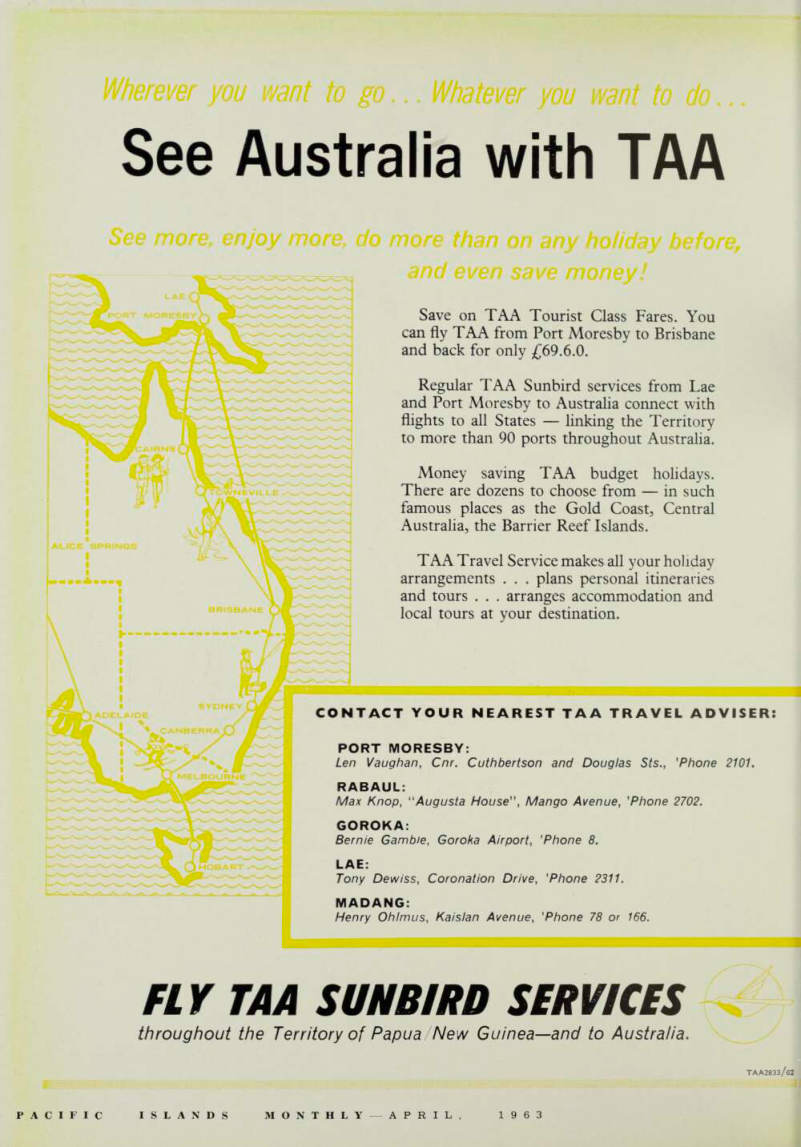 2
2 3
3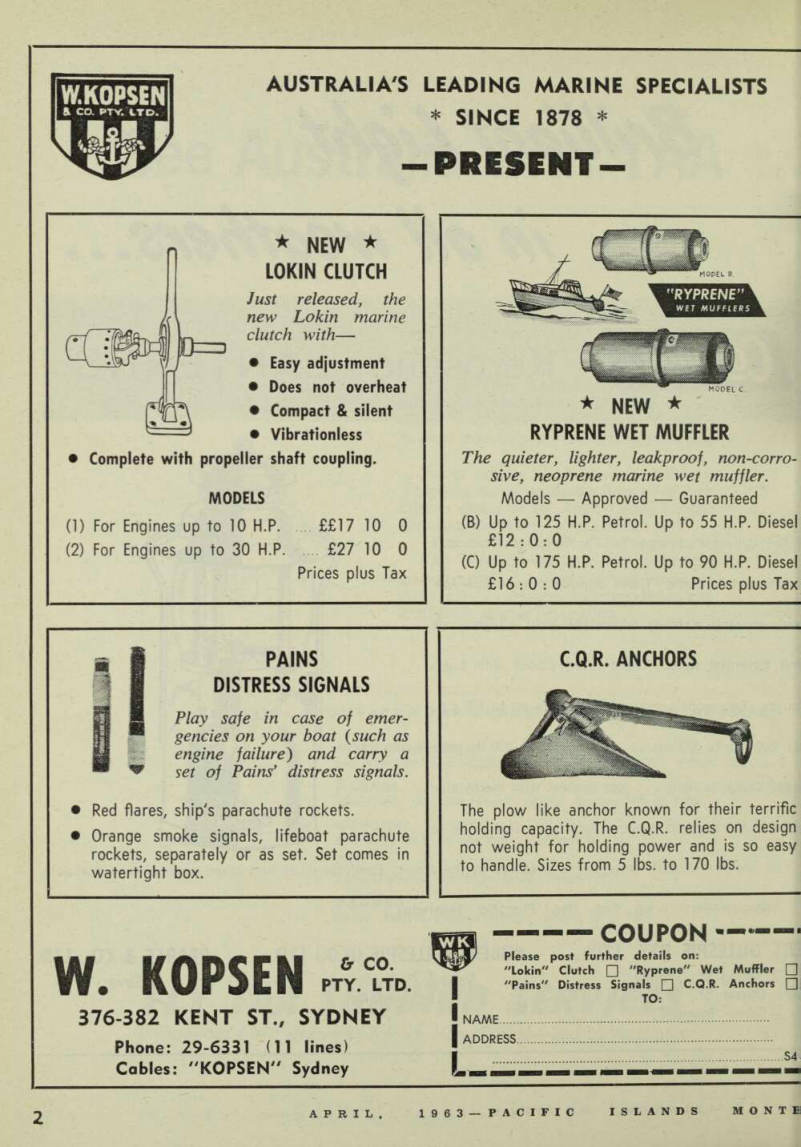 4
4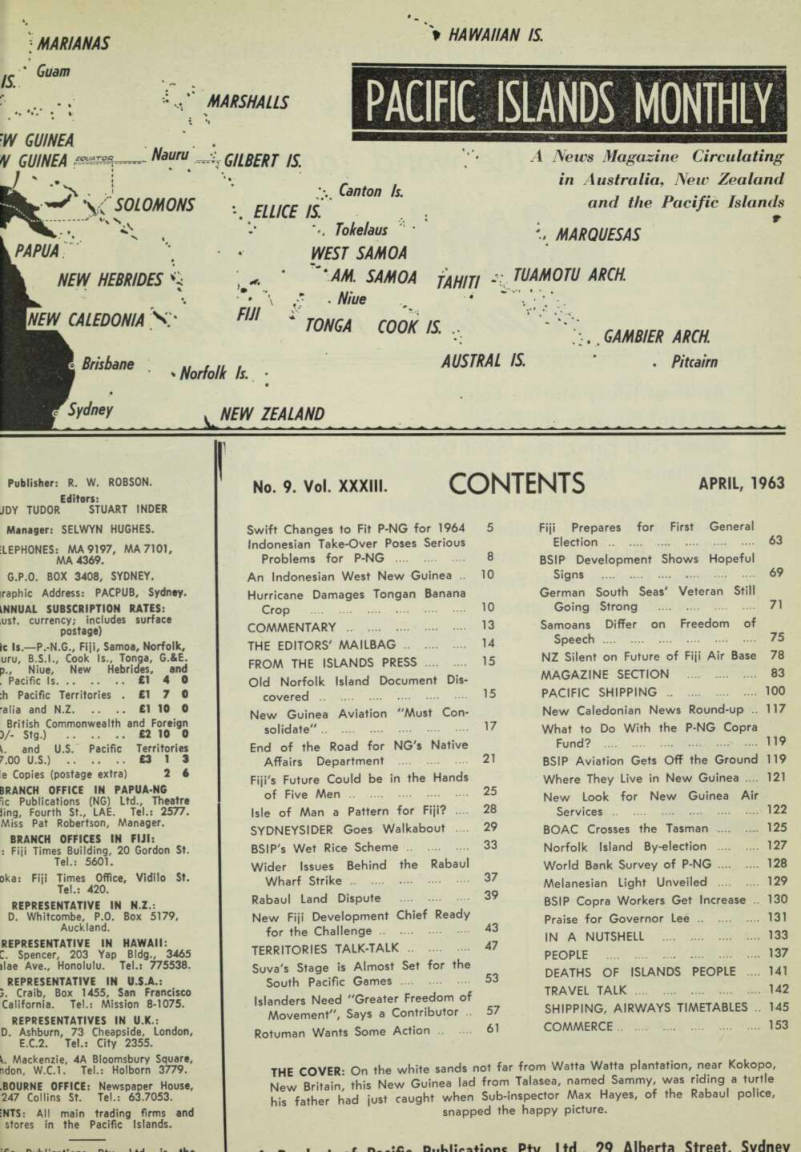 5
5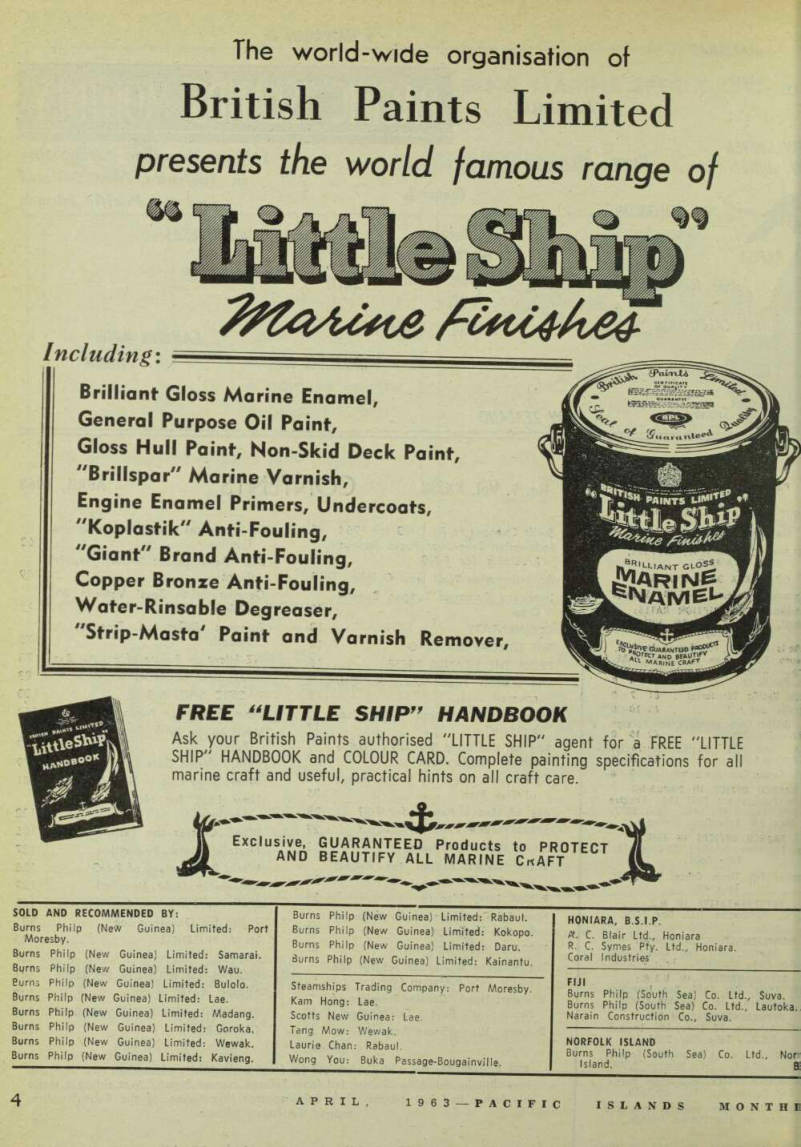 6
6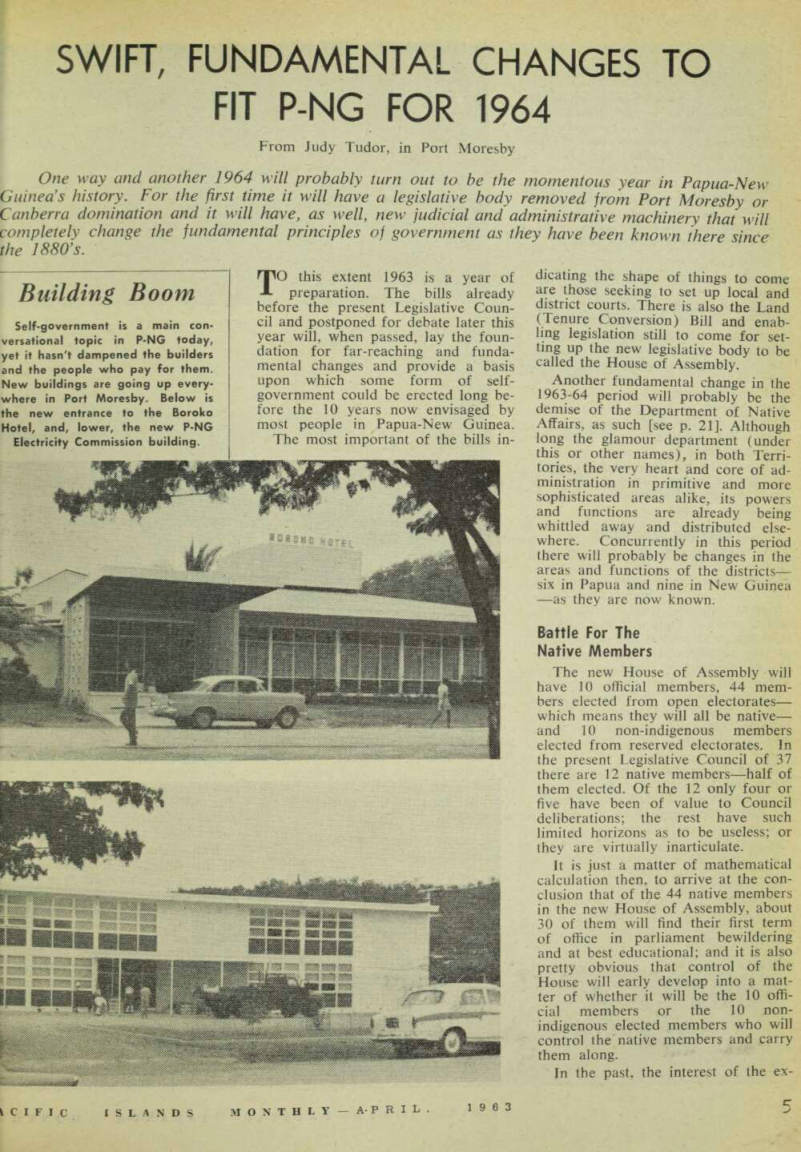 7
7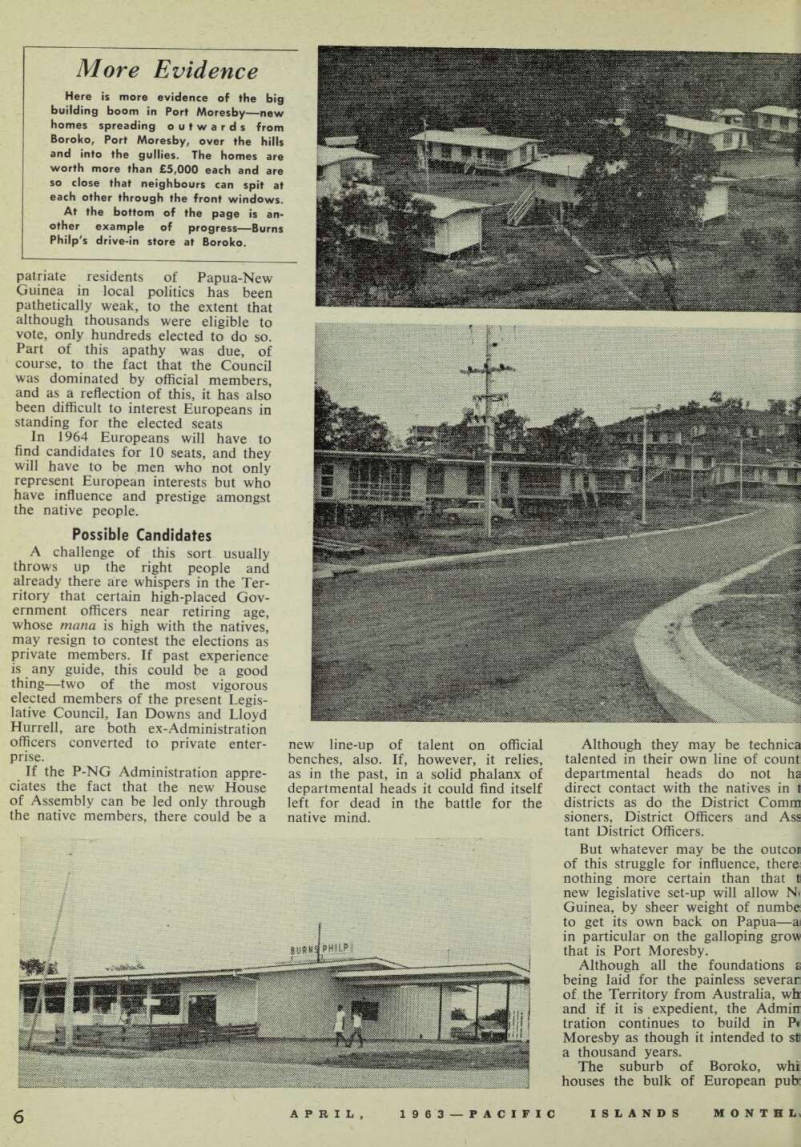 8
8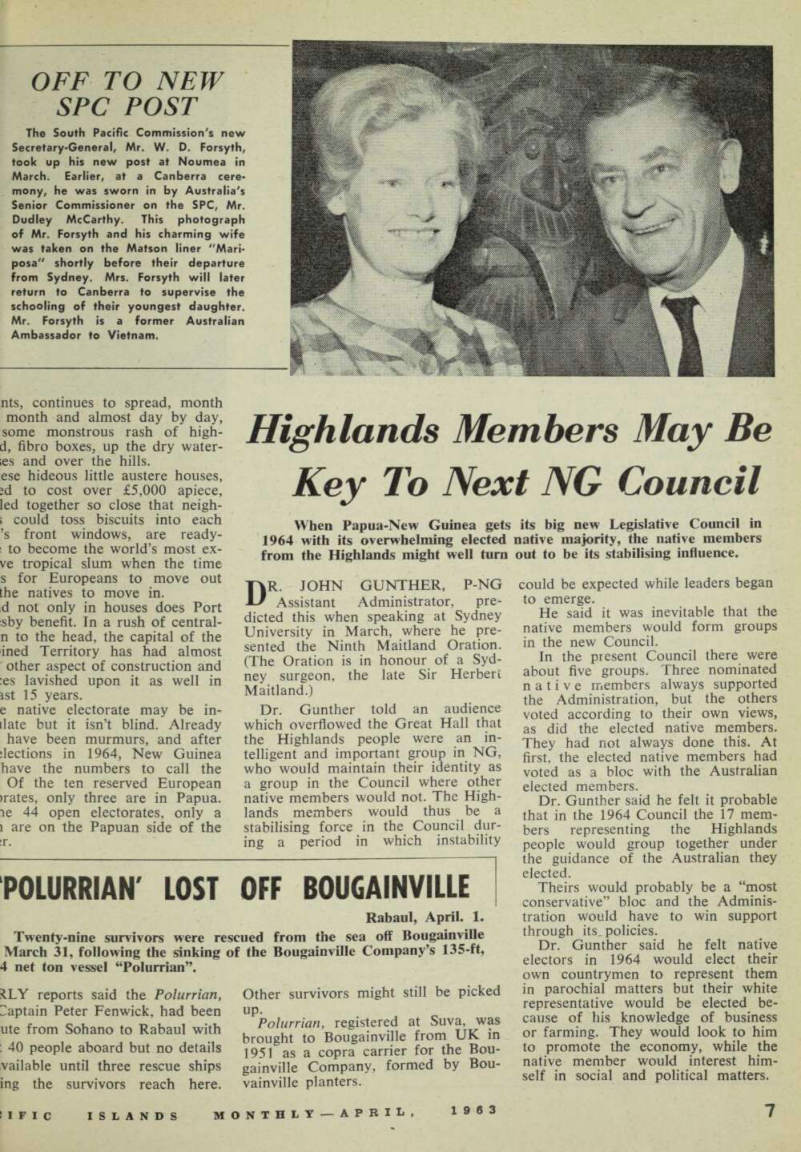 9
9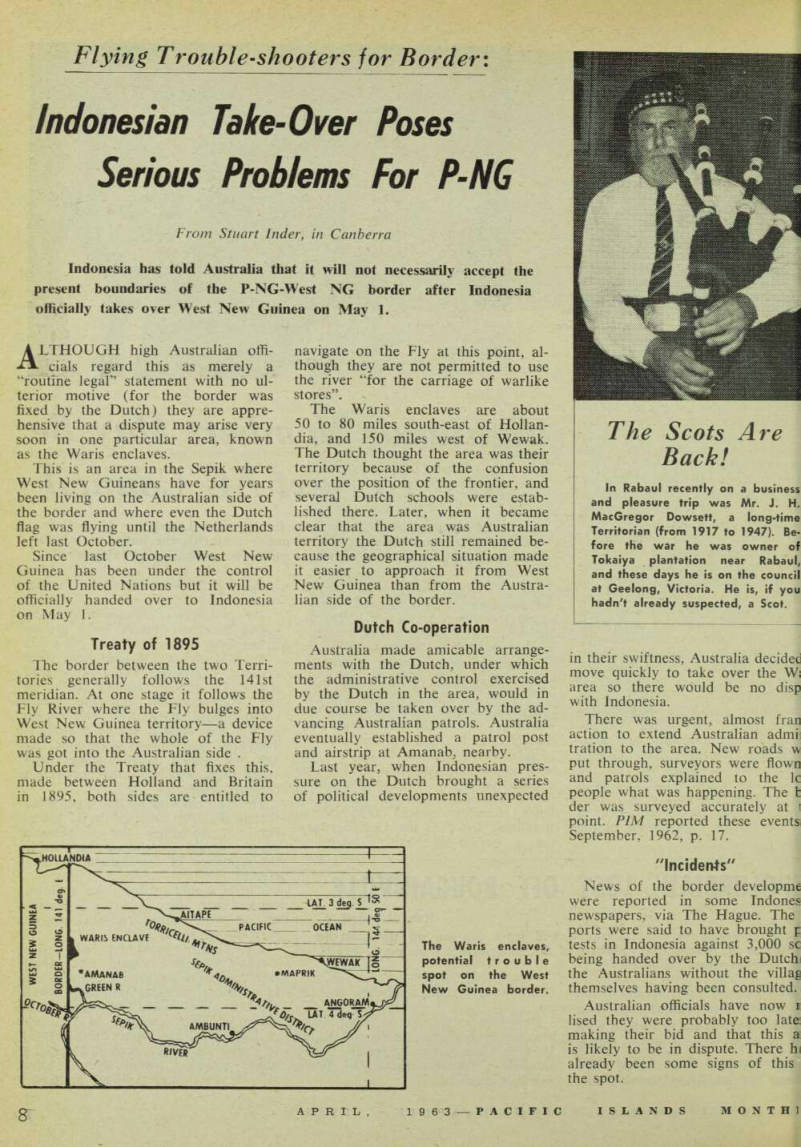 10
10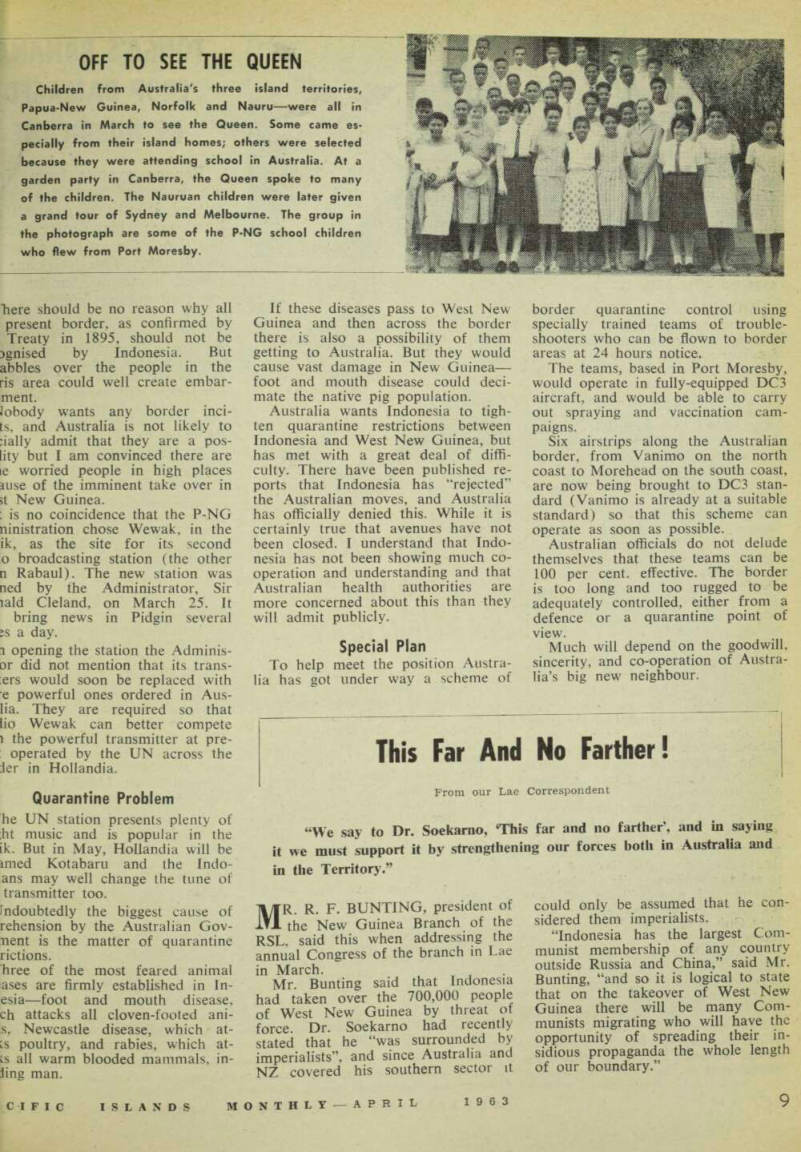 11
11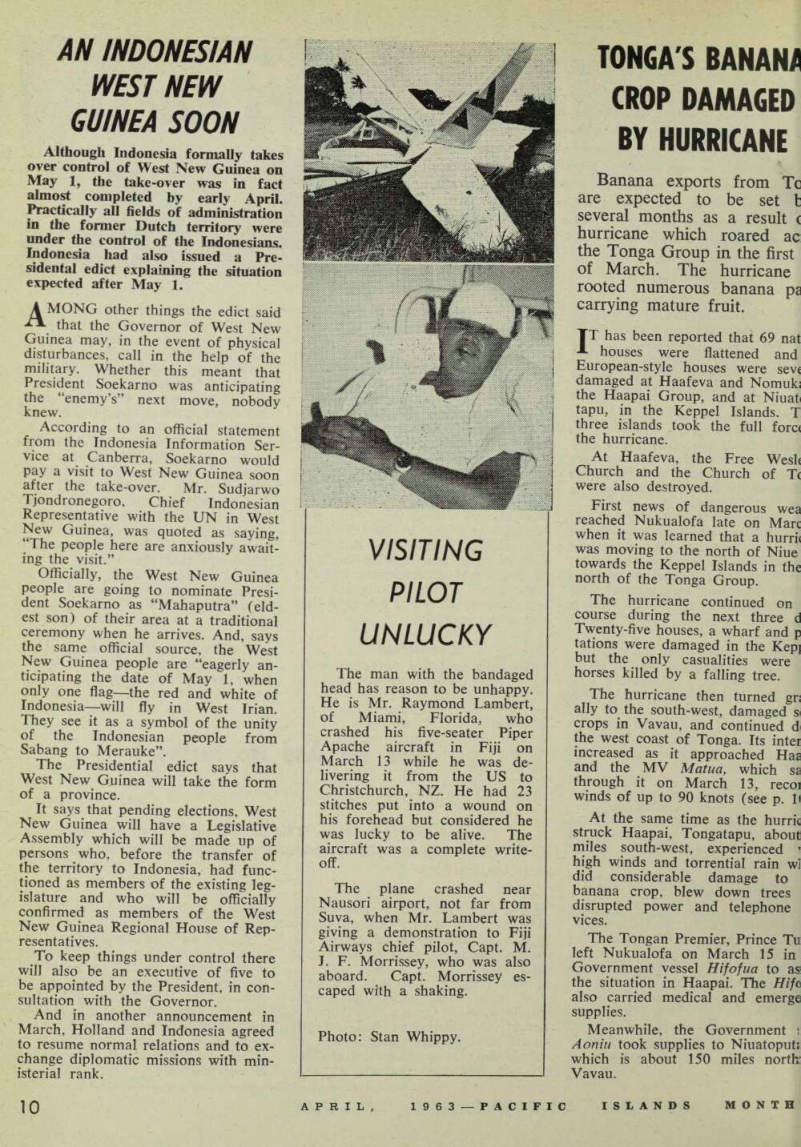 12
12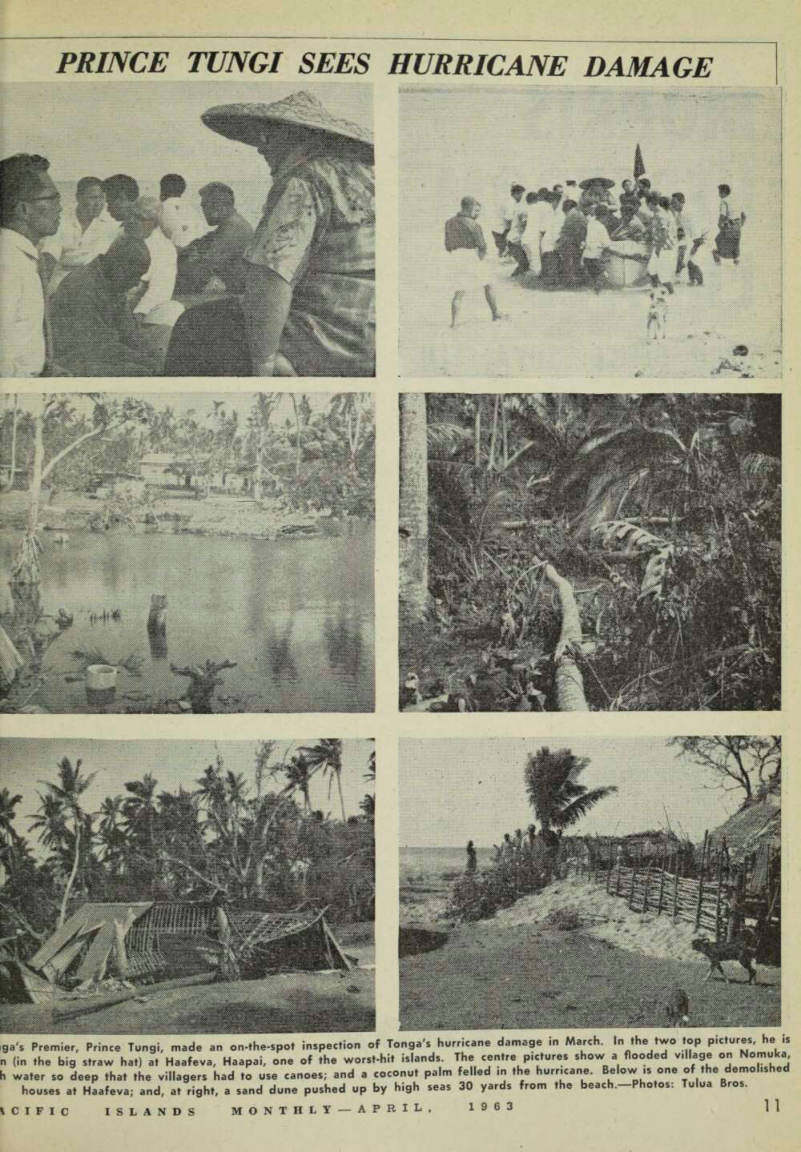 13
13 14
14 15
15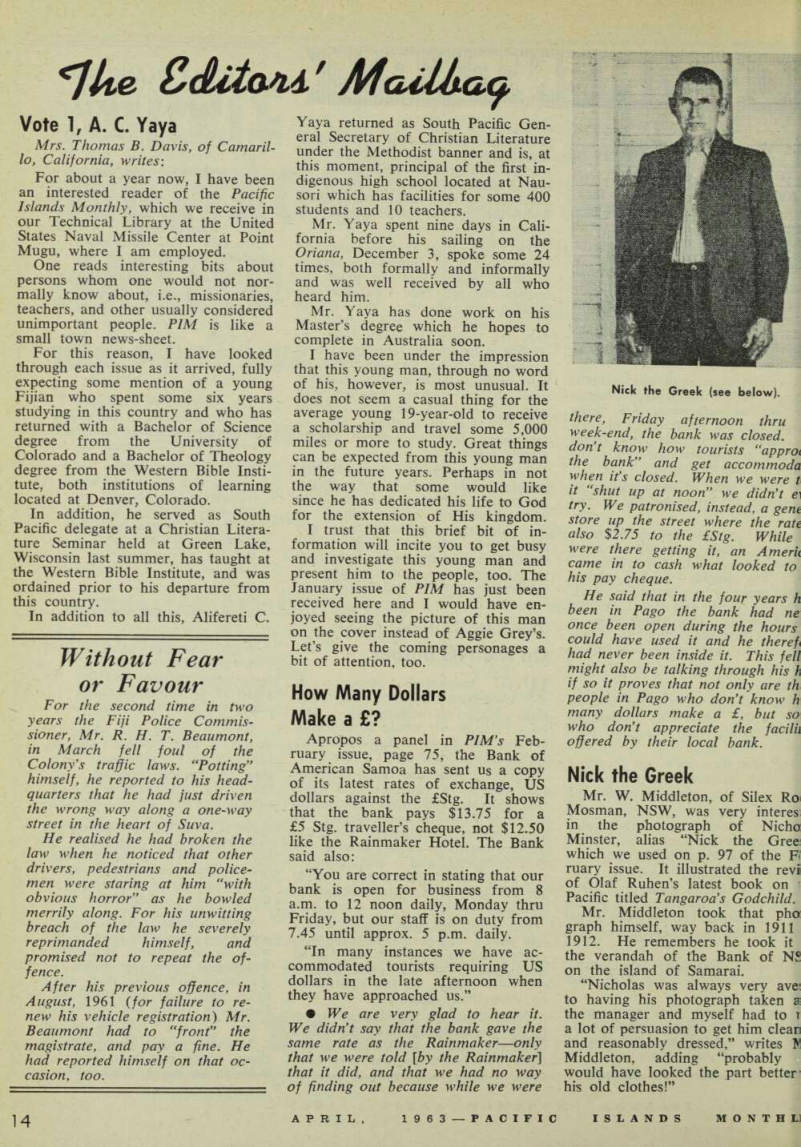 16
16 17
17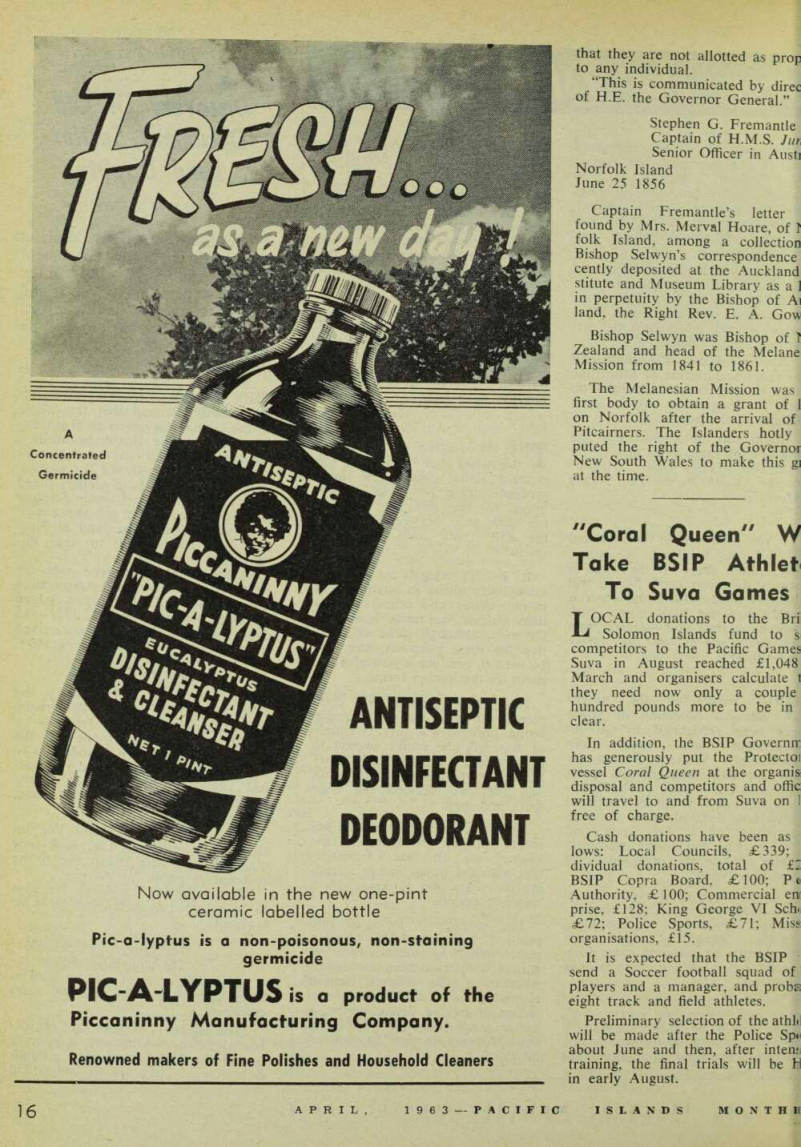 18
18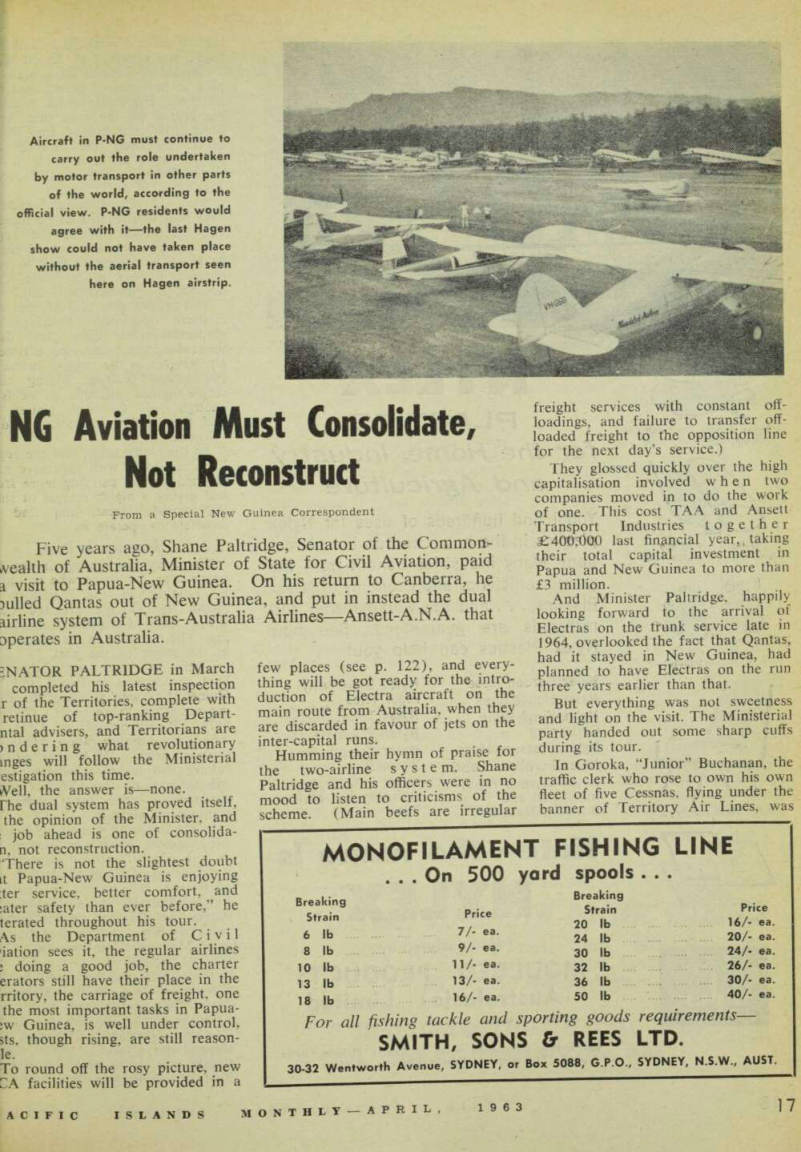 19
19 20
20 21
21 22
22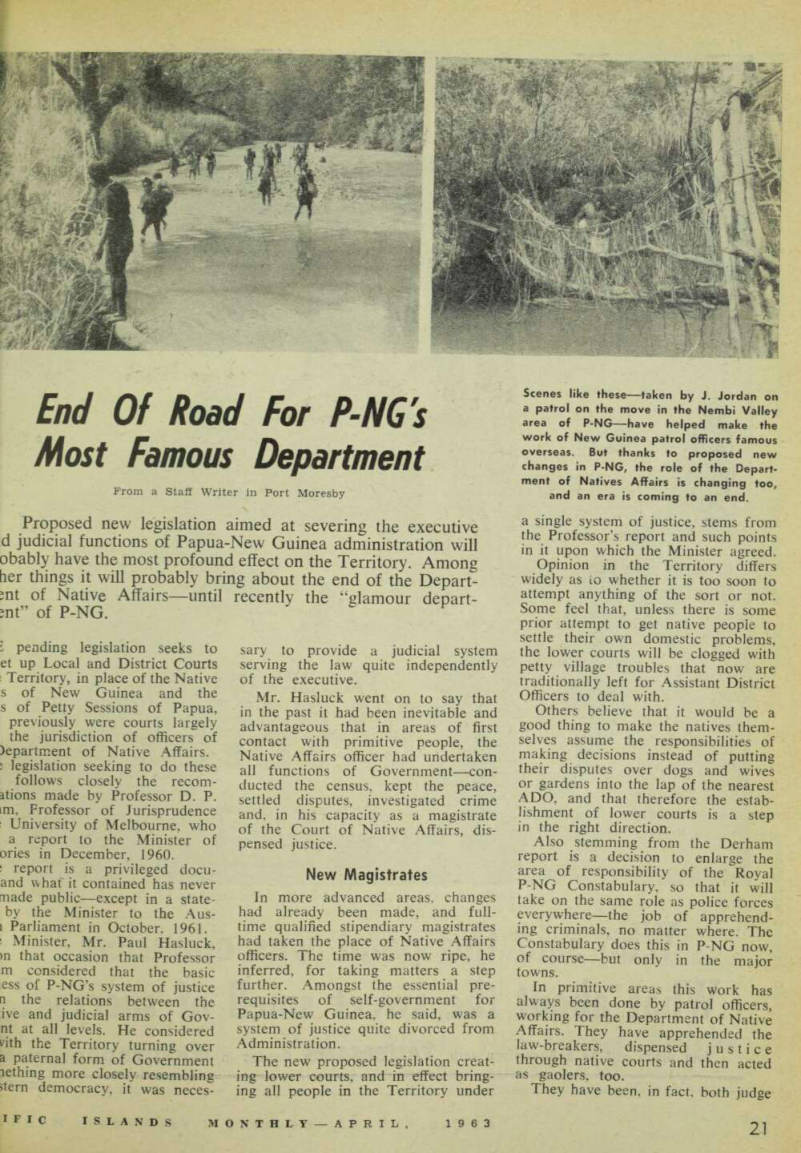 23
23 24
24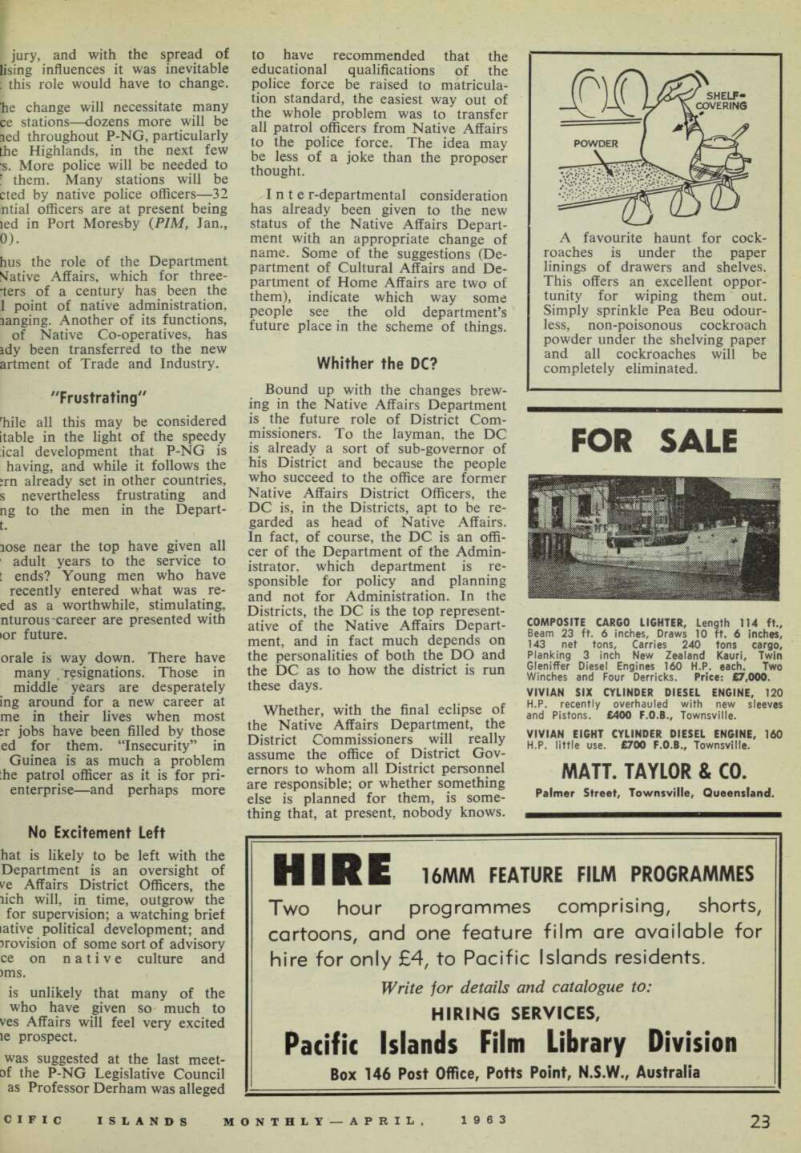 25
25 26
26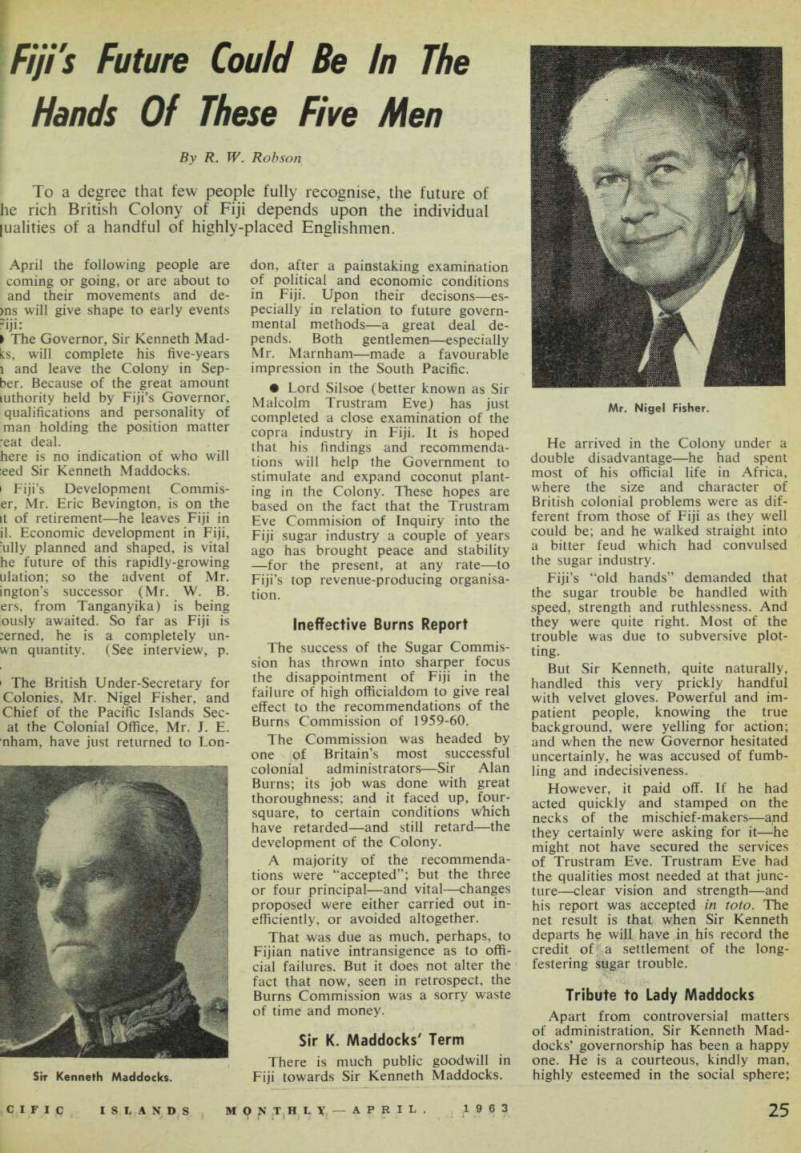 27
27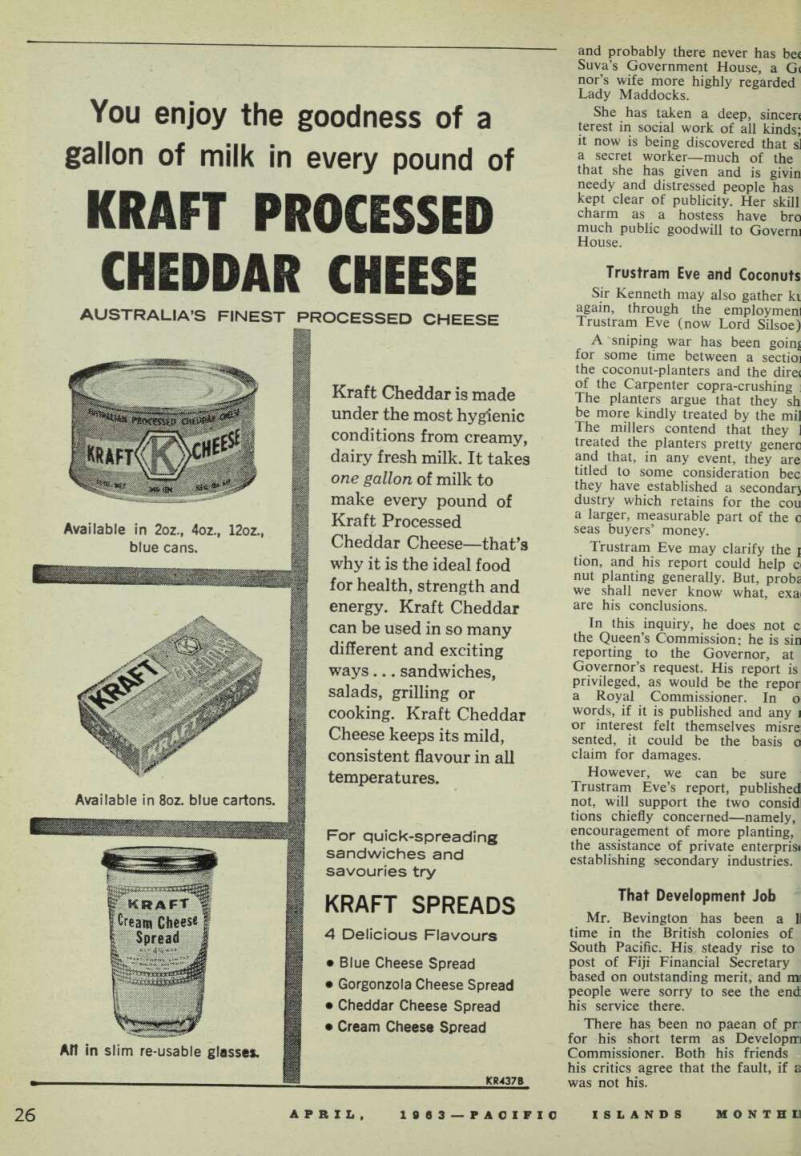 28
28 29
29 30
30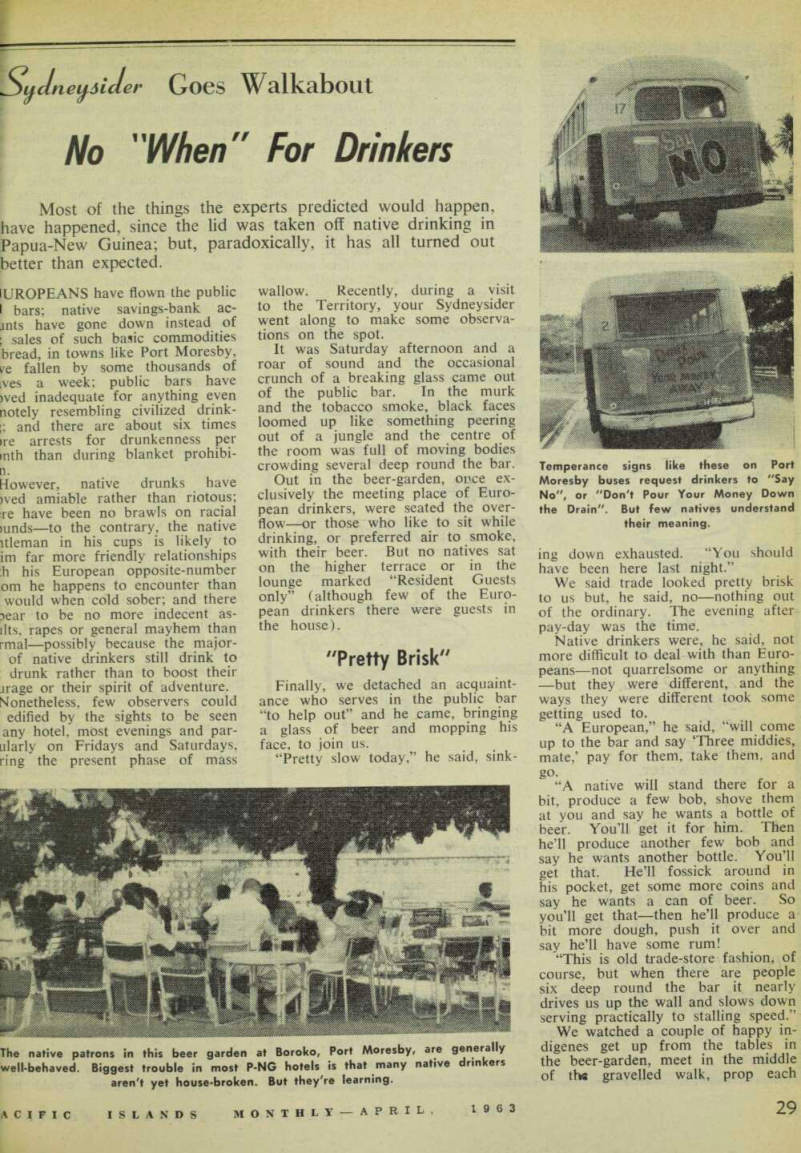 31
31 32
32 33
33 34
34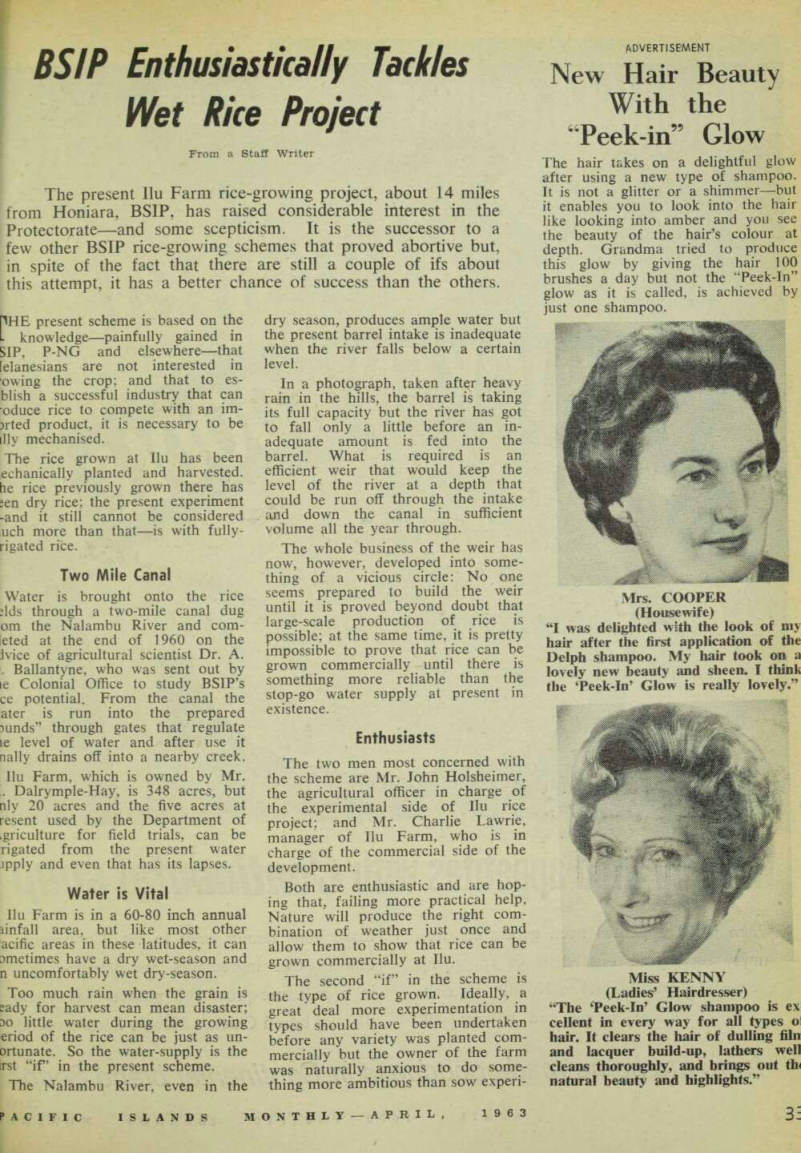 35
35 36
36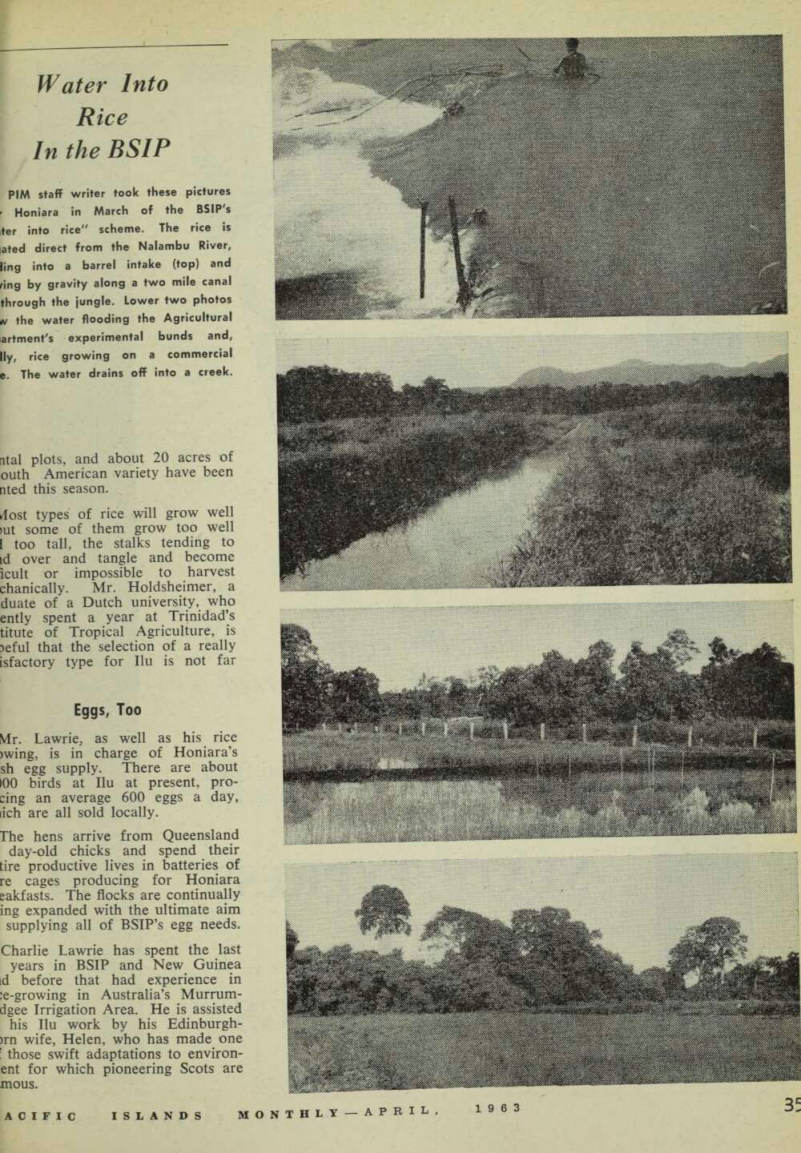 37
37 38
38 39
39 40
40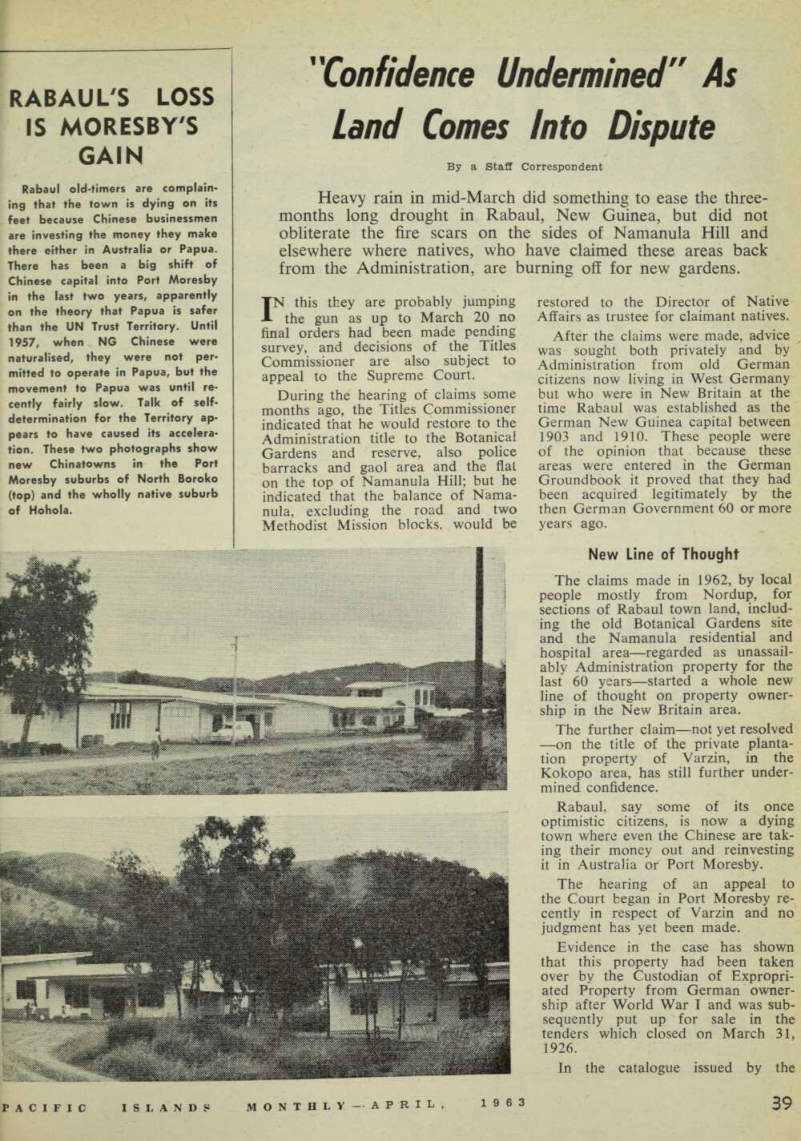 41
41 42
42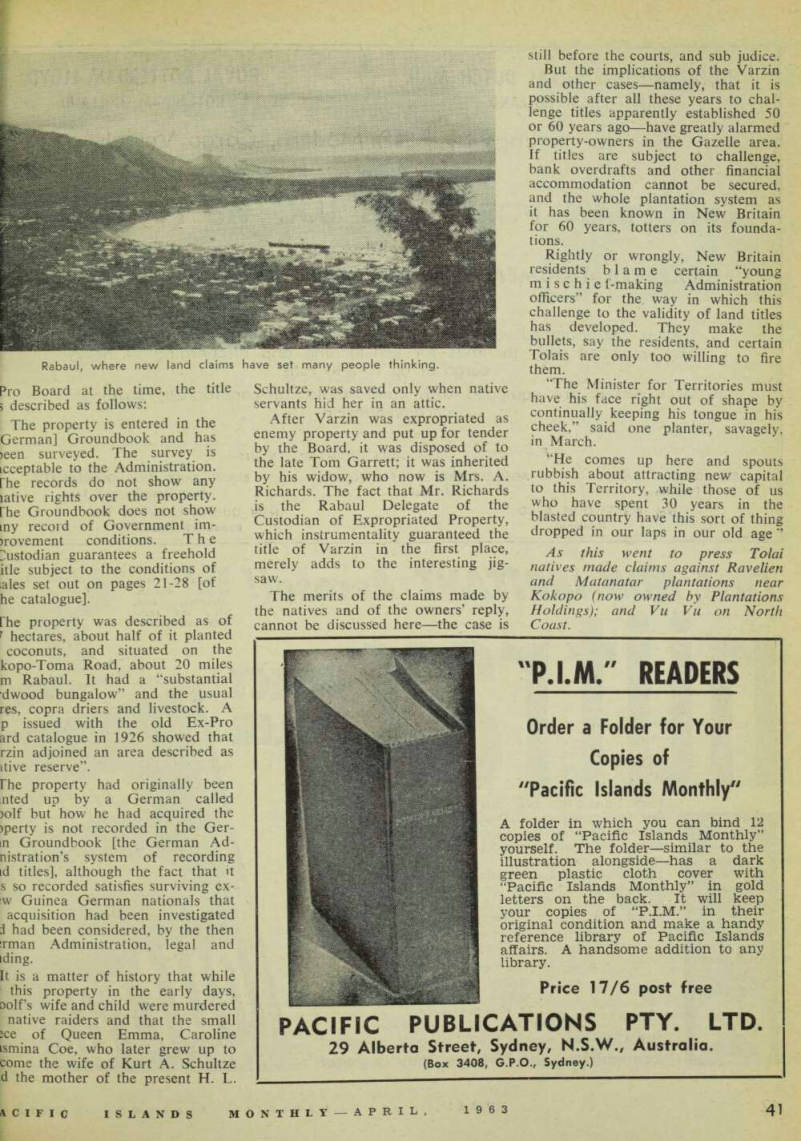 43
43 44
44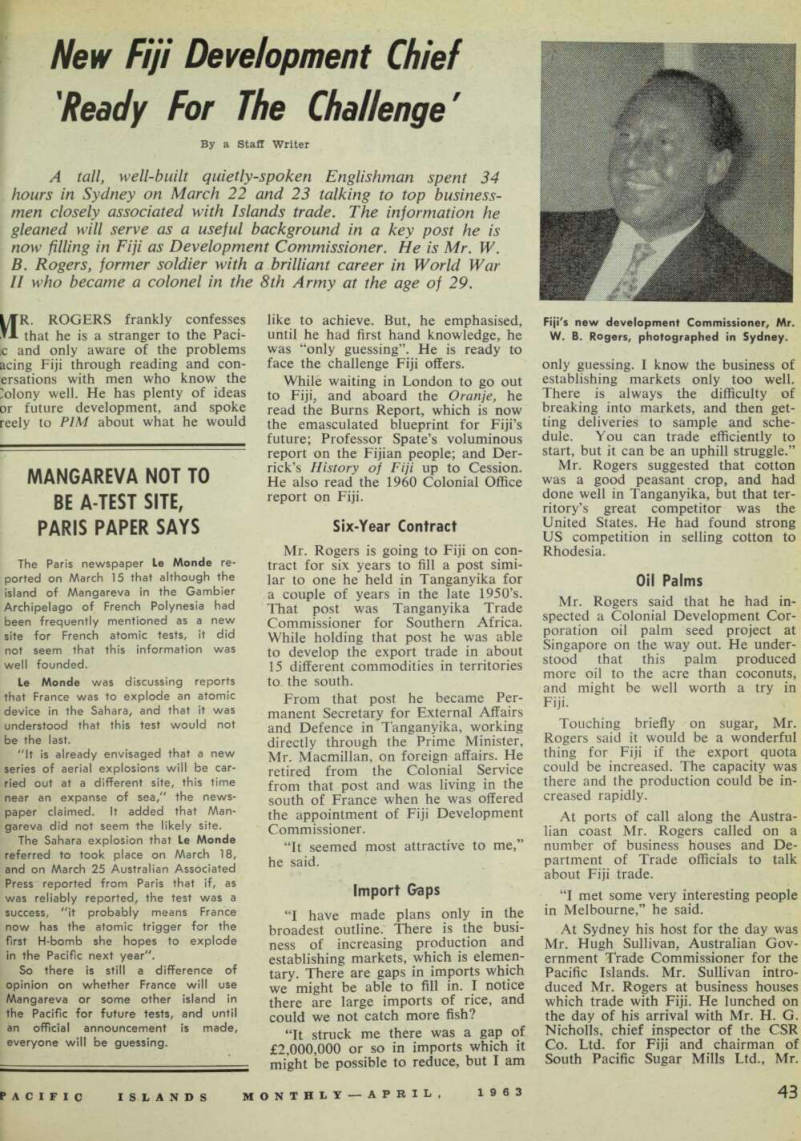 45
45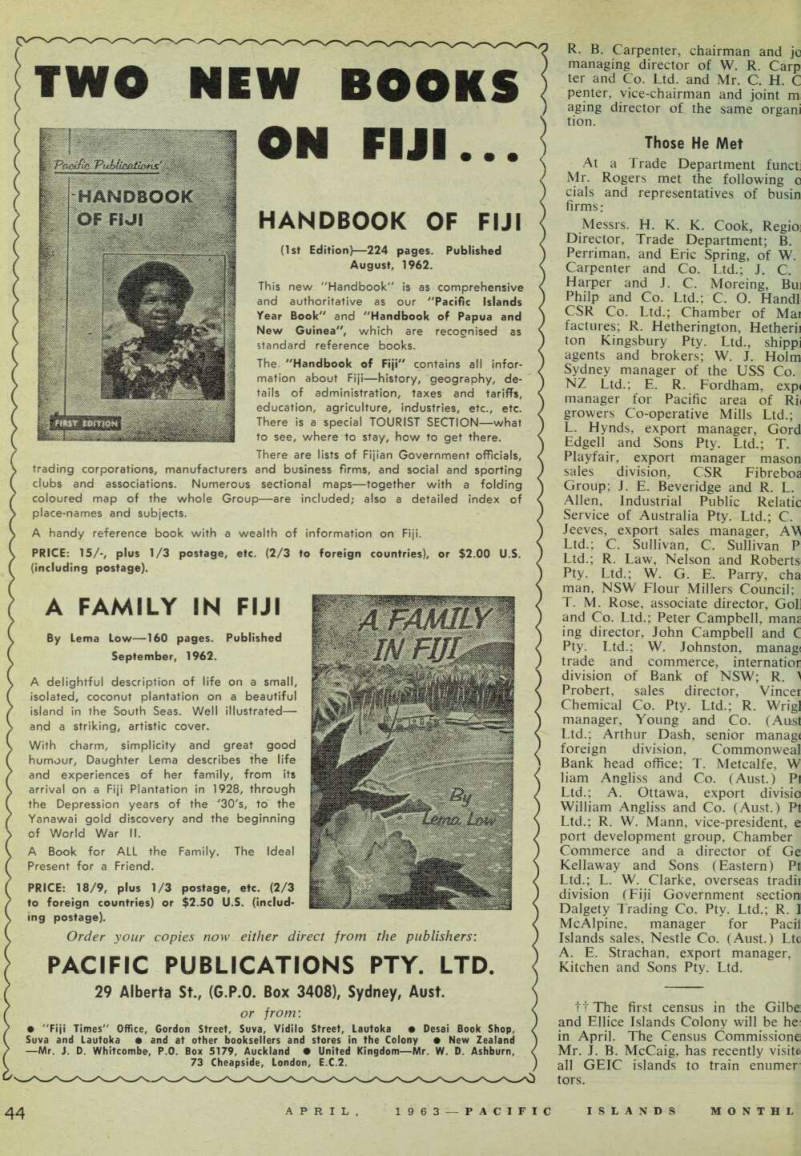 46
46 47
47 48
48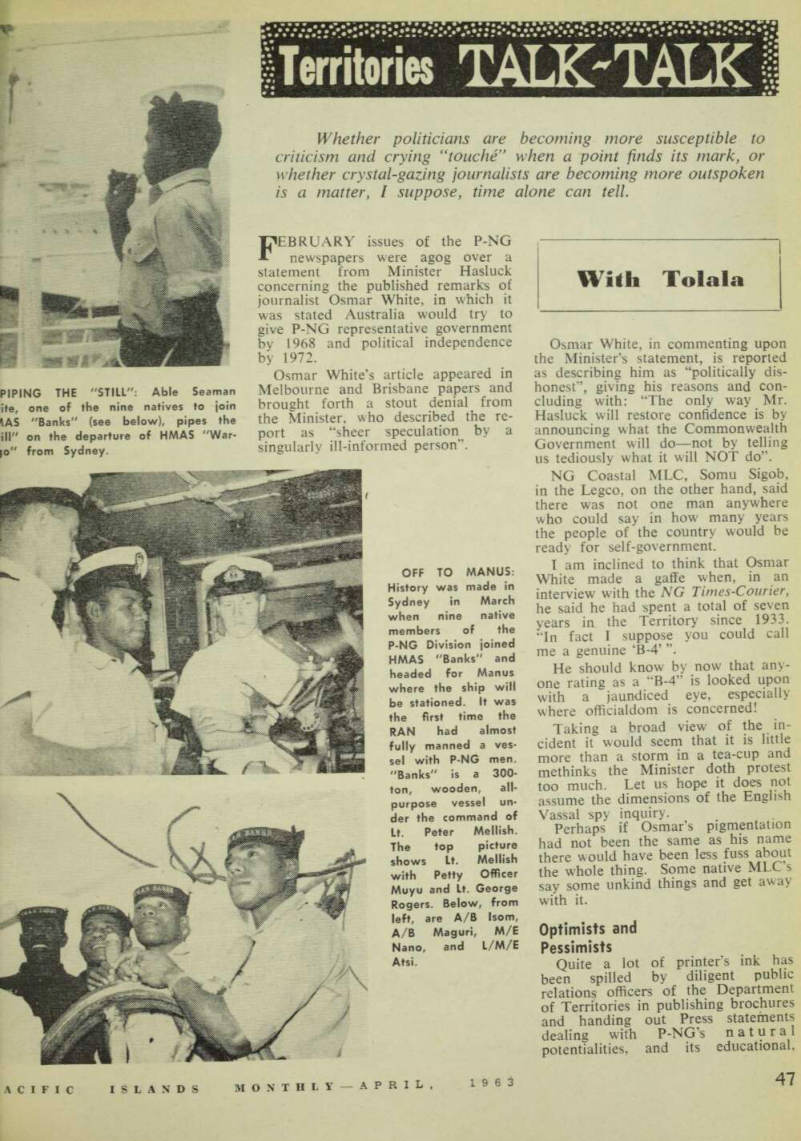 49
49 50
50 51
51 52
52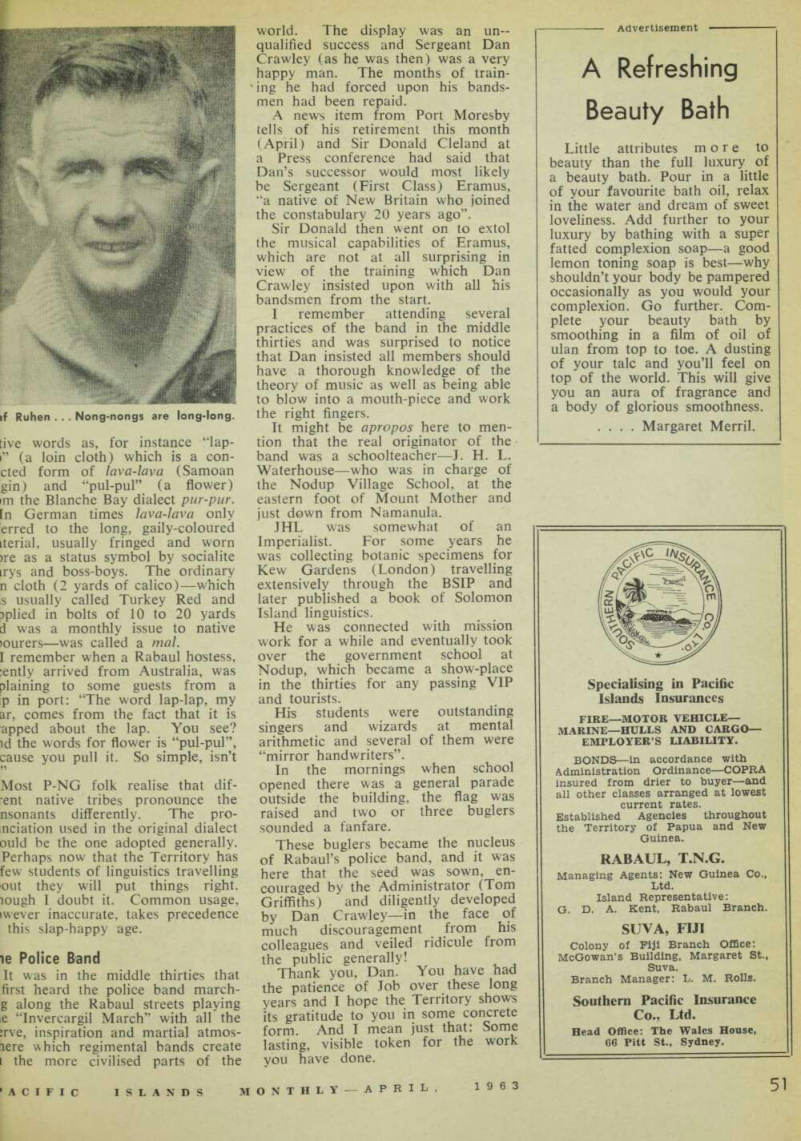 53
53 54
54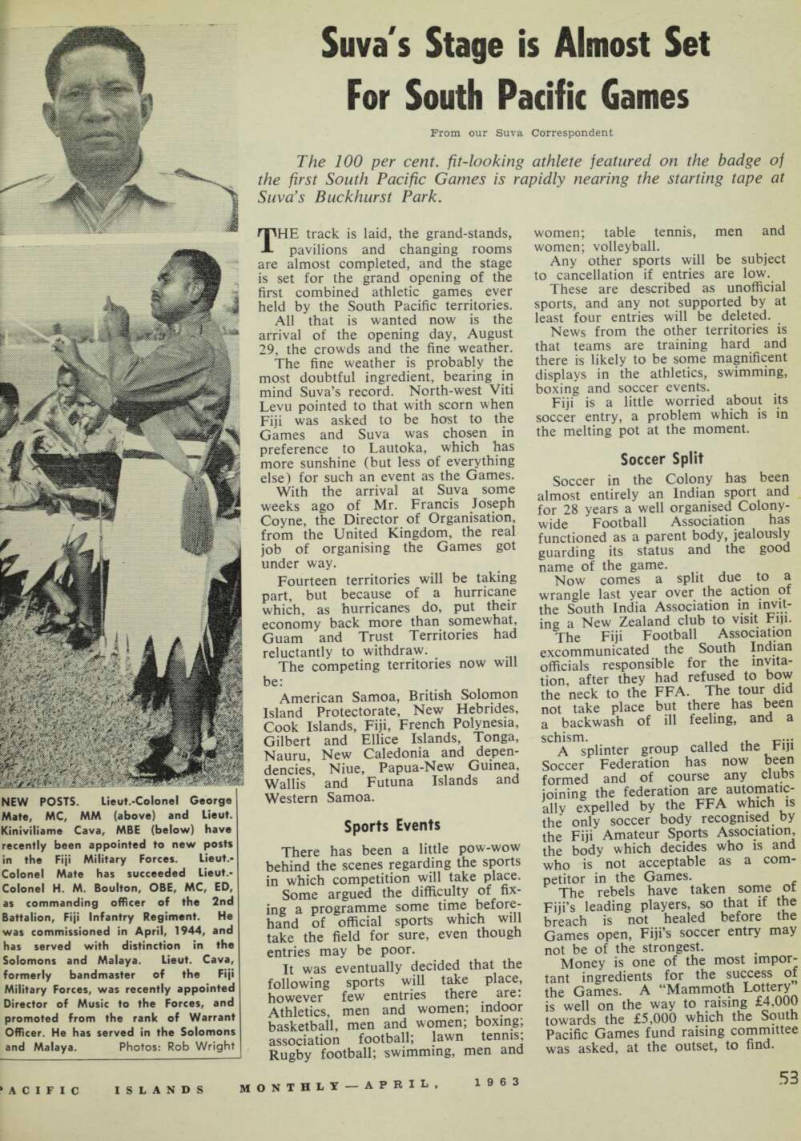 55
55 56
56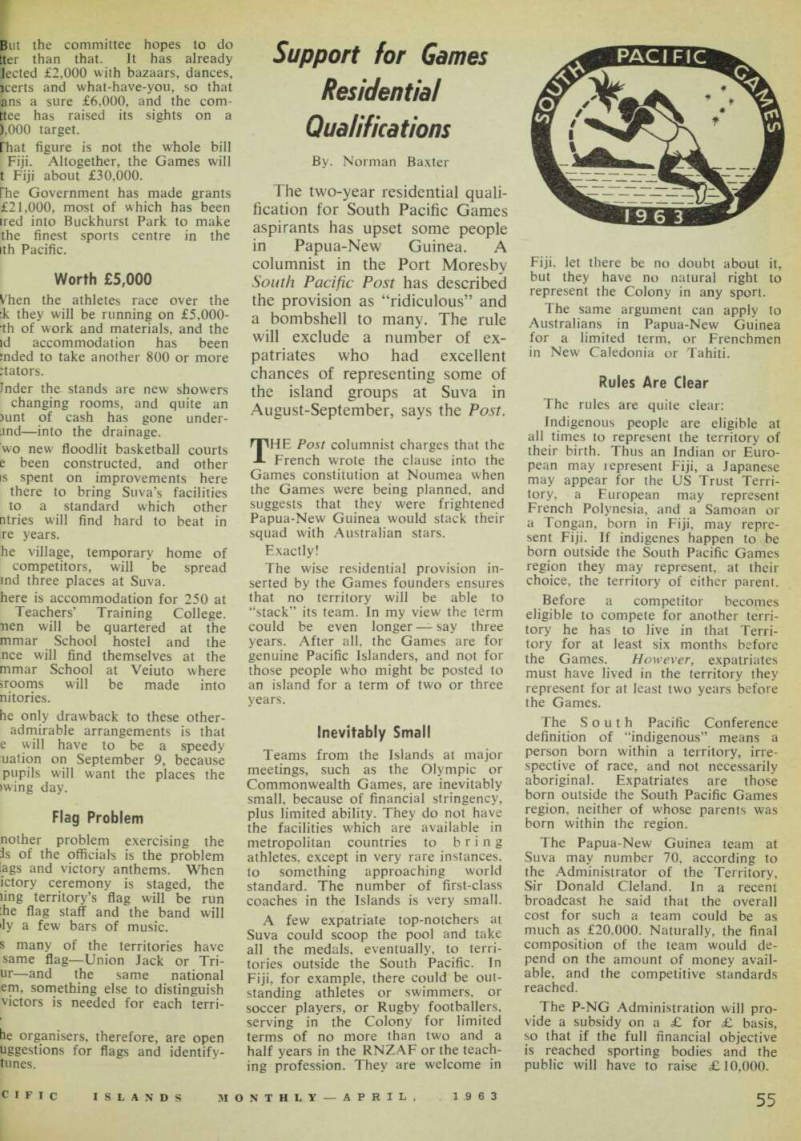 57
57 58
58 59
59 60
60 61
61 62
62 63
63 64
64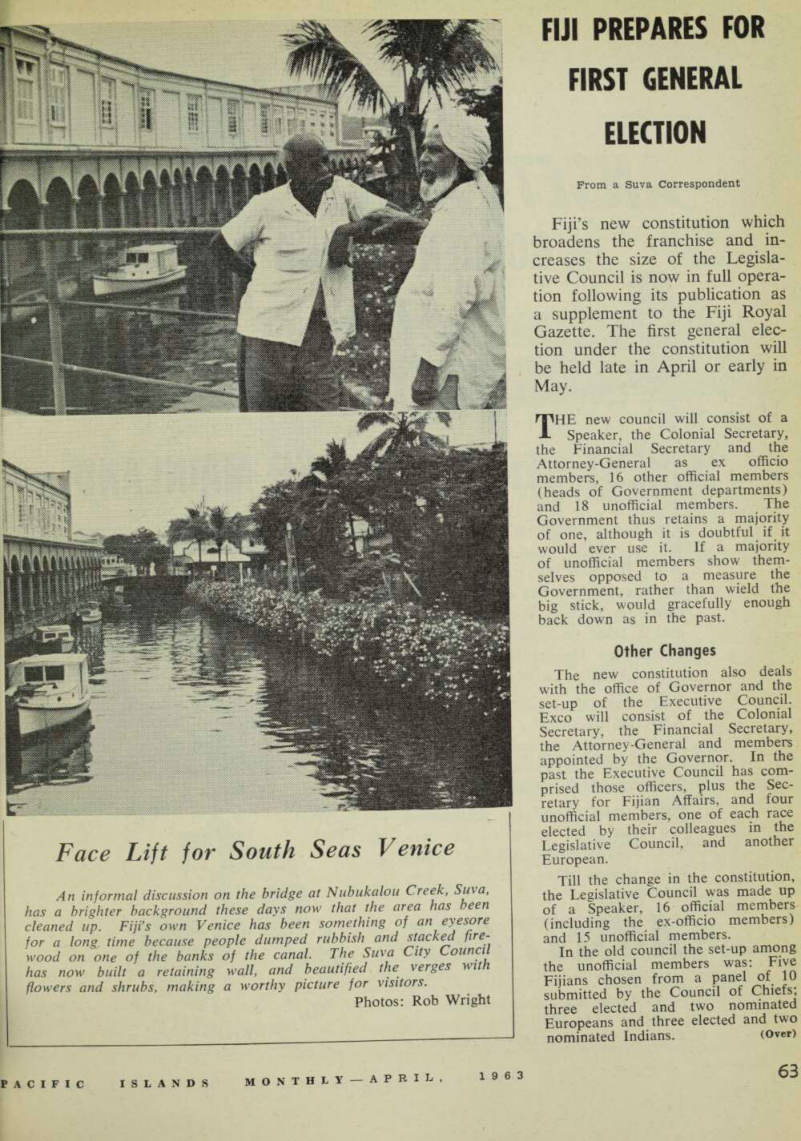 65
65 66
66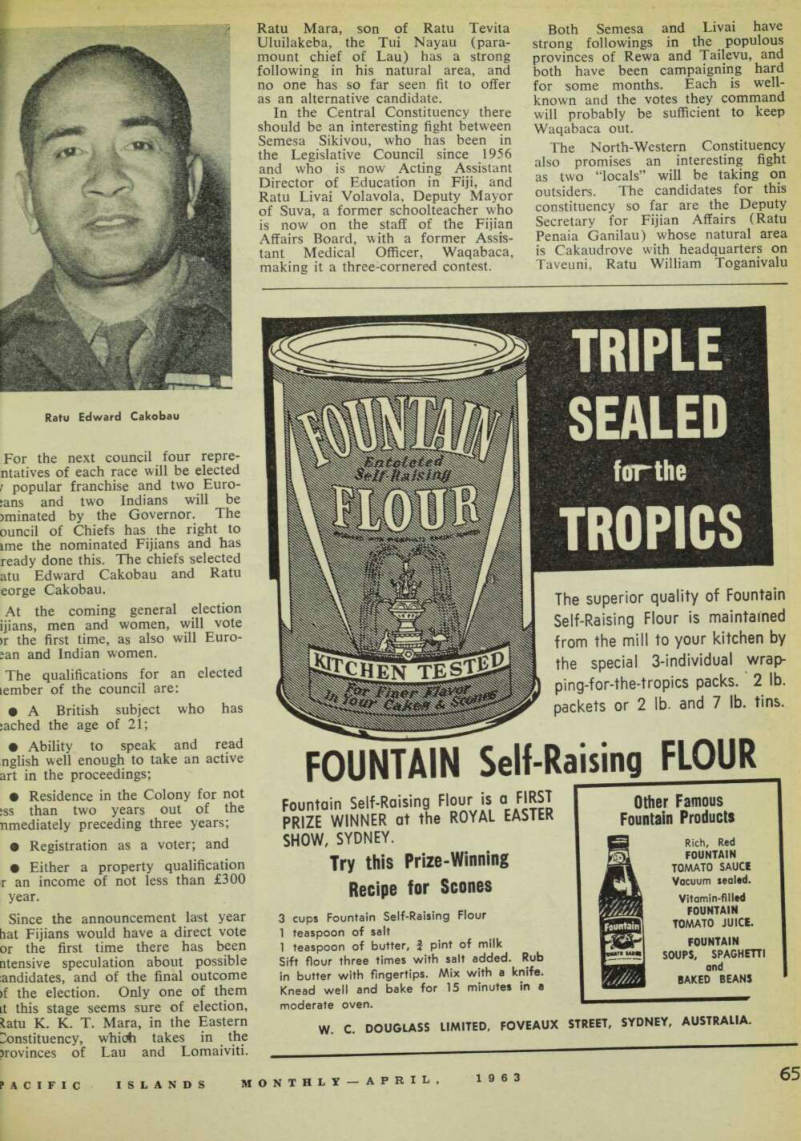 67
67 68
68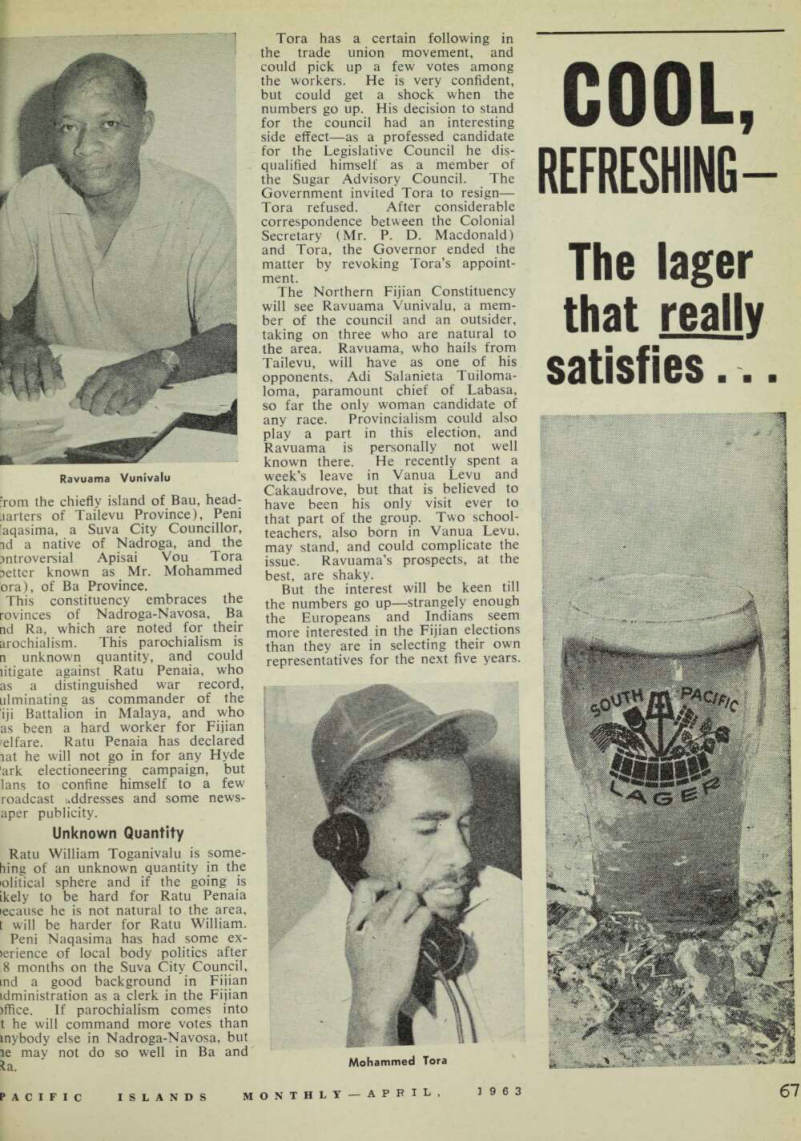 69
69 70
70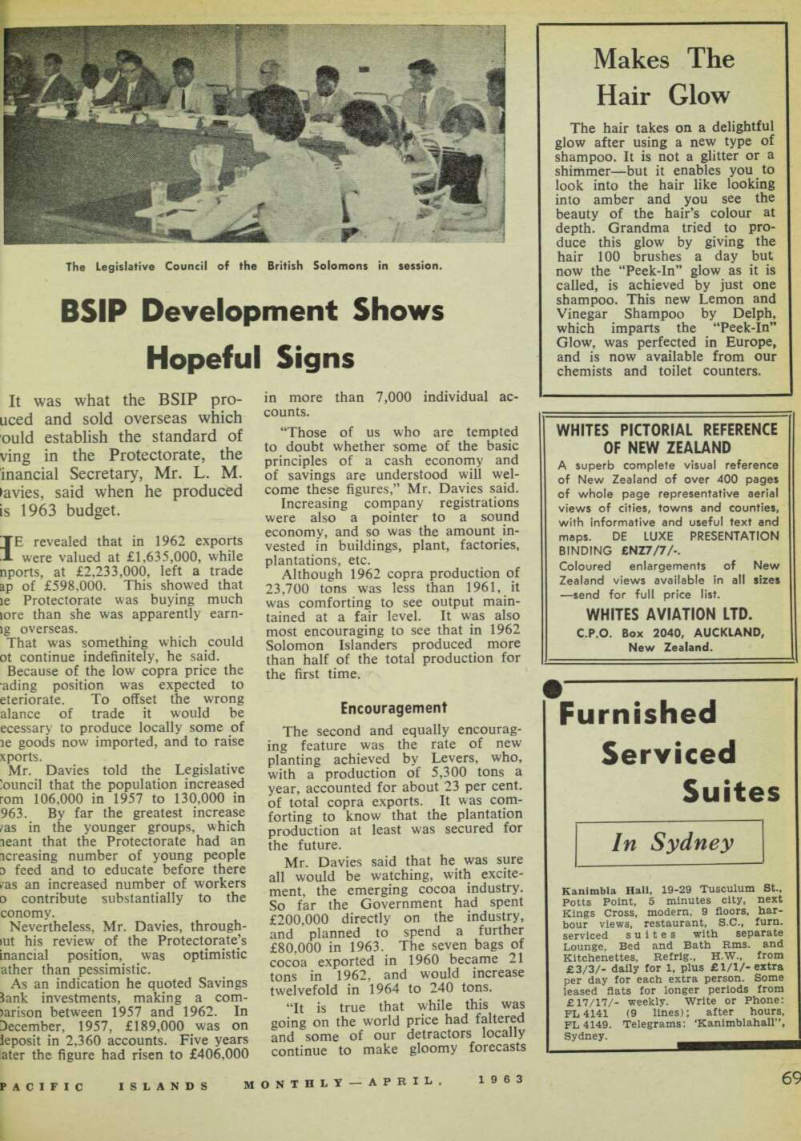 71
71 72
72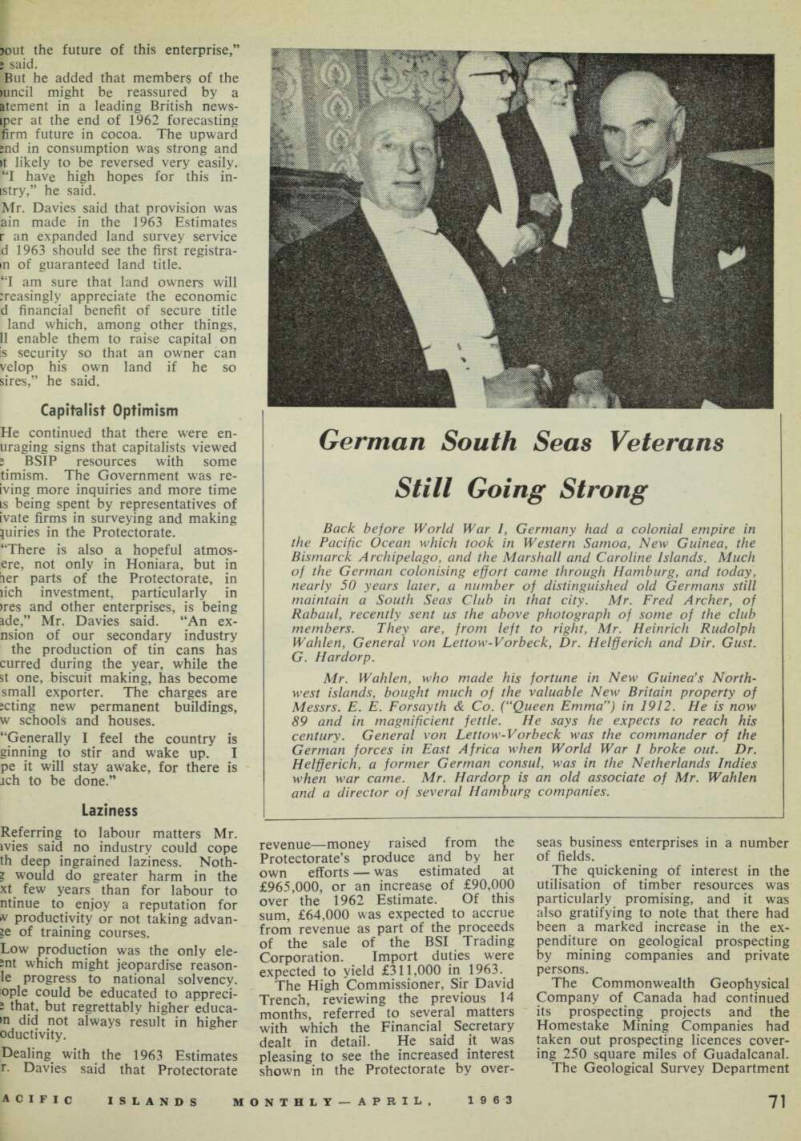 73
73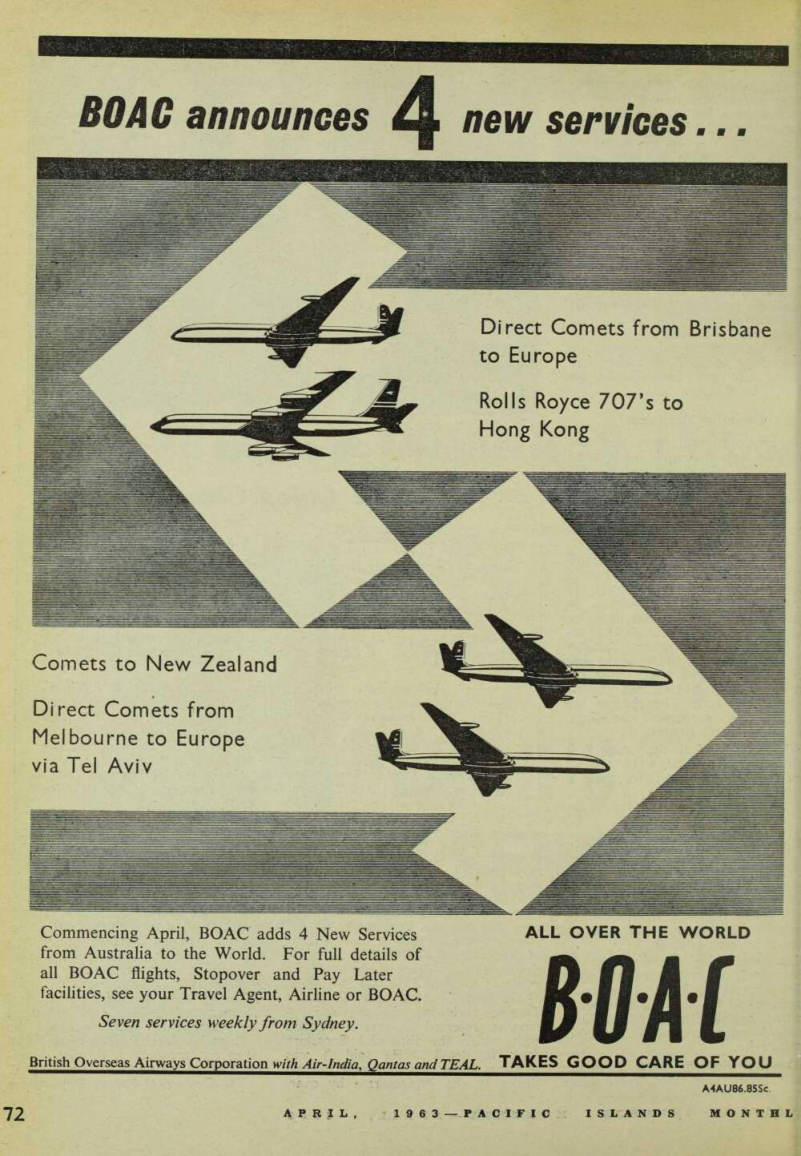 74
74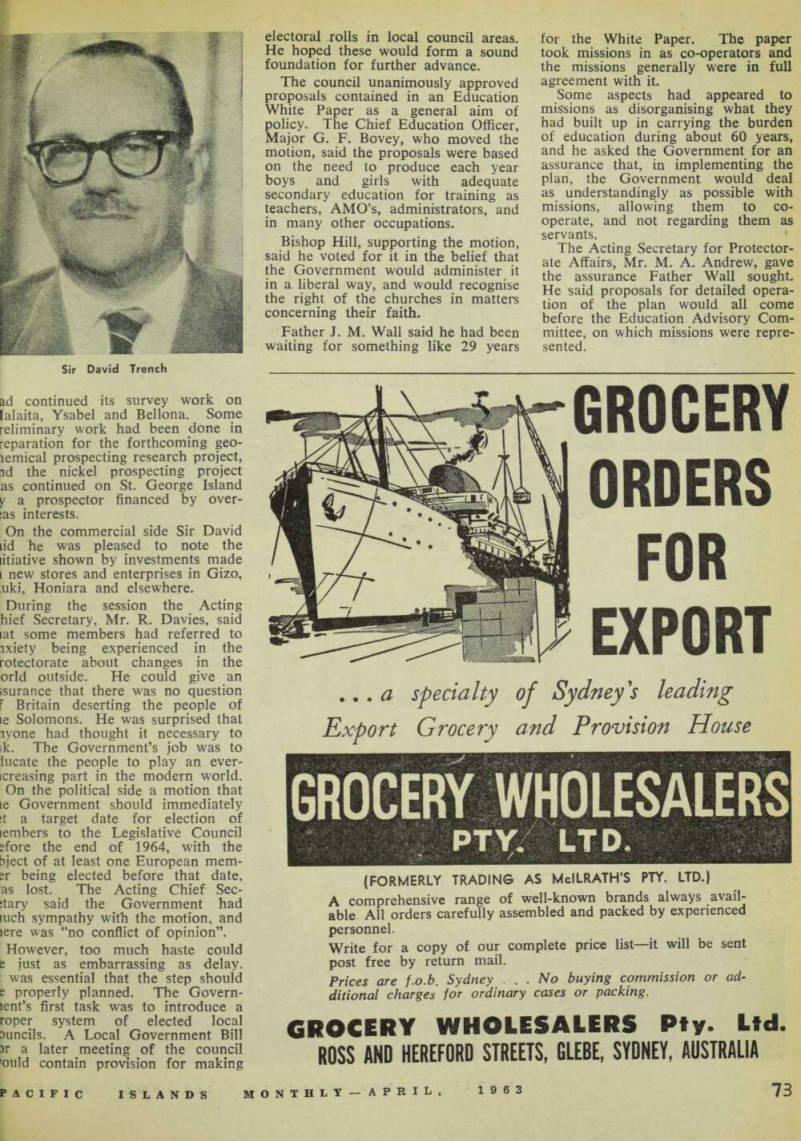 75
75 76
76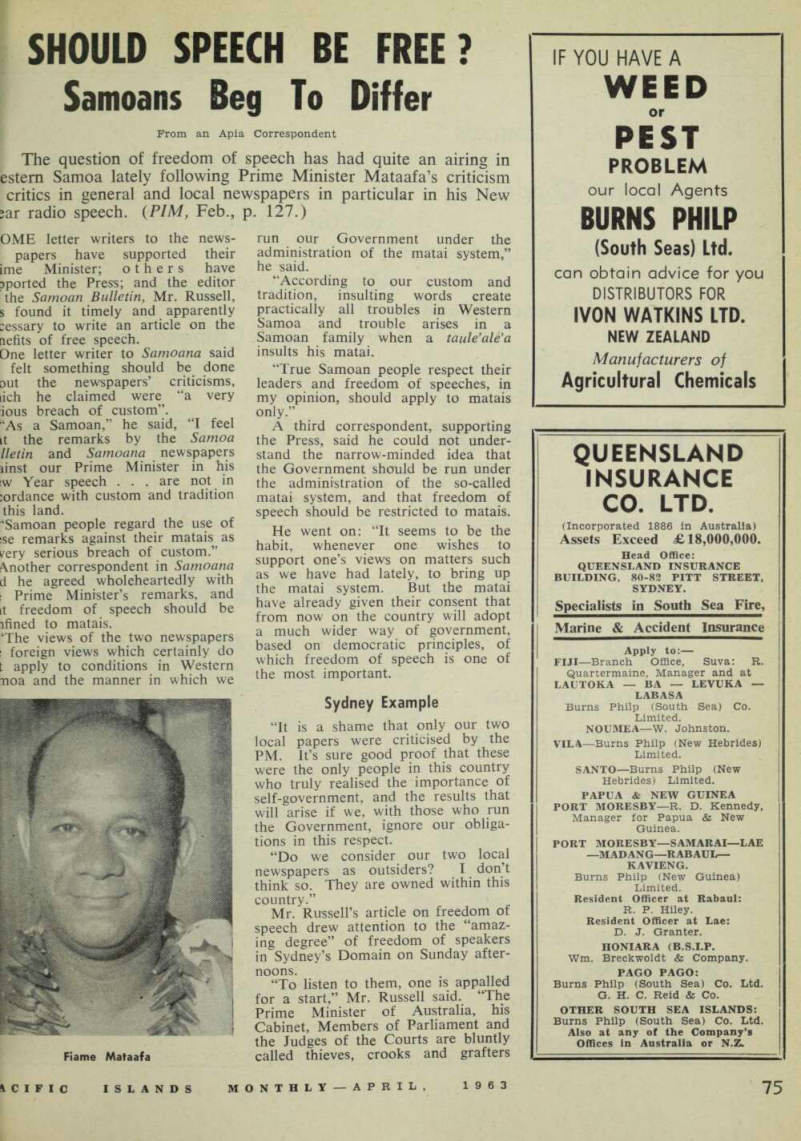 77
77 78
78 79
79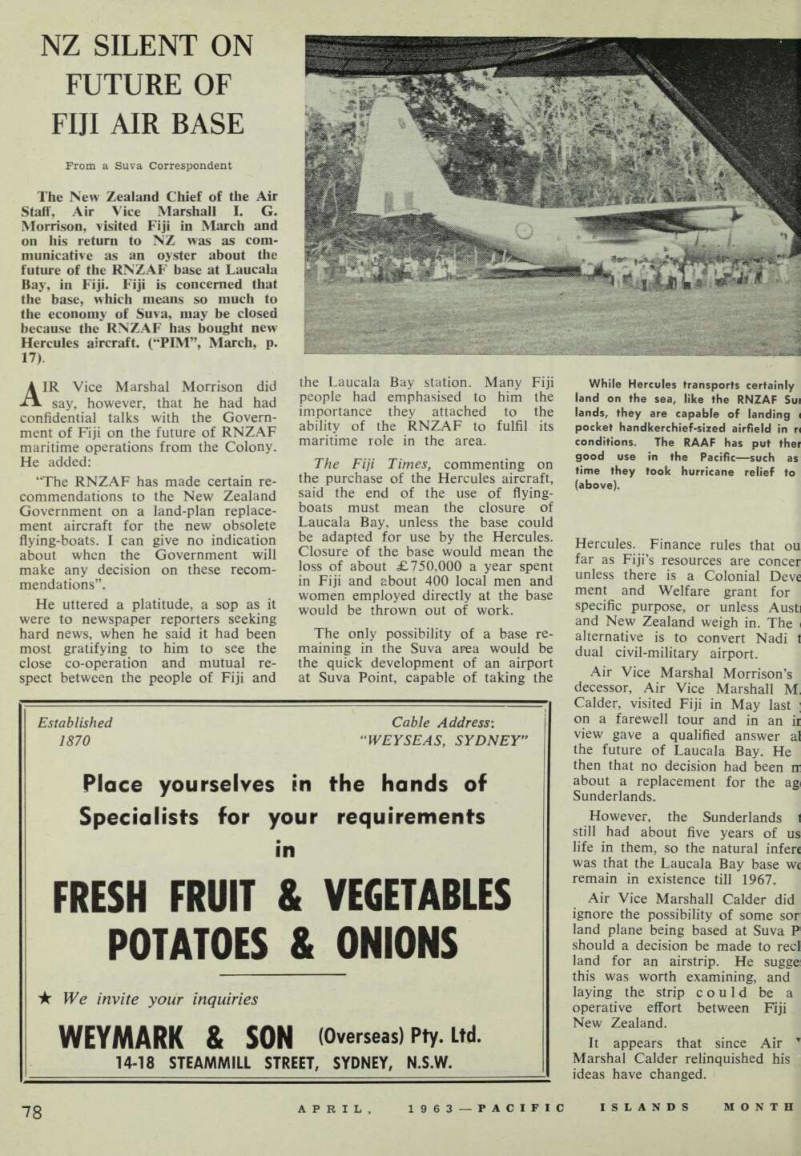 80
80 81
81 82
82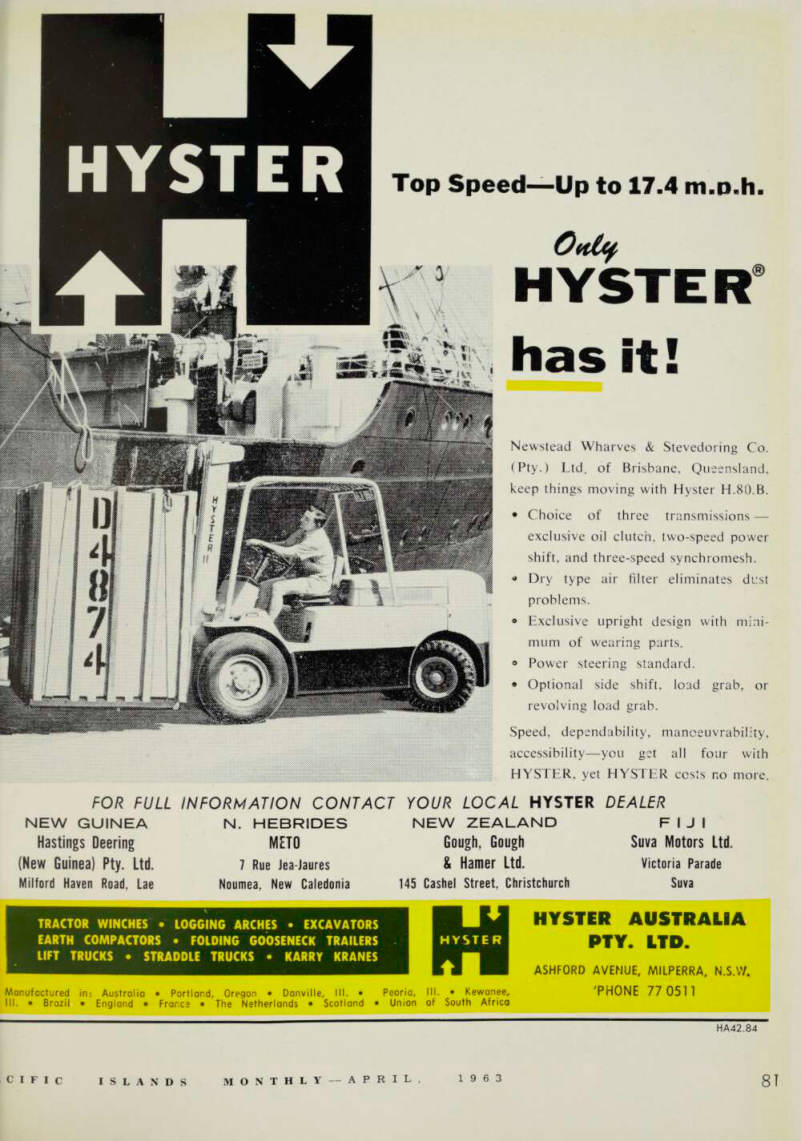 83
83 84
84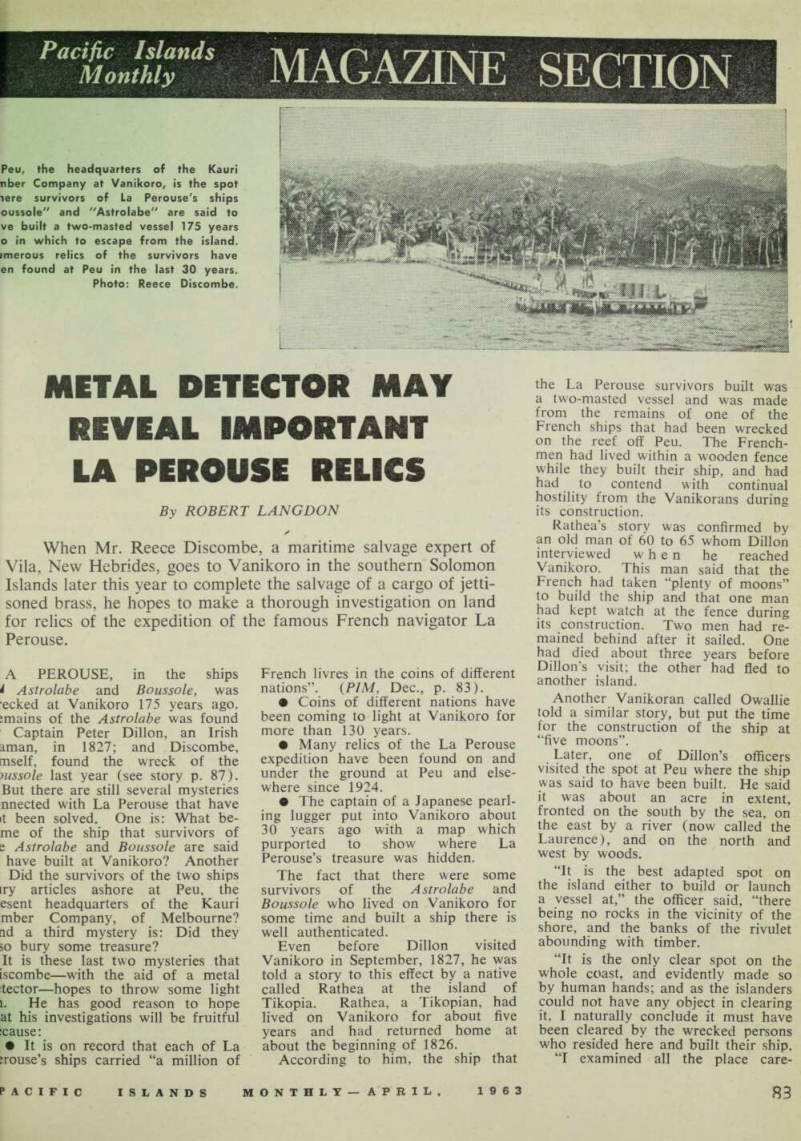 85
85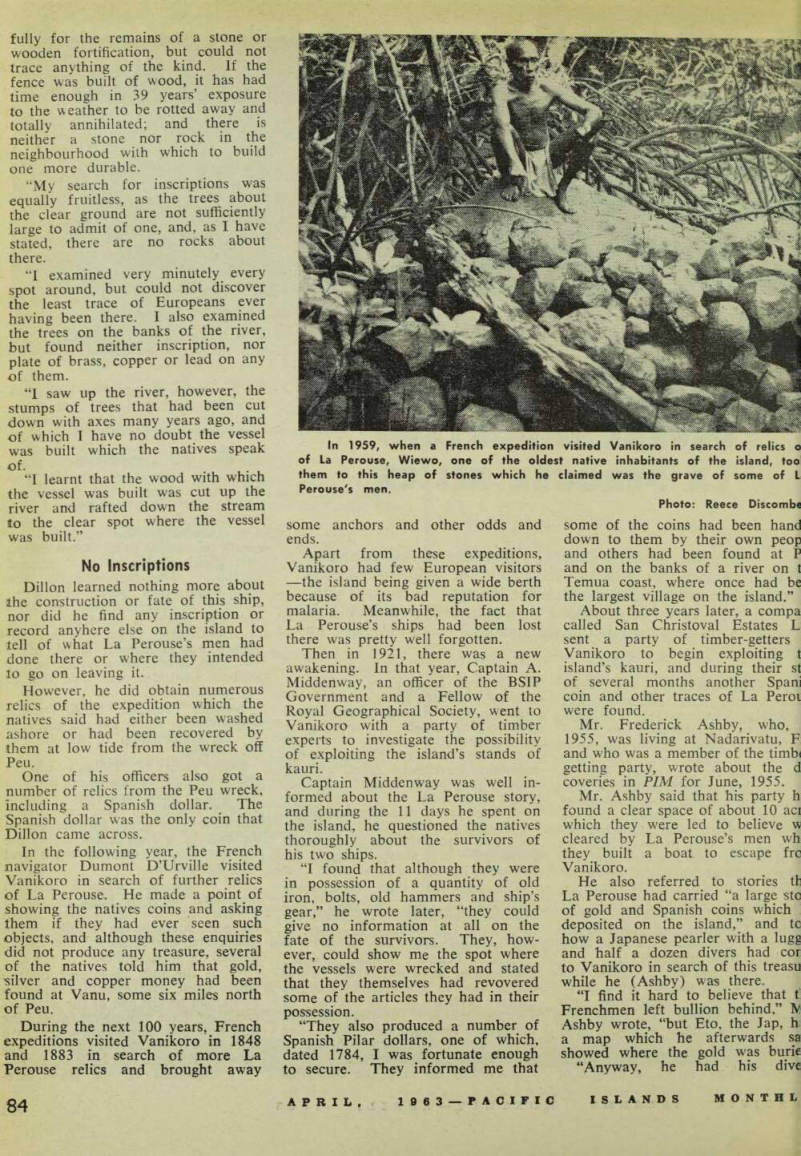 86
86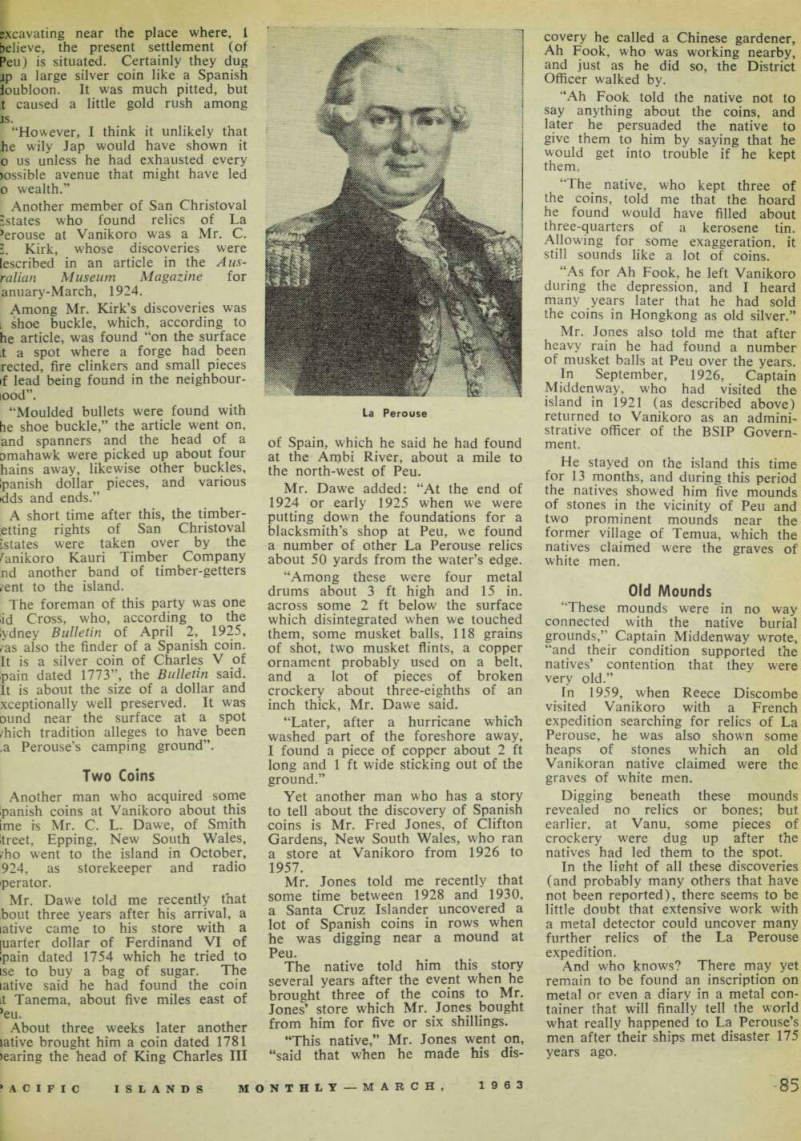 87
87 88
88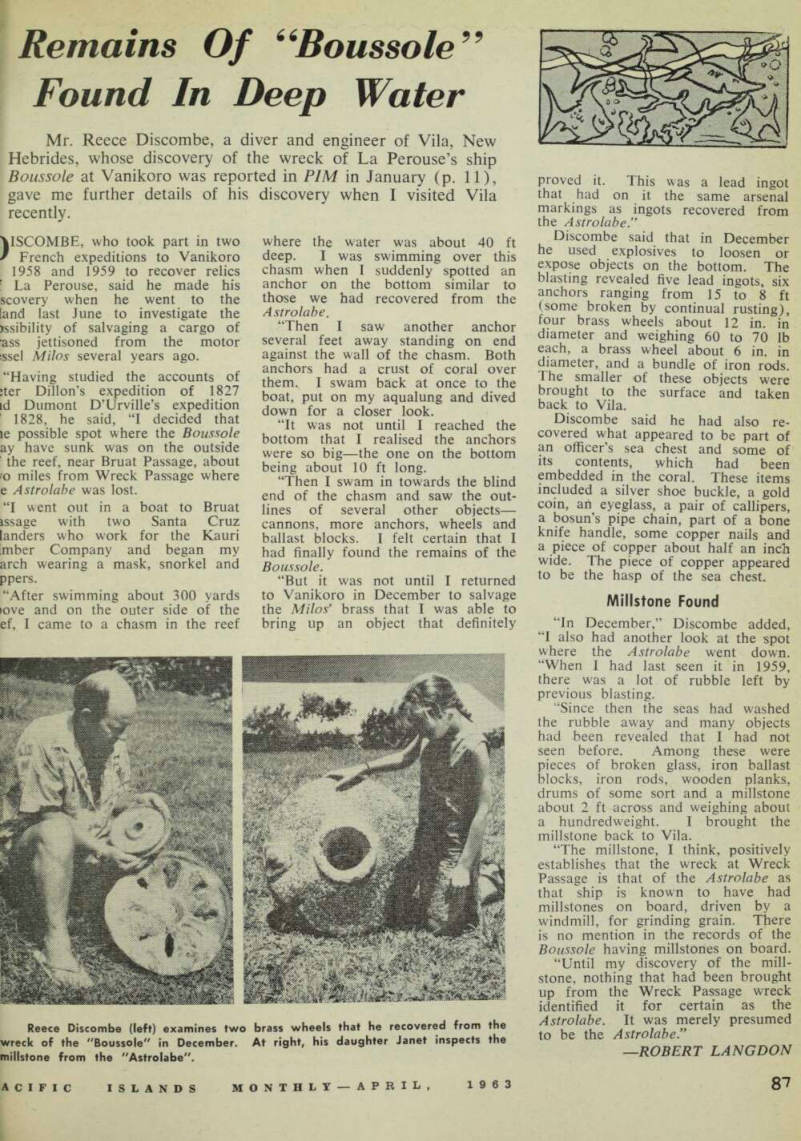 89
89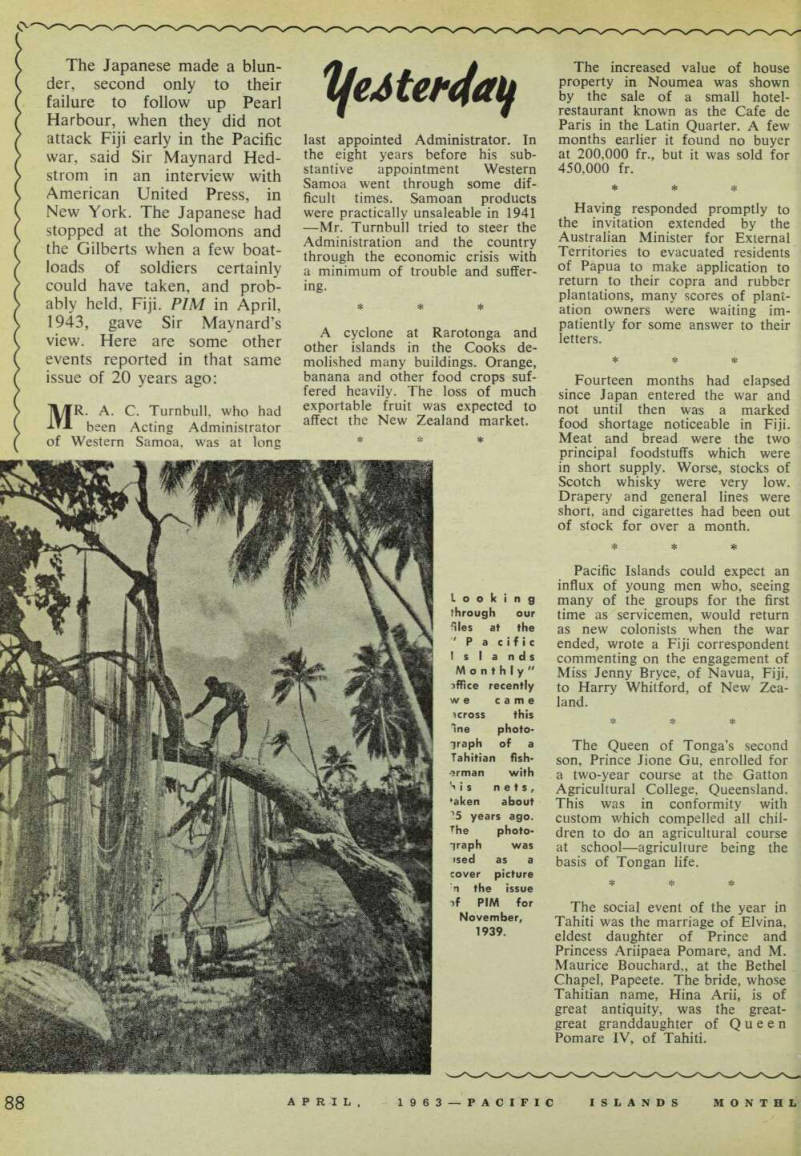 90
90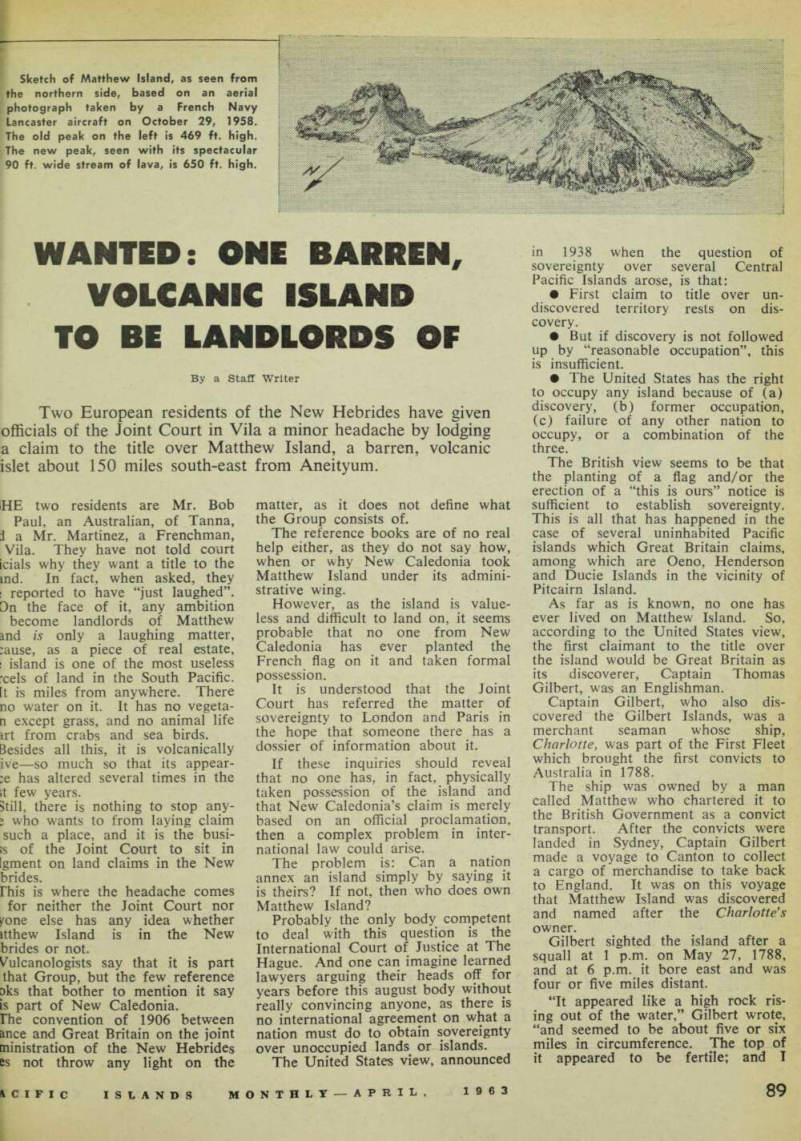 91
91 92
92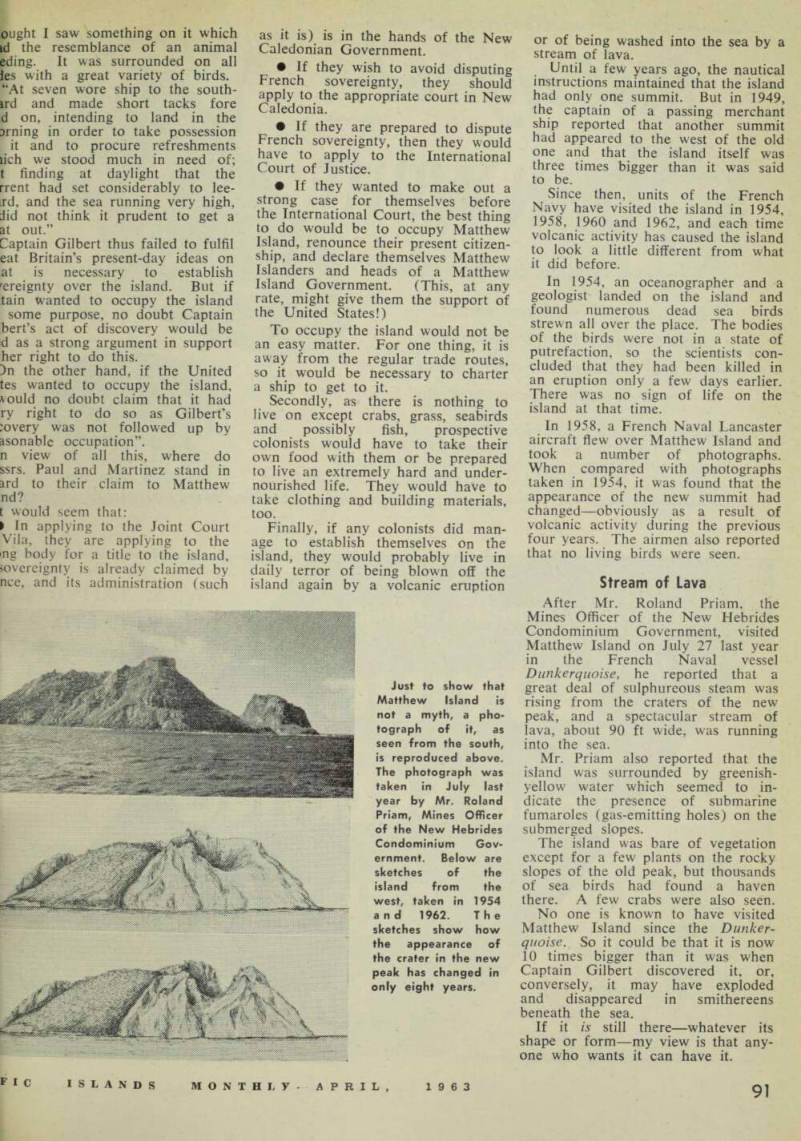 93
93 94
94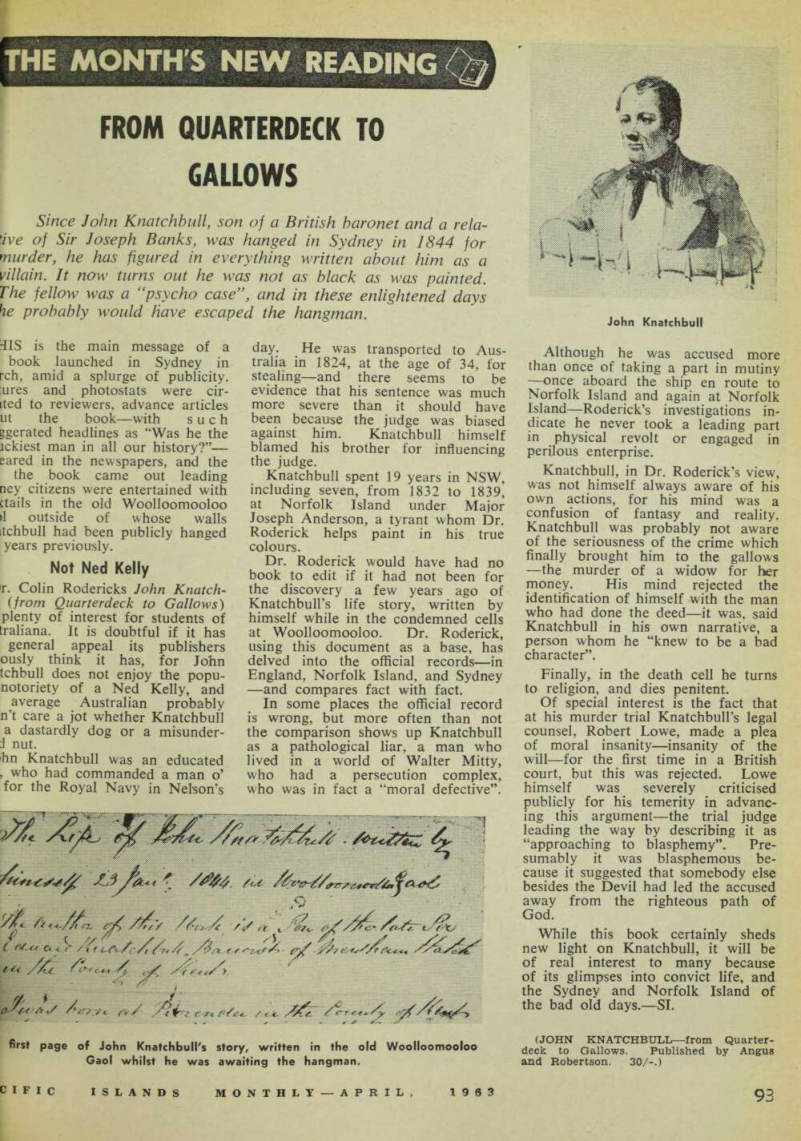 95
95 96
96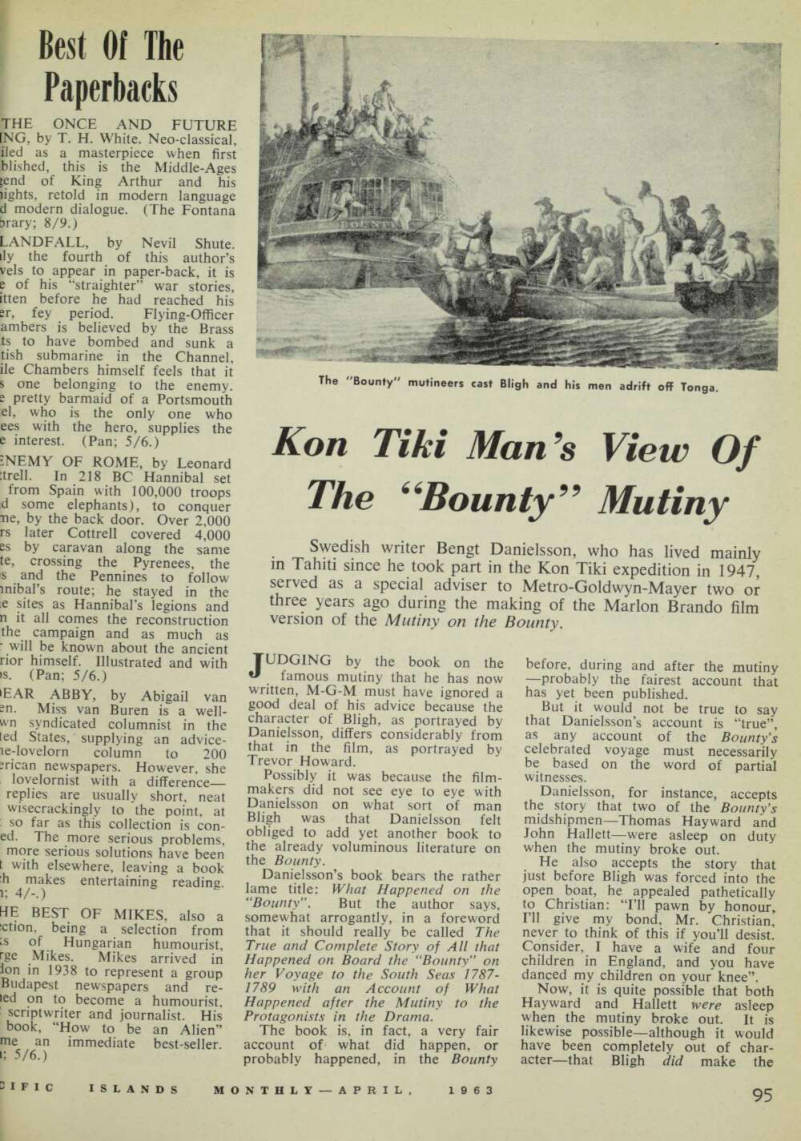 97
97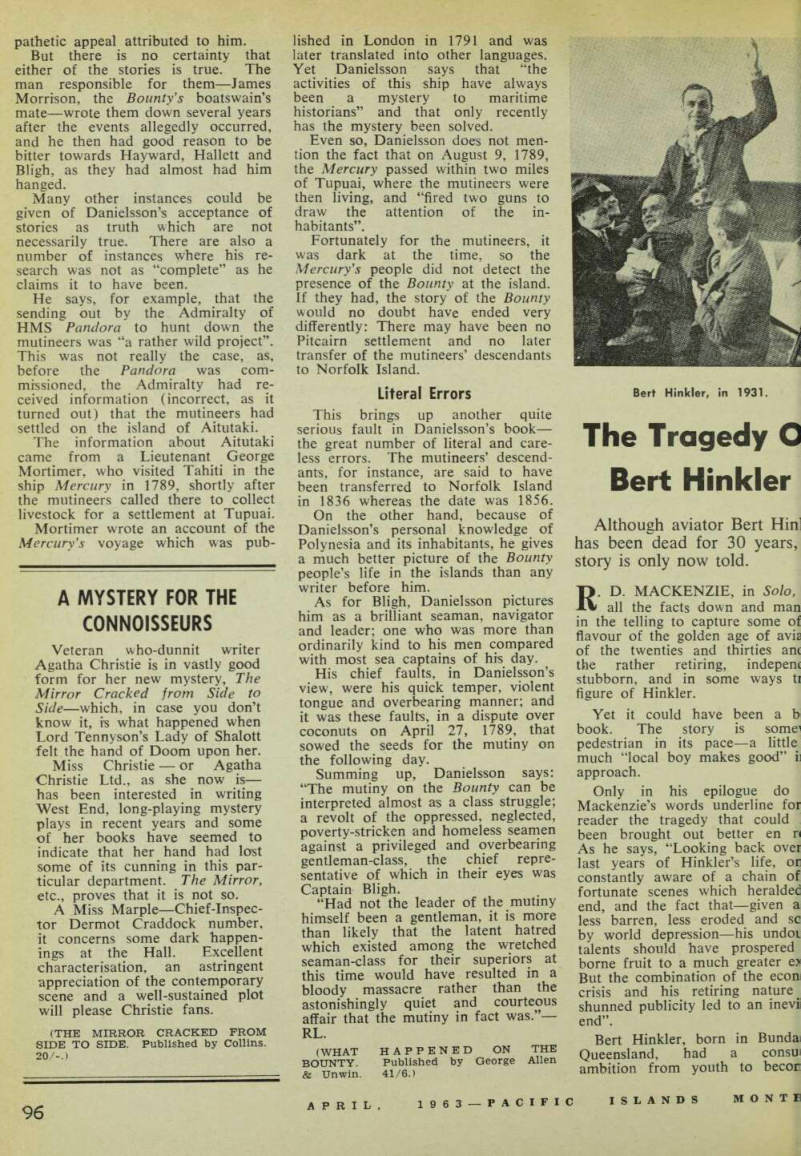 98
98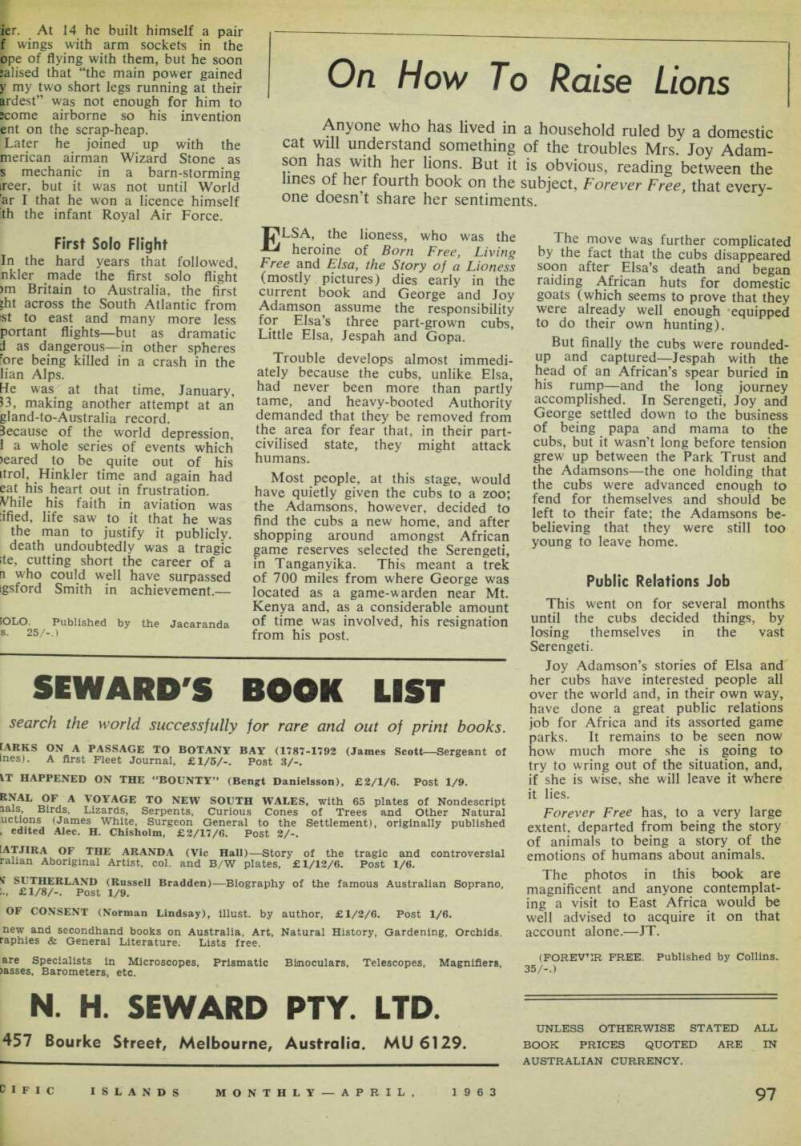 99
99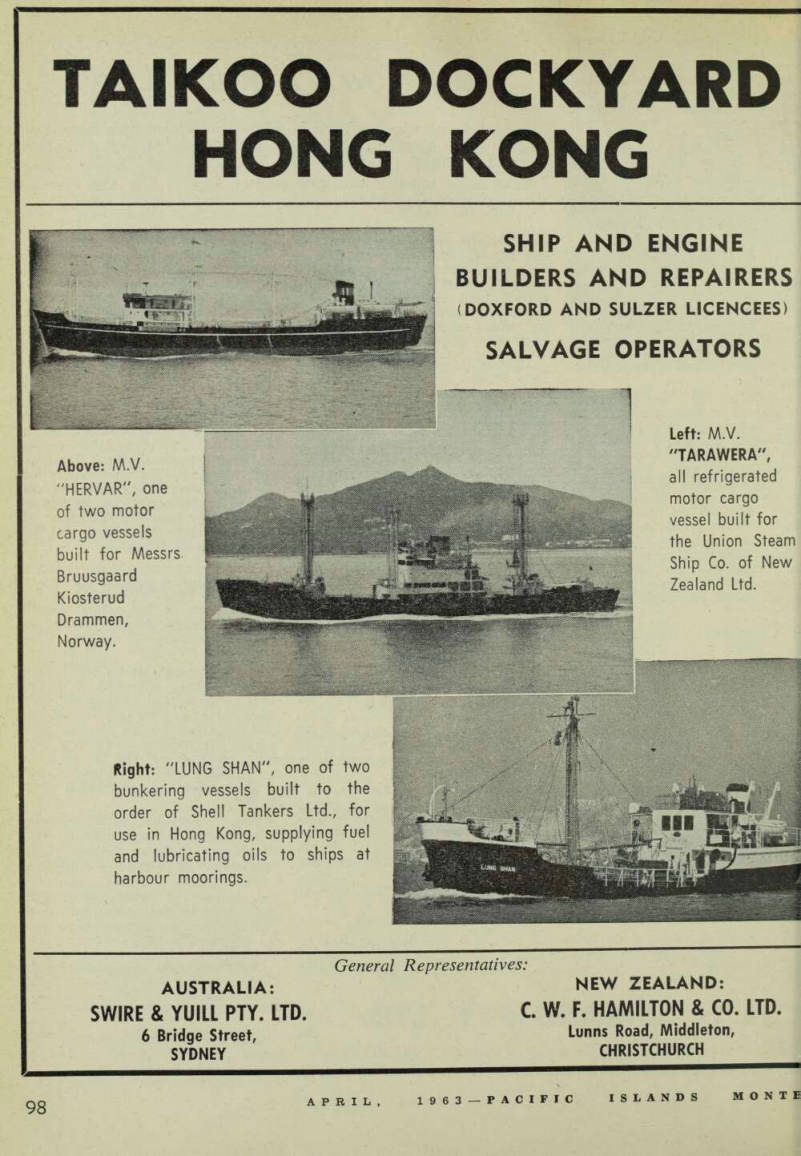 100
100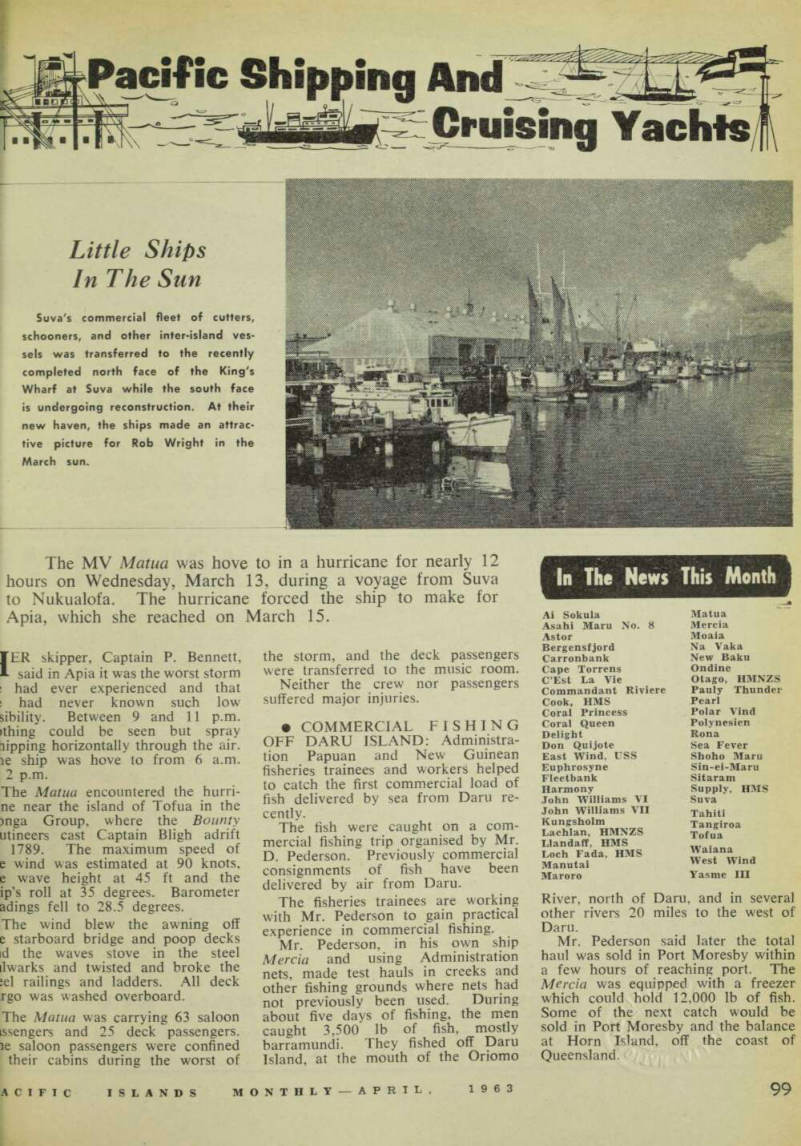 101
101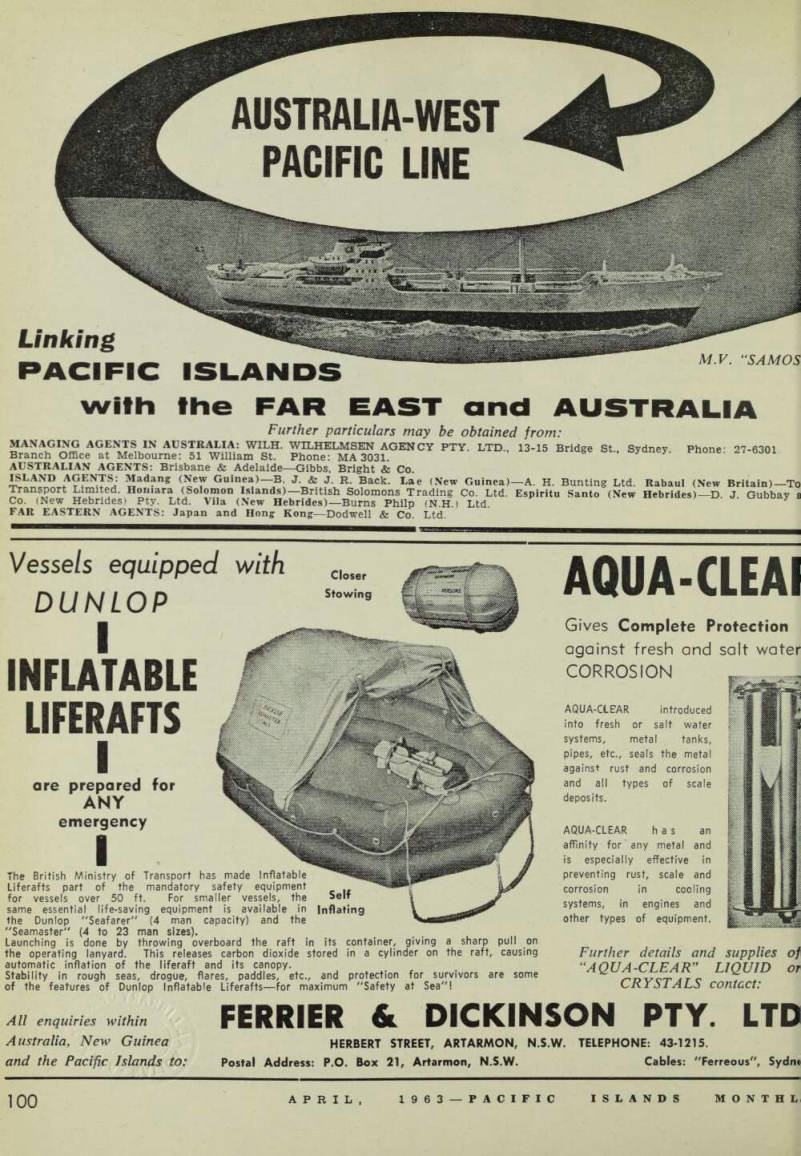 102
102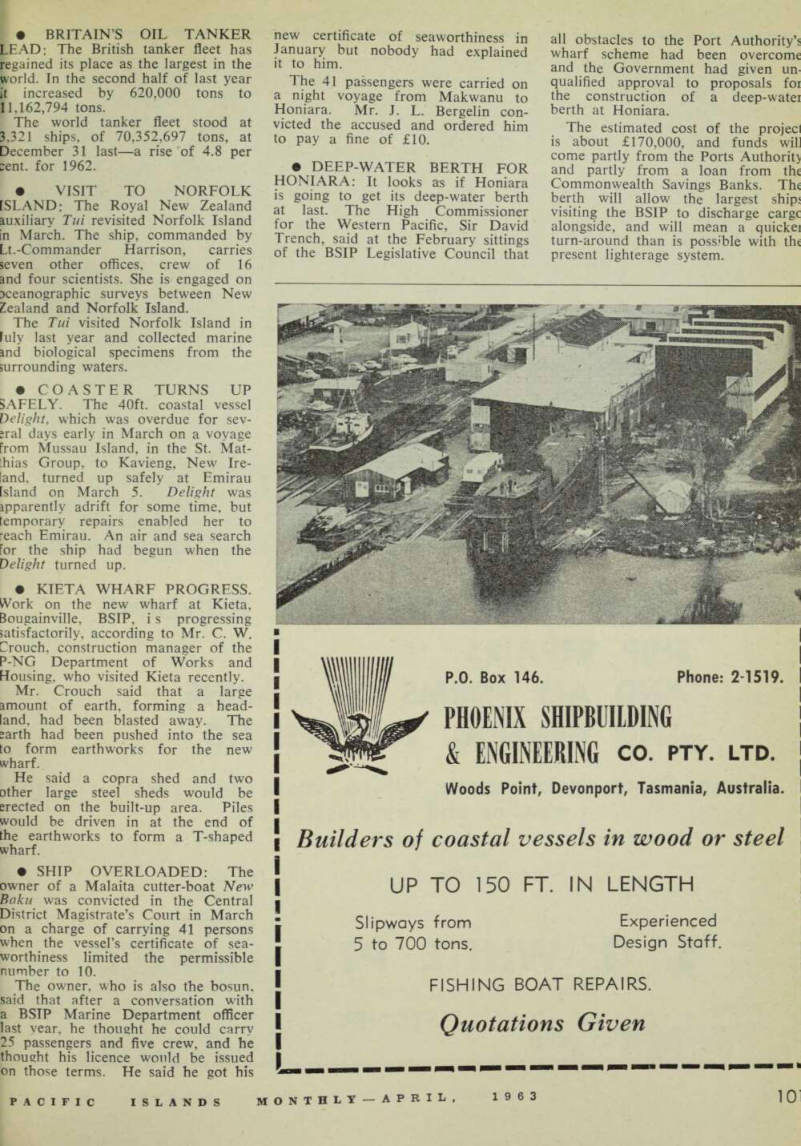 103
103 104
104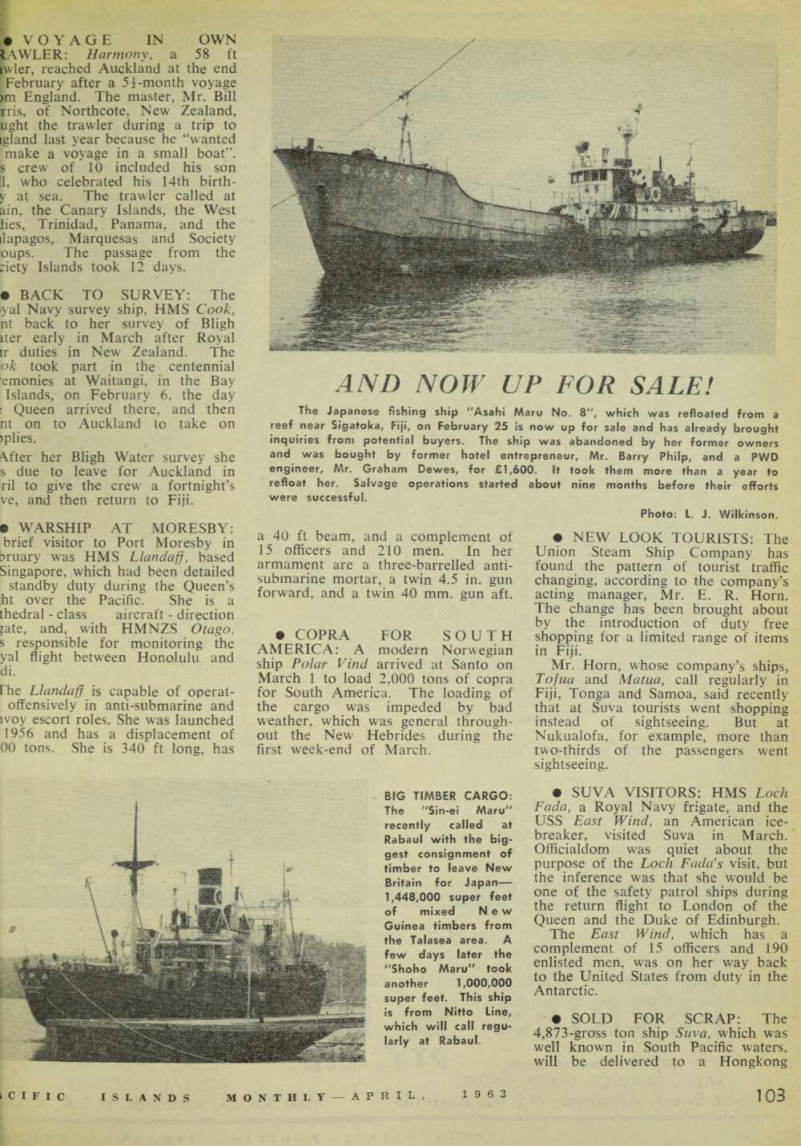 105
105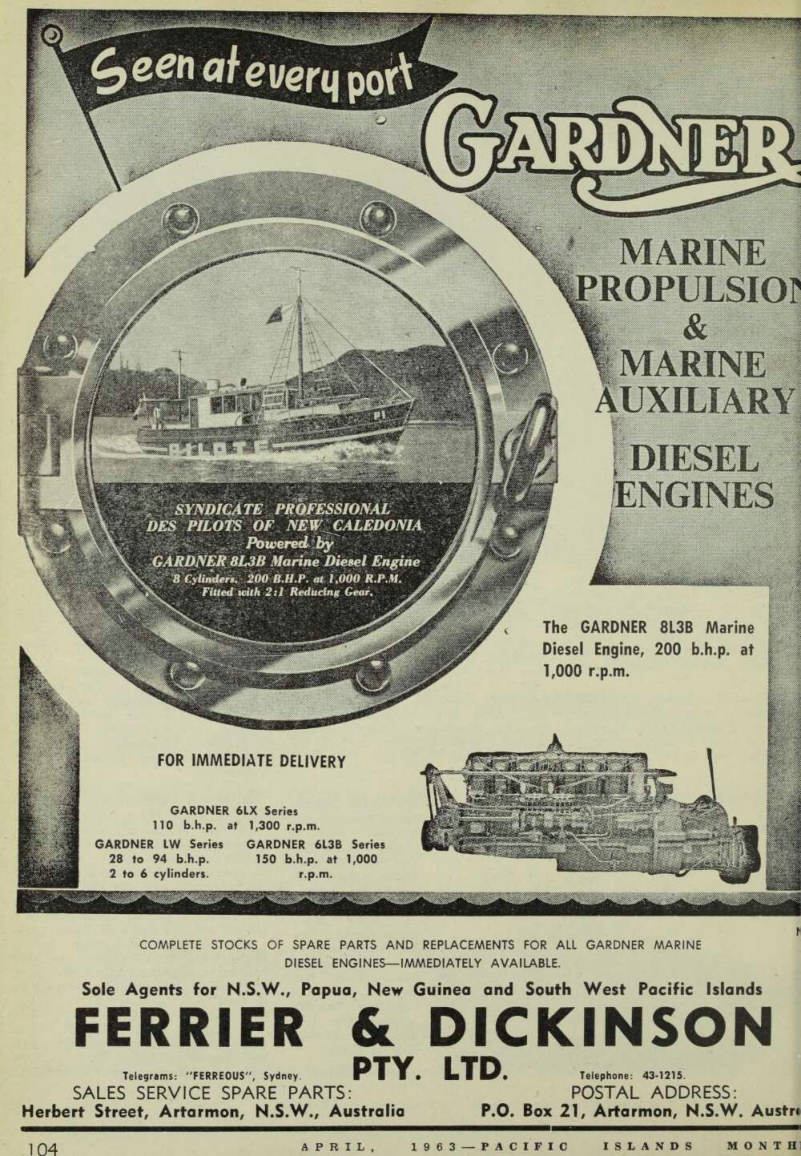 106
106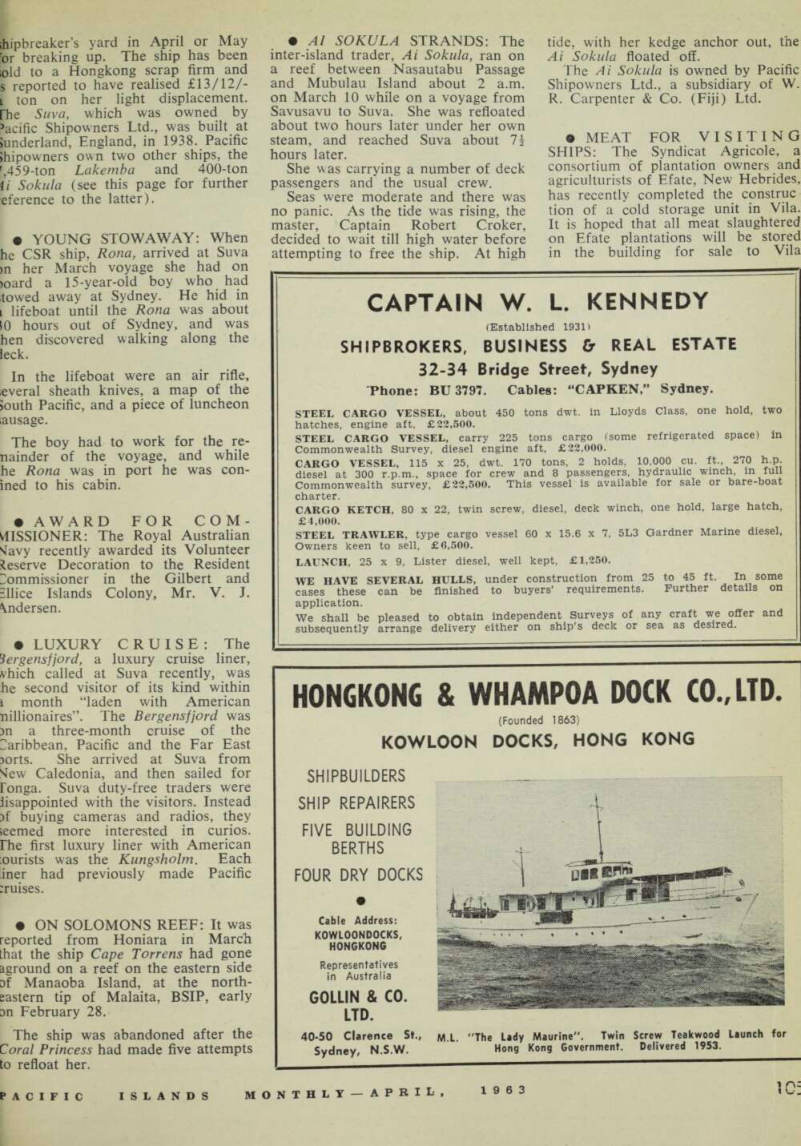 107
107 108
108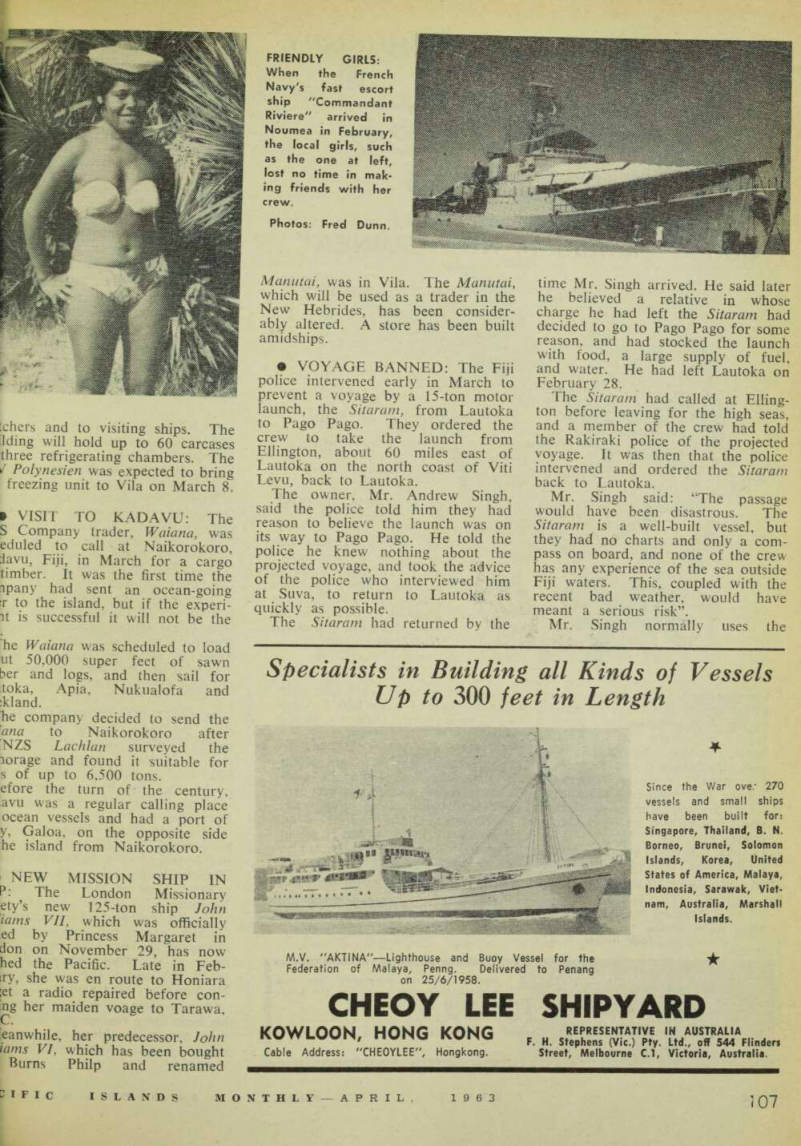 109
109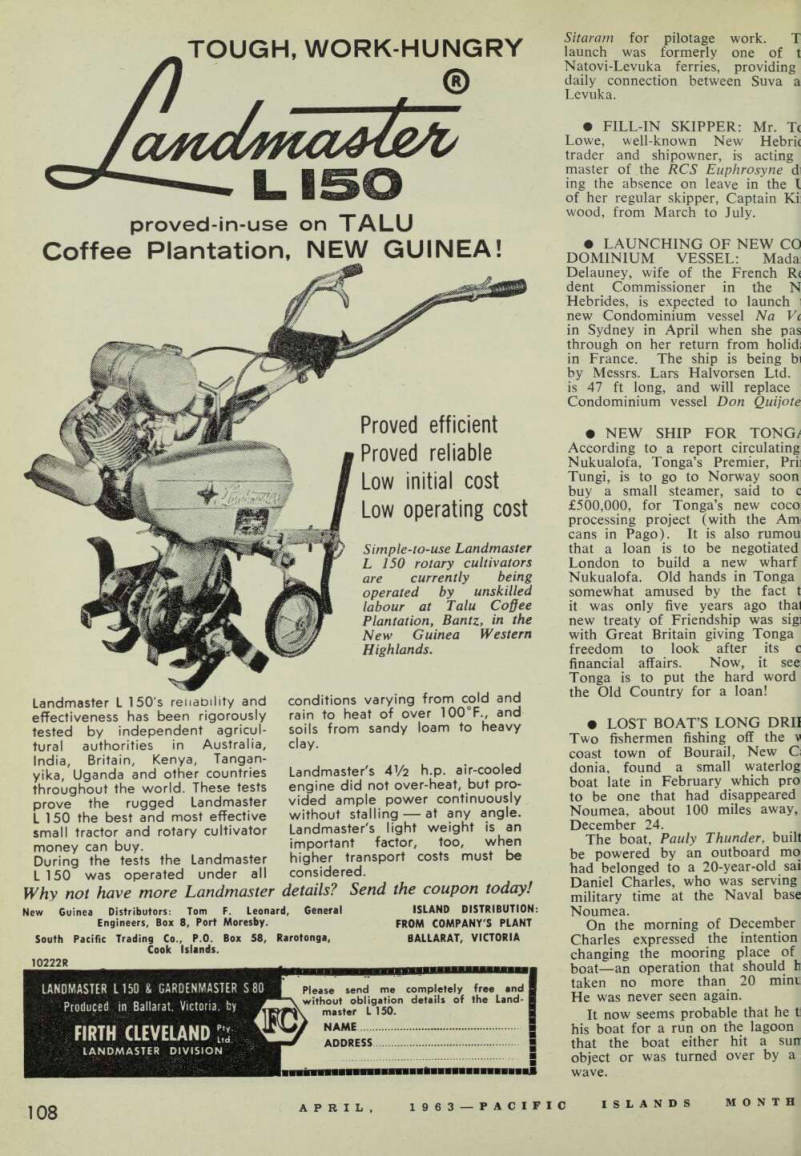 110
110 111
111 112
112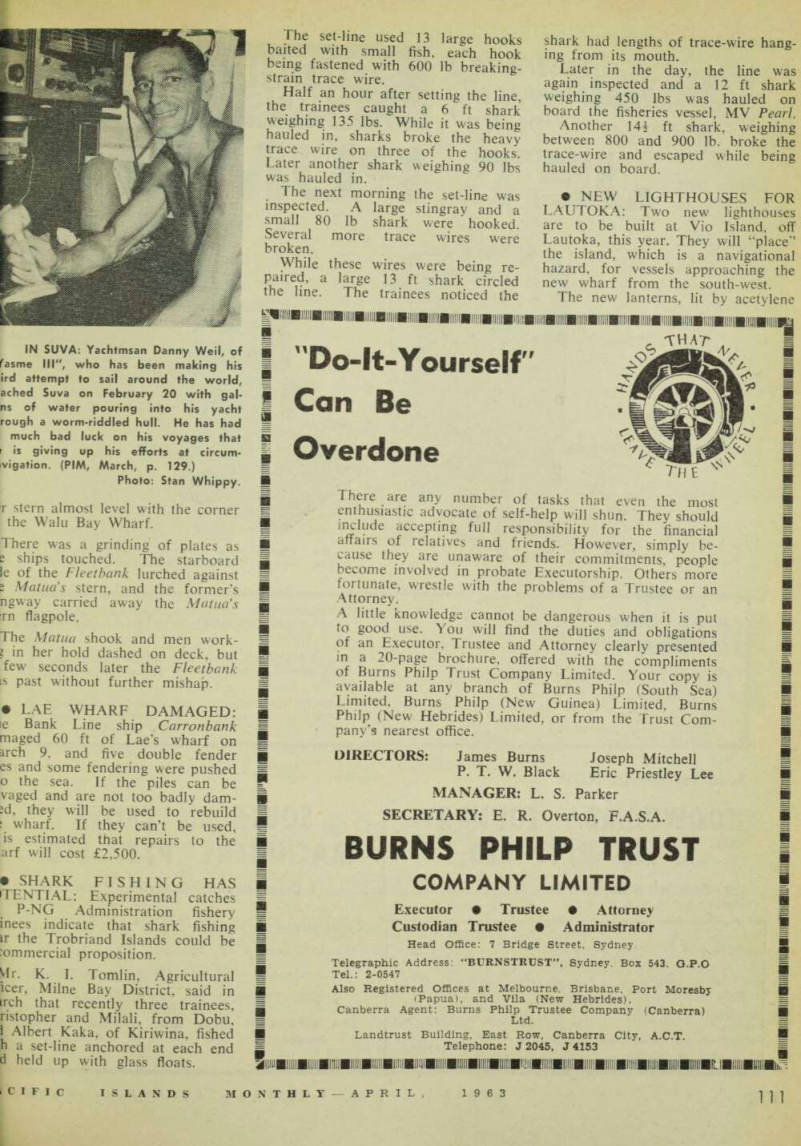 113
113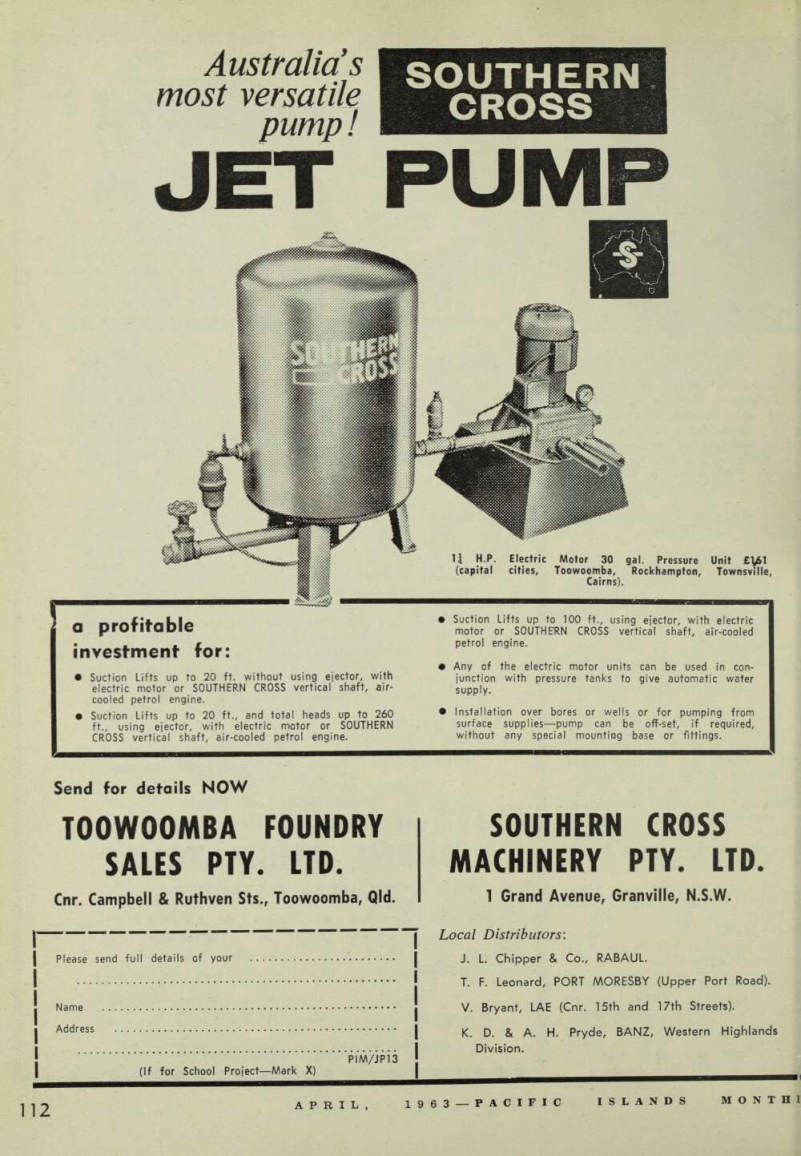 114
114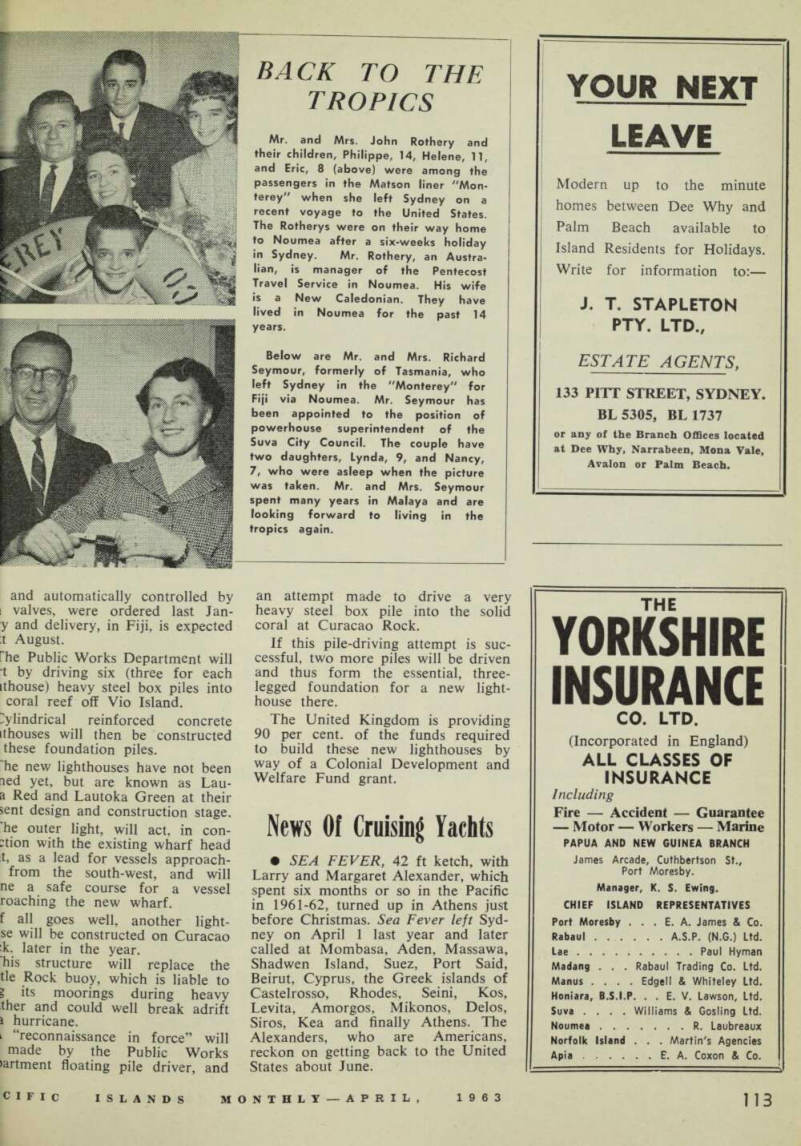 115
115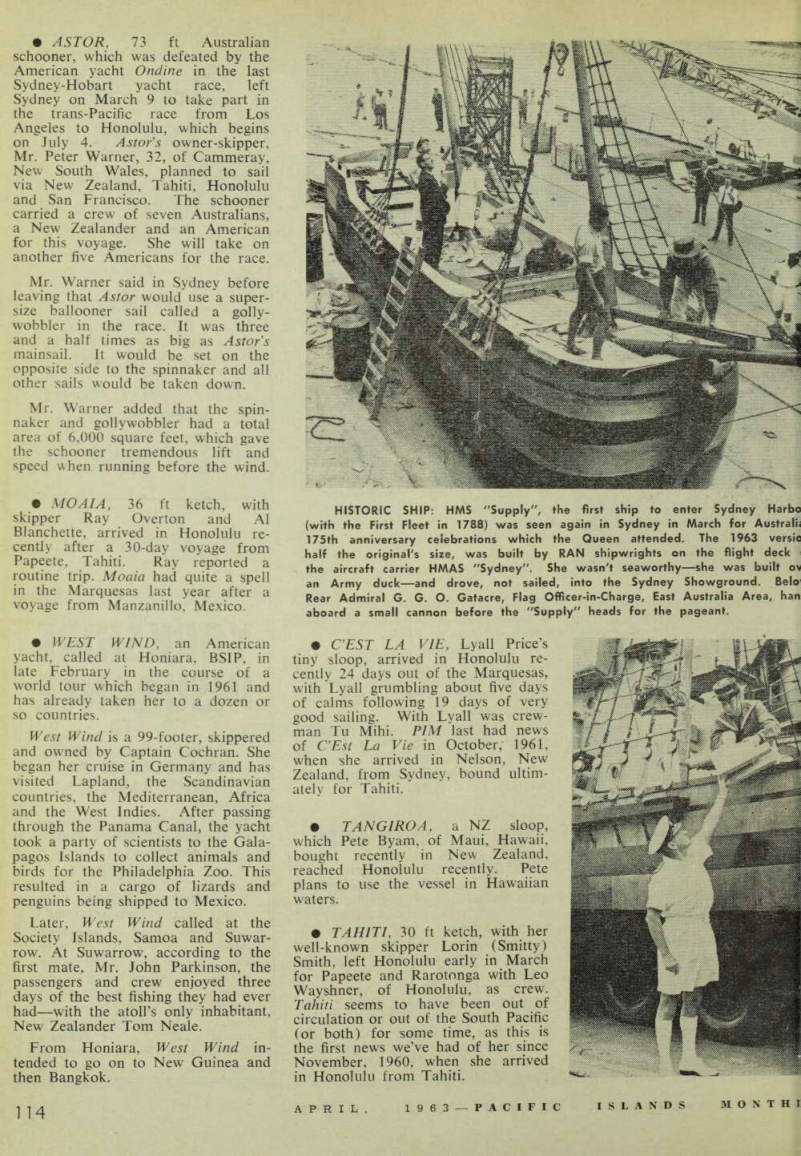 116
116 117
117 118
118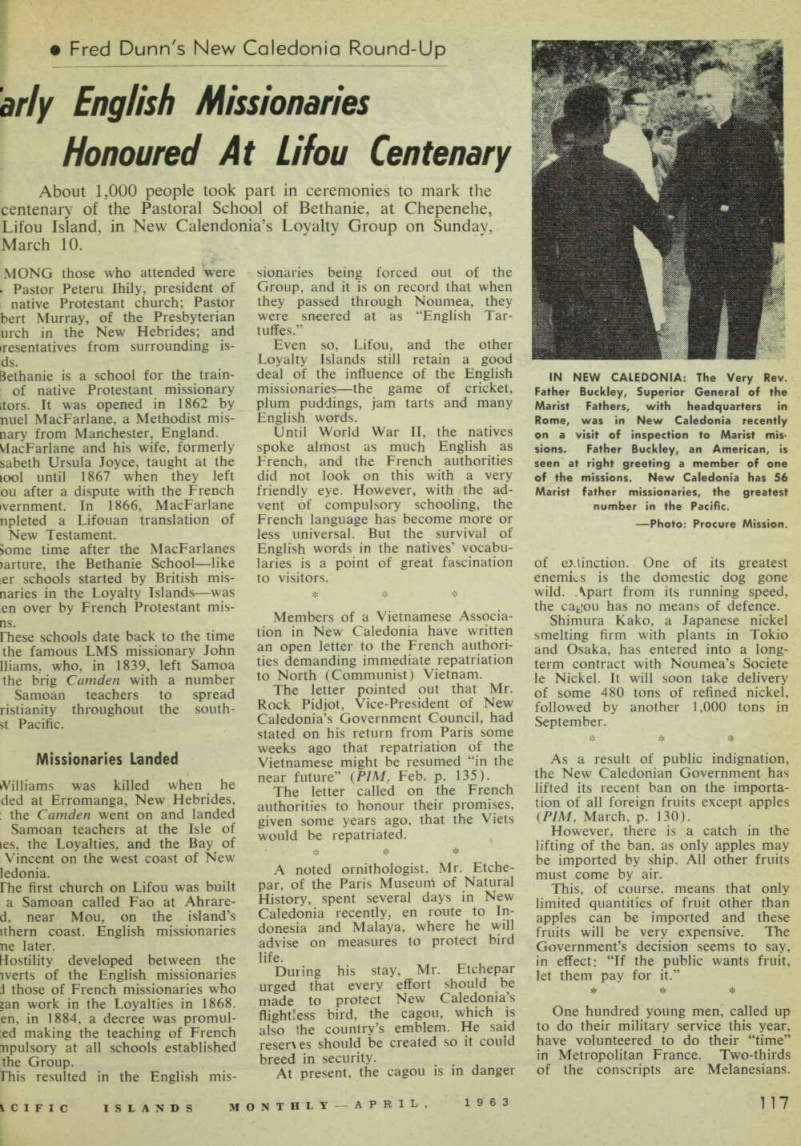 119
119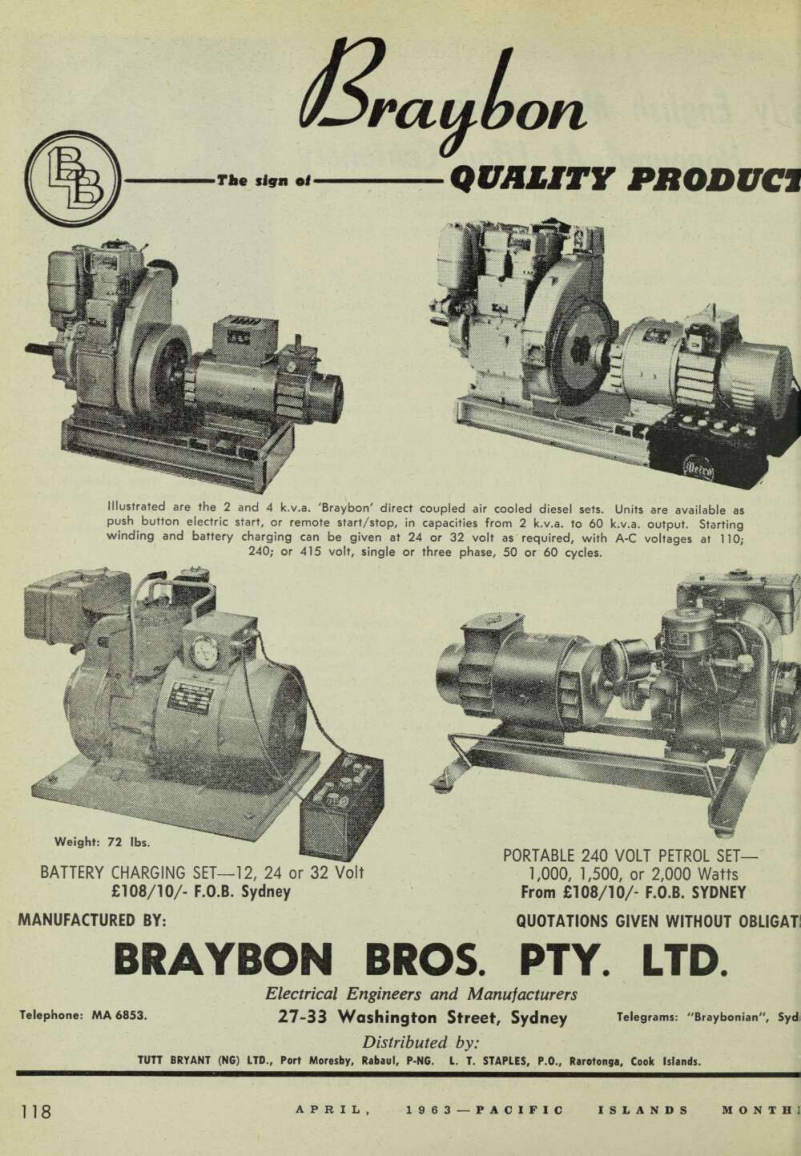 120
120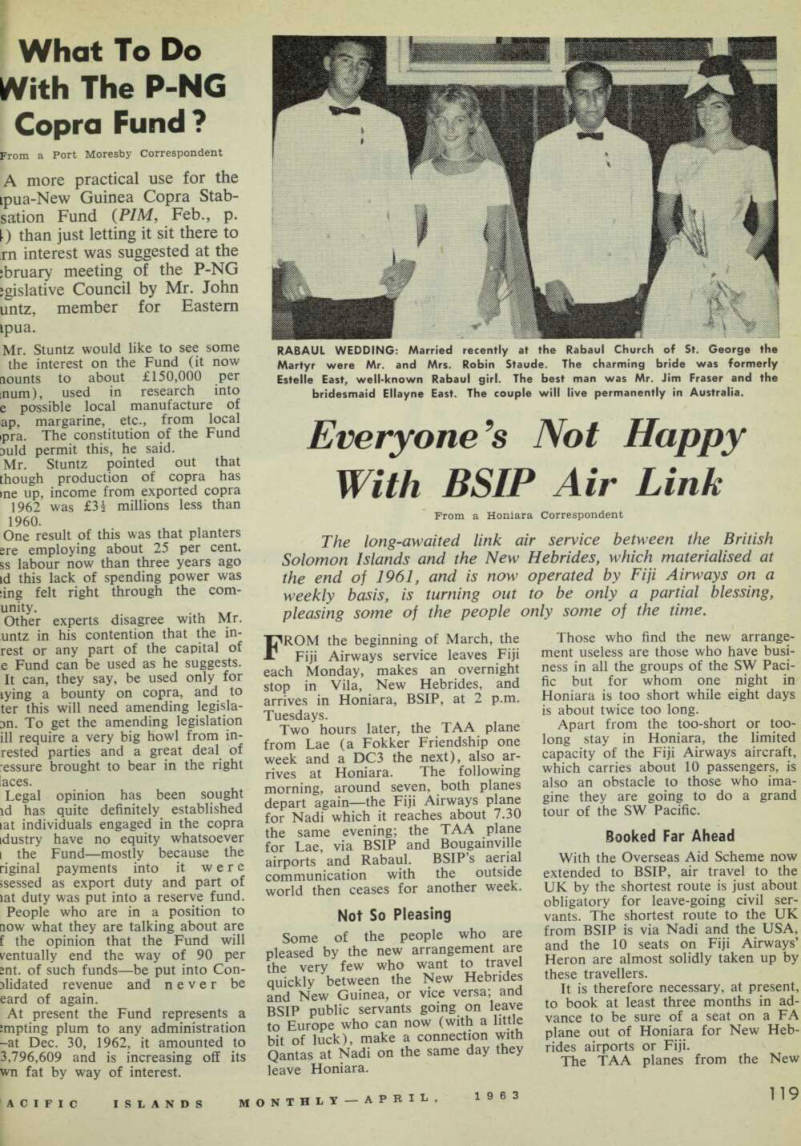 121
121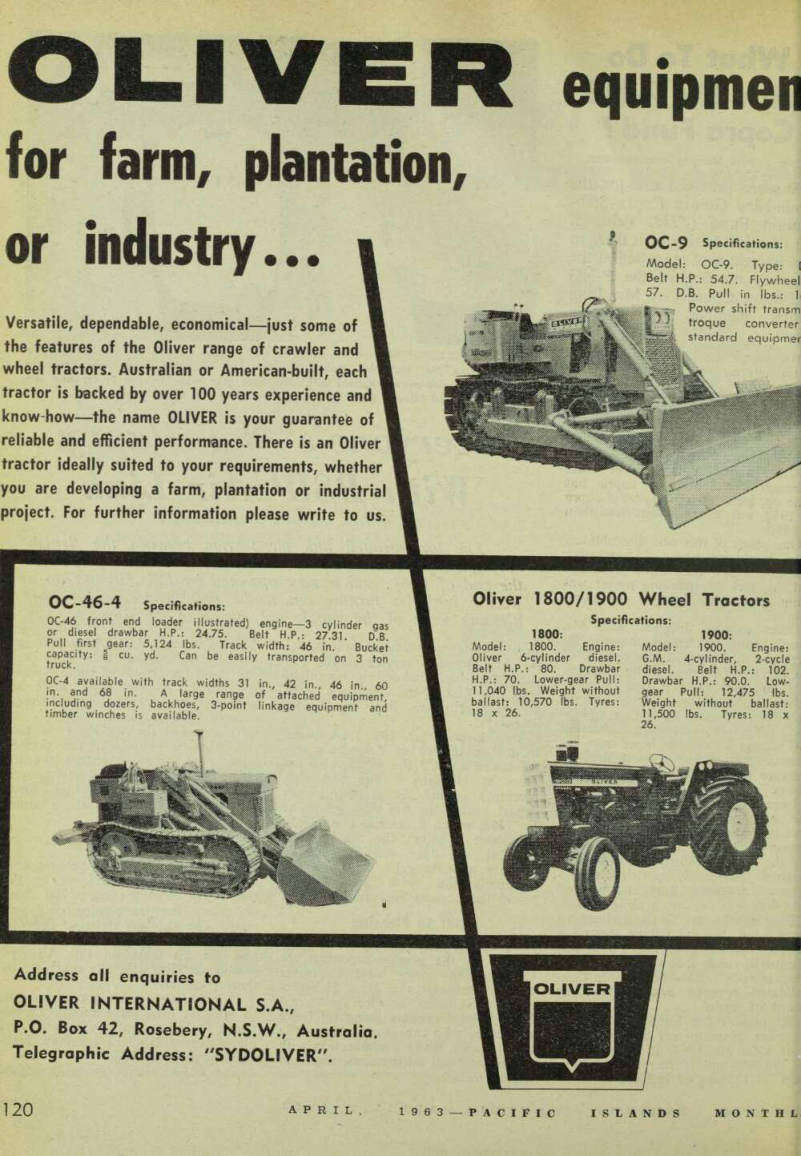 122
122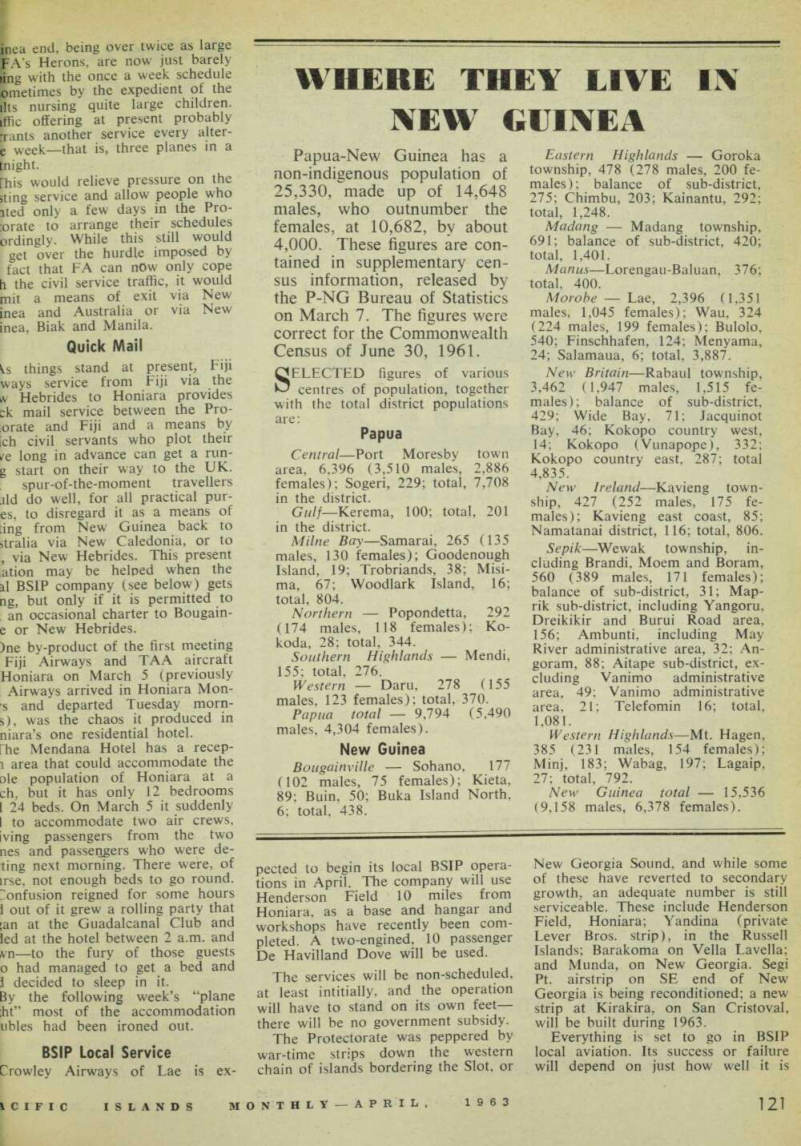 123
123 124
124 125
125 126
126 127
127 128
128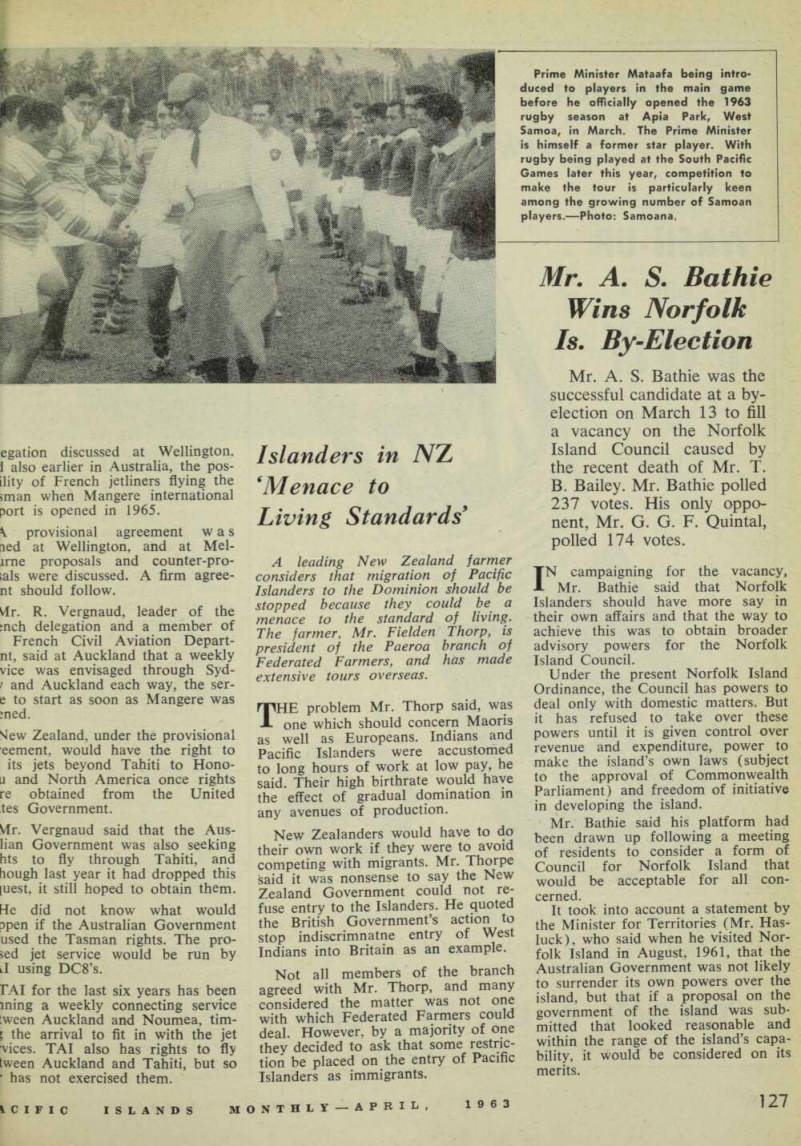 129
129 130
130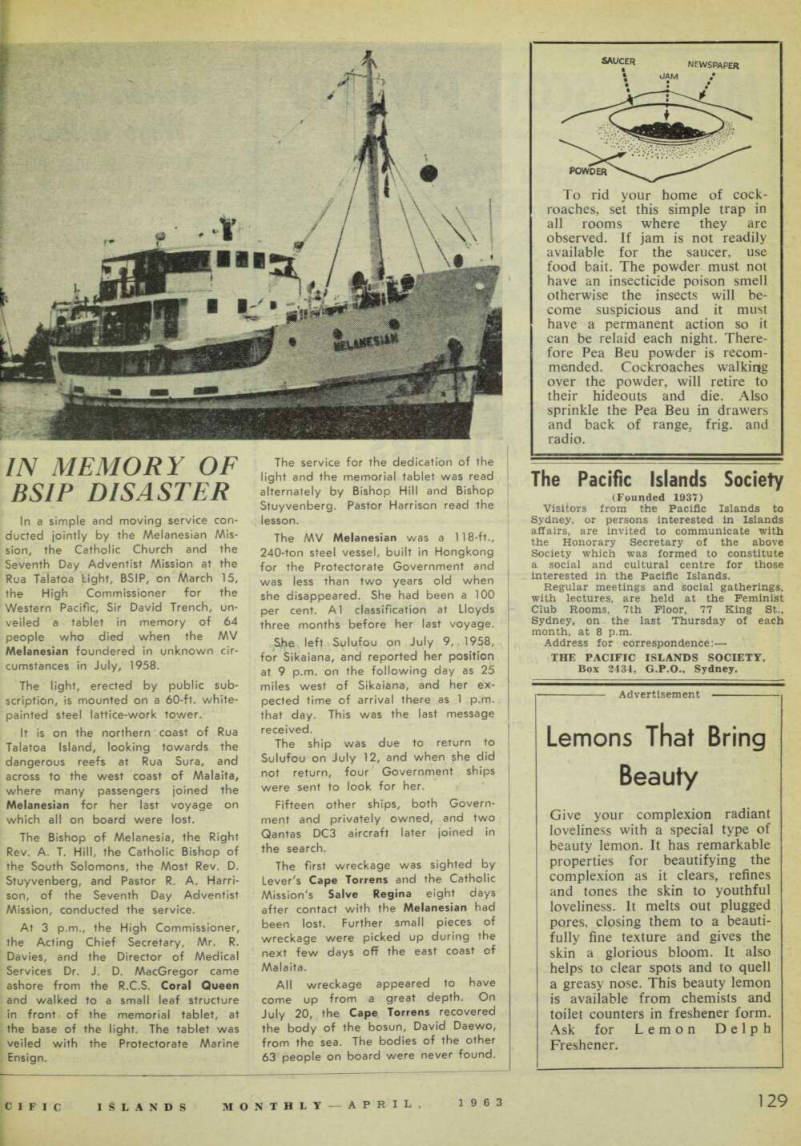 131
131 132
132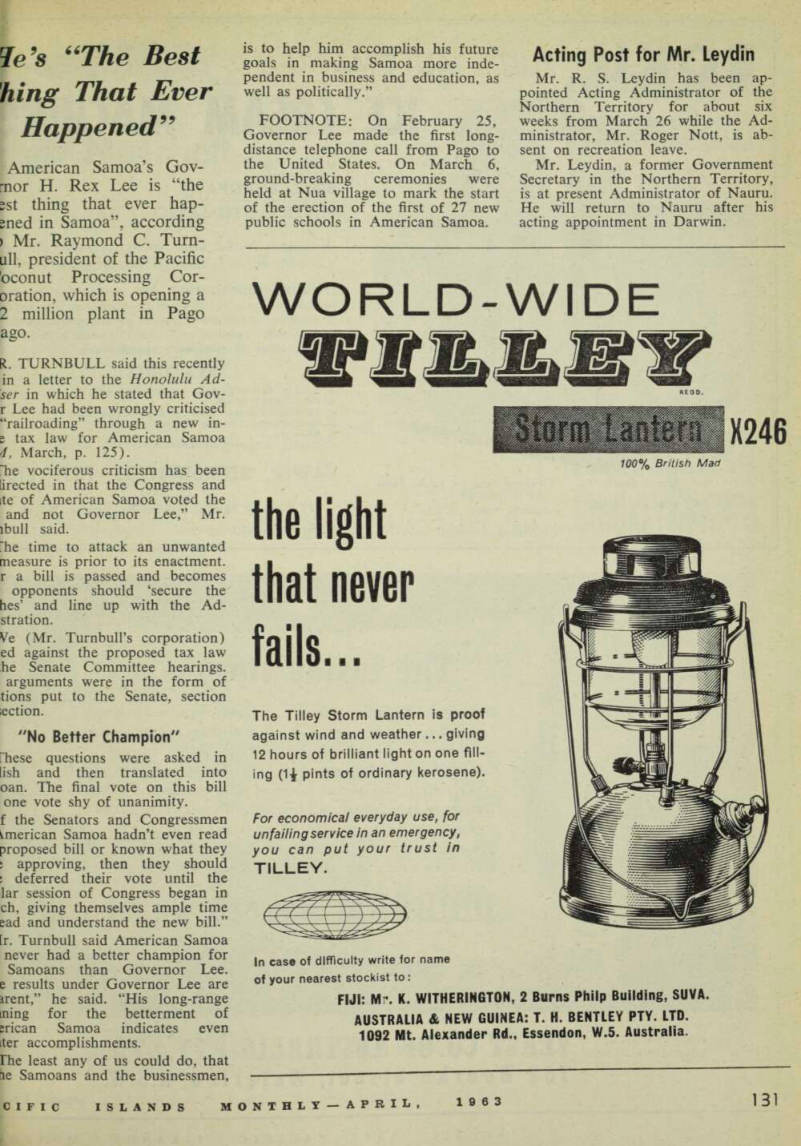 133
133 134
134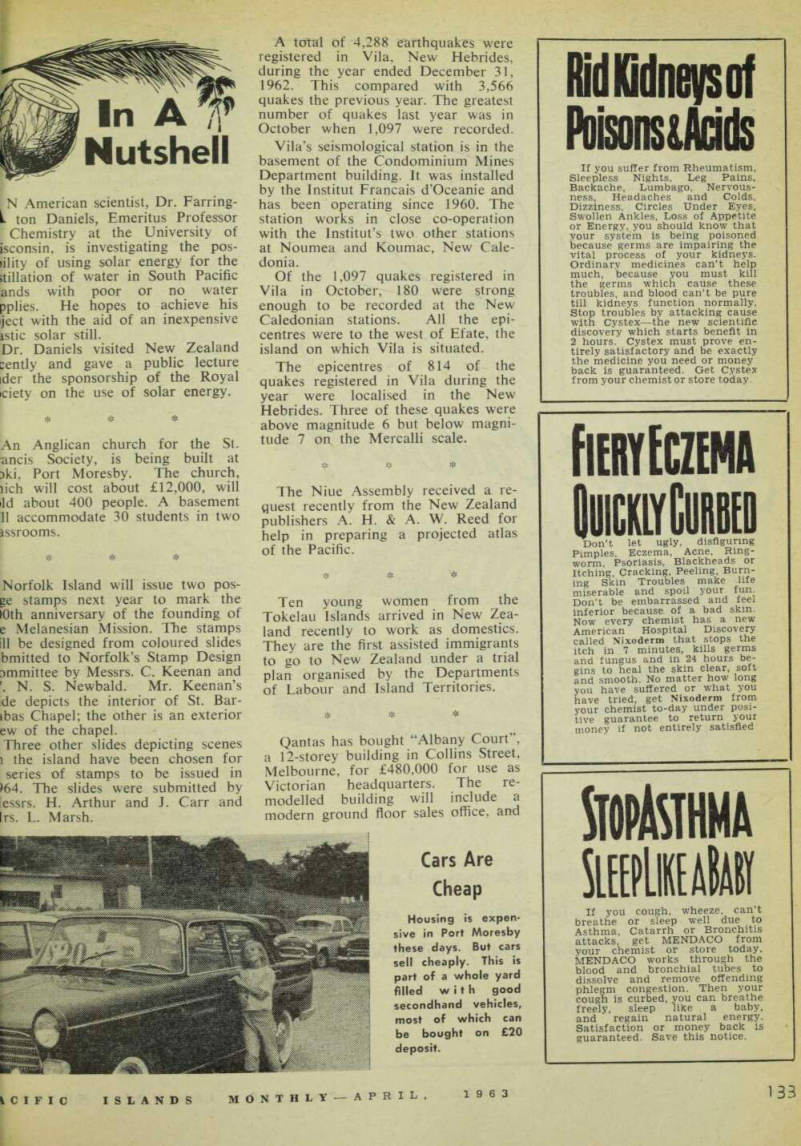 135
135 136
136 137
137 138
138 139
139 140
140 141
141 142
142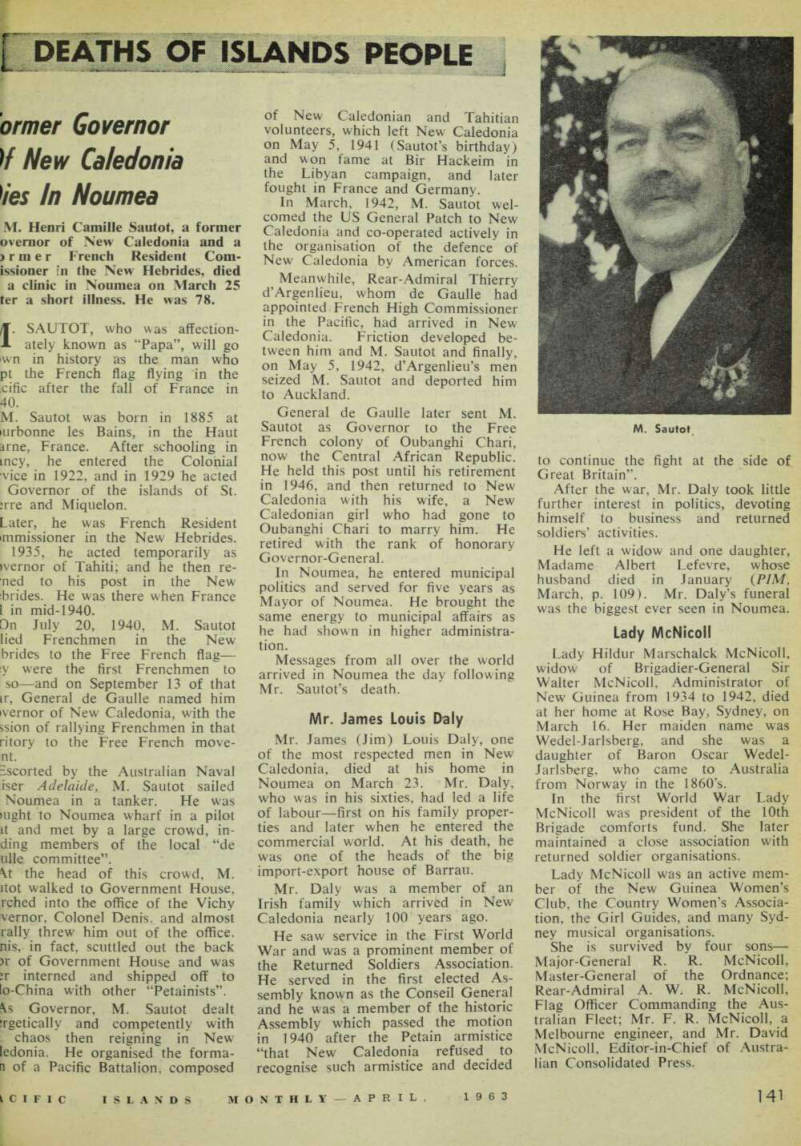 143
143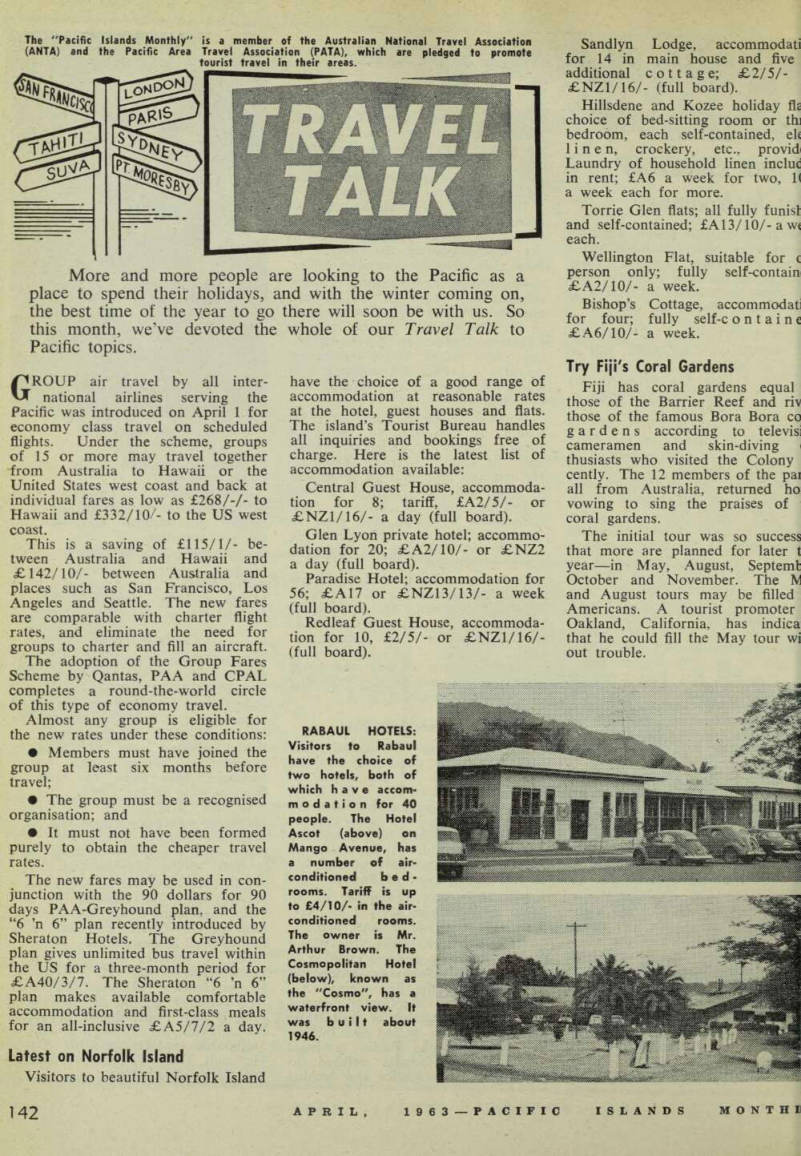 144
144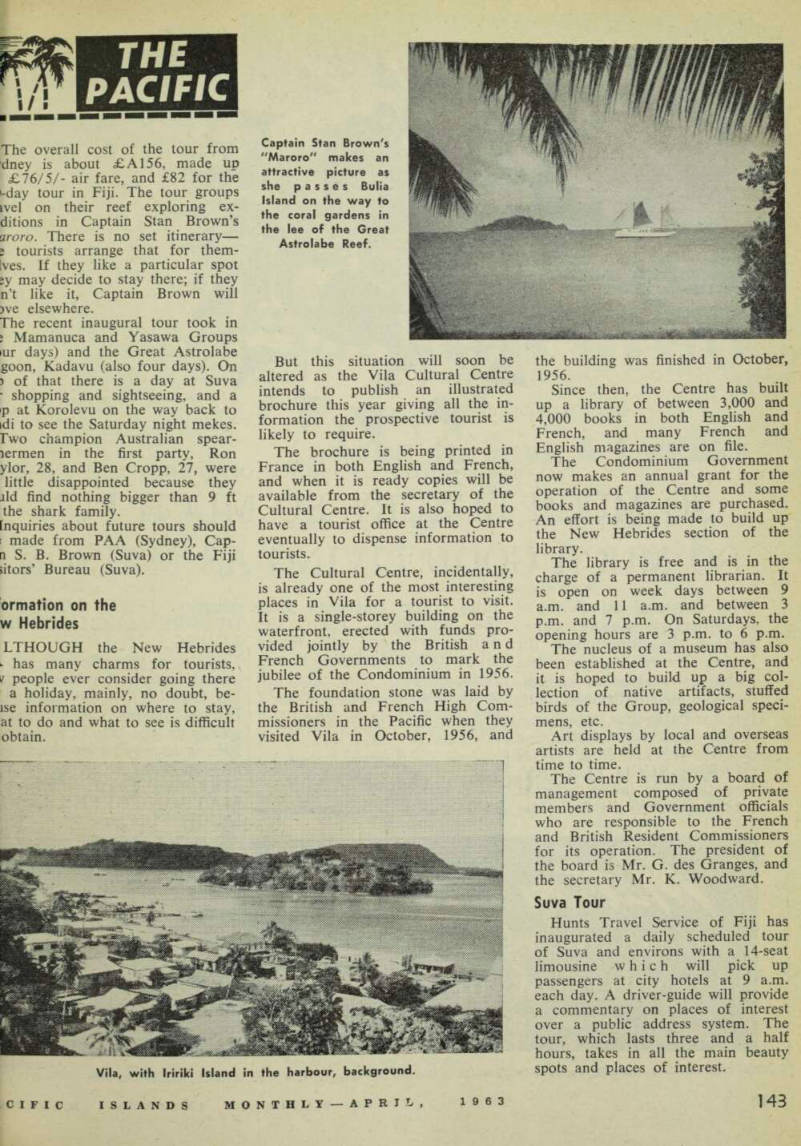 145
145 146
146 147
147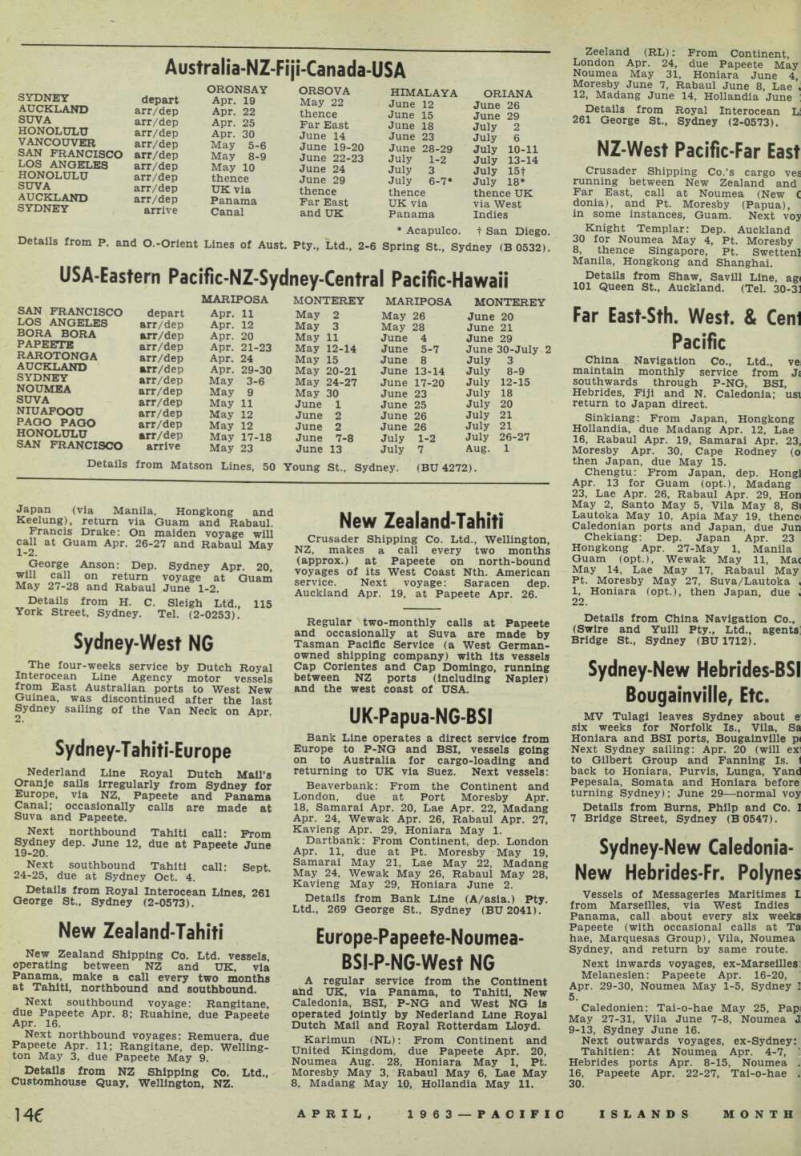 148
148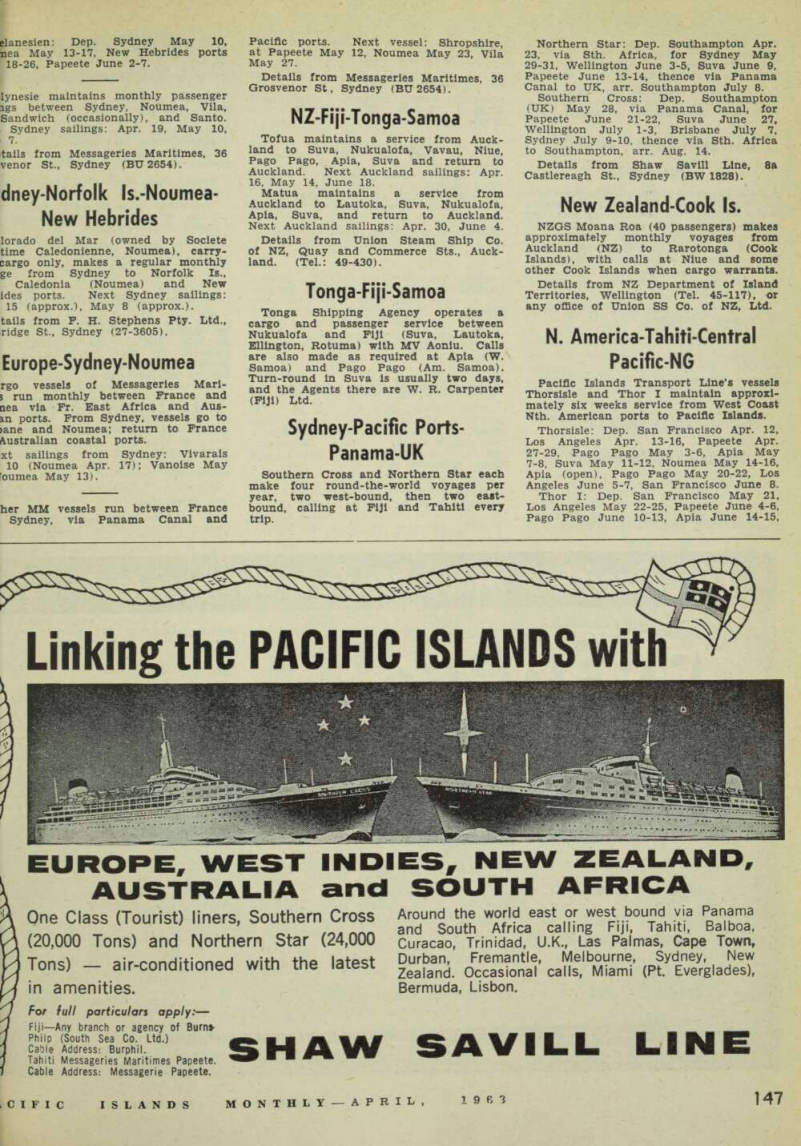 149
149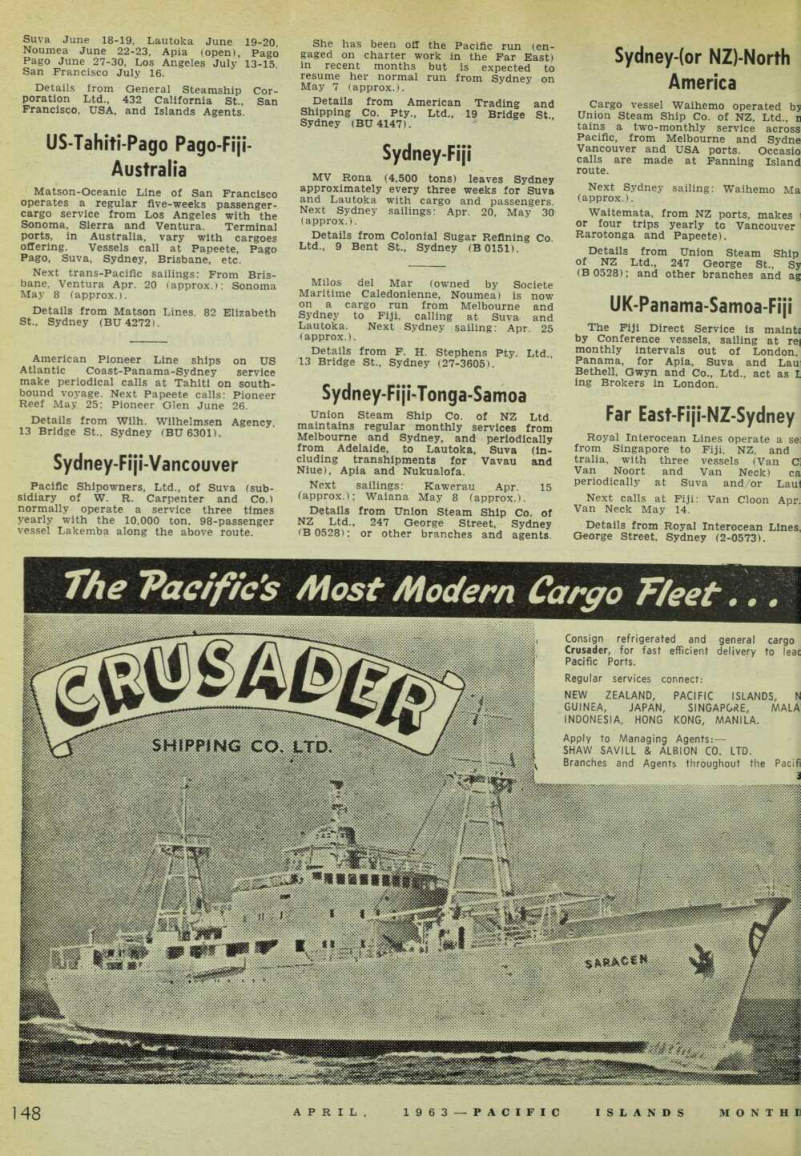 150
150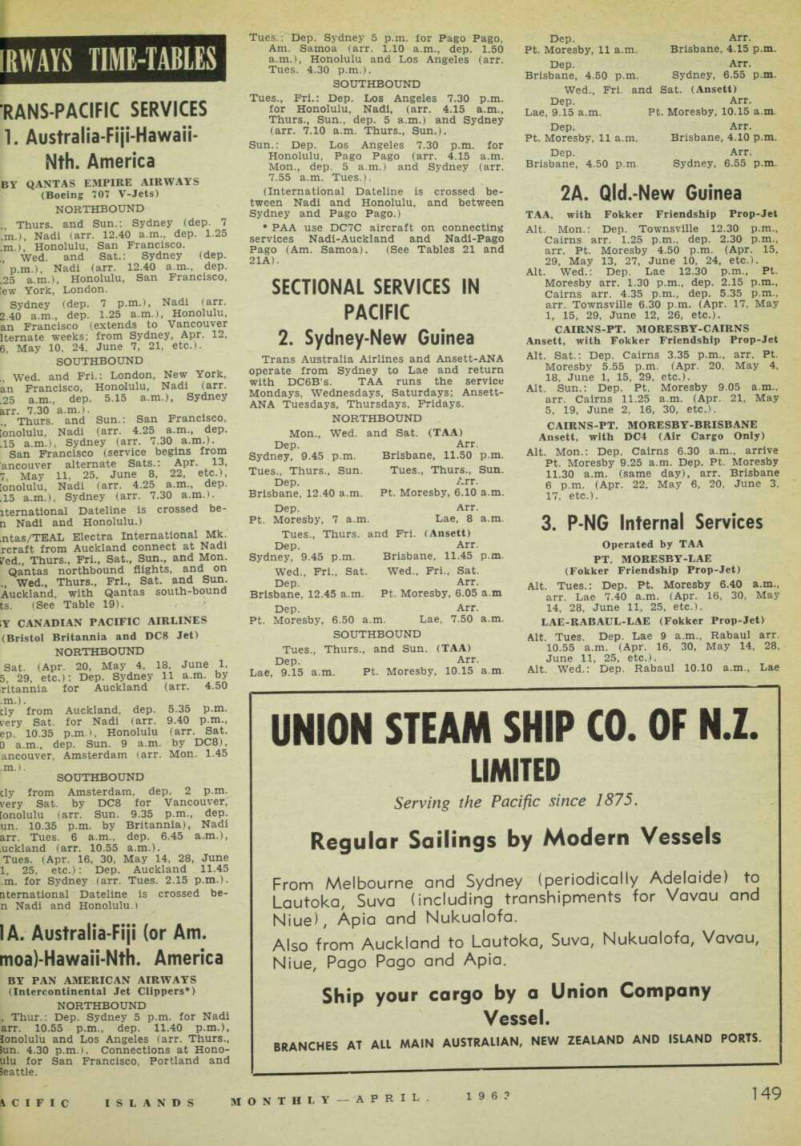 151
151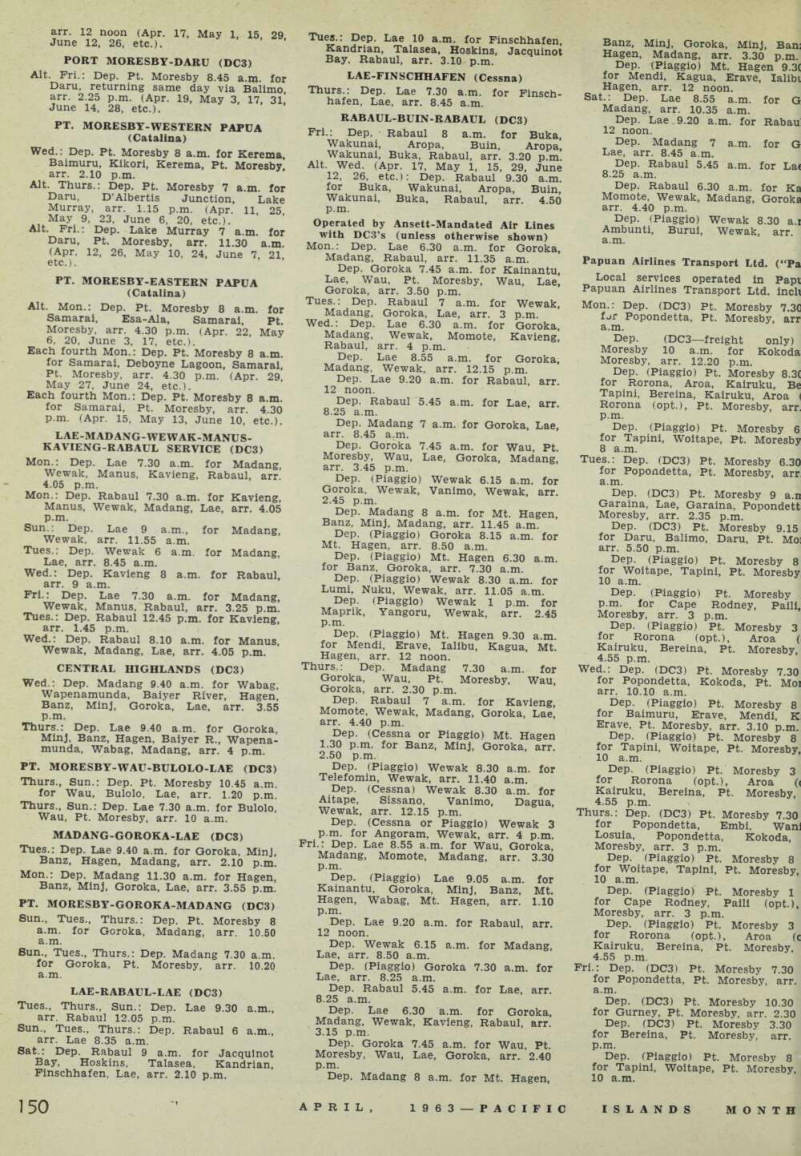 152
152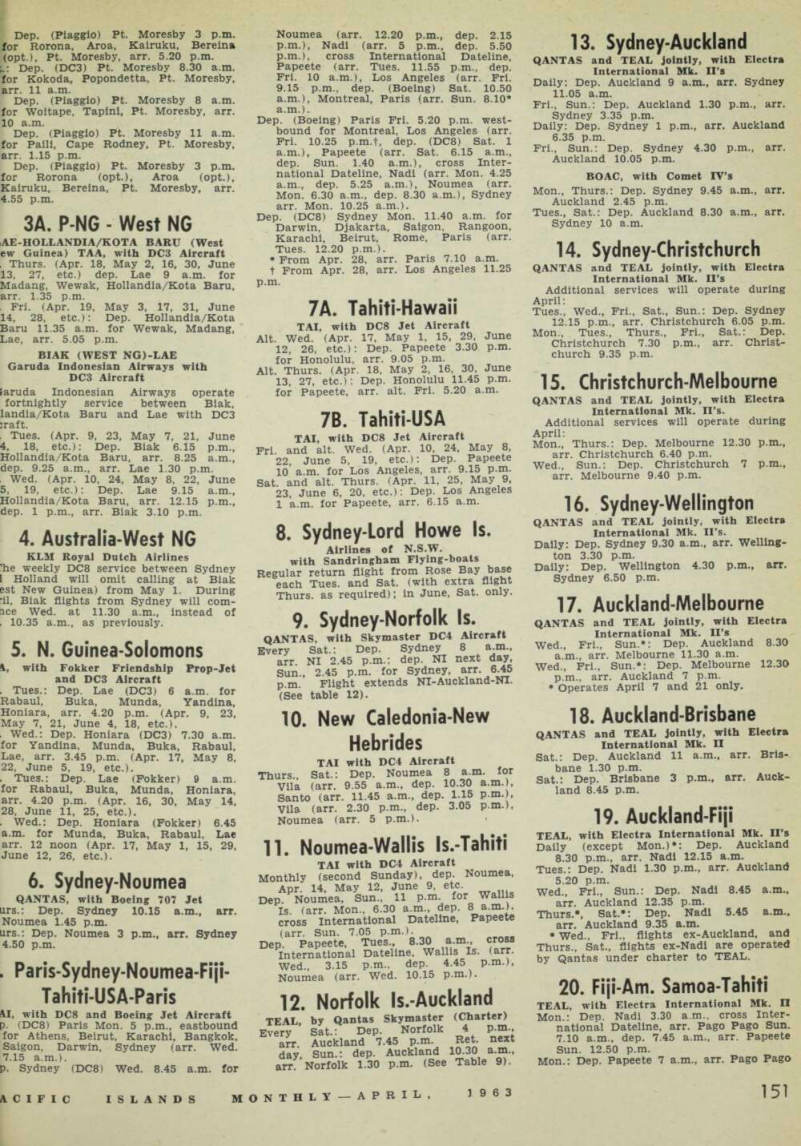 153
153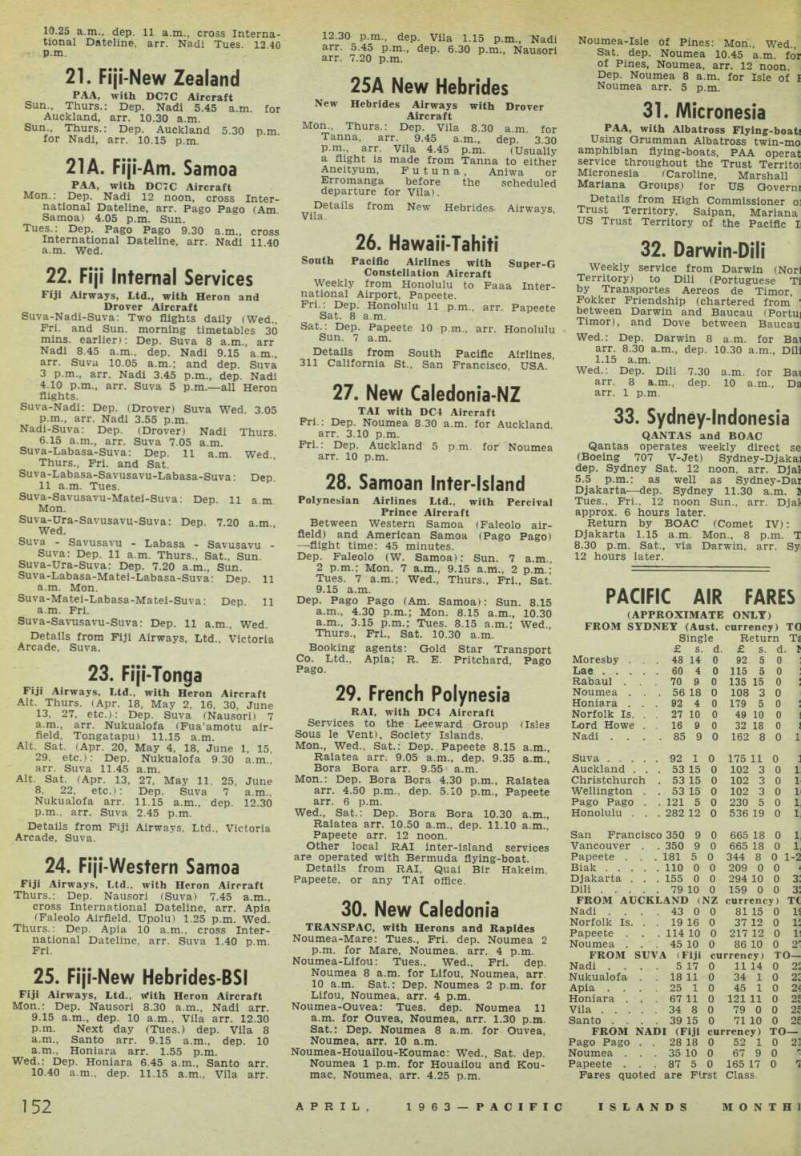 154
154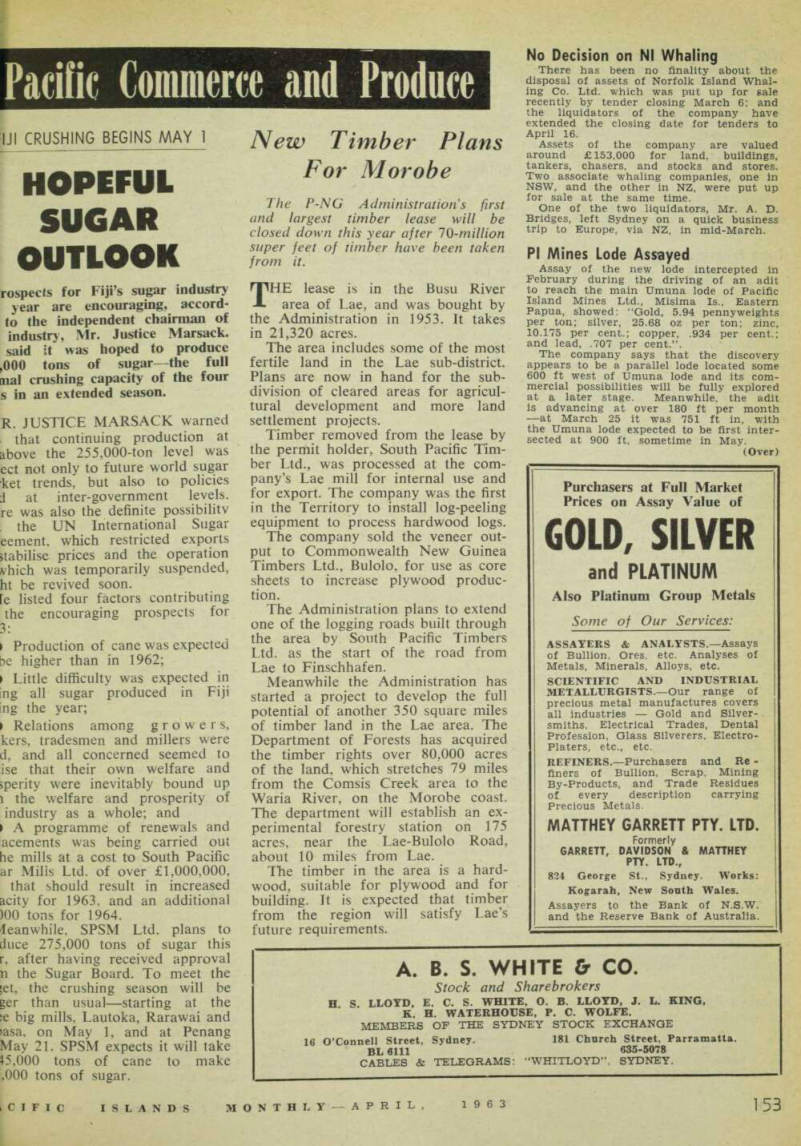 155
155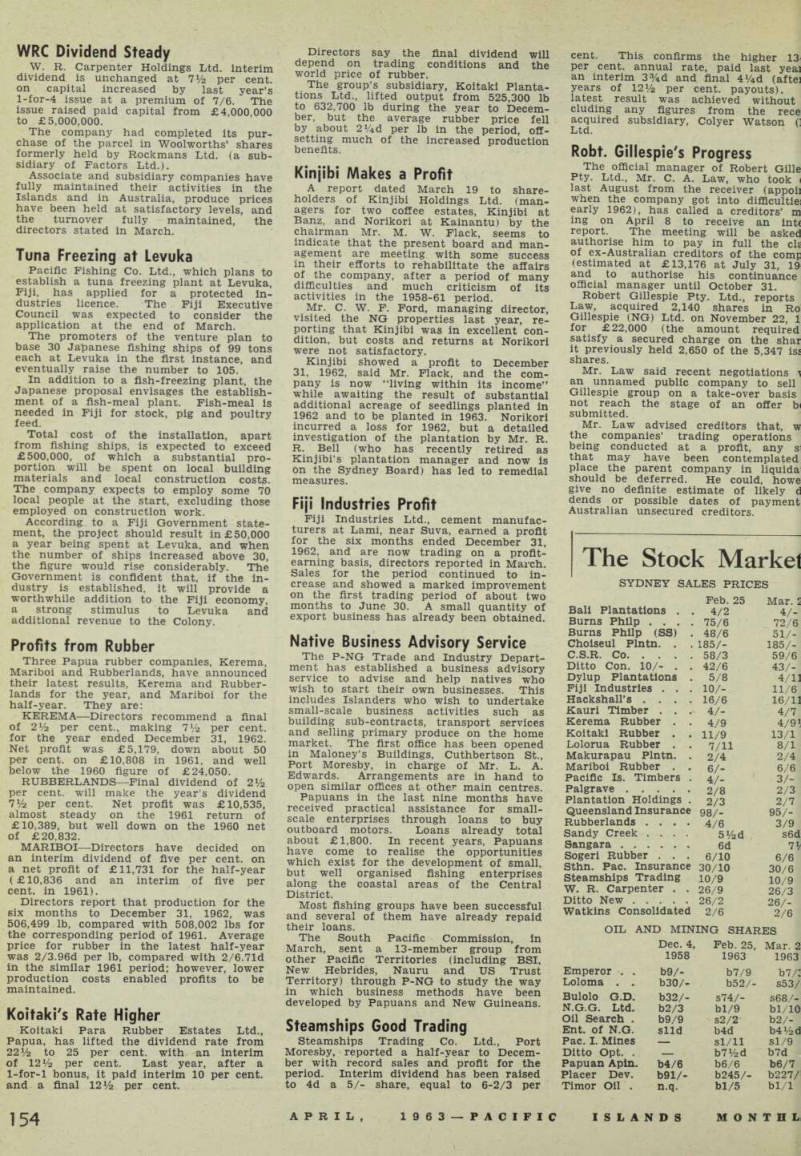 156
156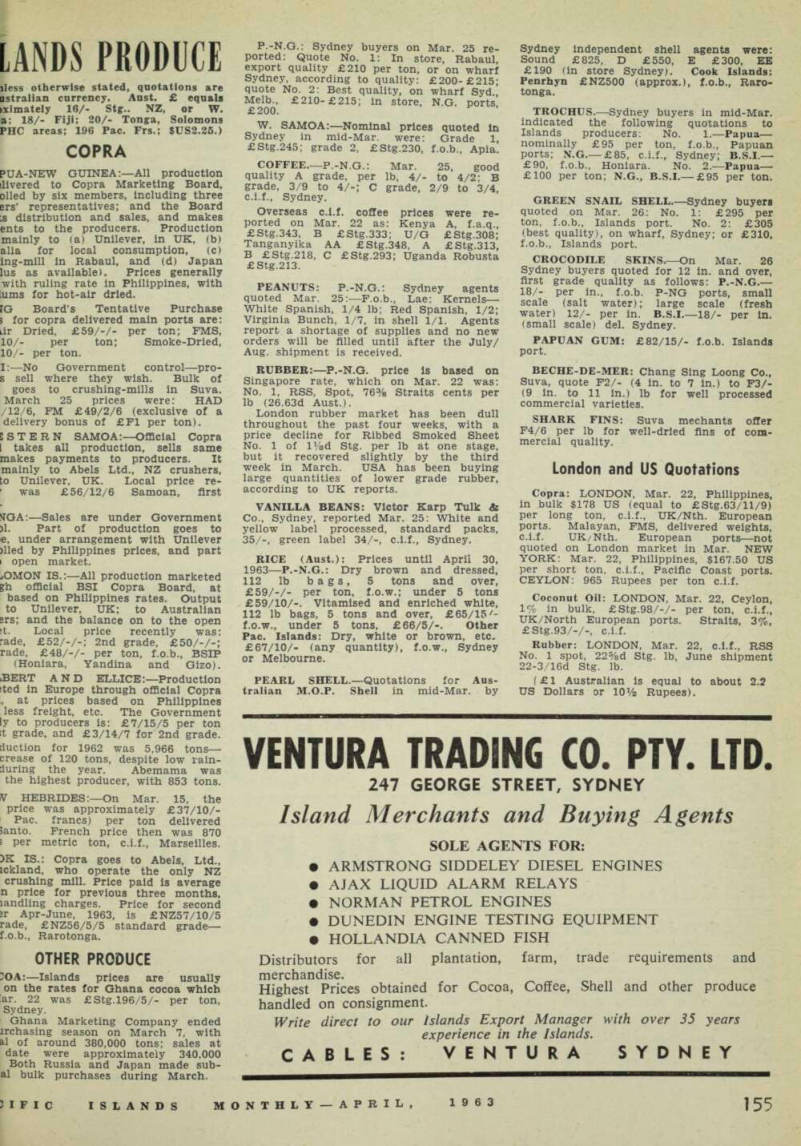 157
157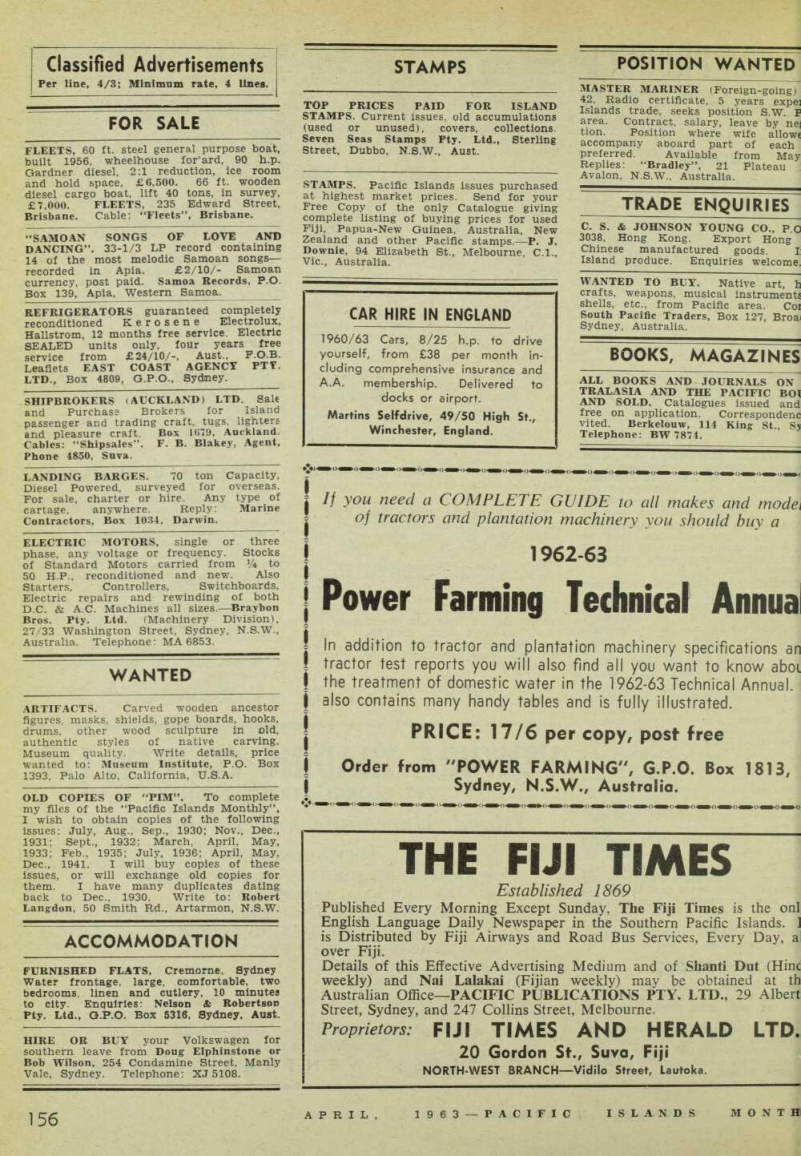 158
158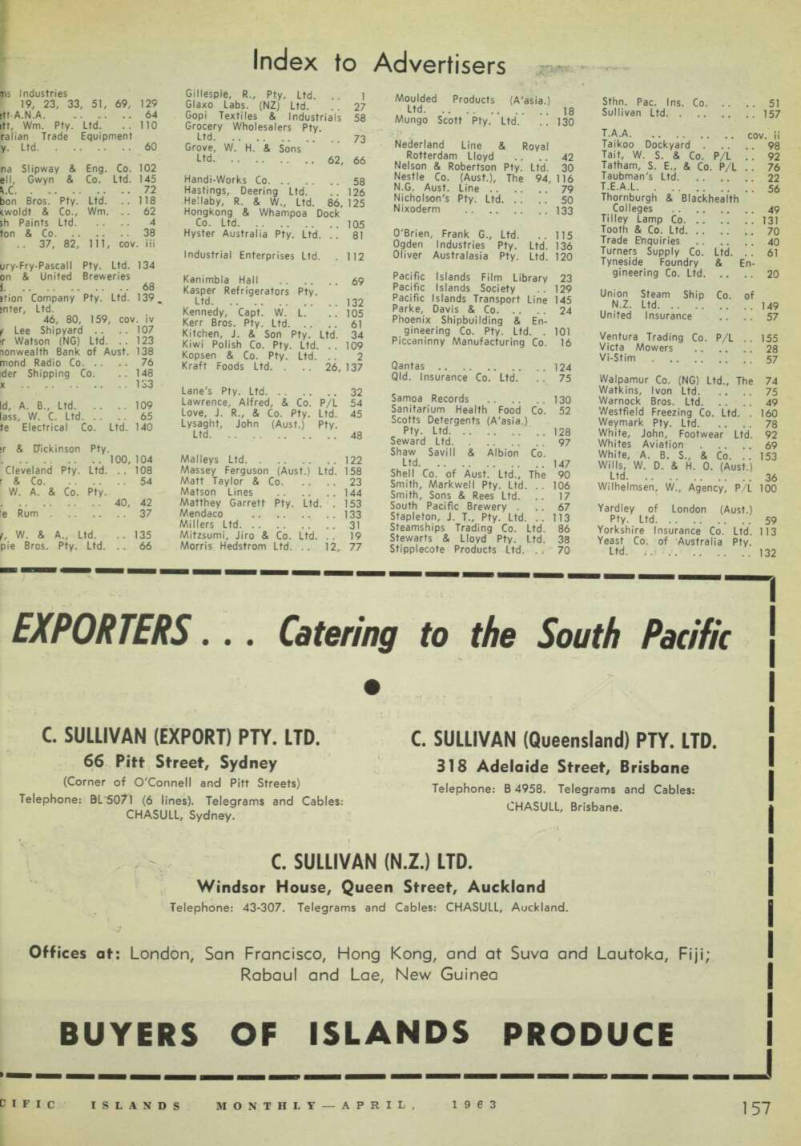 159
159 160
160 161
161 162
162 163
163 164
164