Advertisements & other items, pp. 1-4 (4 items)
Monthly
Pacific Islands Monthly
NOVEMBER, 1962
VOL. XXXIII. NO. 4.
to at G.P.O., Sydney, and at P.O., for transmission by post as a Newspaper.
t
Wherever you want
vvuaicvcs yuu
LAE
PORT MORESBY
ALICE SPRINGS
I I r
SYDNEY
ADELAIDE
\ I \
CANBERRA
MELBOURNE
HOBART
See more, enjoy more,
do more than on any holiday before,
and even save money!
Save on TAA Tourist Class Fares. You can fly TAA from Port Moresby to Brisbane and back for only £69.6.0.
Regular TAA Sunbird services from Lae and Port Moresby to Australia connect with flights to all States linking the Territory to more than 90 ports
throughout Australia.
Money saving TAA budget holidays. There are dozens to choose from in such famous places as the Gold Coast, Central Australia, the Barrier Reef Islands.
TAA Travel Service makes all your holiday arrangements . . . plans personal itineraries and tours . . . arranges accommodation and local tours at your destination.
A selected list from the many interesting sporting, social and business meetings scheduled during 1962.
First Cricket Test, Brisbane. (Australia v England) 30th November-sth December, 1962 Vllth British Empire & Commonwealth Games, Perth. 22nd November-lst December. 1962 Davis Cup Challenge Round, Brisbane. 26th-28th December, 1962 International & Interstate Surf Life Saving Carnival, Perth. 25th November, 1962 Australian Surf Carnival, Warrnambool, Victoria.
March, 1963 Second Cricket Test. Melbourne. (Australia v England) 29th December ’62-3rd January, '63 Australian Legal Convention, Hobart. 19th-27th January, 1963 Contact your nearest TAA Travel Adviser: TAA will arrange your air travel, accommodation
and tickets to these events.
PORT MORESBY:
Len Vaughan, Cnr. Cuthbertson and Douglas Sts. ’Phone 2101.
RABAUL:
Max Knop, “Augusta House’
Mango Avenue, ’Phone 2702.
GOROKA;
Bernie Gamble, Goroka Airport, ’Phone 8.
LAE:
Tony Dewiss, Coronation Drive, ’Phone 2311.
MADANG:
Henry Ohlmus, Kaislan Avenue, ’Phone 78 or 166. throughout the Territory of Papua/New Guinea and to Australia.
For safe, economical COOKING...
ill Lll
Kerosene Non-Pressure Stoves 1 :
Busy housewives will appreciate the economy and ease of cooking on a Coleman kerosene stove . . . brought to the Pacific Islands by Robert Gillespie’s. These well-known stoves are manufactured from heavy-gauge steel . . . precision made, and provide many years of truly economical cooking. Grates are warp-proof . . . fuel bowl and bottle designed to prevent tipping . . . and burners and fuel pipe are aligned to ensure accurate, successful cooking at all times. Three smart models available: No. 341 B—one-burner stove; No. 3428—tw0 burners; No. 344—threeburner stove mounted on a strong stand which has a handy shelf for pots, pans and other utensils. Coleman non-pressure stoves are easily serviced and spare parts are readily available.
Representatives for the Pacific Islands: Col rrt o"
Of - ERT GILLESPIE PTY. LTD. ROBERT GILLESPIE (N.G.) LTD. PEARCE & CO., LTD. 22 Young St., Sydney Rabaul, Port Moresby Suva 334 Queen St., Brisbane Lae, Madang Cable: "Robergill".
The A.W.A. lightweight communication transceivers are well known for their reliable trouble-free service.
They are backed by A.W.A.’s reputation and by servicing facilities throughout Australia and New Guinea. Aircraft installations can be done at any of the A.W.A.
Aviation Service Depots.
The performance of the transceivers has surpassed expectations: they out-perform many larger and more expensive equipments.
These Australian-built transceivers provide reliable communications for hundreds of light aircraft, and are also in use as stand-by equipment in larger aircraft.
specify these D.C.A.-APPROVED TRANSCEIVERS for aircrai
AMALGAMATED WIRELESS
(AUSTRALASIA) LIMITED
The transceiver and its power supply are contained in one case measuring 6J" wide by 51" high by 13" deep and weighing 9J lbs.
SKYRANGER H.F.
TRANSCEIVER
The transceiver is contained in one small case, complete with transistorised power supply, thus making installation a simple matter.
SKYPHONE V.H.F.
TRANSCEIVER
« Frequency range 2 to 13.5 Mc/s. • 5 channels, crystal controlled. • Operates from 12 or 24 volts. • Audio outputs for headset and • Frequency range 118.1 to 125.5 Mc/s. • Ten channels, crystal controlled. • Operates from 12 or 24 volts. • Audio outputs for headset and loudspeaker. • Intercom. loudspeaker. • Transistor power supply (in-built). • Size SJ" wide by 4J" high by 10J" deep.
Price (complete with crystals for 2 channels) £lB3/10/1 Extra channels £8 each.
Accessories and installation extra. • Weight 5J lb.
Price (complete with crystals for all 5 channels) £322.
Accessories and installation extra.
Remote-control models of both equipments are available.
47 YORK STREET, SYDNEY. 80233
Al3-J
1
JIFIC ISLANDS MONTHLY NOVEMBER, 1962
2
NOVEMBER, 1962 PACIFIC ISLANDS MONTH
Pacific Islands Monthly
A News Magazine Circulating in Australia, New Zealand And The Pacific Islands
Publisher: R. W. ROBSON.
Editors:
Udy Tudor Stuart Inder
Manager: SELWYN HUGHES.
Lephones: Ma9197, Ma7101,
MA 4369.
G.P.O. Box 3408, Sydney,
raphic Address: PACPUB, Sydney.
Innual Subscription Rates:
ust. currency; includes surface postage) ic Is. —P.-N.G,, Fiji, Samoa, Norfolk, uru, B.S.I., Cook Is., Tonga, G.&E. )., Niue, New Hebrides, and other Pacific Is £1 4 0 h Pacific Territories and Dutch n Guinea £1 7 0 alia and N.Z £1 10 0 British Commonwealth and Foreign /- Stg.) £2 10 0 . and U.S. Pacific Territories .00 U.S.) £3 13 s Copies (postage extra) 2 6
Ranch Office In Papua-Ng
c Publications (NG) Ltd., Theatre ng. Fourth St., LAE. Tel.: 2577.
Aiss Pat Robertson, Manager.
Branch Offices In Fiji:
Fiji Times Building, 20 Gordon St.
Tel.: 4043. ka: "Fiji Times" Office, Vidilo St. Tel.: 420.
Representative In N.Z.:
>. Whitcombe, P.O. Box 5179, Auckland.
Epresentative In Hawaii:
Spencer, 203 Yap Bldg., 3465 ie Ave., Honolulu. Tel.: 775538.
Representative In U.S.A.:
Craib, Box 1455, San Francisco alifornia. Tel.: Mission 8-1075.
Representatives In U.K.:
Ashburn, 13 Rood Lane, London, 3. Tel.; Mincing Lane 8633.
Mackenzie, 4A Bloomsbury Square, on, W.C.l. Tel.: Holborn 3779. 3URNE OFFICE: Newspaper House, 17 Collins St. Tel.: 63.7053. fS: All main trading firms and ores in the Pacific Islands. : Publications Pty. Ltd., is the Mian agent for THE FIJI TIMES.
Contents
No. 4. Vol. Xxxiii
November, 1962
P-NG Council Increase as Next Step to Self-Government 5 Nauruans Want Fraser Island 6 Wreckage May Shed Light on Sea Mystery 7 Mr. W. D. Forsyth is New Secretary of SPC 8 They Gave the World a New Style of Swimming 9 Epic of Minerva Reef Stirred the World 11 94,000 Voters for Fiji Legco Poll 13 Indonesia Quickly Consolidates in Dispirited West New Guinea ... 15 West Samoa's Economic Survey Starts 17
Commentary 19
P-NG Political Report is Trimmed to the Winds 21 Canberra Apprehensive Over Swift NG Developments 23 GEIC's Isolation "Must End" 25 NG to Lift Liquor Prohibition 27 WNG Take-over Raises Health Menace 31 Tonga Has High Hopes for Coconut Plant 32
Tropicalities 33
From the Islands Press 43 US Still Claims Many South Seas Territories 46 Dutch NG: The End of an Era ... 47 Coconut Oil is the Big Industry in New Britain 53
Palmyra: Polynesian Paradise 56
Territories Talk-Talk 61
Missionary's View of the Red Menace 67 "Sydneysider" Goes Walkabout ... 69 "Joyita" to be Filmed Soon 71 Why Should Colonialism be a Dirty Word? 73
Magazine Section 79
Book Reviews 99 Pacific Shipping IQS PACIFIC REPORT (with Index) ... 125 In a Nutshell 146
People 149
Deaths of Islands People 153
Travel Talk 154
Shipping and Airways Timetables .. 157 Commerce and Produce 165
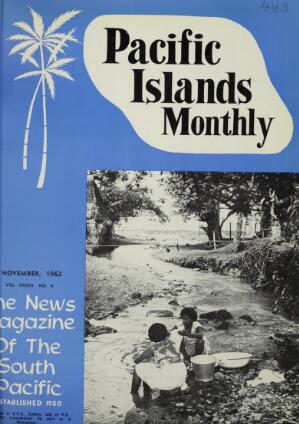
THE COVER: It is true that life in the Islands these days has lost some of its easy-going ways. But there are still pockets of serenity—as illustrated in this photograph, by Rob Wright, of Fijian maramas from the village of Dakuibeqa, exchanging the local gossip as they do the family washing in a nearby stream.
Advertisements & other items, pp. 5-6 (3 items)
A Product of Pacific Publications Pty. Ltd., 29 Alberta Street, Sydney
4
NOVEMBER, 1962 PACIFIC ISLANDS MONTH
Floor* Plasti k
Completely eliminates waxing and polishing
British Paints Limited
Interior Brilliant Gloss Clear Liquid Plastic Coating
THE MODERN TREATMENT
FOR LONG-LASTING BEAUTY
Floor-Plastik is not a wax or polish. It is a specially formulated liquid plastic coating for application by brush on interior surfaces such as NEW Timber or Newly-sanded Wooden Floor, New Cork Tiles, Furniture and Panelling.
Floor Plastik’s brilliant gloss provides a permanent, durable surface which stands up to the heaviest floor traffic without scratching or scuffing and Floor-Plastik requires no waxing or polishing each time the floor is cleaned Floor-Plastik’s dazzling shine gleams as if it were just applied. It does away with the continual drudgery of waxing and polishing and saves you time and money.
Ask your local British Paints Limited authorised agent for a free Floor-Plastik technical leaflet. (Warning! Floor-Plastik is not formulated for use over new or used linoleum.) „
MAXIMUM RESISTANCE TO MOULD AND FUNGUS.
Manufactured to withstand all tropical conditions
Irtish Paints gL S '.° R application *oo*s Will
FOR COMPLETE PROTECTION
OF ALL METAL SURFACES
British Paints Limited
c
• SILVAR BRILLIANT ALU-
MINIUM ENAMEL is easy to apply with either brush or spray and withstands tropical sun, lashing rain, dust-laden winds and salt sea spray.
Brilliant Aluminium Enamel
• SILVAR’S hard, glossy surface actually resists dust and dirt collection. When applied on roofing, SILVAR’S heat-reflective “aluminium” will reduce internal temperatures by at least 10°. • Silvar is non-poisonous and is harmless to drinking water. 9WvU
BRILLIANT
is
INIUM
Smel
MAXIMUM RESISTANCE TCI
MOULD AND FUNGUS.
NEW GUINEA:
Burns Philp (New Guinea) Limited: Wau Burns Philp (New Guinea) Limited; Bulolo Burns Philp (New Guinea) Limited: Lae Burns Philp (New Guinea) Limited: Madang Burns Philp (New Guinea) Limited: Goroka Burns Philp (New Guinea) Limited: Wewak Burns Philp (New Guinea) Limited: Kavieng Burns Philp (New Guinea) Limited: Rabaul Burns Philp (New Guinea) Limited: Kokopo Burns Philp (New Guinea) Limited: Daru Burns Philp (New Guinea) Limited: Kainantu
SOLD AND RECOMMENDED BY;
Kam Hong: Lae Scotts New Guinea: Lae fang Mow: Wewak Laurie Chan: Rabaul Wong You: Buka Passage—Bougainville
PAPUA:
Burns Philp (New Guinea) Limited: Port Moresby Burns Philp (New Guinea) Limited: Boroko Burns Philp (New Guinea) Limited: Samarai Burns Philp (New Guinea) Limited: Popondetta
HONIARA;
A. C. Blair Ltd.: Honiara Ho Kee: Honiara
FIJI:
Burns Philp (South Sea) Co. Ltd.: Suj Burns Philp (South Sea) Co. Ltd.: Lain
NORFOLK ISLAND:
Burns Philp (South Sea) Co. Ltd.: Norfolk Island
Next Step Towards Self-Government
Big Increase In P-NG Council Planned As Next Step Towards Self-Government
The Australian Government is to increase the size of the Papua-New Guinea Legislative Council give the native people an overwhelming majority. For the first time members will be elected from common roll, without either educational or property qualifications. The new composition will take ect from the beginning of the life of the next Council in 1964.
These proposals were approved by the Government following i interim report of the Papua-New Guinea Select Committee on litical Development, which was presented to a special meeting of ; P-NG Legislative Council in Port Moresby in October. It was proved by the Council unanimously.
HE report contained few real sur prises—the pace in P-NG has ved so swiftly recently that every : has come to accept self-govern nt as inevitable—and there were r sour notes in the debate that owed the report’s presentation, fhe proposal for an increased tnbership of the Council was the in recommendation. Present mem ship is 37, comprising the Presi it (the Administrator), 14 official tubers, 10 nominated members and elected members (including six :ted native members), fhe new proposal is for a member d of 65—10 to be official members I 55 to be elected. Of the elected, would be non-indigenous members “reserved” electorates, but only as interim measure. There would be nominated members.
Lengthy Evidence
fhe P-NG Legislative Council □ding Committee on Political De spment was set up in March this r, some months before the report the UN Visiting Mission to New inea set everyone by the ears by posing that the Territory of P-NG e a 100 member parliament by •4. It was this that stimulated the tiding Committee to speedy action, ts six-member team led by the istant Administrator, Dr. John nther, toured the Territory in tember-October and took evidence tn 463 people of whom all but 31 e natives. fhe Committee’s terms of reference e to ascertain: a) the need for a change in the composition of the present Legislative Council; b) if there were a need, what the change should be; [c) whether there should be special
provision for representation of racial or other groups; and (d) when such changes, if any, should take place.
The Standing Committee’s interim report was presented by Mr. Lloyd Hurrell, to the Legislative Council on October 15. TTe report made these points: The great majority of people inter viewed desired to see an increase in the number of members on the ground that the present electorates were too large to allow contact be tween members and their electors.
But few favoured a Council of 100, as recommended by the UN Mission report, the main reasons being that they thought such a Council would be irresponsible, too unwieldy, too full to talk instead of work and that, at present, there were probably not 100 natives capable of successfully carrying out the duties of Legislative Councillors.
The opinion of the majority was that a Council of 100 was associated in the people’s minds with self government, which they feared and said they did not want at this stage.
A three-to-one majority of those interviewed favoured individual vot ing in preference to the electoral college system used in the 1959 elec tion of native members; they also favoured preference voting.
The majority of people preferred election from a common roll and not separate racial rolls. They agreed with the Committee that with elec torates of about 20,000 voters there would be little, if any, chance of a non-native being elected. Realisation of this, said the report, had produced a “vehement reaction” amongst the natives interviewed.
Some of the reasons given by the indigenes for their desire to have
elected Australians on the Council (as well as official members) were the Australian’s greater experience and education, enabling them to ad vise and guide native members, es pecially in economic development. It was said also that they paid the greater proportion of the tax and therefore should have a voice; and that election of Australians to the Council would indicate to the world Australia’s continuing interest in the
Tolai Artist's
Success
Samuel Terarup Cham, a Tolai, of Matalau village, near Rabaul, is the first indigenous artist in P-NG whose work has been chosen for a Territory postage stamp. One of his oil paintings will be used as the design of a 10/- stamp to be issued in February.
The P-NG Director of Posts and Telegraphs, Mr. W. F. Carter, says that Mr. Cham, a self-taught artist, has sold 160 of his paintings, mainly to people in Australia.
"Critics who have seen many of Mr. Cham's works are certain that with perseverance he will make a marked contribution to art in Aus tralia and NG," Mr. Carter adds.
Territory and discourage would-be in truders. They felt, too, that if there were no elected Australians on the Council the Australian Government would be inclined to curtail its generous grants to P-NG.
When the Committee pointed out that if the people wanted non indigenes they could vote for them, the people replied that at the present stage of development, local and clan ties would result in the election of a local candidate.
The great majority of the people interviewed believed that, in the new Council, there would be no further need for nominated members—that people in areas not fully under con trol could be represented by elected members from adjacent areas.
In fixing the number of elected non-indigenous members, the general opinion was that there should be one non-native member to every two natives.
Although the task of the Select Committee was to find out the desires of the people, the recommendations in their Report did not in some sig nificant details follow majority opinion—as some members of the Legislative Council pointed out.
The majority interviewed were for compulsory voting—on the ground that people failing to vote could later claim that the Council had no power over them because they had taken no part in its election. The Committee decided, however, that compulsory voting would be impossible to enforce at present but that the position might be reviewed after 1966.
Again, the Committee decided to recommend not one non-native mem
ber to two native members, as the majority wanted, but only 10 non natives to 44 natives. They felt that this number would be sufficient to carry out the “representative, stabilis ing, educative, guiding and informing
task” which the people had asked It was the Committee, and parently not the native electorate, “examined the present number official members” and suggested they could be reduced to 10.
Committee too, turned down the posal for an Upper House, put ward by a few, on the grounds a bi-cameral system was unwarran The Committee’s report le; numerous questions still to be se; and many loose ends still to be up.
The actual boundaries of electorates have yet to be wo:i out and not the least of the probE here will be the delineation of thu reserved electorates from which 10 non-native members will be ele from a common-roll of all adults The choosing of the President! present the Administrator of Territory—is another matter on w* the Committee expressed no opin although some members, it was s felt that he should be elected byy Council from its members.
A change in the present title Legislative Council is also thougH be desirable although the Commr was unable to come up with anr propriate name or phrase.
Biggest task will be preparatioc electoral rolls. At present the printed rolls are those covering j non-indigenous population EE peans, Chinese and people of mij race. It is expected that it will at least 12 months, without allo T ( for printing and distribution, to pare a common roll.
See “Political Report is Trimmed t»J Winds”, p. 21.
Advertisements & other items, p. 7 (1 item)
5
ICIFIC ISLANDS MONTHLY— NOVEMBER, 1962
Nauruans Want Fraser Island
The Nauruan people will suggest Fraser Island, off Queensland, be made available to them as their home when the phosphate deposits on Nauru are exhausted in 30 to 40 years. They will ask the Australian Government to investi gate Fraser Island fully.
THIS was decided at a public meeting in Nauru on October 1 following the return of the Head Chief Mr. Hammer Deßoburt, from the UN and Australia. While in Australia, Mr. Deßoburt and two companions, Raymond Gadabu and James Bop, inspected a number of islands off the Queensland coast which they
thought might be suitable for the Nauruans.
Earlier in the year the men had seen Fraser Island and several others. The Nauruans had felt that Fraser Island was not suit able, but they agreed it was prob ably the most likely of those in spected.
Some Nauruan leaders hold the
view that it is best to press for a specific island, and then let the Australian Government find argu ments against it, rather than allow the situation to drag on.
Fraser Island, just off the Queensland coast from Mary borough, is 77 miles long, and from three to 14 miles wide. It has a lot of sandy hills but also a huge forest, some fresh water lakes and some excellent swim ming beaches. There is one large bay. The seas around Fraser Is land are good fishing grounds.
There are wild horses, kangaroos —and snakes—on the island, and small islands near Fraser abound in goats and rabbits. Fraser Is land is uninhabited, but is used as a camping reserve and is visited by tourist parties.
Honiara Workers
On Strike
HONIARA, November 1.
More than 1,100 native workers employed by the Government and private enterprise in Honiara are on strike over wages.
THE strike began when 930 Gov ernment labourers and others on day rates walked out in protest at a new wage schedule for all Govern ment staff. About 200 workers em ployed by private enterprise in the town walked out in sympathy.
The salaries revision was an nounced after a long delay which had caused protests (see p. 134). Ex patriate officers will receive a 20 per cent, increase on present salaries, local staff 13 per cent, and day rate workers 10 per cent. The increases for expatriate and local staff are retrospective to April, 1961, but the day workers were not granted retro spectivity.
The strikers have demanded the Government grant labourers increases of from £7/3/- to £lO a month and classified workers from £B/14/6 to £l5. There is a general atmosphere of discontent in Honiara.
Advertisements & other items, p. 8 (1 item)
6
NOVEMBER, 1962 PACIFIC ISLANDS MONTH i
Wreckage May Shed Light On
34-Year-Old Sea Mystery
Special to the Pacific Islands Monthly A piece of wreckage found at Vanikoro, in the southern Solomons, may provide the first clue yet to the disappearance )f a famous Danish sailing vessel 34 years ago.
IE wreckage, a much-worn piece of board about 11 in. long bear the word “Kobenhavn”, may have le from a lifeboat of the five ited Danish sailing ship Koben n which disappeared without trace a voyage from Buenos Aires to itralia in December, 1928.
Tie Kobenhavn, then the world’s ;est sailing ship, was described at time as “the finest sailing ship r built”. esides officers and crew, she was ying 70 cadets, many of whom e members of the most prominent ilies in Denmark, kobenhavn, with a stroke through “o”, as on the wreckage, is the fish spelling of Copenhagen. l native of Vanikoro gave the ckage to Mr. Reece Discombe, of
Vila, New Hebrides, when Mr. Dis combe was at Vanikoro last June in vestigating the possibility of salvag ing a cargo of jettisoned brass. Mr.
Discombe, a New Zealander, is a deep-sea diver and motor engineer.
Vanikoro is the island where the Boussole and Astrolabe, the two ships of the famous French navigator La Perouse, were wrecked in 1788. Mr.
Discombe in recent years has taken a leading part in two expeditions to Vanikoro to search for the wrecked ships, and on occasions he has asked the natives to keep for his inspection any wreckage they might find washed up, in case it could give him a further clue to the La Perouse vessels.
When the wreckage with “Koben havn” on it was handed to him the name did not mean anything to him.
But he brought the piece of wood
back to Vila and in October referred the matter to PIM.
When PIM research disclosed the possible connection with the missing sailing ship, Mr. Discombe sent the piece of wreckage to PIM in Sydney so a check could be made.
A move to identify the name plate through Danish authorities was being made as this issue of PIM went to press.
“I don’t know how long the piece of wreckage was at Vanikoro, or just where it came from,” said Mr. Dis combe in Vila in October. “It has some paint stains on it, and I believe it may have been lying around a shed at Vanikoro for some time. It looks to me as if it came from a lifeboat.
It’s too small for the main name plate.”
There have been many wrecks on Vanikoro over the years but no ship called Kobenhavn is known to have been lost there.
The sailer Kobenhavn left Buenos Aires on December 14, 1928, to load
Mr. Reece Discombe (above) examines the piece of wood bearing the name Kobenhavn, which may have been a nameplate on a lifeboat in the Danish sailing ship "Kobenhavn" (left) which disappeared without trace on a voyage from Buenos Aires to Australia 34 years ago.
Below is a close-up of the nameplate, with a ruler for comparison. The lettering has been chalked in to make it readable in the photograph.
wheat for Great Britain at a Victorian or South Australian port.
She was a steel vessel of 3,901 tons, built at Leith, Scotland, in 1921. Her owners were the East Asiatic Steam ship Co., of Copenhagen, which used the ship as a training vessel for cadets entering the merchant marine.
The ship was fitted with a 640 hp diesel engine, and in favourable con ditions she could do 15i knots.
The voyage to Australia should have taken her about 40 days.
Six days after leaving Buenos Aires, the Kobenhavn spoke by radio with the steamer William Blumer in 33 deg. 5 min. South latitude and 34 deg.
West longitude.
She was never seen or heard from again. No wreckage was found, despite serches by four ships and an aircraft extending over five months.
The Kobenhavn's last known position (which was almost half way between Buenos Aires and Tristan da Cunha Island) suggested that the ship was making for Australia by the Cape of Good Hope route.
If this route was, in fact, followed and the ship met disaster somewhere in the Southern Ocean, it is possible that wreckage could have drifted to Vanikoro on a current that moves up the east coast of New Zealand from the Roaring Forties.
On the other hand, if the ship had been making for or had changed course for Cape Horn and had been wrecked after entering the South Pacific, wreckage could have drifted to Vanikoro on the Humboldt and South Equatorial Currents.
All searches for the Kobenhavn were based on the assumption that the ship had taken the Cape of Good Hope route.
The first search was made in early April, 1929—nearly four months after the ship had disappeared.
In the next few months ships sur veyed such places as Prince Edward, Crozet, Kerguelen, Gough and Am sterdam Islands, the west coast of Africa, big sections of the South Atlantic and Southern Ocean, and 1,500 miles of coastline between Western Australia’s North West Cape and Albany. An aircraft helped in the search of the West Australian coastline.
The West Australian searches were prompted by the theory that the Kobenhavn may have been carried up from the Roaring Forties by a cur rent that sweeps northwards along the West Australian coast.
There was a report that the Koben havn was seen in distress off Tristan da Cunha island in January, 1929, but this was later proved to be wrong.
Advertisements & other items, p. 9 (1 item)
7
CIFIC ISLANDS MONTHLY NOVEMBER, 1962
Secretary Of Spc
Mr. W. D. Forsyth Is New
From PlM’s Noumea Correspondent The South Pacific Commission’s first Secretary-General, Mr. W. D. Forsyth, of Australia, has the job again. He will take over in March from T. R. Smith, of New Zealand, who* retires after five years at the post. Changes are expected to* follow Mr. Forsyth’s appointment.
THE decision was made at the 24th session of the SPC, which began here October 15 and will continue until October 30. Other important decisions affecting the future of the
SPC activities are expected before the Con ference ends (for a detailed outline of re cent SPC de velopments see PIM, October, P- 21).
Mr. Forsyth, MA, B.Litt., Dip. Ed., has had a distin
guished career with the Australian Department of External Affairs, where he is at present Assistant Sec retary. He is 53, married with two daughters and one son.
Mr. Forsyth assisted in drafting agreement which established the S< in Canberra in 1947. As the SP C first Secretary-General he set up headquarters in Noumea in 1949, cruited, organised and directed the ternational Secretariat, supervised work programme, organised the ft South Pacific Conference at Suva* 1950, and generally administered launching of the SPC as a going c; cern.
After leaving the SPC in 1951 I Forsyth resumed duty with the I partment of External Affairs in C berra. From 1951-1955 he was Mri ter and Permanent Representatives Australia at the UN and Australi representative on the Trustees Council. In 1956 he returned to dc with the International Organisaft and Economic Relations section i his Department at Canberra. Fn 1959-1961 he served as Ambassar
Mr. Forsyth.
Islanders from Papua-New Guinea, West New Guinea, the Solomons, the Gilber and Ellice Islands and Guam recently completed the first two-year course at this boatbuilding establishment at Auki, Malaita, BSIP, under director-inspector Ceci Fisher. A meeting of the SPC sitting in Noumea in October was to consider plan: for a new course.—Photo: Rob Wright.
/ietnam, and Minister to Laos (to 0). ; was clear to close observers of * activties as soon as Mr. For ’s nomination was mooted some iths ago that changes would occur he SPC if he got the job. It was t unlikely that he would accept position unless he felt there was s of making the SPC into a rous organisation which could e its presence felt. Obviously a iw conference will have to follow session. The session may fix a for it. hint of changes has already been i by the chairman of the present on, Mr. C, G, R. McKay, Senior missioner for NZ, who retires i the SPC at the end of this year. r. McKay pointed out that the erlands would leave the SPC at ;nd of 1962 (they are not repre d at the present session), and everyone regretted that the con ion had not been amended so Western Samoa could join as a member.
'. McKay added that although various Governments recognised need for it, the constitution, lulated for an uncharted course *47”, had not yet been brought line with the realities of today. this session, high praise has given Mr. Smith for his five with the SPC. He has been a popular Secretary-General, vernor of New Caledonia and Commissioner for the French Jlic in the Pacific, Mr. L. E. •ux, said he would “like to say a few words to Mr. and Mrs. for all the kindness and sym they have created in this ry”.
When PIM's Honiara correspondent Gabrielle Lawson reported in October: "Harry Wickham died on Sunday", she closed a chapter of a story that had occupied PIM for many months. It was a story of the Wickham brothers, who in their time had been famous—yet for a great number of years now had been forgotten. For many months Mrs. Lawson had been collecting informa tion from the Wickhams for a PIM story, and she was as sisted recently when former Australian Coastwatcher Reg Evans revisited his old haunts and renewed acquaintance with his old friends the Wickhams. Mr. Evans took this last photograph of the Wickhams together—Harry on the right. Harry Wickham is now dead. The full story of he and Alec is yet to be told, but here is some if it, reported by Mrs. Lawson and Mr. Evans from the lips of the two men themselves:
New Way of Swimming
They Gave the World a New Way of Swimming
Harry Wickham, the man who helped change the swim ming styles of the world, died on a small island in the Solomons m October—his achievement long since forgotten bv all but a few close friends.
/\NLY a few miles away his half ” brother Alec Wickham—who shared with him the honour of giving the “Australian crawl” to the world— still lives in seclusion.
The Wickhams have never de manded recognition. But shortly be fore his death, Harry Wickham said almost wistfully: “It’s a pity the true tale has not been told. It would be nice if Alec and I could get a nod or two in our direction for the way the world is swimming now.”
Harry Wickham died on Sunday, October 14, at his copra plantation on the island of Hobopeka, off the coast of New Georgia, near Munda, British Solomon Islands. He had turned 80 in September. He died of a heart attack—the second attack in 12 months.
Alec Wickham, 74 last June, spends most of his time nearby on the main land at Munda, pottering about.
Harry and Alec Wickham were the sons of Frank Wickham, a Somerset man who arrived in the Solomons in 1875 and became a planter and trader. He had as his headquarters
Hobopeka Island, which is close by Roviana Lagoon.
Harry’s mother was a woman from the Bum district of Bougainville and Alec s mother was a woman of Munda. The youngsters did all their swimmmg in the Roviana Lagoon.
While the outside world was still managing with breaststroke and dog paddle, the Wickham youngsters knew nothing else but the unique overarm action swum by the natives.
Some of the Roviana boys they swam with still carried the long handled axes with which to secure “trophies”—for headhunting was common. Not far from the Wick ham’s home was a great canoe house in which war canoes were laid up It was ornamented with many smoke dried human heads—the eyes and ears inlaid with mother of pearl. The Wickhams remembered one raid made to the Manning Straits when the raiders brought back 200 corpses.
When Harry Wickham was six years old his father took him to Sydney in his schooner, the Saucy
Lass. The youngster later attended Newington College. When Harry swam, he swam the Roviana crawl.
It was the first time the crawl had been demonstrated outside it’s home wa ters —but it was Alec who was the means of making the crawl better known.
Alec arrived in Sydney about 1897 or 1898 and attended the old Fort Street School, and the development of the crawl began, Harry went back to the Solomons in 1902—and stayed there until his death. Alec Wickham returned to the Solomons permanently in 1935. Both assisted the Coast watchers during the Pacific War act ing as, or organising scouts. Aus tralian coastwatcher Reg Evans—the man who organised the rescue of President Kennedy—stayed a night with Harry on a small island at one period at the height of the war.
In Sydney, Alec Wickham was given free use of the Domain Baths and Arthur Cavill and his younger brother, Dick, intently studied Wick ham’s actions. Dick later staggered the swimming world when he became the first swimmer to cover 100 yards in under a minute and went on to win so many sprints that swimmers were forced to adopt the style. It was Cecil Healy who successfully com bined the old style with the Wickham method, firmly laying the foundation of the modern Australian crawl.
Incredible Heights
Dick Cavill meanwhile took Alec in hand and saw him win the Aus tralian 100 yards title. Alec became a popular trick diver and swimmer at carnivals throughout Australia. He would jump into the water feet first from incredible heights—a common Roviana feat—and once at Manly Baths ran underwater over 50 yards against a swimmer on the surface, and beat him. At Rose Bay Baths in 1910, Alec set a new world record for 50 yards.
Alec could take a standard ship’s life buoy or a four gallon kerosene tin down 25 feet and sit on it. Harry could dive to 15 fathoms and remain there a couple of minutes.
Perhaps Alec’s greatest feat was in March, 1918, when the Deep Rock Swimming Club in Melbourne, pro moted a swimming carnival and Alec
agreed to do a spectacular dive from the cliffs above the pool into the Yarra. The world record dive at that time was held by G. W. Clarke, 165 feet from a bridge in Chicago.
Alec was billed as “Prince Wicy yama” from the Solomons —which
Alec objected to —but neverthe 70,000 people thronged the Y i Banks to see the dive. Alec’s i was 205 ft. 9 in.—a record wl still stands.
He recalls that part of his costi was ripped from his body and for three weeks afterwards he suffi internal pains.
At the time of his death Harry not swum for years. He kept a clippings about some of the old < —for he said that if he didn’t not else would. Alec today takes 1 interest in his own records.
THE ISLANDS SCENE: These two vistas are well known to travellers betwees and the Solomons aboard the fortnightly Fiji Airways aircraft Top is the veras of the Hotel Rossi, in Vila, New Hebrides. It overlooks the harbour and popular local meeting spot. Below, a focal point just as popular, is the lo of the Hotel Mendana, Honiara, on Guadalcanal. Owner Kenneth DairympM sits in his favourite spot-a reserved table opposite the doorway (left) Photo: Rob W
Harry Wickham's is land of Hobopeka, photographed b y Reg Evans from AAunda.
Advertisements & other items, pp. 11-12 (2 items)
9
1 F 1 C ISLANDS MONTHLY NOVEMBER, 1962
10
NOVEMBER 1962 PACIFIC ISLANDS MONTT
Epic Of Minerva Reef
Stirred The World
When two starving, emaciated men reached Fiji’s Kadavu sland on a makeshift outrigger on October 14 with news that he 35 ft. Tongan yacht Tuaikaepau had been wrecked three nonths earlier on Minerva Reef, 300 miles away, and that 13 urvivors were still there, a cynical world stopped in its tracks or a moment.
[E story of the remarkable out rigger voyage and of the rescue sufferings of the survivors made d headlines. The story had icnts of heroism, tragedy, priva and human endurance seldom lied in the Pacific. noted Sydney journalist corn el the story to a Greek epic, and Fiji Times, whose reporters and ographers were mainly respon for the world coverage, said in ditorial that it was “likely to be ; one of the enduring stories of against the sea”, itch of the credit for the lack irid sensationalism in the news-
paper accounts was due to Richard Prescott, a Tongan compositor on The Fiji Times, who acted as inter preter for newspaper reporters when the survivors reached Suva. Prescott steadfastly refused to embroider on details of the drama given him by the survivors.
The drama, in which five lives were lost, began on July 4 when the Tuaikaepau, owned by Tofa Ramsey, of Nukualofa and skippered by Tevita Fifita, left Nukualofa for Auckland with an all-Tongan crew of 16.
Three days later, the yacht went aground on Minerva Reef, about 260 miles south-west of Nukualofa, when moonlight on the reef caused it to be mistaken for clear water.
Towards morning of July 8, the yacht began to break up and the men made for the wreck of a Jap anese fishing boat that they could see in the half-light.
Home For Three Months This wreck, which has apparently never been reported, was about a mile away. It became the home of the Tuaikaepau’s men for more than 90 days and provided them with materials that helped keep them alive.
The Tongans were able to save only a small quantity of food and water from their own ship. The food lasted until July 17, then the sur vivors had nothing to eat except fish, crabs and shellfish caught or picked up on the reef.
As the survivors had only one match between them, someone stayed on watch all the time after a fire was lit and kept it burning with tim ber taken from the Japanese wreck.
Fresh water was distilled from sea water boiled in a 44-gallon drum— the steam being drawn off into a kettle with a piece of hose.
Enough fresh water was usually obtained to provide each man with half a cup a day.
When the Tuaikaepau was reported
overdue at the end of July, the RNZAF carried out an unsuccessful search from Auckland ranging as far as the Kermadecs.
After the shipwrecked men had vainly waited on Minerva Reef for two months, their captain decided to build a boat and go for help him self.
The boat, a masterpiece of make shift craftsmanship, was a credit to one of the survivors, Tevita Uasale, a carpenter, who was responsible for its design.
Erroneously described as a raft in the first reports, the boat was 18 ft long and 4 ft 6 in. wide at the beam.
It had an outrigger fixed to the hull by three strong pieces of timber and was braced with galvanised iron strips.
It was made from part of the boom of the wrecked Japanese fish ing ship.
It was so stoutly built that it could probably have held six people.
The men were handicapped in building it by lack of a saw, but they had a hammer and nails, and wood which somehow had to be cut to the right size.
They also had a knife, about the size of a table-knife, serrated on both sides. They used this to mark the timber where they wanted to cut it, and then they laid irons heated on their fire over the marks.
Using nails sharpened at the end as chisels, they cut away the burnt wood, then repeated the process till they had gone far enough through to break it.
On October 7, Captain Fifita, his son, Sateki Fifita, and Tevita Nasele set off from Minerva Reef in the boat, intending to make for Ono-i- Lau in the far south of the Fiji Group.
When they arrived in the vicinity of Ono-i-Lau, the weather was bad so they carried on, hoping to make a landfall at Matuku, another Lau
the survivors of the "Tuaikaepau" scorted to an ambulance from the RNZAF and that brought him to Suva from Minerva Reef on October 16.
Photo: Stan Whippy
island. Captain Fifita dared not steer a due north course from the neigh bourhood of Ono-i-Lau because of the danger of hidden reefs.
Near Matuku the men again ran into bad weather, so they continued on a north-north-west course, which eventually took them to Kadavu.
On the craft they had a rough chart painted and cut with nails on a piece of board, plus a compass and a sextant, and were able to keep some sort of course.
Captain Fifita, a practical seaman, knew he dared not miss Kadavu for if he did there was no chance of making a landfall till the Solomons.
Anything beyond Fiji was out of the question for they were without water, and had virtually little food.
They left Minerva Reef with pieces of cooked octopus and shark, and about a quart of drinking water.
Both were finished two days after they left.
Two days later, they caught a sea bird which they had to eat raw, and they also caught a fish, but as it was poisonous, they threw it back.
On October 14, the three men sighted Kadavu and steered close in shore to make sure they were not carried past, apparently because they could not rely too much on their makeshift sail and rudder.
A mile and a half offshore their craft, which had stood up to 350 miles of varying weather in the open sea, suddenly capsized as they turned into a passage in the reef. The three men had no option but to swim for the shore.
Tevita Uasale forged ahead of the other two, and looking back saw
Tevita Fifita trying to help his son who appeared to be in difficulties.
Uasale turned round to go to their assistance, but his captain called out to him to go on. There was heroism and sound reasoning in this for if the two men had weakened and perished in trying to save Sateki, no one would have been left to tell the world of their comrades on Minerva Reef.
Uasale followed this order, and when he was able to stand on his feet he turned round and saw Tevita Fifita and his 22-year-old son saying a prayer.
Tevita Fifita and Sateki kissed and then Tevita left his son to die. When he, too, turned round when he was able to stand on the sea bed about 100 yards further on his son had disappeared.
On landing on a small island on the south side of Kadavu, Captain
Fifita called on his last reserve strength to climb a coconut tree knock down coconuts.
He and his companion dranH milk of 29, then swam about] yards to Kadavu proper.
Taniela Delai, of Nacon Naceva, Kadavu, the first mat sight the two castaways, said latl received such a fright that he n ran away.
The men wore banana II round their waists, life jackets had long beards.
The two survivors had walked four miles from wheres had landed. Josaia Tokarua rJ turaga-ni-koro of Nacomoto (hea the village), took the Tongans his village and allocated a s? bure for them.
When the villagers learned
(Continued on page 148)
At left is Minerva [?] where the "Tuaikaep stranded on July 7. arrow indicates wrecked Japanese ing boat which was crew's home for m[?] than three months, low is a close-up of Japanese boat. [?] photographs were t[?] by the RNZAF.
the men at Minerva Reef they flashed a message to Suva and rescue opera tions were started immediately.
A Sunderland flying-boat set out for Minerva Reef from Suva that evening and by the light of flares dropped food and water. The crew saw some of the survivors jump into the water to retrieve the supplies.
About midday next day another Sunderland alighted in the lagoon at Minerva Reef, some distance from the Japanese ship. Using a rubber dinghy they picked the survivors up, the five fittest men first, then made another trip for five stretcher cases.
On their third and last voyage the men in the dinghy had the sad task of picking up the body of a man who had died the day before.
Back at Laucala Bay some of the survivors were helped into waiting ambulances; others had to be carried to stretchers.
At the CWM Hospital medical and nursing assistance was waiting for them, also comfortable clean beds.
As the men had not eaten proper food for so long they were fed sparingly. Two of them were so weak that they had to be fed intra veneously.
In Tonga, there was excitement.
tinged with sadness, when news of the rescue of the men reached Nuku alofa.
Excitement rose at the prospect of family reunions, but there was sad ness for those who did not live through the ordeal.
Ala, the wife of Captain Fifita, who had stubbornly refused to hold a mourning feast for her husband, said that after hearing that the yacht was missing, she was confident that good news would be received.
She said she felt that the loss of her son, Sateki, as any mother would feel, but was proud that he gave his life to help his shipmates.
Captain Fifita and Tevita Vasele remained at Kadavu for three days before flying to Suva in a Sunder land to join their comrades in the CWM Hospital.
At the hospital, Captain Fifita strode up and down the ward shak ing hands with them all. Tears came to his eyes as he warmly embraced another son, Talo Fifita, who had re mained at Minerva.
The Tongans had a constant stream of visitors while they were in hospital and received many gifts of money, cigarettes, clothing, and other comforts.
Search for Body Meanwhile, Kadavu Islanders un successfully searched for the body of Captain Fifita’s son. However, they did find the capsized outrigger, which they towed to Nacamoto.
Captain Fifita said in Suva that when he left Tonga on July 4 he weighed 20 st. 8 lb. He estimated that when he arrived at Suva his weight was down to about 13 st.
For endless days on Minerva Reef he had to maintain strict discipline
among the remainder of the cast ways, a task which became more ar more difficult as the men began i despair of their chances of rescue.
He said the minds of some of tJ men started to wander, and all the could talk about was their home and their families.
Captain Fifita also had a trag story to tell about Fatai Fetiaiki, th first man who died on Minerva Re« —24 days after the shipwreck.
The captain had conducted prayer meeting and when it was ove Fatai still appeared to be praying c asleep.
Fifita then asked the men if the had any food and one said he had piece of fish left from a previou meal.
When the man tried to give the fis; to Fatai, he was found to be dead.
Fatai was buried in a grave i coral sand on the reef.
When two men died on the sami day some days later no one ha« sufficient strength to scrape grave for them, so the captain had thi bodies wrapped and cast into the sea The two men were Sione Sikemet and Sione Lose.
Fetiaiki Pulu, whose father sun vived, died the day before the firs: Sunderland arrived over the reef.
The 12 survivors of the Tuaikem pan, flew back to Nukualofa in s Royal New Zealand Air Force Sunt derland flying-boat on October 22.
Queen Salote proclaimed a public holiday to welcome the return of the castaways, and to remember the five men who died.
The 10 men who were rescued from Minerva Reef are Ve’etutu Pahului Soakai Pulu, Vaingina Unga, Fin© Feuiaka, Toia Paa Bloomfield, Sips Fine, Finau Laione, Talo Fifita,i William Fa and Saia Peni.
The makeshift outrigger in which three m[?] made the 300-mile voyage from Minerva Re to Kadavu. Kadavu Islanders found it whi[?] searching for the body of Sateki Fifita.
Tongan flag firmly fixed to the bow w later given to Captain Tevita Fifita Photo: Stan Whip
Clean-shaven after their ordeal, Captain Tevita Fifita (left) makes Tevita Uasele comfortable on an ambulance stretcher at Laucala Bay on their arrival from Kadavu. Uasele with Captain Fifita and his son, Sateki Fifita, made the 300-mile outrigger voyage from Minerva Reef to Kadavu. Sateki Fifita was drowned at the end of the journey.
Photo: Stan Whippy
Advertisements & other items, pp. 13-14 (2 items)
11
IFIC ISLANDS MONTHLY NOVEMBER, 1962
12
NOVEMBER, 1 9 6 2 PACIFIC ISLANDS MONT
for Fiji's
94,000 Voters for Fiji's Legco Poll
More than 94,000 voters have
;istered for the Legislative
iuncil elections in Fiji next irch, and candidates for the elective seats are getting busy h their campaigning.
HIS will be the first time that Fijians (men and women) will 2 for Legislative Council members, viously, all Fijian members were ninated by the Council of Chiefs, will also be the first time that opean and Indian women will he total of voters comprises more i 51,000 Fijians, nearly 38,000 ians and nearly 5,000 Europeans, i registration of voters closed at night on September 30. he number of voters registered is :ially considered “very satisfac ” when it is considered that isands of Indians could not ster because they are illiterate, hundreds of Europeans will have Fiji before the elections or have lived in Fiji long enough to lify as voters. mong the candidates who have so announced their intention of con ng the elections is one woman.
Salanieta Tuilomaloma, para int chief of Labasa. She will con the Northern Fijian Constituency di Salanieta, who is 61, is a great ddaughter of Ratu Ritova, who one of the high chiefs of Fiji signed the Deed of Cession. She 'ell known in the Labasa com ity and is a member of a number haritable organisations, lirty-four other people have been honed as possible candidates. Of \ 25 are regarded as almost tin to stand, » far the Southern Indian Con vey has attracted the biggest , with five who have announced intention of offering for election, two other possibilities, le five who have said they will i are Messrs A. I. N. Deoki, ’. Bidesi, Brij Nand Maharaj, A. ahu Khan and K. B. Singh, vo other names which have been tioned are Mr. B. D. Lakshman, has acquired a property near 3U, and a Suva solicitor, Mr. R. legan.
People in the Islands have been taking a keen interest in art lately, as the above pictures show. The top picture shows some of the paintings displayed by Ola Reeves at a recent art exhibition by artists in Vila, New Hebrides. Reece Discombe took the photo.
Below are three well-known P-NG artists judging in Port Moresby the entries for the Cariappa Art Shield. The artists {from left to right ) are Ray Basinauro, Gregory Katahanas and Mrs. Pamela Prescott.
The Cariappa Art Shield, presented in 1955 for annual com petition by a former Indian High Commissioner in Australia, General Kondendera Cariappa, was won this year by the Karavat Administration Secondary School.
Some 800 entries were submitted, and of these about 500 were accepted for the competition which is open to all Administra tion schools, up to and including secondary level.
The age of the exhibitors ranged from about four to 19 years.
The judges described the standard of entries as "very, very high ” and said they showed a marked advance over previous years.
This year, paintings and drawings from Mission schools were accepted for the first time for the award of merit certificates.
Advertisements & other items, pp. 15-16 (3 items)
C 1 F I C Islands Monthly November, 1962
14
NOVEMBER, 1962 PACIFIC ISLANDS MONTHf;
Limited
MORRIS
HEDSTROM
HEAD OFFICE: SUVA, FIJI
LONDON OFFICE
Morris Hedstrom Limited Barclay's Bank Buildings, 73 Cheapside,
LONDON, E.C.2.
AUSTRALIAN REPRESENTATIVE
Morris Hedstrom (Aust.) Pty. Limited Wales House, 27 O'Connell Street,
SYDNEY
REGISTERED CABLE ADDRESS:
DEUMBA—SUVA, MORRISHED —LEVUKA, MORSTROAA
SYDNEY, SUVAMARK—LONDON, MORRISCO
NUKUALOFA, DEUBA—APIA, CODES: ALL
For Friendly Service and complete satisfaction it's Morris Hedstrom Ltd. in General Merchants Produce Buyers Importers and Exporters
Ship Owners
Plantation Owners Commission and Insurance Agents I
AGENTS & DISTRIBUTORS FOR:
Adhesive Tapes, Ltd.
Bush Radios, Ltd, Bowater—Scott Corporation, Ltd.
China Navigation Co.
I John Dewar Gr Sons, Ltd.
Electrolux Limited.
Evinrude Outboard Motors.
Ford Motor Co.
General Electric Co. Ltd.
Goodyear Tyre & Rubber Co.
Guinness Exports, Ltd.
Medley, Thomas & Co. Ltd.
Imperial Chemical Industries, Ltd.
Matson Navigation Company.
Mobil Oil Australia Pty. Ltd.
Max Factor & Co. Inc.
Parker Pen Company.
Ransomes, Simms £r Jefferies, Ltd.
Rootes, Ltd.
Smiths English Clocks, Ltd.
Tanqueray Gordon £r Co. Ltd.
Taubmans, Ltd.
Yorkshire Imperial Metals Ltd, Morris Hedstrom Limited are
LLOYD'S AGENTS
in Fiji and Samoa
FIJI - SAMOA - TONG
Indonesia Quickly Consolidates
In Dispirited West N. Guinea
The pouring rain and the cold silence in which the United Nations flag was hauled up to replace that of West Papua in Hollandia on October 1 might well be an omen for the future
of this dispirited territory.
HTHIN a few weeks of the ' UNTEA token take-over, it was nous that the Indonesians will be complete control long before the get date in May, 1963. Already lonesian key personnel in the Ter >ry outnumber UN personnel.
Vithin a few hours of the flag sing on October 1, a party of 80 [onesians landed so unexpectedly Hollandia that most of them ended ;ping on the floors of houses re tly vacated by the Dutch. Of this ty about 20 were journalists, in ding journalists from Russia, jchoslovakia and Poland who “just ipened” to be visiting Indonesia.
Vith this advance guard was In lesia’s Deputy Foreign Minister, . Soedjarwo Tjondronegoro, who nediately put West New Guinea [ the world right on a number of tiers concerning the shape of igs to come.
Mass Migration
ndonesia would probably start a >s migration to West New Guinea r, although they had no designs the eastern half of New Guinea, said. He expected no problems ti those Papuans who had ex ssed their bitterness over the sell- A delegation of 20 of them were Indonesia in October and they e, he said, “talking very nicely”. liis delegation, led by Herman ioi, who only in late September expressing sentiments of fiery onalism at the National Congress ting in Hollandia, later returned WNG, professing itself “im ised” by what it had seen in Dja ;a. his is the only utterance of uan leaders that has seeped out WNG since October 1. Nothing been heard publicly of the dele on of three Papuans, Womsiwor, we and Kaisiepo, who left Hol lia for the United Nations in mid tember with the intention of ob ing the Australian and United es attitude to the debate on the
West New Guinea take-over and consulting with “our African friends”. [Womsiwor is reported back in Biak “off politics”. Jouwe and Kaisiepo, with their wives and families, are living permanently in Holland.] Following their UN visit only one small African voice was raised in the United Nations on their behalf. In mid-October a West African delegate from Upper Volta accused Indonesia of blackmail in WNG.
But in spite of these few kind words, no observers in or out of West New Guinea, see much chance of the Papuans ever achieving the indepen dence their nationalistic leaders have been talking about in recent years. It seems unlikely that the spirit of nationalism, which was born too late in any case, will now survive the seven months under UNTEA admin-
istration much less the seven years under Indonesia before they are given a chance to vote at the 1969 plebiscite.
The stampede withdrawal of the Dutch; the ineffectual efforts of the United Nations to provide an admin istration by mustering no more than a couple of score key personnel to replace 2,400 Dutch; and the Indo nesian rush to take up the slack, have put paid to any hope the Papuans had of saving much from the debacle.
The only people who know where they are going in this situation are the Indonesians and they lost not even one hour after October 1 in getting their propaganda machine into full operation.
Independence for Papuans in 1969, they have made it clear, is quite a different thing from what indepen dence means to most people. Free dom, they say, came to the Papuans on October 1 when they “joined their compatriots in the rest of the Indo nesian archipelago in the ranks of a free and liberated nation”.
The nationalist movement in WNG has been dismissed contemptuously.
The Papuans will be allowed to con tinue political activities so long as they are not subversive but there was no need for them as WNG is really “a part of Indonesia”.
The West New Guinea flag, which came in to being at the same time as the New Guinea Council, was hauled down on October 1 and subsequently declared illegal, not by the UN Tem porary Executive Authority which seems to have allowed it to continue to be flown in some places, but by Indonesia, seven months before it officially takes over the Territory.
Probably nothing illustrates the In donesian methods more strikingly than the time and effort they have ex pended over what on the surface
VOYAGE HOME: Fijian Sereo Ralawa, who travelled from Sydney to Suva recently in the "Monterey", is a senior health inspector with the Suva City Council. In Aus tralia, he spent six weeks working with the Brisbane City Council to get experience and new ideas.
Then he toured Queensland and New South Wales for two months.
ms like the childish nonsense of is. First, there was their moral tory in getting the UN to agree to isting their own flag in WNG by end of this year—the target date by Soekarno in 1961 for the ac sition of the former Dutch terri y. Secondly, there has been their icern for the removal of what they I the “so-called” Papuan flag. fhe West Papuan flag, so-called or , has flown besides the Dutch flag WNG for the last 18 months and 5 regarded by the budding Nation als as a symbol and rallying-point. could be argued that the Indo ians might have used more guile their brain-washing by allowing flag to remain in existence. The t that they have stamped it out early probably proves nothing but ir pretty acute appreciation of the ikness of the Papuan nationalists survive the current period of con ion. ‘robably the most significant gam of the Indonesians in the early :ks of October was the announce it that 2,500 Indonesian school :hers will go to WNG; and that a Iding programme for 50 new nentary schools, five extra high X)ls and a University will begin )nce —the foundation stone of the versity to be laid on October 28, onesia’s Youth Pledge Day.
While the instant-University can be dismissed at this stage as propaganda, the 2,500 Indonesian school-teachers cannot. It is through the youth, the schools, and the common language of Malay, spoken alike by Indone sians and the 350,000 Papuans under Administrative control, that Indonesia will put her permanent iron hold on the Territory.
Both President Soekarno and Foreign Minister Subandrio have al ready spoken about vast developmen tal activities in WNG and although they are a great deal vaguer about these than they are about their pro jected brain-washing drive, it is ob vious that there will be super-human efforts made by Indonesia to justify her existence in the Territory by elaborate window dressing.
The only question at the moment is whether the dressing is likely to be permanent or whether, after the place is firmly in the Indonesians’ grip, they will allow it to degenerate again into a poor, depressed and primitive country.
Meantime, the only people who are likely to be free are the 300,000 in the primitive interior who have never come under Dutch influence. Some of these at the end of September took an opportunity to demonstrate their wild ways by murdering 80 mission natives while the UN talked plati tudes back in Hollandia.
There probably is some sort of moral in the fact that these people are going to be allowed to continue their Stone Age existence for some years yet, not caring who has title to WNG; while their more civilised brothers on the coast are going to be exposed to all the frustrations and mental confusion that the 20th cen tury can devise.
POST. High Chief Tuli Le'iato, of lean Samoa, who was recently appointed etary of Samoan Affairs, is the first [?]n to occupy the post, which was [?]rised by the 1960 Constitution. Chief to, 46, has been Governor of the Eastern [?]ct of Tutuila and an active worker youth athletics.—Photo: Robt. Grach.
New Chief
In Wng
United Nations Administrator in West New Guinea until the Indonesian take-over next May will be Mr. D. Abdoh, a former Foreign Minister of Iran. He is 53.
Mr. Abdoh represented Iran at the organising conference of UN in 1945, and for 10 years from 1949 was with the Iran delegation to UN. He headed it for the last four years.
Advertisements & other items, pp. 17-18 (3 items)
15
CIFIC ISLANDS MONTHLY NOVEMBER, 1962
16
NOVEMBER, 1962 PACIFIC ISLANDS MONT HE
P 0 La R 0 Id
mt \ rm mi ««V
FOR YOUR PROTECTION
MAKE THIS UNIQUE TEST
This Control Filter Tog is attached to every pair of POLAROID SUN- GLASSES. Rotate before lens—it blacks out. This tag is supplied for your protection to demonstrate the polarizing properties of POLA-
ROID SUNGLASSES.
SUNGLASSES
u/u/rr //r
POLAROID SUNGLASSES offer you the unique protection that only a Polarizing lens can provide.
POLAROID SUNGLASSES are different, they are better.
Polaroid and GD are the registered trade marks of Polaroid Corporation, Cambridge, Mass., U.S.A.
Economic
West Samoa's
Survey Starts
From PlM’s Apia Correspondent THE long awaited economic survey of Western Samoa by a United Nations sponsored team is now under way. The two-man team comprises Dr. A. Lauterbach, of Brookings Institute, US, and Mr. V. D. Stace, economist for the South Pacific Com mission Development Section. It will make recommendations for future economic steps.
The team will work in Samoa for three months. It has been stated previously that, once specific develop ment projects are approved, Prime Minister Mataafa will go abroad on a finance-raising mission accompanied by a UN adviser.
Meanwhile, Western Samoa’s financial position is showing a con siderable improvement over the grim deficits of last year.
A supplementary budget for the period from January to July this year shows a favourable trade balance of £11,548 as against un favourable balances of £488,199 and £362,408 in the similar periods of 1961 and 1960.
The Minister for Finance, Mr. G.
F. D. Betham, says it is possible that earnings for cocoa and bananas this year may be higher than the record figures of 1958. Export figures for the first seven months this year were £1,468,365 compared with £1,011,880 in the same period of 1961 and £1,190,557 for the same period in 1960.
IN VILA: The newly appointed British Resident Com missioner in the New Hebrides, Mr. A. M.
Wilkie, meets his French counterpart, M. Delauney, on his arrival in Vila from London in late Sep tember. Photo: Reece Discombe.
Advertisements & other items, pp. 19-20 (3 items)
17
CIFIC ISLANDS MONTHLY NOVEMBER, 1962
18
NOVEMBER, 1962 PACIFIC ISLANDS MONTI
Publicly Proves Its Power
MER 6216.48
ONLY ONE GASOLINE
Ihe 7th Mobil Economy Run —1,500 miles from Adelaide to Newcastle —is public proof that Mobilgas Special will give peak power and economy in your car. Compare these results, all achieved through good, safe, sensible driving using Mobilgas
Special; and reliable, trustworthy service.
Austin Freeway 32.97 m.p.g.
Borgward Isabella (Women) 39.76 m.p.g.
Chrysler Valiant 33.53 m.p.g.
Chrysler Valiant (Auto.) 29.89 m.p.g, Chrysler Royal V 8 21.59 m.p.g.
Citroen ID 19 38.56 m.p.g.
Daimler Major 24.53 m.p.g.
Datsun 38.46 m.p.g.
Fiat 1500 38.78 m.p.g.
Ford Anglia 51.86 m.p.g.
Ford Falcon 170 32.33 m.p.g.
Ford Falcon 170 (Women) 32.71 m.p.g.
Falcon Fordomatic 29.45 m.p.g.
Ford Fairlane 26.25 m.p.g.
Ford Zephyr 32.98 m.p.g.
Holden 31.81 m.p.g.
Holden (Women) 30.02 m.p.g Holden Hydramatic . 29.30 m.p.g Morris Major Elite 37.75 m.p.g Morris Mini-Cooper 54.10 m.p.g Morris 850 (Women) . .. 57.78 m.p.g Peugeot 403 46.54 m.p.g Rambler Classic 27.46 m.p.g Renault Gordini 59.72 m.p.g Renault Gordini (Women) 55.93 m.p.g Skoda 41.66 m.p.g Standard Vanguard 34.63 m.p.g Triumph Herald 1200 51.02 m.p.g Vauxhall Victor 35.51 m.p.g Volkswagen 48.18 m.p.g Volkswagen (Women) 43.91 m.p.g Volvo 43.76 m.p.g Wolseley 24/80 31.16 m.p.g
YOU CAN TRUST YOUR MOBIL DEALER.
THE RUN WAS OFFICIALLY
OBSERVED BY THE R.A.C.V. AND
THE R.A.A.S.A.
Mobil
Commentary
I Drink Decision May
an Mayhem
)W ever did the New Guinea Administration arrive at the con an that its scheme to lift pro ion on drink is one of “gradu i”? Exactly what is gradual t it? present the P-NG native people ot drink. Prohibition has been And now, all at once, both men women are to be given access to of liquor, e fact that their liquor must ly be consumed on licensed ises, or elsewhere only on social lions (except for beer, which they :ake home), is no control. Any e who wants to drink himself (or If) under the table will now every opportunity to do so, svery potent brew that ever had el on it will legally be available m. e Administration may call this lualism”. But it is in fact virtu m open slather, and the decision in a short time reveal itself to been a serious error of judg e plan is the more remarkable 2w of the history of prohibition ew Guinea as outlined by the tant Administrator, Mr. Reeve, he introduced the bill, ere have been several plans put ird over the years to handle the problem, but all have ended in erra pigeon holes. The situation worsened. Completely deprived quor legally, the natives have it sly grog or made their own. was inevitable and right that bition should be lifted in New ;a. But after all these years of ing a decision, it is ridiculous Canberra should suddenly erupt gent activity and virtually blow d off in one blast. Liquor Com- Dn or not, surely somebody d have realised that the new )sal was going too far in a single e decision does not take into ac ; all the problems experienced by Pacific areas in relaxing liquor ztions. A fivepenny stamp on a to the Solomons or Fiji would brought valuable information, i. with the next biggest Pacific lation to New Guinea, but whose e are more advanced than New ea’s, has been gradually relaxing sstrictions in the last few years.
Yet even so, it has found from hard experience that it has been going quite fast enough.
Fiji once had prohibition. Then it worked on a permit system. In 1958 it gave Fiji and Indian males the right to drink beer without a permit, but nobody was allowed to have spirits without one. There was a blanket restriction on women—no drink at all.
This year Fiji introduced a bill to allow all males to drink anything without a permit, but the public out cry was so great that a permit system is still to be applied for women. And all this has been happening in a colony whose drinking conditions are far superior to those in New Guinea.
As the publisher of the Fiji Times said in an article in PIM in October, after visiting the Territory, New Guinea just did not seem to realise the problems it was going to be faced with as a result of the huge onslaught of untried, inexperienced drinkers in bars unable to cope with them.
Right next door to P-NG, the Solomons have only recently allowed the Melanesians to drink beer, al though permits are still required for wine and spirits, and these are re stricted. As with Fiji, the BSIP eventually plans to lift all restrictions —gradually.
New Guinea’s policy of so-called gradualism may well turn out to be plain mayhem. The only redeeming feature in it is that it is an interim ordinance that will be replaced. We hope when the time comes that New Guinea will have seen the light. ☆
Oct. 23: The End
Of The Cold War?
ON October 23, for the second time in the course of the 15-years’
Cold War, the United States stood up to Communist dictators and said “Stop there—or fight”. The Reds stopped.
How long the stand-still will last, no one can say. At this moment, American ships are blockading Cuba, and America insists the blockade will continue until the Reds withdraw their armaments.
Following the pattern of the first challenge to the Reds—Korea —the UNO types, worked on by the Reds in the usual way, probably will try to talk the Americans into a com
promise, so that the Cold War may proceed, according to the Marxist plan.
It is likely that the issue soon will be narrowed down to this: Will the West, led by United States, now proceed to end the Cold War, and restore freedom to the world; or will the West again allow the world situation to be shaped by the Com munists, to the continuing advantage of the Red bloc, and the ultimate enslavement of mankind?
Upon the answer to that question depends our future.
Remembering such things as Suez, and the sacrifice of the Dutch to the Communist-ridden Indonesians, and the destruction of our colonial empire by Washington’s starry-eyed dreamers, we many times have cursed the stupidities and the blundering diplomacy of the Americans.
But—if the events which now are following Kennedy’s declaration of October 23 are handled with wisdom and strength—mankind yet may bless the name of the United States for saving us from the creep ing menace of Communism and the horrors of nuclear war. ☆
Fiji Far From Ready
For 'lndependence"
THERE is a persistent, mischievous suggestion in Fiji that Fiji soon will be independent. One Indian journal urges its people to save their money and their thoughts for a diffi cult period immediately ahead when, presumably, the country will be thrown on its own resources.
This wishful thinking is based on the fact that Britain has abandoned most of her Colonies.
Kenya, Guiana, Mauritius, Jamaica have gone, or are going, “indepen dent”. But Fiji may not be classed with any of those. In Fiji, there is a strong and proud indigenous race, with certain fundamental land rights, and a numerous and proud immi grant race, with certain basic social rights. The two races still are far apart.
In Fiji—which, the experts say, could under effective development, support H millions—there are 400,000 people. But development is far from effective, so that social and economic problems even now are acute. To give Fiji “independence” at this stage would be sheer disaster.
There must be far-reaching develop ment of natural resources, and a closer integration of races—before Fiji becomes “independent”.
Advertisements & other items, pp. 21-22 (3 items)
19
3IFIC ISLANDS MONTHLY NOVEMBER, 1962
20
NOVEMBER, 1962 PACIFIC ISLANDS MONTH
Dun Lite
AUSTRALIA'S FINEST
k LIGHTING AND POWER PLANTS
Every product bearing the Dunlite name is recognised as being expertly designed, conservatively rated and robustly constructed for long life and utmost efficiency. In all Dunlite engine driven power plants the compact design means greater efficiency with all-round economy.
A DUNLITE A.C. POWER PLANT CAN SUPPLY all power needs for your home and property —operate all your equipment at a fuel cost
of less than 3d. a unit.
Dunlite generators are directly and solidly connected to the engine, assuring permanent alignment for the life of the plant. This makes a compact power unit, eliminating troublesome belts and couplings. Slow engine and generator speed add years to the life of the plant.
The Dunlite Single Unit plant is safer in use because there are no exposed terminals and wires and no danger from belts or moving parts . . . and the plant can be safely maintained by unskilled labor. Every Dunlite unit is fully run in, tropic proofed, and thoroughly load tested before despatch, and is a complete, ready to run, packaged unit with no special installation requirement.
Over 200 plants to choose from. I.7SKVA single cylinder Lister air cooled diesel—£3ol. 4KVA twin cylinder Lister powered-—£392. 6 KVA, three cylinder. Lister diesel —£498. 10KVA with Lister HA2 diesel—£6l6. (Also plants available with Ruston diesels.) Press button, remote or automatic control slightly extra. Prices quoted—packed, delivered free Main Pacific Ports.
DUNLITE HI-RATE BATTERY CHARGER
For 6 and 12 volt batteries m This charger—especially designed for garage use—will charge 6 or 12V batteries at trickle charge, normal charge or high rate charge. Special design transformer and tapping gives complete control of charging currents without use of resistors. Simple to operate • Completely safe • Portable • Robust construction. £25 packed F. 0.8.
ALSO MANUFACTURERS OF:
32V petrol and diesel plants • ® D.C. Electric Motors i Belt driven D.C. Generators A.C. Power Packs.
Write for free literature and advice on how to choose your lighting/power plant . . . which explains your needs and the output of various type power plants.
Manufactured by
DUNLITE ELECTRICAL CO. LTD.
Tavistock St., Adelaide, South Australia
Telegrams: "DUNLITECO".
A MODEL
FOR EVERY
PURPOSE
m
240 V. A.C..
Single & 3 Phase;
DUNLITE WIND DRIVEN PLANTS
Australia's finest ''free-power" plants. Dunlite wind-driven geared plants are suitable tor all conditions and all climates.
Operate even in a 7 m.p.h. breeze and bring all city comforts to the home. Charge batteries for all lighting and power needs. Fitted with automatic, variable pitch propeller for steady, continuous battery charging. Generators are totally enclosed, dust and waterproof, and are noted for their absolute reliability.
Models available in 12, 32, 50, 110 volt capacity , . . 300 to 1,500 watts.
Packed F. 0.8.
DUNLITE BELT DRIVEN'
ALTERNATORS
The easiest and most inexpensivv way to convert an existing engine or plant to 240 Volt A.C. Permit! operation of radios, 'grams, pro jectors, A.C. household appliances; The Dunlite Alternator is simplicitt to install —no intricate wiring—ann easy to maintain. Available in If 2,4, 6, 10 KVA single phase; 10-18 KVA three p l '*' o
2KVA .. £Bl/4/- 4KVA . £lOO/16^
6KVA . £164/10/- 10KVA . £196/14,:
Packed F O B
Distributed by
Rural Services Pty. Ltd., 65 Ipswich Road, Woolloongabbas Brisbane.
T.P.N.G. Steamships Trading Co. Ltd., Port Moresby.
N.G.G. Trading Company, Lae.
New Britain Electrical Co., Rabaul.
P-NG Political Report Is
Trimmed To The Winds
From PlM’s Port Moresby Correspondent Probably the concensus of opinion in Papua-New Guinea on the nterim report of the Select Committee on Political Development is that t is the best piece of sail-trimming that is at present possible.
LL in one document it diverts k some of the blasts of the United tions; saves the face of Australia ile allowing it still to hold the se-strings and thus control; nudges indigenes a little further along the y to self-determination; but allows /ate enterprise a longer breathing ce in which to adjust its affairs.
Vhether it was arrived at entirely tn the investigations amongst the igenous people in September and ober is open to doubt, n many respects the views of the igenes have been used rather to firm the views of the six-member imittee; and the whole tone of the ument is somewhere forward of it the natives at present want.
'he report is, in short, very much Ferritorians of long-standing pre ed what it would be. It is, at the ie time, an indication of the swift ts in political expediency that e affected New Guinea in the last years.
Changed Climate
: is indicative of the changed deal climate of the Territory that Lloyd Hurrell, who was the most denary of the Territory’s politi s two years ago, should have ented the report and defended it; le Mr. B. Fairfax Ross, the :est-serving nominated member of Legislative Council, who has al s been something of a moderate, loudest in his criticism of it. [r. Hurrell did say, however, in debate that followed the presenta of the report to Legislative ncil, that he had been prepared ight for reserved European seats any reconstituted Legislative ncil but had found this unneces as there was complete agree t amongst natives that there must \ustralian elected members. [r. Fairfax-Ross said that anyone ing the report would wonder to t extent the Committe felt free )e guided by the people it inter red; or whether its recommenda -5 were largely predetermined by influences arising from the Foot »rt.
He also defended the system of nominated members. Although the people interviewed had felt no further need of them, he felt it was to the administering authority rather than to the field of potential electors that one should turn for advice in this regard.
Nor could anyone deny the recom mendation for 10 official Government members. They represented the tax payers and the Government of Aus tralia. They must continue to nomin ate the policy of the Council into the foreseeable future, said Mr. Fairfax- Ross, or otherwise a workable government would be impossible.
“I think that when members are dealing with this report,” he con cluded, “they might keep their feet on the ground and not let themselves be swept away with extravagant en thusiasm. They must realise that, however this Council is constituted, while we must rely on the Common wealth of Australia for the major part of our finance and while the Commonwealth of Australia is the administering authority, all (its) mat ters of policy must prevail, if indeed government itself is to prevail.
Mr. Fairfax-Ross was, of course, exactly right. No matter how the new Council is constituted, while the Aus tralian Government pays the piper, it must call the tune. The right of dis allowance by the Administrator of the Territory or the Minister for Territories ensures this—but few will deny that a Council, as proposed, will be much more difficult to push about.
For good or evil, the Legislative Council that had its early beginnings in the old Red Cross hall on Ela Beach, has come a long way since one of its foundation members, Mr.
E, A. James, now retired, described it as a “glorious debating society”.
Advertisements & other items, pp. 23-24 (3 items)
21
CIFIC ISLANDS MONTHLY NOVEMBER, 1962
Turners Supply Company Limited
Advertisement
Cockroaches:
'I do this'
Dear Sirs, —May I add to your information on cockroach control. I am getting wonderful results by taking a double sheet of old newspaper on which I spread the cockroach powder. Every night I place this on the kitchen floor. Cockroaches crawl over it and are wiped out. The same powder can be used over and over by simply folding up the paper with the Pea Beu Powder inside to be relaid each evening.
Yours faithfully, “HELPFUL”.
TURNERS & GROWERS LTD.
AUCTIONEERS FRUIT & PRODUCE MERCHANTS
AUCKLAND NEW ZEALAND
WE SPECIALISE IN THE EXPORT TO THE TROPICS
OF NEW ZEALAND PRODUCE, POTATOES, ONIONS,
APPLES AND FRUITS IN SEASON
All Inquiries to our Export Organisation:
Turners Supply Company Limited
Box 1370 Cables: Auckland, N.Z. ‘Tusco”, Auckland.
The sign of Quality Products
BRAYBON
PETROL AND DIESEL SETS
2 K.V.A. 240 VOLT DIESEL SET
£312 F. 0.8, Sydney BATTERY CHARGING SET—I 2, 24 or 32 Volt £lOB/10/- F. 0.8. Sydney
MANUFACTURED BY:
2 K.V.A. 240 VOLT ELECTRIC START DIESEL SET £360 F. 0.8. Sydney *■l
PORTABLE 240 VOLT PETROL SET—
-1,000, 1.500, or 2,000 Watts From £lOB/10/-
QUOTATIONS GIVEN WITHOUT OBLIGATION
BRAYBON BROS. PTY. LTD
Electrical Engineers and Manufacturers 27-33 Washington Street, Sydney Telegrams: "Braybonlan' Distributed by: Telephone: MA 6853.
TUTT BRYANT (NG) LTD., Port Moresby, Rabaul, P-NG. L. T. STAPLES, P. 0., Rarotonga, Cook Islands.
22
NOVEMBER, 1962 PACIFIC ISLANDS MONTH!
Swift NG Developments
Canberra Apprehensive Over Swift NG Developments
From our Canberra Correspondent The sell-out of the Dutch in West New Guinea, the Foot Report on the Australian Trust Territory, plans for an expanded legislature for P-NG and new liquor laws combined to rivet Canberra attention on the island of New Guinea in October.
|VER the past month, more ques tions have been asked in Federal rliament on New Guinea than on y other single subject.
Fhey have covered such diverse itters as quarantine, definition of : boundary between East and West w Guinea, the UN vote of the izzaville African nations, educa i, health, employment conditions, future of the public service, trade, rkers’ compensation and unem yment benefits.
Vlost of the probing on conditions P-NG came from two inde igable Labour questioners, Mr. ird and Mr. Clyde Cameron, and . Cameron in particular implied his questioning that the indigenous rkers of the Territory were being iund under the colonial heel. 3e took much the same line in the )ate on the Territory Estimates, tiing out at the attitude of the big olesalers to native co-operatives, icking land leases to foreign ned companies, and claiming that ) one can help Australia by claim that all is v/ell in New Guinea”, [tus brought the Minister for Ter ries, Mr. Hasluck, to his feet to inter with the statement that “no s is helping New Guinea by claim that all is foul there”.
Support
At. Cameron’s speeches were ong the few exceptions to the two ty policy for the advancement of educational, social, economic and itical welfare of the Territory iple, he said. fhey sought to prove that we were engaged in some Australian en )rise, but in something mean, petty I partisan which should divide stralia instead of being one of the at areas on which the country ild unite. n this, Mr. Hasluck seemed to e the support of Mr. Cameron’s ti side. >nly the week before, when ex
ternal policy was being discussed, Mr.
Cameron urged a new physical boun dary between West and East New Guinea and damned “a straight line on a map as the shortest possible way to a war”.
He said he was “disgusted” with the position in the Territory as re vealed by answers to questions handed to him on employment condi tions.
Mr. Cameron concluded: “Do not forget the Indonesians are going to make West New Guinea a show place.
“They will give it conditions they will not give to other parts of Indo nesia.
“West New Guinea is to be their shop window, the place to which they will point and say, ‘This is what we have done for our part of New Guinea’.”
Not Ashamed But on this occasion it was not the Minister who rose to take Mr.
Cameron to task. It was Mr.
Cameron’s own leader, Mr. Calwell, who declared; “I do not hold with many of his views. They are his own and not necessarily those of the Labour Party.”
And it was Mr. Calwell who inter jected, “I think you are quite right,” when the Minister for External Af fairs, Sir Garfield Barwick, said that no Australian had any reason to be ashamed of Sir Hugh Foot’s highly commendatory remarks about Aus tralia’s treatment of the indigenous people.
Mr. Cameron’s plea for an Indo nesian-Australian border that would follow physical features seemed to be at loggerheads with the desires of his fellow Labour member, Mr. Ward.
Mr. Ward wanted to know whether, if the border had not been accurately surveyed and defined, when the Government intended doing so.
The Minister pointed out that the 1936 Dutch-Australian agreement recognised an obelisk on the north coast as a key marker.
In 1958, Australian and Dutch as tronomical stations had marked the boundary point at the mouth of the Benbasch River, on the south coast.
And recently surveyors from the two nations had placed markers at the two remaining key points, on the banks of the Fly River.
Australia had photographed most of her area, but the almost continual cloud cover in the border area meant that conditions for photography oc curred very infrequently.
The Minister’s answer, of course, hardly meets Mr. Ward’s request for a “defined” boundary or Mr.
Cameron’s difficulties about the need for one marked by physical features.
Nor does it throw any official light on the three Dutch—or former Dutch —enclaves of Waris, Waina- Sowanda and Dera that were found to be east of the 141st meridian. PIM disclosed in September that these en claves had caused something near a panic on the Australian side of the border, while the P-NG Administra tion moved to get them under control before the Indonesian take-over.
Advertisements & other items, pp. 25-26 (2 items)
23
ACIFIC ISLANDS MONTHLY NOVEMBER, 1962
England - U.S.A. - Europe
CANADA - SOUTH AMERICA -
SOUTH AFRICA - JAPAN
Burness will arrange steamer and air reservations on all principal services for travel anywhere.
BOOK NOW FOR 1963 AND 1964.
No service fees charged.
STEAMER AIR RAIL
GREYHOUND RESERVATIONS
COMPLETED.
Individual itineraries—a speciality—
prepared FREE.
Tour Planning, Maps and Brochures
Supplied.
Book Now With
JAMES BURNESS TRAVEL
Direction; John Rigg.
ST. JAMES BUILDING,
107 Elizabeth Street, Sydney, N.S.W.
Phone: BW 1417
OFFICIAL PASSENGER BOOKING AGENTS
What rust resisting
miracle lies in this
plastic tube ?
Actually
doubles the life of
new rainwater tanks!
Simply hang a TECT-A-TANK unit inside each new tank before its first filling. As water flows in, the unit becomes activated to deposit a lasting anti-corrosive film on the inside walls. Cannot harm water in any way.
Never needs replacing. Costs only a few shillings. At all plumbers and hardware stores
ORB
LYSAGHT
Itl/TOP
Trade Enquiries: John Lysaght (Australia) Limited, Head Office: 50 Young Street, Sydney N.S.W
TTWMC
Much Bigger Fiji
Show This Year
Fiji's second Show since the war,, held at Suva's Buckhurst Park in mid-October, attracted large atten dances and was much bigger tham the Show held the previous year., In officially opening the Show l on Saturday, October 13, Fiji's!
Governor, Sir Kenneth Maddocks,, said it was doing valuable work: in encouraging agricultural andl pastoral activities, and in interest ing the public in agricultural pro duction.
He hoped that in future the Fiji!
Show Association would be able: to promote subsidiary shows inr other parts of the Colony.
Among the outstanding displays was one arranged by the South Pacific Sugar Mills Ltd. which demonstrated the wide distribution among all classes of money earned: overseas from Fiji's sugar.
Most exhibits dealt in the main with goods and machinery de signed and manufactured to in-i crease and improve the products of the soil. But many others ap< plied equally to the home and: farm.
The stock exhibits included am outstanding dairy cattle section,! with some entries -eaching a very high standard. The Show's ring events were especially popular.
• Pictures, pag* 133.
Among Their Souvenir
ALTHOUGH the Dutch have ii all but departed from M Guinea they have left behind so; excellent publications to tell the sk of their administration.
These include the newest—A Guinea Today with bi-linii Dutch-English text and captions < Anthony van Kampen, well-knu Dutch novelist; and photographs ffl half a dozen different Dutch K Guinea sources.
The book was clearly designeo; show how the Dutch were leaei the Papuans towards self-governnn and as such is already out-dated.J can be regarded as something o memorial to what might have bd rather than as a guide to whae likely to happen in the future. (NEW GUINEA TODAY. Publisher C. de Boer, Jr., Hilversum, Holland..!
Advertisements & other items, p. 26 (1 item)
24
NOVEMBER, 1 9 6 2 -PACIFIC ISLANDS MONTH
Official Says
GEIC’s Isolation Must End, Top Official Says
The age-old isolation of the Ibert and Ellice Islands may ne to an end soon if proposals
dined recently by GEIC
sident Commissioner (Mr. V.
Andersen) are followed up.
T the fourth Colony Conference at Tarawa early in October, Mr. lerson said the colony must ex re every means of economic de >pment, including tourism and the ting of scheduled internal and ;rnal air and shipping services, e of which existed at present.
Ir. Andersen said the colony was :d with major difficulties because 37 small islands were spread over ut two million square miles of the tral Pacific, its population was in ising rapidly, it had a limited land i with very few economic re •ces, and it would be faced with dss of employment opportunities n the phosphate deposits on Ocean nd, and later Nauru, were worked
Tourism, Too
Fhe colony must aim to make the use of all available land and t see that all possible ways of easing the output of copra are ued,” Mr. Andersen said, t must explore all other ways of eving economic development, fil ing tourism and the exploitation he products of the sea. t must stimulate further emigra te the British Solomon Islands, ■ improve medical and educational ces, and must seek employment seas for its citizens.” to the conference en “d Government proposals to re iquor controls, to enable islanders fink beer and sour toddy without fits. • present islanders in the Colony ■equired to obtain permits before can drink beer, wines, spirits and toddy (the fermented sap from flower spathe of the coconut )■ the field of education, delegates 1 of the Government’s ultimate of providing universal primary ation in English, improving idary education facilities, and in ing opportunities for overseas ing. the medical sphere, the con ice was told of a long-term plan
under which it was hoped to station Assistant Medical Officers and nurses on most islands, and to follow up the present tuberculosis scheme with a campaign to improve maternity and child care, and health education.
Delegates welcomed a proposal to replace the Colony Conference system with a 17-member Advisory Council. (Colony Conferences have been held every two years since 1956. They are attended by 37 representatives from all the inhabited islands and discuss matters of territorial importance.) The conference also endorsed the need for local government councils to pay for better-trained staff, and it proposed the formation of a corps of Island Executive Officers who would perform somewhat similar duties to town clerks in metropolitan countries.
The conference thought the finance for these proposals and for other minor ones might be found through a poll tax on all adult males, the tax to be in addition to the existing land owners’ tax.
A Fijian student who is making many friends in Sydney is young Ratu Joni Vuiyasawa, son of Ratu Charlie and therefore an important member of the Sukuna family. Young Joni, aged 23, is a student at Wesley College, in Sydney, and appears to be taking a keen and increasing interest in Fijian affairs. Some of his well wishers have been urging him to qualify in law—and it would appear to be an advantage if the Fijian com munity had its own practising barrister in Suva.
Advertisements & other items, pp. 27-28 (3 items)
C 1 F 1 C Islands Monthly November, 1962
Beauty Bath
Advertisement
A 10 Seconds
If you have to hurry away without time for your beauty bath, it is an easy matter to freshen up in a few seconds by simply smoothing the body over with your lemon delph freshener.
This will ensure a dainty freshness, besides the beneficial toning that your lemon delph freshener will give you.
Margaret Merril.
The Pacific Islands Society
(Founded 1937) Visitors from the Pacific Islands to Sydney, or persons interested In Islands affairs, are invited to communicate with the Honorary Secretary of the above Society which was formed to constitute a social and cultural centre for those interested in the Pacific Islands.
Regular meetings and social gatherings, with lectures, are held at the Feminist Club Rooms, 7th Floor, 77 King St..
Sydney, on the last Thursday of each month, at 8 p.m.
Address for correspondence:—
THE PACIFIC ISLANDS SOCIETY,
Box 2434, G.P.0., Sydney.
FOR OVER
FOR OVER 50 YEARS
tough, reliable S. & L.
PIPES and FITTINGS have been specially made for gas, water, steam, etc.
STEEL MERCHANTS and
DISTRIBUTORS also of
GALVANISED IRON
plain or corrugated
ELECTRODES and WELD-
ING EQUIPMENT JOHN
VALVES and SAUNDERS
VALVES (specially suited for difficult fluids).
50 YEARS
* I
STEWARTS AND LLOYDS
(DISTRIBUTORS) PTY. LIMITED
•gents for New Guinea Territory
Burns Philp (N.G.) Ltd.
Fiji Agents:
Burns Philp (S.S.) Co. Ltd., Suva
Australia’s
most versatile
pump!
SOUTHERN
CROSS
PUMP
a profitable
investment tor:
• Suction Lifts up to 20 ft. without using ejector, with electric motor or SOUTHERN CROSS vertical shaft, aircooled petrol engine. • Suction Lifts up to 20 ft., and total heads up to 260 ft., using ejector, with electric motor or SOUTHERN CROSS vertical shaft, air-cooled petrol engine.
H.P. Electric Motor 30 gal. Pressure Unit (capital cities, Toowoomba, Rockhampton, Townsville, Cairns).
Suction Lifts up to TOO ft., using ejector, with electric motor or SOUTHERN CROSS vertical shaft, air-cooled petrol engine.
Any of the electric motor units can be used in conjunction with pressure tanks to give automatic water supply.
Installation over bores or wells or for pumping from surface supplies—pump can be off-set, if required, without any special mounting base or fittings.
Send for details NOW
TOOWOOMBA FOUNDRY
SALES PTY. LTD.
Cnr. Campbell & Ruthven Sts., Toowoomba, Qld.
SOUTHERN CROSS
MACHINERY PTY. LTD.
1 Grand Avenue, Granville, N.S.W.
Please send full details of your Name Address (If for School Project—Mark X)
PIM/JP4
“| Local Distributors: J. L. Chipper & Co., RABAUL.
T. F. Leonard, PORT MORESBY (Upper Port Road).
V. Bryant, LAE (Cnr. 15th and 17th Streets).
K. D. & A. H. Pryde, BANZ, Western Highlands Division.
26
NOVEMBER, 1962 PACIFIC ISLANDS MONTH!
Prohibition
NG to Lift Liquor Prohibition
From PlM’s Port Moresby Correspondent & AAP-Reuter A bill granting Papua-New Guinea natives the right to drink—and imposing a ban on liquor advertising while they are being educated in the evils of over-indulgence—was ap proved in October by the Legislative Council.
i PPROVAL does not mean that the natives can legally get a drink »ht away.
The bill first must go to Australia r the Governor-General’s assent.
Under the new interim legislation, dives will be allowed to drink ything they desire on licensed pre ises or when it is offered without arge at social or other occasions it will themselves be permitted to Ice away beer only for off-premises nsumption.
Elected member Ron Slaughter :empted unsuccessfully to amend bill and delete the section banning vertising.
The ban, he said, was unjust interference in a properly-run in dustry.
The section he attempted to delete forbids advertisement of intoxicating liquor in book, pamphlet, newspaper or other printed matter printed in the Territory, in handbills or on hoardings and “by means of cinematograph film or slide”. There is a penalty of £2OO, or six months imprisonment, provided for infring ment.
The Assistant Administrator, Mr.
H. H. Reeve, told the Council the transition period for which Legisla tion was being enacted was an ideal
time in which to inaugurate and forcefully prosecute a positive policy of education in sane drinking.
He added: “It is appreciated that the education campaign as envisaged would be severely handicapped if there was complete freedom of advertising by commercial liquor interest”.
He said it should be noted that the ban did not extend to the display of advertising matter within licensed premises or on containers or on publication of price lists, and in addition there were powers for the Administrator to consent to any par ticular form of advertising.
Mr. Reeve said the Administration would co-operate actively with voluntary organisations in devising ways of promoting suitable tem perance education and would give them financial and other assistance.
The need for active Government effort to educate the people in a sense of moderation was stressed by native members.
“We don’t want our people to go in and fill hotels and stores and make lot of noise,” said elected mem ber Somu Sigob.
Nominated member Ephraim Jubilee said: “It is time now for our people to be educated in this
law. People will spend much monc on buying drink and they will 1! ruined”.
Mr. B. E. Fairfax-Ross, nominate member and prominent territo: planter, said it would be she; hypocrisy for him to commend tl bill and pointless to contest it—tl Australian Government which was tl true administering authority hs already given its tacit approval.
Comparing results of the bill wii measures planned to promote ter perance he offered a bit of verse: “Mother may I have a drink?”
“Yes, my darling daughter.
“There is no discrimination now.
“But please drink only water!”
Passing of the interim bill throuj the Council followed close on tl heels of the release of the ma points of the report of the Liqui Commission, on which the bill based.
The Commission, headed by Judl Robert Nelson, of Victoria, heat evidence on drinking from 231 w nesses throughout the Territory. 1 main points were released by t: Acting Administrator, Dr. Jol Gunther, on October 12.
Dr. Gunther said the seven coi missioners had agreed unanimous with the report, which was now the hands of the Commonweal Government for closer examinatic The report had recommended tl total removal of prohibition event ally, and interim legislation mea while.
The interim legislation, said E Gunther, was designed as a stf towards relaxation of prohibition “ a gradual process”, because nati witnesses had asked that the chan: be gradual.
In introducing the bill into tf Council, Mr. Reeve outlined earlJ moves to allow NG people to drirr He said prohibition was founded Section 72 of the Papua and Nil Guinea Act. In 1955 a Legislati; Council Select Committee h' suggested a permit system, to introduced after a period of thn years, but “for various reasons” t proposal was not implemented.
In 1957 an Administration coc mittee, including a member Legco, had again examined t subject and proposed that liquor co; sumption by natives be limited 2i per cent, beer, and that liqu laws in other countries be examine This also “was not proceeded wit' for particular reasons”, said M Reeve.
But over the next four years “t J position was closely watched p surveys were undertaken from ti:i
time”. The view had increased t the discriminatory features con :ted with prohibition were objec lable. earlier this year the Administrator I decided the time had come to end the law and abolish total •hibition, but the problem was how Ito what extent. For that reason Commission had been appointed.
Ar. Reeve said it was planned to ig in a new ordinance after the 3le report had been studied. This Id not be done probably before t February or March, or even r if it was found that the Aus ian Parliament had to alter the ma and New Guinea Act.
Meanwhile, to delay relaxation of hibition would “result in a rapid ;rioration of a position which is ady far from satisfactory, and f do irreparable harm”.
Gradualism” was what was re •ed in the trial period, lost of the Legco debate that 3wed centred on the restriction advertising. It was pointed out, e rightly, that Territory journals ild be discriminated against—that e would be no control over the ;rtising of journals published out of P-NG and which would con e to circulate there. The truth, ough nobody pointed it out, is the Government has no control ■ advertising published in outside nals. or did anybody stress the real ?er in the new ordinance—that that the drink ban was being i too quickly—that the so-called dualism” was really an open go :h could cause a great many •lems.
See “Commentary”, p. 19.
iva’s Mayor, Councillor C. A. ion, gave city eating houses a deserved rap over the knuckles s 1961 report, according to PI M’s correspondent. )uncillor Stinson said that while standard of food premises con ;d to rise, the standard of cleanli did not rise with it., ; said it was relatively simple to ove the standard of premises, but as not so easy to change the s of centuries. ife proprietors, moving into ning new or renovated buildings, let them deteriorate into a con i little better than the old in ary premises they had left id them. any of Suva’s eating houses are epossessing affairs, and attract mage in line with their appear-
Advertisements & other items, pp. 29-32 (5 items)
Icific Islands Monthly November, 19 6 2
R. & W. HELLABY LTD. AUCKLAND, n.z. cables hella -
CREAM
and W m 11*8
NEW ZEALAND'S FINEST
- THE PACIFIC'S FINEST
Master Agents for Papua, New Guinea and the Pacific Islands R. & W. HELLABY LTD. AUCKLAND, n.z. cables hella -
P.O. BOX 2193, AUCK.
GIN
Gilbey’s Gin is one of those travelled people you will meet everywhere ... a true international, the same in all lands, not least Australia.
Gilbey’s Gin is an accommodating spirit, happy to be consumed in many ways.
It can be drunk with water and with bitters, with lime juice or ginger ale, with tonic water or that popular newcomer, bitter lemon, and in a host of cocktails, chief of them the ever-popular Martini, not forgetting the new Gilbey’s and Dubonnet.
In mixed drinks Gilbey’s Gin is supreme whether you are an old timer from Out East thirsting for a Singapore Sling or a hostess meditating what to serve 1962
PERSONALITY
OF THE
MONTH
at a young people’s party when heavy drinks and potent drinks are definitely out.
To lace a fruit cup, a very discreet quantity of Gilbey’s will provide a beverage to please everyone, harmless yet sophisticated, refreshing as a breeze off the sea on a summer night.
Everywhere young people are coming to recognize a hostess who doesn’t believe in the “do it yourself” system for her guests, who is willing to go to just that little extra trouble with a good mixed drink.
The basis of the best mixed drinks of the world, for tycoons or for teenagers, is Gilbey’s Gin.
Try it yourself ... we know you’ll agree.
GILBEY’S LIMITED
T J
BY EGMQND
Egmond "Western I", a large flat-top model, specially designed for country-and-western music. Sunburst finish, rosewood bridge, with warm, deep tone.
Including case £29/10/-.
"Western II" special, £37/10/-.
Egmond "Canberra II", electric Hawaiian steel guitar. 2 pickups, adjustable for new "twangy souna . wirn case £39/10/-. k Not illustrated: "Canberra I", f electric Hawaiian steel, one pickup. With case £25/-/-.
Egmond "Super 8". a semiacoustic solid body electric guitar, in high gloss red or turquoise, with slim-line adjustable neck, silver frets, 3 pickups, bridge has new vibrato arm. With lined case, £49/10/-.
Egmond "Professional", a superb electric-acoustic instrument for use with or without amplifier. Cello-style curved V body, slim-line neck, 3 pickups, mixing panel on plectrum guard. Including case. £69/10/-.
BIGGEST RANGE OF MUSIC, INSTRUMENTS, RECORDS
Choose from the world’s finest guitars, some from as little as £4/19/6, amplifiers from only £27/10/-, drum kits, piano accordions, saxophones, clarinets, trumpets, trombones and accessories strings, picks, shoulder straps, reeds and
mouthpieces. Full stocks of classical, popular,
jazz, country-and-western music and records'.
Price lists are gladly sent without obligation! mm. ■fifinn ■ niiiiii
LTD.
416 GEORGE STREET, SYDNEY. 25-1641
YOU GET THE BEST AT NICHOLSON'S
A
COCOA
DRYERS
m •
★ A.S.P. Universal Cocoa Dryer
for combined sun/forced hot air drying For the planter who requires a Dryer that will dry 10,000 lbs. of wet cocoa beans or more per charge—for the planter who wishes to use sun drying to produce maximum chocolate flavour in his beans and wants to remain independent of the weather —for the planter who must be sure that he can meet emergency conditions during flush cropping, here is the Dryer that combines the advantages of the A.S.P. Sliding Roof Sun Dryer with the finest of automatic Heat Exchangers. Hot air is forced from under the drying bed floor through the cocoa beans at the right temperature. Beans can thus be dried FOR THE FULL 24 HOURS EACH DAY.
* ROTARY
DRYER
Years of experience have proved that most economical size of A.S.P. Ra
Cocoa Dryers for plantations produ
up to 120 tons of cocoa per annun the Mark VII, having a capacity of 7 lbs. of wet or partly dried beans charge. Where cocoa for drying is approximately half of that quantity
movable aluminium blanking plates
two opposite compartments enable planter to run the Dryer n economically, even at reduced capa A.S.P. Rotary Dryers may be used either fa air drying only, or in conjunction with Sliding Roof Sun, or with A.S.P. Universal * Dryers. Most recent developments have c: plantations to use one or two A.S.P. Sc Roof Dryers in conjunction with A.S.P. F Dryers.
FOR LARGER PLANTATIONS, A.S.P. recon
mend their Rotary Cocoa Dryer Mark with a capacity of 10,000 lbs. of wet partly dried cocoa beans. r I I
FORCED HOT AIR
COPRA DRYERS
Diesel or electric drive forced hot Copra Dryers are easy to install, simp to operate and require a minimum labour to load and operate. Thn capacities (dry weight): H to If tore 3 to 3i tons, 4i to 5i tons.
WRITE FOR FULL DETAILS
AND SPECIFICATIONS
O
N.R.M.A. HOUSE
26 Ridge Street
NORTH SYDNEY, N.S.W.
Cables "Chatspa" Sydney.
Sole Agents for T.P. and N..
A.S.P. (N.G.) LIMITED
Box 166 P.O. RABAUL, T 1
Cables "Chatspa" Rabaull
28
NOVEMBER, 1962 PACIFIC ISLANDS MONTHII
29
’ I F I C ISLANDS MONTHLY NOVEMBER, 1962
30
NOVEMBER, 1962 PACIFIC ISLANDS MOIi H
health Menace
[?]NG Take-Over Raises health Menace
’he transfer of the Dutch New nea Territory to Indonesian lership is going to have more than tical significance for Australian v Guinea. Within 10 days of the of Dutch administration, the •tralian Administration had one of problems placed right on its door —an outbreak of cholera in the ote south coast district of Agats, G, which is about 200 miles in irect line due west of the Aus an border.
ITHIN 16 days of the first report of the outbreak, 120 people were 1 from the disease and the P-NG linistration had announced a s immunisation campaign •ngst 50,000 P-NG natives living he Sepik border districts of New aea and the Western District of □a. he campaign will be confined to coastal area, where there has lys been free mingling of people i both territories, and around i inland areas as Kiunga where e are native trade routes. At the e time it has become compul for travellers from WNG to G and Australia to have a valid era certificate as well as a valid llpox vaccination, tie problem of vaccinating 50,000 )le in these primitive border areas be imagined. Inoculation against era is usually by two injections, eek apart, and the safety period igarded as only six months there tie P-NG campaign will consist of one injection and there are at ;nt no plans for periodic repeat Drmances. To keep the people g the whole length of the border lanently protected would take an / of medical personnel. iere has never been an outbreak ;ither cholera or smallpox on :r side of the New Guinea border, is been suggested that the present reak has been caused by in d tobacco that Indonesian para ps brought with them to WNG. n even bigger fear is that small and animal diseases could spread i Indonesia into West New lea and from there to Australian Guinea. Indonesia is one of the d’s reservoirs of smallpox and lal foot and mouth disease is pre there also
Advertisements & other items, pp. 33-34 (2 items)
31
CIFIC ISLANDS MONTHLY NOVEMBER. 1962
jJdea! ChtMrnaA (jifa
, Po&£c VutJjs/ititutt
HANDBOOK
OF FIJI
FOR FRIENDS
OVERSEAS
HANDBOOK OF FIJI
(Ist Edition) —224 pages. Published August, 1962.
This new “Handbook" is as comprehensive and authoritative as our "Pacific Islands Year Book" and "Handbook of Papua and New Guinea", which are recognised as standard reference books.
The "Handbook of Fiji" contains all information about Fiji—history, geography, details of administration, taxes and tariffs, education, agriculture, industries, etc., etc.
There is a special TOURIST SECTION—what to see, where to stay, how to get there.
There are lists of Fijian Government officials, trading corporations, manufacturers and business firms, and social and sporting clubs and associations. Numerous sectional maps—together with a folding coloured map of the whole Group—are included; also a detailed index of place-names and subjects.
A handy reference book with a wealth of information on Fiji.
PRICE: 15/-, plus 1/3 postage, etc. (2/3 to foreign countries), or $2.00 U.S. (including postage).
A FAMILY IN FIJI
By Lema Low—l6o pages. Published
September, 1962.
A delightful description of life on a small, isolated, coconut plantation on a beautiful island in the South Seas. Well illustrated — and a striking, artistic cover.
With charm, simplicity and great good humour. Daughter Lema describes the life and experiences of her family, from its arrival on a Fiji Plantation in 1928, through the Depression years of the '3o's, to the Yanawai gold discovery and the beginning of World War 11.
A Book for ALL the Family.
PRICE: 18/9, plus 1/3 postage, etc. (2/3 to foreign countries) or $2.50 U.S. (including postage).
£ IN fUI
mm
PACIFIC PUBLICATIONS PTY. LTD.
29 Alberta St., (G.P.O. Box 3408), Sydney, Aust.
Send a name and address with your order and the book will be posted thereto with a Christmas card conveying your good wishes.
LIQUID PETROLEUM
GAS WASH BOILER
Efficient—Economical—Safe
Operated by safe, clean, nonpoisonous, portable gas, this Malleys wash boiler gives efficient, economical service.
Low installation costs. Instant lighting—simply turn the tap and light. Capacity 12 gallons.
Finished in vitreous porcelain enamel in Cream, Green or White. 33J in, high x 22\ in. wide x in. deep. Approved by Australian Local Authorities.
Suitable for all liquefied petroleum gases.
cnnsi
KEROSENE
WASH BOILER
Uses only 1£ pints of low-cost kerosene to boil a full copper of clothes in less than 45 minutes! No installation costs.
No moving parts to wear out. „_ No pressure or pumping. Approximately 12 gallon capacity. Beautifully finished in Cream porcelain enamel.
Provide gallons of hot water for only a few pence.
Q r Steaming hot water in minutes
KEROSENE
BATH
HEATER
Easy to install, regulate and clean.
Works on high and low water pressure systems. Compact design, only 11 in. diameter. Two-tone Cream and Bronze baked enamel finish, or chrome-plated on copper. Available with or without shower.
Order through your usual Islands’ Agents
BUILT BETTER TO SERVE YOU BEST
Sydney • Melbourne • Brisbane • Adelaide r
Hopes For New
Tonga Ha High
Coconut Plant
Tonga is hoping to sell des; cated coconut to both Austra and New Zealand from a facte
which has just begun product!
in Tonga. Its output will more than sufficient to supi all NZ’s needs.
TONGA’S Premier, Prince Tun who recently visited NZ explore marketing prospects, said Auckland that NZ’s present consun tion of 1,200 tons of desiccai coconut a year now came fn Ceylon and the Philippines.
“We have the advantage of be: much nearer than either of thi countries and we think our prii will be competitive,” he said.
“We are hoping to enter the A tralian market, too.”
Prince Tungi said Tonga was a associated in a scheme to build coconut-processing factory in Ami can Samoa, for which Tonga wot supply 90 million coconuts a y (PIM, Oct., p. 136).
Many Uses
The flesh would be conven into coconut flour for use in c;; mixes; the oil would be used for ] canning in Samoa; the milk woe be used for growing bacteria medical laboratories; and the si would be used for making briquet for use as fuel by Californian Id becue enthusiasts.
Forty per cent, of the sharehold in a company formed to build ; run the new factory was held by Tonga Copra Board and the mainder by the American-owr Pacific Coconut Processing Corpo tion.
The Tongan Government was n looking in Europe for a suits freighter of about 1,000 tons da weight, to carry the coconuts fn Tonga to Samoa.
Prince Tungi said Tonga also hoc to build up a banana trade w Japan and to develop a fishing dustry with Japanese assistance.
“These developments will be an: dustrial revolution for Tonga,” said. “Our economy will no lom be tied almost solely to the coo market.”
Advertisements & other items, p. 34 (1 item)
32
NOVEMBER, 1962 PACIFIC ISLANDS MONTH!
tropicalities
DW that the Samoans have their independence, what have they done to that famous shrine, ?ert Louis Stevenson’s old home, Vailima?
J how is RLS’s tomb, perched up there on the of Vaea, being treated these days?
Ve went along to have a look recently, quite nnounced. Our verdict: If anything, both are / looked after better than ever. Vailima, of rse, has been practically rebuilt since the time RLS, and until independence in January it always used as the home of the High Com sioner.
ow it’s the Government residence visiting VlP’s, and also a kind of utive suite for special occasions p level conferences and such, tors can inspect Vailima only a card from Prime Minister aafa. The brick fire-place RLS ; is still a feature of Vailima, and Samoans still keep the writer’s :hair by the side of it—a memor little picture which we snapped, it nobody needs a card—just ty of energy—to climb to the )on Vaea. The trail leads off i outside Vailima’s main gates, ■om time to time it becomes over m but the job of cleaning it up len given to the gaol prisoners ives”, as one Samoan urchin de ed them the day he helped heave push us up that “Road of Loving •ts”). You don’t need to be a ntaineer to get up, but if your s are slippery you will find it ult to get a decent foothold in ;s. le tomb is a popular focal point visitors from the regular Union
> and from cruise i, and we predict the slaves will con ; to make it ac ble to them for y years yet.
LS would be pleased enow the Samoans
treat visitors ily, despite their official insis : that they are not interested in uraging tourism. What they mean tat they don’t want any large tourism, like Honolulu gets, for of losing their identity. They’ll loubt change their minds when settle down, and realise that are more advantages than dis titages in the tourist trade.
Dutch Losses E Dutch taxpayers are not going to get any refunds for the £lOO - they’ve spent in West New ea these last few years. Further i they are going to have to
swallow their gall at the thought of the huge slice of that money that will be handed to Indonesia next May as a free gift in the form of roads and buildings. There is nothing they can do about it—there is nothing in the agreement that says that Soekarno has to pay a penny for all that im proved real estate.
But the Dutch have moved to fore stall one eventuality. They’ve been working overtime at The Hague lately on the compilation of a booklet listing just what public works the Indo nesians are getting. This will be dis tributed to the world before May so
there won’t be any chance of Soekarno later claiming the Indo nesians built everything including the 141st meridian.
Already the Indonesians are talking as if the Dutch had never done a single thing for Indonesia’s Papuan brothers, as indicated by the state ment of Dr. Subandrio, Indonesian Foreign Minister and now Minister for West New Guinea, which he made in Djakarta on October 8.
Dr. Subandrio told newsmen, ac cording to an official Indonesian handout, that Indonesia planned soon to build in West New Guinea “50 houses, a university, 50 elementary
schools, five high schools, two hos pitals and a sports stadium”.
Considering that up to October 1, no Indonesian could get anywhere near West New Guinea without being
shot at, the Foreign Minister certainly did a slick job of deciding West New Guinea’s specific requirements!
Incidentally, although the Dutch have taken an inventory of their former roads and buildings, no
body got the time to make a detailed list of the Government’s typewriters, office equipment, photographic gear, pencil sharpeners and odds and ends.
A few former New Guinea Dutch in Sydney the other day were ruefully discussing this omission, and re membering some of the excellent pieces of office equipment they had only recently received.
They concluded that with the state of flux that West New Guinea will be in for the next nine months, not even the Indonesian Government had a hope of getting its hands on some of the more portable items of this stuff. (Over)
"Under a wide and starry sky", Robert Louis Stevenson rests in his tomb atop Mt. Vaea.
He has many visitors, such as this small Samoan girl and her pet dog. We took this photo recently after climbing a tree on Vaea.
Nobbiest IE man at the controls of a whopping great DC7c which we id ourselves flying in the other turned out to have an off-duty by as man at the controls of a □r Fiji hotel company, aptain Georee A. Wilson, of tie, who after 20 years and 17,000 ig hours, is almost as well known :he South Seas as Captain Joe ihard (who these days is in ada) is chairman no less of Nadi’s Mocambo Hotel. And another pany he is interested in, Pacific tings Ltd., operates the Sky ge, right at Nadi airport. r e got to talking to Captain
George. He told us that both com panies had a mixed bag of share holders—all little people from both sides of the Pacific and from Fiji.
About 10 per cent, of the shareholders in Pacific Hostings also have interests in the Mocambo company.
Sky Lodge was begun two-and-a half years ago. In 1961 Fiji Holdings was formed, and this company bought the Mocambo from Barry Philp last January. The two hotels compete, and when we mentioned this to Cap tain George he said that as far as he could see it was a good thing.
However, he agreed that the Mocambo was designed to catch the luxury trade. The intention was to build the Nadi area up, and the whole of the Great North West with it, so that this part of Fiji could be an ideal place for a holiday in itself— with the Mocambo as headquarters, naturally. In short, the Mocambo aims to topple the Korolevu Beach Hotel from its place—if it can.
Back on the ground a few days later we booked in at the Mocambo, with its 45 acres, swimming pool, 24hour room service, 63 air-conditioned rooms, etc., and chatted to manager Glen Durbin, an American like Cap tain George.
He showed us architect’s plans for big extensions —giving the hotel more rooms and more facilities, such as bowling and putting greens. So it looks as though the hotel picture in the Great North West is going to get interesting soon. (Over)
RLS's famous fire-place at Vailima, and alongside it the chair he used to sit in.
lima, with Vaea in the background.
louth Seas to Deepfreeze
LOLO —a cream made from the coconut—is one of those exotic iouth Seas dishes that has charmed enerations of visitors to the Pacific.
Tie other day we ran into a Fiji usinessman with plans to share 1010 /ith the rest of the world—via the eepfreeze cabinets of the super markets.
He has been experimenting and fanning for two years, and we gather dIo is just about ready to go on tie market. Samples have gone to Jew Zealand and America. They ave the appearance of a coconut :e cream.
Lolo can be kept frozen for months, iken out and sliced for use and then ut back in the freezer. Once out of le freezer it won’t keep for long.
According to the promoter, 1010 is ist the thing with hot chocolate, as fruit or vegetable with another dish, i fruit salads and pies, as a salad ressing or in a soup when boiled, latson Lines have been using it itely as a coconut cream for prawn urry.
Coconut cream—it has different ames in different islands, but every where it is an important part of in igenous cooking—is usually made by rating the coconut flesh, mixing with r ater and straining. What comes out thick cream, and it does in fact antain everything that the coconut as to offer. What is left is merely le fibre of the coconut flesh, which as no nutritional value (nevertheless, ley are working on a scheme to use le fibre, with an additive, as fowl ;ed).
l onderful Aggie's
PHROUGH the mail the other day L came a couple of photographs om a high-ranking New Zealander, ith this note: “I have no vested in vest whatever, but some time ago lere was considerable discussion as > the comforts of hotels in Western amoa. I do not know Mrs. Aggie Ixey very well personally but I
think she deserves a little publicity in view of the amount of trouble she has gone to to increase the comforts in Western Samoa.”
The photographs show the new “chalets” and swimming pool recently installed at Aggie Grey’s famous Apia hotel. We agree on the publi city. Aggie’s is wonderful. We stayed there ourselves when we were in Apia the other day and we told Aggie— and son Alan—to their faces that Aggie’s was one of the nicest in the South Seas.
The Islander NEW ZEALAND Secretary for Islands Territories, Mr. J. M.
McEwen, was in Noumea in October
—on the job as Alternate Senior NZ Commissioner with the South Pacific Commission. Before that we ran into him in Suva, Apia and Pago Pago.
He had just been to Penrhyn and Rarotonga, Mr. McEwen could be anywhere in the South Seas at any time—but wherever he is he will have a group around him, asking his ad vice, telling him a sad story, slapping him on the back, asking him about a mutual friend, or just enjoying a drink. Jock McEwen must be the best-known and most popular public servant in the South Seas.
The secret of his success is his long experience with Islanders and Islands life. He knows the ropes because he has gone through them. He also sur rounds himself with staff who are old Islands hands.
If you run into Jock McEwen some time, as you will, take our tip and encourage him to tell a few stories. They’ll probably go some thing like this: “That word ‘paradise’ is relative, like most things. The Pacific is para dise—naturally. There are always ad ventures in Paradise. But in the Cook Islands they refer to New Zealand as paradise, so where are you? As a matter of fact, there is one island in the Pacific which I honestly believe to be the last Pacific paradise. For 364 days of the year they are happy
Aggie Grey's hotel, Apia, with the new swimming pool in the foreground.
on coconuts and fish, and on t: 365th they are happy on fish and c conuts. The name of it? Sorry.
I told you I wouldn’t hear the end it from the rest of the Islands, won I?”
He also tells the story of the Re dent Commissioner who felt Welliß ton was giving him a bad deal some particular problem. He wrote strongly worded memo to the S* retary for Island Territories givl one hundred reasons why the mat: had to be attended to urgent!
Months passed. There was no rep In the fullness of time the Re dent Commissioner was promoted Secretary for Island Territories, at the first piece of business he foil in his basket was his own memo. T new Secretary read it, snorted, a promptly dictated one hundred a one reasons why the job couldn’t done.
New Guinea's UAM WE haven’t heard if any of i delegates to the present sessi; of the United Nations were i pressed by a letter they received frr an organisation calling itself 1 United Australia Movement, but are willing to take a bet that won’t be the last letter they’ll ceive from the same direction.
UAM is the brainchild of Bn Miles, an energetic Sydney solicit with a propensity for getting into limelight in the courts. In the ft short months since the Movemr first drew breath last February, UA has won more than its share of pi( licity, although most people who hti heard about it probably couldn’t you exactly what it was.
Bruce Miles is not exactly s r t himself.
“It’s a thing that got going ato read a lot of The Sydney Moc ing Herald leaders and letft:
J. AA. McEwen.
► the editor,” he told us in pdney. “It seemed to me that lybody in Beecroft and Killara lew what to do about the New uinea question, but what did New uinea people think? Nobody ever sard from them. As a matter of ict, we hear very little even now, ;spite our interest in the question.”
Mr. Miles’ interest resulted in a ;w of his legal friends organising a iceting in Port Moresby, It was lostly attended by professional iople. They decided that what New uinea wanted was representation in ederal Parliament.
“This was elementary,” said Mr. tiles. “Imagine 25,000 Australians id 1,500,000 New Guineans without voice!”
They also decided that UAM ould have only about 100 members here is no membership ticket or any ses) and that part of its platform ould be to press for New Guinea ► become the seventh state of Aus alia. Only about 25 of the 100 lembers are in NG.
“This seventh state thing is a kind f catchcry,” said Mr. Miles. “State ood is the top of the mountain, and e would be happy if we could climb alf-way up—that is, by achieving an ected representative in the Austra an Parliament for NG.”
The UAM took this matter to Mr. [asluck, Minister for Territories, hey were very well received, and Ir. Hasluck put the view to Cabinet. !abinet rejected the proposal on the round that appointment of an MHR ould be inconsistent with the Gov rnment’s intention to give indepen ence to NG.
That seemed to end that, but UAM ill gets in the news in other ways. ;s recent letter to UN pointed out lat the UAM was determined to stablish a permanent constitutional nk between P-NG and Australia, as ; was determined to see that the eople of the Australian Trust Terri iry did not, as the West Papuans ad, “fall into the hands of the ercest and noisiest aggressor”.
Lately the concepts of UAM have been accepted by another group of which Mr. Miles is also the president —the Liberal Forum—which is a breakaway Liberal Party. The Forum decided recently to run candidates in the next Federal elections, and to in clude in its platform the seventh state idea. A branch of the Liberal Forum will probably be started in New Guinea, Some people predict that the UAM will disappear entirely and that the Forum—a straight-out political party
—will take its place. In the mean time, UAM still has some support in NG, although less than it did at the beginning of the year. It probably won’t achieve anything—-but it shouldn’t cause any harm either.
Chickens Home to Roost
SOME unruly chickens, carelessly
let loose by the Fiji Government in the shape of a new Liquor Act, have come home to roost in an em barrassing way. (Over)
Bruce Miles.
Suva officials, obeying the de ulonisation dictates of the Colonial ffice, decided that Fiji’s liquor laws tust be reformed. All racial barriers gainst drinking had to be re loved.
When the new law was going trough Legco, the Fijian and Indian tembers objected to the permit sys m being removed from Fijian and idian women—permits for them had t remain. The Government, anxious » get the bill through, allowed the nendment.
But the social life of Fiji bubbles ith evening parties, where the omen of all races join their men dk happily in a modest drink.
Imagine the consternation when it as announced by the Attorney eneral and the Commissioner of olice that if any Indian or Fijian omen, whether at a hotel, or a rivate house, or even at Govern icnt House, accepted liquor without liquor permit, she, and the waiter ho served her, and her host, or the Dtel licensee, would be prosecuted, hat was the law, said these officials.
Undoubtedly, the embarrassed overnment would have carried the ling back to Legco; but The Fiji imes came into the picture. It Dinted out that the new law had sen supported by all official and un- Kcial members of Legco—and that, i any event, it was a first-class [ample of the racial discrimination hich the Government said it wanted f avoid.
The Government said there was no sed for fuss—any reputable woman >uld get a permit without trouble.
The newspaper retaliated by show g in detail the procedure followed . granting permits; an application, a >lice report on the applicant, ref ence to a committee which formally msiders the application, etc.
The muddle has not been solved. lough to Raise the Roof I7E haven’t anything against pub ▼ lie relations men. They are good iends of ours. But some let their ithusiasms run away with them—as ith this horrible sample that reached ar desk the other day from the akers of galvanised roofing, who ive recently used it in Rabaul: “During the 1937 eruption, when new volcano, Vulcan, thrust its way 5 out of the sea in the waters of abaul harbour, ash and soil were led up to 10 ft on the roofs of all [hidings in town. Most collapsed hen accompanying torrential rains ided weight to the debris.
“Should history repeat itself it will rovide an interesting test for both loggs’ roofing and for the modern
type of steel truss construction on which it is supported.”
Sure. Sure. Very interesting experi ment and Rabaul residents must be all enthusiastically waiting for it to begin.
All Moonshine “If you have debts and you don't pay them, you might as well not have them." —Francois Rabelais, 16th century French humorist.
AT the recent sittings of the Cook Islands Legislative Assembly, members suggested a Rabelaisian method of dealing with a debt of £178,060 owed by Islands citrus
growers to the New Zealand Govern ment.
They said that as the debt couldn’t be paid, the best thing to do was to ask the NZ Government to forget it.
The £178,060 is owed under the Citrus Replanting Scheme, which was inaugurated in 1954 with the aid of a loan of £115,000 from the NZ Government. The loan carries 5 per cent, interest, and the debt is getting bigger every year.
Under the scheme, plot owners agreed to use three-quarters of the proceeds from their fruit to wipe out their debt to the NZ Government.
This seemed practical enough because it was estimated that shipments to NZ
'ould increase in a geometrical pro ression from 72,000 cases in 1954 > 195,000 cases in 1962 and so on.
But in fact it has been quite dif erent. The shipments have fallen tiort of the estimate on a rising scale rom 17,000 cases in 1954 to about 0,000 cases this year.
Commenting on this sorry state of flairs in the Assembly, Mr. L. L. tailey said Cook Islanders would ave no faith in industrial and agri ultural schemes if they only pro ceed debts and did not raise living tandards. He therefore suggested hat the NZ Government be asked o wipe out the debt.
Several other speakers agreed with dm after putting forward a variety of easons for the failure of the scheme. :he most novel reason came from reaukura Roi. He said the scheme tad failed because the people had be ieved in the man in the moon.
“Twenty years ago,” he said, “the lolicy was to shake the oranges down rom the tree, then ship them. Plenty if money came back and there was 10 debt.
“Then new ideas came in from the noon—as all people know, very lever people live on the moon —and he growers were told that the nethods in practice were no good, hat that they must replant, in itraight lines so many feet apart, and 10 on.
“Then the debts started to come.
“Russet oranges, which used to be ihipped and brought good prices, vere not allowed and we were told hat the buyers wanted good, clean, jeautiful, golden oranges.
“Then any with cracked skins were lot allowed to be shipped, and those with spots were stopped.
“A man could pick 200 cases from lis trees and not even ship 100 cases. \nd so the debt got bigger. All the growers got into a bigger and bigger lole.
“Then the idea of a cooler came ip which would help the growers a ot. Then we were told that if we lad a bigger ship, that would also ielp. Then, that a juicing factory would be of more help.
“Now what can we think? Is it be cause of these projects that we are in debt? Is it because of disease? I don’t think so.
“I think it is because of us—the people who believed in the man in the moon!”
Co-Incidence Department
ITS a small world, or something.
Miss Pat Robertson who operates a newsagency business in Lae, New Guinea, has sent us this item to add to our files on million-to-one chances:
“Recently when down in Brisbane on holidays, I walked into one of those places that make rubber-stamps in Edward Street and asked them if they had one with ‘Please add ex change’ already made up. I wanted it for doing my accounts down there as I’d left mine in Lae. The girl pro duced one and said that it would probably do if I cut off some of the writing. She got a stamp-pad for me to try it out and I was utterly sur prised to see the following:
Please Add Exchange To All
Cheques Except Lae Banks
Terms Net Cash 30 Days
“The girl was quite staggered when I explained to her that I lived in Lae and that I wouldn’t need to cut any thing from it.”
Advertisements & other items, pp. 35-44 (11 items)
33
DIFIC ISLANDS MONTHLY NOVEMBER, 1962
34
NOVEMBER, 1962 PACIFIC ISLANDS MONTH!
chilled right with
Make sure you serve yours
■ mi s m
TEMPRITE
W BEVERAGE COOLERS
a quality product of
ADELAIDE • MELBOURNE • SYDNEY
Your barmen can pull more beer-
faster and cooler—with a Tempril
Self Contained Beverage Cooler
The colder your beer, and the faster you serve it, t happier your customers will be. And your profits depe on the happiness of your customers. Temprite equipnn
will keep them happy.
Temprite:
• Keeps the beer at the correct temperature all the ti —stops wastage from beer drawn too warm too cool. • Takes only a few minutes to clean—no special chen cals needed, no chance of your beer having a tai to it. • Doesn’t waste electricity—cuts in only when requii to maintain the correct temperature. • Cools and delivers beer as fast as any barman c handle it . . . provides multiple serving points This self-contained unit is attractively designed, suitable for behind or under the bar or in lounge serveries in hotels, motels and clubs. You can hire them out to catering services for social functions. No plumbing, no water lines required.
Model BC2/60.
Height: 3'2k"; width: 1'8F: depth: 2'4"
AUSTRALIA LIMITED
• BRISBANE • PERTH
WtWtWSKW
iwmvSß iittWii|si!B§ ias»a»u«en«
KLfJ
THE
YORKSHIRE
INSURANCE
CO. LTD.
(Incorporated in England)
ALL CLASSES OF
INSURANCE
Including
Fire Accident Guarantee Motor Workers Marine
PAPUA AND NEW GUINEA BRANCH
James Arcade, Cuthbertson St., Port Moresby.
Manager, K. S. Ewing.
CHIEF ISLAND REPRESENTATIVES
Port Moresby . . . E. A. James & Co.
Rabaul A.S.P. (N.G.) Ltd.
Lae Paul Hyman Madang . . . Rabaul Trading Co. Ltd.
Manus ... Edgell & Whiteley Ltd.
Honiara, 8.5.1. P. . . E. V, Lawson, Ltd.
Suva Williams & Gosling Ltd.
Noumea R. Laubreaux Norfolk Island . . . Martin's Agencies Apia E. A. Coxon & Co.
DtANOSM/UIEYOINO
ViDouß Renewed
WITHOUT OPERATION
If you feel old before your time or suffer from nerves, brain end physical weakness, you will find new happiness and health in an American medical discovery which restores youthful vim and vigour quicker than gland operation. It Is a simple home treatment in tablet form, discovered by an American doctor. Absolutely harmless and easv to take, but the newest and most powerful Invlgorator known to science. It acts directly on your glands, nerves and vital organs, builds nsw, pure blood, and works so fast that you can see and feel new body power and vigour In 34 to 4t hours. Because of Its natural action on glands and nerves, your power and memory often Improve amaslngly.
And this amaslng new gland and vigour restorer, sailed VI- Stim, has been tested and proved by thousands in America and is now available at ali chemists here. Get Vl-Btlm from your chemist te-day. Put it to the test. Bee the big Improvement in 34 hours. Take the full bottle under the guarantee that It must make you full of vim, vigour and energy, and feel 10 to 30 years younger er money back.
Vi-StimxS"
0
relaxing
There’s no cure quite like a few days at one of New Zealand’s fine resort hotels like The Hermitage at Mount Cook.
Finest food, highest luxury, incredible scenery.
f TAKE
ATONIC
TRIP
NOW
/ take to TEAL
( Run-around the fishing circuit. Big-game in the North of New Zealand, trout near Taupo. REJUVENATING.
T <5?
TRANQUILLISE yourself ini New Zealand where it's *
always holiday season.
TEAL will whip up youn holiday prescription whileu-wait mountains 1 geysers, hot-pools and all.
You can hire a self-drive car for as little as £8 a week. Go where you want to when you want to. as
/vvywvv
\ A heady holiday spirit has got into TEAL—now specialising in individually prescribed or pre-packaged tours for ladies and gentlemen of touristic discrimination (who have to trip to budget just the same). **■
tea
Fir
NEW ZEALAND'!'
INTERNATIONAL,
AIRLINE
IN ASSOCIATION W(’
QANTAS AND 8.0. AA
A? 35 .
EXPORTERS TO SOUTH PACIFIC ISLANDS
Pareu Cloth, Irregular Pieces, Rents, Mosquito Nets, Rubber Beach Sandals, Bamboo Ware, Toys, Sun Glasses and General Merchandise.
Enquiries solicited. Please write:
JIRO MITSUZUMI & CO., LTD.
Kobe Port P.O. Box 479, Kobe, Japan
BURNS PHILP (New Hebrides) LTD.
REGISTERED Office: VILA, NEW HEBRIDES
Branch office at SANTO
Exporters, Importers and General Merchants
Commission, Shipping and Customs Agents
Representatives for BURNS PHILP TRUST CO. LTD., QUEENS- LAND INSURANCE CO. LTD., and LLOYD’S OF LONDON, Agents for SOCIETE DES PETROLES SHELL DES ILES FRANCAISES DU PACIFIQUE, and numerous overseas manufacturers of all classes of merchandise.
Sydney Agents: BURNS, PHILP & CO., LTD., 7 Bridge St.
San Francisco Agents; BURNS-PHILP CO. OF SAN FRANCISCO INC., 311 California St.
London Agents: BURNS, PHILP & CO., LTD., 35 Crutched Friars, E.C.3.
v*(h,
PARKE-DAVIS
(AMOQUIN ~m
Effective Single Dose Treatment for
MALARIA
SPECIALLY FLAVOURED TABLETS AVAILABLE FOR
CHILDREN
Adult Dose —2 Tablets to be taken on the same day of every week.
CHILDREN:
Infants and Toddlers— Up to 2 years of age— V2 tablet (50 mgm) of INFANT FORMULA CAMOQUIN, as a single weekly dose. —From 3 to 4 years—l tablet (100 mgm) of INFANT FORMULA CAMOQUIN, as a single weekly dose..
Older Children —7 to 10 years—l ADULT FORMULA Tablet as a single weekly dose. —ll to 16 years—l ADULT FORMULA Tablets as a single weekly dose. —Over 16 years—2 ADULT FORMULA Tablets as a single weekly dose.
IMPORTANT:—CAMOQUIN should be taken immediately after or during a full meal.
Obtainable from all chemists and suppliers of
PARKE-DAVIS products
PARKE, DAVIS & CO., SYDNEY
PREFABRICATED BUILDING INDUSTRIES
3'o 3'o'—^ 7 i .o . \ o !o ;} .0 i jO 11
KALLANGUR QLD.
(AUSTRALIA)
Makers of prefabricated buildings for every purpose. • First class timber • Galv. iron roof • Hardwood floor • Louvre frames with glass and screen 4 Cyclone proof Prices (as plan) with floor £A3BB f.o.b. Brisbane; without floor £A297 f.o.b. Brisbane.
WE ALSO ERECT GROUPS ANYWHERE
A. B. DONALD LTD.
AUCKLAND, NEW ZEALAND
Cables and T'grams.: "KINGDOM" Auckland. P.O. Box 1509.
Fruit, Grain Cr Produce Merchants. General Merchants. Shipowners Cr Island Traders
PACIFIC ISLANDS BRANCHES
General Merchants (Wholesale & Retail) & Shipowners Importers & Exporters
ETABLISSEMENTS DONALD TAHITI
QUAI DU COMMERCE, PAPEETE. Telegraphic address; "DONALD, PAPEETE"
Branches throughout the Marquesas Islands
A. B. DONALD LTD.
RAROTONGA COOK ISLANDS
Branches throughout the Cook Islands
LAE
PORT MORESBY
REGD. TRADE MARK
SALES • PARTS • SERVICE
SERIES B TRACTOR
[V wrioPiuAß -••• V / v-
HASTINGS PEERING (NEW GUINEA) PTY. LTD.
Are You a Regular Subscriber?
PACIFIC ISLANDS MONTHLY
. . . keeps you abreast of news and developments in all the Islands Territories. Recognised as THE News-Magazine of the South Seas, RIM provides a complete coverage of affairs and events, and presents their significance against the wider background of the entire Pacific scene.
Place your order with:
ANNUAL SEAMAIL
SUBSCRIPTION RATES:
British Pacific Islands, 24/- Aust.; Australia and New Zealand, 30/- Aust.; French Pacific Territories and Dutch New Guinea, 27/- Aust.; U.S.A. and U.S. Pacific Territories, $7 U.S.; Elsewhere, 50/- Aust. (40/- Stg.).
PACIFIC PUBLICATIONS PTY LTD.
Technipress House, 29 Alberta St., Sydney, Australia, G.P.O. Box 3408, Sydney
etened
ILK
I Ik Mil
HU \eiSa6Ct
The Famous "ANCHOR" Family includes . . .
• ANCHOR UNSWEETENED (EVAPORATED)
CONDENSED MILK
• ANCHOR FULL CREAM MILK POWDER
• ANCHOR SKIM MILK POWDER
• ANCHOR PAT BUTTER
• ANCHOR CHEDDAR CHEESE
Also ACORN BUTTER (in tins) and SNOWFLAKE
UNSWEETENED CONDENSED MILK
SOLE DISTRIBUTORS: AMALGAMATED DAIRIES LTD.,
AUCKLAND, N.Z.
u
I’m proud I picked DULUX
5) mm
'mSS
SUPER
CNAMEI
GLOSS
When you paint, make it worthwhile . . . your
kitchen, bathroom or laundry tile-hard protection
and glossy beauty with DULUX Super-Enamel.
People who use DULUX (and that’s most people) are the ones who value quality and take pride in their homes. When you use DULUX Super-Enamel, inside or outside, you’re using the premium enamel with colour and character. DULUX Super-Enamel is the hardest, mirrorgloss finish you can buy. When you paint, make it worthwhile. Ask your DULUX Dealer for a free DULUX Super-Enamel colour card.
LINSEED OIL HOUSE PAINT
Specially designed for tropical and semi-tropical conditions, this paint has a special additive which makes it mould resistant and it clings effortlessly to rough sawn timber!
iMH
UNSEEP
OIL
house paint Give your home the distinction of DULUX Paints Made by BALM Paints Pty. Ltd.
35
C I F I c ISLANDS MONTHLY NOVEMBER, 1962
36
NOVEMBER, 1962 PACIFIC ISLANDS MONTH
37
ACIFIC ISLANDS MONTHLY NOVEMBER, 1962
38
NOVEMBER, 1962 PACIFIC ISLANDS MONTH II
39
'ACIFIC ISLANDS MONTHLY NOVEMBER, 1962
40
NOVEMBER, 1962 PACIFIC ISLANDS MONTHL
41
ACIFIC ISLANDS MONTHLY NOVEMBER, 1962
42
NOVEMBER, 1962 PACIFIC ISLANDS MONTHL
frp, the islands press
• A selection from the columns of Islands news papers and newssheets chosen for their topical interest.
IN Samoa we cannot expect to ad vance while we maintain our present outlook towards work. The trouble is that Nature has been too kind to us. It takes little effort to provide our people with the basic necessities of life—food, clothing and housing.
That has been all very well in the past, but today we demand more amenities —education, health services, reading, etc. That costs money— much money—which can only be ob tained by growing a surplus of crops to export, and that surplus can only be obtained by extra effort on every one’s part. Editorial, “Samoa Bulletin”.
I WOULD honestly state here that dogs serve us no useful purpose at all, and what they are for is any body’s guess. I hold the view that dogs are a nuisance to the community and have done more harm than good to human beings. This is obvious fact on Niue.
Today, nearly every home owns a dog and some people own three to four dogs, and they are not treated kindly either. What’s the reason for owning more than one dog? I just don’t know.
It is obvious that dogs are let loose because their owners cannot look after or feed them properly. Con siderable damages have already been experienced by poultry farmers and, in all cases, these hungry dogs are responsible for the damages.
The public will agree that dogs con tribute a lot to lower the health con ditions of their masters and the com munity. Their faces (sic) are said to be deadly harmful to public health. —Letter from “Observer*’ in “Niue Newsletter”.
A PLEASANT surprise awaited the school bus driver when he stopped at Anabar catchment shed recently. There was a sharp blast from a whistle and the children, who had been playing energetically while waiting for the bus, quickly assembled into two smart lines and marched into their bus.
The delighted driver then dis covered that the mothers in the dis trict were responsible for the new order. Their women’s organisation decided that more discipline was needed at the bus stop and arranged for a mother to be on duty each day. —News item in “Nauru News”.
POLICE dogs of the Tonga Police Force are to take an increasing part in apprehending criminals, ac cording to the roneoed Tonga Press News, issued by the Premier’s Office at Nukualofa.
The News said recently: “In re sponse to a complaint received from the Tonga College authorities at Atele regarding thefts of sweet potatoes from the College plantation, Police Dog Caesar and a team of police led by the Dog-master, Sgt. ’Akau’ola, after inspecting the plantation, went to work.
“After 6i hours trailing through heavy bush, Police Dog Caesar led the police party into the village of Veitongo and thereafter to a house at nearby Lotohaapia, where the criminal had sold some sweet potatoes. Police inquiries followed and two arrests were made.
“Good work was done by the dog and his handler, and it is anticipated that the Police Dogs of the Tonga Police Force will now be taking an increasing part in apprehending criminals.
“The two offenders, whose names have not yet officially been released, are now awaiting trial.”
Advertisements & other items, pp. 46-47 (2 items)
r
I I % m ■ fi 'A ■■ % m m - \
CHOOSE YOUR
FROM 2 BODY STYLES
A i
DETACHABLE HARD TOP
Fully enclosed cab with a full-width adjustable bench seat to comfortably carry three people that’s the Scout 4x4 hard top. It can be converted to an open vehicle by simple removal of the steel cab top. Side windows and doors are also removable and the windshield folds forward to make the Scout an open-air vehicle for field work on farms and plantations.
4-Wheei Drive, Smart Appearance
9 cwt. Payload, 82*5 Horse Power
FULL-LENGTH SOFT TOP
Full-length soft top of vinyl-coated nylon fabric with detachable sides and back flap —that’s the Scout 4x4 soft top. It is ideal for carrying additional passengers or goods, giving full protection to both from the weather.
There’s ample space for lengthy articles on its 5' floor, plus drop tailboard.
NOW! THE SCOUT 4x4 WITH ITS MANY FEA- TURES CAN BE HAD 2 WAYS —WITH DETACH- ABLE HARD TOP OR FULL-LENGTH SOFT TOP.
INTERNATIONAL HARVESTER COMPANY OF AUSTRALIA PTY. LTD.
District Sales Offices in Australian Capital Cities. Works: Dandenong, Geelong and Port Melbourne.
DISTRIBUTORS: NEW HEBRIDES: Kerr Bros. Limited, Sydney. .. NEW d nC % o^ to Moresbv N and| ne |amara , i : TAHITI: Hintze & Company, Papeete.
P1M484/DPS
45
I C I F I c ISLANDS MONTHLY NOVEMBER, 1962
South Pacific Islands
America Still Claims Many
By A Staff Writer
At a time when the Western nations are busily handing back their colonies to the indigenous people , the United States still has a hankering for possessions in the South Pacific.
THIS is apparent from a map of the Pacific published by the National Geographic Society of Washington, DC, and issued with the National Geographic Magazine for April.
On this map, 23 islands adminis tered either by New Zealand or the United Kingdom are marked with the words: “Claimed by the United States.”
The islands are: Atafu, Fakaofo and Nukunono in the Tokelaus; Danger (Pukapuka), Manihiki, Pen rhyn (Tongareva) and Rakahanga in the Cook Group: Hull, Sydney, Gard ner, Phoenix, Birnie and McKean in the Phoenix Group; Funafuti, Nuku fetau, Nukulaelae and Nurakita in the Ellice Group; and Christmas, Caroline, Flint, Vostok, Malden, and Starbuck in the Line Islands.
The islands in the Tokelaus and Cooks are administered by New Zea land; the others are administered by the United Kingdom.
Although PIM has always known that the United States laid claim to some of the islands mentioned, we were surprised to find the National Geographic Society claiming US sovereignty over others.
Activities of Nationals To find out on what grounds this sovereignty was claimed, we wrote to the National Geographic Society and received this friendly reply from its chief cartographer, Mr. James M.
Darley: “America’s claims are based primarily on the activities of its nationals after attaining indepen dence. American traders, whalers, and missionaries were active in the ex ploration of the Pacific islands in the late eighteenth and early nineteenth centuries.
“The United States Government also participated in the work of ex ploration through the naval expedi tions of Captain Finch (1829), Cap tain Roberts (1832), and Commo dore Wilkes (1838-43).
“In 1856 the Congress of the United States, in an effort to obtain cheaper guano, passed the Guano Act. Under its terms a number of
islands were subsequently proclaimed as ‘appertaining to the United States’.
“The factors of discovery, explora tion, the Guano Act, etc., have affected the United States claim, al though the actual negotiations with the United Kingdom and New Zea land did not begin until the early 1930’5.
“In 1936, for example, the United States annexed Howland, Baker and Jarvis Islands. Finally, on August 16, 1939, the United States officially claimed the islands in question.
“During World War II the United States built facilities on many of the islands, but, in view of their disputed status, returned them to New Zealand and United Kingdom administration with the cessation of hostilities.
No Solution “Discussions on the status of the islands have been held periodically among the three governments, although no permanent solution has yet been found.
“In 1956, the International Postal Union of Berne, Switzerland, pub lished a pamphlet titled ‘Nomencla ture des Pays, Territoires, etc. du Monde’. The territorial claims of the United States as well as of other countries are listed in this publica tion.
“The United States claims as shown on our Pacific map are also shown on maps published by the United States Government.”
So much for the technicalities.
How substantial are the US claims?
A claim on the ground of dis covery is definitely ruled out in the case of nine of the islands—Atafu, Nukunono, Pukapuka, Christmas, Caroline, Vostok, Manihiki, Penryhn, and Rakahanga, all of which were discovered either by British, Spanish or Russian navigators.
The question of who discovered nine of the others—Flint, Malden, Nurakita, Hull, Sydney, Gardner, Phoenix, Birnie and McKean—is in doubt.
So that leaves only five islands that were definitely discovered by US nationals—Starbuck, Fakaofo, Funa futi, Nukufetau and Nukulaelae.
The fact that some of the islands were explored by Ameri( expeditions does not seem to give US a valid claim to them, as, on t basis, New Caledonia, for examj should be British not French, so of the Solomons should be Span not British, and Hawaii should British not American.
A claim to the 23 islands on strength of missionary effort is a ruled out in most, if not all cas as few, if any, of the islands hi ever seen an American missionar The US can correctly claim t its whalers were active in some of islands—particularly the Phoe Group—before those of ot! nations. But they were also active the Marquesas and Society Groups the early days, yet it has never be suggested that this is sufficient rea{ for those groups to be turned over America.
As for the claim on the basis the Guano Act, this probably has more validity in international 1 than an Act proclaiming sovereig; over the moon. Furthermore, Guano Act was a decidedly unsa factory document as 15 of the islands claimed in it are not kno to exist!
Admittedly, American guano d gers were active in some of islands claimed before those of otl nations, but in nearly all cases tf were followed by British diggers, a the US Government did not disp< their right to dig there at the timi Finally, unlike the Americans, British formally annexed and rai: the flag on all the islands in questi at some time—in most cases, wh the islands are inhabited, with the ; proval of the native governments, . but the uninhabited islands have be actively administered either by ■ UK or New Zealand Governme: ever since.
As possession is nine-tenths of law, the US Government might w be flogging a dead horse in & claiming possession of them. Still, i body really believes there is likely l be a Cold War, even if the Pac: maps do continue to be mark® “Claimed by the United States.”
A central planning committee, which the Governor of Fiji, Kenneth Maddocks, is chairman, I been formed to make arrangemej for next year’s visit to Fiji by r Queen and the Duke of Edinburf The Royal visitors will arrive by at Nadi late on February 1 and w sail from Lautoka in the Royal yau Britannia that night to arrive in Sin the next day.
Advertisements & other items, p. 48 (1 item)
46
NOVEMBER, 1962 PACIFIC ISLANDS MONTHLI
The End Of
An Era
By Judy Tudor
The photographs of Hollandia, West New Guinea, on this page are part of a vanishing era.
They represent Dutch rule—by next May the town they depict will have changed its name and be administered as part of the Indonesian Re
public.
/ took the photographs in September , on the eve of the UN take-over of West New Guinea.
THE Zuider Zee was never like the scene in the top picture.
Generally known by the American war-time name of Base G, this pleasant sandy beach is only a few miles from Hollandia town and until the big evacuation got under way was a favourite Sunday rendezvous for Dutch families.
By October 1 women and children were all but a minus quantity and it was practically taken over by youthful Dutch servicemen. All were about the same size and same age (around 20), had the same look and were equipped with identical light blue swimming trunks, red and blue snorkels, the only identification mark being skin colour. While some were a permanent shrimp-pink, the majority had tanned a magnificent brown that, while it lasts, will now
be making them the envy of their mates back in Holland.
Base G has a break in the reef, a pale approximation of surf, warm blue water, yellow sand and is the pleasantest swimming beach in the whole of New Guinea—P-NG in cluded.
A focal point in Hollandia towards the end of September, when time was running out for the Dutch in New Guinea, was Hollandia’s one and only bank, the Nederlandse Handel Maatschappij. The centre picture shows the morning crowd waiting for the doors to open so that they could change their Dutch New Guinea guilders into hard currency— preferably sterling.
Because of this daily run on the bank, and because the United Nations Temporary Executive Authority had not then announced the convertibility of the NG currency, the bank announced on September 20 that it would close on September 24. This precipitated a bigger-than-ever run on the bank but stirred UNTEA’s financial brass to some action. It would guarantee the local guilder.
The bank then decided to keep functioning “at least until May 1, 1963”.
The lower picture on the page shows the present New Guinea Council building, Hollandia (centre) flanked by part of the new shopping centre. The shops are—were—
privately owned. The shopp centre-Council Chambers occup one side of the town square; fac it, on the opposite side, was to the new NG Council Chambers huge concrete building of which o the skeleton at present has b( completed.
The square was planned as gan and lawns— eventually; but at pres it is just an area of rough groi and weeds, and the Hollandia 5 anniversary memorial.
It will be a miracle if the lat long survives the Indonesian ta over on May 1, 1963, and the christening of the town as Kotaba The original Hollandia, founded a sort of patrol -post in 1910, was the site of what is now call Hollandia Binnen, and it was, in fa Hollandia until the present town v built on the foreshores of Humbo Bay in the last half-dozen years.
Hollandia Binnen occupies l narrow piece of land between I head of the Inner Harbour (whi has a narrow entrance to the Oui Harbour and Humboldt Bay) a Lake Sentani, which is now a fre water lake but is considered to ha once been an arm of the sea.
This Hollandia was so called answer to the Germans who, whi they owned what is the Australii Trusteeship Territory, called a stati near the border “Germania”. (T border is only about 20 miles frc Hollandia and, on a clear day, dista headlands of the Trusteeship Ter tory can be seen).
Building a settlement at Hollanc Binnen was an obvious choice there was comparatively flat la there, while in modern Hollandiai except for the foreshore area arou the shopping centre—the land ris steeply from the bay. But when t] Americans put Humboldt Bay to u during the war, they pushed roads everywhere and these gave the But! a start in building their modern tow Old Hollandia today is prei: much in eclipse, although it is som thing of an education centre wf several schools and teachers’ trainii college.
Hollandia was not the capital Dutch New Guinea until 1944 who during American occupation, it H came the centre of Netherlanr Administration. Before the DNG was administered from Ambca Netherlands Indies. The first But] Administrative centre—but not tJ capital—was at Manokwari, estas lished in 1898. This was follows shortly by the establishment Fakfak on the west coast and, 1902, by Merauke on the soul coast.
Advertisements & other items, pp. 49-54 (3 items)
47
ICIFIC ISLANDS M O N T H L Y - N O V E M B E R .
48
NOVEMBER, 1962 PACIFIC ISLANDS MONTHL
through to
success as
a qualified
ACCOUNTANT
£7
It pays to QUALIFY!
Spend only a short time training ... be well-paid, successful and secure for the rest of your life. . . '.
Business success is frequently measured by the practical yard-stick of weekly income. A home of your own, money for emergencies, a car . . . these are some of the tangible rewards of success in business.
There is one sure, proven approach to advancement in business Accountancy qualification. In Accountancy —as in any other profession you must be qualified to rise to the senior executive positions. A few hours set aside each week for study is all you need to qualify as an executive accountant.
An Organization to help YOU For over sixty-five years the Hemingway Robertson Institute has prepared men and women for successful careers in the field of Accountancy. Every H.R.I. student enjoys a host of special privileges, including no text books to buy, one fixed tuition fee, and a guarantee of tuition without time limit, until you are successful. The H.R.I. training plan works for success in business . . . make Accountancy your future career and put yourself ahead.
UNDER H.R.I. YOU MAKE NO EXPERIMENT
Take the initiative post the coupon today for your copy of "Guide to Careers in Accountancy"
FREE!
Interested in.
Name.
Address Age.
Hemingway Robertson institute
Education for Business since 1897
126 BANK HOUSE, BANK PLACE. MELBOURNE
126 BARRACK HOUSE, 16 BARRACK ST.. SYDNEY
Electrolux
Kerosene
Deep Freezer
Electrolux kerosene-operated deep freezer conserves up to 100 lb. dry weight of are-frozen packaged foods for many weeks in tropical ambient temperatures as ligh as 100 deg. Fahr. (38 deg. Cent.) or even higher, provided there is a drop at night. Even fresh foods (meat, game, fish, vegetables, butter, etc.) may be kept For several weeks or many times longer in C 80 than in an ordinary refrigerator, jses no ice or electricity. The Electrolux C 80 operates anywhere by kerosene, economically and with high efficiency.
Anywhere
in the
Tropics . . . (I V. m 7* Ml % I W-
NEW GUINEA CO. LTD.
Rabaul, Madang, Lae, Kavieng, Kokopo 5.C.1.E., Noumea
BURNS PHILP (N.H.) LTD.,
Vila, Santo
ISLAND PRODUCTS LTD.
Port Moresby 8.5.1. P. TRADING CORP., Honiara, Gizo F.J.R. SIMMONDS, Norfolk Island
\ a L
CONDENSED MILK
as mm
CANNED FRUITS
RIVERMEDE” BUTTER
Sr m n
PEEK FREANS BISCUITS
m r I S\ A ■ W. ANGLISS & CO. (AUST.) PTY. LTD., Riverstone Meat Co. Pty. Ltd
ju the best in canned foods!
vX.
L ether it’s tender slices of Imperial np Pie . . . delicious cuts of lean mper Corned Beef . . . tasty young perial Mushrooms ... or any one ol
famous Imperial chef-prepared can-
i foods, you know your family and ir guests are enjoying the best when
i serve Imperial.
.td., 154-206 Stanley St., South Brisbane, Queensland '-m
and
the
VIT A*W EAT
yr -rh
best
/ rs n t —/ i — <yi i — ~j r —»
biscuits
come
from
TEATIME WAFER
<3
MOCHA
n n ■ m p
jteariA
Always crisp, always crunchy, always a delight to eat, Peek Frean’s biscuits are specially packed to keep their freshness and distinctive llavoin in any climate. For morning and afternoon teas, for suppers and parties, choose from Peek Frean’s exciting variety of sweet, cream filled and tasty savoury biscuits. Peek Frean’s Vita-Weat is Australia’s largest selling crisp-bread.
GOLDEN PUFF
PiP
iHS
jLcu> CcM
Electrolux
SWEDISH
Specially designed to give more cooling power from less electricity, the new range of Electrolux refrigerators is the ideal choice.
These elegant refrigerators have many luxury features and all are fitted with the economical new Electrolux cooling unit to keep down running costs.
And there's a size of cabinet in this superb Electrolux range that's just right for you— come to our showrooms and choose it now!
We also have available a full range of Swedish Electrolux electric and kerosene operated refrigerators os well as a complete range of household appliances.
Distributed by: s* & a
NEW GUINEA CO. LTD.
ISLAND PRODUCTS LTD.
Rabaul, Madang, Lae, Kavieng, Kokopo 5.C.1.E., Noumea
BURNS PHILP (N.H.) LTD., Vila, Santo
Port Moresby 8.5.1. P. TRADING CORP„ Honiara, Gizo F.J.R. SIMMONDS, Norfolk Island
The Big Industry
Coconut Oil Is The Big Industry In New Britain
From a Rabaul Correspondent The heavy-sweet aroma of co
nut oil lingering on the night
■ about Toboi, New Britain, is
out the only romantic aspect
the Territory’s hardworking
crushing industry.
T Toboi with giant steel storage L tanks overlooking the plant, men ►rk 24 hours a day, 365 days a ar, to extract valuable coconut oil >m Islands copra.
Part of the empire of Coconut oducts Ltd., the oil crushing mill is established in 1952 and is now pable of processing 40,000 tons of pra annually. With a staff of 80d comprised of 12 Europeans, five shift workers and day jourers and Asiatic maintenance ;n the mill turns out an approxi ate 75-80 tons of crude oil a day ang with 35 tons of meal.
Inside the mill, which is powered its own plant with its own fresh iter supply, copra is fed down utes to hammer mills which epare it for crushing.
Complicated Process
A system of hammers and knives duces the copra to a granulated nsistency after which it passes into bank of expeller machines, thence rough a screening tank and a tering press while simultaneously :ing reduced in temperature by rculation through an oil cooling t.
The results of this process are a smelling transparent liquid oil ith the consistency of water and a scuit-like meal comprised of the oots” or fibrous copra matter.
The apparently simple extraction ■ocess requires exacting and durable achinery as CPL’s chief engineer hris Petersen is the first to ;clare.
Care of the hammer mills, the ink of expeller machines and all her mill machinery falls on Mr. etersen and his maintenance men ho check regularly for abrasion ear and tear.
While the crude coconut oil is limped into the storage tanks to ivait shipment, bags of meal ac amulate in storage sheds. At four to
five week intervals a ship ties along side CPL’s wharf for several days to take on her load of bulk oil and an equivalent tonnage of meal for Aus tralian, UK and Continental ports.
This ceaseless industry is re sponsible for an annual export of approximately 22,000 tons of oil, the mill being the only one of its kind in the Territory.
This year it is estimated P-NG will produce 110,000 tons of copra of which she will export 65,000 tons.
The balance will be processed for oil for final delivery mainly to the UK and Continent.
The principal purchasing countries of copra and coconut oil are USA, Western Germany, UK, India, France, Sweden, Netherlands and Japan. For the year ended 1960 it is reported the Netherlands imported 146.000 tons of copra, France 85,000 tons, Italy 22,000 tons, Belgium 29.000 tons and Western Germany 246.000 tons.
The Markets Of the 65,000 tons exported from P-NG, approximately 35,000 goes to Australia with the balance being taken up mainly by the UK.
Western Europe is considered the main regional market for both copra and coconut oil, with the UK and Western Germany the leading pur chasers but USA could be considered the largest importer.
In P-NG the sale of copra is con-
CPL's oil mill, always a hive of industry, is busier still when Bank line ship ties up to take on oil. Above, "Cloverbank" is loading about 100 tons an hour for UK ports. Below, Chief Engineer Chris Petersen holds up one of the hazards of the oil crushing . a heavy lump of steel that had been placed in copra to make up weight. Magnetic separators detect these short-weight devices before they have much chance machinery. Lower photo shows the system of pipes, pumps and hoses needed to carry oil aboard ships tying up at CPL's wharf.
•oiled by the P-NG Copra Market ig Board which came into existence fter World War 11. All copra xported is subjected to its inspection nd is classified into three grades— lot Aid, FMS, and Smoke. (These re grades and do not necessarily efer to the manner in which copra > produced).
Of the Territory’s total production f 110,000 tons the main concentra ion in the ports is through Rabaul 65.000 tons annually), Kavieng 13.000 tons), Lorengau (2,000 ons), Madang (14,000 tons) and Lae 1.000 tons). On the Papuan side jroductkm is in the vicinity of 5.000 tons distributed between Port Moresby (7,500 tons) and Samarai 7,500 tons).
Big Increase
Since the war and despite the liversification of interests with the ntroduction of cocoa, copra pro luction has increased considerably in he Territory. The introduction of x>pra inspection and grading for ;xport has been responsible for »reatly improved quality with Hot Mr now representing 42 per cent., FMS, 40 per cent, and Smoke 18 per cent.
New Guinea’s plantations range
from small to large holdings, many now company-owned (CPL itself owns 30) but copra from native owned and managed holdings is steadily increasing.
Along with increased quality pro duction has come the need for expanded markets and here New Guineans look with some hope to Australia, long a laggardly importer of coconut oil.
CPL’s example in setting up an oil crushing industry should be followed logically, many Territorians feel, by the establishment of more local secondary industry.
Australia’s encouragement of the oil industry could bring about the secondary industries necessary for the country’s development.
A £178,000 contract for the con struction of studios for the Australian Broadcasting Commission at Port Moresby has been let to D. C.
Watkins Limited. The building, for which plans have been prepared by the Commonwealth Department of Works, will have administrative offices in a two-storey wing and an adjoining wing will accommodate three sound studios and a large tape and record library. The building is expected to be finished within a year.
Part of the copra crushing mill of Coconut Products Ltd., Rabaul. —Photo; Dept, of Territories.
Advertisements & other items, pp. 55-58 (4 items)
53
%t rr it r y -WOVE MBE R , 19 6 2 ACIFIC ISLANDS MONTHLY -w u v r- ivx
November, 1962 Pacific Islands Month
give more miles-per-galion.
Shell research helps your car to
Shell test drivers add a ‘fifth wheel’ to their cars for precise measurement during mileage tests. Shelll research teams around the world are constantly working to improve car performance to get more: miles out of every gallon of petrol. And here are some Shell tips on everyday driving which couldl help you get up to 20 extra miles per tankful of petrol in your car: 1 Don t race a cold engine. When your car is cold, it uses up more 2 Don’t ‘olav tunes’ on the accelerator It’* fuel. ‘play tunes’ on the accelerator. It’s a waste of petrol. 3 As you re driving along, plan your stops and turns well in advance, to avoid sudden braking and I acceleration. 4 To prevent wheel drag, keep tyres at correct pressures. 5 Ask your Shell Dealer regularly to check your spark plugs, distributor points, and the conditions of air and oil filters. 6 Drive evenly, without ‘jack-rabbit’ spurts. And for more efficient ignition and greater fuel economy run your car exclusively on Supershell with I.C.A. Benefit from Shell research by becoming a regular customer of . our nearest Shell station.
It's got to be good to be Shell
QC6211/H
SHELL
Advertisement
Beautiful Eyes
Be lovelier still, by letting your eyes reward you with a new glowing depth of beauty.
First essential, be sure that the eyes themselves are bright and clear. If there is redness or dullness, this can be cleared with a good eye lotion. And then, very important is the choice of your eye make-up—get good advice on the shades that suit you best and on correct application to ensure just the delicate touch.
Now, having drawn attention to your most attractive feature, your eyes, be sure the delicate skin around them is soft, smooth and line-free —otherwise the eyes could be ageing. To achieve this, pat in moist oil of ulan by day and at night, give this tender skin vitalising treatment with ulan vitalising night cream. You will be amazed how much a little extra eye care will add to your beauty. ... Margaret Merril.
Specialising in Pacific
Islands Insurances
FIRE—MOTOR VEHICLE—MARINE
—HULLS AND CARGO-
EMPLOYER’S LIABILITY.
BONDS —in accordance with Administration Ordinance—COPßA insured from drier to buyer—and all other classes arranged at lowest current rates.
Established Agencies throughout the Territory of Papua and New Guinea.
RABAUL, T.N.G.
Managing Agents: New Guinea Co., Ltd.
Island Representative: O. D. A. Kent, Rabaul Branch.
SUVA, FIJI.
Colony of Fiji Branch Office; McGowan’s Building, Margaret St., Suva.
Branch Manager: L. M. Rolls.
Southern Pacific Insurance
Co., Ltd.
Head Office: The Wales House, 66 Pitt St., Sydney.
VEGEMITE
Nature’s richest source of
vitality
so good in SO many ways
Spreads so smoothly on toast and biscuits So nourishing in sandwiches Makes a delicious hot drink Enriches gravies and soups Vegemite is the only pure concentrated yeast extract, and yeast is Nature’s richest source of precious B group vitamins—the vitality vitamins.
The body cannot store up these vitamins —it needs a fresh supply daily to build healthy nerves, firm body tissues and clear skin. That’s why Vegemite should be an essential part of the family diet every day!
KR43B
55
PACIFIC ISLANDS M O N T H L Y N O V E M B E R , 1962
Palmyra:
Polynesian Paradise
An article on plans to devel( Palmyra Island as a tourist r sort, published in PIM in Se
tember, p. 67, has brought
reply from Mr. A. Maxw( Klum, chairman of the board Polynesian Paradise Inc., of L
Angeles—the organisation han
hng the development.
OALMYRA, an atoll comprising .
A sma H islets with a total area 1,000-odd acres, is 1,070 miles sou of Honolulu and 3,000-odd mil from San Francisco and Los Angek pie atoll is owned by the Fullard-L< family, who have leased all but oi small islet for 80 years to Polynesij Paradise Inc. Here is Mr. Kluir letter: Dear Sir, —This letter is designed correct the distorted conclusions staff writer on your magazine dre in writing an article on our plans f« the development of Palmyra Island.
The article, which appeared your September, 1962, issue, w; based on what your unidentified writ said were “several lavishly illustrate brochures, designed to induce work weary Americans to invest in a pla to develop Palmyra Island into luxurious pleasure resort”. You writer failed to identify these bn chures clearly but instead chose t draw a number of hasty conclusion on the basis of what they containet For your information, an extensiv cost estimate and engineering stud and projection of our Palmyra Islan development was prepared jointly h Belt, Collins and Associates, Ltd., an Wimberly and Cook Architects, Ltd of Honolulu, Hawaii. Both are widel respected and highly regarded in thi field.
For the Future One of our brochures has bee specifically prepared to solicit chart© members for a club that will be buii in connection with the developmenr the Royal Polynesian Club.
The historical sketch on buries treasure to which your staff write made mocking reference was takes from documented research by thd Honolulu Advertiser, a daily newr paper in Honolulu, Hawaii. A tecH
;cal study of the traffic potential rich your writer derides was pre ired to simply guide us in our plans, has been especially valuable. We ive already secured from one tour uerator in the Pacific area a larantee of 300 persons per day to dmyra when we complete our de lopment.
With respect to the “purple prose” »ur staff writer alluded to in describ g one of our brochures, one of the ilmyra developers, Richard Paris, is university graduate who majored in ithropology and who has specialised Pacific anthropology. Because of s knowledge in this field and his :perience in Pacific travel, we be ;ve he is extremely well qualified assisting us with the development : the native village we plan. Further ore, we put a great deal more store , his knowledge of Pacific history id anthropology than we would in ie knowledge of your staff writer.
The “mouthwatering” photographs i which your staff writer referred ere actually taken at Palmyra. And ie “realistic” drawings mentioned in ie article were based on actual sites n Palmyra.
Nowhere in our material have we iggested that the Palmyra Island de elopment exists a fact that, for some ;ason disturbed your staff writer.
What the Navy Did Finally, your writer showed great ancern over the “estimated 3,000dd daily visitors” our studies have rojected. As a matter of fact, the fnited States Navy has comfortably ccommodated 6,000 persons on almyra.
We find it terribly disconcerting for our magazine to have permitted such n article to be published. An article f this type does no service in the romotion of Pacific travel and resort evelopment, an objective that con ames the interest of all members of tie P.A.T.A. which includes your lagazine.
While there exists in the Pacific rea many resorts similar to that /hich we are planning for Palmyra . . in Hawaii, in Rotorua, New 'ealand, at the Barrier Reef Islands iff Australia, at Fiji, Tahiti and New Caledonia, we sincerely believe Pal nyra has the finest setting of all.
Contrary to your staff writer’s ground ess reports on fresh water, Palmyra las and always has had an ample upply. The climate is ideal, the set ing especially attractive, and the >roximity to Hawaii favourable.
May we suggest that in any future liscussion of our Palmyra develop nent your magazine take a more con itructive approach and that it utilise i bit of imagination to help us who
iwe the initiative and the foresight , contribute to the expansion of acific travel.
At the very least, we would expect factual report without mocking (inclusions based on a set of con ived distortions. In this connection e would like to refer you to South acific Airlines route and tariff chedule which includes Palmyra, nd we would like to refer you to i attached list of the officers and irectors of Polynesian Paradise. All re reputable businessmen, recognised Aperts in the travel field and par cularly well-known in the Pacific rea.—Yours, etc.,
A. Maxwell Klum,
Chairman of the Board, Polynesian Paradise. lonolulu. • Editors’ Comment: While we are leased to give Mr. Klum this oppor anity to reply, he may be terribly dis oncerted to learn that we are not at 11 unhappy about our decision to üblish our staff writer’s article; nor o we agree that this type of article oes no service in the promotion of ’acific travel and resort development. *lM’s long experience with the South leas as it really is, and not how the lublicists would like to have it, has nade us at least realistic.
We certainly do not agree that all he brochures made it clear that the lub house, marinas, golf course, ennis courts, playgrounds and com nunity store had not yet been built, [his was the angle our writer found nost disturbing.
Popular Impression
Most readers of some of the jrochures would certainly gain the mpression that they had been built. 3ne brochure, for example, says “you ;an dine, dance, play games, watch novies, huddle in intimate parties in he comfortable Clubhouse”. Another (peaks of marinas “built within the agoons”.
In writing of the 3,000-odd daily /isitors expected at Palmyra in 1968, PlM’s writer correctly pointed out hat this would make the island too crowded for people who like to escape from crowds. He did not say the Palmyra resort would not suit gre garious sypes.
We have a few experts of our own, with all respect to Mr. Paris, and our experts say Palmyra was discovered by a merchant ship, not a naval ship; that there is no reference to the treasure in any reliable book on Palmyra, and that there has not been one authenticated case of
Peruvian treasure being buried on a Pacific Island.
Our writer did not suggest there was no water on Palmyra—merely that the captain of the Palmyra, who discovered the island, was dis appointed because he had been un able to find any fresh water. This was in 1802.
And Mr. Klum still does not pro vide us with any information about the Polynesian culture history that his literature says is to be perpetuated at Palmyra, “with its enthralling music and dancing and exquisite
carved and woven handicrafts .
Palmyra does not have a native population.
We also disagree with Mr. Klum that there are many resorts in the Pacific similar to the one planned for Palmyra. The resorts on all the islands he mentioned are in areas with permanent populations and are hardly on the same scale he envisages.
We wish Polynesian Paradise suc cess with its venture, without sacrific ing our right to comment on any or all of its schemes, and schemes like it.
Advertisements & other items, pp. 58-62 (3 items)
56
NOVEMBER, 1962 —-PACIFIC ISLANDS MONTHLT
'Nivaqiiiiie'
SYRUP
a'bakeß ■ Dagenham
Remember
your * in
forget
about
'Nivaqiiiiie'
trade mark brand
CHLOROQUINE SULPHATE
For children: syrup in bottles of 4 fl. oz.
For adults: tablets in containers of 10,100 and 500.
Available from your usual supplier.
An M4B brand Medical Product
mmmmmmmmMmmmmwMMWMmmMmmwMmmm,
MA9662
Manufactured by MAY & BAKER LTD
Distributors MAY & £AKER (AUSTRALIA) PTY LTD me: m n.s.w.
P.O. BOX 41 • FOOTSCRAY W.ll • VICTORIA
TEL: 66-9441
10-14 YOUNG STREET • SYDNEY • TEL: BU 3621
MAY & BAKER (NEW ZEALAND) LTD
P.O. BOX 5050 NAENAE
ror Mood Control, Drainage and River Pumping 5'...
I J i .1 u j »i• • » II . • 'M KJi n s ,1 w * r :l« .. :
RPMp J
r ::VV ■ ;-.:c '* * : . f;.
Tractor P.T.O. Driven 16 in. Floodlifter Pumping 5,000 I.G.P.AA. for J. Byrne & Sons of Stott's Creek, Tweed Heads N.S.W. Lower Left: 12 in. Pumping 2,000 I.G.P.AA. for the County Council Flood Mitigation Scheme at Grafton, N.S.W. Floodlifters will pump to 15,000 I.G.P.M. at Heads to 90ft. by Electric Motor—Stationary Engine or Tractor Power.
Enquiries from reputable distributors invited.
ORNEL PUMP COMPANY PTY. LTD., 110 HIGH STREET, MASCOT, N.S.W.
Telephone: 67 4828 Cables: "ORNELPUMP", SYDNEY . 6273
HOLIDAYS
in a
SPECIAL PURPOSE
SAVINGS ACCOUNT
WALES
NEDERLAND LINE ROYAL DUTCH MAIL
AMSTERDAM, HOLLAND
ROYAL ROTTERDAM LLOYD
ROTTERDAM, HOLLAND
Regular sailings by Fast, Modern, Cargo Vessels from
EUROPEAN PORTS and U.K. via PANAMA
to
PAPEETE, NOUMEA, HONIARA, PORT MORESBY, RABAUL
LAE and MADANG
Vessels are equipped with refrigerated and (deep) freezing cargo space Also equipped with facilities for self-loading and discharging of heavy cargo of up to 240 tons.
Most vessels are equipped with comfortable, air-conditioned, passenger accommodation.
For further particulars apply to Agents — ETS TAH,TI ' AGENCE MARITIME PENTECOST, BURNS PHILP (NEW GUINEA) LTD., Peete ‘ Noumea. Port Moresby and Lae WM. BRECKWOLDT & CO., NEW GUINEA COMPANY LTD., H ° mara - Rabaul and Madang.
® Compact, silent, self priming. Needs no foot valves. Once installed, will operate continuously for years without attention of any kind. ® Handles any proportion of air and water.
Handles all liquids, all waters, slush, sludge and solids in suspension with equal ease. • Efficiency not impaired when sand, silt or corrosives enter the line. • Only one moving part. No valves or gears. Gives positive suction lifts of up to 25 ft. discharges against heads of up to 300 ft. • Types available for all industrial, agricultural, irrigation, domestic and marine needs. Contact your nearest agent or write now for details. AGENTS' ENQUIRIES INVITED.
FO */(fytiCs p>-aces
MONO PUMPS
HEAD OFFICE: 132 BURWOOD RD., BURWOOD, VIC.
N.S.WAIES; 982 ROCKY PT. RD. KOGARAH.
SOUTH AUST.r 119 WAYMOUTH ST., ADELAIDE.
Q'LD: ALFRED SNASHALL, ANTHON, PTY. LTD.
ATKINS (W.A.) LTD. N.Z.-. DALHOFF &
KING. Agents throughout Papua and Pacific,
MP6I/16R
59
PACIFIC ISLANDS M O N T H L Y N O V E M B E B . 1962
Territories TALK-TALK
Sporting activities in P-NG are becoming an important feature in the general life of the Territory. From what I gather from the sporting sections of the P-NG newspapers, this same feature is a good additive in the general racial
integration campaign.
IHE November Commonwealth Games in Perth have definitely /en a fillip to P-NG sportsmen, and wouldn’t surprise me if some of r local Territorians did not make very good showing. If my memory rves me right it was a Canadian dian who won the marathon in the ympic Games some fifty-odd years o.
One cannot fail to be impressed th the weight-lifting capabilities of j Seeto family in Rabaul. Jackson eto is a champion weight-lifter and ier Seeto strong men include chard, Greg, Danny, David, Chick
and Ralph. It must run in the family!
And talking about strong men in Rabaul takes me back to the days of World War I when Aussie troops took over Rabaul. There was a corporal in one of the Pioneer details, a blacksmith’s striker I believe, who was a well-known athlete. He gave boxing lessons to some of his coloured assistants back in 1916, which by no means met with the appreciation of some of the civilian white population.
I quote a paragraph which appeared in The Rabaul Record of May 1, 1916: Corp. Lyons gave an exhibition of physical development that astonished most of the spectators —especially with his display of the vertical abdominal muscles. Lyons’ chest ex pansion is eight inches, and he is indeed a Sandow in miniature.”
After the war he opened a physical culture school in Sydney and his name, Don Athaldo, is still a house hold word amongst physical culturists.
Nu Gini Toktok Through the courtesy of a friend in Rabaul I have received a copy of the much-publicised pidgin-English newspaper, bearing the date-line “No. 1, Lae, Nu Gini Toktok, Fonde, Oktoba 4, 1962. Prais 6d.”
Not being a Behind, and also un accustomed to the peculiar spelling of this new-fangled pidgin, I have some difficulty in following the “phonetic” spelling used for the most part in this publication.
At the risk of being thought an old fuddy-duddy (which I am) 1 would suggest that some sort of standardisation be introduced; other wise the writing of pidgin is going to be as confusing as are the religious denominations now operat ing in the Territory. For instance: Why is it “Nu Gini” and then “New Britain”? And “Nu Ailan” (p. 3) and “Matupi Island” (p. 6)?
These are only trifles, I suppose.
But ... if it is being published with the idea of making the people literate surely there should be a uniform
With Tolala
method of spelling—or is that asking too much?
Even native words used in pidgin appear with a variety of spelling, so what must we expect from English words phonetically spelled by native reporters or sub-editors who come from the four quarters of the Terri tory, each with his own particular phonetic values?
I remember back in the middle Thirties having the idea of including a “native column” in the old Rabaul Times but, after approaching several Government officials about the suggestion, 1 found such an antagonistic attitude towards such a step that I deferred it. And then . . . came the Japs.
Used discreetly, such a newspaper can become a valuable medium in forming public opinion. Unfortun ately it will be intelligible only to the elite and not to the many who, through mission training, are able to read only in their own language.
Anyway, it will be interesting to know what impression it makes on all the races. Good luck to Editor Jim Huxley and his staff of Inky Wayfarers. I hope it achieves its purpose. (over)
[?] specimens of Seeto strongmen. Jack [?] Seeto, top, basketballer, footballer, [?]ight lifter, recently won the title of [?]rtsman of the Year. Weight lifter vid Seeto, below, will represent New inea at weightlifting events at the Com monwealth Games in Perth.
Photos: Chin H. Meen.
The first issue of New Guinea's new pidgin English newspaper, "Nu Gini Tok tok". The photographs show at top the Acting Administrator, Dr. John Gunther and the Editor, Mr. Jim Huxley of Lae.
hose ROW ;tters Some time ago there was some dis ission in PIM about the despatch f letters from prisoners in Rabaul uring the first year of the Jap ccupation there and the receipt of lem by the addressees. I said I had xitten such a letter, which I under ood had been dropped from the air y the Japs over Moresby but it had ever reached its destination.
The other day I had the oppor inity of seeing one of these letters hich arrived safely. It was from le Chief Warden, R. L. (“Nobby”) lark, to his wife in Australia and is ow in the possession of his daughter, largot. It was dated “11th Feb lary”, and the Japanese year “2602” ad been used by the diplomatic Nobby”, which of course is luivalent to 1942. Certain dates and ames had been carefully carved out y an energetic censor, probably an aissie.
I was glad to see that screed, xitten in “Nobby’s” copper-plate alligraphy and to know that at least ne letter arrived safely.
Philatelic uery On the subject of letters let me ring up a query I received some me ago from Basil Challis (an old 4, now residing in Adelaide but as een as ever where postage stamps nd matters philately in general are Dncerned).
He tells me he has received a hotostat of an airmail cover from a allector in England. The “cover” envelope, to the uninitiated) is ddressed to “Otto Soldwedel, Esq. /o Postoffice, Wau, New Guinea loldfields, Mandated Territory of lew Guinea, Australia”, and was osted in Hamburg, Germany, on 5/10/36.
It carries an airmail sticker (“Mit uftpost”) and is endorsed: “By Air lail: Amsterdam/Niederlandische idien/Port Darwin/Port Moresby/ /au, NG”. It carries rubber ampings of “Mandated Airlines td.” and “Guinea Airways Limited”.
Basil Challis writes: “I have no nowledge of an aerial service >arwin to Moresby. I remember uite vividly Guinea Airways starting ieir regular flights from Lae/ alamaua/Wau/Moresby in Feb uary, 1932”.
Any comments from old-time air len?
Lebensraum"
From time to time we are given ome alarming figures by statisticians
as to the growing density of popula tion in many countries, due to our more advanced medical science and its application to the more “back ward peoples”. Whether this is a camouflaged advocacy for the speed ing up of War 111, before these areas become over-populated, is anyone’s guess.
But one aspect of the situation that does occur, no doubt to many, is the fact that primitive tribes who suddenly find their population in creasing to such an extent that their present land holdings are insufficient to their requirements, naturally look further afield with envious eyes and calculating minds. Even as Hitler
did in the days when he clamoured for “Lebensraum!”
The scarcity of land will not worry us here in Australia —not at least for a few years. But I notice there has already gone up the cry in NG for more land in certain areas where population is on the increase.
In NG Times-Courier of October 3, a news item appears concerning a “tribe living on the island group of Tanga, off Namatanai, New Ireland” which “had such a population in crease over recent years it may soon have to start looking for new land on which to settle”.
In and around Rabaul some
lives have made claims to land nich was ownerless and classed as x>wn land in the German time.
Situations may arise causing ibarrassment to an administrating thority, whose policy is one of peasement, if this practice of land uming becomes general.
The “Winds of Change” are sponsible for some marked altera >ns in P-NG conditions.
In the old League of Nations :rms of Mandate (Article 3) it was t down specifically that “the supply intoxicating spirits and beverages the natives shall be prohibited”, lis has now been tossed overboard a gesture for integration.
Are the old land laws to be :ated in a similar manner, despite i UN Charter (Article 76 (c)), lich reads: “Encourage and respect iman rights and fundamental ;edoms for all without distinction race, sex, language or religion, d encourage recognition of the :er-dependence of the peoples of the irld”?
Appeasement must not become ch an attribute that it will cancel t justice. ie 64-Dollar lestion The take-over in West New ainea has created more interest the man-in-the-street than most ternational incidents, not excluding e Common Market wrangle. In zt speculation as to its future percussions almost equals specula >n as to the winner of the Mel •urne Cup!
Opinions of John Citizen vary ac rding to his temperament and rspective; his knowledge or ignor ce of actual conditions existing in country so different from Aus dia.
Will the West New Guineans be bjected to the mailed fist treat snt from Soekarno and his minions, d so harden their reaction to the Ice-over? Or will they, with usual )pical lassitude, adopt a laissez ire attitude and take the line of ist resistance?
Some will adopt the former; some e latter. The sophisticates, or the :te, may form cells of a rebellious iture; the majority—the primitives -just couldn’t care less. In fact ey probably don’t know what it is ey should care about.
There is, however, a danger (to y mind) of Indonesia adopting
such a policy of paternalism towards the WNG people as will even out-paternalise the treatment now in operation in our own Papua-New Guinea. They would do this to demonstrate to the world at large what should be done for the back ward races in order to lift them out of their primitive rut. For example: Adopting the low-caste Malay as a lingua franca for the elite (so much easier than a European language); an intensive health and hygiene campaign and a window-dressing economic development.
There would be no need for a colour desegregation campaign. Like
the Japs in NG during the war: “We are of one colour”. In fact there could be a general softening cam paign (paid for probably by the Kremlin) which would also favour ably impress the East New Guineans and prepare them for any possible association, engineered by a few dis gruntled elite, with their West New Guinean colleagues.
FOOTNOTE : I notice a Sydney afternoon newspaper has decided to refer to West New Guinea as “West Irian” in future. One wonders if it is its intention to refer to Germany as “Deutschland” and Finland as “Suomi”.
Advertisements & other items, pp. 63-68 (7 items)
61
n o l F TO ISLANDS M O N. T H L Y N O V- E M B E R , 1 9, 6 ,2
62
NOVEMBER, 1962 PACIFIC ISLANDS MONTH It
good/year
nm WHEN YOU MOVE ON WHEELS—GOODYEAR MAKES THE TYRES YOU NEED f :
Built with
SAFETY-ACTION TREAD
and REALLY TOUCH
SIDEWALLS
3*T Tyres by
One look at the deep, tough tread of a Goodyear tyre shows why it grips better for starts, stops and swinging round a sweeping curve, even at speed. The best combination of tread rubber and tread design ensures grip, safety and long mileage. The 3*T Cord body— and only Goodyear has 3*T—means freedom from sidewall cracks, resistance to bruisebreaks and blowouts, greater strength and more retreads. And they cost no more than ordinary tyres! Your best—and most economical—tyre buy is Goodyear. See your Motor Tyre Service Store, your Goodyear Dealer, or Garages or Service Stations with the Goodyear sign.
good/year
MORE PEOPLE. THE WORLD OVER, RIDE ON GOODYEAR TYRES THAN ON ANY OTHER MAKE 8213 C
MORRIS HEDSTROM
(AUST.) PTY. LTD.
We are Australian Agents for:
MORRIS HEDSTROM LTD., Fiji, Tonga,
West Samoa.
W. R. CARPENTER & CO. (FIJI) LTD. Suva.
MILLERS LTD., Fiji.
NEW GUINEA CO. LTD., Rabaul, Kavieng, Madang, Lae.
ISLAND PRODUCTS LTD., Port Moresby.
ELS.I. TRADING CORPORATION, Honiara,
Guadalcanal.
G.&E.I.C. WHOLESALE SOCIETY, Tarawa.
MORRIS HEDSTROM
(AUST.) PTY. LTD.
ISLAND MERCHANTS
Wales House, 27 O'Connell St., Sydney Box No. 2512, G.P.0., Sydney. Phone: BL 5421 Cable Address: "Morstrom", Sydney Bank of New Zealand, Sydney ; Bank of New South Wales, Sidney.
EASIER TO LAY
LONG DEPENDABLE LIFE
PABCO MALTHOID 40
Here is the modern roofing material to give homes or other buildings the smart contemporary look. Pabco Malthoid ''4o'' comes in 72' by 3' rolls and can be laid far more easily than ever before. It is waterproof, rotproof and vermin proof; its lasting qualities have been assured by the use of the best materials and 70 years of Pabco experience.
If you're considering a flat roof design, we can help you considerably—please write us for full particulars.
Malthoid ''4o" is also used as a waterproof membrane for concrete floors and a waterproof underlay for linoleum on concrete floors.
PABCO PRODUCTS PTY. LTD.
150 Wigram Rd„ Glebe
N.S.W. Australia PP69.47
Swallow & Ariell's Biscuits that prove what
QUALITY MEANS ...
figs
Club Cheese —tangy cheese flavoured, ideal with drinks.
Eat straight from the pack.
The nibblers' choice! ie Ni * Butter Crunch —the family favourite—with lashings of butter and a sprinkling of nuts.
Cool Top—crisp shortbread biscuit with raspberry, lime, chocolate and banana icing —sprinkled with coconut. 2S N w SE-104
L
SHIPWRIGHTS AND SAILMAKERS
ENGINEERS AND BOILERMAKERS
MOTOR DEALERS AND MECHANICS
HARDWARE MERCHANTS
JOINERY AND FURNITURE MANUFACTURERS
TIMBER MERCHANTS
BUILDING CONTRACTORS
PLUMBERS
No job is too big nor too small for
us to tackle
A KEEN PRICE AND FIRST-CLASS WORKMANSHIP
GUARANTEED
Sole Distributors for:-
Vauxhall Cars Bedford Trucks Chevrolet Cars Rover Cars Land Rovers Frigidaire Refrigerators Johnson Outboard Motors Firestone Tyres Vesta Batteries Coseley Prefab, Buildings Allis Chalmers Tractors McKinnon Rice, Cocoa, Coffee and Sugar Milling Machinery Nu-Swift Fire Extinguishers
MILLERS LIMITED,
Pioneer Chain Saws Telehoist Tipping Gear Cressi Underwater Gear Priestman Excavators Coles Diesel Electric Crane* Galion Graders Arborite Panels Broomwade Compressors Ruston & Hornsby Engines Hoover Appliances Belling Electric Stoves B.A.L.M. Paints Pye Radios S.K.F. Ball Bearings
Suva & Lautoka, Fiji
G.P.O. Box 296, Suva Cables: "LUMBA", Suva
If you now dry 4 tons of beans in 72 hours in a rotary drier... with an Airwoods, you can dry 6 tons in the same time! m Installing an Airwoods Wilken Coffee Drier is like owning your own private sun. Its indirect heat provides consistent higher quality and cuts spoilage losses. Yet you save on quick, easy installation (even on the remotest site) and trouble-free operation. Both require your own labour only. Even loading is easier; wet coffee is simply dumped or pumped into the flat, open tray. 22 hours later, this drier off-loads two tons of 12% moisture content beans mechanically. And never a bean is tainted, bruised or overheated—automatic controls see to that! But there’s lots more you should know in our data sheet El 2. Write for it now! Airwoods Ltd., 66 Barrack Street, Colchester, England; Tel.: Colchester 78484; Grams.: AIRWOODS COLCHESTER.
A Subsidiary —" —■— f of Colchester Vlirwoods Limited ——
63
'ACIFIC ISLANDS MONTHLY— NOVEMBER, 1962
64
NOVEMBER, 1962 PACIFIC ISLANDS MONTHL
65
ACIFIC ISLANDS MONTHLY NOVEMBER, 1962
66
NOVEMBER, 1962 PACIFIC ISLANDS MONTHL3
View of
Missionary's View of Red Menace
If Americans don’t see New uinea as a country in which Communist terrorist lurks be nd every bush, it is not the ult of Mrs. Maria Trapp,
tio recently appeared in the
merican TV show “Who in the r orld”, over the Columbia
roadcasting System.
/fRS. TRAPP is a member of the famous Austrian musical family, me members of which in recent ars have been devoting part of eir time to missionary work in New uinea.
A New York correspondent has nt us a transcript of her statements i the show and the comment that me of them are “pretty wild, to y the least”. With this we couldn’t ;ree more. New Guinea has plenty : problems but to attribute all, or ly, of them to unidentified Com unists is to over-simplify the whole tuation. New Guinea needs educa m.
During the telecast Mrs. Trapp was iked what the New Guinea natives ;ed most and she replied: “They are badly in need of edu ition and to know what it is all
about. That is exactly what we are trying to do in our two missions.
“The Communists feed the natives lies. Their lies started many years ago. They tell the natives all their troubles are due to the white man.
“They are told you must get rid of him. The big bird called the airplane is sent by the ghosts of your an cestors. It bears gifts for the natives and the white people want to take them away from you.
“The natives really believe the air plane is a big bird. When a plane comes they come with huge piles of sweet potatoes and put them under the nose of the plane expecting the ‘bird’ to be hungry. The tribes come and kill the crew and then expect the plane to leave . . .
“An incident which shows the in fluence of the Communists upon the natives happened one day when we were visiting Volavalo, a mission station on New Britain, The mis sionary there, an Austrian, was very popular among the natives—they loved him very much.
“He was called outside the mission house. There were 18 tribe chiefs gathered together. They said they wished to speak to him. ‘Father,’ they said, ‘the day will come when we will have to kill all government people.
And the day will come when we will have to kill all white men. Father we ask you, from the bottom of our hearts, please, leave here before that day. Please, because if you don’t, we will have to kill you, too’.”
When Mrs. Trapp was asked when this was likely to happen she said that she did not know exactly but expected that within 10 years there would be no white man left in the area. Before then the natives them selves must be educated —they must be trained so that they could carry on as Christians themselves “after all white men and missionaries are killed and gone”.
Mrs. Trapp writes books and gives lectures as well as singing and she devotes royalties and funds to the two missionaries she supports—one in Fiji and one in New Guinea.
As far as New Guinea is concerned it’s obvious that she needs a little education herself. If she is going around the United States spouting that kind of stuff, the next thing on the White House agenda will be a cam paign to liberate P-NG from the Red menace. The way the US has “saved”
Indonesia and West New Guinea from Communism recently, by getting the Dutch out and letting Indonesia have what it wants, has already been an object lesson to both natives and Australians in East New Guinea and they want no part of any similar good offices.
s. Maria Trapp, photographed during her TV appearance.
Advertisements & other items, pp. 69-70 (3 items)
67
ACIFIC ISLANDS MONTHLY NOVEMBER. 1962
Bridal Complexion
Advertisement
Beauty
To give your complexion, that radiance which plays such an important part in bridal beauty, it’s wise to start giving your skin glowing beauty a few weeks before the great event. A regular daily massage will soon bring smooth beauty to the complexion.
Massage the face and neck always with an upward and outward movement. Use a vitalising night cream and round the eyes give the tender skin a patting with this rich ulan oil. To hold the good of your massage treatments, always use a moist oil by day. In the morning, lemon tone and then smooth on a generous layer of oil of ulan. You will be delighted with your skin of true bridal beauty for the great day. ... Margaret Merril.
"HANDS OFF PIDGIN ENGLISH!"
by Professor R. A. Hall, Jnr.
Price: 10/- (postage: lOd extra within British Commonwealth; Foreign, 1/-) or $1.50 U.S. (posted).
Obtainable from:
PACIFIC PUBLICATIONS PTY. LTD.
29 Alberta St. (G.P.O. Box 3408), Sydney, Aust.
YOUR NEXT
LEAVE
Modern up to the minute homes between Dee Why and Palm Beach available to Island Residents for Holidays.
Write for information to: —
J. T. STAPLETON
PTY. LTD.,
ESTATE AGENTS,
133 PITT STREET, SYDNEY.
BL 5305, BL 1737
or any of the Branch Offices located at Dee Why, Narrabeen, Mona Vale, Avalon or Palm Beach.
W. H. GROVE
& SONS LTD.
Established 1896
P.O. BOX 490, AUCKLAND,
NEW ZEALAND.
ISLAND
MERCHANTS
REPRESENTING
MANUFACTURERS
THROUGHOUT THE
PACIFIC ISLANDS
In Fiji as
W. H. GROVE & SONS
(FIJI) LTD.
AUSTRALIA-WEST
PACIFIC LINE
Linking
PACIFIC
MV. SAMO:
with the FAR EAST and AUSTRALIA
Further particulars may he obtained from: MANAGING AGENTS IN AUSTRALIA: WILH. WILHELMSEN AGENCY PTY. LTD., 13-15 Bridge St., Sydney. Phone: 27-6301.
Branch Office at Melbourne: 51 William St. Phone: MA 3031.
AUSTRALIAN AGENTS: Brisbane & Adelaide—Gibbs, Bright & Co.
ISLAND AGENTS: Madang (New Guinea) —B. J. &J. R. Back. Lae (New Guinea)—A. H. Bunting Ltd. Rabaul (New Britain)—Tr Transport Limited. Honiara (Solomon Islands) —British Solomons Trading Co. Ltd. Espiritu Santo (New Hebrides) —D. J. Gubbay i Co. (New Hebrides) Pty. Ltd. Vila (New Hebrides)—Burns Philp (N.H.) Ltd.
FAR EASTERN AGENTS: Japan and Hong Kong—Dodwell & Co Ltd.
68
NOVEMBER, 1962 PACIFIC ISLANDS MONTH!
Surfers Package Deal
Sydneysider Goes Walkabout Surfers Package Deal Fun In The Sun
If you are a wild colonial empire-builder, the chances are that the Gold Coast to you means the White Man’s Grave, ivory and elephants and old topees. If you are an Australian it means something else again.
IT’S a dozen or so miles of sand dunes and surf; architecture based on paint in squares and diamonds of red, yellow, orange and blue; juke box music and screeching amplifiers; sunburn and heated pools and tight packed bodies, stretch-pants and bikinis and real-estate booms.
Fifty miles south of Brisbane, it begins at the southern end of staid old Southport, and stretches along the Queensland coast to the New South Wales border, with Surfers Paradise its piece de resistance. It’s the sort of place where nite-club spells night club; where you are begged to Nes’l Inn Ova Nite; and where there are more Alohas and Ohios and Miamis than coloured beach umbrellas.
Neon lights can be measured by the mile; fish-and-chip shops and “take-away food” establishments by the dozen lot.
In its own pint-sized way, this is Florida over again. Shoddier, less chic, to be sure, but the beginning is there. Scenically, both are minus quantities but are blessed by sun, warmth and geographical accident; the real estate men have done the rest.
Brashly Named
A few years ago the brashly-named Surfers Paradise was an old hotel built around a private miniature zoo.
Today, building jostles building in a frantic effort to make use of every square inch of narrow coastal strip.
Pools, just for the sake of being pools, are poked into odd corners, all with their quota of umbrellas and swim mers. Motor traffic seethes up and down the narrow streets.
It is perhaps one of the less re laxing places in the entire continent, but each year thousands of Austra lians go there to do just that. The flashing neons, the take-away meals,
the close proximity and the continual blare of sound seem to do something to modern man, including modern Australian man—produce a sense of security; do away with the necessity for thinking or making conversation.
It is particularly popular with extroverts, Middle Europeans and young people—because whatever else you can say about Australian resorts, in comparison with their American counterparts they are at least peopled largely by the young who can wear a bikini without blushing for their bulges and who can part with £6O for a two weeks’ holiday without turning an economic hair.
Caravanserai At special times such as May and September school holidays, and at Christmas, Surfers swells to burst ing point and then it’s sometimes a matter of you paying your money and taking your chance.
You may be shuffled into what is locally referred to as the “bird cages,” a florid caravanserai that looks like three layers of egg-crates with sliding glass fronts, described by an adver tising blurb-writer, who has never slept in them, as “soundproof suites.”
There’s a 4 ft cat-walk in front of each layer that supplies the only means of exit and entry and is also a place to sit and take the airs; and communication with the ground is by outside, iron-runged stairs which twang like overwrought violin strings at the bounce of teenage and small fry feet.
Here, before 10 o’clock each night, when most people have full stomachs, you are asked to think what you want for next morning’s breakfast, write it out and take it to the office.
Come the dawn, a clutch of four, panting women lug that food, egg by egg, and tray by tray, up the
flights of stairs from ground level to 250 hungry customers.
Or you may be further south at Broadbeach, where the big hotel is held by some to be “too far out of things” (meaning the centre of Surfers, which is all of two miles away), where the management has recently compensated for this by changing it over largely to package deal holidays—a typist’s annual de light and highly desirable for family parties.
Something of its more exclusive days remains in spacious rooms and suites and a lovely garden and swim ming pool, but included now are hula lessons and cha-cha championships— all free, in with your tea-dance band music amplified to an extent guaranteed to split the ear drums of even the stone deaf and distract the most gluttonish from what he is eating.
But although the Gold Coast may refer more to the lining of entrepre neurs’ pockets than to anything else; although the fastidious may turn up their intellectual noses at the peasants disporting themselves —thousands of satisfied customers come each year, return to their southern climates sun tanned a tasty brown, satisfied that what it has cost has been hard-earned money, well-spent.
And, we’d say, that that is an end in itself.
Gold Coast hulas may not always be quite South Seas —but the lessons are tree.
Advertisements & other items, p. 72 (1 item)
mis-mcc ms ahd combs
HOW.. BO AC
Off IRS YOU A CHOI Cl Of JUS £4 * K * r ■W"
TO THI CAST AHO EUROPE
Whether you prefer the spacious Rolls-Royce 707 Intercontinental or the more intimate Comet, BOAC can give you what you want. Both these luxury jetliners are Rolls-Royce-powered. And which ever way you choose to fly, BOAC cabin staff win you over with courteous, efficient service—the finest in the air.
Five services a week from Sydney, three from Melbourne.
For details of BOAC services , stopover facilities, and “Fly Now—Pay Later' ’ plan , see your Travel Agent , Airline or BOAC.
ALL OVER THE WORLD
BOM
TAKES GOOD CARE OF YOU
"" A99AU.86. IQOSc.
BRITISH OVERSEAS AJRWAYS CORPORATION in association with Air-India, Qantas and TEAL.
Soon
“Joyita” To Be
Filmed
The long-heralded film about the “Joy it a” is to be made in Hawaii.
Shooting is scheduled to commence at the end of this year and is ex pected to take three months on loca tion.
WHETHER it will be the same film that Viscount Maugham was interested in we don’t know, but probably not; that was supposed to be made by an Italian film company, but the present plans seem pure American.
It was stated in a Californian newspaper recently that the shooting script is finished and that an offer is expected to be made to Ray Milland to play Captain Dusty Miller.
Kailia-Kona Bay, on Hawaii, is expected to be filmed as Apia, West ern Samoa, from which Joy it a set out for the destination she never reached in October, 1955. A Samoan village on Oahu will provide the “authentic” Samoan atmosphere for other parts of the film. A vessel said to be identical to the Joyita is believed to have been located right in Honolulu, It appears from this information that Viscount Maugham won’t be writing the script and that the film won’t be propounding his version of what happened. But what does ulti mately come out of it is likely to be just as fanciful—if any situation was made to order for cinema hooey, this is it.
Even the California paper which announced the plans for the movie, weighed in with its two bits worth by digging up a seaman who is al leged to have served with Miller on the Joyita when she was hauling tuna for the Van Camp factory in Pago Pago. Says the seaman: “On two occasions we were followed by a strange vessel without lights. Dusty switched off the lights, took the wheel and steered Joyita into a rain-squall.
The second time we were able to get into Apia Harbour before the mystery ship could overtake us. Dusty was shaken by this repeated trailing, but he never gave an explanation why he thought the craft was following us.”
The strange vessel was no doubt filled with Russian spacemen.
Another theory held by some people at the time when Joyita first was missing and before her discovery
in water-logged state in November, 1955, was that Miller, in order to escape from his pressing financial and other troubles, had engineered a “disappearing act.” If this were so, it was an act that misfired with tragic results for a lot of people.
Joyita had had 24 years of reasonably normal life before she qualified tor the title of hoodoo ship. She was built in 1931 by a Hollywood film director, Roland West, and sold three years later to the late Milton Bacon of Southern California, who used her until she was requisitioned by the Navy in 1941.
When she was sold off as war
surplus after the war, Dr Ellen Katherine Loumala, an anthropolo gist at the University of Hawaii, bought her and in 1952 turned ner over to Captain Thomas Henry (Dusty) Miller, whom she had met on a field trip to the Gilbert Islands.
Miller, an an Se
wls fo use her
? f the R °y al .^ av X’J as “j? h “ for commercial fishing based on Canton Island.
The fishing venture failed and from April, 1955, Dusty and the Joyita were tied up in Apia Harbour, jobless and broke. TTie rest is legend.
Advertisements & other items, pp. 73-74 (1 item)
Hellaby’S
hell ABY" *-r 0 . m
CROWN BRAND
canned meats
R &HR HELLA LTD.
AUCKLAND
W. H. GROVE & SONS LTD.
Established 1896
Islond Merchants
16-18 FANSHAWE STREET, AUCKLAND
Telegraphic and Cable Address: “Grove”, Auckland. P.O. Box 490, Auckland, New Zealand Entrust your requirements to the firm with more than 60 years' practical experience in the Island trade.
REPRESENTING MANUFACTURERS
THROUGHOUT FIJI, SAMOA, TONGA, NEW HEBRIDES, NEW CALEDONIA, SOLOMON ISLANDS, SOCIETY ISLANDS, COOK ISLANDS, NIUE, PAPUA
NEW GUINEA, ETC.
CLASSES Of NEW ZEALAND MANUFACTURES
AND PRODUCTS SPECIALLY PREPARED FOR THE ISLAND TRADE WE HANDLE ALL KINDS OF ISLAND PRODUCE IN FIJI as: W. H. GROVE & SONS (FIJI) LIMITED
• To Islands Cordial-makers . . . Pastrycooks . . . Confectioners . . . Canners
FOLLOW THE EXAMPLE OF
AUSTRALIA'S LEADING FOOD PROCESSORS
GOLD
WHO FOR 30 YEARS HAVE CONSISTENTLY USED |BADGE
GOLD BADGE
FINE QUALITY
ESSENCES and EDIBLE COLOURS
We ore Flavouring Specialists producing highly concentrated soluble essences for the food industries and invite your enquiries, either direct or through your usual buying channels.
KEITH HARRIS & CO. LTD
BRAND
U
AND
CO. LTD.
Samples are available for manufacturers Sefton Road, Thornleigh, N.S.W.
Cables: Kehar, Sydney 1015 Ann Street, Valley N. 1., Qld Cables: Keharbris, Brisbane
Why Should “Colonialism”
Be A Dirty Word?
What does colonialism mean to the people of the British Colony of Fiji? Mr. L. G. Usher, publisher of The Fiji Times, put the position clearly and with more than unusual interest in a Cession Day address at Levuka in October.
CESSION Day is a public holiday in Fiji and ceremonies are held at the monument at Nasova, Levuka (the former capital of Fiji). It was there that on October 10, 1874, King Cakobau of Fiji and his chiefs ceded the archipelago to the British Crown.
It has been administered as a Crown Colony ever since.
In his address Mr. Usher told how 29 years before, as headmaster of the Levuka Public School, he and the late Cyril King had worked to provide the memorial. They had climbed all over Ovalau Island, on which Levuka is situated, seeking a big stone with a reasonably flat sur face to carry the plaque. The face of the rock had to be laboriously ground down by hand.
Mr. Usher told how on the even ing following the unveiling of the memorial at Nasova, in 1935, there had been a dinner in the Levuka Town Hall. One of the speakers, the late Ratu Sir Lala Sukuna, had looked back over the 60 years since Cession and had asked what the coming of British rule had brought to his people.
“It was a very frank survey, and it wasn’t by any means all compli mentary,” said Mr. Usher.
Ratu Sukuna's View “There never is perfection in human affairs, and Ratu Sukuna was too honest a man and too impatient with hypocrisy to be bothered with flattery or with undeserved praise, “In his speech that night, having surveyed the bad with the good, he summed up something like this: “ ‘I have left to the last the most important thing which Cession brought to the Fijian people. It gave us a common duty, and through a common loyalty it gave us unity. That great gift far outweighs any faults there may have been in these 60 years of British rule’.”
Mr. Usher continued: “Unity through a common loyalty. That was the great gift that came through Cession, now nearly 90 years old.
“It is, I believe, the lasting thing
which we must hold on to today, when the population of Fiji has be come much larger and more diverse, and the need for a focal point around which unity can be maintained is more urgent than ever. ‘The old Fiji was a land of war ring groups and intense rivalries.
Cession gave one Queen, one loyalty, and through these things a unity which had not hitherto been known.
“You find this same theme re curring over and over again in the things that were said before Cession, and at Nasova on that first Cession Day.
“The spirit of cession, that spirit which quickens the legal word, is in the message which the Council of Chiefs sent to Sir Hercules Robinson on September 28, 1874: “ ‘We give Fiji unreservedly to the Queen of Britain, that she may rule us justly and affectionately, and that we may live in peace and prosperity.’ ”
Mr. Usher said there were abroad in the world today an overworked phrase and a dishonestly used word.
“The tiresomely overworked phrase is ‘the winds of change.’ The word is ‘Colonialism,’ ” he said.
“The ‘winds of change’ has been used as an excuse for forcing new forms of government on peoples, whether or not they want them, or appreciate them, or are prepared for them by training and gradual build ing of administrative strength, and intelligent planning in advance.
“ ‘Colonialism’ is a scare word which is supposed to signify oppression and injustice and evil.
“In the case of Fiji, ‘Colonialism’ means, quite simply, the system of administration by the British Colonial Office through a Governor appointed by the Queen. It means law-making by the Legislative Council and ad vice on policy matters by the Executive Council. It means the machinery of government, centred on Suva and spread throughout the Colony.
“It means the elections which are to take place next year on a much enlarged roll. (Over)
“It means the freedom of speech yhich enables the people of Fiji to peak their minds and, if they wish, o criticise those in authority, without icing in danger, as citizens of some if the ‘independent’ countries are, of icing arrested and imprisoned with lut trial and probably beaten up.
“It means gifts totalling some £5,000,000 by the taxpayers of Britain to the people of Fiji—gifts hat have given us wharves and roads md schools and hospitals and better adio and telephone communications md, in the making of these things, obs for thousands of Fiji people.
What the Word Means in Fiji “For Fiji, Colonialism means the British system of justice, which pre lumes a man to be innocent until le is proved—and proved beyond ioubt —to be guilty, and is then, and hen only, liable to punishment.
“All these things, to us in Fiji, are Colonialism.
“Cakobau and his fellow chiefs de iberately and proudly chose this ?rand of Colonialism as a way of government of Fiji.
“Don’t imagine I am claiming per fection, or unfailing wisdom, in the administration of Fiji in the past 90 years, or today. The country has been governed by men, not angels.
“But the fuss that is made by the noisy demagogues about oppression and injustice and callous exploitation of Colonial people is, to us in Fiji, completely unrealistic —it sounds just plain silly.
“It is in the United Nations that
the demagogues are to be heard in fullest cry.
“I was very interested to hear Esiteri Vakalala say, when she came back from an international conference of youth organisations recently, that she had been taken aback by the ‘lobbying’ by pressure groups seeking to influence the election of officers. The thing was quite foreign to her experience.
“She was not the first Fijian to be shocked by the way things are done at meetings of modern international bodies.
“Ratu Sir Lala Sukuna was ch? 5 . 6 ? in 1950 to form part of the British delegation to the United Nations com mittee which deals with the affairs of non-self-governing territories, “It was an honour he greatly valued, but it brought to him great disillusionment. He didn’t mind so much the anti-colonial speeches of the Communist nations and their satellites. He expected them, and wrote them off for what they were worth—propagandist ranting with political ends in view, “What did shock him profoundly
Mr. L. G. Usher.
was the bargaining for votes that went on outside the meeting rooms, “ ‘You support me on this and I’ll play ball with you on that.’ That sort of thing.
“It was very different from the straightforward approach of the Fijian chiefs at Cession: ‘We give Fiji jnreservedly.’
“The winds of change can, and do, jlow; but there is no need to mis ;ake the huffing and puffing of self seeking propagandists for such winds, md to lie down flat before them.
“Solid things things like th e stone at Nasova which symbolises the jroud and willing cession of Fiji to he British Crown—aren’t blown ;asily away by even the strongest winds.
“The stone weathers with time. It changes its appearance, becomes nodified in shape, perhaps even has jits knocked off it now and then.
“But, fundamentally, it remains he same —a stone from the hills of 3valau, something from and belong ng to Fiji, and able to be wholly de stroyed only by violence from out side.
“Let us not be afraid of change.
Let us not be afraid to modify our way of life and to do it drastically f necessary, if it be for the good of Fiji. But let us do it because we wish t. and not because it is dictated by )thers or is fashionable elsewhere.
“Above all, let us, as the anniversary if Cession Day comes round again in his year 1962, make up our minds o resist the destruction of that solid hing, the unity that has been brought o Fiji by a common loyalty, a oyalty whose foundations lie in the session of this land in 1874 to Queen Victoria and those who succeed her.”
Visiting Fiji in October were three members of the Com monwealth Parlia mentary Association.
From left, Mr. Bryant Godman Irvine; his wife; Dame Patricia Hornsby-Smith; and Mr. Ellis Smith. See below.
Photo: Rob Wright.
Advertisements & other items, pp. 75-78 (1 item)
Beauty Lemons
Advertisement
Here is news of a certain type of beauty lemon that gives the complexion radiant loveliness.
It refines and tones the skin, fades away sallowness, removes city grime, make-up and lipstick as if by magic. It unclogs pores and clears spots and blemishes.
Brushed on the hair it imparts the brilliance of diamonds as it helps setting.
Ask at your chemist or cosmetic counter for Lemon Delph freshener, 11/6 a bottle.
QUEENSLAND
INSURANCE
CO. LTD.
(Incorporated 1886 In Australia) Assets Exceed £15,500,000.
Head Office:
QUEENSLAND INSURANCE
BUILDING, 80-82 PITT STREET,
SYDNEY.
Specialists in South Sea Fire, Marine & Accident Insurance Apply to:— FlJl—Branch Office, Suva: R.
Quartermalne, Manager and at
LAUTOKA BA LEVUKA
LABASA.
Burns Phllp (South Sea) Co.
Limited.
NOUMEA—W. Johnstom.
VlLA—Burns Phllp (New Hebrides) Limited.
SANTO—Burns Phllp (New Hebrides) Limited.
PAPUA & NEW GUINEA
PORT MORESBY—R. D. Kennedy.
Manager for Papua & New Guinea.
PORT MORESBY—SAMARAI—LAE
—MADANG—RABAUL—
KAVIENG.
Burns Phllp (New Guinea) Limited.
Resident Officer at Rabanl: R. P. Hiley.
Resident Officer at Lae: D, J. Granter.
HONIARA (8.5.1. P.)
Wm. Breckwoldt & Company.
PAGO PAGO:
Burns Phllp (South Sea) Co. Ltd.
G. H. C. Reid & Co.
OTHER SOUTH SEA ISLANDS:
Burns Phllp (South Sea) Co. Ltd.
Also to any of the Company’s Offices in Australia or N.Z.
GUEST'S
famous
biscuits
Crisp and crunchy, delightful to eat, Guest’s famous biscuits are available everywhere. They’re really at home in the tropics, too, because they’re kept crisp and fresh in their famous moisture-proof gravure wraps and sealed export tins. Buy some tomorrow. Once you’ve tasted them, you’ll agree that the best biscuit is a Guest biscuit! m ' ■ m Cl £
BESTS
i
GUEST’S ‘BLUE MAGIC’ KRISPY KAN
It saves you £’s in money and lbs. of food, because it keeps biscuits, rice, cereals, etc. crisp and fresh all the time. Stop food waste with a Guest’s “Blue Magic” Krispy Kan.
Export Agents Pacific Islands
S. E. TATHAM & CO. PTY. LTD
MELBOURNE
Papua & A lew Guinea
BURNS PHILP (N. 6.) COY. LTD.
THE BEST BISCUIT IS A GUEST BISCUIT
m A HEALTHY CHILD . . .
THANKS TO GLAXO BABY FOOD
Glaxo milk-food gave me the right start to a healthy, happy childhood.
It’s pure, nourishing and easily digested. There’s no check to baby’s steady progress with Glaxo.
PERFECT MILK-FOOD FOR BABY
=3 GLAXO LABOHAI OKIES (N.Z.I LTD.. PALMERSTON NORTH, N.Z.
SEAFOAM”
DOMINION”
SILVER SPRAY
MILLED FROM PRIME SELECTED QUEENSLAND WHEATS.
QUALITY ENSURED BY CAREFUL BLENDING AND TESTING IN OUR MODERN THE QUEENSLAND COOPERATIVE MILLING ASSOC. LTD., Sth. Brisbane
LABORATORY.
ENTOLETED FOR PURITY.
FLOUR AND MEALS AVAILABLE THROUGH YOUR
IN ALL PACKS INCLUDING LOCAL MERCHANT OR
TINS AND DRUMS. QUEENSLAND BUYER.
CABLE ADDRESS: "DOMINION”, BRISBANE.
EXPORTERS. . . Catering to the South Pacific
C. SULLIVAN (EXPORT) PTY, LTD.
66 Pitt Street, Sydney (Corner of O’Connell and Pitt Streets) Telephone: 8L5071 (6 lines). Telegrams & Cables: CHASULL, Sydney.
C. SULLIVAN (Queensland) PTY. LTD. 318 Adelaide Street, Brisbane Telephone: B 4958. Telegrams & Cables: CHASULL, Brisbane.
C. SULLIVAN (N.Z.) LTD.
Windsor House, Queen Street, Auckland Telephone: 43-307. Telegrams & Cables: CHASULL, Auckland.
Offices at: London, San Francisco, Hong Kong, and at Suva and Lautoka, Fiji; Rabaul and Lae, New Guinea
BUYERS OF ISLANDS PRODUCE
Separate Fiji
No Plans' For A Separate Fiji
From a Suva Correspondent A delegation of three British MB’s from the UK branch of the Common wealth Parliamentary Association stopped off in Fiji for a few days in October en route to NZ, Australia and New Guinea. Also visiting, privately, was another MP, Mr. Brian Harrison. The delegation comprised Dame Patricia Hornsby-Smith, Mr.
Bryant Godman Irvine and Mr. Ellis Smith.
THE leader of the delegation was Conservative, titian-haired Dame Patricia, who said the matter of independence for Fiji had never been discussed in the House of Commons as far as she was aware. She fully accepted that the position in Fiji was not comparable with that in many African states.
Mr. Smith, Labour, said: “I have been very impressed by the large number of people of all races in every walk of life who have spoken to me, and expressed the desire that Fiji should continue working with Britain as closely as it possibly can.
When he was asked if the Fijians should be forced to sever their ties with Britain even if they did not wish to, Mr. Brian Harrison said Britain’s policy was to give self government to her territories when they were ready for it but one realised the need for very careful thinking “after seeing the cynical uncaring, thoughtless attitude of the UN in the case of New Guinea”.
Advertisements & other items, pp. 79-80 (1 item)
Skin Itch
Mm
MlUliv
If you cough, wheeze, can’t breathe or sleep well due to Asthma, Catarrh or Bronchitis attacks, get MENDACO from your chemist or store today.
MENDACO works through the blood and bronchial tubes to dissolve and remove offending phlegm congestion. Then your cough Is curbed, you can breathe freely, sleep like a baby, and regain natural energy. Satisfaction or money back Is guaranteed. Save this notice.
SKIN ITCH
Mi/Mn
Don't let ugly, disfiguring Pimples, Edema, Acne, Ringworm. Psoriasis, Blackheads or Itching. Cracking. Peeling, Burning Skin Troubles make life miserable and spoil your fun.
Don't be embarrassed and feel Inferior because of a bad skin.
Now every chemist has a new American Hospital Discovery called Nixoderm that stops the itch In 7 minutes, kills germs and fungus and in 24 hours begins to heal the skin clear, soft and smooth. No matter how long you have suffered or what you have tried, get Nixoderm from your chemist to-day under positive guarantee to return your money If not entirely satisfied
Stop Kidney
Poisoning Today
If you suffer from Rheumatism, Sleepless Nights, Leg Pains.
Backache, Lumbago, Nervousness, Headaches and Colds, Dizziness, Circles under Eyes’, Swollen Ankles, Loss of Appetite or Energy, you should know that vour system is being poisoned because germs are impairing the vital process of your kidneys.
Ordinary medicines can’t help much, because you must kill the germs which cause these troubles, and blood can’t be pure till kidneys function normally Stop troubles by attacking cause with Cystex—the new scientific discovery which starts benefit in 2 hours. Cystex must prove entirely satisfactory and be exactly the medicine you need or money back is guaranteed. Get Cystex f rom your chemist or store today
STAINLESS STEEL SINKS
keep their loveliness for a lifetime
Made from high-quality nickel-chrome steel, they simply cannot rust or become discoloured.
Bowl and drainer are formed in one piece, with rounded corners no ledges or corners to collect grease or to harbour germs. Flat-top fluting gives extra convenience and safety the smallest glass won’t tip over. Gentle slope towards bowl ensures positive drainage. Deep recesses prevent water spill-over. Choose a Malleys Emerald sink to make your kitchen a brighter place!
IN A FULL RANGE OF POPULAR
SIZES AND TYPES
CENTRE BOWL MODELS in 4 ft., 4 ft 6 in., 5 ft., 5 ft. 6 in. and 6 ft. lengths.
END BOWL MODELS (with choice of left or righthand bowl) in 4 ft. and 4 ft. 6 in. lengths.
DOUBLE bowl MODELS in 5 ft., 5 ft. 6 in. and 6 ft. lengths.
Choice of 2 bowl sizes for all Centre Bowl sinks (except 6 ft.): 18 in. x 12i in. or 14 in. x 12\ in. All other models have 18 in. bowl. &
CENTRE BOWL
END BOWI
DOUBLE BOWL
STAINLESS STEEL LAUNDRY UNITS
ADD GLAMOUR AND CONVENIENT
TO YOUR LAUNDRY
Spotless stainless steel tubs that will never tarnish, never mark your clothes, housed in a handsome steel cabinet, beautifully finished in full-gloss oven-baked enamel. Gives the advantage of a handy storage cupboard for soap powders, etc. Complete with chromium-plated plugs and washers. (Tubs available without cabinets). cabinet COLOURS: Single-tub Model, White, Cream, Pink. Twin-tub Model, White.
TWIN-TUB
42" wide x 20" front to back X 34 1/6" high
SINGLE-TUB
25" wide x 17" front to back X 34V2" high
BUILT BETTER TO SERVE YOU BEST
Sydney • Melbourne • Brisbane • Adelaide
ORDER THROUGH
YOUR USUAL
ISLANDS' AGENTS
vTw
Magazine Section
Pacific Islands Monthly
Bsip’S Western Isles Were
Worth Fighting For
By Martin Clemens
One reason I am rather fond of the wonderful, island studded lagoons of New Georgia and other places in the Western Solomons is that I fought for them during the war, although I did not see them until the fighting finished.
[THEN at last, after fighting every I inch of the way to help get jm back from the Japanese I was le to tour round in my former panese barge, or by aeroplane, I and they had been worth fighting r.
It was therefore an enjoyable ex rience for me to visit those islands ain recently following my visit to >niara for the 20th anniversary lebrations of the landing of the US arines on Guadalcanal.
As on my earlier visit to Malaita escribed in last month’s PIM), I ivelled from Honiara in the Coral leen. As far as Yandina, the ship is rather full of Lever’s people who d also been to Honiara for the an yersary celebrations.
I had hardly known Cape Marsh, as Yandina was known before the war, and was delighted when Lever’s manager, Mr. L. W. Ungless, offered to take us for a drive while the ship turned round.
I learned that the Russell Islands, formerly Banika, Lingatu, Pepisala, and several other plantations were now all under one management, run in several units.
Mr. Ungless had served with Lever’s in the Congo and West Africa. He knew his coconuts.
Lever’s have been pioneering a coconut palm from Bellona Island, which not only produces a heavier yielding nut, but a much shorter tree, which makes for easier and more effi cient harvesting. Besides using this
for replanting their own plantations, I was told they had produced and sold over 32,000 of the new strain to local producers.
Lever’s now have 20,000 acres in this one area. We were shown 2,000 acres of recently cleared virgin scrub.
Even with the heaviest equipment this has been a formidable task.
Lever’s timber expert put up his hands in horror at the beautiful timber trees which had been dozed over and lay a-burning! This area is being replanted with the new nuts.
One of the problems in planting the area was the huge quarries which had been dug during the war for road metal, and which had been left with vast quantities of metallic odds and ends.
Although these had been well picked over, useful items were still to be had. We saw a mound of Coca- Cola, vintage 1944, which I was told was still palatable.
Ammunition dumps were another problem. They were still being picked over by salvage experts.
Then there were the cattle, which had been left to roam wild in 1942 and whose progeny, red, black or brindle has survived the American in vasion.
Fencing has now been repaired and replaced, new stock introduced, and
This typical group of Melanesians in Honiara is watching the service in August commemorating the 20th anniversary of the landing of the US Marines on Guadal canal. The two small boys in the foreground are from the Chinese community.
Photo: Rob Wright.
the herds are building up. They are a thoroughly mixed lot—Zebu, Here ford, Angus and Shorthorn —but Lever’s cattle man is getting them under control, although he has to train most of his staff to ride.
There are 3,000 cattle to be mustered and marked, and they hope to build them up to about 10,000.
A variety of research problems is being tackled in co-operation with Government, including the grow ing of cover crops for grazing. Pea nuts are also to be tried as an inter crop, as well as cocoa.
Mr. Ungless can get around and see what is being done by car, for there are 100 miles of good road throughout the area.
Dawn next morning found us steaming up the Blanche Channel, with wet, watery-green Rendova on the port bow, its top, as often, smothered in cloud.
As we passed the entrance to the plantation I thought back to a day in 1943. It had been the same wet sort of morning, and that narrow passage looked like a death trap.
Luckily we knew it wasn’t, as Dick Horton and Robbie, the Coast watchers, had sent scouts down to make sure.
Then we saw Roviana Lagoon with all its myriad islands shining green, as the sun shone through. Going through the passage in the reef, one could still see holes which had been blown by shell, or bomb.
We landed at Kokengelo, the Methodist Mission wharf at the west
end of the runway. Everything had been bare when 1 last saw it, but now Kokengelo hill was covered, green, and with new buildings dotted about.
To meet some natives who had served in the campaign, we piled into an ancient truck belonging to the mission, and drove down the runway to Lambeti.
The jungle had grown back to its edges, and it was hard to imagine that 700 planes had once been parked in that jungle.
I could see that we were not going to find very much to remind us of the war days.
Lambeti, now a pleasant village, is the Sub-District headquarters. I found there some well remembered faces, including Willie Paia, who had been one of the foremost scouts, Another was Kitchener Wheatley, once a doctor, who now runs stores and plantations, as did his father be fore him. He lives on Hombu Hombu island, my headquarters once the fighting was over, w e v j s j te( j Hombu Hombu in the launch of the Roviana Council, and anc hored at a fine new wharf. The area we j ia d occupied had been re planted with new coconuts. . , , .
Kitchener was planning a new v^ ier l f ea !. shack had been, At the back, I saw the rusty remains of a Jap barge which had been the first P ost - war Distric t vessel.
One or two other well-remembered vessels were also quietly resting on
US Consul for Fiji, George Grey, Martin Clemens, John Mather, and General Ballance, examine a wartime relic on Kukum Beach, Guadalcanal, where the US Marines landed 20 years ago. In the background is Honiara township. This is the site of the wharf where all landing craft were controlled in 1942-43. —Photo: Rob Wright.
the bottom, their work done. This was my favourite island.
Back at Lambeti, I met one of the teachers at the Mission school, who had driven a launch between Munda and Hombu Hombu in 1943-4. The primary school had 150 children, and the senior primary about 300.
I also talked to Jonathan Keri, the Kolombangara man who helped ar range President Kennedy’s return to Rendova from Reg Evans’ hideout.
He was now a Council member.
We went by launch again down to Ilangana Point, which had been the main landing once Munda had be
come a base. It is now a pleasant village, but I was told there were still plenty of malarial mosquitoes.
The reason is that behind the vil lage there is still a vast pile of wrecked aircraft.
Salvage experts have been melting down some of the aluminium, but it seems that until the whole pile is hammered flat, there will still be malaria.
We just managed to get back to the Coral Queen by launch at the time we had appointed for sailing. It had been a rush around, but I had had time to see that good work is
being done by the local council, that copra is being produced and is bring ing money *back, and a better share of the good things of life.
Sakiri the headman told me that tax, which had been £1 before the war now averaged £4. All this was borne out by the lack of canoes, and the number of launches and small cutters one could see about.
On to Gizo, which we reached just before sunset, I met eight of my old native stalwarts. I knew all their faces, but it took some time to get all their names.
Among them was old Andrew Langbaea, wearing glasses, and nearly blind.
“Me happy too much for hear ’m Masta belong me bye bye come,” he said. “Now me look ’m you me happy too much.
“You me two fella go war 1942- 45, spose you die, me die too. You me lucky too much. Me old man now, got ’m pension, no pay tax, son married. Me lease plantation ’long
The town of Gizo is "small and cramped, and rather jammed in along the shore, without much planning".
Sepo, place b’long coastwatcher for Gizo.”
He was well provided for, and happy at our reunion. He told me about Prince Philip’s visit, and how he had been interested in his war experiences. He had told him of our adventures on Guadalcanal, and how we had lost 400 men in one minute in a bombing raid.
Later in the evening we attended a party at the house of the District Officer, Ken Cross, and met a num ber of the European officers working in the District. They all seemed to be devoted to their tasks, but Gizo gave me the impression of being small and cramped, and rather jammed in along the shore, without much town planning.
Before I left the West in 1945, I had laid out a spacious headquarters at Munda based on well built up roads, about 10 miles of them, and utilising such things as concrete hard standings.
I had been convinced then, as I still am now, that Munda was the freshest and healthiest spot in the whole area. It can also be reached through the lagoons, north, south and west, and, it has the airfield.
Old Hands Insisted However, the old hands—the Euro pean planters and traders from pre war days, most of whom have now gone—insisted on the move back to Gizo.
With the possibility of an inter island air service taking shape, I feel they have done the West a dis service, and we may yet see a move back to Munda for the district centre.
It is, after all, far nearer the centre of population, which is the usual determining factor in these matters.
Next morning I sat under the trees near the District Office with my old scouts and heard how they had been getting on.
One thing they all wanted to say, was how pleased they were with the local councils—how they felt they were now able to do something prac tical for their people.
One, Tambouri, was hoping to persuade the Choiseul Council to build a road right round their island.
They were all planning for the future, and we talked of the forth coming campaign against malaria.
They all agreed that unless coun cils followed up the WHO effort and kept villages clean of undergrowth and rubbish, it would be in vain.
There is no doubt that the coun cils, if well guided, will achieve a great deal.
Later in the morning we visited Titiahs, on the west side of Gizo, where a number of Gilbertese had been resettled.
They had been there for more than two years, but had found the change in diet difficult to accept.
Although they had had great help from the Agricultural Department in planting coconuts, a few local natives could help even more by telling them when to fish for each variety of fish, what baits to use, which trees to use for particular purposes and which wild fruits to use for food. It will take them a long time to find out these things for themselves.
At 2.30 p.m. we set sail for Blackett Strait.
Jonathan Keri pointed out Plum Pudding Island where President Ken nedy first scrambled ashore. One could see the reef down which he wandered to Sagarugombe, a tiny islet, before he swam westward and was carried down to Olansana Island.
He and his crew were lucky not to have been tipped out in more open waters.
We continued on through Blackett Strait past Vila Vila, Lever’s plan tation where the Japs had had an
airfield. This was now all replante: with coconuts.
I remembered steaming up frori Arundel in USS Birmingham, a ligt cruiser, followed by three others, a., doing 15 knots in the dark.
In the operations room one coulJ see on the radar screen the jagge; patches of coral as we passed them..
As nightfall approached we slower down for the entrance to Bairok Harbour which had once been strongly defended landing barge re lay station. From there the Japs hai sent the “Tokyo Express” each nighi with reinforcements for the troopc fighting us on Guadalcanal.
We photographed Enogai, whic: the 4th Marine Raider Regiment hai held in order to attack the Japs.
Behind I could see the rugged ter rain over which Andrew and I had marched from Munda tJ find out what had happened to thr Marines, who had lost radio touc.: with us.
It is benighted country, and no onr has resettled it since the war.
Bairoko was the last place to be visited in my trip to the Western islands—a trip of many memorio and many pleasant reunions.
The Writer
In last month's “ PIM”, Martin Clemens, the author of this article, told of his visit to the island of Malaita, BSIP, following the 20th anniversary celebrations in Honiara in August of the landing of the US Marines on Guadalcanal.
This month, Mr. Clemens describes a subsequent visit to the Western Solomons.
Mr. Clemens was an Admini stration officer in the BSIP before and during the war. He was a District Officer on Guadalcanal when the Japanese landed, and he organised a band of Solomon Islands scouts to harass them. This involved him in many adven tures, some of which he recalls briefly in his article.
Advertisements & other items, pp. 81-82 (3 items)
79
ACIFIC ISLANDS MONTHLY NOVEMBER, 1962
80
NOVEMBER, 1962 PACIFIC ISLANDS MONTHL
—lovelier homes
NOW!
DURABESTOS'
NEW
STYLES
IN 2^ 11 it
WALLING
& 9
—lovelier homes
at lower cost
Good news! You can now choose Wunderlich Autoclaved “Durabestos” in four distinctive styles.
Economical to buy, inexpensive to erect and totally unaffected by white ants or weather.
ILOG CABIN for the long, spacious look in today’s homes. Quickly and easily erected, immune to the elements.
2DURAWALL vertically
grooved sheets reflect sunshine and shadow in ever-changing patterns to give your home an air of distinction. 3RIBWALL gives a board and batten appearance —one fixing operation for a sheet 3' iy 2 " wide.
Easily sheathed to timber frames—ideal for interiors or exteriors.
4W EAT HERBOARD
traditional weather board styling but fireproof, so you save on insurance premiums. Lengths: B', <5 and 10'.
• DURABESTOS" WALLING
Manufactured and supplied by Asbestos-cement Division ✓ Free colour leaflets available on application to Wunderlich Ltd., Box 474, G.P.0., Sydney.
Head Office and Showroom: 393 Cleveland Street. Redfern.
83.CAC.
yesterday
Fiji was having a minor
crime wave when “PIM” was published 20 years ago. The
issue of November, 1942, said
that many Fijians and Indians
were appearing before the
courts for failing to observe the
curfew, being unlawfully under
the influence of liquor, or
being unlawfully on licensed
premises.
The Netherlands Indies Govern ment Information Service an nounced that 70-year-old Bishop Aerts, Dutch Catholic Bishop of the Kai Islands, and seven other missionaries had been massacred by Japanese soldiers on July 30 on Tanimbar Island, off the coast of Netherlands New Guinea. * * * In a letter to the headquarters of the Seventh-day Adventists in Sydney, Mrs. F. P. Ward, of Pitcairn Island, said that in Sep tember the Pitcairners had received their first mail for more than 14 months —about a dozen letters, mainly from America. * * * The death was announced in the United States on May 16 of Pro fessor Bronislaw Malinowski, the Polish-born anthropologist whose book “Sexual Life of Savages”, dealing with the Trobriand Islanders, had a great vogue with scientists and laymen. • * * The shortage of small change was so acute in Fiji that the Fiji Government was issuing paper penny notes and many traders were issuing tokens for use as small coins. The traders’ tokens were on thick paper, each was con secutively numbered, and each bore the signature of the issuing firm on the back. Although only the Government’s penny notes were legal tender, the traders’ tokens were being extensively circulated. * * * The New Guinea Returned Soldiers’ Association, which lost all its records and many of its members when the Japanese in vaded Rabaul in January, 1942, announced that it was to be re formed at a meeting in Sydney. ♦ ♦ ♦ The formation of a unit of Fijian fighting men was forecast by the Governor of Fiji, Major- General Sir Philip Mitchell, in an address to the Council of Chiefs at Sigatoka.
Advertisements & other items, p. 84 (1 item)
Nchor
I & In the Islands you can rely on the B.N.Z.
In 1861 the BNZ was established in New Zealand. A few years later —in 1876 the BNZ extended its services to the Pacific Islands. Today, in its Centennial year, the BNZ continues to give a complete commercial and personal banking service in the Pacific Islands. In addition, all branches in Fiji conduct a Savings Bank Division.
BANKof New Zealand
Established in the Pacific Islands since 1876.
Full branches at: SUVA, LAUTOKA,
LABASA, NADI, BA (Fiji).
Agencies in Fiji at: Marks St. (Suva), Nausori, / Nadi Airport, Tavua. Represented at Apia aJjjj (Bank of Western Samoa). 2
BANK
WITH THE
BNZ
pici.i
GILLESPIES
Gillespie’s Anchor Floor Is milled from selected high quality Australian wheats and is entoleted for purity. Its consistent high quality has made it the best-known, most asked-for brand of flour in the Islands. (Entoletion is a special purifying process which reduces the risk of Insect Infection).
NCHOR
FLOUR
GILLESPIE BROS. PTY. LTD., ANCHOR FLOUR MILLS, SYDNEY Cable Address: Gillespie, Sydney
A Man With Itchy Feet
A Brett Hilder Profile
ADRIAN LEYDEN, of Lae, has been the Bulolo Gold Dredging representative there for the last nine years, after a varied career in other parts of New Guinea, and a spell in Samoa.
HE was born at Cloncurry, Queensland, on September 8, 1922, and got his schooling at Toowoomba, Cairns, Gympie, Brisbane and Sydney.
He did a course at a business college, and then tried to get into the RAAF as aircrew.
Having failed to do this, he joined Burns, Philp and was sent to Port Moresby, arriving there late in 1941 in one of the last voyages of the Macdhui.
In 1942 he joined ANGAU, in District Services, and served at Lae in 1943 and at Finschhaven in 1944 while the US Forces were still in the area.
He was sent to Henganofi, be tween Goroka and Kainantu, in 1945. At the end of that year he began a three-month course for administrative officers at Duntroon and Holdsworthy, In May, 1946, Adrian was dis charged from ANGAU, but re mained in District Services, and
was posted to Namatanai, New Ireland.
Adrian left the Administration in January, 1947, and joined Bulolo Gold Dredging at Lae, where he served for three years.
He then took a spell from work and travelled through Australia, State by State, before joining Morris Hedstrom in Fiji. This firm sent him to Samoa for three years.
While at Apia he met his destiny, in the shape of Eileen Redding, an Australian working in the Bank of New Zealand.
They were both very much in volved, like most residents of Apia, with the making of the film Return to Paradise, starring Gary Cooper and Roberta Haynes.
The couple were married in Sydney in April, 1953, after which Adrian rejoined BGD as Lae representative. He is responsible for all the import and export of cargo through Lae for BGD, and also for Commonwealth NG
Timbers Ltd. Timber and plywood exports amount to 1,000 tons a month to the US and Australia.
The Leydens now have three sons, Michael, Peter and John, and a baby daughter Tracie Anne. Adrian and Eileen now intend to settle in Sydney, probably on the North Shore, but I will be surprised if their itchy feet allow them to remain there for long.
Brett Hilder.
Adrian Leyden
Advertisements & other items, p. 85 (1 item)
83
PACIFIC ISLANDS M O N T H L Y N O V E M B E R , 1962
An Old Papuan Tradition Passing
From a Port Moresby Correspondent Villagers at Hula and Kapakapa in south-eastern Papua are giving up their age-old custom of building their homes over the sea and are building them on land.
The sea houses used to have roofs of nipa palms and grass , but when the villagers switched to a wage economy, they found they did not have time to gather this material (which the wind quickly destroys) so they began using galvanised iron. Now they have found that the salt in sea-water spray quickly deteriorates the galvanised iron. Meanwhile, timber suitable for building piles in the water has become scarce and therefore dearer.
Three new problems the villagers have to face in building their homes on land are hygiene, sanitation and drainage. The aerial photograph, taken by a “PIM” staff man recently, shows the water village of Kapakapa.
Advertisements & other items, pp. 87-90 (5 items)
85
ACIFIC ISLANDS MONTHLY-NOVEMBER, 1962
hJcn/ Cf
FHE CHINA NAVIGATION CO. LTD.
(A British Company incorporated within the United Kingdom)
\ ' n Passenger Liners:
M.S. "SINKIANG"
M.S. "SHANSI"
M.S. "SOOCHOW"
Regular services between Australia, Papua-New Guinea and Solomon Islands.
Service
Regular monthly service with the modern motorships:
"CHENGTU"
"CHUNGKING"
"CHEKIANG"
(Cargo only)
Connecting Japan, Hong Kong, New Guinea, Solomon Islands, New Hebrides, New Caledonia, Fiji and Tonga, returning Japan direct.
For further particulars please apply to Agents or refer to the weekly advertisements in the South Pacific Post
AGENTS:
PAPUA: Steamships Trading Co. Ltd., Port Moresby, Samarai.
Cables: "Steamships".
NEW GUINEA; Colyer Watson (N.G.) Ltd., Lae, Madang, Rabaul.
Cables: "Colyeram".
KAVIENG: New Guinea Co. Ltd. WEWAK: lan A. Simpson Ltd.
NOUMEA; Etablissements Ballande Rue de L'Alma, Boite Postale 18, Noumea HONIARA: British Solomons Trading Co. Ltd.
VILA: Les Comptoirs Francaise des Nouvelles-Hebrides.
JAPAN: Butterfield & Swire (Japan) Ltd., Tokyo, Yokohama, Osaka, Kobe. Cables: "Swire".
FIJI: Morris Hedstrom Ltd.
SANTO: Les Comptoirs Francaise des Nouvelles-Hebrides.
APIA; Morris Hedstrom Ltd.
NUKUALOFA: Morris Hedstrom Ltd.
TAHITI; Establissements Donald.
EASTERN MANAGERS; Butterfield & Swire Ltd., 9 Connaught Road Central, Hong Kong. Cables: "Swire".
General Agents in Australia m in m a m ..---a . m ■ 6 BRIDGE STREET, SYDNEY. 51AM RE Sl YU ILL FY« LTD. cables; "swireship". Bum?
BEREC
TRAOf Mill
SEREC
Without any doubt
the moM popular
BEREC
aM2?MAx ' ' V ~k
BER6C
SatterieA in the
SOUTH PACIFIC
%SS,x
BERE C
Sales Promotional Rep c
Shell House, 2-12 Carringt
FRESH S PA PHC//VG
ORANCE LEMON
FRUIT VWNKS
m.
C
\mchtW
wL sitter lemon
ORANCE
bitter leh ASK FOR IT AT YOUR FAVOURITE STORE
D.A.K. BRAND CANNED MEATS
such as: Hams of all descriptions, frankfurt sausages, cocktail sausages, Vienna sausages, pate de foie, luncheon meats, etc. elicious in taste nd nown throughout the Pacific 0 0 0 gr*. or the South Pacific:
eet, Sydney. Cables: "DEMKAY
SHIPOWNERS
GENERAL MERCHANTS
SHIPPING , CUSTOMS AND FORWARDING AGENTS
Fiji:—
SUVA. BA.
LEVUKA. SIGATOKA.
LAUTOKA. TAVUA.
LABASA. ROTUMA ISLAND.
SAVU SAVU. TAVEUNI.
Agents for:—
BRANCHES
Samoa:—
APIA.
PAGO PAGO.
Tonga:—
NUKUALOFA. NORFOLK ISLAND.
HAAPAI.
VAVAU. N,UE ISLAND
AGENTS AND REPRESENTATIVES
QUEENSLAND INSURANCE CO. LTD.
BURNS PHILP TRUST CO. LTD.
SHELL COMPANY (P. 1.) LTD.
Shipping Agents for:
THE NEW ZEALAND SHIPPING CO. LTD.
.'Regular First Class. One Class and Tourist Class Passenger Service from NEW ZEALAND PORTS to UNITED KINGDOM, via PANAMA.)
SHAW SAVILL & ALBION CO. LTD.
Regular First Class. One Class and Tourist Class Passenger Services from NEW ZEALAND PORTS to the UNITED KINGDOM via PANAMA; and via AUSTRALIAN PORTS and SOUTH
AFRICA.)
PORT LINE LTD.
(One Class Passenger Service from NEW ZEALAND PORTS
to UNITED KINGDOM, via PANAMA.)
BANK LINE LIMITED
GENERAL STEAMSHIP CORPORATION LTD.
(Pacific Islands Transport Line. M.V. "Thor I" and M.V.
"Thorsisle".)
BLUE STAR LINE
(Regular One Class Passenger Service to UNITED KINGDOM.)
CUNARD LINE
(General Passenger Agents for Trans-Atlantic Services Canada and U.S.A., to and from Europe.)
COMPAGNIE DES MESSAGERIES MARITIMES
(Regular First Class and Tourist Class Passenger Services from FRENCH OCEANIA to MARSEILLES, via PANAMA.)
BRITISH INDIA STEAM NAVIGATION CO. LTD
ROYAL INTEROCEAN LINES
(Regular sailings to U.K./EUROPE, via PANAMA and SUEZ.
First Class, Tourist Class and One Class Passenger Services.)
FOR:-
N.V. Appelton Pty. Ltd. (Naco Sunsash Louvres).
Ardath Tobacco Co.
Bradford Insulation Industries Pty. Ltd.
Brush International Ltd.
A. J, Caley & Sons.
Dunlop Rubber Co. Ltd.
General Motors-Holden's Ltd.
Hercules Cycle & Motor Co. Ltd.
Charles Hope Ltd. (Cold Flame Refrigerators).
Huntley & Palmers Ltd.
Joseph Lucas (Exp.) Ltd.
Massey-Ferguson (Export) Ltd.
S. Maw Son & Sons (Surgical Dressings).
McAlpine Refrigeration Ltd.
McLeay Duff & Co.
Mullard (Overseas) Ltd.
O'Cedar Ltd.
Robinson, Thomas & Son Pty. Ltd.
S.F. Appliances Ltd.
Slazengers (Aust.) Pty. Ltd.
Sleepmakers Pty. Ltd.
Standard Motor Co.
Stewart & Lloyds (Aust.) Pty. Ltd.
INTERNATIONAL AIR TRANSPORT ASSOCIATION REPRESENTATIVES for
QANTAS EMPIRE AIRWAYS LTD. TASMAN EMPIRE AIRWAYS LTD.
TRANSPORTS AERIENS ALITALIA PAN AMERICAN AIRWAYS
REGISTERED OFFICE; SUVA. FIJI
Code Address: "BURNSOUTH"
86
NOVEMBER, 1962 PACIFIC ISLANDS MONTHL
87
ACIFIC ISLANDS MONTHLY - NOVEMBER 1962
88
NOVEMBER, 1962—PACIFIC ISLANDS MONTHL
There's Beauty And History In
The Neglected Duke Of Yorks
By Lew Priday
Nowadays, few of Rabaul’s Europeans ever visit the Duke of York Group, even to picnic. They tell you the Group is an uninteresting backwater.
Yet the Group is an altogether de ightful place, memorable for its luthentic low-island beauty, besides jeing the most interesting land, listorically, in the whole Bismarck \rchipelago. The Duke of Yorks, in : act, were the cradle of European ►ettlement in the archipelago.
My interest in the Duke of Yorks >oes back to the 1920’s when, returni ng to Europe after a long spell in Mew Zealand, I went to Berlin and Dade friends with a German who was steeped in the lore of the New Cuinea islands.
He was Professor Eichhorn, a Lutheran ex-missionary, who was :hen curator of the Berlin Ethno ogical Museum.
It was from him that I first heard Df the Bismarck Archipelago, of places he called Neu Pommern, Neu Mecklenburg and Neu Lauenberg; of an explorer named Finsch; and of an administrator named Buluminski.
Today we again know Neu Pom mern as New Britain, the name Dampier gave it in 1700; Neu Meck lenburg has reverted to New Ireland, Carteret’s christening during his wonderful voyage 67 years later; while Neu Lauenburg is once more the Duke of York Group, as the first whalers, traders and missionaries knew it, and as the Germans them selves printed it on their first maps.
The tiny Duke of York islands lie athwart St. George’s Channel half way between Blanche Bay on which Rabaul lies, and southern New Ireland.
When you stand on the Duke of Yorks looking eastward, you see a striking row of volcanoes, the North Daughter, Mother and South Daughter, looking still much as
Captain Hunter of the Sirius saw them in 1791.
From the other side of the group, across another 20 miles of sea to the west, you see the long high coastline of New Ireland, rising to 6,000 feet.
The charm of the Duke of Yorks is that they are in complete contrast to both of these immense, dark, high silhouettes.
Whereas New Britain and New Ireland were formed by subterranean convulsions of a magnitude impossible to conceive, the Duke of Yorks, only 22 square miles in all, have been pushed up through the ages by the gentle and incessant growth of coral.
Today they are only just high enough to save them from being swamped by tidal waves from their great vol canic neighbours. They are insig nificant looking, and you have to gaze low over the ocean to pick them up, but once there you are charmed by their almost Polynesian grace and fruitfulness, in the midst of so much Melanesian sternness.
Though their inhabitants used to be famous canoe builders and warlike raiders, their numbers were limited,
so the Duke of Yorks appealed to the first Europeans for their relative safety, as well as for their protected anchorages.
Whalers from Sydney came there; then the first trader, an Australian, whose station was burnt down. Then, in the late 1870’s, came “Queen Emma” Forsayth and the New Zea lander Tom Farrell, who had kept a waterfront bloodhouse at Apia.
These two played a notable part in rescuing some of the unhappy French and Italian colonists dumped on New Ireland by the Marquis de Rays; and it must have been for them that Louis Becke ran a trading post. Becke wrote afterwards: “To the aid of the despairing French and Italian colonists came Tom Far rell, the trader of the Duke of York Islands. He gave them provisions, advanced them money, and treated them well, taking care to get pos session of their steamer Genii and their barque the Marquis de Rays.
“The Genii he sent to Australia under command of an English cap tain. Rabardy, the French captain, was dead by then. His dying words to me, as he grasped my hand, were: ‘I have tried, but failed. I had not one competent officer with me to maintain my authority, or shoot some of the ruffians who have ruined the expedition’.”
Besides Rabardy and other French colonists buried at Mioko, Becke says that six more Frenchmen were eaten by cannibals of the islands there abouts, and a score of others who remained probably went down under
Australian writer Louis Becke spoke to Captain Rabardy during his last hours.
Captain Rabardy, commander of the "Genii" and provisional governor of the Marquis de Rays colony at Port Breton.
ic spears and clubs of the wild eople of the archipelago.
Only one, named Mouton, suc seded; he became owner of a large lantation adjoining one of “Queen mma’s” on New Britain.
Another of the colonists who did ;main was Father Lannuzel. After visit to Sydney, he returned to be ome the first Catholic missionary in lew Britain, where he died.
The Methodist missionaries Brown nd Danks, who were on the Duke of r orks some years before him, were le first to bring Christianity to the lew Guinea Islands. They gave the darquis de Rays colonists as much id as Tom Farrell, but did not make he same profit out of them.
Although I had been interested in he Duke of Yorks for many years, it /as not until recently that I visited hese historic islands.
Fine Groves of Coconut Chugging across St. George’s Channel from Rabaul’s Blanche Bay n a fishing launch, we turned into he lagoon which separates Duke of fork, the largest island, 8 miles long »y 4 miles wide, from the pleasant sland of Ulu. Here are fine groves >f coconuts planted long ago, and 'reen slopes and gardens leading up o a former Methodist training chool.
All the first Germans in New juinea were more or less closely connected with the Duke of York Troup. It was here, for instance, hat the powerful Hamburg-Samoan irm of Goddefroy and Son had its beginnings in the New Guinea area.
The Germans put a stop to the :annibal practices of the natives and ;o their traffic in bodies which had some connection with their rites, and ;oday the natives are no more frightening than children’s ghost stories.
Ahead of us was Mioko, where Farrell and other traders, with the help of the Frenchman Rabardy and the guns of the Genii, beat off an attack by the troublesome natives of nearby Utuan, This was in 1881.
The natives had murdered the Ger man botanist Kleinschmidt, who was collecting for the Berlin Museum. To my mind it was the German’s fault, for though he claimed to have bought the island, he tried to prevent the natives from walking over it, a pro hibition they could not understand, as he might well have known.
The Germans sent a warship to in quire into Kleinschmidt’s death, a move which led to Germany pro claiming sovereignty over the area.
The British also sent an official in Hugh Hastings Romilly, acting gover
nor of Papua, who found that Farrell had acted in self-defence.
South of Mioko (where I visited the grave of Rabardy and other French colonists) is Kerewara, another small island. This was the first seat of government in the Bismarck Archipelago after Germany laid claim to part of New Guinea in 1884.
Kabakon, a small southerly outlier of the group, was the home of the “simple-lifer” Englehardt until World War I. He is said to have lived exclusively on a coconut diet.
He argued that a man could live on 10/- a year—the produce of five
coconut trees. He had 200 acres of them, but spent the money earned from what he didn’t eat, on German and English books.
A philosopher, he had no time for the sword-rattling Germany of his day. Neither had the ardent naturalist Herr Bradke, who shared his island for a while. Englehardt wore clothes only to receive visitors, and it was said that he slept in or on the sand according to temperature.
At Ulu jetty a young Australian missionary joined us to pilot our fish ing launch round Duke of York Is land.
rhrough Makada lagoon we passed he northern Makada Island, where he first great German trader Hern >heim—a bitter enemy of Parkinson, 3ueen Emma’s friend and asso ciate—had his main station.
Rounding a tiny flower-basket sort af coral island into full view of New Ireland, we came to Mioko or Port Hunter. Ashore we met Mr. and Mrs. Poole, the Methodist missionary and his wife, who was in charge of what had begun as the first Christian settlement in the whole of New Guinea.
Mrs. Poole’s first husband, Mr.
Mannering, was the missionary there when World War II reached Rabaul.
The Japanese took him to Kavieng and beheaded him.
The two missionaries showed me where the Rev. George Brown’s first mission house once stood—on a cliff at the northern entrance to the bay.
Today both the mission and the church are down on the flat, along which stretch the huts of Mioko village. Brown was New Britain’s first permanent resident.
On each side of this deep, peace ful, and historic little stretch of water the land rises, covered with tall bush, vines and creepers, with orchids growing on the branches of the trees.
We took some of them back with us to see if they would grow in Rabaul.
A fine dugout canoe on the beach, resembling one illustrated in Captain Hunter’s account of his voyage, re minded us that the Duke of York islanders were not far below the Solomon islanders as craftsmen.
Hanging on a line were a number of small fish traps. They were unique
in my experience. They had a cone like framework of native thorns, the thorn side turned inwards so that a fish pushing its head in to get at the bait, could not pull it out again.
The trap is attached by a length of native rope to a float of balsa wood.
We spent a couple of hours picnicking on the beach, boiling the billy and enjoying the steaks we had brought with us from Rabaul. It was not exactly secluded as most of the villagers came along to see us per form.
On the way over from Rabaul it had been calm; we saw a couple of whales spouting and the owner of our fishing launch had a few pot shots at sharks with his rifle.
The sea on our return was not so calm. In fact, it was too rough for fishing, so we pulled in our lines and sought shelter from the spray.
I had already learned from masters of small ships on Rabaul’s waterfront that St. George’s Channel is notorious for its currents in the monsoon season.
We had no trouble with these, but I could not help remembering the story of the German barque Etienne, which, in the days of sail, spent the best part of three months beating up a distance of 20 miles.
In the morning she would make a good start and almost reach her ob jective, only to drift back by sunset, sometimes even further than she had come in a day.
In these conditions, the Duke of Yorks were a haven of refuge. They still are a haven today for anyone seeking beauty and the sites of many an historical incident.
Duke of York Islanders by the cairn over the graves of Captain Rabardy and other Frenchmen from the ill-fated Marquis de Rays colony at Port Breton, Duke of York Island.
Advertisements & other items, pp. 91-96 (3 items)
The Month's New Reading
Judy Tudor's regular reviews begin this month on p. 99.
Attention, Essence Users !
BLUE ARK'' ESSENCES WILL PRODUCE
A BETTER PRODUCT
Established 1882 *L G* * c/> A r v o Unsurpassed for—
★ AERATED WATERS AND CORDIALS
★ SYRUPS
★ CONFECTIONERY
★ CAKES, BISCUITS AND PASTRY
Orders should be placed through your usual Islands' Agents
ALFRED LAWRENCE
& COMPANY PTY. LTD.,
437 Kent Street, Sydney, Australia World-wide Suppliers of Essences and Edible Colours
IVe have been providing efficient:
WE specialise in the requirements of the Pacific Islands.
The experience of 70 years blended with the vigour of youth offers YOU a world-wide buying and selling network which cannot be excelled.
W. S. TAIT & CO
PTY. LTD.
22 Jamison Street, Sydney Cables: "SUCCESS
SELLI
SERVICE
Since 1890
THE KEROSINE-OPERATED
BATH
HEATER
for HOT WATER LUXURY
COST!
at LOWEST \
INSTALLATION
& OPERATING
WRITE
OR
PHONE
EVERYDAY PRODUCTS PTY. LTD.
105 Reserve Road, Artarmon. JF2014 or call at your local store
ANSETTANA
GOLDEN ORCHID SERVICE
& vm>vA
FINEST SERVICE TO THE MAINLAND
Flying to the mainland? One ticket is all you need when you fly Ansett- ANA. Just walk into any Ansett-ANA or Ansett MAL office and they’ll take care of everything. You get one ticket and it takes you from any point in Papua/New Guinea to any port on Ansett-ANA’s vast mainland system.
You’ll enjoy the luxury of big Ansett- ANA DC6B airliners three flights weekly to Brisbane and Sydney. Plus speedy prop-jet Friendship services to Caims and Townsville.
From reservation to destination, you’re in good hands all the way when you fly Ansett-ANA . . . with extra service, extra attention, extra experience.
ANSETTANA
GOLDEN ORCHID SERVICE
Corner 4th St. and Coronation Drive , Lae. Phone 2291 Champion Parade , Port Moresby. Phone 2113
opod hands-./.
th & r
Prices are cheapest
in Hong Kong
NEW !! BELL & HOWELL
"ELECTRIC EYE" Cameras available in 6 mm. and 16 mm. Cine AND Photo Models I BELL & HOWELL 8 mm. and 16 mm. Silent and Sound Projectors and latest models Slide-projectors, etc.
GAMI 16 mm. Subminiature Cameras.
PERLUX PROJECTION SCREENS
CASTLE Home Movie Films.
Please write for catalogue and prices Sole Agents
FILMO DEPOT
313 Marina House, Hong Kong
TYPEWRITERS
£l5, £2O, £25 to £44
Two Years' Guarantee
Best Makes, New and Reconditioned, Table Models and Portables, suitable for every typing purpose in Business or Professional Office or for Home, Student, Traveller, Various carriage lengths and type faces.
J. C. WOOLF TYPEWRITERS
PTY, LTD.
7th Floor, 310 George St., Sydney Opposite Wynyard, Same address 25 years.
Furnished
Serviced
Suites
In Sydney
Kanimbla Hall, 10-29 Tusculum St., Potts Point, 5 minutes city, next Kings Cross, modern, 9 floors, harbour views, restaurant, S.C., turn, serviced suites with separate Lounge, Bed and Bath Rms. and Kitchenettes. Refrig., H W., from £3/3/- dally for 1, plus £l/1/- extra per day for each extra person. Some leased flats for longer periods from £l7/17/*; weekly. Write or Phone: FL4141 (9 lines); after hours. FL 4149 Telegrams: ‘Kanlmblahall”. Sydney.
"TnTcTTTiT ★ Columbine Caramels ★ Macßobertson's Confectionery ★ Lifeguard Condensed Milk ★ Keidon Canned Meat ★ Preservene Soap Products ★ Mac's Lilydale Cider ★ Twisties Cheese Krackle Snaps ★ Wing Lee Chinese Foods Available at all Leading Stores throughout the Pacific Export* Agents for Pacific Islands: S. E. TATHAM & CO. PTY. LTD. 60-1125 41 4 COLLINS STREET, MELBOURNE Cables: "Set", Melbourne ★ Buyers and Shippers ★ Pacific Island Traders
fresh ...
sparkling .
cooling
RESCH’S
SPECIAL EXPORT
PILSENER
Specially brewed for tropical climates . . . never affected by even the hottest temperatures . . . refreshing . . . cooling . . . invigorating.
RESCHS
SPECIAL EXPORT
PILSENER
RP.4389.HP
91
PACIFIC ISLANDS M O N T H L Y N O V E M B E R , 1962
93
PACIFIC ISLANDS M O N T H L Y N O V E M B E R . 1962
Polynesian Voyages
There's Still Room For Unbelievers On Those Polynesian Voyages
• GORDON RUSSELL, formerly of Rarotonga and now a resident of Wellington, New Zealand, was spurred to write the following article after reading Captain Brett Hilder’s article on ancient Polynesian voyages in August PIM, p. 67. Captain Hilder said in his article that New Zealander Andrew Sharp had “proved convincingly ” in his book, Ancient Voyagers in the Pacific, that all voyages over 300 miles were accidental drifts. Gordon Russell does not accept this. He says Sharp may have argued convincingly, but has proved nothing. Here he tells why he thinks so.
By Gordon Russell
Like many others who have studied the problem of how the early Polynesians made their long Pacific voyages, I deplore the cold logic of Andrew Sharp which is being accepted as the final answer to this question.
WHEN Sharp’s Ancient Voyagers in the Pacific appeared in 1958, in sisting that early voyages were acci dental rather than deliberate, it cut a nasty gash across the picture that the traditionalists had patiently pieced to gether some 50 years earlier.
The surprising thing is that no one had attempted to do this earlier, for it was easy for anyone unfamiliar or unimpressed by Polynesian traditions to believe, with Captain Cook, that the dispersal of a primitive people over such a vast expanse of ocean was accidental.
However, I believe that although any race not possessing skills is inclined to be classed as “primi tive,” those early Polynesian “primi tives” were in tune with the universe to a degree that is beyond our com prehension today.
Part of our trouble is that we view this world through little squares of latitude and longitude and have be come enmeshed in them.
The stars have been on their present courses for long enough and one thing that Captain Brett Hilder failed to mention in his article in PIM in August (p. 67) is that the compass we rate so highly was evolved by “primitive” mariners from the points of rising and setting of those stars on those courses.
The Polynesian of old was com pletely identified with nature and his conception of creation was surely conceived by ancient mariners for the edification of initiates.
In the beginning there was the Sky Father and the Earth Mother and a great darkness prevailed until Tane and other offspring forced their parents apart and brought light into the world.
With further assistance Tane fashioned the sun, the moon and the stars and to supplement the light of the moon he gathered the stars in a basket and attached them individually and in clusters to the breast of Atea, the Sky Father.
In such manner was the Hanging Sky of the Polynesians brought into being. Below, upon the breast of the Earth Mother, were the abodes of man.
His fortunes were decided by his knowledge of, and his harmony with, the firmament.
I believe the essence of the Poly nesians’ maritime skills died with the navigators who made their objectives centuries ago.
Anything that came through to post-European times passed on with the priests who lost their standing with the new religion and died before we awoke to the potentialities of what remained of the oral traditions of this race.
Hence the inadequacy of sailing directions such as were quoted by Captain Hilder, derived from descend ants remote from the navigational knowledge of their forbears.
Even so, gleanings of what re mained when the first Westerners ap
peared raised many an eyebrow at the time.
How impressed were Captain Cook and his officers when the Tahitian chief Tupaea drew a rough chart showing the Society, Austral, Tua motu, Marquesas, Samoa, Cook and Fiji groups as we know them today!
How intrigued was Cook’s friend Banks with the Tahitian mariners of his day!
“In their longer voyages,” he wrote, “they steer in the day by the sun, and in the night by the stars.
“Of these they know a very large number by name, and the cleverest among them will tell in what part of the heavens they are to be seen in any month when they are above the horizon.
“They also know the time of their annual appearance to a great nicety, far greater than would easily be be lieved by a European astronomer.”
Ellis, an early and erudite mis sionary, recorded that “when setting out on a voyage some particular star or constellation was selected as their guide in the night. This they called their aveia and by this name they now designate the compass, because it answers the same purpose.”
By the phase of the moon the Polynesian marked the passage of the nights, planted his crops and ordered his activities. By the stars he read ;he time and defined his seasons.
Compass Card
His compass card was the Hanging sky of Tane and where the bearing nf a distant landfall was known, he narked its line through his land so hat it could be related to the stars ivailable at the time of departure.
By such means the pioneer mis sionary John Williams was given the :ourse to Rarotonga from the island )f Atiu in the Cook Group.
Beechey, an early visitor to the Marquesas, wrote of the meticulous decision with which such departures vere actioned.
No voyage so initiated could be :lassed as accidental. But how vould they establish and maintain a :ourse, say, to New Zealand from Rarotonga, not having been there be bre?
Sketch in the main flyways of the nigrant birds on a map of the Pacific md it becomes apparent that they unbrace every major movement that ve attribute to the Polynesian voy igers of old.
Heaviest traffic is upon the flyway hat moves southward from Siberia lown the China coast through Indo lesia and then swings in a great arc icross island chains and eastward to he far corners of tropical Polynesia.
From Indonesia onwards this broad flyway parallels what most authorities claim as the oceanic highway of the forebears of this race.
What of the two major movements credited to these mariners outward from the heart of Polynesia, to Hawaii in the north, to New Zealand in the south-west?
The particular flyway of the golden plover and the bristle-thighed curlew is from Alaska straight to the heart of Polynesia via the Hawaiian islands.
The particular flyway of the long tailed cuckoo is from the South Seas to New Zealand and return.
Some two dozen species of shore birds make the same summer flight to New Zealand, an extension in many cases of the long journey from the north.
Birds have been used as navi gational aids since Pliny was a boy.
The Norsemen carried land homing birds on their Atlantic voyages.
When Christopher Columbus set out in 1492 he was well aware that the Portuguese had already dis covered the Azores by noting the directional flight of migratory birds.
Let us concede that the Polynesians had the brains to do the same and that they could adjust to changes in the pattern of their Hanging Sky with changes in latitude.
We would be doing these venture some voyagers an injustice to suggest that they were incapable of exploit ing the aerial trail blazers that cen tury after century winged their way from roosting place to roosting place within, through and beyond the bounds of their oceanic territory.
The importance of the bird in Oceanic art is recognised. One example is the manaia, the mysteri ous bird-headed figure that is a com mon motif in the striking and vigor ous beauty of the wood-carving of the New Zealand Maori.
A bird-like figure appears in the baffling script of the Easter Islanders.
Another avian motif, the garuda, a mythical figure, half-man, half-bird, that is the regal symbol of Thailand was recently in the news during King Phumiphon’s visit to New Zealand.
King Phumiphon evinced a keen in terest in Maori artifacts and customs.
Sir Peter Buck believed that the migrants who made up the rearguard movement into Polynesia were more Mongoloid than their predecessors by reason of a racial spread into Indo nesia through the south-east corner of Asia of which modern Thailand forms a part.
Political Supremacy
These broadheads, as he termed them, acquired the political supremacy in the heart of Polynesia and estab lished dynasties, the mana and move ments of which are a dominant feature of the genealogies and tradi tions that survive today.
Just as Captain Hilder cannot be lieve that Harold Gatty “could have been quite honest in his propaganda in aid of the misty reaches of Poly nesian migration,” so I tend to the belief that Andrew Sharp made up his mind on this matter early in the piece and, consciously or uncon sciously, culled a wealth of early Western material to promote the case for the prosecution.
Note how generous he was to the neighbouring Micronesians, one-time masters of a smaller slice of the great Pacific!
“The Caroline and Marshall Islanders,” he wrote, “had built up a precise knowledge of the currents, landmarks, meteorology and star courses on every journey to every island within their contact areas, and handed on the knowledge by instruc tion to the younger pilots. . . . The knowledge had to be sustained by continued voyaging and instruc tions. . . .
“Had the maritime arts not been sustained, the bottom would have dropped out of the offshore voyaging, as it did on the isolated islands.” And, he could have added, Micronesian landfalls would then have been classed as accidental.
In short, there will always be room in this arena for the believer and the unbeliever.
The late Sir Peter Buck, eminent Pacific anthropologist, believed the later arrivals in Polynesia were more Mongoloid than their predecessors.
Advertisements & other items, pp. 97-100 (2 items)
Cool,
REFRESHING-
The lager that really satisfies...
ICI .22 Rimfires embody the indispensable qualities of deadly accuracy, controlled penetration and great shocking power. There’s an ICI Rimfire cartridge to meet all requirements of both field and target shooters.
LONG RIFLE SOLID.
'IMPERIAL HOLLOW POINT
Shotgun cartridges include the world-famous ‘Grand Prix’ specially developed for lighter types of game, particularly wild pigeons; and ’Blue Star’, a top-grade waterproof cartridge suitable for both trap and field.
'GRAND STAR'
A full range of ‘Kynoch’, ‘Dominion’ and ‘lmperial’
Centre-fire Metallics is available in all popular calibres. Also re-loading components.
ICI CENTRE-FIRE CARTRIDGES
k, Wasp Pellets No. 1 and Black Boy Slugs —the ideal pellets and slugs for air-rifles.
Manufactured and distributed by Contact your usual supplier for ICI Sporting Ammunition
IMPERIAL CHEMICAL INDUSTRIES
OF AUSTRALIA AND NEW ZEALAND LIMITED
a MTio7 '
You can Depend on
CRAMMOND
The Crammond CTR2S is designed to operate as a mobile unit or a fixed land station, providing long distance communication for all Marine Services, Flying Doctor, Bush Fire Control, Geological and Oil Search Parties, Pastoral Properties, Outpost Radio and similar Services in the Pacific Islands.
CTR2S TRANSCEIVER
TRANSISTOR POWERED
P.M.G. approval throughout Australia Papua and New Guinea Width: 17 in.
Height: 10 in.
Depth: 11 in.
Weight: 30 lbs.
Special Features
of
CRAMMOND CTR2S
1. Transmission on any of five crystal controlled channels in the tuning range of 1.6 to 10 megacycles. 2. Switched Noise Limiter designed to suppress static, ignition, and other noises of the impulsive type. 3. The receiver tunes the broadcast band, 540 to 1,600 Kc’s, 2-6 Megacycles, and 6-18 megacycles. 4. Meter for efficient transmitter tuning. 5. Provision for the connection of extension speakers. 6. Pi tuning network for leading all types of aerials. 7. The CTR2S is completely self-contained and is enclosed in a robust steel cabinet for protection
against entry of dust and moisture. The cabinet is cadmium plated, primed, and finished in a hammerdoc lacquer. 8. The receiver is equipped with a slow motion dial, having a ratio of 55 to 1. 9. Reverse polarity relay protection device to prevent accidental damage to the transistors from reverse connection to the primary supply, which can have either a “Negative” or "Positive” earth. The change-over being carried out in seconds. 10. Standby-by switch saves power when the receiver only is operating. 11. The Carbon microphone with “Press to Talk” switch clips to a bracket on the side of the cabinet.
Designed and Engineered by
CRAMMOND RADIO
MNFG. CO. PTY. LTD.,
463 Vulture Street,
BRISBANE, QUEENSLAND.
Territory Distributors
AMALGAMATED ELECTRONICS LTD.
PORT MORESBY
NEW BRITAIN ELECTRONICS RABAUL
NEW GUINEA ELECTRONICS LAE.
97
'ACIFIC ISLANDS MONTHLY NOVEMBER, 1962
The Most Dangerous
The Month's New Reading
Man On Earth
With Judy Tudor
Few recent books are more conducive to international horrors or more terrifying in implication than Mao Tse-Tung —Emperor of the Blue Ants, by George Paloczi-Horvath, re formed Hungarian Communist.
USING, almost entirely, Russian, Chinese and other Communistic sources, he traces the life of the Chinese dictator from humble peasant childhood through his revolutionary years until he becomes the demi-god dictator of the largest nation on earth.
Against this background of what Mao has been able to do with the 800 million people of China, and what he still plans to do with them and the rest of the world, the ideological struggle between the forces led by Russia and the United States is reduced to insignificant proportions.
The writer attempts to explain the paradox of Mao’s 20 revolu tionary years, including the Long March of 1934-35, when only adaptation to stern realities allowed him to escape the nets of Chiang Kai Shek’s Kuomintang and later the Japanese, against character develop ments since achieving absolute power after 1949.
The Mao-cult Mao, he says, drew his own portrait as a ruler and the fact that the Mao-cult so speedily developed after he came to power, showed his own tremendous conceit. News papers wrote about him as the Saving Star of China, the Sun that Never Set; people were encouraged to speak or write to him as omnipotent, omniscient and infallible—because Mao believed it himself.
In his omnipotence he has robbed the Chinese people of individualism and personal freedom, destroyed the family unit, outlawed most things that make a human life tolerable.
Extraordinary ceremonies in which, with chanted liturgical pledges and red hearts cut out of cloth, he has had 700,000,000 of them “surrender their hearts to him” has merely strengthened his gigantic ambitions: “His determination to make China the greatest military and industrial power in the world, and then to
remould the world at gunpoint to the image of his version of Com munist utopia”.
Food shortages and a population explosion to an estimated 2,000
million by the year 2,000, are so far the only elements he has not been able to regiment at home and for these reasons Mao is the one world leader not worried by the prospect of a nuclear war.
A bomb that could wipe out 30 million people at one blow might, under China’s circumstances, be one solution to population control. Or failing this, the launching “of a new total campaign, this time against the sexual instinct”.
“The 700 million blue ants,” says the writer, “safely regimented into
rural and urban communes, would be defenceless against such a cam paign ordering the physical isolation of tens of millions of men and women. The propaganda against the reactionary and selfish individualistic nature of both romantic and sexual love may be the introduction to such measures.”
Woven into this story of Mao, the most dangerous statesman of the age, is an account of the relationship be tween the two great Communist powers, China and Russia, and the basic ideological conflict between the two.
Although the picture Paloczi- Horvath draws of present day China and its meglomaniac leader is night marishly grim, all is not yet lost: In 1962 it is still an open question whether the future will see Mao Tse-tung’s rule as the most portentous event of the 20th century; or as an interlude of pointless mass-suffering soon to be forgotten in the milennial flow of Chinese history. (MAO TSE-TUNG. Published by Seeker & Warburg. 52/-.)
Yoga exponent Michael Volin shows how This is an eagle pose.
Advertisements & other items, p. 101 (1 item)
Requiem For Englishmen Overseas
If anything more is needed to prove the disintegration of Empire it’s the news that at the end of this year Corona —the journal of Britain’s Colonial Service—will cease to function. It will be regretted by readers in and out of HM Overseas Service.
Corona was first published in 1949, at a time when some of us, even then, felt that the Colonial rot had set in. But such has been the speed of developments in the last dozen years, even 1949 views now seem conservative to the point of unreality.
Corona’s articles were contributed by ex-Governors and District Officers, Medical Officers, teachers and magistrates all the way from Tanganyika to Tarawa to Trinidad. On the lighter side of Colonial Service life, generally, the contributions were nonetheless redolent of topees and starched white tunics, white men’s burdens and traditions that went back to Clive of India and Sir Stamford Raffles. (There was a time, at the height of the Kenya murders probably, when Corona carried advertisements for small arms, but we haven’t noticed any for some time now.) With Britain’s colonies all but gone and the Colonial Service itself becoming a casualty to changing Colonial conditions, Corona, which depends on the CS for contributions as well as subscriptions, began to feel the pinch.
Rather than change the character of the magazine to fit the new conditions—and doubting that it could be done anyhow— the publishers decided to close it down.
What can we say or do down here in the South Pacific, standing as we do right in the path of galloping nationalism, but express regret for the end of Corona and the end of an era; to reflect on our own isolation and vulnerability? Thus we let Corona contribute to its own obituary, through this extract of an editorial in its August issue: “When the service has disappeared it will still be possible to read the records of its doctors, administrators and policemen, road makers, foresters and vets, firemen and nurses, geologists, tax gatherers and men who ran railways, auditors and meteorologists, labour officers, agriculturalists, social workers, sanitary specialists, schoolmistresses, and many others. Even if the history of the service is never written, much of what it was and did will be found in these unemotional accounts by people who left home to work for other people overseas. Their stories are evidence that neither political expediency nor personal distress blinded the service to its original obligations. If Corona helped to make that clear, its 14 years of life have served their purpose.”
Vale "Corona"! Vale the Outposts of Empire!
NG —Last Hope Of The Anthropologists
Evidence of Australia’s and Papua-New Guinea’s established place as the last hope of anthropologists and sociologists is the increased num bei of learned books on the area being turned out by overseas publishers.
LATEST is Aborigine Culture History, by Dr. Arnold R.
Pilling, Assistant Professor of Anthro pology at Wayne State University, Detroit.
He calls his book a “survey of publications, 1954-57”. In effect it is a restricted bibliography— restricted because he appears to have made do with Australian magazines and journals available in Detroit, plus other sources from his own know ledge (he spent two years as a Fulbright scholar in Australia, 1953-54).
He takes his subject State by State, with Papua and what he calls Aus tralian New Guinea treated separately in the same way. He then makes a survey of what has been printed about each region, under general
heads of history, archaelogy, ethnology, material advancement, administration, etc., in the years under review, naming the source.
Without being unduly swelled headed about this, it is pretty obvious that his sections on Papua and New Guinea were based largely on what was published in the Pacific Islands Monthly in those years, the PIM being quoted 126 times, plus quotes from individuals such as Tolala, Tudor and Robson.
In treating his material Professor Pilling has given a thumb-nail sketch of native culture in the different areas but has as well, as all good biblio graphies should, provided ready-made source material for future researchers.
The only fault that could be found with it is that it stops short, almost six years ago. In the time since 1957 there has been more cultural change in such places as Papua and New Guinea than in all the other years of history put together.
(Aborigine Culture History.
Published by Wayne State University Press, Detroit 2, Michigan, USA. Price, $3.95.)
Yogi
Relax Like An Australian Yogi
Yoga is not all beds of nails an* wild-eyed emaciated fanatics con templating their navels. Anyhow, no according to Michael Volin am Nancy Phelan who have collaborate < in “Essence of Yoga”, especially pro duced for prospective Australiai addicts of the cult.
Nonetheless, few matur people living what they call “tfi Western life” would get past first bas< —the four sitting poses. Neither th< Easy Pose, Pose of an Adept, Half Lotus, or Lotus (traditional!] assumed for contemplation and al of them requiring the practitioner t( sit cross-legged on the floor), ar< likely to do more for most peopl< than have them crack-off at the hij joints.
Yoga is an ancient philosophy birthplace India, and there are eigh main steps to achieving “the fina liberation of the spirit”. This bool concentrates on only two of tin steps—breathing control and exercise; which are the basis of the cult; anc the bodily positions, or asanas, o: which there are in all 84.
It is this physical aspect of yogai designed to “retain good health anc delay the process of ageing”, tha most interests Westerners, By anc large they aren’t inclined to go the whole hog like the Eastern sage* with celibacy, total abstinence from alcohol, vegetarian diet and fasting.
The book has dozens of illustra tions—many of them of people stand ing on their heads with their legs tied in true-lovers-knots; or reclining in relaxed positions on the back oJ their necks, Michael Volin is a New Australian White Russian, learned his yoga in China and now runs a school ol his own in Sydney. Nancy Phelan is our old friend, ex-South Pacific Commission, photographer, novelist and associate of Volin in his yogs work. (In case you don’t know: yoga is the cult; a yogi, is a person who practises it). (Published by Dymock’s Book Arcade* Sydney. Price, 31/6.)
Advertisements & other items, p. 102 (3 items)
100
NOVEMBER, 1962 PACIFIC ISLANDS MONTHL
® ISLANDS residents who keep birds
as household pets or in aviaries will find Bird-Keeping in Australia, by lan Harman, a useful book on their care, feeding and breeding. It's published by Angus and Robertson, Sydney, at 35/-.
Unless otherwise stated, all book
prices are in Australian currency v
Ancient History From
The Sea Bed
Skin-diving, as far as we’re concerned, is strictly for the enthusiast. Skin-diving according to Gods and Little Fishes is something else again—everybody may take part in it.
[TS author, Hugh Edwards, is a journalist on a West Australian lewspaper. According to the book he s, with his bosses’ blessing allowed to ipend a great slice of his time chas ng his hobby 15,000 miles across the vorld instead of attending to the outine business of newspaper report ing.
What makes Edwards’ book dif erent from dozens of others on the lame subject is a bright and amusing tyle of writing, a commonsense ipproach to, and interest in, things >ther than the mystique of stalking he sea floor; and a story that con :erns more than brushes with big ish.
There are, of course, passages ixtolling the delights of hunting giant ;roper and shark with spears and mder-water guns; and the excitement >f dodging death and the creeping, rawling, swimming or poisonous langers of the deep.
But most of the book deals with xploring the relics of man on the ea floor —sunken ships and drowned ities.
In this respect Edwards couldn’t lave been born in a better place in yhich to begin, as the Western Australian coast is a happy-hunting ;round of ancient wrecks and is edolent of the earliest appearances if Europeans upon this continent.
For three hundred years, after Europeans learned to round the Cape if Good Hope and find their way o the Spice Islands, many ships— Portuguese, English, French and specially Dutch —left their bones on tie biggest obstacle in their path, tie wild north-western corner of the ontinent of Australia.
From WA, in 1959, Edwards went d London, got himself a job as sub ditor on a man’s fashion magazine o keep the wolf from the door, but oon was attached to the Cambridge Jniversity Underwater Archaeo 3gical Expedition for a Mediter anean summer of underwater ex iloration.
Firstly it was with an Italian Count vho had a Sicilian palace and an mpressive quantity of newspaper
clippings about his underwater activities but whose views of life in general and exploration in particular were irreconcilable with those of the earnest young Cambridge men.
Later it was to North African Libya, where the modern Arab village of Suza stands on the mound of rubble that covers the old Greek and Roman cities of Appolonia, founded six centuries before the birth of Christ. A great earthquake of about 300 BC had buried large sec tions of the ancient city beheath the Mediterranean and it was this portion that was the particular interest of the underwater team.
Edwards returned to Australia, to Dirk Hartog Island and Shark Bay, at the end of the northern summer, but was back in the Mediterranean when the sun came round again.
This quick change of sea-bed view from the new and the old worlds forms the basis for his story that blends travel, history and archaeology into a very readable whole.
But perhaps the book’s most pleasing feature is its breezy sense of adventure—a quality lacking from the lives of most people in today’s over-affluent Western society dedica ted to the great god Security,
(Gods And Little Fishes. Pub
lished by Peter Davies. 31/-.)
Studying
Nature
Nature study is probably the most important subject in the Islands school curriculum, not only because it helps the child to understand his environment better but because it is the basis of all good agricultural practice.
One of the best books on the sub ject and called just that— Nature Study —has recently been republished by Whitcombe and Tombs Ltd., hav ing first appeared four years ago for the NZ Department of Island Terri tories. Author is R. R. V. Blanc.
The book was prepared for teachers in the Eastern Pacific Islands where New Zealand has traditionally had a hand in education and, in lessons describing the various plants, fish, animals and birds that the Pacific Island child will encounter, local names (Samoa, Fiji, Cook Islands or Niue) are given. But although written specifically for this area, it should be of equal value in the Western Pacific where coastal village environ ment doesn't differ all that much from Fiji/Polynesia.
As well as being a valuable book for the teacher it should find a place on every island bookshelf. It con tains a wealth of material that is familiar to the European resident of the Islands—but for the very reason that it is familiar, is often unknown.
There are over 100 black and white photographs, drawings and diagrams. (NATURE STUDY. Published by Whitcombe & Tombs Ltd.; New Zealand.
Price 30/-.)
Advertisements & other items, p. 103 (2 items)
101
ACIFIC ISLANDS MONTHLY NOVEMBER, 1962
Seward's Book List
We search the world successfully for rare and out of print books.
AGE OF CONSENT (Norman Lindsay), illust. by Author, £l/2/6. Post 1/6.
REALMS & ISLANDS (Mamie Bassett)—World voyage of Rose de Freycinet 1817/20, from her letters, journals, etc., illust., £2/15/6, Post 2/-.
ART IN NORTH-EAST NEW GUINEA (Tiber Bodrogi)—Numerous plates £5/1/-.
Post 3/6.
PIRATES OF THE BRIG “CYPRUS” (Frank Clone & P. R. Stephensen)—True account of the kidnapped Brig from Recherche Bay, Tasmania, 1829, £l/6/-. Post 1/6.
TAMING THE NORTH (Hudson Fysh)—Based on the life of Alexander Kennedy, pioneer of Nth. Australia, illust., £l/7/6. Post 1/6.
TAMBARAN (Rene Gardi, trans. E. Northcott) —An encounter with culture in decline in New Guinea, illust., £l/17/3. Post 2/6.
Also new and secondhand books on Australia. Art, Natural History, Gardening, Orchids, Biographies & General Literature. Lists free.
We are Specialists in Microscopes, Prismatic Binoculars, Telescopes, Magnifiers, Compasses, Barometers, etc.
N. H. SEWARD PTY. LTD.
457 Bourke Street, Melbourne, Australia. MU 6129.
The Secrets Of Woomera
Not very long ago Woomera had only one meaning—it described an aboriginal tool which when applied to the end of a spear could be used as an aid to throwing. Today any Australian who hears the spoken word applies it not to the aborigines but to the mysteries of space science, for since 1947 Woomera has meant the Long Range Weapons Establish ment in South Australia.
THIS gigantic undertaking, staffed and directed by Britains and Australians sharing a financial load which has already been more than £ 100-million, is a happy working partnership, yet even the barest facts of it have been singularly hard to come by. For Woomera has also meant Security.
Australians have known nothing more than that Woomera has tied up thousands of square miles of arid country; that rockets are regularly fired there to God-knows-where and that somewhere in the area boffins track satellites and other odd pieces of hardware orbiting the earth.
Now, for the first time we can read the story of Woomera, its growth, its scientific achievements, its general anatomy and discover for ourselves how 4,500 souls live in this gigantic open-air laboratory where each person and each facility is main tained at two-and-a-half times the cost of its equivalent in an Australian capital city.
Australian author Ivan Southall, a war-time DFC winner and known in recent years for his books for boys, does it most creditably in Woomera.
It’s a big book well illustrated and containing even detailed diagrams of the range and its layout and of Woomera village itself.
You Need the Index An index draws the threads together for the fact-seekers—a most necessary index, for in his arrangement of chapters Southall sometimes sacrifices clarity for the sake of continuity. He jumps from one period of time to another as the mood takes him. Yet the facts are all there—more facts than most readers would expect.
Southall says that as early as 1953 the Americans were watching Woomera closely and by 1957 it was agreed that “there wasn’t a range in the Western world better equipped or better managed, that conducted a major programme on fewer staff”.
By 1960 the US had installed millions of dollars worth of equipment there.
Its geographic position and its excellence have made Woomera in dispensable to the West and without
it the conquest of interplanetary space would be far more hazardous and difficult. (WOOMERA. Published by Angus and Robertson. 37/6.)
Homesteaders go to shelter when Long Tom goes up from Woomera.
First Aid for All
A clear, simple, inexpensive book on first aid is invaluable anywhere, but especially so in the Islands, where help may not be on hand immedi ately.
Angus and Robertson, Sydney, have just produced the 94-page Emergency First Aid, by H. W. Snow, which at 15/-, is just what the doctor ordered. The author anticipates the answer to the question “What shall I do next?” for almost every conceiv able situation, including the treatment for leeches and the problems of sudden birth. We thoroughly recom mend it.
Some New
Novels
THIS month’s crop of novels cove four Continents with themes a widely different as the geographies distance involved. Perhaps the bes of them—if at the same time th most irritatingly artistic in style—i The Cage, by Thomas Hinde. Thi is a story of racial relationships i an emerging country—probably th world’s most popular theme at th moment, but one that is no les arresting for that.
This story concerns Kenya—bi few New Guinea readers could rea it without seeing the same posturing; doubts, double-talk; the sa m intellectuals hypnotised by their ow logic; the same natives condemned t the unsuited colourlessness c suburban democracy.
For some reason that probably h£ something to do with the author idea of the artistic, he tells the stor through the mind of a neurotic gi; who is recovering from a majc mental breakdown. Life in an emerj ing society that has cross-curren of racialism is difficult enough fc the totally sane; the menh anguishes and involvements o heroine Heather could have bee done without. (THE CAGE. Published by Hodder an Stoughton Ltd. 20/-.) SYDNEY writer-child psychologis educationalist Donald McLea goes back in his city’s history to tU 1880’s for his new novel The Won Turned Upside Down —probably t prove that the problem of chi] delinquency is no new thing.
In the 1880’s the territory betwee Sydney Rocks area and Woe loomooloo was wild and tougl; dominated by the wars between riv. l gangs of young toughs who fougl with knives, fists and pickets off tb fences. Kept reasonably in cheo by their leaders they—for the purpon of this story—erupted into violeno on a scale hitherto unknown wh© one leader was killed and the othu was on the run.
The violence culminated in the rag of a young domestic by a band ♦ the hoodlums who were subsequent] rounded up, tried and some of the; hanged.
The rape case and its aftermaij is founded on a real cause celebs of this period. The leading cha* acters in the novel are, howeve woven from the author’s imagination
(The World Turned Upshi
DOWN. Published by Heinemann. 26/-'
inOLENCE, tough men, spirited ▼ women and the Old South are art of the usual stock in trade of imerican novelist Frank Yerby and 'he Garfield Honour follows the attern.
Regarded as something of a hysical runt, Roak Garfield made p for it by early cruelty, wildness nd contempt of women. When he loved south to Texas and found access and love, his nature and his arly beginnings made it doubly iugh to hold either—in a way and story that is, no doubt, satisfying i this novelist’s established thousands f fans. (THE GARFIELD HONOUR. Published y Heinemann. 22/6.) f7*EW modern writers can create the L 1 same depths of Victorian bleak ess and gloom as Taylor Caldwell, ler latest novel, A Prologue of Love, i a good sample of her work.
None of this writer’s novels are ramped or small; she paints with rords on a mural-sized canvas, using regiment of characters usually in ime family relationship, each to the ther. Her novels are not lightly one, nor lightly read.
A Prologue to Love is the sort f story that inevitably sets the reader rendering what dark passages ppeared in the author’s own life; diat kinks and warpings must have ccurred in order for her to have nagined such a human creature as le central character, Caroline Ames, r her father John. Both were bnormalities, even amongst the eople of a generation who, accord ig to Miss Caldwell, specialised in lis department.
Although Ames is alleged to have isliked Caroline, through malicious ess or some sort of extension of his wn power he deliberately made her le repository of his own secrets for le accumulation of wealth; for his ower over people in high places and yen over Goyernments; his lanipulations and his flouting of loral and civil laws.
Boston and the Eastern States are art of the background but there are our excursions into Europe. No mse of humour touches this novel nd its sombre theme—although there re frivolous characters in the story -yet Caroline emerges as not [together an unsympathetic figure, aylor Caldwell admirers will, on le whole, be pleased with her ewest production. (A PROLOGUE TO LOVE. Published 7 Wm. Collins (Overseas) Ltd. 31/-.)
Advertisements & other items, p. 104 (1 item)
102
NOVEMBER, 1962 PACIFIC ISLANDS MONTHL
What’s New in Paper Backs
I SWEAR AND VOW, by Stefan Oliver. About surgeons and hospitals in Germany where, according to this novelist, surgery is closer to butchery than anywhere else on earth. Trans lated by Helen Sebba. (Pan Giant.) CLASSIC CRIMES, by William Roughead. The author was an Edinburgh lawyer and the writer of many books on criminal trials. This selection of seven famous Scottish murders has been made by his son, and begins with the famous early 19th century West Port murders.
The West Port sensation grew out of a new interest in the teaching of anatomy around that period and the lack of human raw-material on which the students could practise. Those who undertook to supply it graduated from robbing graves to getting it on the hoof, (Pan Giant.)
The Challenge, By E. V.
Timms. The Tasmanian section of the Australian saga that, in total, ran into 11 novels. The Gubbay couple, who have a prominent part in the series, appear again. (Pacific Books.)
Angelique And The King,
by Sergeanne Colon—the sequel to Angelique and, like it, it comes in the large, but scarcely family, size.
In the first novel, Angelique went from poverty to the wealthy nobility via marriage, descended into beggary and near-prostitution, reappeared at the top through another noble marriage and lucky business ventures.
In this, the third novel, she sets her sights on Versailles and the King sets his sights on Angelique. Sin, sex, romance and intrigue in the classical Louis XIV period. (Pan Major.)
The War Lover, By John (“A
Bell for Adano”, “Hiroshima”, etc.) Hersey. Major Buzz Marrow loved his Flying Fortress, loved raids over Germany, loved annihilation for annihilation’s sake. His buddy Boman loved Buzz’s English girl friend. Sin, sex, intrigue, war, and swear-words spelt with dashes, strictly in the American modern period— although the background’s England, 1943. (Pan Major.)
The Seven Dials Mystery,
by Agatha Christie. A vintage Agatha of her earliest period, pre dating Hercule Poirot and her latter day sleuths. (Great Pan.) ZSA ZSA GABOR, by herself, through Gerold Frank. Life-story of the Hungarian glamour-puss in which Hollywood talent, American millionaires and impoverished Euro
pean nobility have a share. (Pan Giant.)
Morning At Jalna, Young
Renny And The Whiteoak
BROTHERS, all by Mazo de la Roche, all episodes in the chronicle of the Whiteoak family. (Pan Giants.) JIGSAW, by Hillary Waugh. An American murder mystery that got rave notices from English book re viewers and has since been made into a British movie. (Great Pan.)
An Innocent Abroad, By
Ronald Kirkbride which, like his other novel, “Tamiko”, is about a Japanese girl—but this one the hero marries and takes on a world trip. (Great Pan.)
Bony And The Black
VIRGIN, by Arthur Upheld. Out back New South Wales and Detective Inspector Napoleon Bona parte unravelling the mystery of two dead station owners. (Great Pan.)
Sammy Anderson, Com
Mercial Traveller, By H. D.
Williamson. The title explains the theme of this novel with a typically Australian small-town background. (Pacific Books.)
The Crowded Sky, By Hank
Searls. Also as the title indicates— drama in this jet air age with an airliner and a Navy plane travelling at the speed of sound on a collision course. Sex interest as well. (Great Pan.) ACT OF MERCY, by Francis Clifford, South American revolution stuff that has now been made into a movie starring Leslie Caron and David Niven. (Great Pan.)
The Witch’S Thorn, By Ruth
Park. A mixture of old Irish and Maori in the New Zealand of the 1920’5. (Pacific Books.)
The Drums Of Mer, By Lan
L. Idriess. A highly coloured romance of primitive society in the Torres Strait Islands—with beautiful white castaways for trimming. (Pacific Books, 7/6.) THE BOYS, by John Burke. Old Bailey court room-drama about high spirited youths or vicious thugs— depending on the point of view. Has been made into a Richard Todd, Robert Morley film. (Great Pan.) (Pan Books from William Collins (Overseas) Ltd.; Pacific Books from Angus and Robertson Ltd. Prices: Great Pan, 4/-; Pan Giant, 5/6; Pan Major, 7/6; Pacific Books, 5/6, except where indicated.)
Advertisements & other items, pp. 105-106 (3 items)
103
ACIFIC ISLANDS MONTHLY NOVEMBER, 1962
104
NOVEMBER, 1962 PACIFIC ISLANDS MONTHL
Taikoo Dockyard
HONG KONG
m Cf-*’ l ■5- Above: M.V.
"HERVAR", one of two motor cargo vessels built for Messrs.
Bruusgaard Kiosterud Drammen, Norway.
SHIP AND ENGINE
BUILDERS AND REPAIRERS
(DOXFORD AND SULZER LICENCEES)
SALVAGE OPERATORS
Left: M.V.
"TARAWERA",
all refrigerated motor cargo vessel built for the Union Steam Ship Co. of New Zealand Ltd.
Right: "LUNG SHAN", one of two bunkering vessels built to the order of Shell Tankers Ltd., for use in Hong Kong, supplying fuel and lubricating oils to ships at harbour moorings. ill
AUSTRALIA:
SWIRE & YUILL PTY. LTD.
6 Bridge Street,
SYDNEY
General Representatives:
NEW ZEALAND:
C. W. F. HAMILTON & CO., LTD.
Lunns Road, Middleton,
CHRISTCHURCH
Pacific Shipping
Cruising Yachts
Seventy-five-year-old Captain Andy Thomson, the last of the South Pacific’s colourful, old-time schooner masters, will re tire soon to his plantation on Rarotonga. Captain Andy com pleted his last voyage early in October when he brought A. B.
Donald Ltd.’s 50-year-old trading schooner Tiare Taporo from Rarotonga to Auckland for a refit.
IAPTAIN ANDY, who was born in l Brooklyn and still speaks with a •ooklyn accent, has spent most of s life sailing in trading schooners ound the Cook Islands. He figures a number of stories by such well lown authors as Charles Nordhoff id Robert Dean Frisbie.
After growing up on Long Island, aptain Andy served his apprentice ip on square-riggers in the Atlantic, e had a turn as a quartermaster on ips on the Great Lakes and made ►yages out of Seattle and San ■ancisco, including trips to Alaska, :fore coming to the South Pacific.
He first saw Rarotonga from the ;ck of a Boston barque when he was I and he fell in love with the place mediately. By the time he was 19, ; owned six acres of land at Raro nga, and he later married a Raro ngan. For a number of years be »re World War 11, he was master of . B. Donald Ltd.’s Tagua.
Captain Andy took command of e Tiare Taporo in 1939 and has ;en her skipper ever since, except ir a period between 1949 and 1959 hen she was under the control of ie French branch of Donalds, the tablissements Donald Tahiti, trading ound French Polynesia.
During this break, Captain Andy was master of another Donald ship, the 250-ton motor ship Charlotte Donald.
In the reef-strewn Pacific, Captain Andy is probably unique. He has never lost a ship or even run one aground. Nor has he ever lost a man overboard, although plenty of his men have fallen overboard.
On one occasion when a chicken fell overboard, Captain Andy put the ship about and posted look-outs up the mast. When the chicken was rescued half an hour later, Captain Andy explained that he went to this trouble over a chicken both for practice and to impress on his crew that if they were washed overboard, even at night, they should, like the chicken, keep treading water until he found them.
Mr. William Boustead, of the NSW Art Gallery, who knew Captain Andy several years ago, described him to PIM as a “terrific personality and a
wonderful yarn-spinner”.
“Until you get to know him, you are a bit frightened of him because he is a bit rough and has a wonder ful flow of invective,” he said. “But underneath he has a heart of gold— just like his smile.” (Captain Andy
has a lot of gold capped teeth. Eleven of his teeth were broken on a rail way construction job in Alaska 51 years ago.) Mr. S. Bennett, island inspector for A. B. Donald Ltd., said in Auck land recently: “Andy is one of those men who can always be depended on to bring a ship home. He has never, during the whole of his career with the firm, given us a moment’s anxiety.”
The Tiare Taporo, which was built for A. B. Donald Ltd. in Auckland, was the last schooner built in that port especially for the Islands trade.
After completing her present refit, she will return to Rarotonga under Cap tain A. J. Pickering, previously the mate.
• Another Japanese Ship
WRECKED: At 3 a.m. on September 24, the 158-ton Iwakuni Maru be came the third Japanese fishing vessel operating from Pago Pago, American Samoa, to be wrecked in the Cook Islands. The first was the Taiyo Maru, wrecked at Pukapuka in October, 1957, and the second the Tsuru Maru, wrecked at Nassau in November, 1958. The Iwakuni Maru
The 173-ton 50-year old trading schooner "Tiare Taporo", long commanded by Capt.
Andy Thomson, is 90 ft. long, 23 ft. 4 in. wide and draws 7 ft.
Her name means "lime blossom".
is stranded at Muri, on Rarotonga’s jth-east coast.
A faulty compass is believed to ve caused the wreck. The vessel d a crew of 22 commanded by L ptain Mikawa, and had been at i about 42 days. Her long lines :re still out for tuna when she uck the reef bow on.
The vessel was badly holed, but no es were lost although heavy seas mpered rescue work and further maged the ship.
At first light canoe loads of lagers from the Ngatangiia district ached the wreck but were unable go on board because of heavy seas, ley helped to erect a breeches buoy ' which the crew, with their per nal belongings and bedding, were msferred to the reef. From there ey were ferried ashore.
Mr. A. O. Dare, Resident Com issioner, was one of the first on the ene. He directed shore operations, ranged for the accommodation of e shipwrecked men, and asked aptain Mikawa to send 50 albacore hore for the voluntary helpers.
One of the crew sustained minor juries on the reef and received eatment at Rarotonga Hospital. By .30 that evening all the Japanese ere ashore. They were billeted in ie fruit packing shed at Ngatangiia llage.
The Iwakuni Maru had 80 tons of ibacore on board, a variety of tuna lat fetches the highest price on the merican market.
On September 25, the Suwa Maru, modern 300-ton fishing vessel, also orking for the Van Camp Tuna Company, at Pago Pago, arrived at .arotonga to repatriate the ship- Tecked men.
Next day, salvage operations really ot under way and hundreds of eople crowded the beach and the ;ef at Muri lagoon. Tons of albacore rere brought ashore by Public Works angs, some of which was transhipped d the Suwa Maru, some sold on the each, and some sent to the Govern icnt Freezer in Avarua for sale. Al acore was on the menu of most larotongan homes for many days fterwards.
A great quantity of fishing gear nd glass floats were salvaged, and he Suwa Maru's holds were cleared »f bait to make room for the salvaged argo.
This special bait consists of housands of small, frozen, Japanese ish —of a type unknown in the Cook slands.
The bait was given to the Cook islands’ Fisheries Division.
The women of Ngatangiia cooked
and laundered for the castaways dur ing their brief stay and, as a parting gesture, the Ngatangiia people gave the Japanese a truck load of fruit.
On the evening of September 26, the 40 crew members of the Suwa Maru attended a dance in Avarua.
Sailing time was 9 p.m., but at that hour six of the Japanese were miss ing. They were finally located in various districts and, at midnight, the vessel sailed for Japan with both on board.
A Public Works team later re moved useful fittings from the wreck which had been abandoned by its owners to the Cook Islands’ Govern ment.
• New Submarine Base:
The United States Navy has an nounced that the island of Guam is to become a Polaris missiles sub marine base. A submarine tanker carrying 1,500 men and capable of servicing nuclear submarines is ex pected to be based at Guam from late next year. The Navy announce ment said the new base would be similar to an American base in England.
• Whale Of A Jolt: The
passengers and crew in the Seventh day Adventist ship Laoheni thought they had gone on a reef when they felt a severe bump and the ship
:hed during a recent voyage from laita to Honiara, BSIP. But it was y a whale that got in the way. s look-out man saw the whale as it ne up on the port side moving oss the ship’s course. He shouted it to get out of the way. The ale, however, took no notice. After collision, the whale moved slowly and disappeared. The crew said it not seem perturbed by the in ent. • HONIARA VISIT: The liner wva, which carries 1,275 passen s, will call at Honiara, BSIP, on ly 15 next year in the course of ourist cruise.
• Back In December: The
Hon Royal Australian Navy ■vey ship HMAS Paluma, now be ; refitted in Sydney, is due to re n to New Guinea in December to >in the third year of a survey pro imme in the area. The Paluma left j waters in August after nine ►nths’ work.
Lhe Minister for the Navy, Sena- Gorton, said recently that the luma had carried out a number of •veys that were essential to the de opment of New Guinea.
One of her major tasks had been New Britain, surveying in Rabaul irbour, and the associated waters of mche Bay and Matupi Harbour, to ist the recovery of Rabaul as a tjor port.
Faluma’s survey pinpointed seven ?anese ships and 34 smaller wrecks the harbour bed. The smaller ecks could have been planes or iding craft.
Senator Gorton said that during r survey, Paluma also found that: • The bottom of Matupi Harbour d risen 35 feet since the last survey years ago.
• The Matupi coastline was still hot as a result of volcanic activity, and the surveyors suffered from “hot feet”. • The Beehives, an important landmark in Rabaul Harbour was the victim of subsidence or erosion. Its height had been reduced by 25 feet. (The Beehives arose from the sea bed during a volcanic disturbance in the 19th century.) The last detailed survey in the Rabaul area was made by German hydrographers before the start of World War I. In some places in Papua, Paluma is making charts to
replace those based on data gathered by Captain Owen Stanley 110 years ago.
• New Berth Sought At
LAUTOKA: Fiji’s Director of Pub lic Works, Mr. J. Common, is taking up the question of a new berth at Lautoka wharf with the Fiji Govern ment, At present, Lautoka’s wharf can only accommodate one overseas vessel —on its west face. Members of the Lautoka Chamber of Commerce believe that another berth could be provided on the north face if the harbour was dredged to a depth of
AR RELICS: Uncovering wartime bombs a regular habit of people in Rabaul, t sea mines are not found so often, e two shown here are believed to have en used by the Japanese in shallow [?]ter. They will receive the attention of Army demolition expert on his next call at Rabaul.
ft. The estimated cost has been at £lO,OOO. deputation from the chamber ; Mr. Common in September to mss the provision of an additional th. The chamber’s president, Mr.
Bygrave, who led the deputation, I Mr, Common that the Lautoka arf handled 115,000 tons of im ts last year—nearly double the 16 figure. dr. E. Horne, manager of the itoka branch of the Union Steam p Co., said it had become com n for two ships to be demanding arf space at the same time. His npany had often had to divert 3s to Suva because berthage was available, dr. Cleary, of Burns Philp’s ship g department (acting for the Con ;nce Lines and other companies), 1 Mr. Common that his company I also had to divert ships to r a. This had not always been con it.
I Runic Salvage: The 120
auxiliary schooner Gerard sailed m Sydney for Middleton Reef ly in October on her first voyage salvage scrap metal from the 587-ton freighter Runic which ran ound on the reef in February, il. ( PIM, Oct., p. 113.)
» Progress On New
LARF; About 1,200 feet of the v King’s Wharf at Suva have now :n completed and are available to pping. Work on a further 900 ft going on, fhe new wharf is actually an ex sion of the old wharf built about 14, which, with its timber decking, i long been in need of extensive iair or reconstruction. An earth-
quake and tidal wave in 1953 caused the whole face of the wharf to shift.
The new wharf, which will cost £2i million, is being built out 30 ft in front of the old. The total length of the new face will be about 1,600 ft. An extension into Walu Bay, completed in May, provides further berth space of 600 ft.
The new wharf consists of 895 hollow, prestressed concrete piles, varying in length from 76 to 140 ft.
The piles have an outer diameter of 30 inches and a wall thickness of 4i inches. They are driven in five rows immediately in front of the old wharf.
The 140 ft piles are among the
longest ever precast. It has been necessary to use them because of the depth of the bay (34 ft at low tide) and the soft soapstone seabed.
• Vessel Chartered: The
Tongan Government dispatch vessel Hifofua, which is used in inter-island services, left Nukualofa on Septem ber 5 for Pago Pago under charter for three months to the Armour Re search Foundation of Chicago. The vessel will be used in research work off Tonga. The charter provides that Hifofua may be used when required to tow the oil barge Lolomaanaia with fuel supplies from Suva to Nukualofa —one of its most impor tant normal jobs.
• Salvage Expedition:
Vila engineer and deep-water diving expert Reece Discombe and Geoffrey Seagoe, a planter, are due to leave Vila for Vanikoro early in November to try to salvage a cargo of brass jettisoned by the MV Milos about two years ago when she went on a reef. Discombe and Seagoe surveyed the possibility of salvaging the brass in June. They have chartered Mr.
Athol Rusden’s motor vessel Sorana del Mar for the salvage job and ex pect to be at Vanikoro for about four weeks. • NEW OWNERS: The 9,765-ton Port Halifax, one of the oldest Port Line ships, has been sold to Liberian buyers.
• Move For Safer Ships:
Pending the enactment of a new shipping ordinance, the Cook Islands Legislative Assembly recently issued
The King's Wharf at Suva, showing the extensions.—Photo: Stinson's.
This peaceful scene, showing small craft anchored in the boat harbour at Point Cruz, Honiara, BSIP, was photographed recently by Rob Wright.
atement of policy to control inter id shipping. For some years the 'eminent has been concerned at the safety of inter-island ships also the need for an adequate ice between the Cook Islands, he statement of policy said that ihips operating for the carriage of 0 and/or passengers should be ised and that licences would be icted to three. Each vessel must classified by Lloyds or Bureau tas, have a cargo capacity of at ; 100 tons, be acceptable to the slative Assembly, be capable of ying not less than 12 cabin pas ers and have “suitable provision” leek passengers, have refrigerated e for carrying meat, butter, etc., le outer islands, be capable of ing a single lift of three tons, be capable of an average cruis speed of eight knots in normal her, le licensees of such ships must irepared to transport fresh fruit the outer islands to Rarotonga Island Foods Limited and for shipment to New Zealand, and rovide a reasonable number of for all islands of the Cook ip. fences would be offered in the instance to A. B. Donald Ltd.. 1 Brown and Messrs. Silk and L a proposed licensee declined the or had not done anything to ire a ship for early delivery n six months, the offer might be Irawn and made to others, bject to satisfactory performance.
Legislative Assembly would pay ich licensee an annual grant of )0 from the date of arrival of his in Rarotonga and for three years after, when the grant would be wed. In the case of Mr. D. C. m, a grant of £3,500 a year had dy been approved for the ship mi. vners of unclassified vessels d be given notice that their
vessels would not be permitted to operate after December 31, 1963, although this stipulation might be reviewed if three classified vessels were not operating by then.
The policy statement added: “While the Assembly believes that three classified vessels should be able to render satisfactory service to all the Cook Islands for some years, it reserves the right to issue further licences if it is satisfied that three classified vessels are not enough to render an adequate service”.
• Another Cruiser For
INDONESIA; Indonesia will get her second Russian cruiser next year.
This was announced early in October by an Indonesian Navy spokesman at the formal reception of a 19,000ton Sverdlov-class cruiser and two Riga-class frigates in Djakarta.
Russia is equipping the Indonesian
fleet under a multi-million US dollar agreement signed two years ago when the Netherlands sent the aircraft carrier Karel Doorman to West New Guinea, It is understood two more Riga frigates will arrive before the end of this year. Indonesia already has five Skoryi fleet destroyers, at least 12 W-class long-range submarines and a large number of Soviet torpedo boats, supply and depot ships and amphibious craft.
panui" 296-ton German-built coaster, arrived in the Cook Islands in April, 1961. he was the first vessel in class with Lloyds to enter the Cooks inter-island trade.
Fares Revised: P And O
nt Lines have revised their fares the Pacific, United Kingdom via ima and round-the-world voyages, e fares have been increased and i reduced, but many remain the le new fares came into force on iber 1, but bookings held on iber 1 will be honoured at the rates where increases apply, and re a reduction has been made this be passed on to the passenger, rst and tourist class between i and Honolulu and the Pacific st, and between Suva and the ed Kingdom have been increased, lere have also been increases in Suva-Bombay fares, but most » between Suva and Auckland and i and Sydney, particularly in Ist class, are lower, samples of the fares in sterling, the old rates in brackets, are: iva-Auckland First class, A le, £43 (£52); E Grade, £3O 0; tourist class, £22 (£22). iva-Sydney First Class, A le, £76 (£95); E Grade, £6O )); tourist class, £43 (£43). iva-Honolulu First class, A le, £153 (£138); E Grade, £92 0; tourist class, £7O (£63). iva-San Francisco (or Van rer) —First class, A Grade, £235 !5); E Grade, £l4B (£145); Ist class, £ll3 (£107). iva-United Kingdom (via ima) —First class, A Grade, £470 16) E Grade, £296 (£289); Ist class, £227 (£215). iva-United Kingdom, via Sydney Suez—First class, A Grade, £434 12); E Grade, £297 (£270); ist, £197 (£163). iva-Bombay First class, A le, £240 (£253); E Grade, £l7l 17) tourist class, £ll6 (£B9).
Grade is maximum rate first accommodation, and E Grade is minimum rate in first class. 11 tourist fares given are the mum tourist class rates.
Aground In Solomons:
Japanese vessel Ttiga Maru No. m aground at Santa Anna on ember 4. Her crew was taken >y another Japanese fishing vessel September 6. The District Com ioner, Eastern Solomons, was ►inted receiver of wreck. Some pment and stores were salvaged.
Oil Pollution: The Suva
our authorities for some time ; been troubled with oil pollution, have rarely been able to trace problem to its source. However, found a scapegoat last month Japanese fishing ship, which had
discharged bilge water containing diesel oil into the harbour while berthed at the King’s Wharf.
The ship’s master, Isao Chida, appeared in court at Suva, and was fined £4O. The magistrate said that the maximum penalty of £5O was out of date. He told the court interpreter to inform other Japanese captains of the offence and the penalty.
The ship, the Eiko Maru, is the mother ship of a large fishing fleet. • SHIP SINKS: The former Gilbert and Ellice Islands Colony ship Te Matapula, sold last year to a Majuro (Marshall Islands) firm, sank 30 miles south of Majuro on September 2. It was not reported whether there were any casualties.
Te Matapula was en route to Tarawa to look over the Wholesale
Society vessel Tungaru which was up for sale. Later, an offer by Carlos Etscheit, of Ponape, for the Tungaru was accepted.
A colony crew was due to leave Tarawa on October 3 to deliver the Tungara at Majuro. A message from Tarawa says there are no immediate plans to replace the Tungara.
• Shipwrecked Men
REACH SAFETY: Two starving, emaciated men, who said they were survivors of the 45 ft yacht Tuaikaepau, reached the safety of Kandavu Island, 75 miles south of Suva, on a primitive raft on October 15. The men, who could scarcely speak, told Kandavu Islanders that 13 other men were stranded and starving on Minerva Reef in the far south-east of the Fiji Group.
A third companion had b« drowned as they were swimmi ashore after their 350-mile u voyage They said their ship H grounded on a reef. A flying-b< with food and medical supplies I Suva on October 16 for Mine Reef.
The Tuaikaepau, owned by T Ramsey, of Nukualofa, left Tonga July 4 on a voyage to Aucklai When she failed to turn up, an successful air search for her v made early in August. (For la details, see elsewhere in this issu
News of Cruising Yachts
• SEAFIRE, of Vancouver, al an attempted passage from Acapul Mexico, to the Marquesas arrived!
Honolulu in September, 70 days from Acapulco. She had been fu trated in reaching the Marquesas 21 days of doldrums.
Two Vancouver families w aboard the vessel—Gordon and Mi Pyke and their 9-year-old daugH Sandra, and Alan and Grace Sm and 3-year-old Michelle. They p to spend the winter in Hawaii. • SEA CHANTY, 36-ft. cruii has been sold in Honolulu to a Marine captain, W. K. Mac Nut after several years cruising in South Pacific. Canadian Lyle M« and New Zealander Jack Bauer, \t sailed Sea Chanty from New Zeal;! to Honolulu via the Marquesas, hr not decided on their next move. • AOTEA, 28-ft. ketch with Frenchmen, Rene Vermande, 30, ; Lucien Bouchet, 40 was abandot 350 miles south-east of Sydney in September after a nightmare drift
"Sea Chanty."
lays with a broken rudder. Aotea on her way from Sydney to mea when the rudder snapped ■ five days at sea. During the 21drift, the vessel was battered by torms. ie two crewmen shaved every nd day to keep up morale and ; finally sighted by Giorgio mba, the Chief Officer, of the Fairsea. After unsuccessful npts to haul Aotea aboard the sea and take her in tow, the h was abandoned. The two ichmen were taken in the Fairsea Auckland, and later went on to mea. le abandoned ketch is not to be used with Trevor Riley’s 32-ft.
I Aotea which made an unsuccess ittempt to cross the Tasman from r Plymouth, NZ, to Sydney in (PIM, Sept., p. 113).
UVA: The 63-ton motor yacht "Blue pictured above with her owner, Sill Phillips, ethnologist, of San Diego, been a familiar sight in Suva since She was expected to leave Suva for [?]a, the Wallis Group, Western and rican Samoa, the Phoenix Islands, aii and then home to San Diego early eptember, but early in October she still there. She is registered in ma. Mr. Phillips and his wife, who is lling with him, have both been back [?]e US since "Blue Peter" arrived in Fiji.—Photos: Stan Whippy.
9 DESTINY, 34-ft. yawl, with Frank Berberich and wife, arrived in Honolulu recently 35 days out of San Diego. Storms drove Destiny to Guadaloupe Island off the Mexican coast, where she stayed a few days before going on west. • GITANA, 34-ft. yawl, with Bill and Marci Taylor and their children Jeff, Teri and Linda, has reached Honolulu from Long Beach, Cali fornia. The Taylors had intended go ing to the Marquesas, but were turned north by gales in about 20 deg. North Latitude. • GREY DRAGON, 26 ft. ketch, was pounded to pieces on rocks at
Hicks Bay, near Gisborne, New Zealand, on September 18, two days after completing a 12-month voyage from England. The crew, William Corbett, of Yarmouth, Isle of Wight, John Rogers, of Queensland, and Douglas Duffy, of South Australia, watched helplessly as the vessel was destroyed. The crew had anchored the ketch in Hicks Bay after a 26day battle with southerly storms be tween Vavau and New Zealand. They were ashore when the ketch dragged her anchor and grounded on sand.
They tried to run an anchor line to sea, but heavy seas worked the ketch closer to the rocks and she was smashed against them in a rising tide.
The crew had put all their savings
into the ketch, which was not sured. 9 KOONYA, of Sydney, w skipper Les Squires, was en ro to California from Hawaii in ea October. • LODESTAR, an American maran with owner-skipper A. Pii and I. Daigneault, arrived in Am land on October 3 after a 10,000-ni voyage from San Francisco. 1 craft is 35 ft. long, 20 ft. wide s draws only 30 inches of water. Exc for a small outboard which is used get in and out of ports, she is s< powered.
Mr. Fiver, one of the world’s le ing trimaran designers, built Lodes in his garage in nine months $4,000. Mr. Fiver is a former ; craft designer, and he used principles of aircraft designing building the trimaran. The result that Lodestar sometimes comes ell to flying.
The craft left San Francisco Hawaii in May, 1961. There the t original crew members left and I Daigneault joined her. From Haw; Lodestar sailed for Rarotonga soi times reaching speeds of 20 knots, one stage on this voyage she did * miles in a day.
Lodestar is a larger version of trimaran Nimble which Mr. Pi sailed across the Atlantic in IS She was due to stay in Auckland several weeks and then return to I Francisco via the Society Islands. ’
FESTIVAL VISITOR: This smart y "Faith II", owned by Mr. M. Orchi[?] Whakatane, New Zealand, was in Su[?] September for the Hibiscus Festival. .
Orchid, a motor mechanic, built the [?] himself. He also built the original which he sold in New Zealand aftt voyage to Australia. Mr. Orchard's f[?] was also aboard "Faith II".
Photo: Stan WI
er hoped to get a crew in Auck d for the return voyage, dr. Daigneault told the Press in :kland that the craft was very my and comfortable and had ths for seven. An amazing feature ! the small roll. “On this boat you put your things down and they 1 stay there,” he said.
I VARUA, William Albert Robin ’s beautiful brigantine, was head back to Tahiti from Honolulu ly in October. Robinson, an icrican resident of Tahiti, is well iwn to yachting enthusiasts as the dor of Deep Water and Shoal, page to Galapagos and To the ’.at Southern Sea. » SIESTA, 35-ft. cutter from :kland with a crew of six Kiwis, :hed Brisbane from Noumea on ober 2 after a hazardous 13-day age. The vessel arrived with its ine useless and no food or water. ; engine broke down 200 miles n land, and for the last two days <ta was becalmed 60 miles off the jensland coast.
Tie crew comprises owner-skipper in Piesse, 32, Andrew Jardine, 25, is Theed, 31, Bob Beauchamp, 22, Donaldson, 23, and Paul Schultz, Piesse said that for the last four s of their trip their only food a cup of watered soup every 24 irs. They had provisioned the iel for a five-day run from jmea to Brisbane, but head winds then calms had nearly trebled estimated time of the journey. t WHITE LADY, Joe Hart’s 32ketch, reported from Apia, stern Samoa, in mid-September r a month in the Fiji Group with is at Suva, Gnau, Koro, Vanua u and Taveuni. Joe said the :h ran into a blow at the western of Savaii and spent 16 days at average of eight miles a day inst strong south-east winds. Joe lailing with his wife Ellen, their ;n-year-old son Joey and a New land crew member. They planned ;o on to Pago Pago on September oe said that in Suva they met the dess, 40 ft. New Zealand sloop; ta, 35-ft. cutter (see elsewhere); Seeadler, a Vancouver sloop led by G. Gray and in from Pago o. In Apia, they met the 40-ft. ketch Tiburon from Pago Pago. uron later returned to Pago Pago.
> New Zealander Brian
ite, a well-known yachtsman in South Pacific, returned to Auck i in the Orsova from Honolulu in September after cruising the ific off and on for nearly 2i years.
W. A. Robinson's
brigantine "Varua"
cost $75,000 to build, is 66 ft. long, with a beam of 16 ft. 2 in. and a draft of 6 ft. 6 in.
In The News This Month
Aotea Apanui Blue Peter Charlotte Donald Destiny Eiko Maru Fairsea Faith II Gerard Gitana Grey Dragon Hifofua Isis Iwakuni Maru Koonya Laoheni Lodestar Lolomaanaia Milos Nimble Orsova
Paluma Port Halifax Restless Runic Sea Chanty Seafire Seeadler Siesta Sorana del Mar Suva Maru Taga Maru No. 2 Tagua Taiyo Maru Te Matapula Tiare Taporo Tiburon Tsuru Maru Tuaikaepau Tungaru Vania White Lady
Advertisements & other items, pp. 107-122 (16 items)
105
ACIFIC ISLANDS MONTHLY NOVEMBER, 1962
106
NOVEMBER, 1962 PACIFIC ISLANDS MONTHL
Builders of all types of Islands Ships
Delivered by our own crews. Plans, specifications, and quotations prepared.
I ' ' ' :>■ Photo shows “KENDEC”, second Pilot vessel to be built and delivered to The Pilot’s Association, Noumea. m m mm
CAPRICORN CHARTERS
BOATBUILDERS Established 1930.
MARYBOROUGH, QUEENSLAND, AUSTRALIA
Vessels equipped with
DUNLOP
INFLATABLE LIFERAFTS
are prepared for ANY emergency
The British Ministry of Transport has made Inflatable Liferafts part of the mandatory safety equipment for vessels over 50ft, For smaller vessels, the same essential life-saving equipment is available in the Dunlop "Seafarer" (4 man capacity) and the "Seamaster" (4 to 23 man sizes).
Launching is done by throwing overboard the raft in its container, giving a sharp pull on the operating lanyard. This releases carbon dioxide stored in a cylinder on the raft causing automatic inflation of the liferaft and its canopy.
Stability in rough seas, drogue, flares, paddles, etc., and protection for survivors are some of the features of Dunlop Inflatable Liferafts —for maximum "Safety at Sea"!
Self Inflating Closer Stowing •588 All enquiries within Australia, New Guinea and the Pacific Islands to:
FERRIER & DICKINSON PTY. LTD.
HERBERT ST., ARTARMON, N.S.W. TELEPHONE: 43 1215 Postal Address: P.O. Box 21, Artarmon, N.S.W, Cables: "FERRBOUS", Sydney
wtMtii isybu. stop
paddling—
motorize
with
mmimati
B-22 is the motor for you! 12 h.p., 21 cu. in. (345 c.c.) 3,000 r.p.m.
BRONZE
in the water.
A SWEDISH PRECISION, SLOW-REVVING
MOTOR SPECIALLY MADE FOR TROPICAL
CONDITIONS.
EXPORT PRICE: £l5O Australian F. 0.8. under Bond, Sydney.
Pacific Islands Agents:
NELSON & ROBERTSON PTY. LTD
"Plantation House", 197 Clarence Street, Sydney.
BX 2871.
Cables: "IVAN", Sydney.
■ B M gSV* ■- i i Ballina, Richmond River, N.S.W.
WOOD AND STEEL SHIP BUILDING
SHIP REPAIRS
AND ALL FORMS OF MARINE
AND GENERAL ENGINEERING
Cargo, Copra, island vessels, fishing boats and yachts, cargo winches and windlasses, etc.
QUOTATIONS INVITED
Ships slipped up to 300 tons Owned by:
S. G. WHITE PTY. LIMITED
WORKS:
10 Lookes Ave., Balmain, N.S.W.
Phones: WB 2170, WB 2171, WB 2119 Diesel and General Engineers
SYDNEY
CITY OFFICE:
30 Grosvenor St., Sydney.
Phone: BU 5062
CAPTAIN W. L. KENNEDY
(Established 1931)
SHIPBROKERS, BUSINESS fir REAL ESTATE
32-34 Bridge Street, Sydney
Phone: BU 3797. Cables: “CAPKEN,” Sydney.
DIESEL CARGO VESSEL, 450 tons dwt. on 8 ft. 9 in. draft, machinery aft.
Classed with Lloyds, one hold, 2 hatches, 4 electric winches, etc., £lB,OOO Stg.
STEEL CARGO VESSEL, carry about 220 tons cargo, diesel with good accommodation aft, suitable some passengers. This vessel is in full Class, £26,500.
CARGO VESSEL, about 300 tons, twin diesel, accommodation aft, large hatch.
Until recently held Commonwealth Certificate, £9,000, CARGO VESSEL, ketch rigged, Gardner diesel, carry about 100 tons, hold capacity 5,200 cu. ft., in local Survey, £4,000.
WORK LAUNCH, 40 x 12.6, powered with 76 h.p. 6LW Gardner diesel, 2/1 reduction, fresh water cooled, 2 berths, well equipped, £4,500.
WORK LAUNCH, 25 x 9.6, 4-cyl. Marine diesel, 2 berths, stove, toilet, large cockpit, built 1962, £2,500.
WE HAVE SEVERAL HULLS, under construction from 25 to 45 ft. In some cases these can be finished to buyers’ requirements. Further details on application.
We shall be pleased to obtain independent Surveys of any craft we offer and subsequently arrange delivery either on ship’s deck or sea as desired.
HONGKONG & WHAMPOA DOCK CO., LTD.
KOWLOON DOCKS, HONG KONG
SHIPBUILDERS
SHIP REPAIRERS
FIVE BUILDING
BERTHS
FOUR DRY DOCKS
GOLLIN & CO.
M.V. "Nivanga". Twin Screw Passenger & Cargo Vessel for 40-50 Clarence St., Government of Gilbert and Ellice Islands Colony. Delivered Sydney, N.S.W. 1961. (Founded 1863) Cable Address;
KOWLOONDOCKS,
HONGKONG
Representatives in Australia
LTD
% ' - ■<f'y i\
M.V. CORAL PRINCESS
Powered by GARDNER BL3 Diesel Engine 8 Cylinders 152 b.h.p. at 900 r.p.m '/
FOR IMMEDIATE DELIVERY
GARDNER 6LX Series 110 b.h.p. at 1,300 r.p.m.
GARDNER LW Series GARDNER 4L3 Series 28 to 94 b.h.p. 76 b.h.p. at 900 2 to 6 cylinders. r.p.m.
MARINE
PROPULSION
MARINE
AUXILIARY
DIESEL
ENGINES
r The GARDNER BL3B Marine Diesel Engine, 200 b.h.p. at 1,000 r.p.m.
COMPLETE STOCKS OF SPARE PARTS AND REPLACEMENTS FOR ALL GARDNER MARINE
DIESEL ENGINES— IMMEDIATELY AVAILABLE.
CAA/BL3.C
Sole Agents for N.S.W., Popuo, New Guinea and South West Pacific Islands
FERRIER & DICKINSON
Telegrams: "FERREOUS", Sydney. PTY. LTD • Telephone; 43-1215.
SALES SERVICE SPARE PARTS: POSTAL ADDRESS:
Herbert Street, Artormon, N.S.W., Australia P.O. Box 21, Artarmon, N.S.W. Austral!
/JhHCuHcemeht
Despite the success of the famous "K" Boats in Papua and other Pacific Islands the time has come for them to be superseded by faster, more capacious vessels to offset the rising of crew labour. Accordingly we are pleased to announce the development of a new standard Copra Vessel, to be known as the "L" Class, to achieve this.
Like its predecessor, the new craft is available in lengths of 56 and feet. It has a carrying capacity of approx. 25% in excess of a "K" Boat of the same length. It has a maximum hull speed of 25% more, provided sufficient power is installed to attain it.
The first "L" Class vessel, a 60 footer, is well on the way to completion and is available for purchase (subject to prior sale). It intended to install a 150 h.p. 6L38 Gardner marine diesel with 2 to 1 reduction gear which should give a speed of approximately 10 knots. The tailshaft is of Monel Metal with bronze bushings at the bearings. The rudder is of cast bronze. The hull is constructed of heavy Spotted Gum and Douglas Fir planking with copper riveted
fastenings.
If you are needing a sturdy new cargo boat please write stating your requirements regarding accommodation, sheathing, equipment, etc. and we shall be happy to quote a firm price. Bona fide prospective buyers may have a copy of the plan the new craft if desired.
BJARNE HALVORSEN LIMITED
John St., North Sydney, N.S.W., Australia
Build a model of
" GRETEL''
the Australian challenger for the America’s Cup 1962.
A set of three scale drawings for a model 26 in. long is avaiable from "Grefel" designer
ALAN PAYNE
33 Lytton Street, Cammeray, N.S.W.
PRICE: £A2/5/-
incl. postage (air mail postage extra)
Specialists in Building all Kinds of Vessels
Up to 300 feet in Length
★ Since the War over 270 vessels and small ships have been built for: Singapore, Thailand, B. N.
Borneo, Brunei, Solomon Islands, Korea, United States of America, Malaya, Indonesia, Sarawak, Vietnam, Australia, Marshall Islands. ★ A. . h : t M.V. "MOANA RAOI", Twin Screw Wholesale Vessel for Government of Gilbert and Ellice Islands Colony. Delivered July, 1958.
CHEOY LEE SHIPYARD
KOWLOON, HONG KONG
Cable Address: "CHEOYLEE", Hongkong.
REPRESENTATIVE IN AUSTRALIA
F. H. Stephens (Vic.) Pty. Ltd., off 544 Flinders Street, Melbourne C.l, Victoria, Australia.
ROLLS-ROYCE
Here it is . . .
The marine engine which sets new standards
of value for the Australian market
Si The new Rolls-Royce “Falcon” diesel gives you a smooth, rugged, 137 S.H.P. continuously, not just in sprints, with a fuel consumption which will delight you.
Capitol hydraulic reverse-reduction gears give you silken-smooth operation, in all ratios from direct drive up to 4:1, with handed pairs available.
You can buy this product of traditional craftsmanship for as little as £1,823 plus Sales Tax.
CONSULT
N.S.W.
and
PACIFIC
SMITH MARKWELL PTY. LTD., 22 King Street, Sydney. BX 6508 Telegraphic address: "DAKEN", Sydney Specialist Suppliers in Marine Power, Fishing Gear are Marine Electronics
GROCERY
ORDERS
FOR
EXPORT
... a specialty of Sydney's leading
Export Grocery and Provision House
\ LTD.
(FORMERLY TRADING AS McILRATH'S PTY. LTD.)
A comprehensive range of well-known brands always available All orders carefully assembled and packed by experienced personnel.
Write for a copy of our complete price list —it will be sent post free by return mail.
Prices are f.o.b. Sydney . .No buying commission or additional charges for ordinary cases or packing.
GROCERY WHOLESALERS Pty. Ltd.
ROSS AND HEREFORD STREETS, GLEBE, SYDNEY, AUSTRALIA
GROCERY
WHOLESALERS
p o^ w^
o u ★ CP ~7 o o /- X- Or
Behind
This
Badge
This insignia symbolises the three "Commonwealth 77 Banks the Commonwealth Trading Bank, the Commonwealth Savings Bank and the Commonwealth Development Bank.
It does more than act as a symbol which unites the three Banks in one great organisation.
Behind this badge are people —people dedicated to providing service friendly, efficient service,- dedicated to helping you with any financial problem,- to giving you advice backed by over half a century of banking experience.
C.B.J. 16.82
COMMONWEALTH
BANKS
TOUGH, WORK-HUNGRY
a4ulma&/eA/
L 150
proved-in-use on TALU
Coffee Plantation, NEW GUINEA!
* Landmaster L 150's rei.aoility and effectiveness has been rigorously tested by independent agricultural authorities in Australia, India, Britain, Kenya, Tanganyika, Uganda and other countries throughout the world. These tests prove the rugged Landmaster L 150 the best and most effective small tractor and rotary cultivator money can buy.
During the tests the Landmaster Ll5O was operated under all
Proved efficient
Proved reliable
Low initial cost
Low operating cost
Simple-to-use Landmaster L 150 rotary cultivators are currently being operated by unskilled labour at Talu Coffee Plantation, Bantz, in the New Guinea Western Highlands. conditions varying from cold and rain to heat of over 100°F., and soils from sandy loam to heavy clay.
Landmaster's 4V2 h.p. air-cooled engine did not over-heat, but provided ample power continuously without stalling at any angle.
Landmaster's light weight is an important factor, too, when higher transport costs must be considered.
Why not have more Landmaster details? Send the coupon today!
General ISLAND ISTRIBUTION;
FROM COMPANY'S PLANT
BALLARAT, VICTORIA
New Guinea Distributors: Tom F. Leonard Engineers, Box 8, Port Moresby.
South Pacific Trading Co., P.O. Box 58, Rarotonga Cook Islands. 10222 R
LANDMASTER Ll5O & GARDENMASTER Si
Produced In Ballarat. Victoria, by
FIRTH CLEVELAND £
LANDMASTER DIVISION
Please send me completely free without obligation details of the master L 150. ... and S Land- ■
NAME
ADDRESS
THE
Cuts fine lawn and jungle growth with equal ease!
• Instant Height Adjustor
• Foldaway Handle
• Safety Ring Guard
• 3.6 H.P. Victa Engine Obtainable from: SUVA MOTORS LTD., Suva, Lautoka.
ISLAND PRODUCTS LTD., Port Moresby.
NEW GUINEA CO. LTD., Rabaui, Madang, Lae, Kavleng, Kokopo.
PLAIN AND
SELF RAISING
FLOUR,
euk f<*, *#/
ESTABLISHED 1868
Agents for Fiji, Tonga and Samoa; C. SULLIVAN (PACIFIC ISLANDS) LTD., Suva, Fiji
Warnock Bros. Limited
AUCKLAND, N. 2.
Manufacturers of well known brands of Laundry Soap
"KIA ORA" AND NATURU"
Also: "Foam" Soap Powder Detergent "Electric" Pumice Sand Soap Obtainable from Auckland and Island Merchants
Makes The
Hair Glow
The hair takes on a delightful glow after using a new type of shampoo. It is not a glitter or a shimmer —but it enables you to look into the hair like looking into amber and you see the beauty of the hair’s colour at depth. Grandma tried to produce this glow by giving the hair 100 brushes a day but now the “Peek-In” glow as it is called, is achieved by just one shampoo. This new Lemon and Vinegar Shampoo by Delph, which imparts the “Peek-In”
Glow, was perfected in Europe, and is now available from our chemists and toilet counters.
WHITES PICTORIAL REFERENCE
OF NEW ZEALAND
A superb complete visual reference of New Zealand of over 400 pages of whole page representative aerial views of cities, towns and counties, with informative and useful text and
maps. DE LUXE PRESENTATION
BINDING £NZ7/7/-.
Coloured enlargements of New Zealand views available in all sizes —send for full price list.
WHITES AVIATION LTD.
C.P.O. Box 2040, AUCKLAND,
New Zealand.
IF YOU HAVE A
WEED
or
PEST
PROBLEM
our local Agents
BURNS PHILP
(South Seas Ltd.) con obtain advice for you
DISTRIBUTORS FOR
IVON WATKINS LTD.
NEW ZEALAND
Manufacturers of Agricultural Chemicals
107
PACIFIC ISLANDS M O N T H L Y N O V E M B E R . 1962
108
NOVEMBER, 1962 PACIFIC ISLANDS MONTHL'
109
ACIFIC ISLANDS M O N T H L Y N O V E M B E R . 1962
110
NOVEMBER, 1962 PACIFIC ISLANDS MONTH LJ
111
ACIFIC ISLANDS MONTHLY-N O V E M B E R . 1962
112
NOVEMBER, 19 62 PACIFIC ISLANDS MONTHL
113
MFIC ISLANDS MONTHLY NOVEMBER, 1962
114
NOVEMBER, 1962 PACIFIC ISLANDS MONT HI
115
CIFIC ISLANDS MONTHLY NOVEMBER, 1962
116
NOVEMBER, 1962 PACIFIC ISLANDS MONTHI
117
CIFIC ISLANDS MONTHLY NOVEMBER, 1962
118
NOVEMBER, 1962 PACIFIC ISLANDS MONTH
119
CIFIC ISLANDS MONTHLY NOVEMBER, 1962
Ends In Disaster
Cutter's Troubled Career
From Ken Mullen, on Norfolk Island After being in and out of the headlines for five months, the story of Walter Martindale’s 32 ft. cutter Isis came to an end at Norfolk Island in October when she was dashed to pieces at the base of cliffs near Kingston Pier.
THE story began on May 10 when Mr. Martindale, an American, and two crew members sailed the cutter from Sydney with Mr. Martin dale’s 21-month-old daughter Liane.
After being the subject of a search, the Isis turned up at Norfolk Island where Liane was taken into custody by court order and later returned to her mother, who flew to the island for the reunion. (Mr. and Mrs.
Martindale were estranged at the time).
A few days later the Isis was pre sumed lost when her two crew mem bers took her out to sea to escape bad weather, but she returned to Norfolk a week later after having been blown about 200 miles north west of the island. The cutter was then safely moored in Emily Bay after navigating the risky entrance— a feat that had not been performed for 10 years.
Meanwhile, Mr. Martindale had re turned to Sydney, and early in August the cutter’s two crew members left for New Zealand. The Isis lay un attended in Emily Bay until Mr.
Martindale returned to Norfolk on September 29.
A week later Mr. Ray King, of Esperance, Western Australia, joined Mr. Martindale on the Isis, and on October 7 she was taken from her placid anchorage and anchored off Kingston.
Two days later two more crew members, Californian Bob Simpson and his fiancee, pert 24-year-old Fiona Anne Foster, of South Africa, arrived at Norfolk from Sydney in the Milos del Mar.
All three crew members had answered an advertisement in The Sydney Morning Herald inserted by Martindale offering a cruise to Hawaii by way of Tahiti.
On October 10, the Isis was at Cascade Bay loading provisions for her voyage. It was planned to leave for Tahiti next morning.
But because of bad weather, Mr.
Martindale took the Isis back to Kingston where he anchored off Kingston Pier. At this time, the
other crew members were not • board.
Mr. Martindale rowed ashore wi a local lad in the afternoon, inten ing to tell his crew of Isis’ whei abouts and return on board tk night.
However, as the dingy had brok: a chock on one of its row-locks, decided to spend the night on she rather than try to return to the /’ with a disabled dinghy in the gatht ing dusk.
That night, capricious winds eith forced the Isis to drag her anchor blew her ashore close to Beefste: Rock where she was jammed fast.
Early on October 11, the risii tide brought huge breakers throui the niggerhead which smashed fl frail craft repeatedly against sha rocks at the base of the cliffs few hundred yards from Kingstl Pier.
When the tide went down, the ere scrambled along the rocks a < salvaged what they could. It w not much.
Late that evening when the ti rose again, the Isis could be se surging on the rocks in flying spn By dawn next day, the cutter hr completely broken up and wreo age began swirling along the sho< line.
The crew picked their way ama the bits and pieces trying to fir things of value.
That afternoon a court of enqui was held at Kingston Courthout.
No finding was announced U the evidence will no doubt be plao at the disposal of the underwriter!
Mr. Martindale, now said to reconciled with his wife, appean, dazed and confused by the sw collapse in his personal affairs.
When I asked him if he had rmi aged to recover anything from t cutter, he stuck his thumb in chest, smiled wanly and said: “Ml On October 13, Mr. Martind! obtained a passage in the Tulagi l Vila where he hoped to get Messageries Maritimes ship I Tahiti.
The Isis was said to be insured.!
Advertisements & other items, pp. 122-126 (4 items)
120
NOVEMBER, 1962 PACIFIC ISLANDS MONTH II
KlN (i
HIE GREATEST NAME
IN CIGARETTES
$w
KlN (i
app*"
ROTHMANS KING SIZE
really satisfies
THE QUALITY NAMES
IN FOOD
all tested best for the tropics!
LOOK FOR THEM IN YOUR STORE NOW sc
KINKARA TEA
. . . it’s fresher!
F u (# °>-IN a
•Vic
£ 7 <-r 9«* Mantel 1 "* «>
. HESTLE'S
“b&uced
. STERILIZED
IN AOSTR*'
Now!!!
REAL
MASHED
POTATO
in seconds
m Light and fluffy...the finest mashed potato you ever tasted!
Imagine! Real mashed potato—in seconds!
A new quick way to serve your family the best farm-fresh potato . . . mashed the way they like it best! Simply take boiling water, add milk and stir in DEB. That’s all. Wonderful nourishment. Wonderful new convenience for you. Ask for Deb Instant Mashed Potato at your store soon. Four man-sized servings to every pack.
Betty King, Australia’s leading Home Economist, says: — “You’ll be delighted with new Deb Instant Mashed Potato. Now you get perfect mashed potato every time; light, fluffy and delicious! Try the recipes you’ll find on the DEB pack; they’re easy to make and they add such interest and variety to your meals.”
DEB-Made from the best Australian-grown, farm-fresh potatoes
122
NOVEMBER, 1962 PACIFIC ISLANDS MONTHL T
123
ACIFIC ISLANDS MONTHLY— NOVEMBER. 1962
Niue's Radioactivity
Be Useful In Industry”
The high degree of radioactivity on Niue Island could be of value to industry on the island when it was fully understood, Sir Ernest Marsden, New Zealand’s leading nuclear scientist, said in Niue recently.
IR ERNEST MARSDEN stayed at 1 Niue for six weeks to try to dis ver the origin of the island’s radio tivity and to determine its effects i the islanders. Parts of Niue are 20 ries more radioactive than normal.
Addressing the Niue Assembly, Sir nest said there were several other ices in the world that had radio tivity readings about as high as ue. These were an area in Brazil, 5 Travencore sands of India and a rt of Western Australia.
But in all these places, there were kV people and these few moved out considerably.
In Niue, on the other hand, the ople lived with radioactivity and d benefited by living with it.
“That is why,” Sir Ernest said, “the lole world is interested in Niue just w and wants to know why it is that ue is such a happy country, hough it has a little more radia n than usual.”
Sir Ernest said that before this Jiation could be harnessed for in stry, it was necessary to understand
where it came from, how it was dis tributed, how it moved and how much there was in each type of soil.
He said the radiation might emanate from rock beneath Niue’s coral.
“I am trying to find out what is underneath the coral which has built up from the sea on a great extinct volcano,” he said. “But we haven’t gone down deep enough to get into that rock.
“Perhaps some day we will be able to bore holes down to get below the coral and get a little of the rock to find if it is radioactive.”
Sir Ernest said that two doctors from England would visit Niue in May next year to try to determine what effect the radiation had on the islanders.
Asked by Assembly members if Niue would be able to export taro to New Zealand which had been found to be radioactive, Sir Ernest replied: “I am sure you will be able to export taro, but we will have to watch that it is of varieties that are not very active.”
Sir Ernest said tests he had made had revealed that only one or two types of taro might be harmful, and that it was necessary to determine “if any varieties pick up too much,”
Asked if Niueans might be affected by eating taro, bananas and yams, Sir Ernest replied: “The Niueans, be cause of their living in this area for so long, can quite safely eat any kind of taro. They have developed resis tance to radiation.
“Bananas pick up very little radia tion, and yams less than taro. Only certain rare types of taro are at pre sent under test and suspicion.”
Back in New Zealand in late Sep tember, Sir Ernest said radioactivity on parts of Niue was higher than previously thought, and there was evi dence that it had had an effect on part of the population.
“The work on the effects of radia tion at Niue Island is attracting world-wide attention and offers of specialised assistance have been re ceived from many countries,” Sir Ernest added.
MARRIED IN RABAUL These three couples, married in the Catholic Church at Rabaul recently are, from top to bottom: Mr, R.
F. Graham and his bride, formerly Miss Nancy Ellis; Mr. Allan Seeto and the former Miss Bernadine Ning; and Mr. and Mrs. James Woo. Mrs. Woo was formerly Miss Nancy Seeto.
Photos: Chin H. Meen.
Pacific Report
Niue’s Radioactivity . . . . 125 High Post for Sir Guy Powles 125 Gauguin’s Son Takes up Painting 126 Mr. Hasluck on P-NG Educa tion 127 Rotumans Want a Say in Fiji’s Government . . 129 New Caledonia’s Recession . . 130 “Historic Step” in US Trust Territory .. .. 131 Lautoka Sugar Festival . . 133 BSIP Civil Servants Salaries 134 Tobacco-growing in W. Samoa 135 Complaint Over Fiji Lottery 136 Tonga Round-up 137 News from French Polynesia 139 Cook Islanders Plan Library and Museum 141 Norfolk Island Plan for Old People 142 Fiji to Enter Palm Oil Market 143 New Fiji Stamps 143 Papuan to Lead P-NG Empire Games Team 145 It’s Not So Heavenly in Heaven 145 In a Nutshell 147-148 Art in the Islands 148
Advertisements & other items, p. 127 (1 item)
125
ACIFIC ISLANDS MONTHLY NOVEMBER, 1962
Up Painting
Gauguin's Son Takes Up Painting
A CCORDING to a report from London, Emile began painting last year when a Madame Giraud bailed him out of Papeete gaol, toobl him to her home, provided him with paints, brushes and canvases and en couraged him to paint. The result was some colourful paintings ol flowers and landscapes.
Until then he had shown no interest; in art—not even his father’s, but he had cashed in on his father’s fame by offering himself as a subject foi tourists’ photographs on the Papeete waterfront at so much a click.
In an editorial on the new Gauguin paintings, the London Daily Express said recently: “For much of his 62 years, Gauguin’s son Emile has led an idyllic if unfruitful life on Tahiti. Suddenly he turns to paint : ing and the canvases which arrive from the Pacific produce immense excitement among art lovers.
“It is a remarkable demonstration of the force of heredity; important! perhaps, for the world of art. A considerable talent, untutored, isola* ted from the stream of thought and technique, could bring a fresh, even unique, quality to painting.”
Mr. Jacques O’Hara, proprietor ol( the gallery where the new paintings? will be shown, has described them as “primitive”, “childlike almost” and something like those of the Australian aboriginal painter the late Alben Namatjira.
Twenty-six paintings by 62year-old Emile Gauguin (pic tured), the half-Tahitian son of the famous French painter Paul Gauguin, are due to go on show in a noted art gallery in May fair, London, late next year.
Advertisements & other items, p. 128 (2 items)
126
NOVEMBER, 1962 PACIFIC ISLANDS MONTHLH
Columbines
that s the number of creamy rich caramels you enjoy in every a long packet of M ¥ \
MAC. ROBERTSON’S
BUY ENERGY RICH . . . GLUCOSE RICH
“COLUMBINES” TODAY . . .
SOLE PACIFIC AGENTS:
S. E. TATHAM & CO- PTY- LTD. 414 Collins Street, Melbourne Z 716
Educational Aims
Minister Details Educational Aims In New Guinea
From our Canberra Correspondent Education in Papua - New Guinea ould not “educate people out of the ound which nourishes them,” the inister for Territories, Mr. Hasluck, Id the House of Representatives.
TURING the discussion of Terri " tory Estimates the Minister gave 3 most comprehensive review of 3 aims of P-NG which has yet en given on behalf of the Govern 3nt.
Here are some of his quotes on oad policy: “We should not hold back anyone Dm opportunity for educational ad ncement, but we also have to de lop an educational system closely Lated to the situation of the Terri ry community of the future.
“We do not want to use our schools produce imitation Australians of e past century.
“We want Papuans of the new ntury.
“We do not want education to be mething that pulls the native boy i by the roots and separates him Dm his country and his people.
“We talk too easily of education though it is a manufactured article at can be imported into one country am another and put to use just like motor vehicle.”
The Minister defended the Ad inistration’s policy of gradualism in NG education.
He pointed out that even in Aus- Uia, where everyone spoke English, iere books and radio were common, id education a familiar part of the cial background, children spent 12 13 years at school before reaching atriculation level.
In view of the difficulties confront g Territory children, they might asonably be expected to take longer.
However, present secondary school irolments were the result of enrol ents in 1955 or earlier and the uni rsity students of the next few years ould be drawn from those who were irted at school from 1951 onwards.
The Minister said one serious oblem was the heavy wastage of jdents at the age of 15 or 16.
Employment opportunities were so tractive and the natives’ cultural ickground was such that they had tie inducement to remain at school ice they became men.
Figures which Mr. Hasluck gave suggested that Australia is still likely to be under criticism in UN and elsewhere on its education policies for some years to come.
This year, he said, there were three native students at Australian universities, studying agricultural science, economics and law.
Of the 620 children who would leave secondary schools next year only 20 would have reached Leaving or Matriculation standard.
And even by 1967 numbers reaching Leaving standard would only be “well above 120”, although in the same year about 2,000 would leave school at various stages below Leaving.
Later, answering a series of ques tions from Mr. Beaton (Lab., Vic.), Mr. Hasluck promised to get the special committee which is examining tertiary education in P-NG to con sider whether Malay might be intro duced in secondary schools as a second language to English, Mr. Beaton’s question opened up a lot of long term political possibilities, With the Indonesian takeover of West New Guinea Malay will become even more common in that half of the island than at present, It is reasonable to suppose that under Indonesian administration the main language will be Malay and that if there is a second language English will oust Dutch.
Advertisements & other items, pp. 129-130 (2 items)
127
ACIFIC ISLANDS MONTHLY NOVEMBER, 1962
Sealed
TRIPLE
fertile
TROPICS
The superior quality of Fountain Self-Raising Flour is maintained from the mill to your kitchen by the special 3-individual wrapping-for-the-tropics packs. 2 lb packets or 2 lb. and 7 lb. tins,
FOUNTAIN Self-Raising FLOUR
Fountain Self-Raising Flour is a FIRST
PRIZE WINNER at the ROYAL EASTER
SHOW, SYDNEY,
Try this Prize-Winning Recipe for Scones 3 cups Fountain Self-Raising Flour 1 teaspoon of salt 1 teaspoon of butter, f pint of milk Sift flour three times with salt added. Rub in butter with fingertips. Mix with a knife.
Knead well and bake for 15 minutes in a moderate oven.
W. C. DOUGLASS LIMITED, FOVEAUX STREET, SYDNEY, AUSTRALIA.
I ip® m m i|
Kfl
i ■ ■ 1 MM ■ -
FLIGHTS A WICK TO
LONDON
OAHTAS w V-JETS
Oontas, in association with Air India, 8.0.A.C.. S.A.A and TEAL.
Q 81.84.32
Fiji's Government, Too
Rotumans Want A Say In
A suggestion that administration of the island of Rotuma lould be transferred to Australia was made in a letter to he Fiji Times in October. The writer, who signed himself Rotuman Patriot”, complained that the Fiji Government had eglected Rotuma and was treating Rotumans unfairly.
)TUMA, an attractive, fertile island, together with its small abours, has an area of 18 square s and a population of about [). It is 240 miles north-north of the main Fiji Group, was annexed by Great Britain :r a Deed of Cession on May 13, , and is administered as part of Crown Colony of Fiji. However, ima has no representatives in 1 Legislative Council. le island is the most isolated in Fiji Group, and its only regular is of communication with the de world is by an inter-island >r-vessel which visits it about a quarter and normally stays one day. his letter to The Fiji Times, uman Patriot” said: “It is 81 5 since we entrusted our country le British Sovereign, but we have seen any of her Majesty’s ser -5 in Fiji ever propose in the slative Council to carry out de 3ment work at Rotuma like con :ting a port or a water supply, or icing new products like bananas cocoa, or free education or free ical treatment. f the Fiji Government cannot his, I sugest that a transfer be 2 immediately to Australia, and United States of America might r as a new partner.” lotuman Patriot” said that al gh he had lived in Fiji since , he had been refused registra as a voter for next year’s Legis e Council election. Other Rotu s in Fiji had been similarly re d. low many non-Fijians living in Colony,” he asked, “have made
r. Alan McMillan, who has been ager of Boots the Chemists (Fiji) for the last four years planned ffurn to New Zealand in October manager of the firm’s Wel on branch. He will be succeeded dr. D, S. Lawson, who was with London branch of the firm until w months ago; since then he has in Australia and New Zealand.
an agreement with the British Queen and offered their lands as the token of their promise?
“Yet they have the right to vote while Rotumans are rejected . . .
“This is the time when all Rotu mans at Rotuma and abroad should stand and ask the British authorities in Fiji to help the Rotumans as much as they help the Fijians.
“We want the British Government to give us work and to help to de velop our country.”
“Rotuman Patriot’s’ letter brought a sympathetic response from other Rotumans in Fiji.
One, signing himself “Peace and Unity”, said that as Rotuma had no representative of its own in the Legis lative Council it was “only fair that we should be allowed to vote for the Fijian members of the Legislative Council as they are indirectly our representatives in the council.
“If there is a very good reason for denying us this vote, I’m sure Rotu mans would be very grateful to know.
MISS HIBISCUS, 1962. Soon to visit Aus tralia is this year's Miss Hibiscus, crowned during the Hibiscus Festival in Suva in September. She is Miss Eta Uluvula. Her prizes included an air trip around Aus tralia. Eta celebrated her 21st birthday on September 22. —Photo: S. A. Whippy.
“We are citizens of this Colony and as our island is ruled by the Government of Fiji, we feel we have a right to take part in it.
“If we cannot possibly vote for Fijian members, I’m sure there is no harm in allowing us to choose one of our own people to represent us— someone who can understand us and
our needs better than anyone else.”
Another writer, Lindsay Verrier, said; “The Rotuman people joined Fiji by treaty and their position is exactly that of the Fijians; but they have been done out of their share in our democracy.
“If by design, the Government should explain it; if by oversight, the Government should tell us all how they propose to set matters right.”
A fourth writer, Viliame Fauoro, thought the Rotumans were not being treated as badly as they made out, “If the Government is unfair to the Rotumans,” he said, “then why are
there so many working in Fiji today?
“The Rotuman people have their Council of Chiefs in Rotuma who deal with matters of Government and I advise ‘Rotuman Patriot’ that he should go to them with his com plaints.”
FOOTNOTE: W. I. E. Eason, in his A Short History of Rotuma pub lished in 1951, described Rotuma as “Fiji’s Cinderella”. He said; “There might be a case for the election or selection of a Rotuman chief to the Legislative Council of the Colony, since it is not possible nor realistic for a Fijian to understand and rep resent their interests.”
Advertisements & other items, pp. 131-132 (2 items)
129
CIFIC ISLANDS MONTHLY NOVEMBER, 1962
Steer
Pipe Bending
made easy !
1%
STEER
ff
Orly EI9M0 7 -
(F. 0.8. Melbourne)
COMPLETE
PIPE TOOL KIT
Consists of x pipe bender with 5 formers, a 2 in. pipecutter and 2" pipe vice all fully guaranteed by manufacturer. Make tubular steel structures at a fraction of normal costs by using this economical outfit.
Simple to use —Ideal for Native Labour
HYDRAULIC AND HEAVY-DUTY MODELS AVAILABLE.
Order from the Manufacturer
R. J. STEER ENGINEERING CO
63 BUDD ST,, COLLINGWOOD, VIC., AUSTRALIA.
TRADE ENQUIRIES INVITED
PRESBYTERIAN AND METHODIST SCHOOLS' ASSOCIATION
THORNBURGH
AND
BLACKHEATH COLLEGES
CHARTERS TOWERS, NORTH QUEENSLAND
For BOYS AND GIRLS from GRADE 3-UNIVERSITY-MATRICULATION
Courses available:—ACADEMlC, COMMERCIAL, INDUSTRIAL, HOME SCIENCE.
MUSIC and ART OF SPEECH taught.
Excellent sporting facilities, swimming pool, good climate.
First term commences on 29th January, 1963.
Prospectus from the Principal, G. E. Thomson, 8.C0m., or Secretary, City Mutual Bigs., 90 Queen Street, Brisbane, Queensland.
Established Cable Address:
1870 “WEYSEAS, SYDNEY ”
Place yourselves in the hands of Specialists for your requirements in
FRESH FRUIT & VEGETABLES
POTATOES & ONIONS
★ We invite your enquiries WEYMARK & SON (Overseas) Pty. Ltd.
14-18 STEAMMILL STREET, SYDNEY, N.S.W.
Snowballing
Concern Over NC's Snowballing Recession
From “PlM’s” Noumea Corresponden New Caledonia’s snowballing rec sion is giving many people cause worry. Export figures recently leased for the first eight months this year show that all exports < down except iron ore to Austra: which rose slightly.
THE value of exports for t] period compared with the sa period last year is 300 million frai (about £6,500,000) lower.
This results in a drop of 35 mill: francs (£175,000) in anticipai revenue in Customs duty, exp taxes, etc.
Figures for the next few mom are expected to be even more alai ing.
To add to the recession, American-owned Tiebaghi chroi mine is in difficulties. This mine, « of the world’s richest, has annoum that it is ceasing production and v only keep a staff of about 30 maintain mines installations.
The mine is situated near northern end of New Caledonia., was originally owned and develoj by British interests, but war de forced the British to turn it over' American interests, Tiebaghi’s career since then has i been a happy one. In 1957, the mi exported 60,000 tons of chrome wH in 1961 only 22,000 tons were sold The total tonnage for 1962 will : exceed 15,000 tons —most of it goc to France.
Russia, Turkey and Rhodesia produce at more competitive prii than New Caledonia —freight chan being a heavy burden on local o It is believed that France also trai a certain amount of nickel to Rus for chrome, chiefly to sell the nick A few months ago the Tiebaf company put off about a third of : working force.
The closing of the mine will only affect New Caledonia’s bud|l It will also paralyse a big part the north-west of the island, whr people largely depended on the mn for their livelihood.
A group of officials went to T baghi in September to study the sitt tion. The group included the chiefi the Mining Department and the spector of Labour.
Advertisements & other items, p. 132 (1 item)
130
NOVEMBER, 1962 PACIFIC ISLANDS MONTHII
Territory
“Historic In US Trust Territory
i move to give the people of zronesia more say in their own ernment was made recently when headquarters of the United States ist Territory of the Pacific Islands e Caroline, Marshall and Mariana mds) were transferred from Guam Saipan.
MPAN has been designated the provisional capital of the terri y. Guam, the former head irters, although a major island of Marianas, is outside the trustee p area. It is classed as a United tes territory. rhe transfer of headquarters ncided with the transfer of admini ation of the Saipan District from ; US Secretary of the Navy to the :retary of the Interior.
Another change in the administra n of the territory is that the Rota strict has been combined with the ipan District under the name of iriana Islands District.
Fhis means that the number of tricts in the territory has been re zed from seven to six—Mariana
Islands, Palau, Yap, Truk, Ponape and Marshall Islands.
These six districts take in 2,141 islands of which 97 are inhabited.
They are scattered over 3,000,000 square miles of ocean—an area approximately as large as the United States excluding Alaska. The total land area is about 700 square miles, and the total population about 78,000.
The former Saipan District was administered by the US Navy from January 1, 1953, for security reasons.
All other districts were administered by the Interior Department.
The High Commissioner for the
territory, Mr. M. W. Coding, said recently that the historic step trans ferring administrative headquarters to a location within the territory s borders was “in keeping with the desires of the Administration to advance the political development of Micronesia”.
“The designation of a provisional capital within the territory,” he added, “will facilitate the growth of self-government and will allow the people of Micronesia, through the principle of self-determination, to select in the future a seat for their government.”
NG TOUR: Rev. Francis N. Davey, [?]ector of the Society for Promoting ristian Knowledge, the oldest Anglican ssionary society, planned to leave ndon in early October for Suva on the st leg of a 35,000-mile tour to discuss urch projects in a number of countries d to exchange information and ideas th representatives of the Anglican lurch. New Zealand, Australia, Mauritius d South Africa were included in his itinerary.
Advertisements & other items, pp. 133-134 (3 items)
131
ACIFIC ISLANDS MONTHLY NOVEMBER, 1962
Flick C 33
WHITE ANTS?
ROACHES ANTS SPIDERS RATS
For complete control of ANY insect pest, contact the people who know the Islands—W. A. Flick & Co. Whatever your pest problem your resident Flick Man will be quickly on the job with expert advice.
• QUOTES FREE • TREATMENTS GUARANTEED
• AUSTRALIAN LEADER IN PEST CONTROL
Flick C 33
CONTROL
W. A. FLICK
NEW GUINEA—
Steamships Trading Co., Port Moresby. (Phone: 5774 a.h.).
P. L. James & Co., Rabaul.
A. Woodward, Wewak.
New Guinea Co., Lae & Madang.
CO. PTY. LTD.
FIJI—
W. A. Flick & Co., Bank of NSW Bldg., Suva. (Phone: 3425).
NEW CALEDONIA—
Societe Havraise Caledonienne, Noumea
NEW HEBRIDES—
Burns Philp, Vila
ERRES
m
dutch precision
X to
P. O. BOX
59
radios
AMSTERDAM • HOLLAND
V TAHITI: Paul Conscience, Papeete PAPUA & NEW GUINEA: Global Agencies (N.G.) Ltd., P. Moresby NOUVELLE CALEDON IE; Electric Radio, Noumea NOUVELLES HEBRIDES: Agence Pentecost. Port Vila WESTERN SAMOA: H. & J. Retzlaff, Apia RABAUL, N.G.: Colyer Watson (NG.) ltd FIJI: Ferko Radio - Lautoka Enquiries invited for Santo, N.H., Tonga, Solomon Isl.
Walpamur paint made in Port Moresb
is so different from the paint
we make in Perth...
or the paint we make in Dublin or Durban, for that matter! Every part of the world has its own set of requirements and we produce special paints to meet them. At the Walpamur plant in Konedobu, Port Moresby, we have developed paints for tropical conditions, containing mould-resisting fungicides.
For example, Walpamur Coloramic Gloss is a superb alkyd enamel with a brilliant gloss finish, of outstanding durability for both outside and inside. It flows smoothly and evenly, comes in 32 captivating colours, and has a covering capacity of 8* sq. ft. per gallon! Th« there’s Walpamur Color; mic Satin, a semi-gloss finii for interior use. Steam-resi tant, washable, quick-dryin this is an ideal paint for chil» ren’s rooms, kitchens and batl rooms. In fact, Walpamur mak: quality paint for every purpos r § i » Write for free colour cards and information to
THE WALPAMUR CO. (N.G.) LTD.,
Lawes Road, Konedobu, Port Moresby A MEMBER OF THE WORLD-WIDE WALPAMUR GROUP OF PAINT COMPANIE; WP1288:
132
NOVEMBER, 19 6 2 PACIFIC ISLANDS MONTHL
Lautoka Puts On Eight
Days Of Fun And Games
The second Lautoka Sugar Festival, planned to rival Suva’s ighly successful Hibiscus Festival, gave the people of the Great forth-West eight days of fun and games from October 1.
also gladdened the hearts of its jrganisers, who have learned from i’s experience of running festivals six years. ist as Suva has a Miss Hibiscus :est as the major event, so Lau l has a Miss Sugar contest, he winner was a charming 20- -old Fijian hotel receptionist, ise Nasilasila, whose big prize an air trip to Honolulu for a k as the guest of Canadian Pacific ines. She also won other prizes th about £5OO.
Vliss Hibiscus, 1962, won a trip md Australia as the guest of American Airways and Ansett- A.) anking next to the Miss Sugar ;est was a picturesque procession loats from Shirley Park through main streets of Lautoka to Chur l Park where a crowd estimated 12,000 had gathered. The floats ; a credit to their sponsors, and cative of hard work and ingenuity, carried Miss Sugar aspirants, onically, the best float was judged be that of South Pacific Sugar is Ltd., who had given the prize the best. ut SPSM announced that it would id down in favour of the next —a model village entered by the toka Fijian community.
The organisers provided almost non-stop entertainment. There were free film shows, Fijian, Indian, Chinese, European and Rotuman nights, fireworks displays, woodchop ping, cycling, boxing and wrestling contests, Rugby, soccer and hockey matches, and a baby show. All 80 entrants in the baby show received a prize.
On the more serious side, there was a trade exhibition, a competition for the best-dressed window, tours of the Lautoka sugar mill and church services.
The only pity about the festival was that it came so close after the Suva festival. As Lautoka has now laid claim to Cession Day (October 10) for one of its festival dates, it would appear that Suva should shift the date of the Hibiscus Festival to another month.
This year the Fiji Show followed hard on the heels of the Lautoka festival, which meant three weeks of heavy going for the various or ganisers.
From next year, the show will be held in July. This should give the Hibiscus Festival organisers a little more room for manoeuvre in picking dates which will not clash with other attractions.
Prizewinner: At
Fiji's second Show since the war, which was held in October, the Navuso Agri cultural School was awarded prizes for the grand champion bull of all breeds and for the best all round cow. The bull was a Friesian, and the cow, a Jersey.
The prizewinning cow is shown here with its handlers.
Photo: S. A. Whippy.
CHAMPION. Caroline Topp, 15, with Shawn, who won 12 prizes in the ring events at the Fiji Show. The prizes comprised the championship for the best hunter, six firsts, three seconds and two thirds. Eighteen months ago Shawn was a sickly looking 18-month old pony.—Photo: S. A. Whippy.
Sir Guy Powles
In High Post
SIR GUY POWLES, High Commis sioner for Western Samoa from 1949 to 1960, has been appointed New Zealand’s first Ombudsman.
The NZ Parliament unanimously chose him for the post, and he took office on October 1.
The position is the first of its kind in the British Commonwealth. It en tails the investigation of alleged in justices by Government departments and is completely divorced from politics.
On behalf of a citizen, an Ombuds man can enter the arena of adminis trative power which lies beyond the control of the courts. He cannot hold any other office and can be removed only by Parliament.
The only other countries that have Ombudsmen at present are Denmark and Sweden. The name is a Scan dinavian word —the surname of the first man to hold such an appoint ment.
Sir Guy Powles, a Wellington law yer, rose to the rank of colonel in World War II and was Counsellor at the NZ Embassy in Washington be fore his appointment to Western Samoa. He was NZ High Commis sioner in India from 1960 until his latest appointment. He is 57.
Advertisements & other items, p. 135 (1 item)
133
CIFIC ISLANDS M O N T H L Y N O V E M B E R . 1962
Delay On Salaries
BSIP's Civil Servants Restive Over Delay On Salaries
From our Honiara Correspondent Civil servants in the BSIP £ up in arms over the Colon Secretary’s continued delay in i vising their salaries. rp\VO years ago a Mr. Mayle visii A the protectorate, among otl Pacific areas, to investigate the ne for salary increases, and more tt six months have passed since his port is understood to have gone the Colonial Office.
In those six months, the Civil S vants Association in Honiara I made several representations to t Government, including a request : an interim award of 20 per cent. : all officers.
The High Commissioner, Sir Da’
Trench, has expressed his own pi sonal concern and that of the Gove; ment over the delay in announci a revision.
However, the general feeling amc civil servants is that something shou be done immediately to awaken t Colonial Office to the fact that pres* discontent could lead to a strike oi go slow attitude.
On October 8, about 300 peop attended a meeting of the Civil S! vants Association in Honiara to c cuss the continued delay in revisi salaries. This was the highest atten ance on record.
Nine Resolutions The meeting passed nine resoc tions. One was that the associati should write a circular letter on t salary revision to all UK Memb« of Parliament.
It was also resolved that an ii mediate interim award should sought from the Colonial Sec: tary and that unless definite formation about the state of impc mention of the salaries revision w received within two weeks, the as;< ciation should be empowered to stij its case in a letter to the leading dae newspapers in the UK.
Another resolution was that tr Colonial Secretary should be formed that the association expecth the revision of salaries to be baoj dated to June 1, 1960, when a ; vision was originally requested.
Advertisements & other items, p. 136 (2 items)
134
NOVEMBER, '9 6 2 PACIFIC ISLANDS MONTH LJ
Sirka
R O B K A NOTICE
IS HEREBY GIVEN
ROSCA
SIRKA
TIONA
that the marks shown in the margin hereof are the exclusive property and proper TRADE MARKS of THE
UNITED DISTILLERS PRO-
PRIETARY LIMITED, of Byrne
Street, South Melbourne, Victoria, Australia, Distillers; in respect of
WHISKY,
BRANDY, GIN
and RUM,
and the Trade and Public are hereby cautioned against any infringement or improper use of the same.
Legal proceedings will be instituted against any person or persons selling or offering for sale goods, not the manufacture of the aforesaid £ C -c nite r st^J ers Proprietary Limited, bearing any representation of either of the said Trade Marks or any colourable imitation thereof.
EDWD. WATERS & SONS
Patent and Trade Mark Attorneys, 422-428 Collins Street, Melbourne, Australia.
NOTICE
est donne ci-dessous que les Marques montrees dans le marge de celui-ci sont maintenant I’exclusive propriete et les vraies MARQUES DE
FABRIQUES de la UNITED DIS-
TILLERS PROPRIETARY
LIMITED, de Byrne Street, South Melbourne, Victoria, Australia, Distilleurs; en ce qui concernent
WHISKY,
BRANDY, GIN
et RHUM et I’lndustrie et la Public sont prevenus par cette annonce centre toute fraude ou abus de ces Marques.
Les precedes legaux seront ins ituees contre toute personne vendant ou ofirant pour la vente, les merchandises qui ne sont pas factures par la-dite United Distillers Proprietary Limited, portant aucune representation de 1 une ou I’autre de ces Marques de Fabriques ou aucune imitation specieuse de ces Marques.
EDWD. WATERS £r SONS
Patent and Trade Mark Attorneys, 422-428 Collins Street, Melbourne, Australia.
ROBKA
ROSCA
SIRKA
TIONA
Tobacco-Growing
Future Seen For Tobacco-Growing In W. Samoa
r obacco grown in Western Samoa Id make a significant contribution the country's future economy, ac ding to the Director of Agriculture, . B. E. V. Parham. [R. PARHAM said this early in L October when a ceremony was d at the Agriculture Department open 17 packets each containing cigarettes and three tins of irette tobacco which had been pre ed from leaves grown in Western noa. fhe tobacco had been grown from ds of the Golden Virginian variety, ich had been sent to Samoa by the James Tobacco Company (NZ) 1., of Auckland. This firm also icessed the leaves. tfr. Parham said the seeds had :n planted by nine interested wers for experimental purposes, only three growers—all women — 1 been successful with them.
Hie tobacco is slightly darker than usual “Greys” tobacco, which is mlar in Western Samoa, but it tes a littles milder than the reys”. It is much lighter than noan cured tobacco. But those 0 tried it at the ceremony thought was suitable for public con nption. \sked about the prospects of :stern Samoan-grown tobacco being ►cessed and produced locally, Mr. rham said; “If sufficient Samoan ►wers are interested in growing 5 kind of tobacco as a cash crop, Department would have to build din for the curing of the leaves, is has been requested by the manu turers, who have expressed the pe that a local industry, including edrying plant and a small factory, 1 be established.” *
lvage Team to Clean
[?] War "Litter"
Dne of the very last war-littered sas of the Pacific Islands will be aned up in the next few months.
A Rabaul salvage team of three — ;ssrs. Pat Roberts, Ken Hendren d Mike Czolle —have taken up a se to smelt the remaining planes d war junk on Treasury, Strickland d Shortland Islands.
A work team of 23, including ■ee Europeans, went to the area in
early September in the barge Koron.
They will heap junk aluminium for smelting.
Ken Hendren, who visited the area three months ago, reported that Jap anese and US fighter and bomber wrecks littered a square mile area overgrown by jungle and infested with giant coconut crabs.
Left much as it was after the war moved northward, the planes are all that is left of a major air base which existed to protect bombers flying between Rabaul and the Solo mon Islands.
Balili, which many people believe to be the romantic “Bali’hai” of James Michener’s Tales of the South Pacific, is one of the areas the salvage team will visit.
This small inshore island on which (according to Michener’s story) French settlers in the Hebrides con fined their womenfolk “safe” from both the Japanese and US conquerors, is substantially smaller than South Pacific filmgoers would believe.
Salvage rights in the area have been let several times since the war, but have never been fully exercised.
Advertisements & other items, pp. 137-138 (2 items)
135
ACIFIC ISLANDS M O N T H L Y - N O V E M B E R . 1962
frigate
if it's a
BETTER RUM
you're wanting...
frigate
Overproof, underproof, in quarts, pints and 5 oz. flasks BLENDED AND BOTTLED BY JOHN WALKER AND SONS LTD.
rjQQGQX
F. 8.6
it's 6/enctec/
jUU^CXJUULZXX.
KEY"
PITCH FIBRE PIPES & FITTINGS
For UNDERGROUND, SOIL & WASTE,
ROAD & LAND
DRAINAGE SYSTEMS
Manufactured to British Standard 2760
COMBINING STRENGTH WITH RESILIENCY,
LIGHTNESS AND EASE OF INSTALLATION
Write for brochure to Sole Distributors for Pacific Islands — ( Excluding Fiji)
KERR BROTHERS PTY. LIMITED
4 O'Connell Street, Sydney P.O. Box 3838, G.P.0., Sydney Cable Address: "Carefulness"
MUNGO SCOTT PTY. LTD.
Established 1894
AUSTRALIAN
U 4
SYDNEY
AUSTRALIA
FLOUR MILLERS
SUMMER HILL, NEW SOUTH WALES
Cables & Telegraphic Address: SUPERB, Sydney
JN JAM
Mfi.
SKIN
BALM
X#'
OR TUBES
four hands deserve the
PROTECTION of
PARKE-DAVIS
SKIN BALM
Available from Yoor Chemist
Protests Over
Fiji Lottery
Fiji has under way, by standards, a mammoth lottery, raise funds for the First South Pat Games next year. First prize £3,000, and others range from £l, down to £2. The lottery is expec to net the Games fund about £4,C THE promoters, in a strong s; campaign, induced the I Office to allow the tickets to be s at about 40 post offices through the Colony. Seventy selected fi are also selling the tickets.
So far so good, but only a coi of days after having launched the union the promoters found themsel subject to a broadside from Methodist Church through the ad chairman of the Fiji Mission, F L. D. Fullerton, who also had stir up early opposition against Liquor Bill, passed in July.
Attacking the proposal to lottery tickets in post offices ' Fullerton said that such Governm endorsement gave gambling a digi and status which it did not desei He said that on the one hand Post Office was urging people to s by deposits in the Savings Bank, ; on the other it was urging pec to gamble their money away.
It was also wrong, he said, t civil servants should sell lott tickets and many people would tl exception to them doing so. (Thr who have had to suffer long del through poor service in some of post offices agreed with I Fullerton).
While he was appreciative of efforts to raise money for the Garr he did not think they should do be encouraging gambling. He ur Methodists to support the Gai appeal by direct contribution, at the same time to boycott lottery.
Mr. Fullerton also attacked Hibiscus Festival casino night and gradual introduction of po: machines in Fiji. Poker machii are few in number, but they gradually increasing, especially clubs for members of the lower come bracket, i.e., those who « least afford to play them.
He would no doubt heartened by the recent action of ♦ of the leading Suva clubs which,, its annual meeting, ignored sugg tions by one or two members tt machines be introduced there.
Advertisements & other items, p. 138 (1 item)
136
NOVEMBER, 1962 PACIFIC ISLANDS MONTHI
Youths Rescued
Tongo Round-Up
After Sea
Adventure
From our Nukualofa Correspondent Some excitement was caused ecently when police were told hat three youths had stolen a /hale-boat from the main wharf t Nukualofa, and had last been een heading over the horizon
awards Fiji.
JEVERAL days later a wireless J message' was received from a apanese tuna fishing fleet that one f their boats had picked up the iree youths at sea off Niuafo’ou Tin Can Island).
The three youths, extremely hastened, were later picked up by le Government pilot boat from the apanese mother ship some miles off lukualofa.
The eldest of the adventurers is 17, ae others 14. :jc sg: ❖ CHE newly-formed Tongan Amateur Athletic Association is going head with plans to establish and de elop an athletic field at Nukualofa.
At the Teufaiva rugby ground an thletic track has been surveyed and ► being levelled and prepared for a ational meeting.
The association president, Prince u’ipelehake, in a recent radio talk, sked those interested in all pro inces of the Kingdom to form sub ssociations to send representatives to he national meeting at Nukualofa to /ards the end of this year.
The association has already ch ained provisional affiliation with the nternational Amateur Athletic Fed ration. This was to be confirmed at he federation’s world meeting in mrope in September.
Lieutenant-Colonel D. L. Leach, of Auckland, recently gave the associa ion £4O to buy sporting equipment.
This will enable the association to stablish a nucleus of international tandard sporting equipment with yhich to train local athletes.
It is hoped that more assistance vill be forthcoming so that the asse rtion may become fully equipped o cater for the needs of organised Übieties in Tonga. (Over)
UNDER the Project Engineer, Mr.
Ben Adan, of the Philippines, a World Health Organisation pro gramme is in preparation to provide water and adequate sanitation facili ties for 25 village schools and 27 associated villages in the main island of Tongatapu.
The scheme envisages that each vil lage will have a water supply de veloped and pumped into heading tanks from which water will be piped through the villages and to the local primary schools.
In association with this, it is pro posed to introduce a latrine system which will be much better than the
present unhygienic pit latrines in common use.
Equipment for the scheme should arrive in the Kingdom towards the end of the year. * * * ON September 22, Prince Tu’ipele hake, accompanied by Princess Melenaite, officially opened the new clubrooms of the Nukualofa Yacht and Motor Boat Club.
The ceremony took place before a distinguished gathering of guests and members, including the British Com missioner and Consul and Mrs. Clay
don, Judge and Mrs. Hunter ai Ministers of the Crown.
The club’s commodore is Mr, C< Riechelmann.
The main building measures 72 by 20 ft and is finished inside, alternating panels of two shades i green. In the centre of one wall is i imposing mural of a Tongan rm and maid painted by Mr. Graha Peart. The bar is finished in bur polished wood. At the opposite en provision is made for table tenn: darts and other games.
The outside of the building is whi with red doors and sashes and lemc roof. It is situated on Yuna Roa which, when completed, will be pleasant marine drive from the ma; wharf, and following the beach rig] round to the lagoon. * * * TWO popular and long time res dents of Nukualofa, Mr. an Mrs. G. E. Wingfield, left Tong recently. Mr. Wingfield, who ha been Government Dentist in th Kingdom since 1953, resigned to tak up a dental appointment with th Government of Western Samoa. * * * JOHN KILISIMASI, the first qual fied Tongan dental surgeon, wl return to the Kingdom soon to tak up duty.
Kilisimasi joined the Tonga Civ Service in November, 1950, and wg later sent to the Central Medics School in Fiji to train as an assistar dental practitioner. He graduate from the school in 1956 and con tinued for an additional year fc post-graduate study. He was awarde: a gold medal for efficiency in medJ cal dentistry.
In 1958 Kilisimasi began a dents course at the University of Queens land and graduated as a dental sun geon at the end of 1961. He is nov doing a post-graduate year, workini for the Queensland Government. * ❖ * THE annual Tonga Golf Club Ope:: and Handicap Championship were recently held at the Tonga Goll Club course in Nukualofa.
The Men’s Open and Handicap Championships were both won b< Mr. J. B. Claydon.
Mrs. B. F. Sanders, who won both women’s championships, has nov won the Open Championship thres years in succession and the Handicap Championship two years in succes sion.
Advertisements & other items, pp. 139-140 (1 item)
urys
\ K L «l* oM
, . . because there is a glass and a half of pure, fresh, full-cream milk in every half pound of Cadbury’s Dairy Milk Chocolate
MD25/2FC/9
'THAT'
Free for
The Asking
Everyday business and family responsibilities are enough for any pair of shoulders to carry. Before even thinking of appointing a private Executor you should know precisely what Executorship means. This information is yours for the asking. Contact Burns Philp Trust Company Limited for your complimentary copy of a 20page brochure.
After you have read the facts about Executorship, you will agree that it is a full-time task for professional men.
The Company’s Trust Officers share the experience and knowledge that is absolutely necessary in handling Estates. You will also realise the solid advantages of appointing the Company as Trustees, Attorney or Administrator.
The Company’s services are fully explained in a 20-page brochure. Ask for your complimentary copy at any branch of Burns Philp (South Sea) Limited, Burns Philp (New Guinea) Limited, Burns Philp (New Hebrides) Limited, or write to the Trust Company’s nearest office.
DIRECTORS: James Burns Joseph Mitchell P. T. W. Black Eric Priestley Lee MANAGER: L. S. Parker
SECRETARY: E. R. Overton. F.A.S.A.
BURNS PHILP TRUST
Executor • Trustee • Attorney Custodian Trustee • Administrator Head Office: 7 Bridge Street. Sydney Telegraphic Address: “BURNSTRUST”, Sydney. Box 543 QPO Tel.: 2-0547 Also Registered Offices at Melbourne, Brisbane. Port Moresby (Papua), and Vila (New Hebrides). Canberra Agent: Burns Philp Trustee Company (Canberra) Limited.
Landtrust Building, East Row, Canberra City, A.C.T.
Telephone: J 2045, J 4153
COMPANY LIMITED
Marquesas
News From French Polynesia New Deal For The Isolated Marquesas
The isolated Marquesas Group of ench Polynesia will receive a new al from December 22 when the essageries Maritimes passenger ughter “Tahitien” calls there on her ly from Sydney to Marseilles.
IROM then on, the Tahitien and her sister-ship Caledonien will ake regular stops at the Marquesas, le Tahitien will call on each dney-Marseilles voyage, and the iledonien will stop there between arseilles and Sydney. The Cale mien’s first visit will be on January The port of call will be Tai-o-hae, . Nukuhiva, which lies along the ore of a precipitous bay amid uiriant vegetation. The ships will rive about 6 a.m. and will leave at p.m. The purpose of the calls to pick up cargo.
No big ships have called at the arquesas regularly since Mes geries Maritimes abandoned its rvice about 12 years ago.
Tai-o-hae is the former administra te centre of the Marquesas. It was ice an important place, and saw imirals, governors and bishops sit ig in state on the broad verandahs government buildings.
It was the headquarters from which i ambitious administration was es blished. All vanished—because most the freedom-loving Marquesans, lable to accept the new conditions, Tiply perished. The population has :en slowly growing again in recent :ars. * * * T has been announced in Papeete that Pouvaana a Oopa, the former ader of a native nationalist party Tahiti, will be released from a rench prison soon after serving only iree years of an eight-year sentence ir attempted murder, arson and the egal possession of arms. How rer, he will not be allowed to return i Tahiti.
Pouvanaa, after being held in gaol i Tahiti without trial for about a jar, was sentenced to eight years’ nprisonment and 15 years’ exile in ctober, 1959, for his part in political isturbances in Papeete in October, )58.
During these disturbances, an :tempt was made to burn down
several buildings with Molotov cock tails and there was fighting with police. Pouvaana’s home was found to be equipped like a fortress. * * * THE Senator for French Polynesia, M. Gerald Coppenwrath, said in the French Senate recently that he was totally opposed to the French Government’s mooted plan to build an atomic testing ground at Mangareva in the Gambier Group.
He said the local population would strongly resist such a project, and that, in his opinion, either Clipperton
or Kerguelen Island would be a better site. (Clipperton Island is off the coast of Mexico; Kerguelen is in the southern Indian Ocean). ♦ * ♦ FOLLOWING a reduction in Japanese purchases of phosphate, the production of phosphate at Makatea has been reduced. A num ber of laborers at the deposits have been put off. Makatea Island, the most north-westerly of the Tuamotu Archipelago, is one of the three main phosphate producers in the Pacific— the others being Nauru and Ocean Island.
Advertisements & other items, pp. 141-142 (2 items)
139
ACIFIC ISLANDS MONTHLY— NOVEMBER, 1962
Nuts?
Unlike the monkey in our illustration, whose service is somewhat whimsical, we, at Colyer Watson, offer a service which you can thoroughly rely on.
Also, unlike the monkey, we are able to offer you a complete range of first class products to satisfy your every need. So, if you do want nuts, you can have them; but, if you want a car too (Humber, Hillman or Sunbeam) it's yours—through Colyer Watson, of course.
Our prices are most competitive, tool A ' i t
Lip
vuts
Colyer Watson for—Efficient Service—Top Quality Products
—FOR EVERYTHING YOU NEED
Distributors of: Humber, Hillman and Sunbeam Cars. Commer Trucks. Willys Jeeps and Trucks. Bentall Coffee Machinery. Coventry-Victor Diesel Engines. Metters Refrigerators. Sherwin- Williams Paints. Killrust Paints. Primus Appliances. Vaughan Radio-Telephones.
V.B.W. Tools. Rental Soaps. British Ropes Ltd. Ushers Green Stripe Scotch Whisky.
COLYER WATSON (««>) LTD.
RABAUL • MADANG • GOROKA • LAE
GENERAL MERCHANTS
PLANTATION PROPRIETORS
SHIP OWNERS
ASSOCIATED WITH:
Colyer Watson Pty. Ltd., Sydney, Melbourne.
Brisbane, Fremantle Colyer Watson & Co. Ltd., Wellington, Auckland, Christchurch
YOU KNOW THEY
ALWAYS LIGHT
BUY THE QUALITY YOU TRUST!
Bryant & May's Crown matches are a quality known and trusted for years throughout the Pacific Islands. Every strike is a certain light because the match heads and waterproof striker are specially made for tropical conditions. Don't accept substitutes.
ALWAYS INSIST ON
BRYANT & MAY’S a
QUALITY SAFETY MATCHES
—■■ E 2
Cook Islanders Plan Own
Museum and Library
From W. H. Percival, in Rarotonga Islanders in the Cook Group are making a belated, but strenuous effort to establish their own public library and museum.
IQR many years the more thought ful inhabitants have been aware the need for such a cultural centre, it efforts in the past to establish ie have failed because of lack of oney and a suitable site.
Today, the need for a library and useum is greater than ever. The tpulation has increased and, al ough more Islanders are learning iglish at school, they have little iportunity for reading English after iving school.
Visitors to Rarotonga are also in easing and some of them require cess to reference books while en ,ged in academic work.
Besides this, much of the historical aterial of the Cook Group has al ady been lost, and there is a danger at what remains will also vanish iless a museum is established.
Since the coming of the white man, e most valuable and interesting tifacts, such as canoes, heathen >ds, weapons and tools have been ipped away to overseas museums.
Some Cook Islanders have thought ssly destroyed such things them- Ives, as when Mauke Islanders cut ) some old, double-hulled sea-going moes for use as coffins in 1933.
Most young people in the Cook lands know little or nothing of their lands’ history, a sad state of affairs »r a once proud people who have sen termed “The Vikings of the acific”.
During the past 18 months, a iovement for the preservation of ie past has arisen. Backed by the esident Commissioner, Mr. A. O. iare, it includes several prominent
>cal personalities.
As land is difficult to obtain in arotonga, especially in the port of .varua, Makea Nui Ariki, CBE, a oman of high rank, who is rominent in political and social ircles, gave some of her family land t Avarua for the building of a cul iral centre.
The site is part of the land known s Taputapuatea, on which stands the jined palace of the Makea family nd the remains of a marae, an open-, ir temple of heathen days.
Taputapuatea is bound up with Rarotongan history. It was there that the Union Jack was first flown—in a successful attempt to prevent thel French from annexing Rarotonga in* 1888.
The site has now been cleared of bush and Mr. Kenneth Mills, a New Zealand Ministry of Works architect and a former Resident Agent of Mauke Island, has drawn up plans for the library and museum free of charge.
He designed an attractive, modern building of low cost and large area, with provision for future additions.
Windows mounted between steel studs will form part of the library walls, giving the maximum of natural light; internal walls will be movable, allow ing the floor areas for museum and library to be adjusted as experience dictates.
Space has been allowed for displays of artifacts, models and photographs of Polynesian subjects and for the projection of films and slides.
Some interesting artifacts have al ready been given for future display, including the “Avarua Adze”, found in a garden plot some years ago.
This is a perfect specimen of a ceremonial adze, one of the best ever found in Polynesia.
In November this year, an archaeo logical team from New Zealand’s Canterbury Museum, led by Dr.
Roger Duff, will visit Rarotonga.
The expedition’s chief purpose will be to fix a more accurate date for the island’s early settlement, but any objects unearthed during their dig will also be of great interest to the Cook Islands’ Library and Museum.
The library will have books for both reference and lending, with space for 2,000 reference works and 4,500 other books.
There will be storage space for a further 1,000 books, and future ex tensions will accommodate another , 3,000.
Initially, the library will serve " Rarotongan needs, but when book I stocks build up, boxes of books will f be distributed to the outer islands.
It is planned to work in close con junction with the New Zealand National Library Service, so that books can be exchanged regularly.
Efforts will be made to accumulate a reference library dealing mainly with Polynesia.
The lending library will be stocked with books written in fairly simple English so that young people through out the Cook Group will have the chance to read and so increase their understanding of English, A reading room, with seats for 30 readers, will be open in the evenings and will prove a boon to Islands’ students following up their school studies with correspondence courses.
Mr. A. O. Dare.
It is hoped that a trained libraria will be found to set up a system t fit in with the National Library Sei vice in New Zealand.
A Cook Islander will then b trained in New Zealand as a librariai The building’s total area will b about 5,000 square feet, with prc vision for an extension of 1,00 square feet. Its estimated cost i £B,OOO. A further £4,000 will be rc quired for books and equipment.
The total of £12,000 would seer modest enough for such a project i most countries, but Cook Islander; incomes are low and to them th figure is formidable.
The Cook Islands Legislative As sembly has offered a subsidy of £ for every £1 raised by public sub scription over three years.
During the first financial year end ing March 31, 1962, a target figur of £2,000 was raised by the public.
This year, however, the committei is finding it harder to raise the secom £2,000.
To succeed, they need the suppor of all Cook Islanders and others in terested—including those living ii New Zealand.
The Secretary, Library an« Museum, Rarotonga, would b« pleased to receive contributions.
Advertisements & other items, pp. 143-144 (2 items)
141
ACIFIC ISLANDS M O N T H L Y N O V E M B E R . 1962
to Death
Advertisement
Feed Roaches
Here is a recipe for a very simple cockroach food trap which is exceedingly effective. Place either a banana, some dripping, a piece of cake or any kind of food favoured by cockroaches on a sheet of newspaper. Now sprinkle Pea Beu Cockroach Powder round the food and place on the floor. Leave overnight.
Do this regularly and watch cockroach population diminish.
The same powder and paper can be used over and over again.
The Yardstick of
QUALITY
• • • © A.CM. have been leaders in the field of cotton products for over 22 years. This 22 years of research and manufacturing technique have proved to the trade that when they deal with A.C.M. they deal with the best. Only high grade raw materials are used in ALL A.C.M. products and this is your guarantee of top quality. A.C M. have borne in mind the everincreasing demands of the buying public for durability, long life, strength and extra comfort from your products. A.C.M. have developed through their vast wealth of production knowledge, economical and first quality materials your guarantee of finer functional finish to your products. You'll find the quality of A.C.M. products equally matched by their ability to always deliver orders on time.
Remember, when you think of cotton, think of A.C.M.
COTTON WASTE
CLEANING CLOTH
STOCKINETTE
INSULATING AND CARPET UNDER-
FELT
FLOCK AND GARNETTED WADDING
GLAZED WADDING AND BORDER
WADDING
NU-FELT
TEASED FIBRE
FIBRE PADS
Consult the Leaders
AUSTRALIAN COTTON
MANUFACTURING CO. LTD.
90-92 O'RIORDAN STREET, ALEXANDRIA, N.S.W.
Phones: MU 2505-6-7, MU 1301-2-3.
NAME OR COMPANY
ADDRESS
FOR DETAILS OF AGENCY—PLEASE SEND ME CONDITIONS
Norfolk Island Plan To Care
Care For Old People
A meeting of the Norfolk Islanc Council and the Hospital Board, con vened in late September by the Ad ministrator, Mr. R. H. Wordsworth) made several recommendations tc care for Norfolk Island’s old people; The Government Medical Officer the hospital matron and a representa tive of the Hospital Ladies Auxiliary also attended the meeting.
The meeting recommended that the annexe of the hospital should be made available to aged people in need ot attention with no one to look aftei them, and that the accommodation] rate should be “somewhere lower than for normal hospital accommodation”.
Another recommendation was that an attendant, whose salary would be paid from public funds, should be appointed to look after the inmates and to visit elderly people living alone to ensure that they were caring for themselves.
The meeting decided to set up am interim committee comprising repre sentatives of the Hospital Board, the Norfolk Island Council, the Hospital!
Ladies Auxiliary, the Sunshine Clubc and the Government Medical Officen to formulate policy and fix accom modation charges.
Enter Palm
Fiji Plans To
Oil Market
Fiji has plans to enter the com etitive, but lucrative palm oil market, hould present experiments on the rovono Flats, Vanua Levu, prove iccessful, £5tg.250,000 will be in ested to create a new industry.
CHE Fiji Development Company, subsidiary of the Commonwealth previously Colonial) Development Corporation, in co-operation with the )cal Department of Agriculture, is ndertaking the pilot scheme at Jovono. Funds are coming from ie CDC and know-how from the gricultural experts.
The project is, necessarily long srm, for it will be at least four ears before a decision can be made bout the commercial possibilities of tie plan.
The palm seed will arrive in Fiji rom Malaya in December, and ;ermination and pre-nursery work yill start the same month.
The oil palm tree has been grown n various parts of Fiji and on various soil types, but only on a
small scale. It has been shown that the oil palm will grow under the prevailing climatic conditions of Fiji.
Oil palms come into production in the fourth year from planting. Ex pensive factory installations are needed for the extraction of the oil.
The nuts, in bunches weighing be tween 30 and 50 lb are about the size of a walnut. The oil is used
largely in the manufacture of soap and margarine. The kernel, after extraction of the oil, is used as food for cattle.
The CDC already operates com mercial plantations of oil palm in Malaya and North Borneo. Should Fiji be able to enter the trade in four or five years she will as her major competitors West Africa, Malaya, Indonesia and Borneo.
New Stamps. Seven
new postage stamps, to complete a definitive issue of 15, will be issued in Fiji on Decem ber 3. Their denomina tions are 1d, 11/2d 2½d,½d, 3d, 1/6, 2/- and 5/-.
The three lowest denominations feature the Annigoni portrait of the Queen; the 3d stamp portrays the Queen in uniform as Colonel-in-Chief of the Brigade of Guards; the theme of the 1/6 stamp is the 180th meridian; the 2/- stamp depicts a wild Fijian mountain orchid; and the 5/- stamp features an orange dove found only on Taveuni.
Advertisements & other items, pp. 145-146 (1 item)
Dolmar
Felling, cutting,
parting, carpentering
solves your problems Distributors:
Wm. BRECKWOLDT & CO
Rabaul - P. 0.8. 222 Honiara - P. 0.8. 136 Apia - P. 0.8. 47 Suva - P. 0.8. 369
DOLMAR
Hamburg/Germany Guide Bar Saw Type CL '9?
Hipping Saw Type S 150/200 C For big trunks of tropical hard wood with diameter up to 80"
Give fun! Give a camera from the
KODAK
CAMERA PARADE
9 m 'A
BROWNIE FLASH II OUTFIT
The all-purpose outfit, takes 8 super size snapshots black-and-white or colour. Comes complete with Camera, black-and-white film, flash aids and instructions.
KODAK PHOTO-HOBBY OUTFIT
The ideal do-it-yourself kit for those who wish to develop and print their own black-and-white films. Complete with instructions.
BROWNIE STARFLASH OUTFIT
The compact Stanlash Camera features its own built-in flash. Takes pictures any time, anywhere. Outfit complete with camera, film, flashbulbs and instructions.
From Kodak Dealers
throughout the Islands
KODAK (Australasia) PTY. LTD, W / ✓
HANOI
g -J 0
Pl/MPmWpeM
fUn!fi a !? as b ,? st se ! I ,in9 n op.B\ectr\c Iron! For reliability, ease of hanUhng anti excellence of quality at a low price, you can't beat s s,m Plicity itself to operate—NO PUMPING IS REOUIRFD |T 'S IMPOSSIBLE TO OVERFILL THE FUEL TANK and fmi e hoi n? n do - e l a . Ppr . o * imat c ely 2 hours eff o r tless ironing. Attractively finished in nickel plate. Spare parts always available The PORTABLE OUTDOORS COOKER at a sensible price!
Twin independent burners for fast cooking. Twin tanks for double capacity. Steel case, when opened, acts as triple-wind shield. Rustproof. Noisy or silent burners as required. Small or large porcelain enamel ovens also available separately. HANOl—the lowest priced QUALITY Twin Burner Portable!
B etter buy HANDI! Available at leading stores or direct from manufacturers:
HANOI WORKS Viy-Ltd.
Compo Road, Rocklea, Phone 47 2121
BRISBANE QUEENSLAND AUSTRALIA
P-NG Empire
apuan To Lead P-NG Empire Games Team
\ Papuan Assistant Patrol
icer, Leana Gari, has been tied captain of the 22-member m to represent Papua - New inea at the Commonwealth I Empire Games in Perth in vember. \RI, 22, who is stationed at Rabaul, is expected to compete the 100-yard sprint and in the ly.
Tie team will be the first from P r to contest international athletics its own right and not as part of dralia. It contains natives and opeans from both territories—lo letes, four boxers, seven bowlers one weightlifter. besides Gari, the athletes are New and high jumper Edward Labo- I, sprinter Bruce Richter, of Port resby, Australian broad jump mpion Alan Crawley, John Kapu and Damien Midi (both in the 0, Robin Barclay (pole vault), Oe harea and Tony Herriot (javelin), I sprinter Labert, an able seaman, Manus. lectional manager, Mr. F. P. Kaad, 4G District Commissioner, ran in Empire Games 220 hurdles in Iney in 1938. fhe boxing team is Ken Hopkins, it middle weight, his brother Terry pkins, light weight, Arthur To ira, light welter weight, and itthew Julius, bantam weight.
Caputin, Laboram, Midi, Ivaharea, maira and Julius are all natives, putin, a Tolai, is married to a mer Perth girl and they now live Port Moresby. \ Chinese boy from Rabaul, David ;to, a bantam-weight, is the weight er nominated.
Fhe bowlers are George Page, Rod iley and Bill Holding, of Port iresby, and Wally Jackson, Lon rnes, Bill Schleusner and Harry Ison, of Lae.
Lhe manager of the Territories m is former star quarter-miler and istralian Olympic captain Kevan >sper, now an oil company execu e in Rabaul.
The team is scheduled to leave P j for Australia on November 14.
The Games, starting on November and continuing until December 1, II be opened by the Duke of inburgh. En route the Duke will ike a brief stop at Nadi, Fiji, on jvember 20.
Above are six members of the P-NG Empire Games team chosen from New Britain. They are, from left to right, David Seeto, Leana Gari, Ken Hopkins, Terry Hopkins, Edward Laboram and Damien Midi. Gari is captain of the full 22-man P-NG team. Below, Terry Hopkins beats Warwick Richter on a second round TKO in a Territory championship held recently in Lae.
Photos: C. H. Meen
It’s Not So Heavenly In Heaven
When American writer James A. Michener wrote his book “Return to Paradise” in 1950, the word he used to describe the Cook Islands was “heavenly”.
But it’s one thing to visit heaven and another thing to live there — and if you live there, heaven is not so heavenly , ’j, a ’ er a ’
This, at any rate, was more or less the burden of a speech which the Non. Parua Ariki, member for Atiu in the Cook Islands Legislative Assembly, made to the Assembly recently on the subject of education.
He said the Cook Islands had lost 33 school teachers to New Zealand in the previous six months, and that the situa tion was both acute and alarm ing.
“Many reasons have been
given ” he said, “as to why the teachers leave—big money, to be able to own a good home later in the Cook Islands, to live a life of comparative luxury, etc. . "f u < th \ problem seems to boil down to one unless fe Islands can provide and conditions similar to New Zealand, there seems no way to stop them and the position will get worse and worse.
“Imported officers do not want to come down here unless are supplied with good homes, good pay and good working conditions. Cook Islanders desire the same things.
“But there is not enough to satisfy them in the Cook Islands, neither pay. homes nor conditions of which they can be proud.”
Advertisements & other items, p. 147 (1 item)
145
ACIFIC ISLANDS M O N T H L Y - N O V E M B E R . 1962
Nutshel
In A Nutshel
'THE new British Resident Comn A sioner in the New Hebrid Mr. A. M. Wilkie, and his Fret counterpart, Monsieur M. Delaun officially opened a new airfield Aneityum on October 6.
The airfield, the first to be built the New Hebrides since internal services were started, is on the sm island of Inyeng.
During its construction, relics a 19th century whaling station wi found. The relics included try pc harpoons, pieces of iron and cerm slabs.
With the opening of this airfie all the southern islands of the Cc dominium now have landing stri Aneityum will be included in 1 operational area of New Hebric Airways Limited. * * * The first concert shell in P-NG soon to be built at Kieta, Bouga ville. The people of Kieta hope raise between £5OO and £7OO to p for the platform and shell. The sta will be big enough to hold 50 p< formers, and the shell will made of steel. * * ♦ There are now 3,700 scouts, cul and rover scouts in P-NG—t) highest number since scouting w started in the Territory nearly years ago. Last year a record nui ber of 900 boys joined the Territc Boy Scouts’ Association and durii the year five Papuan and N* Guinean scouts passed tests for th* Queen’s Scout Badge, one of ti highest awards scouts can obtain, the Christmas holidays 20 scouts frc P-NG will attend the Australii Scout’s Corroboree which will held at Hobart, together with abc 2,000 scouts from Australia, Asia a;j the South Seas. 7 7 * A five year plan for the extensi<i of agricultural work among tJ natives of P-NG has been approvv by the Minister for Territories, M Paul Hasluck. Mr.l Hasluck said fl programme aimed to create a highd
i\ of village subsistence and an reased standard of living. This uld result from the superior cash p varieties giving higher yields, ter cash crop processing and rketing facilities. * * * \ night-club brawl at Suva about middle of October saw a member the crew of the Oronsay in court ct day on a charge of having mur ed a fellow sailor. Both worked the liner’s engine-room.
Fhe same afternoon the police, act - under a court warrant, took five Ire members of the crew from the onsay only an hour or so before j was to leave Suva because they re required as witnesses.
The man charged with murder is rence Ernest Dobbs, 20, of Swan 1, Wales. The dead man, who was ried at Suva on October 15, was exander James Cameron, 21, of
rkcaldy, Scotland.
♦ ♦ ♦ New industries may be established Papua if natural gas near Barikewa n be harnessed. Prospects are ing investigated by the Burmah Oil >. of Australia Ltd. and the urphy Australia Oil Co. The Ad inistration will contribute half the sts, which are expected to be 2,000.
Territories Minister, Mr. Hasluck, Id the House of Representatives cently that the first stage of the in stigation was to examine prospects establishing industries. These iuld be the making of cement, trogen products and carbon black, : said.
If the report was favourable, a cond-stage investigation would be ade to determine the extent of gas serves. * * * At a meeting attended by Papuan, ew Guinean and European repre ntatives of the Anglican, Methodist, id Lutheran Churches and the Len in Missionary Society in Lae, NG, :cently it was decided to invite Afri m Church leaders to visit Papua ew Guinea. The visit will probably 3t take place until 1964. * * * The Sugar Price Stabilisation Fund vy in Fiji has been suspended from le start of the 1962 sugar season, he fund came into operation in 946 when the British Government greed to pay a higher price than le world price for a proportion of ’ommonwealth producers’ exports of jgar to Britain.
Advertisements & other items, pp. 148-150 (5 items)
146
NOVEMBER, 1962 PACIFIC ISLANDS MONTHL
Pccanlnny
IIS'-
9fl 4
pov
}\&W>
pCCANlNNY
DDPDADCn WAV
PREPARED WAX
FLOOR POLISH
FOR UNI FLOORS. FURNITURE, LEATHER e MOTOR CARS " Twice the shine in half the time"
Piccaninny imparts a glow of youth and beauty to floor surfaces that might otherwise soon begin to show their age. There is nothing more perfect for linoleum or natural wood floors.
Piccaninny's tough wax skin protects surfaces from tropical moisture, wear and tear—saves you hours of work and gives Twice the Shine in Half the Time!
ASK FOR
PICCANINNY
BROWN STAIN FLOOR POLISH
For Jarrah, Cedar, Stained Floors & Woodwork Piccaninny Polishes are manufactured by
PICCANINNY MANUFACTURING CO.
254 Pittwater Road, Manly, N.S.W., Australia
147
ACIFIC ISLANDS MONTHLY NOVEMBER,
I Garbage Bins I
r
rmm
t
SELF-LOCKING,
GALVANISED IRON
For health's sake, get a Malleys garbage bin with the patented pest-proof 'LOX-IT-ON' lid —the lid that stays securely, firmly in place, keeping out flies and other disease-carrying vermin.
Strongly built in heavy gauge iron, galvanised and reinforced.
Sizes: 7i gal. and 11J gal. Also 17 gal. with standard lid only.
HOUSEHOLD BUCKETS
• 3 gal. capacity bucket finished in vitreous porcelain enamel, in white, pink or blue. Matching lids available. • capacity heavy
galvanised bucket.
GALVANISED SANITARY PANS
W
ENGINEERED FOR
SAFE SANITATION
• Locks securely with airtight seal to keep in odours, keep out pests. • Lid has solid clamps to lock on brass lugs of pan. • Durable heavy-gauge galvanised steel. • Strengthened base.
Model A (Also Model B, Austral, Zollner, Davis).
Order through your usual Islands’ Agents
BUILT BETTER TO SERVE YOU BEST
WHABBCnBBBP
Sydney • Melbourne Brisbane Adelaide I I Vl9l
Minerva Reef Epic
148
NOVEMBER. 1962 - PACIFIC ISLANDS MONTHLY’
Minerva Reef Epic (Continued from page 12)
People
\ New Guinean businessman, who ns a coffee plantation, a herd of tie, a lighting plant, sawmill, ctor, bakery, store and a coffee ping factory, is contributing greatly the development of the mountain age of Boana, 30 miles from Lae. e man, Siugeu, who was also re tnsible for building an airstrip in : Boana area, manages a Com mwealth Bank Agency, recently in lled a town clock in Boana, and has a trucks which operate in Lae.
One of the jobs that look like being piidated in Hollandia, West New uinea, shortly is that of Australian aison Officer. The Indonesians have ready stated that although this tpointment is “no doubt important”
Australia, it is not provided for ider the agreement between Indo ;sia and Holland will have “to be considered”.
Mr. P. J. Mollison, of the P-NG epartment of the Administrator, has sen holding the position for the last iree years; in September Mr. James ray, of the Canberra Department [ Territories, was sent to assist him. heir job is normally a cross between roviding consular services, giving
This is what the smart young policeman now wearing in the New Hebrides. The en pictured are Corporal H. Kalmela ft) and Constable Wilfred. The photo aph was taken in Vila by Reece Dis combe.
information to WNG residents wa ing to go to Australia, and look after the interests of some Austral: NG natives who were attending nautical school near Hollandia.
In the last abnormal months p of their job was to look after c tressed Australian journalists w would land in Hollandia with< having made provision for a bed for transport. Mr. Mollison is c to go on leave, and under new c< ditions, has no wish to return Hollandia.
Mr. C. A. B. Pley, the Dui liaison officer in Port Moresby, a has had his job fold up under hi His wife and children returned Holland some time ago and he v leave Port Moresby for the sai destination by the end of October.
Quantities of bread, scones, call and sausage rolls are now being pi duced for sale to villages at Hanu bada. Port Moresby, by a Papus Heni Davai, who built his own bake there. Davai, who learnt his tra as a baker before the war lai worked as a carpenter with the E partment of Works and Housing, ten two months to build his bakei; Davai and his wife do all the wc at the bakery.
Miss J. Clapham (left), the Red Cross Fi Officer in Suva, recently handed over duties to Miss A. Sopper (right) who arri in Fiji on September 29 from the US. W Clapham has now returned to the US[?] Photo: S. A. Whi|
This couple, Mr. T. R. Tahapehi, of Raba[?] and Miss Flora Regione, of Nonga Hospit were recently married at Rabaul's St. Xav[?] Church, Rabaul.—Photo: Chin H. Meen.
. young Papuan, Vincent Ed, of vala village in the Kukipi sub net of the Kerema area, is now ig trained to become the Terri es first Assistant Education Officer. training, which began in Port resby in June, will continue until end of this year when it will be ided if further training is neces r.
An American who spends 12 3nths in the Fiji civil service is und to learn something about itish red tape. And an American about to do it—Mr. W. A. Kyler, graduate of the Duke University iw School and Ohio Wesleyan Uni rsity. He won a scholarship from s Syracuse University, New York, rich enabled him to make the trip the South Pacific.
Some years ago Syracuse Univer y organised a scheme for placing lected young American graduates ith colonial and other Governments that they could gain experience of ose countries. It was also planned at they should go where there was ;ed of staff.
Mr. Kyler before leaving for Fiji >ent some time studying the Fijian nguage at the School of Oriental id African Studies, London. As the >st of his fellowship is being borne y Syracuse University, Fiji is getting ic services of a civil servant for ee.
E. J. R. Davies, of Auckland (above), ently appointed Resident Agent on Penrhyn nd, in the Northern Cook Group, is keenly rested in ship-modelling, yachting and [?]ery. He has copies of the kyard plans of Captain Cook's ship [?]deavour" and intends to build a model, t long, during his term on Penrhyn. Mr. ies came to New Zealand from North Wales er World War 11. After working in the linistration office of a forestry station and thing in primary schools in the Auckland rict, he joined the Department of Agriculture in 1953.
The Islands trading firm of Nels and Robertson Pty. Ltd., of Sydm specialises in the length of serv of its executive officers but few ha outdone Mr. W. E. Ryall, a direct of the company who clocked up years with the firm within a few da of his 75th birthday in October. ] went to N & R as a junior cle m 1904 in the days when the found of the firm, the late Mr. Ivan Nelsc was in active control and when t offices were in Loftus St., Sydney.
The only concession Mr. Ryall h made to the passing years is to c down the number of days he nc goes to his office. Mr. Haro Cooper, also a Director of N & has completed 49 years with the fir and is also semi-retired—he goes the office a couple of days each wee
Dr. Bill Rees and his bride, formerly [?] Eleanor Brown leave Vila's native Ch[?] England their recent marria Archdeacon Rawchffe performed the cererm[?] Photo: Reece Discoi
A familiar face at the City of Sydney Polio Citizens Boys' Club recently has been Hold Johanson, a heavyweight boxer from Fiji, w[?] has been training there for the Commonweal Games in Perth. His trainer, Mr. Barm Hall, told "PIM" in October that Holga hi[?] a good chance of reaching the finals in h[?] division.
Advertisements & other items, pp. 151-154 (4 items)
149
ACIFIC ISLANDS MONTHLY NOVEMBER, 1962
(arnation
Pure, safe, nourishing
milk for vour baby . ..
Give your baby a wonderful start in life give him the best milk money can buy pure wholesome Carnation.
Doctors all over the world recommend Carnation Milk for babies. They know Carnation is the safest, purest, most easily digested form of milk for baby’s bottle. Wonderfully nourishing, it’s no wonder Carnation is the largest selling brand of milk in the world.
Carnation Milk is so easy and convenient to use and it never varies. Every can from first drop to last is pure, wholesome, safe cow’s milk. Ask your Doctor or Baby Health Centre about Carnation for your baby.
Free illustrated folders on formula preparation are available from Carnation Co., 252 Swanston St., Melbourne , Vic.
(arnation
Milk
from contented cows.
SVAPORATID
MILK
I. *
MILK IN ITS MOST CONVENIENT FORM
m
World famous watches
available at Swiss Prices
Super waterproof Envoy Sea King becomes a remarkable value offer from Prouds.
This is the Envoy Sea King, a Swiss watch specially designed to fulfil extra duties normally not expected from a watch. Waterproofed to 600 feet, it has a calibrated rotary bezel, plus the most advanced built-in features that signify accuracy under rugged conditions. The Envoy Sea King is one of the finest watch values from Switzerland—and you may choose this watch direct from Proud’s Bond in Sydney. The great savings available to residents outside Australia are shown at right. Prompt delivery is guaranteed. Proud’s reputation is your assurance of value and quality.
Envoy Sea King waterproofed to 600 feet, rotary bezelled for timing dives, completely automatic, anti-magnetic, 21-jewel fine precision movement, unbreakable mainspring, stainless steel throughout.
Cond prices available only to residents outside Australia.
Prouds, official agents for Omega, Patek Philippe, the world’s finest watches, and Envoy by Huguenin.
Write for free watch catalogue from Prouds.
If visiting Australia, a special welcome awaits you at any one of Proud’s 15 stores.
Address Mail Orders to: Prouds Pty. Ltd., Box 1502, G.P.0., Sydney. i i
LOCK UP WITH
(&&/uv&o/cC
Li
for top security..
Don’t take risks when your valuable and often irreplaceable possessions are at stake. Invest in a first class padlock—
a Lockwood—for “top security’’.
Up to 78,000 different key combinations
ensures that only your key will open your padlock. The shackles are of casehardened steel or all brass, and are available in various lengths. Most
Lockwood pin-tumbler padlocks can be
“master-keyed”.
c 100
SwSS^asw**
201 and 206 illustrated. stream catchesrostile" also available.
570 Seri., CYLINDER MORTICE
1 locks.
Precision, dependability, security!
Moving parts solid brass Over 30 ap- Plications in *ll.
Available a a • ‘master-key’ system.
307 SCREEN DOon" TOUCH
latch. ■lust push door to open, puli it to close!
E**y to install and features strong snib.
NO’s 300, 300/101 LATCH
Sturdy. Attractive Can be •tubbed from in- mU * •Ide. 300/101 exterior lever handles.
PNEUMATIC CLOSER NO.
401. For all doors op to 40 i lbs. weight.
NO’s 4fl, 404 HYDRAULIC
CLOSERS.
For all doors. Brackets and arms for every installation.
OGDEN INDUSTRIES PTY. LIMITED
Edward Street, Huntingdale, Victoria.
Lartest manufacturert of cylinder locks in the Southern Hemisphere.
You enjoy the goodness of a
gallon of milk in every pound of
KRAFT PROCESSED
CHEDDAR CHEESE
AUSTRALIA’S FINEST PROCESSED CHEESE
RAFT
Available in 20z., 40z., 120 z., blue cans.
Available in Boz. blue cartons •f KUAfr
I beats'Che«i
■ Spread All in slim re-usable glasses Kraft Cheddar is made under the most hygienic conditions from creamy, dairy fresh milk. It takes one gallon of milk to make every pound of Kraft Processed Cheddar Cheese—that’s why it is the ideal food for health, strength and energy. Kraft Cheddar can be used in so many different and exciting ways ... sandwiches, salads, grilling or cooking. Kraft Cheddar Cheese keeps its mild, consistent flavour in all temperatures.
For quick-spreading sandwiches and savouries try
KRAFT SPREADS
4 Delicious Flavours • Blue Cheese Spread • Gorgonzola Cheese Spread • Cheddar Cheese Spread • Cream Cheese Spread KR4378
150
NOVEMBER, 1962 PACIFIC ISLANDS MONTHL
151
AC.FIC ISLANDS MONTBX.T-N O V E M B E B ,
Deaths Of Islands People
Captain H. D. Scott "aptain Henry Daniel Scott, who d at Lami, Fiji, on October 3, at age of 93, had a colourful career trading ships in the Colony, and s closely associated with the first ht across the Pacific in 1928. rlis death removed one of the few naming pioneers who could re mber Fiji’s cession to Britain in H.
After running away to sea at an ly age, he lived at Bau Island h Ratu Epeli, son of Ratu Cako i who ceded Fiji to Britain. [n the many sailing canoes at Bau was in his element, but he had learn a trade, so he went to Levuka become a sailmaker. It was as a Imaker that he eventually took up lifelong sea career.
From that trade he graduated ough small ships and became ister of the Government ship Adi ti.
When Kingsford-Smith and Ulm ided at Albert Park, Suva, in 1928, was found that the park was too all for their aircraft to take off th a full load of fuel. Captain 3tt in the Adi Beti took them to iselai Beach in the Rewa Delta.
The aviation pioneers found that ptain Scott’s recommendation was their liking, and it was from iselai that they took off on the last \ of their epic flight. In 1958 ptain Scott renewed acquaintance th the two survivors of that flight James Warner and Harry Lyon, io were on their way to Australia take part in commemoration cere anies.
Captain Scott is survived by his dow, two sons and a daughter. One his sons, Albert, is master of the Dvernment ship Degei 11.
Mr. T. W. A. Nicholson Mr. Thomas William Alport icholson, for many years the gineer-in-charge of the Suva power ition, died at Newport, Sydney, lere he had been living in retire ent, on August 31. He was 67.
Mr. Nicholson was born at Suva, id served in the Royal Navy during e first World War. As engineer -charge of the powerhouse, he had face difficult times during World ar II and in the immediate post ar years when power rationing was icessary.
The profitable nature of the Suva electricity undertaking today is largely due to his energy and foresight, for in spite of those hard years, he was constantly planning ahead.
He is survived by his wife, a daughter and a son.
Mr. Alexander Conyngham Rentoul The death occurred in Sydney on October 6 of Mr. Alexander Conyngham Rentoul, a former Resi dent Magistrate in Papua, who spent more than 30 years in Government service in the Territory.
Mr. Rentoul went to Papua about 1910 as a clerk and later became a patrol officer. He was a Resident Magistrate for many years and was serving in Port Moresby when civilians were evacuated in 1942. After being evacuated, he served in the New Hebrides for a year or so. He then retired to Sydney. He was ill for several years before his death.
Mr. Rentoul, who was in his mid seventies, served in the Ist AIF in World War I. He is survived by his widow and a son, Laurence.
In a tribute to Mr. Rentoul, Mr.
Leonard Murray, a former P-NG Administrator, said: “In Mr.
Rentoul’s time as a patrol officer, Papua was a very wild and largely unpacified territory. Mr. Rentoul always discharged his duties with great satisfaction to the Administra tion. He was a fine man”.
Mr. James Murphy Mr. James Murphy, machine shop foreman for Bulolo Gold Dredging Ltd., died in Sydney in mid-October after a long illness. Mr. Murphy, a Scotsman in his early fifties, had been at Bulolo for 15 years. He is survived by his widow, Mrs. Maida Murphy.
Mr. Fred Werner A well-known Rabaul identity, Mr.
Fred Werner, who died in Queens land recently after a brief illness, first came to Rabaul before World War I. In recent years he was a plantation owner in the Talasea area.
Mr. Werner, who was unmarried, was 61.
Mrs. Agnes Burnett Mrs. Agnes Cuthbert Burnett, widow of the late William Burnett, of Apia, Western Samoa, died in
Auckland on September 19. Mr. and Mrs. Burnett were residents of Apia for many years. Mrs. Burnett’s ashes were returned to Samoa for burial.
Mr. Virgil Christian Mr. Virgil Christian, a descendant of Bounty mutineer Fletcher Christian, died on Pitcairn Island recently. He was one of Pitcairn’s oldest inhabitants.
Apelu Galeai, Sr.
Apelu Galeai, Sr., County Chief of Fitiuta County, Manua, American Samoa, died at Leone on October 2 after a lingering illness. He had occupied his post in Fitiuta County since October, 1955. He left a widow, four sons, four daughters and 23 grandchildren.
Albert Rudolph Von Hoff The death occurred at Avatiu, Rarotonga, on September 25 of Albert Rudolph Von Hoff, a well-known trader, who was born in Rarotonga 64 years ago. After being educated in New Zealand, Mr. Von Hoff returned to Rarotonga, and entered his father’s business. He took over as manager on his father’s death.
Mr. Von Hoff is survived by his widow, five sons and four daughters.
Only one son and one daughter live in Rarotonga, the others being in New Zealand.
Modern Quarters For Nauru
Nauru and Ocean Is.
The British Phosphate Com missioners have awarded a £3,000,000 contract to an Australian firm, E. S.
Clementson Pty. Ltd., the building division of Project Development Corporation Ltd., to build modern living quarters for their workers at Nauru and Ocean Island.
The workers, who come from the Gilbert and Ellice Islands and Hong kong, will be accommodated in self contained, three bedroom flats in modern, European-style, two-storey buildings. Each kitchen will have an electric stove, stainless steel sink and built-in cupboards.
Single employees will be accom modated in spacious houses with individual bedrooms and modern messing facilities.
A total of 596 family units will be built on Nauru and 432 units on Ocean Island. There will be 19 housing blocks built on Nauru for single men and 12 on Ocean Island.
Building will start in March, 1963.
Advertisements & other items, p. 155 (1 item)
153
CIFIC ISLANDS M O N T H L Y - N O V E M B E R . 1962
To Europe, Italian Fashion
Two big new liners will be added to the already impressive array of vessels on the Australia-Europe service in 1963 the Lloyd Triestino ships Galileo and Marconi. They are said to combine the latest in technical facilities and the ultimate in passenger comfort.
THE Australian operations are the biggest section of Lloyd Tries tino’s business, although the Line also operates services to Africa, India and the Far East.
The vessels the company already operates on the Australian service are the Australia, Oceania and Neptunia.
The two new additions will cost a total of £A24,000,000.
The first of the new ships, Galileo, was launched at Monfalcone, Italy, in July, 1961, by Signora Fanfani, wife of the Italian Prime Minister.
She is expected to make her maiden voyage to Australia in April, 1963, leaving Sydney homeward bound on May 19.
Her sister ship, Marconi, was launched in September, 1961, and after fitting-out will be ready for service about July/August, 1963.
The ships have an operational speed of 24 knots compared to about 18 knots for the other L.T. ships at present operating on the run and are 27,500 tons compared to about 13,000 tons of the older vessels.
Each accommodates 1,700 passengers compared to the present complement of 750; and each will have a crew of 400.
Time taken for the voyage from Italy to Fremantle will be cut from the present 21 days to 16 days.
Streamlined design of the vessels results from a synthesis of racy Italian styling and the requirements of aerodynamics and hydrodymatics.
The aft position of the funnel makes
possible five full decks and four partial ones.
The ships have been designed with an eye to passenger comfort and in clude some features which are unique even among today’s luxury liners.
Though divided into two classes, pro vision has been made for a number of interchangeable features so that each ship can be converted to one class for cruise voyages. They are air-conditioned throughout, and have stabilizers.
First class facilities include large dining-room; lounges with smoking rooms and bars; a ball-room with ad joining verandahs furnished like a
winter garden; a lido-verandah wi night-club and grill room, an indc games room; a nursery for tl children; writing and reading room and an up-to-date gymnasium.
For tourist class passengers there a large dining room with two small rooms adjoining where 750 peop may be served at a sitting, spacioi lounges, a large living-room with ba reading and writing rooms, a ba] room, a lido-verandah, a room ft 200 children and an open-air pla ground.
All cabins have been designed i dividually for maximum comfort wii the best use of space.
The open decks are large, providir space for four swimming pools—oi for first class, one for tourist cla and two for children of each class.
Both classes have their own fashic and gift shops as well as such facility as hairdressers’ and barbers’ shops.
A cinema-television plant enablt passengers in their cabins or publ rooms to watch Italian and other tel< vision shows, movies shown on boai and even ship’s events relaye through closed-circuit television.
A radio telephone system enabh passengers to call any part of tfc world from their cabins; as wel there’s an internal automatic tel< phone system by which passengei can dial any part of the ship.
There is a teenagers’ room and small-scale theatre complete with p and balcony accommodating 20 passengers from both classes.
Ports of call will be Sydney Melbourne, Adelaide, Fremanth Djakarta, Singapore, Bombay, Adei Suez Canal to Port Said, Messim
The "Pacific islands Monthly" i s member of the Australian National Travel Association (ANTA) and the Pacific Area Travel Association (RATA), which are pledged to promote tourist travel in their areas.
A model of the "Galileo", the new Lloyd Triestino liner which will make her maiden voyage to Australia in April, 1963. Her sister ship, "Marconi", will join her on the Australia-Europe run later in 1963. Both ships have a gross tonnage of 27,500 tons, travel at 24 knots and are completely air-conditioned and stabilised.
pies, Genoa. Lloyd Triestino Rain w Service onward-rail bookings er concession fares to anywhere in rope, including London. Two mths can be taken over the ropean rail journey and costs are low as £Stg.l3 from Genoa to annel Ports, in first class.
Fares on Galileo and Marconi vary :ording to grade of cabin and tether the sailing is “on season” or ff season”.
First class, outside single, de luxe Din with shower, toilet, TV and xigerator is £A6I3 single, “on ison” and £4BB “off season”; four rth inside cabins, sharing shower d toilet with adjacent cabin are 1.3 13 per person “on season”, £A2SO ff season”. Tourist class cabins ige from £A3OO in two-berth out le cabin with toilet and shower wn to £AI63 for six-berth inside bin. Off season rates are £A244 d £AI2S respectively. (All quota ms for Sydney-Italian ports; fares s lower from other Aust. ports.) An overall reduction of 10 per nt. is allowed for return bookings d Lloyd Triestino passage tickets e interchangeable with similar kets on other interchange lines or th most airlines.
The departure from Sydney of ese new ships is at present heduled for May 19 ( Galileo ); July » (Galileo)-, August 26 (Marconi).
Advertisements & other items, p. 156 (1 item)
154
NOVEMBER, 1962 PACIFIC ISLANDS MONTHLT
Pacific
The
ort Moresby Now
as Motel-type Accommodation As an alternative to hotel accom lodation in Port Moresby, Papua, r. O. and F. W. Long have built hat they call the Brampton Home el. It is run on motel lines, but ithout accommodation for cars.
The establishment is in Brampton treet, perched on high ground over joking Port Moresby, Ela Beach and le reef beyond. Apart from the lagnificent view, the position gives lost rooms the benefit of all the reezes that blow.
Basic tariff is for bed-and-breakfast ut lunch and dinner are available ; ordered beforehand. Room rates ary according to the quality of the oom; some are small, simply fur ished and modest in price; two are ir-conditioned, very well furnished, /ith private balconies and are com larable in price to local air
conditioned hotel rooms. At present a number of flats in the building, that were previously held on permanent tenancies, are being converted to suites of sitting room, bedroom and private bathroom; these should be available by April, 1963.
All rooms have bed lamps, inner spring mattresses, and power points.
Electric jug, toaster, tea, coffee, sugar and crockery, etc., are provided at no extra charge so that guests may pre pare light refreshments for them selves. Some of the suites have re frigerators and there are facilities for other rooms to share refrigerators.
Fans may be hired for non-air conditioned rooms.
The Home-Tel is within seven or so minutes walk from the shops or a 2/6 car fare. Avis Rent-a-Cars may be hired through the Home-Tel office —the only drawback to this, at present, being that there are no facilities for parking at the house; cars must be left in a very narrow road below.
Daily tariff ranges from £2/2/- per day per person for bed and breakfast in the most modest room to £4 for one person in a large air-conditioned studio room with private entrance and balcony; if two share this room it is £6/10/- for the two of them.
Weekly rates vary from £l3/13/- for one person (£22/10/- for two); to, in the most modest room: to £4 for one person (£4l for two).
Bookings should be made to: Brampton Home-Tel, P.O. Box 5, Port Moresby, Papua; a deposit of 10 per cent, of the anticipated charge for the period booked is required.
The New Guinea Way
To Europe
Although the Qantas Sydney-Far East service through Port Moresby to link with the jet service at Manila has been withdrawn, an increasing number of Papua-New Guinea and BSIP residents are making use of the KLM service to Europe through Biak, West New Guinea—and this in spite of the present confusion in WNG political affairs.
A prospective traveller from Lae, New Guinea, to Europe saves about £ll5 on a round trip by using this route rather than either the Pacific or the Middle East routes from Sydney.
The connection from New Guinea to pick up the KLM DCS at Biak is at present run by the KLM off shoot, De Kroonduif, or by TAA.
Both use DC3 aircraft and run on alternate weeks. The flying-time Lae to Sentani (the airport for Hollandia) is about three hours; the time from
Sentani to Biak is another three hours.
Both services, until recently, were running on Fridays but for the moment have changed over to Thurs days ex-Lae, with an over-night stop in Hollandia—or more likely, Sentani, which is about 23 miles from Hol landia. During the time the Dutch were being evacuated from WNG, this move caused some panic as there was no room in Hollandia hotels for in-transit passengers, and few facilities around Sentani. Some of the pas sengers on the first TAA flight spent the Thursday night in makeshift ac commodation in a church before go ing on to Biak on the Friday.
KLM have two different routes out of Biak: to Amsterdam via Manila, Bangkok, Karachi, Beirut, Rome, and Frankfurt; or from Biak to Tokyo, Anchorage (Alaska) and over the Pole to Amsterdam.
The flight via the Middle East originates in Sydney on Fridays; the Over-the-Pole route originates in Biak, twice weekly at present, Mondays and Fridays. This flight leaves Biak in the late afternoon and is in Amster dam the following day.
Cost of a tourist class return fare from Lae to Amsterdam via Biak and the Middle East is £546/15/-. First class is £859/10/-.
Advertisements & other items, pp. 157-158 (3 items)
155
ACIFIC ISLANDS M O N T H L Y N O V E M B E R , 1962
Sydney?
CommS
then stay at the Metropole.
Wonderful service, fine food, you’ll revel in comfort.
ROOM TARIFF —Single from 40/-; with bath, 70/-.
Double from 75/-, with bath, from 115/-.
Rates that cut travel costs!
Bent Street, Sydney. ’Phone: B 0522.
Telegrams: Metropole, Sydney.
Why
so many
seasoned
travellers
TO THE
USA
S.S. Mariposa and S.S. Monterey are not like other ships. Their differences are important and worth knowing.
There are no cabins on a Matson ship. A “cabin” is a confined space. A Matson stateroom is a spacious home, with its own private air conditioning, hi-fi radio, bathroom, telephone, real beds, art pieces from America and Polynesia — and room service 24 hours a day.
You can get away from people with Matson. There’s always a quiet corner for peaceful moments alone. Matson ships carry only 340 passengers, enough for companionship without crowds.
Life is relaxing with Matson. You can break- , fast in bed, lunch on deck or in the dining room. You dine at night in an elegant atmosphere of ease and gaiety.
Live as you please, with Matson.
People like Matson for a good time. Friends Vrf relax on deck, drink at the Outrigger Bar, dance at the Polynesian Club, or gather after dinner in the Southern Cross Lounge. Social life moves at an easy pace.
Matson cuisine is world famous — for its overwhelming variety of foods, the international excellence of its cooking, and the charm and friendliness of its service.
Northbound from Sydney, Matson’s two magnificent white ships, S.S. Mariposa and S.S. Monterey, sail every three weeks to Noumea, Fiji, Tin Can Island, Pago Pago, Hawaii, San Francisco. Southbound the ships call al Los Angeles, Bora Bora Tahiti, Rarotonga, Auckland, Sydney. You stay in port long enough to really taste the magic of these enchanting islands.
BOOKINGS AND INFORMATION
NOUMEA: Etablissements Ballande.
SUVA: Morris Hedstrom Ltd.
PAGO PAGO: B. F. Kneubuhl.
PAPEETE: Etablissements Baldwin AUCKLAND: Matson Lines. 73 Queen Street.
SYDNEY: Matson Lines, 50 Young Street.
For complete sailing schedule, see page 158 obu'PlM/J-H
156
NOVEMBER, 1962 PACIFIC ISLANDS MONTHL
Upping Time-Tables
Guinea
sailings are approximate and may rary by as much as two weeks. ilekula sails from Sydney for >ane, Nth. Qld. ports, Pt. Moresby, irai Lae, Madang, Alexishafen, ak ’ Kavieng, Rabaul, Pt. Moresby, iey’. Next Sydney sailings: Nov. 16, 12 (approx.), ilaita sails from Sydney for Bris , Pt. Moresby, Samaral, Rabaul, brum, Lorengau, Madang, Lae, Sam- Brisbane, Sydney. Next Sydney sail ; Dec. 29, Feb. 8 (approx.), ilolo sails about every six weeks; iey, Brisbane, Pt. Moresby, Samarai, Madang, Rabaul, Samarai, Pt. >sby. Next Sydney sailings: Nov. 24, 5 (approx.), jntoro sails from Melbourne for iey. Brisbane, Nth. Qld. ports, Pt. ;sby, Samarai, Rabaul, Kavieng, ak, Madang, Lae, Pt. Moresby. Next iey sailings: Dec. 14, Feb. 16 irox.). stalls from Burns, Philp and Co.. Ltd., ridge Street, Sydney (80547). lansi: Leaves Sydney about every four is for Brisbane, Port Moresby, arai, Lae, Madang. Wewak, Rabaul, Moresby, Sydney. Last Sydney sailing: , 6. Next Sydney sailing: Dec. 7 irox.). lochow; Leaves Sydney every four ts for Brisbane, Rabaul, Kavieng, iang, Lae, Pt. Moresby, Sydney. Last ney sailing: Nov. 7. Next sailing from ney: Dec. 7 (approx.), nkiang: Leaves Melbourne monthly Sydney, Brisbane, Rabaul, Kavieng, lang, Lae, Port Moresby, Sydney, t Sydney sailing: Nov. 14. etails from New Guinea Australia Line Ire and Yuill Pty., Ltd., agents). 6 Ige St., Sydney (BU1712). hina Navigation Co. Ltd. vessels :ing and Anshun call at Pt. Moresby, ua on their way north from Sydney Hongkong. Next vessel; nshun: Dep. Sydney Nov. 21, Pt. resby Nov. 30-Dec. 1, thence Manila Hongkong. (etails from Swire and Yuill Pty. Ltd., nts, 6 Bridge St., Sydney (BU 1712).
Ilizabeth Boye; Leaves Sydney ap ximately every five weeks for Port resby, Samarai, Wewak, Madang, Lae. ct Sydney sailings: Nov. 28, Dec. 20 iprox.).
Hagen; Leaves Melbourne about every ! weeks for Sydney, Pt. Moresby, saul, Wewak, Madang, Lae, Sydney, tt Sydney sailings: Nov. 26, Dec. 27 iprox.).
Jlitan; It is expected that this vessel 1 enter the P-NG trade during Novem- Details from Karlander NG Line (F.
Stephens Pty., Ltd., agents), 13 Bridge , Sydney (BU8311). \ustasla Line vessels run between strallan ports (turn round at Adelaide) d Papua-New Guinea, with every third page extending to Borneo.
Malacca; In early November was in dry ck in Singapore.
Matupi: After loading in southern Aus tralian ports early November, Matupi will return to Sydney Nov. 29 (approx.). Due dep. Sydney again Dec. 3 for Brisbane Dec. 5-6, Pt. Moresby Dec. 11, Lae Dec. 16, Madang Dec. 18, Rabaul Dec. 22, then return direct to Sydney.
Details from Blue Star Line (Aust.) Pty., Ltd., 17-19 Bridge St., Sydney (BU 1271).
Sydney-NG-Far East.
Australia-West Pacific Line’s motor vessels maintain services between Aus tralia and Japan via Islands ports.
Southbound vessels call at: NG, BSI (quarterly). New Hebrides (irregularly), and Australian ports. Northbound vessels from Sydney call regularly at NG ports.
Tenos: Dep. Japan (Kobe) Nov. 6 direct to Sydney, arr. Nov. 17; due dep. Sydney
Nov. 21 for loading southern Australian ports. Due dep. Sydney again Dec. 5 for Brisbane Dec. 7-8, thence direct to Japan.
Aros; Dep. Hongkong Nov. 7 for Sydney via Nth. Borneo ports Nov. 10-14 (bunkers at Tarakan), Rabaul Nov. 21-22, Madang Nov. 23, Lae Nov. 24-25, Brisbane Nov. 29-Dec. 1, Sydney, arr. Dec. 3.
Delos; Due Sydney from P-NG Nov. 8: dep. Sydney Nov. 12 for loading at southern Australian ports, returning Nov. 25. Due dep. Sydney again Nov. 28 for Brisbane Nov. 30, Lae Dec. 4-5, Madang Dec. 6-7, Rabaul Dec. 8-9, Manila Dec. 15-16, Hongkong Dec. 18-20. Omits Japan and returns to Sydney (due Jan. 17 approx.), via Sagay (opt.), Borneo, Rabaul, Lae and Brisbane.
Samos; Dep. Sydney Nov. 9 for Bris bane Nov. 11-12, thence direct to Japan (Yokkaichi), arr. Nov. 22. Due dep.
Australia-NZ-Fiji-Canada-USA
USA-Eastern Pacific-NZ-Sydney-Central Pacific-Hawaii
Japan (Kobe) Dec. 6, direct to Sydney, arr. Dec. 17 (approx.).
Milos: Dep. Japan (Moji) Nov. 27 for Hongkong Dec. 1-2, Madang Dec. 10-11, Lae Dec. 12-13, Rabaul Dec. 14-15, Honiara Dec. 17, Vanikoro Dec. 19-22, Santo Dec. 23-24, Brisbane Dec. 28-31 Sydney, arr. Jan. 2.
Details from Wilh. Wilhelmsen Agency 13 Bridge St., Sydney (BU 6301).
Sydney - BSI - P-NG
Slevik: Leaves Sydney monthly for Honiara, Gizo, Rabaul. Next Sydney sail ing: Dec. 7 (approx.).
Details from Karlander NG Line (F. H Stephens Pty. Ltd., agents i. 13 Bridge St., Sydney (BU8311).
Sydney-West NG
Four weeks service by Dutch motor vessels carrying passengers and cargo from East Australian port to West New Guinea (optional ports: Hollandia. Biak, Sorong); thence Manila, Hongkong and China; thence West Africa; and return to Australia. Next Sydney sailings: Van Neck Dec. 20, Van Cloon Jan. 22 (approx.).
Details from Royal Interocean Lines, 261 George St., Sydney (2-0573).
Sydney-Tahiti-Europe
Nederland Line Royal Dutch Mail’s Oranje sails irregularly from Sydney for Europe, via NZ, Papeete and Panama Canal; occasionally calls are made at Papeete on southbound trips.
Next inwards voyage: Oranje at Papeete Dec. 7-8.
Next outwards voyage; Oranje due dep.
Sydney June 12, 1963 (at Papeete June 19-20).
Details from Royal Interocean Lines, 261 George St., Sydney (2-0573).
New Zealand-Tahiti
New Zealand Shipping Co. Ltd. vessels, operating between NZ and UK, via Panama, make a call every two months at Tahiti, northbound and southbound.
Next southbound voyages: Ruahine dep.
London Nov. 2, due Papeete Nov. 27 (approx.).
Next northbound voyages: Remuera, dep. Wellington Nov. 24, due Papeete Nov 30 (approx.).
Details from NZ Shipping Co. Ltd.
Customhouse Quay, Wellington, NZ.
New Zealand-Tahiti
Vessels of Crusader Shipping Co. Ltd., Wellington, NZ, call every two months (approx.) at Papeete on north-bound voyages of West Coast North American service. Next vessel; Norefjell dep.
Auckland Nov. 29, due Papeete Dec. 5.
Regular two-monthly calls at Papeete and occasionally at Suva are made by Tasman Pacific Service (a West German owned shipping company) with its vessels Cap Corientes and Cap Domingo, running between NZ ports (including Napier) and the west coast of USA.
UK-Papua-NG-BSI
Bank Line operates a direct service from Europe to P-NG and BSI, vessels going on to Australia for cargo-loading and returning to UK via Suez. Next vessels: Beaverbank: Prom Continent and London due at Port Moresby Nov. 14, Samarai Nov, 16, Lae Nov. 17, Madang Nov. 19, Wewak Nov. 20, Rabaul Nov. 21, Kavieng Nov. 23, Honiara Nov. 25.
Cloverbank: From Continent. dep.
London Nov. 14 for Pt. Moresby Dec. 19, Samarai Dec. 21, Lae Dec. 22, Madang Dec. 24. Wewak Dec. 26, Rabaul Dec. 27, Kavieng Dec. 29, Honiara Dec. 31.
Details from Bank Line (A/asia.) Pty.
Ltd., 269 George St., Sydney (BU2041).
Europe-Papeete-Noumea-
Bsi-P-Ng-West Ng
A regular service from the Conti and UK, via Panama, to Tahiti Caledonia, ESI, P-NG and West N< operated Jointly by Nederland Line R Dutch Mail and Royal Rotterdam Lie Schelde Lloyd (RL); From Europe UK, due Papeete Nov. 24, Noumea De Honiara Dec. 6, Pt. Moresby Dec.
Rabaul Dec. 14, Lae Dec. 16, Mat Dec. 18, Hollandla Dec. 19, Biak 27, Manokwari Dec. 31, Sorong Jan.
Rotti (NL): From Continent, London Nov. 27 for Papeete Dec.
Noumea Jan. 5, Honiara Jan. 10 Moresby Jan. 13, Rabaul Jan. 17, Lae 19, Madang Jan. 21, Hollandia Jan.
Feb 9 &n 3 °’ Manokwari Feb - 5 - So: DetaHs from Royal Interocean Li 261 George St., Sydney (2-0573),
NZ-West Pacific-Far East
Cargo vessels of Crusader Shipping (UK), running between New Zeal and the Far East, call at Noumea (: Caledonia), and Pt. Moresby (Papua), i in some instances, Guam, on their no bound run. Next voyages: Saracen: Dep. Auckland Dec. 6 Noumea Dec. 9, Rabaul Dec. 12, Moresby Dec. 14, thence Pt. Swettenh Singapore, Hongkong and Manila.
Port Montreal: Dep. Auckland Dec for Guam Dec. 22, thence Japan.
Details from Shaw, Savill Line, age 101 Queen St., Auckland. (Tel. 30-31
Far East-Sth. West. & Cent
Pacific
China Navigation Co., Ltd., ves maintain monthly service from Ja southwards through P-NG, BSI I Hebrides, Fiji and N. Caledonia; usu return to Japan direct.
Chekiang: Dep. Japan Nov. 15 for Ha kong Nov. 19-23, Wewak Dec. 1, Mad!
Dec. 4, Lae Dec. 7, Kavieng Dec. 9, Rat Dec. 11, Pt. Moresby Dec. 15, Sui Lautoka Dec. 21, Noumea Dec. 29, due ; Japan Jan. 11.
Chengtu: Dep. Japan Dec. 17 for Ha kong Dec. 21-25, Madang Jan. 2, Lae J 5, Rabaul Jan. 8, Samarai Jan. 10, Moresby Jan. 15, Santo Jan. 19, Vila J 21, Suva/Lautoka Jan. 24, due Ja; (for docking) Feb. 8.
Chungking: In Thailand on chan will re-enter service with southwa voyage from Japan on Dec. 31.
Details from China Navigation Co., B (Swire and Yuill Pty.. Ltd., agents), Bridge St., Sydney (BU1712).
Sydney-New Hebrides-BSI-
Bougainville, Etc.
MV Tulagi makes a round trip Norfi Is., Vila, Santo, Honiara and BSI po:i Bougainville ports, leaving Sydney abs once every six weeks. Next Sydney ss; ings: Nov. 22, Dec. 29 (approx.).
Details from Burns, Philp and Co. L\ 7 Bridge Street, Sydney (B 0547).
Sydney-New Caledonia-
New Hebrides-Fr. Polynest
Vessels of Messageries Marltimes Lit from Marseilles, via West Indies a: Panama, call about every six weeks Tai-o-hae (Marquesas), Papeete, V:'' Noumea and Sydney, and return by sas route.
Sydney
depart
Himalaya
Oriana
Iberia
ARCAnra From Nov. 14 Nov. 18 Dec. 7
Auckland
arr/dep Far Nov. 17 Nov. 21 Dec. 10
Suva
arr/dep East Nov. 20 Nov. 24 Dec. 13
Honolulu
arr/dep Nov. 15 Nov. 24 Nov. 29 Dec. 18
Vancouver
arr/dep Nov. 20-21 Nov. 28-29 thence Dec. 23-24
San Francisco
arr/dep Nov. 23-24 Dec. 1-2 Panama, West Indies Dec. 26-27
Los Anoeles
arr/dep Nov. 25 Dec. 3 Dec. 28
Honolulu
arr/dep Nov. 30 Dec. 7 Jan. 2
Suva
arr/dep thence Dec. 13-14 Jan. g
Auckland
Sydney
arr/dep arrive Far East Dec. 26 Dec.
Dec. 16 18 United Kingdom Jan.
Jan. 12 15 Details from P. and O.-Orient Lines of Aust.
Pty., Ltd., 2-6 Spring St., Sydney (B 0532)
Monterey
Mariposa
Monterey
Mariposa
San Francisco
depart From Nov. 25 Dec. 16 Jan.
Jan.
Jan.
Jan.
Jan. 10 11 19 20-22 23 28-29 1-4 fj
Los Angeles
Bora Bora
Papeete
Rarotonga
Auckland
arr/dep arr/dep arr/dep arr/dep arr/dep US Nov. 10 Nov. 11-13 Nov. 14 Nov, 19-20 Nov. 26 Dec. 4 Dec. 5-7 Dec. 8 Dec. 13-14 Dec. 17 Dec. 25 Dec. 26-28 Dec, 29 Jan. 3-4
Sydney
arr/dep Nov. 23-26 Dec. 17-20 Jan. 7-10 Feb.
Feb.
Feb.
Feb.
Feb.
Feb.
Feb.
Noumea
arr/dep Nov. 29 Dec. 23 Jan. 13
Suva
Niuafoou
arr/dep arr/dep Dec. 1 Dec. 2 Dec. 25 Dec. 26 Jan. 15 Jan. 16 9 10 10 15-16 21
Pago Pago
Honolulu
San Francisco
arr/dep arr/dep arrive Dec. 2 Dec. 7-8 Dec. 13 Dec. 26 Dec. 31-Jan. 1 Jan. 6 Jan. 16 Jan. 21-22 Jan. 27 Details from Matson Lines, Berger House, 82 Elizabeth St., Sydney. (BU 4272).
it inwards voyages, ex-Marseilles: anesien: Papeete Nov. 25-29. Vila t-9, Noumea Dec. 10-14, Sydney Dec. •donien: Tai-o-hae Jan. 16, Papeete 17-21, Vila Jan. 28-29, Noumea Jan. a 2, ’ Sydney Feb. 6. t outwards voyages. ex-Sydney: dtien: Dep. Sydney Nov. 23, Noumea 26-29, Vila Nov. 30-Dec. 8, Papeete 14-19,’ Tai-o-hae Dec. 22. anesien; Dep. Sydney Dec. 19, ea Dec. 22-26, Vila Dec. 27-Jan. 4, te Jan. 11-16, Tai-o-hae Jan. 19. raesie maintains monthly passenger *s between Sydney, Noumea, Vila Santo. Next Sydney sailings; Nov. >ec. 7 (omits Santo), Dec. 21. ails from Messageries Maritimes, 36 ■enor St., Sydney (BU 2654).
dney-Norfolk Is.-Noumea
orado del Mar (owned by Societe ,ime Caledonienne, Noumea), carry ;argo only, makes a regular monthly 'e from Sydney to Norfolk Is. and ’Caledonia (Noumea). Next Sydney ig: Nov. 15 (approx.), iails from F. H. Stephens Pty. Ltd., ridge St., Sydney (27-3605).
Europe-Sydney-Noumea
rgo vessels of Messageries Mari ; run monthly between France and lea via Fr. East Africa and Aus in ports. From Sydney, vessels go to iane and Noumea; return to France Australian coastal ports, xt sailings from Sydney: Vivarais
Nov. 17 (Noumea Nov. 24). Vanoise Dec. 15 (Noumea Dec. 22).
Other MM vessels run between France and Sydney, via Panama Canal and Pacific ports. Next calls at Papeete; Godavery Nov. 12, Shropshire Dec. 13.
Details from Messageries Maritimes, 36 Grosvenor St., Sydney (8U2654).
NZ-Fiji-Tonga-Samoa
Tofua maintains a service from Auck land to Suva, Nukualofa, Vavau, Niue, Pago Pago, Apia, Suva and return to Auckland. Next Auckland sailings; Nov. 24, Dec. 24.
Matua maintains a service from Auckland to Lautoka, Suva, Nukualofa, Apia, Suva, and return to Auckland.
Next Auckland sailings; Nov. 13, Dec. 11.
Details from Union Steam Ship Co. of NZ, Quay and Commerce Sts., Auck land. (Tel.; 49-430).
Tonga-Fiji-Samoa
Tonga Shipping Agency operates a cargo and passenger service between Nukualofa and Fiji (Suva, Lautoka, Ellington, Rotuma) with MV Aoniu. Calls are also made as required at Apia (W.
Samoa) and Pago Pago (Am. Samoa).
Turn-round in Suva is usually two days, and the Agents there are W. R. Carpenter (Fiji) Ltd.
Sydney-Pacific Ports-
Panama-UK
Southern Cross and Northern Star each make four round-the-world voyages per
year, two west-bound, then two east bound, calling at Fiji and Tahiti every Star: From Southampton via South Africa, at Sydney Nov. 25-27, Wellington Dec. 1-2, Auckland Dec. 5-6, Suva Dec. 9, Papeete Dec. 13-14, thence via Panama Canal to UK, arr.
Southampton Jan. 10.
Southern Cross: Dep. Southampton Dec. 4 via Panama Canal, for Papeete Dec. 28-29, Suva Jan. 3, Wellington Jan. 7-9, Sydney Jan. 12-14, thence via South Africa to UK, arr. Southampton Feb. 18.
Details from Shaw Savill Line, 8a Castlereagh St., Sydney (BW 1828).
New Zealand-Cook Is.
NZGS Moana Roa (40 passengers) makes approximately monthly voyages from Auckland (NZ) to Rarotonga (Cook Islands), with calls at Niue and some other Cook Islands when cargo warrants.
Details from NZ Department of Island Territories. Wellington (Tel. 45-117), or any office of Union SS Co. of NZ, Ltd.
N. America-Tahiti-Central
Pacific-NG
Pacific Islands Transport Line’s vessels Thorsisle and Thor I maintain approxi mately six weeks service from West Coast Nth. American ports to Pacific Islands.
Thor I; Dep. San Francisco Nov. 24 for Los Angeles Nov. 25-27, Papeete Dec. 7-10, Pago Pago Dec. 14-17, Apia Dec. 18-19, Suva Dec. 22-23, Noumea Dec. 25-27, Rabaul Dec. 31-Jan. 2, Apia (open), Pago Pago Jan. 7-9, Los Angeles Jan. 22-25, San Francisco Jan. 26. (Over)
Thorsisle: Dep. San Francisco Jan. 12 Los Angeles Jan. 13-15, Papeete Jan’ 26-29, Pago Pago Feb. 2-4, Apia Feb. 5-6 Suva Feb. 9-10, Noumea Feb. 12-14 Apia (open), Pago Pago Feb. 20-22, Los Angeles Mar. 8-9, San Francisco Mar. 10.
Details from General Steamships Cor poration Ltd., 432 California St., San Francisco, USA, and Islands Agents.
US-Tahitl-Pago Pago-Fifi-
Australia
Matson-Oceanic Line of San Francisco operates a regular five-weeks passenger cargo service from Los Angeles with the Sonoma, Sierra and Ventura. Terminal ports, in Australia, vary with cargoes offering. Vessels call at Papeete, Pago Pago, Suva, Sydney, Brisbane, etc.
Next trans-Paciflc sailings: From Bris bane, Sierra Nov. 14 (approx), Ventura Dec. 15 (approx.).
Details from Matson Lines, 82 Elizabeth St., Sydney (8U4272).
American Pioneer Line ships on US Atlantic Coast-Panama-Sydney service make periodical calls at Tahiti on south bound voyage. Next Papeete calls: Pioneer Star Nov. 14, Pioneer Isle Dec. 27.
Details from Wilh. Wilhelmsen Agency 13 Bridge St., Sydney (BU6301).
Sydney-Fiji-Vancouver
Pacific Shipowners, Ltd., of Suva (sub sidiary of W. R. Carpenter and Co.) operate a service three times yearly with
the 10,000 ton, 98-passenger vessel Lakemba along the above route.
She will be off the Pacific run—engaged on a charter in Japan—from Nov. 19 (when she leaves Vancouver) until early Jan.
Details from American Trading and Shipping Co. Pty., Ltd., 19 Bridge St Sydney (8U4147).
Sydney-Fi|i
MV Rona (4.500 tons) leaves Sydney approximately every three weeks for Suva and Lautoka with cargo and passengers (accommodation for eight). Next Sydney sailings: Nov. 27, Dec. 20 (approx.).
Details from Colonial Sugar Refining Co.
Ltd., 9 Bent St., Sydney (B 0151).
Milos del Mar (owned by Societe Maritime Caledonienne, Noumea), carrying cargo only, is expected to commence a new monthly service in mid-November from Melbourne and Sydney to Suva and Lautoka.
Details from F. H. Stephens Pty. Ltd 13 Bridge St., Sydney (27-3605).
Sydney-Fiji-Tonga-Samoa
Union Steam Ship Co. of NZ Ltd maintains regular monthly services from Melbourne and Sydney, and periodically from Adelaide, to Lautoka, Suva (in cluding transhipments for Vavau and Niue), Apia and Nukualofa.
Next sailings; Waiana Nov. 29 (approx ) Kawerau Jan. 11 (approx.).
Details from Union Steam Ship Co. of NZ Ltd.. 247 George Street, Sydney (B 0528); or other branches and agents.
Sydney-{or NZ)-North
America
Cargo vessels Waihemo and Wait operated by the Union Steam Ship of NZ, Ltd., maintain a two-moi service across the Pacific, from Melbo and Sydney to Vancouver and USA p Occasionally calls are made at Fan Island, en route.
Next sailings: Waitomo Nov. (approx.), Waihemo early Jan.
Waitemata, from NZ ports, makes t or four trips yearly to Vancouver Rarotonga and Papeete).
Details from Union Steam Ship « NZ LtdM 247 George St., Sy< (B 0528); and other branches and ag(
UK-Panama-Samoa-Fiji
The Fiji Direct Service is mainta by Conference vessels, sailing at reg monthly intervals out of London, Panama, for Apia, Suva and Laut Bethell, Gwyn and Co., Ltd., act as L( mg Brokers in London.
UK sailing dates for early 1963: , 3, 31, Feb. 28, Mar. 28.
Far East-Fiji-NZ-Sydney
Royal Interocean Lines operate a ser from Singapore to Fiji, NZ, and i tralia, with three vessels (Van Cl( Van Noort and Van Neck) cal periodically at Suva and/or Laut< Next calls at Fiji: Van Cloon Dec. 13 Van Noort Jan. 14-15 (approx.).
Details from Royal Interocean Lines, George Street, Sydney (2-0573).
Advertisements & other items, pp. 159-162 (5 items)
157
ACIFIC ISLANDS MONXHLY-N O V E M B E K ,
Pacific Islands Transport Line
Owners: Thor Dahls Hvalfangerselskap A/S Sandefjord, Norway
Motor Vessels "THORSISLE" and 'THOR I"
Regular Freight and Passenger Service between Pacific
Coast Ports of U.S.A. and Canada
and
TAHITI - SAMOA - TONGA - FIJI - NEW CALEDONIA
NEW HEBRIDES NEW GUINEA
GENERAL STEAMSHIP CORPORATION LTD.
General Agents
432 California Street, San Francisco 4, California, U.S.A.
SYDNEY—Birt & Co. (Pty.) Ltd.
SUVA—Borns Philp (South Sea) Company, Maritime PAPEETE —Agence nationale Tahiti.
PAGO PAGO—G. H. C. Reid & Co.
APlA—Burns Philp (South Sea) Company, Ltd.
NOUMEA —Etablissements Ballande.
Ltd.
LAE/RABAUL—Burns Philp (New Guinea) Ltd.
PORT VILA-Comptoirs Francais des Nouvelles Uphridpc
FIJI DIRECT SERVICE
VIA PANAMA
Regular Sailings from
London to Suva & Lautoka
Through Bills of Lading to LABASA - LEVUKA- APIA - PAGO PAGO
NUKUALOFA - VAVAU - NIUE
For further particulars apply to
BETHELL, GWYN & CO. LTD.
138 Leadenhall Street London E.C.3
BURNS PHILP
(SOUTH SEA) CO. LTD.
Suva
Linking the PACIFIC ISLANDS with
m m ■M fm - :
AUSTRALIA and
One Class (Tourist) liners, Southern Cross (20,000 Tons) and Northern Star (24,000 Tons) air-conditioned with the latest in amenities.
, NEW ZEALAND,
SOUTH AFRICA
Around the world east or west bound via Paa-a and South Africa calling Fiji, Tahiti, Balboa.
Curacao, Trinidad, U.K., Las Palmas, Cape Town, Durban, Fremantle, Melbourne, Sydney, i\ew Zealand. Occasional calls, Miami (Pt. Everglades), Bermuda, Lisbon.
For full particulars apply: — Fiji—Any branch or agency of Burns Phiip (South Sea Co. Ltd.) Cable Address: Burphil.
Tahiti Messageries Maritimes Papeete.
Cable Address; Messagene Papeete.
SHAW SAVILL LINE
TTfrg “Pacifies Most Modern Cargo
% n ♦
NEW ZEALAND, PACIFIC ISLANDS, NB
GUINEA, JAPAN, SINGAPORE, MALAYI
INDONESIA, HONG KONG. MANILA.
SHIPPING CO, LTD.
mm p i y »«* igp* * MiA&f ?
158
NOVEMBER, 1962 PACIFIC ISLANDS MONTHU
159
ACIFIC ISLANDS MONTHLY-N O V E M B E R ,
160
NOVEMBER. 1 9 6 2 -PACIFIC ISLANDS MONTHL
Rwavs Time-Tables
Rans-Pacific Services
. Australia (or NZ)-Fiji-
Hawaii-N. America
By Qantas Empire Airways
(Boeing 707 V-Jets)
Northbound
Thurs. and Sun.: Sydney (dep. 7 in ) Nadi (arr. 12.50 a.m., dep. 1.35 m. Honolulu, San Francisco.
Wed and Sat.; Sydney (dep. ’pm.), Nadi (arr. 12.50 a.m., dep. ,35 a.m.), Honolulu, San Francisco, ew York, London.
Sydney (dep. 7 p.m.), Nadi (arr. 2.50 a.m.. dep. 1.35 a.m.), Honolulu, an Francisco (extends to Vancouver Iternate weeks; from Sydney, Nov. 9, 3, Dec. 7, 21, Jan. 4, 18, etc.).
Southbound
Wed. and Fri.; London, New York, an Francisco, Honolulu, Nadi (arr. 40 a.m., dep. 5.30 a.m.), Sydney arr. 7.35 a.m.).
Thurs and Sun.: San Francisco, ionolulu, Nadi (arr. 4.40 a.m., dep. 30 a.m.), Sydney (arr. 7.35 a.m.). : San Francisco (service begins from Fancouver alternate Sats.: Nov. 10, 24, )ec 8 22, Jan. 5, 19, etc.), Honolulu, ladi (arr. 4.40 a.m., dep. 5.30 a.m.), Sydney (arr. 7.35 a.m.). nternational Dateline is crossed be in Nadi and Honolulu.) antas/TEAL Electra International Mk. ircraft from Auckland connect at Nadi Ved. Thurs., Fri., Sat., Sun., and Tues. l Qantas northbound flights, and on [ Thurs., Fri., Sat., Sun. and Tues.
Auckland, with Qantas south-bound its. (See Tables 18 and 19).
By Pan American Airways
(Intercontinental Jet Clippers*) s Thurs. and Sun.; Dep. Sydney 5 p.m. for Nadi (arr. 10.55 p.m., dep. 11.45 p.m.), Honolulu and Los Angeles (arr. Tues., Thurs., Sun. 5.30 p.m.).
Connections at Honolulu for San Francisco. Portland and Seattle. ,s„ Fri. and Sun.: Dep. Los Angeles 9 30 p.m. for Honolulu, Nadi (arr. 5.15 a.m. Thurs., Sun., Tues., dep. 6 a.m.) and Sydney (arr. 8.10 a.m., Thurs., Sun., Tues.). , .
International Dateline is crossed be en Nadi and Honolulu.) PAA use DC7C aircraft on connecting pices Auckland, Nadi, Tafuna (Am. noa), and Honolulu (see Table 21).
By Canadian Pacific Airlines
(Bristol Britannia and DCS Jet) Sat.; Dep. Sydney 11 a.m. by Britannia for Auckland (arr. 4.50 p.m., dep. 5.35 p.m.), Nadi (arr. 9.40 p.m., dep. 10.35 p.m.), Honolulu (arr. Sat. 10 a.m.. dep. Sun. 9 a.m. by DCS). Vancouver, Amsterdam (arr. Mon. 1.45 p.m.'. (Service operates Nov. 17, Dec. 1, 15, Jan. 12, 26, etc.). ;. Sat.: Dep. Amsterdam 2 p.m. by DCS for Vancouver, Honolulu (arr. Sun. 9.35 p.m., dep. Sun, 10.35 p.m. by Britannia). Nadi (arr. Tues. 6 a.m., dep. 6.45 a.m.), Auckland (arr. 10.55 a.m., dep. 11.45 a.m.), Sydney (arr.
Tues. 2.15 p.m.). (Service operates Nov. 10, 24, Dec. 8, 22, n. 5, 19, etc.). (International Dateline is crossed be een Nadi and Honolulu.)
Sectional Services In
Pacific
2. Sydney-New Guinea
Trans Australia Airlines and Ansett-ANA operate from Sydney to Lae and return with DC6B’s. TAA runs the service Mondays, Wednesdays, Saturdays: Ansett- ANA Tuesdays, Thursdays, Fridays.
Northbound
Mon., Wed. and Sat. (TAA) Dep. Arr.
Sydney, 9.45 p.m. Brisbane, 11.50 p.m.
Tues., Thurs., Sun. Tues., Thurs., Sun.
Dep. Arr.
Brisbane, 12.40 a.m. Pt. Moresby, 6.10 a.m.
Dep. Arr.
Pt. Moresby, 7 a.m. Lae, 8 a.m.
Tues., Thurs. and Fri. (Ansett) Dep. Arr.
Sydney, 9.45 p.m. Brisbane, 11.45 p.m.
Wed., Fri., Sat. Wed., Fri., Sat.
Dep. Arr.
Brisbane, 12.45 a.m. Pt. Moresby, 6.05 a.m.
Dep. Arr.
Pt. Moresby, 6.50 a.m. Lae, 7.50 a.m.
Southbound
Tues., Thurs., and Sun. (TAA) Dep. Arr.
Lae, 9.15 a.m. Pt. Moresby, 10.15 a.m.
Dep. Arr.
Pt. Moresby, 11 a.m. Brisbane, 4.15 p.m.
Dep. Arr.
Brisbane, 4.50 p.m. Sydney, 6.55 p.m.
Wed., Fri. and Sat. (Ansett) Dep. Arr.
Lae, 9.15 a.m. Pt. Moresby, 10.15 a.m.
Dep. Arr.
Pt. Moresby, 11 a.m. Brisbane, 4.10 p.m.
Dep. Arr.
Brisbane. 4.50 p.m. Sydney, 6.55 p.m.
2A. Qld.-New Guinea
TAA, with Fokker Friendship Prop-Jet Alt. Mon.; Dep. Townsville 12.40 p.m., Cairns arr. 1.40 p.m., dep. 2.45 p.m., arr. Pt. Moresby 5.05 p.m. (Nov. 12, 26, Dec. 10, 24, Jan. 7, 21, etc.).
Alt. Wed.: Dep. Lae 12.30 p.m., Pt.
Moresby arr. 1.30 p.m., dep. 2.15 p.m., Cairns arr. 4.45 p.m., dep. 5.30 p.m.. arr. Townsville 6.30 p.m. (Nov. 14, 28, Dec. 12, 26, Jan. 9, 23, etc.).
Cairns-Pt. Moresby-Cairns
Ansett, with Fokker Friendship Prop-Jet Alt. Sat.; Dep. Cairns 3.35 p.m., arr. Pt.
Moresby 5.45 p.m. (Nov. 17, Dec. 1, 15, 29, Jan. 12, 26, etc.).
Alt. Sun.: Dep. Pt. Moresby 9.05 a.m., arr. Cairns 11.15 a.m. (Nov. 18, Dec. 2, 16, 30, Jan. 13, 27, etc.).
Cairns-Pt. Moresby-Brisbane
Ansett, with DC4 (Air Cargo Only) Alt. Mon.; Dep. Cairns 6.30 a.m., arrive Pt. Moresby 9.25 a.m. Dep. Pt. Moresby 11.30 a.m. (same day), arr. Brisbane 6 p.m. (Nov. 19, Dec. 3, 17, 31, Jan. 14, 28, etc.).
3. P-NG Internal Services
Operated by TAA
Pt. Moresby-Lae
(Fokker Friendship Prop-Jet) Alt. Tues.: Dep. Pt. Moresby 6.40 a.m., arr. Lae 7.40 a.m. (Nov. 13, 27, Dec. 11, 25, Jan. 8, 22, etc.).
LAE-RABAUL-LAE (Fokker Prop-Jet) Alt. Tues. Dep. Lae 9 a.m., Rabaul arr. 10.55 a.m. (Nov. 13, 27, Dec. 11, 25, Jan. 8, 22, etc.).
Alt. Wed.; Dep. Rabaul 10.10 a.m., Lae arr. 12 noon (Nov. 14, 28, Dec. 12, 26, Jan. 9, 23, etc,).
Port Moresby-Daru (Dcs)
Alt. Fri.: Dep. Pt. Moresby 8.45 a.m. for Daru, returning same day via Balimo, arr. 2.25 p.m. (Nov. 16, 30, Dec. 14, 28, Jan. 11, 25, etc.).
Pt. Moresby-Western Papua
(Catalina) Wed.: Dep. Pt. Moresby 8 a.m. for Kerema, Baimuru, Kikori, Kerema, Pt. Moresby, arr. 2.10 p.m.
Alt. Thurs.: Dep. Pt. Moresby 7 a.m. for Daru, D’Albertis Junction, Lake Murray, arr. 1.15 p.m. (Nov. 8, 22, Dec. 6, 20, Jan. 3, 17, etc.).
Alt. Fri.: Dep. Lake Murray 7 a.m. for
Daru, Pt. Moresby, arr. 11.30 a.m. (Nov. 9, 23, Dec. 7, 21, Jan. 4, 18 etc.).
Pt. Moresby-Easteen Papua
(Catalina) Alt. Mon.: Dep. Pt. Moresby 8 a.m. for Samarai, Esa-Ala, Samarai, Pt.
Moresby, arr. 4.30 p.m. (Nov. 5, 19 Dec. 3, 17, 31, etc.).
Each fourth Mon.: Dep. Pt. Moresby 8 a.m. for Samarai, Deboyne Lagoon, Samarai, Pt. Moresby, arr. 4.30 p.m. (Nov. 12, Dec. 10, etc.).
Each fourth Mon.: Dep. Pt. Moresby 8 a.m. for Samarai, Pt. Moresby, arr. 4.30 p.m. (Nov. 26, Dec. 24, etc.).
Lae-Madang-Wewak-Manus
Kavieng-Rabaul Service (Dcs)
Mon., Fri.: Dep. Lae 7.30 a.m. for Madang, Wewak, Manus, Kavieng, Rabaul, arr. 4.05 p.m.
Mon., Wed.: Dep. Rabaul 7.30 a.m. for Kavieng, Manus, Wewak, Madang, Lae, arr. 4.05 p.m.
Sun.; Dep. Lae 9 a.m., for Madang, Wewak, arr. 11.55 a.m.
Tues.: Dep. Wewak 6 a.m. for Madang, Lae, arr. 8.45 a.m.
Central Highlands (Dcs)
Wed.; Dep. Madang 9.40 a.m. for Wabag, Wapenamunda, Baiyer River, Hagen, Banz, Minj, Goroka, Lae, arr. 3.55 p.m.
Thurs.; Dep. Lae 9.40 a.m. for Goroka, Minj, Banz, Hagen, Baiyer R., Wapena munda, Wabag, Madang, arr. 4 p.m.
Lower Highlands (Dh Otter)
Tues.: Dep. Goroka 1 p.m. for Lae, calling at any of: Aiyura, Kaiapit, Kainantu, Gusap, Arena. (Note; Fortnightly calls at Dumpu— Nov. 13, 27, Dec. 11, 25, etc.).
Thurs.; Dep. Lae 8.40 a.m. for Goroka, calling at any of Kiapit, Arena, Gusap, Aiyura, Kainantu.
Pt. Moresby-Wau-Bulolo-Lae (Dcs)
Thurs., Sun.: Dep. Pt. Moresby 10.45 a.m. for Wau, Bulolo, Lae, arr. 1.20 p.m.
Thurs., Sun.: Dep. Lae 7.30 a.m. for Bulolo, Wau, Pt. Moresby, arr. 10 a.m.
Madang-Goroka-Lae (Dcs)
Tues.; Dep. Lae 9.40 a.m. for Goroka, Minj, Banz, Hagen, Madang, arr. 2.10 p.m.
Mon.: Dep. Madang 11.30 a.m. for Hagen, Banz, Minj, Goroka, Lae, arr. 3.55 p.m.
Pt. Moresby-Goroka-Madang (Dcs)
Sun., Tues., Thurs.: Dep. Pt. Moresby 8 a.m. for Goroka, Madang, arr. 10.50 a.m.
Sun., Tues., Thurs.: Dep. Madang 7.30 a.m. for Goroka, Pt. Moresby, arr. 10.20 a.m.
Lae-Rabaul-Lae (Dcs)
Tues., Thurs., Sun.; Dep. Lae 9.30 a.m., arr. Rabaul 12.05 p.m.
Sun., Tues., Thurs.: Dep. Rabaul 6 a.m., arr. Lae 8.35 a.m.
Sat.; Dep. Rabaul 9 a.m. for Jacqulnot Bay, Hoskins, Talasea, Kandrian Finschhafen, Lae, arr. 2.10 p.m.
Tues.: Dep. Lae 10 a.m. for Finschhafen.
Kandrian, Talasea, Hoskins, Jacquinot Bay, Rabaul, arr. 3.10 p.m.
Lae-Finschhafen (Cessna)
Thurs.; Dep. Lae 7.30 a.m. for Finsch hafen, Lae, arr. 8.45 a.m.
Rabaul-Buin-Rabaul (Dcs)
Fri. and alt. Wed. (Nov. 14, 28, Dec. 12, 26, etc.); Dep. Rabaul 8 a.m. for Buka, Wakanai, Aropa, Buin. Aropa, Wakanai, Buka, Rabaul, arr, 3.20 p.m Operated by Ansett-Mandated Air Lines Ansett-MAL DOS’s, connect at Lae with Sydney-Lae-Sydney DC6B services; We ?; : ° e P- Lae 8.55 a.m. for Goroka, Madang, Wewak, arr. 12.15 p.m.
Wed., Sat.: Dep. Madang 7 a.m. for Goroka, Lae, arr. 8.45 a m Wed., Fri., Sat.: Dep. Rabaui 5.45 am for Lae, arr. 8.25 a.m Wed., Fri., Sat.: Dep. Lae 9.20 a.m. for Rabaui, arr. 12 noon.
Fri.; Dep. Lae 8.55 a.m. for Wau, Madang arr. 10.55 a.m.
Fri. (Piaggio): Dep. Lae 9.05 a.m for Kainantu, Goroka, Minj, Banz, Mt Hagen, Wabag, arr. 12.35 p.m.
Fri.: Dep. Wewak 6.15 a.m. for Madang Lae, arr. 8.50 a.m.
Fri. (Piaggio): Dep. Goroka 7.30 a.m for Lae, arr. 8.25 a.m.
Sat.: Dep. Lae 8.55 a.m. for Goroka Madang, arr. 10.35 a.m.
Other Ansett-MAL scheduled internal P-NG services (mainly by DCS) include: Mon.: Dep. Lae 6.30 a.m. for Goroka, Madang, Wewak, Rabaui, arr. 2.25 p.m.
Dep. Lae 6.30 a.m. for Goroka, Kainantu, Wau, Pt. Moresby, Wau.
Goroka, Lae, arr. 3 p.m.
Tues.. Dep. Rabaui 7 a.m. for Madang, Wewak, Madang, Goroka, Lae, arr. 3.40 p.m.
Wed.: Dep. Lae 8.55 a.m. for Goroka Madang, Wewak, arr. 12.15 p m Dep. (Piaggio) Mt. Hagen 9.30 a.m. for Mendi, Kagua, Erave, lalibu, Mt.
Hagen, arr. 12 noon.
Dep. (Piaggio) Hagen 6.30 a.m. for Banz, Goroka, Hagen, arr, 8.50 a.m.
Dep. (Norseman) Wewak 8.30 a.m. for Lumi, Nuku, Wewak, arr. 1105 a.m.
Dep. (Cessna) Wewak 1 p.m. for Maprik, Yangoru, Wewak, arr. 2.45 p.m.
Dep. (Cessna) Wewak 8 a.m for Telefomin, Wewak, arr. 11. 10 a.m.
Wed., Fri.: Dep. Madang 8 a.m. for Mt.
Hagen, Banz, Minj, Madang, arr. 11 45 a.m.
Dep. Goroka 7.50 a.m. for Wau Pt Moresby, arr. 10.25 a.m.
Dep. Lae 6.30 a.m. for Goroka.
Madang, Wewak, Momote, Kavieng Rabaui, arr. 4 p.m.
Dep. Lae 6.30 a.m. for Goroka, Wau Pt. Moresby, Wau, Goroka, Kainantu Fri”) ° nly) ’ Lae arr - 235 pm - (3 p m - Wed.. Fri., Sat.: Dep. Rabaui 5.45 a.m for Lae, arr. 8.25 a.m., dep. 9.20 a.m Rabaui, arr. 12 noon.
Wed., Sat.: Dep. Madang 7 a.m. for Goroka, Lae, arr. 8.45 a.m.
Thurs.: Dep. (Piaggio) Hagen 1.30 p.m for Banz, Minj, Goroka, arr. 2.50 p.m Dep. Madang 7.30 a.m. for Goroka, Wau, Pt. Moresby, Wau, Goroka Madang, arr. 2.50 p.m.
Dep. (Norseman) Wewak 8 a.m. for Aitape, Vanimo, Sissano, Aitape, Dagua, Wewak, arr. 12.05 p.m.
Thurs., Sat.: Dep. Rabaui 7 a.m. for Kavieng, Momote, Wewak, Madang, Goroka, Lae, arr. 4.40 p.m Fri.: Dep. Wewak 6.15 a.m. for Madang, Lae, Wau, Madang, arr. 10.55 a.m.
Dep. (Piaggio) Goroka 10.40 a.m. for Minj, Banz, Hagen, Wabag, Hagen, Banz, Minj, Goroka. arr. 2.55 p.m Dep. (Cessna) Mt. Hagen 9.30 a.m. for Mendi, Kagua, Erave, lalibu Mt Hagen, arr. 12.30 p.m.
Dep. (Cessna) Wewak 8 a.m. for Angoram, Wewak, arr. 9 a.m.
Sat ; : , P e P- Lae 8.55 a.m. for Goroka, Madang, arr. 10.35 a.m.
Dep. (Cessna) Mt. Hagen 8.30 am for Mendi, Tari, Mendi. Mt. Hagen arr. 11.45 a.m.
Dep. (Cessna) Wewak 9.30 a.m. for Ambunti, Berui, Maprik, Wewak, arr 11.35 a.m.
Papuan Air Transport Ltd. (“Patair”) Local services operated in Papua by Papuan Air Transport Ltd. include; Mon.: Dep. (Cessna) Pt. Moresby 7.30 a.m.
for Amazon Bay, Baibara, Pt. More arr. 11.50 a.m.
Dep. (Piagglo) Pt. Moresby 7.30 i for Kairuku, Bereina, Taplni, Woit Tapmi, Bereina, Kairuku, Pt. More arr. 1.30 p.m.
Tues.: Dep. (Cessna) Pt, Moresby 7.45 for Kubuna, Area, Rogers, Pt. More arr. 10.25 a.m.
Dep. (DC3) Pt. Moresby 7.45 i for Daru, Balimo, Pt. Moresby 4.50 p.m.
Dep. (DCS) Pt. Moresby 6.30 £ for Popendetta, Garaina, Lae, Pop detta, Pt. Moresby, arr. 1.30 p.m Dep. (Piaggio) Pt. Moresby 7.30 a and 10.45 a.m. for Tapini, Pt. Mores arr. 9.10 a.m. and 11.15 a.m Dep. (Piaggio) Pt. Moresby 11.40 a for Woitape, Pt, Moresby, arr 15 p.m.
Dep. (Piaggio) Pt. Moresby 12.30 p for Paili, cape Rodney, Pt. Mores arr. 2.50 p.m.
Wed.: Dep. (Piaggio) Pt. Moresby 7 a for Bereina, Baimuru, Brave, Mer Baimuru, Bereina, Pt. Moresby t 2.50 p.m.
Dep. (DC3) Pt. Moresby for Koko Popondetta, Pt. Moresby, arr. 11.io a Thurs.; Dep. (DCS) Pt. Moresby 7.40 a for Popondetta, Embi, Wanige Kmwina, Embi, Popondetta Moresby, arr. 2.20 p.m.
Dep. (Piaggio) Pt. Moresby 10.45 a for Woitape, Pt. Moresby, arr. 12 p.m.
Dep. (Piaggio) Pt. Moresby 7.30 a. for Tapini, Pt. Moresby, arr. 9.10 a.
Fn.: Dep. (DCS) Pt. Moresby 10 a.m. i Gurney, Pt. Moresby, arr. 2.50 p m Dep. (Piaggio) Pt. Moresby 12.30 p. for Paili, Cape Rodney, Pt. Moresl arr. 2.50 p.m.
Dep. (DC3) Pt. Moresby 11.30 a. for Bereina, Pt. Moresby, arr. 1 30 p Dep. (Piaggio) Pt. Moresby 11 a!: for Rogers, Aroa, Kairuku, Pt. Merest arr. 1.45 p.m.
Sat : Dep. (Piaggio) Pt. Moresby 7.30 a.i for Tapini, Pt. Moresby, arr. 9.10 a.i Dep. (DCS) Pt. Moresby 7.45 a.i for Popondetta, Kokoda, Pt. Moresb arr. 10.20 a.m.
Monthly, hrst Wed.: Dep. (Piaggio) E Moresby 7 a.m. for Daru, Pt. Moresb arr. 11 a.m. (Dec. 5, Jan. 2, etc.).
3A. P Ng - West Ng
LAE-HOLLANDIA (West New Guinea) TAA, with DCS aircraft Alt. Thurs. (Nov. 15, 29, Dec. 13. 2!
Jan. 10, 24, etc.) dep. Lae 9 a.m. f« Madang, Wewak, Hollandia, arr 1 : p.m.
Alt. Fri. (Nov. 16, 30, Dec. 14, 28 Jai 11, 25, etc.); Dep. Hollandia 11.35 a.n for Wewak, Madang. Lae arr 5 0 p.m.
Biak (West Ng)-Lae
De Kroonduif with DCS Aircraft De Kroonduif NV maintains a fort nightly service between Biak. Holland!) and Lae with DCS aircraft. It connect with KLM’s DCS service to Europe (Tabl Alt. Thurs. (Nov. 8, 22, Dec. 6, 20, Jan 3, 17, etc.): Dep. Biak 6 a.m., Hollandii arr. 8.10 a.m., dep. 9.10 a.m., arr. Lai 1.10 p.m.
Alt. Fri. (Nov. 9, 23, Dec. 7, 21, Jan. 4 18, etc.): Dep. Lae 9.15 a.m.,, Roll landia arr. 12.05 p.m., dep. 1.05 p.m arr. Biak 3.10 p.m.
West Ng Internal Services
De Kroonduif Airlines DCS aircraft link Biak with Hollandis (see above), Sorong. Merauke, TenaH Merah. Kaimana, Manokwari, Keban Wamena, Ransiki, Genjem; Twin Pioneei
ieroei, Steenkool, Manokwari, Noem- Inawatan, Teminabuan, Sorong, or Nabiri, Wissel Lakes, Kokanao; er’ to Fakfak, Kaimana. Teminabuan, laroe, Inawatan.
4. Australia-West NG
KLM Royal Dutch Airlines eekly DCB service between Sydney Fri 10.45 a.m.) and Holland, calling Biak,’ West NG (art. Fri. 3.40 p.m., 440 p.m.), Manila (Philippines) and terdam (arr. Sat. 11.50 p.m.). Dep terdam Wed. 1 p.m., via Manila and : (arr. Fri. 12.20 a.m.) for Sydney ! Fri. 7.05 a.m.).
C 8 aircraft dep. Biak Mon. and Fri. 5 p.m.) for Japan en route to Am dam (arr. Tues. and Sat. 8.45 a.m.).
Amsterdam Wed. (2.45 p.m.) and (7 p.m.) for Japan and Biak, arr. rs. (11.50 p.m.) and Mon. (4.30 a.m.).
5. N. Guinea-Solomons
A, with Fokker Friendship Prop-Jet and DCS Aircraft Tues • Dep. Lae (DC3) 6 a.m. for Rabaul, Buka, Munda. Yandina, Honiara arr. 4.20 p.m. (Nov. 20, Dec. 4, 18, Jan. 1, 15, 29, etc.).
Wed • Dep. Honiara (DC3) 7.30 a.m. for Yandina, Munda, Buka, Rabaul, Lae arr. 3.45 p.m. (Nov. 21, Dec. 12, 26, Jan. 9, 23, etc.).
Tues.: Dep. Lae (Fokker) 9 a.m. for Rabaul, Buka, Munda, Honiara, arr. 4.20 p.m. (Nov. 13, 27, Dec. 11, 25 etc.).
Wed.: Dep. Honiara (Fokker) 6.45 a.m. for Munda, Buka, Rabaul, Lae arr. 12 noon (Nov. 14, 28, Dec. 12, 26, etc.).
6. Sydney-Noumea
QANTAS, with Boeing 707 Jet urs.; Dep. Sydney 10.15 a.m., arr.
Noumea 1.45 p.m. urs.: Dep. Noumea 3 p.m., arr. Sydney 4.50 p.m.
. Paris-Sydney-Noumea-Fiji-
Tahiti-USA-Paris
TAI, with DCS Jet Aircraft :p. Paris Mon. 5 p.m., eastbound for Athens, Beirut, Karachi, Bangkok, Saigon, Darwin, Sydney (arr. Wed. 8.25 a.m.). >p Sydney Wed. 9.40 a.m. for Noumea (arr. 1.25 p.m., dep. 3.30 p.m.), Nadi (arr. 6.15 p.m., dep. 7.05 p.m.), cross International Dateline, Papeete (arr.
Wed. 1.10 a.m., dep. alt. Wed. (Nov. 7, 21, Dec. 5, 19, etc.) and Fri. 12 noon), Los Angeles, Montreal, Paris (arr. Sun. 8.15 a.m.). ep. Paris Fri. 5.30 p.m. westbound for Montreal, Los Angeles (dep. alt.
Thurs. (Nov. 8, 22, Dec. 6, 20, etc.) and Sat. 1.30 p.m.), Papeete (arr.
Thurs. and Sat. 7.55 p.m.. dep. Sun. 1.40 a.m.), cross International Dateline, Nadi (arr. Mon. 4.25 a.m., dep. 5.25 a.m.), Noumea (arr. Mon. 6.30 a.m., dep. 9.10 a.m.), Sydney (arr. 11 a.m.). ep. Sydney Mon. 1 p.m. for Darwin, Saigon, Rangoon, Karachi, Teheran, Rome, Paris (arr. Tues. 2.15 p.m.).
7A. Tahiti-Hawaii
TAI, with DCS Jet Aircraft dt. Wed. (Nov. 14, 28, Dec. 12, 26, etc.): Dep. Papeete for Honolulu, arr. 9.05 p.m. lit. Thurs. (Nov. 8, 22, Dec. 6, 20, etc.): Dep. Honolulu 11.45 p.m. for Papeete, arr. alt. Fri. 5.20 a.m.
78. Tahiti-USA
TAI, with DCS Jet Aircraft Fri. and alt. Wed. (Nov. 7, 21, Dec. 5, 19, etc.): Dep. Papeete 12 noon for Los Angeles, arr. 10.10 p.m.
Sat. and alt. Thurs. (Nov. 8, 22, Dec. 6. 20, etc.): Dep. Los Angeles 1.30 p.m. for Papeete, arr. 7.55 a.m.
8. Sydney-Lord Howe Is.
Airlines of N.S.W. with Sandringham Flying-boats Regular return flight from Rose Bay base each Tues. and Sat. (with extra flight Thurs. as required).
9. Sydney-Norfolk Is.
QANTAS, with Skymaster DC4 Aircraft Every Sat.: Dep. Sydney 8 a.m.. arr. NI 2.45 p.m.; dep. NI next day, Sun., 2.45 p.m. for Sydney, arr. 6.45 p.m. Flight extends NI-Auckland-NI. (See table 12).
10. New Caledonia-New
Hebrides
TAI with DC4 Aircraft Thurs., Sat.; Dep. Noumea 8 a.m. for Vila (arr. 9.55 a.m., dep. 10.30 a.m.), Santo (arr. 11.45 a.m., dep. 1.15 p.m.), Vila (arr. 2.30 p.m., dep. 3.05 p.m.), Noumea (arr. 5 p.m.).
11, Noumea-Wallis Is.-Tahiti
TAI with DC4 Aircraft Monthly (second Sunday), dep. Noumea, Nov. 11, Dec. 9, Jan. 13, etc.
Dep. Noumea, Sun., 11 p.m. for Wallis Is. (arr. Mon., 6.30 a.m., dep. 8 a.m.), crosses International Dateline, Papeete (arr. Sun., 7.05 p.m.).
Dep. Papeete, Tues., 8.30 a.m., crosses International Dateline, Wallis Is. (arr.
Wed., 3.15 p.m., dep. 4.45 p.m.), Noumea (arr. 10.15 p.m.).
12. Norfolk Is.-Auckland
TEAL, by Qantas Skymaster (Charter) Every Sat.: Dep. Norfolk 4 p.m.. arr. Auckland 7.45 p.m. Ret. next day, Sun.: dep. Auckland 10.30 a.m., arr. Norfolk 1.30 p.m. (See Table 9).
13. Sydney-Auckland
QANTAS and TEAL jointly, with Electra International Mk. ll’s Daily: Dep. Auckland 9 a.m., arr. Sydney 11.05 a.m.
Fri., Sun.: Dep. Auckland 1.30 p.m., arr.
Sydney 3.35 p.m.
Daily: Dep. Sydney 1 p.m., arr. Auckland 6.35 p.m.
Fri., Sun.: Dep. Sydney 4.30 p.m., arr.
Auckland 8.05 p.m.
14. Sydney-Christchurch
QANTAS and TEAL jointly, with Electra International Mk. ll’s Mon.. Thurs.: Dep. Sydney 9 a.m., arr.
Christchurch 2.50 p.m.
Sat., Sun.; Dep. Sydney 12.15 p.m., arr.
Christchurch 6.05 p.m. . . „ .
Tues Fri., Sat., Sun.; Dep. Christchurch 7 p.m., arr. Sydney 9.05 p.m.
15. Christchurch-Melbourne
QANTAS and TEAL jointly, with Electra International Mk. ll’s.
Mon., Thurs.; Dep. Christchurch 4 p.m., arr. Melbourne 6.55 p.m.
Tues., Fri.: Dep. Melbourne 11.30 a.m.. arr. Christchurch 6.40 p.m.
16. Sydney-Wellington
QANTAS and TEAL jointly, with Electra International Mk. ll’s.
Daily; Dep. Sydney 9.30 a.m., arr. Welling ton 3.30 p.m.
Daily: Dep. Wellington 4.30 p.m., arr.
Sydney 6.50 p.m.
17. Auckland-Melbourne
QANTAS and TEAL jointly, with Electra International Mk. ll’s.
Wed., Fri.: Dep. Auckland 8.30 a.m., arr.
Melbourne 11.30 a.m.
Wed.; Fri.; Dep. Melbourne 12.30 p.m., arr. Auckland 7 p.m.
18. Auckland-Brisbane
QANTAS and TEAL jointly, with Electra International Mk. II Sat.: Dep. Auckland 11 a.m., arr. Bris bane 1.30 p.m.
Sat.: Dep. Brisbane 3 p.m., arr. Auck land 8.45 p.m.
19. Aockland-Fiji
TEAL, with Electra International Mk. ll’s Daily (except Mon.)*; Dep. Auckland 8.30 p.m., arr. Nadi 12.15 a.m.
Wed., Fri., Sun.; Dep. Nadi 8.45 a.m., arr. Auckland 12.35 p.m.
Tues.: Dep. Nadi 1.30 p.m., arr. Auckland 5.20 p.m.
Thurs.*, Sat.*: Dep. Nadi 5.45 a.m., arr. Auckland 9.20 a.m. * Wed., Fri., flights ex-Auckland, and Thurs., Sat., flights ex-Nadi are operated by Qantas under charter to TEAL.
20. Fiji-Am. Samoa-Tahiti
TEAL, with Electra International Mk. II Mon : Den. Nadi 3.30 a.m., cross Inter national Dateline, arr. Tafuna Sun. 7.10 a.m., dep. 7.45 a.m., arr. Papeete Sun. 12.50 p.m.
Mon.: Dep. Papeete 7 a.m., arr. Tafuna 10.25 a.m., dep. 11 a.m., cross Interna tional Dateline, arr. Nadi Tues. 12.40 p.m.
21. NZ-Fiji-Am. Samoa-
Hawaii
PAA, with DC7C Aircraft Sun. and Thurs.: Dep. Auckland 6 p.m., arr. Nadi 10.45 p.m.; dep. Nadi: Mon. only 12 noon, cross International Dateline, arr. Tafuna (American Samoa) 4.05 p.m., Sun., dep. Tafuna 5 p.m., arr. Honolulu 2.55 a.m. Mon.
Tues.: Dep. Honolulu 12.45 a.m., arr.
Tafuna 8.30 a.m. Tues., dep. Tafuna 930 a.m., cross International Date line, arr. Nadi 11.40 a.m. Wed., dep.
Nadi 6.30 a.m. Sun., Thurs., arr. Auck land 11.15 p.m. Sun., Thurs.
22. Fiji Internal Services
Fiji Airways, Ltd., with Heron Aircraft Suva-Nadi-Suva; Two flights daily (Wed., Fri. and Sun. morning timetables 30 mins, earlier); Dep. Suva 8 a.m., arr Nadi 8.45 a.m., dep. Nadi 9.15 a.m., arr. Suva 10.05 a.m.; and dep. Suva 3 p.m., arr. Nadi 3.45 p.m., dep. Nadi 4.10 p.m., arr. Suva 5 p.m.
Suva-Labasa-Suva: Dep. 11 a.m. Wed., Thurs., Fri. and Sat.
Suva-Labasa-Savusavu-Labasa-Suva; Dep 11 a.m. Tues.
Suva-Savusavu-Matei-Suva; Dep. 11 a.m Mon.
&uva-Savusavu-Matei-Savusavu-Suva: Deo
11 a.m. Wed.
Suva - Savusavu - Labasa - Savusavu - Suva: Dep. 11 a.m. Thurs., Sat., Sun Suva-Ura-Suva: Dep. 7.45 a.m. Thurs bun. M
Suva-Labasa-Matei-Labasa-Suva • Den 11
a.m. Mon.
Suva-Matei-Labasa-Matei-Suva: Den ll a.m. Pri.
A “a e de U s«a m H, ‘ A ‘ rWays ’ Ltd ’ Victorla
23. Fiji-Tonga
Fiji Airways, Ltd., with Aircraft Alt. Thurs.: Dep. Suva (Nausori) 7 am arr. Nukualofa (Fua’amotu airfield Tongatapu) 11.15 a.m. (Nov 15 29 Dec. 13, 27, Jan. 10, 24, etc.).
Alt. Sat.: Dep. Nukualofa 9.30 a.m. arr Suva 11.45 a.m. (Nov. 17, Dec. 1, 15 29, Jan. 12, 26, etc.).
Alt. Sat.: Dep. Suva 7 a.m., Nukualofa I J-J5 a.m.. dep. 12.30 p.m., arr.
Suva 2.45 p.m. (Nov. 10, 24, Dec. 8 22, Jan. 5, 19, etc.).
Details from Fiji Airways, Ltd., Victoria Arcade, Suva.
24. Fiji-Western Samoa
Fiji Airways, Ltd., with Heron Aircraft Alt Thurs. (Nov. 8. 22, Dec. 6, 20, Jan 3 17 31, etc.): Dep. Suva 7.45 a.m., cross International Dateline, arr. Apia (Fale olo Airfield, Upolu) 1.25 p.m. alt. Wed. (Nov. 7, 21, Dec. 5, 19, Jan. 2, 16, 30 etc.).
A!t Thurs. (Nov. 8, 22, Dec. 6, 20, Jan 3 17, 31, etc.): Dep. Apia 10 a.m’ cross Dateline, arr. Suva’ ait Fn 1.40 p.m. (Nov. 9, 23, Dec! 7, 21, Jan. 4, 18, etc.).
25. Fiji-New Hebrides-BSI
Fiji Airways, Ltd., with Heron Aircraft Alt Sun. (Nov. 18, Dec. 2, 16, 30, Jan. 13, 27, etc.): Dep. Nausori 8.30 a.m., Nadi arr. 8.15 a.m., dep. 10 a.m Vfia arr. 1 p.m. Next day (alt. Monj’ dep. Vila 8 a.m., Santo arr. 9.20 a.m dep. 10 a.m., Honiara arr. 2.45 p.m.
Alt Tues. (Nov. 20, Dec. 4, 18, Jan. 1. 15, 29 etc.): Dep. Honiara 8 a.m., Santo arr. 12.45 p.m., dep ™ a arr - 250 pm - Next da y (alt. Wed.) dep. Vila 8 a.m., Nadi arr. 1 P.m., dep. 1.45 p.m., Nausori arr. 2.35 p.m.
26. Hawaii-Tahiti-Am. Samoa
South Pacific Air Lines with Super-G Constellation Aircraft Weekly from Honolulu to Faaa Inter national Airport, Papeete; fortnightly via Pago Pago (Am. Samoa).
Wed : Dep. Honolulu 11 p.m., arr. Papeete Thurs. 8 a.m.
Thurs.: Dep. Papeete 10 p.m., arr. Hono lulu Pri. 7 a.m.
Alt Sun.: Dep. Honolulu 11 p.m., Pago Pago arr. Mon. 7 a.m. (Nov. 11 25 9. 23, Jan. 6, 20, etc.).
Alt. Tues : Dep. Pago Pago 10 a.m., Honolulu arr. Tues. 10 p.m. (Nov. 13, 27, Dec. 11, 25. Jan. 8, 22, etc.). fr ° m South Pacific Air Lines, 311 California St., San Francisco, USA.
27. New Caledonia-NZ
TAX with DC4 Aircraft Pri.: Dep Noumea 8.30 a.m. for Auckland arr. 3.10 p.m.
Fn.: Dep. Auckland 5 p.m. for Noumea arr. 10 p.m.
28. Samoan Inter-Island
Polynesian Airlines Ltd., with Percival Prince Aircraft ®, etween J Western Samoa (Faleolo air neid) and American Samoa (Tafuna aerodrome) flight time is 45 minutes.
Dep - faleolo (W. Samoa); Sun. 2 p.m • s*°n. 9-15 a.m., 2 p.m.; Tues. 8 a.m.;’
Wed., Thurs. 9.15 a.m.; Prl. 9.15 a.m 2 P.m. (on demand); Sat. 9.15 a.m £ p.m.
Dep Tafuna lAm. Samoa): Sun. 8.30 a.m 4.30 p.m.; Mon. 10.30 a.m., 3.15 p.m ; Tues. 9.30 a.m.; Wed. 10.30 a.m.- Thurs. 10.30 a.m.; Fri. 10.30 a.m 315 p.m. (on demand); Sat. 10.30 am Booking agents: Gold Star Travel Service, Apia; R. E. Pritchard, Pago Pago.
29. French Polynesia
RAI, with DC4 Aircraft Services to the Leeward Group (isles Sous le Vent), Society Islands.
SUn 7 3n M * 0 m” o U - eS ;’ Fri ‘ : Dep ‘ Pa P e ete 7.30 a.m., Raiatea arr. 8.20 a.m., dep. 8.50 a.m., Bora Bora arr. 9.10 a.m. dep. 4.30 p.m., Raiatea arr. 4.50 p.m.’ dep. 5.10 p.m., Papeete arr. 6 p.m Thurs.: Dep. Papeete 7.20 a.m., Bora Bora til' q‘?2 a m '’ ep> 850 am - Raiatea arr.' ?b “oTm. P ' 930 a ' m - Papeete ThU a r rr’ : Papeet ® 130 p m„ Raiatea arr. 2.20 p.m., dep. 2.40 p.m.. Bora Bora arr. 3 p.m., dep. 4.30 p.m Raiatea arr. 4.50 p.m., dep. 5.10 p.m’
Papeete arr. 6 p.m.
Other local, short-hop inter-island services are operated by Bermuda flying p °f fc f ils from RAI - Quai Bir Hakeim, Papeete, or any TAI office.
30. New Caledonia
TRANSPAC, with Herons and Rapides Noumea-Mare: Tues.. Fri. dep. Noumea 2 p.m. for Mare, Noumea, arr. 4pm Noumea-Lifou: Tues., Wed. Fri dep Noumea 8 a.m. for Lifou, Noumea, arr. 10 a,.m. Sat.: Dep. Noumea 2 p.m. for Lifou, Noumea, arr. 4 p.m Noumea-Ouvea: Tues. dep. * Noumea 11 a.m. for Ouvea, Noumea, arr. 1.30 p.m Sat.: Dep. Noumea 8 a.m. for Ouvea, Noumea, arr. 10 a.m.
Noumea-Houailou-Koumac: Wed., Sat dep Noumea 1 p.m. for Houailou and Kou mac, Noumea, arr. 4.25 p.m.
Noumea-Isle of Pines: Mon., Wed Fri Sat dep. Noumea 10.45 a.m. for Isle of Pines, Noumea, arr. 12 noon. Sun • Dep. Noumea 8 a.m. for Isle of Pines Noumea arr. 5 p.m.
31. Micronesia
PAA, with Albatross Flying-boats Gru i n ? ian Albatross twin-motored amphibian flying-boats, PAA operates a service throughout the Trust Territory of Micronesia f Caroline, Marshall Y a nd Mariana Groups) for US Government °®. ta ” s fr ° m High Commissioner of the Trust Territory, Box 542, Agana, Guam.
32. Sydney-lndonesia
From Oct. 27, Qantas operates weeklv direct service (Boeing 707 V-Jet) Sydney- D aka?ta~s P ’ ® ydney Sat - 12 n <>on. arr.
Djakarta 5.5 p.m.; as well as weeklv Sydney-Darwin-Djakarta dep. Sydney Sun. 12 noon. arr. Djakarta 6.10 p m 5 18 30 U n ri Jn i by .? OAC ’, dep - Jakarta ' Sat. (O 0 p.m.) Mon. (1.15 a.m.). Wed. (8 ?a“r Vm Darwm ’ arr - 12 hours
Pacific Air Fares
(Approximate Only)
FROM SYDNEY (Aust. currency) TC
Single Return Ts „ £ a.
Moresby ... 48 14 Lae 60 4 Rabaul . . 70 9 Noumea ... s 6 is Honiara ... 92 4 Norfolk Is. . , 27 10 Lord Howe . . 16 9 Na di 85 9 Suva 92 0 Auckland ... 53 15 Christchurch . 53 15 Wellington . . 53 15
Honolulu . . . 282 12
San Francisco 350 9 Vancouver . .350 9 Papeete ... 181 5 ® ,a k 103 15 Djakarta ... 155 0 d. £ s. d 0 92 5 0 0 115 5 0 0 135 15 0 0 102 8 0 0 179 5 0 0 49 10 0 0 32 18 0 0 153 17 0 0 167 0 0 0 96 15 0 0 96 15 0 0 96 15 0 0 508 14 0 0 630 17 0 0 630 17 0 0 325 5 0 0 186 15 0 0 279 0 0 . r ( 1 i : 1: u 1€ 1 1 1 1-2 4 32
From Auckland (Nz
Nadi ... 41 7 0 Norfolk Is. . . 19 15 0 Papeete . . . 114 10 0 Noumea ... 45 10 0 currency) 74 0 0 35 11 0 206 2 0 81 18 0 TC 19 12 19 27
From Suva (Fiji
5 16 Nukualofa . . is 10 Apia ... 25 0 Honiara ... 57 10 Vila 26 11 Santo ... 34 3 currency) TO 0 11 12 0 22 0 34 0 0 23 0 45 0 0 24 0 103 10 0 25 0 47 16 0 25 0 61 10 0 25 FROM NADI (Fiji currency) TO Noumea ... 32 13 0 58 16 0 Papeete ... 87 5 0 157 1 0 Pares quoted are First Class 7 7.
Advertisements & other items, pp. 163-165 (4 items)
161
acific islands MONTHLY-N O V E M B E R .
Union Steam Ship Co. Of N.Z.
LIMITED
Serving the Pacific since 1875.
Regular Sailings by Modern Vessels
From Melbourne and Sydney (periodically Adelaide) to Lautoka, Suva (including transhipments for Vavau and Niue), Apia and Nukualofa.
Also from Auckland to Lautoka, Suva, Nukualofa, Vavau, Niue, Pago Pago and Apia.
Ship your cargo by a Union Company Vessel.
BRANCHES AT ALL MAIN AUSTRALIAN, NEW ZEALAND AND ISLAND PORTS.
162
NOVEMBER, 1962-PACIFIC ISLANDS MONTHLTI
163
„ n .. T ~, v NOVEMBER, 1962 ' acific islands monthly
Exchange Rates
FlJl.—Through BANK OF NSW V BANK and BANK OF NZ. Australia Fiji basis £lOO Fiji; Buying, £Alll/2, Selling, £AII3. Fljl-London, basis £i London: B. £llO/15/-; S. £ll2. NZ-Fi basis £lOO NZ; B. £lll/11/9; S. £llO/4, SAMOA.—Through BANK OF NZ. Ao traha on Samoa, basis £lOO Samoa- T. B. £AI23/12/6; S. £AI24/10/9. Samoi London, basis £lOO London: B £99/7/ S. £lOl/10/-. Samoa-NZ, basis £lOO Ni 8< £lo °/ 10 /-- Samoa-Fijl. ba; £lOO Samoa; B. £ 111; s. £no.
NORFOLK IS.—Commonwealth Bare quotes exchange rate Australia - Norfoc Island: 5/- per £AIOO.
Papua - Ng.—Commonwealth Ban
(Ft. Moresby, Lae, Rabaul, Goroka. Bulol Kavieng, Madang, Wewak), BANK OF NS' (branches: Port Moresby, Lae, Buloli Rabaul, Madang. Samarai. Goroki agencies: Wau, Boroko, Kokopo) AN I ort^ resby ’ £ae - Rabaul) an NATIONAL BANK OF A/ASIA. (P O , Moresby, Lae) quote exchange ra”
Australia-Papua-NG: 10/- per £AIOO
French Pacific Colonies.—Pacifi
francs (CPF) are used in New Cale FRENCH 0W RA vre ldeS /r. and Fr - Pol ynesl ): FRENCH BANK (Comptoir Nation* PoSIcompt 1 compt . e , de Paris), Sydney, in Occ 1962, quoted: Selling. Noumea, 196 Pat, francs to £ Aust.; Papeete 196 (nom. f aC ‘o fra " cs t 0 £ Au£ rt-: 246 Pac. franm to £ Stg., 96.5 Pac. francs to US $ Noumea. 18 Pac. francs to 1 French heavy franc (conversion rate: 1 Pao franc equals 0.055 heavy franc). Parise London: Selling, 13.7215 heavy francs id
Advertisements & other items, p. 166 (1 item)
164
NOVEMBER, 1962 PACIFIC ISLANDS MONTHLTf
Pacific Commerce and Produce
old Water On Papuan Oil Claim
om our Canberra Correspondent tie Minister for National De
pment, Senator Spooner, has
lenged a claim that the oil
s of Papua are capable of
[ucing as much oil as the die East.
E claim was put forward by Pro fessor E. A. Rudd at a meeting ie Australasian Institute of Min md Metallurgy. id the Minister’s rebuttal came st on the eve of the announce that Oil Search Ltd. would spud s latest venture, lamara No. 1, e end of October, nara is on the southern bank of rdy River, about 45 miles from mouth. ofessor Rudd, who is Professor conomic Geology at the Univer of Adelaide, told the Institute lining and Metallurgy’s meeting irfers’ Paradise that it was hard mtsiders to get reliable informa on the search for oil in Papua, istralians would have heard very about it but for the fact that s uri well had blown itself in un :tedly, he said. ofessor Rudd described Papua as sxtreme case of big companies mg a large area for a long time 3ut conducting an adequate cam i to explore the geology, nator Spooner, in a series of amentary answers, said that re in Papua, after £36 million had spent on exploration, did not ort Professor Rudd’s optimistic *apua has not yet been com ly explored for oil,” he said, •ecause of the climate and ter oil exploration there is slow and y. It is therefore not possible to ?are the oil producing capabilities 'apua and the Middle East. Oil :h operations costing £36 million failed to find oil in commercial itities.” nator Spooner said Professor I’s statement that Puri blew in pectedly was not correct, ie well first produced gas at a imum rate of three million cu. ft.
a day, then oil at a maximum rate of
1,600 barrels a day.
But after two days water appeared in production and quantities of oil and gas declined quickly.
Senator Spooner said that because of the high cost of drilling operations in Papua he exercised his discretion and the company did not receive the full 50 per cent, subsidy.* Drilling cost more than £1,100,000, but subsidy was limited to £250,000.
Answering a question from Dr. J.
Cairns (Lab., Vic.) on whether the Government had taken steps to en sure that when oil was discovered the field was not shut down, Senator Spooner said that the Petroleum
(Prospecting and Mining) Ordinance
contained full provisions to ensure that production of oil and gas was carried out in accordance with ac
cepted oilfield practice.
* The 1962-63 Budget lifted total ex penditure on oil search subsidy from £2.7 million to £5 million, but because of the increased number of applications, the maximum amount of subsidy payable for any one operation has been cut from 50 per cent, to 30 per cent.
Progress of Pacific Islands
Mines Ltd.
There has been a sharp fall in the Stock Exchange quotations for Pacific Islands Mines Ltd.—the new company which is developing the gold deposits on the island of Misima, in Eastern Papua.
The 2/6 shares have been selling at be tween 1/1 and 1/3.
There is no discernible cause for this, except a world-wide slump in share values generally. The company’s staff, working three shifts a day, has only just started driving the 1,000 feet adit to the spot where it expects to reach the main lode: and no results can be reported until at least 900 feet have been driven. The work is being done by Papuans, directed by European mine technicians.
Southern Pacific Insurance's
Profit Well Up
Southern Pacific Insurance Co. Ltd. (one of the W. R. Carpenter group) showed a rise of 28.7 per cent, in net profit for the year ended March 31 last up £26,480 to a total of £122,238.
Dividend, unchanged at 12 V 2 per cent., absorbs £30,000. Tax provision is shown at £22,715. Income from investments rose £9,914 to £89,241.
Investments of the company and its subsidiary, Southern Cross Marine In surance Co. Ltd., are shown at cost at £1,278,011. This includes Government bonds at cost £200,214, with a market value of £203,185; and shares, debentures and fixed deposits in listed companies, £980,342 (market value £1,444,748).
Net premium income dropped £84,681 lo £986,518.
Dividend Again For
Plantation Holdings
Plantation Holdings Ltd., of New Guinea, plans a return to the dividend list with a final payment of 7 per cent, for the year to June 30, according to a recent announcement by the directors.
The results for the year have not yet been made public (to late October).
In the 12 months to June, 1961, direc tors recommended a payment of 5 per cent, from a profit of £13,324 —only 6.3 per cent, earning rate on ordinary capital. However, at the annual meeting shareholders rejected the motion in order to preserve liquidity.
The last dividend paid was 12 per cent, in 1959-60 from £20,763 earnings.
Hackshall's Disclose First
Group Profits
Hackshall’s Ltd., bakers and general merchants, which has three subsidiaries in Fiji (including the thriving Pacific Biscuit Co. Ltd., Union Soaps Pty. Ltd., and Pacific Soaps Ltd., which has a copra crushing mill), has published group ac counts for the first time. They showed a group profit of £112,391 for the year ended June 30.
In addition to its Islands interests, Hackshall’s has 11 subsidiaries in NSW and one in Victoria.
For the fifth successive year the ordinary dividend is 15 per cent, (absorb ing £75,937).
The profit remained after providing £42,402 for depreciation and £54,270 for tax. Parent profit showed its 20th successive rise at £85,419 —up £BB5.
The group accounts showed a sub stantial hidden reserve in investments which at June 30 had a market value of £1,011,883, compared with a book value of £703.468.
Bulolo Delays Decision
On Take-Over Offer
A year ago, in October, 1961, Placer Development Ltd. offered to buy out Bulolo Gold Dredging Ltd., New Guinea, on the basis of a 1-Placer for 3-Bulolo shares and it was announced that BGD share holders “would meet early next year to consider the offer”, which was open until July 11, 1962. Since then, however, all efforts to find out how the plan was progressing met with silence.
But BCD’s latest quarterly report supplies the reason for the delay and announced that the offer had been ex tended to October 23—extended again, then, to May 31, 1963. (Over)
The report said that the hold-up was because one of the chief matters out standing is the obligation of the Australian Government to pay a subsidy to Common wealth-NG Timbers Ltd. if the products of that company attracted Customs duty on entry into Australia. The last pay ment by the Government as subsidy (or refund of duty) was made for the year ended June 30, 1959.
The actual amount of subsidy that will be paid in respect of duty paid since, is as yet not determined, but represents a basic factor in the value of the BGD’s shareholding in Commonwealth-NG Timbers.
As this shareholding is one of BGD’s principal assets, directors consider that it is virtually impossible to proceed with the offer for purchase of assets until this determination has been made. “The position has been made known to the Australian Government, and it is hoped that a decision will soon be made”, said the directors.
Placer Dev. Profit Down,
But Dividend Goes Up
Placer Development Ltd., which has a 20 per cent, interest in Bulolo Gold Dredging Ltd., New Guinea (and hopes to own it completely soon—see above), earned a slightly lower profit in the year ended April 30. $2,615,927 Canadian —a decline of $119,376.
Despite this, dividends for the year total 80 cents a share, compared with 70 cents the previous year. Since April the com pany has lifted its annual dividend rate to $1 a share.
The balance sheet shows a big jump in cash from $3,555,683 to $8,242,823, and a drop in Government securities from $5,326,575 to $854,083.
Investment income includes $230,000 from Pato Consolidated Gold Dredging Ltd., South America. Since the balancing date. Placer has sold its Pato holding for $3,413,523 Canadian cash, representing a profit of about $1,850,000.
Loloma (Fiji) GM Plans
Big Capital Reshuffle
Formerly one of the two big gold mining companies in Fiji, Loloma (Fiji) Gold Mines NL will seek to reconstruct and increase its capital at an extraordinary meeting of shareholders in December.
Loloma nowadays is mainly an invest ment concern and sub-underwriter, since it sold its mining interests to a sister company, Emperor Mines Ltd., for an issue of Emperor shares in 1960. paid " u P capital is £93,375 in 650.000 contributing 5/- shares paid to tV 6 , an i 180 -000 fully paid 5/- shares.
Under the new proposals, holders of both contributing and fully paid shares will transfer their holdings for 2/- fully paid shares on a 3-for-l basis. Thus, after reconstruction, capital will be £247,500 in 2/ - shares of the one class.
The proposals will not become effective Court sanc^ioned ky Victorian Supreme
Carpenter Group's Profit
Lifted by Nearly 40 Per Cent.
An increase of 38.3 per cent, in net profit for W. R. Carpenter Holdings Ltd. —from £1,032,181 to £1,427,903 —allowed it to maintain the 15 per cent, dividend rate on higher capital for the year ended September 30. During the year, capital rose by £1,126,409 to £3,933,093. mainly the result of taking over Claude Neon Industries Ltd.
Taxation provision is £234.754 higher at £735,398, while the £970,433 allowance for depreciation and amortisation com pares with £315,110 previously. Outside shareholders’ interests rose from £58.201 to £69,099. Directors’ fees were up from £23,002 to £29,499.
After allowing for dividend payment and appropriation of £28,667 to revenue reserves, a balance of £809,262 is carried forward.
Current assets rose during the year from £8,134.770 to £10,448.988 and current liabilities from £5,194,959 to £7,312,281.
Sangara, Sandy Creek
Shares Drop Lower
Sydney Stock Exchange quotations for the shares of Sandy Creek Gold Sluicing Ltd. and Sangara (Holdings) Ltd. had dropped almost to rock bottom by late October following developments in the affairs of Hamac Holdings Ltd. and P-NG Development Corporation in Port Moresby in September.
Sandy Creek’s shares were quoted at 3d, compared with 10V 2 d in late Sep tember and 1/3 to 1/8 in August; and Sangara’s shares were at 5V 2 d compared with 1/IV 2 to 1/3 in late September and 1/9 in August.
In September, a receiver for the dis senting creditors of Hamac was appointed to control certain Hamac assets, including the Wau, Goroka and Lae hotels. This followed P-NG Development’s failure to pay certain debts owing to Hamac’s creditors, which it had undertaken to pay by September 1, 1962.
Sangara became involved in the trans actions when it bought the Wau, Goroka and Lae hotels and a controlling interest in New Guinea Breweries at Lae from P-NG Development last May. These properties had previously been owned by Hamac. It is supposed that Sangara’s purchase was cancelled when P-NG Development failed to pay Hamac’s debts; but no statement has been issued by the parties concerned.
Sandy Creek’s involvement followed its acquisition of £150,000 8 per cent, registered mortgage debentures in Sangara in mid-July (“PIM”, Aug., p. 164).
A summary of the events leading up to the present situation was given in “PIM” in October, p. 165.
Best Market for Rice
Nearly 30,000 tons of rice are imported annually by Papua-New Guinea from Aus tralia, and the Territory is the industry’s best export market, said Mr. C. E. Dalton, manager of the Rice Marketing Board on his return to Sydney in October after a fortnight in various P-NG centres.
Advertisements & other items, pp. 167-168 (2 items)
165
CIFIC ISLANDS MONTHLY NOVEMBER, 1962
Clarence Degenhardt & Co.
Stock & Share Brokers
J. W. DUNCAN
MEMBER OF THE SYDNEY STOCK EXCHANGE
Mercantile Mutual Building, 117 Pitt Street, Sydney.
Telephones: BW 1751 (5 lines). BL 3327 (3 lines) Telegrams: WARDANKO, Sydney. Cable Address: OGIANI, Sydney
A. B. S. WHITE & CO.
Stock and Sharebrokers
H. S. LLOYD, E, C. S. WHITE, O, B. LLOYD, J. L. KING,
K. H. WATERHOUSE, P. C. WOLFE.
MEMBERS OF THE SYDNEY STOCK EXCHANGE
16 O’Connell Street, Sydney. 181 Church Street, Parramatta.
BL 6111 635-5078
CABLES & TELEGRAMS: “WHITLOYD”, SYDNEY.
Economic Outlook
JUST when it looked as though Syi Stock Exchange was at last sho a return to confidence, Presi Kennedy’s blunt warning to Russia October 23 and the US Navy bloc! of Cuba took the wind out of the mar! sails.
Index of ordinary shares the pra day reached 295.47 after a slow, laboi climb, and persistent rises in share p: and relatively large turnovers indie the upward trend might continue, eve ploddingly, into the over-300 mark. 1 the Cuba crisis; and the index dro] sharply to 290.12 the following day. market now apparently will reflect pattern of international events during next month or so—by late Oct., as ten eased, share prices began to recover.
On the national front, most Austral welcomed Prime Minister Men announcement in mid-October that Federal Government would appoim committee to enquire into the Comr wealth’s economy.
Terms of reference will incl Population trends; basic physical sources: overseas investment: growtt industry; development of exports; and effects of tariffs and other forms of tection. Mr. Menzies said the Gov ment hoped the Committee would c up “a chart of Australia’s ecom potential to show the extent, capabil and limitations of Australia’s resource
Sydney Sales Prices
Oil And Mining Shares
Papua-New Guinea, Etc.
Sept. 25 Oct.
Ball Plantations . . 3/9 4/- Burns Philp ... 95/3 95/^ Burns Philp (SS) . 48/- 47/- Cholseul Plntn. . . 200/- 200/-
C.S.R. Oo
48/6 54/- Dylup Plantations . 5/2 y 2 5/6 Fiji Industries . . . 1S/6 12/- Hackshall’s ... 16/- 14/a Kauri Timber . . . 7/3 6/3 Kerema Rubber . . 5/- 5 KoitakI Rubber . , 11/3 12/4 Lolorua Rubber . . 7/9 8 - Makurapau Plntn. . 1/9 2/11 Mariboi Rubber . . 4/11 y 2 5/2 Norfolk Is. Whaling . 9d E Pacific Is. Timbers . 2/6 2/6 Palgrave 2/6 2/4 Plantation Holdings . 2/7 2/1 Queensland Insurance 117/- 115/- Rubberlands ... 4/- 4/6 Sandy Creek ... 7d S Sangara lid 6 Sogeri Rubber . . . 6/3 5/e Sthn. Pac. Insurance 21/- 23/2 Steamships Trading 11/9 11 /2 W. R. Carpenter Hold 30/3 31/2 Watkins Consolidated 3/9 31
Dec. 4, ’58 Sept. 25 Oct.
Fiji
Emperor . . b9/- 86/b5/.
Loloma , . b30/- b50/b51.
Bulolo G.D. b32/s56/s54, : N.G.G. Ltd. b2/3 b2/bl/ v Oil Search . b9/9 b2/ll b2/v Ent. of N.G. slid b3V 2 d b4di Pac. I. Mines — bl/9 bl/2 Papuan Apin. b4/6 b3/10 b3/ v Placer Dev. b91/bl96/bl9t Timor Oil . n.q. bl/5 bl/ 1 '
Advertisements & other items, p. 168 (1 item)
166
NOVEMBER, 1962 PACIFIC ISLANDS MONTH
Lands Produce
iless otherwise stated, quotations are ustralian currency. Aust. £ equals iximately 16/- Stg,. NZ, or W. a; 18/- Fiji; 20/- Tonga, Solomons PHC areas; 196 Pac. Frs.; $U52.25.)
Copra
PUA-NEW GUINEA; —All production jlivered to Copra Marketing Board, oiled by six members, including three ers’ representatives; and the Board ts distribution and sales, and makes tents to the producers. Production mainly to (a) Unilever, in UK, (b) •alia for local consumption, (c) ling-mill in Rabaul, and (d) Japan this as available). Prices generally with ruling rate in Philippines, with iums for hot-air dried. tfG Board’s Tentative Purchase s for copra delivered main ports are: \ir Dried, £AS4/10/- per ton; FMS, 3 per ton; Smoke-Dried, £AS2 per II:—No Government control—pro :s sell where they wish. Bulk of i goes to crushing-mills in Suva.
October 22 prices were HAD
6/15/-, Fm £P44/5/-.
EST E R N SAMOA; —Official Copra d takes all production, sells same makes payments to producers. It mainly to Abels Ltd., NZ crushers, to Unilever, UK. Local price, re y has been £56/12/6 Samoan, first iNGA: —Sales are under Government •01. Part of production goes to pe, under arrangement with Unilever ■oiled by Philippines prices, and part 0 open market.
LOMON IS.: —All production marketed igh official BSI Copra Board, at s based on Philippines rates. Output to Unilever, UK; to Australian xers; and the balance on to the open :et. Local price for October was; trade, £4B/-/-; 2nd grade, £46/10/-; grade, £44/-/- per ton, f.0.b., BSIP 1 (Honiara, Yandina and Gizo).
LBERT AND ELLlCE:—Production ;eted in Europe through official Copra d, at prices based on Philippines less freight, etc. The Govt, recently ased the subsidy to producers to: .5/5 per ton for Ist grade, and .4/7 for 2nd grade. !W HEBRIDES:—On Oct. 23, the i price was approximately £A36/-/- 10 Pac. francs) per ton delivered 'Santo. French price then was 79 y francs per metric ton, c.i.f., eilles. )OK IS.: Copra goes to Abels, Ltd., mckland, who operate the only NZ i crushing mill. Price paid is average [on price for previous three months, handling charges. Price for last ter of 1962 is £NZSO/3/ll Ist e, £NZ4B/18/11 standard grade—both Rarotonga.
Other Produce
)COA: —Islands prices are usually d on the rates for Ghana cocoa which )ct. 23 had recovered to £Stg.l6s/-/ton, c.i.f., Sydney. -N.G.; Sydney buyers on Oct. 23 re ed: Quote No. 1; In store, Rabaul, rt quality £2OO per ton; quote No. 2: quality, on wharf Syd., Melb., £190; tore, N.G. ports, £l7O to £175 Aust. . SAMOA: —Nominal prices quoted in ley in mid-Oct. were: Grade 1, g. 230; grade 2, £Stg.2ls, f.0.b., Apia.
COFFEE.—P.-N.G.: Oct. 23, good quality A grade, per lb. 4/- to 4/2; B grade, 3/9 to 4/-; C grade, 2/9 to 3/4, c.i.f., Sydney.
Overseas c.i.f. coffee prices were reported on Oct. 23 as: Kenya A, f.a.q., £ Stg.42o, B £Stg.3so, C £Stg.3oo; U/G £ Stg.27o; Tanganyika AA £ 5tg.345, A £ 5tg.335, B £Stg.3lo; Buguishu AA £Stg.29s; Uganda Robusta £Stg.l6o.
PEANUTS: P.-N.G.; Sydney agents whHp d s?aiUh 23 i/4 F lb b 'Red a si3aSsh ne i/2' White Spanish, 1/4 lb. Red Spanish, 1/2, Virginia Bunch, 1/7, in shell 1/1.
RUBBER:—P.-N.G. price is based on Singapore rate, which on Oct. 23 was: No. 1 RSS, Spot, 77% Straits cents per lb (27 07d Aust ) CO VA^„ L e A y ß r E e^ed V^ r 2 ?: a^h'S lk an^ yellow label processed, standard packs, 38/-, green label 37/-, c.i.f., Sydney.
RICE (Aust.): Prices until April 30. 1963—P.-N.G.: Dry brown and dressed, 112 ib bags, 5 tons and over, £59/-/- per ton, f.0.w.; under 5 tons £59/10/-. Vitamlsed and enriched white, 112 lb bags, 5 tons and over, £65/15/f.0.w., under 5 tons, £66/5/-. Other Pac. Islands: Dry, white or brown, etc., £67/10/- (any quantity), f.0.w., Sydney or Melbourne.
PEARL SHELL.—Quotations for Australian M.O.P. Shell in mid-Oct. by Sydney independent shell agents were; £A?9 d 0 fin B store D Sy £ dney?; Penrhyn £NZSOO (approx.), f.0.b., Rarotonea ~.. , .
TROCHUS.—Sydney buyers in mid-Oct. indicated the following quotations to Islands producers; No. I.—Papua— nominally £ll5 to £l2O per ton, f.0.b., Papuan ports; N.G. — £lO5, c.i.f., Sydney;
£llO, fo b > Horn?;™- No. 2.
Papua—£9s per ton, N.G.. 8.*.1. £9O per ton.
GREEN SNAIL SHELL.—Sydney buyers quoted on Oct. 23; No. 1: M^ 30 9 °‘f oao per ton, f.0.b.. .Islands; port. No. 2. £2BO (best quality), on wharf, Sydney, or £290, f.0.b., Islands port.
Crocodile Skins.—On Oct. 23
Sydney buyers quoted for 12 in. and over, grade .^"aljty b aSp^gws^ P.-N.G.— scale fsalt water) ; large scale (fresh wa t e r) 10/- per in 8.5.1.—16/- per in.
7”S scale) *lll Sydney.
PAPUAN GUM: £B2/15/- f.o.b. Islands ,
port -
BECHE-DE-MER: Chang Sing Loong Co., SHARK FINS: Suva mechants offer P 3- per lb for well-dried fins of com
merclal “uality
, , j up a..
London and US Quotations
copra: LONDON, Oct. 22, Philippines, in $167 us per long ton, c j f UK/Nth. European ports. Malayan, de ii V ered weights, c.i.f. UK/Nth.
European ports, £ Stg.6o per long ton.
NEW YORK: Oct. 22, Philippines, $l5l us per shor t ton, c.i.f., Pacific Coast ports.
CEYLON: 790 Rupees per ton c.i.f. « . nsi. t owrinN Ort 01 Cevlon Coconut 01! . LONDON, Oct. Ceylon.
UK/North European ports. Straits. 3%. £fatg.BB/-/-, c.i.i.
Rubber: LONDON, Oct. 22, c.i.f., RSS No 1 Spot, 23V4d. Stg. lb (nominal); shipment 23V8d Stg lb Oct. ship- J*®-. 02-15/16d Ste lb ment 22-15/16d. Stg. lb. (£1 Australian is equal to about 2.25 US Dollars or 10% Rupees).
Advertisements & other items, pp. 169-170 (3 items)
167
CIFIC ISLANDS M O N T H L Y N O V E M B E R .
Ventura Trading Co. Pty. Ltd.
PRING, DEAN & CO.
H. H. Dean, V. J. Berner, W. L. Hunt, J. A. Hudson Members of the Sydney Stock Exchange
STOCK AND SHARE BROKERS
Level 9, Kindersley House, 20 O’Connell Street, and 33 Bligh Street, Sydney.
Telephones: BW 4011. BW 5505 (6 lines).
Telegrams Address: Prlng Stock Exchange, Sydney. Cable Address: Llnwar, Sydney.
VENTURA TRADING CO. PTY. LTD.
247 GEORGE STREET, SYDNEY
Island Merchants and Buying Agents
SOLE AGENTS FOR:
• ARMSTRONG SIDDELEY DIESEL ENGINES
• AJAX LIQUID ALARM RELAYS
• NORMAN PETROL ENGINES
• DUNEDIN ENGINE TESTING EQUIPMENT
• HOLLANDIA CANNED FISH
Distributors for all plantation, farm, trade requirements and 3fghesT Prices obtained for Cocoa, Coffee, Shell and other produce handled on consignment.
Write direct to our Islands Export Manager with over 35 years experience in the Islands.
CABLES: VENTURA SYDNEY
Classified Advertisements
Per line, 4/3; Minimum rate, 4 lines.
FOR SALE
400 ACRES, lease £2,000. Replies: “No. 67”, C/- Box 3408, G.P.0., Sydney,
SHIPBROKERS (AUCKLAND) LTD. Sale
and Purchase Brokers for Island passenger and trading craft, tugs, lighters and pleasure craft. Box 1079, Auckland.
Cables: “Shlpsales”. T. B. Blakey, Agent, Phone 4850, Suva.
REFRIGERATORS guaranteed completely reconditioned Kerosene Electrolux, Hallstrom, 12 months free service. Electric SEALED units only, four years free service from £24/10/-, Aust., F. 0.8.
Leaflets EAST COAST AGENCY PTT.
LTD., Box 4809, G.P.0., Sydney.
MV “DOBIRI”, which has been in Cook Is. since mid-1958 and owned by the Cl Co-operative Shipping Society Ltd., for the last 12 months. She has been regularly maintained and is in good running order.
Registered in Pt. Moresby, P-NG, where she was used by Australasian Petroleum Co. Built Noumea in 1942 by E. Mercier; powered by 150 hp Gardner diesel; also equipped with sails. Hull is 3 in. Oregon pine and copper sheeting; stabilising fins have been added in recent years. Usual ship’s equipment carried; winch has 3 tons capacity. “Dobiri” is 80 ft. in length, 22 ft breadth and draws 5 ft. empty.
Gross tonnage is 134.5 tons, and total registered tonnage of two holds is 66 tons. Speed is 8 knots. Cabin accommodation for 11 passengers and 9 crew. She is insured in UK for £7,000 Stg.
The Society will consider any offer in the region of £6,000 Stg., delivery at Rarotonga.
Sale of the ship is necessary because of a recent Cl Legislative Assembly decision for only steel hull classified ships to be licensed to operate in Cook Is. after the end of next year.
Offers should be sent to: Secretary, Cook Islands Co-operative Shipping Society Ltd.. Rarotonga. Cook Islands.
FOR SALE
FLEETS, 60 ft. steel general purpose boat, built 1956, wheelhouse for’ard, 90 h.p.
Gardner diesel 2:1 reduction, ice room and hold space. £6,500. Cargo ship, built 1957, Lloyd’s Class, 1,700 tons D.W.T., machinery (diesel) aft. £BO,OOO Stg. or offer considered. FLEETS, Rowe’s Bldg., Edward Street, Brisbane, Qld., Australia. Cable; “Fleets”, Brisbane.
“SAMOAN SONGS OF LOVE AND
DANCING”. 33-1/3 LP record containing 14 of the most melodic Samoan songs— recorded in Apia. £2/10/- Samoan currency, post paid. Samoa Records, P.O.
Box 139, Apia, Western Samoa.
TABLELAND DAIRY FARM &
FATTENING PROPERTY, 291 acres freehold, 230 grassed, 36 improved pastures, 12 paddocks all watered, large stockyards, 45 head cattle, 10 head being pure bred Red Poll, dairy equipment, new diesel Ferg. tractor, new two storey home, mod. cons., electricity. Plant & stock optional.
Priced at £15,000 or consider reasonable offer. Enquiries owner: E. A. Beattie, Yungaburra, via Cairns, Nth. Qld.
ACCOMMODATION
FURNISHED FLATS, Cremorne, Sydney.
Water frontage, large, comfortable, two bedrooms, linen and cutlery, 10 minutes to city. Enquiries: Nelson & Robertson Pty. Ltd., Q.P.O. Box 5316, Sydney, Aust.
LET US SOLVE YOUR HOLIDAY
PROBLEMS! Flats, cottages, motels, etc., available all Australian resorts. Plane trips and Coach tours arranged. Arnold Tourist Agency, 149 Castlereagh Street, Sydney, Box 4961, G.P.O.
STAMPS
TOP PRICES PAID FOE ISLAND
STAMPS. Current issues, old accumulations (used or unused), covers, collections.
Seven Seas Stamps Pty. Ltd., Sterling Street. Dubbo, N.S.W., Aust.
TRADE ENQUIRIES
C. S. & JOHNSON YOUNG CO., P.O. Box 3038, Hong Kong. Export Hong Kong Chinese manufactured goods. Import Island produce. Enquiries welcome.
TRADE ENQUIRIES
MAIL ORDER. Whatever you might from Hong Kong (Photographic and Equipment, Transistor Radios, Hous Appliances, Chinese Brocades, P Flowers, Cultured Pearls, etc.) we supply you. Right prices and pei care assured. Please write us quotations. Filmo Depot Ltd., Marina House, Hong Kong. Establ in Hong Kong since 1936.
WANTED TO BUY. Native Art. h crafts, weapons, musical instruments shells, etc., from Pacific area. Coi South Pacific Traders, Box 127, Broai Sydney, Australia.
MERCANTILE TRADING CO., 10th ]
Alexandra House, Hong Kong, accept purchases, camera, transistor, bine and general merchandises, wholesale
MISSING PERSONS
BRUCE, Lachlan Charles (known as ‘ Bruce). Information concerning hi required to his advantage. He was seen in Sydney, Australia, in 1957, a believed to have been in Wellington, Zealand, in 1958, and in Auckland, Zealand, in 1959 and possibly 1961. 35 years old about 5 ft. 10 in. tall fair complexion light brown hair pro ing eyes slightly protruding eye surgical scar on throat, of restless position and by trade a carpenter, said Lachlan Charles Bruce or any p having knowledge of him since 19! requested to communicate with C Vaughan & Hains, Solicitors, C mundra, N.S.W., Australia.
WANTED
WANTED—TO BUY OR EXCHANGE
LEPIDOPTERA (Butterflies and M from New Guinea. Solomon Islands,, William W. Thrasher, R. D. Route 2, 44, Garrettsville, Ohio, U.S.A.
BOOKS, MAGAZINES
ALL BOOKS AND JOURNALS ON
TRALASIA AND THE PACIFIC BOU
AND SOLD. Catalogues issued and free on application. Correspondence vlted. Berkelouw, 114 King St., Sy Telephone: BW 7874.
FOR SALE
"ONE HANDER" OIL CRUSHING
PUNT
consisting of the following units: 1. One Pre-Crusher. 2. One Oil Extractor. 3. One five horse-power electric motor, 3 phase, 50 cycle. 4. One filtering plant. (above units mounted on one bench, operated from one motor). 5. One electric 3/4 horse-power motor driven Peanut Sheller (Husker). (This works independently of oil crushing Machine). 6. A spare worm shaft.
Capacity of Plant: Approximately 100 pounds per hour. Can crush all nuts.
Can be operated by diesel or petrol motor. Practically new.
Price: Three Hundred Ninety Five Pounds (£395). (Without Motors— £3oo).
Write: A. H. & E. YOUNG, Box 1877, G.P.0., Sydney.
WANTED
BUTTERFLIES AND THE LARGER MOTH
From all Islands in IN DO-AUSTRAL lA, NEW GUINEA
INDONESIA, BORNEO, AAALAYA, CELEBES ISLAND;
INDIA, PHILIPPINES, or any FAR OFF ISLANDS. Thos: interested, please write for free instruction on ho' to earn money in spare time collecting butterflies for us. Please write name and address clearly.
A. GLANZ, BUTTERFLY WORLD
295 East 98th Street, Brooklyn. 12., N.Y., U.S.A. yoi
168
NOVEMBER, 1962 PACIFIC ISLANDS MONTHf
Index to Advert isers
Industries 25, 55, 67, 73, 120, 141 ds Ltd 66 jmated Dairies Ltd. .. 41 :, W. & Co. • - 50, 51
■A.N.A 92
, Wm. Pty. Ltd. .. 171 (Overseas) Pty. Ltd. 30 Cotton Manufacturing Ltd 142 nex (Nederland) NV .. 131 ; (A'sia.) Ltd 2 \A. Paints Pty. Ltd. . . 42 i Slipway & Eng. Co. 108 of N.S.W 59 of N.Z 82 86 I, Gwyn & Co. Ltd. 157 C. . 70 in Bros. Pty. Ltd. . . 22 /oldt & Co., Wm. .. 143 Paints Ltd 4 n & Co 119 & May Pty. Ltd. ..140 .. 37, 88, 138, cov. iii s, J. (Travel) Pty. Ltd. 23 •y-Fry-Pascall Pty. Ltd. 137 ion Company Pty. Ltd. 149 iter, Ltd. 49, 52, cov. iv orn Charters .. . - 106 Lee Shipyard .. 113 Watson (NG) Ltd. . . 139 anwealth Bank of Aust. 116 lond Radio Co 98 ler Shipping Co. .. 160 87 hardt, C., & Co. ..165 1, A. B„ Ltd 39 ass, W. C. Ltd 127 e Electrical Co. Ltd. 20 lay Products Pty. Ltd. 91
Perrier & Dickinson Pty. Ltd. 106 Filmo Depot Ltd 93 Firth Cleveland Pty. Ltd. .. 117 Flick, W. A. & Co. Pty. Ltd. 131 Frigate Rum 135 Gardner Engineering .. .. 110 Gilbey, W. & A., Ltd. . . 28 Gillespie Bros. Pty. Ltd. . . 82 Gillespie, R., Pty. Ltd. .. 1 Glaxo Lab. (NZ) Ltd. .. 75 Goodyear Tyre & Rubber Co. (Aust.) Ltd 62 Grocery Wholesalers Pty.
Ltd 115 Grove, W. H. & Sons Ltd 68, 72 Guest, T. B. & Co. Pty. Ltd. 64 Halvorsen, 8., Ltd 112 Handi-Works Co 144 Harris, Keith & Co. Ltd. .. 72 Hastings, Deering Ltd. . . 40 Hellaby, R. & W„ Ltd. 27, 71 Hemingway Robertson In stitute 48 Hongkong & Whampoa Dock Co. Ltd 109 Hotel Metropole 155
1.C.1.A.N.Z. Ltd 96
Industrial Enterprises Ltd. 26 International Harvester Co 44, 45 Kanimbla Hall 93 Kelvinator Aust. Ltd 34 Kennedy, Capt. W. L. . • 109 Kerr Bros. Pty. Ltd 135 Kitchen, J. & Sons Pty.
Ltd. 124 Kodak (A'sia.) Pty. Ltd. ..144 Kopsen & Co. Pty. Ltd. .. 170 Kraft Foods Ltd. 56,152 Lawrence, Alfred, & Co. P/L 90
Love, J. R., & Co. Pty. Ltd. 122 Lysaght, John (Aust.) Ltd. .. 24 Mac. Robertson Pty. Ltd. .. 126 Malleys Ltd 32, 78, 147 Matson Lines 156 May & Baker Ltd 57 Mendaco 77 Millers Ltd 65 Mitsuzumi, Jiro & Co. Ltd. 37 Mobil Oil Aust. Pty. Ltd. . . 18 Mono Pumps (Aust.) Pty. Ltd. 60 Morris Hedstrom Ltd. . 14, 63 Mungo Scott Pty. Ltd. .. 136 Nederland Line & Royal
Rotterdam Lloyd .. 60
Nelson & Robertson Pty. Ltd. 107 Nestle Co. (Aust.), The .. 123 N.G. Aust. Line 85 Nicholson's Pty. Ltd 29 Nixoderm 77 Ogden Industries Pty. Ltd. 151 Ornel Pump Co 58
P.A.A 172
Pabco Products Pty. Ltd. . . 64 Pacific Islands Society •. 25 Pacific Islands Transport Line 157 Parke, Davis & Co. .. 38,136 Payne, Alan 113 Piccaninny Manufacturing Co. 146 Polarizers International Ltd. 16 Prefabricated Building In dustries 39 Pring, Dean & Co 167 Prouds Pty. Ltd 150 Qantas 128 Qld. Insurance Co. Ltd. . . 73 Queensland Co-operative Milling Assoc. Ltd. 76 Rothmans of Pall Mall (Aust.) Ltd 121 Seward Ltd 101
Shaw Savill & Albion Co.
Ltd 159 Shell Co. of Aust. Ltd., The 54 Shipbrokers (Auckland) Ltd. 168 Smith, Markwell Pty. Ltd. .. 114 South Pacific Brewery . .. 95 Stapleton, J. T., Pty. Ltd . . 67 Stewarts & Lloyd Pty. Ltd. 25 Steamships Trading Co. Ltd. 169 Steer, R. J. Engineering Co. 129 Sthn. Pac. Ins. Co 55 Sullivan Ltd £6 Suncharm 87 Swallow's Biscuits Pty. Ltd. 64 T.a.A cov.
Taikoo Dockyard 104 Tait, W. S. & Co. P/L . . 90 Tatham, S. E., & Co. P/L . . 94
T.E.A.L 36
Tooth & Co. Ltd 94 Thornburgh & Blackheath Colleges .. •• •• '3O Turners Supply Co. Ltd. .. 21 Union Steam Ship Co. of N.Z. Ltd ' 6l Ventura Trading Co. P/L .. 167 Victa Mowers ''B Vi-Stim 35 Walpamur Co. (NG) Ltd., The 132 Waters Edwd. & Sons •• 134 Watkins, Ivon Ltd 120 Warnock Bros. Ltd 119
Weymark Pty. Ltd ]3O
Whites Aviation 20 White. A. B. S., & Co. . . 166 Wilhelmsen, W., Agency, P/L 68 Woolf, J. C., Typewriters, Pty. Ltd 93 Wunderlich Ltd 80 Yorkshire Insurance Co. Ltd. 35
Advertisements & other items, pp. 171-176 (5 items)
169
CIFIC ISLANDS MONTHLY-NOVEMBER, 1962
Teamships Trading Company Ltd.
PORT MORESBY, SAMARAI and POPONDETTA
olesale & Retail Merchants, Shipowners, Planters, Sawmillers, Slipway Proprietors, Engineers, Shipping, Customs and Insurance Agents
NAGING AGENTS for:
:OALANDS LTD.
RIBOI RUBBER LTD.
3BERLANDS LTD.
lEMA RUBBER LTD.
AGENCIES;
NEW GUINEA-AUSTRALLA LINE
CHINA NAVIGATION CO. LTD.
LOLORUA RUBBER ESTATES LTD.
HARVEY TRINDER (N.G.) LTD.
SOLE DISTRIBUTORS for:
VISTRONG-HOLLAND FTY. LTD.
arth Moving and Logging Equipment.
VLER ENGINEERING PTY. LTD.
'ransportation and Material Handling Equipment.
JLYS-OVERLAND EXPORT CORPORATION
eep Vehicles.
Australian NELSON & ROBERTSON PTY. LTD., 197 Clarence
HILLMAN, HUMBER AND SUNBEAM CARS
INTERNATIONAL HARVESTER CO. OF AUST. LTD.
International Motor Trucks.
International Industrial Tractors and Equipment.
McCormick-International Farm Tractors and Equipment.
Agents: St., Sydney and Stanley St., South Brisbane
AUSTRALIA'S LEADING MARINE SPECIALIST!
SINCE
1878 ►
Present
4 THE BOATMAN
(l)
BALL-HED
MARINE
TOILET
A new concept in Marine toilets. Lightweight, durable, non - corrosive and so easily operated. This toilet made A.B.S. Resin. Ball-hed. of
(3) MORLASTIC:
The adhesive-sealer. The synthetic solution that will glue, bind or seal anything. Easy to use. Try it!
VOLVC
pen™
MD 1 iP^r m
6 H.P. MARINE DIESEL MD 1
The ideal engine for boats from 18 ft. to 25 ft. long. Here is an engine with power, performance, fuel economy and is easy to maintain. MD 1.
W. KOPSEN
fir
PTY
376-382 Kent St., Sydney Phone; 29-6331 (11 lines). Cables: "Kopsen (2)
KENT
CLEARVIEW
SCREENS
The revolving screen S throws off all water giving clear vision at all times must for safety in bad wea
(4) POLVA FENDERS:
Imported synthetic boat bumpers from Sweden. Two s blue or white.
CQ COUPON -
I Please post further details on: Volvo Pentl MUI [ ] Item No. 1 [ ] 2 [ ] 3 [ |4 [ ]
NAME
I ADDRESS
Sydney. J p.i.m
Triple-wrapped
packets
Qrnotts
FAMOUS
Biscuits
■ ■ ! & S:L \ N * \ f 7 <CB o <b rv O o <e k <c *•
... for extra energy
There is no Substitute for Quality 8164
lou
.. in
the most
experienced jet hands
when you fly Pan Am!
The hands at the controls of your Pan American Jet Clipper make a world of difference— and that difference is experience.
Pan American has flown more jets to more places than any other airline. To date, a million and a quarter international jet passengers!
You can recognize this superior flying experience on every single Pan American Jet flight. It shows in the smoothness, the quietness of the flight itself . . . the care that goes into Pan Am’s famous cuisine . . . the way Pan Am stewardesses make you feel completely at home.
Pan American World Airways, Inc. Ltd., Incorporated in U.S.A.
And only Pan American offers you the giant Boeing Intercontinental Jet Clippers —the largest, most luxurious jets from Australia to Hawaii ... the U.S. West Coast, London and on to major cities in Europe!
The next time you fly, remember—no other airline in the world can match Pan American s Jet Fleet—in size, equipment, world-wide coverage—and experience.
See your Travel Agent about your next trip. Or, you can make your reservations by calling Pan American: Berger House, 82 Elizabeth St., Sydney. Tel. 28 2621 85 Collins Street, Melbourne. Tel. 63 6351 Clipper, Trade Mark, Reg. U.S. Pat. Off.
WORLD'S MOST
EXPERIENCED AIRLINE
PA295
iENERAL MERCHANTS
lENERAL SHIPPING
I CUSTOMS AGENTS
urns Philp (South Sea) Co. Ltd. urns Philp (New Hebrides) Ltd. lurns Philp Trust Co. Ltd. lueensland Insurance Co. Ltd. he Shell Co. of Australia Ltd. loyds of London itewarts & Lloyds (Distributors) Pty. Ltd.
Jurns, Philp & Co. Ltd. (All States) Sums Philp & Co. Ltd., London, E.C.3.
Burns Philp Co. of San Francisco
COFFEE BEANS, COCOA
BEANS, PEANUTS, RUBBER
and TROCAS SHELL
OVERSEAS
TRADE
ENQUIRIES
INVITED
DEPOTS:
Koinontu Popondetta For service throughout the Islands
BRANCHES:
Port Moresby Kainantu Samarai Madang Kovieng Kokopo . Wewak \ Goroka / \ Rabaul /
\ Bulolo /
\ Daru /
\\vVau /
Lae ntK. re Buco l O , .
'T FERTILISER
Go BP
ELECTRICAL
GOODS
TRACTORS
AMD
*IOr
STATIONERY
SPj **s o p^ptßY
FLOOR COVERINGS
Sugar
i n i i i 1
APITAL £10,000,000
: * p o MV
ASSOCIATED
COMPANIES:
NERAL MERCHANT
Forty-eight years of Development and Service in th Pacific Islands
NEW GUINEA:
New Guinea Co. Ltd., Rabaul, Madang, Lae, Kavieng.
Coconut Products Ltd., Rabaul.
PAPUA:
Island Products Ltd., Port Moresby.
Wholesalers and Retailers.
Buyers for Island trade of all classes of merchandise from World Markets.
Buyers of Island Produce: Copra, Cocoa and Coffeebeans, etc.
Agents for Austral European and Ameri Manufacturers indue Electrolux, Chrysler, Fi McCallum's Whisky, V Mowers, Enfield Engir
FIJI:
W. R. Carpenter & Co. (Fiji) Ltd.
Morris Hedstrom Ltd., Suva.
Suva Motors Ltd., Suva.
Island Industries Ltd., Suva.
BUYING ENQUIRIES
LONDON: Morris Hedstrom Ltd., 73 Cheapside, London, E.C.2.
SYDNEY: Morris Hedstrom (Australia) Pty. Ltd., 27 O'Cor St., Sydney.
CARPENTER & CO. LTC
27 O'Connell St., Sydney, Australia Cable Address;
"CAMOHE"
Telephone: BL 5421 Postal Address: G.P.O. Box 168, Syo
170
NOVEMBER, 1962 PACIFIC ISLANDS MONTH
171
CIFIC ISLANDS MONTHLY—N O V E M B E R , 1562
172
NOVEMBER, 1962 PACIFIC ISLANDS MONTH
Published by PACIFIC PUBLICATIONS PTY. LTD., 29 Alberta Street. Sydney. (Telephone: MA9197). Wholly set up ano printed in Australia by the Sydney and Melbourne Publishing Co. Pty. Ltd.. 29 Alberta Street. Sydney.
Page scans (176)
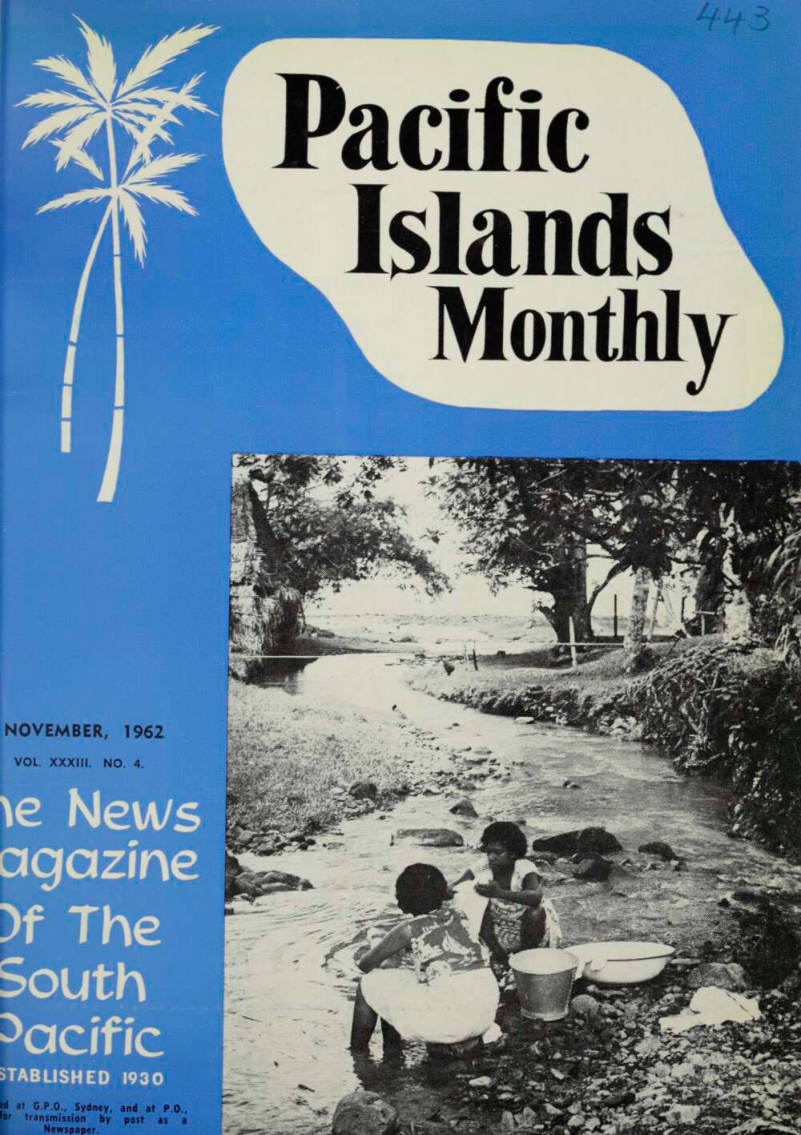 1
1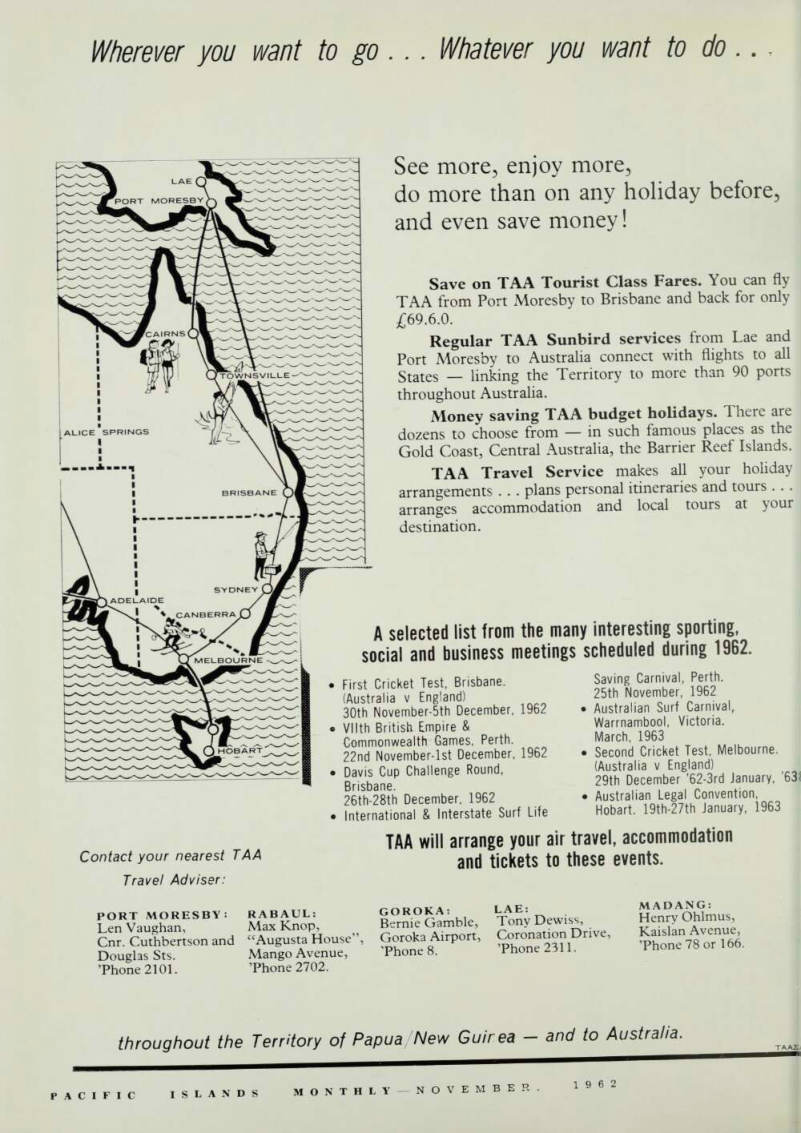 2
2 3
3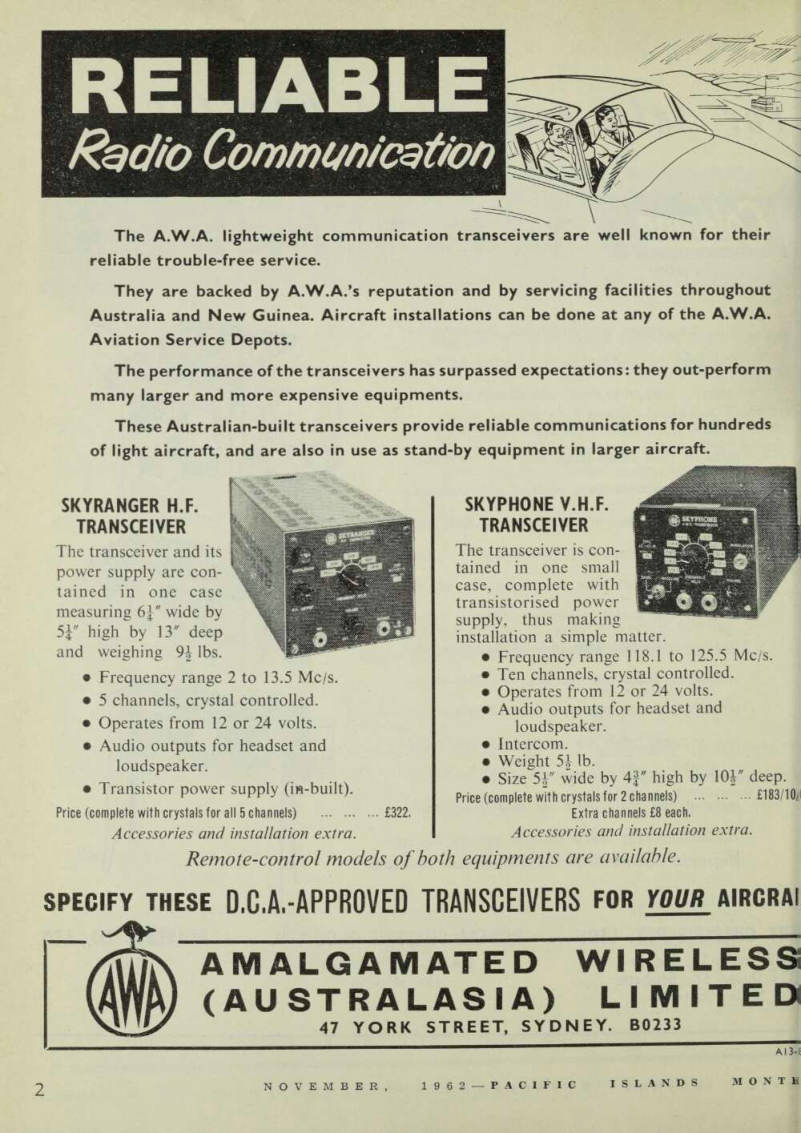 4
4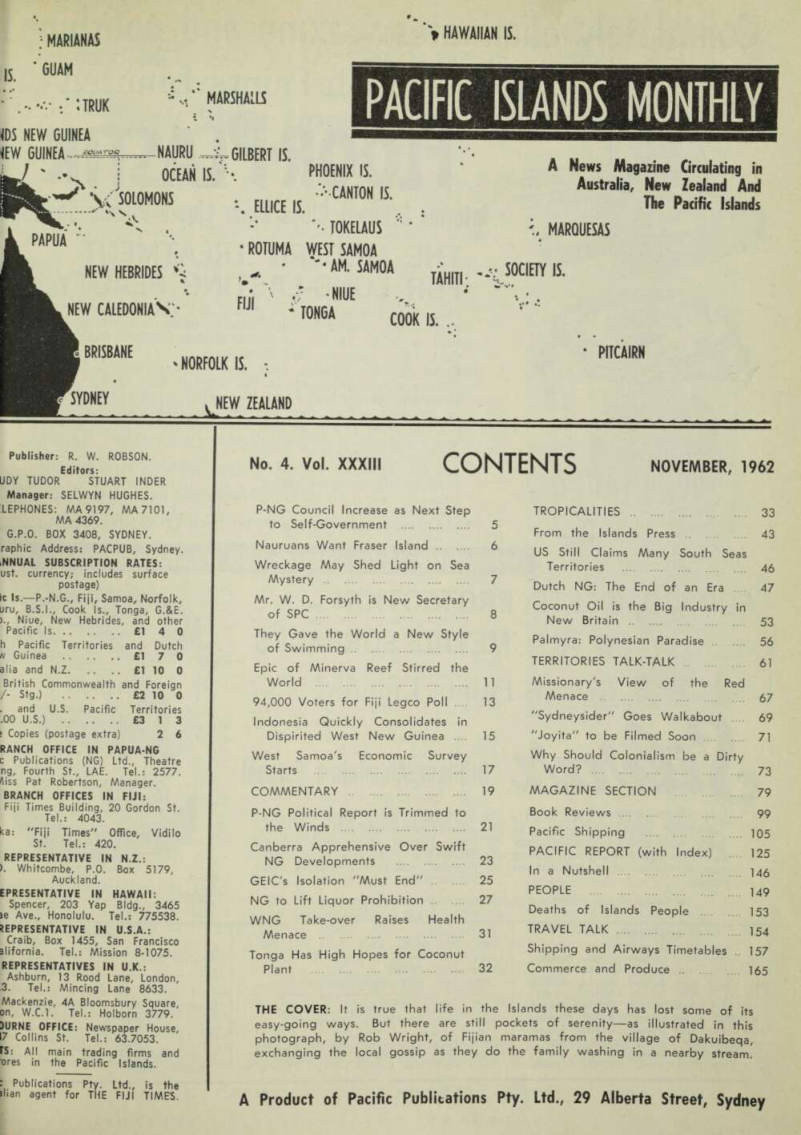 5
5 6
6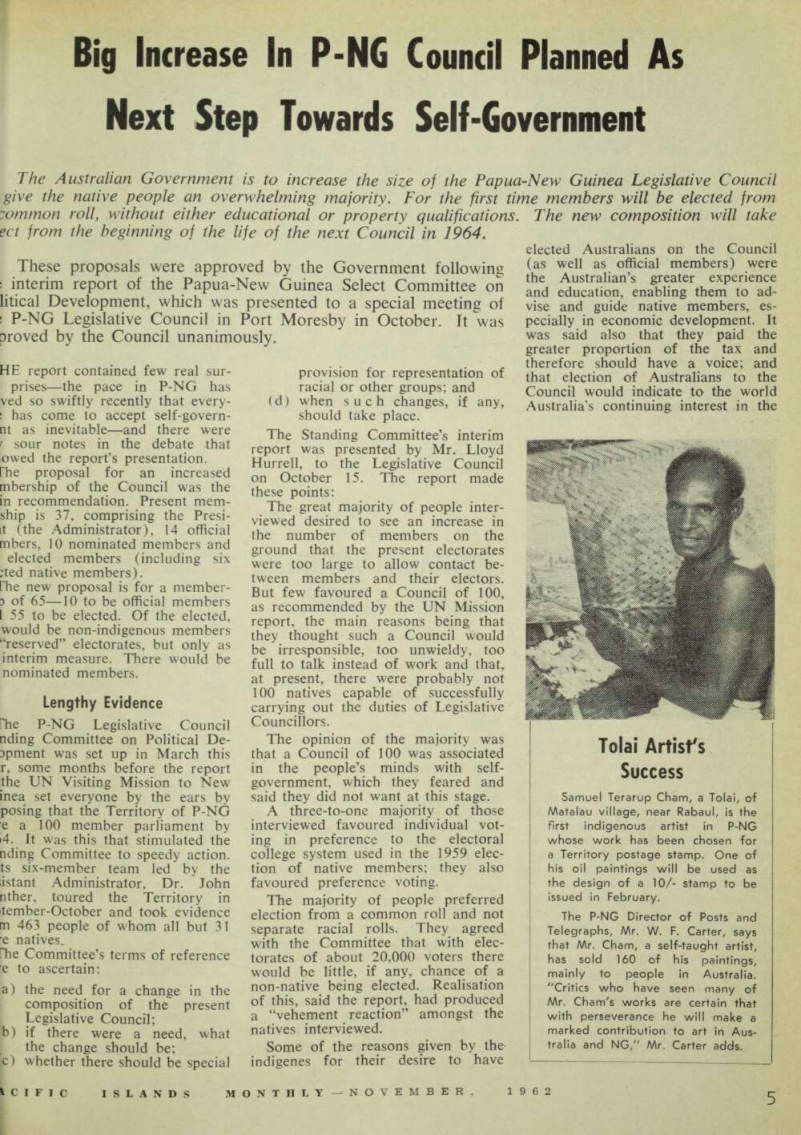 7
7 8
8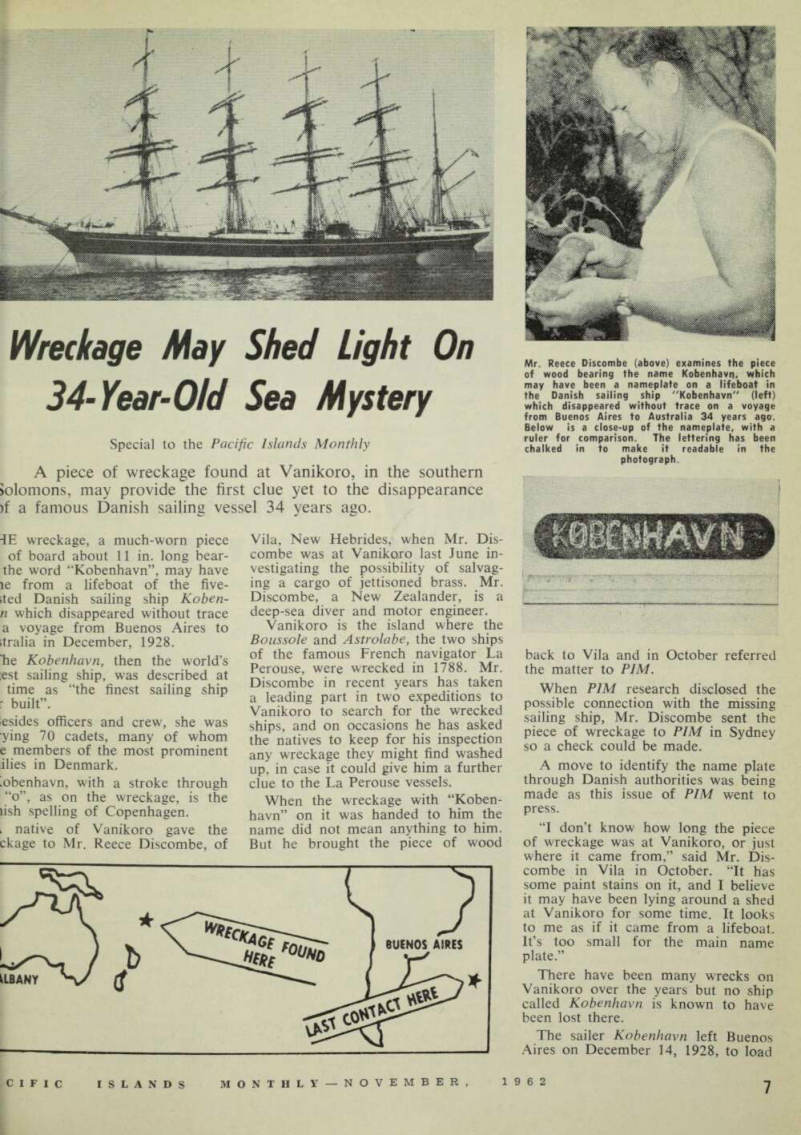 9
9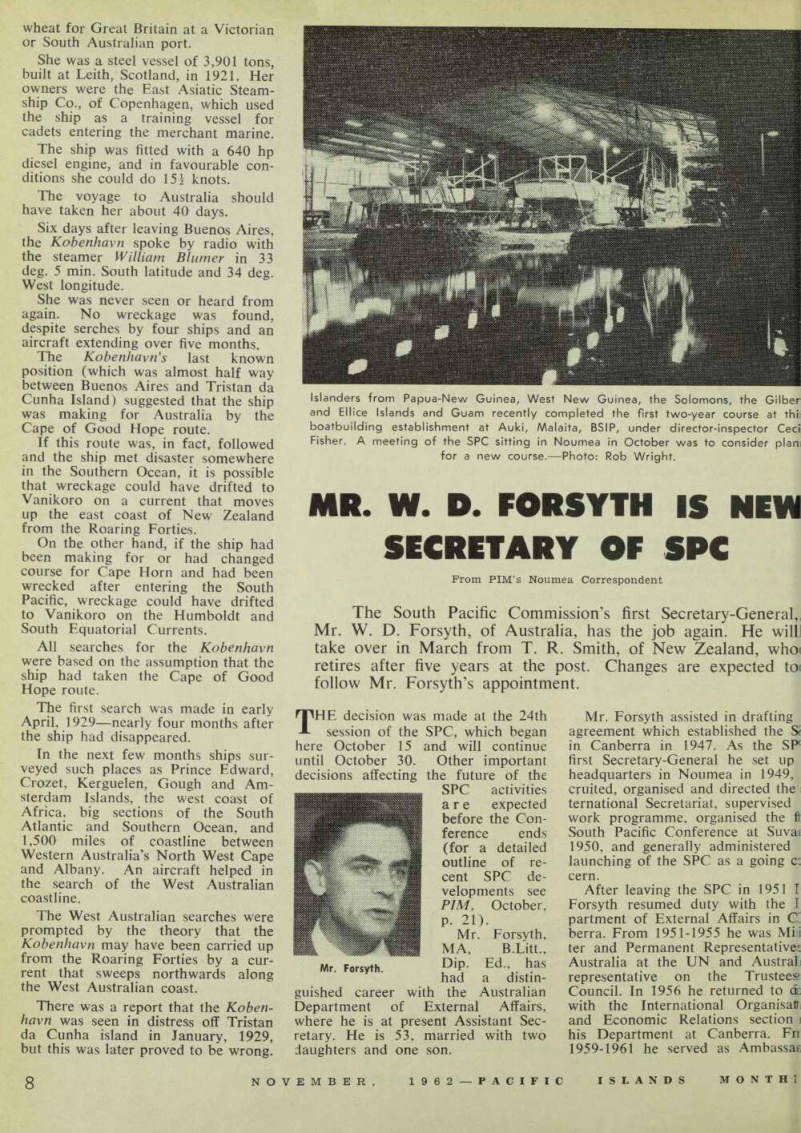 10
10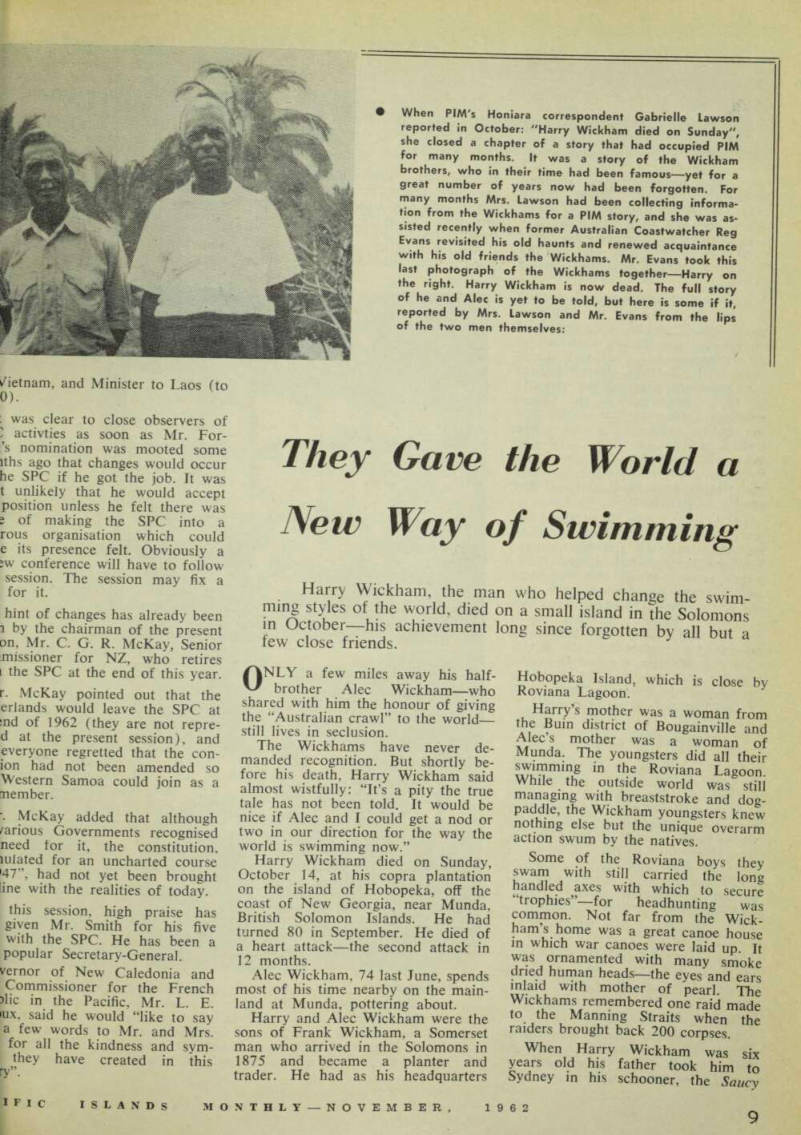 11
11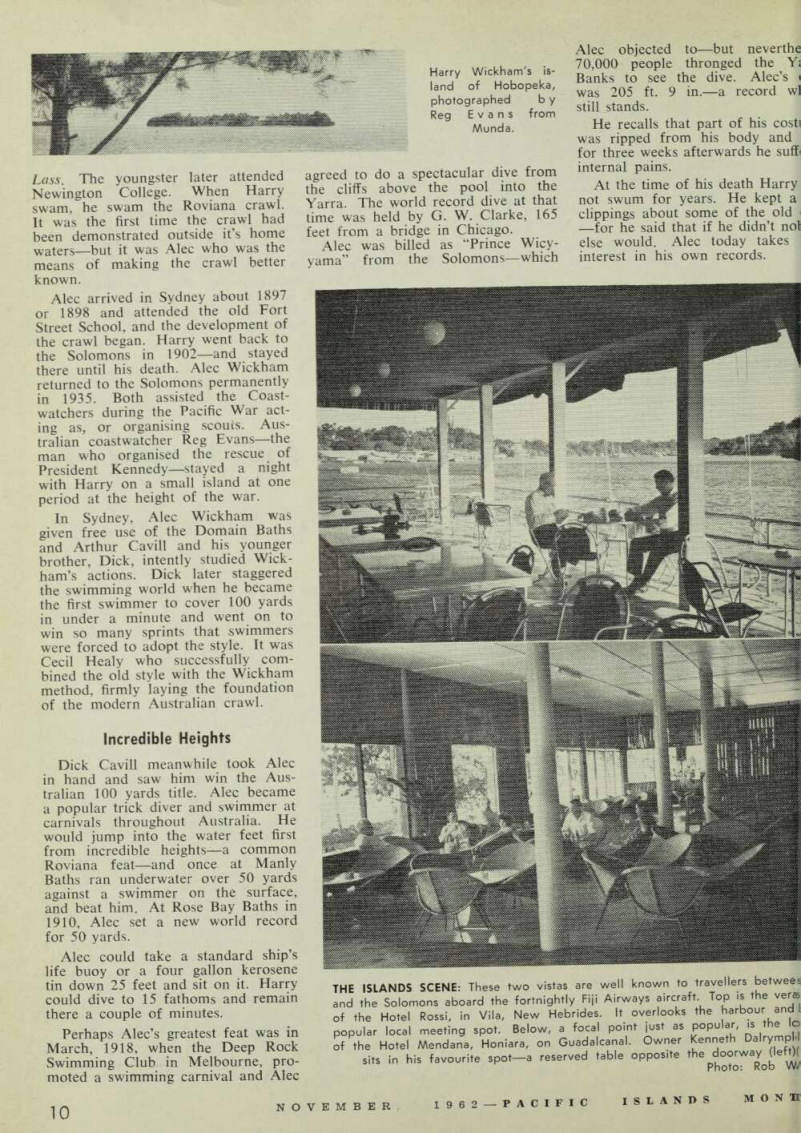 12
12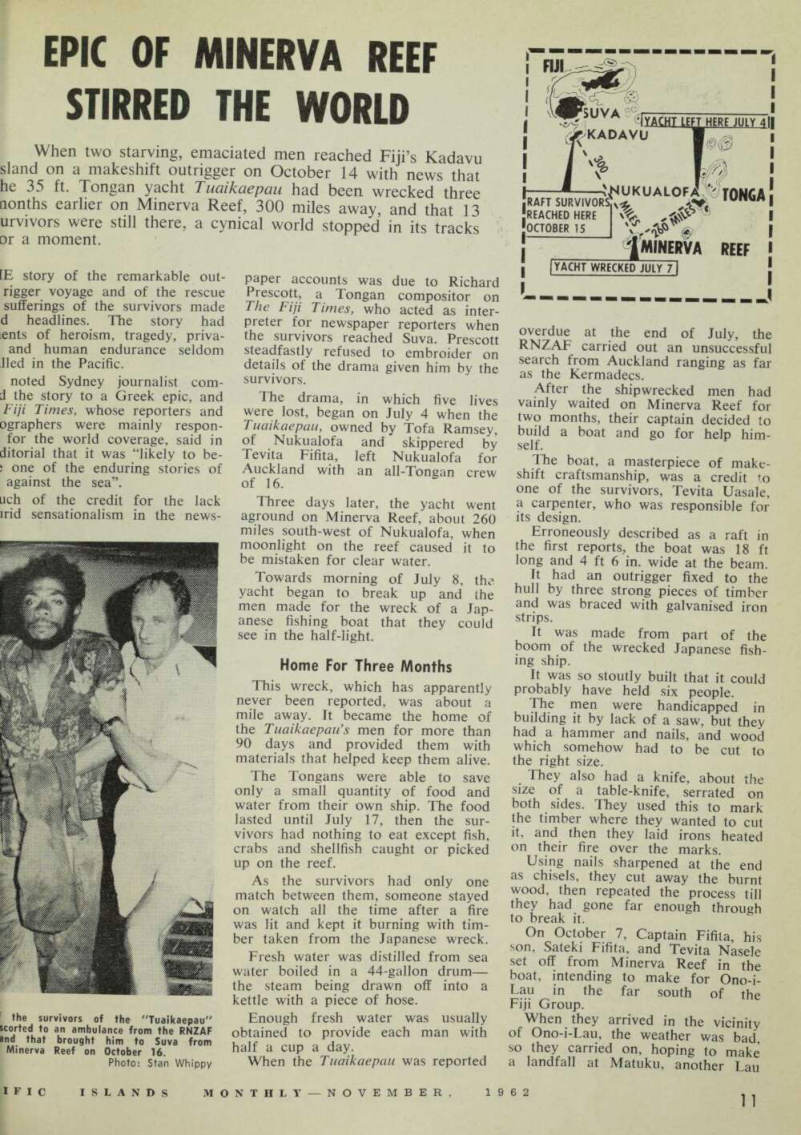 13
13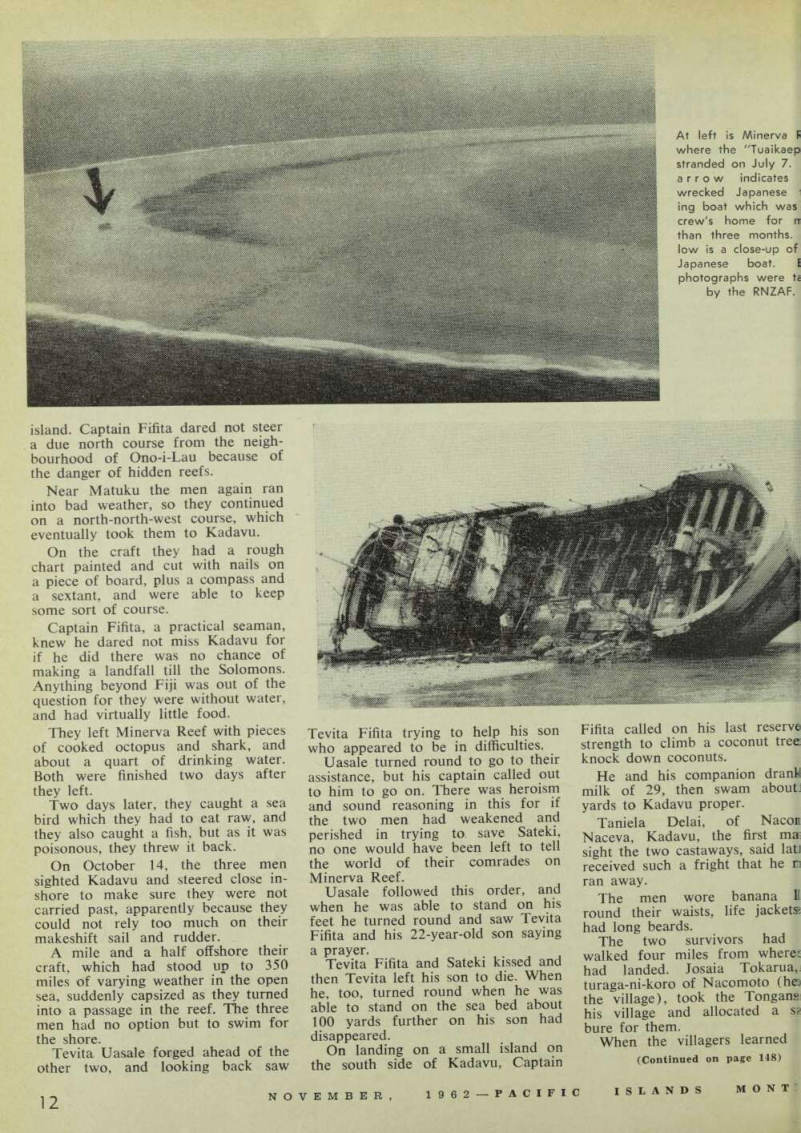 14
14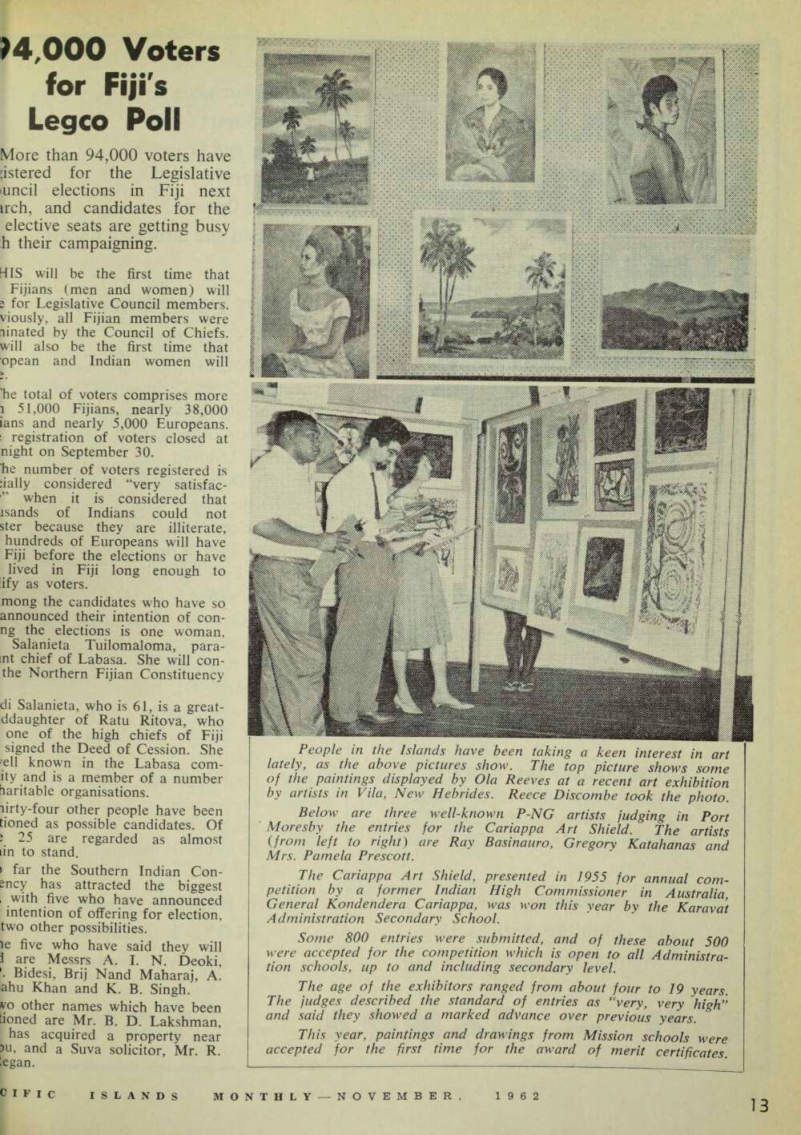 15
15 16
16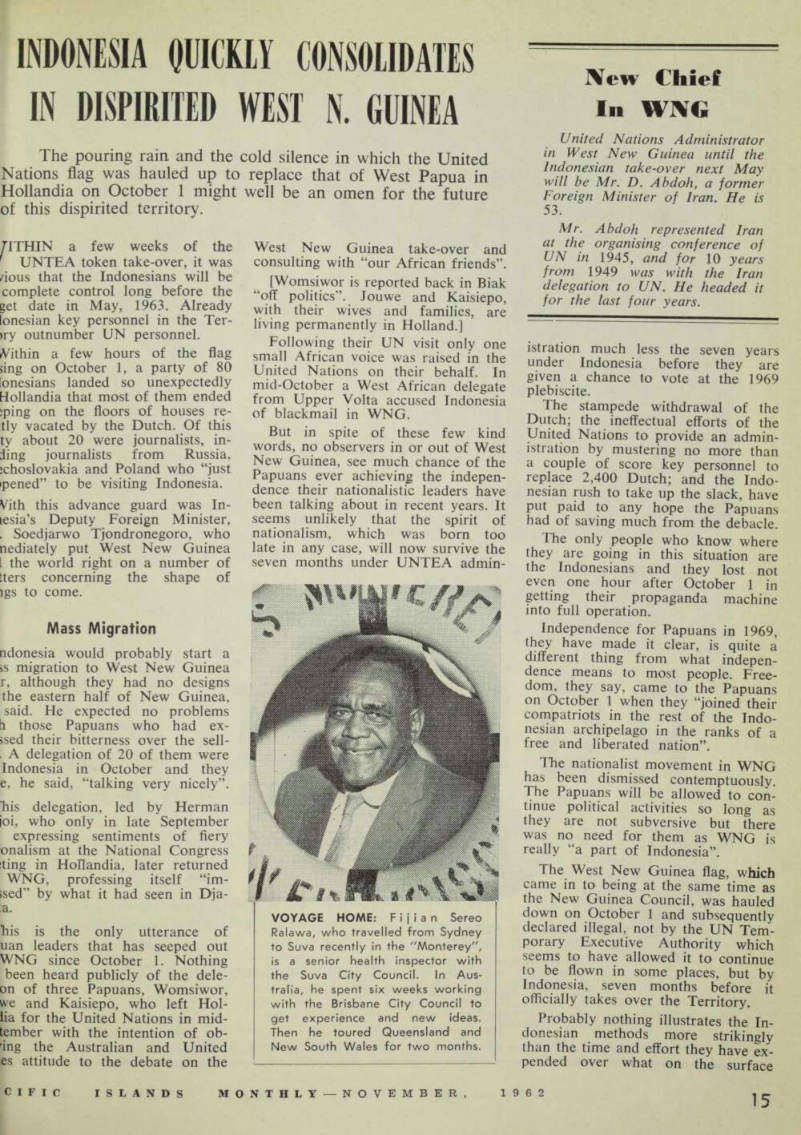 17
17 18
18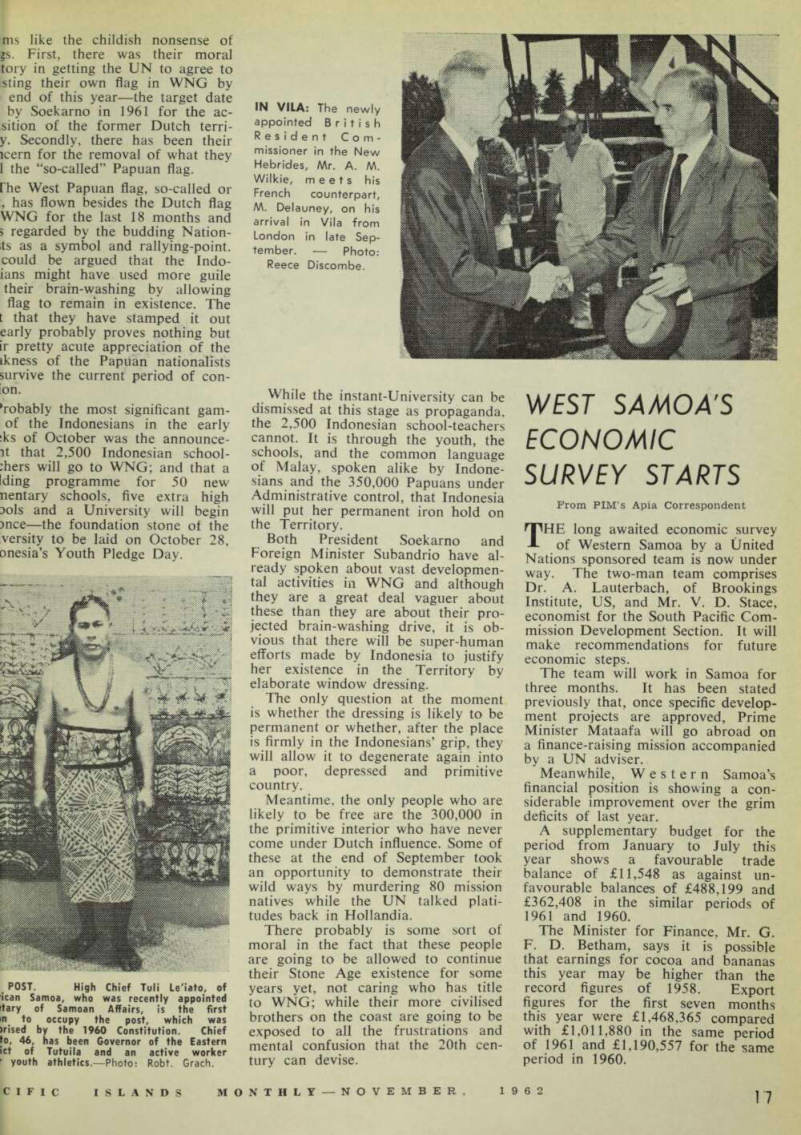 19
19 20
20 21
21 22
22 23
23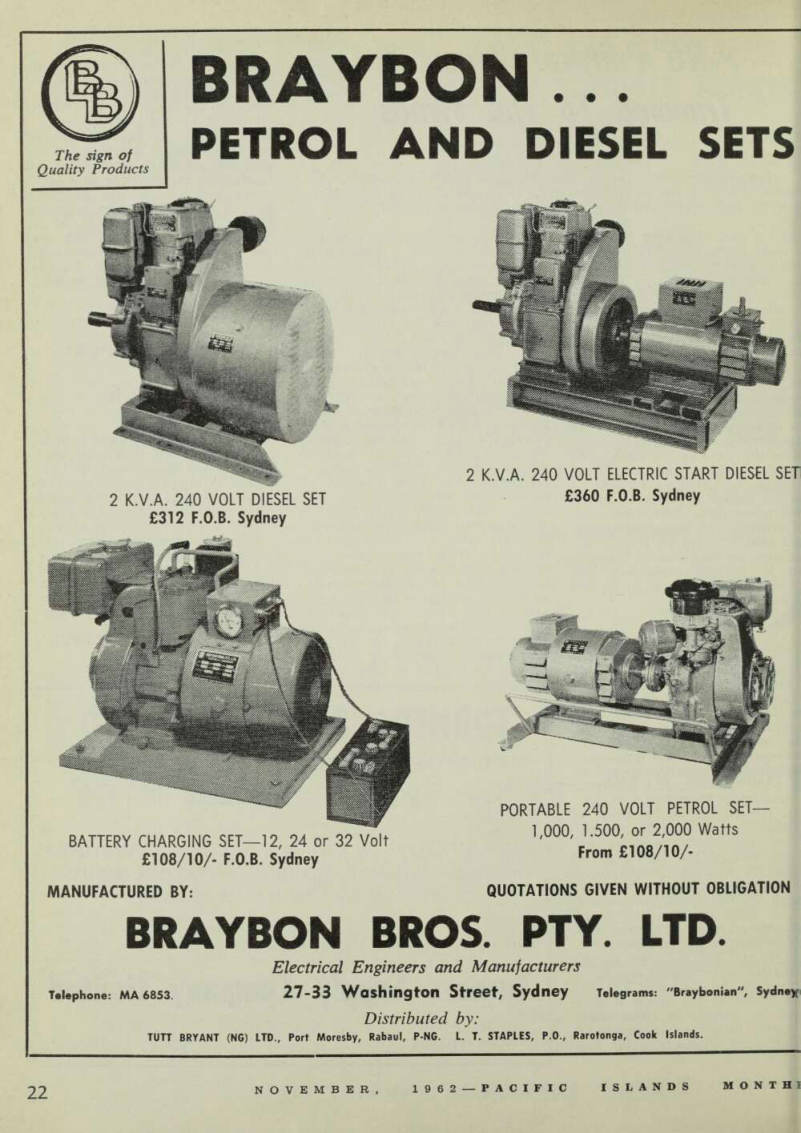 24
24 25
25 26
26 27
27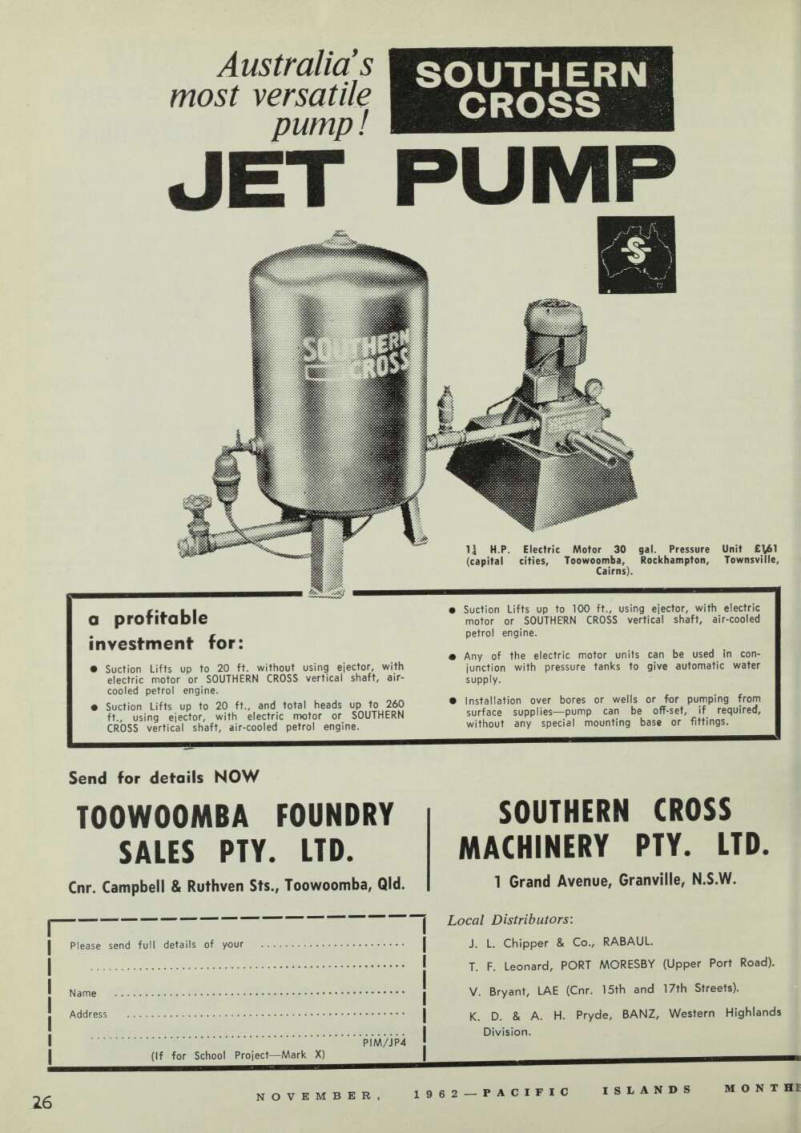 28
28 29
29 30
30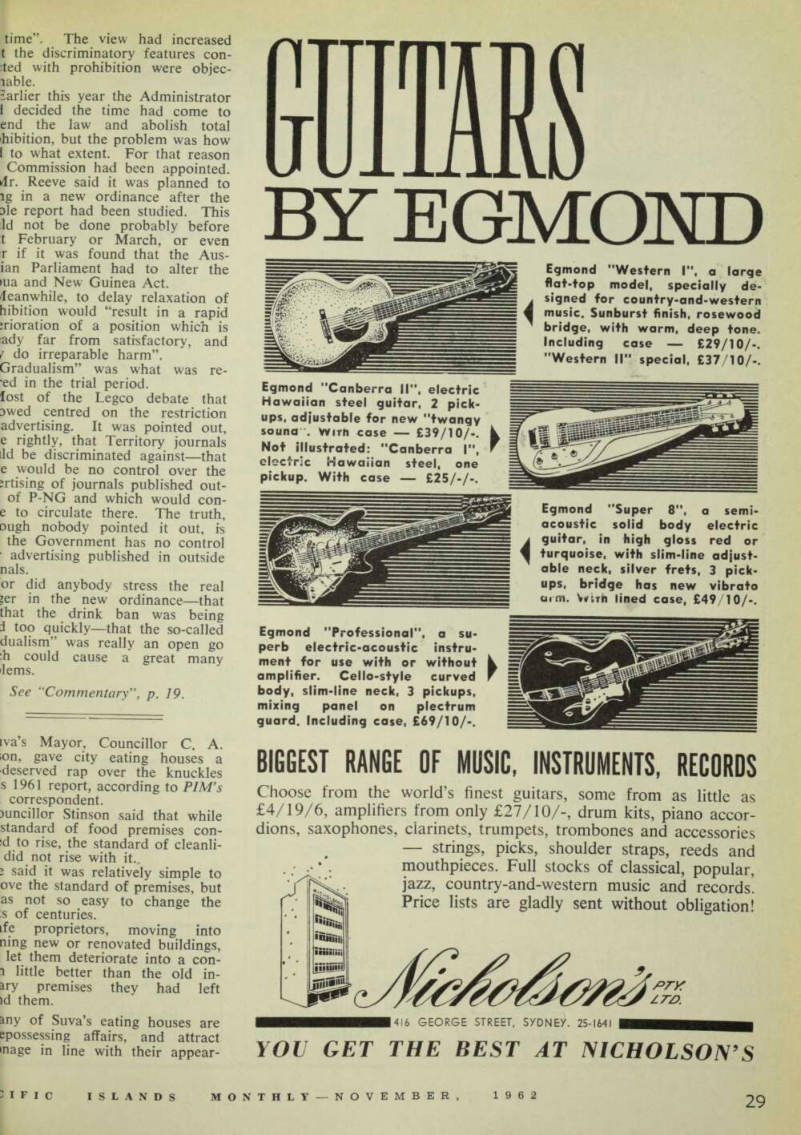 31
31 32
32 33
33 34
34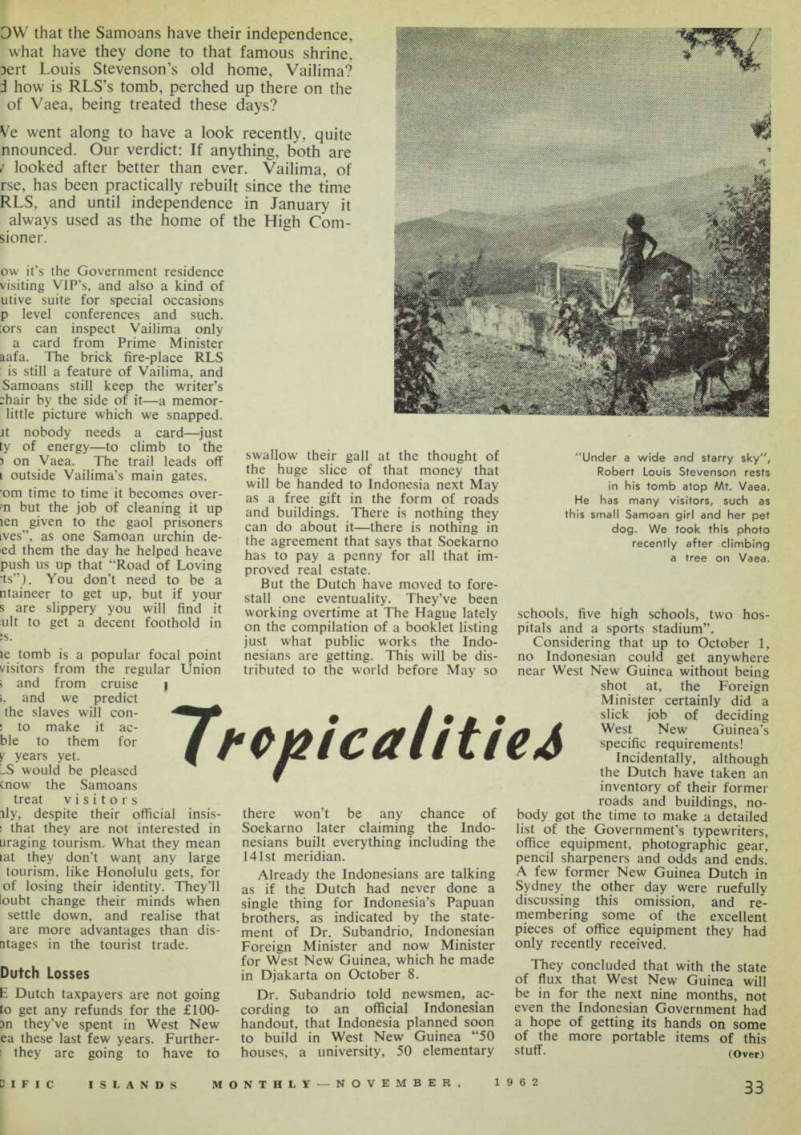 35
35 36
36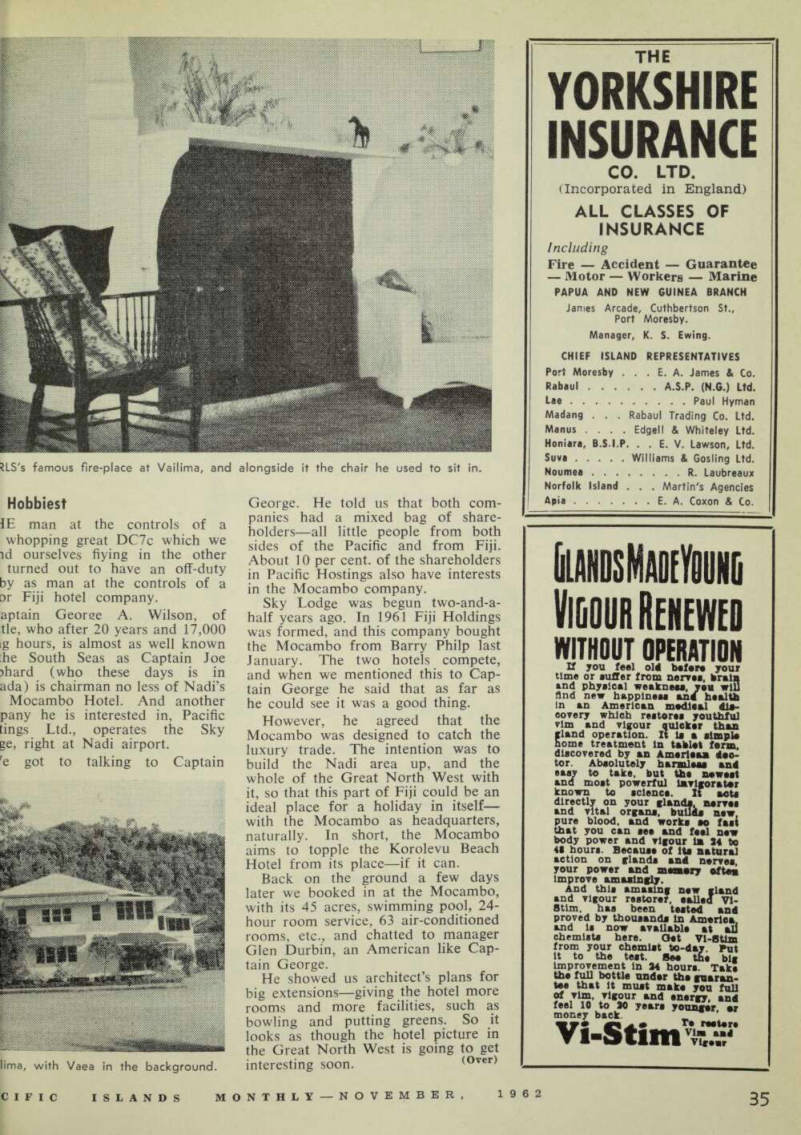 37
37 38
38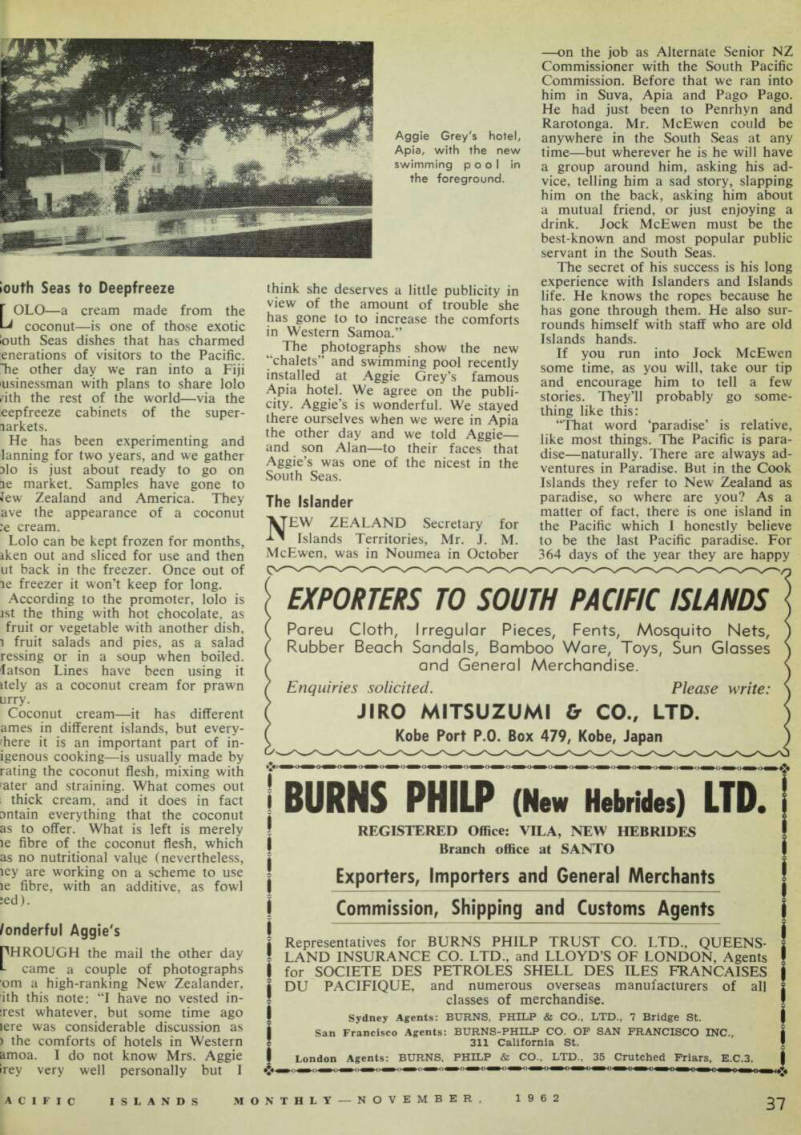 39
39 40
40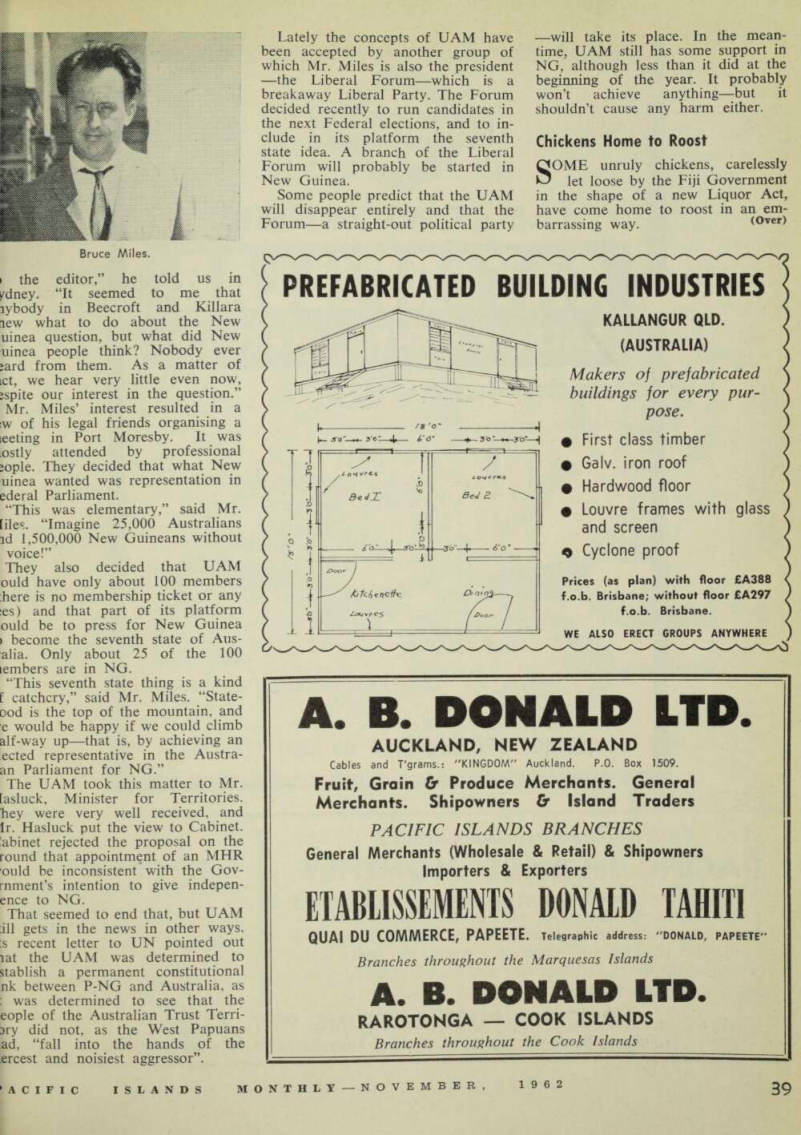 41
41 42
42 43
43 44
44 45
45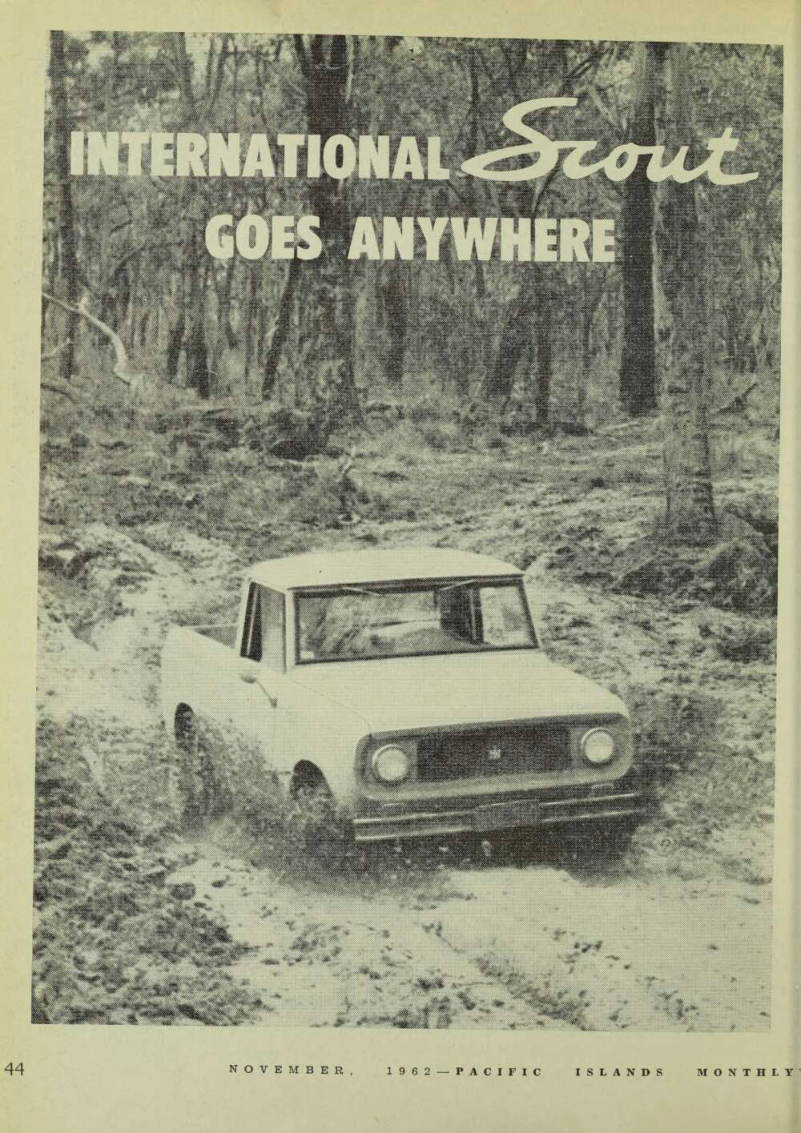 46
46 47
47 48
48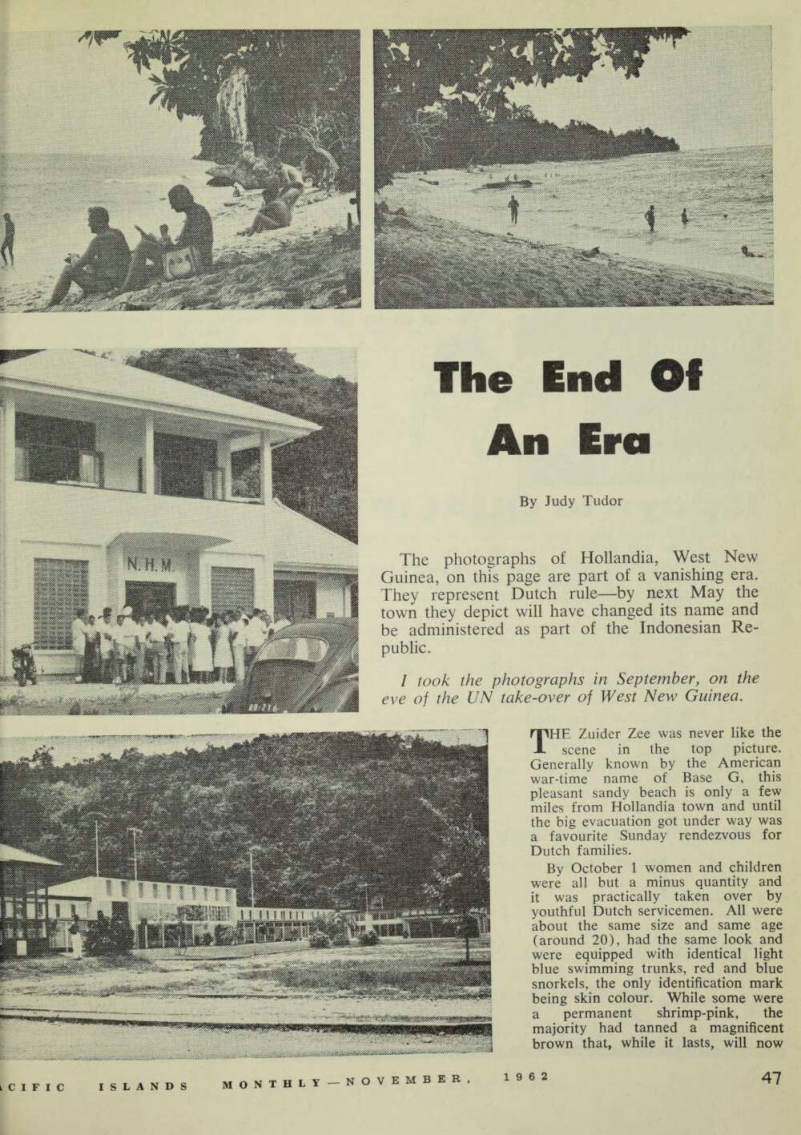 49
49 50
50 51
51 52
52 53
53 54
54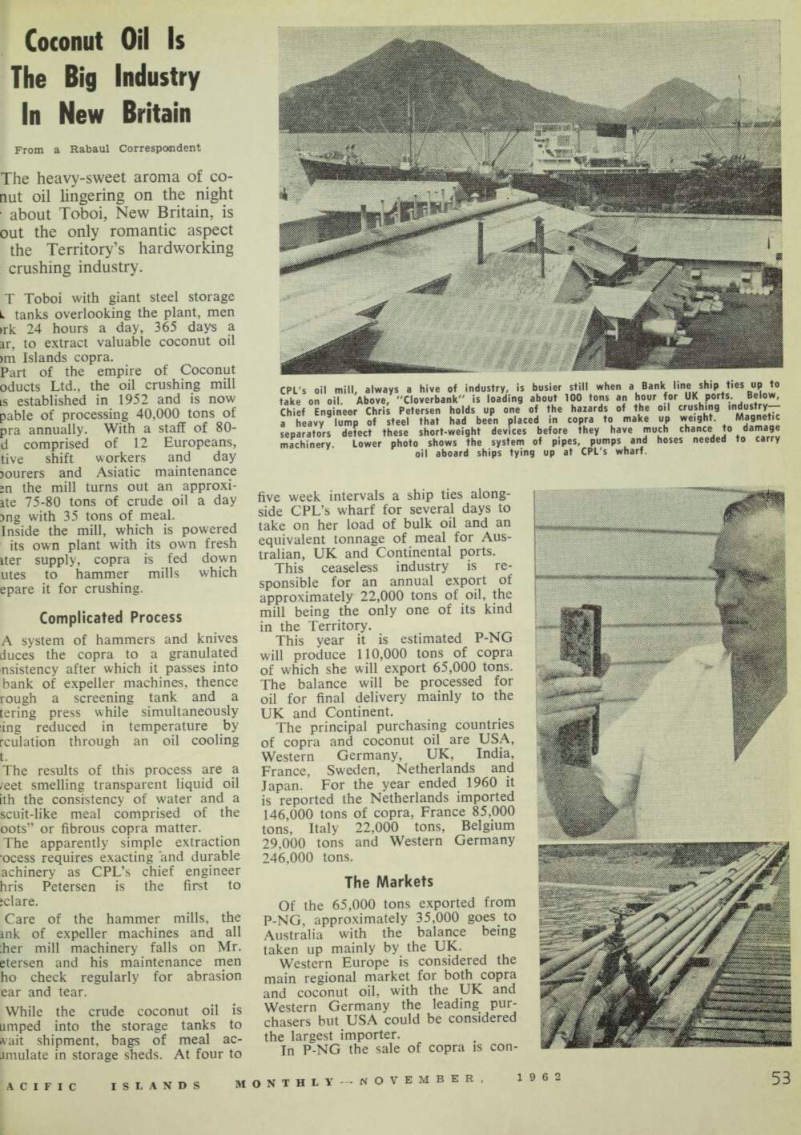 55
55 56
56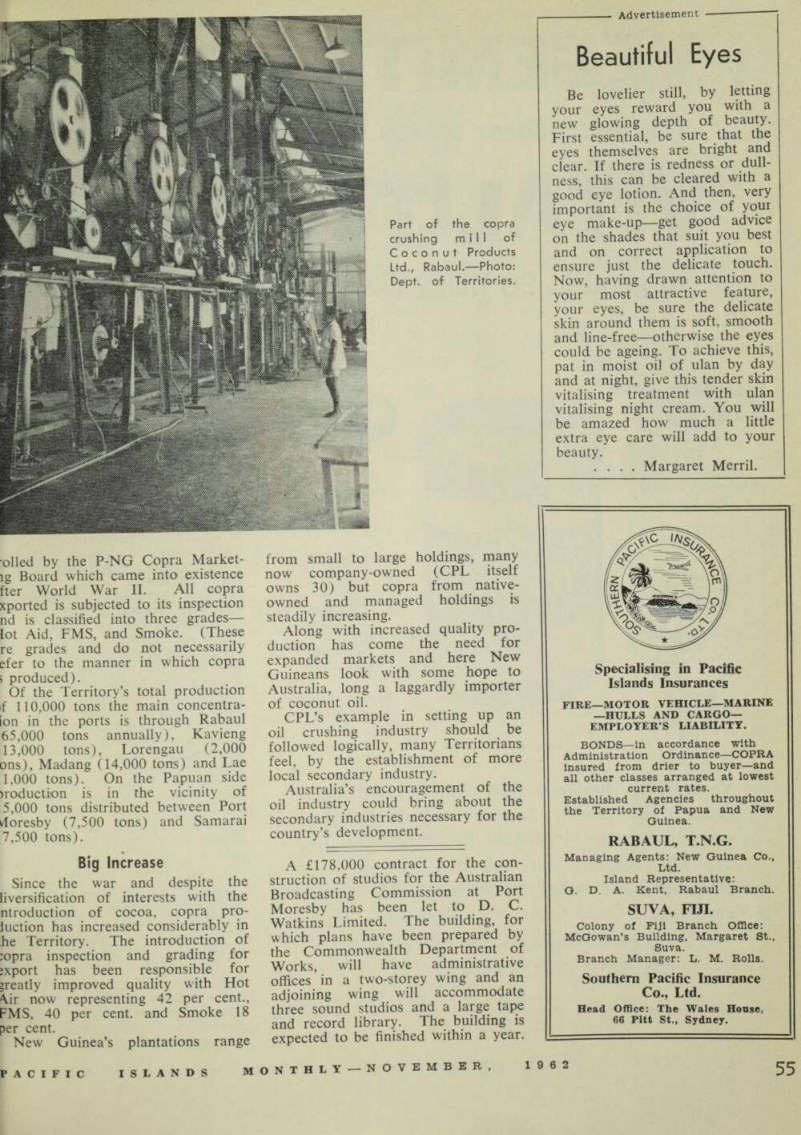 57
57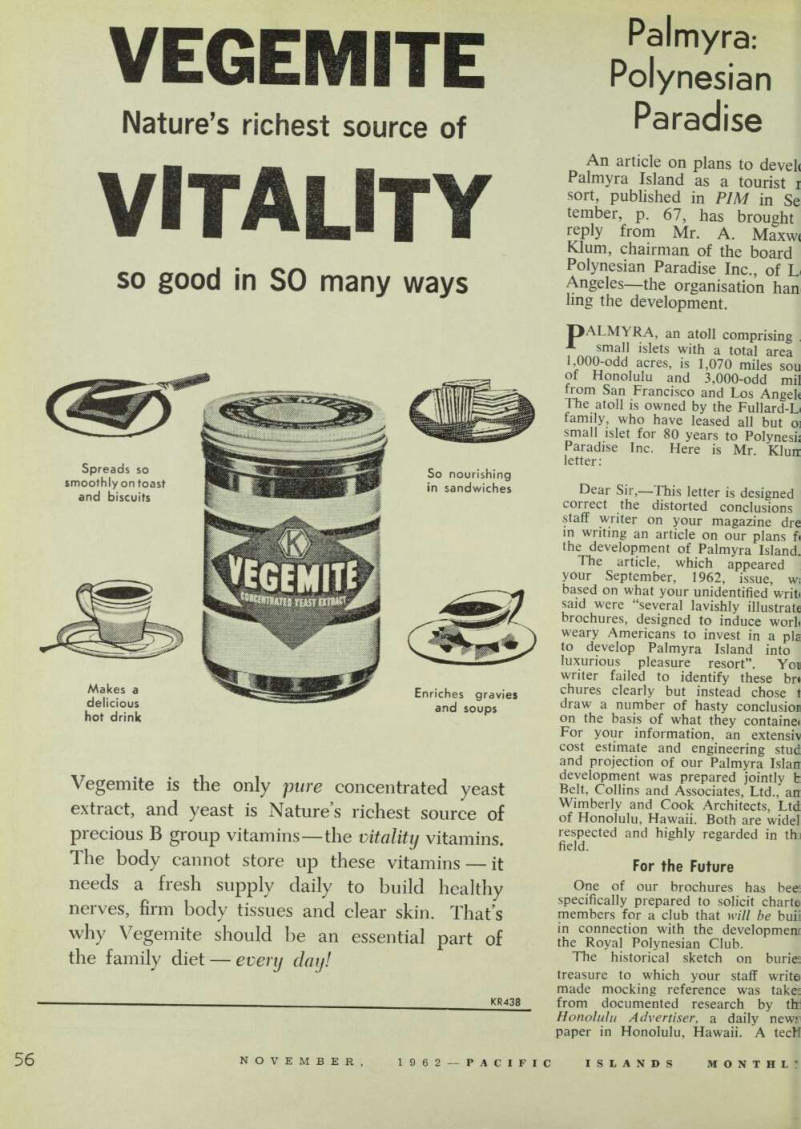 58
58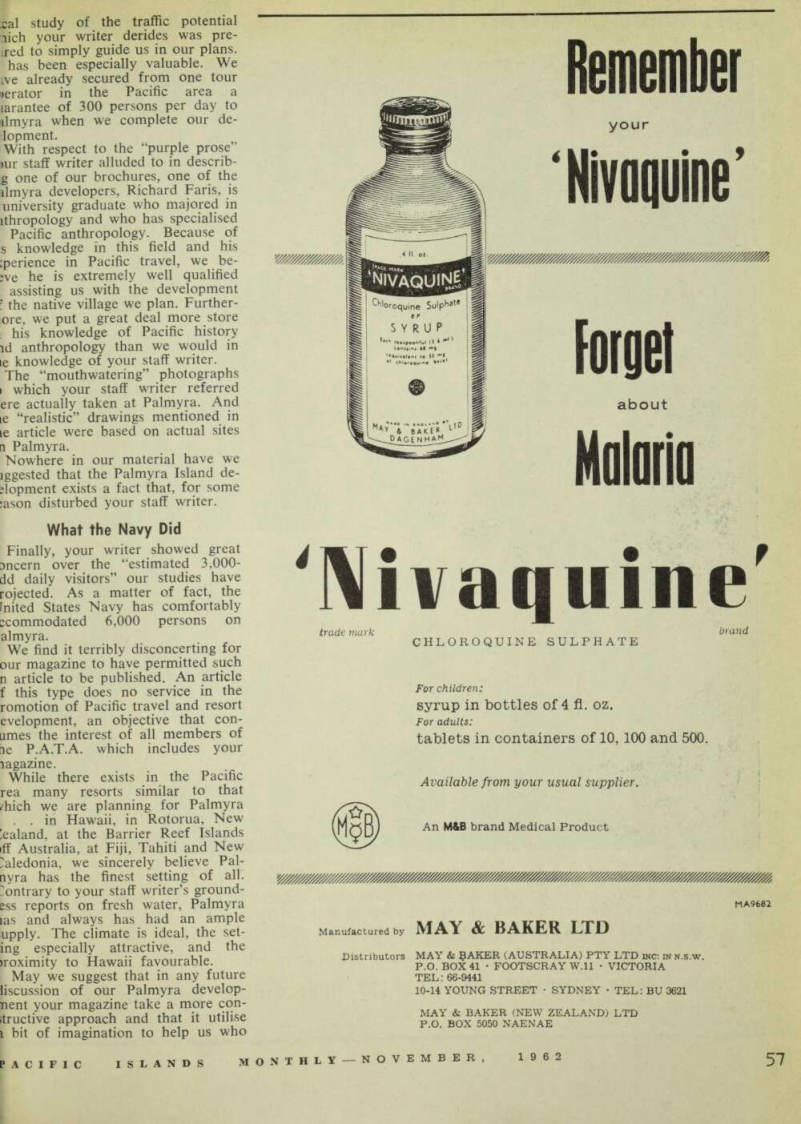 59
59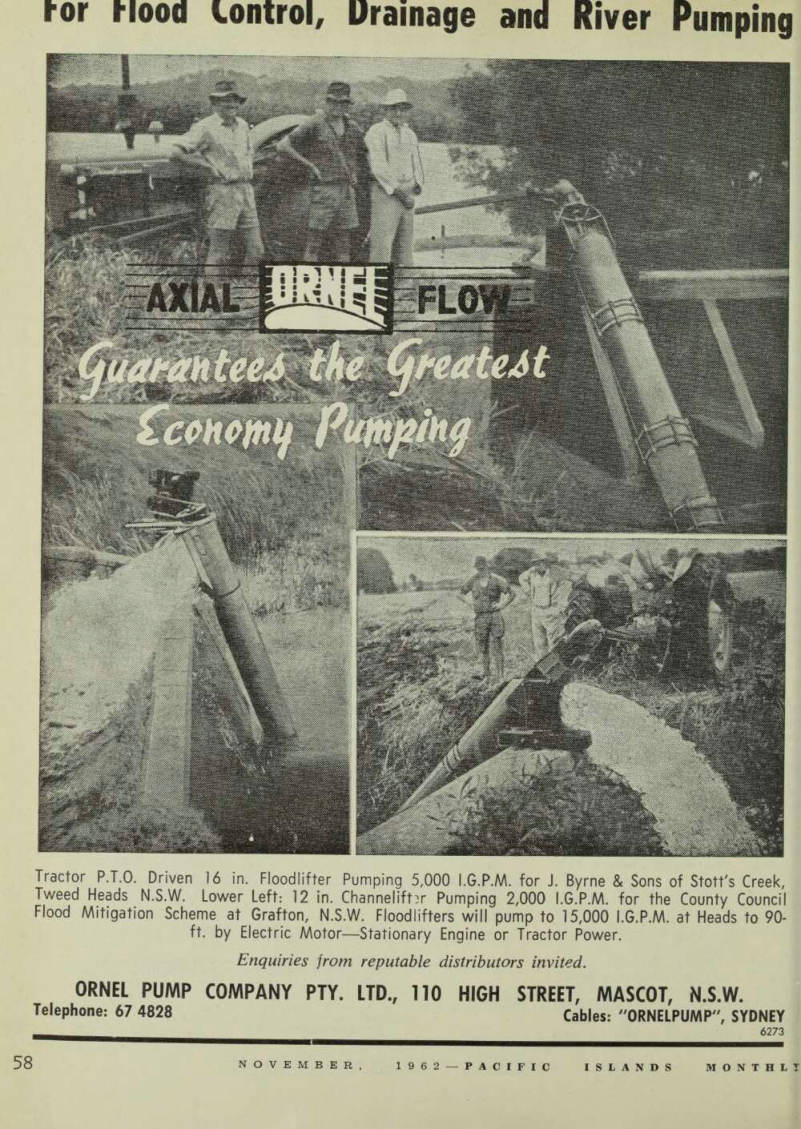 60
60 61
61 62
62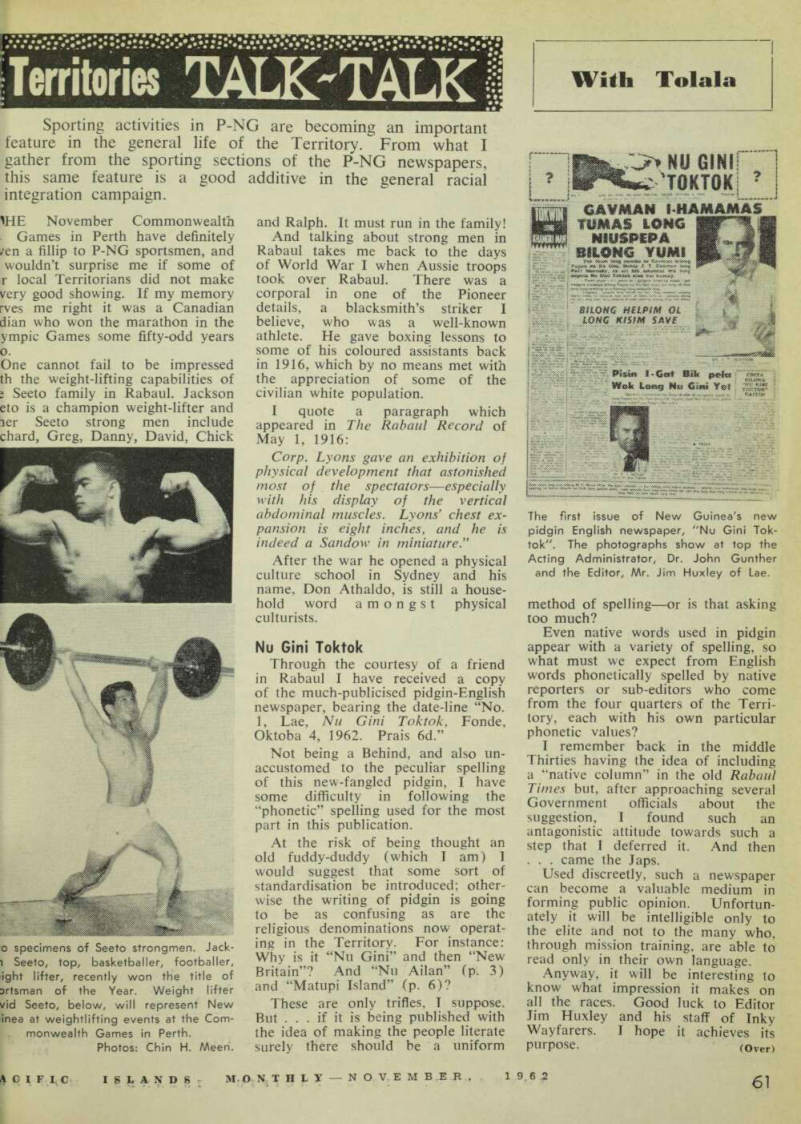 63
63 64
64 65
65 66
66 67
67 68
68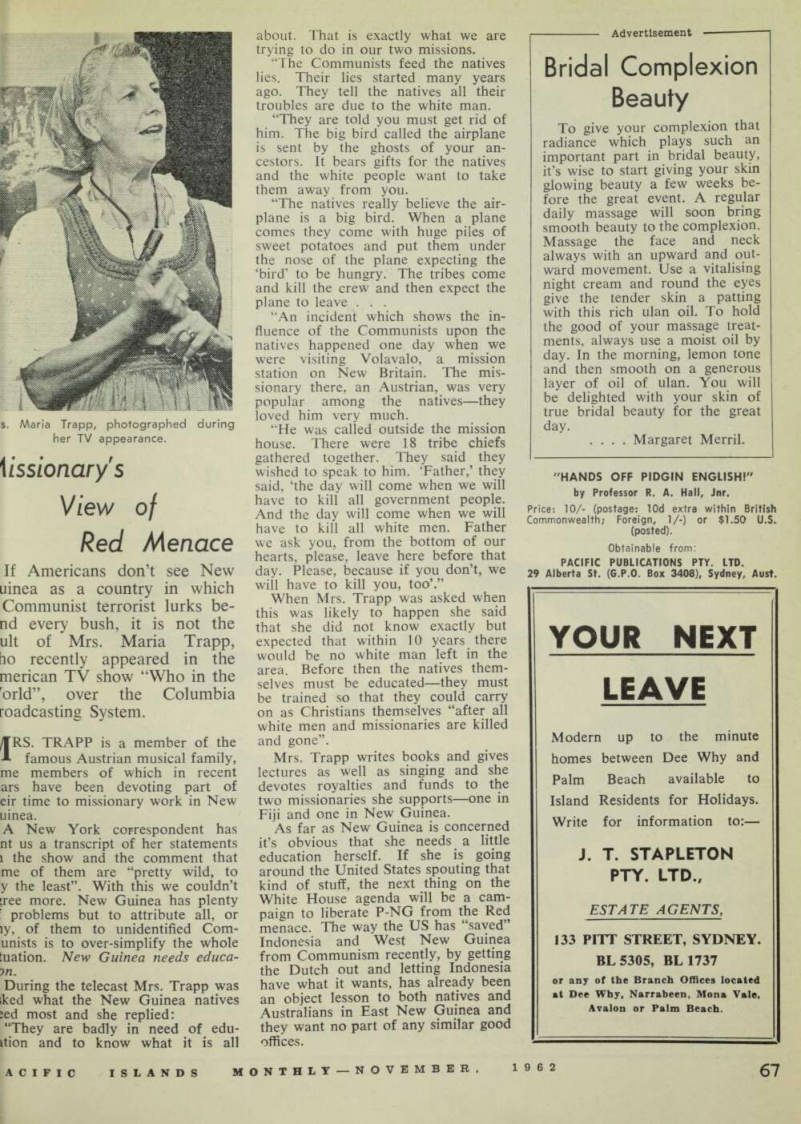 69
69 70
70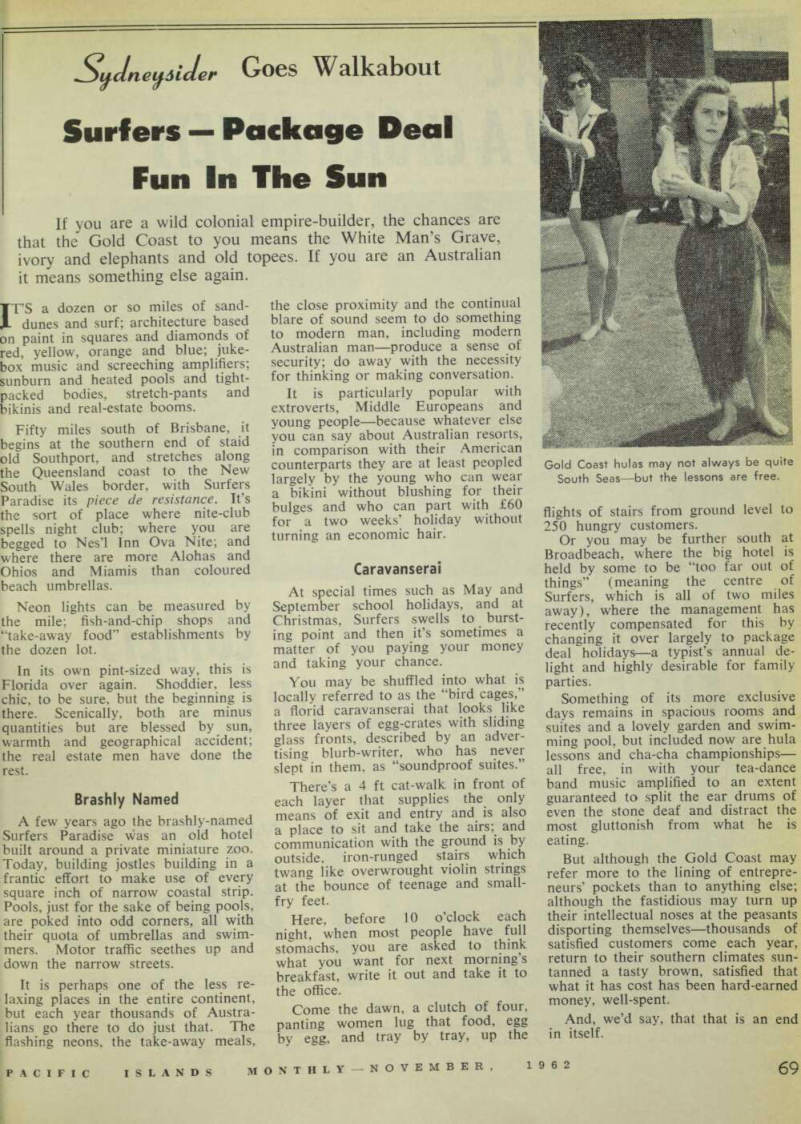 71
71 72
72 73
73 74
74 75
75 76
76 77
77 78
78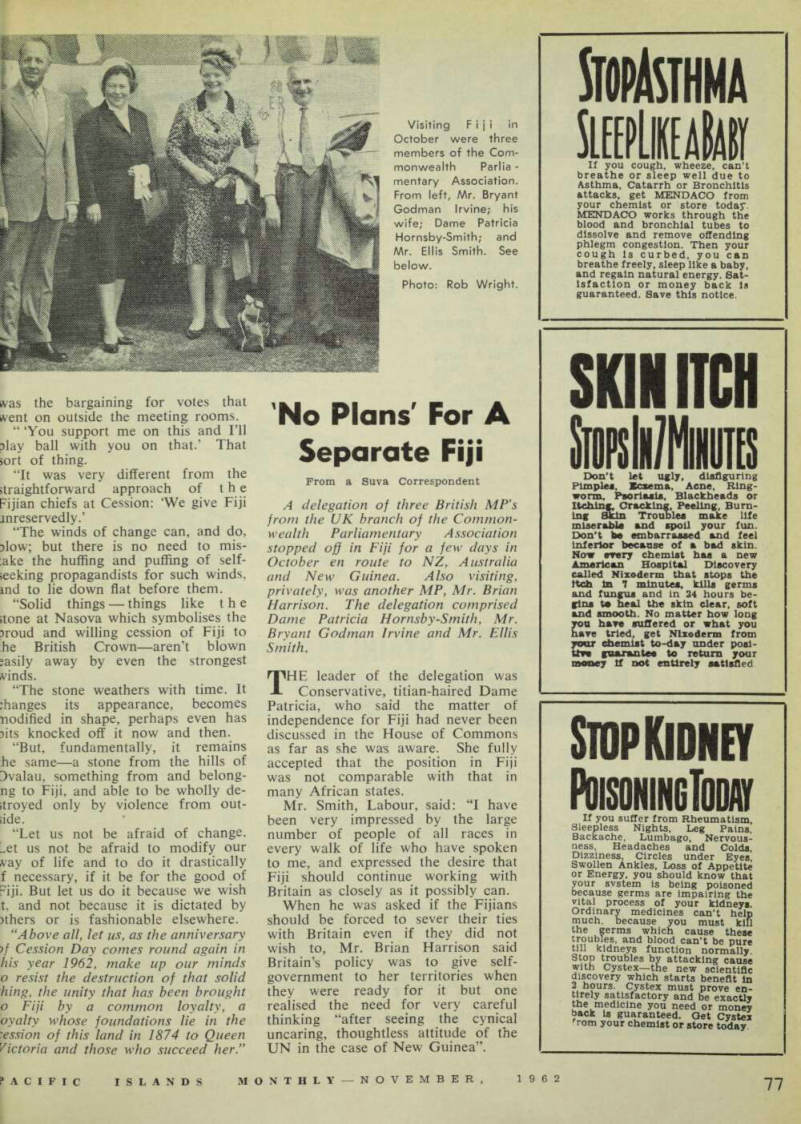 79
79 80
80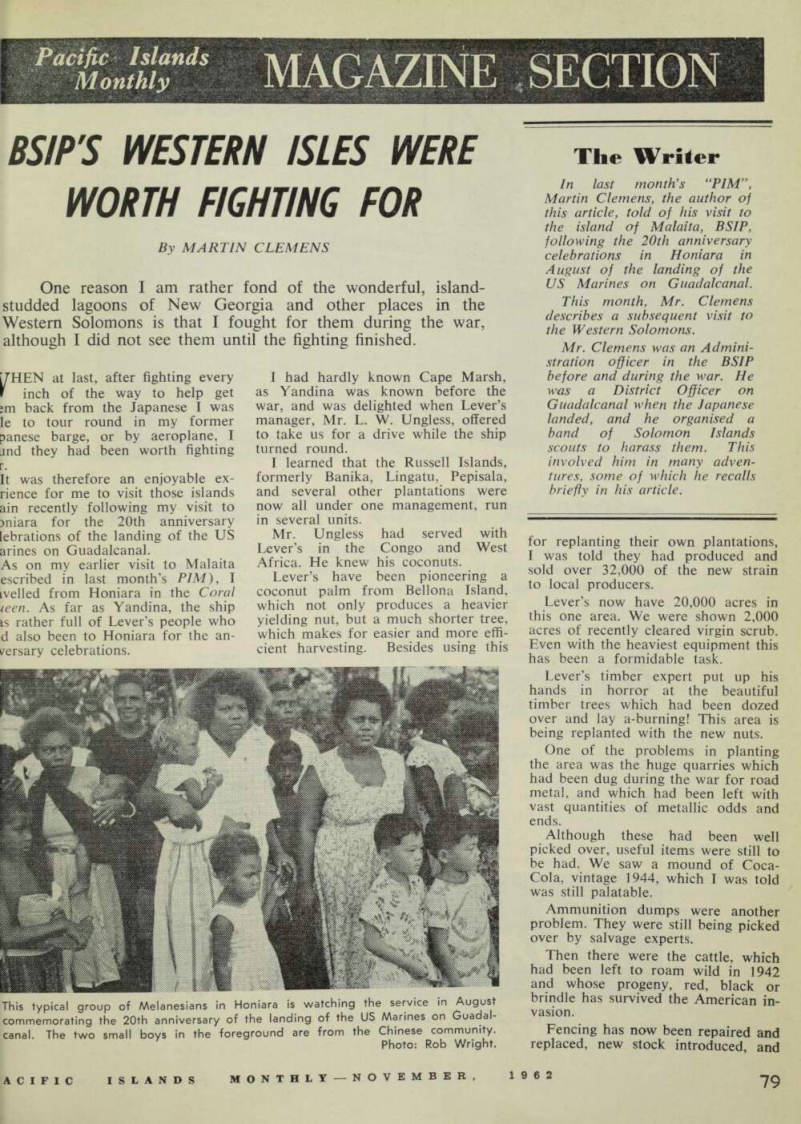 81
81 82
82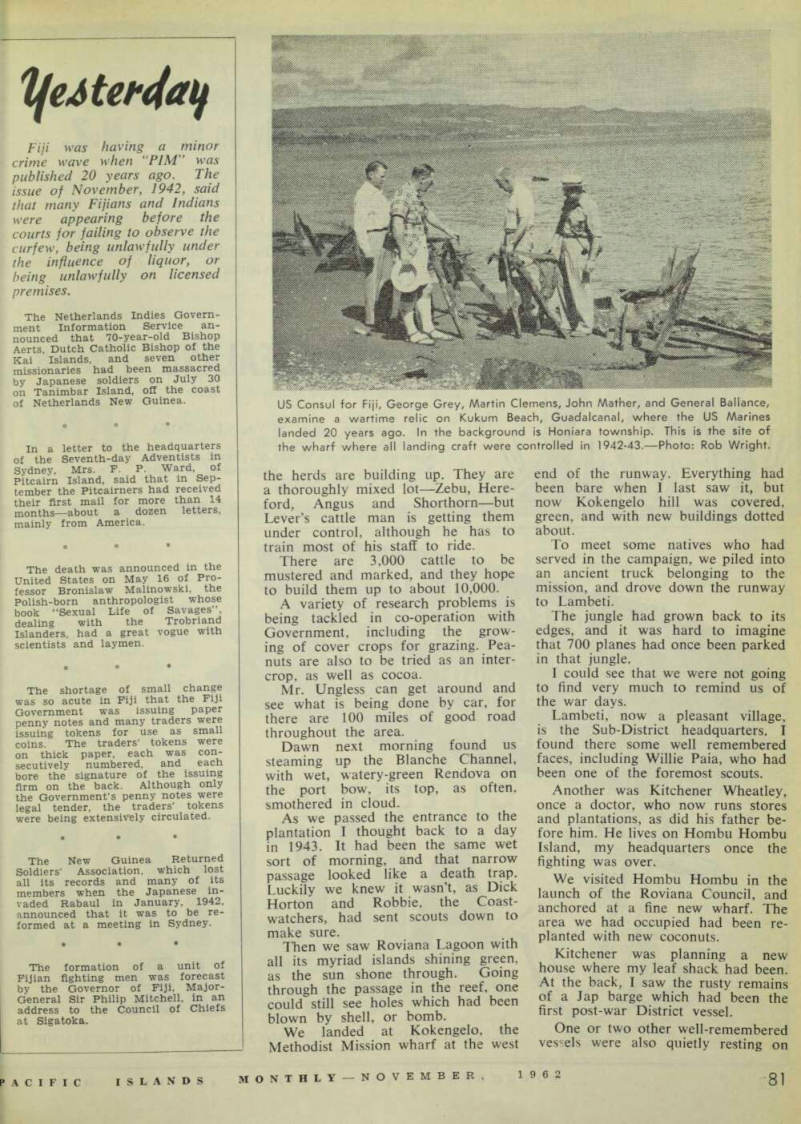 83
83 84
84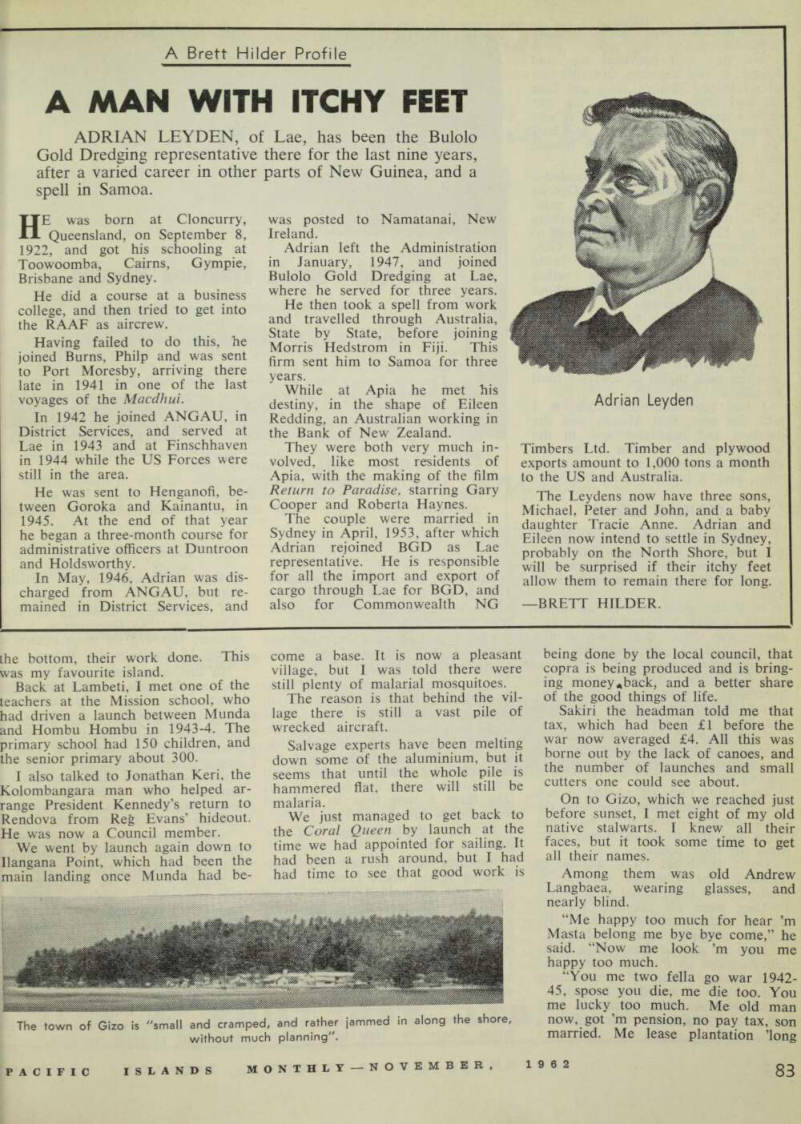 85
85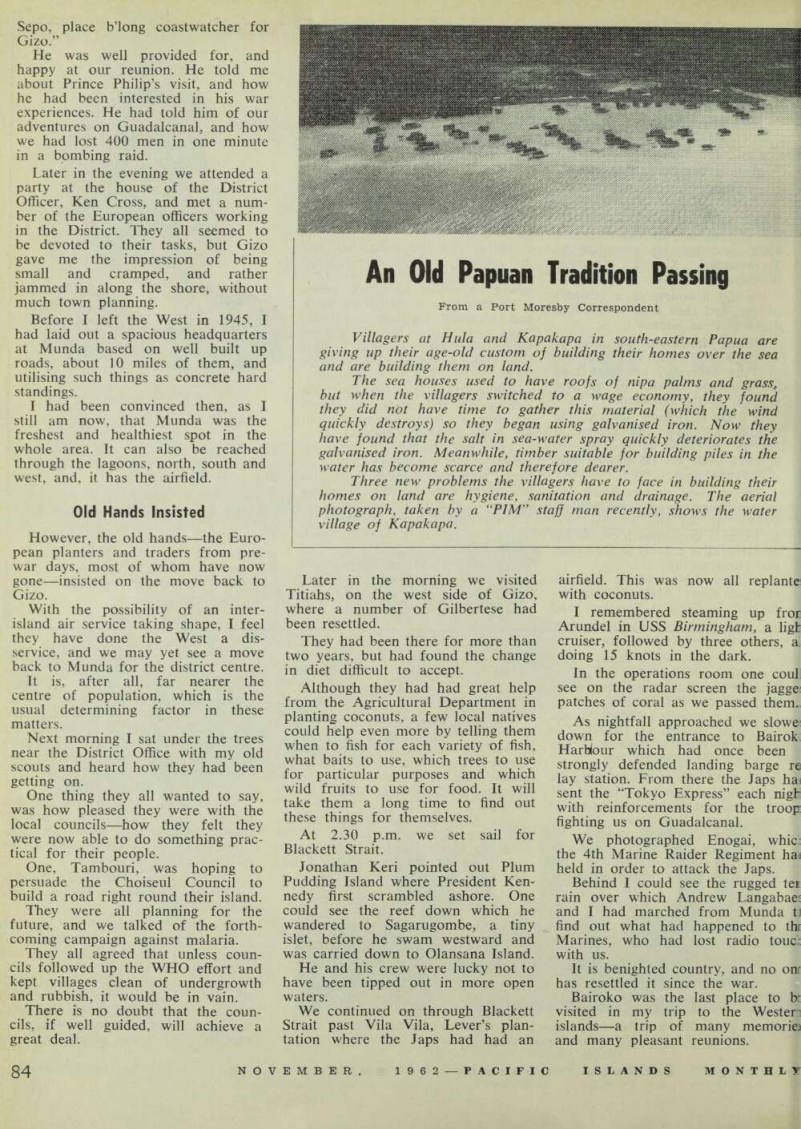 86
86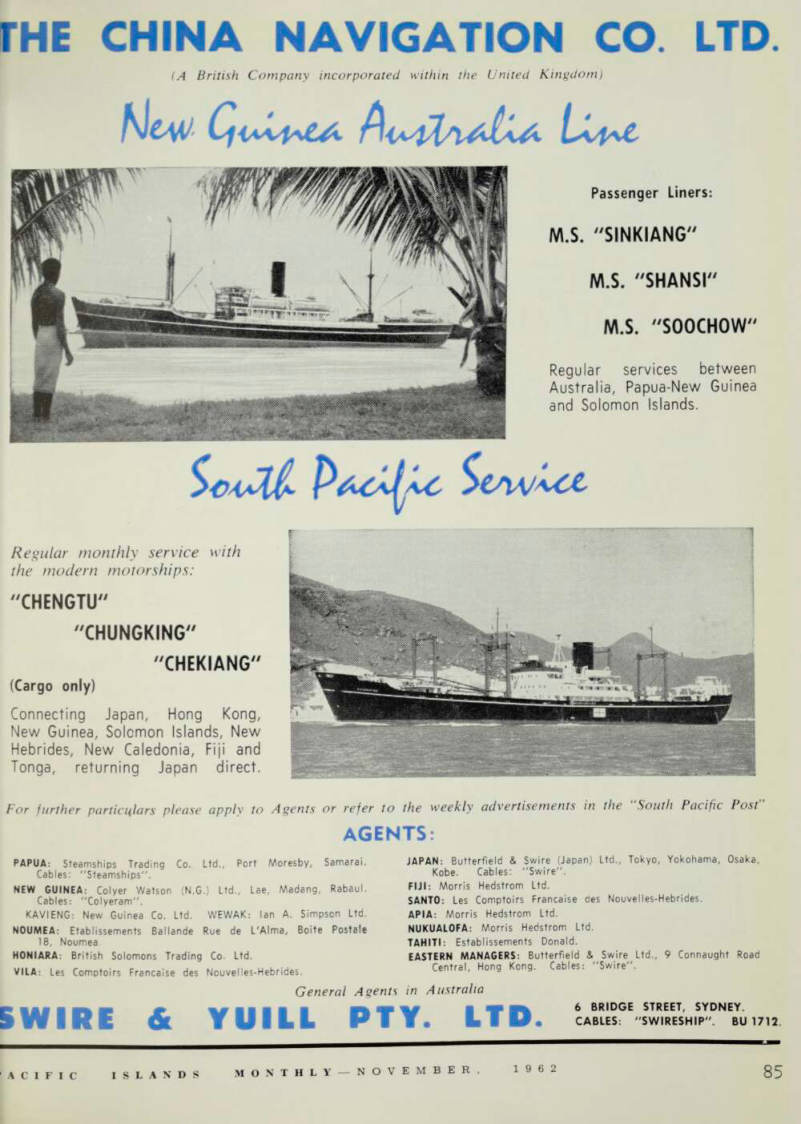 87
87 88
88 89
89 90
90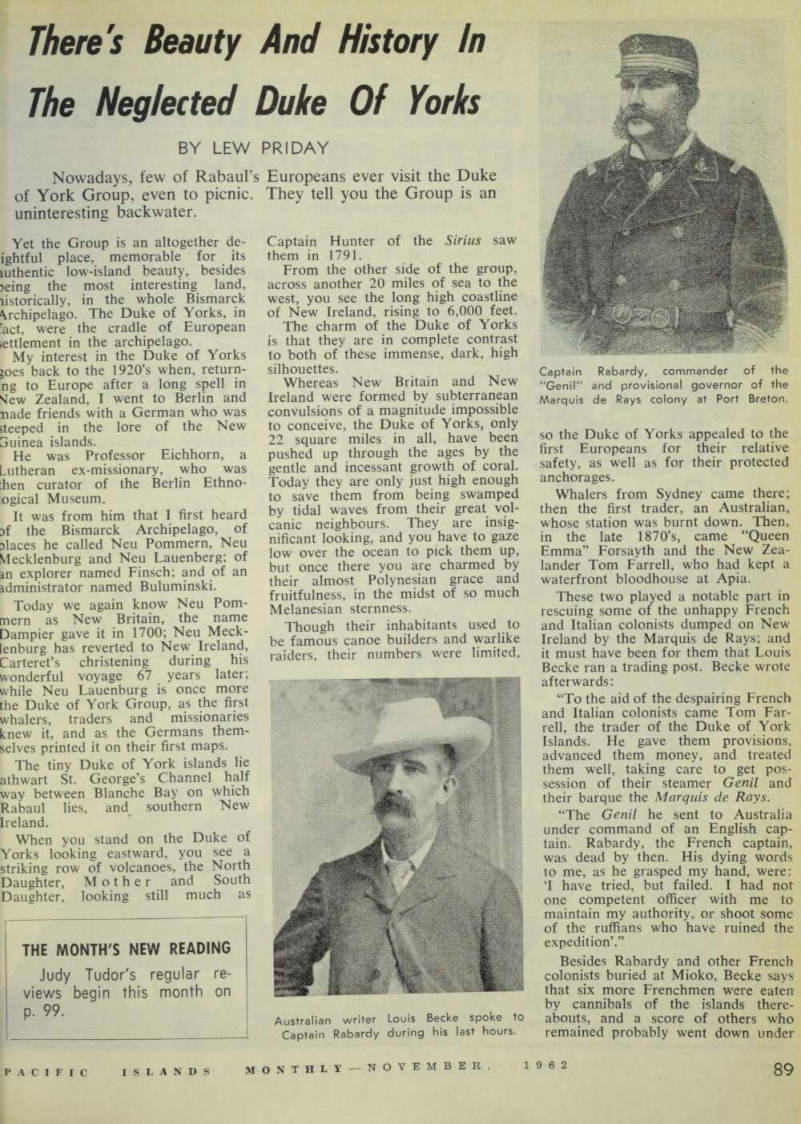 91
91 92
92 93
93 94
94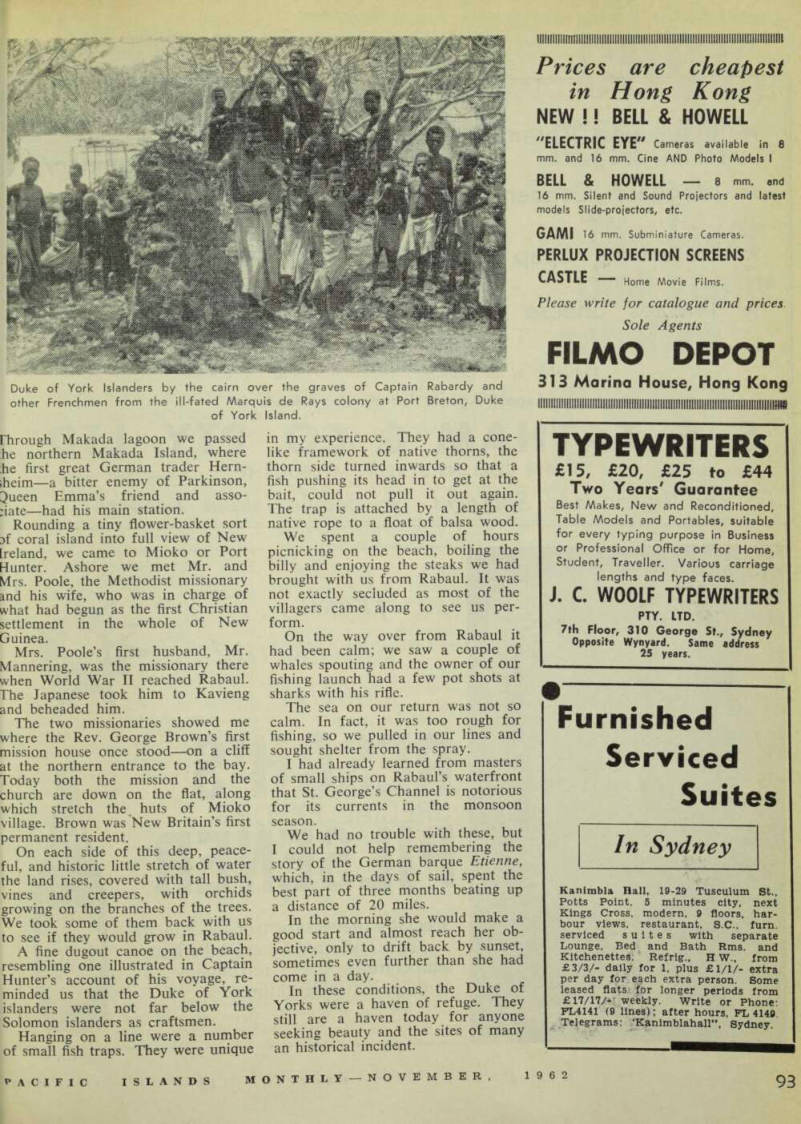 95
95 96
96 97
97 98
98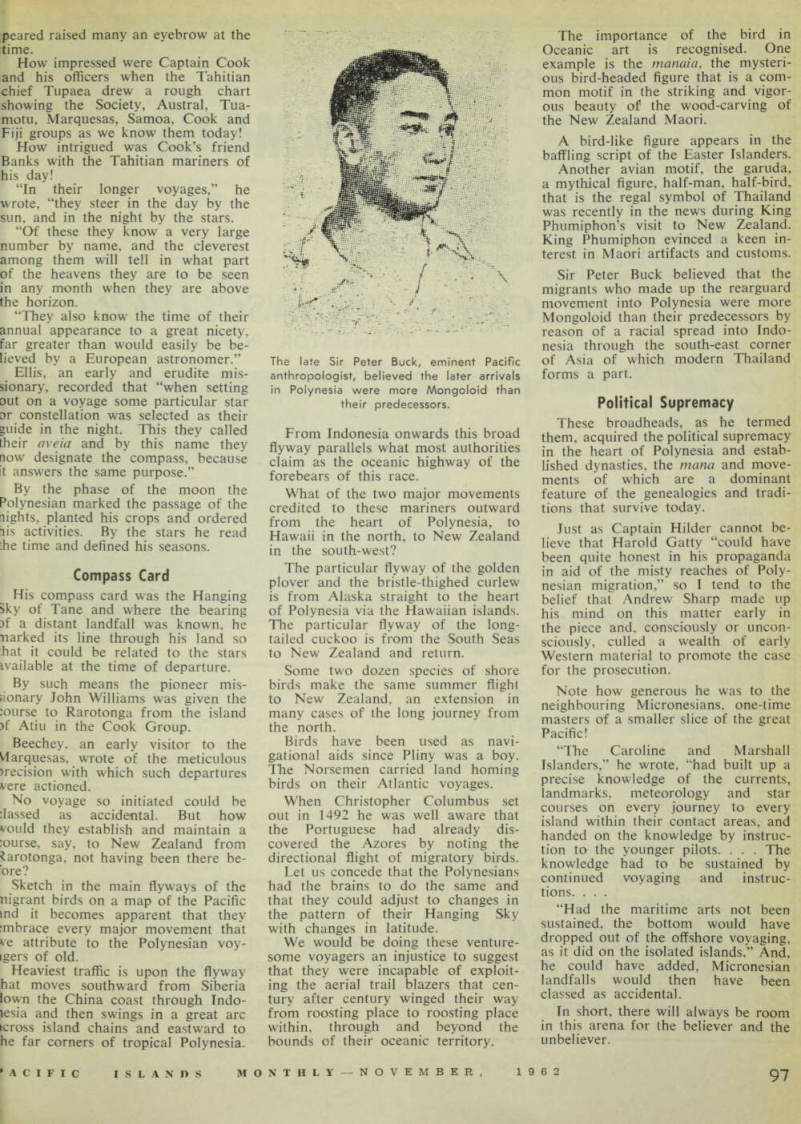 99
99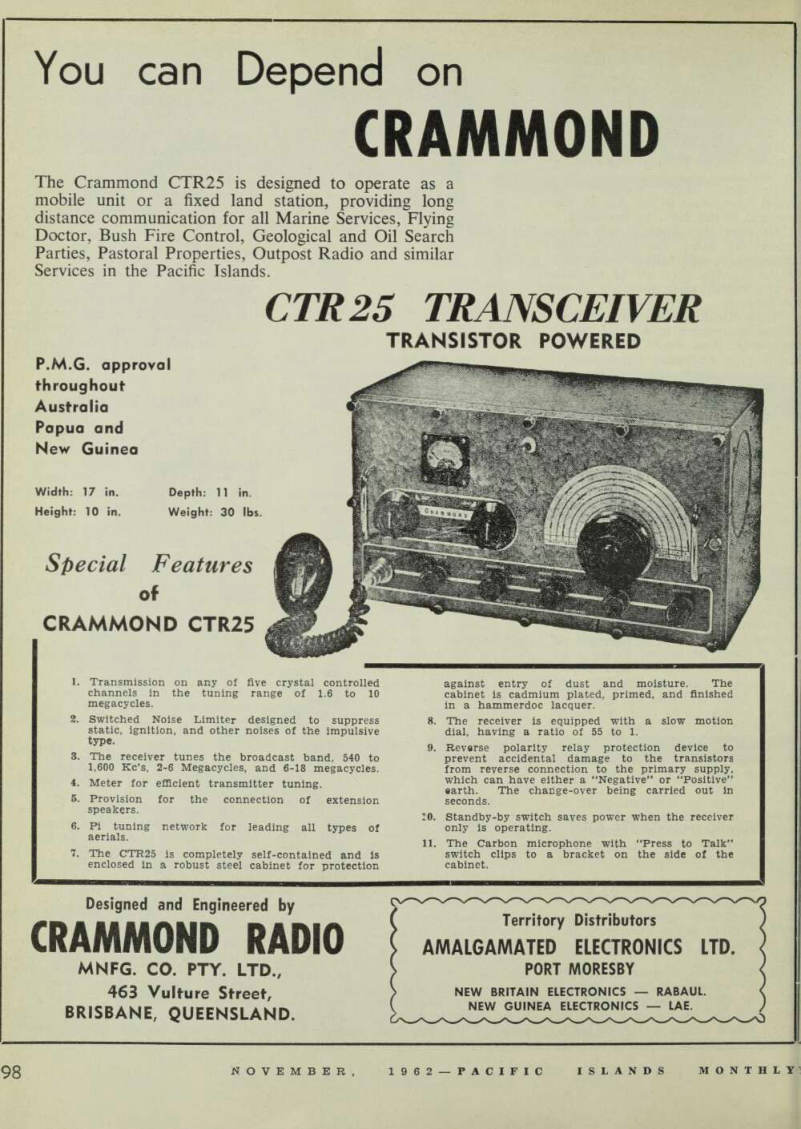 100
100 101
101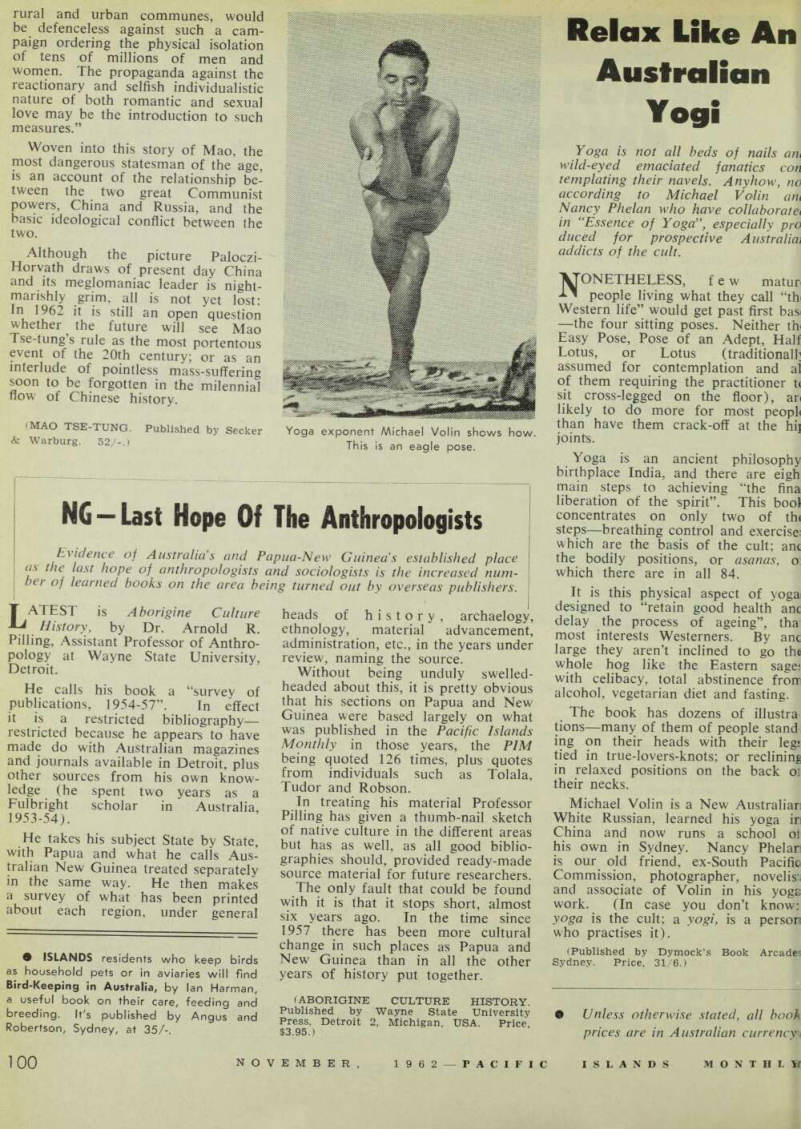 102
102 103
103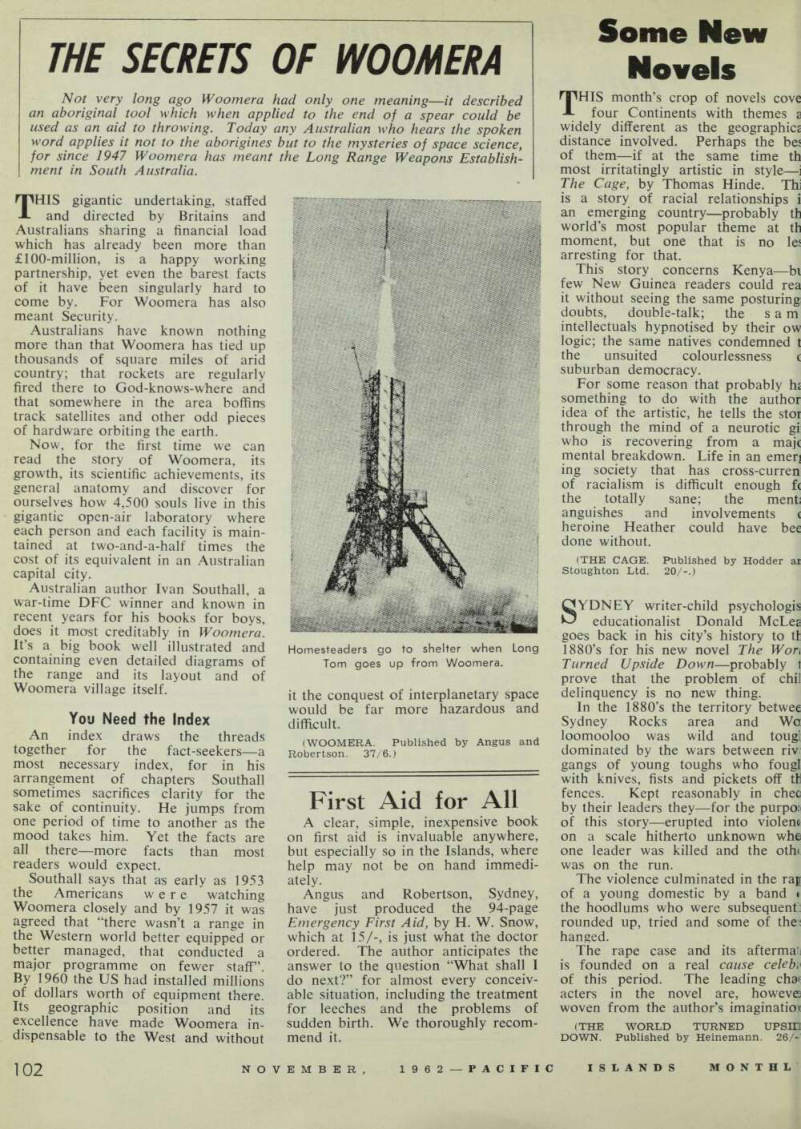 104
104 105
105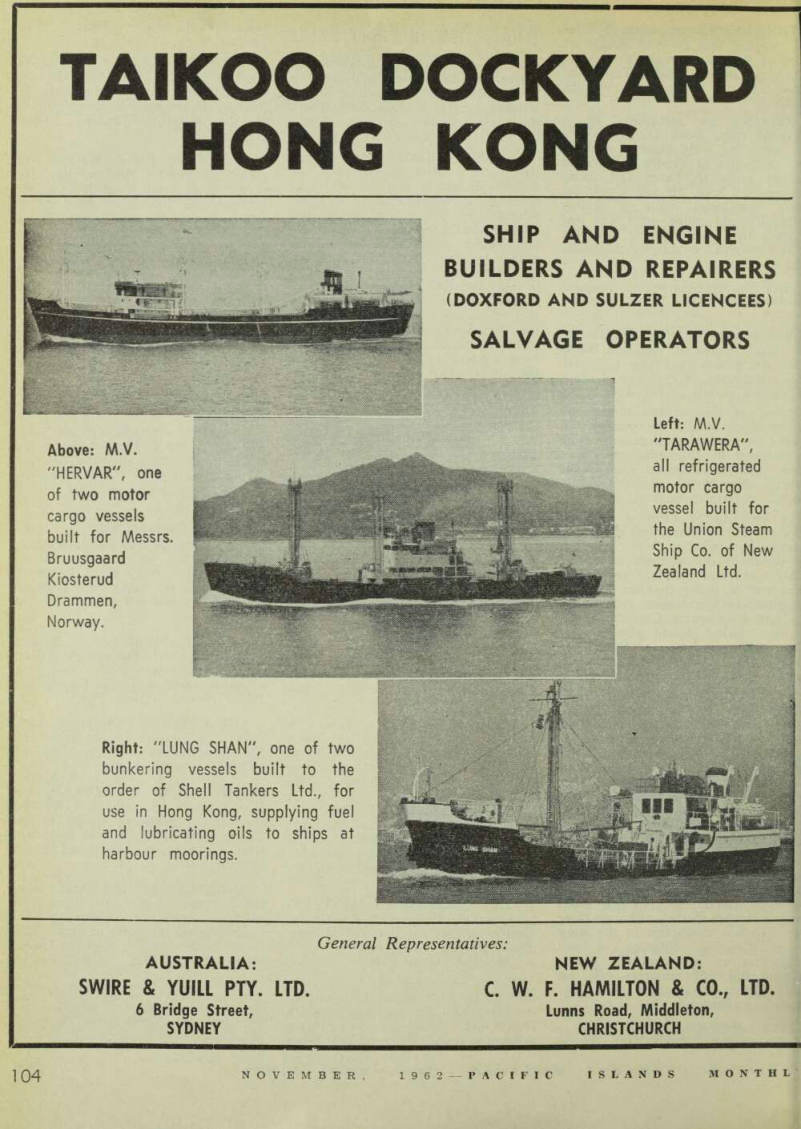 106
106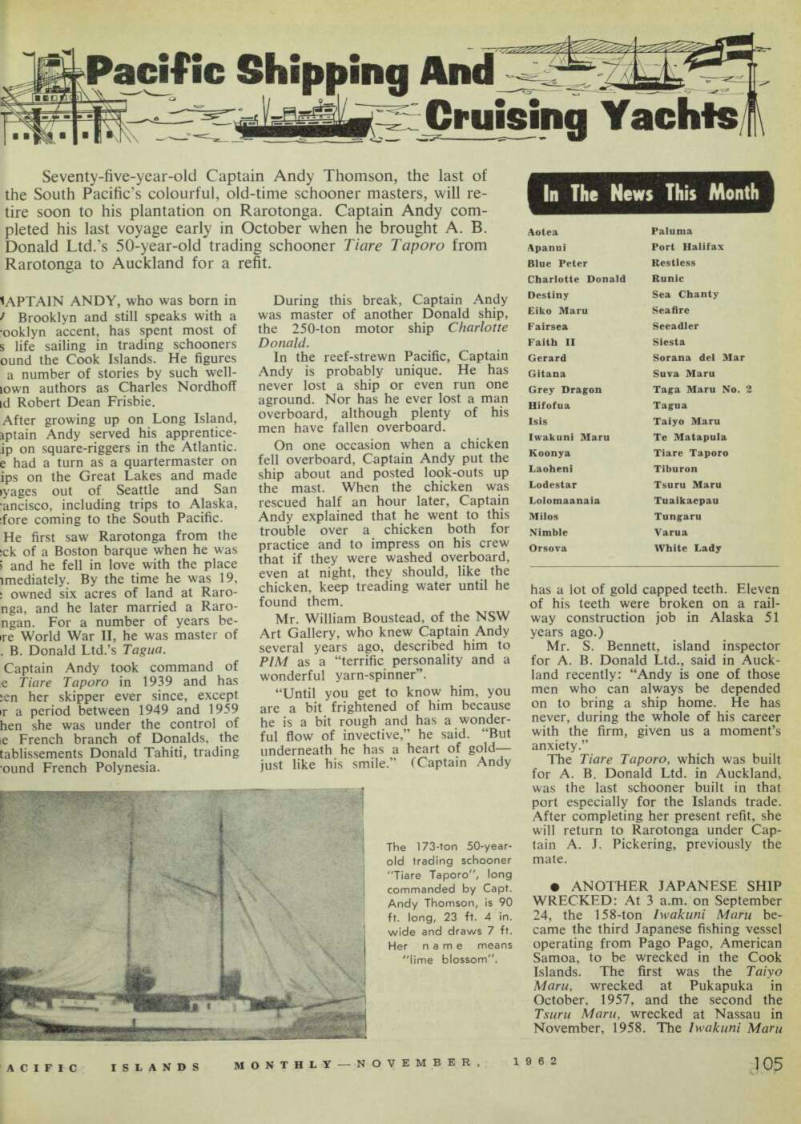 107
107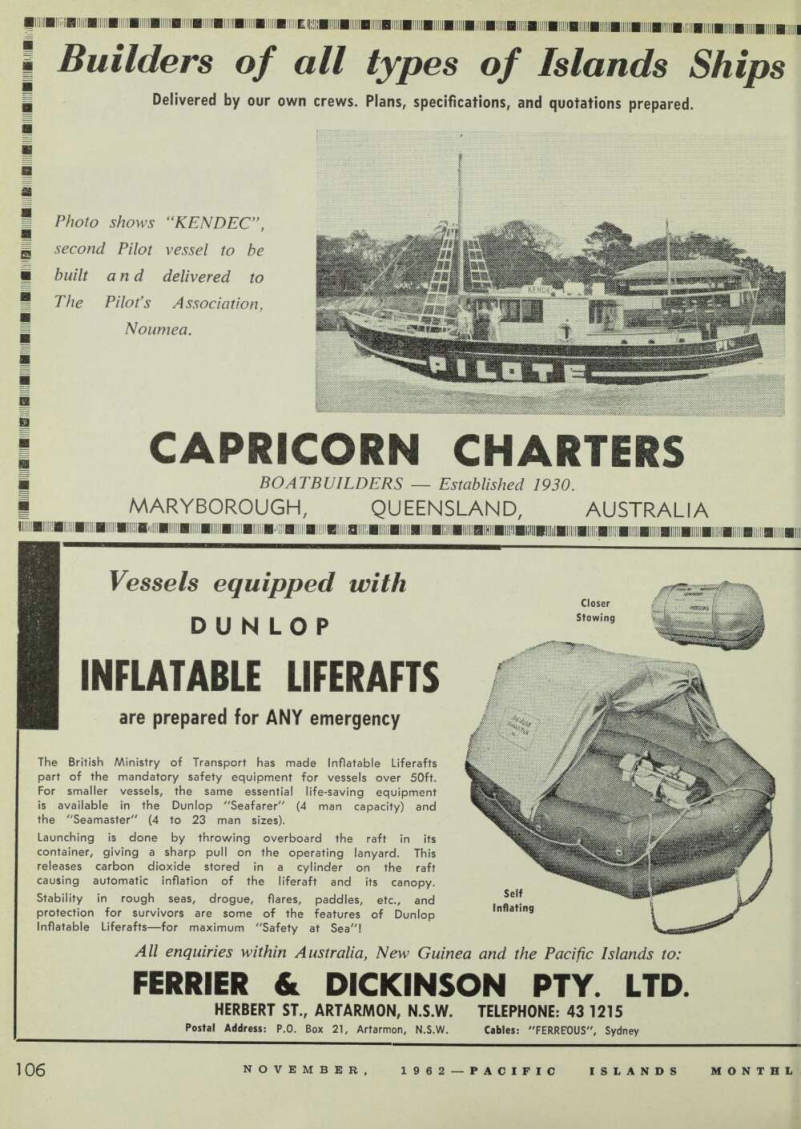 108
108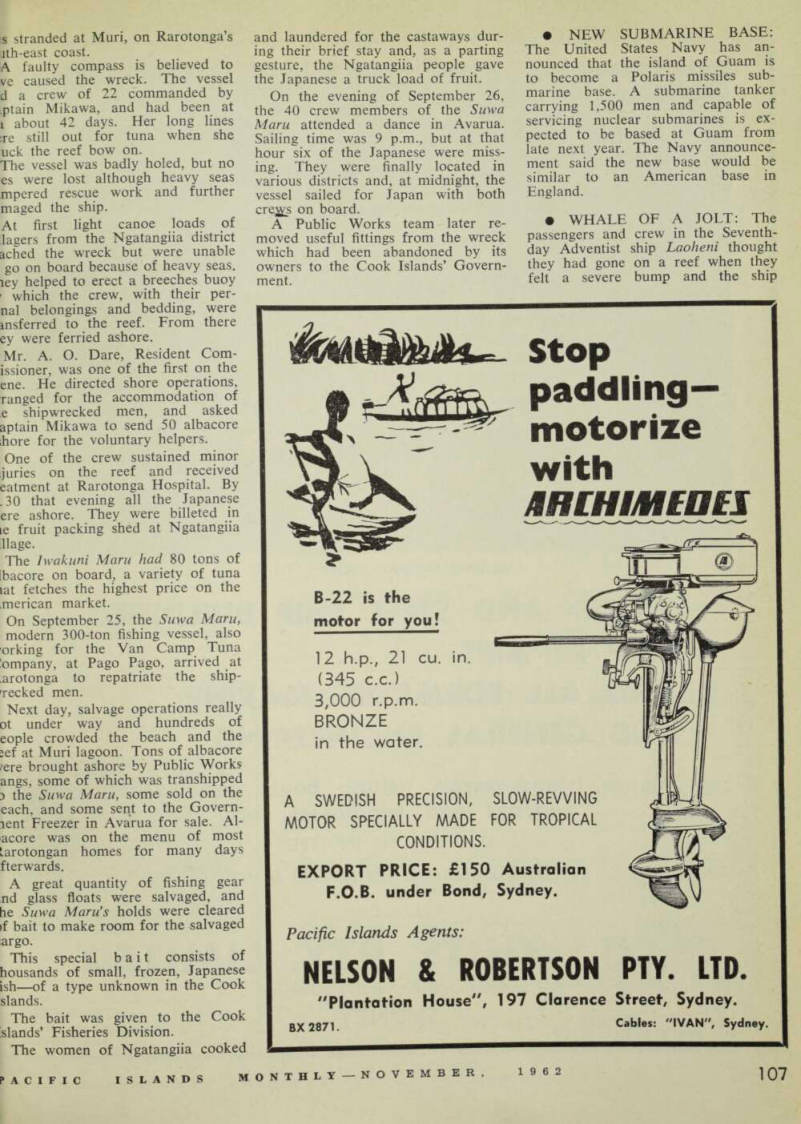 109
109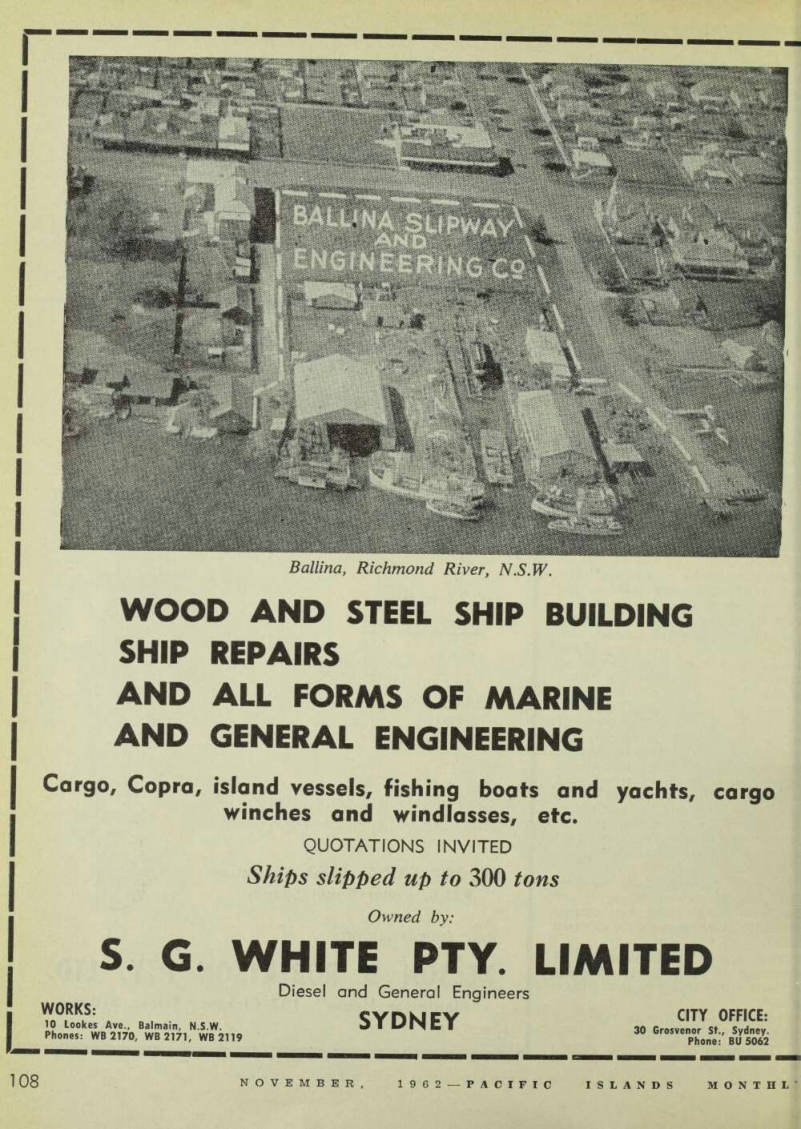 110
110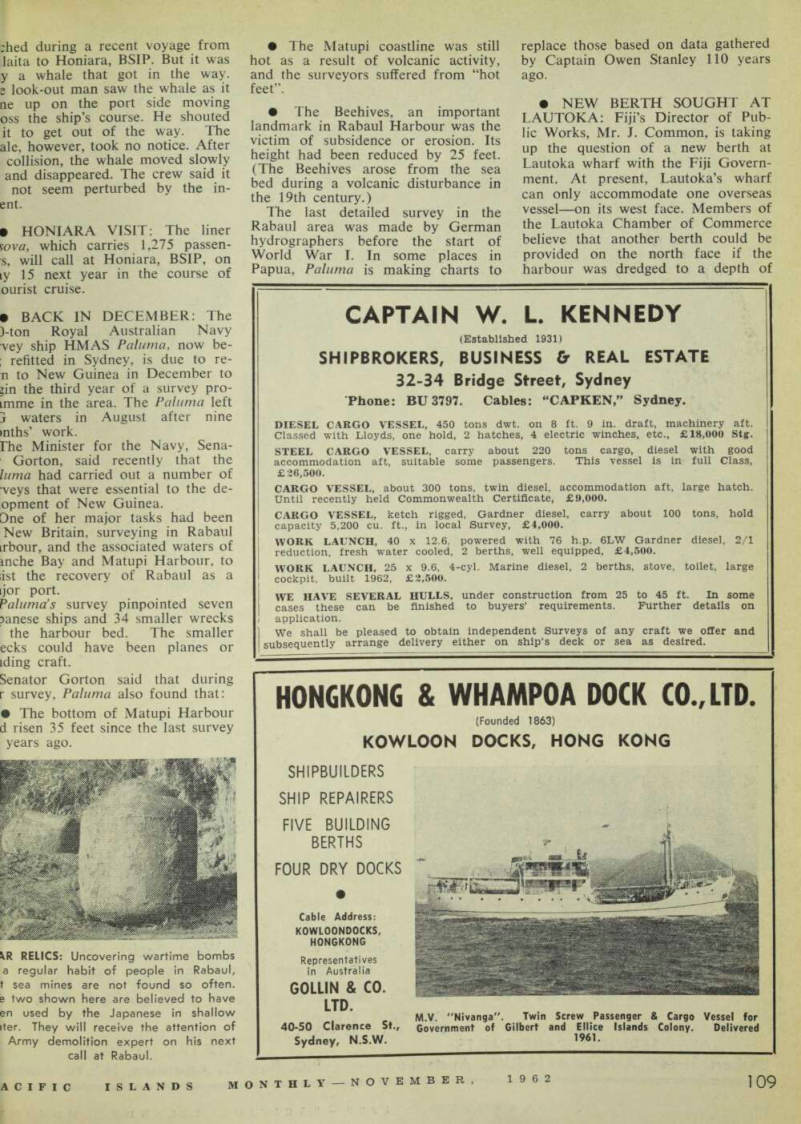 111
111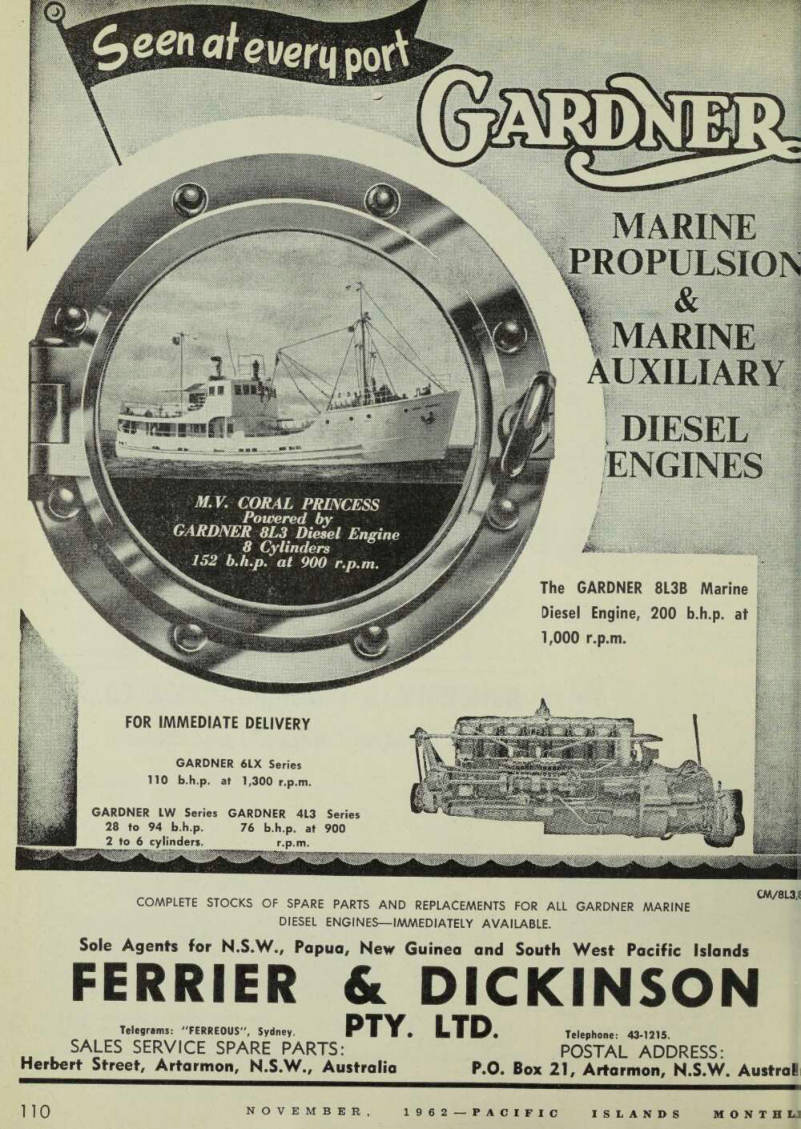 112
112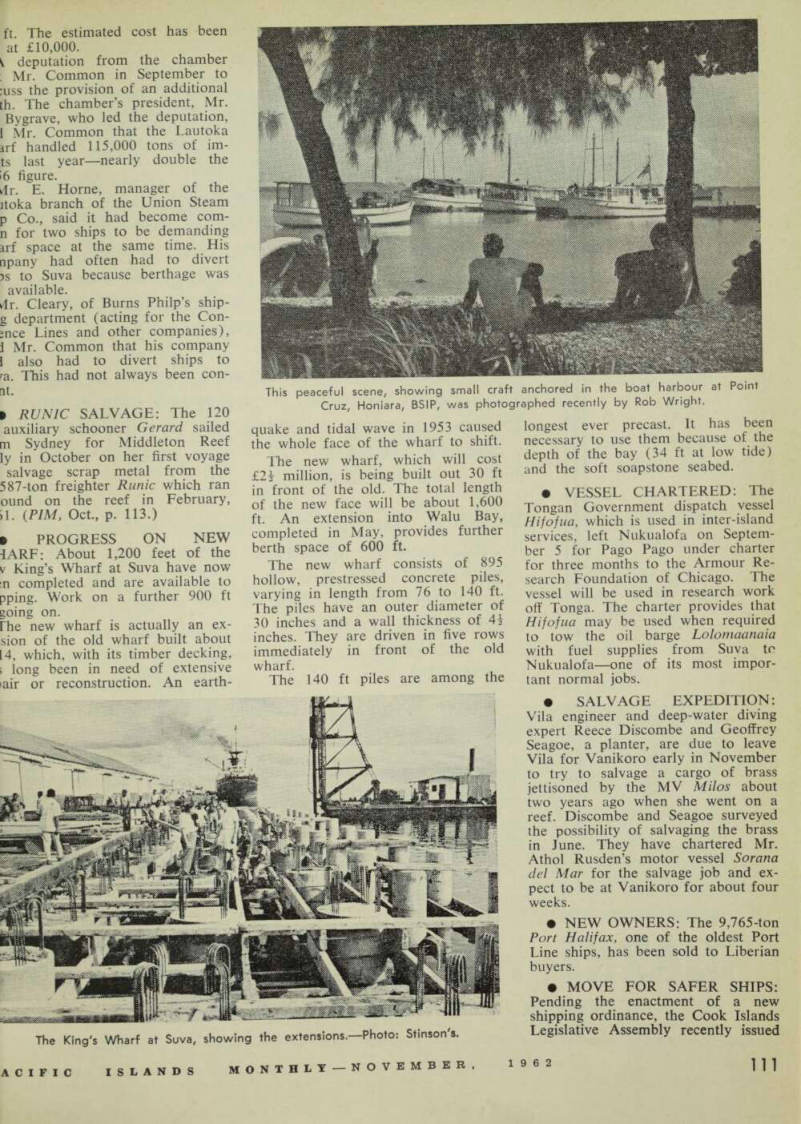 113
113 114
114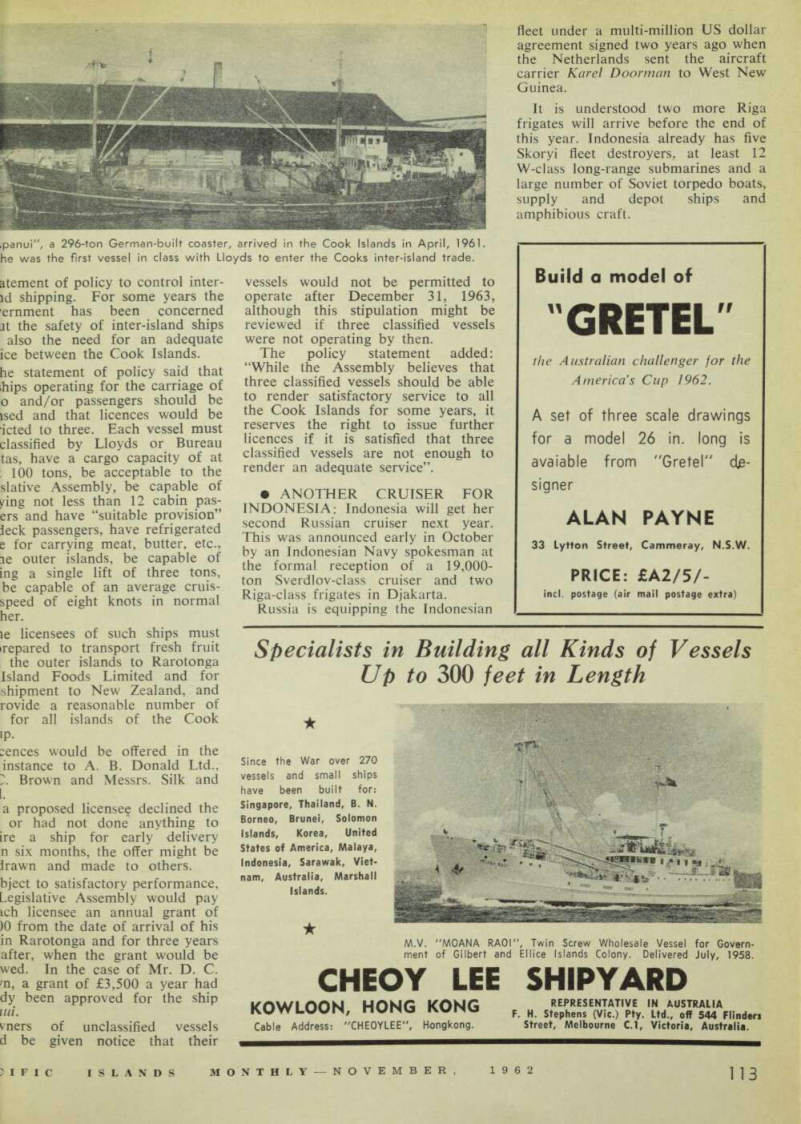 115
115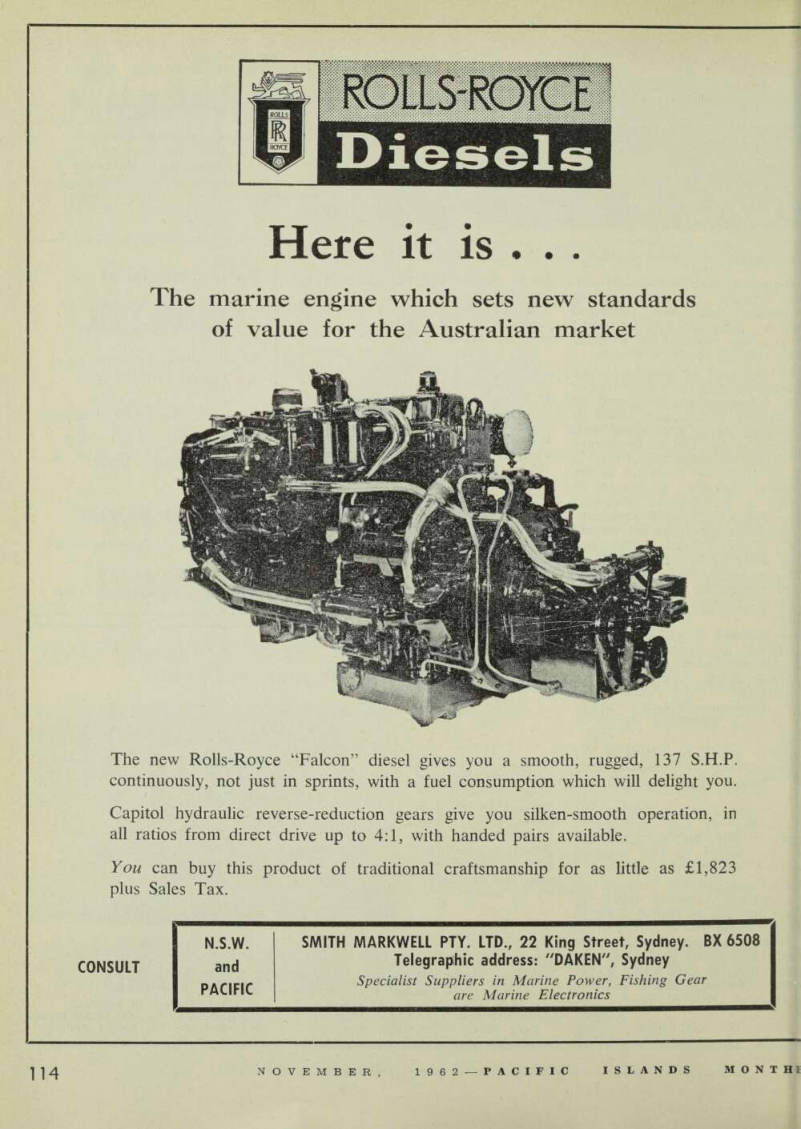 116
116 117
117 118
118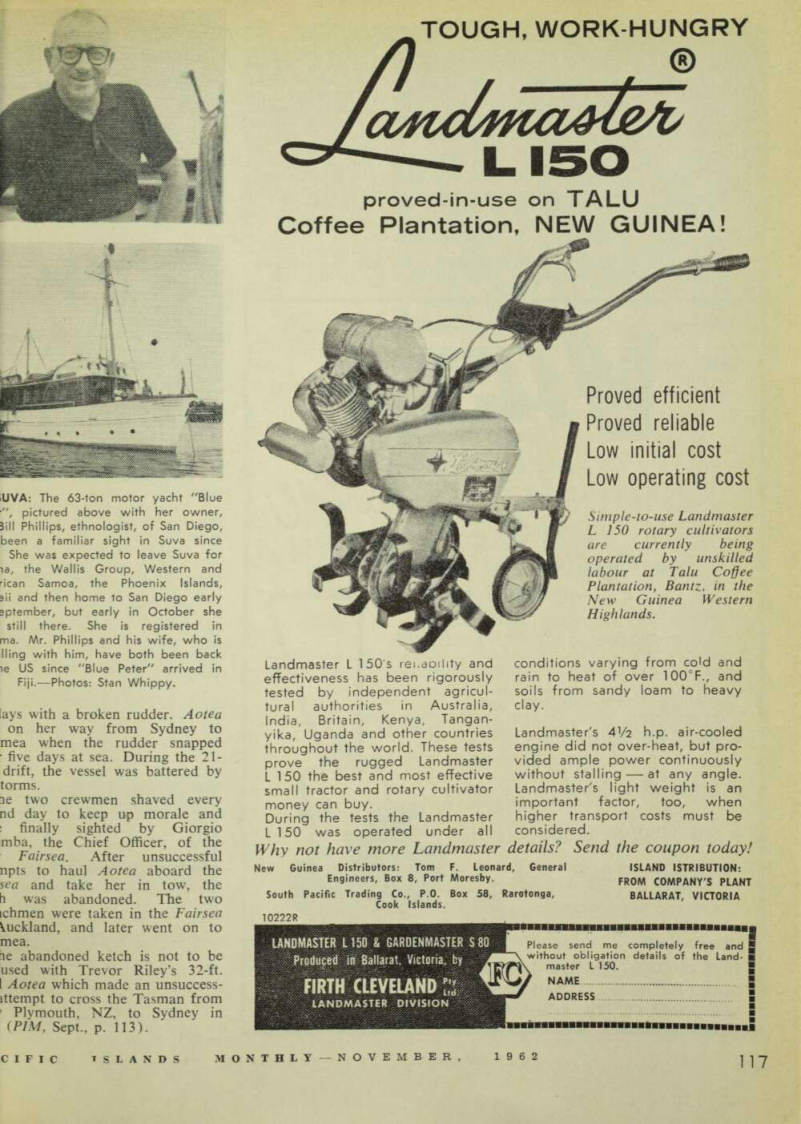 119
119 120
120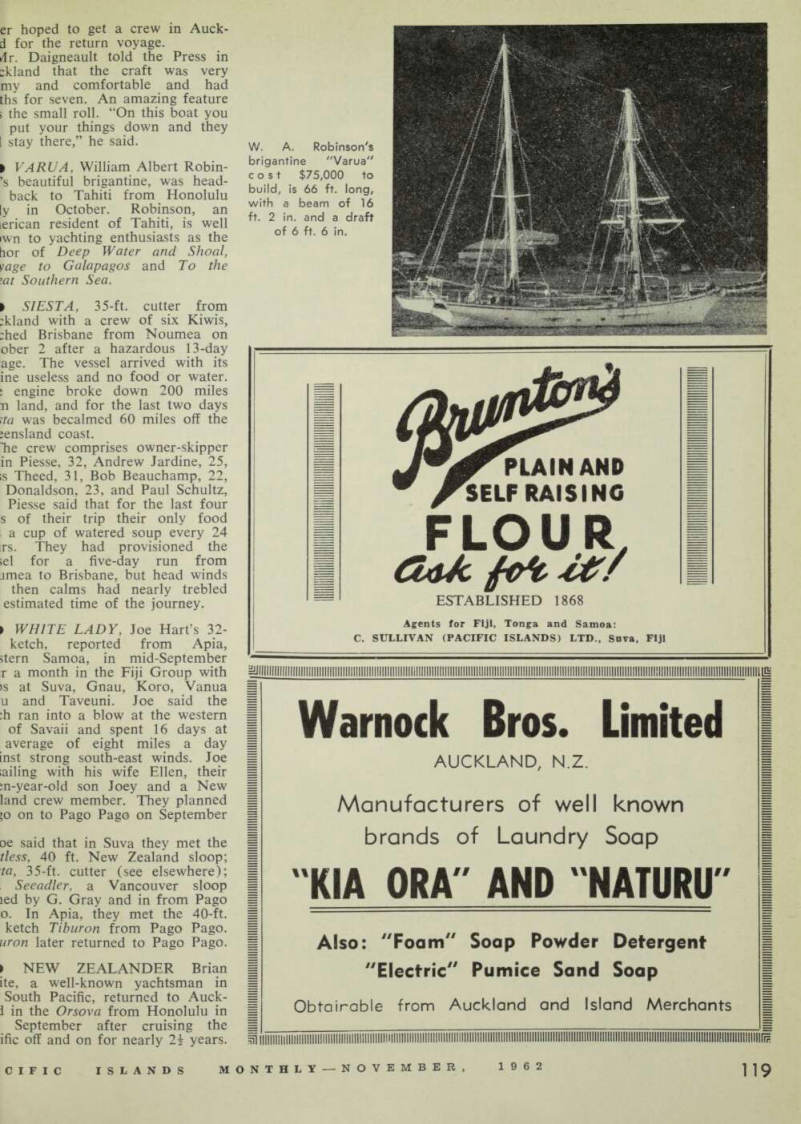 121
121 122
122 123
123 124
124 125
125 126
126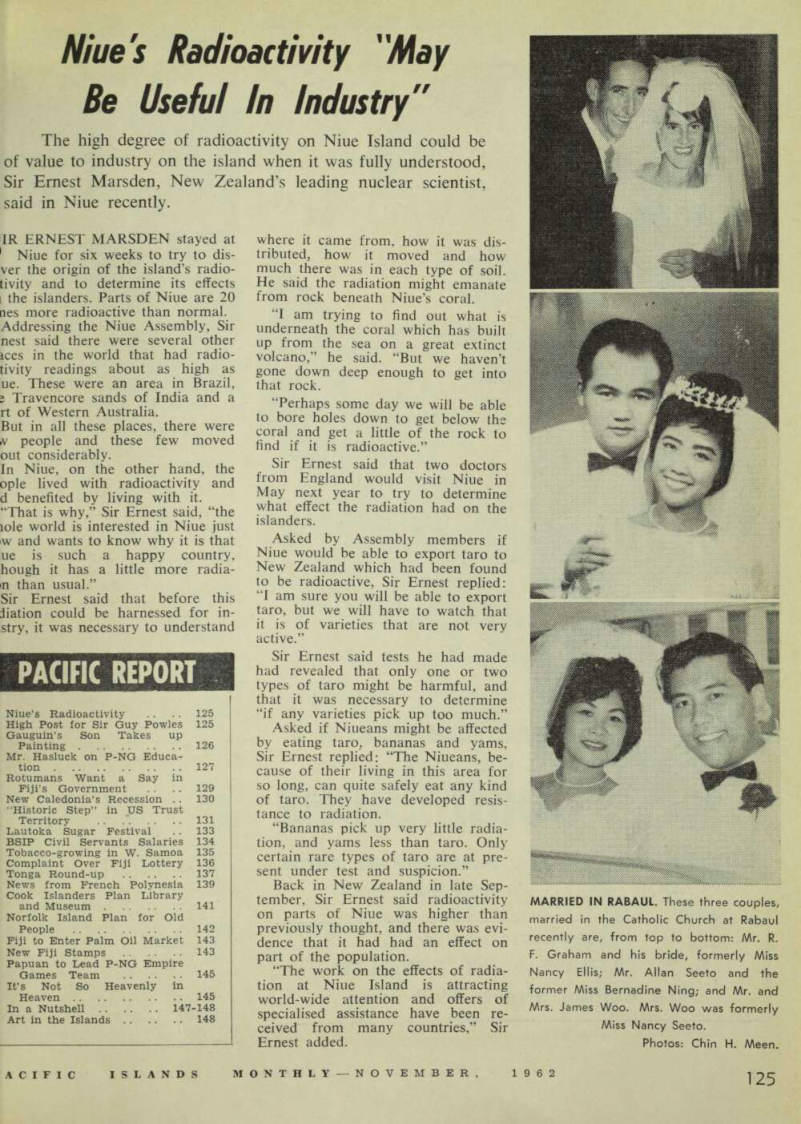 127
127 128
128 129
129 130
130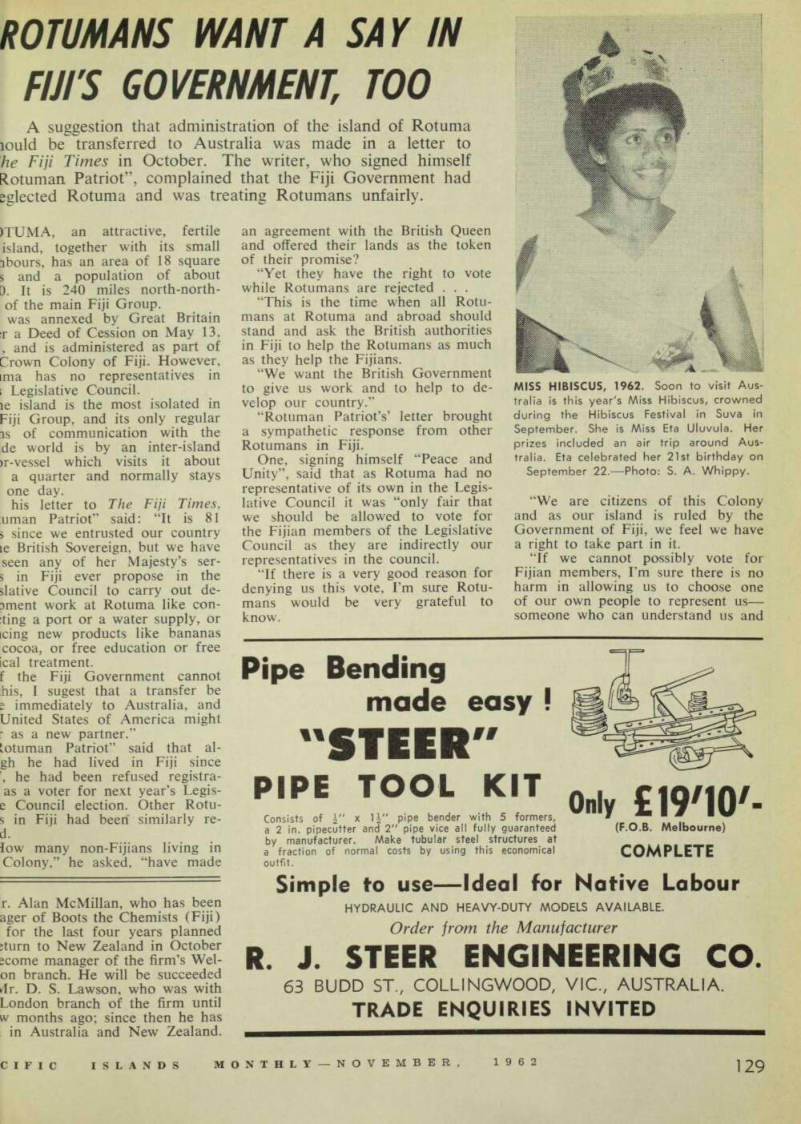 131
131 132
132 133
133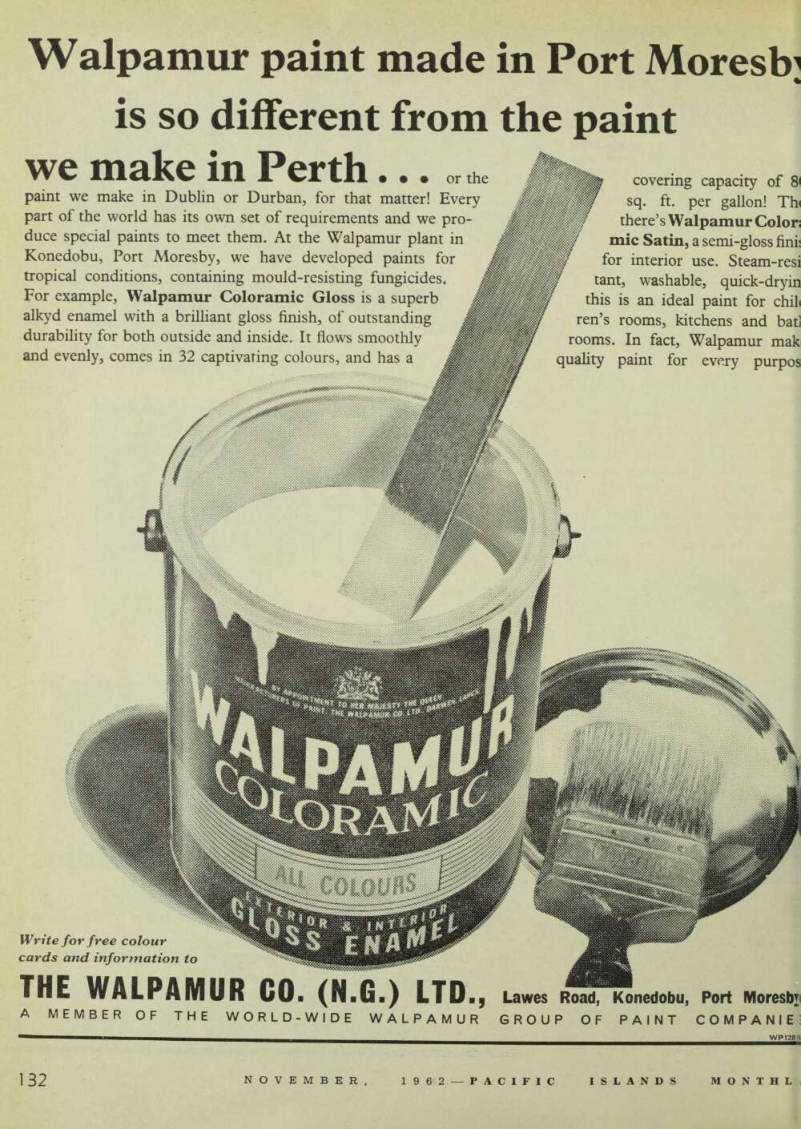 134
134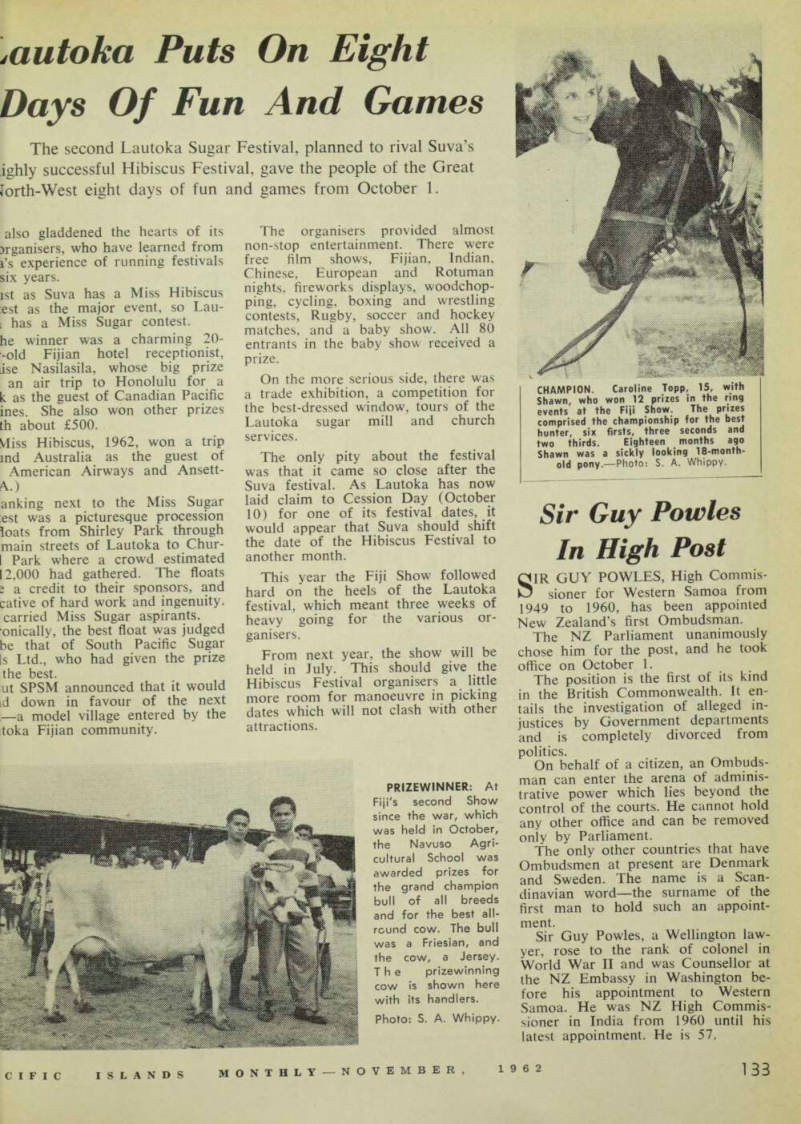 135
135 136
136 137
137 138
138 139
139 140
140 141
141 142
142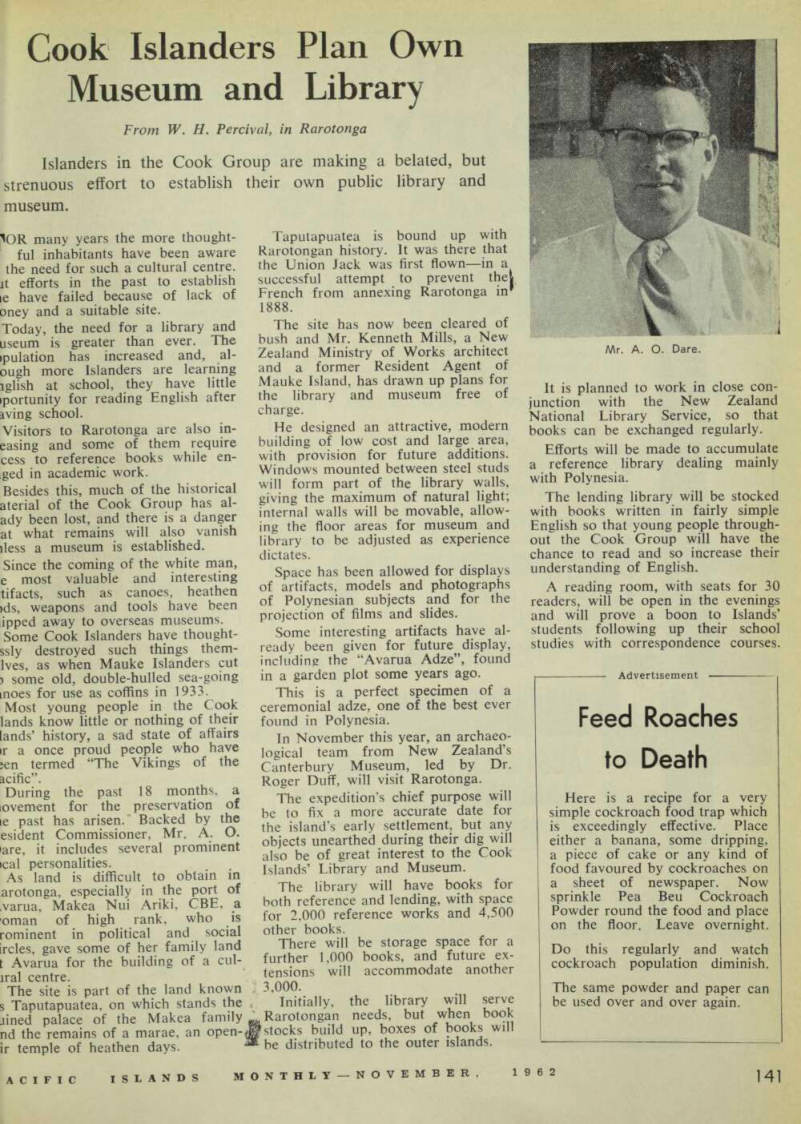 143
143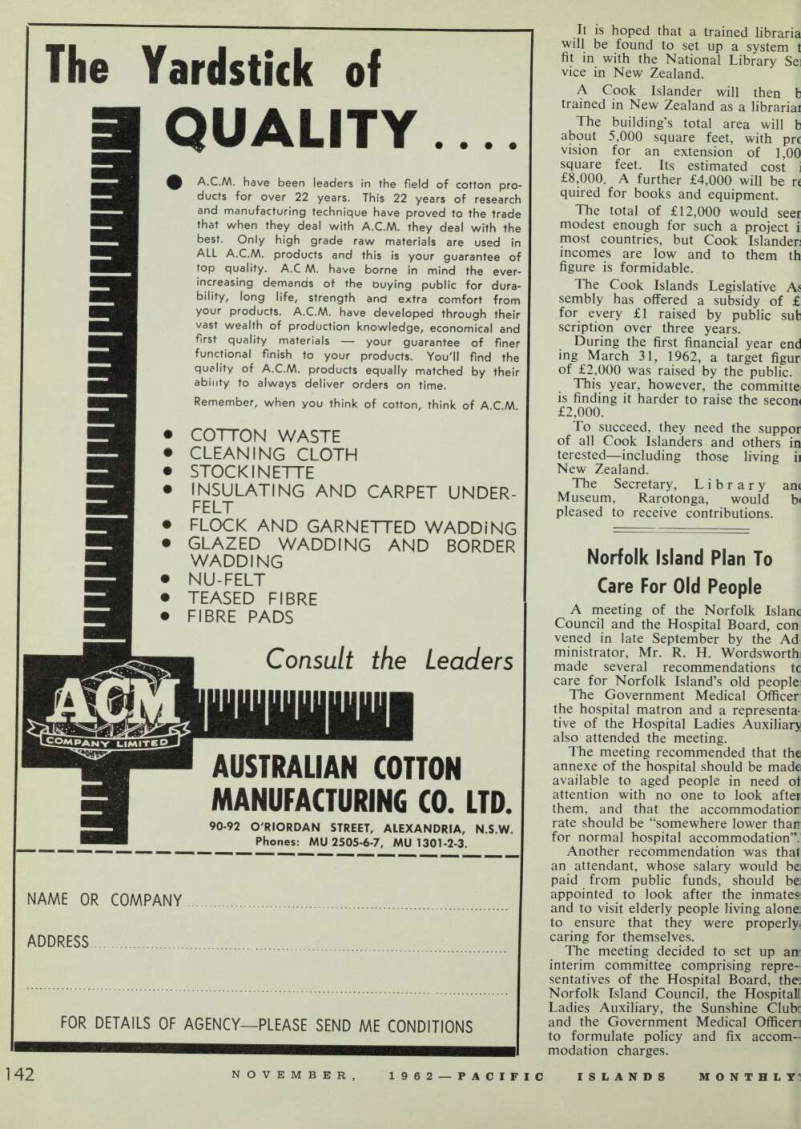 144
144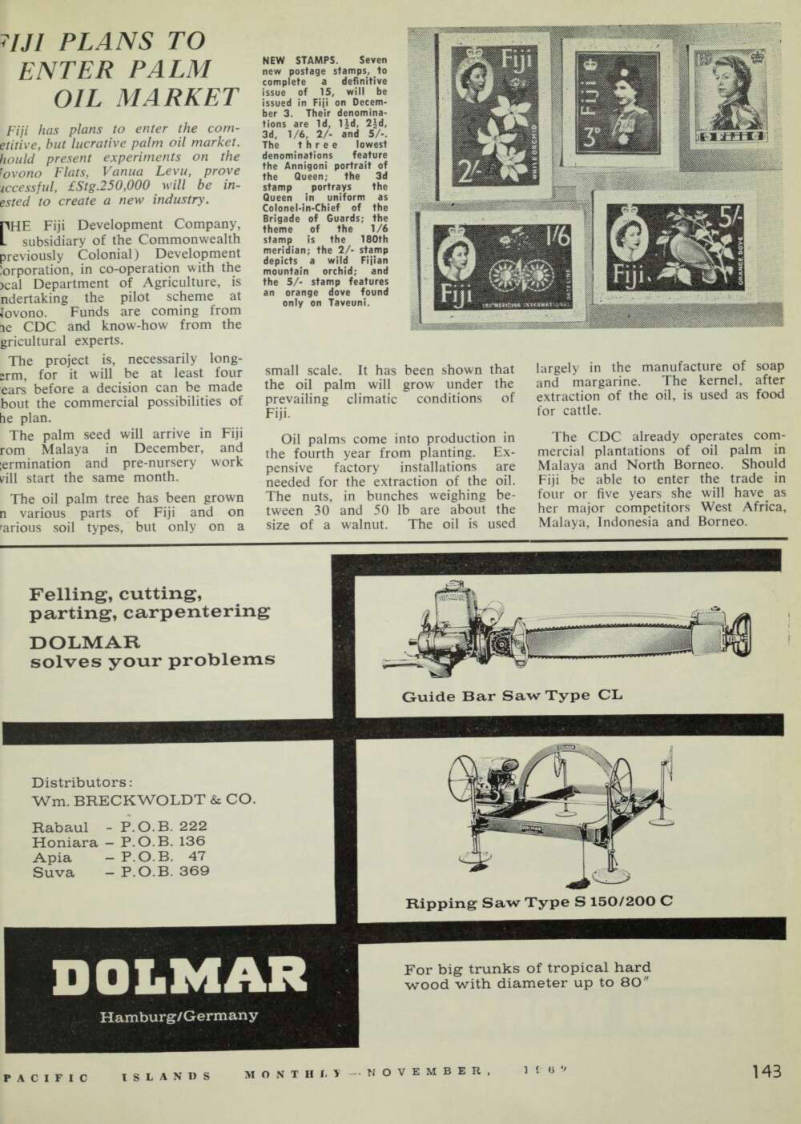 145
145 146
146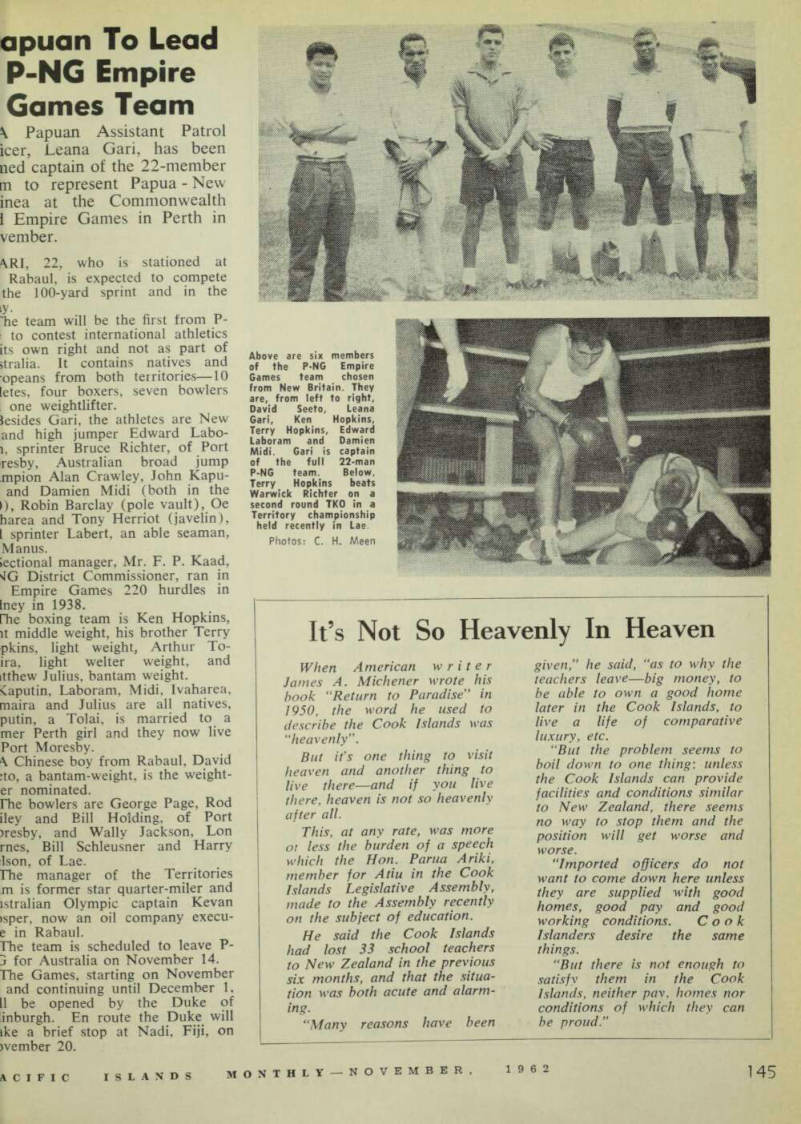 147
147 148
148 149
149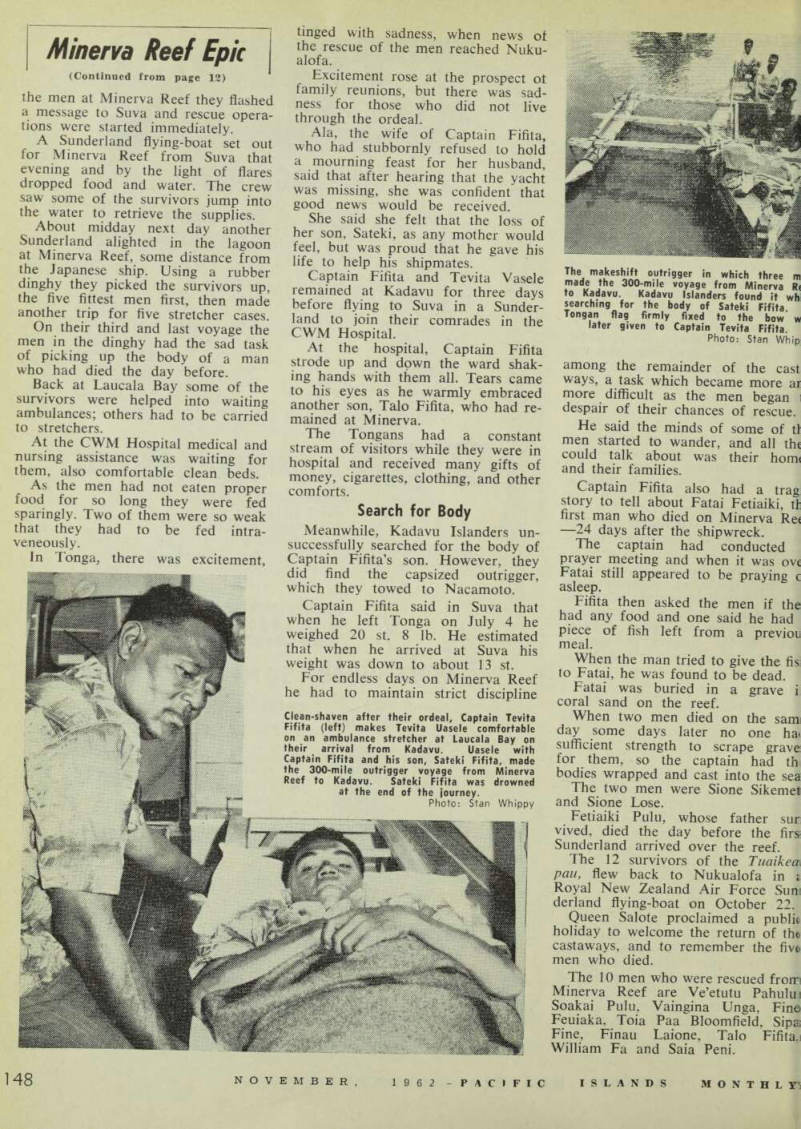 150
150 151
151 152
152 153
153 154
154 155
155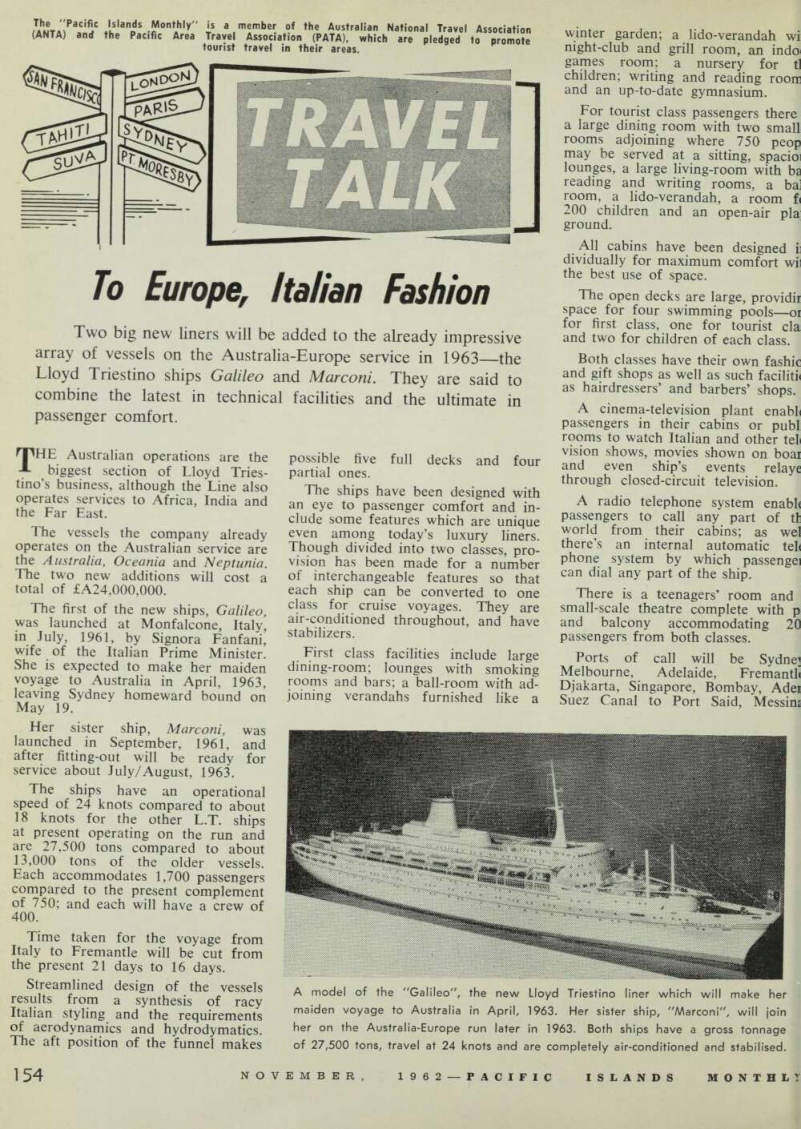 156
156 157
157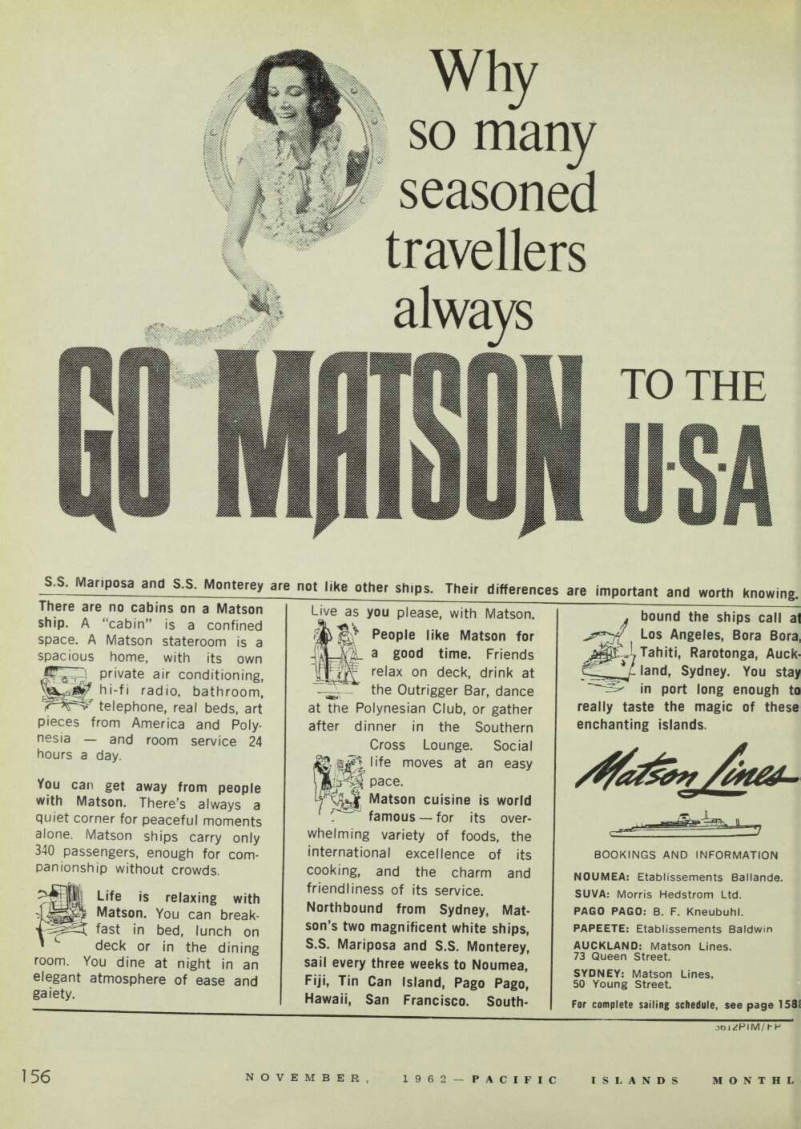 158
158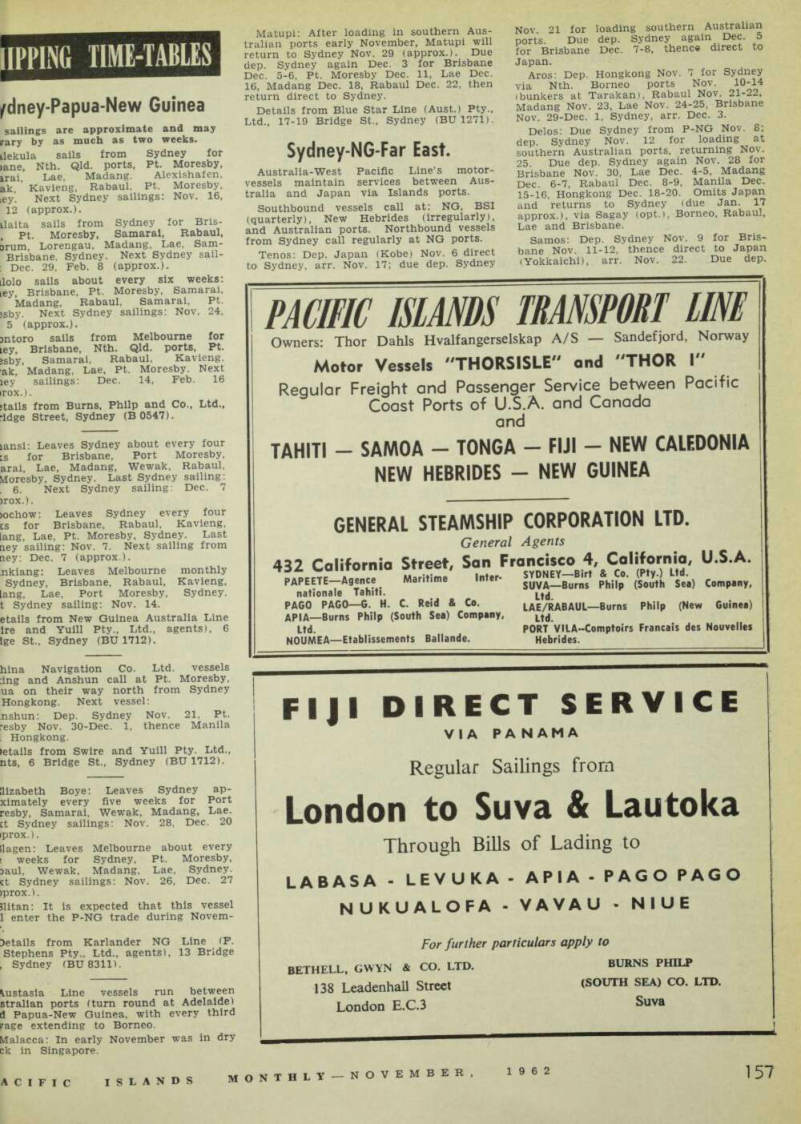 159
159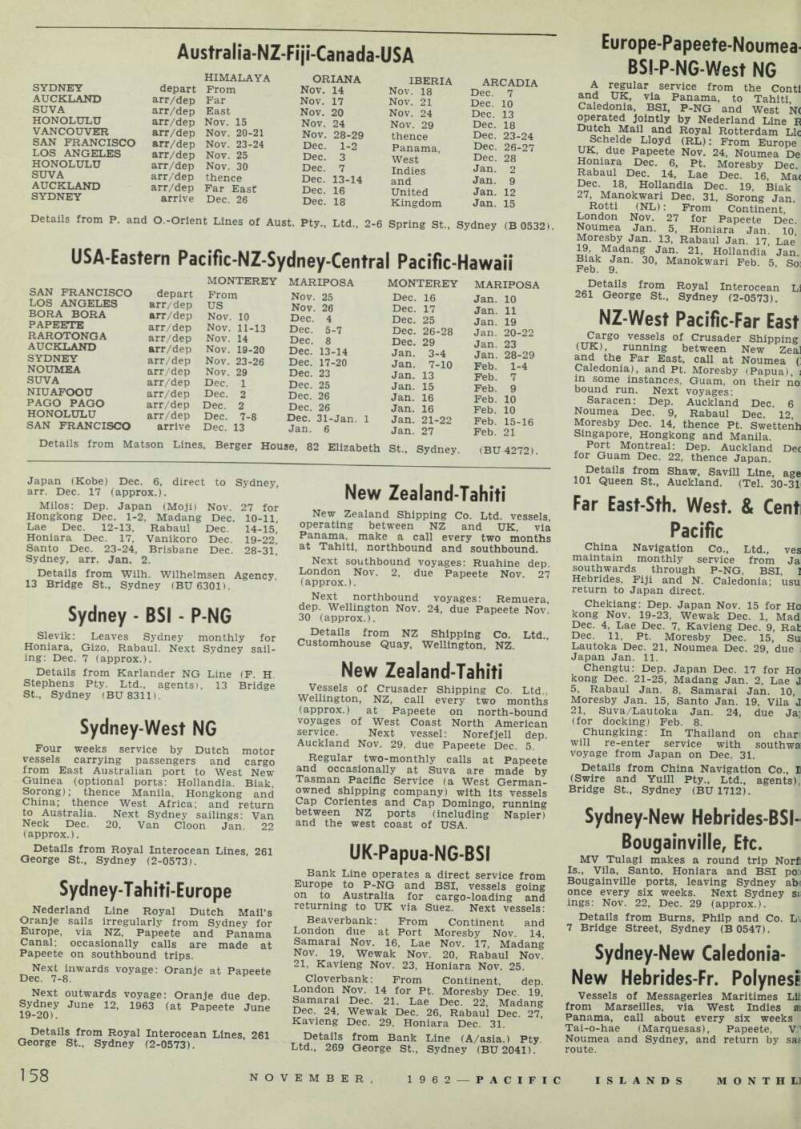 160
160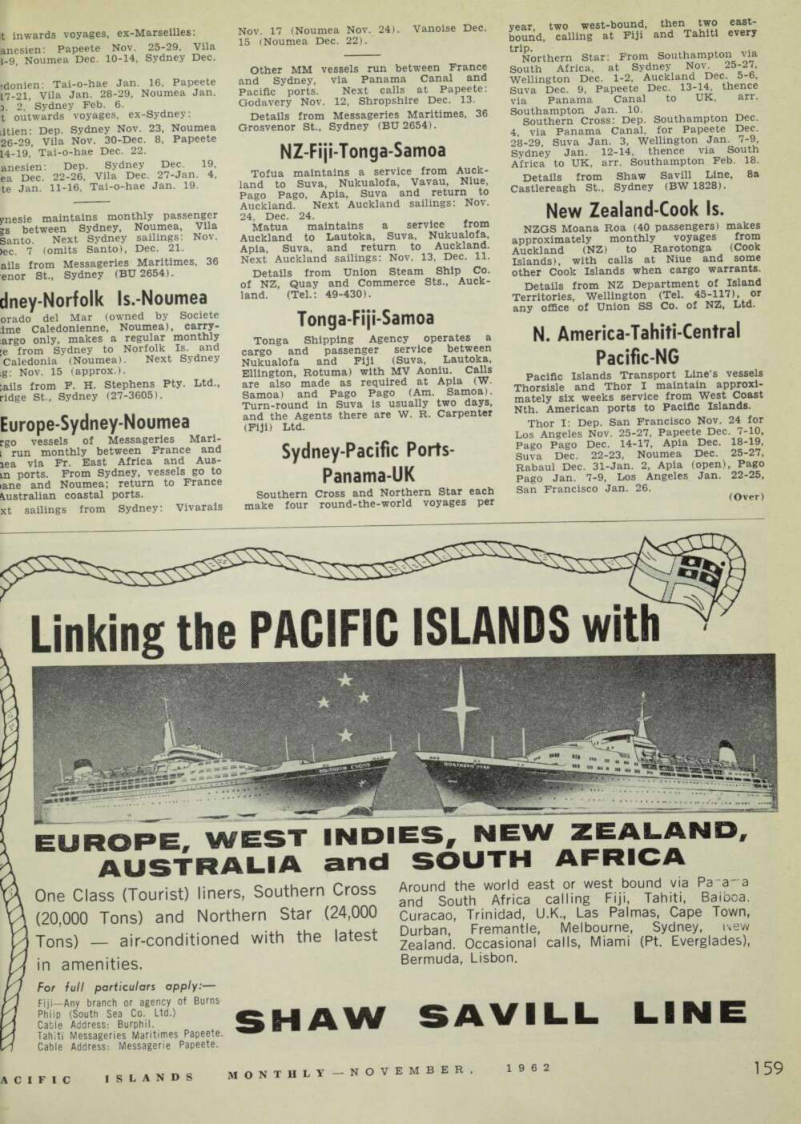 161
161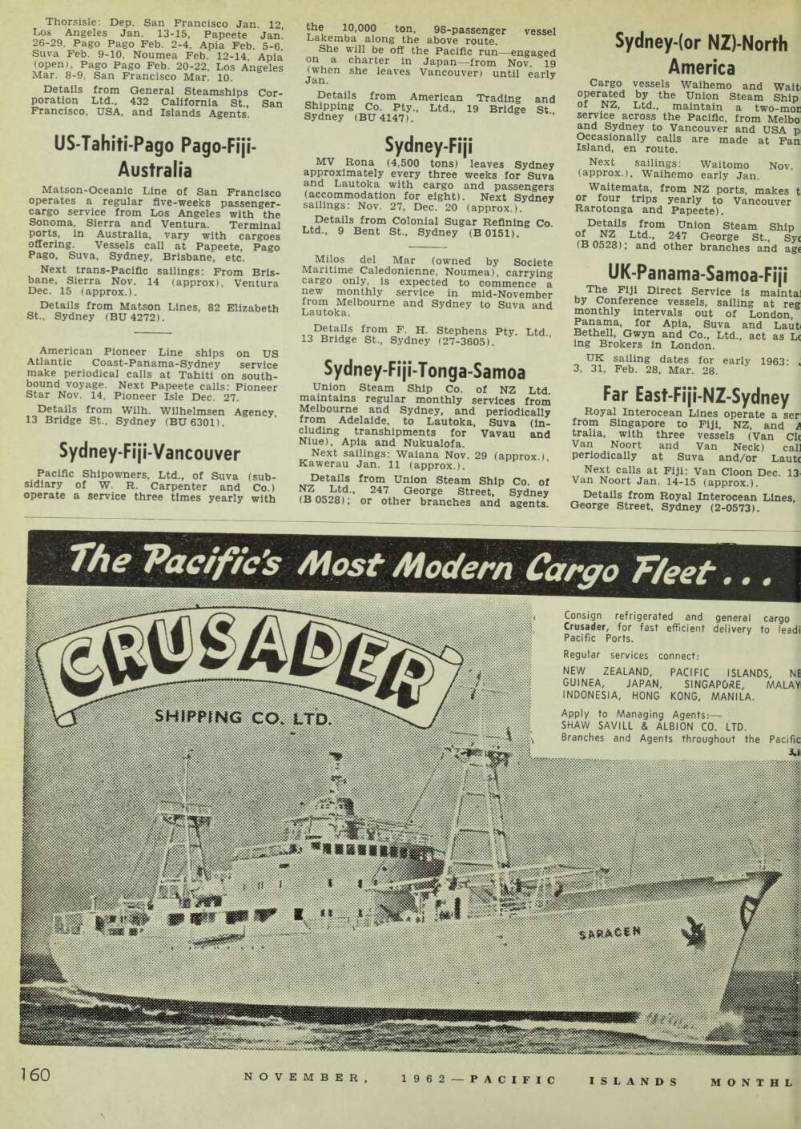 162
162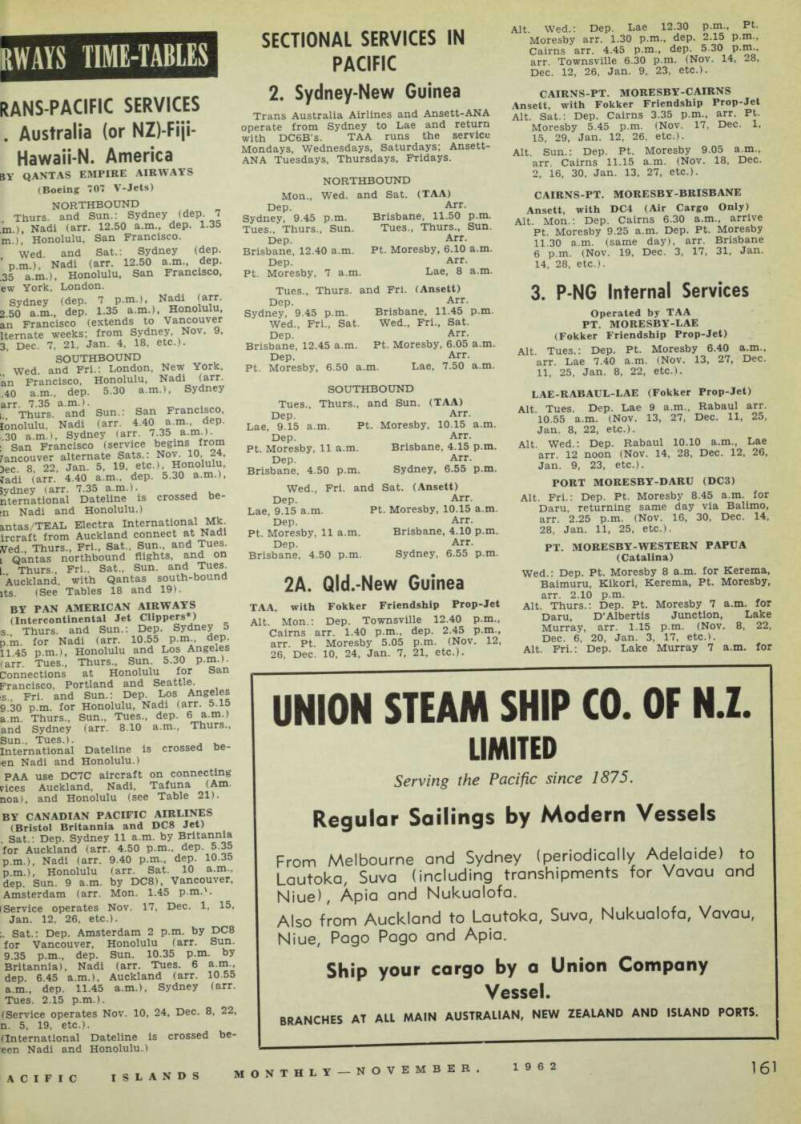 163
163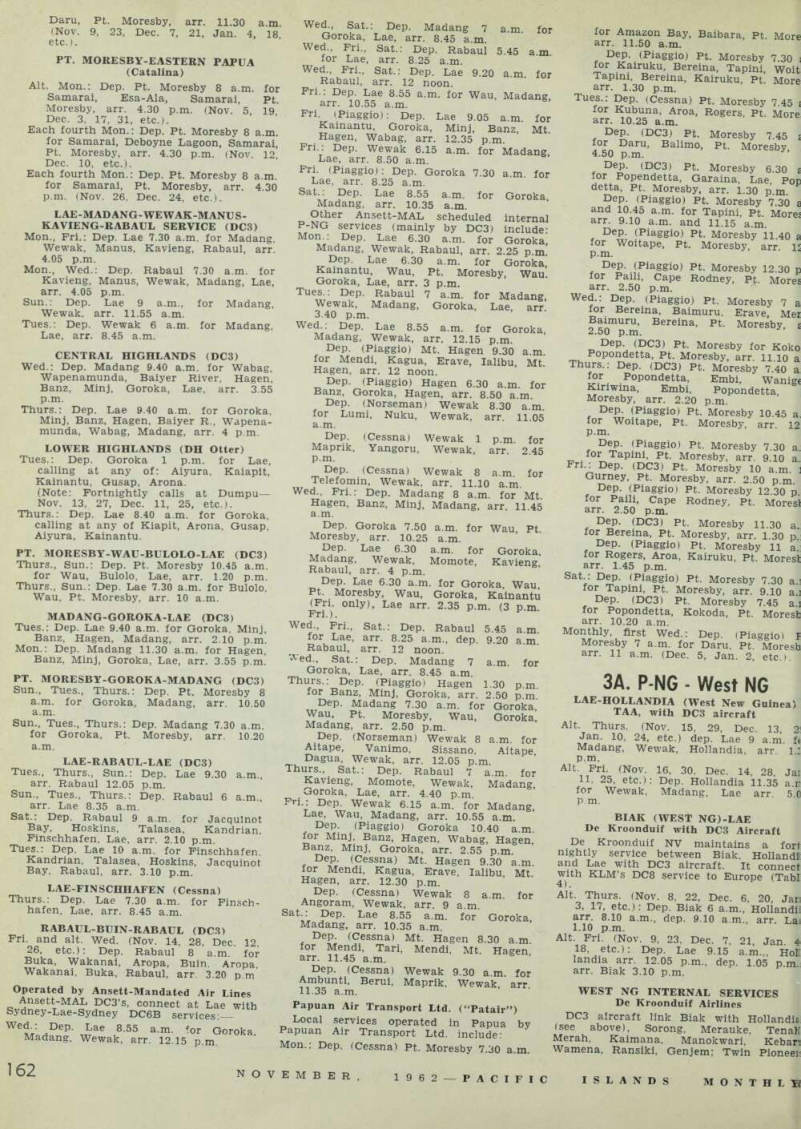 164
164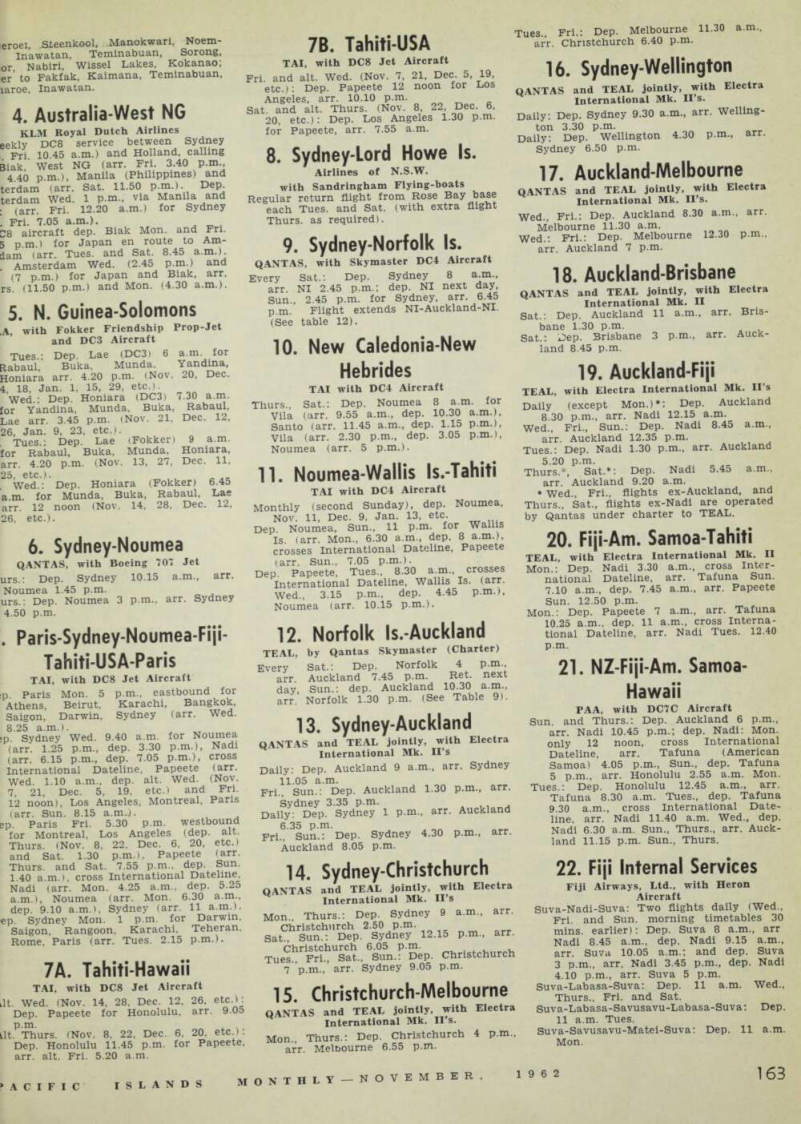 165
165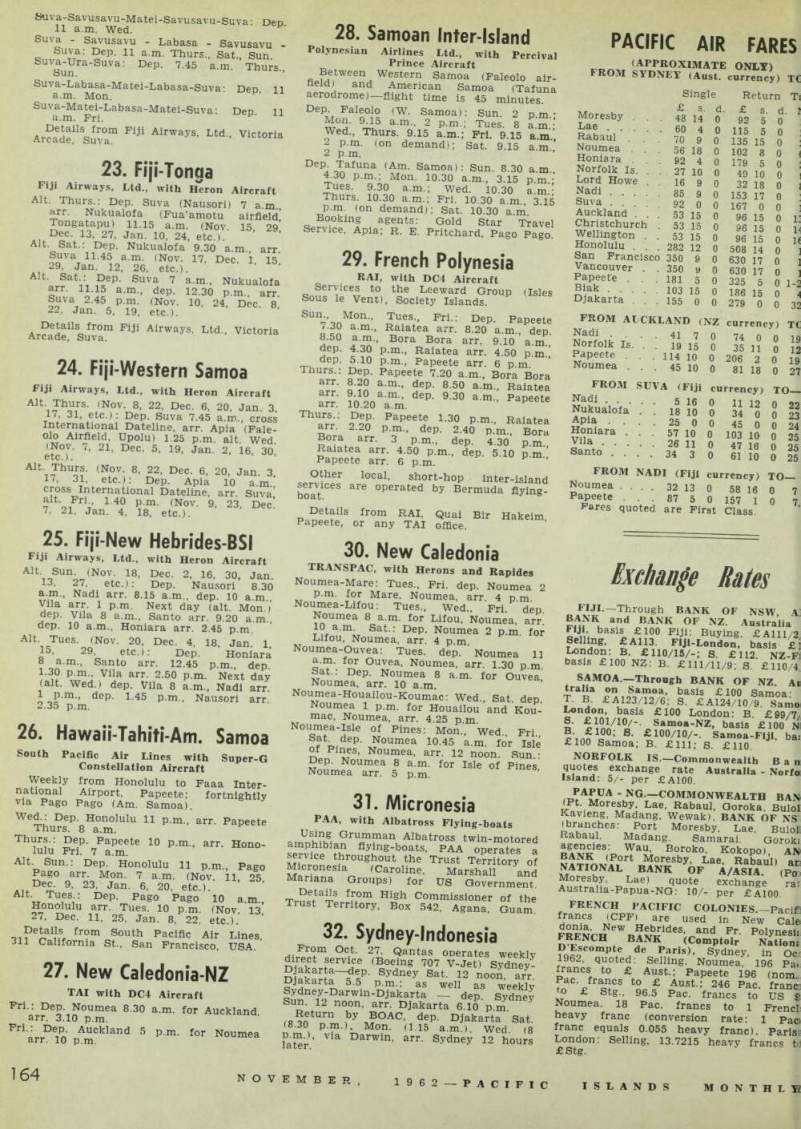 166
166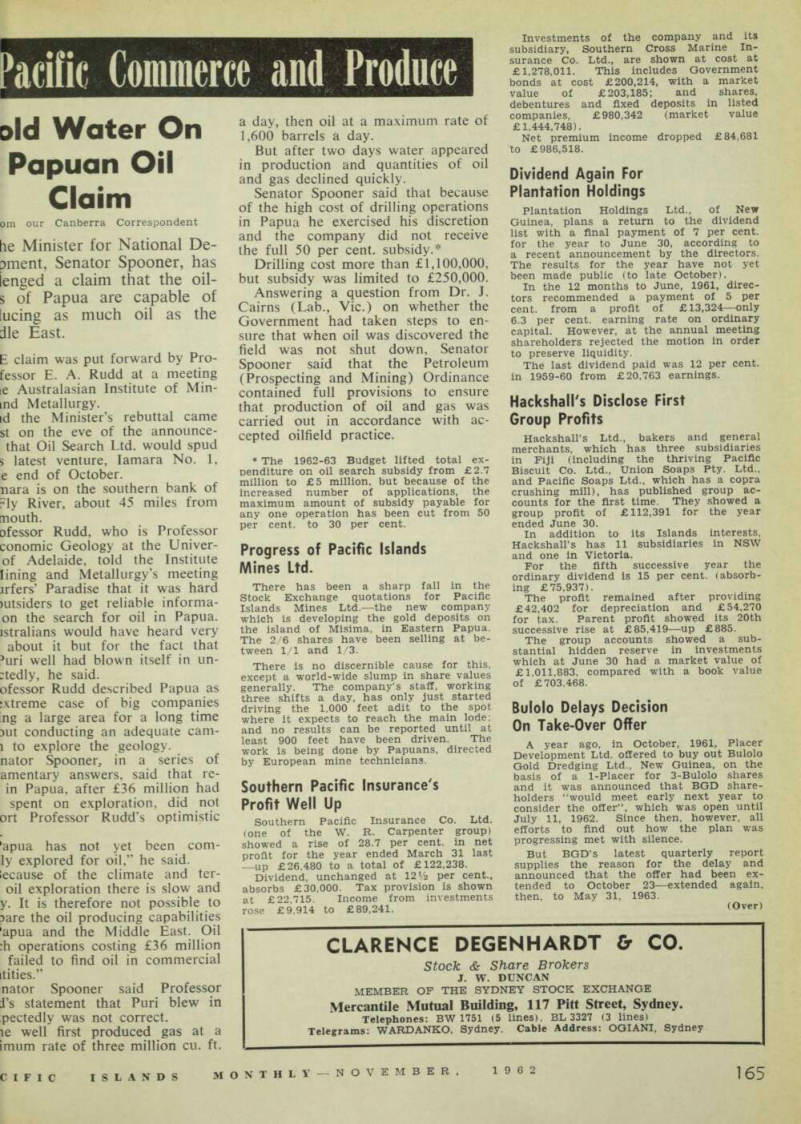 167
167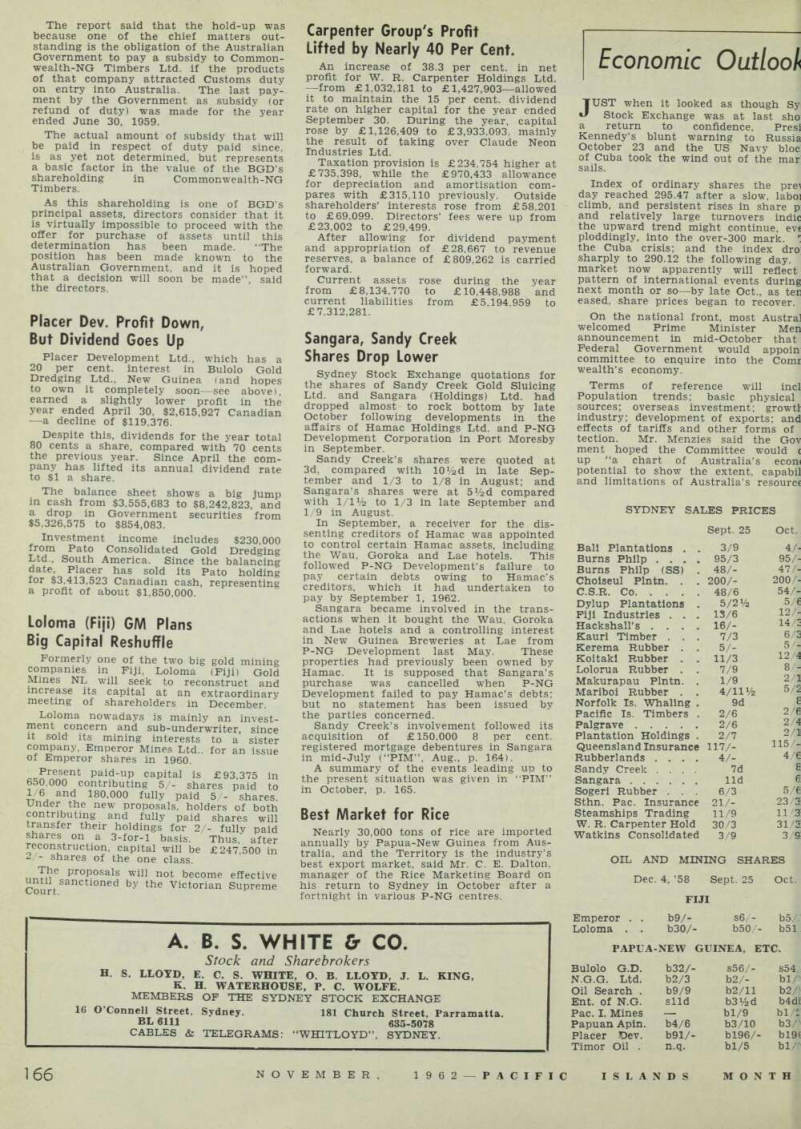 168
168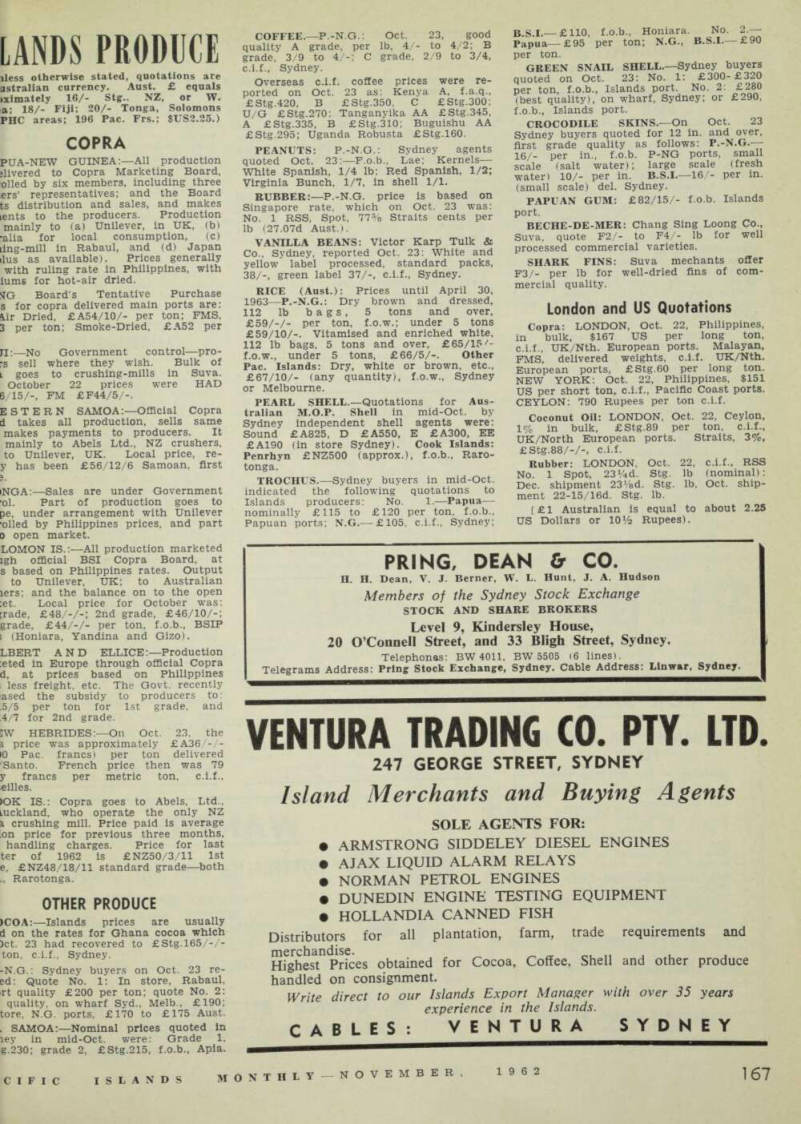 169
169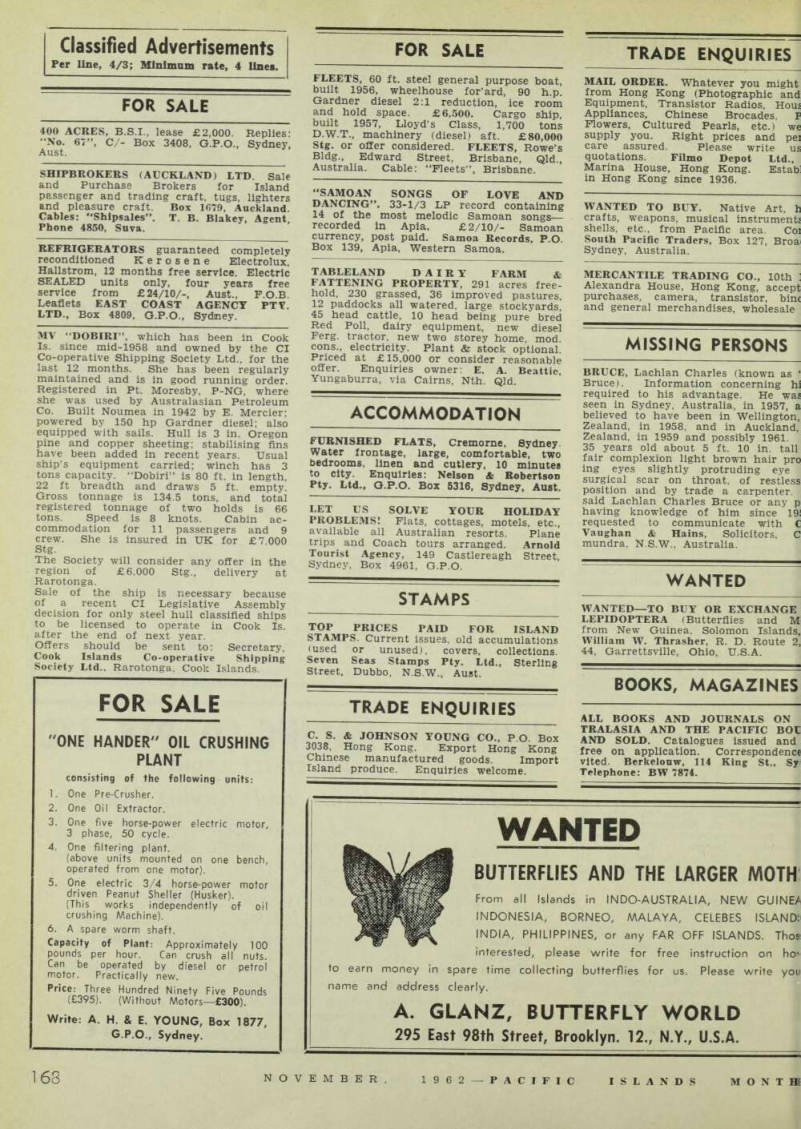 170
170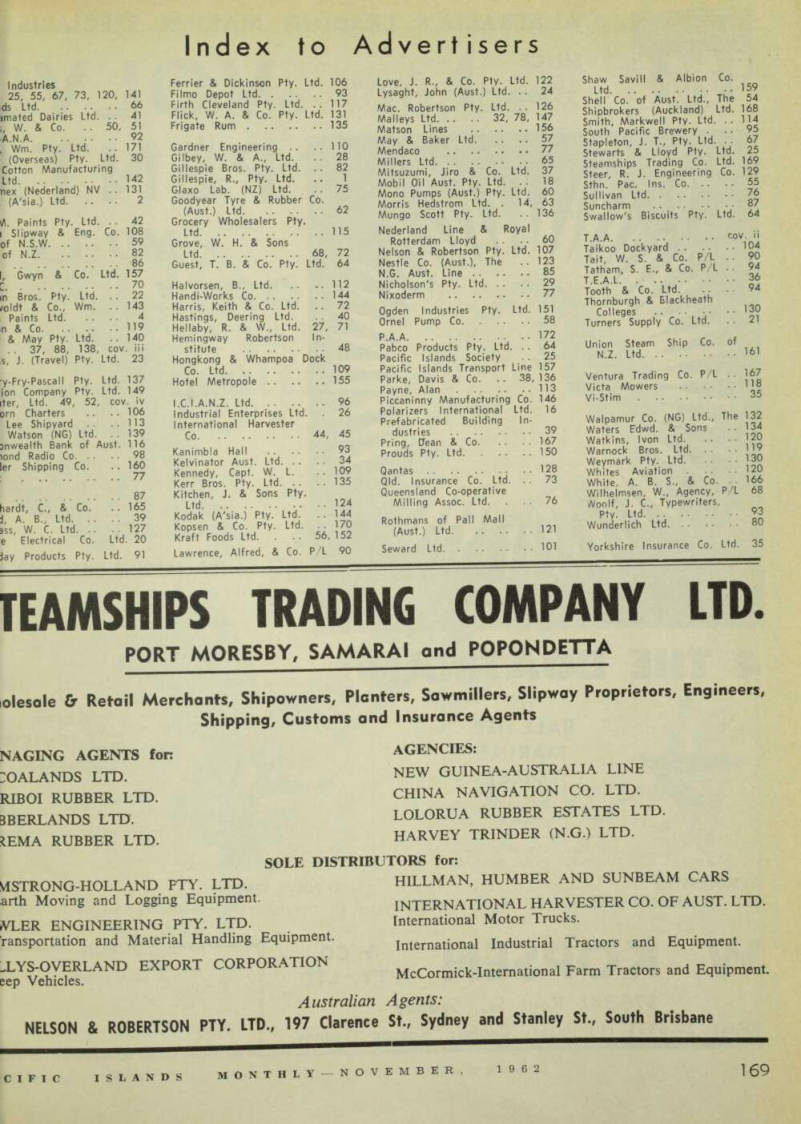 171
171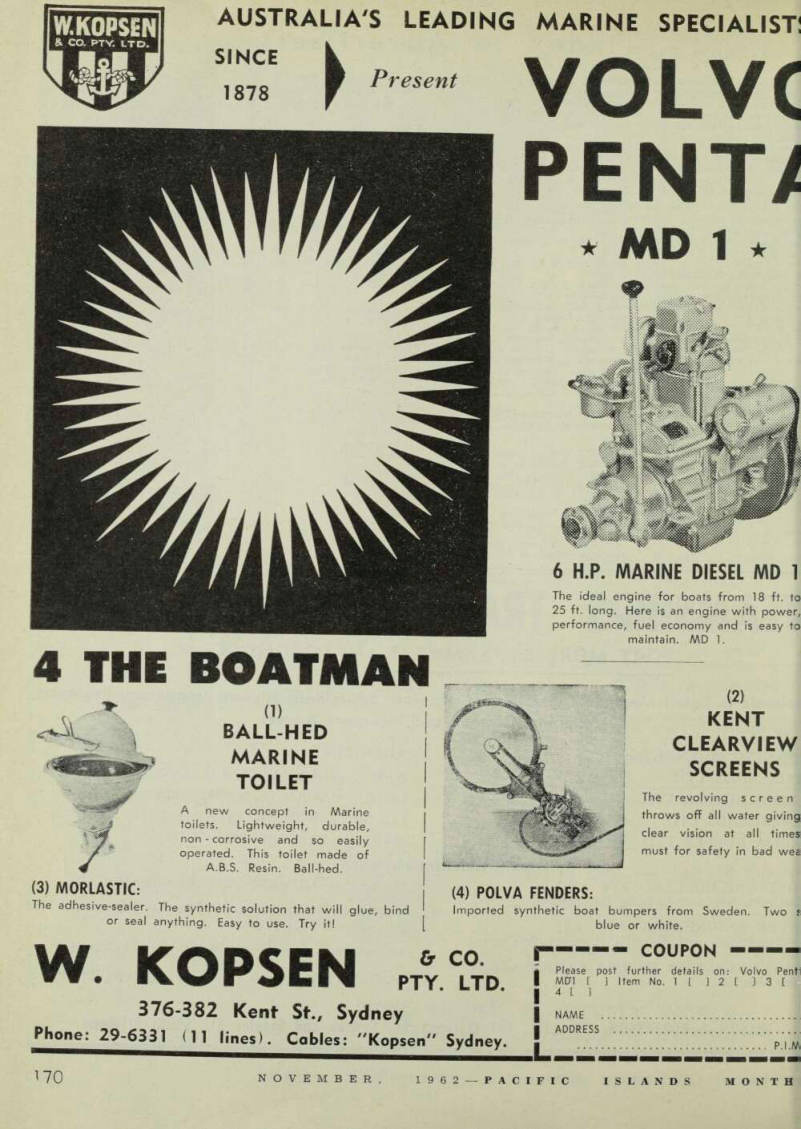 172
172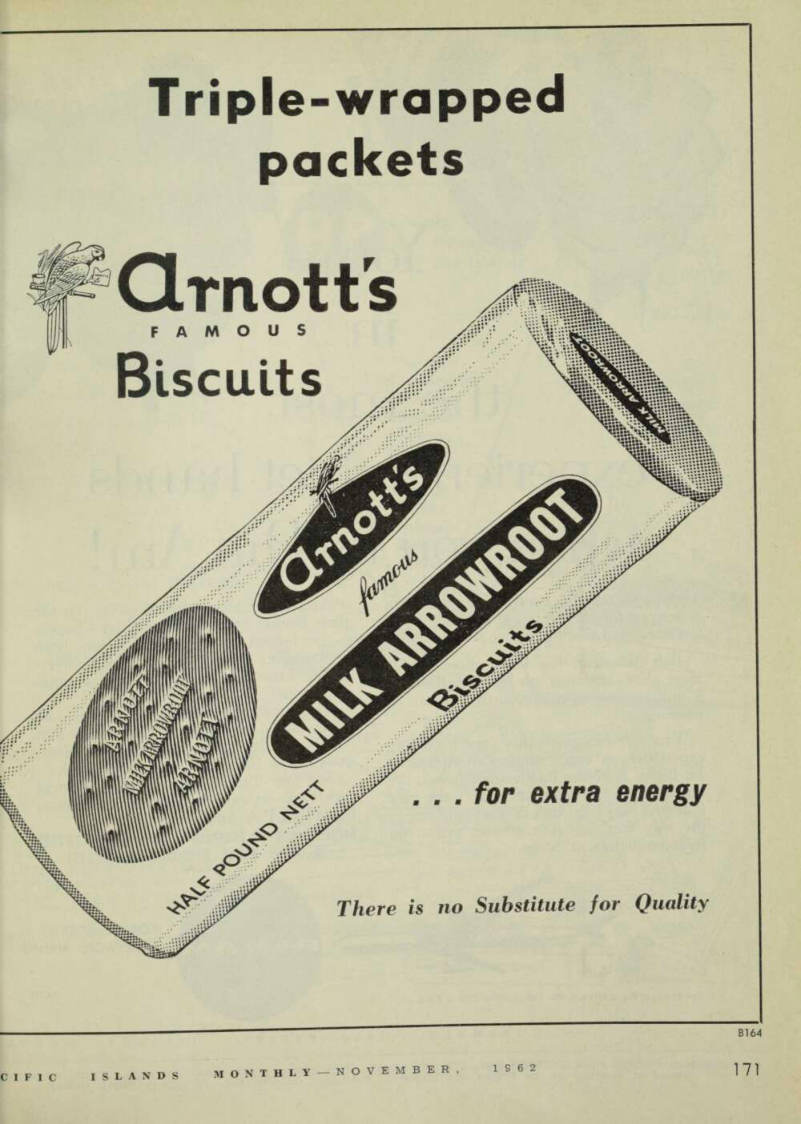 173
173 174
174 175
175 176
176