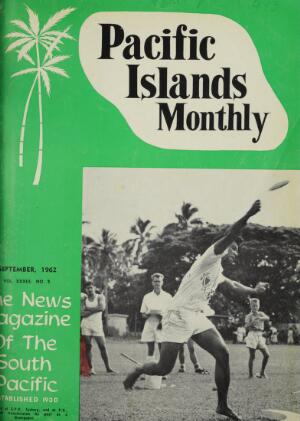
Pacific
Islands Monthly
Ieptember, 1962
Vol. Xxxiii. No. 2
e News igazine )f The >outh Pacific
Tablished 1930
[?]d at G.P.O., Sudney, and at P.O , or transmission by post as a Newspaper.
Advertisements & other items, pp. 2-5 (4 items)
Trans-Australia Airlines
FLY
throughout the Territory of Papua/New Guinea and to Australia Sunbird Services throughout the Territory TAA operates ‘Sunbird Services’ throughout the Territory of Papua New Guinea and 10 adjacent islands. Whether your destination is Mt. Hagen in the New Guinea Highlands, Honiara on Guadalcanal or any other of the 40 Territory ports served by TAA you will enjoy friendly service WHEREVER you fly with TAA Sunbird Services.
Sunbird Services to Australia Regular TAA services from Lae and Pon Moresby to the mainland link the Territory t« more than 90 ports throughout Australia. From any location in the Territory you need onhl one call, one ticket, one airline. TAA operates : huge network of more than 40,000 miles throughout the Territory, to Australia anu within Australia.
For your flight to anywhere in Australia, loy cost Tourist or Luxury First Class, TAA i the Friendly Way.
SAVE ON TAA TOURIST CLASS FARES BETWEEN PORT MORESBY AND AUSTRALIA For example, you save £B/15/0 (return) when you fly TOURIST to Brisbane with TAA.
Tourist fares from Port Moresby to Brisbane . . . £34/13/0 single, £69/6/0 return.
First Class fares from Port Moresby to Brisbane . . . £4l/4/0 single, £7B/1/0 return
Trans-Australia Airlines
TAA is genera! sales Agent for QANIAS throughout Papua/Ne »• Guinea.
BOOKINGS: „ ~,,
GOROKA; Airport, Phone 8. LAE; Coronation Drive. Airport Centre, Phone 2311.
MADANG; Kaislan Avenue, Phone 78 or 166. PORT MORESBY: Musgrave Street. Phone 2101 RABAUL; Mango Avenue, Phone 2567 or 2702 or any authorised TAA Agent.
Iron in comfort without
fatigue with the new . . .
LIU L
Kerosene Self-Heating (RON
Pre-heats with methylated spirits in 90 seconds.
Burns for 2 hours on one filling.
Built-in pump and large filler opening.
Easily dismantled for servicing.
Heat is evenly applied over baseplate.
Model No. 615 Representatives for the Pacific Islands: OBERT GILLESPIE PTY. LTD., ROBERT GILLESPIE (N.G.) LTD., PEARCE & CO. LTD. 2 Young Street, SYDNEY. Rabaul, Port Moresby, SUVA.
Iso 334 Queen Street, BRISBANE. Lae, Madang.
NOW!
NEW STYLES IN
"DURABESTOS 1
WALLING
21 rr £ u\' tr*.
lovelier homes at lower cost
Good news! You can now choose Wunderlich Autoclaved “Durabestos” in four distinctive styles.
Economical to buy, inexpensive to erect and totally unaffected by white ants or weather.
ILOG CABIN for the long, spacious look in today's homes. Quickly and easily erected, immune to the elements.
2DURAWALL
grooved vertically sheets reflect sunshine and shadow in ever-changing patterns to give your home an air of distinction. 3RIBWALL gives a board and batten appearance —one fixing operation for a sheet 3' 1 y /i " wide.
Easily sheathed to timber frames—ideal for interiors or exteriors.
•• DURABESTOS" WALLING
Manufactured and supplied by Asbestos-cement Division ✓ Head Office and Showroom: 393 Cleveland Street. Redfern. 69-0366
4 WEATHERBOARD
traditional weather board styling but fireproof, so you save on insurance premiums. Lengths: B', 9' and 10'.
Free colour leaflets available on application to Wunderlich Ltd., Box 474, G.P.0., Sydney.
S3.CAC.I
1
lF 1 c ISLANDS MONTHLY SEPTEMBER, 1962
2
SEPTEMBER, 1962 PACIFIC ISLANDS MON
Pacific Islands Monthly
A News Magazine Circulating in Australia, New Zealand And The Pacific Islands
Contents
No. 2. Vol. Xxxiii.
September, 1962
People 5 Indonesian Take-over Poses Many Problems 15 Australia Acts to Avoid NG Border Disputes 17 Australian PM on NG Trustee Report 18 West Samoa-NZ Sign Treaty of Friendship 19 Burns Philp's Consolidated Accounts 19 West Samoa Not Yet Admitted to
Spc 20
Faster Pace Needed with South Pacific Games Organisation 20 Tragic Death of American Samoan Official 21 Missile Base for French Polynesia Reported 21 Details of Cook Islands' Executive Committee 21
Commentary 23
Spotlight on the Samoan Islands 25 New Fiji Handbook Released 37 SYDNEYSIDER at Home Base 39
Territories Talk Talk 41
Peter Plowman Gives a New View on the "Joyita" Mystery 45 Rabaul's Never-never Bus Service .. 51 An Odd Race to the Beehives 51 American Samoa Prepares for TV .. 53 New Caledonia Battles for the Ashes 57 P-NG Census Figures Tell a Story ... 61 Death of Mr. T. H. Manning Recalls an Aviation Story 63 Palmyra: Plans for an Organised Paradise 67 Day by Day in the Cook Islands ... 71 The Man Who Fought the Rhino Beetle in Fiji 71 New BSIP Liquor Laws Appear to be Working Well 75
Magazine Section 77
Pacific Ships and Yachts 103
Pacific Report 118
Deaths of Islands People 149
Travel Talk 150
Shipping, Airways Timetables 153 Commerce and Produce 161
THE COVER: All over the South Seas there are scenes like this one, as the islanders get into training for the First South Pacific Games, to be staged in Suva next August. For a story on what progress is being made with the organisation of the Games see p. 20. The cover picture of the athlete throwing the discus was taken by Rob Wright, of the Fiji PRO, on a recent visit to Tonga.
Advertisements & other items, pp. 5-6 (4 items)
A Product of Pacific Publications Pty. Ltd., 29 Alberta Street, Sydney
Publisher: R. W. ROBSON.
Editors:
[ JUDY TUDOR STUART INDER
Manager: SELWYN HUGHES.
TELEPHONES: MA9197, MA7IOI,
MA 4369.
G.P.O. BOX 3408, SYDNEY,
elegraphic Address: PACPUB, Sydney.
ANNUAL SUBSCRIPTION RATES;
I (Aust. currency; includes surface postage) 'acific Is. —P.-N.G., Fiji, Samoa, Norfolk, Nauru, 8.5.1., Cook Is., Tonga, G.&E.
Grp., Niue, New Hebrides, and other Br. Pacific Is £1 4 0 rench Pacific Territories and Dutch New Guinea £1 7 0 iustralia and N.Z £1 10 0 1.K., British Commonwealth and Foreign (40/- Stg.) £2 10 0 I. and U.S. Pacific Territories ($7.00 U.S.) £3 13 ingle Copies (postage extra) 2 6
BRANCH OFFICE IN PAPUA-NG
•acific Publications (NG) Ltd., Theatre aiding. Fourth St., LAE. Tel.: 2577. Miss Pat Robertson, Manager.
BRANCH OFFICES IN FIJI:
uva: Fiji Times Building, 20 Gordon St.
Tel.: 4043.
Autoka: "Fiji Times" Office, Vidilo St. Tel.; 420.
REPRESENTATIVE IN N.Z.:
J. D. Whitcombe, P.O. Box 5179, Auckland.
REPRESENTATIVE IN HAWAII:
C. Spencer, 203 Yap Bldg., 3465 Vaialae Ave., Honolulu. Tel.; 775538.
REPRESENTATIVE IN U.S.A.:
t G. Craib, Box 1455, San Francisco 1» California. Tel.: Mission 8-1075.
REPRESENTATIVES IN U.K.;
V. D. Ashburn, 13 Rood Lane, London, E.C.3. Tel.: Mincing Lane 8633.
A. Mackenzie, 4A Bloomsbury Square, London, W.C.I. Tel.: Holborn 3779.
MELBOURNE OFFICE; Newspaper House, 247 Collins St. Tel.; 63.7053.
AGENTS: All main trading firms and , stores in the Pacific Islands.
Pacific Publications Pty. Ltd., is the Australian agent for THE FIJI TIME'S.
September, 1962 Pacific Islands Mont
Walpamur paint made in Port Moresl
is so different from the paint
we make in Perth...
or the paint we make in Dublin or Durban, for that matter! Every part of the world has its own set of requirements and we produce special paints to meet them. At the Walpamur plant in Konedobu, Port Moresby, we have developed paints for tropical conditions, containing mould-resisting fungicides.
For example, Walpamur Coloramic Gloss is a superb alkyd enamel with a brilliant gloss finish, of outstanding durability for both outside and inside. It flows smoothly and evenly, comes in 32 captivating colours, and has a covering capacity o f sq. ft. per gallon! there’s Walpamur Co mic Satin, a semi-gloss for interior use. Steamtant, washable, quick-d this is an ideal paint for ren’s rooms, kitchens and rooms. In fact, Walpamur : quality paint for every pu d % m Write for free colour cards and information to
THE WALPAMUR CO. (N.G.) LTD.,
A MEMBER OF THE WORLD-WIDE WALPAMUR
Lawes Road,
GROUP OF
Konedobu, Port Mi
PAINT COMPAQ
People
isects in general and crickets in Eicular, interest young Dr. Richard fenport and his wife, Janice, he two scientists, now in New pea. are sponsored by the lonal Science Foundation in jjhington, DC. Primarily, their k lies in insect cytology, but dur their New Guinea trip crickets are iving their main attention.
Issue samples of new cricket des are sent to Melbourne Uni ity for classification and already IDavenports have a number of Is” to their credit.
Vo one has specialised in crickets L” Dr. Davenport said recently. [ spent half an hour at Nodup [caught six previously unclassified Imens.” he study of the cricket species [ lead to some interesting evolu- Bry discoveries. The Davenports sve the isolation of certain types jrarious islands will help unravel mystery of continental drift.
tr. D. E. Barnes, Senior Dental :er of the P-NG Department, has id an unusual solution to the »lem of keeping good teeth: Eat S fish, crocodiles, flying foxes, mas, possums and bananas. This diat the natives of Angoram, in Sepik District, do and they have best teeth in P-NG, he says. [hen Mr. Barnes, who has been Jucting a dental survey in P-NG
A. Jayant, wife of the manager of Air International, Fiji; Lady Maddocks, wife [?]i's Governor, Sir Kenneth Maddocks, and A. D. Dixit, wife of the manager of lank of Baroda, seen at a TEAL cocktail in Suva's Club Hotel. Photo: Stinsons.
« 1956, examined the teeth of 84 pie of Angoram, he found only Iperson had a bad tooth. The st teeth he examined were in the lern and Western Highlands, fr. Barnes said natives living in stal areas generally had good h, in sub-coastal areas, average h, and in the Highlands, bad h. It seemed that teeth were good jad according to what the people and also the amount of goodness he soil that food was grown in. the Highlands areas, the people mainly sweet potatoes. The food [boiled soft and the people had Ichance to eat fibrous or tough I.
wo readers in widely separated i of the world have answered appeal (P/M, July, p. 155) for scription of Papua’s old flag. One le Rev. R, E. S. Taylor, of Port quarie, New South Wales, who a Papuan flag in his possession, other is Mr. E. L. Mauseth, of sn, Minnesota, USA. r. Taylor describes the flag as aion Jack, in the centre of which circular badge. The badge is on bite background. It has a royal ro in the middle, surrounded by sprays of green laurel leaves tied le base with a bow of blue rib- Between the base of the crown the bow is the word “Papua” •lack. r. Taylor lived in Papua between and 1930, and was twice visited Sir Hubert and Leonard Murray t stationed at Dobu Island Mis “l have always been interested lags, and, in 1931, I took the ty of writing to Mr. Leonard ray, HE’s private secretary, ask if I might have a flag that had 5 service at the masthead of the ernment vessel Laurahada on His
here at the Rabaul annual police ball are Kathy Ann Dixon and Mr. Cyril. Holland, ger of the Rabaul Trading Company. The held in Xavier Hall, was an outstanding success.
cllency’s travels through the Ter ry. This request was graciously ded to.” fr. Alden tells us that the Papuan [is described in the National graphic Magazine for October, I He says the crown on the ie is gold, and that the inner cap Id and blue. k. Alden spent three years in the Be with the US Army Engineers, ping a year in New Guinea. [got to know many parts pretty that is why your magazine is Iterest to me. I got acquainted I quite a few Australians and corresponded with some ever
[Australian Minister for Terri , Mr. Hasluck, has announced jirement of Mr. Justice Bignold he Bench of the Supreme Court ma-New Guinea.
Justice Bignold, who was born nbilli, NSW, was educated at Jney Church of England Gram jchool and admitted to the in 1923. He was Crown Officer of Papua from 1928 to During World War II he with the RAAF. ards the end of 1945, he re to Port Moresby as acting Law Officer for the Provi fAdministration. In 1948 he
time off from more serious matters for game aboard the "Monterey" in Pago arbour was this group of delegates the Fifth South Pacific Conference, invited the whole conference aboard [?]kfast that day. Making his shot is Douglas-Scott, Australian Consul in Pieter Merkelijn, NNG Information Officer, stands by.
I made a judge of the Supreme irt of P-NG, and he served con busly on the Bench from then on. ★ ♦ ★ Ir. J. P. Minogue, QC, a Mel me barrister, who has been Dinted to replace Mr. Justice Hold on the P-NG Supreme Court ch, will leave for Port Moresby y in September.
Ir. Minogue was born at Seymour, toria, in 1909, and was educated >t. Kevin’s College and the Uni ity of Melbourne. He was ad ed to the Victorian Bar in 1939. b served in the Army from 1940 [was mentioned in Despatches, [attained the rank of lieutenant nel and was a General Staff er of the New Guinea Force during the Owen ley campaign. In 1945-46 he was :hed to the Australian Military lion at Washington.
iss Julie Booth, of Lord Howe d, has given a painting valued 00 guineas to the Poliomyelitis Physically Handicapped Society rdney. iss Booth, a deep-sea diving en ast, painted the picture under r at Lord Howe Island. The as took her three months to com * * * rgeant-Major Vouza, the most iguished Solomon Islander in Guadalcanal campaign, is still 1 strong at about 75, which is Dr a Solomon Islander. A friend \M, writing from Honiara, says 5 “still erect and with a clear (goes on: “Vouza’s wife, a splen ?oman, whom he always said he led for love, gave birth to both laughters during a long canoe One daughter is married and s a trainee midwife. His son, of
and Mrs. James Eliott, of Suva, after wedding at the Sacred Heart Cathedral recently.
manages his coconut plantation his gardens,” * * Hs itking his first visit to NZ since lendence, West Samoan Prime Bter Fiame Mataafa in August ■ed NZ Prime Minister Holyoake feamoa had no intentionn of ling a possible lucrative banana I with Japan to interfere with r the quanity or the quality of long-standing Samoan banana ;et in NZ. This matter has [causing some apprehension in NZ Government, (First trial aent of Samoan bananas for i went north from Apia on ist 13. Samoan Agricultural for B. E. Parham and Finance iter G. F. D. Betham flew to I later). In NZ the Samoan I Minister also expressed his [ concern” over America’s t nuclear test in the Pacific,
car tour of Australia’s inland lade by P-NG Assistant Admini Dr. John Gunther and Mrs. er, during a four months’ stay ptralia which ended in August, funther was recuperating from iteration which he underwent after arriving—and did it in energetic fashion by driving Queensland to Darwin, then [through The Centre to South ilia (including a visit to tera). In Alice Springs Dr. frs. Gunther exchanged gossip pid Rabaul-ite Father James h a former P-NG MLC, who days is parish priest at Alice s. Before returning to the )ry Dr. Gunther put his son on an aircraft to Ohio, USA, he is taking up an American ervice scholarship for the next I months.
lien (left) and Conrad Hurd, young [?] attached to the US Summer institute guistics, are now at Ukarumpa, NG, [?]g what could be their lives' work— [?]g dictionaries, grammars and general tion on native tongues. About 140 students are stationed throughout New Their job is to translate the New [?]nt into a number of native tongues, [?]anslate any one native language into stament, and to compile associated ties and grammars could take trom [?] 15 years or a lifetime", Jerry Allen said recently.
Advertisements & other items, pp. 7-16 (11 items)
5
C 1 F I c ISLANDS MONTHLY SEPTEMBER, 1962
On F1J1...
TWO NEW BOOKS
HANDBOOK OF FIJI
(Ist Edition) —224 pages. Published August, 1962.
This new "Handbook" is as comprehensive and authoritative as our "Pacific Islands Year Book" and "Handbook of Papua and New Guinea", which are recognised as standard reference books.
The "Handbook of Fiji" contains all information about ..Fiji—history, geography, details of administration, taxes and tariffs, education, agriculture, industries, etc., etc.
There is a special TOURIST SECTION—what to see, where to stay, how to get there.
There are lists of Fijian Government officials, trading corporations, manufacturers and business firms, and social and sporting clubs and associations. Numerous sectional maps—together with a folding coloured map of the whole Group —are included; also a detailed index of place-names and subjects.
A handy reference book with a wealth of information on Fiji.
PRICE: 15/-, plus 1/3 postage, etc. (2/3 to foreign countries), or $2.00 U.S. (including postage).
A FAMILY IN FIJI
By Lema Low —160 pages. Published September, 1962.
A delightful description of life on a small, isolated, coconut plantation on a beautiful island in the South Seas. Well illustrated — and a striking, artistic cover.
With charm, simplicity and great good humour, Daughter Lema describes the life and experiences of her family, from its arrival on a Fiji Plantation in 1928, through the Depression years of the '3o's, to the Yanawai gold discovery and the beginning of World War 11.
A Book for ALL the Family. The Ideal Present for a Friend.
PRICE: 18/9, plus 1/3 postage, etc. (2/3 to foreign countries) or $2.50 U.S. (including postage).
Order your copies now either direct from the publishers :
PACIFIC PUBLICATIONS PTY. LTD.
29 Alberta St., (G.P.O. Box 3408), Sydney, Ausf.
or from:
• "Fiji Times" Office, Gordon Street, Suva, Vidilo Street, Lautoka • Desai Book Shop, Suva and Lautoka • and at other booksellers and stores in the Colony • New Zealand —Mr. J. D. Whitcombe, P.O. Box 5179, Auckland • United Kingdom—Mr. W. D. Ashburn, 13 Rood Lane, London, E.C.3.
A FAMILY
INFUL
I 1 Fv&fit FuU&Xiti&ns'
HANDBOOK
OF FIJI
the most
experienced jet hands
when you fly Pan Am!
The hands at the controls of your Pan American jet Clipper make a world of difference—and that difference is experience.
Pan American has flown more jets to more places than any other airline. To date, a million and a quarter international jet
passengers!
You can recognize this superior flying experience on every single Pan American Jet flight. It shows in the smoothness, the quietness of the flight itself . . . the care that goes into Pan Am’s famous cuisine . . . the way Pan Am stewardesses make you feel completely at home.
And only Pan American offers you the giant Boeing Intercontinental Jet Clippers —the largest, most luxurious jets from Australia to Hawaii . . . the U.S. West!
Coast, London and on to major cities
in Europe!
The next time you flv, remember—ncr other airline in the world can match Parr American’s Jet Fleet—in size, equipment, world-wide coverage—and experience.
See your Travel Agent about your next trip. Or, you can make your reservations by calling Pan American: Berger House, 82 Elizabeth St., Sydney. Tel. 28 262 T 85 Collins Street, Melbourne. Tel. 63 6351 Clipper, Trade Mark, Reg. U.S. ,
WORLD'S MOST
EXPERIENCED AIRI
PAl> Pan American World Airways, Inc. Ltd., Incorporated in U.S.A.
ANZ
traditional
Service
The skill and experience of A.N.Z. Managers and staff are concentrated on the prime objective of conducting an efficient progressive bank. In that way we best serve our customers.
Service to the community has always been our aim. In addition to Cheque and Savings Accounts now being used by thousands of people in every walk of life, we provide comprehensive business facilities, including import and export transactions, trade and economic services, and a modern travel department.
A call or enquiry from you will be welcomed.
A*N*Z BANK
AUSTRALIA AND NEW ZEALAND BANK LIMITED
AUSTRALIA AND NEW ZEALAND SAVINGS BANK LIMITED
|ANZ.I6I.t29«.A|
9* W
Steam proof
jk
% Chip proof
Scrubbable
Decorate your home with
-pT'* TAUBMANS
har
REVELITE
FULL-GLOSS ENAMEL
... and for the new “soft sheen* walls, choose your colours from th Reveille Semi-Gloss Spectrocolor card * REVELITE FULL-GLOSS . . . diamond hard diamond bright all-purpose enamel. Perfect fo bathrooms, kitchens, toys, furniture, REVELITE SEMI-GLOSS: Just as hard-wearing a Revelite Full-Gloss, but with a subdued “sof sheen” that’s new and pretty for inside wall and all woodwork.
REVELITE FLAT: Scrubbable, matt finish foi inside walls and ceilings. In the same lovely colours as Revelite Full Gloss and Semi-Gloss
TAUBMANS „
HIVELITf
FULL-GLOSS
J*//purpose enamel All Taubmans paints bring you the of
SPECTROCOLOR
new, exciting paint colours that stay fresh year after year
Illp &
I jL*rfl
m y that’s the number of creamy rich caramels you enjoy in every long packet of Jl €. \IWt \ iv
W MAC. ROBERTSON’S
Columbines
BUY ENERGY RICH . . . GLUCOSE RICH
“COLUMBINES” TODAY . . .
SOLE PACIFIC AGENTS:
S. E. TATHAM & CO. PTY. LTD. 414 Collins Street, Melbourne Z7l*
every
ey.
B
JSCS
Mobilgas
SPECIAL
Mobilgas Economy Runs all over the world prove the extra economy and power of Mobilgas Special.
Change today and learn the difference!
makes your
car go
further
Mobil
TRUST YOUR MOBIL DEALER - HE’S THE CAR CARE EXPERT
World famous watches
available at Swiss Prices
Super waterproof Envoy Sea King becomes
a remarkable value offer from Prouds.
This is the Envoy Sea King, a Swiss watch specially designed to fulfil extra duties normally not expected from a watch. Waterproofed to 600 feet, it has a calibrated rotary bezel, plus the most advanced built-in features that signify accuracy under rugged conditions. The Envoy Sea King is one of the finest watch values from Switzerland —and you may choose this watch direct from Proud’s Bond in Sydney. The great savings available to residents outside Australia are shown at right. Prompt delivery is guaranteed. Proud’s reputation is your assurance of value and quality.
Prouds, official agents for Omega, Patek Philippe, the world’s finest watches, and Envoy by Huguenin, Write for free watch catalogue from Prouds.
Envoy Sea King waterproofed to 600 feet, rotary bezelled for timing dives, completely automatic, anti-magnetic, 21-jewel fine precision movement, unbreakable mainspring, stainless steel throughout.
Bond prices available only fo i esidents outside Australia.
rouas
If visiting Australia, a special welcome awaits you at any one of Proud’s 15 stores.
Address Mail Orders to: Prouds Pty. Ltd., Box 1502, G.P.0., Sydney.
24 energy breakfasts like this ii
every packet of "Weet-Bix
wmm \ m ■ :y.-^ W s*. ■' s - I / m
weet
'BIX
"HO •'»<u Here is the energy food youngsters need straight from Australia’s golden wheatfields! Toasted to tempting crispness. Served in a second and rich in true grain flavour, they keep your energy level up for hours! Great value, too, with 24 man-sized breakfasts in each large packet...about 1 Jd. a serving!
You will findt colour pictures your boys am every packe'e packets, too,"
“surprise" oft
Serve
WEET-BIX for ’superific’ enei
GI
IST
Gilbey’s Gin is one of those travelled people you will meet everywhere ... a true international, the same in all lands, not least Australia.
Gilbey’s Gin is an accommodating spirit, happy to be consumed in many ways.
It can be drunk with water and with bitters, with lime juice or ginger ale, with tonic water or that popular newcomer, bitter lemon, and in a host of cocktails, chief of them the ever-popular Martini, not forgetting the new Gilbey’s and Dubonnet.
In mixed drinks Gilbey’s Gin is supreme whether you are an old timer from Out East thirsting for a Singapore Sling or a hostess meditating what to serve
PERSONALITY
OF THE
MONTH
at young people’s party when heavy drinks and potent drinks are definitely out.
To lace a fruit cup, a very discreet quantity of Gilbey’s will provide a beverage to please everyone, harmless yet sophisticated, refreshing as a breeze off the sea on a summer night.
Everywhere young people are coming to recognize a hostess who doesn’t believe in the “do it yourself” system for her guests, who is willing to go to just that little extra trouble with a good mixed drink.
The basis of the best mixed drinks of the world, for tycoons or for teenagers, is Gilbey’s Gin.
Try it yourself ... we know you’ll agree.
GILBEY’S LIMITED
A GUARANTEED
SUPERBLY EVEN
SATIN FINISH ENAMEL
& Brii lim' PainH
. SATI\ FINISH
ENAMEL
*u» all COLOUR* r v V/
MANUFACTURED TO >WITHSTAN
ALL TROPICAL CONDITIONS
esists heat, humidity, mildew, fungus and mould! Satin-Tone gives beauty and long-lasting protection. Guaranteed free * rush marks. Dries to a beautiful, even semi-gloss finish. ruMi moiw. w u atin-Tone is soecially manufactured to stand up to the rigorous tropical climates. It dries hard—gives long-lasting prof, “andSwZ ceilings and all woodwork. It's unaffected by steam and cooking vapours wh.ch makes ,t itchens, bathrooms and laundries. You can scrub it without hurting or dulling its distinctive satin lustre.
I V.I Id •O/ woimwwi.it# killed colour stylists blended Satin-Tone's exceptional colour range. You can choose from 3ft pastels. See them now at your nearest British Paints Limited depot or store. wide selection of strong coll Dft pastels. See them now at your nearest oririsn raims , APORTANT: For maximum protection against fungus and mould growth always treat new or previously painted sur aces wit mited's anti-mould solution.
Enquiries are invited from storekeepers to act as authorised agents for British Paints quality products.
Write to: British Paints Limited, Box 43, P. 0., Bankstown, N.S.W., Australia.
BRITISH PAINTS
LIMITED
SATIN FINISH ENAMEL
SOLD
Burns Burns Burns Burns Burns Burns Burns Burns Burns Burns Burns Bulolo Lae
AND RECOMMENDED BY:
NEW GUINEA:
Philp (New Guinea) Limited: Wau Philp (New Guinea) Limited: Philp (New Guinea) Limited: Philp (New Guinea) Limited: Madang Philp (New Guinea) Limited: Goroka Philp (New Guinea) Limited: Wewak Philp (New Guinea) Limited: Kavieng Philp (New Guinea) Limited: Rabaul Philp (New Guinea) Limited: Kokopo Philp (New Guinea) Limited; Daru Philp (New Guinea) Limited: Kainantu Kam Hong: Lae Scotts New Guinea: Lae fang Mow: Wewak Laurie Chan: Rabaul Wong You: Buka Passage —Bougainville
PAPUA:
Burns Philp (New Guinea) Limited: Port Moresby Burns Philp (New Guinea) Limited: Boroko Burns Philp (New Guinea) Limited: Samarai Burns Philp (New Guinea) Limited; Popondetta
HONIARA:
A. C. Blair Ltd.: Honiara Ho Kee: Honiara
FIJI:
Burns Philp (South Sea) Co. Ltd.
Burns Philp (South Sea) Co. Ltd.:
NORFOLK ISLAND:
Burns Philp (South Sea) Co. Ltd.
Norfolk Island
6
SEPTEMBER, 1962 PACIFIC ISLANDS MONT
7
C 1 F 1 c ISLANDS MONTHLY SEPTEMBER, 1962
8
SEPTEMBER, 1962 PACIFIC ISLANDS MONT HI
9
1 C ISLANDS MONTHLY SEPTEMBER, 1962
10
SEPTEMBER, 19 6 2 -PACIFIC ISLANDS
11
lFlr ISLANDS MONTHLY SEPTEMBER, 1062
September, 1962 Pacific Islands
13
Fl c ISLANDS MONTHLY SEPTEMBER. 1962
14
SEPTEMBER, 1962-PACIFIC ISLANDS MOW
Indonesian Take-Over
Australia's New Frontier With Asia
Indonesian Take-Over Problems For P-NG
From Our Canberra Correspondent
Australia will accept Indonesia’s assurances that she has b ambitions in East New Guinea—despite Indonesia’s broken mmises that she would not use force or threats of force to tin her objectives in West New Guinea.
IS is clear from the explanation which the Minister for External rs, Sir Garfield Barwick, on ist 21 gave to the House of esentatives on the handover of jtrlands New Guinea to the UN [next May, to Indonesia, rtainly, Sir Garfield gave Indo plain warning that even though S had forced acceptance of the [ion in NNG, Australia would [up for her rights in P-NG. [e will maintain the full integrity ir country and its territories, in i task we have pledged allies,” id. his I am sure Indonesia realises respects. I am sure that they e we are prepared to approach roblems affecting the area in a of continuing co-operation.
As far as No is concerned, we shall do so both in the period of UN administration which lies ahead and in the subsequent period of adminis tration by Indonesia.”
The “pledged allies”, of course, are Britain and the US.
And Sir Garfield’s comment fol lowed hard on the heels of a bitter statement by the Netherlands Premier, Professor De Quay, that his Govern ment had agreed to sign the hand over agreement because it “could not count on its allies”. In The Hague, visiting Papuan leader Herman Wom siwor was reported as saying: “I spit on the Dutch”.
It cannot be said that Sir Garfield’s exposition was very forward-looking.
Most of his long statement was de voted to the past rather than to say ing how Australia would meet the new problems which confronted her now that she had Indonesia, an Asian power, as her across - the - border neighbour.
But he did link past and future thus: “In the perspective of time, the Government’s part in the solution of this problem will not only be seen as right and proper, but also as most creditable and valuable to Aus tralia and her best interests . . .
“Although many new arrangements may need to be made, it would be wrong to begin this closer association with Indonesia with any sense of fore boding or recrimination.
“We have proclaimed our friend ship for the peoples of neighbouring Asia, including specifically the peoples of Indonesia.”
Why did Australia act as she did?
Barwick put it this way: “The result which the agreement produces is a part of history with which Australia must live. In a real sense that result was beyond our con trol, although carrying significant con sequence for us . . .
"If any should have contem
(Continued on p. 145)
lated a military adventure, none f the countries of the West— nd particularly those with whom iustralia has the closest asso iation—were at any relevant me willing to maintain a Netherlands administration by ulitary means ” hat seems to explain the final [es of events. jut what of the background? Why America withdraw support from [Dutch?
D the long term there was the item belief that it would be im sible to muster sufficient Asian port in the UN for anything which Dured of “colonialism”. There was i the fear that denial of NNG Indonesia indefinitely could have fed into the hands of Indonesian nmunists. laid Barwick: “I believe that the •rts of the US and others, in ling Australia, have prevented the
outbreak of hostilities from which nobody in the area, including the Papuan inhabitants, could have profited.”
All in all, the main differences between the agreement which the Dutch and Indonesians signed on August 15 and the original proposals put forward by a former US diplomat, Mr.
Ellsworth Bunker, last March were differences of timing. , , The original Bunker plan provided for the transfer of admiinstraon from the Netherlands to a UN authority for a year and for the transfer to Indonesia during a further year.
It also provided for an opportunity for the Papuan people to make a free
choice on their ultimate political status.
Indonesian pressures succeeded in cutting the trasition times. while negotiations proceeded, hundreds of Indonesian paratroops were dropped at intervals m NNG.
Barwick’s view, these actions, although small, could have grown to the sta B e where outside powers would have been drawn in “and large-scale, embittering warfare introduced into area ”
After the signing of the agreement it was anno unced that the UN would pro bably take over from October 1 (after the agreement has been ratified by the General Assembly) and that although the handover to Indonesia
uld not be until May, Indonesia uld be allowed to fly her flag in territory from January 1. This ; decision was an extra sop to ;karno, who had boasted he would re NNG “by the end of 1961”.
Vfter Barwick’s statement on gust 21 the Acting Opposition ider, Mr. Whitlam, criticised this icy of capitulation, fhere were many islands in the :ific which were in dispute between erent countries; it was Australia’s y to see that orderly processes •e evolved for ensuring peace in area. dr. Whitlam also criticised Sir rfield for glossing over changes in vernment policy toward NNG. le recalled that two earlier listers for External Affairs, Sir cy Spender and Lord Casey, had rmed that Australia had a right a voice in any talks which would nge the status of the Territory, knd when from 1954 to 1957 posals had been put forward for tch-Indonesian talks in the pre ce of a third party—like the iker plan—Australia had opposed se propositions in the UN.
Tie forms of the House forced , Whitlam to follow on after Sir •field without the usual adjourn it in which to prepare a speech, lad there been a formal debate re would have been other criticisms ome of them from members on the vernment side who have serious ;rvations about the way Govern it external policy has worked in ;nt months. i notable omission from Sir Car d’s speech was anything which Id be interpreted as a forward k at the problems facing Aus ia.
'here was nothing on such vital blems as the treatment which Aus ia will accord refugees from NNG 3 wish to move to P-NG. iight thousand people from the itani area have expressed a wish move to P-NG before the trans . to Indonesia next May—an ex ple of the headaches which must t the Government.
Vhen such big groups seek asylum y pose problems both of resettle nt and of maintaining good rela te with the Indonesians, fhere are other problems of de ce, of the new agreement on ad iistrative co-operation which must ely replace the previous agreement h the Dutch.
Jut in the narrowly - balanced Itical condition of 1962, the Aus- Han Government is clearly tread warily and keeping out of any dement which it can possibly avoid.
The Src?
Indonesia On
r he possibility of Indonesia ;oming a member of the South tific Commission was admitted [the Federal Parliament in gust by the Minister for lernal Affairs, Sir Garfield nvick. The possibility was t given prominence in July
“Pim” (P. 21).
nr Garfield had been asked I Mr. Sexton (Lab., SA) fther Indonesia, following her hisition of West New Guinea, Uld take the place of the \herlands as a member of
Spc.
nr Garfield said this was a Vtion which would have to I until the whole matter had n sorted out. But he added: \the Netherlands is a mem lof the South Pacific Com mon in right of its possession this territory, it may be that ft nesia, in due course, will be resented on the commission”.
Walk-out Of
The West
The virtual walk-out of Western civilisation from Netherlands New Guinea may be completed by the end of this year.
Announcement of the Dutch-Indonesian settlement in August was followed by the accelera tion of the movement of Dutch officials and their families from the territory from which Holland had done so much in the last 10 years.
By mid-August the evacuation by air was going on at the rate of 1,100 people a week. KLM was operating special charter services.
All building projects had stopped, commercial houses were carrying on with severely depleted staffs, Admini stration offices showed signs of dis integration. Many of the women members of public service families had helped staff the offices as clerks and typists.
As schools closed down (as school teachers return to Holland) and such work as agricultural extension ended abruptly, most departments in any case had far less to do.
The Administration took the attitude that officers entitled to leave should not be prevented from taking it, and many left for Holland with their families. Others prepared to go because, as one man said, “It is the end of the road now. Nobody has the heart to carry on under the UN and then simply hand over to Indo nesia. The role of the Netherlands in this part of the world has been played out”.
Amongst Government construction (Over)
Herman Womsiwor, Papuan leader: "I spit on the Dutch!"
work that stopped was the building of a new badly needed hotel in Hollandia, which had been started several months ago. Nobody expected a hotel would be needed now.
As a result of the walk-out, items of household equipment and such things as cars and motorcycles could be bought for a song. Expensive cars were being sold for as little as £4O0 —and what Government officers lost in the deal was being made up by the Administration as a form of reparations. From the north coast of Papua-New Guinea Australians were sending small ships to Hollandia to load up with the cheap items.
Several of the commercial firms, notably the Netherlands New Guinea Petroleum Company of Sorong, sent wives and children home com pulsorarily, but in any case most people didn’t have to be told twice that there was nothing to be gained but tears by staying on.
From outpost towns such as Merauke and Fak Fak civilians had been evacutated before the cease-fire agreement, to make it easier for the Dutch to supply their military forces who were engaging Indonesian para troopers.
Before the general evacuation started there were probably about 15,000 Europeans in Netherlands New Guinea, about 7,000 of them women and children.
The walk-out of the West coincided with a virtual retreat of the Papuans.
Hundreds of Papuan workers in the towns, with no work to do and faced with a new situation that they didn’t really understand, returned to their
villages where at least they would be fed while they waited for the next development.
With the UN announcement of the signing of the agreement there were many Papuan anti-Indonesian demon strations, notably in Hollandia, Sorong, Biak, Monokwari and Fak Fak. In the Baliem Valley, opened up to civilisation by the Dutch only a few years ago, 4,000 Papuans demonstrated as their Commissioner returned to Hollandia. They said if the Netherlands left they “didn’t not want any other foreigners”.
The same thnig occurred in the Wissel Lakes area when the Assis tant District Officer prepared to leave his district.
In Biak on August 10, 2,000 demonstrators, many bearing knives and spears, made it quite clear that the Indonesians were undesirable.
Many Dutchmen felt that the anti- Indonesian atmosphere was so strong that there could be bloodshed when Indonesia took over.
The Biak demonstrators told visit ing US journalist William Lederer (co-author of The Ugly American), who had just arrived in Biak on his way through from attending the Fifth South Pacific Conference in Pago, that the Papuan flag would not be brought down “for any foreign influence”. A leader of the demon strators criticised the US for not back ing up the move for Papuan in dependence.
Said a Dutch observer of the in
cident, “Lederer seemed irnpu At a demonstration in He by the National Papuan Fn series of motions was presen the Governor, one demandin self-determination be guarantee other proposing that the plebis decide on self-determination W during the period of UN Trus and not when the Indonesian taken over.
The Dutch in some areas? also concerned lest the Papuai ter and angry over the results,* agreement forced upon Hollam it out on the Dutch themselves; had seen the comment of U Womsiwor, who was in the when the agreement was sign spit on the Dutch who promr much and gave us tears.”
Go Underground?
Many Papuan leaders in they would continue to fight dependence underground.
Later in August the New Council elected Mr. Nicholaas* Council chairman to replar Dutch appointed chairman, Gelpke, and it was expected t other Government appointees? be replaced by Papuans.
Dutch and Indonesian troopj friendly contact following the fire, which became effectiJ August 18. At Merauke paratj turned up from the jungle an given the freedom of the to
(Continued on p. 144)
Brigadier G. I. Rikhye, a perso< representative for the UN Secretat General, U Thant, arrived in H landia on August 21 to supervise i cease-fire. The Pakistan Governmu was asked to supply 1,000 troops; a UN security force in N-NG.
Brigadier Rikhye told a Press c»: ference in Hollandia that he “hop a Congo situation would not be peated in N-NG.”
Trade Reactions Sydney trading and transport ganisations who do business w f Netherlands New Guinea in Augs were regarding the take-over October 1 with what might be call “hopeful pessimism”.
Nothing was officially known ab*< what might happen after that da or even what was happening cz rently. In the meantime they w.\ carrying on as usual.
A note of optimism unexpected came from a spokesman for Roc Interocean Lines, agents for most 3 the Dutch shipping lines and for t vessels Van Chon and Van Noa> etc., which trade between Austra and Netherlands New Guinea.
They were planning to carry on gardless, after October 1 and ev after May 1, 1963. “After all,” said, “whoever is up there, has have transportation and they’ve j
;at. Australia is closer than Indo a and supplies goods that Indo a cannot.”
Vith a laugh that sounded genuine ugh, he added: “Who knows— le might even increase!” )ther people aren’t so sure. The jemeyer Trading Co. (Aust.) Pty. which acts as an Island agent distributors in Netherlands New nea, was carrying on, business as al, and would do so until they ard differently”. ill they knew at the moment was it they read in the papers. They e shipping by the August ship ing Sydney; and had orders for September sailing also, here had been a set-back in srs for European consumer goods, to the evacuation of women and dren, but otherwise shipments for t, Sorong and Manokwari were mal. ls this firm exports almost ex ively to Netherlands New Guinea, future for them was clearly un ain. he Royal Dutch Airlines—KLM Iso plans to carry on, and wait see. As far as they knew in ney, the local NNG air company Kroonduif would continue to rate normally so long as they were ;. It was impossible, at this stage, lee what the future held. It was cal that KLM would continue to the big jet airport the Dutch had t at Biak, NNG, on its services n Australia to Europe. But who 3 say, these days? What is logical ;ome isn’t to others.
Advertisements & other items, p. 17 (1 item)
15
11 F I c ISLANDS MONTHLY SEPTEMBER, 1962
Animal Diseases Pose
‘Grave Threat ’ in NG
Foot and mouth disease, rabies and Newcastle disease —three animal scourges widespread in Indonesia— will pose a grave threat to the Aus tralian livestock industry when Indo nesia takes over Netherlands New Guinea, according to Mr. Colin C.
Blumer, a former chief of the Divi sion of Animal Husbandry in the New South Wales Department of Agriculture.
He warned in August: “Unless prompt action is taken, their exten sion [from Indonesia] to West New Guinea will be inevitable. Once in troduced to the New Guinea main land, they will inevitably spread to Papua-New Guinea because effective quarantine restrictions cannot be ap plied in underdeveloped countries.”
Main Points Of Agreement
The Dutch-lndonesian agreement for the handover of West I Guinea to a temporary UN Administration and then to Indonesia May 1 next year provides that: — • UN representatives will remain until the self-determina plebiscite in 1969; • The UN will take over the administration as soon as the Gen Assembly approves the agreement; • UN security forces will help Papuan police maintain orde. • The Papuan Volunteer Corps and Indonesian armed fa already in the territory will be under UN command; • Dutch forces will be repatriated and senior Dutch offii replaced as soon as possible by non-Dutch, non-Indonesian officials', the UN phase of administration; • As many Papuans as possible will be placed in administrative technical posts and the UN may employ staff provided by Indonesia fill remaining posts; • The UN may employ on a temporary basis all Dutch offii except those in top positions; • After the first phase of UN administration, Indonesian sea forces will replace those provided by the UN; • After May 1, Indonesia will be responsible for educatk social, cultural and economic development of the West Papuan pec Following the signing of the agreement it was announced at headquarters that the UN forces would take over from Oct\ 1, and that the Indonesian flag would fly from January I, 1963.
Advertisements & other items, p. 18 (1 item)
16
SEPTEMBER, 1962 PACIFIC ISLANDS MON?
Spotlight On
The Border
E The exact location of the \rder between Netherlands \d Australian New Guinea is lely to be of vital interest to ustralia when Indonesia takes 'er the Dutch half next year.
The first discussions on the yder took place in 1824 ien Holland and Britain rived at an understanding that plland was to have the half [ the island west of 141 I grees 47 minutes E. long.
In 1885, after Germany had hexed north-west New \iinea and Britain had flexed Papua, Britain and er m any agreed that h-many’s frontier with NNG rs the 141st meridian. But [ treaty about this was ever \ned between Holland and yrmany.
In 1895, Holland and Britain \ned a treaty fixing the border th Papua as beginning in the Uth at the mouth of the I nsbach River, a natural irker at 141 deg. 1 min. 48 L east.
The border continued in a night line north until it met z Fly River, which it Mowed as it bulged into itch territory. This got the i ole of the Fly into the Aus ilian side. It then followed z 141st meridian north.
These boundaries have re lined the same since Queens id and later Australia took ntrol of Papua, and since istralia took over the zrman New Guinea Pro \torate under mandate from z League of Nations in 1920.
As international borders go, ist ra Ha’s eastern border in !w Guinea is pretty poor )m every angle. Except at z mouth of the Bensbach ver and where it follows the y, it is merely a line on a ip which runs mainly rough inhospitable country. \ere has been a stone marker t the north coast since 1933, i d several other markers have ily recently been erected.
Australia's only administra te posts anywhere near the )rder are (from north to uth) Vanimo, Amanab, Teen River, Kiunga, Lake array and Morehead.
The north-western part of the Sepik district, showing position of the Dutch enclaves on the border between Trustee (Australian) New Guinea and Dutch New Guinea.
The enclaves are about 160 miles west of Wewak, and 50 to 80 miles south-east of Hollandia.
Australia Acts Hurriedly to Avoid NG Border Trouble
Avoid NG Border Trouble
The Australian Government has acted hurriedly in recent weeks to make sure that about 350 square miles of territory in Trustee New Guinea is not claimed by Indonesia when the Indonesians take over Netherlands New Guinea on May 1 next year.
SINCE June, the P-NG Administra tion has been rushing parties of administrative, civil aviation, public works and other departmental officials into the area to establish patrol posts, lay out air strips, survey jeep roads, and, in short, establish Australian control.
The area in question is 50 to 80 miles south-east of Hollandia and measures probably 35 miles from north to south and an average of 10 miles from west to east. Until recently, it has been administered by the Dutch.
The area comprises three enclaves —Waris, Waina Sowanda and Dera.
The Dutch thought it was their territory because of confusion over the position of the frontier —the 141st meridian—between Australian and Dutch New Guinea.
Several Dutch catechists’ schools and subsidised Dutch schools have been established in the area.
The Dutch apparently entered the region after stations they had at Waris and Jafi just inside their side of the border were abandoned when the natives moved their villages to the Australian side of the border.
The area is much easier of access from Hollandia than it is from the Australian side of the border so it is not surprising that the Dutch got there first.
The Dutch were the first to get an astro-fix to define the border, and
this showed that the area contained some scores of primitive villages within Australian territory. Australian patrols, getting through to the same region, confirmed the Dutch calcula tions.
Amicable arrangements were then made with the Dutch under which the slight administrative control exercised by them would, in due course, be taken over by the slowly advancing Australian patrols. The Australians eventually established a patrol post and airstrip at Amanab, close to the Dera enclave, and about 15 miles east of the border.
Then, some three months ago, came the Bunker-led discussions in the US between Dutch and Indo nesians, and, more recently, to the surprise of everyone, the Dutch were forced by the US to surrender Netherlands New Guinea.
When Australia’s Department of Territories realised what was happen ing, it sprang into what a Port Moresby correspondent has described as “urgent action” to extend Aus tralian administration to the frontier.
Chartered aircraft, and especially small planes owned and operated by Mission organisations, are being freely used to carry men, equipment and supplies into the area. Most of the traffic is between Wewak (Sepik District headquarters) and Amanab, an airline distance of about 160 miles.
The area which is thus being taken
oyer in a hurry lies generally between high ranges of mountains. There are said to be wide areas of fertile land, at an average height of between 1,000 and 1,500 feet, fairly thickly settled by primitive but friendly natives—people similar to those now under the control of the Dutch, west of the border.
The area lies west of the Hordern River (tributary of Sepik), south-west of Aitape sub-district, and west of Lumi sub-distict.
A message from The Hague in June that “two villages”, Waris and Jafi, previously thought to be in NNG, had been found on a re suryey of the boundary to be in Aus tralian Trust Territory reportedly brought angry howls from Indonesian newspapers at that time. The news papers are said to have protested against 3,000 “souls” being handed over by the Dutch to the Australians without consulting the villagers themselves. (PIM, July, p. 165).
No mention was made about the urgent action over the three Dutch enclaves in a Press bulletin about a survey of the Australian-Dutch border issued on August 15 by the Department of Information in Port Moresby.
This merely said that a survey of the border, begun in July, was almost finished.
“Both Australian and Dutch surveyors are now marking the boundary line,” the bulletin said.
“A senior officer in the Lands Department, Mr. Sparkes-Carroll, said today that the surveyors will put up tw'o cement boundary markers.
“These will be at Domongi (where the border meets the Fly River) in the south and Anguramat (where it meets in the north).
“Mr. Sparkes-Carroll said the Dutch surveyors came to Port Moresby in June to meet Australian surveyor, Mr. O. Dent. The men went to the Western District and left Daru (mouth of Fly River) by boat on July 14. They inspected the cement marker at the mouth of the Bensbach River and went on up the Fly River to put up two more markers.
“The Dutch surveyors are checking the position of boundary markers placed by Australian surveyors two years ago.
“The surveyors will arrive back in Port Moresby this month to talk about photographing the rest of the border.”
Advertisements & other items, p. 19 (1 item)
17
CIFIC ISLANDS MONTHLY SEPTEMBER, 1962
Sydney Meeting Sees
Red Threat To Ng
Strong criticism of the Australian Government’s attitude on the B New Guinea crisis, and particularly of External Affairs Minister Barwu “peace in our time policy statement in August, was made at a pu meeting in Sydney on August 27.
THE meeting was convened at short notice by a group of pro fessional men led by Dr. C. R. Huxt able, a retired physician, who de clared themselves disturbed at the trend of events in New Guinea and the Australian Government’s failure to do anything about it.
The meeting was attended by about 200 Sydneysiders, including Mr.
Bruce Miles, a barrister and founder of the United Australia Party, and a solid wedge of his supporters who have been campaigning to make P-NG Australia’s 7th State.
The audience was addressed by Dr. Huxtable, Sir Wilfrid Kent
Hughes, Liberal MP from Vk Rear-Admiral H. B. Fame (RAN, Ret’d), Mr. Kevin Dav executive member of the Demc Labour Party; and (unexpected!
Ono Aia, a New Guinea Highl; Sir Wilfrid traced the spre< Communism and Communist fluence since the last war, and culed Sir Garfield Barwick’s placent statement that all was in New Guinea and that Am had gained kudos for playin important part in engineering Dutch-Indonesian agreement.
Barwick’s “peace in our time his account of Soekarno’s “no territorial ambitions” was remin of Chamberlain after Munich.
Dr. Huxtable deplored the fac the UN Trusteeship Council ha commended what amounted to self-government in two years, altl UNO gives the Indonesians un least 1969 in WNG.
Ono Aia is president of the rabi Native Local Government ( cil, near Kainantu, Eastern lands. He was sent down her three months fact-finding by his; native people and has spent me it in Tasmania and Victoria, ’ he has addressed meetings.
He was accompanied by I Officer Barry Holloway, a Local, ernment officer at Kainantu. spoke fluently in Pidgin and I way did the free—very free— lation, leaving Sydney Pressmen eyed at the depth of erudition abstraction of thought that Ono- Pidgin—were capable of.
The sentiments, however, rerr the same in both cases, Ono advocate of the 7th State ide; P-NG. He said that if the Ten became independent as the wanted in two years it would n able to stand alone. His p wanted closer association with tralia—in fact, to become Austn The meeting unanimously pas motion calling Government attt to the dangers of the nation di into “policies of appeasementf relying too much on American] port.” It also called for rejectii the recent UN Trusteeship Mis proposal to give P-NG an electe;; liament within two years; andl demned Indonesian violation a UN Charter and pledges to Ami not to make war over WNG.
UN's NG Scheme
'Nonsense'
The United Nations Mission's pro posal that Australia should establish a 100-member Parliament in Papua- New Guinea by 1964 was nonsense, the Australian Prime Minister, Mr.
Menzies, said on July 31.
SPEAKING in a television interview in Perth, which received little, if any, Press publicity, Mr. Menzies said the proposal “just doesn’t make sense, quite frankly.”
Mr. Menzies had been asked: “What are you going to do about their [the UN Mission’s] suggestion for an enlarged and more representa tive Parliament?” He replied: “We have been developing local government under the administration of Mr. Hasluck himself, who has done a wonderful job.
“There are quite a number of local authorities now in which the indigenous inhabitants are members.
We now have them on the Legis lative Council.
“But anybody who knows anything about New Guinea with its hundreds of different languages and its area and its population, many of them remote and living in a very primi tive state—anybody who supposes that you can hand over self-govern ment to that community out of hand has not learned the lessons of the Congo, that is all I can say.
“We have a great responsibility for New Guinea. . . It would be a criminal act to abandon it.”
Advertisements & other items, p. 20 (1 item)
18
SEPTEMBER, 1962 PACIFIC ISLANDS MONTH
The BP Empire
First Consolidated Accounts
Assets Of SOM. In The BP Empire
'he big Australian company, ns Philp & Cos. Ltd., through foments, trading, planting and \ping activities, has a substantial >e in the economy of every South \fic Islands Colony and Territory, n New Guinea eastwards to wa, inclusive. The disclosure of j assets and general structure on lust 8, made in compliance with tralia’s new Companies Act, was \interest to the South Pacific trolly.
ITHERTO, only the balance-sheet [of the parent company (now 80 rs old) had been published. That 1961 showed an issued capital of K)0,000, plus funds accumulated rarious reserves, and in P/L ac nt, of about £14,000,000 —or funds, very fully pro ed by substantial assets, of over [OOO,OOO. The parent company Uly showed a profit of from 0,000 to £BOO,OOO (in the year er review, to March 31, 1962, it [ £987,266); and it has consis ly paid 10 per cent, on its sub bed capital, or £600,000 per um. lecause it obviously had a great lety of assets, which inevitably e benefiting over the past 17 rs from galloping inflation; and ause the huge organisation was died cautiously and conservatively an experienced board, so that the ual accounts have disclosed no re than was required by law, the sent condition and passible future BPs have stirred some financial imentators to a kind of frenzy, [ have kept the take-over wolves Dng today’s big-time speculators tinuously on the prowl, consequently, the consolidated Imce-sheet required by the new stralian law has been eagerly jited. Its publication on August fas an interesting event. It shows i the Burns Philp empire is even ger and stronger than had been posed. Its notable features: I Within the structure are no less n 54 subsidiary companies—30 istered in Australia, 14 in Papua I New Guinea, 3 in Fiji, 5 in New (land, 1 in New Hebrides, and 1 United States. Those of interest Pacific Islands are listed on page
(Continued on p. 147)
• The assets are shown thus:
of which no less than £26,690,809 are shown as “shareholders’ funds”. • But that total of £35,864,746 is not the end of it. An explanatory note says that £13,194,174 is the “book value” of what one critic calls the “prodigious shares portfolio” of BPs (and which is spread over a very wide range of leading stocks and shares); and that the “market value” of the investments is £22,700,000 —that is £9,000,000 more than “book value”, or cost. Some commentators say that the true value of the Burns Philp empire is not less than £50,000,000. • Because of unprofitable opera tions in the shipping sections, the value of the shipping assets, which cost £3,676,461, has been written down to only £50,000. The BP fleet of seven vessels, no matter how they are suffering under present-day con ditions. must be worth a lot more than £50,000. • The consolidated P/L Account shows that income from—
Deducted from that were over head costs totalling £1,511,813 (depreciation on fixed assets, £427,386; provision for tax, £573,511; tonnage replacement, £250,000; property replacement, £125,000; pro vision for long service leave, £100,500, etc.) leaving, with certain adjustments, a net profit of £1,119,278.
The notable thing is that the in come from investments about £BBB,OO0 —which would mostly be tax-free, is far more than sufficient to pay the usual 10 per cent, dividend on issued capital of £6 millions. The company now proposes to increase issued capital to £7,200,000, by a special issue (paid for out of re serves) of 1 for 5; but if this brings the dividend liability up to £720,000,
the income from investments still can take care of it, even if the group makes no profit at all out of trading.
Little wonder that the take-over wolves, from several countries, have been prowling around Bridge Street in recent years!
But the board, while emphasising the difficulties arising from (a) the burdens on Australian-owned ship ping; (b) unpredictable political situations in South Pacific countries; and (c) ceaseless inflationary pro cesses, shows every intention of carrying on. The board, incidentally, now comprises James Burns (chair man, and son of the founder); Joseph Mitchell, veteran general manager; P. T. W. Black, a senior executive; J. D. O. Burns, a senior executive, and grandson of the founder; F. E. Loxton, who has been associated with the company for over 60 years; and N. D. Pixley, who has had a lifetime association with P & O interests.
Political and economic theorists sometimes rave against the big, powerful companies which operate freely in our midst, in the name of private enterprise. But in these days of growing alarums and un certainties it may be comforting to those who direct South Pacific affairs to remember that they have as fellow-dwellers in the Islands a few corporations mainly Australian who have a huge stake there, and— like BP’s who now cautiously dis close assets of over £35 millions— the resources wherewith to defend
and sustain their interests.
Rwr.
Subsidiaries
Of the 54 registered Companies
listed as subsidiaries of Burns Philp
& Co. Ltd. the following are con
cerned with activities in the Islands:
Australia
Fanning Island Plantations Ltd.
Kulon Plantations Ltd.; New Britain Corporation Ltd.; New Britain Plantations Ltd.; New Guinea Plantations Ltd.; New Hanover Plantations Ltd.; New Ireland Plantations Ltd.
Pattons Slipways Pty. Ltd.; Robinson River Plantations Ltd.
Fiji
Burns, Philp (South Sea) Co. Ltd.; Corrie & Co. Ltd.; Narain Furniture Co.
Ltd.
New Hebrides
Burns, Philp (New Hebrides) Ltd.
Papua-New Guinea
Burns, Philp (New Guinea) Ltd.: BNG Trading Co. Ltd.; Hotel Moresby Ltd.; Samarai Hotel Ltd.; Local Laundries Ltd.; Port Moresby Freezing Co. Ltd.; Moresby Hire Services Ltd.
Papua Hotel Ltd.; Kulon Plantations Ltd.; New Britain Plantations Ltd.; New Guinea Plantations Ltd.; New Hanover Plantations Ltd.; New Ireland Planations Ltd.; Robinson River Plantations Ltd.
Usa
Burns, Philp Co. of San Francisco.
£ Fixed (freeholds and leaseholds, ships, plant and equipment) 7,695,009 Shares in subsidiaries . . . . 823,418 Investments 13,194,174 Current (cash, sundry debts, stocks, shipping consignments, branch balances, etc.) 14,078,194 Goodwill 74,221 Total assets of Group . . . 35,864,746
£ Profit on trading 1,853,150 Income from investments 887,930 Profit from sales of assets . 6,855 gave gross of 2,747,935
Friendship
N.Z., Western Samoa Sign Treaty Of Friendship
Western Samoa’s Prime Minis ter, Fiame Mataafa, and New Zealand’s High Commissioner in Western Samoa, Mr. J. B.
Wright, signed a Treaty of
Friendship between their two countries on August 1. The sign ing of the Treaty followed the
granting of independence to
Western Samoa on January 1 after more than 47 years of NZ administration.
Representatives of Australia, Nauru and the United States attended the ceremony, which was held at Vailima, first the home of Robert Louis Stevenson, then of NZ administrators, and now used by the Western Samoan Government for official functions. Western Samoans were granted a public holiday to celebrate the occasion.
The Treaty, in both English and Samoan, contains a preamble setting out the circumstances which led to the drawing up of the Treaty. This is followed by seven articles defining agreed areas of co-operation and expressing the spirit of the friendly relations between the two countries.
The Treaty provides that; • NZ will increase its technical, administrative and other assistance designed to help Samoa achieve its objectives in social and economic development. • NZ will help the Western Samoan Government to conduct its
international relations “for as long as the Government of Western Samoa wishes and in such manner as will in no way impair the right of the Government of Western Samoa to formulate its own foreign policies”. • When requested, NZ will act as the diplomatic channel for com munications with other Governments and international organisations and as Samoa’s representative at certain conferences; and that it will supply information on international affairs and undertake diplomatic protection and consular functions on behalf of Western Samoan nationals overseas. • The two countries will consult together on matters of mutual interest and concern; and will ensure that citizens of one country living in the other will be given equitable treatment, full legal protection and access to the courts.
The Treaty does not provide for any change in the nature of NZ aid, but it places on record the intention of the NZ Government to continue its assistance.
Commenting on the signing of the Treaty, the weekly Samoa Bulletin said: “New Zealand has for many years stretched a helping hand to Samoa and Samoans. Our young people flock there and are welcome and happy. Should we not then think of her as a sister country and stand shoulder to shoulder with her in times of stress should they come?
“Recently we published the votes passed by New Zealand Parliament
On a table draped with the Western Samoan and New Zealand flags, the Treaty of Friendship is signed by New Zealand High Commissioner Mr. J. B.
Wright and Samoan Prime Minister Fiame Mataafa Faumuina Mulinuu II.Assisting Mataafa is his private secretary, Mr. E.
Stehlin.
Photo: Samoana.
totalling £167,250 for aid to Samoa in 1962-63. Those figures did not take into account the fact that New Zealand has been meeting the full costs of the Apia Observatory, in cluding those for the year 1961 and 1962. For this year, estimated expenditure for the meteorological programme is estimated at £6,300 and for the geophysical programme at £5,500.
“In addition, New Zealand pro vided about £lB,OOO in 1961 and £9,000 in 1962 towards the opera tion of the Civil Aviation services at the Faleolo Airport.
“The figures quoted are those that can be identified. However, a num ber of services are performed by the New Zealand authorities without cost or at reduced cost to Western Samoa, e.g., in recruiting of can didates for the Western Samoa Public Service; in stores purchasing and in overseas representation.
“Last week a representative of United Press International visited Western Samoa. He had visited most of the countries which had achieved independence in recent years and had received huge grants for aid, but nowhere had he seen such wonderful work as New Zealand had done in Western Samoa, and all without world-wide publicity and fanfare of trumpets.”
The weekly Samoana commented: “In retrospect Samoa has been most fortunate in its emergence into independence. The smooth transition and evidence of goodwill towards the former administrator, New Zealand, and this final signing of the Treaty is a compliment to the basic goodwill that underlay New Zealand’s attitude and policy towards this country over her 47 years of mandate and trustee ship”.
Advertisements & other items, p. 21 (1 item)
19
ACIFIC ISLANDS MONTHLY SEPTEMBER. 1962
Membership
No Decision on SPC Membership
No decision has yet been made to admit Western Samoa to the South Pacific Commission as a member country. The matter was discussed at a meeting of Com missioners held in Pago at the end of July immediately follow ing the Fifth South Pacific Con ference. It had been expected that first moves would be made at that meeting to admit Samoa.
Mr. C. G. R. McKay, NZ Commissioner, pressed hard for a decision, but met with no success. It is understood that the matter is to be raised again at a later meeting.
Pacific Games:
'Faster Pace Needed'
From a Staff Writer in Suva
With only 12 months to go before sportsmen from all over the South Seas meet in Suva for the area’s biggest sporting event yet—the first South Games—many people here are concerned lest the organisers find themselves in trouble.
THE Games will take place in Suva from August 29 to September 7, 1963.
It is possible that the organisers will need more staff, and possibly more money, if the Games are to be organised successfully. There has been criticism that the pace so far has been too slow—not for the want of any enthusiasm by the organisers, but because of the shortage of men to handle the many problems that arise in a task of this magnitude.
There have been suggestions that the South Pacific Commission will offer to make organisers and possibly a publicity man available to help out, but nothing has yet been decided.
The organising committee which operates from Suva, has meanwhile written to Perth to obtain minutes of all the committees and sub committees which have been or ganising the Commonwealth Games there, in the hope that Suva can make some short cuts.
One of the problems appears to be that the dog has been inclined to chase its tail. For instance, the or ganisers have not drawn up a full list of the Suva events and circulated them to the Pacific territories, be cause they don’t know what events to organise until they know which terri tories want to take part in what.
There must be four territories com peting in an event before it can be held, otherwise it is listed as an “exhibition” event.
It has apparently been assumed in Suva that one of the main reasons why territories have been tardy in sending back lists of the events they’ll compete in is because they are still trying out their athletes to see what talent they have available.
This is true enough, but it also seems to be true that many territories have not informed Suva of their
events because they have been ’ for Suva to tell them what they propose to stage.
Territories can co-operate fcd plying the information as quio possible, and more work will hi from the Suva end.
The “official” events at the have already been decided as att soccer and tennis. But the Council has decided it will j it can get enough entrants, b<( golf, hockey, rugby, possibly 1 ming, weight-lifting, wrestling,,; and women’s basketball and boo None of this means that Sm not made progress with muchri planning. It has plenty off ideas, and now that the chairr the organising committee, Mr.i Common (Fiji’s energetic, working Director of Works) ■ turned from long leave andfc over the reins of the organn there will be additional drive\ Common is noted as a man wv things done.
In addition, all committee mn are aware of the many problem:
(Continued on p. 149)
New Guinea's Hope: P-Ng Athle
putting all their energies into train the Commonwealth Games in P[?] November—knowing at the san that this way they can achieve at the South Pacific Games in Suva P-NG Assistant Patrol Officer lean (right) breasts the tape at a Rabau ing. He recently set a new P-NGc of 100 yards in 10 seconds, an bright hope for the Gamesa
to be aware of them is a long way towards solving them.
The Fiji Government has made a financial grant for capital works, and as a result a new concrete stand seat ing 700 has just been finished at Buckhurst Park, a 10-minute car drive from the heart of Suva, which is to be the main venue for the Games. It is right on the shore of Laucala Bay, near the RNZAF flying boat base.
There is another 700-seat stand in existence, and an embankment has been built, together with turnstyles.
Fencing is going up, drainage is being completed, and part of the ground is to be regraded. Heavy rains have put some of the work be hind schedule.
A new basketball court, which will also serve as a boxing ring, has been built.
Teams and officials will be accom modated at a number of points around Suva, notably in the Nasinu Teachers’ Training College and in the Suva Grammar School hostel.
The accommodation committee is arranging accommodation in private homes for visitors who might find the many Suva hotels booked out for the Games. Official advice to those who want hotel accommodation is: Book now.
The fund raising committee is faced with the task of finding money for such items as javelins, hurdles, stop watches, bunting and all the many bits and pieces that go into a big sporting event.
One official said: “It wouldn’t sur prise us that once Suva has these things, other territories will be con tent to let us have the Games for the next few years so they won’t have to make similar pay-outs!”
The South Pacific Games are to be held every three years. Where the next venue is has not been decided.
Advertisements & other items, p. 22 (1 item)
20
SEPTEMBER, 1962 PACIFIC ISLANDS MONT
eported
issile Base Or Mangareva eported
pumea newspapers published an fficial report from Tahiti in f ust that France might establish issile-launching base on the island Mangareva in the Gambier archi \go of French Polynesia. The re- I said 2,000 technicians from nee would man the base.
IE publication of the report fol [lowed a story in the Noumea bi ithly paper Corail, quoting the ich newspaper Le Monde, that French Government was consider ate possibility of establishing an aic testing site in the Pacific, he French Minister for the Army, Messmer, was reported to have I the Assembly Nationale early illy that several plans were being ied for atomic tests “of which [is the installation of a base in
[Pacific.”
pcording to PlM’s Noumea cor pndent, Corail’s editor has been [unofficially that a mystery mis |which visited New Caledonia in ch in a French service Constella [ was investigating possible mis
punching sites.
rom time to time in the last two s, there have been reports from piea that France was considering fe the Pacific for atomic tests, j the Tahiti report about Man ya should prove correct, it will j into the limelight one of the bknown island groups in the
p Pacific.
he Gambier archipelago, of which Kareva is the main island, is it 1,000 miles south-east of iti. Beyond it to the Antarctic b is nothing but empty sea, dee noted for its pearls, the group 5w seldom visited except by occa al copra schooners. Its chief n to fame is that it was the first e in the South Pacific on which lan Catholic missionaries gained othold. That was in 1834 when population was between 5,000 and 00. pwadays, the population of the Ip is about 600. But in the vil f of Rikitea, the main settlement Mangareva, there is a cathedral ible of seating 1,200 people, he cathedral was built with ve labour by the first Roman bolic missionaries, whom many ers have blamed for the big de ise in the population. These ers allege that the missionaries 5d the natives with overwork.
Tragic Death
In Pago
From “PlM’s” Pago Pago Correspondent American Samoa was shocked in August by news of the drowning of the territory’s Secretary and Lieu tenant Governor, Mr. Eric J. Scanlan, 43, during a picnic party with his family at Aumi Beach.
MR. SCANLAN got into difficulties after he waded into the surf with his two-year-old daughter, Rienette, on Saturday afternoon, August 11.
His wife Marian, his brother, Herbert Scanlan, Leonard Yandall and several others went to the rescue.
Mrs. Scanlan brought her daughter to the shore after a hard struggle, but by the time Scanlan was brought in resuscitation efforts were to no avail.
Herbert Scanlan was meanwhile carried out to sea by a strong rip and had to be rescued by a launch an hour later.
Mr. Scanlan was appointed Sec retary in July last year after a brilliant career in the US Air Force.
He was born in NZ and was part- Polynesian. Besides his young daughter he had a son, David, at school in Pago.
Mr. Scanlan played a prominent part in the organisation of the successful Fifth South Pacific Con ference which had concluded only a week before his tragic death, and he personally met and spoke to most of the Conference delegates. His son David acted as a voluntary steward and runner during the Con ference.
His body was flown to the US for burial in the National Cemetery at Arlington, Virginia.
Eric Scanlan photographed in Pago at a happier time, just before he left the Air Force.
They'll Work Towards
Self - government
From a Rarotonga Correspondent The Cook Islands’ new Executive Committee, which is the forerunner to Cabinet Government in the Cooks, is widely representative.
THE Executive Committee was elected by the Legislative As sembly by secret ballot after the NZ Islands Minister, Mr. Gotz, in July, had outlined a plan to give the Cooks self-government without the group having to cut its links with NZ.
The Executive Committee will be a standing committee of the As sembly which will deal with policy, finance and development. It replaces the old standing committee on finance, which did not have any say in development and policy.
This year for the first time the Cooks has control of the budget, in cluding NZ subsidies (although it cannot control Public Service salaries and allowances, which are still a matter for the Public Service Com mission).
Members of the new Executive Committee are Mr. D. C. Brown (Rarotonga), Teariki Tuavera (Raro tonga), Tangaroa Tangaroa (Penrhyn), Vainerere (Atiu), William Estall (Aitutaki), L. Bailey (Euro pean member), Ngatupuna Matepi (Mangaia). These were elected by the Assembly, but in addition, at the Assembly’s request, two official members were appointed—the Gov ernment Secretary, Mr. L. Pitt, and the Treasurer, Mr. T. Perry. Chair man is the Resident Commissioner, Mr. A. O. Dare, who has no deliberative vote.
The plan for internal self-govern ment, the principle of which has been tacitly accepted by the Assembly, is to be raised in the United Nations by NZ, which will submit proposals setting out the remaining steps to be taken towards self-government.
Following this it is expected that a plebiscite will be arranged to see if the plan is acceptable to the people.
Meanwhile, a common roll will be established.
By mid-August there had been no announcement of the next move by NZ to put the plan into operation.
Advertisements & other items, pp. 23-24 (3 items)
21
CIFIC ISLANDS MONTHLY SEPTEMBER, 1962
22
SEPTEMBER, 1962 PACIFIC ISLANDS M O N T'j
Morris Hedstrom Ltd
(Artist's impression of Morris Hedstrom's modern new store in Thomson Street,
General Merchants, Produce Buyers, Importers and
Exporters, Ship Owners, Plantation Owners, Commission
and Insurance Agents.
HEAD OFFICE :: SUVA, FIJI
AUSTRALIAN REPRESENTATIVE: LONDON OFFICE;
Morris Hedstrom (Aust.) Pty. Limited, Morris Hedstrom Limited
Wales House, Barclay's Bank Buildings
27 O'Connell Street, 73 Cheapside,
SYDNEY LONDON, E.C.2
REGISTERED CABLE ADDRESS:
Deuba—Suva, Morrished—Levuka, Morstrom —Sydney, Suvamark —London, Morrisco —Nukualofa, Deuba —Apia.
CODES: All.
SOLE AGENTS FOR:
A. B. Bahco Primus Products British Drug Houses Ltd.
China Navigation Co. ‘Chula’ Copra Dryers Electrolux Limited Ford Motor Co.
General Electric Co., Ltd.
Goodyear Tyre & Rubber Co.
Morris Hedstrom Limited are Imperial Chemical Industries Ltd.
Matson Navigation Company Max Factor & Co., Inc.
Mobil Oil Australia Pty. Ltd.
Pacific Islands Transport Line Ransomes Sims & Jefferies Ltd.
Rootes Ltd.
Yorkshire Imperial Metals i’S AGENTS in Fiji and Samoa
FIJI
For Friendly Service and Complete Satisfaction it’s Morris Hedstrom Limited in
SAMOA -
TONGi
lotion Now Australia's
Commentary
Hand's Problem in
hER October 1, neither the 163,000 sq, miles or the 700,000 yes of West New Guinea will be concern of the Dutch who have ildered the burden in isolation without assistance for 15 years. now may be some sort oetic justice that Australia, which d the Dutch so lamentably in f time of crisis, cannot be quit t all so easily. he US State Department’s “great faction” at the outcome of the rtiations between Indonesia and Dutch on NNG; and the Aus an Minister for External Affairs’
Ipiness at a peaceful solution” t touched no sympathetic chords vhere in the SW Pacific.
Tiat has happened is the most cal piece of international betrayal i generation and has left those sst to it with feelings of •ehension, shame and something despair. he only claim Indonesia had to 3 was that it was Dutch; this been clear and recognised by all the anti-colonialists since 1949. ut in recent years many un able facts have had a way of g by-passed and this was one of
them. At the end of last year, the US Attorney General—brother of the US President—visited Indonesia and found that Indonesia had “a case” in its claim to NNG, although the white-anting had begun before that.
At some stage the United States had decided that its NTAO ally was
expendable if thereon hung a chance of saving Indonesia from Com munism. Where America led, others, including Australia, soon followed.
So determined were “our powerful friends” that nothing should stand in the way of that final “settlement”, even the puny barriers and safe guards, erected a few months ago, were pulled down in the end and rearranged to suit President Soekarnos’ ambitions.
The so-called Bunker plan that
originally provided for a two years’ cooling-off period with NNG under UN administration, ended with the period whittled down to seven months; Soekarno, who has been declaring for the last year that NNG “will be ours before the end of 1962 —or else”, is to be allowed to run up his flag in Hollandia on Dec. 31, this year—this on the decision of the UN Secretary-General, U.
Thant. And the 1,000 UN troops who go in as a security force on October 1, are to be entirely Asian and meet the approval of Indonesia— as though the mere fact of being European is now to be considered a disgrace.
But the thing is done. What happens now? The problem is primarily one for Australia. It is Australia —not America and no longer Holland—which now faces the practical task of living with an aggressive Asian neighbour.
Before long, Australia will probably
sign a Treaty of Friendship or Non aggression, with Indonesia—a piece of paper that will be valid only until the chips are down. Having had NNG awarded to him on a platter, President Soekarno will be the world’s most unusual dictator if he is content to rest on his laurels. , Will NNG, on the other hand, prove too big a mouthful for him to swallow? Will such economic and material progress as the Dutch have been able to introduce to the territory in the last 15 years, disintegrate and fade away? It’s possible; but unlikely. In this age, such wishful thinking rarely comes true.
Many people imagined, after Suez, that President Nasser would be un able to cope with the task, of running the canal; that under Egyptian management, the world’s most impor tant \vaterway would degenerate into a weed-filled, unusable ditch.
It didn’t happen. Nasser made the canal the show-case of his ability to] own this most valuable piece of Whatever else might be lacking in Egypt, nothing is denied the csdrial zone. who has successfully played .'the market of world opinion in tn£ last 15 years and won, would be a bigger fool than we have reason to believe, if he allowed NNG to revert to some kind of primitive, tribal Even if he cannot afford to keep it in the fashion to which it is j accustomed, he has only to continue to play both ends against the middle and he’ll get all the cash he needs for window-dressing. One thing that the deserving-poor amongst the new nations of the world can be sure of getting from both ideological camps is money.
' Although th e Dutch-educated native elite in West New Guinea that has been most vociferous in its anti-Indonesian view, is possibly more articulate and capable than similar groups in P-NG, its numbers are small and powerless. As well as powerless, members are now likely to become extremely bitter.
As Herman Womsiwor was quoted as saying, “I spit on the Dutch!” The rriaiss of the NNG people have no conception of what is going on and have ; been completely isolated from the Wrangling that has involved their country. Even if independence were given to them now, they could not rufi it without outside aid. NNG is a poor country without the natural resources that make administration easier.
After May I next year, Indonesia has at least six years to prepare these people for the referendum under which they are to select their
political future. Can anyone, doubt the outcome? With six years for brain-washing and propaganda, Indonesia can have few qualms about it. West Irian will be absorbed into the republic as the “independent”
South Moluccas were.
The qualms will be mostly Aus tralia’s. However much sham diplomatic pleasure her External Affairs Minister expresses over the end of the dispute, she does not like the idea of Indonesia squatting on her door-step. The haste over the “enclaves”, reported in this issue, is one sample of this.
What Indonesia does with those 700,000 Papuans in West Irian is going to continue to be of vital concern to Australia and to the nearly two million native people in her care. Handled the right way by the Indonesians, the West Irian Papuans could be 700,000 of the most effective weapons for President Soekarno’s next “new blow against Colonialism”. ☆ ☆ ☆
So They Drink: But
Where and How?
THE Australian Government’s in dulgent attitude in preparing to introduce liquor to Papua - New Guinea native people has posed many responsible natives with a problem they can’t answer.
No one has really asked them whether they want drink or not—and for people on the way to self determination, some purists may see this as a flagrant over-riding of native wishes. There is reason to believe that had a referendum been held amongst all adult natives, many re sponsible people and most of the women would have voted “no”.
It has already been seen, evidence given before the B Commission, that many native nesses confuse the Commision’;' poses [to discover ways and me;; relaxing prohibition] and think to decide whether liquor shou introduced or not. Surprisingly,, natives realise their own shortcc and are strongly against total n tion, while Europeans are eithi an open slather or complete: hibition. Amongst those who an open-go is the Director of I Affairs, Mr. J. K. McCarthy, other Europeans, also with Ion; dence in the country, are againi lifting of restrictions.
There are endless argument and against native drinking, the only reason why the be restriction is to be lifted is c racial discrimination, then thei; only two courses that can be sidered: The lid off everythini everyone, irrespective of race or or economic condition; or a coi prohibition on everyone, inc Europeans, Mixed Race or Asia If it were the latter, it would! ably empty the Territory of hr European population in short and this might be preferable long-term results of unres« native drinking. But these are issues and are now beside the If the only thing that must be is racial discrimination it is pu less arguing about permits, or i tions on spirits or confining dn to native clubs, or to the home, people will have to drink how like, what they like, where thee within the restrictions of the g liquor ordinance covering every* In that case, it seems high tim someone representing the public Papua-New Guinea took time consider the physical requireme increased numbers of drinken what is likely to happen in these if all restrictions are finally re They should take a look at dn conditions in the bars of place Fiji where the biggest proportf customers are Fijians and In until recently restricted to beer • ing.
P-NG has a far bigger popu than Fiji and it is obvious thae if the same proportions drink Territory, there is not a hotf there capable of holding them. .
And there are other problem! comparison with P-NG, thoi little Fiji racial prejudice, races there are used to dr] (and getting drunk) together.
NG they are not, and the fiti periments in this direction core explosive.
. . . Only just managed to keep up!
Some things moved so fast last month that Artist Walsh . ..
"Perhaps they could call It The Republic of Territoria. ROT for short!"
"Don't be so noisy Surawadi—that Dutch patrol might hear us!"
Advertisements & other items, p. 25 (1 item)
23
IFIC ISLANDS MONTHLY SEPTEMBER 1962
Appointment
New Hebrides Appointment
Mr. A. M. Wilkie, Financial Secretary to the Western Pacific High Commission in Honiara, has been appointed British Resi dent Commissioner in the New Hebrides to succeed Mr. J. S.
Rennie. Mr. Rennie has been made Governor and Commander in-Chief of Mauritius.
Mr. Wilkie joined the Over seas Civil Service in Kenya in 1940, and was seconded to the Western Pacific High Commis sion as Development Secretary in 1955, and promoted Financial Secretary in 1958. He is due to take up his new appointment in September.
Advertisements & other items, p. 26 (1 item)
24
SEPTEMBER, 1962 PACIFIC ISLANDS MONTI
Spotlight
On The
Samoan Is.
By Stuart Inder
In reporting the developments
in the South Seas from month to month, as PIM does, it is easy to fall into the error of overlook ing the wood for the trees. rPHUS when I was leaning over the upstairs verandah of Aggie Grey’s Apia hotel after a good break fast one sprinkling morning recently, looking down into sunny Beach Road and out across the famous harbour shimmering in the early sun, it slowly began to dawn on me that here, right in front of me, were sights and sounds of special significance. Their sig nificance was in their very normalcy.
Here came a scattered, scampering group of Apia schoolchildren, in simple tunics of different colours, chatting as they made their way to school. Here, from the opposite direction, came a horse and rider at a canter.
A town taxi a late model American car with a left-hand drive, for Samoan traffic keeps to the right pulled up below the verandah and honked for the customer who a few minutes ago had telephoned from Aggie’s. The driver got out, beaming, to carry the bags, Rat-tat-a-ta-tat! came the sound of a sharp drum beat from across the harbour, and into view from behind
. . . Only a man-made division separates the two Samoas, although each has developed its own way of doing things, as this on-the spot report shows . . .
GO PAGO IS DOMINATED BY MT. RAINMAKER. THE HARBOUR ENTRANCE
Is On The Right.
[?]A'S FAMOUS HARBOUR AND BEACH CURVES AWAY FROM HISTORIC
Mulinu'u Peninsula, Foreground.
P that was busily loading bananas a Fautasi, a long boat with ly 30 men at the oars, all strain n time to the beat from the man he stern as they practised to R) the hide off American Samoan 5 at an international competition it Pago the following week (they in a walkover!). A bus rolled [seats well-filled with neatly ed, friendly-faced Samoans on way to the office or store, ese sights and sounds were the lendent State of Western Samoa, months after its flag flew free, i were the day-to-day noises of mly Polynesian group so far to (emerged as an independent self ning State after passing through iod of colonial rule, ty years of colonialism, 14 under lany, and 46 under New Zealand, brought the Samoans not to fehed nor turmoil, not to the for UN intervention, not to the lestroying roll of pawn for the [ politics of East and West, not parlous economy with a savage market and food shortages—but normalcy of living that was so lonplace that its very significance ould so easily overlook, re was the most exciting news in the South Seas today.
Problems—Naturally
ftainly Samoa has its problems it is almost trite to say so, for (country hasn’t. It is a truer ition of the real position in srn Samoa to ask what other ry after eight months of inde nce has fewer problems and a ter future outlook? I know of •cording to the requirements of
today,” said the New Zealand High Commissioner to Western Samoa, the widely experienced Mr. J. B. Wright, in his office later that morning, “Western Samoa was more than ready for independence.”
Although Mr. Wright didn’t say so.
New Zealand is given a big share of the credit for bringing the country to independence and for continuing to assist it financially (under the terms of the just-signed Treaty of Friend ship), But what Mr. Wright did say was that the Samoan character is responsible to a very big degree for the smooth changeover and for the tranquility which is Samoa’s today in comparison with other, less happy States.
“The Samoans have, certainly, the natural advantages of being one race with no racial problems brought in from outside,” said Mr. Wright. “And they have no border problems. But they have themselves to thank for being basically a sound people, who are also a conservative people, who have at the same time a strong political consciousness.”
And, he added, the Samoan leaders were aware of their problems, “which is important”.
“We have problems. I won’t mini mise them, but we will overcome them,” said Mr. G. F. D. Betham, Minister of Finance and Economic Affairs, in his office overlooking the harbour. Fred Betham, as he is popularly known, is one of the hardest working members of Cabinet.
“We know we want assistance, and we are out in the market places get ting it. We hope to get a grant from the United States, under its AID programme, we are already getting a lot of help from New Zealand of course, and as a result of us having joined the World Health Organisa tion in May we are now qualified to receive assistance from various UN funds and agencies.
“There are various foundations that may help us. And there are various schemes pending. But these things take time to arrange, and patience must be a virtue at that time.”
This complicated business of ar ranging for international assistance is, I gathered, probably the most im portant work going on in Western Samoa today, and because results can’t be got quickly there has been some local criticism that too little has been achieved. I found that some of the results will be obvious soon, and that things have advanced so far that Prime Minister Fiame Mataafa will soon make a world trip to tie up some ends or to push other matters on the spot.
Aid from Where?
Is there any danger that Western Samoa will in these negotiations find itself accepting aid from anybody but the West? Samoan observers of long experience are emphatic that there is none at all. They say Samoans are too conservative, too politically shrewd and too strongly steeped in Christian
[?]n Samoa is out in the market place [?]g for financial assistance. Photo [?]ed in Samoa recently was Dean es Ryerson, making inquiries on be [?]f the US Government in connection [?] grant that Samoa may get from
Aid.
These Samoa College pupils marching in the Independence celebrations on June (distinct from the day of Independence of January 1) represent the elite among Samoan school children, where only three pupils in every 100 get the chance of a secondary school education. The college was completed seven years ago under a grant from NZ. It now has 450 secondary pupils selected from all over Western Samoa.
Photo: Samoana.
ciples ever to make such a move.
Imoa’s economic policy is not en y directed at obtaining inter nal help. Just what its economic pties are have yet to be deter -sd, with the help of a UN survey I shortly to arrive, but meanwhile [creased agricultural exports (and :r prices) look like getting the sr balanced more quickly than bdy realised. Mataafa has a 1 reserve of goodwill among the Dan people, to help him across [difficult period, but even his ds say that he will have to get kerall priorities working soon if to keep his full popularity, ist year exports were declining, Rational income diminishing and bked as if inflation might take a I The trade deficit for 1961 loa goes by the calendar year) £573,000 —which was more than le that for 1960. This year )a brought in exchange controls li have restricted 1962 imports D per cent, of those for 1960 (highest import year on record), (presenting the 1962 budget at ind of March, Mr. Betham an ted he was budgeting for a t of £260,000, which would have i met from very slim reserves.
Was “not a desirable result”, he (especially as it followed severe in expenditure, but he hoped f and increased production, plus nport cuts, would help make up ieway. i hopes are now well on the way ing achieved. ide figures for the first six bs of this year show imports at 4,357 and exports at £1,255,835 ich means the trade drift has arrested if these proportions lue.
Import Controls Still pcipal crops of copra, cocoa and las were all up and cocoa was [ so well that it looked like top the export figures for the first since 1958. And the Japanese la market might turn out to be ble. . Betham admits the situation is et good enough for Samoa to its import cuts, or to spend y on many things that need it. it things look much brighter they did,” he added, me Minister Fiame Mataafa is v busy man these days. He was a Cabinet meeting shortly after Tviewed him. iat was Samoa’s biggest prob- Education without a doubt, he The population was growing had to be educated. Samoa d many things; new buildings
for instance and an overseas wharf would be useful, but wharves were not so important when put against the need for educational advances.
Samoa also wanted its own university.
The Prime Minister referred me to the report on Samoan education by Professor T. L. Green sponsored by UNESCO, which spoke of staff short ages, the need for an economic policy to which educational plans could be geared and the general need for align ing objectives.
“We are getting some help on that,” said Mataafa as he went off to the Cabinet meeting.
I later saw a report of a survey of Western Samoan education by New Zealand’s Director of Educa tion, Mr, C. J. Williams.
Mr. Williams reported that there has been little improvement since 1953 in methods and standards of teaching; that the rate of educational progress has been slowing down over
the past few years; and that the goal of universal primary education is even further away than it was in 1959.
Among faults noted by Mr.
Williams were far too many village .schools with poor buildings, minimal facilities and lacking even the simplest equipment.
He said that despite an apparent keenness for education, there seemed to be no sense of urgency about educational advancement and that Western Samoa could not afford to maintain a leisurely attitude or pace.
“It seems clear that ... a con siderable increase in both Govern ment and private expenditure on edu cation is required over the next few years,” said the survey. “But al ready Government finances are sorely strained, can barely provide for the maintenance of essential services, and
Prime Minister Fiame Mataafa.
very little can be set aside for cational purposes.”
It would appear, therefore, tha raising of standards for educath other social services can come only by the provision of outsid* said Mr. Williams.
“The crime rate is not up independence—it’s down,” said S intendent of Police A, L. Pt “Except home brewing, that isi getting worse!”
West Samoa’s gaol populatic December 31 last year was which was below the country’s av of about 180. There are two On January 8 there was a g« amnesty, and the entire 130 released.
“It wasn’t very long befon gaols were stocked up again,”
Mr. Philipp. “We suddenly hai of them, but they were all termers and they didn’t last, four were familiar faces—four had been released in the amnest: Now the gaol population levelled off to a regular 100 says Mr. Philipp, which he thii excellent and which he belie’ partly due to more control h Samoans themselves in the vii Superintendent Philipp pointe that the Samoan in any case w a criminal type and that as ; there was nothing premeditated his crimes.
It was four years since I ws in Western Samoa, and to me; was now a friendlier feeling ; air. It was perhaps a lessen! the tension, although I had previously consciously felt any.
I compared notes with h dozen men of long experien Samoa. Some said they had n no change. Others agreed that) was a change, but so slight almost imperceptible.
Said one man, “I think whj happened is that the Samoans; meeting a European now aro to say to themselves: T am as as he is, but now that I know I am not going to be rude enoi remind him of it’.”
But I heard it summed ur better a little later when I oves a big Samoan policeman passii time of day with an American while the American waited for “ You know, we are indepc here now,” said the Samoan.
“So I understand,” saio American politely. “It’s good “Yes. We can do anything v now.”
“Oh. What do you do no T < you didn’t do before?”
“Well, nothing really. But ' independent now.”
Advertisements & other items, pp. 27-38 (14 items)
25
' I F I C ISLANDS MONTHLY SEPTEMBER, 1962
26
SEPTEMBER. 1962-PACIFIC ISLANDS MONT
Tatt
ENJOY YOUR
LET'S PLAY GOLF OUTFIT
Iharcoal grey, with hip-length jacket, trousers with roomy cut —double-lined cap for complete Detection. All sizes available.
IGHT AND EASY TO CARRY
aft garments are so light, they old away into a small bag, to >e whipped out at the first sign )f rain.
SPORT IN
THE SHEER
COMFORT OF
TATT
PROTECTIVE
CLOTHING
You'll feel free as an ocean breeze in feather-light showerproof jackets by Taft. Taft jackets are really tough—they stay glove-soft in the heaviest downpour.
Enjoy your boating or yachting without the discomfort of stinging sea-spray and chilly rain—wear Taft for complete comfort and safety.
Taft make lightweight clothing for golfers, too. It won't restrict your swing, keeps you cool and dry in the heaviest showers. *
SPRAY PARKA
Grey and yellow, with e cised cuffs and hem, and fortable hood. All sizes.
Write for the catalogue
TAFT INDUSTRIES PTY. U
Daking Street, North Parramatta, N.S.W Australia TRADE ENQUIRIES OR REPRESENTATIVES IN PACIFIC ISLANDS PLEASE APPLY
Take a
WORLD WIDE WALKABOUT
on BO AC's half a million mile jet routes 9 f % 0 * BOAC jet services fly to 81 cities in 56 countries.
Total world-route mileage: 458,795 miles!
Time and distance disappear when you fly by BOAC. For no other airline can match the service BOAC offers. BOAC was first with jets. Today, Rolls Royce 707’s and Comets give you the world’s finest jet fleet.
And the mighty VCIO is on its way. Pick your faraway pleasure spot or bustling business city. BOAC with its vast world network can get you there faster.
ALL OVER THE WORLD
me
TAKES GOOD CARE OF YOUI
AO6 AU.86.100:
BRITISH OVERSEAS AIRWAYS CORPORATION in association with Air India, Qantas and Teal
Advertisement
A 10 Seconds
Beauty Bath
If you have to hurry away without time for your beauty bath, it is an easy matter to freshen up in a few seconds by simply smoothing the body over with your lemon delph freshener.
This will ensure a dainty freshness, besides the beneficial toning that your lemon delph freshener will give you.
Margaret Merril.
Po* Perfect rEsHm e n t DR^
I °UJa-kZn a
ABKATBO WATBR.&'^sTcOKDIA^i
SOOt- 1 M/47f£
LEMONADE
TONIC WATER.
OR. V GINGER ALE
GINGER BEER
SARSAE
ICE CREAM SODA
SUPER COL A
TERRITORY DISTRIBUTORS
British Overseas Corp.
expor reus, distributors & buying agents P. O. BOX 405 HONG KONG CABLE PARTNER-
SPARKLING ORANGE
BITTER LEMON
BUBBLE UP
PYER/S
TOM COLLINS M/XER
WHISKY SOUR MAKER
TORMAZONE
LEMON SOUASH
LEMON BARLEY
GRENADINE
LIME JUICE
MIXED FRUIT
PEPPERMINT WHITE
PEPPERMINT GREEN
ORANGE SQUASH
ORDERS Sr TRADE ENQUIRIES TO
in its most convenient form!
Here’s the most convenient way to keep plenty of fresh cow’s milk always on hand ... stock up with double-rich CARNATION.
Pasteurised and sterilised for your protection, CARNATION Milk is pure, rich cow’s milk reduced to extra creaminess . . . and it needs the addition of only li times its own volume of water to be instantly ready for drinking.
CARNATION’S wonderful for cooking too !
CARNATION blends better than ordinary milk . . . combines better with other ingredients . . . gives you better results every time. And so quick and easy to use ... no tiresome mixing, you just punch and pour CARNATION straight from the can.
Remember . . . for fresh liquid milk whenever you’re ready to use it, you can rely on
CARNATION.
«wwm«Es • aw** 5 !!
*VAPORAtES
Mil*
m
(arnation Milk
from contented cows
6 oz. or economy oz. cans. 48 to the carton
27
1 F 1 C ISLANDS MONTHLY SEPTEMBER, 1962
September, 1962 Pacific Islands Monti
29
11 F I C ISLANDS MONTHLY SEPTEMBER, 1962
September. 1962-Pacific Islands Monthf
For The
American Samoa Begins to Jump
NEW DEAL
EAST
'he difference between Ameri and Western Samoa is that le the West has independence [is proud of it, the American ids are satisfied to stay by le Sam for some time yet, maybe for much longer.
I with a total land area of [ 76 square miles and popu ►n of 20,000 (compared with >0 square miles and 113,000 lie in Western Samoa) who d blame them?
T there are unexpected pressures at work within American Samoa, enly money has been poured in ve the neglected territory a new lift and a new economy—and it may come a new self-respect ts people. There is already evi e that the American Samoans beginning to remind themselves are common stock with those in western islands and in fact that themselves at one time had the tst-ranking chief.
America has had its small share of the Samoan islands since 1900, when the chiefs ceded them. But America’s interest was in the famous Pago har bour as a naval station, and for the entire half-century until 1951 Samoa was run for the Navy, with the com mandant of the Naval station serving as Governor.
Commandants of Naval stations are notably one-eyed supporters of the Navy, so by the time American Samoa’s jurisdiction was transferred to the Secretary for the Interior in 1951, the Samoans had hardly made
the same progress as their brothers in the west.
Pago itself was a miserable collec tion of tin and timber buildings and dirt roads more often littered with rubbish. Many of its outlying villages were in the same state (“no pride”, sniffed the visitors from Western Samoa). The place was at the end of the route to nowhere.
Imports (for 1961) were worth $4,104,000 compared with exports of $7,395,719, but this trade balance de pended entirely on tuna exports and fish products worth more than $7 million, all from the one factory.
Copra, next in value, was expected to account for only $61,200 (360 tons), although production was down because of a hurricane. Other ex ports (floor mats, tapa cloth) were hardly worth listing.
Without the tuna factory, which is owned by the Government and leased to an American canning company which arranges with Japanese boats to catch the fish, the territory would be something of a minor financial millstone for the US.
With not much hope of finding any thing of interest to do at home, Samoans for years have been catching the ship or plane to the US mainland as soon as the fare was saved, there to work for better wages and less prestige. Thus brains needed at home have been lost.
Now, suddenly, the days of neglect
The Van Camp tuna factory is the right hand building of this group of three on the shores of Pago Harbour. The build ing in the centre will be used by the new coconut processing factory, and the one on the left by a new tuna canning factory.
The two buildings at left are at present occupied by the
PWD.
Illustrating American Samoa's New Deal is this unusual auditorium, officially opened in July at the Fifth South Pacific Conference. The building is to be used as a community hall. It was designed by Mr. George Wimberly, a Honolulu architect, and captures the flavour of the Samoan fale. Concrete arches support a roof of cedar shingles. The walls open up fale fashion, to let in the sea breezes. The construction on the right was a sign identifying the area as the South Pacific Conference site.
>ver. It has taken 10 years for ia's plight to seep through to the e holding the mainland purse ;s, but as Governments go, that ihort time. though from 1956 to 1961 al American grants increased f$ 1,300,000 to only $2,100,000, 1961-62 Congress appropriated [million —more than four times irevious budget. Beginning from July Congress is giving Samoa K)0,000! ith this money the Administration teen putting in new schools (60 cent, of Samoa’s population is v 18 years) appointing more lers and modernising the system an educational TV station de d to reach into every village and |)lroom (see p. 53).
Roads Everywhere
ley have begun to strengthen the cal services; have put in a new ;r house (and will put electricity every village); have paved roads generally cleaned the entire place le road paving operations, with lines handling a mile a day, have :ially been spectacular. The new 3 ft. international airport at ma is now connected to Pago a road that is highway standard the South Seas, and it is con ng on in both directions.
Dst of the new airport, officially led in July, does not come out he Samoan appropriation but it i be an important part of Samoa’s icmy. There is every chance that l it will be used as the main link ome trans Pacific air services, so
' small Government-owned Rainmaker i\, on the shores of Pago Harbour, is oa's only hotel. It will be demolished nake way for a big new one to be f by a Samoan-owned and Govern it supported corporation. The new kl may not go on this site —there are posals that it be built on Goat Island, ch is connected by a causeway to the re not far from the Rainmaker Hotel.
that Nadi is bypassed (see p. 141) and this will mean more money and more tourists.
And there are other plans.
Another tuna canning company, Star Kist, has an option on a build ing alongside the present Van Camp factory, which was established in 1954. Star Kist plans to use Japanese in the same way as Van Camp, and with the kind of money that has al ready been brought in by Van Camp that is good news for Samoa.
And in another building beside the planned new tuna factory, an American West Coast syndicate plus the Kingdom of Tonga plan to es tablish a coconut processing plant.
The new company, called the Pacific Coconut Processing Corporation, has a 30-year lease on the building, which is part of the Public Works Depart ment workshops (which are to be moved to a new site within six months). Lease is worth $360,000.
Tonga has a slightly less than half interest in the plant, which is en thusiastically supported by Prince Tungi. The plan is to buy green whole coconuts in Tonga, Western Samoa and American Samoa, and process them by a pressure system to get fresh oil. Briquettes will be made out of the husks. Another by-product will be coconut flour.
The two new ventures will employ another 500 workers between them— a considerable figure in such a small population. But some people have doubts whether there is a lucrative market available for the products of the coconut plant. They will be sold in America, and because the process ing is done in American territory they will enjoy lower tariffs. Prince Tungi is planning to buy a new 500-ton vessel to carry the green nuts from Tonga.
Coconut Plans Governor H. R. Lee hopes the coco nut processing plant will enable the Samoans to eliminate the making of copra. “The price they are offering us for whole nuts is a little better than the copra price, and we won’t have to make the copra,” he said.
The man who has done more than anybody to put American Samoa into its new orbit of activity is Governor Lee, who took over only in May last year. He seemed to know what he was going to do as soon as he arrived and quickly had a pro gramme laid out.
“We are not going to continue on this kind of spending,” he said in his pleasant office overlooking Pago Harbour. “But we need to spend
what we are spending to rehabilitate the territory.”
Governor Lee apparently feels strongly, and genuinely, that the Samoans merely need a good start for them to make their own pace.
“People have said that the Samoans have taken the easy road for so long that they can’t help themselves any more, but I don’t believe it,” he said.
“They have proved that in the work they have done in the last 12 months.”
To help build up confidence he wants the Samoans to share in com mercial enterprises, especially in the tourist industry. He hopes the air port will attract travellers.
He said: “We would like fine hotels on all these islands —and we have had plenty of offers to build hotels here.
We could have built 1,000 jooms.
Yet we haven’t accepted them.”
Why? Because the Administration is sponsoring the Samoan Develop ment Corporation, which is selling $lO shares to the Samoans for the purpose of building a new hotel for Samoa. The stockholders will also supply building labour. The hotel will probably be leased to overseas interests but profits will go to the Samoans themselves, for it is an all- Samoan enterprise. The Corporation needs $250,000 and then will be able to borrow $250,000. When the Cor poration is ready to operate, which Governor Lee hopes is in a few months, the Government will close the Rainmaker Hotel, which it owns, and which is Samoa’s only hotel.
Site for the new hotel has not been decided. Meanwhile, other hotel ap plications are being kept at arm’s
length.
(Continued on p. 36)
Governor H. Rex Lee.
Governor Lee is going easy on tourism at this stage for another reason—he wants to be sure that a sudden influx doesn’t change the local way of life too much.
He does not feel that Nadi will miss out when more air services are attracted to Tafuna. He was in fact a little indignant when I suggested it might.
“We won’t be taking anything from anybody,” he said. “We will be giv ing things. Air services need to work together, and if people go through the South Pacific one way they will want to come back another so that they can see as much as they can.
It is in everybodys’ interest to have Pago Pago Airport busy.”
What is the future for American Samoa? Governor Lee thinks it is a good one, but he is obviously so busy on the task he has set himself that he hasn’t too many words to waste on forecasting.
The big problems are whether all his measures will attract Samoans back from Stateside, and keep the young people at home in the first place, and whether self-confidence can be built up to the extent that there is a strong feeling of Samoan national ism, as distinct from American nationalism.
And all that is anybody’s guess— it is too early yet to say. But I per sonally was surprised at the warmth of the Polynesian hospitality in the villages—a warmth that I had been told (in Western Samoa, and by some Americans) was not there. The Matai system was weak or non existent I was told, but I did not get that impression.
The man better able to predict Samoa’s future is Mr. Stewart Udall, US Secretary for the Interior. I talked with him in Pago while he was on a quick visit.
No Positive Plans “The truth is that we have not formulated any plans for the future of American Samoa,” said Mr. Udall.
“We see our responsibilities here and we are meeting them.
“What caused this ‘awakening of our conscience?’ Merely our desire to do what has to be done. We are not concerned with any possible Red interest in the South Seas, although this is always something to be thought about, and certainly a happy, pros perous people are our best defence.
“Our goal is to give self-govern ment as quickly as possible. State hood is not the ultimate. We have
not worked out any special step the future.
“With everything that has done in the last 12 months, ano all the plans that Governor Le for the next 12 months, Amo Samoa has a much better chan attaining economic self suffh now than we thought it had.”
But did the United States b that in fact American Samoa become self sufficient? Mr, avoided a direct reply.
The truth is that probably nr Mr. Udall nor anybody else It what results will follow from spotlight that has now been dir on American Samoa.
Arriving in Samoa, US Secretary Interior, Stewart Udall.
31
C I F I C ISLANDS MONTHLY SEPTEMBER. 1962
32
SEPTEMBER, 1 9 6 2 -PACIFIC ISLANDS MONT
Dun Lite
IS THE
ANSWER
TO ALL POWER AND
LIGHTING PROBLEM!
A.C.
POWER PLANTS
FROM 1 TO 60 KVA
Over 200 plants to choose from. Illustrated is 4KVA twin cylinder. Lister diesel powered plant, £406. 6KVA three cylinder Lister diesel, £517. 10KVA Lister diesel, £616. (Plants also available with Ruston diesel engines.) Press button, remote or automatic control slightly extra.
Prices quoted—packed and delivered free main Pacific Ports. . . . and has for over 30 years been Australia's special!: in supplying equipment for outlying areas not served h power mains. Dunlite power plants offer an economic and trouble free power supply for lighting, operatin radios, radiograms, tape recorders, movie projector power tools, automatic appliances.
Every Dunlite plant is conservatively rated and robust constructed for long life, economy and utmost efficient . . . each is fully run-in, tropic proofed, thoroughly loe tested before dispatch, and is a complete, ready-to-rui packaged unit with no special installation requirement The special 'Single Unit' construction means a compai power unit, permanently aligned, giving more years < service free operation, and can be safely maintained fc unskilled labour.
DUNLITE BELT DRIVEN ALTERNATORS
The easiest and most inexpensive way to convert an existing engine or plant to 240 Volt AC.
Permits operation of radios, 'grams, projectors, AC household appliances. The Dunlite Alternator is simplicity to install —no intricate wiring—and easy to maintain. Available in 1,2, 4,6, 10 KVA single phase . . . 10 to 18 KVA three phase.
2KVA £Bl 4 0
4KVA £lOO 16 0
6KVA £164 10 0
10KVA £196 14 0
Packed FOB OF
ALSO MANUFACTURERS
32V PETROL/DIESEL PLANTS
BELT DRIVEN DC GENERATORS.
DC ELECTRIC MOTORS.
AC POWER PACKS
Write for Free literature and Expert Advice
DUNLITE WIND DRIVEN PLANTS
Packed FOB Australia's finest "free-powe: plants. Dunlite wind-driv* geared plants are suitable f a all conditions and all climate Operate even in a 7 m.p. breeze and bring all cii yr comforts to the home. Chan batteries for all lighting and pow needs. Fitted with automatic, vat able pitch propeller for steady, cc tinuous battery charging. Generate are totally enclosed, dust and wat» proof, and are noted for their abs lute reliability.
Models available in 12, 32, 50, 1 volt capacity . . . 300 to 1,500 watl
DUNLITE HI-RATE BATTERY CHARGER
For 6 and 12V Batteries
m This charger —especially designr for garage use —will charge 6 12V batteries at trickle chan normal charge or high re charge. Special design trat former and tapping gives cc plete control of charging currej without use of resistors. Simii to operate • Co pletely safe • Po able • Robust cc struction. £25 packed F. 0.1.
MANUFACTURED BY:
DUNLITE ELECTRICAL CO. LTD.
Tavistock St., Adelaide, Sth. Aust.
Telegrams: "DUNLITECO".
DISTRIBUTED BY:
Rural Services Pty. Ltd., 65 Ipswich Rd., Woolloongabc Brisbane.
T.P.N.G.-Steamships Trading Co. Ltd., Port Moresby.
N.G.G. Trading Company, Lae.
New Britain Electrical Co., Rabaul.
NOW! 2 GREAT TRACTOR
McCORMICK
INTERNATIONAL B-275
McCORMICK
NEW INTERNATIONAL B 4
r r 8414 5 &
P.I.M. 405/F.P.L.
NTERNATIONAL B-275 & 8414
Here's your opportunity to choose the tractor with the exact features you require for your farm or plantation. Both these McCormick International tractors, the B-275 and 8414 are built by the world's largest farm equipment and tractor manufacturers with the experience of over 60 years' manufacture of popular tractors.
The B-275 and 8414 are British-built, each with various different regular features as listed below. For further details of the McCormick International tractor that suits your requirements best, contact your local IH Distributor.
McCORMICK
INTERNATIONAL
B-275 TRACTOR
35 H.P. DIESEL ENGINE
10 SPEED GEARBOX
3-POINT LINKAGE
ENGINE DRIVEN HYDRAULICS
POWER-TAKE-OFF
DIFFERENTIAL LOCK
ADJUSTABLE WHEEL TRACKS
WATER-TIGHT DISC BRAKES
Additional Feature
HAND PARKING BRAKE
AUTOMATIC TRAILER HITCH
FRONT & REAR WHEEL WEIGHTS
TEMPERATURE GAUGE
FRONT & REAR LIGHTS
"DE-LUXE" SEAT
REMOTE HYDRAULIC COUPLING
LARGE CAPACITY RADIATOR
SWINGING DRAWBAR
5.50 x 16 4-ply front tyres 11.00 x 28 4-ply rear tyres
INTERNATIONAL
NEW 8414 TRACTOR
40 H.P. DIESEL ENGINE
10 SPEED GEARBOX
3-POINT LINKAGE
"VARY-TOUCH" HYDRAULICS
(With Position & Draft Control)
POWER-TAKE-OFF
DIFFERENTIAL LOCK
ADJUSTABLE WHEEL TRACKS
WATER-TIGHT DISC BRAKES
HAND PARKING BRAKE
AUTOMATIC TRAILER HITCH
FRONT & REAR WHEEL WEIGHTS
TEMPERATURE GAUGE
FRONT & REAR LIGHTS
"DE-LUXE” SEAT
REMOTE HYDRAULIC COUPLING
LARGE CAPACITY RADIATOR
SWINGING DRAWBAR
6.00 xl6 4-ply front tyres 12.00 x 28 4-ply rear tyres
NTERNATIONAL HARVESTER
STRIBUTORS: TAHITI: Hintze & Company, Papeete. NEW HEBRIDES: Kerr Bros. Limited, Sydney.
IW CALEDONIA: Agence Automobile, Noumea. FIJI: Niranjan's Service Station, Suva. PAPUA.
Wmships Trading Company Limited, Port Moresby and Samarai. Dea ® r: ° ). 3 S s!l , linea) Ltd., Rabaul. NEW GUINEA; New Guinea Goldfields Ltd., Wau ' N- G c G ; Tradm 9 f‘' p.®‘ ITCH NEW GUINEA: H. Englebert, n.v. Hollandia. SOLOMON ISLANDS: Solomon Motors Py.
Ltd., Honiara. □
SCI
P.I.M. 405/F.P.R.
ESTABLISHED 42 YEARS
Bromley Park Ltd.
Tuakau, N.Z.
Suppliers of High-Class Poultry to the Pacific Islands Continuous supply through the year
L cockerel s I £
[ PULLETS I eu/%. Z d r >OO
EE CHICKEN SL2S
£7/10/- per 100 All charges plus freight and customs
FIJI AGENCY—ROBT. GILLESPIE
Victoria Parade, Suva.
"HANDS OFF PIDGIN ENGLISH!"
by Professor R. A. Hall, Jnr.
Price: 10/- (postage: lOd extra within British Commonwealth; Foreign, 1/-) or $1.50 U.S. (posted).
Obtainable from:
PACIFIC PUBLICATIONS PTY. LTD.
29 Alberta St. (G.P.O. Box 3408), Sydney, Aust.
Advertisement
Cockroaches:
What To Do
The most simple, effective and economical measure to take against cockroaches is to lay paper in every cupboard and drawer in the house, under which sprinkle a layer of everlasting cockroach proofing powder. Also sprinkle behind refrigerators, heating system range and in the back of the radio. Cockroaches entering the house will take shelter under the paper covering the Pea Beu Powder and will die out. Block tile cracks and spaces round the kitchen tap or along door jambs with plaster of paris.
Place Pea Beu on sheets of newspaper and spread on the kitchen floor each evening. This enables you to use the powder over and over again. You will find that these simple measures are all that you will require to clear premises of cockroaches.
33
ICIFIC ISLANDS MONTHLY SEPTEMBER,
34
SEPTEMBER, 1962 PACIFIC ISLANDS MONTHI
35
ACIFIC ISLANDS MONTHLY SEPTEMBER. 1962
Sugar Industry
Another Threat to Fiji Sugar Industry
From a Suva Correspondent High authority in Fiji is cc watching an attempt being maa a suspected Nadi-based groups split the Fijji Sugar Workers’ IX IT could be part of a schemn certain dangerous elements— were defeated in 1960-61 in disastrous attempt to control J sugar industry through the grow\ to embarrass the industry by ge; control of the mill-workers.
The industry now faces a pc of peace and prosperity. The Ie farmers are working hard, and appears to be a market for all sugar, for at least two years, reorganised Sugar Workers’ U (mostly mill-workers) has enr into good relations with the miii But a breakaway union appei in August, and is seeking registrn and declaring it will not recognise, agreement made by the FSW Un.r
Advertisements & other items, p. 38 (1 item)
36
SEPTEMBER, 1962 PACIFIC ISLANDS MONTH
Handbook
'Who's Who' Next Year
New Fiji Handbook Is Out
he new “Handbook of Fiji” is now liable. This newest addition to the ific Publications family is designed i running-mate of our “Handbook y apua and New Guinea” and both complementary to the “Pacific nds Year Book”.
IE two Handbooks cover the two biggest and most important Is is areas in the South Pacific and produced especially for business 1, tourists, etc., who want more iled information about Fiji and ua-New Guinea than they’ll find he Year Book. he Handbook of Fiji has a stiff, •colour cover which is an integral of the book; a better proposition, think, for a handbook that is used t, than a separate dust-jacket, he 224 pages of information cover ■y aspect of Fiji affairs: Geo )hy, history, races of people, 'eminent, the Public Service, legal hinery and taxation. There are e sections on commerce, trade and istry. Communications and trans ;, land tenure and housing, agri ure, health, education and Mis is are some of the other matters It with. here are classified trade and pro ional directories for Suva and toka and directories for other ns; the full Customs tariff; and of registered companies, dthough not specifically written tourists, it contains all the infor ;ion an intelligent tourist will want, s a chapter on the tourist industry a guide to hotels, agencies, places interest and other useful infor tion.
Captain S. B. Brown, of Suva, has plied an article especially for ising yachtsmen. Fiji, he says, is aradise for them and he tells how *et the best out of a stay there, liere are street maps for the city Suva and for five of the largest 'ns; maps of individual islands; [ a coloured folding map of the ale Group, fhe chapters are attractively laid so that the vital piece of infor tion that you want is easy to find, o pages of “Contents” and a leral index help in this department, fhe Handbook was compiled and ted by Judy Tudor; and as it was
only about four months in prepara tion it is more up-to-date than hand books have a way of being. Price is 15/- plus postage (2/3 to non-British countries); or $2 US, including postage.
New Edition Of Year Book
Revision has now started on the Pacific Islands Year Book and the 9th edition will be available about the middle of 1963. As this book contains about 500 pages, covering 30 main Island groups in the North and South Pacific and individual smaller islands, it is a major operation.
In the next few months, Mrs.
Tudor will visit most of the main Groups on this revision work.
Who's Who In Pacific Islands
After considerable delay, the work of putting biographies into type has begun and Who’s Who will be pub lished, in the first instance, as a separate, additional section of the 9th edition of the Pacific Islands Year Book.
Plans to publish Who’s Who as a separate book were made about two years ago; but as the questionnaires began to come back, it became ob vious that the task was a most formidable one.
It has been decided that it will be published as part of an enlarged Pacific Islands Year Book. The Year Book has an established place in the world as a standard reference work and a large proportion of each edition is sold before production; so the Year
Book will bear the initial cost of setting up Who’s Who. It is antici pated that, in time, after the cost of compilation has been met, Who’s Who will be published as a separate volume.
In the months ahead, it is intended, where possible, to send a proof of each indvidual biography to its subject for checking and for any necessary additions. People who have changed their addresses since they sent back their questionnaires would be helping the work if they would let us have their new addresses without delay.
Advertisements & other items, pp. 39-40 (3 items)
37
LCIFIC ISLANDS MONTHLY SEPTEMBER. 1962
Beauty Lemons
Advertisement
Here is news of a certain type of beauty lemon that gives the complexion radiant loveliness.
It refines and tones the skin, fades away sallowness, removes city grime, make-up and lipstick as if by magic. It unclogs pores and clears spots and blemishes.
Brushed on the hair it imparts the brilliance of diamonds as it helps setting.
Ask at your chemist or cosmetic counter for Lemon Delph freshener, 11/6 a bottle.
IVCT PITCH FIBRE PIPES & FITTINGS
For UNDERGROUND, SOIL & WASTE,
ROAD & LAND
DRAINAGE SYSTEMS
Manufactured to British Standard 2760
COMBINING STRENGTH WITH RESILIENCY,
LIGHTNESS AND EASE OF INSTALLATION
Write for brochure to Sole Distributors for Pacific Islands —
KERR BROTHERS PTY. LIMITED
4 O'Connell Street, Sydney P.O. Box 3838, G.P.0., Sydney Cable Address; "Carefulness"
Kalamazoo means simplification in
ACCOUNTING and RECORDING METHODS
with a world-wide reputation as manufacturers of Kalamazoo Loose-Leal Binders and Systems Equipment, and backed by a Library of over 50,00 C Business Forms.
Here are some ideas that could help you ,
50 HELP YOURSELF!
1. Plant Register Know the history and value of office equipment, machinery, and other items of plant. What would replacement cost be to-day? 2. Staff Record— Have a very useful and complete record of each employee—service, performance, absences, holidays, increases, etc. 3. Private Ledger —A high grade loose-leaf binder fit for your business and one you 7 !! be proud of. Divide accounts by tabs for Liabilities, Assets, etc. Appropriate rulings stocked. 4. Analysis —From 2 to 50 or more columns, in a variety of looseleaf sizes and sheet designs. Ideal for Cash Books or Dissection work. 5. Club Records —Members Register, Visitors Books, Minute Books, etc., for both small and large Clubs and Complete and mail this coupon NOW To: Kalamazoo (Aust.) Ltd. P.1.M..
Please let me have details of items ticked: — 12 3 4 5
FIRM NAME
ADDRESS
PERSON
Associations.
Kalamazoo (Aust.) Ltd.
G.F.O. Box Nos.
SYDNEY . . 3381
BRISBANE .. 215 D
MELBOURNE . . 949 G
Branches also at — Newcastle, Wollongong, Adelaide, Perth.
38
SEPTEMBER, 1962-PACIFIC ISLANDS MONTHI
King And Queen
Sydneysider At Home Base
Food Fit For A King And Queen
No matter what kind of a mother you had, she never had to bake a quarter million meals a year; or cater to the tastes of guests who varied from Italian peasants to Asian royalty and took in a big proportion of the world’s travelling VIPs as well.
I about a half-acre of building out near Kingsford-Smith Airport Sydney, Qantas Empire Airways ;s just this—on behalf of itself, tish Overseas Airways Corpora -1 and Tasman Empire Airways L It’s typical of what goes on in ering for major airlines all over i world.
K clutch of international chefs and I kitchen staff spend their entire rking lives there baking, steaming, ing, snap-freezing and packaging irything from Fillet of Beef Peri irdine to strawberries and cream, [hat fluffy omelette, for instance, t you had for your breakfast seven les up, somewhere between Nadi, i, and Honolulu. You probably lught that the hostess whipped it and cooked it sometime when l were sleeping. Not a bit of it. was built to a secret formula, the f before, back in Sydney, part )ked to a golden brown, rolled o its serving position, chilled and :ked into a foil tray.
When breakfast came on your 707 eing Pacific service, the omelette d its foil tray were put into a small Hey oven like a miniature hot air mace, the cooking was completed, water that had been added to original mix evaporated and what B served to you not only looked d smelled like made-on-the-spot, tasted it.
Although no one flies just for the sals, meals break up the monotony flight; and, like air transportation elf, in-flight meals have changed.
In the days of DC3’s and Sunder nd flying-boats, you took longer to
get anywhere and did it on a diet of salad and ice cream.
As planes got bigger and classier and faster, aircraft designers also learned how to cook, and of the 16 items that can be on a first-class din ner menu, half of them now are hot dishes. [But jet-flight that clipped hours off flying-time also imposed some new problems; in short hops, as between Sydney and Noumea, New Caledonia and Sydney-Auckland, cabin staff have to work like beavers to get the meal served before the plane is al ready descending at its destination.] It’s all in the way you look at it: To you, a flight to the United States means bookings, fares, pass ports, inoculations and about 16 hours sitting in an aircraft. To Qantas’ catering staff, it probably means the organisation of one dinner and one breakfast and incidental refreshments.
Before jets it probably was one din ner, one breakfast, one luncheon and maybe a dinner again.
The Air Miracle
If you are the customer, most of the miracle of air meals seems to happen in a galley not much bigger than a decent-sized kitchen table. The real miracle, of course, happens back at base, that brain centre of meti culous planning at the edge of the airport in Sydney and other places like it.
Here thousands of chickens are bought each year; hundreds of tur keys; tons of peas and beans and brussel-sprouts; salad greens by the cartload; fruit by the bushel; filet
Some of the cooks who supply air travel lers with a quarter of a million meals a year. Left is Mr. Maurice Hofstein, Qantas aircraft catering supervisor, who is no mean chef himself, with two of his staff, chefs Peter Koch and J. Di Bello. steak by the hundredweight; endless lamb chops and cutlets; lobsters and oysters and sole which, placed tail to head, would reach three times round the jet runway.
Here in this place in giant cauld rons and batteries of ovens, it is baked and steamed and broiled; sauces are brewed by the bucket, and soup by the 10-gallon lot. The bakery is hard at work on its annual production of a million bread rolls.
So far, so good. What we have is a heap of food—but this doesn’t get it into the jet aircraft ready to serve to you somewhere between Darwin and Djakarta; or Perth and Cocos Island. The planning, the packing, the menus, constitute a department and a science in themselves.
A couple of days before a flight, some idea of requirements is known by the catering staff, but it is not until an hour before that the final number of passengers, the configura tion into tourist and first-class, is finally fixed.
Food for the tourist galley and first-class is packed—sufficient for each passenger and a dozen meals over; wine and cigarettes brought out of bond; containers of trays and eat ing utensils—plastic for tourist; china for first-class—are ready. Water, crackers, tea and coffee, special diets for babies and diabetics and business men with ulcers, all have been pro vided for, counted and ultimately signed out by the time you are aboard and have fastened your seat belts.
As part of the Sydney establish ment, there is a trainnig school for stewards and air-hostesses. They
work in a mock-up of a jet ga and fuselage, the stewards doim six-months’ course and the air 1 tesses a like number of weeks, stewards learn to prepare the f« arrange it; how to serve it and wines that go with it. The hoste learn to do what they have to decoratively.
Finally, they go out on short ti to places like Noumea or Nor Is., and by the time they are re for long flights are discommoded no one—neither the King of Ethia the President of the United Sts or you.
In August this year the establ ment was launched into the prep* tions for the visit to Australia New Zealand of the King and Qu of Thailand, from August 17 to S tember 12.
A Qantas Electra flew up to Bs kok to pick up the Royal party throughout the tour remained at disposal. Every item of food for King and Queen, their retinue ofl and the plane’s crew of 13 had t worked out weeks in advance, do to the last cheese biscuit; Singap* Bangkok, Wellington, Christchui Brisbane, Hobart, Melbourne, / laide and Perth had been adv’ just what items and stores t would be expected to supply.
Its total all added up to a m; operation in catering. In case are interested, as King Phumipi and Queen Sirikit flew between I gapore and Darwin on the night August 17, this was the menu 1 was placed in front of them: Hot and Cold Savouries Consomme Orge Perle Creme of Mushroom Fillet of Sole Marchand de Vim Supreme of Duckling au Cerise; Parsley Potatoes Buttered Garden I Cold Supreme of Chicken York Ham Ox Tongi; Salad in Season Vinaigrette Ss Pineapple Ice Cream Cheese Platter Desses Coffee Mint As they flew between Christchu. and Canberra on August 26, Pao Crayfish Mornay was on the lunchi menu; so was Roast Cushion of P c with Noisette Potatoes and Min Green Peas. Or they could hr had Supreme of Chicken Chaudfn and Salad in season, topping off w fruit salad with cream; cheese, o sert and coffee.
Between Perth and Singapore September 9, they will have a C tinental breakfast of fresh ora* juice; grape-fruit half; breakafst ro croissants and Toast Melba; man lade, jam, honey; fresh fruit; iced Ovaltine or coffee.
You, too, can have these Ro meals way up there in the sky you travel first-class. If you tourist there will be fewer frills..
Advertisements & other items, pp. 41-42 (3 items)
39
ACIFIC ISLANDS MONTHLY SEPTEMBER, 1962
40
SEPTEMBER, 1962 PACIFIC ISLANDS MONTH!
Skin Balm
LEASE A
VOLKSWAGEN
FOR YOUR WHOLE LEAVE
Enjoy Worry-Free Motoring
and Save Money For those shortly to take leave in Sydney there are Volkswagens available for lease (or purchase). Reasonable leasing rate of £6O per month charged no extra for mileage, travel as far as you like no limitations applied.
Wire or write date of arrival and length of leave. Bookings should be accompanied by £lO deposit.
FRESHWATER MOTORS
254 CONDAMINE STREET
MANLY VALE, SYDNEY
PHONE: 945108 942078 947581
After Hours: 931387
IN JAJtS
SKIN
BALM
X#'
OR TUBS
your hands
deserve the
PROTECTION of
PARKE-DAVIS
SKIN BALM
Available from Your Chemist
Territories TALK-TALK
It was back in July, when Buka was still more or less in the headlines, that some up-and-coming Administration spokes man released the “news” that a road was to be made on Buka from the Passage to Kessa plantation—a distance of some 45 iniles.
ECALCITRANT tax-payers, plus i the coming of the US tracking lion, no doubt contributed to this aningly needful publicity by an
pie-polishing Administration.
Actually there has been a road — chain wide and suitable for Ocular traffic—along the East coast Buka since 1911. It was con acted shortly after German Com jsioner Doellinger took over the ;ta district. He was a keen road ker, and little wonder, for he had [y just finished serving as No. to the famous Buluminski, the
coast as there is on the more populated west coast with its lagoons and sheltered bays. Sheer rocky cliffs end in a small stretch of white sand beach and on top of these— some two hundred feet high—are situated the villages with small temporary settlements for fishermen along the beach. A developing gov ernment has built a wide road that runs parallel with the cliffs and con nects one end of the island with the other for a distance of some 40 miles.
Narrow native tracks run inland across the island and join up with the western coast. (“Tropic Equa tions”, by Don Gordon).
Why are our Public Relations people so loath to give credit, by ignoring exisiting conditions, to a past generation? Surely they must realise that such a policy makes other statements of theirs suspect and loses
With Tolala
vieng District Kiap, the man ponsible for having constructed the 5-known Kavieng to Kimadan ad along the east coast of New land in the early 1900’s. [t was along this road that Harry rdew, DO Kieta in the early ’2o’s, 0 later became the first Protector Natives in the Administration vice, issued instructions for each lit male native to plant 10 :onuts a year, an idea —so he told I—which had been customary in ne districts in Papua, whence he ne before joining with the Military pupation crowd.
Unfortunately, for future genera ns of the indigenes, the scheme was ►rt-lived. Count de Penha Garcia 1 Mdlle. Dannevig, of PMC— rmanent Mandates Commission of League of Nations—raised a cry protest to high heaven, termed it reed labour” and that was the I of it.
Incidentally, I was thumbing ough the pages of a novel the ler day with its scenes laid in Buka [ rather Kuba, as the place was ionally called) and which was Wished in 1933 and I came across following passage: The east coast of Kuba is rocky i forbidding. There is no friendly :horage for trading vessels on that
public confidence, and that confidence is really a PRO’s greatest asset.
FOOTNOTE: Apropos the name Kuba; I noticed a news item from Sohano in a recent New Guinea news paper where a District Agricultural Officer and his wife “have moved into their home at Kuba”. But I wouldn’t have a clue where that is. (Over)
Forty-eight
Years Ago
The month of September is ai letter month for both New Gt and Australia. Forty-eight years —in 1914—and on September II Australian Naval and Mil Expeditionary Force landed Kabakaul, New Britain, and tralians experienced their first em ment with the enemy in World I.
On the following day troops landed at Rabaul, and on 13tH official proclamation of the oo: tion of German New Guinea read, followed by an “all* pidgin-English translation, ei with the famous; “No more Kaiser. God Save ’um King”.
Ten days later the German A Governor, Dr. Haber, who e lished temporary headquarter Toma, surrendered conditional!
Kokopo. And the shooting w 1 New Guinea was over.
A writer of those days comme Reading the daily papers [ l9lB ] the occupation of Ge.
New Guinea—the first of Germ colonies to be wrested from the of the Hun—is apparently forg in the light of bigger events.
It is a great pity, as it was tralia’s first shot in the caus. freedom. For that reason, altogether from the memory a men who lost their lives, Septa 11, 1914, should be made historic date in the history of tralia.
That was written at Rabai, 1918. And very true, too. ! doubt if even the usually informed Quiz Kids would why September 11, 1914, shorn a Red Letter Day for Australia Well, the wheel of world e is bringing the old German c: back into the spot-light of ctr news. And what a modern, atd pattern is presented!
Quick Work A feature of this Expeditii Force—the first to be formes Australia in War I—was the sa action in its formation in Sydo Britain declared war on Gen on August 4; on the 11 tH recruits were signed on for sa abroad to sail under sealed cc Seventy-five per cent, of the t were raw, untrained men. Witi week they were equipped, as licked into some sort of shapei marched down to the Berrima ; Cockatoo Island Dock. At mil on August 18 they steamed
n Sydney and disembarked at n Island, opposite Townsville, re they had 10 days’ training ; eventually arrived at daylight on ember 11 at Kokopo, and the ling at Kabakaul was carried out the Naval Brigade, lespite the fact we live in a Speed now, I very much doubt the ity of Top Brass, plus all their fidiary planners, putting a force [action against an enemy some K) miles away only a month after g signed on for service, as was p with the AN&MEF on this
Ision.
lai News" [ thoughtful correspondent from aul sent me a copy of Tolai News other day and I was glad to see it it helped me to brush up my to. It is bi-lingual (Tolai lish) a small (5k in, x 8i in.) lication (see PIM, June, p. 126), ted by the Catholic Press at iapope and its editor, I understand iough his name does not appear) Stanis Boramilat, a well-known tity amongst the Tolais, hailing I the Toma district who, in ntally, has been appointed one of Liquor Inquiry Committee, which in its “investigations” on August faat appealed to me in this June of the News was the practical it contained. For in ce, the first article described the )rk of a Surveyor”, debunking the (held by many of the indigenes) he is “trying to steal” the land a the native people. i sets forth the correct procedure an aggrieved party to adopt to g the case before the court, and ires them on no account to
interfere with the surveyor’s “marks”.
It was a good sound practical set up and most topical in view of the many native claims which have been made.
Other topical items referred to the Native Women’s Protection (repeal) Bill, 1962; report of a court case where three men were fined for distilling spirits; report of a man lost overboard at sea and of a girl burned to death in a copra drier.
All good and instructive reading matter for the native people, down-to earth and without a lot of blah-blah.
Unfortunately I have not had the opportunity lately of seeing other publications for the native people, but if they approach the common-sense, practical standard of Tolai News they will undoubtedly assist the people in coming to grips with changing con ditions and help them to reorientate themselves to that state which western civilisation is determined they should acquire.
Not on the
Band Waggon
The General Secretary of the Methodist Overseas Mission, Rev. C.
F, Gribble, speaking at a meeting on July 29 in Sydney on “Why Not A Colombo Plan for the Pacific?” raised some logical points about the education of native people in NG, emphasised the work which was being done by the missions generally and stated that, whereas, in the Northern Territory missions received a Gov ernment grant of £B7O for every teacher, the NG missions only re ceived £4OO. Also, he said, the num ber of government school pupils was 21,119, but pupils in mission schools totalled 113,247. He wanted more financial support for the missions.
It was Gretna Green in New Guinea. The "ladies" were car ried off bodily by gents mounted on
horseback, although
some obviously were treated in cave man style. Well known plantation owners in volved took it all in the best of spirits at a recent Kokopo (New Britain) gym khana.
Undoubtedly the missions done, and are doing, a great despite, or perhaps because of, ( sectarian competition which is soc these days. But now, with Administration scraping the bo( of the grant bucket (which measly £2O million for this yean would seem as though some despM measures will have to be take general erudition is to be atts as a result of the recent urgina the UN.
If speed is to be the essence the contract (and I sincerely i it is not to be so) why not dJ some scheme whereby prii education is left in the hands of missions (with certain Governu supervision) and secondary, ten and technical education carried by the Government?
It is a thought.
The Liquor
Problem Being a prejudiced old B-4, I template with some considerable cern the repeal of prohibition alcoholic drinks for the native po of P-NG as a general measure..
But, if it has to be introduce order to obviate racial discrim tion, why not get the local brew/ to produce a beer with a II alcoholic content for native const; tion?
Spirits should most definitely] OUT, except in very special cases And this is not the advice oc amateur. I have done some drinking in New Guinea and quite au fait with the tricks ole trade, including taking cha:£ tablets before attending a cooi party.
Married recently at St. Francis Church in Rabaul, in a ceremony formed by Father B. Franke, were Sandra Matthews to Mr. Geoffrey Fa[?] Photo: Chin H. [?]
Advertisements & other items, pp. 43-44 (3 items)
41
1C I F I c ISLANDS MONTHLY SEPTEMBER, 1962
Mungo Scott Pty. Ltd.
Advertisement
Clear Skin
Careful nightly cleaning is essential to clear the skin and to avoid drying and coarsening caused by leaving make-up on at night. After your entration cleanse, smooth on a little ulan vitalising night cream. You can complete the whole routine in a few minutes—and what a big improvement it will make to the complexion. If you film oil of ulan over the complexion in the morning before using powder and tinted foundation you will protect your complexion from the drying effect of weather and cosmetic pigments from entering the skin.
Margaret Merril.
MUNGO SCOTT PTY. LTD.
Established 1894
AUSTRALIAN
SYDNEY
AUSTRALIA
FLOUR MILLERS
SUMMER HILL, NEW SOUTH WALES
Cables & Telegraphic Address: SUPERB, Sydney CC UJ M
What rust resisting
miracle lies in this
plastic tube ?
Actually
doubles the life of
new rainwater tanks!
Simply hang a TECT-A-TANK unit inside each new tank before its first filling. As water flows in, the unit becomes activated to deposit a lasting anti-corrosive film on the inside walls. Cannot harm water in any way.
Never needs replacing. Costs only a few shillings. At all plumbers and hardware stores.
ORB
LYSAGHT
ICIAP*
Trade Enquiries: John Lysaght (Australia) Limited, Head Office: 50 Young Street, Sydney N.S.W.
TTMMC
42
SEPTEMBER, 1962 —•PACIFIC ISLANDS MONTI
Hair Glow
Makes The Hair Glow
The hair takes on a delightful glow after using a new type of shampoo. It is not a glitter or a shimmer—but it enables you to look into the hair like looking into amber and you see the beauty of the hair’s colour at depth. Grandma tried to pro duce this glow by giving the hair 100 brushes a day but now the “Peek-In” glow as it is called, is achieved by just one shampoo. This new Lemon and Vinegar Shampoo by Delph, which imparts the “Peek-In”
Glow, was perfected in Europe, and is now available from our chemists and toilet counters.
Advertisements & other items, pp. 45-46 (3 items)
43
CIFIC ISLANDS MONTHLY SEPTEMBER, 1962
Fiiandsmadeyssko
Complete data on your plantation machinery in 1961 POWER FARMING TECHNICAL ANNUAL. 508 Pages—Fully illustrated. 17/6 per copy, post free.
ORDER FROM "POWER FARMING",
G.P.O. BOX 1813, SYDNEY.
fiIANDSMADEYSSKO
Vigour Renewed
WITHOUT OPERATION
If you feel old before your time or suffer from nerves, brain and physical weakness, you will And new happiness and health In an American medical discovery which restores youthful vim and vigour Quicker than gland operation. It Is a simple Borne treatment In tablet form, discovered by an American doctor. Absolutely harmless and easy to take, but the newest and most powerful Invlgorator known to science. It acts directly on your glands, nerves and vital organs, builds new, pure blood, and works so fast that you can see and feel new body power and vigour In 24 to 4S hours. Because of its natural action on glands and nerves, your power and memory often Improve amaslngly.
And this amaslng new eland and vigour restorer, eallea VI- Stlm, has been tested and proved by thousands In America, and Is now available at all chemists here. Ost Vl-Btlm from your chemist to-day. Put It to the test. See the big Improvement in 24 hours. Take the full bottle under the guarantee that It must make you full of vim. vigour and energy, and feel 10 to 20 years younger, or money back. Te reelsre id Vige
Vi-Sthnr3
You enjoy the goodness of a
gallon of milk in every pound of
KRAFT PROCESSED
CHEDDAR CHEESE
AUSTRALIA’S FINEST PROCESSED CHEESE
m Available in 20z., 40z., 120 z., blue cans. 5.
Available in Boz. blue cartons
f KRAFT
Umm Cheese
I Spread All in slim re-usable glasses.
Kraft Cheddar is made under the most hygienic conditions from creamy, dairy fresh milk. It takes one gallon of milk to make every pound of Kraft Processed Cheddar Cheese—that’s why it is the ideal food for health, strength and energy. Kraft Cheddar can be used in so many different and exciting ways ... sandwiches, salads, grilling or cooking. Kraft Cheddar Cheese keeps its mild, consistent flavour in all temperatures.
For quick-spreading sandwiches and savouries try
KRAFT SPREADS
4 Delicious Flavours • Blue Cheese Spread • Gorgonzola Cheese Spread • Cheddar Cheese Spread • Cream Cheese Spread KR4378
44
SEPTEMBER, 1962 PACIFIC ISLANDS MONTH
"I Share Responsibility For
The Ship Should Not Have Been Allowed to Leave
"I Share Responsibility For The Joyita Tragedy”
By Peter Plowman
I am firmly convinced that the loss of Joyita and the un >rtunate people who sailed on her was due to negligence on ly own part and that of other responsible officers of the Wes ;m Samoa Government.
[ the time of the Joyita tragedy J was a member of the Legisla (Assembly and of the Executive acil of Western Samoa. This in the days of preparation for net Government and members of Council were attached to various krnment departments, although had little authority. One of my Ifolios” was that of Member for ine. was a wartime member of the il Australian Navy. I had been mi ocean-going yachtsman in Aus i. •om 1951 to 1953 I had made royages to the Tokelaus to take people stores and bring back their a, as Officer-in-Charge and ptimes in addition as navigator, always in local small-ships, w background as a yachtsman in tralia, and my experience on the [Tokelaus run was behind me d the question of chartering the to came up. !r. R. D. Fearless, the newly tinted Tokelaus Officer, had been It in Apia for some time waiting ;et to the Tokelaus but no vessel [ then available. He then poached me with the proposition [the Joyita, which had been tied in Apia without work since the rious April, be chartered to do job. I took the matter up with then Acting High Commissioner, T. Smith, who cabled the NZ lartment of Island Territories, brmission was granted, provided I went in charge of the bdition. I went on board the lel to discuss preliminary details the charter with her skipper, •tain T. H. Miller, and to look ita over. soon came to the conclusion that was not in any fit state to make f>yagc of 260-odd miles and return sre is no anchorage in the telaus). tn experienced seaman develops a h-sense about neglect on a ship I Joyita reeked of it. The odour 1 confirmed by everything Miller
told me about maintenance—or lack of it—to engines and auxiliary pumps.
The engines had been turned over once a week but the clutches had not been engaged ahead or astern, or the engines given an extensive test because of lack of fuel. Miller’s plan to start a commercial fishing industry based on Canton Is., had folded up, and he had been virtually on the beach and hard up against it since arriving in Apia, months before.
I told him that the charter was off unless we could have a four hour trial at sea and unless a complete check of engines, pumps, running gear and radio were made.
In addition to these maintenance problems. Miller did not have the correct papers to make any charter to the Government. He did not, in fact, own the vessel, which was owned and registered in Honolulu, and a condition of his charter of it was that he should not sub charter.
I advised the Acting High Com missioner of the whole situation. His
immediate reaction was “if it is not good enough for you, then it is not good enough for us”. He advised the New Zealand authorities of this immediately, and they accepted the decision. [Nonetheless, the fact that there was no other way to take Govern ment officials to the Tokelaus was apparent and plans made to meet it.
The Joyita was chartered—illegally as it was shown at the subsequent inquiry—to Coxons, and the Western Samoan Government, which had qualms about chartering the vessel, nonetheless agreed to ship its public servants on it.] When the vessel was subsequently chartered to this private firm I had no part in it and was not con sulted. On the one occasion when I tried to intervene, I was diplomatic ally informed that it was no concern of the Government.
But as a result of that charter, a vessel that had been tied to a buoy for five months without main tenance, was allowed to leave Apia on a long sea voyage, without engine, radio and pump trials; moreover, she was allowed to leave with 25 persons on board and with a port and Customs clearance given by the authorities. Evidence was later given at the inquiry that the vessel could not be inspected because Joyita was a foreign registered vessel. My comment on this piece of bureau cratic wool-pulling is unprintable.
If the Government had chartered the Joyita, it would have been only after a detailed inspection for sea worthiness by the Harbour Master and a check on radio by the superintendent of the local radio station; and a trial run at sea to test the engines and propeller shaft pack ing glands. Bad leaks can occur in
Mr Peter Plowman, who wrote this article.
For the history of the "Joyita" events, see p. 47. Photo: Samoana.
The "Joyita" as she was found in 1955.
Photo: Rob Wright
Jglands after a vessel has been up. owever, none of these things [done. Joyita was chartered, jugh Miller had no right to do and the vessel was allowed to e Apia apparently in the belief , as the deal had been arranged ately, the vessel’s state of sea hiness no longer concerned the orities. nd now we come to the disaster E, which must always remain a er of conjecture, tempered by s own private knowledge of the and of the man who commanded became convinced during the y week-ends we spent together iy home, that Miller was a fine lan. But beyond this he had a t belief in the vessel herself— Relieved, and told me and others y times, that she was virtually likable and that if anything >ened to her he would never
p her.
t the Commission of Inquiry, the mce that the vessel was from i at the time she was over- Imed by disaster was calculated he amount of fuel used. But to f mind this does not set the mce she got from Apia, because h sure that she was headed back Apia when she became flooded out of control. he heavy weather from the time left Apia until she was found lays later was continuously from east and damage to the vessel all on the port side. In my \ she must have been headed h, to be thus damaged. Once a el of the size of Joyita becomes irlogged and wallowing broad in a seaway, she could not ige her heading without a change weather or currents, feather and a 5 to 10 knot current 5 in a steady direction from the i over that whole period and I df believe that she could not have I more than 30 to 40 miles from a when she became out of trol. From this point she would c drifted close to the north end lavaii [one of the two main islands Western Samoa] and ended up days later just where she was nd.
I was shown in subsequent in igations after she was pumped \ that the key to the whole ister was the fracture of a pipe I pumped cooling sea water to engines. The subsequent flooding the engine room and the failure Electrical generating followed as a tter of course, Vith this set-up, it is not hard visualise what the reaction of
passengers and inexperienced crew would be when Joyita, in darkness, flooded, wallowing in a big sea, seemed about to sink and suck them to their deaths.
In 1928 I was wrecked at night in a heavy sea on a voyage in New Hebrides waters. The vessel was the 30-tons Boomerang, with two life boats, but the experienced crew of
12 had to be hammered into control to get the life-boats away in a seaman-like manner. I can well imagine what it was like with 25 people and only three small rafts— even Captain “Dusty” Miller probably could not have controlled the fight for the rafts under certain circum stances.
The sea in that area of Western
Samoa is full of sharks and I have sometimes passed through whole schools of them, which followed the ship for hours. My conclusion is that if the people from Joyita fought over the rafts on a flooded vessel, the sharks won the day if the big seas themselves didn’t.
Lord Maugham exceeded his journalistic licence when he “solved” the mystery with his unwarranted conjectures on the character of Dr.
Parsons, now dead and unable to defend himself. In Maugham’s story, Dr. Parsons injured Miller and then left him to his fate. (See May, PIM, p. 24). And Maugham mis quoted me when he said that I had found needles, sutures and a stethoscope in the scuppers on the deck of Joyita.
I was sent to Suva to inspect Joyita on behalf of the Samoan Gov ernment but by then she was pumped out and cleaned up and I was merely told what was found on her—this information later was passed on to Maugham.
Nonetheless, in spite of these corrections to Maugham’s story, I am convinced that Miller somehow or other, probably through accident, was out of action at the time that disaster struck and the main party were probably taking to the rafts.
If he had been in complete com mand of the situation, with his know ledge of his ship and the sea, his first action would have been to prepare and put overboard a sea anchor made from the timber stowed on the deck. Then, with his know ledge that Joyita was unsinkable, he might have permitted some people to take to the rafts, but he would
have kept them attached to the ship with a life-line.
None of these things was apparently done, but as an awning was found rigged and tied to broken parts of the super-structure, I am convinced that not everyone quitted the vessel at the one time but that at least one, and probably more, re mained on board after she became out of control. I think that one of those persons was Miller and that the other was his devoted Gilbertese leading-hand.
If they were 30-40 miles off Apia when all this happened, Joyita would, as I have said, have inevit ably drifted close to the north-west end of Savaii. Perhaps Miller was sufficiently recovered from what ailed him by this time, and as he would know that this would be the last chance he’d have of making land, it seems possible that he and his companion, or companions, would not be able resist the temptation of try ing to reach it—perhaps on a re maining raft (one was found later on islands north of Fiji), or on a raft made from the timber stowed on deck.
Disaster?
It was here that one small mis calculation or lack of knowledge of the strong five to 10 knot current running east to west, might have spelled disaster. Unless they left the ship at the right place, the rafts would have been set away from the northern end of Savaii and they would not have been able to make it.
Much has been made of the so called mystery of the chronometer
and sextant and a small part cash to the value of £l,OOO that missing when the Joyita wa covered. But it is easy enoui account for this in the conte the situation I have visualised.
When Miller tried to reach he would be by no means surf he would find the means of qj chasing the drifting wreck, and chronometer and sextant wei effect, his tools of trade, it have been instinctive for him t« them with him.
The parcel of cash was HI easily portable and it was s the action of common sense th: would be picked up and taken If all had gone well and Mille been saved, no doubt the owm the £l,OOO would have been than pleased.
Some journalistic fantasies w Japanese visitors boarded and the ship for supplies of sodden, sugar, flour, rice and drum kerosene, are easily dispose* Those who remained on boardl seamen and their first action be to jettison any cargo to he crease the buoyancy of the ves The official inquiry into the tragedy began in early Febi 1956, and was expected to last weeks. In fact it lasted 10 Previous to it I had gone to on behalf of the Samoan G» ment. Later I was called to m statement which was taken down shorthand typist.
In it I indicated that the lo Joyita, to my mind, was due t inaction of responsible office; Apia in not insisting on Miller ing the necessary precautions If giving him a port and Customs ance. I indicated the precautii which I have already set out ti that should have been taken.
The contention that this coul be done because Joyita was a f» vessel, I dismiss as an attemr cover up the negligence on the of those responsible.
Before the official inquiry be was told by the Attorney-G<f that, as my evidence was o( utmost importance. I would h to the last to give it, I wat called at all and I was told tH my evidence was much the sat that of the Assistant Harbour M of Suva, it was decided to dis with it so as “not to waste my t The whole inquiry still hi pungent odour to me and to other people concerned, also.
These wildly speculative headlines of recall some of the first days of the “ drama.
Advertisements & other items, pp. 47-48 (3 items)
45
1 C I F I C ISLANDS MONTHLY SEPTEMBER, 1962
46
SEPTEMBER, 1962 PACIFIC ISLANDS MONTT
Philips
m
ban
7 ■ V? i ■ he
mood
an
ere
Philips Model AG4026 is always a perfect companion. Battery operation means it’s as free to go places as you are. Transistors mean the batteries last for ages. And, like every Philips Record Player, Model AG4026 gives outstanding reproduction of mono records of every size and speed. (Some Philips players play stereo, too.)
PHILIPS
i Philips world-famous products includes able and portable radios; radiograms; players: high-fidelity equipment; tape reco dictation machines; gramophone ree household appliances: Philishave dry sM and incandescent and gas-discharge lanrrr every lighting purpose. Philips produce backed by world-wide research facilities produced in ultra-modern factories. Philiil lasting value, quality, service and a guar* For Philips’ Agents/Distributors, see page 115.
A New View on the 'Joyita' Mystery
The motor vessel “Joyita”, of 70 tons, left Apia, Western Samoa, under charter to E. A. Coxon & Co. of that port on October 3, 1955. Her voyage was to be to the Tokelaus, which was usually made in about 40 hours. On board were her skipper, Captain T. H. Miller; a mate, Mr. “Chuck” Simpson, an American Indian; and a crew of 12 islanders including a Gilbertese leading hand who was deeply attached to Miller. There were 11 passengers including Mr. R. D. Pearless, a newly-appointed Government officer to the Tokelaus; Dr. A. D. Parsons and Mr. H. T. Hodgkinson and other NZ civil servants seconded to the Western Samoan Government, who were to make routine inspections in the Tokelaus.
The vessel did not reach her destination and an air search was instituted on October 6 and called off as unsuccessful in the middle of the month. The “Joyita” was not heard of again until November 10 when she was discovered by the G&EIC vessel “Tuvalu” abandoned, waterlogged and partly submerged 90 miles north of the Fiji Group. She was towed to Fiji by the Government ship "Degei” under the command of the then Assistant Harbour Master, Suva, Captain E. L. James.
No sign of the 25 people who had been on her was found and a Commission of Inquiry was set up and held in Apia in February, 1956. The Commission consisted of Judge C. C. Marsack, of Western Samoa; Capt. A. H. Prosser, formerly master of the “Tofua”; Mr. C. G. R. McKay, NZ Commissioner on the South Pacific Commission. The Commission was assisted by two legal men.
Although the sequence of events that led to the disaster could be fixed with reasonable accuracy, the Commission, naturally enough, could not find what happened to the people on her at the time. In evidence it was shown that Miller could not legally sub-charter the vessel and that she had had no licence to carry passengers. Nonetheless, it was held that Government officials did not have the power to inspect this foreign registered vessel— even though government servants on government business were carried on her and she was known to be in a poor state of main tenance.
Because of the total disappearance of the people on the vessel, who alone could have told what really happened, there has con tinued to be wild speculation about the “ Joyita”—the most recent of it by Viscount Maugham, present owner of the vessel, in a fanciful piece, syndicated to world newspapers, on how he solved the “Joyita” mystery (see PIM, May, p. 24).
In this PIM report a man who was closely connected with the tragedy, Mr. Peter Plowman, an Apia businessman, sheds new light on the tnystery. At the time of the disaster Mr. Plowman was a member of the West Samoan Legislative Assembly.
Mr. Plowman grew up in Hobart, Tasmania, among small-ships and yachts. His brother, the late Sir Claude Plowman, was one of the originators of the famous Sydney-Hobart Yacht Race, and Peter Plowman sailed with him in it for a number of years in Sir Claude’s yacht “Morna ”. In this and other yachts he gained a great deal of experience and he was one of the leading yachtsmen of Perth, Western Australia, at the beginning of World War 11, when he joined the Royal Australian Navy. He is a former Lieut.- Commander of the RANVR.
Advertisements & other items, pp. 49-52 (4 items)
47
ICIFIC ISLANDS MONTHLY SEPTEMBER, 1962
48
SEPTEMBER. 1962 PACIFIC ISLANDS MONTI
KlN (i
THE GREATEST NAME
CIGARETTES
IN m S 0
KlN (i
ROTHMANS KING SIZE
really satisfies
iilL, yUAL.i l Y JNAiVIEo
IN FOOD
all tested best for the tropics!
LOOK FOR THEM IN YOUR STORE NOW K !Hec,
KINKARA TEA
. . . it’s fresher!
'"•Mi f U»6 •*St sssn °lin B est A i
SUj|
Mr a 9 y 't
laissi
s Elf.
Rai sih g V m «
50
SEPTEMBER. 1962 - PACIFIC ISLANDS MONTH
[?]Ever-Never Bus
Service
From a Rabaul Correspondent I sore point of several years’ in timation in Rabaul, New Britain, he fact that in a town of its size out 4,500) no regular, reliable \ service exists.
WO men who have undertaken to provide such a service admit akly that the going has been up all the way—thanks partly to the t that there are more than 60 is in the town and partly to the h use made of residents’ private s. fhe native population on the other id has not yet been made aware what buses mean; they still line up the company’s office, shilling in id with the expressed desire to iy” a bus to some place they cy.
Operator Bob Clarke, who sold out the present company, New Britain s Co., some months ago, was for mths at his wits’ end as to how it to keep a half-dozen ailing licles on the road. As fast as he »aired one bus and despatched it jther one would break down.
Clarke lays most of the blame on :ive drivers who can be taught to ve well enough but not to “nurse” even sense an impending failure the machinery.
Rabaul’s guess is that Clarke was II pleased to be shed of the bus ponsibility.
About the time the tranfer to NB s Co. took place the Administra n, seeking to provide bus services outlying areas, advertised 10 enses for application—some for the ite Rabaul/Keravat, others for ibaul/Kokopo.
Two companies applied, NBBC d a new company, Highway Buses, vner of the new outfit is Mr. James nding, taxi proprietor, of Rabaul.
To each applicant company the )vt. awarded licenses —not to give ch exclusive rights over one route, it an equal share of licenses to ch.
Meanwhile the town of Rabaul, th its “buses” running on public hide licenses, has not yet been anted any kind of official route sense at all.
Trouble began when each com my, nervously eyeing the other, ared the possibility of economic ilure . . . then Bending did the
obvious thing and offered to buy out
Nbbc.
He came up with (on paper) an admirable 2-circle plan whereby Rabaul town would be served by a series of one-price buses running endlessly on Inner and Outer routes from dawn to 11 p.m.
He also had regular schedule services planned to link Rabaul with Keravat, Kokopo, Nodup and Nonga.
Bending had his fleet colours all worked out—yellow and orange— and he immediately set about giving
Gazelle Peninsula roads their first bus-stops: neatly painted signs atop steel poles set in concrete, Everything was set to go when Highway Motors took over the NBBC bus fleet on July 1.
But something happened, The deal apparently fell through at the 11th hour, Residents, with one eye on Bending, wait to see what happens next.
No matter what happens, the bus services could scarcely be worse than they are today.
Bested in Batty Beehives Bet
Prom a Rabaul Correspondent.
Two hardy swimmers recently made offbeat history in Rabaul when they attempted an epic swim to the Beehives and back—across shark-haunted waters. r The swimmers were Lieutenant Mike Calder, an officer of the RAN survey vessel “ ‘Paluma ” which recently completed charting the harbour, and Administration-employed veterinarian Julian Best.
The race (upon which hung a £25 bet), resulted in Best commg off second best. Calder, an ex-Australi an swimming champ, Jed all the way to the Beehives (dramatic rock upthrusts in middle harbour) and was seen to be taking his ease on the rocky foreshore while Best still laboured along in choppy water 1,000 yards off.
Making very slow time over the 1.7 mile first leg of the swim, Best was still in good spirits even when passed by Paluma s skipper ° n Shortfy after reaching the Beehives and refreshing on ship’s issue brandy, Best handed in the towel and declared himself officially re “ r Calder, however, refused to give up, eventually finished back at the starting point, alongside “ Paluma at the BP wharf, four hours and 25 minutes after the start. , During the contest, both swimmers were paced by boats, one carrying the “Paluma’s" cook on the bow with a .303 rifle to guard The distance covered by Calder was 3.9 miles in all.
Advertisements & other items, pp. 53-54 (3 items)
51
ACIFIC ISLANDS MONTHLY SEPTEMBER, 1962
52
SEPTEMBER, 1962 PACIFIC ISLANDS MONTH!
Steamships Trading Company Li
PORT MORESBY, SAMARA! and POPONDETTA
Wholesale & Retail Merchants, Shipowners, Planters, Sawmillers, Slipway Proprietors, Engine Shipping, Customs and Insurance Agents
MANAGING AGENTS fon
COCOALANDS LTD.
MARIBOI RUBBER LTD.
RUBBERLANDS LTD.
KEREMA RUBBER LTD.
ARMSTRONG-HOLLAND FTY. LTD.
Earth Moving and Logging Equipment
AGENCIES:
NEW GUINEA-AUSTRALIA LINE
CHINA NAVIGATION CO. LTD.
LOLORUA RUBBER ESTATES LTD.
HARVEY TRINDER (N.G.) LTD.
SOLE DISTRIBUTORS for:
HILLMAN, HUMBER AND SUNBEAM CARS
FOWLER ENGINEERING PTY. LTD.
Transportation and Material Handling Equipment
INTERNATIONAL HARVESTER CO. OF AUST. I
International Motor Trucks.
WILLYS-OVERLAND EXPORT CORPORATION
Jeep Vehicles.
International Industrial Tractors and Equipment McCormick-International Farm Tractors and Equipi
Australian Agents:
NELSON & ROBERTSON PTY. LTD., 197 Clarence St., Sydney and Stanley St., South Brisbane
New England Presbyterian Ladies' College, Armidale, N.S.W., Australia
BOARDING and DAY SCHOOL
FOR GIRLS
W m mm II - Artist's sketch of a newly completed dormitory block Please address enquiries to: THE PRINCIPAL, Miss D. J. Humby, Beautifully situated 3,400 feet above: level, the College overlooks the I) versity City of Armidale. Its exterr grounds cover 70 acres, and exce playing fields are available. The centrally-heated dormitory block vides splendid accommodation. Fur dormitories are in the course of erectt Full academic curriculum, kinderga and primary to Intermediate Certific: Leaving Certificate and Matriculatt is provided.
Subjects: English, French, Latin, Mat matics. History (Ancient and Model Geography, Chemistry, Physics, * Needlework, Home Economics, Cl* singing.
Extra Subjects: Music, German, Gro Ballroom Dancing, Ballet, Elocutl Tennis-coaching, Commercial subjec: All sports are catered for.
M.A., Dip. Ed., (Oxon)
[?] (Educated)
[?]moa Prepares For [?] (Educated) [?]oggle Box
By a Staff Writer
When the South Pacific’s first
/ station begins operating
>m Pago Pago, American
moa, next year, both Western
jmoa and Tonga hope to be
ile to pick up its signals.
tONGA is to investigate the I possibility of getting the picture rough a relay station that might I established on high ground on ivau, the northern Tonga group, pmier of Tonga, Prince Tungi, has pressed interest in the American Ition. [Governor H. Rex Lee, of American imoa, has had informal talks about V with both Prince Tungi and iame Mataafa, Prime Minister of festern Samoa. No arrangements ive been entered into. [Western Samoa should pick the ation up without difficulty—there e only 80 miles between Pago and pia—and in any case the trans mitting tower is to be erected on me top of one of Pago’s highest eaks, Mauputasi, with the special bject, says Governor Lee, of giving
nearby territories the best chance of receiving the image. This site will also enable the picture to be received in the Manua group, east of the main American Samoa island of Tutuila.
Money for the TV station has been approved. Construction on it is hoped to start in November, and Governor Lee expects that the station will be in full scale operation by September, 1963.
The TV station is designed as an educational aid, and all schools are to be equipped with sets. American Samoa plans an extensive teaching programme through TV and expects to speed-up educational processes
considerably. The station will be able to reach into every village and also assist pre-school children, But the American station will also be used for adult education in after school hours, says Governor Lee.
“We can get health matters across, and items of Government interest,” he says. “And of course, docu mentaries and travel pieces are also educational, too, and in after-school hours there is no reason why the scope of the telecasts can’t be broadened to include much material of general interest. They could in elude news casts for instance.”
These after-school telecasts no
[?]Bits' Ears Over The Rainmaker:
mountain in the background identifies scene as Pago Pago. The TV set, here [?]ected by its owner, Mrs. Frank Becker, the first seen there—but many more are to come.
ibt will be of main interest to :st Samoan and Tongan viewers, there is no guarantee that sons set for American schools will suitable in these two areas with ir British backgrounds. American Doa can’t be expected to angle approach for others —although (vernor Lee has made it clear that will be willing to help Western tnoa and Tonga all he can.
US Secretary for the Interior, Mr. swart Udall, also said in Pago Pago July that America would be happy share its educational TV know- Ige with other Pacific territories, d would welcome visits from icials in other islands who want see the system working at first od. (Already Papua-New Guinea has swn some interest. Assistant tministrator, Economic Affairs, Mr.
H. Reeve, said in July that P-NG ght find educational TV very use- TV sets will be supplied by the wernment for use in schools and blic buildings in American Samoa, t if the after-school telecasts turn t to be as interesting as one spects they will be, no doubt mty of private TV sets will begin I arrive—in both Samoas and ►nga.
It’s a safe bet that there are no ts in Western Samoa or Tonga at 5 moment —but American Samoa s a better record. It has one set.
The set, a portable, is owned by r. and Mrs. Frank Becker. Mr. fcker is the Government dentist, d he and his charming wife Grace d their children have been in Pago |ly a few months.
As they were packing their longings in the States ready for eir Samoan adventure, Frank tcker happened to read a small pgraph in a local newspaper, inouncing that Congress had roroved funds for educational TV American Samoa.
“So the TV set went into the icking cases at the last minute,” id Frank. “It’s a very lonely set the moment though.”
Latest move in the educational bnt in P-NG is the recently pounced plan to build a £45,000 Dst-primary school in a semi plated valley 18 miles from iabaul. The new school which will t built at Malabunga will accom modate 500 boarding pupils in five
brmitories.
[it will have two classrooms, toilet nd washing facilities, and there will e two 3-bedroom and one 2bdroom houses for staff.
Advertisements & other items, pp. 55-58 (4 items)
light
WORLD-WIDE
Table Lamp
TLI2O
100% British Made
light
in every
corner...
Abundant light throughout the house with the Tilley Table Lamp. Practical and elegant, entirely safe and self-contained, it burns for 12 hours on only pints of ordinary kerosene.
For economical lighting wherever and whenever it's needed, you can put your trust in TILLEY.
In case of difficulty write for name of your nearest stockists to: FIJI: Mr. K. Witherington, 2 Burns Philp Building, Suva AUSTRALIA & NEW GUINEA: T. H. BENTLEY PTY LTD., 1092 Mt. Alexander Rd., Essendon, W. 5. Australia
T riple-wrapped
moisture-proof packets
Qrnotts
FA M O
Biscuits
; . s ■ 2^ . for extra energy There is no Substitute for Quality
D D
teJ=YOUR EVERY
■MOOD
CLASSICAL
□ ROYAL PHILHARMONIC SIR THOMAS BEECHAM Haydn Symphonies No. 99, 100 —— —--- rj" n PHILHARMONIA OTTO KLEMPERER Beethoven Symphony No. 7
□ WILHELM BACKHAUS VIENNA PHILHARMONIC
Concerto No. 5 Beethoven Piano *57/6 *57/6 39/6 □ ARTUR RUBENSTEIN LONDON NEW SYMPHONY Chopin Piano □ SVIATOSLAV RICHTER LONDON NEW SYMPHONY Liszt Piano Concertos No. 1 and 2 • —— □ DAVID OISTRAKH FRENCH NATIONAL RADIO Brahms Violin Concerto, Con. Otto Klemperer --- --■ □ YEHUDI MENUHIN PHILHARMONIC Mendelssohn and Bruch □ L ORcYI*ESTRE "dE °LA SUISSE ROMANDF ERNEST ANSERMET “Schererazade”, etc. n VAN CLIBURN “My Favourite Chopin” h JOAN SUTHERLAND “Art of the Prima Donna” - ■■ □ MADAME BUTTERFLY Complete Opera. Victoria de los Angeles, Jussi^ Bjorling, Rome Opera House Orch. and Chorus, Con.
POPULAR
□ CLIFF RICHARDS “The Young Ones” Soundtrack □ OLIVER Original Cast □ WEST SIDE STORY Soundtrack □ MY FAIR LADY Original Cast I iVI I r/\irv L/YL/ 1 wugiiiai vacu , j PEPE JARAMILLO LATIN AMERICAN RHYTHM “Mexico Tropicale 2 HARRY BELAFONTE “At Carnegie Hall”. (Complete Concert) 2 CONNIE FRANCIS “Connie’s Greatest Hits” • j BUDDY WILLIAMS “Outback Ballads” j SLIM DUSTY “Along the Road of Song” -
1 THE OUTRIGGERS “Rapture”
□ MITCH MILLER —“Sing Along With Mitch” □ RAY CHARLES “Modern Sounds in Country and Western Music 2 FRANK SINATRA “Sinatra and Strings” - □ ELVIS PRESLEY —“Pot Luck With Elvis” n LIONEL LONG “Waltzing Matilda" *57/6 *39/6 *57/6 *57/6 *57/6 *57/6 *57/6 G. Santini *£B/12/6 52/6 *52/6 *52/6 *52/6 *52/6 TO5/- 52/6 52/6 52/6 52/6 52/6 *52/6 52/6 Herbert 52/6 ' LIUINtL LUINO — W aiizillg ividuiun - □ CHILDREN’S ALBUMS “Snow Goose, Count of Monte Cnsto , Marshal and cast - - - * Add 4/- postage and packing for one or several records . . . mark records desired and simply send your name and address with your remittance . . . available in mono and where indicated (*) also in stereo.
over 100 years’ service to music...
Now, as in years gone by, Nicholson's and Palings take pride in offering you the very best in music, a wonderful range of imported and Australian merchandise, experienced and friendly service. Choose from the world's greatest pianos, musical instruments of every description, the finest in records and music
price lists gladly sent without obligation!
NEY • 25-1641
S&tg&t PAINTS
KEEP ON
KEEPING ON!
FULL GLOSS
ENAMEL
FOR BATHROOMS, KITCHENS,
WOODWORK ANYWHERE
The only enamel guaranteed steamproof, greaseproof and completely washable. Anywhere a full-gloss enamel finish is wanted inside or out on doors, cupboards, walls or woodwork, choose Berger Full Gloss Enamel. It gives the glossiest gloss, is tough and durable, and offers a range of fresh, clean colours. v.
S' v; A
Berne*
WASHABLE PLASTIC
WALL PAINT
You’ll marvel at the ease of Breeze!
Goes on like a breeze . . needs no sealers or undercoats . . . almost halves painting \ time ... is touch dry in 10 to 15 minutes . . . can be scrubbed as soon as dry! Clean up is easy, too; brushes wash clean in cold water. Available in a glorious range of fresh, clean colours.
AGENTS: BURNS PHILP (N.G.) LTD. • BURNS PHILP (S.SEAS) CO. LTD. • COYLER WATSON (NEW GUINEA) LTD
54
SEPTEMBER, 1962 PACIFIC ISLANDS MONTS)
55
'ACIFIC ISLANDS MONTHLY SEPTEMBER,
56
SEPTEMBER, 1962 PACIFIC ISLANDS MONTH
Cricketing New Caledonians Do
Battle For The Ashes
From Fred Dunn, in Noumea Ninteen cricket teams —including seven women’s teams —are ; competing for cricket’s mythical Ashes in New Caledonia. The teams began competing on August 4, and their tournaments are due to end during the Foundation Day celebrations on September 24.
FOUNDATION Day is the anni versary of France’s taking pos session of New Caledonia in 1853.
The women’s teams are competing on Saturdays and the men’s on Sun days. Two cups will be presented to the winners of the finals.
With the possible exception of man hunting, cricket must be New Cale donia’s oldest sport. Together with jam tarts and plum pudding, it is a heritage left by members of the Lon don Missionary Society, who were firmly entrenched in the Loyalty Islands in the last century. The French finally forced them out, but their culture lingers on.
As now played, New Caledonian cricket probably differs much from the game played in the missionary days. Teams are generally 15 strong, the ball is made of latex, and the bats are home-hewn from any bit of wood that takes a player’s fancy.
Such fine points as l.b.w. and byes have been dispensed with; there are no fancy field placings and no “overs” in the strict sense of the term. The bowlers pitch from each end alternately—the first ball coming from one end, the second from the other.
On the other hand, the umpires—
New Caledonia's cricketers are not "flanneled fools" as they are in other cricketing countries —not the women's teams, anyway. Their dress is a gay Mother Hubbard.
Teams are generally 15 strong.
Once the ball leaves the bowler's hand id is lost against the background of the [?]ectators, even a master batsman would eed second sight to follow its course."
in all cricketing countries—are tried (and tired) old men; and classic “Owzat?” and “out” calls, taught by the missionaries, have rived. here are four ways ot getting out owled out, caught out, run out I knocked out. Considering the to with which the game is played, Irisingly few wickets are lost by i last-named method.
Tie only stroke in any batsman’s I batswoman’s) repertoire is the \ swing. Indeed, it could hardly LOtherwise because once the ball [es the bowler’s hand and is lost Inst the background of the spee ds even a master batsman would p second sight to follow its course, lenever a wild swipe connects, the
batsman’s team-mates set up a con gratulatory chant.
Cricket as played by the women is the more picturesque, as the players wear their gayest Mother Hubbards. There may be some method in this as many a ball, slip ping through cupped hands, has dropped into the dress folds and the catch has been held.
It may not be too much of a flight of fancy to think that one day Australian cricket officials might do something to encourage the natives in the game. Gifts of old bats, balls
and stumps and some coaching would be welcome.
Tennis experts from Australia and New Zealand come here to instruct local tennis players. So why not something similar for native cricket?
Six cages, each containing an ants’ nest, were brought to Tikopia Island in the Solomons recently from Guadalcanal. The ants are to be used to try to control a beetle which has been eating Tikopia’s coconut
palm foliage.
Advertisements & other items, pp. 59-60 (2 items)
57
ACIFIC ISLANDS MONTHLY SEPTEMBER, 1962
Insurance
WHITES PICTORIAL REFERENCE
OF NEW ZEALAND
A superb complete visual reference of New Zealand of over 400 pages of whole page representative aerial views of cities, towns and counties, with informative and useful text and
maps. DE LUXE PRESENTATION
BINDING £NZ7/7/-.
Coloured enlargements of New Zealand views available in all sizes —send for full price list.
WHITES AVIATION LTD.
C.P.O. Box 2040, AUCKLAND,
New Zealand.
TYPEWRITERS
£l5, £2O, £25 to £44 Two Years" Guarantee Best Makes, New and Reconditioned, Table Models and Portables, suitable for every typing purpose in Business or Professional Office or for Home, Student, Traveller. Various carriage lengths and type faces.
J. C. WOOLF TYPEWRITERS
PTY. LTD.
7th Floor, 310 George St., Sydney Opposite Wynyard. Same address 25 years.
THE
YORKSHIRE
INSURANCE
CO. LTD.
(Incorporated in England)
ALL CLASSES OF
INSURANCE
Including
Fire Accident Guarantee Motor Workers Marine
PAPUA AND NEW GUINEA BRANCH
James Arcade, Cuthbertson St. ( Port Moresby.
Manager, K. S. Ewing.
CHIEF ISLAND REPRESENTATIVES
Port Moresby . . . E. A. James & Co.
Rabaul A.S.P. (N.G.) Ltd.
Lae Paul Hyman Madang . . . Rabaul Trading Co. Ltd.
Manus ... Edgell & Whiteley Ltd.
Honiara, 8.5.1. P. . . E. V. Lawson, Ltd.
Suva Williams & Gosling Ltd.
Noumea R. Laubreaux Norfolk island . . . Martin's Agencies Apia E. A. Coxon & Co.
MFS6O TOOLBAR
MFS3B TILLER
MPS64 DISC
HERE'S THE TRACTOR/IMPLEMENT TEAM TO TACKLE
MORE OF YOUR WORK AND MAKE A BETTER JOB OF IT FROM START TO FINISH!
MFS27 SUBSOILER
MFSBI OFFSET DISC HARROW
MFSI2 JIB CRB
You can do much more work, more economically with Massey-Ferguson 35 or 65 tractors because of the unequalled versatility of the Ferguson System. They're backed with the widest range of matched equipment in the world ploughs, harrows, drills, planters, hay and utility tools, some of which you see here. All are designed to give you faster working and keep costs low.
All work as integrated units with the tractors, giving the kind of performance and running economy you can get only with Ferguson System.
If you're thinking of getting new machinery, have a chat with your Massey-Ferguson distributor. He'll be able to tell you what is most suitable for your land and fix a working demonstration on your property. *
MFSOI POST HOLE DIGGER
MFS2I MULTI-PURPOSE BLADE
MF532 MOU
Look, compare, you’ll see why Tjfy MASSEY-FERGUSON is the world leader in farm mechanisation
DISTRIBUTORS;
MF34OAC
Good Time for Vietnamese
and Weather "Experts"
New Caledonia’s atomic bomb I told you so’s” had a field day i July when, three days fter the big US bomb test over ohnston Island, a rare electrical orm burst over the island, orrential rain cut most road immunications either by flood \g or by causing landslides.
Now even the most sceptical re inclined to blame the year’s trocious weather on atomic • sts.
July’s storm thoroughly dis eartened local vegetable rowers, who have suffered irther heavy losses, especially ith their potato crops.
The Administration has had ) extend the time during which yreign eggs and vegetables may e imported. (See Aug. p. 123). ocal eggs are down in quantity nd up in price.
Australian eggs and tomatoes re thoroughly appreciated by le local business masterminds -the Vietnamese who buy up \rge quantities of them. These nterprising people boil the eggs ard and sell them in the ietnamese cafes, clearing up ) 150 per cent, profit. As the ustralian stamp boils off the tells, they can always pass off ymplaints by declaring they are teal eggs, which cost more.
With Australian tomatoes, the ietnamese let them ripen well nd then cart them to market nd offer them as local tomatoes. \s such, they fetch much higher rices.
Advertisements & other items, pp. 61-62 (3 items)
59
iCIFIC ISLANDS MONTHLY SEPTEMBER. 1962
F/ick\
WHITE ANTS?
ROACHES
ANTS
SPIDERS
RATS
For complete control of ANY insect pest, contact the people who know the Islands —W. A. Flick & Co. Whatever your pest problem your resident Flick Man will be quickly on the job with expert advice.
• QUOTES FREE • TREATMENTS GUARANTEED
• AUSTRALIAN LEADER IN PEST CONTROL
PEST
F/ick\
CONTROL
W. A. FLICK & CO. PTY. LTD.
NEW GUINEA— FIJI—
Steamships Trading Co., Port Moresby. W- A - F !L c . k & Co*, ®ank of NSW Bldg (Phone: 5774 a.h.).
P. L. James & Co., Rabaul.
A. Woodward, Wewak.
New Guinea Co., Lae & Madang.
Suva. (Phone: 3425).
NEW CALEDONIA—
Societe Havraise Caledonienne, Noumea.
NEW HEBRIDES—
Burns Phi Ip, Vila.
A. B. DONALD LTD.
AUCKLAND, NEW ZEALAND
Cables and T'grams.: "KINGDOM" Auckland. P.O. Box 1509.
Fruit, Grain tr Produce Merchants. General Merchants. Shipowners & Island Traders
PACIFIC ISLANDS BRANCHES
General Merchants (Wholesale & Retail) & Shipowners Importers & Exporters
ETABLISSEMENTS DONALD TAHITI
QUAI DU COMMERCE, PAPEETE. Telegraphic address: "DONALD, PAPEETE"
Branches throughout the Marquesas Islands
A. B. DONALD LTD.
RAROTONGA COOK ISLANDS
Branches throughout the Cook Islands
EXPORTERS .. . Catering to the South Pacific
C. SULLIVAN (EXPORT) PTY. LTD.
66 Pitt Street, Sydney (Corner of O’Connell and Pitt Streets) Telephone: BL 5071 (6 lines). Telegrams & Cables: CHASULL, Sydney.
C. SULLIVAN (Queensland) PTY. LTD. 318 Adelaide Street, Brisbane Telephone: B 4958. Telegrams & Cables; CHASULL, Brisbane.
C. SULLIVAN (N.Z.) LTD.
Windsor House, Queen Street, Auckland Telephone: 43-307. Telegrams & Cables: CHASULL, Auckland.
Offices at: London, San Francisco, Hong Kong, and at Suva and Lautoka, Fiji; Rabaul and Lae, New Guinea
BUYERS OF ISLANDS PRODUCE
AUSTRALIA-WEST
PACIFIC LINE
Linking
PACIFIC
with the FAR
M.V. “SAMO
EAST and AUSTRALIA
Further particulars may be obtained from: MANAGING AGENTS IN AUSTRALIA: WILH. WILHELMSEN AGENCY PTY. LTD., 13-15 Bridge St., Sydney. Phone: 27-6301.
Branch Office at Melbourne: 51 William St. Phone: MA 3031.
AUSTRALIAN AGENTS: Brisbane & Adelaide—Gibbs. Bright & Co.
ISLAND AGENTS: Madang (New Guinea)—B. J. &J. R. Back. Lae (New Guinea)—A. H. Bunting Ltd. Rabaul (New Britain)—Tl Transport Limited. Honiara (Solomon Islands) —British Solomons Trading Co. Ltd. Espiritu Santo (New Hebrides)—D. J. Gubbay Co. (New Hebrides) Pty. Ltd. Vila (New Hebrides) —Burns Philp (N.H.) Ltd.
FAR EASTERN AGENTS; Japan and Hong Kong—Dodwell & Co. Ltd.
60
SEPTEMBER, 1962 PACIFIC ISLANDS MONTH!
P-NG Figures
Tell a Tale
The non-indigenous population of pua-New Guinea is getting bigger, linger, more evenly male and fe ile and better housed, according to I 1961 census returns recently pub hed by the Commonwealth Bureau fi Census and Statistics.
IHE figures show that the non f native population has grown by [7 per cent, since the 1954 census the population in 1961 being ,330 compared with 17,755 in 1954.
These are the so-called non ligenees or, expatriates (although er 7,000 out of the 25,000 were Hally born in the Territory), which b hardly a mention in the recent >ort of the UN Visiting Mission, is is the minority group which is II responsible for about 75 per cent.
P-NG’s export earnings, and on 10m the whole population of just out two million depends for its hnical, commercial and profes oal skills.
One interesting thing that the figures bw is that “insecurity” has not pre ttied the increase by migration al jugh most of the increase is in rt Moresby and can probably be ributed to an increase in the Public [vice and to other people on short m engagements.
Not Long Term As a long-term proposition New linea is still unattractive —proved the fact that only 1,490, or six per it., claim to have been there over years or since before the war.
These veterans, jokingly called 4’s, are a fraction of the number senior Territorians who should be iking the Territory their permanent me. Their numbers have been littled down through war casualties, istrations, insecurity, inability to just to new thinking, and the con ual irritation of undeservedly being Id up as a bad example by the rest the world.
The proportion of people under 21 s increased by 5.1 per cent, since 54; there are now 137.1 males to ery 100 females compared with 5.5 in 1954; the number of houses r person has increased; and so has t average length of residence of Dse people not born in the two fritories.
Papua’s population has increased ’ 55.1 per cent, since 1954 (9,794 ople in 1961 compared with 6,313
in 1954), and New Guinea’s has in creased by 35.8 per cent. (15,536 compared with 11,442). (Most of the combined Territory’s public servants live in Port Moresby, Papua.) Just over 91 per cent, of the non indigenous population in 1961 were British subjects. The next most numerous nationals were Americans, 2.8 per cent., Germans, 1.9 per cent., and Chinese, 1.8 per cent. (The Chinese racially form about 10 per cent, of the total non-indigenous population but most are naturalised Australians.) By far the greatest number of the British subjects were born in Aus
tralia—l2,lBl. This was an increase of 3,354 since 1954.
The greatest numerical increases for people born in other countries were United Kingdom and Ireland, 402; USA, 281; and Germany, 257.
The number of Chinese-born de creased by 106.
The number of people born in Papua and New Guinea in 1961 accounted for 29.1 per cent, of the non-indigenous population compared with 26.3 per cent, in 1954, The figures were 7,368 in 1961 and 4,473 in 1954.
Of the non - European, non indigenous population in 1961, 648
were born in China, 113 in India Pakistan, 96 in Indonesia, 56 Japan, and 167 in other Aa. countries.
People of mixed race with European parent totalled 1,788 J 1961 compared with 1,114 in 1?
Of the 1961 total, 1,127 had P-NG parent and 255 had Chinese parent.
Mixed-race people with two n European parents (one wholly partly descended from a P native), totalled 929 in 1961 c: pared with 888 in 1954. Of the t total, 279 were half-Chinese and half-Malay.
Of the non-indigenous populae born outside the two territories, 2 per cent, had lived there less ths year in 1961 and 65.1 per cent, lived there less than seven years, corresponding figures in 1954 t 28.9 per cent, and 72 per cent.
Still More Men Whereas males outnumbered J males by nearly two to one ad 1954 census (11,068 to 6,687)„ numbers in 1961 were much n even—l4,64B to 10,682, or E males to every 100 females.
Papua the ratio was 127.6 in compared with 158.1 in 1954, for New Guinea 143.6 in 1961 « pared with 169.8 in 1954.
The proportion of the indigenous population for the territories under 21 years of age: 34.6 per cent, in 1961 compared J 29.5 per cent, in 1954. For the 64 age group, the proportion was per cent, in 1961 compared with per cent, in 1954. The propoc of people aged 65 years and remained constant at 2.3 per cem The number of occupied dwe: has increased by 56.5 per cent, ii two territories since 1954 comj/ with the population increase of per cent. The number of oca: dwellings in P-NG in 1961 was ' compared with 4,703 in 1954. Bui down, the figures were—Papua, ' in 1961, 1,605 in 1954; New Gu 4,608 (3,098).
The total non-indigenous force has increased from 10,28; 13,868 since the 1954 census, , 833 listed as employers, 552 : employed, 12,064 employees anoi unpaid helpers.
The number of children not a r ing school in 1961 was 3,8995* 3,961 were at school. Children; adults not in the work force too 11,462.
Advertisements & other items, pp. 63-64 (2 items)
61
ACIFIC ISLANDS MONTHLY SEPTEMBER, 1962
Holidays
Save for
in a
WALES
SPECIAL PURPOSE
SAVINGS ACCOUNT
•£k 0 • • oW^*\ *'
BANK OF NEW SOUTH WALES
SAVINGS BANK
LIMITED
(INCORPORATED IN NEW SOUTH WALES)
• o
Children’s colds
Wheezy breathing
Hacking coughs
Lost voice
QUICKLY ARRESTED WITH
Woods
GREAT
PEPPERMINT
COMPOUND
Provides wonderful relief and is completely free from habit forming drugs.
Always keep a bottle in the home
THE
FAMILY
REMEDY
[?]Eath Recalls
[?]N Old
[?]Ontroversy
The sudden death of Mr. T.
\ Manning in Honiara, BSIP,
i August 6, revived memories
I the early days of trans-Pacific
iation before the last war.
IR. MANNING in recent years had been Comptroller of Posts d Telegraphs, BSIP, but in the id-30’s he was the instrument — 1 one of them —whereby Britain aintained its claim to sovereignty er Canton Island and Christmas land.
The small Line Islands of the tcific, except for a little guano in e earliest days and coconuts in the ter days, were regarded as com etely worthless by most nations, ut in the 1930’5, developing air ansportation made some of them iddenly valuable. It was an era I flying-boats, of comparatively lort flying range, and places like anton, Hull, Enderbury and Christ las Island just happened to be in ie right spot for flying-boat staging laces on projected routes between forth America and Australasia. Legal iaim to most of them was pretty laky.
From an aviation point of view,
Canton Island, midway between Hawaii and New Caledonia, was particularly valuable to both the UK and USA, and both claimed it in 1936.
The island was probably discovered by American whalers and was named for a Bedford whaler that had been wrecked there in 1854; but British guano companies worked there in the latter half of the same century and in 1889 Britain had annexed it as one of the Phoenix Group when looking around for cable stations in that part of the Pacific.
In 1936 HMS Leith landed a party
on August 6 and erected a sign as serting British sovereignty; another British warship looked in in June, 1937 to see that the sign was in place; and American and British scientific parties landed soon after to observe a solar eclipse. At this stage, the Americans, too, put up a sign, claiming sovereignty; and in August, 1937, two British officials, of whom one was a radio-operator, were landed and British officials re mained thereafter. Tom Manning relieved the radio operator in early 1938.
Another party of Americans landed
[?] late Mr. T. H. Manning, of Honiara.
March, 1938, and set up camp de the Britishers. The two fac s got on famously and apart from ntaining their respective “seve nty boards,” left the business of ngling over possession to London Washington. anton and Enderbury eventually ime an Anglo-American Con linium and so they still remain. ►American Airways used the big ion at Canton for its Clippers be i the war; it was occupied by US :es during the war; and after the it was for some years an im tant station for all trans-Pacific line operators. The jets overfly iton and it is maintained now only emergencies and for some ser is between Honolulu and Pago o.
Iround 1938, Tom Manning was [sferred to Christmas Island as ng Administrative Officer and re ned for 3i years. Britain’s claim Christmas was also challenged at time, but Britain retained sole ereignty. Christmas Island’s real 1 in life—as a nuclear test area— omething of only recent develop it. American and New Zealand )ps garrisoned it during World r 11.
'om Manning was only 58 when jdied unexpectedly after a few s’ illness. He was born in North fon, and went first to Australia then to Fiji 30 years ago to work the old BP interisland ship Malake a wireless-operator. It was as a pless-operator he joined the lonial Service, but after his Christ s Island duty was stationed for a e at Labasa, Fiji, as postmaster, went to the Solomons in 1949 relieve Mr. Hugh Ragg and stayed in the Protectorate to become tnptroller of Posts and Telegraphs, *e is survived by a wife, formerly ss Ella Griffen, of Suva; and by daughter, Joanne (Mrs. A. drews), who lives in California.
notice board beneath the [?]s at Hull Island, right, an historic one. It said: [?] island belongs to His nnic Majesty King Edward and was visited by HMS [?] August, 1936. Signed, evir, Captain". Far right, ate Tom Manning, with his and daughter, at Christmas [?]d before the war, when he Acting Administrator there.
Advertisements & other items, pp. 65-68 (5 items)
63
ACIFIC ISLANDS MONTHLY SEPTEMBER, 1962
For Over 50 Years
dutch precision
ERRfS
ERRES
m x 9 C «/ 'VrX* p ° BOX 159 I • AMSTERDAM - HOLLAND TAHITI: Paul Conscience. Papeete PAPUA & NEW GUINEA: Global Agencies (N.G.) Ltd., P. Moresby NOUVELLE CALEDONIE: Electric Radio, Noumea NOUVELLES HEBRIDES: Agence Pentecost, Port Vila WESTERN SAMOA: H. & J. Retzloff, Apia RABAUL, N.G.: Colyer Watson (N.G.) Ltd FIJI: Kapadia & Co. Ltd. Suva; Ferko Radio - Lautoka Enquiries invited for Santo, N.H., Tonga, Solomon Isl.
FOR OVER 50 YEARS
FOR OVER 50 YEARS
tough, reliable S. & L.
PIPES and FITTINGS have been specially made for gas, water, steam, etc.
STEEL MERCHANTS and
DISTRIBUTORS also of
GALVANISED IRON
plain or corrugated
ELECTRODES and WELD-
ING EQUIPMENT JOHN
VALVES and SAUNDERS
VALVES (specially suited for difficult fluids).
STEWARTS AND LLOYDS
(DISTRIBUTORS) PTY. LIMITED
Fiji Agents: Burns Philp (S.S.) Co. Ltd.. Suva
■ sXBB
■KESDSISSBEHi
GUEST'S
famous
biscuits
Crisp and crunchy, delightful to eat, Guest’s famous biscuits are available everywhere. They’re really at home in the tropics, too, because they’re kept crisp and fresh in their famous moisture-proof gravure wraps and sealed export tins. Buy some tomorrow. Once you’ve tasted them, you’ll agree that the best biscuit is a Guest biscuit! . Q m \
W aoests
JMMEIim
i
Export Agents Pacific Islands
S. E. TATHAM & CO. PTY. LTD.
MELBOURNE
Papua & New Guinea
BURNS PHiLP (N.G.) COY. LTD.
THE BEST BISCUIT IS A GUEST BISCUIT
GUEST’S ’BLUE MAGIC’ KRISPY KAN
It saves you £’s in money and lbs. of food, because it keeps biscuits, rice, cereals, etc. crisp and fresh all the time. Stop food waste with a Guest’s “Blue Magic” Krispy Kan. ■SKr
MORRIS HEDSTROM
(AUST.) PTY. LTD.
We are Australian Agents for:
MORRIS HEDSTROM LTD., Fiji, Tonga,
West Samoa.
W. R. CARPENTER & CO. (FIJI) LTD., Suva.
MILLERS LTD., Fiji.
NEW GUINEA CO. LTD., Rabaul, Kavieng, Madang, Lae.
ISLAND PRODUCTS LTD., Port Moresby.
8.5.1. TRADING CORPORATION, Honiara,
Guadalcanal.
G&E.I.C WHOLESALE SOCIETY, Tarawa.
MORRIS HEDSTROM
(AUST.) PTY. LTD.
ISLAND MERCHANTS
Wales House, 27 O'Connell St., Sydney Box No. 2512, G.P.0., Sydney. Phone: BL 5421 Cable Address: "Morstrom", Sydney Bank of New Zealand, Sydney; Bank of New South Wales, Svdney.
SEAFOAM”
DOMINION”
SILVER SPRAY
Flours
MILLED FROM PRIME SELECTED QUEENSLAND WHEATS.
QUALITY ENSURED BY CAREFUL BLENDING AND TESTING IN OUR MODERN
LABORATORY.
ENTOLETED FOR PURITY.
FLOUR AND MEALS AVAILABLE THROUGH YOUR
IN ALL PACKS INCLUDING LOCAL MERCHANT OR
TINS AND DRUMS. QUEENSLAND BUYER.
THE QUEENSLAND CO-OPERATIVE MILLING ASSOC LTD., Sth. Brisbane
CABLE ADDRESS; "DOMINION", BRISBANE.
IVe have been providing efficient:
BUYING
W. S. TAIT & ca
PTY. LTD.
22 Jamison Street,, Sydney Cables: "SUCCESS'
and SELLI
quirements of the Pacific Islands.
The experience of 70 years blended with the vigour of youth offers YOU world-wide buying and network which cannot be '' :*• IM v.:*: v :
SERVICE
Since 1890
64
SEPTEMBER, 1962 PACIFIC ISLANDS MONT HE
65
ICIFIC ISLANDS MONTHLY SEPTEMBER. 1962
66
SEPTEMBER, 1962 PACIFIC ISLANDS MONT HE
For World-Weary Americans
De Luxe Plan for Palmyra
There's Even Buried Treasure
By a Staff Writer.
Several lavishly illustrated brochures, designed to induce world-weary Americans to invest in a plan to develop Palmyra Island into a luxurious pleasure resort, reached PIM in August.
>ALMYRA, an atoll comprising about 50 small islets with a total ea of 1,000-odd acres, is 1,070 lies south of Honolulu and 3,000- Id miles from San Francisco and >s Angeles. [The atoll is owned by the Fullard *o family who have leased all but le small islet for 80 years to Poly »sian Paradise Inc., a subsidiary of [ercury International Insurance nderwriters of Los Angeles. [The brochures —issued by Poly jsian Paradise Inc.—offer investors barter membership” of the Royal Mynesian Club of Palmyra at a cost [ $1,560.
Membership, which is limited to )0. entitles investors to the choice a beach lot, use of the club house id grounds, undefined privileges at le marinas, golf course, tennis courts id playgrounds, discount purchases [ the community store and a col arful charter membership scroll.
Nothing Built Yet j A lot selection plot plan provides )r 208 “beach quarters” along a tach about 7,000 feet long. This brks out at an average frontage t about 45 feet—or several feet less lan the frontage of an average Syd ey suburban home.
None of the brochures makes it ear that the club house, marinas, plf course, tennis courts, play rounds and community store have ot been built yet. Nor do they say jiat Palmyra does not have, and [ever has had, a native population.
I However, the brochures say that Polynesian culture and history will e perpetuated at Palmyra” and they peak of “the enthralling music and lances” and “exquisite carved and voven handicraft articles.”
The brochures also contain mouth watering photographs and realistic Irawings of motor launches speeding [cross lagoons, natives climbing coco lut trees, boats moored near sandy Reaches, a multi-storey hotel and
houses complete with bird cages over hanging the sea.
The purple prose in one of the brochures fairly takes your breath away. It apparently did the same thing to the writer, judging by the number of suspension points and dashes. Here are a few samples: • Life in Palmyra will be com fortable and pleasurable. The scenic views from cottage lanais will be kaleidescopic in colour , . . aqua, turquoise, azure—sky and water . . . reflections of the intense greens of the tropical forests ... all within a massive dome of sky resting on the rim of the blue sea. • Nights . . . romantic. Dining with the lagoon waters lapping gently below . . . dancing where music lingers in the whisper of the trades . . . intimate groups in lounges. • Native village Polynesians living in authentic native style • • • engaging in production of handicraft articles . . . native style of fishing, agriculture, use of coconuts, feasts and frivolity.
In a section headed “history, the brochure tells of the crew of “a pirate ship fleeing with tons of Peru vian gold and silver ingots” who stumbled on Palmyra, settled, and buried their loot.
"Nonsense' This piece of nonsense is followed by the statement that the “atoll jewel was discovered in 1802 by the Ameri can naval ship Palmyra, whose cap tain and crew were so taken by its beauty that they named it after their “beloved ship” (Actually, the Pal myra was a merchant ship, whose captain wrote disappointedly that he could find no fresh water on the atoll).
With the brochures, PIM also re ceived two reports on the develop ment of Palmyra prepared for Poly nesian Paradise Inc. One gives a broad idea of the financing required for developing the island.” The other professes to explain where visitors
> Palmyra will come from and why.
The first report—after making the ituous statement that “Palmyra is ne of two atolls in the world that as sufficient rainfall to continually jstain life and vegetation”—seems jber enough.
It says that most of the facilities istalled on Palmyra by the US Navy nd Civil Aeronautics Administration etween 1938 and 1951 have de corated “beyond reclamation”; that [is advisable to extend the existing linway from 6,000 to 10,000 feet; lat there are no radio navigation or ight aids for the runway; that the larking of the main harbour’s chan el entrance, channel sides and coral eads is of “principal importance”; tat the original road and causeway astern has been overgrown; that the auseway system, which crossed the 101 l between the centre and east Igoons, is broken down in two laces; and that some 30 to 50 build igs on one of the islets are beyond feclamation “and will have to be leared in the initial construction bases.”
The report also lists a number of uildings “in very good condition” nd says they could be used to estab sh the nucleus of a construction amp in the early stages.
Three Stage Plan I The report recommends a three tage plan for the development of blmyra. The first stage, which in ludes a start on the construction if a 300-unit hotel, is estimated to ost $4,651,500. The estimated cost f the hotel itself is a further 4,772,250.
The report gives no clue as to /here the nine million-odd dollars or these developments will come rom; but it estimates that the gross ticome for the first full year of iperation of the resort (1965) will ic $776,283.
The other report, which is called A Study of the Traffic and Spend ng Potential,” says Hawaii visitor raffle is looked on as the main ource of visitor traffic to Palmyra luring the first few years.
The report says that at least a bird of the annual visitors to Hawaii :an “easily afford” a side trip to J almyra, and that as 65 per cent, of hese are “motivated to make a side rip,” Palmyra could expect 131,500 fisitors in 1964.
I Assuming, it says, that each visitor stayed an average of four days, this would mean Palmyra would have an average of 1,435 visitors each day in 1964; and because of the growth of tourism in Hawaii, it would have 2,974 in 1968.
The report also estimates that a daily average of 61 people “from the upper income brackets, who gravitate to unique, out-of-the-way places” will live in “retreats” on Palmyra.
The report does not estimate how many people will have to be im ported into Palmyra to look after the estimated 3,000-odd daily visitors in 1968. Nor does it say how many Polynesians will live there “in authentic native style” or where they will come from.
But if one estimates these numbers
conservatively at 500, making an average daily population in 1968 of 3,500, it looks as if Palmyra’s 1,000odd acres will be no place to get away from it all. In fact, they will be 10 times more crowded than Tonga was at the 1956 census.
An English-born medical assistant stationed at Kandrian on New Bri tain’s south coast, has just completed the buildin" of a 30-bed hospital on Gasmata Island. He is Mr. Bill Race, of the Health Department, and his achievement took six months.
Advertisements & other items, pp. 69-72 (3 items)
Cool,
REFRESHING-
The lager
that really satisfies... |se: jiiiili > ■ ::S . 'k. mm
ia mim i ii ii
rums A WEEK TO
Qantas, in association with Air India, 8.0.A.C., S.A.A. and TEAL.
Q 81.84.32
r 2 i* Ik m A HEALTHY CHILD . . .
THANKS TO GLAXO BABY FOOD
Glaxo milk-food gave me the right «Urt to a healthy, happy childhood.
It's pure, nourishing and easily digested. There's no check to baby's steady progress with Glaxt~
PERFECT MILK-FOOD FOR B*
1.8 t "'HM* OLAXO LABORATORIES ‘N.Z.i LTD PALMERSTON NORTH, N.Z.
sift
Make
your family
Movie Stars
with a .. .
Kodak movie oamera
When life just won’t stand still, you need the magic of movies . . . Kodak movies. Put one of these fine cameras into your hands and, for snapshot cost, start making movie stars of your family ... in sparkling, full colour, action-packed movies. Ask for a demonstration of the Kodak 8 Movie Camera illustrated above.
From Kodak Dealers throughout the Islands KODAK (Australasia) PTY. LTD., Sydney, Australia
Kodak
Gillespie’s Anchor Flour It milled from selected higl; quality Australian wheats ami is entoleted for purity. Iti consistent high quality hae made it the best-known, moa asked-for brand of flour in thd Islands. (Entoletion is a special purifyinc process which reduces the rise of insect infection).
A** BO
T HE
50 TR r
GILLESPIES
FLOUR
GILLESPIE BROS. PTY. LTD., ANCHOR FLOUR MILLS, SYDNEY Cable Address: Gillespie, Sydney
September, 196? Pacific Islands Month/.
70
SEPTEMBER 1962 PACIFIC ISLANDS MONTHL,
Islands
Day By Day
N The Cook
By a Staff Writer.
The Cook Islands News, the
meoed daily newssheet issued
f the Social Development De irtment in Rarotonga, is some mes a bit out of date by the me it reaches PIM, but when it
3es it is invariably greeted with
ithusiasm.
TO other newspaper in the world, J we imagine, contains so many scinating news items, advertise ments, public notices and letters to e editor in so little space. The iper also vividly reflects Cook lands life.
Here are a few items from recent mes: • An advertisement for the film aby Face Nelson, which said: “The nsational story of the baby-face ink who became the FBl’s public lemy No. 1 . . . the deadliest killer them all. Please note: Don’t see lis film unless your nerves are bullet ttof.” • A letter from a reader com bining that when he went to a hema outside Avarua, the main icture was not the one that had sen advertised in the Press, the :reen was filthy with ancient refuse lat had been hurled at it, the pro ctor broke down five times, the mnd track crackled from start to pish and sometimes faded out al jgether, the audience screamed, cat klled, whistled and broke coconuts pen on the floor, and that every pw and then they flung more orange eel or banana skins at the screen. • A news item reporting that IMO Teariki Matenga had relieved MO George Koteka as health officer Q Mangaia. “Although some people Jgard life in the Outer Islands as eaceful and quiet,” the item added, yet this is not the case for Teariki ho, since his arrival, has dealt with Jven births.” • A public notice signed by the ledical Officer of Health urging eople to be more precise when they ang the hospital at night asking for [ doctor to visit a sick person in lieir or a neighbour’s home. iThe notice said that many people id not give satisfactory information bout the position of the sick person’s [ome. The result was that when the lector went to visit the patient, he
could not find the house and this caused delay, waste of money and “some ill-feeling.”
“Here,” said the notice, “is a bad call: ‘Please ask a doctor to visit Teremoana at Matavera.’
“Here is a better call: ‘Please ask a doctor to visit Teremoana Ben who lives just behind Matavera Packing Shed.’
“Here is the best call: ‘Please ask a doctor to visit Teremoana Ben who lives at Rauti’s house just behind Matavera Packing Shed. She is a girl of five years old who has com plained of a bad stomach pain for the past hour. She has vomited twice in that time, and she has a fever.
The pain is getting worse.” • A news item reporting that the sealing of the main road in Avarua had started and “should be finished right up to Donald’s store by Tuesday providing there is no breakdown of the equipment being used.” • A public notice signed by the chief postmaster complaining that the practice appeared to be growing of asking the exchange operator for a wanted subscriber by name instead of
By Number.
“Because we have a changing ex change staff,” the chief postmaster said, “many of them do not know the subscriber’s numbers and have to refer to the telephone directory for the information. This wastes a busy operator’s time and seriously slows down his ability to promptly answer other callers who require at tention.”
Mr. H. Simmonds, left, with one of his hybrid hibiscus. Photo: S. A. Whippy.
Fought The
The Man Who Fought The Beetle
From Dorothea Baxter, in Suva He's up before six every morning. He scales the steep terrain of his acre
plus garden with an agility
that amazes his juniors. To walk down town with him is an experience that should befall only the athlete. He has had a hibiscus named after him, has been made a
life member of the Fiji
Society for his efforts to
preserve the Colony's meagre wild life.
HE is writing a book. He grows, dries and drinks his own coffee, produces blemish-free bananas. And he has dealt a deadly blow to the rhinoceros beetle, the fear of the copra planter in Fiji.
He is Mr. Hubert Simmonds, 85 last birthday.
To Mr. Simmonds, the victory oyer the rhinoceros beetle is not as im pressive as another achievement he has chalked up since his retirement in 1937. To him is due chiefly the almost complete absence of the disease-carrying, annoying house-fly in Fiji. With it the fly brought all sort of sickness, blindness in many cases, but now as Mr. Simmonds himself will say, “You can picnic in a cattle paddock and you’ll see about one fly”.
An intense interest in natural history set the pattern of Mr.
Simmonds’ life from his early years.
Born in Tunbridge Wells, he soon headed overseas in quest of more knowledge. His first visit to Fiji was in 1919, when he arrived from New Zealand to work on the Wainidoi Rubber Estate as an unpaid supervisor.
Life on the estate has given him plenty of memories, many amusing, but it was not long before his interest in natural history attracted the notice of the Director of Agriculture and he joined the department. (Over)
An acting entomologist, he ac imulated a tremendous amount of lowledge of the country and be ime acquainted with many dis iguished scientists who would never ive guessed that he was entirely jf-taught and not the product of a liversity.
The years of World War II found m at Adelaide in charge of the iological Control Section of the r aite Institute, but apart from that isence, his life since 1919 has been ent in the Pacific with regular visits England and spasmodic trips to Malaya and Africa and other omtries in connection with his work.
Shortly after his retirement from s post as Government Entomologist Fiji, Mr. Simmonds was asked by e Samoan Government in 1938 to How up the work of Dr. Karl riederichs, who had previously been igaged to make a search in the astern tropics in the hopes of find g some natural enemy to assist in e control of the rhinoceros beetle hich was first noticed in Samoa in 110. Dr. Friederichs’ work had sen interrupted when he was in rned in Madagascar at the outbreak r World War I.
Long Research
When Mr. Simmonds arrived in [auritius with his wife in 1939, he tamined the records of the wasp, 'olia oryctophaga, which had been tablished there to combat another linoceros beetle, and came to the inclusion that this wasp could not icceed in Samoa. [However, Mr. Simmonds was told lat in the Zanzibar Museum there as another scoliid labelled as a krasite of rhinceros beetles, and this asp proved to be named Scolia mcornis. World War II broke out ie day Mr. and Mrs. Simmonds left anzibar, and the only tests he could lake with the beetle were in )nclusive. Meanwhile he had successfully pded a strong colony of the [adagascar species, but at the end three years it had to be admitted lat it was a failure, as he had kpected.
It was then decided to risk a amble with Scolia ruficornis. When lis wasp was introduced into Samoa [more than justified the gamble, and now established in great numbers, Icreased export figures of copra rom Samoa—to the tune of 3,000 ms extra for the last 12 years— re Mr. Simmons’ answer to sugges ts that the scoliids do not breed
fast enough to hold their hosts in close check.
When the rhinoceros beetle was first discovered in Fiji in 1953 Mr.
Simmonds was asked by the then Director of Agriculture (Mr.
Harvey) to see what agencies existed in the Colony to check its spread.
For the next 18 months or so, Mr.
Simmonds busied himself, examining breeding places, studying possible predators, e.g., scorpions, centipedes, mongooses, mice, etc.
Finally, after about two years, during which the beetle continued
to spread in spite of poisoning cam paigns, Mr. Simmonds was asked to go into possible biological methods of control.
Fiji he knew would be a far more difficult country than Samoa in which to establish the parasite. In Samoa there had been an abundant supply of host beetle grubs, but in Fiji, the beetle was still patchy and a parasite could easily, after feeding, find itself in a district into which the beetle had not yet penetrated, and be lost.
It was immensely cheering then to Mr. Simmonds that the first
finite recovery of the parasite—at mi, on May 30 last—should incide so closely with the time ten to establish it in other, parently more favourable localities.
The discovery showed that the rasite was definitely established in ii and that it must have travelled considerable distance from where was released or bred. Three origins re possible: (1) Wainidoi, where 5 cocoons were placed in Decem r, 1959, a distance of about 12 les from Lami; (2) Deuba, where cocoons were placed in February, 59; or (3) the breeding nursery Dravo, about 15 miles away.
Fhe full effect of the introduction the parasite in Fiji will not be [ for several years yet, says Mr. amends. However, even at this ly date it is significant that the aring up of beetle damage in a [nber of places near Suva Dcides with the definite establish nt of the parasite. Naturally, this aring up is still in comparatively all numbers and as yet is by no ans generally distributed over the a where it has established itself, Mr. Simmonds is positive t the rhinoceros beetle will never completely eradicated, and is md, in the course of time, to reach i copra areas, he is confident the asite, together with other agencies d cleaning up of breeding places) I be able to keep it in close check, this knowledge that they are earmed must be very comforting the copra growers. fhe establishment of Scolia cornis has been described by the icrvisor of the Coconut Pests and eases Board (Mr. C. A. Stokes) “a triumph for Mr. Simmonds, ) has devoted the whole of his e in finding ways to overcome the ay obstacles with which he was sd at the Dravo breeding sites”.
'o Mr. Simmonds, Scolia cornis will always rank after ter chinensis in his personal scale achievement. While in Java, as t of his search for a parasite to ick the rhinoceros beetle, he ided to find out just why there e hardly any flies. nvestigations soon revealed the datory beetle, Hister chinensis, 1 Mr. Simmonds soon saw to it t it was introduced into Fiji.
Only those who remember Fiji years ago will have any idea of magnitude of the numbers of the Jase-carrying fly in those days, with the dysentery, typhoid and eye sctions that went with them,” says • Simmonds.
Advertisements & other items, pp. 73-76 (3 items)
71
'ACIFIC ISLANDS MONTHLY SEPTEMBER, 1962
Service to the Islands starts here!
Sydney Harbour one of the world’s most beautiful waterways, gateway to the South Pacific! Ships of many countries berth in these peaceful waters, taking on cargo and passengers for the Islands.
Right on the edge of this South Pacific gateway stands Unilever House, regional headquarters of the world-wide Unilever organisation. From the offices of this building can be seen ships unloading cargoes of raw materials including copra from the Islands for Unilever products.
Then these same ships are loaded with exports for the Islands —among which are such Unilever products as Rinso, Surf, Sunlight Soap, Lifebuoy and Lux Toilet Soap, as well as food products, including Continental Soups. To ensure the widest possible distribution of these products all over the Islands, experts make visits at regular intervals. A basic part of their job is to see how services can be improved not only in the supply of established products but also in the development of new products to satisfy new demands.
Unilever Australia is proud to serve the South Pacific through the medium of Kitchens Export Division. Their complete range of quality products is available through Wholesale, Retail and Indent Houses xn all areas.
Export Division - J. KITCHEN & SONS PTY. LTD.
Representatives for the Unilever Organisation Lever & Kitchen Pty. Limited, Rexona Pty. Limited, World Brands Pty. Limited and Edible Oil Industries Pty. Ltd.
NUTS?
Unlike the monkey in our illustration, whose service is somewhat whimsical, we, at Colyer Watson, offer a service which you can thoroughly rely on.
Also, unlike the monkey, we are able to offer you a complete range of first class products to satisfy your every need. So, if you do want nuts, you can have them,but, if you want a car too (Humber, Hillman or Sunbeam) it's yours—through Colyer Watson, of course.
Our prices are most competitive, tool * i A • i 2 3 m
VUts
Colyer Watson for —Efficient Service —Top Quality Products
—FOR EVERYTHING YOU NEED
Distributors of: Humber, Hillman and Sunbeam Cars. Commer Trucks. Willys Jeeps and Trucks. Bentall Coffee Machinery. Coventry-Victor Diesel Engines. Metters Refrigerators. Sherwin- Williams Paints. Killrust Paints. Primus Appliances. Vaughan Radio-Telephones.
V.B.W. Tools. Rental Soaps. British Ropes Ltd. Ushers Green Stripe Scotch Whisky I i 34 : , i:i I Si WiMW US W i i RABAUL • MADANG • GOROKA • LAE
GENERAL MERCHANTS
PLANTATION PROPRIETORS
SHIP OWNERS
ASSOCIATED WITH:
Colyer Watson Pty. Ltd., Sydney, Melbourne.
Brisbane, Fremantle Colyer Watson & Co. Ltd., Wellington, Auckland, Christchurch
W. H. GROVE & SONS LTD.
Established 1896
Island Merchants
16-18 FANSHAWE STREET, AUCKLAND
Telegraphic and Cable Address: “Grove”, Auckland. P.O. Box 490, Auckland, New Zealand Entrust your requirements to the firm with more than 60 years' practical experience in the Island trade.
REPRESENTING MANUFACTURERS
THROUGHOUT FIJI, SAMOA, TONGA, NEW HEBRIDES, NEW CALEDONIA, SOLOMON ISLANDS, SOCIETY ISLANDS, COOK ISLANDS, NIUE, PAPUA,
NEW GUINEA, ETC.
SHIPPERS OF ALL CLASSES OF NEW ZEALAND MANUFACTURES AND PRODUCTS SPECIALLY PREPARED FOR THE ISLAND TRADE WE HANDLE ALL KINDS OF ISLAND PRODUCE IN FIJI as; W. H. GROVE & SONS (FIJI) LIMITED
PETROL & DIESEL SETS
TO SUIT YOUR POWER
REQUIREMENTS
2 K.V.A. 240 VOLT
Flange mounted Diesel Set.
£312 F. 0.8. SYDNEY.
1* K.V.A. 240 VOLT
Self regulating Petrol Set.
£166/10/- F. 0.8. SYDNEY,
1,000 WATT 240 VOLT
Portable Petrol Set
£lOB/10/- F. 0.8. SYDNEY
Write for leaflets.
Manufactured by:
BRAYBON BROS. PTY. LTD.
Electrical Engineers & Manufacturers
27-33 Washington Street, Sydney
Telephone: MA 6853 Telegrams: "BRAYBONIAN",
Distributed by:
TUTT BRYANT (NG) LTD., Port Moresby, Rabaul, P-NG L. T. STAPLES, P. 0., Rarotonga, Cook Islands.
Sydney V J
September, 1962 Pacific Islands Monthu
Be Working Well
New BSIP Liquor Laws Appear To Be Working Well
From a Honiara Correspondent
Despite the gloomy forecasts,
the natives of the BSIP have not gone to the dogs since the BSIP Legislative Council passed a bill last December enabling them to drink beer without permits.
THE bill also enabled the Melane sians to obtain permits in certain circumstances to drink wine and spirits.
Questioners in the Legislative Council were told recently that beer drinking had not increased the num ber of brawls in Honiara, Auki, Yandina and Kira Kira, although there had been more cases of drunk and disorderly conduct at Gizo.
In the Western Solomons and parts of San Cristoval, Melanesians are reported to be drinking more beer than before the bill was passed, but no significant increase is evident elsewhere. No special police super vision or protection seems to be called for.
Meanwhile, a poster on the evils of drinking has been widely distri buted. With the caption, “This Might Be You,” it shows a man in patched pants and a torn, unbuttoned shirt holding bottles of liquor with his left arm. A thin wife with two small undernourished children looks on, crying. At the bottom of the poster is a note saying: One case of beer equals 1 bag of rice or 12 lb of fresh meat and five calicoes.
The poster, which should frighten any drinker from drinking to excess if he has any heart, was produced by the SPC Literature Production Training Centre, Honiara. It is the first of a series the centre will pro duce.
The Chief Medical Officer is also preparing a series of articles on liquor and health for inclusion in the syl labuses of Standard V classes and above.
Because of a growing awareness of the Things that money can buy (including beer), more Solomon Islanders are now offering them selves for work on plantations and elsewhere. This is especially so in and around Honiara. Wages are now mainly paid wholly in cash, and ex cept for waterfront workers and ships’ crews who receive full rations besides wages, the issue of rations has almost stopped.
Advertisements & other items, pp. 77-78 (3 items)
75
1 C I F I C ISLANDS MONTHLY SEPTEMBER. 1962
Mh/Mihutes
Mim
MBto
Ii you cough, wheeze, can’t breathe or sleep well due to Asthma, Catarrh or Bronchitis attacks, get MENDACO from your chemist or store today MENDACO works through the blood and bronchial tubes to dissolve and remove offending phlegm congestion. Then your cough is curbed, you can breathe freely, sleep like a baby, and regain natural energy. Satisfaction or money back is guaranteed. Save this notice.
SKIN ITCH
Mh/Mihutes
Don’t let ugly, disfiguring Pimples, Eczema, Acne, Ringworm, Psoriasis, Blackheads or Itching, Cracking, Peeling, Burning Skin Troubles make life miserable and spoil your fun.
Don't be embarrassed and feel inferior because of a bad skin Now every chemist has a new American Hospital Discovery called Nixoderm that stops the !tch In T minutes, kills germs and fungus and in 24 hours begins to heal the skin clear, soft and smooth. No matter how long you hare suffered or what you have tried, get Nixoderm from year chemist to-day under positive guarantee to return your money if not entirely satisfied
Stop Kidney
PoisoningTodw
If you suffer from Rheumatism, Sleepless Nights, Leg Pains, Backache, Lumbago, Nervousness, Headaches and Colds, Dizziness, Circles under Eyes, Swollen Ankles, Loss of Appetite or Energy, you should know that your svstem is being poisoned because germs are impairing the vital process of your kidneys.
Ordinary medicines can’t help much, because you must kill the germs which cause these troubles, and blood can’t be pure till kidneys function normally.
Stop troubles by attacking cause with Cystex—the new scientific discovery which starts benefit in 2 hours. Cystex must prove entirely satisfactory and be exactly the medicine you need or money back is guaranteed. Get Cystex from your chemist or store today
You can Depend on
CRAMMOND
The Crammond CTR2S is designed to operate as a mobile unit or a fixed land station, providing long distance communication for all Marine Services, Flying Doctor, Bush Fire Control, Geological and Oil Search Parties, Pastoral Properties, Outpost Radio and similar
Services in the Pacific Islands.
CTR2S TRANSCEIVER
TRANSISTOR POWERED
P.M.G. approval
throughout
Australia
Papua and
New Guinea
Width; 17 in.
Height: 10 in.
Depth; 11 in Weight: 30 lbs.
Special Features
of
CRAMMOND CTR2S
1. Transmission on any of five crystal controlled channels in the tuning range of 1.6 to 10 megacycles. against entry of dust and moisture. The cabinet is cadmium plated, primed, and finished in a hammerdoc lacouer. 2. Switched Noise Limiter designed to suppress static, ignition, and other noises of the impulsive type. 3. The receiver tunes the broadcast band, 540 to 1,600 Kc’s, 2-6 Megacycles, and 6-18 megacycles. 4. Meter for efficient transmitter tuning. 5. Provision for the connection of extension speakers. 6. Pi tuning network for leading all types of aerials. 7. The CTR2S is completely self-contained and is enclosed in a robust steel cabinet for protection 8. The receiver is equipped with a slow motion dial, having a ratio of 55 to 1. 9. Reverse polarity relay protection device to prevent accidental damage to the transistors from reverse connection to the primary supply, which can have either a “Negative” or “Positive" earth. The change-over being carried out in seconds. 10. Standby-by switch saves power when the receiver only is operating. 11. The Carbon microphone with "Press to Talk” switch clips to a bracket on the side of the cabinet.
Designed and Engineered by
CRAMMOND RADIO
MNFG. CO. PTY. LTD.,
468 Vulture Street,
BRISBANE, QUEENSLAND.
Territory Distributors
AMALGAMATED ELECTRONICS LTD.
PORT MORESBY
NEW BRITAIN ELECTRONICS RABAUI.
NEW GUINEA ELECTRONICS LAE.
76
SEPTEMBER, 1 9 6 2 PACIFIC ISLANDS MONTH
Smagazine Section
Lonely Suwarrow Atoll May Still Guard Some Buried Treasure
By Robert Langdon
Five hundred-odd miles north-west of Rarotonga in the Cook Group and about 3,000 miles north-east of Sydney is the lonely, usually uninhabited atoll of Suwarrow. The atoll, comprising 12 main islets on a reef about 50 miles in circumference, is one of the most fascinating, from an historical viewpoint, in the South Pacific.
UNTIL 1814, when Lieutenant Mik hail Lazarev, of the Russian American Company’s ship Suvorov, liscovered it, the atoll was officially mknown to European navigators. It vas then uninhabited, and no Euro »ean is known to have lived on it >efore 1855.
Yet three times between the years 1855 and 1876, hoards of Spanish md Spanish American coins bearing lales as ancient as 1741 are alleged o have been found on it. [ A man who lived on Suwarrow in he 1860’s and 1870’s also claimed hat he had found an ancient musket,
Brothers, a prominent Tahiti trading firm of the time.
This firm had bought the wreck of an American whaling ship, the Gem, which had run aground on the reef at Suwarrow with its holds full of oil. (The crew had escaped in the ship’s boats to Samoa and had later gone on to Tahiti.) The Caroline Hort’s mission was to salvage the Gem’s cargo under the superintendence of the supercargo John Lavington Evans.
Sterndale said that after this mis sion was accomplished, Evans searched the atoll for six weeks and finally “dug up a box of specie, which, from its dimensions, could not have contained much less than 15,000 dollars”.
“Whether he had dreamed of its existence,” Sterndale said, “or upon what mysterious information he acted was only known to himself. But one fact is very remarkable—he was ac quainted from the day of his first landing with the precise spot, within a few rods, where this treasure had been concealed.”
Sterndale said that “some years after” the visit of the Caroline Hort, “another associate” of his unearthed 2,400 dollars at the foot of an old ironwood tree. This deposit was on a detached islet, about a mile from where the first cache had been found.
The finder of the second cache told Sterndale that he had been told about it many years previously by a man he met in a Tahitian grog-shop.
“This man,” Sterndale said, “pro fessed never to have been at the is land. but nevertheless was able to describe very circumstantially the place of concealment of the hidden treasure, the shape of the islet, and
several pieces or iron, some human skeletons and the remains of some ancient buildings which he thought were of European origin.
The man who claimed to have found these items and who reported the discovery of two of the treasures was Captain Bathurst Sterndale, a well-known personality in the Pacific in the second half of the last century.
In a series of articles in the Monthly Review of Wellington for 1890, Sterndale said that the first treasure was found when he visited Suwarrow in 1855 in the Caroline Hort, a vessel owned by Hort
One of the few people to live on Suwarrow in recent years is New Zealander Tom Neale. He has lived there off and on since October, 1953, and, according to a recent report from Rarotonga, is there now. The photograph is from James S. Rockefeller Jr.'s "Man on His Island".
the form and appearance of the tree, which leaned over to the eastward in a peculiar manner.
“None of the coin was of this century; some of it was very old and black and of a date coincident with the era of Commodore Anson [about 1741].
“The finder possessed still further information (which he imparted to me very minutely) of other similar, but more valuable deposits; but fate did not afford him an opportunity of profiting by his knowledge for he died upon the island of Manihiki where he went to visit his wife shortly thereafter.”
Sterndale did not say in his articles whether he was on Suwarrow when the second treasure was found. He may have been.
According to a declaration he made in Tahiti in 1868, he was landed on the atoll by the schooner Traveller on October 16, 1867, to establish a depot of trade and to gather pearl shell, beche de mer and other island pro duce for the Pacific Island Trading Co. Ltd. This company had leased the atoll from the British Crown.
About 20 natives who had been picked up by the Traveller at other islands in the Cook Group were landed on Suwarrow with Sterndale.
Three men, including a native of Manihiki (who may have been the
one who found the treasure), were already living there.
Sterndale’s party stayed on Suwar row for six months, neglected by the trading company’s ships. In the end, starving and racked with scurvy, they were taken off by the notorious “Bully” Hayes, who chanced to put into the atoll in his brig Rona.
Despite this unhappy experience, Suwarrow apparently had an ir resistible attraction for Sterndale be cause 6i years later he went there again—this time to establish a trading station for the Auckland firm of Hen derson and Macfarlane with the aid of some natives who had been re cruited in Manihiki.
As soon as he arrived, Sterndale warned off at revolver point a Samoan cutter that was fishing for pearl shell in the lagoon and built a fort over looking the anchorage. The fort was armed with three small cannon that had been brought from Auckland.
Clear of Thicket This done, Sterndale settled down to clear some of the islets and plant crops. One of the islets he decided to clear was covered on its ou*er edges by a forest of banyan trees overgiown with creepers. But in the cerure was a circular space of several acres that was clear of thicket and of good soil.
“When laid bare,” Sterndale said in one of his articles, “the ground presented the appearance of a perfect level, with here and there what seemed like low lines of kerb-stones just appearing above the surface, also several funnel-shaped pits five or six feet deep, and some large flat rocks laid like tombstones.
“When proceeding with the clearing of the land I caused to be removed the heap of stones . . . and there under a great flat slab we found a musket of a very old fashion.
“The form of stock and barrel were still preserved, but too far de cayed to bear handling. The only part entire was portion of the breech and the flint, which was a white one, very large, and much worn.
“The appearance of the funnel shaped pits . . . was such as to cause me to suppose that they had been dug for water and with the same view I caused them to be cleared out again.
“To our great surprise, we per ceived them to be limekilns, in one of which still remained about three
feet of burnt lime, but so very ♦ as to have almost returned to i consistency of stone.
“Our next task was to remove rows of what appeared to be ke; stones, which resulted in a still nnj extraordinary discovery. They pro? to be the tops of sunken walls, bn of very large stones, in lines parai or at right angles to each other, s evidently intended as the outer f:5 of certain huge platforms, some feet long by 25 feet wide.
“The concrete was so solid th& caused it to be broken up in gn slabs and used as building stone; other works.
“Underneath it in one place I fou an iron bolt reduced to rust. It I been about 18 inches long and of thickness of a man’s arm.
“Also not far from thence w* found in a pit, three feet below surface, several skeletons; in the hai of one of which was clutched an ii bolt about nine inches in length byy inch in diameter.
“In the same pit was found iron tomahawk, rudely manufactuj from a shackle link of a las chain . . .”
Sterndale would possibly hd made all sorts of other discovea if he had stayed on Suwarrow several years. As it was, he taken off after less than two residence following a dispute withr employers, Henderson and Macs lane.
But Sterndale did not leave Suv row without a struggle. When Capq Tom Fernandez arrived at the s in the schooner Kriemhilda to 1 him off, he barricaded himself inn fort with his three small cannon.
A siege of several weeks ensia during which the Kriemhilda layj anchor in the lagoon. On board!
Kriemhilda was a young man cas; Henry Abbott Mair, a member off well-known Mair family of T 1 Zealand.
American writer Robert Dean Frisbie searched unsuccessfully for Suwarrow's treasures in the 1920's.
Suwarrow Island
Mair was Sterndale’s friend, and me night—although Fernandez had orbidden him to land—he slipped iverboard in a singlet and money »elt and swam ashore. As he crawled ip the beach after his swim, he heard clinking sound and found a turtle cooping a hole to lay its eggs in. [ Curious, Mair fished in the hole ind found an iron box containing ©ins and some rings set in precious tones. [ The bottom of the box burst when ic lifted it out of the hole, so Mair Hotted his singlet to form a kind of lag, filled it with coins and rings, nd buried the rest at the foot of a ree.
Mair then made his way to Stern lale’s fort, where he remained with lis friend until a party from the iriemhilda smoked them out and ook them back to New Zealand, [his was in October, 1876.
Killed in New Hebrides Mair later went off on other joyages to the Pacific and was ventually killed while recruiting abour in the New Hebrides. He is aid to have made several unsuccess ul attempts to return to Suwarrow p retrieve his treasure.
I In 1879, two years before his death, ie wrote to his brother Gilbert about he treasure: : “People have been talking to me bout my plant on Suwarrow, but hey all want the lion’s share. I am lot afraid of anyone finding it and i will keep without spoiling. I have written a letter to you, which has ►een in my box for two years, to be brwarded to you in case I come to [rief, giving an accurate description If the place, with the camp as bear ng and distances for various points 0 that anyone with ordinary care ind attention could not fail to hit t . . .” 1 The letter “in my box” which Jenry Mair referred to never reached lis brother after his death—possibly >ecause it was purloined by someone n the ship in which he visited the 'Jew Hebrides.
But the other letter, which has tirvived (it was published in The Hair Family by J. C. Andersen and j. C. Pedersen) seems to put the existence of Mair’s treasure beyond loubt.
The strange thing is, though, that Sterndale, who must have known ibout Mair’s “plant”, did not mention t in his articles. But this may have Jeen because he got carried away
(Continued next page)
by a long discussion on the possible origin of the building ruins he found on Suwarrow, and never got back to it.
Sterndale was convinced that the buildings he found were those of Europeans, who had lived on the atoll long before Lazarev officially dis covered it. But this view, in the light of modern archeological research in the Pacific, was undoubtedly wrong.
The buildings were undoubtedly the work of former Polynesian in habitants who had left the atoll for some reason —probably lack of water.
Similar buildings have been found on many other Pacific islands, including Ponape, Guam, Saipan, Tinian, Rota and Malden Island.
But what about the musket and pieces of iron whose discovery Stem dale so circumstantially described?
My belief is that they probably belonged to the five-man crew of the jolly boat of HMS Pandora which disappeared off Palmerston Island on May 21, 1791, while the Panuora was searching for Fletcher Christian and the other Bounty mutineers who ended their days on Pitcairn Island.
The fate of the jolly boat crew has never been established. But it seems likely that they were driven by the winds and currents to Suwar row and died there. Suwarrow, which is waterless, is about 270 miles from Palmerston and is the nearest island to it, except in an easterly, or up wind, direction.
Jolly Boat Crew The jolly boat crew are the only Europeans who are known to have been in a position to “visit” Suwar row with a musket and articles of iron before Lieutenant Lazarev officially discovered it.
For this reason, 1 feel certain that any treasure found on Suwarrow was not buried there until after Lazarev’s time.
In the case of the box that Laving ton Evans found, 1 believe that this was merely buried by the crew of the Gem who had asked Evans to retrieve it. And as Sterndale ap parently never saw what was in it, it may not have contained 15,000 dollars at all.
As for the 2,400 dollars with dates “coincident with the era of Com modore Anson”, which were found at the foot of a tree that “leaned over . . . in a peculiar manner”, these were obviously not buried in Anson’s time because:
• It is impossible to believe that the knowledge of such a hoard could have been passed down for 120 years to a man in a Tahitian grog shop without it becoming widely known; and • The tree under which the treasure was buried could hardly have “leaned over in a peculiar man ner” in the hurricane belt for 120 years.
As this hoard is said to have been found by a Manihiki native, who knew of other hoards, the most plausible explanation is that it be longed to one of three Europeans who lived on Suwarrow for several years between 1855 and 1862, and that Sterndale was wrong in saying that the dates on the coins were “co incident with the era of Commodore Anson”.
The three Europeans Thomas Charlton, Thomas Bird and loseph Tirel went to Suwarrow with a party of Manihiki and Penrhyn Is landers to dive for pearl shell. They were all eventually murdered by the natives after a quarrel.
The natives were later taken off Suwarrow and returned to their own islands by Captain Sustenance of the schooner Staghorn after they had told him that the three Europeans had left the atoll in a boat.
Several years later, however, the truth leaked out when one of the women, a native of Manihiki, tried to buy a Bible with a Spanish-American coin that she had brought from Suwarrow and which had belonged to one of the murdered men.
In those days, Spanish-American coins (mainly Chilean and Bolivian) were international currency in the Pacific. So it would not have been strange if the murdered Europeans had had a stock of them, which they had received in payment for their pearl shell.
The hoard which the Manihiki native found had probably been buried by the murdered men’s asso ciates before they were taken off the atoll by Captain Sustenance.
And the hoard which Mair stumbled on was probably another, Mair’s hoard and others may still lie beneath the sands at Suwarrow.
But if anyone fells like hieing off to the atoll to look for them, it would be well for him to bear in mind that the atoll’s profile has been greatly altered by hurricanes in the past 100 years.
Advertisements & other items, p. 80 (1 item)
Musket, Skeletons Found
SEPTEMBER, 1962 PACIFIC ISLANDS MONTH
Musket, Skeletons Found (Continued from previous page)
Stone Axes Have Had
The Chopper In NNG
From Our Canberra Correspondent
The value of stone axes is rising in Netherlands New Guinea because the Papuans are no longer making them.
FAMED Austrian explorer and al pinist Heinrich Harrer reported this when he returned to Canberra recently after six months’ exploration in NNG, During that time he climbed 31 hitherto unconquered mountain peaks, including the 16,000 ft. Carstensz Pyramid.
His exploration included one special trip to a high mountain quarry, traditional source of the most prized stone for axes.
Harrer told PIM: “I was the first European to go to that quarry, and probably the last. On the journey there we saw only one Papuan family making its way to the quarry.
“Once there was a regular traffic from distant parts of the country by natives seeking the beautiful green and blue stone to be found at the quarry.
“They broke the pieces they needed by building wooden platforms in the river alongside the boulders.
“The wooden platforms were covered with protective stones, then
hugh fires were lit to crack fragments off the boulders.”
Harrer said the steel axe was dis placing the stone axe. The steel axes were traded from village to village, acquiring greater value the further villages were from civilisation. They were even to be found in areas where Papuans had never seen a white man.
This meant that stone axes were becoming scarcer, and were gaining value as items of currency, especially in payment of “bride price”. Papuans valued some specimens as high as 500 guilders (£A6S).
Mr. Harrer found another inflation problem in NNG—in cowrie shells— and it was largely one of his own making.
As a result of an appeal through the Austrian Legation in Canberra, he received thousands of shells from all over the Pacific to pay his carriers.
He resisted the temptation to de stroy the native economy by being too lavish with his shells, and paid them out at the standard rate of a few shells for a day’s carrying.
Harrer, a colourful character in modern exploration—he was once a tutor to the Dalai Lama after he had escaped from an internment camp in India and made his way to Tibet —narrowly escaped death on his way home to Austria.
At Bangkok, he left an Alitalia plane which crashed at Bombay, kill ing all on board.
A few months earlier, when in NNG, a false report of his death spread throughout the world.
He explained in Canberra that this story had spread when his Papuan carriers, encountering snow and ice for the first time, deserted.
They were questioned on their re turn to their villages, and explained their presence with a claim that the rest of the party had been swept away in an avalanche and that they alone had escaped.
A radio message from a Dutch mission reporting this village gossip was picked up and cabled around the world.
Austrian mountaineer Heinrich Harrer on his arrival in Sydney from Netherlands New Guinea with a stone axe made by NNG natives.
Weird Ceremony
NSW Woman Puts Weird Ceremony On Record
By a Staff Writer
PEOPLE who collect the odd a> interesting in records and ' Territorial suffering from ac: nostalgia will be interested in j recording of music and rituals in Duke of York Islands recen released in Australia by EMI (A/ tralia) Ltd.
The recording, called “Music s Sounds of Melanesia”, was mades luly, 1961, by a NSW woman, IW Sandra Leßrun Holmes, during? three-months’ visit to New Britti and the Duke of York Islands w her film director husband and! cameraman to make documentfi films for the ABC and the Method Church.
Mrs. Holmes, known profession:: as Sandra Leßrun, has been study primitive dances, songs and myi since her early years am: aborigines in the Far West of M South Wales. Tape recordings has made of aboriginal songs ceremonies in outback Western A tralia have been used in radio television programmes.
A group of Duk-Duks lined up for ceremony which Mrs. Holmes recorder
Her latest record, which retails at |2/6, includes Pidgin renderings of Did Black Joe”, “Hallelujah” and Onward Christian Soldiers”, Pidgin ongs by native composers, some raditional songs in the local dialect, nd a segment on the rarely seen )uk-Duk (pronounced “dook-dook”) eremony.
Mrs. Holmes believes that the Duk )uk ceremony, which is mainly to 0 with the initiation of boys, has ever previously been recorded.
The record is most interesting in s contrast between the traditional ative songs, which are distinctive but ametimes monotonous, and the lodern Pidgin jingles.
Most of the Pidgin songs are based n the idea of sadness at leaving ome to go to work on a plantation, r on the homesickness of labourers 'hile there. 1 But the rhythm is always foreign ) traditional New Guinea and is ased entirely on the clackity-clack f pure Hawaiian.
In this, of course, the modern NG omposer is not alone—every acific Islander has adopted the [awaiian beat as his own, and so alled modern “Islands” music is bout the one thing all Pacific ilanders now have in common.
Those who admire the ancient lelanesian chants and songs for their wn sake because they are genuine fight well curse the introduction of le trade-store guitar, which is lostly to blame for the evolution of fis music.
It is virtually impossible to sing le old laments, fighting or sing-sing mgs to its accompaniment, and for fis reason they tend to be forgotten.
Mrs. Holmes told PIM that the natives “did not seem very happy about letting us see the Duk-Duk ceremony”.
“They tell most white people that the ceremony is not held any more,” she said.
Mrs. Holmes said there were two main groups in the ceremony—the Duk-Duks and the Tabuans—both of whom wore costumes of gold leaves covering their heads to their thighs, surmounted by high, cone shaped head-dresses.
Head-dresses The head-dresses of the Tabuans were painted black with eyes and crescent mouth marked out in white.
Those of the Duk-Duks were faceless.
The head-dresses of both groups made them about 14 ft high.
“From what we saw,” Mrs. Holmes said, “the ceremony began when an old man with whitened hair walked into the village and beat a drum to call the Duk-Duks and Tabuans in.
I understand the Duk-Duks and Tabuans are spirits.
“After a while, the old man went into the bush carrying two green branches; and when he returned about 15 Tabuans and Duk-Duks were following him in single file.
Some had their legs painted yellow, and they moved with a strange, bobbing gait which made the leaves on their costumes rattle.
“They then formed a circle and danced around shaking their heads like spaniels coming out of water and swaying from side to side.
“Next, about half a dozen boys were led forward. They bent over
in a circle, something like a Rugby scrum, and the Tabuans danced around them.
“Then out of each Tabuan costume shot a black arm holding a heavy, painted stick with which the Tabuans struck the boys resounding blows on their backs.
“The boys fell as if they had been killed, but after a while they got to their feet and stood among the men while all the old men sang what they called the Duk-Duk song.
“In this, I noticed that the head man put his hand over his mouth— apparently to disguise and distort his voice.
“Then the Duk-Duks danced triumphantly with great leaps, and the old men kept on singing. Mean while, an orchestra beat on lengths of wood lying on the ground.
“After this, the Duk-Duks formed a line, and sank to their knees one by one. Then the headman came forward with an armful of shell money looped on strings which he hurled at them, “An arm reached out of each Duk- Duk costume and dragged the money inside. Then the figures danced in a circle once more and disappeared into the jungle.
“For us that was the end of the ceremony, and all our efforts to get them to come back for more photo graphs were to no avail.”
Mrs. Holmes said that the cere mony she saw lasted about an hour and was “most weird”. She under stood that this was only part of the initiation rites, which went on for several w#*eks.
[?]n old man with whitened hair beats on drum to call the Duk-Duks and Tabuans into the village.
Tabuans and Duk-Duks parading in a village of the Duke of York Group.
Advertisements & other items, p. 82 (1 item)
Suwarrow’s Buried Hoards
80
SEPTEMBER. 1962 PACIFIC ISLANDS MONTH
Suwarrow’s Buried Hoards iContinued from previous page)
It's a Sentimental Job for
Preserving Islands Culture It's a Sentimental Job for NSW Art Gallery Man
Working in a large workroom at the back of the Art Gallery of New South Wales is one of Australia’s best friends of the South Pacific Islands.
HE is Mr. William Boustead, the art gallery’s conservator, who has what he calls “a sentimental interest” in preserving the native art and monuments and European cul ture and historical records in the Pacific Islands.
Mr. Boustead, who works sur rounded by bottles of chemicals, mysterious-looking machines and tools, drums and dishes for mixing things in, and paintings in need of repair, is a member of the Inter national Institute for the Conserva tion of Historic and Artistic Works.
He is also a member of the Inter national Council of Museums, a sec tion of UNESCO, which resolved at a conference in Barcelona, Spain, in October last year that something should be done to preserve and re store cultural and historical material in hot and humid climates.
At the conference, representatives from a number of countries were allotted certain territories. Mr.
Boustead was given the job of look ing after the Pacific Islands, New Guinea, Indonesia, Borneo, North and South Vietnam, Malaya, Hongkong, and Cambodia.
Specifically, his job is to find out what cultural and historical material in the museums in these areas is in danger of decay, and then to advise and assist them in preserving or re storing it.
Questionnaires
“I am sending out questionnaires to all the museums in my area,” Mr.
Boustead said recently. “But anyone who has a collection of native arti facts, paintings or historical material of importance that is in danger of deterioration is welcome to write to me.”
Mr. Boustead is particularly en thusiastic about the Pacific Islands and New Guinea side of his assign ment as he lived in Tahiti, Fiji and other islands for several years before the war.
“Besides having a professional in terest in preserving and restoring the culture in those places, I have a sen timental interest,” he said.
“I spent some of the happiest years of my life in Tahiti. I took part in the original Mutiny on the Bounty film, and I knew such people as James Norman Hall, Charles Nord hoff, Robert Dean Frisbie, Viggo Rasmussen and Andy Thompson.
“I visited Fiji and Tahiti on my way to Barcelona last year and called at Tahiti, Vila and Noumea on the way back. Everywhere I went there was a growing need to preserve the native arts and crafts and historical material from decay—particularly in Tahiti.
"Shocking Mess"
“Much of the material in Tahiti— mainly European historical material such as ships’ logs, early drawings, prints and documents —is in a shock ing mess. If something is not done quickly it will disintegrate com pletely. Some of the objects found in maraes are also in a state of de generation.”
Mr. Boustead said the main causes of decay to cultural objects in his area were the combination of heat and high humidity, heat and sunlight, big and sudden changes of tempera ture, atmospheric pollution, insects and mould.
“There is a lot we can do to counteract these problems,” Mr.
Boustead said. “For example, ter mites in wooden objects such as carvings and tikis can be killed, after the objects are split, by fumigation in gas chambers. Then the ailing wood can be treated by vacuum im pregnation with waxes and synthetic resins.
Tapa cloth can be preserved by lamination, and bark paintings can be preserved by being sprayed with a synthetic resin. ‘“ln most cases we try to do noth ing that we cannot undo. We don’t try to add or enhance native art works because these things are re garded more or less as documents.”
Mr. Boustead added that he was experimenting on ways of reviving faded writing in documents and in preserving documents that had been partly damaged by insects.
yesterday
“Today we go into the
fourth year of war with hope\
and confidence undimmed, but\
chastened by memories of\
many recent defeats and\
disasters,” said an editorial in\
“PIM” of September, 1942..
Other items in that issue of\
20 years ago were: — On the night of September 12„ the Japanese, using reinforced in fantry, aircraft and warships,, began a heavy attack to try toe recapture parts of Guadalcanal,, which the Americans took fromx the Japanese in August, 1942. ♦ ♦ ♦ The official prices for copra,, fixed in Suva, ranged from £l6/15/- to £lB/5/- a ton Fijiarr currency, but New Caledonianc copra was selling in Sydney for as much as £3O a ton. Planters in Fiji were bitter that, after manyj lean years, their chances of mak ing substantial profits were being spoiled because labour was being drawn away to Suva and othei districts for governmental ano defence works. * * * Australians were fighting thej Japanese on the southern slopes o:x the Owen Stanley Range, follows ing a Jap landing at Milne Ba;, where the Japanese had been heavily defeated. * * • A marine “monster”, thaf seemed to be a war casualty, wai washed up on a New Caledoniaij beach. It was 50 feet long, 111 feet wide, and higher than au ordinary doorway. It was of thr colour of chamois leather and hau what seemed like ivory tusks oo bones, eight or nine feet long sticking out from its jaws. Thr monster was believed to be species of whale. ♦ • • Eric Ramsden, founder o Sydney’s Pacific Islands Societjc left Sydney for Christchurch; NZ, to join the editorial staff o “The Press”. He was farewelles at a meeting of the society s History House, Sydney, on Augusi 26. • * • The mongoose, which came t Fiji from India with the Indiann had become so serious a pest i the main island of Viti Levu thsx the Government, through tH; Department of Agriculture, decide! to offer a substantial bonus fol mongoose tails. Country dwelleie were upset because the bomrx applied only to mongoose caugEj on the Suva peninsula.
Advertisements & other items, pp. 84-88 (6 items)
82
SEPTEMBER, 1962 - PACIFIC ISLANDS MONT HH
83
'A C I F I C ISLANDS MONTHLY SEPTEMBER, 1962
China Navigation Co. Ltd
THE
(A British Company incorporated within the United Kingdom) ■ *f liilii Passenger Liners:
M.S. "SINKIANG"
M.S. "SHANSI"
M.S. "SOOCHOW"
Regular services between Australia, Papua-New Guinea and Solomon Islands.
Regular monthly service with
the modern motorships:
"CHENGTU"
"CHUNGKING"
"CHEKIANG"
(Cargo only)
Connecting Japan, Hong Kong,
New Guinea, Solomon Islands, New
Hebrides, New Caledonia, Fiji and
Tonga, returning Japan direct.
For further particulars please apply to Agents or refer to the weekly advertisements in the “South Pacific Post’
AGENTS:
. a PAPUA: Steamships Trading Co. Ltd., Port Moresby, Samarai.
Cables: "Steamships".
NEW GUINEA: Colyer Watson (N.G.) Ltd., Lae, Madang, Rabaul.
Cables: "Colyeram".
KAVIENG: New Guinea Co. Ltd. WEWAK: lan A. Simpson Ltd.
NOUMEA: Etablissements Ballande Rue de L'Alma, Boite Postale 18, Noumea.
HONIARA: British Solomons Trading Co. Ltd.
VILA: Les Comptoirs Francaise des Nouvelles-Hebrides.
General Agents in Australia
SWIRE & YUILL PTY. LTD
JAPAN: Butterfield & Swire (Japan) Ltd., Tokyo, Yokohama, Osaka, Kobe. Cables: "Swire".
FIJI: Morris Hedstrom Ltd.
SANTO: Les Comptoirs Francaise oes Nouvelles-Hebrides.
APIA: Morris Hedstrom Ltd.
NUKUALOFA: Morris Hedstrom Ltd.
TAHITI: Establissements Donald.
EASTERN MANAGERS: Butterfield & Swire Ltd., 9 Connaught Road Central, Hong Kong. Cables: "Swire".
6 BRIDGE STREET, SYDNEY.
CABLES: "SWIRESHIP". BU 1712.
brm
,xV ft *
TONGUES
w M 0 m
CONDENSED MILK
' as
RIVERMEDE” BUTTER
n
PEEK FREANS BISCUITS
FRUIT JUICES
P .A W. ANGLISS & CO. (AUST.) PTY. iTD., Riverstone Meat Co. Pty. Ltd
>u the best in canned foods!
turn
and
the
VITA-WEAT
best
I if
rr n *
biscuits
come
L^LU
from
TEATIME WAFER
D m
MOCHA
her it’s tender slices of Imperial 1 Pie . . . delicious cuts of lean )er Corned Beef . . . tasty young Hal Mushrooms ... or any one of
pious Imperial chef-prepared can-
pds. you know your family and jpicsts are enjoying the best when
pe Imperial.
?*. ' " r I# i r M
GOLDEN PUFF
Jtmrid
Always crisp, always crunchy, ahvavs a delight to eat.
Peek Frean’s biscuits are special!) packed to keep their freshness and distinctive (lavoui in any climate. For morning and afternoon teas, for suppers and parties, choose from Peek Frean’s exciting variety of sweet, cream filled and tastv savoury biscuits. Peek Frean’s Vita-Weat is Australia’s largest selling crisp-bread. 154-206 Stanley St., South Brisbane, Queensland
BURNS PHILP (SOUTH SEA) CO. LTD.
GENERAL MERCHANTS AND SHIPOWNERS
SHIPPING, CUSTOMS AND FORWARDING AGENTS
Fiji:—
SUVA. BA.
LEVUKA. SIGATOKA.
LAUTOKA. TAVUA.
LABASA. ROTUMA ISLAND.
SAVU SAVU. TAVEUNI.
BRANCHES
Samoa: —
APIA.
PAGO PAGO.
Tonga:—
NUKUALOFA.
HAAPAI.
VAVAU.
NORFOLK ISLAND.
NIUE ISLAND.
Agents for:—
QUEENSLAND INSURANCE CO. LTD.
BURNS PHILP TRUST CO. LTD.
SHELL COMPANY (P. 1.) LTD.
Shipping Agents for:
THE NEW ZEALAND SHIPPING CO. LTD.
(Regular First Class. One Class and Tourist Class Passenger Service from NEW ZEALAND PORTS to UNITED KINGDOM, via PANAMA.)
SHAW SAVILL & ALBION CO. LTD.
(Regular First Class. One Class and Tourist Class Passenger Services from NEW ZEALAND PORTS to the UNITED KINGDOM, via PANAMA; and via AUSTRALIAN PORTS and SOUTH
AFRICA.)
PORT LINE LTD,
(One Class Passenger Service from NEW ZEALAND PORTS
to UNITED KINGDOM, via PANAMA.)
BANK LINE LIMITED
GENERAL STEAMSHIP CORPORATION LTD
(Pacific Islands Transport Line. M.V. “Thor I" and M.V.
“Thorsisle".)
BLUE STAR LINE
(Regular One Class Passenger Service to UNITED KINGDOM.)
CUNARD LINE
(General Passenger Agents for Trans-Atlantic Services, Canada and U.S.A., to and from Europe.)
COMPAGNIE DES MESSAGERIES MARITIMES
(Regular First Class and Tourist Class Passenger Services from FRENCH OCEANIA to MARSEILLES, via PANAMA.)
BRITISH INDIA STEAM NAVIGATION CO. LTD.
ROYAL INTEROCEAN LINES
(Regular sailings to U.K./EUROPE, via PANAMA and SUEZ.
First Class, Tourist Class and One Class Passenger Services.)
AGENTS AND REPRESENTATIVES
FOR:-
N.V. Appelton Pty. Ltd. (Naco Sunsash Louvres).
Ardath Tobacco Co.
Bradford Insulation Industries Pty. Ltd.
Brush international Ltd.
A. J. Caley & Sons.
Dunlop Rubber Co. Ltd.
General Motors-Holden's Ltd.
Hercules Cycle & Motor Co. Ltd.
Charles Hope Ltd. (Cold Flame Refrigerators).
Huntley & Palmers Ltd.
Joseph Lucas (Exp.) Ltd.
Massey-Ferguson (Export) Ltd.
S. Maw Son & Sons (Surgical Dressings).
McAlpine Refrigeration Ltd.
McLeay Duff & Co.
Mullard (Overseas) Ltd.
OXedar Ltd.
Robinson, Thomas & Son Pty. Ltd.
S.F. Appliances Ltd.
Slazengers (Aust.) Pty. Ltd.
Sleepmakers Pty. Ltd.
Standard Motor Co.
Stewart & Lloyds (Aust.) Pty. Ltd.
INTERNATIONAL AIR TRANSPORT ASSOCIATION REPRESENTATIVES for
QANTAS EMPIRE AIRWAYS LTD. :: TASMAN EMPIRE AIRWAYS LTD.
TRANSPORTS AERIENS ALITALIA PAN AMERICAN AIRWAY,
REGISTERED OFFICE: SUVA, FIJI
Code Address: BURNSOUTn
September, 1962 Pacific Islands Monthi
85
ACIFIC ISLANDS MONTHLY SEPTEMBER, 1962
86
SEPTEMBER, 1962- PACIFIC ISLANDS MONTH!
For Yacht Race
Enthusiasts
Two important books, in valuable to those who take yacht racing seriously, have been received during the month. They are “The Tech niques of Small Boat Racing” and “Yacht Racing Rules”. \Neither is cheap—but devotees will probably consider them worth the price. The first book is based on International 14 class yachts land although, like many books ■on yachting, it has an American henesis, pains have been taken to make its subject-matter applicable to yachtsmen on both sides of the Atlantic— [which makes it applicable to {people in the rest of the world as well. Both British and L American yachting writers have contributed to it and it contains every aspect of the preparation \of the craft as well as the techniques to be employed in
lactual sailing.
I “Yacht Racing Rules”, also jw international, although here [again, it had its origin in yimerica. The book is based on the 1961 Racing Rules of [ the International Yacht-Rac \ing Union, and where new \rules have replaced old, major differences are shown.
Both books are profusely by drawings, pictures
land diagrams.
(The Techniques Of Small
BOAT RACING, priced at 44/9; [YACHT RACING RULES, priced at (31/6. Both published by Hodder & Stoughton Ltd.)
The Manth's New Reading
With Judy Tudor
Mirage And Materialism In The Far East
Even those people who don’t like reading Colin Simpson probably enjoy looking at his books—which are about the glossiest and brightest examples of the Australian publisher’s art. Asia’s Bright Balconies, the latest of the Simpson travel books, has 16 pages of colour plates, a similar number of black and white and innumerable drawings and “decorations” by the author’s wife.
IN presentation, it has all the sophisticated aplomb of a high circulation American magazine and is artfully designed as a natural for gift-giving to arm-chair adventurers and to the increasing thousands of Australians who visit the Far East each year.
In it he covers Hongkong, Macao, and the Philippines and it is a com panion-piece to his earlier Country Upstairs, which was about Japan.
Whether the customer finds the present book as entertaining as the Japanese story is probably a matter of taste, although it appears to your reviewer that Simpson himself obvi ously found Hongkong, etc., much less to his fastidious taste than Japan, and this is reflected in the book itself.
The poverty, overcrowding and the stinks worried him, and it shows. He is inclined at times to get a bit precious about these things and about some other Old Chinese Customs.
And in this I can sympathise, up to a point, being one of the only half dozen people in the world who didn’t fall flat on their faces with wild sur mise the moment my eyes lighted on the place.
Nonetheless, in spite of Simpson and your reviewer, Hongkong is one of the few places on earth that really merits the vogue-term “fabulous”: In its small size and teeming popula tion; in its beauty and its squalor; in its people; its political present and future; in its skyscrapers and squatters’ hovels; but most of all be cause it exists at all.
In size, a tiny pimple on the broad face of China; economically, a mirage of materialism that would make no sense at all in any but an Eastern context. But if it is some old Chinese illusion that holds it in place, up to date at any rate, it is an illu sion that works.
Simpson captures some of this atmosphere of fantasy as he conducts his reader-tourists around the human ant-heap of the Colony of Hongkong, where by the very restrictions of the size of the place there is no getting off the well-worn track and where variation can come only in personal experience and reaction to the fixed environment.
It is calculated that about a quar ter of a million tourists visit Hong kong each year. Yet apart from the shops who live by selling merchan dise to tourists, it doesn’t feel like a touristy place—partly because the “sights” are restricted, but mostly because the Chinese themselves are small worlds to themselves, in the exterior sense giving nothing, obvi ously unfeeling for the stranger within their midst.
That's China!
With Simpson, the reader does “the tour” of the New Territories—which is probably as close to China as he is ever likely to come. He will en dure the stench of the human manured fields, see duck farms (and wonder how he will ever eat duck again), visit the walled village and drive to the top of the knoll where he will gaze out over rice fields to what the guide will tell him is Red China. All Western visitors, and especially Americans, get some awe some sort of esoteric pleasure out of this act, as though scarlet dragons might be seen disporting themselves there in fumes of sulphur. In reality it is disappointing—the country “over there” looking no different from that near at hand; and in some respects it is better because it is too far away to smell.
He takes you also to Repulse Bay, which is on the other side of Hong kong Island from Victoria, and is unashamedly Mediterranean where
Kowloon and the New Territories on the mainland side are unashamedly China. He discusses food, jade, poli tics, history and, of course, shopping; and takes you on a long excursion to Macao, which if Hongkong is a materialistic fantasy, is pure 20th century anachronism.
Portuguese - Asian, smaller and poorer than the British Colony, it occupies a tiny appendix of land in south China across the Pearl River Estuary from HK. It lives by its wits, its vice that is slightly more vicious than the British HK variety, the gold trade, and provides the gate way through which the majority of HK’s illegal refugees reach the Colony.
With all this, Colin Simpson does not neglect research on the Suzie Wong element of the Fascinating Far East or of night-life. Later, in the Philippines, he finds that there are day-clubs as well as night-clubs, especially for men who find it easier to get away from business in the day than from their wives at night.
Good Entertainment Most readers will find Asia’s Bright Balconies good entertainment value—but just one word of warning to the Maestro himself before we quit this review, lest he ultimately de generate into some sort of Clune with-coloured-pictures!
We’ll give him the benefit of the doubt that Cathay Pacific just happens to be his favourite airline.
But the manner in which he drags the name of the airline irrelevantly into the narrative, smacks of Frank dune at his worst —although Simpson spared us a Clune catalogue of the horsepower of each of the four turbo prop engines and the biographies of all the air-crew, whom Frank would have been calling by their first names.
We have nothing against Cathay Pacific—to the contrary, they are from the same stable as some very good friends of ours; but the tedious repetitious mention of the name makes the whole thing sound as though Simpson were on the staff, bent on doing a good public relations job.
It seems a better plan to make acknowledgement in the proper place in the front of the book and be done with it, instead of dragging it in throughout the story, like so many commercial reader-advts.
(Asia’S Bright Balconies. Pub
lished by Angus and Robertson Ltd.
Price. 37/6.1
Advertisements & other items, p. 89 (1 item)
87
ACIFIC ISLANDS MONTHLY SEPTEMBER. 1962
Family
The
Swiss
Price
Coconut planting in Fiji is not necessarily Big Business; and cocom planters are not necessarily millionaires. Plantations there can be in th small family size, and planters more up against it than even their farmm counterparts in Australia and New Zealand. This is the sort of plants tion and the sort of people Lema Low writes about in her first boot “Family in Fiji.”
LEMA LOW has grown up with PIM. In the 1930’5, her simple sketches of islands life written under the pen-name of Amel, gained her a wide circle of friends because she pre sented plantation life as it happened to them and not as it happened in Hollywood movies. They will like her book for the same reason.
In many respects the country of which she writes—the southern coast of Vanua Levu. east and west of Savu Savu —has been left behind in the march of time and a more sophisticated writer, with a much more acid pen, could have a lot of fun with it.
Mrs. Low, however, chooses to see it as one of the people who live there and as such, her story will appeal to older readers who have had more than their fill of the glamour or acid or penetrating angles of modern writing. Tt will appeal also to youngsters because of the sort of Swiss Family Robinson existence that it depicts.
The story concerns the family of Price—Mum, Dad, Lema, Jack and Teddy—all in Morrinsville, New Zealand. The adventure begins when Mum is left a set of hot-springs, in Savu Savu, Vanua Levu, and a plan tation, Qaranikula, westward along the coast, on Savu Savu Bay.
The hot-springs were sold, early in the piece, and for a few years Dad commuted between the family in New Zealand and the plantation, but after this time he had had enough and was determined to bring both to
gether.
The family sailed from Auckland to Suva in the 17,000-ton Aorangi and finished their journey, from Suva to
Savu Savu, in the 25-ton V unimace pea-green, storm-tossed, while Fijian captain and crew, stolid unafraid, guided the vessel thro a terrible night.
The plantation house was old shabby and had not been impr* by the three-years’ ministrations Fijian housekeeper. It had a tf room with no water in which v tables were stored; it had been a«j to by successive inmates each architectural ideas that differed t the last. It had “little doors,, doors, trap-doors, and floor-bo that shot up and smacked yoiu the nose. There was a low doon that could not be altered witi raising the roof . . . and gave of us a bump on the head.”
Outside, the work was partly dt
farm, partly copra-plantation—fas
and two Fijian workers combinin produce something like two tom sun-dried copra in a month.
In time, the family ran the < gamut of Fiji outport life—des sions, copra slumps and hurrican but always there was a close-e
self-sufficient happiness.
It wasn’t that money didn’t rm —we longed to be rich, writes II Low of the early days of : war when the merchants refuse buy copra, but would barter g for it at a nominal £2/10/- per tt but as there was none, nothing o be done about it. Out of it all • a determination to hang on, no nr what (because there was nothing to do). And this policy ultinrr had its own reward.
Illustrated with black and T
photos and line drawings.
(A FAMILY IN FIJI. Publisheta Pacific Publications Pty. Ltd. Price
Advertisements & other items, p. 90 (1 item)
88
SEPTEMBER. 1 9 6 2 - P A C I F I C ISLANDS MONTHL
Our Barling Teenage Daughters
It could happen to anyone—or anyone with a teenage daughter. That’s the theme of Nancy Phelan’s new novel — The River and the Brook.
HE author is better known to us in the Pacific as a one-time jal-aids officer of the South :ific Commission; and also as the hor of the delightful non-fiction til Holiday, published and re ived here about four years ago. it was about the Gilbert Islands, a t of the Pacific that rarely attracts ters of any sort; Mrs. Phelan’s ry had the merit of being amus ;as well as informative.
Uthough a modern novel is a bit [ a departure from the Atoll liday type of writing she has done lefore with The Voice Beyond the es, an early post-war effort that a a prize in a Sydney Morning 'raid novel competition. [he new novel is a competent ce of writing and if the subject not altogether new, Mrs. Phelan pages to uncover some new angles explore. [he problems of adolescence are [ peculiar to the present age but is only in the last 20 years that v have been elevated to an exact Mice. At one time, the teen years re regarded merely as part of the uness of development. Awkward, course, but not necessarily fatal.
Special Animal
in today’s materialistic world, the pager has become a special kind [animal. Far from being of the In-but-not-heard section of the nmunity, as of old, their likes and jlikes are catered for by a whole tion of industry; their opinions ight on problems that were once to the grandfathers of the race, ley have never had fewer restric ns and responsibilities and more iedom —yet this age group has ver been sourer, more frustrated [what they take to be miserable; d parent-child relationship has ver been at a lower ebb.
There has been a whole library itten on the subject of youth oblems, without anyone coming up Ih the answer.
For her theme, Mrs. Phelan takes r o 16-year-olds, near-miss juvenile linquents, and their families. Case lis Louise Anderson, daughter of artistic if hard-working couple
who fill their entire lives with their own affairs. After school, Louise comes home to an empty house, which she resents. But she resents even more the fact that her parents are intellectual and different instead of suburban and conforming.
They, for their part, feel that they are doing what they can if they make no demands on her and work hard in order to send her to a “good” school.
Case A, therefore, seems on the face of it—or according to the best books on the subject—a classic set up for child delinquency.
Case B is Jenny Harrison. Her parents are stolid, middle-class surburbia—Venetian blinds, wrought iron railings, joint at week-ends, church on Sundays. What’s more, when Jenny comes home from school her mother is comfortably in the kitchen baking Anzac biscuits and chocolate layer cake.
Yet, when opportunity offers in the way of leather-coated, motor-bike riding, uncouth young toughs, Jen follows Louise’s lead into deceit and incipient delinquency without any prompting.
Mrs. Phelan does an able job of getting inside Louise’s skin and of following her and Jenny along the path of near-disaster via a raw description of what is usually only hinted at as a teenage sex orgy.
This is the story of the Andersons and the Harrisons, as well as the girls and their boys—and particularly of Harriet Anderson whose greatest desire is to be able to continue her serious painting instead of being chained to nine-till-five commercial art. Although not a “natural mother” like Jenny’s parent, she nonetheless is much more sensitively aware of the whole problem. Should she stifle her own desire to develop her own means of self-expression in order to cosset her child who shows no sign of being appreciative of anything?
Nancy Phelan lays the whole busi ness of modern child-parent relations on the line but offers no real solu tion on how to successfully get the young through adolescence.
Probably there is no real solution except endurance; or to equip them with a complete set of inhibitions,
1910 model. Dangerous as in hibitions are alleged to be, it has yet to be proved that they are more so than the alternative open-go treatment.
Most of the story takes place in the Sydney seaside suburb of Manly.
To that extent it is Australian in geography and background although the theme itself is pretty well universal to Western countries.
(The River And The Brook.
Published by Macmillians. Price, 21/-.1
Did Matrimony
Overtake You?
Although females are sup posed to have some sort of divine instinct for house keeping, you may be one of the many who having gone from school to job, now find that Nemesis in the way of matri mony has overtaken you.
If so, you might find Phyllis Marker's The Beginner House wife an ever-present help in time of trouble. Phyllis has a word to say about everything the brand new housewife is likely to encounter from darning husband’s sox to counting calories and cooking. She takes in such formidable subjects as turning out a room or having friends to dinner and although it is based on the English notion that only eccentrics own refrigerators and washing machines, it is still worth the antipodean girl-wife’s six bob.
Probably the soundest piece of advice is contained in the beginning of her suggested pro gramme for the day: 6.50 a.m,: Go to kitchen in dressing-gown and put kettle on low heat. Wash, dress, brush hair and apply any necessary make-up. . . . 7.10 a.m.: Bathroom free for husband to go in. Prepare breakfast.
Any girl who grasps the essential fact that bathrooms should not be cluttered up when husbands are work-bound, has probably made the first step towards creating a happy home atmosphere.
(The Beginner Housewife A
Cedar Book, published by World’s Work Ltd. 6/-.)
Advertisements & other items, pp. 91-92 (3 items)
89
ACIFIC ISLANDS MONTHLY SEPTEMBER, 1962
September, 1962 Pacific Islands Month
Hanoi
GROVE
BUIIDINCS
II
W. H. GROVE
& SONS LTD.
Established 1896
P.O. BOX 490, AUCKLAND,
NEW ZEALAND.
ISLAND
MERCHANTS
REPRESENTING
MANUFACTURERS
THROUGHOUT THE
PACIFIC ISLANDS
In Fiji as:
W. H. GROVE & SONS
(FIJI) LTD.
He'd do better with a
HANOI
KERO-PET
Stormproof
LANTERN
Twice as bright as electric light!
HANOI—The handiest and most reliable lantern you can possibly buy! Its 300 candle power will give you brilliant lighting everywhere and anywhere; indoors or outdoors—and it's absolutely stormproof! Pressure operated—one filling of kerosene will last for at least 12 hours—it's simple to operate, efficient and safe.
The attractively finished, rustproofed HANOI Pressure Lantern is available in either kerosene or petrol burning models from your local store or direct from the manufacturers.
Other quality HANOI products for comfortable, convenient outdoor living include: The HANOI Portable Twin Burner Stovette and the HANOI Pumpless Petrol Iron.
Ask for them—you can't buy better! <a\\l/// 1 % \ / m /
(H.L.I)
The Domestic Life Of A Megapode
There are 13 species of megapodes—birds that build mounds in vhich their eggs are hatched. Two of them are the brush-turkeys of Sew Guinea and others are found as far east as the Samoan Islands. Most }f them live in tropical jungle and getting built-in heat in the mound nesents no problem.
HE megapode that really has a central-heating and air-condition problem is the one which H. I. th writes about in a book which he Is The Mallee-Fowl. (The mallee- M is sometimes known as the native sasant, the lowan or gnow, and its mtific name is Leipoa ocellata; it nds about 18 inches high and is yish, with brown-banded wings I tail). fhe Mallee, with a capital M, in stralian terminology, usually refers that part of north-western Vic ia, now given over largely to eat-growing, which was covered urally with low-growing scrub and is.
Hie word, without the capital, is aboriginal one and refers to a cial eucalypt, the gnarled roots which (something like the olive its of the Mediterranean), have in used to feed generations of Vic ian fireplaces as winter fuel.
Sallee-scrub country has now in extended to mean not only the itorian Mallee, but to include lilar sort of dry terrain with a five 15 inch annual rainfall, through md parts of New South Wales, ith Australia and Western Aus lia. It is this scrub country that the mallee-fowl’s natural habitat 1 its environment turns it from [ easy-going ways of the jungle gapode into what is probably the ■dest-working bird in the world, fhe male mallee-fowl has a soli y, unremitting life of toil, and the aale only less so, culminating in three or four months’ period of (-laying. The mound-building Ihod of incubation may seem art and time-saving, and in the igle it may well be so. In mallee mtry, with its great extremes of timer heat and winter frost, it is ©ntinual battle against temperature itrol. This the bird manages with Host human skill, although it adds in the end to inefficiency in that Host the same proportion of eggs i lost or unhatched, as with the )oding birds. fexcept for a brief mid-winter vaca n, the mound is the almost con mt concern of the male fowl. It iy take up to four months to build and eggs may be in it in various iges of hatching for up to eight Miths, according to seasonal con
ditions. During this time the male continually guards it, works it, regu lates its temperature by opening it or piling more debris on top, and opens it every few days for the female to deposit yet more eggs in the cen tral egg chamber.
Heat for incubation is provided both by fermentation of organic matter and by the sun. During the late winter the bird gathers the sparse organic matter of his environment and, while it is wet, buries it deeply below the soil where it begins to fer ment and produce heat. He piles sand and debris on top, sometimes to a central height of four feet. By spring this mound is producing enough—and at times more than enough—heat for the first-laid eggs.
As the process of fermentation and heat-production begins to wane, the season has advanced into summer, and the bird automatically turns over to use of solar heat.
But more than this, he has to pro vide for the daily variations in tem perature, and also the build-up of heat in the early stages of fermen tation.
As the season advances still fur ther into autumn, when the fermen tation heat is spent, and solar heat declining, the bird removes layers of sand during the day so that the eggs get the more direct rays of the sun, heats this up separately by turning it in the sun, and spreads it over the
egg mound again for the night.
Throughout the year then, the mallee-fowl does “little else but build and manipulate the incubators,” ac cording to Frith, and this it does very effectively, apparently not know ing that normal birds lay all their eggs for one clutch, sit on them for a few weeks and then have done with the business.
This is a fascinating book, even for non-bird-watchers, written by an expert but in an easy and light hearted manner. Mr. Frith is Officer in-Charge of the Wildlife Survey Sec tion of the CSIRO and it was because it was believed that these birds were dying out with the encroachment of farming, that his survey was made. (THE MALLEE-FOWL. Published by Angus and Robertson Ltd. 35/-.)
Advertisements & other items, pp. 93-94 (3 items)
91
ICIFIC ISLANDS MONTHLY SEPTEMBER. 1962
Proofing
Advertisement
Easy Cockroach
The discovery of an everlasting system of cockroach proofing has put an end to the old nuisance of continually battling with these loathsome pests. The treatment is non-poisonous and odourless, so it can be used with safety throughout the home. In addition to long-lasting cockroach proofing of shelves, cupboards, radio and range, the latest method is to sprinkle Pea Beu Powder on sheets of newspaper which can be laid on the floor each evening and re-used over and over again. This wipes out the night intruders and cockroach problems are gone forever.
SEWARD'S BOOK LIST
We search the world successfully for rare and out of print books.
AGE OF CONSENT (Norman Lindsay), illust. by Author, £l/2/6. Post 1/6.
REALMS & ISLANDS (Mamie Bassett)—World voyage of Rose de Preycinet 1817/20, from her letters, journals, etc., illust., £2/15/6. Post 2/-.
ART IN NORTH-EAST NEW GUINEA (Tiber Bodrogi)—Numerous plates £5/1/-.
Post 3/6.
PIRATES OF THE BRIG “CYPRUS” (Frank Clone & P. R. Stephensen)—True account of the kidnapped Brig from Recherche Bay, Tasmania, 1829, £l/6/-. Post 1/6.
TAMING THE NORTH (Hudson Fysh)—Based on the life of Alexander Kennedy, pioneer of Nth. Australia, illust., £l/7/6. Post 1/6.
TAMBARAN (Rene Gardi, trains. E. Northcott)—An encounter with culture in decline in New Guinea, illust., £IA7/3. Post 2/6.
Also new and secondhand books on Australia, Art, Natural History, Gardening, Orchids, Biographies & General Literature. Lists free.
We are Specialists In Microscopes, Prismatic Binoculars, Telescopes, Magnifiers, Compasses, Barometers, etc.
N. H. SEWARD PTY. LTD.
457 Bourke Street, Melbourne, Australia. MU 6129.
All-round view of a Scientist
rs j i ■ “ W^' ■K Meet Mr. Fox, a Shell scientist in England who doesn't really look like this at all. This picture showing front, back and sides all at the one time was taken with a special camera which he uses in his job with Shell Research.
It is called the “Periphery Camera” because it takes “full-circle” pictures (with the one exposure) of round objects such as car engine pistons, bearings and gears. The result is an “ironed-out” view of the part being tested, such as the hypoid pinion gear (inset), which is shown on the left as it really is and on the right as seen through the eye of the periphery camera.
This camera makes it easy for Shell research men to study the behaviour of lubricants under varying conditions and so develop better and better motor oils. You can benefit from Shell’s “all-round” research by using Ash-Free Shell X-100 Multigrade and Shell Retinax multi-purpose grease in your car they’re available at Shell
Dealers everywhere.
It’s got to be good to be Shell
QC622/F
SHELL
92
SEPTEMBER, 1962 PACIFIC ISLANDS MONTI
Arnhem Land
Memories
it a time when many of the eyes the world are on places like New inea, it is often forgotten that one the largest “uncontrolled” areas the world is Arnhem Land, in north of the Australian con mt. At the time Victor Charles 11, ex-member of the Northern ritory Mounted Police, writes mt in “Dreamtime Justice,” it was n less controlled than it is today. f 1930, when the story begins, the 32,000 square miles of Arnhem id native reserve was not so much reserve, in the usual sense, as a npletely uncontrolled wilderness ere savages held sway. There re no patrols through it; the ives had never been shot up, or midated, or given any other cause respect the law.
Kt the same time, nothing was done keep anyone entering from the ward side, and this was usually ere trouble began for the Mounted [ice, as it did in this case, n Caledon Bay in September, 12, Wonggo and his followers rdered a party of half-a-dozen tanese trepangers, plundered their ger and burnt it to the waterline, is was not new, it had happened ore, but this time the Japanese nsul made a big fuss. At about same time, two Australian traders re lured from their cutter further vn the coast and murdered by )ther party of natives.
Tall was a member of the party lered to bring the culprits in; his ry is an account of how this was
omplished including the fatal
faring of one of his mates—and what comes after. When primi p savage comes before the full aopoly of British Justice, the latter usually made to look foolish, be ise there appears no meeting >und between the labours of the lice and what punishment can given these natives in whose eyes
)st things can be tribally jus
ed.
Hall is English-born, arrived in istralia in 1920 and joined the NT Bunted Police in 1924. While serv -5 with the Army in Darwin during f war, he was wounded in the eye the first Japanese raid and this bsequently led to total blindness.
His book is written in a bright id easy style and with obvious ad iration of the black trackers of the orthern Territory Police to whom i dedicates it.
They devoted their lives to sacri
fice and service, he says, often with a clash of loyalties within their hearts.
Their devotion often terminated in death at the hands of their own race, past-masters at the art of waiting to achieve revenge. When Police troopers took to the bush on opera tional patrols in the 20’s and 30’s, they were out of contact for months and their safety rested in the sure hands of their trackers.
“Guides, philosophers and friends, the trackers saw their bosses through, ‘minded’ them faithfully and taught them to read the book of the wilder ness. The fame that the Police enjoy today rests on the foundation laid by
the support of the trackers. . . Many times, deep in unknown bush, I wakened as the pre-dawn wind rustled my mosquito-net, and heard my tracker drawing together the ashes of the fire to fan them into flame. I heard the lonely sound of the billies being put on the fire, and then the clink of the bridle and the soft fall of retreating footsteps. My tracker had gone off into the bush to round up the horses, scattered as they were over miles of unfenced night grazing grounds. I was, I knew, secure in his care.” (DREAMTIME JUSTICE. Published by Rigby Ltd. 22/6.)
Advertisements & other items, pp. 95-96 (3 items)
93
ACIFIC ISLANDS MONTHLY SEPTEMBER, 1962
anchor
coho** 5 * 1
ILK
ilk MU
lie* \JilaMs.
The Famous "ANCHOR" Family includes . . .
• ANCHOR UNSWEETENED (EVAPORATED)
CONDENSED MILK
• ANCHOR FULL CREAM MILK POWDER
• ANCHOR SKIM MILK POWDER
• ANCHOR PAT BUTTER
• ANCHOR CHEDDAR CHEESE
Also ACORN BUTTER (in tins) and SNOWFLAKE
UNSWEETENED CONDENSED MILK
SOLE DISTRIBUTORS: AMALGAMATED DAIRIES LTD.,
AUCKLAND, N.Z.
Attention, Essence Users!
BLUE ARK" ESSENCES WILL PRODUC
A BETTER PRODUCT
Established 1882 Unsurpassed for— * O </> a. •4 r -7 v
★ AERATED WATERS AND CORDIALS
★ SYRUPS
★ CONFECTIONERY
★ CAKES, BISCUITS AND PASTRY
Orders should be placed through your usual Islands' Agents
ALFRED LAWRENCE
& COMPANY PTY. LTD.,
437 Kent Street, Sydney, Australia World-wide Suppliers of Essences and Edible Colours
In the Islands you can rely on the B.N.Z. mj In 1861 the BNZ was established in New Zealand. A few years later —in 1876 the BNZ extended its services to the Pacific Islands. Today, in its Centennial year, the BNZ continues to give a complete commercial and personal banking service in the Pacific Islands. In addition, all branches in Fiji conduct a Savings Bank Division.
Bank»( New Zealand
Established in the Pacific Islands since 1876.
Full branches at: SUVA, LAUTOKA,
LABASA, NADI, BA (Fiji).
Agencies in Fiji at: Marks St. (Suva), Nausori, Nadi Airport, Tavua. Represented at Apia (Bank of Western Samoa). 3
BANK
WITH THE
BNZ
pici.
94
SEPTEMBER, 1962 PACIFIC ISLANDS MONT HB
General Reading
New Novels For
"here has never been an age when re writers were writing more gently to produce novels. There uld be one for every taste in se that are reviewed briefly in following: )REAMBOAT, by Geoff Taylor, s writer gave us a Nevil Shute ; of Australian novel a couple years ago in The Crop Dusters. 5 one also has an Australian back md—but one that is far from cultural. Its world is the one public relations, advertising icies and gossip columnists. Its cipal character is Ames, who be ics involved in a job of publicising iw Italian shipping line, and whose bles really begin when Gondola, ts maiden voyage, develops more i the usual teething troubles, be taken in the spirit which the tor meant: Amusing. by Peter Davies. Price, )
He Voice Of Strangers,
Robert L. Duncan. If you’re ing for high drama and excite t, this is not for you. But if would like to go into the ilems of an American missionary : foreign country, then it may be f meat. The missionary, Henry or, is approaching retirement and Don to go home after nearly a ime in Japan. He has to contend two young new assistants, the isition of Japanese politicians, ! a decision by his superior in io to close down his mission, iblished by Heineman. Price, 26/-.)
Jadow On The Green, By
Wilbury. This is an English estic piece—a ding-dong battle 'een the owners of an Old English age and the promoters of a new, ned garden townlet on what was lously 20 unspoiled acres. You jy have to be English to appreciate f near to the heart this sort of I can be.
Iblished by Peter Davies. Price, ) HE WIZARD BIRD, by Sarah [rude Millin, who uses her life l experience as a South African provide the background to this :1 of modern Africa, hibisa, the son of a native chief, ent to school and university in land and returns expecting a >’s welcome and a meteoric and
successful political career. He finds that his father rejects him, that his people resent him and that although white people in England had treated him as someone special and different, here they ignore him or feel un comfortable in his presence.
Although he desires a civilised life, he is driven into the influence of Ngogo, a witch-doctor, and although his prestige amongst the African leaders increases his inward conflict between European judgment and native instinct keeps pace. (Published by Heinemann. Price, 20/-.)
Those Weaker Glories, By
Michael Tree. Is a competent, typically English novel revolving around the peculiar institution of Anglican High Church. The core of the story is an attachment between an Anglican priest and a young French girl who comes to live in his parish but, in its broader sense, it shows up the peculiar weakness of this branch of the church which borders on straight out Catholicism yet has neither its strength nor its authority. (Published by Hodder and Stoughton.
Price, 18/9.)
My Prince, My King, By
Victor Wolfson, is a novel of a pre-World War I immigrant Russian family trying to establish itself in over-crowded Brooklyn. It is the story of an epoch as well as of people, told with considerable humour and at times pathos. (Published by Heinemann. Price, 18/9.)
The Pebble In The Pond,
by Barbara Goolden. All about love and marriage and the sacredness of same, as most of the Goolden epics are. (Published by Heinemann. Price, 20/-.) THE END OF IT ALL, by Jack Danvers. This is a variation on the theme first propounded by Nevil Shute in his novel On the Beach.
Mr. Danvers has Russia, Europe and the US wiped out in a nuclear war —after which everyone who was left heaved a sigh of relief until a new and frightful disease began to bear down upon them. It had been re leased by the warring nations at the beginning of the war but now the scientists who invented it, and knew its cure, are all dead. Australia is the last continent to be affected and the last people are a group huddled on the edge of the desert in South Australia. (Published by Heinemann. Price, 22/6.)
Advertisements & other items, pp. 97-98 (3 items)
95
CIFIC ISLANDS MONTHLY SEPTEMBER, 1962
Filmo Depot
Prices are cheapest
in Hong Kong
NEW !! BELL & HOWELL
"ELECTRIC EYE" Cameras available in 8 mm. and 16 mm. Cine AND Photo Models I BELL & HOWELL 8 mm. and 16 mm. Silent and Sound Projectors and latest models Slide-projectors, etc.
GAMI 16 mm. Subminiature Cameras.
PERLUX PROJECTION SCREENS
CASTLE Home Movie Films.
Please write for catalogue and prices Sole Agents
FILMO DEPOT
313 Marina House, Hong Kong
QUEENSLAND
INSURANCE
CO. LTD.
(Incorporated 1886 in Australia) Assets Exceed £15,500,000.
Head Office:
QUEENSLAND INSURANCE
BUILDING, 80-83 PITT STREET,
SYDNEY.
Specialists in South Sea Fire,
Marine & Accident Insurance
Apply to:— FIJI —Branch Office, Suva: R.
Quartermalne, Manager and at
LAUTOKA BA LEVUKA
LABASA.
Burns Philp (South Sea) Co.
Limited.
NOUMEA—W. Johnston.
VlLA—Burns Philp (New Hebrides) Limited.
SANTO—Burns Philp (New Hebrides) Limited.
PAPUA & NEW GUINEA
PORT MORESBY—R. D. Kennedy,
Manager for Papua & New Guinea.
PORT MORESBY—SAMARAI—LAE
—MADANG—RABAUL—
KAVIENG.
Burns Philp (New Guinea) Limited.
Resident Officer at Rabanl: R. P. Hiley.
Resident Officer at Lae: D. J. Granter.
HONIARA (8.5.1. P.)
Wm. Breckwoldt & Company.
PAGO PAGO:
Burns Philp (South Sea) Co. Ltd.
G. H. C. Reid & Co.
OTHER SOUTH SEA ISLANDS:
Burns Philp (South Sea) Co. Ltd.
Also to any of the Company’s Offices in Australia or N.Z.
Reach for Swallow & Ariell's
QUALITY BISCUITS
% ■£.
Windsor Shortbread crisp buttery shortbread.
Perfect for morning and afternoon teas.
Tic Toes are the children's special with the big adult appeal. Raspberry, vanilla, banana flavoured icing.
Saybon biscuits, with just a sprinkling of salt. The perfect savoury base with cheese and tomato. m & SB-106
sspr: fresh . . .
sparkling ...
cooling
RESCH’S
SPECIAL EXPORT
PIL
Specially brewed for tropical climates . . . never affected by even the hottest temperatures . . . refreshing . . . cooling . . . invigorating.
96
SEPTEMBER, 1 9 6 2 -PACIFIC ISLANDS MONT!
he Collectors
wo Pieces For he Collectors
10 R collectors of literary pieces [ two new items in the Bodley iad Monograph series are now iilable: Andrew Lang, by Roger ncelyn Green; and Rosemary tcliff, by Margaret Meek.
Lang and Miss Sutcliff had this ich in common —children’s books but there the resemblance stops, tsemary Sutcliff was bom only 1920 and is still very much in the siness. Lang was a contemporary H. Rider Haggard with whom he laborated in The World’s Desire; 3 of Robert Louis Stevenson whom helped on his literary way.
Miss Sutcliff is best known for her torical stories for children ( The ronicles of Robin Hood, The mourer’s House, The Eagle of the nth, etc.), although she has also itten a couple of adult novels, r children’s books are all pub led by Oxford University Press i some consider that they are for her bookish children; however st youngsters enjoy them once y are introduced. The monograph, f course, as monographs are, is icerned with the person herself and n she writes as well as in what she les. \ndrew Lang in today’s world ght have become some sort of terior type newspaperman or fnalist. In his day—he was born [lB44 —being a man of letters was profession in its own right. He s born in the Scottish Border intry and early imbibed the old ends and the sense of “fey” that mnded in his own countryside, was this sense of being on the eshold of fairyland that probably ned him, in later life, to editing times of fairy stories for children 1 it was a sense that never left 1 even in his more adult writings essays and verse. dis path led from public school St. Andrews University and then Oxford. *rom there, says his monographist, mg soon established himself in literary London of the seventies”.
I became a literary adviser to the )lisher Charles Longman and t . was soon writing two or three rary leaders a week for the Daily and The Sunday Review”.
Hie gentle art of man of letters i its hey-day in the late Victorian ) although it did not entirely die \ with the new century and still gers in odd corners of the Old )rld.
Lang died in his native Scotland —in Aberdeen—in 1912 and was buried at St, Andrews. In his life he wrote 120 separate books and pamphlets and edited even more; there were several hundreds of his uncollected poems and no less than 5,000 essays, articles and reviews.
But he is perhaps now best remembered for collected editions of fairy tales, which he edited, and his writings about fairly-tales.
(Rosemary Sutcliff And Andrew
LANG. Published by Bodley Head.
Price 9/- ea.)
What’s New In Paper Backs
Command The Morning, By Pearl S.
Buck, who has turned from fictionalised China to The Bomb —or more properly, the people who have made The Bomb and created the possibility of blowing man off the face of the earth. (Great Pan.)
Two Weeks In Another Town, By
Irwin Shaw. This is about the "sensuous world of the film-makers in modern Rome"—but it isn't about the Taylor- Burton romance. It, moreover, has a man
bites-dog plot: An American male is seduced by an Italian girl. (Pan Giant.)
Ellery Queen's Book Of Mystery
STORIES. The third printing in Pan of this collection by 25 writers —none of them normally in the whodunnit field. (Pan Giant.) THE DESERT GENERALS, by Correlli Bar nett. This is a general study of the British campaigns in the North African desert, 1940-43, but particularly of the five generals who have come to be associated with them O'Connor, Cunningham, Ritchie, Auchinleck and Montgomery.
During the research carried out for this book, the author interviewed almost every senior officer who saw service during those years in the desert—with the ex ception of Field-Marshall Montgomery of whom he is severely critical. He thinks that he was not the military Messiah of legend but the mere inheritor of inevit able success. However much that might be a matter of opinion, many people will agree with Barnett that had it not been for the disastrous Greek campaign, O'Connor might have finished the North African show in 1941. (Pan Giant.) THE SINGING SANDS, by Josephine Tey, is the most popular of this writer's thrillers, published only after her death.
In background it covers a lot of country all the way from the Hebrides to the Middle East. (Great Pan.) SUN ACROSS THE SKY, by Eleanor Dark, an Australian writer although it does not show particularly, as she is interested in people and situations rather than places. (Fontana.)
The Christian Experience Of The
HOLY SPIRIT, by H. Wheeler Robinson, an eminent theologian. The book was first published in 1928; however, there are probably as many people bewildered by the difficulties of this doctrine now as then and therefore it cannot be said to be dated. (Fontana.)
More Prayers For The Plain Man,
by William Barclay. A sort of package deal in ready-made prayers. Some of these are set out like a diet chart, cover ing 40 days; others are for specific per sons, such as: A Farmer's or a Gardener's Prayer; A Scholar's Prayer; A Prayer for Shop Assistants; etc. We should have imagined that most people capable of prayer are also capable of saying their own piece; prayer as a last-ditch refuge is almost a basic instinct in man. It seems an extraordinary commentary on the modern variety that he should have to get a pre-digested prayer out of a book —like buying one of those fancy greeting cards with which manufacturers have succeeded in covering every emotional and social occasion in the suburban dweller's calendar. (Fontana.)
FORBIDDEN, by Anne Maybury. More love, marriage and etc. (Fontana.)
The Travels Of Jaimie Mcpheeters,
is the Pulitzer Prize winning novel by Robert Lewis Taylor about the Forty- Niners and the race to California in those mad, gold-rush days. This big novel has all the ingredients of a good book — humour, drama and real human beings— including Jaimie who has the charm of another American boy-hero—Huck Finn. (Pan Major.) HELLO ANNA! by Renee Shann. The terrible dilemma of Pan who had to make a choice between Love (with a childhood sweetheart), and a glamorous career on TV. (Fontana.) A POWER OF ROSES, by Ruth Park, on her usual theme of life in the slums of Sydney. Also by the same author, THE FROST AND THE FIRE, a "tough racy" story of the New Zealand 1860 gold rush days. (Both Great Pan.)
Seven Men At Daybreak, By Alan
Burgess. In 1942 Czechoslovakia was helpless under the Nazi jackboot; it was decided that in the Allied cause, its so called Reichsprotector, General Reinhard Heydrich, should go. Two men were chosen for the job—Kubis and Gabchik— and they were trained at a school for Czech saboteurs in Scotland and later parachuted into their own country. They carried out their task in Prague in May, 1942—but there was, of course, much more to it than that. (Pan Giant.)
Arthritis And Folk Medicine, By
D. C. Jarvis, MD. The doctor (American) is already responsible for a best seller — "Folk Medicine"; this volume is a follow up. Part of the cure of arthritis (according to Dr. Jarvis), is taking apple-cider vinegar and honey. Pickles are also good . . . (Great Pan.) FIRE AT SEA, by Thomas Gallagher. The story of the historic fire on the cruise ship "Morro Castle" which, in September, 1934, burst into flames off the New Jersey coast after a cruise to Cuba. There were 200 officers and crew and 300 passengers and over 130 of them died in the disaster; many more were burned or injured. There has always been an element of scandal and mystery about the whole tragedy— particularly about the part Rogers, the radio operator, played in it. (Great Pan.) FOR YOUR EYES ONLY, by lan Fleming —five episodes in the life of secret agent extraordinary, James Bond, with back grounds that range from Bermuda to the Seychelles and from Venice to Cuba. (Great Pan.)
Claudia And Claudia And David,
by Rose Franklin, who has found the
formula for pleasing millions of reao with the sweetly pretty love-life Claudia and her husband David. (Both Great Pan.)
One-Star General, By Al More
About a soldier who finally got General's star. Tough American, » structed on the plan that you can't anywhere unless you trample everyy, else to death. (Great Pan.) A GAME FOR THE LIVING, by Patrl Highsmith. Crime, sex, etc.. South of Border, Mexican style. (Great Pan.) THE LOTUS EATERS, by Gerald Grr Gay, gaudy goings-on at an Amen beach-resort with much seduction air odd as it may seem—some archaeoL on the side. Smart operators, rackett and pleasure seekers make up the i plus Dr. Tom Sorrento who only wti to unearth some Indian culture andt cidentally supplies the idealism—in minor key, of course. The kind of trayal of American life that probably vinces Mr. Khrushchev that he is righti he ever reads such things. (Pan Majou
Henderson The Rain King, By
Bellow. An American millionaire, nean play-boy type, fed up with friends, and offspring, goes off to Africa drifts off the beaten track—with es ordinary results for the Africans and: the misfit millionaire. (Pan Giant.)
Encore Clotilde, By Cecil J
Laurent. The very Free French heroin at work again as a sequel to her oriii ''Clotilde''. This time she takes part in Resistance movement and in doing livens up dull, wartime Frence.
Giant.)
California Street, Niven Buu
novel of San Francisco and the rises fall of Anchylus Saxe who got to < city several generations too late, would have fitted better into the ro.c world of the Forty-niners. Nonethw he acquired a newspaper, wealth position before he was destroyed b’c own children. (Pan Giant.) THE MELODY OF SEX, by Max 0 who, usually given to extravaganza foreign parts, this time turns to 1 His hero is a very prim American mir aire who discovers that he owns a tease joint in Montmartre. (Great Pa SHADOW OF GUILT, by Patrick 0 tin. Murder and guilty consciences agi what appears to be the usual Amei domestic background wandering (: bands and erring wives. (Great Pan..r (Our copies from Wm. Collins (0 seas) Ltd. All Fontanas 4/- ea Ronald Knox and Christian Expert; of the Holy Spirit which are 5/6: ♦ Pans, 4/-; Pan Giants, 5/6; Pan M 7/6.)
Advertisements & other items, pp. 99-104 (7 items)
97
iCIFIC ISLANDS MONTHLY SEPTEMBER. 1962
MILLERS LIMITED, Suva & Lautoka, Fiji
SHIPWRIGHTS AND SAILMAKERS
ENGINEERS AND BOILERMAKERS
MOTOR DEALERS AND MECHANICS
HARDWARE MERCHANTS
JOINERY AND FURNITURE MANUFACTURERS
TIMBER MERCHANTS
BUILDING CONTRACTORS
PLUMBERS
No job is too big nor too small for
us to tackle
A KEEN PRICE AND FIRST-CLASS WORKMANSHIP
GUARANTEED
Sole Distributors for:-
Vauxhall Cars Bedford Trucks Chevrolet Cars Rover Cars Land Rovers Frigidaire Refrigerators Johnson Outboard Motors Firestone Tyres Vesta Batteries Coseley Prefab, Buildings Allis Chalmers Tractors McKinnon Rice, Cocoa, Coffee and Sugar Milling Machinery Nu-Swift Fire Extinguishers Pioneer Chain Saws Telehoist Tipping Gear Cressi Underwater Gear Priestman Excavators Coles Diesel Electric Cra r <e- Gallon Graders Arborite Panels Broomwade Compressors Ruston & Hornsby Engines Hoover Appliances Belling Electric Stoves B.A.L.M. Paints Pye Radios S.K.F. Ball Bearings
MILLERS LIMITED, Suva & Lautoka, Fiji
G.P.O. Box 296, Suva Cables: "LUMBA", Suv*
STAINLESS STEEL SINKS
\ecp their loveliness for a lifetime
dade from high-quality nickel-chrome steel, hey simply cannot rust or become discoloured, lowl and drainer are formed in one piece, with ounded corners no ledges or corners to ollect grease or to harbour germs. Flat-top uting gives extra convenience and safety le smallest glass won’t tip over. Gentle slope )wards bowl ensures positive drainage. Deep tcesses prevent water spill-over. Choose a falleys Emerald sink to make your kitchen a righter place! 5 ft..
N A FULL RANGE OF POPULAR
IZES AND TYPES
ENTRE BOWL MODELS in 4 ft., 4 ft. 6 in., ft, 6 in. and 6 ft. lengths. *D BOWL MODELS (with choice of left or ind bowl) in 4 ft. and 4 ft. 6 in. lengths.
OUBLE BOWL models in 5 ft., 5 ft. 6 in. and 6 [ lengths. hoice of 2 bowl sizes for all Centre Bowl sinks (except \ft.): 18 in. x 12\ in. or 14 in. x 12\ in. All other Vdels have 18 in. bowl right-
CENTRE BOWL
END BOWL
DOUBLE BOWL
STAINLESS STEEL LAUNDRY UNITS
ADD GLAMOUR AND
TO YOUR LAUNDRY
CONVENIENCE
totless stainless steel tubs that will never mish, never mark your clothes, housed in a indsome steel cabinet, beautifully finished in jll-gloss oven-baked enamel. Gives the advance of a handy storage cupboard for soap )wders, etc. Complete with chromium-plated ugs and washers. (Tubs available without ibinets).
IBinet COLOURS: Single-tub Model, White, ream, Pink. Twin-tub Model, White.
TWIN-TUB
42" wide x 20" front to back x 34 1/6" high
SINGLE-TUB
25" wide x 17" front to back x 34V2" high
MALLEYS
BUILT BETTER TO SERVE YOU BEST
Sydney • Melbourne • Brisbane • Adelaide
ORDER THROUGH
YOUR USUAL
ISLANDS' AGENTS
Vl9O
Electrolux
Kerosene
Deep Freezer
Electrolux kerosene-operated deep freezer conserves up to 100 lb. dry weight of pre-frozen packaged foods for many weeks in tropical ambient temperatures as high as 100 deg. Fahr. (38 deg. Cent.) or even higher, provided there is a drop at night. Even fresh foods (meat, game, fish, vegetables, butter, etc.) may be kept for several weeks or many times longer in C 80 than in an ordinary refrigerator.
Uses no ice or electricity. The Electrolux C 80 operates anywhere by kerosene, economically and with high efficiency.
Anywhere
in the
Tropics . . 9 i > r // I* W % Si
NEW GUINEA CO. LTD. ISLAND PRODUCTS
Port Moresby Rabaul, Madang, Lae, Kavieng, S,C...E°, k °No«n.ea 8.5.1. P. TRADING CORP.. H.l
BURNS PHILP (N.H.) LTD.,
Vila, Santo Gizo F.J.R. SIMMONDS, Norfolk
NEW ZEALAND
h 1 %
FIJI
, 4 4*
TAHITI
-an d
welcome
y TEAL flight you step aboard is our chance to return the :ndly welcome TEAL has enjoyed all over the South Pacific a from Tahiti to Australia for as long as 21 years, lenever you or your family fly with us and wherever you [with us we want to make you as welcome as you have de us. All over the South Pacific, TEAL is at your service.
•to YOU
HY TUI
First airline of the South Pacific / in association with Qantas and BOAC
AP89.87.1305C
m ILLUSTRATED; Six-cylinder ROLLS ROYCE marine diesel with CAPITOL-type HYC hyraulic gearbox.
ROLLS-ROYCE POWER
IS CHEAPER BY THE MILE!
Built to the world’s best-known standard of perfection R Rolls-Royce Marine Diesels are now available at surprisingly low cost, priced competitively with other leading makes. Light and compact for their power, these famous engines are made in a range from 50 to 450 b.h.p., in 4, 6 and 8-cylinder versions, normally aspirated, supercharged or turbocharged. Available in handed ■ ECONOMICAL —straight-forward tour-stroke cycle with extremely low specific fuel consumption. Runs equally well on standard B-grade fuel. ■ EASY STARTING —Electric, inertia or hydraulic starting systems optional. ■ EASY CONTROL Fitted as standard with famous “CAPITOL” hydraulic gearboxes with unequalled range of gear ratios. pairs.
SMOOTH RUNNING AS ONLY A
“ROLLS” CAN BE!
Call in, write or 'phone with details ot your vessel.
Quote, without obligation, on ROLLS-ROYCE engine and CAPITOL gearbox to suit your particular needs. 819-8.3
98
SEPTEMBER, 1 9 6 2 -PACIFIC ISLANDS MONTH!
99
CIFIC ISLANDS MONTHLY AUGUST, 1962
100
SEPTEMBER, 1 9 6 2 PACIFIC ISLANDS MONT]
101
CIFIC ISLANDS MONTHLY SEPTEMBER, 1962
102
SEPTEMBER, 19 6 2 -PACIFIC ISLANDS MONT
Cruising Yachts
Pacific Shipping And
The occasional speculation that Burns Philp’s Malaita, 3,300 tons, is to be taken off the run shortly, was given another airing in August. But again there seemed to be no real reason to take the speculation seriously—even though Burns Philp itself started the rabbit running in this case.
[ALAITA, built in 1933 (and brought into service in 1934), currently running passengers and go between Australia and P-NG Is. \t the 80th annual general meet of BP’s in Sydney in August, the tirman, Mr. James Burns, said: ‘The position in regards to ship g remains much the same, with les over-supplied with vessels of nerous nationalities seeking avail e cargoes. This, combined with high operation cost of the com ly’s vessels, has resulted in an in ase of losses which has proved a at burden on other earnings of companies and has adversely :cted the profit on trading. How r, as mentioned in last year’s re t, shipping must remain an in ral part of the overall operations, i to maintain a minimum tonnage las been decided to call for ten s for a new cargo vessel for de ry about the end of 1963 to re :e the M.V. Malaita.”
IP’s has been talking about re :ement for some time now, but it mlikely the firm will get a new go vessel for less than a million mds. £1,250,000 is a figure some es mentioned. Faced with this enditure, BP would probably pre to keep the Malaita going for as g as it can, and many of the old ds think that is what the big l will in fact do.
> Whaling Abandoned:
) Norfolk Whaling Company’s ser Norfolk Whaler, left Norfolk nd for Ballina, NSW, on August fter abandoning the 1962 whaling son at the island. The company 1 at that stage caught four hump ks compared with 56 at the same e last year. An attempt may be de to continue the whaling when [ southerly migration takes place, sibly in mid-September, before Norfolk Whaler returned Australia, the company attempted [enlist the crew’s co-operation in nting one week’s free labour— ich had been offered by the shore
station staff. However, few re sponded.
Norfolk Whaler spent many days cruising without making a sighting.
On one occasion the ship chased a solitary whale for nine hours—and it disappeared. The Norfolk Whaler has no great reserves of speed and is slow on the turns, taking a wide arc before bearing on a new course.
In previous years this handicap has not been so great, as a chase could be broken off in favour of a closer whale. But this year every whale of permissible size was a target.
• “Hoodoo Ship”
AGROUND: The 24-ton auxiliary cutter Tui Levuka went aground in a squall on the main Suva reef (about 10 miles from Suva) between 2 a.m. and 2.30 a.m. on August 8. She was on her way from Kadavu to Suva with a shipment of 300 cases of bananas for New Zealand. Only 80 cases were saved. Her seven Fijian passengers were taken safely ashore.
Men from Charles Whippy’s Suva boatyard refloated her on August 10 with the aid of the Adi Talei and the Tui Kanacea.
The cutter was built by Millers Ltd., Suva, for Morris Hedstrom Ltd., Levuka, and was bought by the
present owner, Mr. Hasan Raza, in 1955. Mr. Raza has described her as a “hoodoo ship” because of the num ber of mishaps she has experienced.
Three years ago the cutter went aground on a reef in Fiji’s Lau Group. After some weeks she was refloated and towed to Suva. In 1956 she went aground on a reef at Koro (in the Koro Sea), and after being refloated she was towed to Suva.
About November, 1960, she was berthed at Suva’s Prince’s Wharf, when Morris Hedstrom Ltd.’s inter island ship Adi Keva, fully loaded
Stan Whippy, of the "Fiji Times", took this photograph of the "Tui Levuka" a few hours after she struck the reef on August 8. She was refloated on August 10 and taken to Suva.
h sugar, crashed into her stern 1 damaged her extensively in the prstructure. Early last year, when t was berthed at the north end of l King’s Wharf, the overseas cargo p King George grazed her star ird side while coming alongside, e Tui Levuka’s crew hurriedly mdoned her because they thought [ would be swamped.
• Cargo Jettisoned: The
)-ton coastal vessel Kulu reached t New Britain port of Lodi early , August 8 after radioing that she is taking in water and in danger of king. The Kulu, a wooden ship ned by G. & M. Shipping Company Rabaul, jettisoned her cargo of »ber. Trouble began about 17 les off Cape Beechey on the south tst of New Britain while the ship s en route to Port Moresby. The p was expected to go on to Rabaul
[ repairs.
• Mercy Flight: P-Ng
(ministration surgeon Dr. Ken szy, of Rabaul, made a mercy |ht to Kavieng, New Ireland, on igust 5 to perform an emergency eration on a critically ill crew ‘mber of the US hydrographic
\frfr C°y}*Ba County. The crewman, William Earl Richards, of Phoenix, “ a , believed to be an engineer, had been landed at Kavieng suffering from an internal haemorrhage.
Dr. Clezy flew from Rabaul in a DC3 after a message had been sent from Kavieng that Richards needed an nnmedmte operation. Dr. Clezy and the DCS crew members had been located at various sporting meetings.
Richards was transferred next day to Rabaul’s Namanula Hospital, when he was reported to be recoverin S-.
Vice-Admiral W. R. Smedberg 111,
Chief of US Naval Personnel, later sent a message to P-NG Administra tor, Sir Donald Cleland, thanking the people of Kavieng for providing blood “critically needed” to save Richards’ life.
E Jap Tuna Ship In
TROUBLE; The Japanese tuna fish ing vessel Funakawa Maru, with a crew of 30 to 40 trainee fishermen, docked at Wreck Wharf, in Rabaul’s Simpson Harbour, on August 7 for repairs to a seized rudder. The repairs were expected to take about four days. (o ver>
CK ON BOARD: Young Chinese deck [?] Ng Chung Ling (centre) smiles [?]mphantly as he rejoins his shipmates the MV "Tenos" in Rabaul in July. Six [?]eks previously Ng, 18, had his leg [?]ght in the bight of a mooring line [?]le "Tenos" was pulling alongside the [?]arf. It was feared that Ng would lose foot which had been almost severed the ankle. But prompt medical care de amputation unnecessary and Ng is [?] looking forward to taking up his former job.
• Eagles And Birdies,
SIDES SEAGULLS: Tourists on American liner Monterey’s Pacific lise in October will be able to look eagles and birdies as well as gulls, albatrosses and other sea ng avians. The liner will be ned into a floating golf “clinic” the cruise, and two professionals 1 give golfers daily tuition. The ;r will carry a vast supply of old i repainted golf balls as the driv range will be on the stern and the Is will be hit into the sea. The ise, lasting six weeks, will begin Sydney and will take in Suva, nolulu, San Francisco, Los geles and Auckland.
• Refloated From Muo
NIC: The motor vessel Sorana del t, which was stranded on a mud ik at Norsup, New Hebrides, early July was refloated with the help the Burns Philp trading vessel :au on July 13 and went on to ito.
I Teething Troubles; The
• new 24,700 tons Northern Star ich Shaw Savill has just launched d its round-the-world service in ible harness with Southern Cross, [owed the example set by P & O .’s Canberra in 1961 and had some bine trouble of her maiden voyage ; of Southampton in July-August. \s a result, Northern Star arrived Sydney two days late and remained re until August 24 to have some pessary work done. She was ginally scheduled to sail on August , to continue her voyage via New iland ports, Suva, Papeete, Panama nal and West Indies ports to UK.
In general appearance and design, Northern Star follows her older sister Southern Cross which has now been in service for seven years; but she is nearly 5,000 gross tons larger and there has been some change in interior layout. Like Southern Cross, the new ship has her funnel and all engine room and generating machinery as far aft as they can be accommodated. This was considered revolutionary seven years ago but the advantages were sufficient to en courage the owners to build their second ship in the first’s image.
One result of this arrangement is that there are large areas of pas senger deck-space and more room for cabins in the centre of the ship, where space in a more conventional layout would be taken up with holds and engines. The disadvantages of inside
cabins have been overcome by air conditioning and, to keep the illusion, an artificial sunrise every morning.
Coinciding with natural dawn, light is “piped” into inside cabins with about the same growing intensity as the real thing. This is independent of the normal cabin lighting and for people who are never in a mood to face the dawn, presumably it can be turned off so that they get the best of all possible worlds.
In silhouette, Northern Star has a more yacht-like stern in contrast to Southern Cross’ rounded, tug-boat posterior.
Both ships are designed exclusively for one-class travel; cabins vary from single berth, with toilet and shower, to six-berth rooms using communal facilities; prices vary accordingly.
There are three swimming pools.
The vessel was built by Vickers- Armstrong (Shipbuilders) Ltd., at Newcastle-on-Tyne and was launched on June 27, 1961, by the Queen Mother. Her overall length is 650 ft; the machinery installation, by Parsons Marine Turbine Co., consists of a twin-screw arrangement of geared turbines with high pressure boilers, the electrical power being provided by turbine and diesel-driven alternators. The turbines are capable of developing sufficient power to maintain the vessel at 22 knots.
There is accommodation for just over 1,400 passengers and there is a ship’s company of 483 officers and crew. Like Southern Cross, she will make four round the world voyages a year; Southern Cross is expected generally to take the west-bound route —out through Panama Canal and the Pacific, home by Africa; while Northern Star will take the east-bound —out via the Cape and home via the Pacific and Panama.
Occasionally Northern Star will add
Rabaul locals take an interest in the diving operations beneath the stern of "Funakawa Maru", while the rudder was repaired in August. See page 105.
The 24,000-ton "Northern Star" on her maiden voyage. She was in Australia in August. Story this page.
mi, Bermuda or Lisbon to her ;dule. Ports that will receive liar calls from both vessels are Palmas, Durban, Perth, Mel rne, Sydney, Wellington, Auck l, Suva, Papeete, Panama, acao, Trinidad and Southampton.
> Base For Survey: The
tralian Army landing ship Harry \uvel, with a special platform n which a helicopter will operate, p be used as a floating base in ua-New Guinea waters for a 'ey of New Guinea. The survey mrt of a plan arranged by the ister for National Development nap Australia and P-NG. The ieyors will be from the Army dquarters Survey Regiment, digo, Victoria. The Harry uvel arrived in Port Moresby in August.
I Spring Feeling: A Hori
al waling mounted on rubber ers, estimated to cost £16,000, [ be fitted to Port Moresby wharf absorb the impact of berthing s. Suva’s new wharf has already i fitted with rubber buffers of a [rent type.
I Japanese Cruise: The
1 Japanese warships on their th Pacific goodwill cruise received sstrained, but courteous welcome !uva in August. The local people ned to remember events of 20fyears ago, even though the new was not involved. About K) people watched the four ships re to their berths at King’s Wharf, r they had anchored overnight he stream. be ships— Teruzuki, Ariake , I 'ure and Harusame —fired a 21- salute, which was returned by a ery of the Fiji Military Forces.
Rear-Admiral Noboru Nagai, com manding the squadron, inspected a guard of honour mounted by the Fiji Military Forces, before leaving for Government House for an official call on the Governor’s Deputy, Mr. P. D. Macdonald. (The Governor, Sir Kenneth Maddocks, was in Pago Pago and Lady Maddocks was touring Kadavu).
The behaviour of the Japanese seamen was impeccable as they wandered round Suva in small groups, inspecting shops, taking photographs, and trying to make friends with the locals. They were totally different from the usual run of Japanese
At a picturesque ceremony on the new Catholic Mission wharf at Kokopo, New Britain, in August, Brother Sehr tells the story of its construction. On his right is Acting Bishop Fr. Reischl, who officiated in the absence of ailing Bishop Scharmach. seamen who call at Suva,
frequently in fishing ships, and whose
behaviour is often boorish.
The Navy men played Rugby against a Royal New Zealand Air Force team, and baseball against Americans who were in Fiji for the Christmas Island nuclear tests. They also gave a judo exhibition before a large crowd at Albert Park.
• New Wharf At Kokopo:
Vunapope Mission’s vessel Waimana stood proudly by decked in flags on August 1 when the mission’s new £l,BOO wharf at Kokopo was officially opened. It was a proud moment also for Brother Sehr of the mission, who, with a 14-man native labour team, had spent 14 months building the wharf.
The wharf replaces an old structure which, in 1942, rang to the bootheels of newly landed Japanese troops. The levelled piers of the old wharf lie alongside the new which extends for 300 ft into 12 ft of water at low tide and 15 ft at high.
A feature of the new wharf is the soaring concrete arch which rises from the water on either side and will eventually support a statue of Our Lady with a guiding light for mission mariners. (Over)
>on after the opening ceremony her Sehr left Vunapope on 12 ths’ leave during which he will the US and the Continent.
Probing The Depths:
ocean depths of the South fic have been having a good old ing lately. At least three re ;h ships are on the job.
Qe is the Spencer F. Baird, the itific survey ship of the Scripps tute of Oceanography of the rersity of California, which was Western Samoa, early in list. She has been collecting imens from ocean depths and suring the temperatures at ocean )ms since sailing from San Diego March 15. The ship has visited nr, Rabaul, Noumea, Fiji, the ert and Ellice Groups and the shalls and is due back in San ;o via Honolulu on September f (PIM, July, p. 121).
Bother ship engaged on marine irch and the collection of marine fgical specimens is the Royal Zealand Naval auxiliary vessel which was at Norfolk Island for pays in July. Part of the ship’s pment is a television camera :h is lowered to the sea bottom |nable scientists to scan the sea for specimens. The ship also I electronic equipment to in
vestigate the depth, temperature and salinity of the ocean, A third ocean-probing research ship, the Vema, run by the Lament Geological Observatory of Columbia University, New York, was due to leave Wellington early in August for Samoa, Niue, Rarotonga and Tahiti, The Vema is on the last stages of a 13-months’ cruise round the world, Dr. B. C. Heezen, professor of submarine geology at the Lament observatory, who joined the Vema in Wellington, said his main object was to make a geological investiga tion of the Tonga-Kermadec trench, the deep, narrow gash from just north of NZ’s North Island to just south of Samoa. He hoped this investiga tion would explain how the trench was formed and how old it was.
Dr. Heezen said samples of water and plankton would be collected and gravity and magnetic measure ments would be made to determine the thickness of the earth’s crust, T n , , . ir , ,
NeWS Of OUISIIIg YadltS
• A Young Frenchman,
Paul Guimard, will leave Nantes, France, in a 58-ft ketch in September on a voyage to Vanikoro, in the Santa Cruz Group of the Solomons, to search for the wreck of La
SY SLEVIK. Heavy logging equipment comes ashore from the New Guinea vessel "Slevik" ently at Thompson and Wright's newly erected wharf at Kwalakesi, Cape Hoskins, New tain. Timber mill operators Thompson and Wright erected the wharf to save offshore ding of timber and logs and now expect other ships to make Kwalakesi a regular call, early August "Slevik" temporarily became a cattle ship. One hundred head of sturdy [?]ham-Shorthorn cross cattle took to the sea in "Slevik" from the CPL Wharf, Rabaul. [?]e cattle were portion of the last remaining large herd on New Britain and were sold CPL to their new owners, Alexishhafen Mission, Madang. Between decks space was ared on "Slevik", stalls erected and kunai bundles strewn on the floor to accommodate cattle for their voyage to the mainland. The remaining 300 head of cattle will go forward to Madang on "Slevik's" next voyages .
Duse’s ship, Boussole, which was there in 1788. he remains of La Perouse’s other L the Astrolabe, were found at likoro in 1827 by Captain Peter on after nothing had been heard La Perouse for nearly 40 years, no one has yet found the wreck he Boussole. he managing director of the ney French community newspaper \ Counter Australien, Mr. A. rdin, met Guimard during a mt visit to France, le told PIM Guimard would sail vanikoro with a small crew via leira, Panama, the Galapagos nds, the Marquesas, Tahiti, Tonga [Fiji. Guimard expected to reach likoro next April.
Ie would be joined there by osier P. Anthonioz, a former och Resident Commissioner in the v Hebrides and now French lister in Singapore, who led an edition to Vanikoro in March, 8, to search for the Boussole. lr. Sourdin said Guimard was ig partly financed by the French io network. He believed the pie of Albi, La Perouse’s home n in the French province of iguedoc, were also contributing the cost of the expedition.
'his expedition is possibly con
nected with that announced earlier {PIM, July, p. 123) in which Vila diver Reece Discombe and Monsieur Haroun Tazieff, a French volcano logist, will take part. Both these men have been in previous ex peditions to Vanikoro to search for the Boussole. • ABACUS, yacht, with Park and Gloria Shorthose, was reported to have reached Tahiti in June where she went on the ways to replace a couple of wormy planks. Abacus left Honolulu about May 1. • AOTEA, a 32-ft yawl, single handed by 20-year-old Trevor Riley, returned to New Plymouth, NZ, on July 23 after an unsuccessful attempt to cross the Tasman to Sydney.
Riley had hoped to sail his home
made yawl to Sydney before he was 21. He had defied a Government ban on his trip by sailing secretly out of New Plymouth on July 9. The trip had been banned because Aotea lacked essential equipment.
Riley said on his return: “I failed in my ambition but the trip was well worth it. It was a good trial run”.
He said he was still keen to sail the Tasman, but would not try again until he had saved some money and bought equipment. A log book and a radio would be the first two essentials.
Riley said the yawl was battered by waves during fierce storms, but he had still been able to sleep. When asleep, he had just let the yawl drift. He decided he had had enough when he was seasick and couldn’t eat for several days. (Over)
• DWYN WYN, yacht, left o-hae, Nukuhiva, on July 16 was seen heading for Tahiti on 17th. • ENTICER, 46-ft ketch, owner-skipper Carl Gillette an crew from the Hawaii Yacht 0 reported back in Honolulu in after a voyage to Tahiti. • EVERYMAN 11, 28 ft ex.
Zealand ketch Patsy Jean (I White), now in American owner was “floating demurely at hen slip in the Ala Wai Harboun Hawaii in July, according toe Honolulu correspondent. “Her adventure with the Coast Guard Marshal and the US Courts is f 3 into history”, he said. “Her pace their cells in Honolulu refusing on their conscience to i token fine”.
Everyman’s crew were in tn for cruising inside the Johc Island atomic testing zone, crew, three pacificists, Dr. W Steadman, Frank Zahn and Gi Bennello, had appealed to thti Circuit Court in Honolulu to prr further atomic testing and ha<u permission to sail anywhere o< a 470-mile radius test zone, zone radius was later increase 530 miles and a US Marshal sent to them in a Coast Guard to deliver a court order to baoj the additional 60 miles. < August, page 195). The apparently refused.
Under Brian White’s owne and as Patsy Jean, the yachti arrived in Honolulu at the ei; last year after a leisurely cruises the Cooks. She was in the n© February after being overdue voyage to Fanning. Brian Whiti previously owned the NZ Margaret, wrecked in the Coo September, 1960. We don’t what Brian White is doing nn % • FAITH 11, 31 ft 6 in. owned and skippered by Orchard, 24, of Whakatane, N2l in Pago in August, out of Papes a 25-day cruise of the Pacific, in Samoa, Tonga and Fiji.
II left Whakatane in May withi McDonald and Bill Sennel, an tralian. • FORTUNE, outfitted marconi cutter, left Honoluk Tahiti in July with Dave and Goeffney. • GLENNIS, 34 ft seven-yes C-class keeler, left Aucklam
gust 3 with a crew of four for ;our of the Pacific Islands. It ; hoped to complete the first leg the voyage to Suva in about two *ks. From there, plans were to go to Tahiti and Honolulu. The crew iprises Warwick Wrightson, 31, ) Beauchamp, 22, and Ross •dnier, 22, all of Ponsonby, NZ, John Goodacre, 28, of Remuera. finis was an entrant in the last a race and has raced in recent ions on the Waitemata. > JOHN HANNA, ketch, with K. Wing and J. Counterman, was to leave Tai-o-hae, in the rquesas Island of Nukuhiva, on i 19 for Ua Huka, Hiva-oa, uhiva, Takaroa and Tahiti. The ;h had spent about a month ising about Nukuhiva and Ua i. She had made the crossing n San Pedro, California, to ■o-hae in 41 days. Wing reported n Tai-o-hae that it was good ing most of the way except for r days of storm and 12 days in doldrums.
There have been 63 yachts here he past 12 months,” Wing reports a friendly note. “These islands getting to be a regular reunion and for trans-Pacific sailors. Old i McKittridge is still holding open se for yachtsmen on his front mdah, and, I may remind you, jcribes to PIM. His generous rt and good stories mean a great [ to all of us who come here.”
Ping’s news of other cruising its — Moaia, Opportunity, Abacus, \pacho, Yankee Belle and Dwyn b —are given elsewhere in this ion. MANU MO AN A, 40 ft cutter, due to leave Santo, New rides, in late July for the Imons, Rabaul, New Guinea, the iippines and Hongkong. Owner iper is Dr. Richard J. Powley, an ;kland consulting psychologist, p Denise Emirali, of Auckland, crew member. Dr. Powley re ted from Santo on July 20 that [cutter had left Auckland on jruary 24 on a proposed circum igation of no time limit. Stops been made at Noumea and New hides ports. “We supplement our p with one or two members at one time who may wish to come t of the way with us”, Dr. Powley L “We expect to leave Santo with Frenchman and one Tahitian”, photo in this section, i MARPACHO, yacht, left Tai-o -l Nukuhiva, on July 18 for lenada, Chile, with 11 aboard.
I MOAIA, 36-ft ketch, of San
Pedro, California, with owners Mr. and Mrs. Ray Overton, was still in the Marquesas in July, bound eventu ally for Tahiti. She arrived in the Marquesas on March 18 from Manzanillo, Mexico. • NORDLYS, 71 ft American schooner, which was up for sale in Honolulu at an asking price of $60,000 ( PIM, August, page 116) left for the US in July when no buyer could be found. But she was soon back in Honolulu with a broken headstay, Nordlys was in Auckland in January after a cruise through the
Islands. Owner-skipper E. W. De Koning formerly owned Yankee Doodle, also seen recently in the South Pacific. • OPPORTUNITY, an old fashioned 34 ft 9 in. yawl, built over 50 years ago, arrived in the Marquesas on July 6 with James Watson and Mick McCudden, of Seattle. C. K. Wing of the John Hanna met them in Vaieo Bay, Ua Pou, He reported that they were on their way to Australia, via Tahiti, Bora Bora and NZ. “These youngsters are making their voyage on a shoe-
ng”, Wing said. “They have only little money and are eking out ir stores with fish and breadfruit”. i SALTY, a 36-ft German sloop, e-handed by Arthur Menkhoff, 36, 5 reported in Nukualofa in mid y. She left Hamburg on April 1961, bound west around the rid. Her last port of call was liti. The voyage to Tonga took days. Next port was Auckland.
I SIESTA, 35-ft cutter from ckland, manned by five “Kiwis”, \in Nukualofa in mid-July. The ner is Colin Piesse. Other crew tnbers are Paddy Donaldson, Bill I Paul Schultz and Ross Theed.
I WASHKISH, a freakish-looking laran, skippered by Sleepy Pickett, the Hawaii Yacht Club, was en te for the US from Honoloulu July. \ WHITE LADY, 32-ft ketch, h Joe and Ellen Hart, their seven r-old son Joey, and crew member k Gwalter, arrived in Nukualofa July after an 18-day voyage from d Howe Island. After visiting the iga Group, she was to go to Suva.
I YANKEE BELLE, yacht, had n expected at Tai-o-hae, Nuku a, from Papeete for more than > weeks in mid-July. It was ught she may have headed north avoid bad winds in the Tuamotus. * TUAIKAEPAU, a 45 ft yacht Qed by Tofa Ramsey, of Nukua t, was reported overdue on a r age from Tonga to Auckland on y 30, and was still missing in mid gust. The yacht left Tonga on y 4 and was believed to have
17 people aboard. She was carrying a ton of groceries, 144 gallons of water and other stores. The yacht’s master, Tevita Fifita, is believed to have intended fishing near Ata, the southernmost island of the Tonga Group, which is uninhabited. After aircraft from New Zealand unsuccess fully searched for the yacht early in August, the Air-Sea Rescue Organisa tion called off the search until more definite information on the vessel’s movements was received. • BOAT RACE: Another Suva to Levuka boat race will be held this year—on Saturday, October 6, dur ing the Cession week-end. A meeting
of 34 boat-owners in Suva decided this early in August. The race is open to all power and auxiliary vessels accepting the rules laid down. • TAKOHE, 40 ft yawl, left Wellington in August headed for Tahiti, with four aboard. Owner is Mr. L. Gatehouse, an ex-wartime pilot who has been keen on sailing since boyhood. He started building Takohe in October, 1960. and launched her three months ago. With him on the cruise are his younger brother, T. J. Gatehouse, and two Wellington friends, Ron Mitchell and Bob Daniel. Takohe has a 10 h.p.
auxiliary diesel.
ard "Manu Moana", 40-ft cutter, in mea recently, Dr. D. J. Rowley and Miss Denise Emirali. See p. 115.
In The News This Month
Arthur Rogers Astrolabe Abacus Aotea Ariake Adi Keva Adi Tale!
Boussole Canberra Dwyn Wyn Enticer Everyman II Faith II Fortune Funakawa Maru Glennis Harry Chauvel Harusame John Hanna King George Kulu Kayuza County Margaret Manu Moana Marpacho Moaia
Monterey Malaita Nordlys Northern Star Nikau Norfolk Whaler Opportunity Salty Siesta Spencer F. Baird Southern Cross Sorana del Mar Tui Tui Kanacea Tuaikaepau Teruzuki Tui Levuka Takohe Vema Washkish White Lady Waimana Yankee Yankee Doodle Yankee Belle Yugure
Advertisements & other items, pp. 105-114 (11 items)
103
ICIFIC ISLANDS MONTHLY SEPTEMBER, 1962
104
SEPTEMBER, 1962 PACIFIC ISLANDS MONTH!
Islands Vessels
For all kinds of
New and Second Hand Please Contact
BJARNE HALVORSEN LTD.
JOHN STREET, NORTH SYDNEY, N.S.W.
Cable Address: "BERRYSBOAT", Sydney.
Marine Diesel Engines
Best yet in the 9-11 h.p. range These outstanding performers designed by Stuart Turner Ltd., England, have proved all claims for their low fuel consumption, easy electric starting, and tough reliability at all times. Supplied with all standard installation equipment including propeller for fishing vessels, pleasure craft, etc. Detailed specifications available upon request.
. . . and the STUART
For marine generating plants in 300, 500 and 700 watt capacities for battery charging or direct running without batteries, D.C. or A.C. in all usual voltages. A drive can be taken through clutch and chain to a general service or bilge pump.
FERRIER & DICKINSON PTY. LTD.
Herbert Street, Artarmon, N.S.W. Telephone: 43-1215.
Postal Address: P.O. Box 21, Artarmon, N.S.W. Cables: "FERREOUS", Sydney.
Marine Auxiliary Plant
Depend on STUART Service, Sales and Spare Parts from the Marine Engine Supply House of
PHOENIX SHIPBUILDING &
ENGINEERING Co. Pty. Ltd.
Shipbuilders & Repairers in Steel & Wood BUILDING CAPACITY UP TO 150 y LENGTH. FOUR
SLIPWAYS OF UP TO 700 TONS
Marine £r General Engineering O Steel Fabrication
WOODS POINT, DEVONPORT, TASMANIA
HONGKONG & WHAMPOA DOCK CO., LTD.
(Founded 1863)
KOWLOON DOCKS, HONG KONG
SHIPBUILDERS
SHIP REPAIRERS
FIVE BUILDING
BERTHS
FOUR DRY DOCKS
• Cable Address:
KOWLOONDOCKS,
HONGKONG
Representatives in Australia
GOLLIN & CO.
LTD.
40-50 Clarence St., J Sydney, N.S.W.
M.V. "Kion Seng No. 3". Twin Screw Timber Carrier for Kion Seng Milling Company, Kuching, Sarawak. Delivered 1961.
Ballina, Richmond River, N.S.W.
WOOD AND STEEL SHIP BUILDING
SHIP REPAIRS
AND ALL FORMS OF MARINE
AND GENERAL ENGINEERING
Cargo, Copra, island vessels, fishing boats and yachts, cargoi winches and windlasses, etc.
QUOTATIONS INVITED
Ships slipped up to 300 tons Owned by:
S. G. WHITE PTY. LIMITED
Diesel
WORKS:
10 Lookes Ave., Balmain, N.S.W.
Phones: WB 2170, W 82171, WB 2119 d General Engineers
SYDNEY
CITY OFFICE:
30 Grosvenor St., Sydney.y Phone; BU 506 E
MARINE
PROPULSION*
MARINE
AUXILIARY
DIESEL
ENGINES
* r T
iiwiir'T*
4 V
CARLA MANUS IV
75 ft . Trading Vessel Powered by GARDNER BL3 Diesel Engine 8 Cylinders . 152 b.h.p. at 900 r,p.m.
The GARDNER BL3B Marine Diesel Engine, 200 b.h.p. at 1,000 r.p.m.
FOR IMMEDIATE DELIVERY
A GARDNER 6LX Series 110 b.h.p. at 1,300 r.p.m.
GARDNER LW Series GARDNER 6L38 Series 28 to 94 b.h.p. 150 b.h.p. at 1,000 2 to 6 cylinders. r.p.m. £ CM/8!£ COMPLETE STOCKS OF SPARE PARTS AND REPLACEMENTS FOR ALL GARDNER MARINE
DIESEL ENGINES—IMMEDIATELY AVAILABLE.
Sole Agents for N.S.W., Papua, New Guinea and South West Pacific Islands
FERRIER & DICKINSON
PTY. LTD.
Telegrams: "FERREOUS", Sydney.
SALES SERVICE SPARE PARTS:
Herbert Street, Artormon, N.S.W., Australia Telephone: 43-1215.
POSTAL ADDRESS:
P.O. Box 21, Artarmon, N.S.W. Austro
Specialists in Building all Kinds of Vessels
Up to 300 feet in Length
Since the War over 270 vessels and small ships have been built for; Singapore, Thailand, B. N.
Borneo, Brunei, Solomon Islands, Korea, United States of America, Malaya, Indonesia, Sarawak, Vietnam, Australia, Marshall Islands. ■\ 4 —min' « w la 51* m Ferry "PULAU AMAN", launched February, 1959, for Penang, Malaya. Seats 460 passengers, 32 cars. Voith-Schneider propulsion.
CHEOY LEE SHIPYARD
KOWLOON, HONG KONG
Cable Address: "CHEOYLEE", Hongkong.
REPRESENTATIVE IN AUSTRALIA
F. H. Stephens (Vic.) Pty. Ltd., off 544 Flinders Street, Melbourne C.l, Victoria, Australia.
TAIKOO DOCKYARD
HONG KONG
m imam
SHIP AND ENGINE
BUILDERS AND REPAIRERS
(DOXFORD AND SULZER LICENCEES)
SALVAGE OPERATORS
Above: M.V.
"HERVAR", one of two motor cargo vessels built for Messrs.
Bruusgaard Kiosterud Drammen, Norway.
Left: M.V.
"TARAWERA",
all refrigerated motor cargo vessel built for the Union Steam Ship Co. of New Zealand Ltd. 1 1 Right: "LUNG SHAN", one of two bunkering vessels built to the order of Shell Tankers Ltd., for use in Hong Kong, supplying fuel and lubricating oils to ships at harbour moorings.
M I an General Representatives:
AUSTRALIA: NEW ZEALAND:
SWIRE & YUILL PTY. LTD. C. W. F. HAMILTON & CO., LTD. 6 Bridge Street, Lunns Road, Middleton,
SYDNEY CHRISTCHURCH
YOUR NEXT
LEAVE
Modern up to the minute homes between Dee Why and Palm Beach available to Island Residents for Holidays.
Write for information to:—
J. T. STAPLETON
PTY. LTD.,
ESTATE AGENTS,
133 PITT STREET, SYDNEY.
BL 5305, BL 1737
or any of the Branch Offices located at Dee Why, Narrabeen, Mona Vale, Avalon or Palm Beach.
'JSs.
Specialising in Pacific
Islands Insurances
FIRE—MOTOR VEHICLE—MARINE
—HULLS AND CARGO-
EMPLOYER’S LIABILITY.
BONDS —in accordance with Administration Ordinance —COPRA insured from drier to buyer—and all other classes arranged at lowest current rates.
Established Agencies throughout the Territory of Papua and New Guinea.
RABAUL, T.N.G.
Managing Agents: New Guinea Co., Ltd.
Island Representative: G. D. A. Kent, Rabaul Branch.
SUVA, FIJI.
Colony of Fiji Branch Office: McGowan’s Building, Margaret St., Suva.
Branch Manager; L. M. Rolls.
Southern Pacific Insurance
Co., Ltd.
Head Office; The Wales House, 66 Pitt St., Sydney.
NEDERLAND LINE ROYAL DUTCH MAIL
AMSTERDAM, HOLLAND
ROYAL ROTTERDAM LLOYD
ROTTERDAM, HOLLAND
Regular sailings by Fast, Modern, Cargo Vessels from
EUROPEAN PORTS and U.K. via PANAMA
to
PAPEETE, NOUMEA, HONIARA, PORT MORESBY, RABAUL
LAE and MADANG
Vessels are equipped with refrigerated and (deep) freezing cargo space.
Also equipped with facilities for self-loading and discharging of heavy cargo of up to 240 tons.
Most vessels are equipped with comfortable, air-conditioned, passenger accommodation.
For further particulars apply to Agents —
ETS. DONALD TAHITI,
Papeete.
AGENCE MARITIME PENTECOST,
Noumea.
BURNS PHILP (NEW GUINEA) LTD.,
Port Moresby and Lae.
WM. BRECKWOLDT & CO.,
Honiara.
NEW GUINEA COMPANY LTD.,
Rabaul and Madang.
makes the world’s finest
ELECTRIC MOTORS
Since ASEA engineers invented the 3-phase electrical system ASEA has led the world in electric motor design. From the vast Melbourne factory come electric motors for use in agriculture and industry throughout Australia and the Pacific Area.
MBB 3-PHASE SQUIRREL CAGE MOTORS
Totally enclosed, fan-cooled, 100% dust and dirt proof. Available in a range of mountings in horsepowers from 1/3 to 15 h.p. Other sizes from stock up to 165 h.p.
ASEA-BARLOW GEARED MOTORS
3-phase, totally enclosed, fan-cooled with single, double or triple reduction gear boxes.
From ? to 18 h.p. Combine all essential features . . . Helical gears; Highest efficiency; Quiet running; Long, dependable life.
ASEA PROVIDES THE MOST ECONOMI-
CAL ANSWER TO ALL ELECTRIC MOTOR
INSTALLATIONS
Represented throughout the Islands by
NELSON & ROBERTSON PTY. LTD.
"Plantation House", 197 Clarence Street, Sydney* Cables: "IVAN", Sydney
ASEA ELECTRIC (AUST.) PTY. LTD.
Melbourne, Sydney, Brisbane.
AE2I.HP
105
ACIFIC ISLANDS MONTHLY SEPTEMBER, 1962
106
SEPTEMBER, 1962 PACIFIC ISLANDS MONTI
107
ACIFIC ISLANDS MONTHLY SEPTEMBER, 1962
108
SEPTEMBER, 1962 PACIFIC ISLANDS MONTHS
109
C I F I C ISLANDS MONTHLY SEPTEMBER, 1962
110
SEPTEMBER. 1962 PACIFIC ISLANDS MONT HI
111
CIFIC ISLANDS MONTHLY SEPTEMBER, 1962
112
SEPTEMBER, 1962 PACIFIC ISLANDS MONT
Arthur Rogers
New Crew for the Arthur Rogers
Tom and Diana Hepworth vere temporarily absent from heir five-acre Pigeon Island (one >/ the Reef Islands ) BSIP, in une-July. They were in cold lew Zealand where twin sons tere born to them in June. They heady have a daughter, four, nd at this rate will soon be ble to man “Arthur Rogers” nthout any help from outsiders.
“A.R.” made history in the Pacific by having an all-girl crew t one time eight years ago. Tom jught the girls celestial naviga ion and reckons they were the est crew he ever had—keen as utstard and never a complaint, o matter how hard the going.
This was before the Hepworths rent trading around the BSIP lew Hebrides area. In the last ouple of years they have been bsorbed by the islands even urther and are now living ashore t their trading station on their mall island, with “A.R." in a nug anchorage right at the front oor.
Advertisements & other items, pp. 115-119 (6 items)
113
I C I F I C ISLANDS MONTHLY SEPTEMBER. 1962
BURNS PHILP (New Hebrides) LTD.
REGISTERED Office: VILA, NEW HEBRIDES
Branch office at SANTO
Exporters, Importers and General Merchants
Commission, Shipping and Customs Agents
Representatives for BURNS PHILP TRUST CO. LTD., QUEENS- LAND INSURANCE CO. LTD., and LLOYD’S OF LONDON, Agents for SOCIETE DES PETROLES SHELL DES ILES FRANCAISES DU PACIFIQUE, and numerous overseas manufacturers of all classes of merchandise.
Sydney Agents; BURNS, PHILP & CO., LTD., 7 Bridge St.
San Francisco Agents; BURNS-PHILP CO. OF SAN FRANCISCO INC.. 311 California St.
London Agents: BURNS. PHILP & CO., LTD., 35 Crutched Friars, E.C.3.
CAPTAIN W. L. KENNEDY
(Established 1931)
SHIPBROKERS, BUSINESS tj REAL ESTATE
32-34 Bridge Street, Sydney
Phone: BU 3797. Cables: “CAPKEN,” Sydney.
STEEL CARGO VESSEL, carry about 220 tons cargo, diesel, with good accommodation aft, suitable some passengers. This vessel is in full Class, £26,500.
PASSENGER CARGO VESSEL, 104 x 22, carry about 100-tons cargo —2B passengers in 2 and 4 berth Cabins, twin diesel, in Survey and trading, £45,000. Consider offer.
CARGO VESSEL, about 300 tons, twin diesel, accommodation aft, large hatch.
Until recently held Commonwealth Certificate, £9,000.
CARGO VESSEL, 89 x 24, diesel aft, hatch 22 ft. x 12 ft., 2 derricks 5-tons and 2-tons, £12,000.
WORK LAUNCH, 40 x 12.6, powered with 76 h.p. 6LW Gardner diesel, 2/1 reduction, fresh water cooled, 2 berths, well equipped, £4,200.
LAUNCH, 28 x 9, large cockpit, 3-cyl. Lister diesel, echo sounder, mast and derrick, £1,900.
WE HAVE SEVERAL HULLS, under construction from 25 to 45 ft. In some cases these can be finished to buyers’ requirements. Further details on application.
We shall be pleased to obtain independent Surveys of any craft we offer and subsequently arrange delivery either on ship’s deck or sea as desired.
m
Thinking
of
Leave?
If you're planning a trip don't overlook the money angle.
Start a "Holiday Account'' at the Commonwealth Savings Bank.
Save something every week.
That's the way to ensure your money lasts longer than your leave. X $
SAVINGS BANK
Established Cable Address:
1870 “ WEYSEAS, SYDNEY ”
Place yourselves in the hands of Specialists for your requirements in
FRESH FRUIT & VEGETABLES
POTATOES & ONIONS
★ We invite your enquiries WEYMARK & SON (Overseas) Pty. Ltd.
14-18 STEAMMILL STREET, SYDNEY, N.S.W.
PHILIPS
PHILIPS
jpr|| I
designed for your;
home.
your
Representatives in the South Pacific area British Solomon Islands Trading Corp. Honiara, Sol Burns Philp (New Guinea) Ltd., Samara.
Burns Philp (New Hebrides) Ltd., Vila and Luga Burns Philp (South Sea) Co Ltd., Nuku Alofa Vlvau and Burns Philp (South Sea) Co. Ltd, Pago Pogo, Eastern S Burns Philp (South Sea) Co. Ltd , Apia, Western mg'"
Comptoirs P Fran(jais des Nouvelles Hebrides, Vila JS& Lugo ny« fie.
Etablissements Ballande, Noumea, New Caledonia Fiji Trading Co. Ltd., Suva, Fiji Islands.
Rarotonga Wholesalers Rarotonga.
Robert Gillespie (New Guinea) ltd., Kopir Societe Franco Oceanlenne, Papeete, * Mnnokwari B ; ok Nieimil N.V., Hollandta, Fak-Fok, Merauko, Sorong, Manokwan, tttaK, r~r ■■ r See Advertisement on Page 46
cts
£ 1 an pai !
FOR POWER
s
FOR WATER
D A D D D
is the word for
SOUTHERN CROSS
TOP QUALITY AUSTRALIAN
AIR-COOLED DIESELS
Tough —Time Saving —Tireless
Built to work continuously under full load, in all climates, these engines are outstanding for reliability in starting and operation. They are practically selfsufficient, needing you only for fuel and oil level checks and occasional maintenance. The right decision on engine power and installation is made easy by SOUTHERN CROSS Field Advisory Service.
Mark EF-D H.P. £156 Mark EF-E 6 H.P. £2lO Mark EF-H 12 H.P. £3lO Mark ED-E 24 H.P. £455 SOUTHERN CROSS 6 H.P. Air-Cooled Diesel.
Manufacturer’s nation-wide Free FIELD ADVISORY SERVICE makes buying and installation simple - Finance help if required - Parts available.
DEPENDABLE is the word for
SOUTHERN CROSS "HD" PATTERN PUMPHEADS
A SOUTHERN CROSS self-oiling, totally-enclosed Pumphead frees you from constant supervision, except for an occasional oil check.
Its very reliability is a time and money saver. For engine or electric motor drive.
Seven sizes from 4 in. stroke delivering 810 g.p.h. £66/3/- to 18 in. stroke delivering 3,180 g.p.h. £356.
Send for full details NOW to — A typical reliable SOUTHERN CROSS Pumping Unit —a 12 H.P. Air-Cooled Diesel driven "HD” Pattern Pumphead.
TOOWOOMBA FOUNDRY SALES
PTY. LTD.
Cnr. Campbell & Ruthven Sts., Toowoomba, Old.
Local Distributors : J. L. Chipper & Co., RABAUL.
T. F. Leonard, PORT MORESBY (Upper Port Road).
SOUTHERN CROSS MACHINERY
PTY. LTD.
1 Grand Ave., Granville, N.S.W.
V. Bryant, LAE (Cnr. 15th & 17th Streets).
K. D. & A. H. Pryde, BANZ, Western Highlands Division.
1
HE LU Bv'
m
HELLABY’S
CROWN BRAND
canned meats 0
R.&tiT H ELLA B LTD.
AUCKLAND
September, 1962 Pacific Islands Mont
115
i C I F I C ISLANDS MONTHLY SEPTEMBER, 1962
116
SEPTEMBER. 1962 PACIFIC ISLANDS MONTI
117
1 C I F I C ISLANDS MONTHLY SEPTEMBER, 1962
Pacific Report
The month’s round-up of news and pictures of people and events, from PIM correspondents in the South Pacific.
Samoans Charged With
Murder of Official
Three Samoans, jointly charged with murder, were due to appear at a preliminary hearing in Apia, West ern Samoa, on August 15. They had been remanded in custody after ap pearing before the Registrar of the Supreme Court, Mr. F. I. Thomsen, on July 23.
The Samoans are Antonio Nauer, 30, Itilo To’ailoa, 20, and Lemisio Lilo, 20. They were jointly charged with murder following the death at Apia hospital early on July 22 of Allan William Reed, 36, of Papauta, near Apia.
According to a hospital report, Reed died from internal injuries al legedly received on the night of July 21 when he was assaulted on a lonely stretch of road near Letogo, about four miles from Apia.
Reed, a popular senior Post Office official with 20 years’ service, is sur vived by his wife Patosina and seven young children. A large crowd at tended his funeral on July 23.
More Islanders
Visit New Zealand
During the 12 months ended March 31, 1962, 1,922 Cook Islanders, Niueans and Samoans arrived in New Zealand either as visitors or to live, according to the latest report of the NZ Department of Island Territories.
This was a marked increase on previ ous years.
A total of 783 islanders went from NZ to their home territories.
Cook Islanders entering NZ num bered 619 (286 more than in the previous 12 months), Niueans 264 (an increase of 112), and the num ber of Samoans rose 202 to 1,039, says the report.
Possible factors in increased migra tion include: lifting of travel re strictions on able-bodied Niuean men (imposed by the Niue Island As sembly after the hurricanes of 1959 and 1960); more berths now that
Matson Line ships call at Rarotonga; and the desire of many Samoans to visit friends and relatives in NZ be fore their country became independ ent probably in the mistaken belief that migration regulations would be tightened up.
The report says the replacement of the Maui Pomare on the Cook Islands’ run with the m.v. Moana Roa has been justified by the increase in cargo carried. The new vessel has stimulated production in the Cook Islands.
In its last 12 months the Maui Pomare carried 7,720 tons of cargo to the Cook Islands, and returned with 5,853 tons. In its first 12 months the Moana Roa carried 12,952 tons there and 10,682 tons back.
In Mauke, They're
Working for Peanuts
A five-year project to grow peanuts, kumara, cassava and other crops on 640 acres of fern land at Mauke, in the Cook Group, was begun recently.
The project is under the direc: of Mr. A. M. Hall, the islat Resident Agent, who is a qualiJ agricultural scientist.
Mauke, a volcanic island of aV 4,500 acres, is the easternn island in the Cook Group, ano about 150 miles north-east Rarotonga. Until now its » export crops have been ora;/ (about 8,000 cases last year), cr (30 to 40 tons) and tomatoes.
Part of the area being sown peanuts, kumara and cassava o prises 300 acres of barren, inf© land previously covered in guava j staghorn fern. This area had ah lain idle, although nearly all islanders hold some interest in Following a meeting with the 0 Islands Resident Commissioner, A. O. Dare, the islanders allowed the area to be used as< block, regardless of surw boundaries.
Finance for developing the and experimental work is being ; vided by the Cook Islands Go t < ment. If at the end of five : the islanders wish to take < individual planting, they may d«J On the other hand, if the pn becomes self-supporting and islanders wish it to continue » communal basis, arrangements be made for profit distribution.
Details on the planting of yze experimental crops with difff fertilisers are given in an artic: Mr. Hall in the latest issue oc South Pacific Bulletin.
Mr. Hall says: “Although it ii early to predict the result of operations, it is already clear: considerable soil improvement! been achieved. (•
Rabaul
Wedding
Married at the Rabaui Methodist Memorial Church Miss Wilhemina Siloox (right) to Mr. George Ah-Ken. Best man was Mr. Andy Sikus and bridesmaid Miss Dorothy Muskitta, Name of the flower girl was not given.
Photo: C. H. Meen
“Needless to say it is our hope that icanuts may be grown economically, iven if the most pessimistic view is »orne out in practice, a ‘problem’ oil area will have been considerably mproved and made available for acal subsistence cropping.
“If, on the other hand, it can be hown that peanuts or other readily aleable crops can be grown conomically on this difficult soil ype, it will represent a major dvance towards self-sufficiency of the dand and perhaps a contribution to griculture outside Mauke.”
Uom Scientists' Niue Visit
flay "Tie Up Loose Ends"
Sir Ernest Marsden, New Zealand’s jading nuclear scientist, left Auck md in the Tofua on August 8 for six-week visit to Niue to try to iscover the origin of the island’s adioactivity and to determine its fleets on the islanders. Parts of Jiue are 20 times more radioactive ran normal.
Sir Ernest Marsden made head nes last year when he announced lat Niue Islanders “might provide le key to the future of mankind in le atomic age” after laboratory tests n soil, bone and teeth samples sent ) him by agriculture and medical fficers on the island. (P/M, August 961, p. 51).
For some time, Sir Ernest Marsden eld the theory that Niue’s radio ctivity may have been connected rith the plankton in the sea around le island which had been found to e extremely radioactive. But on a ecent world cruise, he found that lankton was the same everywhere.
Before leaving for Niue, Sir Ernest larsden said: “At the moment we re just guessing what effects radio ctivity has on humans, but this visit light tie up some of the loose ends, f we can come up with something tattling we can turn to the world jaders and say: ‘Look what you are loing’.”
iveryone Has Pet Plan On
Native Liquor Laws
A wide variety of methods of elaxing P-NG’s liquor laws were uggested in Port Moresby in August vhen the six-member Liquor Com nission of Inquiry began its hearings, fhe methods suggested ranged from he lifting of all legal prohibitions o a strictly policed system of permits.
Umost every witness had a different Wggestion.
The commission’s chairman is todge Francis Robert Nelson, of Victoria. Its terms of reference are
to inquire into the means and methods of relaxing P-NG’s ban on consumption of liquor by natives, and to examine present liquor laws to recommend a comprehensive liquor and licensing ordinance.
The Minister of Territories, Mr.
Hasluck, announced the Government’s decision to relax drinking laws for natives on May 15.
The first witness before the commission was the Secretary of the Administrator’s Department, Mr.
David Fenbury, who urged the lifting of all legal prohibitions against native drinking.
He said primitive peoples should be insulated from problems that would arise from the supply of alcohol, by the Administration exerting a tight control over the spread of liquor retailing outlets.
A system of proclaimed areas, where people would have access to alcohol, while it was forbidden in other regions, would not be practical.
It would mean some natives, who were allowed to drink while working on a plantation or living in town, would lose the privilege when they returned to their villages.
Mr Ivan Champion, the Native Lands Commissioner, suggested a liquor permit system for both whites and natives with their degree of civilisation as the criterion for judgi applicants Gala Gala Rarua, a former schoolteacher and now assistant to the Assistant Administrator, Dr. John Gunther urged a permit system with eligibility based on income, general behaviour and degree of sophisticat j on
Rarua, a delegate to the recent South Pacific Conference in Pago Pago, American Samoa, voiced approval of the American Samoa system in which beer is available to everyone over 21, with a permit system for spirits.
Toua Kapena, representing three Port Moresby district villages covered by Fairfax Local Government Council, said natives would be satisfied for a start to have access to liquor in their own social clubs.
Dr. B. G. Burton-Bradley, a psychiatrist of the P-NG Public Health Department, said natives should have the same drinking rights as Europeans, because the mental health dangers posed by discrimina tion were substantially greater than the dangers offered by native access to alcohol. A permit system for natives would be undesirable as it would continue discrimination, The vice-president of the Fairfax Local Government Council, Sinaka Goava, said everyone over 21 should be allowed to drink beer and those who wanted to drink spirits should be given permits if they were of good reputation.
Mr. Goava said people m primitive areas should be allowed to drink, but should not be encouraged, He said when a married man asked for a permit to drink spirits his Wl^e should be allowed to tell the permit committee if her husband could afford it.
Mr. Leonard Dexter a planter from Ukua m the Central District of Papua, said he expected drinking would accentuate tribal differences among his 100-man labour force.
A total of 170 Papuans and New Guineans, employed by the P-NG Administration's Electrical Undertakings Branch, are being given a three-year course of on-the-job training so they can qualify as linesmen, powerhouse operators and electrical assistants. The number will be increased to 200 at the end of the year. A train ing school, incorporating a regional workship, is planned for Port Moresby. Picture shows trainees being shown how to adjust tappets on a diesel engine.
If the supply was cut off whij trouble was brewing, natives won be inclined to “break down the tra«i store” to get more.
To minimise the impact of tj ban’s relaxation, Mr. Dexter pn posed a twofold permit systes applying to Europeans and natiw alike.
A permit to buy beer would available to all adult natives au Europeans. A second permit fl spirits could be obtained only ! persons who could prove to ti authorities that they were experience in drinking hard liquor.
A native who proved he cotu handle beer could “go up a stee and apply for a spirits permit aft a reasonable time, Mr. Dexter said A group of Papuan pastors a:j deacons of the London MissionaE Society, who said they thoug liquor was “a bad thing for tl people of this country”, propose that only people over 25—be Europeans and natives—should allowed to drink.
Mr. G. F- Hall, of Port MoresH a stipendiary magistrate and licensii Commissioner, said there was reason why control over liquor shou differ from control over any otH commodity.
“In my opinion, liquor H achieved a status symbol which does not warrant,” he said.
Availability of liquor in groce stores and trade stores with hoc bars open at the hours of their choc would “take the glory out of drii ing a glass of beer”.
Mr. Hall said there had been t much distinction between wild arr and urban areas in regard to wl drinking rights natives should hav\ He opposed a permit system : native drinking because of 1 impossibility of enforcing it, and 1 cause discrimination between wH and native was repugnant to A i tralian policy in P-NG and to 1 people of the Territory.
The Rev. Paul C. Parkin, of United Church, and the Rev.
Kemp, of the Methodist Overs*?
Mission, proposed a local optil system for deciding drinking am for both whites and natives- The Director of Native Affairs, H I. K. McCarthy, who first went. J P-NG 35 years ago, said natii should be given the same drinks rights as Europeans, without delays He said the natives would not tn promises for a gradual relaxation i the law.
To protect from alcohol primitti peoples who were unused to conth with Europeans or sophisticae natives, he recommended the declas tion of certain geographical an
ere liquor outlets would not be >wed. fhe areas would be determined by [Administration, and not by local ion.
Licensing prohibitions could be ed later with the advancement of people.
Mr. McCarthy said the permit tern, giving only certain natives i right to buy and drink spirits, uld be discriminatory and would [against all natives customs which d that a man must share with his Wives and friends.
Limiting natives to beer with a fer alcohol content than that sold lerally would also be discrimina- H and was not practical.
When the commission chairman J Mr. McCarthy’s ideas went
much further than those of native witnesses, Mr. McCarthy said he believed the proper way to govern the people was to give them things just before they were ready for them —not wait for the swell of demand before acting.
Answering questions, Mr.
McCarthy said he felt the fears ex pressed by people in isolated areas on repercussions from natives drink ing were much exaggerated.
It was unfortunate, he said, that many Europeans who had lived in the Territory for years had never got to know the natives well and were “still at heart frightened by the indigenous people”.
The commission continued its hearings in Rabaul on August 22.
Campaign to Rid American
Samoa of Filariasis
A team headed by Dr. John F.
Kessel, of the UCLA School of Medicine, was due to begin a campaign in American Samoa in August to combat filariasis.
Filariasis, a common disease in the South Pacific, is contracted from the bite of a mosquito, which injects microscopic worms in the veins of its victims. The worms make their way into the lymph glands and grow and breed by millions.
Other mosquitoes draw up the young worms in infected blood and pass them on to other victims.
Elephantiasis, a manifestation of filariasis in its late stages, is characterised by huge swellings of
arms, legs, breasts, vulva and turn. The skin grows rough like elephant’s hide, and the huge llings add to the elephantine >r. Kessel’s chief weapon in his ipaign is a post-war drug called razan. In the past five years, got most of Tahiti’s 40,000 pie to take it, and the incidence ilariasis there has dropped from per cent, to less than five per ;. Elephantiasis has practically ppeared. [etrazan does not kill all the adult ms or cure immediately a serious ; of filariasis, but it prevents fection by killing the filarial ms in their early, vulnerable se. i Tahiti, Dr. Kessel also taught natives where the disease-carry mosquitoes breed and how to roy them. The mosquitoes are ?x fatigans and members of the es family. hey breed mainly in rain barrels, cans, holes in trees and rocks, ol drums, worn-out tyres, adoned canoes, and in coconuts eaten by rats. »r. Kessel’s campaign in American 10a has the support and en ragement of Governor H. Rex > and Dr. Kessel expects the same Its as in Tahiti. leanwhile, in Niue, the Health lartment has been conducting a ipaign to urge the natives to rent the breeding of mosquitoes, ay water drums have been itied by departmental officers on ige inspections because they were y and full of mosquito larvae.
baul Gets Its
5t Chinese Priest
Wien Fr. Albert Chan, MSC, ducted his first Holy Mass on [day, July 22, in Rabaul’s St. ncis Xavier’s church, it was an oric occasion for Catholics in the ritory. : r. Albert, following his ordina the previous day by H.E. the st Reverend Bishop V. P. Copas, C. of Port Moresby, became the i locally born Chinese to take orders in Rabaul. At the same e he became the first Chinese isionary in the Sacred Heart ler.
'he ordination ceremony, watched ?,000 people—many of them non holies but family friends—was a ud moment for senior citizen John [ Chai Chan, the new priest’s ler. ’ohn Ah Chai, 82, has lived in [Territory for 60 years and was
himself one of the first Chinese converts to Catholicism.
Arriving as an indentured cook to early German settlers in the Duke of York group, John Ah Chai skimped and saved; finally with £6O capital amassed during his 5-year term, bought an area of jungle on New Ireland and carved the planta tion “Karias” out of the wilderness with little more than his bare hands.
Here he raised his large family of six sons and five daughters, of whom no less than six were destined to take religious vows. His wife died in prison camp during the war through lack of medical attention by the Japanese.
First to join the church were sons Luke and Gabriel, who ; having studied for the priesthood in Hong kong, embarked on missionary work in mainland China, where they were joined a year or two later by a sister, Elizabeth.
Today Luke lies bedridden with TB in a Shanghai hospital; Gabriel, for seven years a political prisoner of the Communists, lies languishing in prison, while Elizabeth, forced to discontinue her missionary work, is living as a “civilian” also in Shanghai.
Sister Mary and Rosita also took vows later and are at present in Australia, Mary at a convent in Bowral and Rosita at Sydney Uni versity where she is studying to embark on missionary work in Japan.
The ceremony was for Albert the culmination of eight years’ intensive study in Australian schools and
After ordination Father Albert Chan blesses Bishop Copas, MSC.
Photo: C. H. Meen.
seminaries, and the tall you priest, composed and handsom made an impressive figure as stood in the packed, bedecked chun throughout his ordination.
During the ensuing week, Tuesday, July 24, matters were giv a finishing touch at a huge sit-do’i eat-up reception held Chinese-stl in Rabaul’s Xavier Hall.
More than 1,000 guests of all ra«j and all religions rolled up and helfl themselves to about 10 courses toothsome Chinese food.
Appropriate speeches were ms by Bishop Copas, Fr. Mitchell, scho friend of the new priest, Oliver Chd his brother Frank Chan, lollywae magnate Gabriel Achun (who add) a postscript in Chinese for John A Chai’s benefit), and emerging natl orator To Stanis Boramilat of t Tolai tribe.
Said Stanis in his glib Englisi “. . . with Tolai priests and now/ Chinese priest we are a big hap family; a fact which my people w remember when they return to thri homes and talk about discrimiii tion”.
French Warship Pays a
Call on New Volcano
Because of a heavy sea, no o from the French warship Dunk\ quoise could land on Matthew Isla:* the southernmost active volcano • the New Hebrides chain, when t warship called there on July Monsieur Priam, the Condominm Mines Officer, who was travelling j
Proud father of a missionary family, Jo Ah Chai Chan, poses with his daugh[?] in-law and grandson.
warship, had hoped to examine island closely, vlatthew Island, which is about 150 es south-east of Aneityum, had y one peak when it was discovered 1788. But in October, 1953, a p reported that a second peak had ieared and that the island had re than doubled its size. The old ik is about 460 ft high; the new, ) ft. An isthmus separates them, following the visit of the Danker rise, Monsieur Priam reported that new peak had several craters from ich a great deal of sulphureous mi was rising. A spectacular ;am of lava, about 90 ft wide, 5 running into the sea. jreenish-yellow water all round island seemed to indicate sub rine fumaroles (gas - emitting es) on the submerged slopes which ild be “more important than had n suspected.”
Monsieur Priam said the island 5 bare of vegetation except for a r plants on the rocky slopes of old peak. Thousands of sea birds I found a refuge there. A few bs were also seen.
i Search for Three
ssing Boys
[he Fiji search-rescue organisation ly in August swung into action to k for three young Fijians who were orted missing on a voyage between 0 and Dravuni Islands, just off davu.
Mter a few days when no report ne to hand that the boys had ided anywhere in the neighbour od, it was presumed that they had ;n lost at sea.
Fhe boys, whose ages ranged from |to 18, apparently left Ono Island a 24 ft canoe on July 28 to re ft to Dravuni.
Major Earthquake,
it Little Damage
No one was injured and little mage was caused when an earth ake occurred in the Bismarck Sea, out 100 miles north of Wewak, rly in the morning of July 31.
The Port Moresby Geophysical Ob fvatory reported that the quake had magnitude of 7i on the Richter ale, a reading which classed it as major disturbance. It was the big st earthquake in the New Guinea ea for some time.
The only serious damage reported as at the Boram Gaol near Wewak. 1 carpenters’ workshop and a sheet etal workshop were extensively imaged.
Tremors were felt at Wewak and
at many other places on the north coast of New Guinea, and some ships were buffeted by high waves.
Fiji Court Case: Goods
Removed from Jap Ship
There was lively interest in Fiji in August in the hearing (extending over six days) of theft charges against four well-known men, aris ing out of the stranding of the Jap anese fishing vessel Asahi Mara No. 8 on the reef off Sigatoka in Feb ruary, and the reported abandonment of the vessel.
The four men, charged with steal ing about £l5O worth of goods from the vessel (electrical equipment, fish
ing gear and removable articles of that sort) were George Raeburn, former manager of the Sigatoka branch of Morris Hedstrom Ltd., agents for the Asahi Maru No. 8; William Clark, manager of Korolevu Beach Hotel; Graham Wallace, de scribed as a fisherman, who was as ; d with clark in a tjmber en . ; in liquidation, Koro , Industries Ltd., and a former ma of Nadi Ai t and Fred , erick B Carter caterin g manager at Korolevu, who has managed several , . , .’ XT ® . hotels in the e cham - The defence, skilfully conducted by Mr. Maurice Scott, was that the four men had not stolen the goods.
had openly taken them from stranded vessel in the mistaken ;f that the ship had been aban id. There had been no attempt xmcealment. When it had ap ed, after the expiry of two or e months, that a syndicate in ;h Mr. Barry Philp was promin had bought the stranded ship, and return of the articles was de ded, the articles were returned, be magistrate, Mr. Moti Tikaram. id that Raeburn was guilty of t, and fined him £lOO on the first ge and £75 on a series of other ges involving goods worth £5l. lark, Wallace and Carter, how , were found not guilty of theft, of an offence under the Wreck Salvage Ordinance, which pro s that articles from a stranded , in such circumstances, must be r ered to the Receiver of Wreck, ;r pain of a large fine. The istrate acknowledged that Ordin was not well known, and per the three men erred in ignor , and he therefore ordered as
punishment a fine of £25 in each case.
The evidence indicated that Rae burn was in an unfortunate position.
It was shown that as manager of the Morris Hedstrom branch at Siga toka, he was regarded as custodian of the vessel, because Morris Hed* strom Ltd. was the official agent fox the Japanese owners. Between the stranding of the vessel and the initia tion of police proceedings, Raeburn had resigned in order to return to Scotland, and he was actually on board an oversea vessel in Suva, with his family, when ordered by the police to return and meet the charges.
A key witness in the case was Stuart Barry Philp, formerly proprie tor of the Mocambo Hotel, Nadi Air port. and one of a syndicate which bought the Asahi Maru for £1,600.
Philp denied several times during cross-examination by Mr. Maurice Scott, that he had informed the police about missing articles.
He had spoken to Clark in a friendly conversation about the return of the articles; but he did not think that Clark appreciated the serious ness of the situation, for he did not return them for seven or eight days.
However, he admitted having written letters to Clark, promising to keep him covered if he returned the articles.
Overall, the defence set up a plea that the four men thought the ship had been abandoned; and Raeburn (who represented Morris Hedstrom, agents for the ship) admitted in court that he told the other men they could take property off the ship. Raeburn said he had expected the other men to tell the police that they took the goods off the ship with his authority.
The other three men confirmed this when they gave their evidence.
The court was also told that they had gone openly to the ship by day light to remove the goods, and had called at the Sigatoka Hotel on the way back, where Clark had spoken to a high police officer.
A witness called by the defence,
Mohan Ram, said he had visited an other stranded Japanese fishing ship, the Koyei Maru, at Beqa, in March, and had taken parts from it to his house at Navua.
Later, he saw the police who told him he would not be prosecuted be cause he did not know he had done wrong, and did not plan to steal.
Mr. Tikaram, in his judgment, said the men had gone to the ship with the avowed intention of taking the goods, and their defence was that they believed the ship had been they believed the ship had been aban doned. He had to be satisfied beyond all reasonable doubt that this was done without claim of right, and with the intention of depriving the owner of the property.
If they genuinely believed that the property they had taken was aban doned, they could not be found guilty of theft. But he was also
The Japanese fishing vessel "Asahi Maru No. 8" on the reef off Sigatoka in
February.
Barry Philp, a key witness in the "Asahi Maru" case.
satisfied there would have beeni removal of the goods but for B burn’s instructions.
He held there was no evidence such a belief of actual abandons by Raeburn; no such belief hadt fact, ever existed as far as Raeß was concerned.
He was unable to reject the ▼ that Clark, Wallace and Carter v led to believe, and did believe, the ship was abandoned and they could help themselves. He given them the benefit of any d<J there was; but he was satisfied were guilty of an offence under Wreck and Salvage Ordinance, Wv was designed to avoid the miso of all and sundry removing prop from a ship.
All were charged on August with offences under the Customs n lations, in that they brought g» into the country without submit them for assessment of duty, if and each, on pleading guilty, fined Raeburn heavily and J others lightly.
Under the Swaying Palms
Wild West Lives Again!
Hollywood has added a new hs to travel in Western Samoa, to coping with wandering horses* and children, occasional tki stones, and tired villagers sle«; on the warm asphalt, motorists have the added thrill of a cH meeting with highwaymen notorious “Black Gang”.
Rumours mixing fact with 1 of the activities of this gang reached such a pitch in Apia I that some car owners, espet; towards evening, will not drive ; of Apia if they are unarmed.
One person whose car was up on the cross island road i 20 miles west of Apia describes bandits as “real cowboys.” H chief clerk of the Education ment R. Nickel.
“My car was stopped by a on horseback in the middle oc road holding out his arm,” said Nickel.
“When I stopped I saw am horseman on the side of the road) was armed with a shotgun, other one had a sheath knife o left side, a tomahawk on his and a bush knife stuck through front of his belt. Both haoi edges of their sleeves and shirti cut in stripes in frontiersman Both wore sombreros and scarves hiding the lower portii; their faces.”
After seeing a rifle in the from of Mr. Nickel’s car, the highwa\
re stuck for words. Finally one them asked for a match. After y were given a light they galloped into the bush, According to Mr. Nickel, he was second victim that day. Earlier the same area an old man was d up and robbed of 2 lb of sugar I a packet of cigarettes. )ther reports put the gang number high as eight—seven men and one man. They are always dressed cowboy style with blackened or sked faces. According to one •y they terrorised a family in a ely faile, circling it on horseback I whooping like Indians as they hed the coconut blinds with bush ves. !ut Apia police dismissed the re ts of gangs of masked men ©rising areas and holding up r ellers as “greatly exaggerated”, 'hey said that only two incidents jiving masked men had been Light to police attention over the t month or so, and that these gang vities were nowhere approaching scale that public rumour had it. no incidents had people been sically harmed. ; appeared that mainly youths e involved and it was likely that :ases not reported to the police, ige elders themselves had taken iplinary action, said a police £r.
Rep. Finds Growing
ational Consciousness"
he United Nations representative Papua-New Guinea, Mr. Samuel ani, made his first visit to the Bteeship Territory of New Guinea n August 3 to August 26.
Ir. Dajani is Director of the ted Nations Information Centre Port Moresby. He took up his ! appointment about three months •uring his NG tour he visited the ricts of Morobe, New Britain, i Ireland, Sepik, Madang, Western
[Eastern Highlands,
ist before he left Rabaul for ieng, Mr. Dajani summed up his ressions from his talks with New uea people, and his first ex ence of the Territory, He said: there is a growing national con bsness in the Territory; this is my ression from meeting different ips of indigenous peoples. 1 have been told that tolerance ?een groups is improving. Rela- I between races are better and people are coming closer to ler.”
Svidence of this was seen during Dajani’s visit to Rabaul High
School where children of all i were observed in sports teams classrooms.
Evidence of the increasing natd awareness was also reflected in • tions put to him about Nether]' New Guinea, about membershii the UN, and of different poll systems and ideologies practise* various members of the U[ Nations.
Previously limited to schools* year’s observance of United Nae Day October 24 will be memorated in the Territory by brations in which all sections o< community will participate.
“In Rabaul, for instance, it ii pected at least 3,000 children! march; last year 1,200 only marc: “Celebrations throughout the 7 tory will include rallies, man Mr, Dajani said.
Mr. Dajani said he was impn by the friendliness of the n peoples. He had been welc: everywhere he had gone.
He also paid a tribute to the cation of Administration off They were not merely doing as he said, but were undertake mission.
After seeing over Malaguna nical School, Rabaul, and R i High School, Mr. Dajani said: “I have visited schools in H developed countries and in les veloped countries. Malaguna nical School and Rabaul High S are two of the best schools ofi kind I have ever seen.”
Fiji's Socialised
Building Workers
A quaint Fijian habit as Public Works Department empll led to a recent Suva court case; two months’ gaol for a plumben plumber, Korotini Tomu Bogii; charged with the theft of building materials.
He told the court that whei PWD men finished a job at as the outlying islands it wasi practice to give the villager! surplus materials in exchange food.
The prosecution told the cou:i Korotini, who had been worki Kadavu, had given away pain ridging material.
Four of the villagers, who pq guilty to having received the goods, were each sentenced days’ imprisonment, which thea recommended should be served! murally at Kadavu.
nds of Change in
Pacific Islands, too
he winds of change blowing >ugh much of the South Pacific now being felt in the Island ter ries of the United States. The Secretary of Interior, Mr. Stewart ill, made this clear in Honolulu lugust on his way back to Wash on after visiting Kwajalein, Guam, fan and American Samoa for the I time since assuming office in pary. 1961.
All the island people are moving idly,” he said. “Their spokesmen stepping forward and speaking up. re is a new current at work )ng the islands peoples. They
will be heard from soon.”
As soon as Mr. Udall got back to Washington, he announced a five point plan to speed up social, political and economic progress in the US Island territories. He called for: • Early discussions with top De fence Department officials on re strictions prohibiting foreign vessels and visitors from Guam and US Trust Territory islands. • Elimination of dual-wage prac tices on Guam. • Extended programmes to in crease the fishing economy. • Development of tourism. • Support of increased self-gov ernment, particularly on Guam.
Education Means Better
Jobs in Fiji Civil Service
Fiji’s civil service at the end of 1961 was made up of 428 officers recruited overseas and 4,195 locals.
The locals were made up of 383 Europeans, 2,091 Fijians, 1,555 Indians and 166 “others”.
Although Fijians outnumbered Indians a breakdown of figures showed that Indians outnumbered the Fijians in the higher salary scales, chiefly in professional and technical posts.
The Public Service Commission in its annual report said that the
[?] TONGAN POSTS: Inspector Simione [?] (top left) the first Tongan to be pro [?]ed to the new post of Superintendent, Ministration, in the Tonga Police Force, jiving his new insignia recently from lnspector Tevita A. 'Ahome'e, while Minister of Police, Salesi Manoa Havea, is on. Below: Inspector Tevita F. Hama [?] who has been promoted to the new of chief inspector, receives his in [?]ia from the Minister of Police. At
[?] is Sergeant Falepapalangi who has
[?] promoted to the new post of staff sergeant.
Photos: Tulua Bros.
reason for this was that many Indian parents had found it possible to send their children overseas for higher education, while very few Fijian parents had been able to afford to do that.
The Government was trying, through an in-service training pro gramme and by scholarships financed from UK Colonial Development and Welfare grants, and in some cases from local funds, to equip suitable Fijjians for higher posts.
Although that assistance was not confined to Fijians the Government recognised that as the indigenous people they were entitled to special consideration.
Blown-away Samoans
Have a New Newspaper
South Pacific Air Lines—which en tered air-line competition in the area late, but which has been battling hard —has widened its sales campaign, much to the benefit of Samoans away from home.
For the airline is now subsidising a new newspaper, Talofa, written and edited in the San Francisco Samoan colony for the benefit of Samoans everywhere. It is a handy compilation of births, marriages,
deaths and graduations in the main land Samoan communities—plus a report of the news back home.
The English-language paper is commercially printed in San Fran cisco. A special bundle of 400 copies went to the South Pacific Conference at Pago Pago in July for distribution there by Ernest Reid, president of the Samoan Civic Association of San Francisco. It was read with interest by conference delegates.
Editor of Talofa is Tenari Fui maono. Circulation manager is Lio Petelo.
Tourism Increases Its
Share of Fiji Economy
Revenue from the Fiji tourist in dustry is gradually increasing. Ac cording to Fiji Visitors Bureau esti mates, the foreign exchange income in 1961 was £1,206,548, an increase of £34,240 over the 1960 figure. In 1959 the tourist industry earned about £1,000,000. The 1958 figure was about £862,000.
According to the Fiji Visitors Bureau chairman, Mr. C. A.
Stinson, the 1961 earnings would have been much higher but for a cut in the number of cruise ships which visited Suva for two days. His
Mr. H. Dickinson and Miss Elizabeth) youngest daughter of Mr. and Mrs[?] Chan of Kavieng, cut the wedding after their marriage at the St. I Xavier Church, Rabaul, recentll Photo: C. H.
isoning is more or less borne out the fantastic sales Suva retailers perienced during a recent visit of j Oriana.
The Oriana was at Suva for two ps, and most shopkeepers reported it their sales of luxury items were least twice as high as for any previ -5 ship.
Fhe tourist industry is now firmly ablished in the third position an earner of foreign income the Colony behind sugar >out £8,000,000) and copra (about 000. Gold is fairly static ind the £1.000,000 mark in fourth ce. dr. Stinson is confident that the rist industry may one day be the jor earner of overseas exchange, [here may be good reasons for optimism, for higher sugar sales not appear likely within the fore able future, and there has not been ufficient increase in copra produc i to warrant unduly high hopes.
'• Copes With Fakaofo's
opulation Explosion"
i school of six classrooms will built next year on Fanuafala, a acre islet of Fakaofo Atoll in Tokelaus, as part of a New Zea ! Government plan to cope with “population explosion” on Faka . At present, Fakaofo’s 780 pie live on an islet of only 6\ ;s. knuafala, which was bought by NZ Administration from family lers, has been subdivided into 212 ions of about a fifth of an acre 1, with space for roads, churches, 1 administration buildings. The administration building and a hment to supply rainwater tanks, be erected this year, he NZ Minister for Island Ter-
I Zealander Shelley Stevenson smiles '•ly after her recent marriage in vl's Methodist Memorial Church to ISimpson, formerly of Melbourne. A ng sister at Nonga Native Hospital, cy recently returned from leave in iome town, Auckland. She and hus- I John honeymooned in the High- I before returning to Rabaul to live.
ritories, Mr. F. L. A. Gotz, said re cently that the present overcrowding on Fakaofo could produce serious results if an epidemic broke out. “The new settlement is therefore a great boon to the people,” he said. “New administration buildings and a better water supply should greatly improve the standard of living on the atoll.”
Photographic Contest
Entries in TEAL’s 1962 photo graphic competition must reach the Publicity Manager at TEAL’s Auck land office by September 21. The competition is open to photographers in NZ, Australia, Norfolk Island, Fiji, Samoa and Tahiti, Subjects must have a strong tourist attraction angle in any territory to which TEAL flies.
Entries must be matt finished and measuring approximately 12 in, by 15 in. mounted on 16 in. x 20 in.
Prizes of £5O, £lO and 10 of £l/10/- will be awarded.
Fiji Amnesty Backfires
Over Warriors' Gun
A machine gun handed in to the Fiji police in its latest arms amnesty has been handed back to its owners.
The amnesty is to reduce the number of unlicensed firearms in the colony.
The machine gun was handed in by Ratu Inosi Vatucicila, adminis trative head of the province of
Lomaiviti. Ratu Inosi told the Com missioner of Police, Mr. R. H. T.
Beaumont: “The gun was captured from the Japanese in the Solomons during the Second World War by “C” Company, 3rd Battalion, Fiji Infantry Regiment.
The company was manned solely by men of this province.
“When the company returned home, they presented the gun to the provincial office where the soldiers expected it to be inspected by their children, grandchildren and great grandchildren, to make them con fident that they are the offspring of warriors.
“Since the law does not allow us to keep this gun any longer, I, on behalf of the members and the officer commanding our gallant company and the chiefs and people of this province, hand over the gun to the law.”
The Commissioner of Police examined the gun, decided it was obsolete and said the province could keep it.
Hallstrom Trust To
Be Dissolved
The trustees of the Hallstrom Trust had recommended unanimously that the trust be dissolved, Papua- New Guinea Administrator Sir Donald Cleland said in August.
The trust would be terminated
The Acting TPNG Commissioner for Girl Guiding, Lady Cleland, wife of the Ad ministrator of TPNG, recently flew to Rabaul and conducted a three-day resident course in Trefoil House for local commissioners and trainers. Seen from left to right are Mrs. L. Sharp, Miss M. Simms, Mrs. L. East, Lady Cleland, Mrs. S. Toohey, Mrs. S, Simpson, Mrs. J. Green, and Divisional Commissioner Mrs. B. Hayes. Seen in the front row are native trainers, Lilian, Niareweu and Taklaman. Girl guiding is becoming very popular with the Tolai girls.
operated a livestock station in the ;stern Highlands and instructed :ives in pastoral management. It s also active in collecting New tinea fauna.
Sir Donald told a Press conference it the trustees, at a Sydney meet ; he had attended, had felt the ist had served its purpose.
The trust would be terminated •ough a special ordinance to come fore the September session of the NG Legislative Council.
inister Won't Approve
srfolk Hotel Plans
A recent ruling by Territories inister Paul Hasluck has ended ms for the establishment in jrfolk Island of a new hotel costing 0,000, with first-class accommoda m for 44 guests, according to M’s Norfolk Island correspondent.
The importing firm of K. A. entice & Co. was recently success l in tendering for a block of land lown as No. 4 Quality Row. There rre no other tenders.
Mr. Prentice commissioned a New aland architect to prepare plans r a hotel. The architect, Mr. W. , Jaine, visited the island, prepared e plans which were submitted by e Administrator to the Minister for iproval. The Administrator, Major-
General Wordsworth, was reported to be enthusiastic about the scheme, since he has agreed that additional good-class accommodation is essential if the Norfolk tourist industry is to continue to expand.
No conditions were laid down in the conditions of the lease regarding reconstruction of the building which had occupied the site. Little remains of this old convict ruin apart from some low walls, and the area is practically obscured by a miniature jungle. However, it was stressed that any building to be erected must blend with the surrounding landscape and not clash with existing Colonial style buildings still in use by the Administration.
In his report, Mr. Jaine stated: “While it is most desirable that the building planned does not overpower any existing buildings or ruins in the area it is not in my opinion necessary to build a replica of that period, but as far as possible apply a present day approach to that style.
In that respect a gable design would seem to be the answer, bearing in mind that the magnificient views warrant large areas of glass. As long as the building is low and well de signed it will implement the existing buildings to a pleasing degree”.
Mr. Jaine lectures on architecture at Auckland University, but unfortun ately neither his designs nor his explanatory comment found favour with Mr. Hasluck. In rejecting the design Mr. Hasluck summed up: “The preservation of the Colonial buildings and the exclusion of any structure that would detract from or clash with their architectural and historical interest are the over-riding considerations in this case.”
Mr Prentice admits disappoint ment over Mr. Hasluck’s verdict.
“Tourists coming here want facilities equal to what they have at home— or better”, he said. “In attracting visitors to Norfolk my company has played a strong part and we wish to continue to do so”.
Need For P-NG
Fishing Industry
Although numerous surveys of Papua-New Guinea fisheries or potential fisheries —have been made over the last decade, the Territory still has no industry worth the name.
That something more is needed than the hit-or-miss, virtually unorganised coastal fishing of the native villagers is obvious. The native people are short in protein foods, and fish—es pecially high quality fish such as barramundi and crayfish—could be come an export industry.
The latest survey was made by J. van der Meulen, who concentrated on economic and marketing problems.
His findings have recently been pub lished by the Faculty of Agricultural Economics of the University of New England for whom the project was undertaken.
Mr. van der Meulen spent 10 weeks in the Territory, the aim of his study being to find out whether the lack of development of a fishing industry in the Territory was due to deficiencies in the channels of distri bution and, if so, to suggest ways of overcoming them.
He found that while some com mercial fishing was supplying such places as Port Moresby, few natives depended wholly on fishing for an income and only two Europeans were encountered who made their living by fishing.
The main problems in fish market ing in Port Moresby were lack of marketing and storage space and a shortage of transport for fish to this centre of distribution. At present the only market is the Koki market. The only available freezer space of any capacity is privately-owned, and Mr. van der Meulen seems to think that this would be a bad arrangement be cause in “case of conflict between the producers and themselves [the owners] they would be unwilling to rent out freezer space at all”.
In view of these facts, he says the provision of proper marketing facili
An artist's impression of the proposed Nor folk Island hotel that Territories Minister Paul Hasluck has re jected.
ties in Port Moresby seems, therefo a “pre-requisite of further develJ ment of the fishing industry”—w provision also for cool storage andJ ice-making plant.
Papua’s most valuable potential port sea-foods are barramundl which is regarded in Australia as very valuable eating fish—and cr fish. Both are found in the Gulf a Western Districts of Papua.
Mr. van der Meulen feels that a development of these industi should be kept in local Papuan hai and should be done soon beff European fishing enterprises from Australian mainland horn in.
Already, he says, barramundi I been fished out in north Austral! waters and fishing boats from thi are working as close to the Papu coast as they can go.
He does not favour Territo European enterprise taking part this industry as, according to hi private enterprise would be tempi to sell on the mainland as there ; such poor facilities for storing i fish in Port Moresby.
He thinks, also, that native pa:j cipation is necessary not only in i fishing but in the marketing, becat if the marketing is left to priw enterprise, “friction will develop” 1 tween producers and dealers. Natl participation in selling will also me that native consumers will have eas access to sales outlets.
He says that both in Port Mores and Lae he noticed that while ft was more expensive in the natl markets than in the shops, natl women bought in the markets rat! than enter the shops, although thu was no colour bar.
Mr. van der Meulen’s report seee to mean that European enterpn should be kept out of any fishen development in the Territory, K that as natives haven’t the capital J do it in the way that it should done, “someone” should do it : them. This “someone” will have to i the poor old Government, we suspe Or some other benevolent institute that feels that it is worthwhile savr P-NG fishing for local posterity.
Guadalcanal Battle Of
1942 Remembered
The landing of the United Stas Marines on Guadalcanal and 1 sinking by the Japanese of HM.I Canberra off Savo Island in t Solomons 20 years ago were coo memorated with moving ceremom in the Solomons on successive dsl in August.
On August 8, a memorial servv was held at the Cenotaph in Honisi to mark the landing of the Marina
J on August 9 a service was held board RCS Komaliae over the proximate spot where the Canberra is sunk while covering the landing.
Lhe services were held exactly 20 jrs after the events they com ;morated.
Representatives of the United States jvernment and the US and unmonwealth Armed Forces at ided the Honiara ceremony. Among ase present were the High Com ssioner of the Western Pacific, Sir ivid Trench; the US Consul in ji, Mr. George Grey; Brigadier meral Ballance, US Marine Corps st.); Lieutenant-Colonel J. V. ather, ED; Mr. W. F. M. (Mark) emens, CBE, MC; and Sergeant ajor Vouza.
Lieutenant-Colonel Mather, an jstralian recruiter for Levers in the lomons before the war, landed on aadalcanal with the Ist Division the US Marine Corps. He was tached to the corps because of his :al knowledge and was later com issioned.
Mr. Clemens, an Administration ficial on Guadalcanal when the panese landed at Tulagi in May, »42, built up a local army of nearly ) natives and made numerous irassing patrols until the Marine arps landed three months later.
Ithough the Japanese offered re ards for his capture, the natives fused to betray him.
Sergeant-Major Vouza was one Solomon Islander who refused, despite being tortured and left for dead. His courage won him the George Medal and Silver Star.
Lieutenant-Colonel Mather and Mr.
Clemens, who now lives in retire ment in Melbourne, travelled to Honiara together. In a note to PIM written the day before the cenotaph ceremony, Mr. Clemens said: “We have visited all the historic spots we can find, but the lush tropic growth has concealed almost all of the traces of our passing.
“The last ribs of the Jap trans ports off the beach at Aruligo can still be seen, and a lonely Jap gun rusts near Kokumbona in a fenced paddock, with grazing cattle for company under the waving palms.
Simple Stone Cenotaph
“The simple stone cenotaph at Honiara is inscribed with the names of the countries whose fighting men took part in the campaign, and on a bronze plaque: ‘To the memory of all who in the World War of 1939-45 defended and guarded the British Solomon Islands Protectorate and rested not until the last enemy was overcome.’
“A tree from each of the countries has been planted on the pleasant terraced lawns surrounding the cenotaph. This is situated looking out to sea at Point Cruz between Government House and the Mendana Hotel.
“There are few of the old hands about at Honiara these days. I have seen Ken Hay, who served at the Gold Ridge coast watching post, J. A.
Johnstone who was 2 i/c of the Labour Corps, and hope to see A. M.
Andresen at the service. We had hoped to bring “Snowy” Rhoades down from Rabaul, but he was busy with a cocoa marketing scheme.
“Honiara gives you the feel of the new spirit of the Solomons.
Smartly uniformed Solomon Islanders are to be seen driving land-rovers, trucks and graders—doing efficiently jobs undreamed of before the war.
All the expatriates, of whom there are many, are working with them, in Government and in commerce, in a
splendid spirit of co-operation.
“The latest sign of the times is a new airfield being hacked out of the jungle on Malaita, a few miles north of Auki. It was a thrill to drive for the first time along an excellent road which I had paced on foot in 1938, and see the roots of giant trees being ripped out by two Solomon Islanders driving giant bulldozers/’
Among those who travelled in RCS Komaliae to take part in the Canberra service were Captain L. M.
Hinchcliffe, RAN, the Naval Officer in charge of the North Eastern Area; Father J. M. Wall; Canon C. E. B.
Wood; the Superintendent of Marine, Captain M. A. Campbell; and Mr.
T. E. Mitchell, District Commissioner, Central Solomons.
The vessel’s engines were stopped when she was over the approximate spot where the wreck of the Canberra now lies and Father Wall and Canon Wood read the service, A wreath of frangipani and red hibiscus was cast in the sea by Captain Hinchcliffe, and was followed by others.
een in Rabaul recently was this Kandrian ultul, who seemed to be very impressed [?]ith local progress. Kandrian is the [?]rincipal centre and Administration sub listrict at the western end of the south oast of New Britain—the opposite end to Rabaul.
GEIC Air Service Proposed:
Fiji Airways' Expansion
Fiji Airways may provide Gilbert and Ellice Islands Colo with its first regular air services.
The airline, which is owned Australia, Britain and New Zealaj is considering putting in a serw to link Fiji with Funafuti and Tarat and possibly Ocean Island and Nau The services would probably be fo nightly and would be for the beni mainly of the Western Pacific H] Commission and British Phosphi Commission personnel.
The old wartime strip at Funafl is in need of repair before it cou be used, and a strip would have be put down at Ocean Island. Nau already has a strip suitable for DO Heron aircraft have the range this service, but the airline is at considering the purchase of the Hen 11, which has a retractable undt carriage and longer range.
The Western Pacific High Coc mission is especially interested getting the GEIC service in ope; tion.
Fiji Airways is also considering creasing the frequency of the prest; service between Suva and Honiaf via the New Hebrides, which is present a fortnightly one by Hero Suggestions have been made tH the service be made weekly, or es three flights made every month. * announcement may be made soon.
Another Fiji Airways service be looked at again shortly is the foe nightly flight between Fiji at I Western Samoa. Proposals has been made that it be increased toe weekly flight, or that it be mades leg on a proposed new trianguli flight to operate between Fiji, Tonji Western Samoa and back to Fiji.
It is understood that the directo are not satisfied that there sufficient traffic to warrant triangular flight at this stage.
Meanwhile Fiji Airways has pi r < chased Korolevu Air Transpoc which operates one light aircraft Fiji (see below), and this airerr may be used by Fiji Airways operate additional feeder servio internally.
Fiji Airways Buys
Korolevu Air Transport
Fiji Airways has bought tf Korolevu Air Transport Pijq Caribbean aircraft for an undisclosz sum. Fiji aviation pioneer, Mr. Ten French, in association with Mr- V J. Clark, manager of the Korolee
ch Hotel, started KAT in ober, 1959.
Vith the trim little aircraft they vided a taxi service between relevu and Nadi and Suva. The /ice was particularly popular with rists, and it had a record of con ent, trouble-free flying, dr. Chris Ritchie, manager of Fiji ways, said his airline would con le to operate the Piper Caribbean the same routes with the same Fiji Airways flew the aircraft, ng with a Drover, to Ba for the cial opening of the airstrip there August 4.
go Airport May Become
tal Airlink for PAA
U though there has been no cial comment, it is believed m fific aviation circles that Pan lerican Airways is considering iting its main Pacific jet services ough Pago Pago International Air ■t, instead of Nadi. It would irate feeder services between Pago 1 Nadi for passengers specifically nting to visit that area, fhe new development follows the idal opening, in July, of the 9,000 strip at Tafuna. Work is con uing to make the Pago airport ly operational for night traffic.
Already PAA operates DC7c vices between NZ and Honolulu i return, using Pago. South cific Airlines operate into Pago im Honolulu and alternatively from hiti, using a Super-G Constellation. ■AL uses Electras on its Coral »ute service between NZ and hiti, via Pago.
Use of Pago for through traffic s between Australia and America iuld save PAA money on landing arges it pays at Nadi, which are psidered high. It would also give pport to the announced American jvernment intention of building up fe status of Pago airport.
The new 9,000 ft airstrip has an Iditional 200 ft overrun at each end, id is 150 ft wide. It is bitumen packed coral that was dredged 5m the sea. Like the new Faaa tstrip at Tahiti, which it closely sembles, it is built right on the »ast, partly over a lagoon.
ew Hebrides Airways
ompletes First Two Years
New Hebrides Airways, which was te first company to begin an internal rline in the New Hebrides, has been iceiving congratulations on its first vo years of operations. [Proving flights began in June, 1960,
with a De Havilland Rapide, and commercial operations started in October, 1960. In August last year, the Rapide was replaced by a Drover aircraft which has flown principally between Vila, Erromango, Tanna, Aniwa, Futuna, Arbrym, Pentecost and Santo, with regular twice-weekly scheduled flights to Tanna.
The aircraft has been used exten sively by geologists and vulcan ologists, principally on research and inspection of the Lopevi and Ambrym volcanoes. The Drover was the first aircraft to land on the ash plain surrounding the Ambrym volcano.
During the course of its operations, the company has been responsible for the construction of two aero dromes on Tanna (one at Aniwa and one at Futuna), and surveys have been made at Tongoa and Aneityum.
At Aneityum, an airfield is being constructed jointly by the Condo minium and the Aneityum Island Council, with the French mining re search organisation, BRGM, con tributing part of the cost.
New Hebrides Airways have opened up new sources of income in the Group, airfreighting oranges from Aniwa, and woven baskets and coco nut crabs from Futuna. The island of Tanna, with its easily accessible volcano, has been opened up to tourists.
Up to the first of July this year, the company had flown 1,310 hours, covering a distance of 164,000 miles, carrying 6,105 passengers, 10 tons of air freight, and 73 urgent medical cases.
NZ Trade Mission Gets
Huge Orders
The New Zealand trade mission to the South Pacific had taken orders for £1 million in the next 12 months, the leader of the mission, Mr. R. H.
Stewart, said on his return to NZ in August. The mission visited Fiji, Tonga, Niue, the two Samoas, Tahiti, the New Hebrides and New Cale donia.
Articles which sold best were foodstuffs, agricultural sprays, chickens and chicken equipment, beer, automotive equipment, electrical equipment (including electric welding gear, one of the best sellers), hospital furniture, and pharmaceutical products.
“Firm orders we received, and potential business, will more than double the sales of NZ-manufactured goods in the Islands during the next 12 months,” Mr. Stewart said. “This fillip to trade can be maintained provided manufacturers follow up the openings and the contacts which have resulted from the mission.”
The big need was for a New Zealand-based trading house in the Pacific—possibly at Suva or Apia— to push sales of NZ goods at com petitive prices, Mr. Stewart said. Its aim would be to capture a share of the business at present held by Aus tralian interests.
“Some of these interests even have their own trading ships,” he said.
To push Pacific sales of NZ goods, more were needed to distribute them in the various areas, said Mr.
Stewart. Shipping must be regular and frequent. “At present, our com petitors can guarantee shipping, but we can’t”, he said.
Massacre Aftermath
-27 Natives Convicted
Twenty-seven natives charged after a massacre in which more than a score of villagers died, were con victed of murder in a judgment announced in Port Moresby in August. Five others, also charged with murder, were acquitted.
The death sentence was recorded against the 27 found guilty but it is not the practice to carry out death sentences in capital cases involving primitive natives.
Word of the verdict was received by the Administration from Kerema, 160 miles north-west of Port Moresby, where the trial was held under Mr. Justice R. Ollerenshaw from July 9 to 25.
The massacre took place in June, 1961, in mountainous country inland from the Gulf of Papua. Both
Tom French, Fiji aviation pioneer, next to the Piper Caribbean aircraft which has been sold to Fiji Airways.
raiders and inhabitants of the sack village were wild Kukukukus.
Bill Royal of the
Big Six Passes
The death in Lae, New Guinea,, end of August, of Mr. Bill Royal, moved all but one of the Big J syndicate that in 1926 put Edie Cre on the map as the miracle goc producer of the Morobe district.
The survivor of the Six is N Albert Royal, Bill Royal’s brothi who did not take such an active p< in the operations of the syndicate the others. The four other membu were Dick Glasson, Frank Chisholl Bill Money and Joe Sloane.
Although each won a fortune, soi of the members of the syndicate ha died in tragic or poor circumstanc It was Bill Royal who actual found gold on the Edie but Di Glasson accompanied him on t historic climb up the 7,000 ft of N Kaindi. Although both had be prospecting in the Territory for couple of years neither they nor the mates had been able to “get on anything” although others were ms ing fortunes on the Koranga, at Ws and in the Lower Edie.
It was said of the Big Six’s strr that they got £2OO out of every ys of dirt worked; and that 3-1/3 tons; gold came out of the Edie in the fir year of operations.
Most of the syndicate had su sequent periods of living like lorr but by the beginning of World W 11, Bill Royal was working a modi lease near Maprik, in the Sej District, He and Mrs. Royal return] there after the war but, in mo recent years, he had a job with Nd Guinea Goldfields Ltd. in Wau. I was 78 at the time of his death.
Ships Tied Up Over Samoa
Banana Shipment
Lyttelton (NZ), watersiders late : August refused to unload a £50,00 cargo of bananas from Weste Samoa from the Danish ship Africa Reefer because they claimed Nd Zealand ships should be used in t banana trade. More than 170 watf siders had been suspended by Augi< 28 for their refusal.
Nineteen ships in NZ’s four nuj ports—Auckland, Wellington, Lyttl; ton and Dunedin —were tied following the suspensions. Meetini of seamen in those ports had agro unanimously not to take their sh:r to sea until the suspensions we\ lifted. LATER: Strike settled, Augi§ 30.
Advertisements & other items, pp. 120-124 (4 items)
September, 196 2 Pacific Islands Monti
jLou CcAt
7h
rYTTCCCC
n -Jz
jLou CcAt
Electrolux
SWEDISH
Specially designed to give more cooling power from less dectricity, the new range of Electrolux refrigerators is the deal choice. fhese elegant refrigerators have many luxury features and ill are fitted with the economical new Electrolux :ooling unit to keep down running costs. \nd there's a size of cabinet in this superb dectrolux range that's just right for you — :ome to our showrooms and choose it now! also have available a full range of Swedish ilectrolux electric and kerosene operated refrigerators Js well as a complete range of household appliances.
Distributed bv: & & 4
NEW GUINEA CO. LTD.
ISLAND PRODUCTS LTD.
Rabaul, Madang, Lae, Kavieng, Kokopo 5.C.1.E., Noumea
BURNS PHILP (N.H.) LTD., Vila, Santo
Port Moresby 8.5.1. P. TRADING CORP., Honiara, Gizo F.J.R. SIMMONDS, Norfolk Island
I I i '■x. s X Hi
DEPARTMENT STORE. SYDNEY
CAROLINE IS.
;• MARIANAS
* GUAM
.. -.v •*: TRUK
V HAWAIIAN IS.
NETHERLANDS NEW GUINEA
NEW GUINEA .~sass&
PAPUA
V’ MARSHALLS
•; X
NAURU -J.. GILBERT IS.
OCEAN IS.
\; SOLOMONS
HEW HEBRIDES
NEW CALEOOHIAV *
BRISBANE
SYDNEY
PHOENIX IS.
•V- CANTON IS.
ELLICE IS.
••• TOKELAUS
■ ROIUMA WEST SAMOA
• *'• AM. SAMOA
MARQUESAS
FIJI
'NIUE
TAHITI- -• t SOCIEIr K -
* TONGA
COOK IS. .
NORFOLK IS. -KERMADECS
. NEW ZEALAND
PITCAIRN
ALL ROADS, SEALANES AND AIRWAYS
LEAD TO FARMER'S
Personal
Shopping
B
OREAO
WHEREVER YOU LIVE IN THE PACIFIC AREA, you can shop by mail at Farmer’s, the largest single department store in Sydney. Farmer’s has a complete range of goods from fashion, children’s and menswear, to all household needs. Write to Elizabeth Nugent of
Farmer’s Personal Shopping Bureau, describing clearly
what you would like to buy, and she will send a trained shopper into the store to personally select your goods.
FARMER’S PERSONAL SHOPPING BUREAU, G.P.O. BOX 497, SYDNEY, AUSTRALIA
120
SEPTEMBER. 1962 - PACIFIC ISLANDS MONTH II
122
SEPTEMBER, 1962 PACIFIC ISLANDS MONTH II
Passionfruit Seeds
New Use For Passionfruit Seeds
At the hospitable dinner-table tf Mr. and Mrs. Bill Seale— \e is the District Commissioner \t Goroka, New Guinea—we Commented upon the quality of he roast duck.
“Passionfruit,” said Mr. Seale, vho rarely wastes words. ‘Good God,” 1 exclaimed, hat’s a new one. Do you tuff them with passionfruit?”
“Yes, in a sense” And then he story came out.
The DC maintains a large olony of ducks. There is a mssionfruit-canning factory in goroka, where ingenious nachinery throws the skins one \ray, the seeds another, and runs he juice into cans. Mr. Seale examined the waste eeds. Then they were crushed md fed to the ducks. The poultry responded gratifyingly is it appears that the seeds lontain all the vitamins that \uild fat and tender ducks. [ The news is spreading and \assionfruit-fed ducks may be come an attraction for High an d s tourists. Meanwhile, wizens of Goroka now sit \round, in odd moments, and tare thoughtfully at the mountains of passionfruit skins, vhich are increasing as this me Cottee industry develops.
Vhat can be done with these
p ugh, purple covers?-
Rwr.
Advertisements & other items, pp. 125-130 (7 items)
123
CIFIC ISLANDS MONTHLY SEPTEMBER, 1962
dfdfdfdfdfďfd
Warnock Bros. Limited
AUCKLAND, N.Z,
Manufacturers of well known brands of Laundry Soap
"KIA ORA" AND NATURU"
Also: "Foam" Soap Powder Detergent "Electric" Pumice Sand Soap Obtainable from Auckland and Island Merchants
ANSETTANA
& w
GOLDEN ORCHID SERVICE
FINEST SERVICE TO THE MAINLAND
Flying to the mainland? One ticket is all you need when you fly Ansett- ANA. Just walk into any Ansett-ANA or Ansett MAL office and they’ll take care of everything. You get one ticket and it takes you from any point in Papua/New Guinea to any port on Ansett-ANA’s vast mainland system.
You’ll enjoy the luxury of big Ansett- ANA DC6B airliners three flights weekly to Brisbane and Sydney. Plus speedy prop-jet Friendship services to Cairns and Townsville.
From reservation to destination, you’re in good hands all the way when you fly Ansett-ANA . . . with extra service, extra attention, extra experience.
ANSETTANA
GOLDEN ORCHID SERVICE
Corner 4th St. and Coronation Drive , Lae. Phone 2291 Champion Parade , Port Moresby. Phone 2113 ej] yo U fly yjNStfl
Advertisement
Stop Wrinkles
Those of you with dry skins should take a little extra care at this time of the year. The harsh weather tends to rob the skin of protective oils quicker than Nature can replace them. The result is keratinisation (skin coarsening) and wrinkles. Before you make up see that you smooth the complexion over with your oil of ulan. Besides helping to give the skin health and protection it provides a matt foundation surface and you look fresh and lovely all day long.
Margaret Merril.
The Pacific Islands Society
(Founded 1937) Visitors from the Pacific Islands V Sydney, or persons interested in Islanua affairs, are invited to communicate with the Honorary Secretary of the above Society which was formed to constitute a social and cultural centre for those interested in the Pacific Islands.
Regular meetings and social gatherings, with lectures, are held at the Feminist Club Rooms, 7th Floor, 77 King St., Sydney, on the last Thursday of each month, at 8 p.m.
Address for correspondence:—
THE PACIFIC ISLANDS SOCIETY,
Box 2434, G.P.0., Sydney.
Furnished
Serviced
Suites
In Sydney
Kanimbla Hall, 19-29 Tusculum St..
Potts Point, 5 minutes city, next Kings Cross, modern, 9 floors, harbour views, restaurant, S.C., furn. serviced suites with separate Lounge. Bed and Bath Rms. and Kitchenettes. Refrig., HW„ from £3/3/- daily for 1, plus £l/1/- extra per day for each extra person. Some leased flats for longer periods from £l7/17/- weekly. Write or Phone: FL4141 (9 lines); after hours, FL 4149.
Telegrams: ‘Kanimblahall”, Sydney.
y- A -V y
STATISTICS
Over 22 years of research and manufacturing technique are your guarantee that all A.CM. products are made from only highest quality raw materials. A.C.M. cater to the ever-increasing demands of the buying publics needs for durability, longer life, strength and extra comfort from your products. Remember, when you think of cotton, think of A.C.M.
• FLOCK AND GARNETTED WADDING
Supplied: In rolls or to your specifications from all NEW high-grade material,
• GLAZED WADDING AND BORDER WADDING
Supplied: Single or double glazed—in rolls or to suit your specifications from all NEW material. • NU FELT (approved) Supplied: From only ALL NEW material—to your specifications or in rolls.
for COTTON WASTE, CLEANING CLOTH,
STOCKINETE, TEASED FIBRE, FIBRE PADS
AUSTRALIAN COTTON
MANUFACTURING CO. LTD.
90-92 O'RIORDAN ST., ALEXANDRIA.
Phones: MU 2505-6-7, MU 1301-2-3. ff
NAME OR COMPANY
ADDRESS
FOR DETAILS OF AGENCY PLEASE SEND ME CONDITIONS
3
TRIPLE
SEALED
fertile
TROPICS
The superior quality of Fountain Self-Raising Flour is maintained from the mill to your kitchen by the special 3-individual wrapping-for-the-tropics packs. 2 lb. packets or 2 lb. and 7 lb. tins.
FOUNTAIN Self-Raising FLOUR
Fountain Self-Raising Flour is a FIRS!
PRIZE WINNER at the ROYAL EASTER
SHOW, SYDNEY.
Try this Prize-Winning Recipe for Scones 3 cups Fountain Self-Raising Flour 1 teaspoon of salt 1 teaspoon of butter, f pint of milk Sift flour three times with salt added. Rub in butter with fingertips. Mix with a knife.
Knead well and bake for 15 minutes in a moderate oven.
W. C. DOUGLASS LIMITED, FOVEAUX STREET, SYDNEY, AUSTRALIA.
EH
LAE ; PORT MORESBY
CATERPILLAR
REGD. TRADE MARK
SALES * PARTS • SERVICE
TRAXCAVATOR
Regd. Trade Mark Also available Caterpillar 933 & 977 Traxcavator \h
HASTINGS DEERING (NEW GUINEA) PTY. LTD.
Are You a Regular Subscriber?
PACIFIC ISLANDS MONTHLY
. . . keeps you abreast of news and developments in all the Islands Territories. Recognised as THE News-Magazine of the South Seas, RIM provides a complete coverage of affairs and events, and presents their significance against the wider background of the entire Pacific scene.
Place your order with:
PACIFIC PUBLICATIONS PTY
Technipress House, 29 Alberta St., Sydney, Australia, G.P.O.
ANNUAL SEAMAIL
SUBSCRIPTION RATES:
British Pacific Islands, 24/- Aust.;; Australia and New Zealand, 30/- Aust.; French Pacific Territories andb Dutch New Guinea, 27/- Aust.;; U.S.A. and U.S. Pacific Territories** $7 U.S.; Elsewhere, 50/- Aust..l (40/- Stg.).
LTD.
Box 3408, Sydney
124
SEPTEMBER, 1962 PACIFIC ISLANDS MONTHI
125
.CIFIC ISLANDS MONTHLT-S E P T E M B E R . 1982
126
SEPTEMBER, 1962 PACIFIC ISLANDS MONTH!]
127
ACIFIC ISLANDS MONTHLY SEPTEMBER 1962
128
SEPTEMBER, 1962 PACIFIC ISLANDS MONTHI
Don’t Sit Dumb,’
Pitcairners Told
A forthright editorial criticis g Pitcairners for failing to use e “precious” gift of free eech was published in a recent ue of “Pitcairn Miscellany”, e island’s roneoed newspaper.
“The other night a community eeting was held at which most the people were present,” the I torial said. “The meeting Ued over an hour. Several iportant subjects were brought )rward for discussion, and ese should have produced imerous comments. r lnstead, only three people her than the Acting Chief pgistrate, the Island Secretary t d the Government Adviser id anything to say. How can e feelings of the people be named if nearly all sit dumbly i d let only the same few 'rsons give their views? rTo gather round in groups ter the meeting has been closed id then make your comments \her for or against is futile, he meeting is the place in hich you should express your oughts. rLet us, therefore, come to P Use that to ‘have our say ’ at '.public meeting is not ‘talking g’< but simply carrying out our tty as a resident of Pitcairn land, and a member of the feat community of free people.”
Advertisements & other items, pp. 131-138 (9 items)
129
CIFIC ISLANDS MONTHLY SEPTEMBER, 1962
130
SEPTEMBER, 1962 PACIFIC ISLANDS MONTH!
i_ iso
TOUGH, WORK-HUNGRY
proved-in-use on TALU
Coffee Plantation, NEW GUINEA!
Landmaster L 150's reliability and effectiveness has been rigorously tested by independent agricultural authorities in Australia, India, Britain, Kenya, Tanganyika, Uganda and other countries throughout the world. These tests prove the rugged Landmaster L 150 the best and most effective small tractor and rotary cultivator money can buy.
During the tests the Landmaster Ll5O was operated under a"
Proved efficient
Proved reliable
Low initial cost
Low operating cost
Simple-to-use Landmaster L 150 rotary cultivators are currently being operated by unskilled labour at Talu Coffee Plantation, Bantz , in the New Guinea Western Highlands. conditions varying from cold and rain to heat of over 100 C F., and soils from sandy loam to heavy clay.
Landmaster's 4V2 h.p. air-cooled engine did not over-heat, but provided ample power continuously without stalling —at any angle.
Landmaster's light weight is an important factor, too, when higher transport costs must be considered.
L I vvuo , Vhy not have more Landmaster details? Send the coupon today!
NE W t GU,NE Ai D = TOR 5; f STATION. t GENERAL ENGINEERS, BOX 8, PORT MORESBY BALLARAT, VICTORIA 10222 R LANDMASTER 1150 & GAR DEN MASTER S|fl!
Produced In Ballarat. Victoria, by
FIRTH CLEVELAND S
LANDMASTER DIVISION
Please send me completely free and without obligation details of the Landmaster L 150.
NAME
ADDRESS
Mila U£4:
PARKE-DAVIS
CAMOQUIN
Effective Single Dose Treatment for
MALARIA
SPECIALLY FLAVOURED TABLETS AVAILABLE FOR
CHILDREN
Adult Dose
CHILDREN:
-2 Tablets to be taken on the same day of every week.
Infants and Toddlers— Up to 2 years of age—V 2 tablet (50 mgm) of INFANT FORMULA CAMOQUIN, as a single weekly dose. —From 3 to 4 years—l tablet (100 mgm) of INFANT FORMULA CAMOQUIN, as a single weekly dose..
Older Children —7 to 10 years—l ADULT FORMULA Tablet as a single weekly dose. —ll to 16 years— lV2 ADULT FORMULA Tablets as a single weekly dose. —Over 16 years—2 ADULT FORMULA Tablets as a single weekly dose.
IMPORTANT; —CAMOQUIN should be taken immediately after or during a full meal.
Obtainable from all chemists and suppliers of
PARKE-DAVIS products
PARKE, DAVIS & CO., SYDNEY
LOCK UP WITH
t&c/uo&ocC
9
for top security.*
Don’t take risks when your valuable and often irreplaceable possessions are at stake. Invest in a first class padlock—
a Lockwood —for “top security”.
Up to 78,000 different key combinations
ensures that only your key will open your padlock. The shackles are of casehardened steel or all brass, and are available in various lengths. Most
Lockwood pin-tumbler padlocks can be
“master-keyed”.
sJlfdy T reulblf mS'anum- Avjfl-
able with or without snib. Nos. 201 and 206 illustrated.
C Hf2O0 6 ‘^:
No. 211 illustrated. No. 200 n«r rostile” also available.
i***'* - CYLINDER MORTICE
LOCKS.
Precision, depend-
abUity, security|
Moving parts solid brass Over 30 ap- (fr I Pbcations in gjj A vail a bl« a. a ‘master-key* system. 307 latch.
Just push door to open, puli , t to dose!
Easy to install and features strong snib.
NO*. 300. 300/101 LATCH.
Sturdy. Attract- Ive. Can be •rubbed from in- •ide. 300/101 “as exterior lever handles.
PNEUMATIC CLOSER NO.
401. For all doors up to 40 lbs. weight.
NO’s 403, 404 HYDRAULIC
CLOSERS.
For all doors. Brackets and arms for every installation.
OGDEN INDUSTRIES PIT. LIMITED
Edward Street, Huntingdale, Victoria.
Largest manufacturers of cylinder locks in the Southern Hemisphere.
If it's a
BETTER RUM
you're wanting...
frigate
Overproot, underproof, in // / / quarts, pints and 5 oz. flasks / Uf6M(/6Cf BLENDED AND BOTTLED BY JOHN WALKER AND SONS LTD. f. 8.6
TURNERS & GROWERS LTD.
AUCTIONEERS FRUIT & PRODUCE MERCHANTS
AUCKLAND NEW ZEALAND
WE SPECIALISE IN THE EXPORT TO THE TROPICS
OF NEW ZEALAND PRODUCE, POTATOES, ONIONS,
APPLES AND FRUITS IN SEASON
All Inquiries to our Export Organisation:
Turners Supply Company Limited
Box 1370, Cables: Auckland, N.Z. “Tusco”, Auckland.
YEOMANS CHISEL PLOW
« iJk
y I mm m Jt •V
YEOMANS
PROPRIETARY LIMITED
537 ELIZABETH ST., SYDNEY.
IMPROVES YOUR SOI
YEOMANS LINKAGE & TRAILING
CHISEL PLOWS
Yeomans chisel plows with the 2 in. x 1 in. spei steel shank and patent coiled oscillating springs ens penetration and trouble-free preparation of even roughest plowing lands. The Yeomans frame guaranteed for two years; the shank and spring 12 months against faulty material. Linkage plows fr five to nine feet wide; trailing plows six to 20 ft and dual and triple plows to 72 feet wide.
Prices range from EA.122.
Have You Seen the Yeomans Tritter?
Yeomans Tritters are at present operating in New Guii Noumea, Tahiti and Vila where they are turning juno into pasture land.
To Yeomans Proprietary Limited, 537 Elizabeth St., Sydney, N.S.W., Australia.
Please send further details of Yeomans Chisel Plow Tritter to: — Name Address
If you now dry 4 tons of beans in 72 hours in a rotary drier. witn an Airwoods, you can dry 6 tons in the same time! r. m m Installing an Airwoods Wilken Coffee Drier is like owning your own private sun. Its indirect heat provides consistent higher quality and cuts spoilage losses. Yet you save on quick, easy installation (even on the remotest site) and trouble-free operation. Both require your own labour only. Even loading is easier; wet coffee is simply dumped or pumped into the flat, open tray. 22 hours later, this drier off-loads two tons of 12% moisture content beans mechanically. And never a bean is tainted, bruised or overheated —automatic controls see to that! But there’s lots more you should know in our data sheet Cl 2. Write for it now! Airwoods Ltd., 66 Barrack Street, Colchester, England; Tel: Colchester 78484; Grams.: AIRWOODS COLCHESTER.
A Subsidiary of Woods of Colchester Limited
irwoo
131
CIFIC ISLANDS MONTHLY SEPTEMBER, 1962
132
SEPTEMBER, 1962 PACIFIC ISLANDS MONT
133
» c IF I C ISLANDS MONTHLY SEPTEMBER, 1962
134
SEPTEMBER, 1962-PACIFIC ISLANDS MONT
135
CIFIC ISLANDS MONTHLY SEPTEMBER, 1962
September. 1962 Pacific Islands Mont
In West Samoa
They're Doctor Now
After many years of effort by Samoan Medical Practitioners, the West Samoan Minister of Health, fTufuga Fatu, announced at the end of July that henceforth Samoan graduates of the Central Medical [School in Suva would be designated as Medical Officers (Western Samoa), or MO (WS), and in departmental and official circles would be given [the courtesy title of doctor.
I The Minister appealed to the public to bring the title into general use.
I "Samoan Medical Practitioners have [shown themselves capable of accept ing a high degree of professional [responsibility. I am sure that this [improvement in status will be well [received by the people," said the Minister. Public feelings on the change are [mixed, says an Apia correspondent, I who adds that the public will "con [ tinue to patronise medical officers I they know can do their job, regard- I less of whether they are called [doctor, or whether they have been I trained in Fiji or anywhere else."
Advertisements & other items, pp. 139-140 (3 items)
137
PACIFIC ISLANDS MONTH I, T-SEPTEMBER.
138
SEPTEMBER, 1962 PACIFIC ISLANDS MONTH LJ
4 Uomt
\ K Ml L • . . because there is a glass and a half of pure, fresh, full-cream milk in every half pound of Cadbury’s Dairy Milk Chocolate
MD2S/2FC/9
Indignation Over
"Canberra" Story
Many people in the Solomons, including Government officials, were indignant about a story in a Sydney Sunday newspaper of August 5 which said that a small aircraft would take off from a Tulagi airstrip on August 9 to drop a wreath over the spot where the "Canberra" went down in 1942.
The pilot of the plane was described as a former coast watcher, now a plantation owner on Tulagi, who was stationed in the Solomons during the war.
He was stated to have written to Mr. Harry Alford, of Waverley, Sydney, who was trying to form a "Canberra" Veterans' Associatlion, that he had sighted the wreck of the "Canberra" on a rock shelf in about 40 ft. of clear water while flying in his plane off Savo Island.
The BSIP Information Officer told "PIM" that the Sunday news paper's story on these points was "rubbish".
"There is no airstrip and no plane at Tulagi, and there is no plantation and no ex-coast watcher," the Information Officer said. "There are no small aircraft in the Solomons. As regards the alleged sighting of the 'Canberra', the Admiralty chart shows 400 to 500 fathoms of water in the place where the 'Canberra' is believed to have been sunk. The sea is bright blue, but you can't see through it."
Mr. Alford later told "PIM" that the disputed parts of the newspaper story had been given to him by the man who described himself as a Tulagi plantation owner and he had accepted them in good faith. Mr. Alford would not reveal the man's name.
Advertisements & other items, pp. 142-144 (4 items)
140
SEPTEMBER, 1962 PACIFIC ISLANDS MONTHL
vitality
VEGEMITE
Nature’s richest source of
so good in SO many ways
Spreads so smoothly on toast and biscuits So nourishing in sandwiches m Makes a delicious hot drink Enriches gravies and soups Vegemite is the only pure concentrated yeast extract, and yeast is Nature’s richest source of precious B group vitamins —the vitality vitamins.
The body cannot store up these vitamins —it needs a fresh supply daily to build healthy nerves, firm body tissues and clear skin. That’s why Vegemite should be an essential part of the family diet every day!
KR43B
pov
At
WOOH
UHtt.
DDFDADCn WAV
PREPARED WAX
FLOOR POLISH
FDR UNO. FLOORS. FURNITURE. LEATHER e MOTOR CARS " Twice the shine in half the time"
Piccaninny imparts a glow of youth and beauty to floor surfaces that might otherwise soon begin to show their age. There is nothing more perfect for linoleum or natural wood floors.
Piccaninny's tough wax skin protects surfaces from tropical moisture, wear and tear—saves you hours of work and gives Twice the Shine in Half the Time!
ASK FOR
PICCANINNY
BROWN STAIN FLOOR POLISH
For Jarrah. Cedar, Stained Floors & Woodwork Piccaninny Polishes are manufactured by
PICCANINNY MANUFACTURING CO.
254 Pittwater Road, Manly, N.S.W., Australia
141
PACIFIC ISLANDS M O N T H L T - S E P T E M B E R .
142
SEPTEMBER. 1962 PACIFIC ISLANDS MONTHL
Personal
A number of former New Guinea iidents were among the many guests the reception following the image in Sydney in August of Miss >reen McGhie to Dr. Geoffrey Fen i. Dr. Fenton for more than three ars was medical officer on the MV ansi, on the Sydney-New Guinea •vice. Miss McGhie for some years is associated with the late Mrs. len Pitt in operating the Hotel Droka, NG, and later was with Kthern Hotels, Fiji. Dr. Fenton ins to open a private practice in dney. * * * Ratu K. K. T. Mara, of Fiji, and 5 charming wife, Adi Lala, returned Fiji in August by the Northern ar, after a year spent in United ingdom. Ratu Mara, who is a aster of Arts, of Oxford, has been tending the London School of :onomics. When they departed om Suva, in 1961, they were accom mied by four children; they have ought back five—Adi Lala gave rth to an addition to the family in ?ndon in April. Ratu Mara, who as prominent in the Fiji Admini ration for years before going abroad i 1961, has been posted to Levuka, i District Commissioner Eastern, he Eastern District includes his jme territory, the Lau archipelago. * * * Bishop Leo Scharmach, of Vuna ope Misison, New Britain, suffered [stroke in Sydney recently after re irning from a visit to Rome, While ill resting in a Sydney hospital the Ishop tendered his resignation as the Scar Apostolic of Rabaul but it has ot yet been officially accepted. [ Sources close to him say that al lough he has made no definite plans 3r the future after he recovers from Is illness they feel that he will make I short visit to Vunapope and then to live in Sydney. * * * [ Mr. J. Preston-White, Administra or of Nauru from 1958 until early his year, has taken up his new ippointment as District Commissioner >f the Milne Bay District, P-NG. lefore his Nauru posting he had >een with the P-NG Department of Native Affairs since 1938. * * * [ Mr. Jock Maclean, a well-known planter who for many years directed kangarere Estates, in the Bainings District of New Guinea, near Rabaul,
retired from active work a couple of years ago, and now is living quietly at 75 Arthur Street, Woody Point, Queensland. Mr. Maclean writes that in looking over his old records, he finds that he has five volumes of Government Gazettes issued during the Australian administration of German New Guinea (presumably after 1914-1921). He is not anxious to part with these docu ments; but if they have any special historical value, persons interested should communicate directly with him. * ♦ ♦ Miss Josephine Moors, of a Western Samoa family, has gradu ated from Mills College, Oakland, California, with a bachelor of arts degree with specialty in history and government. Her father is Captain
H. J. Moors, harbour master at Apia.
Her grandfather is Mr. H. W. Moors, a member of the Legislative Assembly, and her uncle, Mr. Fred Betham, is Western Samoa Minister of Finance. * * * Mr. E. T. J. Mabbs, Deputy Controller of Customs, Mauritius, has been appointed Comptroller of Customs, Fiji. He succeeds Mr.
D. W. Logan, who was due to leave the Colony on retirement on August 28. ♦ * * Mr. F. D. Caterson has resigned as secretary of the P-NG Department of Labour for personal reasons. He arrived in the Territory in April, 1959, as chairman of the Native Employ ment Board, and was appointed De
Advertisements & other items, pp. 145-149 (5 items)
Grocery
ORDERS
FOR
EXPORT
... a specialty of Sydney's leading
Export Grocery and Provision House
GROCERY WHOLESALERS
(FORMERLY TRADING AS McILRATH’S PTY. LTD.)
A comprehensive range of well-known brands always available All orders carefully assembled and packed by experienced personnel.
Write for a copy of our complete price list—it will be sent post free by return mail.
Prices are f.o.b Sydney ... No buying commission or additional charges for ordinary cases or packing.
GROCERY WHOLESALERS Pty. Ltd.
ROSS AND HEREFORD STREETS, GLEBE, SYDNEY. AUSTRALIA
Cuts fine lawn and jungle growth with equal ease!
• Instant Height Adjustor
• Foldaway Handle
• Safety Ring Guard
• 3.6 H.P. Victa Engine Obtainable from: SUVA MOTORS LTD., Suva, Lautoka.
ISLAND PRODUCTS LTD., Port Moresby.
NEW GUINEA CO. LTD., Rabaul, Madang, Lae, Kavleng, Kokopo.
that
Looked at
Your Will
This Year?
The Like other busy people, you may have overlooked the necessity for keeping your Will up-to-date. Unless it is revised regularly, this vital document cannot record your present intentions for the future of your assets.
As you and your Solicitor review your Will, make quite certain that your Executor cannot be defeated by time.
Replace the old-fashioned private Executor with Burns Philp Trust Company Limited, and you have a Will that is, in one most important aspect, prepared for any eventuality. Remember, too, that the Company is equally ready to serve you as Trustee, Attorney or Administrator.
A 20 page brochure will give you all the facts about the Company’s services. Your complimentary copy can be obtained from any office of Burns Philp (South Sea) Limited, Burns Philp (New Guinea) Limited, Burns Philp (New Hebrides) Limited, or from the Trust Company’s nearest office, DIRECTORS: James Burns Joseph Mitchell P. T. W. Black Eric Priestley Lee MANAGER; L. S. Parker
SECRETARY: E. R. Overton, F.A.S.A.
BURNS PHILP TRUST
Executor • Trustee • Attorney Custodian Trustee • Administrator Head Office: 7 Bridge Street, Sydney.
Telegraphic Address: “BURNSTRUST”, Sydney. Box 543, Q.P.O Tel.: 2-0547
COMPANY LIMITED
Also Registered Offices at Melbourne. Brisbane. Port Moresby 7p« nnal and Vila (New Hebrides). Canberra Agent: Burnt (Papua), and Vila (New Hebrides).
Philp Trustee Company (Canberra) Limited.
Landtrust Building, East Row. Canberra City, A.C.T.
Telephone: J 2045, J 4153
BREWO BUSH KNIVES No. 625
TWO LION BRAND
exclusively sold by:
New Caledonia.
SUPERIOR
QUALJT.V
INSUPERABLE
HOLIDAYS
There’s always a full range of the glamorous new Holdens at Suttons Sydney’s biggest Holden Dealer. w A. v—l
SUTTONS MOTORS
112 Parramatta Road
HOMEBUSH, SYDNEY
US SYDNEY ?
.v Before you visit Sydney contact us about a new Holden. We’ll have the vehicle ready when you arrive, and u;lion 1 Ipavp
’ll DTTV DATC AT
A PRE-ARRANGED PRICE. Why not
write us now and get full details.
N-NG Walk-out
(from p. 16)
N-NG Problem
145
k C I F I C ISLANDS MONTHLY SEPTEMBER, 1962
N-NG Problem (from p. 15)
146
SEPTEMBER, 1962 PACIFIC ISLANDS MONTH
The BP Empire
147
The BP Empire (from p. 19)
iCIFIC ISLANDS MONTHLY SEPTEMBER, 1962
Nutshell
In A Nutshell
ANEW museum is to be built in Noumea on land facing the Baie de la Moselle, next to the police sta tion in the centre of the town. The foundations of the building were due to be laid in August. When plans were drawn up in 1960, the building was estimated to cost about 30 mil lion francs (£150,000 Australian), but this estimate will probably be greatly exceeded.
The ne\fr museum will be divided into four main sections—exhibition hall, work rooms, native art section and conference hall. It will fill a need and should prove an important tourist attraction.
The present museum, in a building given to New Caledonia by a 19th century nickel magnate, is unsuited to its purpose and the ground floor is now occupied by the town library.
Few hardy souls climb the stairs to see the interesting collection of New Caledonian birds, animals, minerals, native weapons, etc., on display. * sis * More than 1,000 Cook Islanders will work in a new clothing factory now being built in Rarotonga. The factory will be the largest single-span building in the island. Two hundred and sixty islanders—all but 29 from the outer islands—work at the pres ent clothing factory established several years ago. Last year, they produced 250,000 garments for the Cook Islands and New Zealand. ❖ % % Because of a drought in the Southern Gilberts, the fourth Colony Conference in October, which was to have been held at Nikunau, will be held at Tarawa. ❖ sj« Export of copra, economic main stay of Niue Island before the hurricanes of 1959 and 1960, re sumed recently when MV Tofua loaded 16 bags at Alofi. Copra formerly earned between two-thirds and three-quarters of Niue’s export revenue, seven or eight times as much as any other export.
An airstrip at Ba in the north-west of the main Fiji island of Viti Levu was officially opened in August. It will be used by aircraft operating a charter service, but a regular scheduled service may be started later. ❖ ❖ ❖ Seventeen District Officers from all Districts in P-NG will meet in Port Moresby from September 18 to Sep tember 22. The Director of Native Affairs, Mr. J. K. McCarthy, will be in charge of the meetings. * * * An airstrip, capable of taking Cessna planes, has been opened at Efogi in the Owen Stanley Ranges, three days walk from Sogeri. Natives from Efogi and nearby villages helped to clear the strip. The villagers wanted an airstrip so they could send food and cash crops to Port Moresby for sale.
A seminar, under the auspices of the South Pacific Commission, will be held in Vila in September to consider whether a post-primary education course would be desirable in the New Hebrides instead of secondary academic education. The course would consist of general education beyond primary level and the teach ing of practical skills such as car pentry, building and simple mech anical engineering. Among those who will attend the seminar are Mr. K.
L. Lamacraft, Chief of the Division of Technical Training in P-NG, Mr.
G. Solomon, Chief of the Technical Division, Department of Education, Fiji, and Mr. D. E. Proctor, technical training instructor at the British Solomons Training College.
Hs ❖ ❖ A “secret” weapon against Nou mea’s stray dogs has recently been obtained from the United States. It is a gun firing a dart which drugs the dog aimed at {if hit ) for about five minutes —long enough for a dog catcher to pick him up and pop him in the pound. * * ❖ Two senior officers of the Com monwealth Savings Bank of Australia arrived in Vila early in August to investigate the possibility of opening a branch of the bank at Vila. The officers are Mr. G. G. Eastaugh, chief manager for Queensland, and Mr. K.
Snelling, assistant manager of the
foreign division in Sydney. At 5 ent, the bank has only an agenc: Vila, plus agencies at Santo, Ts and Aoba. ❖ * * Copra production in the BSIF the first six months of 1962 12,746 tons—76o tons more tham the same period last year and 2 tons more than in January-June, II * * * An influenza epidemic started Honiara, BSIP, at the end of .
The Central Hospital was soon and beds had to be made up; verandahs and balconies. • seriously ill patients were admi There were several cases with « plications, mainly pneumonia, epidemic apparently arrived 1 Sydney. The GEIC also had s epidemic in July—but this on r believed to have arrived from F- Hs H* Two old Paris buses are H used at Forari, New Hebrides, foe transport of workmen. They are old open rear-platform type w has been popular with Parisians, a long time, and they have promt rubber bulb motor horns, in frot * * * An American firm, represej the Ventures Group, has applieo a permit to search for oil in Caledonia.
The shore end of the new S Auckland cable, part of the Comi wealth round-the-world cable scH was laid on July 28 by the Cable: Wireless ship Retriever. The link between New Zealand and) will be completed this year by' cable ship Monarch. s-s s£ Nearly 500 tons of shippings lost in New Hebrides waters db the first six months of this This includes Mr. Roy GuH MV Lira, a 222-ton trading w which was gutted by fire on Juki at Epi. * ❖ ❖ The Suva City Council has do to ask the College of Heralol London to design a coat of arrrr the city. The Mayor, Councilld A. Stinson, has asked the publil suggestions for the design. Thai gestions will be passed on to] college.
Advertisements & other items, p. 150 (1 item)
148
SEPTEMBER, 1962 PACIFIC ISLANDS MONTI
Deaths Of Islands People
Mr. Chris Wager Tie death occurred in a private pital at Burleigh Heads, NSW, August 14, of Mr. Chris Wager ), many years ago, was well known Fiji. He was 84. lr. Wager was an Englishman > went to Fiji about 1903 in the ice of the Cable Company, when vas laying the new cable across Pacific. He left that service and ame an officer in the Fiji istabulary, and he remained there il he retired in 1920, and went to in Australia. While in Fiji he Tied a Sydney girl and they had children —three of whom were a in Fiji. One, Frederick Wager, I in Victoria—the others now are dents of NSW. Mrs. Wager died ut two years ago—also at an anced age.
Ir. Wager was an interesting and lorous writer, and contributed isionally to PIM.
Madame de Scitivaux ladame de Scitivaux, wife of rural de Scitivaux de Greische, imander of French naval forces the Pacific, died in Tahiti early \ugust. She had a heart attack le bathing at Papeete, ladame de Scitivaux served in Free French forces during the , and at one stage joined her band in London after many peril adventures. Later she was para ted into France on a mission, ifter the war, Madame de Sciti- K became an expert glider pilot. [ was in Tahiti with her husband I son when she died, foumea newspapers described her ‘one of the most illustrious avia of the Free French Forces dur the war.”
Father Hervaeus Narvor, SM 'ather Hervaeus Narvor, SM, who It about 10 years on mission work the Vicariate Apostolic of Wallis I Futuna, died in St. John of God Ipital, Richmond, NSW, recently,
[was 58.
ifter receiving his early education Brittany, France, Father Narvor ed the Marist Fathers’ scholasticate Dissert, Belgium-Luxembourg. He i professed at La Neyliere and ipleted his studies at Ste. Foi-des )ns, where he was ordained.
Ie went to Wallis Island in 1938 [came to Sydney about 10 years ■r. Because of ill-health, he re ined in Sydney until his death.
Ramelusi Druma Ramelusi Druma, the first Fijian to win a medal in the Second World War, died at Tokatoka, Tailevu, late in July at the age of 66.
He was born in New Guinea, and was the son of Fijian missionaries who went there late in the 19th century.
Ramelusi enlisted in the Fiji Labour Corps in 1942, and soon afterwards was awarded the British Empire Medal for risking his life to save others who were in difficulties with a huge military truck in high seas at Vatoa, Lau.
Ramelusi later served in the Solomons with the Ist Dock Com pany.
He is survived by his wife, two sons and a daughter.
Miss Grace Horne Miss Grace Horne, a member of one of Fiji’s old European families, died at Sydney in August.
The Horne family conducted the well known, but now defunct, drapery and men’s outfitting firm of Walter Horne and Co. Ltd., in Thomson Street, Suva, for many years.
Miss Horne, and her sister Jessie, left Fiji many years ago to live at Sydney.
Mr. Abdullah Makawa Mr. Abdullah Makawa, who went to Fiji in 1900 as an indentured labourer, died at Lautoka in July at the age of 115.
He was well known in the Lautoka district for his social work, and his contributions both in money and ser vice for the Lautoka Mosque, the Vitogo primary school and the Teidamu school.
Mr. Makawa is survived by four generations of descendants.
Mr. R. Stebbins Mr. Roland Stebbins, a former schoolmaster in Fiji, died at Mel bourne on June 26. He was head master of the Suva Methodist Boys’
School from 1926 to 1931, and before that was headmaster of the Lautoka Methodist Boys’ School for many years.
His son, Roly, who was born in Fiji, married a daughter of the late Rev. T. C. Came, a Methodist minister who was stationed in the Colony.
Mrs. Stebbins died several years ago.
Mr. I. H. Manning The death occurred at Honiara, BSIP, on August 6 of Mr. T. H.
Manning, Comptroller of Posts and Telegraphs, BSIP. (See p. 63).
Mr. Eric J. Scanlan The Secretary and Lieutenant- Governor of American Samoa, Mr.
Eric J. Scanlan, was drowned near Pago Pago on August 11. (See p. 21).
Mr. Bill Royal The death occurred in Lae, NG, in late August of goldfields pioneer, Mr.
Bill Royal. (See p. 142).
Advertisements & other items, pp. 151-154 (6 items)
S. Pacific Games
149
S. Pacific Games (from p. 20)
I C I F I C ISLANDS MONTHLY SEPTEMBER, 1962
xftgk
The Pacific And Three Continents Are Included In The Fare
Shaw Savill’s new Northern Star, which will be showing herself in the Pacific before this is in circulation, got full VIP treatment when she reached Sydney on her maiden voyage in mid-August.
THE introduction of another ship on the Australia-UK service means that 1,400 extra berths are available to the travelling public in an area where everyone has to make a “world trip” at least once.
The ship has been designed specific ally for tourist, one-class travel. Al though travelling in such large num bers may not appeal to some people, for those who would be travelling tourist in any case, this type of ship has distinct advantages.
In a two-class liner, one-third of the passengers (in first class), have two-thirds of the
space. Tourist pas sengers take the rest. In one-class, all share equally in everything.
Cabins on the new ship range from outside.
xftgk
THE
PACIFIC
Public rooms include two large lounges, a library and writing rooms; a cinema-cum-ballroom that has a dress-circle as well as a “down-stairs” and is capable of seating 600; a smoke room; and finally, a tavern.
This is designed after the style of an English pub (multiplied 20 times), but the size of the long bar has been based on the size of an Australian thirst. The alcoves that line the walls of the tavern are decorated with English inn signs: “Nag’s Head”, “Coach and Horses”, etc.
Ports visited in the course of a round - the - world
single-berth with toilet and shower, to six berth inside rooms; prices vary accordingly. Cabins are of adequate size—the minimum area of a single cabin is 65 square feet.
Two-berth cabins have as much floor area as a 10 ft. by 12 ft. room.
There is a large, tiled swimming pool and sun deck aft that is flanked by two satellite pools—one for babies and the other for swimmer-beginners; there is an acre or so of deck space available for pasesngers for sports and lounging.
voyage are (ex Sydney); Welling ton and Auckland NZ; Suva, Fiji; Papeete, Tahiti; Balboa, at the en trance to the Panama Canal;
and once through the Canal, Curacao (Dutch), and Trinidad (British).
From Trinidad it is a non-stop voyage across the Atlantic to South ampton.
Ports visited, ex-Southampton, are; Las Palmas, Canary Islands; Cape Town and Durban, South Africa; Perth, Melbourne and Sydney, Aus tralia. As a general rule, Northern Star will take this route, while her sister ship, Southern Cross will go around the world in the opposite direction. Northern Star will occas
ionally vary calls at Trinidad Curacao with calls at either Bermi Miami (Florida) or Lisbon, in Pa gal.
A round-the-world passage Northern Star costs a minimum: £A396, in a six berth cabin. If want the most expensive single cas with bath and toilet, the cosu £A7I2. A one way ticket, SydJ Southampton via the Pacific, iJ six-berth room would be £A2O9£ a top grade single cabin, al £A37O.
Report on Pacific Hotels A correspondent who has made the rounds of several PaE territories has this to report hotels:
TAHITI HOTELS: They I
made tremendous improvements: the last few years. While prices? high, the standards are also o good. Hotel Tahiti is probably’ best, but the Matavai, Tahiti ViU and the Tiki Tabu are also good. Les Tropiques, after its astrous fire a couple of years has finally been closed down gether although it is reported thr will be rebuilt soon, better than i PAGO PAGO: The Rainmakc a boarding-house type hotel, ♦ ernment-owned and very simple..
APIA: “Aggie Grey’s” is easily best and has been considerably\ proved and now has several class bungalows and a fine swimn pool.
FIJI: The accommodation ati, GPH is fine, the new dining i wonderful, but food below its? standard. The Club at Suva han
The "Pacific Islands Monthly" is a member of the Australian National Travel Association (ANTA) and the Pacific Area Travel Association (PATA), which are pledged to promote tourist travel in their areas.
This is the new Hotel Daru at Western District, Papua. It was in December, 1961, and accommodate people. The tariff is £2/10/- a day.
R. Dawson is the proprietress. The [?] picture shows the accommodation sectio[?] dining rooms. Photos: Papuan Prin[?]
lent food and accommodation; Mocambo at Nadi is good in all pects.
■ hh mam mmm
erseas Roundup
\KING your car by train is becoming popular with some iday - makers in Europe. The ;me which operates from the mnel ports, allows travellers to from 400 to 500 miles on their r to the south overnight, as they p. The car-trains’ passenger ac imodation is second-class couch s (not always as comfortable as r might be), or first-class sleepers.
I cars usually travel on two decker n freight cars. he cost for two people is roughly ut three times that of going the >le way by road—but for those > have a specific object in view need their car at the end of it, las its advantages. In the UK kings on these car-passenger com itions can be made through ish Railways or through motoring misations. he best known car-trains are those lugh the Alps from Italy to tzerland or France. These are rt-run services of a dozen miles so that make trans-Alps travel lible in winter. dlegheny Airlines of the United es has followed Greyhound into $99 package-travel deal. They r overseas tourists to the US, 30 s of air travel in the 12 Eastern es in which the line operates, for he line operates as far west as roit and takes in Buffalo (Niagara Is), Boston, Philadelphia, Pitts g, New York, Washington, etc. vellers can go anywhere they like r the network, any time they like, [one up to the age of 21, accom ied by adults, gets the same deal $49. leantime the big Greyhound “99 s for $99”, that allows overseas tors 99 days of travel on Grey nd lines in the USA for a dollar ay has been expanded into a “$99 5 $6 ’n $6”. The scheme is spott ed by Pan American Airways, syhound and Sheraton Hotels. The
first $6 is for room (based on two occupants to a twin-bedded room), at any of the chain of Sheraton Hotels; the other $6 covers breakfast and a full course dinner in a Sheraton din ing room, or three meals in a Shera ton coffee shop, cafeteria style. Price includes tax and tips. They call it the greatest travel bargain in history— and for America, it certainly is. De tails from Pan American Airways offices.
“The tremendous red-tape of get ting into the country, the endless form-filling, the black market in cur rency, the hotels desperately needing imported necessities ...” was what a leading UK travel journal wrote recently about Ceylon, a country where “democracy has run wild” and something appears to have “gone wrong”.
All sentiments we heartily endorse.
Ceylon is one of the few newly independent countries that has lived up to the direst predictions of died in-the-wool, Old Colonial Hands.
Apart from transit passengers in ships, Ceylon is not worth most people’s trouble, not so much because democracy has run wild, but because bureaucracy has gone berserk. :Js Hs * Overseas visitors who want to see what an Australian sheep station looks like, can now take a day-trip to one, from Sydney. Organised by Airlines of New South Wales, a flying day-trip, with all transportation and meals, can be had to the Bathurst or Dubbo areas.
For one person, the Bathurst trip is £A2I/18/-; if two or more go in a party, the cost is £l5 each. To Dubbo, it is £A22/15/- and £AIB/10/- respectively. The same airline sponsors two-day shooting trips to Nyngan, 362 miles north-west of Sydney, where local game in cludes kangaroos and dingoes, * * * Not so far west, the Caravelle Motel, Orange, NSW, provides a do it-yourself outfit for amateur gold prospectors. It includes a gold panning dish and shovel, etc. (and a Miner’s Right?). This and other old goldfields in NSW and Victoria are favourite haunts of town-dwelling Australians, some of whom make a regular week-end business of “fossick ing”. ❖ ❖ * A little less wild and more sophisticated: East West Airlines of Sydney run regular Saturday-night joyrides over Sydney. During the half-hour flight (fare £A2/10/-)
cocktails are served. On a clear night Sydney from the air is quite a sight— probably because of the proximity of the land to water and the clearness of atmosphere. Few other cities in the world can equal this night time air view. ❖ * * This is Test Cricket Year in Aus tralia, between the traditional con tenders for the mythical Ashes— Australia and England. Two of the five Tests will be played in Sydney.
The first Test is in Brisbane, Novem ber 30-December 5; the second in Melbourne, December 29-January 3; the third in Sydney, January 11-16; the fourth in Adelaide, January 25- 30; and the fifth in Sydney, February 15-20. * ♦ ♦ Two new international hotels have recently been opened: The first is the Southern Cross, in Exhibition St., Melbourne, Victoria; the other. Hotel Indonesia, in Djkarta. Both are managed by Intercontinental Hotels Corporation, a subsidiary of Pan American Airways Inc. The same company plans to open similar hotels in Pakistan and Singapore shortly. (The room rates in Southern Cross, Melbourne, commence at £A4 single; fA7/4/- double.)
150
SEPTEMBER, 1 9 6 2 - P A C I F I C ISLANDS MONTH
151
CIFIC ISLANDS MONTHLY SEPTEMBER, 1962
IS want to^
9
OjO
be PAMPERED?
In Sydney, stay at the Metropole. For wonderful service, fine food, comfort... the best of everything at budget rates...
ROOM TARIFF —Single from 40/-; with bath, 70/-.
Double from 75/-; with bath, from 115/-.
Bent Street, Sydney. ’Phone: 80522.
Telegrams: Metropole, Sydney.
Why
so many seasoned travellers
THE
S.S. Mariposa and S.S. Monterey are not like other ships. Their differences are important and worth knowin
There are no cabins on a Matson ship. A “cabin” is a confined space. A Matson stateroom is a spacious home, with its own Ifipp private air conditioning, hi-fi radio, bathroom, telephone, real beds, art pieces from America and Polynesia and room service 24 hours a day.
You can get away from people with Matson. There’s always a quiet corner for peaceful moments alone. Matson ships carry only 340 passengers, enough for companionship without crowds. in Life is relaxing with Matson. You can breakfast in bed, lunch on deck or in the dining room. You dine at night in an elegant atmosphere of ease and gaiety.
Live as you please, with Matson. a good time. Friends relax on deck, drink at . ' the Outrigger Bar, dance at the Polynesian Club, or gather after dinner in the Southern Cross Lounge. Social moves at an easy an cuisine is world ic.muUs- for its overwhelming variety of foods, the international excellence of its cooking, and the charm and friendliness of its service.
Northbound from Sydney, Matson’s two magnificent white ships, S.S. Mariposa and S.S. Monterey, sail every three weeks to Noumea, Fiji, Tin Can Island, Pago Pago, Hawaii, San Francisco. South- People like Matson for
bound the ships call 1 Los Angeles, Bora Bo
.Tahiti, Rarotonga, Aul
* ; land, Sydney. You ss
in port long enough
really taste the magic of the
enchanting islands.
BOOKINGS AND INFORMATIONS
NOUMEA: Etablissements Ballandet SUVA: Morris Hedstrom Ltd.
PAGO PAGO: B. F. Kneubuhl.
PAPEETE: Etablissements Baldwins AUCKLAND: Matson Lines, 73 Queen Street.
SYDNEY: Matson Lines, 50 Young Street.
For complete sailing schedule, see pagei
5938/V
152
SEPTEMBER, 1962 PACIFIC ISLANDS MONTH
Shipping Time-Tables
fdney-Papua-New Guinea
sailings are approximate and may rary by as much as two weeks. dekula sails from Sydney for lane, Nth. Qld. ports, Pt. Moresby, irai, Lae, Madang, Alexishafen, ak, Kavieng, Rabaul, Pt. Moresby, ey. Next Sydney sailings: Sept. 14, ber 27 (approx.). daita sails from Sydney for Bris , Pt. Moresby, Samarai, Rabaul, >rum, Lorengau, Madang, Lae, Sam- Brisbane, Sydney. Next Sydney sail- Sept. 28, early Nov. 1010 sails about every six weeks: ey, Brisbane, Pt. Moresby, Samarai, Madang, Rabaul, Samarai, Pt. isby. Next Sydney sailing: Oct. 9 rox.). mtoro sails from Melbourne for ey, Brisbane, Nth. Qld. ports, Pt. isby, Samarai, Rabaul. Kavieng, ak, Madang, Lae, Pt. Moresby. Next ey sailing: Oct. 13 (approx.), tails from Burns, Philp and Co., Ltd., idge Street, Sydney (B 0547). ikiang: Leaves Melbourne monthly Sydney, Brisbane, Rabaul, Kavieng, mg, Lae, Port Moresby, Sydney, jresent voyage, departed Rabaul Aug. >r Kavieng. thence to Tarawa, Nauru Ocean Is. ansi: Leaves Sydney about every four s for Brisbane, Port Moresby, irai, Lae, Madang, Wewak, Rabaul, Moresby, Sydney. Next Sydney sail : Sept. 19, Oct. 16 (approx.), ochow: Leaves Sydney every four :s for Brisbane, Rabaul, Kavieng, mg, Lae, Pt. Moresby, Sydney. Next ag from Sydney: Oct. 5 (approx.), (tails from New Guinea Australia Line re and Yuill Pty., Ltd., agents), 6 ge St., Sydney (BU1712). lina Navigation Co. Ltd. vessels ng and Anshun call at Pt. Moresby, la on their way north from Sydney longkong. Next vessel; ishun: Dep. Sydney Sept. 17, Pt. ssby Sept. 24-25, thence Manila and gkong.
Itails from Swire and Yuill Pty. Ltd., its, 6 Bridge St., Sydney (BU1712).
Izabeth Boye: Leaves Sydney ap imately every five weeks for Port esby, Rabaul, Wewak, Madang, Lae. [ Sydney sailings: Sept. 7, Oct 8 ►rox.). agen: Leaves Melbourne about every I weeks for Sydney, Pt. Moresby, aul, Wewak, Madang, Lae, Sydney, t Sydney sailings: Sept. 12, Oct. 13 jrox.). etails from Karlander NG Line (F.
Stephens Pty., Ltd., agents), 13 Bridge Sydney (BU8311). ustasia Line vessels run between kralian ports (turn round at Adelaide) Papua-New Guinea, with every third ige extending to Borneo.
Malacca; Dep. Sydney Sept. 29 for Bris e Oct. 1-2, Pt. Moresby Oct. 7, Rabaul ■ 12, Lae Oct. 16, Madang Oct. thence Borneo and Sarawak ports (arr. ijong Mani Nov. 15).
Matupi: Dep. Sydney Oct. 5 for Bris bane Oct. 1-2, Pt. Moresby Oct. 7, Rabaul Oct. 12, Lae Oct. 16. Madang Oct. 23, then returns direct to Australian ports.
Details from Blue Star Line (Aust.) Pty., Ltd., 17-19 Bridge St., Sydney (BU 1271).
Sydney-NG-Far East.
Australia-West Pacific Line’s motor vessels maintain services between Aus tralia and Japan via Islands ports.
Southbound vessels call at: NG, BSI (quarterly), New Hebrides (irregularly), and Australian ports. Northbound vessels from Sydney call regularly at NG ports.
Samos: Prom Sydney at Lae, Sept. 3-4, Madang Sept. 5-6, Rabaul Sept. 7-8, Manila Sept. 14-16, Hongkong Sept. 18-19, arr. Japan (Moji), Sept. 23. Dep. Japan (Kobe) Oct. 10, direct to Sydney, arr.
Oct. 15.
Tenos: Dep. Japan (Kobe) Sept. 4 direct to Sydney, arr. Sept. 15. Dep. Syd ney Sept. 17 for loading southern Aus tralian ports, due dep. Sydney again Oct. 10 for Brisbane Oct. 12-13, thence direct to Japan.
Delos; Dep. Sydney Sept. 11 for Bris bane Sept. 13-14, thence direct to Japan (Yokkaichi), arr. Sept. 24. Dep. Japan (Moji) Oct. 1 for Hongkong Oct. 5-6, Nth.
Borneo ports Oct. 9-13, Rabaul Oct. 19- 20, Lae Oct. 21-23, Brisbane Oct. 27, due Sydney Oct. 31 (approx.).
Milos: Southbound from Japan, due Madang Sept. 9, Lae Sept. 10-11, Rabaul Sept. 12-13, Honiara Sept. 15, Vanikoro Sept. 17-20, Santo Sept. 21-22, Vila Sept. 23, Brisbane Sept. 26-29, due Sydney Oct. 1.
Aros: Prom Hongkong (after dry-dock ing), at Rabaul Sept. 6-7, Lae Sept. 8-9, Brisbane Sept. 13-15, due Sydney Sept. 17.
Dep. Sydney Sept. 19 for loading southern
Australia-NZ-Fiji-Canada-USA
USA-Eastern Pacific-NZ-Sydney-Central Pacific-Hawail
Australian ports, returns Sydney Oct. 4, due dep. Sydney again Oct. 6 for New castle Oct. 7-8, Brisbane Oct. 10-11, Lae Oct. 15-17. Madang Oct. 18, Rabaul Oct. 19-20, Manila Oct. 26-27, Hongkong Oct. 29-31, thence return via Borneo, Rabaul, Lae and Brisbane to Sydney, arr. Nov. 26 (approx.).
Details from Wilh. Wilhelmsen Agency, 13 Bridge St., Sydney (BU 6301).
Sydney - BSI - P-NG
Slevik: Leaves Sydney monthly for Honiara, Gizo, Rabaul. Next Sydney sail ing: Sept. 25 (approx.).
Details from Karlander NG Line (F. H.
Stephens Pty. Ltd., agents), 13 Bridge St., Sydney (BU8311).
Sydney-Netherlands NG
Four weeks service by Dutch motor vessels carrying passengers and cargo from East Australian ports to Hollandia, Biak and Sorong (every two months), NNG: thence Manila, Hongkong and China thence West Africa and return to Australia. Next Sydney sailings; Van Neck Sept. 10. Van Cloon Oct. 16 (approx.).
Details from Royal Interocean Lines, 261 George St., Sydney (2-0573).
Sydney-Tahiti-Europe
Nederland Line Royal Dutch Mail’s Johan Van Oldenbarnevelt and Oranje sail regularly from Sydney for Europe, via NZ, Suva (irregularly), Papeete and Panama Canal; occasionally calls are made at Papeete on southbound trips.
Next inwards voyage: Oranje due Syd ney Oct. 1 (at Papeete Sept. 21-22).
Details from Royal Interocean Lines, 261 George St., Sydney (2-0573).
New Zealand-Tahiti
New Zealand Shipping Co. Ltd. vessels, operating between NZ and UK, via Panama, make a call every two months at Tahiti, northbound and southbound.
Next southbound voyages; Rangitoto, ex London, due Papeete Sept. 11 (approx.).
Remuera, dep. London Sept. 28, due Pa peete Oct. 23 (approx.).
Next northbound voyages; Ruahine, ex- Wellington, due Papeete Sept. 7 (approx.), Rangitoto, dep. Wellington Oct. 27. due Papeete Nov. 2 (approx.).
Details from NZ Shipping Co. Ltd., Customhouse Quay, Wellington, NZ.
New Zealand-Tahiti
Vessels of Crusader Shipping Co. Ltd..
Wellington, NZ, call monthly at Papeete (and Honolulu) on north-bound voyages of West Coast North American service.
Next vessels; Norefjell dep. Auckland Sept. 11, due Papeete Sept. 18; Norefjell dep.
Auckland Nov. 15, due Papeete Nov. 23.
Regular two-monthly calls at Papeete and occasionally at Suva are made by Tasman Pacific Service (a West German owned shipping company) with its vessels Cap Corientes and Cap Domingo, running between NZ ports (including Napier) and the west coast of USA.
Netherlands NG - P-NG
MV Karossa (Dutch KPM Line) operates from Singapore about every three months to Portuguese Timor, Netherlands New Guinea ports (Sorong, Manokwari, Biak, Seroei, Sarmi, Hollandia, Fak-Fak, Kaimana, Kokonao, Merauke), and Port Moresby in P-NG; return by same route.
MV’s Kaloekoe and Kasimbar, three monthly service on route as above —but omitting call at Port Moresby.
MV Sungei Blla operates from Manok wari to Geelvink Bay ports: and occasionally from Hollandia to Wewak, Madang, Lae and Rabaul, in P-NG.
UK-Papua-NG-BSI
Bank Line operates a direct service Europe to P-NG and BSI, vessels j on to Australia for cargo-loading returning to UK via Suez. Next veti Laganbank; From Continent and U 1 Kingdom, due Port Moresby Sept..
Samarai Sept. 27, Lae Sept. 29, Mat Oct. 1, Wewak Oct. 2, Rabaul Occ Kavieng Oct. 5, Honiara Oct. 7.
Pinebank: From Continent, dep. Lot Sept. 12 for Pt. Moresby Oct. 19, Sam Oct. 20, Lae Oct. 22. Madang Oct'3 Wewak Oct. 25, Rabaul Oct. 27, Hok Oct. 29.
Details from Bank Line (A/asia.) Ltd., 269 George St., Sydney (BU 20C
Europe-Papeete-Noumeai
BSI-P-NG-Netherlands NO
A regular service from the Conti and UK, via Panama, to Tahiti, Caledonia, BSI, P-NG and NNG operated Jointly by Nederland Line H Dutch Mail and Royal Rotterdam LIJ Roepat (NL): From Europe and due Noumea Sept. 4, Honiara Sept 93 Moresby Sept. 12, Rabaul Sept. 16,, Sept. 18, Madang Sept. 20, Holla Sept. 21, Biak Sept. 29, Manokwari 4, Sorong Oct. 8.
Seine Lloyd (RL): Prom Europe UK, due Papeete Sept. 24. Noumea 2, Honiara Oct. 6, Pt. Moresby Oci; Rabaul Oct. 14, Lae Oct. 16, Madang’ 18, Hollandia Oct. 19, Biak Oct. 27, Ms wari Oct. 31, Sorong Nov. 6.
Details from Royal Interocean H 261 George St., Sydney (2-0573).
NZ-West Pacific-Far East
Cargo vessels of Crusader Shipping (UK), running between New Zea; and the Far East, call at Noumea Caledonia), and Pt. Moresby (Papu and occasionally Lae and Rabaul (NF on their northbound run; and at (New Hebrides) on the southbound J if cargo is offering. Next voyage: Saracen: Dep. Auckland Sept. 222 Noumea Sept. 25, Rabaul Sept. 28,f Moresby Oct. 1, thence Pt. Swettenr Singapore. Manila and Hongkong Oct. 18).
Details from Shaw, Savill Line, agg 101 Queen St., Auckland. (Tel. 30-3 E
Far East-Sth. West. & Ceni
Pacific
China Navigation Co., Ltd., ve' maintain monthly service from JL southwards through P-NG, BSI, Hebrides, Fiji and N. Caledonia: usa return to Japan direct.
Chekiang; Prom Japan due Lae Sen; Rabaul Sept. 7, Pt. Moresby SeptJ Santo Sept. 18, Suva/Lautoka Sept"!
Noumea Sept. 31, due arr. Japan 16 (where she will enter dry dock).!
Chengtu: Dep. Japan Sept. 22, , Hongkong Sept. 26-30, Madang Oct. B,£ Oct. 11, Rabaul Oct. 14, Samarai 17, Pt. Moresby Oct. 23, Santo OcU Vila Oct. 29, Suva/Lautoka Nov. 1, arr. Japan Nov. 19.
Chungking: Dept. Japan Oct. 100 Hongkong Oct. 14-18, Madang Oct.* Lae Oct. 29, Kavieng Nov. 1, Rabaul J 3, Pt. Moresby Nov. 10, Honiara Now< Suva/Lautoka Nov. 17, Apia Nov. 24 tative), thence direct to Japan, arr. . 13.
Details from China Navigation C 0.,,. (Swire and Yuill Pty., Ltd., agents* Bridge St., Sydney (BU1712).
Sydney
depart
Himalaya
From
Iberia
Sept. 9
Canberra
Oct. 17
Himalaya
Oct. 23
Auckland
arr/dep UK, via thence Oct. 20 thence
Suva
arr/dep Panama Par East Far East
Honolulu
arr/dep Canal Oct. 2 Oct. 26 Nov. 15
Vancouver
arr/dep Sept. 26* Oct. 7-8* • Oct. 30-31 Nov. 20-21
San Francisco
arr/dep Sept. 27-28 Oct. 11-12 Nov. 2-3 Nov. 23-24
Los Angeles
arr/dep Sept. 30-Oct. It Oct. 13 Nov. 4 Nov. 25
Honolulu
arr/dep Oct. 6 Oct. 18 Nov. 8 Nov. 30
Suva
arr/dep Oct. 13 thence thence Far East
Auckland
arr/dep Oct. 16 Far East Nov. 16
Sydney
arrive Oct. 19 Nov. 14 Nov. 18 Dec. 26 Details from P. and • Long Beach, t Vancouver. *• Seattle Oct. 9.
O.-Orient Lines of Aust. Pty., Ltd., 2-6 Spring St., Sydney (B0532)
Monterey
Mariposa Monterey
Mariposa
San Francisco
depart Sept. 16 Oct. 11 Nov. 1 Nov. 25 Nov. 26 D6C. 4
Los Angeles
arr/dep Sept. 17 Oct. 12 Nov. 2
Bora Bora
arr/dep Sept. 25 Oct. 20 Nov. 10
Papeete
arr/dep Sept. 26-28 Oct. 21-23 Nov. 11-13 Dec. 5-7 Dec. 8 Dec. 13-14
Rarotonga
arr/dep Sept. 29 Oct. 24 Nov. 14
Auckland
arr/dep Oct. 4-5 Oct. 29-30 Nov. 19-20
Sydney
arr/dep Oct. 8-11 Nov. 2-5 Nov. 23-26 Dec. 17-20
Noumea
arr/dep Oct. 14 Nov. 8 Nov. 29 Dec. 23
Suva
Niuafoou
Pago Pago
arr/dep arr/dep arr/dep Oct. 16 Oct. 17 Oct. 17 Nov. 10 Nov. 11 Nov. 11 Nov. 16-17 Nov. 22 Dec.
Dec.
Dec.
Dec.
Dec. 1 2 Dec. 25 Dec. 26
Honolulu
San Francisco
arr/dep arrive Oct. 22-23 Oct. 28 2 7-8 13 Dec. 26 Dec. 31-Jan. 1 Jan. 6 Details from Matson Lines, Berger House, 82 Elizabeth St..
Sydney. (BU 4272).
ydney-New Hebrides-BSI-
Bougainville, Etc.
/ Tulagi makes a round trip Norfolk Vila, Santo, Honiara and BSI ports, ainville ports, leaving Sydney about every six weeks. Next Sydney sail- Oct. 4, Nov. 15, Dec. 29 (approx.), tails from Burns, Philp and Co. Ltd., ■ldge Street, Sydney (80547).
Sydney-New Caledonia-
New Hebrides-Tahiti
ssels of Messageries Maritimes Line, Marseilles, via West Indies and ima, call about every six weeks at ete, Vila, Noumea and Sydney, and :n by same route, xt inwards voyage, ex-Marseilles: hitien; Papeete Nov. 1-5, Vila Nov. ), Noumea Nov. 14-18, Sydney Nov. ). ixt outwards voyage, ex-Sydney: Jedonien: Dep. Sydney Sept. 10. nea Sept. 13-16, Vila Sept. 17-25, sete Oct. 1-6. ilynesie maintains monthly passenger ngs between Sydney, Noumea, Vila Santo. Next Sydney sailings: Sept, ept. 28. Oct. 26. jtails from Messageries Maritimes, 36 jvenor St., Sydney (8U2654).
dney-Norfolk Is.-Noumea-
New Hebrides
ilos del Mar (owned by Societe itime Caledonienne, Noumea), carry cargo only, makes a regular monthly ige from Sydney to Norfolk Is., New idonia (Noumea) and New Hebrides a, Santo and outports as required), t Sydney sailing: Sept. 10 (approx.), etails from F. H. Stephens Pty. Ltd., Bridge St., Sydney (27-3605),
Europe-Sydney-Noumea
argo vessels of Messageries Mari »s run monthly between France and imea via Fr. East Africa and Aus ian ports. From Sydney, vessels go to sbane and Noumea; return to Prance Australian coastal ports, ext sailings from Sydney; Ventoux t. 19 (at Noumea Sept. 26); Vosges . 17 (at Noumea Oct. 24). ither MM vessels run between France 1 Sydney, via Panama Canal and ific ports. Next calls at Papeete: auaddy Sept. 12, Euphrate Oct. 13. tetails from Messageries Maritimes, 36 ►svenor St., Sydney (8U2654).
NZ-Fiji-Tonga-Samoa
tofua maintains a service from Auck d to Suva, Nukualofa, Vavau, Niue, ?o Pago, Apia, Suva and return to Bkland. Next Auckland sailings Oct. 2, t. 30.
Hatua maintains a service from ckland to Lautoka, Suva, Nukualofa, la, Suva, and return to Auckland, xt Auckland sailings, Sept. 18, Oct. 16.
Details from Union Steam Ship Co.
NZ, Quay and Commerce Sts., Auck id. (Tel.: 49-430).
Tonga-Fiji-Samoa
Tonga Shipping Agency operates a rgo and passenger service between ikualofa and Fiji (Suva, Lautoka, llngton, Rotuma) with MV Aoniu. Calls e also made as required at Apia (W. unoa) and Pago Pago (Am. Samoa).
Turn-round in Suva is usually two days, and the Agents there are W. R. Carpenter (Fiji) Ltd.
Sydney-Pacific Ports-
Panama-UK
Southern Cross and Northern Star each make four round-the-world voyages per year, two west-bound, then two east bound, calling at Fiji and Tahiti every trip.
Northern Star; On maiden voyage to the Pacific, from Southampton via Sth. Africa, was delayed through minor engine trouble en route. She left Sydney Aug. 24 for NZ, Suva (Sept. 2), Papeete (Sept. 6-7), thence by Panama Canal to UK. due Southamp ton Oct. 1.
Southern Cross; From United Kingdom, via South Africa, at Sydney Oct. 12-13, Wellington Oct. 19-20, Auckland Oct. 22-23, Suva Oct. 26, Papeete Oct.
30-31, thence via Panama Canal to UK, arr. Southampton Nov. 25.
Northern Star; Tentative timetable — Due dep. Southampton Oct. 6, via South Africa, at Sydney Nov. 11-13, Auckland Nov. 19-20, Suva Nov. 23, Papeete Nov. 27-28, thence via Panama Canal to UK, arr. Southampton Dec. 22.
Details from Shaw Savill Line, 8» Castlereagh St.. Sydney (BW 1828).
New Zealand-Cook Is.
NZGS Moana Roa (40 passengers) makes approximately monthly voyages from Auckland (NZ) to Rarotonga (Cook Islands), with calls at Niue and some other Cook Islands when cargo warrants.
Details from NZ Department of Island Territories, Wellington (Tel. 45-117), or any office of Union SS Co. of NZ, Ltd. (Over)
N. America-Tahiti-Central
Pacific-NG
Pacific Islands Transport Line’s vessels Thorsisle and Thor I maintain approxi mately six weeks service from West Coast Nth. American ports to Pacific Islands.
Thor I: From USA, at Papeete Sept. 2-5, Pago Pago Sept. 9-11, Apia Sept. 12-13, Suva Sept. 16-17, Lautoka Sept. 18-19, Noumea Sept. 21-22, Rabaul Sept. 28-29, Lae Sept. 30-Oct. 1, Apia (open).
Pago Pago Oct. 9-11, Los Angeles Oct. 24- 26, San Francisco Oct. 27.
Thorsisle: Dep. San Francisco Oct. 13, Los Angeles Oct. 14-16, Papeete Oct. 27-30, Pago Pago Nov 3-6, Apia Nov. 7-8, Nukualofa Nov. 11-12, Suva Nov. 14-15, Noumea Nov. 17-19, Vila (open), Santo Nov. 20-21, Apia (open), Pago Pago, Nov. 26-28, Los Angeles Dec. 12-13, San Fran cisco Dec. 14.
Details from General Steamships Cor poration Ltd., 432 California St., San Francisco, USA, and Islands Agents.
US-Tahiti-Pago Pago-Fiji-
Australia
Matson-Oceanic Line of San Francisco operates a regular five-weeks passenger cargo service from Los Angeles with the Sonoma, Sierra and Ventura. Terminal ports, in Australia, vary with cargoes offering. Vessels call at Papeete, Pago Pago, Suva, Sydney, Brisbane, etc.
Next trans-Paciflc sailings: From Bris bane, Ventura Sept. 12: Sonoma Oct 23.
Sierra Nov. 15 (approx.).
Details from Matson Lines, 82 Elizabeth St., Sydney (8U4272).
American Pioneer Line has seven ships (Pioneer Gem, Isle, Glen, Reef, Surf, Star Tide) on US Atlantic Coast-Panama- Sydney service with periodical calls at Tahiti on southbound voyage. Next Papeete calls: Pioneer Reef Sept 21; Pioneer Star Oct. 26.
Details from Wilh. Wilhelmsen Agency, 13 Bridge St., Sydney (BU 6301).
Sydney-Fiji-Vancouver
Pacific Shipowners, Ltd., of Suva (sub sidiary of W. R. Carpenter and Co.) operate a service three times yearly with the 10,000 ton, 98-passenger vessel Lakemba along the above route with calls at Suva, Lautoka and Honolulu. Next Sydney sailing; Sept. 30 (approx.).
Details from American Trading and Shipping Co. Pty., Ltd., 19 Bridge St., Sydney (8U4147).
Sydney-Fiji
MV Rona (4,500 tons) leaves Sydney approximately every three weeks for Suva and Lautoka with cargo and passengers (accommodation for eight). Next Sydney sailings: Sept. 14, Oct. 8 (approx.).
Details from Colonial Sugar Refining Co.
Ltd., 9 Bent St., Sydney (B 0151),
Sydney-Fiji-Tonga-Samoa
Union Steam Ship Co. of NZ Ltd. maintains regular monthly services from Melbourne and Sydney, and periodically from Adelaide, to Lautoka, Suva (in cluding transhipments for Vavau and Niue), Apia and Nukualofa.
Next sailings: Kawerau Sept. 4, Waiana Sept. 28 (approx.).
Details from Union Steam Ship Co. of
NZ Ltd., 247 George Street, Sy (B 0528); or other branches and ag
Sydney-(or NZ)-North
America
Cargo vessels Waihemo and Wail operated by the Union Steam Ship of NZ, Ltd., maintain a two-moc service across the Pacific, from Melbu and Sydney to Vancouver and USA ] Occasionally calls are made at Fai, Island, en route.
Next sailing; Waitomo late Waitemata, from NZ ports, makes or four trips yearly to Vancouver Rarotonga and Papeete).
Details from Union Steam Shipq of NZ Ltd., 247 George St., St (B 0528); and other branches and ag
UK-Panama-Samoa-Fiji
The Fiji Direct Service is mainti by Conference vessels, sailing at re monthly intervals out of London,.
Panama, for Apia, Suva and Lau Bethell, Gwyn and Co., Ltd., act as I ing Brokers in London.
Far East-Fiji-NZ-Sydney
Royal Interocean Lines operate a s«< from Singapore to Fiji, NZ, and tralia, with three vessels (Van 0 Van Noort and Van Neck) ci; periodically at Suva and/or Lau Next calls at Fiji: Van Noort Sept( 29, Van Neck Nov. 8-10.
Details from Royal Interocean Lines!
George Street, Sydney (2-0573).
Advertisements & other items, pp. 155-158 (5 items)
153
ICIFIC ISLANDS MONTHLY SEPTEMBER, 1962
Pacific Islands Transport Tine
FIJI DIRECT SERVICE
VIA PA N AMA
Regular Sailings from
London to Suva & Lautoka
Through Bills of Lading to LABASA - LEVUKA - APIA - PAGO PAGO
NUKUALOFA - VAVAU • NIUE
For further particulars apply to BETHELL, GWYN & CO. LTD. BURNS PHILP 138 Leadenhall Street (SOUTH sea) co. ltd.
London E.C.3 Suva
PACIFIC ISLANDS TRANSPORT TINE
Owners: Thor Dahls Hvalfangerselskap A/S San defjord, Norway
Motor Vessels "THORSISLE" and "THOR I"
Regular Freight and Passenger Service between Pacific
Coast Ports of U.S.A. and Canada
and
TAHITI SAMOA TONGA FIJI NEW CALEDONIA
NEW HEBRIDES NEW GUINEA
GENERAL STEAMSHIP CORPORATION LTD.
General Agents
San Francisco 4, California, U.S.A.
Inter- SYDNEY—Birt & Co. (Pty.) Ltd.
SUVA—Burns Philp (South Sea) Company, Ltd.
432 California Street,
PAPEETE—Agence Maritime nationale Tahiti.
PAGO PAGO—G. H. C. Reid & Co.
APIA —Burns Philp (South Sea) Company, Ltd.
NOUMEA —Etablissements Ballande.
LAE/RABAUL —Borns Philp (New Guinea) Ltd.
PORT VILA-Comptoirs Francais des Nouvelles Hebrides.
I.S. SOUTHERN CROSS
The 20,000 tons oil Tourist Class liner s.s. SOUTHERN CROSS emphasises the modem trend in travel with the latest in amenities: • Every cabin air-conditioned • Two swimming pools • Unencumbered sports decks • Children's play rooms and deck • Spacious lounges • Airconditioned Dining Rooms • Orchestra • Cinema Theatre • Stabilisers.
Va Va Far full particular! apply FIJI —Anv branch or agency of Burns Philp (South Sea Co. Ltd.).
Cable Address: Burphil. TAHlTl— Messageries AAaritimes, Papeete. Cable Address: Messagerie, Papeete.
The "Pacific's Most Modern Cargo Fleet...
SHIPPING CO. LTD.
mmm.
I® aM?* il ■■ Consign refrigerated and general cargo Crusader, for fast efficient delivery to lee Pacific Ports.
Regular services connect:
NEW ZEALAND, PACIFIC ISLANDS,
GUINEA, JAPAN, SINGAPORE, MAI>
INDONESIA, HONG KONG, MANILA.
Apply to Managing Agents:—
SHAW SAVILL & ALBION CO. LTD.
Branches and Agents throughout the Pao &&4V vv ■■ *’■ I
iipfr
r y ini
* <* y
154
SEPTEMBER. 1962 PACIFIC ISLANDS MONTH
155
ACIFIC ISLANDS MONTHLY SEPTEMBER, 1962
156
SEPTEMBER, 1962 PACIFIC ISLANDS MONTHS
Airways Time-Tables
Rans-Pacific Services
. Australia (or NZ)-Fiji-
Hawaii-N. America
Jy Qantas Empire Airways
(Boeing 707 V-Jets)
Northbound
Thurs. and Sun.; Sydney (dep. 7 m.), Nadi (arr. 12.40 a.m., dep. 1.25 m.), Honolulu, San Francisco.
Wed. and Sat.: Sydney (dep. p.m.), Nadi (arr. 12.40 a.m., dep. 25 a.m.), Honolulu, San Francisco, ;w York, London.
Sydney (dep. 7 p.m.), Nadi (arr. 1.40 a.m., dep. 1.25 a.m.), Honolulu, in Francisco (extends to Vancouver ternate weeks; from Sydney, Sept. , 28, Oct. 12, 26, etc.).
Southbound
Wed. and Pri.: London, New York, in Francisco, Honolulu, Nadi (arr. 40 a.m., dep. 4.30 a.m.), Sydney irr. 6.45 a.m.). , Thurs. and Sun.: San Francisco, onolulu, Nadi (arr. 3.40 a.m., dep. 30 a.m.), Sydney (arr. 6.45 a.m.).
San Francisco (service begins from incouver alternate Sats.: Sept. 15, i, oct. 13, 27, etc.), Honolulu, Nadi irr. 3.40 a.m., dep. 4.30 a.m.), Sydney irr. 6.45 a.m.). iternational Dateline is crossed be i Nadi and Honolulu.) ntas/TEAL Electra International Mk. rcraft from Auckland connect at Nadi red., Thurs., Pri., Sat., Sun., and Tues.
Qantas northbound flights, and on , Thurs., Pri., Sat., Sun. and Tues.
Auckland, with Qantas south-bound ts. (See Tables 18 and 19).
By Pan American Airways
(Intercontinental Jet Clippers*) Thurs. and Sun.; Dep. Sydney 5.30 .m. for Nadi (arr. 11.15 p.m., dep. 1.59 p.m.), Honolulu and Los Angeles arr. Tues., Thurs., Sun. 5.30 p.m.). lonnections at Honolulu for San •rancisco, Portland and Seattle, i., Pri. and Sun.; Dep. Los Angeles .45 p.m. for Honolulu, Nadi (arr. 5.15 i.m. Thurs., Sun., Tues., dep. 6 a.m.) nd Sydney (arr. 8.20 a.m., Thurs., tun., Tues.). bternational Dateline is crossed be m Nadi and Honolulu.) PAA use DC7C aircraft on connecting Ices Auckland, Nadi, Tafuna (Am. pa), and Honolulu (see Table 21).
Jy Canadian Pacific Airlines
(Bristol Britannia and DCS Jet) Sat.: Dep. Sydney 11 a.m. by Britannia or Auckland (arr. 4.50 p.m., dep. 5.35 >.m.), Nadi (arr. 9.40 p.m., dep. 10.35 ).m.), Honolulu (arr. Sat. 10 a.m., iep. Sun. 9 a.m. by DCS), Vancouver, unsterdam (arr. Mon. 1.45 p.m.). lervice operates Sept. 8, 22, Oct. 6, Nov. 3, 17, etc.).
Sat.: Dep. Amsterdam 2 p.m. by DCS for Vancouver, Honolulu (arr. Sun. 9.35 p.m., dep. Sun. 10.35 p.m. by Britannia), Nadi (arr. Tues. 6 a.m., Sep. 6.45 a.m.), Auckland (arr. 10.55 a.m., dep. 11.45 a.m.), Sydney (arr.
Tues. 2.15 p.m.).
Service operates Sept. 15, 29, Oct. 13, Nov. 10, 24, etc.).
International Dateline is crossed be en Nadi and Honolulu.)
Sectional Services In
Pacific
2. Sydney-New Guinea
Trans Australia Airlines and Ansett-ANA operate from Sydney to Lae and return with DC6B’s. TAA runs the service Mondays, Wednesdays, Saturdays: Ansett- ANA Tuesdays, Thursdays, Fridays.
Northbound
Mon., Wed. and Sat. (TAA) Dep. Arr.
Sydney, 9.45 p.m. Brisbane, 11.50 p.m.
Tues., Thurs., Sun. Tues., Thurs., Sun.
Dep. Arr.
Brisbane, 12.40 a.m. Pt. Moresby, 6.10 a.m.
Dep. Arr.
Pt. Moresby, 7 a.m. Lae, 8 a.m.
Tues., Thurs. and Pri. (Ansett) Dep. Arr.
Sydney, 9.45 p.m. Brisbane, 11.45 p.m.
Wed., Pri., Sat. Wed., Pri., Sat.
Dep. Arr.
Brisbane, 12.45 p.m. Pt. Moresby, 6.05 a.m.
Dep. Arr.
Pt. Moresby, 6.50 a.m. Lae, 7.50 a.m.
Southbound
Tues., Thurs., and Sun. (TAA) Dep. Arr.
Lae, 9.15 a.m. Pt. Moresby, 10.15 a.m.
Dep. Arr.
Pt. Moresby, 11 a.m. Brisbane, 4.15 p.m.
Dep. Arr.
Brisbane, 4.50 p.m. Sydney, 6.55 p.m.
Wed., Pri. and Sat. (Ansett) Dep. Arr.
Lae, 9.15 a.m. Pt. Moresby, 10.15 a.m.
Dep. Arr.
Pt. Moresby, 11 a.m. Brisbane, 4.10 p.m.
Dep. Arr.
Brisbane, 4.50 p.m. Sydney, 6.55 p.m.
2A. Qld.-New Guinea
TAA, with Fokker Friendship Prop-Jet Alt. Mon.: Dep. Townsville 12.40 p.m., Cairns arr. 1.40 p.m., dep. 2.45 p.m., arr. Pt. Moresby 5.05 p.m. (Sept. 3, 17, Oct. 1, 15, 29, Nov. 12, 26, etc.).
Alt. Wed.: Dep. Lae 12.30 p.m., Pt.
Moresby arr. 1.30 p.m., dep. 2.15 p.m.,
Cairns arr. 4.45 p.m., dep. 5.30 p.m., arr. Townsville 6.30 p.m. (Sept. 5, 19, Oct. 3, 17, 31, Nov. 14, 28, etc.).
Cairns-Pt. Moresby-Cairns
Ansett, with Fokker Friendship Prop-Jet Alt. Sat.: Dep. Cairns 3.35 p.m., arr. Pt.
Moresby 5.45 p.m. (Sept. 8, 22, Oct. 6, 20, Nov. 3, 17, etc.).
Alt. Sun.; Dep. Pt. Moresby 9.05 a.m., arr. Cairns 11.15 a.m. (Sept. 9, 23, Oct. 7, 21, Nov. 4, 18, etc.).
Cairns-Pt. Moresby-Brisbane
Ansett, with DC4 (Air Cargo Only) Alt. Mon.: Dep. Cairns 6.30 a.m., arrive Pt. Moresby 9.25 a.m. Dep. Pt. Moresby 11.30 a.m. (same day) arr. Brisbane 6 p.m. (Sept. 10, 24, Oct. 8, 22, Nov. 5, 19, etc.).
3. P-NG Internal Services
Operated by TAA
Pt. Moresby-Lae
(Fokker Friendship Prop-Jet) Alt. Tues.: Dep. Pt. Moresby 6 a.m., arr.
Lae 7 a.m. (Sept. 4, 18, Oct. 2, 16, 30, Nov. 13, 27, etc.).
LAE-RABAUL-LAE (Fokker Prop-Jet) Alt. Tues. Dep. Lae 9 a.m., Rabaul arr. 10.55 a.m. (Sept. 4, 18, Oct. 2, 16, 30, Nov. 13, 27, etc.).
Alt. Wed.: Dep. Rabaul 10.10 a.m., Lae arr. 12 noon (Sept. 5, 19, Oct. 3, 17, 31, Nov. 14, 28, etc.).
Port Moresby-Daru (Dcs)
Alt. Pri.: Dep. Pt. Moresby 7 a.m. for Daru, returning same day via Balimo, arr. 2.25 p.m. (Sept. 7, 21, Oct. 5, 19, Nov. 2, 16, 30, etc.).
PORT MORESBY-GURNEY (for Samarai)
Dcs
Mon.: Dep. Port Moresby 8.30 a.m. for Gurney (Milne Bay), returning same day, connection with launch service to and from Samarai.
Lae-Mad Ang-Wewak-Manus
Kavieng-Rabaul Service (Dcs)
Mon., Pri.: Dep. Lae 7.30 a.m. for Madang, Wewak, Manus, Kavieng, Rabaul, arr. 4.05 p.m. (Over)
Mon., Wed.: Dep. Rabaul 7.30 a.m. for Kavieng, Manus, Wewak, Madang, Lae, arr. 4.05 p.m.
Sun.: Dep. Lae 9 a.m., for Madang Wewak, arr. 11.55 a.m.
Tues.: Dep. Wewak 6 a.m. for Madang, Lae, arr. 8.45 a.m.
Central Highlands (Dcs)
Wed.: Dep. Madang 9.40 a.m. for Wabag, Wapenamunda, Baiyer River. Mt.
Hagen, Banz, Minj, Goroka, Lae arr. 3.55 p.m.
Thurs.; Dep. Lae 9.40 a.m. for Goroka, Minj, Banz, Mt. Hagen, Baiyer River, Wapenamunda, Wabag, Madang arr. 4 p.m.
Lower Highlands (Dh Otter)
Tues.: Dep. Lae 4 p.m. for Goroka. calling at any of: Aiyura, Kaiapit, Kainantu, Gusap, Arena. (Note: Fortnightly calls at Dumpu— Sept. 4, 18, Oct. 2, 16, 30, Nov. 13. 27 etc.).
Thurs.; Dep. Lae 8.40 a.m. for Goroka, calling at any of Kiapit, Arena, Gusap, Aiyura, Kainantu.
Pt. Moresby-Wau-Bulolo-Lae (Dcs)
Thurs., Sun.: Dep. Pt. Moresby 10.45 a.m. for Wau, Bulolo, Lae, arr. 1.20 p.m.
Thurs., Sun.: Dep. Lae 7.30 a.m. for Bulolo, Wau, Pt. Moresby, arr. 10 a.m.
Madang-Goroka-Lae (Dcs)
Tues.: Dep. Lae 9.40 a.m. for Goroka, Minj, Banz, Mt. Hagen, Madang, arr. 2.10 p.m.
Mon.: Dep. Madang 11.30 a.m. for Mt.
Hagen, Banz, Minj, Goroka, Lae arr. 3.55 p.m.
Pt. Moresby-Goroka-Madang (Dcs)
Sun., Tues., Thurs.: Dep. Pt. Moresby 8 a.m. for Goroka, Madang, arr. 10.50 a.m.
Sun., Tues., Thurs.: Dep. Madang 7.30 a.m. for Goroka, Pt. Moresby, arr. 10.20 a.m.
Lae-Rabacl-Lae (Dcs)
Tues., Thurs., Sun.: Dep. Lae 9.30( arr. Rabaul 12.05 p.m.
Sun., Tues., Thurs.: Dep. Rabaul 6c arr. Lae 8.35 a.m.
Sat.: Dep. Rabaul 9 a.m. for Jac< Bay, Hoskins, Talasea, Karr Finschhafen, Lae, arr. 2.10 p.m.
Tues.: Dep. Lae 10 a.m. for Pinschi Kandrian, Talasea, Hoskins, Jacc Bay, Rabaul, arr. 3.10 p.m.
Lae-Finschhafen (Cessna)
Thurs.: Dep. Lae 7.30 a.m. for F 1 hafen, Lae, arr. 8.45 a.m.
Rabaul-Buin-Rabaul (Dc3X
Pri. and alt. Wed. (Sept. 3, 19, C 17, 31, etc.): Dep. Rabaul 8 a.n Buka, Wakanai, Aropa, Buin, i Wakanai. Buka. Rabaul, arr. 3.20 Operated by Ansett-Mandated Air 1 Ansett-MAL DC3’s, connect at Lae the Sydney-Lae-Sydney DC6B servio follows: — Wed.: Dep. Lae 8.55 a.m. for GK Madang, Wewak, arr. 12.15 p.m.
Wed., Sat.: Dep. Madang 7 a.m Goroka, Lae, arr. 8.45 a.m.
Wed., Fri., Sat.: Dep. Rabaul 5.45 c for Lae, arr. 8.25 a.m.
Wed., Fri., Sat.: Dep. Lae 9.20 a.ra Rabaul, arr. 12 noon.
Fri.: Dep. Lae 8.55 a.m. for Wau, Ms arr. 10.55 a.m.
Fri. (Piaggio): Dep. Lae 9.05 a.m Kainantu, Goroka, Minj, Banz: Hagen. Wabag, arr. 12.35 p.m.
Fri.: Dep. Wewak 6.15 a.m. for Ms Lae, arr. 8.50 a.m.
Fri. (Piaggio): Dep. Goroka 7.30 a.n Lae, arr. 8.25 a.m.
Sat.: Dep. Lae 8.55 a.m. for Gil Madang, arr. 10.35 a.m.
Other Ansett-MAL scheduled inr P-NG services (mainly by DCS) int Mon.: Dep. Lae 6.30 a.m. for G-« Madang, Wewak, Rabaul, arr. 2.2 J!
Dep. Lae 6.30 a.m. for G* Kainantu, Wau. Pt. Moresby, arr.. a.m., dep. 11.30 a.m., Wau, Gt Lae, arr. 3 p.m.
Tues.: Dep. Rabaul 7 a.m. for Ms!
Wewak, Madang, Goroka, Lae*! 3.40 p.m.
Wed.: Dep. Lae 8.55 a.m. for Gt Madang, Wewak, arr. 12.15 p.m.i Dep. (Piaggio) Mt. Hagen 9.30: for Mendi, Kagua, Erave, lalibu Hagen, arr. 12 noon.
Dep. (Piaggio) Mt. Hagen 6.30: for Banz, Goroka, Mt. Hagen.l 8.50 a.m.
Dep. (Norseman) Wewak B.SOD for Lumi, Nuku, Wewak, arr. a.m.
Dep. (Cessna) Wewak 1 p.nn Maprik, Yangoru, Wewak, arr./ p.m.
Dep. (Cessna) Wewak 8 a.nn Telefomin, Wewak, arr. 11.10 a..j Wed., Fri.: Dep. Madang 8 a.m. fo: Hagen. Banz, Minj, Madang, arr./ a.m.
Dep. Goroka 7.50 a.m. for Was Moresby, arr. 10.25 a.m.
Dep. Lae 6.30 a.m. for GC Madang, Wewak, Momote, Kas.
Rabaul, arr. 4 p.m.
Dep. Lae 6.30 a.m. for Goroka„j Pt. Moresby, arr. 10.25 a.m., dep.c a.m., Wau, Goroka, Kainantu i only), Lae arr. 2.35 p.m. (X Fri.).
Wed., Fri., Sat.: Dep. Rabaul 5.451 for Lae, arr. 8.25 a.m., dep. 9.21 S Rabaul, arr. 12 noon.
Sat.: Dep. Madang 7 a.m. for .roka, Lae, arr. 8.45 a.m. • Dep. (Piaggio) Mt. Hagen 1.30 n. for Banz, Minj, Goroka, arr. 2.50 Dep. Madang 7.30 a.m. for Goroka, au, Pt. Moresby, arr. 10.55 a.m., dep. .40 a.m., Wau, Goroka, Madang, arr. >0 p.m. „ , Dep. (Norseman) Wewak 8 a.m. for tape, Vanimo, Sissano, Aitape, igua, Wewak, arr. 12.05 p.m. i Sat.: Dep. Rabaul 7 a.m. for ivieng, Momote, Wewak, Madang, >roka, Lae, arr. 4.40 p.m.
Dep. Wewak 6.15 a.m. for Madang, ,e, arr. 8.50 a.m., dep. 8.55 a.m., au, Madang, arr. 10.55 a.m.
Dep. (Piaggio) Goroka 10.40 a.m. r Minj, Banz, Hagen, Wabag, Hagen, mz, Minj, Goroka. arr. 2.55 p.m.
Dep (Cessna) Mt. Hagen 9.30 a.m. r Mendi, Kagua, Erave, lalibu, Mt. igen, arr. 12.30 p.m.
Dep. (Cessna) Wewak 8 a.m. for igoram, Wewak, arr. 9 a.m.
Dep. Lae 8.55 a.m. for Goroka, adang, arr. 10.35 a.m.
Dep. (Cessna) Mt. Hagen 8.30 a.m. r Mendi, Tari, Mendi, Mt. Hagen, r. 11.45 a.m.
Dep. (Cessna) Wewak 9.30 a.m. for nbunti, Berui, Maprik, Wewak, arr. .35 a.m.
Papuan Air Transport Ltd. ier local services are operated to us airfields in Papua by Papuan Air sport Ltd. (locally known as lir”).
P NG - Netherlands NG
E-HOLLANDIA (Neth. New Guinea) TAA, with DCS aircraft Thurs. (Sept. 6, 20. Oct. 4, 18. Nov. 15, 29, etc.) dep. Lae 9 a.m. for adang, Wewak, Hollandia, arr. 1.35 m.
Fri. (Sept. 7, 21, Oct. 5. 19. Nov. 2, !, 30, etc.): Dep. Hollandia 11.35 a.m. r Wewak, Madang. Lae arr. 5.05 m.
Biak (Nng)-Lae
NNG Airlines with DCS Aircraft Kroonduif NV (Netherlands New ea Airlines) maintains a fortnightly ce between Biak, Hollandia and Lae DCS aircraft. It connects with ’s DCS service to Europe (see table Thurs. (Sept. 13, 27, Oct. 11, 25. Nov. 22, etc.): Dep. Biak 6 a.m., Hollandia rr. 8.10 a.m., dep. 9.10 a.m., arr. Lae 10 p.m.
Fri. (Sept. 14, 28, Oct. 12, 26, Nov. 1 23, etc.): Dep. Lae 9.15 a.m., Hol india arr. 12.05 p.m., dep. 1.05 p.m., rr. Biak 3.10 p.m.
Nng Internal Services
NNG Airlines 33 aircraft link Biak with Hollandia above), Sorong, Merauke, Tenah ih, Kaimana, Manokwari, Kebar, tena, Ransiki, Genjem; Twin Pioneer Jeroel, Steenkool, Manokwari, Noem [ Inawatan, Teminabuan, Sorong, lor, Nabiri, Wissel Lakes, Kokanao; rer to Fakfak, Kaimana, Teminabuan,
iiaroe, Inawatan.
t. Aust.-Netherlands NG
KLM Royal Dutch Airlines r eekly DCS service between Sydney ). Fri. 10.45 a.m.) and Holland, calling Biak, NNG (arr. Fri. 3.40 p.m., dep.
I p.m.), Manila (Philippines) and Iterdam (arr. Sat. 11.50 p.m.). Dep. rterdam Wed. 1 p.m., via Manila and k (arr. Fri. 12.20 a.m.) for Sydney f. Fri. 7.05 a.m.).
DCS aircraft dep. Biak Mon. and Fri. (5.15 p.m.) for Japan en route to Am sterdam (arr. Tues. and Sat. 8.45 a.m.).
Dep. Amsterdam Wed. (2.45 p.m.) and Sat. (7 p.m.) for Japan and Biak, arr.
Thurs. (11.50 p.m.) and Mon. (4.30 a.m.).
5. N. Guinea-Solomons
TAA, with Fokker Friendship Prop-Jet and DCS Aircraft Alt. Tues.; Dep. Lae (DC3) 6 a.m. for Rabaul, Buka, Munda. Yandina, Honiara arr. 4.20 p.m. (Sept. 11, 25.
Oct. 9. 23, Nov. 6, 20, etc.).
Alt. Wed.: Dep. Honiara (DC3) 7.30 a.m. for Yandina, Munda, Buka, Rabaul, Lae arr. 3.45 p.m. (Sept. 12, 26, Oct. 10, 24. Nov. 7, 21, etc.).
Alt. Tues.: Dep. Lae (Fokker) 9 a.m. for Rabaul, Buka, Munda, Honiara, arr. 4.20 p.m. (Sept. 4, 18, Oct. 2, 16, 30, Nov. 13, 27, etc.).
Alt. Wed.: Dep. Honiara (Fokker) 6.45 a.m. for Munda, Buka, Rabaul, Lae arr. 12 noon (Sept. 5. 19. Oct. 3, 17, 31, Nov. 14, 28, etc.).
6. Sydney-Noumea
QANTAS, with Boeing 707 Jet Thurs.: Dep. Sydney 11 a.m., arr. Noumea 2.20 p.m.
Thurs.; Dep. Noumea 3.45 p.m., arr.
Sydney 5.30 p.m.
7. Paris-Sydney-Noumea-Fiji-
Tahiti-USA-Paris
TAI, with DCS Jet Aircraft Dep. Paris Mon. 6 p.m., eastbound for Athens, Beirut, Karachi, Bangkok, Saigon, Darwin, Sydney (arr. Wed. 8.15 a.m.), Dep. Sydney Wed. 9.30 a.m. for Noumea arr. 1.05 a.m., dep. 3.30 p.m.), Nadi (arr. 6.15 p.m., dep. 7.05 p.m.), crosses International Dateline, Papeete (arr.
Wed. 1.10 a.m., dep. Wed. and Fri. 10 a.m.), Los Angeles, Montreal, Paris (arr. Thurs. 8.25 p.m.).
Dep. Paris Wed. 12.20 p.m. westbound for Montreal, Los Angeles (dep. Thurs. and Sat. 1 a.m.) Papeete (arr. Thurs. and Sat. 6.10 a.m., dep. Sun. 1.40 a.m.), cross International Dateline. Nadi (arr.
Mon. 4.25 a.m., dep. 5.25 a.m.), Noumea arr. Mon. 6.30 a.m., dep. 8.30 a.m.), Sydney (arr. 10.25 a.m.).
Dep. Sydney Mon. 11.40 a.m. for Darwin, Saigon, Rangoon, Karachi, Teheran, Rome, Paris (arr. Tues. 11 a.m.).
7A. Tahiti-Hawaii
TAI, with DCS Jet Aircraft Sat.: Dep. Papeete 11 a.m. for Honolulu, arr. 4.35 p.m.
Sat.: Dep. Honolulu 6.20 p.m. for Papeete, arr. 11.55 p.m.
78. Tahiti-USA
TAI, with DCS Jet Aircraft Wed., Fri.: Dep. Papeete 10 a.m. for Los Angeles, arr. 9 p.m.
Thurs., Sat.: Dep. Los Angeles 1 a.m. for Papeete, arr. 6.10 a.m.
8. Sydney-Lord Howe Is.
Airlines of N.S.W. with Sandringham Flying-boats Regular return flight from Rose Bay base each Tues. and Sat. (with extra flight Thurs. as required).
9. Sydney-Norfolk Is.
QANTAS, with Skymaster DC4 Aircraft Every Sat.: Dep. Sydney 8 a.m., arr. NI 2.45 p.m.; dep. NI next day, Sun., 2.45 p.m. for Sydney, arr. 6.45 p.m. Flight extends NI-Auckland-NI.
See table 12).
10. New Caledonia-New
Hebrides
TAI with DC4 Aircraft Thurs., Sat.: Dep. Noumea 8 a.m. for Vila (arr. 9.55 a.m., dep. 10.30 a.m.), Santo (arr. 11.45 a.m., dep. 1.15 p.m.), Vila (arr. 2.30 p.m., dep. 3.05 p.m.), Noumea (arr. 5 p.m.).
11. Noumea-Wallis Is. Tahiti
TAI with DC4 Aircraft Monthly (second Sunday), dep. Noumea, Sept. 9, Oct. 14, Nov. 11, etc.
Dep. Noumea, Sun., 11 p.m. for Wallis Is. (arr. Mon., 6.30 a.m., dep. 8 a.m.), crosses International Dateline, Papeete (arr. Sun., 7.05 p.m.).
Dep. Papeete, Tues., 8.30 a.m., crosses International Dateline, Wallis Is. (arr.
Wed., 3.15 p.m., dep. 4.45 p.m.), Noumea (arr. 10.15 p.m.).
12. Norfolk Is.-Auckland
TEAL, by Qantas Skymaster (Charter) Every Sat.: Dep. Norfolk 4 p.m., arr. Auckland 7.45 p.m. Ret. next day, Sun.: dep. Auckland 10.30 a.m., arr. Norfolk 1.30 p.m. (See Table 9). (Over)
13. Sydney-Auckland
QANTAS and TEAL jointly, with Electra International Mk. ll’s Daily: Dep. Auckland 9 a.m., arr. Sydney 11.20 a.m.
Wed.*, Fri.; Dep. Auckland 6.30 p.m. arr.
Sydney 8.50 p.m.
Daily: Dep. Sydney 1 p.m., arr. Auckland 6.35 p.m.
Thurs.: Dep. Sydney 10 a.m., arr. Auck land 3.35 p.m.
Sat.; Dep. Sydney 12.30 a.m., arr. Auck land 6.05 p.m. • Except Sept. 12.
14. Sydney-Christchurch
QANTAS and TEAL jointly, with Electra International Mk. ll’s Mon., Thurs.: Dep. Sydney 9 a.m., arr.
Christchurch 2.50 p.m.
Sun.; Dep. Sydney 12.15 p.m., arr. Christ church 6.05 p.m.
Tues., Fri., Sun.: Dep. Christchurch 7 p.m., arr. Sydney 9.20 p.m.
15. Christchurch-Melbourne
QANTAS and TEAL jointly, with Electra International Mk. IPs.
Mon., Thurs.: Dep. Christchurch 4 p.m., arr. Melbourne 6.55 p.m.
Tues., Fri.: Dep. Melbourne 11.30 a.m., arr. Christchurch 5.40 p.m.
16. Sydney-Wellington
QANTAS and TEAL jointly, with Electra International Mk, ll’s.
Daily (except Tues.): Dep. Sydney 9.30 a.m., arr. Wellington 3.30 p.m.
Daily (except Tues.): Dep. Wellington 4.30 p.m., arr. Sydney 7.05 p.m.
17. Auckland-Melbourne
QANTAS and TEAL jointly, with Electra International Mk, ll’s.
Wed., Fri.: Dep. Auckland 8.30 a.m., arr.
Melbourne 11.30 a.m.
Wed.; Fri.: Dep. Melbourne 12.30 p.m., arr. Auckland 7 p.m.
18. Auckland-Brisbane
QANTAS and TEAL jointly, with Electra International Mk. II Sat.: Dep. Auckland 11 a.m., arr. Bris bane 1.30 p.m.
Sat.: Dep. Brisbane 3 p.m., arr. Auck land 8.45 p.m.
19. Auckland-Fiji
TEAL, with Electra International Mk. ll’s Daily (except Mon.)*: Dep. Auckland 8.30 p.m., arr. Nadi 12.15 a.m.
Wed., Fri., Sun.: Dep. Nadi 8.45 a.m., arr. Auckland 12.35 p.m.
Tues.: Dep. Nadi 1.30 p.m., arr. Auckland 5.20 p.m.
Thurs.*, Sat.*: Dep. Nadi 5.30 a.m., arr. Auckland 9.20 a.m. • Wed., Fri., flights ex-Auckland, and Thurs., Sat., flights ex-Nadi are operated by Qantas under charter to TEAL.
20. Fiji-Am. Samoa-Tahiti
TEAL, with Electra International Mk. II Mon.: Dep. Nadi 3.30 a.m., cross Inter national Dateline, arr. Tafuna Sun. 7.10 a.m., dep, 7.45 a.m., arr. Papeete Sun. 12.50 p.m.
Mon.: Dep. Papeete 7 a.m., arr. Tafuna 10.25 a.m., dep. 11 a.m., cross Interna tional Dateline, arr. Nadi Tues. 12.40 p.m.
21. NZ-Fiji-Am. Samoa-
Hawaii
PAA, with DC7C Aircraft Sun. and Thurs.: Dep. Auckland 6 p.m., arr. Nadi 10.45 p.m.; dep. Nadi: Mon. only 12 noon, cross International Dateline, arr. Tafuna (American Samoa) 4.05 p.m., Sun., dep. Tafuna 5 p.m., arr. Honolulu 8.05 a.m. Mon.
Tues.: Dep. Honolulu 12.45 a.m., arr.
Tafuna 8.40 a.m. Tues., dep. Tafuna 9.30 a.m., cross International Date line, arr. Nadi 11.40 a.m. Wed., dep.
Nadi 6.30 a.m. Sun., Thurs., arr. Auck land 11.15 p.m. Sun., Thurs.
22. Fiji Internal Services
Fiji Airways, Ltd., with Heron Aircraft Suva-Nadi-Suva: Two flights daily (Wed., Fri. and Sun. morning timetables 30 mins, earlier): Dep. Suva 8 a.m., arr Nadi 8.45 a.m., dep. Nadi 9.15 a.m., arr. Suva 10.05 a.m.; and dep. Suva 3 p.m., arr. Nadi 3.45 p.m., dep. Nadi 4.10 p.m., arr. Suva 5 p.m.
Suva-Labasa-Suva: Dep. 11 a.m. Wed., Thurs., Fri. and Sat.
Suva-Labasa-Savusavu-Labasa-Suva: Dep.
11 a.m. Tues.
Suva-Savusavu-Matei-Suva: Dep. 11 a.m.
Mon.
Suva-Savusavu-Matei-Savusavu-Suva: Dep.
11 a.m. Wed.
Suva - Savusavu - Labasa - Savusavu - Suva; Dep. 11 a.m. Thurs., Sat., Sun.
Suva-Ura-Suva: Dep. 7.45 a.m. Thurs., Sun.
Suva-Labasa-Matei-Labasa-Suva: Dep. 11 a.m. Mon.
Suva-Matei-Labasa-Matei-Suva: Dep. 11 a.m. Fri.
Details from Fiji Airways, Ltd., Victoria Arcade, Suva.
23. Fiji-Tonga
Fiji Airways, Ltd., with Heron Aircraft Alt. Thurs.: Dep. Suva (Nausori) 7 a.m., arr. Nukualofa (Fua’amotu airfield, Tongatapu) 11.15 a.m. (Sept. 6, 20, Oct. 4, 18, Nov. 1, 15, 29, etc.).
Alt. Sat.: Dep. Nukualofa 9.30 a.m., arr.
Suva 11.45 a.m. (Sept. 8, 22, Oct. 6, 20, Nov. 3, 17, Dec. 1, etc.).
Alt. Sat.: Dep. Suva 7 a.m., Nukualofa arr. 11.15 a.m., dep. 12.30 p.m., arr.
Suva 2.45 p.m. (Sept. 15, 29, Oct. 13, 27.
Nov. 10, 24, etc.).
Details from Fiji Airways, Ltd., Victoria Arcade, Suva.
24. Fiji-Western Samoa
Fiji Airways, Ltd., with Heron Aircraft Alt. Thurs. (Sept. 13, 27, Oct. 11, 25, Nov. 8, 22, etc.); Dep. Suva 7.45 a.m., cross International Dateline, arr. Apia (Fale olo Airfield, Upolu) 1.25 p.m. alt. Wed. (Sept. 12, 26, Oct. 10, 24, Nov. 7, 21, etc.).
Alt. Thurs. (Sept. 13, 27, Oct. 11, 25, Nov. 8, 22, etc.): Dep. Apia 10 a.m. cross International Dateline, arr. Suva, alt. Fri., 1.40 p.m. (Sept. 14, 28, Oct. 12, 26, Nov. 9, 23, etc.).
25. Fiji-New Hebrides-BSI
Fiji Airways, Ltd., with Heron Aircraft Alt. Sun. (Sept. 9, 16*, 23, Oct. 7, 14*, 21, Nov. 4, 18, etc.): Dep. Nausori 8.30 a.m., Nadi arr. 8.15 a.m., dep. 10 a.m., Vila arr. 1 p.m. Next day (alt. Mon.) dep Vila 8 a.m., Santo arr. 9.20 a.m., dep. 10 a.m., Honiara arr. 2.45 p.m.
Alt. Tues. (Sept. 11, 18*, 25, Oct. 9, 16*, 23, Nov. 6, 20, etc.): Dep. Honiara 8 a.m., Santo arr. 12.45 p.m., dep. 1.30 p.m., Vila arr. 2.50 p.m. Next day
(alt. Wed.) dep. Vila 8 a.m., Nadt 1 p.m., dep. 1.45 p.m., Nausori 2.35 p.m. * Extra flight.
26. Hawaii-Tahiti-Am. Sai
South Pacific Air Lines with Sujj Constellation Aircraft Weekly from Honolulu to Faaa I national Airport, Papeete; fortnij via Pago Pago (Am. Samoa).
Alt. Wed.: Dep. Honolulu 10 p.m.,, Papeete Thurs., 7.30 a.m. (Sept. .
Oct. 3, 17, 31, Nov. 14, 28, etc.)..
Alt. Wed.: Dep. Honolulu 11 p.m., Pago arr. Thurs. 7 a.m., dep. 8i Papeete arr. 2 p.m. (Sept. 12, 26„ 10, 24, Nov. 7, 21, etc.).
Alt. Sat.: Dep. Papeete 10 p.m., Honolulu Sun. 7.30 a.m. (Sept, t Oct. 6, 20. Nov. 3, 17, etc.).
Alt. Sat.: Dep. Papeete 8 a.m., Pago arr. 12 noon, dep. 1 p.m., Hon arr. 11 p.m. (Sept. 15, 29, Oct. I,j Nov. 10, 24, etc.).
Details from South Pacific Air I 311 California St., San Francisco, T
27. New Caledonia-NZ
TAI with DC4 Aircraft Fri.: Dep. Noumea 8.30 a.m. for Auckl arr. 3.10 p.m.
Fri.: Dep. Auckland 5 p.m. for Noc arr. 10 p.m.
28. Samoan Inter-Island
Polynesian Airlines Ltd., with Pei Prince Aircraft Between Western Samoa (Faleolo ( field) and American Samoa (Ts aerodrome) —flight time is 45 minut Dep. Faleolo (W. Samoa): Sun. 2 Mon. 9.15 a.m., 2 p.m.; Tues. 8 Wed., Thurs. 9.15 a.m.; Fri, 9.15 2 p.m. (on demand); Sat. 9.15 2 p.m.
Dep. Tafuna (Am. Samoa): Sun. 8.30 4.30 p.m.; Mon. 10.30 a.m., 3.15 Tues. 9.30 a.m.; Wed. 10.30 Thurs. 10.30 a.m.; Fri. 10.30 a.m.,, p.m. (on demand); Sat. 10.30 a.mr Booking agents: Gold Star T 1 Service, Apia; R. E. Pritchard, Pago 1
29. French Polynesia
RAI, with DC4 Aircraft Services to the Leeward Group ( Sous le Vent), Society Islands.
Sun., Mon., Tues., Fri.: Dep. Pai 7.30 a.m., Raiatea arr. 8.20 a.m., . 8.50 a.m., Bora Bora arr. 9.10 dep. 4.30 p.m., Raiatea arr. 4.50 dep. 5.10 p.m., Papeete arr. 6 p.m Thurs.: Dep. Papeete 7.20 a.m., Bora arr. 8.20 a.m., dep. 8.50 a.m., Rar arr. 9.10 a.m., dep. 9.30 a.m., Pau arr. 10.20 a.m.
Thurs.: Dep. Papeete 1.30 p.m., Rar arr. 2.20 p.m., dep. 2.40 p.m., Bora arr. 3 p.m., dep. 4.30 Raiatea arr. 4.50 p.m., dep. 5.10 Papeete arr. 6 p.m.
Other local, short-hop inter-isi services are operated by Bermuda fl;l boat.
Details from RAI, Quai Bir HaKj Papeete, or any TAI office.
30. Micronesia
PAA, with Albatross Flying-boats?
Using Grumman Albatross twin-mote amphibian flying-boats, PAA operatd service throughout the Trust Territory Micronesia (Caroline, Marshall Mariana Groups) for US Governra Details from High Commissioner oft< Trust Territory, Box 542, Agana, Gt£
Advertisements & other items, pp. 159-162 (5 items)
157
ICinc ISLANDS MONTHLY SEPTEMBER, 1962
Union Steam Ship Co. Of N.Z.
LIMITED
Serving the Pacific since 1875.
Regular Sailings by Modern Vessels
From Melbourne and Sydney (periodically Adelaide) to Lautoka, Suva (including transhipments for Vavau and Niue), Apia and Nukualofa.
Also from Auckland to Lautoka, Suva, Nukualofa, Vavau, Niue, Pago Pago and Apia.
Ship your cargo by a Union Company Vessel.
BRANCHES AT ALL MAIN AUSTRALIAN, NEW ZEALAND AND ISLAND PORTS.
The Charter Specialists
Cessna, Piaggio and Douglas DC3 Aircraft available for all types of charter work.
REGULAR SERVICES TO ALL
MAIN FORTS IN PAPUA
Phone 2719-2127-2128 for all your air travel requirements.
PAPUAN AIR TRANSPORT LTD.
Box 327, Post Office, Port Moresby.
ENGLAND - U.S.A. - EUROPE
CANADA - SOUTH AMERICA -
SOUTH AFRICA - JAPAN
Burness will arrange steamer and air reservations on all principal services for travel anywhere.
BOOK NOW FOR 1963 AND 1964.
No service fees charged.
STEAMER AIR RAIL
GREYHOUND RESERVATIONS
COMPLETED.
Individual itineraries —a speciality— prepared FREE.
Tour Planning, Maps and Brochures Supplied.
Book Now With
JAMES BURNESS TRAVEL
Direction: John Rigg.
ST. JAMES BUILDING,
107 Elizabeth Street, Sydney, N.S.W.
Phone: BW 1417
OFFICIAL PASSENGER BOOKING AGENTS
158
SEPTEMBER, 1962 PACIFIC ISLANDS MONTI
159
ICIFIC ISLANDS MONTHLY SEPTEMBER,
160
SEPTEMBER, 1962 PACIFIC ISLANDS MONTH
Pacific Commerce and Produce
[?]ish Pacific Is. And Common Market
. Our Own Correspondent in Suva rly in August when Common et talks about Britain’s entry ?d likely to become deadlocked, hief British negotiator and the lommon Market ministers gave ‘green light” signal for about dtish Colonies and dependencies lociate members, should Britain’s :ation eventually be accepted.
I Pacific territories involved are 7 iji, Tonga, the Solomons, the al and Southern Line Islands hington. Fanning and Christ etc.), Gilbert and Ellice Group, he New Hebrides, out the same time the Fijian rnment issued a statement say iat; if Britain joined, Fiji would illy be asked if she wished to le what is known as an Asso- Overseas Territory. The Gov snt announced that the advant learly appeared to lie in becom ssociated, and Britain had been :d accordingly. 5 probable consequences of as ion for Fiji are: free entry of Fiji’s products the Common Market with the t of tariff preference for most cts; Free entry for the EEC pro into Fiji, but with Fiji reserving ight to apply fiscal duties and I to encourage development and Irialisation; and A development fund on which rould be able to call, hough the provision for free of Fiji’s products into the EEC, f EEC products into Fiji, was j the position about Fiji in re- I to trading with other associ lerritories was still in doubt.
ible Position of Fiji's Exports
rring to the main Fiji exports, the iment said that, as far as sugar incerned, the UK was insisting on tinuation of arrangements such as povered by the all-important British towealth Sugar Agreement, is a contractual arrangement which ft present till 1969, and which is re nted each year. The EEC has advised that the period of the lent is always extended year by ind runs for eight years ahead.
British Government considers that ICSA would readily be integrated [general common agricultural policy igar for the Community. This is
because the range of prices now ruling among EEC members is about the same as that paid for Commonwealth sugar by Britain, and no considerable change by the “Six” is likely or contemplated.
Associate membership for Fiji would ensure the duty-free entry of coconut oil into Britain and other members of the enlarged EEC. The products of non members would have to pay the common tariff unless special arrangements, such as duty-free quotas, could be negotiated.
However, it seemed that such quotas would be for limited quantities for a limited time.
Regarding copra, Fiji exports none at present to Britain or Europe, but if it did the position would be: There is no common external tariff on copra, but copra is a tropical product which competes with European domestic production such as oils and fats, for which protection could be provided by the com mon agricultural policy.
The EEC had agreed that the interests of associated territories in competing with similar European products would be taken into consideration when determining the common agricultural policy.
As far as exports of oil-cake, gold and manganese were concerned, the com mon external tariff was nil. Fiji’s ex ports to Britain and EEC members would not be affected, whether she became an associated territory or not.
No detailed information is yet available about the EEC development fund, set up to help in the development of their over seas territories.
Aid for Dependent Territories
If Britain joins the EEC she will be required to contribute to this fund and has said that she would expect that aid from the fund to her dependent terri tories w T ould be provided at least to the extent of her contribution.
The fund, according to the Fiji Govern ment, appeared to exist for: • Granting subsidies and loans on special terms for the economic and social infra-structure and for projects of a productive character or public interest; • Granting aid for structural improve ments and the diversification of produc tion in agriculture, industry and com merce; • Granting loans for productive projects yielding a reasonable return; and • Easing interest burdens and helping to finance local stabilisation schemes.
The fund is also used to provide tech nical help and a programme of scholar ships and fellowships.
A few days later, Suva Chamber of Commerce discussed the Common Market, and how Fiji might be affected when Britain enters the EEC. The chamber, aware that the Government did not appear to have much information, decided to approach the Federation of Commonwealth and British Chambers of Commerce in London, for the answers to a number of pressing questions:
What Suva Chamber of Commerce
Wants to Know
They want to know: Would Fiji be given any option about associating herself with the Common Mar ket, or would entering on some basis or other be automatic on the UK’s entry?
Would her status be comparable to that of the self-governing Dominions (Austra lia, NZ, Canada); the self-governing as sociated Commonwealth territories (India, Pakistan); or the new independent ter ritories such as Ghana, Nigeria or Tan ganyika?
What would be the position, if Fiji became an associated territory, about the entry of her products to the EEC and its associated territories; the entry of EEC products to Fiji; and Fiji’s right of access to EEC special funds? Would Fiji be obliged to contribute to the special funds?
A point which bothered the chamber, and no doubt the Government, was that much local revenue comes from Customs duties. Would Fiji still be at liberty to sustain her revenue from Customs, subject only to the removal of discrimination which exists between the products of the United Kingdom and members of the
Eec?
As most of her imports came from the UK, the Commonwealth and EEC terri tories any adjustment of import duties to maintain revenue at current levels could only be done by either raising fairly sub stantially import duty on goods from foreign countries, or to a small extent on imports from the UK and Commonwealth.
What would be the position about Fiji’s sugar exports to the United Kingdom if the Commonwealth Sugar Agreement was not continued after 1969?
Would Fiji copra and coconut oil face, on the UK market, increased competition from similar products from African asso ciated territories of France and Belgium?
Would Fiji have to discriminate against Australia and NZ if they were admitted as associated members on a different basis?
Would Fiji be allowed to continue her existing rigid immigration policies, or would she be subject to the provisions of the Treaty of Rome which allow free circulation of labour, services and capital between member countries, as well as the right to settle, work and trade anywhere in the EEC?
And finally, they wanted to know who was charged wdth watching the interests of the Colonies at the EEC negotiations?
The London answers will be awaited with more than passing interest.
Takeover Bid for
BNG Development Co.
A rumour circulating in Papua-New Guinea for the past few months that something was afoot in the London-based British New Guinea Development Co., came out into the open in August when UK shareholders received a letter from the directors that it would not be in their interests to sell their shares at present. UK financial newspapers reported that there had been a takeover bid for the company, which is one of the biggest and most successful planters in Papua.
BNG Development’s capital is over £400,000 stg. The 2/- stg. shares have
been selling at around 3/3 stg. in London, giving an income yield from dividends of between 20 and 30 per cent, in the last three years.
Australian financial commentators im mediately suggested that either of two big Islands companies, W. R. Carpenter & Co. Ltd. or Steamships Trading Co.
Ltd., might have been responsible for the takeover bid —but neither publicly admit ted it was interested in the deal.
Sangara Negotiates For
Three More P-NG Hotels
Sangara (Holdings) Ltd. was negotiat ing to buy three more hotels in Papua- New Guinea, Mr. Peter Drake, consultant to the company, said in August. He would not say which hotels were involved. Mr.
Drake’s statement followed; • Sangara’s recent purchase from Papua and New Guinea Development Corporation Ltd. of the Wau Hotel, Goroka Hotel, and the Hotel Cecil at Lae, and the purchase of a controlling interest in New Guinea Breweries at Lae. These properties had previously been owned by Hamac Holdings Ltd. • The acquisition of an interest in San gara by Sandy Creek Gold Sluicing Ltd. (PIM, Aug. p. 164).
Sangara announced in May (PIM, June, p. 157) that the purchase price for the three hotels and the interest in the Lae brewery was £101,185 in cash and 769,000 fully-paid 5/- ordinary shares in Sangara.
Sangara’s shares on the Sydney Stock Ex change were then quoted at 4/- to 4/3, making the value of the 769,000 shares about £ 150,000. Following the share issue for the hotel deal and an issue of one for-two at par which shareholders (and preference holders) were called upon to subscribe, Sangara’s shares began to sag and in mid-August were quoted at 1/to 1/9.
Sandy Creek’s interest in Sangara is £150,000 8 per cent, registered mortgage debentures. For this, Sandy Creek issued 1,200,000 of its fully paid 2/6 shares to Sangara. The debentures are payable in cash —£25,000 on June 30, 1963, and there after at the rate of £lO,OOO every six months.
In August, Sandy Creek purchased the old-established Favelle group of Sydney engineering companies for 600,000 fully paid 2/6 shares and debentures (from seven to nine per cent.) worth £67,500.
Sandy Creek’s shares on the Sydney Stock Exchange in mid-August were quoted at 1/3 to 1/8.
Details of the complicated history of Sangara, Hamac, and Papua and New Guinea Development Corporation were given in PIM in June, p. 157.
Cigarette Campaign for NC
Cigarettes made by Rothmans of Pall Mall (Aust.) Ltd. went on sale in New Caledonia at the beginning of August.
Mr. John Arent, director of the firm’s export department, went to Noumea to start the sales campaign. He said he was very satisfied with results. Within a few days, 150,000 cigarettes had been sold.
CSR Raises Interest For
Debenture Conversions
Holders of £4,000,000 5 per cent, de bentures in Colonial Sugar Refining Co.
Ltd., which fall due on September 30, may convert them to 7 per cent, deben tures, announced the Company on August 10. The new debentures will be repayable at par on September 30, 1974, or, at CSR’s option in 1972.
The new issue is for the maturing de bentures only—no cash subscriptions were sought. Holders of the 5 per cent, deben tures at August 6 may participate to the extent of all or part of their holdings at that date. There are no renounceable rights.
Amount of the new issue will be so much of the £4,000,000 as is converted, but directors did not indicate any arrange ment to meet a possible shortfall.
£2O Million Federal
Grant for P-NG
In the 1962-63 Budget brought down in Federal Parliament on August 7, the grant from Australia to Papua-New Guinea was increased by £2,700,000 over the £17,300,000 provided last year (though actual expenditure was £6,602 less). The larger grant, said the Federal Treasurer, will permit the recruitment of additional staff and increased expenditure on capital works and services, particularly for hous ing, schools, hospitals, roads, bridges, wharves, and electricity generation and reticulation.
Details of the grant, etc., compared with actual expenditure last year, show;
Shipping subsidy for P-NG services is estimated at £150,000; last year shipping payments totalled £112,500.
This year £367,000 has been allocated for loans to ex-servicemen engaged in P-NG agricultural enterprises. Last year’s loans totalled £551,000.
An item in War and Repatriation Ser vices reveals that the Treasury Depart ment last year waixed £65,048 represent ing the cost of post-war repatriation of Chinese nationals from Rabaul.
Cost of running the Department of Ter ritories will be £514,000—£354,000 salaries and £160,000 administrative expenses— against £427,907 in 1961-62.
Norfolk Island in 1962-63 receives the same grant as last year—£32,ooo. Of the special allotment of £20,000 last year for restoration and maintenance of his torical structures (the old stone convict built dwellings and quarters) only £6,196 was spent; £19,000 is provided this year.
Other items in the Estimates show; Representation in New Caledonia will amount to £5,475 (£3,898 last year), in Portuguese Timor £1,825 (£1,663), and in Indonesia £142,900 (£137,115).
The South Pacific Commission will cost Australia £91,900 (£86.064).
Colombo Plan payments rui £2,810,000 (£2,231,688) for economr velopment and £1,990,000 (£1,766,87 technical assistance, together £1,000,000 (£1,358,064) provided un “Special Appropriation—lndus Basil velopment Fund Agreement.” To< the expenses of the Colombo Plan; sultative Committee meeting in MelJ this year is an amount of £59,300 Cost of legal expenses in connectioc land tenure claims in the New HO last year was £1,056. 280.08. Then, as buyers switched! industry shares to investment stoc: index began to recover. By Augu it had swung back to 290.82, just points below that of a month ag£ still a long way from the year’s If 325.03 in mid-February.
1962-63 1961-62 £ £ Grant 20.000,000 17.293,398 School Pac. Admin. 70,500 66,657 Pensions (Pre-war) 104,000 96,121 Lighthouse Services 26,500 21,199 20,201,000 17,477,375
Advertisements & other items, pp. 163-164 (2 items)
161
1 I F I C ISLANDS MONTHLY SEPTEMBER. 1962
Clarence Degenhardt & Co.
Stock & Share Brokers
J. W. DUNCAN
MEMBER OF THE SYDNEY STOCK EXCHANGE
Mercantile Mutual Building, 117 Pitt Street, Sydney.
Telephones: BW 1751 (5 lines). BL 3327 (3 lines) Telegrams: WARDANKO, Sydney. Cable Address: OGIANI. Sydney
A. B. S. WHITE & CO.
Stock and Sharebrokers
H. S. LLOYD, E. C. S. WHITE, O. B, LLOYD, J. L, KING,
K. H. WATERHOUSE, P. C. WOLFE.
MEMBERS OF THE SYDNEY STOCK EXCHANGE
16 O’Connell Street. Sydney. 181 Church Street, Parramatta.
BL 6111 635-5078
CABLES & TELEGRAMS: “WHITLOYD”, SYDNEY.
Economic Outlo[?]
Disappointment was widely exj: in industry and business that I Treasurer Holt’s Budget, anir in August, called for £llB million, and included no taxation concessions to individuals or companies, and rr sion or other benefits to the man street.
The Government will spend a £2,092 million, an increase of £lt. lion over 1961-62.
The “stay-put” Budget will do to restore confidence and promote sion for a nation just recovering the impact of the 1961 slump. Thr ernment’s policy, apparently, is 6 by the fear of creating a boom at unknown possibilities ahead for Ar. if Britain enters the Common Ms
Sydney Sales Prices
July 23 Aug?
Ball Plantations . . 3/10 Burns Philp ... 104/- Burns Philp (SS) . 48/6 Choiseul Plntn. . . 210/- ;
C.S.R. Co
56/6* Dylup Plantations . 5/9 Fiji Industries . . . 15/6 Hackshall’s ... 16/1 Kauri Timber , . . 9/9 Kerema Rubber . . 4/11 Koitakl Rubber . . 12/10 Lolorua Rubber . . 8/- Makurapau Plntn. . 2/4 Mariboi Rubber . . 5/9 Norfolk Is. Whaling . 1/2 Pacific Is. Timbers . 3/- Palgrave 3/4 Plantation Holdings . 2/4 Queensland Insurance 127/6 Rubberlands ... 4/- Sandy Creek ... 9d Sangara 3/- Sogeri Rubber . . . 6/9 Sthn. Pac. Insurance 25/- Steamships Trading 12/11 W. R. Carpenter Hold 34/6 Watkins Consolidated 4/5 ♦ £20 shares now split into £1
Oil And Mining Shares
Dec. 4, ’58 July 23, ’62
Emperor . . b9/-
b5/- W Loloma . . b30/s51/6 SB Bulolo G.D. b32/s66/w N.G.G. Ltd. b2/3 bl/8y 2 w Oil Search . b9/9 b2/8 W Ent. of N.G. slid s6d tl Pac. I. Mines — bl/6 bf Papuan Apin. b4/6 b3/10 W Placer Dev. b91/bl70/- W Timor Oil . n.q. sl/8 H
Advertisements & other items, p. 164 (1 item)
162
SEPTEMBER. 1962-PACIFIC ISLANDS MONTI
[?]Ands Produce
ess otherwise stated, quotations are stralian currency. Aust. £ equals ;imately 16/- Stg.. NZ, or W. ; 18/- Fiji; 20/- Tonga, Solomons HC areas; 196 Pac. Frs.; $U52.25.)
Copra
UA-NEW GUINEA: —Ail production ivered to Copra Marketing Board, lied by six members, including three rs’ representatives: and the Board l distribution and sales, and makes nts to the producers. Production aainly to (a) Unilever, in UK, (b) lia for local consumption, (c) ag-mill in Rabaul, and (d) Japan is as available). Prices generally nth ruling rate in Philippines, with ims for hot-air dried. 3 Board’s Tentative Purchase for copra delivered main ports are: r Dried, £AS4/10/- per ton; FMS, per ton; Smoke-Dried, £AS2 per :—No Government control —prosell where they wish. Bulk of goes to crushine-mills in Suva, gust 17 prices were HAD £F46/5/-, F43/15/-.
STERN SAMOA; —Official Copra takes all production, sells same lakes payments to producers. It aainly to Abels Ltd., NZ crushers, 0 Unilever, UK. Local price, re in July, was £56/12/6 Samoan, ;rade.
GA: —Sales are under Government I. Part of production goes to i, under arrangement with Unilever lied by Philippines prices, and part open market.
DMON IS.: —All production marketed h official BSI Copra Board, at based on Philippines rates. Output to Unilever, UK; to Australian rs; and the balance on to the open ). Local price in August was: Ist £46/-/-: 2nd grade. £44/10/-; ade, £42/-/- per ton, f.0.b., BSIP (Honiara, Yandina and Gizo).
BERT AND ELLICE: —Production ied in Europe through official Copra at prices based on Philippines ess freight, etc. The Govt, recently sed the subsidy to producers to: '5 per ton for Ist grade, and '1 for 2nd grade. r HEBRIDES:—On Aug. 1. the price was approximately £A36/10/- Pac. francs) per ton delivered into. French price then was BOV2 1 francs per metric ton, c.i.f., lies.
K IS.: Copra goes to Abels, Ltd., ckland, who operate the only NZ prushing mill. Price paid is average I price for previous three months, landling charges. Price for third r of 1962 is £NZSI/19/8 Ist [ £NZSO/14/8 standard grade—both Rarotonga.
Other Produce
OA;—lslands prices are usually on the rates for Ghana cocoa which ig. 20 was steady at £Stg.l66/5/n, c.i.f., Sydney. •G.; Sydney buyers on Aug 17 re- K Quote No. 1: In store, Rabaul, [quality £205 per ton; quote No. 2: [Uality, on wharf Syd.. Melb., vary ■om £2OO to £214 Aust.; in store, ports, £l9B Aust.
SAMOA: —Nominal prices quoted in 7 in mid-Aug. were: Grade 1. 255: grade 2. £Stg.24o, f.0.b,, Apia.
COFFEE.—P.-N.G.: Aug. 20, good quality A grade, per lb, 4/- to 4/2; B grade, 4/-; C grade. 2/6 to 3/-, c.i.f., Sydney.
Overseas c.i.f. coffee prices were re ported on Aug. 20 as: Kenya A. f.a.q.. £Stg.37s, B £ 5tg.335, C £Stg.32s; U/G £ Stg.2Bs; Tanganyika AA £ Stg.3Bo, A £ 5tg.365, B £ 5tg.325; Buguishu AA £Stg.3oo; Uganda Robusta £Stg.ls6.
PEANUTS: P.N.G.; Sydney agents quoted Aug. 20:—F.0.b.. Lae; Kernels— White Spanish. 1/4 lb; Red Spanish, 1/2; Virginia Bunch, 1/7, in shell 1/1.
RUBBER:—P.-N.G. price is based on Singapore rate, which on Aug. 17 was: No. 1 RSS. Spot, 73 7/8 Straits cents per lb (25.76 d Aust.).
VANILLA BEANS: Victor Karp Tulk & Co.. Sydney, reported Aug. 17: White and yellow label processed, standard packs, 46/-. green label 45/-, c.i.f., Sydney.
RICE (Aust.): Prices as from May 1, 1962—P.-N.G.; Dry brown and dressed. 112 lb bags, 5 tons and over, £59/- - per ton, f.0.w.; under 5 tons £59/10 -. Vitamised and enriched white, 112 lb bags. 5 tons and over, £65/15 f.0.w.. under 5 tons, £66/5/-. Other Pac. Islands; Dry, white or brown, etc., £67/10/- (any quantity), f.0.w., Sydney or Melbourne.
PEARL SHELL. —Quotations for Aus tralian M.O.P. Shell in mid-August by Sydney independent shell agents were; Sound £ A 825, D £ASSO, E £A3OO, EE £AI9O (in store Sydney). Cook Islands; Penrhyn £NZSOO (approx.), f.0.b., Raro tonga.
TROCHUS. Sydney buyers quota tions to Islands producers: No. 1. —Papua— nominally £l2O-£125 per ton. f.0.b..
Papuan ports; N.G. — £lO5-£llO, c.i.f., Sydney: 8.5.1. — £llO. f.0.b., Honiara. No. 2. —Papua—£9o per ton; N.G., 8.5.1. £95 per ton.
GREEN SNAIL SHELL.—Sydney buyers quoted on Aug. 17: No. 1: £295-£3OO per ton, f.0.b., Islands port. No. 2: £2BO (best quality), on wharf, Sydney.
Crocodile Skins—On Aug 20
Sydney buyers’ quote for 12 in. and over, first grade quality was: P.-N.G. —16/- per In., f.o.b. P-NG port, small scale •vater); large scale (fresh water) 10/- per in. 8.5.1.—16/- per in. (small scale) del. Sydney.
A report from Pt. Moresby during the month said that an Austrian buyer had arrived in P.-N.G. to purchase 26,000 crocodile skins (worth over £250,000) by the end of the year.
PAPUAN GUM: £B2/15/- f.o.b. Island port.
BECHE-DE-MER: Chang Sing Loong Co., Suva, quote F 2- to F 4- lb for well processed commercial varieties.
SHARK FINS: Suva mechants offer F 3 - per lb for well-dried fins of com mercial quality.
London and US Quotations
Copra: LONDON, Aug. 20. Philippines, in bulk, $161.50 US per long ton, c.i.f., UK/ Nth. European ports. Malayan, FMS, delivered weights, c.i.f. UK/Nth. European ports, £ Stg.s9 per long ton. NEW YORK: Aug. 20, Philippines $147.50 US per short ton, c.i.f., Pacific Coast ports.
CEYLON: 780 Rupees per ton c.i.f.
Coconut Oil: LONDON, Aug. 20, Ceylon, 1% in bulk, £ Stg.BB per ton. c.i.f., UK/North European ports. Straits, 3%, £Stg.B2/10/-, c.i.f.
Rubber: LONDON, Aug. 17, c.i.f.. RSS No. 1 Spot, 22d. Stg. Ib (nominal); Sept, shipment 22d. Stg. lb, Aug. shipment 21 15/16d. Stg. lb. (£1 Australian is equal to about 2.25 US Dollars or 10V2 Rupees).
Advertisements & other items, pp. 165-166 (3 items)
163
DIFIC ISLANDS MONTHLY SEPTEMBER, 1962
Ventura Trading Co. Pty. Ltd.
PRING, DEAN & CO.
H. H. Dean. V. J. Berner, W. L. Hunt, J. A. Hudson Members of the Sydney Stock Exchange
STOCK AND SHARE BROKERS
Level 9, Kindersley House, 20 O’Connell Street, and 33 Bligh Street, Sydney.
Telephones: BW 4011, BW 5505 (6 lines).
Telegrams Address: Prlng Stock Exchange, Sydney. Cable Address: Llnwar, Sydney.
VENTURA TRADING CO. PTY. LTD.
247 GEORGE STREET, SYDNEY
Island Merchants and Buying Agents
SOLE AGENTS FOR:
• ARMSTRONG SIDDELEY DIESEL ENGINES
• AJAX LIQUID ALARM RELAYS
• NORMAN PETROL ENGINES
• DUNEDIN ENGINE TESTING EQUIPMENT
• HOLLANDIA CANNED FISH
Distributors for all plantation, farm, trade requirements and merchandise. . . .
Highest Prices obtained for Cocoa, Coffee. Shell and other produce handled on consignment.
Write direct to our Islands Export Manager with over 35 years experience in the Islands.
CABLES: VENTURA SYDNEY
Classified Advertisements
Per line, 4/3; Minimum rate, 4 lines.
FOR SALE
LARGE SUBURBAN HOME, Brisbane,
converted to two flats, one comprising 3 bedrooms, sunporch, 25 ft. lounge/ dining room; kitchen, bathroom, shower recess. Smaller modern flat of one large bedroom, lounge, kitchen/dining and shower recess. Hot and cold water throughout. Telephone. Two garages.
One minute from public transport city.
Close to schools. Additional flats could be added at reasonable cost. Lawns, tropical shrubs, Mangoes, Paw Paws, Bananas. Price £5,000. Some finance available. Apply: A. B. Dale, C/- H. J.
Lee & Son Pty. Ltd., Yeronga, Queensland.
FLEETS, beamy 51 ft. general purpose boat, built 1959, 75 h.p. diesel, 2 way radio, echo sounder, W.T. bulkheads, good accom., £ll,OOO, 66 ft. diesel cargo boat, in survey, £B,OOO, 125 ft. wooden cargo ship, diesel, survey expired, £9,000.
FLEETS, Rowe’s Bldg., Edward St., Brisbane, Qld., Australia. Cable: “Fleets”, Brisbane.
FULLY EQUIPPED MARINE & GENERAL
ENGINEERING ESTABLISHMENT. Also
large Stock Engineering and Electrical Spare parts. For particulars; K.B.L.
Engineering, Box 34, Madang, T.N.G.
REFRIGERATORS guaranteed completely reconditioned Kerosene Electrolux, Hallstrom, 12 months free service. Electric SEALED units only, four years free service from £24/10/-, Aust., F. 0.8.
Leaflets EAST COAST AGENCY PTV.
LTD., Box 4809, G.P.0., Sydney.
“SAMOAN SONGS OF LOVE AND
DANCING”. 33-1/3 LP record containing 14 of the most melodic Samoan songs— recorded in Apia. £2/10/- Samoan currency, post paid. Samoa Records, P.O.
Box 139, Apia. Western Samoa.
WANTED
UNDEVELOPED or partly developed fertile land on one of the British Islands of the South Pacific. Must be suitable for plantation—copra, cocoa, bananas. Reply giving complete details to B. G. Mclntyre, Box 336, Uranium City Saskatchewan, Canada.
TRADE ENQUIRIES
WANTED TO BUY. Native Art, handicrafts, weapons, musical instruments, sea shells, etc., from Pacific area. Contact: South Pacific Traders, Box 127, Broadway, Sydney, Australia.
C. S. & JOHNSON YOUNG CO., P.O. Box 3038. Hong Kong. Export Hong Kong Chinese manufactured goods. Import Island produce. Enquiries welcome.
MAIL ORDER. Whatever you might want from Hong Kong (Photographic and Cine Equipment, Transistor Radios, Household Appliances, Chinese Brocades, Plastic Flowers, Mikimoto Pearls, etc.) we can supply you. Right prices and personal care assured. Please write us for quotations. Filmo Depot Ltd., 313, Marina House, Hong Kong. Established in Hong Kong since 1936.
AGENTS WANTED
OPPORTUNITY FOR AGENTS to earn
extra Commission of £5O Weekly, by booking orders on our behalf of MADE
TO ORDER SUITS- SHIRTS, MEN’S
WEAR, LADIES WEAR, CAR COATS,
TRANSISTOR RADIOS, TAPE
RECORDERS, CAMERAS, PLASTIC
FLOWERS, NOVELTIES AND GIFT
ARTICLES, and Various IMPORTED ITEMS. CATALOGUE of 500 Various Items will be sent on request. Interested Agents contact: SIX-CONTINENTS
AGENCIES, MAIL ORDER DEPT., P.O.
Box 13353, Hongkong.
ACCOMMODATION
FURNISHED FLATS, Cremorne, Sydney Water frontage, large, comfortable, two bedrooms, linen and cutlery, 10 minutes to city. Enquiries: Nelson & Robertson Pty. Ltd., G.P.O. Box 5316, Sydney, Aust.
A BEAUTY SPOT in the heart of Sydney.
“THE LAURELS”, Cremorne Point, exclusive Private Hotel in Harbour Parkland. Only minutes to City Centre. Ideal children. First class Cuisine. T.V., Laundry. To 10 gns. p.w. Write for brochure or phone XY 1086.
LET US SOLVE YOUR HOLIDAY
PROBLEMS! Flats, cottages, motels, etc., available all Australian resorts. Plane trips and Coach tours arranged. Arnold Tourist Agency. 149 Castlereagh Street, Sydney, Box 4961, G.P.O.
STAMPS
TOP PRICES PAID FOR ISLAND
STAMPS. Current issues, old accumulations (used or unused), covers, collections.
Seven Seas Stamps Pty. Ltd., Sterling Street. Dubbo, N.S.W., Aust.
COLLECTOR desires stamp exchange all Pacific Is. All mail answered. R.
Cashmore, 237 Sydney Road, Fairlight,
N.S.W.
PENFRIENDS WANTED
TWO AUSTRALIAN SCHOOL-GIRLS seek
Pen Friends, not over 16, in Fiji, Samoa or Tonga. Tell us about life in your Islands, and we will tell you about life here. Write to: Miss Sally Fennell, or Miss Jacinta Fennell, P.O. Box 24, Nambucca Heads, New South Wales, Aust.
BOOKS, MAGAZINE!
ALL BOOKS AND JOURNALS ONI
TRALASIA AND THE PACIFIC BCD
AND SOLD. Catalogues issued am free on application. Correspondent vlted. Berkelouw, 114 King St., 8 Telephone: BW 7874.
“HANDBOOK OF PAPUA AND
GUINEA”, 3rd. edition. The co reference book on the two Tern Price 15/- (posted: 1/3 extra British Commonwealth, 2/3 Poreijj $2 U.S. (including postage). Pui by Pacific Publications Pty.
Technipress House, 29 Alberta St., 8 Aust. (Box 3408, G.P.0., Sydney),
Mechanical Aids
To Increased
Primary Productiot
Keep abreast with the latest sc information and mechanical a increase production on your plantation. “POWER FARI
AND BETTER FARMING DR
—Australia’s most informative zine on these problems—offes over 50 feature articles, as v diagrams, in each issue, of din terest to Pacific planters and U Subscription Rates for 12 Issg Australia, New Zealand (and thein Islands Territories) and Fiji Eleswhere Write for your FREE SAMPLE CW Sydney & Melbourne Publi Co. Pty. Ltd.
Box 1813, G.P.0., Sydney, Aim
THE FIJI TIMES
Established 1869 Published Every Morning Except Sunday, The Fiji Times is the ♦ English Language Daily Newspaper in the Southern Pacific is Distributed by Fiji Airways and Road Bus Services, Every Day\ over Fiji. .
Details of this Effective Advertising Medium and of Shanti Dut (th weekly) and Nai Lalakai (Fijian weekly) may be obtained at Australian Office—PACIFIC PUBLICATIONS PTY. LTD., 29 Alb Street, Sydney, and 247 Collins Street, Melbourne.
Proprietors: FIJI TIMES AND HERALD LT
20 Gordon St., Suva, Fiji NORTH-WEST BRANCH—VidiIo Street, Lautoka.
164
SEPTEMBER, 1962 PACIFIC ISLANDS MON.
Index to Advertisers
Industries 29, 36, 37, 41, 43, 91, 125 ds Ltd 136 jmated Dairies Ltd. .. 93 ;, W. & Co. .. 84, 85
A.N.A 124
Bank Ltd 7 , Wm. Pty. Ltd. . . 54 (Overseas) Pty. Ltd. . 166 Cotton Manufacturing Ltd 126 nex (Nederland) NV .. 63 Slipway & Eng. Co. 106 if N.S.W 61 of N.Z 61 Lewis & Sons (Aust.) Ltd 56 , Gwyn & Co. Ltd. 153 1 28 n Bros. Pty. Ltd. .. 74 oldt & Co., Wm. ..146 Overseas Agencies 29 Paints Ltd 14 / Park Ltd 36 i & Co 123 . . 86, 113, 145, cov. iii >, J. (Travel) Pty. Ltd. 159 f-Fry-Pascall Pty. Ltd. 138 on Company Pty. Ltd. 30 ter. Ltd. 100, 119, cov. iv Lee Shipyard ..109 Watson (NG) Ltd. .. 73 nwealth Bank of Aust. 114 )nd Radio Co 76
ir Shipping Co. . . 156
; 75 ardt, C., & Co. ..161 A. 8., Ltd 59 ts, W. C. Ltd 127 Electrical Co. Ltd. 32
Farmer & Co 122 Ferrier & Dickinson Pty, Ltd. 104 Filmo Depot Ltd 95 Firth Cleveland Pty. Ltd. . 130 Flick, W. A. & Co. Pty. Ltd. 59 Freshwater Garages .. 40 Frigate Rum 133 Gardner Engineering .. .. 108 Gilbey, W. & A., Ltd. 13 Gillespie Bros. Pty. Ltd. .. 70 Gillespie, R., Pty. Ltd. . . 1 Glaxo Labs. (NZ) Ltd. . . 69 Grocery Wholesalers Pty.
Ltd 143 Grove, W. H. & Sons Ltd 74, 90 Guest, T. B. & Co. Pty. Ltd. 64 Halvorsen, 8., Ltd 104 Handi-Works Co 90 Hastings, Deering Ltd. . . 128 Hellaby, R. & W., Ltd. ..117 Hongkong & Whampoa Dock Co. Ltd 105 Hotel Metropole 151
1.C.1.A.N.Z. Ltd 168
Industrial Enterprises Ltd. . 116 International Harvester Co 34, 35 Kalamazoo (Aust.) Ltd. .. 38 Kanimbla Hall 125 Kerr Bros. Pty. Ltd 37 Kennedy, Capt 113 Kitchen, J. & Sons Pty. Ltd. 72 Kodak (A'sia.) Pty. Ltd. .. 70 Kopsen & Co. Pty. Ltd. .. 167 Kraft Foods Ltd. . . 44, 140 Lawrence, Alfred, & Co. P/L 94 Love, J. R., & Co. Pty. Ltd. 50 Lysaght, John (Aust.) Ltd. .. 42
Mac. Robertson Pty. Ltd. .. 9 Malleys Ltd 99 Markwell, Smith & Co. Pty.
Ltd 102 Massey-Ferguson (Aust.) Ltd. 5e Matson Lines 152 Mendaco 75 Millers Ltd 97 Mobil Oil Aust. Pty. Ltd. .. 10 Morris Hedstrom Ltd. . 22, 65 Mungo Scott Pty. Ltd. . . 41 Nederland Line & Royal Rotterdam Lloyd .. ..112 Nelson & Robertson Pty. Ltd. 112 Nestle Co. (Aust.), The .. 120 New England Presbyterian Ladies College 52 N.G. Aust. Line 83 Nicholson's Pty. Ltd 55 Nixoderm 75 Ogden Industries Pty. Ltd. 132
P.A.A 6
Papuan Air Transport Ltd. . 158 Pacific Islands Society .. 125 Pacific Islands Transport Line 153 Parke, Davis & Co. .. 40, 131 Phoenix Shipbuilding Co. .. 105 Philips Electrical Industries Pty. Ltd 46, 115 Piccaninny Manufacturing Co. 142 Pring, Dean & Co 163 Prouds Pty. Ltd 11 Qantas 68 Old. Co-operative Milling Assoc. Ltd., The . . 66 Qld. Insurance Co. Ltd. .. 95 Rothmans of Pall Mall (Aust.) Ltd 49 Sanitarium Health Food Company 12 Seward Ltd 91
Shaw Savill & Albion Co.
Ltd 155 Shell Co. of Aust. Ltd. . . 92 Shipbrokers (Auckland) Ltd. 164 South Pacific Brewery . 67 Stapleton, J. T., Pty. Ltd. .. 11l Stewarts & Lloyd Pty. Ltd. 63 Steamships Trading Co. Ltd. 52 Sthn. Pac. Ins. Co 11l Sullivan Ltd 60 Suttons Motors (Homebush) . 146 Swallow's Biscuits Pty. Ltd. 96 T.A.A cov. ii Taft Industries Pty. Ltd. . . 26 Taubman's Ltd 8 Taikoo Dockyard 110 Tait, W. S. & Co. P/L .. 66 Tatham, S. E. ( & Co. P/L .. 165
T.E.A.L 101
Tilley Lamp Co 53 Tooth & Co. Ltd 96 Turners Supply Co. Ltd. .. 133 Union Steam Ship Co. of N.Z. Ltd 157 Ventura Trading Co. P/L . . 163 Vi eta Mowers 144 Vi-Stim 43 Walpamur Co. (NG) Ltd., The 4 Warnock Bros. Ltd 123 Weymark Pty. Ltd 115 Whites Aviation 57 White, A. B. S., & Co. . . 162 Wilhelmsen, W., Agency, P/L 60 Woods, W. E. (Aust.) Ltd. 62 Woolf, J. C., Typewriters, Pty. Ltd 57 Wunderlich Ltd 2 Yeomans Pty. Ltd 134 Yorkshire Insurance Co. Ltd. 57
Advertisements & other items, pp. 167-172 (5 items)
165
' I F I C ISLANDS MONTHLY SEPTEMBER, 1962
S. E. Tatham 6L Co. Pty. Ltd.
SINCE 1974
k Columbine Caramels ★ Macßobertson's Confectionery k Lifeguard Condensed Milk ★ Keidon Canned Meat k Preservene Soap Products ★ Mac's Lilydale Cider k Twisties Cheese Krackle Snaps ★ Wing Lee Chinese Foods Available at all Leading Stores throughout the Pacific Export Agents for Pacific Islands: S. E. TATHAM 6l CO. PTY. LTD.
Phone: 60-1125 41 4 COLLINS STREET, MELBOURNE Cables: "Set", Melbourne ★ Buyers and Shippers ★ Pacific Island Traders
THE NEW
A 3 Capacities: Dryweight V/2-V/4 tons 3*3 V2 tons 4V2-5V2 tons
ALL FOR ELECTRIC OR DIESEL DRIVE
fO£odvW\ Al
COPRA DRYE
FORCED HOT AIR DRYERS—SPECIFICATIONS
CONTROLLED ORVIN
PRODUCES BETTER
COPRA
ECONOMICAL TO Rl
...CUTS DOWN
OVERHEAD COSTS
REDUCES
ATTENDANCE LABO'
After many years of sue fully designing Cocoa DC ASP with their wealtt experience have now turn Copra Dryers. These are dent and economical, e; install and require a mim of labour to load and opq Diesel or Electric Drives can be fitted. (I,OOOW. 240 V. AC alternator supplied with diesel units.) FEATURES OF THE FORCED HOT AIR COPRA DRYER These Forced Hot Air Copra Dryers are already working to full capacity at several pla; .tations. • Direct fired oil heaters for maximum economy and minimum maintenance • High capa= system for fastest drying o Recirculation to any degree for maximum efficiency o Fully msulat panels to conserve heat and minimise losses • Loading and unloading with minimum las shortest time • Fully modulating temperature control • Easy to assemble and simple to opera 6
WRITE FOR FULL DETAILS
AND SPECIFICATIONS
P.IJSA.
Ir\ \v J _L_ Mr
PTY. LTD.
.R.M.A. HOUSE I Sole Agents for T.P. and M
Ridge Street jA.S.P. (N.G.) LIMITED
NORTH SYDNEY, N.S.W. {Box 166, P. 0., RABAUL, I
Cables: "Chatspa," Sydney [Cables: "Chatspa," Raban
AUSTRALIA'S LEADING
SINCE
W.KOPSEN
& CO. PTV. LTD.
MARINE SPECIALISTS
Present a Full Range of
SIMPLEX MARINE
1878
ENGINES
5 H.P. single cylinder, 3 versions. 6/7 H.P. single cylinder, 3 versions. 10/12 H.P. Twin Cylinder, 2 ver sions.
The above can be fitted with 2/1 reduction gear, electric starter and generator.
SALES
10/20 H P. 4 cylinder, electric start.
Can be fitted with 2/1 reduction gear.
★ WRITE FOR DETAILS—BELOW
A WISE CHOICE IF IT'S A
FAMOUS SIMPLEX ENGINE
• SERVICE • SPARES
9
4 THE BOATMAN
S.A.V.
FOLDING ANCHOR
f’V Imported from Norway. Weight: 5i lbs.
Ideal for boats up to 20 ft. long. Good holding power and a great little space saver as it folds up neatly.
NAUTOLEX
DECK COVERING
The amazing new vinyl surfacing material for decks, floors and cabin tops. Made in the
U.S.A.
Easy to apply without special tools.
Variety of woodgrains and colours.
Leading manufacturers use Nautolex.
VORTEX
AARINE BILGE PUMP
lazing marine bilge pump that has capacity of 30 gallons per minute, rrosive and easily operated by I self primer. A must on your boat ety first.
I. KOPSEN
& CO.
PTY. LTD.
376-382 Kent Street, Sydney. Phone: 29-6331
Cables: "Kopsen" Sydney
■ asKS * teai DEKOL PRESERVER
Prevents decay and guards against the ravages of white ants, borers, dry rot, mildew, etc., in wood and canvas. It is easily applied with a brush and is ideal for Island conditions. Prevention is better than cure.
j-- ★ COUPON ★- —|
I Please post further details on Simplex— ? [ ] H.P. [ ] S.A.V. Anchor [ ] Vortex Pump [ 1 Nautolex [ ] Dekol
j NAME
ADDRESS
j iHJ
THCRI'S AN CARTRIDCCDCSICNCD
AND PCRFCCTID FOR YOUR . .
168
i7J J//
rtf 7:' ICI .22 Rimfires embody the indispensable qualities of deadly accuracy, controlled penetration and great shocking power. There’s an ICI Rimfire cartridge to meet all requirements of both field and target shooters.
LONG RIFLE SOLID.'CIVIC
'IMPERIAL' HOLLOW POINT
Shotgun cartridges include the world-famous; ‘Grand Prix’ specially developed for lighter types; of game, particularly wild pigeons; and ‘Blue Star’,, a top-grade waterproof cartridge suitable for bothr trap and field.
GRAND PRIX'—'BLUE STAR'
A full range of ‘Kynoch’, ‘Dominion’ and ‘lmperial' Centre-fire Metallics is available in all populan calibres. Also re-loading components.
ICI CENTRE-FIRE CARTRIDGES
Wasp Pellets No. 1 and Black Boy Slugs —the idt pellets and slugs for air-rifles.
iSS
Contact your usual supplier for ICI Manufactured and distributed by Sporting Ammunition
IMPERIAL CHEMICAL INDUSTRIES
OF AUSTRALIA AND NEW ZEALAND LIMITED
SEPTEMBER, 1962 PACIFIC ISLANDS MONTI
Wholly set up and printed m Australia ov the Sydney and Melbourne Publishing Co. Pty.. Ltd.. 29 Alberta Street. Sydo-
(URNS PHILP (NEW GUINEA) LTD.
ENERAL MERCHANTS
ENERAL SHIPPING
CUSTOMS AGENTS
Agents for: irns Philp (South Sea) Co. Ltd. irns Philp (New Hebrides) Ltd. irns Philp Trust Co. Ltd. jeensland Insurance Co. Ltd. le Shell Co. of Australia Ltd.
Dyds of London ewarts & Lloyds (Distributors) Pty. Ltd.
Australian Agents: irns, Philp & Co. Ltd. (All States) London Agents: irns Philp & Co. Ltd., London, E.C.3.
Son Francisco Agents: Irns Philp Co. of San Francisco
EXPORTERS OF:
OFFEE BEANS, COCOA
EANS, PEANUTS, RUBBER
nd TROCAS SHELL
OVERSEAS
TRADE
ENQUIRIES
NVITED
DEPOTS;
Kainantu Popondetta For service throughout the Islands
HEAD OFFICE:
PORT MORESBY
BRANCHES;
Port Moresby Kainantu Samarai Modang Kovieng Kokopo Wewak \ Goroka j \ Raboul / \ Buloio / \ Daru / \ Wau / .
Wi Lae • • 0© T fertiliser sH *0 ' >O/ BP o?
ELECTRICAL
GOODS
tractors
AMD
machinery
Mo r OR r\ STATIONERY
FLOOR COVERINGS
Sugar
{URNS PHILP (NEW GUINEA) LTD.
hi i I i s «
APITAL £1 0,000,000
ill o <N 4'
MERCHANI
GE
ASSOCIATED
COMPANIES:
Forty-eight years of Development and Service in tH Pacific Islands
NEW GUINEA:
New Guinea Co. Ltd., Rabaul, Madang, Lae, Kavieng.
Coconut Products Ltd., Rabaul.
PAPUA
Island Products Ltd., Port Moresby.
Wholesalers and Retailers.
Buyers for Island trade of all classes of merchandise from World Markets.
Buyers of Island Produce; Copra, Cocoa and Coffeebeans, etc.
Agents for Austral European and Amen Manufacturers inclui Electrolux, Chrysler, H McCallum's Whisky, V Mowers, Enfield Eng(
FIJI:
W. R. Carpenter & Co. (Fiji) ltd.
BUYING ENQUIRIES
Morris Hedstrom Ltd., Suva.
Suva Motors Ltd., Suva.
Island Industries Ltd., Suva.
LONDON: Morris Hedstrom Ltd., 73 Cheapside, London, E.C.2.
SYDNEY: Morris Hedstrom (Australia) Pty. Ltd., 27 O'Co St., Sydney.
CARPENTER & CO. IT
27 O'Connell St., Sydney, Australia Established 1914 Cable Address;
"CAMOHE"
Telephone: BL 5421 Postal Address G.P.O. Box 168, !
166
SEPTEMBER, 1962 PACIFIC ISLANDS MON
167
IFIC ISLANDS MONTHLY SEPTEMBER, 1962
Pacific Islands Ijs N T H L Y September, 1962
Page scans (172)
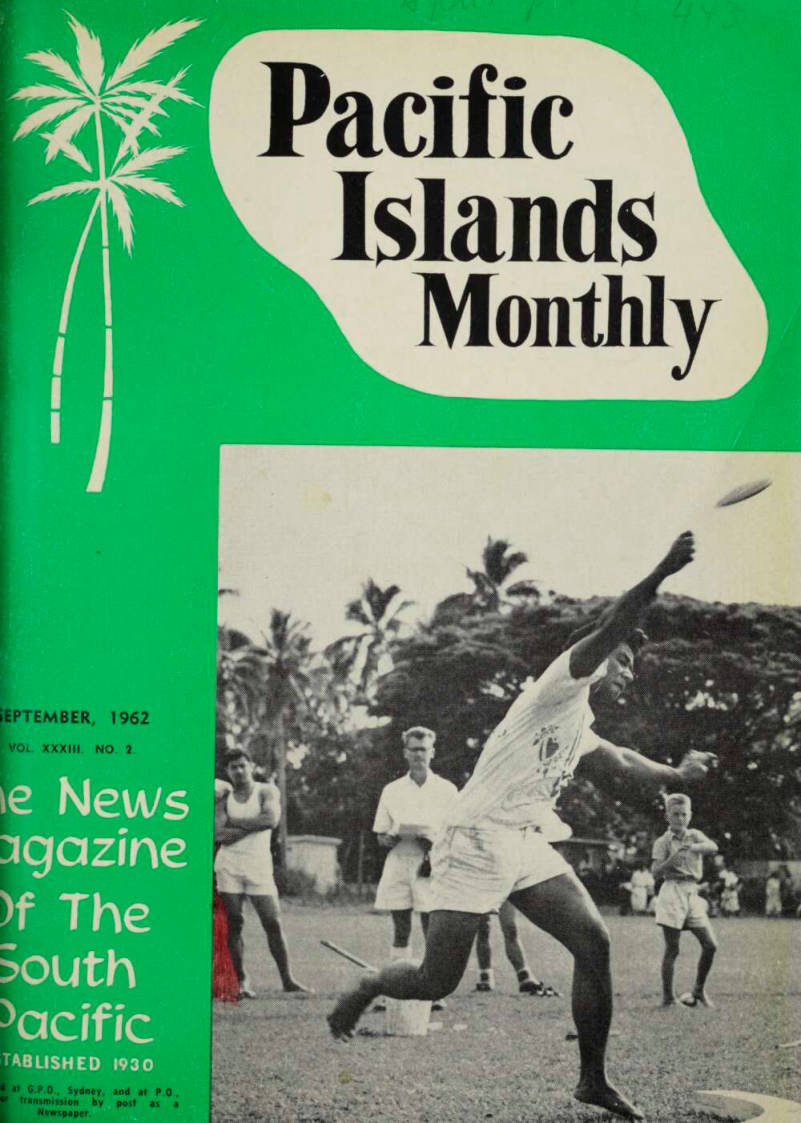 1
1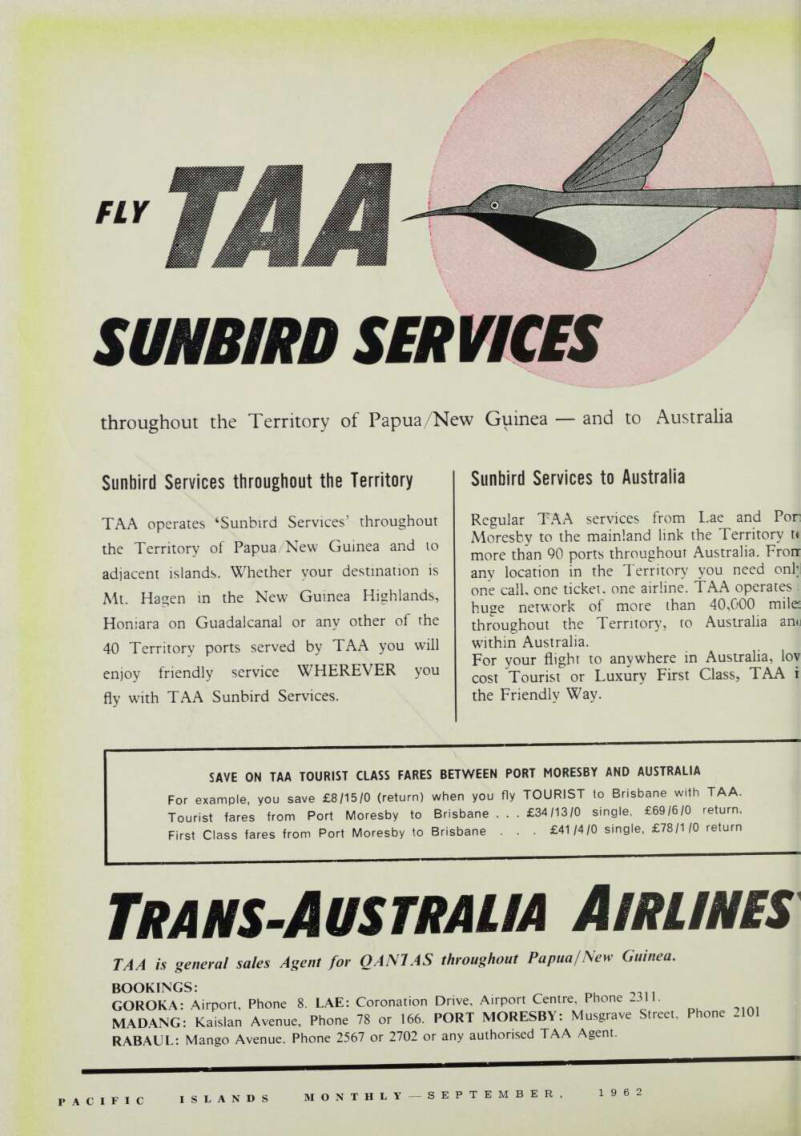 2
2 3
3 4
4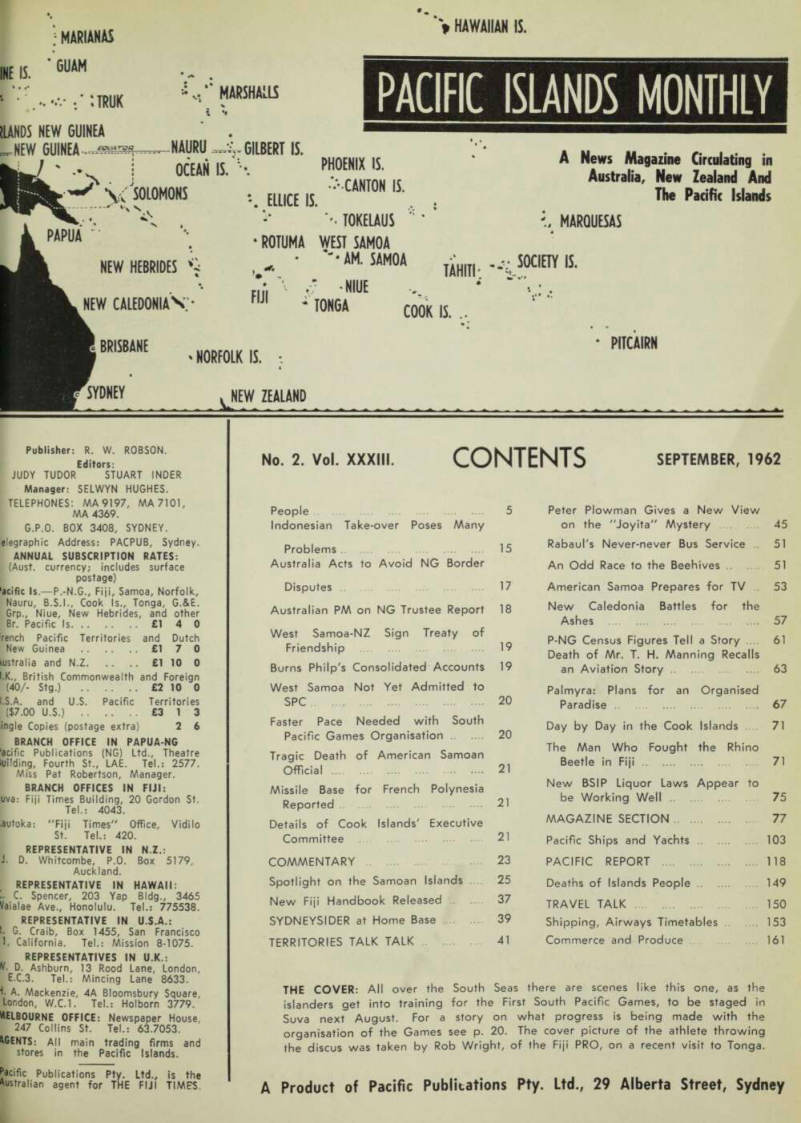 5
5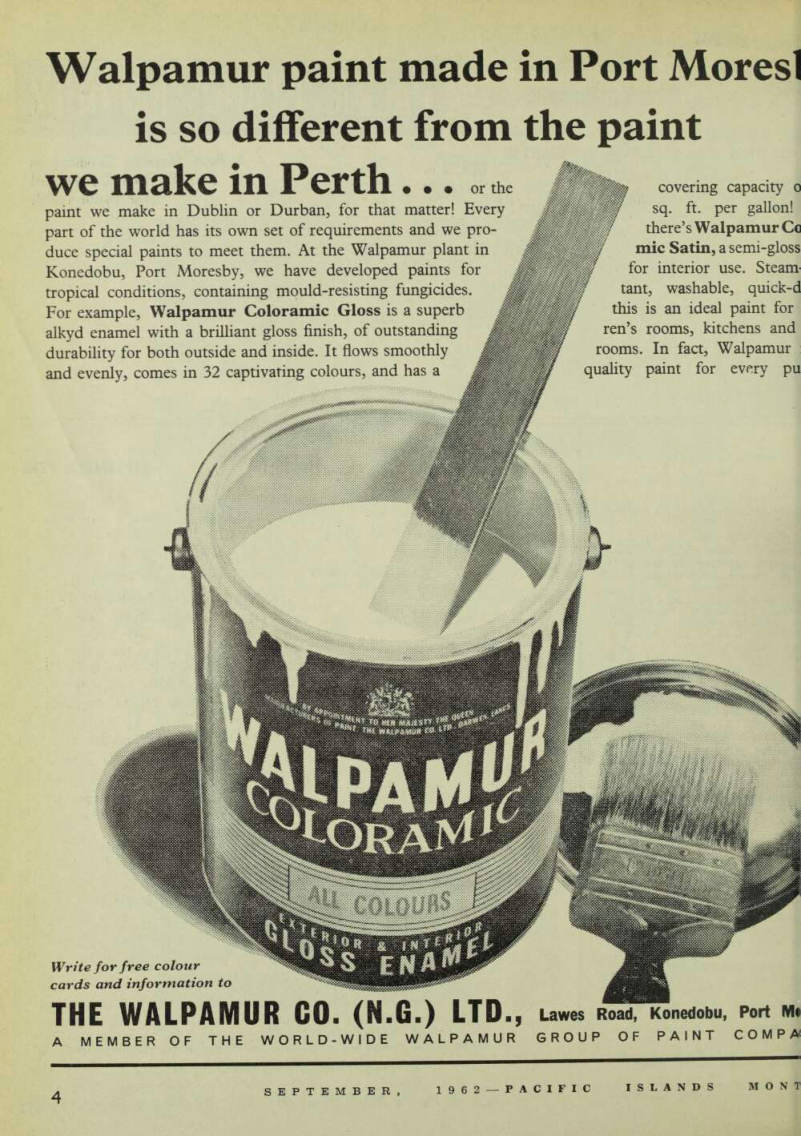 6
6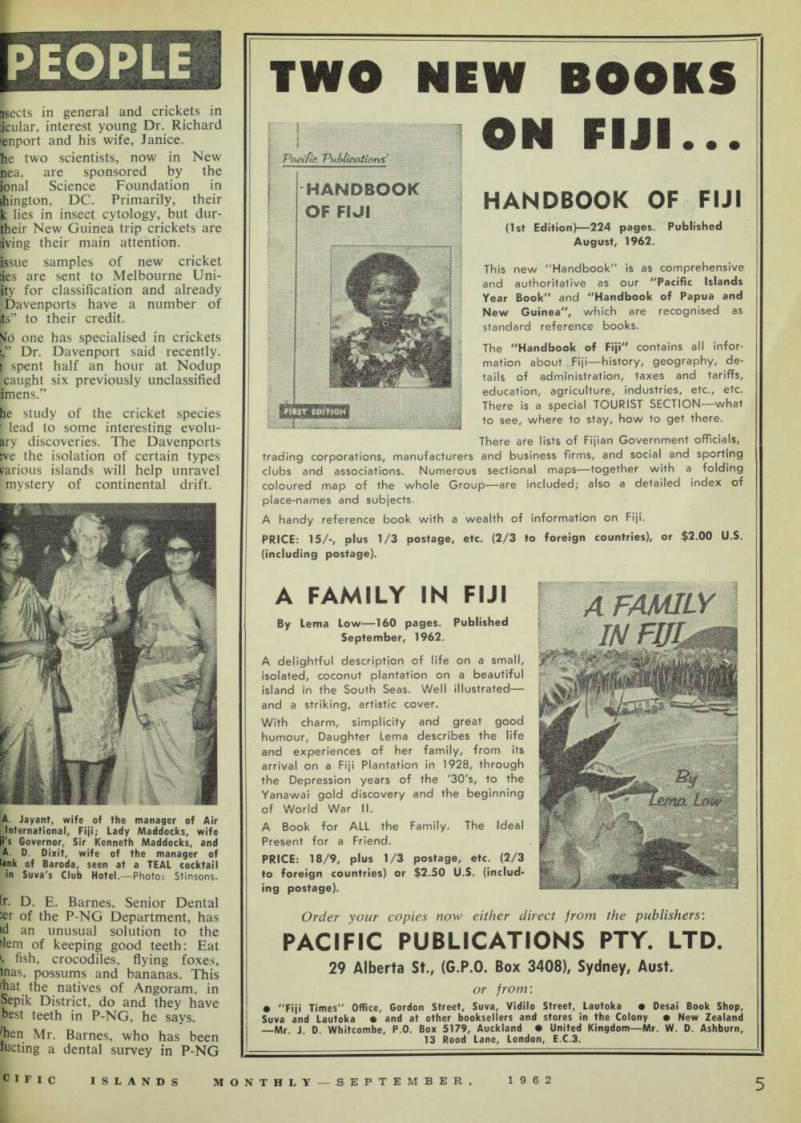 7
7 8
8 9
9 10
10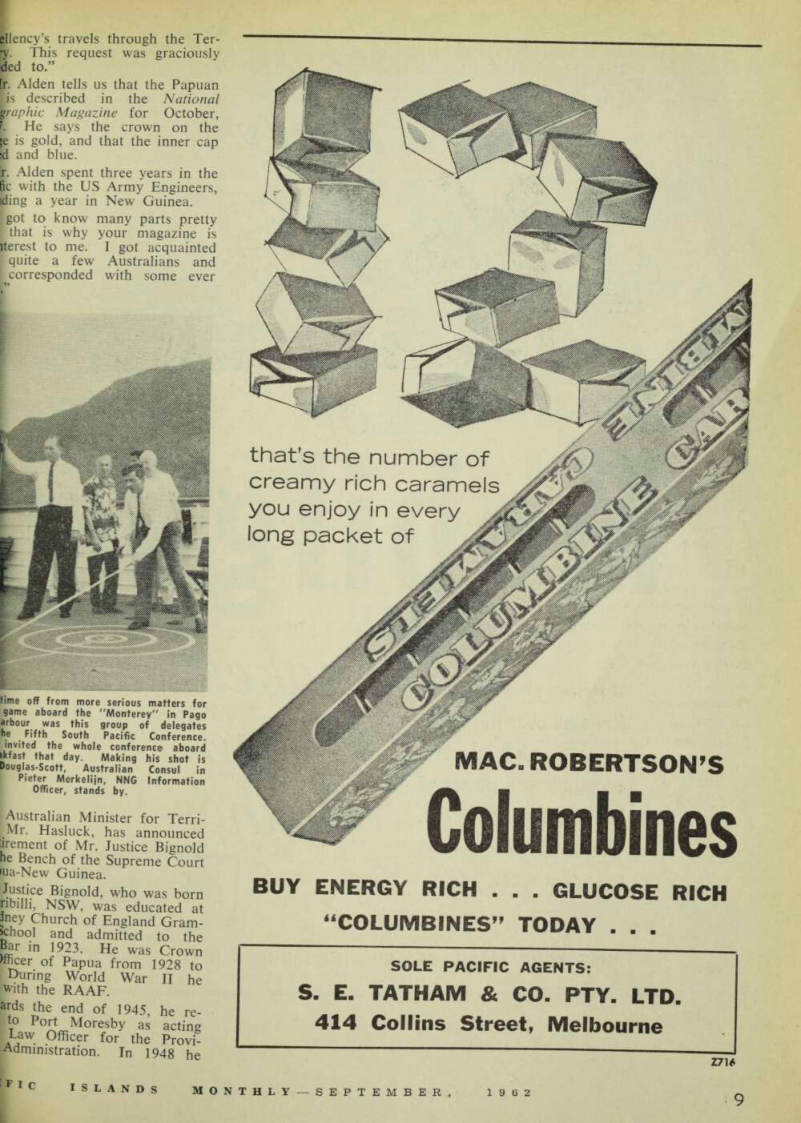 11
11 12
12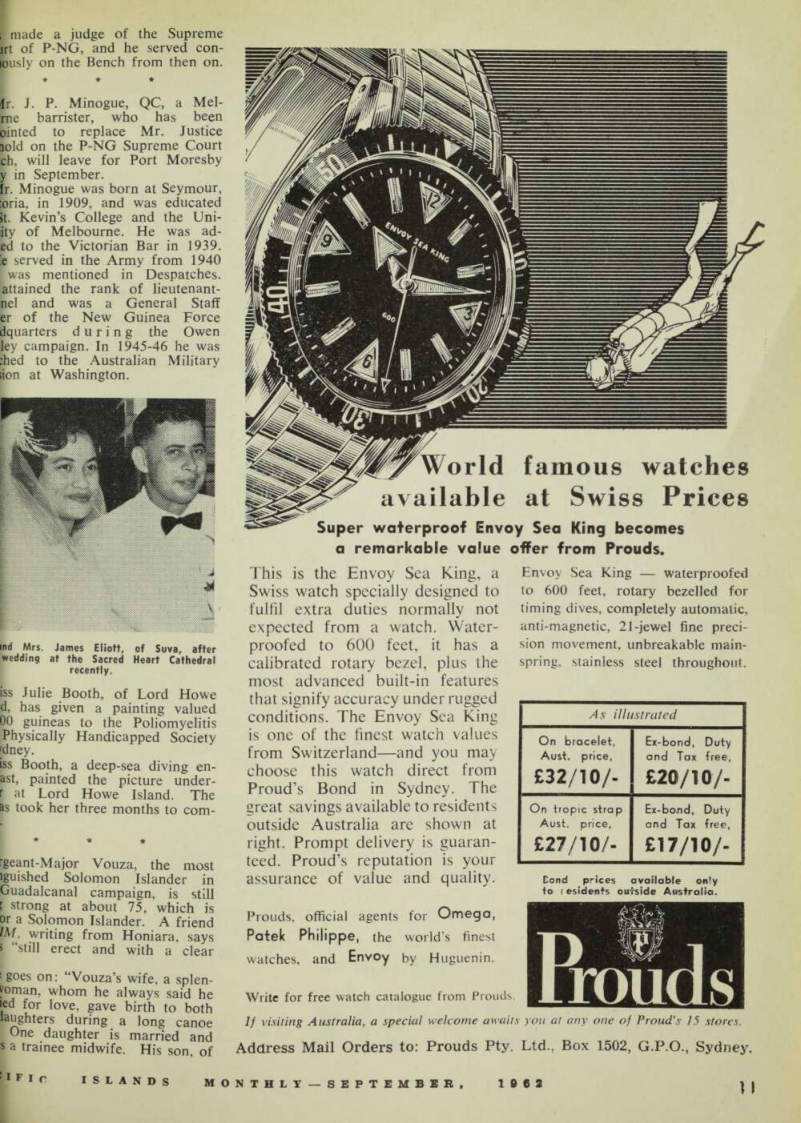 13
13 14
14 15
15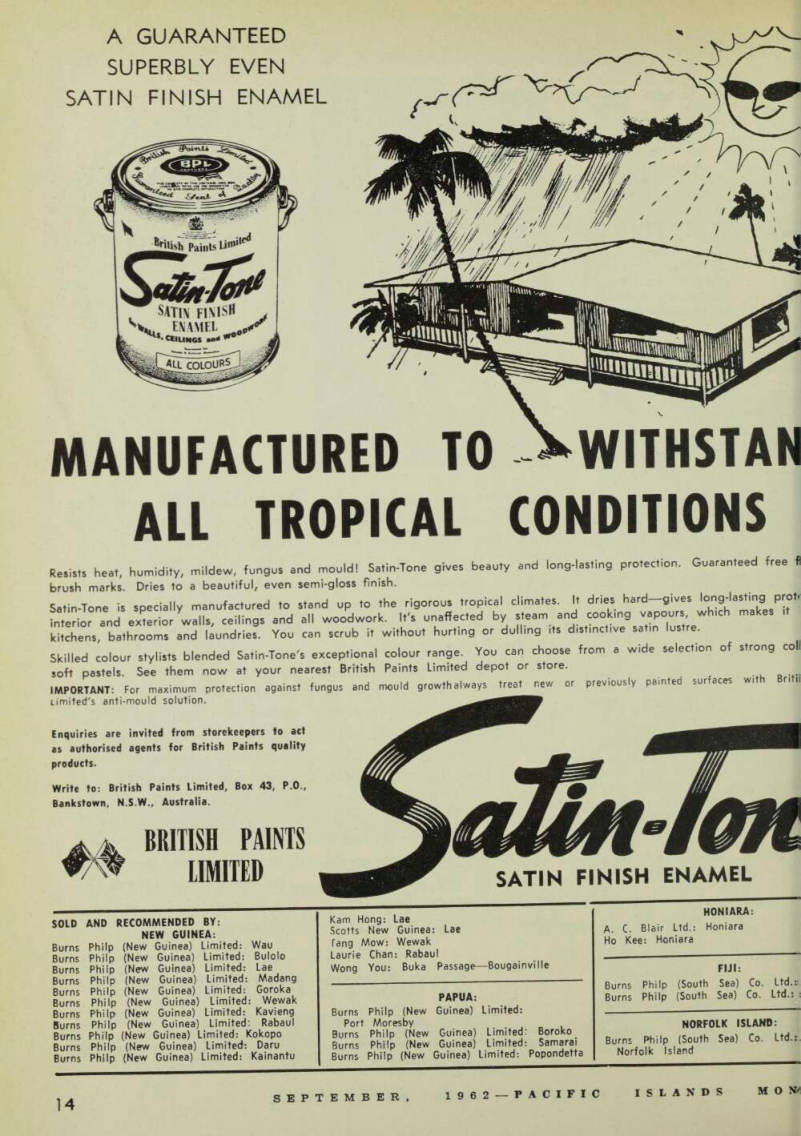 16
16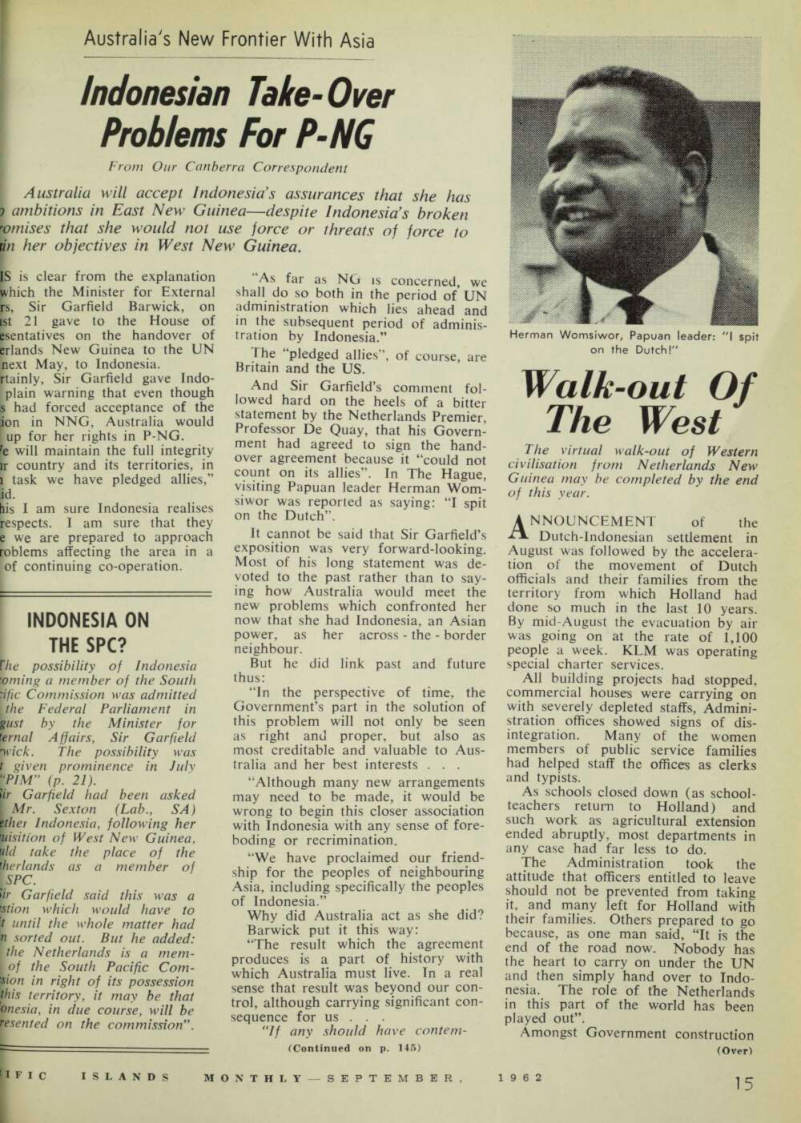 17
17 18
18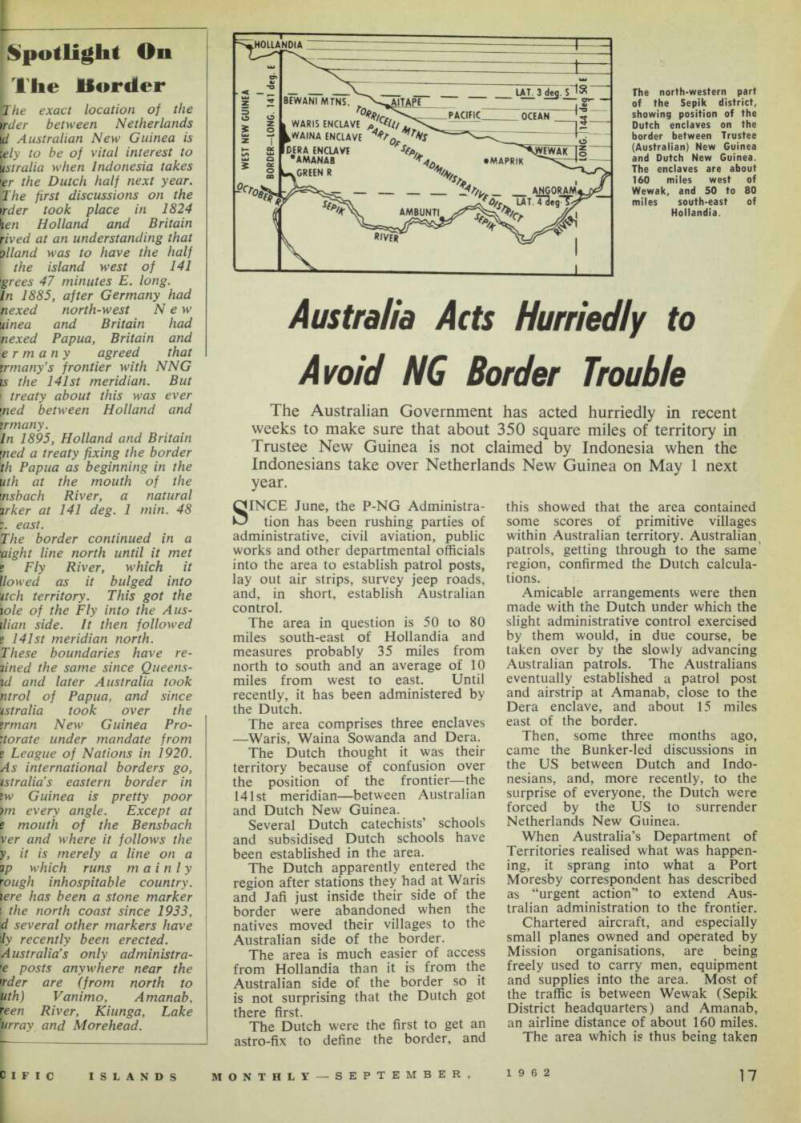 19
19 20
20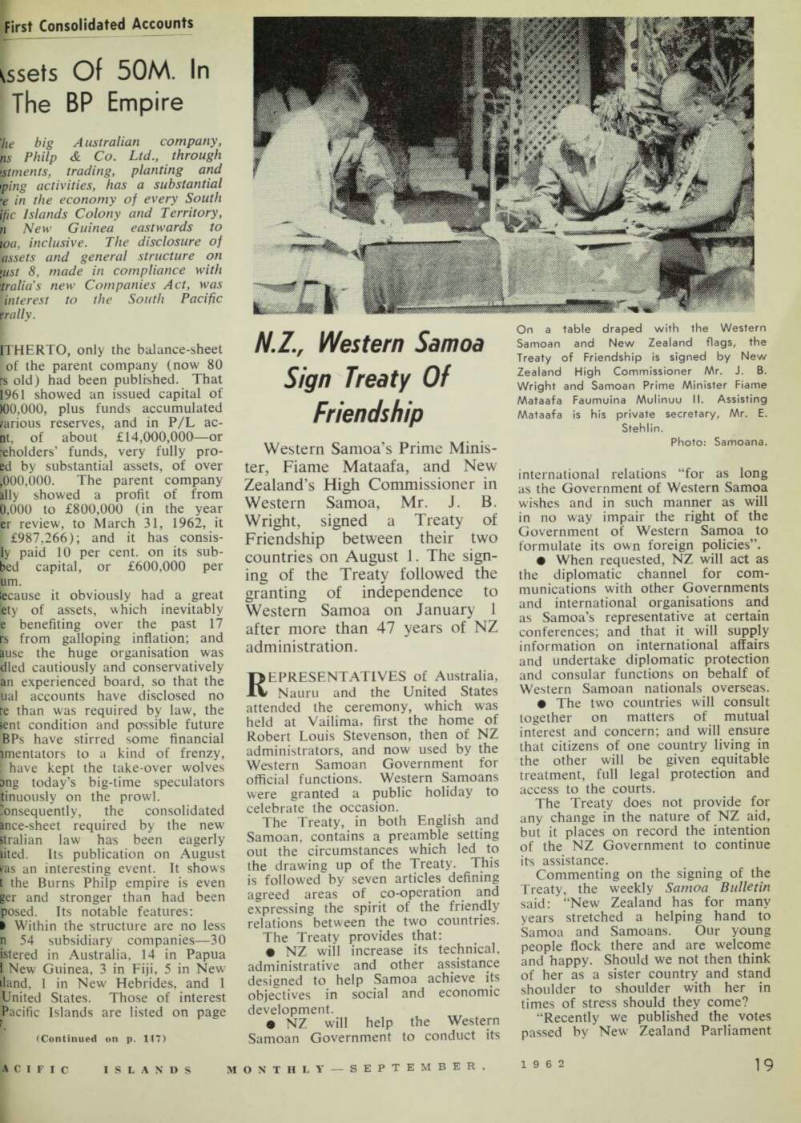 21
21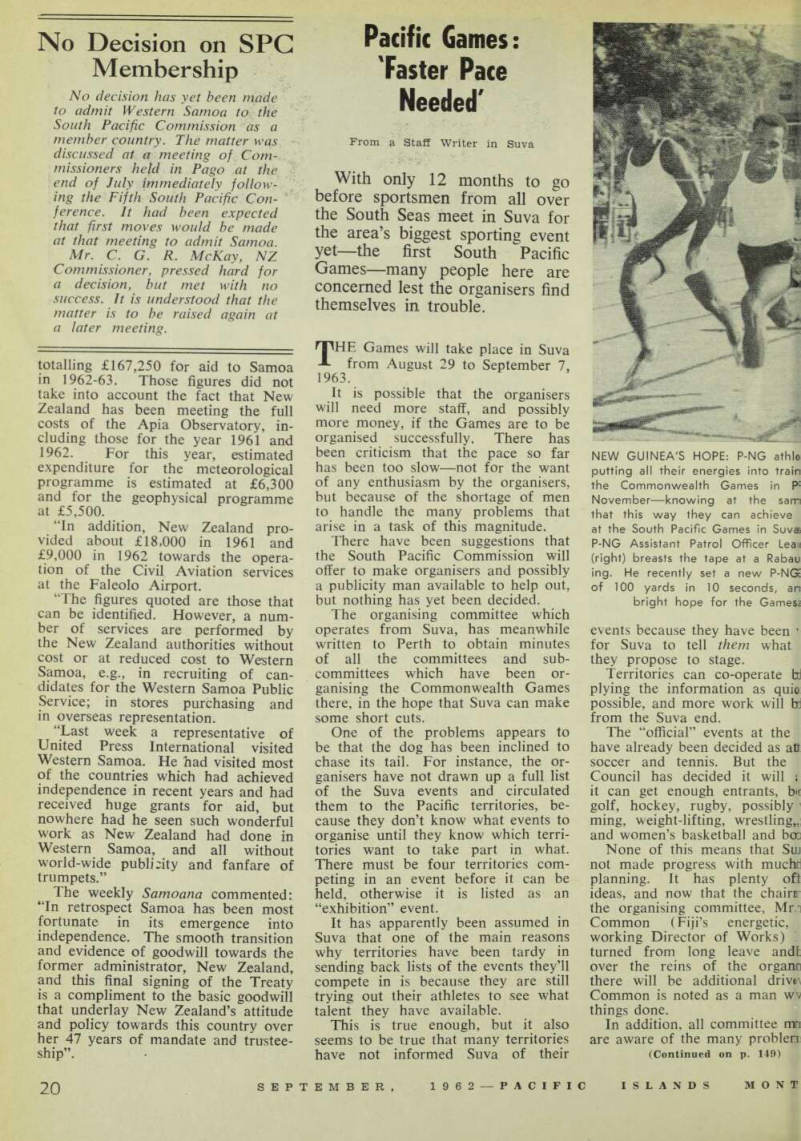 22
22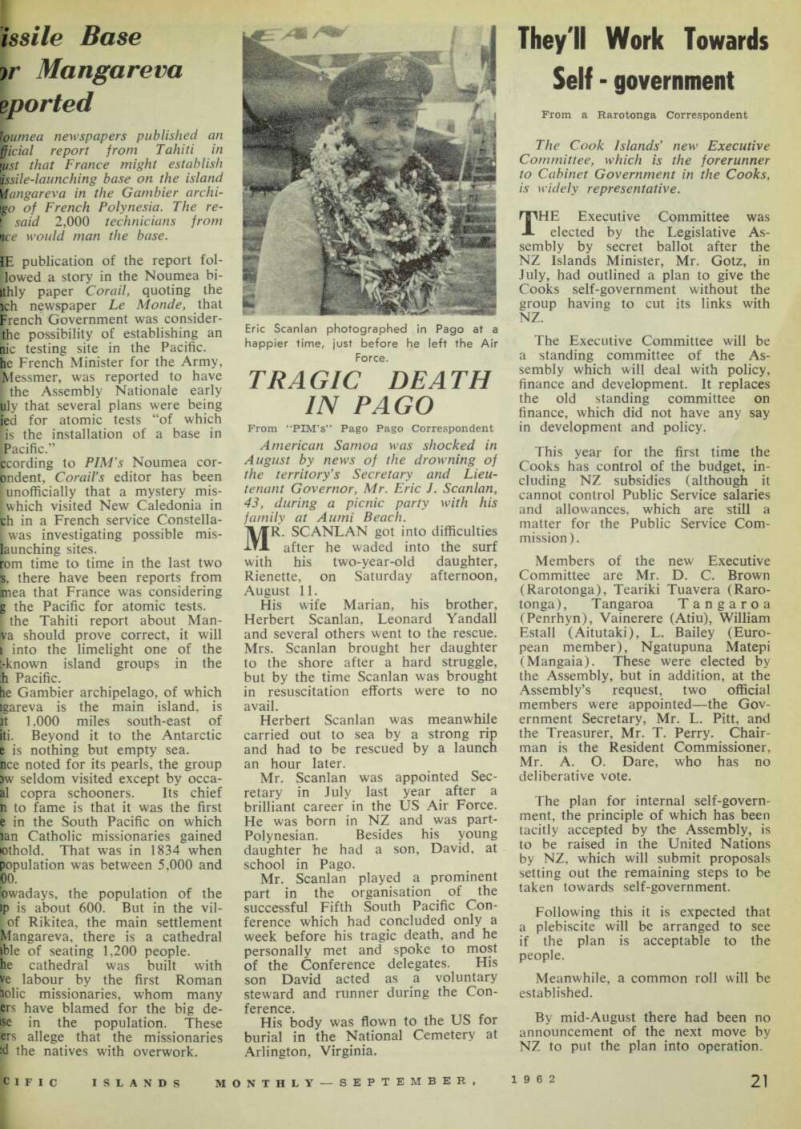 23
23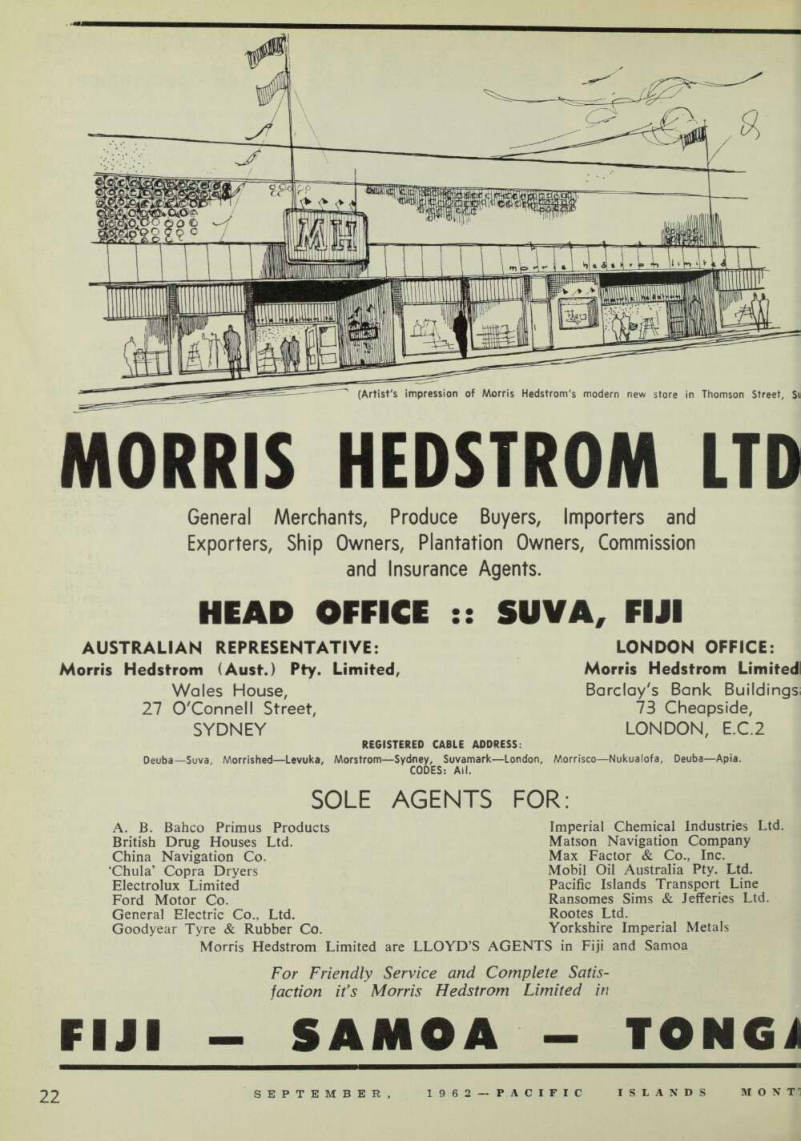 24
24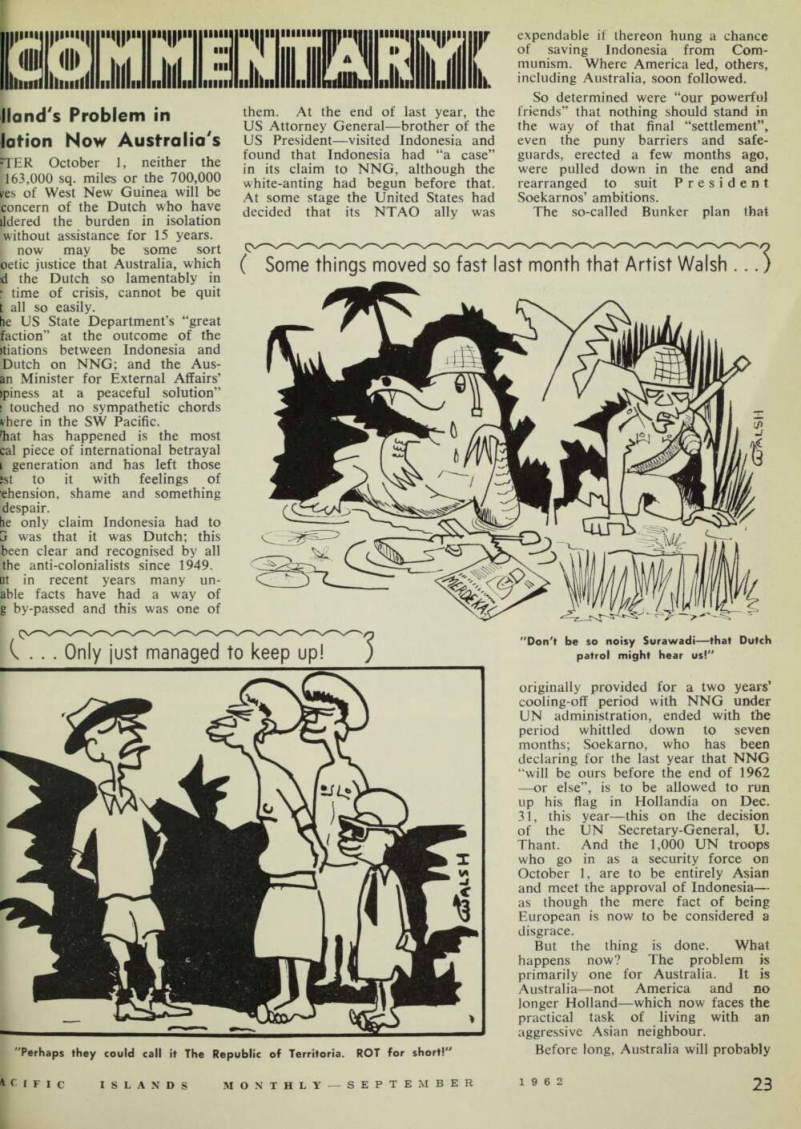 25
25 26
26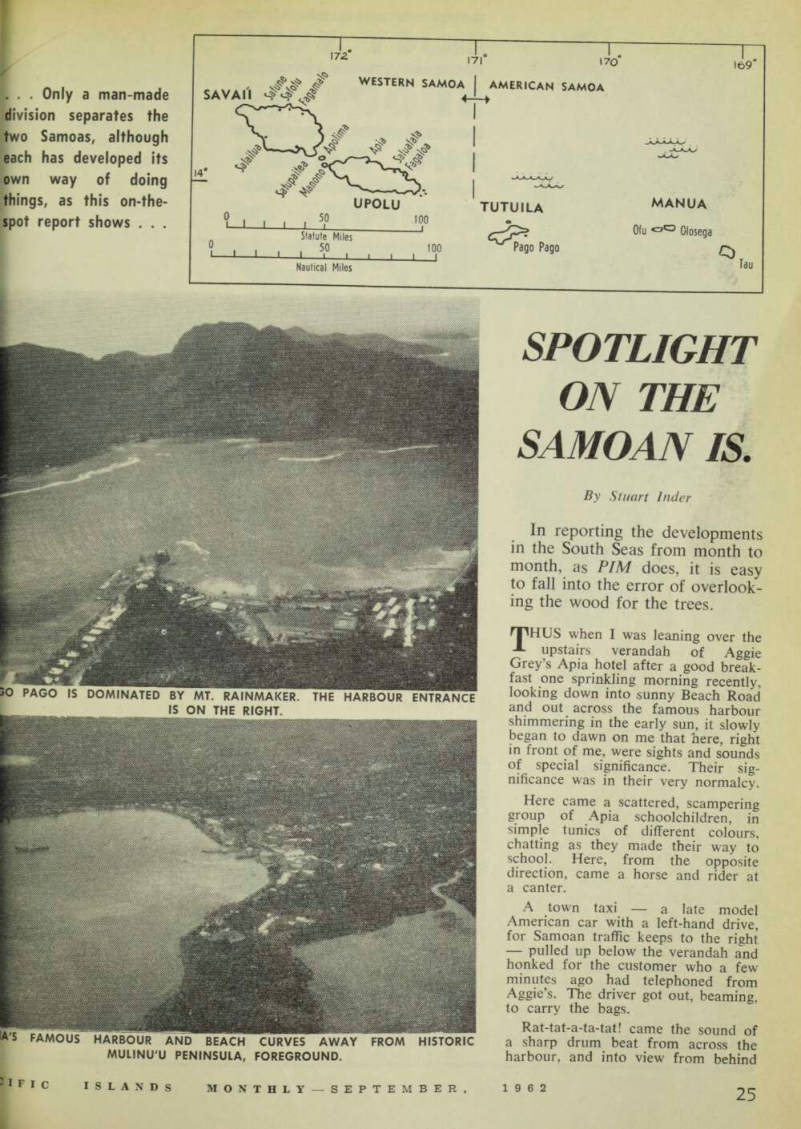 27
27 28
28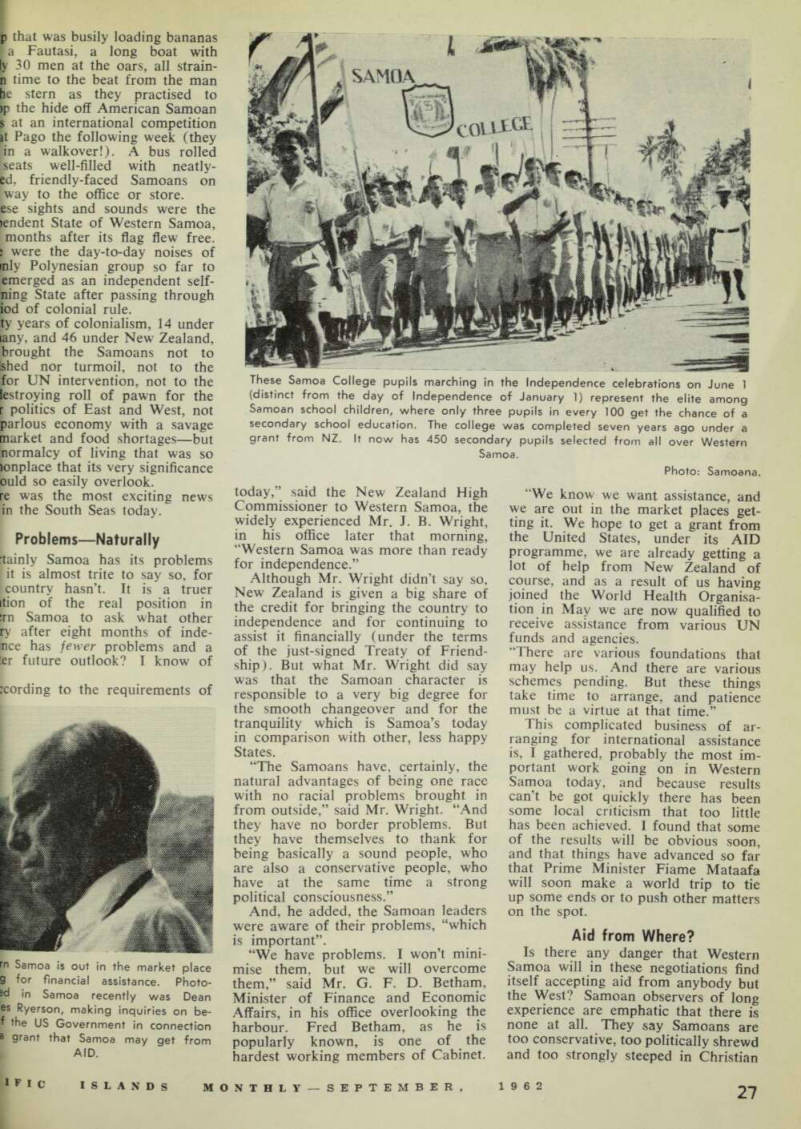 29
29 30
30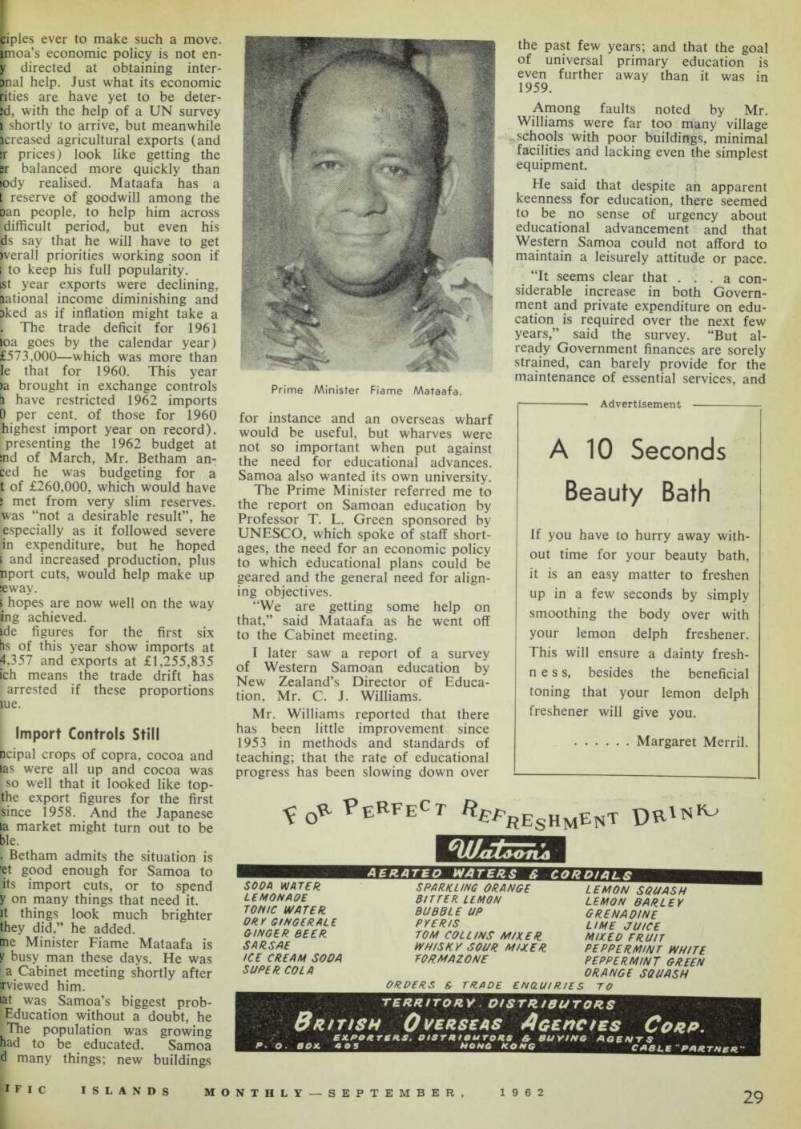 31
31 32
32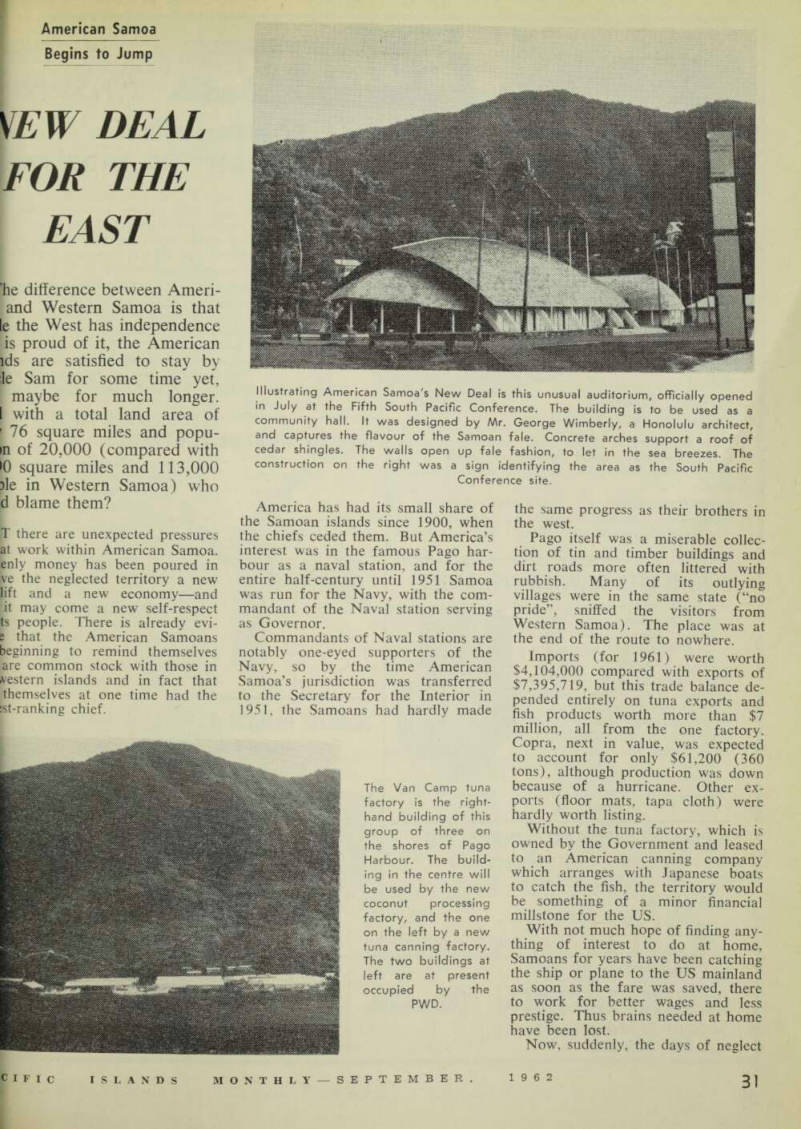 33
33 34
34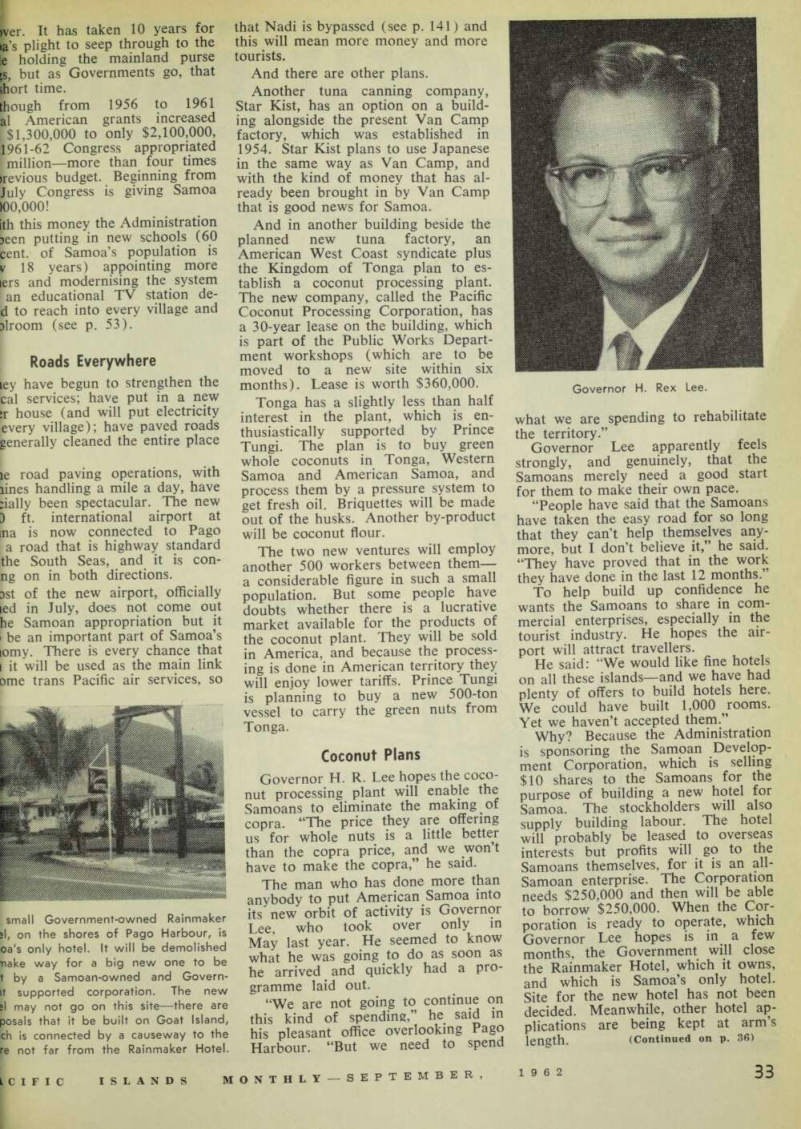 35
35 36
36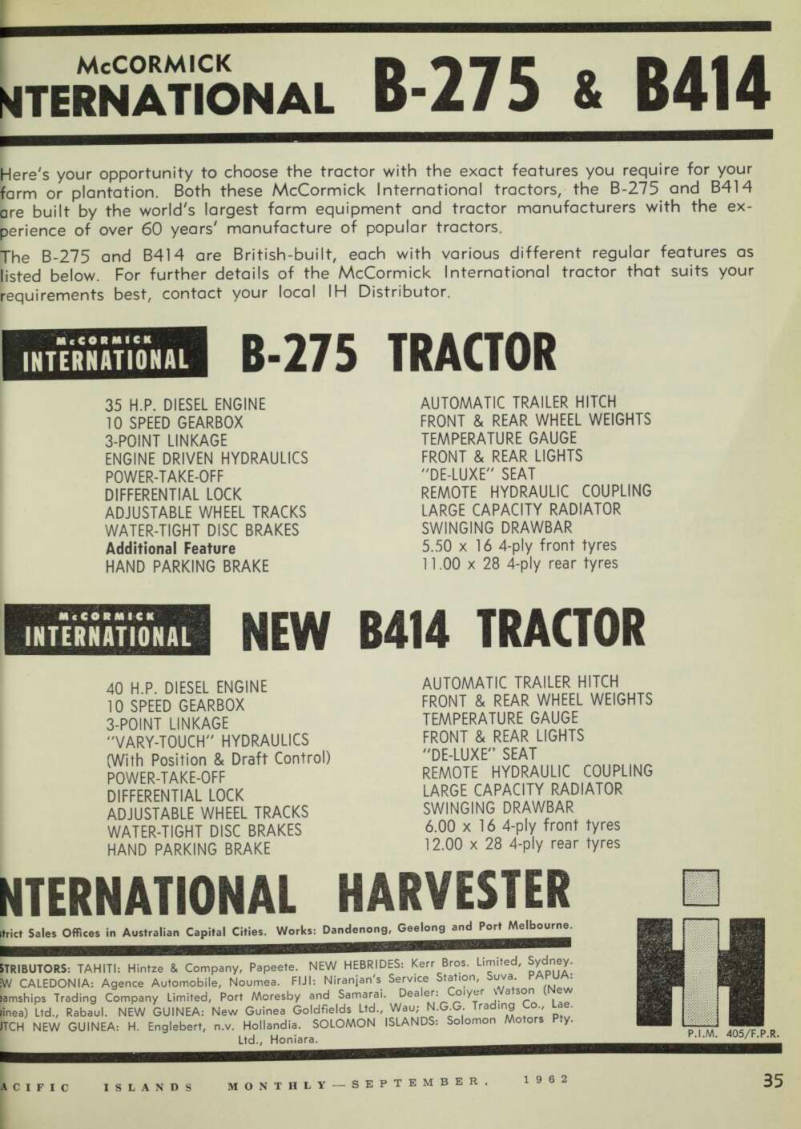 37
37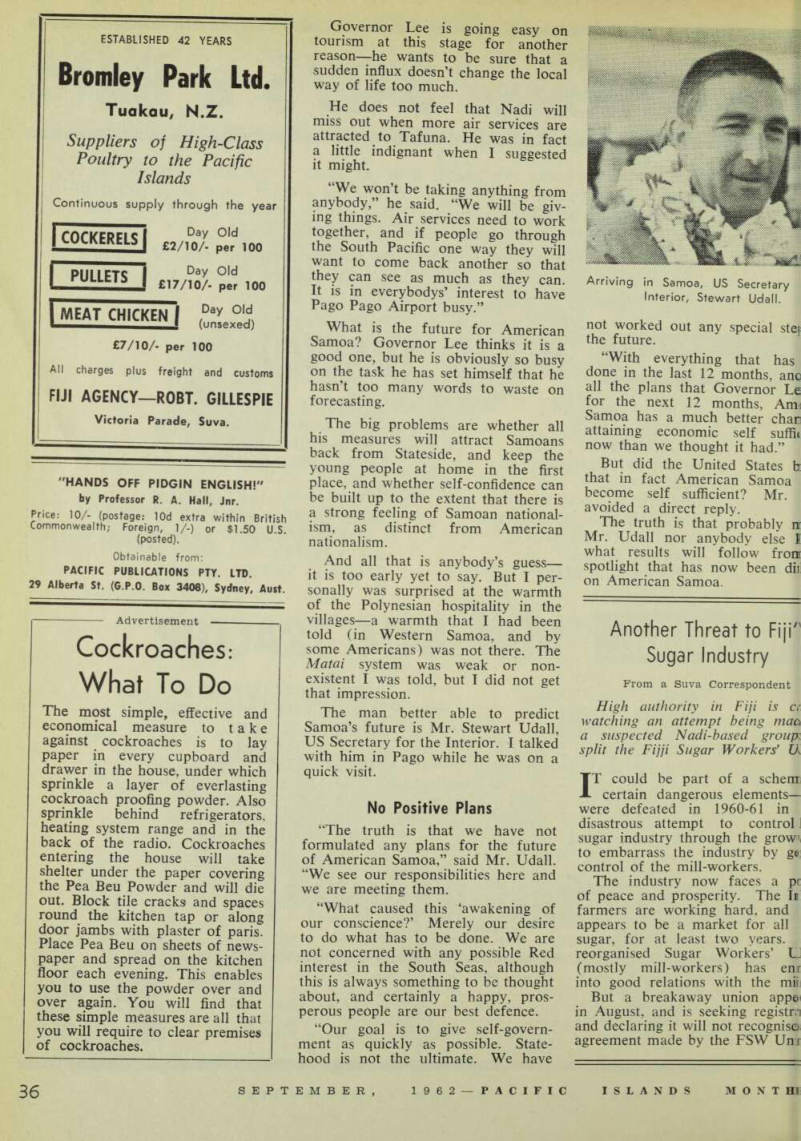 38
38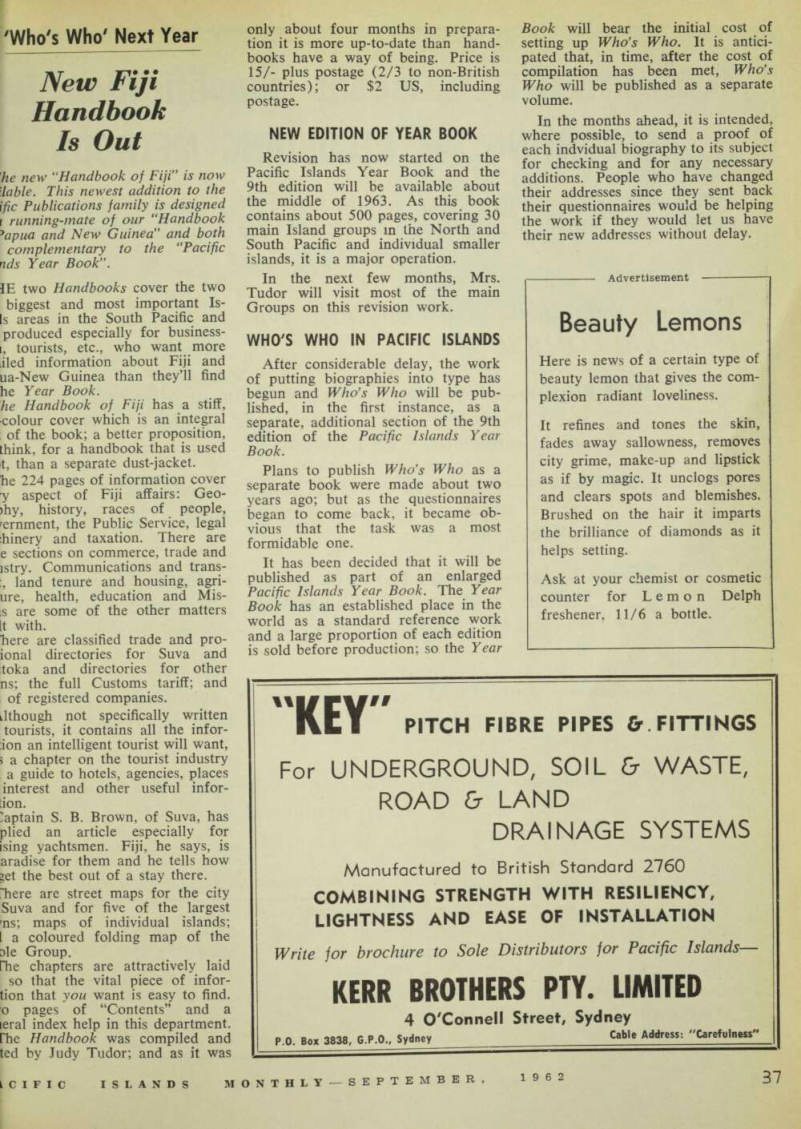 39
39 40
40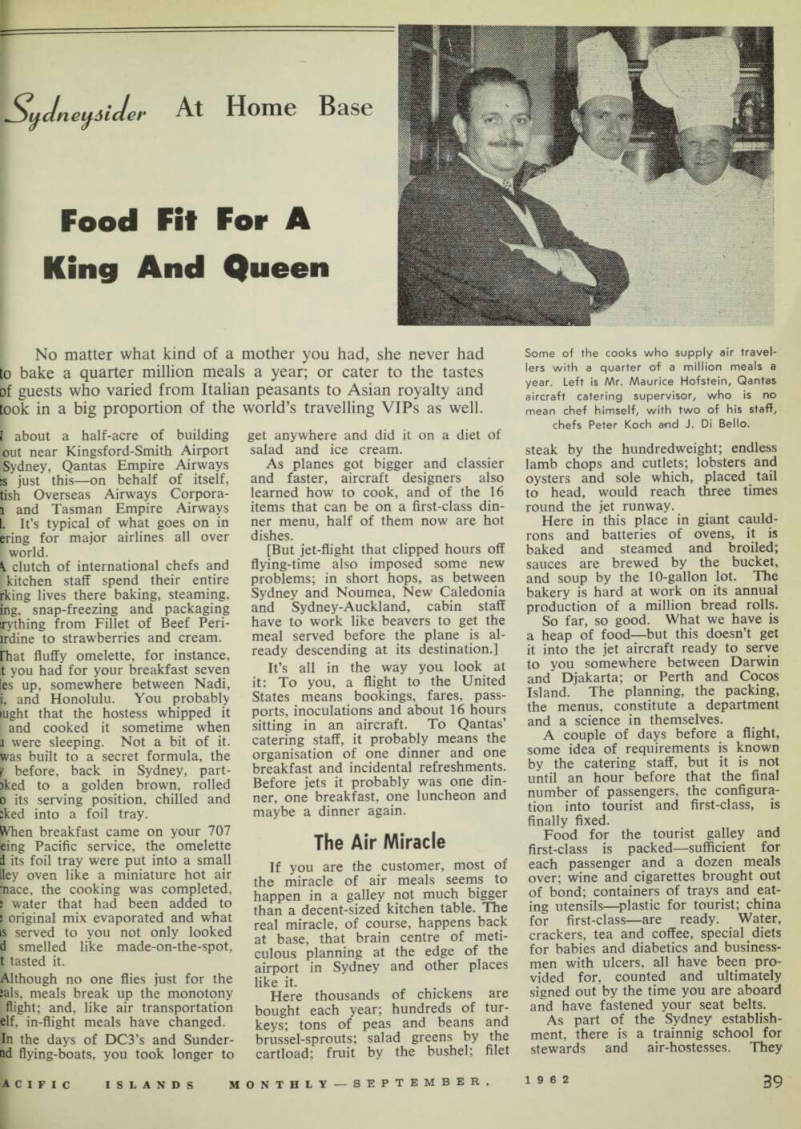 41
41 42
42 43
43 44
44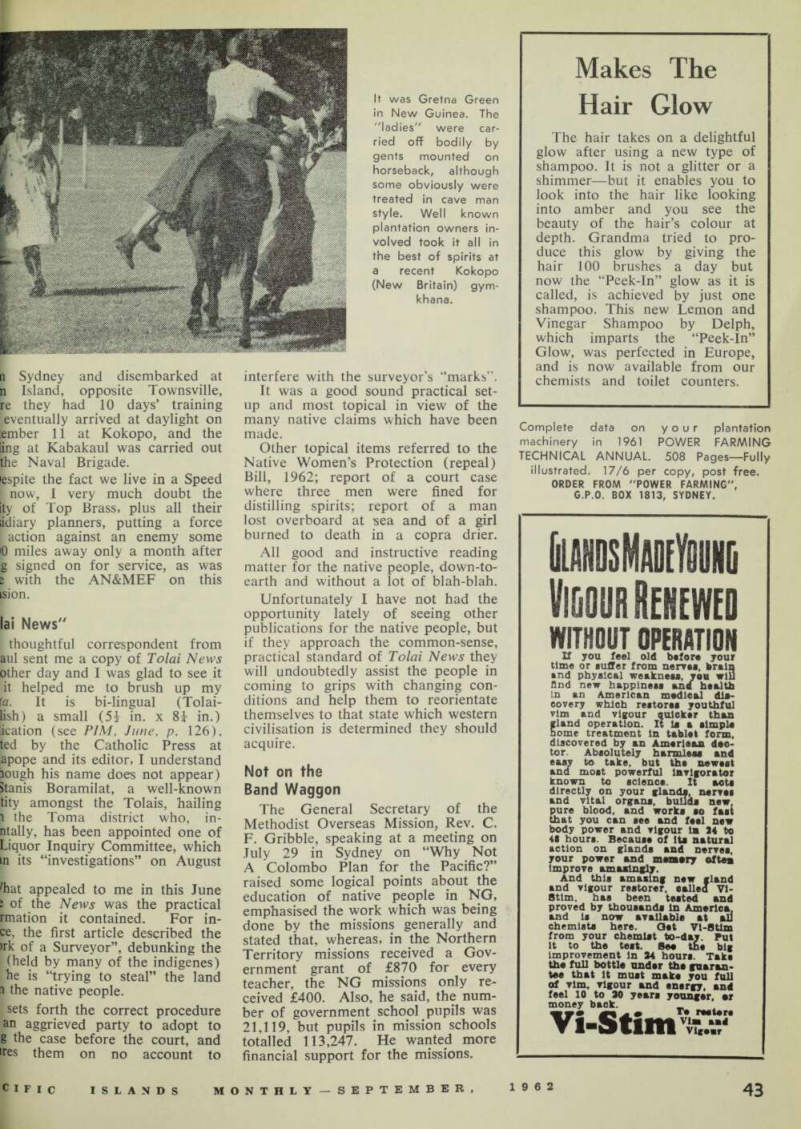 45
45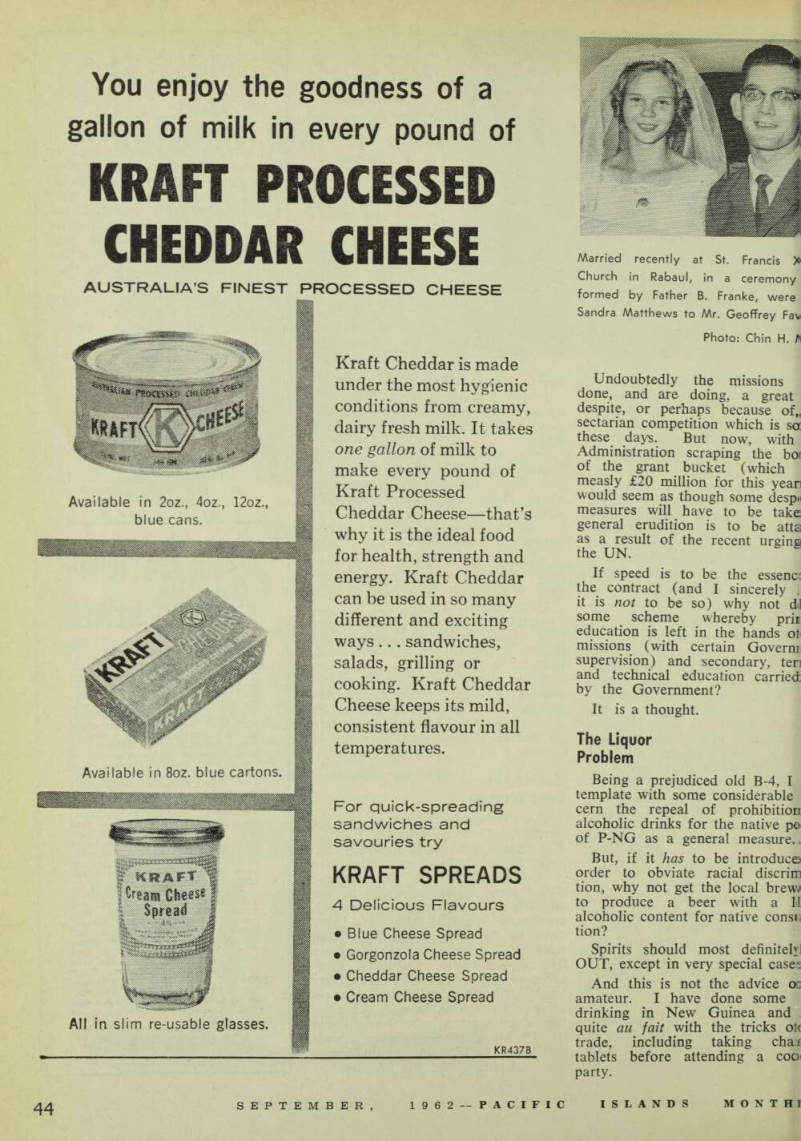 46
46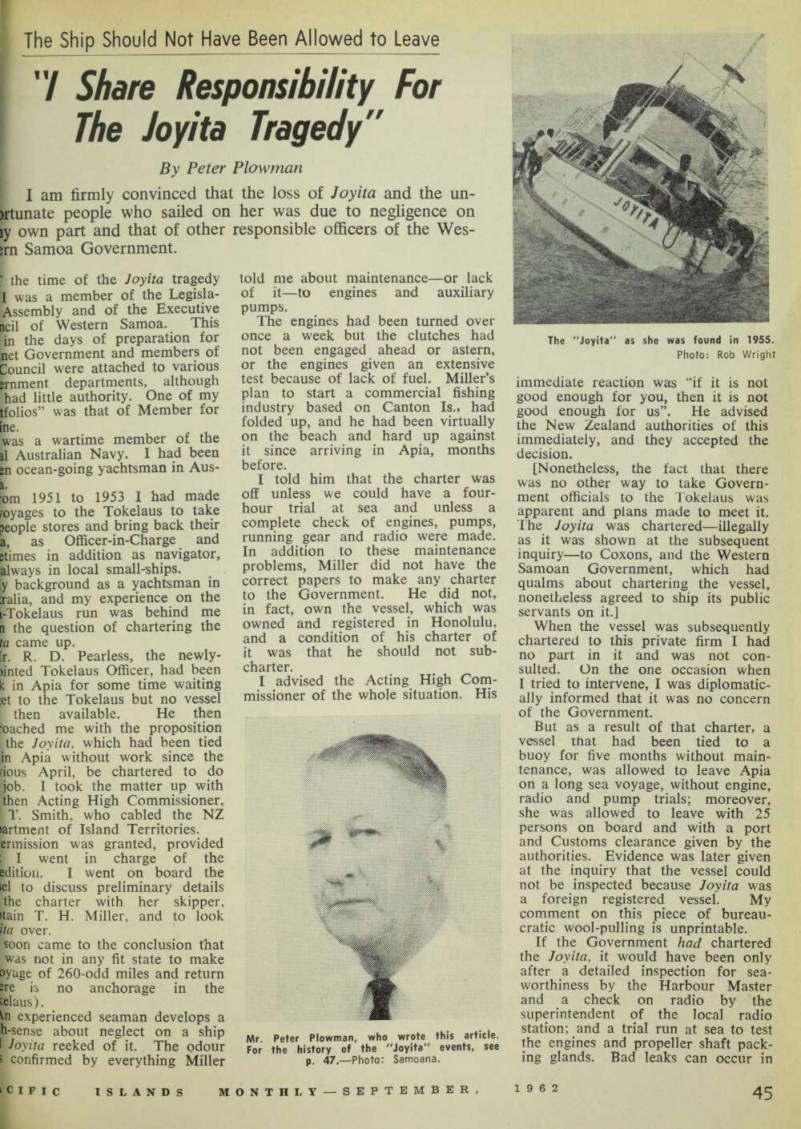 47
47 48
48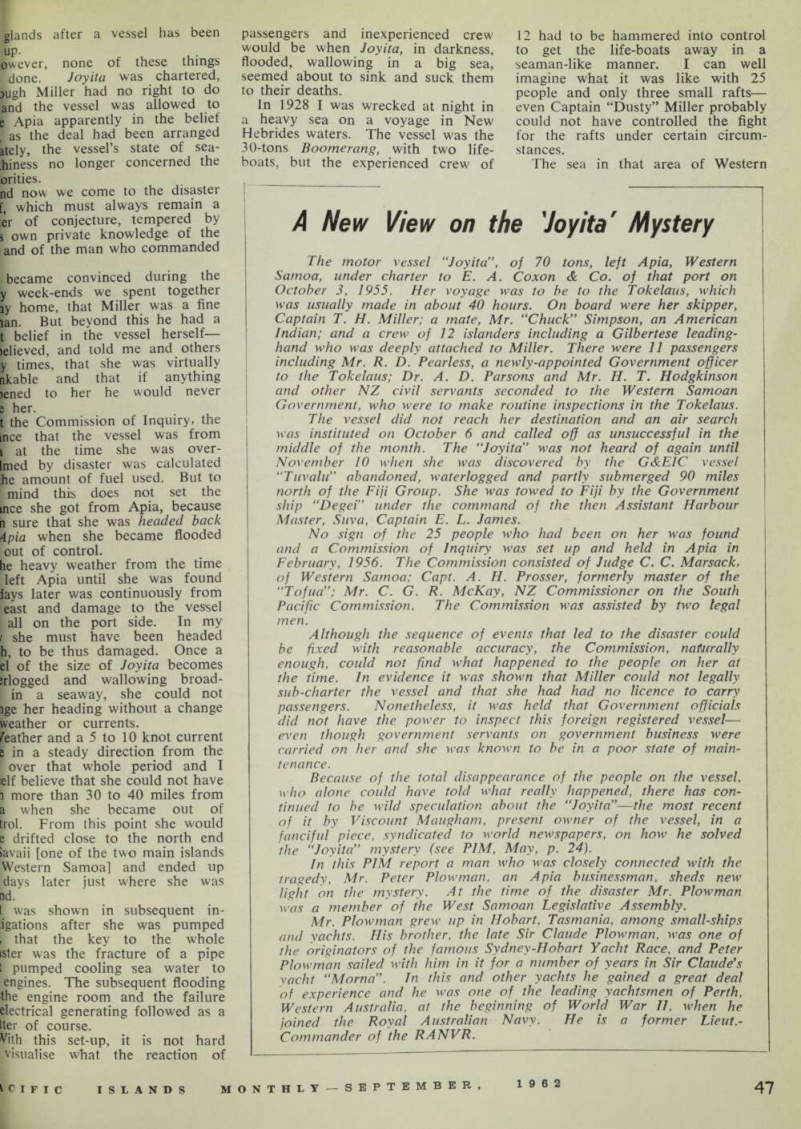 49
49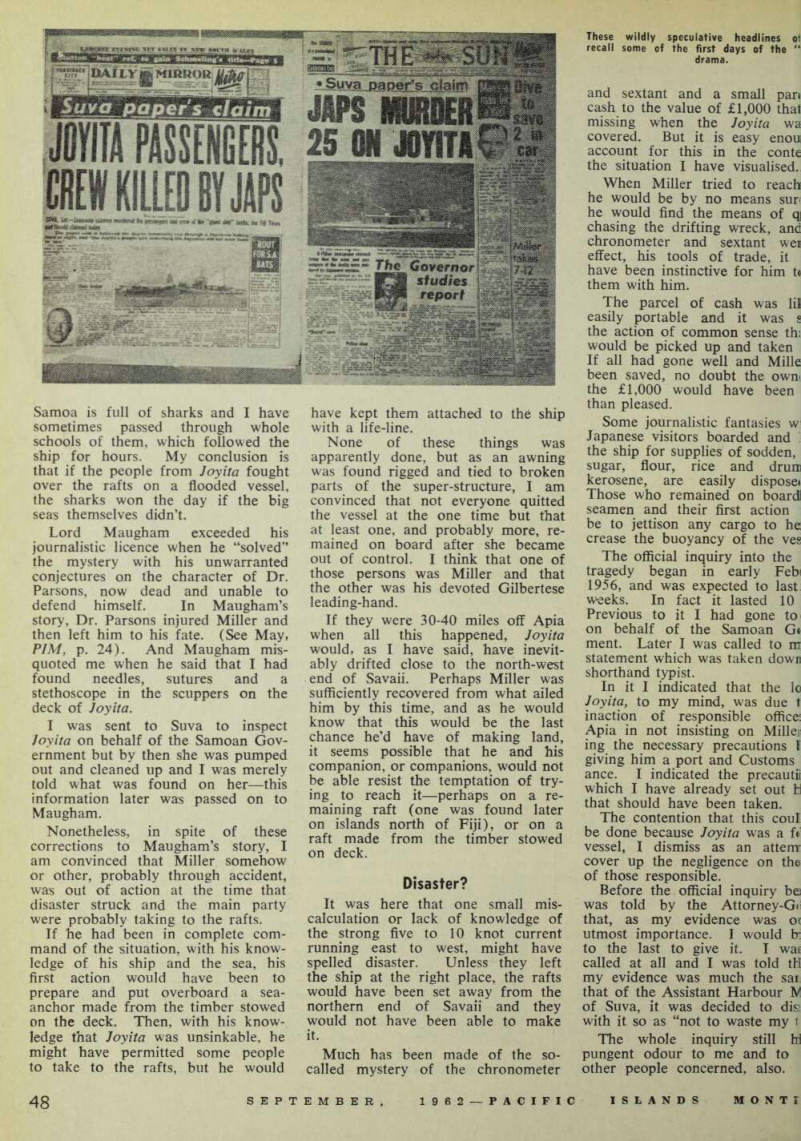 50
50 51
51 52
52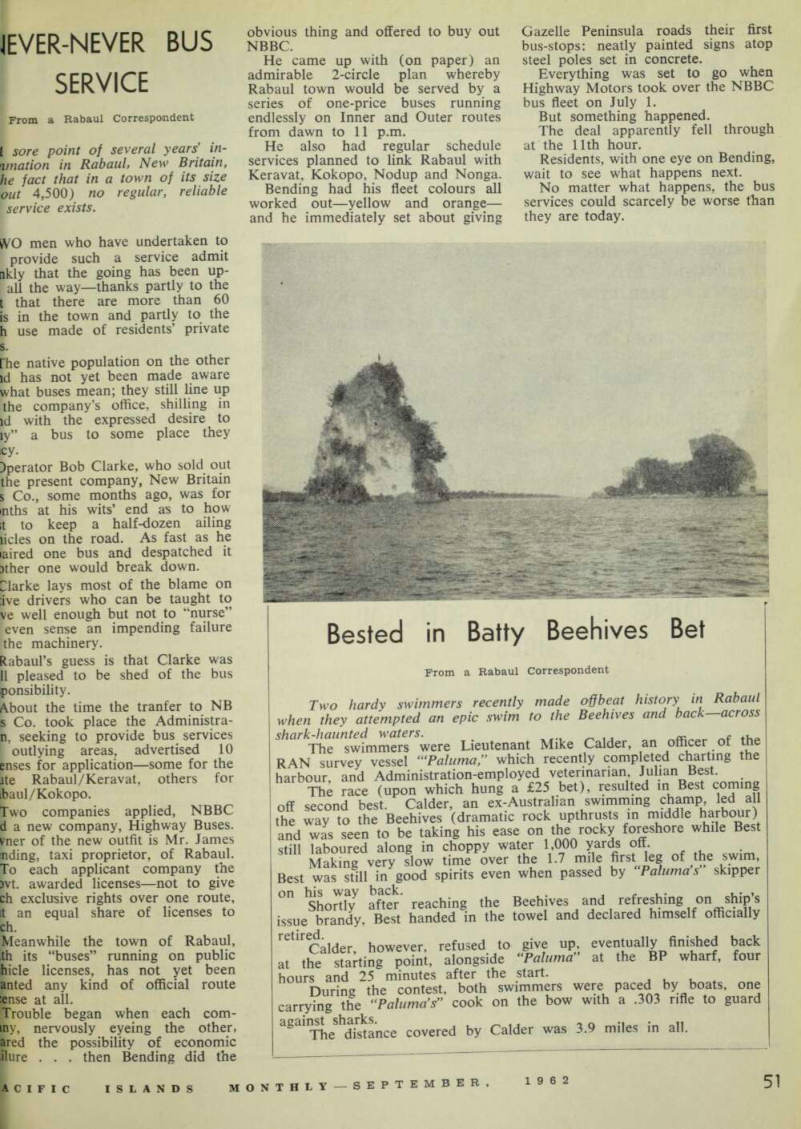 53
53 54
54 55
55 56
56 57
57 58
58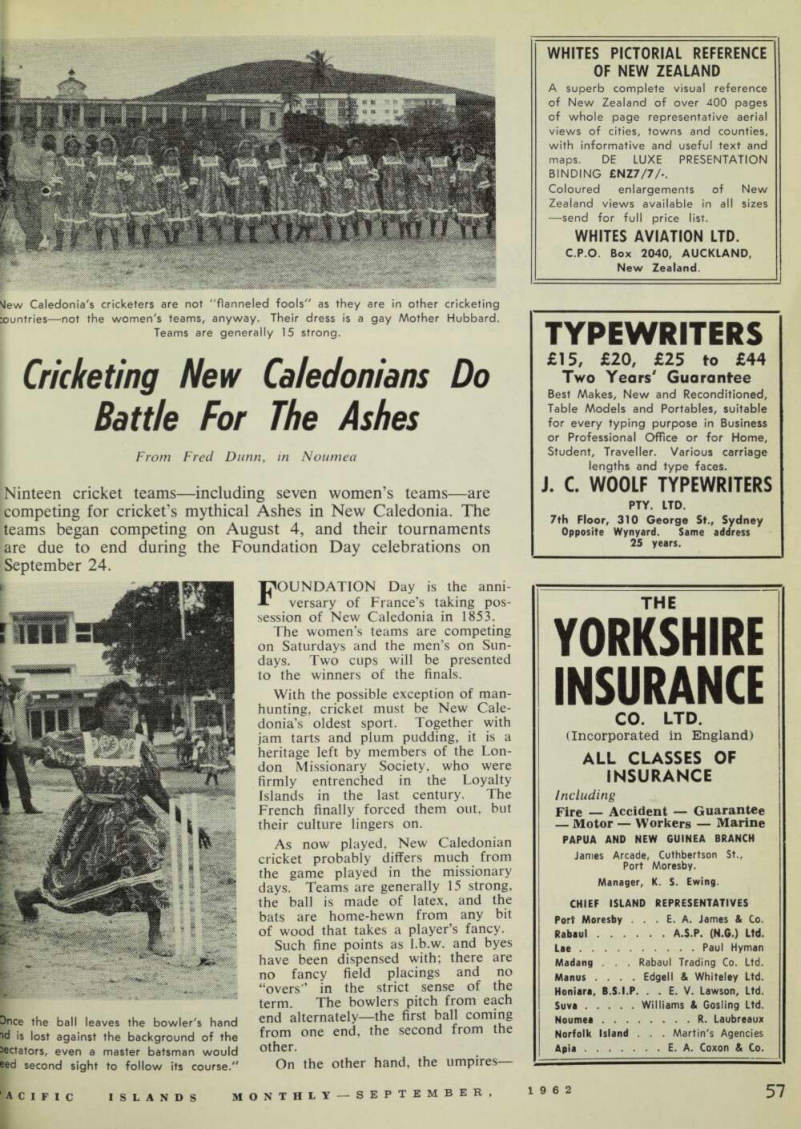 59
59 60
60 61
61 62
62 63
63 64
64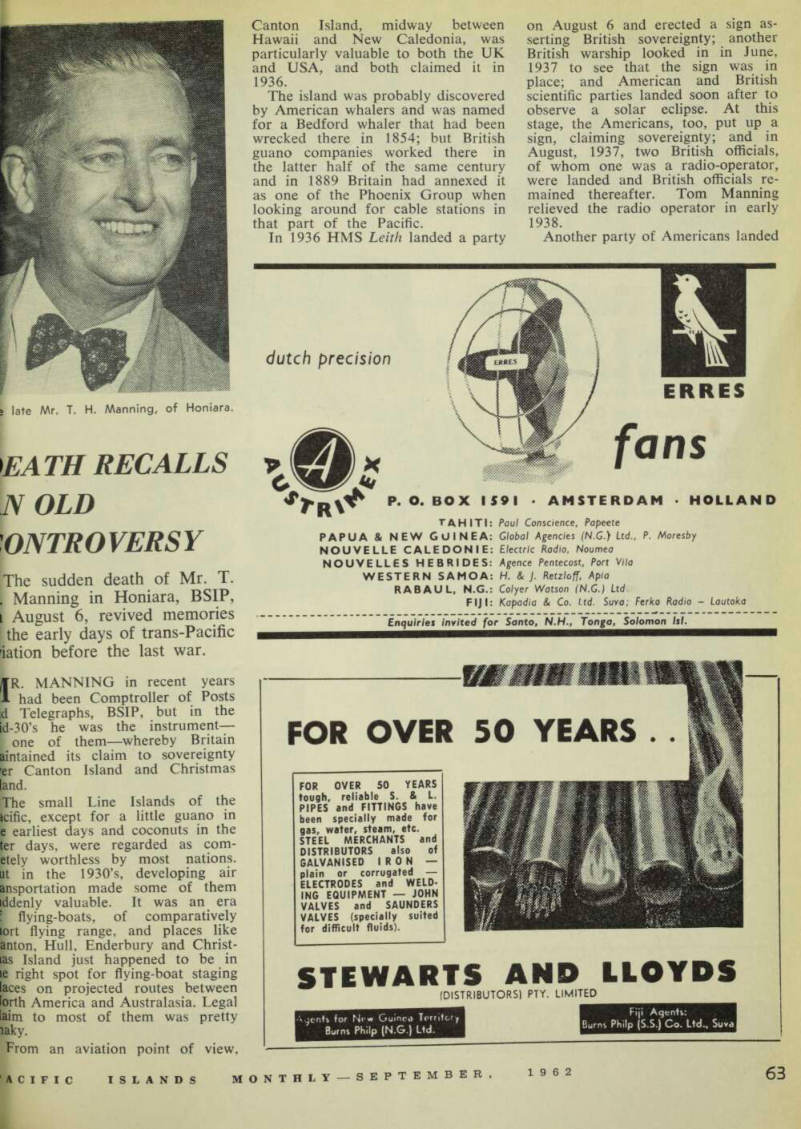 65
65 66
66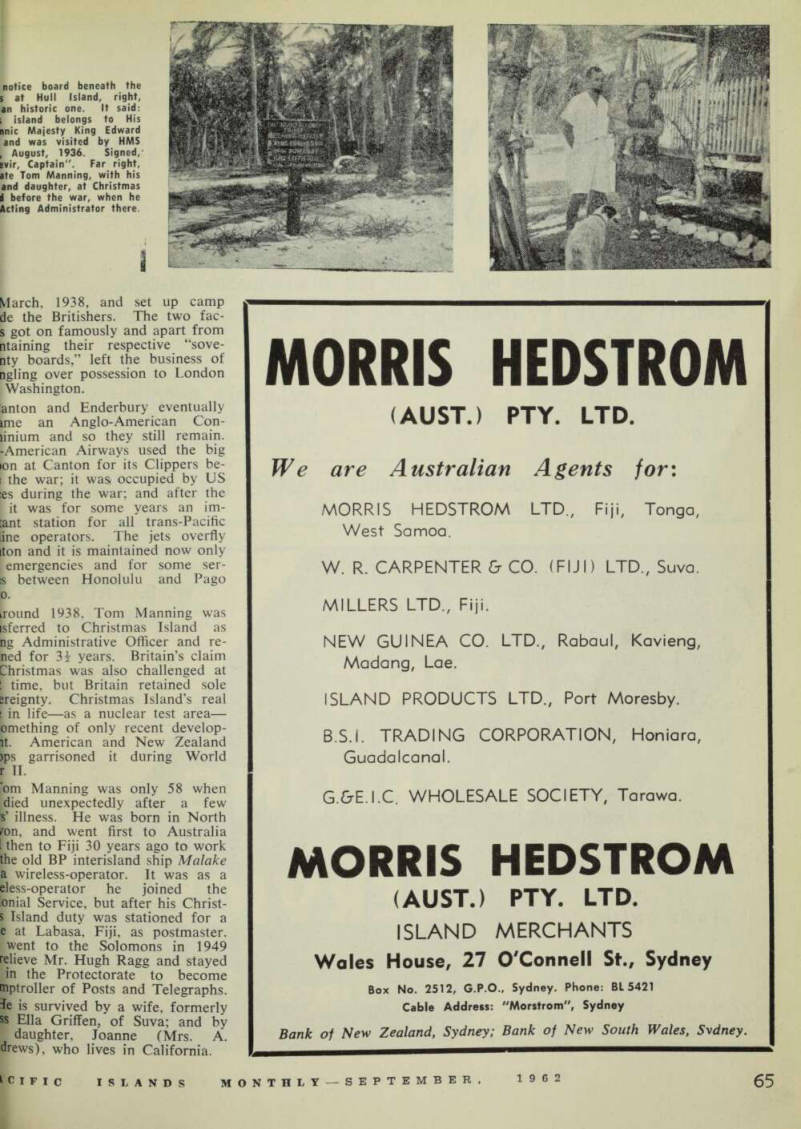 67
67 68
68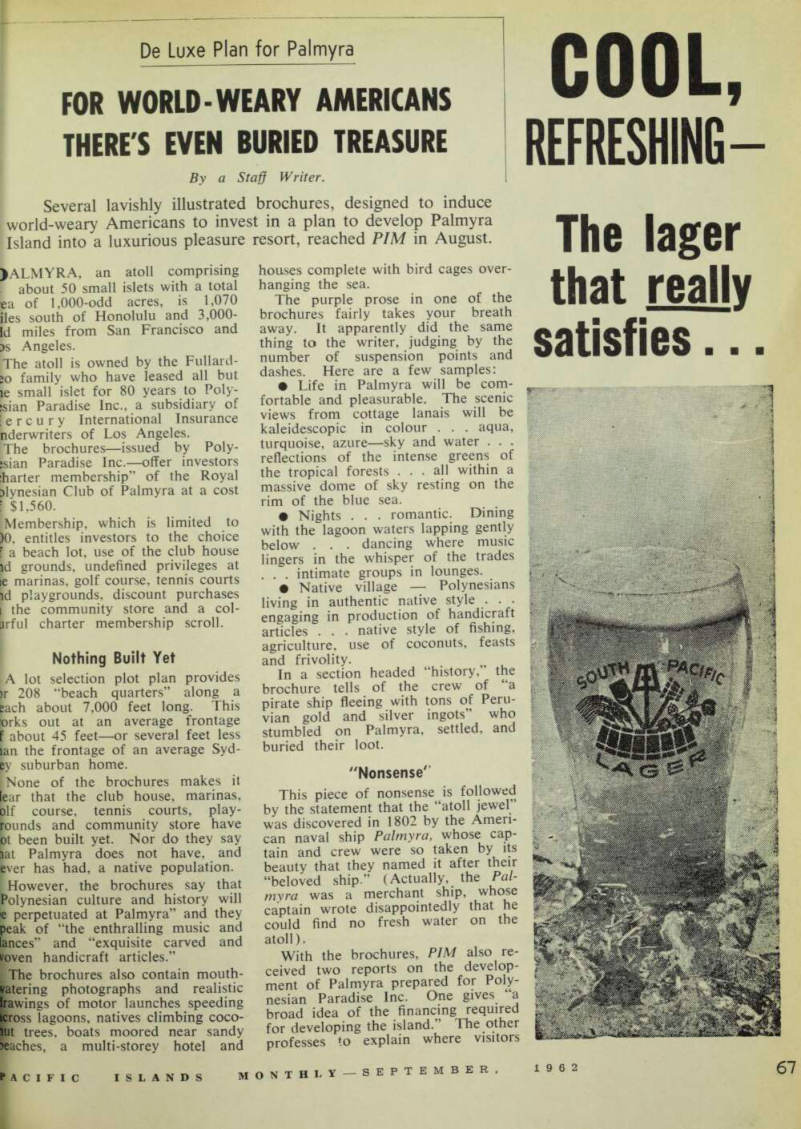 69
69 70
70 71
71 72
72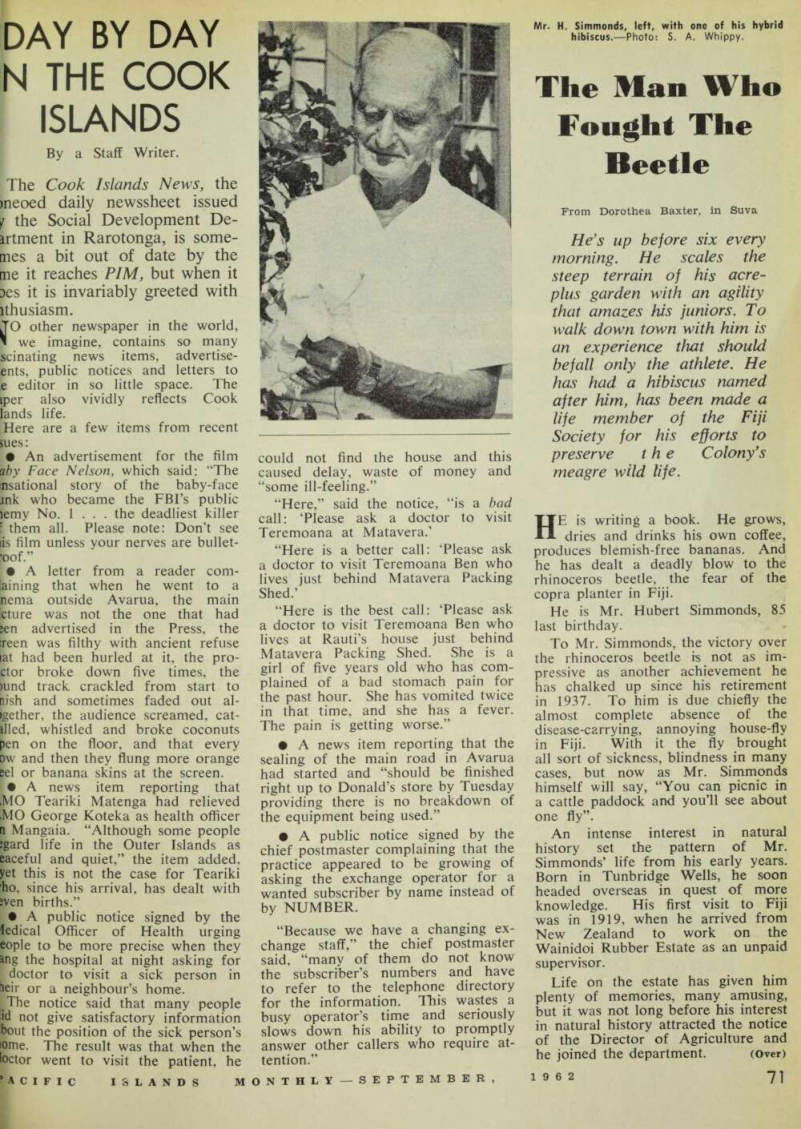 73
73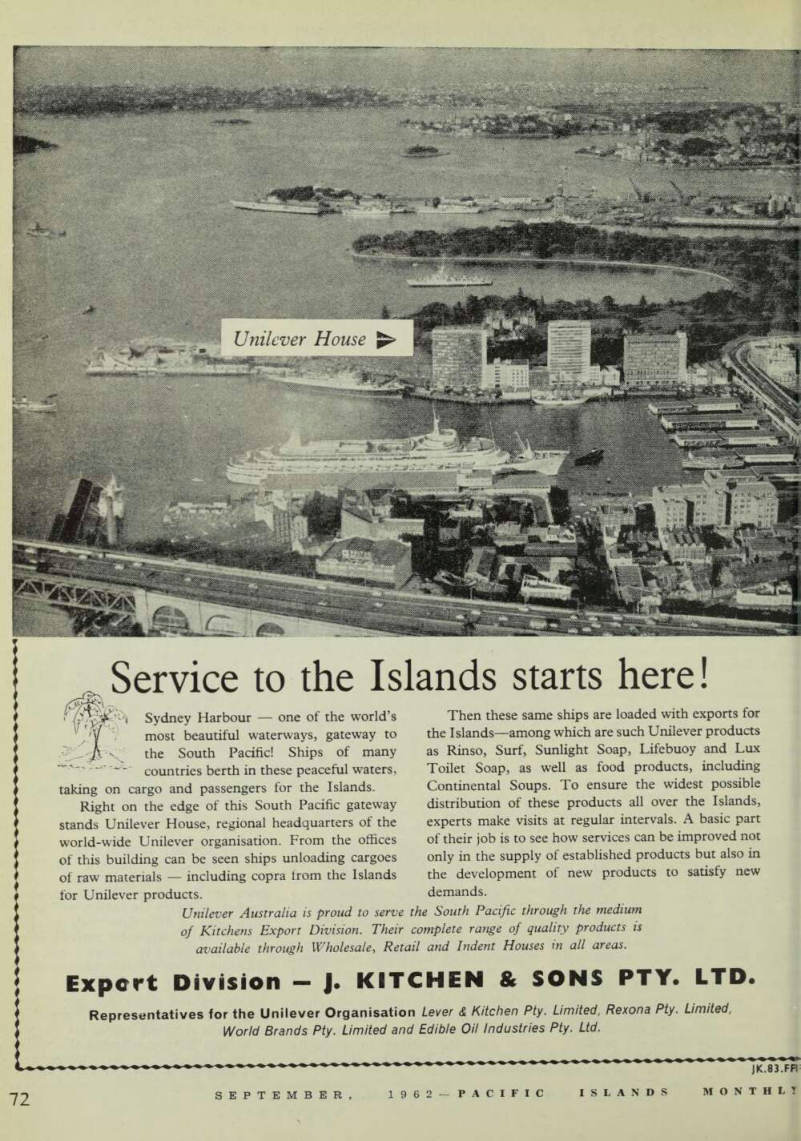 74
74 75
75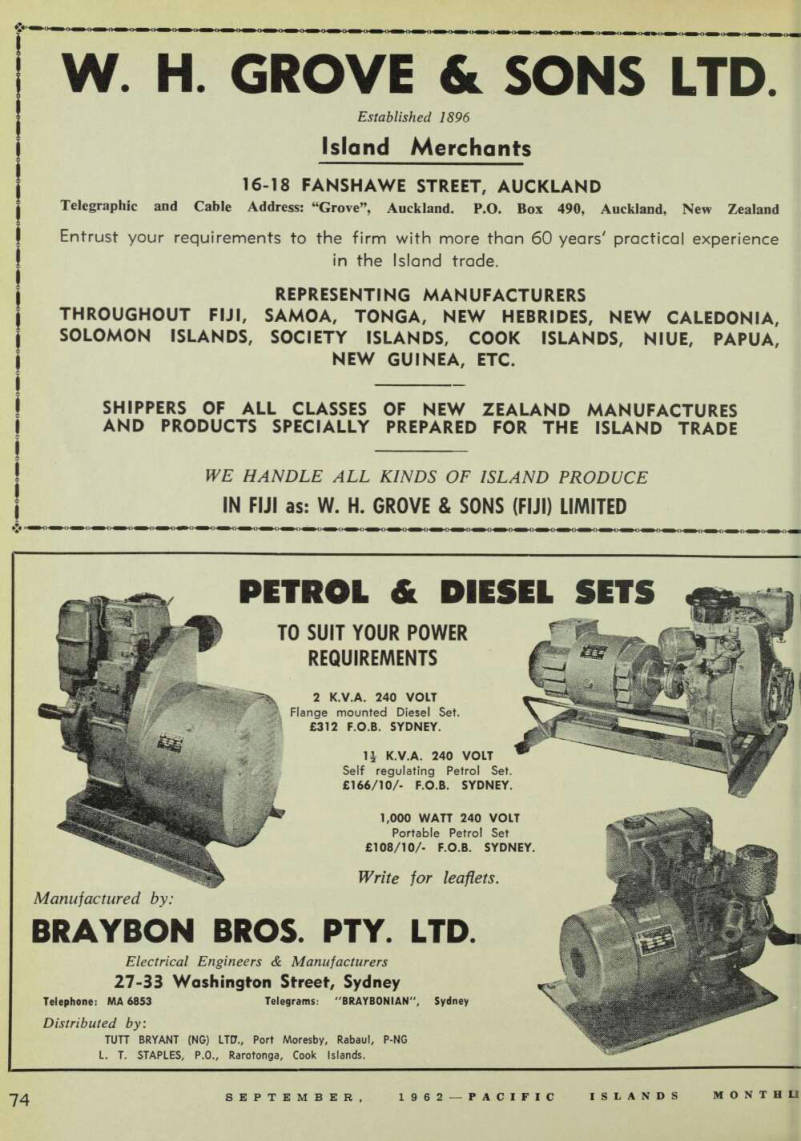 76
76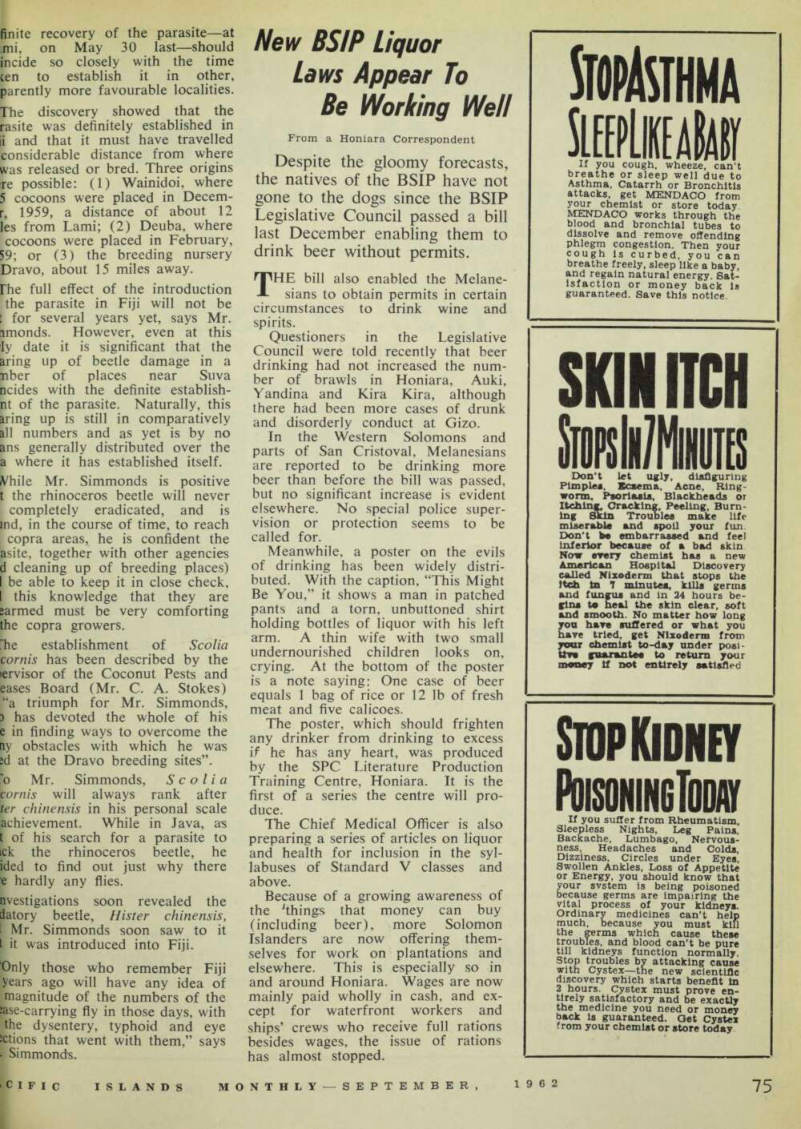 77
77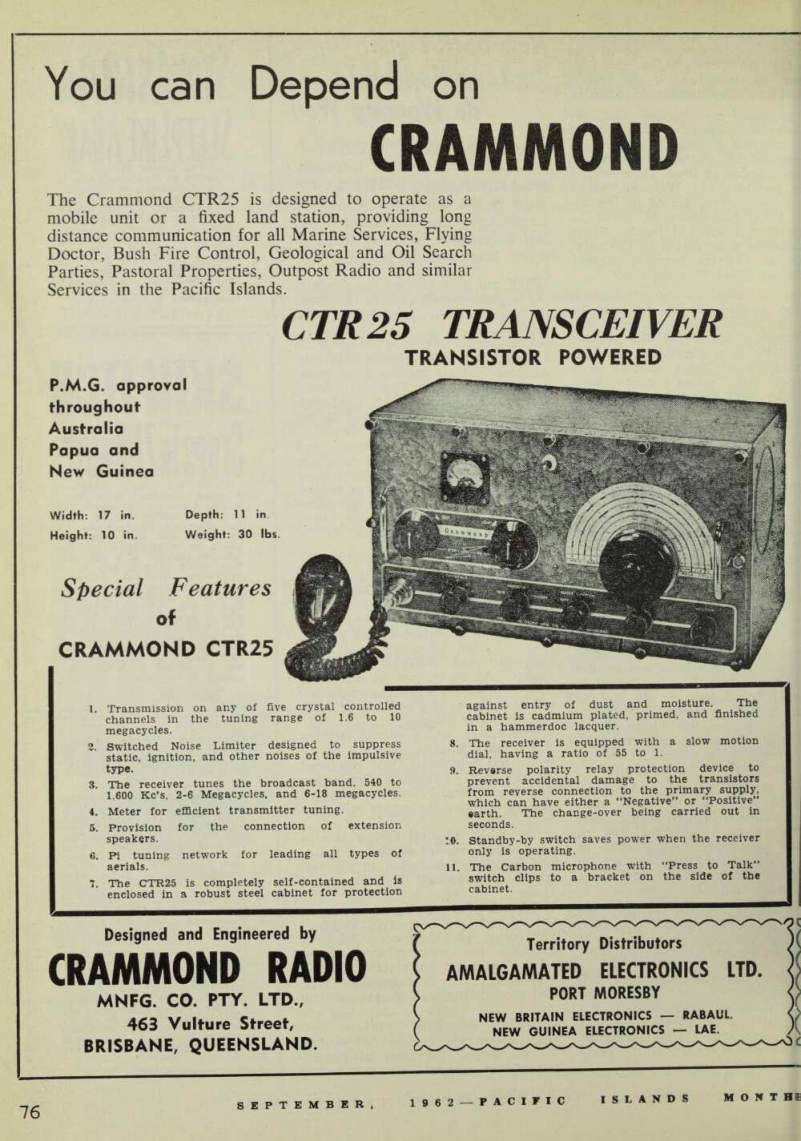 78
78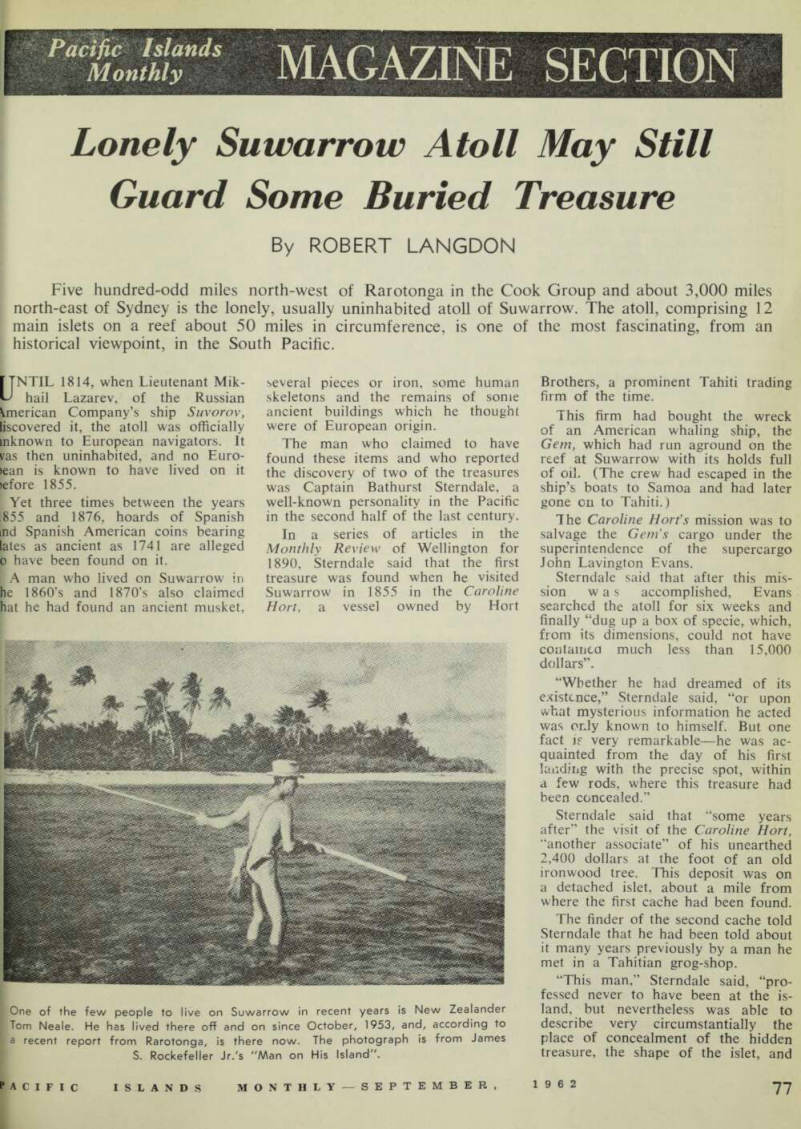 79
79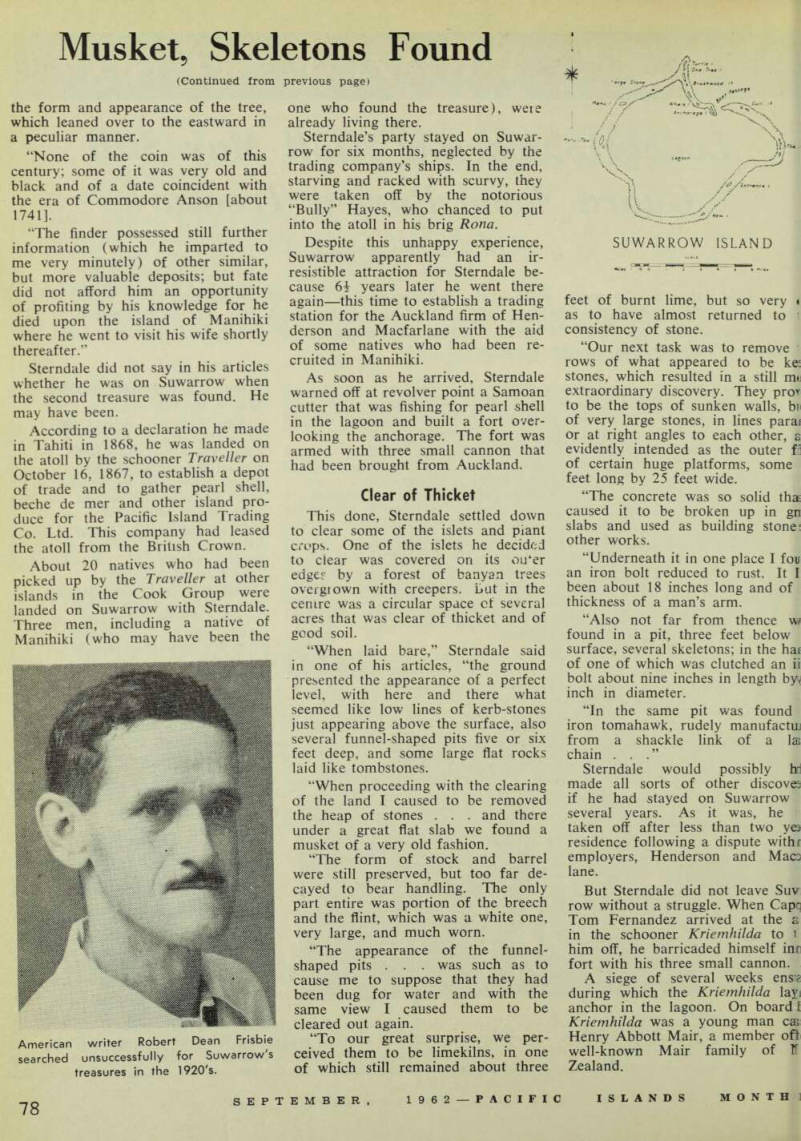 80
80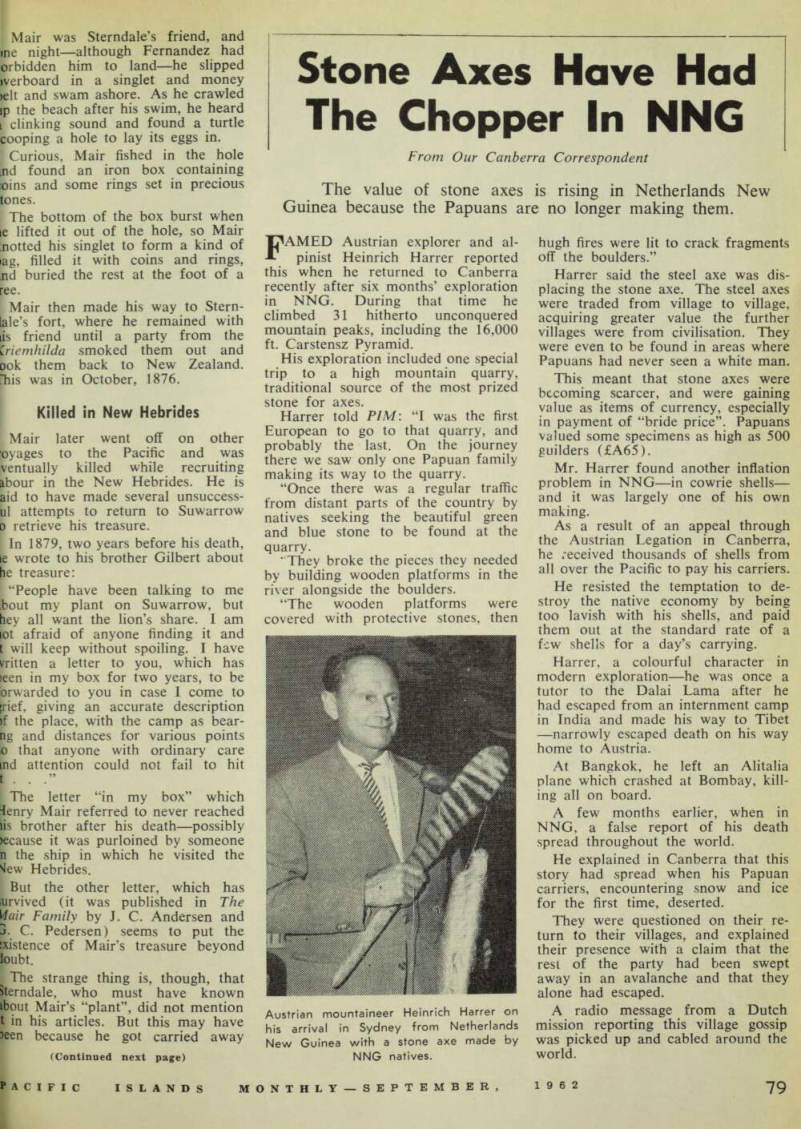 81
81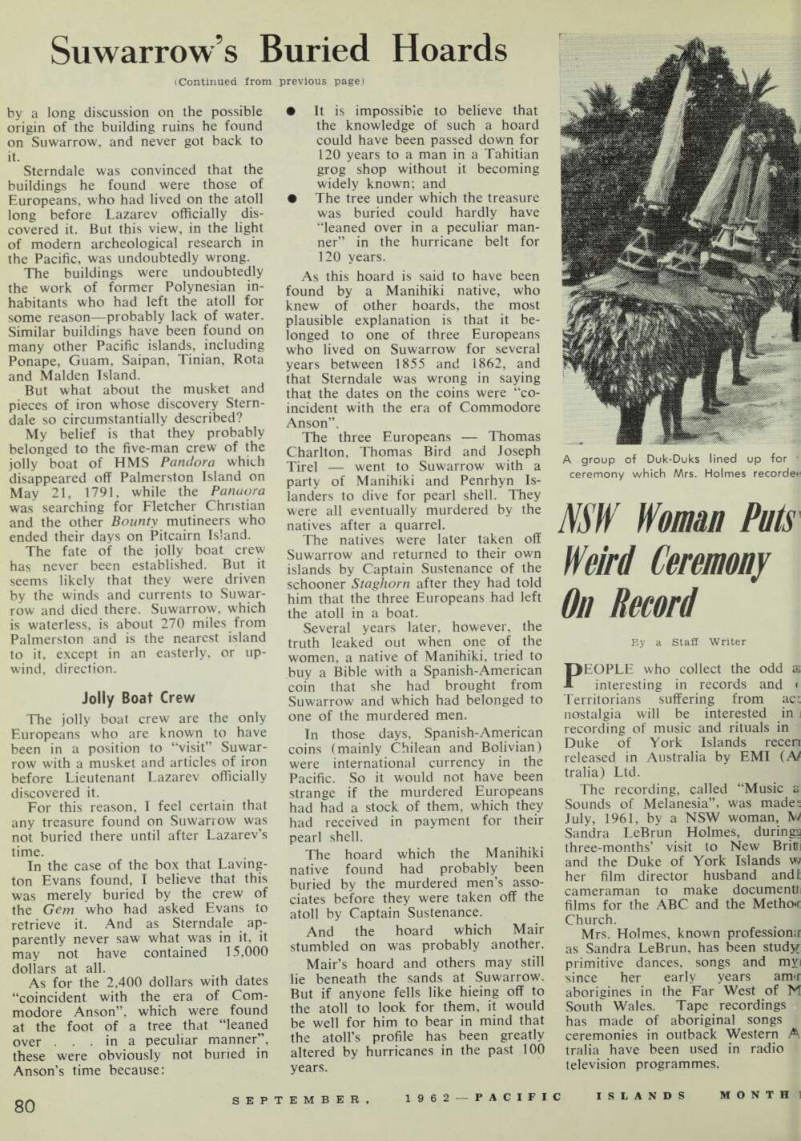 82
82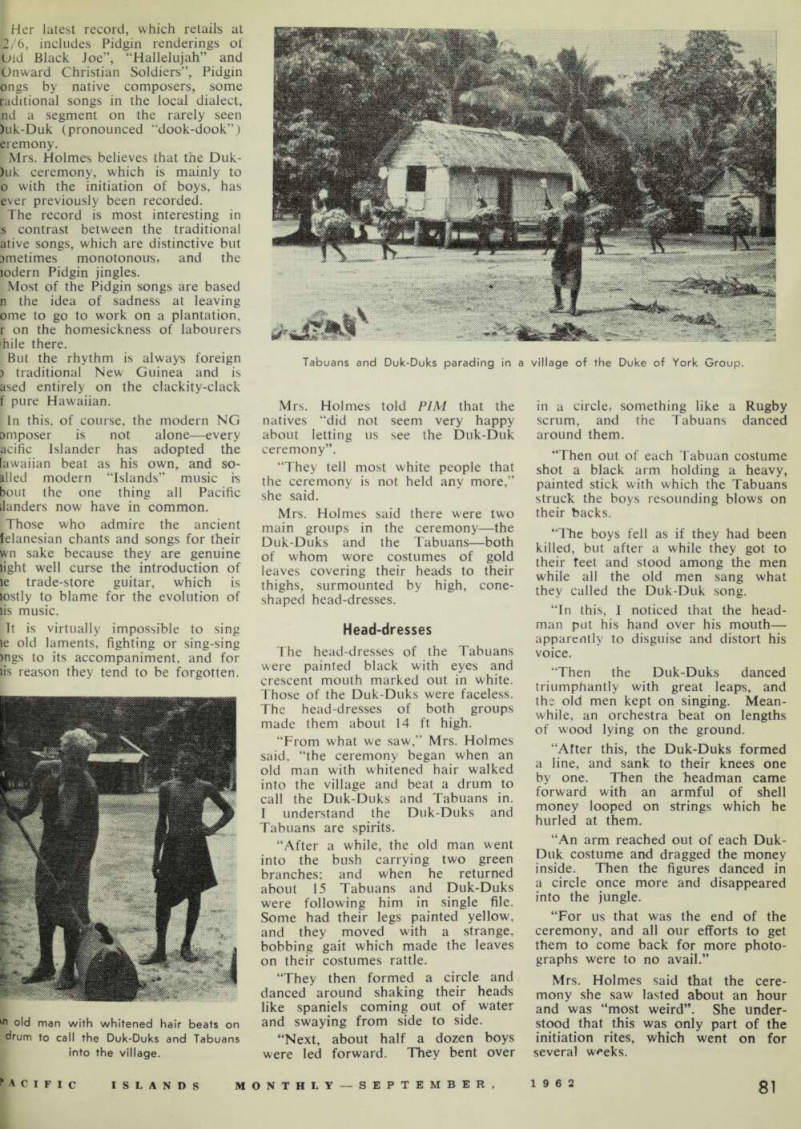 83
83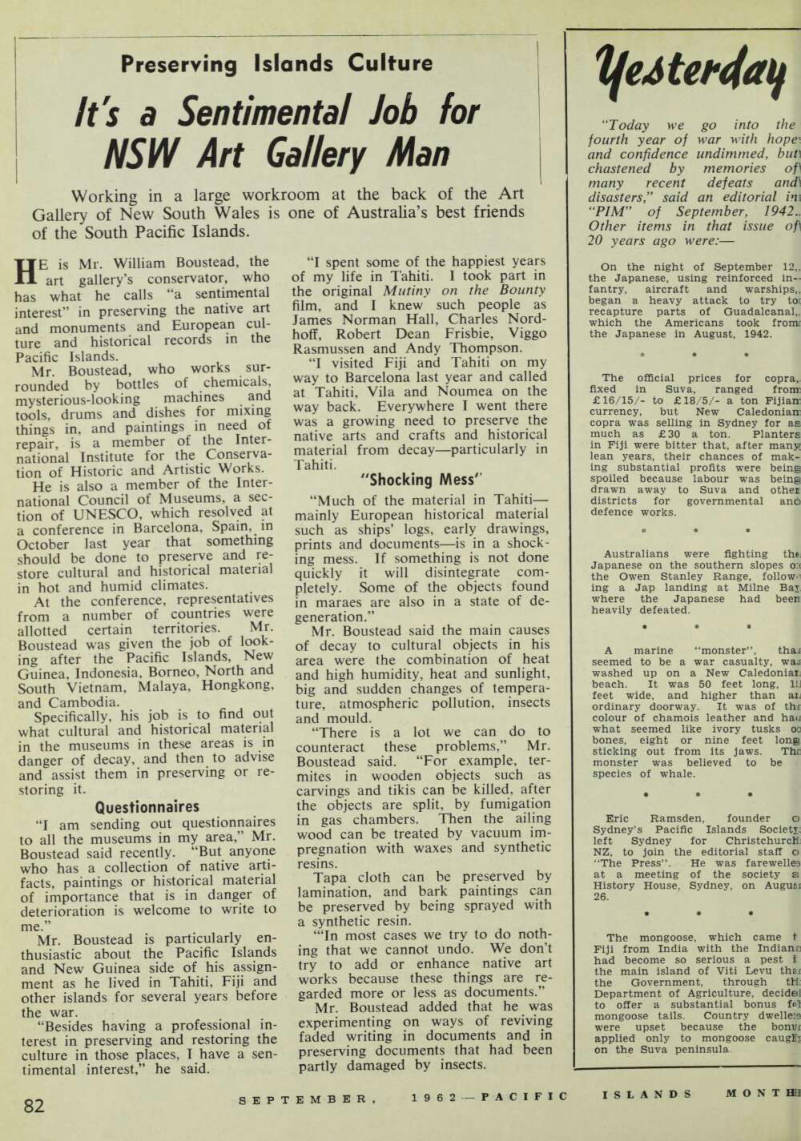 84
84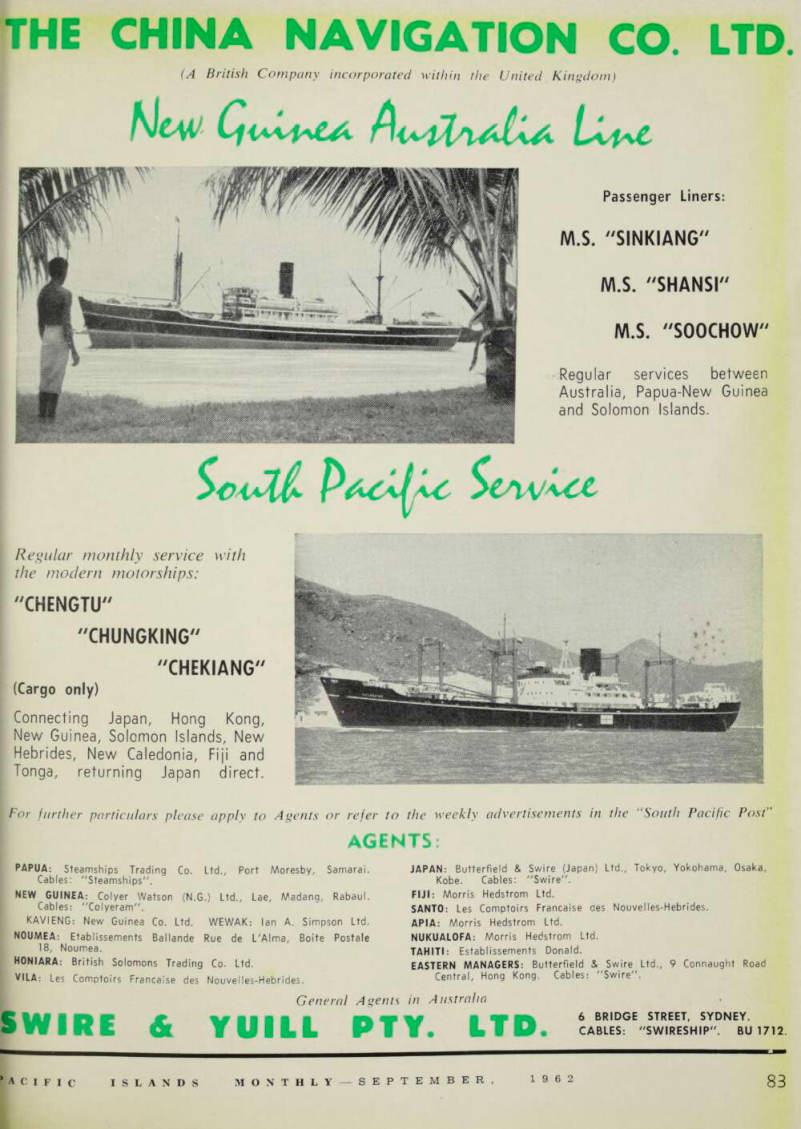 85
85 86
86 87
87 88
88 89
89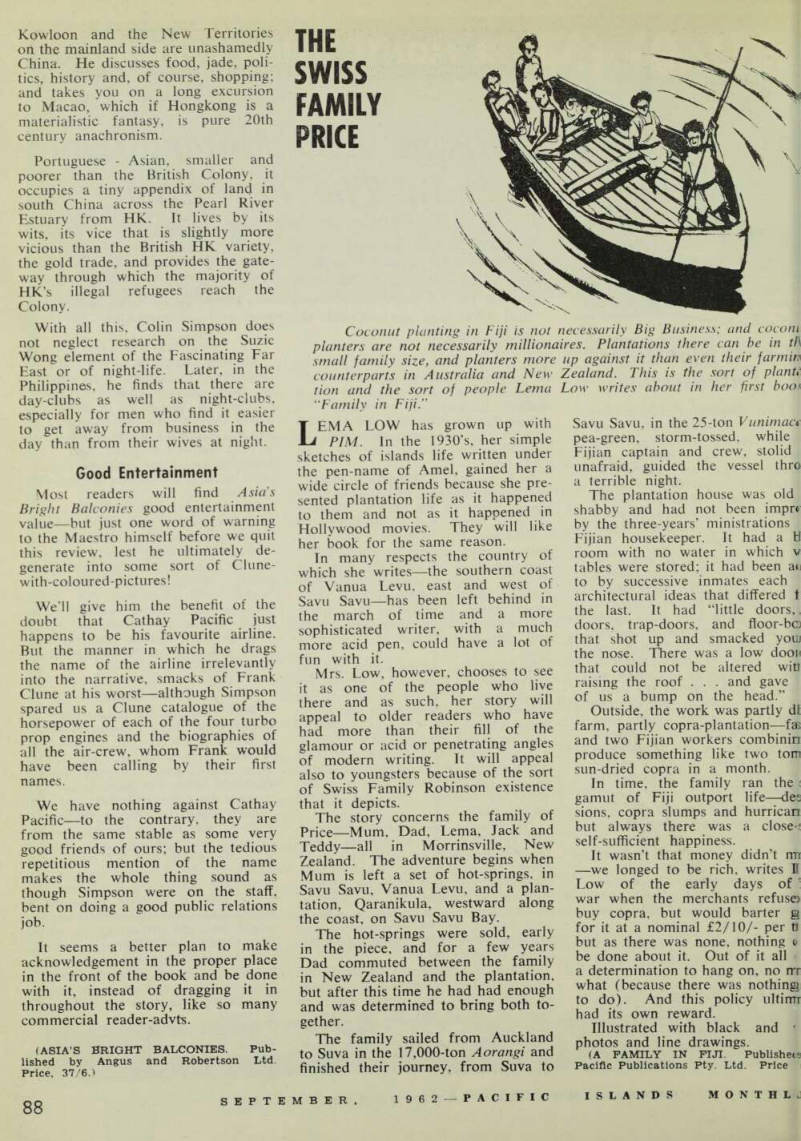 90
90 91
91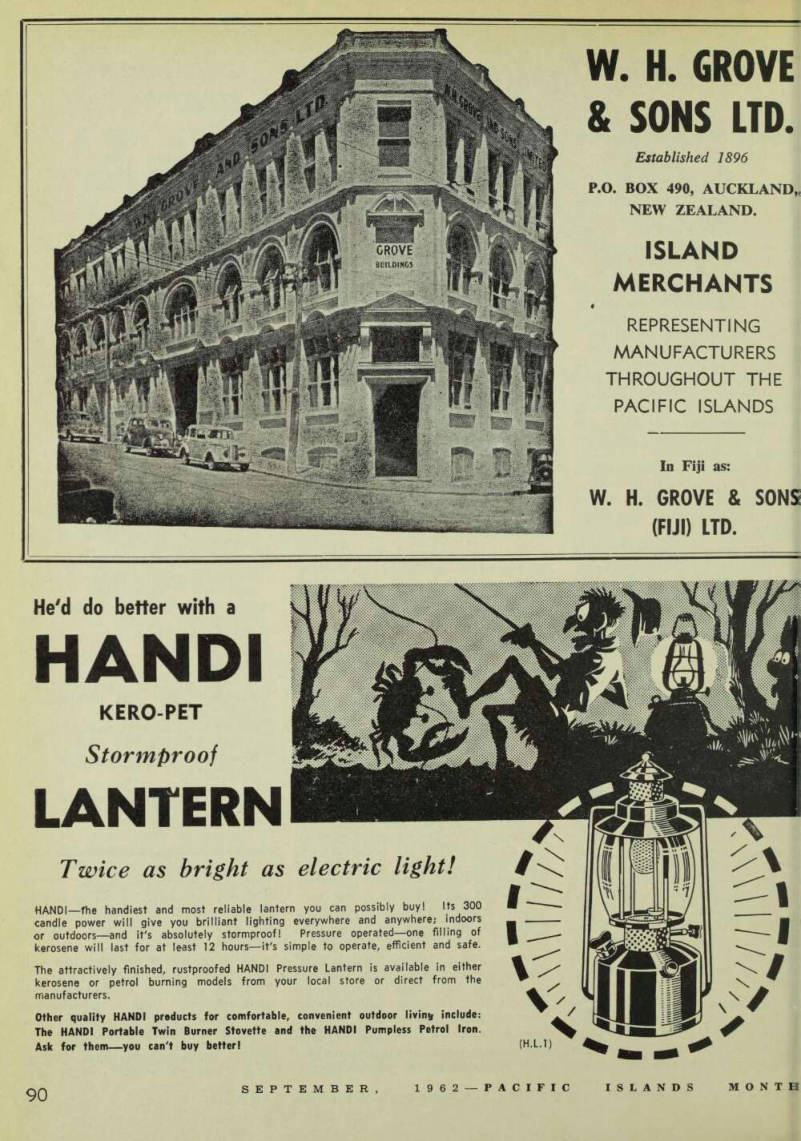 92
92 93
93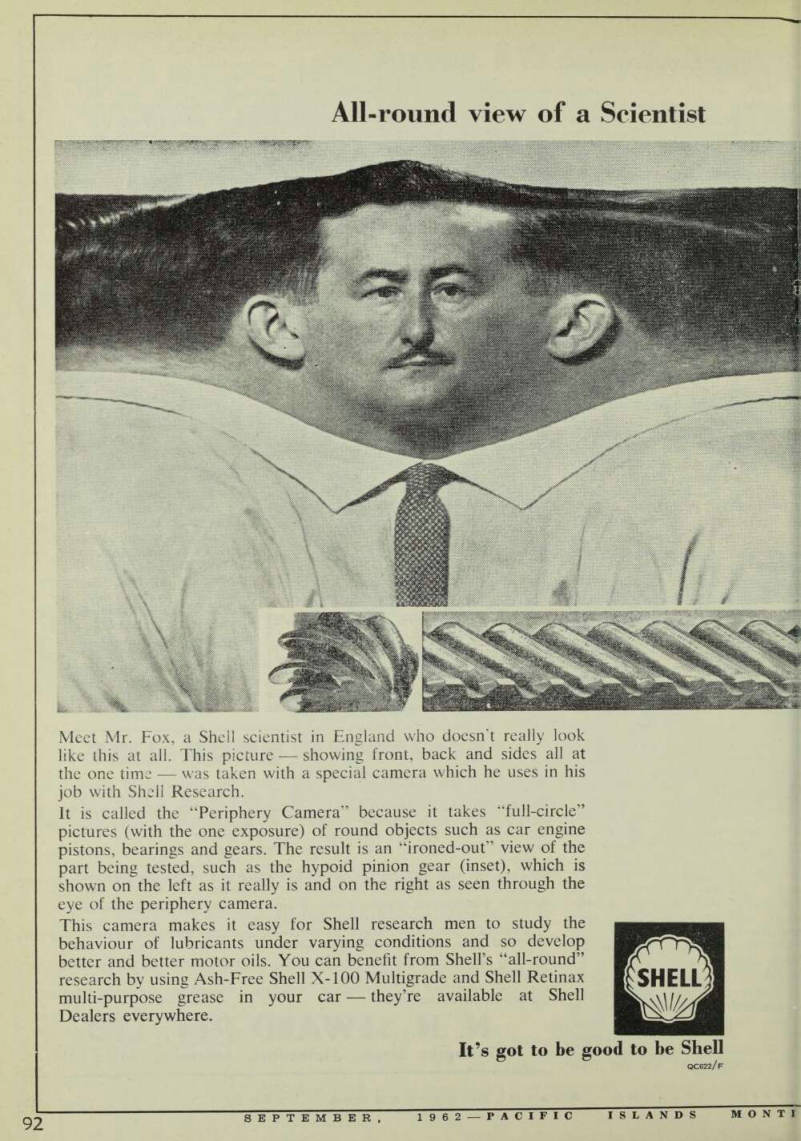 94
94 95
95 96
96 97
97 98
98 99
99 100
100 101
101 102
102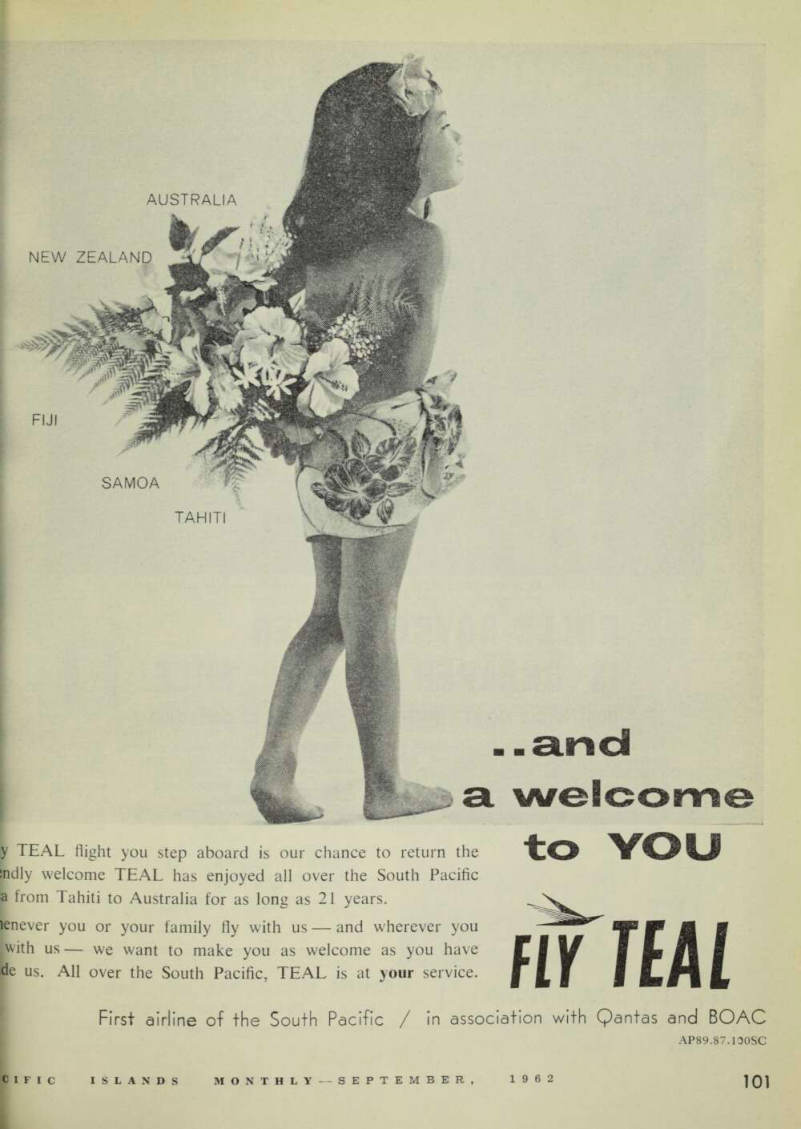 103
103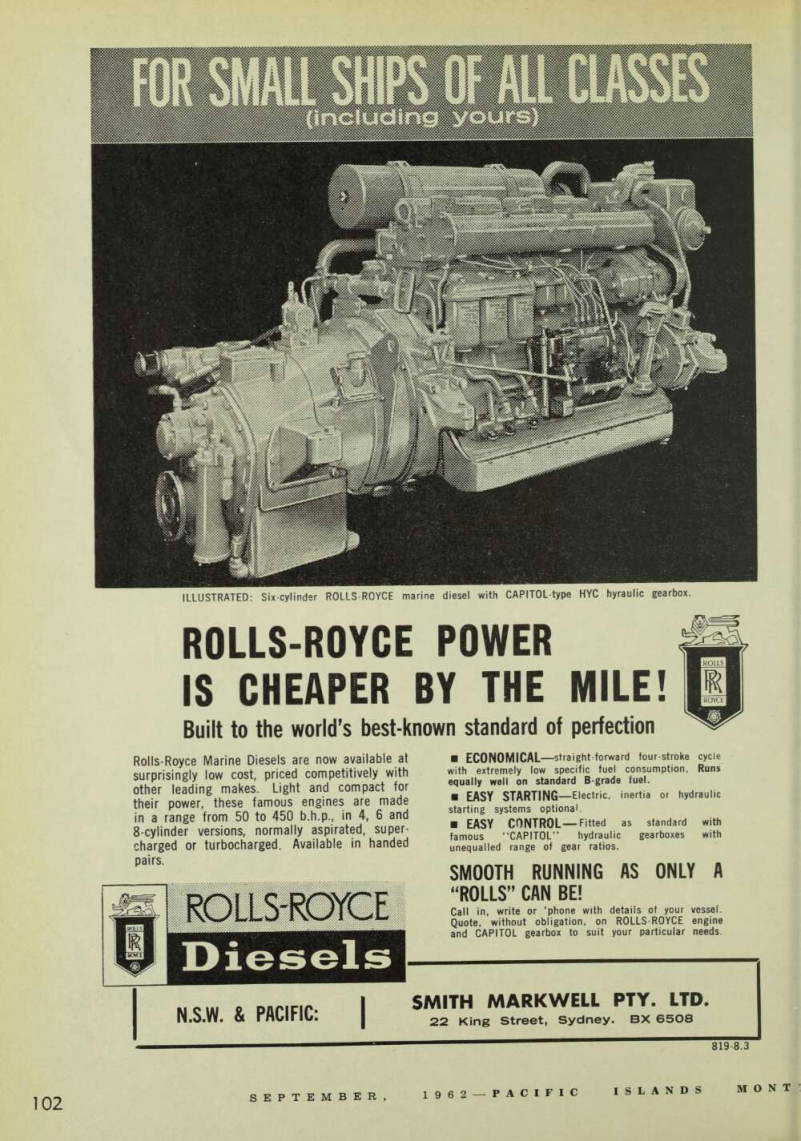 104
104 105
105 106
106 107
107 108
108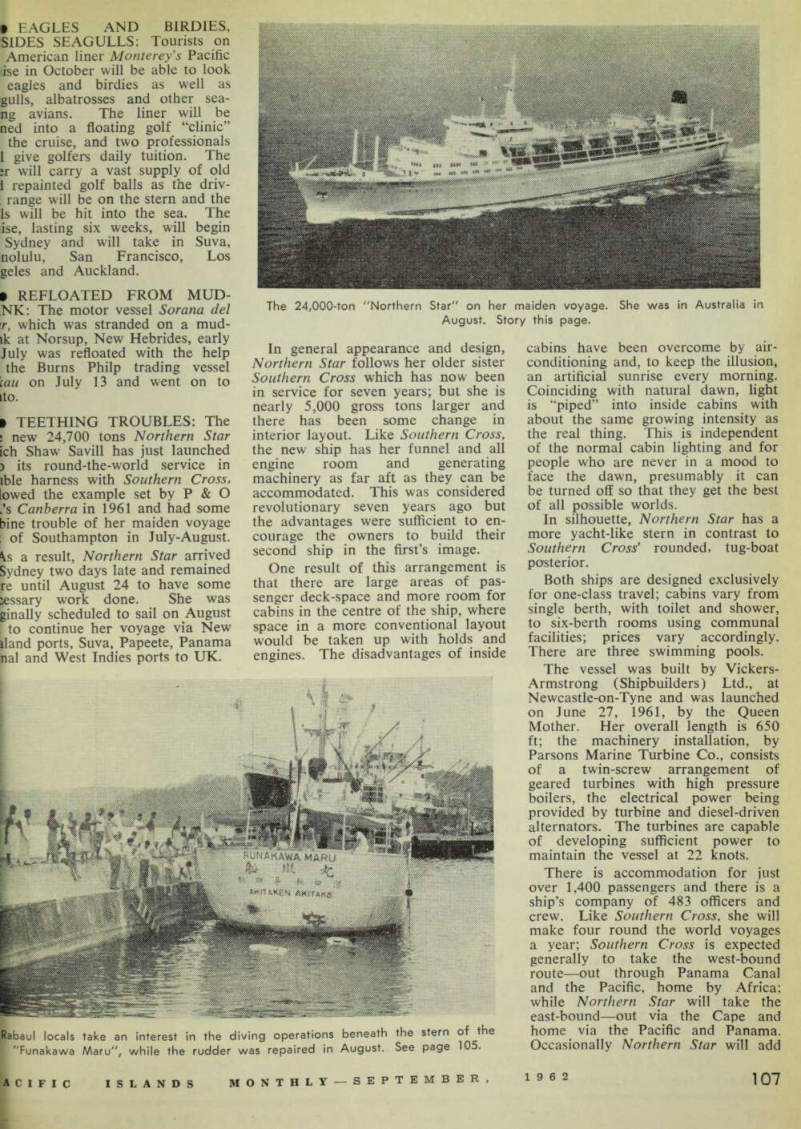 109
109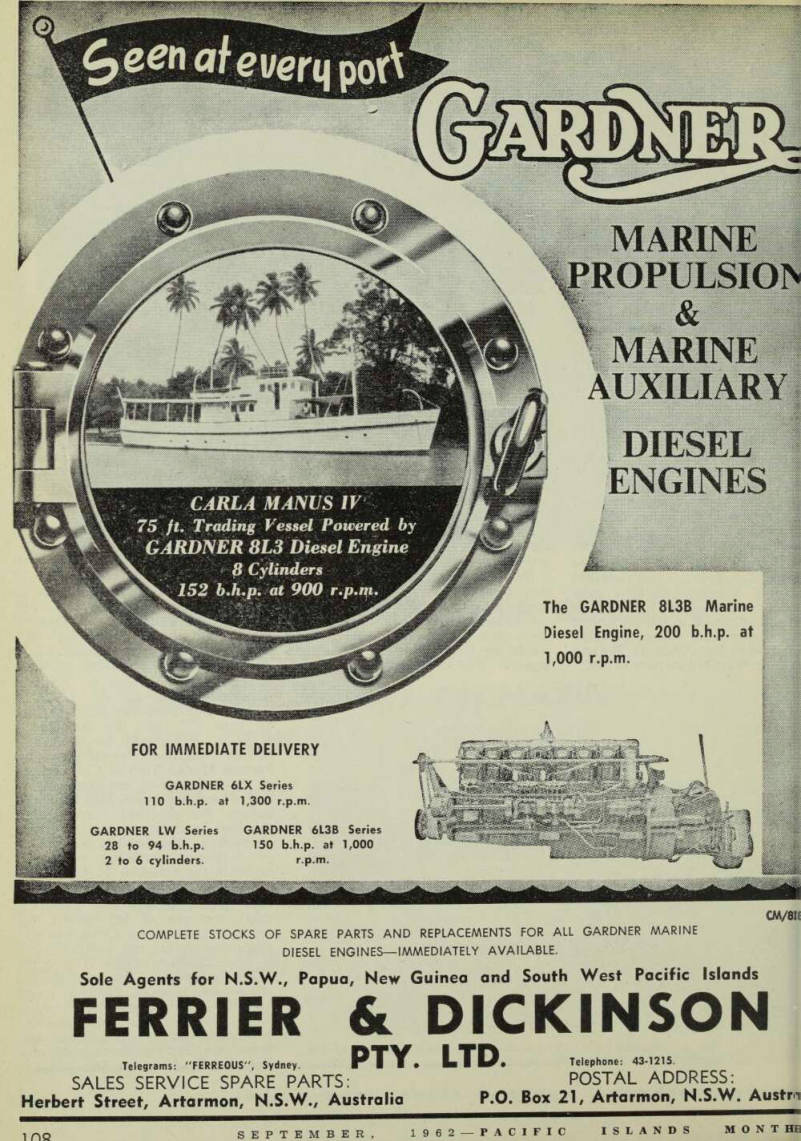 110
110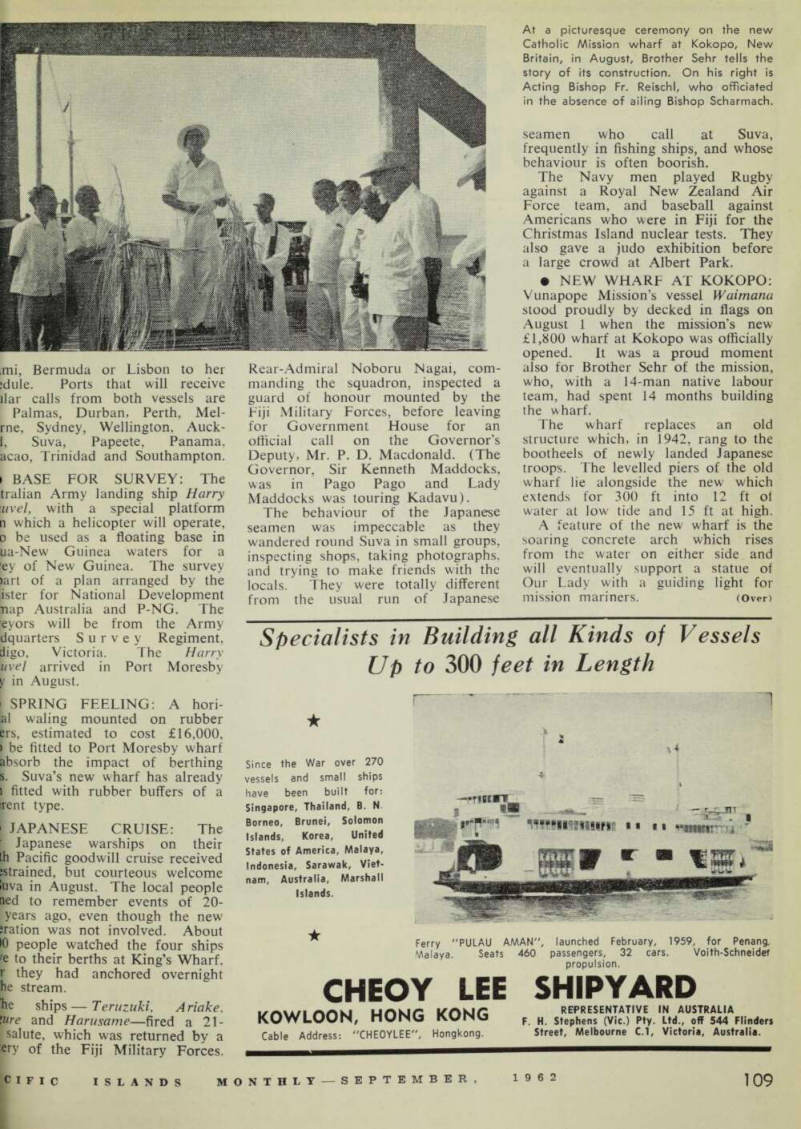 111
111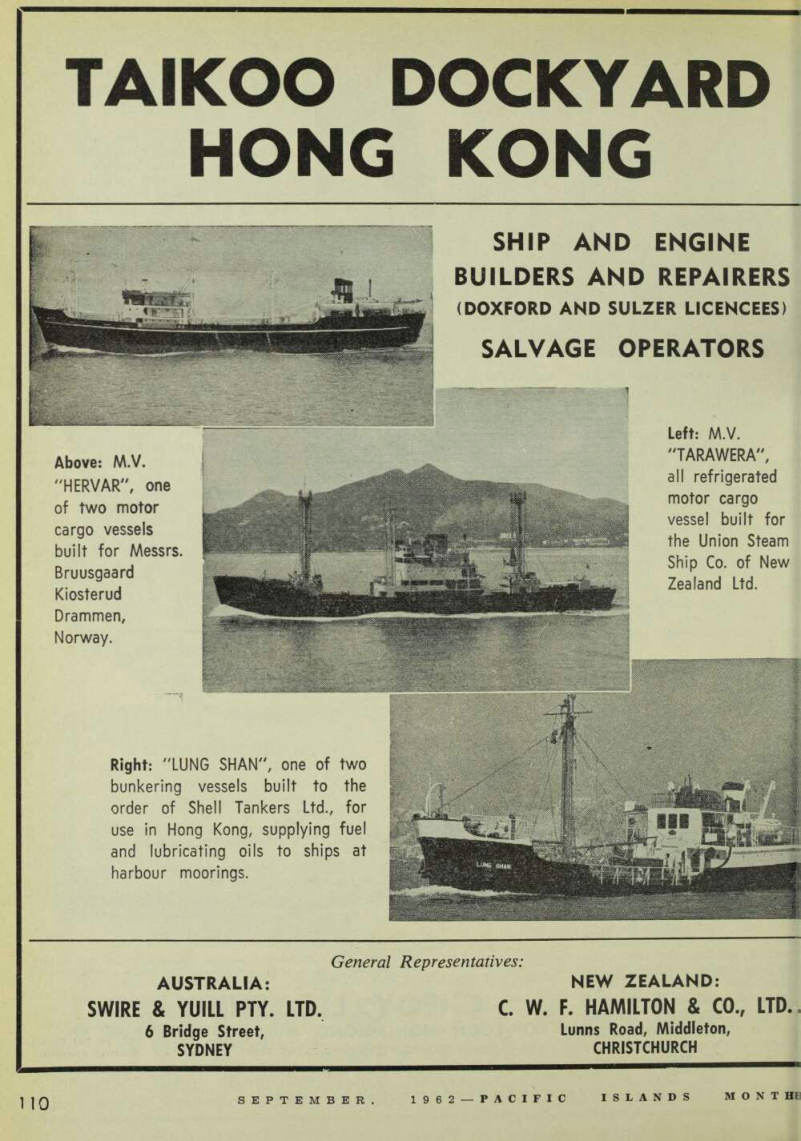 112
112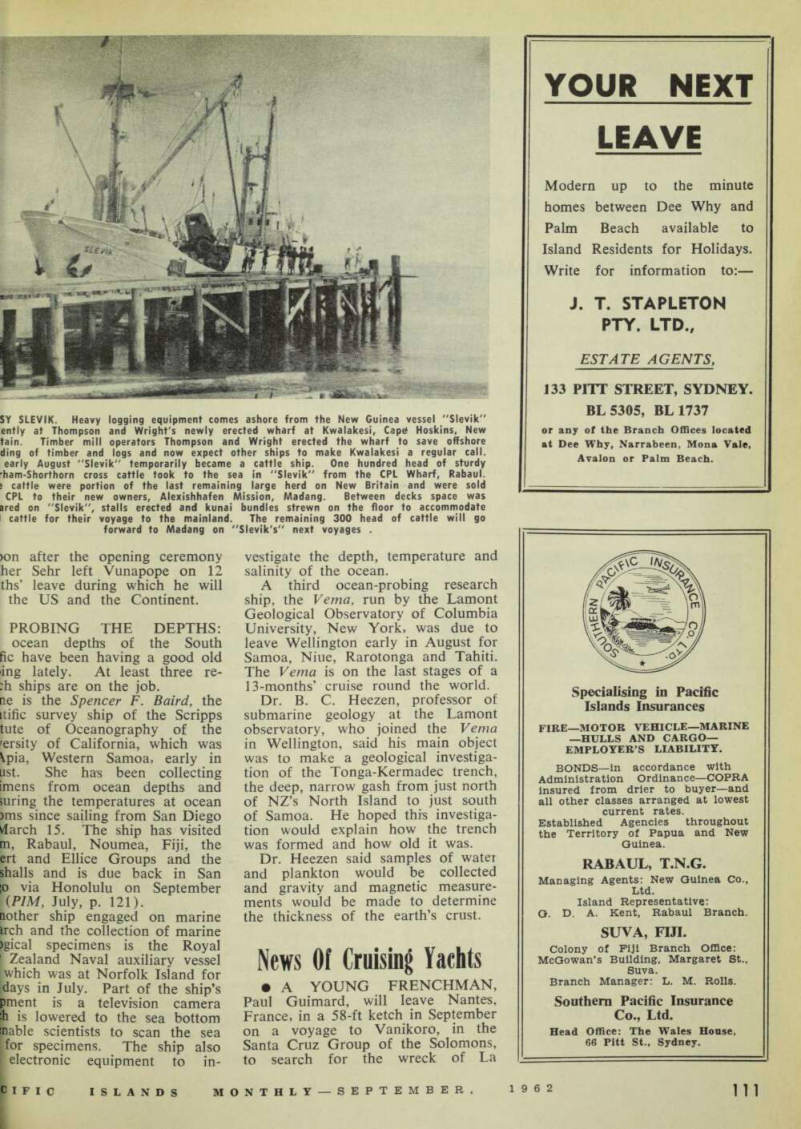 113
113 114
114 115
115 116
116 117
117 118
118 119
119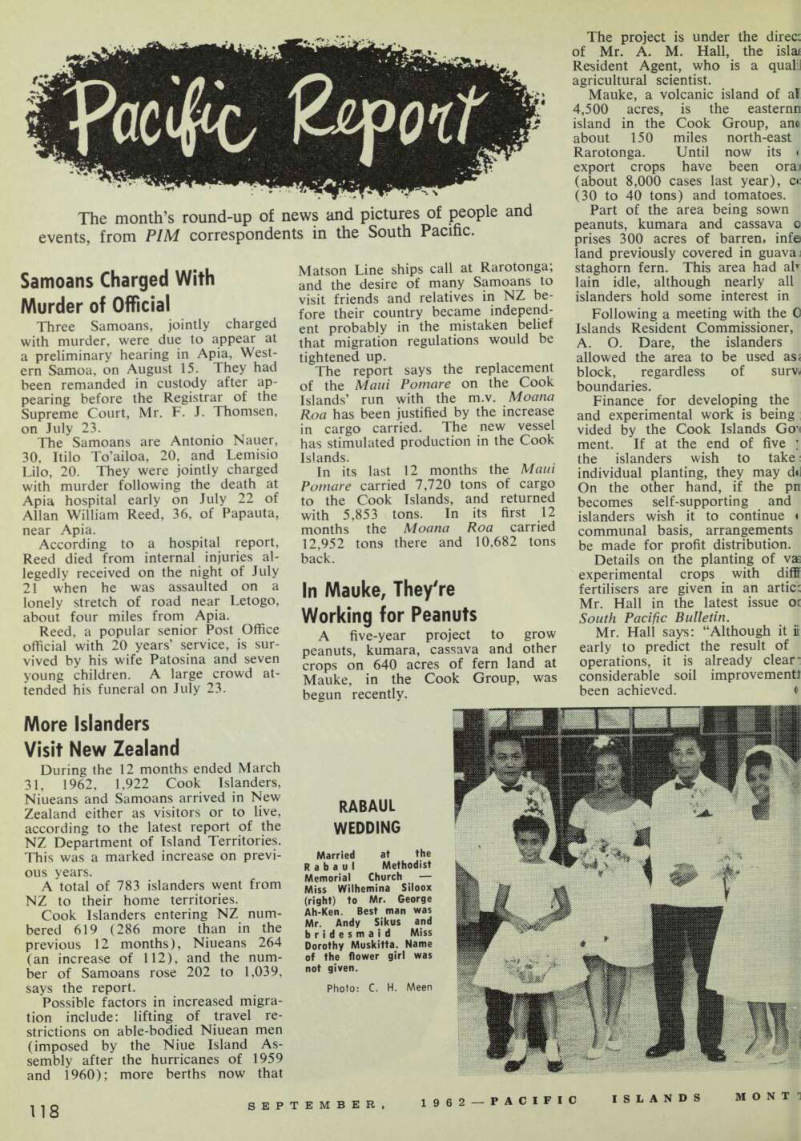 120
120 121
121 122
122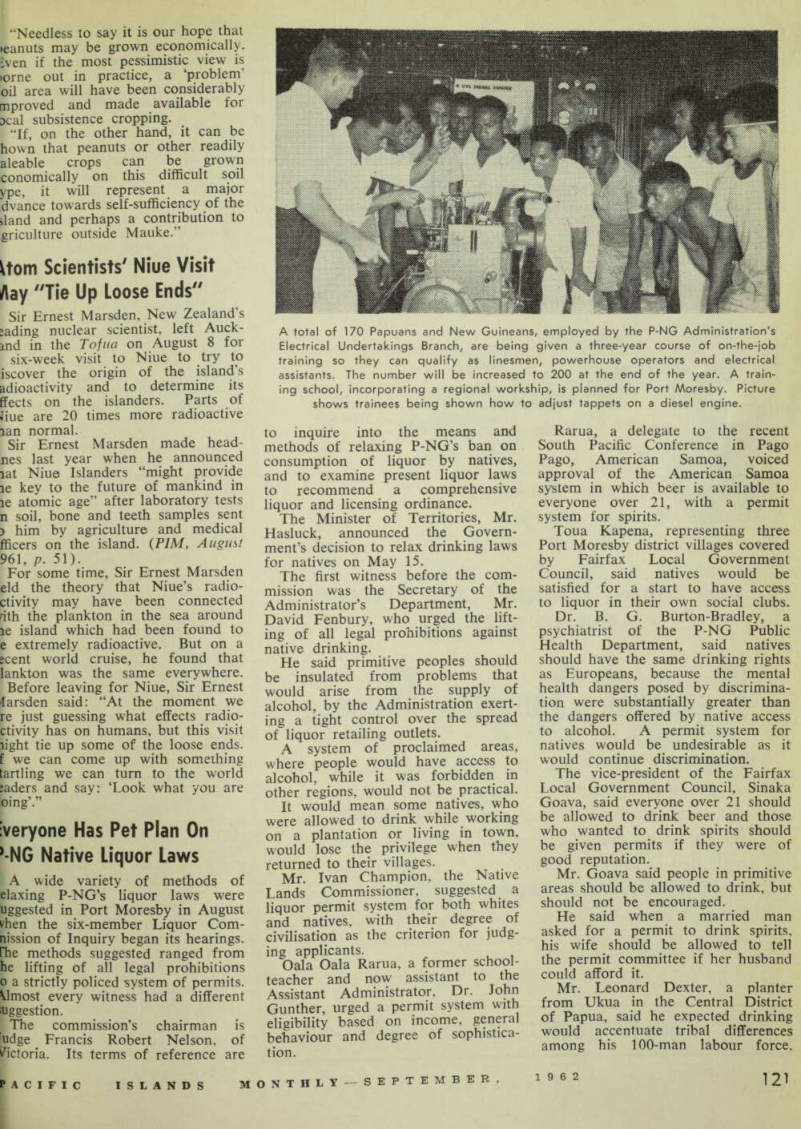 123
123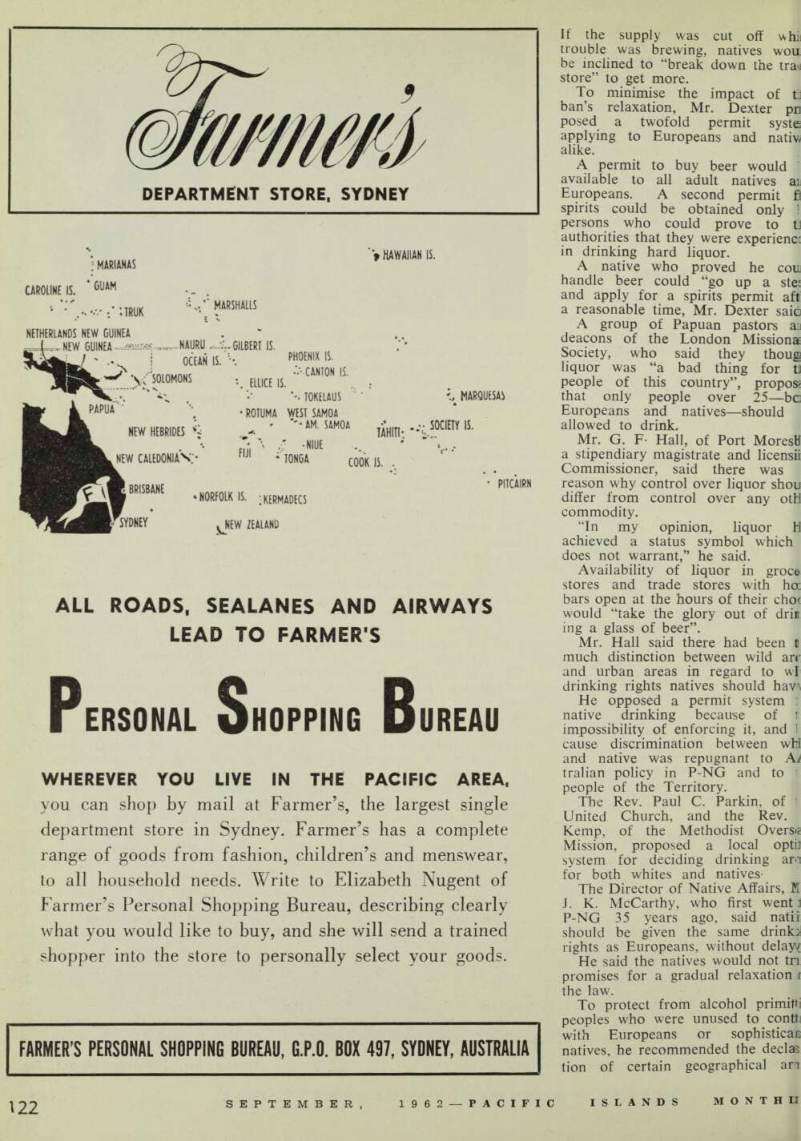 124
124 125
125 126
126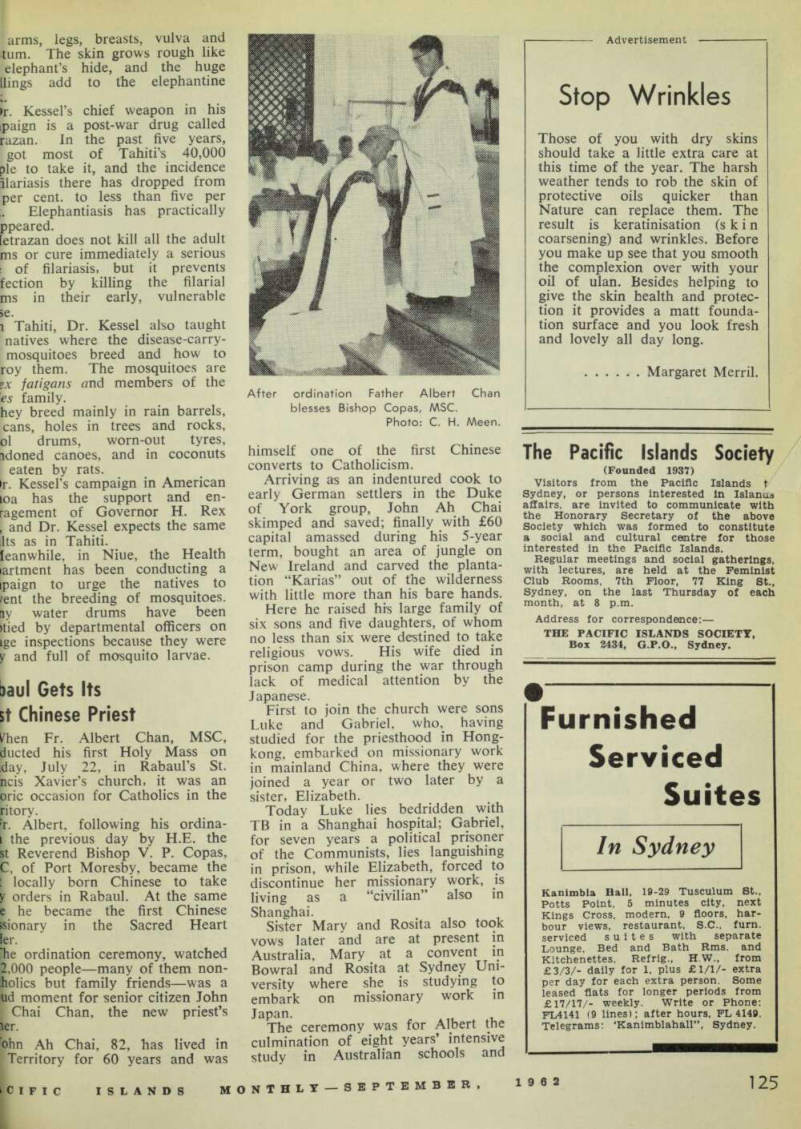 127
127 128
128 129
129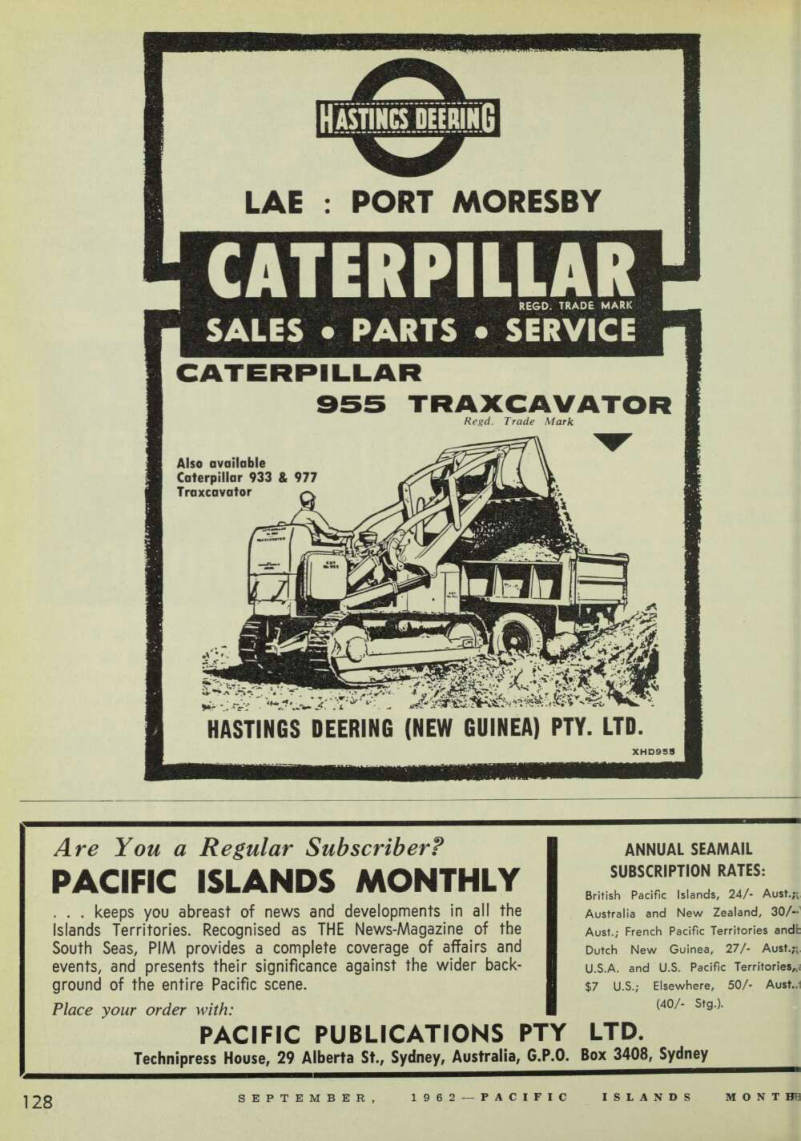 130
130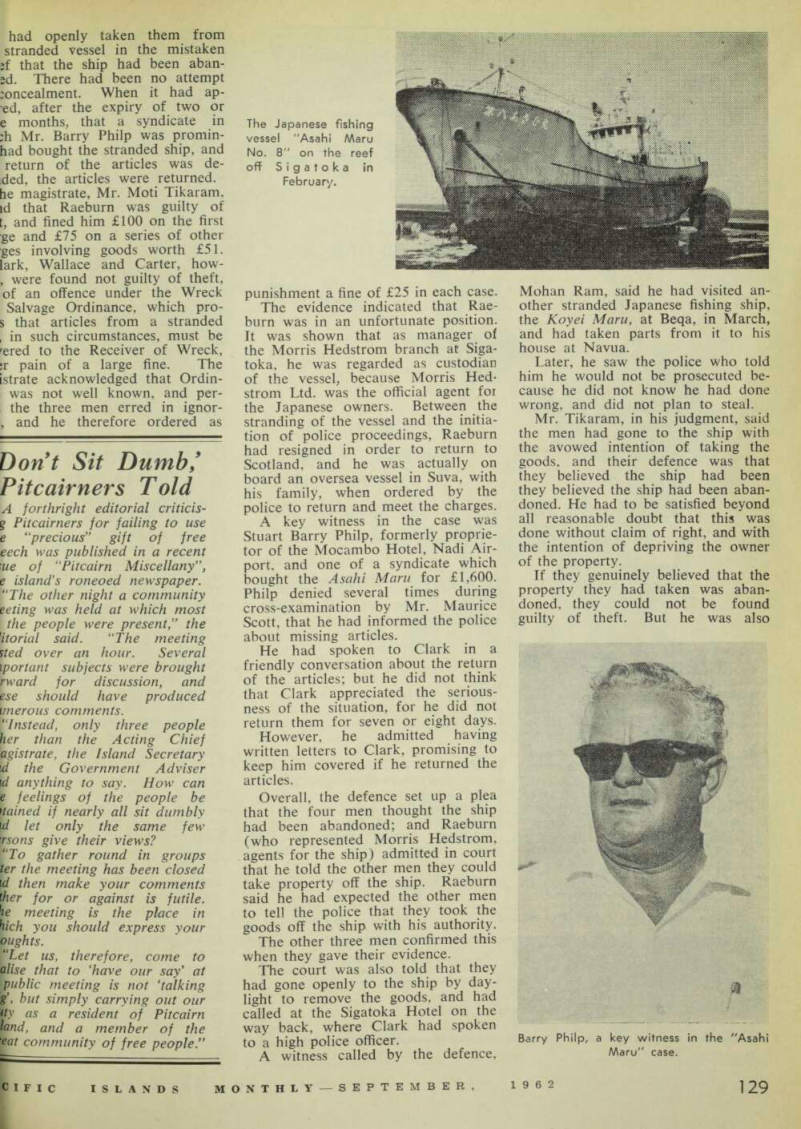 131
131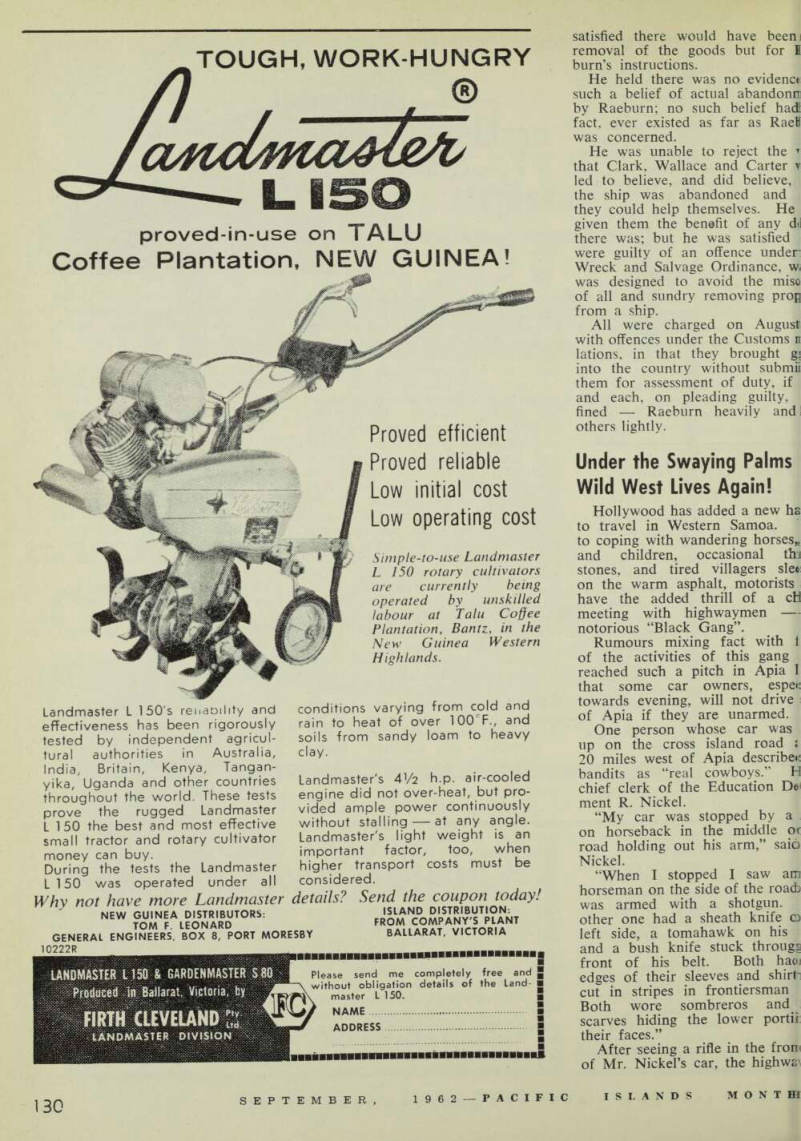 132
132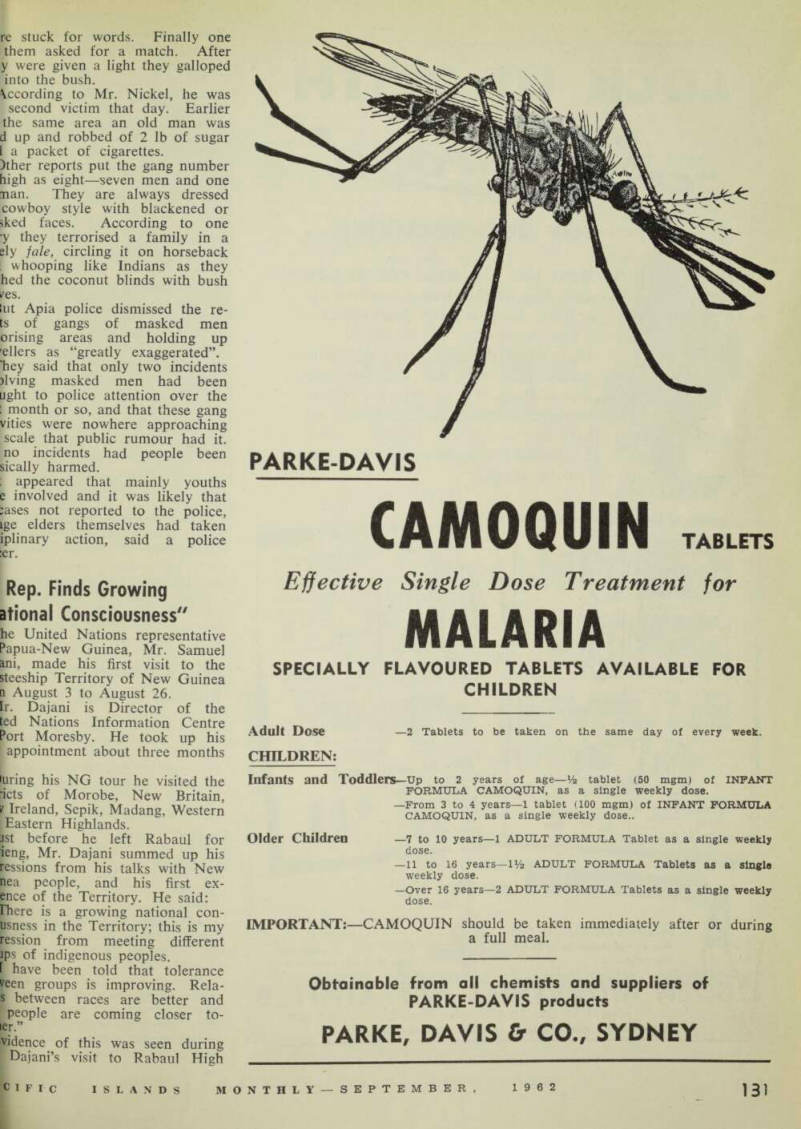 133
133 134
134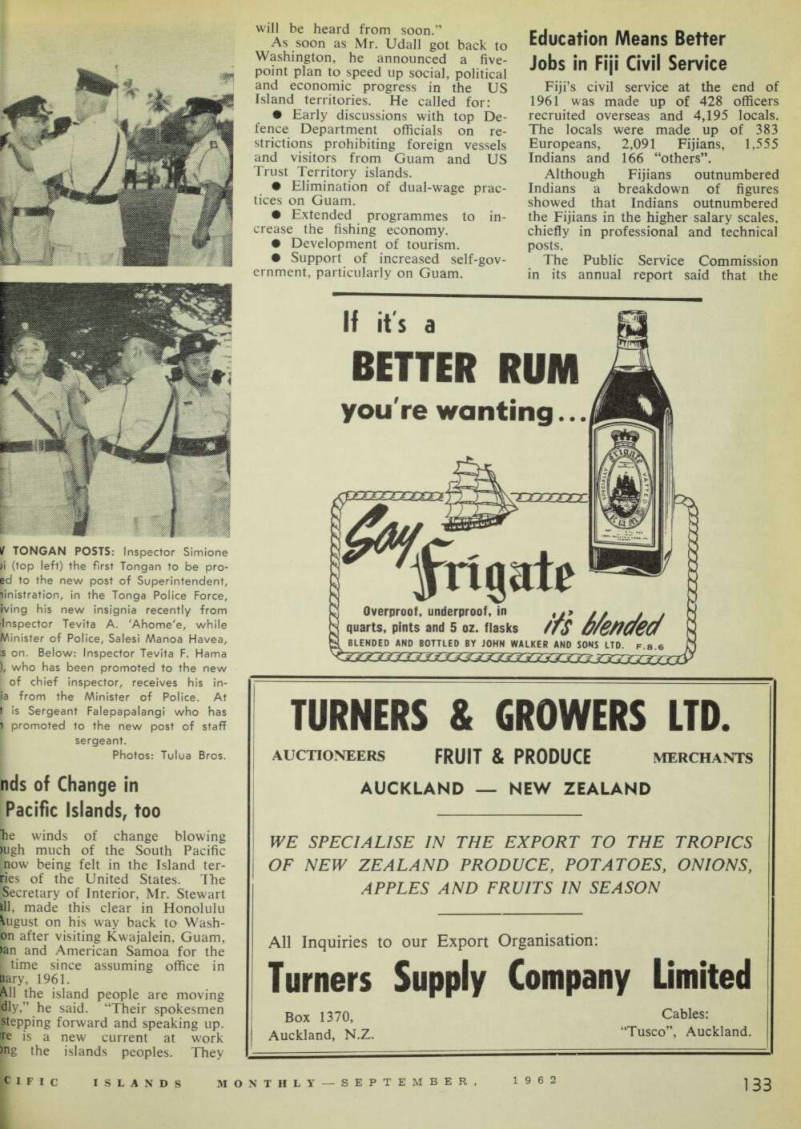 135
135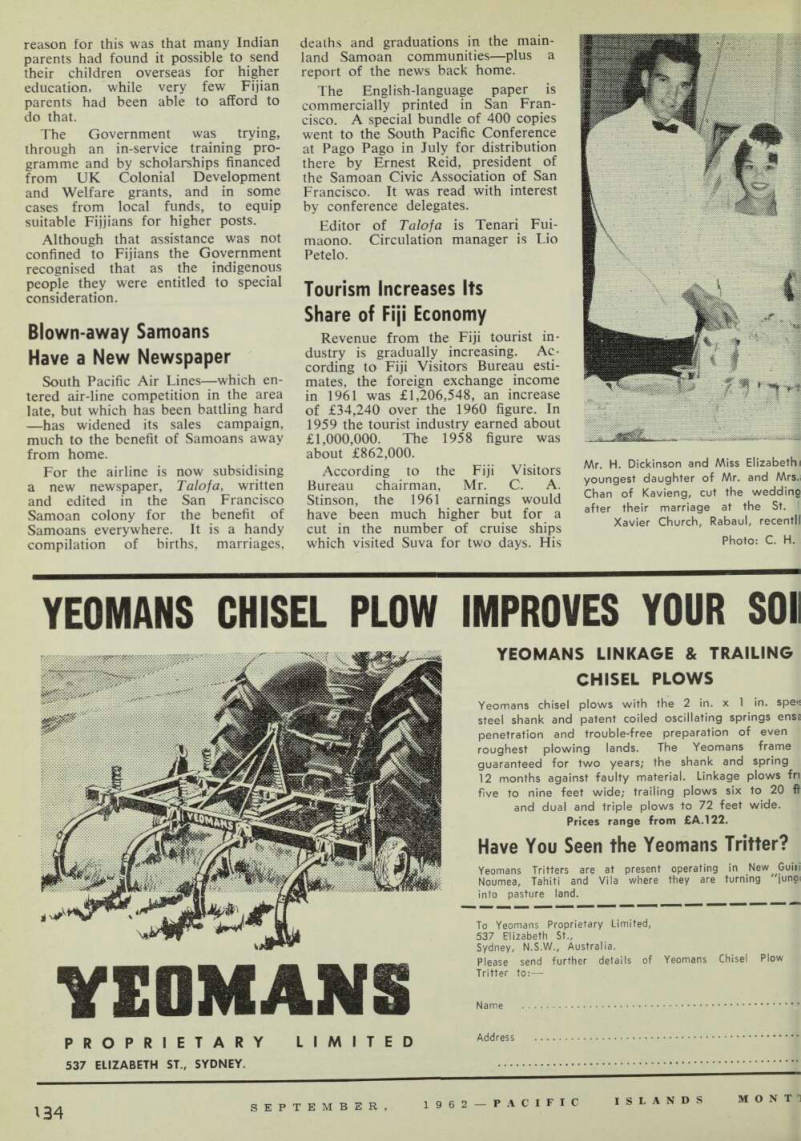 136
136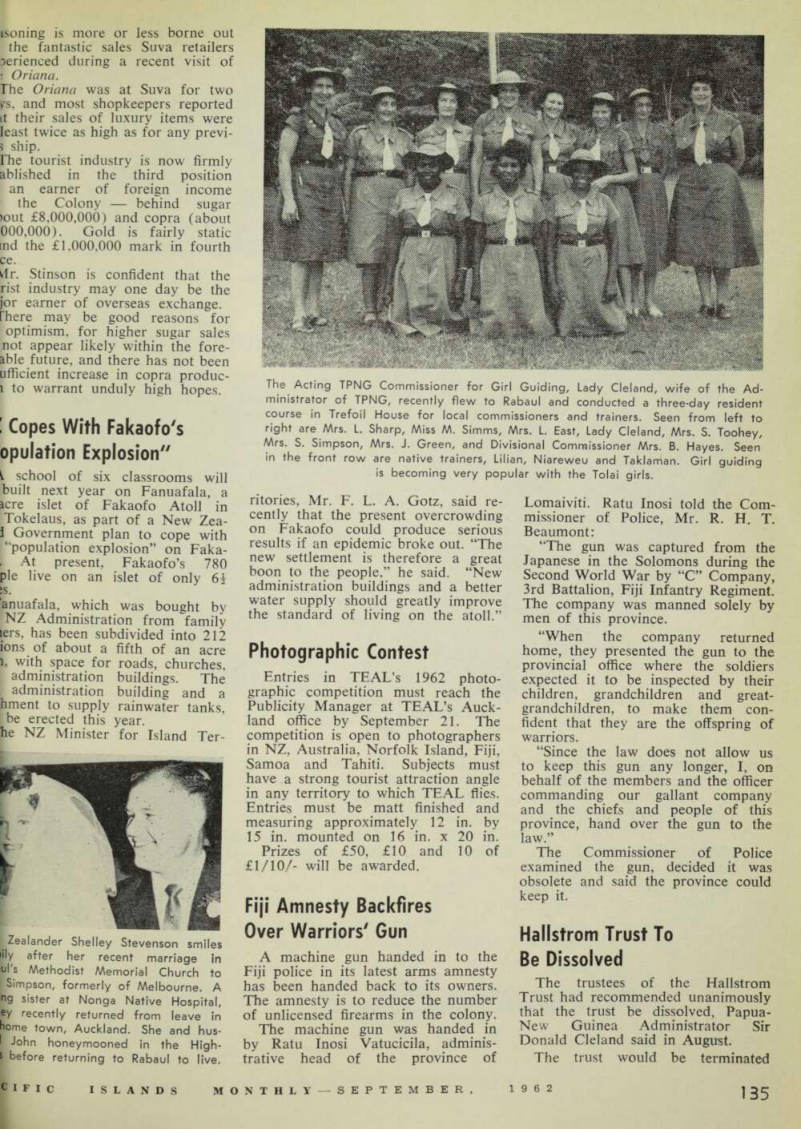 137
137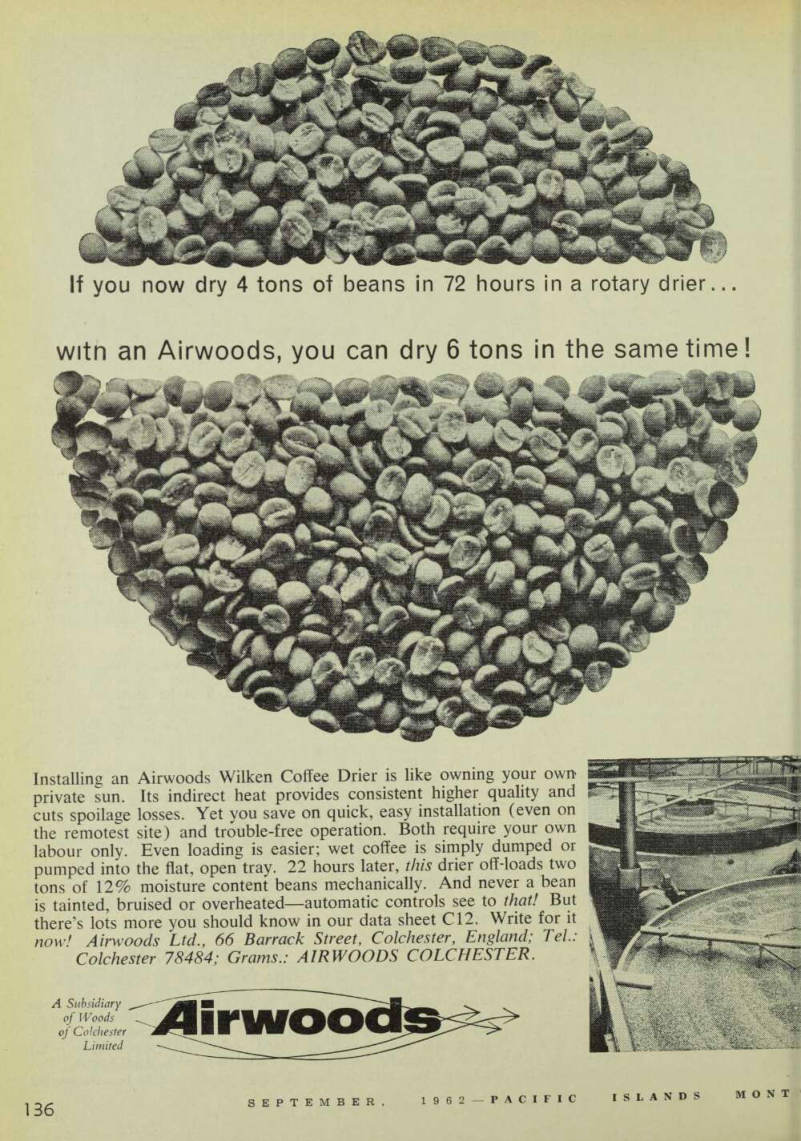 138
138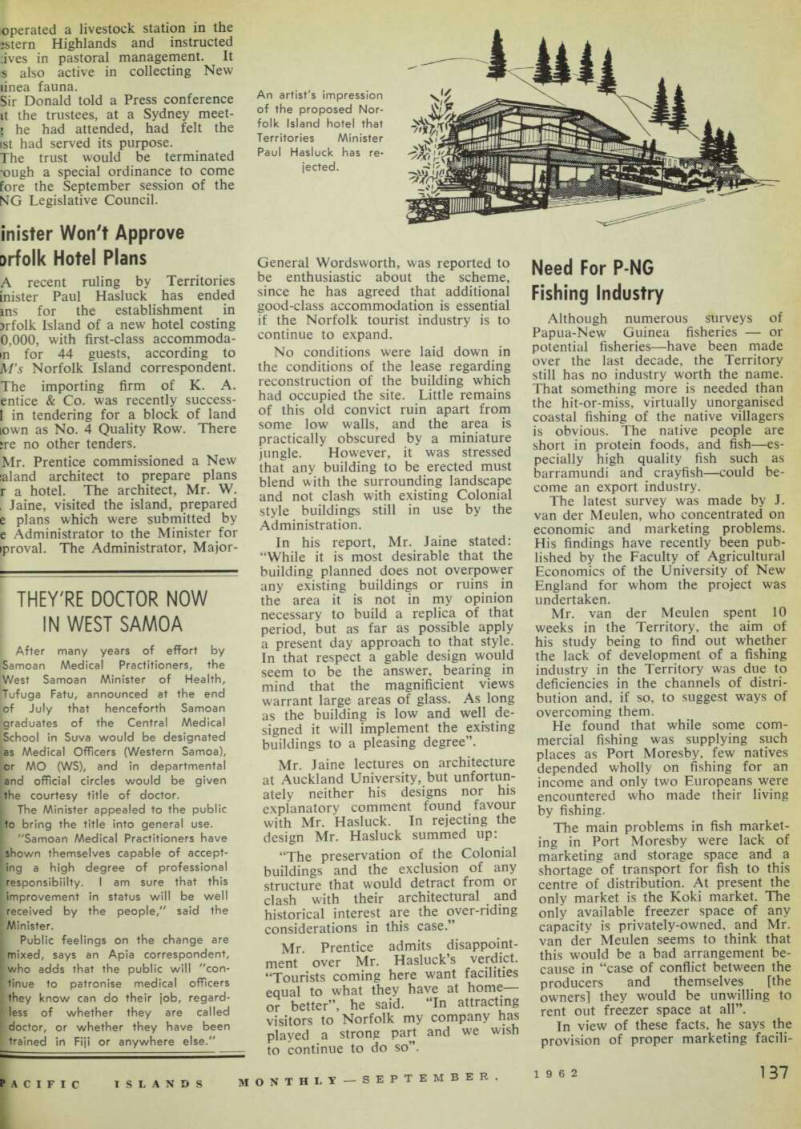 139
139 140
140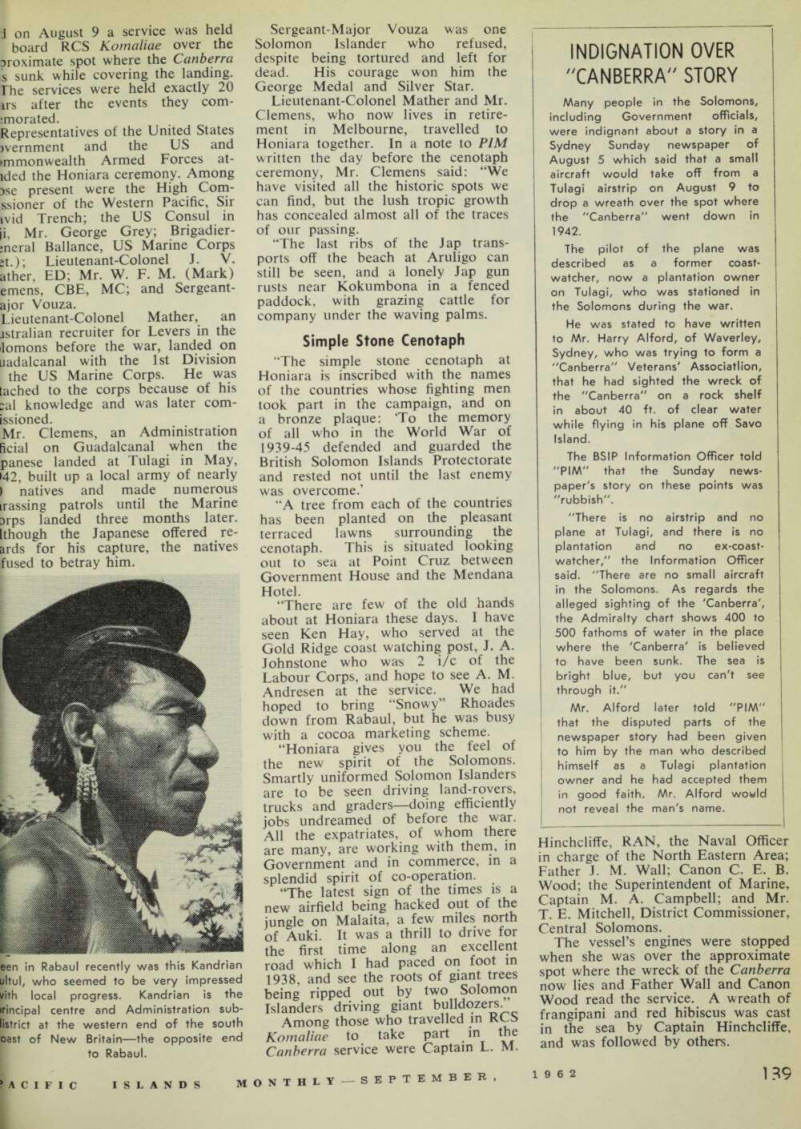 141
141 142
142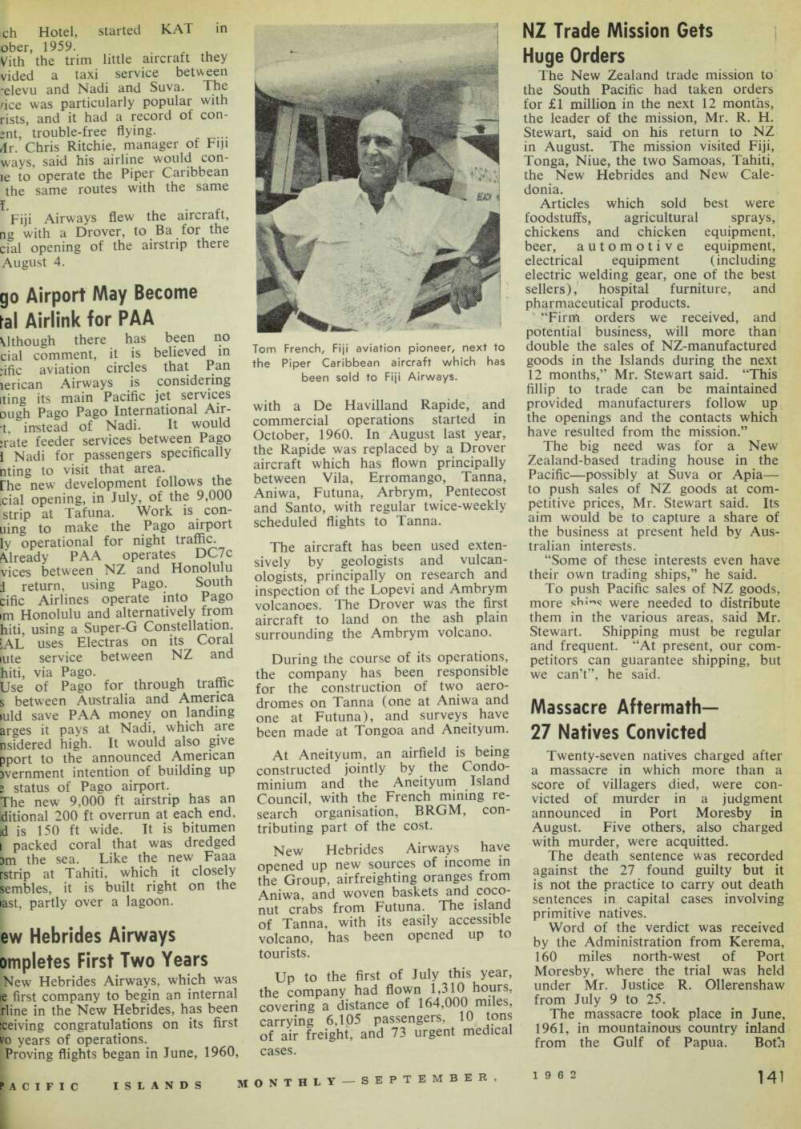 143
143 144
144 145
145 146
146 147
147 148
148 149
149 150
150 151
151 152
152 153
153 154
154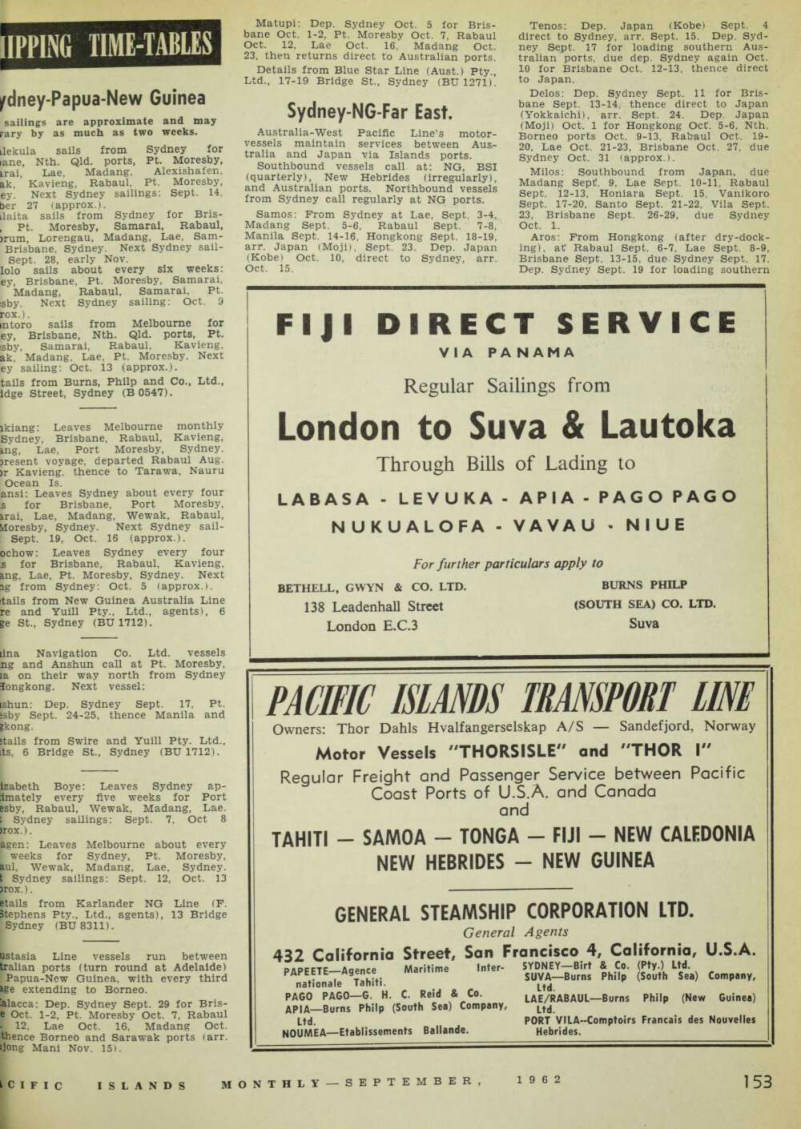 155
155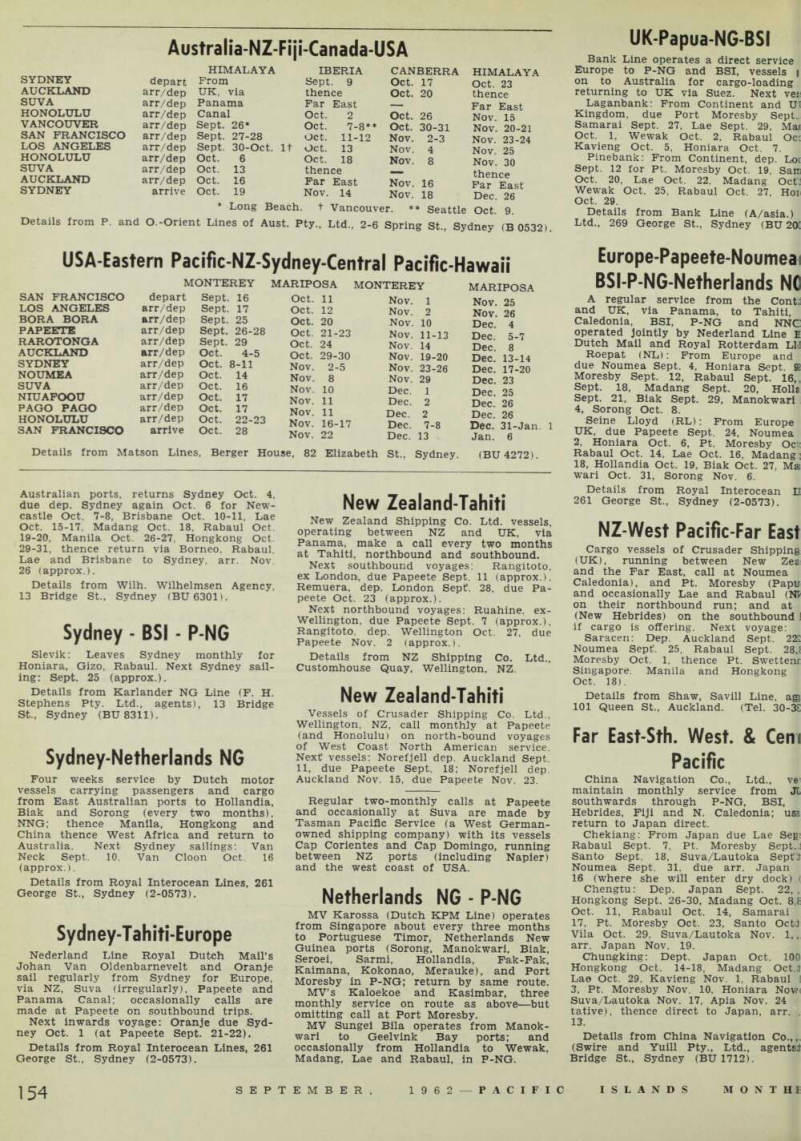 156
156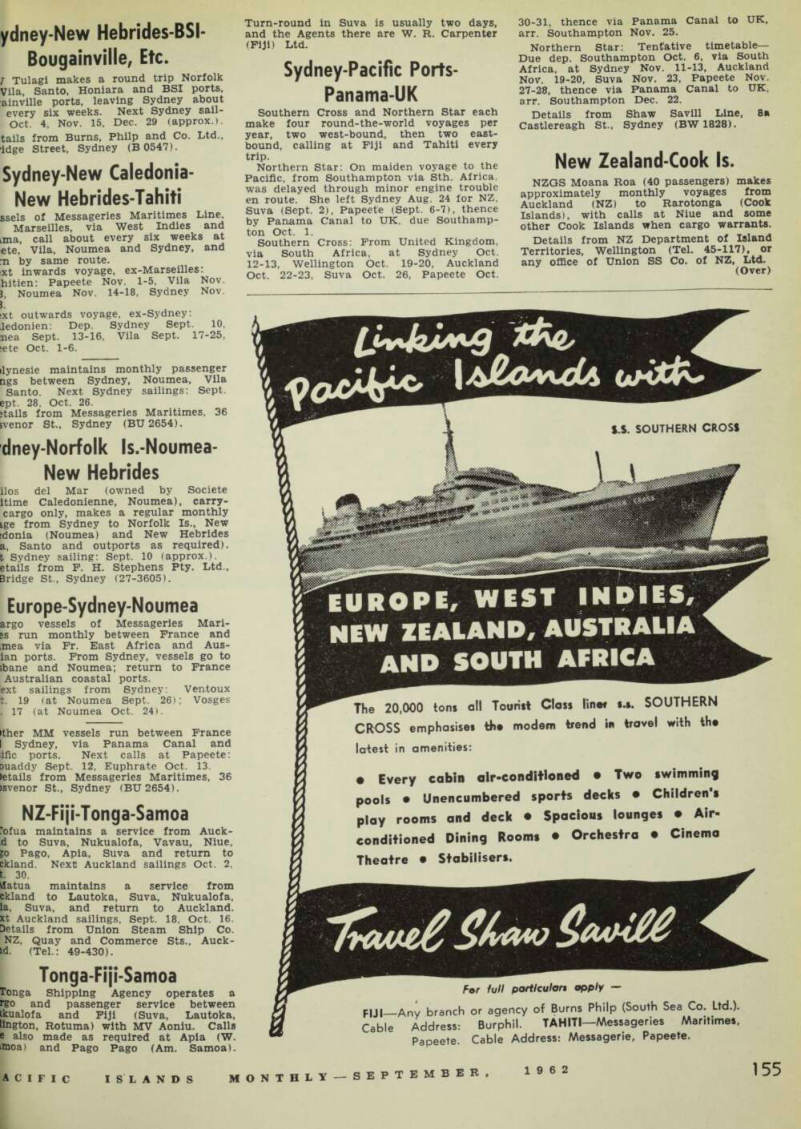 157
157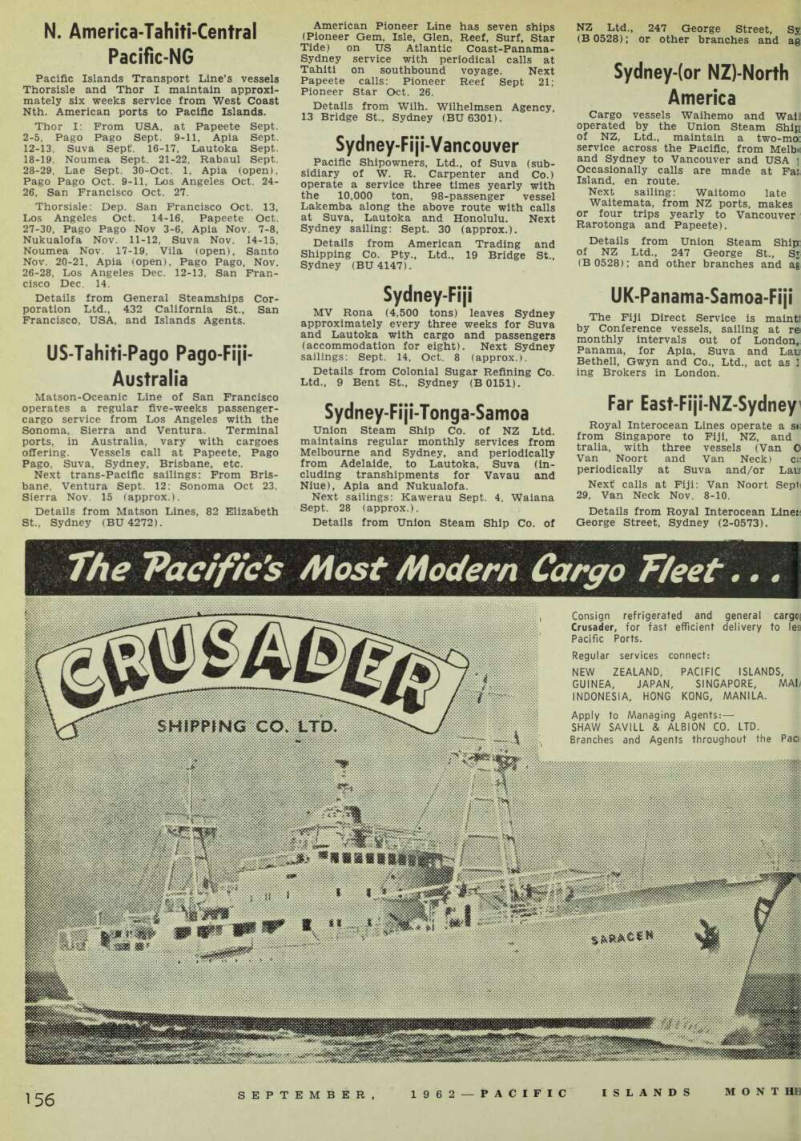 158
158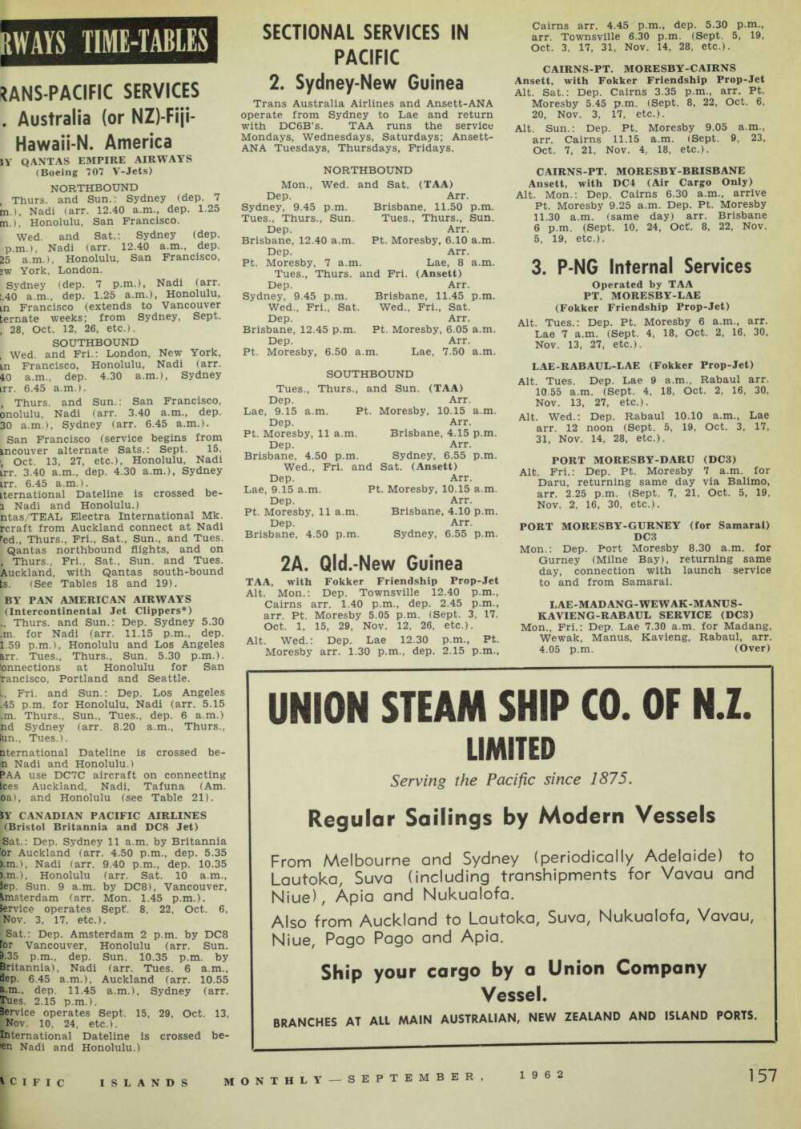 159
159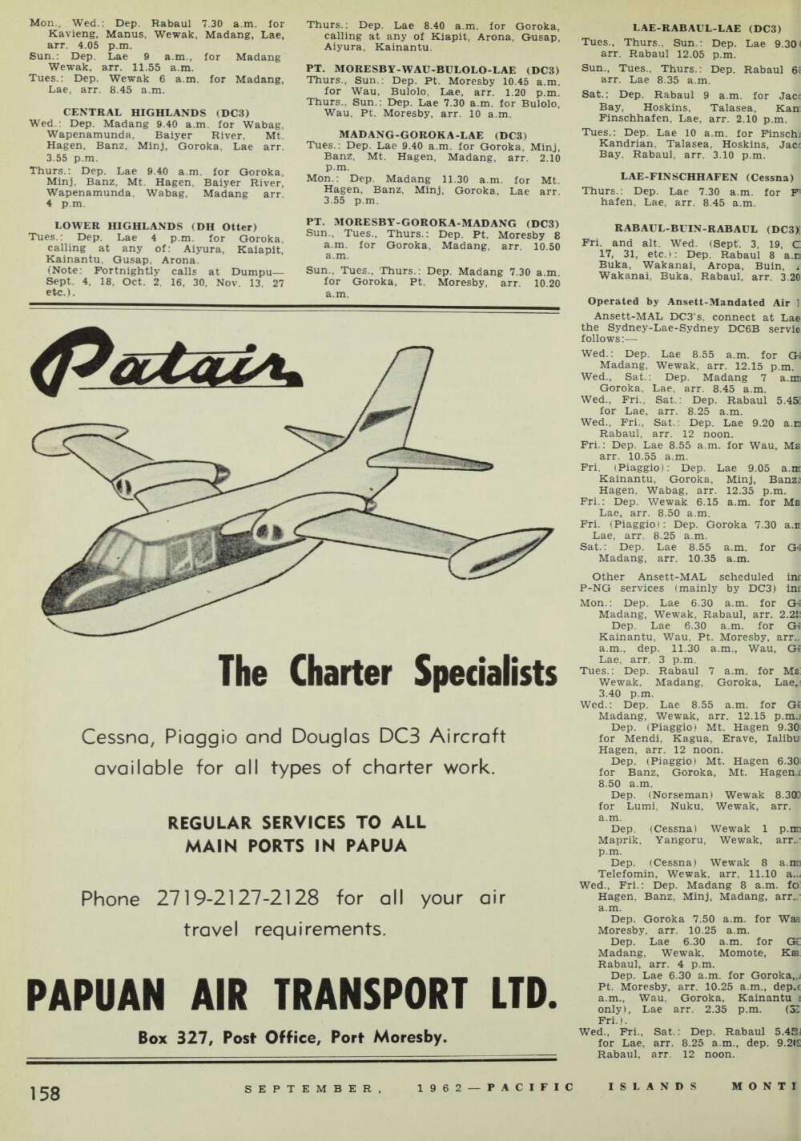 160
160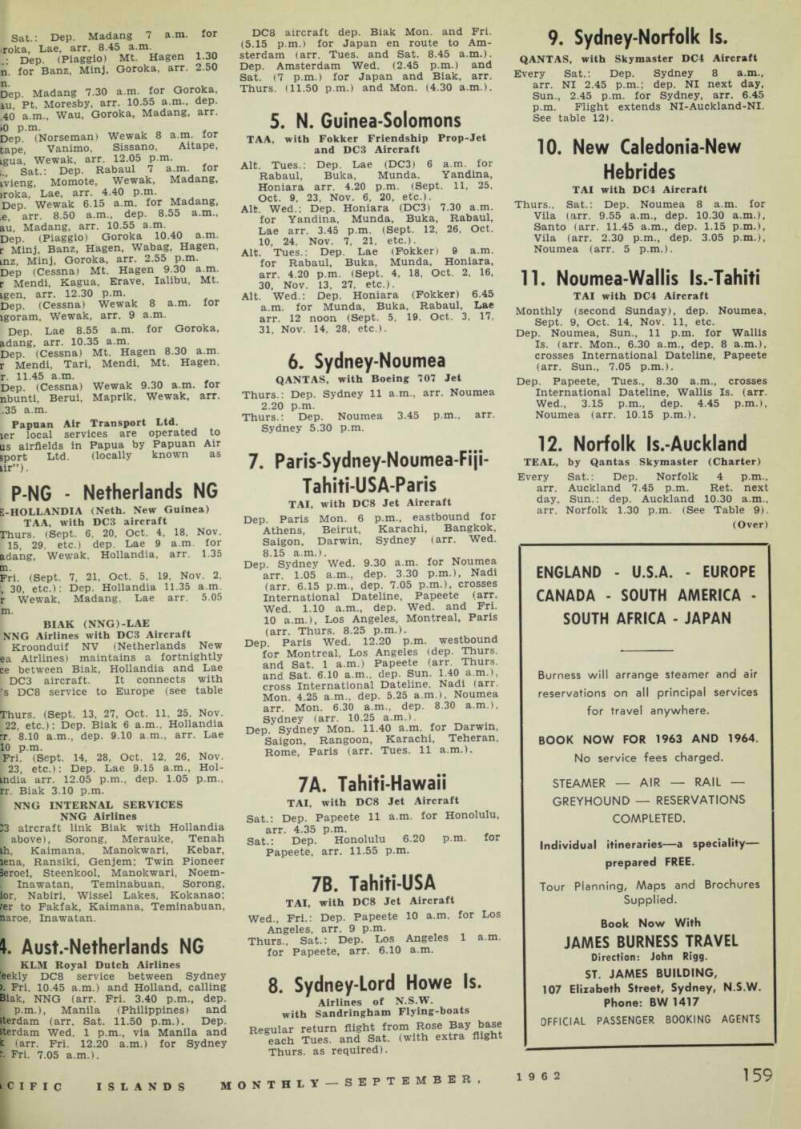 161
161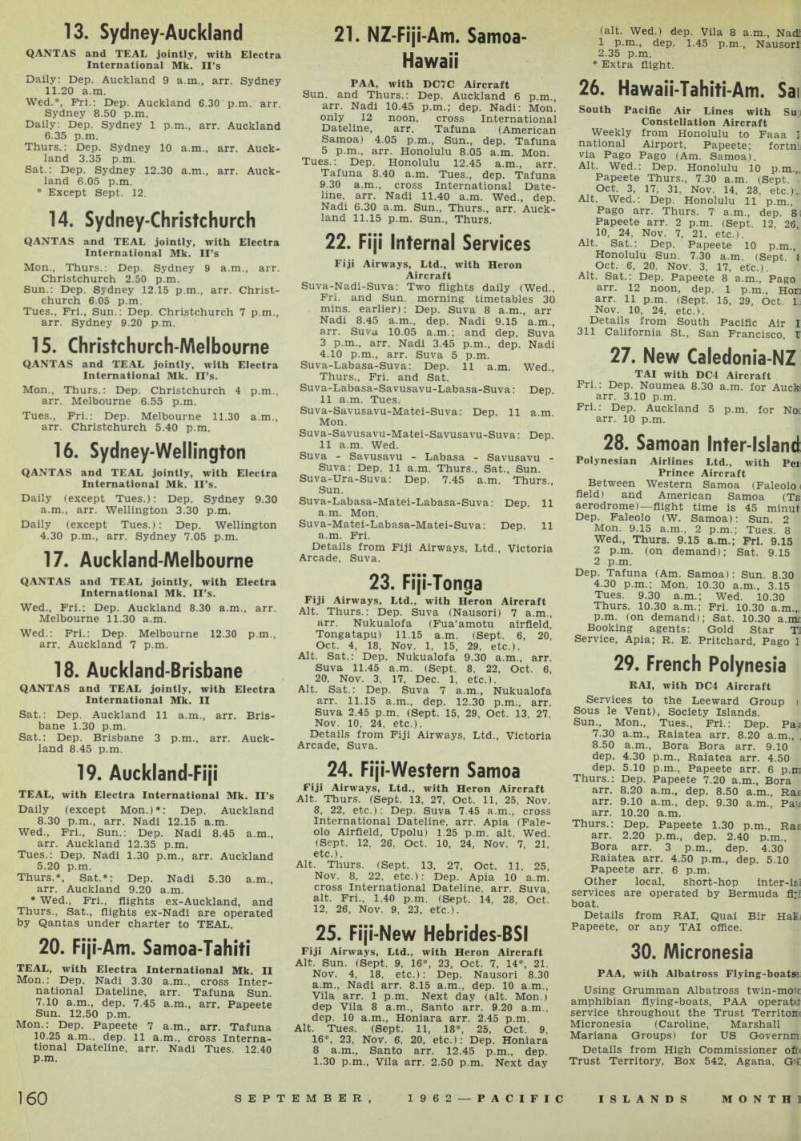 162
162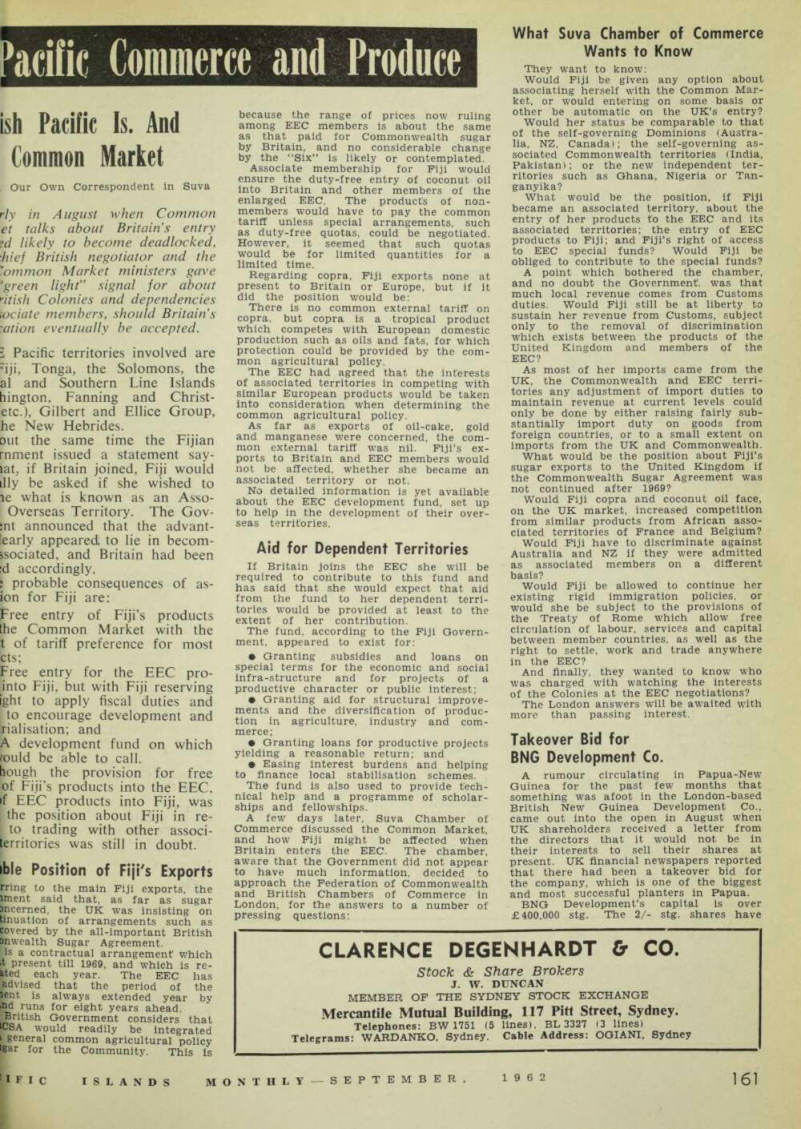 163
163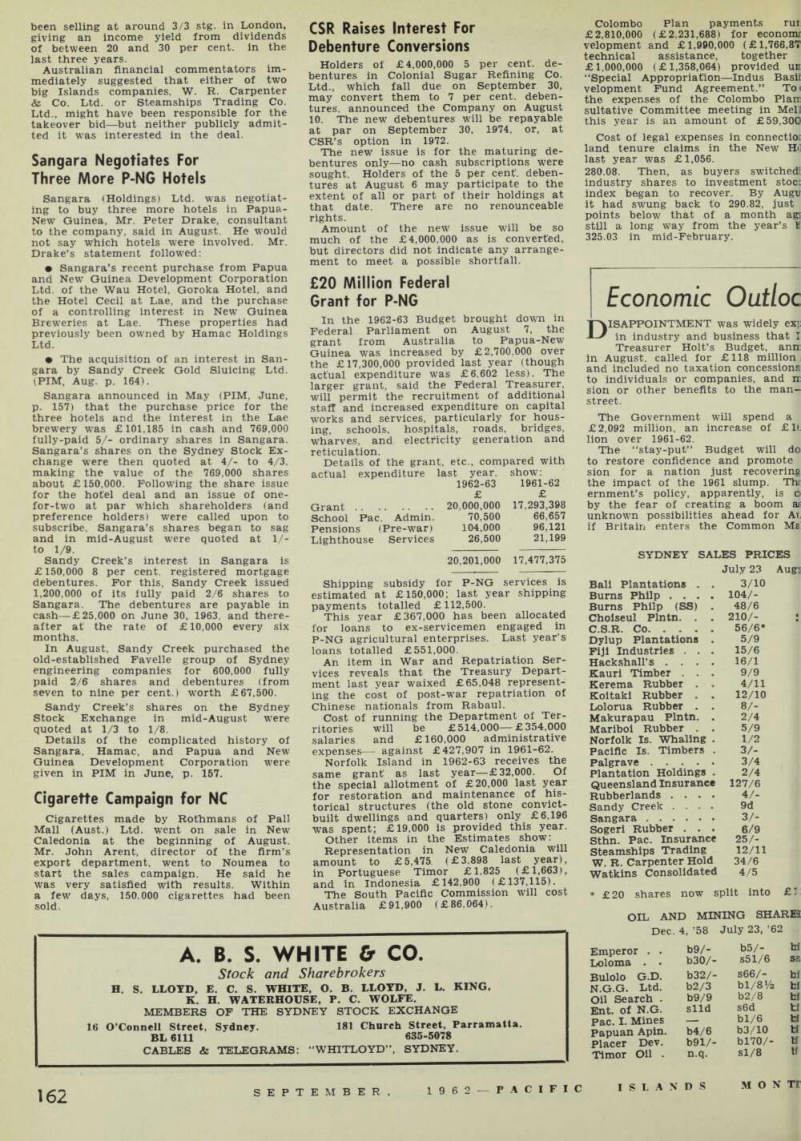 164
164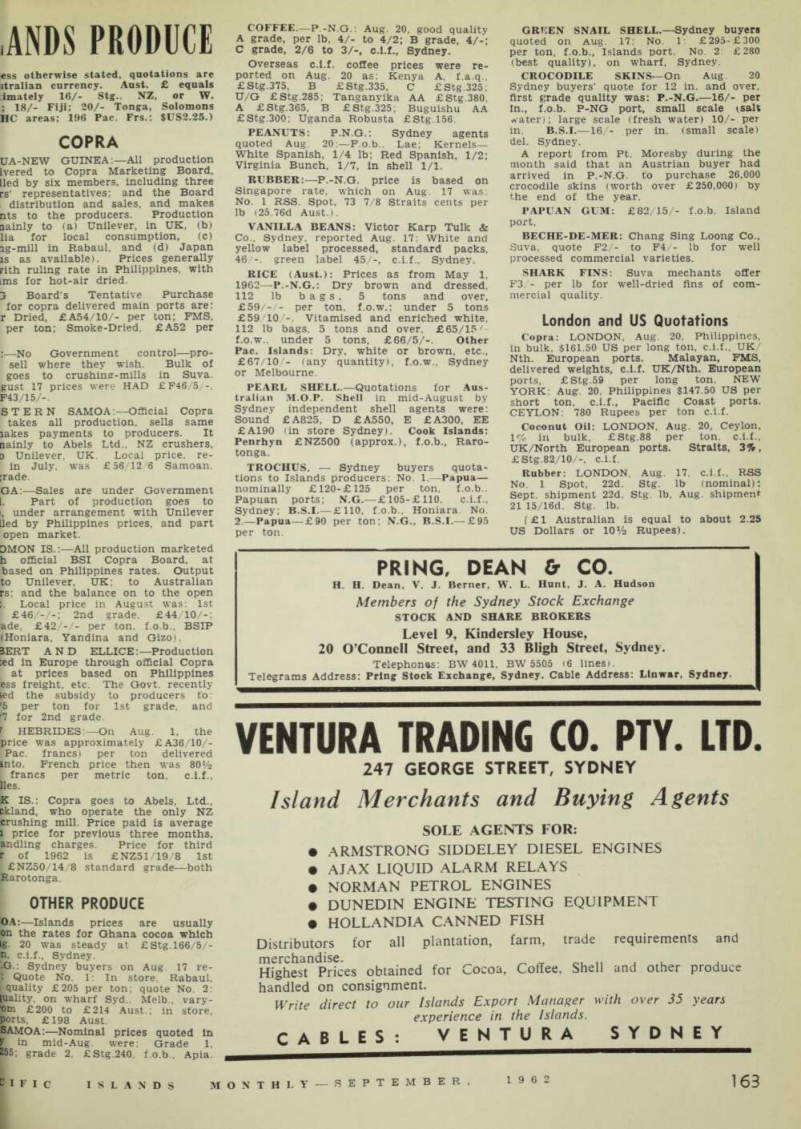 165
165 166
166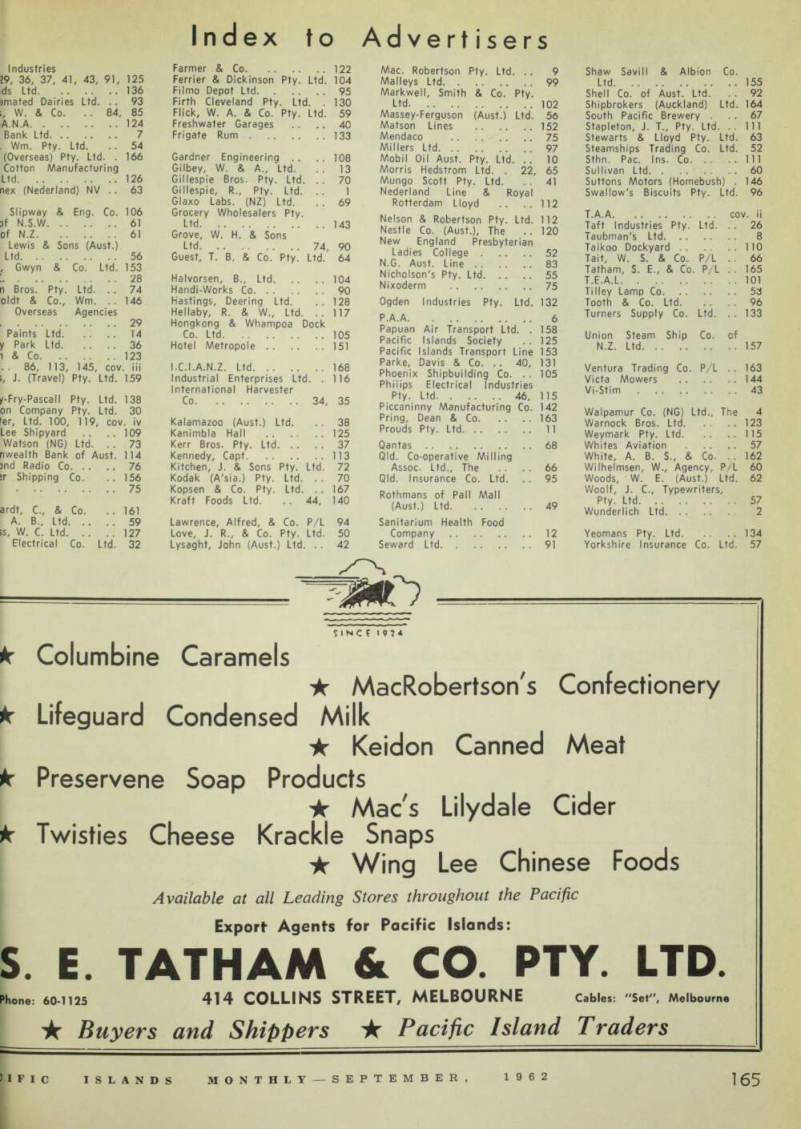 167
167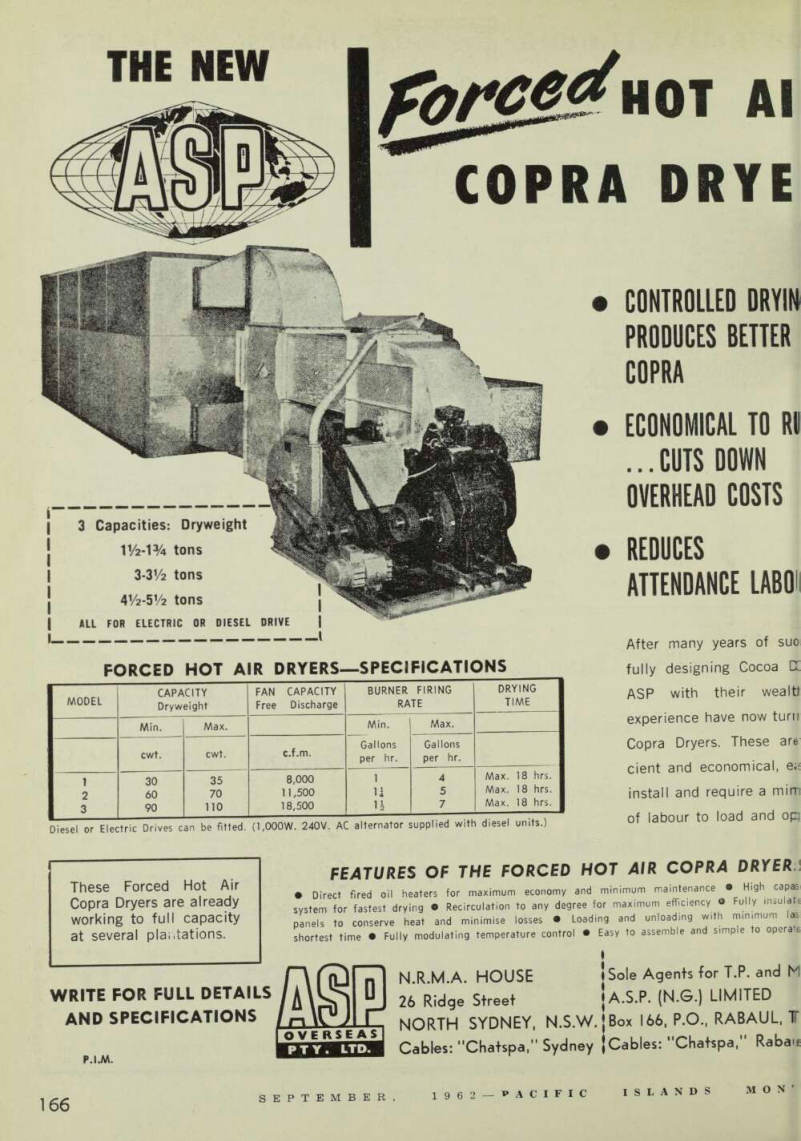 168
168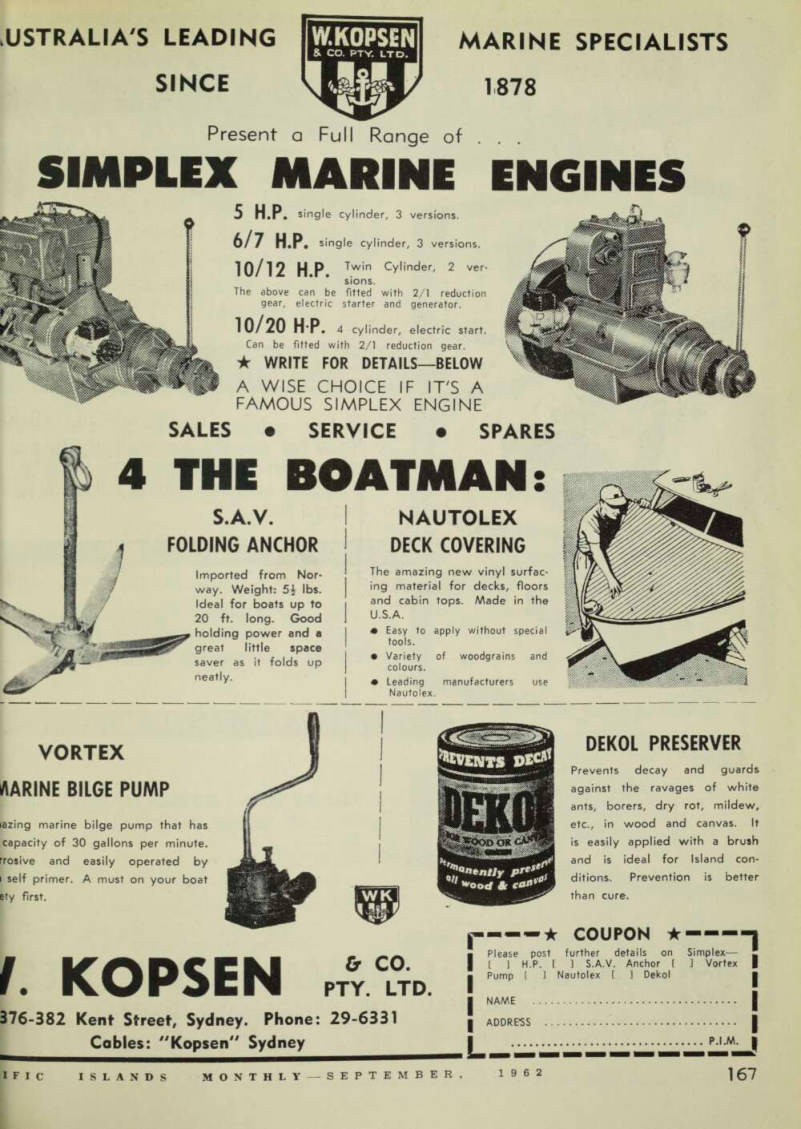 169
169 170
170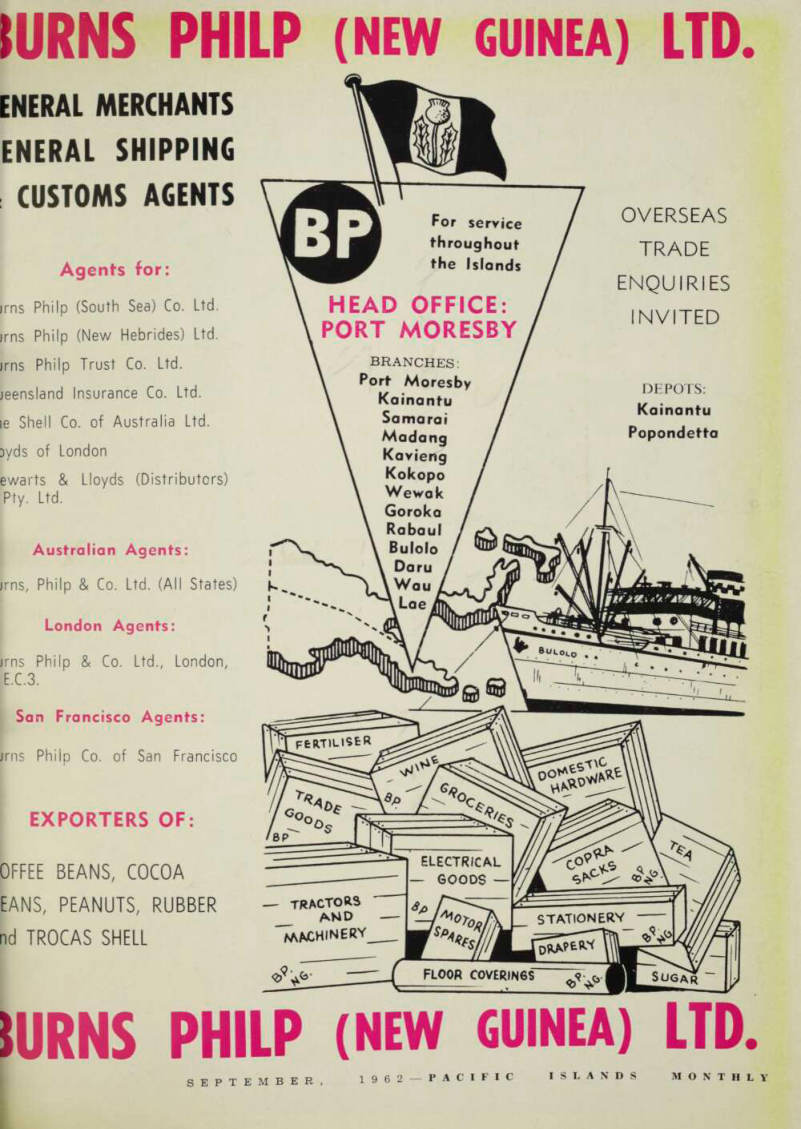 171
171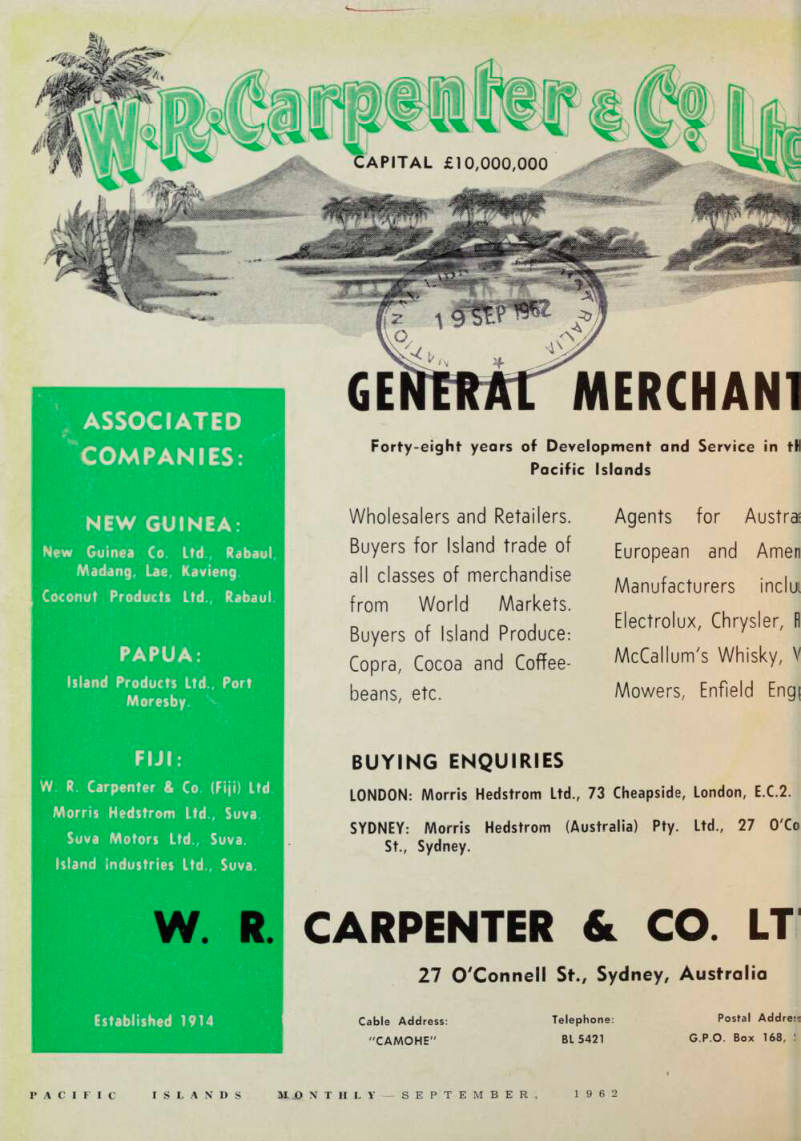 172
172