Advertisements & other items, pp. 1-4 (5 items)
Monthly
Pacific Islands Monthly
JUNE, 1962
101. XXXII. NO. 11.
aej
id at G.P.0., Sydney, for :ion by post as a newspaper.
Acific Islands Monthly June, 1962
Sunbird Services
FLY
throughout the Territory of Papua/New Guinea and to Australia
Sunbird Services throughout the Territory
TAA operates ‘Sunbird Services’ throughout the Territory of Papua/New Guinea and to adjacent islands. Whether your destination is Mt. Hagen in the New Guinea Highlands, Honiara on Guadalcanal or any other of the 40 Territory ports served by TAA you will enjoy friendly service WHEREVER you fly with TAA Sunbird Services.
Sunbird Services to Australia
Regular TAA services from Lae and Port Moresby to the mainland link the Territory to more than 90 ports throughout Australia. From any location in the Territory you need only one call, one ticket, one airline. TAA operates a huge network of more than 40,000 miles throughout the Territory, to Australia and within Australia.
For your flight to anywhere in Australia, low cost Tourist or Luxurv First Class, TAA is the Friendly Way.
SAVE ON TAA TOURIST CLASS FARES BETWEEN PORT MORESBY AND AUSTRALIA For example, you save £B/15/0 (return) when you fly TOURIST to Brisbane with TAA.
Tourist fares from Port Moresby to Brisbane . . . £34/13/0 single, £69/6/0 return.
First Class fares from Port Moresby to Brisbane . £4l/4/0 single, £7B/1/0 return
Trans-Australia Airlines
TAA is general sales Agent for QANI AS throughout Papua/New Guinea.
BOOKINGS:
GOROKA: Airport, Phone 8. LAE: Coronation Drive. Airport Centre. Phone 2311.
MADANG: Kaislan Avenue, Phone 78 or 166. PORT MORESBY: Musgrave Street. Phone 2101 RABAUL: Mango Avenue. Phone 2567 or 2702 or any authorised TAA Agent.
For safe ; economical COOKING...
... V i m
Kerosene Non-Pressure Stoves
Busy housewives will appreciate the economy and ease of cooking on a Coleman kerosene stove . . . brought to the Pacific Islands by Robert Gillespies. These well-known stoves are manufactured from heavy-gauge steel . . . precision made, and provide many years of truly economical cooking. Grates are warp-proof . . . fuel bowl and bottle designed to prevent tipping ... and burners and fuel pipe are aligned to ensure accurate, successful cooking at all times. Three smart models available: No. 341 B—one-burner stove; No. 3428—tw0 burners; No. 344 threeburner stove mounted on a strong stand which has a handy shelf for pots, pans and other utensils. Coleman non-pressure stoves are easily serviced and spare parts are readily available.
Representatives for the Pacific Islands: *T GILLESPIE PTY. LTD. ROBERT GILLESPIE (N.G.) LTD.
22 Young St., Sydney
4 Queen St., Brisbane Cable: "Robergill". ■d Cole^SS Ct'sssz
Rabaul, Port Moresby
Lae, Madang
PEARCE & CO., LTD.
Suva
AUSTRALIA'S LEADING MARINE SPECIALISTS
PRESENT ★
SINCE
w.KOPSEN
1878
CO. PTV. LTD-
A FULL RANGE OF VOLVO-PENTA MARINE ENGINES
ARE AVAILABLE—ALSO SERVICE AND SPARES
4 The Boatman
• SEKURA LIFEBUOYS
• MORLASTIC
—The Adhesive and Sealer.
A new synthetic solution that will glue, bind or seal anything. NO catalyst or hardner required. Try it!
German made, super light plastic foam.
Canvas covered buoys that supercede cork. Approved.
Sizes: 24 in. & 28 in.
• C.Q.R. ANCHORS
The big capacity holding anchor. Weights from 5 lbs. to 170 lbs.
KOPSEN
VOLVO
PENTA
YOUR "BRIGHTEST" BUY I
THE MARINE ENGINE FIEI
NOW - C 23 TYP
lJi
The husky 14 B.H.P. Supe Petrol Marine Engine
IDEAL FOR ISLAND CONDITIONS
This power packed unit is suited to b< from 18 ft. up to 26 ft. long. A power lightweight, quality petrol marine enc which is so reliable, cheap to run, with ev modern feature included. It is a 2 cylin 4 stroke engine which will develop up 1,800 r.p.m. Available in electric or h start. A 2/1 reduction gear is also avails
HENDERSON MARINE BILGE PUN
ii An English Patent Pump that will shift 7\ ga per minute, non-corrosive, self priming, appr for lifeboats. ★ coupon ★ & CO.
PTY. LTD.
Please post further details on — Volvo-Penta C 2 [ ] Morlastic. [ ] C.Q.R. Anchors. [ ] Seku Lifebuoys. [ ] Henderson Pumps [ ] to: Name 376-382 Kent Street, Sydney. Phone: 29-6331 Cables: "Kopsen" Sydney Address P.l.
1
F I C ISLANDS MONTHLY JUNE, 1962
2
JUNE, 1962 PACIFIC ISLANDS MONTH
Contents
No. 11. Vol. Xxxii.
June, 1962
People 13 New Guinea Discrimination "Should be Swept Away" 13 Marriage of Malietoa 13 Native MLC Wants New Guinea Union 14 Warm Praise for UN Mission 14 Coastwatcher Evans Goes Back to the BSIP 15 Possible Changes in South Pacific Commission 16 Tonga, Fiji Break Through on the Banana Front 17 Cautious Optimism on New Guinea Coffee Industry 18 Political Advance Promised for GEIC 18 Norfolk Island's New Administrator 18 Indonesia Makes Unofficial War in New Guinea 19 Agitators Defeated in Fiji Sugar Industry 19
Commentary 2 1
First Steps Towards P-NG Native Drinking 2 2 Death of "Gerry" Adams of Fiji .. 22 The Editors' Mailbag 23 SYDNEYSIDER At Home Base 25 "Embarrassment" Over Nauru Phos phate 27 Tongan Stamp Errors Offered for Sale 29 Tonga's Emancipation Day Celebra tions 29
What of the Tourist Potential in
P-Ng? 32
Indonesian Scarecrow v. Misima's Riches 36 Will Western Samoa Miss Out on This? 37
Canberra Commentary 40
Letter to the Editor: "Confidence in West Samoa's Future" 41 Mr. Justice Mann's Judgment in the New Guinea Patrol Attack Case 43 Eric Feldt Says Patrol Officers Should be Trusted 49 Fiji Is Still the First Line of NZ De fence 55 Norfolk: Shopping Bonanza of the South Seas 57 TERRITORIES TALK-TALK, with Tolala 61 Photographic Record of Nauru Phos phate Loading 65 Papua Farewells Judge Gore 67 "Remarkable Readjustments" in P NG Views 69 P-NG Unemployment Creates Prob lems 73
Magazine Section . ' 75
The Month's New Reading ... 85
Pacific Shipping And Yachts 101
Pacific Report 121
Deaths of Islands People 145 Travel Talk 146 Shipping, Airways Timetables 149 Commerce 157
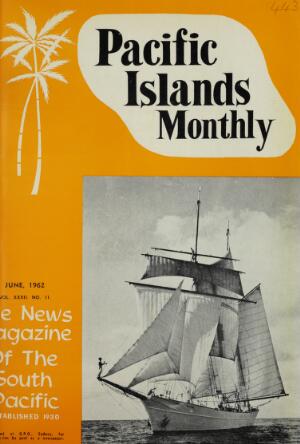
THE COVER: The pretty sight under full canvas is the 96 ft. US-owned brig Yankee , which has made quite a name for herself in a current voyage across the South Seas (see p. 103). Sydney Press photographer Cec Lynch got this shot of "Yankee” somewhere in the Coral Sea in April when he sailed in her from Cairns to Port Moresby on assignment for "Pix" and Woman's Day". Lynch, who has made three trips to New Guinea on Press assignments in the last few years, had to work his passage with the rest of the crew, but he reckons he probably needed the exercise anyhow
Advertisements & other items, pp. 5-6 (3 items)
A Product of Pacific Publications Pty. Ltd., 29 Alberta Street, Sydney
’ublisher: R. W. ROBSON.
Editors:
Y TUDOR STUART INDER
lanager: SELWYN HUGHES.
PHONES: MA 9197, MA7101,
MA 4369.
'.P.0. BOX 3408, SYDNEY,
ahic Address: PACPUB, Sydney.
4UAL SUBSCRIPTION RATES:
h currency; includes surface postage) ,s -~P -N.G., Fiji, Samoa, Norfolk, i, B.S.I., Cook Is., Tonga, G.&E.
Niue, New Hebrides, and other acific Is £1 4 o Pacific Territories and Dutch Guinea £17 0 a and N.Z £1 10 0 itish Commonwealth and Foreign Stg.) £2 10 0 and U.S. Pacific Territories > U.S.) £3 13 opies (postage extra) 2 6
NCH OFFICE IN PAPUA-NG
Publications (NG) Ltd., Theatre , Fourth St., LAE. Tel.: 2577. s Pat Robertson, Manager.
RANCH OFFICE IN FIJI;
ji Times Building, 20 Gordon St.
Tel.: 4043.
•PRESENTATIVE IN N.Z.:
Whitcombe, P.O. Box 5179, uckland. Tel.: 22.570.
RESENTATIVE IN HAWAII:
pencer, 203 Yap Bldg., 3465 Ave., Honolulu. Tel.: 775538.
’RESENTATIVE IN U.S.A.:
raib. Pacific Publications P/L, 5, San Francisco California.
Tel.: Mission 8-1075.
PRESENTATIVES IN U.K.:
shburn, 13 Rood Lane, London, Tel.: Mincing Lane 8633. ickenzie, 4A Bloomsbury Square W.C.l. Tel.: Holborn 3779.' V N !,. 0FFICE: Newspaper House, Collins St. Tel.: 63.7053.
All main trading firms and s in the Pacific Islands. ’ublications Pty. Ltd., is the n agent for THE FIJI TIMES.
4
JUNE, 1962 PACIFIC ISLANDS MONTH
nij(cn
w i r r E >A ■*. r 4m*m M
This is
Australia’s finest, SAFEST
If you want a larger measure of security when you drive a wider margin of safety drive on Goodyear Imperial Nylon Tyres. Tread, cord and body of this tyre are engineered by Goodyear world’s biggest, most experienced rubber company to meet the hot, twisting strains of high-speed driving. The self-adjusting tread gives fulltime. positive traction and responds instantly to brake or accelerator.
The cord body, acknowledged the strongest in the industry, is built with Goodyear’s exclusive 3’T Nylon cord, tempered like steel to give greater resistance to bruise damage, high-speed tyre heat and constant flexing. The extra strength and safety of 3T nylon costs but little more than ordinary tyres. Why be satisfied with less?
See your Goodyear dealer, garage or Service Station.
W GOODYEAR ,
nij(cn
tyre
N 2640
People
ji has a reasonably good educa system which is unfortunately to New Zealand. The New Zea syllabus is “too westernised for . That was one of the views essed by Professor O. H. K, Spate, essor of Pacific Studies at the ralian National University, when king at a seminar organised by Apex Club and held in Glen s, NSW. Professor Spate, author the “Spate Report” on Fiji’s orny, gave a first-class summing f Fiji’s problems, and said there much for Apex to do in Fiji.
ok Islanders have been very with presents for British Royalty ring the announcement that the
on Missionary Society’s new
)n ship, John Williams, will be d by Princess Margaret in on on October 4. The Princess d the last ship in 1948, and re -1 a handbag made in the 5. She will receive another )ag on this occasion (the handle with pearl shell) and a model » rnade to scale, for young son * * * human” and “callous” were two used by Judge Clegg in a y court in May when describ-
[?] handful are Fiji's Sellars triplets,
Doone and Edward, here seen with their Mrs. Peter Sellars, wife of a Suva [?]ant They were born in the Colonial Memorial Hospital, Suva, in January, [?]y Fiji gained another set of triplets, who [?]ill in hospital. Their parents are Mr. [?]rs. Vishnu Deo, and they were born at Ba.
Photo: Stan Whippy.
Alfred Vercoe, 46, who was nd guilty by a jury of having mpted to obtain £25,000 from the er of a kidnapped boy in 1960 i intent to defraud. Vercoe had sly told the boy’s father that he Id return the boy—but in fact coe had had nothing to do with kidnapping and knew nothing Jt the boy, Graeme Thorne, who been murdered by the real bid der- Vercoe, who is well known \pia and Pago Pago, where he lucted photographic businesses, gaoled for two years.
)ther Sydney judge with some words of criticism in May was Holden, who in sentencing an i for a sex crime, said he had told “300 Italians who were ed from New Caledonia be of murder and terrorism” had offered migration to Australia, id counsel had told him that a i company recruited labour for nes in New Caledonia “from west classes in Europe”. The words raised a storm. The lian Minister for Immigration, owner, and the Italian Consul d, Mr. G. Carnevali, said the was certainly in error. The -General added for good e that the accusations were ' offensive to New Caledonia’s community. PlM’s Noumea
[?]for Apia in May to take up a post as [?]Specialist of the Independent State [?]tern Samoa was Dr. Leonard Goodman, He held the same position in the ship Territory of Western Samoa from to 1961. Dr. Goodman is a retired officer of the Colonial Medical Service, one of the few of that service left [?]e used to surgery under primitive con -"thatched huts, kerosene lamps, knife [?]k stuff when it has to be done, and [?]es it still has," explains Dr. Goodman [?] formerly Surgical Specialist to the [?]ast —now Ghana.
correspondent commented: “T 1 Judge should have checked his fa< before turning on the hot air”.
NZ Minister for Island Territon Mr. F. L. A. Gotz, also rates paragraph for some plain speaki In Rarotonga during his recent t< he said he was sad that West Samoa had left the family, but felt she might be like many yoi people who left the Cooks for wi in NZ—“after a while there, they into financial difficulties and w: back to Papa for assistance!”
A native Assistant Patrol Offi< Noel Levi (see PIM May p. 21 photograph) became the first Papi to lead a patrol in Papua-New Gui: when he set out from Goroka, East Highlands in mid-May. The pal was a routine one of about a we( duration when a census was taken mountain villages but nonetheless was quite an event. Levi had un his command an Australian, Ca Patrol Officer A. Kerr, who at 1* two years younger. Levi went]
During a brief stop-over at Nadi Airport, I[?] in May, US Secretary of State, Dean R[?] was accorded a traditional Fijian ceremony welcome by being presented with a drink yaqona (kava). Mr. Rusk and members of US delegation to the ANZUS Council meet were returning to the US from NZ Australia.
Photo: Rob Wri[?]
Heading south from Lorengau, Manus, in "Malaita" in April were Scots couple Mr.
Mrs. J. Mackenzie, and their three chili Donald, Catriona and Shula. Mr. Mackenzi with P-NG'S Government Stores and the fa is visiting Brisbane and Melbourne on le Photo: Pat Robet
jol at Scotch College, Warwick, :ensland, and is one of 10 young ve men (nine Papuans, one from v Guinea) who are training as istant Patrol Officers. Four of n are at a special school at ichhafen and the others are at ous advanced stages of training the Sepik, Morobe and Eastern hlands districts.
uch decorated Solomon Islands hero and distinguished citizen, 'a, has had one great request of -a set of false teeth. During the visit to the BSIP in May by rican TV star Jack Paar, Vouza j himself before the TV cameras, terrific story,” said Paar to ara businessman E. V. Lawson.
I do anything for him?” “You 1 buy him a set of teeth,” said Lawson. The result: As Vouza d his toothless smile, Jack Paar nted him with a cheque for 100 rs, “on behalf of the National feasting Service, the Jack Paar '» the People of America and the nes!” * ♦ * have had experience with fight nen in many places, and, in a corner, in jungle terrain, I would on have a party of well-trained Guinean soldiers as any men I . When they are trained and ed by men who understand and hem, they are splendid material.” ipeaker was Lieut.-Colonel J. W. e, to visitors at the very large ell party given him at Taurama cks, Port Moresby, at the end of
[?]ean-Charles (Johnny) Ratard, left, and [?]other Michael at the former's 21st birth [?]arty given in Sydney in April by their [?]r, Mrs. J. Ratard, of St. Ives, Sydney, Santo. Mr. Jean Ratard, Snr., wasn't [?]t as business kept him on the family tion at Santo, New Hebrides. The Ratards well-known French pioneering family of [?]ew Hebrides and Jean Ratard, Snr., was [?]ly the first European to be born there ars ago. Mrs. Ratard, although born in [?]lia, is also of a well-known Islands Mr. Ratard was educated in Paris [?]s children have been educated in Sydney [?]ny and Michael at Barker College and at Sydney University; and daughter a, 16, at the Presbyterian Ladies' Col lege, Pymble.
. The Colonel has been three in charge of the Pacific Islands nent, and now Australian Army are sending him off to United > for a period of special train ♦ * * e of the dwindling band of ne old-timers in the Territory pua and New Guinea is Mr. A. enall, who now is Secretary of “w General Hospital at Wewak.
Wenall was well known among )ld miners before World War II d of his gold seeking years were i at and around Sunshine—and, riost “Befores” he supplied the jungle techniques during World
oung Tongan nurse made his n Sydney in May when she ingsford Smith airport in full array. She was then the very Irs. Herman Meier, the bride ew hours of a Camden apple dist. She was formerly Miss Heimuli, of Nukualofa, who :en nursing at Manly District al. The couple had been d in the Lutheran Church in and the wedding reception dd at the Overseas Terminal, omehow got away and the last r the plane came before the could change into travelling After a honeymoon in Mr. and Mrs. Meier will re > live at Camden. * * * langaia, in the Cooks, they are 3ing the twist. It follows the of their first helicopter, from > Coastguard icebreaker East- The helicopter brought the ashore, to be met by Acting it Agent J. W. Little. Islanders len given helicopter rides and vited aboard the icebreaker, ys aboard the Eastwind taught nders to dance the twist as a saying thanks.
at the Rabaul Memorial Church recently [?]iss Clare Wong to Mr. Nicky Ng.
Photo: Larry Chin.
Advertisements & other items, pp. 7-14 (6 items)
Ific Islands Monthly June, 1962
Sparklets syphons
Choose from these elegant models
Left, right and centre, they’re all Sparklets Syphons, the sodamaking syphons, superbly designed, beautifully finished. Part of modern life in any home or bar today.
With a Sparklets Syphon and a supply of Sparklets bulbs your soda-water problems are solved you make it yourself: the purest, freshest soda you ever tasted. Just as much as you want.
Whenever you want it.
Sparklets syphons
THE BRITISH OXYGEN COMPANY LTD
SPARKLETS WORKS* LONDON Nl7 • ENGLAND
' i:: ■ - I :<}'<!■ fj m v m
muu
mm a II • « «
FLIGHTS A WEEK TO
QANTASwV-JETS
Qantas. in association with Air India, 8.0.A.C., S.A.A. and TEAL Q 31.84.32
i***~ *
bov
wws**sE KBOfik
J^lccaninNY
DDCDAncn U/AV
PREPARED WAX
FLOOR POLISH
FOR UNO. FLOORS, FURNITURE. LEATHER e MOTOR CARS Piccaninny imparts a glow of youth and beauty to floor surfaces that might otherwise soon begin to show their a 9 e - There is nothing more perfect for linoleum or natural wood floors.
Piccaninny's tough wax skin protects surfaces from tropical moisture, wear and tear—saves you hours of work and gives Twice the Shine in Half the Time! r
ASK FOR
PICCANINNY
BROWN STAIN FLOOR POLISH
For Jarrah, Cedar, Stained Floors & Woodwork Piccaninny Polishes are manufactured by
PICCANINNY MANUFACTURING CO.
254 Pittwater Road, Manly, N.S.W., Australia
NOTICE
CLEVER
MARY
SHINOLEUM
IS HEREBY GIVEN that the Trade Marks shown in the margin are the sole and exclusive property and proper TRADE MARKS of
THE KIWI POLISH COMPANY
PROPRIETARY LIMITED, (a
Company duly incorporated under the Laws of the State of Victoria, in the Commonwealth of Australia), whose Registered Office is at Ramsay House, Burnley Street, Richmond, Victoria, Australia, Manufacturers, used by them in respect of Cleaning and scouring preparations, detergents, saponaceous preparations for washing and cleaning, Polishes for floors and floor coverings, furniture polish, and the Trade and Public are hereby cautioned against any infringement or improper use of the same.
Legal proceedings will be instituted against any person or persons selling or offering for sale goods, not the manufacture of the aforesaid THE KIWI POLISH COMPANY PROPRIETARY LIMITED, bearing any representation of the said Trade Mark or any colourable imitation thereof.
EDWD. WATERS & SONS
Patent and Trade Mark Attorneys, 422-428 Collins Street, Melbourne, Victoria, Australia
NOTIFICATION
CLEVER
MARY
SHINOLEUM
est donnee par ces preserves que les marques de fabrique indiquees en marge sont la propriete unique et exclusive et les propres marques de fabrique
de THE KIWI POLISH COMPANY
PROPRIETARY LIMITED, situe au
Ramsay House, Burnley Street, Richmond, Victoria, Australia, Fabricants, utilisees par la dite Compagnie peur designer:— les produits de nettoyage et degraissage; les deter* sifs; les produits saponaces de lavage et nettoyage, les cires pour planchers et les revetements de planchers; les vernis pour meubles, et on avertit par ces presentes le Commerce et la Publique contre quelque contrefacon ou utilisation injuste des dites marques de fabrique.
Les poursuites seront intentees contre quelque personne ou quelques personnes qui vendent ou mettent en vente des produits n'etant pas ceux du susnomme THE KIWI POLISH COMPANY PROPRIETARY LIMITED qui portent quelque representation de la dite marque de commerce ou en quelque imitation specieuse.
EDWD. WATERS & SONS
Patent and Trade Mark Attorneys, 422,428 Collins Street, Melbourne, Victoria, Australia
4 WHEEL DRIVE!
LJi
HI
INTERNATIONAL
4-WHEEL DRIVE GOES ANYWHERE, CARRIES FAR MORE, WITH POWER TO SPARE!
The International Scout 4 x 4 is a new, goodlooking, hard-working, all-purpose vehicle.
Loads of more than 1,000 lbs. are easily carried in the Scout’s 5-foot utility body . . . and there’s ample room in the cab for 3 persons on the adjustable, 52-inch wide, upholstered seat! The all-weather cab top, side windows and doors can be removed easily, and the windshield folds down. The Scout’s powerful 4-cylinder engine delivers up to 82.5 low-cost horse-power—plenty to match the Scout’s 4-wheel drive, goanywhere ability.
See the International Dealer for more information.
INTERNATIONAL HARVESTER COMPANY OF AUSTRALIA PTY. LTD.
District Sales Offices in Australian Capital Cities. Works: Dandenong, Geelong and Port Melbourne.
DISTRIBUTORS: TAHITI: Hintze & Company, Papeete. NEW HEBRIDES: Kerr Bros. Limited, Sydney. NEW CALEDONIA; Agence Automobile, Noumea. FIJI: Niranjan’s Service Station, Suva. PAPUA: Steamships Trading Company Limited, Port Moresby and Samarai. Dealer: Rabaul Trading Co. Ltd., Rabaul. NEW GUINEA: New Guinea Goldfields Ltd., Wau : N G.G. Trading Co., Lae. DUTCH NEW GUINEA: H. Englebert, n.v. Hollandia. SOLOMON ISLANDS: Solomon Motors Pty, Ltd., Honiara.
Id
SYDNEY 9
WmM
uo X f
SOMETHING TO
CROW ABOUT
OUR PERSONAL SHOPPING BUREAU
Farmer s is the largest single department store in the heart of Sydney. We can therefore offer you a complete range of goods from fashion to all household needs, children’s clothes and also menswear. To take advantage of this Personal Shopping service, all you have to do is write to Elizabeth Nugent, describing clearly what you would like, and she will send a shopper into the store to personally select your goods.
FARMER’S PERSONAL SHOPPING BUREAU, G.P.O. BOX 497, SYDNEY, AUSTRALIA
The world-wide organisation of
British Paints Limited
presents the world famous range of
TffasUtiA fltu4ke4-
r ncluding : ■
Brilliant Gloss Marine Enamel,
General Purpose Oil Paint,
Gloss Hull Paint, Non-Skid Deck Paint,
"Brillspar" Marine Varnish,
Engine Enamel Primers, Undercoats,
"Koplastik" Anti-Fouling,
"Giant" Brand Anti-Fouling,
Copper Bronze Anti-Fouling,
Water-Rinsable Degreaser,
"Strip-Masta Paint and Varnish Remover,
iPai/nXi ‘S> •V Ti 1 S
FREE “LITTLE SHIP” HAN
Ask your British Paints authorised "LITTLE SHIP" agent for a FREE "LITTLE SHIP" HANDBOOK and COLOUR CARD. Complete painting specifications for all marine craft and useful, practical hints on all craft care.
X Exclusive, GUARANTEED Products to PROTECT
AND BEAUTIFY ALL MARINE CRAFT
1
SOLD AND RECOMMENDED BY:
Burns Phiip (New Guinea) Limited: Port Moresby.
Burns Phiip (New Guinea) Limited: Samarai.
Burns Phiip (New Guinea) Limited: Wau.
Burns Phiip (New Guinea) Limited: Bulolo.
Burns Phiip (New Guinea) Limited: Lae.
Burns Phiip (New Guinea) Limited: Madang.
Burns Phiip (New Guinea) Limited: Goroka.
Burns Phiip (New Guinea) Limited: Wewak.
Burns Phiip (New Guinea) Limited: Kavieng.
Burns Phiip (New Guinea) Limited: Rabaul.
Burns Phiip (New Guinea) Limited: Kokopo.
Burns Phiip (New Guinea) Limited: Daru.
Burns Phiip (New Guinea) Limited: Kainantu.
Steamships Trading Company: Port Moresby.
Kam Hong: Lae.
Scotts New Guinea: Lae.
Tang Mow: Wewak.
Laurie Chan: Rabaul.
Wong You: Buka Passage-Bougainville.
HONIARA, 8.5.1. P.
A*. C. Blair Ltd., Honiara R. C. Symes Pty. Ltd., Honiara.
FIJI
Burns Phiip (South Sea) Co. Ltd., Suva.
Burns Phiip (South Sea) Co. Ltd., Lautoks Narain Construction Co., Suva.
NORFOLK ISLAND
Burns Phiip (South Sea) Co. Ltd., No Island.
7
F 1 C ISLANDS MONTHLY JUNE, 1962
8
JUNE, 1962 PACIFIC ISLANDS MONTH
Ific Islands Monthly June, 1962
Fic Islands Monthly June, 1962
Married
In Samoa
falietoa, one of Western oa’s Joint Heads of State, married quietly in May to rt-Samoan university gradu- Miss Teresa Hunter. They ? married by a pastor in a ge about 12 miles from i. The attractive and ming Miss Hunter has an degree from New Zea ’s Victoria University and lecturer at West Samoa’s :hers’ Training College. She Iso President of the Public ice Association and has ed a prominent part in 'ic affairs. Miss Hunter was jpular Samoan delegate at last South Pacific Con nce held in Rabaul in 1959. ietoa and his first wife were reed.
"Should Be Swept Away"
Although Generally Speaking, the Picture is Bright, Discrimination In New Guinea "Should Be Swept Away"
By a Staff Writer in Sydney
It’s so rare for an official handout to say anything worth while, that a handout issued by Sir Hugh Foot in Sydney on May 15 at the end of a six-weeks tour of New Guinea by his UN Mission deserves to win some kind of an award.
SIR HUGH’S handout said every thing that mattered, and although Sir Hugh obligingly answered re porters’ questions, what came out there didn’t alter the importance of the original handout. In fact, unless his answers were weighed against the broader canvas of his handout it was very easy for a careless reporter to write a distorted picture.
As Sir Hugh himself good naturedly warned Pressmen during the interview: “I know how some of you fellows work. You are asking me now about racial discrimination.
All that will come out in the reports is that we don’t like discrimination, and you won’t say anything about the rest of it. Isn’t that right?”
One reporter replied frankly that that was probably right—and in fact it was. Next day few newspaper accounts bothered to touch on any thing but the discrimination angle.
But here is what Sir Hugh’s pre pared handout said in full—the italics being the sections that were under lined by Sir Hugh in the original: “Our duty is to report to the Trusteeship Council, and this we hope to do next month. You will understand that it would be quite wrong for us to anticipate in any way what that report will contain.
All I can say now about that is that we are determined in everything we propose to be constructive.
“But you ask me what our im pressions are after our six-weeks tour, in which we have visited every dis trict and devoted every day of that six weeks to hearing and seeing as much as we could.
“Perhaps there are four main im pressions which come first to mind.
First, we are deeply grateful for all trouble taken by the Administration the kindness and ready co-operation shown to us and for all the care and trouble to make our tour so extensive and so intensely interesting.
“Secondly, we have been struck by the way people speak out freely and
clearly. We have met many good leaders who think hard and speak straight —and that goes not only for New Guinea leaders but also for many Australian planters. That is in deed a good augury for the future.
Thirdly, we have been struck by the good relations between all sections of the population. At the same time we have found impatience with re maining survivals of discrimination.
For that reason we welcome yester day’s announcement about the Com mission on liquor restrictions. Our view is that the sooner all survivals of racial discrimination are swept away the better.
“Fourthly, we believe that the Territory is on the threshold of fresh constructive advance. Particularly in the field of education the groundwork done since the last war is now about to show rapidly expanding and pro gressive results. We feel confident that the way is now clear for rapid new progress”
During the questions that followed,
Sir Hugh explained that prohibition on liquor and the censorship of films shown to the native people, were the two matters that the natives mostly considered discriminatory. The ques tion of liquor had come up in every district.
“We are not concerned whether the bans are right or wrong,'’ he said.
“We are pointing out that they are regarded by the natives as discrimina tion against them, and for this reason they should be swept away.”
Pressed for other examples, Sir Hugh said the Mission had received complaints that in shops, natives were made to wait out of their turn while whites were served.
“It’s only an example—don’t make too much of it,” he said. “And also we are aware that when it comes to natives being forbidden hotels there are matters of licensing laws and not necessarily personal discrimination.”
Sir Hugh said the West New Guinea question was raised at many meetings and there was no doubt that it was much concerning New Guinea people. However, West New Guinea was outside the scope of the Mission’s report.
Although Sir Hugh skilfully avoided direct questions as to what would be in the UN Report (which is not expected to come up in the Trusteeship Council before late June) there was not much doubt that the report would give the Russians little reason for cheer. Australia would be criticised, certainly, but construc tively, and overall its trusteeship over New Guinea would emerge unstained.
Sir Hugh’s mention of the Com mission on liquor restrictions referred to a statement that had been made in Port Moresby the previous day by the P-NG Administrator, Sir Donald Cleland, who said that the liquor pro hibition would be reviewed (see p. 22).
The day after Sir Hugh’s handout to the Press, Sir Donald made a further statement—saying that P-NG film censorship laws would be changed “by next month”.
Sir Donald added that Australians shouldn’t misinterpret the Territory’s discriminatory laws. Any discrim inatory ordinances were “designed to protect the indigenous population in a primitive state”, but were being amended as new stages of develop ment were reached.
The speed in which these two par ticular matters of discrimination were attended to is proof that Canberra, too realises that Sir Hugh’s Mission, unlike some of his predecessors, has earned the right to be taken seri ously.
Pacific Report
Look For These In Pacific Report
Mr. Gotz in the Cooks, 121. Can berra Discusses NG Problems, New Caledonia in Fiery Session; Ton gan Land Subdivision, 123. Island hopping Scientists: “Pandora”
Wreck Mystery, 125. Nickel Slump Hits New Caledonia; Crash Landing at Moresby: Tolai News paper, 126.
NZ Trade Mission, 127. Rabaul Trade Fair; Kokopo Road, 129.
Fiji’s Cement Industry; Appeals for Buka Tax-Dodgers, 130. To lai Riot Sequel; NG Salaries, 131.
“Kuru” Conference: NG’s First Local-born Chinese Solicitor; Illegal Fiji Arms, 133.
Fatal Rabaul Accident, 134. Bride Leads to Manslaughter, P-NG Forestry Front, 135. Miss Raro tonga Outcry; Changes in Fiji’s Liquor Laws, 138. First Solo Crossing of Pacific; Mr. Beving ton speaks on Fiji; Tourism in the Cooks, 139.
Advertisements & other items, p. 15 (1 item)
13
FIC ISLANDS MONTHLY JUNE. 1962
Proposed
New Guinea Union Proposed
Amongst the dozens of sug gestions New Guinea natives made to the recent UN Trustee ship Visiting Mission, the only one that promoted the idea of union with West New Guinea came from Somo Sigob. Sigob is elected native member for the NG Coastal Electorate in the P NG Legislative Council.
It has been rumoured in the Territory lately that Sigob is one of the Trusteeship Territory native leaders whom West New Guinea native leaders have been cultivating in their attempt to get their plan for the amalgamation of the two Territories off the ground.
Most native P-NG leaders are against it and so, no doubt (al though it would not be admitted in so many words) is Australian officialdom.
Whatever might be its merits as pure political theory, such a notion in the present state of affairs in West New Guinea will make shivers run up and down the spines of anyone with more than sixpence invested in the Territory. If anything more were needed to speed the flight of capital or put a halt to develop ment in P-NG this could be it.
In Port Moresby in May it was announced that Sigob (pictured in the P-NG Legislative Council) would attend the UN Trustee ship Council meeting in New York in June, when the report of the visiting UN Mission will be discussed.
Warm Praise
for UNO Mission In New Guinea
From a Staff Writer in New Guinei All the reports which I hi heard, all firsthand evidence have gathered in moving throi New Guinea, support the vi that the United Nations Miss: is the most thorough, expert c helpful that ever has visited t
Trust Territory.
THE Mission has shown the livel interest in all that it has s( and an impressive understanding the grave issues involved.
The outstanding figure, of cou is Sir Hugh Foot, who has dri\ force, wisdom based on experiei and a remarkable capacity for list ing while others talk.
But the American, the Indian i the Bolivian members are all strik figures, each in his own right pressing the New Guinea obsen by his sincerity, and the thorou ness with which he has examii every aspect of life here. They h been into every corner of the Te tory, and no aspect of Administrat activity and native life appears have been neglected.
I can say, after taking part many off-the-record talks, that t Mission’s findings will be very k to Australia; that Australia’s achie ments here will receive warm pra with minor criticism of some aspe of Administration; that Austn probably will be freed of any cha of deliberate or systematic exploi tion; and that the Mission has b< impressed by the remarkable frien< ness of the natives generally towa: Australia.
The visitors privately say that 1 natives should be made to real that if they ever are to have se government and independence tt must work harder and plan more tensively than they seem inclined do today.
T think that Sir Hugh Foot’s I Mission to New Guinea will go in history as a very good one inde< The American member of t Mission, Delmas H. Nucker, for ma years boss of the US Trust Terrill of the Pacific Islands (Micronesu has been doing a very good job < behalf of Australia by talking sot
(Continued p. 144)
sense into natives who have asked him to have America take New Guinea over, or provide them with “cargo”. He has been aware of the cargo cult movement and is sympa thetic to Australia’s problems.
“Other members of the Mission are calling me ‘No Cargo Nucker’,” said Mr. Nucker in Goroka. “I have been explaining wherever possible to natives that their belief that America will send unlimited supplies was just a whim.”
The Cargo for Manus Mr. Nucker made one very long statement when he was asked at a meeting of Manus Island people held at Lorengau on April 19 that the US replace Australia as the Administer ing Authority.
It’s bad luck that his statement in that area may turn out to have fallen on deaf ears, for since he was there it has been announced that Manus is shortly to be turned into a big American tracking station. Millions of dollars will be spent there, and it will be just like the old wartime days when Manus was a big American base!
Here anyhow is part of what Mr.
Nucker said at Manus, for the record: “As an American, I appreciate the confidence expressed in my country.
However, you must realise that
Advertisements & other items, p. 16 (1 item)
14
JUNE, 1962 PACIFIC ISLANDS MONTHL
Evans' Camera Recaptures
The Kennedy Isles'
When the British Solomon Islands begins to enjoy a growing influx of ourists (and this has been predicted by the BSIP Chamber of Commerce— ;ee p. 147) the small islands in these pictures should be a "must" for every \merican. These are all the islands that matter in the saga of President Cennedy —as seen through the viewfinder of ex-coastwatcher Reg Evans' own :amera when he revisited the scene in May with US TV man Jack Paar. ■vans and Paar are seen together in Sydney in the top picture. The island t the top left is Kasolo, which Kennedy named Plum Pudding Island be ause of its shape. Kennedy and his men first swam to this island when TlO9 was rammed in Blackett Strait. The strait is seen in the centre licture, photographed from the beach at Plum Pudding Island with Kolom •angara silhouetted in the background. Evans had his coastwatching station >n Kolombangara, on the second hill seen from the right, when he saw the ire on the rammed PT boat. The two islands together in the picture at 3wer left were next to play their part in the rescue. The lefthand island > Naru, the righthand one is Olasana. Kennedy and his men swam from ium Pudding Island to Olasana, and Kennedy and a companion later swam rom Olasana to Naru, to see if it was free from Japs. Evans' scouts at his stage located Kennedy and his party, and after messages were passed hey later paddled Kennedy, hidden beneath some palms, to Gomu Island ower right) where Evans by this time had established a new coastwatching tation. Evans gave Kennedy a cup of tea on Gomu and arranged for -ennedy s party to be picked up. The entire rescue, from the time of the rash until the men were returned to base, took a week.
Coastwatcher
Evans Goes Back
By a Staff Writer
Former Coastwatcher Reg Evans, the man whose scouts rescued President Kennedy after PTIO9 was cut in half by a Jap destroyer in the Solomons in 1943, had the “oddest feeling” that he had come home when he returned to the scene in May.
BACK on Kolombangara for the first time since the Kennedy affair, Evans slept two nights with the natives at Kuji village and told him self, “This is ridiculous. It’s like coming home. Yet I never lived here during the war; I slept up the hill”.
Two days later Evans made the two hour climb to his old spotting station “up the hill”, accompanied by two of his wartime scouts. He found many changes in the scenery, but none in his friends.
“They’re still nice people,” he said, “They’re settled in the villages and they appear to be quite happy.”
Reg Evans, then a lieutenant with the Australian Navy, was “up the hill” coastwatching on Jap-occupied Kolombangara on the night of August 1-2, 1943, when he saw Kennedy’s rammed PT boat aflame in Blackett Strait, without knowing what it was.
Several days later, after he himself had moved to a new station on Gomu island in Blackett Strait, he had his
scouts bring the young Kennedy to him hidden in a canoe. They had a cup of tea together.
Evans’ part in the rescue was just a line or two in the unofficial history of war until November. 1960, when PIM identified him as the man who had rescued the next US President— or, more accurately, Evans identified himself to PIM after we had begun seeking him out. The clue to his identity had been given by Eric Feldt, Since then, Reg Evans, these days a Sydney accountant, aged 57, has been to the States and met the President, been written into a book and been mentioned in song (in a US hit tune currently popular in Aus tralia, PTI 09).
On April 30, from Sydney, he headed back to the Solomons with US TV star Jack Parr, Parr’s camera man assistant Tom Cochrane and writer John Reddy of the Reader’s Digest. They chartered the 60 ft, MV Kingfisher from the BSIP Ports Authority, and Evans showed Parr the key spots in Blackett Strait.
These were all worked into a colour documentary to be released on US TV towards the end of the year.
Evans did not visit Honiara. He had only a short time in the BSIP and he had made up his mind to “climb that hill again”. He did that on his own after the Parr party left for Honiara.
“From Munda to Kuji on Kolom bangara I made a six-hour trip in a dugout with six Melanesians, and it was like old times again,” said Reg.
“I was made welcome in the house of the headman, old Etu, whom I knew in those days. I climbed Hipera hill—which was the last of three posts I had on Kolombangara— with one of my scouts, Ben Kevu.
I had seen Kennedy’s PT boat from that hill. On the way we stopped to rest (I had really had it after an hour—it’s 19 years later, remember!) and then there was a movement. Who should appear but old Zama.
“He was an oldtimer even during
the war and had lived up the with me then, and never came do Now they said he was much too ever to go up—but he followed us He wasn’t going to miss out,”
Reg said he could hardly recogi his old station (he had been on one about two months). A big they used to climb for a better v of Blackett Strait had now appeared. Other trees had grown from below, so now you 100 through trees instead of over th “Wouldn’t be any good for coastwatching camp now. As a ma of fact, 1 wouldn’t be much good
coastwatching, either!”
Reg Evans said that when he read Robert Donovan’s book, PTi he had taken with a grain of the story that the Kolombanj people still sang songs about PTIO9. But he found it was tru or almost true. They sang a s about the PT boats generally j the war. PTIO9 got a mention.
“Not a bad song either,” said F Reg Evans and his charming \ are old Islands hands. Reg’s cai in the South Seas goes back to 1 when he was in the New Hebri< By 1936 he was with Burns PI in the Solomons (at one time supercargo) and when war br out in 1939 he was at Tulagi. A: the war (he is a DSC winner) served for 12 years with the Coloi Service in Ghana and came back Sydney about three years ago.
He met his wife at Tulagi. N Evans’ sister is Miss K. Poole, kno widely in the BSIP as Governm Public Relations Officer, Honiara.,
SUVA MEETING: When a joint FAQ and SRC Regional Co-operatives Training Centre opened at the Nasinu Training College near Suva in May, representatives attended from various parts of the Pacific. In this photograph, the Governor of Fiji, Sir Kenneth Maddocks, speaks with some of the delegates. From left they are: Messrs. J. Korinihona (Solomon Islands), Mafalu Sakaio (Fiji), G. Kwong (of the GEIC, talking to the Governor), Sakenasa Rokotunidau (Co-operative Inspector, Fiji), J. Chan (Papua-New Guinea) and J. T. Fonmanu (Rotuma). Photo: S. A. Whippy.
Advertisements & other items, p. 17 (1 item)
Ific Islands Monthly June, 1962
Possible Changes In Spc
From a Special Correspondent in Noumea Plans to build up the effectiveness of the South Pacific Commission are being examined by member Governments. The proposals stem partly from the desire to admit Western Samoa, now an independent nation, into full membership of the Commission. This is a natural development from Western Samoa’s former role as a beneficiary under New Zealand administration.
Western Samoa will, of course, continue to receive the benefits of the SPC’s advice, but will be able to play a more significant part as one of the principals of the agreement.
Another reason for the new planning is the fact that five years have passed since the operation of the Commission has been fully reviewed. (See “PIM” May, p. 69.) Information reaching Noumea suggests that although Western Samoa s membership of the Commission is likely to be discussed at the South Pacific Conference to take place at Pago Pago in July, planning may not be sufficiently advanced for a formal announcement then. Some officials believe planning will not be complete until the normal meeting of the SPC next October.
Basically, the plan provides for a stepping up of the Commission’s three-pronged attack on the problems of health, education and poverty.
This will involve a substantial increase in the funds available to the Commission, and any such programme on an inter-governmental level is bound to require several months of negotiation before concrete pro posals can be set on a conference agenda.
Advertisements & other items, p. 18 (1 item)
16
JUNE, 1962 PACIFIC ISLANDS MONTHI
Tonga, Fiji Break Through
Trial Shipment to Japan
On The Banana Front
On a short visit to Apia towards the end of April, ge tting Prime Minister of Tonga, Prince Tungi, shook local ficials out of their lethargy by the announcement that Tongan ;ents in Japan had secured a licence to import into Japan manas from Tonga up to a total worth per annum of 7,000,000. (See May PIM, p. 132.)
T although public interest was
roused, the official attitude ed to be one of “wait and see”, as claimed, amongst other things, Japan was interested in Pacific nas only on a short-term basis that once the Formosan planta had recovered from recent cane damage, the Tongan and n deals would be forgotten, le Apia newspaper hinted editori and darkly that this sudden Jap ; interest in bananas could be ttempt to do economically what lese military forces could not n 1942-45—that is, take over •outh Pacific. ere were other references to t using bananas as bait for more g concessions. e opinion seemed to be that it better to stick to the market >a knew—New Zealand—than it by playing in Japan’s back
ince Tungi appeared unim-
pressed. The bananas, he said, are to be shipped in the bunch, instead of in the traditional cases as to NZ, at a price of 3 cents a lb f.o.b.
Nukualofa.
He said that with the average bunch of six hands weighing about 60 lb, which is the standard bunch to be shipped, this will leave for the producer about 15/- a bunch. The first trial shipment of 7,500 bunches left Nukualofa by the Port Montreal early May. Advising on internal transportation and stowage aboard ship of bananas on the bunch were two Japanese from the Japanese Banana Wholesalers’ Association and two from the Japanese firm repre senting the Tongan Government.
“It is very likely that the Tonga Produce Board will not be able to ship all the bananas for which the licence has been granted, and investi gations are being made into the pos sibility of other territories, such as Fiji and Western Samoa, participat ing in the Japanese trade under the Tonga licence,” said Prince Tungi.
He said that he had already had discussions with Prime Minister Mataafa on the subject and as a result Department of Agriculture officer Toaolamai Semisi accompanied Prince Tungi back to Tonga on the Hifofua to observe the trial shipment and to help gauge the extent to which Samoa might be able to par ticipate in the new market.
“In future it is likely that none of the three territories of Tonga, Fiji and Western Samoa will be entirely dependent on the New Zealand market for the sale of their bananas,” said Prince Tungi, who has frequently expressed concern over cuts in the allocation of Tongan bananas to New Zealand.
Fiji Sends Development
Commissioner to Japan If Samoa was reluctant to go in with Tonga, Fiji was not. As reported in May PIM, there had already been some negotiations behind the scenes before Prince Tungi broke his news
to the Pacific banana world —the only matter at disagreement appeared to be the price at which the bananas would be sold to Japan. Fiji, in April was entertaining the idea that Tungi had somehow managed to undercut Fiji on a previously agreed price.
But in any case, 10 bunches of the Fiji variety also went to Japan on the same shipment from Tonga, after being airfreighted from Suva to Nukualofa. Fiji Agricultural De partment officials also went across to see them loaded.
Samples of Fiji bananas had been sent to Japan by air in the past, and were the subject of favourable com ment. However, the Japanese buyers wanted to see how the bananas would travel by sea, so the miniature trial shipment was arranged in a hurry.
Early in May the Fiji Development Commissioner, Mr. Eric Bevington, and the manager of the Fiji Develop ment Company, Mr. G. I. Firmston- Williams, flew to Japan to get a first hand report on the condition of the bananas when they arrived. They also planned to have talks about opening up the possibility of a regular market for Fiji bananas in Japan.
Mr. Bevington said that if a market could be found in Japan for Fiji’s bananas he hoped that the Colony would be able to return to the days of 1914 when more than 1,000,000 bunches a year were shipped to Australia.
At present Fiji’s only market for bananas is New Zealand which has imposed quotas because of economic difficulties. (See “Co-’-nentary”, p. 21)
HE FALLEN: Following a recent ap the Chinese community in Rabaul efurbished this memorial to those se civilians captured by the Japanese ina and brought to Rabaul during [?]d War 11, where 636 of them died.
TO THE FALLEN: Rabaul resident and former Army nursing sister Mrs. Joan Herbert lays a wreath for the dead on the Rabaul cenotaph during the Anzac Day service on April 25.
Advertisements & other items, p. 19 (1 item)
Dific Islands Monthly June, 1962
NG Coffee Industry
Cautious Optimism On NG Coffee Industry
The future of the New Guinea coffee industry will probably be decided within the next few months when a new Long-term International Coffee Agreement is due to take the place of the existing one which expires at the end of September.
THE new Agreement has not yet been signed but it had its pre liminary airing in Washington, begin ning March 21, when representatives of world coffee producers and con sumer countries—4B all told—met at the World Coffee Study Group.
Australia, on behalf of her Trust Territory of New Guinea, sent the P-NG Director of Agriculture, Mr.
F. C. Henderson as representative, and Mr. lan Downs, MLC and a prominent NG Highlands coffee grower, as an adviser.
Most dangerous clause in the draft agreement as far as New Guinea is concerned was the proposal that all producing countries should peg ex ports at 1959 level. New Guinea is still developing her industry and this would have given her a quota of something like 300 tons per annum.
Current production is over 3,000 tons a year and it is expected to be more than double again by 1965, when planted areas not yet in production come into being.
Coffee in P-NG is grown by native and European producers.
The original draft—as far as this clause was concerned anyway—was not approved and when some of the smaller producing countries had managed to put their views there was some recognition of the desirability of allowing backward and immature nations to export without restriction from present acreages.
New Guinea sells most of its coffee to Australia but there has been a growing market in Germany and Hol land. It is this market that is the most vulnerable and NG’s represen tatives in Washington aimed their arguments at the delegates of these nations.
It is nevertheless feared that the United States, whose influence in the control of the world’s coffee market is dominant, may be urged to buy from South America, for whom the USA in the coffee (and many other) sense acts as Big Brother.
The consumer nations at the con ference were, on their part, noticeably reluctant to welcome the clauses that dealt with price stabilisation at levels at least equal to present world price.
(Continued on p, 144)
The next move in Long-tf Agreement negotiations will be 1 fore the United Nations in June.] these Mr. Downs had this to say the April issue of the Highld Quarterly Bulletin : “If, within the framework of[ new] agreement our own small n& are recognised and fulfilled and some form of price stabilisation, p duction control and reduction! over-stocks is achieved, then world’s coffee trade will enter inti brave new world of security.
“However, New Guinea will hi to pay a price. The basis ofl agreement is that each particid will have to make some definite s rifice. Ours will have to be a tc abandonment of new coffee acrea No further land will be permitted be set aside for coffee product!] This is implicit in membership. O trols envisaged will extend to insp tions by the World Coffee Cod executive and rigid regulation byj local authority.
“We are in the midst of a wo which is moving steadily towards j sort of control in other fields. Th is nothing new in these new prc sions. They exist already in sugaf “The future of the Highlands 1 now require something more tl coffee to sustain its economic futu There are still some large areas alii ated and within the control of Administering Authority. It would a wise long-term plan to keep th areas for a few large tea proje which could initiate another beverj crop in this country and serve as I means of providing processing fac ties for the small grower.
“That is the message of Washii ton. Let us be grateful that our cofi industry is already well establish©
Of Independence
The Cold, Cold World Of Independence
Under pressure from the Americaa hemisphere it seemed obvious that in the realities of international economic competition ton the coffee market] the liberal-minded, sympathetic approach of the UN would not mean much in these considerations and that the “de pendant territory” approach was recognised as being over-done.
This was one place where racial origin or a coloured skin would be no help. The recent Colonial Powers had become merely hard-headed con sumers, glad to have shed or be in the process of getting rid of dependant countries for which they no longer felt any responsibility. Not at this meeting anyway.
The African who might have re cently screamed for freedom now rather obviously wished he had a European big brother to do the talk ing and to explain to the fiery Brazi lians the im ortanco ox coffee to his emerging nation.
Only the protectorates of Portugal got this kind of service in Washington.
The rest seemed out on their own in a cold atmosphere, as chilly as the weather outside. —Mr. lan Downs, coffee planter of NG, on the recent coffee negotia tions in Washington.
'Political
Advance’
For Geic
The Gilbert and Ellice Islands Colony is to be given “a measure of constitutional advance”.
MR. V. J. ANDERSEN announced this on arrival at Tarawa last month to become the Colony’s 12th Resident Commissioner. He was formerly Secretary for Protectorate Affairs of the BSIP, and succeeds Mr. M. L, Bernacchi, who has re tired.
Mr. Andersen emphasised the need for the Colony to take full advantage of all possible forms of assistance from the UK, UN and her agencies and the South Pacific Commission.
He said he had been authorised to say that the time had come for a measure of constitutional advance in the Colony and that detailed pro posals would be considered shortly.
In the evening of his arrival His Honour and Mrs. Andersen gave a reception for over 100 guests. During the next few days he toured Bairiki and Betio and the Tarawa Community Welfare Committee gave the new comers a welcoming feast, followed by local dancing.
Administrator
Former Senator Administrator Of Norfolk
From a Norfolk Island Correspondei Major-General R. H. Words worth has been appointed Ad ministrator of Norfolk Island ii place of Mr. R. S. Ley din, whi has been appointed Administrate, of Nauru.
General wordsworth, v will be 69 on July 21, wa; Liberal Senator for Tasmania fr 1950-59. He is Australian born, 5 served in the Australian Light He in the early part of World War but transferred to the Indian Ar in 1917.
He served in two campaigns on North-West Frontier of India in 19 20 and 1930, and spent three ye with the Ist Indian Armou Division in the Middle East in Wc War 11.
He retired from the Indian Ar in 1947, having been twice mentioi in despatches.
The Minister for Territories, I Hasluck, who announced the appoi ment, said that General Wordswo and his wife would leave for Norf Island early in June.
Norfolk, of course, is wonder what is in store.
The departure of Mr. Ley marked the end of one phase of Commonwealth Government’s effc to bring a measure of self-governm to this Territory.
When Mr. Leydin was appoin four years ago his main task was implement the Norfolk Island A which would give powers to the n Norfolk Island Council. But 1 councillors rejected their new powe and since then local politics h£ been notorious for both confusi and bitterness. Nothing has be achieved at all.
Mr. Leydin was in the pecul position of being probably the m efficient Administrator Norfolk 1 had for many years, and also one the most unpopular.
Previous Administrators have 1 been noted for exceptional abil or administrative capacity and th( is ample evidence of mis-manageme in the past. Some have been dump here as expendable material.
This background has continua been stressed by members of t Council and it is not surprising tt Mr. Leydin and Councillors—most
(Continued on p. 144)
them very vocal—found themselves at loggerheads. Especially as Mr. Ley din, a busy man and rather shy in company in contrast to some of the bluff, back-slapping officials who pre ceded him, had little contact with the people.
Norfolk Islanders require under standing and a certain amount of patience. They are friendly and warm-hearted on the whole, but them selves shy with strangers. Mr. Ley din’s reticence was misinterpreted by some as either arrogance or dis interest, which was regrettable.
There is no denying that the island’s economy is on a sounder footing now than when Mr. Leydin arrived. The Administration appears to be financi ally able to carry out a considerable number of public works. The in creased flow of tourists shows no signs of slackening and the air service to the island is to be continued on a weekly basis indefinitely.
Speaking at a farewell brodacast over the Administrations broadcast ing system, Mr. Leydin touched on the state of local politics.
Advertisements & other items, p. 20 (1 item)
18
JUNE, 1962 PACIFIC ISLANDS MONTH
towards ?eminuaban
Indonesia Makes (Unofficial)
War In New Guinea
A situation that can be called by the old-fashioned term of active litary aggression on the part of Indonesia has now developed in West >w Guinea, although it is being called by other fancier names in some arters.
TER May 24, the Dutch introduced some censorship on ntn X r tnT S JV he Ut end ° f May 1 600 Indo ’
W^ re k f ? OW ? torv d hi IUP ° f
lacdeur Guff f°ti h
towards ?eminuaban
itrh ! b •'
*s have 8 been a™ng them the air. itch Army and Navy patrols advancing on pockets of Indans from Teminuaban and 800 m and children have been evacufrom Teminuaban and four settlements around the Vogeland Fak Fak areas. They have taken to Hollandia, Biak and ikwari. is is about the extent of the facts that can be obtained, itime, although stating that this t yet “the” invasion, but simply i by “volunteers”, Indonesia is ing military victories in the ation” of such places as Temim, where it is alleged the town >med the invaders (or liberators)
with open arms and took on a “gay and festive mood”.
The Dutch den y these reports and refer onl y to mopping-up operations and the capture and killing of some paratroopers. It has been stated that the Indonesian s appear not to want to figh '’ but . try .‘? into the iun « le apparently with the idea of stirring up ‘ r ° Uble am ° ngSt ““ nativeS ' '' /,oral V,ctor y What the Indonesians are claim in 8 * n the military sense can be largely discounted as imaginative nonsense, but their paratroop cam paign as a probing operation both its moral and practical applica tions, can’t be so easily dismissed, If the Dutch are able to root out the paratroopers who have already landed and to adequately deal with others who are tempted to follow, Dr - Soekarno may think better of a py large scale attempt. But the difficulties of dealing with this sort °E war of infiltration in a country as primitive, unroaded and isolated
(Continued on p. i«)
[?] BISHOP CONSECRATED IN NOUMEA. This was the colourful scene in Noumea on April when Monseigneur Michel Darmancier was consecrated as Bishop of the Wallis and una Islands. Bishops and assistants were in full regalia and most of New Caledonia's VIPs were present at the ceremony.
Photo: Fred Dunn.
t New Guinea, are tremendous ive no relation to ordinary f manoeuvring even with well and well equipped troops, he moral front, Dr. Soekarno ■eady got his victory in that ;r country—with the exception ibbit-like squeak from Austra s bothered to raise its voice est over what the Indonesians w actively engaged in doing Dutch Territory, state of affairs, from nations d small, who have gone on as being devoted to the causes :e, is hard to understand by ts of the South West Pacific ive watched this Dutch-Indo trouble develop over 15 years ve made no bones about their dies being with the Dutch, er there is a case where United i intervention might have
served some useful purpose, this seemed to be it. But the United Nations apparently throws its weight about only when right is on the side of someone in the Afro-Asian bloc.
Where the dispute is between a Euro pean power—and an ex-colonial one at that—and an Asian, the Euro pean power is left to stew in its own juice, even while it is morally right.
At the end of April and again in mid-May, the Dutch requested the United Nations Secretary-General to send UN observers to West New Guinea. Weeks dragged on with no reply, while the Security Council thought about it, but on May 24, U Thant finally replied to Dutch requests by turning them down.
Nothing could be done, he said, until Indonesia asked for it also.
The sovereignty of West New Guinea is still in the hands of Holland—not even the United Na tions has ever been able to decide otherwise nor has Indonesia ever been tempted to try it out in the International Court.
Yet, when a sovereign power asks for UN assistance in its own terri tory, it cannot have it because an aggressor, who claims the territory for no other reason than that it is Dutch, has not requested it.
For a dozen years Australia sup ported the Dutch cause in West New Guinea, but in the last year this policy has been subtly changed.
There are several reasons for this —one being that the Dutch them selves, although they do not want to hand over to Indonesia, do not want to stay in the Territory. The other is that, as Prime Minister Menzies pointed out last January, “our power ful friends”—meaning America— have no intention of going to war with Indonesia over NNG.
In bolstering this change of atti tude the Prime Minister has always clung to the assurances of Indonesia that it would not use force to gain New Guinea. 111-Timed Australian Visit Now, of course, the Indonesians are using force. At a Press confer ence before he left for the UK on May 24 (for Common Market dis cussions) Mr. Menzies described it as “a most unhappy business”. He said, also, that it was a break of assurances given Australia. He said he would have discussions on South East Asia while he was abroad.
At the same time he announced that the Australian Minister for De fence, Mr. A, G. Townley, would make an official visit to Indonesia in early June, as a return visit to
that made by Indonesia’s General Nasution to Australia last year.
Even Mr. Menzies’ most ardent supporters have been incensed at this visit at a time when our Dutch neighbours and allies are engaged in active warfare with Indonesia.
Mr. Menzies had raised his voice in protest earlier in May when In donesia’s Dr. Subandrio was in Mos cow on a buying spree for Soviet arms, and apparently as propaganda to back up this mission, Dr. Soekarno had gone on record in praise of Communism.
At an Indonesian Communist Party Rally on May 2, Dr. Soekarno said, in part, that he had “cured most Indonesians of their phobia against Communism although some were still obsessed.”
He said Communism had a great role to play in the anti-colonialist struggle.
He said the Indonesian struggle was a part of the greater revolu tion spanning three-quarters of the world.
The goals would be achieved only if there was a revolutionary national unity without internal discord.
Dr. Soekarno’s statement came a couple of days before the arrival in Australia of the US Secretary of State, Mr. Dean Rusk, but this espousing of the Communist cause appears not to have altered the United States’ belief that it would be a good thing to have Indonesia established in New Guinea.
Most residents of Australasia and the SW Pacific feel that, if what is going on in NNG at the moment is a sample of living closer with Asian neighbours (as they are continually being urged to do), they don’t think much of it.
Gear As Fiji Agitators
Sugar Industry In Top
Defeated
In Fiji the anti-mill forces which have been fighting a stub born battle against peace in the sugar industry, have finally been forced into ignominious retreat.
IN May, the four sugar mills began crushing cane. There were in dications that before the year’s end Fiji will reap and sell a sugar har vest that will, in some measure, recompense the Colony for the money (at least £2 millions) lost in the dislocation of the industry in 1960- 61 by the anti-CSR war.
In North-west Viti Levu—part of the sugar industry, or battening upon it—there are elements which dream constantly of driving out the CSR and getting political and economic power through control of the indus try. Whenever the chance offers, they induce the canegrowers and mill-workers to embarrass and dis locate the millers.
The latest battle of the North west’s Cold War really got going in 1960. In its defence the British Administration chose a long, tortu ous and expensive procedure. How ever, the procedure worked.
The conditions of the whole sugar industry were studied by a Commis sion from Britain, lead by a brilliant London lawyer, Trustram Eve. Un der its direction, the Government created an independent authority to control the sugar industry, and gave it teeth. The authority drafted a form of contract to control all re lations between growers and millers for the next eight years. The con ditions were no easier for the millers than for the growers. It was indi cated in January that two-thirds of the growers had to sign the contract by April—or else.
Thereupon the battle was joined.
The millers sent their field staffs out among the growers, to explain the contract and induce them to sign.
The more important growers’ organi sations advocated acceptance. But the North-west anti-CSR group— which is neither small nor without influence—went to extraordinary lengths to scare the farmers off the contract.
For some weeks, it was touch-and go. The Indian farmers were con fused and frightened. Many, having signed the contract, subsequently signed a withdrawal or cancellation
(Continued on p. 143)
form, brought to their doors by the anti-mill gentlemen.
But two things swung the balance against “the group”. It was seen that, as a result of the loss of over £2 millions last year—the direct result of the group’s activities—there was grave suffering among sugar workers generally. And such irregu larities were shown in the union of mill-workers, directed and controlled by Mr. D. B. Lakshman, that the mill-workers were obliged to elect a new executive—and Mr. Laksh man, rightly or wrongly, was asso ciated in the growers’ minds with the anti-CSR Co. group.
The better classes of growers signed; the other classes slowly fol
Advertisements & other items, pp. 21-22 (3 items)
19
IFIC ISLANDS MONTHLY JUNE, 1962
20
JUNE. 1962 PACIFIC ISLANDS MONTH Ll
Morris Hedstrom Ltd.
yr B (Artist's impression of Morris Hedstrom's modern new store in Thomson Street, Suva.
General Merchants, Produce Buyers, Importers and
Exporters, Ship Owners, Plantation Owners, Commission
and Insurance Agents.
HEAD OFFICE :: SUVA, FIJI
AUSTRALIAN REPRESENTATIVE:
Morris Hedstrom (Aust.) Pty. Limited, Wales House, 27 O'Connell Street,
SYDNEY
REGISTERED CABLE ADDRESS;
LONDON OFFICE:
Morris Hedstrom Limited, Barclay's Bank Buildings,
73 Cheapside,
LONDON, E.C.2
Deuba—Suva, Morrished—Levuka, Morstrom—Sydney, Suvamark —London, Morrisco —Nukualofa, Deuba —Apia.
CODES: All.
SOLE AGENTS FOR:
A. B. Bahco Primus Products British Drug Houses Ltd.
China Navigation Co. ‘Chula’ Copra Dryers Electrolux Limited Ford Motor Co.
General Electric Co.. Ltd.
Goodyear Tyre & Rubber Co.
Morris Hedstrom Limited are Imperial Chemical Industries Lid.
Matson Navigation Company Max Factor & Co., Inc.
Pacific Islands Transport Line Ransomes Sims & Jefferies Ltd.
Rootes Ltd.
Vacuum Oil Co. Pty. Ltd.
Yorkshire Imperial Metals >’S AGENTS in Fiji and Samoa For Friendly Service and Complete Satisfaction it's Morris Hedstrom Limited in
FIJI - SAMOA - TONGA
In Tonga's Stamps
Commentary
e Extraordinary
sctacle of Buka
IE latest development in New Guinea in what some have called Buka insurrection” leaves the nary, uncommitted observer ist. ow stupid can this Australian linistration become, just at a when, in relation to the inter nal set-up, everything possible Id be done to give both oversea rvers and native New Guineans mpression of calm and wisdom!
Buka, after preliminary seeth ;xtending over years, certain Buka ges refused to pay head tax. authority breathed brimstone and 2 a snorting display of force, lat was stupidity No. 1. There ys was a doubt about the wisdom ead-tax, and there should have adjustment as between bureau : demand and native stubborn long before the stage of rebellion reached. llage recalcitrance in January into open revolt. This was natural reaction of very primi unreasoning folk to official dity. Officialdom replied by nbling masses of police and turn an insignificant incident into a minor war. )wever, the unnecessary display >rce and fury had some reward, native tax-resisters capitulated msse, and marched in miserable nns to the official posts, and the hated tax, and more or less >gised. That should have been nd of it. “You have been made md the knee and pay up. Re ber, the Government is your Now go home and behave ;elves,” should have been official s attitude. t, no. High authority, still hing fury and brimstone, lined he hundreds of natives in a il court, found them guilty en ? of defying the police, offensive dour and things like that, and id out sentences ranging from to long imprisonment, is, again, to the outside observer, id stupid and unnecessary pro e in the circumstances. How since the furious Administra wanted to smack ’em hard, let be smacked, and the lesson id; and let’s forget the sorry ess.
Jut our incredible Top Brass not leave it alone. One section
of high officialdom had got what it wanted—heavy punishment of the anti-tax natives—but now another section appeared, to appeal against the sentences imposed.
The sentences were imposed by a Court of Native Affairs constituted at Sohano by Magistrate Ralph Ormsby in February-March, under Administration authority. The appeals against Magistrate Ormsby’s decisions were taken to the Supreme Court by another Administration official.
Why, no common man knoweth.
The appeal went to the Chief Justice, and on May 7 he quashed the conviction of 49 Bukas who had been sentenced to three months’ gaol.
He interpreted the law as he found it; which was that the Court of Native Affairs was not competent to deal with the Buka cases. Follow ing on that, the sentences recorded against other classes of native tax rebellion malefactors some hundreds—were remitted. Some of the natives who were in gaol—some had already served eight or nine weeks—were forthwith released.
Neither they, nor the majority of officials concerned, would understand that the Chief Judge had not said they were guilty or not guilty—he only said that Magistrate’s Ormsby’s court had not the authority to try certain categories of crime.
The Administration has just set up a new Department of Information.
It is respectfully suggested that its first task should be to explain Buka to the outside world; and then—if it can—-explain the Administration’s taxation and legalistic system to the natives of Buka. ☆ ☆ ☆
Those Interesting Errors
In Tonga's Stamps
T'HE report on p. 29 disclosing that \ the already-famous inverted over print sheet of Tongan stamps (valued at £10,000) now has some running mates in the form of at least two 1/inverted overprints (being offered for £2OO each in Tonga) will be of great interest to philatelists, especially in view of all the criticism that the Tongan issues engendered after their release in February. It would be in teresting to have the Tongan Govern ment trace these valuable stamp errors to their source, so philatelists may be told just how it is they were released by the printers, and just how many more will now turn up.
Many Problems When
New Guineans Drink
NONE of the “old Territorians” of Papua and New Guinea was happy with the official announcement of May 14 that the restrictions on the consumption of alcoholic liquor by natives were to be reviewed, be cause they savoured of “racial dis crimination”. The majority were appalled.
Immediate action is not proposed.
A committee, consisting of a chair man from outside the Territory, and members of most of the Territory’s communities (Europeans, Chinese, natives, missionaries, licensed vic tuallers, Departments dealing with social affairs, etc.) will examine the situation and advise Administrator and Minister.
A large body of public opinion does not accept the contention that present liquor laws represent racial discrimination, any more than does the “White Australia Policy”.
Australia does not disbar Asians and Africans because of race or colour, but because Australia’s living standards are based on economic and social conditions which must be rigidly protected. Similarly, the at tempt to keep the Europeans’ alco holic liquors out of the hands of natives is due simply to the inescape able fact that many non-Europeans cannot “hold their liquor”.
There are some Europeans who, under liquor, behave like pigs, and there are some non-European people who “carry their liquor like gentle men”. But that does not change the general rule, any more than the fact that some good-class Asians and Africans are good Australian citizens justifies any abandonment of the “White Australia policy”.
However, the official decision to allow P-NG natives access to liquor has been taken; and the Territory’s European residents now can only hope that the advisory committee will do its job wisely and thoroughly. If restrictions are to be removed, certain difficult questions immediately arise.
For example— • Should the natives’ access to liquor be restricted to a light beer, or should they be allowed to consume the more exciting distilled beverages? • Some restrictions presumably will be maintained. How will they be policed? Will some harassing responsibility be placed upon the licensed victualler? • Is it proposed to try the “permit” system, which was used for some years in Fiji, so that only natives of known good repute were given
access to liquor? The committee, making its inquiries, might learn something from the experience of other Islands territories in giving the indigenous folk access to liquor. • Where will the part-Europeans stand in this? They are now a large and growing community of increasing social importance and have not been under any liquor restriction. It would be a mis take to interfere with their free dom.
The economic factor should not be orgotten. The great majority of natives, having gained their point— freedom to drink—may find the pro cess of drinking very much beyond the capacity of their modest purse. ☆ ☆ ☆
Any Banana Market
Is a Good One
Sr\ * - )A’S reluctance to enter the Japanese banana deal is under standable (see article on page 17).
But if we are to accept the contention ot nost of the Big Powers that Aus tra isia and the rest of us in the South Pacific are really part of the Asian economic sphere, the fewer reservations we have about trading with Japan the better.
When New Zealand—the only pre sent outlet for South Pacific bananas —began its period of acute balance of-trade troubles a few years ago and began to slash imports, it was Fiji and Tonga banana growers who suffered.
Samoa, by virtue of the fact that it was then a NZ Trust Territory, con tinued to have free entry, and this state of affairs has continued since independence.
No one seems to know how long the Japanese market for Pacific bananas will last —but the situation at the moment is that any kind of banana market, short-term or long term, is a good one.
Since the end of World War I, New Zealand has been the sole buyer for Pacific Islands bananas. Long ago, Fiji had a flourishing trade with Australia but this came to an end when Australia developed her own banana growing industry, much of it on a soldier-settlement basis, and slapped on a tariff against imports.
Ten years later, under the Ottawa Agreement, Australia reluctantly allowed Fiji 40,000 centals of bananas per year at a farthing a pound duty.
This is still on the statute books but it has never done Fiji any good, be cause Australian banana interests have always seen to it that Fiji never gets a chance to re-establish its much superior bananas on the local market.
Attempts have been made to sell bananas to Canada, but Canada has long-standing agreements with South American producers, and they have failed.
The Japanese prospect is the first break-through on the banana front for 40 years and although it is too soon yet to do any shouting, most people in the interested islands will be hoping.
Advertisements & other items, p. 23 (1 item)
21
IFIC ISLANDS MONTHLY JUNE, 1962
First Steps Towards Png
Native Drinking
Following a “comprehensive report” that had been made by the Ad ministrator of Papua-New Guinea to the Department of Territories, Canberra, a long-heralded first move towards removing prohibition on Territory natives has been made.
The Administrator advised that the “time has come for this total prohibition to be changed” and recommended the appointment of a com mittee to advise him on the form and extent of the changes that should be made. The Minister for Territories agreed to this arrangement.
The names of the people who will sit on the committee will be announced in June but the Administrator, Sir Donald Cleland, said in mid-May that he would appoint a prominent Australian lawyer ex perienced in licensing, a Papua-New Guinea magistrate, a Papuan native leader, a New Guinea native leader, two representatives of Christian missions, and a woman. He had not decided whether the woman should be European or native.
Sir Donald said the committee's terms of reference had been de termined. Emphasis would be placed on the way in which the supply and sale of liquor would be controlled.
“We are going to change the law,” he said, “but there is no sug gestion that we are going to let everyone drink—we couldn’t let primitive people in restricted areas drink.”
Character From Fiji
Death Of Gerry Adam Removes A Colourful Character From Fiji
Fiji identity Clarence Angelsc
(“Gerry”) Adams, who died
Lautoka on May 10, was colourful figure who will long 1 remembered in the Colony. I
was a pharmacist by professit
and a former Mayor of Lautok but his interests were everywher (See Deaths of Islands Peop] p. 145.) A year or so ago, Gerry Adai was campaigning for the improveme of the main road through Sigatol township.
He didn’t just write letters to ti Public Works Department, He p a big notice outside his shop, dra 1 ing attention to the number of yea since Cession and suggested th nothing much had been done to tl road since then.
He did not just complain of i action. In December, he had an a vertisement printed in the Fiji Tinu wishing the Director of Public Wor and all responsible for the road “s indifferent Christmas”.
He did not just describe the roi in terms of ruts and pot-holes. I turned on a fire hydrant, flooded long depression in the road, floah some toy ducks on the water, ai photographed a group of childn standing on the edge, fishing happi in the main highway.
The late Mr. C. A. Adams
lat was Gerry’s way. s had a gift for the striking se, the off-beat act that amused stimulated—and stuck in the I —and he hated, and fought with stating effectiveness, the dilatory, bound ways of the narrow, ob tive breed of bureaucrat. : was always stimulating, always :o talk to, always entertaining to ith. iere was nothing commonplace t him. Hamlet’s description of :k fitted him precisely, “A fellow nfinite jest, of most excellent r ”. t Gerry could be extremely js in purpose, as he was in his s to clean up the prostitution t at Nadi. public office, or when he set and to any community job, he ed hard and tenaciously. To as much as any man, must go credit for the transformed ap nce, and much improved civic ities, of Lautoka in the post-war Mayor of Lautoka, he received }ueen and the Duke of Edin i with a grave dignity that im :d and pleased his fellow citizens, ring the war, and later, when c air services were in their in , his hospitality and the imagina entertainment he arranged for lian Pacific Airlines passengers idi Airport and at his Lautoka left many hundreds of visitors i with a warm feeling of appre q, and, incidentally, made for a host of personal friends, his day, there were few better and cricketers in Fiji, and his was well above average, was a successful pharmacist, i other business enterprises he and to miss out consistently, ore the war, he had a garage :ar agency and ran both of ka’s picture theatres. sold them just before Pearl •ur brought a flood of US troops i, and made fortunes for those ablished businesses, en the manganese boom de id, he became obsessed with the >f making a quick fortune, but ; time he had acquired and ex mining areas the buying period assed and the not at the end of inbow was very, very empty. became a boxing promoter while, but the losses and litiga resulting from that venture ed him up to a week or two death. hing. however, really daunted md he was always ready with new scheme, perennial one was a beach
resort for the overseas millionaire— the tired business man who, as Gerry said, would leave the resort much tireder, but happy.
Gerry was nothing if not resource ful. There was, for instance, the time in the United States when he ad dressed a Rotary Club, and was asked to say a few words in Fijian.
He did, with impressive oratorial earnestness.
What his audience did not know (except one man, who sportingly con cealed the fact that he had been in Fiji during the war) was that the words were all names of the better known Fijian towns.
On that same American tour, Gerry seldom sent the conventional letter of thanks to his hosts.
A series of spaced, unsigned tele grams such as “Awaiting reply ours of 25th”, “Smith much concerned delayed reply”, “Position now urgent my previous request”, drew more attention.
As Gerry said, few things could cause more chaos in a well-ordered office, or, when the name and purpose of the author was made known, do more to impress his memory firmly in the recipient’s mind.
These are only some of the in numerable stories that can be told of Gerry Adams, He was a man of many-sided character, but none of them was dull. There are too few of his kind in this harassed world, and Gerry will
be greatly missed.
L. G. Usher.
Advertisements & other items, p. 24 (1 item)
22
JUNE, 1962 PACIFIC ISLANDS MONTHLI
The Editers' Mailbag
Fiji Culture With
Your Grog
From now on Sydneysider is think ing of issuing a set of directions with everything she writes—or giving up writing altogether—in the inter ests of keeping the blood-pressure of some of our customers at normal.
During the month we have re ceived (via The Fiji Times ) a letter from the manager of South Pacific Hosting Ltd. (which runs amenities at Nadi Airport, Fiji) concerning Sydneysider’s complaint that duty free liquor was quoted there in dol lars only. (See “Lament of an Em pire Builder,” April PIM.) Says he, in part . . . “We put up a sign at the sales counter which quoted in dollars, Fijian, Australian and New Zealand pounds. It proved confusing, and we removed it . . .
Our experience indicated that the majority of the passengers are either going to or returning from a dollar area and they know the relationship of their pound to the dollar and can make a quick mental calculation to determine whether or not they are getting a good buy.”
Without telling us who was con fused by the price tags in various currencies, or why—and it seems absurd on the face of it—the mana ger then goes on: “The writer of the PIM article was obviously looking for more ‘local colour’ and, apparently, was so upset over the ‘washing machine and juke box culture’ that he overlooked the one thing we have been able to do m the Duty Free Liquor Shop that does have a touch of local colour.
This is the locally made woven
baskets we use for carrying-cases.
He would have to buy three bottles to get one. Incidentally, these baskets cost about three times what a , P a P er sack would but we think . ® comments they generate are worth lt *” „ . .
D T® 11 , now ; . At . this stage of her Pacific perigrinations Sydneysider t go to Nadi Airport to get her oca ! co l° ur » she has known .those whisky baskets ever since their production; didn’t connect them with Fijian culture or local col- ? ur ’. didn’t think they were cute; imagined that they were used because they were eas ier to obtain than an other type of carton.
When she wrote that article, she was , n 1 concern cd with tourist gim m,cks as such, but was trying to say that ll ? e ridiculous atmosphere at Nad * Airport that “only Ameri cans matter” is a symptom of a world-wide disease that, in the end, unfortunately drives many people to more kindly of the “other Philosophy”,
Fiji's Broadcasting Service
* . 3
"ays Its Way
Somebody loves us which is at least encouraging although this reader goes on to point out where we are wrong.
From Mr. J. M. Hedstrom, chair man of the Fi P Broadcasting Corn mission: “Thank you for taking up the cudgels on the Commissioner’s behalf your conlment On Editors’ Mail bag, May) on the not very well informed letter from Mr. L. Me- Cready. (Over)
“You are perfectly correct in stj ing that we broadcast advertisii material to gain revenue to opera our five stations transmitting in thr languages.
“But your figures are not qu accurate, and give the impression th the Fiji Broadcasting Commision heavily subsidised by the general F taxpayer. This is not so, and t following are the facts: “In 1961 a total of 26,102 listene licences were issued in Fiji. Licen fees were collected by the Fiji Po and Telegraphs Department, and tl Department, after deducting a colk tion fee of 5 per cent., handed o\ the resulting amount of £28,225 the Commission. There was no a ditional “grant of £26,000” nor a “subsidy of nearly £9,000 to ma FBC ends meet”. The FBC in 19 cost the Fiji Government nothing.
“Would you care to tell Mr. M Cready whether you believe y could produce your excellent ma* zine, and sell it to him for 2/thereabouts, if you did not acce any advertising?”
Now, where did PIM get tl £26,000 “grant”? Out of the offic 1962 Fiji estimates under M cellaneous Services, sub - secti “Grants, Etc., to Local Organi; tions”, which says the FBC * £26,125 in 1961 and will get an es mated £28,500 in 1962.
But on exploring it further we’ come to the conclusion that this is “Etc.” and not a “Grant”—a lit Departmental book-keeping that’s t and the amount that the PMG o lected for radio licences, less 5 f cent.
It was no doubt stuck there unc “Grants” to make the Governme feel good; and to fool poor innoce journalists.
Another item under the sar “Grants, Etc.”, sub-head, to wit “FBC—Subsidy of £8,875 in 19 and an estimated £1,500 in 1962” is something we still don’t understar If Mr. Hedstrom says the FBC did get it, who did?
Mr. lan Fraser, who has been Ek trical Engineer for the Suva Ci Council since 1955, and Mrs. Fras and their two daughters left F early in April 2. Mr. and Mrs. Fras plan a seven months’ holiday in t United Kingdom and on the Confine before Mr. Fraser seeks a new positii in Queensland or the Northern Rive District of New South Wales. Tj Suva power undertaking mai tremendous progress during M Fraser’s term of office.
Advertisements & other items, pp. 25-26 (3 items)
1F I C Islands Monthly J U N E , 1962
24
JUNE, 1962 PACIFIC ISLANDS MONTHL
t&e/llO&GcC
LOCK UP WITH
for top security ••
Don’t take risks when your valuable
and often irreplaceable possessions are
at stake. Invest in a first class padlock—
a Lockwood —for “top security”.
Up to 78,000 different key combinations
ensures that only your key will open your padlock. The shackles are of casehardened steel or all brass, and are
available in various lengths. Most
Lockwood pin-tumbler padlocks can be
“master-keyed”.
No c 100 No 201 206 night latches.
Sturdy, reliable mechanism. Avoidable with or without stub. Nos. lw. 201 and 206 illustrated.
STREAM LATCHES.
Many popular durable No. 211 illustrated. No. 200 Narrostile” also available.
PNEUMATIC CLOSER NO
401. For all doors up to 40 lbs. weight.
C ' rL 'NDERMORTIC(
locks.
Precision, depend
security Moving parts solic brass Over 30 applications in Av a iI a bl* *, a master-key’ system. 307 latch.
Just push door to open, pull it to close! £ asy to install and features strong snib.
*°’s 300. 300/101 LATCH
Sturdy. Attract. CH ,v «- Can be stubbed from in- * • ide - 300/101
£•* exterior
lever handles
NO’s 403. 404 HYDRAULIC
CLOSERS.
For all doors. Brackets and arms for every installation.
OGDEN INDUSTRIES PTY. LIMITED
Edward Street, Huntingdale, Victoria.
Largest manufacturers of cylinder locks in the Southern Hemisphere.
Sydneyiider
Annual Mayhem Off The Night Of May 24
Sydney has survived another night of May 24: The ex osions, the reek of gun-powder, the pall of smoke thousands ; feet high; the terrified domestic cats; the howling dogs— id all in honour of a formidable old lady called Victoria who is been gathered to her fathers for over 60 years but who ive her birth date to an occasion called Empire Day.
empires are now unfashionable, it’s these days called Commonth Day, and for the kids of ey the glories of what once was, le attenuated relics of what still re far outshone by what comes —to wit, Cracker Night. acker Night’s big time for Sydkids, lucrative for shop-keepers, fer fire brigades and airline »; a source of wonder to visitors haven’t experienced one; and a ;n opportunity for larrikinism h is never far below the surface. •r weeks beforehand, bonfires, giant funeral pyres, composed ee loppings, old tyres, old fure, rubbish and dead leaves ar along every suburban street, it lot, beach-side and park. the inner suburbs, in what used “ called the slums of Surry Hills, lloomooloo and Redfern, ese-Australians, Maltese-Austra- Italian-Australians join Austra- \ustralians in a concerted effort utwit police and fire brigades mild bonfires in the asphalt :s r a month before the event l and department stores are full re-works—from “hungers” with lethal kick of a depth charge, igh the big and small rockets, »irley stuff of Flower Pots and
Golden Rain and variegated cathe rine wheels, to the crackers of small size and satisfying noise, And as soon as the dark falls on May 24, the party is on. At first here and there, just as isolated feu de joie, but within the hour some thing that has turned into a creeping barrage with the intensity of the pre liminary bombardment of the landing at Tarawa.
Rockets rend the air, thousands of bonfires flare, the smoke and smell of burning rubber tyres mingles with that of burning gum leaves and scorched grass. Over all is the reek of expended gunpowder, reminiscent of some ancient battle-field, Howl of Dogs There is the howl of frightened dogs and the wail of fire-engines and police cars; drive-in theatre patrons pack up and go home when they can’t see the screen for smoke; and at Kingsford-Smith Airport, officials stand by to divert planes or close the airport down. (This year there were no diversions, due to a westerly wind; but in other years overseas airliners have had to be diverted as far as Melbourne while pilots complained of the dan ger of the distraction of bonfires that line nearby Botany Bay at intervals
of a few feet, and of the soaring rockets that roar over the approaches to the runways.) By 10 p.m. the battle is at its height. Dozens of scrub fires and paling fences have already been put out by the fire brigades, hundreds of minor mishaps attended to by am bulancemen.
The excitement reaches a point of no return as the fireworks give out and gradually subsides towards mid night, but it is not until another dawn that sanity returns to this hood lum city of two million people and the cost is counted. This year we did rather well: One teen-ager killed by a car when he was lighting crackers in a street.
One three-year-old dead from a rocket that pierced his skull.
One Youth Centre burnt down; one espresso bar, ditto.
One theatre damaged; one house partially destroyed; one launch, ditto.
One hundred bales of kapok burnt; four factories in the inner city area damaged; many acres of scrub land burnt out; backyard sheds, board fences, ditto; scores of letter boxes blown up and dozens of people with minor burns at the out-patients’ department of suburban hospitals.
The aftermath will be the usual letters to the newspapers on the madness of cracker night, the cost of which, in fireworks and damage to human life and property, would probably set up a modest housing estate or establish a new hospital wing.
Civil Authorities will say “never again”—but they will be wrong, of course. Next May 24 it will be on again, in honour of the Common wealth and, of course, Victoria, who we somehow feel would not have been amused.
Sydneyiider
At Home Base
Smoke, thunder and fire crackers are not the province only of Australia's Commonwealth Day of course. The Chinese communities in the South Pacific are expert exponents of the firecracker during Chinese New Year's Day. The smoke from them almost blots out the dragon in this scene shot in Rabaul.
Advertisements & other items, pp. 27-28 (3 items)
25
IFIC ISLANDS MONTHLY JUNE, 1962
26
JUNE, 1962 PACIFIC ISLANDS MONTHL
Equipment
INTERNATIONAL
3
pi. LINK AC£
EQUIPMENT
GL-225 POST HOLE DIG-
GER (ideal for cocoa planting, etc.). Digs 9", 13" or 16" holes 36" deep accurately. Precision made gear drive, overload clutch.
HERE is equipment built by International Harvester, and designed to cut down on manual labour —to increase capacity and productivity and give you highest returns out of your plantation or farm. Ask your IH Dealer for more information about the low-cost McCormick International equipment in which you are interested. Prove to yourself, as many other owners have, that IH equipment is not just efficient and reliable, but it’s a real asset!
Al-41 DISC PLOUGH. Strong, robust, fully adjustable, excellent trash clearance. 2,3, 4 furrow, 26 or 28" discs with inside or outside bevel.
GL-226 GRADER BLADE,
levelling, filling, gradii
trenching, terracing and ro. making. Reversible for ba filling. 6' and 8' blades.
GL-325
DISC HAR-
ROW. Most versatile harrow. 5' 3" and 6' wide for open field work, easily offset for orchard or vineyard work.
A 4-1 ROTARY MOWER.
Rugged simple adjustments, triple blades for faster, more even mowing, 6' swath.
GL-222 SPRING TINE CULTIVATOR —B'
wide implement for breaking down clods of soil for seedbed preparation and also ideal for renovating root-bound pasture.
Gauge wheels are fitted for accurate control of working depth. 8911 HYDRAULIC TIPPING 3 TON TRAILER with drop sides, doubleacting tailboard and hand-brake. Rugged channel section steel chassis and axle, together with 7-50-16 8 ply heavy duty tyres are your assurance that the 8911 trailer that will take all the leavy work you can give it.
GL-227 TOO
BAR. 7' and toolbar, 5' rei bar availabl Low cost impli ment for chist ploughing and cull vation. Build it t 1 your requiremen INTERNATIONAL HARVESTER COMPANY OF AUSTRALIA PTY. LTD.
District Sales Offices in Australian Capital Cities. Works: Dandenong, Geelong and Port Melbourne ?1!™ BU a T ?„ RS: Jf HIT J : Hmtze & Company, Papeete. NEW HEBRIDES: Kerr Bros. Limited, Sydney. NEW CALEDONIA: Auto moo 1 1 e, Noumea FIJI: Niranjan’s Service Station, Suva. PAPUA: Steamships Trading Company Limited, Port Moresby and Samarai. Dealer: Rabaul Trading Co. Ltd., Rabaul. NEW GUINEA; New Guinea Goldfields Ltd., Wau ; N.G.G Trad.ng Co., Lae. DUTCH NEW GUINEA: H. Englebert. n.v. Hollandia. SOLOMON ISLANDS: Solomon Motors Pty.
KM
PIM. 364/DPS/RHS/R
Mbarrassment"
[?]Ver Nauruan
Problem
view held by some members of Trusteeship Council is causing rrassment to the three countries i together hold Nauru in trust le United Nations — Britain, Aus and New Zealand.
I view is that as Nauru is a rusteeship, it is not proper that auru’s phosphate should go to British Phosphate Commission ic benefit mostly of British agri e. It is argued that all nations ing fertiliser should have an claim to the Nauru product. : exceedingly valuable deposits iuru (then German) and Ocean >h) islands (then estimated at iO million tons) were discovered after 1900; and from 1906 to they were worked by the Anglo an Pacific Phosphate Company. sr World War I, the British, ilian and New Zealand Govern bought that company’s interests ,500,000, and then handed over •eration of the enterprise to the i Phosphate Commission. The shared 42-42-16 per cent, in the of the two islands (Nauru and ). to 1960, about 25,000,000 tons osphatic rock had been taken Nauru alone. iru will next be discussed by usteeship Council in June, when fives the report of the recent g Mission. Australia will be mted by Mr. Dudley Mc r, of the Department of Terri sport from Nauru in May said he Nauruan Workers Associ lad, on its own initiative, taken iprecedented step of bringing Australia its own adviser on arbitration to speak on the ans’ behalf to the Administra n a new basic wage. The ad- Mr. Baker, will stay with the Chief. The Nauruans seek im wages and conditions. k has commenced by the BPC
£U-million project of housing
her amenities on Nauru. Pre ted houses will be shipped from lia; there will be new stores, ge, running water. Nauru’s i “Old Chinatown”, feature of life for 30 years, will close to make way for the new im lents. (See also p. 65.)
Advertisements & other items, pp. 29-30 (3 items)
27
FIC ISLANDS MONTHLY JUNE, 1962
Copies Still
THE
HANDBOOK
; Oi
PAPUA
a m
NEW GUINEA
Copies Still
Available
"HANDBOOK OF
PAPUA AND
NEW GUINEA''
3rd Edition The Handbook of Papua and New Guinea, 3rd Edition, was published in mid-1961. Price is 15/- (posted: 1/3 extra within British Commonwealth; Foreign, 2/3) or $2 U.S. (including postage).
It may be ordered direct, or obtained from booksellers throughout the Islands and Australia.
Comprising over 300 pages, with special map of the two Territories, it contains all details of the Administration and commercial organisations in both Papua and New Guinea, plus a complete list of all European residents.
There is a description of each of the 15 Districts, with some local maps,* a list of all Departmental officers, showing correct names, titles and positions; lists of all trading firms in each District; details of all communications—shipping and air services, radiophone networks, etc.; lists of fees and taxes,- Customs tariff.
The structure of the Administration is described with an outline of the activities and responsibilities of each Department.
A section is devoted to the Statistics of the combined Territory.
There are particulars of commerce and industry and of the Missions.
Available from Papua-New Guinea stores or direct from:
Pacific Publications Pty. Ltd.
Technipress House, 29 Alberta Street (G.P.O. Box 3408), Sydney or from the Papua-New Guinea agents: PACIFIC PUBLICATIONS (N.G.) LTD., Theatre Block, Fourth St., Lae, N.G.
IN MELBOURNE: Pacific Publications Pty,, Ltd., Newspaper House, 247 Collins St.
LIKE TO SAVE TIME IN YOUR OFFICE?
No matter what the size of your business
Kalamazoo COPY-WRITER
so right for you,
because with ONLY ONE WRITING, you can manually produce these several related records in each accounting
1. .SALES LEDGER
Statement Ledger Sales Journal
operation—
2. PURCHASE LEDGER
Remittance Advice Ledger Purchase Journal
3. CASH RECEIPTS
Receipt Bank Deposit Cash Book
4. CASH PAYMENTS
Cheque Cash Book
5. PAYROLL
Earnings Record Payroll Pay Advice IN FACT—wherever you write anything
twice—you need Copy-Writer.
The COPY-WRITER method is so simple and so logical that anyone can work it, without you becoming involved in a complicated routine, and possibly requiring costly machines.
Let Kalamazoo also show you the UNIQUE OVERLAPPING RECEIPT—you just write and tear off— and the new VERTICAL PAYROLL system—with the easy Complete and mail this coupon NOW To: Kalamazoo (Aust.) Ltd.
Please let me have details of items ticked:— 1 2 3 4 5
FIRM NAME
ADDRESS
PERSON
to read Pay Advice.
Kalamazoo (Aust.) Ltd.
G.P.O. Box Nos.
SYDNEY . . 3381
BRISBANE 21 5D
MELBOURNE . . 949 G
Branches also at — Newcastle, Wollongong, Adelaide, Perth.
28
JUNE, 1962 PACIFIC ISLANDS MONTH
Offered For Sale
More Tongan Stamp Errors
A Tongan dealer in May was offering overseas two 1/nancipation stamps with overprint inverted, for £2OO sterling :h. One of the stamps was on a first day cover.
' same dealer was also offering mint set of Tonga’s first official ail series, released four months ith a face value of less than £2 alian, at £l6O sterling. : dealer marked his price list, ict to your immediate accep otherwise prices raised without ;opy of the price list was given M in May. The list announced ; and prices of a number of s issued by Tonga in February. ; issues caused a fuss in the die world at the time, and philatelists complained that they ted the market had been cor- They also complained of the issue, and at the failure of the n Government to give what aid was sufficient notice of the (P/M, April, p. 27.) re were two issues in February >OO sets (face value 10/-) in the r series, with an overprint corn rating the centenary of emanci ; and Tonga’s first official air series (900 sets, face value /7). The overprinting in the r series was done, for the first by the Tongan Government r. hin a few days of the February i it was announced in London i sheet of 60 5/- stamps had
been received there with the over print inverted, and that the value of the sheet was about £lO,OOO sterling.
There was no report that the over print had also been inverted on some of the other stamps, but it now ap pears from the price list received by PIM that the error also applies to at least two of the 1/- stamps.
A set of the regular series over printed are offered for £5 sterling the set, and £lO if they are on a first day cover.
London and Sydney dealers in May were offering these sets for about £3, although undoubtedly the price will rise.
(See "Commentary", p. 21.)
Top left are Tonga's new Australian-trained police dogs, with their handlers, from left.
Constables Vivili, Fonua and Kotoa and Ser geant 'Akau'ola. The dogs will be seen at the Emancipation celebrations. At right, a Japanese TV team takes a look at the sights of Tonga from an odd angle.
Photos: Tulua Bros.
Films Tonga
Japanese TV Team Films Tonga
Five members of a TV and broad casting team from NHK, Japan, have been visiting Tonga. The team, among other things, has taken re cordings of Tongan music, and filmed a Tongan wedding, the making of tapa, a traditional feast and the “Makafeke”, which is the art of catching octopus by rattling pebbles over the side of a canoe. They also filmed the sacred flying foxes.
Centenary Of
Tonga Celebrates Centenary Of Emancipation
From a Nukualofa Correspondent
The centenary of Tongan
emancipation will be celebrated on a lavish scale with festivities lasting over three days from June 4, and VlP’s attending as honoured guests from surround
ing territories.
fpHE guests will include the Gover nor of Fiji, Sir Kenneth Mad docks, and Lady Maddocks, and the Prime Minister of Western Samoa, Fiame Mataafa.
The festivities will begin in Nuku alofa with a combined Church service, followed by a march past of school children, the laying of wreaths on the Royal Tombs, a ceremony at the saluting base outside the Royal palace and the firing of a 21 gun salute.
A two-day brass bands competition will start in the afternoon and there will be a demonstration of police dogs recently trained in Australia.
At 6.30 p.m. Queen Salote will open the new Tongan High School building.
The next day, June 5, there will be a sports meeting and a grand feast on the mala’e attended by the Queen,
owed by singing and dancing. That ding there will be a ball, hi June 6 there will be more rts, another feast on the mala’e, in attended by the Queen and e singing and dancing, here will be a cocktail party in evening, followed by probably highlight of the festivities—the akapakanava. In this the whole ;t line around Nukualofa will be with burning torches held aloft he edge of the beach, onga’s first Emancipation Day June 4, 1862, and the date has i held as an annual holiday ever e. On the first Emancipation Day festivities lasted for two months, ng which Tongans as well as ors from Samoa and Fiji, got ugh 150,000 yams and 9,000 pigs, mancipation Day celebrates the blishment of a constitutional larchy. he first king of all Tonga, King rge I, was elected Tui Kanokupolu eorge Tupou I, in 1845, at a ; when the Tongan chiefs were not united and there was civil in Tonga. It was not until 1852 the last war ended and George I id himself king of a united state, 'ode applying to all Tonga was ared on June 4, 1862, after the representative parliament met, he new Code laid down that ials were to be paid and other anal expenses were to be met out government revenue. The first ’s poll tax was fixed at three u*s, and chiefs were to allot :ient portions of land to all males 16 who would hold it as long ley paid taxes and rent, ae Code said that all Tongans ! to be subject to the law of the , the people were to be set free i forced labour and from being ;d to give contributions to the h and they were to be given com : control over their own property, ag was designed. acre was, however, no settled amentary government at that . After the first parliamentary on in 1862, others followed in r , 1870 and 1874. n November 4, 1875, Tonga at :d its Constitution proper, which created after the example of the sh constitutional monarchy.
Advertisements & other items, pp. 31-32 (3 items)
29
I F I C ISLANDS MONTHLY JUNE, 1962
30
JUNE, 1962 PACIFIC ISLANDS MONTHI
Manufactured
I t
32 COLOURS
SPECIALLY
MANUFACTURED
FOR TROPICAL
CONDITIONS
ALKYD ENAMHL
COLORAMIC GLOSS
★ A superb alkyd enamel, flows smoothly, evenly. ★ Brilliant gloss finish. ★ Outstanding durability, both outside and inside. ★ Captivating range of modern colours.
COLORAMIC SATIN
★ An outstanding satin finish. ★ Steam resistant, washable, quick drying. ★ Ideal for Children's rooms, kitchens, bathrooms. ★ Matching shades in matt and gloss. m
22 COLOURS
s *tih ALKYD
THE WALPAMUR CO. (N.G.) LTD.
LAWES ROAD, PORT MORESBY
A MEMBER OF THE WORLD-WIDE WALPAMUR GROUP OF PAINT COMPANIES.
Tattoo's Showing
[?] ardon , But Your Tattoo's Showing
lE letters to the editor column in the Niue Newsletter, are of fun although no doubt ; of the writers (who nearly all themselves “Reader”) are ly serious. There is the fellow
who in a recent issue begs all and sundry not to drink their monthly issue of beer at one sitting and then go around begging for more. Says he: “Some of you people buy all your permit in the first week of the month.
After that you go back and bother those boys in the office to allow you to have some more liquor which you very well know it is wrong to do.
They tell you that you have pur chased all your permit and you have none left but you always argue and say ‘never mind the permit, I have plenty of money left.’ When those boys cannot meet your request you become silly and follow the backs of
other permit-holders begging for a share from their rations.”
Which just goes to show that even in an enlightened Islands society where drink is permitted, there are problems. There are seven other paragraphs to the letter, all in the same vein, and then this piece of Emily Post advice on the right thing to do when grogging on: “When you go into the bond to buy your liquor please don’t go in there without a shirt on. Please wear something decent in public.
Some of you have tattoos on your arms and backs which are not quite suitable for the public to see so it is best to have a shirt on,”
Advertisements & other items, pp. 33-34 (2 items)
Cific Islands Monthly June, 1962
Hotel Sydney
SPECIAL ...
English "Goldsworthy" high quality EMERY CLOTH
sheets 15in. x 1 Sin. Grades 1 and 3. Price 11/- dozen, F. 0.8., Sydney.
Special price for lots over 10 gross DIESEL ENGINES AT ALMOST HALF THE USUAL PRICES—NEW! NEW! 54 H.P. "Lister" Diesel Engine, with or without Clutch. 18 H.P. "Lister" Diesel Engine. 9 H.P. "Lister" Diesel Engine. 4 and H.P. Kerosene Running. Petrol Start. 1.75 and 1 H.P. "Jap." Engines. 25 c.c. "Villiers" motors.
The above as new at considerably reduced prices. Ask for specific quotations.
SECOND HAND —"GARDNER" 6 LW 90 H.P. full Marine Diesel Engine, Reverse Gear, thoroughly overhauled, good running order —Price £9OO Australian, c.i.f., any Port South West Pacific.
JOHN CAMPBELL & CO. PTY. LTD.
195 Sussex Street, SYDNEY. BOX 410 GPO. "LORN" Sydney.
Agents for —Cridland & Allen Pty. Ltd.—Engineers & Boilermakers, Heavy Lifting Gear.
FOR A HOLIDAY
IN THE HEART
OF SYDNEY
STAY AT
HOTEL SYDNEY
Reasonable tariffs, proximity to transport, large stores, theatres and many other places of interest makes Hotel Sydney an ideal choice for your stay in Sydney. Here you will receive Pacific Islands newspapers and journals; and you'll appreciate the excellent cuisine, attentive service, quiet lounges and a comfortable single, twin or double bedroom. Con- * vention rooms available for special functions.
Book now— -432 Pitt Street, Sydney. Cable: “Otelsydne ” i. •La m
\ K Ml L • . • because there is a glass and a half of pure, fresh, full-cream milk in every half pound of Cadbury’s Dairy Milk Chocolate
MD2S/HP/9
What Of The Tour
Potential In P-NG
By a Staff Writer
Travelling across Papua an New Guinea in May, I got th impression that all classes especially the traders—are eage to develop tourism, but show singular lack of understanding c the difficulties in the way.
PAPUA and New Guinea hav great tourist potential—probs the best in the South Pacific Islai If facilities were provided, and publicity drum beaten lor enough, there could be a grov stream of moneyed sightseers pas: through the Territory from April October.
But this kind of traveller wi personal comfort. He gets it in e\ country that goes after the valuj tourist trade.
Nothing less than hotel rooms air conditioning and private sho and toilet will do for this class traveller; and the Territory he owners are only just beginning introduce such amenities.
Est. N
There are hotels now in Territory centre. Accommodai in some still is crude; but majority of owners are striving higher standards. Some have a 1 way to go. Investment capital the prime need.
Transportation is in a be category. The planes which c£ people in from outside are fi class—but travellers still must i the horror of the over-night fli from Australia to Port Moresby.
Internal air services are good; there seem to be plenty of me owners equipped to provide surl transport, when it is called for.
Mr. Noel Maloney, of I Moresby, is at the head of a c< mittee of Territory residents wl is trying to encourage tourism; nothing substantial can be done u it becomes possible to send organ!
Hotels c ti Port Moresby r 2 Boroko (P. Moresby) 1 Rabaul 2 Lae 1 Madang 1 Wewak, Sepik 2 Goroka 1 Mt. Hagen 1 Kainantu Kavieng 1 Bulolo 1 Wau 1 15
es of overseas sightseers through la and New Guinea, with an ranee that they will receive the aides to which they are aecus :d. ►me hot-air merchants—especial —have been through 3, trying to bring the local ents into various enterprises ;ned to tie P-NG’s tourist poten to the world’s growing hunger new kinds of travel. But they now regarded with suspicion, example, a plan to build a ry hotel near Port Moresby (the st attractions of which are very ed) did not win local support use, as is plain to anyone, what ceded is a chain of first-class s, extending from Moresby to half-dozen other important es in P-NG. le attitude of the Administra towards this matter is im mt. The provision of good s calls for huge capital invest . Investors are not going into Territory, in this field, unless have an official assurance that their investment will be pro- J against political changes which 1 destroy the security of the try; and (b) the Administra will actively help this form of prise, both with goodwill and monetary grants. has been done in other coun and it could be done in P-NG the Australian Government ' wants a tourist industry and te enterprise in the Territory, e is considerable doubt about at present.
New Guinea tourist will come across local [?] at every turn in the road. These [?] figures are on the approaches to a Highlands bridge.
Advertisements & other items, pp. 34-36 (4 items)
32
JUNE, 1962 PACIFIC ISLANDS MONTH]
2Ific Islands Monthly June, 1962
jf&na
A MARVELLOUS JOB ON A PLANTATION
/) WITH THE
aMtlmad-ie/i/ Ll5O
&U, Landmaster Ll5O is the 4 h.p. machine that does many dif ferent jobs from ploughing to transporting and has been developed under searching tests in the hottest climates and the toughest soil conditions in the world. Users are always writing to tell us how good Landmaster Ll5O is. For example, Capt. J. H. Bailey, Director of Morro Estates Ltd., is enthusiastic over having cultivated 175 acres of coffee in 525 hours for a fuel consumption of one gallon per acre. “A marvellous job,” he says. This machine is ready to do a marvellous job for you, too.
GARDENMASTER SBO the Landmaster machine for the home garden. Perfect for
DIGGING, WEEDING, CULTIVATING, HEDGE
TRIMMING, LAWN MOWING, PUMPING
ROUGH GRASS CUTTING.
A mm a ( nJ off the coupon 'below for full information about the 21 job versatility of the Landmaster Ll5O and the Gardenmaster SBO. distributor* ™M F. LEONARD, GENERAL ENGINEERS, BOX 8, PORT MORESBY 9903 Island Distribution from Company's Plant, Ballarat, Victoria m
FIRTH CLEVELAND PTY. LTD.,
.0. BOX 198, BALLARAT, VIC., AUSTRALIA
Please send me, completely free and without obligation, details of the Landmaster L 150 and Gardenmaster S 80.
NAME
ADDRESS ’
FOR CLEAN CANE FIELDS
mm
wcm
E 40 ,s^:
PAY NO MORE
FOR LANE'S 40% MATERIAL
“Information about Lane’s products—weedkillers, fungicides, insecticides, fertilizers and disinfectants may be obtained from Mr. A. H. Cates, Lane’s Residential Sales Director for Fiji and the Islands, or from W. R Carpenter & Co. (Fiji) Ltd, Both are at your service.”
W. R. CARPENTER & CO. (FIJI) LTD. SUVA MOTORS LTD.
Rodwell Rd., Suva. G.P.O. Box 299 Telephone: SUVA 3801 Naviti St., Lautoka Telephone: LAUTOKA 7
34
JUNE, 1962 PACIFIC ISLANDS MONTH
[?]om Leahy And His
New Guinea Success Story [?]om Leahy And His Erap Peanuts
tome high officials may not ee, but history will say that no »le family contributed more to establishment of a sound Aus ian economic structure in New
inea than the Leahy family.
ICK and Danny, with Jim Tay lor, were the discoverers of the Elands around 1930. Mick later blished his famous farm in the neng-Zenag area; Danny has blished a somewhat similar farm the slopes of Mount Hagen; Jim successfully pioneered the coffee stry on a limited area near Go .; and Paddy is now a happy Je-planter near Wau. be New Guinea Administration j those brothers a great debt for enterprise, and for conveying tical know-how to the Highlands 'es (whom the planners expect 5 day will be native farmers), it the Leahy saga does not stop J. Already established in the dory, and thrusting on with old new kinds of agriculture and lal husbandry, are the sons and ews of the original four; and Guinea has not yet seen a better of young man. i a recent journey I saw two lem in action—Tim, who now is father’s general manager at g; and Tom, who by sheer in-
dustr y and intestinal fortitude (guts, if you P refer the simple Australian word ) has established himself at Era P’ in the Upper Markham Valley, 33 one of tbe bi g Best contributors to the ex P ort of peanuts, which now ea . rn . s the Territory a cold quarter million a year.
The story of Tom Leahy is an inspiration to all young Australian- New Guineans who can see a real future in this huge, blundering Ter ritory.
Nine years ago, Tom was simply a very young man with no money, but a great love of New Guinea land.
Somehow—l cannot imagine how, but I suspect that he got active help from certain high officials who liked young Tom, and disliked the Top Brass policy of discouraging Austra lian enterprise in New Guinea—he got possession of a couple of thousand acres on the flats between the Erap and the Mark ham; and he went into the job of farm-making literally with bare hands and bare feet.
He could afford only the simplest implements, and he admits that he could not afford shoes.
He went for cocoa—and learned his first bitter lesson. There is some thing in that stony soil that killed two-thirds of his cocoa trees. Other disappointments fell in on him. But he had married a young school teacher, and this quiet, charming youn" lady joined him in a native materials house, and kept his heart up. It was a hard, bitter fight— but young Tom came good.
He planted a large area in coco nuts, and it looks as if that slow growing plantation presently will give him a fine return.
And then, a few years ago, the farmers in that area discovered that the land will produce the finest pea nuts. The peanut is ready for harvesting 98 days after planting, and it will grow any time. Three crops a year!
No wonder Tom Leahy and those other hard-working settlers there abouts stirred up an almighty howl from the Queensland peanut growers, and that the badgered Australian Government was urged to keep out “the products of cheap black labour.”
Actually, the cost of producing a ton of Erap peanuts is higher than the cost in Queensland. The Erap plants grow prolifically, but so do the Erap weeds; and the texture of the Erap soil is such that machines can not be used to separate nuts from plants. But the Upper Markham farmers carried on, and beat all the ills that nature and some kinds of officialdom can throw against them.
Now, Tom Leahy has a fine new house, with all mod. cons., embowered in lovely trees which Mrs. Tom selected, and surrounded by wide green lawns. Three bright children (including one surprising pair of twins) frolic across the gardens, and ride on the tractors and trucks with Dad, and with the fine old boss-boy —he was Mick Leahy’s personal boy
Tom Leahy's peanut shelling factory at his plantation in the Mark ham was designed and personally built by Tom.
when they discovered the Highlands over 30 years ago.
Tom Leahy now has most of the necessary equipment (including half a dozen pairs of good shoes in the bottom of his wardrobe) and com fort and happiness.
But he is anxious and worried lately. “Are they really going to take these properties off us, and give them to the natives?” he asks, repeat ing a question that nearly all private enterprise in this Territory is asking today.
They know how they have worked and earned these agricultural toe holds. They know that most natives, at the present stage, are quite incap
able of running this kind of farm, let alone an Administration. So they cannot believe the headlines, which suggest that New Guinea may become another Kenya.
It would be an act of mercy if Australia’s Prime Minister would make a clear statement, indicating just what Australia does plan to do with these pioneer people, who have established themselves in New Guinea.
R. W. Robson.
The trans-Tasman section of the Commonwealth cable is scheduled to be opened on July 9. The opening ceremony will take place simultane ously in Sydney and Auckland.
Big Property Deals In Highlands
Show Confidence In ng Future
Goroka, May 2.
One hears much of “investors’ uncertainty about the future of New rumea, in view of political developments”. Here is another side of le picture.
Within very recent times, a number of fine Highland properties— iiong them, Jim Taylor’s plantation, which is one of the best in this ea, and the storekeeping business and attendant amenities established tew years ago at Kamantu by Mrs. Pat Tudor—have been purchased.
The buyers? Messrs. Bob Dowling and Jim Leahy, of Goroka, and . V. Crisp, lately managing director of Steamships Trading Co. Ltd., ther as a group or individually. And the prices paid are not chicken ed—rumour has it that £50,000 changed hands in one deal.
The men mentioned are among the oldest, shrewdest and most lowledgeable residents of the Territory. They, at least, are confident at New Guinea is not going to be torn apart by politicians or crippled f the starry-eyed idealism sometimes displayed by high officials in 3rt Moresby.—RWß.
Advertisements & other items, p. 37 (1 item)
' I F I C Islands Monthly June, 1962
Indonesian Scarecro[?]
V. Misima's Riches
By a Staff Writer
The Indonesian posturings at western end of New Guinea are sic ing up what otherwise would h been the rapid development of Umuna gold lode on Misima Isla in Eastern Papua.
CERTAIN American interests deeply interested,” said a me ber of Pacific Islands Mines Ltd.
May, “and we could have had quarter-million operation going th now if times had been normal. ] to New York, Misima seems rat close to West New Guinea, < American investors are scary.”
So, although latest expert repc indicate the presence on Misima phenomenally rich gold, PI Mi Ltd. are proceeding slowly v moderate capital from Australia. 1 company has accomplished wond< in building staff houses, etc., v the modest £50,000 so far subscrib It now is offering new issues 2/6 shares to existing shareholdi so as to bring the capital, by 19 to £300,000.
To informed observers, this per of capitalisation seems absurdly sl< The presence there of a rich gc field, which could take the place the dwindling Bulolo (now the o major goldfield remaining in Pa| and New Guinea) seems beyc doubt, and its development wo greatly strengthen the Territoi economy.
Yet the Administration, wh annually spends lavish millions social amenities for primitive natb cannot find even the £lO,OOO nee( to put an airstrip on Misima. 1 company itself finally arranged a Catalina service from Mores But a few weeks later the Catal was sunk at Daru, and Misima ag is isolated.
It is a conspicuous example official parsimoniousness by the m richly endowed Administration in Pacific.
Nh Copra For Us, Japan
New Hebrides copra is still find a market in South America. Ea this year a ship carried some 5,( tons in one shipment and anot 2,500 tons is due to leave for Ar rica soon. The Fuji Salvage Co. v also try samples of New Hebrii copra in its mills in Japan as experiment.
Advertisements & other items, p. 38 (2 items)
36
JUNE, 1962 PACIFIC ISLANDS MONTH!
Burns Philp Trust
that
Cut your problems
Down to size
It’s bad enough when you cannot deal with your own affairs during business hours. But the situation is infinitely worse when you have other people’s problems as well. Private Executors and Trustees cannot put off their obligations; delays can be disastrous.
Before you become too deeply involved, you will be wise to turn to Burns Philp Trust Company Limited, the organisation that specialises in the efficient handling of other people’s business. Have those “outside” problems transferred to the Company. As Executor, Trustee, Attorney or Agent, it will take all the weight off your shoulders.
A 20-page booklet gives you all the facts about the Company’s services. Your free copy is available at any branch of Burns Philp (South Sea) Limited, Burns Philp (New Guinea) Limited, Burns Philp (New Hebrides) Limited; or from the Trust Company’s nearest office.
DIRECTORS: James Burns Joseph Mitchell P. T. W. Black Eric Priestley Lee MANAGER: L. S. Parker
SECRETARY: E. R. Overton, F.A.S.A.
BURNS PHILP TRUST
Telegraphic Address: “BURNSTRUST”, Sydney. Box 543, Q.P.O Tel.: 2-0547 Also Registered Offices at Melbourne, Brisbane, Port Moresby (Papua), and Vila (New Hebrides). Canberra Agent: Burns Philp Trustee Company (Canberra) Limited.
COMPANY LIMITED
Custodian Trustee • Administrator Head Office; 7 Bridge Street, Sydney.
Executor • Trustee • Attorney
[?]oes Western
Samoa Miss [?]ut On This?
From PlM’s Apia Correspondent Pineapple indust r y , inter
;ional airport, harbour de
opment, tourist industry and
:els, ice cream factory, desic ed coconut factory and other Dortunities have all been ised over by Western Samoa
;r the years. Now, according
Prince Tungi, Western Samoa
i missed out on participation a million dollar coconut pro
sing factory planned for Pago
50.
UNCE TUNGI, on a visit to Apia, said that plans for the ory are going ahead and final talks veen American promoter R. C. nbull and the Tongan Copra rd will be held shortly, rhe coconut factory was originally :eived as a three-sided affair with tern Samoa and Tonga each to 1 20 per cent, of the shares and 1 to supply 30 million nuts iially,” said Prince Tungi. e said the Western Samoa Trust tes Corporation was invited to e into the company but after 5 in Pago Pago between WSTEC esentative R. Burns and company ials, WSTEC declined to partici in either subscribing capital or •lying nuts. \s a result,” said Prince Tungi, Tonga Copra Board is now ig up 49 per cent, of the shares the Board also intends purchasing w vessel to ship our nuts to Pago, ince Tungi said that manufac rs of machinery are supplying pment for the factory in return shares in the company. He said American Samoa has specified the Board of Directors include permanent resident of American oa. le main products of the factory be refined oil from green coco , coconut syrup, and coconut . Other speciality products such hose with medicinal value will be produced. ie main purpose of Prince Tungi’s was to present to the two Heads Itate dispatch boxes which were ;rsonal gift from Queen Salote. presentation was originally in sd to have been made during the
Independence celebrations but the boxes did not arrive from England in me *.
Prince Tungi also had talks with e nl Mill iffi r - f nd Agricult “ re
I C Tf Dl %
Tongas £2, million banana deal with apan ’
REGIONAL Representative of South East Asia for the United Nations Technical Assistance Board and Special Fund, Mr. Harry Spence, returned to Apia for a 10 day visit at the end of April. Mr. Spence made a preliminary survey of Samoa’s needs in January of this year and his mission now was to assist the
Samoan Government in the mechanics involved in putting their request for assistance to the Technical Assistance Board.
Mr. Spence revealed that the target for assistance for Western Samoa was i 2 0,000 dollars. Working out at over a dollar per head of population, this was relatively generous assistance, Mr. Spence.
He said that the Samoan Govern ment is free to use this money in any of three ways, namely, providing for expert assistance from overseas, pro viding fellowships for training Samoans overseas, or in buying sup plies for any specific projects, The Samoan Government has al
ly asked for three agricultural nicians and an education expert. agricultural men needed com j one extension officer to set up ;rvice training on how to get rmation, etc., across to producers; ocessing and marketing officer to lop this side of Samoan agricul ; and a livestock and animal ise officer. The education expert ) make an overall study of edu >n problems and work out how can best be met within the means le Government. leaking on economic development, Spence said that Samoa has not ?ot a true economic development Tie Economic Development Com ;e did a very good job in pin ting problems and providing a ;-section of opinion, and their rt can serve as a guide in setting i development plan with priorities mined and specific targets and » decided.” this respect, Mr. Spence said the Government had asked for im of two or more experts in the of economics to take the mass nformation now available on era Samoa and put it into focus lat a plan can be drawn up. [elp will come to Samoa and the try will develop, but it will not en overnight,” he said, ftth major problems in Africa Asia it is difficult for 120,000 le isolated in Samoa, and with no problems on a world scale, to ecognition. he South Pacific is a very peace rea and if Western Samoa makes ccess of its independence, as I it will, it can become a tre lously stabilising influence and pie to the rest of this Pacific in the next decade or so, and much aid is needed now to ve and maintain this stability.” ointed out that it was better to id a little now to ensure stability, r than wait too long and have end millions to restore peace, as already been the case in some ’• Spence said he was pleased to that there was no loss of the isiasm displayed during the first of independence. ♦ * ♦ \GUED for years by the exodus af many of its best brains and ers in search of a better living ard and independence in New nd’s more advanced society, ;rn Samoa now faces the possi of losing many of its skilled srs to American Samoa, where ms of US dollars being poured •r development are creating an
unprecedented building boom and shortage of workers.
Wages in American Samoa are almost twice as much as those in Apia, where a Public Works labourer gets 12/8 a day and a carpentry foreman 22/6.
Governor Lee, of American Samoa, is anxious to maintain good relations with Western Samoa and has no desire to jeopardise Western Samoa’s wage structure, or hamper her development by attracting too many skilled workers which are in short enough supply already.
He had consultations in Apia towards the end of April with Prime Minister Mataafa and Cabinet. * ♦ ♦ 1 S any real progress possible in Samoa under the matai system?
Can a progressive economy be built up without the incentive arising out of individual ownership of land and the purely personal use of individual
profits? The experts seem to think it can be done gradually, provided there is sufficient flexibility within the matai system to allow for changes, One such expert who visited a great number of villages throughout Upolu and Savaii said, “In practically every village we visited, the first thing that was said to me was, ‘We don’t want to change the matai system’, “Why did people say this so con sistently?” the expert asked himself, His answer is at first surprising, but on second thoughts, could be right, “They said this,” he said, “as a part of a defence mechanism. Sub consciously they are aware that the matai system must change, so why else do they spring so readily to its defence? I think this awareness of change is a good sign and I believe there is sufficient flexibility and good sense in Samoa to allow for these changes to be successfully introduced and the many good points of the matai system to be retained.”
Advertisements & other items, pp. 39-41 (4 items)
37
CIFIC ISLANDS MONTHLY JUNE. 1962
(Oacbs
When you travel
use the
msa
DEPARTMENT
FOR •ITINERARIES
• TRANSPORT AND HOTEL BOOKINGS
• LOCAL AND OVERSEA TOURS
AND ADVICE ON • PASSPORTS, VISA
AND TAXATION CLEARANCES
There is no extra charge for these services
BANK OF
NEW SOUTH WALE!
FIRST BANK IN AUSTRALIA
(INCORPORATED IN NEW SOUTH WALES WITH LIMITED LIABILITY) P.S. U y° u are soing to the British Commonwealth and Empire Games in Perth in November , the “ Wales ” can make all the arrangements for you. Enquire at any branch.
SOUTHERN CROSS . . . FOR POWER . . . FOR WATER
w WW\ l| 1/ /// /
Enjoy living with a
SOUTHERN CROSS
GENERATING SET
now better value
than
At the flick of a switch you can enjoy extra comfort and convenience with a SOUTHERN CROSS Single Phase A.C. Automatic Generating Set. Plants are powered by the world renowned SOUTHERN CROSS
Air-cooled Diesel Engines driving
"Brush" Square Path Generators that set a very high standard of
performance.
SOUTHERN CROSS 2.9 KVA, 240 volt, 50 cycle, Unity Power Factor, Single Phase, A.C. Generating Set with "Automatic Start-on- Demand" Equipment £562 SOUTHERN CROSS 6 KVA, 240 volt, 50 cycle, Unity Power Factor, Single Phase, A.C. Generating Set with "Automatic Start-on- Demand" Equipment £720 (Prices do not include batteries.) Enquire now for full details from —
TOOWOOMBA FOUNDRY SALES
PTY. LTD.
Cnr. Campbell & Ruthven Sts., Toowoomba, Qld. Please send full details of your I
NAME
! ADDRESS
PIM/GS2
SOUTHERN CROSS MACHINERY
PTY. LTD.
1 Grand Ave., Granville, N.S.W.
LOCAL DISTRIBUTORS:
J. L. Chipper & Co., RABAUL.
T. F. Leonard, PORT MORESBY (Upper Port Road).
V. Bryant, LAE (Cnr. 15th & 17th Sts.).
K. D. & A. H. Pryde, BANZ, Western Highlands Cfivision
AUSTRALIA-WIDE SERVICE:
Offices in—Toowoomba, Townsville, Cairns, Rockhampton, Charleville, Maryborough, Brisbane in Old. Sydney, Granville, Tamworth, Moree in N.S.W. Sunshine, Warrnambool in Vic. Hindmarsh in S.A. Maylands in W.A.
LEASE A
VOLKSWAGEN
FOR YOUR WHOLE LEAVE
Enjoy Worry-Free Motoring
and Save Money For those shortly to take leave in Sydney there are Volkswagens available for lease (or purchase). Reasonable leasing rate of £6O per month charged no extra for mileage, travel as far as you like no limitations applied.
Wire or write date of arrival and length of leave. Bookings should be accompanied by £lO deposit.
FRESHWATER MOTORS
254 CONDAMINE STREET
MANLY VALE, SYDNEY
PHONE: 945108 942078 947581
After Hours: 931387
38
JUNE, 1962 PACIFIC ISLANDS MONTH
39
I F I C ISLANDS MONTHLY JUNE, 1962
Canberra
Commentary
From our Canberra Correspondent.
If ever there was a doubt about the obligations on Australia’s “great and powerful friends” in relation to the defence of P-NG, it was set at rest by the com munique which followed the Canberra meeting of the ANZUS Council.
THE communique emphasised that the obligations of the ANZUS Treaty applied in the event of armed attack “not only on the metropolitan territory of any of the parties, but also on any island territory under the jurisdiction of any of the three Governments in the Pacific.”
That declaration meant a guaran tee of American aid should there be an attack not only on P-NG but on other Australian and New Zealand Islands territories.
There have been suggestions that
the US agreed to this declaration in return for a “softer” Australian at titude towards the Indonesian claims on NNG.
These suggestions came from New York—a long way from the meeting place—and there was nothing to confirm or deny them in the very limited leakages from the closed doors Council meeting.
The conference of the three Mini ters—Mr. Dean Rusk (USA), Sir Garfield Barwick (Australia) and Mr. Keith Holyoake (NZ) —certainly spent some time on the Indonesian problem.
But their consideration appears to have been a fairly detached study by three men who did not regard themselves as parties principal. How ever, NZ aligned itself firmly along side Australian attitudes on NNG.
And the conference at least gave an opportunity for re-stating Aus tralian thinking, particularly on the role which the US has played in the Indonesian-Netherlands dispute.
There were other references to Islands territories in the communi que, but they were of much less consequence.
The three Governments confirmed their intention to “move steadily forward with plans for economic and social welfare” and for “progressive development towards the stage at which inhabitants of the territories should have the opportunity to choose for themselves their future form of government and their future inter national relationships.” * * * No doubt about the US State De partment’s publicity men. They did not miss a trick when Secretary of State Dean Rusk came to Canberra for the ANZUS Council.
There were references to the Davis Cup, the America’s Cup, Radio Aus tralia broadcasts, his “good mates”
Barwick and Menzies, And, finally at the Parliamentary dinner—broadcast throughout Aus tralia—there was a tribute to the man who helped to save the life of President Kennedy, coastwatcher Reg.
Evans.
Said Rusk, after recalling Ken nedy’s experience in the South Paci fic and the ramming of his PT-boat
by a Japanese destroyer: “Lost or captured he and all ] crew would have been, almost c tainly, but for some friendly islandi and an Australian—one of that trepid band of Australians and N Zealanders who risked their lives lonely vigil behind enemy lines, watchers over half a million squ; miles of Melanesia.
“President Kennedy has asked i to convey his warmest regards a best wishes to the people of A tralia—and a special personal gre ing to Reg. Evans.” * * * The Returned Servicemen’s is pressing hard for expansion of 1 Pacific Islands Regiment and forn tion of an all-race CMF unit P-NG. The RSL wants the P expanded from the existing one b talion to three battalions.
League officials told Defer Minister Athol Townley that tra ing in the PIR and CMF would hi to develop a sense of responsibil in the native population.
Training would also help to ra their standards as citizens to the po where they could achieve a grea degree of self-government, the R said.
The RSL submission added: “T whole technique of Communist cc war strategy is infiltration in suppi of local dissidents. Why not ha locals on our side in advance, a well trained?”
There’s a lot to be said for t League’s case.
The Federal Government could worse than examine how the Indi Army spread education, health, a leadership through the villages of ] dia and what is now Pakistan.
The PIR and the CMF could just as effective a job in P-NG. * * * Surely there could be no me extreme example of “jobs for t defeated” than the appointment Major-General R. H. Wordsworth Administrator of Norfolk Island.
General Wordsworth was retir from the Indian Army 15 years aj He will get to Norfolk Island just time to celebrate his 68th birthday.
Until the week before his appoii ment was announced, he was Pre dent of the Tasmanian Branch of t Liberal Party.
General Wordsworth was a Libei Senator for Tasmania from 1950 ur he was defeated in 1959.
Because he is accepting an appoii ment “under the Crown” his £2l week Parliamentary pension will halved, but the Norfolk appointme is worth £2,750 a year, plus alio ances.
Advertisements & other items, p. 42 (2 items)
40
JUNE, 1962 PACIFIC ISLANDS MONTHL
Tooralac
Advertisement
Beauty Lemons
Here is news of a certain type of beauty lemon that gives the complexion radiant loveliness.
It refines and tones the skin, fades away sallowness, removes city grime, make-up and lipstick as if by magic. It unclogs pores and clears spots and blemishes.
Brushed on the hair it imparts the brilliance of diamonds as it helps setting.
Ask at your chemist or cosmetic counter for Lemon Delph freshener, 11/6 a bottle.
Always ask for the best
TOORALAC
CONDENSED MILK
There's No Lock Of Confidence
A LETTER TO THE EDITORS FROM WESTERN
Samoa’S Minister Of Finance
There's No Lock Of Confidence In Samoa's Future
Sir, —Although our Independence celebrations were an un- Dubted success without a single incident throughout five days : exuberant national rejoicing, the earlier overseas Press reports ere for the most part unfavourable with sensational predictions ? ugly incidents, and were as unfounded as the dire predictions ; imminent bankruptcy and some of the other unfavourable )mments appearing in your March issue of the PIM.
L visiting dignataries without exception were notably im ed with such an epic beginning [dependence for Western Samoa, shared the sentiments expressed ir John Collins, Australia’s High missioner in New Zealand, to Prime Minister in these words: ic disgruntled Pressman had d around the world before the rations his doubts about the be >ur of the local inhabitants. He i great disservice to a cheerful, disciplined and happy people.” though a new era calls for a ition in thought and outlook, al comment very often stems a few who are not prepared to reality and adjustment to the conditions, and are inclined to lit the freedom of the Press to off their sentiments as an expres of public opinion, e “hit and run” articles of the privately owned circulating news 's, usually under convenient lonyms, contrast from the stan noted in the American Times Newsweek, whose correspondents the courage of their convictions mblicly identifying themselves articles.
Freedom of the Press
conditions in the home scene oo well known, with the radio ark also informing the people e full proceedings of the Legis : Assembly, our Government for aost part has not found it neces to correct, reprimand, or take about some of the misleading nents, half statements, and omis appearing under the freedom of Press, except where damaging injurious statements require em c refutation and correction, r this reason only I deem it nec- V to reply to the unfortunate alisations and series of non
sequiturs served up to your readers by PlM’s Apia correspondent in “A News Round-up of the West Samoan Scene” reported in your March issue.
Because of glaring inaccuracies I have again chosen the caption “Journalistic Bankruptcy” for this re ply as I did when I officially com mented on similar bankruptcy predic tions in the Sentinel in February last, a copy of which I enclose for your edification.
Matters of Sex
Your correspondent highlights the problems of sex and speaks of “the often free and easy sexual morality of the Polynesian Islands as exploited by novelists and travel agents”. It takes all types to make a world, good and bad, but as a proud Poly nesian one cannot but resent such sweeping generalities.
It is a pity that civilisation or pro gress in many countries records an alarming growth of immoral social behaviour, but should this unfor tunate trend be imputed to all coun tries, including the artist’s dream of the glamorous Pacific Islands? If homosexuality and other forms of perversion are not, as our Superin tendent of Police indicated, a prob lem in Western Samoa, why does your correspondent make a feature of this type of behaviour in his article?
The sensational claims “that Wes tern Samoa will be bankrupt before the end of the year” are as fantastic as they are unfounded. Many coun tries today are encountering financial difficulties and if they shared the gross pessimism and despair of your correspondent, and other doubting Thomases, they surely would go un der.
However, under the inspiring leadership of our Prime Minister, the Hon. Fiame Mata’afa M.F.11, Wes-
tern Samoa has already arrested a drifting imbalance of trade over the past two years (exports for the first quarter of 1962 are already ahead of imports for the first time over this long period) and reduced a budgetary deficit in 1961 of £411,051 to £223,207.
Our young nation’s first Indepen dence Budget tabled on March 29, 1962, was necessarily a full recapitu lation of our economic and financial situation on the take-over from Trus teeship status. ( PIM, May, p. 19.) Unlike the reaction to a “bank rupt” Budget, it met with the general acceptance and approbation of the nation as a whole through its elected representatives, as the verbatim re ports on the Budget debate will con firm.
'Disgruntled 7 Correspondents
Whose opinion is more meaningful and significant; that of the nation as expressed by its elected representa tives, or the sniping of a few dis gruntled correspondents? Further more, the Legislative Assembly on this occasion created an all-time re cord in disposing of the 1962 Esti mates in six bilingual sitting days, in contrast to eighteen and more pre viously.
Surely this exemplifies in no un certain manner the awareness of our parliamentarians to the responsibili ties of a young nation, and their apparent eagerness to get ahead with the task of implementing the vigorous and realistic policy of econ mic development advocated by the Prime Minister in a recent Statement to the nation, which was enthusiats tically received in all quarters. {PIM, May, p. 139.) The facts speak for themselves; these are deeds, not the idle and
Mr. G. F. D. Betham, Western Samoa's Minister of Finance.
empty outpourings of a partisian re porter.
May I conclude by saying that there is no lack of confidence in those who have Western Samoa’s welfare and well being at heart, and with the united efforts and co-opera tion of every proud Samoan, and the very friendly help and assistance of the United Nations, New Zealand, and other international friends, let me assure your readers that the chal lenge is invigorating, and no obstacle insurmountable, for a stronger and better Samoa in the future.
Rather than criticise for criticism’s sake, and cast unnecessary doubts, do you not think that words of en couragement from your magazine could be an inspiration to help un der-developed territories and young developing nations in the Pacific in de veloping the faith, hope, and charity that is so badly wanting in today’s troubled world, which is rapidly pro gressing towards a Space Age without solving the growing earthly problems of Mankind?
As this reply is an endeavour to relate the Western Samoa scene in its proper perspective I trust that as you have seen fit to publish your Apia correspondent’s view in full you will likewise accord me the same privilege.
Yours, G. F. D. Betham,
Minister Of Finance
Apia, Western Samoa • While we agree with Mr.
Betham that “a new era calls for a transition in thought and outlook”, we also subscribe to the old-fashioned view that honest criticism is good for Governments as well as people.
We don’t understand why Mr.
Betham begins by reminding us of the sensational predictions of mayhem by some of the overseas Press on independence eve, and then tying this in with PlM’s alleged “dire pre dictions of imminent bankruptcy”.
PIM readers would not unnatur ally think that he is accusing us of having made some of those ridiculous predictions of mayhem ourselves.
PlM’s coverage of that facet consisted of one paragraph—deploring the rubbish.
Nor did PIM, in fact, predict “im minent bankruptcy” for Samoa; or quote a hit - and - run anonymous source of having predicted bank ruptcy.
The article in our March issue which is the subject of complaint was from our Apia correspondent who re ported: “A front page article entitled ‘How Close to Bankruptcy?’ in Apia’s controversial English-language weekly
The Sentinel created quite a s among top officials and politicis . . .If present trends contim claimed Sentinel editor R. F. Rank in the article, Western Samoa will bankrupt before the end of the yea The PIM correspondent then w< on to quote from the Sentinel artic which gave some facts and figur and he wound up, “Governm< spokesmen claimed that [Rankir criticism is unfair and point to 1 recently released report of the E< nomic Development Committee. I out of this report no policy has be adopted and no specific project i proved. The Government’s difficult are amplified by poor public relatic and the reluctance of politicians a officials to talk freely to the Press”
Mr. Rankin’s criticism was just able. It turned out to be based on official memorandum. (PIM, Ap p. 35.) On the matter of sex: Our Same letter in March comprised sev columns of Samoan news, but oi three inches of that space referred the sex matter, which was apparen misread by Mr. Betham.
The Police Superintendent was fact quoted as saying that one foi of perversion was “the cause of great deal of official concern a was becoming increasingly commoi Mr. Betham’s uncomplimentary ] marks about the local Press are r our concern; nor do we apologise 1 PlM’s own reporting of Samoan ne pver the last 30 years. For most that time, until his death recent our correspondent there was Mr.
M. Gurau, MLA, whose love Samoa doesn’t need to be emphasist PlM’s continuing interest in task of reporting Samoa to the Sou Pacific and of reporting the Sou Pacific to Samoa was stressed h December when we gave over almc an entire issue to Samoan affairs, was an issue which received prai from Samoan leaders —The Edito A number of old Territorians we at St. Swithun’s Church, Pymbl NSW, on May 5 to see Miss Pat Evans marry Mr. Warren Milsom Sydney. A reception for about 1 guests was later given by the brid< parents, Mr. and Mrs. Hal Evar at Oatlands House, Dundas. T 1 bride was born in Madang and the third generation of the Eva: family to be associated with Ne Guinea. Mr. and Mrs. Hal Eva: lived in the Territory until a fe years ago and the bride’s gran parents, Mr. and Mrs. H. Beill Evans, who were also at her weddin left the Territory after long residem about the beginning of World War 1
Advertisements & other items, pp. 43-44 (3 items)
41
I F I C ISLANDS MONTHLY JUNE, 1962
42
JUNE, 1962 PACIFIC ISLANDS MONTHL
Typewriters
£l5, £2O, £25 to £44 Two Years' Guarantee Best Makes, New and Reconditioned, Table Models and Portables, suitable for every typing purpose in Business or Professional Office or for Home, Student, Traveller. Various carriage lengths and type faces.
J. C. WOOLF TYPEWRITERS
PTY. LTD.
7th Floor, 310 George St., Sydney Opposite Wynyard. Same address 25 years.
WHITES PICTORIAL REFERENCE
OF NEW ZEALAND
A superb complete visual reference of New Zealand of over 400 pages of whole page representative aerial views of cities, towns and counties, with informative and useful text and maps. Standard binding, ENZ6/6-. De Luxe presentation, ENZ7/7A Also available 10 in. x 8 in. (NZIO/6d) or larger aerial black and white prints Norfolk Island, Apia, Rarotonga, Papeete, AAoorea. Coloured enlargements suitable decoration —send for full price list.
WHITES AVIATION LTD.
C.P.O. Box 2040, AUCKLAND,
New Zealand
to^
be PAMPERED?
In Sydney, stay at the Metropole. For wonderful service, fine food, comfort... the best of everything at budget rates...
ROOM TARIFF Single from 40/-; with bath, 70/-.
Double from 75/-; with bath, from 115/-. m
tea
Bent Street, Sydney. 'Phone: 80522.
Telegrams: Metropole, Sydney.
The Treacherous
Kukukukus
Who are the Kukukukus who at tacked patrol officer Alder?
In his judgment, Mr. Justice Mann said of them: "The Kukukukus gener ally are small but very powerful and vigorous people of Negrito stock, probably proto-Malayan in origin and extremely primitive in their social development. They and peoples re lated to them, in many places, have survived in spite of pressures from more advanced peoples with better resources, and have earned the fear of their neighbours and even of quite distant peoples, through their savagery.
"They are most skilful in the use jf bows and arrows, probably the nost effective in the Territory. They are great bushmen, can hide almost anywhere, and have developed to a ligh degree the art of warfare in grassland and bush. One favourite Jevice is the ambush, often used against people in much smaller num aers, apparently for the sheer joy of cilling. They have a reputation lecond to none for treachery, sutchering of victim's carcasses and :annibalism, deadly accuracy with irrows, and courage. They instantly ake advantage over any enemy, and it close quarters use clubs and imilar weapons without mercy or icsitation."
Ar. Justice Mann said the main eature of the Kukukukus social order vas bloodshed and constant war fare against their neighbours.
Faults in 'The System'
Patrol Attack Case Reveals Faults in 'The System'
From a Port Moresby Correspondent
The judgment on New Guinea’s Alder case by Papua-New Guinea’s Chief Justice, Mr. Justice Mann, illuminates many problems that have been concerning New Guinea patrol officers for some years.
THE judgment deals with the re sponsibilities of a patrol officer when attacked by hostile natives in a primitive area.
In his judgment Mr. Justice Mann acquitted Patrol Officer Otto Kenneth Alder of a charge of having unlaw fully burned native houses while on a patrol amongst the primitive
Kukukuku. The judgment was de livered in April. Earlier, a charge against Alder of having wounded a native during the same patrol had been withdrawn by the Administra tion. (See PIM, April, p. 21, and earlier issues, for the details.) The Alder case created wide in terest in the Territory.
Mr. Justice Mann, in his judgment, said Alder had been accused of setting fire to two men’s houses in the Sebanumu and labwiara hamlets (in the restricted area of Kainantu sub district) on May 26 and 27, 1961.
Alder, who was stationed at Wone nara, had been investigating a murder at Sebanumu, which he had reached after climbing a 1,000 ft. ridge. He had found all the houses in the lower part of the hamlet empty and after checking carefully to avoid surprise attacks, he had climbed further, only to be attacked by natives using arrows from higher ground.
The arrows, with palmwood heads, were known to be extremely dan gerous, and had a penetrating power at close range superior to a .303 rifle bullet. Alder and his police had stood their ground, and Alder had gone forward trying to persuade the attackers to stop shooting. When he
is picturesque Kainantu, where P-NG Chief Justice, Mr. Justice Mann, heard the trial [?]atrol Officer Alder The picture at top was taken by Patrol Officer J. Jordan at the patrol post in the Southern Highlands, and shows carriers climbing a hill. It is a typical patrol scene in New Guinea.
saw that his police and interpreters were in fear for their safety, Alder and two policemen had fired rifles over the heads of the natives. How ever, one bullet hit a native in the ankle and all the attackers fled into the jungle.
The Chief Justice said that during the attack Alder and his party had to watch the flight of arrows from above and dodge them as they came down. If any of his patrol had been killed or wounded the attackers would most likely have charged the patrol and possibly wiped them out.
The Chief Justice said Alder then uncovered the fact that two people had originally been murdered in cluding a luluai, and his local know ledge of the area, which he was try ing to bring under control, made him realise that if he did not arrest the offenders quickly there would be pay backs, the benefit of all his work would be lost and the tribes would revert to warfare.
He thus “took several steps de signed primarily to assert his authority, obtain information to identify the murderers and persuade or force the people to come back and converse with him”.
Houses Burned After warning some of the natives on an opposite ridge what he planned to do, he had had several houses burned and some garden fences broken to let in the pigs, as a means of forcing the village people to re turn to save their gardens and con verse with him. Alder had said that this had begun as a bluff and that he
had had to carry his bluff through.
The natives had made it clear they would continue their tribal warfare and would not come back. The Chief Justice said that Alder had not put in his report the burning of the houses, Mr. Justice Mann continued: “Alder . . . clearly had no under standing of his special powers and duties in the event of a major breach of the peace . . on a proper analysis however he emerges with great credit, for reasons which I do not think he appreciated at the time.
I think the case, properly understood, reveals weaknesses in the system under which he worked, rather than fault in his own actions.”
Mr. Justice Mann said he felt the explanation of Alder’s conduct was that “as a very young officer [he was then 22], having received inadequate training and being provided with in adequate resources to carry out his duties in a way that would satisfy his eagerness to do his job really well, and having been posted to take charge of a new and hostile area and create a new patrol post and airstrip, he felt very much on his own, to improvise and make-shift as best he could.
The Law “I think that he probably regarded himself solely as an officer of the Department of Native Affairs, carry ing for administrative purposes sup plementary powers as magistrate and police officer, rather than as a citizen carrying at the same time three separate sets of legal and other duties.
“His career, as I think he saw it, rested with the Department, and if he continued to succeed he would earn rapid promotion and fully en gage his talents, but if he fell from grace his career and reputation would be ruined.
“I think he knew very well that any mention in his report of burning houses would be a source of em barrassment in his relations with the Department, and that when news of the occurrence leaked out, and he heard of the investigations, and was wrongly told that his conduct was illegal, he found himself in a serious position from which he could not extricate himself.”
The Chief Justice said it was the duty of the Administration to establish a state of law and order throughout the Territory, but in so far as law and order was not fully established and maintained it was the duty of Alder to take action as a citizen, as a police officer, and as a magistrate for Native Affairs, to do
his best to install law and order, powers and duties varied with e capacity. As a citizen he must act without reasonable cause, bul a police officer or magistrate he n act on an honest belief. It was wr to regard Alder on this occasion simply a police officer with a c to arrest specific people.
This was in fact the lawful purp on which he was engaged when entered the first hamlet, but a i situation arose when he was attac and the lives of his men and him were placed in jeopardy. His orig mission then became only one as] of his wider duties to restore law order. He was not merely bi obstructed in the execution of duty. The villagers were attemp to murder him and his patrol, told him that they proposed to < tinue to fight to settle old see which meant they would murder of their neighbours who stra within their reach. This situa clearly amounted to a rejection all Governmental authority, and ( stituted a riot, and probably an surrection, for it was directly aga the whole Government and the ] as the natives knew them.
The Chief Justice said Aid action was “fully justified and wa; every way commendable. The sul quent damage and destruction obscured the effectiveness of actions and his later accounts spoiled what would otherwise be ir clearly a fine example of courage the execution of lawful duty”.
Alder had a task which warrar the posting of several much sei officers. Having built the airst Alder had tackled the task with ene and by all accounts achieved gi success. There was no doubt that soon knew more than any ol officer of the peculiar problems had to face. He was short of f for his police and labourers, mo was not available for essential charters to keep up his supplies, police force was inadequate and eluded unreliable men and raw emits.
“He knew the consequence of de and the risk of retreating,” said ' Justice Mann.
“He honestly believed he cc handle the situation by applying fo: and I think it then became his d to do so.
“By burning the men’s houses A 1 had attacked a ‘military objecti for the houses could be arsenals ; defensive positions.” (See "Patrol Officers Should Trusted", p. 49.)
Advertisements & other items, pp. 45-50 (6 items)
43
CIFIC ISLANDS MONTHLY JUNE, 1962
44
JUNE, 1962 PACIFIC ISLANDS MONTH
Discovery
(Advertisement)
Cockroach
During a non-related manufacturing procedure it was noted in a laboratory that a great number of cockroaches had an irresistible desire to touch a talclooking powder with their feelers after which their death followed within a short period. Tests have since proved that premises can be proofed against cockroaches with this Pea Beu Powder indefinitely. It is everlasting in action, non-poisonous and odourless, in fact Pea Beu Powder is now the standard method of cockroach control in most parts of the world where there is a major cockroach problem.
-v: ■ Tif
Electrolux
k
Kerosene
Deep Freezer
Electrolux kerosene-operated deep freezer conserves up to 100 lb. dry weight of pre-frozen packaged foods for many weeks in tropical ambient temperatures as high as 100 deg. Fahr. (38 deg. Cent.) or even higher, provided there is a drop at night. Even fresh foods (meat, game, fish, vegetables, butter, etc.) may be kept for several weeks or many times longer in C 80 than in an ordinary refrigerator.
Uses no ice or electricity. The Electrolux C 80 operates anywhere by kerosene, economically and with high efficiency.
Anywhere
in the
Tropics . . 9 9 > //
TJT'A
1 i
NEW GUINEA CO. LTD.
Rabaul, Madang, Lae, Kavieng, Kokopo 5.C.1.E., Noumea
BURNS PHILP (N.H.) LTD.,
Vila, Santo
ISLAND PRODUCTS LI
Port Moresby
8.5.1. P. TRADING CORP., Honk
Gizo F.J.R. SIMMONDS, Norfolk Isk
ndgg
jLou) Co<6 t
tuxurif
SWEDISH
Electrolux
jcially designed to give more cooling power from less stricity, the new range of Electrolux refrigerators is the □ I choice. 3se elegant refrigerators have many luxury features and are fitted with the economical new Electrolux ling unit to keep down running costs. d there's a size of cabinet in this superb -trolux range that's just right for you— ie to our showrooms and choose it now! also have available a full range of Swedish trolux electric and kerosene operated refrigerators veil as a complete range of household appliances. 0* * Distributed by:
NEW GUINEA CO. LTD.
ISLAND PRODUCTS LTD.
Rabaul, Madang, Lae, Kavieng, Kokopo 5.C.1.E., Noumea
BURNS PHILP (N.H.) LTD., Vila, Santo
Port Moresby 8.5.1. P. TRADING CORP., Honiara, Gizo F.J.R. SIMMONDS, Norfolk Island
i
1F 1 C Islands Monthly June. 1962
47
IF I C ISLANDS MONTHLY JUNE, 1962
48
JUNE. 1962- PACIFIC ISLANDS MONTHL
Patrol Officers Who Have Proved
New Guinea Standards Are High’ and . . .
Themselves Should Be Trusted
By Eric Feldt
The judgment in the Alder case will clear the air for those nembers of the District Services who are bringing what is left >f New Guinea’s uncontrolled areas under the law. The decision s no surprise; the law of self-defence is what it always was. If ; patrol, going about its lawful occasions, is attacked, it can re in self-defence.
IE recently raised argument that a patrol is a trespasser and ild ask the murderer’s permission nter his village in order to arrest can now be treated with the don which such gibberish de es. tie whole question was thrashed in the ’twenties and it only comes iow because the field staff is the m of its own efficiency. Because 5 per cent, (or more) of cases, tration is made peacefully, some lists lacking in experience assume it can be done in all cases, remember an experienced officer lose years who held that opinion he was, in spite of his skill patience, wantonly attacked; I
particularly recollect his embarrass ment when he reported that he had opened fire. But the classic case was goldminer Baum, who had wan dered in uncontrolled areas for 20 years, holding that if you did not harm the natives, they would not hurt you. Then he tried it with the Kukukukus in the early ’thirties and was murdered.
The truth is that there are some recalcitrant tribes who will not respond to peaceful methods. These are not necessarily confined to those who have no knowledge of Euro peans and their weapons; on the Middle Sepik in 1924 there were many returned labourers who fought against patrols. As with other human beings, natives are not all the same.
The law of self-defence is clear and I do not think there is any need to alter it.
It does not mean that an officer must wait until he is shot at before he can defend himself. In the case of individuals in other communities, if one man draws back his fist pre paring to hit another, the other may, in ring parlance, beat him to the punch if he can, and it is still self defence. Similarly, if natives, by overt actions, demonstrate that they are about to attack, the patrol is entitled to defend itself by opening fire.
An experienced officer will know when an attack is coming; inexperi enced officers should not be in charge of a patrol. (I do not know if the Chief Justice traversed this point in his judgment, but the principle was set out in the old District Standing Instructions issued in General Wis dom’s time.) Further, the officer in charge has a duty to protect the lives of his police and carriers and should not expose them to unnecessary danger.
I know that there are arguments that a patrol should be given greater latitude. An officer, living alone for
[?] eldt, before his retirement, was one ew Guinea's most experienced and [?] District Officers, and nothing he to say on the role of the patrol [?] in primitive areas could fail to be with interest. He was prompted to [?]is views following the Alder case, [?]details of which are reported on an [?] page. Outside of New Guinea Feldt is probably better known as [?] author of "The Coast Watchers".
long periods, goes a little off balance his health is below par; he has beei on patrol for weeks perhaps, witl poor sleep and constant discomfort he has been wet through and ha climbed mountains all day, Thei he is met by armed natives who re ject all peaceful overtures. He i given more than a man should b called upon to bear. This is al true, but if the officer cannot tak that and still keep his head, h should not be in the field staff, bu be pushing a pen somewhere else.
If there is no need to alter th law, there is need for intelligen administration of it. The Crimina Code was not designed for these cob ditions, and it should be interpreter in the light of experience in Papua New Guinea.
If a patrol opens fire, this is nc prima facie evidence that the patrc has committed a crime. On the othe hand, it must be reported as, if is not known, it endangers the ne? man who goes there. There is onl one worse crime against one’s felloe officers, and that is not reporting retreat in the face of oppositio without a fight, as that endangei the next man still more. When n ported, it should be investigated b a senior officer, departmentally, an patrols sent back to the area unt it is pacified.
Trust Destroyed
I knew of one station where th Policemaster privately interrogate the native police after every patn in order to find out if any irregularit had occurred. This despicable pra( tice destroys all trust in the fiel staff and encourages the manufactui of false evidence. It should neve be allowed.
The law is clear that if, for ii stance, a house is being used as strong point in a fight, the house ma be destroyed in order to bring th fight to a successful conclusion, Bi fire must cease when there is no fu: ther resistance.
There is never any doubt on th point as the natives disappear in flash. But there is no justificatioi in the view of old hands, for bun ing houses as a reprisal. It punish* women and children, the sick an the old, much more than the health bucks who are the opposition.
The objective of the patrol is 1 bring the natives under control i quickly and with as little loss ( life as possible, and there is no moi sense in burning a village than thei would be for strikers to burn dow the factory in which they hope t work later on at better wages.
The morale of the native polic
a on patrol is an important fac- If police feel that they cannot nd themselves, they will become ire of themselves, and will betray ■ nervousness. It is extraordinary well other natives will sense othing leads so much to success peaceful penetration as a patrol ig confidently with the attitude: want to be friends but if you anything, we’ll fix you in short r.” I knew a case, many years when native police whom I knew told me that, with another offi who issued one cartridge only he sentry, they had made up minds to run away and let him ;illed if they were attacked. On other hand, police must be well plined. heavy responsibility is placed an officer leading a patrol in ile country and he should be ed as one who is equal to it. cult situations arise in which he : make a snap judgment. is natural for the men of a ge to line up armed when they strangers approaching, but gen y a peaceful entry can be made, etimes they are lined up, in
primitive Kukukukus with their bark [?] were photographed at the time of the murder referred to in this article. They [?]ust as primitive today in some areas— as Patrol Officer Alder found.
themselves what to do, and mall act may precipitate a fight. young skite may fire an arrow ;o show what a big man he is. officer must then instantly de if that will start a fight or if n be disregarded. If he opens no one else can ever decide icr he was right or wrong, e law of self-defence is satis ry as it is, but it would help ire were legal provisions cover the forcible bringing in of ;s for taming where they are r recalcitrant. Experience has n that this is the best way to them under control. After fence in a peaceful community, can be sent home and their nee will bring the others under 01.
Betimes large numbers must be ducated, e.g., the Kukukukus.
Baum’s murder, 1 took prison nd held them under remand for hs, justifying my action by say hey did not know the nature le proceedings against them as were no interpreters, which the letter of the law, but bad none the less. In this educa l process, they must be taken from home so that they have ope of escaping. For instance, laua was not far enough away he Kukukukus. wever, whatever the law, the ing of primitive natives under ol will depend for its success ly on the character and integ of the officers who carry out •atrols. The native police will ieir part. (As Napoleon said generals—there are no bad i, only bad patrol officers.) ere is the danger that a young r may feel that he has failed he visits a village and the itants all run away, and try to lore; but his seniors should be to curb undue zeal without effing his enthusiasm, very high standard is required those who do not measure up should be transferred to other
work.
Those who have proved themselves should be trusted.
Menyamya In
The Thirties
Aviator “Bunny” Hammond In Sydney recently retired from his last aviation job—that of boss of Adastra Airways. This naturally reminded “PIM” of Mr. Hammond’s early con nection with New Guinea flying, and we asked him for this photo of one of Holden Air Transport’s DH50’s Just after it had landed at Menyamya, in the Kukukuku country, with supplies for Keith McCarthy’s exploratory patrol in the early Thirties. Mr. McCarthy, now P-NG Director of Native Affairs, selected the Menyamya site—and was attacked and wounded for his trouble. Some of his patrol were killed.
Advertisements & other items, pp. 51-56 (6 items)
Cific Islands Monthly June, 1962
Cockroaches:
Advertisement
What To Do
The most simple, effective and economical measure to take against cockroaches is to lay paper in every cupboard and drawer in the house, under which sprinkle a layer of everlasting cockroach proofing powder. Also sprinkle behind refrigerators, heating system range and in the back of the radio. Cockroaches entering the house will take shelter under the paper covering the Pea Beu Powder and will die out. Block tile cracks and spaces round the kitchen tap or along door jambs with plaster of paris.
Place Pea Beu on sheets of newspaper and spread on the kitchen floor each evening. This enables you to use the powder over and over again. You will find that these simple measures are all that you will require to clear premises of cockroaches.
Specialising in Pacific
Islands Insurances
FIRE—MOTOR VEHICLE—MARINE
—HULLS AND CARGO-
EMPLOYER'S LIABILITY.
BONDS—in accordance with Administration Ordinance —COPRA insured from drier to buyer—and all other classes arranged at lowest current rates.
Established Agencies throughout the Territory of Papua and New Guinea.
RABAUL, T.N.G.
Managing Agents: New Guinea Co., Ltd.
Island Representative: G. D. A. Kent, Rabaul Branch.
SUVA, FIJI.
Colony of Fiji Branch Office: McGowan’s Building, Margaret St., Suva.
Branch Manager: L. M. Rolls.
Southern Pacific Insurance
Co., Ltd.
Head Office: The Wales House, 66 Pitt St., Sydney.
that s the number of creamy rich caramels you enjoy in every long packet of * y 4 \ 1
MAC. ROBERTSON’S
Columbines
BUY ENERGY RICH . . . GLUCOSE RICH
“COLUMBINES” TODAY . . .
SOLE PACIFIC AGENTS:
S. E. TATHAM & CO. PTY. LTD. 414 Collins Street, Melbourne Z 7 16
MUNGO SCOTT PTY. LTD.
Established 1894
AUSTRALIAN
oc uj
SYDNEY
AUSTRALIA
FLOUR MILLERS
SUMMER HILL, NEW SOUTH WALES
Cables & Telegraphic Address: SUPERB, Sydney
2
SKIN
BALM
IN JARS
OR TUBES
hands
deserve the
PROTECTION of
PARKE-DAVIS
SKIN BALM
Available from Your Chemist
WS Ui
atm
JmHSSmm
wssMssinittmim
COLOUR REVERSAL FILM
ii IfS
a great new colour
Kodak proudly announces a greatly improved Kodachrome Film for colour slide and movie enthusiasts KODACHROME 11. times as fast as the regular Kodachrome you’ve used for years, new Kodachrome II gives you the freedom of faster shutter speeds, finer definition, better shadow detail and truer colour AT NO INCREASE IN PRICE.
New Kodachrome II is a forgiving film gets the picture even with minor exposure mistakes. You’ll have far fewer failures, many more triumphs.
Available in 135, 828 and Bmm. sizes. 16mm. available later in the year.
KM8537 I I
FROM KODAK DEALERS THROUGHOUT THE ISLANDS
KODAK (Australasia) PTY. LTD.
Oi UAKI Marine Diesel Engines
Best yet in the 9-11 h.p. range These outstanding performers designed by Stuart Turner Ltd., England, have proved all claims for their low fuel consumption, easy electric starting, and tough reliability at all times. Supplied with all standard installation equipment including propeller for fishing vessels, pleasure craft, etc. Detailed specifications available upon request.
. . . and the STUART
Marine Auxiliary Plant
For marine generating plants in 300, 500 and 700 watt capacities for battery charging or direct running without batteries, D.C. or A.C. in all usual voltages. A drive can be taken through clutch and chain to a general service or bilge pump.
Depend on STUART Service, Sales and Spare Parts from the Marine Engine Supply House of
PERRIER Cr DICKINSON PTY. LTD.
Herbert Street, Artarmon, N.S.W. Telephone: 43-1215.
Postal Address: P.O. Box 21, Artarmon. N.S.W. Cables: "FERREOUS", Sydney.
MORRIS HEDSTROM
(AUST.) PTY. LTD.
We are Australian Agents for:
MORRIS HEDSTROM LTD., Fiji, Tonga,
West Samoa.
W. R. CARPENTER (FIJI) Cr CO. LTD., Suva.
MILLERS LTD., Fiji.
NEW GUINEA CO. LTD., Rabaul, Kavieng, Madang, Lae.
ISLAND PRODUCTS LTD., Port Moresby.
8.5.1. TRADING CORPORATION, Honiara,
Guadalcanal.
G.&E.I.C. WHOLESALE SOCIETY, Tarawa.
MORRIS HEDSTROM
(AUST.) PTY. LTD.
ISLAND MERCHANTS
Wales House, 27 O'Connell St., Sydney Box No. 2512, G.P.0., Sydney. Phone: BL 5421 Cable Address: "Morstrom", Sydney Bank of New Zealand, Sydney; Bank of New South Wales, Sydney.
If he’s not eating as well as he should try a little
YEAST AND VEGETAP.E EXTAAiT
MAR MITE
the appetite
builder
MAKES YOUNGSTERS HUNGRY AS YOUNG LIONS
Finicky eaters soon become hearty eaters when you give them Marmite on toast ... as a hot drink . . . blended into soups and gravies. Out on its own for sparking tired appetites, making youngsters hungry as young lions! Saves money, too, because you use much less. At good grocers everywhere. 1 H'
50
JUNE, 1962 PACIFIC ISLANDS MONTHL
Cific Islands Monthly June. 1962
52
JUNE, 1962 PACIFIC ISLANDS MONTH!
53
“ I F I C ISLANDS MONTHLY JUNE, 1962
Of Defence ”
Is Still “First Line Of Defence ”
Tom a Suva Correspondent ’sitors to Fiji early in May heads of the New Zealand y and Royal New Zealand Force (the youthful Major ?ral L. W. Thornton and Air Marshal M. F. Colder). For jr-General Thornton it was jmiliarisation visit, and for Vice Marshal Colder it was lave a last official look at lAF installations in Fiji be he retires on June 30.
H their close association with e RNZAF, the people of Fiji I most interest in the air il. What would be the future RNZAF at Laucala Bay, and nbering 20-odd-years-old Sun i flying boats?
Vice Marshal Calder gave a ;d answer. No decision had nade about a replacement for ;eing Sunderlands, for flying were not now being manufacthe Sunderlands still ibout five years useful service them, so the natural inference in Fiji is that the Laucala ase will remain in existence 1967. If seaplanes are not actured in the meantime it be that the RNZAF will base aissance and anti-submarine t at Nadi, which Air Vice Mar raider considers could easily vith civil and service aircraft. did he ignore the possibility ne sort of land plane being at Suva Point, should a deci e made to reclaim land for an ). He suggested this as well examining, and that laying the :ould be a co-operative effort n Fiji and New Zealand.
Base to Remain eems certain that Fiji will re- New Zealand’s first line of de and that the RNZAF will have in the Colony for many years ne. or-General Thornton had a more extensive itinerary, which lim through Fiji, Tonga, Samoa le Tokelaus. As New Zealand 2S many of the senior officers e Fiji Military Forces, and is responsible for training many )ldiers in New Zealand, Major al Thornton was naturally
anxious to make a close inspection of as many military installations as possible.
There was nothing to suggest that all was not well within the scope of the defence vote.
Major-General Thornton gave details of the number of Fiji soldiers who have received training in New Zealand. In all aspects of soldiering, 225 soldiers from Fiji have gone to New Zealand in the last 10 years, and 15 officers and 72 other ranks have attended the Army School for specialised work.
Territorians Abroad
Mrs. F. M. Stewart, of Lae, New Guinea, and daughter Ella (Mrs.
Birrell) are planning another wander abroad. Mrs. Stewart (affectionately known throughout the Territory as “Flo”) has done much world-wander ing since she sold the Cecil Hotel at Lae. The Territory’s pioneer hotel owners seem to have itchy feet, Mrs. Alice Innes, whose Salamaua Hotel was one of New Guinea’s famous hostelries before the war, is now one of Sydneys’ most consistent globetrotters.
Advertisements & other items, pp. 57-58 (3 items)
55
I F I C ISLANDS MONTHLY JUNE, 1862
Kiwi
For
th
special occasion -
- or for any occasion. Under any conditions Kiwi Shoe Polish, Black or Tan, is best for your : shoes! Kiwi protects against, moisture and gives a shine that \ lasts the whole day through.
SI
KIWI
SHOE POLISH
A. B. DONALD LTD.
AUCKLAND, NEW ZEALAND
Cables and T'grams.; "KINGDOM” Auckland. P.O. Box 1509.
Fruit, Grain Cr Produce Merchants. General Merchants. Shipowners & Island Traders
PACIFIC ISLANDS BRANCHES
General Merchants (Wholesale & Retail) & Shipowners Importers & Exporters
ETABLISSEMENTS DONALD TAHITI
QUAI DU COMMERCE, PAPEETE. Telegraphic address: "DONALD, PAPEETE' Branches throughout the Marquesas Islands
A. B. DONALD LTD.
RAROTONGA COOK ISLANDS
Branches throughout the Cook Islands
STEAMSHIPS TRADING COMPANY LTI
PORT MORESBY, SAMARAI and POPONDETTA
Wholesale & Retail Merchants, Shipowners, Planters, Sawmiliers, Slipway Proprietors, Engines Shipping, Customs and Insurance Agents
MANAGING AGENTS for;
COCOALANDS LTD.
MARIBOI RUBBER LTD.
RUBBERLANDS LTD.
KEREMA RUBBER LTD.
AGENCIES;
NEW GUINEA-AUSTRALIA LINE
CHINA NAVIGATION CO. LTD.
LOLORUA RUBBER ESTATES LTD.
HARVEY TRINDER (N.G.) LTD.
SOLE DISTRIBUTORS for:
ARMSTRONG-HOLLAND PTY. LTD.
Earth Moving and Logging Equipment.
FOWLER ENGINEERING PTY. LTD.
Transportation and Material Handling Equipment.
WILLYS-OVERLAND EXPORT CORPORATION
Jeep Vehicles.
HILLMAN, HUMBER AND SUNBEAM CARS
INTERNATIONAL HARVESTER CO. OF AUST. LI
International Motor Trucks.
International Industrial Tractors and Equipment.
McCormick-International Farm Tractors and Equipm
Australian Agents:
NELSON & ROBERTSON PTY. LTD., 197 Clarence St., Sydney and Stanley St., South Brisbane
Visiting Queensland?
B If you're in Queensland for business or pleasure, you'll need a car. At four of the State's major centres (Brisbane, Toowoomba, Mackay and Townsville) Eagers Retail Pty. Ltd., one of Queensland's oldestestablished motor houses, can offer you top-line sales and after-sales service and all facilities for new Holdens and OK Used Cars. Make a note of it—and ensure yourself a completely successful trip.
EAGERS RETAIL
PTY. LTD.
BRISBANE: Ann and Wickham Streets, Valley, Phone 5-3731; Creek Street, City, Phone 31-2201; and Breakfast Creek Road, Newstead, Phone 5-0141.
TOOWOOMBA: Margaret Street. Phone 2-1533.
MACKAY: Wood Street. Phone 2771.
TOWNSVILLE: Flinders Street. Phone 3161.
56
JUNE. 1962-PACIFIC ISLANDS MONTHL
[?]Rfolk: Shopping Bonanza
Of The South Seas
From a Norfolk Island Correspondent
While Fiji is still arguing about the chances of getting the sernment to allow luxury goods into the Colony duty free is to build up Fiji’s name as a shopping Mecca for tourists, ■folk Island has got on with the job.
FOLK ISLAND already has a servedly wide reputation as > the cheapest shopping centre South Seas, and now that has agreed to retain the Skymaster services between c, Sydney and Auckland (in of fortnightly) there is no why the island’s reputation ontinue to grow, visitor who strolls along Burnt opping centre will find a vari shops selling souvenirs and prices that can be bettered i Singapore and Hongkong, a lot cheaper to get to Nor )m Australia or New Zealand is to get to Singapore and ►ng, and Norfolk has plenty
of famous name watches, precision cameras, ropes of fine cultured pearls, tape recorders and, inevitably, tran sistor radios. If any of those aren’t what the practical minded tourist wants, then he might like to pick up cheaply an efficient outboard motor or a Canadian chain saw.
The prices apparently are so com petitive that Norfolk has had in quiries from Switzerland for watches and from Germany for cameras!
Here are a sample of Norfolk prices (all in Australian currency, of course.) Men’s Omega “Seamaster” watches from £l6; women’s Omega “Saphette” watches £2B; Omega Ladymatic £32; National 10 transistor portable radios
£lB/10/-; National Console stereo grammes £49/10/-; Philips Stereo players £3O/10/-; Asahi “Pentax” cameras from £35; Canon “Canonette” automatic 35mm £22/10/-; Canon Zoom 35m movie cameras £49/10/-; single-strand necklaces of Mikimoto cultured pearls from £B/10/- and single pearl rings from £2/10/-; No ritake dinner services, 48 pieces, from £B/10/-.
The secret of these prices is that there is no sales tax in Norfolk and Customs duties are at a low level.
The tourists who wander around Burnt Pine will see one sparkling new “emporium” more spick and span than most. This is the commercial world of K. A. Prentice and Com pany, a husband and wife team which first arrived on Norfolk from New Zealand in 1952—a team which has done more than anyone to make Norfolk the shopping Mecca it has now become.
Tale of a Shirt When Mr. Prentice arrived, tour ists were not offered much in the way of luxury items from overseas, and Mr. Prentice himself had not entered the commercial world. But in 1956 he happened to purchase a shirt from a local store and noticed the quality, the price and particularly the label. The label gave not only the exporter’s name but his address in Hongkong, and this address Mr.
Prentice wrote to.
The reply gave much food for thought. A careful examination of Norfolk Island’s benevolent import taxes was further instructive. It appeared to Mr. Prentice that it was possible to funnel many of Hong kong’s goods to Norfolk Island for sale to visitors and that there was even a possibility of the procedure being profitable.
When the first imports arrived the home of Mr. and Mrs. Prentice be-
Mr. K. A. Prentice's new Norfolk Island store on the right, and new Commonwealth Bank office on the left. As the tourists continue to arrive, business is beginning to boom.
With more tourists arriving on Norfolk more amenities can be offered. Here Mr. and Mrs. lan Kenny make adjustments to their new glass-bottomed motor boat, "Mystic", which will take visitors on reef inspections and charters.
i shop. These beginnings were is, but the buying public apto know what it wanted and he type of imports was into include footwear, radios, s, binoculars and all the fancy he tourist loves to take away m. K. A. Prentice and Comvas off the ground and even >g fast - 1 established traders on the at first sniffed at the upstarts nored them. This was their s Mr. Prentice admits, y had got their heads together dared a price war I was out ear. At that time we had the financial backing nor the s experience to combat organjposition. m time other shopkeepers realmost too late, that they climb on the band wagon. this extent K. A. Prentice and ny have altered the pattern mp °A AA- . tour . lsm on Norfolk Additional advertising is ? the number of visitors alfl!!? too late now to attempt to he Prentice business venture. mpany is not only importing
and exporting, but branching into other fields.
In partnership, Mr. Prentice runs South Pacific Car Rentals, second hire car business to be established here in the last two years. He is the local manager for Customs Credit Corporation—an Australian hire pur chase organisation. He dabbles in real estate.
He recently made a bid for a convict-built ruin at Kingston which he intended to restore to its original condition and create as a motel (without cars) for the tourists who are helping his business grow. His tender was not successful—the Hotel Paradise won it and the new owners will turn it into hotel accommoda tion—but no doubt Mr. Prentice will find other avenues to explore in this connection.
For the future, Mr. Prentice re alises there could be problems. He wonders, for instance, whether Britain’s entry into the European Common Market will affect Austra lia and New Zealand to such an extent that the y will not have the money to spend on tourist trips. But meanwhile Norfolk’s cash registers continue to chatter away.
[?]'s Hotel Paradise, will be taken over by new owners—a syndicate from Sydney— [?]e T h e new oWne rs (see " P I M " May, p . 135) will have the task of restoring built No. 3 Quality Row (below) and using it for additional hotel accommodation.
Advertisements & other items, pp. 59-62 (5 items)
C Islands Monthly June, 1962
58
JUNE. 1962 PACIFIC ISLANDS MONT
@ntinenial Tyres
NEDERLAND LINE ROYAL DUTCH MAIL
AMSTERDAM, HOLLAND
ROYAL ROTTERDAM LLOYD
ROTTERDAM, HOLLAND
Regular sailings by Fast, Modern, Cargo Vessels
EUROPEAN PORTS and U.K. via PANAMA
to
PAPEETE, NOUMEA, HONIARA, PORT MORESBY, RABAUL
LAE and MADANG
Vessels are equipped with refrigerated and (deep) freezing cargo space.
Also equipped with facilities for self-loading and discharging of heavy cargo of up to 240 tons.
Most vessels are equipped with comfortable, air-conditioned, passenger accommodation. from For further particulars apply to Agents —
ETS. DONALD TAHITI,
Papeete.
AGENCE MARITIME PENTECOST,
Noumea.
BURNS PHILP (NEW GUINEA) LTD.
Port Moresby and Lae.
WM. BRECKWOLDT & CO.,
Honiara.
NEW GUINEA COMPANY LTD.,
Rabaul and Madang.
@ntinenial Tyres
Famous throughout the World for Troublefree Service - High Mileage Outstanding Quality - Superior Comfort - Maximum Safety Proved under all climatic conditions on every kind of road in more than a hundred countries Continental Oumini Werke Akfiengesellschafl Hannover Largest and Leading Tyre Manufacturers in the Federal Republic of Germany One of the World’s Oldest, but Most Modern Tyre Factor
Sole Distributors:
Wm. Breckwoldt & C
RABAUL
P.O. Box 222.
Tel: 2143
SUVA
P.O. Box 369.
Tel.: 3254
HONIARA
P.O. Box 136.
Tel: 84
APIA
P.O. Box 47.
Tel: 76-3 R for New Hebrides contact: H. M. S. Wright.
NOUMEA
B.P. 352.
Tel: 3506
YOUR NEXT
LEAVE
Modern up to the minute homes between Dee Why and Palm Beach available to Island Residents for Holidays.
Write for information to:—
J. T. STAPLETON
PTY. LTD.,
ESTATE AGENTS,
133 PITT STREET, SYDNEY.
BL 5305, BL 1737
or any of the Branch Offices located at Dee Why, Narrabeen, Mona Vale.
Avalon or Palm Beach.
Complete data on your plantation machinery in 1961 POWER FARMING TECHNICAL ANNUAL. 508 Pages—Fully illustrated. 17/6 per copy, post free.
ORDER FROM "POWER FARMING",
G.P.O. BOX 1813, SYDNEY.
THE
YORKSHIRE
INSURANCE
CO. LTD.
(Incorporated in England)
ALL CLASSES OF
INSURANCE
Including
Fire Accident Guarantee Motor Workers Marine
PAPUA AND NEW GUINEA BRANCH
James Arcade, Cuthbertson St., Port Moresby.
Manager, K. S. Ewing.
CHIEF ISLAND REPRESENTATIVES
Pori Moresby . . . E. A. James & Co.
Raba “' A.S.P. (N.G.) Ltd. * ,ae Paul Hyman ac * an 8 Roy Macgregor Manus ... Edgell & Whiteley Ltd.
Honiara, 8.5.1. P. . . E. V. Lawson, Ltd.
Suva Williams & Gosling Ltd.
Noumea R. Laubreaux Norfolk Island A. E. Martin A * ia E. A. Coxon & Co.
CATERPILLAR
sa ? ' C-—X 1 I p \ when, where and the way you need it . . . No, you’ll not need mechanical service on Cat Diesel Tractors very often, but, when you do, service is close by. Give us a call, and our factory-trained serviceman will be there in short order, equipped with labour-and-money-savmg tools to cut your down time to a minimum. He’ll carry the Caterpillar spare parts you need for a perfect repair job, too. And these Bark have the orecision fit and fitness of
CATERPILLAR
Catcrplllai and Cit are Registered Trademarks ot Caterpillar Tractor C&. U.SA parts have the precision ones that came on your Caterpillar Diesel Tractor.
Full information 6l prices from
HASTINGS DEERING
(NEW GUINEA) PTY. LIMITED
* B"no. fir"" R ° ad ’ LaC ' 24ST . Port Moresby, Papua K one 4328 HD425
[ C Islands Monthly June, 1962
60
JUNE 19 6 2 -PACIFIC ISLANDS MOV
Territories TALK-TALK
Upholding the appeal of some 49 Bukos against their con ations over the Hahalis incident will no doubt create a lot of tisf action in the minds of some folk who, inappropriately, Ink the native people of New Guinea are being needlessly ished around.
S does not question the finding >f a Chief Judge, but one is at y to assess the reaction which judgment will have upon the s mind, which knows little or ig of legal technicalities such as ifference between an “authorised *” and one who is “unauthorised” certain regulations, the Hahalis natives the judg merely indicates a victory over diite man’s law and a justifica for future similar action under r circumstances; or, to put it plainly, “We are strong; the : are weak. We are right; the are wrong.” r leaning over backwards in our listration of British Justice—as is wrote—can, at times, be ;ther impracticable amongst a aratively primitive people, unfortunate precedent has now created, which may have far ing and tragic effects at some : date.
P-Ng
ird tie months (or it may have been ago I had a whinge on these about the delayed delivery of ansard of P-NG Legco. Now a to the editor of The Sydney ing Herald from a Sydney cor
respondent complains that “the re ports of the third meeting of the first session of the fifth council, held dur ing September 19-28 last year, reached Sydney subscribers by air mail from Port Moresby on April 6. The same reports were available in Port Moresby itself only three days earlier. As at April 6, no reports were available in Australia or in the Territory of sub sequent meetings of the council. . . .
This delay of six months is so great as to amount to an especially objec tionable kind of censorship,”
I received my copy of this par ticular Hansard on April 5. But then I live in the country and the writer of the letter lives in Wahroonga! Be ing a printer at one time I tried in vain to work out a logical reason for such a long delay. But also having had the task of publishing a Hansard at one time—that of the TNG Legco back in the Thirties (there was no Government Printer at that time) —I do realise that most of the delay is in the proofing which, to the un initiated means allowing the members of the Council to correct their speeches so that what eventually appears in the finished product is not always what they actually said (particularly from a grammatical angle) but what they should have said. ' ( o V er)
ala" this month remembers some of the events of Rabaul's pre-war Lakunai race course. Here is one of Lakunai's race days.
Even in the Thirties, when moi of the members were easily “get-ai able”, it required weeks before “fins proofs” were returned to the printe from the various geographical poim where members were located. So ho 1 much greater must the time lag b now when members are located h from Port Moresby, even allowin for aerial services.
One can realise it is not easy b any means for some of the nati\ members to give their final OK to proof, which appears in straigl English after translation from tl Pidgin. And then there is always tl possibility of a native member speech requiring the imprimatur ( the person or organisation of whic he or she is the mouthpiece.
What a time-saver it would be wei the speeches published, wit h o u amendment, and what reading j would make!
At the Rabaul Legco meetings or of my greatest difficulties was i securing sufficient stenographers wil speed capable of recording the pr< ceedings, despite the co-operation received from Administration, con mercial and professional employe: in the town. In fact (to repeat whi I wrote here in May, 1949, p. 4‘. one of the members—the Hon. Bi Grose—had such a speedy delivei that Mrs. Broadbent, who was i charge of the stenographers, used \ turn up a cardboard sign, GO SLOV when her staff was unable to ke€ pace with the Honourable Membe There was one thing, however, aboi Bill Grose; he made the least alter! tions in his Hansard proofs, althoug his speeches were extemporaneous.] Footnote : On glancing at my ol Hansards I notice that the last om referred to by the writer of the lette is the biggest issue yet published; als that other issues took from three 1 five months to reach me.
From Squally to California Following on the par. “A Wa Time Incident” ( Talk-Talk, Feb., i 34) came a letter the other day froi John G. Troster, of Atherton, Cal fornia, in which he said the pai “completes a story which began fc me back in 1940.”
He continues: “During the War spent 15 months on Emirau with US Marine Bomber Group. In 194-!
I think it was, I heard an Australia! radio broadcast (while I was o: Emirau) saying that some Australia Lt. Commander had received a meda for rescuing several hundred sui vivors of a German raider who wer put ashore on Emirau in ’4O or ’4l. .
“Several years ago I wrote several agencies of the Australian Govern
nt trying to find out about the sent state of Emirau. I wrote both the Embassy here and to Can ra. I received very nice publica is from Port Moresby on the Man ed Territories which included irau, but nothing about the island If. Possibly you know where 1 ;ht obtain up-to-date information, was really a very serene, idyllic nd—as we knew it at the time. . . One reason I like PIM is that m an amateur radio operator and e the opportunity to talk with ny through the Islands. It keeps up-to-date on what is going on their backyards!” low frustrating can it be when writes to a government depart it for specific information about Dcality and one receives in reply lossy brochure or pamphlet deal with Careers in the Territory’s >lic Service or the Progress of a pie, describing the advancement le by the indigenous folk under guidance of a paternal govern it. )ne hears there are steps being ;n to pep-up Public Relations in Territory. It’s about time, too, for / are at an all-time low at present, want factual information; not oily itudes about Administration evolence, nor highly-coloured malese stories—just dinkum facts, 'ome in Bruno Kroening, of irau, and appoint yourself a one i Public Relations Bureau for n G. Troster, of 45 Laurel ;nue, Atherton, California. Tell how this “idyllic island”, planted before War I by Nita and Carl de, is doing now.
Old Race Book ’rom time to time amongst my 1 I receive nostalgic links with the t, such as copies of the Eruption e of The Rabaul Times, roneo-ed :he Vunapope Mission during the 7 upheaval; or perhaps other es of that paper from old residents > explain the kindly thought by ng: “You seem to like living in Past, so this might interest . . . ,” And these old links with by-gone years certainly do hold interest and I thank them, one all. he latest link was a copy of a ; book for the New Guinea Cup ding on Saturday, September 28, 5, held under the auspices of the >aul Amateur Turf Club on the unai racecourse. “First race, 1.45 . Refreshments obtainable on the irse.” And E. G. Mac Adam, Act. i. Secretary.
'he Patron was the Administrator, Brigadier-General W. Ramsay Nicoll; the President: The Hon.
L. Clark, MLC; Vice-Presidents:
Dr. N. B. Watch and F. O, Green wood, Esq; Committee: Messrs. E. G.
Mac Adam, D. S. Davies, J. B. Cruise, G. Penton; Stewards: Messrs. J. C.
Archer, W. R. Smith, J. Ahearn, Hon.
J. C. Mullaly, J. M. David; Judge; Hon. H. O. Townsend, MLC, and Asst. Judge: C. J. Gascoigne, with many old-time names such as Syd Costelloe, Jack Edwards, Drs. E. T.
Brennan and H. C. Hosking, Messrs.
F. O. Moody, Andy Kelly and W. W.
Flynn.
Few of the officials mentioned are alive today and these include (to my knowledge) Gilbert Renton (still gal ivanting about the world from time to time); Clarrie Archer (now retired after being Administrator of NT for
some years); John Ahearn (retired in Melbourne, I believe); J. M. David (he was a bank manager, of whom I have lost all trace); Dave Davies (in WA, the last I heard); Syd.
Costelloe (still going strong some where in Sydney) and Andy Kelly (re tired Judge and now in Brisbane).
The records show that previous NG Cup winners, starting in 1930, were Enchant, running the distance of seven furlongs in 1.39 with H. A.
Gregory up. (He was later DO Rabaul and was lost at sea during the war); in 1931, Gaberdine won the nine fur longs in 2.04 with Ben Costello up.
In 1932 he was also the winner with the same mount and 2 lbs lighter and the time was 2.13 4/5. (Ben has gone
and his widow, Mildred, still carry on at Gire Gire plantation). In 193: the winner was Guiding Light, riddc by A. L. Robinson (who escaped tl Tol massacre by a whisker only to 1 murdered by natives in Decembe 1948, in that same area) in the bett< time of 2.2 1/5, And in 1934 Exi won in 2.2 2/5 with Jack Eaton u (I haven’t a clue where Jack is novs Going through the various tropl winners from 1931 to 1935 reca] some old-time amateur jockeys su( as Jack Sherry, Jack Allan (died b recently), Peter Blanden and R( Smith. Other riders in that peril were Theo Thomas (still goii strong). Major Ayris, Dick O (passed on) and E. S. Burke.
And so much for the 1935 Ne Guinea Cup Meeting held on the o Lakunai Race Course, where afte noon tea was served at 1/6 a p< and “Hot Frankfurts and Roll available for 6d each, and “music numbers rendered during the afte noon.”
I wonder if they have as much fi at the Vulcan Racecourse nowada as we had in 1935 with Dick Moo and Tom Barnett calling the odds?
Some Questions A United Nations Informal Centre, with Mr. Sami Dajani as i terim Director, has opened in Pc Moresby to “deal in facts only,” \ quote the interim Director, “not engage in propaganda”. The idea that the centre be ultimately head by a native of either Papua or Nc Guinea.
And why, might one ask, is ti Centre situated in Papua and not the UN Trust Territory of N( Guinea? And why possibly headed 1 a Papuan who couldn’t care If about UNO?
Or is Papua to become a Tn Territory under UN? As Eliza Do little would say: “Not bloody likelj If the location is to be near hea quarters, then why hasn’t Mr. Daja gone to Canberra, the true nen centre of both Territories?
BSIP Readers,
Attention!
An inquiry comes from Rob< Bruce, 85 Kingsway, South M bourne, about some old-time Solomi Islanders: Claude Buffet and Anderson, Stanmore, “Stinker” and Fuller, i of Kolombangara; “One Puncl O’Brien, of Gizo; old Tost, of Re dova and D’Arcy Brown.
Any clues from anybody from t Sorrowfuls? If so drop a line j Robert Bruce for auld lang syneJ
"Tolala
Advertisements & other items, pp. 63-66 (5 items)
61
c v I C ISLANDS MONTHLY JUNE, 1862
Pretty Lips
Advertisement
Your lips are as important as your complexion and, before your make up, must be moisturised with a film of oil of ulan to prevent that taut, wrinkled appearance which can be so ageing.
Make your lips up with care.
Always outline in order to keep the top smooth. Trace your lips carefully: to stay slightly within the natural outline will slim over-full lips, while the reverse will add depth to over-thin lips.
Apply your lipstick evenly, taking care not to exaggerate.
Margaret Merril.
The Pacific Islands Society
(Founded 1937) Visitors from the Pacific Islands to Sydney, or persons interested in Islands affairs, are invited to communicate with the Honorary Secretary of the above Society which was formed to constitute a social and cultural centre for those Interested In the Pacific Islands.
Regular meetings and social gatherings, with lectures, are held at the Feminist Club Rooms. 7th Floor, 77 King St..
Sydney, on the last Thursday of each month, at 8 p.m.
Address for correspondence:—
THE PACIFIC ISLANDS SOCIETY,
Box 2434, G.P.0., Sydney. •
Furnished
Serviced
Suites
In Sydney
Kanimbla Hall, 19-29 Tuscuium St..
Potts Point, 5 minutes city, next Kings Cross, modern, 9 floors, harbour views, restaurant, S.C., furn. serviced suites with separate Lounge, Bed and Bath Rms. and Kitchenettes. Refrig., H.W., from £3/3/- dally for 1, plus £l/1/- extra per day for each extra person. Some leased flats for longer periods from £l7/17/- weekly. Write or Phone: FL4141 (9 lines); after hours, PL 4149.
Telegrams: ‘Kanimblahall”, Sydney.
PARKE-DAVIS
CAMOQUIN „„„
Effective Single Dose Treatment for
MALARIA
SPECIALLY FLAVOURED TABLETS AVAILABLE FOR
CHILDREN
Adult Dose
CHILDREN:
—2 Tablets to be taken on the same day of every week.
Infants and Toddlers—Up to 2 years of age—y 2 tablet (50 mgm) of INFANT FORMULA CAMOQUIN, as a single weekly dose. —From 3 to 4 years—l tablet (100 mgm) of INFANT FORMULA CAMOQUIN, as a single weekly dose..
Older Children -7 to 10 years—l ADULT FORMULA Tablet dose. single weekly —ll to 16 years— iy 2 ADULT FORMULA Tablets as a single weekly dose. —Over 16 years—2 ADULT FORMULA Tablets as a single weekly dose.
IMPORTANT:— CAMOQUIN should be taken immediately after or during a full meal.
Obtainable from all chemists and suppliers of
PARKE-DAVIS products
PARKE, DAVIS & CO., SYDNEY
CHIP BATH HEATERS
MODEL "A" (Down-draught type) Gives you steaming hot water in abundance, at low cost. Easy to install and operate. Solidly constructed to give a lifetime of dependable service. Available in galvanised or chrome-plated finish. With or without stand.
For added convenience you can convert your Malleys Model "A"
Chip Bath Heater to kerosene burning simply by putti n g a Malleys Kero-heat Adaptor in place of the usual downdraught cone.
"INSTANTA" p
(Up-draught type; Gives peak performance from either high or low pressure water supply.
Up-draught principle with in-built grate and ash tray to facilitate cleaning. Solid construction, first-grade materials. Available, in galvanised or chrome-plated finish. With or without shower.
Order through your usual Islands' Agents.
EQJSa BUILT BETTER TO SERVE YOU BEST
SYDNEY
MELBOURNE
BRISBANE
ADELAIDE
Pour on Carnation
for the best dessert
you ever tasted!
You’ll love the way creaming with CARNATION MILK brings out that delicious, fruity flavour. Pure, fresh, “double-rich” CARNATION is so rich it actually whips! No wonder it gives desserts such a smooth, rich, luxury taste a taste you can’t get any other way.
And it’s so simple just punch and pour straight from the can.
Try creaming your desserts this new, easy way with convenient economical CARNATION. It’s the quickest way there is to turn a dessert into a treat. ihl Creaming with
CARNATION is
real economy—costs you less than halj the price o) ordinary cream gfcfewa .V
Mil*
(arnation Milk
From contented cows r,rh So rich, it even whips.
MILK IN ITS MOST CONVENIENT FORM
62
JUNE, 1962 PACIFIC ISLANDS MONTHLI
63
CIFIC ISLANDS MONTHLY JUNE. 1962
64
JUNE, 1962 PACIFIC ISLANDS MONTH I-
Phosphate Wealth
From Nauru
With more than 3,700 acres of phosphate spread across an island whose whole area is only 5,260 acres, Nauru’s phosphate industry is natur ally a big one. It is the island’s main activity and the reason for the prosperity of the Nauruans.
THE British Phosphate Commis sioners are taking more than 1,500,000 tons of phosphate from Nauru each year, and as far as they can tell at the moment, the life of the deposits is about 30 to 40 years.
The uneven surface of the bedrock underneath the phosphate makes exact estimation difficult.
The photographs on this page were taken by an Australian News and In formation Bureau team who visited Nauru to make a 20-minute film. At top left the MV Triaster loads phosphate directly with the aid of a cantilever. The cantilever is built over the reef and ships are moored to buoys in very deep water at the end of the reef. Top right shows cargo being brought ashore from the Tri aster in steel barges and unloaded at the protected boat harbour. In the centre, phosphate passes from the crushing machine into the drying kilns, and lower photo shows Anibare Bay and beach at Nauru. It affords no protection from the weather.
Advertisements & other items, pp. 67-68 (3 items)
3Ific Islands Monthly June, 1962
66
JUNE, 1962 PACIFIC ISLANDS MONTHL
Qrnotts
Triple-wrapped
moisture-proof
packets
* ¥• * * ¥- Mss * m S 5 {ft % A W o <yj HI #. v » 7'/. o ll <3 % i>M ■¥■ SB *■ <s ¥- I! v\ ¥•
ill!
* ¥ * Y! vr I £ *3 * I
delicious buttered
or plain
Qrnotts
FAMOUS
Biscuits
There is no Substitute for Quality TT7
[?]pua Farewells
Judge RT. Gore
m a Port Moresby Correspondent
/hen April ended, Mr. Justice 3h T. Gore, of Papua and i Guinea, completed 38 years’ ice in the Territory’s judi y; and in the following week md his wife left for the home :h they have prepared in :hport, South Queensland, for : retirement.
OBABLY no one in the history of these Territories earned more d in public activities, and more mal love in their associations both Europeans and natives, Judge and Mrs. Gore. A dentious devotion to duty in all s seems to have been the main g of the judge’s long career, ere was a long round of public private farewells, in which
tributes were paid to the ser vices and qual ities of the two old Territori ans, and valu ab 1 e presents given.
In a farewell ceremony in the Supreme Court, Judge Gore brought for ward his old and devoted Papuan inter
prefer, Kabua ), who has been with Judge for 38 of the 60 years he has d the Administration. Kabua’s Kora Kabua, has been a Court >reter for 20 years. hese are good men,” said the as he told of their loyalties.
Kabua openly wept, ige Gore always has been a i friend of the natives. On the day morning before he left, he around to old Hanuabada e, with his capacious pockets )f black stick tobacco and other ients —as he has done every tmas Eve for years past—and his last goodbyes. One was left tie doubt about the love of the ‘apuans for “the Old Judge”.
'haps the most marked tribute to Judge Gore occurred on c Day. Judge Gore served in
World War I, and among the veterans he is known as “Gunner Gore”. This 1962 march in Port Moresby was one of the biggest in many years—the ex-servicemen came from everywhere to show their respect for their departing comrade.
Again and again, at these functions, Judge Gore tried to tell his friends how he felt about this severance of happy official and personal relations, built up in 38 years; but words usually failed him.
Long radiograms conveying thanks
and good wishes from the Prime Minister and Minister for Territories were read out. The Territorians were not entirely impressed with these, “Why is this fine old man leaving without the decoration he has earned in all those years of distinguished service?” was their comment. “The politicians hand out knighthoods to all sorts of clots—but Ralph Gore gets nothing worth mentioning.”
However, so far as Papua is con cerned, Ralph Gore departs as a knight in shining armour.
[?]udge Gore.
Advertisements & other items, pp. 69-70 (3 items)
67
I F I C ISLANDS MONTHLY JUNE, 1962
Thanks To Glaxo Baby Food
r B TM A HEALTHY CHILD . . .
Glaxo milk-food gave me the right •tart to a healthy, happy childhood* It's pure, nourishing and easily digested. There's no check to baby's steady progress with Glax^
PERFECT MILK-FOOD FOR BABIES
GLAXO LABORATORIES (N.Z.) LTD., PALMERSTON NORTH, N.Z.
W. H. GROVE & SONS LTD.
Established 1896
Island Merchants
16-18 FANSHAWE STREET, AUCKLAND
Telegraphic and Cable Address: “Grove”, Auckland. P.O. Box 490, Auckland, New Zealand Entrust your requirements to the firm with more than 60 years' practical experience in the Island trade.
REPRESENTING MANUFACTURERS
THROUGHOUT FIJI, SAMOA, TONGA, NEW HEBRIDES, NEW CALEDONIA, SOLOMON ISLANDS, SOCIETY ISLANDS, COOK ISLANDS, NIUE, PAPUA,
NEW GUINEA, ETC.
SHIPPERS OF ALL CLASSES OF NEW ZEALAND MANUFACTURES AND PRODUCTS SPECIALLY PREPARED FOR THE ISLAND TRADE WE HANDLE ALL KINDS OF ISLAND PRODUCE IN FIJI as: W. H. GROVE & SONS (FIJI) LIMITED
Gillespie’s Anchor Flour is milled from selected high quality Australian wheats and is entoleted for purity. Its consistent high quality has made it the best-known, most asked-for brand of flour in the Islands. (Entoletion is a special purifying process which reduces the risk 50 T*
GILLESPIES
FLOUR
GILLESPIE BROS. PTY. LTD., ANCHOR FLOUR MILLS, SYDNEY Cable Address: Gillespie, Sydney
68
JUNE, 1962-PACIFIC ISLANDS MONTH L
Readjustments
Remarkable”
Readjustments In P-NG Views
From R. W. Robson
Port Moresby.
\ remarkable new spirit—it
ild be described as an awaken —is abroad in Port Moresby, is a new appraisal and con jusness of public and inter ional affairs as they affect sua and New Guinea. clearly is based on three far reaching changes of the past two rs: > The war dances being performed r the western end of New Guinea Soekarno and his Indonesians. > The special measures taken by iberra under international pressure dree upon Papua and New Guinea rash programme of native educa and training for more self ernment. > Realisation that Australian ned Services, in co-operation with :ain, United States and France, putting into the Melanesian chain South Pacific Islands an organisa that will allow those islands to jsed more effectively than in 1941 a defence screen for the Anglo nch countries of the South Pacific, wen as I write this, there are re rt s of wild Dutch-Indonesian mishings off the western tip of v Guinea. Some of the newspaper dings which arrive here every •ning from Australia announce, i squawks of sensationalism and sponsibility, that the Indonesian ision has begun.
'ort Moresby is not in the least :urbed. ‘ort Moresby it appears has a it contempt for Indonesian mil y prowess, and a great respect for Dutch. There are some Dutch fials living here now, and relations veen them and the Australians n very happy.
The Dutch have some first-class ipment now, and they’ll start the karno boys on a fast run home ds as soon as they make contact,”
Port Moresby’s opinion, lut Port Moresby also is well >rmed on international politics, 1 politicians. The Top Brass here >oth official and non-official—ex ts that eventually the Dutch will
move out of West New Guinea— gladly abandoning an administrative and economic headache—and that the Indonesians, probably under United Nations supervision, will move in.
After that, it is presumed, Aus tralia will meet the situation as it develops. But, so far as Papua and New Guinea people are concerned, there is determination by all classes that neither the Indonesians nor their Red friends shall find any place in Australian territory.
“If they come into the West with United Nations blessing won’t they expect admission into New Guinea, which is also a United Nations Terri tory?” I asked high officialdom.
High officialdom’s answer is not printable. But it was couched in the good Australian language one likes to hear.
In non-official (property-owning) circles I was most interested to find that there is very little uneasiness and uncertainty. They admit that “something might happen” in the Trustee Territory of New Guinea; but they are quite sure that Australia never will surrender its old Terri tory of Papua.
For the first time in 30 years of visiting, I find Administration and private enterprise thinking as one in relation to a fundamental problem.
They are in agreement that, in view of international developments, every thing possible should be done to train and educate these natives, so that they may undertake, in a spirit of good will to Australia, all the self-govern ment they are capable of handling.
It is seen that New Guinea, and the Melanesian islands to the east, are on the line of the defence screen that is being established between Asia and the European South Pacific. It obviously is important that the Islanders, of their own wish, should stay on our side of the line.
This fundamental consideration in troduces all sorts of subsidiary problems, mostly social.
I think private enterprise now per haps has a better appreciation of the terrific education task facing this Dual Territory with its 700 different languages. Moreover, the task of get ting the goodwill of the natives in volves a better standard of native liv ing. That, in turn, means closer social contacts between Europeans and natives.
The older Europeans don’t like it much. All the younger classes of natives seem to have become ex tremely class-conscious. To a degree that is almost unbelievable—so quick has been the change—they are reach ing out after Australian clothes, Aus traT i a n entertainment, American
ined music, even the ownership of s. fhere is a sharp, growing demand education —they most definitely tit to use the speech of Taubada 1 Masta. ‘Look at him—for Gawd’s sake, k!” exclaimed a store manager to , in Port Moresby’s main street. )n the other side, a handsome mg Papuan strutted. He wore a : open-necked shirt, tailored shorts, dais, hair cut a la European, and nging from his shoulder, bumping his shapely buttock, was a large iera in an expensive brown case. ‘We don’t bother about ‘trade ids’ in the stores around Moresby r more,” said the merchant. “No [ now for bush knives and black acco.
They get cash instead of rations, I do their own buying—they buy goods the Australians buy—they n cripple themselves with our d of shoes.
There has been a tremendous ial change—they are not just ives any more—they are deter led to be black Australians. And black Australians we have to ept them—if we know what’s good us.” fhat, coming from a hard-bitten stralian merchant, startled me re than any other recent change e. t is a sign of changed non-official stralian thinking, and a frank eptance of unavoidable facts.
Mr. Newby's Task rhe appearance of Mr. L. R. why as Director of Information I Extension Services, on a <£3,600 annum salary, is another startling t. That is a big salary for what > supposed to be “a public rela is man,” even in these days of in ion.
Jut this is no public relations )ointment. Mr. Newby’s job, stated simplest terms, is to sell Western ion and Australia, to the natives; I to see that any frightfully dis ted descriptions of New Guinea iditions sent abroad by irre msible journalism are countered, at least modified. fhere are If million natives in 4G. Only a small proportion are rate, and a still smaller percentage capable of forming an opinion social or political affairs.
Tow is Mr, Newby going to reach m. Your guess is as good as mine, t it is most important that they reached. I presume that every 001, training establishment, military
unit, will be used, and that the media will be generally Pidgin, in radio and, where possible, in the printed word.
But right across this country is the maddening barrier of language. The times are ugly and the need is urgent.
Everything that officialdom plans is hampered by the difficulty of getting it across to the eagerly receptive, friendly natives.
If they wish to become “black Australians” then we, in view of world circumstances, must certainly encourage that sentiment, before it can change. But it is a slow and painful process.
We could have a “black Australia”,
perhaps, in Papua; but what about the Trustee Territory?
Every babbling idealist in the United Nations insists that Australia can have only one purpose in Trustee New Guinea—namely, self-govern ment and independence. To that we pay lip service. Yet every thoughtful European here knows that we dare not permit an independent New Guinea on our northern frontier, while the world is in its present con dition.
Maybe, the way may become easiei when the United Nations Organisa tion collapses—a definite possibility nowadays. Meanwhile, no one envies Mr. Newby his task.
Advertisements & other items, pp. 71-74 (3 items)
69
CIFIC ISLANDS MONTHLY JUNE, 1962
Cool,
REFRESHING-
The lager that really satisfies...
STOP BAD BREATH
with COLGATE while you
FIGHT TOOTH DECAY
ALL DAY!
Colgate Dental Cream CLEANS YOUR BREATH while it CLEANS YOUR TEETH To stop bad breath, to fight tooth decay all day, use Colgate Dental Cream ... its active, penetrating foam gets into hidden crevices between your teeth, removing food particles, the cause of much bad breath and tooth decay. To stop bad breath, to keep your teeth sparkling white, brush your teeth with Colgate. Children love its extra minty flavour! You will love it, too! m ►
py ONLY THE '
COLGATE WAY IS
f THE SURE, SAFE
WAY TO STOP BAD
BREATH AND FIGHT
TOOTH DECAY
That’s why more people buy A .Colgate than any other dental aft. cream in the world 2S Just one brushing with Colgate
STOPS BAD BREATH INSTANTLY FIGHTS TOOTH
DECAY as no other toothpaste can—ANY COLOUR, ANY KIND ZI 02
miHmiati
SWEDISH OUTBOARD MOTORS
THE ONLY MOTOR SPECIALLY DESIGNED FOR
ISLAND CONDITIONS AND REQUIREMENTS.
RANGE: 3 H.P. TO 25 H P.
Illustrating the
NEW A2SOA:
25 H.P. at 4,700 R.P.M.
NEW PRICE;
£l9B F. 0.8. under Bond Sydney.
NEW POWER;
English rating.
NEW FEATURES:
Including power take off for navigation lights.
NEW ECONOMY:
H gallons per hour at full throttle.
Can be seen at: — RABAUL TRADING CO. LTD., Rabaul and Lae.
STEAMSHIPS TRADING CO., Papua.
PETER ENGLAND TRADING, Sepik River.
LUTHERAN MISSION New Guinea, Madang.
NELSON & ROBERTSON PTY. LTD.
197 Clarence Street, Sydney.
I Pacific Island Agents: BX 2871 Cable; "IVAN", Sydney
AUSTRALIA-WEST
PACIFIC LINE
Unking
M.V. “SAMOS
with the FAR EAST and AUSTRALIA
Further particulars may be obtained from: MANAGING AGENTS IN AUSTRALIA: WILH. WILHELMSEN AGENCY PTY. LTD., 13-15 Bridge St., Sydney. Phone: 27-6301.
Branch Office at Melbourne: 51 William St. Phone; MA 3031.
AUSTRALIAN AGENTS: Brisbane & Adelaide—Gibbs, Bright & Co.
SLAND AGENTS: Madang (New Guinea)—B. J. & J. R. Back. Lae (New Guinea) —A. H. Bunting Ltd. Rabaul (New Britain) —Tow: transport Limited. Honiara (Solomon Islands) —British Solomom Islands Trading Corporation. Espiritu Santo (New Hebrides)—D. J 3ubbay and Co. (New Hebrides) Pty. Ltd. Vila (New Hebrides)—Burns Philp (N.H.) Ltd. ? AR EASTERN AGENTS: Japan and Hong Kong—Dodwell & Co. Ltd.
s*'M -v, At jC~ r ; v \^i^. s s>• ■ •;>'’.■ C‘s«r-X^-.\v ••■ > '.-V--V ’ vVr^2?
' T ‘,' i.' . >s ..*7 /• i, ” r *. * VS. ■&&''
IVe have been providing efficient:
x ■l
W. S. TAIT & CO.
PTY. LTD.
22 Jamison Street, Sydney Cables: "SUCCESS” -*■; ?; v.; v •; ;v,v.- 51 « -.A-, v,< . ,
•II K •
ZLc*.
specialise in the requirements of the Pacific Islands.
The experience of 70 years blended with the vigour of youth offers YOU a world-wide buying and selling network which cannot be excelled --■■•a? / • ■> .> mwm
Since 1890
Lcific Islands Monthly June, 1962
Unemployment
[?] Guinea Native
[?]rentes Problems
From a Rabaul Correspondent
Sounding a gloomy warning on he Territory’s economic posi ion, Mr. A. J. Bretag of Morobe District Advisory Council , has aid that falls in world prices or coffee, cocoa and peanuts sere causing widespread concern mongst rural workers. r HAT Councillor Bretag’s warning boiled down to was that de ssed prices were causing unemamongst natives and a eral move to urban areas.
Tiis is an age-old problem not uliar to native societies.
Tie stepped-up education pro nme has also brought about a dy inflow of “semi-educated in ;nes whom we are unable to arb into industry and who are king around in urban areas dis sfied and discontented in being ble to satisfy their newly acquired is and desires,” Councillor Bre told a recent Morobe District dsory Council meeting.
Tiough not tracing the problem k to falling prices, the same ques has been raised by other coun including Rabaul’s Town Advis- Council. peaking at a recent meeting, DO East New Britain, Harry West, that there was an indication of ving unemployment amongst na s in some part caused by natives iging their families with them n they moved to urban areas, hat unemployment is on the ease is certainly evidenced by iter numbers of vagrants roaming aul’s streets, day and night, and almost incessant requests for k made upon the householder and nessman.
Ihe government could repatriate e natives,” Harry West told ncil, “but this would be expen and only encourage others to ie to the town.” ouncillor John Chipper, MLC, le a practical suggestion—that e sort of work for fare be intro ?d. e suggested that vagrant or in nt persons be made to work a ain period of time to secure re passage to their home areas, his is one way of combating the
)lem of unemployment—by re
moval. But in the long run it merely means the problem is being shelved and will recur almost immediately while the native retains complete freedom of movement.
It is of little use and less sense to urge education and progress upon a native people if they are not per mitted to enjoy the benefits of it.
If we speak of progress we must deliver—and if we urge that these people must work towards their eco nomic future it is incumbent upon the Government to provide work which in return will assure a higher standard of living.
Easier said perhaps than done— but the answer lies in emphasising to the rural worker the importance of his role to his country’s economic structure—and in introducing without too much further to-do the very necessary secondary industries with out which no country can exist economically.
High-Level Instruction
Co-op. Officers Get High-Level Instruction
Over 20 experienced co-operative; officers will get some high-level train ing at an eight weeks’ course to b< held in Fiji in May and June.
Officers will attend from Britisl Solomon Islands, Fiji, Gilbert anc Ellice, West New Guinea, Papua New Guinea and the US Trust Terri tory.
The seminar is under the joinl sponsorship of the South Pacific Commission and the Food and Agri culture Organisation of the UN. The centre for instruction will be the Nasinu Teachers’ Training School, near Suva.
Mr. F. E. M. Warner, Registrar of Co-operatives in Fiji, will be director and he will be assisted by two asso ciates, Mr. R, C. Gates, representing FAOI, and Mr. R. H. Boyan, of the South Pacific Commission.
Advertisements & other items, pp. 75-76 (3 items)
73
CIFIC ISLANDS MONTHLY JUNE, 1962
Yard Ley
Makes you feel g00d...
for men
I
YARD LEV
YARDLEY
I Aow C/a/r
ARD L E
Enjoy your daily shower ’n shave routine; leei comfortable all day. Protect with Yardley Rollon Anti-perspirant Deodorant .. Maintain after-bath freshness with Yardley Shower Talc Finish with the bracing exhilaration of Yardley After Shaving Lotion YARDLEY • LONDON • SYDNEY • PARIS • NEW YORK
Crisp and crunchy, delightful to eat, Guest’s famous biscuits are available everywhere. They’re really at home in the tropics, too, because they’re kept crisp and fresh in their famous moisture-proof gravure wraps and sealed export tins. Buy some tomorrow. Once you’ve tasted them, you’ll agree that the best biscuit is a Guest biscuit! t
GUESTS
minmuTSNm
Export Agents Pacific Islands
S. E. TATHAM & GO. PTY. LTD.
MELBOURNE
Papua & New Guinea
BURNS PHILP (N.G.) COY. LTD.
THE BEST BISCUIT IS A GUEST BISCUIT - Mr H
GUEST'S ‘BLUE MAGIC KRISPY KAN
It saves you £’s in money and lbs. of food, because it keeps biscuits, rice, cereals, etc. crisp and fresh all the time. Stop food waste with a Guest’s “Blue Magic” Krispy Kan. m
74
JUNE, 1962 PACIFIC ISLANDS MONTH L
Remains Unconquered
Pacific Islands Monthly
Macazine Section
New Zealand’s Cook Strait Remains Unconquered
From a Special Correspondent in Wellington
Cook Strait, the often boisterous, temperamental 13-mile stretch of water separating New Zealand’s North and South Islands, remains unconquered. All eight attempts to swim it this summer and early autumn have failed, as have the ones before them. The un predictable currents, the cold waters and the vagaries of the winds have proved too much.
In fact, Cook Strait is fast becoming the “Everest” of the long-distance swimming world, and is certainly moving a tougher proposition than the once formidable English Channel The much wider Channel has been vum more than 100 times in the past 86 years and has even been swum both ways by a \l-year-old girl. In ne year nine swimmers completed the crossing.
[EN why should Cook Strait be so formidable? All five as ats this season can tell a tale of -knot tides, fearsome six-knot rips er the coasts and temperatures nd 60 degrees Fahrenheit. From wims this summer it appears that a challenger to be successful ything must be right at once—the , the winds, the currents and the swimmer himself, lis was almost so on March 1, i two young surf life-savers from ington had to admit defeat when a mile or two from their re tive goals. venty-one-year-old Bill Penny, of anui Surf Life-Saving Club, who failed by less than two miles on uary 10 to swim from the North d to the South Island, tried the ’ direction in the hope that the would be kinder to him. Barrie mport, of the Worser Bay Surf
Life-Saving Club, tried to conquer the strait from north to south, follow ing a slightly different course from that of Penny’s February attempt.
A third swimmer, Chris Billings, also set off with his clubmate, Deven port. Billings, however, had to be taken from the water at a compara tively early stage, suffering from cramp. Devenport swam for more than 10 hours but had to be taken from the water at 5.13 p.m., less than a mile from his projected landing point.
As Devenport was lifted out, almost unconscious, Penny was stroking confidently toward the North Island and looked certain to succeed.
In an accompanying boat sat a man with a gun keeping watch for marauding sharks, and Penny’s trainer, Mrs. M. C. Ongley, wife of a Wellington doctor.
In the end, darkness and the fear
of an attack by an unseen shark beat Penny when only two miles away from a landing at Ohau Point, near Wellington. An expected reverse of tidal currents, which would have helped him ashore, did not occur that evening.
Both these attempts were followed with intense interest by the entire country—as was also Penny’s Feb ruary challenge—and radio commen taries from the accompanying boats were given every 15 minutes through out the day. Both efforts impressed two business men to such an extent that each donated a trophy. One is valued at £lOO and will become the personal property of the first New Zealand amateur swimmer to make a successful crossing.
Penny tried again from the South Island side on March 27 but one of the strait’s unpredictable winds sprang up when he had been swim ming for two hours and caused the attempt to be abandoned.
Inspiration for the spate of Cook Strait swims this season after a lapse of some 31 years was Miss Margaret Sweeney, a 33-year-old Aucklander and a long distance swimmer with English Channel experience. She made two attempts, on January 10 and January 26, but sea sickness beat her each time after three and a half hours in the water.
One other swimmer made a south north attempt on March 18. He was 32-year-old Derek Chapman, of Blen heim, South Island, who lasted only one hour 20 minutes and three miles in the cold water.
Only seven swimmers have ever made the attempt on Cook Strait, five of them this season.
First to try was R. J. Webster,
from the South Island side in 1929, but he had to give up because of the cold, although he had swum for half an hour each day for months in rivers flowing off New Zealand’s snow-capped mountain tops. Another to be beaten by the cold after only an hour in the water was Miss Lily Copplestone, who tried the same year to swim from north to south.
Then a former world champion long-distance swimmer, Miss Mercedes Gleitze, had aspirations to be the first to make the crossing. She arrived in Wellington in December, 1930, and made preparations to swim the strait in March, 1931, from north to south. After consultations with her adviser the attempt was eventually cancelled because of the cold and heavy swells.
Cook Strait is just over 13 miles wide at its narrowest point (Cape Terawhiti-Wellington Head) but because of the rips near both islands after a tide change, a swimmer has to cover anything up to 20 miles.
The prevailing westerly wind has a habit of springing up suddenly on the calmest of days and even makes low-altitude flying over the Strait a tricky business.
According to Maori legends two successful crossings have been made, A M ao d girl, Hino-popo, is said to have swum the Strait when she awoke one morning to find that her tribespeople had deserted the village, Another tale is of a young Maori, Whakaru-tapu; he jumped out of a canoe near the North Island to avoid the likelihood of being murdered by his captor) Te Rauparaha, and swam t 0 t h e South Island, . .
Legend also has it that this stretch of water was declared tapu by the many many years ago and that the tapu has never been lifted, According to certain Maori tribes who knew intimately the moods and de vices of the Great Sea of Ruakawa, as they called Cook Strait, an un aided swim will never succeed.
Advertisements & other items, p. 77 (1 item)
75
D I F I C ISLANDS MONTHLY JUNE. 1962
The China Coasters
We know the coast of China, Tongking to Pechili, We’ve stemmed the Canton River, the Min, Peiho, Yangtze; Steamed north to Vladivostok, the shores of fair Japan; Korea knows our vessels; we’ve coasted round Taiwan.
And south to Iloilo, Manila or Cebu, The Java Sea has borne us, the Gulf of Siam, too; We’ve anchored off Macassar, we know Sandakan’s shore, And, sou’-by-west from Saigon, have won to Singapore.
We’ve loaded coal at Mojii, or bean-cake at Hankow, Brought sugar up from Java, and “porkers” from Haichow.
Too strange for us no cargo — poles, chickens, cattle, beans, Eels, seaweed, donkeys, samshu, and even “dead marines’’.
We’ve battled up from south’ard, against the fierce monsoon; Through thickest fog we’ve blundered, or fought the dread typhoon.
The four-hour watches tire us in sun, rain, ice or snow, Our rooms awash with water, or hot as hell below!
No pass or strait too narrow, too shoal for us no bar; No inside track too tricky but there the coasters are.
We’ve found the rock uncharted and beached her high and dry; We’ve dodged the deadly war-mine and risked our ships thereby.
We sweat beneath the tropics in fever-haunted seas, We know the Northern winter, when rapid rivers freeze.
We’ve seen our shipmates stricken by sickness foul and swift, Ay! some no more we’ll sail with — they’ve had this final shift!
We know the joys of sailing with lazy Chinese crews, Whose motto is “No savvy”—small blame if we should booze!
We know the Hongkong “ladies”, the dives of gay Shanghai — Ye gods, to think this living is ours until we die!
Our ships are far from splendid, and not too large our “screw”; Our spells in port not lengthy, our pleasures passing few.
You landsmen, in your comfort, who know not these things be, Think not too harshly of us—your countrymen at sea!
Suva.
C.S.S.
Yesterday
What was happening in the
South Pacific 20 years ago this
month? Here are some extracts
from “PIM” of June, 1942-
Fiji was strictly enforcing the ban on production of photographs of military significance in the Colony, and a well known Suva chemist was fined £25 for having printed off some old negatives.
It was not suggested his action was deliberate or had ulterior motive. ♦ * * News from Tahiti was late in arriving, but the latest batch brought a report of the death of M. Georges Bambridge, head of the famous family and a leading businessman. * * * News that the Japanese had established a sea-plane base at Tulagi, capital of the BSIP, came as something of a shock when it was announced in an official communique on May 30. Until then nothing had been said of strong Japanese penetration of the Solomons. * » * The copra situation in the South Pacific is “almost fantastic”, said “PIM”. Normal copra price was around £2O a ton but in Sydney sales had been recorded at £24 and £3O. “PIM” said: “The outside market now will pay almost any price for copra”. * * * A correspondent in Suva said there had been a “marked change for the worse” in the Fijians, especially around Suva, with an increase in drunkenness and petty crime. * * • “PIM” published in full copies of two proclamations issued by Japanese military and naval com manders in New Guinea. Among other things the proclamations warned all “citizens of New Guinea” that there was a night curfew, that there could be no trading without written permission, that citizens would be ordered to work for the Japanese when re quired, that every house would hoist a Japanese flag, that all would bow whenever they saw a Japanese soldier and that every one would be required to learn the Japanese language. * * • Burns Philp’s quarterly “BP Magazine” ceased publication be cause of war difficulties. It had first been published as a travel magazine 14 years before. And it was. said “PIM”, “one of the finest periodicals produced in Aus tralia, giving substantial en couragement to South Seas writers, artists and photographers”.
Advertisements & other items, p. 78 (1 item)
76
JUNE, 1962 PACIFIC ISLANDS MONTHL
Pitcairn's 'Worst Experience
Men Against the Sea
Pitcairn's 'Worst Experience In Thirty-Five Years'
The wind had howled all night. Few had slept really well, dost were wondering what the sea would be like by 4 a.m. dien the bell was expected to ring in preparation for the oming of the Rangitata.
HEN it did ring, and the men folk and several women made ■ way to the landing with torches light the way, they soon dis ced that the harbour was reason good, but the open sea rather terous. was felt that three boats would iceded to care for the cargo and people’s orders from London, it was not long before they were ;r control and faced out to sea ing for the opportune moment. captains, with their faces ned and wet with perspiration salt water, stood up in the stern heir respective boats while their r crews watched and waited for order: “Pull! Everyman!” le battle was on—the men nst the sea.
Tien all the boats were safely of the harbour, the motor boat quickly attached to the other s. We were on our way, and in it thirty-five minutes reached our ezvous. le sky became overcast and wind i with squalls, so the boats had e kept on the move. The captain Id nose the motor boat into the ;s. lis was a terrifying experience, at the time the strong wind iped up tremendous waves which :ared to be about to engulf us. n we turned to cross them our ts seemed to come up into our ats, shutting off any words that it have been uttered. The boat turned in silence, len came the hair-raising ex mce of surfing on the crest of the
wave. The two boats behind would also be caught and come hurtling to wards the motor boat. The silence was then broken when several of the men began shouting instructions to the captain. He tried to calm our fears by saying all would be well.
After nearly two hours of nerve
racking riding in very heavy rain,
Pervis, the motor-boat captain, con
“Men Against the Sea” is a true story of a recent adven ture on Pitcairn Island. It was written by the island’s pastor, Pastor D. Davies, of the Seventh-day Adventist Church, and published in “Pit cairn Miscellany”, which is a roneoed news sheet produced on the island. Pitcairn, of course, has no harbour— merely a landing stage—and the islanders go out in small boats to meet passing ships and take off mail and cargo for Pitcairn. Pitcairn Islanders are among the world’s best handlers of small boats.
suited with the other captains. Seeing that the Rangitata had not come and was now long overdue, the decision was made to return to land. Just then someone called “Sail-oh” and out of the heavy squall the Rangitata ap peared like a grizzly apparition. Once again the boats were turned round, and eventually we were aboard.
During the next hour and a half trading was done and the large cargo unloaded from the ship into the long
boats. The captain of the ship was reluctant to blow the whistle, being anxious for our safety.
We were seven or eight miles out to sea and could not see Pitcairn for continuous heavy rain. He offered to tow us nearer to land, but this was not successful as the sea had become even more rough. Within a short time of taking up the tow it was realised that it was too dangerous with the heavy-laden boats, so we cut ourselves adrift, fearing disaster.
As it came to secure the two other boats, the motor boat was caught in a big swell and the current dragged it under the bow of the vessel. As the big black ship rose high above us and paused, about to plunge towards the little boat, eyes bulged with fear.
We seemed only seconds from death, when a great wave suddenly shot the boat clear of the bow just as it plunged down where we had been a split second before. Some were unaware of what had happened as they were busy baling out water or vomiting over the side of the boat. Providence had prevented tragedy.
We had been given our bearing and told we were three miles from the island, but land was still not visible. The Rangitata stood by, fearing to leave us in case further assistance was needed.
After forty minutes of struggling under our own power, the ship came as close as possible and called to us through the megaphone that we had made no progress and were still three miles from land.
It was now considered by some of the crew that much of the cargo should go overboard. We were carry ing heavy roofing iron as well as the stores and a new water tank for the school, and the flywheel of the motor was now under water in spite of con tinuous baling. Realising we had no sails with us, we feared to think of our plight should the engine cut out.
It sounded sick, but somehow kept going. The men were ordered to the oars and this seemed to make a dif ference. (Over)
A Pitcairn long boat rides the breakers into Bounty Bay
Changing course and going east, working by compass alone, we at tempted to reach land by coming up behind the island. We were now making slow but gradual progress and the Rangitata, delayed four hours while standing by us, steamed slowly away. We were alone.
On this occasion there were with us the two schoolteachers, Mr. M.
D. Howse about to depart and Mr.
S. A. Kinder recently arrived. What a farewell and what an initiation!
I can still picture their faces, Mr.
Howse thinking his farewell had in deed come and Mr. Kinder wishing his had.
Visibility cleared and we could now see the island a mile and a half away. As we came round the front of the island we were into the wind once again. Nearing the historic place where the Bounty was grounded and burned, the motor cut out. Panic now seized us through fear that we too were about to be dashed against the rocks without control.
Quickly the oars were snatched and ropes cut, leaving the two fol lowing boats to fend for themselves.
Almost super-human effort was made with only four oars to get the heavy motor-boat away from the rocks and out to sea again.
The condition of the harbour was now really dangerous, and only the experienced skill of hardened seamen could have possibly got the two boats safely in to the beach to quickly un load and go back to the rescue of the motor boat now drifting further and further from the land.
Every available woman and child was waiting at the new jetty to chain handle the unloading of the soaked, sodden goods.
This, too, was a task, as every car ton was wet and fell to pieces, and the tin goods had to be handled
individually. One-hundred-and-forty
pound bags of dripping wet flour and sugar some of the women hauled round with amazing agility. Only a part of one carton of spaghetti was dropped into the sea, and this the children dived for later.
Fully manning one boat and taking extra oars, a boat’s crew now faced the sea again to go to the aid of the motor boat. When these two jmned company a considerable por tion of the cargo was passed over from the vessel in distress, and both were then rowed back to harbour.
Normally the entire trip should have taken about three hours. But this day 11 tense hours had tried the nerve of those at sea and those wait ing anxiously on shore.
“The worst experience in thirty-five years” was the general opinion ex pressed by the men who have wrestled with the sea all their lives.
Advertisements & other items, p. 79 (1 item)
Cific Islands Monthly June, 1962
The magic of English
According to the latest announcement from the Australian Minister for Territories, there will be a University in Papua- New Guinea “within the next five years”—which, as the sonorous Parliamentary phrase has it, “will be a step in the right direction.”
OR it might even, as the latest jargon has it, be a “status symbol”. The mere fact of having a university is going to prove some thing to someone.
But let’s hope that when the uni versity is a going concern, they won’t loose upon it the experts who are teaching English to the men of the Pacific Islands Regiment, be because if they do there’s likely to be the biggest flap in academic circles since the Renaissance.
I’m all for making the language of instruction Pidgin, myself—the First University of its kind in the world—and we’d at least then be able to understand the graduates.
Recently a disturbed Sydney watchmaker sent us this letter, which he had received, with a watch, from a private in the PIR: Dear Sir—l will send my watch prees you can sang new spelling strong and sang water proof you sange. If you like money send your letter to me I can send your money. The tame scourd is to slow I want you sange new one and of my talk your friend—Etc.
The watchmaker couldn’t under stand more than half of it nor, for the matter of that, could we. But it was a simple enough case. We advised him to make his own diag nosis of the watch’s ailment, esti mate the cost of fixing same, and advise our Esperanto-speaking friend of the damage before proceeding with the work.
A couple of weeks ago we had another letter from another PIR man—a corporal this time. The words were in English, but not one of them had any relation to another, even when you read it backwards, forwards, sideways or vertically. We could only conclude that he had copied a list of words from a Top Secret military code-book, or got them off a packing case or the jam tin labels in the mess hut. And the week before that we had an appeal from a national magazine who had a letter from a PIR man that they couldn’t make head or tail of. (Nei ther could we.)
It all reminded me of the c story that used to be told in N( Guinea of the illiterate Scandinavi sailor who had been washed ashc from his ship and lived on to 1 come a planter.
He couldn’t write, so had a t( rible time getting his stores frc the faraway Big Firm, but on o occasion when he was in town, saw his first typewriter and was f; cinated. He wanted to know h( it worked so the supersalesm rolled a piece of paper into t machine and said: “You just s what you want to say and tap t keys like this The planter bought one and to it home. When he wanted to se: an order to the store he’d put in t paper, talk to the magic machi (“One case tinned meat—one cad stik tobac—etc”) and pound aw at the keys at the same time. Th he’d fold up this “pass” and send off to the town by runner. Po bloke could never understand wl he never got any goods back.
That seems to be what ailed o corporal friend—belief in the i fallible magic of words. They we European words—hey presto, ai old European should be able understand what they meal Trouble with us was that we did] know what he said to himself he wrote them down.
A couple of months ago we g a letter from a Tolai, civilian tyj this one. In a mixture of Pidg and English, which we could unde stand, he asked for a Farmer’s Sto catalogue—which order we hasten! to fulfil—and “one small bottle i magic for girls”. Not having hi pitches, warlocks or dispensers < love-potions on the staff for son time now, this we were regretful unable to supply.
In the course of a year we g dozens of inquiries from Australh firms who cannot understand tl letters sent to them by Papua-Ne Guineans and other South Pacif Islanders.
And such is the sentimental a tachment of ordinary mainlac
ralians for “the native boys up a” that they pretty nearly burst am in their eagerness to oblige.
European who went about his -order business with the same happy abandon would no doubt back a stern please-send-remit :-with-order. But nothing is too h trouble for the people whom all think of as “Fuzzy-wuzzy Is.” [though they don’t know it there distinct commercial advantage heir naive approach to mail ring. When they have all had advantage of (here we go i), “tertiary education,” and writing letters with a university iur, they’ll just have to take their ce with the rest of us. They Id be warned before it is too —Judy Tudor.
Advertisements & other items, p. 80 (1 item)
78
JUNE, 1962 PACIFIC ISLANDS MONTHL
Fiji’s Latest
Latest thing for sportswear i Fiji is this locally designed 00l top adapted from the imous serrated sulu worn by iji policemen. Aptly, this one ornamented with a couple of olicemen directing traffic, he pretty model is Miss mma Whitcombe, “Miss Übiscus” of 1960.
Peter-Of-All
A Brett Hilder Profile
Trades
Peter Kaltoli Of Vila,
New Hebrides, is a good example
of the modern type of Melane sian.
THE Melanesians are of growing importance in the slow progress of the different territories towards self-government, and Peter is above the average in determination to over come the handicaps of a scrappy edu cation and lack of training in his multiplicity of occupations.
His story gives a good idea of the difficulties facing these people, re membering that in Australia there are many untrained workers who come into the same category yet had better opportunities.
Peter was born on Fila Island, which partly forms the harbour of Vila, and which gave the name to the capital of the New Hebrides. The natives of this tiny island have a strong Polynesian strain, which is mainly noticeable in their language.
Peter was born in 1922 or 1925, and attended the local school of the Presbyterian Mission, where the tea cher was a native Pastor, Kalorisu Saureli.
In 1936 Peter went to work as a house-boy to the Burns Philp
bachelors’ mess. When war broke out he served in the same capacity to officers of the RAAF in Vila for a couple of years, and then went to sea in American smallships.
His first ship was a three-master named Eco, according to Peter, and the next was the APC 75, run ning supplies to the Banks Group and as far north as Vanikoro. He then came ashore to work in the American Red Cross, and on the USN vegetable farm.
After the war he returned to Burns Philp in Vila, and in 1946 joined the M.V. Muliama as a steward. Next year we went through a cyclone of double hurricane force, between Lord Howe and Norfolk, in which all the native crew, passengers, and even some of the officers thought the ship was doomed. Two years later he went to the inter-island ves sel Lolowai ( ex-Stella Maris of Madang) until that vessel’s untimely end. Then to her successor the ancient Nikau until 1951, when he retired to the family estates and got married.
His bride has borne him three sons and two daughters since then.
Peter has not been to sea since, but has had various jobs ashore, with spells of fishing and gardening in be tween, The French Government licensed him as a porter to meet overseas ships, which gave him a close view of visiting VlP’s, including Sir Ronald Garvey and General de Gaulle. Another job was to assist in putting up a building to serve as a school for the newly-arrived Bahai faith. Peter says he got no pay for oyer six months’ work, but he sent his children to the school and studied the faith himself.
He then joined the Public Works, building the road to the new mining industry on Efate under French bosses for 16 months. After that he worked at Ballande’s store for a year, when he wished that he had studied at the French school in Vila. Since then he has been work ing for Burns Philp on building and renovations at 30/- a day.
While he was serving on the Muli ama with me, on the run from Syd ney, he enrolled at a correspondence school to learn English, as he only spoke Pidgin and his native tongue.
Now he can struggle along in French as well as English, which is rather a lot to expect from a native whom we also expect to build his own house or make a canoe, work as a labourer, painter or carpenter ashore, or as a handy crew member and sailor at sea. This Jack-of-all-trades could in fact put many Australians to shame.
—Brett Milder.
Advertisements & other items, p. 81 (1 item)
Cific Islands Monthly June. 1962
Familiar
That Old
Story
, t From a Rabaul Correspondent Legion are the stories heard in the Islands of hidden trea-
sure, legendary goldfields, gems
without price sunken deep in the FOR months New Guinea people have been mystified by a legend much nearer home—that of a pearl bilong snake .
This almost certainly mythical miracle is alleged to be part of the lighting-up time equipment of a large jungle-dwelling snake, habitat New Britain.
Natives claim it is amphibious and can be found on land and in the sea * The story goes that the snake, a nocturnal reptile, slinks through the bush at night in search of food, and
that periodically it spits out a small pearl which glows with a bright luminous light.
Since it is attached by a tendon, the snake is able to haul it in again at will or step up the voltage as the light dims.
This at any rate is the story which is attested to by dozens of Tolais.
Many, it should be mentioned, are men of substance—and a certain amount of sophistication.
The “luminous” pearl became bathed in publicity about eight months ago when a brace of fast operators called on business man ager Cyril Holland in Rabaul and offered to sell him one such pearl for the ransom price of £13,000.
Cyril Holland promptly called in ex-Coastwatcher ‘Snowy’ Rhoades, who nowadays is with the Dept, of Agriculture, Stock and Fisheries.
Between them they interrogated the pearl hawkers at length and sub jected the bauble to intensive examination.
They found it to be a smallish sphere less than i in. in diameter, semi-translucent and with a milky hue, and girdled about by a slight groove, which admittedly looked as
though it might have been the atta( ment point of a tendon.
Consensus of opinion was that could have been a plastic bead fn the tail-light glass of somebod secondhand jeep.
The fortune-hunters depart! albeit glumly, and periodically sir that date Tolais have with hope! regularity been appearing with pe; “bilong snake”, offering them to t highest bidder.
And still, despite careful scruti by dozens of people, no one has a idea what they really are!
Mrs. E. East, wife of watchmai Ted East, took one with her recen on her southern leave and deliver it to the University of Queensla with the request that they try identify it.
The best the university could was to pronounce the pearl v decidedly of vegetable origin.
The local newspaper, havi printed the story on two occasioi finally got around to offering £1 the first Tolai who could bring a live snake so that the pearl coi be removed beneath the keen clc scrutiny of the Press.
Net result—several promises, : live snakes but a succession of hoj ful Tolais carrying “pearls”.
Old-timers in the Territory st£ they’ve heard the story for yet and that although natives a adamant there lives such a sna they’ve never had the good fortu to see one.
And the twinkle in their eyes they say this suggests they’re n likely ever to see the pearl snal It’s something strictly bilong Tol conman!
The Modern
Trend
Grass huts are dis appearing from the South Seas, as every body knows, but the influence is still there.
Here are two recently built houses in islands a long way apart. Top is at Rarotonga, Cook Islands. The walls are of hardboard and the roof is the traditional kikau. Lower picture shows a typical fibre and brick Nauruan house, this one occupied by a radio technician.
Photos: C. Russell and Australian News and Information.
Worth a king's ransom? New Britain To would have everybody believe so, tho general opinion is that the "pearl" worthless. The story, however, is w[?] a drink in anybody's language.
Advertisements & other items, pp. 82-86 (5 items)
80
JUNE, 1862 PACIFIC ISLANDS MONTHL
Che China Navigation Co. Ltd
(A British Company incorporated within the United Kingdom) i % \ \ N Passenger Liners:
M.S. "SINKIANG"
M.S. "SHANSI"
M.S. "SOOCHOW'
Regular services between Australia, Papua-New Guinea and Solomon Islands.
Regular monthly service with the modern motor ships: .
CHENGTU"
"CHUNGKING"
"CHEKIANG"
(Cargo only)
Connecting Japan, Hong Kong, New Guinea, Solomon Islands, New Hebrides, New Caledonia, Fiji and Tonga, returning Japan direct. .. „• * ■ or further particulars please apply to Agents or refer to the weekly advertisements in the “South Pacific Post'
AGENTS:
PAPUA: Steamships Trading Co. Ltd., Port Moresby, Samara!
Cables: "Steamships".
NEW GUINEA: Colyer Watson (N.G.) Ltd., Lae, Madang, Rabaul.
Cables: "Colyeram".
KAVIENG: New Guinea Co. Ltd. WEWAK: lan A. Simpson Ltd.
NOUMEA: Etablissements Ballande Rue de L'Alma, Boite Postale 18, Noumea.
HONIARA: British Solomon Islands Trading Corportation.
VILA: Les Comptoirs Francaise des Nouvelles-Hebrides.
JAPAN: Butterfield & Swire (Japan) Ltd., Tokyo, Yokohama, Osaka, Kobe. Cables: "Swire".
FIJI; Morris Hedstrom Ltd.
SANTO: Les Comptoirs Francaise aes Nouvelles-Hebrides.
APIA: Morris Hedstrom Ltd.
NUKUALOFA: Morris Hedstrom Ltd.
TAHITI; Establissements Donald.,* EASTERN MANAGERS: Butterfield & Swire Ltd., 9 Connaught Road Central, Hong Kong. Cables: "Swire".
General Agents in Australia
WIRE & YUILL PTY. LTD
6 BRIDGE STREET, SYDNEY.
CABLES: "SWIRESHIP". BU 1712
ChquirieA
Perstorp
decorative laminate PE 1 C
CEMENT PAINTS
BARTREV
STRUCTURAL BOARD
specialis of bui
AGE QUOD AGIS
m
CE M ENT
JsA[\b£,
TRAD A R K
BRUSHES OF ANY DESCRIPTION
SHELL HOUSE, 2-12 CARRINGTON STREET
\±f s R
ESCATINT
ESCABOARD
HARDBOARD
PANELBOARD
ACCOUSTIC TILES
brands lls of %
FRENCH PLYWOOD
m.
QUALITY
BRUSHWARE
Millars
CONCRETE MIXERS
/ ?C lor p.D£ V
NORDEX
HARDBOARD
BAXTER
LEEDS
STONE CRUSHERS
Coble Address: "DEMKAY", Sydney
BURNS PHILP (SOUTH SEA) CO. LTD.
GENERAL MERCHANTS SHIPOWNERS
SHIPPING, CUSTOMS AND FORWARDING AGENTS
Fiji:-
SUVA. BA.
LEVUKA. SIGATOKA.
LAUTOKA. TAVUA.
LABASA. ROTUMA ISLAND.
SAVU SAVU. TAVEUNI.
BRANCHES
Samoa; — Tonga:—
AP)A NUKUALOFA. NORFOLK ISLAND.
PAGO PAGO. HAAPAI. NIUE ISLAND.
VAVAU.
Agents for: —
QUEENSLAND INSURANCE CO. LTD.
BURNS PHILP TRUST CO. LTD.
SHELL COMPANY (P. 1.) LTD.
Shipping Agents for:
THE NEW ZEALAND SHIPPING CO. LTD.
(Regular First Class. One Class and Tourist Class Passenger Service from NEW ZEALAND PORTS to UNITED KINGDOM, via PANAMA.)
SHAW SAVILL & ALBION CO. LTD.
(Regular First Class. One Class and Tourist Class Passenger Services from NEW ZEALAND PORTS to the UNITED KINGDOM, via PANAMA; and via AUSTRALIAN PORTS and SOUTH
AFRICA.)
PORT LINE LTD.
(One Class Passenger Service from NEW ZEALAND PORTS
to UNITED KINGDOM, via PANAMA.)
BANK LINE LIMITED
GENERAL STEAMSHIP CORPORATION LTD
(Pacific Islands Transport Line. M.V. "Thor I" and M.V.
"Thorsis'e".)
BLUE STAR LINE
(Regular One Class Passenger Service to UNITED KINGDOM.)
CUNARD LINE
(General Passenger Agents for Trans-AHantic Services, Canada and U.S.A., to and from Europe.)
COMPAGNIE DES MESSAGERIES MARITIMES
(Regular First Class and Tourist Class Passenger Services from FRENCH OCEANIA to MARSEILLES, via PANAMA.)
BRITISH INDIA STEAM NAVIGATION CO. LTD.
ROYAL INTEROCEAN LINES
(Regular sailings to U.K./EUROPE, via PANAMA and SUEZ.
First Class, Tourist Class and One Class Passenger Services.)
AGENTS AND REPRESENTATIVES
FOR:-
N.V. Appelton Pty. Ltd. (Naco Sunsash Louvres).
Ardath Tobacco Co.
Bradford Insulation Industries Pty. Ltd.
Brush International Ltd.
A. J. Caley & Sons.
Dunlop Rubber Co. Ltd.
General Motors-Holden's Ltd.
Hercules Cycle & Motor Co. Ltd.
Charles Hope Ltd. (Cold Flame Refrigerators).
Huntley & Palmers Ltd.
Joseph Lucas (Exp.) Ltd.
Massey-Ferguson (Export) Ltd.
S. Maw Son & Sons (Surgical Dressings).
McAlpine Refrigeration Ltd.
McLeay Duff & Co.
Mu Hard (Overseas) Ltd.
O'Cedar Ltd.
Robinson, Thomas & Son Pty. Ltd.
S.F. Appliances Ltd.
Slazengers (Aust.) Pty. Ltd.
Sleepmakers Pty. Ltd.
Standard Motor Co.
Stewart & Lloyds (Aust.) Pty. Ltd.
INTERNATIONAL AIR TRANSPORT ASSOCIATION REPRESENTATIVES for
QANTAS EMPIRE AIRWAYS LTD. TASMAN EMPIRE AIRWAYS LTD.
TRANSPORTS AERIENS INTERCONTINENTAL ::: ALITALIA
82
JUNE, 1962 PACIFIC ISLANDS MONTH Li
Ific Islands Monthly June. 1962
84
JUNE. 1962 PACIFIC ISLANDS MONTH
Mutiny On The Brig "Cyprus"
The Month's New Reading
With Judy Tudor
Whatever else might be said about The Pirates of the Brig Cyprus, the latest Frank Clune effort, it has at least brought Frank under the august notice of the reviewers of the Times Literary Supplement —but only, we suspect, because on this venture he was accompanied in collaboration by another Aus tralian writer, P. R. Stephensen.
OLLABORATOR Stephensen is better known these days as an tor and advisor on other people’s )ks, and you can see his hand te strongly in this one in its total k: of Clunisms. ?lune, on the other hand, was bably responsible for the histori research, which was considerable, 1 as usual good.
Australian history is Frank’s forte; emerges even through his home n folksy style which he usually ploys for the edification and in iction of other folksy Australian racters. n presenting the account of what pened to the convicts who seized brig Cyprus and sailed her across Pacific to China in 1829, the aborators mix fact and fiction. :y imagine the minor details and dialogue between the main racters in the story, and stick to umentary evidence in the larger es and the over-all picture.
And, although this is a difficult 'riage in the literary sense, they lage well enough; the characters’ versations are in accordance with it is actually known about them xcept perhaps for Swallow, the o of the piece, who manages ichow to emerge with a frag ited personality. wallow was born Walker and at ;r times went under the names Brown and Waldron. He was a arkable man and in the short 42 rs of his life had the distinction >eing transported to Van Dieman’s d thrice—once as Walker and :e as Swallow—and surviving all e experiences only to die of T.B. ’ort Arthur. le had been apprenticed to the as a youth and ultimately became faster on coastal vessels; then unemployed as a result of the ip during the Napoleonic Wars took to petty thieving and house iking to keep his wife and children n starving.
When caught he was sentenced to seven years’ transportation, made himself useful on the voyage and was afforded privileges when he arrived in Van Dieman’s Land.
Through these he stowed away on a ship, with the connivance of the Mate, reached England and undetected, rejoined his family and lived in and out of jobs and in and out of petty crime for some years, first as Brown, later as Swallow.
In 1828, when he was Swallow, the law caught up with him again. He was sentenced to death, but this was commuted to transportation for life.
The law was swift, simple and severe in those times—and not at all scientific. Neither Authority in
England nor Authority in Hobart then or later recognised Swallow, alias Brown, as Walker; there was no one to remark on the similarity °f his tactics during his second de portation with those of his first. For °n his second voyage out to Van Dieman’s Land he again made him seff indispensable to the Captain, arrived with the reputation of being a “good man” and was again soon planning to stow away on a vessel returning to England, In this he was discovered and for his efforts was sentenced to Macquarie Harbour, a notorious convict settle ment 40 miles up the wet, west coast of Tasmania. It was then he began
The brig "Cyprus".
to plan his excape on a more am bitious scale.
When the 80-ft. long brig Cyprus left Hobart for Macquarie Harbour on August 5, 1829, she had on board 31 convicts including Swallow; 12 crew; 13 soldiers, a medical officer, a woman, her two children and two servants, and enough stores to pro vision the settlement for months.
Eighteen of the convicts were deter mined that the brig would never
reach her destination and luck played into their hands when the vessel had to take shelter in Recherche Bay, just north of South East Cape. In the week that she lay there, Swallow perfected his plans with a long sightedness that permitted him an “out” when he finally had to face the music 12 months later.
The mutiny occurred on August 14, and after it 46 people were marooned on the lonely beach of the bay, and the 18 convicts sailed the brig eastwards with a sure couple of weeks head-start.
Of the 18 only a few were sailors and these Master Mariner Swal low (the only navigator) had to weld into a team capable of taking the vessel across thousands of miles of ocean to safety.
Where safety lay was arguable.
Some hoped for America, without any real idea of what this entailed. Swal low himself set his sights on Japan or China, mostly with the idea of getting passage from there back to England.
In the meantime, the idea was just to go, and this they did, first to New Zealand to replenish the water sup plies and then into the tropical Paci fic.
Even in those days the charms of Tahiti were well publicised and the pirates headed hopefully north-east only to be set off the land by con trary weather when it was in sight.
They turned then for Tongatabu, and came instead upon Niue, which shel tered them for a couple of months but otherwise marked the beginning of the end.
Was Niue Ever Like This?
Imperfect knowledge of where they were seems to have been trans mitted to the authors of this history and few people who know Niue un der today’s conditions would recog nise it from what is made to come out in the pirates’ conversation.
It is referred to throughout as part of Tonga, and the people as Tongans; and the island is described as “high volcanic”.
Niue is one of those odd islands of the Pacific that consist of upthrust terraces of limestone. On Niue there are two terraces—one 90 feet high and the other over 200, and it is on these that the villages are built —not on the non-existent beach amongst the coconuts, as writers Clune and Stephensen have it.
Nor is there a harbour nor even an anchorage as the writers seem to suggest. Ships today hang on and off the reef entrance to Alofi when loading and unloading—the Master usually doing a 24-hour watch on the
bridge, in anticipation of the first hit of treacherous weather.
Only surf boats and canoes us the narrow entrance through th reef that has been widened sine the Cyprus’ day. The first thin| that the traveller notices at Alofi ar the surf boats and canoes tucke into niches in the high cliff to pr( vent their being dashed to pieces o the rocky cliffs.
Yet Cyprus is supposed to hav sheltered for many weeks in “Niu Bay” while the 18 pirates took it i turn to carouse ashore with th “Tongans” and there is never a met tion of the sort of weather that hi made Niue a nightmare for seafarer When the time came, in Novembe 1829, to leave Niue, seven of th pirates elected to remain behind wit their “wives”. (Years later two c them were recaptured, but the othf five disappeared completely.) Those remaining on the Cypri began the long haul through th
ronesian islands to Japan and ul ately—spilling a convict here and e—to Canton. [ere the saga of the Cyprus ends not that of the men. By various ns five of them found their way c to England but because of the dieting tales they had told in na, the Law had been alerted was waiting to receive them, ntually the five were brought to t was called justice and here Swal plays the most remarkable part Js remarkable career. Using the sight he displayed at the time he mutiny in Tasmania, he was to talk his way out of the worst icquences of his folly, f the five men before the dock were found guilty and sentenced ang, while Swallow, born Walker, was the ring-leader in the ex and always the brains, was d not guilty of mutiny, e was nonetheless still an ped convict and as such was ned to Van Dieman’s Land to i his life sentence. ;hind the story of the mutiny J is the larger one of the ict transportation system. The >nal conscience has had various ms about this—at times being y troubled and at others trying whitewash the whole thing, was, of course, a barbarous sys but only slightly more so than in general for the lower orders urope at that time. For those survived the ordeal and adjusted was more in the new land than le slums of British cities—and niracle of it is that so many did ;t and live on to found a nation. »r those who did not—the so i “incorrigibles”—there was a road to the chain-gang, Mac e Harbour, Port Arthur or Nor- Island, and probably to a noose a long drop at the end of it. tough system but as one method fionising an unpromising land it rd to say that it failed.
E Pirates Of The Brig
US. Published by Rupert Hart-Davis. 26/6.)
stralian Poetry, 1961, without i your education on Australian re would not be complete, has Deen published. It is edited by Leonie Kramer, university er, ABC broadcaster and critic, e poems cover just about every t in the field, from the odd - orthodox, and even those who modern verse as hard to under as contemporary art will ibly discover one or two to liking. dished by Angus and Robertson 15/-.)
Australian People Make
Australian History
Australia is still close enough to its pioneering past—and in some parts, close also to a pioneering present—to make any comprehensive account of the first 170 years read a little like an adventure story.
A ND this angle Marjorie Barnard -CL has developed well in a large volume (A History of Australia) recently published. She has already distinguished herself as an historian and in this book she has managed to produce something readable as well as a work of reference—not an easy assignment in a volume that runs to 700 pages and covers this continent from discovery and settlement to the present post World War II period of expansion.
Although her treatment is over-all chronological, some subjects she treats fully and individually—such as the growth of trade, land tenure and the convict system. spedfic f^r S to th rLd e ?hem h all Tl
sitting instead of chasing stray refer ences through 700 pages, Her discussion of the convict sys tern (“The System; A Retrospect”) is an excellent summary of this early chapter of Australia’s history and it is presented in an unbiased and un emotional way, setting out what was intended in principle and what in actual fact resulted, Throughout she writes with a sense of humour and with an eye to the human-interest story and the enter twining incident—all of which are too ° . en missin 8 from history books, - ISS Barnard tak es the view that it 18 peo P le who mak e history and events, and not events that make
b/lnTuf PubUshed
Advertisements & other items, p. 87 (1 item)
85
CIFIC ISLANDS MONTHLY JUNE, 1962
100 Years Of Service
Service
A very glossy book that has been labelled with policeman like terminology, “Centenary Brochure,” is one of the ways in which the New South Wales Police Force is celebrating its centenary year of 1962.
The Force, as it exists to day, was created by the Police Regulations Act of 1862, but Forces of various other kinds did in fact exist before that.
Governor Phillip, soon after the arrival of the First Fleet ap pointed a “night watch patrol ” from amongst the ranks of the best-behaved convicts, and as time went on, much more regu lar groups emerged—sometimes under the control of the Mili tary and latterly under the individual control of specially appointed Police Magistrates.
But if the basis of the Force is still the same, its functions have changed and increased mightily. The bushranger, the biggest menace to law and order in 1862, seems a simple prob lem against the involved back ground of 100 years later, but if criminals have become more ingenious and sophisticated with the years, police methods have grown to match. More over, their functions have ex tended far beyond the simple business of protecting property and apprehending criminals.
This Centenary book will be of particular interest to police men everywhere but it will also be of value to historians. Some of the old photographs that are used to illustrate it are quite remarkable. Compiler and edi tor is Sergeant L. E. Hoban, MBE. Detective Sergeant L. J.
Foley of the CIS has also con tributed a great deal. (Our copy from the NSW Police Department.)
'Innaminka' Author
in New Guinea
Australian author of “Inna minka” and the out-of-print “Labrador Memories”, Sister Elizabeth Burchill (above), won’t admit the possibility of her writ ing a third book on Papua-New Guinea, where she now works.
But she confesses she is “always writing something”. Sister Burchill’s nursing career has taken her through Australia’s in land and north, including Thursday Island, and she is now stationed in Port Moresby for the P-NG Administration. She has contri buted to “PIM”. “Innaminka”, which tells of her work with the Australian Inland Mission, is now in its fourth edition.
Advertisements & other items, p. 88 (1 item)
86
JUNE, 1962 PACIFIC ISLANDS MONTHL
An Idyll Now Fit For Australians
Twenty-five years after it appeared in print in America, Norman Lindsay’s Age of Consent is now considered fit for his fellow Australians to read.
WHY it should have offended the delicate sensibilities of the cen sors in the first place, is one of the mysteries of the century. As a novel it is entirely innocent, in the widest sense of the word, with no resemblance at all to the flood of pornography and violence that has come onto the market in the last decade and can be bought in paper back form for a few shillings at any bookstall.
Even a quarter-century ago it
couldn t seriously have been regarded as offensive. But Lindsay was an artist as well as a writer, and as an artist he painted some las civious looking figures that bureaucracy could not understand. This branded him as an eccentric and eccentrics may be dangerous even if what they write seems simple and straight forward.
Lindsay got off on the wrong literary foot with his novel Redheap in which he depicted a Victorian country town, some of whose char-
acters, some people thought, were drawn too close to real individuals.
The censors stamped heavily on Redheap, it became a prohibited im port so that innocent Australian eyes should not be corrupted thereby, and when Lindsay wrote other novels— including the Age of Consent —the same treatment was meted out to them, with even less reason.
Age of Consent is a delightful story of a delightful character called Bradly Mudgett. Shy to the point of being a misanthrope, he had a timid heart under a gruff exterior, a thick tweed suit and a bristling beard.
Bradly was a painter, and like all painters in the Austerity Thirties, he was always broke or close to it. This worried him more than he cared to admit even to himself, but he had learned to live with it.
One way was to go off to a quiet spot where £2O (in those days), could be made to last for three months, and paint pictures that could
be sold to tide him over the next financial crisis.
This particular episode in Bradly’s 40 years of life begins when he has just rented a 5/- a week shack on a lonely beach about 120 miles south of Sydney.
He has £2O odd in a mustard tin, a five mile walk to the nearest vil lage, Edmund his fox-terrier confi dant, and a single, one-track purpose —painting. But when all seems set for Bradly’s life of austere bliss
there suddenly are com plications. To wit, people.
First there was Cora, buxom, honey-coloured from the sun, who wore one single short, bed raggled garment; and her ancient crone of a grandmother. They lived in a humpy a few sand hills from Bradly, and Cora spent her time gathering oysters and prawns which she sold in the village to buy her grandmother gin.
There was Miss Marley, a dried-out spinster from the look of her, who lived by
herself in a neat cottage to save herself from occasional “dippy spasms over men”.
And finally there was Podson, a bank clerk acquaintance from an other painting expedition who, having been caught flagrante delicto with the bank manager’s wife and £5O short in his cash, had bolted to Bradly for cover.
Life rather than being solitary be came complicated—even more so when Bradly found that what his pictures needed was a “figger”— Cora’s, at first with her skimpy dress hitched around her and later without.
To Bradly, Cora was part of the scenery, of no more significance than the picturesque branch of a man grove tree or a beach-side casuarina.
But when Cora’s old harrigan of a grandmother found them together, with four bob lately having changed hands, she put only one construction upon it—and Cora had not reached the age of consent. (Over)
dthough her grandmother would e swapped Cora for a bottle of she yelled for the police and :kmailed Bradly out of his last nd note. She would have had e had not Fate decided to give bedevilled artist an unaccustomed ik.
Writer Lindsay has a pixie wit, a iamental understanding, not only he craft of which he writes, but of the Australian character and e. he fact that it was written over ago does not date it except the things he writes about have reshness and simplicity lacking i the same scene today. lin ked Australian artists now are n to looking like beatniks, paint positions that not even their own ired souls understand; while Aus an artists who have arrived never t anything that costs less than guineas, acre are few Bradly Mudgetts -and for the matter of that, no ly deserted beaches within 120 s of Sydney. The novel is illus d with 28 original Lindsay draw- OP CONSENT. Published by Ure i Pty. Ltd. 22/6.)
This Has Been
Australasian
)ld-Home Month
tactically every writer in Aus isia who ever rolled a piece ;opy paper into a typewriter ns to have appeared between covers of a hard-bound book month—as a quick look at review section shows. The )wing four, from three dif
nt publishers, help to prove
point.
the humble opinion of this re viewer, Dympha Cusack has r achieved the same high standard novels subsequent to her war- Come In Spinner, which she e with Florence James. And her t model. Picnic Races emphasises The best, or worst, that can be of it is that it is Gwen Mere s Blue Hills, with swearing,
übba, a NSW sheep-country
let, is celebrating the centenary ts white settlement and the two ons in the township have differ ideas on how this should be
The new blood, flash-rich, want to have Picnic Races; the conservative want to build a new Community Centre.
Around this cataclysmic split in local opinion, the author is able to hang all sorts of pure merino gim micks—like social climbing squatters, dispossessed aborigines, gold-mining, gum trees, . . . the lot. Like many other Australian writers, Dympha is ultra class-conscious and subscribes to the belief that being an under privileged battler has some special virtue. (PICNIC RACES. Published by Heine mann. 20/-.) LESS reeking of metaphorical gum trees although still in the great open spaces of a Queensland railway siding, is Don’t Speak to Strangers, by a newcomer, G. R. McCallum.
This is a story of a small boy and how he recovered from an emotional shock through the friendship of a mongrel dog and a childless couple.
Samuel Bentley Thornton is known through the book as Dummie because of his affliction. Shocked by the death of his father and a favourite dog, abandoned by his mother, who ran off to America with a boy friend, shut up one night in a grey hound kennel, he loses his memory and his speech. He is absorbed into the irregular life and family of Glory Ryan and her railway ganger hus band but is never quite part of it.
It is only towards the end of the story that Dummie finds his tongue and his name and loses his fears.
Miss McCallum is country bred, a trained nurse, occasionally a school matron and has written short stories and articles for Australian newspapers
and magazines. All have been good training for this, her first novel, (don’t speak to strangers. Pub lished by Macmillan. 17/-.) M EW ZEALANDER Mary Scot, has . wnt * en half a dozen other novels against the background of her native CO j nt J7.’ mc^u^m 8 Families Are Fun Dinner Doesnt Matter. Some of J he T characters in the latter—Susan ?L nc * a j Fy D . re ‘ a PP ear in her latest, Te “ and Biscuits. i • , ose like simple and kindly tales of authentic New Zea
country life, with comedy thrown iis will suit admirably. It con- Larry’s uncle, who decides to y a woman much younger than ;lf—a woman who turns out to caricature of every designing an that ever was.
A AND BISCUITS. Published by and Robertson. 17/6.) STRALIAN writer Hal Porter is an acquired taste and A elor’s Children is up to standard, “children” are in fact 30 of his stories of what he calls his t Period,” all of which have published in Australian maga , etc. ey are presented in the order in i they were written—the first >36 when he had just emerged the Victorian bush and gone vc in the city; the last in 1959 he was established as Regional irian for Goulburn Valley libra- Victoria. will be an interesting exercise he amateur critic to ponder on irst and last offering and com the style and technique of each, e may assume that Mr. r has now entered his Second d.
Bachelor’S Children. Angus And
tson. 22/6.)
te IB—lt's
id Fun
'ou can believe everything that’s ritten in The Doctor’s Tempta (by Hans Kades), it seems it ssible, in Europe, to have plenty n with your TB. des, who is translated from the lan, is particularly interested in rs, and their temptations (e.g., irst novel, The Great Tempta , and as medical matters are !ar with lay readers, he no t is on the right tack. » new novel adds sex, scenery other pastimes to the basic The entire action takes place sanatoria first near Lake ;iore, Switzerland, then in the : Forest, Germany and ugh the latter was a serious lishment, the former was run le lines of a tourist camp, with e boys and girls visiting around financing their rest-cure with h Insurance. e hero, Hugh Kokke, is a doctor who, even e he has finished his final s, finds himself with pulmonary Instead of going into practice 3es to the sanitorium on Lake ;iore, and when he is part-way
through his cure joins the staff of the slap-happy institution.
His temptation is in the matter of his professional integrity and not so much of the flesh—it is the director of the establishment who goes to bed with Hugo’s girl and makes her pregnant. (She was also a patient) This book should be read only by those who have a morbid or cynical interest in tuberculosis. It is not particularly stimulating otherwise and no advertisement for Swiss sanatoria (THE DOCTOR’S temptation. Published by Angus and Robertson Ltd.
Price, 18/8.)
Space-Man With
v
Reservations
rjIHE Colonel Glenns and Major I r . c . 1 , f. Gagarins of outer space might orbit hke dedicated men but it comes harder , to ' he , Bntlsh breed - , That seems to be the message of Long Ni « ht Amon S s ?f". Pat Booth, whoj won a prize with it.in the T,mes centenmal competition as c ea . r ’ . , T .
Squadron Leader Darllon Johnson was a most reluctant orbiter although be . h . ad volunteered for a dangerous mission two years previous to the beginning of the novel. (Over)
e novel concerns mostly the five prior to blast-off somewhere in al Australia but dips back retro vely long before that, j coming experience heightens on’s awareness to everything— i emotions, his career, his mar and to life itself—and he juizes about them all in a □-toughness that seems to in nothing much more than that poor, mixed-up kid. lehow, in spite of all the tech jargon and its 1960 brand of ur psychology, it’s hard to be that Sqdn. Ldr. Johnson would have got as far as being the Briton into space, even if i is now a third rate nation. • is it easy to believe that a, his wife, and the kids, would been permitted to live at the ling site so they might add their mal spasms to his. s easier to believe that there •re to being a “first” space ban being pushed along by a circumstances that you don’t how to get out of. illy, on the last page, Johnson ted into space but whether he lakes a re-entry into our atmos -which seems to be the real 0 this space business—is left ; sequel, or to the reader’s ation.
G Night Among The Stars
;d by Collins. 20/-.)
With Middle
Vapours
iR VANSII 1 ART’S Sources of nrest could be more properly ;d as art than a novel, as it > mainly of a prose-piece about with a misspent youth tremb the horrible brink of middle 3ugh it might be imagined liddle-aged vapours are con ) the female sex, Graham, the r, had them too, and having ssed through an emotional ex e via the divorce courts, he spend a holiday with an old friend to recuperate. horrible mental tortures 1 is to recuperate from is ery dear; nor is it clear what ails his host’s rebel teenage it together they make confu te confounded. purpose of this story seems ° show that even in an ap r quiet English village there d emotional undercurrents and ed souls. The mystery is yone would want to write it nd put it into a book at this CES OF UNREST. Published by fead. 18/9.) y
The Month's Mystery
IT’S against a background of her own line of country—country journalism—that Osmington Mills, pen-name of a she-reporter, writes her seventh detective novel, Headlines Make Murder.
It is therefore something more of a newspaper story than a standard type thriller, although the unmasking of the murderer, when it comes, will surprise even hardened crime-fiction addicts.
Otherwise the strange types that inhabit provincial journalism, the wild
rivalries between the stringers of various Fleet Street newspapers, the trials and tribulations of cadet report ers and the odd characters they all pursue in the line of duty, make up an entertaining few hours of reading.
(Headlines Make Murder. Pub
lished by Geoffrey Bles. 17/-.)
Her Ship is
Now Smaller
OCEAN yachtsmen, armchair and otherwise, who enjoyed Ann Davison’s My Ship is So Small will probably be disappointed in her latest
■y effort, Gemini. Gemini was yacht at all but an outboard boat and something of a gim let of tides have risen and in the Atlantic since Ann, in sailed her 23-ft. Felicity Ann it from England to the West and finally to New York, re was a marriage that failed 'as struck off the rolls; a seri llness, another marriage and the idea of a Grand Stateside in 17-ft. Gemini, equipped with 5 hp outboard motors, route was Miami back to via sheltered coastal lagoons nals, up the Hudson River and :anals into the Great Lakes to ;o; down the Rivers Illinois Mississippi to New Orleans; the Gulf of Mexico to Florida ► home to Miami.
'as a journey, so far as you ther, undertaken simply in or write about it and her con vith her publishers stipulated be a one-woman effort. Hus- Bert therefore cannot accom er although both, at times, do of mid-way commuting, far as the journey itself is led it could have been done adequately and with no less ire in a car, but doubtless the t stipulated also that it be t from the fact that no addict ies about long yacht voyages fobbed off with this sort of it is an interesting enough of wandering amongst Ame and Canadians in their own 'ds. In its descriptions of American canals and rivers it ip quite a new aspect of that it. [NI. Published by Peter Davies B.)
, Models and
esses AYME, whose publish have obligingly translated mscience of Love from the for your edification, does not here to draw the line between nd fantasy—as the publishers 'es admit on the jacket flap, should warn you of what is but if still undismayed, on. ipening sentences set the pace rest of it: “I am Martin,” narrator. “I am twenty-eight, ig home unexpectedly one n I found my brother and see5 ee asleep together in my -or a moment I controlled
of the house he met a neighbour, threw him over the banister and broke his neck.
Thp in™ AiA tho rmht f L- „ „ a the jury did the right thing and he got Off With two years, after which te returned to live with his brother a fi i. , , and his fiancee who presumably had gone on sleeping together in his bed while he had been unavoidably absent. A half-Russian friend introduces him to a new job and a world of mink coats, models and mistresses.
A real French lot, you might think.
But not exactly. The French are a practical people and usually draw the line at fantasy.
(The Conscience Of Rmnr R. K
nrhed by Bod.ey Head. Toy-T*
What’s New in Paper Backs
THE DHARMA BUMS, by Jack Kerouac.
The same tyP e of far> e as this writer’s other novel. “On the Road”, only more so - This also concerns the Beat Genera- American version, with the two main characters searching for truth and kicks on the Pacific coast. (Great Pan i singing in the shrouds, is by NZ ’ S Nga , io Marsh, a recent number, the ship’s voyage between °Cape Town. (Both Fontana.) T ? UZZLE FOR west, by
SS“ SS ’gS5“% u 5St
“Handsome” West has on his plate in l his Scotland Ya rd mystery. There is also
2® (Sufsk "'X™
DOCTOR IN EXILE, by Maysie Greig.
Love and fate and doctor-nurse relation ship on a romantic island in the West Indies. Need we say more? (Fontana.) MAN IN MOTION, by Charles Williams.
Thriller, American style; story of a man on the run after killing a policeman.
With —as it says on the back —“a bit of sex thrown in”. (Great Pan.) RIMROCK, by Luke Short. A Western up-to-date—No cows. Everyone’s looking for uranium although the hero goes round in a ten-gallon hat and low-slung six-shooter. It’s still tough, mighty tough, in America’s West. (Fontana.)
The Pan Book Of Etiquette And
GOOD MANNERS is a Pan Original. This book is specially designed for the needs of today and would probably cause the Emily Posts of a past generation to do a double take.
It is, moreover, British manners, not American —and in spite of a lot of fiction on the subject, Americans are probably more sold on convention and conforming to what’s done by the Joneses than the British.
The only real hurdle to jump, in the UK sense, is the old one of the U and the Non-U, which expresses itself mostly in an accent and a convention of words. (This, say the editors of this book, is probably because this is all the upper classes in England now have left.) So if you are Non-U and aspire to be U, you should read chapter 7, “Talking”, with great care; while if you are cosmo politan by inclination you can comfortably dismiss the whole thing in the knowledge that it is only the English who think these things important.
The book gives other valuable informa tion on such things as when not to wear brown boots, how to get rid of an un wanted boy-friend, how to be a good guest, what clothes are suitable for what, how to address Royalty. (You don’t say “Love” or “Ducks” even if you do live in a council house.) (Great Pan.) FORTUNE’S FOOL, by Rafael Sabatini.
With other books by this writer, including “Captain Blood” and “Scaramouche”, this was a best seller in the 1920’s when Sabatini was at his peak. His swash buckling heroes made romantic historical thrillers. This particular item has a back ground of London in the year of the Great Plague. (Pan Giant.)
Ritual In The Dark, By Colin
Wilson. This is an up-to-date Jack-the- Ripper type of story of a sex-killer loose in modern London. A monumental novel that combines research into the less elevating vices, with sex and Scotland Yard who-dunnit thrown in. The result has been described as “mature”. (Pan Major.)
Traitor Betrayed, By E. H. Cook
ridge, is a Pan Original—a story of the infamous George Blake who is at present serving 42 years imprisonment as a traitor. Blake was the son of a Jewish father and a Dutch mother and was born Behar. He was brought up as a Christian and when little more than a schoolboy became a leader of the Dutch Resistance, fooled the Gestapo in the disguise of a monk and escaped to England via France and Spain. He became a trusted member of Naval Intelligence and remained so for the rest of the war. After it he joined the British Foreign Service and was posted as Vice-Consul to the Republic of Korea, at Seoul. He was there able to take a grandstand seat when the Korea war be gan and was already sympathetic to the Communist cause. During the fighting he was taken prisoner, and a smart piece of brain-washing completed the work to which he was already inclined. When he was released he was posted by a grateful
Government to Berlin, as Ml6’s most trusted expert on Soviet methods. It took many years for the British to find that he had been working for the Russians too (Grea Pan.)
Scandal At High Chimneys, By
John Dickson Carr. Murder, sordid secrets, depravity—all behind the discreetly drawn curtains of a Berkshire manor house at a time when Victoria ruled England. (Great Pan.) THE LION, by Joseph Kessel. A colour ful story of a game reserve in Kenya with a Chief Game Warden, his neurotic wife and their young daughter as the central characters. This was originally written in French about a British colony and has now been filmed by an American motion picture company. (Great Pan.)
The Identity Of Jack Th
RIPPER, by Donald McCormick. Th Ripper roamed Victorian London’s Eai End and no one ever saw him except tt women whom he murdered. The man an the crimes have remained mysteries f< three-quarters of a century, but now tl author tries to set this right. (Grei Pan.)
The Abc Murders And Cat Amon
THE PIGEONS, both by Agatha Christ!
The first is a pre-war Agatha when He cule Poirot was in full flower and Capta Hastings was being his Watson. T] second is also a Poirot, sans Hastinjj and of much more recent vintage. (Foi tana.)
Quadrantus Rex, By
Coulehan. This novel of Ancient Rome ] its most golden imperial days was J viewed in PIM when the book was fii published in 1959. (Great Pan.)
Always Say Die, By Elizaw
Ferrars. A mystery of what happenecu Poor Aunt Violet who married late in li but suddenly, and then vanished fn human ken. (Fontana.)
Love Calls The Doctor, By Elil
beth Seifert. As everyone knows, doct( are so romantic —at least according toi novels. Marian, the beautiful sist thought so; so did Belinda, the hard wo: ing one. Somehow writer Seifert ms ages to square the triangle. (Fontand MAIDEN’S PRAYER, by Joan Flemi concerns the fate of a Miss Maiden J a mysterious Persian called, of all thin Mr. Aladdin. So far as Miss Maiden J concerned, Mr. Aladdin didn’t need magic lamp; or even mirrors. (Fontarl
The Hateful Voyage, By Mad
Neville. Murders are happening just ab everywhere these days and this one hi pened on a voyage between Australia* England—via Indonesia and Ceylon.l a work-plan that allows the author! only to be mysterious but to get in a of travel writing as well. (Fontana.)!
The Climate Of Courage, By J
deary—this is the now best-selling A tralian author’s first novel. It’s based his own experiences in the 2nd AIP! the Middle East and New Guinea. (P tana.) LOVE AND MONEY, by Erskine Cs well. The pursuit of love, Southern Pi style. (Great Pan).
Ordinary Families, By E. Al
Robertson. This novel by a well-kn( British writer is reprinted in the Fonfl Library series, which is reserved I “better writing”. It is about the p« and beauties of adolescence when tim an enemy—because it goes too sloj (Fontana Library, 5/6.) OVER MY DEAD BODY, by June 0 A different kind of "doctor” story,! true. Even those who do not like be about hospitals, sickness and the med profession may find it as absorbing a thriller. June Opie, a young New J lander on the usual working holidas the United Kingdom, became ill with P within a few days of landing in Lon and becomes totally paralysed. This is story of the slow road back, told I great humour. (Great Pan.) (All 4/-A. except “Ritual in the Ds and “Fortune’s Fool”, which are 7/6 5/6 respectively. Our copies from I Collins (Overseas) Ltd.)
Advertisements & other items, pp. 89-97 (10 items)
87
IFIC ISLANDS MONTHLY JUNE, 1962
88
JUNE, 1962 PACIFIC ISLANDS MONTHL
Soso*
"Vince «T?T ★ Columbine Caramels ★ Macßobertson's Confectionery ★ Lifeguard Condensed Milk ★ Keidon Canned Meat ★ Preservene Soap Products ★ Mac's Lilydale Cider ★ Twisties Cheese Krackle Snaps ★ Wing Lee Chinese Foods Available at all Leading Stores throughout the Pacific Export Agents for Pacific Islands: S. E. TATHAM & CO. PTY. LTD.
Phone: 60-1125 41 4 COLLINS STREET, MELBOURNE Cables: "Set", Melbourne ★ Buyers and Shippers ★ Pacific Island Traders
Reach for Swallow & Ariell’s
QUALITY BISCUITS...
mis s Windsor Shortbread crisp buttery shortbread.
Perfect for morning and afternoon teas Tic Toes are the children's special with the big adult appeal. Raspberry, vanilla, banana flavoured icing.
Saybon biscuits, with just a sprinkling of salt. The perfect savoury base with cheese and tomato.
Soso*
SF-106
PAPUA AND
NEW GUINEA
Brian Essai
This book presents a contemporary survey of the Territory of Papua and New Guinea, putting together the existing facts as a unified whole, and describing and interpreting these facts for the general public. The book runs to 273 pages, contains 16 pages of illustrations, and several maps. 37/6 From all booksellers.
OXFORD UNIVERSITY
PRESS
SEWARD'S BOOK LIST
We search the world successfully for rare and out of print books.
AGE OF CONSENT (Norman Lindsay), illust. by Author, £l/2/6. Post 1/6.
REALMS & ISLANDS (Mamie Bassett) —World voyage of Rose de Freycinet 1817/20 from her letters, journals, etc., illust., £2/15/6. Post 2/-.
ART IN NORTH-EAST NEW GUINEA (Tiber Bo^rogi)—Numerous plates £5/1/-.
Post 3/6.
PIRATES OF THE BRIG "CYPRUS” (Frank Clune & P. R. Stephensen)—True account of the kidnapped Brig from Recherche Bay, Tasmania, 1829, £l/6/-. Post 1/6.
TAMING THE NORTH (Hudson Fysh)—Based on the life of Alexander Kennedy, pioneer of Nth. Australia, illust., £l/7/6. Post 1/6. P TAMBARAN (Rene Gardi, trartis. E. Northcott)—An encounter with culture in decline in New Guinea, illust., £l/17/3. Post 2/6.
Also new and secondhand books on Australia. Art, Natural History, Gardening, Orchids Biographies & General Literature. Lists free.
We are Specialists in Microscopes, Prismatic Binoculars, Telescopes Magnifiers Compasses, Barometers, etc.
N. H. SEWARD PTY. LTD.
457 Bourke Street, Melbourne, Australia. MU 6129.
4
B&i40t» paints
KEEP ON
KEEPING ON!
'V
3en/m
FULL GLOSS
ENAMEL
& N A
FOR BATHROOMS, KITCHENS,
WOODWORK ANYWHERE
&V The only enamel guaranteed steamproof, greaseproof and completely washable. Anywhere a full-gloss enamel finish is wanted inside or out on doors, cupboards, walls or woodwork, choose Berger Full Gloss Enamel. It gives the glossiest gloss, is tough and durable, and offers a range of fresh, clean colours.
WASHABLE PLASTIC
WALL PAINT
You’ll marvel at the ease of Breeze!
Goes on like a breeze . . . needs no sealers or undercoats . . . almost halves painting time ... is touch dry in 10 to 15 minutes . . . can be scrubbed as soon as dry! Clean up is easy, too; brushes wash clean in cold water. Available in a glorious range of fresh, clean colours.
AGENTS; BURNS PHILP (N.G.) LTD.
BURNS PHILP (S. SEAS) CO. LTD. • COYLER WATSON (NEW GUINEA) LTD. xi
I|£ch
trstjsJß
EN
TRIPLE
SEALED
forthe
TROPICS
The superior quality of Fountain Self-Raising Flour is maintained from the mill to your kitchen by the special 3-individual wrap-
ping-for-the-tropics packs. 2 lb.
packets or 2 lb. and 7 lb. tins.
FOUNTAIN Self-Raising FLOUR
Fountain Self-Raising Flour is a FIRST
PRIZE WINNER at the ROYAL EASTER
SHOW, SYDNEY.
Try this Prize-Winning
Recipe for Scones 3 cups Fountain Self-Raising Flour 1 teaspoon of salt 1 teaspoon of butter, f pint of milk Sift flour three times with salt added. Rub in butter with fingertips. Mix with a knife.
Knead well and bake for 15 minutes in a moderate oven.
Other Famous Fountain Products Rich, Red
FOUNTAIN
TOMATO SAUCE
Vacuum sealed.
Vitamin-filled
FOUNTAIN
TOMATO JUICE.
FOUNTAIN
SOUPS, SPAGHETTI
and
BAKED BEANS
W. C. DOUGLASS LIMITED, FOVEAUX STREET, SYDNEY, AUSTRALIA. 1121/
Bakers and Merchants!
Since the 1920’5, WHITE ROSE products
have been supplied throughout the Pacific. .
Be assured of quality and uniformity .
White Rose products: order these ★ ★ ★ ★ ★
“WHBTE ROSE” BAKERS EXTRA
“SNOWSTREAM” STARCH-REDUCED
“UNRIVALLED”— THE PASTRYCOOKS’
FRIEND
“WHBTE ROSE” WHEATMEAL
“LILAC” SHARPS
If you have any difficulty in obtaining supplies, please write to WHITE ROSE FLOUR MILLING CO. PTY. LTD. 349 Bulwara Road, Ultimo, Sydney, Australia Tt\ £ ® \?/
BAKERS
EXTRA
WHITE RO E
er> C-i
FLOUR
V 150
LBS
GROSS
WR.329.PIMHP
fresh ... sparkling ... cooling
RESCH’S
SPECIAL EXPORT
PILSENER
Specially brewed for tropical climates . . . never affected by even the hottest temperatures . . . refreshing . . . cooling . . . invigorating.
If its a
BETTER RUM
you're wanting...
frigate
ftverproof, underproof, in quarts, pints and 5 oz. flasks its 6/enc/ed € flTf J V r~rT
FOR OVER 50 YEARS
FOR OVER 50 YEARS
tough, reliable S. & L.
PIPES and FITTINGS have been specially made for gas, water, steam, etc.
STEEL MERCHANTS and
DISTRIBUTORS also of
GALVANISED IRON
plain or corrugated
ELECTRODES and WELD-
ING EQUIPMENT JOHN
VALVES and SAUNDERS
VALVES (specially suited for difficult fluids).
STEWARTS AND LLOYDS
(DISTRIBUTORS) PTY. LIMITED
Fiji Agents:
Burns Philp (S.S.) Co. ltd.. Suva
EXPORTERS. . . Catering to the South Pacific
C. SULLIVAN (EXPORT) PTY. LTD.
66 Pitt Street, Sydney (Corner of O’Connell and Pitt Streets) Telephone: 8L5071 (6 lines). Telegrams & Cables: CHASULL, Sydney.
C. SULLIVAN (Queensland) PTY. LTD. 318 Adelaide Street, Brisbane Telephone: B 4958. Telegrams & Cables: CHASULL, Brisbane.
C. SULLIVAN (N.Z.) LTD.
Windsor House, Queen Street, Auckland Telephone: 43-307. Telegrams & Cables: CHASULL, Auckland.
Offices at: London, Son Francisco, Hong Kong, and at Suva and Lautoka, Fiji; Rabaul and Lae, New Guinea
BUYERS OF ISLANDS PRODUCE
Attention, Essence Users!
BLUE ARK" ESSENCES WILL PRODU
A BETTER PRODUCT
Established 1882 * O <4. kt r *9 V
O OR
Unsurpassed for—
★ AERATED WATERS AND CORDIALS
★ SYRUPS
★ CONFECTIONERY
★ CAKES, BISCUITS AND PASTRY
Orders should be placed through your usual Islands 1 Agents
ALFRED LAWRENCE
& COMPANY PTY. LTD.,
437 Kent Street, Sydney, Australia World-wide Suppliers of Essences and Edible Colours
< Qm!kh
Cuts fine lawn and jungle growth with equal ease!
• Instant Height Adjustor
• Foldaway Handle • Safety Ring Guard • 3.6 H.P. Victa Engine Obtainable from: SUVA MOTORS LTD., Suva, Lautoka.
ISLAND PRODUCTS LTD., Port Moresby.
NEW GUINEA CO. LTD., Rabaul, Madang, Lae, Kavieng, Kokopo.
Cific Islands Monthly June. 1962
90
JUNE. 1962 PACIFIC ISLANDS MONTH L (
91
IFIC ISLANDS MONTHLY JUNE, 1962
92
JUNE, 1062 PACIFIC ISLANDS MONTHL
Fic Islands Monthly June, 1962
94
JUNE. 1962 PACIFIC ISLANDS MONT
Ic Islands Monthly June. 1962
Colin Simpson Will
Revise His New Guinea Books
Such is the continuing demand for books on New Guinea that Angus and Robertson will short ly publish Colin Simpson’s three books on that Territory in one combined and revised volume.
THE books are Adam with Arrows, Adam in Plumes and the New Guinea chapters of Islands of Men.
The new combined edition will bear the title of Plumes and Arrows and will be a big book of 400 pages, plus 24 colour plates and 40 plates in black and white.
“Because the colour plates have already been paid for in the previous editions, the publishers hope the new book will sell for less than £2,” said Mr. Simpson in May, just before he left Sydney on a four-and-a-half months visit to Europe. “The orig inal books were a bit long-winded anyway and cutting won’t do them any harm.”
In Europe Colin Simpson will gather material to revise his Wake Up in Europe, a travel book pub lished a couple of years ago, and he will obtain information for a new book to be called Four Corners of Europe, which will be ready for the Christmas, 1963, market. It will take in Spain, the Scandinavian countries, Russia and Greece, with a side trip to Central Asia.
Meanwhile, he has a new book, Asia’s Bright Balconies, telling of his travels in Hongkong, the Philippines and Macao, being published in Syd ney in June. His only novel, Come Away Pearler is shortly to be issued as a paperback.
“I’m writing my books full time now, and we are making ends meet,” he added.
Advertisements & other items, pp. 98-102 (6 items)
96
JUNE, 1962 PACIFIC ISLANDS MONT
97
FIC ISLANDS MONTHLY JUNE, 1962
Mobiloil
Reduce
carbon deposits
... release
new power
Mobiloil
By preventing carbon deposits Mobiloil actually lifts your engine’s capacity and gives you more power!
Mobiloil
THE WORLD’S MOST TRUSTED OIL
TRUST YOUR MOBIL DEALER HE’S THE CAR CARE EXPERT ••• • • ••• • •• 0
with..
M620K35
((t € V
FINEST SERVICE TO THE MAINLAND
ANSETTANA \
GOLDEN ORCHID SERVICE
w* You'll love the luxury of the big Ansett-ANA DC6B airliners, and the delicious Golden Orchid Service meals. 3 flights weekly to Brisbane and Sydney by big DC6B aircraft. Plus speedy jet Fokker Friendship services to Cairns and Townsville. 5180 mm
ANSETTANA
GOLDEN ORCHID SERVICE
every time
Corner 4th Street and Coronation Drive, Lae, Phone 2291 Champion Parade, Port Moresby, Phone 2113. iliSi
This famous Australian brand
! your guarantee of a longer-lasting
aore heavily galvanized steel sheet
O The life of a galvanized steel sheet is dependent entirely on the weight and quality of its zinc coating. Thus, because Lysaght RED ORB Steel Sheet is extra heavily galvanized it actually carries 1.75 ozs. or 2 ozs. of zinc per square foot
(in accordance with Australian Standard Specifica-
tions) you can rely on it to give you years and years of extra service under the most difficult
tropical conditions.
In addition, and because Lysaght RED ORB Steel Sheet is made especially strong and rigid it has no equal for roofing and waHmg, can be handled easily even by unskilled labour, used over and over again It is also
completely weatherproof, fireproof, shatterproof and
vermm proof. Make Lysaght RED ORB Steel Sheet first choice for your new home, packing sheds or storage Territory 6 ” St ° CkS n ° W fredy available throughout the
JOHN LYSAGHT (AUSTRALIA) LIMITED
Head Office: 50 Young Street. Sydney, N.S.W.
ALSO AVAILABLE:
Lysaght BLUE ORB Corrugated Steel Sheet, carrying the same heavy galvanized coating as Lysaght RED ORB Corrugated Steel Sheet but made more ductile and especially suitable for the construction of rainwater tanks and where curving is necessary.
Lysaght QUEEN'S HEAD Flat Steel Sheet, also heavily zinc coated for maximum service under tropical conditions and essential for forming guttering, downpipes and general rainwater goods.
GN24PC
NEW —Smart - Modern - Soundly Engineered
CRAMMOND
BE SURE-WITH THE FINEST
EQUIPMENT AVAILABLE
This new CRAMMOND transceiver has been specially designed for complete use in tropical areas. Ship-to-ship, ship-to-shore and Interisland.
CTR2B
TRANSISTOR POWERED H.F.
TRANSCEIVER
P.M.G.
Approval
throughout
Australia,
Papua and
New Guinea
Special Features of
CRAMMOND'S CTR2B
1. Transmission on any of five crystal controlled channels in the tuning range 1.6 to 10 megacycles, available at the turn of a switch. 2. The CTR2B having a PI tuning network will load into all types of aerials. 3. Standby switch saves power when receiver only is operating. 4. Netting switch enable accurate tuning of the receiver to the transmitter frequency in use. 5. Switched Noise Limiter designed to suppress static, ignition and other noise of the impulsive type. 6. Provision for the connection of extension speakers. 7. Cadium plated metal work finished in blue hammerdoc, combined with the black and silver anodised front plate and contrasting dial, speaker grille and satin chromed surround, combine to make a most attractive unit. 8. The carbon microphone with "press and talk" switch is made of tough fibreglass and clips to a stainless steel bracket on the side of the case. 9. The receiver with its edge lighted dial, tunes the broadcast band 530 to 1610 Kc's., 2 to 5 megacycles and 5 to 10 megacycles. 10. Meter for efficient transmitter tuning.
The CTR2B comes to you complete with valves, crystals, microphones and input cable, spare fuses, dial lamp and instruction book.
Designed and Engineered by
CRAMMOND RADIO
MNFG. CO. PTY. LTD.,
463 Vulture Street,
BRISBANE, QUEENSLAND.
Territory Distributors
AMALGAMATED ELECTRONICS LTD.
PORT MORESBY
NEW BRITAIN ELECTRONICS RABAUL.
NEW GUINEA ELECTRONICS LAE.
98
JUNE, 1962 PACIFIC ISLANDS MONTHI
Fic Islands Monthly June, 1962
100
JUNE, 1962 PACIFIC ISLANDS MONXHL
Pacific Shipping And Cruising Yachts
Cruising Yachts
The search-rescue organisation in Fiji had a busy time in last days of April and early May when they engaged in rches for 11 men in four vessels, and prepared to search for “Dobiri” in the Cooks {but were not needed). The or xisation was handicapped to some extent by lack of detail mt some of the vessels they were seeking.
Fiji Deputy Commissioner of olice, Mr. T. A. Handford, who ponsible for the initial stages ;arch, told PIM that those who sea in small ships should leave i them details of their ships oyages. He pleaded that in g sailors suppply the details he requested in December Jan. p. 95). t information in the early stages search could mean the differ )etween life and death. the first search the RNZAF :alled in to look for a launch, atukoula, in which three men 3ne out on a fishing trip. En ouble developed and the owner i a small boat to get a spare owner, Mr. Bill Wise, of Vatu returned the next morning, ere was no sign of the launch is companions, Messrs. Bill Is and Harry Small, sent out an alarm and the -rescue organisation went into The RNZAF at Laucala Bay jut a Sunderland flying-boat, ifter a brief search saw the i, with Rounds and Small, drift bout 15 miles off the north of Viti Levu. This was two after Mr. Wise had left the i. cue launches took off for the but none was able to reach atukoula before dark. How next day, the same Sunderland returned to the area and :d” the Sitaram, from Lautoka, the Vatukoula which was taken v to Lautoka. : going was so difficult in heavy hat the master of the Sitaram 1 the tow rope after taking ro men into the Sitaram. They 1 through, to reach Lautoka hat night, Sitaram’s sheathing badly damaged en route.
Other searches involved two canoes carrying eight men in the Lau Group, and a boat with one man on board off the north coast of Kadavu.
Lack of detail about these three vessels handicapped the search-rescue organisation. The best they could do was broadcast sketchy descriptions and ask shipping and islanders to keep a watch.
The two canoes left Kabara on April 24 to take the men to Namuka i-Lau, about 18 miles away. They left in smooth seas, but dirty weather sprang up about an hour later.
The search for the missing Lauans was about to be extended on May 3, when the two canoes and their crews turned up safely at Kabara. A RNZAF Sunderland flying-boat was standing by to make a search of islands near Kabara, and the inhabi tants of those islands had been given instructions by radio how to respond to messages from the aircraft if they had any information about the men.
Five minutes before the aircraft was to take off a message was flashed
through to search-rescue headquarters that all was well.
The Bull Kabara (M. Kotobalavu) sent a message to police headquarters on behalf of the people of his island apologising for the trouble that had been caused.
The men reported that they had run into heavy seas, and had taken a battering. High waves started to swamp the canoes, and all had to bail quickly to keep afloat.
In the meantime fears increased for the safety of Aminio Rakutu, about 30, who had been missing in a canoe off Kadavu since April 28.
A RNZAF Sunderland, based at Auckland, which was on a flight to Laucala Bay, was ordered to search the seas round Kadavu over an area of 100 square miles.
The Matua, southbound for Auck land, and a tanker on a voyage from Auckland to Suva, swept the area with radar without making a con tact. A search was also made at Vatulele, a small island about 40 miles north-west of Kadavu, as it was possible he may have gone there.
The search-rescue organisation was able to establish that there was a small oar in the boat, but this would not have been of much use. Aminio also had a little food, but he had no water, and no fishing line, which is generally regarded as indispensable in a small ship.
The air search was abandoned after three days, and because of the heavy
OFF TO WAR. The Coconut Pests and Diseases Board of the Fiji Government has built itself this smart little craft to transport men and materials, to outlying islands affected by the dreaded enemy of the coconut palm, the rhinoceros beetle. The launch, built by Mr.
William Fauroro, is 21-ft, and powered by a 25 hp outboard. Appropriately its name is "Meca Ni Niu" ("Enemy of the Coconut") and a larger than life-size rhinoceros beetle has been carved on its bow.
Photo: S. A. Whippy
jund the island it was pre that Aminio and the canoe ost. Only a faint hope re —that he may have got ashore ; remote village, e the search for Aminio was gress the search-rescue or on prepared to undertake a over a much wider area. r, before a search plane took m Laucala Bay, news came i that a missing party of 10 d turned up—about four days search was to have been made i Rarotonga and Mangaia in ok Islands. Ten men in the iga-based 66-ton Dobiri were in heavy seas and gale force and it was feared they were had set out from Rarotonga r 1, and were last seen, before *ch warning went out, on May ut 32 miles from Mangaia. jarch-rescue headquarters at [erted the RNZAF to be pre o send a Sunderland to the make a search. The aircraft have left for its 1,300-mile o Aitutaki at 11.30 pm on using Aitutaki as a base for -ch. At 10 pm Nadi received hat the men had arrived at a.
Ankee’S Troubles: The
brig Yankee, which has had han her share of publicity appeared to be heading for a record when she left Port y for Koepang early in May her third skipper. Yankee full brunt of publicity when ived in Cairns in March, and if her “crew”—tourists who r the privilege of sailing her ;d off. The brig is operated mdicate, Windjammer Cruises She left Miami on July 15, vith 30 aboard—the skipper, te and cook being the only embers who were being paid, time she reached Cairns the nent was 20, with only 10 of le original crew, of the owners, Captain Mike flew out from the States to ean up the trouble and the was that Captain Arthur ley lost his command, and Gordon Keeble, a former n, took over. Yankee sailed aims to Port Moresby in late but the bugs hadn’t been out of her officer-and-crew ship even then. At Port y, Captain Keeble left and P. J. Sullivan, of Sydney, an an, a member of the Torres ‘dots’ Association, took over.
Captain Sullivan made it clear at the beginning that he would take her only as far as Singapore, only about 10 weeks away. His relationship with everybody was very good, said a Port Moresby report, which added he was “taking a fatherly interest”. Captain Sullivan said he expected Mike Burke would meet the Yankee at Singapore and he hoped Burke had another captain with him.
Meanwhile, Yankee is expected soon to get a burst in the American Press. One big-circulation magazine has spent a lot of time collecting information on the Yankee’s voyage.
General opinion aboard was that Captain Kimberley was a first class sailor, but his term ended unhappily because he did not know how to make everyone pull together. There were also food and water troubles, Roughly, here is Yankee’s record on her Pacific crossing l By the time she had left Panana and entered the Pacific five crew members had left her and three more had come aboard. At the Galapagos Islands a boy left with a nervous breakdown. Three others left, too.
Next visit was Pitcairn, where the Yankee remained three weeks, and then on to Tahiti, where she re
ed a month. During that time ain Kimberley and a woman member took time off to fly [onolulu and get married. One mtented crew member got off at ti. Next visits were made at Bora, Rarotonga, Palmerston, Pago and Apia. One more left pia. From Apia Yankee headed 1 to the Tokelaus, to the Ellice ip and then on to Honiara, h was regarded by many of ; who were left as “the break- I point”. Two left there lo ng the engineer. The engines trouble, the wiring was con led, the propeller was damaged, ;thing went wrong with the geration and the sails. When headed for Cairns across the II Sea she became becalmed, h didn’t help tempers, and also was short of water. Thus at ns there was the shorebound tiny” ( PIM, April, p. 99). bout 13 members of the 20 ile who were now left walked including the medical officer. Dr. iard Cardinez. They said they ted to finish their cruise there be sent back to the States, t also wanted a refund. But n Captain Burke flew out there much discussion and some iged their minds, especially after tain Kimberley resigned from mand. The Yankee was given yverhaul at Cairns and some new / members of the type who get [ were signed on, together with new captain. fhen she left Cairns on the seven 5 voyage to Port Moresby in il Yankee had aboard only eight ;he 20 who had been aboard on
the trip from Honiara to Cairns, but the total complement was now 21.
Three people got off at Port Moresby, including Captain Keeble, who was replaced, and two others who had only to go as far as Port Moresby.
At Port Moresby the crew reported the food was excellent. First Mate John Cronholm told the newspapers he was personally happy, because he was going to marry fellow passenger Ann Knowles when they got back to the US.
• Cook In The Geic: The
Royal Navy’s survey ship HMS Cook arrived in GEIC waters again in May when shore parties were landed at Tamana and Abaiang.
The Tamana party was picked up a few days later but the other party was left while the Cook went back to Suva. She expected to return for them in June. Meanwhile Captain Clynes has assumed command of RCS Nivanga while Captain Warring ton Strong is on leave. The Colony’s Marine Superintendent, G. Douglas, in May was accompanying Captain Clynes on a voyage to the Ellice group where he planned to consult the reef blasting teams who are at present at Nanumanga and Tamana.
brig "Yankee" in Port Moresby in May.
Norfolk Whaling
3TAS: A report from Norfolk nd in May said that the Norfolk aling Company’s quotas for the 2 season will be 170 whales— same as for 1960 and 1961. In ney, meanwhile repairs to the ipany’s tanker MV Forso, which ght fire in Sydney Harbour last
member, are nearing completion
it is expected that Forso will ve at Norfolk in mid-June. She I be retained at Norfolk to serve a tow boat, bringing whales taken the Norfolk Whaler into the >cade station. No date has yet n fixed for the start of the 1962 son but it will probably be early e.
» Matson Anniversary:
day, May 4, was the 80th liversary of the Matson Line’s t Pacific voyage. It was on May 1882, that Captain William Matson sail from San Francisco for waii in his first vessel, the Emma ludina, a three-masted 200-ton ooner. From this first voyage w the present fleet of four liners 1 19 freighters, with a gross mage of more than 250,000 tons.
• They’Ll Work It Out:
e Formosan fishing vessel Anwhar left Vila in the New Hebrides Formosa on the last day of April md was very glad to get away, e Anwhar 111 had been arrested Her in the month at Aneityum having illegally dived for shell, e vessel was brought to Vila under armed guard of seven French val men who were flown from mmea (PIM, May, p. Ill), On
April 18 at Vila the Anwhar s captain was convicted of having anchored without having cleared at a port of entry; of having fish shell; and of various offences against the Customs regulations. He was fined £lOO and his ship was confiscated.
However the British and French Resident Commissioners exercised their powers of mercy and released the unhappy Anwhar on payment of the fine. His crew then worked as labourers for the Condominium to help pay it
• New Bsip Fishing
VESSEL: The San Juanita, new 45foot BSIP Government fishing vessel bought in Australia, arrived at Port Cruz on Anzac Day after a rough voyage which also proved her an excellent sea boat. The San Juanita, which was previously engaged in commercial coastal fishing in Aus tralia, has had some minor additions made, giving her refrigera tion for about six tons of fish, and will be used now as a training ship for Solomons Islands fishermen and as a survey ship to investigate com mercial fishing possibilities in the Protectorate.
• Matua Hits Wharf The
Union Steam Ship Company’s island ship, Matua, on May 1 crashed into a section of the new Suva wharf as it was coming in to berth. The force of the impact snapped a pile and buckled a lifting gantry. The Matua itself appeared to be un scathed, except for some paint scraped off the bow.
The ship was under the control of the master, Captain Peter Bennett, who is well known in Islands ports Under Union Steam Ship Company policy pilots are not engaged at Suva and the masters berth their own ships A preliminary estimate of the damage to the wharf was £2,000, bu
This is how the gantry and one of the piles of Suva's new wharf looked after the "Matua" had crashed into it on May 1.
See below.
i subject to alteration after r-water inspection. ►ME BAD LUCK; April was lonth for Jovihsi Vuki Vuka ia, master of the Fiji Govern cht, Ra Marama. He had to :ourt charge for allegedly not a permit to sail the ship from ceros beetle infested area to area, and he was also chiet at a Fiji Marine Board m ito a minor accident on Feb 9.
Ra Marama, while sailing l the narrow Ono-i-Lau pas . February 19, hit a reef about m. The starboard propeller aft were slightly damaged, told the board that he had isly sailed through the 18 to t wide “very deep” passage times in another Government tie Adi Maopa, and had never ny trouble. He believed he ilso get through without trouble
Ra Marama. he found out that the Ra na did not turn as fast as the faopa, and she hit the reef, al i he was apparently not aware t the time. He did not discover ight damage till he anchored io village. ... . , board decided that Jovihsi ;iven a reasonable explanation, hat a formal inquiry was not >ary. , few days later Jovihsi appeared e Magistrate’s Court at Suva swer a charge of having failed t the Ra Marama inspected be she sailed from Suva to Matuku e Lau Group on January 7.
I Viti Levu and some parts of uviti are known as rhinoceros s infested areas, while Lau, uni, Vanua Levu and Kadavu,
najor copra producing centres,
free. , , vilisi pleaded guilty to the charge was fined £7. The court was that the Ra Marama was mak the trip to take a senior super ident of police on an inspection
RUNIC PLANS: Three Sydney , have bought the wreck of the 87 Runic on Middleton Reef for undisclosed sum. They said they ed to salvage between £ISO,OUU £200,000 worth of gear and ip. The Runic was valued at million before it ran aground February, 1961. The three [ney men are K. Selvmen, R. F rr and J. S. Louis. They sailed m Sydney in the ketch Koongola May, under the command of ptain M. Thomas, to inspect the
wreck With them was Captain G H Purvis, a former Australian National Airways pilot, who was to decide whether it was P o^ le “ rmprate a flying-boat at the sue. sL ? d Mr Marr: “There , are . two other wrecks of modern ships visible on the reef at low tide and I also saw the remains of several ddtune vessels which might be Dutch, Spanish or Portuguese . Said Captam Purvis; “I’ve never seen such hsh ins There were as many black cod as we could take”. Mr. Selvmen said the ship was in fine condition except for a gaping hole in its side.
The Runic was owned by Shaw Savill and the company called tenders for her disposal last Decem ber. The scrap will probably be sold in Japan.
• Underwater Experts:
The New Hebrides now has a new body called the New Hebrides Underwater Exploration and Fishing Club It had its first outing in April when 35 members gartered the MV Bonite and "cnt off to Moso, a small island off the west coast of Efate, for a spearfishing competition. I Ter
Suva Slipway Debate:
new Suva slipway, widely adver l as capable of taking ships up 1,000 tons, may end in a first -5 row between shipping interests the Government. Soon after the vays were finished it was dis ;red that the depth of water along the slip at low tide was not dent to take some local ships, tie Suva Chamber of Commerce, /hich a number of shipping com es are members, took the mat up with the Government and ed several ships, well within the 0-ton limit, which could not get o the slipway.
Two of these were the Pacific Enterprise and the John Williams VI.
The consulting engineers for the slip ways (Wilton and Bell) wrote back to the Chamber about these two, and alleged inaccuracy on the part of the Chamber’s informant. Both the ships, Wilton and Bell wrote, had been lying at the slipway berth for some time. They had been informed that the Pacific Enterprise, in addition, entered Betio Harbour, Tarawa, loaded with oil products, drawing nine feet fore and aft. The John Williams was built for a loaded draught of nine feet six and a half inches. The repair berth had a mini-
W RABAUL ARRIVAL. Seen in Rabaul, New Guinea—the "Margaret Thwaites"—from [?]mania after having been bought by the Catholic Mission. The vessel is named after the wife of Australian writer F. J. Thwaites.
uva's controversial [?]y for an overhaul French naval "La Dunker [?] stationed in ea. See story above.
mum dredged depth of 10 feet below mean level water spring.
Thus, said Wilton and Bell, there was no danger of those two ships grounding when in slipping trim.
Wilton and Bell “stuck their necks out a bit”, snapped Mr. Don Aidney, president of the Chamber, after this letter was read out. Mr. Aidney, as it happens, is a director of Wil liams and Gosling Ltd., agents for the two ships mentioned by Wilton and Bell.
He told the Chamber that the John Williams VI was hard aground at low level. An attempt to berth her at low tide failed, and it was impossible to get her on to the slip till two hours after that. As far as the Pacific Enterprise was con cerned she had lain alongside com pletely empty with six inches of water under her keel. She went to Betio Harbour half empty and had
to wait for two days to get along-revenue, and if ship owners could
side. If she had only six inches of water to spare when completely empty she did not have much chance of getting on to the slip with any sort of a load.
The Chamber now wants dolphins, linked to the slip by a catwalk, a few yards out from the slip. This will allow ships to lie alongside at low water without any fear of grounding.
The Cable and Wireless repair ship, Retriever, is one which would use the dolphins for long periods, accord ing to the Suva manager of that com pany (Mr. Arthur Black). Naturally if the ship is not required to spend much time at sea repairing cables (and Cable and Wireless hope that will be the case) she will have to berth somewhere, and the idea of dolphins is one which appeals to Mr.
Black.
Thus the dolphins could earn
be sure of berthing there would b plenty of work for the slipway. Tto idea was uppermost in the eyes c the Government when it decided o the new slips. If there were goo repair facilities at Suva there wj likely to be a demand from shi] owners in many parts of the Soul Pacific for the use of the slipway.
Mr. Aidney also warned at tl same meeting there was a danger ( silting near the slipways when tl new Suva wharf is completed. Tl wharf is likely to deflect silt fro Walu Bay towards the slipwa; where it could easily pile up unle dredged quickly.
The slipway is thus having son teething troubles.
• Southern Cross Ix A
LAST; The Ninth Melanesij Mission vessel Southern Cross w dedicated at Sydney’s Circular Qui on May 12, in the presence of tl most august collection of Chun dignitaries probably ever assembly for such a dedication. The reas( was that the dedication day coincide with an exciting week in the histo: of the Anglican Church in Australi for it was the week in which tl Church gained a new independenc a new constitution, cut ties with tl mother Church in Britain and elect* its own Primate of Australia- Archbishop H. R. Gough.
Archbishop Gough performed tl dedication, and also present we Archbishops from the Australis capital cities, Bishops or assista Bishops from Melanesia, Polynesi New Guinea and country diocea of Australia and a large crowd visitors from the Islands.
The Bishop of Melanesia, Rt. Re A. T. Hill, in his address, stress] that ships were the lifeline I Melanesia, bringing young peop from isolated communities ai
Captain D. Kilvington.
Photo: Barbara Gree
n stations to be trained as rs, nurses and medical tiaries, in some cases to NZ mstralia. He said this work oubly important today “con -1 as we are with the needs ■-determination in the not too future”. 84-ft Southern Cross IX, built yards of the Ballina Slipway ngineering Company under the ision of Mr. Pollard, was ed at Ballina last September. >ok 15 months to build and 15,000. master is Captain D. Kilving er Melanesian crew members down to sail her north, and as expected to leave after a linor adjustments about May
Vang An Ell A Sold:
raith McEacharn Ltd. an ;d in Sydney in May that they sold the trans-Tasman’s nella to the Hang Fung ig and Trading Co. Ltd., ong, for an undisclosed price, will continue her present n schedule until she reaches r on July 25, and she will ken over in October. A man for the Hongkong firm n Sydney in May that the nella would begin a regular between NZ and the Far East, at Australia and the Islands, gave no details. He said his ny had been interested in buy r for some time. Mcllwraith :harn bought the Wanganella Huddart Parker Ltd. last Sep •. She left drydock in Sydney ly May after extensive engine
repairs. She was sold because she was “impossible to run economic ally”, said Mcllwraith’s, but no announcement has been made about
any replacement.
Wanganella, is 5,741-tons net, was built by Harland and Wolff in 1930.
She is 461-ft and has been on the Tasman run since 1933. She was formerly the Achimota.
O Baird Touches Bottom:
A surprise visit was paid to Rabaul in early May by the US ex-tug Spencer F. Baird, a jaunty sea-goer with a real job of work in hand.
Staffed by a team of eight US scientists headed by Dr. Robert L.
Fisher and a 20-man crew, the Baird is taking part in deep trench oceano graphic surveys on behalf of the Scripps Oceanographical Institute of the University of California.
Code-named “Proa” the expedition is sponsored by the National Science Foundation of USA.
By the time Baird reached Rabaul (for bunkering, supplies and picking up a new team member) she had completed the first half of her work programme—taking temperatures of the earth’s crust at its thinnest point, namely, at the bottom of the deepest known sea trenches.
This job was carried out in the Challenger Deeps in the Marianas
[?]uthern Cross IX" in Sydney on the day of her dedication.
where the bottom descends 10,S metres.
Instruments suspended out o’ the Baird’s stern from a sped] constructed gantry took tempera! readings, collected cores and tc stereo photographs in colour 1 black and white.
Carefully stacked away in locker amidships were silt co taken from the Challenger De while water samples taken froml same depths were stored in spe< capsules.
Asked whether the work he 1 carried out so far had any o nection with the Mohole pro] (wherein scientists hope to probe] earth’s crust to a depth of five miles and gather information ab the earth’s core) Dr. Fisher repl that it did not, but would probd “lead up to it”.
In Rabaul the Baird picked!
Professor C. S. Wang, a struct* geologist from Formosa. He accompanying the expedition on next phase which is to investid deeps off the New Britain a Solomon Islands.
Geographically these trend (mere ditches compared with I Challenger, their maximum be about 9,000 metres!) lie on “wrong side” of their island cha and the expedition hopes to disco the reason why.
After concluding work in j Solomons the Baird will travel] Samoa to reach Honolulu ab September.
• Noon A Dan For Sai
Also in Rabaul in May to take! a new member of their scienj team was the Danish schod Noona Dan, which was loaned a party of Danish scientists by I J. Lauritzen Shipping Line, J which has been working in N Guinea waters for some time ai crossing the Pacific from Panai The red-painted 102-ton vessell former naval cadet training ship I coastal trader, is for sale, but at I time of going to press this had I met with success. A correspond suggested the price might be I reason—7s,ooo US dollars. Coj be! But Noona Dan is sped] reinforced for Arctic waters, so th must be a chance there for sol body.
• All Done Wii
MIRRORS: Newest carrier in ] Royal Navy, the 22,000-ton Herd just recommissioned at Portsmoq has been fitted with a closed circ television system. The idea is j help the commander follow I
nents of landing aircraft, but V system is also being used, • trials, in helping the carrier erth during fog—the com :r simply directs the ship’s aents from the pictures on the reen. Presumably Hermes also dar!
Freighter Aground:
the 5,000-ton Liberian red freighter Dona Ourania hard aground on Polkington 300 miles east of Samarai, , at the end of April it ap that tugs might have to be rom Australia to refloat her. e experts were being flown »m Australia to have a look, eanwhile the Greek ship King s was standing by after heed -5 Dona Ourania’s distress calls, r the King Theseus brought ;w to Sydney.
ANOTHER ONE: The fourth ) occur aboard the Union Com- Tofua in the 11 years that i Norman Pearson has been in md occurred in April, when a is born to a Tongan woman Tofua was en route between md Nukualofa. The mother •ped the child would be born iga but now the youngster is i to New Zealand citizenship j he was born in a NZ ship, s named Gordon John—after Gordon Cook, the doctor who id him, and Mr. John Craw ie second mate, who assisted.
Shipping Tie Up? From
a it’s reported that members Territory Assembly are ex l alarm at the possibility that kel Company may have to lay fleet of three ships because slump in the nickel market. It ?e a heavy blow to local crews, e Assembly decided to ask kel Company to do its utmost ) at least two of the ships in Phe Quebec has already been for nearly a month and Tavo ronte are running ore from the ast mines to Noumea.
s Of Cruising Yachts
A KINO, 28 ft. ketch we re leaving Auckland in April for on a round-the-world cruise, mped back to Auckland after battered by a storm during the crew jettisoned 12 dozen of beer. They expected to sail >r New Caledonia instead of Aboard were owner-builder [itchinson, David Scott and Dagg.
• VALKYR , 24 ft. yacht, being lone handed from England made New Zealand landfall at D’Urville Island, in the first week of May.
Major Adrian Hayter, who five years ago made a solo voyage to NZ via Suez in Sheila 11, this time came via Panama. • WANDERLUST, 68 ft. ketchrigged luxury motor yacht, last reported (in April issue) in Samoa and Tonga, arrived in Sydney in late April after a visit to NZ. She expects to leave for the Barrier Reef in May.
Aboard are Commodore and Mrs.
Carl M. Heintz, Snr., of Santa Barbara, California, with crew, on a
round-the-world cruise. At Whan garei, NZ, she was stuck fast on a sand bank for 11 hours after missing a channel, and had to be pulled clear. • OKEANOS, Joe Pachernegg’s 39 ft. staysail schooner ( ex-Kona and Moonfleet) also last reported in April (in the Hermit Islands, west of Manus) on the first leg of a voyage from Wewak to Tokyo, made it in very good time. A note from Joe in Tokyo said the voyage from Wewak, took 36 days straight, with a “pretty fair passage” although ex periencing some tedious times in the doldrums and a cold and unpleasant gale south of Japan. For two
weeks Joe and companion Joe Assmann averaged about 100 miles a day, Joe Assmann has decided that harbour sailing is better and he will be returning to Wewak; Pachernegg says he has got another crew lined up and will depart for Los Angeles in early July before the typhoons get lively. He thinks two months will take him across the 5,000 miles.
9Staghound, 40-Ft. Us
ketch, with owner Paul Hurst, was still in Madang, NG, in May, await ing an engine part from the US.
Paul Hurst then planned to go as far up the Sepik River as he could, before wandering back towards Tahiti. With him is his Tahitian wife, Tere, and John Taltavall, a young American who joined him in Honiara after leaving the brig Yankee. • EUSKALDUNA, Hongkong built sloop owned and skippered by two Spanish born Guatemalan bachelors, Manuel Carvapal and Alfredo Cazalis, arrived at Honiara during Easter on her Pacific crossing from Hongkong. She left Hongkong in July last year and was in Rabaul in early April ( PIM, May, p. 114).
She is on her way to Chile. • MYONIE, a 36-ft. cruiser which left home port of Miami last November, arrived at Nukahiva, Marquesas, in April and was in Papeete in early May, Aboard are owners Captain Al and wife “Mike”
Gehrman, on a world cruise. • SEA WIND, 36-ft ketch with owners Mr. and Mrs. Mac Graham aboard, also on a world cruise, was in Papeete in May en route from home port of San Diego.
• SEA CHANTY, another 36-ft. cruiser, with Lyle Monk and Jack Bauer, was in the Marquesas in April, bound for Vancouver on a return trip from NZ, Also in the Marquesas at the same time, and Tahiti-bound, was the 36-ft ketch MOAIA, of San Pedro, California, with owners Mr. and Mrs. Ray Overton. Mrs, Gehrman, of the Myonie, drops a note to say that also seen in Nukuhiva recently were Howard and Mara Taylor and family. Tommy, 10, Chris, 8, Allyn, 4, and Layton, 2, bound from San Diego for Tahiti aboard the 42-ft
yawl MAORI. That’s quite a fami to go cruising with.
• Yankee Doodle, Us Yac
with owner-skipper J. Marston, h wife and daughter, and a youi American from Auckland, saili from Whangarei for the US in ear May, via Tahiti. In Tahiti she w wait for the US ketch BEN GUNI and owner-skipper Hank Hor which was expected to get awi from Whangarei a few days aft Yankee Doodle’s departure. Bo skippers have been teaching in N Hank Horn was reported to 1 looking for another crew memb before departure, • FAITH 11. 31-ft. 6 i Whakatane-built ketch also left Nj Zealand in May on a voyagejj Tahiti. Hundreds of people lifl the entrance to Whakatane Harbo to bid farewell to the crew, skipp Mick Orchard, 24, with All: McDonald and Bill Sennel (an At tralian).
Skipper Orchard sailed from 1 to Australia four years ago in t first boat he had built, the 22 original Faith and was reported! be the youngest skipper to make th trip. Bill Sennel (we have al seen another spelling for that nam is a friend of Orchard’s whom I met on the Australian trip and spe some time on the Barrier Reef wi him in the original Faith. plans to cruise among the Islands j about six months, with Papeete f first port of call.
CHANGE OF WEATHER. Back in warmer weather at last—in Honolulu—is the USS "Vance", destroyer escort ship. She has just finished seven months "on station" at 60 degree South, 160 degrees East, about midway between NZ and the Antarctic, acting as an ocean station ship for weather reports and in case of emergency on "Operation Deepfreeze". On the way back to Pearl Harbour her officers and men were given some much-needed leave in Melbourne and Papeete.— US Navy Photo.
Still in Madang, the US ketch "Staghound", with owner Paul Hurst (at the wheel) and his Tahitian wife.
Photo was taken in Papeete.
In The News This Month
APwhar 111 Adi Maopa Bonite Cook Caronte Dobiri Dona Onrania Emma Claudina Euskalduna For so Faith II Hermes John Williams VI Koongola La Dunkerquoise Meca Ni Niu Matua Margaret Thwaites Myonie Moaia Maori Nivanga Norfolk Whaler Noona Dan
Okeamos Pacific Enterprise Quebec Ra Marama Runic Retriever Rakino Sitaram San Juanita Southern Cross IX Spencer F. Baird Staghonnd Sea Wind Sea Chanty Tofua Tayo Vatukoula Vance Valkyr Wanganella Wanderlure Yankee Yankee Doodle
Advertisements & other items, pp. 103-106 (5 items)
101
I F T C ISLANDS MONTHLY JUNE, 1962
102
JUNE. 1962 PACIFIC ISLANDS MONTHS
Hanoi
TESTED AND PROVED
Photo shows the 60 feet "K"
Class Copra Vessel "Keba", built by us for Steamships Trading Co. Ltd. of Port Moresby.
This is the seventh "K" boat built for this company and the fourteenth built in recent times.
Is any better recommendation needed?
These vessels and also 40 feet Army Workboats are in regular production in our yards. ss “■a*** m ii
For all types of Island vessels
BJARNE HALVORSEN LTD.
John Street, North Sydney, N.S.W.
Cable Address: "BERRYSBOAT", Sydney
He'd do better with a
HANOI
KERO-PET
Stormproof
LANTERN
Twice as bright as electric light!
HANOl—the handiest and most reliable lantern you can possibly buy! Its 300 candle power will give you brilliant lighting everywhere and anywhere; indoors or outdoors—and it's absolutely stormproof! Pressure operated—one filling of kerosene will last for at least 12 hours—it's simple to operate, efficient and safe.
The attractively finished, rustproofed HANOI Pressure Lantern is available in either kerosene or petrol burning models from your local store or direct from the manufacturers.
Other quality HANOI products for comfortable, convenient outdoor living include: The HANOI Portable Twin Burner Stovette and the HANOI Pumpless Petrol Iron.
Ask for them—you can't buy better!
HANOI WORKS
i 4 \ % / i % i ✓ v Compo Road, Rocklea, Phone 47 21.
Viv.M rrkr&NF QUEENSLAND AUSTRALIA
Jfi Wo Id h am o u wa Sw P at iss
available
rices PROUDS ARE OFFICIAL AUSTRALIAN AGENTS FOR OMEGA Prouds Pty. Lid., with 15 fine ENVOY BY HUGUENIN jewellery stores, is Australia’s most nATCI/ ni—III innr trusted name in watches. Famous A I tlx rillLlrr t OF GENEVA Swiss makers such as Omega, Envoy Illustrated: Envoy Sea-King, underwater and Patek Philippe have chosen Prouds watch, waterproof to 600 ft. Rotary as Official Agents. You may choose bezel for timing dives.
AS ILLUSTRATED
On Bond Aust. price from these fine watch collections direct Irom Bond in Sydney. Prompt delivery is guaranteed and Prouds reputation P r * ce is your assurance of value and service.
Write for free Watch Catalogues . . .
Prouds Pty. Ltd., Box 1502, G.P.0., Sydney Bond prices are available to residents outside Australia.
Prouds Head Office: KING AND PITT STS., SYDNEY. BL 4021 £32/10/- £27/10/- EX T Bo n d,D U ty £2O/1|)/ . £l7/10/- & Tax Free Ex-Bond, Duty & Tax Free I I 0
iB 2 »» C. - '
mmmmm
OR
PRIM
ervd on
G A R DM
i rim: D l\ ill 4 DU \(
INI
MARINE
PROPULSION
MARINE
AUXILIARY
DIESEL
ENGINES
■ ; . - . ... s fiii The GARDNER BL3B Marine Diesel Engine, 200 b.h.p. at
1,000 r.p.m.
FOR IMMEDIATE DELIVERY
GARDNER 6LX Series 110 b.h.p. at 1,300 r.p.m.
GARDNER LW Series GARDNER 4L3 Series 28 to 94 b.h.p. 76 b.h.p. at 900 2 to 6 cylinders r.p.m.
C P / BL3^
COMPLETE STOCKS OF SPARE PARTS AND REPLACEMENTS FOR ALL GARDNER MARINE
DIESEL ENGINES—IMMEDIATELY AVAILABLE.
Sole Agents for Papua-New Guinea and South West Pacific Islands
FERRIER & DICKINSON
Telegrams: "FERREOUS", Sydney. PTY. LTD
SALES SERVICE SPARE PARTS:
Herbert Street, Artarmon, N.S.W., Australia
Telephone: 43-1215.
POSTAL ADDRESS:
P.O. Box 21, Artarmon, N.S.W. Austn
Fic Islands Monthly June, 1962
104
T n W P 1 n c It D t n T V T P TCI A V T> « M fl V T H I
Polynesian Voyagers
He Wants To Emulate The Polynesian Voyagers
The double canoe seen here in Apia Harbour will be sailed 2,000 miles from Hawaii to Western Samoa soon if its owner-builder, 21-year-old American student Mark Richmond ibelow) gets his way. Richmond, a University of Hawaii student, built the canoe while living in an isolated Samoan village for seven months, and he says it’s an authentic replica of the sailing canoes the Polynesian voyagers used centuries ago during their Pacific migrations (some other people say it’s not). Its sail is of pandanus; the larger canoe is 41 ft and the smaller is 30 ft and there is a 9V2 ft platform between the two. With a fair wind the canoe is reported to be able to carry 30 people at 10 knots. Richmond said in Apia that he hoped his voyage would “arouse some of the old enthusiasms”.
At the time these canoes were being used “people had guts, but nowadays we are losing this virtue”. He plans to ship the canoe to Hawaii for the voyage.
Advertisements & other items, pp. 108-122 (13 items)
S. G. White Pty. Limited
HH ■I Mi. it & . - Ballina, Richmond River, N.S.W.
WOOD AND STEEL SHIP BUILDING
SHIP REPAIRS
AND ALL FORMS OF MARINE
AND GENERAL ENGINEERING
Cargo, Copra, island vessels, fishing boats and yachts, cargo
winches and windlasses, etc.
QUOTATIONS INVITED
Ships slipped up to 300 tons
Owned by:
S. G. WHITE PTY. LIMITED
WORKS:
10 Lookes Ave., Balmain, N.S.W.
Phones; WB 2170, WB 2171, WB 2119 Diesel and General Engineers
SYDNEY
CITY OFFICE:
30 Grosvenor St., Sydney.
Phone: BU 5062
Specialists in Building all Kinds of Vessels
Up to 300 feet in Length
★ Since the War over 270 vessels and small ships have been built for: Singapore, Thailand, B. N.
Borneo, Brunei, Solomon Islands, Korea, United States of America, Malaya, Indonesia, Sarawak, Vietnam, Australia, Marshall islands. *s&
- TOffIUSWIH- ...
as 9 ...
Ferry "PULAU AMAN", launched February, 1959, for Penanc Malaya. Seats 460 passengers, 32 cars. Voith-Schneide propulsion.
CHEOY LEE SHIPYARD
Ifnwi nnki HOKlt'i i/n kj C, representative in AUSTRALIA KOWLUUN, nUNu KUNU F H Stephens (Vic-) Pty. Ltd., off 544 Flinde Cable Address: "CHEOYLEE", Hongkong. Street, Melbourne C.l, Victoria, Australia.
A NEW ENGINE
FOR WORK BOATS
Without doubt the greutest value
ever offered on the
Australian marine market!
R « m l s. m ■y m ™ E new Rolls-royce falcon engine, hailed by British fishermen, now offered in Australia. 137 S.H.P. at 1,800 R.P.M. (160 max.) • Capitol hydraulic reverse—reduction gears • Specific fuel consumption only .345 lbs. per B.H.P. per hour • Overall length 77" • Weight 3,200 lbs.
TRADITIONAL ROLLS-ROYCE EXCELLENCE AT ONLY:
A£l ,948 Keel Cooled 1 2 : 1 reduction standard equipment A£2,200 Heat-exchanger Cooled [(other ratios from H : 1 to 4 : 1 available).
If your application calls for higher horsepower, other Rolls-Royce marine units are priced equally attractively. 786-8:3 Isl.
PHOENIX SHIPBUILDING &
ENGINEERING Co. Pty. Ltd.
Shipbuilders & Repairers in Steel
& Wood
building capacity up to 150' length, four
SLIPWAYS OF UP TO 700 TONS
Marine & General Engineering & Steel Fabrication
WOODS POINT, DEVON PORT, TASMANIA
HONGKONG & WHAMPOA DOCK CO., LTD.
(Founded 1863)
KOWLOON DOCKS, HONG KONG
SHIPBUILDERS
SHIP REPAIRERS
FIVE BUILDING
BERTHS
FOUR DRY DOCKS
Cable Address;
KOWLOONDOCKS,
HONGKONG
Representatives in Australia gollin & CO.
LTD.
LIU.
40-50 Clarence St., Mv . "Kior Seng No. Twin cr r e a " mbe J, e^ a y "rSd Sydney, N.S.W. Song Milling Company, Kuching, Sarawak.
TAIKOO DOCKYARD
HONG KONG
fwm
SHIP AND ENGINE
BUILDERS AND REPAIRERS
(DOXFORD AND SULZER LICENCEES)
SALVAGE OPERATORS
Above: AA.V.
"HERVAR", one of two motor cargo vessels built for Messrs.
Bruusgaard Kiosterud Drammen, Norway. m Left: M.V.
"TARAWERA",
all refrigerated motor cargo vessel built for the Union Steam Ship Co. of New Zealand Ltd.
Right: "LUNG SHAN", one of two bunkering vessels built to the order of Shell Tankers Ltd. for use in Hong Kong, supplying fuel and lubricating oils to ships at harbour moorings.
I: ' I. •> I* < * : : > ** 111 I ' * '■ *»,.r
AUSTRALIA:
SWIRE & YUIU PTY. LTD.
6 Bridge Street,
SYDNEY
NEW ZEALAND:
C. W. F. HAMILTON & CO., LTD.
Lunns Road, Middleton,
CHRISTCHURCH
Mmk
Muni
If you cough, wheeze, can’t breathe or sleep well due to Asthma, Catarrh or Bronchitis attacks, get MENDACO from your chemist or store today.
MENDACO works through the blood and bronchial tubes to dissolve and remove offending phlegm congestion. Then your cough is curbed, you can breathe freely, sleep like a baby, and regain natural energy. Satisfaction or money back Is guaranteed. Save this notice.
(M Kidneys cf
Poim&MSs
If you suffer from Rheumatism Sleepless Nights, Leg Pains Backache, Lumbago, Nervousness, Headaches and Colds Dizziness, Circles Under Eyes Swollen Ankles, Loss of Appetite or Energy, you should know that your system is being poisoned because germs are impairing the vital process of your kidneys Ordinary medicines can't help much, because you must kill the germs which cause these troubles, and blood can’t be pure till kidneys function normally.
Stop troubles by attacking cause with Cystex—the new scientific discovery which starts benefit in 2 hours. Cystex must prove entirely satisfactory and be exactly the medicine you need or money back is guaranteed. Get Cystex from your chemist or store todav
Fiery Eczema
OuicklyGuud
Don’t let ugly, disfiguring Pimples, Eczema, Acne, Ringworm, Psoriasis, Blackheads or Itching, Cracking, Peeling, Burning Skin Troubles make life miserable and spoil your fun.
Don’t be embarrassed and feel inferior because of a bad skin.
Now every chemist has a new American Hospital Discovery called Nixoderm that stops the itch in 7 minutes, kills germs and fungus and in 24 hours begins to heal the skin clear, soft and smooth. No matter how long you have suffered or what you have tried, get Nixoderm from your chemist to-day under poeitive guarantee to return your money if not entirely eatlsfled
PLAIN AND
SELF RAIS INC
FLO UR.
Cfak
ESTABLISHED 1868
Agents for Fiji, Tonga and Samoa: C. SULLIVAN (PACIFIC ISLANDS) LTD., Suva, Fiji
BURNS PHILP (New Hebrides) LTD.
REGISTERED Office: VILA, NEW HEBRIDES
Branch office at SANTO
Exporters, Importers and General Merchants
Commission, Shipping and Customs Agents
Representatives for BURNS PHILP TRUST CO. LTD., QUEENS- LAND INSURANCE CO. LTD., and LLOYD’S OF LONDON, Agents for SOCIETE DES PETROLES SHELL DES ILES FRANCAISES DU PACIFIQUE, and numerous overseas manufacturers of all classes of merchandise.
Sydney Agents: BURNS, PHILP & CO., LTD., 7 Bridge St.
San Francisco Agents: BURNS-PHILP CO. OF SAN FRANCISCO INC., 215 Market St.
London Agents: BURNS. PHILP & CO.. LTD., 35 Crutched Friars, E.C.3.
m
Jj/weLSES
HELLABY’S
GROWN BRAND
canned meats
R. & AY HELLA BY LTD.
AUCKLAND
GARBAGE BINS
t
SELF-LOCKING,
GALVANISED IRON
For health's sake, get a Malleys garbage bin with the patented pest-proof 'LOX-IT-ON' lid—the lid that stays securely, firmly in place, keeping out flies and other disease-carrying vermin.
Strongly built in heavy gauge iron, galvanised and reinforced.
Sizes: 7i gal. and Ilf gal. Also 17 gal. with standard lid only.
HOUSEHOLD BUCKETS
• 3 gal. capacity bucket finished in vitreous porcelain enamel, in white, pink or blue. Matching lids available. • capacity heavy galvanised bucket.
GALVANISED SANITARY PANS
ENGINEERED FOR
SAFE SANITATION
® Locks securely with airtight seal to keep in odours, keep out pests. ® Lid has solid clamps to lock on brass lugs of pan. 9 Durable heavy-gauge galvanised steel. 9 Strengthened base.
Model A (Also Model B, Austral, Zollner, Davis).
Order through your usual Islands’ Agents
BUILT BETTER TO SERVE YOU BEST
Sydney • Melbourne • Brisbane • Adelaide ?- . • % i $ :• > Vl9l
NUTS?
Unlike the monkey in our illustration, whose service is somewhat whimsical, we, at Colyer Watson, offer a service which you can thoroughly rely on.
Also, unlike the monkey, we are able to offer you a complete range of first class products to satisfy your every need. So, if you do want nuts, you can have them; but, if you want a car too (Humber, Hillman or Sunbeam) it's yours—through Colyer Watson, of course.
Our prices are most competitive, tool * i
**Uts
Colyer Watson for —Efficient Service—Top Quality Products
—FOR EVERYTHING YOU NEED
Distributors of: Humber, Hillman and Sunbeam Cars. Commer Trucks. Willys Jeeps and Trucks. Bentall Coffee Machinery. Coventry-Victor Diesel Engines. Metters Refrigerators. Sherwin- Williams Paints. Killrust Paints. Primus Appliances. Vaughan Radio-Telephones.
V.B.W. Tools. Rental Soaps. British Ropes Ltd. Ushers Green Stripe Scotch Whisky.
COLYER
WATSON (gumica) LTD.
RABAUL • MADANG • GOROKA • LAE
GENERAL MERCHANTS
PLANTATION PROPRIETORS
SHIP OWNERS
ASSOCIATED WITH:
Colyer Watson Pty. Ltd., Sydney, Melbourne, Brisbane, Fremantle Colyer Watson & Co. Ltd., Wellington, Auckland, Christchurch
I L O-' r □ r * Nl ?
L i ti. 0 ■ \ C 5 r I c x /x
Now you can buy
—this fresher, livelier tea!
Kinkara Tea is famous for its fresher, livelier flavour.
A wonderfully satisfying tea with flavour that stays fresh cup after cup. Look for this distinctive pack .. you’ll find it at all main stores. Try Kinkara Tea and you’ll always “Start the day well with Kinkara.”
best for the Tropics!
Now that you can buy Mother’s Choice Flour, your baking will be even more successful. Mother’s Choice contains a special raising ingredient perfected for the Tropics. Use Mother’s Choice Flour for better baking.
TTlotheW Choice.
iTUrtWia Choice;
v*Tsk >
0
FLOUR 5
SELF-RAISING
LVIO4/62
The world’s biggest selling engines J 4
Briggs&Stratton
ILWAUKEE .WIS.U.S.A.
Reliable power
for every purpose
In the small-engine field, Briggs & Stratton has
a world-wide reputation for advanced design,
quality, efficiency and reliability.
Here is the lightweight, air-cooled, portable
petrol engine at its best!
Modern four-cycle design and Briggs &
Stratton ignition system make starting easy and operation trouble-free at all speeds and under
all conditions. Choice of rewind, shock-free
wind-up, rope or electric starting.
Australia-wide dealer sales, service and parts
network now established in all city and rural communities. All Briggs & Stratton engines carry
a 12-months’ Warranty.
SO MANY USES!
PUMPING UNITS
GRAIN AUGERS
CROP-SPRAYING
EQUIPMENT
SHEEP-SHEARING PLANT
CONCRETE MIXERS
WASHING MACHINES
POWER FLOATS
ROTARY ROLLERS
HAY BALERS
COMPRESSORS
GENERATOR AND
LIGHTING SETS
ROTARY SLASHERS
PORTABLE POST-HOLE
DIGGERS
WELDING SETS
FIRE-FIGHTING EQUIPMENT
BUILDING HOISTS
PORTABLE SAWS
FIXED SAWS AND MOST
OTHER SELF-POWERED
OR PORTABLE
EQUIPMENT
L 1 < .
irU
V * gaw *- II
A.N.I. PERKINS [
rv.
LTD.
A DIVISION OF AUSTRALIAN NATIONAL INDUSTRIES LTD.
HEAD OFFICE: 16 Parramatta Roan, Lidcombe. 648-291 Capel and Queensberry Sts., North Melbourne. FY 22 112 Montague Road, South Brisbane. 4-4141 154 West Terrace, Adelaide. 51-6074 265-267 Great Eastern H’way, Rivervale, Perth. 6-33 125 Davey Street, Hobart. 2-5566. AESSA
)TH! THE RENAULT DAUPHINE AND PEUGEOT HAVE MORE OF WHAT MOST PEOPLE WANT! Figure up 3 features that make Dauphine and Peugeot the most versatile “performance” cars in the world: NEW EROSTABLE SUSPENSION on Dauphine and all-round coil springs on Peugeot flatten the bumps; economy ming; park and manoeuvre easily; 4 DOORS . . . easy in, easy out; RALLY-WINNING PERFORMANCE in ne of the toughest tests in the world; you get trouble-free motoring; the most comprehensive new car vice; a full six months warranty regardless of mileage . . , including free labour and parts. Where else II you find cars that adapt so handily and handsomely to anything you want a car to do? A test drive will )ve that you cant get as much as Renault Dauphine and Peugeot offer unless you pay a great deal more, ly not come in and see for yourself . . . today?
PEUGEOT 404
RENAULT DAUPHINE
3269/84
KRIEWALDT’S
PORT MORESBY, PAPUA, NEW GUINEA. PHONES; 5388, 5256
FOR THE BEST IK
ESSENCES
"Specialists in Service" to the SOUTH PACIFIC
MANUFACTURERS OF
U
SPUSHE" and "CITRACLOUD
range of flavours such as : ' •. . , ' • ' ■
Orange, Lemon,
Mandarin, Pineapple,
Grapefruit, Passionfruit
For expert help approach:
W. J. BUSH (AUSTRALIA)
PTY. LIMITED
Sydney t a m Sales Promotional Representatives for the Pacific Islands.
All Glass Distillation Plant 2-12 Carrington Street, Sydney, Australia. Cable Address: "Demkay", Sydney
107
LCIFIC ISLANDS MONTHLY JUNE, 1962
109
,CIFIC ISLANDS MONTBIT - J D N E .
110
JDNE ’ 1962 PACIFIC .SLANDS MONTHLY
Cific Islands Monthly June, 10 6 2
112
JUNE, 1 962 PACIFIC ISLANDS MONTHL
Ifjo Islands Monthly June. 1862
114
JUNE. 1962 PACIFIC ISLANDS MONTHI
115
FIC ISLANDS MONTHLY JUNE. 1062
116
JUNE. 1962 PACIFIC ISLANDS MONTHt
Ific Islands Monthly June. 1962
1 F 1 C Islands Monthly June, 1962
120
JUNE, 1962 PACIFIC ISLANDS M O N T H L 1
i Plain Speaking by
Pacific Report
The month’s round-up of news and pictures of people and ;nts, from PIM correspondents in the South Pacific.
iter in the Cooks
visit to the Cook Islands in of NZ Minister of Island Ter >, Mr. F. L. A. Gotz, was the unity for some plain speaking Vlr. Gotz. The forthright Mr. who was making his first visit Cooks as Minister, didn’t pull inches, especially on his refer to the Cooks’ agricultural US.
Gotz knows quite a lot about agriculture himself, as for irs he was manager of the NZ lion Estates in Western Samoa efore that he was a rubber in Malaya.
Gotz also referred to Cook ’ “resentment” of seconded from New Zealand. He said lerstood that some people re their employment with the istration. But at present these were necessary to the effi idministration of the islands, e NZ hoped to train enough teople to replace all of them s was a long term plan “and innot yet foresee its final jnent”.
Gotz said that although he recommend the Cook Islands tive Assembly be given greater of the Territory’s finances, ited to make it clear that this not include jurisdiction over Service staff and salaries, would continue to be con by the Public Service in don. ;aid the offer of greater con er finances by the Assembly, ie fact that the number of ship pupils sent to NZ for education would be increased six to 16, was a guarantee ve are doing as much as we » make these islands self
ed and self-supporting.”
Gotz said the Cook Islands make the fullest possible use land. Every scrap of usable id to be brought under cul
tivation, and there should be im proved methods of agriculture.
Speaking at a combined meeting in Rarotonga of members of the Island Council, Fruit Advisory Board and Legislative Assembly, the Mini ster said that in various deputations he had had in NZ in the last few months he had met many grouchers, including “the biggest lot in NZ— the dairy farmers”, but in Rarotonga he had met yet another set of grouchers—the Cook Islands’ fruit growers. He said from all the depu tations he could come to only one conclusion—that “all growers con tinued to live, yet every one of them produced at a loss!”
He said Fruit Distributors were a much maligned firm, yet the firm was set up when marketing of tropi cal fruit was in a state of chaos and was for the protection of Islands growers. He said he could assure the meeting the firm was not per mitted to make a profit of more than five per cent. Under a new agree ment now before the Government the Government would have access to the firm’s accounts and the Gov ernment was taking all possible safe
guards to see there was no exploita tion. Growers need have no fears.
In distribution, the company was doing an excellent job.
Mr. Gotz said he knew that the Cooks produced wonderful bananas, but unfortunately NZ didn’t see any of them. Where were they? The trouble was that the Cooks wanted 5/- a case more than anybody else got, but there was supply and de mand operating in NZ. It was no use anybody talking about the “wonderful market possibilities”.
Cook Islands grapefruit were so big that they were unsaleable at 2/3 each in NZ. There were many other problems, but always the Cooks had to remember that the buyers set the prices.
Mr Gotz said last year he had been instrumental in NZ restricting imports of Australian oranges from 200,000 cases to 80,000 cases (as far
The Avarua Wharf, Rarotonga, was lined with children when the Minister for Island Territories Mr. Go tz, arr ived on his first as Minister . Here he is see " along the wharf with the Resident Commissioner, Mr. A. O. Dare. Photo: C. Russell 9
as he could remember the figures) to help protect Islands industries, although NZ preference was for Australian oranges.
He didn’t agree that the future of the Cooks depended on citrus. He believed it depended on copra.
He said tomatoes were a cash crop, but he was going to stop the import of Cook Islands tomatoes into NZ from the end of October each year when the NZ glasshouse tomatoes started to come in, until the following April. He said; “I know you were sending tomatoes to NZ before there were any glasshouses in NZ, and speaking as a politician I am sure you will appreciate that if there is anything I do which will be adverse to the interests of those people, they will not have me as
their Minister. You do not have a vote but they do!” (Mr. Gotz has in his electorate probably most of the glasshouse tomato growers in NZ.) Mr. Gotz said he planned to do something about establishing a Cook Islands Copra Board, in the interests of growers in the outer Islands, He also would do something about building a new hospital in Rarotonga to replace the “'shocking institution they call the hospital . He planned to do something about a water sup ply line for the whole island, , T ■■ T i
L3!Lpgrr3 Idiks Uh Img
p rft U| pmc Kj pw Guinea
Rrodigms Ot Imgw Uuirga
The people of P-NG should quickly be given control over decisions on
their development, according to ] D. G, Bettison.
Dr. Bettison, who is head of New Guinea Research Unit of School of Pacific Studies at the A tralian National University, openei series of public lectures at the A 1 on the prerequisites of independel for P-NG.
“The right of decision in plann and organisation, if handed to local people, would bring tt modern leaders down to earth,”l
said. I
“In a position of responsibility tj are faced with real and serious issi they cannot be irresponsible. J “Energy otherwise wasted in nationalist movement geared ori| ally to generation of dislike I ‘foreign oppression’ and in build political values not based on real! of the country’s problems, mighlj put to constructive activities.” J Dr. Bettison said Australia J likely to win the gratitude and afl tion of the P-NG people m generously and genuinely if tf power of decision was transferred them when their leaders’ attitude I still favourable.
Discussing acceptance of mod institutions, Dr. Bettison had this say: “In most P-NG societies, c( munity leaders or ‘Big Men’ obi their position by achievement. A j Man’ is a successful man, and i sequently influential.
“There appear to be no sen handicaps to the introduction! political organisations that allow participation of individuals. I On the march of civilisation m Territory, Dr. Bettison said that the past three years in Goroka stc the demand had switched from be to hammers, chisels, shoes, dob tinned foods and high-class cigarfl “Twist tobacco is still sought,! one has to be rather discreet to wfi one offers it,” he said.
its made by Mr. E. K. Fisk, Research Fellow in Economics, econd lecture in the series in of providing roads, bridges arketing facilities to permit an tural export economy is ening”, but there is no other ' a viable economy, ntive to earn money may be the major difficulties in intro a cash economy in P-NG. people are extracting the ils of living, food, housing and g, from their tribal income, andard of living is substantially in many of the poorer areas a and Java where money in s much higher. y communities have more than they know how to use. symptom of this is the arance annually of about ►0 in silver and notes, buried en away. her problem for the Territory, ; limited areas of good land, explosive rate of population certain to develop quite soon, Fisk described rapid develop f a native agricultural cash y as the major economic need ndependence. third lecture, Dr. F, J. West, Research Fellow in Pacific in the Research School of Studies, forecast that within 5 years Papuan leaders would see results in their lifetime.
Vest said that without aban the basic policy of slow and advance, greater emphasis dc given to educating the al nerging elite. e is emotional distaste for an it whether we like it or not emerged, or is emerging, in he said. choice is whether it remains yled elite, by western stan norant and naive, or whether ics an educated one. iree possible solutions—state dim the Australian Common-
wealth, a Melanesian Federation, or an independent nation—only the third is really practical.
“And independence means that P NG might be unfriendly.
“But an elite, educated by Australia and given opportunities for the em ployment, inside or outside govern ment, of its talents, is the best in surance policy that P-NG would re main in some special treaty relation ship.
“This policy has its dangers.
“Undoubtedly the efficiency of government would decline.
“An elite might throw up Black Neros to exploit their more back ward fellows; its members might be reluctant to do technically necessary but socially inferior jobs.
“It would certainly be to some ex tent anti-colonial, although some anti colonial feeling is necessary to achieve unity in P-NG.
“We have to accept these things and to avoid defining political de velopment by its being an exact copy of our own.”
New Caledonian Assembly
In Fiery Session
The newly-elected Assemblee Ter ritoriale of New Caledonia met for the first time on April 26 and in spite of the fireworks in the first days of the session, it was still sitting in mid-May.
The Assemblee elected as its pre sident, M. Antoine Griscelli, a re tired teacher, a veteran of the last war and a de Gaullist, and of course a member of the majority party, Union Caledonienne.
He introduced three motions to the Assemblee.
That the remaining Vietnamese in New Caledonia be repatriated im mediately; That a 40-million francs pro gramme of works for the local unemployed be commenced forth with; and That France should be invited to recall the present Governor, M.
Pechoux.
The first two motions were passed with only the usual wrangling; and on the third, the 18-men Union Caledonienne had it on its own the other parties ignoring it. (And up to the end of May, so had Met ropolitan France.) About midnight following the opening session a charge of dynamite was exploded at the entrance to the office of the Union Caledonienne’s newsheet, Avenir Caledonien. As a precaution against any further trouble, armed guards were put on the Governor’s residence and gov ernment offices. ( PIM , May, p. 19.) Later in the session there was a long debate on a proposal to dispatch a mission to Paris to sound out the Central Government on its feelings towards the newly elected Assemblee.
After a great deal of argument it was decided that the Vice-Presi dent of the Conseil du Gouvernement, M. Rock Pidjot, M. Griscelli and a retired public works engineer, M.
Albert Satragne, should go.
On the same plane M. Maurice Lenormand, leader of the Union Caledonienne also departed—but in his other capacity, as a Deputy of the French Chamber of Deputies, which would shortly be in session.
During the height of the Noumea bomb alarm these soldiers did a spot of guard duty in the street—and it appeared to be a boring task.
See story below.
Photo: Fred Dunn.
ob Done in
ividing Tongan Land
:y Tongan male on reaching e of 16 and becoming a tax is entitled to an allotment of land of 8£ acres and a town two-fifths of an acre, obtains the grant by applying e Minister for Lands who r grants it out of the estates noble in whose area the young resides, or occasionally from land. He pays 8/- annual and has a life tenancy, ly Tongans—especially those in town—don’t bother to e their statutory right to this ut for those who do, a big job rk has been going on in the w years. The Cadastral Sur :am, as it’s called, began work nga under Mr. D. L. Leach 1957 and completed the field at the beginning of this year, stage is the documentation, g of plans and preparation of ts five years’ work on 68,000 af arable land it has marked ,500 lots—each lot having try pillars of reinforced con rith a number moulded to the i putting these pillars in posi an cause headaches, particu vhen trying to fix in ground consists of hard coral or rock, n transferred to paper the is of these pillars are the narking points which help to ap the mosaic of an over-all work has taken the team all Fonga, from Tongatapu to ou. The Survey is controlled first instance by astronomical dangulation, some telurometer theodolite and chain, and final breaking down, compass ain survey for the individual team has been led by three ir Europeans, with locally staff of 50 Tongan surveyors ave earned high praise for vork during this operation, has also had to be a labour it times numbering up to 100.
-Hopping Scientists
n the Job
Danish schooner Noona Dan, is carrying out extensive c research in the Indo ;lago, called briefly at Rabaul May to take on a new mem the scientific team. He is Dban Wolf who flew from rk to study ornithology in
New Britain and outlying islands.
Dr. Wolf will assume leadership of the expedition on May 22 when the present leader, renowned ornitho logist Dr. Finn Salomonsen leaves for a USA lecture tour.
Meanwhile several members of the scientific team are working on Fead Island and will travel from there to Carteret, Mortlock and Tasman Islands before returning to Rabaul on May 20.
A four man team was landed at Massawa in early May. Accom panied by a patrol officer they will climb to a height of over 4,000 feet in the Bainings area to study botany and animal life.
The expedition’s other purpose, to sell their red-painted 102-ton ves sel, loaned by the J. Lauritzen Ship ping Line, is not meeting with suc cess.
Priced at 75,000 US dollars the Noona Dan is a former naval cadet training ship and coastal trader. She is reinforced for Arctic waters.
New Development in
"Pandora" Wreck Mystery
There was a new development in the Pandora wreck mystery in the Sydney Central Court on May 9 when police withdrew a charge of false pretences against Donald Frederick Smith, 31, of the Sydney suburb of Kirrawee.
Smith had been charged with having, on March 20, 1961, obtained £5OO from John Edward Lingham, company director, of Killara, by pre tending that he had discovered a wreck off the North Queensland coast and had recovered a bell from it. (PIM, Oct. ’6l, p. 133.) The bell, according to the charge, bore the inscription: “The gift of Lady Herbert, daughter of Sir John Knatchbull, of Mearchin Hatch in Kent, in the Kingdom of England, November, 1711.”
The charge also said that Ling ham’s investment of £5OO would en title him to an eighth share of all income from the wreck.
Police withdrew the charge against Smith after Lingham told the court he believed Smith really did know of a wreck on the North Queensland coast.
When the case originally came be fore Sutherland Court on October 6 last year, the police alleged that Smith’s story about the finding of the wreck and recovery of the bell was “a giant hoax”.
Smith’s story was first published in the Sydney Sun on December 29, 1960, when he claimed he had found the wreck and bell while cruising along the Great Barrier Reef in the sloop Alvis.
The story was given world-wide publicity after it was suggested in the Press that the wreck was probably that of HMS Pandora , wrecked on
the Barrier Reef in 1791 while taking 10 of the Bounty mutineers from Tahiti to England for court martial.
However, it was later revealed that the bell which Smith claimed to have recovered had been at the Lockhart River Mission, North Queensland, for many years and that it had merely been shown to Smith when he called at the mission in the Alvis.
A former Bishop of Carpentaria, the Right Rev. Stephen H. Davies, told a PIM correspondent last June that the bell had been brought to the mission in the 1930’s by a former superintendent. He believed it had come from an Irish church.
Footnote: Lingham told a PIM
correspondent in May after the case against Smith was dropped that Smith intended to investigate a wreck in North Queensland waters in June or July in a vessel now being built in Darwin. Lingham added that he did not intend to accompany Smith, Lingham said Smith claimed the site of the wreck was north of Portland Roads [this is the area where the Pandora was wrecked], . . .
NICKGI Slump Hits
M NGW LdlGClOnid Indications are that New Cale donia’s biggest export earner, the Nickel Co., might have to lay up its
fleet of three ships due to the slui in the nickel market. This a heavy blow to the local labour e ployed aboard.
The Nickel Co. has been asked the local Assembly (which has been exactly friendly to the Nic Co.) to do its utmost to keep at le two of the ships in work (see Sh ping section).
Following the cessation of nic ore exports to Japan whilst await the signing—if any—of contracts n being negotiated, a great drop in nn time traffic between Noumea s Japan has been recorded. For ] month of April to the first week] May only three ships have b< loading ore on the coast. This co pares with 10 vessels for the sa: period last year.
It was announced in April that c company, the Nippon Yakin Koj Co., had signed a contract with ] Nickel Co. for the supply of ab< 240,000 tons of nickel ore. Price] mains the same as last year, 50 ce per unity, FOB. Clinching of contract at this price was due to fact that the Nickel Co. can load Japanese vessels more economical at a rate up to 5,000 tons per d The smaller mine-owners can oi load by means of lighters which c take weeks besides being very mt more costly.
Negotiations are still going on w importers in Japan and small N Caledonian mineowners, 1 Japanese will pay only 48 cents j unity whilst the mineowners j holding out for the 50 cents.
Belly-Landing For
Piaggio at Moresby
A twin-engined aircraft was bel landed without serious damage a without injuring nilot or passenj in Port Moresby on May 12.
The aircraft, a Piaggio, was land by Papuan Air Transport’s Capti Leon Murtagh on one wheel wh the landing gear failed to function the approach to Jackson’s Airfield.
He landed on one wheel and wh it collapsed he swerved onto verge. The passenger was Mr.
Chilcott. The plane was return! from Tapini.
New Newspaper for
The Tolais of NG
A new newspaper for the To people of New Britain has beg publication in Rabaul, NG.
Printed in both Tolai and Engl) languages the pocket-sized month Tolai News, announced in its ft editorial that its purpose is to &
5 local and overseas news cover led by Stanis Boramilat, a iller and native leader of Toma.
News will speak for the four councils in the Gazelle Pen pretentious in format the first gives news coverage on Admin on appointments and changes, isit of Minister for Territories, Hasluck, and the questions put a by native councillors, a word the Australian grant to the ory and a request for late il tax-payers to come forward their dues, ast page item concerns the entry inese migrants to Rabaul and a :tion that the immigration law ag flouted. n Vuia, a former MLC of il, is quoted as saying: “Admin an should do something about before the Tolais realise they not have any more room for slves in Rabaul.” newspaper is being printed by atholic Press of Vunapope, and 2/- per annum.
rade Mission For
Islands in July
New Zealand Manufacturers’ ition 26-man trade mission to acific Islands from July 5 to t 10, is to be led by the presi
of the Canterbury Manufac-
Association, Mr. R. H. t of Christchurch.
Stewart is the managing di of P.D.L. Industries Limited, is a plastic and die-casting
rise in Christchurch, producing
electrical fittings. He is vice
president of the Plastics Institute of NZ, a member of the Council for Technical Education, an executive member of the Canterbury Medical Research Foundation, and a Fellow of the New Zealand Institute of Management. He has 25 patents to his credit.
The secretary to the mission will be Mr. V. R. Moore, secretary of the Wellington Manufacturers’ Association.
Although the final composition of the mission had not been determined in late May, manufactures represented by the mission will include plastics, paints, heavy clay goods, garments, pharmaceutical preparations, hospital equipment, furniture, agricultural chemicals, toilet prepara-
tions, frozen and canned food, and beer.
The mission is regarded as a posi live attempt to implement Federa tion and Government decisions that there must be a greater effort by manufacturers to “get out and sell” on overseas markets.
The Island groups were natural areas in which to sell New Zealand goods, and through the efforts of mission members, and a number of trade displays in selected areas, it was intended to make a major impact which should produce the desired results.
The president of the Federation, Mr. T. E. Bower, said it should be understood that a good number of New Zealand manufacturers were
The New "Tolai News”.
operating in strength in the , and few of these would be part in the mission. In the mission members would be cturers who were breaking ound in overseas selling in an to boost the exports of this party will fly from NZ to Fiji, t will visit Nadi, Lautoka and Members will then embark Union Steam Ship Company’s which will be fitted out as a ship, and sail for Nukualofa vau, Tonga, and Niue Island, will then be made to Pago American Samoa, before the disembarks from the Tofua Western Samoa. After five ere members will fly to Pa or almost a week, then fly
mea. From there side-selling
11 be made to Santo and Vila New Hebrides group before "ty returns to Auckland on August 10. as several years since New manufacturers last took a trade mission overseas, Mr. said, but with changing eco patterns it was essential that 5 markets should be de- Export business posed a ;e to manufacturers which ;re ready to accept, and he ifident that from the Pacific the results would be of con e benefit to the country.
Vew Zealand Trade Commis for the Pacific, Mr. K. W. is accompanying the mission
in an advisory capacity, and a senior officer from the Publicity Division of the NZ Tourist and Publicity De partment will act as the mission’s public relations officer.
“This i s an imaginative mission which deserves full support,” said NZ Minister for Overseas Trade, Mr.
Marshall, in May, “and in Mr.
Stewart it will have an excellent leader.
“The islands of the Pacific are our nearest northern neighbours, and with them we have a long established and worthwhile trade.
This trade, buying and selling, amounted in 1960 to nearly £4 mil lion in the Islands that now will be visited, and there seems no reason why this figure should not be greatly increased as a result of the mission’s visits,”
Rabaul Trades Fair
Organised by Apex
Members of Rabaul’s Apex Club staged another successful Trades Fair on May 19 at the Malaguna Technical College. This is the fourth annual event of this kind since Apex —a fellowship and service organisa tion established in Australia in 1930 —got going in Rabaul in 1957.
The 1962 Trades Fair, although a direct descendant of the Carnival that was held in 1958 as Apex’s first big effort at fund raising for a local good cause, took a much more defined line as an exhibition of local commerce and industry.
The wares of local industry as well as those of importers were on display—everything from aluminium dinghys and Datsun cars to velvet evening coats.
Organisation of the Fair was in the hands of Mr. Brian Darcey, ser vice director; John Herlihy, secre tary; Bob Buder, treasurer and Darcy Pavlich, president.
Historic Kokopo Road Is Now
The "Never-Never Road"
Even New Guinea’s Gazelle Peninsula Tolais are becoming cynical about the Administration’s neglect of the Rabaul-Kokopo thoroughfare. So says Mr. Ron Levi, chairman of Kokopo District Advisory Council.
Like a persistent seven-year-itch the question of the unsealed 25-mile bump-and-grind roadway comes up in council almost every month.
And unfailingly Administration takes a drubbing at the capable hands of Mr. Levi who has tried, unavailingly, since the beginning of his long as sociation with council, to have this section sealed.
A prominent Kokopo planter recently moved in council that the never-never road be named the Paul Hasluck Highway—in honour or derision one can’t be sure. Nothing has since been heard of the suggestion.
And now the sealing work has been shelved in favour of a newer Administration project—the Walindi- Dagi Road down by Talasea.
Granted the new project will open up and service a promising new area but says Mr. Levi, “We are spreading ourselves too thin. Why not consolidate and keep in repair what we have?”
The historic Kokopo Road winds along the southern shore of Simpson
H. Stewart, leader of the NZ trade to the Pacific (second from right) [?]g plans with other members of the From left to right: Mr. C. D. Stevens, earn Ship Company; Mr. C. H. Williams, st and Publicity Department; Mr. A. T.
TEAL; Mr. R. E. G. McDonald, Public Officer of the NZ Manufacturers' [?]n; Mr. H. Holden, representative of Industries and Commerce Department; [?]art and Mr. H. E. J. Martin, execu [?]er of the Manufacturers' Federation.
Harbour, gives the infrequent tourist a boneshaking glimpse of truly tropic beauty and provides a main thoroughfare for Kokopo resi dents and planters.
It has resounded to German waggon wheels, Australian infantry boot-heels and Jap armoured traffic.
It has been shelled, bombed, strafed and diverted by way of volcanic explosion and earthquake. Little wonder then that Kokopo feels strongly on the question of its repair.
“Too much money,” thunders RL, “is being spent on glamorous window-dressing projects. There’s
talk of a £lOO,OOO court house for Rabaul and other works not nearly so urgent as the sealing of our road.
“Even the Tolais are becoming cynical about the Administration’s promises.”
However, Commonwealth Works received a complimentary pat from Kokopo DAC when they moved a vote of thanks for the work carried out on another road—the Warangoi Settlement thoroughfare.
Six months ago a mere timber getter’s track the road has been gravelled from the nearby Warangoi, giving easier access for the Warangoi pioneers.
Not Everybody Happy With
Fiji's New Cement Industry
A daily cloud of what appears 5 be smoke over the fast-growi middle-class Suva suburb of Lai has raised howls of protest frl the residents. It emanates from| Fiji Industries Ltd. cement wor which has just gone into product!
When the project was first moo? these same residents made vehemj protest, claiming they would hi to put up with a dust nuisance, \ that smoke from the factory woi obliterate their view of the harbcj Those making the latest protf say the “smoke” will give the ] pression that Suva is a factory c: complete with tanneries, glue woi foundries, etc. So far the city j always been free of industrial do except occasionally from the bis< factory.
But it is not smoke, accorcj to the manager of the company-] is nothing more harmful than stea The manager, Mr. B. P. Smith, s the white colour of the so-ca| smoke showed it contained no c bon particles, which were a chaij teristic of smoke.
Every hour about six tons of wa vapour issue from the stack! normal operating conditions. 1 remainder is mainly harmless nit gen, resulting from the air used firing the kiln.
Mr. Smith said there was alsq big percentage of carbon dioxide| the exhaust from the kiln. This j particularly beneficial to pi growth.
His statement failed complet to mollify those who have tl homes in the area. These residd have been talking about some s of action to try to force the cc pany to abate what they conside] nuisance.
Meanwhile, as far as output fr the factory was concerned, the f cement was expected to go on s on May 21. The company co: dently expects big sales when ex ing stocks of imported cement j exhausted.
Successful Appeals for
Buka Tax-Dodgers
The Administrator of Papua-N Guinea, Sir Donald Cleland, on N 16, announced the remission of s tences for 221 Buka Island nati involved in the February anti-j
riots. J
All had been charged at Soha Buka Passage, on March 1 with h ing obstructed an Australian Pol
:r, Senior Inspector W. M. Burns, he went to Hahalis village on lary 6 to arrest 80 tax defaulters, ne 118 of them were jailed for months and 103 were each £l. the Supreme Court at Port shy on May 7, the Chief Justice . Mann, upheld appeals by 49 Buka natives, who had appealed >t their sentences on the same e, on grounds which challenged □thority of the Sohano Court.
Donald said that to obviate the ;ity of lodging appeals for the onal 221 natives, “I have seen exercise my prerogative and re le sentences imposed”, was asked if the convictions ;t the 221 would be quashed, e declined to answer, i Administrator’s decision will iean that the 49 who won their Is and the 221 whose sentences remitted will be released im tely.
Sohano, they also were jailed t months for riotous behaviour fight with police near Hahalis ! on February 19. se jailed for obstructing Senior tor Burns on February 6 were ve their three-month sentence atively with their six-month ce for riotous behaviour.
Donald said that the time they spend in jail depended on the ne of further appeals. Two “test appeals against sentences for > behaviour have been lodged Supreme Court.
Can't Buy
Their Troubles
fanciful Tolai native custom uying back trouble” had a all in mid-May when four Local Government Councils refused permission to pay compensation toward damage during Rabaul’s June, *6l, i meeting on March 22 of the councils it was decided that m of £2,000 would be drawn :ouncil reserve funds and paid Administration to offset dam used to fire engines and police s. offer was made subject to •proval of Director of Native , J. K. McCarthy, and caused scepticism in higher circles, ing doubt on the Tolais sin one Administration official he natives were fully aware mncil funds could not be spent t approval—and that they equally well the government
would not sanction the old custom of “buying trouble”.
And that is exactly how it has turned out. The “shame” that councillors expressed at their people’s mvolvement in the riots must remain on the red side of the ledger . . . as prophesied, Mr. McCarthy has flatly refused the councils’ refl uest * (Native Local Government Council reserve funds are intended to give financial stability to councils and are derived from a percentage of council income. The money cannot be spent without Mr. McCarthy’s sayso.)
O/L p Ponnlo Parn Z 0 r " ,NV7 reo P ie carn
More Than £lO,OOO p.a.
The Territory of Papua-New Guinea may no longer enjoy a get rich-quick reputation but a glance at Government Statistician J. R. Lind say’s finance bulletin on Income Taxation (1960-61) shows that about one-third of the resident population receives incomes in excess of £1,500.
A total of 2,066 individuals re ceive incomes between £1,500 and £1,999 while 111 enjoy incomes in the £5,000-£9,999 bracket. Of this number 14 are women, But the really gilded group is that
e £lO,OOO-and-over income earn- In this bracket are 26 men >ix women. n-resident individuals earning incomes from the Territories ess in number but still impres- A total of 53 earn in excess 2,000, seven men and three ;n taking out £lO,OOO and more nnum. ustrial companies yielded the nment purse £1,032,812 in the largest contributor being ry producers, followed by com al enterprises. :able income derived from pri production companies was ),643, while 266 individuals en in the same industry took out ?,488 in incomes, ling and quarrying were way the list with £259,047. se statistics were compiled on SO incomes.
ralian Conference
IG Kuru, Tetanus
) health hazards of Papua-New a were discussed at an Aus medical conference in Ade- SA, in May. y were kuru, the strange in ly fatal disease peculiar to a area of the Eastern Highland :t and tetanus, which in its New i form kills many new-born and also mothers shortly childbirth.
Medical Director in P-NG, Dr.
Scragg, wants kuru entered international list of diseases I death. the disease develops, it brings reliable fits of shaking and 1 physical deterioration to suf- Carlton Gajdusek, of the In of Health at Bethesda, Mary- USA, has been at Okapa ig kuru and attended the de conference as adviser, professor of genetics at the sity of Adelaide, Professor J. mett, was another adviser, ial members of the committee to study these problems are rector of the School of Public and Tropical Diseases in Syd 3rofessor Edward Ford; the )r of the New South Wales Transfusion Service, Dr. R. J. the Professor of Medicine at le University, Professor H. N. i; and the Assistant Director dical Research in Papua and juinea, Dr. F. D. Schofield, last conference on kuru and Ferritory diseases was held in ber, 1959, says Dr. Scragg. present committee will make
certain recommendations to the Papua and New Guinea Administra tion, for the treatment and attack on kuru, he said. Particular em phasis would be laid on the medical aspect of the disease.
“The genetics of the disease are known, but there are other angles we don’t know about,” he said.
The conference also discussed a one-shot tetanus vaccination. Three injections are the present standard treatment, but doctors have difficulty persuading natives to have the full course.
The conference also discussed a plan to use tuberculosis BCG vac cinations in its anti-TB campaign.
First to Use Suva's
New Wharf
The Royal Navy survey ship, HMS Cook, in May was the first overseas ship to use the new wharf at Walu Bay, Suva. She came to Suva from the Gilbert and Ellice Group, and after refuelling at the main wharf, moved to the new wharf for an engine overhaul.
A few weeks earlier, at Suva, the Cook was the first ship to anchor with her stern against the wharf and her bow in the stream in Mediterranean style.
NG Gets First Local-born
Chinese Solicitor
A young Rabaul man with a dis tinguished scholastic record in May became the Territory’s first local-born Chinese solicitor.
He is Cyril Chan, 29, son of Mr. and Mrs. Chan Ngo of Matupi Farm, Rabaul.
Cyril’s achievement is all the more remarkable when it is known his educational career suffered a nine
year lapse during the Japanese oc cupation and afterwards. On resump tion of studies he was awarded a bursary to study at the Chevalier College, Bowral, where he obtained Greek and Latin honours.
A Commonwealth Scholarship en abled him to enter Sydney University where he studied Arts and Law.
Now a Bachelor of Law, Cyril Chan has returned to Rabaul to join the practice of Mr. Dudley Jones.
More Detectors in Search
For Illegal Fiji Arms
The Fiji police, worried at the number of unlicensed arms about the Colony, have declared an arms amn nesty to operate from June 1 to June 30, in the hope that illegal weapons will be handed in.
This is the second amnesty in the last two years. In March, 1960, when persons could hand in arms, etc., without fear of prosecution, 65 illegal weapons of various types, and about 1,000 rounds of ammunition, were handed in.
Many of the weapons are believed to be American wartime arms acquired somehow or other when the United States forces were stationed in Fiji. Immediately after the war, in a series of intensive searches, the police discovered illegal arms in the canefields and houses. Day after day The Fiji Times of October and November, 1945, carried reports of arms and ammunition seized by the police, and of subsequent court pro ceedings.
In less than two weeks the police recovered rifles, shotguns, pistols, grenades and bombs, thousands of rounds of ammunition and more than 100 lb. of dynamite.
To help them in their search for illegal arms, after the next amnesty
Proud moment for Mr.
Chan Ngo, of Rabaul, when he attended the graduation of both his son and grandson at Sydney University. His grandson, Gerard Chan (left), graduated as a Bachelor of Science in Agriculture and his son, Cyril Chan, as a Bachelor of Law—the Territory's first local born Chinese solicitor.
While in Australia Mr.
Chan also attended the weddings of a son and a daughter. All four happy events occurred within a month. See report below.
expires, the police plan to imp two mine detectors. Experience 0 1 seas has shown that these are ic in the hunt for concealed arms. ■ intensive police measures will rn it a real risk to keep arms ammunition without a licencei future.
Nakanai's Soa Sowed
And Reaped
Patrol and Agriculture Dep ment officers who sometimes 1 their heads in despair at ; indigenes’ lack of incentive can i heart from the example of Lu Soa of New Britain’s Cei Nakanai district.
Unaided and without supervi by Europeans Soa induced his fel natives to plant an area with 19 young cocoa trees and now is s ing to establish a native-owned' operative.
Soa’s plantation proved to be eye-opener to West New Bri District Officer Ted Hicks visited it in May with a patrol n up of District Agricultural off from Rabaul and Talasea.
They found a thriving c< plantation with a standard of pi ing “equal to if not superior that of some Europeans, accor to DO Hicks.
This remarkable achievei could in a small way be attribul to the fact that Soa had at one j had several years of experienci a field worker at Keravat 1 cultural station, as had a nut of other natives from the Cei Nakanai area.
Lying a short distance in from the Hoskins strip, Soa’s cc community still has some prob to face, namely, transportation produce. Once that is sol perhaps by floating the cocoa d< river by canoe, Soa and his ; can look forward to a new prospe Already £9OO from cocoa i has been distributed to growers will go toward establishing the co-operative.
Two Killed in Rabaul
Motor Accident
Mrs. Mary Ilene Hendren, wife of Rabaul bridge buil contractor Kenneth Hendren, Miss Elizabeth Pooley, about housekeeper, were fatally injure a motor accident in Rabaul on i 27.
The two women were passei in a car driven by Mrs. Hend 18-year-old son Robert when it
r car collided at the inter of Malaguna Road and Avenue. The other car was by constructional con , Kenneth Thompson.
Pooley was killed outright rs. Hendren died three hours i hospital. cars were extensively dam and Mr. Thompson was ;d to hospital in a state of A 9-year-old passenger in endren car, Arthur Boisen, >o injured. Two other children in the Hendren car were un it shocked by the accident.
Business Leads
anslaughter
•apuan headman was gaoled -May for two years for hav led a man during a row over ce to be paid for a bride. -Maitai, 28, was charged with murdered Komai-Momu in an llage row in October last year ill age three days’ walk from in the Goilala sub-district, pleaded not guilty but was for manslaughter by Mr.
Ollerenshaw in a Supreme trial at Tapini on May 12. > of the killing reached Ta- November, 1961, when two walked into Cadet Patrol Andrew Flowers’ office and I a human skull on the floor, mce at the trial showed that named Koma had been be to the accused’s brother but er given in marriage by her to a man of another village. -Maitai and his brother went new bridegroom’s village to
get satisfaction, including the return of bride-price money that had been paid. A brawl ensued and during it Guia-Maitai attacked one of the opposing side with an axe. The vic tim later died, was buried for a month, exhumed, his head severed, and his skull taken to Tapini as evidence.
Action on the
P-NG Forestry Front
Saw-milling in Papua-New Guinea is to get a five-years boost according to an announcement made in Canberra in May. Under the new programme it is hoped to increase annual log production from the present 65 million super feet to 120 million super feet.
The following forest areas will be opened up: Tonolei Harbour, Bougainville— approximately 107,000 acres contain ing 400 to 500 million super feet of timber.
Cape Hoskins, New Britain—ap proximately 200 million super feet of timber.
Oriomo River, Western District— -41,000 acres of coastal forest con taining about 100 million super feet.
Gogol River, Madang District— about 200 million super feet.
Piaiwa Forest, 60 miles from Lae —about 120 million super feet of timber.
After the P-NG Department of Forests has assessed the available amount of timber in each, public tenders will be called in Australia and in New Guinea, Most of this huge increase in timber production must be for ex
The 1961 Billiards Championship (the final was played in 1962) held at the Guadalcanal Club was won by Mr.
Ray Murdock. Here, Mr. E. V. Lawson pre sents the Fourex Cup to Mr. Murdock. Be hind them, from left, are Mr. Lionel McLachlan, who was defeated, Mr. Bill Ramsay, club president, 1962, and Mr. Douglas Corner, president 1961.
port, and presumably elsewhere as well as to Australia.
The announcement of the five-year “programme of action” has caused a little surprise, coming from Minister Hasluck when it does. On one hand he is suddenly in a hurry to get as much timber out of P-NG as quickly as possible; and on the other is push ing ahead as fast as possible with his avowed aim of bringing New Guinea natives to the point where they can choose their political future.
The new plan provides that the Department of Forests will carry out natural regeneration of the forests in the cut-over areas to enable forestry to be undertaken in per petuity on land that is designated as absolute forest land. The existing programme of reforestation in the Bulolo Valley, Keravat and Brown River areas will be continued. Exten sive afforestation will be carried out on the eroded grasslands in the High lands so as to assist in the rehabilita tion of these areas.
Miss Rarotonga Contestants
v. The Papuan Heathen
The Cook Island’s “Miss Raro tonga” Contest this year really started something. No sooner had Miss Tara Utanga been acclaimed the attractive winner in April when Mr. G. Strick land, Sr., shot off a letter to the Cook Islands News, the Administration-run daily news sheet, protesting that the dress of some of the contestants dur ing the judging had reminded him of the period between 1910-16 when he was calling along the Papuan coast with the London Missionary Society, bringing Christianity to the heathens.
He said the Papuan men and boys covered themselves with a piece of string or a dry sugar cane leaf. The women wore grass skirts right down to their knees in some areas, but in others “they used only a cork and string to conceal their private parts, only partly not fully”. He appealed to Cook Island girls not to dress like the heathen.
In the ensuing verbal free-for-all the Cook Islands News was swamped with letters.
Somebody suggested that the girls should have dressed Islands style with skirts and bare feet rather than in European clothes and hair styles.
Somebody else suggested that Mr.
Strickland’s views were quite sancti monious, and that anyhow he had himself three times used the words “private parts” in his letter, and that no doubt he was a great advocate of bringing back the Mother Hubbard.
Another writer said that at the Rarotonga contest he had seen
neither dry sugar cane leaves nor the “parts mentioned in Mr. Strickland’s letter’’.
An indignant parent said the whole show had been a model of good taste and behaviour and her daughter had worn a full length bathing suit, “with no resemblance to exotic Papuan styles”.
Wrote Bruce Pitt-Payne: “I did not myself have the pleasure of attending the recent Miss Rarotonga Contest, so am unable to comment on whether or not the participants actually dis played their private parts. Since, I believe, the police were present at the theatre, I presume that, had any of them done so, Mr. Strickland would have had the opportunity of meeting them the following Thursday morning in the courtroom.”
Back to the attack, Mr. Strickland, Sr., said he wanted to make it clear that he was referring to “the private part” which was concealed only with a bit of cloth at one part of the show, hence the similarity with the cork and string of the Papuan girls.
At this stage the editor announced that the correspondence was closed.
Changes Proposed in
Fiji's Liquor Laws
Important changes in the liquor laws of Fiji are proposed in a bill published in May, and scheduled for debate by the Legislative Council on July 10. The bill is the result of an exhaustive inquiry by a special committee in 1960 and 1961.
The Government faced a difficult task from the outset in drawing up the bill, for on several major matters
the committee, which numbered l: found itself hopelessly divided.
This division of opinion is like] to be reflected during the forthcon ing debate. Control of liquor 1 one subject on which there wi never be unanimous agreement. I One of the major proposals is 1 remove the restriction on the pu chase and consumption of liquor race and sex, but women will sti be prohibited from entering publi bars. The present law restricts ope consumption of beer to European!
Indian males and Fijian males ov« 18. In addition Fijian and India men require a permit to drin spirits.
The hotel trading hours propose are 11 a.m, to 2 p.m. and 4 p.m. t 9 p.m., with 15 minutes grace afte each session to finish drinks. Pr< sent hours are 10 a.m. to 10 p.m.
A new proposal is to allow of licences in place of wholesal licences. At present wholesalers ai required to sell liquor in quantitie of two gallons or more.
Restaurant licences will also b allowed, but patrons will be require to have a substantial cooked mea Another requirement for meals i licensed restaurants is the provisid of music or dancing.
Hotels may also supply liquor wit meals up to 11 p.m., and betwed 2 and 2.30 p.m.
In general the bill proposed highe penalties for offences against th liquor laws. It also proposed tha a Central Liquor Board instead o the Governor-in-Council exercis over-all liquor policy, and that divi sional liquor tribunals replace th licensing courts. (Over
ANZAC DAY IN RABAUL: During Anzac Day services in Rabaul, New Guinea, on April 25 these native ex-servicemen marched to the cenotaph for the service together with Lieut- Commander (reserves) F. (Snowy) Rhoades, a former Coastwatcher.
nd-in-hand with the Liquor and also following the com j report, is a bill which is led to curb the drinking of dated spirits. mid the bill be approved it ►e an offence to import, sell or methylated spirits without a e. It will be compulsory for e-holders to keep a record of tations, purchases and sales of dated spirits. It will also be an e to sell or supply methylated for drinking, and to consume in possession of any beverage ning methylated spirits, thylated spirits will also have sold in containers of not less four gallons, unless they are / labelled “poison” in English, and Hindustani, bs will also be subject to • control under a bill based on ion of the committee’s report.
late Ratu Sir Lala Sukuna, in [?]rm with the Fiji Military Forces.
A lleged
Defamation A lleged
Two writs alleging defamation and claiming £30,000 damages were issued out of the Territory Supreme Court on April 18 and were served on Hal Byrne, of Port Moresby, and R. J. Huxley, of Lae.
The writs were issued by Ra baul solicitor Dudley Jones on behalf of Don Barrett, of Tali ligap, Rabaul, who alleges de famation.
Mr. Byrne is a printer. Mr.
Huxley holds the position of managing editor of the “New Guinea Times Courier”.
Advertisements & other items, p. 123 (1 item)
121
FIC ISLANDS MONTHLY JUNE. 1962
Own Spending
Niue To Do Its Own Spending
More say in local public spending was promised Niueam when the New Zealand Ministei for Territories, Mr. F. L. A Gotz, visited the island recently The New Zealand Governmeni now considers that Niue is suffi ciently responsible to control most of its own finances. In stead of NZ now giving subsidies for specific purposes, a lump sum grant will be made and thi local Assembly and the Resident, Commissioner will then decidt how it is to be spent.
Advertisements & other items, p. 124 (2 items)
122
JUNE, X 962 PACIFIC ISLANDS MONTH
MILLERS LIMITED, Suva & Lautoka, Fiji
SHIPWRIGHTS AND SAILMAKERS
ENGINEERS AND BOILERMAKERS
MOTOR DEALERS AND MECHANICS
HARDWARE MERCHANTS
JOINERY AND FURNITURE MANUFACTURERS
TIMBER MERCHANTS
BUILDING CONTRACTORS
PLUMBERS
No job is too big nor too small for
A KEEN PRICE AND FIRST-CLASS WORKMANSHIP
GUARANTEED
Sole Distributors for:-
MILLERS LIMITED, Suva & Lautoka, Fiji
us to tackle
Vauxhall Cars Bedford Trucks Chevrolet Cars Rover Cars Land Rovers Frigidaire Refrigerators Johnson Outboard Motors Firestone Tyres Vesta Batteries Coseley Prefab, Buildings Allis Chalmers Tractors McKinnon Rice, Cocoa, Coffee and Sugar Milling Machinery Nu-Swift Fire Extinguishers Pioneer Chain Saws Telehoist Tipping Gear Cressi Underwater Gear Priestman Excavators Coles Diesel Electric Cranes Galion Graders Arborite Panels Broomwade Compressors Ruston & Hornsby Engines Hoover Appliances Belling Electric Stoves B.A.L.M. Paints Pye Radios S.K.F. Ball Bearings G.P.O. Box 296, Suva Cables: "LUMBA", Suva
Things Big
autoka Does Things Big
was excitement in Lautoka, hen a brand new gleaming ‘e engine arrived early in n, horror on horror, it was ?red that it was too big into the fire station, ented the Mayor of Lau- Cr. R. B. Ingleton ): “We * obably have to make the ition larger”
Advertisements & other items, pp. 125-126 (3 items)
123
IC ISLANDS MONTHLY J u N E . 1962
124
JUNE, 1962 PACIFIC ISLANDS MONTfII
Diamond Hare
TAUBMANS
HCVELIT*
full-gloss
3//-purnose enamel
Chip proof Steam proof
Scrubbable
Decorate your home with
TAUBMANS
DIAMOND HARE
REVELITE
FULL-GLOSS ENAMEL
T . . . and for the new “soft sheen” walls, choose your colours from the Reveille Semi-Gloss Spectrocolor card. % REVELITE FULL-GLOSS . . . diamond hard, diamond bright all-purpose enamel. Perfect for bathrooms, kitchens, toys, furniture.
REVELITE SEMI-GLOSS: Just as hard-wearing as Revelite Full-Gloss, but with a subdued “soft sheen” that’s new and pretty for inside walls and all woodwork.
All Taubmans paints bring you the % REVELITE FLAT: Scrubbable, matt finish for inside walls and ceilings. In the same lovely colours as Revelite Full Gloss and Semi-Gloss. of S P E C T R 6 C OLOR new, exciting paint colours that stay fresh year after year TB
A Notable Headgear Is On The Way Out
From a Port Moresby Correspondent
There was a chorus of friendly voices at a farewell function in Port Moresby: “We want your topee for the Museum, Judge,” they said.
Judge Gore (who retired on April 30) grinned. He has known for long—because they would never let him forget—that he is one of the small handful of men throughout the Pacific Islands who still wear the pith-helmet, once the badge of the pukka sahib throughout these tropical countries.
“Why should I give up the old topee at fashion’s whim?” demanded Judge Gore. “There is nothing to compare with it in keeping off the tropical sun and shading the eyes from tropical glare.”
Since World War 11, the mass of Australians and New Zealanders and Americans who dominate most of the Islands either go hat-less or wear nondescript things which announce blatantly that they are not pukka sahibs. The more orthodox British, who usually favoured the topee, have wilted and given it away.
In Fiji, Sir Hugh Ragg is one man who still wears the topee because it is the best headgear he knows in the tropics.
In his youth, Judge Gore was an associate of Sir Samuel Griffiths, later Chief Justice of Australia. Sir Samuel gave him a full-bottomed wig, which he has worn on ceremonial occasions ever since. The retiring judge plans to hand the wig over to a Queensland museum, to be retained there because of historical associations.
The fate planned for his topee is not known. But if a Papuan traveller in a Southport street should notice a well-shaped topee on top of a tall man mowing a lawn, he could perhaps make an intelligent guess about the identity of the head under it.
Advertisements & other items, pp. 127-130 (5 items)
125
FIC ISLANDS MONTHLY JUNE, 1962
126
JUNE, 1962 PACIFIC ISLANDS MONTHI*
Warnock Bros. Limited
dutch
precision
x p c (b »*R\*
P. O. BOX
59
ERRES
radios
AMSTERDAM • HOLLAND
TAHITI: Paul Conscience, Papeete PAPUA & NEW GUINEA: Global Agencies (N.G.) Ltd., P. Moresby NOUVELLE CALEDONIE; Electric Radio, Noumea NOUVELLES HEBRIDES: Agence Pentecost, Port Vila WESTERN SAMOA: H. & J. Retzlaff, Apia RABAUL, N.G.: Colyer Watson (N.G.) Ltd.
FIJI: Kapadia & Co. Ltd., Suva; Ferko Radio - Lautoka Enquiries invited for Santo, N.H., Tonga, Solomon IsJ.
Warnock Bros. Limited
AUCKLAND, N.Z.
Manufacturers of well known
brands of Laundry Soap
KIA ORA" AND "NATURU"
Also: "Foam" Soap Powder Detergent "Electric" Pumice Sand Soap Obtainable from Auckland and Island Merchants
1 i
GROCERY
ORDERS
FOR
EXPORT
... a specialty of Sydney's leading
Export Grocery and Provision House I I
(FORMERLY TRADING AS McILRATH'S PTY. LTD'
A comprehensive range of well-known brands always available All orders carefully assembled and packed by experienced personnel.
Write for a copy of our complete price list —it will be sent post free by return mail.
Prices are f.o.b. Sydney . . . No buying commission or additional charges for ordinary cases or packing.
GROCERY WHOLESALERS Pty. Ltd.
ROSS AND HEREFORD STREETS, GLEBE, SYDNEY, AUSTRALIA
I
LAE ; PORT MORESBY
SALES •
RESD. TRADE MARK
• SERVICE
es'sr*'
RUBBER-TYRED SCRAPER
HASTINGS DEERING (NEW GUINEA) PTY. LTD.
Are You a Regular Subscriber?
PACIFIC ISLANDS MONTHLY
. . . keeps you abreast of news and developments in all the Islands Territories. Recognised as THE News-Magazine of the South Seas, PIM provides a complete coverage of affairs and events, and presents their significance against the wider background of the entire Pacific scene.
Place your order with:
PACIFIC PUBLICATIONS PTY
Technipress House, 29 Alberta St., Sydney, Australia, G.P.O.
ANNUAL SEAMAIL
SUBSCRIPTION RATES:
British Pacific Islands, 24/- Aust.; Australia and New Zealand, 30/- Aust.; French Pacific Territories and Dutch New Guinea, 27/- Aust.; U.S.A. and U.S. Pacific Territories, $7 U.S.; Elsewhere, 50/- Aust. (40/- Stg.).
LTD.
Box 3408, Sydney
[Fic Islands Monthly June, 1862
128
JUNE, 1962 PACIFIC ISLANDS MONTH
Baby Boom
The Shortlands ' Baby Boom
The Shortland Islands, the small group between the main Solomons chain and Bougain ville, is having a population ex plosion in its own minor way.
According to the native Coun cil Clerk, Dionisio, who has been keeping the count, excess of births over deaths was 260 in the 10 years up to December, 1961. This brings the popula tion to 1,262 and if they go on increasing at the same rate for the next 10 years there will be 1,565 Shortlanders by the end of 1971.
There may be even more by this year if 1961 doesn't turn out to be a fluke. In 1961 there was a real baby-boom of 56 —and only four people died. If they go on increasing at the 1961 rate, the 1971 population could be 1,899.
Advertisements & other items, pp. 131-140 (11 items)
129
FIC ISLANDS MONTHLY JUNE. 1962
130
JUNE, 1962 PACIFIC ISLANDS MONTfII
Turners Supply Company Limited
TURNERS & GROWERS LTD.
AUCKLAND NEW ZEALAND
WE SPECIALISE IN THE EXPORT TO THE TROPICS
OF NEW ZEALAND PRODUCE, POTATOES, ONIONS,
APPLES AND FRUITS IN SEASON
All Inquiries to our Export Organisation:
Turners Supply Company Limited
AUCTIONEERS FRUIT & PRODUCE
MERCHANTS
Box 1370, Auckland, N.Z.
Cables: “Tusco”, Auckland.
"KEY" PITCH FIBRE PIPES & FITTINGS
For UNDERGROUND, SOIL & WASTE,
ROAD & LAND
DRAINAGE SYSTEMS
Manufactured to British Standard 2760 with
COMBINING STRENGTH, RESILIENCY, LIGHTNESS
AND EASE OF INSTALLATION
Write for brochure to Sole Distributors for Pacific Islands —
KERR BROTHERS PTY. LIMITED
4 O'Connell Street, Sydney P.O. Box 3838, G.P.0., Sydney Cable Address: "Carefulness"
NORTHERN HOTELS WELCOME
At every gateway to Fiji's hospitable shores you'll find a Northern Hotels' hostelry. . . Air-travellers are met at the Nadi International Airport and driven to nearby Nadi Hotel ... at Lautoka there's the modernised Lautoka Hotel a quiet distance away from the docks ... in Suva there's the airconditioned Club Hotel on the fringe of the business area.
YOU
TO
FIJI
NORTHERN HOTELS LIMITED
Victoria Arcade, Suva F.O. Box 285, Suva
Established Cable Address:
1870 “WEYSEAS, SYDNEY”
Place yourselves in the hands of Specialists for your requirements in
FRESH FRUIT & VEGETABLES
POTATOES & ONIONS
★ We invite your enquiries WEYMARK & SON (Overseas) Pty. Ltd.
14-18 STEAMMILL STREET, SYDNEY, N.S.W.
sm
BRAYBON" PETROL & DIESEL SETS
TO SWT YOUR POWER REQUIREMENTS
2 K.V.A. SELF-CONTAINED
flange mounted diesel set.
£312 F.0.R./B. SYD.
U K.V.A. PORTABLE self
regulating Petrol Set.
£166/10/- F.0.R./B. SYD.
Quotations given
without obligation
Terms available within State N.S.W. *■ ■..
ALTERNATORS
From 2 K.V.A. 240 Volt A.C. for direct coupling or vee drive.
£B5/-/- F.0.R./B. Syd.
BRAYBON BROS. PTY. LTD.
Electrical Engineers & Manufacturers
27-33 Washington Street, Sydney
Telegrams
Distributed by.
TUTT BRYANT (NO) LTD., Port Moresby, Rabaul, L. T. STAPLES, P. 0., Rarotonga, Cook Islands.
Telephone: MA 6853 BRAYBONIAN", Sydney
P-NG
WORK
WONDERS WII
ARROWROOT
. . . and for even brighter taste, top off Webster’s Milk Arrowroot biscuits with your own spreads or borrow o ideas . . .
The only glucose-
enriched milk arrowroot biscuit.
“Hello people! I’m a WEBSTER’S Milk Arrowroot biscuit . . . full of heal and flavour and glucose-enriched. I’m good fun, too: even butter, jam or hon combines with me to give you a bright and exciting taste: and to be really gi try me with butter and honey, sprinkled with nuts. Or two of me, stuck 1 gether with chocolate icing ... or try my special party-dress for kiddii honey or jam sprinkled with hundreds and thousands. Webster s MB ARROWROOT . . . ask for me by name or look for my pack at your sto; Webster’s MILK ARROWROOT ... my manufacturers guarantee my quail . . . and oh yes ... I taste better.”
MILK ARROWROOT BISCUIT
If quality is important to you, insist on Webster’s quality-first biscuits from DAVID WEBSTER &
PTY. LIMITED, BRISBANE, QUEENSLAND.
GIN
Gilbey’s Gin is one of those travelled people you will meet everywhere ... a true international, the same in all lands, not least Australia.
Gilbey’s Gin is an accommodating spirit, happy to be consumed in many ways.
It can be drunk with water and with bitters, with lime juice or ginger ale, with tonic water or that popular newcomer, bitter lemon, and in a host of cocktails, chief of them the ever-popular Martini, not forgetting the new Gilbey’s and Dubonnet.
In mixed drinks Gilbey’s Gin is supreme whether you are an old timer from Out East thirsting for a Singapore Sling or a hostess meditating what to serve
PERSONALITY
OF THE
MONTH
at a young people’s party when heavy drinks and potent drinks are definitely out.
To lace a fruit cup, a very discreet quantity of Gilbey’s will provide a beverage to please everyone, harmless yet sophisticated, refreshing as a breeze off the sea on a summer night.
Everywhere young people are coming to recognize a hostess who doesn’t believe in the “do it yourself” system for her guests, who is willing to go to just that little extra trouble with a good mixed drink.
The basis of the best mixed drinks of the world, for tycoons or for teenagers, is Gilbey’s Gin.
Try it yourself ... we know you’ll agree.
GILBEY’S LIMITED
The UNITED
Insurance Co. Ltd.
(Inc. in New South Wales) &
FIRE, MARINE AND ACCIDENT
INSURANCES EXPERTLY
ARRANGED
PAPUA AND NEW GUINEA
Branch: 18a Central Ave., Lae.
Q. V. Spurrier, Manager.
FIJI
Branch: McGowan Building, Thomson Street, Suva.
N. E. Ashmore, Manager.
(UANDSMAiEYbIIKfi
Vigour Renewed
WITHOUT OPERATION
If you feel old before your time or suffer from nerves, brain and physical weakness, you wIU find new happiness and health In an American medical discovery which restores youthful vim and vigour quicker than eland operation. It Is a simple home treatment In tablet form, discovered by an American doctor. Absolutely harmless and easy to take, but the newest and most powerful invlgorater known to science. It acts directly on your glands, nerves and vital organs, builds new, pure blood, and works so fast that you can see and feel new body power and vigour In 34 to 4t hours. Because of Its natural action on glands and nerves your power and memory often Improve amaaingly.
And this amailng new gland and vigour restorer, sailed VI- -Btim, has been tested and proved by thousands In America, and Is now available at all chemists here. (Jet Vl-Btlm from your chemist to-day. Put It to the test. Bee the big improvement In 34 hours. Take the full bottle under the guarantee that It must make you full of vim. vigour and energy, and feel 10 to 30 years younger or money back.
Te restore Vim and Vigour VI-
Wake up tired appetites with Continental soup
i BRAND U
When jaded appetites need gentle coaxing, simply serve four big bowls of appetising Continental brand Chicken Noodle. Its rich, tempting chicken aroma and flavour will make your family want to eat. Continental brand’s fine ingredients are flavour-sealed in a moisture-proof foil packet. Try Continental brand Chicken Noodle Soup tonight!
Taste the home-made goodness in Continental brand Soup cs.i o<
4 9
REAL
MASHED
POTATO
in seconds
■ Imagine! Real mashed potato—in seconds!
A new quick way to serve your family the best farm-fresh potato ... mashed the way they like it best! Simply take boiling water, add milk and stir in DEB. That’s all. Wonderful nourishment. Wonderful new convenience for you. Ask for Deb Instant Mashed Potato at your store soon. Four man-sized servings to every pack. leading J Light and fluffy...the finest mashed potato you ever tasted!
Betty King, Australia's Home Economist, says: — “You’ll be delighted with new Deb Instant Mashed Potato. Now you get perfect mashed potato every time; light, fluffy and delicious! Try the recipes you’ll find on the DEB pack; they’re easy to make and they add such interest and variety to your meals.”
DEB—Made from the best Australian-grown, farm-fresh potatoes
R.S.PIM
Ific Islands Monthiy June, 1962
132
JUNE, 1962 PACIFIC ISLANDS MONTH
133
FIC ISLANDS MONTHLY JUNE, 1962
134
JUNE, 1962 PACIFIC ISLANDS MONTH
135
FIC ISLANDS M O N T H L Y J U N E , 1962
136
JUNE, 1962 PACIFIC ISLANDS M O N T H 1
137
IFIC ISLANDS MONTHLY JUNE, 1962
138
JUNE, 1062 PACIFIC ISLANDS MONTHLI
Algerian Refugees
hools Remember Ratu Sir Lala
jian schoolchildren each year have a day set aside to >ur the memory of the out iing Fijian, Ratu Sir Lala ina, who died at sea near mbo on May 30, 1958. The commemoration will be on 8. xe Government and the n Affairs Board have agreed lis following a request made the Fijian Teachers’ Asso on last year.
The bill makes no mention of poker machines, which are increasing steadily in Fiji’s social clubs.
First Solo Single-Engined
Crossing of the South Pacific
Captain Kenneth Walker on May 14 landed at Brisbane airport after having flown solo from America to Australia in a single-engined light air craft. His final hop was a 1,700 mile flight from Nadi, Fiji. Officials who greeted him at Brisbane were not aware of the significance of his flight until they later had it pointed out to them that this was the first solo cross ing of the Pacific in a single-engined plane from either east to west, or west to east.
Sir Charles Kingsford Smith flew a single-engined Lockheed Affair from Australia to America in 1934, with the aid of a relief pilot, and a few others have crossed the Pacific solo in two-engined and three-engined air craft.
During the 7,500 mile flight from San Francisco to Brisbane the 28 ft. long, 36 ft. wingspan Piper Comanche made only three intermediate land ings. The longest hop was 2,400 miles from San Francisco to Honolulu, which took 15 hours.
Captain Walker, who volunteered to ferry the plane to the Newcastle Royal Aero Club, left San Francisco on April 23, but was delayed at Honolulu and Fiii. The plane was equipped with a life-raft which carried a two-way wireless and eight days’ rations, and inside the aircraft there was a special radio which enabled contact with land throughout the whole of the flight.
Said Captain Walker: “I’ve flown thousands of miles over land without mishap in single-engined aircraft, so I looked at the Pacific crossing this way: ‘How would an engine know it was over water?’ ”
Mr. Bevington on the
Financial Facts of Fiji
Fiji’s economy is “quite critical, but by no means desperate” according to the Development Commissioner, Mr.
Eric Bevington. Mr. Bevington re vealed a few facts and figures about the economy of the Colony when, at Nadi early in May, he officially opened the annual conference of the Fiii Teachers’ Union.
He said near disaster had hit Fiji through the reduced sugar earnings in 1960 and 1961, a big drop in the price of copra and a reduction in the New Zealand banana quota.
Income had fallen from £5OO a
person in 1959 to £2lB today. This drop was reflected in drawings from the Post Office and commercial banks, which far exceeded deposits. The Government revenue for the first two months of this year was £200,000 less than expected.
He said that for some years the Government had been spending more than it received in taxation. In 1959- 60-61 expenditure exceeded revenue by £6,450,000.
It was only because of borrowings that the Government had been able to spend more than it received, but a total debt of £8,000,000 would have to be met.
Mr. Bevington gave his listeners a grain of comfort when he told them that a very good sugar crop was in sight, and that copra production this year was likely to be a record. There was also the possibility of opening a big banana trade with Japan (see else where ).
Mr. Bevington’s straight talk on the economic facts of life left the teachers thoughtful.
No Pacific Welcome to the
Algerian Refugees
If French Algerians wish to leave that horror-ridden country they won’t be finding any welcome mat put out for them in New Caledonia.
The majority party in the local Assembly is completely against any Algerian refugees getting a foothold in New Caledonia at all but finally have agreed to some on condition that each refugee is examined indivi dually.
The New Caledonia majority party, Union Caledonienne, claims that some of its nolitical opponents, who are also large landowners, fos ter the idea of taking a couple of thousand refugees so that they can sell them land and “make a for tune”.
New Caledonian politics are of the very personal back-biting kind.
The Cooks: Un-get-at-able
Tourist Paradise
An amusing article on Cook Islands tourism—or lack of same— written by husband and wife writing team, Johnny Frisbie and Carl Hebenstreit, recently appeared in the Auckland Star and is guaranteed to get some backs up. They don’t al ways like criticism in the Cooks, even when it comes from someone like Johnny who was born there.
It’s next to impossible to get there, the authors say; even more difficult to get back; there is only
one hotel in Rarotonga and it’s really the pub with no beer, like the song says. (But you can get it at the hospital at bargain rates.) “There are no nightclubs, restaur ants or coffee houses. Even the natural surroundings are undeveloped.
There is no sports fishing, no water ski-ing, no surfing, and only two spots in which to swim, “Of course, this sort of ‘get away from it all’ vacation might be just the ticket for certain rugged indivi duals, the kind who accompany a Hillary or Heyerdahl on their trips, but the average tourist is likely to wish he’d never left his television set.
“If you tire of Rarotonga itself, there are the other 14 islands of the Cook group. But they are scat tered over 850,000 square miles of wind-tossed ocean and you had first better be sure you: “1. Are a good sailor, and “2. Have plenty of time.”
Carl and Johnny think it might always be like this—a tourist para dise with no tourists—because a lot of people like it that way. They aren’t interested in seeing new hotels spring up on Rarotonga’s beaches; they don’t want to see endless cara
vans of visitors circling the island, cameras clicking. They like it as it is (and they may have something there).
Japanese to Enter Cooks
Tuna Market
The Japanese are to take part in a tuna industry based at Rarotonga, Cook Islands. A canning factory is to be built at Rarotonga by Island Foods Ltd., a subsidiary of W. Gregg and Co., Dunedin, and the Japanese will provide boats and crews to sup ply it.
Final details of the joint Japanese- New Zealand venture were being worked out in May, according to a NZ correspondent. Part of the deal is that the Japanese must help to train Cook Islanders in their boats.
Each boat will train four Cook Islanders each year and use them at the end of their training to re place Japanese crew members. Even tually full crews will be Maori, under the scheme. However, boat and sale of profits from the catch would still belong to Japan, Meanwhile, the Cooks’ Director of Fisheries, Mr. Ronald Powell, is still going ahead with his plan to train Cook Islanders for tuna fishing. He is using Japanese fishing equipment.
Big P NG Expansion
In Broadcasting Services
Papua-New Guinea is on the thres hold of vast expansion of its broad casting services. The expansion is to be a combined effort by the P-NG Administration and the Australian Broadcasting Commission, and it is planned to give the Territory natives a blanket radio coverage to enable them to hear news and official mes sages.
The appointment announced last month of Mr. Lyle Newby as P-NG Director of Information will mean that the Administration’s broadcast ing activities will be stepped up.
The Administration erected in Rabaul last year its first radio sta tion—a very small station of low power for the benefit of the local natives. Others will now follow, and the Administration plans to establish
perhaps 30 of these small statk in all parts of the Territory. 1 stations will give out news, gove: ment announcements, and music a use the vernacular.
Side by side with this expansii the ABC is planning expansion] its own. The appointment in M of Mr. Geoff Luck as Journalist!
Charge of ABC news broadcast!
P-NG, and the appointment of t natives, Boe Arua and Christi Rangatin, as cadet journalists, was I first move. Mr. Luck was regioj journalist in Port Moresby frl 1956-1958. He was then the si ABC journalist in the Territd which had employed one man thi since 1949. Now as from May I ABC news service in P-NG empl( three European journalists and t natives, and plans to employ t native cadets each year. After 1 ritory experience cadets will given general experience in Austra before returning to New Guin The ABC shortly plans to of a new transmitter in Rabaul, e ploying its own staff, includi a journalist, who will provide a ne service for the New Guinea Islai area. Power of the VLT6 short-we transmitters at Port Moresby I also been stepped up to give a b ter coverage.
NG Highlands Dunantina
Plantation Sold
It was announced early in M that Mr. Graham Kingsford Sm: had purchased the Dunantina cofl plantation, several miles out of Q roka, which was developed in rec£
by interests associated with Pacific Post. It was advertised le in April for £12,500. Mr. brd Smith resided in Goroka t for a few years in the ’fifties, ig and trading, and then trans to Sydney. His new pur of course, means that he re to the Highlands, with faith future.
'alia Has First Honour
the Bounty Cup
folk Islands inaugural bowls ment for “The Bounty Cup” pronounced success in May, rs turned up from Australia ew Zealand, and the NSW team le honour of having its name ed on the cup as the first cup will be kept on Norfolk le names of the winners each nscribed on plaques to be at to it. The Bounty Cup is a :ul replica of the famous her sails of beaten silver. ; manufactured by a firm of r jewellers.
Bounty Tournament will be lar event between Norfolk, New d and Australian bowlers and ected to develop into one of >st important of the South Seas g events.
Javy Sounds
son Harbour
hydrographic survey vessel, \ Paluma under the command utenant-Commander Mike Cal- AN, arrived in Rabaul’s Simp larbour early May to begin eying the deepwater port. ma entered the harbour using r-old charts. Since 1948 no ;te survey of the harbour has nade.
Commander Calder said Paluma completely delineate the har coastline in the next six to weeks. With the aid of a motor boat which will take ; soundings Paluma would over almost every foot of >n Harbour and nearby Greet iir. ipped with asdic, sonar, and ounders the Paluma will chart >ositions of jetties, buoys, rocks irtime wrecks which may have position over the years, iding weather does not hold vork Paluma hopes to chart eas in Kimbe Bay before mak ck for Sydney in August. year the survey ship un -3 a total of 26 shoals and five
reefs, previously uncharted, in the China Straits area.
Notices to Mariners were duly issued notifying of these navigational hazards.
Further work was carried out around Rodney Entrance, south-west of Port Moresby. Until the Paluma made this survey ships’ captains were dependent upon charts based on data collected by Captain Owen Stanley 110 years ago.
Freemasonry On The
N. Guinea Mainland
Freemasonry flourishes in New Guinea. Madang has had a lodge for some years; and now there are sufficient members (26) in the Sepik area to form a lodge.
Lodge Sepik, No. 498, sponsored by Madang, was consecrated on Saturday, May 12, by R.W. Bro. T.
Strachan, Deputy Grand Master; and the following were installed as the first office-bearers: master, J. H.
Evans; senior warden, F. E. Nie menen; junior warden, R. R. Cole; chaplain, P. S. Enders; treasurer, D.
Sharp; secretary, R. P. Laybutt; direc tor of ceremonies, R. Webb; senior deacon, J. D. Nitz; junior deacon, W.
T. Brown; inner guard, A. C. M.
Christie; stewards, J. D. Martin, E. N.
Fay and J. H. Lang; tyler, D. Shep herd.
Order to Return Child
Aboard Missing Cutter
Australian police in late May were interested in the 32 ft. Sydney cutter Isis, which it was believed might be headed east across the Pacific from Sydney, An attractive young American woman, Mrs. Jane Martindale, told a Sydney Divorce Court on May 22 that she believed her estranged hus band Walter Lafayette Martindale, 33, was aboard the Isis with their 21months-old daughter, Liane Tiare, She asked that the child be returned to her custody pending divorce pro ceedings.
Mr. Justice Dovey made an order for Martindale to return the child and empowered police to take possession of her from Martindale.
Mrs. Martindale told the court that she and her husband had married in Tahiti in 1958, where they had lived for some time. They left there for Australia in January, 1959, intend ing to settle permanently. She claimed she had to leave her husband be cause of his conduct and had given him access to the child.
Martindale had called for the child
ay 19, and when he had failed urn she learned that the Isis :ft its moorings in Sydney, and ossibly headed for Queensland.
Justice Dovey said it seemed iking the child in the yacht in ircumstances was “exposing her ve risk of injury”, side the court, Mrs. Martindale he believed the Isis now had rew members off the 43 ft.
Diana, and that it was prob leading for Tahiti. The cutter a double ender, gaff rigged, 1 all white with a blue stripe, ith white sails with no mark- The cutter carries no name
Developing Boroka
stances Port Moresby
lodern new store has been built ms Philp (New Guinea) Ltd. )ka —the flourishing new suburb :t Moresby, about four miles the north east —and it should ;n for business within a few There is some very up-to-date p m e n t such as serve-yourself rs, a bottle department which ideally delivers cartons of beer, and a type of insulated which is said to be the most ful of the modern devices for ;ing the heat of the tropical i a big flat roof. There now ire Europeans living in Boroka i all Port Moresby. The new re is in the next block to Mr.
Morrisey’s modern Boroka and new shops are being there in all directions.
Advertisements & other items, p. 141 (1 item)
139
FIC ISLANDS MONTHLY JUNE, 1962
Sinks
The " Mieiia”
The famous Solomons trading schooner “Miena”, whose picture appears on the Protectorate’s 6 d. stamp, is no more. She sank at her moorings at Tulagi in earl )i May.
“Miena”, owned and sailed by Captain J. W. Richmond on freight and recruiting voyages, used to be a pretty sight along the Guadalcanal coasts, her sails billowing in the wind. She was taken to Tulagi a year ago for repairs and hadn’t sailed since. 1 Solomon Islander Jack Na wane joined “Miena” as bosuri in 1952 and was Captain Rich mond’s right-hand man. He was with her to the end.
Advertisements & other items, pp. 142-146 (6 items)
140
JUNE. 1962 PACIFIC ISLANDS MONTHL
Powdered Milk
Advertisement
A 10 Seconds
Beauty Bath
If you have to hurry away without time for your beauty bath, it is an easy matter to freshen up in a few seconds by simply smoothing the body over with your lemon delph freshener.
This will ensure a dainty freshness, besides the beneficial toning that your lemon delph freshener will give you.
Margaret Merril.
Always ask for the best
TOORALAC FUU CREAM
POWDERED MILK
Advertisement
Beautiful Forty
As long as you keep up the circulation of the skin tissues it will retain its firmness and muscles tone. Try to get into the habit of quick evening skin massage.
First, off with the make-up with a little entration cleanser and then, for a few minutes, massage with rich vitalising ulan night cream with an upward aud outward movement. Do the neck as well and add a little patting and slapping to stimulate the circulation. In the morning complete with a protective layer of oil of ulan and watch your complexion grow lovelier by the day.
Margaret Merril.
QUEENSLAND
INSURANCE
CO. LTD.
(Incorporated 1886 In Australia) Assets Exceed £15,500,000.
Head Office:
QUEENSLAND INSURANCE
BUILDING, 80-82 PITT STREET,
SYDNEY.
Specialists in South Sea Fire, Marine & Accident Insurance Apply to:— FlJl—Branch Office, Suva: R.
Quartermalne, Manager and at
LAUTOKA BA LEVUKA
LABASA.
Burns Philp (South Sea) Co.
Limited.
NOUMEA—W. Johnston.
VILA —Burns Philp (New Hebrides) Limited.
SANTO—Burns Philp (New Hebrides) Limited.
PAPUA & NEW GUINEA
PORT MORESBY—R. D. Kennedy.
Manager for Papua & New Guinea.
PORT MORESBY—SAMARAI—LAE
—MADANG—RABAUL—
KAVIENG.
Burns Philp (New Guinea) Limited.
Resident Officer at Rabaul: R. P. Hiley.
Resident Officer at Lae: D. J. Granter.
HONIARA (8.5.1. P.)
Wm. Breckwoldt & Company.
PAGO PAGO:
Burns Philp (South Sea) Co. Ltd.
G. H. C. Reid & Co.
OTHER SOUTH SEA ISLANDS:
Burns Philp (South Sea) Co. Ltd.
Also to any of the Company’s Offices in Australia or N.Z.
tt
There’s a
Paint
COLOUR
for every purpose”
DULUX Super-Enamel The glistening full-gloss enamel.
Dries to such a tile-hard gloss and looks so lovely for so long it's the most economical paint to buy. DULUX Super-Enamel flows on easily, transforms kitchen, bathroom or laundry in a tew hours.
DULUX
Hi-Gloss
Flows on evenly, dries to a brilliant hard gloss, won’t peel, flake or blister. Colossal modern colour range.
S'-GLOSS
Hll'l COLOUR hj"-' llßillitlllllliUl
SUPER
MATT
LOUR
DULUX
Linseed Oil
House Paint
Mould-resistant, specially made to withstand merciless tropical sun; stays fresh-looking far longer.
House
HSfISL
DULUX
Super-Matt
The beautiful, perfectly flat enamel for inside or outside. Needs no sealer. Washes easily.
Beautiful, modern colours.
SUPER
satin •cmi-closs em»*" ei
DULUX
Super-Satin
The true semi-gloss finish. An attractive, durable, soft, satin enamel for all interior woodwork. y
pulux
mm
COLOUR
DULUX
Super-Latex
The modern plastic paint for outside masonry and inside fibreboard, etc. Resists the worst weather.
What's the good of wate
unless you’ve got it where you want it © WATER —your most priceless commodity isn’t worth a ha’penny unless you’ve got it at the right place at the right time.
That’s where Mono scores with the most efficient, most dependable range of Pumps and Automatic Water Pressure Systems money can buy.
Mono employs the world's simplest, most effective, most efficient positive displacement system. With only one moving part without valves, gears or the need for lubrication —Mono creates a powerful continuous sucking action that stops only when you switch it off.
Without interruption without interference from air, slush or solids in solution— your self-priming Mono continues to draw liquid while there's liquid there to get. Sand, silt and abrasives create no hazard, for Mono is built to withstand rough usage.
Ask any owner. He’ll tell you Mono is undoubtedly your best pump investment.
MONO PUMPS (Australia) PTY. LTD. • 132 Burwood Rd„ Burwood, Vic. • 982 Rocky Ft. Rd„ Kogarah, N.S.W.
QLD.: Alfred Snashall, Anthon, Pty. Ltd. S.A.: Foxall Instruments Pty. Ltd.
W.A.: Atkins (W.A.) Ltd. TAS.: J. R. Stephenson. N.Z.: Dalhoff & King Ltd.
141
FIC ISLANDS MONTHLY JUNE, 1962
142
JUNE, 1962 PACIFIC ISLANDS MONTHL
Fiji Sugar
143
(from p. 19)
FIC ISLANDS MONTHLY JUNE, 1962
NAR IN NNG
(from p. 19)
Norfolk Is.
144
JUNE, 1962 PACIFIC ISLANDS MONTfII
(from p. 18)
Deaths Of Islands People
Mr. W. P. Schutz death occurred at Betio, a, G&EIC, on March 27 of V. P. Schutz, who had been lently associated with the ang organisation (co-operatives) Wholesale Society for many He was 67. was a member of a family well in the Gilberts and the Mar and although born in the 3 was educated in the Marshalls time they were a German iion. :n the Japanese took the Mar over as part of the Mandated iry of the Marshalls, Carolines larianas, a great many part ;an people went to live in the ;s.
Schutz returned permanently iwa in 1917 and worked in the for 20 years with Burns Philp □. Ltd. 937 he took on the manage af a small trading society at g, with a capital of £46 in id a little over £5OO worth of ■ stock. The war soon inter but nonetheless within three after it he had built up this mg group to embrace seven Schutz is survived by two sons y, who has picture-theatre in in Betio, Tarawa, and Albert, a ship’s officer at present serv a tanker in the Atlantic.
Ar. Richard Broadhurst death occurred in Sydney on X of Mr. Richard Broadhurst, I “old Territorian” with many 5 and connections in the Ra strict. lad recently made a business ► Japan and another to his daughter in Perth, WA, and :ontinuing on to New Guinea, off for a few days at his home and for a medical The check found he had a andition, but there was noth uggest that he would die. He ly 54.
Broadhurst went to Rabaul in md until 1939 worked for s hilp and Co. as an accoun- In 1936 he married Mavis n, daughter of a SDA mis who had lived nearly all her Fiji and New Guinea. the war the Broadhursts ustralian life for some years not return to New Guinea •52. :ent years Mr. Broadhurst has
had numerous business interests there; he was a director of J. L.
Chipper and Co., a director of the Bougainville Company and managing director of New Guinea Credits Ltd.
A couple of years ago he bought the family home at Wahroonga, Syd ney, where he died.
He is survived by his widow, his married daughter Robyn, and two sons, Kevin and Alan, who are still at school.
Mr. Arthur Hall The death of one-time Rabaul resident Arthur Hall was reported from Raymond Terrace, NSW, in early May.
Mr. Hall and his family went south in 1959 on transfer after two years’ work with DCA in Rabaul.
While in Rabaul both Mr. Hall and his wife Peggy were active work ers for youth organisations; Mr. Hall being prominent in the Scout move ment while Mrs. Hall’s efforts went towards helping the Guide Associa tion.
Sister Maria Regina Sister Maria Regina, 81, a Mission School teacher at Vunapope, Kokopo, died at the mission early in May.
After taking her vows in Germany in 1922 Sister Maria spent several years as a teacher in America. She went to Vunapope in 1927 and was one of a number of Catholic nuns interned at Ramale prison camp dur ing World War 11.
Mr. Carl Jacobsen The death occurred in Lae, NG, on April 25 of Carl Mallesch Jacob sen, a town and plantation identity whose association with the Territory goes back to 1932 when he first arrived.
He spent his first two years with Bulolo Gold Dredging Ltd., then took a farm lease near Lae where he first grew ginger.
At the outbreak of War II he joined the NGVR, then was seconded to the 5th USAAF [Fifth Air Force] as an intelligence officer.
At war’s end he went to Darwin to work with the Red Cross POW Reception Centre and shortly after wards returned to Lae. Here he dis posed of his property, Bulae and started Leiwomba, nine miles from Lae.
Always civic-minded Mr. Jacobsen was elected first member for the NG mainland in the P-NG Legislative Council, was first Worshipful Master of Lae Masonic Lodge, which he
helped to found; and was the first president and later patron of Lae Bowling Club.
Mr. Jacobsen was 67 at the time of his death. He is survived by his son James of Lae, and his daughter, Mrs. Jack Goad of Port Moresby.
Mrs. F. Smith Mrs. Fred Smith (nee Zillah Whit combe) who died at Naqilai, Taveuni, on May 8, aged 43, was a member of a well known Fiji family.
In her younger days she was one of the leaders of sport and the social life of Levuka, where her parents lived, and where she attended school.
She is survived by her husband (manager of the Morris Hedstrom copra estate on Laucala Island), daughters and a son.
Commander Maxime d'Andre With the death of Commander (Retd) Maxime d’Andre, in Noumea, in May, New Caledonia lost one of its most respected citizens. Com mander d’Andre had a distinguished career in the French Marines, and was one of that diminishing band who rallied to de Gaulle in the dark days of 1940. He served with the Free French forces in several theatres of war. He later occupied various senior positions with the Army’s legal department. Commander d’Andre arrived in New Caledonia in 1945 to take charge of the Noumea garrison, but afterwards retired and was en gaged in commercial activities until his sudden death. He married in New Caledonia. He left a widow and three children.
Mr. C. A. Adams The death occurred in Lautoka Hospital, Fiji, on May 10, of Clarence Angelson Adams, known as “Gerry”, and a colourful figure in North West Viti Levu. He was aged 62. The late Mr. Adams arrived in the Colony from NZ in 1923 to work for the late Mr. I. E. Michelmore as a chemist. He /ater branched out on his own, taking over the Lautoka branch of Swann’s Pharmacy in 1933.
He continued to develop his interests and became connected with many types of businesses. In 1961 he moved from Sigatoka to Nadi. He left a widow and son, who are living in NZ.
For a tribute, see p. 22.
Never before has New Caledonia experienced such a hot, wet May. A New Caledonia reports that: “The citizens know what is causing it, of course. All are agreed it is due to the nuclear explosions at Christmas Island.”
Advertisements & other items, p. 147 (1 item)
145
IC ISLANDS MONTHLY JUNE, 1962
Rabaul, Far East And Bali On
New Cruise Plan
A cruise which offers something to those who like the exclusive in travel is being organised for late this year by the China Navigation Company with a vessel new to the South Pacific.
THE 12,500 tons Kuala Lumpur normally trades between Singa pore/Malaya and the Middle East ex cept for one period late in each year when she cruises between Western Australia and Japan.
This year cruising activities have been extended. The cruise will be 43 days Fremantle-back-to-Fremantle (or Sydney-back-to-Sydney); Mel bourne-back-to-Melbourne will be a day or so longer—and costs £lO more than the Fremantle
or Sydney fares in each category.
After leaving Australia calls are made at Rabaul, New Guinea, Manila, Hongkong
The
and Bali—then back round the Aus tralian coast, Fremantle, Melbourne and Sydney.
The high point of the cruise is the six days in the duty-free port of Hongkong in mid-November, which will allow passengers to do their Christmas shopping as well as go sight-seeing.
A maximum 200 first class passen gers only are carried and all cabins and public rooms, with the exception of the gymnasium, are air-conditioned.
A large swimming pool on the lido deck and a modern dance band are included in the amenities for keeping passengers amused during the days and nights at sea. There is a hair dressing establishment and a Chinese laundry.
Kuala Lumpur is a British ship
registered in London and manned by British officers and Chinese crew.
Ratio of stewards and cooks to passengers works out at about half per person—which should ensure ser vice for the customers.
Cabins come in single, double and three-berth varieties and many of them have their own showers and lavatories.
Prices range from £425 to £570 for a single cabin, depending on whether inside, outside or
with shower, etc.
Single cabins with pullman berth are £345-£4OO, Double berth cabins are £4OO - per berth de
pending on location and whether they have showers, etc., or not; and three berth cabins are from £3lO-£4OO per berth.
These fares are for Fremantle back -to - Fremantle o r Sydney back-to-Sydney. Melbourne-back-to- Melbourne is £lO more per berth in each case—presumably because of the extra day or so involved.
It is anticipated that some berths will be available for New Guinea passengers who wish to join in Rabaul (although priority, naturally, must go to passengers taking the full round trip). New Guinea passengers would have to complete their return journey from Sydney by air or by some other ship, Sydney booking agents for the cruise are Swire and Yuill Pty. Ltd,
-6 Bridge Street. In Perth or I mantle, Dalgety and New Zeals Loan Ltd., 15-17 William Street] Melbourne, John Sanderson and] Pty. Ltd, 305 Little Collins Std and in Rabaul, Colyer Watson (N Ltd.
Africa is Still Worthwhile—Part I ALTHOUGH in the tourist sei the whole of Africa has beep partial eclipse for the last couple years, there still is no more fascd ing place to visit. And for the Pac Islands resident, a visit to either So Africa, the Rhodesias, or East Ah —or to all of them—pays dou dividends as something of a prev of events that “could happen herei For the traditional tourist who determined to take affairs at f value, Africa seems very much as has always been; for those who 1 to probe beneath the surface, then plenty to discover and think ab( The choice is strictly up to the tou as to which sort of visitor he will] Africa can be included in an ticket to London at about £4O ei cost; and on a round-the-word t home via the United States, at ab £6O extra.
Return air-fare Sydney-Johant burg-Sydney is £5Ol/15/- econo class; and £657 first class. Single fare, Sydney-Johannesburg-London £A34B/15/-, economy class; J £AS4B/9/- first class. Round-t world fares, back through USA,] £A6OI/17/- economy class; I £A94I/2/- first class.
Qantas Airways has a fortnigf service with Super-Constellation craft between Sydney and Johani burg; and South African Airways; a service in the alternative we Crossing the Indian Ocean calls 1 made at Cocos and at Mauritius.
From Johannesburg, BOAC i SAA jet aircraft have an almost d* frequency along alternative routes] eluding Livingstone (Northern R desia—for Victoria Falls); Nair( Kenya; Khartoum, Sudan; Cairo; I Rome to London.
Johannesburg, in spite of its popi tion of over 1,000,000, is uninspid as cities go. It is essentially a min town that has grown too large! its own good, situated on the f high veldt at over 5,000 ft, and ab 300 miles from its nearest seaco But it is a good jumping off pli for a safari tour of the Kruj National Park which can be seed a complete trip in itself or combii with an overland journey to Durb The Kruger game reserve runs 1 in a narrow strip of country bes
The "Pacific Islands Monthly" is a member of the Australian National Travel Association (ANTA) and the Pacific Area Travel Association (PATA), which are pledged to promote tourist travel in their areas.
jorder of Mozambique, and the er north you go in the reserve etter chance there is of seeing the game like elephants, although in the southern part, nearest inesburg there are plenty of e, buck, rhino and even a few commodation within the reserve >rified camping—tourists usually I in a communal dining room keeping in two-bedded huts or vels. At a smaller reserve r Durban, accommodation is in rondavels but a native ser is provided with each unit to e cooking. ;n the fussy traveller will find :commodation adequate and his sight of big game will com te for any minor discomforts. ;se safaris are usually under in cars—some of them seven s—-large enough to adjust to the Rations and dust of African A European driver-guide will charge of the party throughout hey know the country and the es intimately. Drive-yourself lay be hired in Johannesburg— fly expensive rates—but a first 0 the game reserves is probably undertaken with a guide. The Durney from Johannesburg to mthern entrance to Kruger is jst part of a day’s drive, and inside the reserve there are 1 rules and regulations that be observed. th Africa is a land of great :es and car travel can have all scomforts of similar travel in ustralian outback. Except for ime reserves, air travel is the 2t. n Johannesburg, Durban is U hours away by air and so irenco Marques, the capital of nbique or Portuguese East The latter is well worth a ) see what Africa is like when a Portuguese flavour. Cape is about three or four air hours
from Johannesburg.
> things that usually astonish who have only read about Africa, are that it is neither I nor tropical. Cape Province climate something like Vic- Natal like southern Queens •ut most of the interior consists nendous grass plains at eleva ip to 6,000 feet which can be ght cold in winter and blister ot in summer. e are few forest areas, but lian eucalypts are grown in ions and so is Australian Around Pietermaritzburg in Is behind Durban, they strip k from plantation-grown Aus
tralian wattle, export it to Australia for tanning and make handsome profits.
NOTE; It incenses some Johannes burg residents to hear tourists call their city Jo’burg. Give it its correct title. (Next month: Victoria Falls and East Africa.) BSIP Has Welcome Mat for Tourists The British Solomon Islands Pro tectorate, which was out on the end of a long limb until Fiji Airways com pleted the Honiara-New Hebrides-Fiji link at the end of last year, is now making its own modest bid for tourists.
Mr. Alvin Blum, an American citizen and one of Honiara’s leading businessmen, has recently become BSIP agent for Hunts Travel, Fiji.
It is apparently believed that it is from the Fiji end that most tourists will come, although the link from Australia through New Guinea down through the Solomons has been in existence for years.
Mr. Blum meets all tourists and
conducts them around the parts o f Guadalcanal get -at - able from Honiara includ ing famous Hen derson Field where US Marines gained fame in World
aer
War II and which is now Honiara’s airport.
An American travel agency in cluded Honiara in a package Pacific tour last year and will do so again this year, and on that occasion the agency chartered the aircraft in Fiji and returned the same way after a couple of days in the Protectorate.
The traveller who does the same thing under his own steam will find it a little less convenient than that.
He must either wait two weeks in Honiara to get a plane back to Fiji; leave for New Guinea on the dawn following his afternoon arrival in Honiara from Fiji; or wait almost a week to do the same thing on the following plane.
In any of these cases, the time in Honiara for the average tourist is either too short or too long.
The Hotel Mendana, in Honiara, is adequate for most travellers’ re quirements, but should there be a sudden influx of tourists, it has al ready been planned for accommoda tion to be arranged privately. (This would only be for large parties, mak ing advance arrangements.) Fiji Airways uses Heron aircraft on the service and for long ocean
hops they carry only about seven passengers. They leave Nausori, near Suva, at 8.30 a.m. on alternate Sun days, call at Nadi on the other side of the island and arrive at Vila, New Hebrides, at 1 p.m. local time, where an overnight stop is made. Next morning there is an hour’s flight to Santo, NH, and then a five hours’ hop to Honiara.
To anyone conditioned to jet air craft, the Herons seem very small indeed, but for the adventurous, bat ting around the unspoiled SW Pacific in them has its own peculiar charm.
As Mr. Blum has pointed out to us “you really feel that you’re flying”.
Trans - Australia Airlines, which operates the Hon iara-Lae, NG, ser vice uses Fokker
Friendship aircraft one week, and DCS aircraft the next. Calls are made at Yandina, Munda, Buka, Rabaul be fore reaching Lae in mid-afternoon (after a 6 a.m. start from Honiara).
At Lae there are DC6 connections to Port Moresby and Australia—and in Port Moresby there is a connec tion with Qantas Electras for Manila and the Far East.
Fares by Fiji Airways, Nausori- Honiara, £FS7/9/- or approximately £A64/12/6 or $146. Fare from Honiara to Sydney by TAA is £9l/14/- or approximately $2lO.
London's First Motel Motel-conditioned Australians and Americans will be interested in London’s first venture into this tourist accommodation—the “Master Robert”, on the Great Western Road at Osterley, about three miles from London Airport (which still makes it about an hour’s drive from the West End, of course).
Accommodation is provided for 58 people in nine double and eight single units. The units are in the best modern motel style, with bath, tele vision, radio and heating. Rates are from £Stg.2/10/- single per night.
Advertisements & other items, p. 148 (1 item)
146
JUNE, 1962 PACIFIC ISLANDS MONTH!
NZ, Too, Abolishes
Tax Clearances
New Zealand is to follow Aus tralia's lead in abolishing the need for taxation clearances for people leaving the country.
The decision, a well-kept secret in NZ, was let drop by Prime Minister Holyoake during his visit to Canberra in early May.
Advertisements & other items, pp. 149-150 (3 items)
147
FIC ISLANDS MONTHLY JUNE, 1962
148
JUNE, 1962 PACIFIC ISLANDS MONTH
Carefree Enchanting Glamorous
MAGNIFICENT RELAXING LUXURIOUS
• ' ■ ' Commencing with the sailing of the “Mariposa” from San Francisco on July 8 (and from Sydney on August 2) two new islands are added to the Matson Ports of Paradise.
Southbound you now call AT BORA BORA and northbound AT NOUMEA.
If business or pleasure takes you to Australia or America, plan to go at least part of the way with Matson. All first class with just 340 honoured guests each voyage.
Sailing every three weeks from all Ports of call shown below. an Francisco s Angeles innliilii ■ Niuafo'ou Pago Pago ilmhiuo k n Rnro M Noumea hiti Sydney Auckland j J* Rarotonga NOUMEA: Etablissements Ballande.
PAGO PAGO: B. F. Kneubuhl.
SUVA: Morris Hedstrom Ltd.
PAPEETE: Etablissements Baldwin.
AUCKLAND: Matson Lines, 73 Queen Street.
SYDNEY: Matson Lines, 50 Young Street.
For complete sailing schedules see page 15CL
Shipping Time-Tables
ydney-Papua-N. Guinea
sailings are approximate and may rary by as much as two weeks. ekula sails from Sydney for me, Nth. Qld. ports, Pt. Moresby, rai, Lae, Madang, Alexishafen, il, Pt. Moresby, Sydney. Next y sailings; July 7, Sept. 4 (approx.), aita sails from Sydney, Bris- Pt. Moresby, Samarai, Rabaul, ng, Lombrum, Lorengau, Wewak, tig, Lae, Samarai, Brisbane, Sydney.
Sydney sailings: June 22, Aug. 8 ox.). 010 sails about every six weeks: y, Brisbane, Nth. Qld. ports. Port by, Samarai, Lae, Madang. Rabaul, rai, Pt. Moresby. Next Sydney sail- July 18, Aug. 28 (approx.), itoro sails from Melbourne for y, Brisbane, Nth. Qld. ports, Pt. by, Rabaul, Wewak, Madang, Lae, [oresby. Next Sydney sailings: July ;pt. 25 (approx.). lils from Burns, Philp and Co., Ltd . dge Street, Sydney (B 0547). dang: Leaves Sydney for Brisbane, il, Madang, Lae, Port Moresby, y. Next Sydney sailing: July 11. nsi: Leaves Melbourne about every peeks for Sydney, Brisbane, Port by, Samarai, Lae, Madang, Wewak, il, Pt. Moresby, Sydney. Next Sydney ;: July 13 (approx.), tils from New Guinea Australia Line ! and Yuill Pty., Ltd., agents), 6 s St., Sydney (BU1712). la Navigation Co. Ltd. vessels g and Anshun call at Pt. Moresby, on their way north from Sydney mgkong. ing: Dep. Sydney June 14. Pt. by June 21-23, thence Manila longkong. bun: Dep. Sydney July 14 thence i and Hongkong (omits Pt. Moresby rip). lils from Swire and Yuill Pty. Ltd., ;, 6 Bridge St., Sydney. (BU1712). abeth Boye; Leaves Sydney ap lately every five weeks for Port by, Rabaul, Wewak. Madang, Lae.
Sydney sailings: June 19, July 17 >x.). ik: Leaves Sydney monthly for aresby, Lae, Madang (if inducement) Rabaul (calling Lord Howe Is. en occasionally). Next Sydney sailings: 22, July 20 (approx.), ils from Karlander NG Line (P. phens Pty., Ltd., agents), 13 Bridge ydney. (BUB3IH asia Line vessels run between lian ports (turn round at Adelaide) apua-New Guinea, with every third i extending to Borneo, icca; Dep. Sydney June 20, Bris- June 22-23, Pt. Moresby June 28, 1 July 3, Madang July 7, Lae July irn to Sydney direct, ipi: Dep. Sydney June 29, Brisbane -2, Pt. Moresby July 6, Rabaul July e July 15, Madang July 17, thence Borneo ports. Will go on to Singa for dry docking, then return to dep. Tangong Mani Aug. 12 for T m ils from Blue Star Line (Aust.) Pty.. 7-19 Bridge St., Sydney. (BU1271)!
Sydney-NG-Far East
Australia-West Pacific Line’s motor vessels maintain services between Aus tralia and Japan via Islands ports.
Southbound vessels call at: NG, BSI (quarterly), New Hebrides (irregularly), and Australian ports. Northbound vessels from Sydney call regularly at NG ports.
Delos; From Sydney, due Lae June 11-13, Madang June 14, Rabaul June 15- 16, thence Manila, Hongkong and Japan, arr. Moji June 30. Dep. Japan (Kobe) Aug. 3 direct to Sydney.
Tenos: From Japan, due Madang June 10, Lae June 11-12, Rabaul June 13-14, Honiara June 16-17, Vanikoro June 19-20, Brisbane June 24-26, Sydney arr. June 28; thence cargo-loading at southern Aus tralian ports. Due dep. Sydney again July 20, for Brisbane July 22-24, Lae July 28-
30, Madang July 31-Aug. 1, Rabaul Aug. 2-4, thence Manila, Hongkong and Japan.
Milos: Dep. Japan (Kobe) July 3 direct to Sydney, arr. July 15.
Samos: Dep. Sydney June 11 direct to Japan (Yokkaichi), arr. June 24. Due dep.
Japan (Moji) July 1 for Hongkong, Manila, Nth. Borneo July 10-13, Rabaul July 19-20, Lae July 21-22, Brisbane July 26-28, arr. Sydney July 30.
Details from Wilh. Wilhelmsen Agency, 13 Bridge St., Sydney. (BU 6301).
Sydney - BSI - P NG
Soochow (NG Australia Line) leaves Melbourne about every five weeks for Sydney, Brisbane, Honiara (BSD. Rabaul Madang, Lae, Samaral, Pt. Moresby, Sydney. Next Sydney sailing: June 13 (after dry docking in Hongkong, will re sume service at the end of August).
Austraiia-NZ-Fiji-Canada-USA
USA-Eastern Pacific-NZ-Sydney-Central Pacific-Hawaii
Slagen (Karlander Line) leaves Mel bourne about every five weeks for Sydney, Pt. Moresby, Honiara (BSD, Rabaul, Madang, Lae, Sydney. Next Sydney sailings: July 13, Aug. 17 (approx.).
Sydney-Netherlands NG
Four weeks service by Dutch motor vessels carrying passengers and cargo from East Australian ports to Hollandia, Biak and Sorong (every two months), NNG: thence Manila, Hongkong and China thence West Africa and return to Aus tralia. Next Sydney sailings: Van Cloon July 7, Van Noort July 24 (approx.).
Details from Royal Interocean Lines, 255 George St., Sydney. (BU 6771).
Sydney-Tahiti-Europe
Nederland Line Royal Dutch Mail’s Johan Van Oldenbarnevelt and Oranje sail regularly from Sydney for Europe, via NZ, Suva (irregularly), Papeete and Panama Canal; occasionally calls are made at Papeete on southbound trips.
Next outward voyage: Oranje dep. Syd ney June 13 (at Papeete June 20-21).
Details from Royal Interocean Lines, 255 George St., Sydney. (BU 6771).
New Zealand-Tahiti
New Zealand Shipping Co. Ltd. vessels, operating between NZ and UK, via Panama, make a two-monthly call at Tahiti, northbound and southbound.
Next southbound voyage: Remuera, ex- London, due Papeete June 26 (approx.).
Next northbound voyage; Rangitoto ex- Wellington, June 16, due Papeete June 22.
Details from NZ Shipping Co. Ltd., Customhouse Quay, Wellington. NZ.
Regular two-monthly calls at Papeete and occasionally at Suva are made by Tasman Pacific Service (a West German owned shipping company) with its vessels Cap Corlentes and Cap Domingo, running between NZ ports (including Napier i and the west coast of USA.
Netherlands NG-P-NG
MV Karossa (Dutch KPM Line) operates to Portuguese Timor, Netherlands New Guinea ports (Sorong, Manokwari, Biak, Seroei. Sarmi, Hollandia. Fak-Pak. from Singapore about every three months Kaimana, Kokonao, Merauke), and Port Moresby in P-NG; return by same route.
MV’s Kaloekoe and Kasimbar, three monthly service on route as above —but omitting call at Port Moresby.
MV Sungei Bila operates from Manokwari to Geelvink Bay ports: and occasionally from Hollandia to Wewak, Madang, Lae and Rabaul, in P-NG.
UK-Papua-NG-BSI
Bank Line operates a direct service from Europe to P-NG and BSI, vessels going on to Australia for cargo-loading and returning to UK via Suez. Next vessels; Willowbank; Prom Continent, dep.
London June 7 for Pt. Moresby July 11, Samarai July 13, Lae July 14, Madang July 16, Wewak July 18, Rabaul July 19, Kavieng (opt.), Honiara July 22.
Dartbank: From Continent, dep. London July 5 for Pt. Moresby Aug. 9, Samarai Aug. 11, Lae Aug. 13, Madang Aug. 15, Wewak Aug. 16, Rabaul Aug. 18, Kavieng (opt.), Honiara Aug. 21.
Details from Bank Line (A/asia.) Pty.
Ltd., 269 George St., Sydney. (BU2041).
Europe-Papeete-Noumea-
BSI-P-NG-Netherlands NG
A regular service from the Continent and UK, via Panama, to Tahiti, New Caledonia, BSI. P-NG and NNG is operated jointly by Nederland Line Royal Dutch Mail and Royal Rotterdam Lloyd.
Rottl (NL): From Continent, dep.
London May 28, due Papeete June 26, Noumea July 5, Honiara July 10, Pt.
Moresby July 13, Rabaul July 17, Lae July 19, Madang July 21, Hollandia July 22, Biak July 30, Manokwari Aug. 5, Sorong Aug. 9.
Schie-Lloyd (RL): From Continent, dep.
London June 28, due Papeete July 24, Noumea Aug. 1, Honiara Aug. 5, Pt.
Moresby Aug. 9, Rabaul Aug. 13, L Aug. 15, Madang Aug. 27, Hollandia A\ 19, Biak Aug. 27, Manokwari Aug. Sorong Sept. 6.
Details from Royal Interocean Lin 255 George St., Sydney. (8U6771). 1
NZ-West Pacific-Far East
Cargo vessels of Crusader Shipping I (UK), running between New Zeala and Japan, call at Noumea (New Ca donia), and Pt. Moresby (Papua)—a occasionally Lae and Rabaul (NGH their northbound run; and Vila (N Hebrides) on the southbound trip.
Current northbound voyage: Saracen from Auckland due Noun July 9, Rabaul July 12-13, Pt. Morel July 15, thence Singapore.
A present no southbound vessel call at Vila.
Details from Shaw, Savill Line, agei 101 Queen St., Auckland. (Tel. 30-310
Far East-Sth. West. & Centi
Pacific
China Navigation Co., Ltd., vest maintain monthly service from Jaj southwards through P-NG, BSI, Hebrides, Fiji and N. Caledonia: usus return to Japan direct.
Chengtu: Dep. Japan June 13, for Hoi kong, Madang June 29, Lae July- Rabaul July 5, Samarai July 10, j Moresby July 15, Santo July 19, \ July 21, Suva/Lautoka July 24, Noun Aug. 2, due arr. Japan Aug. 20.
Chungking: Dep. Japan July 19, I Hongkong, Madang Aug. 4, Lae Aug.
Kavieng Aug. 10, Rabaul Aug. 12, F Moresby Aug. 19, Honiara Aug. 22, Sir Lautoka Aug. 26, Noumea Sept. 10, I arr. Japan Sept. 28.
Chekiang: Dep. Japan Aug. 9, for Hoi kong, Wewak Aug. 25, Madang Aug.j Lae Aug. 31, Rabaul Sept. 3, P Moresby Sept. 11, Honiara Sept. 14, Su' Lautoka Sept. 18, Noumea Sept. 27,1 arr. Japan for docking Sept. 27.
Details from China Navigation Co., I (Swire and Yuill Pty., Ltd., agents), Bridge St., Sydney. (BU1712).
Sydney-New Hebrides-BSI-
Bougainville, Etc.
MV Tulagi makes a round trip Norl Is., Vila. Santo. Honiara and BSI po Bougainville ports, leaving Sydney ab once every six weeks. Next Sydney s ings: June 28, Aug. 9, Sept. 20 (appro: Details from Burns, Philp and Co. L 7 Bridge Street, Sydney. (B 0547).
Sydney-New Caledonia-
New Hebrides-Tahiti
Vessels of Messageries Maritimes L from Marseilles, via West Indies j Panama, call about every six weeks!
Papeete. Vila, Noumea and Sydney, return by same route.
Next inwards voyage, ex-Marseilles:!
Melanesien: Papeete July 8-12, Vila j 21-22, Noumea July 23-27, Sydney \ 30.
Next outwards voyage, ex-Sydney: j Melanesien Dep. Sydney August!
Noumea Aug. 4-8. Vila Aug. 9 Papeete Aug. 24-29.
Polynesie maintains monthly passer sailings between Sydney, Noumea, and Santo. Next Sydney sailings: Jun( June 29, July 20.
Details from Messageries Maritimes,] Grosvenor St.. Sydney. (BU 2654). I
Oronsay
Oriana
Arcadia
Orsova
Sydney
depart June 4 June 27 July 8 From
Auckland
arr/dep June 7 June 30 thence UK, via
Suva
arr/dep June 10 July 3 Far East Panama
Honolulu
arr/dep June 15 July 7 July 31 Canal
Vancouver
arr/dep June 20-21 July 11-12 Aug. 5-6 Sept. 4*
San Francisco
arr/dep June 23-26 July 14-15 Aug. 8-9 Sept. 5-6
Los Angeles
arr/dep June 27 July 16 Aug. 10 Sept. 8-9t
Honolulu
arr/dep July 2 thence Aug. 15 Sept. 14
Suva
arr/dep thence UK, via thence Sept. 21
Auckland
arr/dep to Far Panama Far East Sept. 24
Sydney
arrive East Canal Sept. 10 Sept. 27 * Long Beach, t Vancouver.
Details from P. and O.-Orient Lines of Aust.
Pty., Ltd., 2-6 Spring St., Sydney. (B 0532).
Monterey
Mariposa
Monterey
Mariposa
San Francisco
depart June 20 July 8 Aug. 2 Aug. 26
Los Angeles
arr/dep June 21 July 9 Aug. 3 Aug. 27
Bora Bora
arr/dep — July 17 Aug. 11 Sept. 4
Papeete
arr/dep Jne 29-Jly 1 July 18-20 Aug. 12-14 Sept. 5-7
Rarotonga
arr/dep July 2 July 21 Aug. 15 Sept. 8
Auckland
arr/dep July 7 July 26-27 Aug. 20-21 Sept. 13-14
Sydney
arr/dep July 10-13 Jly. 30-Aug. 2 Aug. 24-27 Sept. 17-20
Auckland
arr/dep July 16-17 — — —
Noumea
arr/dep Aug. 5 Aug. 30 Sept. 23
Suva
arr/dep July 20 Aug. 7 Sept. 1 Sept. 25
Niuafoou
arr/dep .
Aug. 8 Sept. 2 Sept. 26
Pago Pago
arr/dep July 21 Aug. 8 Sept. 2 Sept. 26
Honolulu
arr/dep July 26-27 Aug. 13-14 Sept. 7-8 Oct. 1-2
San Francisco
arrive Aug. 1 Aug. 19 Sept. 13 Oct. 7 Details from Matson Lines, Berger House, 82 Elizabeth St., Sydney. (BU 4272).
Sydney-NI-Noumea-
N. Hebrides
irado del Mar (owned by Societe me Caledonienne, Noumea), carry irgo only, makes a regular monthly ; from Sydney to Norfolk Is., New inia (Noumea) and New Hebrides Santo and outports as required). voyage from Sydney: July 2 >x.). ills from F. H. Stephens Pty. Ltd., idge St., Sydney. (BU8311).
iurope-Sydney-Noumea
:o vessels of Messageries Marl run monthly between France and ia via Fr. East Africa and Australian From Sydney, vessels go to ne and Noumea; return to France istralian coastal ports. ; sailings from Sydney: Vivarais 28 (at Noumea July 5), Vanoise 6 (at Noumea Aug. 2). r MM vessels run between France Sydney, via Panama Canal and ports. Next vessel due Papeete ils from Messageries Marltimes, 36 nor St., Sydney. (BU 2654).
NZ-Fiji-Tonga-Samoa
a maintains a service from Auck o Suva, Nukualofa, Vavau, Niue, Pago. Apia. Suva and return to nd. Next Auckland sailings: June 3, Aug. 7. la maintains a service from nd to Lautoka, Suva, Nukualofa, Suva, and return to Auckland, .uckland sailings: June 19, July 24.
Ils from Union Steam Ship Co.
Quay and Commerce Sts., Auck 'TeJ 49-430).
Tonga-Fiji-Samoa
a Shipping Agency operates a and passenger service between ofa and Fiji (Suva, Lautoka, m, Rotuma) with MV Aoniu (500 Calls are also made as required at W. Samoa) and Pago Pago (Am.
Turn-round in Suva is usually 7S, and the Agents there are W R ter (Fiji) Ltd.
Sydney-Pacific Ports-
Panama-UK
ern Cross makes four round-the myages per year, two west-bound, vo east-bound, calling at Fiji and every trip. Her new sister ship, n Star, will enter the service from npton on July 10. ern Cross: From UK via South at Sydney June 29-July 1, ton July 4-5, Auckland July 7-8 Jly 11. Papeete July 15-16. thence arna Canal to UK, arr. Southamp ern Star: Dep. Southampton July South Africa, at Sydney Aug. Is lington Aug. 20-21, Auckland Aug. uva Aug. 27, Papeete Aug. 31-Sept :e by Panama Canal to UK, arr ipton Sept. 25. s from Shaw Savill Line, 8a agh St., Sydney. (BW 1828).
sw Zealand-Cook Is.
Moana Roa (40 passengers) makes nately monthly voyages from d (NZ) to Rarotonga (Cook . with calls at Niue and some 30k Islands when cargo warrants, s from NZ Department of Island
Territories, Wellington (Tel. 45-117), or any office of Union SS Co. of NZ, Ltd.
Na • T l .
. Amenca-Tahiti-Central
Pacific-N6
Pacific Islands Transport Line’s vessels Thorsisle and Thor I maintain approxlmately six weeks service from West Coast Nt £- American ports to Pacific Islands. i n rom y SA ’ at Papeete June 15 5 ifi P l,?v a P T.?np JU i n o e on 9 ' l m Apm T Une ? oh a . l , Jun ? 19 ' 2 0; T N , oum ® a June J' 2 . 5 ’ Rabaul June 29-July 2, Apia An P triioo _Fago Pago July 10-13, Los Angeles July 24-27, San Francisco July .
Los Angeles Jul^ pTpee\ S e C °A^g ly B-10; Pago Pago Aug. 14-16, Apia Aug. 17-18, Suva Aug. 21-22, Lautoka Aug. 22-23, Noumea Aug. 25-28, Apia (open), Pago Pago Sept 2-4, Los Angeles Sept. 18-20, San Francisco Sept. 21.
Details from General Steamships Cor poration Ltd., 432 California St. San Francisco, USA, and Islands Agents. iictlvb n
US-Tahiti-Pago Pago-Fi|i-
AUSTralia
Matson-Oceanic Line of San Francisco operates a regular five-weeks passenger cargo service from Los Angeles with the Sonoma, Sierra and Ventura. Terminal portS ' ln Aus t ra lia. vary with cargoes offering. Vessels call at Papeete, Pago Pago. Suva, Sydney, Brisbane, etc.
Next trans-Pacific sailings: From Bris bane, Ventura June 23, Sonoma June 28 (approx.).
St^Svdne^ 0 ” 1 82 Ellzabeth faydney ‘ 'BU 4272).
American Pioneer Line has seven ships (Pioneer Gem, Isle, Glen. Reef Surf Star Tide) on US Atlantic Coast-Panama-
Sydney service with periodical calls at Tahiti on southbound voyage. Next Papeete call: Pioneer Surf July 10.
Details from Wilh Wilhelmsen Agency. 13 Bridge St., Sydney. (BU 6301).
Sydney-Fiji-Vancouver
Pacific Shipowners, Ltd., of Suva (sub sidiary of W. R. Carpenter and Co.) operate a service three times yearly with the 10,000 ton. 98-passenger vessel Lakemba along the above route with calls at Suva, Lautoka and Honolulu. Next Sydney sailing; mid. Oct. (approx.).
Details from American Trading and Shipping Co. Pty., Ltd., 19 Bridge St..
Sydney. (8U4147).
Sydney-Fiji
MV Rona (4,500 tons) leaves Sydney approximately every three weeks for Suva and Lautoka with cargo and passengers (accommodation for eight). Next Sydney sailings: June 7, June 30 (approx.).
Details from Colonial Sugar Refining Co Ltd., 9 Bent St., Sydney. (B 0151).
Sydney-Fiji-Tonga-Samoa
Union Steam Ship Co. of NZ Ltd. maintains regular monthly services from Melbourne and Sydney, and periodically from Adelaide, to Lautoka, Suva (in cluding transhipments for Vavau and Niue), Apia and Nukualofa.
Next sailing: Kawerau June 29 (approx.).
Details from Union Steam Ship Co. of NZ Ltd., 247 George Street, Sydney (B 0528); or other branches and agents.
Sydney-(or NZ)-North
America
Cargo vessels Waihemo and Waltomo, operated by the Union Steam Ship Co. of NZ, Ltd., maintain a two-monthly service across the Pacific, from Melbourne and Sydney to Vancouver and USA ports.
Occasionally calls are made at Panning Island, en route.
Next sailing: Waitomo Aug. 29 (approx.).
Waitemata, from NZ ports, makes three or four trips yearly to Vancouver (via Rarotonga and Papeete).
Details from Union Steam Ship Co. of NZ Ltd., 247 George St., Sydney (B 0528); and other branches and agents.
UK-Panama-Samoa-Fiji
The Fiji Direct Service is maintained by Conference vessels, sailing at regular monthly intervals out of London, via Panama, for Apia, Suva and Lautoka Bethell, Gwyn and Co., Ltd., act as Load ing Brokers in London.
Far East-Fiji-NZ-Sydney
Royal Interocean Lines operate a service from Singapore to Fiji, NZ, and Aus tralia, with three vessels (Van Cloon, Van Noort and Van Neck) calling periodically at Suva and/or Lautoka.
Next calls at Fiji: Van Noort June 18- 19 Van Neck Aug. 5-6.
Details from Royal Interocean Lines. 255 George Street. Sydney. (BU 6771).
Advertisements & other items, pp. 151-154 (4 items)
149
IFIC ISLANDS MONTHLY JUNE, 1962
Pacific Islands Transport Une
Owners: Thor Dahls Hvalfangerselskap A/S Sandefjord, Norway Motor Vessels "THORSISLE" and 'THOR I"
Regular Freight and Passenger Service between Pacific Coast Ports of U.S.A. and Canada and TAHITI - SAMOA - TONGA - FIJI - NEW CALEDONIA
NEW HEBRIDES - NEW GUINEA
GENERAL STEAMSHIP CORPORATION LTD.
General Agents 432 California Street San Francisco 4, California, U.S.A.
DAr« ET n E^« tab i isS f. me H ts D . onald TahitL SUVA—Burns Philp (South Sea) Company, PAGO PAGO—G. H. C. Reid & Co. Ltd.
APlA—Burns Philp (South Sea) Company, LAE/RABAUL—Burns Philp (New Guinea) Ltd Ltd. c N v O n U w M c E v A -^ t * ab L iSS . eme ® a,lande - PORT VILA-Comptoirs Francais des Nouvelles SYDNEY—Birt & Co. (Pty.) Ltd. Hebrides
FIJI DIRECT SERVICE
VIA PA N AMA
Regular Sailings from
London to Suva & Lautoka
Through Bills of Lading to LABASA - LEVUKA - APIA - PAGO PAGO
NUKUALOFA - VAVAU • NIUE
For further particulars apply to
BETHELL, GWYN & CO. LTD.
138 Leadenhall Street London E.C3
BURNS PHII.P
(SOUTH SEA) CO. LTD.
Suva
S.S. SOUTHERN CROSS
EUROPE, WEST INDIES,
NEW ZEALAND, AUSTRALIA
AND SOUTH AFRICA
The 20.000 tons all Tourist Class liner «.s. SOUTHERN CROSS emphasises the modem trend in travel with the latest in amenities: • Every cabin air-conditioned • Two swimming pools e Unencumbered sports decks • Children’s play rooms and deck • Spacious lounges • Airconditioned Dining Rooms • Orchestra • Cinema Theatre e Stabilisers.
For full particulars apply FIJI—Any branch or agency of Burns Philp (South Sea Co. Ltd.).
Cable Address: Burphil. TAHlTl—Messageries Maritime*, Papeete. Cable Address: Messagerie, Papeete.
The Tactf/c'sMost Modem Cargo Fleet •• • * *
SHIPPING CO. LTD.
Consign retrigeratea ana genera cargo o Crusader, tor ast. efficient delivery to leadin Pacific Ports.
Regular services connea
.New ZEALAND, PACIFIC SLANDS, (NtW GUINEA
)APAN, SINGAPORE, MALAYA INDONESIA
HONG KONG. MANILA
Apply to Managing Agent.
SHAW SAVILL & ALBION CO. ITD.
Branches and Agents throughout the Pacific. *•»««« i mm m «»
?i ‘iy
* »* w
150
JUNE, 1962 PACIFIC ISLANDS MONTH!
151
FIC ISLANDS MONTHLY JUNE, 1862
Airways Time-Tables
Transpacific Services
1. Australia (or NZ)-Fiji-
Hawaii-N. America
By Qantas Empire Airways 1
(Boeing 707 V-Jets)
Northbound
Tues., Thurs. and Sun.: Sydney (dep. p.m.), Nadi (arr. 12.35 a.m., dep. 1.1 a.m.), Honolulu, San Francisco.
Mon., Wed. and Sat.: Sydney (de 7 p.m.), Nadi (arr. 12.35 a.m., de; 1.20 a.m.), Honolulu, San Francisd New York, London.
Pri.: Sydney .dep. 7 p.m • Nadi (ar 12.35 a.m., dep. 1.20 a.m.), Honolul San Francisco, extending to Vancouve
Southbound
Mon., Wed. and Fri.; London, New Yor San Francisco, Honolulu, Nadi (ai 3.40 a.m., dep. 4.30 a.m.), Sydni (arr. 6.45 a.m.).
Tues., Thurs. and Sun.: San Francisc Honolulu, Nadi (arr. 3.40 a.m., de 4.30 a.m.), Sydney (arr. 6.45 a.m.). I Sat.: Vancouver San Francisco Honolulu Nadi (arr. 3.40 a.m., dep. 4.30 a.m.
Sydney (arr. 6.45 a.m.). (International Dateline is crossed to tween Nadi and Honolulu, i Qantas/TEAL Electra International M II aircraft from Auckland connect at N»
id., Thurs., Fri. Sat.. Sun. and Mon.
Qantas northbound flights, and on , Fri., Sat., Sun. and Tues. for ,nd and Wed. with Qantas south flights. (See Tables 18 and 19).
Iy Pan American Airways
Intercontinental Jet Clippers*) Thurs. and Sun.: Dep. Sydney 5.30 for Nadi (arr. 11.15 p.m., dep. 9 p.m.), Honolulu and Los Angeles r. Tues., Thurs., Sun. 5.30 p.m.). mectlons at Honolulu for San ncisco, Portland and Seattle.
Fri. and Sun.: Dep Los Angeles p.m. for Honolulu, Nadi (arr. 5.15 i. Thurs., Sun., Tues., dep. 6 a.m.) I Sydney (arr. 8.20 a.m., Thurs., i., Tues.).
Dateline is crossed be- Nadi and Honolulu.) .A use DC7C aircraft on connecting is Auckland, Nadi, Tafuna (Am. ), and Honolulu (see table 21).
Canadian Pacific Airlines
Bristol Britannia and DCS Jet) Dep. Sydney 11 a.m. by Britannia Auckland (arr. 4.50 p.m., dep. 5.35 .), Nadi (arr. 9.40 p.m., dep. 10.35 ~), Honolulu (arr. Sat. 10 a.m., . Sun. 9 a.m. by DCS), Vancouver, sterdam (arr. Mon. 1.45 p.m.).
Dep. Amsterdam 2 p.m. by DCS Vancouver, Honolulu (arr. Sun. p.m., dep. Sun. 10.35 p.m. by tannia), Nadi (arr. Tues. 6 a.m., . 6.45 a.m.), Auckland (arr. 10.55 dep. 11.45 a.m.), Sydney (arr. s. 2.15 p.m.). jrnational Dateline is crossed be- Nadi and Honolulu.)
Far East Service
L Sydney-Pt. Moresby-
Manila
R Qantas Empire Airways
(Super Constellation) Dep. Sydney 11.30 p.m., Pt. Moresby 6.10 a.m. (Mon.), dep. 7.10 a.m., lila arr. 2.50 p.m. (Mon.).
Dep. Manila 12 midnight, Pt. •esby arr. 12.10 p.m. (Wed.), dep. p.m., Sydney arr. 7.55 p.m. e: This is an International service ias is not permitted to carry r -Pt. Moresby or Pt. Moresby-Sydney ger traffic.)
Ctional Services In
Pacific
I. Sydney-New Guinea
is Australia Airlines and Ansett-ANA e from Sydney to Lae and return DC6B’s. TAA runs the service ys, Wednesdays, Saturdays; Ansett- Puesdays, Thursdays, Fridays.
Northbound
Mon.. Wed. and Sat. (TAA) P Arr. ’, 9.45 p.m. Brisbane, 11.50 p.m, Thurs., Sun. Tues., Thurs., Sun P- Arr. ae, 12.40 a.m. Pt. Moresby, 6.10 a.m P- Arr.
Tesby, 7 a.m. Lae. 8 i m rues., Thurs. and Fri. (Ansett) P- Arr.
'. 9.45 p.m. Brisbane, 11.45 p m Ved., Fri., Sat. Wed., Fri., Sat.
P- Arr. ne, 12.45 a.m. Pt. Moresby, 6 a.m.
Dep. Arr.
Pt. Moresby, 6.45 a.m. Lae, 7.45 a.m.
Southbound
Tues., Thurs., and Sun. (TAA) Dep. Arr Lae. 9.15 a.m. Pt. Moresby, 10.15 a.m.
Dep. Arr.
Pt. Moresby, 11 a.m. Brisbane, 4.15 p.m.
Dep. Arr.
Brisbane, 4.50 p.m. Sydney, 6.55 p.m.
Wed., Fri. and Sat. (Ansett) Dep. Arr.
Lae, 9.15 a.m. Pt. Moresby, 10.15 a.m Dep. Arr.
Pt. Moresby, 11 a.m. Brisbane, 10 p.m.
Dep. Arr.
Brisbane, 4.50 p.m. Sydney, 6.55 p.m.
2A. Qld.-New Guinea
Townsville-P-Ng-Townsville
TAA, with Fokker Friendship Prop-Jet Alt. Mon.: Dep. Townsville 12.40 p.m., Cairns arr. 1.40 p.m., dep. 2.45 p.m., arr. Pt. Moresby 5.05 p.m. (June 11, 25 July 9, 23, Aug. 6, 20, etc.).
Alt. Wed.: Dep. Lae 12.30 p.m., Pt.
Moresby arr. 1.30 p.m., dep. 2.15 p.m., Cairns arr. 4.45 p.m., dep. 5.30 p.m., arr. Townsville 6.30 p.m. (June 13, 27, July 11, 25, Aug. 8, 22, etc.).
Cairns-Pt. Moresby-Cairns
Ansett, with Fokker Friendship Prop-Jet Alt. Sat.: Dep. Cairns 3.35 p.m., arr. Pt Moresby 5.45 p.m. (June 16, 30, July 14. 28, Aug. 18, 25. etc. I.
Alt. Sun.: Dep. Pt. Moresby 9.05 a.m.. arr. Cairns 11.15 a.m. (June 17, July 1 15, 29, Aug. 12, 26, etc.).
Cairns-Pt. Moresby-Brisbane
Ansett, with DC4 (Air Cargo Only) Alt. Mon.: Dep. Cairns 6.30 a.m.. arrive Pt. Moresby 9.25 a.m. Dep. Pt. Moresby 11.30 a.m. (same day), arr. Brisbane 6 p.m. (June 18, July 2, 16, 30, Aug. 13, 27, etc.
3. P-NG Internal Services
Operated by TAA
Pt. Moresby-Lae
(Fokker Friendship Prop-Jet) Alt. Tues.: Dep. Pt. Moresby 6 a.m., arr Lae 7 a.m. (June 12, 26, July 10, 24, Aug. 7, 21, etc.).
LAE-RABAUL-LAE (Fokker Prop-Jet) Alt. Tues.; Dep. Lae 8.45 a.m. Rabaul arr 10.45 a.m. (June 12, 26, July 10 24, Aug. 7, 21, etc.).
Alt. Wed.; Dep. Rabaul 10.10 a.m., Lae arr. 12 noon (June 13, 27, July 11, 25, Aug. 8, 22, etc.).
Port Moresby-Daru (Dcs)
Alt. Fri.: Dep. Pt. Moresby 8.45 a.m. for Daru, returning same day via Balimo June 15, 29, July 13, 27 Aug. 10, 24, etc.).
PORT MORESBY-GURNEY (for Samarai)
Dcs
Each fourth Mon., dep. Port Moresby 8.30 a.m. for Gurney (Milne Bay), return ing same day, connecting with launch service to and from Samarai (June 18, July 16, Aug. 13).
Lae-Mad Ang-Wewak-Manus
Kavieng-Rabaul Service (Dcs)
Mon., Fri.: Dep. Lae 7 a.m. for Madang Wewak. Manus, Kavieng, Rabaul, arr. 3.45 p.m.
Tues., Sat.: Dep. Rabaul 7 a.m. for Kavieng, Manus, Wewak. Madang, Lae, arr. 3.55 p.m.
Sun.: Dep. Lae 8.50 a.m. for Madang, Wewak, arr. 11.55 a.m.
Tues.: Dep. Wewak 6 a.m. for Madang, Lae, arr. 8.45 a.m.
Central Highlands (Dcs)
Fri.: Dep. Lae 7 a.m. for Wabag, calling at any of: Goroka, Minj, Banz, Mt.
Hagen, Baiyer River, Wapenamanda, Wabag, and return.
Lower Highlands Idh Otter*
Tues.; Dep. Lae 7.30 a.m. for Goroka, calling at any of: Aiyura, Kalaplt, Wantoat, Kainantu, Gusap, Goroka, Arena, and return. (Note: Fortnightly calls at Dumpu—June 12, 26, July 10, 24. Aug. 7, 21 etc.).
Pt. Moresby-Wau-Bulolo-Lae (Dcs)
Thurs.. Sun.: Dep. Pt. Moresby 10.30 a.m. for Wau, Bulolo Lae, arr. 12.45 p.m.
Thurs., Sun.: Dep. Lae 7 a.m. for Bulolo.
Wau, Pt. Moresby, arr. 9.25 a.m.
Madang-Mt. Hagen (Dcs)
Wed.: Dep. Madang 3 p.m., arr. Ml Hagen 4 p.m.
Fri.: Dep. Madang 9.30 a.m. for Mt.
Hagen, arr. 10.25 a.m.
Fri.; Dep. Mt. Hagen 11 a.m., arr.
Madang 11.55 a.m.
Lae-Goroka-Madang (Dcs) I
Tues.; Dep. Lae 9 a.m. for Goroka. Min Banz, Hagen, Madang, arr. 1.30 p.m
Ft. Moresby-Goroka-Madang (Dci
Sun., Tues., Thurs.: Dep. Pt. Moresby! a.m. for Goroka, Madang, arr. ll.( a.m.
Sun., Tues., Thurs.: Dep. Madang 7 a.n for Goroka, Pt. Moresby, arr. 9.; a.m.
Lae-Rabaul-Lae (Dcs)
Tues., Thurs., Sun.: Dep. Lae 9.30 a.m arr. Rabaul 12.05 p.m.
Sun., Tues., Thurs.: Dep. Rabaul 6 a.m arr. Lae 8.35 a.m.
Sat.: Dep. Rabaul 8 a.m. for Jacquini Bay, Hoskins, Talasea, Finschhafa Lae, arr. 12.45 a.m.
Thurs.: Dep. Lae 9.45 a.m. for Finscl hafen, Talasea, Hoskins, Jacquini Bay, Rabaul, arr. 2.30 p.m.
Mt. Hagen-Lae (Dcs)
Thurs.: Dep. Mt. Hagen 6 a.m. fc Banz, Minj, Goroka, Lae arr. 8.45 a.n
Lae-Finschhafen (Cessna) J
Tues.: Dep. Lae 7.15 a.m. for Finscl hafen, Lae, arr. 8.45 a.m.
Rabaul-Buin-Rabaul (Dcs) J
Fri. and alt. Mon. (June 11, 25, July] 23, Aug. 6, 20, etc.): Dep. Rabaull a.m. for Buka, Wakanai, Aropa, Buii Aropa, Wakanai, Buka, Rabaul ar 3.30 p.m.
Operated by Ansett-Mandated Air Lines Ansett-MAL DC3’s, connect at Lae wit the Sydney-Lae-Sydney DC6B services! follows; Wed.: Dep. Lae 8.55 a.m. for Goroki Madang, Wewak, arr. 12.15 p.m. I Wed., Sat.: Dep. Madang 7 a.m. fc Goroka, Lae, arr. 8.45 a.m.
Wed., Fri., Sat.: Dep. Rabaul 5.45 a.n for Lae, arr. 8.25 a.m.
Wed., Fri., Sat.: Dep. Lae 9.20 a.m. fc Rabaul, arr. 12 noon.
Fri.: Dep. Lae 8.55 a.m. for Wau, Madang arr. 10.55 a.m.
Fri. (Piaggio): Dep. Lae 9.05 a.m. fo Kainantu, Goroka. Minj, Banz, Mi Hagen, Wabag, arr. 12.35 p.m.
Fri.: Dep. Wewak 6.15 a.m. for Madam Lae, arr. 8.50 a.m.
Fri. (Piaggio): Dep. Goroka 7.30 a.m. fo Lae, arr. 8.25 a.m.
Sat.: Dep. Lae 8.55 a.m. for Goroffl Madang, arr. 10.35 a.m.
Other Ansett-MAL scheduled interns P-NG services (mainly by DC3) incluci Mon.: Dep. Lae 6.30 a.m. for Gorokl Madang, Wewak, Rabaul, arr. 2.25 p.n Dep. Lae 6.30 a.m. for Gorokj Kainantu, Wau, Pt. Moresby, arr. 10.5 a.m., dep. 11.30 a.m., Wau, GoroM Lae, arr. 3 p.m.
Tues.: Dep. Rabaul 7 a.m. for Madanf Wewak, Madang, Goroka, Lae. an 3.40 p.m.
Wed.: Dep. Lae 8.55 a.m. for Goroki Madang, Wewak, arr. 12.15 p.m. I Dep. (Piaggio) Mt. Hagen 9.30 a.n for Mendi, Kagua, Erave, lallbu, M Hagen, arr. 12 noon.
Dep. (Piaggio) Mt. Hagen 6.30 a.m for Banz, Goroka, Mt. Hagen an 8.50 a.m.
Dep. (Norseman) Wewak 8.30 a.m for Lumi, Nuku, Wewak, arr. 11.05 a.m Dep. (Cessna) Wewak 1 p.m. fo Maprik, Yangoru, Wewak, arr. 2.1 p.m. I Dep. (Cessna) Wewak 8 a.m. fo Telefomin, Wewak, arr. 11.10 a.m. 1 Wed., Fri.: Dep. Madang 8 a.m. for Mt Hagen, Banz. Minj, Madang, arr. 114 a.m. .
Dep. Goroka 7.50 a.m. for Wau, Pt Moresby, arr. 10.25 a.m.
Dep. Lae 6.30 a.m. for Goroka Madang, Wewak, Momote, Kavieoij Rabaul, arr. 4 p.m. 1 Dep. Lae 6.30 a.m. for Goroka, Watt Pt. Moresby, arr. 10.25 a.m., dep. H-® a.m., Wau. Goroka, Kainantu (P rS
i, Lae arr. 2.35 p.m. (3 p.m.
Fri., Sat.: Dep. Rabaul 5.45 a.m.
Lae, arr. 8.25 a.m., dep. 9.20 a.m. iul, arr. 12 noon.
Sat.: Dep. Madang 7 a.m, for ka. Lae, arr. 8.45 a.m.
Dep. (Piaggio) Mt. Hagen 1.30 for Banz, Minj, Goroka, arr. 2.50 p. Madang 7.30 a.m. for Goroka.
Pt. Moresby, arr. 10.55 a.m., dep. a.m., Wau, Goroka, Madang, arr. p.m. 0. (Norseman) Wewak 8 a.m. for >e, Vanimo, Sissano, Aitape, a, Wewak, arr. 12.05 p.m.
Sat.: Dep. Rabaul 7 a.m. for mg, Momote, Wewak, Madang, ka, Lae, arr. 4.40 p.m. ;p. Wewak 6.15 a.m. for Madang, arr. 8.50 a.m., dep. 8.55 a.m., Madang, arr. 10.55 a.m. 5. (Piaggio) Goroka 10.40 a.m. linj, Banz, Hagen, Wabag, Hagea, Minj, Goroka, arr. 2.55 p.m. ). (Cessna) Mt. Hagen 9.30 a.m. tfendi. Kagua, Erave, lalibu, Mt. n, arr. 12.30 p.m. ). (Cessna) Wewak 8 a.m. for ram, Wewak, arr. 9 a.m. ep. Lae 8.55 a.m. for Goroka, ng, arr. 10.35 a.m. ). (Cessna) Mt. Hagen 8.30 a.m.
Vlendi, Tari, Mendi, Mt. Hagen. 11.45 a.m. ». (Cessna) Wewak 9.30 a.m. for nti, Berui, Maprik, Wewak, arr. a.m.
P-NG - Netherlands NG
3LLANDIA (Neth. New Guinea) TAA, with DCS aircraft e 6 a.m. alt. Fri. (June 15 29, 13, 27, Aug. 10, 24, etc.) for ng, Wewak, Hollandia arr. 10.35 ollandia 11.35 a.m. same day Vewak, Madang, Lae arr. 5.05
Biak (Nng)-Lae
> Airlines with DCS Aircraft roonduif NV (Netherlands New Airlines) maintains a fortnlghtlv jetween Blak, Hollandia and Lae ?3 aircraft. It connects with C 8 service to Europe (see table 4). rs. (June 7, 21, July 5, 19, Aug. 1, 30 etc.); Dep. Biak 6 a.m., idia arr. 8.10 a.m., dep. 9.10 arr. Lae 1.10 p.m. (June 8, 22, July 6, 20, Aug. 3. 1, etc.): Dep. Lae 9.15 a.m., Hol i arr. 12.05 p.m., dep. 1.05 p.m.
Biak 3.10 p.m.
Ng Internal Services
NNG Airlines ircraft link Biak with Hollandia ove). Sorong, Merauke, Tenah Kaimana, Manokwari, Kebar, Ransiki, Genjem; Twin Pioneer . Steenkool. Manokwari. Noomfoer i, Teminabuan, Sorong, Wasior, Wissel Lakes, Kokanao; Beaver kfak, Kaimana, Teminabuan, 3, Inawatan.
iust.-Netherlands NG
LM Royal Dutch Airlines DCS service between Sydney . 10.45 a.m.) and Holland, calling NNG (arr. Fri. 3.40 p.m., dep. i.), Manila (Philippines) and m (arr. Sat. 11.50 p.m.). Dep. m Wed. 1 p.m., via Manila and t. Fri. 12.20 a.m.) for Sydney Fri. 7.05 a.m.). lune 15, DC7C aircraft to be re y DCB. Dep. Biak Mon. and Fri. a.) for Japan en route to Am (arr. Tues. and Sat 8.45 a.m ) isterdam Wed. (2.45 p.m.) and p.m.) for Japan and Biak arr L 1.50 p.m.) and Mon. (4.30 a.m.).
5. N. Guinea-Solomons
TAA, with Fokker Friendship Prop-Jet and DCS Aircraft Alt. Mon.: Dep. Lae (DCS) 6 a.m. for Rabaul, Buka, Munda, Yandlma, Honiara arr. 4.20 p.m. (DCS) (June 18, July 2, 16, 30, Aug. 13, 27, etc.).
Alt. Tues.: Dep. Honiara (DCS) 7 a.m. for Yandina, Munda, Buka, Rabaul, Lae arr. 3.05 p.m. (June 19, July 3, 17, 31, Aug. 14, 28, etc.).
Alt. Tues.: Dep. Lae (Fokker) 8.45 a.m. for Rabaul Buka, Munda, Honiara, arr. 4.10 p.m. (June 12, 26, July 10, 24, Aug. 7, 21. etc.).
Alt. Wed.: Dep. Honiara (Fokker) 6.45 a.m. for Munda, Buka, Rabaul, Lae arr. 12 noon June 13, 27, July 11, 25, Aug. 8 22, etc.).
6, Sydney-Noumea
QANTAS, with Boeing 707 Jet Thurs.: Dep. Sydney 11 a.m., arr. Noumea 2.20 p.m.
Thurs.: Dep. Noumea 3.45 p.m., arr.
Sydney 5.30 p.m.
7. Paris-Sydney-Noumea-Fiji-
Tahiti-USA-Paris
TAI. with DCS Jet Aircraft Dep. Paris Mon. 6.45 p.m., eastbound for Athens, Beirut, Karachi, Bangkok, Saigon, Darwin, Sydney (arr. Wed. 8.15 a.m.).
Dep. Sydney Wed. 9.30 a.m. for Noumea (arr. 1.05 a.m., dep. 3.30 p.m.), Nadi (arr. 6.20 p.m., dep. 7.10 p.m.), crosses International Dateline, Papeete (arr.
Wed. 1.20 a.m., dep. Wed. and Fri. 10 a.m.), Los Angeles, Montreal, Paris (arr. Thurs. 8.30 p.m.).
Dep. Paris Wed. 12.20 p.m. westbound for Montreal, Los Angeles, Papeete (arr. Thurs. and Sat. 6.10 a.m., dep.
Sun. 1.40 a.m.), crosses International Dateline, Nadi (arr. Mon. 4.25 a.m., dep. 5.25 a.m.), Noumea (arr. Mon. 6.30 a.m., dep. 8.30 a.m.), Sydney (arr. 10.25 a.m.).
Dep. Sydney Mon. 11.40 a.m. for Darwin, Djakarta, Saigon, Rangoon, Teheran, Rome, Paris (arr. Tues. 11.45 a.m.).
7A. Tahiti-Hawaii
TAI. with DCS Jet Aircraft Thurs., Sat.: Dep. Papeete 11.15 a.m. for Honolulu, arr. 4.50 p.m.
Thurs., Sat.: Dep. Honolulu 6.20 p.m. for Papeete, arr. 11.55 p.m.
78. Tahiti-USA
TAI, with DCS Jet Aircraft Wed., Fri.: Dep. Papeete 10 a.m. for Los Angeles, arr. 9 p.m.
Thurs., Sat.: Dep. Los Angeles 1 a.m. for Papeete, arr. 6.10 a.m.
8. Sydney-Lord Howe Is.
Ansett Flying Boat Services Pty. Ltd. with Sandringham Flyingboats Regular return flight from Rose Bay base each Tues. and Sat. (with extra flight Thurs. as required).
9. Sydney-Norfolk Is.
QANTAS. with Skymaster DC4 aircraft Everv Sat.; Den. Sydnev 8 a.m., arr. NI 2.45 p.m.; dep. NI next day, Sun., 2.45 p.m. for Sydney, arr. 6.45 p.m. Flight extends NI-Auckland-NT. (See table 12).
10. New Caledonia-New
Hebrides
TAI with DC4 aircraft Tues., Fri.: Dep. Noumea (N. Cal.)
7 a.m. for Vila (arr. 8.55 a.m., dep. 9.30 a.m.), Santo (arr. 10.45 a.m., dep. 12.15 p.m.), Vila (arr. 1.30 p.m., dep. 2.05 p.m.), Noumea (arr. 4 p.m.).
11. New Caledonia-Wallis Is.
TAI with DC4 aircraft Monthly (second Wednesday), dep.
Noumea. June 13, July 11, Aug. 8 etc.
Dep. Noumea, Wed., 7 a.m., arr. Wallis Is. 2.30 p.m.; dep. Wallis Is. Thurs. 11.30 a.m., arr. Noumea 5 p.m.
12. Norfolk Is.-Auckland
TEAL, by Qantas Skymaster (Charter) Every Sat.: Dep. Norfolk 4 p.m., arr. Auckland 7.45 p.m. Ret. next day, Sun.: dep. Auckland 10.30 a.m., an*. Norfolk 1.30 p.m. (See Table 9).
13. Sydney-Auckland
QANTAS and TEAL jointly, with Electra International Mk. ll’s Daily: Dep. Auckland 9 a.m., arr. Sydney 11.20 a.m.
Fri.: Dep. Auckland 6.30 p.m., arr. Syd ney 8.50 p.m.
Daily Dep. Sydney 1 p.m., arr. Auckland 6.35 p.m.
Wed., Fri.: Dep. Sydney 12.30 a.m., arr.
Auckland 6.05 a.m.
Sat.: Dep. Sydney 12.30 a.m., arr. Auck land 6.05 p.m.
14. Sydney-Christchurch
QANTAS and TEAL jointly, with Electra International Mk. ll’s Mon.: Dep. Sydney 9 a.m., arr. Christ church 2.50 p.m.
Thurs.*t, Sun.: Dep. Sydney 12.15 p.m., arr. Christchurch 6.05 p.m.
Weds.§: Dep. Sydney 11 p.m., arr. Christ church Thurs. 4 a.m.
Tues., Thurs., Sun.: Dep. Christchurch 7 p.m., arr. Sydney 9.20 p.m.
Sun.: Dep Christchurch 9.30 a.m. arr.
Sydney 11.50 a.m. * Extra service same times June 16. t Does not operate June 28. § June 27 only.
15. Christchurch-Melbourne
QANTAS and TEAL jointly, with Electra International Mk. II Mon.: Dep. Christchurch 4 p.m., arr.
Melbourne 6.55 p.m.
Tues.: Dep. Melbourne 11.30 a.m., arr.
Christchurch 5.40 p.m.
16. Sydney-Wellington
QANTAS and TEAL jointly, with Electra International Mk. II Daily (except Tues., Sun.)t: Dep. Sydney 9.30 a.m., arr. Wellington 3.30 p.m.
Thurs.*: Dep. Sydney 1 a.m., arr.
Wellington 7 a.m.
Daily (except Tues., Sun.it: Dep. Welling ton 4.30 p.m., arr. Sydney 7.05 p.m.
Sun.§: Dep. Wellington 8.30 a.m., arr.
Sydney 11.05 a.m. * June 28 only. t Does not operate June 28. t Does not operate June 16. § June 17 only.
17. Auckland-Melbourne
QANTAS and TEAL jointly, with Electra International Mk. II Wed., Fri.: Dep. Auckland 5.30 a.m. arr.
Melbourne 11.30 a.m.
Wed., Fri.: Dep. Melbourne 11 a.m., arr.
Auckland 5.25 p.m.
Fri.: Dep. Melbourne 2.30 p.m., arr.
Auckland 7 p.m.
18. Brisbane-Auckland
QANTAS and TEAL jointly, with Electra International Mk. II Sat.: Dep. Brisbane 1.30 p.m., arr. Auck land 7.15 p.m.
Sat.: Dep. Auckland 11 a.m., arr. Bris bane 1.30 p.m.
Sun.*: Dep. Brisbane 1.30 p.m., arr. Auck land 7.15 p.m.
Sun.*: Dep. Auckland 10 a.m., arr. Bris bane 12.30 p.m. * June 17 and 24 only.
19. Auckland-Fiji
TEAL, with Electra International Mk. ll’s Daily (except Mon.)*: Dep. Auckland 8.30 p.m., arr. Nadi 12.15 a.m.
Wed.*, Fri., Sun.*; Dep. Nadi 8.45 a.m., arr. Auckland 12.35 p.m.
Tues.: Dep. Nadi 1.30 p.m., arr. Auckland 5.20 p.m.
Wed., Fri., Sun.: Dep. Nadi 8.45 a.m., arr.
Auckland 12.35 p.m.
Thurs.*, Sat.*;Dep. Nadi 5.30 a.m., arr. Auckland 9.20 a.m. * Wed. Fri., Sun. flights ex-Auckland, and Wed., Thurs., Sat., Sun. flights ex- Nadi are operated by Qantas under charter to TEAL.
20. Fiji-Am. Samoa-Tahiti
TEAL, with Electra International Mk. II Mon.: Dep. Nadi 3.30 a.m., crosses Inter national Dateline, arr. Tafuna Sun 7.10 a.m., dep. 7.45 a.m., arr. Papeete Sun. 12.50 p.m.
Mon.: Dep. Papeete 7 a.m., arr. Tafuna 10.25 a.m., dep. 11 a.m., crosses Date line, arr. Nadi Tues. 12.40 p.m.
21. NZ-Fiji-Am. Samoa-
Hawaii
PAA, with DC7C Aircraft Sun. and Thurs.: Dep. Auckland 6 p.m., arr. Nadi 11.15 p.m.: dep. Nadi; Mon. only 12 noon, crosses International Dateline, arr. Tafuna (American Samoa) 4.05 p.m., Sun., dep. Tafuna 5 p.m., arr. Honolulu 3.05 a.m. Mon.
Tues.: Dep. Honolulu 12.45 a.m., arr.
Tafuna 8.40 a.m. Tues., dep. Tafuna 9.30 a.m., crosses International Date line, arr. Nadi 11.40 a.m. Wed., dep.
Nadi 6.30 a.m. Sun.. Thurs., arr. Auck land 11.15 p.m. Sun. Thurs.
22. Fiji Internal Services
Fiji Airways, Ltd., with Heron Aircraft Suva-Nadi-Suva: Two flights daily (Wed., Fri. and Sun. morning timetables 30 mins, earlier): Dep. Suva 8 a.m., arr.
Nadi 8.45 a.m., dep. Nadi 9.15 a.m., arr. Suva 10.05 a.m.; and dep. Suva 3 p.m., arr. Nadi 3.45 p.m., dep. Nadi 4.10 p.m., arr. Suva 5 p.m.
Suva-Labasa-Suva: Dep. 11 a.m. Wed., Thurs., Fri. and Sat.
Suva-Labasa-Savusavu-Labasa-Suva; Dep.
11 a.m. Tues.
Suva-Savusavu-Matei-Suva: Dep. 11 a.m.
Mon.
Suva-Savusavu-Matei-Savusavu-Suva • Dep 11 a.m. Wed.
Suva - Savusavu - Labasa - Savusavu - Suva: Dep. 11 a.m. Thurs., Sat., Sun.
Suva-Ura-Suva; Dep. 7.45 a.m. Thurs., Sun.
Suva-Labasa-Matei-Labasa-Suva: Dep. 11 a.m. Mon.
Suva-Matei-Labasa-Matei-Suva; Dep. 11 a.m. Fri.
Details from Fiji Airways. Ltd., Victoria Arcade, Suva.
23. Fiji-Tonga
Fiji Airways. Ltd., with Heron aircraft Alt. Thurs.; Dep. Suva (Nausori) 7 a.m. arr. Nukualofa (Pua’amotu airfield.
Tongatapu) 11.15 a.m. (June 14, 28, July 12, 26. Aug. 9, 23, etc.).
Alt. Fri.; Dep, Suva 7 a.m., Nukualofa arr. 11.15 a.m., dep. 12.30 p.m., arr.
Suva 2.45 p.m. (June 8, 22, July 6 20, Aug. 3, 17 31, etc.).
Alt. Sat.: Dep. Nukualofa 9.30 a.m., arr.
Suva 11.45 a.m. (June 16, 30, July 14, 28, Aug. 11, 25, etc.).
Details from Fiji Airways, Ltd,, Victoria Arcade, Suva.
24. Fiji-Western Samoa
Fiji Airways Ltd., with Heron aircraft Alt. Thurs. (June 7, 21, July 5, 19, Aug. 12 26, etc.): Dep. Suva 7.45 a.m., crosses International Dateline, arr.
Apia (Faleolo Airfield, Upolu) 1.25 p.m. alt. Wed. (June 20, July 4, 18, Aug. 1, 15, 29, etc.).
Alt. Thurs. (June 21, July 5, 19, Aug. 2, 16, 30 etc.); Dep. Apia 10 a.m. crosses International Dateline, arr. Suva, alt.
Fri. (June 22, July 6, 20, Aug. 3, 17, 31, etc.).
25. Fiji-New Hebrides-BSI
Fiji Airways Ltd., with Heron aircraft Alt. Sun. (June 17, July 1, 15, 29. Aug. 12,26, etc.): Dep. Nausori 8.30 a.m., Nadi arr. 9.15 a.m., dep. 10 a.m., Vila arr. 1 p.m. Next day (alt. Mon.) Vila 8 a.m., Santo arr. 9.20 a.m., dep 10 a.m. Honiara arr. 2.45 p.m.
Alt. Tues. (June 19, July 3, 16, 31, Aug. 14, 28, etc.): Dep. Honiara 8 a.m., Santo arr. 12.45 p.m., dep. 1.30 p.m., Vila arr. 2.50 p.m. Next day (alt.
Wed.) dep. Vila 8 a.m., Nadi arr. 1 p.m., dep 1.45 p.m., Nausori arr. 2.35 p.m.
26. Hawaii-Tahiti-Am. Samoa
South Pacific Air Lines with Super-G Constellation aircraft Weekly from Honolulu to Faaa Inter national Airport, Papeete: fortnightly from Papeete to Tafuna Airport, Pago Pago (Am. Samoa).
Wed.: Dep. Honolulu 10 p.m., arr. Papeete Thurs. 7.30 a.m.
Alt. Sat.: Dep. Papeete 10 p.m., arr Honolulu Sun. 7.30 a.m. (June 16 30, July 14, 28, Aug. 11, 25, etc.).
Alt. Sat.: Dep. Papeete 7 a.m., Pago Pago arr. 11 a.m., dep. 2 p.m., Hono lulu arr. 11.59 p.m. (June 9, 23, July 7, 21, Aug. 4, 18, etc.).
Details from South Pacific Air Lines, 311 California St., San Francisco, USA.
27. New Caledonia-NZ
TAI with DC4 Aircraft Sun.: Dep. Noumea 9.45 a.m. for Auckland. arr. 4.25 p.m.
Mon.: Dep. Auckland 9.30 a.m. for Noumea arr. 2.30 p.m.
28. Samoan Inter-Island
Polynesian Airlines Ltd., with Percival Prince aircraft Between Western Samoa (Faleolo airfield) and American Samoa (Tafuna aerodrome).
Dep. Faleolo (W. Samoa): Sun. 2 p.m.; Mon 9.15 a.m., 2 p.m.; Tues. 8 a.m.; Wed., Thurs. 9.15 a.m.; Fri. 9.15 a.m. 2 p.m.; Sat. 9.15 a.m., 2 p.m.
Dep. Tafuna (Am. Samoa): Sun. 8.30 a.m., 4.30 p.m.; Mon. 10.30 a.m., 3. 15 p.m.; Tues. 9.30 a.m.; Wed. 10.30 a.m.; Thurs. 10.30 a.m.; Fri. 10.30 a.m., 3.15 p.m.; Sat. 10.30 a.m.
Booking agents: Gold Star Travel Service, Apia; R. E. Pritchard, Pago Pago.
29. French Polynesia
Reseau Aerien Interinsnlaire with Bermuda flyingboat Services to the Leeward Group (Isles Sous le Vent). Societv Islands.
Sun.: Dep. Papeete 7.30 a.m. for Raiatea, Bora Bora, arr. 9.30 a.m., dep. 3 p.m., Raiatea, Papeete, arr. 4.30 p.m.
Mon.: Dep. Bora Bora 10.30 a.m. for Raiatea, Papeete, arr. 12.05.
Tues.: Dep. Papeete 7.30 a.m. for Raiatea,
Bora Bora, arr. 9.30, dep. 3 p, Raiatea, Papeete, arr. 4.30 p.m. I Wed.: Dep. Bora Bora 3 p.m. I Raiatea, Papeete, arr. 4.30 p.m. I Thurs.: Dep. Papeete 7.30 a.m. for 1 Bora, arr. 8.25 a.m., dep. 8.45 a Raiatea, Papeete, arr. 10.15 a.m.
Sat.: Dep. Papeete 1 p.m. for Raia Bora Bora, arr. 2.30 p.m., dep. 3 p Raiatea, Papeete, arr. 4.30 p.m. 1 Details from RAI, Quai Bir Halu Papeete, or any TAI office.
30. New Caledonia
TRANSPAC, with Herons and Rapidi Noumea-Mare: Tues., Fri. dep. Nourad p.m. for Mare, Noumea, arr. 4 p.m Noumea-Lifou: Tues., Wed., Fri. I Noumea 8 a.m. for Lifou, Noumea! 10 a.m. Sat.: Dep. Noumea 2 p.m.; Lifou, Noumea, arr, 4 p.m.
Noumea-Ouvea; Tues. dep. Noumea] a.m. for Ouvea, Noumea, arr. 1.301 Sat.: Dep. Noumea 8 a.m. for Ou Noumea, arr. 10 a.m.
Noumea-Houailou-Koumac: Wed., Sat.l Noumea 1 p.m. for Houailou and B mac, Noumea, arr. 4.25 p.m.
Noumea-Isle of Pines: Mon., Wed., I Sat. dep. Noumea 10.45 a.m. for! of Pines. Noumea, arr. 12 noon. S Dep. Noumea 8 a.m. for Isle of Pi Noumea arr. 5 p.m.
31. Micronesia
PAA, with Albatross Flying-boats Using Grumman Albatross twin-mott amphibian flying-boats, PAA operate service throughout the Trust Territorj Micronesia (Caroline, Marshall!
Mariana groups) for the US Govern!
Details from High Commissioner of Trust Territory, Box 542, Agana, GU
Advertisements & other items, pp. 154-157 (5 items)
152
JUNE, 1 9 6 2 PACIFIC ISLANDS MONTHS
153
IFIC ISLANDS MONTHLY JUNE, 1962
Union Steam Ship Co. Of N.Z.
LIMITED
Serving the Pacific since 1875.
Regular Sailings by Modern Vessels
From Melbourne and Sydney (periodically Adelaide) to Lautoka, Suva (including transhipments for Vavau and Niue), Apia and Nukualofa.
Also from Auckland to Lautoka, Suva, Nukualofa, Vavau, Niue, Pago Pago and Apia.
Ship your cargo by a Union Company Vessel.
BRANCHES AT ALL MAIN AUSTRALIAN, NEW ZEALAND AND ISLAND PORTS.
East or West
k
” BOAC JETS
Choose from 31 European Stopover Cities on your way to U.K. or Stopover in Honolulu and
North America
Whether you fly East or West to Britain from Hong Kong choose the magnificent luxury of BOAC Jets. Westbound, break your journey at Beirut, Gateway to the Mediterranean; then Athens . . . Rome . . the Riviera! By BOAC and associated airlines you can choose from 31 European stopover cities at no extra air fare I U- V »ij iM »»» 3 Eastbound, stopover in Honolulu, San Francisco, New York. For full details of BOAC first class and economy services, stopover and “fly now— pay later” facilities contact your local BOAC Travel Agent, or Airline Office.
ALL OVER
THE WORLD
SOM
TAKES GOOD
CARE OF YOU
BRITISH OVERSEAS
n association with Air
AIRWAYS CORPORATION
India. Qantas and Teal.
A75.AU.84
154
JUNE, 1962 PACIFIC ISLANDS MONTH
155
IC ISLANDS MONTHLY JUNE. 1962
Handy Sydney Addresses f[?]
Islands Visitors
Australian Territories Depa
MENT, Commonwealth Buildings, Gird Quay West (B 0537) —a massive bn stone building on the right side of 1< George Street, Millers Point.
New Zealand Government Offl
Colonial Mutual Building, 14 Martin Pi opposite GPO. Tourist Bureau on gra floor. Trade Commissioner’s Office I library elsewhere in building.
Fiji Government
Dalgety and Co., Ltd., 15 Bent Sn (B 0524, extension 342, Mr. Gla Bent Street is an extension of Sp: Street.
South Pacific Commission:!
office for publications, etc.: 115 Pitt St (Tels. BW 3409/BW 5487). West side Pitt Street between Martin Place I Hunter Street.
Australian School Of Pact
ADMINISTRATION. Middle Head R< Mosman. (96 0224): Located on Mil Head, pasi; the Balmoral Naval De Take Spit Junction or Mosj Junction bas in Carrington Street, 1 Alight at Spit Junction, North Sydi Take a blue “Naval Depot” bus (ei 25 minutes) and alight at the school.!
Pacific Islands Society: Cort
President (Mr. N. H. Foxcroft —LX U Meetings at 77 King Street, 7th floi near George St.
Polynesian Association Of Sydl
Contact President (Mr. Len Mori FW 4661, 6-7 p.m.).
Advertisements & other items, p. 158 (1 item)
156
JUNE, 1962 PACIFIC ISLANDS MONTH!
Padfic Commerce and Produce
The Hamac Story
’. Hotels Sold To
Sangara Co.
ith the sale, early in May, of Cecil, Goroka and Wan Is, operating in Trustee New lea, to Sangara (Holdings) ited, a further step was com d in the complicated pro res which followed the tation and reorganisation of lac Holdings Limited. »se procedures have extended two years. Reports of de sments have been published letail in “PIM” (see Nov., ; April, May, June, 1961.) }ARA (Holdings) propose to erate the three hotels named, robably hotels in two other ruinea towns, plus the Guinea y, of Lae (if a proposition 0 the latter company in early /as accepted); and to engage ;r enterprises. stages in this affair may be summarised: rs. F. K. McEachern and L. F. iern (father and son) were ently associated with the well insurance corporation of Har nder (NSW) Ltd., an offshoot London corporation of the lame. ey Trinder corporation after r extended its activities suc y to Papua and New Guinea; r. L. F, McEachern became illy interested in promoting ent and developmental acti n Papua and New Guinea, 1 companies grouped as Hamac is Ltd. e late ’fifties, finance difficulties d in relation to Hamac; the board of Harvey Trinder concerned; and proceedings which resulted in the Messrs, lern severing their connection larvey Trinder (NSW) Ltd. -epting full responsibility for Holdings Ltd. Published nts indicated that the total :s of Hamac were between 0 and £500,000; and, when McEachern personally took ie Hamac’s indebtedness of 0 to Harvey Trinder (NSW) ere appeared to be something 100,000 owing by Hamac to and interests other than the
Messrs. McEachern, mostly in Papua and New Guinea.
Hamac’s assets lay mostly in the control or ownership of eight com panies—Aroana Estates, Ela Ser vices, Eriama Estates, Eriama Ship ping, Hamac Holdings, Hotel Cecil, Morobe Hotels, Warrigela Planta tions. But, registered against the assets, were secured debts (mostly to the banks) of over £BO,OOO.
Liquidation Stayed
On April 1, 1960, the P-NG Supreme Court ordered Hamac Hold ings Ltd. into liquidation.
Mr. L. F. McEachern undertook that he would not claim any of the debts assigned to him in the settle ment (involving £325,170) with Har vey Trinder until all other creditors had been paid in full; and in 1960 the Papua and New Guinea Develop ment Corporation Ltd. was formed, with an impressive nominal capital and board, to take over the Hamac group.
Since then, the PNGDC has been slowly re-organising the companies.
The hotel companies have been oper ated; others have been sold; applica tions have been made to the courts to have the liquidation proceedings stayed; and finally a stay order was granted on October 7, 1961.
History of Sangara
Sangara (Holdings) Limited for mally announced on May 2 that it would pay, for the three hotels and “a major interest in the brewery”, the sum of £101,185 in cash, and 769,000 fully-paid 5/- ordinary shares in Sangara. Sangara shares were quoted on the Sydney Stock Exchange in May at 4/- 4/3 which could give the proposed new issue of 769,- 000 a value of something around £150,000.
Nothing has been said about the P-NG Development Corporation Ltd.
It appears to have now sold its chief P-NG assets.
Sangara was incorporated on De cember 12, 1952, by Mr. D. S.
Wylie, with a small nominal capital.
He was originally associated with New Zealand Perpetual Forests, a well-known bond-selling organisation; and he was later a partner in Smith, Wylie and Co., a Sydney investment concern. He became interested in rubber-planting in the north-east of Papua, and Sangara developed out of that enterprise.
The plantations were gravely af fected by the Popendetta eruption, but Mr. Wylie carried on and restored
the company’s earning capacity, only
to have the plantations devastated by the unprecedented cyclonic storm of 1959. He resigned the chairmanship in 1960, and the com pany was carried on by the remain ing group of investors; and Mr. Ted Tytherleigh, a Sydney investor, re cently was elected chairman.
In a statement in Port Moresby in mid-May Sangara expressed con fidence that it would continue to pay 10 per cent, per annum.
Sangara’s issued capital prior to
this purchase of New Guinea hotels, was about £219,000 in Ordinary 5/shares, and about £76,000 in Prefer ence shares. According to its official circular of May 2, 1962, it proposed to alter its capital structure approxi mately as follows: Present issued capital, in 5/- Ordinary and Preference shares .. £295,880 Issue of 591,766 new 5/- shares, to be offered first to existing share holders 147,941 Issue to vendors as part payment for hotels and brewery, 769,000 Ordi nary 5/- shares, nominally worth .. 192,250 Making the company's issued capital at this stage approximately . . £636,071 Plantation Stocks Take a Hiding All shares in New Guinea plantation companies have fallen over the last 12 months as world prices for rubber, cocoa, coffee and copra have plummeted. Some stocks are now recovering.
Rising plantation costs as well as falling prices have helped to reduce profits, to vanishing point in some cases. Koitaki Rubber Plantations was one company whose shares recovered from 10/3 to 13/6 in the month up to mid-May, and Sogeri and Lolorua are maintaining their own at about 7/6.
On the copra front, Bali Plantations Ltd., Makurapau, Plantation Holdings Ltd., who were rushed when they were floated as public companies during the last few years have all been victims of the copra slump and the shares of all three are now selling below par. Dylup, a longer established plantation company, is doing somewhat better with its 5/- shares cur
rently being quoted around 5/6. At the end of its last financial year on January 31, it recorded a net profit of £30,482 in comparison with a profit of £49,904 the previous year.
Prospects for Steamships Trading
It is being predicted that 1961-62 will be the best year ever for Steamships Trading Company, big Papuan plantation, trading and coastal shi~rinsr company.
STC was recently the subject of a take over bid by W. R. Carpenter and Co.— the offer being rejected by directors who did not consider the offer adequate.
STC £ 1 preference and ordinary shares will shortly be split into 5/- units; there has also been a suggestion that preference shareholders might be invited to convert their shares into ordinaries.
An extraordinary general meeting of shareholders will be held on May 30, when shareholders will be asked to approve the splitting of shares into smaller units; and an increase in nominal capital from £2 million to £5 million.
The Prospects for Copra
According to the monthly report issued by the Papua-New Guinea Copra Market ing Board in early May, there are no early prospects for an improvement on the world copra market.
Supplies of copra, in spite of the alleged droughts in Philippines and Indonesia, have improved since March —much of the extra amount coming from Indonesia.
About 7.000 tons of stock-piled coconut oil was released in the United States in April following a similar release in March. Another 5,000-,7,000 tons will become available in early June.
There is still something like 60,000 tons of this oil to be disposed of, and although it is mostly taken up by American con sumers it affects the European market also because oil and copra that would normally go to USA is diverted there.
New Guinea is (Literally)
Burying its Wealth
According to an Australian economist, Mr. E. K. Fisk, who recently visited P-NG, native village communities who are earn ing a far bigger cash income than they can spend, are cacheing it away in the ground to the tune of about £250,000 per annum.
He said that there was a constant drain on silver and paper currency which dis appeared from circulation without a trace.
Investigations showed that villagers put it in bags or boxes and buried it.
It is calculated that average earnings of the entire native population is about £6 per year per head, which proves con clusively that they have still not lost the secret of how to live without money.
Rabaul Native Welders
Show Their Skill
The Standard US Welding Society Test, a practical one and acknowledged as the world’s most rigid, did not beat three Rabaul native trainees.
They are Izumi, Akai and Jack Packe
who with their boss, Bert Price of Rabaul Welding & Construction Co., successfully sat for and passed the test.
All four were tested on penetration butt welds, vertical up-fillets and overhead penetration welds which were timed for speed, and judged for appearance, pene tration and solidity.
The test was conducted by Mr. Julian Lee of Department of Works, Port Moresby, and was open to all welders interested in working on government con tracts.
The three native boys were trained from “go to whoa” with RW & C and now, as coded welders, are qualified to undertake steel constructional welding anywhere in the world.
“This is a remarkable achievement for the boys,” Mr. Price said. “I had the greatest difficulty in passing the test my self”
According to examiner Lee, 15 mainland welders also tried for passes, only two being successful.
Fiji Trade is in
The Red
In 1961 Fiji’s imports still ran a long way ahead of exports in value according to provisional figures. The balance the wrong way was more than £4,000,000.
The figures were, 1960 in brackets: Imports £17,184,678 (£16,404,292); ex ports £13,126,662 (£15,515,679).
The December, 1961, figures showed that imports were worth £ 1,297,491, compared with £1,709,287 in 1960; and exports were £1,760,268, against £2,607,618 in December, 1960.
The main December exports were: Un refined sugar, £1,109,622; coconut oil, £202,575; unrefined gold, £101,533; copra cake, £18,944; and bananas, £9,162.
BGD: More from Timber,
Less from Gold
Last reports show that Bulolo Gold Dredging Ltd. is getting about 50,000 US dollars’ worth of gold each month from its leases in the Morobe district of New Guinea, mostly from its remaining dredge.
This is the last trickle from the good old days when eight BGD dredges took millions every year from one of the richest river flats ever found.
However, if its gold income is dwindl ing away, BGD Ltd. is doing nicely in the timber business, based on the pine forests which clothe the Bulolo ridges. The company regularly receives dividends from its half of Commonwealth-New Guinea Timbers Ltd.
In the nine months to February 28.
BGD Ltd. got a profit of 428,500 US dollars (less depreciation and income tax) from timber and gold in New Guinea, plus 105,000 dollars from interest and other dividends.
It would be interesting to know how much net profit the well-managed BGD Ltd. has taken out of New Guinea since establishment over 30 years ago. It surely has been the Territory’s biggest single money-maker.
Advertisements & other items, pp. 159-160 (2 items)
Fic Islands Monthly June, 1962
Clarence Degenhardt & Co.
Stock & Share Brokers
C. HUMPHREYS J. W. DUNCAN
MEMBERS OP THE SYDNEY STOCK EXCHANGE
Mercantile Mutual Building, 117 Pitt Street, Sydney.
Telephones: BW 1751 (5 lines). BL 3327 (3 lines) Telegrams: WARDANKO, Sydney. Cable Address: OGIANI, Sydney
A. B. S. WHITE & CO.
Stock and Sharebrokers
H. S. LLOYD. E. C. S. WHITE, O. B. LLOYD, J. L. KING,
K. H. WATERHOUSE, P. C. WOLFE.
MEMBERS OF THE SYDNEY STOCK EXCHANGE
16 O’Connell Street, Sydney. 181 Church Street, Parramatta.
BL 6HI 635-5078
CABLES & TELEGRAMS: “WHITLOYD”, SYDNEY.
Economic Outlook
nPHERE has been no spectacular tradi A on the Australian stock exchange di ing the month, although in the last w< in May there was some renewed activ in oil shares that had been quiet sii the end of April.
The price index on May 22 stood! 308.38 for ordinaries —which also shoy little change in recent weeks, althou seven points higher than at the beginnj of this year.
The post-election measures to the Australian economy have not b< spectacular, either—which, according the Australian Treasurer, suits the G< ernment. He said on May 23 that!
Government was aiming at steadiness economy, having learned much from th: booms and their attendant problems. 1 Treasurer claimed that Australia had! tered a period of extraordinary price a cost stability which would allow 1 economy to expand steadily while curbi inflation.
Prime Minister Menzies left for Lond on May 24 to have talks with 1 Macmillan and other British leaders!
Britain’s proposed entry into the comni market. Two opposition members of I Federal Parliament are also visiting B tain for the same purpose. It is ct sidered vital on both sides of the Hoi that Australia should neglect nothing tt will help to safeguard vital trading inti ests, although Mr. Menzies, before! departure, said that he would be me concerned in London with the politii angles of Britain joining the EEC. I believes that it could weaken the ties!
Commonwealth.
Sydney Sales Prices
Apr. 27, *62 May 24, Bali Plantations . 4/3 4/lj Bums Phllp ... 101/- 111/1 Burns Phllp (SS) . . 51/- 49/9 Choiseul Plntn. . . . b!77/6 210/1 C.S.R. Co £57/-/- s £56/3 Dylup Plantations 6/9 5/9] Fiji Industries . . . 16/- 16/94 Hackshall’s ... 16/sl7 / Kauri Timber . . . 10/3 9/5 Kerema Rubber . . . 5/9 5/1 Koitaki Rubber . . . 12/3 13/3 Lolorua Rubber . . . 8/- 7/61 Makurapau Plntn. . 2/3 2 9 Maribol Rubber . . . 5/6 5/2 i Norfolk Is. Whaling . 2/1 2/3] Pacific Is. Timbers . 3/6 3/8] Palgrave 4/5 3/4j Plantation Holdings . 2/4 2/81 Queensland Insurance 115/- 137 6 Rubberlands ... 4/11 5/1 Sangara 3/6 3/61 Sogeri Rubber . . . 7/6 7/31 Sthn. Pac. Insurance 38/3 38/1 Steamships Trading . 51/- 51/-1 W. R. Carpenter Hold. 33/10 y 2 35/-1 Watkins Consolidated 4/3 4/31
Oil And Mining Shares
Dec. 4, ’58 Apr. 27, ’62 May 24
Fiji
Emperor . . b9/b5/b51 Loloma . . b30/b52/b49j
Papua-New
Guinea
Bulolo Q.D. b32/b71/- *4 N.G.G. Ltd. b2/3 bl/9 bl| Oil Search . b9/9 b3/2 63/| Ent. of N.G. slid b2d b3l4 Pac. I. Mines — b2/2* b2/l Papuan Apin. b4/6 b5/2 b5/| Placer Dev. b91/b226/- 223/ Timor Oil . . n.q. 3/- 2/71 • £5 shares now divided into 2/6 unil
Advertisements & other items, p. 160 (1 item)
158
JUNE. 1962 PACIFIC ISLANDS MONTH
Ands Produce
ess otherwise stated, quotations are tralian currency. Aust. £ equals Imately 16/- Stg., NZ, or W ; 18/- Fiji; 20/- Tonga. Solomons <& areas; 196 Pac. Frs.; SUS 2 25.)
Copra
British Ministry of Food 9-years it. which governed copra prices 3, Fiji, W. Samoa, BSI, and Gilbert [lice Is. (and to some extent, in and Cook Is.) expired on De -31, 1957; since when each Terri is made its own arrangements for an and marketing of copra.
A - NEW GUINEA:—AII production rered to Copra Marketing Board, ed by six members, including three s’ representatives: and the Board distribution and sales, and makes ts to the producers. Production ainly to (a) Unilever, in UK, (b) ia for local consumption, (c) g-mill in Rabaul, and (d) Japan 3 as available). Prices generally ith ruling rate in Philippines, with ns for hot-air dried.
Board’s Tentative Purchase for copra delivered main ports are: Dried, £AS4/10/- per ton; FMS, aer ton; Smoke-Dried, £AS2 per —No Government control—producers (re they wish. Bulk of copra goes hlng-mills in Suva. On May 14 were HAD £F47/-/-, PM •A.
TERN SAMOA:—Official Copra ikes all production, sells same and payments to producers. It goes to Abels Ltd., NZ crushers, and iver, UK.
A: —Sales are under Government Part of production goes to Europe, irrangement with Unilever con by Philippines prices, and part ien market.
JON IS.: —All production marketed official BSI Copra Board, at prices i Philippines rates. Output goes ver, UK; to Australian crushers; balance on to the open market ►rice in May was: Ist grade, 2nd grade, £49/10/-; 3rd grade per ton, f.0.b., BSIP ports.
RT AND ELLlCE:—Production I in Europe through official Copra at prices based on Philippines 3s freight, etc. The Govt, pays /- per ton subsidy. lEBRIDES: —On May 21, the copra s approximately £A37/15/- (7,550 ics) per ton delivered Vila/Santo. price then was 82 heavy ;r metric ton, c.i.f., Marseilles.
IS.:—Copra goes to Abels, Ltd., land, who operate the only NZ ishlng mill. Price paid is average price for previous three months, dling charges. Price for second 3f 1962 is £NZ49/17/7 Ist grade. 2/7 standard grade—both f.0.b., a.
Other Produce
l:— lslands prices are usually the rates for Ghana cocoa which 18 had risen to £Stg. 173/15/c.i.f., Sydney.
AMOA;—Season almost ended jminal prices quoted in Sydney ite Apr.: grade 1 £ 5tg.295; £Stg. 280, f.ob., Apia.
May 22—Quote No. 1: In store
Rabaul, export quality, £215; quote No. 2: best quality, on wharf Syd./Melb. £200; in store N.G. Ports, £2lO.
COFFEE.—P.-N.G.; May 21, good quality A grade, per lb, 4/- to 4/2; B grade. 4/-, C grade, 2/6 to 3/-, c.1.f., Sydney Overseas c.i.f. coffee prices were reported May 22 as: Kenya A, f.a.q., £ 5tg.465, B £ Stg.4oo, C £ Stg.34o; Tanganyika AA £ 5tg.375, A £ Stg.36o, B £ Stg.33o; Buguishu AA £ Stg.33o; Uganda Robusta £ Stg.l62/-/-.
Peanuts: P.-N.G.; F.0.B., Lae, May 22
Kernels: White Spanish, 1/4 lb; Red Spanish, 1/2; Virginia Bunch, 1/7, in shell 1/1.
RUBBER:—P.-N.G price is based on Singapore rate, which on May 22 was: No. 1 RSS, Spot, 79 Straits ceoits per lb 27.55 d Aust.).
VANILLA BEANS: Victor Karn Tiilk & Co., Sydney, reported May 22; White and yellow label processed, standard packs 43/6, green label 42/-, c.i.f., Sydney.
RICE (Aust.): Prices as from May 1, 1962—P.-N.G.: Dry brown and dressed, 112 lb bags 5 tons and over £59/-/- per ton, f.0.w.; under 5 tons £59/10/-. Vitamised and enriched white, 112 lb bags, 5 tons and over, £65/15/f.0.w.; under 5 tons, £66/5/-. Other Pac. Islands: Dry, white or brown, etc., £67/10/- (any quantity), f.0.w., Sydney or Melbourne.
PEARL SHELL.—Quotations for Aus tralian M.O.P. Shell on May 22 by Sydney independent shell agents were- Sound £ A 825. D £ASSO, E £A3OO EE £AI9O (in store Sydney). Cook Islands; Penrhyn £NZSOO (approx.), f.o.b. Raro tonga. .™- OCHUS: Quote No. I—Papua— £l2s per ton, f.0.b., Sydney; N.G.— £125
per ton, c.1.f., Sydney; 8.5.1. — £l4O per ton, f.0.b., Sydney. Quote No. 2: Papua— £l3o per ton; N.G., 8.5.1. £125 per ton.
Green Snail Shell.—Quote No 1
£265 per ton; Quote No. 2: £325 (best quality).
CROCODILE SKINS: 12 in. and over, first quality: P.-N.G.—Quote No. 1 15/per in., small scale (salt water), 10/per in. large scale (fresh water), f.0.b., P-NG port; Quote No. 2 16/-; 8.5.1.
Quote No. 1 16/- per in. (small scale) del. Sydney; Quote No. 2 16/- (small scale).
PAPUAN GUM: £O5 per ton delivered buyer’s store, Sydney.
BECHE-DE-MER: Chang Sing Loong Co.
Suva, quote F 2- to P 4- lb for weli processed commercial varieties.
SHARK FINS: Suva merchants offer P3/per lb for well-dried fins of commercial quality.
London and US Quotations
Copra; LONDON, May 22, Philippines, in bulk, $165.50 US per long ton, c.1.f., UK/ Nth. European ports. Malayan, FMs delivered weiehts. c.i.f. UK/Nth. European ports—£Stg.6o/10/- per long ton. NEW YORK: May 22, Philippines $l5O US per short ton, c.i.f. Pacific Coast ports.
CEYLON: 840 Rupees per ton, c.i.f.
Coconut Oil: LONDON. May 22, Ceylon 1% in bulk, £Stg.9o/-/- per ton, c.i.f.] UK/North European ports. Straits 3',’ £Stg.Bs/10/-, c.i.f.
Rubber: LONDON, May 22, c.i.f., RSS No. 1, Spot, 23 5 / B d. Stg. lb; Aug. shipment 23%d. Stg. lb., May shipment 23*/4d. Stg. lb. (£1 Australian is equal to about 2 2;, US Dollars or 10Vi Rupees).
Advertisements & other items, pp. 161-162 (3 items)
159
FIC ISLANDS MONTHLY JUNE, 1962
Ventura Trading Co. Pty. Ltd
RALPH W. KING & YUILL
Members of Sydney Stock Exchange
\^lLL —KEITH C. PHILLIPS—IAN C WALTON
G W?i I ???M G i i K iSfi7^ ALTER 1 SUMMON™ ° N WILLIAM S. SHUGG (non-member partner)
„ 33 BLIGH STREET. 2 0137
84 William St Melb. 67 5089 340 Queen St., Brisbane. 312191 Purina * * J ele 8 ra ™ and Cables: “ Ralphking "
Sydney, Melbourne, Brisbane, Grafton, Tamworth and Armidale
VENTURA TRADING CO. PTY. LTD
247 GEORGE STREET, SYDNEY
Island Merchants and Buying Agents
SOLE AGENTS FOR:
• ARMSTRONG SIDDELEY DIESEL ENGINES
• AJAX LIQUID ALARM RELAYS
• NORMAN PETROL ENGINES
• DUNEDIN ENGINE TESTING EQUIPMENT
• HOLLANDIA CANNED FISH
Distributors for all plantation, farm, trade requirements and merchandise.
Highest Prices obtained for Cocoa, Coffee, Shell and other produce handled on consignment.
Write direct to our Islands Export Manager with over 35 years experience in the Islands.
CABLES: VENTURA SYDNEY
SITUATION VACANT
TAHITIAN OR MARQUESAN
STEWARD/DECKHAND FOR VOYAG
TO NEW ZEALAND
A free passage in return for services offered to a capable, energetic Tahiti or Marquesan Steward/Deckhand, 17 22 years old, on board a new 57 ft.J ton. Twin Screw Diesel Yacht, built* Lloyds + 100A1 classification and due sail July/August, 1962, from the Unil Kingdom on a twelve months deliyj cruise to New Zealand via Mediterrana Far East and Pacific Islands. Air pass! will be paid to the United Kingdom join the ship.
Single accommodation will be provided® the sum of £250 New Zealand Currej will be paid to the successful applici on completion of the voyage on arri in New Zealand or at the end of twe months whichever is the earlier. T others aboard both young K Zealanders.
Applicants must be familiar with! ways of the sea, have good personal a pleasant manner, be of spotlessly cl( habits and absolutely reliable. T 1 must be in good health, able to spi and understand some English and able cook.
Apply by airmail in handwriting i recent photograph and copies of refereil to;— Steward/Deckhand, c/- P.O. Box 2 ‘ Auckland, New Zealand.
ACCOMMODATION
FURNISHED FLATS, Cremorne, Sydi Water frontage, large, comfortable, I bedrooms, linen and cutlery, 10 mint to city. Enquiries: Nelson & Robert Pty. Ltd., G.P.O. Box 5316, Sydney, Al FURNISHED FLATS, Mermaid Bea Gold Coast, Q’ld., large, comforM linen and cutlery supplied. Rental i £lO/10/- weekly. Write; Mrs. EveringW 39 Bank Road, Graceville, Q’ld., Aust.
WANTED
STAMPS washed or on piecd CRAFTS native art, weapons, et<
PROMPT CASH
TREASURE ISLAND, 119 Town & Countr Village, Palo Alto, Calif., U.S.A.
Classified Advertisements
Per line, 4/-; Minimum rate, 4 lines.
FOR SALE
SHIPBROKERS (AUCKLAND) LTD. Sale
and Purchase Brokers for Island passenger and trading craft, tugs, lighters and pleasure craft. Box 1679, Auckland.
Cables: “Shipsales”. T. B. Blakey, Agent, Phone 4850. Suva.
FLEETS 48ft. carvel workboat, bit. 1956, Gardner diesel, in survey £7,350/-/-. 66ft. landing barge in survey £8.500/-/-, 500-ton steel trawler, bit. 1954 (class expired i, £16.875/-/-, 20,000-ton tanker, in class £558,000/-/- Aust. FLEETS, Rowe’s Bldg Edward Street, Brisbane, Queensland, Australia. Cable: FLEETS. Brisbane.
DOBERMANN PUPS sired by Australia’s highest award winning dog (imported).
R. D. MADDOX, 41 Como Parade, Como, NSW, Australia.
Dutch firm in Netherlands New Guinea, liquidating business, has for sale an OCEANGOING TUGBOAT, in perfect condition, 4 cyl 240 h.p. Crossley motor, length 75 ft., breadth 18 ft., draught 8 ft. (including spare parts) and an OCEAN- GOING COASTER, in very good condition, 6 cyl. 225 h.p. Gray-marine motor, length 54 ft, breadth 12 ft., draught 4 ft., carrying-capacity 15 tons (including many spare parts and 3 spare motors). For further information and conditions, please apply to: “Boats”, c/- Box 3408 G.P.0., Sydney, Australia.
TWO MODERN FLATS, opposite Bowling Green, Broadbeach, Gold Coast, Queensland. Approx. 10 V 2 squares each flat.
Top fiat let in holidays £ 18/18/-.
Owner occupies lower flat. Can get £lO/10/- permanent letting if wanted, 25.6 perches, land, lawns and gardens.
Price: £9,500 nett, apply owner: C. W.
Purnell, 15 Armrick Avenue, Broadbeach, Queensland.
STAMPS
SEND 10 TO 100 PACIFIC ISLAND
STAMPS, receive similar quantity equivalent value Australian. Mention particular Australian required when replying. Will also buy Islamd stamps. Send details to; M. A. Pacey, 25 Third Ave., Epping, N.S.W., Australia.
TOP PRICES PAID FOR ISLAND
STAMPS. Current issues, old accumulations (used or unused), covers, collections.
Seven Seas Stamps Pty. Ltd., Sterling Street. Dubbo, N.S.W., Aust.
PENFRIENDS WANTED
FIJI—“The Crossroads of the Pacific”.
Headquarters, World’s leading Society (Est. 1933) providing world-wide correspondents interested In British Colonies and Pacific Islands study and friendly exchange of Ideas and hobbles as Philately, Conchology, etc. Write for specimen copy Club journal “Island Life” and application form, to Secretary, South Sea Island Correspondence Club.
Natuvu, FIJI Is.
WANTED
OLD COINS, currency, tokens, primitive moneys. Excellent condition only. Write details and prices desired before sending.
Mrs. J. C. Osthelmer, 811 West 7th St., Los Angeles 17, California, U.S.A.
POSITIONS WANTED
MANAGER/OFFICER, with industrial and commercial experience in Islands and Australia, see:s new position demanding initiative and responsibility. Background in indenting, purchasing, inventory control, storekeeping, shipping and transport, native labour, office and materials management, etc. Wide knowledge of commodities including engineering, plant, spares, foodstuffs, trade, building and their application. For further details including formal qualifications write: Mr.
Ronald, 30 Johnson St, Harbord, N.SW., Aust ACCOUNTANT, 36 years age, single, with excellent qualifications and references, highly experienced all accounts including balance sheet, store, shipping, insurance, etc., desires progressive position in Islands. Please reply to: “Accountant”, c/- Box 3408 G.PO., Sydney, Australia.
TRADE ENQUIRIES
C. S. & JOHNSON YOUNG CO., P.O. Box 3038. Hong Kong. Export Hong Kong Chinese manufactured goods. Import Island produce. Enquiries welcome.
BOOKS, MAGAZINES
ALL BOOKS AND JOURNALS ON AUS-
TRALASIA AND THE PACIFIC BOUGHT
AND SOLD. Catalogues Issued and sent free on application. Correspondence invited. Berkelouw, 114 King St., Sydney.
Telephone: BW 7874.
"HANDS OFF PIDGIN ENGLISH!"
by Professor R. A. Hall, Jnr.
Price: 10/- (postage: lOd extra within British Commonwealth; Foreign, 1/-) or $1.50 U.S. (posted).
Obtainable from:
PACIFIC PUBLICATIONS PTY. LTD.,
29 Alberta St. (G.P.O. Box 3408), Sydney, Aust.
THE FIJI TIMES
Established 1869 Published Every Morning Except Sunday, The Fiji Times is the onl] English Language Daily Newspaper in the Southern Pacific Islands. I is Distributed by Fiji Airways and Road Bus Services, Every Day, al over Fiji. . . , Details of this Effective Advertising Medium and of Shanti Dut vElina weekly) and Nai Lalakai (Fijian weekly) may be obtained at tn Australian Office— PACIFIC PUBLICATIONS PTY. LTD., 29 Alberta Street, Sydney, and 247 Collins Street, Melbourne.
Proprietors: FIJI
TIMES AND HERALD
20 Gordon St., Suva, Fiji NORTH-WEST BRANCH —Vidilo Street, Lautoka.
LTD,
160
JUNE, 1962 PACIFIC ISLANDS MON T H I
Index to Advertisers
Industries .. 40, 44, 49, 61, 140, 141
■A.N.A 98
, Wm. Pty. Ltd. .. 66 lian National Industries 118 nex (Nederland) NV .. 126 Slipway & EVig. Co. 106 A. Paints Pty. Ltd. ..142 of NSW 37 Lewis & Sons (Aust.) Ltd 90 , Gwyn & Co. Ltd. 149 : 154 n Bros. Pty. Ltd. ~132 oldt & Co., Wm. .. 58 Paints Ltd 12 United Dairies 39, 40, 140 1 & Co 112 W. J. & Co. (Aust.) Ltd 120 .. 36, 84, 112, cov. iii I Pty. Ltd. 32 ill, John & Co. Ltd. 31 on Company Pty. Ltd. 64 er. Ltd. 46, 47, cov. iv Lee Shipyard .. ..107 Palmolive Pty. Ltd. 70 Watson (NG) Ltd. ..115 ntal Soups .. ..136 >nd Radio Co 100 ir Shipping Co. .. 152 in M. Potatoes .. ..137 ardt, C., & Co. ..157 Pty. Ltd. .. 82, 83 A. B„ Ltd 55 s, W. C, Ltd 91
Eagers Retail Pty. Ltd. .. 56 Farmer & Co 11 Firth Cleveland Pty. Ltd. .. 33 Freshwater Garages .. 39 Frigate Rum 93 Gardner Engineering .. 52, 104 Gilbey, W. & A., Ltd. ..134 Gillespie Bros. Pty. Ltd. .. 68 Gillespie, R., Pty. Ltd. .. 1 Glaxo Labs. (NZ) Ltd. .. 67 Goodyear Tyre & Rubber Co. (Aust.) Ltd. ... 4 Grocery Wholesalers Pty. Ltd. 127 Grove, W. H. & Sons Ltd 68, 161 Guest, T. B. & Co. Pty. Ltd. 74 Halvorsen, B„ Ltd 102 Handi-Works Co 102 Hastings, Deering Ltd. 60, 128 Hellaby, R. & W., Ltd. ..113 Hongkong & Whampoa Dock Co. Ltd 109 Hotel Metropole 42 Hotel Sydney 31 Industrial Enterprises Ltd. .. 38 International Harvester Co 10, 26 Kalamazoo (Aust.) Ltd. .. 28 Kanimbla Hall 61 Kerr Bros. Pty. Ltd 130 King, Ralph W., & Yuill .. 159 Kiwi Polish Co. Pty. Ltd. .. 55 Kodak (A/asia) Pty. Ltd. .. 52 Kopsen & Co. Pty. Ltd. .. 2 Kriewaldt, E. E. & Co. Ltd. 119 Lane's Pty. Ltd 34 Lawrence, Alfred, & Co. P/L 94
Love, J. R., & Co. Pty. Ltd. 117 Lysaght, John (Aust.) Ltd. .. 99 Mac. Robertson Pty. Ltd. .. 50 Malleys Ltd 68, 114 Markwell, Smith & Co. Pty.
Ltd 108 Massey-Ferguson (Aust.) Ltd. 163 Matson Lines 148 Mendaco 11l Millers Ltd 122 Morris Hedstrom Ltd. .. 20, 53 Mungo Scott Pty. Ltd. .. 51 Mono Pumps (Aust.) Pty. Ltd. 142 Nederland Line & Royal Rotterdam Lloyd .. .. 58 Nelson & Robertson Pty, Ltd. 71 Nestle Co. (Aust.), The 45, 48 N.G. Aust. Line .. .. 81 Nixoderm 11l Northern Hotels Ltd. .. 131 Ogden Industries Pty. Ltd. 24 Oxford University Press .. 89 Pacific Islands Transport Line 149 Pacific Islands Society .. 61 Parke, Davis & Co. .. 51, 62 Phoenix Shipbuilding Co. .. 109 Piccaninny Manufacturing Co. 7 Prouds Pty. Ltd 103 Qantas 6 Qld. Insurance Co. Ltd. .. 141 Sanitarium Health Food Company 54 Seward Ltd. 89 Shaw Savill & Albion Co. Ltd. 151 Shipbrokers (Auckland) Ltd. 160 South Pacific Brewery .. 69 Sparklets Ltd 5
Stapleton, J. T., Pty. Ltd. .. 59 Stewarts & Lloyd Pty. Ltd, 93 Steamships Trading Co, Ltd. 56 Sthn, Pac. Ins. Co 49 Sullivan Ltd 94 Swallow's Biscuits Pty. Ltd. 88 T.A.A. cov ii Taubman's Ltd 124 Taikoo Dockyard 110 Tait, W. S., & Co. P/L .. 72 Tatham, S. E., & Co. P/L .. 88
T.E.A.L 162
Tooth & Co. Ltd 92 Turners Supply Co. Ltd. .. 130 Union Steam Ship Co. of N.Z. Ltd 153 United Insurance Co. Ltd., The 41 Vacuum Oil Coy. Pty. Ltd. 97 Ventura Trading Co. P/L .. 159 Victa Mowers 95 Vi-Stim 135 Walpamur Co. (NG) Ltd., The 30 Warnock Bros. Ltd 126 Waters, Edwd., & Sons 8, 9 Webster, David, & Sons P/L 132 Weymark Pty. Ltd 131 White, A. B. S., & Co. .. 158 White's Aviation .. .. 42 White Rose Flour & Milling Co. Pty. Ltd 92 Wilhelmsen, W., Agency, P/L 72 Woolf, J. C., Typewriters, Pty. Ltd 42 Wunderlich Ltd 164 Yardley of London (Aust.) Pty. Ltd 73 Yorkshire Insurance Co. Ltd. 59
Advertisements & other items, pp. 163-168 (4 items)
Ific Islands Monthly June, 1862
W. H. Grove
mm m a K 9 11' mm ' ■
& SONS LTD.
Established 1896
P.O. BOX 490, AUCKLAND,
NEW ZEALAND.
ISLAND
MERCHANTS
REPRESENTING
MANUFACTURERS
THROUGHOUT THE
PACIFIC ISLANDS
In Fiji as:
W. H. GROVE & SONS
(FIJI) LTD.
mi * It % >; ry. & VU' coo^ % smooths out travel in the South Pacific
with 300 m.p.h. PRESSURISED AIRLINERS
Rounding the rough edges off South Pacific neighbours.” This has been TEAL’s purpose ii travel. Shrinking distance, stretching time. the South Pacific. It still is! Your TEAL ofiic Turning widely separate peoples into “near or agent is on the spot to serve you.
New Zealand’s International Airline
SERVING THE SOUTH PACIFIC
lIAI
AUCKLAND • WELLINGTON • CHRISTCHURCH • SYDNEY • MELBOURNE • BRISBANE • FIJI • NORFOLK ISLAND • TAHI'
AP56.97.1005C
« m $m
TOOLBAR
MFS3B TILLER
MF564 DISC PLOUGH
HERE'S THE TRACTOR/IMPLEMENT TEAM TO TACKLE
MORE OF YOUR WORK AND MAKE A BETTER JOB OF IT FROM START TO FINISH! v.
SUBSOILER
MFSBI OFFSET DISC HARROW
MFSI2 JIB CRANE
You can do much more work, more economically with Massey-Ferguson 35 or 65 tractors because of the unequalled versatility of the Ferguson System. They're backed with the widest range of matched equipment in the world ploughs, harrows, drills, planters, hay and utility tools, some of which you see here. All are designed to give you faster working and keep costs low.
All work as integrated units with the tractors, giving the kind of performance and running economy you can get only with Ferguson System.
If you're thinking of getting new machinery, have a chat with your Massey-Ferguson distributor. He'll be able to tell you what is most suitable for your land and fix a working demonstration on your property. % tw
POST HOLE DIGGER
MFS2I MULTI-PURPOSE BLADE
MF532 MOWER
T MASSEY-FERGUSON
Look, compare, you’ll see why
is the world leader in farm mechanisation
DISTRIBUTORS:
ua and New Guinea Burns Philp 'Jew Guinea) Ltd.
Fiji, Tonga, Western Samoa snd other sth. Pacific territories Burns Philp (Sth. Sea) Co. Ltd.
New Caledonia Societe Meto, Noumea Tahiti Ets. Donald, Papeete New Hebrides Condominium Agence Pentecost Santo and Vila British Solomon Islands R. C. Symes Pty. Ltd.
Honiara, Guadalcanal
MF34O EB
/*■ «»• P
Safeguard your home for a lifetime
with Wunderlich Building Materials
“DURAWALL” A vertically grooved wall sheet which gives glorious shadow contrasts.
“DURABESTOS” flat sheets— Ideal for interior and exterior walls, gable ends, eaves linings.
“New Deep” CORRUGATED—A
Durabestos asbestos-cement roofing which lasts a lifetime.
ALUMINIUM WINDOWS
Trouble free, require no maintenance. Available in all wanted sizes. No painting ever!
STAINLESS STEEL
SINKS Full range available; high shine polish highlights any kitchen.
I 1 •DURAWALL” vertically grooved sheeting
•■DURABESTOS”
flat sheets “New Deep”
CORRUGATED
ALUMINIUM WINDOWS
FREE BOOKLET
Head Office and Showroom— -393 Cleveland Street, Redfern. containing Architect-designed Home Plans available from Dept. ACD, Wunderlich Limited, Box 474, G.P.0., Sydney.
'Phone 69-241
lURNS PHILP (NEW GUINEA) LTD.
■NEPAL MERCHANTS
■NEPAL SHIPPING
CUSTOMS AGENTS
Agents for: ns Philp (South Sea) Co. Ltd. ns Philp (New Hebrides) Ltd. ns Philp Trust Co. Ltd. lensland Insurance Co. Ltd.
Shell Co. of Australia Ltd. r ds of London /varts & Lloyds (Distributors) ty. Ltd.
Australian Agents: ns, Philp & Co. Ltd. (All States) London Agents: is Philp & Co. Ltd., London, C. 3.
San Francisco Agents: is Philp Co. of San Francisco
EXPORTERS OF:
: FEE BEANS, COCOA
\NS, PEANUTS, RUBBER
I TROCAS SHELL
OVERSEAS
TRADE
ENQUIRIES
NVITED
DEPOTS:
Kainantu Popondetta For service throughout the Islands
HEAD OFFICE:
PORT MORESBY
BRANCHES;
Port Moresby Kainantu Samarai Madang Kavieng Kokopo Wewak , \ Goroka / \ Rabaul / \ Bulolo / \ Daru /
V\Wau /
re s.
Lae “ eu Lo .fertiliser OO^ */> * 0* G o R 5 BP
ELECTRICAL
GOODS
O?
TRACTORS
AND
MACHINERY
STATIONERY
O *M>E*Y \\L
Sp **fs
FLOOR
COVERINGS
Sugar
URNS PHILP (NEW GUINEA) LTD.
ASSOCIATED
COM PAN I El
NEW GUINEA:
New Guinea Co. Ltd., Rabaul, Madang, Lae, Kavieng.
Coconut Products Ltd,, Rabaul.
PAPUA:
Island Products Ltd., Port Moresby. holesalers ahd Retailers.
Buyers for Island trade of all classes of merchandise from World Markets.
Buyers of Island Produce: Copra, Cocoa and Coffeebeans, etc.
ERAL MERCHAN
■six years of Development and Service in the Pacific Islands Agents or Australia!
European and America Manufacturers includin Electrolux, Chrysler, Eon McCallum's Whisky, Vicl Mowers, Enfield Engine
FIJI:
W. R. Carpenter & Co. (Fiji) Ltd Morris Hedstrom Ltd., Suva.
Suva Motors Ltd., Suva.
Island Industries Ltd., Suva.
BUYING ENQUIRIES
LONDON: Morris Hedstrom Ltd., 73 Cheapside, London, E.C.2.
SYDNEY: Morris Hedstrom (Australia) Pty. ltd., 27 O'Conm St., Sydney.
CARPENTER & CO
. LTD
27 O'Connell St„ Sydney, Australia Established 1914 Cable Address:
"CAMOHE"
Telephone: BL 5421 Postal Address: G.P.O. Box 168, Sydn
163
I F I C ISLANDS MONTHLY JUNE, 1962
164
JUNE, 1962 PACIFIC ISLANDS MONTHLI
Published PACIFIC PUBLICATIONS PTY. LTD., 29 Alberta Street, Sydney. (Telephone; MA9197). Wholly set up and printed in Australia by the Sydney and Melbourne Publishing Co. Pty. Ltd.. 29 Alberta Street. Sydney.
Page scans (168)
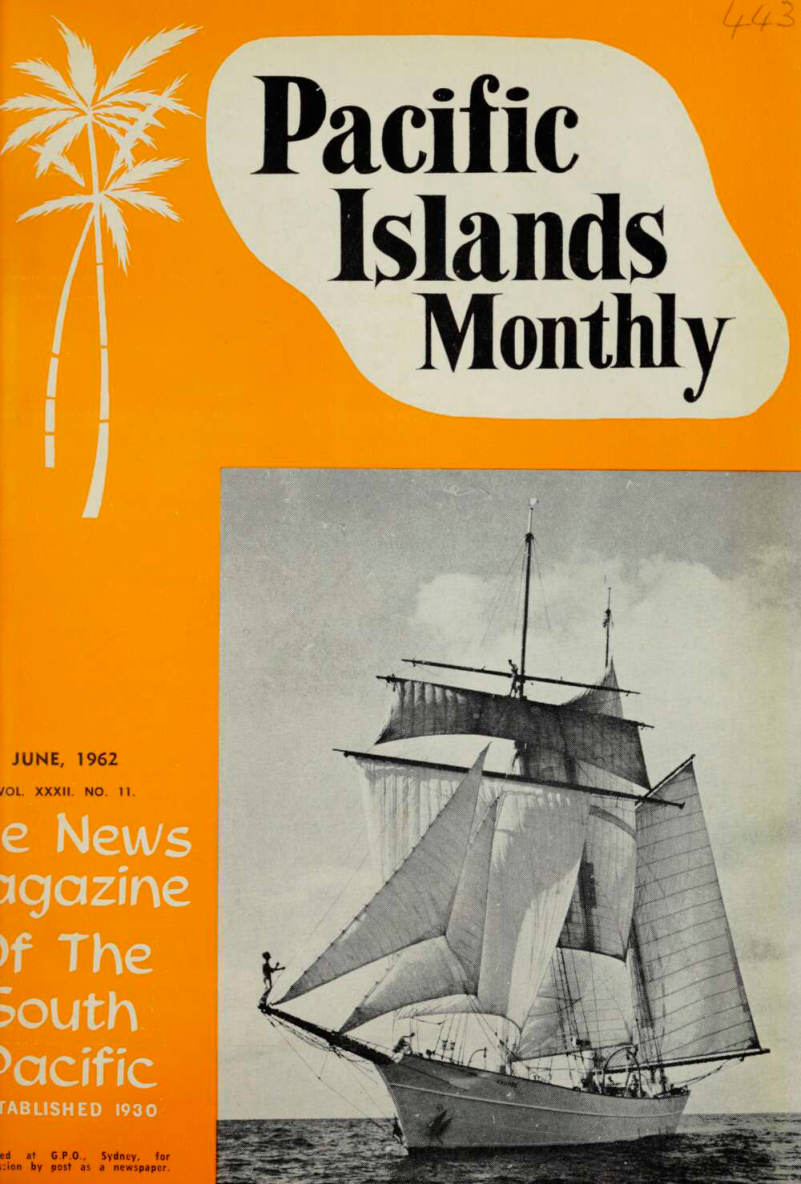 1
1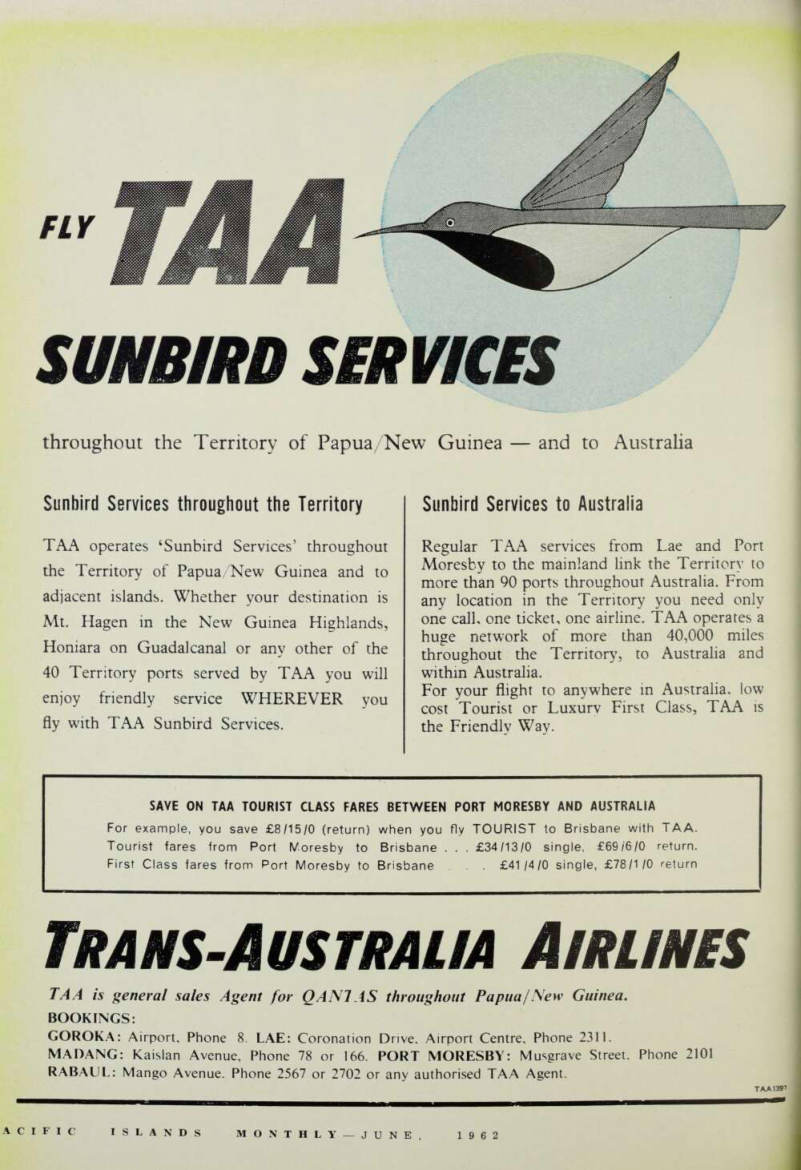 2
2 3
3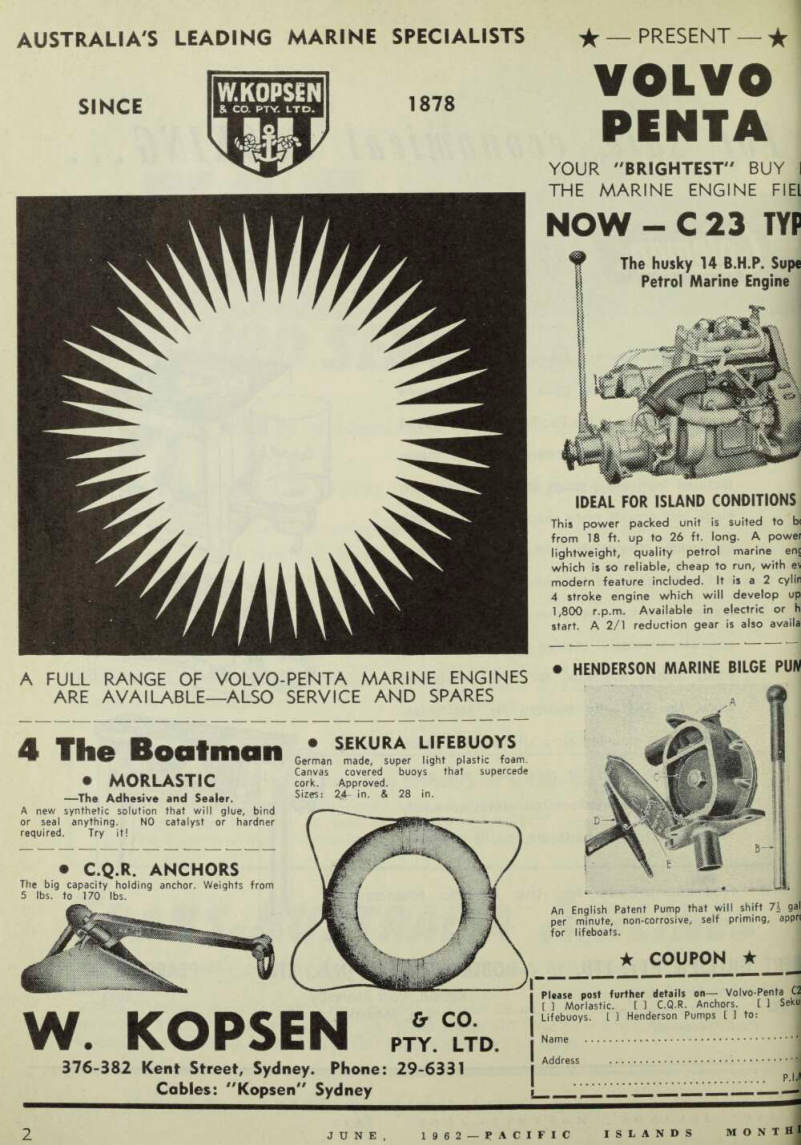 4
4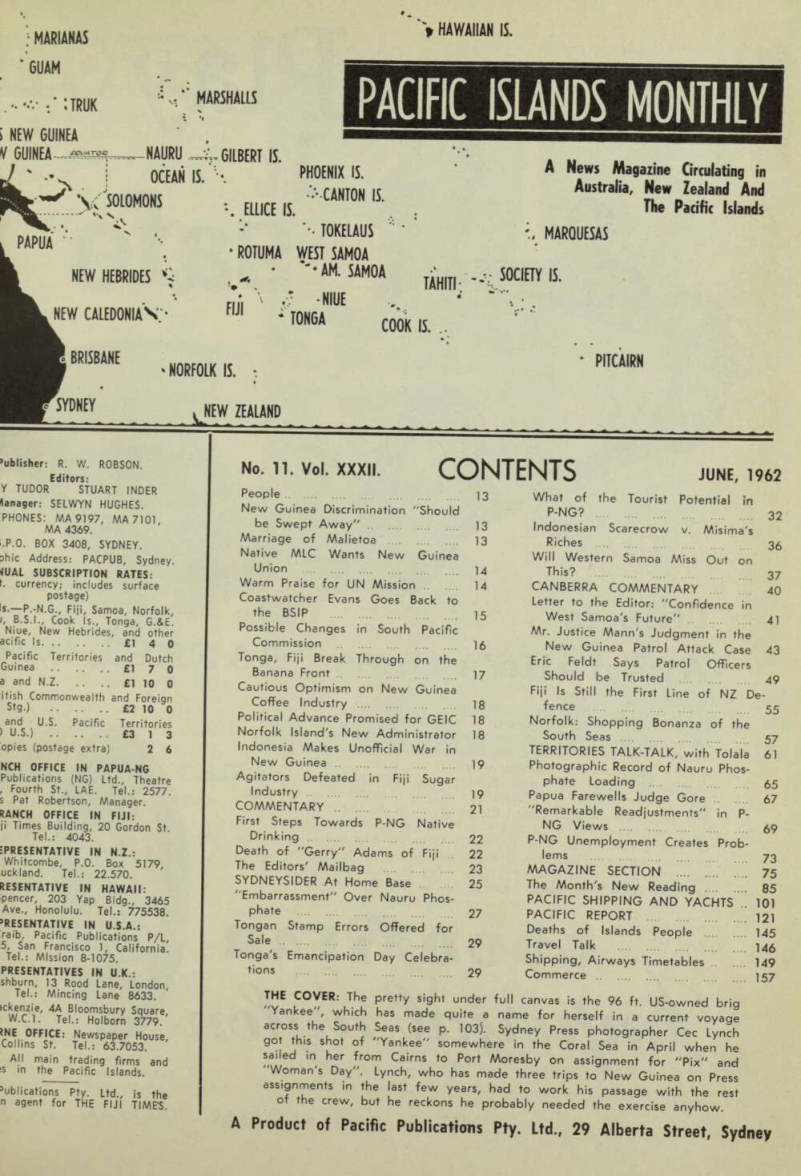 5
5 6
6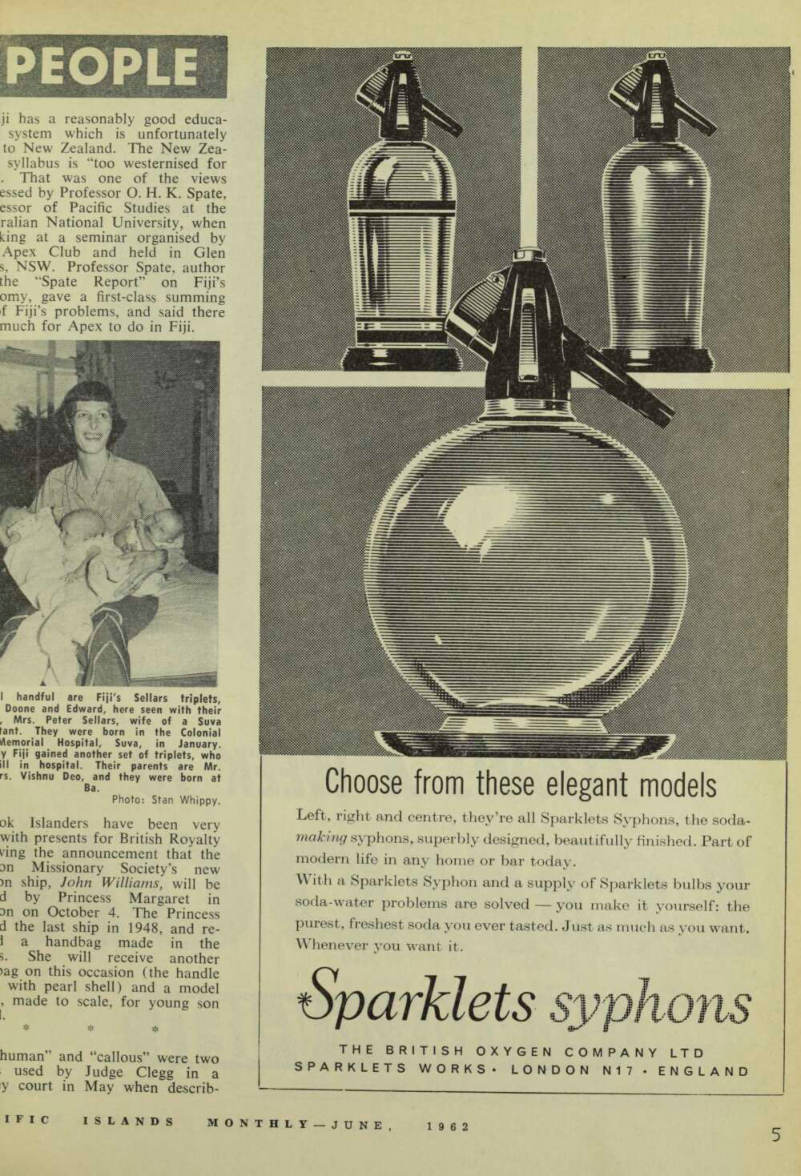 7
7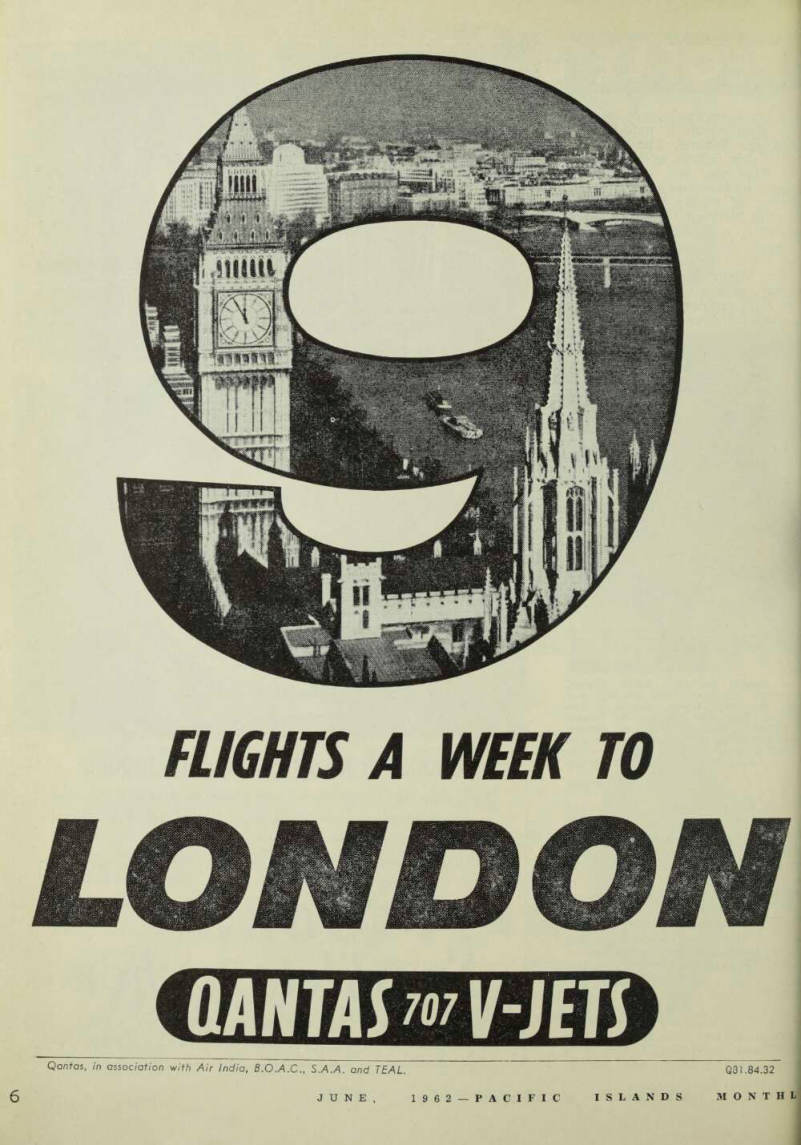 8
8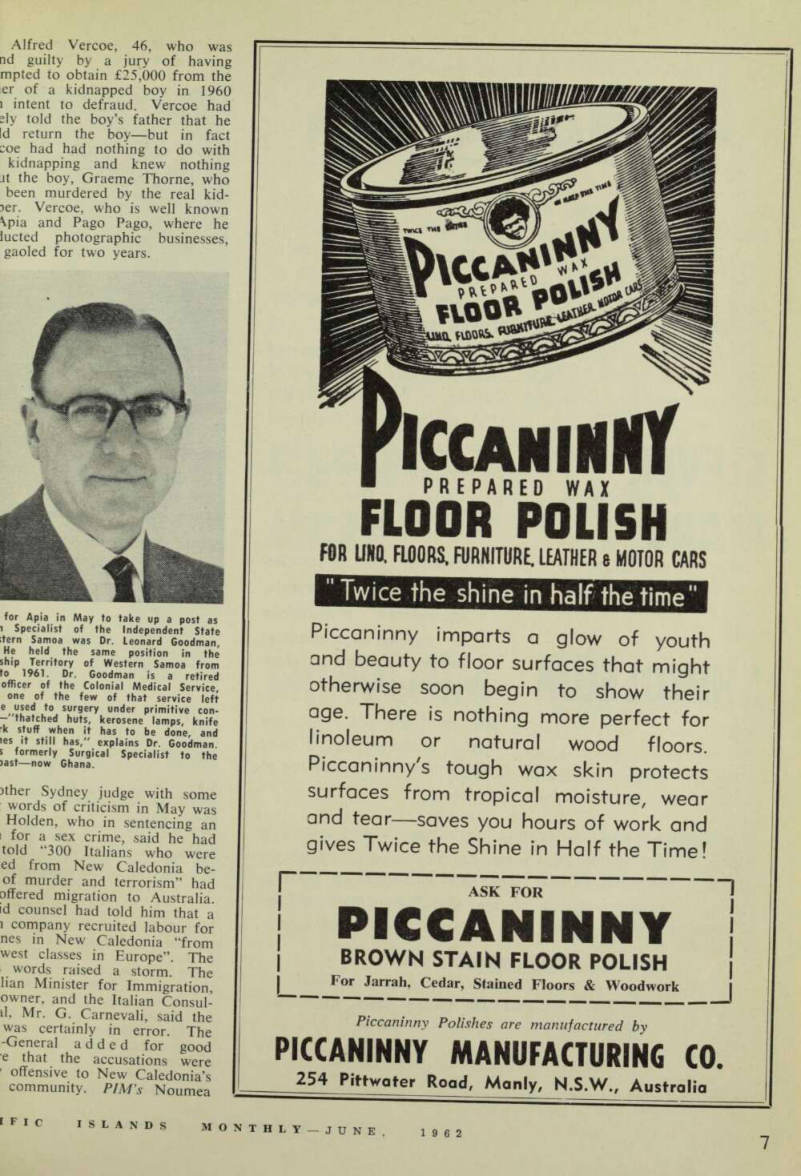 9
9 10
10 11
11 12
12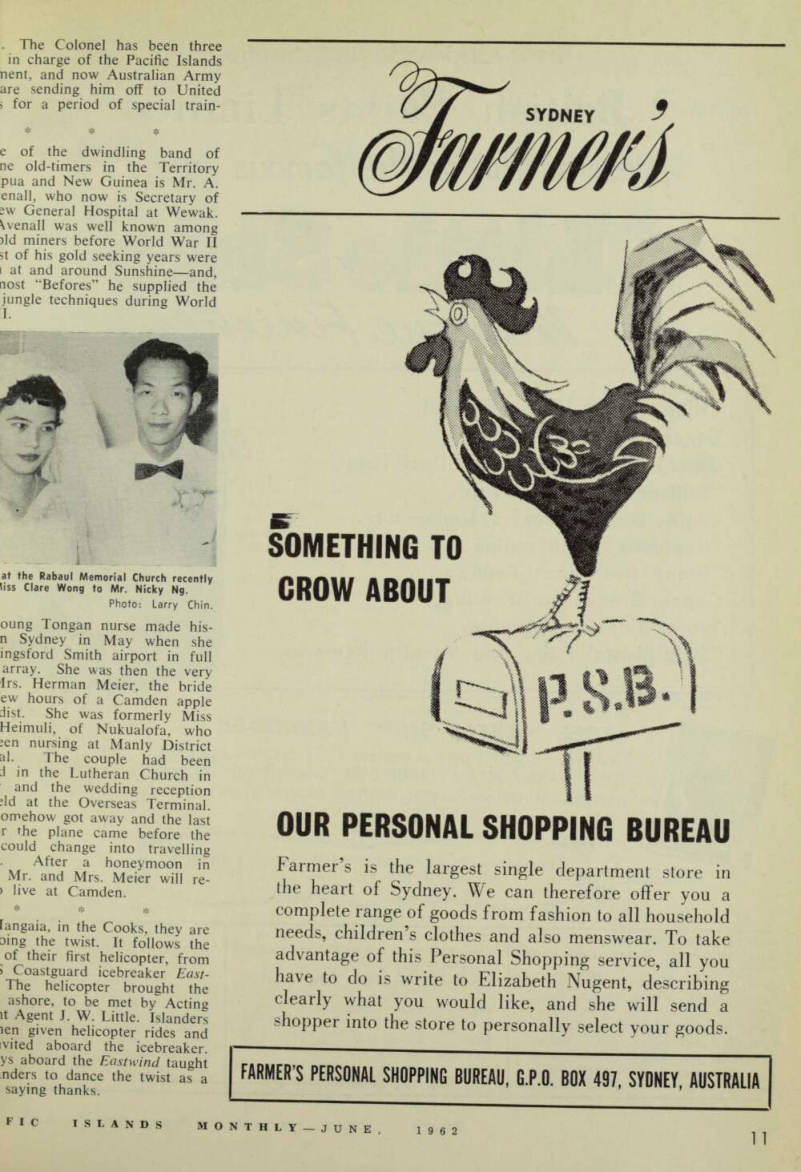 13
13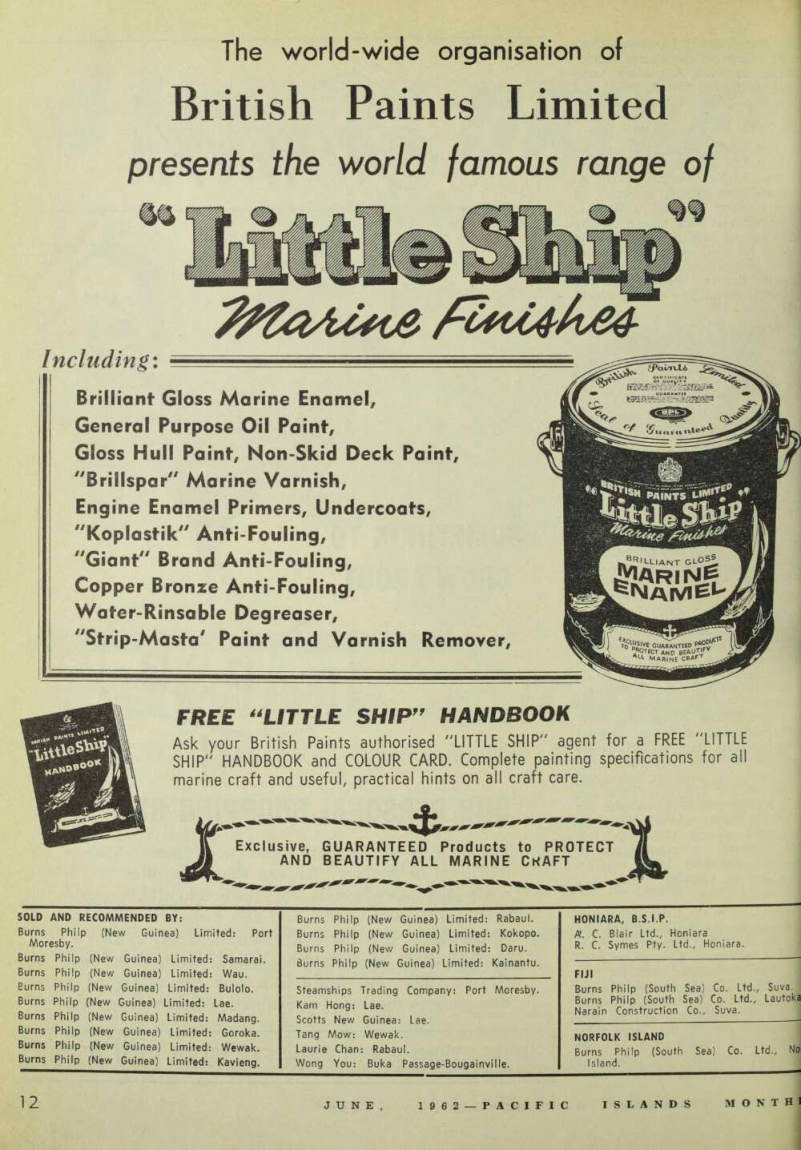 14
14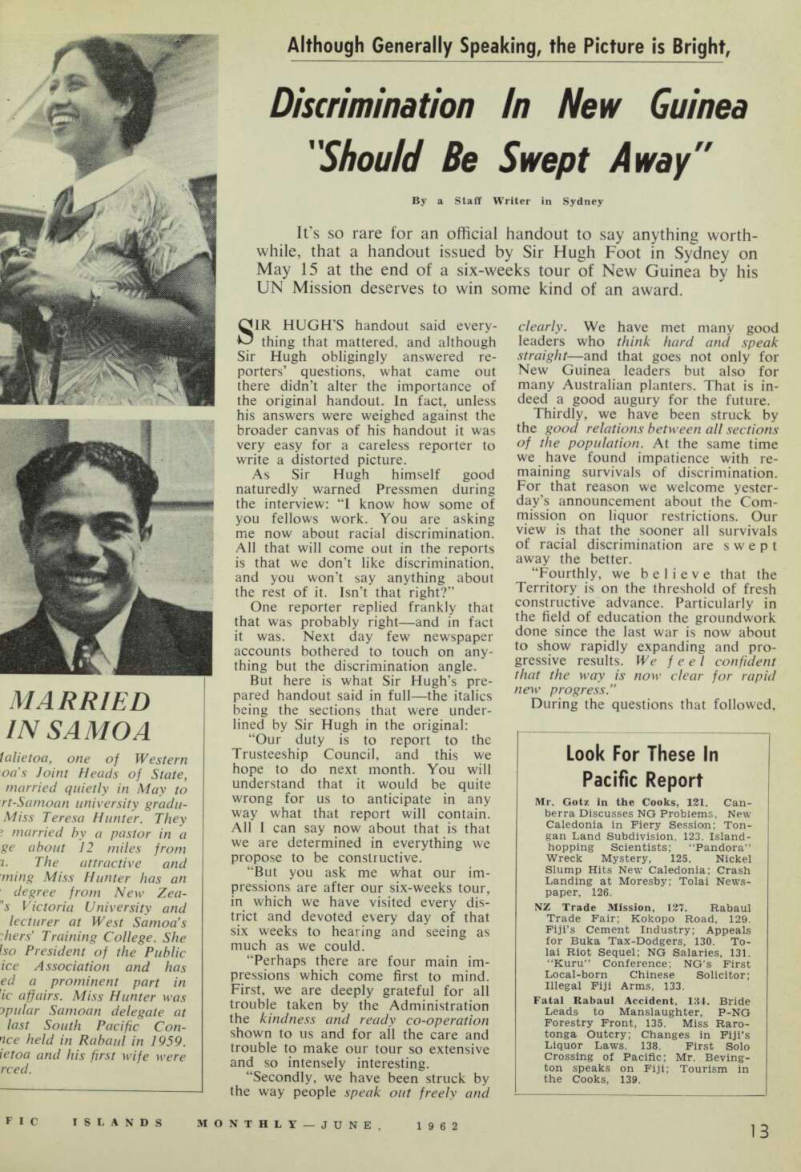 15
15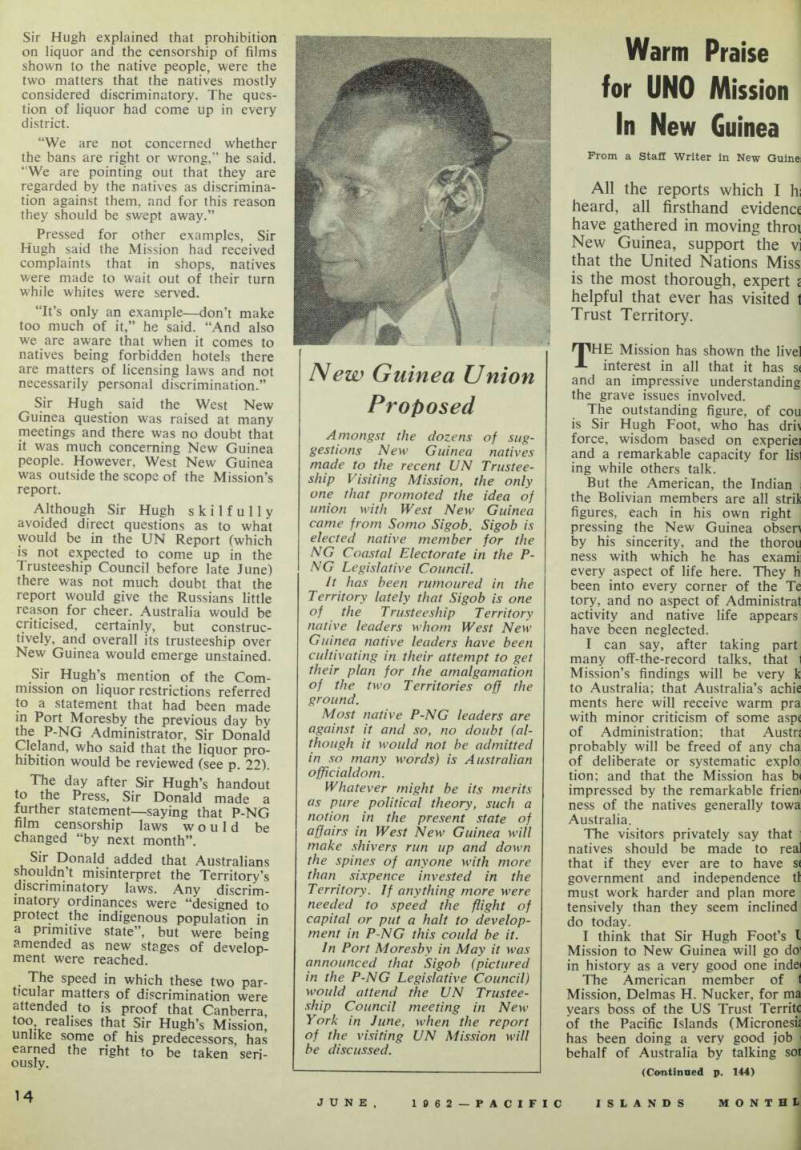 16
16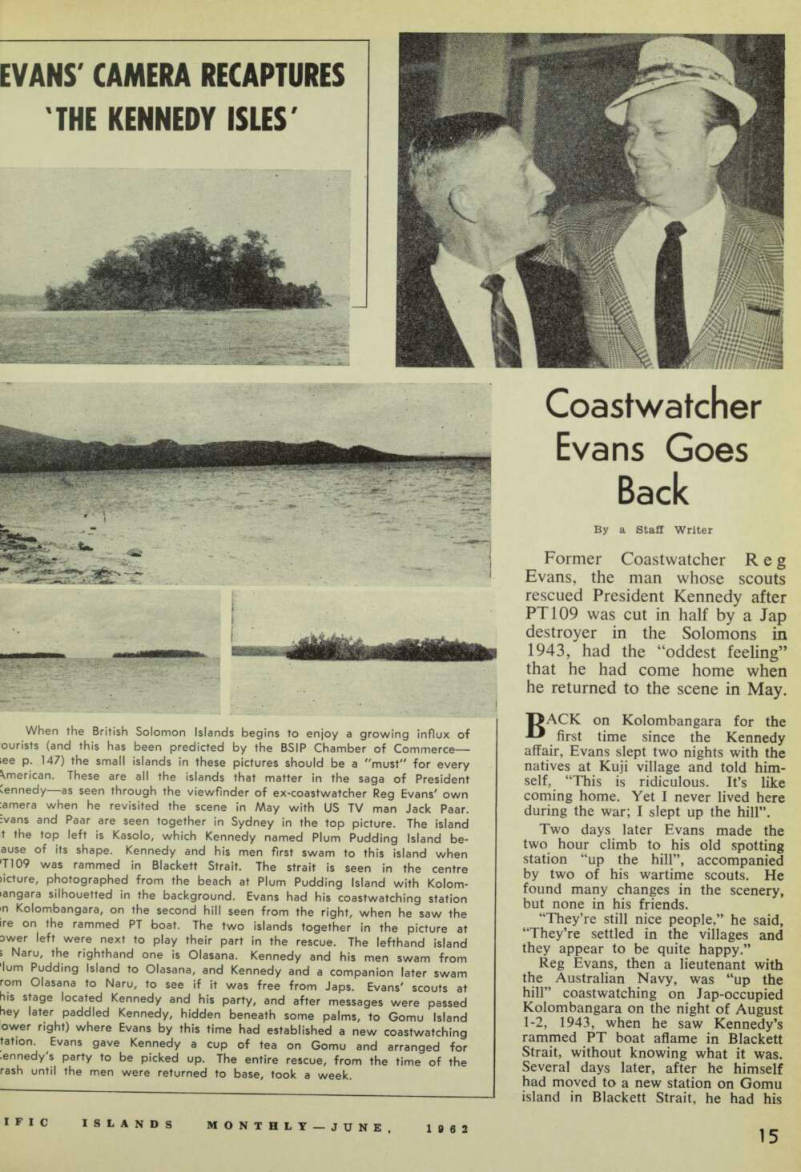 17
17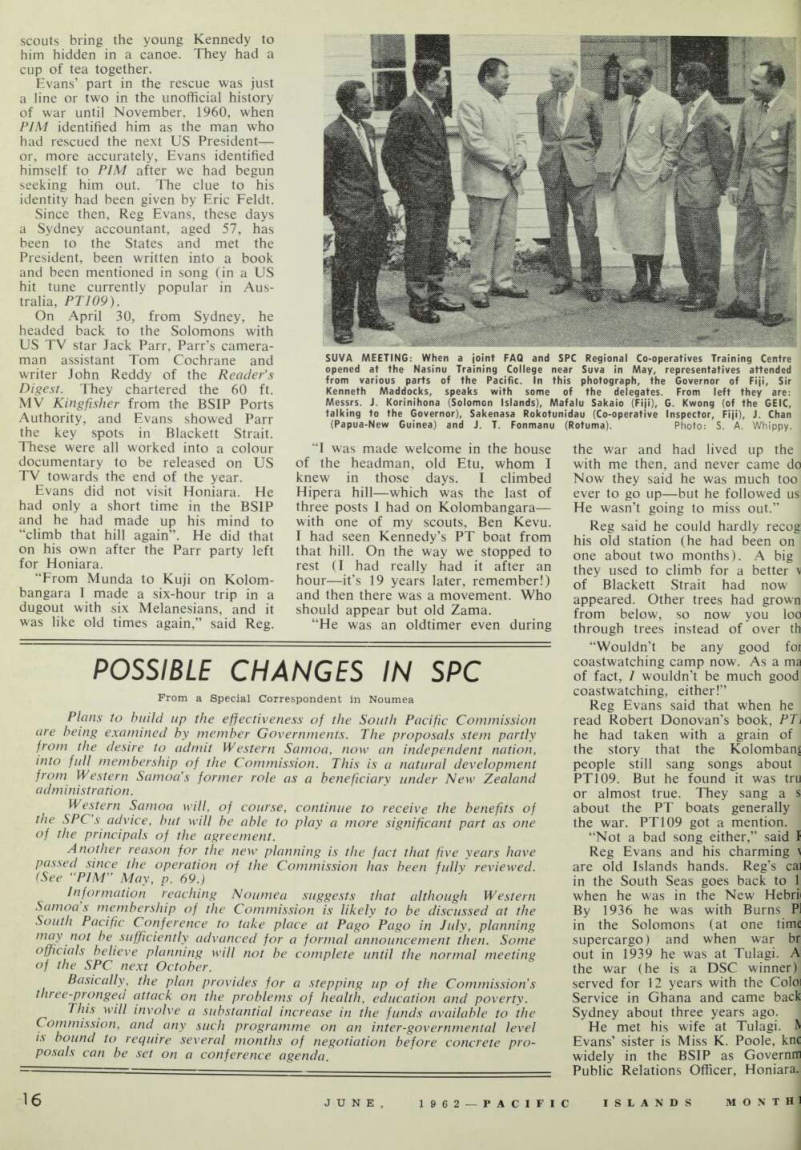 18
18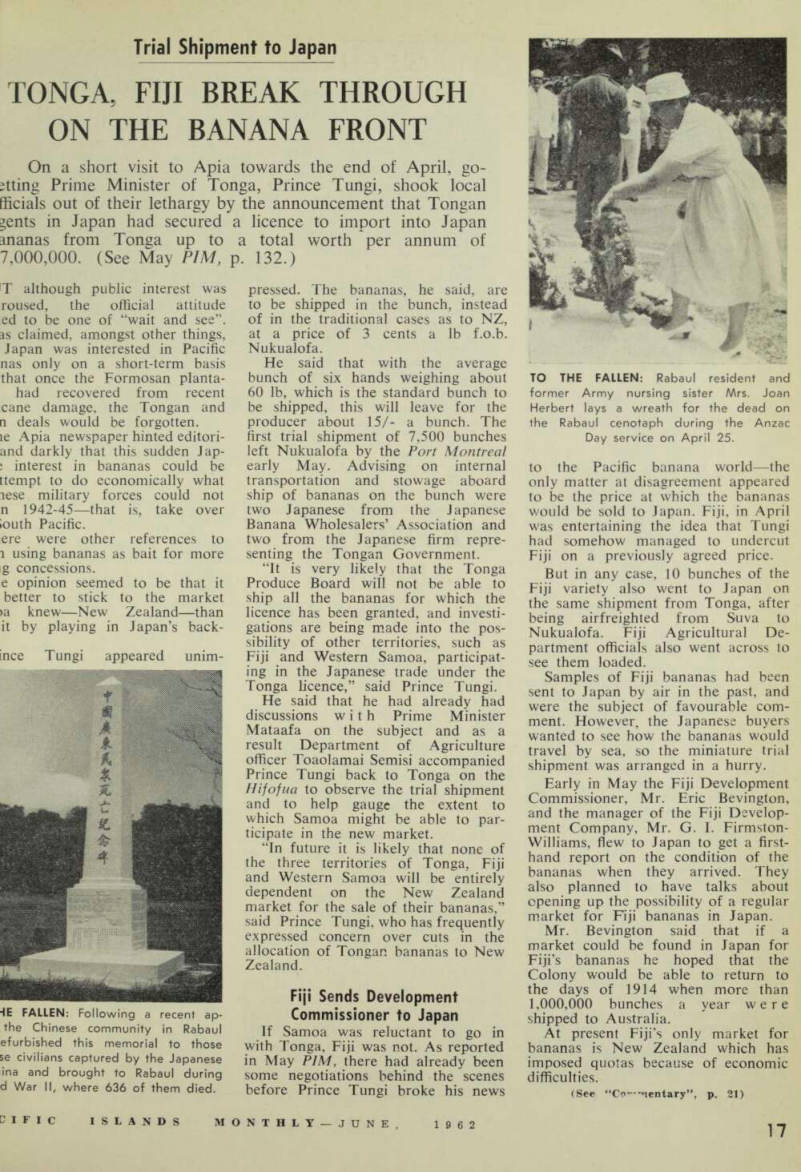 19
19 20
20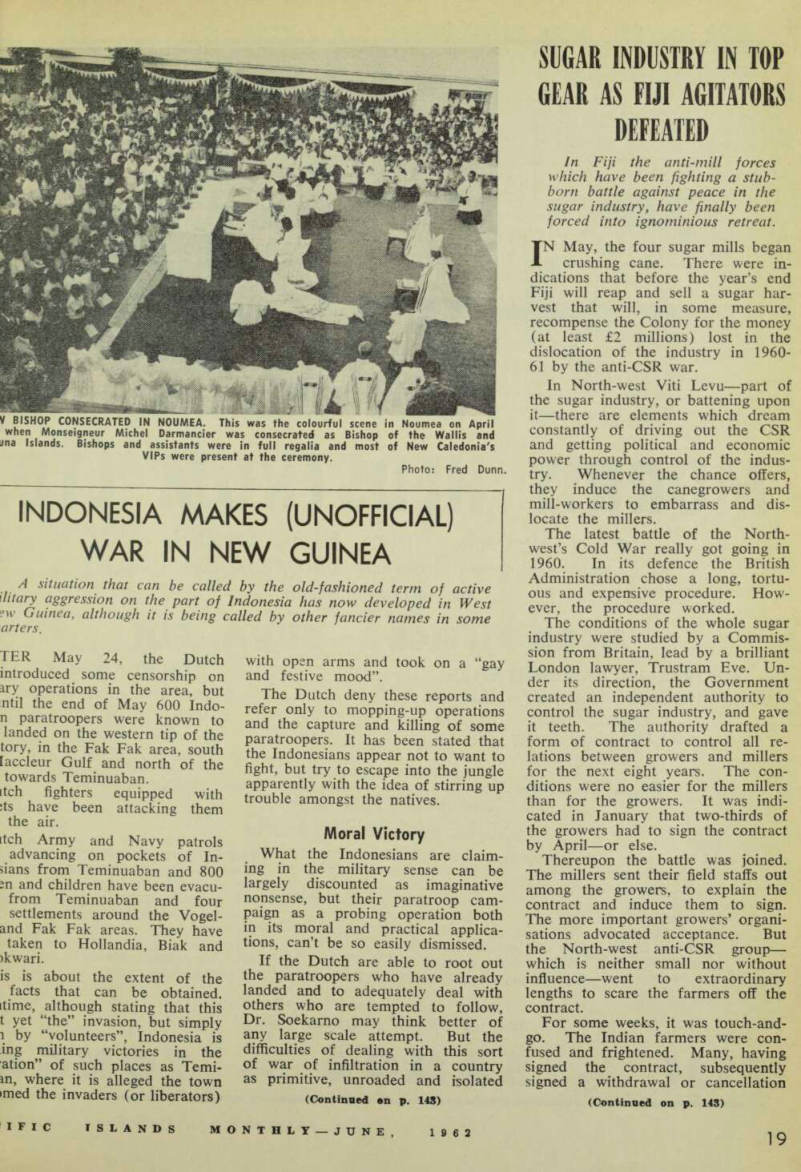 21
21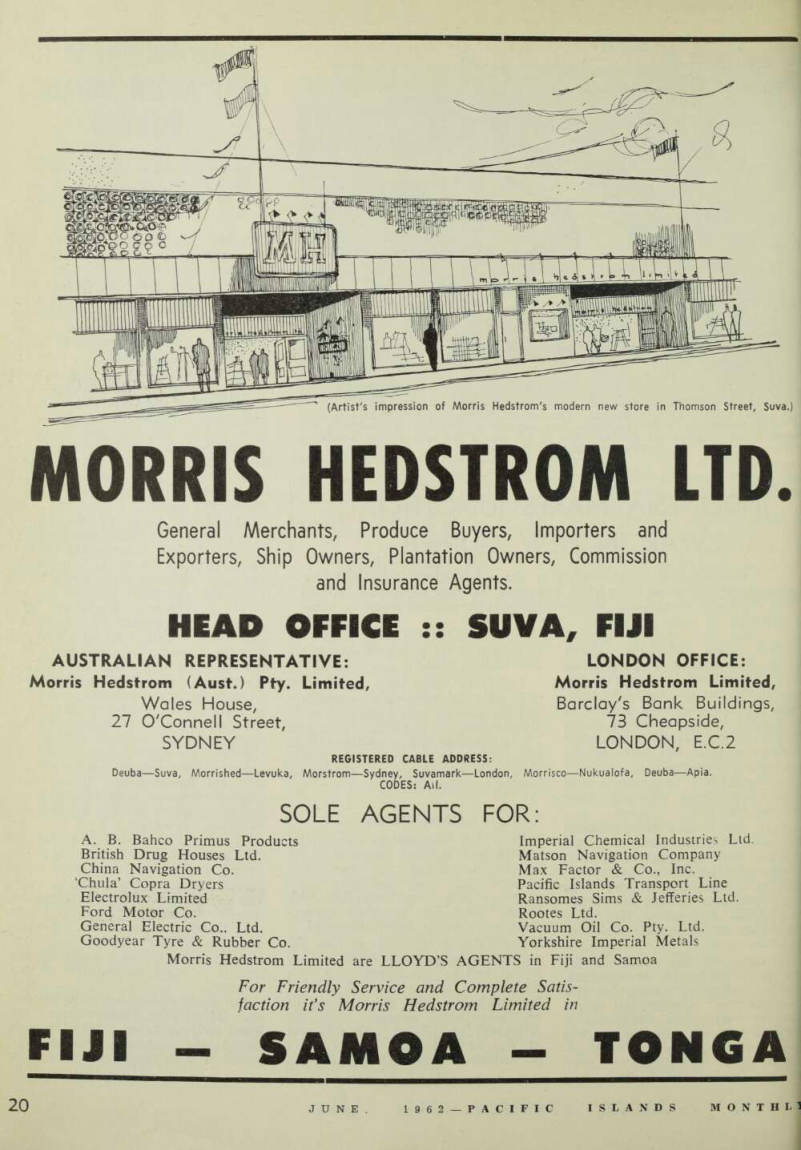 22
22 23
23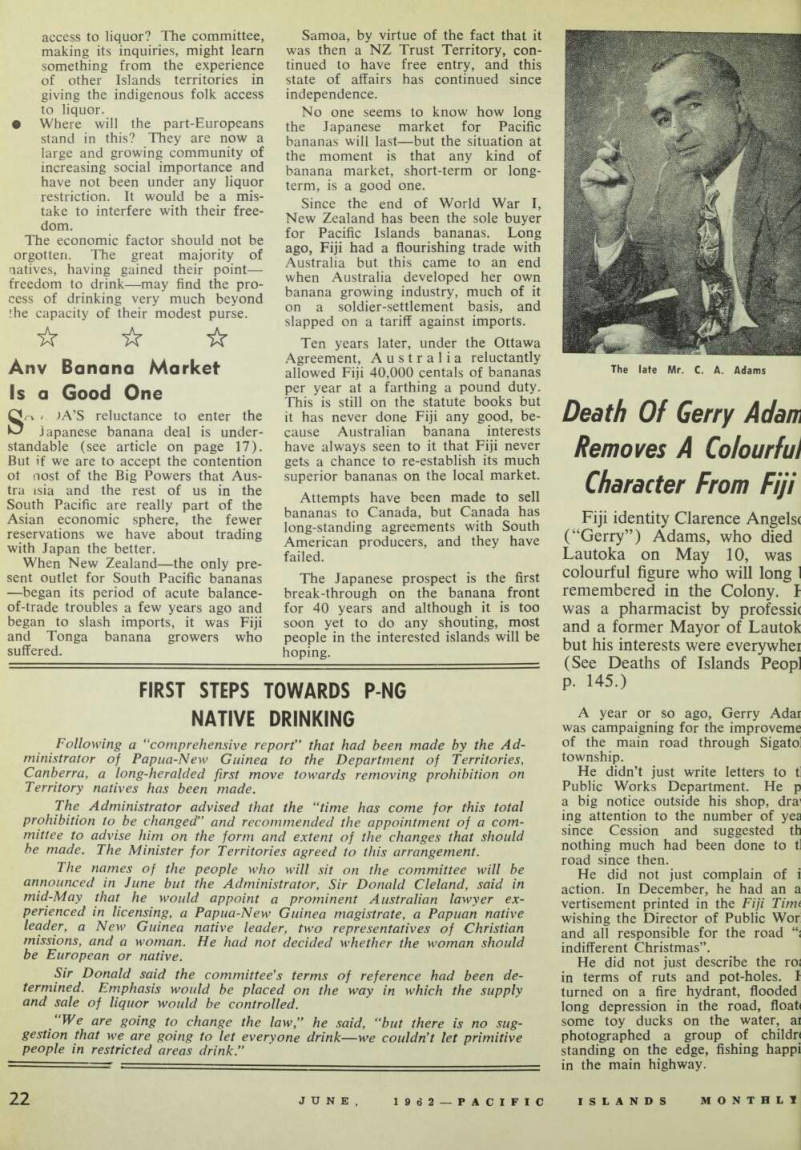 24
24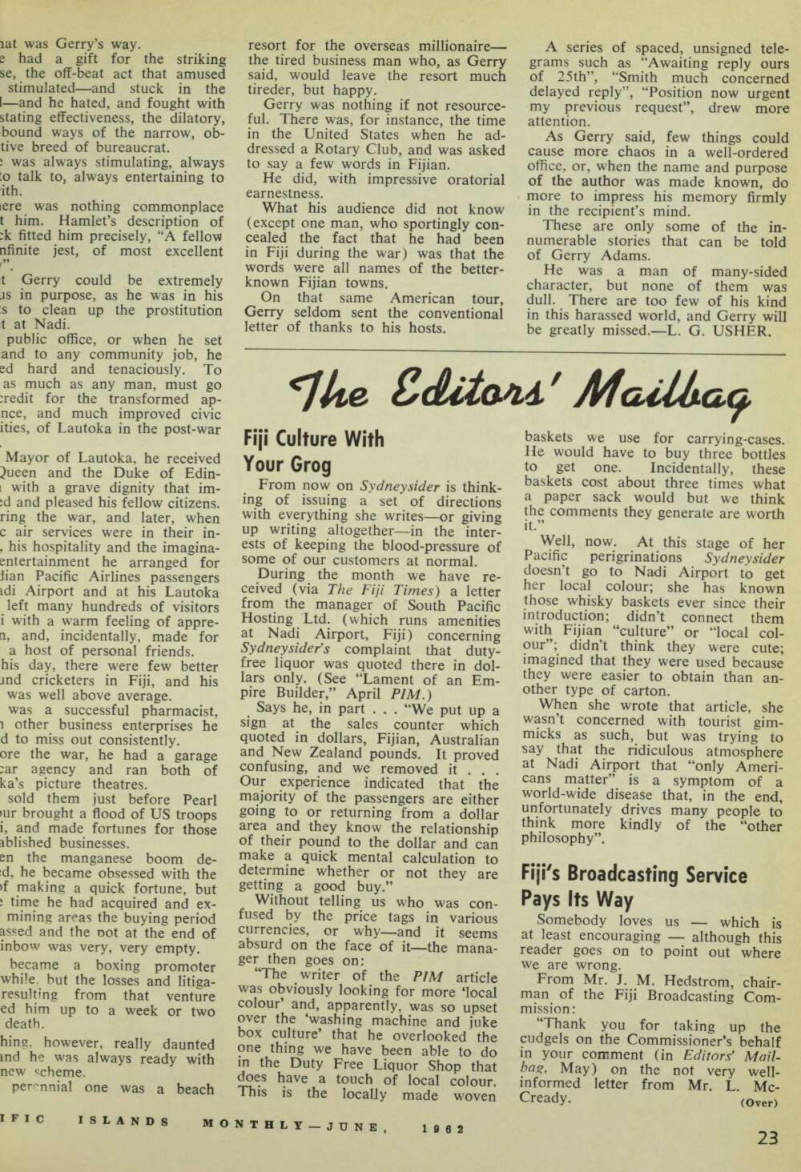 25
25 26
26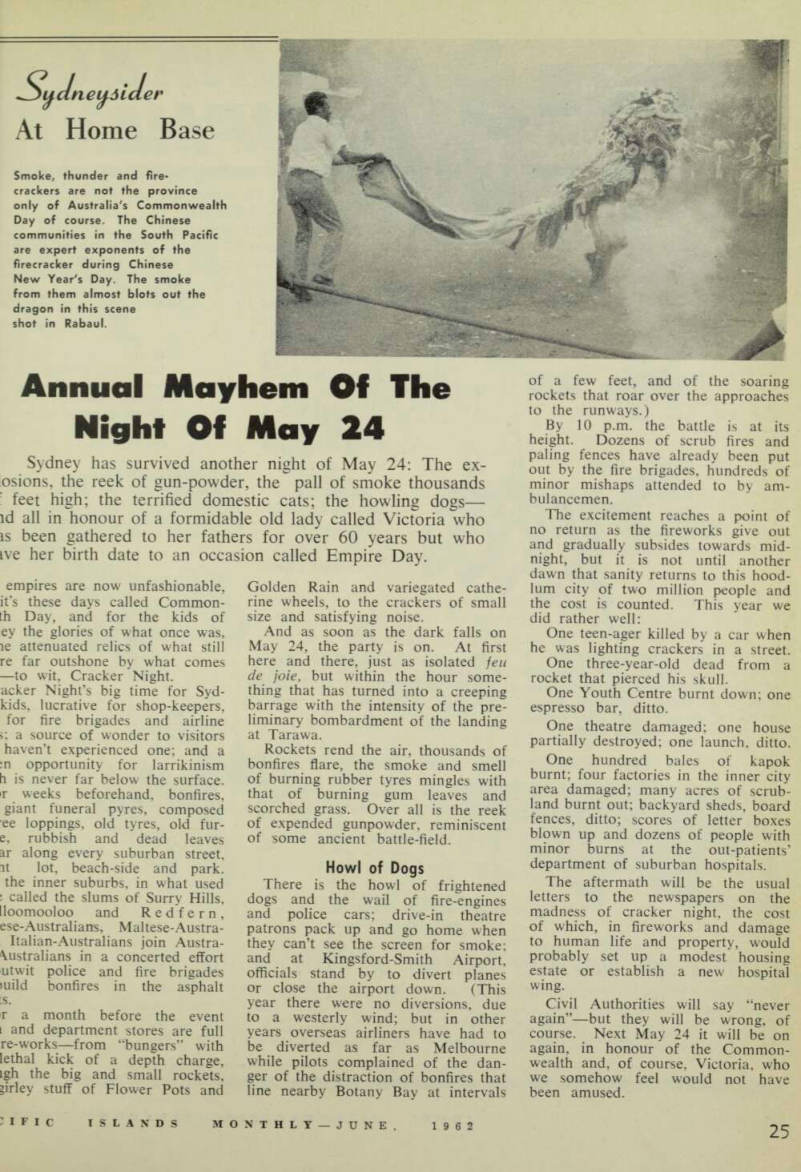 27
27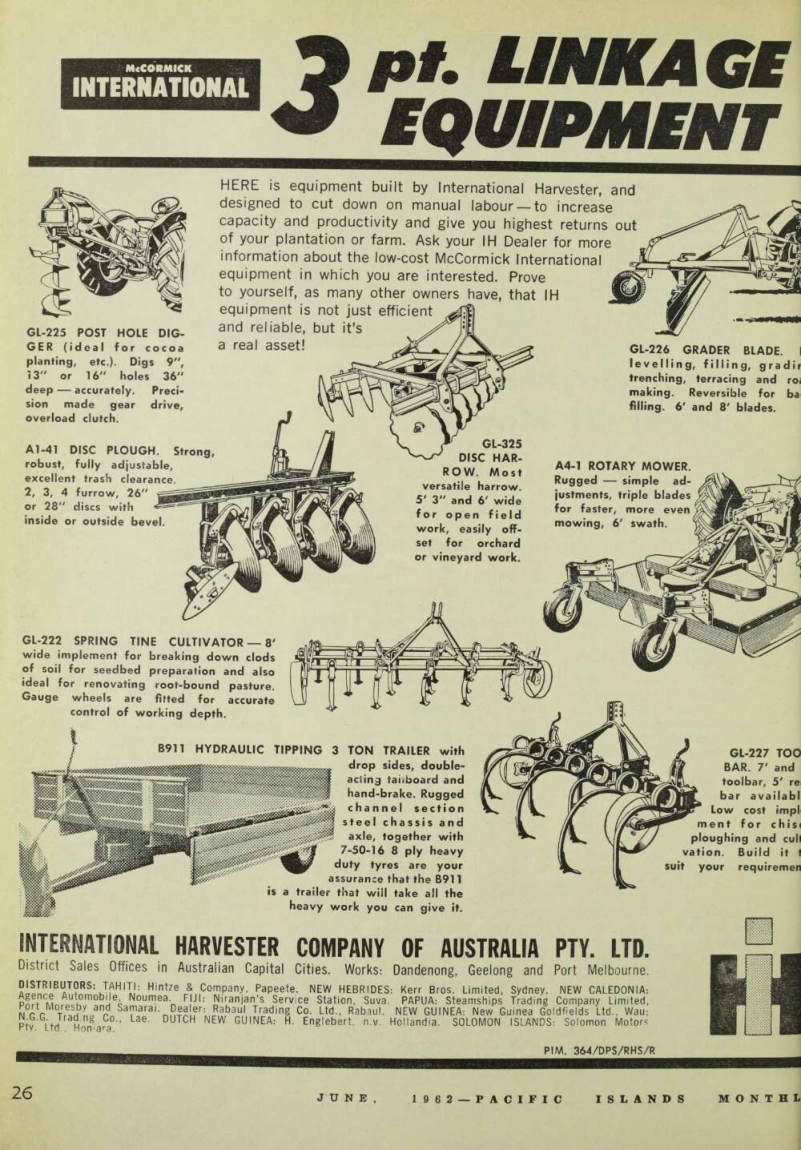 28
28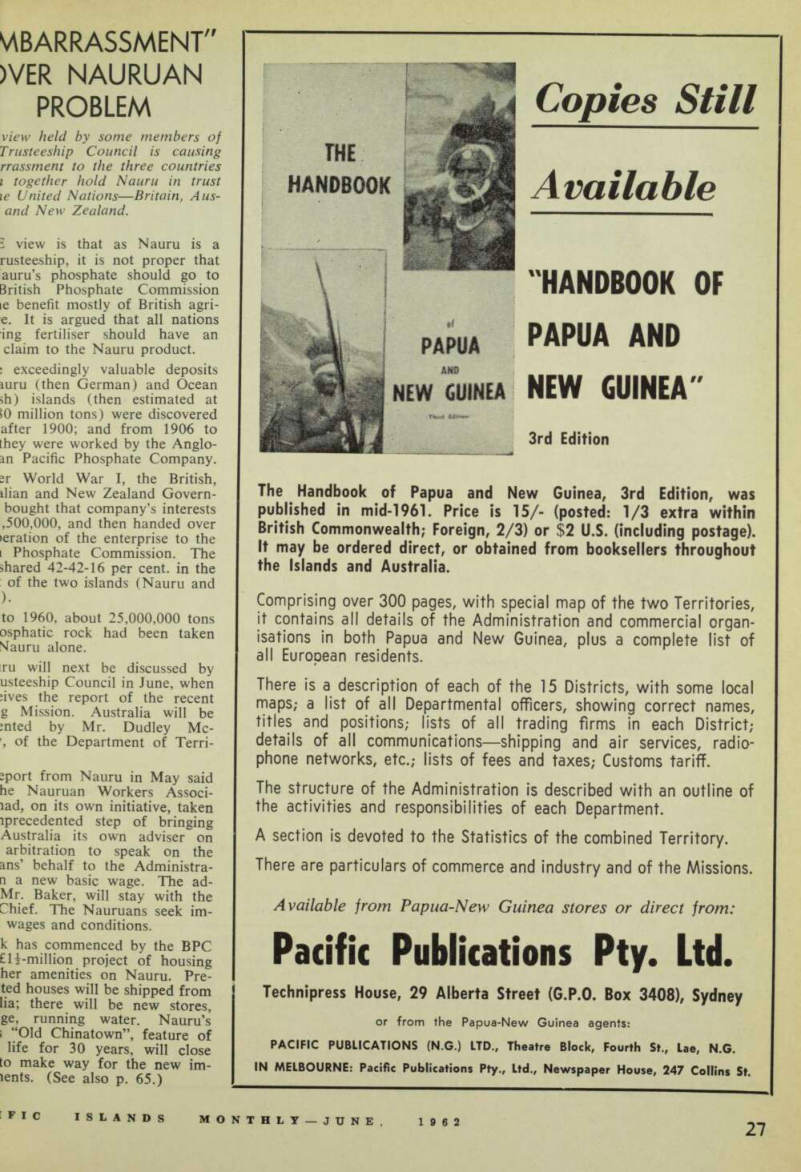 29
29 30
30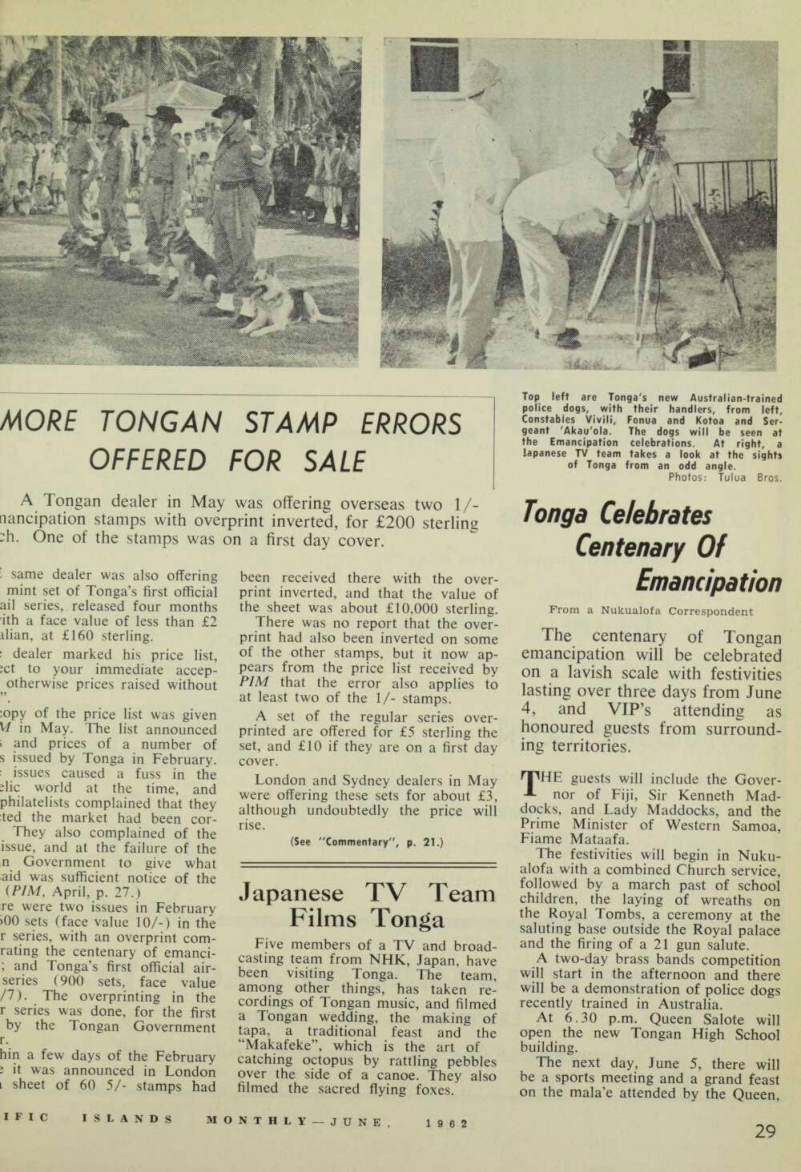 31
31 32
32 33
33 34
34 35
35 36
36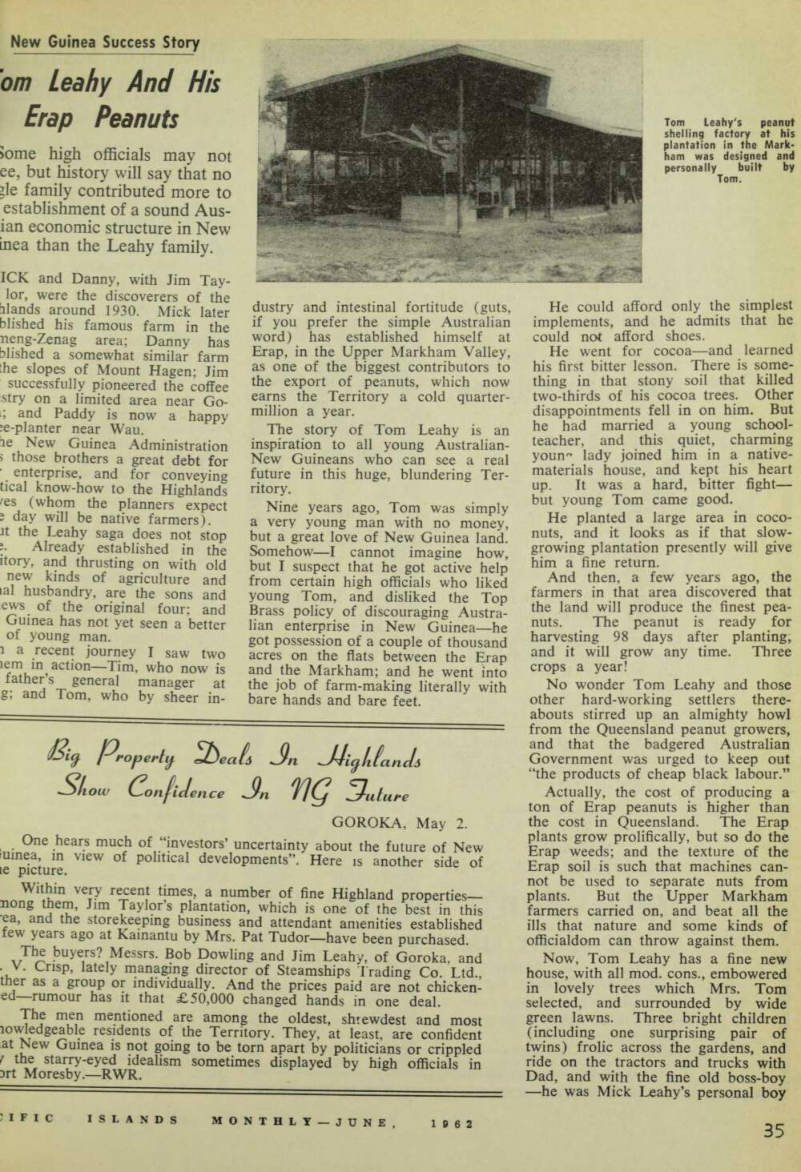 37
37 38
38 39
39 40
40 41
41 42
42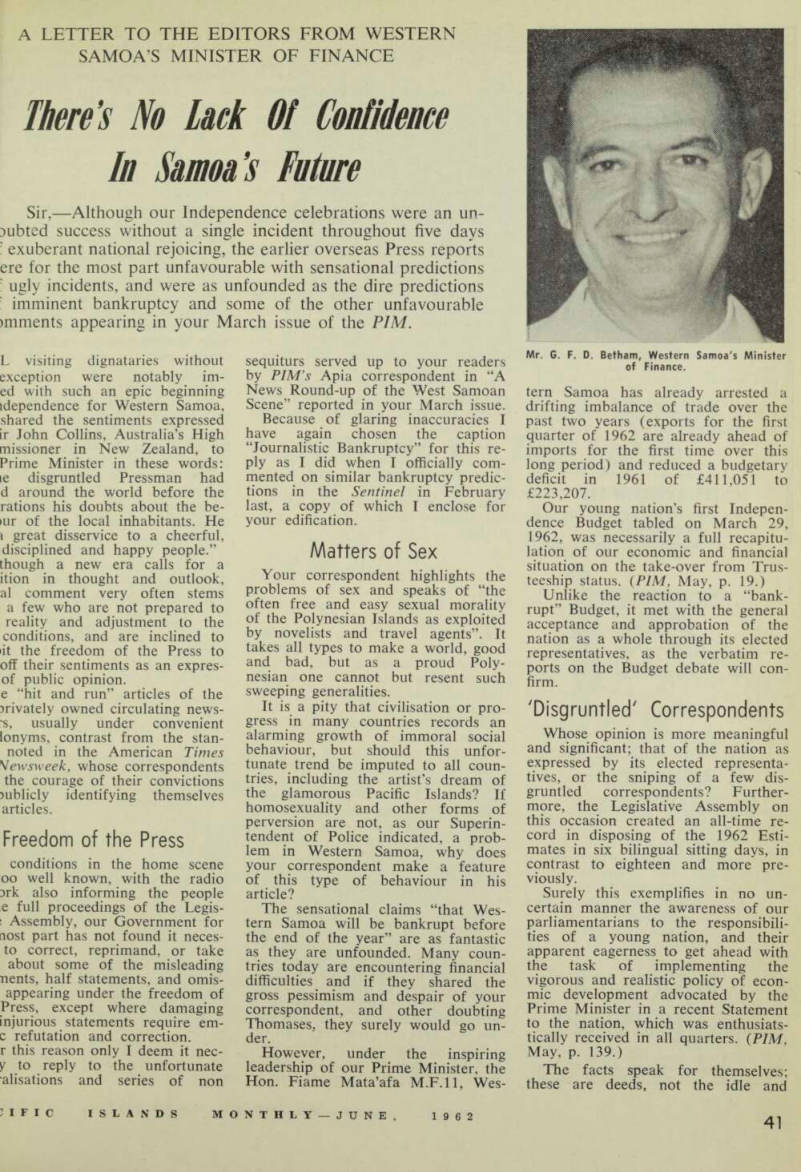 43
43 44
44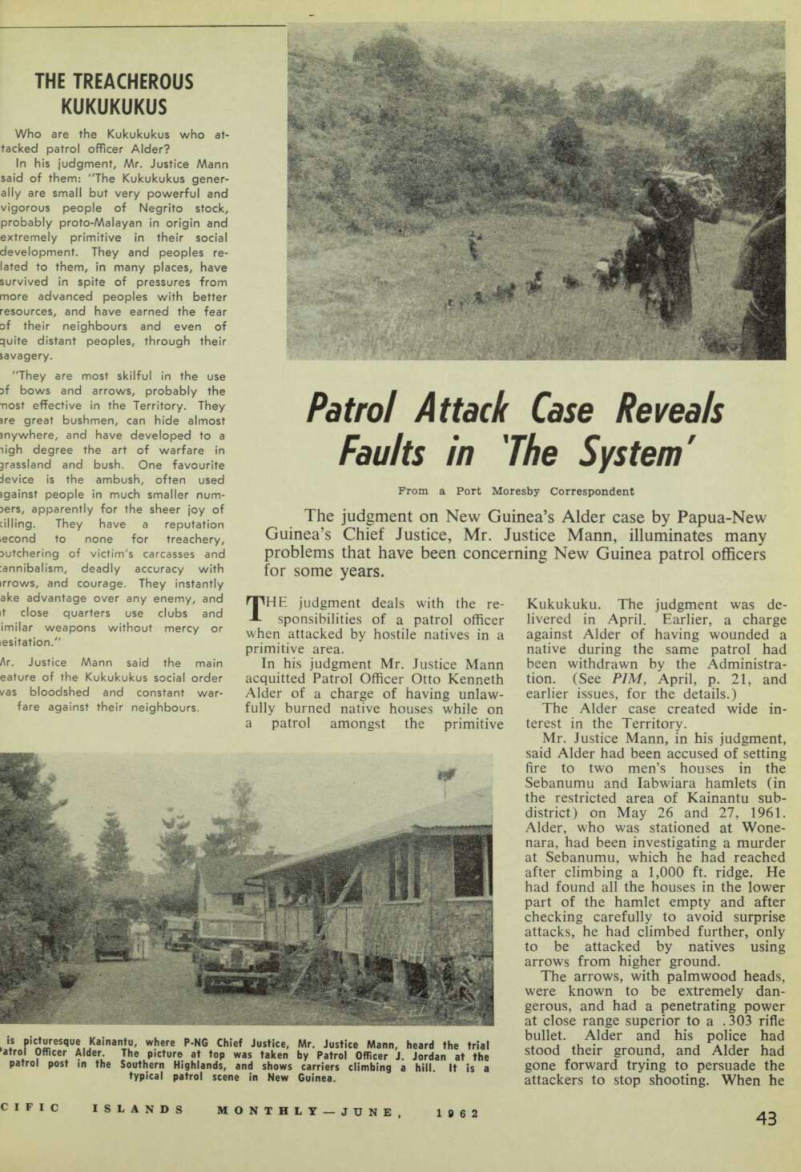 45
45 46
46 47
47 48
48 49
49 50
50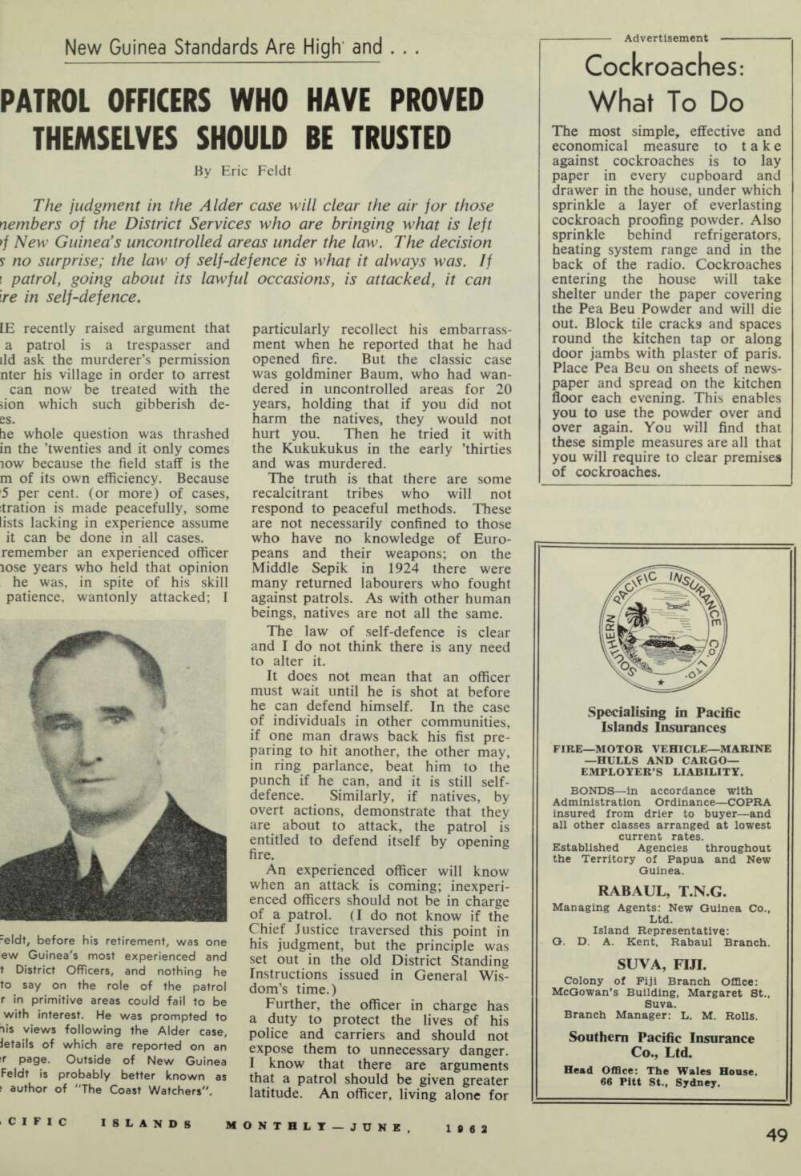 51
51 52
52 53
53 54
54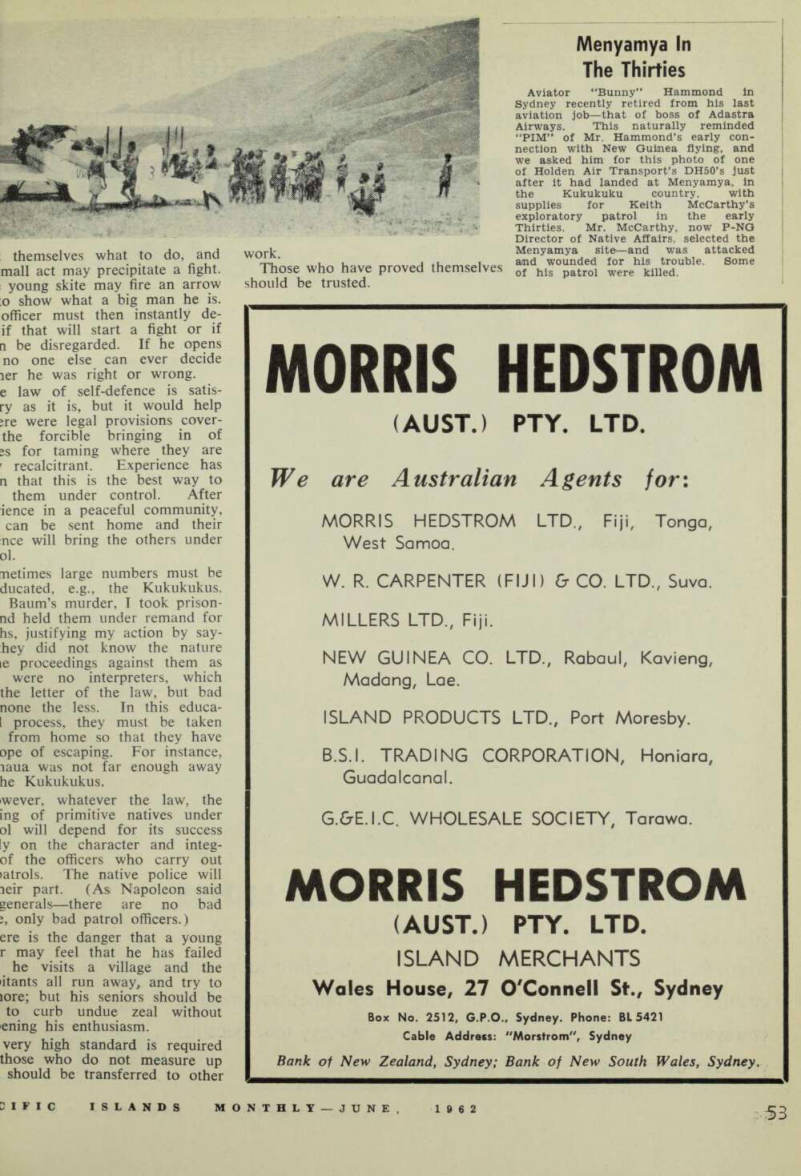 55
55 56
56 57
57 58
58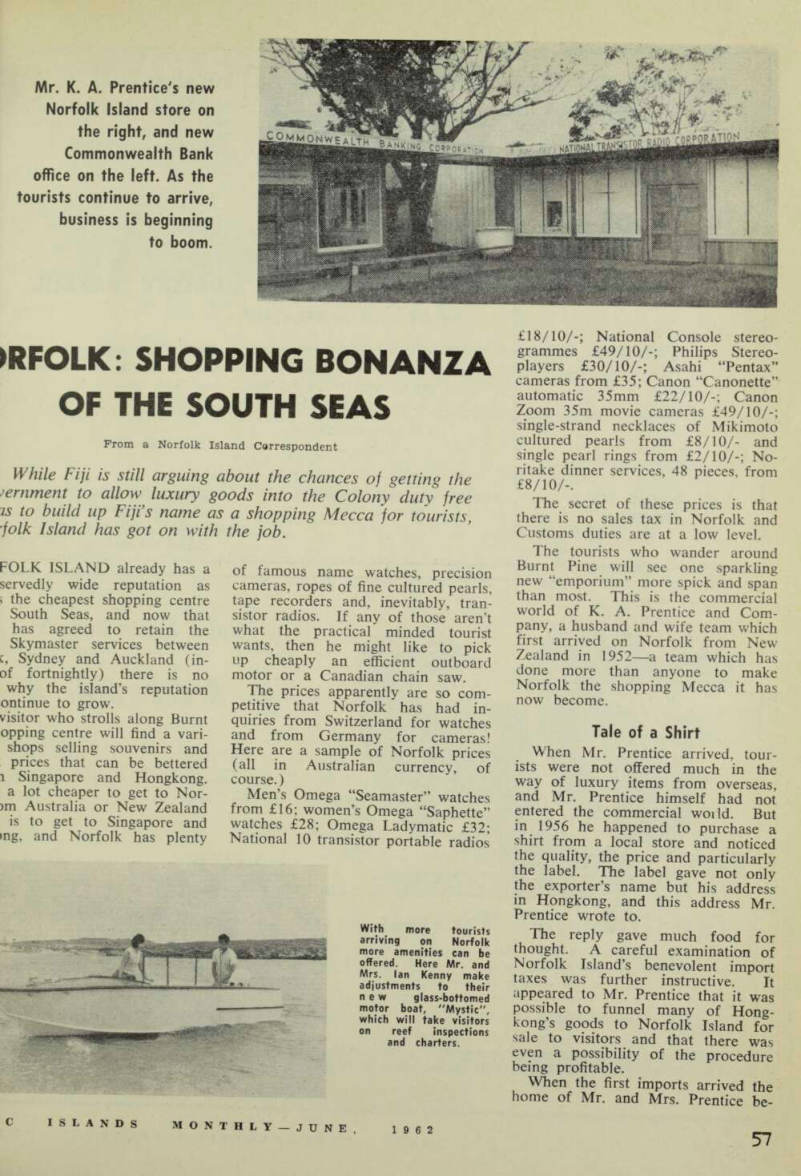 59
59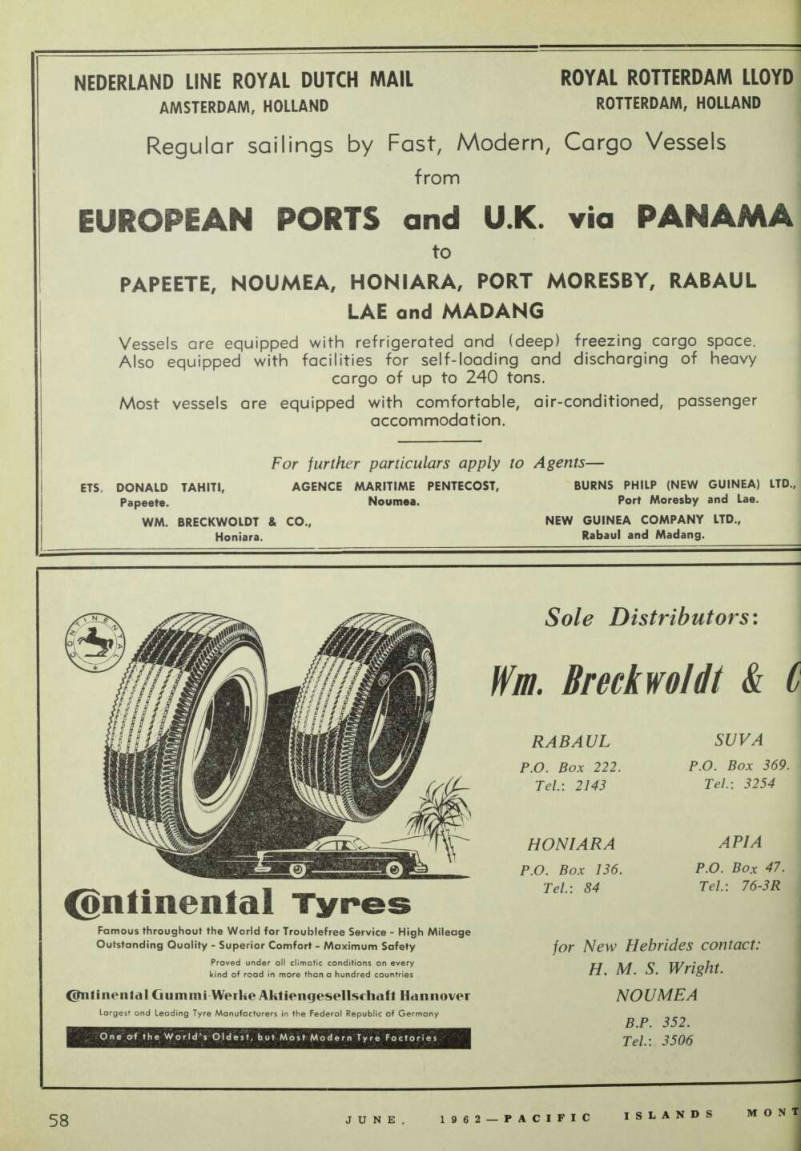 60
60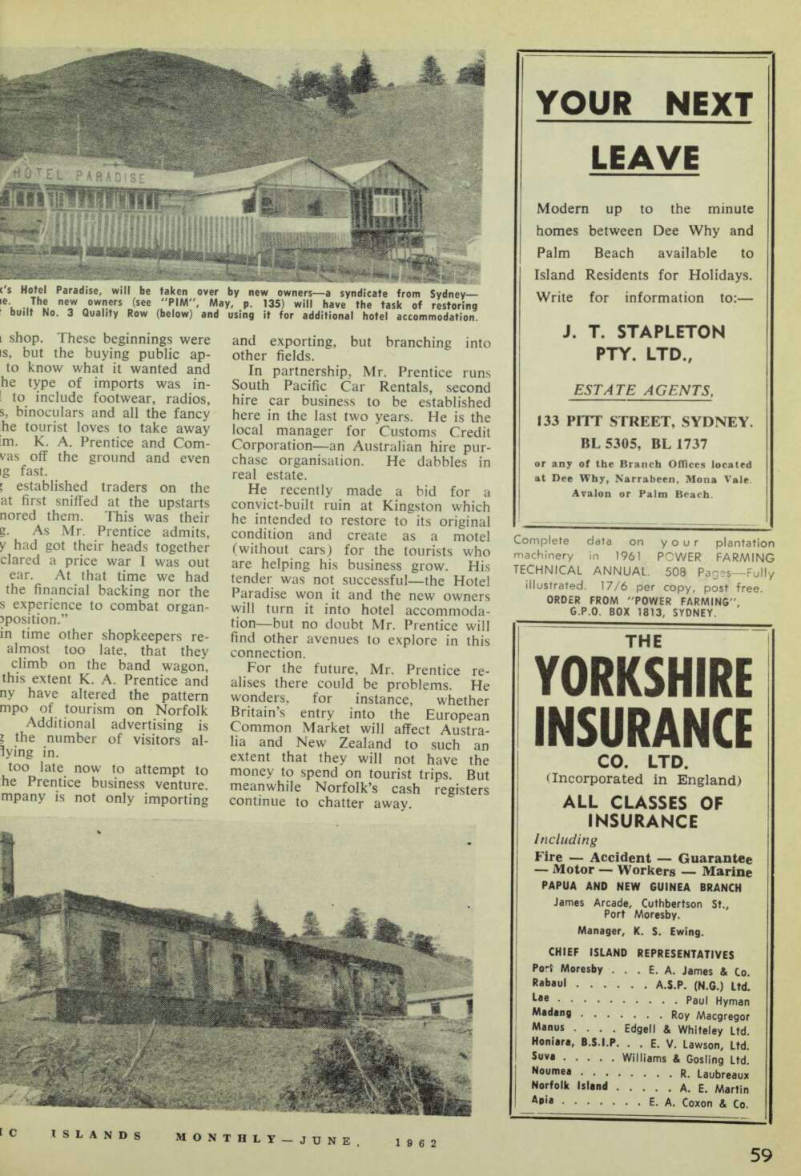 61
61 62
62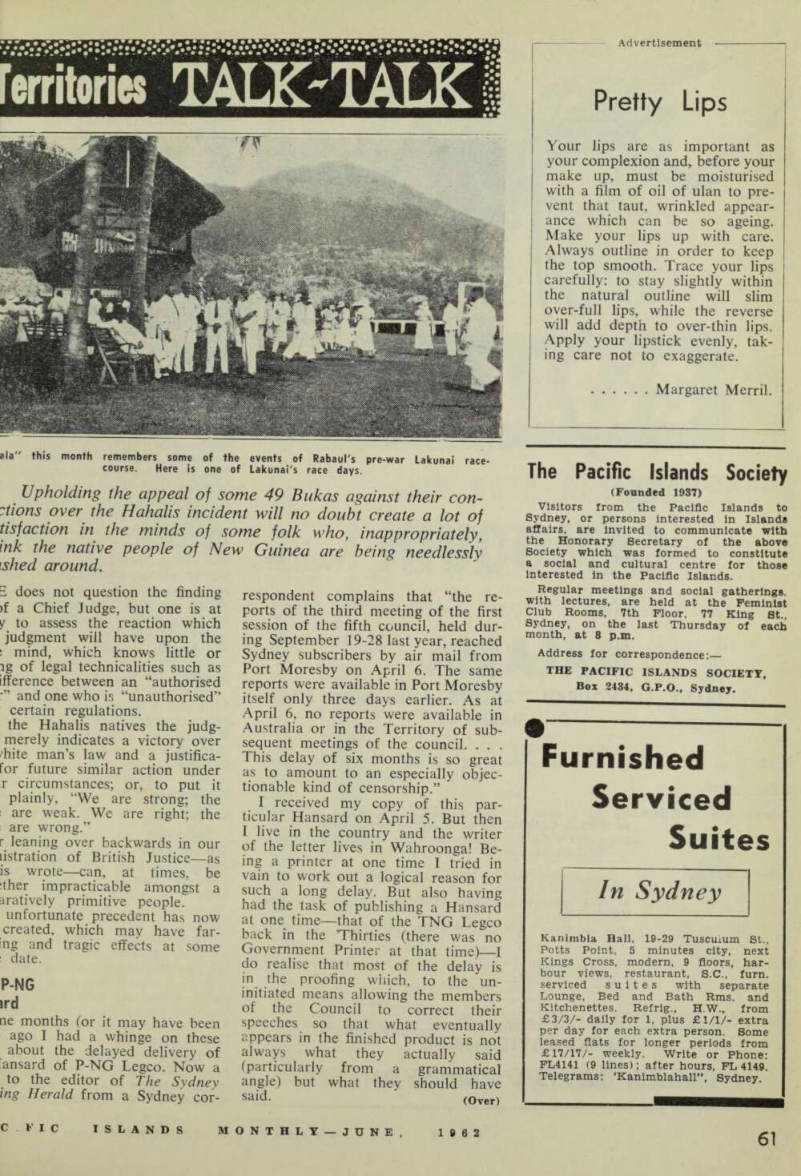 63
63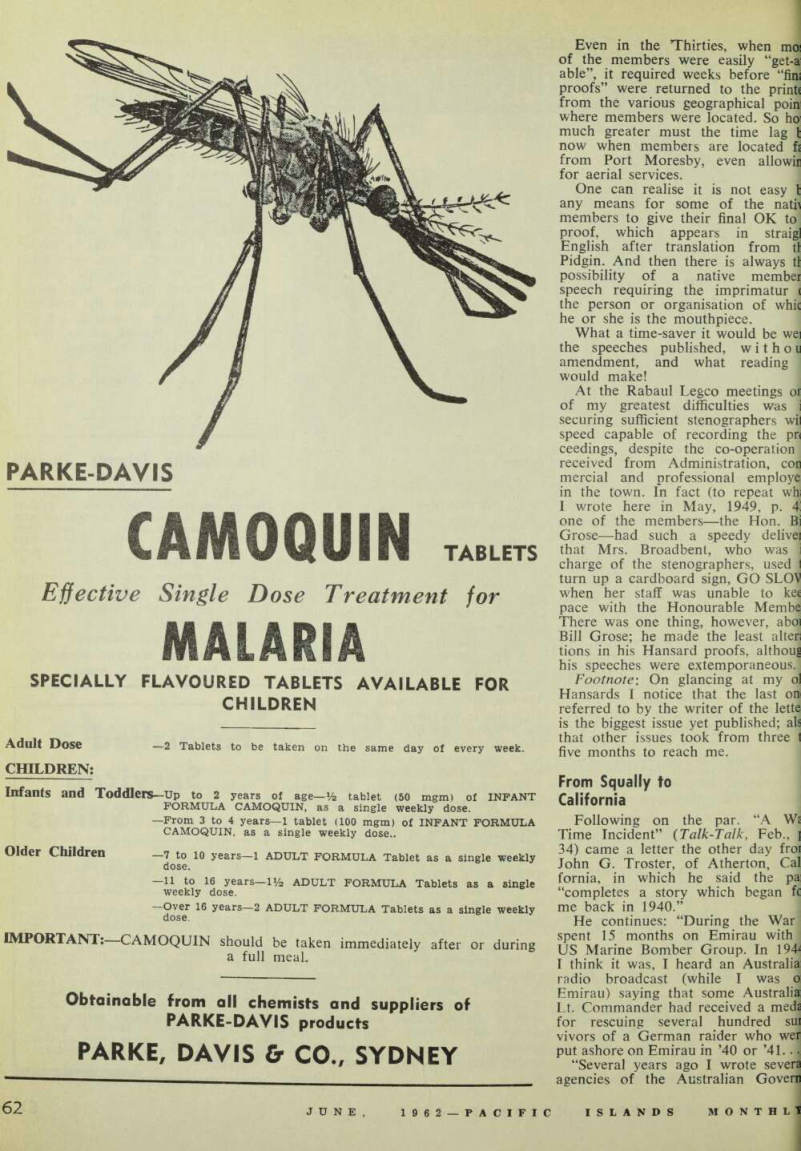 64
64 65
65 66
66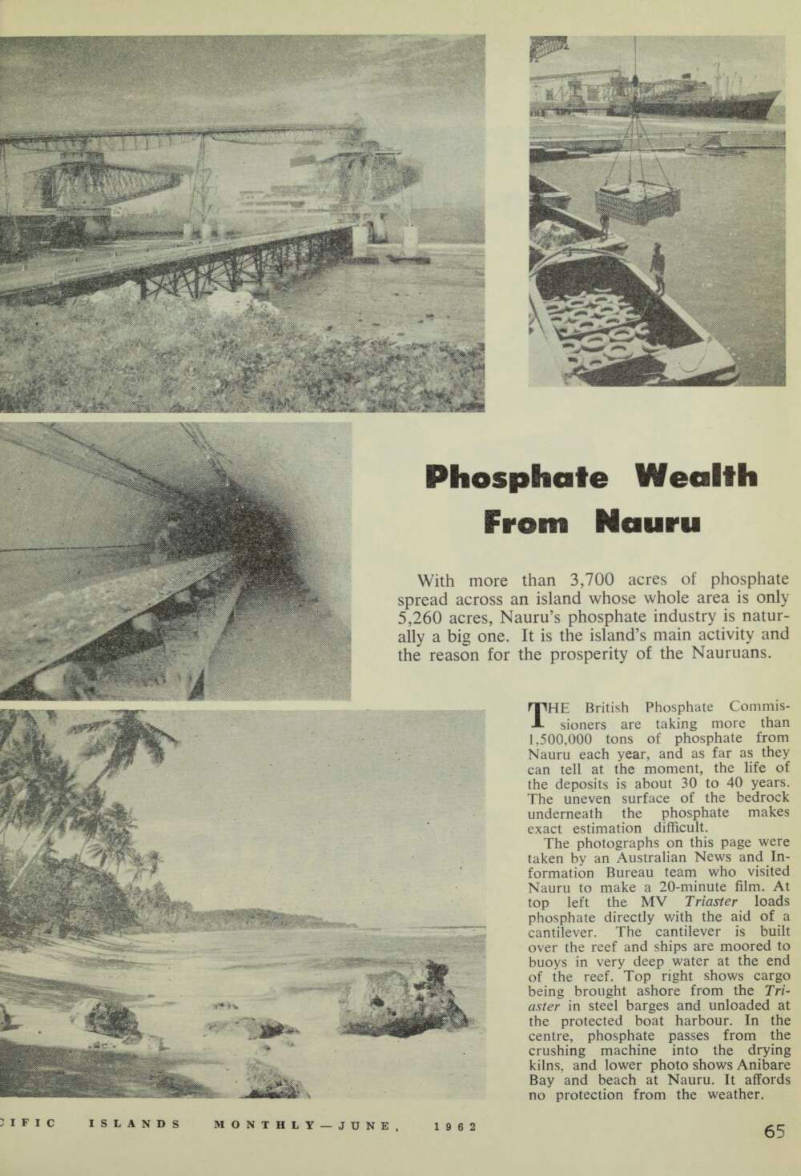 67
67 68
68 69
69 70
70 71
71 72
72 73
73 74
74 75
75 76
76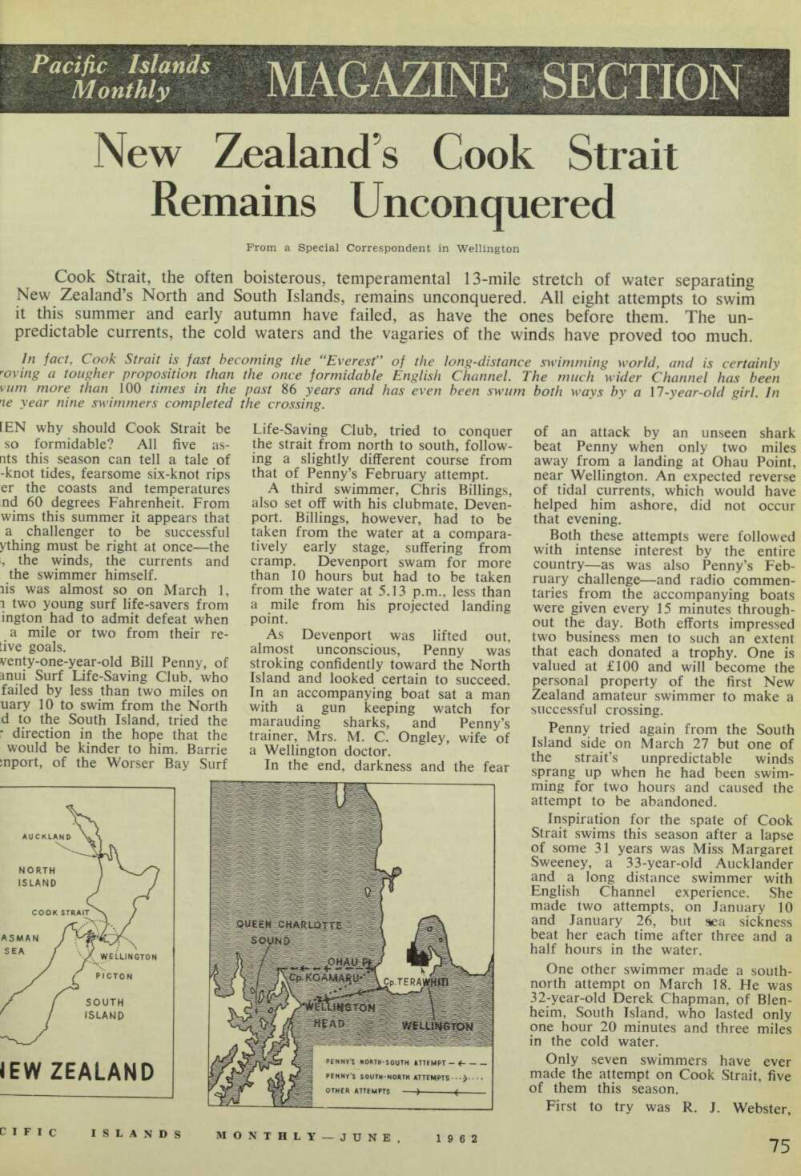 77
77 78
78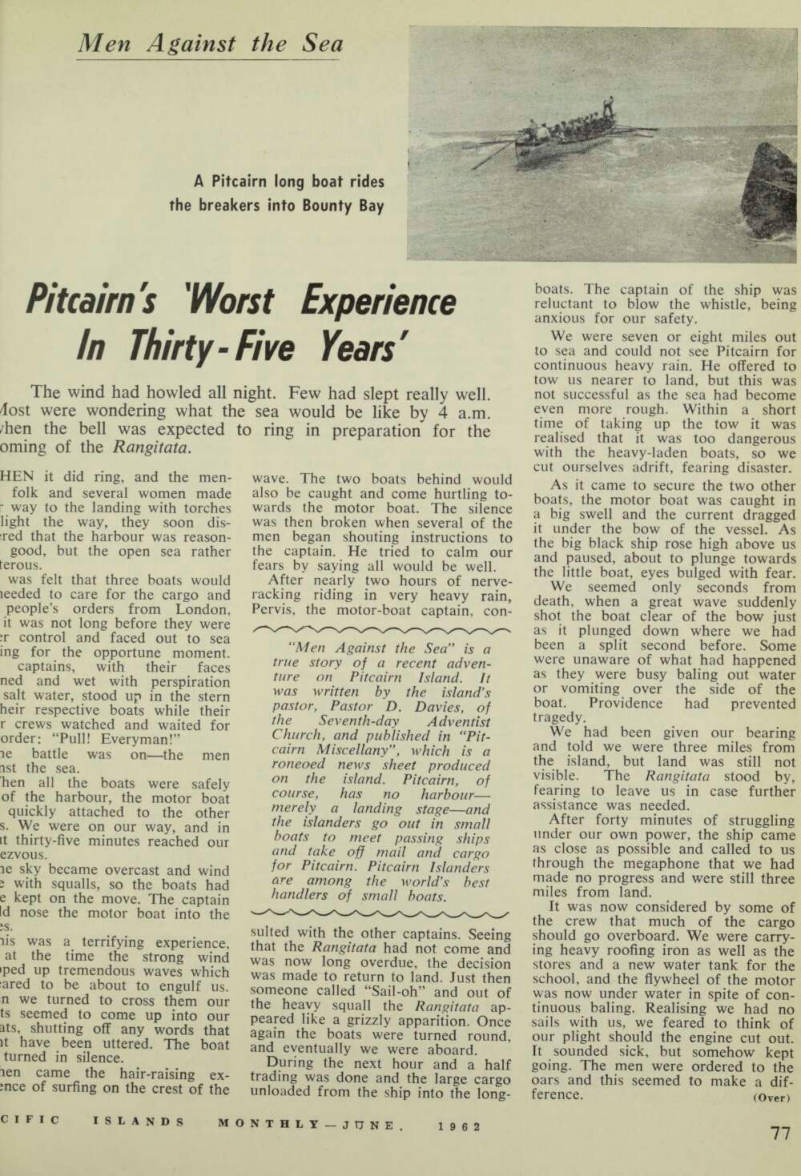 79
79 80
80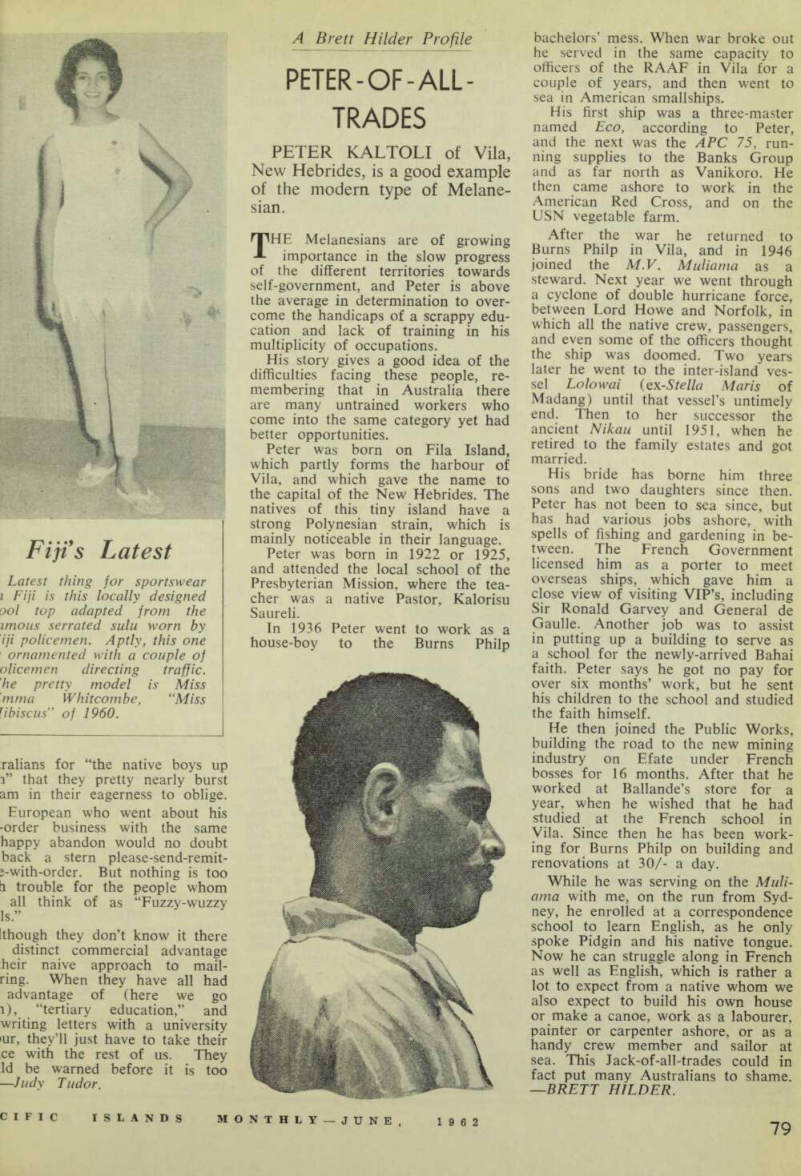 81
81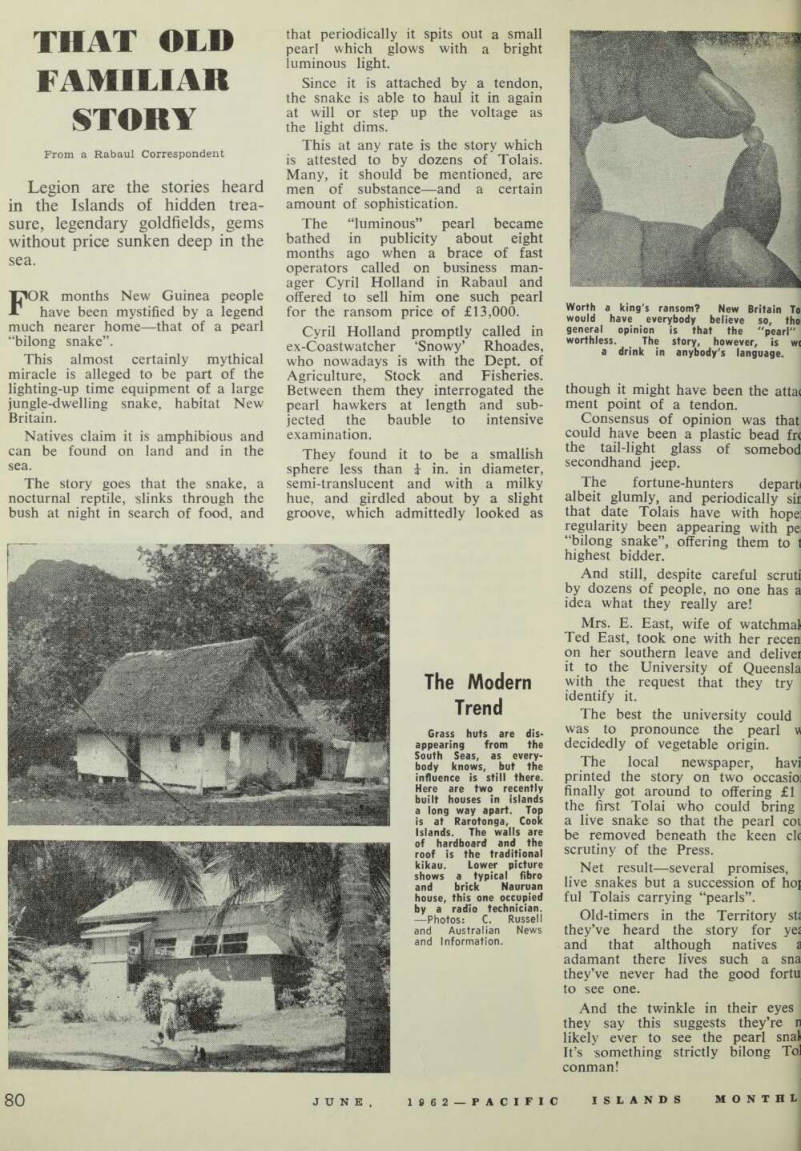 82
82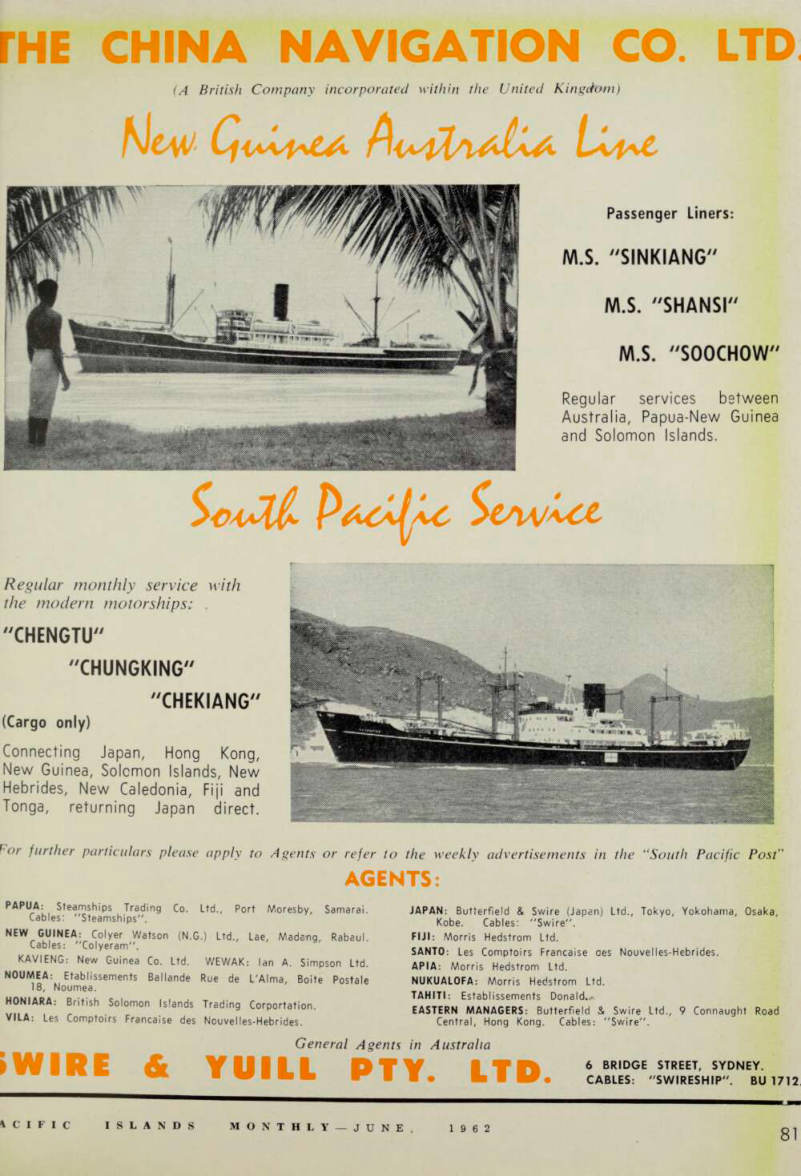 83
83 84
84 85
85 86
86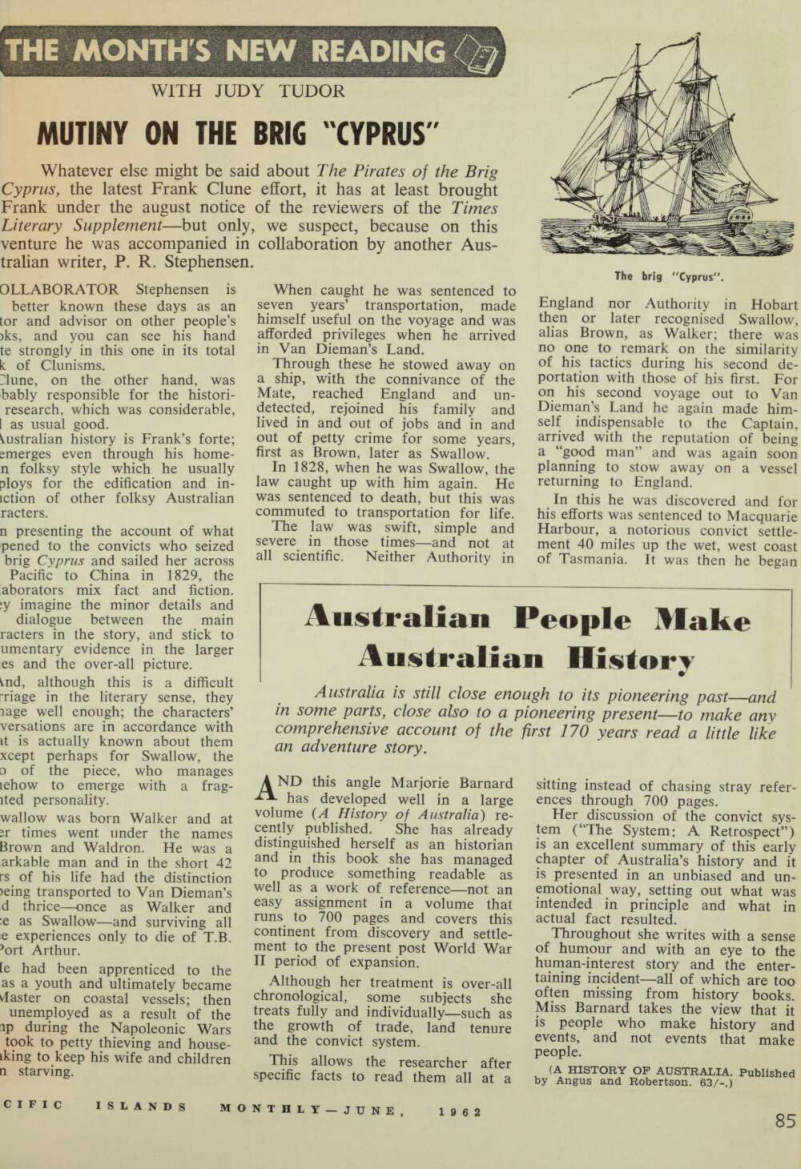 87
87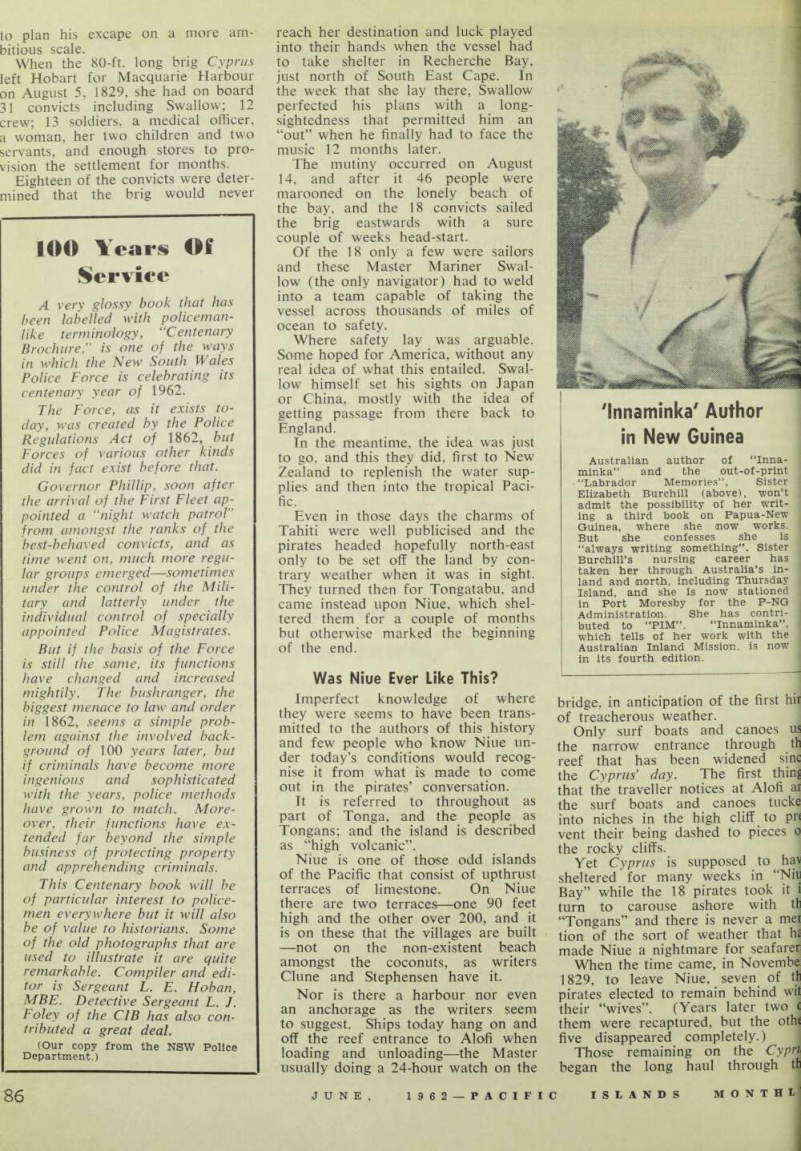 88
88 89
89 90
90 91
91 92
92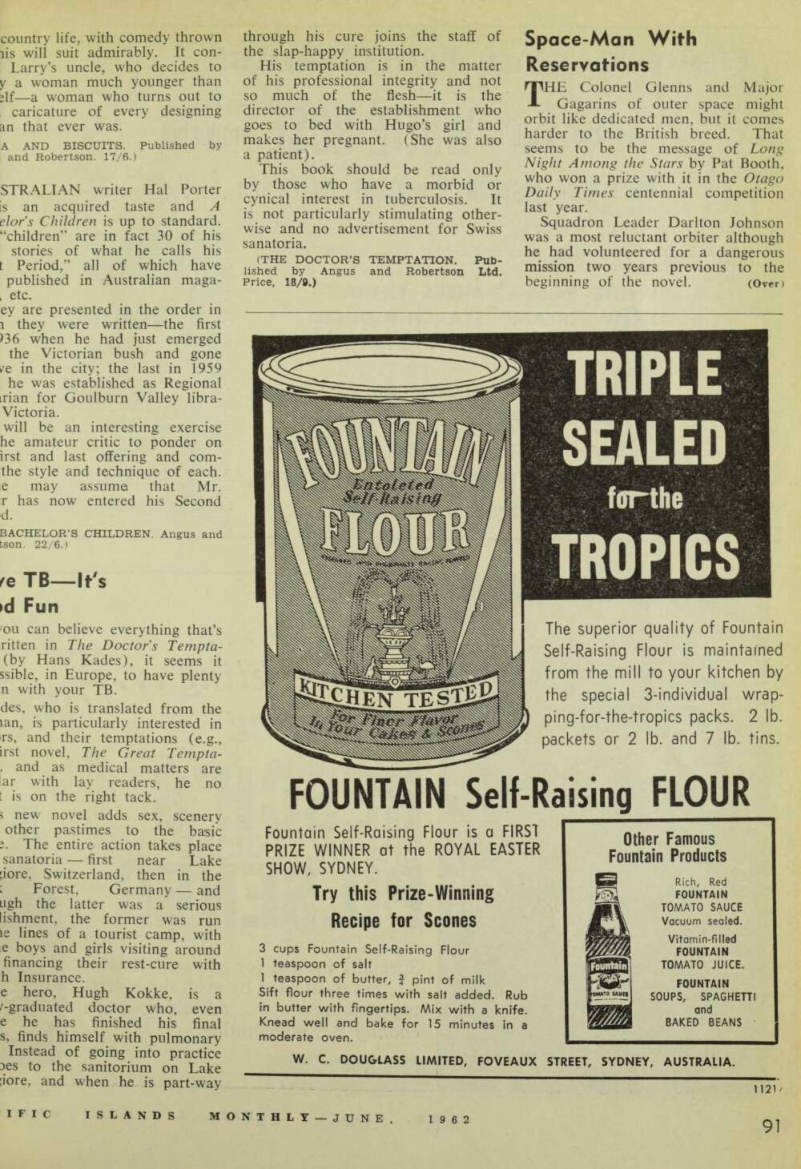 93
93 94
94 95
95 96
96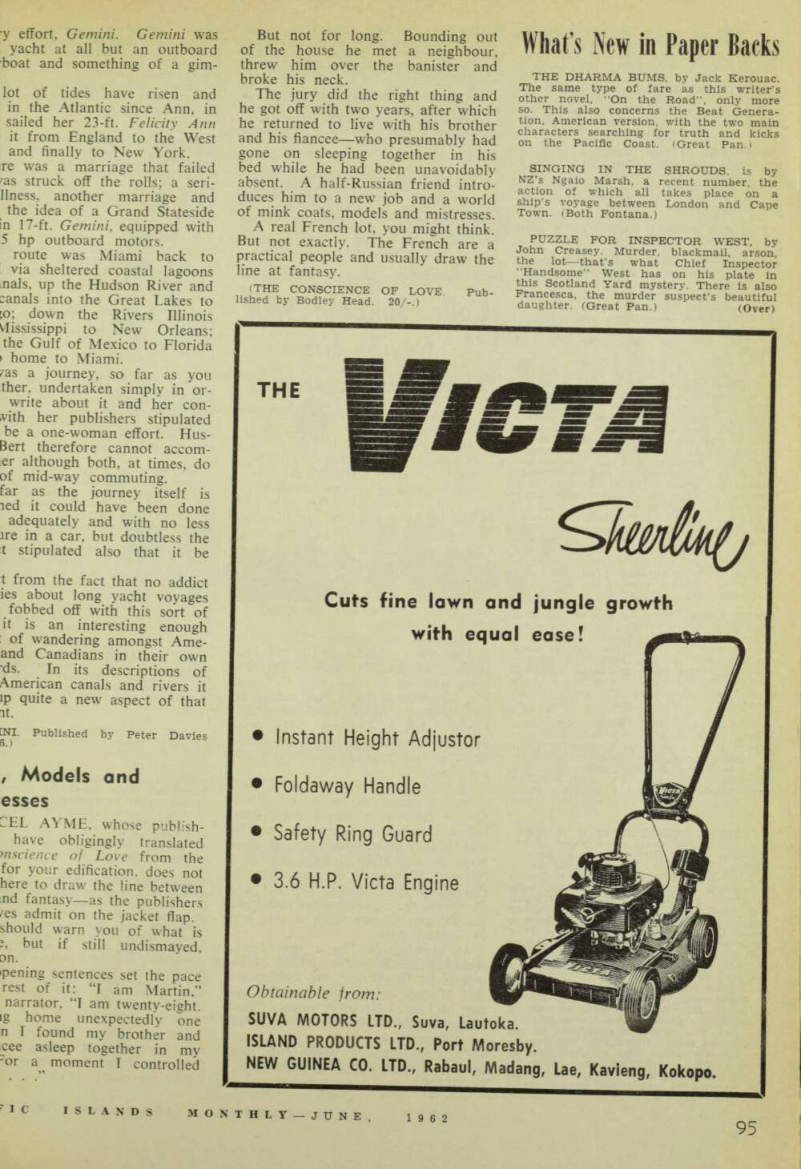 97
97 98
98 99
99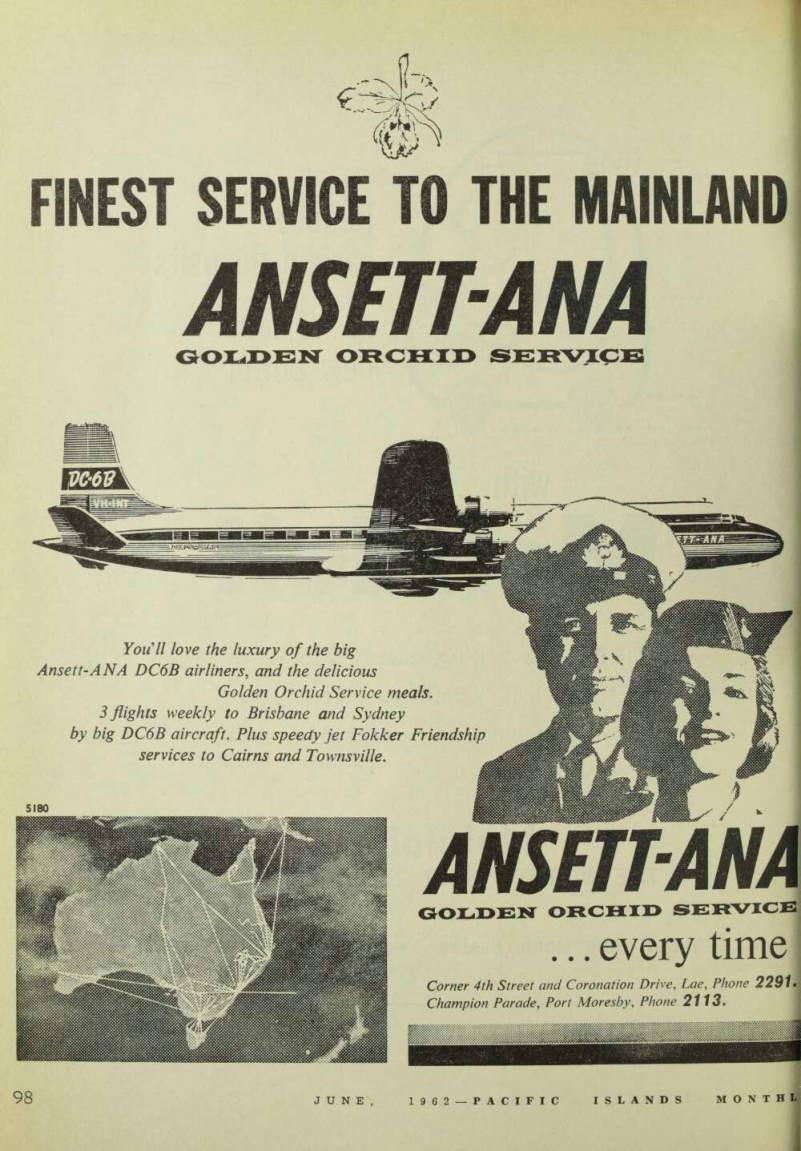 100
100 101
101 102
102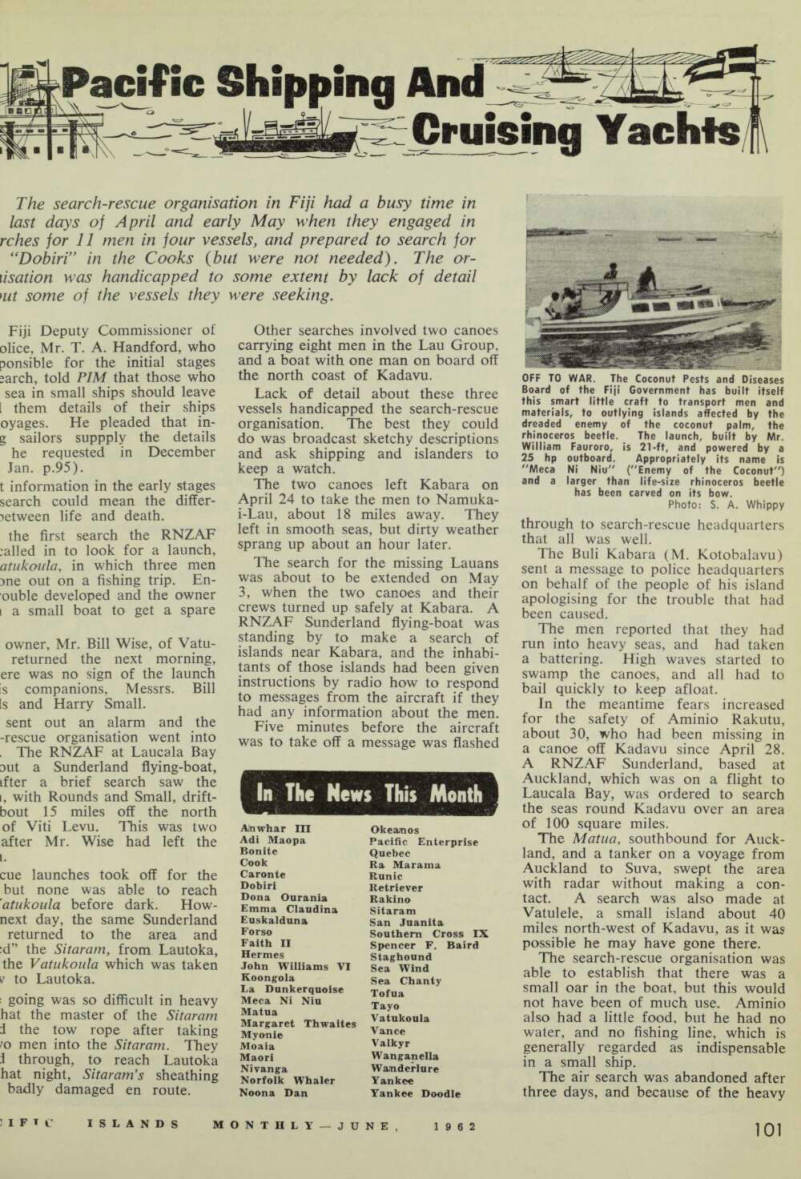 103
103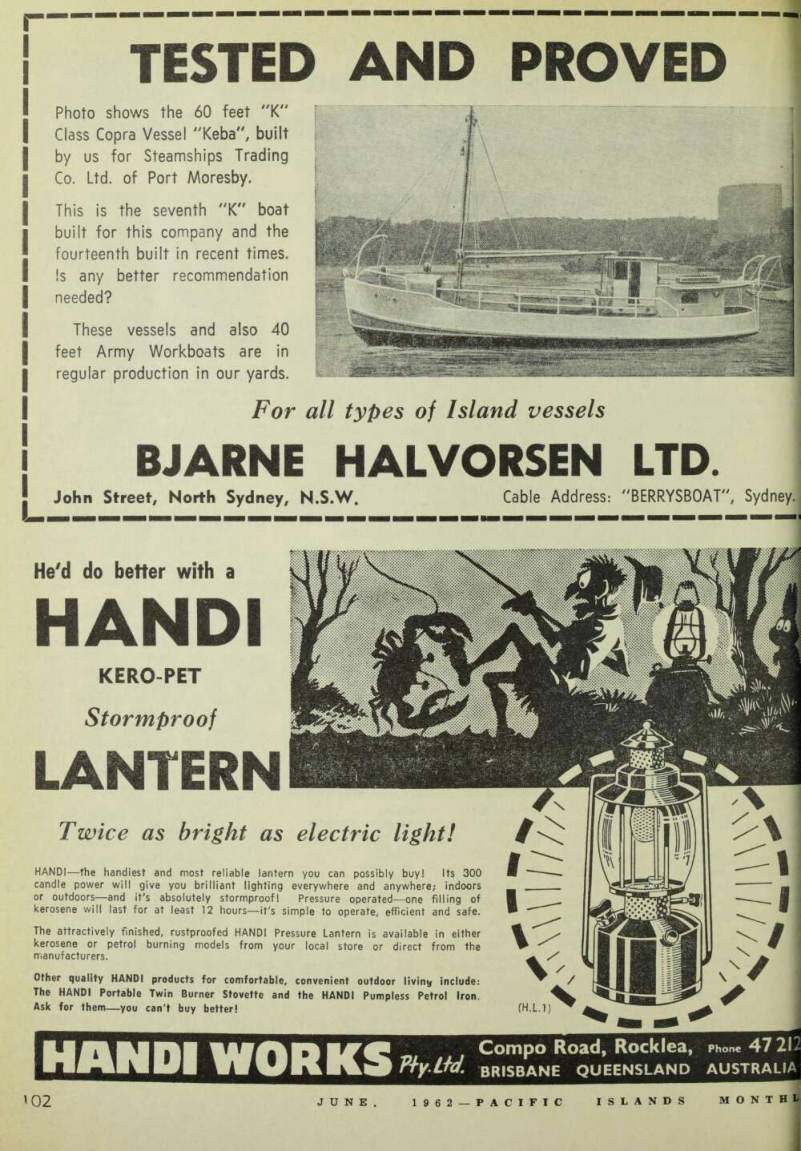 104
104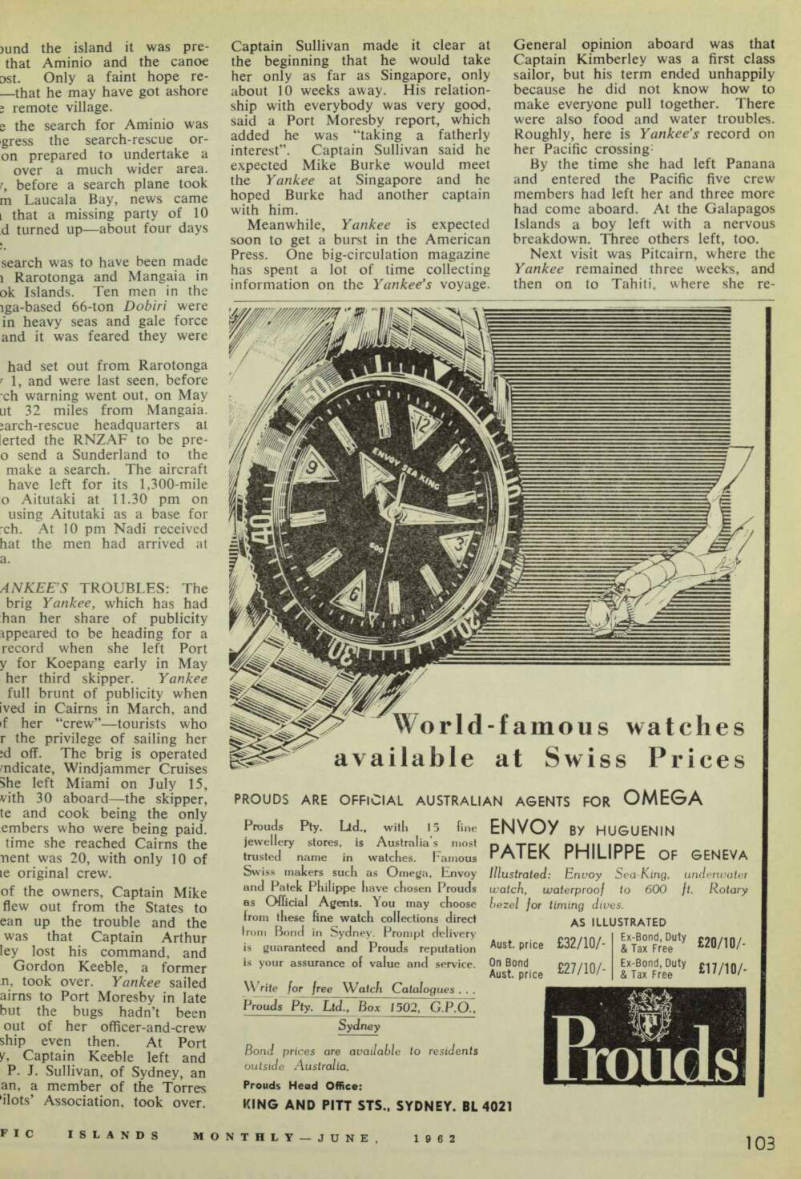 105
105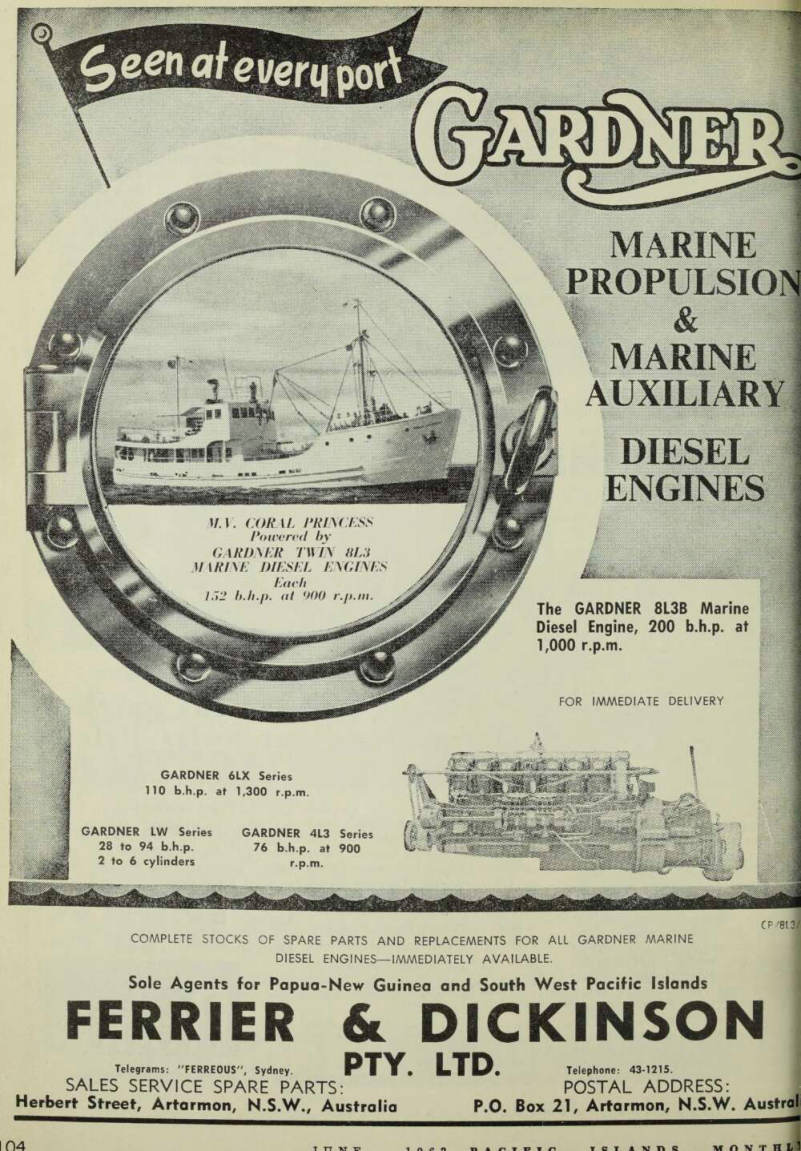 106
106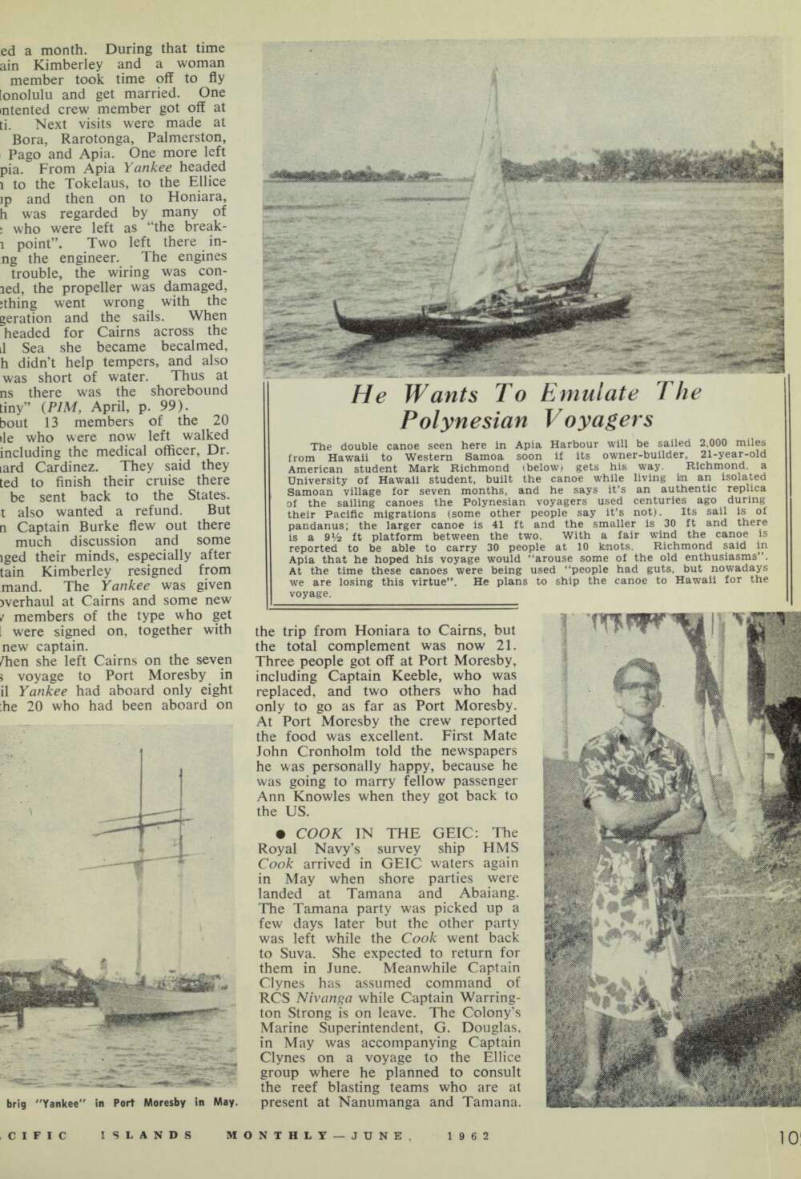 107
107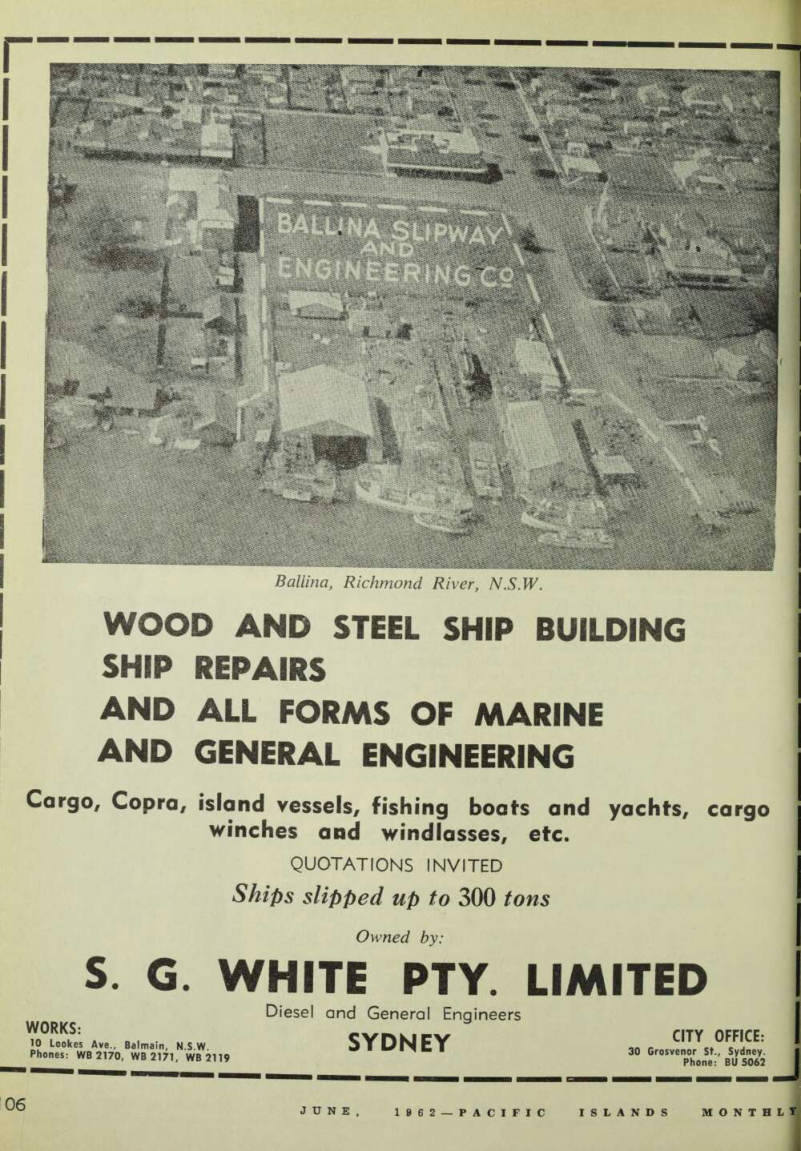 108
108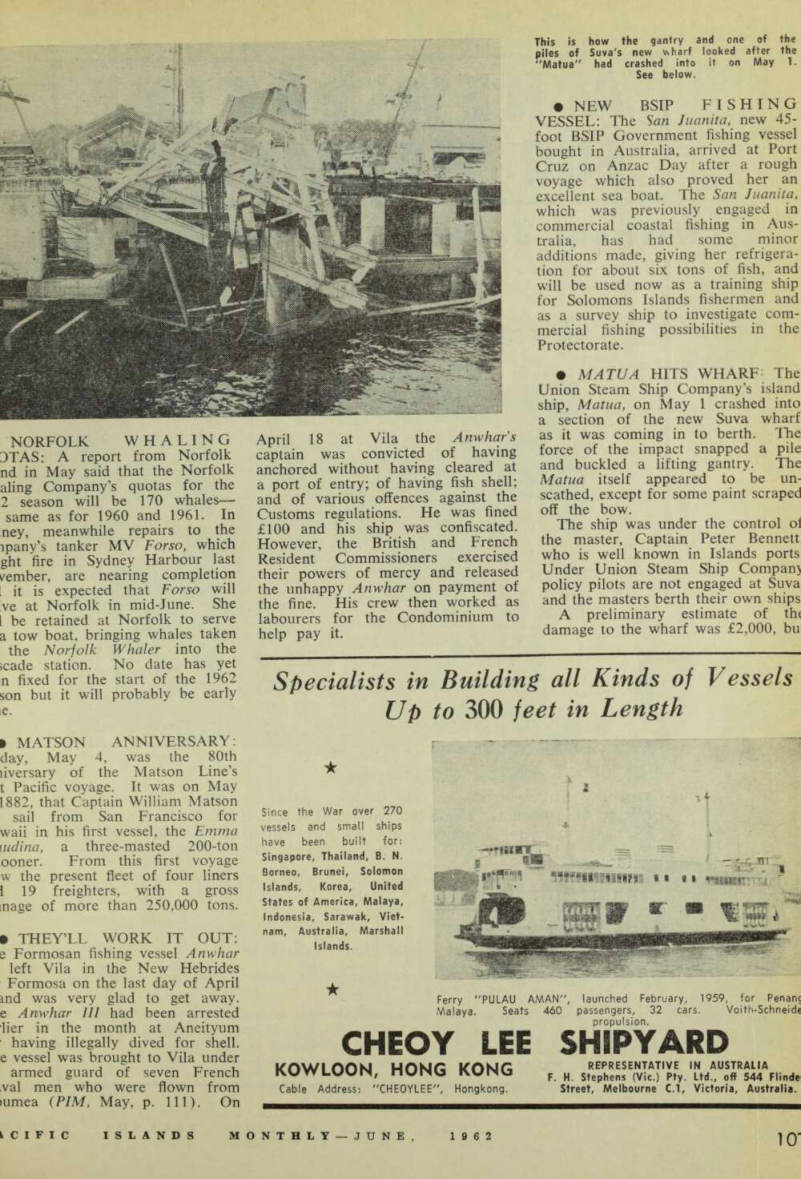 109
109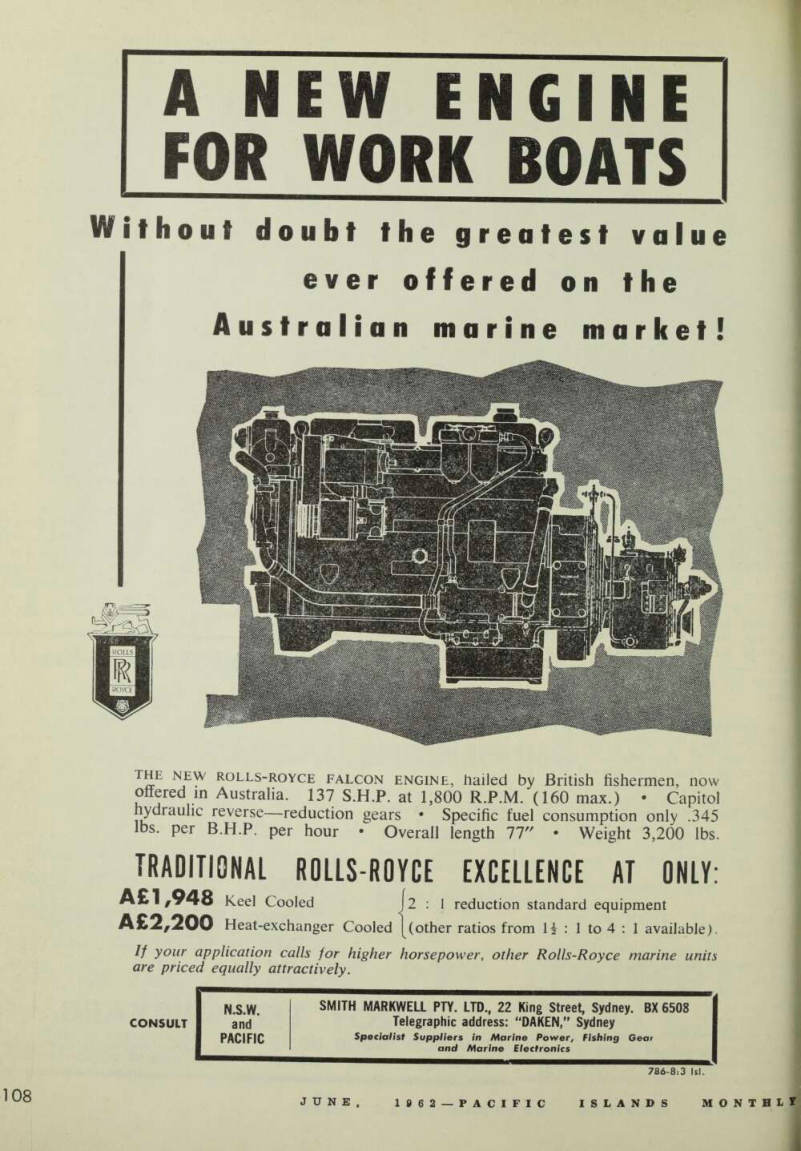 110
110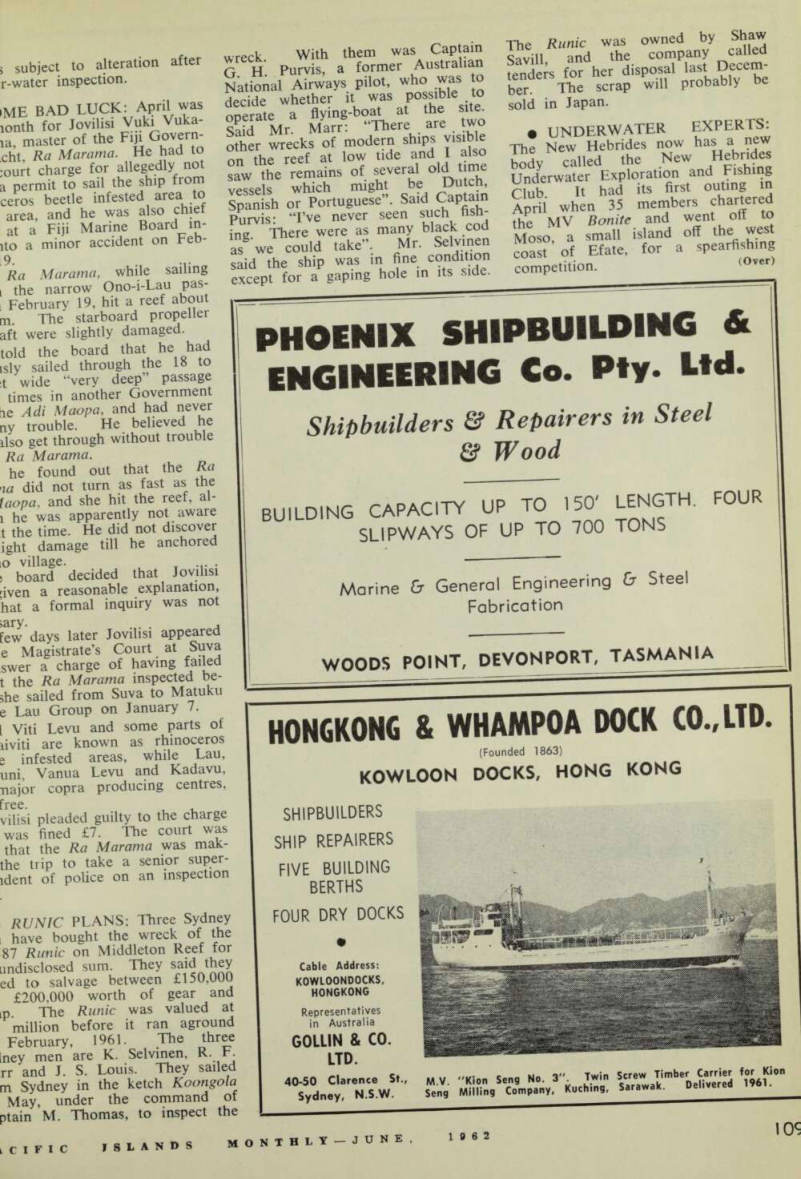 111
111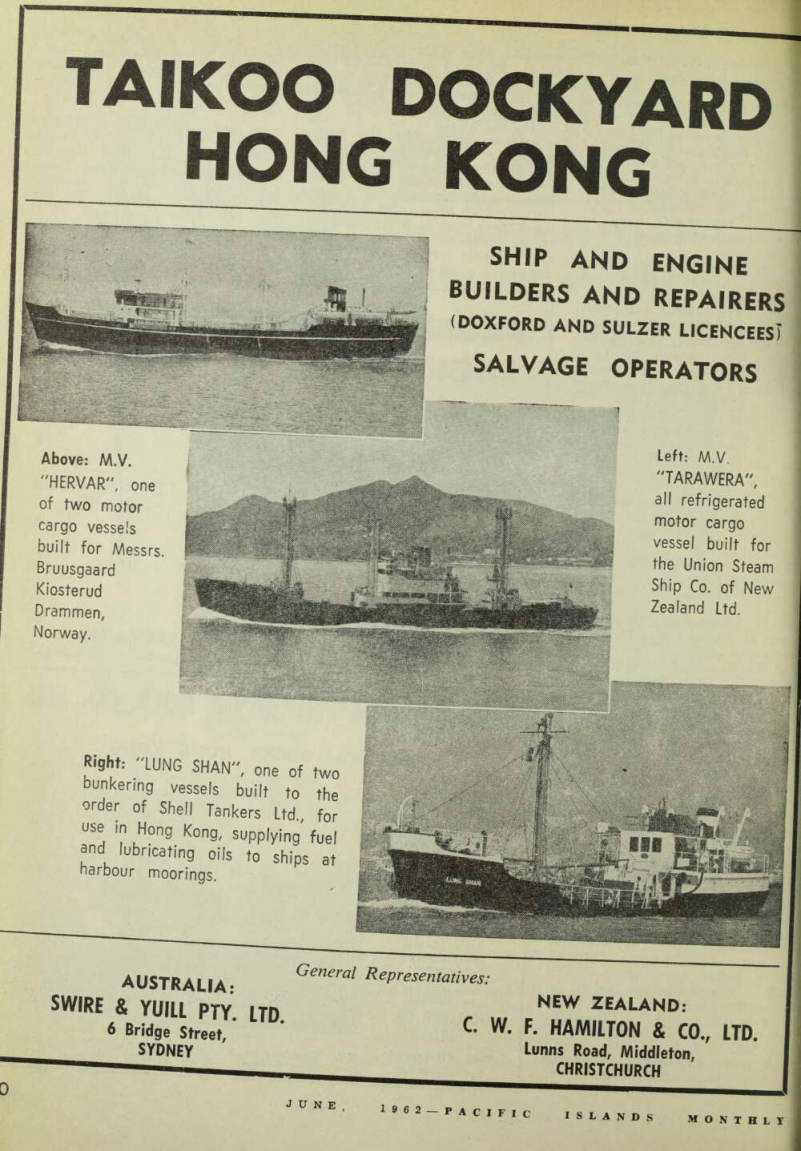 112
112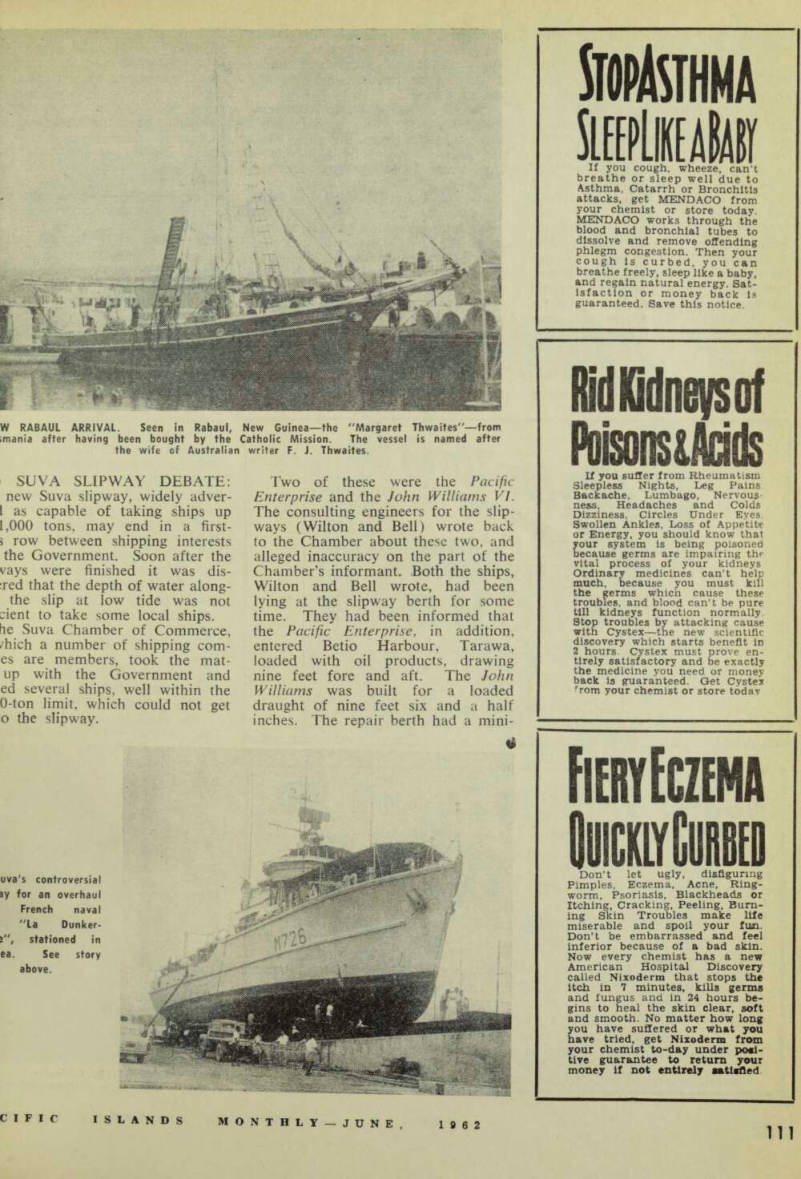 113
113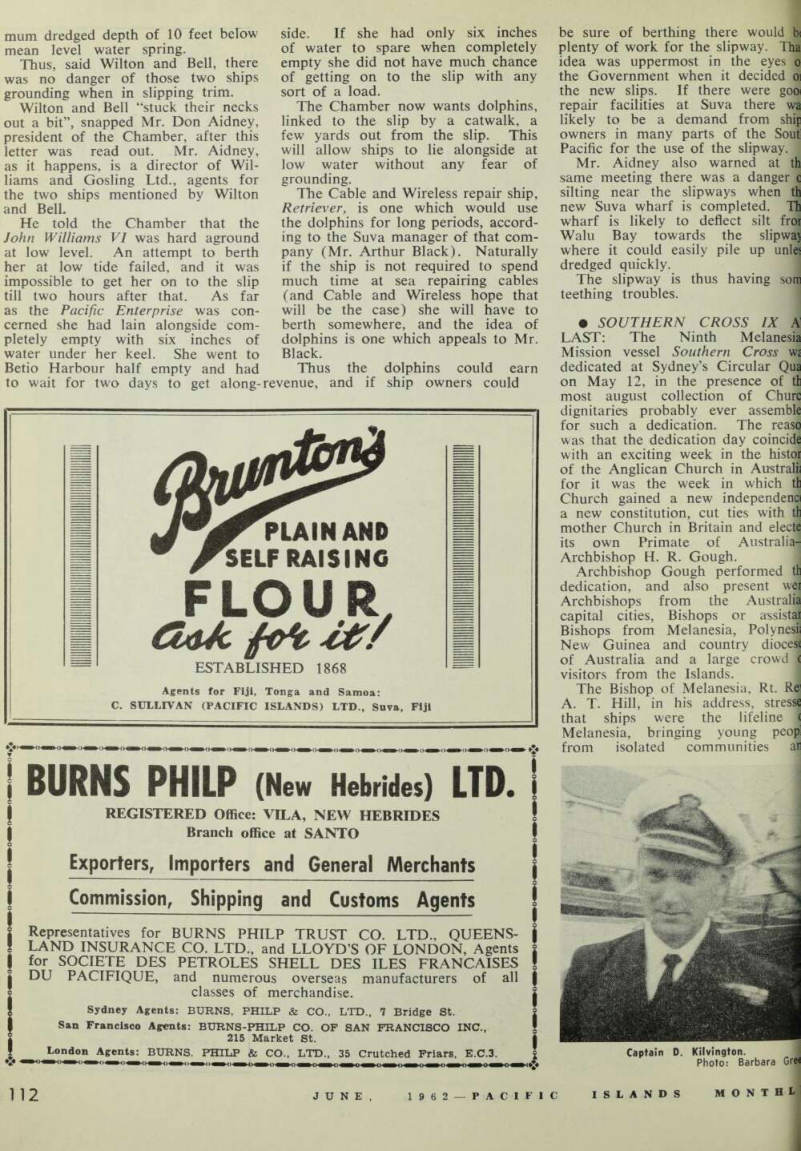 114
114 115
115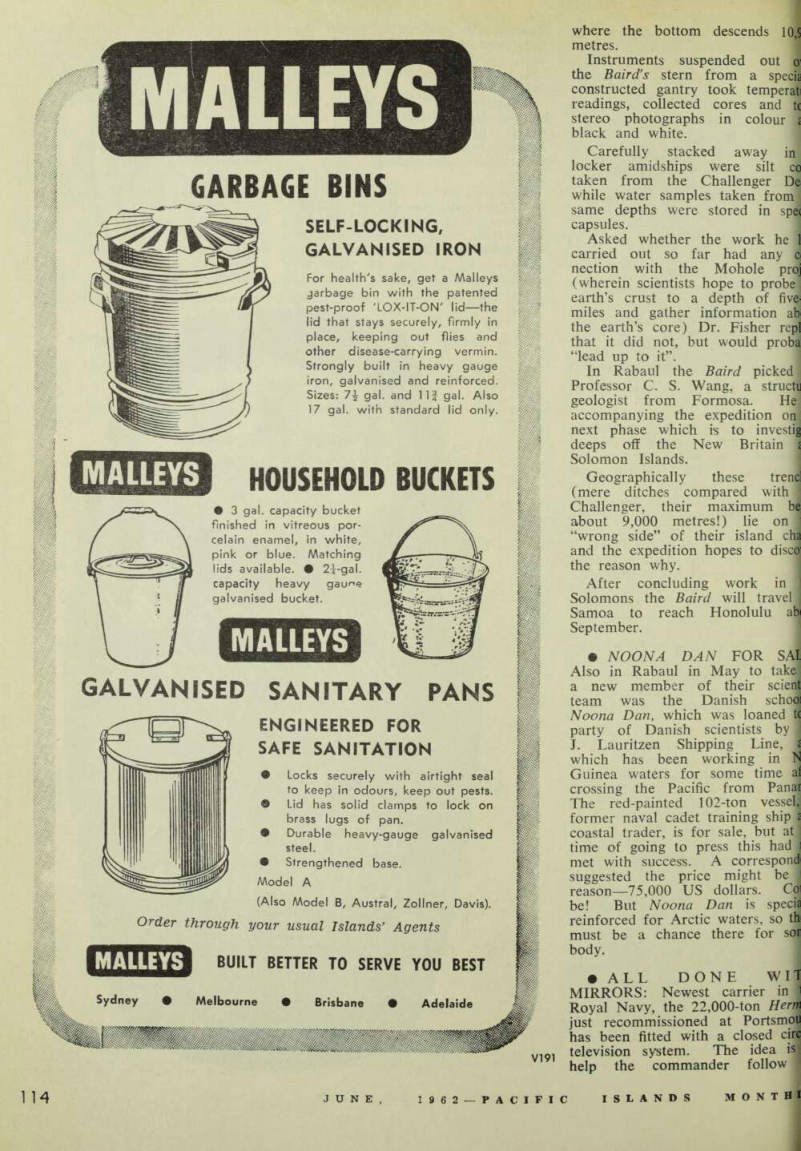 116
116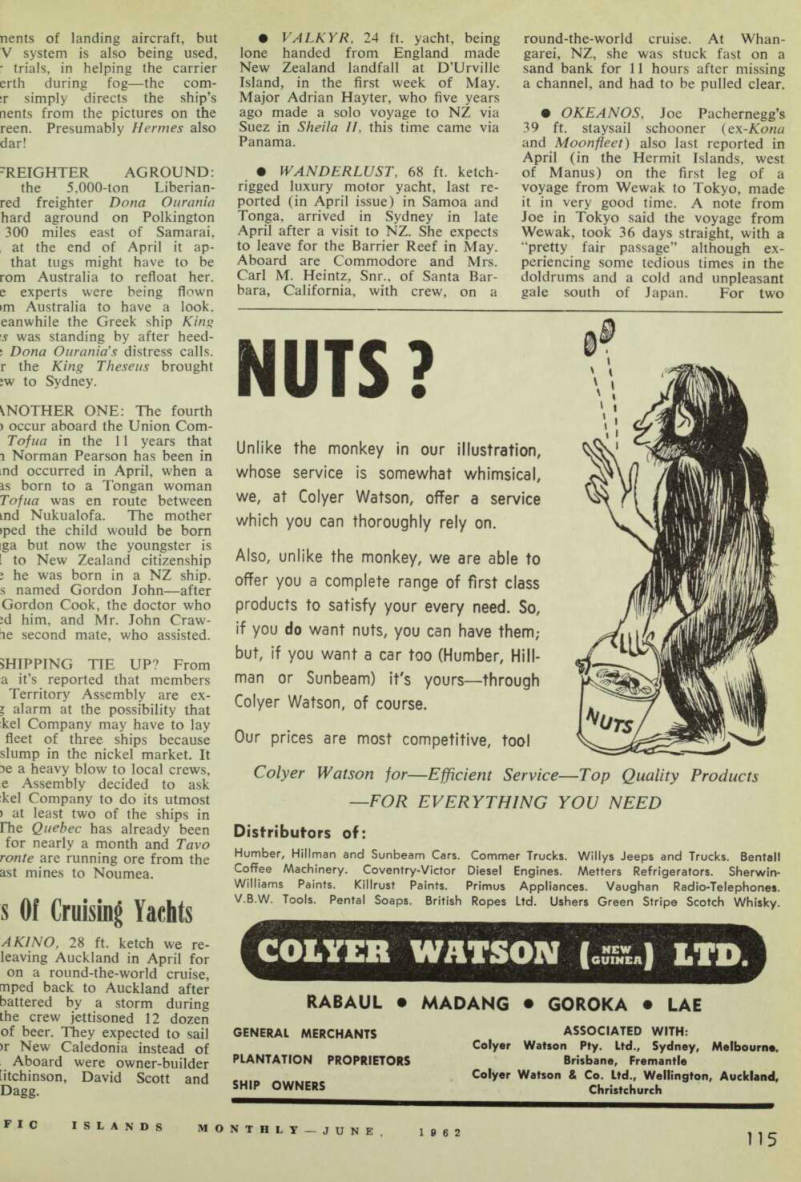 117
117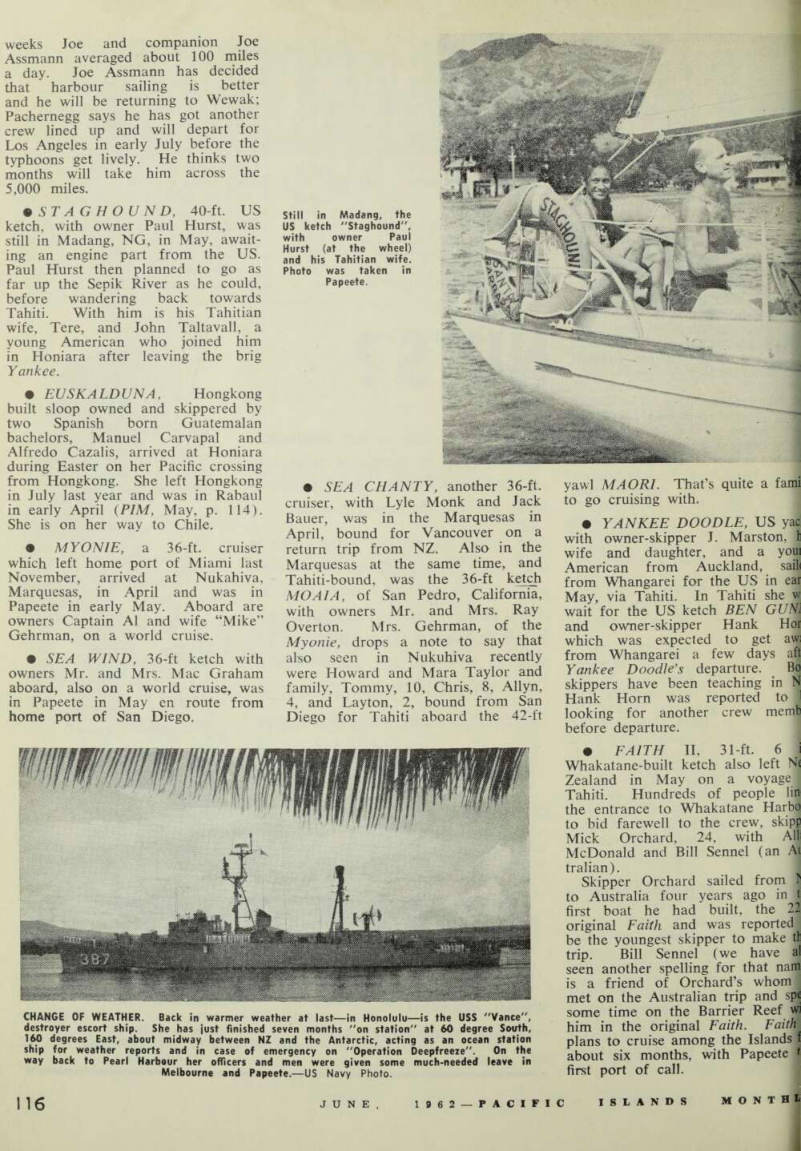 118
118 119
119 120
120 121
121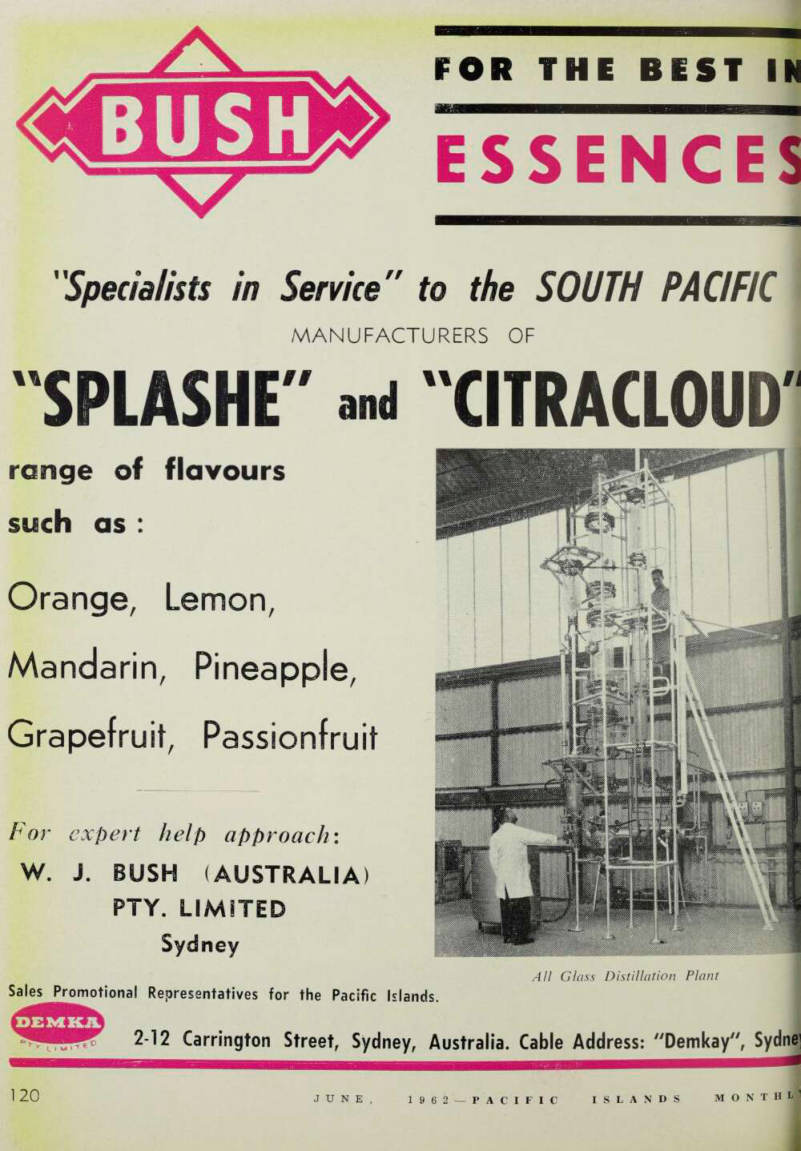 122
122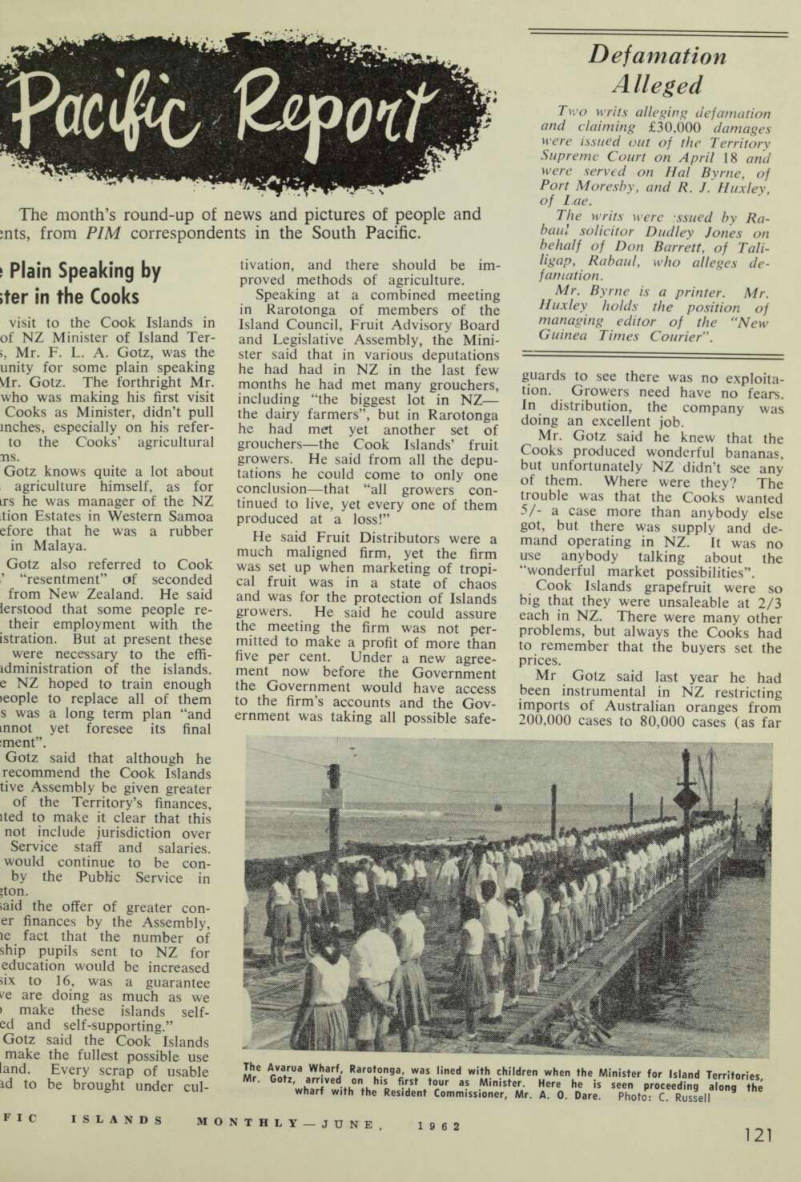 123
123 124
124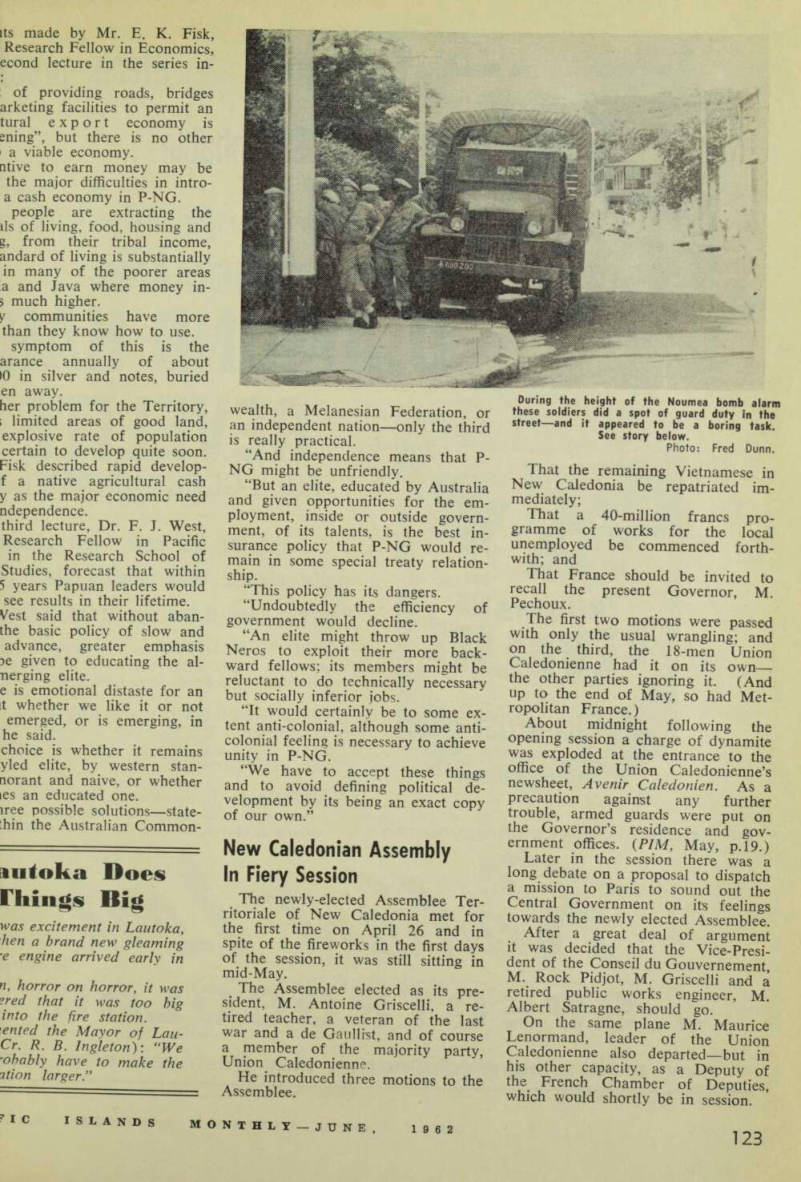 125
125 126
126 127
127 128
128 129
129 130
130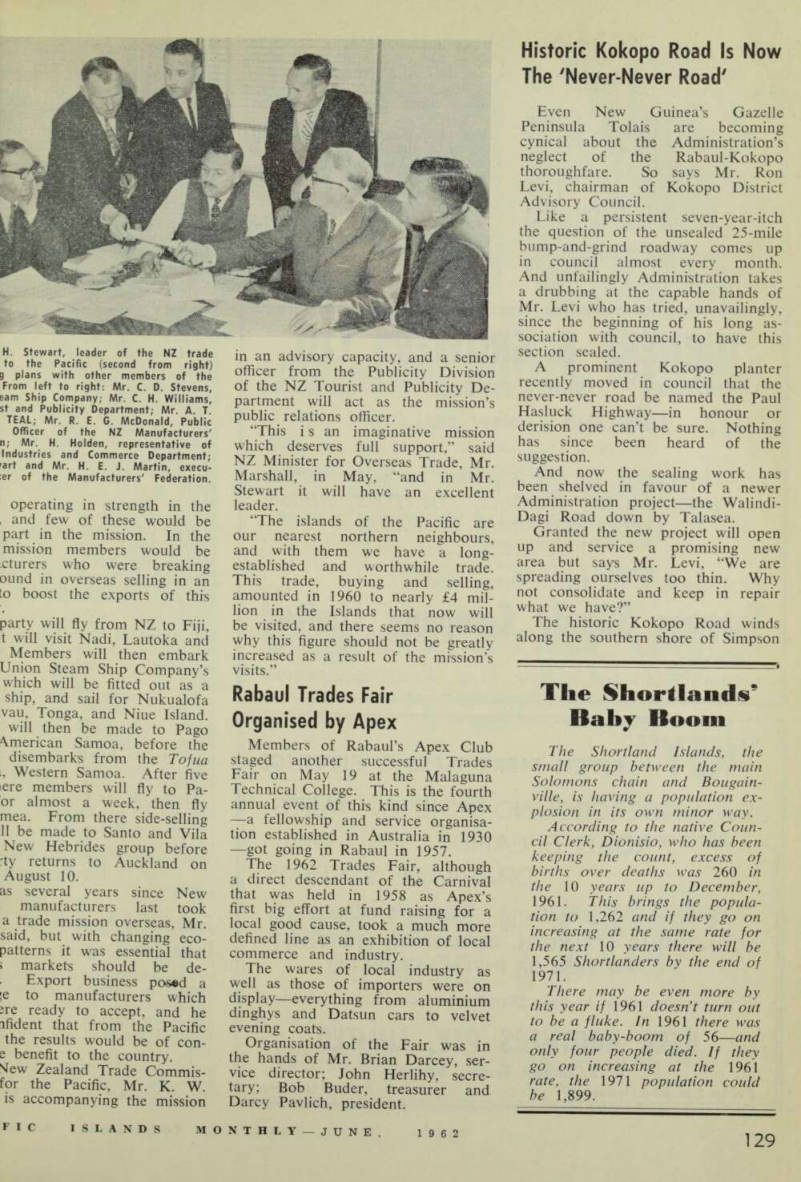 131
131 132
132 133
133 134
134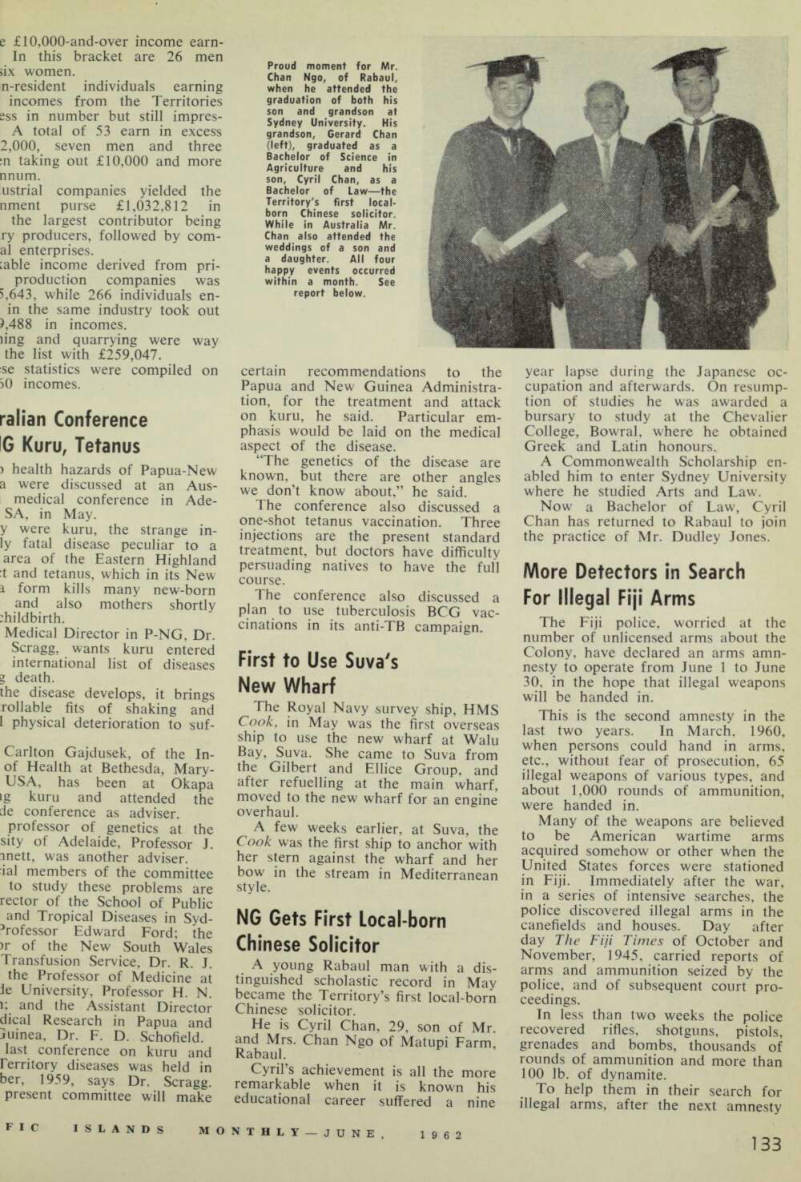 135
135 136
136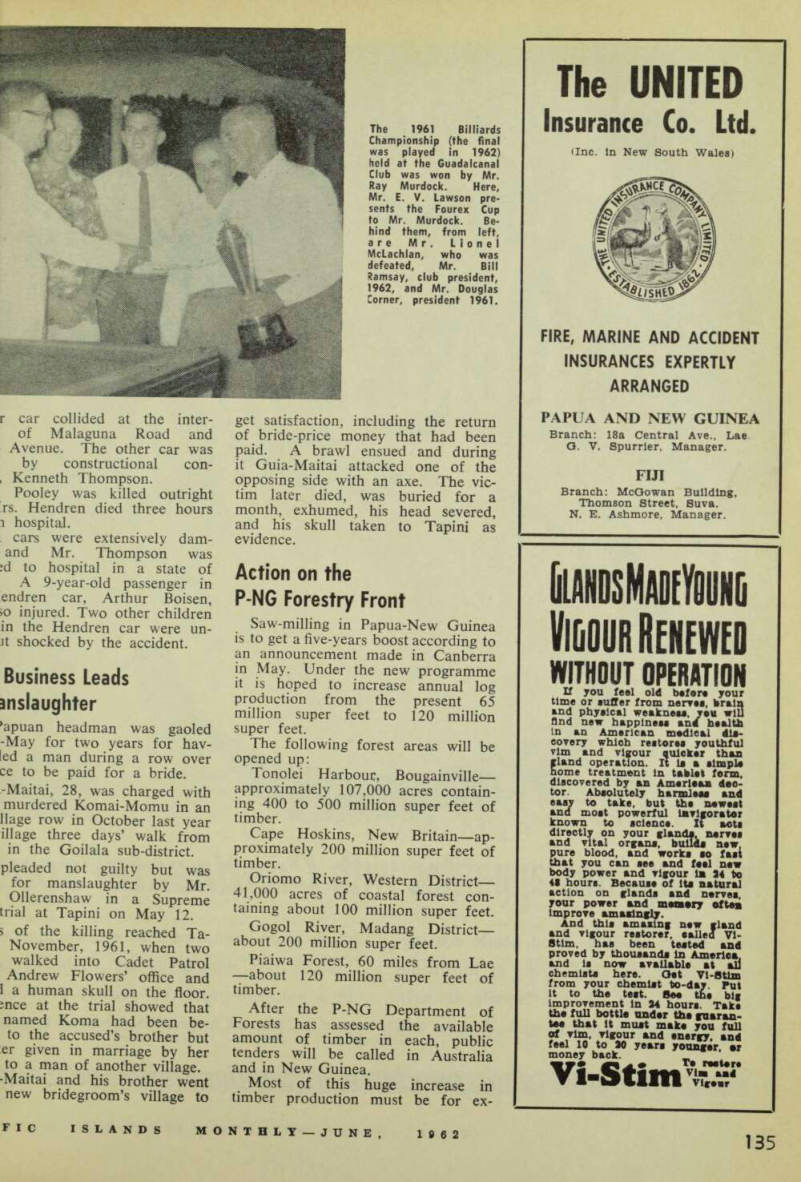 137
137 138
138 139
139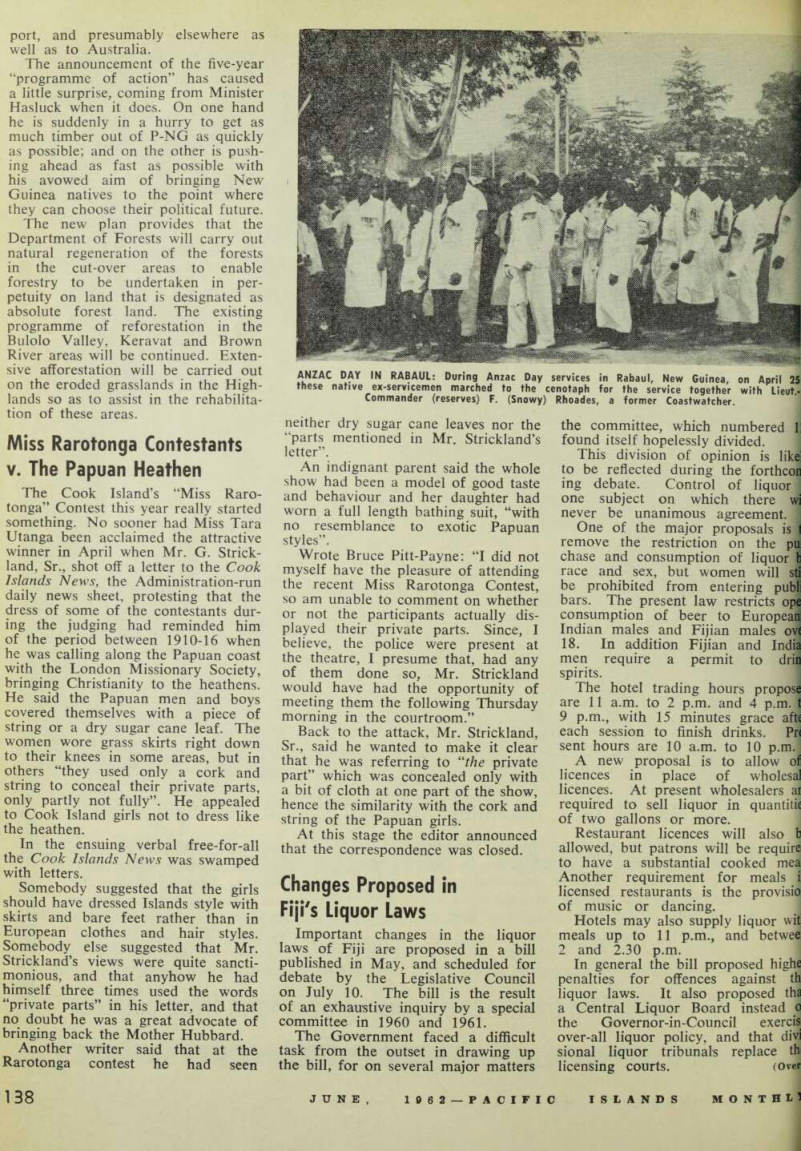 140
140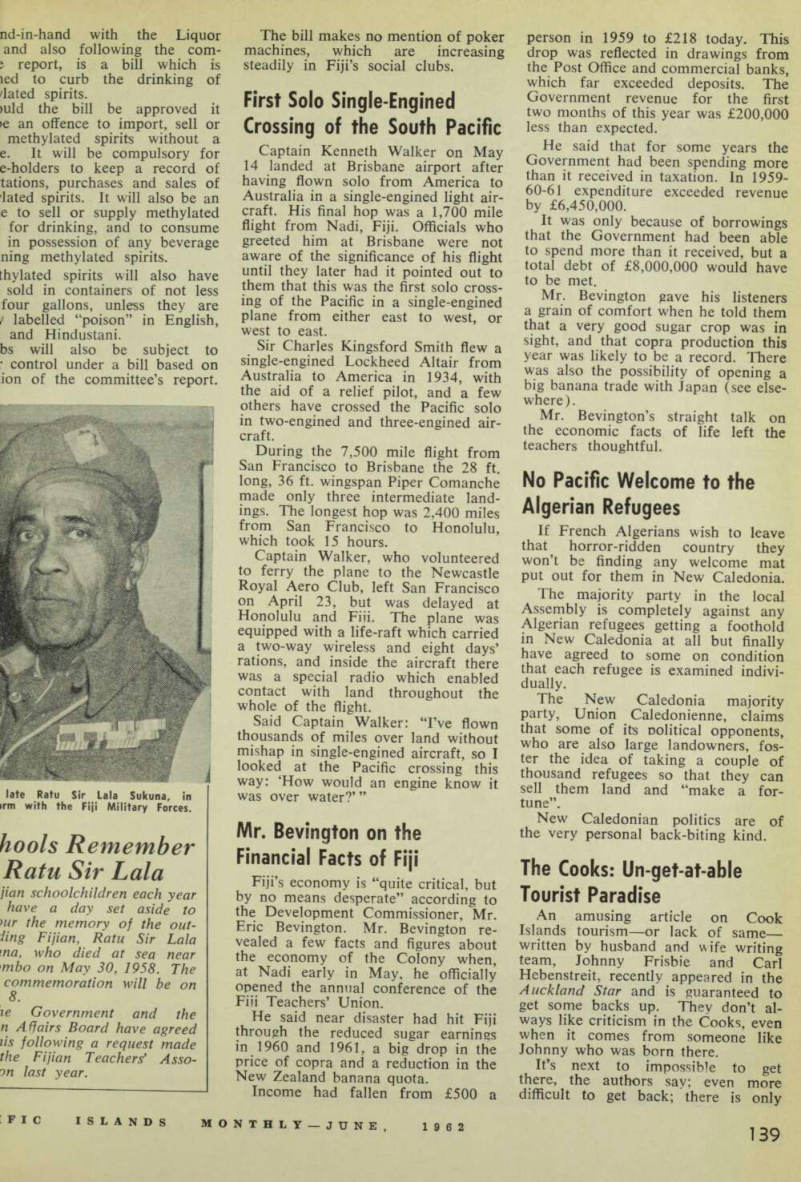 141
141 142
142 143
143 144
144 145
145 146
146 147
147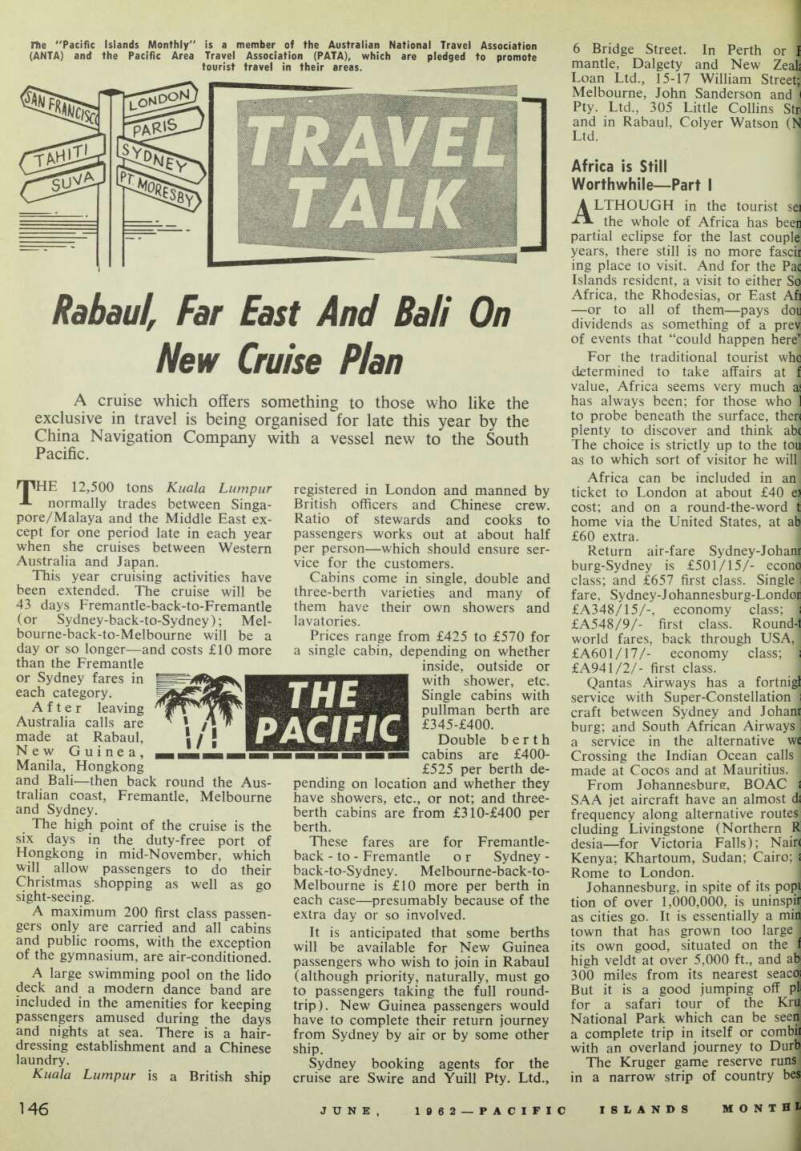 148
148 149
149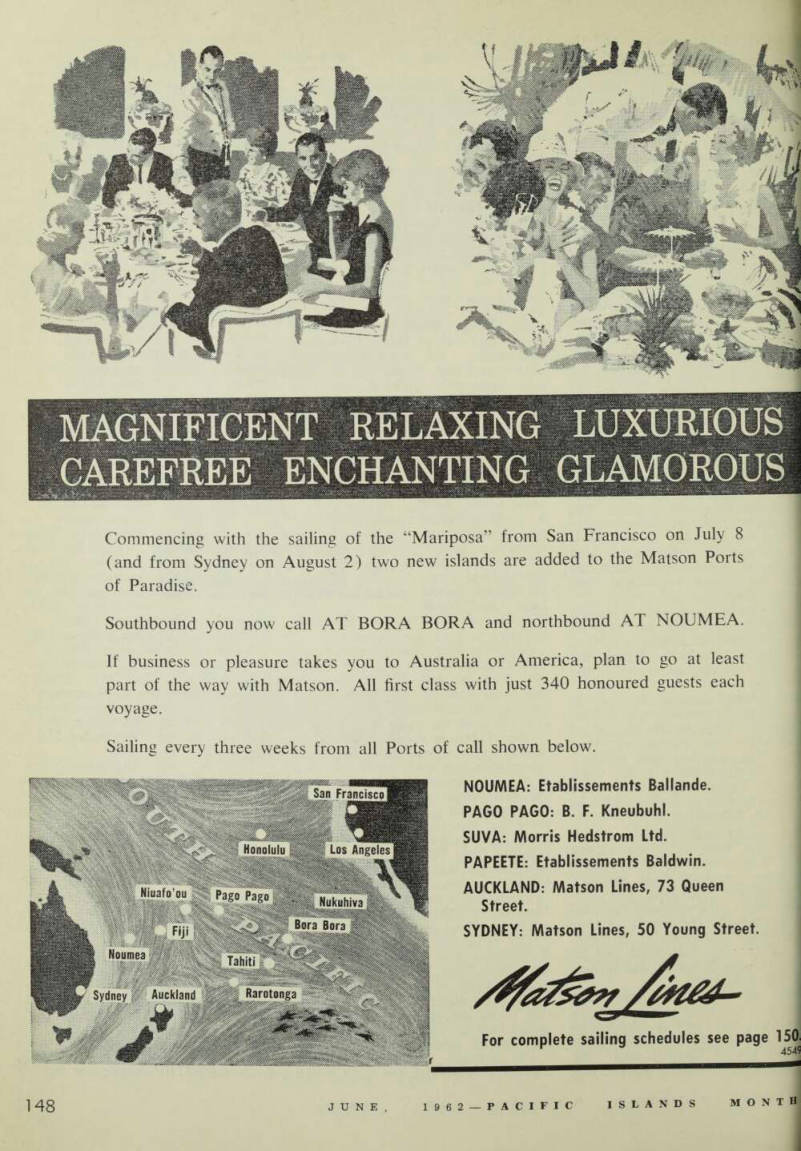 150
150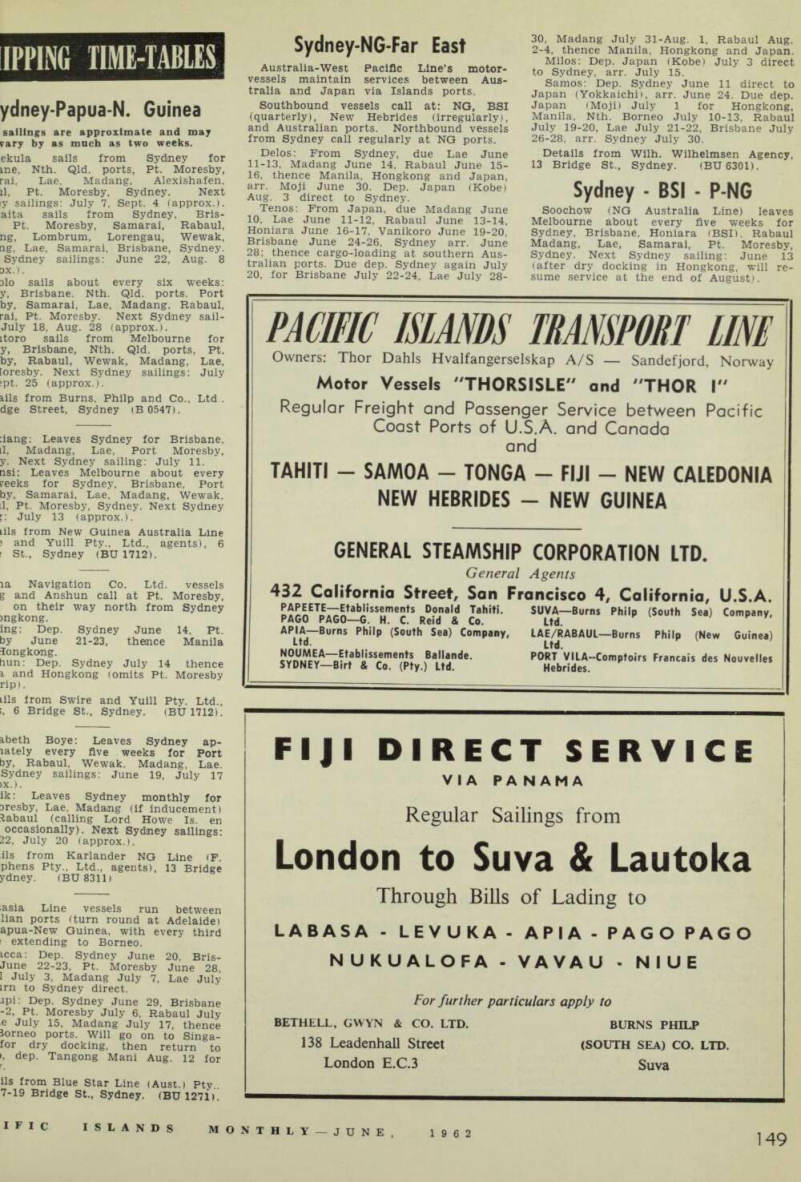 151
151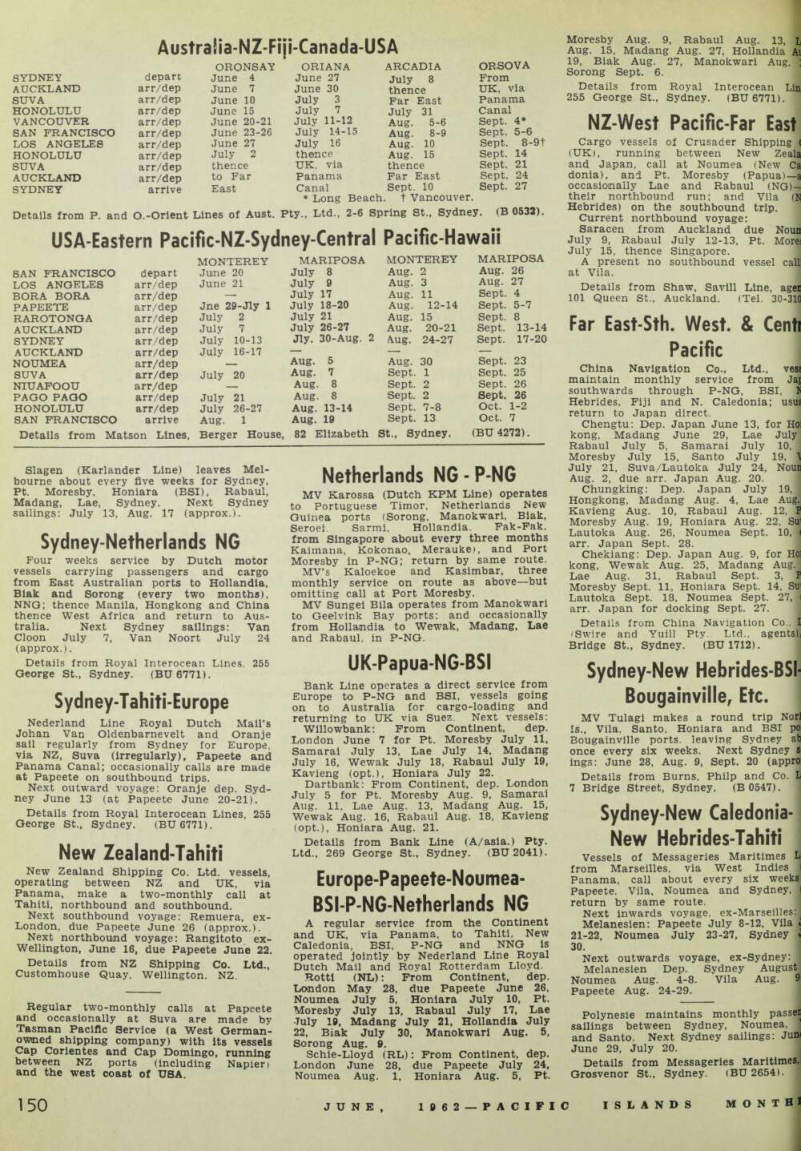 152
152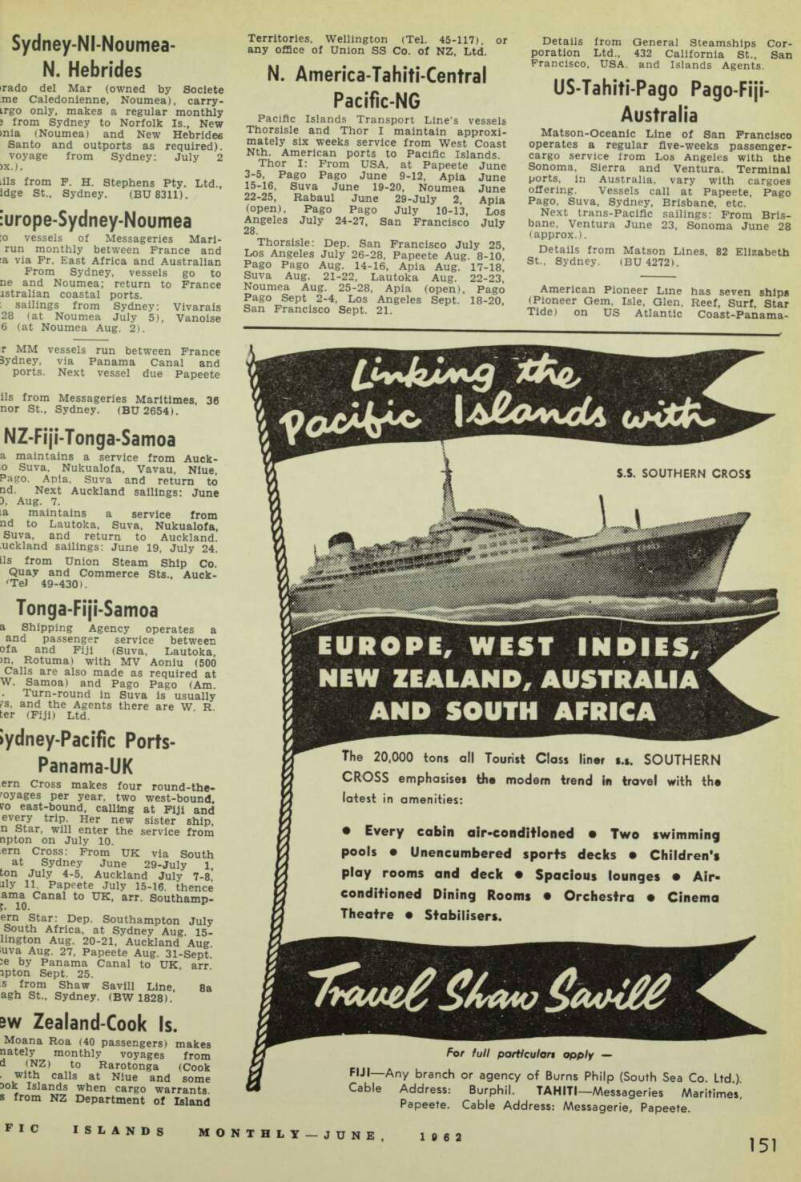 153
153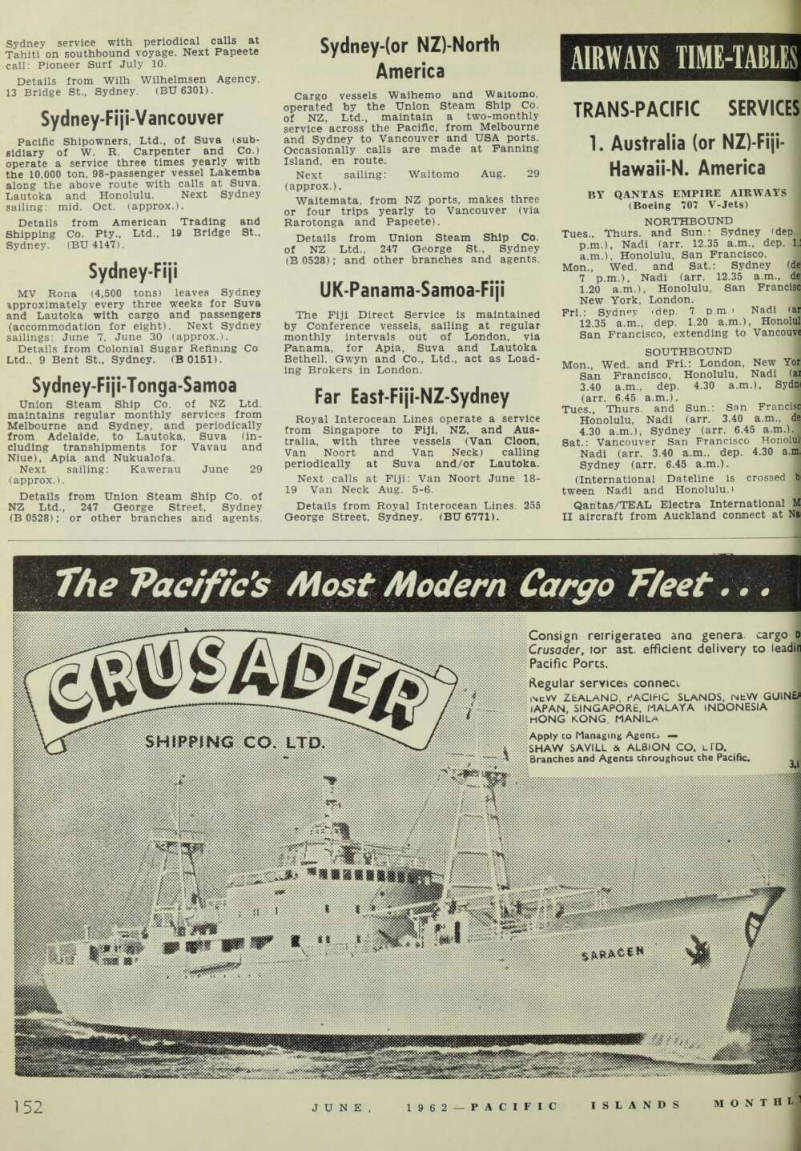 154
154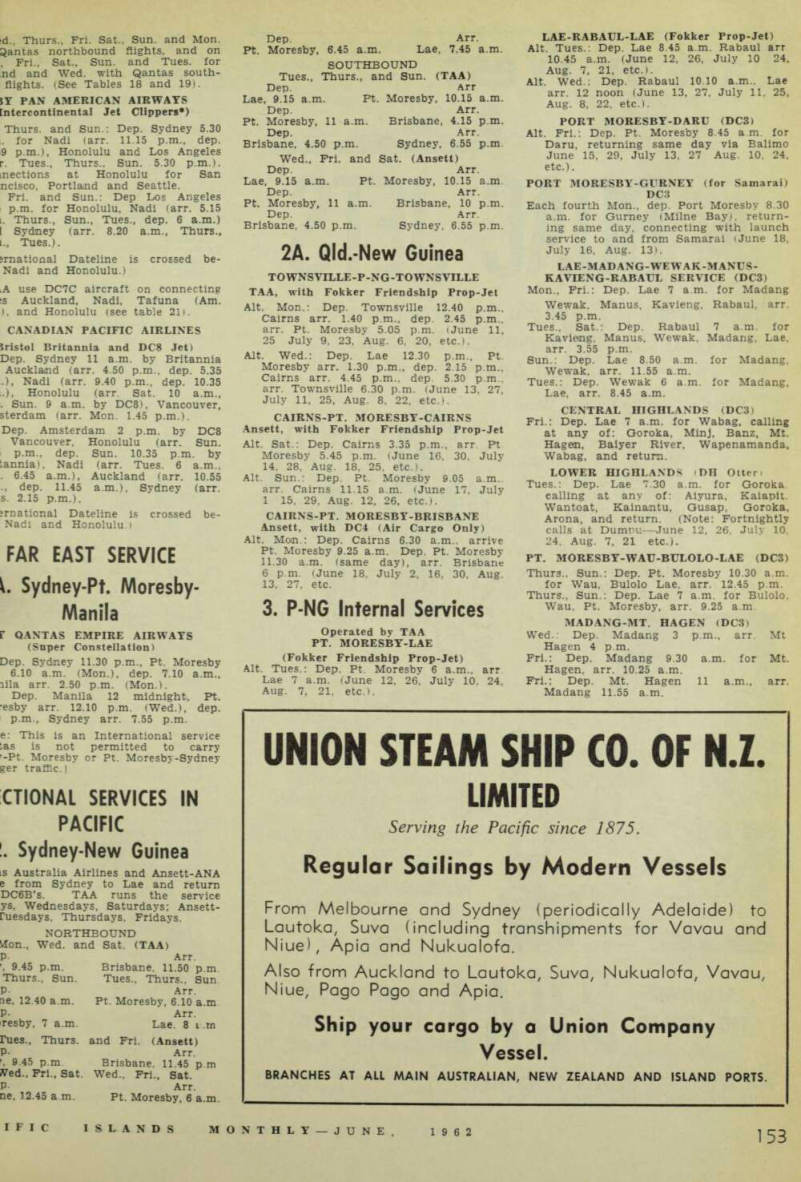 155
155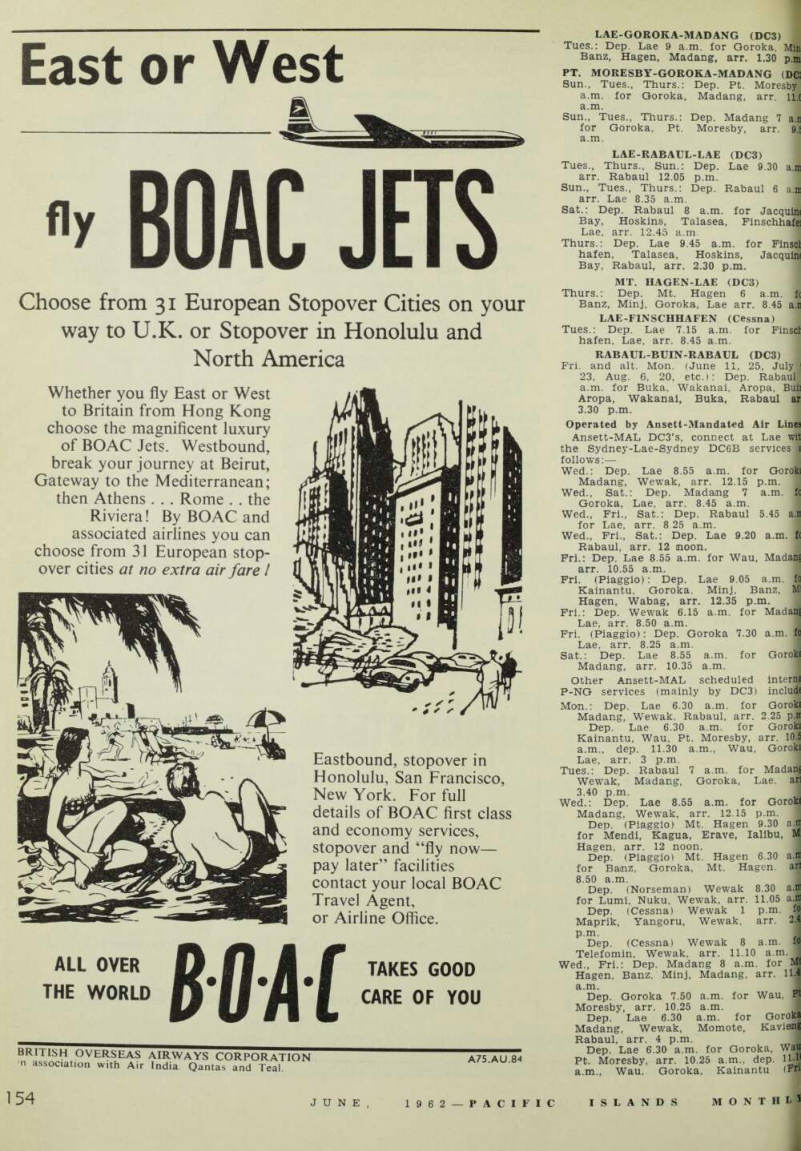 156
156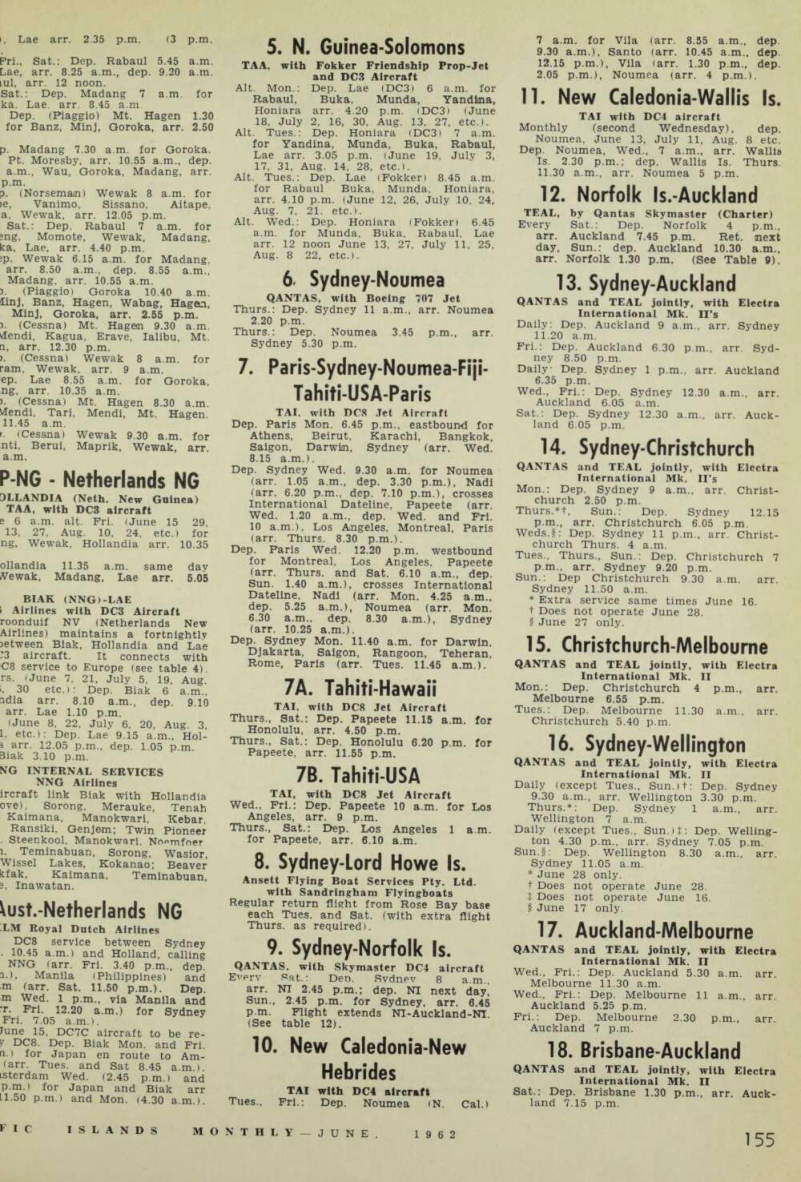 157
157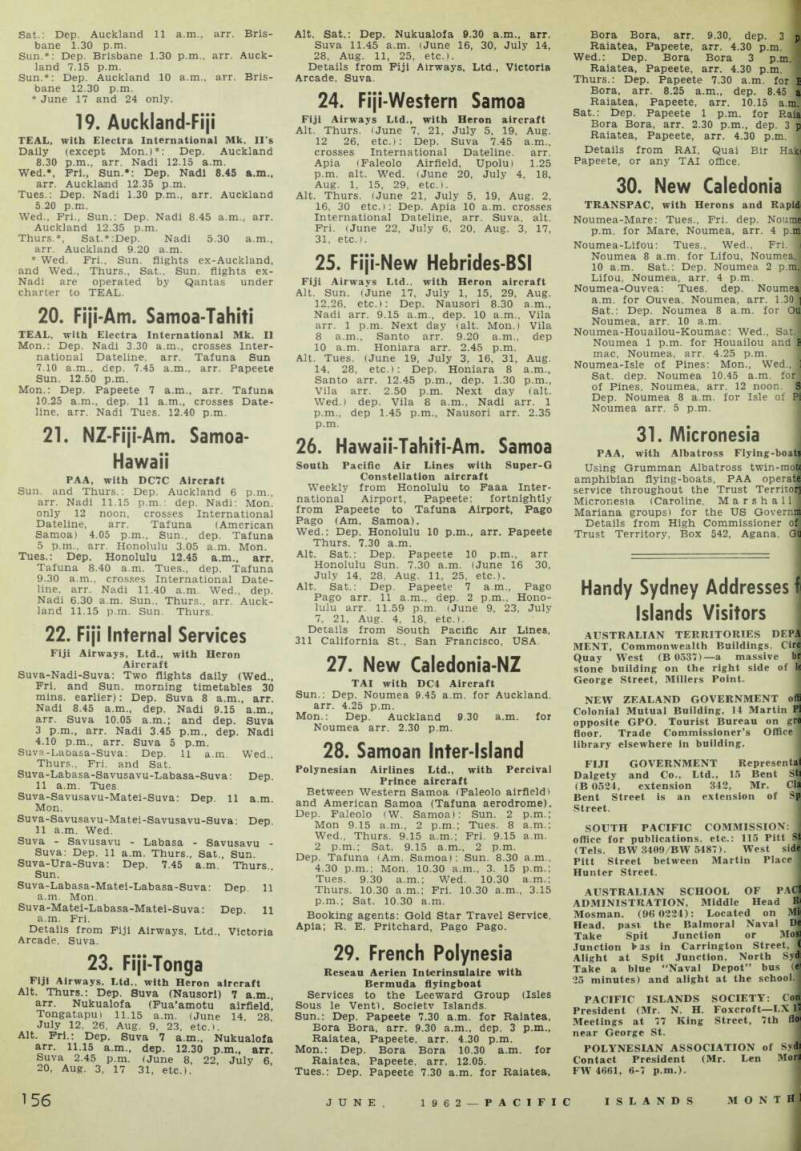 158
158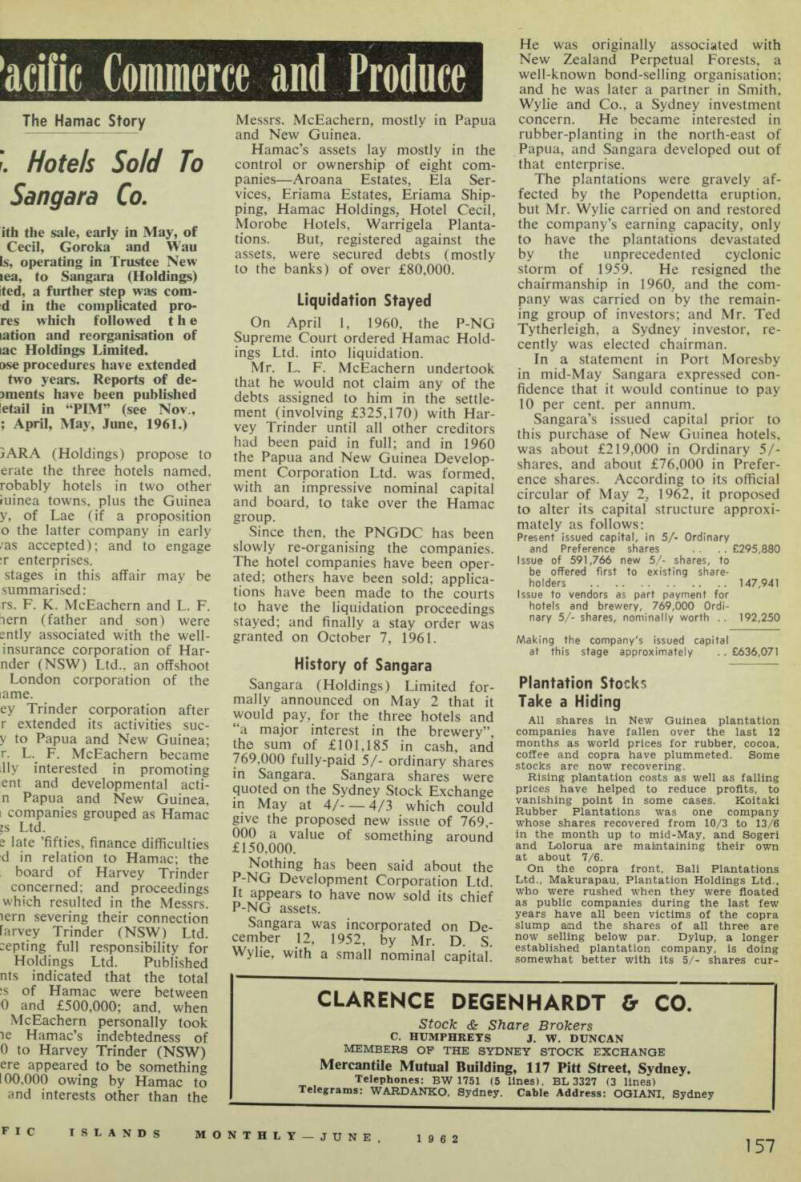 159
159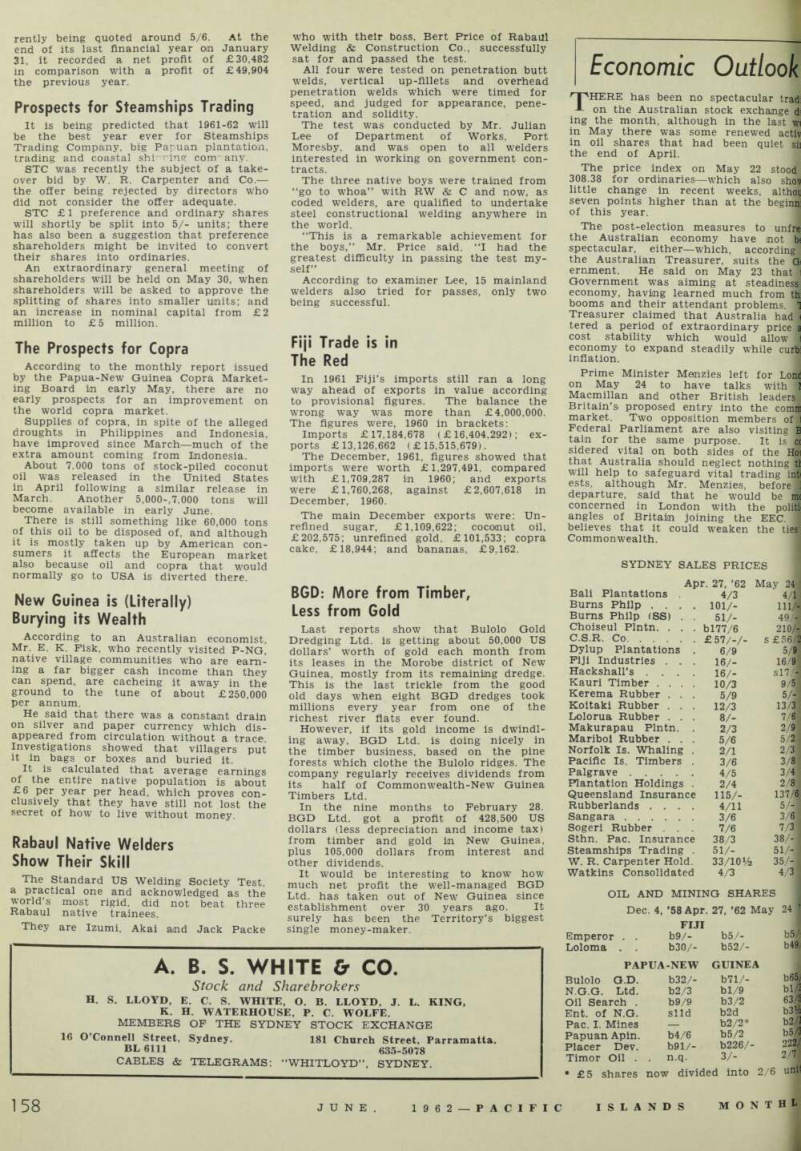 160
160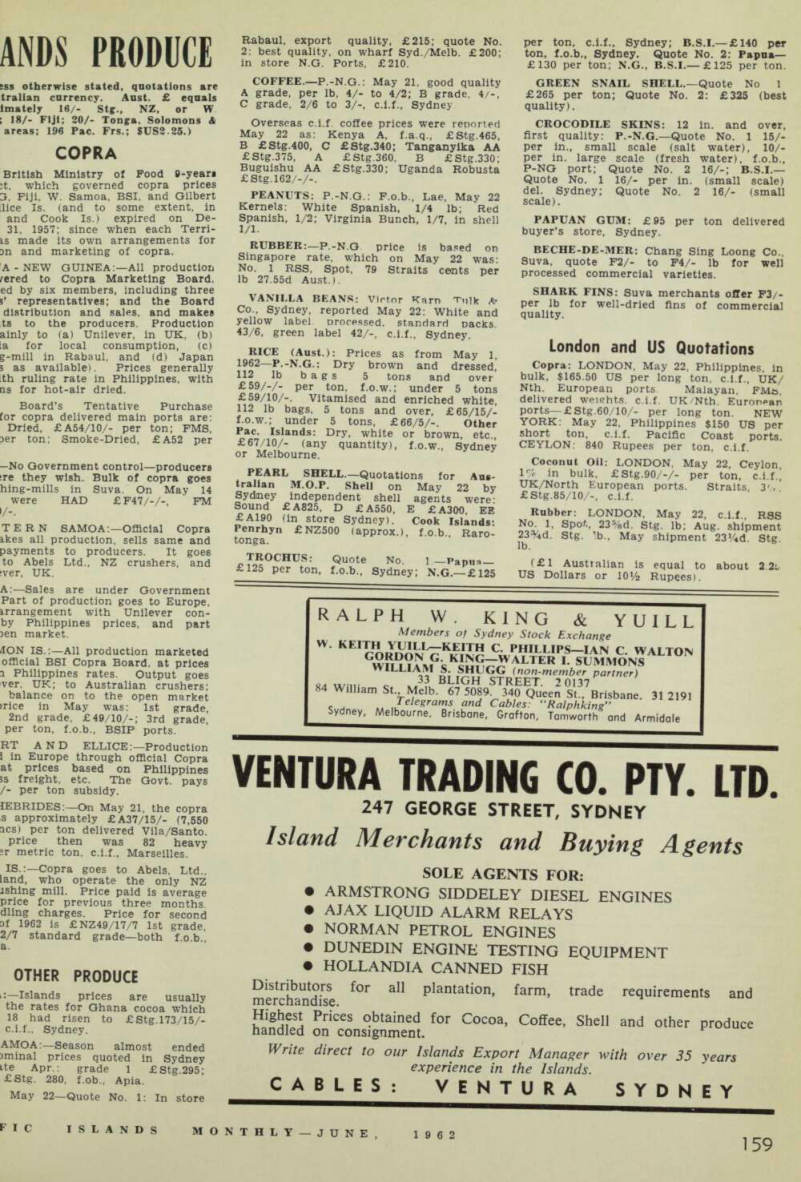 161
161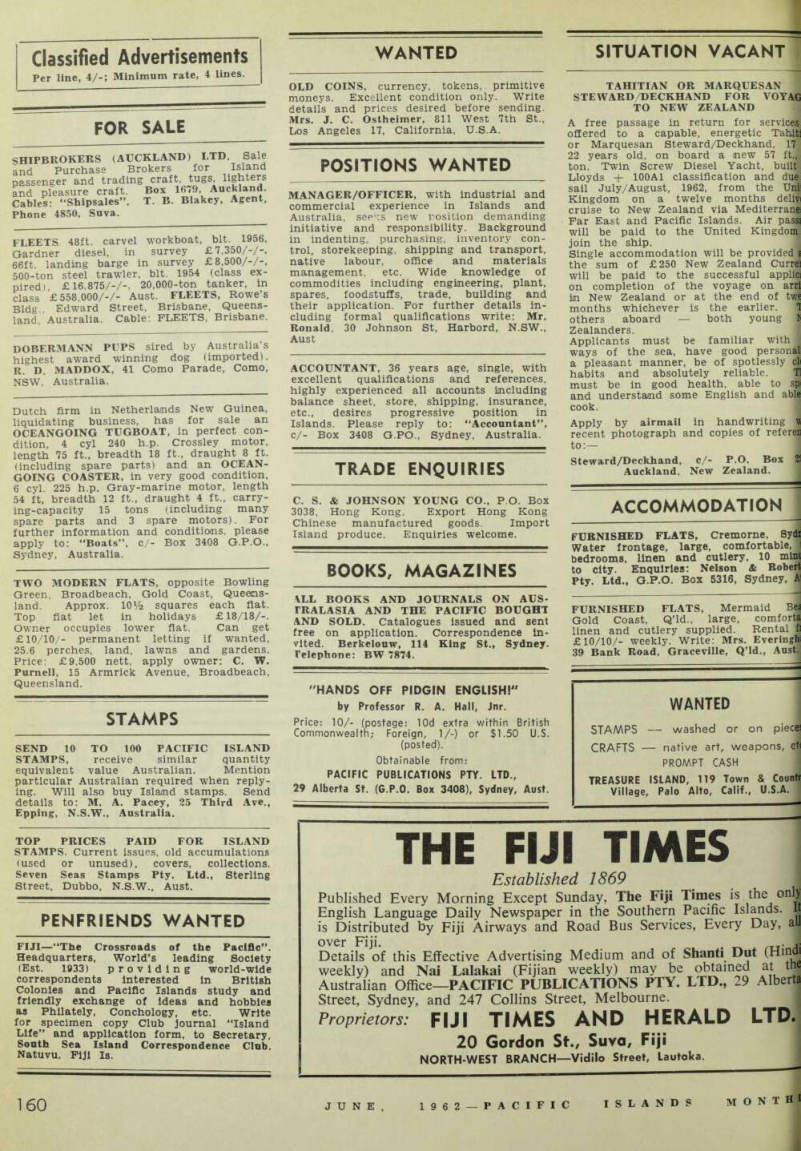 162
162 163
163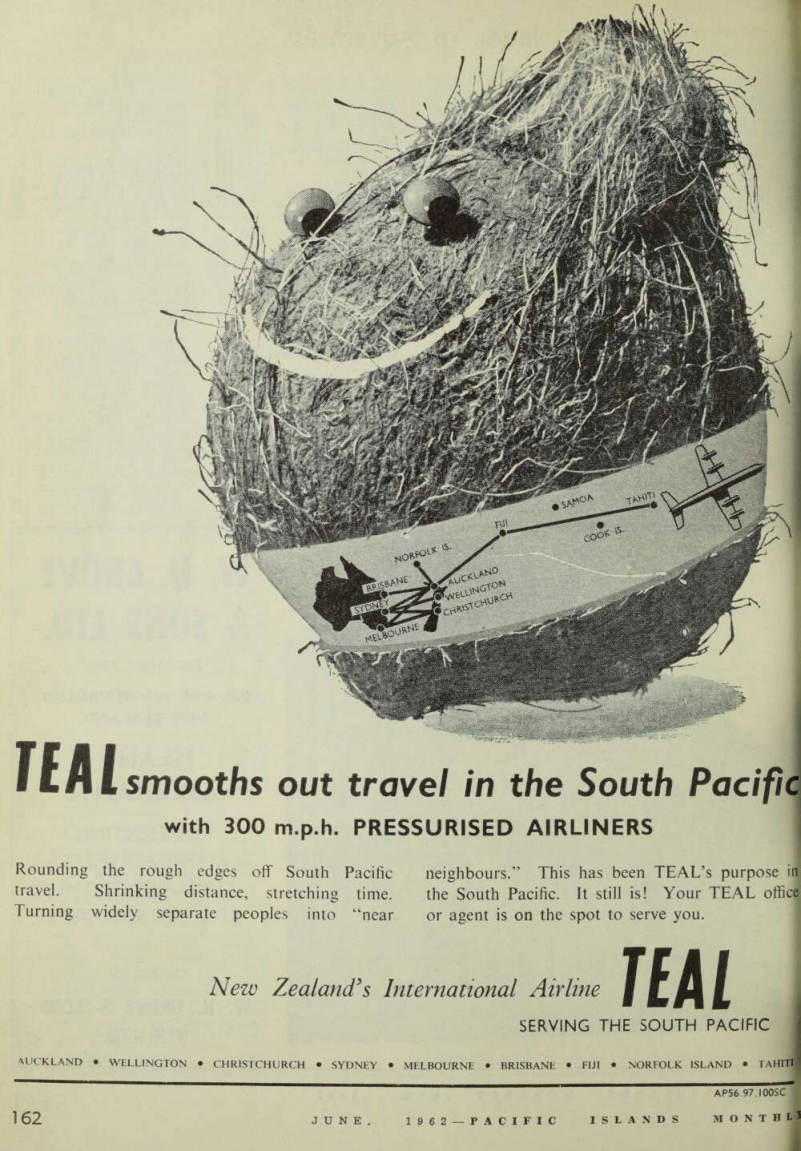 164
164 165
165 166
166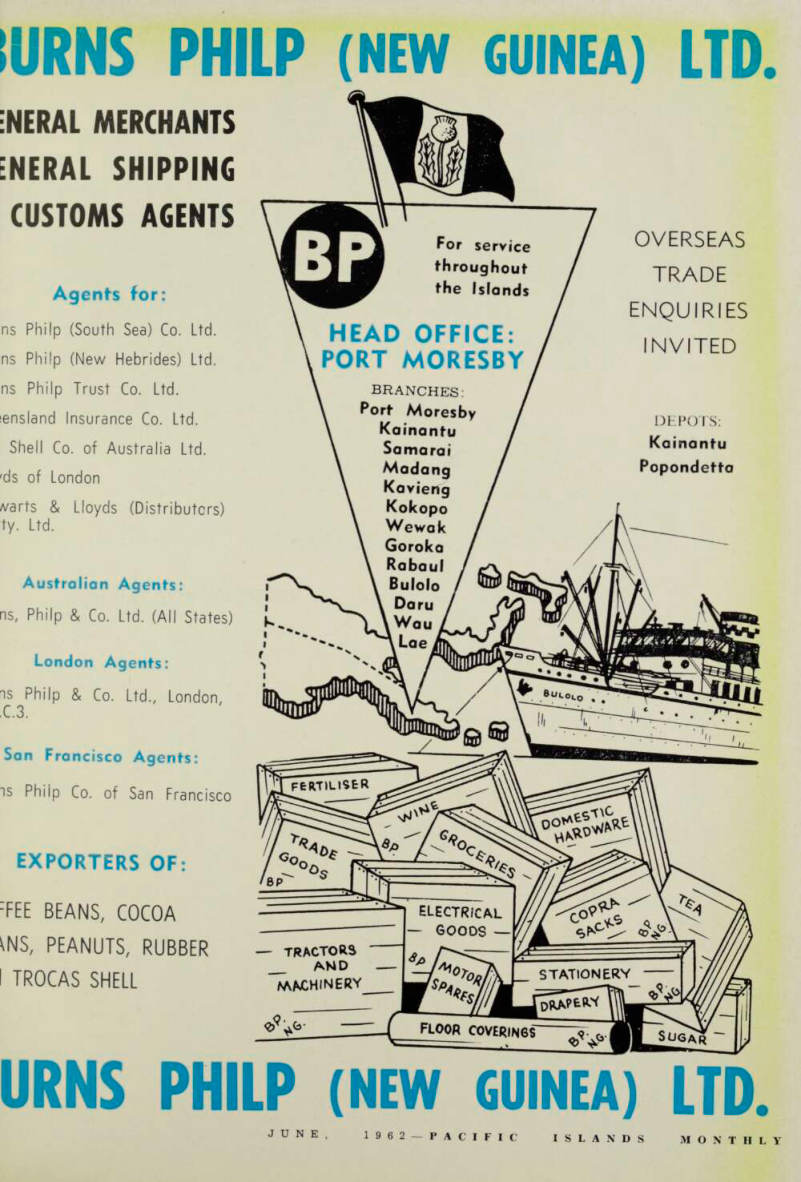 167
167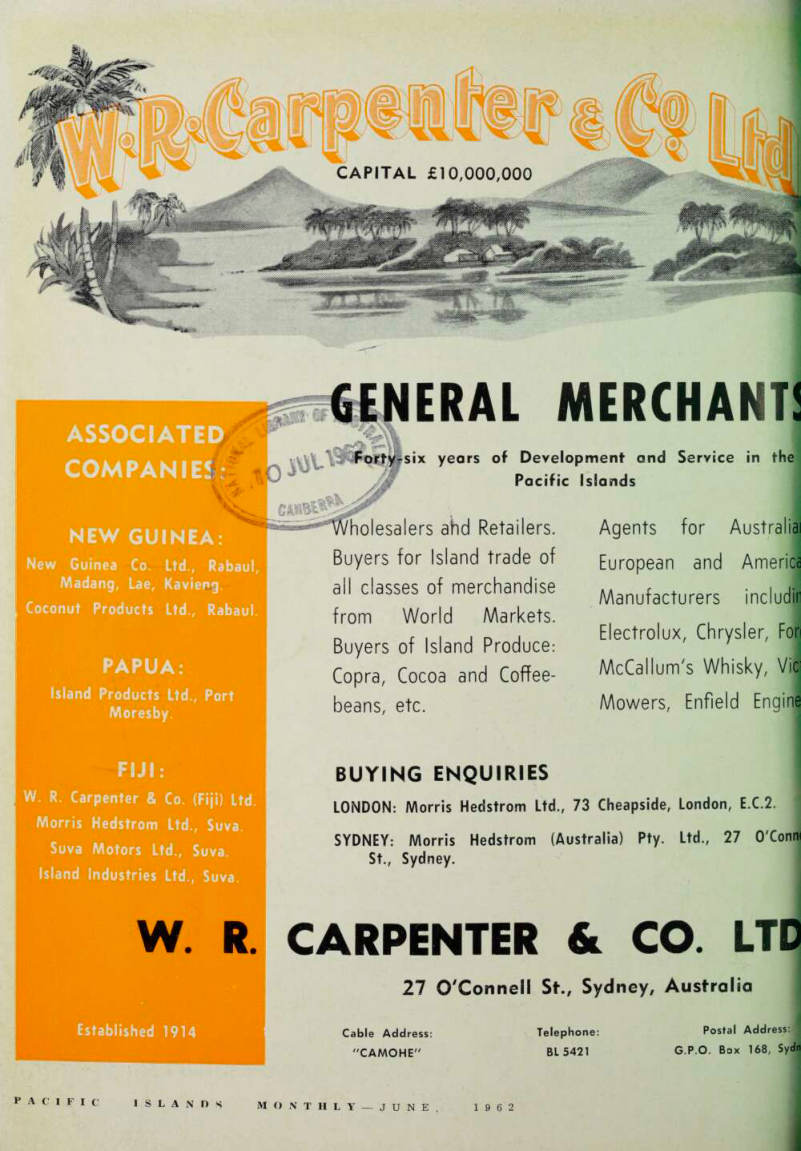 168
168