Monthly
Pacific Islands Monthly
April, 1962
Vol. Xxxii. No. 9.
e News iqaztne )f The ?outh Pacific
Tablisheo 1930
ed at G.P.0., Sydney, for ssian by post as a newspaper.
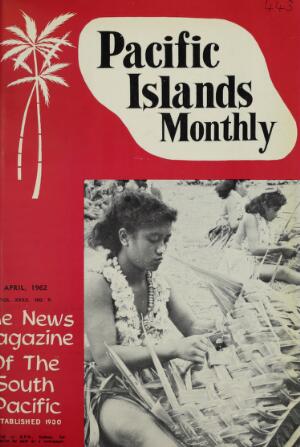
THE COVER: Visitors who go ashore briefly on the island of Niue, about 300 miles east of Tonga, during steamer visits, sometimes have difficulty in carrying away the fruit or some of the island's excellent artifacts which they have bought. The matter is soon settled. A girl grabs a coconut frond, slices it, and in a few minutes plaits a small handy satchel. Niue basket-making has been encouraged in the last few years by school headmaster Angus Mcßean, who recently transferred to the South Pacific Commission in Noumea.
Advertisements & other items, pp. 2-4 (3 items)
Suhbird
PLY
throughout the Territory of Papua/New Guinea and to Australia Sunbird Services throughout the Territory TAA operates ‘Sunbird Services’ throughout the Territory of Papua x New Guinea and to adjacent islands. Whether your destination is Mt. Hagen in the New Guinea Highlands.
Honiara on Guadalcanal or any other of rhe 40 Territory ports served by TAA you will enjoy friendly service WHEREVER you fly with TAA Sunbird Services.
Sunbird Services to Australia Regular TAA services from Lae and Port Moresby to the mainland link the Territory to more than 90 ports throughout Australia. From any location in the Territory you need only one call, one ticket, one airline. TAA operates a huge network of more than 40,000 miles throughout the Territory, to Australia and within Australia.
For your flight to anywhere in Australia, low cost Tourist or Luxury First Class, TAA is the Friendly Way.
SAVE ON TAA TOURIST CLASS FARES BETWEEN PORT MORESBY AND AUSTRALIA For example, you save £B/15/0 (return) when you fly TOURIST to Brisbane with TAA.
Tourist fares from Port Moresby to Brisbane . . . £34/13/0 single £65/6/0 return.
First Class tares from Port Moresby to Brisbane £4l/4/0 single, £7B/1/0 return
Trans-Australia Airlines
TAA is general sales Agent for QANTAS throughout Papua/Sew Guinea.
BOOKINGS:
GOROKA: Airport, Phone 8 I.AE: Coronation Drive. Airport Centre. Phone 2311 MADANG: Kaislan Avenue. Phone 78 or 166. PORT MORESBY; Musgrave Street. Phone 2101 RABAUL: Mango Avenue. Phone 2567 or 2702 or any authorised TAA Agent.
/h 0// wea/tiers,..
o
Kerosene LANTERNS
tobert Gillespie’s bring to the Pacific Islands Coleman’s ightweight lanterns. These popular brand-name lanerns maintain a steady, dependable light in high winds md torrential rains. Triple nickel-plated with brass ounts. Two models available: No. 237—up to 500 c.p.; vlo. 249—up to 300 c.p. . . . both tested to 200 lb. pressure. Quick to light . . . just preheat with methylated spirits. No need to repump each time lantern is lit . the positive shut-off valve keeps pressure in the fount.
Representatives for the Pacific Islands: (MW L Col Easily serviced and spare parts readily available, !RT GILLESPIE PTY. LTD. ROBERT GILLESPIE (N.G.) LTD. PEARCE & CO., LTD 22 Young St., Sydney Rabaul, Port Moresby Suva
134 Queen St., Brisbane Lae, Madang
Cable: "Robergill".
see the new
INTERNATIONAL
□ It’s a Hard-Top Utility . . . Open- Air Runabout . . . Off-Road Workhorse ... all in one!
INTERNATIONAL brings you a whole new idea in low-cost transportation the Scout! It's an all-purpose vehicle, only 68 inches high on a 100-inch wheelbase, with an 82.5 h.p. engine; a snug, stylish runabout that . . . ★ Seats three people in comfort ★ Carries over 1,000 lb. loads in a five-foot utility body * Has removable cab top, fold-down windshield, and removable side windows and doors ★ Gives you all-wheel-drive or rear-wheeldrive.
This is the stylish See with the steel top onneat and nimble utility drive for business pleasure.
Optional attachments available at extra cost include a rear-mounted belt pulley, front-mounted winch, transfer-casemounted P.T.0., and free-wheeling front wheel hubs. 14 See your IH dealer for more information. a Same Scout stripped action. Take off the c top, door glass, remo doors, fold down wir shield for rough jobs, tou country.
INTERNATIONAL HARVESTER COMPANY OF AUSTRALIA PTY. LTD.
District Sales Offices in Australian Capital Cities. Works: Dandenong, Geelong and Port Melbourne.
P1M.456.32 DISTRIBUTORS: DUTCH NEW GUINEA: H. Englebert, n.v. Hollandia. SOLOMON ISLANDS: Solomon Motors Pty. Ltd., Honiara. TAHITI: Hintze & Company, Papeete. NEW HEBRIDES: Kerr Bros Limited Sydney. FIJI: Niranjan s Service Station Suva. PAPUA; Steamships Trading Company Lim ted, Port Moresby and Samarai. Dealer: Rabaul Trading Co. Ltd., Rabaul. NEW GUINEA: New Guinea Goldfields Ltd., Wau; N.G.G. Trading Co., Lae.
1
I F I C ISLANDS MONTHLY APRIL, 1962
2
APRIL 1 9 6 2 -PACIFIC ISLANDS MONTI
Pacific Islands Monthly
jblisher: R. W. ROBSON.
Editors:
' Tudor Stuart Inder
anager: SELWYN HUGHES.
>Hones: Ma 9197, Ma7Ioi,
MA 4369.
P.O. Box 3408, Sydney,
hie Address: PACPUB, Sydney.
Ual Subscription Rates:
. currency; includes surface postage) s.—P.-N.G., Fiji, Samoa, Norfolk, , 8.5.1., Cook Is., Tonga, G.&E.
Niue, New Hebrides, and other jcific Is £1 4 0 Pacific Territories and Dutch Guinea £l7 0 i and N.Z £1 10 0 itish Commonwealth and Foreign Stg.) £2 10 0 and U.S. Pacific Territories
I U.S.) £3 13
opies (postage extra) 2 6
Nch Office In Papua-Ng
Publications (NG) Ltd., Theatre , Fourth St., LAE. Tel.: 2577. s Pat Robertson, Manager.
Ranch Office In Fiji:
ji Times Building, 20 Gordon St.
Tel.: 4043.
Epresentative In N.Z.:
Whitcombe, P.O. Box 5179, Luckland. Tel.: 22.570.
Resentative In Hawaii:
Spencer, 203 Yap Bldg., 3465 Ave., Honolulu. Tel.: 775538.
Presentative In U.S.A.:
Iraib, Pacific Publications P/L, >5, San Francisco 1, California.
Tel.: Mission 8-1075.
Ipresentatives In U.K.:
Lshburn, 13 Rood Lane, London, Tel.; Mincing Lane 8633. ackenzie, 4A Bloomsbury Square, , W.C.I. Tel.: Holborn 3779.
RNE OFFICE: Newspaper House, Collins St. Tel.: 63.7053. : All main trading firms and es in the Pacific Islands.
Publications Pty. Ltd., is the m agent for THE FIJI TIMES.
Contents
No. 9. Vol. Xxxii.
April, 196
People 5
UN Mission to Nauru and NG Has Mind of Its Own 15 NG Men at US Coffee Talks 16 US Activity on Christmas Island 17 Dutch "Tourists" for NNG 17 Take Over Bid for Steamships 17 P-NG Won't Proceed Against Patrol Officer 18 Aftermath of Buka Incident 18 New Caledonian Assembly Dis solved: Nickel Trouble 19 NG Native Unionists Win the Right to Strike 19 New Bishop in Polynesia 19 Mischievous Minority Defeated in Fiji Sugar War 20 A De Luxe Resort for Palmyra 20 P-NG Patrol Officers in a Quandary 21
Commentary 23
Canberra Commentary 24
The Editors' Mailbag 25
New Islands Air Charter 26 Tongan Stamp Issue Causes a Fuss 27
Sydneysider Goes Walkabout 31
Letters 3 WEST SAMOA SCENE: Bankruptcy or Prosperity? 3 Mr. "Gus" Martin Leaves Norfolk Island 3 TERRITORIES TALK-TALK, with Tolala 4' Fiji Looks at Its Tourist Potential ... 4 High Cost of Landing an Aircraft .. A New Air Route to American Samoa 5 First Catch Your Coconut Leaf ... 5 The Last of the Theatre (and Leaflet) Trucks 5 Outcry Over P-NG Airfare Increases 5' Norfolk Hopes for New Export Out lets 5' Taking Rabaul's Volcanic Pulse ... 6 Copra Troubles on Manuae 6^ Check on the Sex Habits of Tuna ... 6'.
Magazine Section 7
Pacific Shipping And Cruising
Yachts 9!
Pacific Report 11
In a Nutshell 13< Deaths of Islands People 131
Travel Talk 131
Shipping, Airways Timetables ... 14 Commerce and Produce 14'
Advertisements & other items, pp. 5-6 (3 items)
A Product of Pacific Publications Pty. Ltd., 29 Alberta Street, Sydne
4
APRIL, 1962 PACIFIC ISLANDS MONTH
An Sett-An A
'■lP'
FINEST SERVICE TO THE MAINLANI
GOLDEN ORCHID SERVICB
utcnr You'll love the luxury of the big Arisen-ANA DC6B airliners , and the delicious Golden Orchid Service meals. 3 flights weekly to Brisbane and Sydney by big DC6B aircraft. Plus speedy jet Fokker Friendship services to Cairns and Townsville. 5180 9m
ANSETTANt
GOLDEN ORCHID SERVIC
... every time
Corner 4th Street and Coronation Drive, Lae, Phone 22 £ Champion Parade, Port Moresby, Phone 2113 .
People
ngs are back to normal in Wes- Samoa reported the Samoa in in March. Samoa’s entire jopulation of 130 prisoners was id an amnesty during Indepen- Week in January, but in i Apia found itself with an -128. There was, happily, not of the old, familiar faces, has been having a petty crime lately—there have been more a dozen cases of purse snatch and around Apia stores.
sparations for the Melbourne nba Festival were disrupted the traditional grass skirts i were to be worn at the Festi eight Fijian girls vanished the girls’ quarters—no doubt by souvenir hunters. It was first time that Fijian dancers attended the celebrations. The : responded to a plea for re ments, but were not able to y enough skirts so PAA and is helped out. ♦ * * '. Philip Temple, a New Zea mountaineer, is reported from mdia to have found on March wreckage of an American war-
[?] Mission native choristers made a gift [?]eir voices when Nurse Ann Coulston arried to Mr. Ronald Wotton at Rabaul [?]al Church. Choir members voluntarily the church to estimate seating require practised studiously for several weeks [?]ally on the night of the wedding sang [?]er of beautifully rehearsed hymns. The rs. Wotton is attached to Rabaul Native Welfare Clinic.
Dakota against the northern of Mt. Nggapulu, the third t peak in NNG. Mr. Temple member of the Harrer expedi fhich recently scaled the Cars >eaks; but he was alone when covered the wreck, could not reach the main part but discovered the remains of I the occupants of the plane Dr identification he took some and a wallet (the contents of revealed that the plane must crashed in 1945). The wreck ; 16,000 ft.
tain L. Gordon Findley, one of nited States Navy’s top Island iment officials, retiring after 21 of active duty in the Pacific, is »me liaison officer for the US ; Islands Trust Territory at after the Trust Territory capi moved to Saipan on July 1. He ;p resent High Commissioner M. ading in his new post. ♦ ♦ ♦ P District Commissioner Eas- Vlr. W. R. M. Low, saw a kaka recently—almost. A kakamora :gendary midget creature of San oval and Guadalcanal, BSIP— e fellow reported to be about ches tall with long black hair, ig upright like a man, leaving ti footprints, and liable to at when in a tight corner.
Low was guided to a small in a slope at Star Harbour, little footprints leading into it. hape of the footprints was not lear but the native guide ex d to Mr. Low that this was a ae empty lair of a kakamora. jgestion that the hole should be out for scientific investigations lot, however, received with en
graduated from the Gatton Agri- College, Queensland, is Bernard Mack, Rabaul, NG.— Photo: C. H. Meen.
im by the locals. Mr. Low re that many local people believe ave seen a kakamora. * * * ting Australia in March, where ye a series of lectures at the de Festival of Arts, was British ist, writer and film maker, Attenborough, well known in >uth Pacific following publica f a book and a series of BBC ms in the last few years. After de he intended to head for >n a short visit.
planned explosion of US r weapons at Christmas Island used by the British) has it a spate of letters from the Islanders to the Cook Islands Wrote A. Moreland: ‘The Government went to great to ensure that their tests took as far away from Britain as le, rather than on any one of ousands of islands surrounding ►ast. Selfish no doubt, but from 3int of view of any Briton a le precaution. Are we to be any ensible and stand by without t while H-bombs are exploded e 350 miles from Penrhyn?” * * * th Pacific territories these last lonths have been selecting the and women they want to rep them at the South Pacific Con e, to be held in luly in Pago American Samoa. Most terri have now made their selection, names to be announced in that of Mrs. Fetaui Mataafa, >f West Samoa’s Prime Minister, > Mataafa; and West Samoan ter of Education, the Hon. Tua a Teo. The Education Minister
in Suva on March 3—Mr. and Mrs. [?]lcher. The bridegroom is with the in Fiji and the bride was formerly Morvick, of Tamavua, Fiji. She is [?]d from the waist down as the result of a fall some years ago.
t as an adviser. The last South Conference was held in I in 1959. ♦ ♦ * oung student from Vancouver to paddle across the Pacific in ik. In a letter asking the Edi ■ the Fiji Royal Gazette to r part of the cost of the trip >te: “It is my greatest wish and 3n to cross the Pacific single l in a kayak from Vancouver iwaii to Fiji. It would only isible to do so if I could ob nough money to pay for my vo semesters at University, to ►r the kayak, the small provi md the flight back from Fiji to aver. I would carry a first-rate i to take pictures of the whole :. These and my log books be at your disposal at the end trip.”
Fiji Public Relations Office lim that no newspaper was to sponsor his project, that the lal was foolhardy, dangerous isolutHv impossible.
v Caledonia had some distin :d French visitors during the i of March. Seven Senators ar saw everything and everyone, eft promising to right all New onia’s wrongs. About the same 23 French businessmen and :n made a short stay, making ct with their local opposite ers through the Chamber of nerce. ey left for New Zealand on h 18 saying that they were impressed with progress on the I”. other visitor of a different sort be arriving in Noumea in mber. He is Jacques Anquetil, us French cyclist and favourite
W. L. (Anne) Mansell, Deputy Akela of Fiji Cubs, receives a "Friendship from Mr. H. Marlow, of the Fiji [?] Bureau. The book, containing pictures in South Australia, has been presented Fiji Cubs by the Marino District Cub of South Australia as a gesture of [?]ip. The Fiji Cubs will send a similar book to South Australia.
his year’s Tour de France. Three cycling stars Stablinski,
yk and Darrigarde—will come
him. It is hoped to attract riders Australia and New Zealand to >ete against them in Noumea. * * * /e are very disappointed with ittitude of the rest of the world, have deserted us,” so said Her- Womsiwor, a leading native an member of the Dutch New ea Council in Port Moresby in ffi, during a private visit to P- But he added that if the Indo ns came to NNG they would ■theless strike “real trouble”, r was a far more difficult try to live in than was Indo . “Only Papuans can live in ie added that guerilla resistance ist Indonesians in NNG would far worse” than the resistance nesians encountered in the Cele- Womsiwor talked with several bers of the P-NG Legislative icil. He said some members d be invited to tour NNG at i expense.
hen Mr. Knox-Mawer was trans d from Aden to the Fiji Magis the ranks of competent literary in the Crown Colony were per bly strengthened. Mr, Knox rer is himself a skilled writer— t of his contributions to Punch been warmly praised; while his has quite a reputation as June t-Mawer, journalist and author, wrote an amusing book on Aden itions, The Sultans Came to which was published last year ohn Murray; and, while in Aden, was an industrious and lively ispondent for a leading London ipaper. Some of her reflections Tien and events caused a slight It is to be hoped that she will waste her talents in Fiji—the i publicity that badgered Colony achieve in London, the better for yone concerned.
[?]d recently in Toorak, Suva —Mr. and Satya Narayan Prasard. The bride was [?]ly Maya Wati. The couple will live in Auckland.
Advertisements & other items, pp. 7-16 (10 items)
5
3IFIC ISLANDS MONTHLY APRIL, 1962
Skin Balm
LEASE A
VOLKSWAGEN
FOR YOUR WHOLE LEAVE
Enjoy Worry-Free Motoring
and Save Money For those shortly to take leave in Sydney there are Volkswagens available for lease (or purchase). Reasonable leasing rate of £6O per month charged no extra for mileage, travel as far as you like no limitations applied.
Wire or write date of arrival and length of leave. Bookings should be accompanied by £lO deposit.
FRESHWATER MOTORS
254 CONDAMINE STREET
MANLY VALE, SYDNEY
PHONE: 945108 942078 947581
After Hours: 931387
IN JARS
2
SKIN
BALM
X
OR TUBES
your hands deserve the
PROTECTION of
PARKE-DAVIS
SKIN BALM
Available from Your Chemist
Agricultural problems
consult CATES
Lane's Pty. Ltd., of Bankstown, N.S.W., Australia, are pleased to announce the appointment of Mr.
A. H. Cates as their Resident Sales Director for Fiji and the Islands.
Mr. Cates has a broad technical background and an intimate practical knowledge of the agricultural problems which beset the plantation owner. His advice is yours for the asking.
Although Mr. Cates will visit other islands, his headquarters will be in Fiji at Carpenters on Rodwell Road. m y
MR. A. H. CATES
Resident Sales Director
for Fiji and the Islands
Information about Lane's products—weedkillers, fungicides, insecticides, fertilisers and disinfectants—may be obtained from Mr. Cates or from W. R. Carpenter & Co. Both are at your service.
W. R. CARPENTER & CO. (FIJI) LTD.
(ODWELL ROAD, SUVA
G.P.O. BOX 299
TELEPHONE: SUVA 3801
LOCK UP WITH
t&c/uo&ocC
Li aOEA/r
for top security ••
Don’t take risks when your valuable
and often irreplaceable possessions are
at stake. Invest in a first class padlock —
a Lockwood —for “top security”.
Up to 78,000 different key combinations
ensures that only your key will open your padlock. The shackles are of casehardened steel or all brass, and are
available in various lengths. Most
Lockwood pin-tumbler padlocks can be
“master-keyed”.
No c 100 No 201 B 206 able with or without snib. Nos. 100. 201 and 206 illustrated. rostile” also available.
S Z11*”" CYL,nder mortice
rl * LOCKS.
Prea-Hon, dependa bility, security 1 Moving parts solid brass Over 30 applications in aj] Available as a ‘master-key’ system.
JWSCREEN
latch.
Just push door t< open, pull it to dose Easy to install anc features strong snib.
NO’. 300, 300/101 LATCH.
Sturdy. Attractive. Can be •nibbed from in- Hj SI
«de. 300/101 &S &L
“as exterior M U lever handles
PNEUMATIC CLOSER NO.
401. For all doors up to 40 lbs. weight.
NO’s 403. 404 HYDRAULIC
CLOSERS.
For all doors. Brackets and arms for every installation.
OGDEN INDUSTRIES PTY. LIMITED
Edward Street, Huntingdale, Victoria. manufacturers of cylinder locks in the Southern Hemisphere.
i
Kerosene
Deep Freezer
Electrolux kerosene-operated deep freezer conserves up to TOO lb. dry weight of pre-frozen packaged foods for many weeks in tropical ambient temperatures as high as 100 deg. Fahr. (38 deg. Cent.) or even higher, provided there is a drop at night. Even fresh foods (meat, game, fish, vegetables, butter, etc.) may be kept for several weeks or many times longer in C 80 than in an ordinary refrigerator.
Uses no ice or electricity. The Electrolux C 80 operates anywhere by kerosene, economically and with high efficiency.
Anywhere
in the
Tropics . . ‘w. > . // \v- & I w ? r
NEW GUINEA CO. LTD.
Rabaul, Madang, Lae, Kavieng, Kokopo 5.C.1.E., Noumea
BURNS PHILP (N.H.) LTD.,
Vila, Santo
ISLAND PRODUCTS I
Port Moresby
8.5.1. P. TRADING CORP., Ho
Gizo F.J.R. SIMMONDS, Norfolk
s*^ *0 w* THt
WOC*
M m ct* 0» R# Ss^2 ajtttfkW
tVQQ^>-
UHQ,
PRFP A R F D WAX
PREPARED WAX
FLOOR POLISH
FOR lIHI FLOORS. FURNITURE. LEATHER e MOTOR CARS " Twice the shine in half the time Piccaninny imparts a glow of youth and beauty to floor surfaces that might otherwise soon begin to show their age. There is nothing more perfect for linoleum or natural wood floors.
Piccaninny's tough wax skin protects surfaces from tropical moisture, wear and tear —saves you hours of work and gives Twice the Shine in Half the Time!
ASK FOR
PICCANINNY
BROWN STAIN FLOOR POLISH
For Jarrah, Cedar, Stained Floors & Woodwork Piccaninny Polishes are manufactured by
PICCANINNY MANUFACTURING CO.
254 Pittwater Road, Manly, N.S.W., Australia
9WWK
MFS6O TOOLBAR
MFS3B TILLER
MF564 DISC P
S THE TRACTOR/IMPLEMENT
MORE OF YOUR WORK AND MAKE A BETTER JOB OF IT FROM START TO FINISH! m
MF527 SUBSOILER
MFSBI OFFSET DISC HARROW
MFSI2 JIB
You can do much more work, more economically with Massey-Ferguson 35 or 65 tractors because of the unequalled versatility of the Ferguson System. They're backed with the widest range of matched equipment in the world ploughs, harrows, drills, planters, hay and utility tools, some of which you see here. All are designed to give you faster working and keep costs low.
All work as integrated units with the tractors, giving the kind of performance and running economy you can get only with Ferguson System, If you're thinking of getting new machinery, have a chat with your Massey-Ferguson distributor. He'll be able to tell you what is most suitable for your land and fix a working demonstration on your property. m * H: * 'gx ***
MFSOI POST HOLE DIGGER
MFS2I MJLi.-, u.a/.l dIADE
MF532 A
is the world leader in farm mechanisation
DISTRIBUTORS:
Papua and New Guinea Burns Philp’ ° (New Guinea) Ltd.
Fiji, Tonga, Western Samoa and other sth. Pacific territories Burns Philp (Sth. Sea) Co. Ltd.
New Caledonia Societe AAeto, Noumea Tahiti Ets. Donald, Papeete New Hebrides Condominium Agence Pentecost Santo and Vila British Solomon Island R. C. Symes Pty. Ltd.
Honiara, Guadalcanal
m * m ■ i m ■i‘ : .V? :■
ON H
I v-?'; •r - ■ w<> m m WM
PERSONALITIES
JsL OF THE MONTH
All the Gilbey products have distinctive personalities, much in common (quality, tradition, appeal), but some things that are unique to each.
You’ve met five of them in these pages bland, urbane Bond 7, the quality whisky; Gilbey’s Gin, the international sophisticate; Pierre Smirnoff vodka, the fascinating Russian aristocrat who conquered America and is now a naturalised Australian; Dubonnet, the gay French newcomer (straight or mixed); and the Gilbey liqueurs in the new shapely, easy-on-the-eye, easy-to-handle bottle.
They are a handsome family. Introduce them to your customers.
GILBEYS LIMITED
' ''-S
Unilever House
-5 , *** * *: Jl —»* * - I Cl
Service to the Islands starts here!
Sydney Harbour — one of the world’s most beautiful waterways, gateway to the South Pacific! Ships of many countries berth in these peaceful waters, taking on cargo and passengers for the Islands.
Right on the edge of this South Pacific gateway stands Unilever House, regional headquarters of the world-wide Unilever organisation. From the offices of this building can be seen ships unloading cargoes of raw materials — including copra from the Islands for Unilever products.
Then these same ships are loaded with exports for the Islands —among which are such Unilever products as Rinso, Surf, Sunlight Soap, Lifebuoy and Lux Toilet Soap, as well as food products, including Continental Soups. To ensure the widest possible distribution of these products all over the Islands, experts make visits at regular intervals. A basic part of their job is to see how services can be improved not only in the supply of established products but also in the development of new products to satisfy new demands.
Unilever Australia is proud to serve the South Pacific through the medium of Kitchens Export Division. Their complete range of quality products is available through Wholesale , Retail and Indent Houses in all areas.
Export Division - J. KITCHEN & SONS PTY. LTD.
Representatives for the Unilever Organisation Lever & Kitchen Pty. Limited, Rexona Pty. Limited , World Brands Pty. Limited and Edible Oil Industries Pty. Ltd.
/ SYDNEY
wmm
PERSONAL
SHOPPING
BUREAU
SERVICE
.V
IT'S THE BEST MAIL ORDER PLAN
Farmer’s is the largest single department store in the heart of Sydney. We can, therefore, offer you a complete range of goods from fashion to all household needs, children’s clothes and menswear. To take advantage of this Personal Shopping bureau service, all you have to do is write to Elizabeth Nugent, describing clearly what you would like and she will send a trained shopper into the store to personally select your goods. P.S.B. means fast, efficient service.
FARMER’S PERSONAL SHOPPING BUREAU, G.P.O. BOX 497, SYDNEY, AUSTRALIA.
Test for yourself
THIS NEW INSECT SPRAI
"ILLS
WSMI
mm \4 :
MONEY-BACK GUARANTEED
mmm TP STAIN! sso'
Spray your lilywhite handkerchief. Let the I soray dry. f \V 9 NUMBER 13 / v ' > / does NOT I \
STAIN. r_ \
ACTIVE
INGREDIENTS
Pyrethrins (De-colourised), 0.3% w/w Bucarpolate, 1.5% w/w Methoxychlor, 3.0% w/w Spray surfaces! It keeps on killing for weeks! • Space spray it! It knocks down immediately!
IN THE NEW AUTOMATIC SPACE SPRAYER
and in bottles or bulk containers at all stores.
lot**
INSECT SPRAY "Unlucky for flies !
HONIARA, 8.5.1. P.
A. C. Blair Ltd., Honiara.
F. C. Symes Pty. Ltd., Honiara.
Burns Philp (South Sea) Co. Ltd., Suva.
Burns Philp (South Sea) Co. Ltd., Lautok
NORFOLK ISLAND
Burns Philp (South Sea) Co. Ltd., N island.
SOLD AND RECOMMENDED BY:
Burns Philp {New Guinea) Limited: aamarai.
Burns Philp (New Guinea) Limited: Port Moresby.
Burns Philp (New Guinea) Limited: Wau.
Burns Philp (New Guinea) Limited: Bulolo.
Burns Philp (New Guinea) Limited: Lae.
Burns Philp (New Guinea) Limited: Madang.
Burns Philp (New Guinea) Limited: Goroka.
Burns Philp (New Guinea) Limited; Wewak.
Burns Philp (New Guinea) Limited: Kavieng.
Burns Phi Ip (New Guinea) Limited: Rabaul.
Burns Philp (New Guinea) Limited: Kokopo.
Burns Philp (New Guinea) Limited: Daru.
Burns Philp (New Guinea) Limited: Kainantu.
Steamships Trading Company: Port Moresby.
Kam Hong; Lae.
Scotts New Guinea: Lae.
Tang Mow: Wewak.
Laurie Chan: Rabaul.
Wong You: Buka Passage-Bougainville.
6
APRIL. 1 9 6 2 PACIFIC ISLANDS MONTH
7
CIFIC ISLANDS MONTHLY APRIL, 1962
8
APRIL, 1962 PACIFIC ISLANDS MONTE
9
CIFIC ISLANDS MONTHLY APRIL, 1962
April. 1962 Pacific Islands Mont
11
CIFIC ISLANDS MONTHLY APRIL, 1962
13
CIFIC ISLANDS MONTHLY APRIL, 1962
14
APRIL, 1962 PACIFIC ISLANDS MONT
UN Mission To Nauru And NG
Has "Mind Of Its Own"
From our Canberra Correspondent The UN Trusteeship Councils Visiting Mission to the Trust Territories of Nauru and New Guinea looks as though it may achieve more results than some earlier missions.
THE chairman, Sir Hugh Foot, made it clear when he arrived in Canberra in March that the mission would not be content with merely being led around to inspect the physical manifestations of “develop ment”.
Asked whether the mission would seek the views of the Nauruans on their future, he put the position tersely: “We want to put the emphasis on meeting people rather than on seeing hospitals and schools,” he said.
“It is more important to meet people and find out what they are thinking than to see things.”
Sir Hugh, with 30 years of colonial administration behind him—including a term in the very hot seat of Gover nor of Cyprus—does not appear to be the kind of man who can be misled by “eyewash”.
He went to Nauru with a clear memory of that day in the Trustee ship Council when Cr. Raymond Gadabu —the first man from an Aus tralian Trust territory to be sent to New York—rose and told the Coun cil in plain terms that his people did not want the Australian plan to as similate them in the Australian com munity.
Problem of Elite And in New Guinea he was fully conscious of differences in Australian opinion on the question of whether political and social progress should be brought about by raising an elite of the “dynamic few” or by a general raising of standards to a less am bitious level.
On this question he can draw on his experience of differing colonial systems in Africa. Those who met him early in his tour of the South Pacific area believe that he might well contribute a thoughtful, middle-of the-road view in his report to the Trusteeship Council.
In his early interview in Australia Sir Hugh showed himself fully aware of the difficulties facing Australia in New Guinea.
“You have a people who were as backward as any, and with great difficulties of terrain,” he said.
“It is a classical case of the most difficult colonial problem in the world.
“How it is beinp tackled is ex tremely interesting.
“The searchlight of international
[?}bers of the UN Mission to Nauru in April will see scenes like these. The photographs [?]e taken recently on Nauru by a photographer with the Australian News and Information [?]eau. Top shows a tame frigate bird—Nauruans make a practice of taming them [?]tre is an unusual picture showing how a flare is used to catch flying-fish at nght, and [?]re is an unusual picture showing how a flare is used to catch flying-fish at night, and [?]ow, Nauruans demonstrate net fishing in the Buada Lagoon, in the centre of Nauru.
opinion, after being concentrated on Africa, is swinging very much to the Pacific.”
Another member of the mission, Mr. Delmas H. Nucker, of the United States, also has a background of colonial administration, with particu lar experience in a related Pacific area. He is a former High Com missioner of the US Trust Territory of the Pacific Islands.
Other members of the mission are Ambassador Carlos Salamanca, the Bolivian representative on the Trus teeship Council; and Mr. A. B.
Bhadkamkar, Counsellor at the Indian Mission to the UN. Mr.
Bhadkamkar was included when earlier it was announced that Mr.
M, Rasgotra (India) had withdrawn.
The mission spent some time in Canberra talking with ministers and senior officials and left Sydney for Nauru on April 3 in a chartered air craft, via Honiara, to begin the Nauru tour. The mission was due to leave Nauru on April 8 by the same air craft for Buka, Bougainville, where the six weeks’ New Guinea tour would begin. The mission will visit all districts of New Guinea and re turn to Canberra on May 15 for further talks. The next meeting of the Trusteeship Council is in July.
At least one member of the mission staff is an old hand at New Guinea visiting missions. He is Mr.
James Lewis of the UN Secretariat —one of four officers accompanying the party. This will be Mr. Lewis’ fifth visit to New Guinea on a UN mission and fourth visit to Nauru.
In Federal Parliament in March, the Minister for Territories, Mr. Has luck, said in answer to a question,
that Nauruan leaders had agreed after inspection last month that Prince of Wales Island and Fraser Island, off the Queensland coast were both un suitable as a new home for the Nauruans (PIM Feb. p. 17, Mar. p. 20).
Mr. Hasluck described the talks in Canberra with the Nauruan dele gation in February as friendly and frank and said that both the Nauruans and the Australian Government would continue to work towards an arrangement which would be satis factory to both.
Nauruans have been working for weeks to prepare for the arrival of the mission aircraft. There was a big clean-up going on throughout the island with rubbish fires burning every night. Many buildings were re painted, the airstrip was graded and white marking put down (Nauru has no air service and the strip is virtu ally only for visiting missions). A correspondent reported that there was a “spirit among the Nauruans to really impress the visitors”.
Extensive damage—estimates put its value at more than £lOO,OO0 — was done to the power house at the Emperor goldmines, Vatukoula, Fiji, in March following an accident there. Work at the mines was curtailed to conserve power.
Mr. Raymond Gadabu, the Nauruan Affairs Officer, visited the UN last year to put the Nauruan point of view.
Advertisements & other items, p. 17 (1 item)
15
CIFIC ISLANDS MONTHLY APRIL. 1962
Pacific Report
Look For These In Pacific Report
Suva to be Shop Window for Trade, 111; Fiji Go-Karts, 112: Fiji Trade Report, 119; Challenge for the “Bounty Cup”, 120; Dutch-French Shipping Rivalries, Fiji Beef Industry Could be Helped, Safety Week in New Caledonia, 121.
NG’s Tolais, 122; New Caledonian Nickel Crisis, 123; Staff Cuts at Laucala Bay, Adult Fiji Franchise Problems, 115; World News in Pidgin, 116; Fiji Party’s Name Change, 117.
Work Pushed Ahead an Tonga High School, 125; Banno Bros, in Court Action, Thornton Echo, 126; US Strike Upsets Samoa and Christmas Island, 127; Malaspina Sketches, 129; Drive by NZ for Islands Trade, 130.
Melanesian Light, No Action Against Jehovah’s Witnesses. 132; BSIP Land Board Meets, NG Border Survey, 133.
Washington
P-Ng At Vital
Coffee Tal
From our Canberra Correspondei World coffee producing na\ are this month working out a < international coffee agreement Washington.
The draft agreement being amined by the World Coffee S Group, provides for a system of port quotas.
It also has provisions for lim production and stocks.
Other clauses examine ways oi panding coffee production throug the world.
Unlike the existing agreement, new draft provides for membei by consuming—as well as prodi —nations.
Australia is pressing for sp treatment for P-NG, on the gn that coffee is one crop which is to a big portion of the populi and that as a Trust territory hei terests, morally and legally, mus safeguarded. This is a new angl approach.
It is also making the point thal Territory’s output is such a small portion of world production that unlikely to affect world prices.
The Australian delegation also been briefed to make the point although P-NG will be able to more coffee in Australia as den grows, it will not be able to se any greater proportion of this mai P-NG last year sold 3,000 ton coffee in Australia and about 2 tons overseas. Delegates will tell conference that by 1965 P-NG h to sell about 5,500 tons in Aust and 7,000 tons overseas.
Leading P-NG coffee grower, lan Downs, who is president of Highland Farmers and Settlers’ A ciation, has been sent to Washin, by the Commonwealth Departmen Trade as an Adviser to the del tion.
Another member of the delega is the P-NG Director of Agricult Mr. F. C. Henderson.
Reports from Washington after talks started indicated the Austral were pleased at the way their pc were received and they considt their presence there more 1 justified.
Advertisements & other items, p. 18 (1 item)
16
APRIL, 1962 PACIFIC ISLANDS MONTH
S. Activity On Christmas Island
Christmas Island
om Ralph Craib in San Francisco
he impending—apparently—
mption of United States
aic testing in the atmosphere
resulted in sharply increased /ity at Christmas Island. 1Y increase at all, of course, would be sharp. For Christmas virtually abandoned after the ed Kingdom finished its atomic there in 1958. 5 military experts who have re y visited the island, some 1,200 > south of Hawaii, have reported the tropical climate and salt r erosion have taken a costly ley have reported that the sh-built buildings were ready to down, the water system was be -1 repair, the airstrip was pock ed with holes, and that the har was badly silted, le US is now building a new air , a new water purifying system, is installing a multi-million dollar nunications system, le construction and the subse t atmospheric tests—which may isible throughout a vast area of Central and South Pacific and on US West Coast—will be con id by Joint Task Force Eight, ed by US Major-General Alfred )ird, who participated in the war tests of atomic weapons at 'etok. i indication of the sort of ity now underway at Christmas d—and at Johnson Island to its i-west —is in simple terms of ;y. It’s been reported that :ral Starbird is spending 500,000 is daily—and that this figure shortly be doubled.
Dutch "Tourists"
For Nng
In late March Dutch aircraft were reported to be passing through Tontouta Airport, Noumea, almost daily on their way to Biak, Netherlands New Guinea.
They were carrying “tourists” — in reality Dutch Army replace ments in civilian clothes. The aircraft—KLM DOS’s —flew via Lima, Peru and Papeete after the US had earlier refused them land ing rights on American territory.
The French were willing to help a fellow country in distress —for which they deserve full marks.
Secrecy nevertheless surrounded the operation and photographs were forbidden. These were taken at Tontouta by an Australian tourist (non-military). Other photographs were taken by mem bers of the Indonesian consulate.
Papua's "Steamies"
Withdrawal: Take Over Offer For Papua's "Steamies"
There were sharp movements in the Australian stock exchange late in March when it was re ported in all the leading news
papers that Steamships Trading
Co. Ltd.—which shares much of
the top-rank merchandising with
the Burns Philp organisation in Papua—had received an interest ing “take over” offer.
STC directors admitted an offer had been received, and rumours echoed daily along Pitt and Collins Streets, and investors followed the trail into the Stock Exchanges. STC ordinary £1 shares, which had been at around 40/- for months, suddenly leaped to 60/-, on March 29.
Market students noted that Car penter Holdings 5/- shares, which had been at around 30/- since October last, had moved sharply to 33/-. The deduction was natural.
Carpenter directors, who are famed for silence, expressed astonishment at the rumours; but the market scouts reported that Mr. B. B. Perriman, a senior Carpenter director, was visit ing Port Moresby at the end of March, and Carpenter quotations moved up another point or two.
As April dawned, the Exchanges were waiting. If a “takeover” offer was seriously made and received, it obviously would have to go to the shareholders. But on April 2, it was reported that the bid had been “with drawn”. Then it was confirmed that Carpenters made the bid, offering equivalent of 58/- a £1 share.
“Steamies” have an issued capital of £1,226,316, in 50,000 £1 7 per cent. Preferences, and 1,176,316 £1 Ordinaries. The shares are widely spread. .
The shares of the companies named have been quoted as follows, on Australian Exchanges;
Steamships Trading Cos, Ltd. was founded very modestly soon after World War 1 by Captain A. S. Fitch, a former Hooghli River pilot, who
Steamships Carpenter (£1 shares) Holdings (5/- units) March, 1961 47/- 30/mid-March, ’62 40/- 31/- March 30, ’62 . 57/- 33/- April 2, *62 .. 50/- 32/-
took the steamer Queenscliff trading on the Papuan coast. “Cappy”
Fitch had a hard battle; but he pre sently set up coastal trading posts, and a store in Port Moresby, and be came interested in rubber-growing.
“Cappy” retired after bringing his company through World War II and seeing that it got its full share of Australia’s War Damage Compensa tion Fund and was living in Spain a few weeks ago. Hard-working E.
V. Crisp took over, then, as chair man and managing director, and he retired last October, when he was sure that “Steamies” had benefited worthily from the post-war boom.
The little empire that Crisp handed over to the incoming chairman and managing director, H, D. Underwood, comprises freeholds and leaseholds, a huge department store in Port Moresby, stores in most Papuan centres, rubber and copra planta tions, ships, a slipway and workshops, and huge transportation equipment.
The shareholders’ funds last June 30 (subscribed capital, plus £1,250,000 of reserves and £282,115 of unappropriated profit) totalled £2,758,431, represented mostly by land, buildings, merchandise and similar assets, which grow in value as the inflationary spiral whirls up ward.
On the face of it, a most desirable property, from the viewpoint of “takeover”. There is of course a political nigger in the Papuan wood
(Continued on p. 135)
pile—namely, a newspaper - built bogeyman, dressed like an Indonesian, hanging around the frontiers of West New Guinea.
The Carpenter organisation, created by the late Sir Walter Carpenter after World War I, and expanded tre mendously by his sons, R. B. and C. H., after World War 11, has re tailed and wholesaled, planted and manufactured and transported over most of the South-West Pacific —except Papua. There is some Carpenter activity in Papua, but it is modest and restricted. No one outside the boardrooms knows why the WRC brand is conspicuous by its absence in Papua: The man on the beach usually supposes that there was some sort of agreement between gentle men.
Carpenters’ last big Islands take over was six years ago, when Fiji]s biggest Kai Viti concern, Morris Hedstrom Ltd. joined up with the ever-thrusting Australians. It has worked out very well for all con cerned. The two big departmentalised
Stpfes-=Moffis Hedstrom and Car penter—compete vigorously against each other in Fiji’s retail markets; but the union has spelled mutual benefits in the spheres of insurance, discounts, marketing, brokerage, shipping and various “overheads”.
W. R. Carpenter Holdings Ltd., on September 30 last, had an issued capital of £2,806,684; a reserve of £82,758; and unappropriated profits of £1,409,756. A consolidated balance-sheet covering subsidiaries showed shareholders’ funds at £13,902,097 and assets of £18,345,250 (including nearly £2,000,000 in cash).
Advertisements & other items, p. 19 (1 item)
17
CIFIC ISLANDS MONTHLY APRIL, 1962
Against Officer
P-NG Won’t Proceed Against Officer
The Papua-New Guinea Crown Law Department on March 23 decided not to pro ceed against a patrol officer com mitted for trial in February on a charge of having unlawfully wounded a native in June last year. (PIM, Feb. p. 117). The charge was withdrawn.
The patrol officer is Otto Kenneth Alder, 24, formerly in charge of Wonenara Patrol Post, 50 miles south-east of Goroka. On February 7 at G or oka, PO Alder was commit ted for trial by Mr. E. A.
O’Connell, charged with unlaw fully wounding a native, on June 2, 1961, and on three counts of having burned grass and wooden huts. However, indictments have been filed against Alder on charges of arson, specifying three counts involving several huts.
Aftermath Of P-NG Buka Incident
P-NG Buka Incident
From a Staff Correspondent in Rabaul Armed with copious files compiled during the hearing of charges against Buka rioters and tax-evaders, Madang Magistrate R. R. Ormsby returned to the New Guinea mainland in March.
Though of a confidential nature it is known that some of the matter in Magistrate Ormsby’s files will make pretty heady reading for those who insisted the Buka incident was of no importance.
PROMINENT in his report will be alleged attempted infanticide, human sacrifice and an instance of expected manifestation of the dead, it is believed.
The attempted infanticide is said to have occurred during the clash between Hahalis villagers and police when a group of native women tried to smother a child by pressing its face against a police officer.
On another occasion during the fighting Hahalis villagers looked re peatedly toward an adjacent cemetery where it is believed they expected their dead to rise up and aid them.
The sorry Buka post-mortemising meanwhile goes on. In the P-NG Legislative Council in early March, Mr. Paul Mason pointedly made reference to early warnings of trouble which were disregarded by Adminis tration.
During his speech in the Council Mr. Mason said: “These Buka natives are not in newly controlled territory. They were among the first natives used as police themselves, long before the German government was established.
“They were used first by the early settlers as their guards and police.
They were used as police by the first BSI Government . . . they have had perhaps longer continuous asso ciation with Europeans than any other natives in the Mandated Terri tory of New Guinea with the ex ception of the Duke of York islanders . . .
“Since District Headquarters has been at Sohano unrest has grown.
One wonders why. Our Advisory Council has from time to time tried to make the Administration aware of what was going on but we were told our minutes were unnecessarily long ...”
While Mr. Mason wonders and
Magistrate Ormsby ponders, Te torians close to the troubled sc are somewhat bitter. While all c cur that Administration handled affair in praiseworthy fashion they gret the prodding necessary to ge into action.
Warnings of brewing trouble v not negatively voiced. They were ( spoken. So outspoken according Paul Mason that he believed “sc residents brought the matter of Buka unrest before the Leader of Opposition, Mr. Calwell, as they they were getting nowhere with Administration with their warn! which they had been submitting over three years”.
On March 30, the Administn Sir Donald Cleland announ award of P-NG Police Medal bravery to Constable Bokuwa, for his part in quelling the Bi trouble. The citation said Boki rescued two native policemen c ing a fight with the Buka on beach near Hahalis. He fought way into rebels surrounding inju Sgt. Kipau and cleared a path for him and then went back j carried out Cpl. Mange.
Also in March, representatives four Native Local Govemm Councils on New Britain offe £2,000 compensation to the Adm stration for damage they did equipment in the Rabaul riots of year.
Won’t Pay Taxes
Either
Of interest to the collectors o\ head tax in Buka, New Guinea is the latest report of the Sec retary of Fijian Affairs, Suva The secretary admits there wa, no great success in the collectioi of provincial revenue in Fiji it 1960, and there was in fact “hardening of resistance” to pay ment of rates.
The result: A serious down ward trend in the proportion o rates collected. There was 6‘ per cent, of the possible tota collected in 1960, compared witl 75 per cent, in 1957.
As a consequence, som i provinces had difficulty in meet ing their commitments, and tk estimates of one province ha* to be reviewed to prevent i going bankrupt.
However, no Fijians were hi on the head and police actioi was not required.
Advertisements & other items, p. 20 (1 item)
18
APRIL, 1 9 6 2 -PACIFIC ISLANDS MONTH
Assembly Dissolved:
New Caledonian
Nickel Trouble
hat some people are predict to be the most bitterly ested election of all time in Caledonia, will be held in
7 rench Territory on April 15,
wing the dissolution of the itory Assembly on March 9. ►SOLUTION followed the refusal af the majority party (M. rmand’s Union Caledonienne), cept the agenda proposed by the Commissioner, M. Laurent Pec- The Governor has the finalf with his power of veto, in any ation passed by the Assembly, n this case he used it. icially the reason given for lissolution is the “divergence of ; between the Assembly and the sil du Gouvernement (an execu :ouncil, of which the Governor ad), on the economic and budget y to be followed”, e real issue is whether the New lonian government should give Nickel Company a subsidiary, in :orm of exemption from export The Governor says that this is nable; M. Lenormand’s party that it is not, and threw the ure out of the Assembly when jovernor was overseas at the end ist year. (For details of New lonia’s nickel troubles, see page this issue.) r many years the French metro m government paid the Nickel pany a subsidy; since this was out there have been repeated :s made by the company to get sort of assistance from the srnment of New Caledonia, ople who take the short view who instinctively dislike Big less, on principle), remember during the period of French :rnment subsidy, the company big dividends to shareholders, say they don’t see why the New donian taxpayer should carry le job. the practical view, however, it is ct that New Caledonia exists i nickel economy; it is also a that there is a depression in the I nickel industry and that some 4ew Caledonia’s old customers now getting cheaper nickel else e. the Nickel Company is forced to down some of its plant because
of this crisis in the industry—or if it just closes the plant down out of pique, or as pressure tactics, as some New Caledonians believe—the entire economy will suffer. Even before any workers were dismissed following the recent close down of part of the Noumea smelters, there was a general tightening of purse strings in Noumea.
It is likely, then, that in the coming elections, the very people who should be supporting M. Lenormand’s high socialistic principles will be voting against him in the belief that it’s better that the country should do without a little export-tax revenue than that they should find them selves out of a job.
Polynesia
New Bishop in Polynesia
The youngest diocesan bishop in the Anglican communion, Rt. Rev.
J. C. Vockler, replaced the most senior diocesan bishop in the communion, Rt. Rev. L. S.
Kempthorne, in March, when Bishop Vockler was enthroned in Suva as Bishop in Polynesia. The enthronement (above) was per formed by the Archbishop of NZ, Most Rev. L. A. Lesser. Bishop Kempthorne was 39 years Bishop in Polynesia. He and Mrs.
Kempthorne will live in retire ment in Suva. Bishop Vockler was coadjutor Bishop of Adelaide.
The Right To Strike
New Guinea Native Unionists Win The Right To Strike
Interlocking legislation provid
ing for trade unions amongst native workers in Papua-New Guinea and for governing in dustrial relations between em
ployers and employed was passed
at the March meeting of the P NG Legislative Council in spite of the best efforts of non-official European members to reshape it to meet Territory conditions.
THE legislation had been intro duced, with long explanations and speeches by Assistant Admini strator, Dr. John Gunther, at the last Council meeting in September, 1961, but held over so that (as he stated at the time) it could be “critically examined by the people of the Territory so that they will carefully express their views to help produce a final result best-suited to our conditions”.
The European representatives of private enterprise in the Council had obviously “critically examined” the legislation as instructed, and had a great deal to say on how best to fit it to NG conditions, but results were nil. It was passed through the Council, regardless.
Native members, however, were apparently struck dumb by the whole thing or understood the implications of the legislation so little that they made no worthwhile contribution to the debate at all. As is usual with any important legislation, the whole thing resolved upon the shoulders of the opposing forces of European members who battled it out alone.
Said Mr. Lloyd Hurrell (Member for New Guinea Coastal): “I’m very disappointed in native members of this House ... it is a bill that affects them greatly but so far this has just been a battle between us European members of the House”.
Mr. R. S. Stuntz (Eastern Papua), said that he for one did not fully understand the bill and that he was certain that there was not one native member who understood it.
Throughout the debate, non official European members tried un successfully to get the Assistant Administrator to amend the clauses that gave native unionists the right to strike.
Mr. B. E. Fairfax-Ross introduced
an amendment which would have prohibited lockouts or strikes unless the Secretary for Labour had been advised of the dispute and unless a 28-day period had passed without the dispute being referred to arbitra tion.
Dr. Gunther said that measures to counter prolonged strikes were in corporated in the bill and although the Administration had given great thought to the right-to-strike clause it had found prohibition “an extremely difficult course”.
Mr. Fairfax-Ross said that most natives wouldn’t know the difference between a strike and a riot—strikes would become riots and there would be trouble.
Other members said strikes would cause racial feeling and that there was great danger of violence be cause of the tribal nature of the natives.
Amendments to the bill to exclude rural workers mostly plantation labourers —were also defeated.
Amongst the legislation’s scores of provisions are those relating to the appointment of a Registrar, Deputy Registrar, other officers and their respective duties; for the com pulsory registration of all unions with a membership of more than 20; the removal, under certain circum stances, of a secretary or treasurer from office; and the liability of officers of unions or industrial or ganisations in the case of offences by those organisations.
NOEL COWARD IN SUVA. And obviously getting older, too. The celebrated play wright spent a week in Suva until March 4 on the recommendation of Viscount Maugham, nephew of Somerset Maugham. He paid the visit from his home in Jamaica and reported he found the experience worth while.
Advertisements & other items, p. 21 (1 item)
19
CIFIC ISLANDS MONTHLY APRIL, 1902
Plan For Palmyra
A De Luxe Resort Plan For Palmyra
From a Honolulu Correspondent Polynesian Paradise, a subsidiary of Mercury International Insurance Underwriters of Los Angeles, has taken an 80-year lease on Palmyra atoll from owner Leslie Fullard-Leo of Honolulu . It plans to establish a de luxe resort to include marinas, a golf course, playgrounds and a dis count community store. Beach lots are offered through membership in the Royal Polynesian Club.
THIS is a long-stage programme which will probably take from two to five years,” said Mr. Fullard-Leo in Honolulu. “Work will probably begin around the middle of 1962.” Mr. Fullard-Leo, whose family has owned the atoll since 1923, will retain a motu called Sand Island for himself; most of the rest of the atoll, including more than 30 small islands and several lagoons are covered by the lease.
One of the atolls is still owned by the Henry E. Cooper estate.
There is some speculation in Hono lulu that a gambling casino may be included in the plans, although this has been denied. No one lives on Palmyra today, although there are some buildings, an airstrip, and channel left from wartime Navy oc cupation.
Palmyra is about 960 miles south of Hawaii.
In Fiji's Sugar War
Mischievous Minority Defeated In Fiji's Sugar War
Victory in the latest phase of the Patel-millers war in Fiji’si sugar industry has gone to the millers. The CSR people, at the end of March, announced that at least 70 per cent, of the 13,820 sugar-growers in Fiji had signed the new contract, de\ signed by the Trustram Eve Commission, and recommended by the Sugar Industry Advisory Council.
IT had been officially announced that, if two-thirds of the recog nised sugar - growers accepted the contract, that contract—as interpreted where necessary by the independent chairman and his Sugar Board— would govern the industry’s conditions for the next seven or eight years.
The organised minority of Indian
growers (popularly known as i Patel - Swami crowd”) did aim everything— except moving hea) and earth—to prevent the grow from signing. They told the grow that, if they grew the cane, the mill must accept it—contract or no o tract—otherwise the millers would in breach of the law. They went to the length of inducing growers who already had signed sign another document, revoking tt acceptance of the contract.
There was a real “Indian lawy touch about all this. (For those wi out experience: When it comes to terpretations, some Indian law> think of things that never would cur to other kinds of lawyers.) A( ally, the millers are not bound take any cane outside that cove by a contract. The contract, hav been formally signed, may not revoked in the manner suggested.
The struggle went on for we< out among the canefields.
Blame Where it Belongs The great majority of the Inc growers are decent, honest men \ ask only one thing—that they be alone to carry on their industry ur conditions which will give tl reasonable security.
Unfortunately, the conditions tough. They are not created by Fiji Government, or the millers, the finance monsters which so ex “the Patel-Swami crowd”. They shaped by the fact that the wor sugar market is consistently o’ supplied, and the surplus comes fi slave-labour countries.
The Patel-Swami activities are motivated by love of the Inc growers. They apparently arise fi a small group’s ineradicable ha of the millers plus some sort of ra inferiority complex.
The growers are simple men, m of them illiterate. The “Patel-Sw crowd” in 1960-61 so played on t suspicions and their ignorance
(Continued on p. 135)
they brought about the “growers strike”; with the result that Fiji’s in come from sugar, in 1961-62, will be down by between £2,000,000 and £3,000,000. Already, the Indian masses are feeling the economic pinch; and, what is more, the majority now are putting the blame where it belongs. So the “Patel- Swami crowd’s” campaign failed.
The acceptance of the contract means that these conditions will rule the industry for some years; and the authorities now have power to deal drastically with anyone who disturbs the industry.
The “Patel-Swami crowd” give no sign of ceasing their activities among Indian growers. The extent to which they will be permitted to carry on will be the measure of the ability of the British Colonial Office’s Fiji Government to govern Fiji.
A Better Economic Outlook At the month’s end, the mills an nounced the distribution of £900,000, based on the 1961 crop’s proceeds.
This money will be very welcome in the sugar-growing areas. But, even so, there could be acute distress there before the 1962 and 1963 crops are marketed.
The sugar prospects are very good.
A quota of 250,000 tons for Fiji for 1962 already has been announced; and it is believed that at any momenl the mills will announce a quota of al least 235,000 tons for 1963. If there is peace in the industry, Fiji could experience an economic improvement before a year is out.
All classes are anxiously watching the activities of the Development Commision, headed by the tireless Mr, Bevington, and hoping—anc hoping. Plans are impressive, ob jects are beyond cavil—but, in thi:
overcrowded little country, time is terribly short. If only someone could produce a Five - Years Plan for Throttling the Indian Birthrate!
Quietly but rapidly the Fiji timber industry is building up, and figures and prospects are impressive.
The Colonial Development Corporation and Fletcher interests now have assembled a plant worth about £250,000 in the Nausori Highlands.
Good forest is there and the market seems assured.
Messrs. John Bayly and Lou Genge have another timber enterprise taking shape in the hills beyond Navua; and over at Kadavu Island
there is a timber enterprise in active being.
The Fiji Government has wriggled away from so many important recom mendations of the Burns Report that any quotation therefrom is considered maladroit. But here is a sentence or two from Paragraph 559: “Over li million acres, or 28 per cent, of the land area of Fiji, is suitable for sus tained timber production . . . Here lies a vast natural and potentially valu able asset which, if developed, could be one of the major—if not the largest—industries in the country; and we urge that all possible steps be taken to make it so.”
Advertisements & other items, p. 22 (1 item)
20
APRIL, 1962 PACIFIC ISLANDS MONTH
Quandary
NG Patrol Officers in a Quandary
By a Staff Writer
Few primitive countries have been introduced to civilisa n with as little bloodshed as Papua-New Guinea. It has been loint of honour with Australian field service personnel that overnment” should be taken to the country by a process of ceful penetration and that arms should be used only as a t desperate measure to protect lives.
AY the areas of uncontrolled rritory in Papua-New Guinea jadily shrinking, but the prob •f the men who have to go into to take law and order to the ve stone-age inhabitants are, thing growing. le man in charge of a patrol in areas finds himself forced to lefensive action and shoot a he often ends at the wrong a Supreme Court action, with newspaper publicity that that at home and abroad, e patrol officers, it is alleged, •aid to enter some native areas e of the legal action and :ty that results if there is an dable clash, whole problem was aired at it meeting of the P-NG Legis- Council in March by men who id practical experience of pat in hostile country. The i was, said Mr. lan Downs :r but once an outstanding
field-officer of the Native Affairs Department) that the Territory, in this matter, “was being swept by an excessive hyper-sensitive legalism”.
He was supported by Mr. Lloyd Hurrell, now a Wau coffee planter and farmer, but an ex-ADO who also had distinguished field service.
Said Mr. Hurrell: “Any patrol-officer in these areas ... is a fool to accept live ammunition. If he has to use it, it is almost certain that he will end up on a serious charge that will de stroy years of hard work.”
He thought that while the present system exists patrol officers should re fuse to go into uncontrolled areas.
He alleged that dozens of native police and patrol officers were be wildered by the situation. “In a com mendable effort to secure better re lations with the P-NG natives, the Administration is bringing itself into contempt by its failure to enforce the law and to secure justice.”
Somo Sigob, elected native Mem ber for the NG Coastal Electorate, who was a Sergeant-Major in the NG Constabulary for 18 years, said he understood the problem at first hand and was concerned at the risk of legal action that a patrol officer or police ran when forced to fire on natives to defend a patrol.
He said that he would like to see the United Nations or Australian Government representatives trying to make contact with these wild people and making a better job of it.
When everyone had had their say, Mr. I. K. McCarthy, Director of Native Affairs, promised to investi gate the alleged fear of legal reper cussions. Probably there is no one better qualified to do it. He joined the New Guinea Department as a young patrol officer in 1927 and in his time had some of the toughest patrolling assignments, some of which ended in conflict between the natives and the patrol.
All clashes between patrols and natives are supposed to be reported whether they end with fatalities or not, and they have always been sub-
ject to departmental inquiry. But the risk of landing in the Supreme Court is a recent development—and most Territorians see in it a reflection of the Australian Government’s sensi tivity on United Nations criticism.
By the time a man is asked to lead a patrol into hostile country he should have been well tried by the “system” and his superiors should have every confidence that he will carry out his task in the best tradi tions of the Service and be jealous of its fine reputation.
If he then finds himself in a posi tion where the only way to protect his patrol is to shoot, there should be no doubt in his superiors’ minds that what he did was the only thing to do. In this event there would 1 be no need for court action.
If the man has not been tried by* the “system”, or if he is psycholr gically unfitted to be in control of at patrol in that sort of country, if is surely the “system” and his superiors that should go on trial, and not the patrol officer.
Officer In The Making. This Is
Bou, 21, a Papuan, who returned to [?]resby from Sydney in March after [?] a course at the Australian School [?]ic Administration. He now becomes first native cadet patrol officer. He educated at Rigo and Queensland.
POLICE OFFICER IN THE MAKING. This is cadet police officer Penais, of Rabaul, one of 10 P-NG natives training to become com missioned officers in the Royal P-NG Constabulary. He is undertaking a four year course in the Police College, Port Moresby, under Sup. Brian Holloway. All the cadets wear shorts and beret.
Advertisements & other items, pp. 23-24 (3 items)
21
IFIC ISLANDS MONTHLY APRIL, 1962
April. 19 6 2 -Pacific Islands Month
Morris Hedstrom Ltd
cTcfc Y \ L (Artist's impression of Morris Hedstrom's modern new store in Thomson Street, Suva
General Merchants, Produce Buyers, Importers and
Exporters, Ship Owners, Plantation Owners, Commission
and Insurance Agents.
HEAD OFFICE :: SUVA, FIJI
AUSTRALIAN REPRESENTATIVE-
Morris Hedstrom (Aust.) Pty. Limited, Wales House, 27 O'Connell Street,
SYDNEY
REGISTERED CABLE ADDRESS:
LONDON OFFICE:
Morris Hedstrom Limited,
Barclay's Bank Buildings,
73 Cheapside,
LONDON, E.C.2
Deuba—Suva Morrished—Levuka, Morstrom—Sydney, Suvamark—London, Morrisco—Nukualofa, Deuba—Apia.
CODES: Ail.
SOLE AGENTS FOR:
A. B. Bahco Primus Products British Drug Houses Ltd.
China Navigation Co.
"Chula’ Copra Dryers Electrolux Limited Ford Motor Co.
General Electric Co., Ltd.
Goodyear Tyre & Rubber Co Imperial Chemical Industries Ltd.
Matson Navigation Company Max Factor & Co., Inc.
Pacific Islands Transport Line Ransomes Sims & Jefferies Ltd.
Rootes Ltd.
Vacuum Oil Co. Pty. Ltd.
Yorkshire Imperial Metals Morris Hedstrom Limited are LLOYD’S AGENTS in Fiji and Samoa For Friendly Service and Complete Satisfaction ids Morris Hedstrom Limited in
FIJI SAMOA TONGA
Commentary
Slow Needed on
G Trade Unions
rISLATION setting up elaborate tiachinery for the organisation ipua-New Guinea trade unions or industrial relationships now 5 only official “consent” before ling law, but most Territorians n unconvinced that either the ory or the natives themselves d anything of the sort at this of development. (See report 19). ; contribution of native mem jf Legco—or lack of contribu te the debate on the bill in i amply bore out this conten- Few natives in the Territory the remotest notion of the y of trade unionism or any of rinciples and it will probably a whole new department of in ors and inspectors to show them to do, how to collect fees, and, is even more important, how to and manage their money once ave got it. The Pacific Islanders’ disregard—and almost contempt the ordinary business principles ire part of the Western pattern z are a cross that officials who had to organise Co-operative ;ies know well. ; business principles will be only ispect of getting unionism run smoothly in Papua-New Guinea. ; will be far greater problems le industrial front where those “organised” still don’t know the ;nce (as some European mem of P-NG Legislative Council pointed out) between a riot and ke; and where a weapon of con ible power is to be put into the ; of people whose sense of re ibility is still based on native •e and not on Western ideas at the Assistant Administrator took to point out in his second read 3eech on the bill last September, rowth of industrial organisations natural process. As far as our society is concerned, it has been ;r many generations and over industrial revolutions, t in the case of New Guinea, 50 many reforms and advances, 1 be dropped on the people from 5, without regard to the fact there has been little done to ire them for it. o many of Port Moresby’s—or terra’s—ideas for the advance of P-NG natives seem to be
based on the idea of biting off more than can be swallowed and then just chewing it—and this is just another of them.
It can be said, of course, that some machinery must be prepared for the new phase of labour relations and organisation in the Territory now that it has moved away from the old native labour contract system. But it is surely not necessary to have the full blown type of thing that has evolved in Australia over a century of labour organisation.
But if the P-NG Administration chose to ignore the suggestions of experienced Europeans in the Terri tory, it chose also to ignore the ad vice of trained opinion outside. It is only about 16 months ago that the so-called Tripartite Mission on Labour Matters in P-NG issued its report.
“No objective observer,” said the Mission, “could conclude that trade unionism in the Australian pattern would necessarily be appropriate for the Territory.” And for numerous reasons that it set out—one of them being that few P-NG natives have any idea of what trade unionism means— the mission felt that nothing should be done at present to force its growth.
The mission included represent atives of the Australian Chamber of Commerce and Manufactures and the Australian Council of Employers’
Federation, the president of the Aus tralian Council of Trade Unions; a vice-president of the same organisa tion; the general secretary of the Federated Engine Drivers’ and Fire men’s Association; officers of the Commonwealth Department of Trade and of the Department of Territories. (Their report was published in PIM, Feb., 1961.) ☆ ☆ ☆
Overseas Warnings For
Our Pacific Countries
THERE are valuable lessons for Fiji, Western Samoa and one or two other up-and-coming Pacific Islands countries in recent political developments in Mauritius, Zanzibar, and a number of the West Indies and Caribbean islands controlled by the British Colonial Office.
In the late ’Forties, West Indies and Colonial Office thinkers developed a plan for a West Indies Federation. It took definite shape in the next decade,
and in January, 1958, the West Indies Federation was established.
The Pacific Islands Monthly, more than once, decribed this W.I. Federa tion movement, and suggested that, maybe, here was a pattern to be fol lowed by a “South Pacific Federa tion” of British Colonies.
It appeared then to PlM —and does still—that this was the only way to create, in the South Pacific, an admin istrative and economic unit big enough, and strong enough, to be self-supporting.
Within that same period, Britain listened similarly to the demands of Mauritius for self-government. In most respects, Mauritius closely re sembles Fiji—a population of 600,000, supported mainly by sugar-growing, and the chief industry operated by Indians.
It appeared in 1958 that the West Indies Federation would grow and flourish. It was to acquire independ ence—presumably, within the British Commonwealth—in May, 1962. It was to consist of— Jamaica.
Trinidad and Tobago.
Leeward Islands (Antigua, Montserrat, St. Christopher, Nevis, Anguilla).
Windward Islands (Barbados, Dominica, Grenada, St. Lucia, St.
Vincent —with the Caymen, Turks and Caicos clusters).
But in 1959-60 the local anti- British politicians and agitators got seriously to work.
In September, 1961, Jamaica voted overwhelmingly in favour of secession from the Federation, and independ ence; and, shortly afterwards, Trini dad and Tobago followed suit.
The Federation collapsed; and in February, Mr. Maudling—the gentle man who inherited the British Colonial Office, and all its headaches, from lain Macleod—announced that the plan had been abandoned; but that Britain still hoped to create an East Caribbean Federation, to which Leeward and Windward Islands would adhere.
There are 3,200,000 people, mostly African stock, with a large admixture of Asian Indians, in the 12 islands and groups which formed the now collapsed Federation; and about two millions of them are in Jamaica and Trinidad.
Jamaica now produces sugar, bananas and coffee, and calculates it will soon get additional revenues from newly-discovered bauxite, and from American tourist and other trade now shut out of Communist Cuba. Trini dad thinks it can carry on with sugar and bananas, plus large estimated revenues from oil There is nothing much in the economy of the Leeward and Wind
ward Islands, The Jamaica and Trini dad politicians were emphatic that they were not going to carry the ad ministrative costs of their weaker Islands sisters.
Experienced economists are emphatic that there is no hope for an in dependent economy for the proposed East Caribbean Federation, unless some mainland British Caribbean colonies, like Guiana and Honduras, are included in it. But the latter show no interest.
The economists—and this is im portant to Fiji and West Samoa— question the ability of well-endowed Jamaica and Trinidad to carry on alone as independent governments, while maintaining even the moderate standard of living which they now have.
The originally proposed Federa tion, spreading taxation over millions, might have been successful, but not the dozen islands and groups split three ways, as now suggested.
Within recent weeks, a BBC tele vision unit, directed by James Mossman, visited some of these islands, and interviewed both local politicians, and men-in-the-street. The story which it told is interesting and illuminating.
The people interviewed mostly Africans, using the common language, which is heavily-accented English— expressed sharply anti-British senti ments, but insisted that Britain should continue to assist them economically, and should still admit the growing stream of West Indies immigrants, even though the West Indies now propose to cut themselves out of the British Commonwealth.
The little impromptu speeches which some of them made into the microphone showed no understanding of economics, and dripped with the glib cliches of Red agitators.
If these countries are to be run as independent administrative units, on a basis of adult suffrage, then we can only wonder about the future of the former British West Indies. Inevitably, if Cuba does finally go Communist, these Caribbean countries will come under Cuban domination and lose in dividual freedom, finally and irrevoc ably.
Fiji should note that a similar thing is happening in Mauritius. The Colonial Office, last June, handed over the Colony to the common roll; and as the majority of people there are Indians, there is little hope of individual freedom and of economic security for the European and the mixed African minorities, under the kind of administration that now is taking shape.
Fortunately, conditions in Fiji are
not wholly comparable with Mauritius. There is in Fiji a partner ship between the two minority groups —Europeans and Fijians—based on the Deed of Cession, which neither may break, even if they wished it; and this creates in Fiji a situation which precludes (for many years to come) any possibility of a govern ment controlled by a common roll.
So far as Fiji is concerned, con templation of all these recent develop ments indicates very strongly that if Fiji wants a trouble-free future, there must be (a) a continued close associa tion with Britain and (b) unity and reasonable goodwill between the three dominant racial groups.— R.W.R. ☆ ☆ ☆
Dutch Troops Arrive
Via French Airfields!
WITH continued screeching and shadow-sparring, the Indo nesians have manoeuvred themselves into a position where they must either move in strength against Dutch New Guinea, or retire into humiliating silence.
The Dutch, always realist, in March decided to send replacements to New Guinea. They planned air transportation. To their amazement and discomfiture, Britain and Japan —obviously acting under instructions from Washingtons’ tireless “anti colonialists”—would not allow Dutch planes carrying reinforcements to use any British, Japanese or American airfields.
Eventually, the air-borne Dutch troops (gravely outfitted as “tourists”) were flown into the Pacific via Peru and French Tahiti and New Cale donian airfields. De Gaulle, despite his intense preoccupation with Al geria, could take time off to administer that little slap in the face to the visionaries who, since World War 11, have virtually destroyed the British Colonial Empire.
Sooner or later, the Indonesians will take over Western New Guinea —not because they have any right to the country, but because Britain and United States have planned it that way, ever since they abandoned the Dutch and the Netherlands Indies to the Soekarno gang in 1945.
War makes strange bedfellows.
Germany and France, increasingly in alliance, are growing ever stronger in Europe, as Britain there grows weaker. Britain, dicated to now bv USA, may be increasingly anti colonial; but France and Germany are not. De Gaulle has just said so, to Holland.
Advertisements & other items, p. 25 (1 item)
23
DIFIC ISLANDS MONTHLY APRIL, 1962
Canberra
Commentary
From our Canberra Correspondent!
Australian fears for the futi of an independent state of W( New Guinea were voiced for t first time by the Minister for E temal Affairs, Sir Garfu Barwick, in his Parliament statement in March on t
Netherlands-Indonesian disput
SIR GARFIELD set out Austral objections to both the “crai programme which the Dutch nounced in November, 1960, and the later plan of September, 1961 Hitherto, the Government has b( guarded in pronouncements on Du policies.
These were Sir Garfield’s criticisi On the 1960 “10-year” plan stimulate economic, political j social development and setting 1! as the limit of the term in which inhabitants could exercise s determination: “This involved an celerated timetable which we wo not feel justified in applying to > own NG territory.
“We aim to endow the people P-NG with a reasonable develo] economy and unified society wl they take political control of tl affairs.”
On the September, 1961, plan “internationalise” the administrate “This appeared to presage a shoi period of preparation for s> government and the attainment independence.
“It might well represent notice t the Netherlands was preparing to c much earlier than had been envisag “The implications were wider tl those of the 1960 programme— more so if Indonesian goodwill i concurrence were not forthcoming, Then Sir Garfield delivered punch-line.
This was the thought which pears to have crystallised Austral Government thinking in the sut change of attitudes to the NT problem.
“The full implications of a defen bss and economically unstable st of NNG in such circumstances coi net be left out of account,” he sa He did not expand this guarc expression of Australian fears, 1 the overtones were clear.
What if an independent NNG I
et up? It had no prospect of iconomically viable; its people be politically immature, its next-door neighbour would lurt, resentful—and ambitious nesia, which, in such an ; of mind could fall prey to ndishments of Communist im m. a situation had some of the ts of another Katanga. 3arfield pointed out that the had to withdraw this proposal UN in the face of flat Indo opposition. idded: “Perhaps the most sig circumstances was that no country supported the Nether /as quite clear that no resolu opposition to the Indonesian )f view was likely to receive jport of the Asian members, bout that support no effective on could be carried.”
Garfield said that Australia lot delude itself that the UN ; same as in 1945. nations lately emerged from 1 rule were strongly influenced t experience. uch circumstances, the prin of self-determination were apt regarded as competitive with :eds and urgencies of anti lism. ;re is a growing tendency to hat sanctions may be imposed name of anti-colonialism—and o resort to armed force for rpose of ‘liberation’,” he said, ndonesian threats of force, Sir d was specific. : Government still entertains w that armed conflict in con with this dispute would be etrimental to the best interests itralia,” he said, ether or not the conflict ex to involve the Communist —but particularly if it did— inflict would both in the short the long run inure for the of those powers and result spread of Communism in areas 3 our shores.” jarfield emphasised that Aus wanted self-determination in he uttered a warning to the sians and the Dutch: “The ate aspirations of the Papuans een so far aroused that . . . ispirations are likely now to with increasing strength until r of their satisfaction.” the people of P-NG, Sir Gar idled out what stand Australia take in the event of hostilities, have territorial rights which
we will defend to the utmost,” he said.
“In that proper task we would ex pect—and have no reason to doubt— that we will receive the full assistance and support of our great allies.
“The quite different situation in NNG will be obvious.” * * * When the debate resumed, Leader of the Opposition, Mr. Arthur Calwell accused the Government of clumsily allowing the NNG situation to drift “to the brink of war”. His claim that the Government had abandoned the principal of self determination was angrily denied by the Prime Minister, Mr. Menzies.
Mr. Menzies said that Mr. Calwell had not suggested any alternative except to claim that the dispute should go to UN. There, the Soviet would exercise the veto. ❖ * * Plans that P-NG should become the eighth State of Australia will pose constitutional headaches if they
should ever reach fruition.
Mr. L. R. Johnson (Labour, NSW) forecast a few of them in the House of Representatives when he asked Territories Minister Paul Hasluck whether in such a situation he favoured complete equality between the indigenous people and Australians in the mainland States.
Would this equality extend to social services, electoral franchise and freedom of movement through Aus tralia? he asked.
The Minister admitted that such problems would arise.
The articulate people of P-NG believed that they should undertake self-government on terms which would allow them to remain in close association with Australia, They had hit upon the idea of the Territory becoming one of the States.
The proposition would have to be carefully considered by Australia, as well as by P-NG when the time for negotiation between the two com munities arrived.
Advertisements & other items, p. 26 (1 item)
24
APRIL. 1 9 6 2 PACIFIC ISLANDS MONTH
The Editons' Mailbag
Old Planters Line
On The Buka Natives
A retired planter, who knows the island of Buka very well, makes some interesting comments on that New Guinea trouble spot.
This thing has been working up for years and the trouble over the collection of taxes is only a minor item, he says. The villagers on the eastern side of the island have been smouldering ever since the Japanese surrender. The Japanese penetration there was very thorough and these people ever since have been more or less anti-British.
The villagers on the Lontis coast, which runs north of Kessa Planta tion to the north cape, have been anti-British since the days that the Germans went out; and in 1942 they became pro-Japanese.
The Administration for years ig nored all the warnings of the coming danger and even threatened some Europeans that action would be taken against them for “spreading false rumours”.
I do not know the supposed ring leaders—John Teosin and Hagai—as they belong to the younger genera tion but 1 am quite sure that the older anti-British men are behind these young hot-heads and shoving
them along To “ tr y im g uvmint ” without undue risk to themselves would be in line with their reputa ‘Tn inion the Administration has bee a V P weak down th t evcr since , he war ended> and n( / w we are rea pj n g the result. The policy of extreme indulgence will never get anywhere with th B e Bu ka.
J . . . * re p a jl an °ld Buka chief giving " 1S .°P m . lc l n to a e g. man J w "° was B ettin B information in regard to war time at rocities.
Why did you people collaborate with the Japanese? he was asked, The Paramount Luluai said the lapanese asked the natives to work with them, and they said no—because they were British, They were then asked by the Japanese commander to think again.
Meanwhile, he beheaded a couple of the natives. He was asked: “What is your opinion of working for us now”.
“So we said: ‘ Me fela like now bekos me look in fashion belong Jap straight—no humbug about all same British’.”
This Luluai then went on to ex plain that “British guvmint man alia time talk plenty tumas—plenty order, too—but suppose man no do him, alright, no got trouble. But, man, supos Japan givim order, me fella
must do im or big trouble come up quick time. Now me fella more likim this way, bekos not much talk and no humbug In other words, they appreciate strength and discipline.
Unless the Administration can maintain a grip on these Bukas, the Administration will have a great deal more trouble in the future, the corres pondent adds.
Buka is Such a
Tangled Skein
A Sydney reader with close New Guinea connections writes on the same matter : “I thought PlM’s editorial com ments, and Tolala’s, in March on the Buka incident very much to the point. The whole thing has become such a tangled skein. A more ima ginative and cunning politician than Mr. Hasluck would see a way out of this—for the tax is not merely only an irritant, it has become a point of resistance amongst the natives. It’s going to become a bit difficult to lay on 600 policemen every time a village jibs. The pity of it is that the Gov ernment has such a fine body of Ad ministrative types (including Sir Donald Cleland, I should say) but they are not being presented with a coherent clear-cut policy to carry out.
“It is all very well to have these panicky crash programmes for the benefit of the poor benighted natives, but I can think of a few white fellas up there who could do with some education of another kind. Otherwise things are going to be hard in the next few years; not a little Algeria or Rhodesia perhaps, but unpleasantness nevertheless. On the other hand if Mr. Hasluck had got the £33-million he wanted in last year’s budget and not the £lB million he finally got, then perhaps the little first-aid post might have been put up in Buka.
I give up!”
Advertisements & other items, p. 27 (1 item)
25
FIC ISLANDS MONTHLY APRIL, 1962
Islands Get A New
Charter Air Service
Flying into Rabaul late in
January, the Crowley Airways
sleekly streamlined Piper Aztec
was obviously on a market-testing
flight.
UNUSED to charter service Rabaul businessmen and Administration officials showed quick enthusiasm for the newcomer which had already per formed an epic three-hop flight from the USA to Crowley’s base in Lae.
A twin-engined monoplane, the Aztec cost Crowley’s £32,000. For a small craft it possesses some get-up and-go, its twin 250-hp 6-cylinder Lycomings giving it a top speed of 205 mph and a cruising speed of 180 mph with a flight range of 1,100 miles.
Five passengers plus pilot can be carried comfortably in upholstered bucket seats—or 1,400 lb freight can be stowed in place of the passenger seats.
In March the aircraft was operat ing on charter ex-Rabaul three days per week, and Captain Laurie Crow ley believes the Aztec will become fully employed from this centre.
Laying down of airstrips at several outlying stations is in the planning stages and these will enable Crowley to extend services over an even wider area.
The Aztec has a liking for short strips, can take off with graceful ease in a mere 300 feet. Its range would allow it to fly Rabaul-Lae- Rabaul non-stop if necessary.
When it can be spared from charter service the newest member of Crow ley’s airfleet will be used to lift coffee from the Crowley plantation at Karanka in the Eastern Highlands.
Beaming Captain Crowley steps from the cockpit after bringing the Piper Aztec on its first flight to Rabaul. See story in column two.
War Draws
Nearer In Wes[?]
New Guinea
The Netherlands New Gu situation in March continue build up politically towards climax that has long been pected by the West and proir by Indonesia—that of full ! attack by the Indonesians Dutch New Guinea.
INDONESIAN and Nether delegates sat down to secret in the presence of a third (American) but by arrangement both sides no details were public. The talks were “in the vi of Washington”.
On March 23 the negotiations adjourned for a few days to e delegates to consult their gc ments, but on March 26 the N lands announced that “with in( tion” it had learned that whil secret talks were going on, Ind( “had not only undertaken son newed infiltration attempts in 1 but in addition an Indonesian be had made a sudden and unpro attack on a Royal Netherlands vessel (a landing craft) lying bay off the island of Gag”.
The infiltrations were on the of Waigeo.
The talks appeared to be i and the Dutch appeared to be and more out on a limb.
Australia continued to pa service, and nothing else, to the to assist the Dutch in their ta defending the natives of against oppression (see Cat Commentary, p. 24.) But as General Nasution, nesia’s Defence Minister, sa; Djakarta on April 2, Holland not now rely on British, US or tralian support.
“Very soon we shall be : enough on land, sea and air 1 stroy Dutch forces in West 1 said Nasution.
In early March, eight native bers of the New Guinea G protested to US President Ke in a cable about statements ma his brother US Attorney G Robert Kennedy. Mr. I Kennedy is reported to have Indonesia has a strong argume claiming West New Guinea an< really very little had been do educate the Papuans.
Advertisements & other items, p. 28 (1 item)
26
APRIL. 1962-PACIFIC ISLANDS MONT
Tongan Stamp Issue
Causes A Fuss
Allegations that the Tongan Government was not “playing lr” followed a special issue of Tongan stamps in February, xe stamps were the first series to be overprinted locally, and cause, in addition, the issue was a small printing, it caused r ment in the philatelic world.
THE stamps were in the regular series, overprinted in red with the words, “1862—Tau’ataina Eman cipation—l 962”. This was to cele brate the centenary of Tongan Eman cipation.
The overprinting was done by the Tongan Government Printer and the sheets for the first time bore the legend, “Printed by Government Authority in Nukualofa, Tonga, R. S.
Wallbank”. The stamps themselves were printed by Bradbury, Wilkinson and Co. Ltd., of Surrey.
One of the stamps, ordinarily valued at 3d, was overprinted to the value of 2/-.
In addition, Tonga released its first official air mail series on the same date in February.
PIM in March (p. 113) reported that one sheet of the regular series containing 60 5/- stamps had been received in London in February with the overprint inverted. According to a spokesman from Stanley Gibbons Ltd., the value of this sheet was now £.10,000. Even without the error, the spokesman was reported as saying the overprint stamps “were worth about 50/- each.”
PIM correspondents in Suva and Nukualofa, and a staff correspondent in Sydney, followed the story up, with the result seen on this and the next page.
[?]er blocks from two of the stamps overprinted by the Tongan Government Printer.
The regular 3d stamp has also been altered to the 2/- denomination.
mancipation Day
—What is it?
June 4, 1862, is the date on ich civil liberties were granted Tongans. It has been kept up a public holiday—Emancipa n Day—ever since.
On June 4, 1862, King George -the first King of all Tonga— imulgated a Code which pro ved for the first time for a rliament, and for all people to “set at liberty from serfdom i vassalage”. It also provided it taxes be paid to the Govern nt.
Human slavery as Wilberforce ew it did not exist in Tonga, t society was nevertheless a \nd of patriarchalism and ni-feudalism, and there was ich power with the chiefs, e new Code, adopted by the ng on the advice of the ssionaries, moved Tonga '■ward to a Western-type Gov iment, although not immedi dy.
The Tongan Constitution, lich contains a Declaration of ghts, did not follow until 75. The present Constitution still basically the same as that anted in 1875.
"Upset"
Collectors "Upset"
From a Suva Correspondent Many South Pacific philatelists are upset at having no opportunity of ob taining some of the limited number of Tongan overprinted stamps released in February to mark the Centenary of Emancipation. One Suva collector even claims that an “air of secrecy" surrounding the release of the stamps indicated that some organisation cor nered the market.
THE Suva collector is Mr. H. Hod son, secretary of the Fiji Philatelic Society.
His story is that an organisation possibly made the suggestion of the special overprint issue to the Tongan Government, provided a certain num ber were allocated to them.
He said that no indication of the issue was given outside Tonga. There was no mention of it in the bulletins of the Crown Agents, London. Yet a previous commemorative issue, for the 75th anniversary of Postal Ser vices, 1886-1961, was advertised in the normal manner, and was an nounced through the Crown Agents bulletins. The Crown Agents pro duced a special supplement giving full details of the stamps and the reason for the issue.
Philatelists throughout the world took part in that issue, and first day covers were sent out.
All Sold Out In the latest case, says Mr. Hodson, a special issue of the Tongan Govern ment Gazette of February 5 gave a list of the stamps which had been overprinted by the Government Printer at Nukualofa.
The stamps were put on sale on February 7, but remittances sent from overseas were returned with the ad vice, “all stamps sold out”.
“This would seem impossible in view of the lack of publicity to the stamp world, and certainly favours the idea that one person has scooped the pool,” Mr. Hodson said.
“Why has the philatelic world been let down, when the revenue earning of such commemorative issues depends on the good relationship that a Colony keeps with its purchasers?
“No Australia or New Zealand buyers even heard of the issue, let alone the United Kingdom.
“It is to be wondered whether the
publishers of the world standard ! logues will recognise this stamp?
“We sincerely trust that this not be allowed to happen agaii philatelists in the South Pacific to feel that the stamps are for and that each issuing country freely to all its philatelic custo: throughout the world.”
Advertisements & other items, p. 29 (1 item)
27
CIFIC ISLANDS MONTHLY APRIL, 1962
Stamp Interests
“Were Told”
From “PlM’s” Nukualofa Correspoi There was certainly a tub Tonga’s overprint issue—all set now well and truly sold out there can be no suggestion that seas stamp interests were not ad before the release. It was the a sent overseas that resulted in issue being sold out so quickly.
THE Tonga Government Gj Extraordinary of Februar 1962, included a note on the issi the following stamps:
The notice went on to say, above stamps will be placed on p sale in the various post offices o Kingdom from February 7, until supplies are sold out, anc official stamps will be utilised b; various Departments of the Go ment until exhausted.”
On January 31, the Crown A in London, as the Kingdom’s I telic agents in the United King were informed by telegram thal issue would take place. On Febi 1, the Crown Agents were info: of the details of the issue. Ce other philatelic interests were als formed of the details of the issu February 1, 1962.
Large numbers of sets were be locally from the post offices of Kingdom and a great many ordered from overseas.
Nevertheless, within a few ( supplies of complete sets had bee exhausted and there were many appointed would-be purchasers, was taken to make certain tha one person or organisation bo
Regular Series Official Ail Series 33,000 Id. 2,400 23.400 23.400 4d. 5d. 2,400 21,000 6d. 2,100 21,000 8d. 2,100 21,000 18,600 Is. 2s. 2,100 18,600 5s. 900
he postal administrations more ilf the total number of any one [nation issued. :an be seen from the printing only 18,600 sets of the regular (with a face value of 10/-) available, and within a few af the public announcement in azette, orders worth £15,000 ready been received—far more
orders than there were sets available.
Prince Tungi, Prince Regent in the absence of Queen Salote in New Zea land, wrote to Sir John Wilson, Keeper of the Royal Philatelic Col lection at Buckingham Palace, and sent selected corner blocks of four (showing the imprint) from each de nomination.
Advertisements & other items, p. 30 (2 items)
28
APRIL, 1962 PACIFIC ISLANDS MONTH
Columbines
that's the number creamy rich caramels you enjoy in every long packet of of G
MAC. ROBERTSON'S
BUY ENERGY RICH . . . GLUCOSE RICH
“COLUMBINES” TODAY . . .
SOLE PACIFIC AGENTS:
S. E. TATHAM & CO. PTY. LTD. 414 Collins Street, Melbourne Z 716
Tonga "Should Learn A Lesson"
By a Staff Correspondent
As a private stamp collector I too had heard nothing of Tonga’s r to release its overprinted stamps until I read in a Sydney newspaper London report of the overprint error several days after the event, once I knew the stamps were released I soon obtained a set for •If —through the simple expedient of answering an advertisement in I’s” classified section.
March issue carried an ad rtisement from August Hettig, lofa photographer and trader, g that he had sets for sale. are a long-established, much ed firm, and a wire to them t a set to my desk at a price igher than the face value of mps. I was very pleased with rchase, but I know now I was loned in Sydney Mr. Hunter , managing director of stamp leers H. R. Harmer (Aust.) nd asked him if he felt the for the Tongan overprint sets en cornered. , I don’t,” he said. “There not enough stamps printed, all. Some sets got through to lia and sets certainly got h to English dealers, because I heady received advertisements .xmdon offering sets for about erling. Dealers rushed the issue e it was in such short supply ey knew this would make the scarce and therefore more le.”
Not Worth 50/- Mcßae said Australian prices likely to fluctuate, but he t Australian dealers would ly offer 60/- Australian for mint condition, and retail buy ice would probably be about The stamps certainly weren’t 50/- each. ther leading stamp authority, E a collector of Tongan stamps, 2 had been unable to obtain a it he “had hopes”, tiga should learn from this,” he ‘lB,OOO sets were a drop in the , There is such a huge demand )ngan stamps that the Tongan
Government could have printed millions. Tonga is one of the few countries which doesn’t seem in terested in cashing in on philatelic interest. But it should look at the philatelic business more closely. It’s losing a good income by ignoring it.
The Kingdom gets no thanks for short issues.”
Both authorities said it was not un usual for a country to give short ad vance notice of new stamp issues.
Tongan stamps weren’t the only Islands stamps fetching big prices in March.
A heavily-postmarked West Samoan stamp of 1914 sold for a world record price of £525 at a Sydney stamp auction. It was the highest price paid in Australia for a single stamp.
The Samoan stamp has a carmine background and a picture of the Kaiser’s yacht. It was printed by the Germans when the Territory was their’s. When the NZ forces took possession in 1914 the stamp was overprinted for British use with the words “G.R.I. 1 shilling”. It was postmarked September 23, 1914, in Apia.
The stamp that fetched the record price was at one time owned by an Australian who got it from a German sea captain in Samoa in 1914.
According to Mr. Hunter Mcßae, whose firm auctioned the stamp, its interest was in the fact that the over print said “shilling” instead of “shillings”. Several denominations had been overprinted, but only the one sheet was known to use the word “shilling”.
Mr. Mcßae estimated that the more common stamps bearing the correct overprint are worth about £AIOO each in top condition.
Advertisements & other items, pp. 31-32 (3 items)
29
I F I C ISLANDS MONTHLY APRIL, 1962
Beautify Your
Advertisement
Complexion
For sheer loveliness in complexion beautv there is one simple but important rule to follow. First, you must remember that all the time, particularly in hot conditions, moisture is evaporating from your surface skin and every time you wash you drain off valuable skin oils, causing the skin to graduallv develop drv wrinkles. To stop this loss of skin oil and moisture, see that your complexion is well protected with your oil of ulan. It will check further wrinkles and do much to smooth away past damage. Don’t forget to use the same plan to keep your neck lovely as well.
Margaret Merril.
WHITES PICTORIAL REFERENCE
OF NEW ZEALAND
A superb complete visual reference of New Zealand of over 400 pages of whole page representative aerial views of cities, towns and counties, with informative and useful text and maps. Standard binding, ENZ6/6-. De Luxe presentation, £NZ7/7/-.
Also available 10 in. x 8 in. (NZ7/6d) or larger aerial black and white prints Norfolk Island, Apia, Rarotonga, Papeete, Moorea. Coloured enlargements suitable decoration—send for full price list.
WHITES AVIATION LTD.
C.P.O. Box 2040, AUCKLAND,
New Zealand
We are specialists in all types of
FRESH FROZEN
FOODS
Amongst others we are agents for the Pacific Islands for: Danish PELICAN Fish.
Norwegian FRIONOR Fish, Dutch IGLO Vegetables and Fruit. (in Bulk and Decorated Consumer Packs)
MEVRA PTY. LTD.
182 Collins Street, Melbourne.
Telephone: 63-2392, 63-5620.
wgr: Swallow & Ariell's Quality Biscuits
for every occasion
sm
CHICKEN
SNAX
Swallow's Chicken Snax have real chicken flavour. Serve straight from the pack—over 200 to every pound. m X m a 9?
Potato
Snax
BACON
SNAX
Bacon Snax— with the flavour o f crisp breakfast bacon.
Ideal party savoury with any topping.
POTATO SNAX CURRY CAPPED
Curry Capped Potato Snax—an all-time party favourite with baked potato flavour, and just a sprinkling of curry.
VACUUM PACKED FOR LASTING FRESHNESS
BACON
flavo u n e o
SMAXm
W
u* Bt L
fA sm
SE-H
NEDERLAND LINE ROYAL DUTCH MAIL ROYAL ROTTERDAM LLOYD
AMSTERDAM, HOLLAND ROTTERDAM, HOLLAND
Regular sailings by Fast, Modern, Cargo Vessels from
EUROPEAN PORTS and U.K. via PANAMA
to
PAPEETE, NOUMEA, HONIARA, PORT MORESBY, RABAUL
LAE and MADANG
Vessels are equipped with refrigerated and (deep) freezing cargo space.
Also equipped with facilities for self-loading and discharging of heavy cargo of up to 240 tons.
Most vessels are equipped with comfortable, air-conditioned, passenger accommodation.
For further particulars apply to Agents — ETS. DONALD TAHITI, AGENCE MARITIME PENTECOST, BURNS PHILP (NEW GUINEA) LTD., Papeete. Noumea. Port Moresby and Lae.
WM. BRECKWOLDT & CO., NEW GUINEA COMPANY LTD., Honiara. Rabaul and Madang.
30
APRIL, 1962 PACIFIC ISLANDS MONTH
Empire Builder
Sydneysider Goes Walkabout Lament From An Empire Builder
These days around Nadi airport and the new hotel, the alters, clerks and hired-help say “Uh huh” and “Yah” and Sure” and “Hi”. Some of the part-European clerks in the air ays offices even talk with an American accent; and the plump tdian behind the counter in the coffee shop at the hotel could -according to his get-up, anyhow—be a hamburger dispenser om just about anywhere in the United States.
E other morning when I was leaving Nadi I went into the -free shop to buy whisky for my “How much is the whisky?” sked the woman behind the iter, in a voice that no one has aken yet for anything but plain Zealand-Australian. 2.25,” she said. “And it’s per if you take three.” want two —and what’s the price ijian?” le told me and began to write the docket. Besides me was a :set American who had just come the plane. Although it was 6 , he was smoking a cigar 10 es long and—apart from a silly sh prejudice that cigars are
smoked only after dinner at night— there was no reason why he shouldn't.
He was talking to an Indian clerk.
“What is this place, anyhow—huh?
A British protectorate?”
“No,” said the clerk, in his soft Indian voice. “It’s a British Crown Colony.”
“Colony—huh? Huh!”
By now my docket was ready.
“$4.50”, said the woman behind the counter, “collect the liquor just be fore you board your aircraft”.
The milk of human kindness is curdled in me before 10 in the morning (and at many other times besides): “Never mind the dollars”, I said rudely, “What’s it in Fijian?
Is this an American Colony or some thing?”
The woman looked at me with ladylike disapproval and the Ameri can took his cigar out of his mouth and turned round and stared. I took myself off to the lower lounge and pulled myself apart. Why did I have to be rude like that? The man with the cigar had a perfect right to conclude that I was just another of these anti-American Britishers. Was I?
I thought of the young US airmen who had swarmed over the new Mocambo Hotel the previous night.
Pleasant, good-looking, good mannered, intelligent, there is a constant stream of them coming through Nadi on Antarctic and U 2 missions these days, and making over night stops at the Mocambo. No country could have more charming ambassadors.
And I thought of every other
American I know. Not a stinker amongst the lot of them. No, I wasn’t anti-American. But when it was boiled down I certainly was anti something. Anti what America is trying to do to us; anti-dollar imperialism.
That America should have been the chief architect of the break-up of the British Empire is one thing.
They don’t like colonies, so that’s fair enough. But the insidious wash ing-machine and juke-box culture that is rushing in to fill the vacuum is something else again. On that I’m dead “anti”—and fighting a losing battle.
The British Vacuum “Wherever we pull out,” said an Englishman to me a couple of weeks ago in Suva, “the Americans go in.
Not with government, directly. But with money and power and pull. It’s the power that matters. What’s it matter whether it is directly through administration, or by influence? We can’t be ourselves any more—we’ve got to be for America or against her.
The only counter to Americanism is Communism”.
One thing our Englishman forgot, of course, is that there couldn’t be any Americanisation filling up the British vacuum if the English them selves hadn’t let it happen by default.
The average Englishman, in England, wouldn’t look up from his pint of mild beer if the whole of the Commonwealth cracked off and sank into the deep. He’d go on discuss ing his football pools and the newest thing in racing cars and never notice the difference—and, by all present
UE FOR LIBRARY. Mr. John Harrison, b Council representative in Fiji, in March to Mr. P. D. Macdonald, Fiji Colonial tary (left) a cheque for £Stg.20,000 as a from the Council for the erection of a [?]y at Lautoka. About £5,000 of the will provide an initial stock of books, building will be erected between the station and Administration offices.
Photo: Rob Wright
This swimming pool is the latest addition to the new Mocambo Hotel on the hill above Nadi International Airport, Fiji. No one stays at the Mocambo long—usually overnight or between planes—but the proprietors believe in making their guests comfortable and happy while they're there. Right now the Mocambo is the busiest hotel in Fiji.
indications, neither would the reigning Conservative Government.
The Commonwealth and all its problems just make up one bloody pest, in the common Englishman’s eyes. Take the people from Africa —forever nattering about their troubles with their natives. Or the Australians—roughnecks from some arid, god-forsaken place on the other side of the world who never tip enough. The New Zealanders are worse—and you can never tell a Canadian from a Yank, anyhow.
The Commonwealth is rarely mentioned in the UK Press, except to its detriment. Last August while I
was in London, a disgruntled migrant returning to the UK from Australia was allowed to give vent to his feel ings in a sensational newspaper, Within a day almost every London daily came out with the information that 40,000 migrants had gone from the UK to Australia in the previous year, but that 20,000 had come back.
The information officer at Aus tralia House contacted every one of the newspapers and explained that the 20,000 who were alleged to have “come back” were, in fact, the total number of sea and air passengers— mostly Australian tourists—who had
left Australia for the UK in th period. But no newspaper bother* to print this explanation.
The only people who, having g rid of the British, look like wit standing the blandishments of tl juke-box, washing-machine, dee freeze, consumer gadgetry of Ame: can culture, are the Indians —i Indians of India, that is.
Washing-Machine Culture
American tourists pour throu India today—forever fussing abc the water and complaining about t heat and their sore feet, but yoi go a long way before you find Indian with a pseudo-Americ accent, or one saying “uh-huh”, a “hi”, and “sure”.
The customers at the plush Asho Hotel in New Delhi are about per cent. American —but the est£ lishment doesn’t turn on floor-sho of hula girls (although India dc come within the orbit of the Paci Area Travel Association), and 1 dining-room orchestra consists cross-legged players sawing away long, stringed instruments. T music they produce is queer, Western ears, but it has the virl of coming neither from a juke-b nor from Africa via New Orleans, [The English ruled India for son thing like 300 years and ma Britishers still live there; but virtua no British tourists go that way—l field is left exclusively to the Amt cans.] One way and another it certaii is hell to have landed in this wo via a New Zealand school that tauj —and not in the last century, eitl —that to be British was the fin thing on earth; that Cecil Rho* and Stamford Raffles were hero that it was a virtue to go to forei, tropic parts and stagger around un< the White Man’s Burden.
England then was Home (capi H); and on Monday mornings > stood ramrod stiff in the windy pi ground, sang “God Save” and salu the flag—the Flag on which the S Never Set. Empire Builders, tl was us. Yes, Empire Builders that jazz.
The hell of it with me, of coui is that I’ve never quite grown out it. In spite of the times, in sf of the knowledge that the Americi are saving us from Communis (God bless them), and that to British these days is to be a ; grade citizen, I still see so mi red when a Fijian hotel porter ta to me in his version of what b seen in a Hollywood movie, I’d 1 to strangle him with his own su
Advertisements & other items, pp. 33-34 (2 items)
31
CIFIC ISLANDS MONTHLY APRIL, 1962
Clyde "Drypak"
FOR A HOLIDAY
IN THE HEART
OF SYDNEY
STAY AT
HOTEL SYDNEY
Reasonable tariffs, proximity to transport, large stores, theatres and many other places of interest makes Hotel Sydney an ideal choice for your stay in Sydney. Here you will receive Pacific Islands newspapers and journals; and you’ll appreciate the excellent , p,, cuisine, attentive service, quiet lounges and a % comfortable single, twin or double bedroom. Con- " vention rooms available for special functions.
Book now- -432 Pitt Street, Sydney. Cable: “Otelsydne.” *5
CLYDE "DRYPAK"
THE ULTIMATE IN CAR, TRUCK AND TRACTOR
BATTERIES
WILL NOT GO FLAT IN STORAGE
NO CHARGING NECESSARY IN TROPICAL AREAS
WILL ONLY COME TO LIFE WHEN ACID IS ADDED Write for particulars to Sole Pacific Islands Distributors —
KiiW BROS. PIT, LIMITED
4 O'Connell Street, Sydney P.O. Box 3838, G.P.0., Sydney Cable Address: "Carefulness 1
Letters
Pim's Cover Picture
—I consider that what you se to call a “charming” picture s aul Brown in the BSIP pub i on the February cover, is in mely bad taste and calls for g protest . . . which the little first mentioned is doing her best lake. One would have thought the very expression on the child’s would have been enough to cause editor to consign the picture to v.p.b. The undersigned is a sub er of 30 years’ standing. I wel ; your publication in my home, not narrow minded. But I think your approving of this cover re for publication shows very itandard judgment. Yours, etc.,
(Rev.) Maurice Nixon,
i, Papua. r,— Being a subscriber to your azine for quite a few years now, as very taken with the cover ire of your February issue—“ The n of Modesty in the South Seas”, certainly a charming picture of two little Solomon Island girls. I : it is not asking too much but □uld be delighted if you could me a print of the two lassies framing. I will be in my eightieth next month and have had many lays in the Islands—Fiji, Samoa, ti and New Caledonia.—Yours,
G. Harold Mason,
on Bros. Ltd., kland.
Our Catholic Bias
r,—Enclosed please find cheque my next year’s subscription to r . If you want subscriptions to r you had better NOT send lolic digests. I, for one, am not -ested. Yours, etc.,
E. M. Beddows.
man, aey. i We hadn’t noticed it ourselves, it happens, there are no Catholics “PlM’s” Sydney editorial staff, there are writers with noses for s, who have noticed that Catholic dons frequently produce news thy items. Note “The World vs in Pidgin”, p. 116 this issue.
Ydneysider's" Un-American
Activities
ir,—This Sydneysider must be ;e a Sourpuss on her walkabouts . p. 71 of November, 1961, issue
is actually insulting to our west coast and beaches. To us who were born here they’re beautiful. The ocean changes colour quite frequently— from many shades of blue, to green and sometimes grey. I’ve even seen it red (The Red Tide). But there is nothing we can do about the fog or the smog and those who don’t like it can go back where ever they came from . . .
In the December issue, p. 61, old Sourpuss is insulting to the American Women. In the first place, we are not used to the heat and humidity of the Islands and therefore we dress comfortably in loose-fitting muu muus. Also, they don’t show too much how fat or thin one may be . . .
Whoever wrote the article in the December issue, p. 53 [it was old Sourpuss again], was downright IN SULTING. The Los Angeles Ghost Town spoken of is a show place and one where working people or anyone else can go and let their hair down so to speak, but the way this article reads it gives the impression that all Americans are stupid and moronic.
Whoever wrote the article is the moron. We like, and know how, to have fun. Yours, etc.,
Gertrude Baker.
Palos Verdes Estates, California.
O After these broadsides Old Sour puss Sydneysider mounted her broom stick and was last seen heading away over the western horizon.
Newspaper Ownership
Sir, —I wish to correct an em barrassing error in your February issue. In “Commentary” you mention that Samoana, the Samoan newspaper, was owned entirely by the Nelson family. This is quite untrue, and following upon PIM’s commentary in January on the political situation in Apia, it implies political affiliations that do not exist.
Samoa Newspapers Ltd. was founded by myself in 1960 and I control 50 per cent, of the shares.
The only connection with the Nelson family is that one member owns 25 per cent, of the shares. The paper has no political affiliations and is strictly impartial in its commentaries on political affairs. It definitely takes no sides in any political feuds. You can understand therefore that I am anxious to remove any misappre hension that may have arisen because of your article.—Yours, etc.,
R. F. Rankin.
Managing Director, Samoa Newspapers. Ltd., Apia.
Advertisements & other items, pp. 35-36 (3 items)
33
■ CIFIC ISLANDS MONTHLY APRIL, 1862
Cool,
REFRESHING-
The lager that really satisfies... mm Hu*;
CLASSES
c, \ v w-
iL!r v
t; dW ILLUSTRATED; Six-cylinder ROLLS ROYCE marine diesel with CAPITOL type HYC hydraulic gearbox.
ROLLS-ROYCE
R
per by the mile!
Built to the world's best-known standard of perfection.
Rolls-Royce Marine Diesels are now available at surprisingly low cost, priced competitively with other leading makes. Light and compact for their power, these famous engines are made in a range from 50 to 450 b.h.p., in 4, 6 and 8-cylinder versions, normally aspirated, supercharged or turbocharged. Available in handed pairs.
B ECONOMICAL. — Straight-forward four-stroke cycle with extremely low specific fuel consumption.
Runs equally well on standard B-grade fuel, m EASY STARTING — Electric, inertia or hydraulic starting systems optional. a EASY CONTROL —Fitted as standard with famous “CAPITOL" hydraulic gearboxes with unequalled range of gear ratios.
RUNNING AS ONLY A "ROLLS" CAN BE!
Call in, write or 'phone with details of your vessel. Quote, without obligation, on ROLLS-ROYCE engine and CAPITOL gearbox to suit your particular needs
ROLLS-ROYCE
OLD. & N.T.:
EVANS DEAKIN & CO. LTD.
Brisbane 682/F.P.
34
APRIL, 1962 PACIFIC ISLANDS MONTHL
Bankruptcy Or Prosperity ?
The West Samoan Scene
Stormy Days Ahead
A News Round-up from “PlM’s” Apia Correspondent After only three months of independence, criticism of the Western Samoan Government is becoming more severe. Within le Government too there are signs that the stirrings of dis mtent, subdued until independence became a reality, will no nger remain silent. The Budget session of the Samoan Legis tive Assembly, to open on March 28, should be stormy. It the first business session since independence.
,RD working Minister of Finance G. F. D. Betham, a persistent cial critic in past years before imself became a Minister, now the shoe on the other foot as >a’s economic situation worsens a falling export income and ing Government expenses, e Government is certain to face g opposition, led by Afoa de Misimoa (Mr. Harry Moors), makes no secret of the fact that links the Prime Minister and his net lack the driving force and cal and economic know-how isary to lift Samoa out of its nt financial morass, the opposition proves strong and d enough it is quite possible that otion of no-confidence will be ;d against the Government, hatever happens, politics in >a are bound to be confusing i, with no parties, the Govern is never certain of the majority ;d to get its legislation through ■louse. though Misimoa has a personal wing, no Samoan political group ny strength has yet appeared d together by any common y. cording to Financial Secretary P. ;r, preliminary Estimates for exceed estimated revenue by £700,000. a confidential memorandum to 5 of Departments in February, he that 1962 Estimates were 10,000, while expected revenue anly £1,400,000. Estimates have fore to be reduced by £700.000 e meagre reserves of £435,000, dy depleted by £175,000 to meet year’s deficit, are not to be led, or the country is not to be nto bankruptcy. 30 per cent, cut in Estimates :>rly be possible with drastic cuts services, staff, and vital opmental work. In Samoa’s
first year of independence this is the last thing that members of the As sembly or the public want. Already the imposition of import controls, limiting imports to 90 per cent, of 1960 figures, and the formalities and restrictions of the newly implemented exchange controls, are proving very unpopular.
The Government is finding it hard to explain why, in spite of its obviously vast potential, the Samoan people are facing a reduction in their already inadequate health and educa tion services, and public servants
again facing the threat of salary cuts and dismissals.
As reported in this column last month, first public news of a possible deficit was published in the Samoan English-language weekly Sentinel (which has since been incorporated! in Samoana ), and the writer, R. F<.
Rankin, said the country was in the financial state it was because the Government hadn’t drawn up any policy to overcome it. Sentinel did not name the source of its deficit revelation.
The glare of critical publicity was not kindly received by the Govern ment.
In a bitter attack on the motives
Visiting Apia on a world cruise—the luxury yacht "Wanderlure". See p. 36.
PRIME MINISTER'S WIFE. In Suva in March en route to Noumea to attend a church conference was Fetaui Mataafa, wife of West Samoa's Prime Minister. She was accompaned by Vavae Toma, of the West Samoa LMS Church. Asked in what capacity she was travelling, the Masiofo Fetaui replied; "I'm travelling as a mere housewife going to a church conference".
and abilities of editor R. F. Rankin, published in the Government daily cyclo-styled Press News, and broadcast over the Government radio station 2AP, Mr. Betham decried the article as a sensational rumour and his report by publishing the Financial Secretary’s confidential memorandum to Department heads and caused a further storm within the Governt Much criticism of the Government arises from poor public relations and the reluctance of most politicians and senior officials to reveal what is going on behind the scenes. For instance there are rumours that aid is being sought from West Germany, but officials will neither deny nor confirm jhis.
Whether the final outcome is bankruptcy or prosperity, it is plain that there are stormy days ahead, and from the thinly veiled threats already
made, the freedom of the Press may well be one of the many issues at stake.
Praise For Radio
VISIXING yach tsman Carl Heintz J could not praise Apia Radio highly enough when he called at Apia a ew m the m March. A former winner of the Los Angeles-Honolulu Pacific race, Commodore Heintz is on a leisurely g Vfrs world cruise on the 68 ft Wander lure with Mrs. Heintz and a crew of tour.
Last month while en route from Bora Bora to Pago Pago the Wanderlure struck some very bad weather during which two other yachts in her vicinity had to send out distress signals. They were the Grade S which lost its rudder and the Nimbus which was dismasted. On both occasions the yachts called Pago with no response, but on both
occasions, said Commodore Heir Apia came in immediately, handli traffic and standing by ready needed.
“You have a great station that giving a wonderful service,” s Commodore Heintz. “It is this a of service above ordinary routine vd that not only makes our trip much safer but so much m pleasurable. The station every support.”
Commodore Heintz made a sp© call on Director of Post Office j Radio Ernest Betham, and the ra station, to personally express appreciation of the work they doing. The staff of the Post 01 and Radio Department, compri! over 90 employees, is made I entirely of local appointees. * * *
No Crime Wave
THE local prophets of doom, me seconded officials, had a filli] their fears of mayhem and the bn down of law and order when a 1 Zealand woman teaching at Sai College was brutally assaulted v. alone at home with her children the evening of March 11. P( the next morning arrested a San on charges of assault, intent to ! and burglary.
In the same week a couple purse-snatching incidents were ported. More followed, with abo dozen cases in the month. * * * Apia fishermen have contii making good catches while tro about five miles out from Apia, day’s fishing for the month was Superintendent of Police Alph Philipp who, in two trips in his board powered 20 ft plywood ca landed one yellow fin tuna of lb, one of 110 lb, and two of 3( totalling 300 lb for the day. L businessman John Ah Kuoi landed a yellowfin of 142 lb. * * * Two Samoan public servants for Australia in March under Australian International Scholai and Fellowship Plan. They Assistant Public Service Commissi Sam Atoa and Government Prn Leading Hand Oitken Fruean.
Atoa will be studying Public Sei administration for nine months Mr. Fruean, accompanied by bride, formerly Mary MacKe:
study Graphic Arts for two years lydney Technical College. Also lo a veterinary course in Aus i is Oscar Stunzner, a former oan scholarship student in New and. ♦ * *
S In Their Pants
)W even the ants in Samoa are under scrutiny! Arriving in Apia r in March on a Travelling >wship of Harvard University New Zealand entomologist srt Taylor. Mr. Taylor is ac aanied by his wife. After four ;s studying Samoan ants he will ; on to Queensland and New tea. He is working on a thesis lis doctorate on Polynesian ants, hich he is co-operating with Pro r E. O. Wilson at Harvard. * * *
Asese's Successor?
:AD of State Tupua Tamasese (addressed as His Highness since jendence) left with Masiofo asese for medical treatment in Zealand late in February. He accompanied by his nephew, )an Medical Practitioner Lealofi asese, who travelled as aide-de ». He was attended at Auckland specialist Dr. Douglas Robb. > of treatment and accommoda in Auckland were borne by the Zealand Government, masese has not been in good h for some time and his choice ealofi as aide is interesting to who see in this, further indica that he will be the successor to high title. Like Tamasese, )fi is a gentleman, cultured, with ilert mind. He is liked and cted.
New Chief Judge
NEW Chief Judge to take office from April 1 is former Attorney General P. L. Molineaux. Mr.
Molineaux, M.A., LL.B., succeeds former Chief Judge C. C. Marsack (author of Samoan Medley) who is now in Fiji.
The new Chief Judge was born in Christchurch, New Zealand, and was educated at Christ’s College and Canterbury University. After two years at the Royal Military College, Duntroon, during the war he served in the Pacific as an anti-aircraft officer.
After the war he joined the Colonial Administrative Service and for a time was District Officer in Northern Rhodesia. He returned to New Zealand in 1952 taking up law in private practice and later being appointed Crown Solicitor and Crown Prosecutor at Blenheim.
He was appointed to Samoa as Attorney General last year. He is 41, married with three children.
Appeal cases are no longer heard in New Zealand but a Samoan Court of Appeal will be set up later this year. It will comprise three judges, with the Chief Justice as Chairman.
H. R. H. Tamasese.
Advertisements & other items, pp. 37-40 (5 items)
35
CIFIC ISLANDS MONTHLY APRIL. 1962
36
APRIL. 1962 PACIFIC ISLANDS MONTH
Yard Ley
Richly perfumed
TALCS by
Mist-fine and fragrant. With a most trustworthy deodorant for day-long freshness
BHH
YARDtIY
TAIC POWOEA
April Violets, Red Roses and Lavender, ‘Bond Street’. p -rW-~w-rW~jiwji
ERRES
X c M,
P. O. BO X I
radios
dutch precision
o
AMSTERDAM • HOLLAND
TAHITI: Paul Conscience, Papeete PAPUA & NEW GUINEA: Global Agencies (N.G.) Ltd., P. Moresby NOUVELLE CALEDON IE: Electric Radio. Noumea NOUVELLES HEBRIDES: Agence Pentecost. Port Vila WESTERN SAMOA: H. & J. hetzlaff. Apia RABAUL, N.G.: Colyer Watson (N.G.) Ltd.
FIJI: Kapadia & Co. Ltd., Suva; Ferko Radio - Lautoka Enquiries invited for Santo, N.H., Tonga, Solomon Isl.
Agents: —
CRANE HOOKS, etc., from £8
i TON HAND WINCHES
small, portable (illustrated) from £37
Suitable for Factories, Garages, Boatsheds, etc. Low handle effort. Automatic brake, Wall or bench mounting.
Cridland & Allen Pty. Ltd., manufacturers of Compact Electric Winches \ ton to 5 ton also Diesel and Petrol Drives. Overhead Travelling Cranes and all items in Heavy Lifting Gear, Winches and Cranes, etc. Enquiries & Quotations via i
JOHN CAMPBELL & CO. PTY. LTD.
195 Sussex Street, Sydney, Australia. Phone: BX 6873. Cables: "LORN", Sydney.
m
ndß=
A
Coif
XuXUHj
SWEDISH
Specially designed to give more cooling power from less electricity, the new range of Electrolux refrigerators is the ideal choice.
These elegant refrigerators have many luxury features and all are fitted with the economical new Electrolux cooling unit to keep down running costs.
And there's a size of cabinet in this superb Electrolux range that's just right for you— come to our showrooms and choose it now!
We also have available a full range of Swedish Electrolux electric and kerosene operated refrigerators as well as a complete range of household appliances.
K & * Distributed by:
NEW GUINEA CO. LTD.
Rabaul, Madang, Lae, Kavieng, Kokopo 5.C.1.E., Noumea
BURNS PHILP (N.H.) LTD., Vila, Santo
•1* I Port Moresby 8.5.1. P. TRADING CORP., Honiara, Gizo FJ.R. SIMMONDS, Norfolk Island
37
CIFIC ISLANDS MONTHLY APRIL, 1962
38
APRIL, 1962 PACIFIC ISLANDS MONTHL
‘Gus’ Martin
leaves Norfolk Island
By Norfolk Island Correspondent With considerable reluctance, Mr . Augustus (Gus) Martin says farewell to Norfolk Island in March after spend ing 35 years in business here. Increasing poor health recently has forced premature retirement at the tender age of 76!
A veteran of the South Pacific a, Mr. Martin spent eight years as a plantation manager in the New Hebrides prior to the outbreak World War I. Despite inducement To stay put, Gus sailed off to and spent more than three France. rrived at Norfolk Island in d commenced business on his :ount. Over the years he has > a considerable number of >es. He is local agent for Oil company, has represented shipping agents F. H. Stephens 1. for the past 15 years and lucted various other activities. ias witnessed many changes he says, “Not all of them en for the better. e was a more liberal, free y attitude to life on Norfolk he war,” he says. “Of course is no airport and consequently id was more isolated. iorse Not in a Hurry" accepted way of moving was by horse and sulky. Even were in a hurry the horse If another horse and sulky d to pass by, then your own ould just stop—in anticipation at between passengers!” ig his 35 years here Mr. has found the size of the on has not varied much. The alteration was during the de years when many Norfolk returned to grow bananas for When this trade petered out worst effects of the economic were over, the population I again as many islanders re o Australia and New Zealand.
I. Stephens Pty. Ltd. have ver Mr. Martin’s business on Island but have retained the f the founder. The new con ill be known as “Martin’s :s”. They have appointed a
manager, Mr. T. H. Thompson, who arrived recently to attend to the handing over process. Mr. and Mrs.
Thompson are busy getting to know the island and its ways.
It would not be surprising if Mr.
Martin were to continue to take an interest in the new company in a consultative capacity. Many people in this Territory have learned to re spect his shrewd judgment, business acumen and straightforward dealings and Gus Martin will be remembered \vith affection.
Mr. Martin will live with his wife in Sydney, until they find a house to suit them.
New Club Houses
For Port Moresby
Latest in the line of Port Moresby sporting clubs to provide themselves with improved club houses is the Port Moresby Bowling Club, which has moved in to new club rooms, still facing Ela Beach. The man be hind the scheme was Mr. Cecil Wel don, who made the first rough sketch and who helped put on the last dab of paint. The Rugby League Club has already opened a new club house and grandstand, and the Port Moresby Yacht Club has enlarged and modernised its club rooms.
Advertisements & other items, p. 41 (2 items)
39
I F I C ISLANDS MONTHLY APRIL. 1962
Grocery Wholesalers
PTY. LTD.
(formerly Mcllrath s Pty. Ltd.)
ALWAYS WELCOME YOUR GROCERY ORDERS.
QUALITY BRANDS AT ECONOMY PRICES.
SPECIAL ATTENTION TO EVERY ORDER.
We stock a comprehensive range of all well proven brands of groceries, provisions,
cleaners, etc.
A complete price list is now available and will be forwarded, post free, to any address in the Pacific islands on request.
Wheat, bran, pollard, laying mash, poultry pellets, potatoes and onions also available.
All prices F. 0.8. Sydney—no buying commission or additional charges for ordinary cases or packing.
Sydney s Leading Export Grocery and
Provision House
ROSS AND HEREFORD STS., GLEBE
SYDNEY, AUSTRALIA
Territories TALK-TALK
With Tolala
The tax evasion incident at Hahalis on the east coast of Buka started old-time Islands skipper, Captain W. J. Buckley, recalling, in a Sydney Sunday newspaper, some of the events of his early days in Buka and the BSIP.
HE must have a fund of material for an interesting book dealing with the early years of this century among the Islands; not the least of which would be the period he skippered the good ship Sideia, a Burns Philp auxiliary vessel, with the firm’s plantation expert, the famous W. H.
Lucas, aboard inspecting estates in the British Solomons and buying land in Bougainville, which was later to com prise the Choiseul Plantation Ltd.’s holdings.
To the present generation Lucas is probably an unknown quantity, but during the first decade of this century he was the Big Wheel in Burns Philp’s plantation interests throughout the Pacific. During War I he was Technical Adviser on Pacific Affairs
to the Commonwealth Government and later became chairman of the Expropriation Board.
It was in November, 1912, down in Kieta that I first saw the trim lines of Sideia swinging to her anchor in that lovely little harbour and first met Lucas. For me it was an eventful time. I was getting married. I was walking down from the Residency, where my fiancee was staying with the Kiap (Capt. Doellinger) and his wife, when I was overtaken by a tall, loose-limbed figure in whites who blurted out: “I nearly lost my bloody sole chasing you!” At the same time he displayed a shoe with the sole half detached!
He introduced himself as Lucas, of whom I had never heard at that time; asked me to join a party he was holding on board Sideia that afternoon. It was then that I met Captain Buckley and his engineer—a chap named Talty—and saw Lucas in action as host on an Islands schooner. And no one could have been more tactful or considerate with his guests.
He was an excellent raconteur; his repertoire was most extensive. In later years I was to appreciate how he adapted himself to every strata of Islands society in the telling of his anecdotes, whether it was to a missionary, a Government official or an ordinary trader/planter. He was all things to all men and old Capt.
Buckley, more than anyone else, would be able to tell of these varied parties.
One outstanding idiosyncracy of Lucas which I remember on these schooner trips was his insistence at all times at mixing his own mustard.
A Kieta Incident While on the subject of S first visit to Kieta I am ren of an incident that occurred s after my meeting with Lucas, were walking up the hill togeths when passing the Kiap’s offic were asked to step inside by Doellinger, who offered p apologies to Mr. Lucas ov< incident which had been repori him as Sideia entered the ht earlier that day.
Sideia, flying the British e had naturally dipped when p the Government station fla£ with the German flag flutter! the breeze, but there had be( acknowledgement from the The watch-boy, whose duty i to return such courtesies, had in his job.
Capt. Doellinger, an old r mariner and a strict disciplin took a very dim view of thh so we were asked to be present punishment for this bread etiquette was administered, to six strokes of the cane.
And so international protoco served.
A Tight
Schedule In Minister Hasluck’s 11 wander through the Territor February he certainly coven great deal of ground and cont many people in the least po time.
It enabled him to obtain a
picture of conditions and re in order to deal with any is in the forthcoming Parlia / session. The focal point, hted in the Australian Press, 5 desire of the native people >me incorporated as an Aus- State, which of course proved ere was general contentment the present Administration, as his story and he stuck to tour must have been an ing ordeal for the Minister, ly when one realises, after MLC Lloyd Hurrell’s story of the New Guinea news describing the tour, the low ite of questions aimed at the r by the native people, y of these questions that have been dealt with at Council level, and one cannot wondering whether such a scheduled tour pays off, Hy considering the stress and which the Minister has to or such a small return, undoubtedly a fact that Paul k is getting too much piled on ite. He has the Northern ry (with its many vexed ns at the moment); P-NG its neighbouring smoulderings one hand, and UNO on the Nauru (and what’s going to to ’em?); besides Christmas acos Islands to the West and k Island in the East, to say y of a WA constituency ding, at least, a modicum of m to the people who make his ssible. unately he is comparatively a man, although he is nudging i was 57 on the first of this Many happy returns!) but schedules shorten life and, all the brick-bats heaved at om time to time, it would be
difficult to obtain from either side of the House, a better qualified man for the job.
German Colonial
Stamps
In February PIM I made some mention of the values of old German colonial “Yacht” series stamps.
Front page news in Sydney in March was the fact that £525 was paid for an overprinted Samoan stamp of the same series. It might be worth while, you philatelists, to take a look through your collections. (See p. 29.)
Straightening
The Record Having an appreciation for keep ing the record straight and often pointing out errors committed by others, I had better hasten to correct a mistake of my own, which ap peared in February Talk-Talk (p. 34) where I mentioned an E. W. Pearson in conjunction with Ron Wayne as being responsible for translating the Jap proclamations after the fall of Rabaul. The name should have read E. W. Pearce, who was the accoun tant with the Methodist Mission in Rabaul. The Rev. H. J. Pearson was the MM minister in Rabaul at the time and was also a Montevideo Maru victim.
Paul Mason Turns The Clock Back I see where the member for NG Islands in the Legco, Paul Mason, has had something to say about the Hahalis business and dubbed in a bit of realistic background of both the place and the people. No one more knowledgeable than the same Paul for evaluating the situation. He has lived not far distant from Hahalis, on Inus plantation, for the past 37 years (the War II years excepted, of course).
His remarks about the sophistica tion of the Buka is only too true.
Not only was the Buka greatly sought after in the more populated areas of the German colony as a house- and personal-servant, thus acquiring an intimate knowledge of the ways of the whiteman, but many of them were “recruited” for work in German Samoa, where they remained for years in contact with Polynesian culture.
Parenthetically I would say the Buka IQ is about the highest in TNG and which, no doubt, will present a problem if and when Self Determina tion becomes an actuality.
Mr. Mason referred to his pre decessor having been murdered by a
Mr. Lloyd Murrell, MLC.
Buka lad in 1925. The murdered man was “Wee Bobbie” Scott, a likeable character in many ways with one arm. He was a frequent contri butor to the “Abo” page in the Sydney Bulletin.
In 1930 I had a trading station at Gagan and the murderer was a constant visitor to my store; docile and ingratiating, eager to assist in brooming the road and emptying baskets of copra and ivory nuts. He was eager to “sign on” for the job, but having been “deported” to his place he was ineligible and was com pelled at that time to report each week to the Government station at Buka Passage.
Incidentally, only a few weeks ago I received a letter from Leslie F.
Gill (an old-time frequent contri butor to PIM from the BSIP) who mentioned his own associations with Inus plantation in the early Twenties and whom Paul Mason succeeded as inspector for Associated Plantations Ltd., whose head was old Captain (“Squeaker”) Hamilton. The com pany also had plantations on Choiseul Island in BSIP as well as Inus.
I fully support all Paul Mason said in the Legco, with the exception of his remarks about there having been a Government station at “Buka Passage for 50 years”.
I was on Buka in 1912 and there was no station at the Passage then, nor during the German days. That would bring it to December, 1914. for the Australians did not take rv r Buka and Bougainville until that date, when they landed at Kieta where they expected to meet opposition, but this did not occur My own first introduction to °
Government station at Buka Passage was in January, 1921, when I went down from Rabaul in Wunatali to take over German plantations in that area for the Expropriation Board.
At that time the station was located on the Bougainville mainland (not Sohano Island but in the vicinity).
The official in charge (ADO or PO, I know not which) was a fussy, little fellow who entertained me to lunch, which he himself insisted on cooking.
His name was Cecil Levien. After wards, of course, he went to Morobe and . . . hence the goldfields and the aerial transport system which surprised the world, and the bust which has recently been erected in Lae. (Oh, dear! How diverse can we become? We started out at Hahalis and ended up at Bulolo! Memory lanes have many turnings.) In the Name
Of Progress
There are going to be a few head aches amongst the P-NG tall poppies within the next six months unless I am much mistaken.
We have the passing of the Trades Union Bill in the recent P-NG Legco; the forthcoming visit of the UN mission and also the formation of the United Australia Movement, pressing for a “voice” in th~ House
of Representatives.
Modern politics and primitive people do not mix, and 1 not referring to the small percentage of sophisticates in the Terri'rr’ vho ar' the vocal section.
The Trades Union P ; ' ” its preset form is nremat 1 * °s
B. Fairfax-Ross pointed out at I And that gentleman is inva; right, for the simple reason h practical experience and brains.
The UN Mission visit is of c a perennial headache but with eyes on this portion of the woi the moment it will feel it has more than ever critical, whethe the benefit of the people of TN not probably won’t come int< picture, too much.
The UAM set-up is something It wants to obtain a “voice’
Papua in the Canberra House whatever benefit I wouldn’t hs clue. (NT doesn’t seem to get far with that privilege).
It wants protection of invest! in TNG, which appears to me wants compensation for properl taken over by an independent i government; or for owners have not seen the writing or wall.
But, as the Minister tells nobody wants us to leave TN why worry about it? Incider UAM reminds me of the move in Western Samoa in the Tw and Thirties—the MAU, onl reverse
My Lady Nicotine
In P-Ng
It would seem that both B and Australia are worrying ; the incidence of lung cancer result of smoking cigarettes.
Statistics from P-NG shoul interesting when one considers the usual practice of native chi is to start smoking as soon as relinquish the maternal breast, refer to the unsophisticated foil
Bougainville
Residents
Pre-War
Captain W. Hamilton, mention "Tolala" this month, is the ma[?] the hat in this old photograph well known Bougainville res[?] It was published in "RIM" in [?] 1932. The original caption de[?] the group from left to rig[?] Mr. J. M. Joyes, planter; Hamilton; Mr. A. Drummond Th[?] manager of Numa Numa plan Mrs. Thomson and Master Thomson, Captain Hamilton an[?] L. Macandrew, planter. Many group are now dead.
For Brisbane
New Guinea Book For Brisbane
It has taken Brisbane a I time to catch on, but now t have a New Guinea Bar am Book—after the style of extinct Ushers of Sydney w} went out of business last J after having had a Bar Book for over 30 years.
The bar in Brisbane is at National Hotel, where the B is kept by Max Roberts. V ing Islands residents can insc their names and Austra addresses in it for other Islam to see.
Islands newspapers are hand, too, at the National.
Sydney, of course, still its Book—in fact three 800 l one each at Pfahlerts’, the / tralia and The Castlereagh.
Advertisements & other items, pp. 42-46 (6 items)
40
APRIL, 1962 PACIFIC ISLANDS MONT
Powdered Milk
Advertisement
Cockroaches
Are Suspicious
Cockroaches will make a cautious approach to any suspicious object. They will even stand back a little to “sniff’ succulent food and make careful prods with their feelers before feeding.
The insecticide, therefore, that spells their doom is one that has no odour or caustic effect.
This is why odourless nonpoisonous ever-proofing Pea Beu Powder is proving so successful.
They walk into it without fear and do not associate it with danger as it kills them off. Simply spread Pea Beu everywhere.
Always ask for the best...
TOORALAC FULL CREAM
POWDERED MILK
41
me ISLANDS MONTHLY APRIL. 1962
The United
■rSSS
M r
ARE
YOU
A GOURMET?
When you come to Sydney, stay at the Metropole. The food is marvellous, the service wonderful ... and the tariff so very reasonable.
Single room from 40/-; with bath, 70/-.
Double from 75/-; with bath, from 115/-.
Bent Street, Sydney. 'Phone: 80522.
Telegrams: Metropole, Sydney.
The UNITED
Insurance Co. Ltd.
(Inc. In New South Wales) wm m
&LI SHi5
FIRE, MARINE AND ACCIDENT
INSURANCES EXPERTLY
ARRANGED
PAPUA AND NEW GUINEA
Branch; 18a Central Ave.. Lae Q. V. Spurrier, Manager.
FIJI
Branch; McGowan Building, Thomson Street, Suva.
N. E. Ashmore, Manager.
'Specialists in Service" to the SOUTH PACIFIC Makers of the famous
iPLASHE" and
CITRACLOUD"
R i s n ■ All Glass Distillation Plant range of flavours such as :
Orange, Lemon,
Mandarin, Pineapple,
Grapefruit, Passionfruit
For expert help approach:
W. J. BUSH (AUSTRALIA)
PTY. LIMITED
Sydney Promotional Representatives for the Pacific Islands. 2-12 Carrington Street, Sydney, Australia. Cable Address: "Demkay", Sydney
LOOK FOR AUSTRALIA'S FAVOURITES
UlotheM Choice. J
KIN KARA
and
Quality has made these brand names famous in Australia for over 60 years.
Now Kinkara Tea and Mother’s Choice products are available in your store.
Mother’s Choice Self Raising Flour has been proved best for the Tropics and you’ll find Mother’s Choice kitchentested recipes on every pack.
Mother’s Choice cool desserts and jellies are delicious and in a variety of flavours. Instant Fluffy Frosting makes perfect frosting for cakes and tarts and there are 6 satisfying flavours in Mother’s Choice thirst quenching cordial bases. n R %• Oi ■V-vj*. o.
Enjoy the fresher, livelier flavour of Kinkara Tea ... the tea that keeps its lively flavour fresh to the last cup. Economical, too—more flavour means more cups to the pound.
LVIO3/62
■'a
42
APRIL. 1962 PACIFIC ISLANDS MONTHI
44
APRIL 1962 PACIFIC ISLANDS MONTH
Potential
Fiji Looks At Its Tourist Potential
From a Suva Correspondent In terms of national income, wages and salaries, taxes, and
foreign exchange earnings, the
failure of Fiji to develop its tourist potential would be an
“economic tragedy”.
SO says a report of a tourist survey of Fiji prepared by Checchi and Company under contract with the United States Department of Com merce, and co-sponsored by the Pacific Area Travel Association. Mr.
Harry G. Clement, vice-president of Checchi and Company, Washington, DC, directed the project which was started in September, 1958. Field work began in January, 1959, and was completed in May, 1960, but most of the figures quoted in the report refer to 1958, and some there fore are already out of date in 1962.
Tourist spending by 1968 could
HISTORIC. One of the most fascinating islands for tourists in Fiji is Ovalau, on which the old capital of Levuka stands. The Levuka school, top left, is where a great many prominent citizens of Fiji, past and present, were educated. Below, Fijian women carry food to guests at Lovoni village in beautiful Lovoni Valley, and a picturesque scene next to the Cawaci Catholic station on the island.
The two spires on Ovalau, above, belong one to the Loreto Catholic Mission and the other to nature.—Photos: Rob Wright.
more than 60 million dollars, eport says, and tourism could ise the national income by 20 ;ent. Taxes gathered over the i 1958-68, on business generated mrism should run to about 20 m dollars, and wages and salaries out on business generated by ;m should be about 33 million rs. e report chides the Fiji Govern for its lack of financial help ourism. For example, business ated by tourists in 1958 paid out t 1.3 million dollars in salaries wages. From this the Govern collected about 800,000 dollars xes. In return the Government out not quite 25,000 dollars to ce the activities of its official st organisation (the Fiji Visitors’ au). Thus the Government got 32 dollars for every dollar ;, a cost-benefit ratio sufficiently to suggest serious under cing of tourism development in Colony.
Nadi Too ie report boldly suggests that the ;rnment, by 1968, will have to the budget of the Fiji Visitors’ au to about 410,000 dollars, and then it would get back seven irs for every dollar spent on the ist programme. ie report estimates that to cope 45,000 international tourists by !, Fiji will have to build about first-class rooms at key points in Colony. These would probably n the Suva area and also around
Nadi, if Nadi is developed as a tourist attraction. The total capital for all requirements would be about six million dollars.
Other suggestions in the report are: • The Fiji Visitors’ Bureau should provide technical help in developing entertainment; • As Fiji had few flowers the FVB might stimulate a women’s garden club or persuade existing clubs in Fiji to launch flower-planting pro grammes; • Fiji should create a distinctive drink which will be identified as be ing Fijian; • The present village improvement programme should be extended; • As most tourists are interested in local food and local dishes, the FVB should try to persuade hotels and restaurants to feature such dishes, for example, as “fish baked in coconut leaves”, vegetables cooked in coconut milk, tapioca as a vege table, yams, and prawns; • Development of anything dis tinctively Fijian. For example, at Nadi Airport, see that a number of Fijians with the traditional “big hair” are employed. This practice should be increased at Nadi and introduced at other places visited by tourists.
The report pertinently points out that Suva needs a good swimming pool, a good restaurant, and perhaps a garden restaurant or a sidewalk cafe. The expansion of the tourist industry would require additional eat ing facilities in Suva.
Water taxis, the report says, might be encouraged in the area round Suva, consideration might be given to developing a first-class outdoor aquarium, a convention hall was needed for group meetings, festivals, etc., at Suva, and a training pro gramme is needed for hotel staff, restaurant staff, taxi drivers and guides.
The report suggests that Fiji should make every effort to get itself in cluded in package tours to Australia
ATING FIJI. This is a kava root—the call the drink yaqona—but this root large one. It was presented to an party in the village of Namacu, on island of Koro.—Photo: Rob Wright.
4ew Zealand. A South Pacific □r offered great possibilities for ing the Colony’s tourist busi- Such a tour might run roughly Tahiti to Samoa and Fiji, then to New Zealand or Australia, hen over to Indonesia and up utheast Asia. iring our field work, we were ssed by the chaotic condition in ; bookings that prevailed in this >f the world in general and Fiji rticular,” the report said, jparently, airlines shuffle their ales about and then do not get iformation to travel agents in fiiited States, Honolulu, or else ;. What is needed is for bulletins issued regularly and given the t possible distribution, possibly gh PATA. ;rtainly the Fiji Visitors’ Bureau i confer with the airlines and 0 work out a more effective s of disseminating information schedule changes.” study in Canada and the United 1 among those who had income i would permit them to tour ed that Fiji ranked No. 10 e, out of 19 countries. If ries where war risk or concern ; “danger” were eliminated from 9, Fiji would rank last! at raised the question whether, 3 North American market, there my “image” of Fiji, and if there was it favourable? The im ion was that it was unfavourable, i meant there had to be a well jcted promotion programme to lish a new image.
Advertisements & other items, pp. 47-50 (5 items)
45
7IFIC ISLANDS MONTHLY A P R I L 1962
46
APRIL, 1962 PACIFIC ISLANDS MONTHL
Hanoi
THE "BRAYBON" 2 K.V.A. 240 VOLT A.C. 1,500 R.P.M. FULLY SELF-CONTAINED , . .
DIESEL ELECTRIC SET
Designed to give . .
INTERFERENCE FREE OPERATION
ON RADIO OR TELEVISION, ETC.
Excellent motor starting capacity, will operate all standard domestic A.C. appliances. Available as manual start, remote start and stop, or fully automatic.
PRICE: £312/-/-, f.o.b. (manual start) Write for further details and leaflet
BRAYBON BROS. PTY. LTD.
27-33 Washington Street, Sydney.
Telephone: MA 6853 Telegrams: "BRAYBONIAN", Sydney Distributed by.
TUTT BRYANT (PACIFIC) LTD.,
Port Moresby, Rabaul, Goroka.
He'd do better with a
HANOI
KERO-PET
Stormproof
LANTERN
Twice as bright as electric light HANOl—fhe handiest and most reliable lantern you can possibly buy! Its 300 candle power will give you brilliant lighting everywhere and anywhere; indoors or outdoors—and it's absolutely stormproof! Pressure operated—one filling of kerosene will last for at least 12 hours—it's simple to operate, efficient and safe.
The attractively finished, rustproofed HANOI Pressure Lantern is available in either kerosene or petrol burning models from your local store or direct from the manufacturers.
Other quality HANOI products for comfortable, convenient outdoor living include: The HANOI Portable Twin Burner Stovette and the HANOI Pumpless Petrol Iron.
Ask for them—you can't buy better! n m. \ X / \ I / /
(H.L.I)
HANOI WORKS
Compo Road, Rocklea, phone 47 212 rfy.Lra. Brisbane Queensland Australia
(Advertisement)
Cockroach
Discovery
During a non-related manufacturing procedure it was noted in a laboratory that a great number of cockroaches had an irresistible desire to touch a talclooking powder with their feelers after which their death followed within a short period. Tests have since proved that premises can be proofed against cockroaches with this Pea Beu Powder indefinitely. It is everlasting in action, non-poisonous and odourless, in fact Pea Beu Powder is now the standard method of cockroach control in most parts of the world where there is a major cockroach problem.
The Miracle of Vitamins
Vitamins Are Not Drugs
A simple knowledge of vitamins now makes possible the prevention of many common ailments and diseases. The intelligent application of this knowledge, will change bad health into good, and good health into bounding health ” morV^eS is that most of these conditions can be relieved in a few months, and more serious conditions greatly improved.
VITAMIN A For Eyes and Lungs, Asthma, Bronchitis, Throat, Tongue, Salivary Glands, Gall Bladder, Kidneys.
VITAMIN A& D Work together to assimilate calcium phosphorus for sound Teeth, Strong Bones.
VITAMIN B, The Pep Vitamin for Endurance, Nervous System, Loss of Appetite, Faulty Elimination, Cramps, Sleeplessness, Heart.
VITAMIN B Complex Fort (B Plex Fort), Neuritis, Nervous Breakdown, Anaemia, Loss of Hair, Indigestion, Acidity, Constipation, Fatigue, Headache, Irritability.
VITAMIN C The Anti-Scurvy Vitamin, Rheumatoid Arthritis, Wounds, slow to heal. Loose Teeth, Bloodstream, Colds, 'Flu.
VITAMIN E Rheumatics, Fibrositis, Arthritis, Asthma, Muscles, Nerves, Heart, Reproducing system, Male and Female, Bloodstream, arteries. 100 Tablets 24/- 100 Tablets 10/- 100 Tablets,
50 MGM 12/-
100 Tablets 15/- 100 Tablets,
50 MGM 6/-
100 Tablets,
50 MGM 28/-
W. L. WILSON & CO.
662 Riversdale Road, South Box Hill, Victoria, Australia
'PHONE: BW 1722
We supply direct but prefer to supply through your local sti°' ekee P . Use letters for Name and Address and enclose Cheque, Cash, P.N. or Money Order, turtner information gladly supplied.
ARNOTT’S
TRIPLE-WRAPPED
MOISTURE-PROOF
PACKETS
* * 111 IM * * /* L L i f'% p
'u.Mapi
»» i 0 O r O * * & *•;* * & * - - *6* £
WHEN NOT IN USE,
KEEP IN A CLOSED
TIN TO MAINTAIN
CRISP FRESHNESS
Qrnott's
Biscuits
There is no Substitute for Quality
X/EXMA/S
47
CIFIC ISLANDS MONTHLY APRIL, 1962
48
APRIL, 1962 PACIFIC ISLANDS MONTH!
High Cost of Landing an Aircraft
Fundamentals that affect the tourist direct connection at all. One factor that mth of the industry at present is th places like Australasia and the Pacific Islands. This a smmahmg which the international airline operators are very but ■y, in their turn, are affected by conditions right outside their control.
E landing-charges at international airports for big jet aircraft are a >r in fare costing that is very fre tly overlooked by both passengers promoters of tourism. It costs, example, something like £FIBO y time an Intercontinental type ng 707 (the type used by Pan :rican) lands at Nadi Airport, Fiji. :osts only slightly less for the Her type used by Qantas. et, even with these high charges, operation of Nadi is some Ireds of thousands of <£’s in the annually, the deficit being made >y the partners in the South Pacific
Air Transport Council (Australia, UK, New Zealand, Canada and Fiji).
At present the concluding stage has been reached in the construction of a jet airport at Tafuna, American Samoa. It has been suggested that when ready later this year, some air lines now using Nadi will use Tafuna instead and that American Samoa will make a big bid for a share of the tourist traffic that now goes to Fiji.
Much will depend, of course, on whether the Americans are prepared to run their new international airport at an even bigger loss than Nadi—in other words how much they will charge for jet landing-fees.
Problem: How To Attract Tourists
And Retain An
By a Staff Writer
Apart from a jew snorts on the subject of coconut frond cookery (see p. 53) the Checchi report on tourism has been well received by those interested in tourism in Fiji—although those who are not interested will no doubt be repelled by the thought that, in six years time, there should be 45.000 tourists per year visiting Fiji.
MR. C. A. STINSON, chairman of the Fiji Visitors’ Bureau and present Mayor of Suva, said that it was the most comprehensive review of the subject yet produced, and he went on to give some practical means whereby the local industry can be boosted.
Unless Fiji is prepared to spend more on tourism he believes that the Colony will be left behind. At pre sent Fiji depends on getting a per centage of tourists from the normal flow of people back and forth across the Pacific. He thinks that a greater effort will have to be made to attract them directly, by setting up tourist offices in places like Sydney and Auckland (and probably in the United States), where Fiji-born and prefer ably Fijian representatives can dis pense up-to-date information.
This direct approach to the prob lem, although expensive, would get far better results he thinks than the present hit-or-miss method of sending printed material which usually ends
up under a counter at the bottom of a file.
The Checchi report made it quite clear, he said, that tourist promotion must be a partnership between Gov ernment and commerce —but that Fiji tourism couldn’t expect en thusiastic help from the Government unless commerce pulled its weight, [Until this year the Fiji Visitors’
Bureau was supported by a grant from the Government plus a £ for £ subsidy on everything the FVB col lected from private enterprise. In 1962 the Government is giving a straight-out grant of £F 14,000 and the Bureau can collect in addition anything it can get from private en terprise—which in past years has been a very paltry sum.] The forecast increase in visitors made by the report in 1958 seems less certain of achievement now than then —according to Mr. Stinson’s figures.
The number of tourists who spent two days in Fiji in 1961 dropped by over 5,000 on 1960 figures; and the number of cruise ship passengers by 3,200 to 3,298— mainly because fewer cruise ships called last year. Through passengers on other ships increased by 3,000 but there was a fall of about 2,000 in through-passengers by air.
Big Effort Made A few people, like Mr. Stinson, have made a really big effort to boost Fiji tourism in recent years and have succeeded far beyond what the report (which is based largely on the state of affairs in 1958), indicates. But the great majority of people in Fiji are still apathetic about tourism, and particularly so when they are asked to support it with cold cash.
The benefits of a tourist industry are obvious —and so, very often, are its disadvantages, particularly in a small place like Fiji. A country with a large population can digest a tourist industry and outwardly remain un changed. A small place (i.e. Ber muda, Isle of Man, Honolulu) can all but be completely digested by the tourist industry.
It is this aspect of tourism that
ces certain elements in Fiji quail thought of 45,000 tourists romp through the Colony—even when y are realistic enough to appre e the material benefits that accrue refrom. And they quail even more in the demand is to make the ce over to suit tourists who desire rything “like it is back home” s a few touristy gimmicks. Other :ific territories, notably West noa and the Cooks, feel even more mgly on this.
Fourism is, in many respects, a
vicious circle and tends to destroy the very things that attract in the first place. The American tourists who enjoys Fiji most today are just those who abominate Honolulu —yet the tendency all the time is for Fiji to copy-cat the lures of Waikiki.
Probably the biggest task Fiji tourism will have to solve in the end is not a monetary one but how to find the correct formula for re maining essentially Fijian while still managing to catch more and more sophisticated international travellers.
[?]LAND OF RED PRAWNS. One of the more famous islands of the fasconating Fiji Group is [?]tulele, a low-lying island 20 miles out to sea from Korolevu— whi ch . f or the popylar [?]urist spot. Vatulele is not so frequently visited The island is famous for the tact [?]at its prawns are red and because of the excellence of its masi (tapa). carried [?]cture some of the island women demonstrate how the stencilling is done. beach [?]t quickly and accurately. Below, happy Fijian boys find a place in the sun on he at Vatulele.—Photos: Rob Wright.
Advertisements & other items, pp. 51-52 (2 items)
49
CIFIC ISLANDS MONTHLY— APRIL, 1962
Service
Bakers and Merchants!
Since the 1920’5, WHITE ROSE products
have been supplied throughout the Pacific..
Be assured of quality and uniformity White Rose products: . order these
it “WHITE ROSE” BAKERS EXTRA
it “SNOWSTREAM” STARCH-REDUCED
★ “UNRIVALLED”—THE PASTRYCOOKS’
FRIEND
it “WHITE ROSE” WHEATMEAL
★ “LILAC” SHARPS
If you have any difficulty in obtaining supplies, please write to WHITE ROSE FLOUR MILLING CO. PTY. LTD. 349 Bulwara Road, Ultimo, Sydney, Australia i
BAKERS EXTRA
nncccP = —=
WHITE ROSE
FLOUR
v hfK&*
ISO LBS GROSS
WR.329.PIMHP
IVe have been providing efficient:
WE specialise in the requirements of the Pacific Islands.
The experience of 70 years blended with the vigour of youth offers YOU a world-wide buying and selling network which cannot be excelled.
W. S. TAIT & CO.
PTY. LTD.
22 Jamison Street, Sydney Cab es; "SUCCESS ZL
SELL)
SERVICE
Since 1890
American Samoa
New Air Route To American Samoa
From Ralph Craib in San Francisco South Pacific Air Lines in March began a scheduled service to Tafuna, American Samoa, and says it will go on to Nadi, Fiji, “anytime it feels there is a market there”.
THE United States Secretary of the Interior, Stewart Udall, who is responsible for Samoan affairs, de manded recently ( PIM, Feb., p. 57) that any American airline granted new routes into the South Pacific should serve Tafuna.
However, Mr. J. H. Dollar, Jnr., president of South Pacific—which is fighting for the authority to fly from the California mainland to Tahiti— said in San Francisco that its de cision to fly a triangle route of
Hawaii-Papeete-Tafuna-Hawaii was
not related to Mr. Udall’s statements.
South Pacific has been offering one flight weekly between Honolulu and Tahiti. On alternate weeks, the Super Constellation now goes on from Papeete to Tafuna, stops three hours, then returns to Hawaii. There will be no increase in fares, so that the ser vice will allow tourists to enjoy a side trip to Samoa, if they desire, without additional travel expenses.
Pago Pago is, however, not in the running with Papeete as a tourist attraction, which company officials admit.
The company’s extension into Samoa at this time, Mr. Dollar said, “is made because of the apparent need that has been developing for some time, and also because of the rapid expansion of the tourist market that is expected during 1962”.
A spokesman told PIM privately that the firm was also desirous of showing the Civil Aeronautics Board of its intentions to develop business as aggressively as it can. The CAB will decide soon whether Pan American World Airways or South Pacific is allowed to compete with TAI on direct California-Tahiti ser vice.
South Pacific is already certificated to provide service to Fiji from Samoa.
The company has no immediate plans to serve Nadi, the spokesman said “but we’ll begin service any time we feel that there’s a market there”. .
The new jet runway at Tatuna is expected to be ready for visual flying in June. The runway is 10,000 ft and will eventually be equipped for night landings.
The road between Tafuna and Pago Pago, about eight miles, has been widened and tar-sealed.
Advertisements & other items, p. 54 (2 items)
52
APRIL, 1962 PACIFIC ISLANDS MONTH
Orient
PsO
i imrnm
\jf m,. m\ m % m
ORIENT
journeys
are all
too short
Throughout the carefree, leisure! days afloat in P & O - Orient liner life is full of delights for your ey< your comfort and your amusi ment. There’s plenty of room t roam. Vast deck spaces outdooi for sports and, indoors, for pie; sant entertainments. Your choic of activities is endless. Swimmin dancing, movies, parties. Tenn and lots of other deck sport They even play cricket on boarc
P & O-ORIENT LINES
WORLD-WIDE SERVICE
TO EUROPE, THE FAR EAS
AND NORTH AMERIC
AUSTRALIA-WEST
PACIFIC LINE
Linking
M.V. “SAM
with the FAR EAST and AUSTRALIA
Further particulars may be obtained from: MANAGING AGENTS IN AUSTRALIA: WILH. WILHELMSEN AGENCY PTY. LTD., 13-15 Bridge St., Sydney. Phone: 27-6301.
Branch Office at Melbourne: 51 William St. Phone: MA 3031.
AUSTRALIAN AGENTS: Brisbane & Adelaide—Gibbs. Bright & Co.
ISLAND AGENTS: Madang (New Guinea)—B. J. &J. R. Back. Lae (New Guinea)—A. H. Bunting Ltd. Rabaul (New Britain)—!
Transport Limited. Honiara (Solomon Islands)—British Solomon Islands Trading Corporation. Espiritu Santo (New Hebrides) E Qubbay and Co. (New Hebrides) Pty. Ltd. Vila (New Hebrides)—Burns Philp (N.H.) Ltd.
FAR EASTERN AGENTS: Japan and Hong Kong—Dodwell & Co Ltd.
Coconut Leaf
Advice for New Cooks
First Catch Your
“The Fiji Times” is a very serious newspaper but even it was driven to a bout of unusual humour by the Checchi suggestion (see p. 45) that Fiji should give tourists a typical dish —like “fish cooked in coconut leaves”. We suspect that what the Americans meant was fish cooked in taro leaves, with coconut milk—a taro leaf being about 18 inches long while a coconut leaf is 10 feet. Under the heading “Coconut Frond Cookery” (and at the risk of being accused of un-American activities), ‘‘The Fiji Times” had this to say on the subject:
I American advisers to the ourist trade have told us to people “fish baked in coconut s.” This is an excellent dish an experimental cook), which is eldom seen on our tables, e fish and two coconut leaves be enough. ere is no difficulty about the but the leaves will require careful pulation. is not so much getting them the oven, as getting them into ;itchen. ose who lead with the feeble or end of the leaf mostly fail. >u should take the THICK end— >art that was joined to the tree— i it tightly to your waist, and smartly into the kitchen. The end follows, as do various orna ;s, side-tables, and teacups col d on the way.
Very, Very Carefully
ie second leaf, however, will have ;ar field for entry, ike the fish and wrap the leaves fully round it in all directions. ost fish seem to resent this, and to slither away. good plan is to take eight broom s, and stack them in the kitchen bivouacked rifles, when the fish be firmly wedged on top, and )ping undertaken with free hands. ou should start wrapping VAYS with the THIN end of i leaf, so that most of the work have been done when you come the awful business of wrapping i the thick ends. [any people (writes Aunt Betsy),
just forget about the last little inch or two, and leave them sticking out.
Do not pause in the wrapping pro cess, because coconut leaves are great unwrappers.
When the fish is fully wrapped, you can tie the bundle with wire, and carefully remove the broomsticks one by one.
Then give the bundle a good
Shake In An Up-And-Down
direction, when the fish will easily slide out and can be baked in a tin in the usual way.
Advertisements & other items, pp. 55-56 (2 items)
53
CIFIC ISLANDS MONTHLY APRIL, 1962
Queensland
YOUR NEXT
LEAVE
Modern up to the minute homes between Dee Why and Palm Beach available to Island Residents for Holidays.
Write for information to: —
J. T. STAPLETON
PTY. LTD.,
ESTATE AGENTS,
133 PITT STREET, SYDNEY.
BL 5305, BL 1737
or any of the Branch Offices located at Dee Why, Narrabeen, Mona Vale, Avalon or Palm Beach.
QUEENSLAND
INSURANCE
CO. LTD.
(Incorporated 1886 In Australia)
Assets Exceed £15,500,000.
Head Office;
QUEENSLAND INSURANCE
BUILDING, 80-82 PITT STREET,
SYDNEY.
Specialists in South Sea Fire.
Marine & Accident Insurance Apply to:— FlJl.—Branch Office: J. F. Drury.
Manager.
Burns Philp (South Sea) Co. Ltd.
NOUMEA.—W. Johnston.
VILA. —Burns Philp (N.H.) Ltd SANTO. —Burns Philp (N.H.) Ltd.
NEW GUINEA.— Manager for the Territory of Papua and New Guinea. R. D. Kennedy.
PORT MORESBY —SAMARAI —LAE
—MADANG—KAVIENG— RABAUL.
Burns Philp (New Guinea) Ltd.
Resident Officer at Rabaul: R. P. Hiley.
Resident Officer at Lae: D. J. Granter.
HONIARA (8.5.1. P.)
Wm. Breckwoldt & Company.
PAGO PAGO.
Burns Philp (South Sea) Co. Ltd G. H. C. Reid & Co
OTHER SOUTH SEA ISLANDS
Burns Philp (South Sea) Co. Ltd Also to any of the Company’s Offices in Australia or N.Z.
MUNGO SCOTT PTY. LTD.
Established 1894
AUSTRALIAN
02 U 4
msm
SYDNEY
AUSTRALIA
FLOUR MILLERS
SUMMER HILL, NEW SOUTH WALES
Cables & Telegraphic Address: SUPERB, Sydney
Established 1870 Cable Address:
“WEYSEAS, SYDNEY'
Place yourselves in the hands of Specialists for your requirements in
FRESH FRUIT & VEGETABLES
POTATOES & ONIONS
★ We invite your enquiries WEYMARK & SON (Overseas) Pty. Ltd.
14-18 STEAMMILL STREET, SYDNEY, N.S.W.
Always ask for the best ...
CREAMY VALLEY
CONDENSED MILK
(And Leaflet)
An Era Ends Last Of The Theatr (And Leaflet) Trucks
From Johnny Frisbie and Carl Hebens in Rarotonga Old hands in the islands I seen many changes occur in years under the name of gress. But now there has 1 an event of greater signific; to the “young” hands. At end of January, the last to\
teata (theatre truck) roui
the island of Rarotonga.
IT signalled the end of an era. toroka teata has always popular with the children. As as they heard the approaching with its band of five to musicians playing drums, pates kerosene tins, the children many an adult) would run tc road in breathless excitement, starting an impromptu dance dozen naked little children broke a spontaneous ura.
As the truck passed, there v be a wild scramble for the paper leaflets scattered in its and drifting to the ground.
For nearly a half century, th owners and to a lesser extent mercial trading firms, used method of advertising to the islai of Rarotonga.
Horse-drawn wagons were us( the beginning but when these replaced by trucks the familiar \ was coined and has lasted till day.
The toroka teata was a daily light in many a Cook Islander’s Not only did it inform of comm events and bargains but it of diversion and entertainment. Ar a means of advertising, it was h effective.
No theatre owner would thin holding a movie or dance wii first sending out one of the mi trucks to distribute leaflets.
But the combination of incn traffic plus excited children rui on the road to pick up the lea led to inevitable accidents. No was seriously injured but many cerned parents felt it was on question of time. Complaints ag the practice grew.
Finally yielding to pressure,
and Council passed a resolution to d this traditional but potentially ngerous practice.
The theatre owners accepted the cision with resignation, to operate )m February 1, so the last drum ing truck scattered the final leaflets i the last day of January.
A few sentimental souls joined e children by the road that day to llect leaflet “souvenirs”. (The at iction was a double bill: “The ikings” and “Pardon My Birth ark”.) Residents were somewhat startled e following day to hear the ap oaching sounds of a drumming ack. The children rushed to the iad as usual but were surprised to e the truck roll by, the band play g furiously but unaccompanied by altering leaflets.
However, the truck did stop :riodically in front of strategically cated empty powdered-milk tins hich had been nailed to palm trees ong the road the night before, bove the tins were flattened bits of
petrol tin, painted red and serving as billboards.
At each stop, while the drums pounded and the kerosene tins rat tat-tatted, a man solemnly got out of the cab to stuff the containers with leaflets, careful not to drop any on the road and thus violate- the new law.
Then the truck drove off while the children pulled the leaflets out of the tin and scattered them on the road as before.
Thus is the law respected and the leaflets distributed under the new system in Rarotonga. And it is still a toroka tea to. Well, sort of. The kids know that it just isn’t the same.
No Accounting
For It
The Fiji Government wanted i new accounting machine to re dace one which had broken town. To the simple individual he obvious thing would have ieen to go out and buy a new me.
But officialdom does not work hat way. Under outmoded regu dtions they have to get new nachines through the Crown Agents in London, and they are tot allowed to pay duty.
A Suva firm was ready and villing to supply a replacement —in fact it hired a machine to he department concerned till the tew one turned up from over seas.
As duty had already been paid 7ii the machine by the firm, it would have been a simple matter tor the department to arrange with Customs to give a credit for the amount of duty and no one would have been the loser, for it would only have been a book entry.
By the time the new machine turns up the department will vrobably have paid more in hire charges than the duty, reports a Fiji correspondent.
Hawaii Might Crack Down On
Aust. NZ Beef Imports
The Hawaiian cattle industry is up-in-arms about frozen beef im ports, which it says have increased in recent years to the extent that “undue hardship” is now being placed on the local cattle industry, Most of Hawaii’s frozen beef imports come from Australia and New Zealand, and now supply 25 per cent, of the local market. The cattlemen are atempting to get the Government to place a quota on beef imports.
Advertisements & other items, pp. 57-58 (3 items)
55
ACIFIC ISLANDS MONTHLY APRIL, 1962
Nuts?
Unlike the monkey in our illustration, whose service is somewhat whimsical, we, at Colyer Watson, offer a service which you can thoroughly rely on.
Also, unlike the monkey, we are able to offer you a complete range of first class products to satisfy your every need. So, if you do want nuts, you can have them; but, if you want a car too (Humber, Hillman or Sunbeam) it's yours—through Colyer Watson, of course.
Our prices are most competitive, tool A » i t
Lli£
**UTS
Colyer Watson for —Efficient Service —Top Quality Products
—FOR EVERYTHING YOU NEED
Distributors of Humber, Hillman and Sunbeam Cars. Commer Trucks. Willys Jeeps and Trucks. Benta Coffee Machinery. Coventry-Victor Diesel Engines. Metters Refrigerators. Sherw, Williams Paints. Killrust Paints. Primus Appliances. Vaughan Ra d'o-Te |e phone V.B.W. Tools. Pental Soaps. British Ropes Ltd. Ushers Green Stripe Scotch Whis ,
COLYER WATSON (. SSL.) LTD.
RABAUL • MADANG • GOROKA • LAE
GENERAL MERCHANTS
PLANTATION PROPRIETORS
SHIP OWNERS
ASSOCIATED WITH:
Colyer Watson Pty. Ltd., Sydney, Melboorn Brisbane, Fremantle Colyer Watson & Co. Ltd., Wellington, Aucklam Christchurch
Free Power for Your
Household Lighting & Appliances
with
a
WIND DRIVEN POWER PLANT
Tired of starting the engine each time you run short of power?
Tired of fuel costs —engine nearly "had it"? Install a "Dunlite" wind-driven plant and let the wind charge your batteries! Get nature working for YOU —providing free power for your household lighting and appliances. Dunlite wind-driven plants are used exclusively throughout Australia and the tropics ... in all climates . . . under all conditions. They do not need high prevailing winds ... a breeze as low as 7 m.p.h. will charge your batteries at safe rate. There's no need for an engine ... no running costs . . . and maintenance costs are negligible. Installation is simple and economical, too, and may be connected to charge your existing batteries. A solid steel galvanised tower can be supplied or a tower cap for fitting to an existing 3 or 4 post tower. World famous Dunlite Wind-driven Plants are backed by 30 years specialised manufacturing experience. Many plants are still operating today after 18 years rur WITHOUT ANY ATTENTION whatsoever!
This model is 32V. 1500 W. automatic pow control.
All the power you need at less cost! 240
V.A.C.
POWER
PLANTS
The modern "Dunlite" single unit design eliminates all belt and coupling worries, and provides a robust, permanently aligned and totally enclosed unit.
High Charge
Portable
BATTERY
CHARGER
® Charge from 2-12 volt Batteries • High charge rate up to 10 amps • Simple to operate at low cost 0 No maintenance —no moving parts 0 Rheostat to adjust charging rate 0 Easily read Ammeter 0 Readily portable 0 Full range of Battery Chargers always available.
240 V. A.C
ALTERNATC
The inexpensive tion to lack of Power.
Australian Manufacturers:
DUNLITE
Trade enquiries invited. Write for full particulars.
ELECTRICAL
CO. 21-27 TAVISTOCK STRI
LTD. ADELAIDE, S.A.
Factory Reoresentatives for Queensland: RURAL SERVICES PTY. LTD. 65 IPSWICH RD., WOOLLOONGABBA, BRISBANE, QUEENSLAND. 'Grams: f
56
APRIL. 1 9 6 2 PACIFIC ISLANDS MONTI
Outcry Over
"Back-To-Ships"
Outcry Over P-NG Airfare Increases
■om a New Guinea Correspondent icreased air fare charges in
ited by major territory air
operators TAA and Ansett- L have so antagonised a
ip of Kokopo planters that
are turning to small ships to sport their native labour.
ADER in the “back to ships” movement is outspoken Kokopo ' chairman Ron Levi who an iced he would save 50 per cent, importation and rehabilitation ; of native labour by using small 5 instead of aircraft, ever one to mince words, Levi ned in council that by increasing fares, in some cases as much as >er cent., TAA and Ansett-MAL ; “exploiting the Territory”. The ;ases had, he said, placed an age rise of 40 per cent., higher Dme instances, on the importation rehabilitation of plantation ur. Recruiting costs had risen nuch as 20 per cent, pecific fares quoted by Mr. Levi ved these increases: ladang to Rabaul: Previous rate 16/-, new rate £l4/3/-. Wewak Rabaul: Previous rate £B/15/-
new rate £l2/3/-. Goroka to Rabaul: Previous rate £9/8/-, new rate £l5.
Claiming that the increases vitally affected primary industry in the terri tory Mr. Levi urged an inquiry be taken as far as “ministerial level”.
Captain Lionel Thrift, TAA terri tories manager and Mr. Phil Sted man, Ansett-MAL chief, brushed off Mr. Levi’s charges, stating the in creases were the first made since 1952 and were long overdue for profitable operation.
Suggestions of exploitation were wholly unjustified, said Mr. Stedman.
Ansett-MAL had made many efforts to reduce air transport costs.
These sentiments were echoed by Captain Thrift who said his airline had purchased JATO equipment and Bristol freighters to counteract re duced payload conditions imposed by the 1961 weight restrictions.
Efforts to absorb costs of weight reducing programmes carried out on aircraft in accord with the 1961 ruling had not been successful, Captain Thrift said. Fare increases were inevitable and had been ap proved by DC A. However modifica tions to aircraft to restore payload capacity had in some cases resulted in larger payloads than previously being carried.
These replies did not pacify Mr.
Levi. TAA were obviously using profit from increased fares to pur chase new aircraft, he claimed.
Capital to replace obsolete DC3 air craft was being raised by this means, he charged further.
“When Qantas changed to 707’s they did not increase their fares,”
Mr. Levi said.
“We are now negotiating with two shipping lines which will provide us with three and possibly four ships each carrying about 120 passengers.
They will operate on fortnightly schedules to Wewak, Aitape, Lae and right to the plantations concerned.
“I will cerainly make use of this shipping service—and concensus of opinion is that many more planters will use them instead of aircraft.”
Mr. B. Strange of Bougainville Company, owners of Polurrian and Kilinailau, confirmed that his com pany had been approached by the Planters’ Association of New Britain to transport native labour.
“We have always carried a number of boys to and from plantation jobs,”
Mr. Strange said, “but now we expect the number to increase, Kilinailau can carry 180 passengers, Polurrian 125—a1l to Bougainville and BSIP ports.”
The New
Scout
This is the Inter national Scout, a new compact four - wheel drive vehicle of the Jeep and Land-Rover type. It was released in Australia by the International Harvester Company in March.
Four-wheel-drive vehicles are used widely throughout the Islands.
A feature of the Scout is its steel cab top which can be detached in a few minutes. The doors, with removable windows, are also detachable and the windshield folds down.
The Comanche four cylinder engine develops 82.5 maximum brake hp.
Advertisements & other items, pp. 59-60 (2 items)
Condensed Milk
Advertisement
Clear Skin
Careful nightly cleaning is essential to clear the skin and to avoid drying and coarsening caused by leaving make-up on at night. After your entration cleanse, smooth on a little ulan vitalising night cream. You can complete the whole routine in a few minutes —and what a big improvement it will make to the complexion. If you film oil of ulan over the complexion in the morning before using powder and tinted foundation you will protect your complexion from the drying effect of weather and cosmetic pigments from entering the skin.
Margaret Merril.
Always ask fov the best ...
TOORALAC
CONDENSED MILK
WEBSTER'S
WORK
WONDERS Wl
ARROWROOT
. . . and for even brighter taste, top off Webster’s Milk Arrowroot biscuits with your own spreads or borrow ideas . . .
“Hello people! I’m a WEBSTER’S Milk Arrowroot biscuit . . . full of h and flavour and glucose-enriched. I’m good fun, too; even butter, jam or h combines with me to give you a bright and exciting taste: and to be really try me with butter and honey, sprinkled with nuts. Or two of me, stuck gether with chocolate icing ... or try my special party-dress for kid honey or jam sprinkled with hundreds and thousands. Webster’s IV ARROWROOT . . . ask for me by name or look for my pack at your s Webster’s MILK ARROWROOT ... my manufacturers guarantee my qu . . . and oh yes ... I taste better.”
MILK ARROWROOT BISGUII
If quality is important to you, insist on Webster’s quality-first biscuits from DAVID WEBSTER
PTY. LIMITED, BRISBANE, QUEENSLAND.
The only glucose-
enriched milk arrowroot biscuit.
STEAMSHIPS TRADING COMPANY LT
PORT MORESBY, SAMARAI and POPONDETTA
Wholesale Cr Retail Merchants, Shipowners, Planters, Sawmillers, Slipway Proprietors, Engin< Shipping, Customs and Insurance Agents
MANAGING AGENTS for:
COCOALANDS LTD.
MARIBOI RUBBER LTD.
RUBBERLANDS LTD.
KEREMA RUBBER LTD.
AGENCIES:
NEW GUINEA-AUSTRALIA LINE
CHINA NAVIGATION CO. LTD.
LOLORUA RUBBER ESTATES LTD.
HARVEY TRINDER (N.G.) LTD.
ARMSTRONG-HOLLAND PTY. LTD.
Earth Moving and Logging Equipment.
FOWLER ENGINEERING PTY. LTD.
Transportation and Material Handling Equipment,
WILLYS-OVERLAND EXPORT CORPORATION
Jeep Vehicles.
SOLE DISTRIBUTORS for:
HILLMAN, HUMBER AND SUNBEAM CARS
INTERNATIONAL HARVESTER CO. OF AUST. I
International Motor Trucks.
International Industrial Tractors and Equipment McCormick-International Farm Tractors and Equip
Australian Agents:
NELSON & ROBERTSON PTY. LTD., 197 Clarence Sf„ Sydney and Stanley St., South Brisbane
58
APRIL, 1962 PACIFIC ISLANDS MONTH
New Export
Norfolk Hopes For New Export Outlets
a Norfolk Island Correspondent rating a new service between lia and the New Hebrides by f Norfolk Island, ships of the • Maritime Caledonien ship company may soon bring r prospects to Norfolk Island s. 1C of assured markets for local oduce and the means of trans ! products has stunted the of export trade from this •y for many years. But a de ed effort to develop trade with to the north of Norfolk may >e made. proposed regular monthly ser irough Norfolk Island by ships Societe Maritime Caledonien ny has aroused intense interest al farmers and no doubt the istration will assist in investi its potential. Formed some ago by merchants in Noumea pping company sails under the l flag and owes much of its iful development to Captain , who is no stranger to Nor land.
Outlet at Last? arts of local potatoes and to New Caledonia and New les could provide Norfolk growers with a stable and ble outlet for their produce. It ;cted that a conference of local s will be held here in the uture to put the scheme on a al basis. A four year contract jen suggested with guaranteed )rices at an economical level. folk Island has met with little 5 in efforts to increase its ex to Australia and New Zealand. >resent Administrator, Mr. R. has made persistent rep itions to the New Zealand Cus- Minister to alter some of the tions operating against local ;ts.
Customs Minister was re d to lower the high duty on beans and other vegetables and an annual maximum on the jsible import by New Zealand, mual maximum could have en ;ed the charter of freight air to lift big consignments of bles for sale in New Zealand.
Under the present system, vege tables consigned by passenger air craft are liable to be off-loaded with out notice. Since a fortnightly weight restriction of 3,000 lb is in force, growers are forced to rely on passen ger aircraft and this type of trade is not encouraged.
Last year Norfolk Island bean growers were represented at a Tariff Board inquiry but the board was not able to offer any assistance in pro tecting Norfolk Island from the
vagaries of the market. Norfolk Island must compete against Aus tralian growers and its main activity is to produce French beanseed free of disease and of a high quality.
So that this new prospect of regu lar shipping space to markets lying to the north of Norfolk instead of east and west has great significance.
If the trade is successfully developed there could be a marked rise in areas under cultivation to meet the de mand,
Advertisements & other items, pp. 61-62 (3 items)
59
3IFIC ISLANDS M O N T H L Y A P R I L , 1962
Kiwi
For
«■ * i •
special occasion
-or for any occasion. Under any conditions Kiwi Shoe Polish,;, Black or Tan,, is best lor your shoes! Kiwi protects against moisture and gives a shine that ’ lasts the whole day through. ■ ' : •
CSOOTD
KIWI
SHOE POLISH
A. B. DONALD LTD.
AUCKLAND, NEW ZEALAND
Cables and T'grams.: "KINGDOM" Auckland. P.O. Box 1509, Fruit, Grain Gr Produce Merchants. General Merchants. Shipowners Gr Island Traders
PACIFIC ISLANDS BRANCHES
General Merchants (Wholesale & Retail) & Shipowners Importers & Exporters
ETABLISSEMENIS DONALD TAHITI
QUAI DU COMMERCE, PAPEETE. Telegraphic address: "DONALD, PAPEETE Branches throughout the Marquesas Islands
A. B. DONALD LTD.
RAROTONGA COOK ISLANDS
Branches throughout the Cook Islands
WE PROMISED YOU BIG NEWS FOR 1962 .. . £/?(/ flStB
THE NEW
GIANT
SIZE
0 k Approx. 16 in. wide door opening over full length of drum.
Outlets
ROTARY
COCOA DRYE
FOR DIESEL OR ELECTRIC DRIVE
with these outstanding TIME
& MONEY SA VING features ..
★ ★ Holes for liftiot lu| Perforated body of riaoee connection Flange connection tn take ductwork In take ductwork / 3r air inlet
FULLY GUARANTEED BY ASP
★ GREATER CAPACITY-
-10,000 lbs. of wet or pre-dried cocoa be
NO INTERNAL BAFFLES
UNIFORM DRYING
★ REMOVABLE STAINLE
STEEL DOORS OVER El
LENGTH OF DRYER
. . . and this special feature of
new ASP Rotary Cocoa Dryi
OWE BIG COMPARTMENT only
to speed up loading and discharge
WRITE FOR FULL DETAILS AND SPECIFICATIONS OF THE ASP ROTARY COC(
DRYERS, OR THE UNIVERSAL COCOA DRYER
a N.R.M.A. HOUSE, 26 Ridge St.,
NORTH SYDNEY, N.S.W. Aust.
Telephone: 92-0271.
Telegrams: "Chatspa" Sydney.
TO: ASP (Overseas) Pty. Ltd.
Please send me full information on your [ ] ROTARY COCOA D and/or [ ] SUN/FORCED HOT-AIR SUITING ROOF UNIVERSAL ' DRYERS (tick in squares for information required).
NAME
Sole Agents for Papua & New Guinea: ASP (N.G.) Limited, Box 166, P. 0., RABAUL, T.N.G.
Telephone: 2370.
ADDRESS
I
60
APRIL, 1 9 6 2 PACIFIC ISLANDS MONT
Taking Rabaul’s
Pulse
From a Staff Correspondent in Rabaul Climbing Tavuvur’s 800 feet of rock-strewn slopes proved iot and humid work for Danish cameraman , Arvid Klemensen 'i March.
IMED with Bolex movie camera, tripod and film packs, Klemen made the climb as part of his md-harbour tour of Rabaul’s hot s. Edited and with sound com itary the movie will be shown Danish TV viewers within the ith. imanating from Copenhagen, the i will give viewers an opportunity see what few Rabaul residents e seen at close quarters —the cess of temperature taking at a re or more sites about beautiful ipson Harbour.
Accompanied by vulcanologist’s istant Magir Gaiam, from Rabaul servatory, Klemensen travelled by ministration launch Tilburra to Beehives, an outcrop in the har ar, where the first reading was :en from a permanent gauge. (Over)
[?]ul, above, is encorcled by volcanoes-extinct and otherwise. On Tavuvur's barren rim, [?]sh camerman Klemrnsen, right, lines up for crater shots. Below he shakes hands [?]rd "Quest" with Max Honey's co-partner in croc shooting-which is the theme for another of Klemensen's films.
Moviemaker Arvid Klemensen went along for the ride when Magir Gaiam made his weekly temperature-taking rounds of Rabaul’s volcanoes. Result —cold country Danes will learn by film what it is like to live in the shadow of a volcano.
; next readings were taken on )reshores of Vulcan where ther prings continue to emerge much sy did in the days prior to this qo’s 1937 eruption, unensen got some good footage as the Tilburra anchored off and Magir was sculled to the srature gauges where he made ladings. ese readings, entered in a note on the spot, are later collated e Observatory by vulcanologist large, I. H. Latter, to provide a nual record of temperature s. This method of keeping :, in operation more or less con ly since the early ’so’s, is ul’s assurance of early warning Id pressure build-up indicate a / eruption. > such indication has been shown “cent years, yet the process of crature checking and seismo h reading goes tirelessly on, pro ig written record of the volcanic i that beats beneath the waters Labaul. ick aboard the Tilburra, course set for Vulcan’s southern shore re more readings were taken, all this island being in the 60 deg. t. range. avuvur, commonly called upi, was next stop, with Klemen- Magir and boat party toiling up steep slopes to the crater. Trun d and unlovely Tavuvur, unlike brother Vulcan, still fumes from ral score openings and fissures ed about its walls and floor.
Hot Shots d eleven separate sites marked by 5 and tubes inserted into the hot ;h Magir makes readings. Eerie fidings and hissings indicate hot ts where thin vapour issues under >sure, leaving a residue of bril t sulphur crystals about the open respite its bare and menacing k, with clouds of vapour rising to st the morning sun, Tavuvur has led since its wild outburst in the ly ’4o’s, now registers regular tem atures of 98-100 deg. Cent, with fluctuation.
Tere again Klemensen made a film ord in colour of the ascent by ie into the crater and of Magir’s efoot trek from one measuring nt to another. \gain on the steep slopes that foot the sulphur-stained sea more tem ■ature sites were visited while emensen, Bolex whirring, braced nself on the Tilburra’s deck and ide a colour record of the reading Magir’s chore did not finish with
his visit to Tavuvur. A dozen or* more readings were taken at hot* springs about Matupi Bay, where shoreline rocks of old lava flows are stained brick-brown by sulphur.
Impressed and confident he had a feature story on film that would be of immense interest to fellow Danes, Klemensen reeled off several hun dreds of feet of colour and black and white movie, plus a number of still shots during his tour.
Also a journalist, Klemensen has achieved national fame in Denmark for his films and features of out-of the-way places. While in Rabaul he gathered data on its volcanic history and this will form yet another nu cleus of information for the re
rmainder of his party now in New Guinea waters—the Noona Dan Indo-Archipelago Expedition.
One of six scientist-investigators now exploring and collecting speci mens in the islands, Klemensen has shot thousands of feet depicting native industry and culture, bird and animal life and other aspects of the expedition’s work.
An unremitting worker, Klemensen quit the rest of the Noona Dan party when opportunity offered to travel to Pondo on Mark Honey’s ketch, Quest. Croc hunting was the lure and this will be the theme of his next film before he travels on to the wild Baining country in search of more primitive cultures.
Advertisements & other items, pp. 63-66 (4 items)
61
ACIFIC ISLANDS MONTHLY APRIL,
62
APRIL, 1962 PACIFIC ISLANDS MONTH
John
★ ★ ★ ★ I9J4
Columbine Caramels
f ★ Macßobertson's Confectionery
Lifeguard Condensed Milk
★ Keidon Canned Meat
Preservene Soap Products
. , . ★ Mac's Lilydale Cider Twisties Cheese Krackle Snaps ★ Wing Lee Chinese Foods Available at all Leading Stores throughout the Pacific Export- Agents for Pacific Islands: S. E. TATHAM & CO. PTY. LTD.
Phone: 60-1125 414 COLLINS STREET, MELBOURNE cables: -Se.-, Meibou, Buyers and Shippers Pacific Island Traders
„•* ■& tA f O W* f i>*
just right!..
**u %
made by
JOHN
In the heart of Northamptonshire, more than 1400 John White craftsmen are now producing millions of pairs a year just right in style, comfort and value-for-money. m TRADE ENQUIRIES from bulk-buyers for wholesale quantities can be addressed either to John White Footwear Ltd., Higham Ferrers, Northamptonshire, England or their Agents for the Pacific Islands Messrs. Whiteaway, Bickley & Bell Ltd., 25-31 Moorgate, LONDON, E.C.2.
This sm; Oxford style with storm-welt ' particularly popular
MADE IN ENGLAND
MORRIS HEDSTROM
(AUST.) PTY. LTD.
We are Australian Agents for:
MORRIS HEDSTROM LTD., Fiji, Tonga,
West Samoa.
W. R. CARPENTER (FIJI) & CO. LTD., Suva.
MILLERS LTD., Fiji.
NEW GUINEA CO. LTD., Rabaul, Kavieng, Madang, Lae.
ISLAND PRODUCTS LTD., Port Moresby.
8.5.1. TRADING CORPORATION, Honiara,
Guadalcanal.
G.&E.I.C. WHOLESALE SOCIETY, Tarawa.
MORRIS HEDSTROM
(AUST.) PTY. LTD.
ISLAND MERCHANTS
Wales House, 27 o‘Connell St., Sydney Box No. 2512, G.P.0., Sydney. Phone: BL 5421 Cable Address; "Morstrom", Sydney Bank of New Zealand, Sydney; Bank of New South Wales, Sydney.
Thinking
of
Leave?
If you're planning a trip don't overlook the money angle.
Start a Holiday Account" at the Commonwealth Savings Bank.
Save something every week.
That's the way to ensure your money lasts longer than your leave. / A - V
BANK
63
ACIFIC ISLANDS MONTHLY - A P R I L . 1962
Copra Troubl[?]
On Manuae
From Johnny Frisbie and Ci Hebenstreit, in Rarotonga.
As if lower prices anc creased competition are enough to worry Cook Is] copra growers, there is also difficulty of getting the stu market.
TU.KE the example of the isla A Manuae, a 1,500-acre atoll 124 miles north-east of Rarotong; voted exclusively to the raisir coconut trees.
It is currently leased by the Islands Co-Op in the hopes of t ing the once profitable plant back into the black. If the ca: March 11, 1962, is any indicatioi road back to prosperity may hard one indeed.
Manuae was brushed by a 1 cane the latter part of February the New Zealand government aj to send the 3,000 ton Moana on a special one-day trip to the ] visited atoll with supplies for th resident workers and to pick up 50 tons of copra ready. It was first time the ship had called at tiny island. It is not likely tc so again.
Many Troubles
The trouble started when Moana Roa arrived two hours due to a loading delay on Raroto In addition, the natives of Mai seemed surprised to see the heave-to off the reef. Their radio giving them trouble and when ship didn’t arrive at dawn, they sumed she wasn’t coming that The island’s one truck was not n to operate. There was dirt in petrol.
However, when the loading eve ally got underway, it soon bee apparent the island was understal The men not only had to get copra to the beach by manual lat but also load the lighters and t man them across the reef and ou the Moana Roa riding a qua mile off-shore.
It was backbreaking work and slow. The two lighters could a no more than two or three tons e trip as the reef passage in place; only a foot deep.
Matters were proceeding slo when the only powered lighter of two broke down with a full load
middle of the channel, and stuck the rocks. The chain drive had ren.
PIM correspondent was aboard he time and had to jump over side to help push the ship back hore, where a bicycle chain was ly found (by dusk) to get the ; operating again. [eantime, the only copra loaded e from the solitary double-oared boat carrying two tons each rly round trip. It was a losing le against time as the Moana was committed to sail back to atonga at nightfall. The passengers i returned, some drenched by the and the Moana Roa closed the ;h with only about 24 tons loaded he 50 available. ; had been a frustrating time for ■yone except the passengers, who t ashore as guests of the Co irative to explore this seldom ;ed atoll.
Ir. Thompson collected palm leaf pies for the Agricultural Depart it; Mr. Beatty installed a rain ge for the weather bureau; Mr. O. e, the Cook Islands’ Resident nmissioner, made a brief official lection of the plantation and then red to the lagoon to join the rest the passengers who were busy png man-trap clams to take back Tesh seafood-starved Rarotonga, ind what of the rest of the copra in Manuae? It will have to await Co-Operative’s boat Dobiri now New Zealand. )bservers feel a good deal of able would have been avoided had re been a plantation manager in dence on Manuae to prepare for visit. It now seems probable that Cl Co-op will install a manager its first opportunity. -le must not forget to take along lew bicycle chain!
Advertisements & other items, p. 66 (1 item)
64
APRIL, 1962 PACIFIC ISLANDS MONTH!
Mercy Mission
Hercules In NG Mercy Mission
Dn March 2 a giant RAAF Lock id Hercules thundered onto haul’s Lakunai strip, its only ■go a seriously ill patient for manula Hospital.
Hie Hercules had been diverted im its Wewak-Manus cargo run bring Leading Radio Elecrical ichanic I. G. Phillips to Rabaul • urgent medical attention.
A cot case, Phillips was expe iously offloaded and soon was mfortable and recovering in hos ;al.
The mercy mission had taken the ircules 300 miles off course —a atter of 72 minutes air time.
Australia Will Share in Danish Expedition
Australian museums will receive free 50 per cent, of all specimens and data gathered by a Danish scientific expedition which was in Rabaul in March. The expedition is travelling in the schooner “Noona Dan” (see also p. 61, and “PIM” for July, 1961, p. 23).
JVTOONA DAN will remain in New Guinea waters for about six months while scientists investigate animals, bird life, reptiles, flora and minerals. Among the scientists aboard is Dr. Finn Salomonsen, an authority on bird life, who has
written books which have been trans lated into 22 languages, Noona Dan arrived in the Pacific in June last year on a two-year ex pedition to the Islands. She has al ready done some work in the Philip
pines.
Advertisements & other items, pp. 67-68 (3 items)
65
ACIFIC ISLANDS M O N T H L Y A P R I L . 1962
the iron that travels...
WORLD-WIDE
The Tilley Domestic Iron goes anywhere, tackles anything. NO flex to get in your way; it is entirely self-contained, and runs for 4 hours on one filling (£ pint of ordinary kerosene). Clean, easy to use, with exact heat control.
For trouble-free ironing anytime, anywhere, you can put your trusi in TILLEY.
In case of difficulty write for name of your nearest stockists to FIJI' MR. K WITHERINGTOH, 2 Burns Philp Building, Suva.
AUSTRALIA & NEW GUINEA: T. H. BENTLEY PTY. LTD. 1092 Mt. Alexander Rck Essendon, W. 5, Australia.
I
32 COLOURS
SPECIALLY
MANUFACTURED
FOR TROPICAL
CONDITIONS
GL °SS ALKYD tM* El
COLORAMIC GLOSS
★ A superb alkyd enamel, flows smoothly, evenly. ★ Brilliant gloss finish. ★ Outstanding durability, both outside and inside. ★ Captivating range of modern colours.
COLORAMIC SATIN
★ An outstanding satin finish. ★ Steam resistant, washable, quick drying. ★ Ideal for Children's rooms, kitchens, bathrooms. ★ Matching shades in matt and gloss. : ;iv : m
22 COLOURS
m ALKYD ENAMEL
THE WALPAMUR CO. (N.G.) LTD.
LAWES ROAD, PORT MORESBY
A MEMBER OF THE WORLD-WIDE WALPAMUR GROUP OF PAINT COMPANIES.
66
APR. TT, 10R9 PAniPTr! IST, AMTIS IVT n V T H T
Of Tuna
Check On The Sex Habits Of Tuna
From a Correspondent
Suva.
t present in the South Pacific ie Honolulu-based American ries research ship, Charles Gilbert. Her mission is to ss the sexual maturity of line-caught albacore in the ;ral area of New Caledonia, Tonga and Samoa to define spawning of South Pacific core. Does that sound in sting?
ELL, Mr. Tamoi Otsu, the chief scientist in the party, said the core was very important to the ed States and Japan, and there-
fore there was co-operation between the two countries in research.
He said to PIM: “The United States has a big market for albacore. It is the most valuable of the tuna species.
“We are studying the population structure to find out the life history, how it spawns, and how safely it can be fished without depleting the fishing areas. We hope to be able to find out the birth rate, and the mortality rate, but unlike the human popula tion which can be counted, this is something we can only estimate.”
Mr. Otsu said it had been found out in the North Pacific that the albacore spawned only a single popu lation. He was not very sure whether there was a relationship between North and South Pacific albacore, but according to some information he had he thought each species was separate.
“That is something we are trying to determine on this trip,” he said.
The Charles H. Gilbert left Hono lulu on January 15 and arrived jn
The "Charles H. Gilbert".
[?]e two captains, a member of the crew and the scientific party on the Charles H. [?]lbert", photographed in Suva. They are from left to right: C aptain Robert Lee, Mr. H. [?]mauu (navigator), Mr. Walter M. Matusmoto, fishery research biologist, Mr. Tamoi Otsu, [?]r. Charles H. Relief, a fishery aid; and Captain William Tanaka Captain Le e was in [?]arge of the "Charles H. Gilbert" from Honolulu to Fiji, where the regular captain, [?]aptain Tanaka, joined her. Captain Lee then flew back to Honolulu. -Photo: Stinsons.
, via New Caledonia. In New edonia waters the Gilbert co irated with the Orsom 111, a re rch ship of the Institut Francais •ceanie. tfr. Otsu said that the results of trip would depend on final micro pic research in the laboratory at nolulu. The scientists on the fage would not start making their essments till then.
Vlr. Otsu admitted that the trip far as research was concerned 1 not been very successful up till ival in Fiji. They had not caught many fish as they expected. When ; left Suva on February 20 the Ibert was to fish in waters between i and the Gilbert and Ellice Group, e was then to work back to Tonga, d finally to Samoa before going :k to Honolulu.
On her voyage between New Cale nia and Fiji the Gilbert ran into j fringe of a hurricane which swept •ough the Pacific about 90 miles ath of Kadavu and experienced nds up to 40 knots.
The Gilbert is equipped with the ;est scientific equipment for her esent task. Both fore and aft are nervation chambers, about six feet low water level, which enable the ientists to make direct observation fish.
“They are unique as a research
unit,” Mr. Otsu said.
Other equipment enables the scientists to determine at which depths various species of fish live, to take samples of fish, fish eggs and larvae at various depths, and to measure the temperature of the water to a depth of 900 feet.
As for the Gilbert herself she is 122 feet long, is 198 tons gross, and 88 tons net. Her cruising speed is nine knots, and her maximum speed is 101 knots. She is radar equipped.
One of her captains described her as the only ocean going vessel he knew of which did not have a steer ing wheel. She has Sperry compass automatic steering. She also steers semi-automatically and uses both A/C and D/C power.
If both fail there is a jury rig, but this has never had to be used. The Gilbert has been operated automatic ally since 1959 and in that time has covered about 90,000 miles without giving trouble.
Captain Robert Lee was in charge of the Charles H. Gilbert on the voyage as far as Suva as the regular captain, Captain William Tanaka, had to stay behind to attend to busi ness in Honolulu. Captain Tanaka re sumed charge at Suva and Captain Lee flew home. Both captains were full of praise for assistance given them at Suva by American Consulate officials, by the Acting Suva Harbour Master (Captain Peter Hough) and the Naval Liaison Officer (Lieutenant Alan Akins).
Advertisements & other items, pp. 69-70 (3 items)
67
A C I F I C ISLANDS MONTHLY APRIL, 1962
Yorkshire
THE
INSURANCE
CO. LTD.
(Incorporated in England)
ALL CLASSES OF
INSURANCE
Including
Fire Accident Guarantee Motor Workers Marine
PAPUA AND NEW GUINEA BRANCH
James Arcade, Cuthbertson St., Port Moresby.
Manager, K. S. Ewing.
CHIEF ISLAND REPRESENTATIVES
Port Moresby . . . E. A. James & Co.
Rabaut A.S.P. (N.G.) Ltd.
Lae Paul Hyman Madang Roy Macgregor Manus ... Edgell & Whiteley Ltd.
Honiara, 8.5.1. P. . . E. V. Lawson, Ltd, Suva Williams & Gosling Ltd.
Noumea R. Laubreaux Norfolk Island A. E. Martin Apia E. A. Coxon & Co.
OlandsMadeYouno
Vigour Renewed
WITHOUT OPERATION
If you feel old before your time or suffer from nerves. brain and physical weakness, you will And new happiness and health in an American medical discovery which restores youthful vim and vigour quicker than gland operation. It Is a simple home treatment In tablet form, discovered by an American doctor Absolutely harmless and easy to take, but the newest and most powerful Invlgorator known to science. It acts directly on your glands, nerves and vital organs, builds new. pure blood, and works so fast that you can see and feel new body power and rigour In 24 to 48 hours. Because of Its natural action on glands and nerves, your power and memory often Improve amaalngly.
And this amaslng new eland and vigour restorer, called VI- Stlm, has been tested and proved by thousands In America, and is now available at all chemists here. Get Vl-Btlm from your chemist to-dav. Put It to the test. See the big improvement In 24 hours. Take the full bottle under the guarantee that It must make you full of vim, vigour and energy, and feel 10 to 20 years younger, or money back.
To restart
Vl-Stiifiv"."'
GREGORY
I PUMPS
For full details and literature of a Gregory Pump to suit your specific requirements contact.
H
FOR ALL
APPLICATIONS
Gregory Pumps are low in cost, fully guaranteed and ideal for every domestic,
agricultural or industrial application,
including ...
• Septic tanks • Swimming pools • Household water supplies • Irrigation • Booster pumps • Self priming sump pumps • Chlorinators for sterilization of household water supplies or swimming pools
P. GREGORY & CO. LTD.
Established 1875
74 CLARENCE STREET, SYDNEY.
29-2551
W. H. GROVE & SONS LTD.
Established 1896
Island Merchants
16-18 FANSHAWE STREET, AUCKLAND
Telegraphic and Cable Address; “Grove”, Auckland. P.O. Box 490, Auckland, New Zealand Entrust your requirements to the firm with more than 60 years' practical experience in the Island trade.
REPRESENTING MANUFACTURERS
THROUGHOUT FIJI, SAMOA, TONGA, NEW HEBRIDES, NEW CALEDONIA, SOLOMON ISLANDS, SOCIETY ISLANDS, COOK ISLANDS, NIUE, PAPUA,
NEW GUINEA, ETC.
SHIPPERS OF ALL CLASSES OF NEW ZEALAND MANUFACTURES AND PRODUCTS SPECIALLY PREPARED FOR THE ISLAND TRADE WE HANDLE ALL KINDS OF ISLAND PRODUCE IN FIJI as; W. H. GROVE & SONS (FIJI) LIMITED
68
APRIL, 1962 PACIFIC ISLANDS MONTHL
Raffle of Manpower
Manpower
Short on funds but long on lergy, energetic Rabaul Apex lub members hit on a novel md-raising campaign.
In March they launched a )0-ticket raffle —the prize, 100 an-hours of labour.
Tickets at fl each will raise 100 for the Apex kitty devoted ) good works. Working unob usively in the past month mem ers have supplied tree guards to rotect young trees, cleared and eautified a harbour swimming rea, thereby beating to the draw le Town Advisory Council’s ve year effort to provide the ime facility, and cleared and lanted a small town park.
The fortunate winner of the md-raising raffle will receive an 8 -man labour force ready and ’tiling to perform any job be it arpentering, painting, cementing, ardening—or dog washing.
The only jobs members feel hey may not be able to perform atisfactorily are —cooking and lending!
Advertisements & other items, pp. 71-72 (3 items)
69
ACIFIC ISLANDS MONTHLY APRIL, 1962
FOUNTAIN Self-Raising FLOUR
; n
ST| 5g
EICHEN te
The superior quality of Fountain Self-Raising Flour is maintained from the mill to your kitchen by the special 3-individual wrapping-for-the-tropics packs. 2 lb. packets or 2 lb. and 7 lb. tins.
FOUNTAIN Self-Raising FLOUR
fountain Self-Raising Flour is a FIRST
PRIZE WINNER at the ROYAL EASTER
SHOW, SYDNEY.
Try this Prize-Winning Recipe for Scones 3 cups Fountain Self-Raising Flour 1 teaspoon of salt 1 teaspoon of butter, f pint of milk Sift flour three times with salt added. Rub in butter with fingertips. Mix with a knife.
Knead well and bake for 15 minutes in a moderate oven.
W. C. DOUGLASS LIMITED, FOVEAUX STREET, SYDNEY, AUSTRALIA. 1121
Big news for Copra Plantation Ownen
This Forced Hot Air Copra Dryer can be erected by ASP in the T.P. & N.G.
THE NEW
3 CAPACITIES
Dryweight
li-lf tons tons tons
ALL FOR ELECTRIC OR DIESEL DRIVE
After many years of successfully designing Cocoa Dryers, ASP with their wealth of experience have now turned to Copra Dryers. Big new features —built for perfect performance under harsh conditions —built to increase and maintain the quality and cheapen the production of copra. m o m
forced
HOT AIR
COPRA
DRYER
★ CONTROLLED DRYING
PRODUCES BETTER COPRA
★ ECONOMICAL TO RUN ... CL
DOWN OVERHEAD COSTS
★ REDUCES ATTENDANCE LABO
THE NEW FORCED HOT
AIR COPRA DRYER
Now working to full capacity in Copra Plantations at . . .
• GIRE GIRE PLANTATION
Via Rabaul.
• NAGADA PLANTATION
(Lutheran Mission, Via Madang).
• TENAKAU PLANTATION
Bougainville.
These plantations have found the Forced Hot Air Copra Dryers highly successful, and working to the full satisfaction of the owners.
FORCED HOT AIR DRYERS—SPECIFICATIONS
Diesel or Electric Drives can be fitted. (1000 W 240 V AC alternator supplied with diesel
PRODUCT FEATURES:
• Direct fired oil heaters for maximum economy and minimum maintenance. • capacity air system for fastest drying. • Recirculation to any degree for max efficiency. • Fully insulated oven panels to conserve heat and minimise losses, ® Lo and unloading with minimum labour in shortest time. ® Fully modulating tempei control. • Easy to assemble and simple to operate.
Here is a copra dryer which is efficient and economical. It is easy to install, simp operate and requires a minimum of labour to load and operate. cr o
WRITE FOR FULL DETAILS AND SPECIFICATION
N.R.M.A. HOUSE, 26 Ridge Street Sole Agents for & NORTH SYDNEY, N.S.W., Australia I ASP (N.G.) LIMITED Telephone: 92-0271. * BOX 166 P. 0., Rabaul, T.N.G.
Telegrams: "Chatspa" Sydney. ( Telephone: 2370.
70
APRIL, 1962 PACIFIC ISLANDS MONTH
Memories Of
Pacific Islands Monthly
Magazine Section
Old Tulagi
By R. A. Lever
Probably no other capital of any British dependency could •laim as late as 1934 to be without a school, church or cinema, mt that was the case with Tulagi, capital of the British Solomon slands Protectorate, when I knew it.
EMORIES of old Tulagi came flooding back to me when I 1 Bill Baverstock’s article pub ed last August. In it he talked ut Elkington’s pub. ipart from playing billiards in the e club at the point about the only jrtainment in Tulagi after dark ; drinking at Elkington’s, or one two places in Chinatown.
Jut the six-weekly call of the Burns Ip steamer from Sydney was al /s worth waiting for, of course, provided iced beer and new faces look at. rhere was no light in Tulagi, ex it in a few key places such as the ipital, residency and wireless tion. The rest of us managed with affin lamps.
Sovernment bachelors, I remem -, were accommodated in a dark rrack-like structure. Had the hitect been commissioned to de
sign a series of photographic dark rooms, he would have gained full marks. An officer with experience in Malaya said the building was similar to the Tamil labour lines on a rubber estate. Eventually a commission from Fiji condemned the unsightly edifice, and bachelors on the breezy slopes of present-day Honiara don’t know their luck.
Greens Were Browns There was golf, tennis and boating, and a few cricket matches were played on a concrete pitch in what later came to be called the King George V Memorial Ground. But when I last saw that piece of turf, it rejoiced in the name of the Admiral Halsey Baseball Ground!
The little nine-hole golf links, on which so many young men were first introduced to golf, had no greens—
but “browns” made from lateritic soil.
This was carefully rolled each after noon by a few good - conduct prisoners, since the Police Commis sioner was also secretary of the golf club.
The little course managed to ap : pear in American Life magazine in 1942, when readers were informed that it had been built by the occupy ing Jap garison. But if there was one thing the Nips did not build on their temporary bases it was a golf course.
The Japs were no strangers to Tulagi in the mid-Thirties. They regularly poached immature shell in sampans powered with modern diesels. It was then considered bad form to suggest that the Japs were there for any other purpose but to fish, but officialdom learned how wrong it was in 1942.
I took the photograph of the ar rested pre-war fishing group repro duced on this page. No doubt it in cludes a future petty officer or two who later came back!
Memories of old Tulagi—former capital of the British Solomons —are revived in these photographs taken before the war by the author. At left are Japanese shell poachers —common in South Pacific waters at that time, and suspected of not always being on hand merely for the poaching of shell, either.
This group had the bad luck of being arrested and taken to Tulagi. At right was the scene when Mr. F. N. Ashley, CMG, Resident Com missioner from 1929-39, inspected a guard of honour during the opening of a pre-war Advisory Council on Tulagi. The Council was established in 1921. BSIP now has a Legislative Council, and the capital is at Honiara.
Advertisements & other items, pp. 73-74 (3 items)
71
ACIFIC ISLANDS MONTHLY APRIL, 1962
72
APRIL, 1962 PACIFIC ISLANDS MONTHL
New Guinea
VOSTCAttD
I don't mind telling you fellows in the club that I'm
AGAINST it!
Natives can't handle liquor —they make HOGS of themselves when they're full.
Mind you, I LIKE them.
Nobody in this country has done more for brown brother than me. u* 7 \s ■^s 3 CM “Jd i But don't get the idea I'm PRO KANAKA, either. o'* 6 ) You got to draw the line SOMEWHERE. Otherwise you'd have them here in the club.
If only the'/ could take their grog in a CIVILISED way—but they can't.
Gli ft
« w i 3 V' And like the missionaries say, they can't AFFORD it.
It would be the END of
them. \
M Well, cheers!
fIRK
i/
JfA
✓ % if r Y Z Z.
X X -<sy
JVa
m
The Sulu v
The Kilt
suggestion in the English
zine Tailor and Cutter that Englishman should shed his ers and take to the kilt of Icot was too much for the r writer of the Suva Fiji s. He immediately put in a , in print, for the Fiji sulu substitute for the English s trousers. nmented The Fiji Times : “Pos the Tailor and Cutter takes a too much on itself when it 5 out the Scottish kilt for lavish on the score of elegance and ,ur. The sulu surely has an dent claim to distinction, ad though the pro-European rs of masi did not achieve the '-developed forms of dotti ng which produced the Scottish , the history of the present-day and its lineal predecessors is ne degree comparable with that 5 Scottish garment, ad if the sulu has a claim in vn right, so has the lavalava of a and the piupiu of the New nd Maori.”
sample of the Polynesian lavalava (in case, Tongan) see below. For the Fiji sulu, see top right.
Presentation 01 Whales’ Teeth
Is An Old Fijian Custom
From a Correspondent in Fiji The use of whales’ teeth, known as tambua, as an important feature of Fijian ceremonial, has recently made international news.
was all about.
But the presentation of whales teeth on formal occasions is still a ceremony held in very high esteem by the Fijian people, and it is not likely they will alter their attitude for some time yet.
The ceremonial whales’ teeth used in Fiji come from the sperm or cachalot whale. Each polished tooth is fitted with an ornamented cord, usually of plaited coconut fibre; and in ceremonial use the cord is held in the right hand, and the tooth in the left.
The tambua is highly valued not in currency, but in tradition, and to be presented with one is a great honour. It is not permitted to take a tambua out of the country, which is the reason for the recent outcry.
Tambua made from whales’ teeth
teeth, for use in trading> T h e Fijians were struck by the similarity of these tQ their wooden hua-ta, and adopted them in p i ace 0 f WO od. It was the whalers w ho named them tambua, derived f rom the word tabu, meaning sacred.
All tambua are highly polished and it [ s believed that they were po ii s h e d originally by using coral sand> COCO nut oil, and leaves of the masi-ni-tabua tree. But it may be that originally the polish was pro duced by continuous handling and that only in later years were they specially polished, A highly polished surface is cer tainly much esteemed today; but size, especially thickness as judged when looking down directly over the tambua, is the mam criterion ot tneir value. A tambua measuring over six
The formal presentation of Fiji tambua. Inset shows the recipient receiving the honour, with both hands.
inches and weighing 16 oz or more would be highly regarded.
When a tambua is about to be pre sented to a high chief, an elder among those performing the pre sentation pronounces first a formula known as the turavaki-tabua, such as “wa, oi, oi”.
On hearing this expression, the chief understands that a presentation is about to take place, and his master of ceremonies replies. The cere monial term applied to the tambua is kamunaga, and this is the word used during all ceremonial presentations.
Up to this point, the tambua or kamunaga remains unseen. But now the individual who is to make the presentation produces it, in his left hand; and with the cord in his right, makes his speech. This is usually short, and always mentions the donor and the recipient by title and explains the particular reason for the presenta tion. Apart from the element of goodwill in every presentation, it is frequently the vehicle for a request.
Acceptance of the tambua implies that the recipient is in honour bound to carry out the donor’s request.
Today, the presentation of a tambua is most often a gesture of goodwill, respect or loyalty from the persons presenting it, and the detailed ceremonial ritual is always carefully carried out.
Tambua are often presented at ceremonies associated with births, deaths, marriages, the naming of a child, on departing on or return from a long journey, after a yaqona (kava) ceremony, when a chief has been in stalled, and on similar occasions.
At the close of the presentation speech, it is customary for the donor to hold the tambua for a moment, to see whether or not it will be accepted.
The recipient makes the next move.
He leans forward and receives the tambua with both hands. Hie donor then retires, and, as he sits down, says to those on whose behalf he made the presentation, “Au vura” (I return), and they reply in unison “lo” (yes).
Holding the tooth in one hand and the cord in the other, the recipient then says a few appropriate words.
The tambua, contrary to general opinion, has never been used as currency and cannot be used to pur chase an article or service.
Tambua can be seen in many Euro pean homes in Fiji, and the Fiji Museum in Suva has several historical specimens. As PIM noted in February (page 44) there are also tambua to be seen outside of Fiji—such as in a dentist’s surgery in Sydney—but this is a fact that average Fijians would prefer to forget.
• "Where do we go from hectic Honolulu?" Why, we go out to the othei Hawaiian islands, says this Honolulu correspondent, who reports that the other islands have everything that Honolulu hasn't got—except tourists Some even have nudists.
Advertisements & other items, p. 75 (1 item)
73
CIFIC ISLANDS MONTHLY APRIL,
Hectic Honolulu
Where Do We Go From Hectic Honolulu
By Eugene Rossencourt
Honolulu is fabulous, nay, fantastic: there is probably n other place• quite like it today in all the world—the sirangel flavoured “pidgin-English” speech, the modernly odd ps 3 chology, the distinctively insular customs, the comings an goings and doings of its multi-racial, unilateral population, th tinselled new prosperity of the white-sanded, coconut-palme Waikiki beach and hotel district.
BUT Honolulu is no-man’s paradise.
Its lusty sweetness is gone. I have been living in this wondrous city for seven continuous years, right in the heart of fancy-free Waikiki where a broad sampling of its island’s half-million population is on moving display by day and by evening. At Honolulu’s University of Hawaii I have endeavoured to teach good English speech, and I have taught English and Spanish at one of the high schools. I have played a ukulele and sung with the brown beachboys under the coconut trees, and I have been to the Governor’s mansion. I have known the people.
The little city is growing hectic: overcrowded, overmotorised, over priced, overbooming, overbeaming, overbearing—and more than just a little schizoid.
More Cars Than Anywhere Big, bustling, Hometown Chicago never seemed hectic or stifling or in ordinately brassy to me, somehow, nor have other vibrant cities on five continents the world over. But there’s something inordinate about Honolulu: it’s a bit of too much in a bit of too little.
There are more automobiles in Honolulu today per area and per head of population than anywhere else in the world—and that’s an awful lot of eyesore cluttering the view of otherwise attractive scenery, and an awful lot of nose-sore smothering the smell of otherwise sweet flowers.
Likewise there are more radio stations than anywhere else in the USA, per head, selling a commercial bill of goods and rock-n’-rolling the city silly.
The motorisation and commen sation of this erstwhile paradise— to mention the shattering so economic, and political upheaval the past 20 years—have made busy-bee people rather more terested in the sweetness of m( than in the sweetness of honey, the native folk are getting fat sassy—and so are the non-natives, that matter.
The population of the seven o inhabited islands of Hawaii is h
This girl in the historic town of Lahaina the island of Maui publicises the name Hawaii's Governor Quinn on her bandea
lated as more and more of the i eo flocking to the city to comin what local people call “the ilulu rat-race for the fast buck”. a result the City and County lonolulu ’ reaching out over a j island’s area of 589 square ' w j t h a present population of 194 already contains 80 per cent. [6 total population—on less than cr cent of the total land area ie state le fast buck implies a fast autole and a fast girl. But in today’s fiulu there are far more fast mobiles than fast girls—and this nected circumstance makes the race oddly more hectic, for both
the local males and the large surplus of male military personnel, Fast or slow or medium-paced, there just aren’t enough girls to go around, in this semi-tropical goldrush town, all of which keeps the Honolulu newspapers on their toes with rather bizarre stories of female teasers and male rapists.
And so we look for escape to the yet-peaceful, mildly-populated neigh hour isles: with their great volcanoes, their magnificent configuration of stupendous cliffs and deep old valleys and green-clad peaks and precipices, their bright quiet beaches and, above all, their people who have not for gotten how to smtle at a stranger.
Advertisements & other items, p. 76 (1 item)
74
APRIL. 1862 PACIFIC ISLANDS MONTFL
The Naked Man Of Holualoa
He indeed was naked, while I was dressed in rough clothing and high other boots, and I could imagine I was trying to follow Tarzan himself • he bounded about in the wild jungles of Africa, because this man as trying to show me at first hand how nature takes wildly over and ims abandoned Kona coffee land into a tangled jungle of growth and idergrowth.
[JRTY years of active living in the open under the Kona sky, Jly bereft of even the suggestion , fig leaf, subsisting on fruit and and certain vegetables, had made into a man of iron. Mosquitoes other man-eating insects of /aii have no use whatever for iron jt me they love. [y only concession to nudity [st I wove my way under and vq and through the tangles of s and tree roots and high grasses varied foliage, trying to stay close ind that naked man of iron, was ; knees and bare arms—and even I regretted for two hours after d, my flesh afire in a maddening gatory of painful itching. More r, I could not quite keep up with ; 64-year-old bush athlete in the :e coffee jungles somewhere down slope from the little Hawaii town Tolualoa. ohn Stermer is what is called a dist and a Vegetarian in proper, ite terms. Nudism and vege anism are health movements, of rse. Vegetarianism has always 1 its followers the world over, and lism has quietly become so popular both Europe and America that rest of us do not realise how ny nudist cults or clubs are in stence today—for most of us like • meat, and are too modest or i tender to wander around naked.
But John Stermer, out of full pect for us sissies, is modest
enough when running nude to carry bathing trunks in his hand and to don them at once if one of us appears within seeing or hearing distance.
Thirty years ago Stermer came to Hawaii from California looking for a paradise where he could go naked the year round and live on tropical fruits and nuts. He was at first dis appointed: the “natives”, he dis covered, had long been wearing an abundance of clothing, and they lived on fish and pork and beef and many things other than fruit and nuts. And Honolulu was no virgin forest, but already rather a modern little city.
Fruit, Nuts, Nudists It was there, however, that he met a local horticulturist who advised that Mr. and Mrs. Stermer go to a lava soil area known as the Kona district, on another island of Hawaii, where the semi-tropical climate was so good as to permit fruit and nuts and nudists and vegetables to grow the year round—where the land was not crowded, moreover, and a fellow would find enough seclusion to live in propriety without clothing.
Says Stermer today: “Something bearing all-year-round—fresh fruit the year round! That’s why I came here”.
And so the Stermers came over to a Kona hillside and began gradually to build their own little corner of paradise to suit their modest but special demands. And in Kona their
son was born and grew up to be a strong and healthy man, currently serving abroad with the Army.
John Stermer began his great life work of experimentation in growing tropical fruit and nut trees from all over the world— “food trees”, as he calls them—and Martha Stermer grew the family vegetables, in her own little garden, and soon began writing her current weekly column for the island paper.
Though Stermer worked at ranch ing to earn a living during his first few years in Kona, he has devoted the past 25 years to schooling him self in that branch of horticulture known as pomology —the science of fruit and nut culture—and today is known as a pomologist in horti cultural circles throughout the world.
His open-walled rustic cottage, deep in overgrown abandoned coffee land, seems to bulge with books on the subject (and many other books, too); and his files are full of corres pondence from the world’s leading plant scientists.
This rather intellectual iron-man, nudist, pomologist lion-maned, bushy-browed, iron-grey-bearded, with John Barrymore profile— believes that when his experimental cultivation is completed he will offer the people of Kona one of the very best supplements to coffee-growing: a full catalogue of tropical “food trees”.
Stermer’s motto: “Reshape the world and man’s life with trees!”
John Stermer —the naked man of Holualoa.
Advertisements & other items, p. 77 (1 item)
75
A C 1 F 1 ISLANDS MONTHLY APRIL, 1962
yesterday
Owing to irregularity of
mails, caused by the Pacific
War which was well into its
fifth month in April, 1942, the
news from Fiji, Samoa, and
French Oceania, available for
publication in “PIM” that
month, was small and frag
mentary.
Here are extracts from that issue of 20 years’ ago: Because the copra available in the Pacific was limited to supplies from Fiji, New Hebrides, New Caledonia. Tonga. Samoa and the Cook Islands there was keen bidding. Yet there was a good deal of murmuring in Fiji because planters were finding they were not getting anything like the £lB per ton Which was officially announced some weeks previously.
Also the Copra Pool that was proposed for the New Hebrides in November by the British Admini stration there was acceptable neither to the British nor the French planters. * * • One effect of the occupation of the East Indies by the Japanese was the virtual disappearance of quinine supplies from Allied countries. In the tropics quinine was still the standard protection against malaria, and there was no public indication of how the situation would be met. * * * Vila, New Hebrides, now had a lighting system, completed just before the war, but the residents would have to pay a “lighting tax” according to their marital status.
The tax ranged from £l/12/- for a bachelor 18 years and over, to 16/- for widows and divorcees sup porting more than one child. * * * Mr. Lewis Hershon, who recently acquired the estate attached to the historic Rougier house at Taaone, on Tahiti. established there a dairy of blooded cattle and mechanical equipment “such as has never been seen before in this part of the world”, according to a correspondent. * * • Pan American Clippers, despite the war, were still operating in many areas of the Pacific. The US Navy forbade specific details, but permitted the disclosure that the Clippers were taking important passengers, mail and war material between the US and Islands ports.
They did not follow the same course on each flight. * * • A terrific storm which lashed Apia Harbour, Western Samoa, on February 4 and 5 shifted the wreck of the “Adler”, which had lain in Apia for 50 years. It caused the .middle portion of the wreck to collapse.
Good Eating
Life Begins
AT 40
FRANCES S E E T O of Kavieng, New Ireland, is one of that numerous and important family which came to New Guinea in German times.
HER father was Seeto Shui, a trader, and she was born at Lemakot, 40 miles down the Bulominski Road from Kavieng. After her birth in 1920 she was given the melodious name of Seeto Fung Ho, but this was changed, by Methodist usage, to Frances Seeto.
Frances went to a Chinese school at Kavieng, before starting work there in her father’s store. At the age of 16 she married Chow Sing, an elderly trader of Kavieng, and she bore him two sons and a daughter, all of whom are now grown up. On the approach of the Japanese, in 1942, while the baby daughter was only a month old, Frances retreated with her parents and her children to New Hanover for safety.
In 1944, her father was killed by machine-gun fire during a raid by Allied aircraft, and the family moved to Ungalik, on the far corner of New Hanover. In April, 1945, American PT boats began picking up Chinese and mixed-blood refugees and settling them on Emirau Island. Frances and her family went in one boat com manded by Lt-Commander Stan Bell, and was later moved to a camp on Mussau Island. Here she began nurs ing as a member of ANGAU, and
continued this work until they m< back to Kavieng in mid-19467, then transferred to the civil hos service and was for many year charge of the Asiatic section Kavieng, The district had been one of worst during the Japanese occupa and the Japs were guilty of n atrocities against the local Chi and against any Allied airmen fell into their hands, Frai husband, Chow Sing, survived occupation but died shortly a wards.
In 1957, Frances realised that nursing profession held no future her, as she was not officially quali so she started up in business for self with a cafe. The cafe did prosper, but the small native tr store and hairdressing business abled her to carry on. She mai an Australian resident of Kavi Don Vaughan, an officer in the partment of Labour.
After a life of trials and hardsl Frances now—with her children her hands, her first grandchild du any moment, and her marriage se< and happy—can feel that life be at 40, Don Vaughan is brin Frances to Australia for a holiday see the grandchild and to show what the country has to offer. Sh a woman of very fine character, spected by all sections of the c
munity.-
Brett Milder.
A Brett Hilder Profile
Odd Fish Makes
Good Eating
This trunk, or box fish, was caught by divers during a fish drive at Viwa, Fiji. The body of the fish is encased in a bony structure and it is able to move only its mouth, eyes, fins and tail—yet it is reputed to be very good eating.
Photo: Rob Wright
Advertisements & other items, pp. 79-82 (3 items)
77
CIF.C ISLANDS MONTH LY APRIL.
Ie China Navigation Co. Ltd
(A British Company incorporated within the United Kingdom) L*/h£ •m.
Passenger Liners:
M.S. "SINKIANG"
NI.S. "SHANSI"
WI.S. "SOOCHOW"
Regular services between Australia, Papua-New Guinea and Solomon Islands. gular monthly service with modern motorships:
HENGTU"
"CHUNGKING"
"CHEKIANG"
rgo only)
meeting Japan, Hong Kong, w Guinea, Solomon Islands, New brides, New Caledonia, Fiji and nga, returning Japan direct. further particulars please apply to Agents or refer , cthe weekly advertisements the "South Pacific
AGENTS.
JA: Steamships Trading Co. Ltd., Pert Moresby, Samarai.
Cables: "Steamships".
GUINEA; Colyer Watson (N.G.) Ltd., Lae, Madang, Rabaul.
Cables; "Colyeram".
AVIENG: New Guinea Co. Ltd. WEWAK: lan A. Simpson Ltd.
MEA; Etablissements Ballande, Rue de L'Alma, Boite Postale 18, Noumea. lARA: British Solomon Islands Trading Corporation.
I: Les Comptoirs Francaise des Nouvelles-Hebrides JAPAN; Butterfield & Swire (Japan) Ltd., Tokyo, Yokohama, Osaka, Kobe. Cables: "Swire".
FIJI: Morris Hedstrom Ltd.
SANTO: Les Comptoirs Francaise des Nouvelles-Hebrides.
APIA: Morris Hedstrom Ltd.
NUKUALOFA; Morris Hedstrom Ltd.
TAHITI; Etablissements Donald. EASTERN MANAGERS: Butterfield & Swire Ltd., 9 Connaught Roea Central, Hong Kong. Cables; Swire .
General Agents in Austral,a BR|DSE STREET , SYDNEY.
ItfIRE & YUlii PTY, LTD. CABIES; ~SW' R ESH' P " BU,7ir
1
CONDENSED MILK
w
CANNED FRUITS
m
mWi
RIVERMEDE” BUTTER
PEEK FREANS BISCUITS
FRUIT JUICES
A I W. ANGLISS & CO. (AUST.) PTY. LTD., Riverstone Meat Co. Pty. LtO N.S.W. Redbank Me«
I
the best in canned foods!
.^pprc
: • ?: 1 - ;;* •'; •'J gr • *-. , * ir i>^ ?» 9 ?§KS ip* ■ it’s tender slices of Imperial *ie . . . delicious cuts of lean Corned Bed' . . . tasty young 1 Mushrooms ... or any one ot
ms Imperial chef-prepared can-
is, you know your family and ests are enjoying the best when re Imperial.
I ■
VITA-WE AT
'brMr lj
and
, V *
the
best
in
mMf=l
biscuits
come
from
TEATIME WAFER
VP
MOCHA
„ m y|P
jtmtid
Alwavs crisp, always crunchy, always a delight to cat.
Peek Frean’s biscuits are specially packed to keep their freshness and distinctive Havoui in any climate. For morning and afternoon teas, for suppers and parties, choose from Peek Frean’s exciting variety ot sweet, cream filled and tasty savoury biscuits. Peek Frean’s Vita-Weat is Australia’s largest selling crisp-bread.
GOLDEN PUFF
54-206 Stanley St., South Brisbane. Queensland
BURNS PHILP (SOUTH SEA) CO. LTD.
GENERAL MERCHANTS AND SHIPOWNERS
SHIPPING. ; CUSTOMS AND FORWARDING AGENTS
Fiji:—
SUVA. BA.
LEVUKA. SIGATOKA.
LAUTOKA. TAVUA.
LABASA. ROTUMA ISLAND.
SAVU SAVU. TAVEUNI,
BRANCHES
Samoa:—
APIA.
PAGO PAGO.
Tonga:—
NUKUALOFA.
HAAPAI.
VAVAU.
NORFOLK ISLAND
NIUE ISLAND.
Agents for:—
> QUEENSLAND INSURANCE CO. LTD.
BURNS PHILP TRUST CO. LTD.
SHELL COMPANY (P. 1.) LTD.
Shipping Agents for;
THE NEW ZEALAND SHIPPING CO. LTD.
(Regular first Class. One Class and Tourist Class Passenger Services from NEW ZEALAND PORTS to UNITED KINGDOM, via PANAMA.)
SHAW SAVILL & ALBION CO. LTD.
(Regular First Class. One Class and Tourist Class Passenger Services from NEW ZEALAND PORTS to the UNITED KINGDOM, via PANAMA; and via AUSTRALIAN PORTS and SOUTH
AFRICA.)
PORT LINE LTD.
(One Class Passenger Service from NEW ZEALAND PORTS
to UNITED KINGDOM, via PANAMA.)
BANK LINE LIMITED
GENERAL STEAMSHIP CORPORATION LTD.
(Pacific Islands Transport Line. M.V. "Thor I" and M.V.
"ThorsisJe".)
BLUE STAR LINE
(Regular One Class Passenger Service to UNITED KINGDOM.)
CUNARD LINE
(General Passenger Agents for Trans-Atlantic Services, Canada and U.S.A., to and from Europe.)
COMPAGNIE DES MESSAGERIES MARITIMES
(Regular First Class and Tourist Class Passenger Services from FRENCH OCEANIA to MARSEILLES, via PANAMA.)
BRITISH INDIA STEAM NAVIGATION CO. LTD.
ROYAL INTEROCEAN LINES
(Regular sailings to U.K./EUROPE, via PANAMA and SUEZ.
First Class, Tourist Class and One Class Passenger Services.)
AGENTS AND REPRESENTATIVES
FOR:-
N.V. Appelton Pty. Ltd. (Naco Sunsash Louvres).
Ardath Tobacco Co.
Bradford Insulation Industries Pty. Ltd Brush International Ltd.
A. J. Caley & Sons.
Dunlop Rubber Co. Ltd.
General Motors-Holden's Ltd.
Hercules Cycle & Motor Co. Ltd.
Charles Hope Ltd. (Cold Flame Refrigerators).
Huntley & Palmers Ltd.
Joseph Lucas (Exp.) Ltd.
Massey-Ferguson (Export) Ltd.
S. Maw Son & Sons (Surgical Dressings).
McAlpine Refrigeration Ltd.
McLeay Duff & Co.
Mullard (Overseas) Ltd.
O'Cedar Ltd.
Robinson, Thomas & Son Pty. Ltd.
S.F. Appliances Ltd.
Slazengers (Aust.) Pty. Ltd.
Sleepmakers Pty. Ltd.
Standard Motor Co.
Stewart & Lloyds (Aust.) Pty. Ltd.
INTERNATIONAL AIR TRANSPORT ASSOCIATION REPRESENTATIVES for
QANTAS EMPIRE AIRWAYS LTD. TASMAN EMPIRE AIRWAYS LTD.
TRANSPORTS AERIENS ALITALIA
REGISTERED OFFICE: SUVA, FIJI
Code Address: "BURNSOUTH
79
ACIFIC ISLANDS MONTHLY-APRIL 1962
Joseph Banks
The Month's New Reading
With Judy Tudor
Australia Says Thanks To Joseph Banks
Although the task has waited over 190 years, the publication of The Endeavour Journal of Joseph Sanks, in full, for the first time has now become reality. It is an historical milestone as well as a iterary one and it is fitting that New South Wales, vhich Banks god-fathered, should have done the job.
JE original manuscript, hand written by Banks on quarto ;ts during the three years of his age with Captain Cook, came into possession of an Australian col or in 1894 and from him, in 6, to David Scott Mitchell whose >nificent bequest has given the pie of NSW one of the famous aries of the world. The Endeavour rnal, in its original MS, is one the treasures of the Mitchell rary, Sydney.
Tie first effort in NSW to provide itting memorial to Banks was in 5; a fund was started and, ac- Jing to the fashion of the day, a ue was to be erected. Something r £I,OOO was collected in six years the idea lapsed, to be revived in in 1943 when the NSW Parlia it passed a Memorial Act, which up a Trust. The job of the Trust i to decide what form the mem il would take; in the event, this mblication of the Journal itself.
Beaglehole's Editorship
'he idea took almost 20 more rs to come to fruition—but at we have it in two important umes edited by Dr. J. C. Beagle e, of Victoria University, Welling , NZ; and illustrated by original wings made on the voyage, mostly Sydney Parkinson, Banks’ ughtsman. 3anks was a young man of quality 1 considerable wealth who had the tinction of attending both Harrow 1 Eton and, although he went to ford, of collecting his own instruc from the rival establishment of mbridge. [t is suggested in Dr, Beaglehole’s :>k-length introduction, The Young nks, that Banks turned to botany a relief from the classical educa-
Jnless otherwise stated, all prices are Australian currency.
tion that young gentlemen of the day were supposed to absorb.
Unless contemporary portraits of the young man lie, he was a per son of good looks and considerable presence; he was moreover, more than ordinarily attractive to women.
But at the age of 23, although there was no need for him to bother him self with anything of the sort, he went off on a botany expedition to Newfoundland. This must have whetted his appetite because when an expedition under Captain James Cook to observe in Tahiti the transit of Venus was planned, he applied to the Royal Society to sponsor his in clusion in the party.
Banks embarked on the Endeavour with his party of eight, amongst them Dr. Daniel Carl Solander, the Swedish naturalist with whom Banks’ name was thereafter to be linked; and Sydney Parkinson, whom Banks hired for a salary of £BO per year to draw specimens as they were col lected. (Parkinson did not survive the voyage.) . , .
The Endeavour reached Tahiti m April, 1769, having made calls at Madeira, Rio de Janeiro and rounded the Horn, but Banks began his long journal on the day Endeavour left Plymouth—August 25, 1768.
He continued it until July 12, 1771 —a marathon piece of composition that manages to be continuously in teresting, shrewd of observation and, at times, exciting, but nonetheless is almost as distinguished for the things omitted as for those included.
One may judge that the young Mr.
Banks—only 26 when he left Ply mouth —had pretty much a specialised mind. He was interested in flora and fauna—including the human kind— but of other sciences or geography, not at all.
Although this First Voyage of Cook’s achieved a great more than the observation of the transit of the planet Venus across the Sun, this was its primary purpose. But Banks gives it scant room in his journal.
When the time approached foi the transit, in June, 1769, Cook de cided that it should be observed froir three points in Tahiti—from Pt Venus, Matavai Bay; from a pom eastward of that; and from the islanc which Banks calls “Imao”, Cook “Eimoo”, and which today is knowr as Moorea.
Banks elected to go with the part> to Moorea, but appears to have spen his time there “examining the pro duce, etc.” and buying food, includ
Joseph Banks, when he was just plain "Mister", from a portrait by Benjamin West reproduced in the "Endeavour Journal".
The Young
Banks
ing pigs, for the expedition. The transit he dismissed in a few words.
The Endeavour remained in what is now French Polynesia from April until August and then sailed south to New Zealand. Banks had therefore ample time to collect his botanical specimens and to observe the customs and habits of the people and what he saw and deduced he recorded at great length.
Nor is personal adventure missing from the journal. Although he had left England a betrothed man, it is easy to surmise, if one may read be tween the lines, that Banks found Tahiti womanhood as entertaining and as available as thousands of other men have done since.
Although Banks is credited with the idea of making NSW a British Colony there is little in his journal to show that it in any way impressed him at the time he was there. To the contrary—which is perhaps why he later felt it to be a good place for convicts.
Of the Endeavour’s arrival at Botany Bay—an historic moment— le merely records that “an opening ike a harbour was seen”. The En deavour sailed within and although he party spent nine days there and
Banks wrote copiously of the flora, the animals and the aborigines, he makes no mention of the fact that the bay was called Botany; moreover it is impossible to plot, from his journal, where amongst the present day suburbs that crowd the bay, he might have wandered to collect with “usual good success”.
On May 6, 1770, they sailed out of the bay and north along the coast.
Banks contributes nothing in the geographic sense until the Endeavour ran on the Barrier Reef, North Queensland. During the month that she was being patched up, Banks and Solander had a botanical spree ashore around what is now the En deavour River, and Banks’ journal brims with his notes of this period.
This may have tempered his first impressions of the Continent—but not much. He has this last word to say: “Upon the whole, New Holland, though in every respect the most barren country I have seen, is not so bad but that between the production
of sea and land, a company who 1 the misfortune to be ship-wrecl upon it, might support themsel even by the resources that we h seen. . .
Still, nine years later, before Committee of the House of Q mons, he was giving evidence t Botany Bay was a most suitable pi for a convict settlement, and to end of his life, through the Go>
norships of Phillip, Hunter, King j
Bligh his interest remained. Th was a constant two-way corresp dence and a one-way traffic of bot ical and other specimens.
Banks married in 1779 (but the lady to whom he was betrotl in 1768); became a Baronet in 17 for over 40 years was president the Royal Society; and was one the founders of Kew Gardens, died in 1820.
(The Endeavour Journal ,
JOSEPH BANKS. Published by Trustees of the Public Library of 1 South Wales in association with An and Robertson Ltd., in two volur £6/6/-.)
Advertisements & other items, p. 83 (1 item)
81
ACIFIC ISLANDS MONTHLY APRIL, 1962
The Zoo
There was the question of Tupaia, the priest and expert navigator [Tahitian]. Should he be taken on the “Endeavour” or not? The Captain thought not, the Captain was not a romantic, he knew something of official dom; “1 therefore,” announced Banks, in his “Journal”, “have resolved to take him. Thank heaven I have a sufficiency and I do not know why I may not keep him as a curiosity, as well as some of my neighbours do lions and tigyrs at a larger ex pense than he will ever prob ably put me to; the amusement 1 shall have in his future conversa tion and the benefit he will be of to this ship, as well as what he may be if another should be sent to these seas, will 1 think fully repay me”
It was an age of private zoos; but Tupaia would be better than a zoo. If Banks had but known it, a Tahitian was already the rage of Paris, with abbes writing poetry to him and fashionable ladies gazing at him desperately at the opera. —From Dr. J. C. Beaglehole’s intro duction to “The Endeavour Journal of Joseph Banks”.
Bougainville
Wisdom Upon A Peak In Bougainville
As a novel, “An Affair of Men” has its merits; but as a novel abou Bougainville, New Guinea, it is something else again.
THE author is a New Zealander, Errol Brathwaite, and the novel is a prize-winning entry in the Centennial competition held by the Otago Daily Times, Dunedin, in 1961. Brathwaite flew with the RNZAF in the Pacific theatre of war and during that service, in No. 3 Bomber Reconnaissance Squadron, saw something of the country he writes about, as well as New Britain and Guadalcanal.
However, the Bougainville back ground is purely a vehicle for the story; almost anywhere where the Japanese fought their war would have done as well. And Sedu, the fabulous native headman, we have met many times before in many novels—as the wise old Mandarin, perhaps, surveying dismayed the handiwork of some War Lord; as an Indian messiah, regarding life and men more in sorrow than in anger; as a mysteriously remote Lama, in some far flung Shangri-La. In fact, practically anywhere else but in Bougainville.
Not even Cargo-culting Hahalis seems to have thrown up anything as exotic as Sedu, the Rock of Ages,
black, Bougainvillean Christian w was a qualified doctor of medici: from an Australian medical schoo The crux of the novel is the ch of personalities, wills and ideolog between Sedu and the Japanese An Officer, Captain Itoh, and in t context it doesn’t matter mu whether Sedu is a Bougainville villa headman or the Dalai Lama Shangri-La.
The stage is set when an Alii plane is shot down in south Bouga: ville and the survivors set off towai their own base, helped by frienc natives.
His Waterloo It is Captain Itoh’s job to fen them out and capture them and tl he sets out to do with his own smi detachment of soldiers. In nati villages where he gets co-operati( he passes rapidly on; where he ge stubborness he also passes on, b leaves behind death and destructio Finally he comes, in the high range about 12 miles from Mt. Bagan to the village of Sipuri, and here 1 meets his Waterloo, in the perse of Sedu.
When war broke out, Sedu h<
living on the coast but he re el all his people to the mountains > they embarked on a campaign natical neutrality backed up by tian principles. The whole of s people go about smiling with ous fortitude, no matter what; they miss no opportunity of ng the other cheek—a very y accomplishment in the face he barbaric behaviour of the icse. time goes on, Itoh and Sedu ss philosophy, religion and ed subjects and Itoh, against will, finds himself behaving a like a Christian. Something ;rious, too, binds him to Sipuri; s he tries to leave the village, to find he has walked in a * and is back in it. And, ne by one his men go off in ent directions and are killed or pear, he and Sedu are left to out the battle of philosophy irtunately Brathwaite is a writer not an evangelist—Sedu does not jade Itoh to see the Light; nor ve leave them singing Onward stian Soldiers, in chorus. In the Itoh remains Japanese and puts 2nd to the story in Japanese on.
T AFFAIR OF MEN. Published by Collins. 20/-.)
[?]UL WRITER. Patricia Hopper, wife of [?]l businessman Alex Hopper, and mother three, combines her interest in Rabaul Advisory Council affairs (she is a [?]er) with a lively interest in New Britain [?]ry. She is currently working on a book on "Queen Emma".
Luke On Britain's Unsought
S. Pacific Territories
Many interesting, and shrewd, and off-the-record observa tions about conditions in the Territories of the South Pacific are made in Islands of the South Pacific, by Sir Harry Luke, KCMG, who was Governor of Fiji from 1938 to 1942.
SIR HARRY is a tireless writer and is responsible for many books. His inquiring mind seems to have three favourite studies —the history of the ancient nations around the Mediterranean; men and affairs around the world and the political set-up and history and economy of tropical Islands, especially in the South Pacific and the West Indies.
An Australian writer named Paul McGuire, in Westward the Course, said: “Downing Street has sometimes achieved empire, but often has had empire thrust upon it”. That, says Sir Harry Luke, after examining most of the Pacific Territories from the Solomon Islands eastward to French Polynesia, is a truth that needs to be more publicised than it has been by critics of British colonial history and method.
Britain Didn't Grab He is completely right. The re cords show that in not one solitary instance did England, in last century, grab at any of the South Pacific archipelagos. The 20th century found the British in possession of most of them—but in practically every case possession had not been sought by Downing Street, and in cases, the acquisition was resisted.
It was the shouting of the Aus tralian colonies, for example, which drove Britain originally into New Guinea, and the New Hebrides; and it was the screaming of New Zealand, plus the demands of the indigenous races, which brought Britain into Fiji and some of the Polynesian groups.
Sir Harry Luke now has written four books about the South Pacific Islands; and, in the opinion of this writer, this latest one is the most interesting of the lot, from the point of view of the general reader, and by far the roost valuable as a well documented and well-indexed book of reference.
One would judge Sir Harry Luke to be a ceaseless worker, with a prodigious memory. Within this volume one gets a very handy summary of the history of Hawaii, French Oceania, Fiji, Solomons, New
Hebrides, New Caledonia, Gilbert and Ellice, Nauru, Tonga, East and West Samoa, and of a whole mis cellany of islands like Easter, Pitcairn, Norfolk and Galapagos.
Naturally—because Sir Harry was
there as Governor for four years— the story of Fiji is very well and authoritatively told. But, in one way, it is disappointing. Sir Harry, being the Governor, and a very well informed man in the science of Colonial Government generally, must have seen what was coming from the inevitable clash between the rapidly growing communities of Fijians, who own Fiji’s lands, and of the recently introduced Indians, who now repre sent more than half the population.
But he merely records the facts of known history, and makes little comment and no forecast.
That is rather a pity—his opinions could have been valuable in this time of political crisis in Fiji.
Apart from its value as a work of reference, this is a “readable” new book—and well worth the attention of people who like to be well-informed.
Rwr.
(Islands Op The South Pacific.
Published by George G. Harrap & Co. (Australasian Publishing Co., Sydney). 31/-.)
Sir Harry Luke.
1 New Book For
Pacific Cooks
lough she spent less than two in Fiji, Mrs. June Hoar will nembered for many years to It’s hard to measure the to one’s immortality, if like Hoar, you’ve written a cookery ' in March, the South Pacific ookery Book promises to sell lot only in Fiji but in other il areas. Orders have already 1 from the Solomons, Cook and t and Ellice Islands. 4/6 Fijian (cost price) the is a bargain. Every recipe was (ally tested by the author and fers numerous alternative ways ring practically every dish from 010 Sakosako to Kai Soup, v back in Melbourne, Mrs. is sorry she had to leave the 5 for health reasons. Fiji has happy memories for her. As Summerton, she arrived in i, 1960, and within a few days er husband, a publisher’s repre ive, whom she married that er. graduate of the Emily erson College of Domestic uny in Melbourne, she went to is a home science extension t for the South Pacific Health e. well as preparing the cookery she lectured extensively to its and women’s clubs in is parts of Fiji and accompanied Marjorie Stewart, South Pacific tiission’s Womens’ Interests r, to other Islands territories, jerfully she wrestled with the dictable moods of a “biscuit fen” to help the village women some of the cakes they all , and her book shows her nination to give them not only that would be good for them, Iso meals they would enjoy, r example, she has included a er on Chinese foods because aund they were so popular with 'ijians. other chapters, she deals with recipes and methods of cook all sorts of food including left and tinned foods, bread, pickles chutneys, foods for babies and ids, packed lunches and the general topic of meal-planning, ere are the well-known Fijian s such as palusami and rourou, many exotic Pacific concoc , and for those keen on Indian > there are such recipes as “Beans
in Coconut” and Madras Mutton Pilau.
Only fault to be found with the book on first sight is, that as its publishers, the South Pacific Health Service, Fiji, were anxious to keep the price as low as possible, it has a very soft cover which would soon
come to grief in most kitchens.
DB.
NG Birds Of The
Telefomin Area
An impressive quarto volume of 100 pages, complete with much tech nical data and many excellent photo graphs, has been received from Mr.
E. Thomas Gilliard, associate curator of the department of ornithology, part of the famous American Museum of Natural History, New York.
MR. GILLIARD was an outstand ing figure of the Natural History Expedition to New Guinea in 1954; and this volume, Birds of the Victor Emmanuel and Hinden burg Mountains, New Guinea, is still another published addition to the ex pedition’s incomparable records. The Natural History Museum has been engaged on this scientific exploration of New Guinea for three decades.
The birds which Mr. Gilliard describes were found in the almost inaccessible Telefomin area, in the mountains near to the headwaters of the Fly and Sepik Rivers, and not far from the point where the borders of Papua, Trusteeship New Guinea and Dutch New Guinea meet.
Expeditions led by Karius and
Champion, Ward Williams, Taylor and Black, and others got through there; and, in 1943, the Americans, preparing an air fleet for the attack on the Philippines, built a fine air field in the Telefomin, where gold seeking Ward Williams had con structed a small one in 1936. That US airfield was abandoned, but later was reconditioned and used by the P-NG Administration. Mr. Gilliard heard of it in 1950 —and that was the beginning of the expedition which carried out so much research and produced this book.
Incidentally, how many people know that Jack Thurston, in 1942, led
y poorly-equipped party of New ea refugees, with some 70 car from the Sepik to the Fly, through this same Telefomin try? It was one of the outstand “escape stories” of the Pacific The party comprised Messrs. J.
Tiurston, Harold Hindwood, L. rs, K. Atkinson, E. Petterson, ickwell, Theo Mason and a Pole r n usually as “Jimmy the One”; the cruel journey took them hs.
w for a Bit of
om garded by some people who are dedgeable in such matters as of the foremost of Australian
r, William Baylebridge wasn't
of the popular verse makers, died in 1942 and the present ration has scarcely heard of him.
E Trustees of his estate are, however, correcting this over and publishing six volumes of vork—the first, This Vital Flesh, ars this year and there will be her volume in each of the five 5 ahead. ke most poets, Baylebridge was a “philosopher and a prophet” a pretty gloomy one to boot, e-making is obviously one of least joyful of the arts, and if ondency makes for genius, then ebridge was amongst the top t. ic present volume also contains ; of his prose, in which he under -5 to reform the Australian nation ;hat it is dedicated entirely to casing itself. To this end, he wed the principles of eugenics ild be applied rigorously, that riage should have only one end— begetting of children; and that len who are “the sacred vessel of ;rnity” should apply themselves ;he business of reproduction to exclusion of all else, e did not see migration as a tion to Australia’s population >lems and no doubt would be rised to know that something 2,000,000 people have been fired by that painless method s the end of the war, without the ale of the species having to ifice herself unduly. does not say anywhere in this ime how many hostages Bayle ge himself left to fortune—but he es like a bachelor and a first-class HIS VITAL FLESH. Published by as and Robertson. 30/-.)
Advertisements & other items, pp. 85-88 (4 items)
83
iCIFIC ISLANDS MONTHLY APRIL, 1962
84
APRIL, 1962 PACIFIC ISLANDS MONTHL
Nchor
Felnnmax ... the World’s Leading
KEROSENE PRESSURE LAMP
ADE IN GERMANY
ORIGINAL
w m •n Pa □ mu
SUVA
P.O. Box 369 Tel.: 3254
The striking advantages are:
No methylated spirit required
Only 40 seconds needed for pre-heating
Reliability and high
luminous power on low consumption
Sole Distributors:
Wm. Breckwoldt &
HONIARA
P.O. Box 136.
Tel: 84
APIA
P.O. Box 47.
Tel.: 76-3 R
RABAUL
P.O. Box 222.
Tel.: 2143
50 IK
fOK
and 5
Gillespie’s Anchor Flour Is milled from selected high quality Australian wheats and is entoleted for purity. Its consistent high quality has made It the best-known, most asked-for brand of flour in the Islands. (Entoletion is a special purifying process which reduces the risk of insect infection).
GILLESPIE'S
NCHOR
FLOUR
GILLESPIE BROS. PTY. LTD., ANCHOR FLOUR MILLS, SYDNEY Cable Address: Gillespie, Sydney
Advertisement
A 10 Seconds
Beauty Bath
If you have to hurry away without time for your beauty bath, it is an easy matter to freshen up in a few seconds by simply smoothing the body over with your lemon delph freshener.
This will ensure a dainty freshness, besides the beneficial toning that your lemon delph freshener will give you.
Margaret Merril.
SEWARD'S FOR BOOKS
We search the world successfully for rare and out of print books.
AMONG THE SAVAGES OF THE SOUTH SEAS—MEMOIRS OF MICRONESIA 1862-1868 (A. Tetens), illust., £2. Post 1/6.
VAN DIEMEN’S LAND CORRESPONDENT (T. E. Burns & J. R. Skemp)—Letters from R. C. Gunn, R. W. Lawrence, J. Jorgenson, Sir John Franklin and others to Sir Wm. Hooker during 1827/49, illust., £l/10/-. Post 2/-.
DAUGHTER OF PARIS—LIFE STORY OF CELESTE MOGADOR (C. Haldene)—Story of a most famous courtesan and a sequal of her life in the gold-rush years in Melbourne, Aust. £l/11/-. Post 1/6.
A TREASURY OF AUSTRALIAN FRONTIER TALES (edited Bill Wannan), £l/15/-.
Post 2/-.
ANARE—AUSTRALIA’S ANTARCTIC OUTPOSTS (Phillip Law & John Bechervase)— A record of life and work, superb col. and B/W plates, £3 reduced to 15/-. Post 5/-.
BEEKEEPING IN THE TROPICS (F. G. Smith), illust., £3/8/-. Post 2/-.
Also new and secondhand books on Australia, Art, Natural History, Gardening. Orchids, Biographies & General Literature. Lists free.
We are Specialists in Microscopes, Prismatic Binoculars, Day and Astronomical Telescopes, Magnifiers, Compasses, Barometers, etc.
N. H. SEWARD PTY. LTD.
457 Bourke Street, Melbourne, Australia. MU 6129.
Weatherboard Danger Area. Q Most paints fail here, exposing corner and lower side to weather erosion. But Butex is made to grip, not drip. f
ORI
SURE! Taubmans Butex is durable.
It flows on with the greatest of ease— good paints do. The important difference ... the big plus . . . you will notice is that glistening Butex grips every corner and sharp edge of the weatherboards. This holding quality is vital as you go down and underneath each weatherboard. The more paint shrinks away from corners and edges the less paint there is left to protect those danger spots. Check with any builder or architect and you will be told that wood erosion usually starts from exposed edges. Butex is made to grip, not drip. Protects those edges. 4
Jaubmans
butex
umbrella your weatherboards and trims with
TORTURE TESTED
FULL GLOSS
HOUSE PAINT
BUTEX
T 89648
85
CIFIC ISLANDS MONTHLY APRIL, 1962
Smoked Salmon
On A Diet Of Smoked Salmon
A dozen successful novels testify that Storm Jameson is an ac complished writer, without any book reviewer having to go on record to state the fact, but she certainly sets her own peculiar standard.
THE story of two men which she tells in The Road from the Monument is unlikely to have evolved anywhere but against the English background which she gives it. No where else—in spite of the advance of democracy—is the right thing, the right school, the right university
and the right background, still so important.
Gregory Mott had the wrong back ground but the right instinct for the right thing. He climbed on the backs of those who happened to be available, became a successful writer, entered into an aseptic marriage partnership with an aristocratic wife and was appointed Director of Rutley Institute of Art. Even his religion —about which he wrote with some conviction stemmed from the highest branches of the Established Church.
Lambert Corry’s background was slightly better. He went to the right university and became a civil servant, with literary leanings. In childhood
as Mott’s benefactor, but in life the roles were reversed was a matter of considerable n between the two “friends”. ; turning point in the lives of nen came when cracks appeared e monument which Mott has to himself and which Corry, sycophantic indulgence, has 1 to maintain. ; Jameson characters are given ing tediously precious. Fine of prose drip from their lips hey live on a diet of smoked n, grouse and the best wines, 1 the right years. A couple ;arty types who guzzled beer ate rare steak might have ed the right amount of comic to this novel which, in spite other merits, has almost no ur at all.
3 Road From The Monument,
xed by Macmillan. 22/6.)
illers in
)S D thrillers from the publishing louse of Bles are completely ;nt in content: Dead of a terplot is a first effort by Simon nom de plume of a university er who makes his mystery d a university college hostel. 2 Killing Chase is the sixth :r from Roger Simons, with less j academic and more gore about i both, Scotland Yard get their
men although in Counterplot, not without the help of Senior Lecturer Adam Ludlow who brings some un expected talents into discovering who killed young Jenny Hexham, leader of the College Communist Party.
Women are the victims also in The Killing Chase, chief of them being Miss Bufton, “good-looking in a harsh cash-register fashion” owner of a chain of 17 grocery stores. If Miss Bufton hadn’t been so sure of herself she wouldn’t have investigated the noise in her Kensington shop, wouldn’t have surprised the safe breakers, wouldn’t have ended a gory corpse and wouldn’t have been in strumental in adding another feather to the cap of Chief Detective- Inspector Wace.
(Dead Op A Counterplot And
THE KILLING CHASE. Published by Geoffrey Bles Ltd. Price 17/- and 14/6 respectively.)
Forty Years With
The Same Woman
JANE GILLESPIE specialises in human relationships not love stories, in the old fashioned sense and her latest novel, The Marrying Kind, continues this exploration.
Dr. Martin Cunlip was one of those pointless kind of men who never seem to get out of life what they might. He married young and then spent the next 40 years being haunted by visions of “ideal women” who, unfortunately had a way of manifesting themselves in concrete form.
Although Martin’s affairs are not of the fleshy variety, his mental spasms over his Lettices, Lucys, Nicolettes and others do not make him an odds-on favourite in the matrimonial stakes.
THE MARRYING KIND. Published by Peter Davies. 20/-.)
M.E. Ingredients
For Adventure
ITS doubtful whether Gordon Landsborough can be called an author in the ordinary sense of the word; literary-mill, atomic powered, might be nearer the mark.
Although still on the right side of 50, he has produced over 90 books —of which The Gulf of Pain is the latest; has, in his time, edited 10 newspapers and magazines; and is now a publisher of paper-backs.
Since the war (when he was in volved in the desert campaign in North Africa) he has introduced what he calls automation to book writing: He dictates them into a tape-recorder.
Although this wholesale onslaught
erature is unlikely to produce a assic, his stories of action and ture don’t seem to suffer from eatment. > current novel is a modern involving a new oil-rich sheik in the Middle East and all the ns that, in these days, can go t. :re is the conflict between the tic Sheikh, who wants the oil ted at any cost, and the rabble people who have been simmer i the point of revolt for years. :re are the paid agitators and opaganda that spills from Cairo ; Cavanagh, the British Consul, fears were genuinely based on experience in Middle Eastern tions”; and the minions of the mpany who arrived in something Doked like an invasion fleet and d only to get on with the job.
S GULP OF PAIN. Published by Davies. 20/-.)
iy From it All
Mexico
tN ardent getters away from it 11 tend to take their environ with them, and particularly so y are Americans. That is the n of the song of J. L. Nusser n his second novel, The Burn ridge, has his characters cavort i Mexico.
Mexico, where Abel Winteridge bm and Carol Cleavis live be the United States are too com alised, basic American stan —especially about things like differ in almost all aspects from atin way of looking at things. 5 of family obligation on the hand are almost as far-reaching Polynesia and the end result t the foreigner who settles in, ting to have the best of two s, is likely to find himself very on the horns of a Mexican ma. There seems few ways uerican can burn his bridges— st in Mexico. 5 BURNING BRIDGE. Published by nann. 22/6.)
The Younger
lade
JNGSTERS who have followed idventures of the Branxome y in their cruiser the Dabchick, 5e pleased to meet them again ?pomuk of the River, by Roger igton. This time they are taking mmer cruise along the River , in Bavaria.
Nepomuk is a sort of religious :, with a five-star halo and is atron saint of bridges, but this ular one was stolen.
This affords the Dahchick’s crew an excuse for some sleuthing and gives Mr. Pilkington a chance to describe the Main and later on, the famous rapids of the Rhine gorge, (NEPOMUK OP THE RIVER. Published by Macmillans. 17/-.)
How a Train
Became a Buoy
NORMAN BATE is an American artist and engraver of some note and occasionally he writes and/or illustrates a book for children—as for example, Vulcan, A Picture Story.
Vulcan was an old steam train which was the very latest thing when ladies wore floor-length skirts and feather-boas, but with the coming of diesel-electrics he had outgrown his usefulness. He went back to the melting pot in the steel mill and finally emerged as a warning buoy, with a light and a whistle, anchored off the harbour approaches.
The story is, naturally enough, very well illustrated in two-tone, and most six-to-eight year olds will find it adequately entertaining. But unless parents are very enthusiastic about giving their offspring the right kind
of artistic background they may very well boggle at the price for what amounts to no more than a few minutes reading. How to make children’s books cheap enough and good must be one of the minor headaches of publishers who specialise in this kind of book production. (VULCAN. Macmillans. 14/3.)
The Middle Way
THE case made out by Donald Swanson in The Freedom Killers for a midway course in South Africa may not be very convincing but if read simply as a thriller it has its merits.
While Stewart, a newspaperman, is putting his Johannesburg paper to bed one night, members of an African gang are being briefed as shock troops in a planned uprising. The police break it up and three of the ring leaders escape— one of them being the ex-house-boy of Stewart and his family. They break in and take refuge in Stewart’s isolated house a few miles out of the city and hold his wife and small son as hostages in the best traditions of American
gangsterism, whose methods and manners have been copied.
This is the bare bones of the theme to which is added embellishments in the form of Stewart’s and Mary’s own personal problems and much arguing the respective merits of apartheid as against African nationalism and, of course, Stewart’s middle-of-the-road theories.
It may be wondered whether in the sort of set-up he describes, steer ing a mid-course is now possible, but at least the novel has the virtue of being written in Africa by some one who has lived there for the last 13 years, and is not long-distance theorising by someone who has never been nearer to it than a protest march to Trafalgar Square.
(The Freedom Killers. Peter
Davies. 20/-.)
What’s New in Paper Backs
Cape Fear And Man Trap,
both by John D. MacDonald, modern American thriller writer. “Cape Fear” has been made into a movie under the title of “The Executioner” with Gregory Peck in the role of the family man who, after 14 years, is suddenly confronted with the brutal Army sergeant whom he was instru mental in getting a so-called life sentence. “Man Trap” is also being filmed; it’s a tale about an alleged easy-to-get $3,000,000 and a female who’s described as a “Lush”. (Great Pan; 4/-.)
Gideon’S Staff, By J. J.
Marric, one of the now well-known series about Scotland Yard. This time Gideon nails his colours to the mast when Whitehall orders a general cut down in expenses and he sets out to prove that crime waves and over worked staff go together. (Great Pan; 4/-.) JEOPARDY, by Manfred Conte— a Continental thriller of the murky underworld of international forgery —and women. (Fontana; 5/6.)
Champagne For One, By
Rex Stout. This is another episode in the life of out-sized sleuth Nero Wolfe who specialises in solving the unsolvable. A beautiful girl who has seemingly poisoned herself figures in the mystery. (Fontana; 4/-.)
One Step From Murder, By
Laurence Meynell. Fenton had made good since he left gaol—until a pale man murmured a number to him.
He knew then it was blackmail and that he would either have to fight, or run. (It says so on the back.) (Fontana; 4/-.)
ALAS BABYLON, by Pat Frank, c also be called “The Sidewinder That 1 Away”, because that’s what happi When the missile, fired from a uni the US Mediterranean fleet, went ai and landed in Syria, the Russians tho that This Was It and let fly with ei thing they had. A small pocke human life in Florida escaped the ge: devastation and had to try to g( living with itself, and the fall-out. I the sort of novel to go over big in US where the current panic is fall-out and fall-out-shelters. (Pan Gi
The Ship That Died Op Sham]
Nicholas Monsarrat. A collectioi 10 short stories and a postscript tells how and why they were wr: They cover crime, suspense, whimsy, of course, the sea. (Great Pan; 4/-
We Are The Living, By Er
Caldwell. A sort of “On Our Select with sex and the Deep South of United States. Twenty short storii “life, elemental and raw”. Don’t we didn’t warn you. (Great Pan; SAINT ERRANT, by Leslie Char Continuing the Saint’s adventurei America, amongst the “dubious damei met there. (Great Pan).
Death Against The Clock
Anthony Gilbert. The fatal assau] an old spinster, that looked just that, until Arthur Crook got on the Crook is a sort of English versio Perry Mason. At any rate, he lawyer. (Great Pan).
ONIONHEAD, by Weldon Hill third printing of this paper-back, customers can’t be wrong. It wa “Uproarious American Bestseller”, I that. About a boy who was intei in food and sex. (Which ones an He joined the Coast Guards to care of the first (they made hi cook); and it seemed to solve the 1 also. (Pan Giant).
When To Call The Doctor, B
John Vincent. This is not exad first-aid book —although it does tell in the case of accidents and inj what to do till the doctor comes, is more properly a description ol health hazards, and how to cope them, that the average household is to meet in a normal march through (Great Pan).
The Angel Op Terror, By ]
Wallace. First published 40 years which makes it rather old, even i Wallace. This is its second printii a paper-back—some people like to c them, as they do old jazz records. 0 Pan).
The Case Of The Musical
And The Case Of The Gr
EYED SISTER, by Erie Stanley Gai (Who else?) The Green-Eyed Sist a conventional Gardner—Perry M Della Street, Paul Drake, the Di Attorney—the lot. Musical Cow departure from the orthodox—it d( even read like Gardner. Perry am gang are missing and the thing t with a bunch of tourists in Eli (Great Pan).
THE GOLD OP TROY, by Robert P The extraordinary and factual stoi Heinrich Schliemann, the eccc millionaire who in the last 20 years c life turned to archaeology and in the quarter of the 19th century made of the most extraordinary discovers the buried cities of ancient Gi (Pan Giant). (Our copies from Wm. Collins (Over Ltd. Great Pan, 4/-; Pan Giants,
Advertisements & other items, pp. 89-90 (3 items)
87
CIFIC ISLANDS MONTHLY APRIL, 1962
Travel
Another “ Wa ” Service
Wherever you go, the “Wales” can be a willing and expert companion. The Travel Department will plan your itinerary, book your passage, and assist with reservations, accommodation, passport, visas, and taxation clearances. THERE IS NO EXTRA
CHARGE.
And carry “Wales” travellers’ cheques they’re more convenient and much safer than cash.
You can bank on the “Wales”.
BANK OF NEW SOUTH WALES
FIRST BANK IN AUSTRALIA
(INCORPORATED IN NEW SOUTH WALES WITH LIMITED LIABILITY)
m m m I ja
T!JL
W. H. GROVE
& SONS LTD.
Established 1896
P.O. BOX 490, AUCKLAND,
NEW ZEALAND.
ISLAND
MERCHANTS
REPRESENTING
MANUFACTURERS
THROUGHOUT THE
PACIFIC ISLANDS
In Fiji as:
W. H. GROVE & SONS
(FIJI) LTD.
■ w • Compact, silent, self priming. Needs no foot valves. Once installed, will operate continuously for years without attention of any kind. • Handles any proportion of air and water.
Handles all liquids, all waters, slush, sludge and solids in suspension with equal ease. • Efficiency not impaired when sand, silt or corrosives enter the line. • Only one moving part. No valves or gears. Gives positive suction lifts of up to 25 ft. discharges against heads of up to 300 ft. • Types available for all industrial, agricultural, irrigation, domestic and marine needs. Contact your nearest agent or write now for details. AGENTS' ENQUIRIES INVITED.
PUMP
THE
MONO PUMPS
(AUST.)
PTY. LTD.
HEAD OFFICE: 132 BURWOOD RD., BURWOOD, VIC.
N.S.WALES: 982 ROCKY PT. RD., KOGARAH.
QLD: ALFRED SNASHALL, ANTHON, PTY. LTD.,
BRISBANE. S.A.: FOXALL INSTRUMENTS PTY.
LTD., ADELAIDE. W .A.: ATKINS (W.A.) LTD.
N.Z.; DALHOFF & KING (N.Z.) LTD.
88
APRIL, 1 9 6 2 PACIFIC ISLANDS MONTH
[?]r People
With Projects
f you have any offspring do school projects on sugar this r, you’ll be pleased to know r the Colonial Sugar Refining has got out a coloured book on the subject, especially for purpose. t tells the story of two young s who live on Australian ar-cane farms and the story ;ugar itself, from the time the e is planted until the moment stir the refined product into r cup of tea. ’he booklet is full of beautiful lured pictures and a fine map.
'he booklet may be of interest 7 iji also, for purposes of com ing the local industry with ; things are done in Aus ia. [ustralian headquarters of the R. Co. Ltd. are at 1-3 ’onnell St., Sydney, N.S.W.
Advertisements & other items, pp. 91-93 (3 items)
89
I F I C ISLANDS MONTHLY APRIL, 1962
Skin Itch
Mnw
MfiM 1
If you cough, wheeze, can’t breathe or sleep well due to Asthma, Catarrh or Bronchitis attacks, get MENDACO from your chemist or store today.
MENDACO works through the blood and bronchial tubes to dissolve and remove offending phlegm congestion. Then your cough is curbed, you can breathe freely, sleep like a baby, and regain natural energy. Satisfaction or money back is guaranteed. Save this notice.
SKIN ITCH
M/Mites
Don’t let ugly, disfiguring Pimples, Ecsema, Acne, Ringworm, Psoriasis, Blackheads or Itching, Cracking, Peeling, Burning Skin Troubles make life miserable and spoil your fun.
Don’t be embarrassed and feel inferior because of a bad skin.
Now every chemist has a new American Hospital Discovery called Nixoderm that stops the itch in 7 minutes, kills germs and fungus and in 24 hours begins to heal the skin clear, soft and smooth. No matter how long you have suffered or what you have tried, get Nlxoderm from your chemist to-day under positive guarantee to return your money if not entirely satisfied.
Stop Kidney
Poisoning Today
If you suffer from Rheumatism.
Sleepless Nights, Leg Pains, Backache, Lumbago, Nervousness, Headaches and Colds, Dizziness, Circles under Eyes, Swollen Ankles, Loss of Appetite or Energy, you should know that your svstem is being poisoned because germs are impairing the vital process of your kidneys.
Ordinary medicines can’t help much, because you must kill the germs which cause these troubles, and blood can’t be pure till kidneys function normally.
Stop troubles by attacking cause with Cystex—the new scientific discovery which starts benefit in 2 hours. Cystex must prove entirely satisfactory and be exactly the medicine you need or money back is guaranteed. Get Cystex ~om your chemist or store today
STOP BAD BREATH
with COLGATE while you
FIGHT TOOTH DECAY
ALL DAY!
Colgate Dental Cream CLEANS YOUR BREATH while it CLEANS YOUR TEETH To stop bad breath, to fight tooth decay all day, use Colgate Dental Cream ... its active, penetrating foam gets into hidden crevices between your teeth, removing food particles, the cause of much bad breath and tooth decay. To stop bad breath, to keep your teeth sparkling white, brush your teeth with Colgate. Children love its extra minty flavour! You will love it. too m »
ONLY THE
SrCOLGATE WAY IS
f THE SURE, SAFE
WAY TO STOP BAD
BREATH AND FIGHT
TOOTH DECAY
That’s why more people buy A .Colgate than any other dental Bt. cream in the world Just one brushing with Colgate
STOPS BAD BREATH INSTANTLY FIGHTS TOOTH
DECAY as no other toothpaste can—ANY COLOUR, ANY KIND ZlO2
Warnock Bros. Limited
AUCKLAND, N.Z.
Manufacturers of well known brands of Laundry Soap
"KIA ORA" AND "NATURU"
Also: "Foam" Soap Powder Detergent "Electric" Pumice Sand Soap Obtainable from Auckland and Island Merchants
FOR OVER 50 YEARS
FOR OVER 50 YEARS
tough, reliable S. & L.
PIPES and FITTINGS have been specially made for gas, water, steam, etc.
STEEL MERCHANTS and
DISTRIBUTORS also of
GALVANISED IRON
plain or corrugated
ELECTRODES and WELD-
ING EQUIPMENT JOHN
VALVES and SAUNDERS
VALVES (specially suited for difficult fluids).
STEWARTS AND LLOYDS
(DISTRIBUTORS) PTY. LIMITED
Agent*, lor hjew Guinea Territory:
Burnt Philp (N.G.) Ltd.
Fiji Agents:
[Burnt Philp (S.S.) Co. Ltd.. Suva
90
APRIL, 1 9 6 2 PACIFIC ISLANDS MONTH
Australians—The Cultured
And Otherwise
One of the several literary journals of Australia, “South erly”, is one of the oldest and is the magazine of the Sydney branch of the English Associa tion. It is issued quarterly—or should be. It’s currently running a bit late — No. 3, of 1961, has just reached us.
It contains the usual wedge of book reviews; the slab of verse —a lot of it incomprehensible; and some prose pieces that range from the humorous through fiction to discussion on serious subjects.
A recent Ducal visitor to Aus tralia said that he had always thought that all Australians came out of office or factory at 5 p.m., made straight for the nearest pub, drank themselves silly, went home, had tea, washed-up and fell into bed. {He was surprised to find it un true.) But in spite of this evil reputation abroad, Australia has a long tradition of its own pecu liar literary genius and journals like “Southerly” give it space to develop. (Published by Angus and Robertson Ltd. 7/6 an issue; for four issues, £l/13/8, posted overseas.)
Advertisements & other items, pp. 94-98 (6 items)
92
APRIL, 1962 PACIFIC ISLANDS MONTH
93
I F I C ISLANDS MONTHLY APRIL, 1962
Caterpillar
’ M _SE_ v.-- \ ■ vhen, where and the way you need it! . . . No, you’ll not need mechanical service on Cat Diesel Tractors very often, but, when you do, service is close by. Give us a call, and our factory-trained serviceman will be there in short order, equipped with labour-and-money-saving tools to ~.ut your down time to a minimum. He’ll carry the Caterpillar spare parts you need for a perfect repair job, too. And these parts have the precision fit and fitness of ones that came on your Caterpillar Diesel Tractor.
CATERPILLAR
CiUrptUai Md Cit <rt Registered Trademarks o( Caterpillar Tr*ctor Ca. D.SA Full jf|f O T ITI Qll O H &L pTBCGS fX O ITI
HASTINGS DEERING
(NEW GUINEA) PTY. LIMITED
• Milford Haven Road, Lae, New Guinea Box No. 61 Telephone: Lae 2487
HastingOeerinG
HD425 Port Moresby, Papua Box No. 138 Telephone: Kone 4328
every
drop
B
Mobilgas
SPECIAL
Mobilgas Economy Runs all over the world prove the extra economy and power of Mobilgas Special.
Change today and learn the difference!
makes your
car go
further
TRUST YOUR MOBIL DEALER - HE’S THE CAR CARE EXPERT G 6201 .35
famous
biscuits
Crisp and crunchy, delightful to eat, Guest’s famous biscuits are available everywhere. They’re really at home n the tropics, too, because they’re cept crisp and fresh in their famous noisture-proof gravure wraps and iealed export tins. Buy some omorrow. Once you’ve tasted hem, you’ll agree that he best biscuit is S j Guest biscuit! m m £•
guests
E i m mm *4 .
GUEST'S ‘BLUE MAGIC’ KRISPY KAN
It saves you £’s in money and lbs. of food, because it keeps biscuits, rice, cereals, etc. crisp and fresh all the time. Stop food waste with a Guest’s “Blue Magic” Krispy Kan.
Export Agents Pacific Islands
S. E. TATHAM & CO. PTY. LTD.
MELBOURNE
Papua & New Guinea
BURNS PHILP (N.G.) COY. LTD.
THE BEST BISCUIT IS A GUEST BISCUIT
NEW —Smart ■ Modern - Soundly Engineered
BE SURE-WITH THE FINEST
EQUIPMENT AVAILABLE
This new CRAAAAAOND transceiver has been
specially designed for complete use in tropical
areas. Ship-to-ship, ship-to-shore and Inter-
island.
CRAMMOND
CTR2B
TRANSISTOR POWERED H.F.
TRANSCEIVER
I 1 I I
P.M.G.
Approval
throughout
Australia,
Papua and
New Guinea
i I I I
liiil
m
Special Features of
CRAMMONDS
1. Transmission on any of five crystal controlled channels in the tuning range 1.6 to 10 megacycles, available at the turn of a switch. 2. The CTR2B having a PI tuning network will load into all types of aerials. 3. Standby switch saves power when receiver only is operating. 4. Netting switch enable accurate tuning of the receiver to the transmitter frequency in use. 5. Switched Noise Limiter designed to suppress static, ignition and other noise of the impulsive type. 6. Provision for the connection of extension speakers. 7. Cadium plated metal work finished in blue hammerdoc, combined with the black and silver anodised front plate and contrasting dial, speaker grille and satin chromed surround, combine to make a most attractive unit.
CTR 28
8. The carbon microphone with "press and talk" switch is made of tough fibreglass and clips to a stainless steel bracket on the side of the case. 9. The receiver with its edge lighted dial, tunes the broadcast band 530 to 1610 Kc's., 2 to 5 megacycles and 5 to 10 megacycles. 10. Meter for efficient transmitter tuning.
The CTR2B comes to you complete with valves, crystals, microphones and input cable, spare fuses, dial lamp and instruction book.
Designed and Engineered by
CRAMMOND RADIO
MNFG. CO. PTY. LTD.,
BRISBANE, QUEENSLAND.
Territory Distributors
AMALGAMATED ELECTRONICS LTD,
PORT MORESBY
NEW BRITAIN ELECTRONICS
NEW GUINEA ELECTRONICS
RABAUL.
LAE.
94
APRIL, 1 9 6 2 PACIFIC ISLANDS MONTH
95
CIFI. ISLANDS MONTHLY APRIL, 1962
96
APRIL, 1 9 6 2 PACIFIC ISLANDS MONTH
Pacific Shipping
Cruising Yachts
Burns Philp’s 434-ton Islands trader Yanawai in March was ng on a reef off Aoba, near Santo, New Hebrides, so badly laged that she appeared to be a complete write-off.
IE went on the reef on March 10 after dragging anchor in gale e winds that blew up during the it. She went aground about 2 l diver was sent to look at her, early reports said she was so ly damaged and stuck so fast on reef that it wouldn’t be worth le getting her off.
Vater entered her hold and engine m. Passengers suffered minor iries when they scrambled ashore. r anawai was built in Hongkong BP’s in 1937. She is 151 ft. She ; best known in Fiji waters where operated for many years before ng transferred to the northern nds’ run in the New Hebrides last r. She replaced the old 248-ton :au (built 1909) which has since n at Vila, up for sale, fhe Nikau will now be brought :k into service—so it’s fortunate BP’s in the New Hebrides that ; wasn’t sold.
Dn the same night a small trader, : Womba, owned by M. Leroy, of nto, went on a reef at Pilotin, East nto, after dragging anchor. There s other damage to smallcraft.
• Cooks Hit By Hurri
CANES: There was much damage in the Cooks in mid-February when two hurricanes battered the islands.
The first passed 150 miles east of Rarotonga and the second a couple of days later was reported near Palmerston, and finally veered west of Rarotonga. Small ships were dam aged, houses and crops ruined on several islands, and in Rarotonga the 296-ton Apanui had a narrow escape from being a complete loss. The Apanui attempted to get out of
Avarua Harbour when the second hurricane warning came, but could not make it. She was brought back alongside the wharf and beached, but heavier seas refloated her and one by one the ropes tying her to the wharf snapped. By nightfall she was abandoned. But next morning at high tide she was again refloated and pulled back to the wharf, and later taken to Avatiu Harbour. She was not greatly damaged. Owner D. C. Brown later put a public notice in the Cook Islands News, thanking all those who helped save her. “It is due to their successful efforts that Apanui is still afloat and not obstructing the Avarua Harbour”, he said.
Considerable damage was done tc the Union Company’s wharf ai Avarua.
9 New One For P-Ng. Th<
second Islands vessel to be launchec from the Ballina Slipway, NSW within three months was christenec there on March 8. She is the 60 f wooden cargo vessel Hiri, designee
These photographs of the first stage of the Suva wharf reconstruction scheme, which is estimated to cost £2,500,000, were taken from almost the same angle. Photo at left gives a general picture of the work soon after it started late in 1961. There is a liner in the background. Photo at right, taken on March 5, shows the almost completed section, with a dredge deepening the area. A novelty is the fitting of rubber rollers (which cost about £6O each) on the face of the wharf to act as fenders. About £30,000 worth will be used for the whole wharf.
Swinfield and built for the ition of Native Associations, Moresby, for co-operatives is single screw, diesel powered, ms a large hold for’ard and cubic ft snap freezer compart aft. Hiri will carry the captain crew of six. A crew was ex i to arrive at Ballina by the f March to take delivery. The Islands vessel built recently at a was the Southern Cross IX oelow).
Southern Cross De
RY SOON: The Melanesian m’s new Southern Cross IX, replaces the Southern Cross (she went up on a reef in the ions) will be delivered to her s from Ballina Slipway, NSW, May 8. Work on finishing was ;d because of the non-arrival rts from America. A dedication e will be held in Sydney be he new vessel sails for Honiara, will be headquarters.
IN ERUPTION: Perhaps they find a name for it soon, but r the submarine volcano which its stuff every so often south mgunu, off New Georgia, BSIP, ot got a name. It was doing its in spectacular fashion in Feb , with smoke and ash rising the sea to 1,400 ft. It was seen a distance of 50 miles by those e Coral Princess, and the MV wbank saw it while en route Gizo to Honiara. Last time an ion was sighted was in May r ear.
Yankee In Trouble; The
alian Press had a field day in h with headlines of two inch on the theme of MUTINY ON YANKEE. The “mutiny” oc i on shore at Cairns, Queens after the 96 ft brig, had put iere at the end of her trans c crossing with 22 crew mem
bers—tourists who paid for the privi lege of sailing in her. The Yankee is well known in the Pacific. When owned by the Irving Johnsons she made seven happy Pacific cruises on the same basis—the crew paying for the privilege of sailing in her. But the Johnsons sold her a few years ago and built a ketch with the same name, which they now use in Euro pean cruising expeditions ( PIM January, p. 107). The brig. Yankee was bought by Captain Mike Burke, and a syndicate operating under the name of Windjammer Cruises Inc.
The company operates Yankee and three other schooners out of Miami to the Bahamas on short cruises.
"Apanui", owned by D. C. Brown, which had a narrow escape in the Cooks in February.
See page 97.
has been Yankee’s first round- Drld cruise under the new ship. Skipper is Captain Arthur erley. nkee this trip has visited Tahiti, Palmerston, Samoa and olomons, and was to head for esia after Cairns. There was of doubt in Cairns in March as aether she would make it be at least 13 of the crew told nen they intended to finish their ; at Cairns. The dissatisfied crew >ers had lots of allegations to , and as usual it was difficult to he wheat from the chaff. They lained the menus were bad, iin Kimberley “acted like a ination bucko mate and hard windjammer skipper” by for ig whistling because it brought lies, had put a ban on liquor, reated the cruise like a training : and had “tantrums” whenever uthority was questioned. ier crew members were firmly e side of the Captain (including dfe, who started off as a crew ?er and married him en route), any case the split was so great Captain Burke flew from the o Cairns to see what he could nd the dissatisfied crew members ptly got legal advice ashore. were advised by the lawyers mp ship and sue for a refund, e crew presented Captain Burke a list of demands, including the cement of Captain Kimberley, ;r stays in port, the right to : alcohol aboard ship. Captain e agreed most demands were cal”. The result: Captain aerley was relieved of command 'ankee and the brig, advertised tie Australian Press for a new
captain. Yankee was still in Cairns in late March, her movements in doubt.
9 Ng Berthing Priorities:
The thorny question of shipping priorities in New Guinea has raised its perennial head with a circular letter from Australian West Pacific Lines to their Lae, Madang and Rabaul agents.
Claiming that the “unusual and discriminatory” berthing priority sys tems as enforced in the Territory are placing AWPL at a disadvantage, the letter asks for Chamber of Com merce and Planters’ Association sup
port in having the priority systems lifted.
Trunkline ships of the Burns Philp and China Navigation Lines do cer tainly enjoy priority berthing at ter ritory ports while engaged on a territory voyage. Three Burns Philp vessels and three China Navigation vessels have this privilege, conten tion being that they are wholly and solely engaged in supply and service to the Territory.
Any of these ships, however, auto matically loses priority if it proceeds beyond Territory ports and does not regain priority until its next voyage begins from an Australian port.
AWPL vessels which admittedly carry some essential supplies and perishables besides passengers to the Territory from Australia, do not ply solely in the Territory and thus do not become eligible for priority berthing.
However, they do have the option, as do other shipping companies, of travelling to alternate ports should berthing not be immediately avail able at their regular port of call. In this manner port and demurrage dues are minimised though more time may be spent on the round voyage.
AWPL claim that reasons given for the existence of the priority sys tems (i.e., that trunkline ships must be privileged to run to regular schedules with subsequent expeditious movement of passengers, foodstuffs and other supplies) is “far-fetched”.
They contend that AWPL vessels perform exactly the same service and contribute as much to the prosperity
brig. "Yankee" under full sail. She struck trouble in Cairns—but not with the sails.
See page 99.
Territory as do trunkline ships, i is not the view of Canberra has repeatedly knocked back mtations by AWPL that the itionally recognised “first come, erved” system be adopted, PL are not the only company ;er by the present system. Even ikers which one would suppose carrying urgent and essential have had to wait as long as days to berth and discharge demurrage charges rose to )0. that as it may any suggestion axing priority regulations would ily be prefaced by an assess of cargo tonnage discharged at ory ports by all vessels, says haul correspondent, who adds Jurns Philp and China Naviga vessels could well win hands on this point alone.
Wrecked On Clipper-
When the eighty-foot tuna r Monarch, of San Diego, ered on February 6, one of the inown French Pacific posses made the front pages of Ameri newspapers with “Robinson >e” stories. s Monarch’s crew—a mixed i of ten American and Mexican i—eked out a living for 22 days tiny and isolated Clipperton 1. The Mexican trawler Finita, >mpany with eight other small vessels, discovered the survivors ipperton, February 27, but were e to take them off. The United 5 destroyer Robeson left San ) immediately on the 1400 mile to make the rescue, e men of the Monarch were re d in “generally good” condition the destroyer took them off )erton early in March. They
lived for three weeks on fish, wild pigs and birds, they said.
Monarch, valued at over $lOO,OOO, sailed from San Diego January 18 with a five week fuel supply. How she met trouble was not known, pending arrival of survivors in the US.
Clipperton is known to fishermen for its 62-foot high “mountain”, Clipperton rock, which gives the appearance of a “vessel under sail” from the distance. The coral atoll, some 670 miles southwest of Acapulco, Mexico, is in a well-used tuna fishing area. Now uninhabited, it has a peculiar history. It got its name
from John Clipperton, a crewman of William Oampier who mutinied in 1704 and, with 21 others, turned pirate, using the atoll as his head quarters. Possession of the island was disputed between France and Mexico in the 19th century, but France ob tained sovereignty in 1930.
Prior to World War I, Clipperton was inhabited by some 100 persons, including a Mexican Army garrison and employees of a British phosphate firm. After the outbreak of the war, the island was forgotten and no supply ship was sent to it for three years. Many persons died of starva tion. An attempt to sail for help was
the small boat which left the was never heard of again. The use keeper murdered remain ;n and enslaved the women, ly after a young woman suc in killing him, an American er arrived to rescue the few ing women.
\A Vieng Trader’S Maid
3YAGE: A green parrot in a . . a portable garden . . . ing sunset ... a Chow who ed to accompany its owners nd a mystery of two missing egs combined to give a New i maiden voyage a truly Islands on March 9. kling with the newness of ack and white paintwork was of the comedy, the Kavieng . Once a broad-beamed North Irifter under a Dutch flag, g Trader was taking to the after three month’s refit at Shipyards, Rabaul. e was the neat curved contour stern, hidden under a new referred to by one onlooker ig reminiscent of a “block of Gone were the refrigerated fish replaced by cargo holds. Gone er original name, Die Goede neatly re-lettered to read g Trader. vart her foredeck under lashed lins were part of the posses >f Mr. and Mrs. Eric Sundin—a led Vauxhall, a houseproud ion of neatly barbered pot and a screeching parrot in a wire cage. jen decks, all of eight pas ; strained the confined cabin all but the Sundins who were
on transfer to Kavieng BP branch, going along for the thrill of a maiden voyage and the promised razz-amatazz welcome at Kavieng.
Mr. Sundin will manage the Kavieng branch. The Sundins are very well known in Fiji, where Mr. Sundin managed the Levuka branch of Burns Philp until he was transferred to Rabaul a few years ago.
In the lockers were the pennants and flags for dressing the ship on arrival—but missing were two kegs of beer which it had been hoped to broach on the Kavieng wharf.
Disappointedly watching prepara tions for departure was 18-stone Geoff Stone, BP’s liquor manager . . .
Geoff had hoped to trundle the miss ing barrels ashore and assist in the broaching.
Nursing a bandaged hand from dog bite, Eric Sundin and wife Sunny boarded the happy ship minutes be fore she cast off, an hour later than scheduled.
Cars, people and dogs crowded BP’s narrow wharf to wave a last goodbye to this popular couple who have spent the last two years making firm friends in Rabaul.
A rare glowing sunset over the harbour illuminated the squat work manlike vessel as she pointed her bows toward the Beehives. A husky toot from her hooter and she was away to ply her trade between Rabaul, Kavieng and Lorengau ports.
Earlier the 45-foot Betsy had left for Kavieng with a Rabaul welcoming party which would greet the Kavieng Trader on arrival. A whingding party was scheduled despite the non-arrival of the kegs—Kaviengers being re nowned hosts in this regard. (Over)
with new paint New Guinea's "Kavieng Trader" begins her first voyage for Gona [?]g carrying a bird in a cage, a couple moving house —but alas, no beer! See below.
ieng Trader, purchased in late Gona Shipping to replace the d Veilomani, pushes along at knots with eight foot draft, is t in length, 18 ft 6 in. in beam, mge is 14 hours steaming, her icy increased by her ducted which Captain Bill Carruthers to give 20 per cent, better mance than orthodox screws. / one not participating in fare ind good wishes to ship and is was “Tui”, handsome Chow i Sundin household, he last moment “Tui” reneged agreement to transfer kennel deng, up and bit the hand that m and had to be calmed with Risers. These not having the 1 effect “Tui” is now in line for sive knockout drop before be rlifted to his new home, by ement with old New Britainite Barrie.
Jew Ireland Wreck; The
ints of a pinnace which foun off New Hanover, New a, in March had lucky escapes death. The pinnace was later ashore by the MV Naree and :d. Details are in the “Pacific t” section, p. 111.
FISSILE SHIP: A new sort of p of the future was in Pago March 10-11 on her way home i United States after visiting ilian ports and having training >es with the Royal Australian was the USS Coontz (DLG-9), led missile frigate which means he is just a bit larger than a itional destroyer and is heavily led with electronics gear, in g radars and computer s”. Coontz visited Perth and y, Melbourne and Sydney on idwill trip”. She also acquainted {AN with her missile capa-
The 520-foot vessel—commis sioned at her builders, the Puget Sound Naval Shipyard at Bremerton, Washington, less than two years ago —is armed with “Terrier” guided missiles which are mounted on fan tail launchers. Her crewmen include a new breed of US Navy enlisted ratings, very highly trained elec tronics and missile technicians who are, altogether, a rather bookish and studious group of young men. Coontz will do 34 knots. • COPRA FIRE: When fire broke out in the hold of the Greek ship Virginia while it was unloading copra in San Francisco on February 27, Assistant Fire Chief Dante Milani of San Francisco knew a thing or two. He told his own men, ready with hoses, to wait, and ordered a city fireboat to pump only salt water into the hold. As a result, damage to the cargo was slight—a few tons of copra were removed from the hold and spread out to dry.
Chief Milani explained to in terested local newsmen that copra fires weren’t uncommon at all in San
Francisco, and experience had taught them that fresh water will possibly cause combustion and fire, but salt water won’t hurt it.
The fact that “fresh water will cause combustion” and salt water won’t is news to PlM’s tame panel of copra experts. They all agree that the fire chief did the right thing in using salt water, because a salt water bath does no harm at all to copra.
Fresh water spoils it, but the experts have no reason to suppose that there is a better chance of causing com bustion. • CARON lAS TOUR: Cunard’s world cruise liner Caronia, 34,000 tons, whose wealthy passengers have always without fail objected to being called wealthy, was in Port Moresby in March at the end of the South Pacific stretch of the current cruise.
Vavau was included this trip, and Nukualofa Harbour Master Captain John Sutherland made a special voyage to Pago Pago, at the request of Cunard, to pilot the big vessel into Tongan waters on February 21.
• First “Hovercraft” Ser
VICE: The world’s first Hovercraft service will start in Britain in Sep tember. British United Airways will introduce the Vickers “VA3” on a route between Rhyl in North Wales, and Hoylake in Cheshire, over the Dee Estuary. Hovercraft is a regis tered name these days. • OFF THE REEF; Pulled off the reef at Waikiki, Hawaii, in March by a team of US Navy salvage tugs and barges was the grounded Jap anese tuna boat Hiroshima Maru 11.
She still had 300 tons of tuna aboard, kept frozen with electricity from a diesel generator ashore, fed through a waterproof cable to the ship. She was severely damaged underwater and will be examined in a Honolulu
[?]n the Sooth Pacific in March, the new United States' missile ship USS "Coontz”.
See below.
The Japanese tuna boat "Hiroshima Maru II" is towed into Honolulu after being salvaged from the reef in March. See this page.
:k and offered for sale. She bandoned by her owners after intity of electronic and other >le gear was recovered by heli- DOING WELL: The Tongan ifofua is doing well as a busi enture. The vessel and the oil Lolo Maana’ia by the end of ary had made 11 trips from ith bulk oil products.
Wen A In Good Shape:
. W. R. Richmond, owner of ading schooner Miena, which ;ured on the BSIP’s 6d stamp, from the Shortlands to point that Miena has not been ped”, nor has she reached the of her usefulness”. PIM in ■y, p. 95, used both these words sport about Miena’s fascinating k Mr. Richmond says that is in the hands of the brokers, ale. She was laid-up after ;e to her rudder-post at sea, would be correct to say she d up and out of commission”. a’s usefulness is not finished”, ds. “For a Tasmanian built n vessel of 26 years, she is lalf-way through her life. She nittedly, in disrepair.”
French Cruisers On
. Seen in the South Pacific in iry-March, the French cruiser ■ d’Arc and the escort vessel Schoelcher. The Jeanne d’Arc jilt in 1930 and was last seen New Hebrides (where it visited ip) in 1938. The escort vessel at into service only last year, vo ships were making an att aining cruise around the world. d’Arc displaces 9,900 tons as a complement of 580, plus idshipmen. The Victor Schoel iisplaces 2,000 tons and has a ;ment of 165, plus 28 cadets, scort vessel visited Santo at me time as the cruiser was in ’eanne d’Arc later met up with sort vessel at Santo and both company for Port Moresby.
John Williams Nears
The LMS John Williams VI • make her last voyage to the ts in March. She will be sold ugust. Her replacement, a r John Williams VII, is now built in Lowestoft and is ex to be named by Princess Mar in a ceremony at the Pool of n on October 4. The new ship ; based on Tarawa, serving the t and Ellice and making a trip Cook Islands every two years.
In The News This Month
Apanui Betsy Coral Princess Coontz Caronia Die Goede Hoop Dolfijn Euskalduna Finita Four Winds Groningen Hiri Hiroshima Maru II Hifofua Jeanne d’Arc John Williams VI John Williams VII Kavieng Trader Kehua Limburg
Lolo Maana’ia Monarch Nikau Naree Okeanos Patsy Jean Robeson Southern Cross IX Staghound Solo Sundowner Veilomani Virginia Victor Schoelcher Viaje Willowbank Womba WaUderlure Yanawai Yankee Zeeleeuw
Advertisements & other items, pp. 99-104 (7 items)
97
CIFIC ISLANDS MONTHLY APRIL, 1962
98
APRIL, 1962 PACIFIC ISLANDS MONTHL
Resch’S
TESTED AND PROVED
Photo shows the 60 feet "K"
Class Copra Vessel "Keba", built by us for Steamships Trading Co. Ltd. of Port Moresby.
This is the seventh "K" boat built for this company and the fourteenth built in recent times.
Is any better recommendation needed?
These vessels and also 40 feet Army Workboats are in regular production in our yards.
M Hi
For all types of Island vessels
BJARNE HALVORSEN LTD.
John Street, North Sydney, N.S.W. Cable Address: "BERRYSBOAT", Sydney.
fresh ...
sparkling
cooling
RESCH’S
SPECIAL EXPORT
PILSENER
Specially brewed for tropical climates . . , never affected by even the hottest temperatures . . . refreshing . . . cooling . . . invigorating.
RESCHS
SPECIAL EXPORT
PILSENER
RP.4389.HP
mmmma
SWEDISH OUTBOARD MOTORS
THE ONLY MOTOR SPECIALLY DESIGNED FOR
ISLAND CONDITIONS AND REQUIREMENTS.
RANGE: 3 H.P. TO 25 H.P.
Illustrating the W : a? 4
NEW A2SOA:
25 H.P. at 4,700 R.P.AA.
NEW PRICE:
£l9B F. 0.8. under Bond Sydney.
NEW POWER:
English rating.
NEW FEATURES:
Including power take off for navigation lights.
NEW ECONOMY:
li gallons per hour at full throttle.
Can be seen at: — RABAUL TRADING CO. LTD., Rabaul and Lae.
STEAMSHIPS TRADING CO., Papua.
PETER ENGLAND TRADING, Sepik River.
LUTHERAN MISSION New Guinea, Madang.
Pacific Island Agents:
NELSON & ROBERTSON PTY. LTD.
197 Clarence Street, Sydney.
BX 2871 Cable; "IVAN”, Sydney
★ AUSTRALIA'S LEADING MARINE SPECIALISTS ★
W. KOPSEN
& CO.
PTY. LT
iSSI
PRESENTS
The 22 foot
◄ WORKBOAT
The ideal rugged workboat but especially for the Islands wit
• 2 TONS OF STORAGE SPACE
• PLUS 10 PASSENGERS
It has a draught of 2 ft. and a beam of 1 It can be installed with any stock Me Engine and extras are available. I
POST COUPON FOR FURTHER DETAI
NAUtOLEX
• FOR THE BOATMAN
• NAUTOLEX: Deck covering. Direct from the U.S.A. • STEERING WHEELS IN TEAK with brass centres. Sizes 18 in., 22 in., 24 in. English made. • C.Q.R. ANCHORS: British plow anchors known for their terrific holding capacity. Sizes 5-lbs to 170-lbs. • VORTEX PUMPS: a high capacity pump which can handle 30 gallons per minute with a minimum of effort. • YACHT TOILETS: A variety of toilets available for your boat including the de-luxe model (shown below), or the new "Ball-Hed" toilet made in ABS Resin (non-corrosive). • PAINS DISTRESS SIGNALS: For safety on your boat these are a must. A watertight kit complete for ail emergencies is available or flares, rockets, etc., may be purchased separately. • CHAIN: A complete range of galv. chain, shackles, thimbles, wire rope. etc., are available.
WRITE FOR
DETAILS
W. KOPSEN
& CO.
PTY. LTD.
amazing new vinyl
surfacing material for
decks , floors and cabin toi
Easy to apply without
special tools
t Variety of woodgrains
and colors
t Leading boat manufacturer
Nautolex
COUPON
Post further details of: The 22 ft. workboat Nautolex Steeri wheels C.Q.R. Anchors Vortex Rum —'Yacht Toilets Pains Distress Sign* Chain to
NAME
ADDRESS
376-382 Kent Street, Sydney.
Phone: BX 6331 (11 lines). Cables: "Kopsen" Sydney.
Specialists in Building all Kinds of Vessels
Up to 300 feet in Length
II
PPPW
fir 4BP* 1 * Since the War ove; 270 vessels and small ships have been built for; Singapore, Thailand, B. N.
Borneo, Brunei, Solomon Islands, Korea, United States of America, Malaya, Indonesia, Sarawak, Vietnam, Australia, Marshall Islands.
M.V. "AKTINA" —Lighthouse and Buoy Vessel for the Federation of Malaya, Penng. Delivered to Penang on 25/6/1958.
CHEOY LEE SHIPYARD
KOWLOON, HONG KONG
Cable Address: "CHEOYLEE", Hongkong.
REPRESENTATIVE IN AUSTRALIA
H. Stephens (Vic.) Pty. Ltd., off 544 Flinders Street, Melbourne C.l, Victoria, Australia
I jlllH #'■ Ballina, Richmond River, N.S.W.
WOOD AND STEEL SHIP BUILDING
SHIP REPAIRS
AND ALL FORMS OF MARINE
AND GENERAL ENGINEERING
Cargo, Copra, island vessels, fishing boats and yachts, cargo winches and windlasses, etc.
QUOTATIONS INVITED
Ships slipped up to 300 tons Owned by:
S. G. WHITE PTY. LIMITED
WORKS:
10 Lookes Ave., Balmain, N.S.W.
Phones: WB 2170, WB 2171, WB 2119 Diesel and General Engineers
SYDNEY
CITY OFFICE:
30 Grosvenor St., Sydney.
Phone; BU 5062
99
J I F I C ISLANDS M O N T H L Y A P R I L , 1962
100
APRIL, 1962 PACIFIC ISLANDS MONTH
101
CIFIC ISLANDS MONTHLY APRIL, 1962
102
APRIL, 1962 PACIFIC ISLANDS MONTHL
Not Quite
‘Moby Dick’
rst lasso your whale . . . j not a popular recipe, but is what was done in Betio hour, Tarawa, on February when two launches led a ing chase into the harbour i after a seven-foot pygmy le. The lasso was not made to one of the launches
kly enough, apparently, and
whale pulled several men the harbour first. But finally, our report, “the whale was hied with a quick tow round harbour.” What happened we haven’t heard.
Advertisements & other items, pp. 105-110 (7 items)
103
DIFIC ISLANDS MONTHLY APRIL. 1962
Better Rum
If it s a
you're wanting..
its Mended
Overproof, underproof. In quarts, pints and 5 oz. flasks
XXJL/LCjUcXjUUIJZ
FA
JCZZZ
PHOENIX SHIPBUILDING &
ENGINEERING Co. Pty. Ltd.
Shipbuilders & Repairers in Steel
& Wood
BUILDING CAPACITY UP TO 150' LENGTH. FOUR
SLIPWAYS OF UP TO 700 TONS
Marine & General Engineering & Steel Fabrication
WOODS POINT, DEVON PORT, TASMANIA
If 4 r/- Sydney Motor Tug GOLDEN FLEECE Powered by GARDNER BLj Diesel Engine 8 Cylinders ' 752 b.h.p. at 900 r.b.tu.
MARINE
PROPULSIO
MARINE
AUXILIARY
DIESEL
ENGINES
The GARDNER BL3B Marine Diesel Engine, 200 b.h.p. at 000 r.p.m.
FOR IMMEDIATE DELIVERY.
GARDNER 4L3 Series 76 b.h.p. at 900 r.p.m.
GARDNER 6LX Series 110 b.h.p. at 1,300 r.p.m.
GARDNER LW Series 28 to 94 b.h.p. 2 to 6 cylinders COMPLETE STOCKS OF SPARE PARTS AND REPLACEMENTS FOR ALL GARDNER MARINE
DIESEL ENGINES—IMMEDIATELY AVAILABLE.
Sole Agents for Papua-New Guinea and South West Pacific Islands
FERRIER & DICKINSON
Telegrams: "FERREOUS", Sydney. PXY• LTD* Telephone: 43-1215.
SALES SERVICE SPARE PARTS: POSTAL ADDRESS:
Herbert Street, Artarmon, N.S.W., Australia P.O. Box 21, Artarmon, N.S.W. Austn
EFFICIENT COOLING
for £29/10/- (plus tax 12i%)
F.0.R./B.
SYDNEY
48 IN.
MODEL
=A|A =
Regulated CEILING
FANS give quiet, cool comfort for low initial cost. Simple to install.
Australasian Agents:
BRAYBON BROS. PTY. LTD.
27-33 Washington Street, Sydney.
MA 6853.
WRITE FOR LEAFLET.
Complete data on your plantation machinery in 1961 POWER FARMING TECHNICAL ANNUAL. 508 Pages—Fully illustrated. 17/6 per copy, post free.
ORDER FROM "POWER FARMING",
G.P.O. BOX 1813, SYDNEY.
//y$ Specialising in Pacific Islands Insurances
FIRE—MOTOR VEHICLE—MARINE
—HULLS AND CARGO-
EMPLOYER’S LIABILITY.
BONDS —in accordance with Administration Ordinance—COPßA insured from drier to buyer—and aii other classes arranged at lowest current rates.
Established Agencies throughout the Territory of Papua and New Guinea.
RABAUL, T.N.G.
Managing Agents: New Guinea Co., Ltd.
Island Representative: Q. D. A. Kent, Rabaul Branch.
SUVA, FIJI.
Colony of Fiji Branch Office; McGowan’s Building, Margaret St., Suva.
Branch Manager: L. M. Rolls.
Southern Pacific Insurance
Co., Ltd.
Head Office: The Wales House, 66 Pitt St., Sydney.
TAIKOO DOCKYARD
HONG KONG
- PiS®
SHIP AND ENGINE
BUILDERS AND REPAIRERS
(DOXFORD AND SULZER LICENCEES)
SALVAGE OPERATORS
Above: AA.V.
"HERVAR", one of two motor cargo vessels built for Messrs.
Bruusgaard Kiosterud Drammen, Norway.
Left: M.V.
"TARAWERA",
all refrigerated motor cargo vessel built for the Union Steam Ship Co. of New Zealand Ltd.
Right: "LUNG SHAN", one of two bunkering vessels built to the order of Shell Tankers Ltd., for use in Hong Kong, supplying fuel and lubricating oils to ships at harbour moorings.
I ■ s! X.V. mmm la'v \ ' '\ - ■ a 188 8 m
AUSTRALIA:
SWIRE & YUILL PTY. LTD.
6 Bridge Street,
SYDNEY
General Representatives:
NEW ZEALAND:
C. W. F. HAMILTON & CO.
Limns Road, Middleton,
CHRISTCHURCH
LTD
EXPORTERS . . . Catering to the South Pacific
C. SULLIVAN (EXPORT) PTY. LTD.
66 Pitt Street, Sydney (Corner of O’Connell and Pitt Streets) Telephone: 8L5071 (6 lines). Telegrams & Cables: CHASULL, Sydney.
C. SULLIVAN (Queensland) PTY. LTD. 318 Adelaide Street. Brisbane Telephone: B 4958. Telegrams & Cables: CHASULL, Brisbane.
C. SULLIVAN (N.Z.) LTD.
Windsor House, Queen Street, Auckland Telephone: 43-307. Telegrams & Cables: CHASULL, Auckland.
Offices at: London, San Francisco, Hong Kong, and at Suva and Lautoka, Fiji; Rabaul and Lae, New Guinea
BUYERS OF ISLANDS PRODUCE
,31UAK1 Marine Diesel Engines
Best yet in the 9-11 h.p. range These outstanding performers designed by Stuart Turner Ltd., England, have proved all claims for their low fuel consumption, easy electric starting, and tough reliability at all times. Supplied with all standard installation equipment including propeller for fishing vessels, pleasure craft, etc. Detailed specifications available upon request.
. . . and the STUART
Marine Auxiliary Plant
For marine generating plants in 300, 500 and 700 watt capacities for battery charging or direct running without batteries, D.C. or A.C. in all usual voltages. A drive can be taken through clutch and chain to a general service or bilge pump.
Depend on STUART Service, Sales and Spare Parts from the Marine Engine Supply House of
PERRIER & DICKINSON PTY. LTD.
Herbert Street, Artarmon, N.S.W. Telephone; 43-1215.
Postal Address: P.O. Box 21, Artarmon, N.S.W. Cables: "FERREOUS", Sydney.
104
APRIL, 1962 PACIFIC ISLANDS MONTH
105
I F I C ISLANDS MONTHLY APRIL, 1962
106
APRIL, 1962 PACIFIC ISLANDS MONTI
107
I F I C ISLANDS MONTHLY APRIL, 1962
108
APRIL, 1962 PACIFIC ISLANDS MONTI
News of Cruising Yachts
• EUSKALDUNA, 29-ft sloop, arrived in Rabaul in March en route from Hongkong to South America.
Aboard were Manuel Cowajal and Alfredo Cayalis, both from Guatemala. Their boat suffered damage in two typhoons on the way and will be repaired in Rabaul before heading for Fiji on the next leg of the trip. They aim to land in Chile in July “in time for the annual soccer championships!” • WANDERLURE, 68-ft ketch rigged luxury motor yacht, was in Nukualofa in March and was ex pected to arrive in Sydney in late
April. Aboard are Commodore and Mrs. Carl M. Heintz, Snr., of Santa Barbara, California, with crew, mak ing a round-the-world trip. The yacht left St. Petersburg, Florida, in July last year and expects to be back in Santa Barbara in 1964.
Her route has been through the Caribbean, Mexico, Colombia, Panama, Galapagos, the Marquesas, Tuamotus, Tahiti, Bora Bora, the two Samoas, Tonga and she will visit NZ before reaching Sydney.
After a visit to the Barrier Reef, Wanderlure will head for Darwin and Europe via Djakarta and Singa pore. Wanderlure was built to the owner’s specifications, using a hull design based on sturdy boats used
by Gulf coast fishermen—km locally as “red snapper hulls”, unusual design feature is the miz: mast, which rises 40-ft and serves as the exhaust pipe for craft’s diesels. Main power p is a General Motors diesel deve ing 180 continuous hp. She also a 60 hp auxiliary diesel.
Commodore Heintz is a rel advertising executive who has 1 active in West Coast, US, yacl circles for many years. He skipp his 50-ft ketch Four Winds in Trans-Pac race and crewed on .! hound when it won the Trans race several years ago. • PATSY JEAN, 28 ft ketch ported overdue en route from H lulu to Fanning in February, tu up safely at Fanning. There been no trouble, said New Zeala Brian White, merely adverse w With White in Patsy Jean was erly Collington. A US Coastg aircraft had made a search for ketch when she was reported i due. • VIAJE, 40 ft sloop, arrivt San Francisco from Honoluh March after a rugged 27 day sage, proving once again that north Pacific in winter is no for small ships. Crew was I Martens, Ralph Forsyth, Herb 1 man, and an attractive blonde, 1 Danneberg.
• Sundowner, 36 Ft
ketch, was outward bound Honolulu to the mainland U March in the hands of a profess crew: Tony Carter, skipper, 1 Bernhard and Chuck Mead. C and Bernhard crewed on the schooner Aafje in Tahiti a or so ago. Carter plans to retu the Kalona by the time her mast is ready to see her on to T • OKEANOS, Joe Pacherr 39 ft staysail schooner which also sailed through our pages i the names of Kona and Moon was in the Hermit Islands, we Manus, New Guinea, on Mar on the first leg of a voyage Wewak to Tokyo. With Pache: is a Tasmanian, Joe Assmann, merly a storeman with the I Administration at Wewak. V Joe: “We want to pick the sh( route to Japan, but on our through the Carolines we might a call or two. If the Yanks shoot us on sight we might call < at Guam or Saipan. After m Japan, where we expect to st month or two, we intend to for the Hawaiian Islands and 1 to Polynesia.”
Advertisements & other items, pp. 111-112 (3 items)
109
I F I C ISLANDS MONTHLY APRIL, 1962
kwJU(j
THE
Cuts fine lawn and jungle growth with equal ease!
• Instant Height Adjustor
• Foldaway Handle • Safety Ring Guard • 3.6 H.P. Victa Engine Obtainable from: SUVA MOTORS LTD., Suva, Lautoka.
ISLAND PRODUCTS LTD., Port Moresby.
NEW GUINEA CO. LTD., Rabaul, Madang, Lae, Kavieng, Kokopo.
MMa
PARKE-DAVIS
CAMOQUIN
Effective Single Dose Treatment for
MALARIA
SPECIALLY FLAVOURED TABLETS AVAILABLE FOR
CHILDREN
Adult Dose —2 Tablets to be taken on the same day of every week.
CHILDREN:
Infants and Toddlers —Up to 2 years of age—V2 tablet (50 mgm) of INFANT FORMULA CAMOQUIN, as a single weekly dose. —From 3 to 4 years—l tablet (100 mgm) of INFANT FORMULA CAMOQUIN, as a single weekly dose..
Older Children —7 to 10 years—l ADULT FORMULA Tablet as a single weekly dose. —ll to 16 years—iy 2 ADULT FORMULA Tablets as a single weekly dose. —Over 16 years—2 ADULT FORMULA Tablets as a single weekly dose.
IMPORTANT:— CAMOQUIN should be taken immediately after or during a full meal.
Obtainable from all chemists and suppliers of
PARKE-DAVIS products
PARKE, DAVIS & CO., SYDNEY
110
APRIL, 1962 PACIFIC ISLANDS MONTI
Pacific Report
The month’s round-up of news and pictures of people and snts, from PIM correspondents in the South Pacific.
Moresby Man
d in Accident
Alan Newport Eagle, 42, >r of Bomana War Cemetery, Moresby, was killed instantly larch 3 when his car and an vehicle collided. ! accident occurred at Seven on the Rouna Road.
Eagle left a widow and five en and a wide circle of friends urn his loss. He was one of the ly few survivors of the 2/22nd ion in New Britain, having i the length of the island ;h dense jungle to reach safety. it hostilities ceased he returned Territory where he eventually up a position with a manufac concern in Kokopo. Later he ppointed curator of Bita Paka Cemetery and from thence trans to Bomana.
3w Escapes as
ace Founders
occupants of a New Guinea :e which foundered one mile eipau Point Reef, New Han in March, had amazing escapes drowning. sd by their own efforts were His Leggett and his wife, Trudy, larry Green of Rabaul, and a boat boy. The Leggetts’ 15- -old son, Peter, being returned after a stay in Rabaul hospital, wed by the native who swam through heavy currents with y in his arms. 18-foot pinnace with five oc s and a dog was nearing Neipau on March 2 when a violent luall blew up, the force of the springing the planks below the line. rts to repair the damage failed strong seas and the boat swiftly md sank. All hands went over- Mrs. Leggett and Harry Green g lifebelts, Ellis Leggett sup ; himself with an empty fuel
drum. The native took the boy from Mrs. Leggett and struck out strongly for the shore and help at Metakabil.
For almost an hour the Leggetts and Harry Green struggled to reach the comparative safety of the reef, fighting against heavy seas and cur rents which swept them back time and time again.
First to reach the reef was Harry Green who had found a pair of oars with which to support himself. Next in was Ellis who saw his dog swim ming towards his wife.
Mrs. Leggett grasped the dog’s tail hoping it would swim shorewards but the dog, bewildered, merely swam in circles. Almost at the end of her endurance Mrs. Leggett managed to reach the reef after an hour in the water.
Three native canoes reached the shipwrecked trio shortly afterwards and took them ashore where the Leggetts found son Peter safe and already asleep after his near-death adventure.
MV Naree later found the pinnace with cabin roof just visible above water. It was towed ashore and beached.
Suva To Be Shop
Window for Trade
The Trades and Industries Fair that was held for the first time last year in Suva, in conjunction with the Hibiscus Festival, was such a success that it will be repeated again in 1962.
The Suva Junior Chamber of Com merce will organise it, as they did in 1961. Last year they had only six weeks in which to do the job; this year they are already at work. The prospectus was printed in March and is now available from; The Or ganisers, Fiji Trades and Industries Fair, PO Box 177, Suva, Fiji.
It will be available also from the Australian Trade Commissioner for the Pacific Islands (Mr. D. M.
Walker, Box 7054, GPO, Sydney), or from the New Zealand Trade Com-
missioner for the Pacific (Mr. K. W.
Davies), Department of Industry and Commerce, PO Box 5249, Auckland, New Zealand.
The Fair will run from September 17 to September 22, concurrently with the Hibiscus Festival, and the organisers are hoping to attract not only local exhibitors but also a number from overseas. Overseas ex hibitors will have to pay customs duty on whatever they take into the Colony but this duty will be refunded when or if it is taken away from Fiji.
There will be a great deal more space available to exhibitors this year. The Jaycees are importing a
LUCKY ESCAPE. Navua, Fiji, building contractor Ram Lai, 31, with the punt in which he drifted for two nights and a day in March before finally being sighted, when near collapse, by Captain Stan Brown in the "Maroro". At one stage the punt capsized and Lai lost his oars. At another point an 18 ft shark cruised around the punt. To alleviate his thirst he drank sea water, but found it made him thirstier.
large marquee from New Zealand and this will be erected in the grounds of the Boys’ Grammar School building in Victoria Parade.
The Town Hall will again be available, so will the Grammar School.
More additional space this year will be in the Parish Hall, in Macarthur Street. Although three different buildings and the marquee are involved. they are all within a short distance of one another.
Space in the Town Hall will let from £F2S, for a 125 sq. ft. stall, to £F4S for 215 sq. ft. In the marquee, rental is £F2O for 150 sq. ft.; in the Grammar School, £FIS for 100 sq. ft and £F2O for 145 sq. ft.; in the Parish Hall, £l5 for 110 sq. ft. and £F2O for 150 sq. ft.
Plans of the various areas are sup plied with the prospectus. Intending exhibitors can state their preference when making application for space but where several people want the same space, allocation is in the order in which applications are received, The Fiji Broadcasting Commission will have a radio stand in the Town Hall and will also operate closed circuit television. Receivers will be placed at strategic places all over Suva anci a coverage of what B<*s on at the Fair will be available —literally—to the man in the street, [This should be an attraction m Suva where there is, as yet, no tele vision station. Television receivers are on sale in Suva, with duty-free privileges for travellers—who then
have no problems except how to j them through the Customs barriers the countries where they live.] Both Australia and New ZeaU are making a strong drive for m trade in the Pacific Islands. The S tember Trades and Industries I in Suva should provide an excel! shop window for them, as Suva an important distribution point only for the Colony itself but other adjacent islands groups.
Low Flying With a
Fiji Go-Kart
Go-kart racing may become latest fad in Fiji. Mr. David Gam who went to Fiji recently f; Christchurch, took his go with him, and finding that little nothing was known about the s set about whipping up interest.
He took his go-kart out to Laucala Bay sand flats at low and gave a demonstration to s enthusiastic onlookers. Then to amazement a nearby househc telephoned the police and compla about the noise.
The amusing part about all th that flying-boats are forever open over the area and their nois many decibels higher than that go-kart. [This is a matter of opii most people would prefer occasional flying-boat to the 1 pitched scream of the two-st motor-mower engine with which karts are equipped.—Ed.].
Anyway the police turned u speak to Mr. Gamble who, by time was packing up to go h But being in an obliging mooi delayed his departure and exph to interested policemen just makes a go-kart tick.
Footnote: Go-karting has popular in Papua-New Guinea several years.
Baby to the P-NG
Air Fleet
To the Cessna and Bristol P* New Guinea charter fleet of Ai MAL has been added a new ligh craft which takes short strips i stride and carries upwards of lb freight taken in through a gem loading hatch.
The new aircraft is the ver Lockheed 60 Lasa which Ansett have been putting through its at Madang.
Lockheed’s Melbourne ag Hayemason’s, supplied experii pilot Keith Busby for the Ten performance trials. In Madan observers to the Lasa’s trials
heed’s public relations officer Reddick and top Sydney photo ler Winton Irving whose job it to produce photos for publicity Dses, ic of the few small planes made ockheed the Lasa promises well Territory conditions. Unwieldy >es handle with more ease igh the large cargo door and strip takeoffs and setdowns are eeze—the Lasa needs only 800 of runway for takeoff. further progressive step by tt-MAL has been the extension heir intercentre radio system, ng Lae, Madang, Goroka, Minj, Mt. Hagen, Wewak and iul, system modifications now it contact between any of these es without having to first channel igh Lae base.
f Cuts Start at
:ala Bay
va traders will soon start to feel effect of the transfer of a large aer of Royal New Zealand Air e personnel and their families Laucala Bay to New Zealand.
New Zealand Government which s to cut down its overseas ex iture decided last year that a cut aucala Bay was inevitable, ic majority of the men are from engineering section, and they not be replaced. The plan is in future the ageing Sunderland aft will be flown back to Auck for servicing. so affected are 40-odd highly :d local workers who were em jd in the engineering section who received notice of dismissal, re possible those with the longest
service were retained, and family obligations were also taken into con sideration. The men dismissed, in spite of their technical qualifications, will find it difficult to secure suitable employment for opportunities in Fiji are strictly limited.
Adult Fiji Franchise
Poses Problems
When complete adult franchise comes in Fiji in 1963, it will come with a vengeance. Present estimates are that the roll of about 16,000 voters will suddenly increase to about 160,000.
Till now the franchise has been confined to European and Indian male adults. In 1963 will be added European and Indian women, and Fijian men and women who will vote in a national poll for the first time.
The number of elected members of the Legislative Council will rise from three to four in the case of Indians and Europeans, and from none to four for Fijians, In addition there will be two nominated members from each race to represent special interests who would have little chance of having a candidate returned at a poll.
The boundaries will have to be re drawn to provide for four electorates.
It appears, because of the present distribution of population, that there will be different boundaries for each race.
For example, a big Indian popula tion in north-west Viti Levu at present returns only one member. It would occasion no surprise if this area were divided into two for the Indians alone. The Europeans and Fijians would probably have one representative each from this area.
The Fijian poll will be watched with particular interest. The names of chiefs who would subject them selves to a poll are already causing speculation. However, long before the poll, there will be a meeting of the Council of Chiefs, who will submit a panel of names to the Governor, and the Governor will probably choose two of these to be nominated members. One is almost certain to be Ratu Edward Cakobau, and the other could be his cousin, Ratu George Cakobau.
Ratu K. K. T. Mara, at present studying at the London School of Economics, would probably win a poll in his native Lau, where his father, Ratu Tevita Uluilakeba, is Tui Nayau (King of Lau).
In Vanua Levu, Ratu Penaia Ganilau, at present Acting Secretary for Fijian Affairs, would be the natural choice, and would probably command the following. Two other almost certain starters would be current MLC’s, Semesa Sikivou, and Ravuama Vunivalu. Both are from the southern side of Viti Levu, and it would not be surprising if they fought the poll. Neither could be certain of success if he stood on the north side of Viti Levu for they
NEW GUINEA BOUND. This attractive group of air was all set in March to brighten up TAA's Sunbird service between Australia P-NG. They were attending in Sydney a special school which will teach them something of the customs and history of the Territory and give them a basic introduction to Pidgin English. From left the girls are Maureen Powderly, Laura Pel ling, Mary Sant, Barbara Wardle, Helen Tucker and Pamela Barnes.
would be out of their natural area, and parochialism plays a big role in the lives of the Fijians in the country areas.
So far no Fijian has shown out in that part of the island as likely Legislative Council material, and even if there had, he would have to be certain of support in the three provinces of Nadroga-Navosa, Ba and Ra. It could develop into a straightout provincial fight, and the winner would then come from the province with the greatest number of Fijians on the role.
The Fijians don’t know much yet about the mechanics of a general election, but the Fijian Association is sending out teams to explain what goes on. If they do their job properly there will be more interest in the Fijian results than the Euro pean and Indian results in 1963.
Mr. B. D. Lakshman Not
Re-elected Union President
The saga of Mr. B. D. Lakshman, controversial Fiji-Indian politician, appears to be over in sugar affairs.
He has been a dominant figure among the workers for the last four years as president of the Fiji Sugar Employees’ Union.
In February, after an official inquiry, he was expelled from the union. It was confidently predicted after his expulsion that he would offer himself for re-election, that he would be re-elected, and there was no law to bar him.
However, Mr. Lakshman had apparently lost much of the support he had once commanded for when the union central executive met to hold an election for a new president, they voted in favour of a young Nadi lawyer, Mr. Manikam Pillai. They
also elected a new secretary and new treasurer, to replace those 4 were expelled with Mr. Lakshman The Government moved early) March to put some teeth into j Industrial Associations OrdinanceJ that an expulsion would have so meaning. It published a bill, for i cussion at the April session of I Legislative Council, to clarify powers of the Registrar relating expulsions.
The current law does not give 1 power to decide how long a mem or an official may be expelled ] The new law, if passed, will give j power to impose disqualifications to five years. He will also h power to temporarily suspend ur office-bearers and/or officials for weeks pending a formal inquiry 3 the union’s affairs.
If the bill is passed into law, there does not seem to be any dc that it will be, then the Indus!
Registrar, Mr. Gregg will no loi be a “man o’ war” without gun:
The World News
In Pidgin
Although New Guinea Pit English has been called some flattering things in its time—inc ing a “slave” language—two of most important modern disciples Americans—Robert A. Hall, Pro sor of Linguistics at Cornell 1 versity; and Father Francis Mih
Svd.
Father Mihalic is at present Rome, organising a news-servia Pidgin for the people of New Gui He translates into Pidgin items world news that are of interest to native people—although how are to be disseminated in the T tory our dispatch doesn’t say.
Father Mihalic went to the T tory from the USA as a missioi of the Society of the Divine Won 1947. Ten years later he publi; his Dictionary-Grammar of 7 Melanesian (Pidgin English), wl as far as we know, remains the ( work on the official standardised sion of written Pidgin.
Pidgin is something that evolved out of the necessity for native people of the SW Pacific Europeans, and of Europeans of ferent tongues, to make themse understood to one another.
Basically it is English of a ! plus incursions of Malay, Gen and Melanesian words. In gram there is, as Father Mihalic points a strong Melanesian flavour to syntax.
Spoken Pidgin is not baby talk
en English or something you ; up as you go along (although y post-war residents of the SW ic territories think that it is), e have been (and still are) peans who have been expert in linguists, from whom it a’t sound like the comic opera that its detractors would have slieve that it is. ritten Pidgin was something else i. Most people wrote it as it ded to them; some of the mis in their printed books stabilised own versions but there was little ►rmity anywhere. After the last at a time when there were nine jnised orthographies in use (and xierable unrecognised ones), con able work was done on standard >n and after March, 1955, when 5 -NG Education Advisory Board nmended the official use of Pid :n the Territory, the first action taken to prepare the present lard orthography. . Mihalic’s dictionary and gram were published about two years ic standard version of Pidgin is )letely phonetic and based on inesian pronunciation and not pean. Written, it now looks a gn language—which, of course, not please a lot of critics who ?ht it new-fangled nonsense and it should be written in Angli form.
Indian Population
ws Further Gains
ie Indian population of Fiji now bers 205,068, a fraction less than of the total of 413,872. The re • for 1961 show that the Indian lation increased by 3.6 per cent. 2 months, while the indigenous ns rose by 2,97 per cent., or >, to 172,455. 1961 all races, except European, ed an increase. The European lation dropped from 10,667 in to 10,417. The part-European lation rose from 8,693 to 8,958. her figures were: •lynesians, Melanesians, Micro ns, 6,626 (6,175 in 1960); mans, 5,195 (5,009); Chinese, * (4,943); others, 117 (103). ie Colony birthrate for 1961 was 4 per 1,000, and the death rate 4.76. ie total Colony population has ased by 26,226 since the 1956 is. Most of the increase was in —12,854. Previous census totals 342,737 in 1945 and 259,638 in ie comparative figures of Fijian Indian population figures in those
years were: 1956—Fijian, 162,483; Indian, 191,328. 1946—Fijian, 145,134; Indian, 169,403. 1936 Fijian, 118,083; Indian, 120,414.
Males of all races in 1961 totalled 212,241, and females 201,631. The males outnumbered the females in all groups except the “others”.
Fiji Party By Another Name
Not Quite So Sweet
The Fijian Association in March, deciding that even though they were a political body they could make their weight felt if they went under another guise, decided to change their
name. They made a most unfortun ate choice, the Fijian People’s United Party, They acted in good faith, but did not realise a storm would soon burst about their heads. One of their leading patrons (a European) told them bluntly he would withdraw his support for them unless they did something about getting another name, quickly.
The sponsors of the move obviously overlooked the sinister ring the word “People” has had with political parties since the end of World War 11. They did not think of the number of “People’s Republics” which, if they were not straight-out
imunist, leaned so far to the left they were a very deep shade ink. ivuama Vunivalu, MLC, presi of the party, and who certainly 1 not be said to entertain Leftish ghts, let alone act like a Leftist, upset about the whole thing, n well-wishers of the Fijians ted out to him the inferences h could be drawn when the party mes strong enough to get known seas, he decided to do something t it. He said that a meeting d have to be called quickly to ge the name again, le Fijian Association in the few 5 of its existence has worked :ly and effectively behind the js to secure many of its aims, of its latest moves, with the ns to receive the franchise next for the first time, was to send s of men to outlying centres to lin the mechanics of polling and what is involved in an election.
th From Cook Islands'
m Cutting'
a indication of the problems h medical authorities have to in the South Pacific, even in isticated areas like the Cook ids, is given in the following ial warning in the Cook Islands s: i small baby recently died in the lital following a very severe in on of the brain. The germs red the baby’s body through cuts e in its gums by a “Maori ist” in Arorangi, to help its teeth e through. This is a common am in Rarotonga, f a grown-up is fool enough to medical treatment from an un ified person, he must bear full onsibility for any damage or bility he suffers as a result, igh I shall not hesitate to ecute the ‘doctor’ should I obtain cient evidence regardless of race position. When a baby dies as isult of such treatment, I become emely angry, especially because uld is too young to have any say vho treats him. rhink twice before you seek lical advice from anyone not ►loyed by the Health Department, i may be lucky and have no ible, but occasionally permanent health and possibly death (as in case above) may occur.
If YOUR child dies as a result of n cutting’, or some other similar itment, both you and whoever s the operation are equally as
guility of manslaughter as a drunken car driver who kills someone.
“There will be only one warning from this Department. You are reading it now.—B. Pitt-Payne, Medical Offippr ”
Australia Top Seller to Fiji
But Britain Buys AAOSt
Fiji had an adverse trade balance of £1,575,000 with Australia in the cx 4- of IQ6I This is revealed in the Colony’s trade report t fine firct half nf last vear. Australia in that period sold more goods to Fiji than any other country, disrfiacing Britain. Britain, at the other end of the scale is Fiji’s best customer.
Britain bought goods worth £1,750,000; Australia, £750,000; Canada £5OO 000; New Zealand, £330,000; and’Japan £170,000.
Australia sold goods worth £2,325,000 to Fiji in the first half of last ’year, and Britain was next with £2,200,000 closely followed by Canada with £2,100,000. Further down the scale as sellers were New Zealand £620,000; Japan more than £500,000; Indonesia, about £400,000 (mainly petroleum products), and the United States £208,000.
The Colony’s import bill for the first half of 1961 was about £8 000,000, while exports were only £ 3,750,000’. Copra was the biggest earner of foreign exchange with about £1,000,000. Returns from the main export sugar, do not normally amount to much in the first half of the year, unless there is a carryover from previous seasons. Last year
there was no carry-over because of the 1960 dispute in the canefields. The figures for the second half of 1961 are likely to show fairly substantial earnings from sugar.
Food accounted for most of the imports and the total was £1,659,000.
Many of the products imported could be produced in Fiji, and for years now the Government has been urging local farmers to grow more for local markets so that Fiji may cut its im port bill. For example, in the first half of 1961, Fiji imported £llO,OOO worth of milk and cream, mostly from Australia and New Zealand. Yet a JPP Ie , opportunity exists for profU able dairying in many parts of Fiji Another example was the import of £105,000 worth of fish, more than half of it from South Africa, and the seas around Fiji teem with fish as the Japanese have proved.
Potatoes worth £61,000 and ghee worth £57,000, from New Zealand, could also be produced in sufficient quantity in Fiji to serve the local population. And rice, £200,000 worth of it came from Far Eastern countries, mainly from Thailand. Fiji does pro duce rice in fairly big quantities, and could produce even more in the fertile Rewa delta, where the CSR Com pany has a rice mill, run by a sub sidiary company, Rewa Rice Ltd.
Apart from food other imports in eluded: Manufactured goods, chiefly material, £1,750,000; machinery, £1,500,000; petrol, £1,000,000.
Britain sold cars worth £250,000 to Fiji, and Australia was next with £123,000 worth. Both these items are included in the machinery total.
New
Readers
"Ah, yes . . . very, very interesting— very interesting especi ally the pictures!"
Moses and Daniel Whippy, aged 4 and 3 (Moses with his father's specs on) take a look at Nai Lalakai the new Fijian weekly published in Suva in March.
They 7 !! Challenge for
The 'Bounty Cup'
South Pacific bowlers for the fi time are to challenge Norfc Islanders for a new trophy—l “Bounty Cup”.
In silver and gilt, the Bounty C is surmounted by a small replica the ship that has played such a vi part in Norfolk Islanders’ history.
The cup will be played for Norfolk in early May when 42 Ai tralians and 42 New Zealanders i rive for an international bowli carnival which Norfolk hopes make an annual event.
Heading the first official visit Norfolk of the Royal New Soi Wales Bowling Association will senior Vice-President Ted Down Visitors from NZ will field tea] from Auckland’s Carlton Club, frc Nae Nae bowling club and ma others.
Among the visitors are 14 worn bowlers from NZ and 10 from Ai tralia. Though not competing for t Bounty Cup these women will m< their opposite members in the Nil in competitions organised by Norfc Island associates.
During the two weeks stay of t visiting teams an extensive soci schedule has been planned. This i eludes official receptions, tours, fis ing trips, barbeques and picnics. ( the last night of the tour a Grai Ball will be held at which the A ministrator, Mr. R. S. Leydin, w present the trophies. It will be tl first presentation of the Bounty Cu
A Man-Bites-Dog
Story from Papua
Legal history was made in Papu New Guinea in early March wh( a planter sued his native laboure for £123 and was awarded half ( it by a Port Moresby Magistrate.
According to the Secretary fi Law, it was the first time a Eur pean in P-NG had ever sued natu labourers. (It is usually considered waste of time.) Mr. N. G. Robinson, a plante told the court that six of his nath employees cut down a tree whic they claimed endangered their qua ters. Instead of falling where the expected it to, it fell right aero: the building, which was owned fc Robinson.
The magistrate awarded £67 1 Robinson and gave judgment again: three of the six natives.
He held that three admitted th felling but that the other three di
understand Pidgin English and r have unknowingly implicated nselves during Robinson’s ques ing. ji Assistant District Officer who eared for the natives, called the lager of a supply store and a lie Works Department supervisor iis successful attempt to lower the
lages claim.
lie cost of repairing the iron fed weatherboard building would reach £123, the witnesses agreed, 'he tree will be used as firewood Robinson’s employees.
tch-French
ipping Rivalries
)utch shipping interests, which
le time ago opened a shipping I from Europe through the lama Canal to New Caledonia I on to West New Guinea, have lounced that they will run another /ice. It will follow the same te, but will terminate in New land and return to Europe by the le way. fhe Dutch ships, reports our New iedonia correspondent, have been ing the French subsidised line, ssageries Maritimes, some hard npetition and MM has had to put ra ships on the run for prestige •poses.
Fhe Pentecoste Group in New ledonia, which has many ramifica tis, is agent for the Dutch shipping e, and ships all its own cargo— luding the popular Citroen cars— these ships.
i Beef Industry Could
i Helped by Freezer
Fiji could reduce her beef import I under the impact of local re geration, some people believe, my of the planters of the copra ;as of Taveuni and southern Vanua vu run a few head of beef to help sp their plantations clean, a practice lich has become popular with their •ming counterparts in Australia d New Zealand.
Most of these cattle have been kept I old age, and then shot, or per ps killed on the plantation for local ef supplies for the homestead or ?our. Very few are of the true ef types—in fact most of them are osses between dairy breds and halt ed beef animals.
Now Burns Philp (SS) Co. Ltd. is equipped its inter-island trader, itanui, with refrigeration on a lall scale. A recent consignment 1 two carcasses from Savusavu ar /ed at Suva in excellent condition.
The owners of the Ratanui may now add extra cooler space to take 15 carcasses.
With regular shipments assured the copra planters could go in for rais ing beef cattle on a much bigger scale, and go for the truer beef types which are suitable to the Fiji climate.
And if the quality is up to standard there could be a big drop in Aus tralian and New Zealand meat exports to Fiji.
Safety Week—in
New Caledonia
New Caledonia’s recent “Accidei Prevention Week” ended on a trag: note. A young Tahitian womai Madame Oupani Malanie, mother < four children, was killed when si tried to stop her runaway car. SI had parked it on a hill and it bega to run backwards. She chased it at
THE LABASA SCENE St. Thomas' Anglican Church at Labasa top) is newly erected and of unusual design Below is the main street of Nasea township, Labasa. Labasa is the largest township on Vanua Levu, Fiji's second largest island. These photographs were taken by Fiji PRO photographer, Rob Wright, during a recent tour of that area by the Gavernor of Fiji, Sir Kenneth Maddocks. Sir Kenneth's main interest was to see progress made on a new development road from labasa, south to the Dreketi plains opening up large tracts of land which are at present only accessible from the coasts and rivers.
The road is planned eventually to reach the Bua coast, famed last century because of its sandalwood. Early traders exploited it so intensively that it was cut out and destroyed.
tried to get in it but was crush between it and a tree.
The President of the Road Safe Council managed to inject a bit tragi-comedy into the week, Althou he may know how to keep out accidents on the road he was not fortunate at home. At his couni house he filled his kerosene refrigei tor with motor spirit by mistal and in the resulting explosion he 1( his eyebrows. £2,500 damage v, done to his house, which caught fire.
NC Soldiers To
Become Tradesmen
It is reported from New Caledoi that in future half of the young m doing their military service will to France. There they will be giv aptitude tests and trained as trad( men.
If the scheme comes to anythii it will be a good thing for N< Caledonia which is acutely short skilled tradesmen. There will pi sumably be some safeguard to s that the young men return to N< Caledonia and don’t decide to stay France. (Our Noumea corresponds reporting this, says the French mi tary authorities must read PlM— suggested something of the sort sor time ago. “But,” he adds, “1 did] go as far as to suggest that they sent to France.”)
NG's Tolais: Trouble
But Goodwill, Too
An American anthropologist, E Richard Salisbury, who has studi and lectured on the people of Ne Guinea for 10 years, sees trout ahead for the Administration < Papua-New Guinea.
Dr. Salisbury is at present Assi tant Professor of Anthropology the University of California, at Be keley. He is also a former Australii National University fellow.
Dr, Salisbury’s NG field work h been amongst the Tolai of Ne Britain and the Siane people of tl Eastern Highlands. He sees the latt in the same stage of development the Tolais were before 1900 ar thinks that Tolai problems today w inevitably be repeated by the Siai people in due time.
He thinks that the Tolai ai already out-distancing present P-N Administration development polici and are ready to take a far greati part in governing their own affai than at present permitted.
One result of this, he thinks, is lessening of interest in the Locj Government Councils which were ei
iastically supported 10 years icy have gone about as far as can go with Councils—the area :ully equipped with aid-posts, village schools, etc.—and work ken by the Councils is now re ed apathetically. a the economic front, they have reached their limit—the area ted to cocoa and coconuts is as ; as labour supplies will permit, this gives a man entirely depen on his own efforts an annual me of an average £2OO (although it 100 exceptional Tolai men over £1,000). le average Tolai can, however, :r an income from cash-cropping :aking on clerical work for the linistration and Dr. Salisbury cs this dependence on Govern t is unhealthy and that new in ries should be developed to cor it. spite of these warnings he seems link the Administration has done ;y well. He speaks of the “tre dous reservoir of Tolai goodwill ird the Administration that has i built up since 1945 . . . this eds even that in the Highlands, :h have always been friendly”, e doesn’t see the Territory ever uning another Congo and believes although the native leaders are
excited by the thought of self-govern ment they don’t want Australia to leave the Territory.
The average annual income of the the Siane people is about £5, which puts them about 50 years behind the Tolais. But he doesn’t suggest that either economically or politically it will take them this long to catch up.
The New Caledonia
Nickel Crisis
The water-jacket section of the furnaces of the Nickel Company in
Noumea, New Caledonia, began to be closed down in mid-March and by the beginning of April it was ex pected that between 250 and 300 workers would have lost their jobs.
Some, however, will be re employed by the company on con struction work at the smelters. Re trenchment will be on the first to come, last to go principle, and some who have been with the company for a long period will get severance bonuses.
Although the section of the com pany’s furnaces fired by electricity will not close down, all employees
be affected as a strict 40-hour will be worked and all overtime be cut out to make work avail for the maximum of men. Many ers have come to rely on over to augment their wages, but atting it out it is calculated that 250 men will lose their jobs ad of the 500-600 which would been the case originally, lere has been a slump in the J’s nickel market for the last le of years, in addition to which Caledonia has its own peculiar )les. le local nickel crisis has been ling up since last year when the el Company informed the As ily Territorial Budget Session unless a favourable decision was j regarding a subsidy the com would be forced to close down : of its furnaces. le New Caledonia Governor, M. ent Pechoux, was in France at time, and in his absence the ►sition party walked out of the n, leaving the majority party— ity Maurice Lenormand’s Union donienne —to carry on and take responsibility for all decisions B. veral projects that had been sub ;d by the Government were wn out. Among them was a sub to the Nickel Company in the i of exemption from Export / on smelted nickel over a period ears.
I. Lenormand’s party threw out project because, it said, the :el Company had completely re i a modernisation programme was part of the arrangement-in ciple and the Government would nothing from its subsidy, overnor Pechoux refused to ac the decisions of the Assembly, aring that it had made decisions ;rary to the best interests of the itry. s head of the Conseil du Gou icment (the upper house), he can ► any measure passed by the As bly. in the eve of an extraordinary smbly session which the Gover called for March 6, the company
issued a communique informing the population that “due to the bad con ditions on the nickel market over the last few months, the company had decided to close down the water jacketed furnaces in the ‘A’ section of its plant in Noumea”.
At the Session the Governor gave his reasons for refusing the first Bud get Session recommendations and stated that the Nickel Company’s re quest for aid was justified.
The Assembly President—a Lenor mand Party man—declared he would recommend to the Assembly that it refuse to study the agenda as set out by the Governor, and in the voting the President’s casting vote won the day.
The meeting broke up in confu sion, and on March 9, the Council was dissolved. New elections will be held in April. (See front news pages.)
Work Pushes Ahead on
New Tonga High School
A fine new high school will soon replace a collection of shacks which have served as a high school for Tonga for many years. The Govern ment of Tonga decided last year to build a new high school at Nukualofa and in December let a contract for about £105,800 to the Tonga Con struction Company to build the first stage.
The over-all plan envisages a two storey building, which will be com pleted when required. Workmen are now endeavouring to complete a wing of the first stage so that it will be ready for occupation on Tonga Emancipation Day on June 4.
The whole of the first stage should be completed in time for opening of the school year in 1963, when there will be accommodation for about 550 pupils.
In the first stage there will be 19 classrooms, four science laboratories, an administration section, bathroom, storage rooms and cloak rooms. No date has yet been fixed for building the second stage, the plans for which
include additional classrooms and laboratories and an assembly hall.
The new school is being built of concrete blocks, with reinforced concrete floors, coral metal and sand.
The building was designed by Derrick and Derrick, architects and engineers, Suva, who are supervising the construction.
Fuss Over Lord Howe's
Pyramid Assault
The team of Victorian mountain eers who set out to climb Ball’s Pyramid, a rock protruding from the sea, 10 miles off Lord Howe Island ( PIM , Mar., p. 119), did not achieve its aim, in fact the members didn’t even set foot on the rock.
When they returned to Sydney on March 15, the leader, Mr. Robert Jones, told the newspapers they had gained the impression that the islan ders did not want the mainlanders to be the first people to climb the rock.
Mr. Jones said that the Lord Howe Island Committee had wanted the trip to be completed in one day, but when he visited the Pyramid for the first time he saw that the climb would take two days. During the first at tempt to reach the Pyramid he said the owner of the launch turned back half way without giving any explana tion why and on the second trip, in two launches, both skippers decided that the sea swell was too great to allow an attempted landing.
No charge was made for the trip.
Mr. J. Whistler, chairman of the Lord Howe Island Committee, later denied the suggestion that the islan ders did not co-operate. In a letter to the president of the Victorian Climbing Club he said he had re peatedly informed the climbers that sea conditions were not suitable for the trip and that he would not be held responsible for leaving a party on the Pyramid overnight in view of the possible dangers.
He also said that he wrote the let ter to guard Lord Howe Island’s
“reputation for hospitality, friendli
ness and an ever-readiness to assist
and co-operate”.
the new Tonga High School at Nukualofa will look when it is completed. The school will be completed in three stages, the first stage being finished by this June. See story this page.
Banno Bros, in Big
Court Action
One of the biggest civil claims e to come before the Supreme Cc in Fiji started in March. The amo involved was £375,000, and each s imported heavy artillery in the sh of Queen’s Counsel to argue tl case.
The parties were Banno Oces Ltd. and Hari Charan Akhil, rn ganese mine owner, and two c< panics associated with Akhil. Bam asked the court to order the dej dants to comply with an alleged c tract for £375,000 to sell their n ing rights and interests, plant ; stockpiled manganese ore to them, They also asked for an injunci to restrain the defendants from p ing with or disposing of any of tl mining rights and interests in 1 damages for alleged breach of ( tract, and special damages £1,761/9/7.
Hari Charan Akhil and the mil companies claimed that the cont was not concluded, and that va tions made in it were for an : gal purpose to evade the payn of income tax.
Mr. L. P. Leary, QC, Auckh led the Banno team of lawyers, Mr. O. J. Gillard, QC, Melbou was leading counsel for the de: dants.
The Acting Chief Justice (Mr. , tice Hammett) heard the c which was expected to last sev days. He was then expected to serve his decision.
Thornton Echo: Privy
Council Rules on Deportat
The deportation of journalist J Eric Thornton, 44, from Fiji in If had an echo in the Privy Counci March, when Thornton sought le to appeal against a conviction March, 1957. for failing to leave when ordered by the Principal Im gration Officer after a four mon visitor’s permit had expired. Th( ton was fined £3O in the Magistrs Court, and the Supreme Court s sequently upheld the conviction.
The deportation order aga Thornton was made on Noverr 15, 1957, and two days later Th( ton was arrested and put on a pi for Britain.
The argument before the Pi Council was on technical groui one of the main points made Thornton’s counsel was that aj citizen of the United Kingdom Colonies, under the British Nati ality Act of 1948 Thornton was much a citizen of Fiji as he was the UK. Therefore he was entil
fly at all times to enter and leave Tie lawyer also claimed that the Immigration Ordinance, was void ause it was in conflict with the ish Act, le agreed with the president of court (Viscount Simonds) who ;d “Are we all citizens of Fiji?” ; it was a far-reaching, almost flutionary claim. he counsel for the Fiji Police con led that under the 1948 Act in d of there being a single status a British subject throughout the nmonwealth, there was now a onality for each Dominion, and e was nationality or citizenship he UK and Colonies, here was no provision about the ts of a person endowed with enship of the UK and Colonies, for such rights one had to look le legislation of the different terri ;s. he Privy Council agreed with e views, and rejected Thornton’s tion.
Strike Upsets Plans
Samoa, Christmas Is.
nited States West Coast seamen ck for higher wages March 16, atening construction work under for the South Pacific Conference *ago Pago in July and curtailing ments of essential food and other flies to Hawaii. he strike was called the day that Matson freighter Ventura was to from San Francisco for Pago o carrying all of the roofing :es for the big new auditorium tre. The vessel also had essential trical and generating equipment
and plumbing and other hardware for the construction programme.
Matson was also forced to cancel the scheduled sailing of the south bound luxury liner Monterey. The company—which has not had heavy passenger loads on this service on many sailings—was fully booked for this trip. Airlines and the competing British ships of the P&O-Orient Lines were the gainers.
The strike halted shipments by commercial vessels of cargo destined for Christmas Island and the nuclear weapons tests planned there in late April. US Defence Department offi cials sought—and won—a Federal Court order forcing the Sailors’
Union of the Pacific and two smaller unions to supply crews for Christmas Island freighters and work began on loading them the week of March 25.
Hawaii was immediately threat ened with some food shortages.
Governor William Quinn appealed to President John F. Kennedy for Presi dential intervention. Honolulu grocers were reported informally rationing some items to customers.
The bulk of Hawaii’s food comes from the San Francisco area.
Richard F. Taitano, director of the Office of Territories of the United States Department of Territories, told PIM correspondent in Washington, DC, that he was “gravely concerned” about the effect of a prolonged strike on the South Pacific Conference.
American Samoa Governor H.
Rex Lee flew in to San Francisco on March 22 to determine what could be done to get supplies moving and also to take care of other island business.
He got some bad news not long after arrival. One vital—to the Con ference—shipment was a small box only two feet by one foot by one foot in size. It contained special tie down bolts for the job. Because of the urgency of getting the bolts in place, they had been flown to San Francisco by air freight to arrive in time for the Ventura sailing.
When the strike began, Governor Lee found, the bolts were securely buried in the hold of the Ventura with several hundred tons of cargo atop them!
To alleviate the emergency, the Interior Department hastily chartered a German freighter, the Cap Com ingo, and loaded her with timber, furniture, school equipment and a general consignment of building materials and hardware. The vessel was scheduled to leave Los Angeles on March 26.
Arrival of the Cap Comingo would enable construction work to continue, even without the cargo aboard the strike-bound Ventura— although the Ventura supplies are
HEALTH CENTRE. This attractive concrete ing with a leaf roof and brightly painted [?]ers has just been opened in Honiara Red Cross Health Centre. It includes [?]ante-natal clinic. Immunisation against [?], whooping cough and TB is also being [?] at the Centre and mothers are taught to feed ther children properly. The branch of the Red Cross Society proposes concentrate primarily, though not [?]sively, on measures to protect the health ative mothers and young children. The [?]tly appointed Red Cross Regional Officer the Western Pacific, Miss C. M. Clapham, Honiara in March for Vita after a two months' visit to the Protectorate.
mtly needed, Governor Lee said, he Governor said that he would i a Federal court order forcing unions to sail the Ventura if the ce lasted through the week of rch 25. He conferred at Berkeley i Knowles Ryerson, senior United ;es commissioner on the South ific Commission, who would rep :nt him if court action became sssary. he seamen struck against the 12 ipanies represented in labour bar ling by the Pacific Maritime As ation. The companies sail about freighters and passenger vessels, ;fly in Pacific Coast-Far East le, but also to South American Alaskan and Hawaiian waters, ailors now receive about $434 ithly, plus keep.
ilaspina: Library Buys
itoric Vavau Sketches
'welve drawings of great histqri interest by artists of a Spanish edition which visited the Vavau tiipelago of Tonga in May, 1793, e recently been acquired by the chell Library, Sydney, fight of the drawings are of ties in Vavau; the others are of ties in New South Wales. The /au drawings—three of which are reduced here—are the earliest wings done by European artists fiat island group. rhe expedition to which the artists tinged was headed by Captain Ale dro Malaspina, whose voyage to Pacific, Sydney writer Robert igdon described in an article in iruary’s PIM entitled “Forgotten vigator Annexed Vavau For inish Crown”.
This article was the first account ever published in English of Mala spina’s visit to and annexation of Vavau—this important event in Ton gan history having been neglected by Pacific historians due, mainly, to a series of extraordinary events that befell Malaspina after his return to Spain.
As Langdon described in February, Malaspina fell into disgrace about a year after returning to Spain and was imprisoned for nine years. On being released, he was deported to
his native Lombardy where he died forgotten in 1809.
Simultaneously with his arrest, the King of Spain ordered that all the papers of his expedition were to be seized and withheld from publica tion.
The result was that almost noth ing was known of the expedition’s work until 1849 when a journal kepi by one of Malaspina’s officers which had apparently escaped the general seizure, was published in the Spanish town of Cerrito de la Victoria. (Over)
The drawing, at top left, probably the finest of the 12 acquired by the Mitchell Library, depicts a dance which the women of Vavau staged for the enter tainment of officers of the Malaspina ex pedition. An interest ing touch is the man in the foreground holding a mirror (then a novelty in Vavau) for a girl to look in.
Top right shows women of Vavau searching for shellfish—by one of Malaspina's artists, and at right are three women of Vavau as one of Malaspina's artists saw them. The original is in colour.
All the drawings are reproduced here with permission of the Trustees of the Mitchell Library and are from originals in the Dixon Galleries.
Thirty-six more years passed before an edited version of Malaspina’s own journal, with some reports by several of his officers, was published in Madrid.
Both these volumes, being in Spanish, were neglected by Englishspeaking historians of the Pacific, and so nothing was known of Malaspinas visit to and annexation of x V * aU ‘ ..I. . , .
Meanwhile, there still remained in various Spanish archives a vast collection of unpublished material re lating to Malaspina’s voyage.
Among this material were numerous drawings by the two artists who had been attached to the expedition —Fernando Brambila and Juan Ravenet.
These drawings were found in the Naval Museum in Madrid in 1956 by Father Celsus Kelly, an Austra lian Franciscan priest, while he was searching for historical material of Australian and Pacific interest for the Mitchell Library and National Library, Canberra.
Father Kelly had microfilm copies of all the drawings made for the two libraries. Then late last year, the Mit chell Library bought 12 of them through an overseas dealer.
By a coincidence, the 12 drawings arrived at the Mitchell Library while Langdon was doing research for his February article in PIM. But he did not learn of their existence until after his article had gone to press.
New Drive by N. Zealand
For Islands Trade
A mission dedicated to the creased sale of New Zealand goc in the South Pacific Islands, a comprising at least 20 persons, v leave Auckland in August, and spe about a month in Fiji, Sami Tahiti, New Caledonia and N Hebrides.
The trade mission is being ganised under the auspices of NZ Department of Industry £ Commerce, and the NZ Manuf turers’ Federation.
An active part in the organisat is being taken by Mr. T. E. Bov and Mr. J. K. Dobson, presid and senior vice-president respectiv of the Manufacturers’ Federati Mr. J. B. Prendergast, overseas tri director of the Department; Mr.
W. Davies, NZ Trade Commissio in the Islands; and Mr. F. A. Ha ing, who recently made a sur of Islands trade.
The plan was discussed at representative meeting in Welling early in March. Mr. Bower i emphatic on the importance of creasing the export of NZ’s prim and secondary products.
Mr. Prendergast pointed out t NZ had an advantage in proximity to Islands markets. 1 Davies discussed the need for be shipping schedules.
The secretary of the mission be Mr. V. R. Moore, secretary the Wellington Manufacturers’ . sociation.
It is realised that New Zeah exporters have been handicapped the past in the Islands markets the hold over both wholesale re distribution exercised by the big A tralian corporations, and by anxiety of both British and Frei administrations to assist their hoi land exporters. The New Zealand will study these factors closely bef they launch their trade drive.
In Canberra in March details w made available of the report of 19 man Trade Mission made Australia to the Pacific Islands August.
One of the points made by mission was that a factor limit Australian trade in New Caledo was exchange control, wh favoured trading with metropoli France.
Australian firms already interes in New Caledonia trade have b complaining of this for years, course ( PIM, June, ’6l, p. 59) But despite this the mission foi markets for building and construct materials. It also found that
•easing trade is being built up in stralian air-delivered fresh fruit vegetables, kbout 12 tons of fruit and vege [es are being flown into Noumea h week from Australia, and the le is increasing. lut for cool storage fruit and etables Australia appears to have e chance of competing with aper produce brought from mce.
Tie leader, Mr. T. H. F. Spalding, Brisbane, reported that the Pacific a is becoming a significant rket, with imports of £B6 million, which Australia supplies about I million, or nearly 33 per cent.
Caledonia and Fiji alone sort goods worth £32 million, of ich Australia provides £8 million.
The mission’s investigation has de it clear that Australia can sub ntially increase its share of this ued market,” Mr. Spalding has d the Government. ‘Already we are widely accepted the area as suppliers of primary )ducts, and Australia is a natural irce of supply for these products.
“But the traditional pattern of tnand is changing.
“Better living standards and higher rchasing power are making the cific Islands an increasingly impor it market for manufactured goods.
“These markets are becoming jeh more conscious of price and ality.
“Australian exporters must ensure at this trade is adequately under >od and fully serviced.”
Mr. Spalding has warned that there a marked preference for French ods in New Caledonia.
Prices have to be highly com titive before the market is in rested in examining other sources supply.
In Fiji, the mission found an xtremely keen” market.
Mr. Spalding said that Australia id a good share of business, but e mission found that new Aus alian products could gain entry if :porters attacked competition and her problems and undertook a icrough servicing of the market.
He said that to succeed Australian :ms must:— i Ascertain market needs precisely; • Compete on quality, finish and price; i Meet documentation needs; » Engage in local promotion and provide after-sales service; and ► Carefully select the right agent.
Mr. Spalding’s report did not say d, but the mission is believed to ave pointed out to the Common wealth Government that Australia
has lost about £500,000 a year in business to New Zealand exporters who are actively exploiting the Fiji market.
The mission reported that there were opportunities for:— Costume jewellery, leathergoods, fancy goods, flour, bran and pollard, ghee, tinned meat, fish and vege table, builders’ hardware and other building materials, plastic ware, holloware, books, saddlery, light weight worsted and woollen fabrics, hardboard, sunglasses, souvenirs, ball point pens, manila and sisal ropes, rice, dried peas and beans, biscuits, fruit juices, canned meats, vegetables and fruits, grocery lines, onions, garlic, soap and detergents, ready
made clothes, canned beer, wines and canned soft drinks.
The Australian mission visited both New Caledonia and Fiji, and some members visited other Terri tories including the New Hebrides and Samoa.
"Yankee" Investigates
An Old Chestnut
When the crew of the brigantine Yankee arrived in Honiara, BSIP, in February (the brig and the crew struck trouble later in Cairns —see p. 99) they took time off from their troubles to investigate an old story.
This was that a number of Jap anese had been walled up in a cave
at the side of the cutting in Tulagi during the Pacific war. The crew members made a hole big enough to crawl through and entered the cave with a torch. They found no bones or bodies. The only evidence that the cave had ever been used was a camp stretcher and two oil drums.
Pacific old hands, of course, could have told the Yankee investigators that the “walled up prisoners” story is a hardy perennial. It keeps recurr ing throughout the war-time battle grounds of the South Seas, in one form or another. Latest reports PIM has had have told of “whole hospi tals” buried in hills at Lae and on the west coast of Dutch New Guinea.
Light Commemorates
Tragic "Melanesian" Loss
What will be a regular reminder of the tragic and mysterious loss of the 240-ton Melanesian, with 60 people aboard, came into existence in March. It was the Melanesian Memorial Light, established on a 60ft steel tower at Talatoa Island, off the Guadalcanal coast, BSlP— bought with funds raised partly by public subscription to commemorate the loss of the Government vessel.
Melanesian disappeared in July, 1958, on a voyage from Malaita to Sikaiana, with all her passengers and crew. Ships and aircraft searched for 11 days. First wreckage was sighted eight days later, and two days after this the body of the boatswain was recovered—but no trace was ever found of the others.
The new light warns shipping away from the Rua Sura reef, on which many vessels have grounded during night voyages.
No P NG Action
Against Sect
The Australian Minister for Terri tories, Mr. Hasluck, in March turned down a request from the P-NG State Congress of the RSL for the banning of Jehovah’s Witnesses from the Territory.
His reason: Without violating the principle of freedom of worship, there is no ground for excluding one denomination except that of security risk. And there has been no con vincing evidence that the Witnesses were such a risk, the Minister said.
Mr. Hasluck admitted that the Witnesses had worried the Admini stration, other missions, and native leaders.
But he added: “The native people can make their own judgment whether they accept the leadership of this denomination or that of missions with which they are better acquainted”.
The RSL Annual State Congress, meeting in Lae in March, went into committee to discuss several motions calling for action against the Wit nesses.
Following a long discussion the Congress issued the following state ment: “The Congress unanimously passed the following resolution— The RSL views with the gravest concern the activities of that body of persons calling themselves Jehovah’s Witnesses and purporting to be a religious cult. It considers that tenets of this body are in compatible with the aims of the Commonwealth Government under the Trusteeship in relation to this
Territory. It is submitted that thei is ample evidence that harm h£ been and is being caused to th welfare of the Papuan and Ne Guinean people and the security c this country by the teachings of th body. Cognisance is taken of th fact that similar bodies have bee proscribed in other countries at similar or more advanced stage ( development than Papua-Ne Guinea. The strongest pressui should be brought to bear by th Administration of Papua and Ne Guinea and the Federal Governmei to have Jehovah’s Witnesses declare a proscribed body and to active) prevent any adherents of this sei from spreading their teachings in th Territory’.”
Simogun Peta, representing th Native Ex-Servicemen’s Associatio of New Guinea told the Congrei that there already was evidence th; the teachings of Witnesses were bi coming confused in the native minds with cult beliefs.
This, he emphasised, was a gra\ danger to the welfare of the peop of the Territory.
Simogun is a former member ( the Legislative Council, In opening the RSL Congress, th National President, Mr. A. J. L* told delegates the RSL believed Au tralia must be prepared to accept th possibility of defending P-NG as it were part of Australia.
Mr. Lee said “The West Ne Guinea issue must give all thinkir people cause for grave concern.
“It is the League’s fervent hop that this issue will be reconcile either by the diplomatic moves th; are now taking place or through th United Nations, and we sincerel trust with justice to the people vitall concerned.
“However, I would suggest th; the West New Guinea issue is onl one symptom of a general conditio and in accordance with the Leagu motto the price of liberty is etern; vigilance.
“We believe that the people o Australia must make sacrifices i necessary to prepare ourselves fo any development that may occur.”
Mr. Lee said a deputation is t( seek an interview with the Ministe for Defence, when a number of th League’s main items of defeno policy will be presented.
The League will request that th Papua New Guinea Volunteer Rifle be expanded into the full CMF or ganisation embracing natives, rnixe* bloods and Asians as well as presen Europeans.
Fiji's first and only cement factory was to go into production towards the end of March.
Built by Fiji Industries Ltd. at Lami, just outside Suva, work started on the factory last year.
> Land Trust Board
its for First Time
ie new Solomon Islands Land t Board held its first meeting Honiara on February 22. Under :hairmanship of the High Com ioner, the board includes 12 mon islanders. Mr. David ch, the High Commissioner, lined at the inaugural meeting the board was not yet in ;ical operation because the sec of the Land and Titles nance under which it would act not yet been brought into force, ing the appointment of a strar of Titles. ie new law would come into ! as soon as a Registrar arrived ie Protectorate. The new laws intended to provide secure titles Solomon Islanders’ land and reduce the number of land ites.
fecting NG Forest
Posterity
mething like 10,000,000 acres of >t reserves will be needed to the timber requirements of la-New Guinea by the year ), according to the Director of sts, Mr. W. R. Suttie. He calcu that by that year there will be tive population of over 4 million e Territory. nder the present laws, the only to acquire anything like this in forest reserve was by direct isition from the native owners, t from the high capital cost in id (for a project that would only fit posterity), the natives are reluctant to sell such land out —they prefer to sell only timber s, which would be no solution to ong term problem.
ackboard Jungle"
/V. Samoa
some of the wild boys of the d’s Press had got hold of it, t happened at Vaipouli High ►ol, Savaii, Western Samoa, on night of March 15 might have i described as a riot or even an erection. tie incident might even have its ly side—but the principal of the ted school, New Zealander Mr.
Phompson, his wife and small were not likely to see it that when their house was sur ided by yelling pupils, threaten violence and demanding food money. he trouble began two days pre isly, when a senior pupil—de-
scribed as a “bully”—was expelled.
That night the whole school walked out. A delegation of pupils made the five-hour journey by launch and bus to Apia, where they saw the Director of Education and asked for the reinstatement of the boy who had been expelled.
This was refused; the delegation then returned to Savaii where schoolboys stirred up more trouble, culminating in the threat of violence to the principal and his family one night.
The school was subsequently visited by the Director of Education and the Minister for Education. The result: a further 18 senior boys were expelled. The Director, and later a meeting of local chiefs and orators, made it clear that the action of the principal in expelling the first youth was fully endorsed.
The whole incident has been taken pretty seriously in Western Samoa.
This “blackboard jungle” business is out of focus with the image most people have of Polynesian people. It was feared that when news of it got to New Zealand, it would be just that much more difficult to recruit teachers, At present Western Samoa depends largely on teachers seconded from New Zealand for staffing higher grade schools. A teacher would obviously have to be motivated by considerable missionary zeal to take on this sort of thing voluntarily—if the incident at Vaipouli School were typical, which of course it is not.
According to local opinion, most
of the trouble at the school was due to the ages of the ring-leaders. These can scarcely be called “boys”—they are, on Samoan standards, men of 18, 19 and 20 years old. Some are not so much interested in learning as in intimidating the younger pupils and, if they can get away with it, their teachers as well, Some local people believe that they are far too old to be still at school in Samoa’s present stage of develop ment and that money available for education would be better spent on younger pupils,
Survey NG Border
Now—Ut Tisg
a member of Papua-New Guinea Legislative Council, Mr. R. S.
Slaughter, has made a plea that Aus tralian New Guinea’s border with West New Guinea be surveyed at once and that every inch of it should be p U j under military surveillance, “if we don’t survey it now,” he sa jd “before our ‘new neighbours’ move in, then we might as well for get j t » (A report in January PIM de scribed how native people on both sides of the border now moved back and forth without hinderance and bow some villages on the Australian s id e were actually administered by the Dutch and how the villagers themselves believed that they were west New Guineans.) Mr. Slaughter urged that Daru island, in the Western District of Papua and close to the West New
RED CROSS DRIVE. Sister Barbara Gimple (right) has been appointed a full time sister with the Red Cross in P-NG and she also has a Land-Rover to help her. She collects about 60 pints of blood a fortnight from native villages around Rabaul for the blood bank— representing a significant step. In the past many natives have objected to giving blood.
Guinea border, be made a Common wealth military base.
He said that what is happening to West New Guinea should be a lesson to Australia and that it was most unfortunate “that we are not in a position to materially help our West New Guinea friends in the imminent invasion of their land”.
“The Dutch should be congratu lated for their stand,” he said. “They have known for sometime that they will eventually have to leave West New Guinea—and they apparently want to leave—yet they remain at great cost, financially and otherwise, trying to allow the native people time to work out their own future.”
Welcome Mat "Still
There" for Australians
The services of education officers now in the Papua-New Guinea Public Service will be required for the rest of their working lives, said the Administrator of P-NG, Sir Donald Cleland, at the District Education Officers’ Conference at Port Moresby at the end of March.
Since a declaration of policy some months ago to the effect that native officers were ultimately to fill senior positions in the P-NG Public Service, some European public servants have expressed doubts about their careers.
The Administrator took t opportunity to reassure them.
He said that New Guinea nati’ wanted Australians to stay in i Territory and had told the Minis so during a recent tour.
“Papuan and New Guinea lead who talked with the Minis emphasised that they were fi aware of their need for the o tinuation of guidance and assista] by Australians,” said Sir Dom “They also made it plain that, wl the time came for self-governm( they would still want Australians stay here.”
New Hebrides Planters
Have a Grievance
New Guinea copra planters n feel that they are having a t time these days, but according figures sent to PIM by a hi Hebrides planter, those in the C dominium are having it a great d worse.
Comparative prices he has suppl on freight and wharf charges copra are as follows:
It will be noted that the hJ Hebrides charge includes £2/1 export duty. Export duty a dropped in P-NG when income was introduced. But even with this amount, the New Hebri payments in order to get the co off the wharf and to its desti tion are over £A9 more than
P-Ng.
Additionally, of course, IS Guinea planters are getting an f.(
New Guinea
Freight (to UK/Nth.
Europe) Agency Comm.
Marine Insurance .
Stevedoring Cargo Superintendence in UK or Continent Wharfage Handling at Wharf £A per 10 0 1 3 8 1 3 3 11 0
New Hebrides
Freight (to Marseilles) Marine Insurance .
Stevedoring Handling at Wharf Superintendence Wharfage and Storage Duty Certificate of Origin £A per 13 7 7 1 10 19 2 2 0 2 10 1 12 22 16
5 of at least £AS2 per ton for ke-dried copra, while New rides planters are getting only it £A3S/10/-.
'he Condominium Government New Hebrides does not raise nue from income tax. Neither i the French administration. The ish administration does, but this nue goes towards paying for its national commitments, only.]
IG Will Reorganise
Dacs
istrict Advisory Councils which 5 operated in Papua-New Guinea, ther with their companion organ ons, Town Advisory Councils, e shortly after the war, are to be ganised. is understood that when re misation is complete, the coun will have more native members lis being achieved by direct rep utation from Native Local Gov nent Councils. own Advisory Councils will con e to have direct representation. :rict departmental officers will tinue to attend meetings, but have vote on resolutions; and elected nbers of the Legislative Council have the right to attend all jtings of DAC’s in their dec iles, and to take part in discus- LS.
Tie councils will, as before, meet rterly but procedures and consti ons will be “more closely de d’. district Advisory Councils and vn Advisory Councils are, as ir names indicate, purely advisory, iolutions that are passed are sent to the departments concerned and the Administrator. Originally the jority of the members were Euro ns with a few Chinese and Euro ian members. Now there are ive members as well, fhe councils are designed as a pre linary to full local government. far, members themselves have 1 no wish to push this —no one
wants to assume responsibility for raising local revenue or for adminis tering local public utilities. Both functions are left to the Adminis tration—and the Administration thus has all the say in how money is to be spent and how services are to be paid for by the community.
Death and Injury When
Truck Leaves Road
Three P-NG native children died, several were injured and four others were still missing when a truck plunged off the Lae-Wau Road into a gorge on April 1. The children were among a big party being driven home after taking part in a choral competition at the Lae Annual Show.
The scene at Rabaul Airport on March 2 when an RAAF Hercules was diverted from Wewak carrying a seriously ill patient for hospital at Rabaul.
Centre rear is Dr. C.
Haszler. See p. 65.
Advertisements & other items, pp. 113-116 (5 items)
111
I F I C ISLANDS MONTHLY APRIL, 1962
April, 19 6 2 -Pacific Islands Month
MILLERS LIMITED, Suva & Lautoka, Fiji
SHIPWRIGHTS AND SAILMAKERS
ENGINEERS AND BOILERMAKERS
MOTOR DEALERS AND MECHANICS
HARDWARE MERCHANTS
JOINERY AND FURNITURE MANUFACTURERS
TIMBER MERCHANTS
BUILDING CONTRACTORS
PLUMBERS
No job is too big nor too small for
A KEEN PRICE AND FIRST-CLASS WORKMANSHIP
GUARANTEED
Sole Distributors for:-
MILLERS LIMITED, Suva & Lautoka, Fiji
us to tackle
Vauxhall Cars Bedford Trucks Chevrolet Cars Rover Cars Land Rovers Frigidaire Refrigerators Johnson Outboard Motors Firestone Tyres Vesta Batteries Cosley Prefab, Buildings Allis Chalmers Tractors McKinnon Rice, Cocoa, Coffee and Sugar Milling Machinery Nu-Swift Fire Extinguishers Pioneer Chain Saws Telehoist Tipping Gear Cressi Underwater Fishing Gear Priestman Excavators "Coles" Diesel Electric Cranes Gallon Graders Taylor "Jumbo" Cranes Broomwade Compressors Ruston & Hornsby Engines Hoover Appliances Belling Electric Stoves B.A.L.M. Paints Arborite Panels.
S.K.F. Ball Bearings G.P.O. Box 296, Suva Cables: "LUMBA", Suve
iNAULT DAUPHINE AND PEUGEOT 403 CAN BE WHATEVER YOU WANT THEM TO BE. Count up the asons why the Dauphine and Peugeot 403 are two of the most versatile performance cars in the world: EW “AEROSTABLE” SUSPENSION on Dauphine and TRANSVERSE FRONT SUSPENSION on Peugeot itten the bumps; economy running; park and manoeuvre easily; 4 DOORS . . . easy in, easy out; RALLY- INNING PERFORMANCE in some of the toughest tests in the worid; you get trouble-free motoring; the ost comprehensive new car service; a full six months’ warranty regardless of mileage . . . INCLUDING REE LABOUR AND PARTS. Whatever your driving likes, nothing’s quite so likely to please you as the Dauphine and Peugeot 403. A test drive will prove that you cant get as much unless you pay a eat deal more. Why not come in, see for yourself, at . . .
RENAULT DAUPHINE
PEUGEOT 403
3696/FP
KRIEWALDT’S
PORT MORESBY, PAPUA, NEW GUINEA. PHONES: 5388, 5256
The world’s biggest selling engines
Briggs&Stratton
Ml LWAUKEE .WIS.U.S. A.
Reliable power
for every purpose
“•ir-il
* - In the small-engine field. Briggs & Stratton has a world-wide reputation for advanced design,
quality, efficiency and reliability.
Here is the lightweight, air-cooled, portable
petrol engine at its best!
Modern four-cycle design and Briggs &
Stratton ignition system make starting easy and operation trouble-free at all speeds and under all conditions. Choice of rewind, shock-free wind-up, rope or electric starting.
Australia-wide dealer sales, service and parts network now established in all city and rural communities. All Briggs & Stratton engines carry a 12-months’ Warranty.
SO MANY USES!
PUMPING UNITS
GRAIN AUGERS
CROP-SPRAYING
EQUIPMENT
SHEEP-SHEARING PLANT
CONCRETE MIXERS
WASHING MACHINES
POWER FLOATS
ROTARY ROLLERS
HAY BALERS
COMPRESSORS
GENERATOR AND
LIGHTING SETS
ROTARY SLASHERS
PORTABLE POST-HOLE
DIGGERS
WELDING SETS
FIRE-FIGHTING EQUIPMENT
BUILDING HOISTS
PORTABLE SAWS
FIXED SAWS AND MOST
OTHER SELF-POWERED
OR PORTABLE
EQUIPMENT
• life & < % pi mm v m it s m. mu 4? £3
A.N.I. PERKINS ltd."
A DIVISION OF AUSTRALIAN NATIONAL INDUSTRIES LTD.
HEAD OFFICE: 16 Parramatta Roan, Lidcombe. 643-2 Cape! and Queensberry Sts., North Melbourne. FY 2 112 Montague Road, South Brisbane. 4-4141 154 West Terrace, Adelaide. 51-6074 265-267 Great Eastern H’way, Rivervale, Perth. 6-2 125 Davey Street, Hobart. 2-5566. AE55i
113
V I F I C ISLANDS MONTHLY APRIL 1962
114
APRIL 19G2 PACIFIC ISLANDS MONTI
Fiji
19 Murders In Fiji
The number of murders in Fiji 1961 was 19, an increase of : over the previous year’s ures. The figure is one which e Commissioner of Police (Mr.
H. T. Beaumont) says is high r a Colony the size of Fiji, ’w would disagree with him. i in previous years most of the urders were in the Western '.strict embracing North-West ti Levu from Sigatoka to ikiraki.
There was a spate of murders the start of 1961, with a ailing off” towards the end of e year. In 1962 so far there is been none.
Advertisements & other items, pp. 117-124 (9 items)
115
CIFIC ISLANDS MONTHLY APRIL. 1962
116
APRIL, 1962 PACIFIC ISLANDS MONTH
Flour,
BURNS PHILP (New Hebrides) LTD.
REGISTERED Office: VILA, NEW HEBRIDES
Branch office at SANTO
Exporters, Importers and General Merchants
Commission, Shipping and Customs Agents
Representatives for BURNS PHILP TRUST CO. LTD., QUEENS- LAND INSURANCE CO. LTD., and LLOYD’S OF LONDON, Agents for SOCIETE DES PETROLES SHELL DES ILES FRANCAISES DU PACIFIQUE, and numerous overseas manufacturers of all classes of merchandise.
Sydney Agents: BURNS, PHILP & CO., LTD., 7 Bridge St.
San Francisco Agents: BURNS-PHILP CO. OP SAN FRANCISCO INC., 215 Market St.
London Agents: BURNS, PHILP & CO., LTD., 35 Crutched Friars, E.C.3.
PLAIN AND
SELF RAISING
FLOUR,
duk frfc i#/
ESTABLISHED 1868
Agents for Fiji, Tonga and Samoa: C. SULLIVAN (PACIFIC ISLANDS) LTD., Suva, Fiji
*B* W
HELLAS'
m
d/su^ys'/s
jy
HELLABY’S
CROWN BRAND
canned meats
E &fD HELLA B LTD.
AUCKLAND
NEW RUGGED STRENGTH,
NEW GOLD DIAMOND ENGINE,
BOLD SCULPTURED STYLING...
MEW INTERNATIONAL
Ilk Vf GOLDEN ANNIVERSARY SERIES
The new Golden Anniversary International AB series trucks are better than ever, with new rugged strength, new Gold Diamond engines, and new bold sculptured styling. Stronger than ever for rough road conditions, AB models have new stronger components throughout the chassis for extra stamina. New Gold Diamond engines result from more than 10 years manufacturing experience in Australia ... a proven new series of International truck engines with better performance, longer life, and vital lugging power, smoothly matched to the transmission, rear axle ratios and payload of each model. New sculptured styling sets a new standard of design for bold, good looks. Pleasing curves add strength to the down-swept bonnet, giving betterthan-ever road visibility. There’s new comfort, too, in a big wide cab with all-round vision for safe driving.
Choose the truck to suit your job from the 100 variations of 17 basic models.
INTERNATIONAL HARVESTER COMPANY OF AUSTRALIA PTY. LTD.
District Sales Offices in Australian Capital Cities. Works: Dandenong, Geelong and Port Melbourne.
DISTRIBUTORS: DUTCH NEW GUINEA: H. Englebert, n.v. Hollands. SOLOMON ISLANDS: Solomon Motors Pty. Ltd., Honiara. TAHITI: Hintze & Company, Papeete. NEW HEBRIDES: Kerr Bros. Limited, Sydney. FIJI: Niranjan’s Service Station, Suva. PAPUA: Steamships Trading Company Limited, Port Moresby and Samarai. Dealer: Rabaul Trading Co. Ltd., Rabaul. NEW GUINEA: New Guinea Goldfields Ltd., Wau ; N.G.G. Trading Co., Lae. ■ li
A MARVELLOUS JOB ON A PLANTATION
/) WITH THE
aMdwtcv&lzA/ Ll5O
t&U, ,r> fcsr i * A * A /<AL * ■
ISO- ■"&
v it
enJd-
Landmaster LISO is the 4 h.p. machine that does many dif ferent jobs from ploughing to transporting and has been developed under searching tests in the hottest climates and the toughest soil conditions in the world. Users are always writing to tell us how good Landmaster Ll5O is. For example, Capt. J. H. Bailey, Director of Morro Estates Ltd., is enthusiastic over having cultivated 175 acres of coffee in 525 hours for a fuel consumption of one gallon per acre. “A marvellous job,” he says. This machine is ready to do a marvellous job for you, too.
GARDENMASTER SBO the Landmaster machine for the home garden. Perfect for
DIGGING, WEEDING, CULTIVATING, HEDGE
TRIMMING, LAWN MOWING, PUMPING,
ROUGH GRASS CUTTING.
I luf Send off the coupon Tv below for full information about the 21 job versatility of the Landmaster Ll5O and the Gardenmaster 580.
DISTRIBUTORS: TOM F - LEONARD, GENERAL ENGINEERS, BOX 8, PORT MORESBY 9903 Island Distribution from Company's Plant, Ballarat, Victoria
Choose from these elegant models
Left, right and centre, they’re all Sparklets Syphons, the sodamaking syphons, superbly designed, beautifully finished. Part of modern life in any home or bar today.
With a Sparklets Syphon and a supply of Sparklets bulbs your soda-water problems are solved you make it yourself: the purest, freshest soda you ever tasted. Just as much as you want.
Whenever you want it.
Sparklets
THE BRITISH OXYGEN COMPANY LTD
SPARKLETS WORKS* LONDON Nl7 * ENGLAND
117
CIFIC ISLANDS MONTHLY APRIL, 1962
118
APRIL, 1962 PACIFIC ISLANDS MONTHI
119
CIFIC ISLANDS MONTHLY— APRIL, 1962
120
APRIL, 1862 PACIFIC ISLANDS MONTHL
121
ACIFIC ISLANDS MONTHLY APRIL. 1962
122
APRIL, 1962 PACIFIC ISLANDS MONTHL
Family Size
A Lizard in the Giant, Family Size
Taronga Park Zoo, in Sydney, hich has just about one of cry thing and many of some ings, recently added a giant ipuan lizard to its collection, s a salvadori monitor, nine et long from nose to tail, and ily part-grown yet.
It looks more like a crocodile an a lizard and the Press in ’dney described it as a Iragon”. It is, however, a •nuine lizard, eats raw meat, tes men—when in the mood— \th its three rows of teeth, and '.mbs trees.
Papuan natives captured this le six months ago along the y River. A crocodile shooter ok it to Thursday Island and ter offered it to Taronga. It ivelled to Brisbane by ship id the rest of the way by lin, and didn’t like any of but is now slowly becoming ed to its specially converted id heated pit at the zoo.
This is only the third of these ptiles known to be living in ptivity.
Advertisements & other items, pp. 125-138 (13 items)
123
CIFIC ISLANDS MONTHLY APRIL, 1962
\ \ \\\\\\\\\ XxVnXAwwU T
m A HEALTHY CHILD . . .
THANKS TO GLAXO BABY FOOD
Glaxo milk-food gave me the right •tart to a healthy, happy childhood.
It's pure, nourishing and easily digested. There's no check to baby's steady progress with Glax^
PERFECT MILK-FOOD FOR BABIES
1.8 m GLAXO LABORATORIES (N.Z.) LTD., PALMERSTON NORTH. N.Z.
\ \ \\\ XxVnXAwwU T
m & V
>kti
C S ■ >. 1 •-v & 3? ■ \'3 oil , ■■:« * : mi smooths out travel In the South
with 300 m.p.h. PRESSURISED AIRLINERS
Rounding the rough edges off South Pacific neighbours.” This has been TEAL’s purpose travel. Shrinking distance, stretching time, the South Pacific. It still is! Your TEAL offi Turning widely separate peoples into “near or agent is on the spot to serve you.
New Zealand's International Airline
SERVING THE SOUTH PACIFIC
TUI
AUCKLAND • WELLINGTON • CHRISTCHURCH • SYDNEY • MELBOURNE • BRISBANE • FIJI • NORFOLK ISLAND • TAHI’
AP56.97.1005C
\ 55 K L M X}* m m . . . because there is a glass and a half of pure, fresh, full-cream milk in every half pound of Cadbury’s Dairy Milk Chocolate
MD2S/HP/9
Advertisement
Beauty Lemons
Here is news of a certain type of beauty lemon that gives the complexion radiant loveliness.
It refines and tones the skin, fades away sallowness, removes city grime, make-up and lipstick as if by magic. It unclogs pores and clears spots and blemishes.
Brushed on the hair it imparts the brilliance of diamonds as it helps setting.
Ask at your chemist or cosmetic counter for Lemon Delph freshener, 11/6 a bottle.
The Pacific Islands Society
(Founded 1937) Visitors from the Pacific Islands to Sydney, or persons interested in Islands affairs, are invited to communicate with the Honorary Secretary of the above Society which was formed to constitute a social and cultural centre for those interested in the Pacific Islands.
Regular meetings and social gatherings, with lectures, are held at the Feminist Club Rooms, 7th Floor, 77 King St., Sydney, on the last Thursday of each month, at 8 p.m.
Address for correspondence:—
THE PACIFIC ISLANDS SOCIETY,
Box 2434, G.P.0., Sydney.
Furnished
Serviced
Suites
In Sydney
Kanimbla Hall, 19-29 Tusculum St..
Potts Point, 5 minutes city, next Kings Cross, modern, 9 floors, harbour views, restaurant, S.C., furn. serviced suites with separate Lounge. Bed and Bath Rms. and Kitchenettes, Refrig., H.W., from £3/3/- daily for 1, plus £l/1/- extra per day for each extra person. Some leased flats for longer periods from £l7/17/- weekly. Write or Phone: FL4141 (9 lines); after hours, FL 4149.
Telegrams: ‘Kanimblahall”, Sydney.
Play
it II r 8 L r m m
This is
Australia’s finest, SAFEST tyre
If you want a larger measure of security when you drive a wider margin of safety drive on Goodyear Imperial Nylon Tyres. Tread, cord and body of this tyre are engineered by Goodyear world’s biggest, most experienced rubber company to meet the hot, twisting strains of high-speed driving. The self-adjusting tread gives fulltime, positive traction and responds instantly to brake or accelerator.
The cord body, acknowledged the strongest in the industry, is built with Goodyear’s exclusive 3-T Nylon cord, tempered like steel to give greater resistance to bruise damage, high-speed tyre heat and constant flexing. The extra strength and safety of 3-T nylon costs but little more than ordinary tyres. Why be satisfied with less/ See your Goodyear dealer, garage or Service Station.
GOODYEAR
tvydcm
N264D
CHIP BATH HEATERS
•' •• MODEL "A" (Down-draught type) Gives you steaming hot water in abundance, at low cost. Easy to install and operate. Solidly constructed to give a lifetime of dependable service. Available in galvanised or chrome-plated finish. With or without stand.
For added convenience you can convert your Malleys Model "A"
Chip Bath Heater to kerosene burning simply by putti n g a Malleys Kero-heat Adaptor in place of the usual downdraught cone.
INSTANTA
(Up-draught type; Gives peak performance from either high or low pressure water supply.
Up-draught principle with in-built
grate and ash tray to facilitate cleaning. Solid construction, first-grade materials. Available in galvanised or chrome-plated finish. With or without shower.
Order through your usual Islands' Agents.
BUILT BETTER TO SERVE YOU BEST
I iim
SYDNEY
MELBOURNE
BRISBANE
ADELAIDE
M 156
;I ; don't be vague
ask for m \ Haigs 1 J ° H N Haig a CoV* (9
NO FINER
SCOTCH
GOES
INTO ANY
BOTTLE
SCOTCH WHISKY
The oldest name in Scotch—since 1627 NG.3.62
Are You "Chained"
To Your Assets?
'THAT'
4T* ¥ the Looking after your investments probably occupies more time than you realise. Whether they are bonds, shares, real estate, businesses, mortgages or other assets, their capable control is of vital importance to you and to those who will, one day, benefit by your energy and foresight.
Do you know that Burns Philp Trust Company Limited can relieve you of these financial responsibilities? You may wish to go overseas on business or for pleasure.
Or you may simply want more leisure while you can enoy it. Whatever you require, the Company can free your hands. It is ready to act as Trustee or Attorney for any period, and equally prepared to use its professional skills and knowledge as your Executor.
A 20-page booklet, free on request, explains these specialised services. Ask for your copy at any branch of Burns Philp (South Sea) Limited, Burns Philp (New Guinea), Limited, Burns Philp (New Hebrides) Limited, or from the Trust Company’s nearest office.
DIRECTORS: James Burns Joseph Mitchell P. T. W. Black Eric Priestley Lee MANAGER: L. S. Parker
SECRETARY: E. R. Overton, F.A.S.A.
BURNS PHILP TRUST
COMPANY LIMITED
Executor • Trustee • Attorney Custodian Trustee • Administrator Head Office; 7 Bridge Street, Sydney.
Telegraphic Address: “BURNSTRUST”, Sydney. Box 543. G.P.O Tel.: 2-0547 Also Registered Offices at Melbourne, Brisbane, Port Moresby (Papua), and Vila (New Hebrides). Canberra Agent: Burns Philp Trustee Company (Canberra) Limited.
PRESBYTERIAN AND METHODIST SCHOOLS' ASSOCIATION
THORNBURGH
AND
BIACKHEATH COLLEGES
CHARTERS TOWERS, NORTH QUEENSLAND
For BOYS AND GIRLS from GRADE 3-UNIVERSITY-MATRICULATION
Courses available:—ACADEMlC, COMMERCIAL, INDUSTRIAL, HOME SCIENCE
MUSIC and ART OF SPEECH taught.
Excellent sporting facilities, swimming pool, good climate.
Second term commences on May 8, 1962 Prospectus from the Principal, G. E. Thomson, 8.C0m., or Secretary, City Mutual Bigs., 90 Queen Street, Brisbane, Queensland.
TURNERS & GROWERS LTD.
AUCTIONEERS FRUIT & PRODUCE MERCHANTS
AUCKLAND NEW ZEALAND
WE SPECIALISE IN THE EXPORT TO THE TROPICS
OF NEW ZEALAND PRODUCE, POTATOES, ONIONS,
APPLES AND FRUITS IN SEASON
All Inquiries to our Export Organisation:
Turners Supply Company Limited
Box 1370, Cables: Auckland, N.Z. “Tusco”, Auckland.
124
APRIL, 1962-PACIFIC ISLANDS MONTH
125
CIFIC ISLANDS MONTHLY APRIL, 1962
126
APRIL, 1962 PACIFIC ISLANDS MONTH
127
CIFIC ISLANDS MONTHLY APRIL, 1962
April, 1962 Pacific Islands Monthl
129
I c I F I C ISLANDS MONTHLY APRIL, 1962
130
APRIL, 1 9 6 2 PACIFIC ISLANDS MONTH
131
* A C I F I C ISLANDS MONTHLY APRIL, 1962
132
APRIL, 1962 PACIFIC ISLANDS MONTHL
133
CIFIC ISLANDS MONTHLY APRIL, 1962
Fiji Sugar War
Take Over Bid (from p. 18)
Fiji Sugar War (from p. 20)
Nutshell
In A Nutshell
Classes at the new British Cent Teachers’ Training College at Vi New Hebrides, were expected to 1 gin on March 19. Twenty-fo teacher trainees have taken up re dence. * * * Superintendent P. R. “Paddy” Li kin, formerly of Lae, has been put charge of the police station Rabaul. His popular predecess< Supt. Jack Carroll will in turn ta over the Lae appointment on his i turn from southern leave. * * * A choir of a dozen Papuan bo and girls were scheduled to vis NSW country centres at the end March to give several performanc of Papuan songs and dances. T 1 choir, organised by the Salvatic Army, Port Moresby, is called tl “Fuzzy Wuzzy Angels”. * * * Queen Salote of Tonga celebrati her 62nd birthday quietly at hi Auckland home, Atalanga, on Man 13. She spent the morning openii presents and telegrams, one of whi( was from Queen Elizabeth. Durii the afternoon she attended a sho service in the main hall at Atalani after which Tongan college and ur versity students in Auckland who £ tended the service were treated to banquet. ❖ * * About 4,000 natives attended tl Finschhafen Show at the Dregei hafen Education Centre, P-NG, c March 17 and 18. It was, for th first time, organised and conduct entirely by the native people throui a Show Committee.
It was a great success. ❖ * * A branch of the Apex Club hi been formed in Suva, Fiji, and a ready has a membership of 2 people representing the different rac< in the Suva community. They ha\ not wasted any time and alread have projects on the way. Durin Arbor Day they planted 200 tree along Fletcher Road.
nsieur Cohic, an entomologist Noumea, arrived in Vila, in lary, at the request of the Joint nistration, to advise on ires to control the insect, astus campbelli, which appears causing premature nutfall on ut plantations in the New Heb especially in Nguna, Pele, ’s Point, and the North Efate Similar damage was discovered intations on Santo recently and believed that the exceptionally rainfall during recent months J the pest to increase consider * * * the Gilbert and Ellice Islands ly a new school for the children patriate and local officers was ;d on March 7 in the Bairiki with a roll of thirty. It will nown as the Rurubao School, the local name given to the George the Fifth School when 5 on Bairiki. * * * icn the Bandmaster of the Fiji ; Band, Deputy Superintendent an and Mrs. Duncan visited a recently they took with them, goodwill gesture, a recorded amme by the Fiji Police Band resentation to the Tongan Police * * ♦ ie of a number of bills aimed at val of racial discrimination in laws was introduced in the i Legislative Council in March, bill removes restrictions on Euro > entering native villages at night on the presence at night of e women in European homes. ♦ * * ie transfer of the Indonesian ners held in Netherlands New ica following the sinking of an nesian PT boat in January was dieted on March 11. The ners were transferred to an In sian aircraft at Singapore. * * * r. Ron Crocombe (whose wife Cook Islander), and who has attached to the Australian onal University, Canberra, for i time, has won his Doctorate a thesis on Land Tenure in the k Islands. ♦ ♦ ♦ olourful Apia, West Samoa iden- Mrs. Aggie Grey, was in Sydney Wellington in March visiting her idchildren. She saw her 12th idchild in Sydney and her 13th Vellington.
Advertisements & other items, p. 138 (1 item)
136
APRIL, 1962 PACIFIC ISLANDS MONTHL
Deaths Of Islands People
Hon. Havea Tu'iha'ateiho The death occurred at his home at Vaikeli, Tonga, on February 4, of the Hon. Havea Tu’iha’ateiho, OBE, a Tongan noble and former Deputy Premier.
He retired from public life in 1960 having completed 37 years of dis tinguished public service. The Hon.
Tu’iha'ateiho was educated at Tupou College and Newington College, Syd ney. He first joined the Public Service as a clerk in 1923.
In 1929, he was appointed Gov ernor of Vava’u and in 1932 Gov ernor of Ha’apai. In 1946, he was appointed Acting Minister of Police, and later in the same year Minister of Lands and Works. In 1949 he was appointed Minister of Works, and in 1953 Deputy Premier in addition to his post as Minister of Works.
The Hon. Tu’iha’ateiho also acted as Premier during the absence over seas of the Queen, when the Premier, Prince Tungi, was Prince Regent. The Hon. Tu’iha’ateiho was accorded a State Funeral.
He is survived by his widow, Leafaitulangi.
Mr. Wilfred Smith The death has occurred in New Britain of Wilfred Smith, well-known Cadbury-Fry purchasing agent for New Guinea. He was 48.
Mr. Smith, who had been suffering from a cardiac complaint, died on the way from his home at Paluat to Nonga Hospital.
He left a widow, Mrs. Meg Smith and a six-years-old son, Jeremy.
The funeral was attended by a large number of mourners, among them Mrs. Smith’s brother, Col. R. T.
Eldridge, Army Area Commander, P-NG, who flew from Moresby to be present.
Born at Bradford-on-Avon, Wilt shire, Mr. Smith was at the peak of a highly successful career at the time of his death. Acknowledged to be one of New Guinea’s most informed cocoa experts, he had spent the earlier part of his life studying cocoa and associated conditions in Ghana, where he was attached as an agricultural officer to the British Colonial Service.
Mr. E. H. Mcllwain Mr. Eric Hastings Mcllwain, who died at Suva on February 4 at the age of 64, had lived in Fiji for about 40 years, and had followed a variety of occupations.
In the early 1940’s Mr. Mcllwain
was licensee of the Rewa Hotel, and then he became farm manager of the Witherow estates, which were in the Rewa-Naqali areas.
He held this position till he died, and he was also then chairman of the board of the Rewa Dairy Company.
Dr. C. Keysser The death occurred in December at Neendettelsau, Bayern, Germany, of Dr. C. Keysser, who was distin guished as an early Lutheran mis sionary, explorer, language expert and writer. His interest in New Guinea never waned. His death, at 84, was the result of injuries received when he was struck by a motor cycle.
Mr. C. C. Sachs Mr. Charles Cochrane Sachs, a pioneer settler in the Tailevu area of Fiji, died at his homestead, Naivua, on March 2, at the age of 81.
He was born at Scotland, but when very young he went to Australia, and then to New Zealand. He returned to his homeland to marry and again migrated to New Zealand before settling at Naivua in 1909.
For several years he relied for his living on the Fiji banana trade with Australia, and when this ended he turned to dairy farming. He remained a dairy farmer till his death, and was then milking between 150 and 160 cows a day. He was one of the big gest suppliers to the Rewa Dairy Company.
He is survived by a widow, two sons, two daughters, 11 grand children and eight great grand children.
Ratu Timoci Vosailagi Ratu Timoci Naitaqale Vosailagi, who died at Suva on March 13, was well known in the Nadroga area of Fiji, where he spent much of his adult life as a cane farmer and then as a CSR Company field overseer.
He was 46.
He was a member of a high-rank ing Fijian family.
When he left school in 1934 he took up cane-farming, and remained a cane-farmer till he volunteered for service in the Solomons and on his discharge returned to cane-farming.
Ratu Timoci was in an action with the Fijian Forces at Mawaraka, Bou gainville, in World War 11, when Corporal Sefanaia Sukanaivalu won the Victoria Cross. He was, at that time the corporal’s platoon sergeant.
Ratu Timoci left a widow.
Advertisements & other items, pp. 139-141 (3 items)
137
CIFIC ISLANDS MONTHLY APRIL, 1962
PiTIvial
You Can Go To New Zealand At Bargain Rates
& If kF HV If? i W St [ ■
Under the new TEAL-Qantas scheme for air package tours of New Zealand in the off-season, it is now possible for Australians, and tourists from other countries visiting Aus tralia, to see the Dominion at unprecedented low prices.
THERE is a long list of tours avail able to some of New Zealand’s most famous beauty spots, prices ranging from as low as £77/17/6 for a seven-days tour to £AI93 for a 23 days tour of both islands.
This is in Australian currency—an added inducement because the Aus tralian tourist is apt to think twice about holidaying in New Zealand when he realises that his Australian £ is going to be worth just a bit over 15/- to him after flying 1,200 miles across the Tasman.
The £A77/17/6 tour includes air fare both ways, all hotel accommo dation, ground transportation and sightseeing. The itinerary goes some thing like this; First day after arrival from Sydney —in Auckland; 2nd day, proceed by coach to Rotorua; 3rd and 4th days, in Rotorua; sth day from Rotorua to Waitomo Caves; rest of day at the Caves; 6th day, Waitomo to Auck land; overnight in Auckland and re turn to Sydney the following day.
As the normal return fare, economy class, Auckland to Sydney, is £A74/2/-, the tourist gets all the rest for less than £4.
There is also an eight-days tour to the Southern lakes, visiting Queens town and Mt. Cook, On this tour, the tourist flies direct from Sydney to Christchurch (South Island) and returns the same way. The inclusive cost —air fares, eight days accommo dation and sightseeing—is £A96/4/-.
The catch to this holiday bonanza is that the tours must be taken in
the New Zealand off-season—May to November. This is about equivalent to taking a winter holiday in Tas mania (if contemplating a tour of NZ’s South Island); or Victoria (if
thinking of the North Island).
Some places in New Zealand are, however, famous for their beautiful sunny winter weather such as Nelson, at the top of the deep inden-
ViVMWl
tation in the northern coast of the South Island; and Hawkes Bay Pro vince, and around the Bay of Plenty, North Island. During much of the winter in New Zealand, you can ex pect crisp frosty mornings followed by pleasant sunshine. If you like mountain scenery, the Southern Alps and other high peaks will be at their best at this season.
Towards the end of the off-season period, in October and November, the climate should be delightful everywhere.
Going in the off-season has its compensations. New Zealand’s tourist accommodation is still geared to local requirements, and in the sum mer months—particularly during the long summer school holidays—the whole system bulges at the seams.
Australians don’t have to have a passport to go to New Zealand — they just pay their fares and go— but they have to have a taxation clearance.
Footnote ; In spite of Austral credit squeeze in 1961, and in s of the unfavourable rate of exchai Australian’s were NZ’s best toui that year, spending as much in country in six months as Americ did in a whole year.
With the Sun at
The Top of Europe
ONE of the things that a tourist wants to do once ii lifetime is to see the Midnight from the top of Europe.
In the high latitudes of nortl Scandanavia, just inside the Ai Circle, there are eight weeks of i summer when the sun never sets works a 24 hour day. (As you probably remember from > school-days, it’s caused by the clination of the axis of the ea during the northern summer, northern hemisphere is tilted tow; the sun.) During the season of the > night Sun, the sun approaches horizon in the hours of night does not sink below it, and the re is hours of prolonged sunset, \ the colours, shadows and tranqu usually associated with this.
Scandinavian Airlines System running special Midnight Sun fli this year, every day between Jur and July 21. They originate in (
or from St holm.
You leave ei Oslo or St holm in the e ing and fly al 1,100 miles nc in a flight tinn about 34- hours you have U
the Oslo tour you will first across farmlands and, further nc famous snow resorts and ha’ been served refreshments will lan Bodo, about 170 miles inside the „ tic Circle, in Norway.
At Bodo cars transport tourist the observation point of Ronvikfje where there is a magnificent > over the Lofoten Islands to north. Supper is served in the toi chalet where, between watching photographing the Midnight Sun, can enjoy an hour or so aroun big log fire.
On the flight back to Oslo, br fast is served.
The flight that originates in St holm follows much the same pat until landing at Kiruna, in Swe (on this excursion, a meal is sei in flight), which is also inside Arctic Circle. From Kiruna coai take tourists to Jukkasjarvi, w] they meet Lapp families, visit ancient church and a museum.
The "Pacific Islands Monthly" is a member of the Australian National Travel Association (ANTA) and the Pacific Area Travel Association (PATA), which are pledged to promote tourist travel in their areas.
dusive cost of the excursion either Oslo or Stockholm is 28 (approx £A3S); neral Sales Agents for SAS in ■alia are Wilh. Wilhelmsen cy Pty. Ltd., 13-15 Bridge Street, ey; or 51 William St., Mel le. All travel agents and airlines dso make bookings.
THE
PACIFIC
About Caledonia 7 EW more items of interest ad litional to those appearing in lection in February on holiday i the French Pacific territory of Caledonia. .NKING: Only one bank opera n New Caledonia—the Banque ’lndochine. t RS: Bars are open round-the ; and—blessed French habit— oms and snack bars, like the >ino, King’s Cross, Jean-Paul and ria in Noumea, serve hard liquor ell. In other words, there’s no about drinking. All kinds of r are available but it’s predomi y French —and not cheap.
FCTRICITY: Voltage of elec / is generally 110 AC—but in places it is being changed to V. So unless you are sure, have e with that electric shaver. iUNDRY : Laundry and dry ing services are described as er expensive”. But if you must something washed you’ll prob get it back within 48 hours.
IGHTCLUBS AND RES
RANTS: Officially recommended -clubs are the Biarritz and Santa ica, at Anse Vata Beach, just Df Noumea; and the Tivoli and : in Noumea. (A drink costs 60 Pac. francs—about 6/- in ralian money.) There is no r-charge and entertainment is i Polynesian and occasionally inental. >od restaurants are the Biarritz; darsupilami, at Baie des Citrons h; and the Cyrnos, La Perouse Asia right in the city. A meal wine costs equivalent (£AI - Dressing is strictly mal, unless you need to attend fficial function. If you go there e summer (January and February he wettest months) take a light :oat. If you go in the winter, a sweater or a jacket. lOTOGRAPHY: Plentiful sup
plies of films for amateur photo graphers, Ektachrome and black and white developing and printing are done—usually as a one-day service.
TIPS: According to the official guide its a case of “strictly no tip ping”—so at least you’ll have right on your side if you don’t.
TRANSPORTATION: Taxis and small buses provide Noumea’s public transport. Buses leave the city for Anse Vata Beach (three miles) every 10 minutes and charge 10 francs.
City terminal is at Central Square, near the Fountain Monument, SCENERY: New Caledonia is highly mineralised. Nickel is its most important industry and export. There also are large deposits of iron and chrome. The island is the home of the strange bird called the cagau (which like the NZ kiwi does not fly); and one of the strangest pine
trees (Araucaria cooki ) named for Captain James Cook who discovered the island in 1774 and, seeing a fancied resemblance to Scotland, called it New Caledonia.
New Caledonia has a dry west side, which is covered with niaouli scrub— a relative of Australia’s eucalyptus.
The east coast, by contrast, is fertile and covered in rain forest, with coco nuts along the shore. There are some excellent beaches, some right in Noumea.
COST: Over and above fares, a tourist should calculate on New Cale donia costing him from 1,000 to 1,500 Pac. francs (£AS-£A7/10/-) per day for hotel and eating. Drink, trans portation and entertainment will be extra.
GENUINE. South seas hula dancers are likely to appear just about anywhere these including at Saturday night entertainments in Sydney pubs. But these are the genuine article, brought from Tahiti by TEAL to perform at the South Seas Fiesta, organised by NZ tourist interests in Auckland in late March. The attractive lass in front here is Vara Hunter, who before her marriage was Vara Cowan, great-grand-daughter of the Dr.
Peter Cowan who settled in the Cook Islands three generations back and then moved on to Tahiti. Vara's grandfather, Mr. Jack Cowan, is still living. He has a house just outside Papeete and amongst his possessions, are three treasured Leetag paintings (oil on black velvet). One was painted by Leetag for Mr.
Cowan in settlement of a 15/- debt.
American millionaire shipbuilder Henry Kaiser recently offered $9,000 for it, and was turned down.
138
APRIL, 1962 PACIFIC ISLANDS MONTH
Bungalow In Tahiti
Tahiti
The modern system of provid ing short-stay visitors with indi vidual native style bungalows, luxuriously equipped, is in full flower in Papeete, Tahiti. A new addition to those already existing there has been opened by Mr.
John A. Hounslow who has established a lagoonside group of eight bungalows which he calls Village Vaiete. It’s on the out skirts of Papeete, within walking distance of shops, and although the bungalows vary in size each has a tiled bathroom and kitchen and modern cooking facilities.
Small one-bedroom bungalows are £Stg. 2/15/- or $8 per day; large one-bedroom bungalows £Stg. 3/5/- or $9 per day; and two-bedroom bungalows £StgA or $11.50 per day. Rates are slightly cheaper between Oct. 1 and March 30; and there is a discount by the month.
Advertisements & other items, pp. 141-142 (3 items)
139
CIFIC ISLANDS MONTHLY APRIL, 1962
Announcement!
THE
"AUSTRALIAN HOLIDAY CENTRE"
is now open and, we will be pleased to arrange accommodation bookings free for visitors to Australia.
To be run in conjunction with the well-
known "AUSTRALIAN HOTEL GUIDES".
The "HOLIDAY CENTRE" will book only with approved Hotels, Motels and Private Hotels, etc., featured in the Guides and whose standards of Accommodation are checked regularly by the Proprietor and Publisher, Mrs. D. G. Bremner.
Write to: G.P.O. Box 2231, Sydney, Aust.
Phone: 29-5338. Telegrams; "Hotelguides".
Member Australian National Travel Association.
ENT RELAXING LUXURIOUS
ENCHANTING GLAMOROUS
A Matson voyage is a never-to-be-forgotten experience.
You’ll relax and discover Matson luxury with your 339 (never more) all-first class, fellow passengers.
You’ll be delighted with the vast menu of skilfully prepared dishes, your air-conditioned stateroom, the 24-hour room service (have a steak at 4 a.m.!),
the carefree, casual atmosphere.
Come cruising with Matson on the S.S. Mariposa or S.S. Monterey, the leisurely way to the U.S.A. or Australia.
Regular sailings from Sydney to—Auckland, Fiji, Pago Pago, Hawaii, San Francisco and Los Angeles.
San Francisco Honolulu Los Angeles Niuafo Pago Pago 888 Bora Bora Fiji Noumea »: Tahiti Rarotonga Sydney IK Auckland * * Regular sailing from San Francisco and Los Angeles to —Tahiti, Rarotonga, Auckland and Sydney.
Bookings and Information.
PAGO PAGO: B. F. Kneubuhl.
SUVA: Morris Hedstron Ltd.
PAPEETE: Etablissements Baldwin.
AUCKLAND: Matson Lines, 73 Queen Street.
For complete sailing schedule see page 4549/FP
140
APRIL, 1962 PACIFIC ISLANDS MONTH
Shipping Time-Tables
>ydney-Papua-N. Guinea
sailings are approximate and may vary by as much as two weeks. ilekula sails from Sydney for lane, Townsville, Port Moresby, ,ul, Wewak, Alexishafen, Madang, Sydney. Next Sydney sailings; May me 30 (approx.). ilaita sails from Sydney, Bris , Cairns, Port Moresby, Samarai. ul, Lombrum, Lorengau, Madang, Lae, irai, Brisbane, Sydney. Next Sydney igs: May 12. June 26 (approx.), 1010 sails about every six weeks: ey, Brisbane, Nth. Qld. ports, Port sby, Samarai, Lae, Madang, Rabaul, irai, Pt. Moresby. Next Sydney sail- Apr. 21, June 6 (approx.), intoro sails from Melbourne for ,ey, Brisbane, Nth. Qld. ports, Port isby, Samarai, Rabaul, Kavieng, ak, Madang, Lae, Port Moresby. Last ley sailing: Mar. 30. Next Sydney ig: May 25 (approx.), tails from Burns, Philp and Co., Ltd ridge Street, Sydney (B 0547). iklang: Leaves Sydney for Brisbane, Moresby, Samarai, Rabaul, Madang, Port Moresby, Sydney. Next Sydney ags: Apr. 17, May 29 (approx.), ansi: Leaves Melbourne about every weeks for Sydney, Brisbane, Port isby, Samarai, Lae, Madang, Wewak, eng, Rabaul, Port Moresby, Sydney.
Sydney sailing: June 5 (approx.), tails from New Guinea Australia Line re and Yuill Pty., Ltd., agents). 6 ge St., Sydney (BU1712). ilna Navigation Co. Ltd. vessels ng and Anshun (about 7,000 tons, ying passengers and cargo) now call Pt. Moresby, Papua, on their way ti from Sydney to Hongkong, iking: Dep. Sydney Apr. 21, Pt. ;sby Apr. 30-May 2, thence Manila Hongkong. ishun: Dep. Sydney May 23, Pt. isby June 1-3, thence Manila and Jkong. tails from Swire and Yuill Pty. Ltd., ts, 6 Bridge St.. Sydney. (BU1712). izabeth Boye: Leaves Sydney ap imately every five weeks for Port ;sby, Rabaul, Wewak. Madang, Lae.
Sydney sailings: May 9 (approx.), ! 20 (approx.). jvik: Leaves Sydney monthly for Moresby, Lae, Madang (if inducement) Rabaul (calling Lord Howe Is. en e, occasionally). Next Sydney sailings; 13, May 9 (approx.), June 12 •rox.). tails from Karlander NG Line (P. tephens Pty., Ltd., agents), 13 Bridge Sydney. (BU8311). istasia Line vessels run between ralian ports (turn round at Adelaide) Papua-New Guinea, with every third ge extending to Borneo, atupi: Prom Sydney, due Rabaul Apr.
Lae Apr. 21, Madang Apr. 23, Tawau .), Sandakan May 3, Jesselton May jabuan May 7, Miri May 9, Tanjong 1 May 11, thence dry-docking and rn to Sydney. alacca: Due dep. Lae Apr. 16 for rourne then loads at southern Aus ian ports, arriving Sydney May 2. Due Sydney May 5 for Brisbane May Pt. Moresby May 14, Rabaul May Madang May 23, Lae May 25, then rn to Sydney. stalls from Blue Star Line (Aust.) Pty., , 17-19 Bridge St., Sydney. (BU1271).
Sydney-NG-Far East
Australia-West Pacific Line’s motor vessels maintain services between Aus tralia and Japan via Islands ports.
Southbound vessels call at: NG, BSI (quarterly), New Hebrides (irregularly), and Australian ports. Northbound vessels from Sydney call regularly at NG ports.
Milos: From Japan due Rabaul Apr. 11-12, Honiara Apr. 14, Vanikoro Apr. 16-18, Brisbane Apr. 22-26, Sydney Apr. 28; thence southern Australian ports for loading. Due dep. Sydney May 21 for Brisbane May 23-25, Lae May 29-31, Madang June 1, Rabaul June 2-4, Manila June 10-11, Hongkong June 13-14, thence Japanese ports.
Tenos: Dep. Sydney Apr. 17 for Bris bane Apr. 19, Lae Apr. 25-26, Madang Apr. 27-28, Rabaul, Apr. 29-May 1, Manila May 7-8, Hongkong May 10-11, thence Japanese ports. Due dep. Japan (Moji)
May 22 for Hongkong May 25-27, Borneo ports May 30-June 2, Madang June 8-9, Lae June 10-12, Rabaul June 13-14, Honiara June 16-17, Vanikoro June 19-20, Brisbane June 24-25, Sydney June 27.
Samos: Dep. Japan (Moji) Apr. 18 for Hongkong Apr. 22-23, Manila Apr. 25-26, Borneo ports Apr. 28-May 1, Japen Is. (NNG) May 6-8, Rabaul May 10-11, Lae May 12-13, Brisbane May 17-19, Sydney May 21.
Delos: Dep. Japan (Kobe) May 3 direct to Sydney, arr. May 15.
Aros: Dep. Sydney May 4 direct to Japan, for dry docking.
Details from Wilh. Wilhelmsen Agency, 13 Bridge St., Sydney. (BU 6301).
Sydney - BSI • P NG
Soochow (NG Australian Line): Leaves Melbourne about every five weeks for Sydney, Brisbane, Honiara (BSI), Rabaul
Austra!ia-NZ-Fiji-Canada-USA
USA-Tahiti-Cook Is.-NZ-Sydney-Fiji-Samoa-Hawaii
Madang, Lae, Pt. Moresby, Sydney. Next Sydney sailing: May 4 (thence Hongkong for docking).
Slagen (Karlander Line): Leaves Mel bourne about every five weeks for Sydney, Pt. Moresby, Honiara (BSI), Rabaul, Madang, Lae, Sydney. Next Sydney sailings: May 22, July 10 (approx.).
Sydney-Netherlands NG
Four weeks service by Dutch motor vessels carrying passengers and cargo from East Australian ports to Hollandia, Biak and Sorong (every two months), NNG: thence Manila, Hongkong and China thence West Africa and return to Aus tralia. Next Sydney sailing: Van Waerwijck May 6.
Details from Royal Interocean Lines, 255 George St., Sydney. (BU 6771).
Sydney-Tahiti-Europe
Nederland Line Royal Dutch Mail’s Johan Van Oldenbarhevelt and Oranje sail regularly from Sydney for Europe, via NZ, Suva (irregularly), Papeete and Panama Canal; occasionally calls are made at Papeete on southbound trips.
Next outward voyage: JVO dep. Sydney May 12 (at Papeete May 22-23).
Details from Royal Interocean Lines, 255 George St., Sydney. (BU 6771).
New Zealand-Tahiti
New Zealand Shipping Co. Ltd. vessels, operating between NZ and UK, via Panama, make a two-monthly call at Tahiti, northbound and southbound.
Next northbound voyage: Ruahine, ex- Wellington, Apr. 19, due Papeete Apr. 25 (approx.).
Next southbound voyage: Rangitoto, ex- London, due Papeete May 2 (approx.).
Details from NZ Shipping Co. Ltd., Customhouse Quay, Wellington, NZ.
Regular two-monthly calls at Papeete and occasionally at Suva are made by Tasman Pacific Services (a West German shipping company) with its vessels Cap Corientes and Cap Domingo, running between NZ ports (including Napier) and the west coast of Nth. America.
Netherlands NG ■ P-NG
MV Karossa (Dutch KPM Line) operates from Singapore about every three months
to Portuguese Timor, Netherlands New Guinea ports (Sorong, Manokwari, Biak, Seroei, Sarmi. Hollandia, Fak-Fak, Kaimana, Kokonao, Merauke), and Port Moresby in P-NG; return by same route.
MV’s Kaloekoe and Kasimbar, three monthly service on route as above —but omitting call at Port Moresby.
MV Sungei Bila operates from Manokwari to Geelvink Bay ports; and occasionally from Hollandia to Wewak, Madang, and Rabaul, in P-NG.
UK-Papua-NG-BSI
Bank Line operates a direct service from Europe to P-NG and BSI, vessels going on to Australia for cargo-loading and returning to UK via Suez. Next vessels; Inverbank: From Continent and London (UK), due Pt. Moresby May 10, Samarai May 12, Lae May 14, Madang May 15, Wewak May 17, Rabaul May 19, Kavietng (opt.), Honiara May 22.
Cloverbank; From Continent, dep.
London May 11 for Pt. Moresby June 15, Samarai June 16, Lae June 18, Madang June 20, Wewak June 21, Rabaul June 23, Kavieng (opt.), Honiara June 26.
Details from Bank Line (A/asia.) Pty.
Ltd., 269 George St., Sydney. (BU 2041).
Europe-Papeete-Noomea-
BSI-P-NG-Netherlands NG
A regular service from the Continent and UK, via Panama, to Tahiti, New Caledonia, BSI, P-NG and NNG is operated jointly by Nederland Line Royal Dutch Mail and Royal Rotterdam Lloyd.
Schelde Lloyd (RL): Prom Continent, dep. London Apr. 28, due Papeete May 24, Noumea June 1, Honiara June 5, Pt.
Moresby June 9, Rabaul June 13, Lae June 15, Madang June 17, Hollandia June 18. Biak June 26, Manokwari June 30, Sorong July 5.
Details from Royal Interocean Lines. 255 George St., Sydney. (BU 6771).
NZ-West Pacific-Far East
Cargo vessels of Crusader Shipping Co. (UK), running between New Zealand and Japan, call at Noumea (New Cale donia), and Pt. Moresby (Papua)—and occasionally Lae and Rabaul (NG) —on their northbound run; and Vila (New Hebrides) on the southbound voyage.
Next northbound vessel: Saracen i Auckland May 12, for Noumea May Rabaul May 18-19, Pt. Moresby May thence Singapore.
Next south-bound vessel: Crusader call Vila on May 21.
Details from Shaw, Savill Line, age 101 Queen St., Auckland. (Tel. 30-3]
Far East-Sth. West. & Cenl
Pacific
China Navigation Co., Ltd., ve maintain monthly service from Jj southwards through P-NG, ESI, Hebrides, Fiji and N. Caledonia; usi return to Japan direct.
Chengtu; From Japan, due Apr. 16, Samarai Apr. 18, Pt. Moi Apr. 23, Santo Apr. 27, Vila Apr.
Noumea May 5, Suva/Lautoka Ma; Labasa May 8, thence direct to Ja arr. May 25. Next sailing from Ja June 5.
Chungking: Dep. Japan Apr. 16 Hongkong Apr. 26, Madang May 4, May 7, Kavieng May 10, Rabaul 12, Pt. Moresby May 20, Honiara 23, Suva/Lautoka May 31, thence i Pago Pago and Japan, arr. June 2‘ Chekiang: Dep. Japan May 6 for H kong May 14, Wewak May 22, Ma May 25, Lae May 28, Rabaul May Pt. Moresby June 8, Honiara June Suva/Lautoka June 15, Nukualofa 26, thence direct to Japan, arr. Jul; Details from China Navigation Co., (Swire and Yuill Pty.. Ltd., agent!
Bridge St., Sydney. (BU1712).
Sydney-New Hebrides-BS
Bougainville, Etc.
MV Tulagi makes a round trip Nc Is., Vila, Santo, Honiara and BSI ] Bougainville ports, leaving Sydney i once every six weeks. Last Sydney ing: Mar. 30. Next Sydney sailings: 14, June 28 (approx.).
Details from Burns, Philp and Co. 7 Bridge Street, Sydney. (B 0547).
Sydney-New Caledonia-
New Hebrides-Tahiti
Vessels of Messageries Maritimes from Marseilles, via West Indies Panama, call about every six weet Papeete. Vila, Noumea and Sydney, return by same route.
Next outwards voyage, ex-Sydney: Caledonien: Dep. Sydney Apr.
Noumea Apr. 30-May 3, Vila May Papeete May 18-23.
Next inwards voyage, ex-Marseilles Tahitien: Papeete May 13-17, Vila 24-25, Noumea May 26-30, Sydney 2-7.
Polynesie maintains monthly pass sailings between Sydney, Noumea, and Santo. Next Sydney sailings: 19. May 11, June 8.
Details from Messageries Maritime Grosvenor St., Sydney. (BU 2654).
Europe-Sydney-Noumea
Cargo vessels of Messageries times run monthly between France Noumea via Fr. East Africa and Aust: ports. Prom Sydney, vessels g Brisbane and Noumea; return to F via Australian coastal ports.
Next sailings from Sydney for Noi Ventoux May 4 (approx.), Vosges Jr Other MM vessels run between F and Sydney, via Panama Canal Pacific ports. Next vessel:
Canberra
Oronsay
Oriana
Arcadia
Sydney
depart May 10 June 4 June 27 July 8
Auckland
arr/dep May 13 June 7 June 30 thence
Suva
arr/dep June 10 July 3 Far East
Honolulu
arr/dep May 19 June 15 July 7 July 31
Vancouver
arr/dep May 23-24 June 20-21 July 11-12 Aug. 5-6
San Francisco
arr/dep May 26-27 June 23-26 July 14-15 Aug. 8-9
Los Angeles
arr/dep May 28 June 27 July 16 Aug. 10
Honolulu
arr/dep June 1-2 July 2 themce Aug. 15
Suva
arr/dep thence UK, via thence
Auckland
arr/dep June 9 to Far Panama Far East
Sydney
arrive June 11 East Canal Sept. 10 Details from P. and O.-Orient Lines of Aust. Pty., Ltd., 2-6 Spring St., Sydney. (B0532).
San Francisco
depart
Mariposa
Apr. 8
Monterey
May 2
Mariposa
May 23
Monterey
June 20
Los Angeles
arr/dep Apr. 9 May 3 May 24 June 21
Papeete
arr/dep Apr. 17-19 May 11-13 June 1-3 Jne 29-Jly 1
Rarotonga
arr/dep Apr. 20 May May May 14 June 4 July 2
Auckland
arr/dep Apr. 25-26 19 June 9 July 7
Sydney
arr/dep Apr. 29-May 2 22-25 June 12-15 July 10-13
Auckland
arr/dep May 5 May 28-29 June 18-19 July 16-17
Suva
arr/dep May 8 June 1 June 22 July 20
Pago Pago
arr/dep May 9 June 2 June 23 July 21
Honolulu
arr/dep May 14-15 June 7-8 June 28-29 July 26-27
San Francisco
arrive May 20 June 13 July 4 Aug. 1 Details from Matson Lines, Berger House, 82 Elizabeth St., Sydney. (BU 4272).
jhrate: Due Papeete May 13, Noumea 23, Melbourne May 30. Sydney June la June 8, Noumea June 11, return -0 Dunkirk via Australian ports and ;ails from Messageries Marltlmes, 36 renor St., Sydney. (BU 2654).
NZ-Fiji-Tonga-Samoa
!ua maintains a service from Auck to Suva, Nukualofa, Vavau, Niue, Pago, Apia, Suva and return to land. Next Auckland sailing: May 1. tua maintains a service from land to Lautoka, Suva, Nukualofa, Suva, and return to Auckland.
Auckland sailing: Apr. 19. :ails from Union Steam Ship Co.
Z, Quav and Commerce Sts., Auck <Te) 49-430).
Tonga-Fiji-Samoa
iga Shipping Agency operates a t and passenger service between alofa and Fiji (Suva, Lautoka, »ton, Rotuma) with MV Aoniu (500 . Calls are also made as required at (W. Samoa) and Pago Pago (Am. »a). Turn-round in Suva is usually lays, and the Agents there are W. R. enter (Fiji) Ltd.
Sydney-Pacific Ports-
Panama-UK
ithern Cross makes four round-the -1 voyages per year, two west-bound, two east-bound, calling at Fiji and ti every trip. st voyage: Dep. Southampton May 24, Ith. Africa, at Sydney June 29-July 1, ngton July 4-5, Auckland July 7-8, July 11, Papeete July 15-16, thence Panama Canal to UK. tails from Shaw Savill Line, 8a ereagh St.. Sydney. (BW 1828).
New Zealand-Cook Is.
GS Moana Roa (40 passengers) makes jximately monthly voyages from land (NZ) to Rarotonga (Cook ds». with calls at Niue and some ■ Cook Islands when cargo warrants, tails from NZ Department of Island tories, Wellington (Tel. 45-117), or office of Union SS Co. of NZ, Ltd.
I. America-Tahiti-Central
Pacific-NG
:ific Islands Transport Line’s vessels sisle and Thor I maintain approxi ly six weeks service from West Coast American norts to Pacific Islands, orsisle: From USA, at Papeete Apr. ’, Pago Pago Apr. 30-May 3, Apia 4-5, Nukualofa May 7-8, Suva May Noumea May 12-15, Townsville May I, Apia (open), Pago Pago May 30- 1, Los Angeles June 15-17, San cisco June 18-19. or I; Dep. San Francisco May 25, Los les May 26-28, Papeete June 7-9, Pago June 12-14, Apia June 17-18, June 21-23, Lautoka June 24-25, nea June 27-29, Rabaul July 3-6, (open), Pago Pago July 14-17, Los des July 28-31, San Francisco Aug. tails from General Steamships Cor tion Ltd., 432 California St.. San cisco, USA. and Islands Agents.
JS-Tahiti-Pago Pago-Fiji-
Australia
itson-Oceanlc Line of San Francisco ates a regular five-weeks passenger
cargo service from Los Angeles with the Sonoma, Sierra and Ventura. Terminal ports, in Australia, vary with cargoes offering. Vessels call at Papeete, Pago Pago, Suva, Sydney, Brisbane, etc.
Next trans-Paciflc sailings: From Newcastle (NSW), Sierra Apr. 11 (approx.); Ventura, following scheduled vessel, in early Apr. was tied up in San Francisco by a US Maritime strike and her future movements are uncertain.
Details from Matson Lines, 82 Elizabeth St., Sydney. (BU 4272).
American Pioneer Line has seven ships (Pioneer Gem, Isle, Glen, Reef, Surf, Star Tide) on US Atlantic Coast-Panama- Sydney service with periodical calls at Tahiti on southbound voyage. Next Papeete calls: Pioneer Gleai May 29, Pioneer Isle July 28.
Details from Wilh Wilhelmsen Agency, 13 Bridge St., Sydney. (BU 6301).
Sydney-Fiji-Vancouver
Pacific Shipowners, Ltd., of Suva (sub sidiary of W. R. Carpenter and Co.) operate a service three times yearly with the 10,000 ton, 98-passenger vessel Lakemba along the above route with calls at Suva, Lautoka and Honolulu. Next Sydney sailing: June 1 (approx.).
Details from American Trading and Shipping Co. Pty., Ltd., 19 Bridge St. t Sydney. (8U4147).
Sydney-Fiji
MV Rona (4,500 tons) leaves Sydney approximately every three weeks for Suva and Lautoka with cargo and passengers (accommodation for eight). Next Sydney sailing; Apr. 12, May 30 (after docking in Sydney).
Details from Colonial Sugar Refining Co Ltd., 9 Bent St.. Sydney. IB 0151).
Sydney-Fiji-T onga-Samoa
Union Steam Ship Co. of NZ Ltd. maintains regular monthly services from Melbourne and Sydney, and periodically from Adelaide, to Lautoka, Suva (in cluding transhipments for Vavau and Niue), Apia and Nukualofa.
Next sailing: Kawerau May 3 (approx.).
Details from Union Steam Ship Co. of NZ Ltd., 247 George Street, Sydney (B 0528); or other branches and agents.
Sydney-(or NZ)-North
America
Cargo vessels Waihemo and Waltomo. operated by the Union Steam Ship Co. of NZ, Ltd., maintain a two-monthly service across the Pacific, from Melbourne and Sydney to Vancouver and USA ports.
Occasionally calls are made at Fanning Island, en route.
Next sailing; Waitomo Apr. 27 (approx.).
Waltemata, from NZ ports, makes three or four trips yearly to Vancouver (via Rarotonga and Papeete).
Details from Union Steam Ship Co. of NZ Ltd., 247 George St., Sydney (B 0528); and other branches and agents.
UK-Panama-Samoa-Fiji
The Fiji Direct Service is maintained by Conference vessels, sailing at regular monthly intervals out of London, via Panama, for Apia, Suva and Lautoka Bethell, Gwyn and Co., Ltd., act as Load ing Brokers in London.
Next sailing date from London (subject to alteration); Apr. 26.
Far East-Fiji-NZ-Sydney
Royal Interocean Lines operate a service from Singapore to Fiji, NZ, and Aus tralia, with three vessels (Van Cloon, Van Noort and Van Neck) calling periodically at Suva and/or Lautoka.
Next calls at Fiji: Van Cloon May 26- 28, Van Noort June 18-20.
Details from Royal Interocean Lines. 255 George Street, Sydney. (8U6771).
Advertisements & other items, pp. 143-145 (4 items)
141
ACIFIC ISLANDS MONTHLY APRIL, 1962
Pacific Islands Transport Line
Owners: Thor Dahls Hvalfangerselskap A/S Sandefjord, Norway Motor Vessels "THORSISLE" and "THOR I"
Regular Freight and Passenger Service between Pacific Coast Ports of U.S.A. and Canada and TAHITI - SAMOA - TONGA - FIJI - NEW CALEDONIA
NEW HEBRIDES - NEW GUINEA
GENERAL STEAMSHIP CORPORATION LTD.
General Agents 432 California Street, San Francisco 4, California, U.S.A.
PAPEETE —Etablissements Donald Tahiti. SUVA —Burns Philp (South Sea) Company, PAGO PAGO—G. H. C. Reid & Co. Ltd.
APlA—Burns Philp (South Sea) Company, LAE/RABAUL—Burns Philp (New Guinea) Ltd. Ltd.
NOUMEA —Etablissements Ballande. PORT ViLA--Comptoirs Francais des Nouvelles SYDNEY—Birt & Co. (Pty.) Ltd. Hebrides.
FIJI DIRECT SERVICE
VIA PA N AMA
Regular Sailings from
London to Suva & Lautoka
Through Bills of Lading to LABASA - LEV U KA - APIA - PAGO PAGO
NUKUALOFA - VAVAU ■ NIUE
For further particulars apply to BETHELL, GWYN & CO. LTD. BURNS PHILP 138 Leadenhall Street (SOUTH sea) CO. ltd.
London E.C.3 Suva
S.S. SOUTHERN CROSS
I "»■■■ ' The 20,000 tons all Tourist Class liner s.s. SOUTHERN CROSS emphasises the modem trend In travel with the latest in amenities: • Every cabin air-conditioned • Two swimming pools ® Unencumbered sports decks • Children's play rooms and deck • Spacious lounges • Airconditioned Dining Rooms • Orchestra • Cinema Theatre • Stabilisers.
For full particular s apply FIJI —Any branch or agency of Burns Philp (South Sea Co. Ltd.).
Cable Address: Burphil. TAHlTl —AAessageries Maritimes, Papeete. Cable Address: Messagerie, Papeete.
142
APRIL. 1962 PACIFIC ISLANDS MONTE
143
CIFIC ISLANDS MONTHLY APRIL, 1962
Airways Time-Tables
Transpacific Services
1. Australia (or NZ)-Fiji-
Hawaii-N. America
By Qantas Empire Airways
(Boeing 707 V-Jets)
Northbound
Tues., Thurs. and Sun.: Sydney (dep. 7 p.m.), Nadi (arr. 12.30 a.m., dep. 1.15 a.m.), Honolulu. San Francisco.
Mon., Wed. and Sat.; Sydney (dep. 7 p.m.), Nadi (arr. 12.30 a.m., dep. 1.15 a.m.), Honolulu, San Francisco, New York, London.
Fri Sydney idep. 7 p.m.), Nadi (arr. 12.30 a.m., dep. 1.15 a.m.), Honolulu, San Francisco, extending to Vancouver.
Southbound
Mon., Wed. and Fri.: London, New York, San Francisco, Honolulu, Nadi (arr.
4.25 a.m., dep. 5.15 a.m.), Sy (arr. 7.30 a.m.).
Tues., Thurs. and Sun.: San Fran« Honolulu, Nadi (arr. 4.25 a.m., 5.15 a.m.), Sydney (arr. 7.30 a.m.
Sat.: Vancouver, San Francisco, Hont Nadi (arr. 4.25 a.m., dep. 5.15 a Sydney (arr. 7.30 a.m.). (International Dateline is crossed tween Nadi and Honolulu.) Qantas/TEAL Electra International II aircraft from Auckland connect at on Wed., Fri., Sat., Sun. and Mon. from Christchurch on Thurs. with Q northbound flights, and on Thurs., Sat., Sum. and Tues. for Auckland Wed. for Christchurch with Q southbound flights. (See Tables 18 19).
By Pan American Airways
(Intercontinental Jet Clippers*) Tues., Thurs. and Sun.: Dep. Sydr p.m. for Nadi (arr. 10.55 p.m., 11.59 p.m.), Honolulu and Los Ai arr. Tues., Thurs., Sun. 4.30 p.m. nections at Honolulu for San Fran Portland and Seattle.
Tues., Fri. and Sun.: Dep. Los Ai 8.30 p.m. for Honolulu, Nadi (arr a.m. Tues., Thurs., Sun., dep. 7 and Sydney (arr. 9.15 a.m., 7 and Sun.). (International Dateline is crossed tween Nadi and Honolulu.) • PAA use DC7C aircraft on cornu services Auckland, Nadi, Tafuna Samoa), and Honolulu (see table 21),
By Canadian Pacific Airlini
(Bristol Britannia and DCS Jet Sat.: Dep. Sydney 8 a.m. by Britanni Auckland, Nadi (arr. 6.55 p.m.,
.55 p.m.), Honolulu (arr. Sat. 7.20 .m., dep. Sun. 12.30 a.m. by DCS), arr. r ancouver 7.35 a.m., dep. Sun. 3 p.m. y Britannia for Edmonton, Amsterdam arr. Mon 5.25 p.m.). : Dep. Amsterdam 1.25 p.m. by DCS or Edmonton, Calgary, Vancouver, tonolulu (arr. Sat. 10.50 p.m., dep. un. 10.35 p.m. by Britannia), Nadi arr. Tues. 6 a.m., dep. 7 a.m.). Auck md, Sydney (arr. Tues. 2.40 p.m.). nternational Dateline is crossed be n Nadi and Honolulu.)
Far East Service
lA. Sydney-Pt. Moresby-
Manila
By Qantas Empire Airways
(Super Constellation) •s.: Dep. Sydney 1 p.m., Pt. Moresby rr. 7.40 p.m., dep. 8.40 p.m., Manila rr. 4.20 a.m. (Fri.).
Dep. Manila 12 midnight, Pt. Moresby rr. 12.10 p.m. (Sat.), dep. 1.10 p.m., ydney arr. 7.55 p.m. ote: This is an International service mtas is not permitted to carry iey-Pt. Moresby or Pt. Moresby-Sydney ;nger traffic.]
Iectionai Services In
Pacific
2. Sydney-New Guinea
ans Australia Airlines and Ansett-ANA ate from Sydney to Lae and return DC6B’s. TAA runs the service lays, Wednesdays, Saturdays: Ansett- Tuesdays, Thursdays, Fridays.
Northbound
Mon., Wed. and Sat. (TAA) Dep. Arr. ey, 9.45 p.m. Brisbane, 11.50 p.m. Thurs., Sun. Tues., Thurs., Sun.
Dep. Arr. >ane, 12.40 a.m. Pt. Moresby, 6.10 a.m.
Dep. Arr.
Moresby, 7 a.m. Lae. 8 a.m.
Tues., Thurs. and Fri. (Ansett) Dep. Arr. ey, 9.45 p.m Brisbane, 11.45 p.m Wed., Fri., Sat. Wed., Fri., Sat.
Dep. Arr. >ane, 12.45 a.m. Pt. Moresby, 6 a.m.
Dep. Arr.
Moresby, 6.45 a.m. Lae, 7.45 a.m.
Southbound
Tues., Thurs., and Sun. (TAA) Dep. Arr 9.15 a.m. Pt. Moresby, 10.15 a.m.
Dep. Arr.
Moresby, 11 a.m. Brisbane, 4.15 p.m.
Dep. Arr. lane, 4.50 p.m. Sydney, 6.55 p.m.
Wed., Fri. and Sat. (Ansett) Dep. Arr. 9.15 a.m. Pt. Moresby, 10.15 a.m. )ep. Arr.
Moresby, 11 a.m. Brisbane, 10 p.m.
Dep. Arr. lane, 4.50 p.m. Sydney, 6.55 p.m.
2A. Qld.-New Guinea
Fownsville-P-Ng-Townsville
i, with Fokker Friendship Prop-Jet Mon.: Dep. Townsville 12.40 p.m., aims arr. 1.40 p.m., dep. 2.45 p.m., r. Pt. Moresby 5.05 p.m. (Apr, 30, ay 14, 28. June 11, 25, etc.).
Wed.: Dep. Lae 12.30 p.m., Pt. bresby arr. 1.30 p.m., dep. 2.15 p.m., aims arr. 4.45 p.m., dep. 5.30 p.m..
arr. Townsville 6.30 p.m. (May 2, 16, 30, June 13, 27, etc.).
Cairns-Pt. Moresby-Cairns '
Ansett, with Fokker Friendship Prop-Jet Alt. Sat.: Dep. Cairns 3.35 p.m., arr. Pt.
Moresby 5.45 p.m. (Apr. 21, May 5, 19, June 2, 16, 30, etc.), Alt. Sun.: Dep. Pt. Moresby 9.05 a.m.. arr. Cairns 11.15 a.m. (Apr. 22, May 6, 20, June 3, 17, July 1, etc.).
Cairns-Pt. Moresby-Brisbane
Ansett, with DC4 (Air Cargo Only) Alt. Mon.: Dep. Cairns 6.30 a.m.. arrive Pt. Moresby 9.25 a.m. Dep. Pt. Moresby 11.30 a.m. (same day), arr. Brisbane 6 p.m. (Apr, 23, May 7, 21, June 4, 18, etc.).
3. P-NG Internal Services
Operated by TAA
Pt. Moresby-Lae
(Fokker Friendship Prop-Jet) Alt. Tues.: Dep. Pt. Moresby 6 a.m.. arr Lae 7 a.m. (Apr. 17, May 1, 15, 29, June 12, 26, etc.).
LAE-RABAUL-LAE (Fokker Prop-Jet) Alt. Tues.; Dep. Lae 8.45 a.m. Rabaul arr. 10.45 a.m. (Apr. 17, May 1, 15, 29, June 12, 26, etc.).
Alt. Wed.; Dep. Rabaul 10.10 a.m., Lae arr. 12 noon (Apr. 18, May 2, 16, 30, June 13, 27, etc.).
Port Moresby-Baimuru-Kikori
(Catalina) Wed.: Dep. Pt. Moresby 8 a.m. for Kerema, Baimuru, Kikori, returning same day via Baimuru. Kerema.
Port Moresby-Daru (Dcs)
Alt. Fri.: Dep. Pt. Moresby 8.45 a.m. for Daru, returning same day via Balimo (Apr. 20, May 4, 18, June 1, 15, 29, etc.). (Catalina) Alt. Thurs.: Dep. Port Moresby 6 a.m. for Daru, Lake Murray, D’Albertis, returning same day via Daru. Kerema (Apr. 26, May 10, 24, June 7, 21, etc.).
Port Moresby-Samarai (Catalina)
Each fourth Mon., dep. Port Moresby 8 a.m. for Samarai. returning same day (Apr. 23, May 21, June 18, etc.).
Alt. Mon.: Dep. Port Moresby 8 a.m. for Samarai. Esa’ala, returning same
day (Apr. 30, May 14, 28, June 11, 25, etc.).
Each fourth Monday, dep. Port Moresby 8 a.m. for Samarai, Deboyne, return ing same day (May 7, June 4, etc.).
Lae-Madang-Wewak-Manus
Kavieng-Rabaul Service (Dcs)
Mon., Fri.: Dep. Lae 7 a.m. for Madang Wewak. Manus, Kavieng, Rabaul, arr. 3.45 p.m.
Tues., Sat.: Dep. Rabaul 7 a.m. for Kavieng, Manus, Wewak, Madang, Lae, arr. 3.55 p.m.
Sun.: Dep. Lae 8.50 a.m. for Madang, Wewak, arr. 11.55 a.m.
Tues.: Dep. Wewak 6 a.m. for Madang, Lae, arr. 8.45 a.m.
Central Highlands (Dcs)
Fri.: Dep. Lae 7 a.m. for Wabag, calling at any of: Goroka, Minj, Banz, Mt.
Hagen, Baiyer River, Wapenamanda, Wabag, and return.
Lower Highlands (Dh Otter)
Tues.: Dep. Lae 7.30 a.m. for Goroka, calling at any of: Aiyura, Kaiapit, Kainantu, Gusap, Goroka, Arona, and return. (Note; Fortnightly calls at Dumpu—May 1, 15, 29, June 12, 26, etc.).
Pt. Moresby-Wau-Bulolo-Lae (Dcs)
Thurs.. Sun.: Dep. Pt. Moresby 10.30 a.m. for Wau, Bulolo Lae, arr. 12.45 p.m.
Thurs., Sun.; Dep. Lae 7 a.m. for Bulolo, Wau, Pt. Moresby, arr. 9.25 a.m.
Madang-Mt. Hagen (Dcs)
Sat : Dep. Madang 10.30 a.m. for Banz, Mt. Hagen, Madang, arr. 12 noon.
Wed.: Dep. Madang 3 p.m., arr. Mt.
Hagen 4 p.m.
Sat.: Dep. Mt. Hagen 12.30 p.m., arr, Madang 1.30 p.m.
Lae-Goroka-Madang (Dcs)
Tues.: Dep. Lae 9 a.m. for Goroka, Minj, Banz, Hagen, Madang, arr. 1.30 p.m.
Pt. Moresby-Goroka-Madang (Dcs)
Sun., Tues.. Thurs.: Dep. Pt. Moresby 8 a.m. for Goroka, Madang, arr. 11.05 a.m.
Sun., Tues., Thurs.: Dep. Madang 7 a.m. for Goroka, Pt. Moresby, arr. 9.55 a.m.
Lae-Rabaul-Lae (Dcs)
Tues., Thurs., Sun.: Dep. Lae 9.30 a.m., arr. Rabaul 12.05 p.m.
Sun., Tues., Thurs.; Dep. Rabaul 6 a.m., arr. Lae 8.35 a.m. (Over)
Sat.*: Dep. Rabaul 8 a.m. for Jacqui Bay, Talasea, Finschhafen, Lae, i 12.25 a.m.
Thurs.*: Dep. Lae 9.45 a.m. for Fins hafen, Talasea, Jacquinot Bay, Rabi arr. 2.10 p.m. • Calls at Hoskins and Kandrian request.
Mt. Hagen-Lae (Dcs)
Thurs.; Dep. Mt. Hagen 6 a.m.
Banz, Mlnj, Goroka, Lae arr. 8.45 s
Lae-Finschhafen (Cessna)
Tues.: Dep. Lae 7.15 a.m. for Fins hafen, Lae, arr. 8.45 a.m.
Kabaul-Buin-Rabacl (Dcs)
Fri. and alt. Mon. (Apr. 30, May 14, June 11, 25, etc.): Dep. Rabaul 7 i for Buka, Wakanai, Aropa, B Aropa, Wakanai, Buka, Rabaul 3.30 p.m.
Operated by Ansett-Mandated Air Lii Ansett-MAL DC3’s, connect at Lae \ the Sydney-Lae-Sydney DC6B services follows: — Wed.; Dep. Lae 9.20 a.m. for Rat Kavieng, arr. 1.30 p.m.
Wed.: Dep. Lae 8.55 a.m. for Gor Madang, Wewak, arr. 12.15 p.m.
Wed., Sat.; Dep. Madang 7 a.m.
Goroka, Lae, arr. 8.45 a.m.
Wed., Fri., Sat.; Dep. Rabaul 5.45 i for Lae, arr. 8.25 a.m.
Fri., Sat.; Dep. Lae 9.20 a.m. for Rat arr. 12 noon.
Fri.: Dep. Lae 8.55 a.m. for Wau, Mad arr. 10.55 a.m.
Fri. (Piaggio); Dep. Lae 9.05 a.m.
Kainantu, Goroka, Minj, Banz, Hagen, Madang, arr. 12.35 p.m.
Fri.: Dep. Wewak 6.15 a.m. for Mad Lae, arr. 8.50 a.m.
Fri. (Piaggio): Dep. Goroka 7.30 a.m.
Lae, arr. 8.25 a.m.
Sat.: Dep. Lae 8.55 a.m. for Goi Madang, arr. 10.35 a.m.
Other Ansett-MAL scheduled inte P-NQ services (mainly by DCS) incl Mon.: Dep. Lae 6.30 a.m. for Goi Madang, Wewak, Rabaul, arr. 2.25 Dep. Lae 6.30 a.m. for Goi Kainantu, Wau, Pt. Moresby, arr. a.m., dep. 11.30 a.m., Wau, Goi Lae, arr. 3 p.m.
Tues.; Dep. Rabaul 7 a.m. for Mad Wewak,* Madang, Goroka, Lae, 3.40 p.m.
Wed.: Dep. Rabaul 12.30 p.m. for Kav arr. 1.30 p.m, Dep. Lae 8.55 a.m. for Go: Madang, Wewak, arr. 12.15 p.m.
Dep. (Piaggio) Mt. Hagen 9.30 for Mendi, Erave, lallbu, Kagua, Hagen, arr. 12 noon.
Dep. (Piaggio) Mt. Hagen 6.30 for Banz, Goroka, Mt. Hagen, 8.50 a.m.
Dep. (Norseman) Wewak 8.30 for Lumi, Nuku, Wewak, arr. 11.05 Dep. (Cessna) Wewak 1 p.m.
Maprik, Yangoru, Wewak, arr. p.m.
Dep. (Cessna) Wewak 8 a.m.
Telefomin, Wewak, arr. 11.10 a.n Dep. (Piaggio) Mt. Hagen 6.30 for Banz, Goroka, arr. 7.30 a.m.
Wed., Fri.; Dep. Madang 8 a.m. for Hagen, Banz, Minj, Madang, arr. a.m.
Dep. Goroka 7.50 a.m. for Wau Moresby, arr. 10.25 a.m.
Dep. Lae 6.30 a.m. for Go Madang, Wewak, Momote, Kav Rabaul, arr. 4 p.m.
Dep. Lae 6.30 a.m. for Goroka, Pt. Moresby, arr. 10.25 a.m., dep. am„ Wau. Goroka, Kainantu only), Lae arr. 2.35 p.m. (3 Fri.).
Wed. Fri., Sat.: Dep. Rabaul 5.45 for Lae, arr. 8.25 a.m., dep. 9.20 Rabaul, arr. 12 noon.
Wed., Sat.; Dep. Madang 7 a.m.
Goroka, Lae, arr. 8.45 a.m.
Thurs.: Dep. Kavieng 3 p.m. for Ra arr, 4 p.m.
Dep. (Piaggio) Mt. Hagen 1.30 p.m. • Banz, Minj, Goroka, arr. 2.50 p.m.
Dep. Madang 7.30 a.m. for Goroka, iu, Pt. Moresby, arr. 10.55 a.m., dep. 40 a.m., Wau, Goroka, Madang, arr. 0 p.m.
Dep. (Norsemam) Wewak 8 a.m. for ;ape, Vanimo, Sissano, Aitape, gua, Wewak, arr. 12.05 p.m. i., Sat.; Dep. Rabaul 7 a.m. for vieng, Momote, Wewak, Madang, roka, Lae, arr. 4.40 p.m.
Dep. Wewak 6.15 a.m. for Madang, e, arr. 8.50 a.m., dep. 8.55 a.m., iu, Madang, arr. 10.55 a.m.
Dep. (Piaggio) Goroka 10.40 a.m. ■ Minj, Banz, Hagen, Wabag, Hagen, nz, Minj, Goroka, arr. 2.55 p.m.
Dep. (Cessna) Mt. Hagen 9.30 a.m. • Mendi, Kagua, Erave, lalibu, Mt. gen, arr. 12.30 p.m.
Dep. (Cessna) Wewak 8 a.m. for goram, Wewak, arr. 9 a.m.
Dep. Lae 8.55 a.m. for Goroka, idang, arr. 10.35 a.m.
Dep. (Cessna) Mt. Hagen 8.30 a.m. • Mendi, Tari, Mendi, Mt. Hagen, r. 11.45 a.m.
Dep. (Cessna) Wewak 9.30 a.m. for ibuntl, Berui, Maprik, Wewak, arr. 35 a.m.
u P-NG ■ Netherlands NG
-HOLLANDIA (Neth. New Guinea) TAA, with DCS aircraft Lae 6 a.m. alt. Fri. (Apr. 20, May 18, June 1, 15, 29, etc.) for Madang, ;wak, Hollandia arr. 10.35 a.m.
Hollandia 11.35 a.m. same dav • Wewak, Madang, Lae arr. 5.05 n.
Biak (Nng)-Lae
ING Airlines with DCS Aircraft Kroonduif NV (Netherlands New >a Airlines) maintains a fortnightly :e between Biak, Hollandia and Lae DC3 aircraft. It connects with s DCS service to Europe (see table 4).
Thurs. (Apr. 26, May 10, 24, June 21, etc.); Dep. Biak 7.30 a.m., fllandia arr. 9.35 a.m., dep. 10.20 n., arr. Lae 1.50 p.m.
Fri. (Apr. 27, May 11, 25, June 8, , etc.): Dep. Lae 9 a.m., Hollandia r. 12 moon, dep. 12.50 p.m., arr. ak 3 p.m.
Nng Internal Services
NNG Airlines 3 aircraft link Biak with Hollandia above), Sorong, Merauke, Tenah h, Kaimana, Manokwari, Kebar, ena, Ransiki, Genjem; Twin Pioneer roei, Steenkool, Manokwari, Noemfoer, atan, Teminabuan, Sorong; Beaver to or. Fakfak, Kaimana, Teminabuan. laroe, Napan, Wisselmeren, Kokonao, atan.
L Aust.-Netherlands NG
KLM Royal Dutch Airlines «ekly DCS service between Sydney , Fri. 10.45 a.m.) and Holland, calling tiak, NNG (arr. Fri. 3.40 p.m., dep. p.m.), Manila (Philippines) and ;erdam (arr. Sat. 11.50 p.m.). Dep. ;erdam Wed. 1 p.m., via Manila and (arr. Fri. 12.20 a.m.) for Sydney Fri. 7.30 a.m.).
J7C aircraft dep. Biak Mon. (9.45 ) and Fri. (5.15 p.m.) for Japan, route to Amsterdam (arr. Tues. 5 and Sat. 12.10 p.m.). Dep. terdam Tues. and Fri. 9 p.m. for .n and Biak, arr. Thurs. and Sun. 1 p.m.
5. N. Guinea-Solomons
\, with Fokker Friendship Prop-Jet and DCS Aircraft Mon.: Dep. Lae (Fokker) 6 a.m. for tabaul, Buka, Munda, Yandina,
Honiara arr. 4.20 p.m. (Apr. 23, May 7, 21, June 4, 18, etc.).
Alt. Tues.: Dep. Honiara (Fokker) 7 a.m. for Yandina, Munda, Buka, Rabaul, Lae arr. 3.05 p.m. (Apr. 24, May 8, 22, June 5, 19, etc.).
Alt. Tues.: Dep. Lae (DC3) 8.45 a.m. for Rabaul, Buka, Munda, Honiara arr. 4.10 p.m. (Apr. 17, May 1, 15, 29, June 12, 26, etc.).
Alt. Wed.; Dep. Honiara (DCS) 6.45 a.m. for Munda, Buka, Rabaul, Lae arr. 12 noon. (Apr. 18, May 2, 16, 30. June 13, 27, etc.).
6 Sydney-Noumea
QANTAS, with Boeing 707 Jet Thurs.: Dep. Sydney 11 a.m., arr. Noumea 2.20 p.m.
Thurs.: Dep. Noumea 3.45 p.m., arr.
Sydney 5.30 p.m.
7. Paris-Sydney-Noumea-Fiji-
Tahiti-USA-Paris
TAI, with DCS Jet Aircraft Dep. Paris Mon. 6.45 p.m., eastbound for Athens, Beirut, Karachi, Bangkok, Saigon, Darwin, Sydney (arr. Wed. 8.15 a.m.).
Dep. Sydney Wed. 9.30 a.m. for Noumea (arr. 1.05 a.m., dep. 3.30 p.m.), Nadi (arr. 6.20 p.m., dep. 7.10 p.m.), crosses International Dateline, Papeete* (arr.
Wed. 1.20 a.m., dep. Wed. and Fri. 10 a.m.). Los Angeles, Montreal, Paris (arr. Thurs. 9.30 p.m.; from May 3, 8.30 p.m.).
Dep. Paris Wed. 12.20 p.m. westbound for Montreal, Los Angeles*, Papeete (arr. Thurs. and Sat. 6.10 a.m., dep.
Sun. 1.40 a.m.), crosses International Dateline, Nadi (arr. Mon. 4.25 a.m., dep. 5.25 a.m.), Noumea (arr. Mon. 6.30 a.m., dep. 8.30 a.m.), Sydney (arr. 10.25 a.m.).
Dep. Sydney Mon. 11.40 a.m. for Darwin, Djakarta. Saigon, Rangoon, Teheran, Rome, Paris (arr. Tues. 11.45 a.m.). • Two flights Papeete-Los Angeles weekly from May 11 —see Table 7B below.
7A. Tahiti-Hawaii
TAI, with DCB Jet Aircraft Thurs.: Dep. Papeete 11 a.m. for Hono lulu, arr. 4.50 p.m. same day.
Thurs.: Dep. Honolulu 6.20 p.m. for Papeete, arr. 11.55 p.m. same day.
Commencing May 31 Thurs., Sat.: Dep. Papeete 11.15 a.m. for Honolulu, arr. 4.50 p.m.
Thurs., Sat.; Dep. Honolulu 6.20 p.m. for Papeete, arr. 11.55 p.m.
78. Tahiti-USA
TAI, with DCS Jet Aircraft Commencing May 11 Wed., Fri.: Dep. Papeete 10 a.m. for Los Angeles, arr. 9 p.m.
Thurs., Sat.: Dep. Los Angeles 1 a.m. for Papeete, arr. 6.10 a.m.
8. Sydney-Lord Howe Is.
Ansett Flying Boat Services Pty. Ltd. with Sandringham Flyingboats Regular return flight from Rose Bay base each Tues. and Sat. (with extra flight Thurs. as required).
9. Sydney-Norfolk Is.
QANTAS, with Skymaster DC4 aircraft Sat (to June 2, them fortnightly—June ie, 30, etc.); Dep. Sydney 8 a.m., arr. NI 2.45 p.m.; dep. NI next day.
Sun., 2.45 p.m. for Sydney, arr. 6.45 p.m. Flight extends NI-Auckland-Nl. (See table 12).
10. New Caledonia-New
Hebrides
TAI with DC4 aircraft Tues., Fri.: Dep. Noumea (N. Cal.) 7 a.m. for Vila (arr. 8.55 a.m., dep. 9.30 a.m.), Santo (arr. 10.45 a.m., dep. 12.15 p.m.), Vila (arr. 1.30 p.m., dep. 2.05 p.m.), Noumea (arr. 4 p.m.).
11. New Caledonia-Wallis Is.
TAI with DC4 aircraft Monthly (second Wednesday), from Noumea on Apr. 11, May 9, etc.
Dep. Noumea, Wed., 7 a.m., arr. Wallis Is. 2.30 p.m.; dep. Wallis Is. Thurs. 11.30 a.m., arr. Noumea 5 p.m.
12. Norfolk Is.-Auckland
TEAL, by Qantas Skymaster (Charter) Sat. (to June 2, then fortnightly—June 16, 30, etc.); Dep. Norfolk 4 p.m., arr. Auckland 7.45 p.m. Ret. next day Sun.: dep, Auckland 10.30 a.m., arr. Norfolk 1.30 p.m. (See Table 9).
13. Auckland-Sydney
QANTAS and TEAL jointly, with Electra International Mk. IPs Daily: Dep. Auckland 9 a.m., arr. Sydney 11.20 a.m.
Wed., Sat., Sun.: Dep. Auckland 6.30 p.m., arr. Sydney 8.50 p.m.
Daily: Dep. Sydney 1 p.m., arr. Auckland 6.35 p.m.
Wed., Fri.: Dep. Sydney 12.30 a.m., arr.
Auckland 6.05 a.m.
Sat.; Dep. Sydney 10 a.m., arr. Auckland 3.35 p.m.
14. Sydney-Christchurch
QANTAS and TEAL jointly, with Electra International Mk. ll’s Mon.: Dep. Sydney 9 a.m., arr. Christ church 2.50 p.m.
Thurs., Fri., Sun.; Dep. Sydney 12.15 p.m., arr. Christchurch 6.05 p.m.
Tues.: Dep. Christchurch 4 p.m., arr.
Sydney 6.20 p.m.
Thurs., Fri., Sun.: Dep. Christchurch 7 p.m., arr. Sydney 9.20 p.m.
15. Christchurch-Melbourne
QANTAS and TEAL jointly, with Electra International Mk. II Mon.*: Dep. Christchurch 4 p.m., arr, Melbourne 6.55 p.m.
Tues.: Dep. Melbourne 8.30 a.m., arr.
Christchurch 2.40 p.m.
Sat. (Apr. 21 only): Dep. Christchurch 1.15 p.m., arr. Melbourne 4.10 p.m.
Sun.: (Apr. 22 only): Dep. Melbourne 11 a.m., arr. Christchurch 5.10 p.m. • Operates one hour later on Apr. 30 only.
16. Sydney-Wellington
QANTAS and TEAL jointly, with Electra International Mk. II Daily: Dep. Sydney 9.30 a.m., arr.
Wellington 3.30 p.m.
Daily; Dep. Wellington 4.30 p.m., arr.
Sydney 7.05 p.m.
17. Auckland-Melbourne
QANTAS and TEAL jointly, with Electra International Mk. II Tues., Fri.: Dep. Auckland 6.30 p.m., arr.
Melbourne 9.50 p.m.
Sat.*: Dep. Auckland 10.30 a.m., arr. Mel bourne 1.50 p.m.
Wed., Sun.: Dep. Melbourne 11 a.m., arr.
Auckland 5.25 p.m.
Fri.: Dep. Melbourne 11.59 p.m., arr.
Auckland 6.25 a.m. (Sat.). • Does not operate Apr. 21.
18. Auckland-Fiji
TEAL, with Electra International Mk, ll’s Dally (except Mon.)*: Dep. Auckland 8.30 p.m., arr. Nadi 12.15 a.m.
Wed.*, Fri., Sun.*: Dep. Nadi 8.45 a.m., arr. Auckland 12.35 p.m.
Tues.: Dep. Nadi 1.30 p.m., arr. Auckland 5.20 p.m.
Thurs.*, Sat.*, Sun.*: Dep. Nadi 5.30 a.m., arr. Auckland 9.20 a.m. * Tues., Wed., Fri., Sat. flights ex- Auckland, and Wed., Thurs., Sat., Sun. flights ex-Nadi are operated by Qantas under charter to TEAL.
19. Fiji-Christchurch
TEAL, with Electra International Mk. II Wed.*: Dep. Nadi 8.45 a.m., arr. Auckland 12.35 p.m., dep. Auckland 2.20 p.m., arr. Christchurch 4 p.m.
Wed.*; Dep. Christchurch 6 p.m., arr.
Auckland 7.30 p.m., dep. Auckland 8.30 p.m., arr. Nadi 12.15 a.m. * Operated by Qantas under charter to TEAL.
20. Fiji-Am. Samoa-Tahiti
TEAL, with Electra International Mk. II Mon.: Dep. Nadi 3.30 a.m., crosses Inter national Dateline, arr. Tafuna Sun 7.10 a.m., dep. 7.45 a.m., arr. Papeete Sun. 12.50 p.m.
Mon.: Dep. Papeete 7 a.m., arr. Tafuna 10.25 a.m., dep. 11 a.m., crosses Date line, arr. Nadi Tues. 12.40 p.m.
21. NZ-Fiji-Am. Samoa-
Hawaii
PAA, with DC7C Aircraft Sun. and Thurs.: Dep. Auckland 5.30 p.m., arr. Nadi 10.15 p.m.; dep. Nadi Mon. only 12 noon, crosses International Dateline, arr. Tafuna (American Samoa) 4.05 p.m., Sun., dep. Tafuna 5 p.m., arr. Honolulu 5 a.m. Mon.
Tues.: Dep. Honolulu 12.45 a.m., arr.
Tafuna 8.30 a.m. Tues., dep. Tafuna 9.15 a.m., crosses International Date line, arr. Nadi 11.20 a.m. Wed., dep.
Nadi 7.15 a.m. Sun., Thurs., arr. Auck land 12.05 p.m. Sun., Thurs.
22. Fiji Internal Services
Fiji Airways, Ltd., with Heron Aircraft and Beaver Amphibian Suva-Nadi-Suva: Two flights daily (Wed., Fri. and Sun. morning timetables 30 mins, earlier): Dep. Suva 8 a.m., arr.
Nadi 8.45 a.m., dep. Nadi 9.15 a.m., arr. Suva 10.05 a.m.; and dep. Suva 3 p.m., arr. Nadi 3.45 p.m., dep. Nadi 4.10 p.m., arr. Suva 5 p.m.
Suva-Labasa-Suva: Dep. li a.m. Wed., Thurs., alt. Fri. (Apr. 20, May 4, 18, June 1, 15, 29, etc.) and Sat.
Suva-Labasa-Savusavu-Labasa-Suva; Dep. 11 a.m. Tues.
Suva-Savusavu-Matel-Suva; Dep. 11 a.m.
Mon.
Suva-Savusavu-Matei-Savusavu-Suva: Dep. 11 a.m. Wed.
Suva - Savusavu - Labasa - Savusavu - Suva: Dep. 11 a.m. Thurs., Sat., Sun.
Suva-Ura-Suva: Dep. 7.45 a.m. Thurs., Sun.
Suva-Labasa-Matel-Labasa-Suva: Dep. 11 a.m. Mon. and alt. Fri. (Apr. 27, May 11, 25, June 8, 22, etc.).
Suva-Matei-Labasa-Matei-Suva: Dep. 11 a.m. alt. Fri, (Apr. 20, May 4, 18, June 1, 15, 29, etc.).
Suva-Levuka-Suva; Dep. 8 a.m. Tues., Thurs.
Suva-Kadavu-Suva: Alternate Fri., dep. 2.30 p.m. (Apr. 20, May 4, 18, June 1, 15, 29, etc.) and alternate Mon. dep. 8 a.m. (Apr. 23, May 7, 21, June 4, 18, etc.).
Details from Fiji Airways, Ltd., Victoria Arcade, Suva.
23. Fiji-Tonga
Fiji Airways. Ltd., with Heron aircraft Alt. Thurs.: Dep. Suva (Nausori) 7 a.m., arr. Nukualofa (Fua’amotu airfield, Tongatapu) 11.15 a.m. (Apr. 19, May 3, 17, 31, June 14, 28, etc.).
Alt. Fri.; Dep. Suva 7 a.m., Nukualofa arr. 11.15 a.m., dep. 12.30 p.m., arr.
Suva 2.45 p.m. (Apr. 27, May 11, 25, June 8, 22, etc.).
Alt. Sat.: Dep. Nukualofa 9.30 a.m., arr.
Suva 11.45 a.m. (Apr. 21, May 5, 19, June 2, 16, 30, etc.).
Details from Fiji Airways, Ltd., Victoria Arcade. Suva.
24. Fiji-Western Samoa
Fiji Airways Ltd., with Heron aircraft Alt. Thurs. (Apr. 26, May 10, 24, June 7, 21, etc.). Dep. Suva 7.45 a.m., crosses International Dateline, arr. Apia (Paleolo Airfield, Upolu 1.25 p.m. alt.
Wed. (Apr. 25, May 9, 23, June 6, 20, etc.).
Alt. Thurs. (Apr. 26, May 10, 24, June 7, 21, etc.): Dep. Apia 10 a.m. crosses International Dateline, arr. Suva, alt.
Fri. (Apr. 27, May 11, 25, June 8, 22, etc.).
25. Fiji-New Hebrides-BSI
Fiji Airways Ltd., with Heron aircraft Alt. Sun. (Apr. 22, May 6, 20, June 3, 17, etc.); Dep. Nausori 8.30 a.m., Nadi arr.
9.15 a.m., dep 10 a.m., Vila arr. 1 Next day (alt. Mon.) dep. Vil a.m., Santo arr. 9.20 a.m., dep, a.m., Honiara arr. 2.45 p.m Alt. Tues. (Apr. 23, May 7, 21, Jun 18, etc.); Dep. Honiara 8 a.m., S arr. 12.45 p.m., dep. 1.30 p.m., arr. 2.50 p.m. Next day (alt. V dep. Vila 8 a.m., Nadi arr. 1 p.m., 1.45 p.m., Nausori arr. 2.35 p.m,
26. Hawaii-Tahiti-Am. San
South Pacific Air Lines with Sup Constellation aircraft Weekly from Honolulu to Paaa I] national Airport, Papeete; fortnif from Papeete to Tafuna Airport, Pago (Am. Samoa).
Wed.: Dep. Honolulu 8.30 p.m., arr. Pa] Thurs 6 a.m.
Alt. Sat.: Dep. Papeete 10 p.m., Honolulu Sun. 7.30 a.m. (Apr. 21, 5, 19, June 2, 16, 30, etc.).
Alt. Sat.: Dep. Papeete 7 a.m., Pago arr. 11 a.m., dep. 2 p.m., H lulu arr. 11.59 p.m. (Apr. 28, Ma 1 26, June 9, 23, etc.).
Details from South Pacific Air L 311 California St., San Francisco, Ui
27. New Caledonia-NZ
TAI with DC4 Aircraft Sun.; Dep. Noumea 9.45 a.m. for Auck arr. 4.25 p.m.
Mon.: Dep. Auckland 9.30 a.m.
Noumea arr. 2.30 p.m.
28. Samoan Inter-Island
Polynesian Airlines Lid., with Per Prince aircraft Between Western Samoa (Paleolo air) and American Samoa (Tafuna aerodrc Dep. Paleolo (W. Samoa): Sun. 1.30 ] Mon. 9 a.m., 2 p.m.; Tues. 8 i Wed., Thurs. 10 a.m.; Fri. 10 2 p.m.; Sat. 10 a.m., 3 p.m.
Dep. Tafuna (Am. Samoa): Sun. a.m., 4.30 p.m.; Mon. 11 a.m., 3.15 ] Tues. 9.30 a.m.; Wed., Thurs. a.m.; Fri. 11.15 a.m., 3.15 p.m.; 11.15 a.m.
Booking agents: Gold Star Travel Sei Apia; R. E. Pritchard, Pago Pago.
29. French Polynesia
Reseau Aerien Int-erinsulaire with Bermuda flyingboat Services to the Leeward Group ( Sous le Vent), Society Islands.
Sun.: Dep. Papeete 7.30 a.m. for Ral Bora Bora, arr. 9.30 a.m., dep. 3 ; Raiatea, Papeete, arr. 4.30 p.m.
Mon.: Dep. Bora Bora 10.30 a.m.
Raiatea, Papeete, arr. 12.05.
Tues.: Dep. Papeete 7.30 a.m. for Rai Bora Bora, arr. 9.30, dep. 3 Raiatea, Papeete, arr. 4.30 p.m.
Wed.: Dep. Bora Bora 3 p.m.
Raiatea, Papeete, arr. 4.30 p.m.
Thurs.: Dep. Papeete 7.30 a.m.
Bora, arr. 8.25 a.m., dep. 8.45 i Raiatea, Papeete, arr. 10.15 a.m Sat.: Dep. Papeete 1 p.m. for Rail Bora Bora, arr. 2.30 p.m., dep. 3 ] Raiatea, Papeete, arr. 4.30 p.m.
Details from RAI, Quai Bir Hat Papeete, or any TAI office.
30. Micronesia
PAA, with Albatross Flying-boat!
Using Grumman Albatross twin-mot amphibian flying-boats, PAA operate service throughout the Trust Territor Micronesia (Caroline, Marshall Mariana groups) for the US Governn Details from High Commissioner of Trust Territory, Box 542, Agana, Gi
Advertisements & other items, pp. 146-150 (6 items)
April, 1 9 6 2 Pacific Islands Mont
The "Pacific's Most Modern Cargo • •.
Consign reihgeratea ana genera cargo Crusader, tor ast. efficient delivery to lea Pacific Ports. £ * * Regular services connect
,MtW ZtALAND, PACIHC SLANDS. iNtW GUlf
JAPAN, SINGAPORE, MALAYA NDONESIA
HONG RONG MANILA
Apply to Managing Agents
SHAW sAVILI & ALBION CO. liD.
branches and Agents throughout the Pacific.
SHIPPING CO. LTD.
■m *h m i m SW3 *
UNION STEAM SHIP CO. OF N.Z.
LIMITED
Serving the Pacific since 1875.
Regular Sailings by Modern Vessels
From Melbourne and Sydney (periodically Adelaide) to Lautoka, Suva (including transhipments for Vavau and Niue), Apia and Nukualofa.
Also from Auckland to Lautoka, Suva, Nukualofa, Vavau, Niue, Pago Pago and Apia.
Ship your cargo by a Union Company Vessel.
BRANCHES AT ALL MAIN AUSTRALIAN, NEW ZEALAND AND ISLAND PORTS.
East or West
•* BOAC J
Choose from 31 European Stopover Cities on your way to U.K. or Stopover in Honolulu and
North America
Whether you fly East or West to Britain from Hong Kong choose the magnificent luxury of BOAC Jets. Westbound, break your journey at Beirut, Gateway to the Mediterranean; then Athens . . . Rome . . the Riviera! By BOAC and associated airlines you can choose from 31 European stopover cities at no extra air fare! •UL •ftr 2f
ALL OVER
THE WORLD
‘Pi U* Hi »»* H* * »•« * 1 M I ( I '4 ' S Eastbound, stopover in Honolulu, San Francisco, New York. For full details of BOAC first class and economy services, stopover and “fly now — pay later” facilities contact your local BOAC Travel Agent, or Airline Office.
TAKES GOOD
CARE OF YOU
BRITISH OVERSEAS AIRWAYS CORPORATION
m association with Air India, Qantas and Teal.
A75.AU.84
ENGLAND - U.S.A. - EUROPE
CANADA - SOUTH AMERICA -
JAPAN
Burness will arrange steamer and air reservations on all principal services for travel anywhere.
BOOK NOW FOR 1962 AND 1963.
No service fees charged To see AMERICA travel GREYHOUND
STEAMER AIR RAIL
GREYHOUND RESERVATIONS
COMPLETED.
Itineraries Prepared Free Tour Planning, Maps and Brochures
Supplied
Book Now With
JAMES BURNESS TRAVEL
Direction: John Rigg
ST. JAMES BUILDING,
107 Elizabeth Street, Sydney, N.S.W.
Phone BW 1417
OFFICIAL PASSENGER BOOKING AGENTS
145
CIFIC ISLANDS MONTHLY APRIL. 1962
146
APRIL, 19 6 2 -PACIFIC ISLANDS MONTH
147
CIFIC ISLANDS MONTHLY APRIL, 1962
148
APRIL, 1962 PACIFIC ISLANDS MONTH
Pacific Commerce and Produce
What’s Good for Africa Doesn’t Suit Fiji
Prom Norman Baxter, in Suva [TAIN’S assistance to Fiji in ;he way of outright grants and interest loans has been told r times in PIM over the years, what has not been told is how bites the hand that feeds it. i takes all that Britain offers, looks for more, but when it s to buying from Britain the ims duties are loaded against British merchant —in favour of icarer markets of the Far East. ie matter received a thorough g at the March meeting of the Chamber of Commerce when as pointed out that the c.i.f. insurance and freight) method isessing duty had virtually priced y British goods out of the :et. It does not need a lematical genius to work out the insurance and freight on s from Britain would be two or : times as high as goods im jd from Japan and Hongkong, pparently when the c.i.f. method ssessment was introduced in the I’s to replace the simpler f.o.b. j on board) system, there were Is of rage from importers, and i those who considered that, as lin had been so good to Fiji, should do something in return, officialdom remained adamant — c.i.f. system was good enough for African Colonies, so it was 1 enough for Fiji. What was looked was that Africa is so h nearer to Britain and the >ht and insurance would not the same amount to the landed there, as it does in Fiji, iji importers found themselves lied with so much more paper k, and so did the Customs, but did not deter the empire ders in the Customs. Importers le it plain that they would prefer pay higher duty if the Govern it wanted more revenue, if only Government would stick to the i. method. yhen the c.i.f. system was first 3ted one Customs Comptroller sted it strongly and, according to K. Witherington, a Suva manu :urer’s agent, called it “traitorous
sabotage”. The method was not
introduced during that Comptroller’s
term of office, but his successor and the then Financial Secretary (Mr.
R. M. Taylor) were successful in bringing about the change.
Now, says Mr. Witherington, these two former officials admit a mistake was made. They now say they had no idea what the pattern of trade would be.
The Suva Chamber of Commerce at this stage is making no repre sentations to the Fiji Government on the matter. Rather, it is building up a case to show how British imports have been affected. When it has something formidable it will send a report off to the London Chamber of Commerce. What will happen after that is hard to guess, but it is highly likely that strong pressure will be brought on the Colonial Office to withdraw from Fiji something suitable for Africa.
BP Trust Company
Raises Dividend
For the second successive year, Burns Philp Trust Company Ltd. has raised its dividend. Last year it went up from seven per cent, to eight per cent, and now has gone to 10.
Net profit for the 13 months ended January 31, 1962, was £14,693, com pared with £10,178 for the previous 12 months, both after tax (£2,800 this year, £1,400 last) and depreciation (£BOO in present accounts, £l,OOO last).
The increased dividend requires £12,000.
Directors of the company are the heads of BP, Messrs. James Burns, Joseph Mitchell, P. T. W. Black and E. P. Lee.
The Misfortunes of
British Shipping
“British shipping companies today are experiencing such parlous conditions that to seek a parallel, we would have to go back to the 1930’5,” said the P & O Steamship Navigation Co.’s chairman, Sir Donald Anderson, at the annual meeting in London on March 29.
Apart from the fact that some P & O ships operate in the Pacific, his annual report is of general interest because it discounts the widely-held belief that shipping is a highly lucrative business.
“The accounts I am now submitting
to you produce a lamentable result,” said Sir Donald. ‘‘They underline the fact that when misfortune comes to shipping it comes as an epidemic.
“Last year, I said that the pendulum had not yet begun to swing in our favour and I was right; but I said also that I thought the worst was over for P & O —and I was wrong: prospects this current year show no improvement.”
Sir Donald said passenger ships had suffered most in spite of the fact that their revenues were higher. The fall in profits is due to no single trade or service but to the cumulative effect of worse trading experience and intensified competition.
“Our P & O group turnover for 1960-61 was £Stg.l3s million,” he said.
“On this there was an operating profit of £5tg.13,300,000. But depreciation amounted to £5tg.14,200,000, so that a small difference in the operating profit may either swamp the net profit or push it up to an apparently disproportionate extent.
“The group surplus before taxation, but after charging £5tg.14,200,000 for depreciation, is only £5tg.579,000 against £5tg.5,800,000 last year. Of this £5tg.579,000, no less than £Stg.4oo,ooo was contributed by profits on non recurring sales of short-dated UK Gov ernment stocks. Dividend was reduced to six per cent.”
Sir Donald said other countries were
building up their own shipping and rely ing less upon the “common carrier” flags to supply their needs. “We may be approaching a critical point in national shipping policy which can be settled only by the closest collaboration between the Government, which alone can act, and the shipping industry”, he added.
Fiji Expansion by
Century Batteries Ltd.
Century Storage Batteries Ltd., Sydney, reports that it is going ahead with its plan to expand its activities in Fiji by establishing a factory there.
Mr. A. V. Macdonald, sales manager, was in Fiji during March, checking on the progress.
The factory will supply not only the Colony but also meet the demand from New Caledonia, Samoa and other Pacific centres.
Century Batteries already have one profitable venture overseas Century Storage Batteries (Malaya) Ltd.
Carpenter's Hold to
High Dividend Rate
Though smaller concerns have been feeling the effects of the economic squeeze and cutting dividends, W. R.
Carpenter Holdings Ltd., parent of the WRC Islands commercial empire, is hold ing its dividend at last year’s higher 15 per cent. rate. It announced an interim TVs per cent, in March.
Directors said activities of the sub sidiaries and associates both in the Pacific and in Australia were carried on in the same pattern as in previous years. Adequate profits were available to contribute the usual dividends to the holding company.
The recently acquired Claude Neon Industries was doing much better.
Kerema Rubber
Profit Halved
Results from Kerema Rubber Ltd., Papua, showed net profit of £lO,BOB for the year ended December 31, 1961, com pared with £24,050 in 1960—a fall of 55 per cent.
Earnings were not sufficient to cover the dividend requirement. Interim dividend last September was five per cent.; final will also be five per cent., making a total of 10 per cent. Previous year, total payout was 12y 2 per cent.
The year’s profit was reached after depreciation £2,667 (up £57 on 1960), amortisation of plantation property £2,016 (steady) and taxation £2,145 (down £3,445).
In the Director’s report prepared for the 10th annual general meeting in Port Moresby on April 7, Mr. H. D. Under wood said the board was very much alive to the fact that the threat from synthetics and higher production costs must be met, and this would be done by planting only the highest producing clones. Great advances had been made in this field in the last five years, and some domes were now producing up to 2,500 lb per acre, compared with 400 lb per acre which was the average.
Another Papuan Rubber
Co. Cuts Dividend
Directors of Rubberlands Ltd., Papua, will recommend to the annual meeting of shareholders in Port Moresby on April 14 that the final dividend be 2Vz per cent, which, with an interim five per cent., will make 7Va per cemt. for the year ended December 31, 1961. A final five per cent, was paid the previous year.
Net profit fell from £20,832 in 1960 to £10,389 in 1961. This time directors fees are £1,500 (£1,300 previous year), depreciation £2,638 (against £2,319), amortisation of plantation property £2,287 (no change), and taxation £2,485 (compared with £6,630).
Average price realised for sale of all grades of rubber for the year was 30.23 d lb c.i.f. Australian ports, a drop of lOd (approx.) per lb against the last year’s figures. Although estate costs rose, in creased production of 43,040 lbs (to 460,970 lbs) enabled the delivered cost at Australian ports to remain at l/10d lb —the same as last year.
Rubberlands has a nursery of one of the highest yielding clonal seedlings, and a further nursery on which it intends this year to graft budwood of high quality supplied by the P-NG Department of Agriculture. It will then have its own multiplication nursery for either new plantings or replacements of old areas.
Unilever Adds a Million
To Sts Profits
Unilever Ltd. is still producing some astronomical profits.
Consolidated net profit of the Unilever group, for the year ended December 31, 1961, rose £Stg.l.l million to £Stg.s3.l million. Profit the previous year had fallen £Stg.B.l million.
Sales and profit in the second half-year were slightly below those of the first half, the preliminary report shows.
Profit is after tax £5tg.52.2 million (down £1.6 million), but includes "exceptional items and minority interests £5.2 million”.
Total dividend, Including final divi dends to be announced, is increased from 24.54 to 24.79 per cent, in the case of the English company Unilever Ltd., but Unilever NV (the European company) will pay an unchanged divi dend of 21 per cent.
Future of Sandy Ck. Co.
An extraordinary general meeting of shareholders in Sandy Creek Gold Sluicing Ltd., adjourned from February 28, will be held in Sydney on April 18. The February meeting, convened to put the company into voluntary liquidation, was deferred when a takeover offer was re ceived from a Sydney stockbroker on behalf of an unnamed client.
If, at the April meeting, 75 per cent, of shareholders are for the takeover, then a tax-free dividend out of NG mining profits will be declared and the Ralph Walton & Co. deal proceeded with. The original motions to alter the company’s articles of association and wind up will be negatived.
Advertisements & other items, pp. 151-152 (2 items)
149
ICIFIC ISLANDS MONTHLY APRIL, 1962
Gold, Silver
Purchasers at Full Market Prices on Assay Value of
and PLATINUM
Also Platinum Group Metals
Some of Our Services:
ASSAYERS & ANALYSTS.— Assays
of Bullion, Ores, etc. Analyses of Metals, Minerals, Alloys, etc.
SCIENTIFIC AND INDUSTRIAL
METALLURGISTS.—Our range of precious metal manufactures covers all industries Gold and Silversmiths. Electrical Trades, Dental Profession, Glass Silverers, Electro- Platers, etc., etc.
REFINERS. —Purchasers and Re finers of Bullion, Scrap, Mining By-Products, and Trade Residues of every description carrying Precious Metals.
GARRETT, DAVIDSON &
MATTHEY PTY., LTD.,
824 George St., Sydney. Works: Kogarah, New South Wales.
Assayers to the Bank of N.S.W. and the Reserve Bank of Australia.
CLARENCE DEGENHARDT & CO.
Stock & Share Brokers
C. HUMPHREYS J. W. DUNCAN
MEMBERS OF THE SYDNEY STOCK EXCHANGE
Mercantile Mutual Building, 117 Pitt Street, Sydney.
Telephones: BW 1751 (5 lines), BL 3327 (3 lines) Telegrams: WARDANKO, Sydney. Cable Address: OGIANI, Sydney
A. B. S. WHITE Cr CO.
Stock and Sharebrokers
H. S. LLOYD, E, C. S. WHITE, O. B. LLOYD,
J. L. KING, K. H. WATERHOUSE.
MEMBERS OP THE SYDNEY STOCK EXCHANGE
16 O’Connell Street, Sydney. 181 Church Street, Parramatta.
BL 6111, BW 1246 YL 0478
CABLES & TELEGRAMS; “WHITLOYD”, SYDNEY.
Economic Outlook
THE end of the first quarter of has brought little overall chang the index of “ordinaries” (one of yardsticks of the market) —early Jan index was 304.37, it rose mid-Februar 324.37, but by March 30 levelled ou 307.2. In the period, oil reigned as and it was evident that the influenc feverish oil trading caused the peak, most company interim reports and turns still showed the effects of year’s economic restrictive measures.
Surat Basin area, in Queensland, v; strikes at Moonie 1 and 2 were made, holding the centre of the stage as M< 3 well began drilling in the first wee April, the next step in evaluating the field commercially. Incidentally, the of the oil game is underlined by the that the giant Shell Company were holders of the present Australian Oil Gas area where Moonie’s oil flowed; rejected it as unprospective.
As anticipated a number of new exploration concerns were floated March, taking advantage of the favou investing climate, and the tempo for search is being stepped up not onl Queensland but also in NSW and Other than oil, the topic attrai most national attention has been Common Market. Minister for Trade, J. McEwen, after disappointing talk USA, moved on to UK and Europe an early April, was trying to obtain safeguards for Australia’s trade if Br joins the Common Market.
A conference of Commonwealth I Ministers will take place probably in tober, before Britain throws in hei with the ECM nations —but commenti incline to the view that the decision be cut and dried by then and the purpose of the conference will be to vent the PMs from feeling that i views have been ignored.
Sydney Sales Prices
Mar. 6, ’62 Apr. S Bali Plantations . . 4/- Burns Phllp ... 100/- 9 Burns Philp (SS) . . 48/- 4 Choiseul Plntn, . . . bl72/6 18
C.S.R. Co
£58/10/- £5 Dylup Plantations . 6/8 Fiji Industries . . . 17/6 1 Hackshall’s ... 15/1 IV2 1 Kauri Timber ... 12/3 1 Kerema Rubber . . . 6/9 Koitaki Rubber . . . 14/6 1 Lolorua Rubber . . . 9/6 Makurapau Plntn. . b2/3 Mariboi Rubber . . . b8/- Norfolk Is. Whaling . 2/5 Pacific Is. Timbers . 4/- Palgrave 4/8 Plantation Holdings . 2/9 Queensland Insurance 125/- 11 Rubberlands ... 5/9 Sangara 2/6 Sogerl Rubber . . . 8/9 Sthn. Pac. Insurance 40/- 3 Steamships Trading . 39/6 W. R. Carpenter Hold. 34/3 3 Watkins Consolidated 6/- Timor Oil 4/3
Oil And Mining Shares
Dec. 4, '58 Mar. 6, ’62 Apr. S Emperor . . b9/- S7/11 Loloma . . b30/b51/- I Bulolo Q.D. b32/b70/6 b N.Q.G. Ltd. b2/3 bl/3 b Oil Search . b9/9 b3/4 b: Fnt. of N.Q. slid b7d si Pac. I. Mines — b88/b2 Papuan Apln. b4/6 b6/ll bi Placer Dev. b91/b2 * £5 shares now divided into 2/6 u
Advertisements & other items, p. 152 (1 item)
150
APRIL, 1962 PACIFIC ISLANDS MONTH
Islands Produce
less otherwise stated, quotations are stralian currency. Aust. £ equals ilmately 16/- Stg., NZ, or W i; 18/- Fiji; 20/- Tonga, Solomons & ! areas; 196 Pac. Frs.; 5U52.25.)
Copra
British Ministry of Food 9-years ict, which governed copra prices qG Fiji, W. Samoa, BSI, and Gilbert Ellice Is. (and to some extent, in , and Cook Is.) expired on De r 31, 1957; since when each Terri es made its own arrangements for tion and marketing of copra.
UA-NEW GUINEA:—AII production llvered to Copra Marketing Board, died by six members, including three >rs’ representatives; and the Board s distribution and sales, and makes snts to the producers. Production mainly to (a) Unilever, in UK, (b) alia for local consumption, (c) Ing-mill in Rabaul, and (d) Japan lus as available). Prices generally with ruling rate in Philippines, with urns for hot-air dried.
G Board’s Tentative Purchase i for copra delivered main ports are: ,’ir Dried, £AS4/10/- per ton; FMS. per ton; Smoke-Dried, £AS2 per I:—No Government control —producers rhere they wish. Bulk of copra goes ushing-mills in Suva. On Apr. 2 ; were HAD £F47/12/6, FM /2/6.
IsT E R N SAMOA:—Official Copra . takes all production, sells same and s payments to producers. It goes y to Abels Ltd., NZ crushers, and lilever, UK.
Sales are under Government 31. Part of production goes to Europe, arrangement with Unilever con i by Philippines prices, and part open market. jOMON IS.:—All production marketed gh official BSI Copra Board, at prices on Philippines rates. Output goes oilever, UK; to Australian crushers; the balance on to the open market price for Mar. was: Ist grade, -/-; 2nd grade, £46/10/-; 3rd grade, -/- per ton, f.0.b., BSIP ports. jBERT AND ELLlCE;—Production eted in Europe through official Copra I, at prices based on Philippines less freight, etc. The Govt, pays i/10/- per ton subsidy.
W HEBRIDES:—On Apr. 2, the copra was approximately £A3S/10/- (7,100 francs) per ton delivered Vlla/Santo. :h price then was 79% heavy s per metric ton, c.i.f., Marseilles.
OK IS.;—Copra goes to Abels, Ltd., uckland, who operate the only NZ k crushing mill. Price paid is average on price for previous three months, handling charges. Price for last ;er of 1961 was £NZS2/13/3 Ist grade, 51/8/3 standard grade—both f.0.b., tonga.
Other Product
»a: —lslands prices are usually based be rates for Ghana cocoa which on 6 had risen to £ Stg.lB9/-/- per c.i.f., Sydney.
SAMOA; —No firm quotes available t nominal prices quoted in Sydney early Apr.; grade 1 £Stg.27s, s 2 £ Stg.26o, f.0.b., Apia.
N.G.; Apr. 2—Quote No. 1: £2OO
(top grade), £l9O (medium), £lBO (low); quote No. 2: £2OO (good quality). £l9O (medium), £lBO (low).
COFFEE. —P.-N.G.: Apr. 2, good quality A grade, per lb, 4/- to 4/2; B grade, 4/-; C grade, 2/6 to 3/-, c.i.f., Sydney.
Overseas c.i.f. coffee prices were reported in early Apr. as Kenya A, f.a.q., £ 5tg.465, B £ Stg.4oo, C £ Stg.34o; Tanganyika AA £ 5tg.375, A £ Stg.36o, B £Stg.33o; Buguishu AA £ Stg.33o; Uganda Robusta £ Stg.l63/-/-.
Peanuts: P.-N.G.: F.0.B., Lae, Apr. 2
Kernels: White Spanish, 1/4 lb; Red Spanish, 1/2; Virginia Bunch, 1/7, in shell 1/1.
RUBBER: —P.-N.G. price is based on Singapore rate, which on Apr. 2 was; No. 1 RSS, Spot, 80% Straits cents per lb (28.08 d Aust.).
VANILLA BEANS: Victor Karp. Tulk & Co., Sydney, reported Apr. 2: White and yellow label, processed, standard packs, 41/-, green label 40/-, c.i.f., Sydney, RICE (Aust.): Prices as from May, 1961—P.-N.G.: Dry brown and dressed. 112 lb bags, 5 tons and over, £56/10/- per ton, f.0.w.; under 5 tons £57. Vitamised and enriched white, 112 lb bags, 5 tons and over, £63 f.0.w.; under 5 tons, £63/10/-. Other Pac.
Islands: Dry, brown, etc., 5 tons and over, £64/10/-; under 5 tons, £65 per ton. f.0.w., Sydney or Melbourne.
PEARL SHELL. —Quotations for Aus tralian M.O.P. Shell on Apr. 2 by Sydney independent shell agents were: Sound £ A 825, D £ASSO, E £A3OO, EE £AI9O (in store Sydney). Cook Islands: Penrhyn £NZSOO (approx.), f.0.b., Raro tonga.
TROCHUS: Quote No. I.—Papua— £l3o per ton, f.0.b., Sydney; N.G.—£l4s
per ton, c.i.f., Sydney: 8.5.1. £l5O per ton, f.0.b., Sydney. Quote No. 2; Papua— £l3s per ton; NG, 8.5.1. £125 per ton.
Green Snail Shell.—Quote No. 1;
£290 per ton; Quote No. 2: £325 (best quality).
CROCODILE SKINS: 12 in. and over, first quality: P.-N.G.—Quote No. 1 15/per in., small scale (salt water), 10/per in. large scale (fresh water), f.0.b., P-NG port; Quote No. 2 16/-; 8.5.1.
Quote No. 1 16/- per in. (small scale) del. Sydney; Quote No. 2 16/- (small scale).
PAPUAN GUM: £95 per ton delivered buyer’s store, Sydney.
BECHE-DE-MER: Chang Sing Loong Co,, Suva, quote F 2- to P 4- lb for well processed commercial varieties.
SHARK FINS: Suva merchants offer P3/per lb for well-dried fins of commercial quality.
London and US Quotations
Copra; LONDON, Apr. 2, Philippines, in bulk, $l7O US per long ton, c.i.f., UK/ Nth. European ports. Malayan, FMS, delivered weights, c.i.f. UK/Nth. European ports, £Stg.6l/10/- per long ton. NEW YORK: Apr. 2, Philippines $152.50 US per short ton, c.i.f. Pa> tie Coast ports CEYLON: 855 Rupees per ton, c.i.f. (£1 Australian is equal to about 2.2 b US Dollars or 10% Rupees).
Coconut Oil: LONDON, Apr. 2, Ceylon, 1%, in bulk, £Stg.94/10/- per ton, c.i.f., UK/North European ports. Straits, 3%, £Stg.B7/10/-, c.i.f.
Rubber: LONDON, Apr. 2, c.i.f., RSS No. 1, Spot, 24d. Stg. lb; July/Sept. ship ment 24d. Stg. lb; Apr. shipment 24%d.
Stg. per lb.
Advertisements & other items, pp. 153-154 (3 items)
151
CIFIC ISLANDS MONTHLY APRIL, 1962
Ventura Trading Co. Pty. Ltd.
RALPH W. KING & YUILL
Members of Sydney Stock Exchange W. KEITH YUILL—KEITH C. PHILLIPS—IAN C. WALTON
GORDON G. KING—WALTER I. SUMMONS
WILLIAM S. SHUGG {non-member partner)
33 BLIGH STREET. 2 0137
84 William St., Melb. 67 5089. 340 Queen St., Brisbane. 31 2191 Telegrams and Cables: “Ralphking”
Sydney, Melbourne, Brisbane, Grafton, Tamworth and Armidaie
VENTURA TRADING CO. PTY. LTD.
247 GEORGE STREET, SYDNEY
Island Merchants and Buying Agents
SOLE AGENTS FOR:
• ARMSTRONG SIDDELEY DIESEL ENGINES
• AJAX LIQUID ALARM RELAYS
• NORMAN PETROL ENGINES
• DUNEDIN ENGINE TESTING EQUIPMENT
• HOLLANDIA CANNED FISH
Distributors for all plantation, farm, trade requirements and Highest Prices obtained for Cocoa, Coffee, Shell and other produce handled on consignment.
Write direct to our Islands Export Manager with over 35 years experience in the Islands.
CABLES: VENTURA SYDNEY
Classified Advertisements
Per line, 4/-; Minimum rate, 4 lines.
FOR SALE
SHIPBROKERS (AUCKLAND) LTD. Sale
and Purchase Brokers for Island passenger and trading craft, tugs, lighters and pleasure craft. Box 1679, Auckland.
Cables; “Shipsales”. T. B. Blakey, Agent, Phone 4850, Suva.
FLEETS, beamy 50 ft. general purpose carvel, built 1960, hardwood hull, beech decks, big deck accom., 150 h.p., mar. diesel installed new, big refrig, hold, 2 way radio, echo sounder, elec, winch, flares, rockets, etc., £12,500. Also 32 ft schooner £3.000, 66 ft. landing barge, in survey, £8,500, 500 ton steam trawler, built 1954, £13,500 (Stg.).
Fleets, Rowe’s Building, Edward Street, Brisbane, Qld., Australia. Cable: “Fleets”, Brisbane.
STAMPS
SEND 10 TO 100 PACIFIC ISLAND
STAMPS, receive similar quantity equivalent value Australian. Mention particular Australian required when replying. Will also buy Island stamps. Send details to: M. A. Pacey, 25 Third Ave., Epping, N.S.W., Australia.
TOP PRICES PAID FOR ISLAND
STAMPS. Current issues, old accumulations (used or unused), covers, collections.
Seven Seas Stamps Pty. Ltd., Sterling Street. Dubbo, N.S.W.. Aust.
PENFRIENDS WANTED
FIJI—“The Crossroads of the Pacific”.
Headquarters, World’s leading Society (Est. 1933) providing world-wide correspondents interested in British Colonies and Pacific Islands study and friendly exchange of ideas and hobbles as Philately, Conchology, etc. Write for specimen copy Club journal “Island Life” and application form, to Secretary South Sea Island Correspondence Club Natuvu. Fiji Is.
BOOKS, MAGAZINES
ALL BOOKS AND JOURNALS ON AUS-
TRALASIA AND THE PACIFIC BOUGHT
AND SOLD. Catalogues issued and sent free on application. Correspondence invited. Berkelouw, 114 King St., Sydney.
Telephone: BW 7874.
“HANDBOOK OF PAPUA & NEW GUINEA"
(3rd. Edn.—Published 1961) Price: 15/- (postage: 1/3 within British Commonwealth; 2/3 Foreign) or $2.00 US
(posted).
“HANDS OFF PIDGIN ENGLISH!"
by Professor R. A. Hall, Jnr.
Price: 10/- (postage: lOd extra within British Commonwealth; Foreign, 1/-) or $1.50 U.S. (posted).
Obtainable from:
PACIFIC PUBLICATIONS PTY. LTD.,
29 Alberta St. (G.P.O, Box 3408), Sydney, Aust.
WANTED
OLD COINS, currency, tokens, prim moneys. Excellent condition only, i details and prices desired before sem Mrs. J. C. Ostheimer, 811 West 7th Los Angeles 17, California, U.S.A.
TRADE ENQUIRIES
WANT TO BUY: curios, native art and handicrafts, wood carvings, etc., from all Pacific Islands. H. H. Reech, Box 2314, Cleveland 10, Ohio, U.S.A.
MAIL ORDER. Whatever you might want from Hong Kong (Photographic and Cine Equipment, Transistor Radios, Household Appliances, Chinese Brocades, Plastic Flowers, Mikimoto Pearls, etc.) we can supply you. Right prices and personal care assured. Please write us for quotations. Film© Depot Ltd., 313, Marina House, Hong Kong. Established in Hong Kong since 1936.
C. S. & JOHNSON YOUNG CO., P.O. Box 3038, Hong Kong. Export Hong Kong Chinese manufactured goods. Import Island produce. Enquiries welcome.
HOSPITAL
HANDY TO CITY, overlooking Hunter Bay. Treatment of medical and nervous disorders; chronic patients’ division.
Write or phone: Matron, Hunter Hospital, 8 Parriwi Road., Mosman, N.S.W.
XM 1514 XM 7294.
ACCOMMODATION
FURNISHED FLATS, Cremorne, Sydney Water frontage, large, comfortable, two bedrooms, linen and cutlery, 10 minutes to city. Enquiries: Nelson & Robertson Pty. Ltd., G.P.O. Box 5316, Sydney. Aust TO LET Comfortable family home in Ashburton, N.Z. (pop. 13,000) available from mid-December, 1962, until end of January, 1963. All facilities comprising four bedrooms (inc. two double) lounge, dining room, refrigerator, washing machine, etc. Garage and attractive garden. For further details apply to: Advertiser, 118 Tancred Street, Ashburton, New Zealand.
FURNISHED FLATS, Mermaid Beach, Gold Coast, Q’ld., large, comfortable, linen and cutlery supplied. Rental from £lO/10/- weekly. Write: Mrs. Everingham, 39 Bank Road, Graceville, Q’ld., Aust.
WANTED
STAMPS washed or on piec CRAFTS native art, weapons, e
PROMPT CASH
TREASURE ISLAND, 119 Town & Coun
Village, Palo Alto, Calif., U.S.A.
Mechanical Aids
To Increased
Primary Production
Keep abreast with the latest scie information and mechanical aid increase production on your Isl plantation. “POWER FARM
AND BETTER FARMING DIG!
—Australia’s most informative n zine on these problems—offers over 50 feature articles, as we diagrams, in each issue, of ini to Pacifia planters and farmers Subscription Rates for 12 Issue Australia, New Zealand (and their Islands Territories) and Fiji Elsewhere Write for your FREE SAMPLE COP Sydney & Melbourne Publish Co. Pty. Ltd.
Box 1813, G.P.0., Sydney, Austra
THE FIJI TIMES
Established 1869 Published Every Morning Except Sunday, The Fiji Times is the on English Language Daily Newspaper in the Southern Pacific Islands, is Distributed by Fiji Airways and Road Bus Services, Every Day, over Fiji.
Details of this Effective Advertising Medium and of Shanti Dut (Min weekly) and Nai Lalakai (Fijian weekly) May Be Obtained at t Australian Office— PACIFIC PUBLICATIONS PTY. LTD., 29 Alber Street, Sydney, and 247 Collins Street, Melbourne.
Proprietors: FIJI TIMES AND HERALD LTD 20 Gordon St., Suva, Fiji
152
APRIL. 1962 PACIFIC ISLANDS MONTH
Index to Advertisers
s Industries 29, 40, 47, 57, 85, 127 IS , W., & Co. .. 78, 79
F-A.N.A •• 4
t, William, Pty. Ltd. .. 48 , (Overseas) Pty. 6O, 70 jlian Holiday Centre, 139 3l ian National In tries 131 imex (Nederland) NV .. 37 a Slipway & Eng. Co. 102 of N.S.W 87 11, Gwyn & Co. Ltd. 141 X. . 146 on Bros. Pty. Ltd. 46, 105 woldt & Co. Wm. .. 84 h Paints Ltd 14 h United Dairies 40, 54, 57 on & Co 116 !ss, J. (Travel) Pty. Ltd. 147 W. J. & Co. (Aust.) ’. Ltd 43 .. 80, 116, 134, cov. iii iry-Fry-Pascall Pty. Ltd. 126 bell, John & Co. Ltd. 37 nter Ltd. 8, 38, cov. iv r Lee Shipyard .. ..101 te Palmolive Pty. Ltd. 90 r Watson (NG) Ltd. .. 55 lonwealth Bank of Aust. 64 mond Radio Co 96 der Shipping Co. ..144 x 89 ihardt, C., & Co. ..149 Id, A. 8., Ltd 59 lass, W. C., Ltd 69
Farmer & Co 13 Firth Cleveland Pty. Ltd. .. 120 Freshwater Garages .. .. 5 Frigate Rum 103 Gardner Engineering .. 104,108 Garrett, Davidson & Mathey Pty., Ltd 149 Gilbey, W. & A., Ltd. .. 11 Gillespie Bros. Pty. Ltd. .. 84 Gillespie, R., Pty. Ltd. .. 1 Glaxo Labs. (NZ) td. .. 123 Goodyear Tyre & Rubber Co. (Aust.) Ltd 128 Gregory, H. P. & Co. Ltd. 68 Grocery Wholesalers Pty. Ltd. 39 Grove, W. H. & Sons Ltd 68, 88 Guest, T. B. & Co. Pty. Ltd. 95 Haig, John & Co 131 Halvorsen, 8., Ltd 98 Handi-Works Co 46 Hastings Deering Ltd. 93, 154 Hellaby, R. & W., Ltd. ..117 Hotel Metropole 41 Hotel Sydney 32 International Harvester Co 2,118 Kanimbla Hall 127 Kerr Bros. Pty. Ltd 32 King, Ralph W. & Yuill .. 151 Kitchen, J. & Sons Pty. Ltd. 12 Kiwi Polish Co. Pty. Ltd. .. 59 Kopsen & Co. Pty. Ltd. .. 100 Kriewaldt, E. E. & Co. Ltd. 113 Lanes Pty. Ltd 6 Lawrence, Alfred, & Co. P/L 153 Love, J. R. & Co. Pty. Ltd. 44 Lysaght, John (Aust.) Ltd. .. 156
Mac. Robertson Pty. Ltd. .. 28 Mai leys Ltd 130 Markwell, Smith & Co. Pty.
Ltd 34 Massey Ferguson (Aust.) Ltd. 10 Matson Lines 140 Mendaco 89 Mevra Pty. Ltd 29 Millers Ltd 112 Mono Pumps (Aust.) Pty.
Ltd 88 Morris Hedstrom Ltd. . 22, 63 Mungo Scott Pty. Ltd. .. 54 Nederland Line & Royal Rotterdam Lloyd .. .. 30 Nelson & Robertson Pty, Ltd. 99 N.G. Aust. Line 77 Nixoderm 89 Ogden Industries Pty. Ltd. . 7 Pacific Islands Transport Line 141 Pacific Islands Society .. 127 Parke, Davis & Co. 5,110 P. & 0.-Orient Lines .. 52 fhoenix Shipbuilding Co. .. 103 Piccaninny Manufacturing Co, 9 Qld. Insurance Co. Ltd. .. 53 Rural Services Pty. Ltd. .. 56 Seward Ltd 85 Shaw Savill & Albion Co. Ltd. 143 Shipbrokers (Auckland) Ltd. 152 South Pacific Brewery .. 33 Sparklets Ltd 122 Stapleton, J. T., Pty. Ltd. .. 53 Stewarts & Lloyd Pty. Ltd. 91 Steamships Trading Co. Ltd. 58 Sthn. Pac, Ins. Co 105
Sullivan Ltd 108 Swallow's Biscuits Pty. Ltd. 30 T.A.A cov. ii Taubman's Ltd 86 Taikoo Dockyard 106 Tait, W. S. & Co. P/L .. 50 Tatham, S. E. & Co. P/L .. 62
T.E.A.L 124
Thornburgh & Blackheath Colleges 136 Tilley Lamp Co 65 Tooth & Co. Ltd 98 Turners Supply Co. Ltd. .. 136 Union Steam Ship Co. of N.Z. Ltd 145 United Insurance Co. Ltd., The 41 Vacuum Oil Company Pty.
Ltd 94 Ventura Trading Co. P/L .. 151 Vi eta Mowers 109 Vi-Stim 67 (Valpamur, Co. (NG) Ltd., The 66 Warnock Bros. Ltd 91 Webster, David, & Sons P/L 58 Weymark Pty. Ltd 54 White, A. 8. S. & Co. .. 150 White, John, Footwear, Ltd. 62 White Rose Flour & Milling Co. Pty. Ltd 50 Whites Aviation 29 Wilhelmsen, W., Agency, P/L 52 Wilson, W. L., & Co. .. 47 Wunderlich Ltd 155 Yardley of London (Aust.) Pty. Ltd 36 Yorkshire Insurance Co. Ltd. 67
Advertisements & other items, pp. 155-160 (5 items)
153
CIFIC ISLANDS MONTHLY APRIL, 1962
Slue Ark" Essences Will Produce
Mention, Essence
A BETTER PRODUCT
Established 1882 * 0 <P *A I r v \1 Unsurpassed for—
★ AERATED WATERS AND CORDIALS
★ SYRUPS
★ CONFECTIONERY
★ CAKES, BISCUITS AND PASTRY
Orders should be placed through your usual Islands’ Agents
ALFRED LAWRENCE
& COMPANY PTY. LTD.,
437 Kent Street, Sydney, Australia World-Wide Suppliers of Essences and Edible Colours
LAE : PORT MORESBY
REGD. TRADE MARK
SALES • PARTS • SERVICE
CATERPILLAR D6
SERIES B TRACTOR
► Qfa CflTlBPItXflQ '
HASTINGS PEERING (NEW GUINEA) PTY. LTD.
Are You a Regular Subscriber?
PACIFIC ISLANDS MONTHLY
. . . keeps you abreast of news and developments in all the Islands Territories. Recognised as THE News-Magazine of the South Seas, RIM provides a complete coverage of affairs and events, and presents their significance against the wider background of the entire Pacific scene.
Place your order with:
PACIFIC PUBLICATIONS PTY.
Technipress House, 29 Alberta St., Sydney, Australia. G.P.0.,
ANNUAL SEAMAIL
SUBSCRIPTION RATES:
British Pacific Islands, 24/- Aust.; Australia and New Zealand, 30/- Aust.; French Pacific Territories and Dutch New Guinea, 27/- Aust.; U.S.A. and U.S. Pacific Territories, $7 U.S.; Elsewhere, 50/- Aust. (40/- Stg.).
LTD.
Box 3408, Sydney
' -m «r. m
Safeguard your home for a lifetime
with Wunderiith Building Materials
“DURAWALL” A vertically grooved wall sheet which gives glorious shadow contrasts.
“DURABESTOS" flat shoots— Ideal for interior and exterior walls, gable ends, eaves linings.
“Now Deep" CORRUGATED—A
Durabestos asbestos-cement roofing which lasts a lifetime.
ALUMINIUM WINDOWS
Trouble free, require no maintenance. Available in all wanted sizes. No painting ever!
STAINLESS STEEL
SINKS Full range available; high shine polish highlights any kitchen. i ‘DURAWALL" vertically “DURABESTOS’ grooved sheeting flat sheets “New Deep"
CORRUGATED
ALUMINIUM WINDOWS
FREE BOOKLET
containing Architect-designed Home Plans available from Dept. ACD, Wunderlich Limited, Box 474 G.P.0., Sydney /"
Head Office and Showroom — 393 Cleveland Street, Redfern Phone 69-241?
This famous Australian brand
is your guarantee of a longer-lasting
more heavily galvanized steel sheet
O The life of a galvanized steel sheet is dependent entirely on the weight and quality of its zinc coating. Thus, because Lysaght RED ORB Steel Sheet is extra heavily galvanized it actually carries 1.75 ozs. or 2 ozs. of zinc per square foot (in accordance with Australian Standard Specifications) you can rely on it to give you years and years of extra service under the most difficult
tropical conditions.
In addition, and because Lysaght RED ORB Steel Sheet is made especially strong and rigid it has no equal for roofing and walling, can be handled easily even' by unskilled labour, used over and over again. It is also completely weatherproof, fireproof, shatterproof and vermin proof. Make Lysaght RED ORB Steel Sheet first choice for your new home, packing sheds or storage warehouse. Stocks now freely available throughout the
Territory.
JOHN LYSAGHT (AUSTRALIA) LIMITED
Head Office: 50 Young Street Sydney, N.S.W.
ALSO AVAILABLE:
Lysaght BLUE ORB Corrugated Steel Sheet, carrying the same heavy galvanized coating as Lysaght RED ORB Corrugated Steel Sheet but made more ductile and especially suitable for the construction of rainwater tanks and where curving is necessary.
Lysaght QUEEN’S HEAD Flat Steel Sheet, also heavily zinc coated for maximum service under tropical conditions and essential for forming guttering, downpipes and general rainwater goods.
GN24PC
URNS PHILP (NEW GUINEA) LTD.
NEPAL MERCHANTS
:neral shipping
CUSTOMS AGENTS
Agents for: ■ns Philp (South Sea) Co. Ltd. ■ns Philp (New Hebrides) Ltd. ■ns Philp Trust Co. Ltd. eensland Insurance Co. Ltd. 5 Shell Co. of Australia Ltd. yds of London jwarts & Lloyds (Distributors) Pty. Ltd.
Australian Agents: rns, Philp & Co. Ltd. (All States) London Agents rns, Philp & Co. Ltd., London, E.C.3.
San Francisco Agents: irns Philp Co. of San Francisco
EXPORTERS OF:
OFFEE BEANS, COCOA
EANS, PEANUTS, RUBBER
nd TROCAS SHELL
OVERSEAS
TRADE
ENQUIRIES
INVITED
DEPOTS:
Kainantu Popondetto For service throughout the Islands
HEAD OFFICE:
PORT MORESBY
BRANCHES:
Port Moresby Kainantu Samarai Madang Kavieng Kokopo , Wewok \ Goroka j \ Rabaul / \ Bulolo / \ Doru /
\\vVau/.
V * V \ Lae HOT
• • Bulo
TFERTIU9tR
& a P *C>£ °o BP o?
ELECTRICAL
GOODS
TRACTORS
AND
machinery
STATIONERY
°R D - Sp a **s
FLOOR COVERINGS
Sugar
iURNS PHILP (NEW GUINEA) LTD.
ASSOCIATED
COMPANIES:
NEW GUINEA:
New Guinea Co. Ltd., Rabaul, Madang, Lae, Kavieng.
Coconut Products Ltd., Rabaul.
PAPUA:
Island Products Ltd., Port Moresby.
FIJI:
W. R. Carpenter & Co. (Fiji) Ltd.
Morris Hedstrom Ltd., Suva.
Suva Motors Ltd., Suva.
Island Industries Ltd., Suva. w. R imm Forty-
ERAL MERCHANT
rs of Development and Service in the Pacific Islands Wholesalers 3nd Retailers.
Buyers for Island trade of all classes of merchandise from World Markets.
Buyers of Island Produce: Copra, Cocoa and Coffeebeans, etc.
Agents for Australr European and Americ Manufacturers includii Electrolux, Chrysler, Fo McCallum's Whisky, Vii Mowers, Enfield Engine
BUYING ENQUIRIES
LONDON: Morris Hedstrom Ltd., 73 Cheapside, London, E.C.2 SYDNEY: Morris Hedstrom (Australia) Pty. Ltd., 27 O'Conr St., Sydney.
CARPENTER & CO. LTD
27 O'Connell St., Sydney, Australia Established 1914 Cable Address:
"CAMOHE"
Telephone: BL 5421 Postal Address: G.P.O. Box 168, Syd
154
APRIL, 1962 PACIFIC ISLANDS MONTH
155
( I F I C ISLANDS MONTHLY APRIL, 1962
156
APRIL, 1962 PACIFIC ISLANDS MONTHL
Published by PACIFIC PUBLICATIONS PTY. LTD., 29 Alberta Street, Sydney, (Telephone: MA9197). Wholly set up and printed in Australia by the Sydney and Melbourne Publishing Co. Pty. Ltd., 29 Alberta Street. Sydney.
Page scans (160)
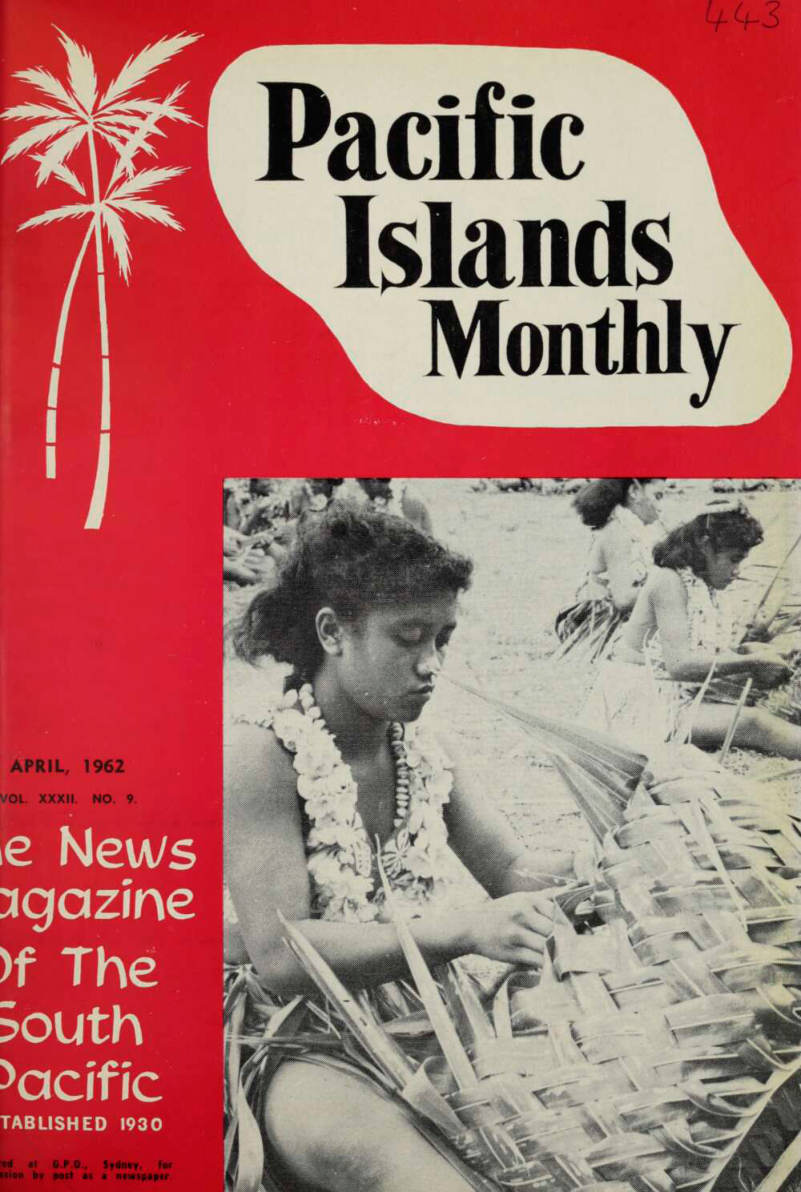 1
1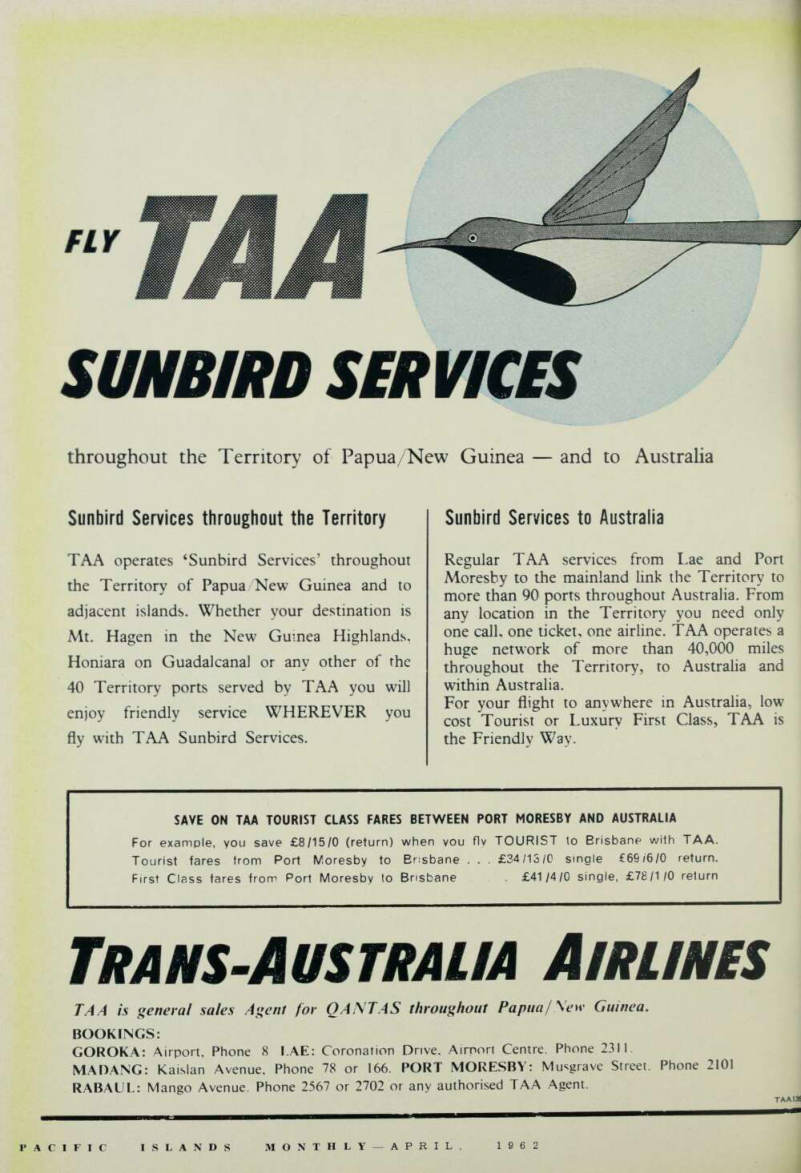 2
2 3
3 4
4 5
5 6
6 7
7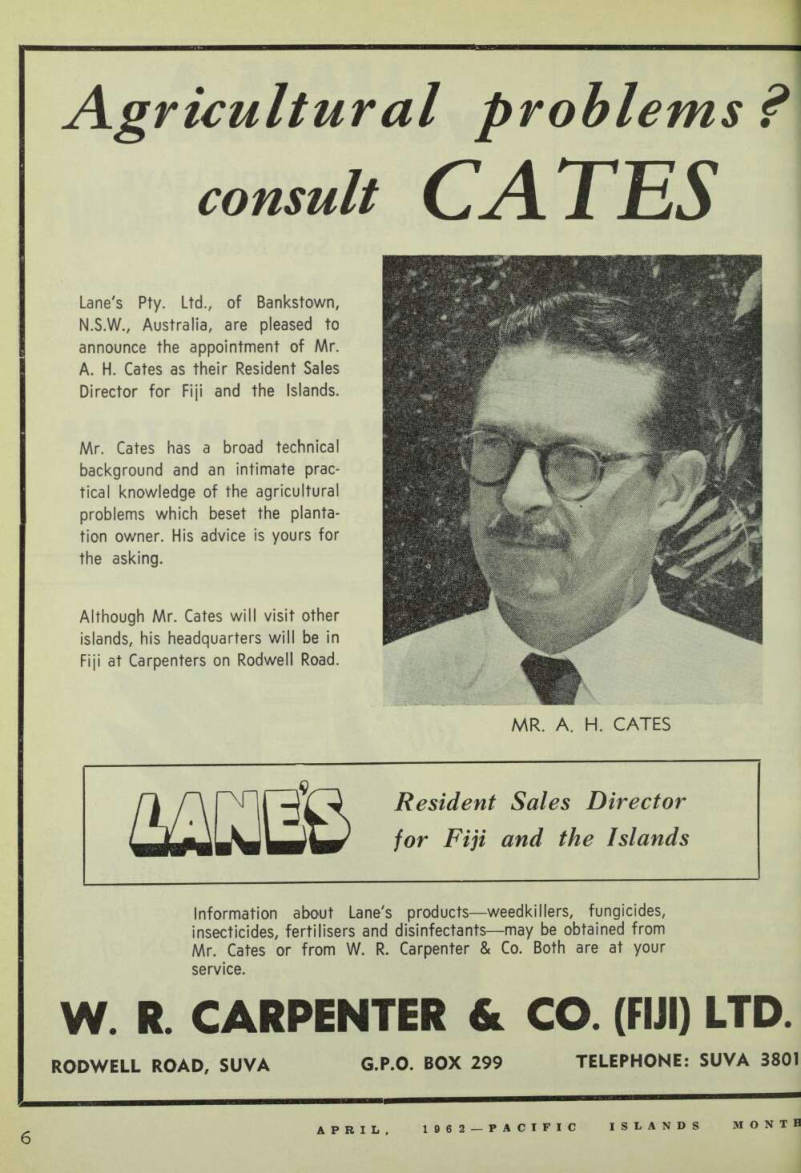 8
8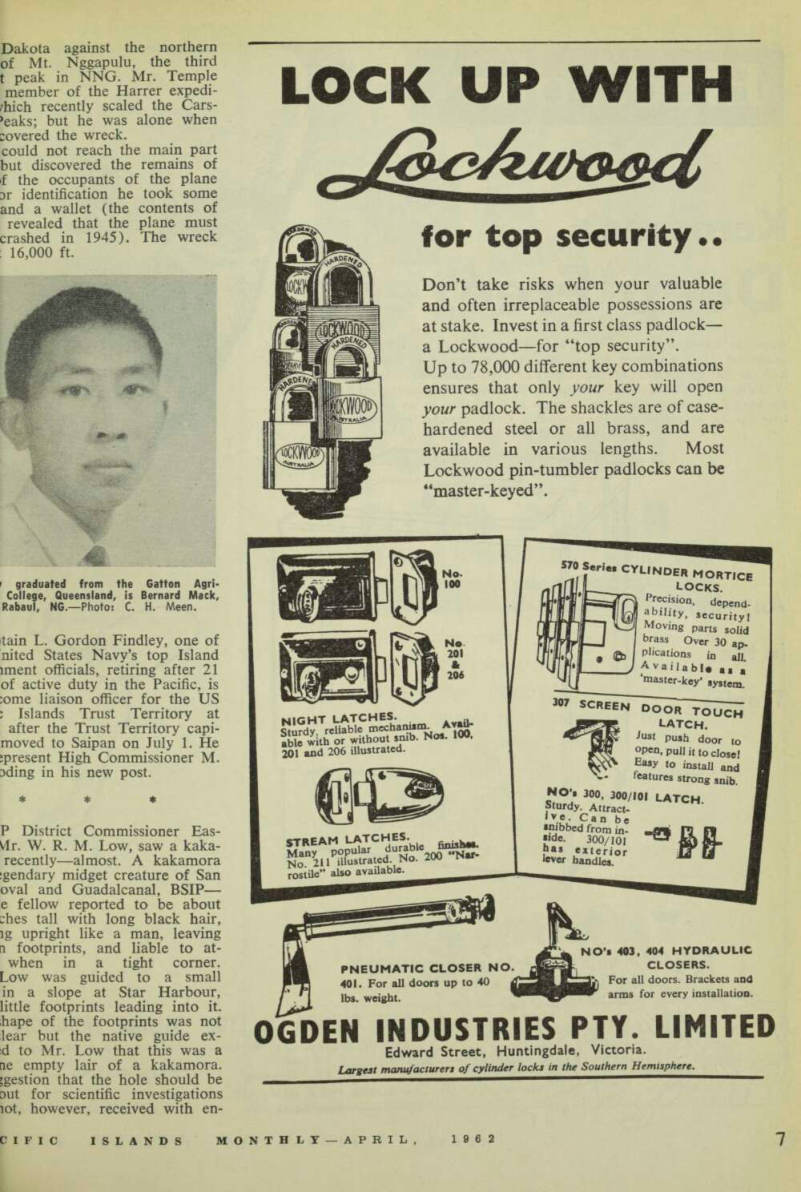 9
9 10
10 11
11 12
12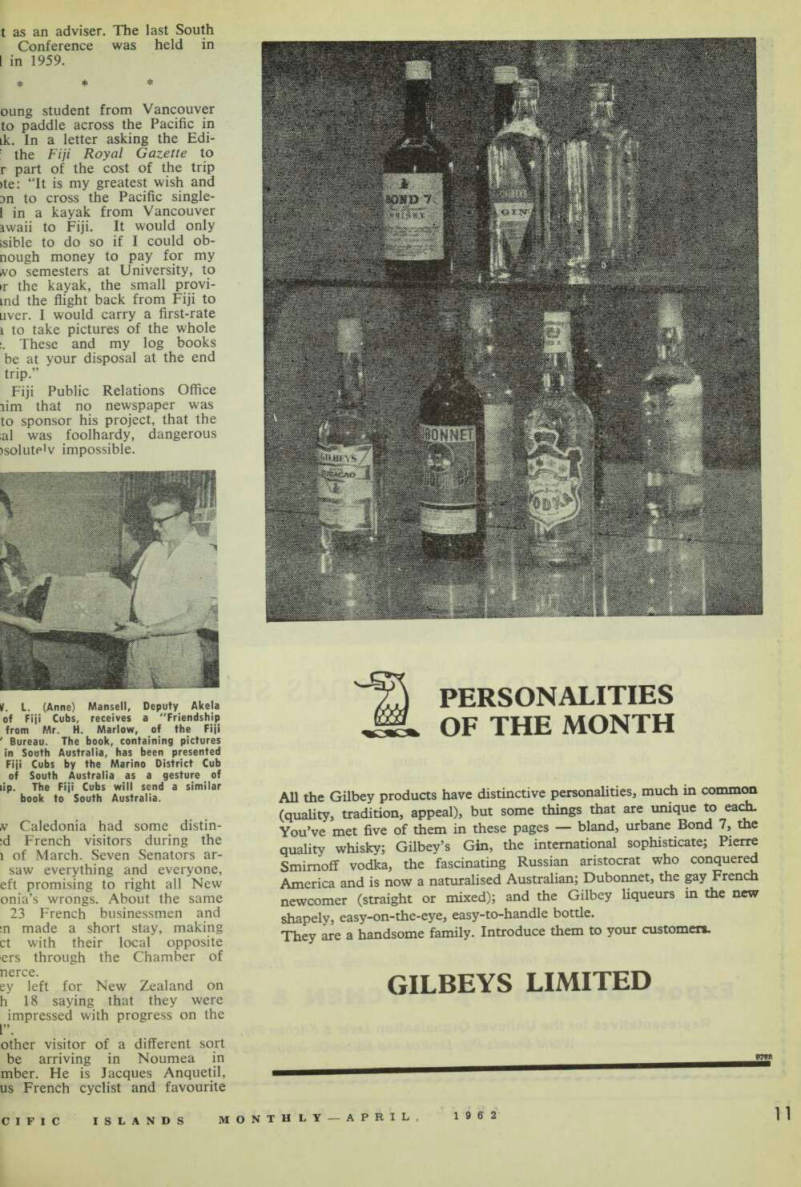 13
13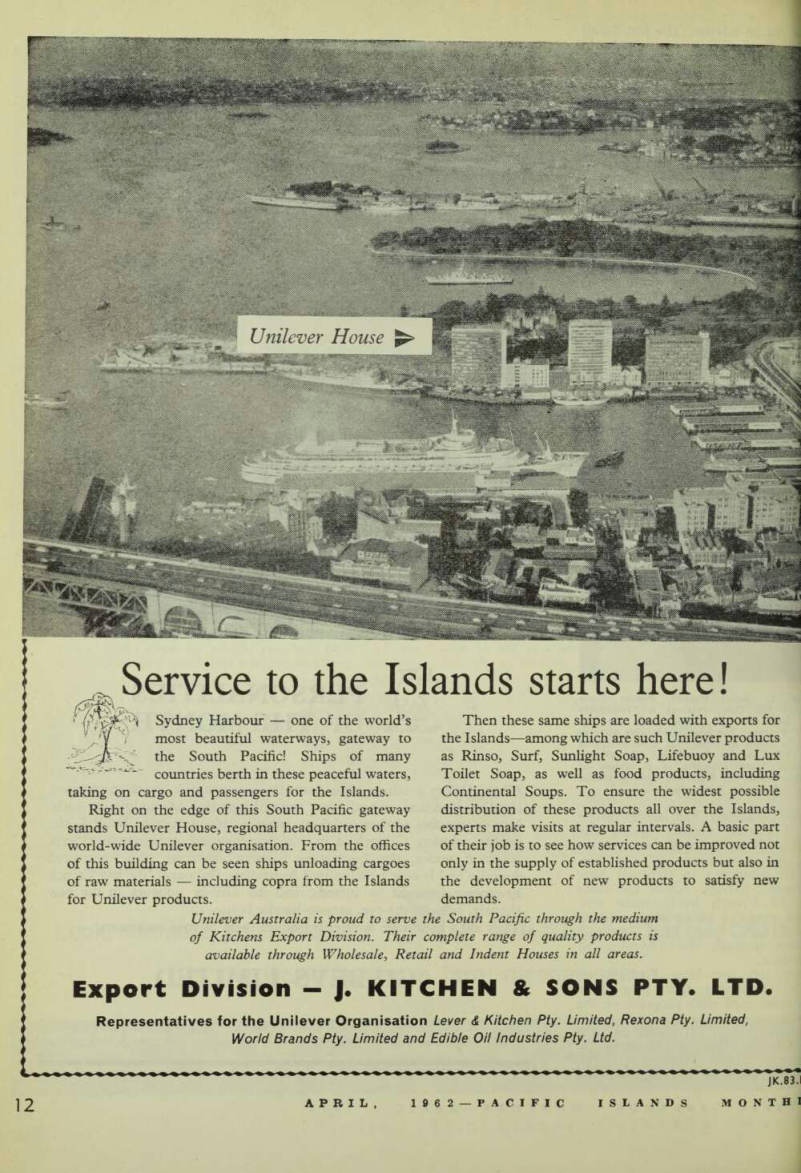 14
14 15
15 16
16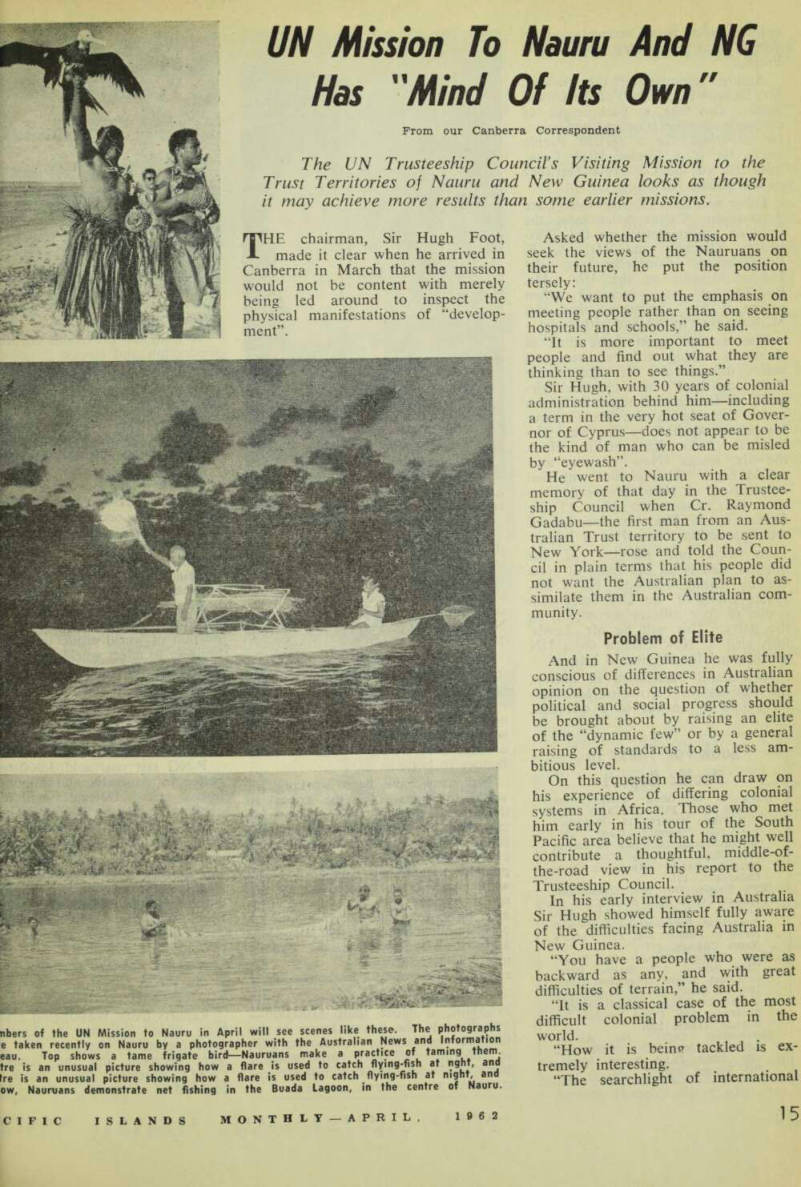 17
17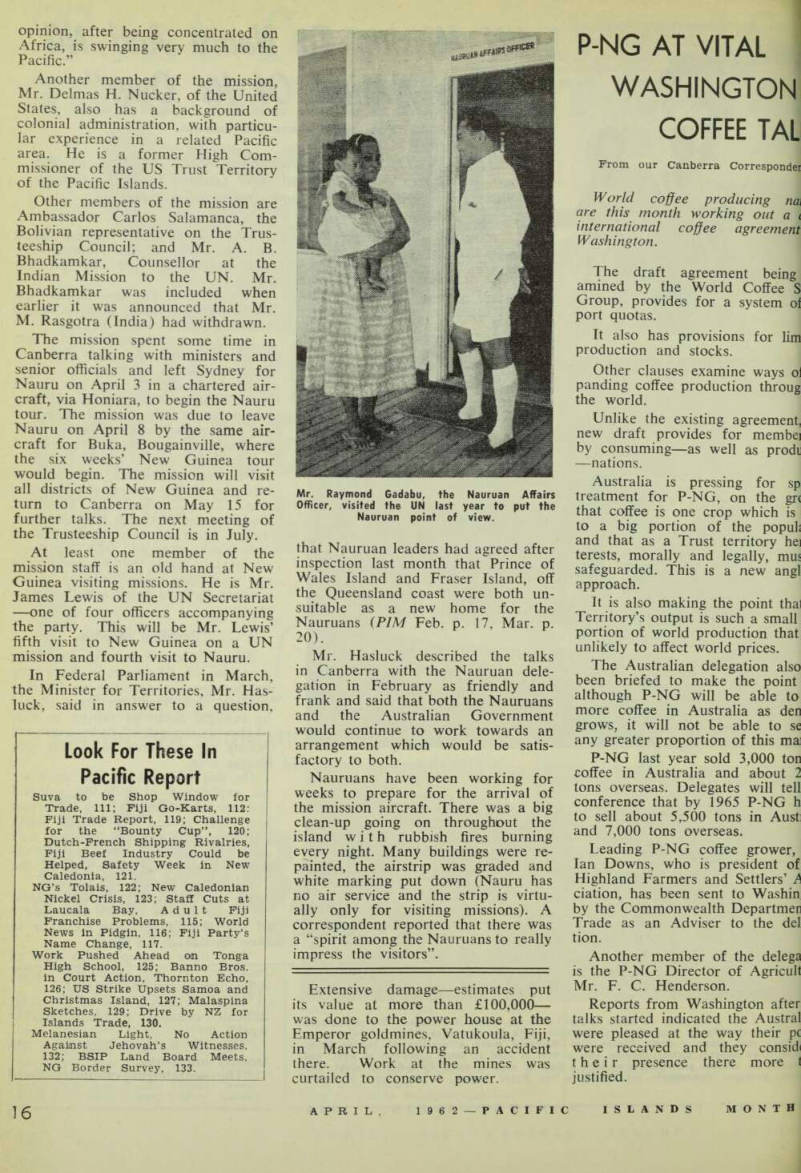 18
18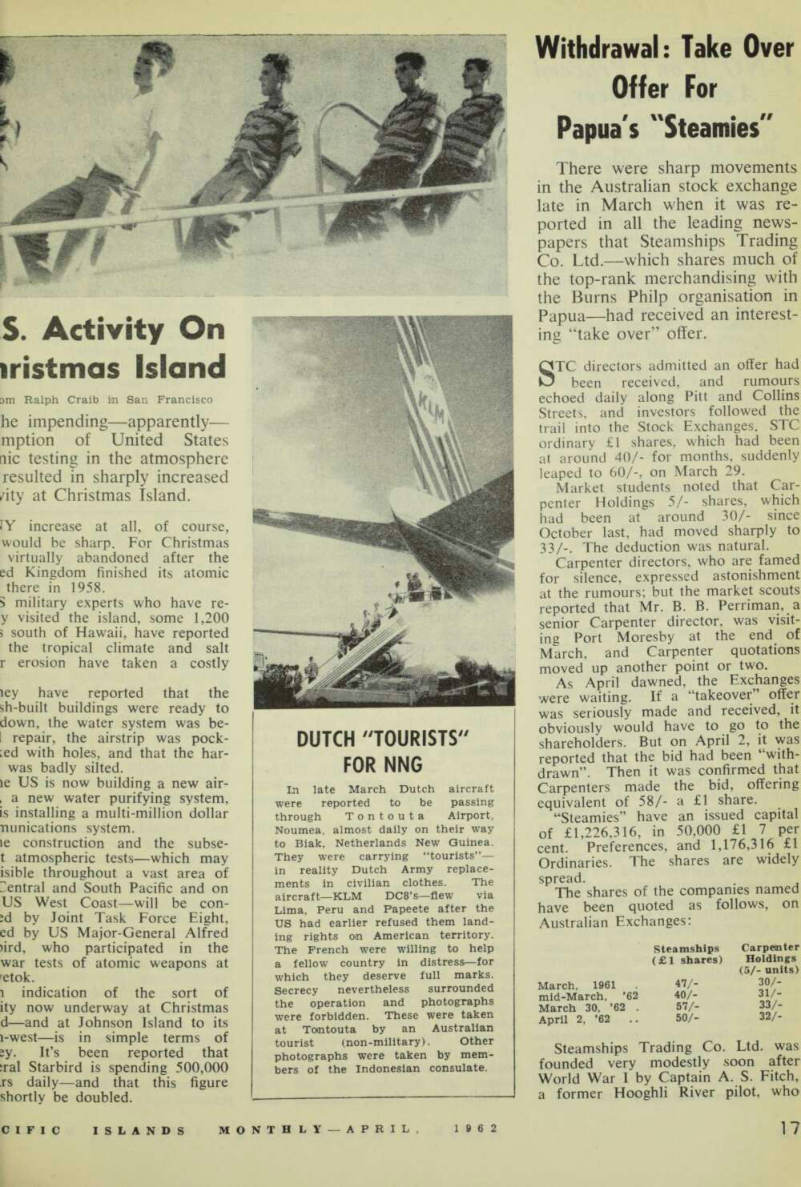 19
19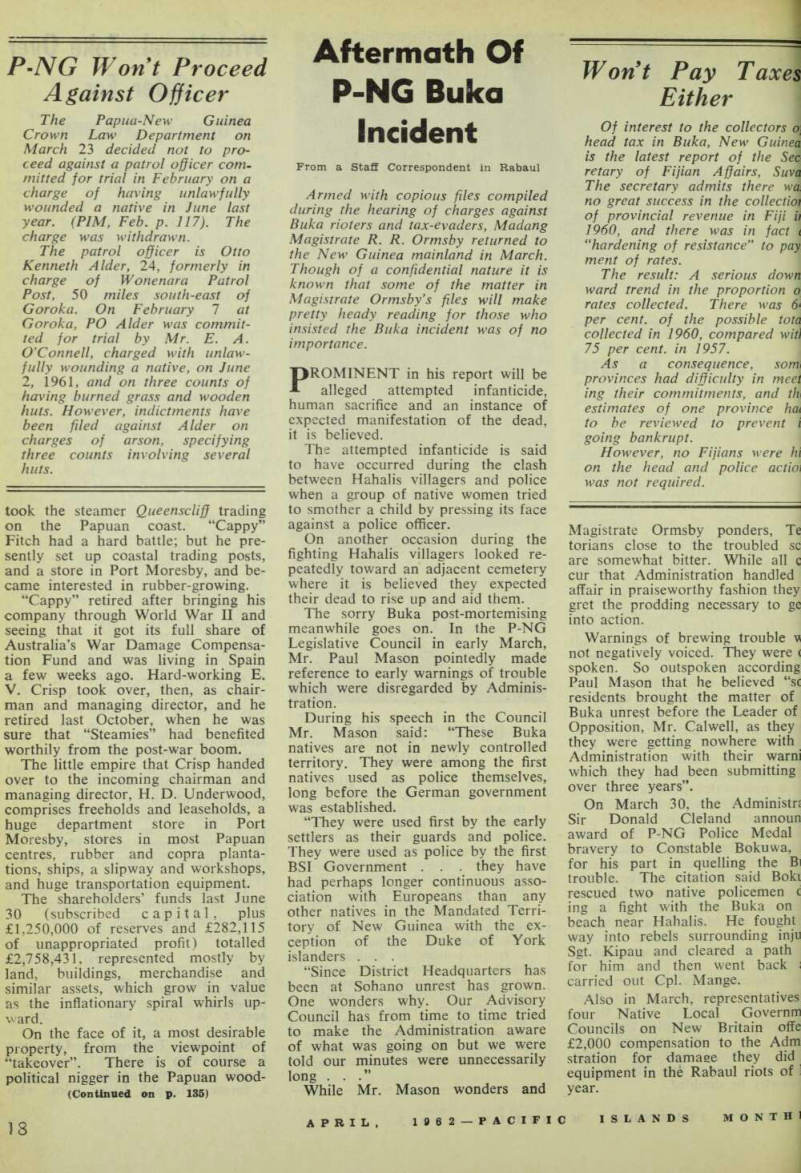 20
20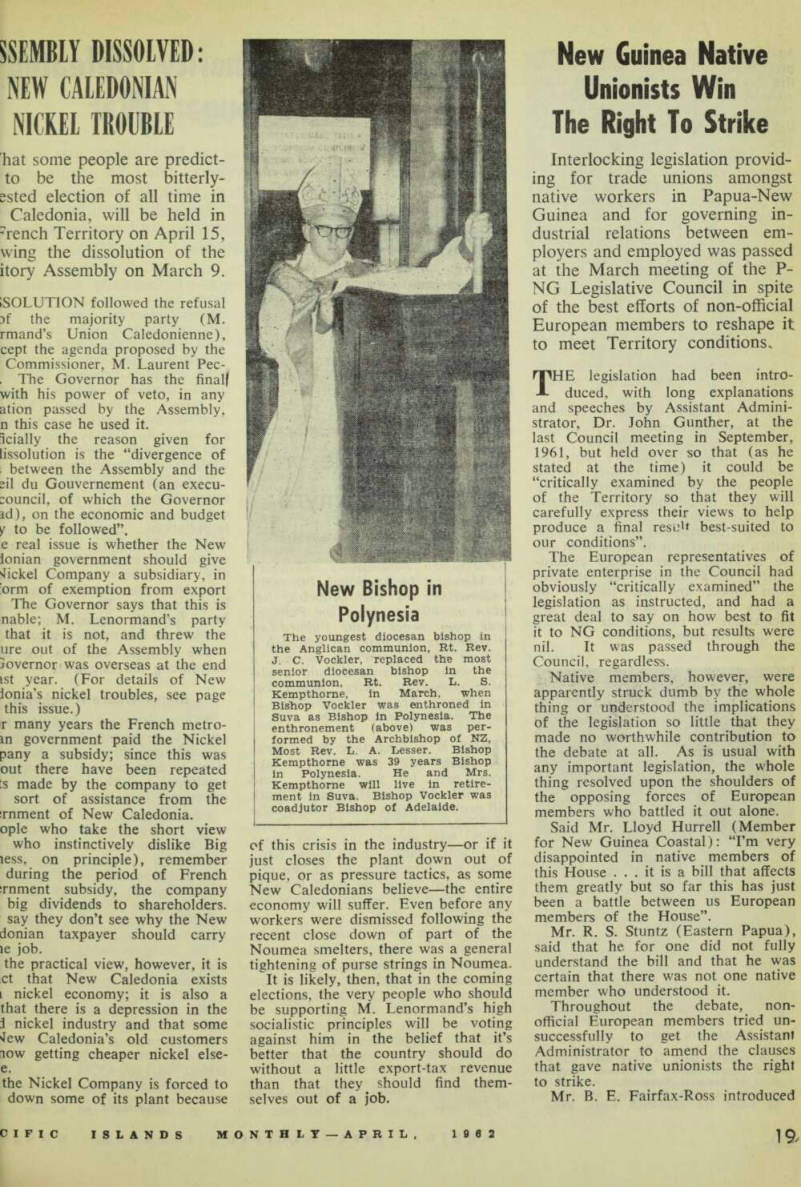 21
21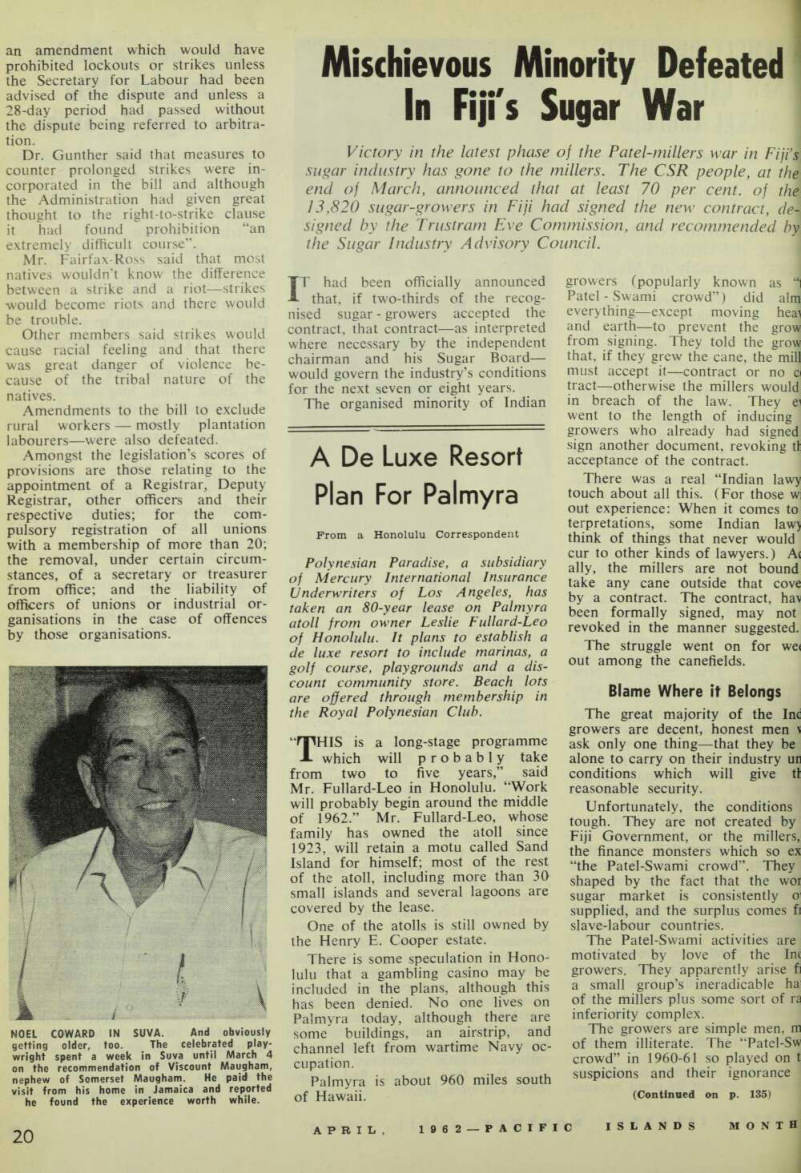 22
22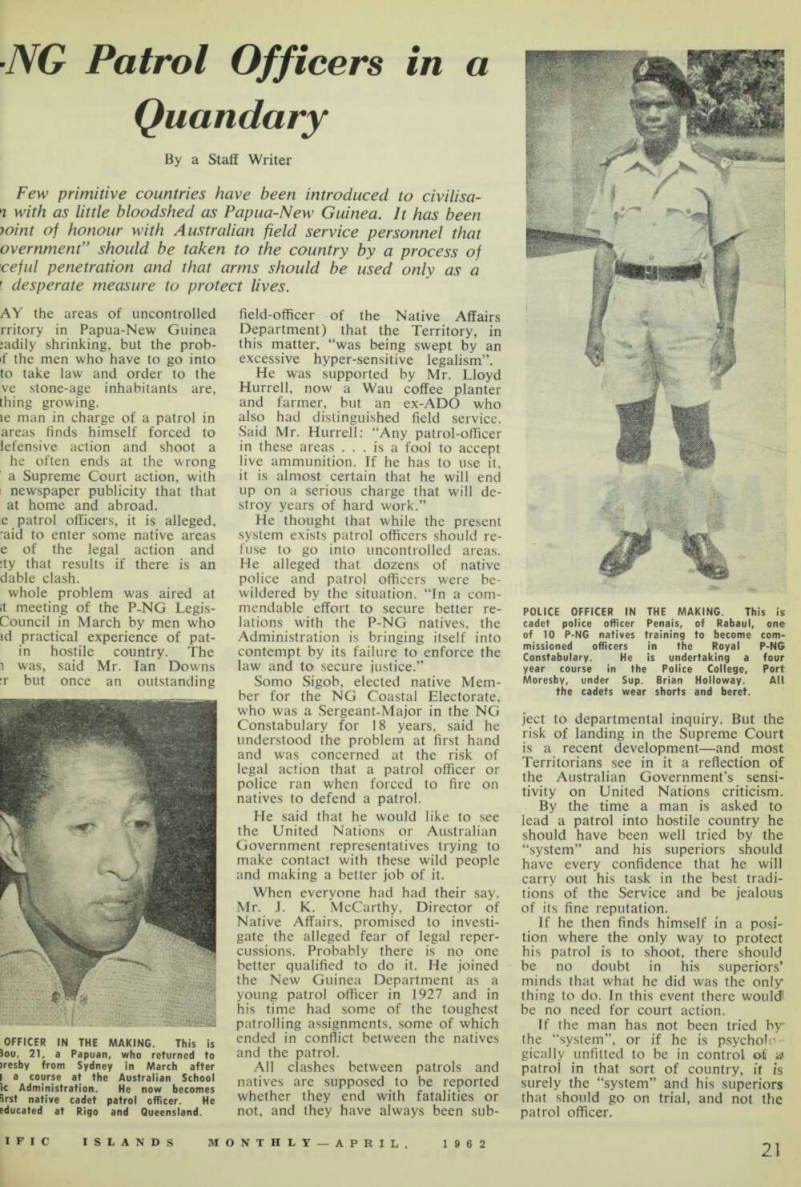 23
23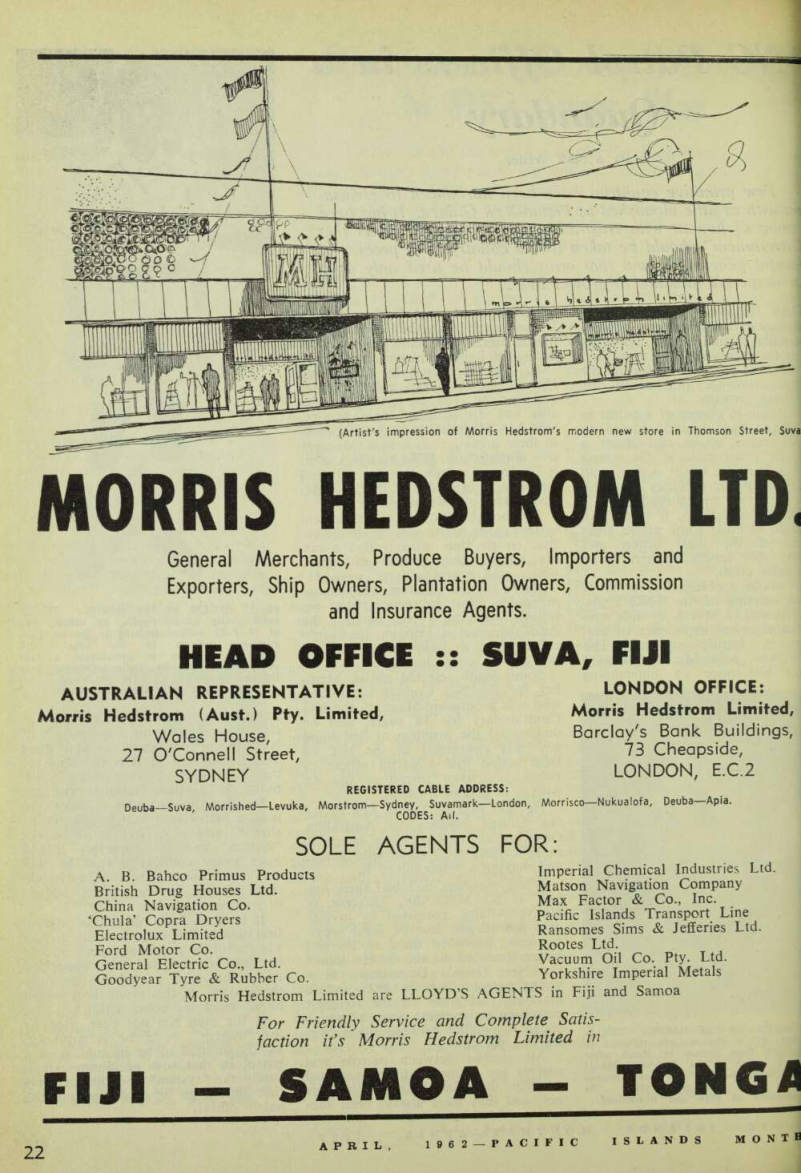 24
24 25
25 26
26 27
27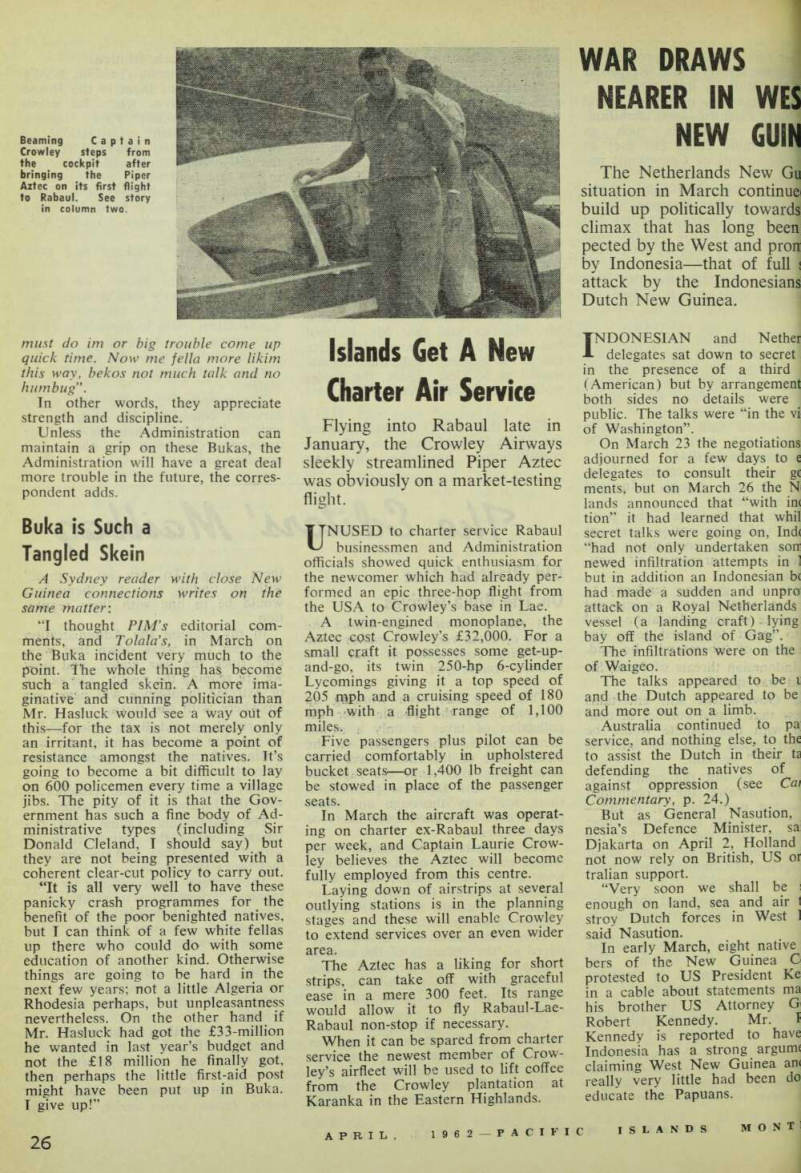 28
28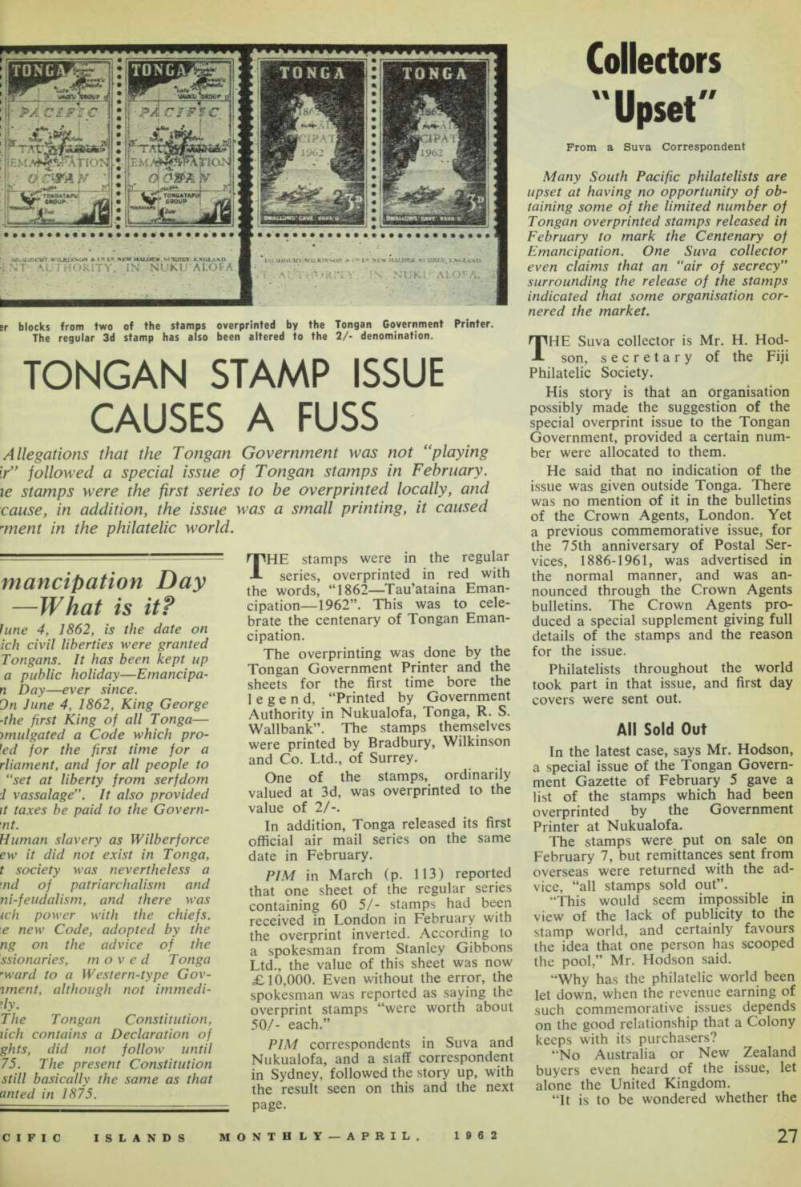 29
29 30
30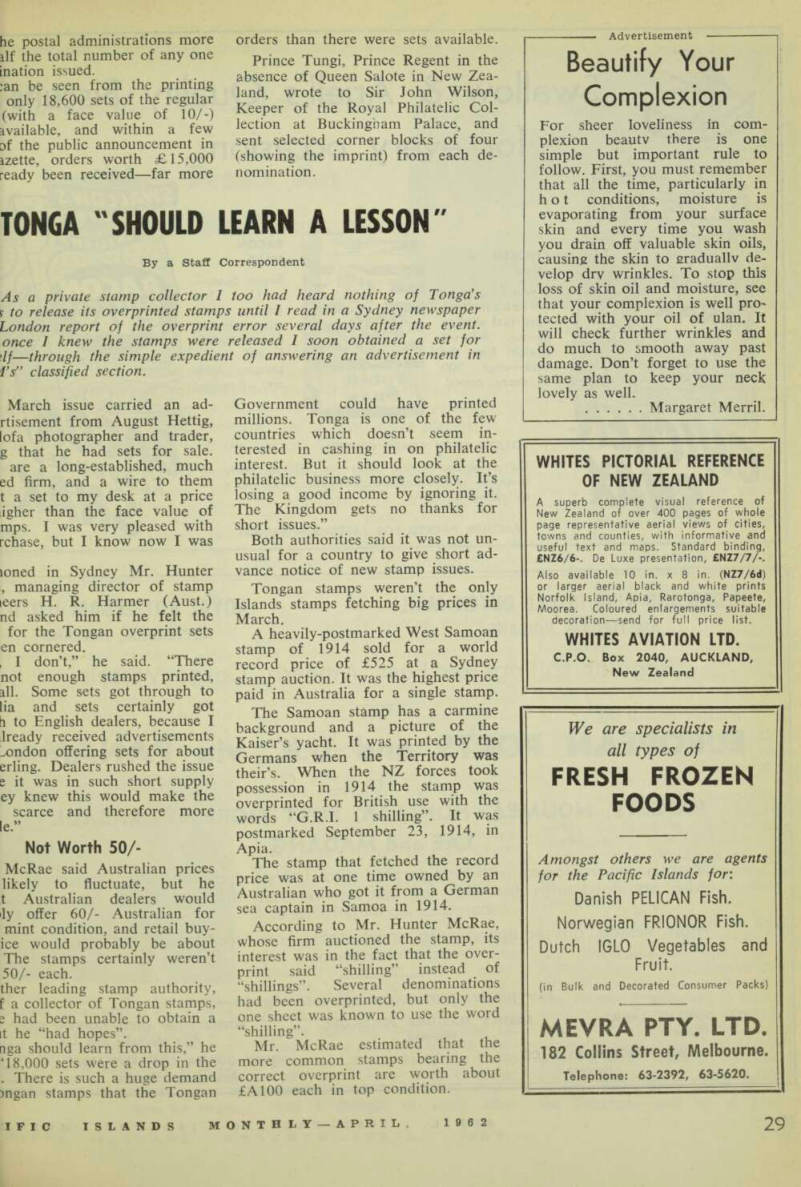 31
31 32
32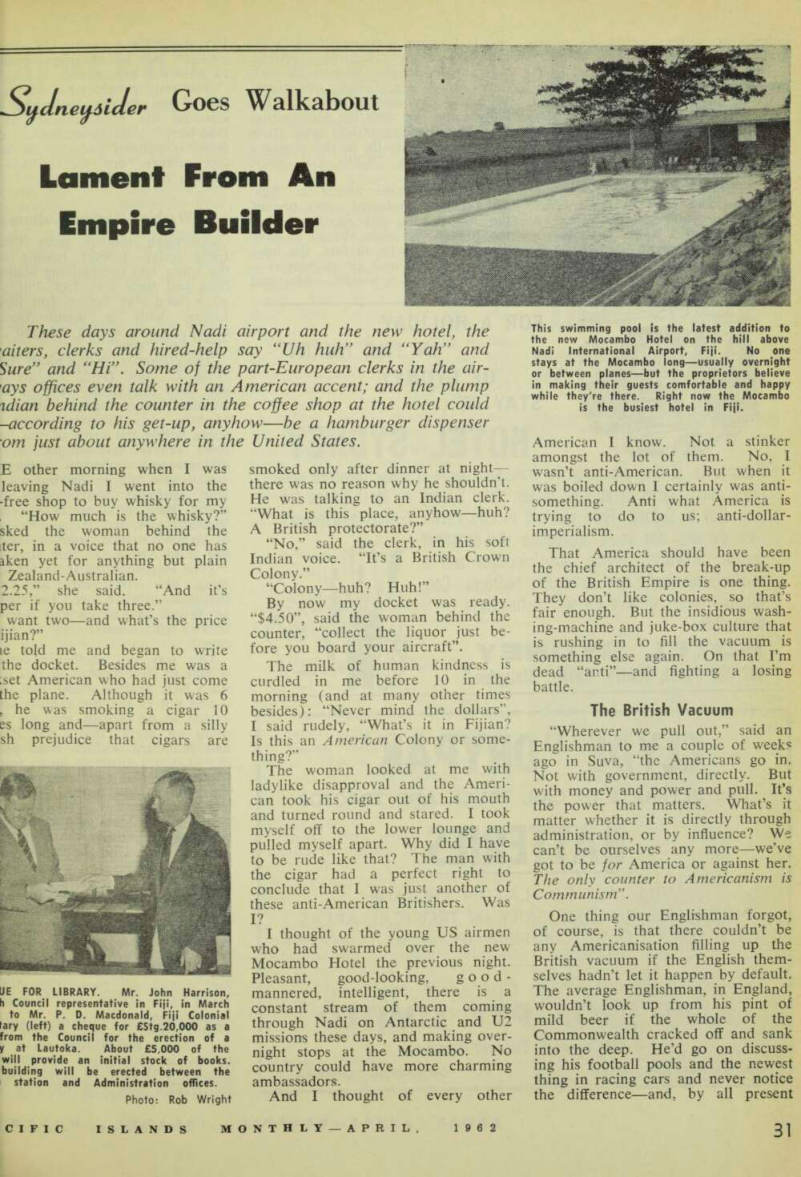 33
33 34
34 35
35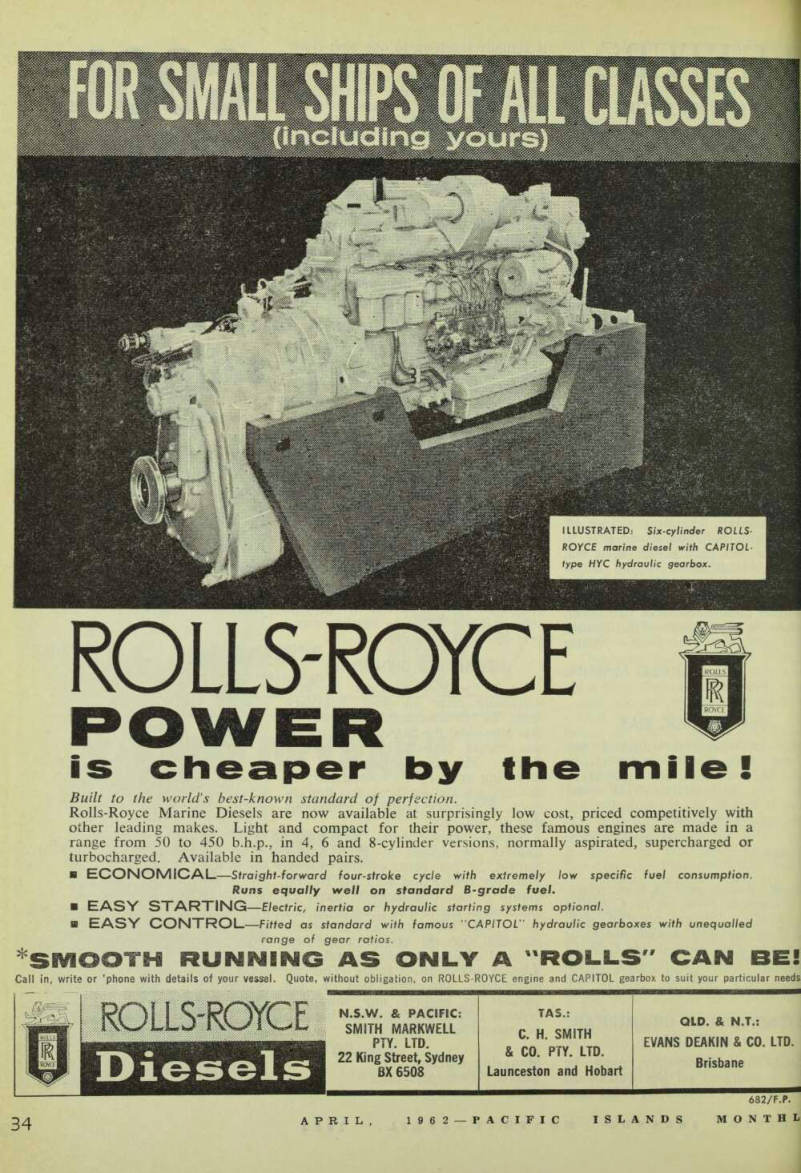 36
36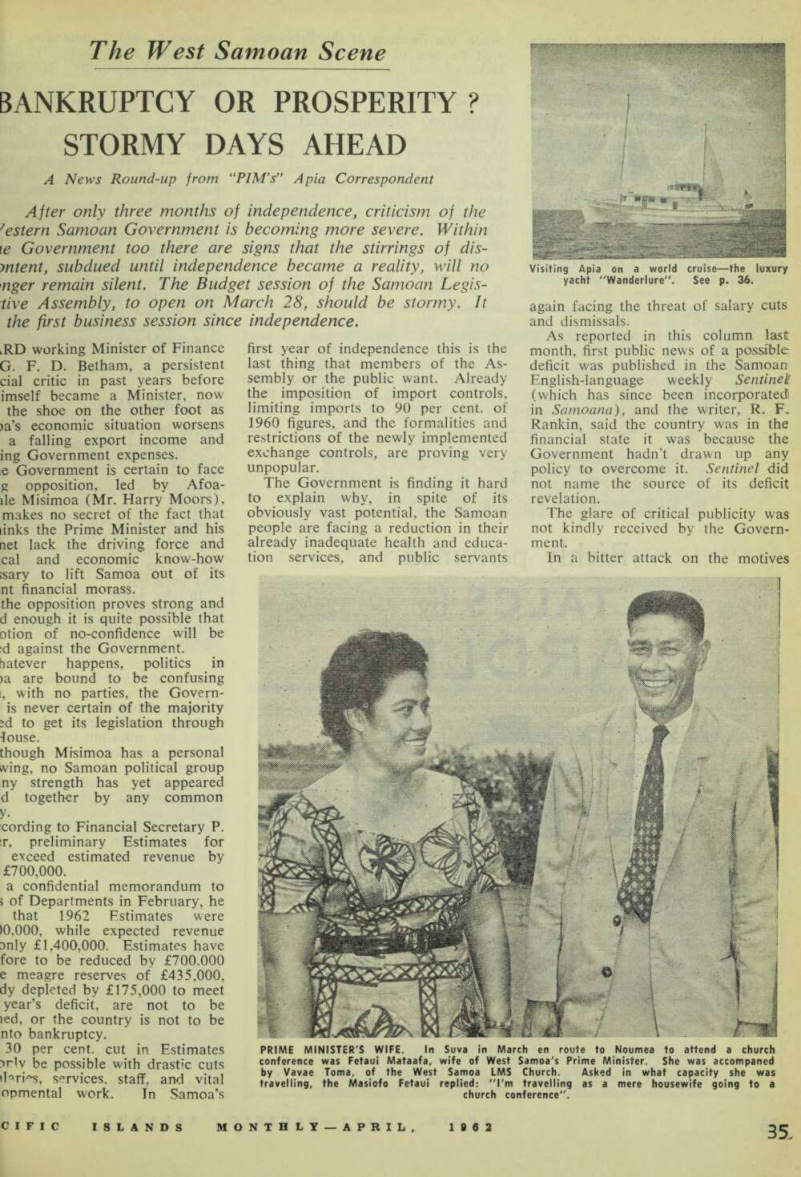 37
37 38
38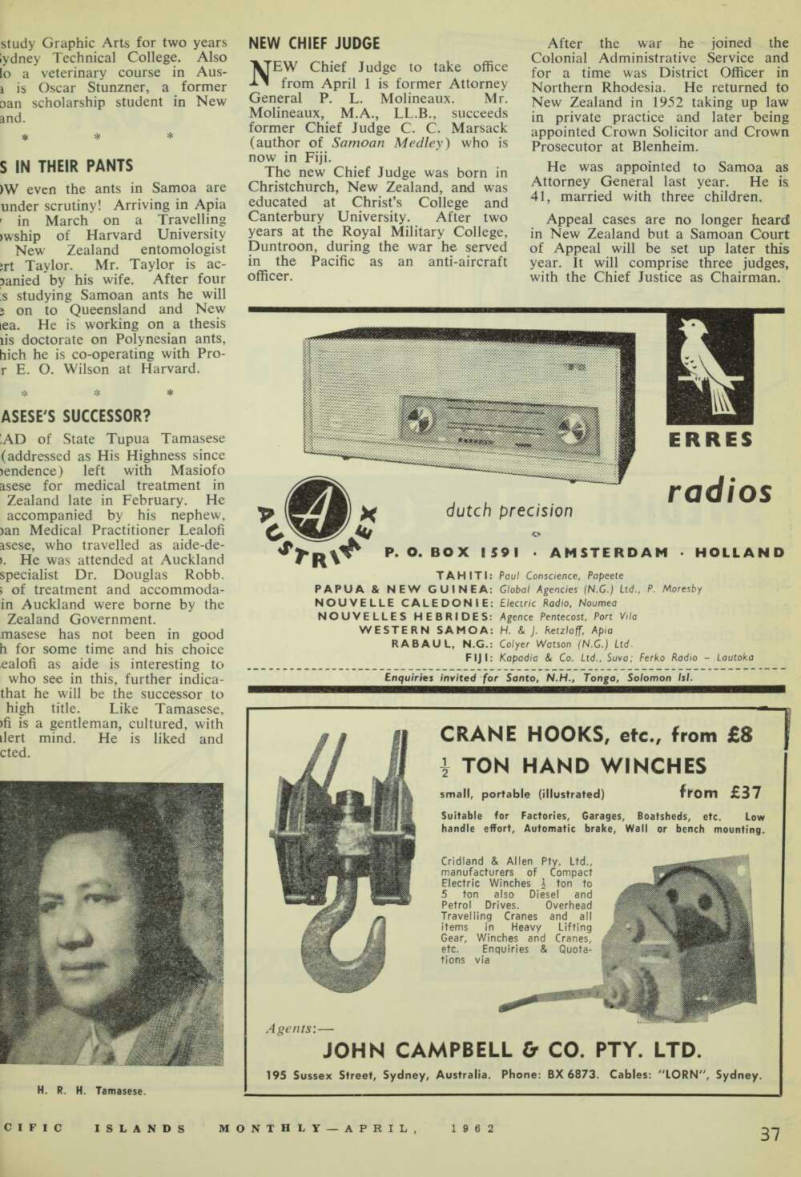 39
39 40
40 41
41 42
42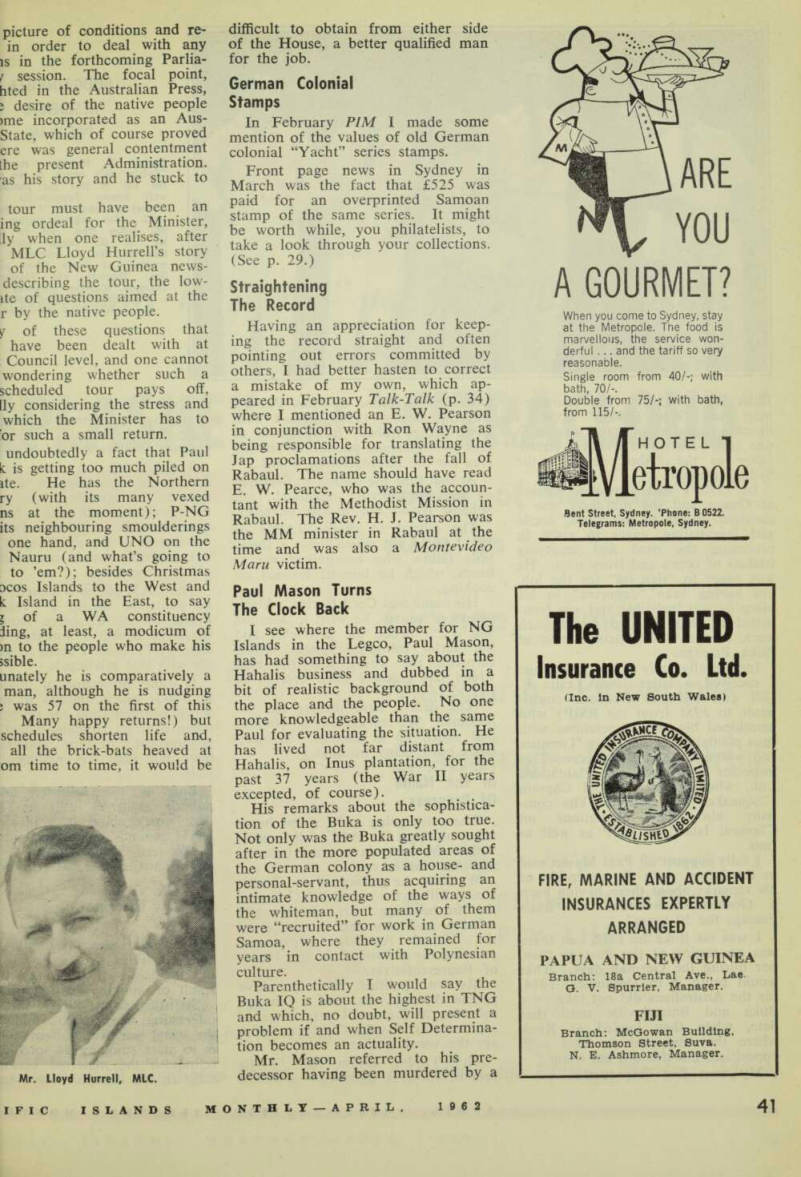 43
43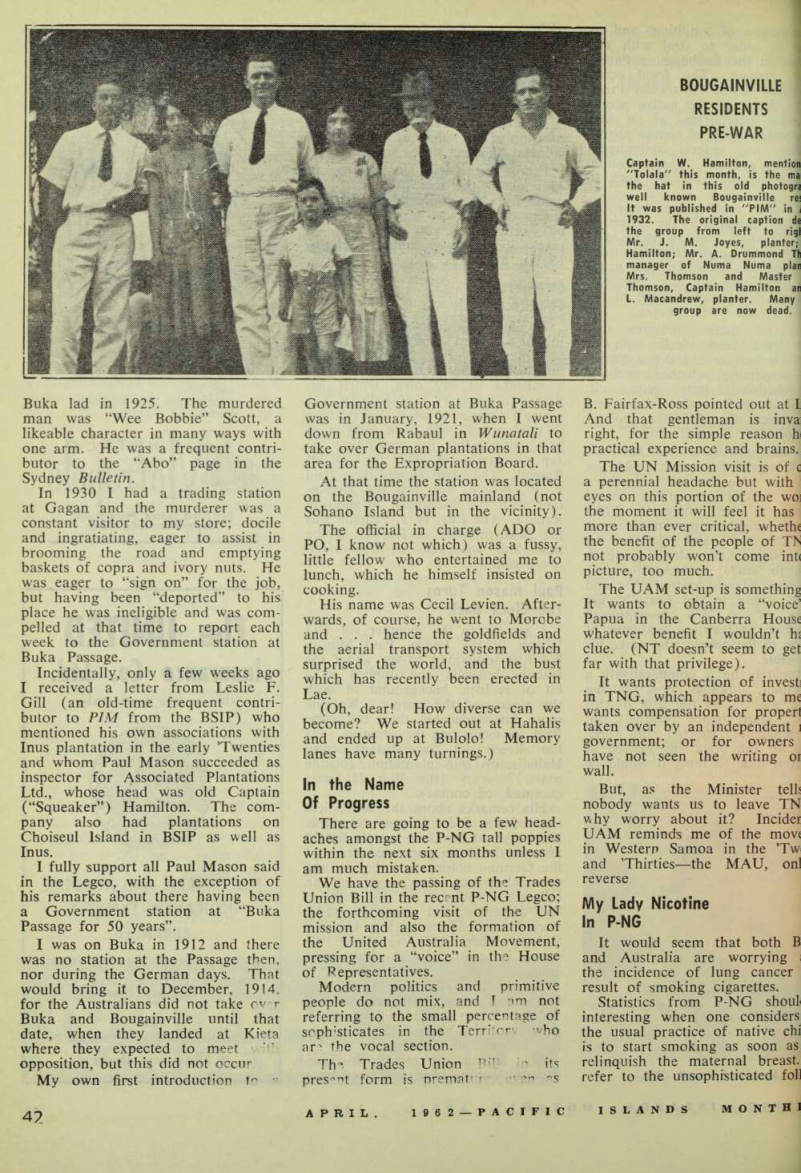 44
44 45
45 46
46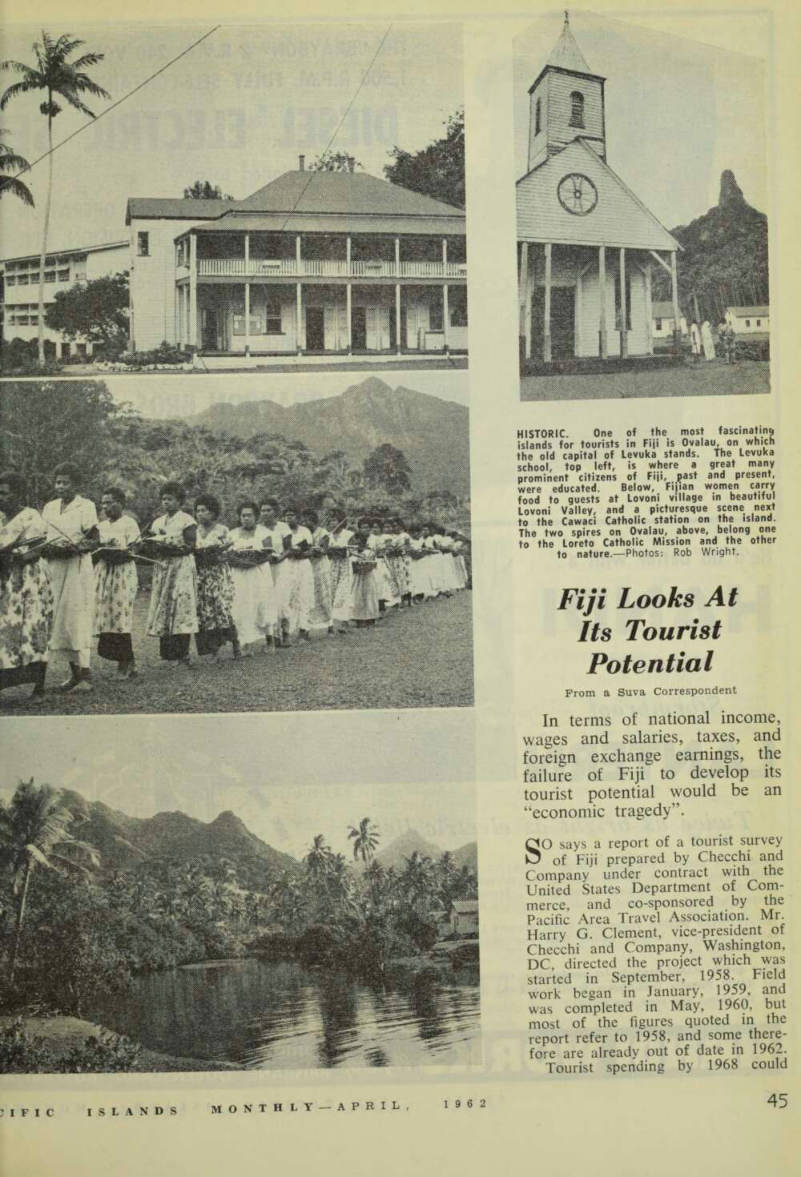 47
47 48
48 49
49 50
50 51
51 52
52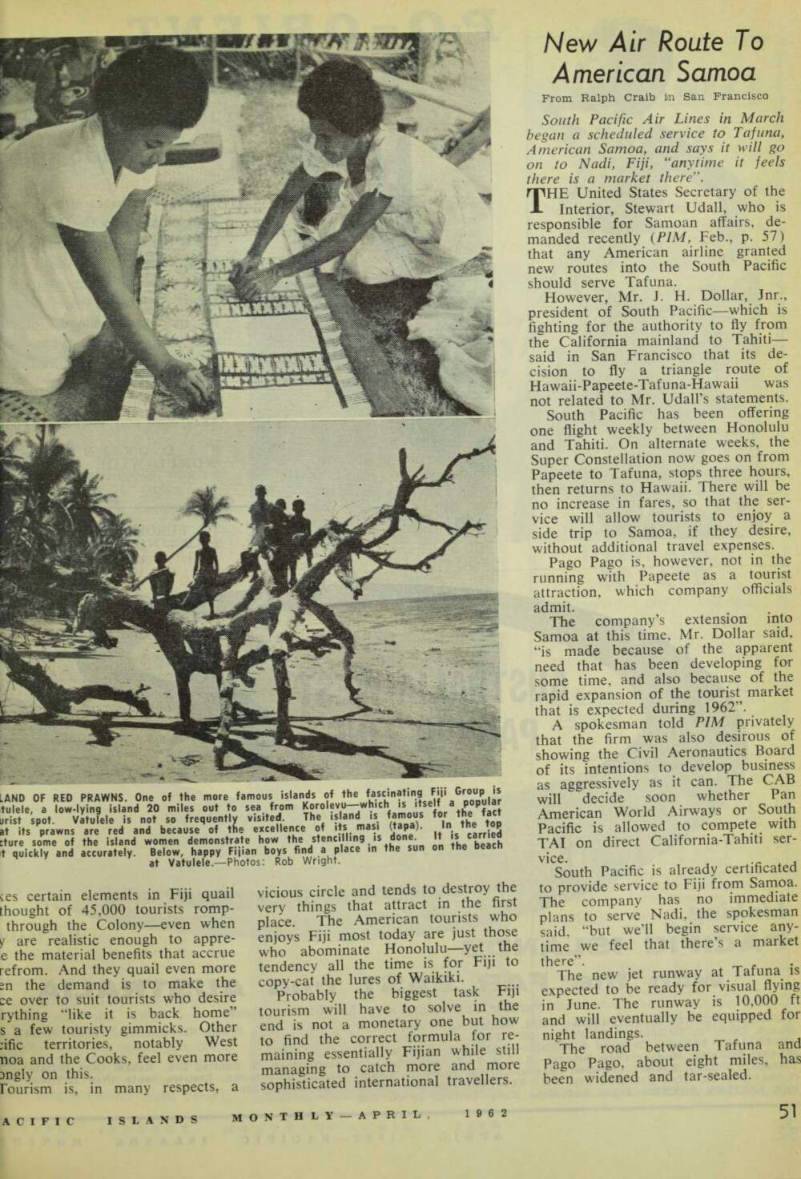 53
53 54
54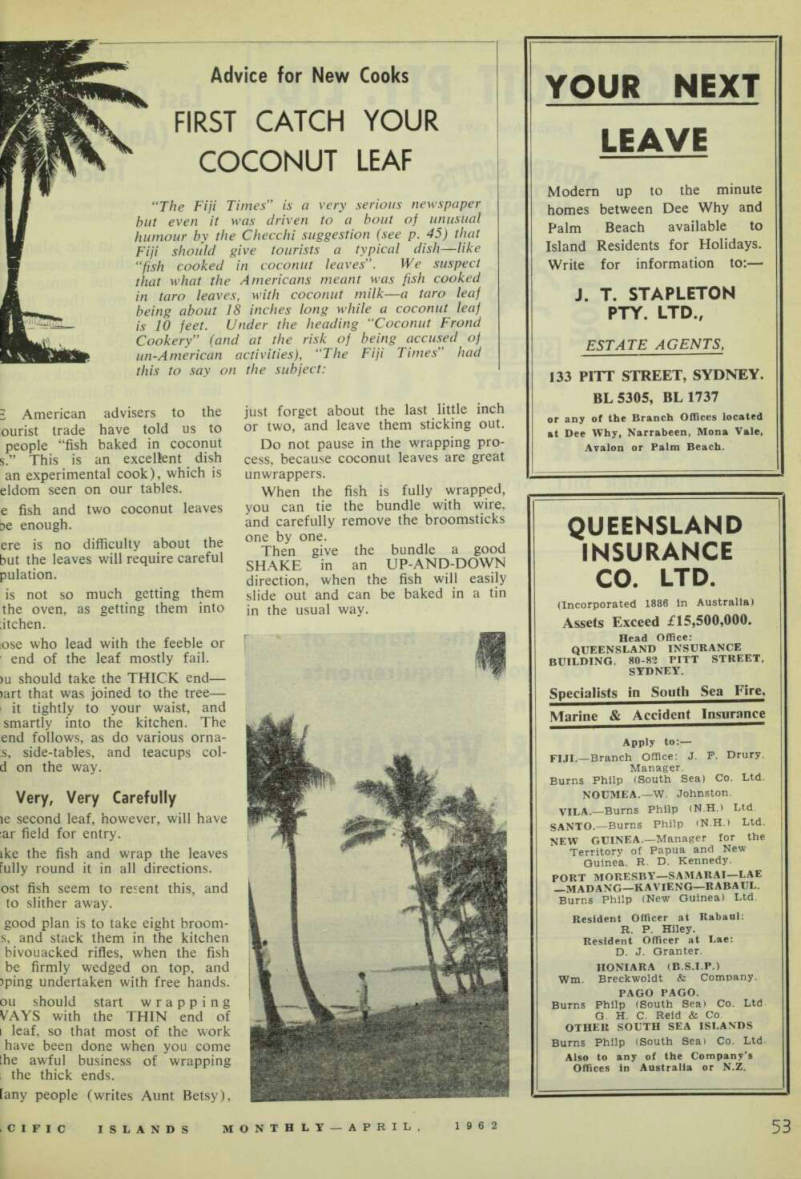 55
55 56
56 57
57 58
58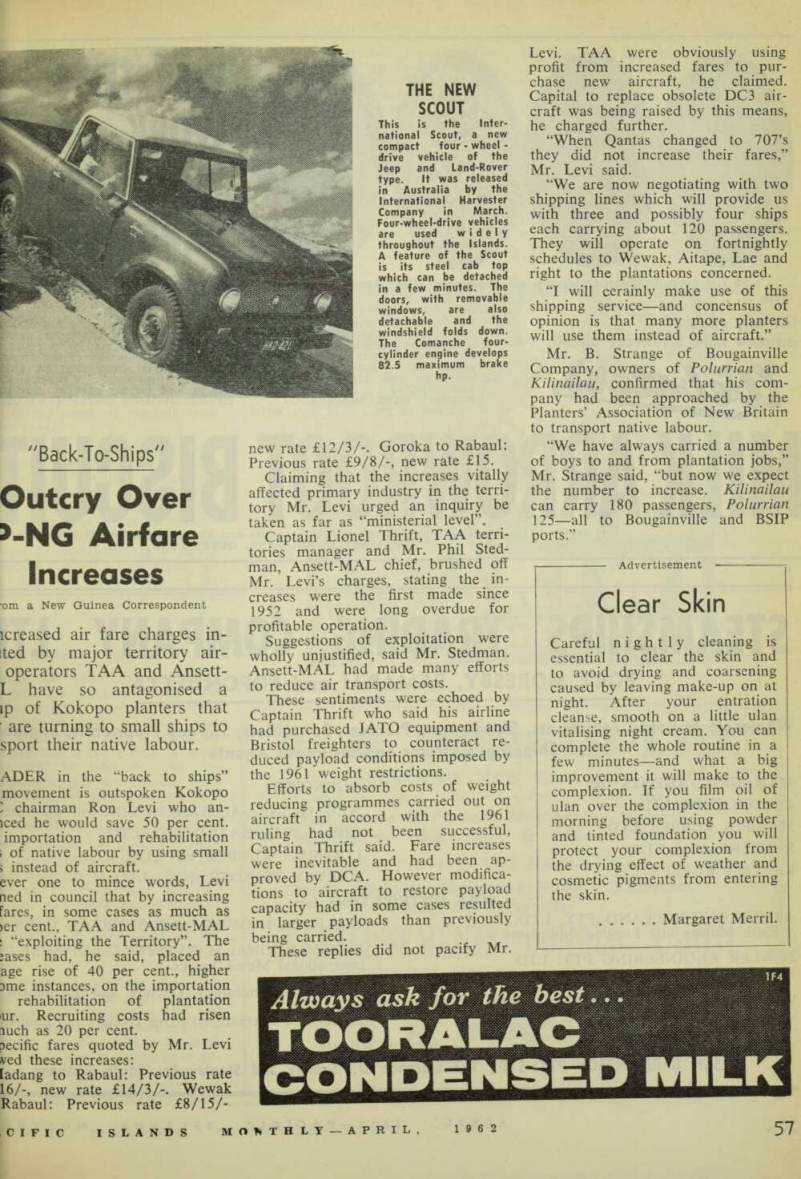 59
59 60
60 61
61 62
62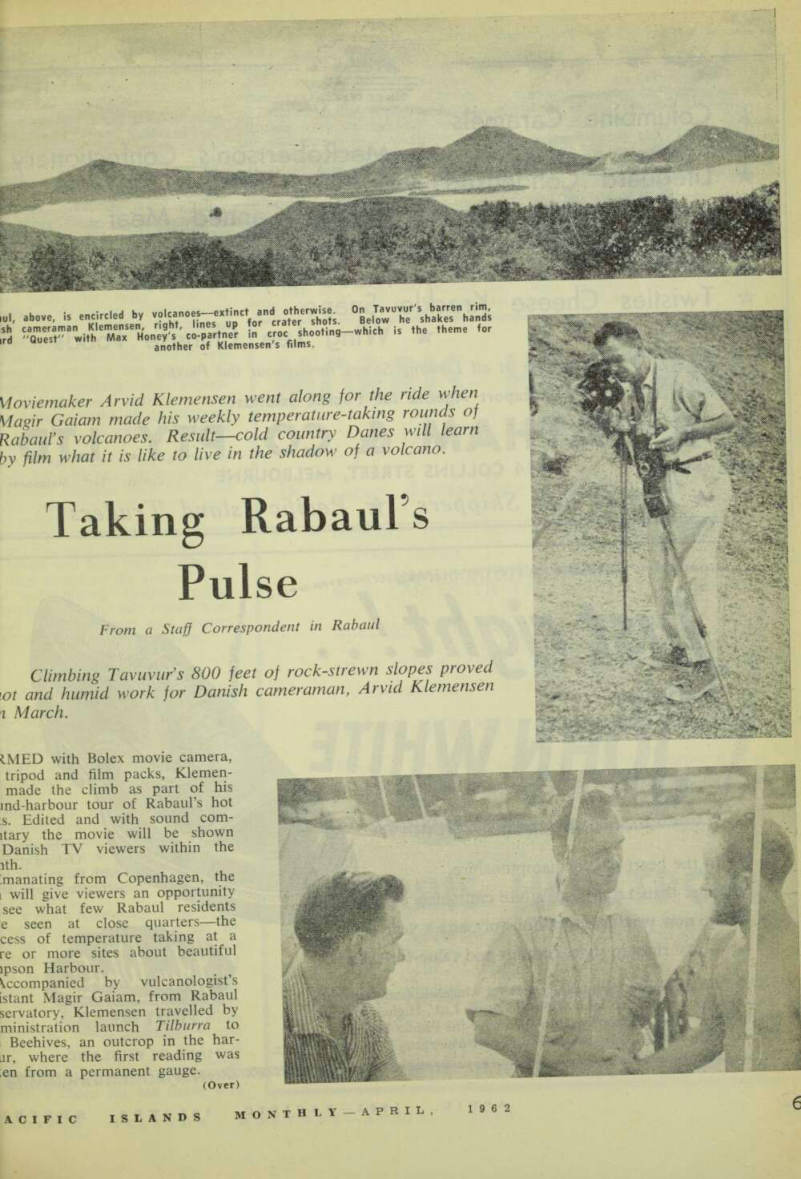 63
63 64
64 65
65 66
66 67
67 68
68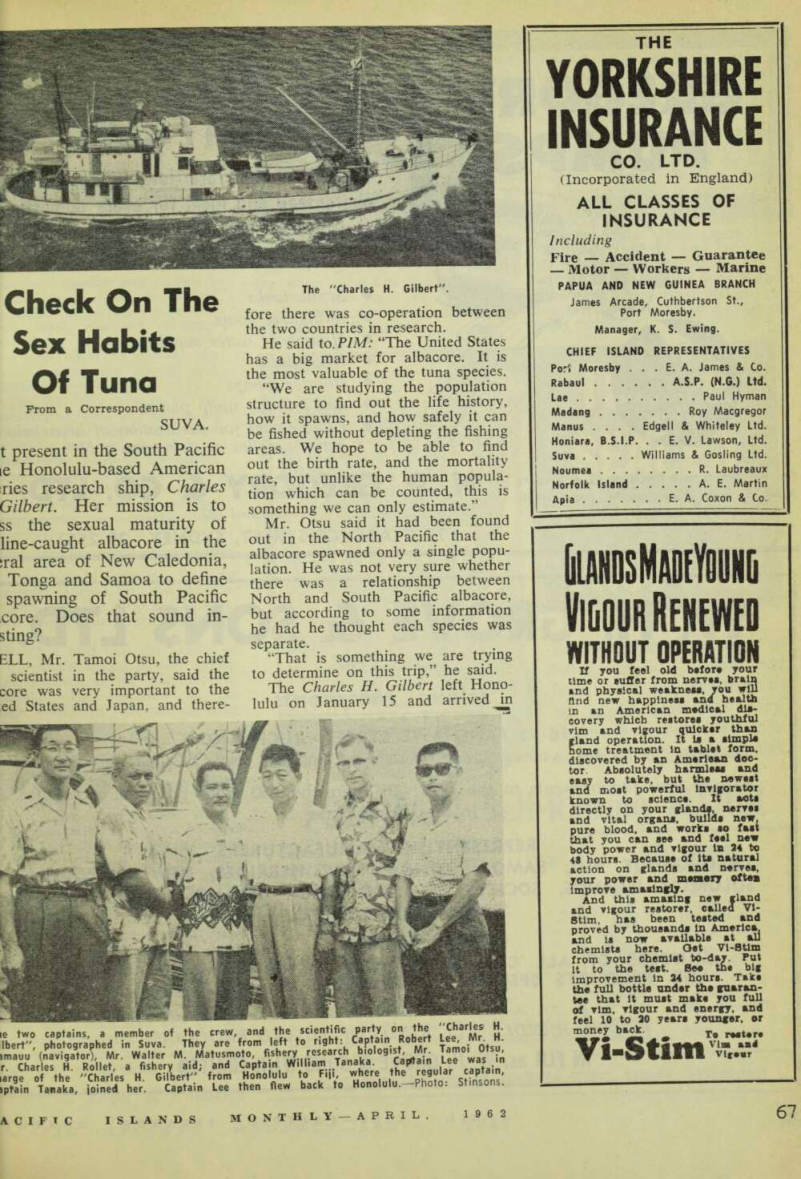 69
69 70
70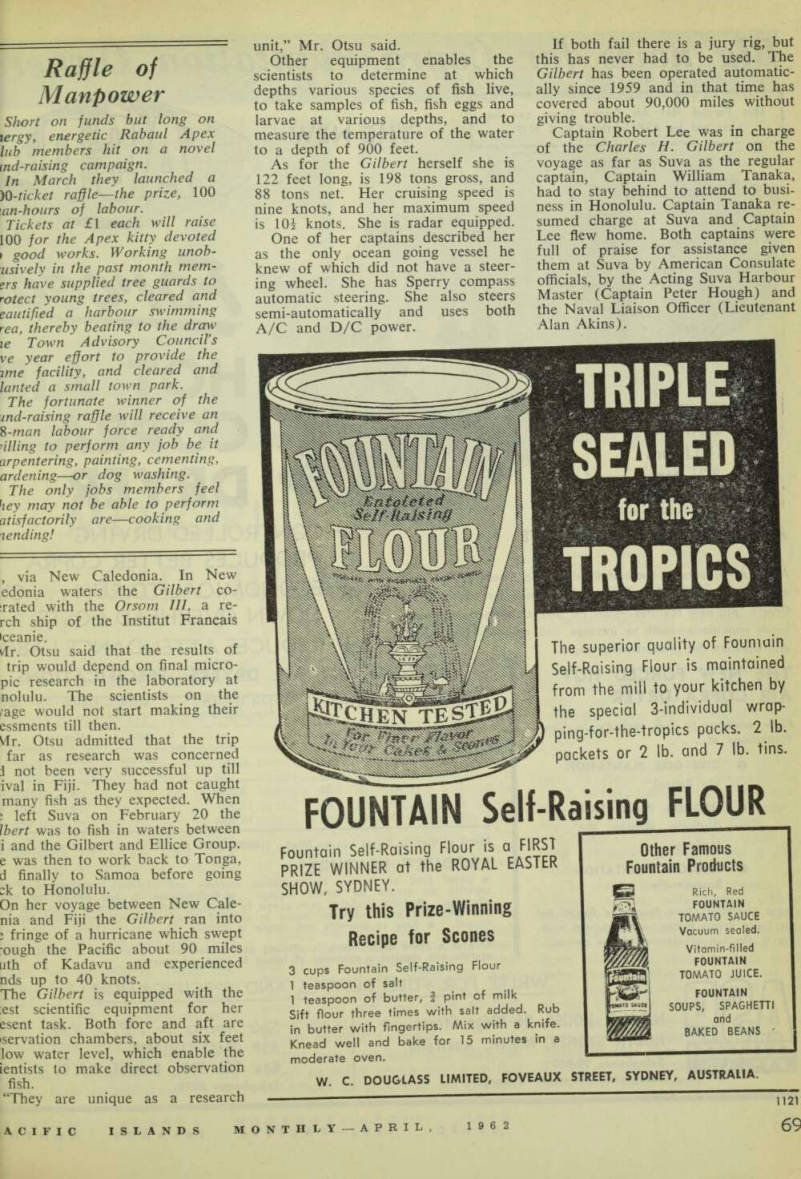 71
71 72
72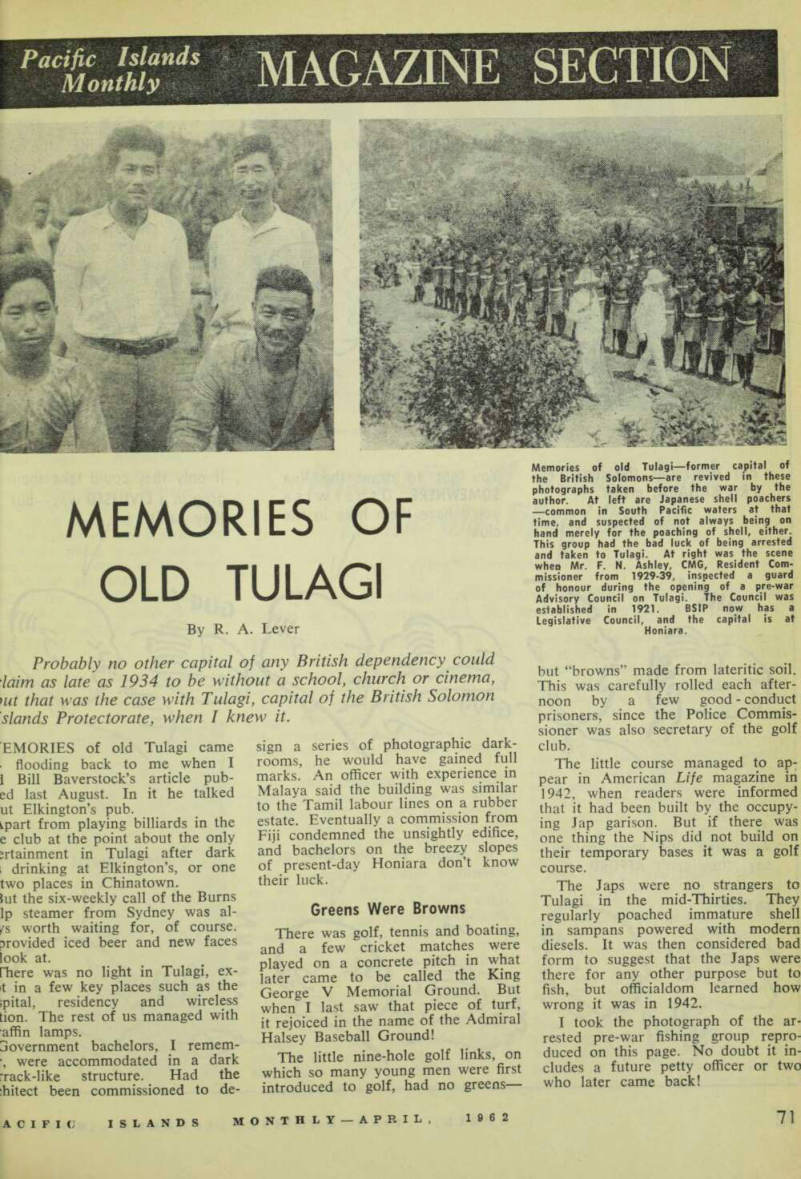 73
73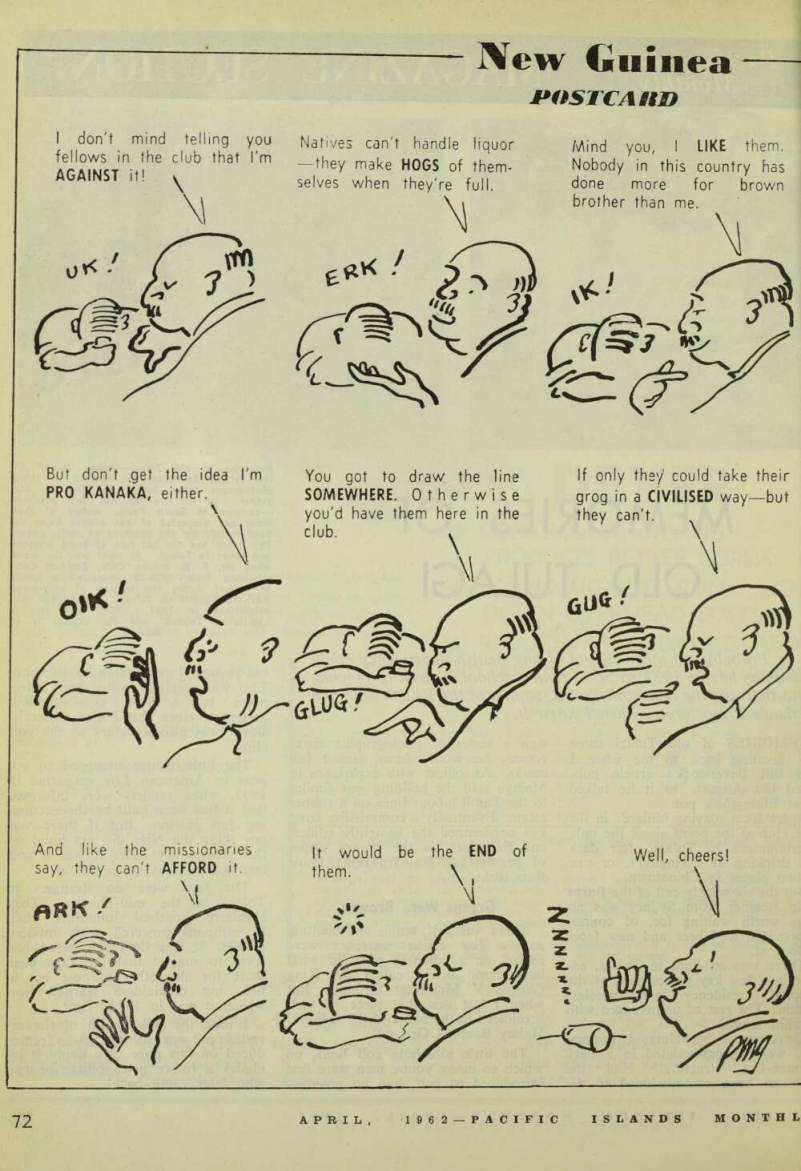 74
74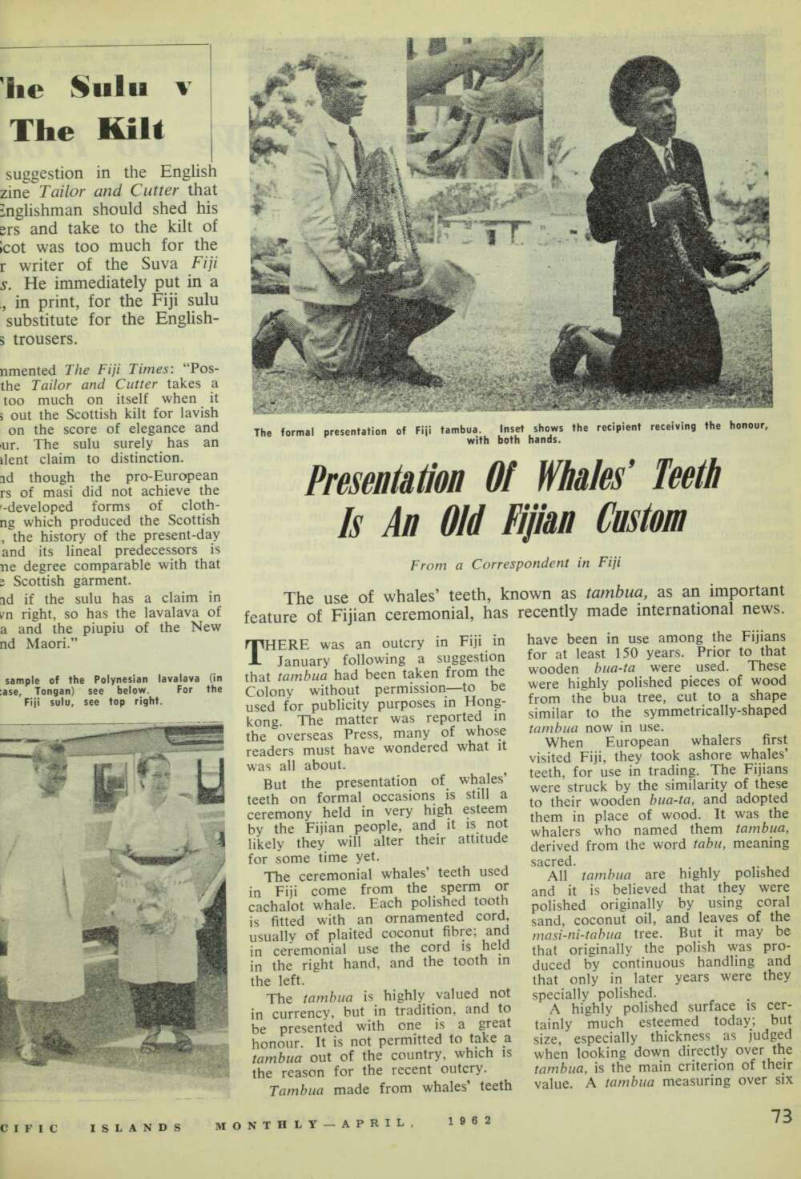 75
75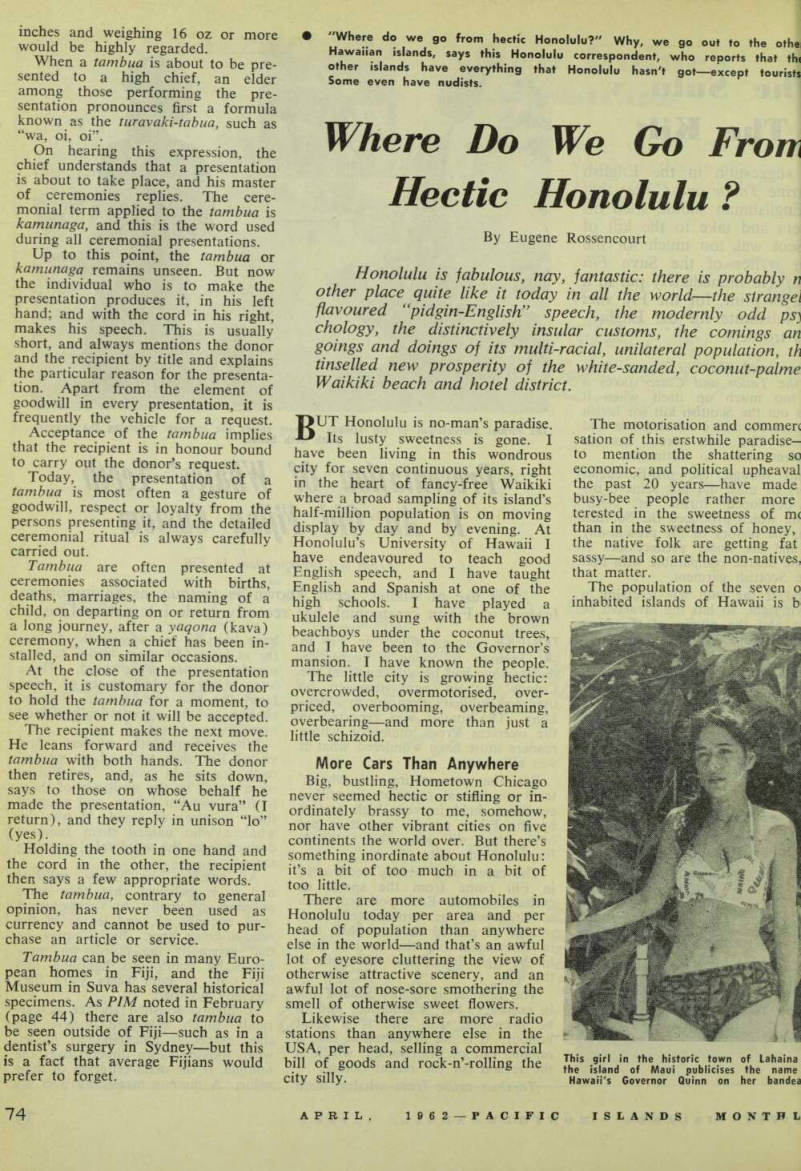 76
76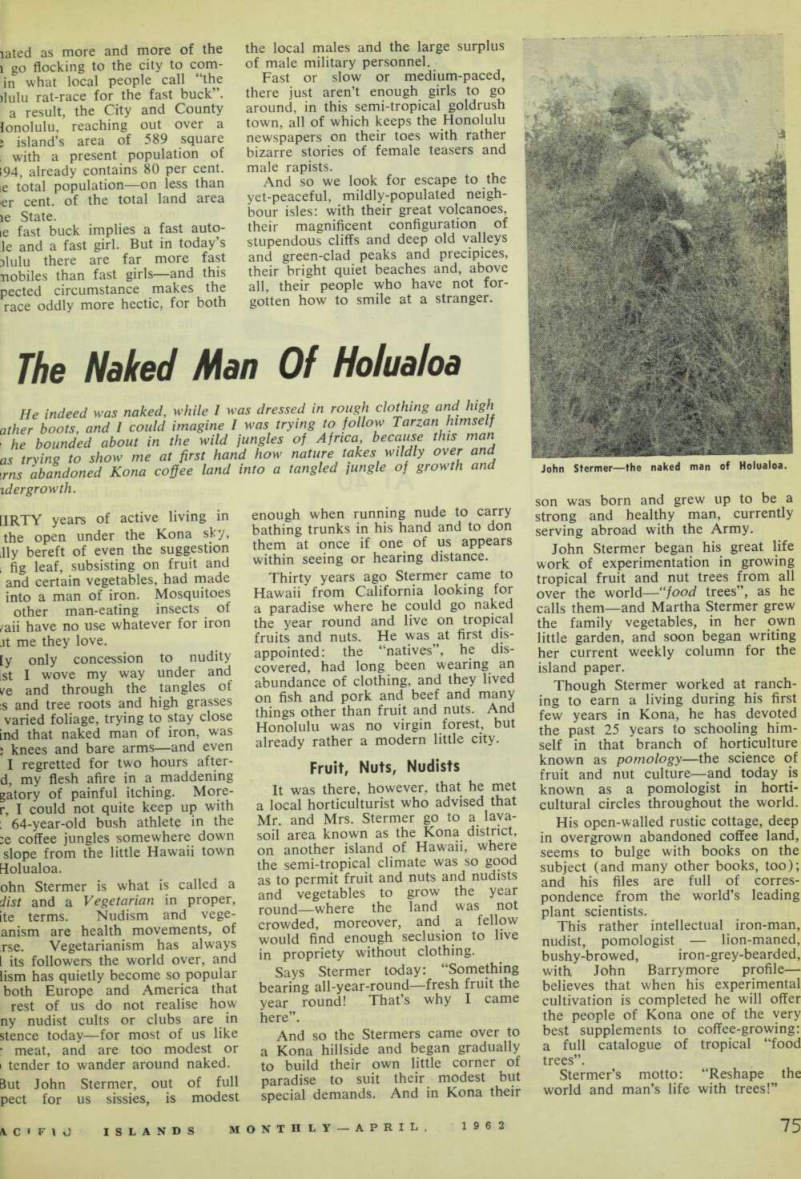 77
77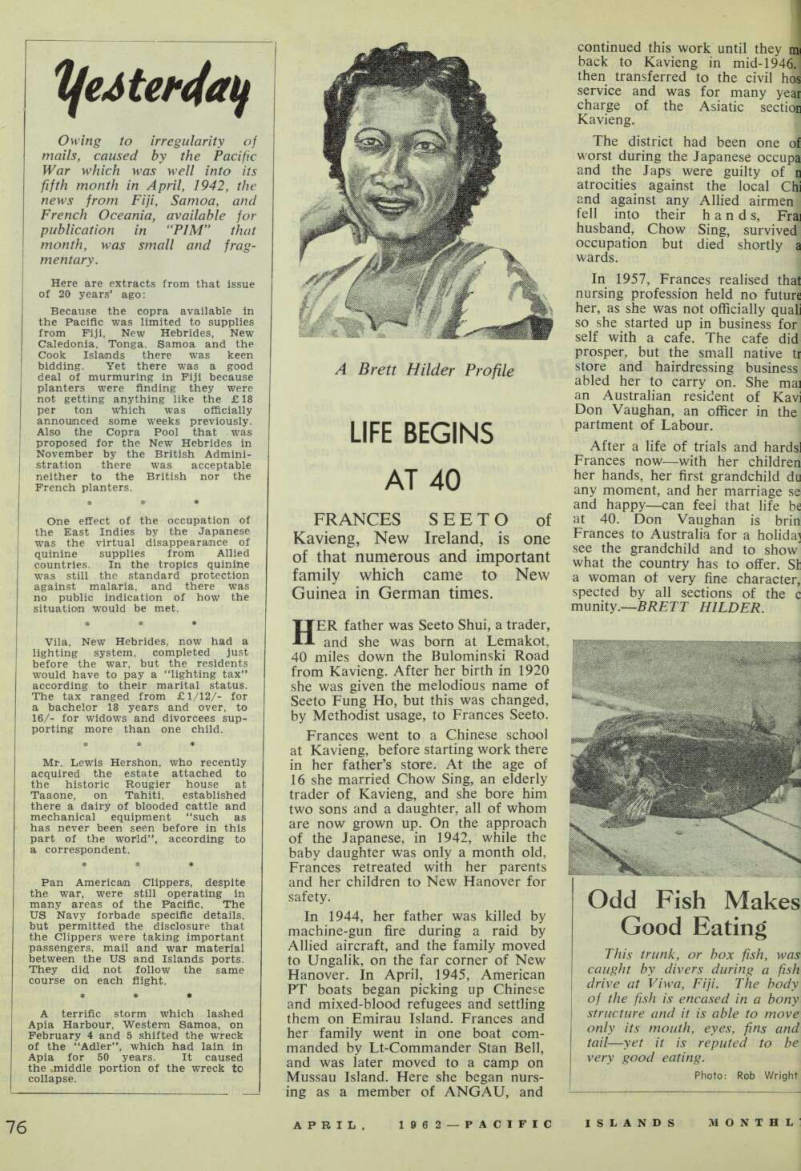 78
78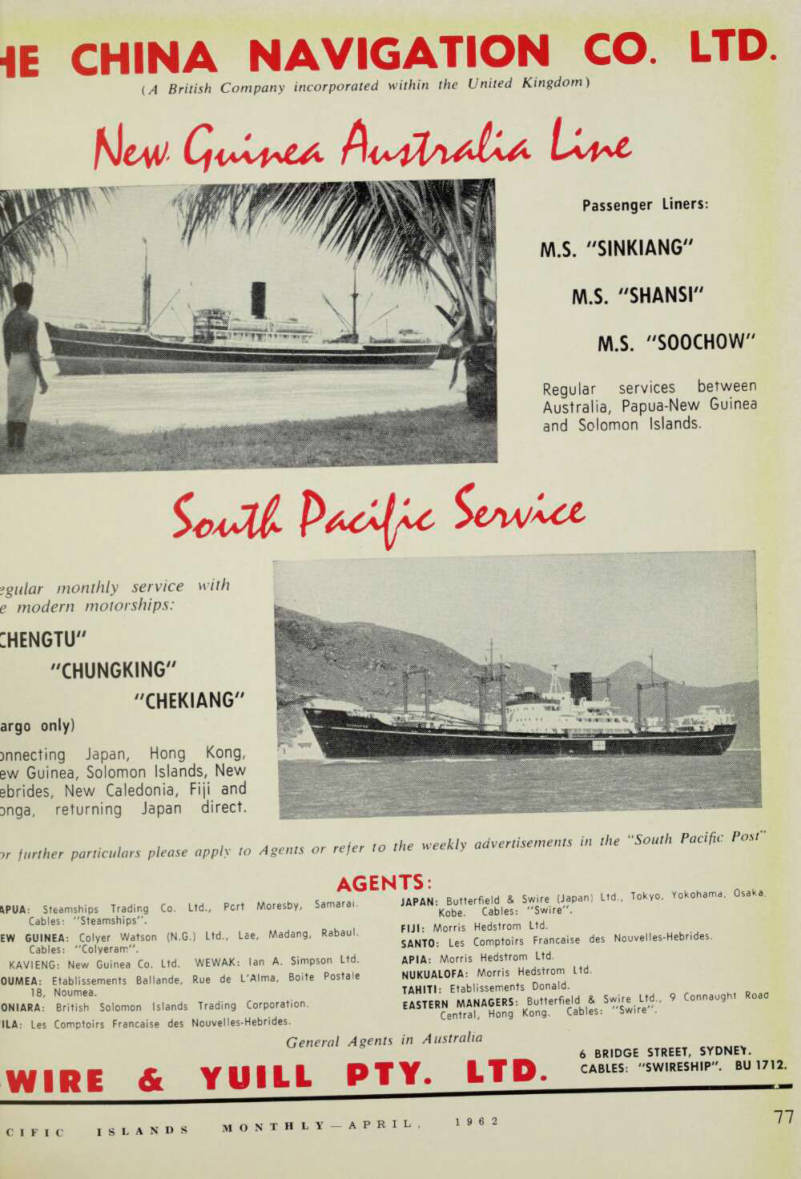 79
79 80
80 81
81 82
82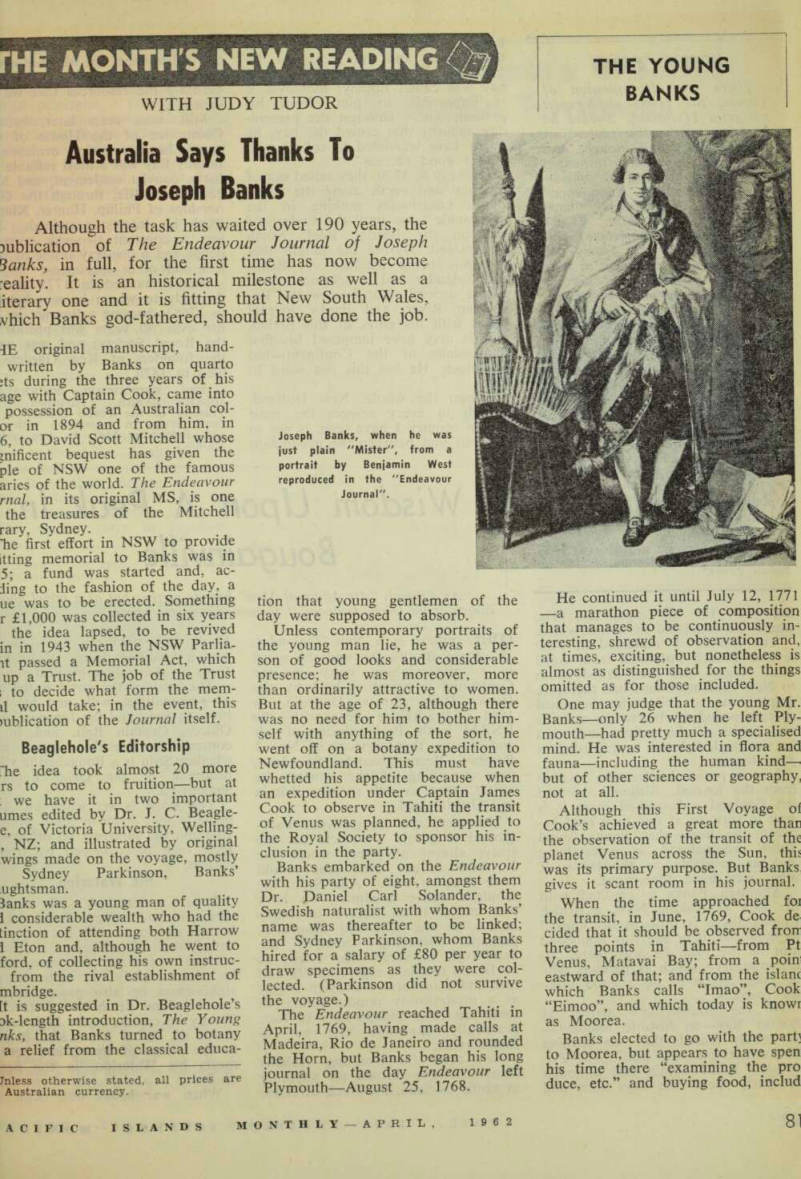 83
83 84
84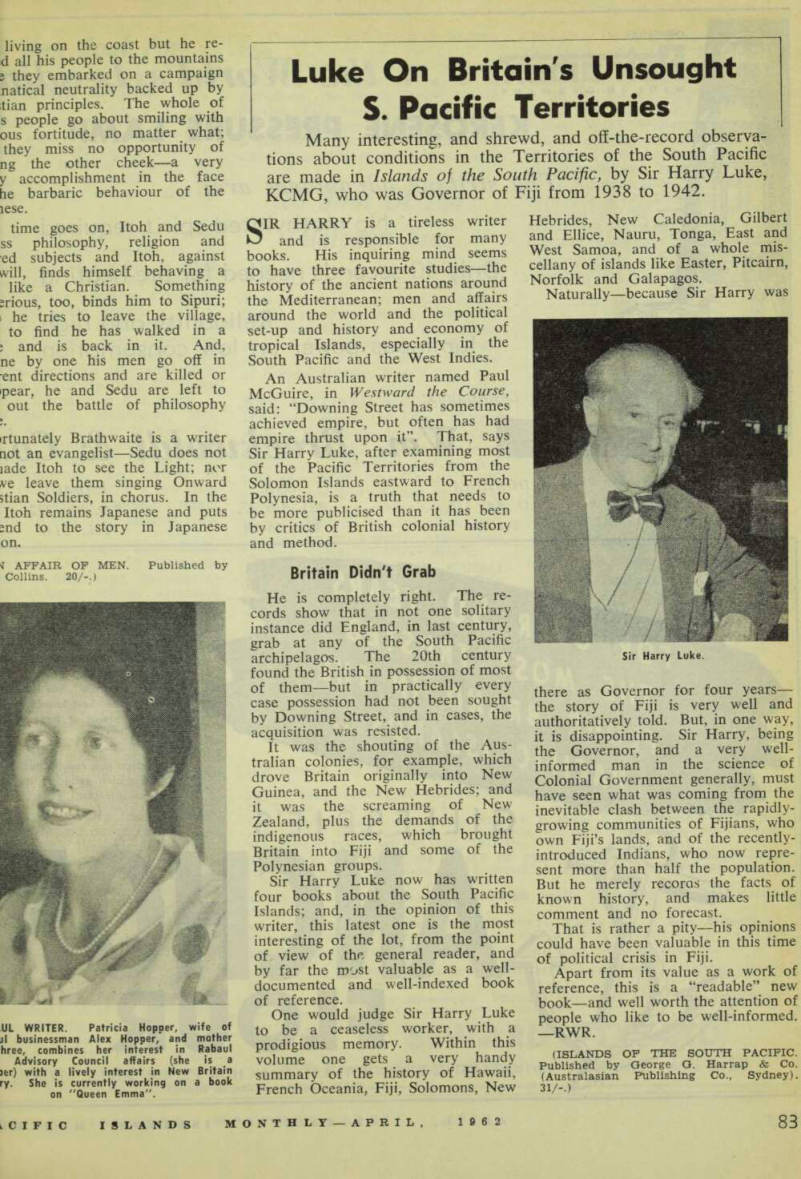 85
85 86
86 87
87 88
88 89
89 90
90 91
91 92
92 93
93 94
94 95
95 96
96 97
97 98
98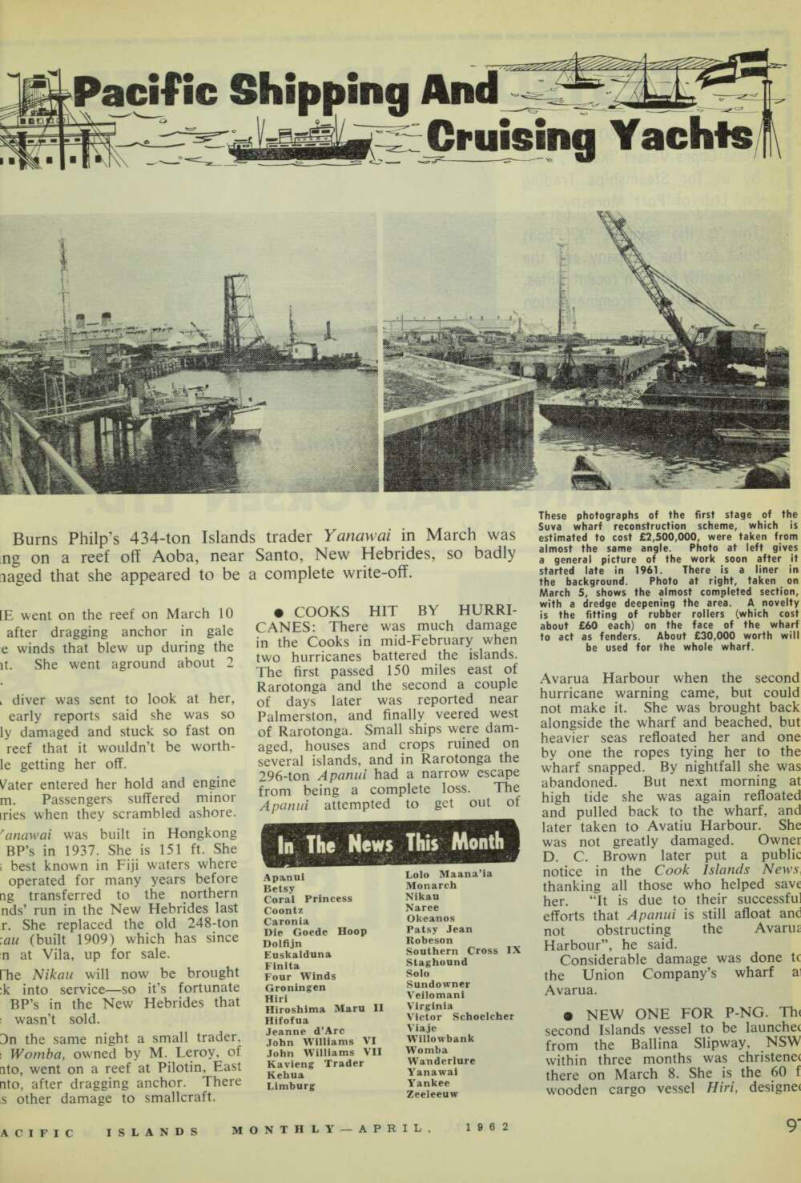 99
99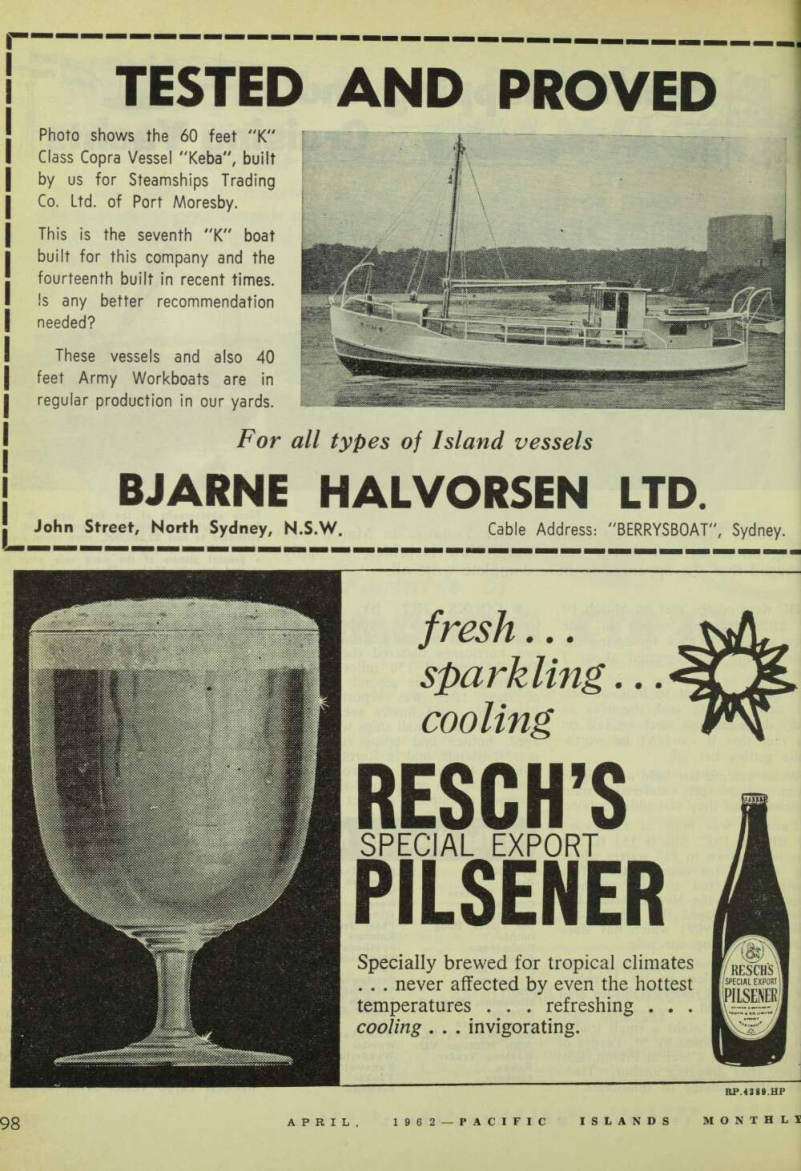 100
100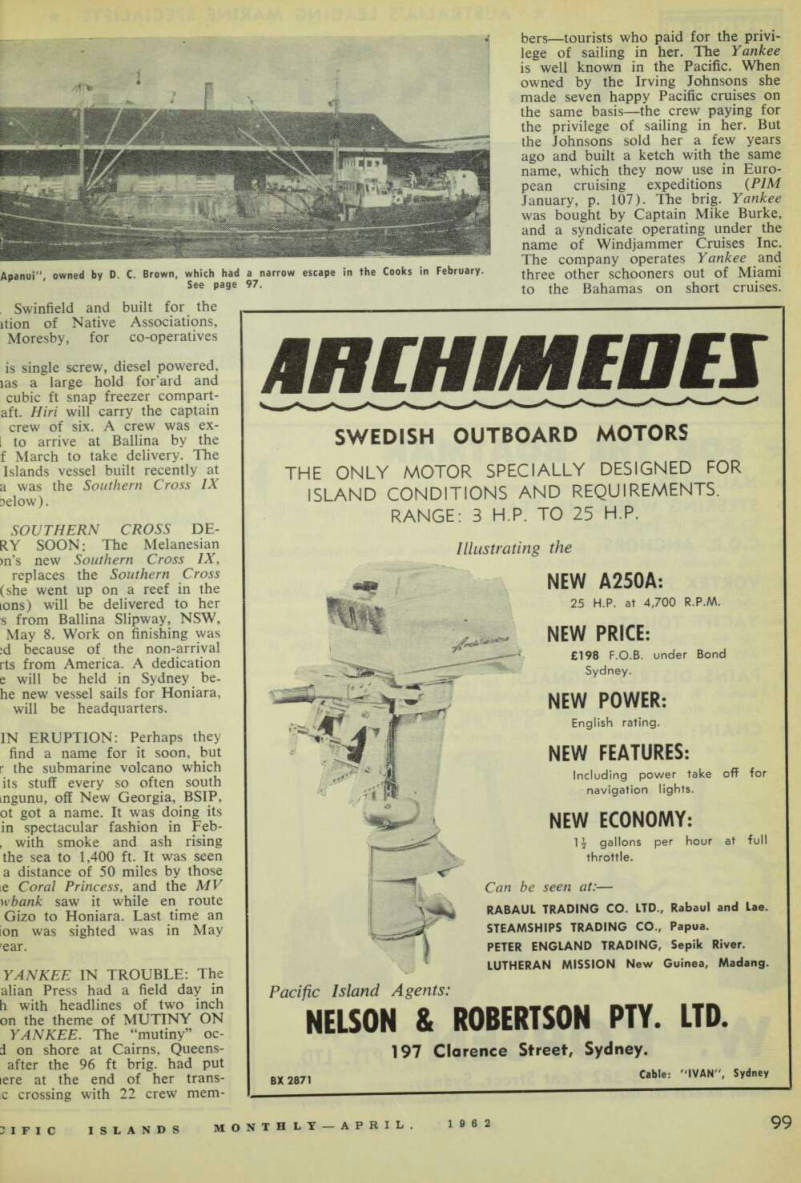 101
101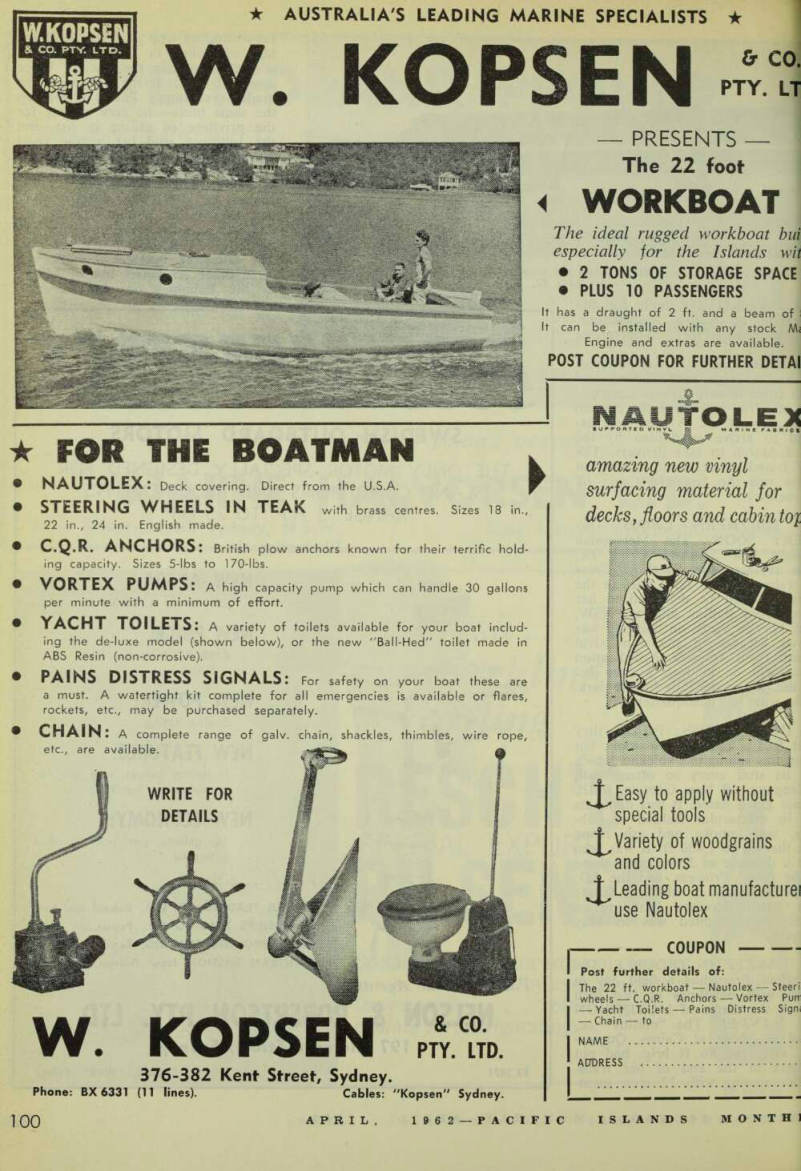 102
102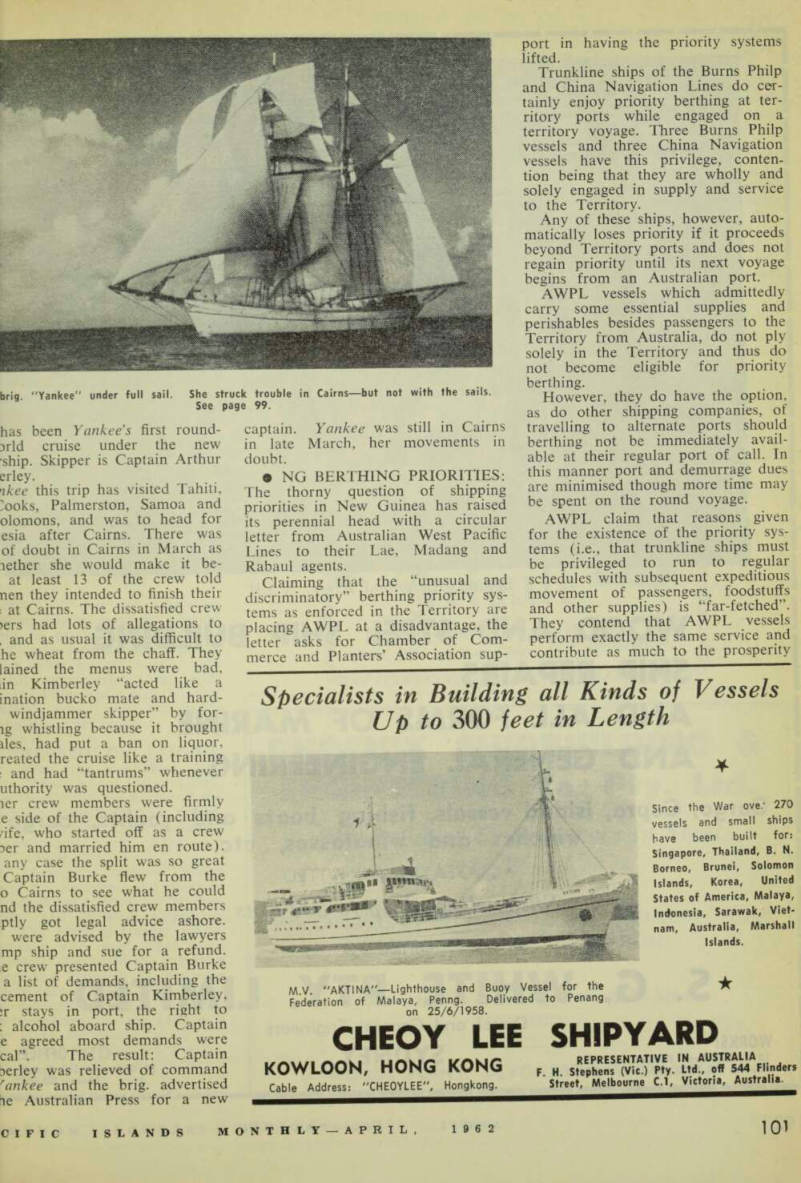 103
103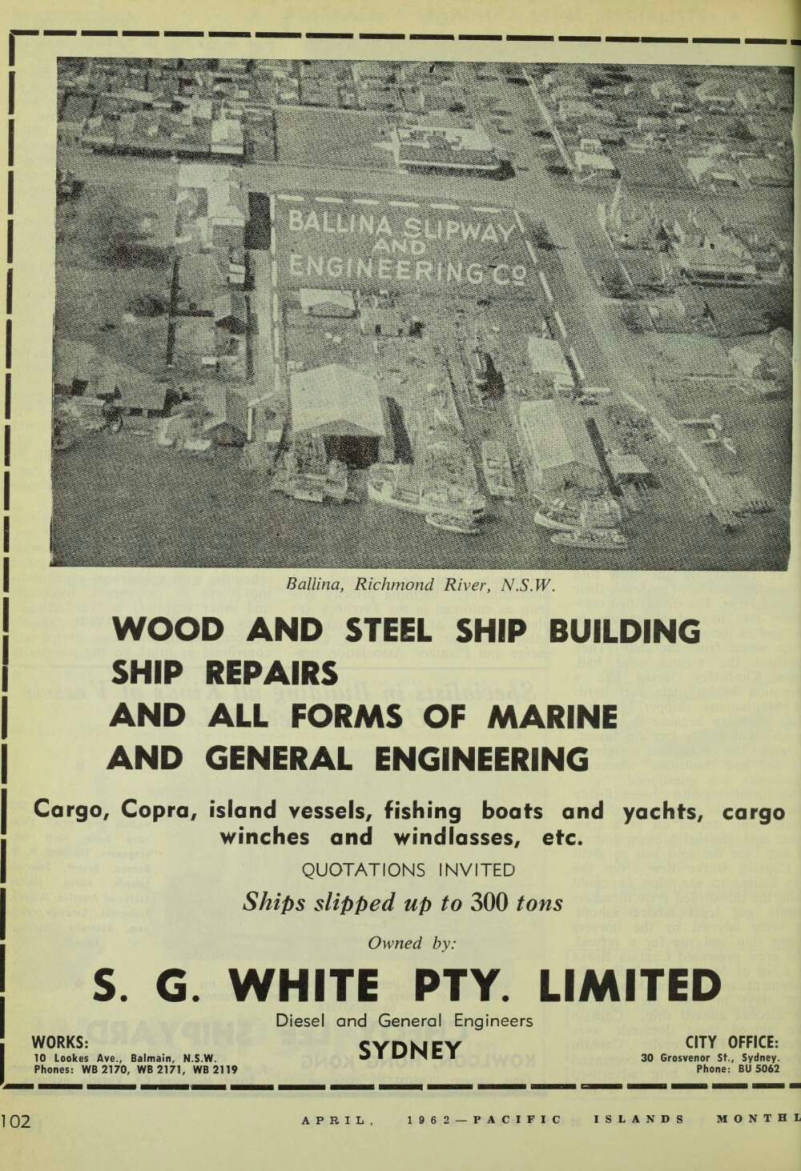 104
104 105
105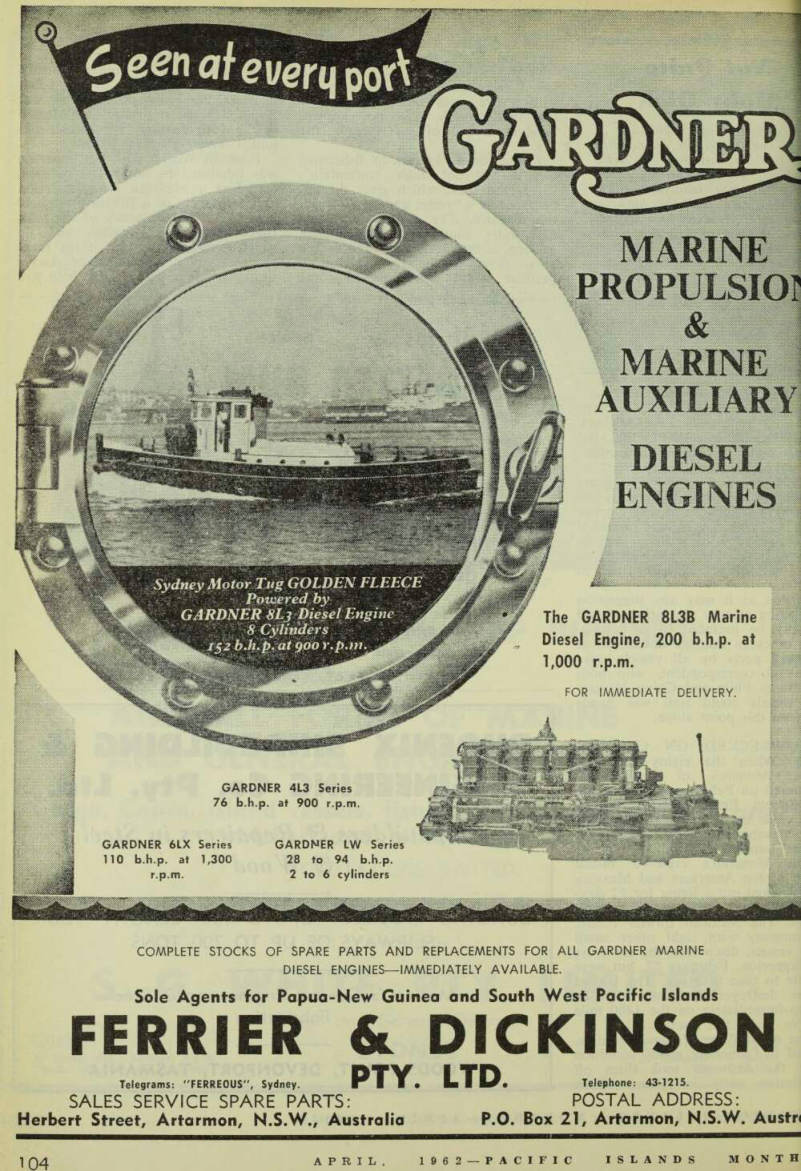 106
106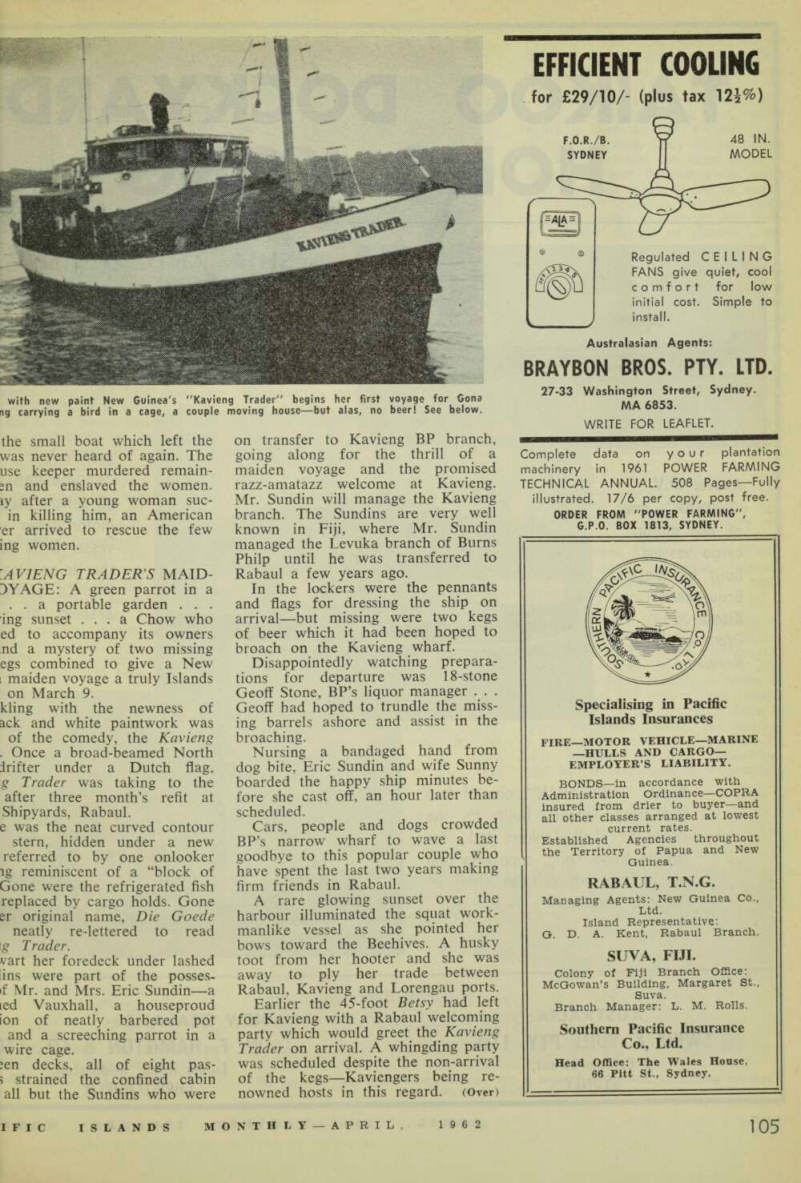 107
107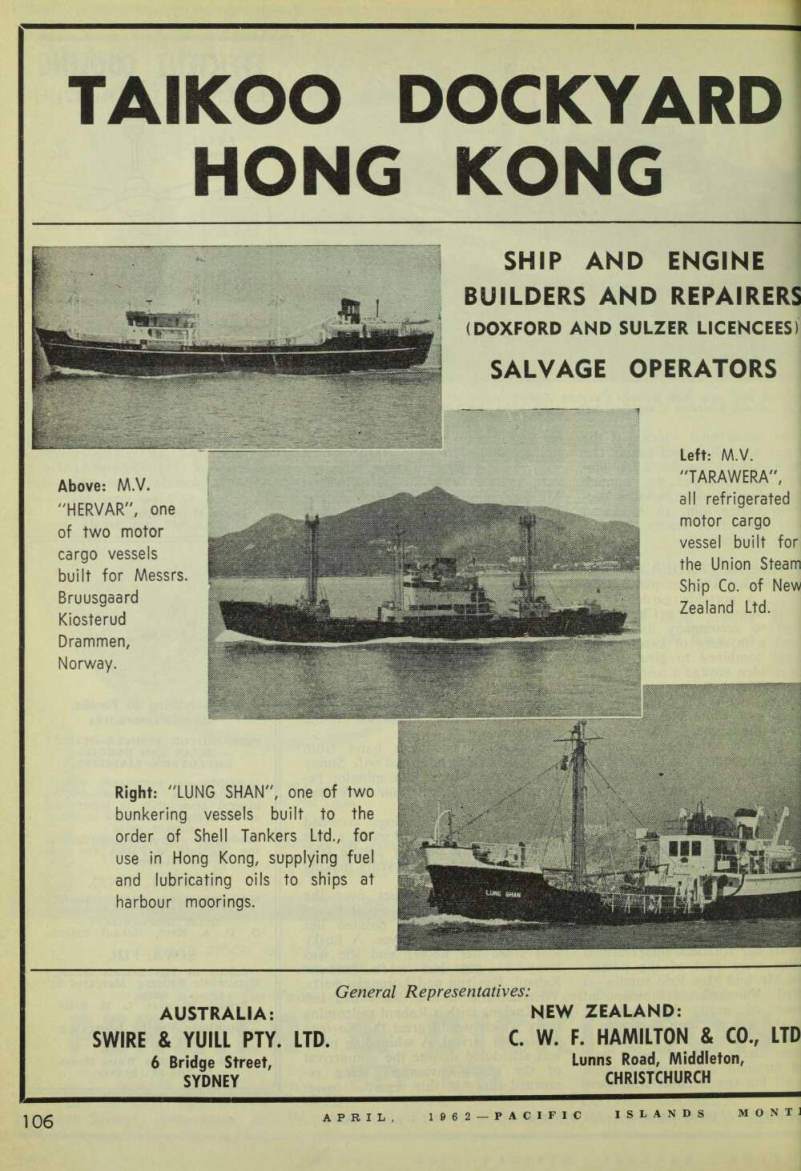 108
108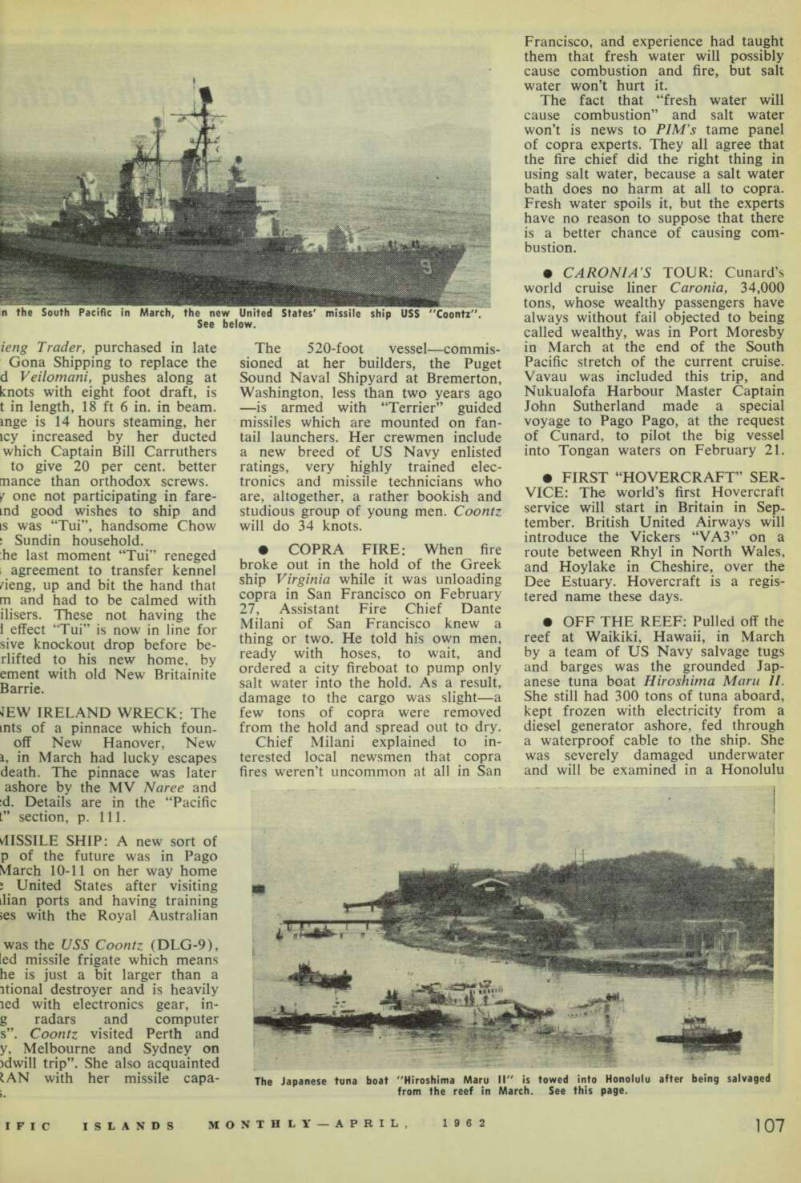 109
109 110
110 111
111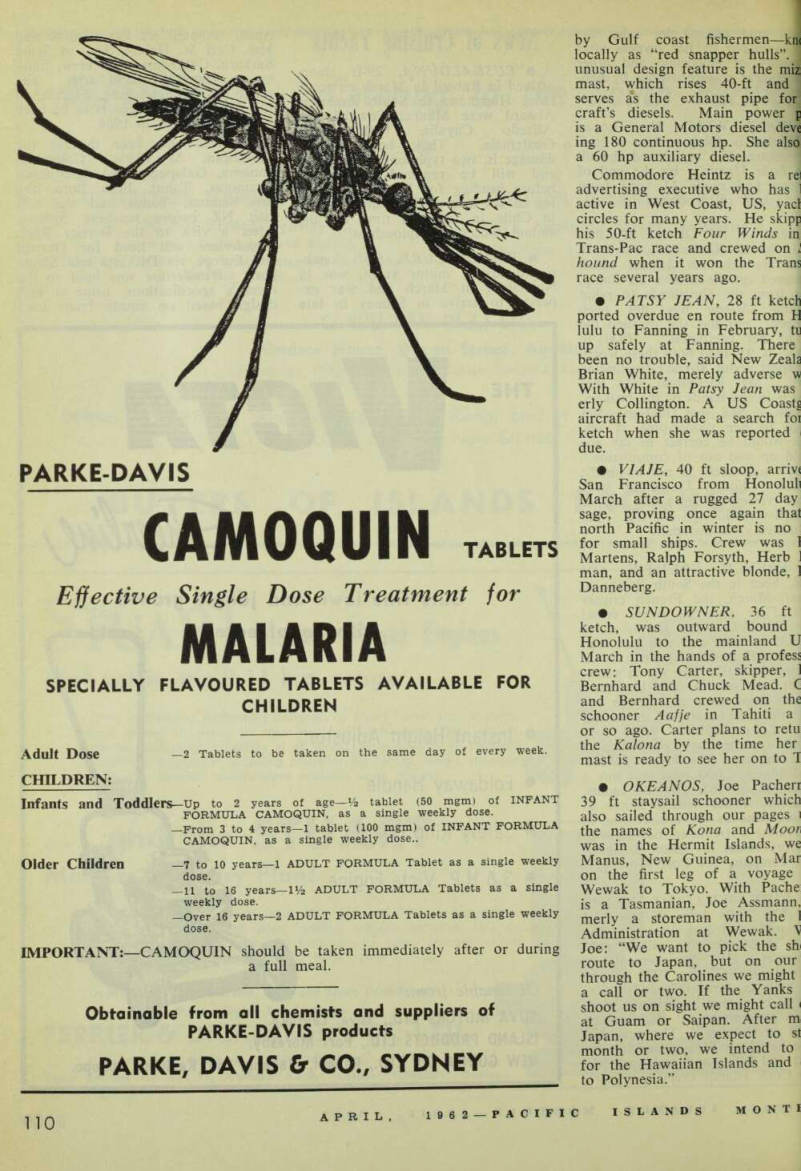 112
112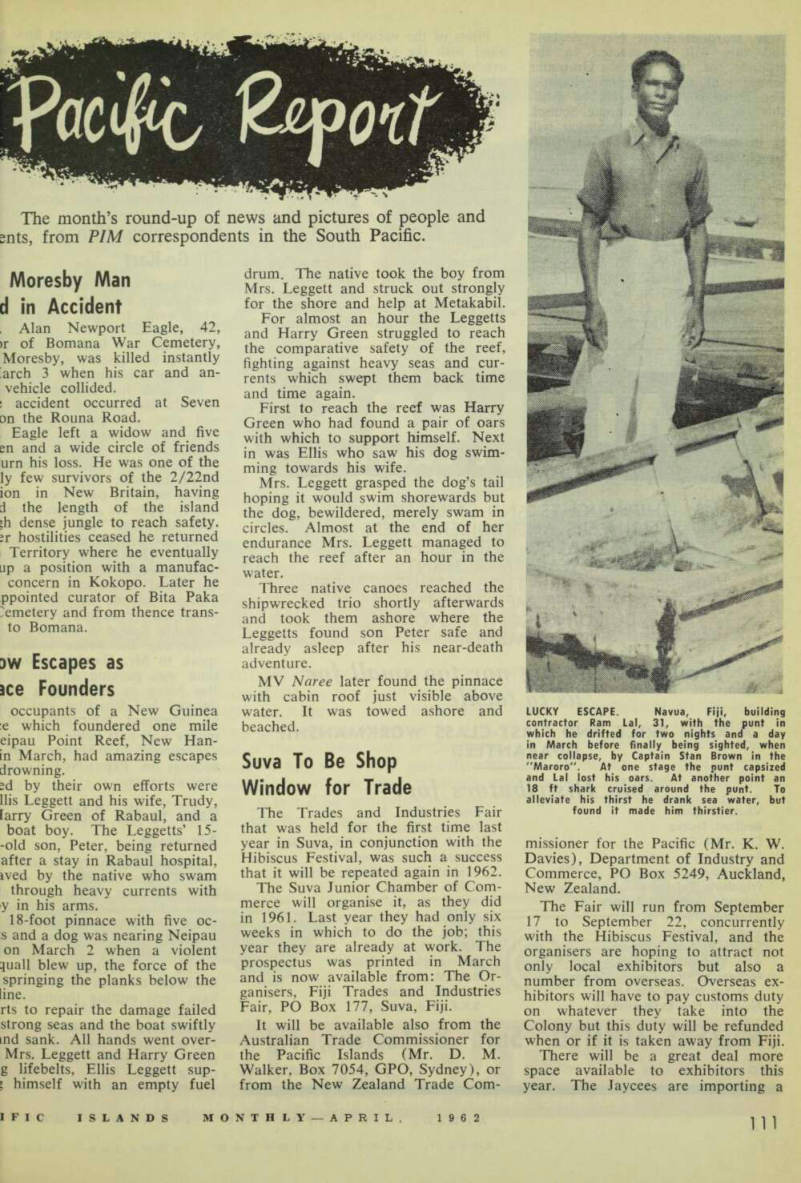 113
113 114
114 115
115 116
116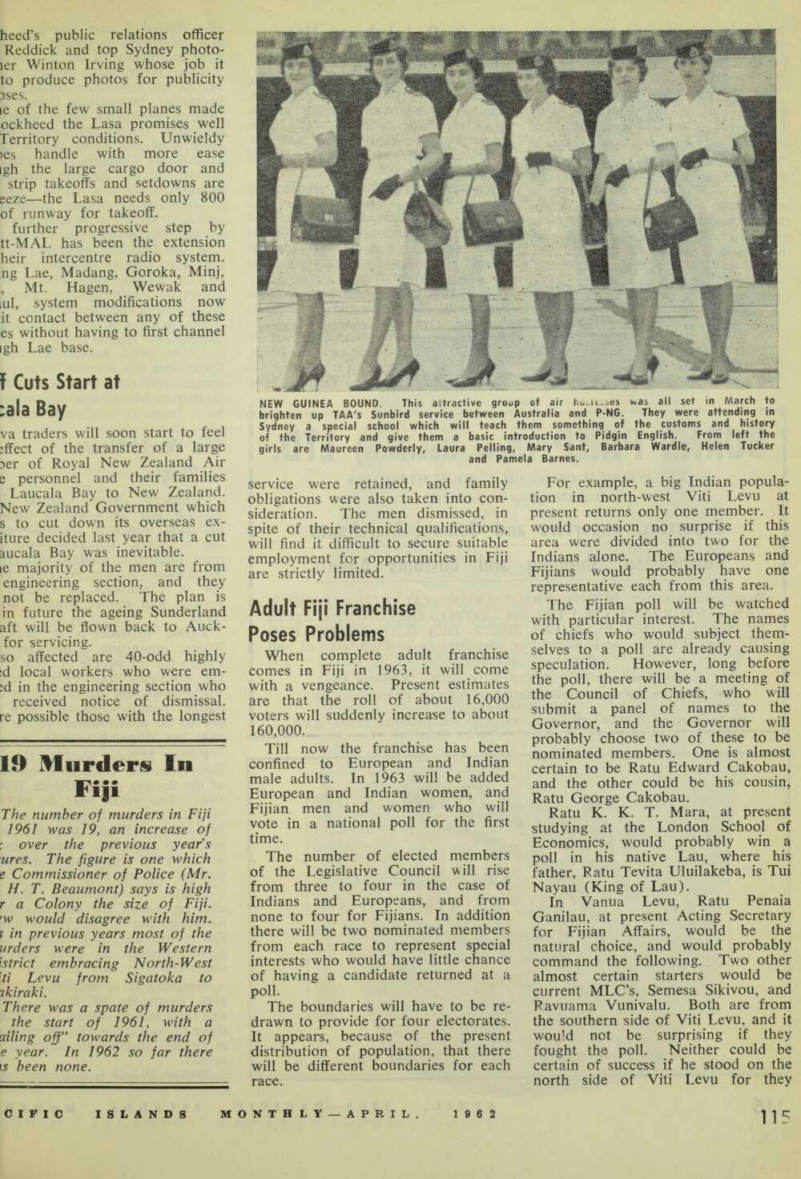 117
117 118
118 119
119 120
120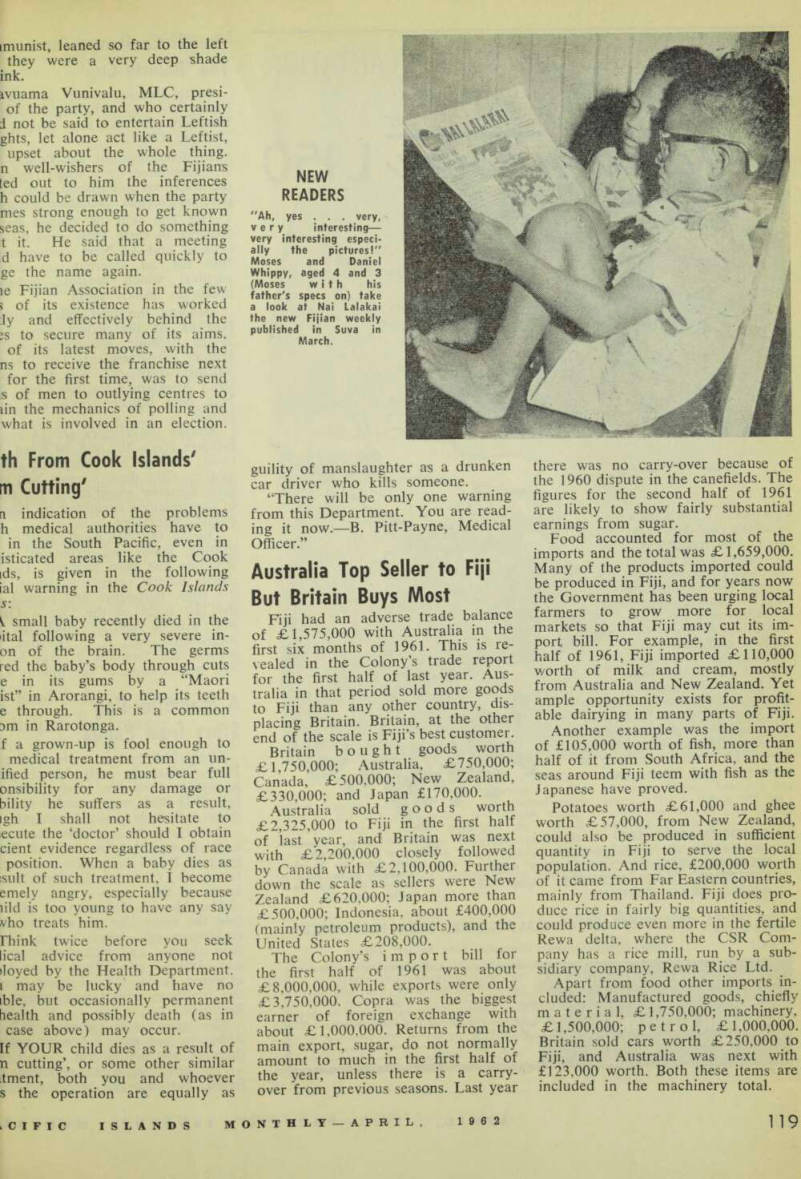 121
121 122
122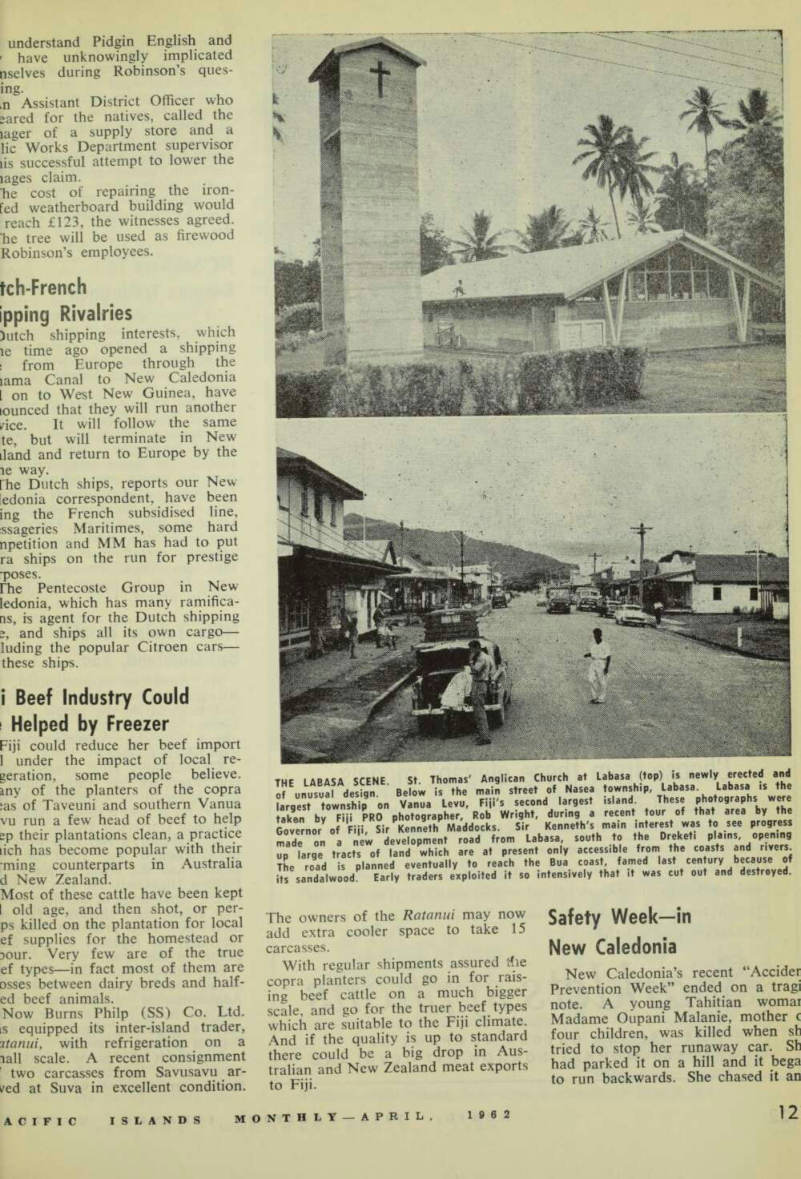 123
123 124
124 125
125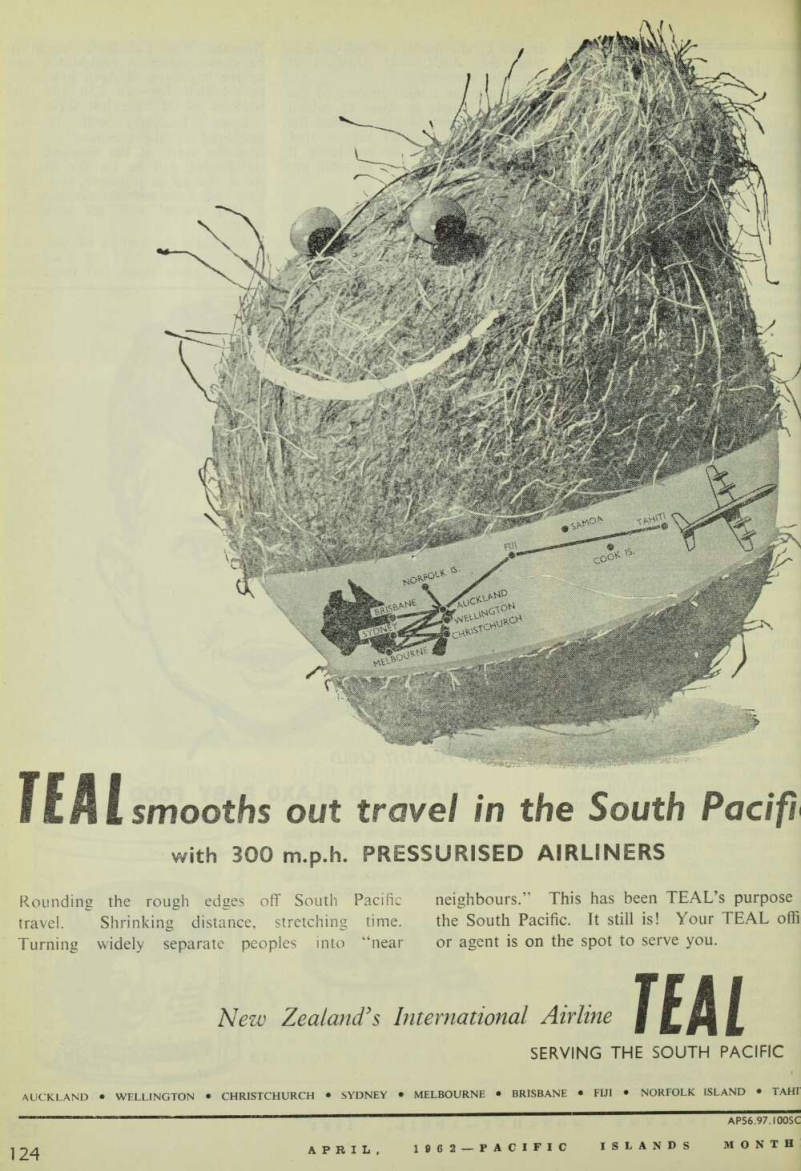 126
126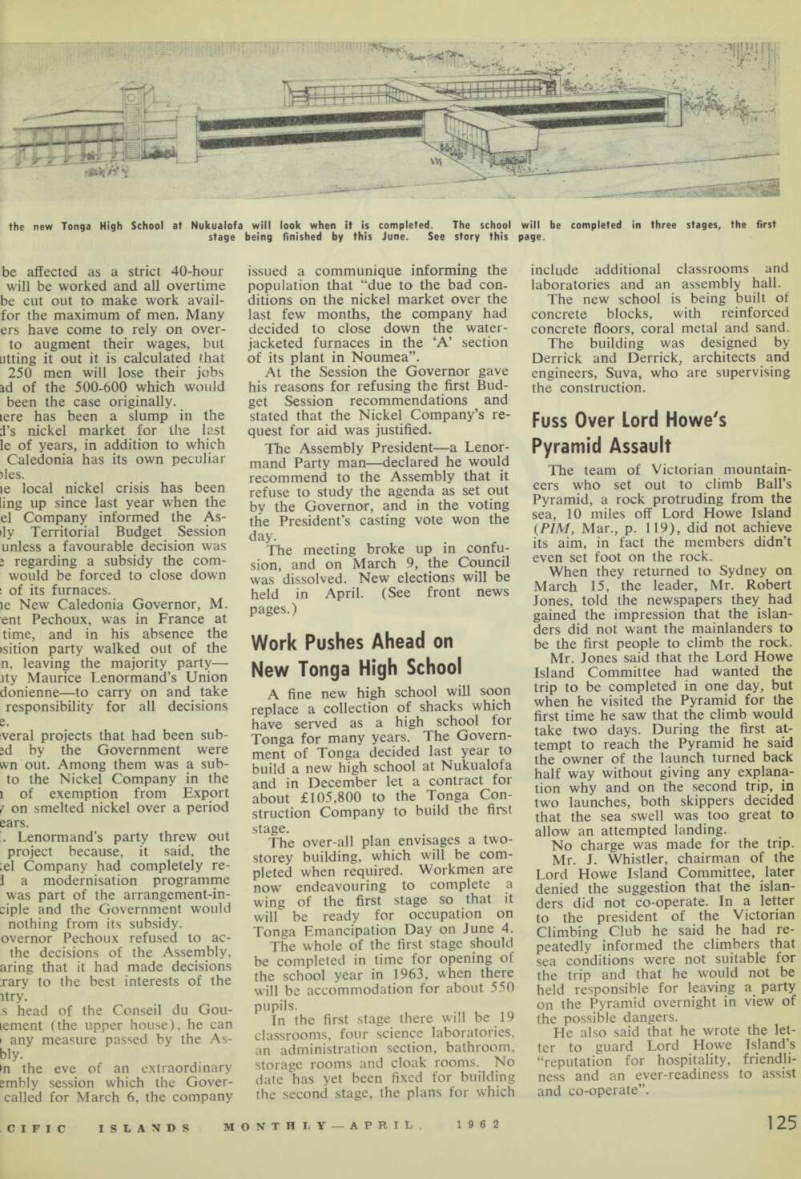 127
127 128
128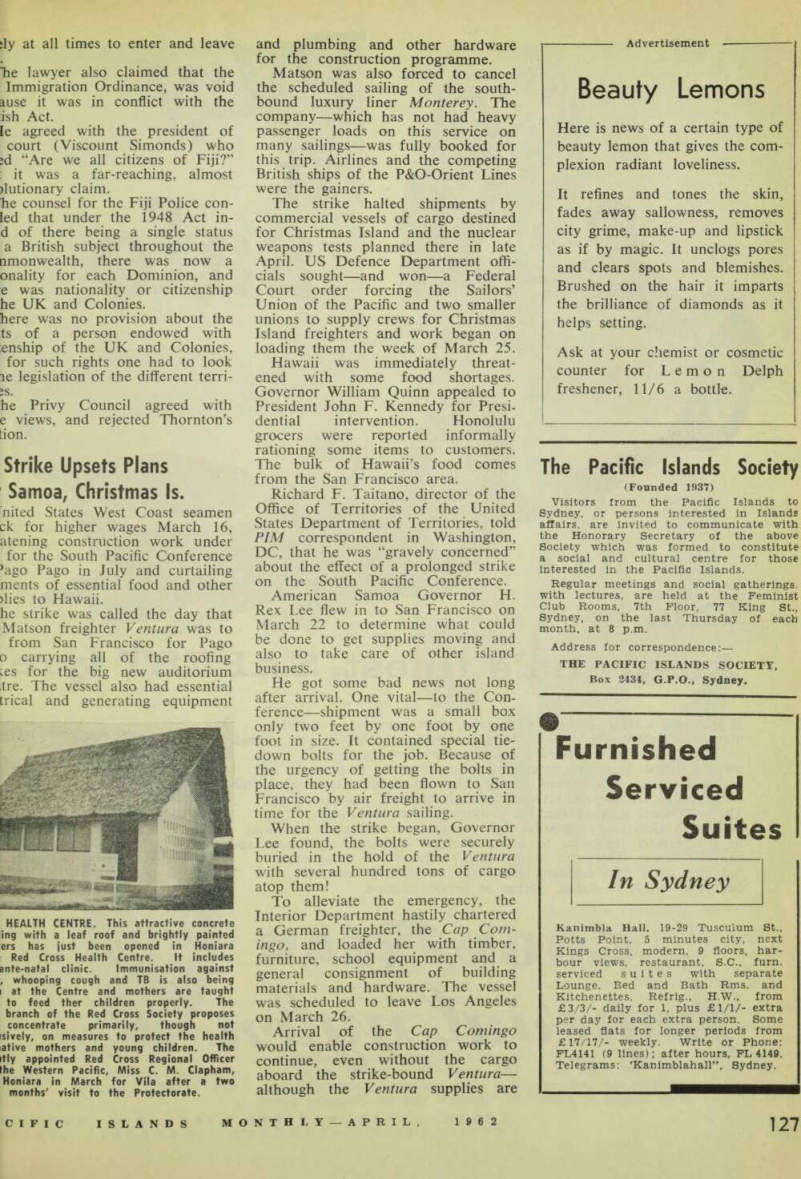 129
129 130
130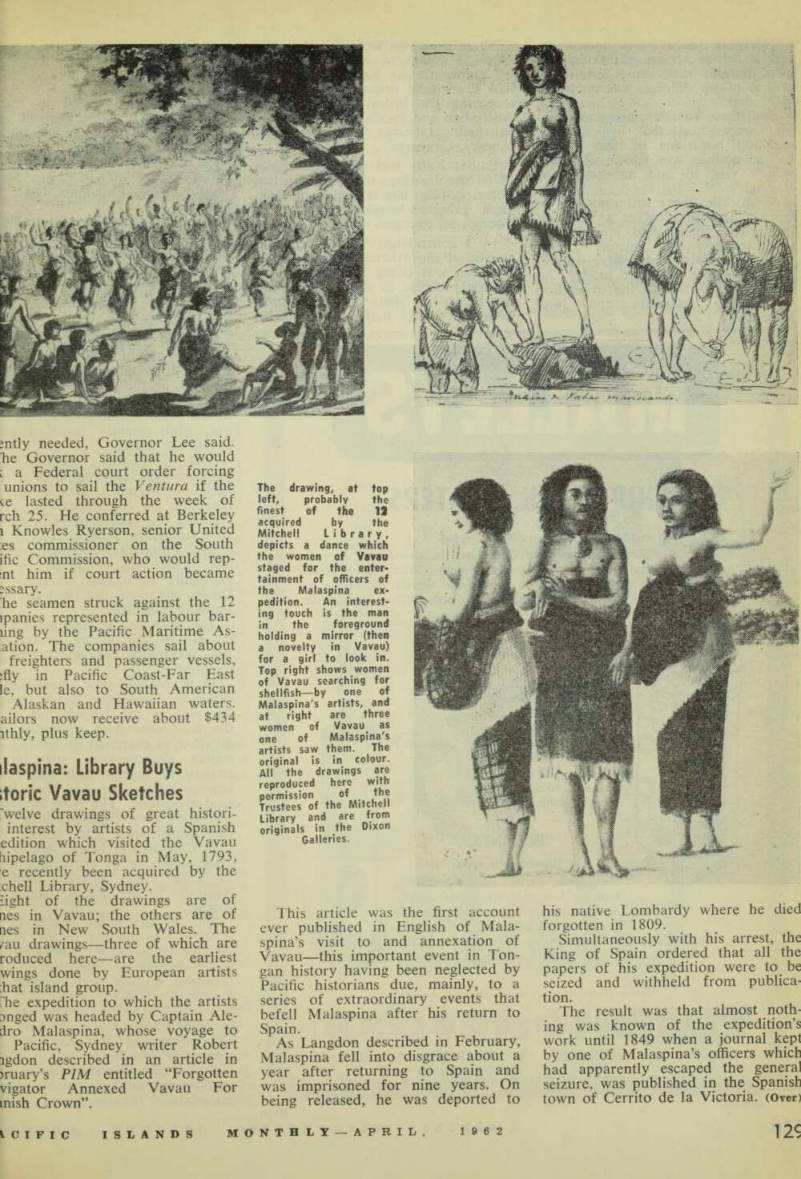 131
131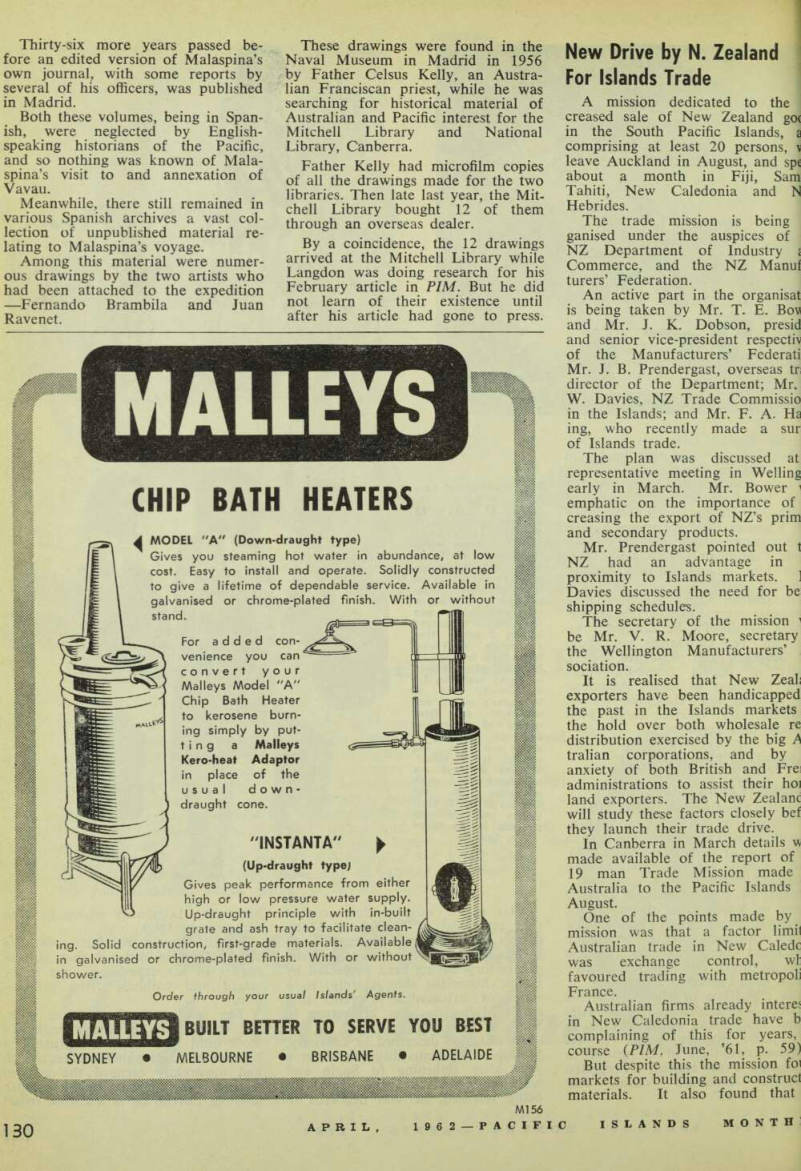 132
132 133
133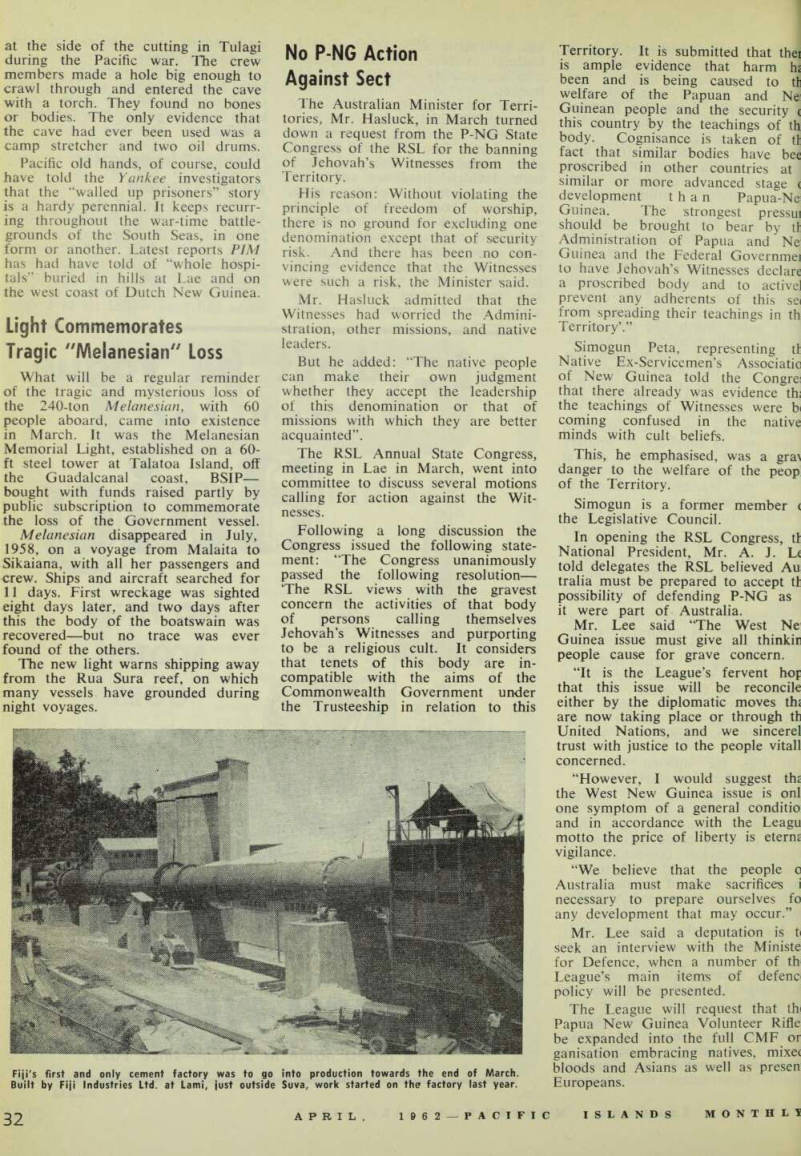 134
134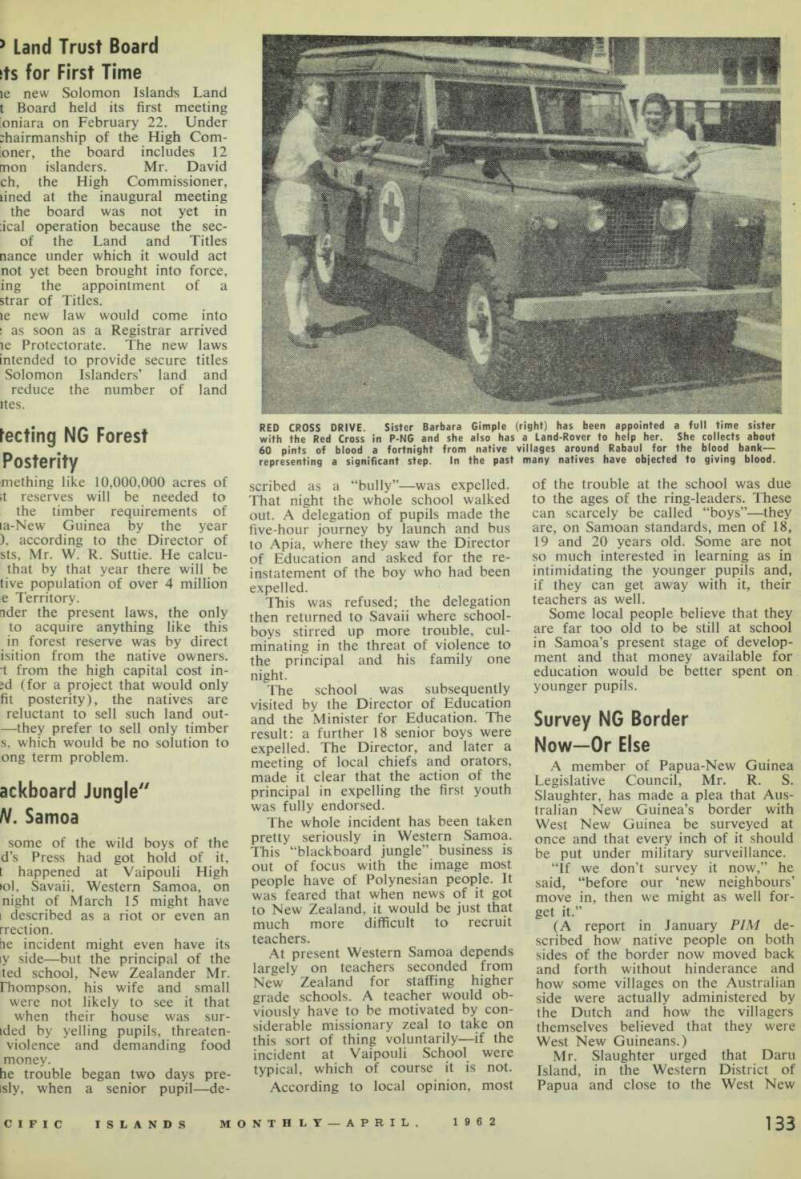 135
135 136
136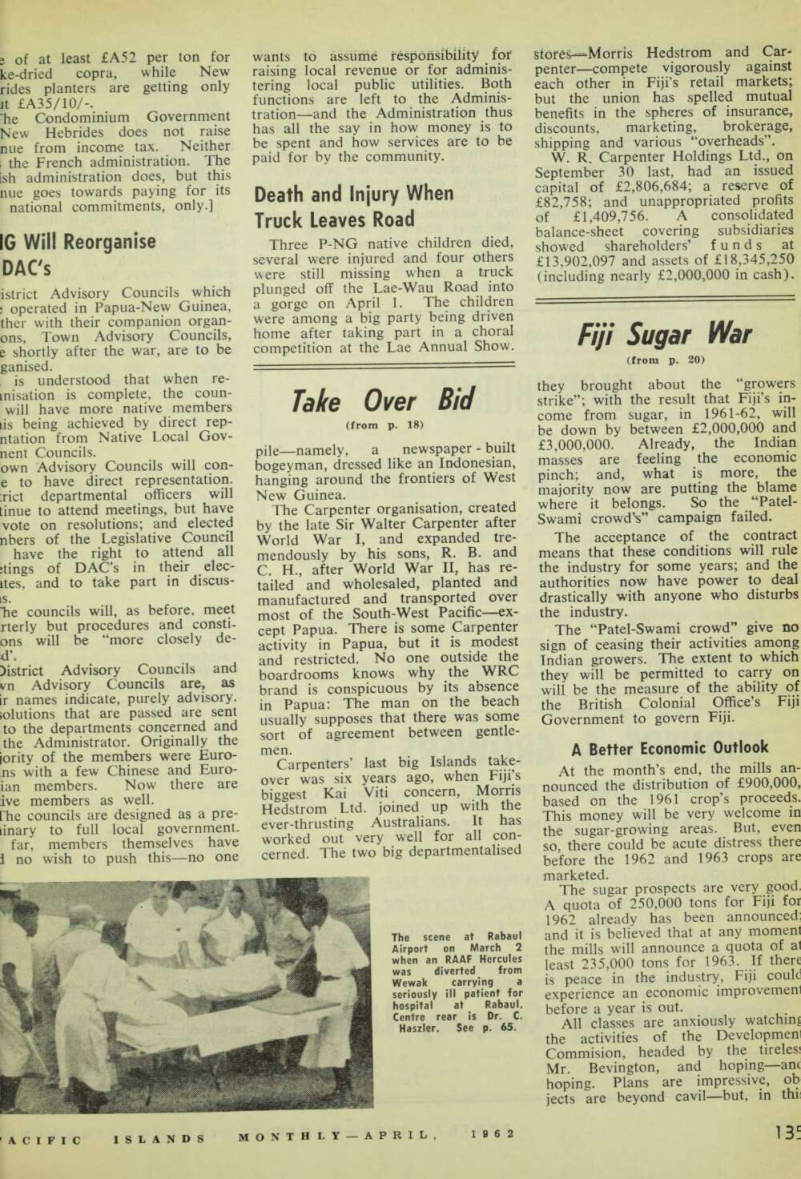 137
137 138
138 139
139 140
140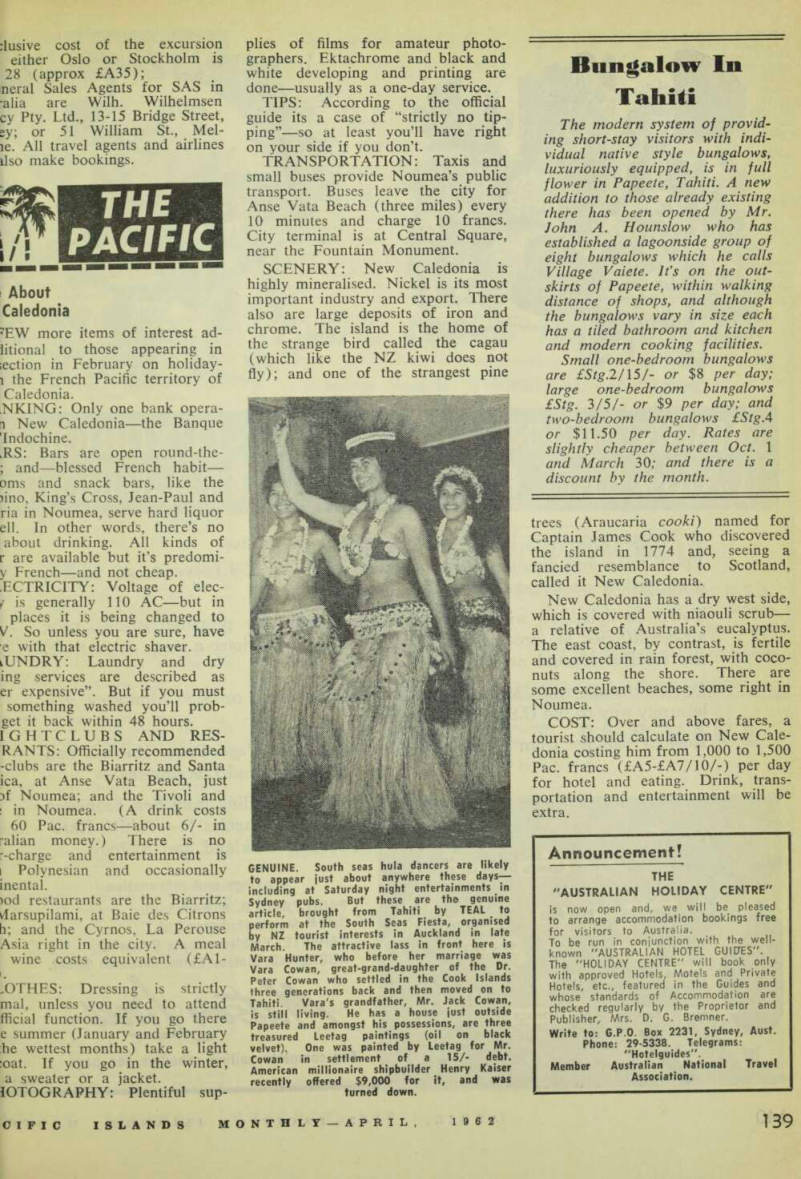 141
141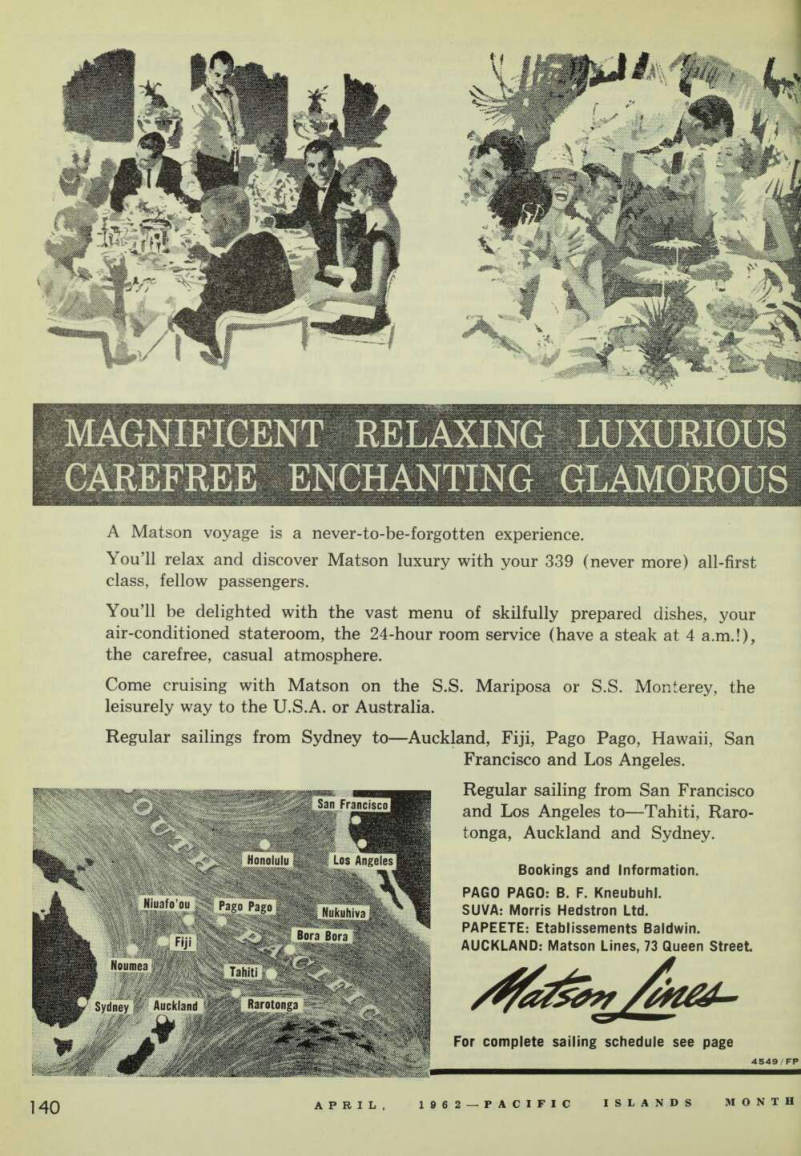 142
142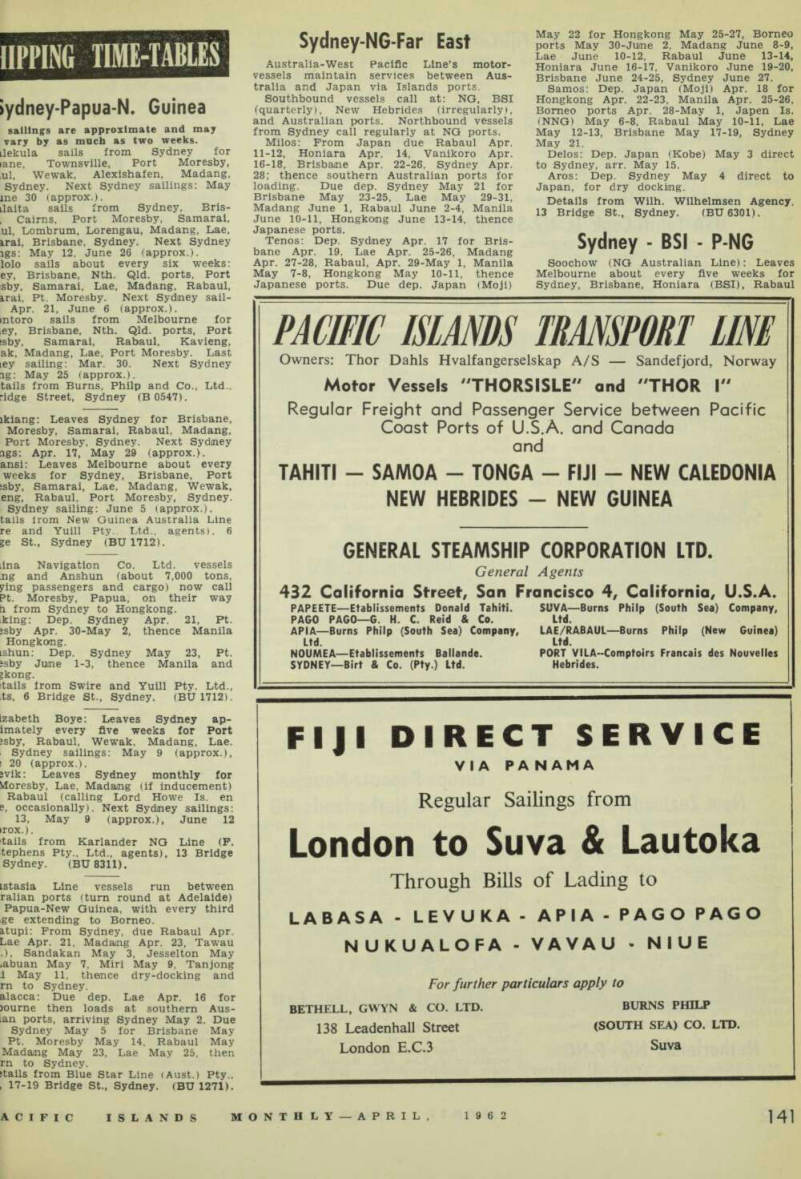 143
143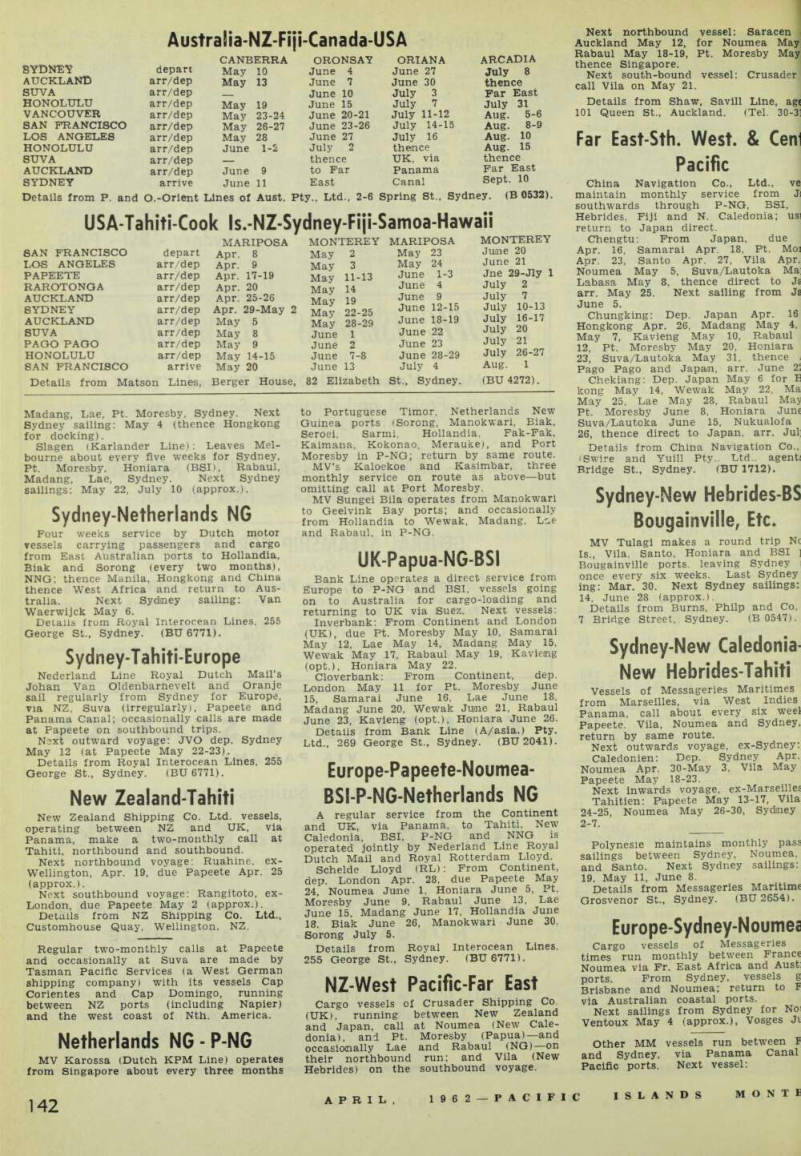 144
144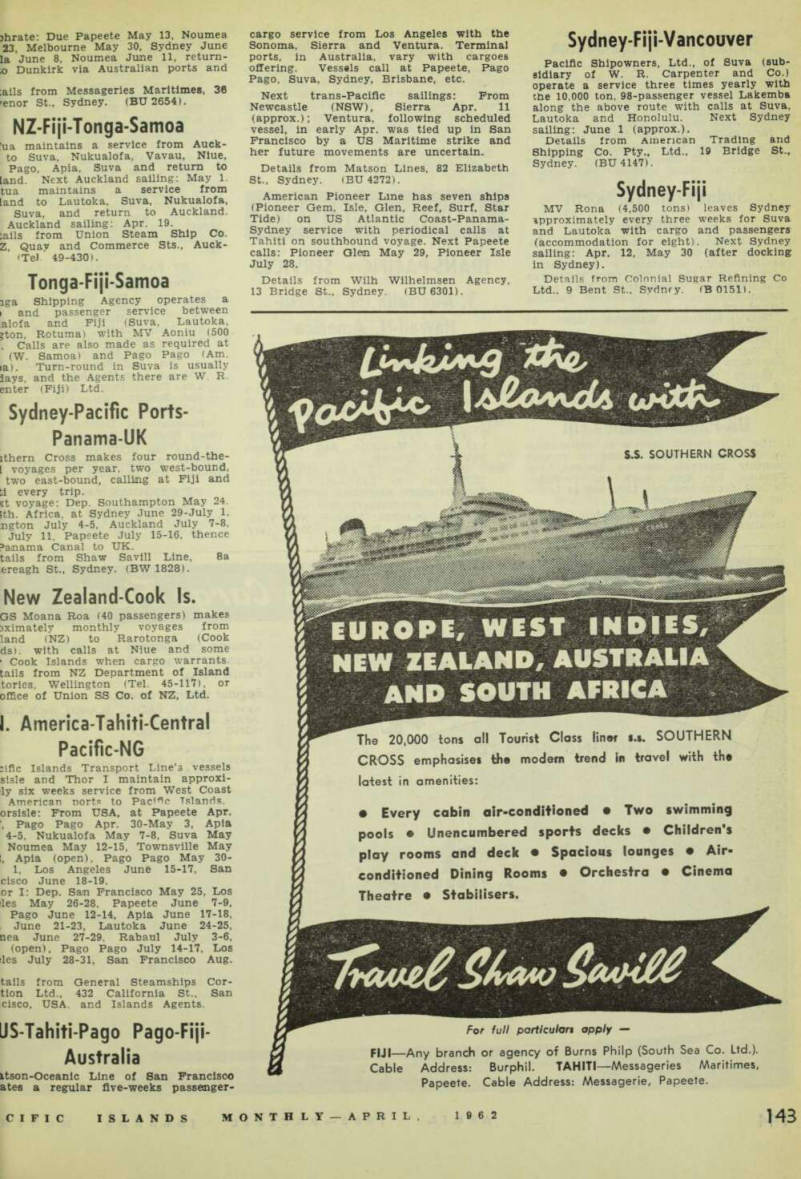 145
145 146
146 147
147 148
148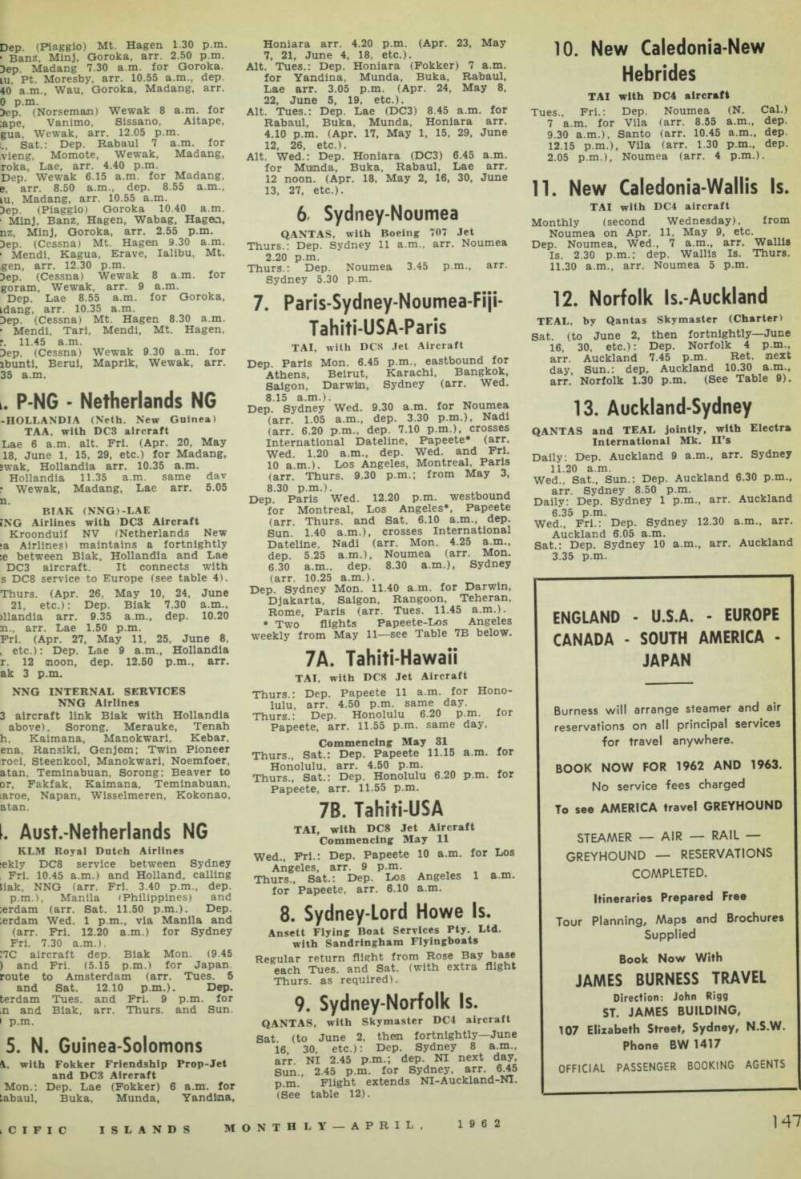 149
149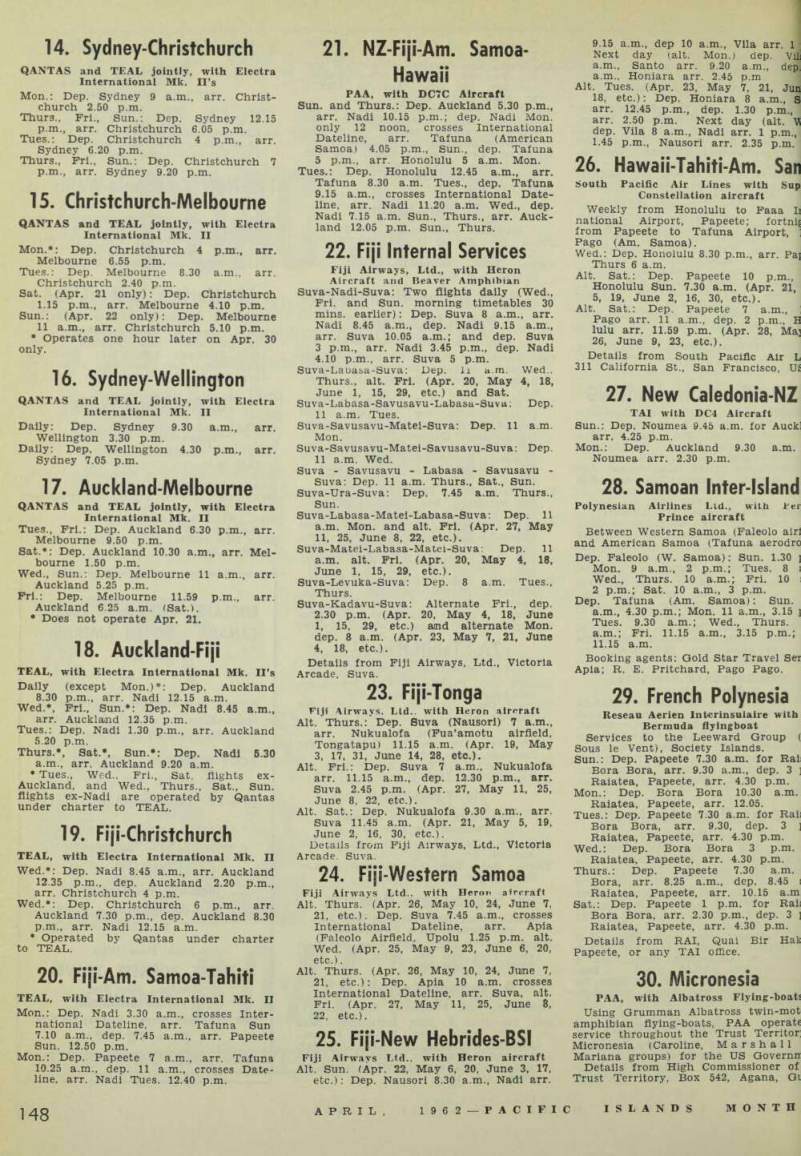 150
150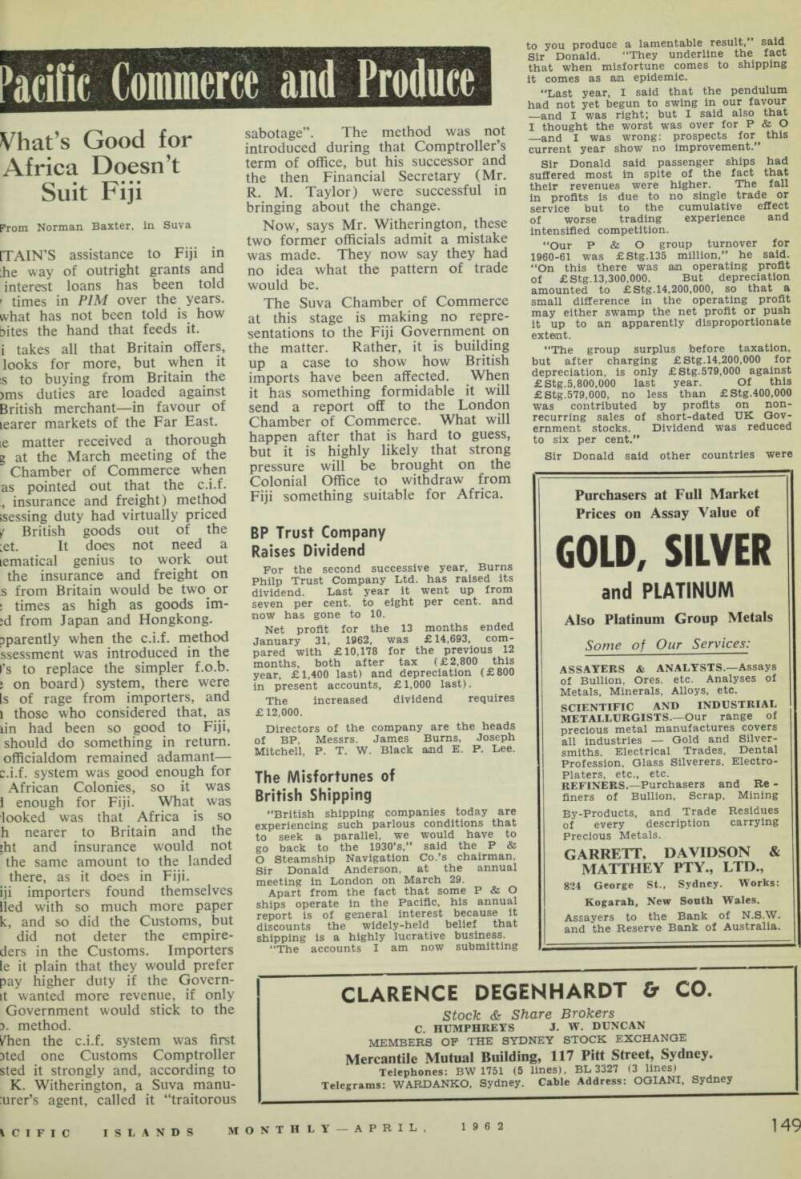 151
151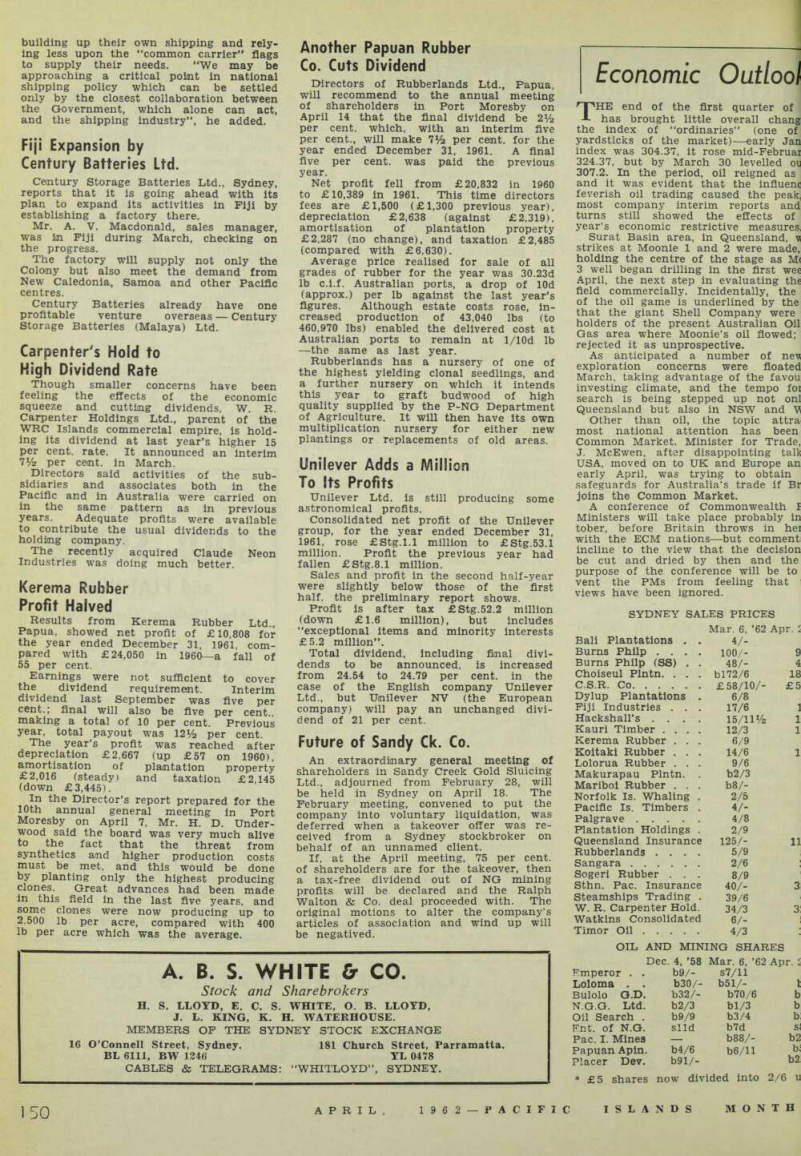 152
152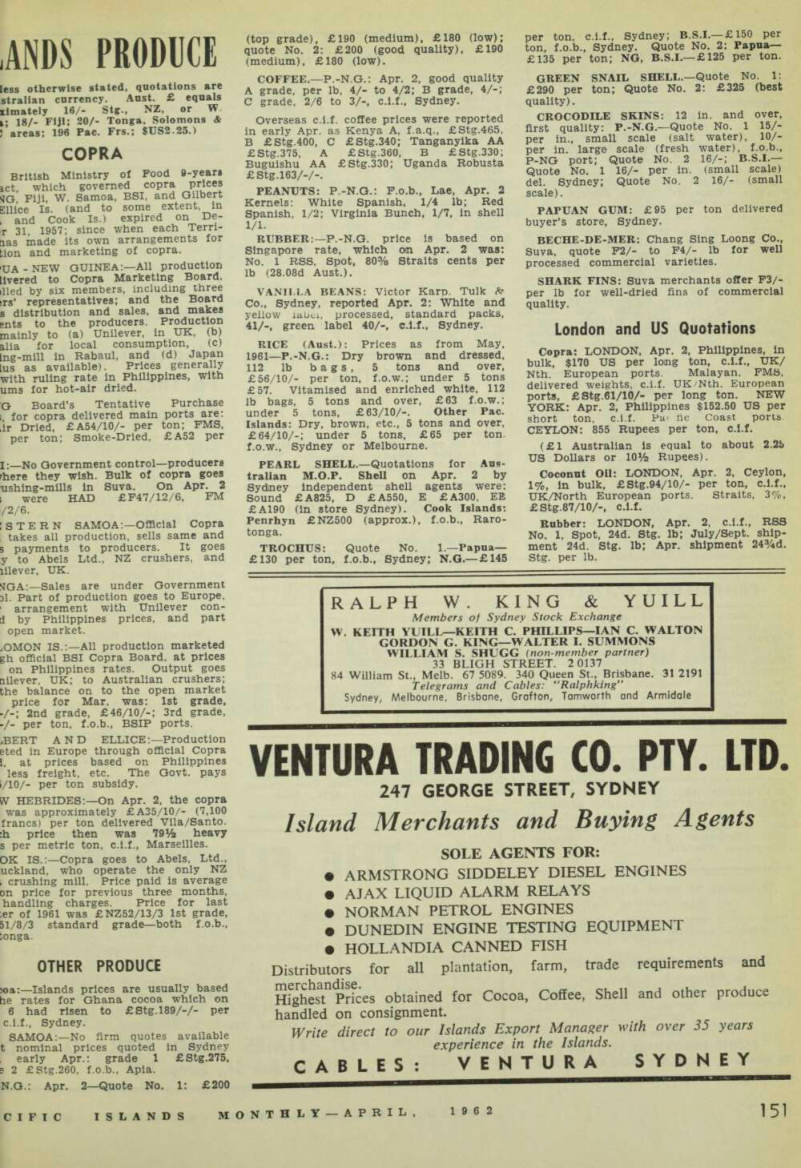 153
153 154
154 155
155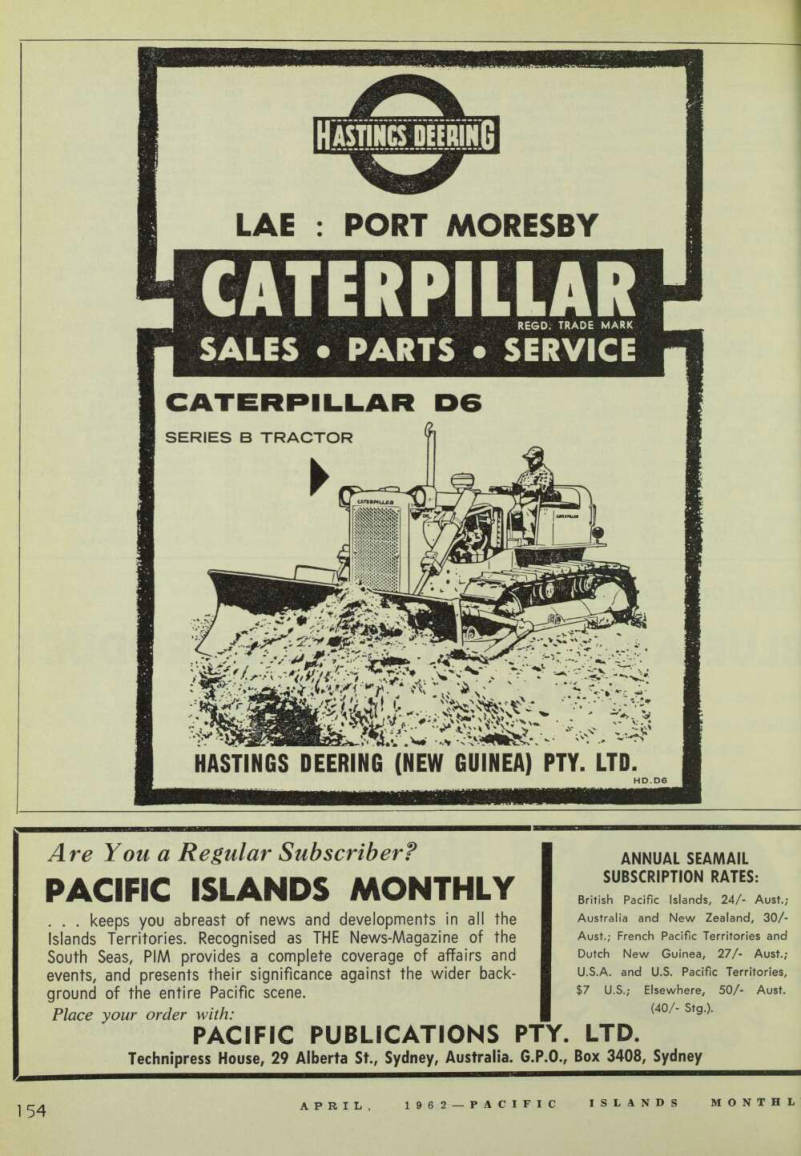 156
156 157
157 158
158 159
159 160
160