
Advertisements & other items, pp. 1-6 (4 items)
MOnthly
PACIFIC
ISLANDS
MAY, 1960
Vol. XXX. No. 10
ib I i shed 1930
kred at the GP.O. SydmMS*X\± nsmissivn by posies a newspaper ]
Her name we don't know. But she's Gilbertese and she comes from Eita village on Tarawa, and she's a typical young Islander from that part of the mid- Pacific. Mr. A. C.
Atkinson took the
photograph.
Fly One Jetline
AROUND
THE WORLD
HAMAS
AUSTRALIA'S ROUND-THE-WORLD AIRLINE
Q 50.74.119
LANTERNS:
Petrol or Kerosene. )100, 300 and 500 C.P.
TABLE LAMPS:
tOO C.P. will give 12 hours ight.
LANTERNS. LAMPS
STOVES AND /RONS
THE
ISO*
h f* i n
THE RESULT
OF OVER
50 YEARS'
EXPERIENCE
IRONS:
Kerosene or petrol. Easy guiding, easy gliding.
SOLUS STOVES;
In silent and roarer types.
Representative for Pacific Islands
ROBERT GILLESPIE PTY. LTD.
22 YOUNG STREET, SYDNEY. PHONE BU 2221. CABLES: "ROBERGILL"
Also 334 QUEEN STREET, BRISBANE. QUEENSLAND.
ROBERT GILLESPIE (N.G.) LTD. PEARCE & CO. LTD., Lae, Madang, Rabaul, Port Moresby Suva for Fiji Islands
f
CORNED
CALISBURY" canned meats, SPECIALLY PACKED ISLANDS ARE the popular choice, ALWAYS. for the PACIFIC
CORNED BEEF
CORNED MUTTON
MEATREAT
SHEEP TONGUES
OX TONGUES
MIDGET (Cocktail) SAUSAGES
SANDWICH PASTES
SAUSAGES AND TOMA
STEAK & KIDNEY PUDC
LAMB & GREEN PEAS
DRIPPING AND LARD
Also “WESTFIELD” Brand KEGGED MEATS, DRIPPING AND LARD
‘PALM” Brand CORNED BEEF
WESTFIELD FREEZING CO. LTD
Postal Address; Private Bag, C.P.0., Auckland, N.Z.
Cable Address: Filalora, Aik
•* A * L name,
m I M </
TESI
,* 2s- ; . TK TVfc SS -<P o -V «<p
Silk
TARGET SHOOTING IS GOOD SPORT!
On the inside of each new ICI .22 Rimfire Cartridge pack there is a practice target.
Your retailer also has free five-bull practice targets. Ask for them each time you buy .22 Rimfires your perfect partner for good shooting.
The new colourful packs in the ICI range contain the same high-quality .22 Rimfire Cartridges famous the world over for consistent accuracy and excellent performance.
SPORTING CARTRIDGES
Manufactured by IMPERIAL CHEMICAL INDUSTRIES OF AUSTRALIA & NEW ZEALAND LTD,
THE CHINA NAVIGATION CO. LTD
(A British Company incorporated within the United Kingdom.)
frJcM/ La4^C
-■d Passenger and Cargo liner
M.S. "SINKIANG"
M.S. "SHANSI"
M.S. "SOOCHOW
S.S. "PAKHOi
Regular services between Australia, Papua-New Guinea and Solomon Islands Regular monthly service with the modern motorships :
"CHUNGKING"
"CHEFOO"
"CHEKIANG"
(Cargo only)
Connecting Japan, Hong Kong,
New Guinea, New Hebrides, New Caledonia, Fiji and Tonga, thence return Japan direct. *lll ■■i.i.ifr ii i For further particulars please apply to Agents or refer to the weekly advertisements in the “South Pacific Pos
AGENTS:
PAPUA: Steamships Trading Co. Ltd., Port Moresby, Samarai.
Cables: "Steamships".
NEW GUINEA; Colyer Watson (N.G.) Ltd., Lae, Madang, Rabaul.
Cables: "Colyeram".
NOUMEA: Etablissements Ballande, Rue de L'Alma, Boite Postale 18, Noumea.
HONIARA: British Islands Trading Corporation.
VILA: Les Comptoirs Francaise des Nouvelles-Hebrides.
JAPAN: Butterfield & Swire (Japan) Ltd., Tokyo, Yokohama, Osaka, isooe. Lables; Swire".
FIJI: Morris Hedstrom Ltd.
SANTO: Les Comptoirs Francaise des Nouvelles-Hebrides.
APIA: Morris Hedstrom Ltd.
NUKUALOFA: Morris Hedstrom Ltd.
TAHITI: Etablissements Donald.
EASTERN MANAGERS: Butterfield & Swire Ltd., 1 Connaught R Central, Hong Kong. Cables: "Swire".
General Agents in Australia
SWIRE & YUILL PTY. LTD.
6 BRIDGE STREET, SYDNEY.
CABLES; "SWIRESHIP". BU HI
1
IFIC ISLANDS MONTHLY MAY, 1960
4
MAY, I 9 6 0- PACIFIC ISLANDS MONT
People
cs of the Pago Pago tuna i Industry has encouraged wcific territories. Mr. A. C. of Levuka, Fiji, made m ast year without much suc recently Wellington (NZ) man D. E. W. Trayler has Fiji with a representative Mitsui organisation, Japan’s industrial combine. Head of Vler s firm, Mr. James Luey, irn Chinese, was in Suva in I,hen went on to Japan, leav- Trayler in residence at ea. “No comment yet”, was wer to enquiries made to Mr. in May, but Fiji residents etching development with Merest.
VlP’s have their troubles.
Y. Helmi, Indonesian Am or to Australia, arrived at i’s airfield, Port Moresby, on official visit in May to find is baggage had been left be i Sydney. Weary and drawn in all-night flight, and anxi get to Government House shower and change, he had t three hours for a following t to arrive with his luggage, say the same thing once led to Territories Minister Hasluck, who was no happier.
Charles H. Gurd, physician list at Colonial War Memorial ;al, Suva, is in the USA with
visitor to the Polynesian Association was attractive Tiapara, of Rarotonga, Cook Islands. -Tele-Photos.
and daughter. The reason: i,Rockefeller Foundation has d him a $2,200 grant to study I education and cardiology in Utes. ♦ ♦ ♦ the inauguration of a new llu-Tahiti service by South , Air Lines last month, French ioia received a fortune in ;:ty through articles in US s*ast newspapers. One of them, as Polly Noyes, travel editor Francisco Sunday Chronicle, [ out that Tahitians will all iohat SPAL is American—for sraft (operated by the grand i Captain Robert Dollar, whose rice plied the trade route of
Mcific and elsewhere), bears
t;n of the Yankee dollar on se and tail.
snsland peanut growers have touting lately and demanding . measures to stop imports of Guinea peanuts which, they are crippling their industry. :mwealth Minister for Primary iry, Mr. C. E. Adermann, how save them a jolt in April when ijsed the opinion at Kingaroy UN “could take away Aus -15 rights in New Guinea if she >t ‘play fair’ in the adminis -1 of the territory”. He added y, “Apparently those farmers 'ant to stop NG from finding ;ket for her products are pre to have her handed over to >r country”. That was telling * * * Salote, of Tonga, who is at t on a visit to Epsom, New id, will fly across to Australia AL on June 6 with three at
[?]for the Royal Easter Show in April [?]w Guineans Topeuk and Elliott Elijah, [?] questions from visitors to the official [?]i-New Guinea exhibit. See page 41.
tendants, for a week’s stayj several years since her last and she can depend on a v welcome.
Mr. Leicester Cook, who ws years Government Treasurer i Financial Secretary) in We Samoa, retired a short time and now is growing cocoa farm “in the bush” in Samos has been in the Islands for the 30 years, going to Rarotonga ir as secretary to the Resident 1 missioner of the Cook Is., then to Samoa as accountant in back to the Cooks as treasurer] finally returning to Samoa in Polynesia, he thinks, is fine.
After 40 years with ffi Hedstrom Ltd, the last six as ager of Savusavu branch, Fiji Gavin Snow has retired and ha will concentrate on plan- He has copra at Nukuloa andl wai, Vanua Levu. MH’s new savu manager will be Mr.
Lapham, from Suva.
Fead Islander (New Guinea) Tonagina Tam with his family at an investiture held on kolon Estate, Anir Island in April. Then Ireland District Commissioner M. Heales sented Tonagina with a Bronze Medal from Royal Humane Society for his "courag humanity" in rescuing Raymond Lacey drowning at Babase Island some time at is holding the framed citation.
The mother of Mr. Graeme Carson, of Mr[?] Estate, Anir Island, was hostess in Ap[?] large crowd of visitors who arrived at the presentation of a Bronze Medal to [?] (above). Five hundred natives also the investiture and later took part in and dancing,
INew Guinea, as in other gambling by natives is a Gthat’s hard to control. But it ;» tough on the relatives, too, v. R. J. Goldhart reported to oroka District Advisory Coun- April. He told of one player sard game who gambled away ;fe. The council voted to make trough investigation of the ing influence in Eastern High-
n the other side of the world, ik Island Council, in April, ;ed a letter from Mr. R. S. :m, of Clackmannanshire, Scot i offering for sale an old wood ving of NI, dated 1856. It shows ilk Island from Flagstaff Hill, lew home of the Pitcairn lers” and has an accompany xcount of the island’s bleak y up to 1856, from the early isation days by free settlers onvicts from NSW. The coun ted the letter on to the Ad
Sydney in the nursing profession is Fagamoto, of Suva. She is of Rotuman descent. —Tele-Photos.
a first visit to the Polynesian Asso of Sydney recently were Mrs. Paillard [?]ss Des Planque, of Noumea, with Mr. [?]ex Rowland, formerly of Noumea. —Tele-Photos.
ministration with the sugge that the treasury part with tl asked for by Mr. Lawson so the engraving might hang ir proposed NI Museum.
Rev. and Mrs. William P. We with small daughters Sarah Jennifer and Stephanie, wen San Francisco, in April, from American Lutheran Mission st at Wapenamunda, NG. Mr. W; will go to the University Michigan to do language studi« six months.
The long round of native wells in the Solomons has H for the High Commissioner foe Western Pacific, Sir John (I who early in 1961 begins prior to his retirement. Sir was in Canberra on business inr May. In a national radio broas he told Australians the W© Pacific was taking an increa
A new member has joined the staff of tl[?] tralian Consulate in Noumea. She is Mis[?] Louise, just a few weeks old. She is v[?] under the close supervision of her moth Rodney Hodgson (nee Ramsey of [?] England) and advised by father Rodney H[?] popular Australian Consul in Noume Photo: Free
After 15 months in Hollandia, NNG, a tralian liaison officer, Mr. Patrick Mollis Sydney in April aboard the "Maripose seven months long leave. He is on as cruise.
*;st in the world, and the >iis might one day decide to sc “some form of closer asso m”. He managed to give the session that he personally i.ln’t be surprised at some kind i.ion with New Guinea.
Dudley McCarthy, Assistant ttary with the Australian De ment of Territories and Aus m Senior Commissioner on the i Pacific Commission, was in York in April for a couple of ;,hs helping out Australia’s rep .tatives on the Trusteeship .cil of UNO. It is possible he later take over from special ■jsentative J. H. Jones, after mg some UNO experience.
ie of Papua-New Guinea’s best vn native affairs officer —Mr. \. Roberts—is shortly retiring 35 years in the Territory. He ne Director of Native Affairs, isition which he had held over :difficult times l of the last few i>, with the Administration i-ging its structure and frequent re problems arising, including Telefomen murders, the
[?] Samoa's grand old man —Mr. R. P. [?] celebrated his 80th birthday in April. [?] oys perfect health and takes an active i public affairs, and is a member of the Board and the Planters' Association. Mr. is has lived in West Samoa for 60 years.
ecently, Mr. Paul Kamsler, of Torres North Australia, and Mr. Peter Vete of Nukualofa, Tonga. —Tele-Photos.
Raluana troubles and the Navuneii shootings. The man tipped to t( over from Mr. Roberts is Mr. Ke McCarthy, whose New Guinea I perience has been almost as lonj
Another retirement of an old Guinea hand is that of Mr. Juj Kelly from the Supreme Cour Papua-New Guinea. He first T to the Territory as a solicitoi 1932 and set up practice in Ral He and his wife will live in Brisb
Member of the globe-gir 1 : brigantine Yankee’s crew, un water photographer Buz Fa T j has been entertaining US natJ magazine readers with stories o experiences in the South Sea£ PIM subscriber forwarded a from The American Weekhl April 10 dealing with Fawcett’ss in Rarotonga, Cook Islands" comment is a row of exclaim marks. Fawcett colourfully deso how he went underwater swimr in tabu “Avana sea passage, w 600 years ago seven war canoes
Recent weddings in Lae, New Guinea, in[?] that of Beatrice Harris to MAL pilot Murphy. Miss Harris was formerly secreta the Morobe District Commissioner Mr. H.
The ceremony was performed at St. Man
Another April wedding for Lae was tl Sister P. Currell, of Lae Hospital, to Lae[?] ing contractor, Mr. Jack Punch. The cen[?] was performed in the Lutheran Chun
xxmga lagoon for NZ and where a potupoa Cffhrit) now rests”. a weird and inexplicable ex nce in a reef cave, he went back i beach, but shortly afterwards mnconscious and was revived by the anti -tapu treatment rainuku Ariki, the local chief.
I Rarotonga residents' view this monster and the sceptic who to defy an ancient curse”, as Tory’s title put it, doesn’t bear King.
the April Milne Bay (NG) Government Council meeting, llent Masouru Mark censured an women for abandoning their aonal grass skirt in favour of oean dress, and councillors imously agreed that women ild wear their national dress [pride in any community”. The ;il had heard how a young an woman returned from a years nursing course in Mel ie with European dresses, lip and high-heels and had for i her native dress. Commented iJ Government Anthropologist tes Julius, “National dress con of a grass skirt, tattoos, and mg else” —an outfit not exactly opriate in Melbourne or Syd he indicated. * * * reless operator Falavo Sosene, at 70, is the oldest operator »th years and service with the :rt & Ellice Islands Colony, has y given away his radio work retired. He joined the Govern service in 1937 and was ►ned at Beru during the war the Japanese arrived and ted the New Zealand post office an Coastwatchers, who were killed with others at Tarawa.
ecent visitors to the Polynesian Asso of Sydney, Miss Jill Diamond of Los geles, with Mr. Ray Groom of Suva. —Tele-Photos.
Advertisements & other items, pp. 7-17 (10 items)
5
I F I C ISLANDS MONTHLY MAY. 1960
Lock Up With
a a m 9
for top security..
Don’t take risks when your valuable
and often irreplaceable possessions are
at stake. Invest in a first class padlock—
a Lockwood—for “top security”.
Up to 78,000 different key combinations
ensures that only your key will open your padlock. The shackles are of casehardened steel or all brass, and are
available in various lengths. Most
Lockwood pin-tumbler padlocks can be
“master-keyed”.
No L 100 No 201 s 206
i?dy reliable Ava^
Si; with or without stub. Nos. 100. 01 and 206 illustrated. 4o 211 illustrated. No. AW ostile” also available. 570 Series
CYLINDER MORTICE
locks.
Precision, dependa blllty, security!
Moving pans solid brass Over 30 applications in an Available as a
‘master-key’ system.
door touck latch.
Just push door to open, pull it to close!
Easy to install and features strong snib.
NOs 300. 300/101 LATCH
Sturdy. Attract- »ve. Can be snibbed from inside. 300/101 bas exterior lever handles
PNEUMATIC CLOSER NO.
401. For all doors up to 40 lbs. weight.
NO’s 403. 404 HYDRAULIC
CLOSERS.
For all doors. Brackets and arms for every installation.
)GDEN INDUSTRIES PIT. LIMITED
Edward Street, Huntingdale, Victoria.
Largest manufacturers of cylinder locks in the Southern Hemisphere.
Do It yourself with
s ff KITCHENS—a feature wall of “Duradec' highlights working areas.
BATHROOMS sparkle for a lifetime with gay, colourful walls of "Duradec."
LAUNDRIES keep their original freshness with walls of "Duradec."
Give a luxury look to your Kitchen,
Laundry and Bathroom with gay,
colourful "
If So easy to install ... yet priced to fit modest budgets. “Duradec’ gives you a completely finished wall that’s modern . . . as tough as it’s beautiful . . . washable and scrubbable.
Waste-saving
sheet sizes 6' x 3', 6' x 4' 7' x 3', 7' x 4' V x 3', 8' x 4'.
6 EXCITING COLOURS AVAILABLE
BLUE • BUFF . GREEN • GREY • BLACK and PINK no 1901
1 JOINT STRIP ' *
NO. 1900
CAPPING
NO. 1902
EXTERNAL
ANGLE
NO. 1903
INTERNAL
ANGLE
Cover sheet joints and edges of "Duradec" Decorated Wall Sheets with "Wunderbrite" Aluminium Mouldings, as illustrated.
DURADEC
“DURADEC
BAPTIST STREET, REDFERN. MX 2411
AVAILABLE FROM AUTHORISED HARDWARE DISTRIBUTORS
in its most convenient form!
Here’s the most convenient way to keep plenty of fresh cow’s milk always on hand . stock up with double-rich CARNATION.
Pasteurised and sterilised for your protection, CARNATION Milk is pure, rich cow’s milk reduced to extra creaminess . . . and it needs the addition of only li times its own volume of water to be instantly ready for drinking.
CARNATION’S wonderful for cooking too !
CARNATION blends better than ordinary milk . . . combines better with other ingredients . . . gives you better results every time. And so quick and easy to use ... no tiresome mixing, you just punch and pour CARNATION straight from the can.
Remember . . . for fresh liquid milk whenever you’re ready to use it, you can rely on
CARNATION.
I i
•wwntMi •
*vaporat*£
Mil*
* tmm
(arnation Milk
from contented cows
6 oz. or economy oz. cans. 48 to the carton
DINNER AT HOME?
m m . % 1 ? W- -1 mm S r :% i What better time to mix and enjoy a drink together ? That’s where Gilbey’s Gin belongs.
In short pre-dinner cocktails or in refreshing long drinks that smooth away the tensions of the day, there’s no Gin like Gilbey’s.
order the GILBEY’S!
THE INTERNATIONAL GIN
Free! “Gilbey’s Guide to Cocktails and Long Drinks that break the Ice.” Write to Gilbey’s Ltd., Rosslyn Street, West Melbourne, Australia for your copy.
DON’T SAY GIN—SAY GILBEY’S
by the bottle . ... by the case. 7446
PARKE-DAVIS
CAMOQUIN
Effective Single Dose Treatment for
MALARIA
SPECIALLY FLAVOURED TABLETS AVAILABLE FOR
CHILDREN
SUPPRESSIVE DOSE—
For Adults: 3 tablets to be taken as a single dose once weekly, or 1 tablet three times weekly.
For Children; 1-2 years, one INFANT FORMULA TABLET once weekly or half-tablet twice weekly. 3-5 years, two INFANT FORMULA TABLETS once weekly or one INFANT FORMULA TABLET twice weekly.
TREATMENT DOSE—
For Adults: 3 tablets taken as a single dose. A second dose of 3 tablets may be given in from 24-72 hours if fever has not subsided completely.
For Children: 1-2 years, one INFANT FORMULA TABLET as a single dose. 3-5 years, two INFANT FORMULA TABLETS as a single dose.
IMPORTANT: —CAMOQUIN should be taken immediately after or during a full meal.
Obtainable from all chemists and suppliers of
PARKE-DAVIS products
PARKE, DAVIS fir CO., SYDNEY
Trtl s* m »ov
noon
mu
ICCANINNY
PRFPAPFD WAY
PREPARED WAX
FLOOR POLISH
FOR UNO. FLOORS, FURNITURE. LEATHER e MOTOR CARS "Twice the shine in half the time"
Piccaninny imparts a glow of youth and beauty to floor surfaces that might otherwise soon begin to show their age. There is nothing more perfect for linoleum or natural wood floors.
Piccaninny's tough wax skin protects surfaces from tropical moisture, wear and tear—saves you hours of work and gives Twice the Shine in Half the Time!
ASK FOR
PICCANINNY I
BROWN STAIN FLOOR POLISH
) or J arra h> Cedar, Stained Floors & Woodwork Piccaninny Polishes are manufactured by
PICCANINNY MANUFACTURING CO.
254 Pittwater Road, Manly, N.S.W.. Australia
'"I :•« $. i
Enjoy!
it iii-fa
COLUMBINES
the glucose rich caramel
that gives quick energy
.mtmt % d*~
SOLE PACIFIC AGENTS
S. E. TATHAM & CO. PTY. LTD. 414 Collins St., Melbourne
* A
NEW TWIST!
GOLDEN
BIRD
MADE FROM
THE VERY
FINEST
IMPORTED
TOBACCO
Keeps longer! Smokes better in humid conditions long storage life!
First Class Tobacco. Golden Bird special Twist is made from highest grade overseas tobacco leaf as used in expensive pipe tobacco. It is not bitingly strong but smokes sweet and mellow. Any pipe smoker would enjoy Golden Bird in his pipe.
Uniform Quality. Golden Bird is well made by modern, improved machines, each twist being of regular shape and even weight.
Highly Mould Resistant. “Golden Bird” was tested b', the C.5.1.R.0. Here is the text of the report: “The failure to develop mould growth within four weeks at 90% relative humidity at 77° F. temperature indicates that the samples submitted have manifested a considerable resistance to attack by moulds.” (Mould grows fastest at this temperature).
Special Packing. To guard against the effects of high humidity and to ensure complete smoking satisfaction, Golden Bird is supplied in moisture-proof, sealed polythene bags of 3 lbs. Packed in 30 lb. outers and in 90 lb. shippers.
GOLDEN BIRD fine imported twist tobacco, manufactured by
LEONARD NORMAN PTY. LTD.
15/19 AMELIA ST.. WATERLOO, SYDNEY. N.S.W.
Cables and Telegrams: “LENORM” SYDNEY.
BUY AUSTRALIAN BUY GOLDEN BIRD
8/6 lb. f.o.b. Sydney Special prices for contract quantities.
All over the world Smart people —
START the day right
with a Kiwi Shine
From New York to Timbuctoo— From Birmingham to Hawaii— From London to Papua Smart people start the day right with a Kiwi Shine.
Kiwi puts a gleam on your shoes that lasts all day.
They’re well worn, but they’ve worn well, thanks to
KIWI
PACIFIC ISLANDS
YEAR BOOK
By R. W. ROBSON
EIGHTH
rmrirniß PUBLISHERS; PACIFIC PUBLICATIONS Pit., LTD
tUII lUN H TECHNIPRESS HOUSE. 29 ALBERTA ST.. SYDNEY
OBTAIN
YOUR COPY
NOW!
PACIFIC ISLANDS
YEAR BOOK
Bth Edn.
Price: 37/6
(Add postage, packing, etc., British Commonwealth, 2/3; Foreign, 4/-) when ordering direct (in U.S. currency, $5.00, including postage).
The "Pacific Islands Year Book" provides authentic information relating to Administrations, Geography, History, Industries, Trade and Commerce (full statistics and lists of main Trading Firms) of the Pacific Islands. Also included are many maps and indices plus many Special Sections, such as: Communications; Notable Developments in the 1940-59 period; Islands Port Facilities; Chronology of the Pacific War (1941-45); etc.
Available from leading booksellers in Australia and New Zealand and at the main Pacific Islands stores and booksellers, as well as from the publishers
PACIFIC PUBLICATIONS PTY. LTD.
Technipress House, 29 Alberta St., Sydney
(Box 3408, G.P.0., Sydney, N.S.W., Australia.)
Efficient - economical - safe
Liquid Petroleum
Gas Wash Boiler
Operated by safe, clean, non-poisonous, portable gas, this AAalleys wash boiler gives efficient, economical service. Low installation costs. Instant lighting simply turn the tap and light. Capacity 12 gallons.
Finished in vitreous porcelain enamel in Cream, Green or White. 33i" high x 22\" wide x 25i" deep.
Approved by Australian Local Authorities.
Suitable for all liquefied petroleum gases.
Made by one of the largest anti-corrosive paint manufacturers in the world, "BITUMASTIC" protects a wide range of structures, plant, shipping and equipment including the mighty lock gates and the penstocks of the Panama canal, plant used in the Snowy Mountains Hydro-electric scheme, steel reservoirs for the Metropolitan Water, Sewerage and Drainage Board, to mention but a few.
Write or phone for detailed literature and full information to
Australian Representatives:
J. WILDRIDCE & SINCLAIR PTY. LTD.
97 PITT STREET, SYDNEY. BW 2392-3-4
527 COLLINS STREET, MELBOURNE. MU 5839
FISON AVENUE, EAGLE FARM, BRISBANE. MW 2071 Agents: ADELAIDE • PERTH • HOBART • NEWCASTLE.
vuted in AUSTRALIA, v ZEALAND and the
yig PACIFIC ISLANDS:
ii Territories: Papua. Norfolk Hlsland. Cocos Island, lost Territories: New Guinea.
Nauru. ijown Colonies: Fiji. Gilbert and Ellice.
Protectorate: Solomon Islands.
Hh Protected State: Tonga, i'itories; Cook Islands. Niue. <st Territory: Western Samoa.
TTerritories: New Caledonia.
French Polynesia. • French Condominium: New Hebrides.
Itories: American Samoa. Hawaii.
Territory: Micronesia (Caroline, Marshall and Mariana).
ITerritory: West New Guinea.
Publisher:
R. W. ROBSON.
Editors;
TUDOR STUART INDER
Manager:
SELWYN HUGHES.
WES: General Business, Editorial, /vertising. Subscriptions:
1197-8, MA 7101, MA 4369,
MAI 395.
..0. BOX 3408, SYDNEY,
ired Address for Telegrams, rams, and Cables; "Pacpub", Sydney.
JAL SUBSCRIPTION RATES:
>ic Is. —Papua-N.G., Samoa, Norfolk, B.S.I., Cook Is., G.&E. Grp., Niue, Hebrides, and other South Pacific Terri- (includes surface ostage) £1 4 0 ncific Territories (N. lia, Fr. Polynesia); utch N.G. (includes mail postage) .. £1 7 0 Ilia and N.Z. . .. £1 10 0 British Commontt h Countries, and (40/- Stg.) . .. £2 10 0 , and U.S. Pacific lies ($6.00 U.S.) . £2 12 6 oies 2 6
IANCH OFFICE, PAPUA-
NEW GUINEA
ublications (New Guinea) Ltd., tuilding. Fourth St., LAE, New uinea. Tel.; Lae 2577.
Pat Robertson, Manager.
UNCH OFFICE IN FIJI:
is Building, Gordon St., Suva.
Tel.: 4043.
’RESENTATIVE IN N.Z.:
Whitcombe, P.0. Box 5179, uckland. Tel.: 22.570.
RESENTATIVE IN U.K.:
hburn, 13 Rood Lane, London, Tel.: Mincing Lane 8633.
ME OFFICE; Newspaper House, ns St., Melbourne, Victoria.
Tel.; 63.7053.
All main trading firms and ; in the Pacific Islands.
AES AGENCY IN AUSTRALIA
icific Publications Pty. Ltd., is House, 29 Alberta St., felephone MA 9197-8), is the Agent for THE FIJI TIMES, of Suva, Fiji.
6
MAY, 1960 PACIFIC ISLANDS MONTT
7
I F I C ISLANDS MONTHLY MAY, 1960
8
MAY, 1960 PACIFIC ISLANDS MONT
9
I F I C ISLANDS MONTHLY MAY, 1960
10
MAY, 1960-PACIFIC ISLANDS MONTI
11
I F I C ISLANDS MONTHLY MAY, 1960
13
I F I C ISLANDS MONTHLY MAY, 1960
14
MAY. 1960 PACIFIC ISLANDS MONT
Contents:
PEOPLE: Personal Para graphs of Islands’ Interest 5 Netherlands New Guinea De velopment Makes the Head lines in April 17 Netherlands New Guinea De fence Build-up is Not New 17 Blue-print for the Nether lands New Guinea Council 18 The Result of Suva’s Riot In quiry 18 Russian Submarines are in the Pacific, Says US Ad miral 19 More Natives Will be Included in Reconstituted New Guinea Legislative Council 19 Navuneram Echo Tolais’
Appeal 20 Fraud Charges Against Insur ance Men Dismissed ... 20 Fiji has a Round of Strikes 20 Papua-New Guinea Sorts out Its New Air Services ... 21 Only Europeans Are Blowing Their Tops 22 The Cook Islanders’ Patience Is Being Taxed 22 Fiji Hotel Hours Remain Unchanged 22 Some Action Over the Late Errol Flynn’s Book ... 23 Fiji Legco Will Debate the Burns Report 23 French Resettlement Plan For the New Hebrides Re ported 23 What Chance for a New Guinea Sugar Industry? .. 23
Commentary; A Look At
Pacific and World Affairs 25 The Editors’ Mailbag .. .. 27 Tonga’s Teiko Disaster An alysed 29
Territories Talk-Talk,
With Tolala 33 First Expedition Walks Across NNG from South to North 37
Papua-New Guinea Exhibits Again at the Royal Easter Show 41 New Guinea Business Optim ism Explained .. .. .. 43 Jim Shortall Makes a Tour of Tonga 45 Second of Two Articles by Professor O. H. K. Spate On the Fiji Burns Report 53 What Professor Cumberland Thinks About the Burns Report 55 Rob Wright’s Photographs of Fiji from the Air 56 Sir Ronald Garvey Criticises An Aspect of the Burns Report 59 Sydneysider’s WALKABOUT 61 Special Survey of P-NG Ad visory Councils 69 Australia’s Fabulous Pearl Fortune Isn’t .. 77 They’re Cotton Pickin’ in the Markham Now 77
Magazine Section:
Tropicalities, 81; Crossquiz, 82; On the Trail of a Fiji Legend, 83; Do You Re member, 84; The Day the Malabar was Wrecked, 84; Brett Hilder’s Profile, 85; It’s Still Samoa, 86; Book Reviews, 88 This Month’s News of Ships and Yachts 101
Pacific Report: Round
up of Pacific News and Pictures' (Index, p. 17) .. 117 OBITUARIES: Rev. Albert Aufinger; Mr. Roy Colman Evans; Mr. W. D. Mander; Mr. Hugh Ellis O’Keefe; Rev. Wesley Amos, Mr.
David Cunningham, Mr.
George Wedgemann; Rev.
Father C. Destable .. .. 150 Sports Review 151 Shipping and Airways Time tables 153 Commerce and Produce ... 160
Advertisements & other items, pp. 17-18 (3 items)
A Product' of Pacific Publications Pty. Ltd., Technipress
House, 29 Alberta Street, Sydney (29 Alberta Street is 10 yards from the intersection of Goulburn Street and Wentworth Avenue.)
16
MAY 1960 PACIFIC ISLANDS MON
Gioss;Masta
test for ,
amazing enamel!
it wears
for years!
f so eaS^\pdl
: was li
SOsisiii «!8i •it Irtish Paints LtdoOss -■ " /v fyfrr COVERS ARJ -fIOWA
lN*r lgWtZkWi
dll rrwnilDS iSil«»/
ALL COLOURS Si
"one C ° at Jour’ S
any colo
amazingly
brilliant!
Pj| British Paints Limited
GIOSS;MASTA
BRILLIANT GLOSS ENAMEL
FOR INTERIOR AND EXTERIOR
The only brilliant gloss enamel made that
covers any colour with one coat
★ THE MOST EXCLUSIVE AND EXPENSIVE
ENAMEL MaDE YET THE MOST
ECONOMICAL BECAUSE IT CUTS
LABOUR AND MATERIAL BY HALF!
★ KNOCK-RESISTANT HARDNESS
★ SO VERY EASY TO APPLY
★ LUXURIOUS COLOUR RANGE
Enquiries are invited from storekeepers to act as authorised agents for British Paints Ltd. quality products. Write to British Paints Ltd., Box 43 P. 0., Bankstown, N.S.W.
COMPANION PRODUCTS
MAXIMUM MOULD
FUNGUS RESISTANCI
Gloss-Masta is manufactured to withstand the Pacific Islands climatic conditions. It is lead free, and provides MAXIM! and fungus resistance.
Important: ANTI-MOULD SOLUTK On new unpainted or previously painted surfaces, where fungus growth is evident or suspected, always apply Brit = Ltd. ANTI-MOULD SOLUTION before paint application.
RECOMMENDED FOR ALL SURFACE TREATMEr
U NDERC oP
tUR'ACf*
Au. COLOURS
GLOSS-MASTA
Double Density
UNDERCOAT
PRIME MASTA
Primers For Wood & Metal Surfaces.
EAL
SEALMAS
All Purpo Sealer For all F Surfaces
Pacific Report
\iurn to these inside pages
more highlights of the
nth’s news: un Island’s Future—ll 7; Fish seal Tragedy; “Southern Cross” ast; Tahiti Tourists; New :uinea Wage Inquiry; Students mlk Out —119.
Gold Mine Future—l2l; Jap Jterest in NC Smelting—l2l; Utive Drink Death —122; GElC llomons Settlement —123; Tonga’s unilla Crop—l2s; New Fiji and i.rawa Broadcasts: New Guinea rwelopment “Won’t Be Speeded” 127.
Caledonia’s Finances “Good” 1133; Mystery Explosion in numea—l33; US Airman’s Senti sntal Journey—l3s; Doctor unohugh and American Samoa iprosy Charges—l 37. inesian Land Survey Completed 1138; Tolai Cocoa Scheme —139; uuru’s Progress at UNO —141; eectricity On the Rhino Problem J 142. 1.1 Government for Norfolk—l 42; vimming Pool Compromise—l 42; G Land Title Moves —145.
Defence Build-np Isn't New
When the Dutch in April announced a further strengthening of the Nether is New Guinea defences (see next column) they attracted world headlines !h described the decision as a “shock’’, and brought another outburst from mesia about “provocation” and “playing with fire”. But there was nothing in the decision. :The Dutch have made no secret of the fact that for some years they have planning to improve NNG defences, and that they have built up its ugth from time to time. The photograph at the top, showing Dutch marines uing along the NNG coast, was released by the Dutch in July, 1958, at same time that they announced officially that NNG was being reinforced “measures taken to bring the equipment of units stationed there in line new technical developments”. [The photo above is of a Dutch marine overlooking new marine quarters at mg, on the western tip of the NNG mainland, opposite Indonesian territory. r as released earlier this year.
Dutch
New Guinea
Moves
Political and military decisions
involving Netherlands New
Guinea made world news in April, with the promise of more developments before the year is out.
The main points: • NNG, said the Dutch, will be granted self-determination, to eventuate, they hope “in less than a generation”. But they would not give a target date. • There will be a 10-year plan aimed at building up the Papuans politically and economically, and a three-year plan will begin operating soon as a starting point. • NNG may get a New Guinea Council, with a native majority, be fore the end of this year, instead of having to wait a couple of more years for it (see next page). • NNG will establish a volunteer defence force after the fashion of P-NG’s Pacific Islands Regiment (native troops with European officers) and Dutch conscripts will be sent to New Guinea. • NNG will build up its defence forces, as an indication to the Papuans that Holland is not going
to walk out, and as added protec tion against infiltration by Indonesia.
Dutch troops will leave for NNG in August, two squadrons of Hawker Hunter jets will be based at Biak, there will be a strengthening of air field defences and the 20,000 ton aircraft carrier Karel Doorman (formerly HMS Venerable ) will in May or June make a flag-showing visit with two destroyers. • The Dutch say they have been promised international aid if NNG is attacked, but they will not say who offered it.
The various Dutch announce ments touched off reactions in Aus tralia and Indonesia. • Australian Territories Minister
Paul Hasluck answered wide Press criticism that the Dutch moves towards self-determination showed that P-NG politically was moving too slowly (see p. 19). • Acting Australian Minister for External Affairs, Sir Garfield Barwick, told Parliament that Aus tralia had not been told of NNG’s military plans but had no reason to believe that there was the slightest aggressive intent by the Dutch. • In Port Moresby, where he was visiting, the Indonesian Ambassador in Australia, Dr. Helmi, said he was sceptical of the Dutch inten tions in setting up a New Guinea
(Continued on page 14D)
Council. He added that Indonesia was not in favour of a unified New Guinea —east and west.
The announcements on self de termination were made in the Dutch Parliament by the Minister of the Interior, Mr. Toxopeus, and the Secretary for State for Internal Affairs, Dr. Th. Bot.
Mr. Toxopeus said it was highly undesirable to mention a “fatal period” of a target date for self determination. The Papuans would have a say in fixing it, and thus in the meantime they would have to have a Parliament as a forum— hence the New Guinea Council.
The Government had a working programme, but did not know the minute details. However, it definitely had a limited period in mind for its plans, “which was much shorter than one generation of man”.
Nobody knew if the estimate was accurate, for the goal was economic as well as political.
“The Netherlands can do it,” Mr.
Toxopeus said.
Dr. Bot told Parliament the Gov
eminent had a 10-year period in mind, to be divided into shorter periods, in which there would be systematic political, administrative, economic and cultural development in NNG. During this period the idea of self-determination “would come more clearly into perspective”.
The questions of whether the Papuans should choose a Mel anesian federation or union was for the Papuans, and for the future, “but should not be excluded”.
Mr. Bot said a three-year plan now being developed in NNG would serve as a starting point for the programme, and the natives them selves would probably soon help to plan the programme.
Major details of the plan were: (1) Exploration of the uncon trolled parts of NNG, to take four years from January, 1961. (2) Systematic introduction of the population into administration matters, through more councils. (3) Economic development, especi ally of research centres, land re clamation, and the promotion of the small farm for the Papuan family unit (combining food and cash crops), and the promotion of pri vate investment, especially in the agricultural field, so as to create employment. (4) Education, including adult education.
In addition, a training institute is to be established at short notice at Biak to train natives “who are or will be holding seats in repre sentative bodies”. The training will mostly be “in the ideas underlying a regional council”.
The Biak-Noemfoor regional council was established last year and plans are afoot for another one in Japen Island, another in the Vogelkop area and another at Fak- Fak.
(Continued in column 1, page 150)
(Continued from page 149)
The Dutch Parliament later agreed to spend 143 million guilders (£16,825,000) on Dutch New Guinea in 1960.
The flag showing trip of the Karel Doorman (with a crew of 1,300 men) will be part of a cruise to South East Asian ports.
The carrier, which was completely modernised between 1955-58 will bring with her the two squadrons of Hawker Hunters to be based in
Nng.
"Obsolete Fighters"
NNG has only Martin Mariner aircraft, but when three of these crashed not long ago the others were grounded, with the result that NNG’s present air defences depend on a couple of obsolete fighters.
There are three destroyers already patrolling the NNG coast, and the two destroyers accompany ing the Karel Doorman will tem porarily bring the number to five.
The troop reinforcement will probably be placed at strategic points around Dutch New Guinea. The Dutch say there are “growing” attempts at infiltration by Indonesia, and one incident occurred near Fak-Fak last October.
The first Papuan volunteers for the newly organised volunteer corps will enter barracks this year or the beginning of next. They will not serve for longer than three or four years, and thus NNG hopes eventu al 15 ', to build up a strong nucleus m^f ined mer V T ? e cor P s is also meant as part of the Papuans’ education towards independence.
Advertisements & other items, p. 19 (1 item)
17
FIC ISLANDS MONTHLY MAY, 1960
New Guinea Council
Blueprint For The Dutch New Guinea Council
In Netherlands New Guinea in early May confidential talks were going on between Government officials and Papuan leaders on detailed plans for NNG’s New Guinea Council, which the Dutch hope to get going by the end of this year. jyrjT the chances are that, with so much detail yet to be worked out only the PLAN will get as far as the Dutch Parliament this year and that nothing will be operating until next year, and then ° nlV More V details St will probably be available about July, but in the meantime this is how the Dutch think the New Guinea Council will W ° h Thf influence the Council will have on the Government’s policy “will probably not be very great in the beginning” (says Internal Affairs Minister Toxopeus) but it will be built up as a training school in the Parliamentary arena. . . . , , 00 It will have a native majority and be comprised of not less than 24 and not more than 48 members. Twenty-eight members are planned for the first Council.
New councils will be appointed each four years, and the number of members will be fixed each time, probably increasing as new areas of the Territory are brought under Government control.
It will be made “as representative as possible because experience in other parts of the world has shown that only if elected do members feel themselves representative of the people”. , , Direct elections will probably be organised in urban centres but they will be indirect in rural centres, after the fashion of the Regional Council election. For some areas the Governor will nominate representatives ana may ask for names to be suggested by the local people.
Since the Council will not be in constant session, an Executive Board will be set up to handle matters between times.
The Board will be elected by and from Council members—one member on the Board for each four members of the Council.
This Board is expected to take over a considerable part of the Council’s duties while the Council is not in session. The Board will be able to prepare draft bills to come up in the Council.
The New Guinea Council will have the right to initiate legisla tion, and will also be able to co-opeiate with the preparation of the budget.
However, the Council will not be given full budgetary powers at the beginning.
This matter will probably be handled by inviting the Council to discuss a Government note containing general views on the forth coming budget and an outline of NNG finances. A provisional draft budget will accompany this note.
The Council’s views will be put into a report and the Council will then discuss this report in conjunction with the draft budget.
Blame”
But Government Criticis
Police “Not TO Blame”
For Suva Riot[?]
Prom a Staff Correspondent!
The Suva police were not
hasty in tossing smoke gren
nor were they provocative
the afternoon of Decemb last year when the Suva broke out.
The oil workers strike, wl led up to the riots, was the suit of “frustration felt by union members at their inatr to progress with negotiate which they had been tryiru bring about . . . for some c siderable time and with patiev THESE are among the pri. points made in the repo Chief Justice A. G. Lowe inquiry into the immediate « and events which took plac tween December 7-12.
The report was released ini on May 16.
The Chief Justice was appi in January as the sole meml a commission to investigate disturbances. He sat for five until March 4, during whii heard evidence from 105 witi resulting in 1,400 pages of script being taken down.
The disturbances were assc with a strike by Shell and Vi Oil company employees who members of the Wholesale an tail General Workers’ Union In detailing the events o strike, the report says that: result of the frustration fc members of the union at tin. ability to progress with negot: it was “not unnatural tha union executive felt, after what they could for four n to get negotiations started! they could not succeed with wage claims to any reas degree unless they took df immaterial action, which thi at a time when they were ret at their treatment by the oii panics”.
Entitled to Strike
“It cannot be questioned: report asserts, “that legally entitled to strike v warning; there was and is : in existence to the contrary. 5 .
Other points made: • Low wages brought aboc satisfaction.
(Continued on page 149)
a Government statement which jthat the strike should never jtaken place inflamed the union, statement was prepared by the rfissioner of Labour who was in possession of all the facts. statement was not wisely 'sd.
The distribution of petrol with • assistance and its availability „ not only to essential services, jaken by the union as Govern support for the employers.
Though there was no evidence nolence or intimidation by lists, there was clear evidence b group of known criminals was Hly to Union Secretary Anthony Jthat this group was assisting inion by intimidation of petrol on operators and transport irs.
It was clear that the Govern had not made careful plans netrol distribution and essential r;port. Its breakdown further tiraged the union to take fger action towards bringing go a standstill. The police, how had made careful plans, but had only limited manpower.
"Wide Sympathy"
The strike and the union had ' sympathy with the low-wage :ers amongst whom, the Com lon’er found, there were people in genu i n e hardship, ipathy for the strike was a lead i cause for the large assembly eople in Rodwell Road to hear Anthony speak on the after i of December 9.
'When the police refused per lion for him to speak, on the mds that tension was building land they were right in doing —there was resentment by the d. The criminal element was to “get” the police, and they ,:ed the stone throwing well be any smoke bombs were thrown.
The crowd was given ample :iing that it constituted an illegal mbly—through the use of loud ker announcements. It refused [iisperse and in fact closed in ithe police. There was a real :ger that if smoke bombs had '"’then been thrown —1 h to 21 lutes after the last warning—the police might well have been •whelmed by the mob of up to 3 and a complete state of law less precipitated.
Much of the damage to windows prop e r t y—it amounted to 500—was done at first by the final element who were angered lot having “got” the police. Later nage was done also by youths » were encouraged by the final element.
“There was a very pronounced
anti-European feeling throughout the disturbances” mamly by the criminal element, perhaps e gendered by the ‘hat peans own the largest P. bringing iu tnxips v
« Wing
Voubie” 1 wattle
mpfhods employed on behalf of the union. Whilst frequently declaring nnhiiriv that he wished to keep his strikers wflhin the law, Mr. Anthony had the support of other “strong arm” men who were prepared to break the law to assist the union.
Mr Justice Lowe makes only an oblique reference to Communism. He says Mr. Anthony was asked during the inquiry whether he was “a Communist sympathiser”, and he had answered that he was “not a member of the Communist party”. The Commissioner adds the methods employed in the disturbances “are all too familiar to any reader of world news to need any comment b V me”
The report concludes with this tribute to the police handling of events- “The Police Force, which proved itself to be of very high calibre, carried out an extremely difficult duty with considerable fortitude and indeed, the riot squads did so with bravery; the evidence in that respect is quite overwhelming.”
Advertisements & other items, p. 20 (1 item)
18
MAY 1960 PACIFIC ISLANDS MONT
New Guinea Legco
More Natives In Next New Guinea Legco
The Australian Government hopes to be able to reconstitute wpua-New Guinea Legislative Council this year to give it \iter native membership for most of its new three-year term. final meeting of the 1957-60 Council will begin in Port Moresby 123 and the Council is expected to be dissolved a few days later.
HON of three European Ibers (to represent Papua, 'New Guinea Mainland and ■ Guinea Islands) will be 27, with nominations nn July 4. ser, there is a possibility r ,y also be a greater number aean elected members in the for the present plans are new Council to be prorogued the meeting will be dis- H without the Council be zel ved) not long after it first meeting at the end Ear. The changes will fol :or a new Legislative Coun [been going on for at least us, but no statement is ex □ be made until after the known of the challenge ade in the High Court by ,w Guinea residents on the >of the Legislative Council, 4ther matters.
Earing is expected to begin > late in May, but it might ,il months before the result ji. An application to have :et for the hearing will be Ithe Chief Justice, Sir Owen during the month. The earing may take only about ys :eported in April that the ;ould be reconstituted this Towing its publication, the in Territories Minister, Mr. :made a statement in which ::red criticism (made by the in Press, including PIM) Australian part of New was lagging behind NNG y. He mentioned the pos :of recomposition in his It. local Govt. Best" ,sluck said the Government the best foundation for the advancement of the New natives was in Local Gov- Already almost 250,000 were accustomed to going oils to elect their own rep ves, and the Territory now native councillors, belong • councils.
Dvernment “had been aware time” that the hundreds ;s who had gained experi- ILocal Government councils Dvide candidates for higher iservice.
He said proposals for changes in the Legislative Council had been “under consideration for some time”. But because of a court chal lenge to the validity of the Council he could not make precise state ments or seek final decisions about the future of the Council. [The Council comprises 28 mem bers, and the Administrator, who is president. Sixteen are Gov ernment officials, three are native nominated members, six are Euro peans nominated by the Govern ment, and three are elected Euro peans. The Council was inaugurated in November, 1951, and there has
been no change in its composition since then. There b g? u "u elected Europeans in the Council since last September when the three men resigned in protest at the lack of adequate representation and over the tax issue. These men had been elected following the resignations, for the reason, three others in April, 1959.] In Port Moresby, last month, one of the former elected members (for Papua), Mr. E. A. James, who had been in the Council from its in auguration until last year, com mented that Mr. Hasluck s state ment about changes being under consideration” was not worthy of hl He said New Guinea people had been attempting to do something about Legco reform ever since a select committee was elected to re port on it in 1953.
That report had been presented in January, 1954, but not a thing had happened till May, 1957, when Mr. Hasluck announced there would be no changes”.
Mr. Craig Kirke, a Port Moresby barrister, who is President of the Taxpayers’ Association of Papua, said Mr. Hasluck’s explanation was nonsense. The court challenge to the validity of the Council had been brought about by Mr. Hasluck’s dis regard for the wishes of Terri tory people.
The real reason why no greater representation has been allowed since Legco was instituted “was that greater criticism of the Minister and his policies would be forthcoming from a greater number of elected members”. (See “Time for Changes in P-NG” p. 26)
Red Subs In The Pacific
There are probably 100 Russian submarines operating in the Pacific, according to Admiral Herbert Hopwood, Commander-in-Chief of the US Pacific Fleet. He says the US knows where their bases are, but does not know where they are operating.
Admiral Hopwood ivas speaking in Sydney in early May, where he and several units of the US fleet —including the atomic submarine “Halibut” were visiting as part of Australia’s Coral Sea Week celebra tions. Australia each year invites America to participate in the commemoration of the big sea battle of 1942 when combined American and Australian forces beat back the Japanese.
As usual the celebrations came shortly after Australia’s com memoration of Anzac Day — Australia’s remembrance day for its war dead. There were also services in the three big war cemeteries of New Guinea. The photograph above was taken at the Cross of Remembrance of Lae War Cemetery on Anzac Day. Photograph below shows the crew of the “Halibut” on the deck of the submarine in Sydney Harbour on May 2.
Advertisements & other items, p. 21 (1 item)
19
IC ISLANDS MONTHLY MAY, 1960
Charges Of Fraud Dismissed
Fraud Dismissed
Fraud charges involving £4l 220 against two insurance brokers well known in New Guinea were dismissed, in Sydney Central Court in April.
The men, Francis Mc- Eachern, 67, and his son Leonard McEachern, 40, were discharged. Each had been charged on 64 counts oi having fraudulently applied Harvey Trinder (NSW) Pty.
Ltd. cheques to their own use while they were directors of the company. Another director, Robert Yorston, had signed the charges against the men.
Counsel for Yorston told the magistrate the prosecu tions were part of a great amount of litigation between the parties. Recently there had been negotiations result ing in a settlement satisfac tory to all. He desired to tender no evidence in support of the charges.
Counsel for the McEacherns told the magistrate that throughout the proceedings (which began last year) his clients had maintained their innocence
Advertisements & other items, p. 22 (1 item)
2° the^me^^ou^ed^S
NAVUNERAM ECHO: TOLAIS' CHALLENGE
Vital side issues on taxation of natives and the feelings of some natives towards their local government system are expected to be expressed at a court hearing in Rabaul late in May.
THE hearing will be an appeal to the Supreme Court by eight natives from the village of Tinginagalip who recently were sentenced to a month’s gaol on charges of failing to pay council tax (P/M, April, p. 118).
It is the first appeal of its type.
The hearing will also be the first major statutory occasion touching on taxation and council issues since the Navuneram Commission of Inquiry in 1958. (The Navuneram Inquiry was concerned with the incident of August. 1958, when two natives were shot dead by an Administration patrol during a tax collection and census patrol to the village of Navuneram. The villages of Tinginagalip and Navuneram are close together) .
The eight natives who have appealed to the Supreme Court were convicted on charges of having failed to pay their annual tax to the Vunadidir Native Local Govern ment Council, in which Tinginagalip is a member village.
Other natives in the village say that Tinginagalip should never have been included in the council, and that the gazettal was carried out against their wishes, They are also refusing to pay council tax, but up until recently
2° the^me^^ou^ed^S
bom ,® ot .V 16 men annoincea ti y wo V ld ra £ her goto gao i on . pn 2: ciple rather than pay the tax or even appeal against any conviction, Meanwhile a group of natives from the Blanche Bay area of Raluana are also opposing pay ment of tax.
Round Of
Splinter Union Trouble
Fiji Has A
Strikes
Industrial relations in didn’t look bright in ex May. The colony has 6 having a round of strikes, ( in addition, the formation “splinter unions”, some at racial basis, have been co ing concern.
IT was inevitable that wag* won by section of the Fij: Industry last year would re similar demands from other Thus, came the demands an the strike of oil distribution t in December (which touched Suva riots).
In March, work came to on the big Lautoka wharf Following the dismissal of workers, the Building V Union called its men out a: took the opportunity to den wage rise. Large numbers o:< were moved to Lautoka bui was no violence.
An interim agreement toi to work pending negotiatic made and the men resun March 17. But trouble de again, and on April 5 the again struck.
Breakaways
Meanwhile a breakaway ue registered in the name of F.' Workers’ Union, mainly thot organisation of a Fijian e» men named Jioji Sugutui little earlier he had formed splinter union, the Municipal; Workers’ Union, a the Fiji Municipal Workers Many dock workers belon the wharf workers’ splinteE remained on the job, ano joined them, with the res? the original union—suppoc other Fijian union leaders —p to the Government abo formation of splinter unioc They protested that by reE them the Government was the bargaining powers of Fi' ers. The Government repll it had no power to prevenu tion of such associations.
Following this, some oil J at Vuda Point went out. sympathy strike, and somr employed by Morris H struck at Lautoka. These; soon collapsed, but mores was brewing elsewhere at c ginning of May, and further unions were being formed industries.
In a public statement on the Colonial Secretary, Mt Macdonald, said the Gox “does not encourage the frf isation of unions.”
Advertisements & other items, p. 22 (1 item)
20
MAY, 1960-PACIFIC ISLANDS MOH
Papua-New Guinea Sorts
This Is Only a Beginning Papua-New Guinea Sorts Out Its Air Services
Some concentrated behind-the-scenes activity
is going on in Australia in an effort to sort out Papua-New Guinea's future airline system. It looks like being several months before the picture is clarified and new services operating.
This situation has developed following a Federal Government announcement in April that: • Qantas will leave Papua-New Guinea to con centrate on expanding international operations. • Trans Australia Airlines and Ansett-ANA will operate competitive services between Australia and Papua-New Guinea. • Trans Australia Airlines will take over internal operations in Papua-New Guinea, and the service to Hollandia, NNG, and to the British Solomon Islands.
The Cabinet announcement confirmed PlM’s report of February, which had also pointed out that even when the Cabinet’s decision was announced it would be many months before the new services would begin operating and that the pattern “may then be different from the one that Cabinet first approves”.
Present plans are for both TAA and Ansett to use DC6B’s on the trunk service between the Aus tralian mainland and Port Moresby.
Qantas, which has been operating this service as a monopoly since 1945, has recently been using Super Constellations and had planned to use Electras but was prevented from doing so pending the Cabinet decision. This use of the DC6B’s will in fact be a retrograde step for NG passengers.
TAA plans to introduce Fokker Friendships on its New Guinea internal services, and will take over the total assets of Qantas in New Guinea, including some of the excellent terminal buildings that have been erected in the last few years.
Ansett-ANA, however, is not happy about these plans and this is one of the reasons for the behind the-scenes moves.
Ansett has made it clear to the Government that it wants a share in the New Guinea internal traffic, for this traffic can be dominated by a trunk route operator. Travellers from, say, Sydney, would be inclined to travel with the one operator the whole route, and most New Guinea travellers want to go farther than Port Moresby or Lae.
Ansett has already suggested that it should be allowed to share Qantas’ New Guinea assets with
Taa.
But the Government is believed to be insistent that it will license Ansett to operate only to Port Moresby, and thus Ansett will have to work out other alternatives to obtain domestic traffic. Ansett appears to have several plans in mind should it require them.
In early May, the situation was so complex that it was impossible to forecast what the eventual
Friendship aircraft (like the one above photographed on a visit will be seen on Papua-New Guinea internal services when TAA cover operations from Qantas later this year. They are antia ircraft Below, Mr. J. H. Dollar, Jr., President of the South Air Lines looks pleased with himself now that his company nally made its long awaited first flight between Honolulu and The happy group below him are VlP's from Tahiti who made [?] eaugural flight. They are, from left to right: Tourist Syndicate Mr. E. Drollet; Civil Aviation chief Mr. G. Paureau; the president Territory Assembly Mr. J. Tauraa; Chief of the Customs Depart- Mr. L. Toque; Mrs. A. Poroi, Mayoress of Papeete; Police Chief cent; Mayor A. Poroi; senior French administrator Mr. C. Mouzon; [?]. Gobray, of the Health Services; and a member of the Territory Assembly, Mr. F. Vanezette.
situation would be, and how many existing internal airlines would be involved in the changes. The trunk services would begin first.
Ansett has previously had negotia tions with MAL and also has estab lished a liaison with Papuan Air Transport, which is a small airline operating from Port Moresby, but which has expanded quite noticeably in the last 12 months There will probably be an altera tion to the fare structure. There was, in fact, moves made inside New Guinea not long ago (not by Qantas) for an increase in fares, but this was rejected before it got very far.
New Guinea Survey In early May a team of TAA ex perts, and some senior Qantas officers, were in New Guinea mak ing a first-hand survey.
General reaction among Territory airlines over the Cabinet decision has been, “At least we now know something is happening”.
Airline officials pointed out that for more than 18 months they have been waiting for a definite indica tion of policy on airlines. The long delay in announcing a decision had affected Qantas and other P-NG airlines and the two Australian airlines concerned in the situation.
The situation was rapidly becom ing intolerable.
The P-NG Area Manager for Qantas at Lae, Captain P. J. Miller, said he thought it would take at least eight months and probably more before the full take over can become effective.
He said recently that a sudden change was unlikely—there would probably be a gradual relinquishing and assuming of responsibilities.
Captain Miller announced that all expatriate staff working for Qantas in P-NG will be offered positions elsewhere with the company.
Locally-employed staff would be given opportunity to transfer to TAA wherever possible.
Praise for Qantas Civic leaders in all parts of the 1 erntory praised Qantas for its major pioneering role in putting aviation back on its feet after the war.
In P, or t Moresby, the chairman of Town Advisory Council, Mr.
SJv T Klr^ e ’ said: "The passing of Qantas is the passing of a mile stone. Qantas has assisted greatly m our development. We also wel come the arrival of the two new airlines in the field.”
If 1 the chairman of Rabaul Chamber of Commerce, Mr J. K Dowling, said that no praise was too good for the men of Qantas who had delevoped Territory air lines after the war. Said Mr Dowhng: “We in the Islands region will particularly remember the Catalina flying-boats which did so
(Continued on page 146)
much to bring closer the out stations.”
But there was another type of re action, too. • In Port Moresby, businessmen claimed that airlines represented such big business that “competition” on the Australian to Papua-New Guinea service might not exist in the true sense of the word. “I wouldn’t be surprised to see com petition degenerate into conniv ance.” one man said. • In Rabaul, there was pleasure at the thought that TAA might bring in modern Fokker Friendship
aircraft to replace Douglas DC3s, but there was some fear that such a move would cut down frequencies in services. Mr. Dowling, who was quoted earlier, said: “We rely a lot on our mails here, and we wouldn’t like to see them reduced.”
The decision to remove Qantas from New Guinea was bad news for Australia’s international airline which, for the first time since it was launched in western Queens land in 1920 (as Queensland and Northern Territory Aerial Services) will become entirely international.
The plans to remove it from New Guinea had been made some time ago, but Qantas fought them. It pointed out to the Government that New Guinea had developed into a very valuable training ground for Qantas pilots since the reservoir of pilots trained in the war had dried up. Most senior Qantas pilots to day have had extensive New Guinea flying experience.
Qantas will now have to find new training methods at greater expense.
The New Guinea services also allowed Qantas to spread its costs better and to use its aircraft— par ticularly its Super Constellations.
Qantas also pointed out that it was planning eventually to run trunk routes from Port Moresby down through the Solomons con necting with Fiji, and it would be far cheaper to have its own instal lations at the New Guinea end rather than charter them from
someone else. But all this fe deaf ears.
TAA and Ansett have als® aware of the costs angle. And! been suggested that one ol reasons why the Governmeil willing to introduce Austj domestic airlines into New Q was to show the United Natioil New Guinea was not rej merely as some kind of a C but as an integral part of thq tralian mainland, like Tasma Meanwhile, the future 1 bright for both TAA and An| New Guinea. Papua-New Gi airlines have been taking creasing number of passena the last few years.
During 1958-59, 29,859 pass and 666 tons of freight I carried into the crease over the previous I figure of 2,013 passengers a tons of freight.
Over the same period, ir traffic had increased by 2 64,056, and freight tonnage tons to 4,304 tons. These figm exclusive of charter oper which are extensive.
TAl's Services
Other South Pacific airlii velopments during April were TAl’s new round-the-wor service from Paris (with Air flying the final Los Angele; leg) commenced on May
[ Nadi, Bora Bora and Hono ihe Pacific. *e of a late start, the in flight by-passed Sydney, was due on May 4, and D:ct from Darwin to Fiji. [Sydney weekly call by TAl’s Tliner was on May 11, when [ passengers for Pacific area ire lifted, including a party inti. The connection from ira to Papeete is at present ussociated RAI, with multi [ Bermuda flying-boats, serre Sebire, newly-appointed mager in Sydney, said in Jt DCS Intercontinental Jets • used on the Paris-Noumea commencing in September, would continue from Noumea sete, using the new airport htil it was ready to take jet i in January next year, and 3)s Angeles. The connecting ince service uses Boeing itinental Jets.
TEAL Talks ►.ebire said that a French mission would visit New i at the end of May. It would ; the talks about Pacific air initiated in Paris by NZ llinister Nash on his way to jimonwealth Conference last tf the items on the agenda the future operations of n its Coral route to Tahiti, iintained by Solent flying- Thich are near the end of >eful life. while TEAL has announced relopments.
May 1 it will introduce r class —in place of its Elass —on its trans-Tasman Thus it will be the first n the South Pacific to Intro momy class travel, following FA agreement earlier this JIM, April, p. 138). Under -cement, airlines can carry ses, first class and one lower ■ther tourist or economy. ie July, TEAL will begin a *ll ington-Sydney direct ser ing Electras. There will be lights weekly to start, and nces will be made daily if services warrant it.
May 6, TEAL’s Hibiscus services (Auckland-Nadi) ;pped up from three return 0 four a week. For the first ie of these return services 1 from Harewood Airport, lurch, in the South Island. will resume its direct Auck iisbane services in June, and ;rate them for five months icason (compared with three r) with a return flight each SPAL to Tahiti •ril, South Pacific Air Lines, olulu, a subsidiary of the •ompany, finally commenced
a weekly air service between Honolulu and Tahiti. The service, using Super Constellations, takes eight hours 45 minutes and takes 2,500 miles off the normal route.
Teams of VlP’s from Tahiti and America made the inaugural flights.
The service runs to Bora Bora but will go to Papeete when the new airport gets into operation.
South Pacific Air Lines 1 holds the only American rights at the moment, but Pan American has an applicam to operate from the Pacific West Coast, and expects this to be granted in time for it to commence in January which will give SPAL some competition. «, e .
Noumea Service
In addition, TAI are now operating (see above) and Qantas will eventually go through there.
Trans Ocean Airlines has suspended most of its operations
while it tries to find money for refinancing. Its 14 Stratocruisers have been grounded and all but 50 of 1,800 employees laid off. on May 13, Qantas will replace its Super Constellations on the sydney-Noumea service with Electras, thus reducing flying time by a further U hours. The service will be fortnightly, compared with TAl’s weekly service, Netherlands New Guinea is recon gtructing the Mokmer airport, Biak, tQ acco mmodate jets in time for the rst KLM dcB in October. NNG ig spending £A 85,000 extending the preS ent 7,100 feet west runway by nearly 1,800 feet and the east run way by about 2,800 feet, giving it a total length of about 11,700 ft.
There will be new technical equip ment installed, including a Visual Glide Path system, and new radio beacon. All the work should be corn pleted by June next year.
Advertisements & other items, p. 23 (1 item)
21
3 I F I C ISLANDS MONTHLY MAY, 1960
Only Europeans Are
Blowing Their Tops
Dr. I. Haddocks of the Uni versity of Melbourne has made a survey of blood pressure characteristics of people living in the Islands which shows that only in the case of Europeans does blood pressure rise rapidly after the age of 40 years.
In 1958 Dr. Haddocks took the blood pressure of some 8,000 people in Fiji, and he was back on the job, testing the above 40’s only this time, in March.
He then left for the Gilberts and in April was testing the entire population of one of the islands there.
From all of this he hopes to discover whether the European blood pressure rise is due to dietary differences, greater re sponsibility and consequent worry, or general living habits, or whether the non-Europeans are protected by some heredi tary traits.
No Change In Fiji
Hotel Hours
Fiji has decided it won’t change its hotel hours for the time being after all.
AT a short session of the Legis lative Council in early May the Government deferred to next year an amendment to its liquor bill which would have altered bar hours from the present 10 a.m. to 10 p.m., to 11 a.m.-2 p.m. and 4.30 p.m.-9 p.m. When the new hours were first proposed at the be ginning of the year they included an evening “meal break” but there were several changes made prior to the final presentation of the bill, following public criticism.
The Colonial Secretary, Mr. P. D.
Macdonald, told the council that its object was to deal with two problems that had arisen since Fijians were allowed to drink beer without a per mit in 1958 (they still can’t drink spirits). There had been a consider able increase in drinking and a deterioration in social habits.
He denied this had been any panic legislation arising out of the riots of last December He said early next year the Gov ernment would set up a committee to inquire into the whole liquor question.
Most speakers in Legco opposed the bill for a variety of reasons, including its possible adverse effect on the tourist trade; because it was “unfairly aimed” at Fijians; and be cause it would drive away capital for hotel building.
Being Taxed
Oh, The Fellow's Unfair Their Patience Is Being Taxed
It may be possible to evade t in some places, but one would t the chances of getting away it in the Cook Islands were si However, they’re doing their b* according to an official annou ment from the Inland Rev Department there. r-E Cooks were subject to Zealand taxation up to 1956 few Cook Islanders acb paid up, and the Government little about enforcing the law.
Then a system of local taxs came into operation folio protests by those who happene pay, and objected to paying, 1 to New Zealand. A local tax coll was appointed.
Through Government record is now easy for this official to close tab on the exact quan of fruit exported and on other earnings, and lately Coll of Inland Revenue I. G. Pollarc been sternly shaking a finger what he has discovered after months of extensive investigate “This investigation,” says Pollard in the Government n sheet Cook Islands News, revealed two very alarming 1 The first is that many growers not made the slightest attemj fulfil their obligations.
They Forgot
“The second fact reveals a serious position; some people have furnished returns of inn have included their salary or v only, and have completely om all reference to income fromi sale of produce, whether it be shipment of citrus fruits, toma sale of vegetables at the marke the use of trucks or tractors cartage, or any other source income.”
What’s more, exclaimed Pollard, “This is a wilful evr of income tax, and severe penu are provided in the Ordinance Yet, there’s hope for repentent. ‘Tf, when you read this, think your return is not co:i please call in and see me,” ha vited. “No further action ag you will be taken. On the • hand, if you do not call in, a prosecution will be taken ag£ you.” And the final voice of di “There will be no exceptions.’”
Spoil-sport Pollard is now ins ing them how to fill in a r© and thereby spoiling a frequentj perfectly good alibi which in tained that the simple native could not be expected to uu stand such mysteries.
Certainly, things are not c same in the Cooks.
Advertisements & other items, p. 24 (1 item)
22
MAY, 1960 PACIFIC ISLANDS MONTH
Horror Hanging
[?] Flynn's Wicked Ways [?]me Moves On That Horror Hanging Report
jpies of one edition of an
rican magazine which has
serialising the late Errol
i’s book My Wicked,
sed Ways have been with
n from sale in Sydney by
;lydney distributors.
3 action was taken because of Lie possibility of court action crer some statements in the first of My Wicked, Wicked Ways.
Australian legal firm has ly taken certain steps on be of former New Guinea District rr, Edward Taylor, now retired iving in Ballina, NSW. fin's book has been heading the seller list in America. Copies have not yet been released istralia, although in February dney firm of publishers an >ed that it expected copies from ica in April. It was stated in [May, however, that these books not yet arrived”, nn’s book was published after jeath last year. It was widely iised as being his autobiography, ugh a New York report later ?ed that the book was in fact ;n by an American novelist, ►Conrad, who had compiled it material given to him by ji.
A, in February (p. 15) reported Flynn had told how on one iion in 1926, when he was a patrol officer in Rabaul under tri c t Officer Taylor” (no lls), he and several other patrol irs had been sent to the jig district to find and arrest ses who had massacred four ••ectors at Madang.
"Only Suspects'
said the white men, under iict Officer Taylor, had rounded Ibout a dozen suspected ring irs, and that Taylor, at Madang, staged a public feast and hang :if these men from a gallows oconut branches. About 2,000 ics saw the hangings, according e Flynn report, and there had plenty of beer and coconut t made available to the crowd.
Tin described the alleged iings “as the most macabre ; I ever witnessed” and added the men hanged may not even been the original killers, nen, in February, PIM referred surprising version of events r. Taylor for comment, he said he had certainly been District
Officer, New Britain, stationed at Rabaul, from 1925 to 1933, and that he had known Errol Flynn. Flynn had been a cadet patrol officer for a short period then, but his appointment had been terminated.
Mr. Taylor said the hanging story had no foundation whatsoever. It had not occurred at Madang or anywhere else. He had never carried out a hanging at any time in his career.
He said apparently Flynn had fabricated a story on what little he knew of the murder of four Euro pean prospectors—known as the Nakanai murders —in New Britain in 1926. Fifteen or so natives were sent to Rabaul for trial, some con victed by the Supreme Court, but none hanged.
In the last few weeks, as a result of this report, there have been several unofficial moves by New Guinea old hands, including some senior officers still in the Admin istration, to take the matter further.
Some believe that the Federal Government should interest itself on the ground that the widely-read Flynn version of events could do harm to Australia. Flynn’s story, toey believe, should be quite firmly denied on a Government level, and the Government should also offer its support for any action Mr. Taylor decided to take.
Burns Report
Legeo To Debate Burns Report
Fiji’s Council of Chiefs will consider the Burns Report in August, and the Fiji Legislaiive Council will debate it in Sep tember or October.
An official Fiji Government announcement in May said the Government was assessing its financial requirements for the next five and ten years in view of the recommendations of the Burns Report, and hoped to re port on this during the Legco debate.
The Fijian Affairs Board had studied the Report at length and special meetings of Pro vincial Councils would be held in July to discuss it.
Sugar Industry?
What Chance For A New Guinea Sugar Industry?
Can a sugar industry be es
tablished in Papua-New Guinea
home of some of the sweetest and best milling cane ever
known?
NEW GUINEA explorer, gold miner and dairy farmer Mick Leahy, of Zenag, thinks so. But some Australian sugar experts think Mr. Leahy gives details of his plans in the April issue of the High lands Quarterly Bulletin, journal of the Highlands Farmers and Settlers’ Association.
Mr. Leahy suggests a factory could be erected to handle 400,000 to 500,000 tons, which would mean finding an export market. He says P-NG should be entitled to a share in the Australian market and in the Commonwealth sugar quota.
The United Nations should back P-NG so that it could get a share on the open market, especially as most of the demands for improved status of New Guinea natives had come from the sugar producing countries of UNO. “I feel confident that they would be willing to sur render part of their quota to assist the progress of the indigenes of this country,” he said.
However, in Australia sugar ex perts told PIM that a mill of the size indicated by Mr. Leahy would cost between £4 million and £5 million, and would produce about 45,000 tons of raw sugar.
"Costs Too High"
P-NG’s present sugar consump tion is around 4,500 tons a year (mostly from Australia, with some from the East). Dutch New Guinea uses about 2,000 tons, but this all comes from Holland; thus P-NG would have to dispose of a yearly surplus of about 40,000 tons.
The experts say that sugar pro duction costs are so high that no canegrowing country can maintain
(Continued on page 145)
the industry by exports only, especi ally as there is over-production in all countries. Export quotas are fixed under the International Sugar Agreement.
Of the estimated 50,000,000 tons of sugar produced, about 10,000 000 tons are exportable by all pro
ducers. Half of this goes from one country to another under the ISA and the British Commonwealth Sugar Agreement—and half (5,000,000 tons) goes on the free world market at a low price, usually dictated by Cuba’s open market price (a little over 3 cents per lb in recent times).
The idea that P-NG might receive a share of the Australian market would be “furiously opposed” by Queensland, which virtually controls the Commonwealth industry, using European labour, according to main land opinion. With over-production already a bogey (Australian pro ducers’ official figures showed 2,000,000 tons of cane surplus to crushing requirements in 1959), the political effect “would be dynamite” if the Federal Government tried to induce Queensland to allow native grown and harvested sugar to com petitively enter the domestic market.
No Help Likely
It is unlikely that British Com monwealth sugar-exporting countries would welcome P-NG as a separate newcomer, apart from Australia, into the tightly restricted quota field.
And it would be even less likely that the vociferous, assorted countries that beat the drum in UNO about New Guinea’s “backwardness” would give up part of their quotas.
It’s one thing to spout in UNO’s comfortable chambers in New York but quite another to make a national sacrifice back home.
Most experts also argue that a sugar mill in the Highlands, as Mr.
Leahy suggests, wouldn’t work be cause of transport costs to the point of shipment.
That’s the opinion on Mr. Leahy’s scheme, which could be right. It’s certainly not a bright picture for
P-Ng.
The Germans were interested in sugar in New Guinea as far back as 1911, and in the early 1930’5, under Australian administration, there were many plans afoot to establish the industry in northern Papua, but none was successful.
Current revival of interest was probably triggered by an Indian delegate to UNO, Mr. Rasgotra, who
said in July last year that the pos sibility of sugar production should be explored. The matter was men- Honed again in the Trusteeships Council’s report and was followed up in the Australian Parliament last October, when Mr. E. G. Whitlam (now deputy leader of the Opposi tion) asked what action the Gov ernment had taken about establish ing a sugar industry. .
Typically, Territories Minister Hasluck replied that comment on the suggestion would be made in Australia’s next report to th e Trusteeship Council—that is, he had nothing helpful to say.
New Hebrides Settlement Plan
Tahiti is “seriously studying” a project to settle Tahiti’s surplus population in the New Hebrides.
r'E Governor of Tahiti, Governor Sicaud, said that the project will be thoroughly examined in Tahiti and the New Hebrides. A French Government official has been sent to the New Hebrides to ascertain what land is available and what it suitability is.
The official will also decide what
help the administration would have to give to the proposed new settlers.
Governor Sicaud added that he had been in contact with the French High Commissioner, Mr. Pechoux, on the subject. (Mr. Pechoux recently made a long tour of the southern islands of the New Hebrides in a French naval vessel).
Advertisements & other items, pp. 25-26 (2 items)
23
ICIFIC ISLANDS MONTHLY MAY, 1960
Morris Hedstrom Ltd
e:: '< .
O' Cl&Ls (Artist's impression of Morris Hedstrom's modern new store under construct Thomson Street. Suva.)
General Merchants, Produce Buyers, Importers and
Exporters, Ship Owners, Plantation Owners, Commission
and Insurance Agents.
HEAD OFFICE :: SUVA, FIJI
AUSTRALIAN REPRESENTATIVE:
Morris Hedstrom (Aust.) Pfy. Limited,
Wales House,
27 O'Connell Street,
SYDNEY
REGISTERED CABLE ADDRESS;
Deuba—Suva, Morrished—Levuka, Morstrom —Sydney, Suvamark—London,
CODES: All.
LONDON OFFICE:
Morris Hedstrom Limited,
Barclay's Bank Buildings,
73 Cheapside,
LONDON, E.C.2.
Morrisco —Nukualofa, Deuba —Apia.
SOLE AGENTS FOR:
A. B. Bahco Primus Products British Drug Houses Ltd.
China Navigation Co. ‘Chula’ Copra Dryers Electrolux Limited Ford Motor Co.
General Electric Co., Ltd.
Goodyear Tyre & Rubber Co, Morris Hedstrom Limited are Imperial Chemical Industries Ltd.
Matson Navigation Company Max Factor & Co., Inc.
Pacific Islands Transport Line Ransomes Sims & Jefferies Ltd.
Rootes Ltd.
Vacuum Oil Co. Pty. Ltd.
Yorkshire Imperial Metals ►’S AGENTS in Fiji and Samoa For Friendly Service and Complete Satisfaction it’s Morris Hedstrom Limited in
FIJI - SAMOA - TONG/
Commentary
Foint The Burns
■'mission Dodged
the problems facing the •ilony of Fiji, as the result of phenomenal growth of popu were discussed in the Re the Burns Commission. But jsarned Commissioners quite sly dodged away from the [important and embarrassing m_the question of giving the nts of Fiji a larger voice in government. table shows how the com aes have increased in the 20 oetween the 1936 and the 1958 ses:
3e the 1956 census, there has substantial growth in practic tl the communities. 3ever-increasing proportion of ..jians are changing from the immunal to the individualistic iof life, and now think for Elves 1 , An ever-increasing pro :i of the Indians are Fiji ;and literate in English, and themselves as British citizens, British privileges. There now ;ore than 8,000 part-Europeans ohink Euronesians a better in Fiji; and they are generally class of people, with qualities zenship at least equal to those other communities. ;s perfectly natural that all ipeople—now over 350,000, and ;ted by experts to number i) by 1968 will demand a and larger share in the con of their own affairs, oresent, they have only a small iity voice. The Legislative il has 32 members —speaker, ’icials and 15 non-officials — T the latter only six are elected, •ritish Colonial Office, through Governor, exercises supreme .. In these days of fervid nalism, that is a continuing, :ig challenge to all people who v e in the principles of sracy. at present, with the Fijians ising any political power they got in this Colony through
their chiefs; with the Indians aggressively in favour of majority rule; with the Euronesians virtu ally voiceless, the Chinese indif ferent and the Europeans exercising control of all activities short of ad ministration through their com mercial power—in view of these factors, a government based on democratic principles is simply im possible, no matter how attractive it appears in theory. Sir Murchison Fletcher found that out nearly 30 years ago, when he hurriedly re turned to the present Legco system, after trying out an elective system that would not work.
But the present rule by enthroned bureaucracy, no matter how just and efficient it may be, simply will not endure in this restless world, where community after community is plunging into independent nationalism, on a more-or-less adult franchise system, setting up un trained, fumbling, incompetent and often corrupt governments in place of the highly efficient —but now re jected—administrations from over seas.
The pattern never changes. Why should it be any different in Fiji, even although any disinterested observer can see that it would be impossible to apply a one-man-one vote system in Fiji without risking complete disaster?
The answer, of course, is a planned period of preparation for increasing self -government.
The Burns Commission had a look at the problem—and must have shuddered at what it saw. It cer tainly should have discussed the matter —after all, it has a most direct bearing upon the economic and social future of Fiji—but it hedged by saying; “Our terms of reference do not require us to comment on consti tutional or administrative matters . . .”; and “We do not consider that any change in the general constitutional position is desired hy more than a small minority of the population, nor do we think that the abolition of the Crown Colony system now would promote the development of the Colony and its resources.”
That conclusion probably is quite correct and justified; but—as former Governor Sir Ronald Garvey sug gests in a frank comment on the Report (see elsewhere), the failure of the Commission to show how and why it reached such a conclusion is definitely a weakness in the Report.
The Report is presented as a plan for the reform of the Fiji adminis trative system, so as to make pos sible rapid economic development
and the feeding of the growing population.
The fact that it must be accepted as a whole constitutes a challenge to the Fiji population—each com munity almost certainly will have something to say about it, demand ing modifications. This, in turn, will highlight the completely “un democratic” character of the country’s only house of public as sembly, the Legislative Council.
Surely, the present system probably will have to continue for a further period. But the Commission at least might have made an attempt to ex plain the governmental difficulties of multi-racialism, and to indicate how and when some measure of in dependent self-government may be introduced.
No one would suggest that the learned and experienced Commis sioners were blind to what is hap pening in the West Indies, in Africa, in Singapore, in British Guiana.
Their terms of reference were broad enough to include almost any thing they wished to introduce. ☆ ☆ ☆
Indonesia Has Lost
The Big Battle
THE Indonesians, in April, were outsmarted by the Dutch in the cleverest political trick in years.
For the last 10 years, Indonesia has been noisily demanding pos session of Netherlands New Guinea, It is part of Indonesia, she has shouted. The people are the same.
They don’t like the Dutch anyhow.
The Dutch are exploiting the country. It’s filthy Colonialism!
Indonesia has frequently sought to raise the issue in the United Nations in the hope of majority support. It hasn’t won support yet, but this year it has looked as if she might get it. The Afro-Asian bloc, the members of which usually break out in spots at the very men tion of the world Colonialism, have been more and more taking the In donesian viewpoint.
This, then, could be a crisis year on the West New Guinea issue. So what do the Dutch do?
After carefully laying their plans (establishment last year of the first Regional Council; the decision this year to establish a training school for future native Parliamentarians) the Dutch suddenly announce a target for independence, and the imminent foundation of a New Guinea Council with a native majority.
The target for independence to be sure, is a little bit woolly (it is, Mr. Toxopeus told the Dutch Par liament, “highly undesirable” to give an exact deadline, but the period the Dutch have in mind is “much shorter than one generation of man” and anyhow they are
ikj 19ĵlik6 po'bti 1956 ķl kjophirh m 97,651 148,134 an .. .. 85,002 169,403 ppean ,. . 4,028 6,402 iropeans . 4,574 7,810 iman ... 2,816 4,422 uese ., .. 1,813 4,155 ;r sanders .. 2,479 5,320 assified .. 16 91 r.tals .. .. 198,379 345,737
“working on a 10-year plan” in other W And the New Guinea Council (originally planned to be established in 1962) will now be set up about October this year, but only “if the Government gets its way”.
But there is enough surprise in the announcement, and enough in formation, enough action, to secure the reaction that Holland wants.
Something dramatic is certainly happening to NNG politically, and Indonesia’s friends, who don’t really give a hoot about the rights of In donesia’s claim to West Irian, will now be assured there is to be no hated Colonialism in New Guinea, which is all they do care about.
Indonesia may now continue to abuse the Dutch, as Indonesian Am bassador to Australia, Dr. Helmi, did in Port Moresby in April, and say she is sceptical of Holland’s real intentions, but it won’t do any good.
After all, nobody really believes that the Dutch have made the plans they have for Netherlands New Guinea because of altruistic motives for the natives. The Dutch don’t want NNG for themselves, but it’s a principle with them that they don’t want Indonesia to have it, and the best way out of the situa tion is hand it over to the New Guineans just as soon as they can be made to take it.
What has Indonesia now got to offer Netherlands New Guinea that is better? According to Dr. Helmi she is not even offering unification of the two halves of the island.
Indonesia must realise she has lost this round. What’s more, short of actual war, she has probably lost the whole fight for West New Guinea. ☆ ☆ ☆
More Than Time
For Action in P-NG
THE Netherlands’ neat piece of political planning (see above) has got Australia into a dilemma, too but the Dutch couldn’t help that!
For several years they have been attempting to get Australia in terested in the problem, and to re alise that if there is to be peace m New Guinea the two portions of the island must work together. Aus tralia has realised it, of course, but m public it has preferred to sit on the fence rather than antagonise Indonesia. But Indonesia is going to be antagonised anyhow, so better now than later.
Thanks to the Dutch decision, Australia is now faced with the fact that two parts of New Guinea are F™S edmg at widely different speeds, and the chances are that in e JJL mds Rf change in the next West BarS Wlll blow cold from the What does Australian Territories abouti- Hasluck have to say about this? His normal practice on controversial subjects is to say abso
lutely nothing at all, but such has been the critical reaction in the Australian Press to the latest New Guinea political situation that in April he felt compelled to make a statement defending P-NG’s rate of progress, and also commented that “various proposals” for changes in the Legislative Council “have been under close consideration for some time”.
This last piece of nonsense, in New Guinea and elsewhere, was greeted with something in the nature of derision, as it deserved.
For various proposals for changes have been “under consideration” at least since 1953, when a select com mittee of P-NG Legco was set up to make them, following criticism that Legco was lopsided.
That criticism has grown year by year, and it was a vital part of the large scale uproar in New Guinea last year when the three elected members resigned in dis gust.
They issued a statement which said quite clearly that they were protesting “against the undemocratic use of the official majority” to pass the tax laws, and “in objection to the lack of sufficient representation of the people of the Territory in their Legislature”.
Mr. Hasluck, in his public utter ances, has remained unmoved.
Yet PIM, in its issue of April, published before Mr. Hasluck’s un informative “under consideration” statement was made, reported that recomposition of Legco was planned for this year, and that the natives will be given a greater role. It re peats that report in this issue (p. 19) with additional information.
The fact is that recomposition is the Minister’s present intention, as well he knows. Then why all the hedging? Why doesn’t he say quite clearly that Legco is to be recon stituted, but that he can’t release the details—but that he can give us an idea of the lines he’s working on.
Why, in fact, couldn’t he have said that last year—or the year be fore?
Was there ever a Minister more secretive than Mr. Hasluck, who gives the public less credit for in telligence? Is he still a member of the diplomatic corps, rather than a politician appointed to do a job that is as much the public’s busi ness as his?
Does he honestly wonder why his stocks are so low in Papua-New Guinea? In some ways, he’s incredible!
The same secrecy surrounded his income scheme; it still sur rounds his plans for P-NG liquor reform, storing up trouble for him.
One of the problems of P-NG is summed up in another context on p. 59 of this issue, by a widely ex perienced British Colonial Admin istrator, Sir Ronald Garvey. Refer ring to the Burns Commission’s Re port on the future of Fiji, Sir Ronald says:
“I infer that the Commission fallen into the error of thii that public opinion should g the speed of the constitutiona vance, “I believe this to be a prol error, and the crux of a good of the trouble we have expert in many of our overseas territi and I fear that some day FiJ suffer from the fact that the ernment has failed to retail initiative which it now has 1 lationship to the developmei the Constitution.”
The Dutch Government ms working very fast, but nobody suggest it is not taking the initi or that it has less chance of cess than its ultra-cautious Guinea neighbour.
How To Write An
Official Statement
OVERNMENT statements, i South Pacific as elsewher inclined to be composed special kind of public service ji which often has little meaning not at any time any human fe Thus the official statement in " the Government of the Kir of Tonga announces that the vessel Teiko and her entire of 22 are now presumed la sea is worth recording as a rei able example of how one Gc ment at least has not yet cons its heart to the archives anc gotten the file number. It ss “The sympathy of all will t tended readily to the relative; dependents of a crew which so fidently set out from Nukuala a voyage to introduce a important development for Kingdom in the sphere of mercial fishing, and for whic people of the Kingdom are endowed by tradition.
“It has been said that th». of a nation’s worth can be in its ability to face disaster courage and with faith in the; Here in Tonga, we have been s many of the calamities expert by others, such as the ravag war, and extensive loss of lifi property from natural occurr such as hurricanes and earthqj and for this we should be thankful, “It appears, however, that a;j all nations, we must expect measure of sorrows as well as; of joy and happiness, and thr this time, whilst commendfi the Almighty the souls of our beloved brethren, who were o Teiko, we should also seek assistance to give us courae face the future and to contin strive to obtain for ourselves for our children, the means wH to harvest the crops of thr which have been placed there- God to be gathered by thost; voyage forth upon the deep.’*'
Advertisements & other items, pp. 27-28 (2 items)
25
I F I C ISLANDS MONTHLY MAY, 1960
26
MAY, 1960 PACIFIC ISLANDS MONT
The Editaves Maillag
Man Who Didn't
To Dinner!
liig and interesting letter from C. Kerkham, secretary and ttor of Burns Philp (SS) Co. very old resident of Fiji, imemory has been jogged by igraph we ran in the People i of April about Lord Tedder, jil of the Royal Air Force. [reported Lord Tedder had Ea nostalgic visit to Lautoka 11, where he was stationed in n the Colonial Service. In flays he had to organise the 9 of Lautoka against possible by the German raiders mau and Scharnhorst. letter makes good reading :nfortunately we haven’t the to get it all in, but the )of it is that Mr. Kerkham a similar “defence” juka, where lived the German for the Pacific, Mr. George “defence” was pretty feeble, [.rd Tedder’s effort at Lautoka. jeers including Mr. Kerkham jorganised and armed with md Mr. Kerkham recalls how it all seemed to most of =as they patrolled the beach and suspiciously eyed off :.isrht that blinked on Levuka’s nillsides. ny of us never had a rifle hands before and I’m sure elf wouldn’t have known how ;it if the occasion had arisen,” l[r. Kerkham. imanding officer of the ;eers was the late A. G. Smyth :ied not long ago in Western the German raiders never or Lautoka for that *, and Mr. Kerkham recalls iFiji’s Governor, Sir Ernest Escott probably bluffed them iding a message in the clear phantom HMAS Australia, ig the captain to dinner with oat night! Australia was no near the place, but the ms apparently intercepted essage and had no desire for light cruisers to meet the or strength of the Australia!
uture of
Ihinese
old New Guinea-hand cur visiting New Zealand, has s a clipping from one of the newspapers reporting that
Auckland Chinese interests have bought the State Theatre in Auck land for £27,000 for the benefit of a group which intends to use it as a social centre for the Chinese com munity and “arrange dances and foster the education, recreation and entertainment of Chinese”. It will also be used for live theatre produc tion of Chinese plays, and there will be a school for the preparation of Chinese dishes.
Says the New Guinea-hand, “In the Islands we all know how the Chinese have developed, especially in their cultural interests, over the last few years, but it is the first I’ve ever heard of the Chinese establishing a training centre of this kind!”
He thinks it might be the begin ning of a new trend in the South Pacific, and that the Chinese are going to expand and expand and expand.
Palm Tree Correspondence
Is Now Closed
As we reported in the March issue, that tv/o-headed palm tree that Lew Friday photographed for us in February, in New Guinea, was a freak, but not such a freak that it is worth getting excited about.
We’ve since had photos of palm trees sent to us from all over the Pacific by friendly readers— some of them in full colour, too. One slide of a palm near Nukualofa, Tonga, is a beauty. It is sent by Mr. Stanley Bolton, of Sydney. That palm has three heads.
The clearest photograph comes from Mr. Jim Corfield, now of New Ireland, and was taken on the Con flicts some years ago by Mr. Doug Askew, now a copra inspector in New Guinea.
Now, before we are reduced to fighting our way into the office through the foliage of twin-headed palm trees, we have to announce that the correspondence is closed.
The High Price Of
Reading Matter
One of our palm tree corres pondents, Mr. Jim Corfield, men tioned above, makes a passing reference in his letter to the high price of books in the South Pacific. He appeals to us to keen our book reviewer going on “with his good work”, because, “in these days of expensive books, readers can’t afford to make mistakes”.
We couldn’t agree more with Mr.
Corfield.
There has been some comment in Australia recently about the high price of books, and the suggestion has been made that with more books coming in from America, prices might perhaps drop. The high price of hard covers is probably one of the main reasons why there has been such a popu lar rush on the paper backs.
Fiji's "Underwater"
Cave Recalled
The article by Rob Wright in the October, 1959, issue of PIM, telling of his experience in Mariner’s Cave, Tonga, caused quite a lot of com ment one way and another —all of it complimentary to that excellent Fiji photographer and skin diver.
The story reminds an old Fiji-ite and namesake of Wright’s—Mr. K. P.
Wright, formerly of Sigatoka, and now breeding stud herefords near Quirindi, NSW—of a visit he and his wife made to a huge cave at the back of the limestone mountain near Sigatoka in 1917.
He recalls that at that time a sizeable creek of clear water ran from the face of the cliff across an old road and by wading into this for some yards into the cliff with their faces partly under water (there was a clearance of only a few inches) he and his wife entered a tremendous cave inhabited by thousands of bats.
He continues: “Our native guides had bamboo torches which they lit when inside. The light disturbed the bats which started to fly in their hundreds or thousands, making a terrific drumming noise and quite frightening in the inky darkness with only a glimmer of light above the water at the entrance.
“We walked into the cavern over damp slippery “guano” for quite a long way, probably 60 or 70 yards— where there was another deep arch over the water. Our native guide and I repeated the process and waded into the second cavern, larger than the first and no more pleasant, and without even a ray of light. My wife wisely stayed back in the first cave with some natives.
“My guide and I trudged a long way farther in, slipping on the slimy floor. The native said, if I remember, that you could walk right through to the other face of the cliff near the Sigatoka River, but you could not emerge there.”
However, that was enough for Mr.
Wright. He was glad to get out of it. He asks, “I wonder how many white people have been in these caves since then? I think my wife and I were among the first”.
Wouldn’t surprise us to learn Rob Wright has been in.
Advertisements & other items, pp. 29-30 (3 items)
27
lIFIC ISLANDS MONTHLY MAY. 1960
28
MAY, 1960 PACIFIC ISLANDS MONT
Powerful
TRACTORS
from your
INTERNATIONAL
DISTRIBUTOR
DISTRIBUTORS
DUTCH NEW GUINEA: H. Englebert n.v. Hollandia.
SOLOMON ISLANDS: Mr. K. H. Dalrymple Hay, Honiara.
NEW CALEDONIA; Agence Automobile, Noumea.
TAHITI: Hintze & Company, Papeete.
NEW HEBRIDES: Kerr Bros. Limited, Sydney.
FIJI: Niranjan's Service Station, Suva.
PAPUA AND NEW GUINEA:
Steamships Trading Company Limited, Port Moresby and Samarai.
Dealers; New Guinea Goldfields Ltd., Wau and Lae. Rabaul Trading Co.
Ltd., Rabaul. m B-250 The B-250 is one of the most versatile tractors ever. It can be used on all sorts of jobs from hauling trailers to cultivating sugar cane crops, or mowing plantation, public parks or aerodromes. There is a vast range of Australian built matched equipment for the B-250, that will be useful on many applications, including high wheel equipment to give crop clearance of nearly 2 ft. The B-250 is a powerful 30 h.p, diesel tractor with 3-point linkage and a hydraulic lifting system for front and rear attached equipment. It has a rear mounted power take-off and “differential lock” which gives greater grip in hard going.
BTD-6
Here’s real pulling power—built into a tractor less than 9 feet long! This International BTD-6 has a cold starting, economical 50.5 h.p. diesel engine, with an exceptional drawbar pull of 10,250 lb. The ruggedly built transmission is designed to give trouble-free service for long periods.
The BTD-6 is ideal for land clearing,, road making, and for all kinds of work in wet or rugged conditions.
INTERNATIONAL HARVESTER
International Harvester Company of Australia Pty. Ltd. District Sales Offices in Capital Cities of Austro: Works: Dandenong, Geelong and Port Melbourne, Victoria. PIM 280-:-
'Teiko' Tragedy?
Tonga’s Shipping Disaster Analysed
What Caused The
By PIM’s Shipping Roundsman
Those who have closely followed the enterprise and initia of Tonga over the past several years mainly through the ye of Prime Minister Prince Tungi in progressing towards i establishment of a tuna fishing industry, can well appreciate [feelings not only of Prince Tungi but of the whole popula of Tonga at the loss of the longliner “Teiko” in March at very commencement of her career and the moment when [first fruits of the project were about to be realised.
' Tonga mourned the loss of t 22 seamen, 19 of whom were mgans, one a Tongan-born , and two Japanese. But fto the personal loss was the ;.iat these men represented a •.rained over several years in fishing \Alaimoana (ex Perlin ). them went their Japanese Jtor, Fishing Master Isamu -de was brought from Japan T, and he returned there to >se the construction of Teiko ) command her during her career.
Ee were the obvious losses, but were others. use Teiko was not officered by iith certificates acceptable to of London, there were diffi in obtaining insurance cover vessel. is understood to have cost not Em £50,000 delivered, vessel had insurance cover for livery voyage from Japan, but .id expired. At the time of the gotiations with interests other iioyds were said to be proceed- Ed it was expected that cover :be obtained.
Inquiry in Tonga
Ee was also an apparently re ireport that an undertaking whereby the Tonga Govern vas to arrange life insurance • extent of £lO,OOO for each of □ Japanese, and this had not :oi done.
Ee is little doubt that Teiko ; replaced, but until she is ;d a $lO,OOO American ice ; machine, still in the final stage, will be largely unused, and a small motor launch was put ashore from Teiko she sailed on her fateful are virtually all that re :of the costly tuna fishing xgisterial inquiry into the loss :o was to take place in April hadn’t taken place by early
May), but the Secretary of the Gov ernment, Mr. W. Miller, told PIM that he did not think that its pro ceedings would be open to the public.
There is no Press in Tonga. For this reason the people are totally unaccustomed to any written critic ism of the Government and, gener ally speaking, resent it even if well founded. The Tongans are extremely loyal to their Government and leaders.
Thus there is a strong tendency in that Kingdom for any events of an embarrassing nature to be with held by Government and people, at so far as the outside world is concerned.
No Criticism
There is no suggestion here that the Tonga Government is open to any criticism in connection with Teiko, but it could be that all the facts may never be known to the general public.
The Secretary to the Government was not prepared to supply answers to all the questions l asked by PIM pending the marine inquiry, but the
ones he didn’t answer were few, and the measure of co-operation was very considerable.
From his and other information it is possible to piece together the following account of the loss of the Teiko, which varies in some re spects from earlier reports.
No Lifeboat
Teiko, a scaled-up version of a standard type of wooden, single screw, long-line tuna fishing vessel of which there are many hundreds of similar type in service, left the Japanese shipyard on January 28 and arrived at Nukualofa via Pago Pago on March 1.
Like all vessels of her type, Teiko carried no lifeboat, the explanation being that there is no place for lifeboat stowage which would not interfere with the handling of the fishing gear.
The only life-saving equipment consisted of rafts, on which some men could perch precariously while others clung to hand ropes as they floated alongside, and also life jackets.
A launch with an inboard engine —perhaps required by the insurance underwriters for the delivery voyage, was landed at Nukualofa, and now sits on the grass near Yellow Pier.
Her Route With Fishing Master Isamu Naoi in overall command, and with Manase Latu as navigating master, Teiko sailed about 9 a.m. on March 17 for Pago Pago, where repairs were to be carried out to a broken shaft (which had no connection with the propulsion of the ship).
Following its repair the ship was to take aboard chipped ice from
The operating room at Nukualofa Radio, at work in April. Here contact is maintained with the local fleet, overseas vessels, and the outer islands. Messages to the "Teiko" were passed from here.
the Van Camp ice-making plant and then to proceed on her first fishing voyage north of Samoa.
Teiko’s fish hold was completely empty at the time of her loss.
There appears to have been radio contact with Nukualofa Radio the day of sailing from Nukualofa, and again, finally, about 31 hours after sailing. This was a routine contact, with no mention of bad weather.
It was estimated that, in her light condition, Teiko would be making about 7 knots, and therefore would have passed the sheltered port of Vavau towards noon on the second day, and must have been east of the active volcano of Fonualei and the nearby island of Toku at the time of her last radio contact —if in fact she was making 7 knots.
A study of the weather maps over this period suggests that the vessel must at that time have been ex periencing heavy weather.
A subsequent study of weather charts and the distribution of wreck age along the north and east coasts of the Vavau and Haapai groups has led to the belief that Teiko must have been very near the end of her voyage—in distance if not in time —at the time of her last radio contact.
Several Questions
If Teiko had received the hurri cane warnings issued at least twice each day from Nadi meteorological office during this period, why did Captain Naoi not order the ship into the shelter of Vavau Harbour until the storm centre—which was right on the ship’s track —had moved away?
There could be several answers. • The ship carried one of Tonga’s most experienced radio operators— but he was not an experienced sea going operator. He suffered con siderable seasickness on a voyage to New Zealand in another Govern ment vessel on an earlier occasion
and had not been able to keep some radio schedules. • There is the possibility that he was not keeping any 500 kc/s (morse) ship watch. On that frequency he would almost cer tainly have picked up the storm warnings from Suva or perhaps Apia.
Tonga’s Secretary to the Govern ment said that his information was that no storm warning had been relayed directly to Teiko from Nukualofa Radio on the local radio telephone frequency. The Secretary said in fact that his first informa tion of the approach of a tropical storm from the north was received after the time of the presumed loss of Teiko, and the Marine Superin tendent said that he was first ad
vised of the approach of thej on the morning of March 20, w upon he ordered the Aoniu Hifofua, then in port, to the 1 cane anchorage.
Nukualofa Radio presumably earlier information, but no ment was available from the « in charge, naturally enough. • ® Another explanation oi vessel’s failure to seek shelter be that Fishing Master Naoi v estimated the violence of the or over-estimated the sea-k» qualities of his ship. • A third and probable exj tion could be that the little suddenly took aboard a vei sea which swamped the ei room or seriously damage* bridge and put her out of c so that successive seas com the destruction. That could k to any small ship in heavy we even though the chances mis slight.
Opinions Differ
Not all shipping men in thought highly of Teiko’s cor tion. Wreckage showed nails had drawn. There was mentl the vessel’s rather small &; holes through which water tal. deck must drain away.
In this type of fishing vesse: scuppers are small for a re so that the fish landed or prior to stowage below will no overboard. These scuppers visible in PlM’s photo or 105. A heavy sea would ce take some little time to dn the deck and might well swan engine room and accommodate low the bridge.
The insulated hold had af hatchway with raised co
The fishing vessel "Alaimoana", in which the men who were lost with "Teiko" had undergone their fishing training Before the arrival of "Teiko", "Ala.moana" was delivenng 15,000 to 20,000 lb of fish a month to the Nukualofa market.
7 was an inner insulated plug satch-cover and an outer one match-cover with a lip. Both items were included in wreck 3,er found. They indicated that certainly penetrated to rih hold. e of the wreckage provided e vidence that the hull of the fhad broken up. Items found [ portions of superstructure, fittings, or fishing gear. possible that the hull might ji afloat though waterlogged, . Joyita in her 38-day drift raorth of Samoa to north of n 1955? was the cork Insulation in is fish holds which mainly her afloat. :o had similar insulation. But engine is considerably larger heavier in proportion to the if the vessel than the twin as in Joyita, according to the authorities, and they do not ithat Teiko could possibly re- Bfloat. ijrtheless, inquiries were being vwith the marine architects in about this.
Could It Drift? ugh the wind-blown, surface lg wreckage moved south, it ±>able the hull, much deeper )e water, would drift like in a west-southwesterly direc- Ilong the line of the general it drift in this region. Joyita ced 14 miles per day in her ihat speed the hull of Teiko, !*at, would have been in the iroup of Fiji by the end of the week in April and perhaps /here near the New Hebrides /V Caledonia by the time this rs in print. uoden vessel like Joyita, Teiko probably represent a poor irch radar target and might iike Joyita, have been missed ;:areful air search, taps the most puzzling s of the disaster was the fact ne vessel was not missed until (ten days after she apparently f“r fate. ualofa Radio maintains radio on the voice distress fre 'T and the morse distress :ncy continuously from 6 a.m. :?.m. Tonga time. Thus in the •of an emergency between 10 ind 6 a.m. there would be no :iore contact. ;ever, Teiko, unlike most is ships, was equipped with a :z/s transmitter. Suva, Pago and possibly Apia, maintain uous watch on that frequency, most large overseas vessels, possibility of a distress call heard by someone on this :ncy would be good—if there me for such a call, evidence suggests there was r as stated in Nukualofa that
Tongan vessels equipped with radio are not bound to check in with Nukualofa Radio at fixed times.
The coast station does keep a particular watch for them at fixed times, normally morning and evening, but a ship may not check in unless the master wishes to do so.
Thus there was no alarm when Teiko failed to check in.
She was due at Pago Pago about the morning of March 20. Arrangements had been made for her call there, and it appears to have been assumed in Nukualofa that she had arrived. As far as could be learned by PIM , it was not until March 29 that an’ inquiry came in the form of a note from Tutuila Radio (Pago
Pago) seeking information as to when Teiko was due.
If Teiko had her constructional weaknesses, they were no different to those possessed by the hundreds of similar Japanese vessels which year by year operate far from home,
Competent Master
According to Mr. Takayaus Suzuki, a representative of the Japanese agents for the Tongan Government in Japan, speaking when he passed through Suva in March en route to Tonga, the Teiko had caused great interest at her building yard, where she was looked on more as a yacht because of the high standard of her accommodation. The
Tongan Government had insisted on the best °LS a h e n r d a bee selected timbers had been used he Fishing Master Naoi,.aged l 49 , vgs master* of Japan. Pre-war he held what is known in Japan as a Second Class Master’s Certificate, which permitted him to command vessels of up to 2,500 tons gross on deep sea voyages. During the war, when fishing vessels were taken over by the Japanese Navy he was in command of about 20 tuna long liners engaged as supply ships to the Philippines New Guinea, and the Solomons. He held officer’s rank.
Tongan's Experience
Manase, the Tongan navigating captain, held an unrestricted Tongan
including experU
.the fishery training vessel Aiaimoana.
There was some evidence, how ever, that Naoi and Manase had dis agreed over the handling of the ship when serving together in Alai moana and their relations were said to be not the best.
For that reason it has been sug gested by some that Naoi might have taken an undue risk in opposi tion to the wiser counsel of Manase.
Manase was a man probaty his early thirties.
Teiko was subject to Japj Maritime Board survey before e: ing service and was put tin stability and other tests by Board’s surveyors.
Naoi had been overseer foi construction of the vessel on To behalf.
All-in-all, fantastic stories those associated with the lo; Joyita to the contrary, there ap to be no reason to suppose tha disaster was other than the < result of storm damage, wh through sheer misfortune or « of seamanship.
There seemed to be no evil that Teiko had run agroun Toku or Fonalei.
Probably the facts will nev : known.
In the weather conditions a time, it is extremely doi whether any lives could have saved even if immediate news c disaster had been received.
Still, such a possibility mui considered, and while there is r to suppose that disaster c quickly, there does appear t much to say for maintenant regular routine radio contact small ships, for insistence that give position, course, and spe: each contact, and for some s to be taken when they fail toi their radio schedules.
There are difficulties, of c Radio communication is some impossible, so failure of a vesi check in for one or two sche is not normally considered a, ing.
Thus there will almost alway; lag between loss of radio co and drastic and costly search a and in that interval men maj die.
This is one of the normal ris a seamen’s life.
Risks may be reduced by th of the right life-saving equij —inflatable dinghies and fooi emergency transmitters, neith which were possessed by Ten far as could be discovered.
Advertisements & other items, pp. 31-34 (4 items)
29
FIC ISLANDS MONTHLY MAY, 1960
30
MAY, 1960 PACIFIC ISLANDS MON
Philips
designed for ydiir
Ijr I '
your home, lyfli
— l- » 4 Representatives in the South Pacific area; British Solomon Islands Trading Coip. Honiara, Sol Burns Phllp (New Guinea) Ltd., Samarat Burns Philp (New Hebrides) Ltd., Vila and , Burns Phllp (South Sea) Co. Ltd., Nuku Alofa Vlw aiio Burns Phllp (South Sea) Co. Ltd , Poqo Pogo Pastern S Burns Philp (South Sea) Co. Ltd , Ap*a, s .tern Sajnoa Comptolrs Frangais des Nouvelles Vila ,cMd U Etablissements Ballande, Noumea, New Cateqom Fiji Trading Co. Ltd., Suva, Fiji Islands; Rarotonga Wholesalers, Raroton|~'~' Robert Gillespie (New Guinea) Ltd.
V. slan Societe Franco Ocea'Nenne, Papeete, T Nigimij N.V., HoMandia, Merer
* ijd
orong Spp also advertisement
compete j?c
J ooa Service send to
McILRATHS
Sydney's leading grocery and provision store
202 Pitt Street, Sydney, Australia Cable Address; “ROTUNDA”, Sydney Our efficient Island order staff specialise in attention to every order —large or small —and your requirements have the same personal attention, as if you shopped in person.
We stock and supply a complete selection of quality groceries and provisions at competitive prices together with leading brands of Australian ales, wines, spirits, tobacco and cigarettes at competitive “in bond” prices.
Wheat, bran, pollard, laying mash, poultry pellets, potatoes and onions also available.
ALL PRICES F. 0.8. SYDNEY—NO BUYING COMMISSION OR ADDITIONAL CHARGE FOR ORDINARY CASES OR PACKING.
Subject to stocks and market fluctuations
<s> o o o o
and
you think of
HUTTENBACH
RUBBER
MACHINERY
Producers throughout the Tropics have learned to depend upon Huttenbach.
They know that Huttenbach Sheeters —hand or power driven, high or moderate speed—all work on the same principle: to produce the thinnest, toughest sheet rubber in minimum time.
COPRA PRODUCERS I
“Chula” Copra Dryers give purer copra and cut labour costs. Power, Natural Draught and Oil Fired.
Huttenbach can help you, too. Sheeters are constructed to suit all sizes of plantations. Creping Batteries, and Dryers for crepe or sheet rubber, also give high grade results in less time, for less money.
TYNESIDE FOUNDRY & ENGINEERING CO. LTD.
SKINNERBURN ROAD, NEWCASTLE UPON TYNE, 4, ENGLAND Agents : ..TJ 1 ® BN G ‘ Trading Co. Ltd., Port Moresby.
NEW GUINEA: Burns Philp (New Guinea) Ltd., Port Moresby. phi cAwn * Rabaul, Lae, Madang and Kavieng.
SOLOMON^J.'i^ ! K orris Hedstrom Ltd-. Suva, Fiji.
LOMON ISLANDS: Mendana Enterprises Pty. Ltd., P.O. Box 73, Honiara.
31
lIFIC ISLANDS MONTHLY MAY, 1960
It Now, Thanks
They Have a Name For It Now, Thanks
New Guinea people can nov racking their brains for a nan the newest of the Australia j Pacific Line’s cargo vessels..
Line has four in service nov Aros, the Citos, the Delos an Milos, and PIM suggested inf that since the Line was having trouble selecting names, Guinea people, who know thes might like to help.
PIM has just had a letten the company reporting that ship was launched in Denmae April 30 and named Samosz one of the historic Greek isi thanks.
Talk-Talk
territories
With Tolala
It might seem appropriate that a controversy regarding the \fores” and the “Behinds” should be waged between two ex wrs of “The Rabaul Times”.
thankful to Mr. Gus Smales ; his criticism (Editors’ Mail „ April) for I gather that mot denying the existence of nuance” (which he refers to “division”, whereas my jary tells me that it is “a Ee difference in or shade of ng, feeling, opinion, colour”) incere in a desire to eliminate tfference between the old and m residents of P-NG. many years now I have ■;d the lack of unity between "ious sections of the European Jtion in the Territory where =s decidedly more than a mere ne” between Administration, [;rce, planters, and mis ses; with more differences rwith intersectional jealousies
runco-operativeness between
iistration departments, busi concerns, individual planters iission denominations. ; these same differences exist Itralia and any other civilised ,y, as Mr. Smales points out. . . in my opinion sectional is more essential in a native jy where Europeans form a Ity group than in countries there are no racial problems, same “division” is by no peculiar to these days. I [ber becoming aware of it II first arrived in New Guinea in 1911; it became more meed during the Military ation in 1914 and even more Australians started replacing :id German residents: the • were envious of the status older residents and their in ;; with the natives; the latter ;; of their local knowledge ■;d after years of work. have continually suggested ii certain year forms a division n two sets of people”, then :ference has been made un ously and most certainly not he intention of fostering that iteness among the people, t I have done —and will con i.o do—is endeavour to counter s impression given consistently :iberra and Port Moresby that /e welfare policy was only fil ed as a post-War II measure ittle was accomplished by the Papuan or New Guinea istrations in the pre-war insofar as native health or lion were concerned. political reason for such ;anda is obvious. It is, how
ever, unfair to those Administration officials of the past who, working on a comparative shoe-string, did lay a very substantial foundation upon which more extensive edifices can now be built and, at the same time more or less satisfied the critics in the League of Nations.
From these remarks it may be assumed and correctly so —that, in my opinion, the controversial nuance is more pronounced amongst officials than the Man in the Street.
Had Rabaul officialdom given a lead for the observation of the local ceremony under discussion there could have been another story.
I will skip the natural sentimental reaction I experienced when I read of the poorly-attended ceremony to honour the memories of my many friends of long-standing whose loss was due, primarily, to official bungling, and admit that my pen may have run away with me.
But I put the question to Mr.
Smales: If nearly 300 principal citizens of Rabaul and environs today were herded together by an enemy, then lost at sea, together with some 800 troops who defended the town; what would his reaction be when a ceremony for their memory was so sparsely attended?
I hope he never has to contend with such a reality.
Educating New Guineans
There is much publicity anent the ques t i on of education in P-NG. We read inspired stories of what has been done and what will be done by our Administration and from what I can gather the target is to make the whole of the native people literate at the ex pense of the Australian taxpayer.
On the other hand, we read of the Dutch with a target to create an elite amongst the native people of NNG and then hand the whole business to them to “carry on”.
Surely this seems a logical solu tion. Or does it?
Do we hope to inoculate every school-aged New Guinean with our particular civilisation virus, whereas the Dutch are willing to allow the elite to perform this act?
The Dutch method appears the more practical, while ours is an attempt to play to the UNO gallery.
Surely it will be incumbent on the native administrators of New Guinea to have some responsibilities when, and if they are appointed.
Let them bear the expense, the tears and tribulation of total educa tion of their own citizens —if they so desire.
Modern Wat Tylers According to reports from Rabaul the old anti-tax question has again arisen amongst a group of Tolais in the Navunaram vicinity. Let’s hope, with the knowledge of past experience, there are no ‘'incidents”.
By this time officialdom should be aware of the Tolais’ natural tendency to become immolators for what they consider a just cause.
Goodness only knows how such reactionaries will fare when they are under their own native govern ment. I’m tipping they’ll receive short shrift and find themselves promptly clapped in the boob with out any beg pardons!
Tourists in "Paradise"
I read an interesting “plug” for tourism by PIM editor Stuart Inder in a recent Sydney Sunday newspaper, setting forth the potentialities of the South Pacific as a tourist venue for world travellers and, one assumes, in particular the folk from the USA who are generally accepted as being the best source of income.
Such an agitation is nothing new insofar as TNG is concerned. Only recently I turned up an old copy of The Rabaul Times in which appeared a leading article entitled “Telling the World”.
The date line was March 8, 1935, and I quote the ultimate paragraph, which was preceded by reference to past visitors from tourist vessels “who were amazed at the beauties of their visit and astounded that such scenic wonders should be kept so secret”.
Tourist money is new money; it it not the same old pound note changing hands continually be tween the local butcher, the baker and the ginger-pop maker. New money means development, ex pansion and progress. Do we want them, or do we not? If we do, then let us bestir ourselves and introduce Publicity and a Tourist Bureau in order to enable New Guinea to take its place in the sun and remove from beneath the “bushel” those attractions with which nature has so bountifully endowed us.
One of my favourite spots for a tourist centre is the island of Mioko in the the Duke of York Group: White coral sands, swaying palms, blue lagoons and the most marvellous under-sea coral beds.
Must we wait for some enter prising Yank to start such a venture? The day will come when many of these quiet back-waters will become top-line names amongst world-wide resorts. We need a few more Inders to tell the world about them. (Over)
ng No Punches— Wise? s pen of that stormy petrel oman, “Steve” Stephens, has [.inly lost none of its vigour he vacated the editorial chair Drt Moresby South Pacific Post „ April, p. 135), and his >cative article in the Sunday *r of April 3 is indubitably [Tht-creating, to say the least, iit is such a true picture of side of the coin and that, in , raises the question as to the »m, in this enlightened age, of > candid criticism and prophetic aarisons. [tnions on this point will doubt rvary; but to my mind the 9r lies not so much in the LI wording of the article as the oretations that may be placed the writer’s implications by jophisticated and semi-sophis >;d native readers in NG. must realise that to many >e P-NG indigenes newspapers no longer merely material for ■ng cigarettes; the inky icters now hold a mass of Ling to the educated native; i contain opinions hitherto un in to the native mind and are 3d on by the sophisticated, with [■ride of knowledge, to his un ited fellow countrymen and too unfortunately, in such process jansmission the true meanings [intimations of the writer are i.ated either intentionally or sently by the sophisticated ::r. :d therein lies the danger, in pinion, of such articles as the in the Sunday Mirror. They fan the flames of the very the writer is attempting to >guish. iirty years ago the position was •ent. But today with higher fttion, the natives’ knowledge of English, their access to ries stocked with modern books controversial subjects and theid in all its forms a major I topic, a certain discretion is :1 for by writers whose words *ead in multi-racial countries, fully appreciate how words and gs can, and have been, mis preted and purposely mis rued by mischievous sophis ms one has only to listen to rtories told in the native dialect I have done —of events otf ti I have had personal know e distortion of facts has been ilievable and the true picture cognisable. But there has, •iably, been present just that ilia of truth which has made re more dangerous and im ible to repudiate in entirety.
ng Malaria?
doubt about the Public Health ITtment having an ambitious ramme for P-NG. Its latest of spraying all buildings with
insecticide for the extermination of malarial mosquitoes certainly is a stupendous undertaking, and one which, I must admit, is a bit beyond
my comprehension.
The first concerted effort to eradicate malaria in Rabaul that I remember was in the early ’3o’s, when that funny-looking gambusia affinis was dropped into pools of stagnant water and a general clean-up campaign was inaugurated.
But malaria still existed. However, let’s hope it may receive its death blow soon and the Territory freed from this dire pest.
A Valuable Thesis
And talking of the P-NG medical services reminds me of a thesis I have been reading lately. It is the work of Dr. Jan J. Saave, who not so long ago was Regional MO, stationed at Rabaul, since trans ferred to Port Morseby for some more specialised work. ’Tis a massive collection of most valuable information on “Malignant Disease in Australian New Guinea”, (which is the title of the thesis), written for his Diploma in Public Health at the University of Edinburgh in 1958 and is a comprehensive survey of the whole medical set-up dealing with cancer in NG; its past history; the present methods of dealing with it and the future prospects of its control.
It is amply illustrated with coloured photographs of case histories and underlines the re search work carried out by Dr.
Clive Backhouse and the author amongst the Melanesian negroid community in more recent years.
The period of review of malignant diseases extends from 1879 to 1958.
It is, for those interested in this research work, a most informative document. It was received with enthusiasm and appreciation by the Wellcome Museum of Medical Science in London and the National Institute of Health authorities in Washington, USA.
From The Highlands
I have just perused the second issue of the Highlands Quarterly Bulletin. And it makes good read ing. I am glad to see published the Charter of the Association, first drawn up in July, 1956. It is really one of the best lines of policy I have ever read for a multi-racial country, and if anything tends to wards harmonious similation in this country it should bear happy results if its aims are adhered to.
And there’s no reason to believe that the principles enunciated then are not honoured now.
There is a good editorial on “The Security Issue” and in its ultimate paragraph offers the solution; New Guineans must be given the freedom of becoming Australians and New Guinea must become the Seventh State.
And, with UNO becoming less
popular every day, who is to say that this is an impossibility?
Another article, dealing with over-all conditions, and a welcome tranquiliser from an official pen, is that dealing with “Co-operation in Government. How private Enterprise Can Assist Us”, by Public Service Commissioner N.
Thompson.
All good reading and a pity its circulation does not reach out to carry its message to more readers.
A Welcome Note There came to hand recently a welcome note from Rolf Cambridge, now domiciled at Robinson River (Papua), but an old friend who once ruled the roost at Soraken, Bougainville. He refers to the two crowned palm at Medina (New Ireland) mentioned in the February PIM and writes; “In the middle twenties there was a triple-crowned palm from the one trunk on Lever’s Estate at Rua Vatu, Guadalcanal.
The native name of the property being Utuni. . . . There are few who remember Berande by the old name. I wonder if Jim Campbell and Phil Shelley’s ghosts ever come out in the moonlight; they could be in the form of puk-puks now, guarding the mouth of the Balasuna River? All these Solomons (native name for Guadalcanal) streams had a ‘guardian angel’ at the river mouth”. Rolf will be down on leave sometime this year.
The Changing Scene
Thus from an old planter, who claims he has seen the light: “I don’t want to own any more plantations, run another labour line, fill in any more quarterly returns, give another NAB injection or sign on or off any more boys for plantation work. It’s gone ... All gone. And I have no regrets. They can make their NLOs and abolish all penal causes and order the boys to nave tea and toast and enact that all boss boys shall wear bowler hats and carry gold-headed canes.
Not for mine, any more ... I do feel much relieved to be out of that part of it. Of late years it has rather “got me bloody goat” so to say. But the irresponsible, sullen, bush lawyers that were being drafted to plantations were tres difficile And it weareth a Christian down!
And the end of the fight is a tombstone white, With the name of the late deceased, With the epitaph drear: A fool lies here, Who tried to bustle the East!”
And so passes out a New Guinea planter who feels there is little security for the future for the individual man.
Advertisements & other items, pp. 35-38 (5 items)
33
IFIC ISLANDS MONTHLY MAY, 1960
34
MAY, 1960 PACIFIC ISLANDS MONT
Pound/F00t...
m ... 1 : v ■ ; sa- ■ ••• : ' ■ ■ Hi 1111 •?•' ■.m , M H m W-..
Meet
the man
who sells
Power by the
Pound/F00t...
f
AUSTRALIANS LEADING ENGINE HOUSE
He doesn’t carry samples in his briefcase . . . but a wealth of facts ... facts on engines built by Chrysler, Hercules, Meadows, Parsons, Kelvin.
Armstrong Siddeley and Villiers.
These are world famous names for quality, performance and for the many uses throughout the industrial, maritime, agricultural and scientific world where dependability counts most.
The man from Perkins can recommend an engine type and make to suit your requirements, and his knowledge and experience in power application will prove invaluable in solving your technical problems.
CALL JSSc/ns FOR POWER
A UNIT Or
AUSTRALIAN NATIONAL INDUSTRIES LTD..
PERKINS STEEL & ENGINEERING PTY. LTD., 16 PARRAMATTA ROAD, LIDCOMBE. N.S.W. YX 2951. ■ A n. —*■ D A I karMn AHoH iH» 1/8 ICTORIA: Capel & Queensberry Sts., North Melbourne. cv-mi coiitu aiktraLlA- 138 Port Road, Alberton. Adelaide. J2B3£ AUSTRALIA; M5-M7 Great Eastern - *•"- C «"« “ Perth. M 3316. . • a a A D Cak/L
mmo front K&dakt
j pilllllliilllllllllllllllllllllllllllllllllllllllllllllllllllllllllllllllllllllllllllllllllllllllllllllH
§ g § S 5 Si-
BROWNIE
SMlash
CAMERA
.. the most versatile, easy-to-use flash camera
for either black-and-white or colour!
IIIIIIIIIIIIIIIIIIIIIIIIIIIIIIIIIIIIIIIIIIIIIIIIIIIIIIIIIIIIIIIIIIIIIIIIIIIIII!IIIIIIIIIIIII!illllllllllllllllllllllllll|||
It's the modern, easy way to go picture taking indoors or ou day or night. It’s the Brownie Starflash America’s top-sellir camera. Versatile the flash reflector and battery case ai built in, no need for a separate flasholder. Easy-to-use jui aim through the eye level viewfinder and press the button f« twelve sparkling black-and-white pictures from 127 Kodc Verichrome Pan Film, or better still natural colour picture with Kodak’s new Kodacolor 127 Film. You can also load yot Starflash with Kodak Ektachrome 127 Film and take Super Slides for brilliant colour projection. Neat, compact and handsome, the Brownie Starflash is the camera you’ll be proud to own. Don’t miss seeing one soon!
FROM KODAK DEALERS
THROUGHOUT THE
ISLANDS
KODAK (AUSTRALASIA) PTY LTD
m
Simplex
12 VOLT 200 W
BATTERY
CHARGIN
Powered by "Simplex" air cooled, petrol motor. • English "Lucas" Generator. • Simple charging of your 2, 6 or 12 volt batteries. Will charge one 12 volt battery, two 6 volt batteries or six 2 volt batteries.
Light, easy to carry tubular frame.
Hardman & Hall
161 Missenden Road, Newtown, N.S.W., Aust.
Phones: LA 3597, LA 5973.
Cables: "Simplexeng", Sydney.
SET
\- & m m. 4 wm /
35
I F I C ISLANDS MONTHLY MAY. 1960
36
MAY, i 960 PACIFIC ISLANDS MONT
They Walked Across
Three Die On The Way
They Walked Across Dutch N. Guinea
From “PlM’s” Hollandia Correspondent An expedition for the first time has crossed Netherlands New Guinea from south to north, across one of the world’s most formidable mountain ranges.
THREE native carriers died during the five months trek from sea to sea, which elided on April 2 when the combined French-Dutch expedition reached Holtekang Peninsula, across Humboldt Bay, on NNG’s north coast, not far from Hollandia.
The carriers died apparently because the expedition was insufficiently equipped to tackle the difficult Central ranges.
During the trek, pilots of the local Kroonduif Air lines supplied the expedition 13 times from the air, frequently under difficult circumstances. They did a first-class job. „ The expedition was mainly undertaken as a filming exploit. More than seven miles of 35 mm colour film were taken during the five months, and this will produce at least one 70-minute documentary within the next few months.
Expedition leader was French writer and amateur ethnologist Pierre-Dominique Gaisseau.
With him were four other Frenchmen, Jerard Delloye (second-in-command), Gilbert Sarthre (photo grapher), Tony Saulnier (photographer), and Harve de Maigret (radio man), and a Netherlands patrol officer, Jan Sneep..
PO Sneep took with him four native police as an escort, and also a native of the Sibil Valley, named Kotanon, as interpreter and guide. There were also 63 carriers from the Muju tribe of Southern New Guinea.
Already the native police and the interpreter have been decorated for their work.
Not the entire expedition made the full crossing. Delloye, Saulnier and Sarthre were taken out by air when the expedition had reached the Idenburg River. Patrol Officer Sneep became ill with jaundice about the same time and was also flown to hospital, together with two injured carriers.
The final leg was made by Mr.
Gaisseau and Mr. de Maigret with the rest of the carrier train.
Began in November The expedition began last No vember, when the members boarded five rafts waiting for them at Kepi, on the Obaa River, which is inland east of the Casuarinen coast.
It was Gaisseau’s intention to follow the various rivers north as far as possible, and for this reason the rafts had outboard motors, and could be partly towed by a motor launch.
But the raft flotilla made little progress because of logs and gravel
the end of a five months trek across [?]erlands New Guinea from south [?]it to north, bearded Pierre-Dominique [?]eseau is met in Humboldt Bay by [?]andia District Commissioner F. R. J. [?]ink Jansen, who jumps from an out [?] into the water. The Press—and [?]es—were there in force to capture the [?], for the expedition was widely pub ed in Europe before it set off last . Below, Gaisseau and Harve de Maigret their carriers down their loads on beach on the north coast on il 2.
Advertisements & other items, pp. 39-40 (3 items)
37
CIFIC ISLANDS MONTHLY MAY, 1960
38
may, 1960 PACIFIC ISLANDS MONTH LJ
Tele Radio
Countries where
5A and 5B
RADIO TELEPHONE UNITS
ate /a use
Northern Rhodesia Ethiopia Kenya Tanganyika Nigeria
ASIA :
North Borneo India Sumatra Dutch New Guinea
ISLANDS OF
THE PACIFIC :
New Caledonia New Hebrides Papua, New Guinea Santa Cruz Group Society Islands E'ne Islands Western Samoa Solomon Islands New Britain Gilbert and Ellice Group Eiji Islands In addition A.W.A. Teleradio 5A and 5B are in “ SC In 3,1 Parts of the Commonwealth and i n New Zealand.
ON LAND
The A.W.A Teleradio 5A removes the barrier of isolation in outback areas. In the remote islands of the Pacific, or in the many sparsely settled areas ©f the world, the 5A can be an invaluable help.
AT SEA
Small ships engaged in any trade can benefit by fitting the A.W.A. 5A radiotelephone. There is a widespread network of shore stations available for speech communication. Trained operators are not required.
The Teleradio 5A uses the most modern valves and design features to provide simplicity of operation and efficiency.
Distributed in New Guinea by: Pacific Productions Ltd., Port Moresby, (P.O. Box 25, Tel. 2726) With A.W.A. service available at:
PORT MORESBY • LAE • GOROKA
Manufactured and Guaranteed by
AMALBAMATED WIRELESS (AUSTRALASIA) LIMITED
47 YORK STREET, SYDNEY
£526-59
Many Skulls
iks, and Gaisseau soon decided to Jtinue on foot. fhe real trek began on November j and within a week the expedi ji reached the hill country and san to climb the mountains of Central ranges, fhey climbed one 6,000-ft peak .1 then cut their way through a ?ise moss forest on the other side, nich felt like walking on a huge mge”. Then the country rapidly same more rugged. On one easion the men covered only four aes in four days.
On this ascent, with cold, npestuous winds and rain, two of carriers died from exhaustion ihin a few days. Gaisseau has re tted that all were clothed in the ne warm clothes as the European mbers.
10,500 ft. Climb
'The expedition climbed to 10,500 Jt before it began dropping again the other side of the ranges, fi was able to spend Christmas uped at a river which the ex lition named Maryke River, after » of the four Dutch Royal mcesses. On Christmas morning ived a Christmas parcel by air im one of Kroonduif’s Twin [*neer aircraft —a Christmas cake ti a bottle of cognac. a few days later the expedition es on the move again, and follow the Maryke River as it thundered [h speed through narrow gaps. ?was not until three weeks later, January 24, that the river ►adened and the expedition built : rafts to enable it to float down- Eeam.
Sut one morning a raft was torn ;se from its moorings, together [h three men and equipment and “pt into a section of the river II of whirlpools and rapids. The ree carriers reached shore safely some equipment was lost.
Gaisseau decided to give up the ;a of rafts, and they went on ain by foot. Shortly afterwards third carrier died and was buried, iis believed he had not recovered im the hardships of the Central ages climb.
Many Skulls
rhe expedition reported that ere were many skulls on bamboo les along the Maryke River, Ihough the natives were friendly, fl sometimes even hospitable, rhe majority of the Europeans in e expedition left for Hollandia Beaver aircraft when the ex iiition reached the Idenburg River February. The difficult part of journey was then over. Patrol ficer Sneep said when he arrived Hollandia at that time that the edition had not been sufficiently :iipped to tackle the crossing of 9 Central ranges.
Gaisseau and de Maigret made
the last leg of the crossing to Hollandia within six weeks.
At Humboldt Bay there was quite a Press reception for them, with senior officials also present.
Said Mr. Gaisseau, “I have wanted to make this expedition for the last 10 years, and now it is finished.”
Mr. Gaisseau.
Cook's Radio Enthusiasts
Rarotonga at present possesses a STna n but enthusiastic group of island boys interested in radio as a hobby, thanks to the organisation of Mr. Stuart G. Kingan, and the generosity of radio amateurs as far distant as the United States who have contributed radio parts. Club members recently held a six-day holiday camp at Titikaveka village, where they built and operated their own arna teur transmitting station— and even contacted a Rarotongan in New Zealand, professional radio man David Evaroa, who is stationed at Awarua Radio, and who was the first Rarotongan ever to qualify for a radio amateur’s licence.
Advertisements & other items, pp. 41-42 (3 items)
39
>A C I F I C ISLANDS MONTHLY MAY, 1960
"Bosclip" 1
TURNERS & GROWERS LTD.
AUCTIONEERS FRUIT & PRODUCE mercham
AUCKLAND NEW ZEALAND
WE SPECIALISE IN THE EXPORT TO THE TROPICS
OF NEW ZEALAND PRODUCE, POTATOES, ONIONS,
APPLES AND FRUITS IN SEASON
All Inquiries to our Export Organisation:
Turners Supply Company Limited
Box 1370, Auckland, N.Z.
Cables: “Tusco”, Auckland.
Into the manufacture of this machine has gone many years of experience on hair clippers. 240 V A.C. AND 110 V A.C. 50 Cyc.
Mfs. Bosclip electric hair clippers. • Snap-on combs. • J.B. Clipper oil.
Aust. Distributors of:
• WISS (U.S.A.) BARBER SCISSORS, ETC.
• Agent: BURMAN HAND CLIPPERS.
"BOSCLIP" 1
ELECTRIC HAIR
CLIPPER
Unlimited power, twin control, tailored balance grips, feather touch adjustable blades for superior tapering, large hanger loop, long life double pole sealed switch. Spare parts always available.
Made in Australia
BOSELEY CUPPER Co. Pty. Ltd.
45-47 Meeks Road, Marrickville, N.S.W. Cables BOSCLIP
AGENTS AND DISTRIBUTORS WANTED.
• To Islands Cordial-makers . . . Pastrycooks . .
FOLLOW THE EXAMPLE OF
AUSTRALIA'S LEADING FOOD PROCESSORS
WHO FOR 30 YEARS HAVE CONSISTENTLY USED
GOLD BADGE
FINE QUALITY
ESSENCES and EDIBLE COLOURS
Confectioners . . . Canners and Samples are available for mnnuinrti irerv New Guinea Representatives' Visit to Papua-New Guinea Mr. J. N. Dunn, our Queensland Manager, and Mr. L. Corbett, Managing Director of Diversey (Au Pty. Ltd., manufacturers of specialised chemicals for industry, will arrive in Port Moresby on June an.i later visit Lae, Rabaul, Goroka, Madang and Hollandia (Dutch New Guinea ) returning via Mao and Port Moresby on June 26. They will look forward to meeting all their old Islands clients friends.
KEITH HARRIS & CO. LTD.
Sefton Road, Thornleigh, N.S.W. 1015 Ann Street, Valley N. 1., C Cables: Kehar, Sydney Cables: Keharbris, Brisbane
FOR THE COMFORT AND CONVENIENCE I
porter
/ OQ req fu rt We feature here one of our most popular diesel sets for application to the average bungalow, which is available in 240 or 110 volts A.C. current. All sets are tropicproofed electrically and are simple to install Skilled labour is not
40
MAY, 1960 PACIFIC ISLANDS MONTHfi
New Guinea Draws The Crowds
At The Big Easter Show
r n April, for the second year in succession, the Territory of Papua- Guinea displayed a special exhibit in Sydney’s gigantic Royal ?er Show —and like last year it went off with a bang. At least a iter of a million people saw the display.
ought in thousands of pounds jth of free publicity from the ss, radio and television, and •overnment decided it can’t the future opportunities, and iep the display going at other Ilian shows. ■pvpr fnr mnnv neonle aheadv '.fr with New Y Guinea I there
somT disannoiSmente The
. was entirely a Government Krranged for the most part in rra—and it gave no credit at the work of private entern the Territory irHine 1 to its message evervworthwhile being done in IJuinea was being done by the ament. But this was to be )ed ate enterprise itself will !sly have to do its own pub- Ito get on the bandwaggon. i ever, some critics pointed out, nat even in its own publicity the Government exhibit fell ion its job in some important Its. There was no mention of evelopment of native Local nment and of the emergence ;ive women from obscurity to life. There was almost no on of the tremendous Health Itment campaigns and prones; and education also got
hardly a mention. The work of many other Territory departments was also forgotten. There was no men tion of the missions, Here are some of the critics sug gestions for improving the exhibit next year. • Bring down more native at tendants so that two can always be on duty-and include native girls, Perhaps nurses or guides in uni form . • Send officials to visit the many fine shows inside the Territory so th&t some of the best exhibits Ccin fie earmarked for presentation in Australia (with the permission, of course, of the sponsors). •. Install at least two r ea r projection screens to show endless belts of ?.^ our transparencies on Territory life. • Provide a small theatrette to shows films, such as the widely acclaimed New Guinea Patrol . • Cater for school children with projects (the most avid researchers at this year’s show were school children who begged for project material of any sort). Make up small project bags containing samples of produce, and up-to-date notes, • Find space somewhere to sell New Guinea coffee by the cup—this exhibit to pay for itself.
Part of the P-NG exhibit at this year's Royal Easter Show in Sydney.
Advertisements & other items, pp. 43-44 (3 items)
41
! I F I C ISLANDS MONTHLY MAY, 196 0
Yorkshire
WESLEY COLLEGE
Paerata, N.Z.
A Boarding School for Boys,
Forms 111 to VI.
ROLL: 160 TO 180 BOARDERS.
COURSES: Academic, General, Agricultural.
Boys are prepared for the following Examinations: School Certificate, University Entrance, Junior University Scholarship.
The College is set in beautiful surroundings, 28 miles south of Auckland, with a farm of 400 acres attached, providing a source of revenue and an excellent training ground for Agricultural students. The school is well-equipped, with modern classrooms, excellent hostel facilities, firstclass playing-fields. All staff are residential.
Fees: £73/6/8 per Term, plus "extras”.
Write for Prospectus and Enrolment Forms to The Principal, Wesley College, P.O. Box 58, Pukekohe, New Zealand.
Obtain your copy now!
“PACIFIC ISLANDS YEAR BOOK"
BTH EDITION
Price 37/6. Postage: British Commonwealth, 2/3; Foreign, 4/-; when ordering direct. (In U.S. Currency, $5.00 including postage.)
PACIFIC PUBLICATIONS PTY. LTD.,
Technipress House, 29 Alberta St., Sydney. (Box 3408, G.P.0., Sydney, N.S.W., Aust.)
THE
YORKSHIRE
INSURANCE
CO. LTD.
(Incorporated in England)
ALL CLASSES OF
INSURANCE
Including
Fire Accident Guarantee Motor Workers Marine
PAPUA AND NEW GUINEA BRANCH
James Arcade, Cuthbertson St., Port Moresby.
Manager, 0. S. Pudney.
CHIEF ISLAND REPRESENTATIVES
Port Moresby . . . E. A. James & Co.
Rabaul A.S.P. (N.G.) Ltd.
Lae Paul Hyman Madang Roy Macgregor Manus ... Edgell & Whiteley Ltd.
Honiara, 8.5.1. P. . . E. V. Lawson, Ltd.
Suva Williams & Gosling Ltd.
Noumea R. Laubreaux Norfolk Island A. E. Martin Apia E. A. Coxon & Co.
good
As os a
cow
kitchen!
your
Tooralac Full Cream Powdered Milk . . . genuine cow’s milk from Australia’s finest dairy herds . . . with only water removed. Whenever you need real milk, mix a little Tooralac Full Cream Powdered Milk . . . economical, handy, delicious for cooking and drinking.
In 12-oz., 3-lb. and 28-lb. tins Champion Australian Jersey cow.
For milk when you want it, do this: — % i 1. Add two heaped tablespoonfuls to 1 pint water. Always sprinkle powder on top of wa,er - 2. Whisk well until dissolved This takes only a few seconds. 3. Milk is ready to pour. Buy the 12 oz. tin or the family 3-lb size tin. 28-lb tins also available * 2* I
fULL CREAM
POWDERED
MILK
*p*ay drier
* R O»UC| Qf AUSTRAL*
TOORALAC
FULL (REAM
POWDERED MILK
Buy also: TOORALAC SKIM MILK
POWDER . . . pure pasteurised milk with fat and water removed. Retains goodness and flavour, cuts milk bills in half. 12-oz., 3-lb. and 28-lb. tins.
IOORAUi
t/mPOO
Enquiries diiect to BRITISH UNITED DAIRIES PTY. LTD., 141 Osborne St., South Yarra, Victoria, Australia. Cable Address: "HANDBURY MELBOURNE"; or through our Export Promotional Representatives for the Pacific Is.
• DEMKA PTY. LIMITEE
9MYIO
2-12 Carrington Street, Sydney, New South Wales, Australia
42
MAY, 1960 PACIFIC ISLANDS MONT
[?]Optimism (Of A
The Ng Paradox
[?]'s Business [?]Optimism (Of A Sort) In P-NG
m a New Guinea Correspondent a time when unsettled
ijions undoubtedly exist in
Trust Territory of New
Ea, commercial observers
jeling a warm reassurance
; simultaneous appearance
solid core of practical
>-ss optimism.
neir own circle, the com r:rcial men of New Guinea fir plenty of evidence of dis ▼ hear voices raised in dis ■;d protest, they hear opposi o Government policies, they gloomy prophecies. Statistics ihem a recent drop in the Guinea European population, near at least one speaker in group say, “I’m a fool to stay situation places a business m a peculiar position where itorn between two forces. He :»reach insecurity and appeal Eange, but he tends to cancel in arguments by remaining in ss and expanding, situation is not unusual, and tnly too well illustrated in Jl some weeks ago by qu stions 0 the Chairman of Rabaul oer of Commerce, Mr. J. K. *g.
Dowling and other members Chamber had been holding with officials of the Depart- Df Trade from Canberra. Mr. ig in one breath drew atten -1,0 conditions of commercial :rity, and in another spoke of expansion and initiative.
Conflicting
two points of view appeared tflicting that one of the Can officials could not help but ie question right back to Mr. iig—what did he really mean, :3 arguing two points at once, expect to keep his cake and as well?
Dowling’s answer, unfortun degenerated into an overall ;sion among all delegates pre loncerning the precise defini •f the word “security”. It is loubtful if the trade officials iway a clear picture of how Chamber of Commerce felt the matter. 1 the position can be clari ;or everyone, this conflict of
ideas will continue to exist. Australian officials will tolerantly smile when they hear commercial men calling for an overhaul of trade conditions, but little will be accom- The officials will continue to imagine that the New Guinea businessman is not too badly on, ana that he is calling for excessive concessions.
But here is a condensed analysis of the position which may help to clear the picture and which should illustrate the paradox of how insecurity can go hand in hand with a sound economy—for a limited time, anyway. 1. While cocoa and copra prices remain adequate and while the commercial structure of New Guinea remains much as it is today, then the economic structure of the community will continue to be very sound in itself; BUT—
2. While there is no policy de~ finition of what is going to ]} a PP?£ to the Trust Territory of New Guinea, or when anything is going to happen; then the not a good commercial risk for out side money and continued damage “VJL b accruing m^ o^d ac a c t in another way, this 4. 4. be Deo nle living in New g®f£ e a realise g°gS£ST that the economy of the Territory is a sound proposition; but they can produce no giit-edge proof to justify any risk outside interests, Businessman X sitting in his office j n Mango Avenue, Rabaul, may realise that a certain proposition has a certain basic value to ensure long-term equity. But how can he guarantee the situation to outside interests when the very title to the land on which a business is situ ated could (theoretically) vanish overnight?
This is the real problem.
Advertisements & other items, pp. 45-46 (3 items)
43
IIFIC ISLANDS MONTHLY MAY. 1960
Yardley
Keeps you
fresh and fragrant
Have Yardley I avender always about you. Keep a bottle on your dressing-table, and for your bath and after, use superb Yardley soap and Talc.
YARDLEY
LAVENDER
"Next to myself I like B.V.D. best i m mum*
llmiinw
Wf
44
may. 19 6 0 PACIFIC ISLANDS MONT
The Busy Kingdom
Of Tonga
Prom Staff Writer J. P. Shortall, in Nukualofa Because Tonga has no newspapers or reporters, the world \rs little of what is going on there these days, and is apt to w the wrong conclusion that nothing noteworthy is happen in that little Kingdom. But a great many interesting develop vit projects are under way.
I are still in their infancy and ost are small, but they are, or ;ald become, important for :a Copra Board, headed by Mr. [Brown, as manager, is the is largest revenue-earning sation and provides most of :iance whereby other Govern development projects are pos te November, 1958, a lot of its :S earnings have been going :he construction of a large ieadquarters station at Havelu, or so inland near Nukualofa, present stage consists of a office block, two £7,000 copra :ouses each capable of holding tons of copra, a sack store costing over £3,000, a garage £4,000, two timber store-houses £3,500 and £2,500 respectively, ncrete block-making factory :? £3,000, a joinery shop worth a machine shop worth £2,000 ining machinery worth a r £lO,OOO, eight staff cottages from £3,500 to £5,000 each,
and a water tower and well costing
£Boo.
All these buildings should be com pleted by the end of this year, and there are plans for further ex pansion at a later date.
Board, known as the Tonga Con struction Company, was formed in
factories’ 1 wul
come under its direct control as headquarters for future public and private building projects.
In addition to its present main job at Havelu, TCC is currently also building three new schools for the Government, the first of a grotip of a dozen new schools to be built on
There is plenty of activity in Tonga these days.
Top picture shows the work on Tonga's new broadcasting studio, now nearing completion. It should be equipped within the next few months, and once it goes on the air nobody is likely to forget Tonga's existence.
Below it is a general view of the big new project for the Havelu Copra Board headquarters. Staff cottages are in the distance. At left is Tonga's chief architect, a Japanese, Mr. K. Nitta, who is responsible for some new oriental influences on Tonga's buildings! At the bottom of the page is Queen Salote's summer palace at Kauvai.
itapu alone in the immediate r of these will be in the Mua IMua is Tongatapu’s second c centre—and a further three Ee under way in the Kolovai :i mid-year. There are no large E 3 construction companies in so TCC has the field to it jame asi a surprise to me to ihat TCC’s chief architect is anese, Mr. K. Nitta, who does peak a word of Tongan or :h and who has distinctly Jap iideas in building construction, suggest his familiarity with ons.
Mse Influence
roof structure cf the big at Havelu is extraordinarily r e, and the sheds contain three times the amount of • that would be used for brac e roof of a similar structure i, for example. In comparison. :all strengthening seems very cottages, too, have a dis •■e style and the interior Tement varies a good deal what would be considered in design in Australia or New id. Bed-rooms are small ■e-ways very wide, some door exceptionally narrow, the le furniture beautifully made Dt mid-twentieth century, munications with Mr. Nitta, ally on technical matters, pre ixtraordinary difficulties! *e is apparently only one other in Nukualofa capable of ng Japanese, Mr. Nakao, who 7ed in Tonga for many years whose son, S. T. Nakao, is iry of Tonga Copra Board) f speaks no English, or the benefit of any Euro taff who cannot speak Tongan, who need to communicate architect Nitta, two separate *eters are required, the Tongan language is de
ficient in technical terms, the problems associated with a com plicated technical discussion be tween Mr. Nitta and, for example, Mr .H. J. Martinus, of Holland, who is supervising the Havelu job, can be better imagined than described!
One of the lessier buildings in the
Havelu project has a roof of ctesiphon ancestry, with the broad corrugations typical of the ctesiphon houses erected in Fiji, but its walls are of orthodox type. This roof is an experiment.
If it proves satisfactory, roof sections of thisi type—concrete plaster on a hessian base, in corru gated arch form—will be made for sale to the general public as re placements for thatch roofs.
No true ctesiphon house has yet been built in Tonga.
As elsewhere, Tonga has a thatch problem, apart from the imperman ence of such roofs and the amount of work involved in erecting them.
Cutting fronds from coconut palms for this purpose reduces copra out put, and copra is all-important here.
Broadcasts Soon
Tonga’s new broadcasting station has been a good while in the plan ning stage, but as the photo shows, it is in fact nearing completion.
Workmen were expected to have the studio building located half a
This is a ctesiphon—Fiji has built several of them and will build more—and Tonga is now interested. One of the buildings in the Havelu project has a roof like this. Pronounce it "tessyfon".
mile inland just east of the Nu lofa town area—completed by* end of April and ready for thj stallation of the equipment. !
Work commenced in preparini site in March, 1959, and the b: ing was started in August.
A contract has been let for 10 k/w transmitter to Amalgan Wireless, Australia, and the e« ment should arrive within the few months.
The transmitting static] located about two miles eas Nukualofa, along the water] road.
The exact frequency has noi been settled but it will be s where between 600 kc/s and 900 in the standard broadcast l and no one is likely to f Tonga’s existence once it goe the air.
With five times the powe Suva’s main broadcast-band t: mitter it may well provide I coverage of parts of Fiji than FBC station. And that is es what Tonga is hoping.
Like the FBC service, it w; partly commercial, and Tonga i ing to be right after adver revenue from nearby territ especially from Samoa, pro from Fiji, perhaps from the ♦ and Niue.
Special programmes as vei for thisi advertising will be dir to these areas with announcer in the local languages.
The station was designed b( New Zealand Broadcasting S<l and it is likely that a New land chief engineer will be; ployed for a start.
The studio building bears inscription, BROADCAST'
Studio, Nukualofa, Toni
He Can Do Anything
At the head of Nukualofa’s; wharf is the fresh produce m which has recently undergone* modernisation and extensions refrigerated storage capacity.
Suva, produce vendors hire space for the display of their and can hire refrigerated spat storage. The ice making plant was intended to supply chippc to the tuna fishing vessel ii located here.
Presiding over the scene of a i here is Marketing Officer Dudf Blakely, who must rank as o the most versatile and talentes anywhere in the Islands-today he came to Tonga is a story self.
Mr. Blakely was in charge hibits at the Boston Musei; Science when towards the © 1952 Dr. Tom Davis and fam Rarotonga, brought their Miru to an anchorage just the road from the Museum conclusion of an eventful from Wellington, NZ.
Ideas of settling in the I
"Imai Coinage For Tonga
cbeen interrupted by the war, die interest was still there, and 53 not long before Mr. and Mrs.
I>ly made contact with the
famiiy. .
im that association, and on the c e of Dr. Davis, they decided to a look at Tonga, arriving in 1.954, where it was not long be /JMr. Blakely was appointed to resent post. nga was soon to discover, how that their new marketing ir was a man of many parts. ias certainly an artist of talent •Is and watercolours, as paint jin his home bear testimony. also proved to be a skilled jhtsman and an architect, an i.eer and a sculptor.
“ new pilot launch ’Unga was iin Auckland to his designs, and he will have a more lasting in Tonga’s history as the de ir of the new decimal coinage.
Ae New Stamps, Too
April the finishing touches being put to the models for i;oins. These display great skill Dare. om a photo of Queen Salote, Blakely first prepared sketches :i were approved by the Queen. modelling tools a sheet of jlling clay eight hundredths of ich thick and mounted on glass worked into a relief image, olaster cast of this, eight inches ameter was then made and the •ing incised round the Queen’s in profile. e lettering reads, SALOTE
Du 111 Tu’I ’Oe Otu Tonga
iich means, “Salote Tupou 111, in of all Tonga”, iis design will appear on the r and nickel coins, but the ze coins will bear the Crown of ;a encircled by ifl leaves. The ise sides will bear the denom :on, the word Tonga, and an ;ig of ifi leaves. ie denominations will be £.lO, £.025 in silver; £.Ol in nickel a fluted edge; and £OO5 and in bronze. The smallest coin thus be roughly equivalent to •thing. the Tongan decimal coinage are ready to go to the Royal „ but they will not go there the Government reaches a de ,i regarding the establishment Bank of Tonga. This matter been the subject of study by iltants and is still in the plan stage. e new decimal coinage, to re :* the existing assortment of ralian, New Zealand, and Fijian > will almost certainly appear ndent with the establishment
of the bank —unless it is decided not to establish a bank at this time, in which case the coins will probably then be issued in any case.
Mr. Blakely has also produced the design for a new 2/- stamp which will be issued next year. In salmon pink and blue it shows Tu’i Malili, the famous tortoise presented by Captain Cook and still alive today (though some doubts have been ex pressed outside Tonga as to whether this is the original tortoise), and Cook’s vessel lying offshore, with the date 1777.
As with the coins, the workman ship displayed in the stamp design is of the highest.
Beach House Again
After a period, during which Nukualofa possessed no public boarding house for visitors, the well known Government owned Beach House is again in use, and a very pleasant place it is, even if some what old-fashioned, in its cool loca tion on the waterfront road looking
out across the harbour to the reef.
Now leased by Fiji Airways, Beach House is managed by Mrs.
Bella Riechelmann. Normally, there is accommodation for nine guests but five beds are reserved by the airline for the two nights each month when the Heron from Nausori stops over. Rates are £2 per day, £lO per week, and £2B per month, and meals are reputedly excellent.
Though the air service to Tonga is currently on a non-scheduled basis, the Heron normally leaves Nausori, Fiji, on the morning of each fourth Thursday and leaves Fua’amotu, Tonga, on the return flight on the following Saturday morning.
Flying time is approximately three hours, so a businessman wishing to visit Tonga by air has a full day and a half in Nukualofa. ♦ * * Residents of Rarotonga, in the Cook Islands, who have been long badgering the Administration for a strip of tar-sealed road through the main township, would be very envious of Tongatapu’s fine network of sealed main roads.
True, the secondary roads are sometimes very secondary, and some of the main ones are a little narrow, but compared with most of Fiji, motoring here is a pleasure.
Their Roads Are Good
Being flat, and mainly coral in foundation, roadmaking is easy on this island. A great deal of rain was falling on Tongatapu in early April, but between these downpours there was time for me to make a pleasant run out to one of the less publicised sights—Queen Salote’s summer palace at Kauvai, on the shores of the inner lagoon and looking across towards the township of Mu’a.
The road down to this palace is closed when the Queen is in resid ence, but Queen Salote had left some days previously for New Zea land. The building is European style though with mainly thatched roof, but the interior decoration is pure Tongan, While on the subject of motoring,
Nukualofa has for some time been without a public boarding house for visitors but now the well-known Beach House is back in use again (right) and a very pleasant place it is.
Mr. Dudley M. Blakely, with an enlarged cast of Tonga's new decimal coinage, the design of which he has executed. Mr. Blakely has also designed some new stamps.
fia’s traffic police have just two of their Land Rovers with latest Pye VHF radio equipment iare thus able to keep in touch a central base station from <st any point on the island. ♦ ♦ ♦ olic eating houses in Nukua- Eare few and not very inviting jpearance, but perhaps the most intable is a curious little ner-house well along the ffront road towards Mafanga, n opened a few months ago and the name of Pilly India, er a cup of tea, “Pilly”—he’d Uly if there was still a “b” used ne Tongan language—told his =e of only eight Indians in mtapu, Pilly was bom in India went to Fiji many years ago, « he became a chef at the ]d Pacific. Some years later cl Salote made inquiries in Suva palace chef and Pilly was the irecommended.
Y From India
to there he possessed a tricky wisting Indian name which few ;onga could readily pronounce, )om there on he became Pilly Eat was a good job and he was treated, said Pilly, but for a who puts his heart into his [palace life wasn’t so good. Too ▼ interruptions and too many ie dropping in. 11 have breakfast ready for Her isty at eight o’clock but she It not have time to eat it until when lunch would be almost and that would have to be warm until four o’clock. You do that with good food, so a while I asked to be released.” passed Pilly India’s, Ta’ua har and the Catholic Mission, is :ier little harbour which is be ►repared as a bulk oil terminal TOss the road from the dredged our a gang of men were busy oril levelling the site where the inks will soon be erected. The has been delayed by negotia between Government and oil ►anies, and also by a steel ers’ strike in Australia, but it not be long now before the 5 go up. anwhile the oil barge Lolo m’ia, built in Auckland last lies idle. Towed by the ocean Hifofua, this barge will bring ie oil from Samoa or Fiji, ring the war the Americans had oil tanks in this area for ship ering, but they were all dis ced later. * * ♦ e of Nukualofa’s main streets jelled Railway Road. Was it in ?d that Tongatapu have a rail at some time?
A senior Tongan official explained that Nukualofa did in fact once have a railway, or anyway, a tramway.
He could not recall any Puffing Billys, in fact as far as he could remember the trucks were moved by man-power and were used for mov ing cargo only. Off-hand, he thought that the track had been pulled up in the 1920’s—and a railway was one of the things that Tonga was not planning to establish at present! * * * The mobile child welfare clinic is not peculiar to Tonga, but it was in business under a big shady tree on the side of a Nukualofa road one morning in April, with Sister Mulhern, Nurse Kesaia, and TMP Fifita busy dealing with a queue of
mothers and babies.
It was an occasion for a photo and one was taken, but—now take it easy, ladies!—l just can’t find the negative which seems to have been lost in the processing. I’ll try again, same time, same place, one of these days.
Meanwhile, apologies.
Two classrooms of a Rarotonga school, and an entire school at Manihiki, were destroyed by fire on the same day recently. Stationery supplies and the entire school library was lost in the Rarotonga fire at Arorangi school. Some furni ture was saved at the Tukou School, Manihiki, but the loss is a serious blow
Advertisements & other items, pp. 48-54 (8 items)
46
MAY 1960-PACIFIC ISLANDS MONTI
Robert Gillespie Pty. Ltd.
I
Smm
Buying Agents for all Pacific Territories
and Authorised Agents for
LOTUSLAND
INNER SPRING
MATTRESS
The Lotusland "40"
Winker Innerspring Mattress has soft, flexible prebuilt borders which cannot sag or break down with use; attractive, uniform button tufting. The spring unit is manufactured entirely in the Lotusland Factory. Look for the "AO" Winker label.
POPE
PRODUCTS
Pope products are made in the largest and most modern organisation of its kind in the Southern Hemisphere. They include: Washing Machines, Wringmaster Wringers, Refrigerators, Wimbledon Lawn Mowers and Electric Motors.
MASSE
DRY-FRESH
BATTERIES
They're One-Pak. Everything including drycharged battery, polythene bottles, each with its own pourer, containing acid of correct specific gravity ready to pour.
Springs into life immediately acid is added. Has Permassep Separators and Massaloy Plate grids.
V
ROBERT GILLESPIE PTY. LTD.
22 YOUNG STREET, SYDNEY
Phone: BU 2221 Cables: “Robergill”
ALSO 334 QUEEN STREET, BRISBANE, QUEENSLAND.
Associate Companies ROBERT GILLESPIE (N.G.) LTD. ROBERT GILLESPIE (FIJI) LTD.
Lae, Madang, Rabaul, Port Moresby Victoria Parade, Suva
Sturdy STEEL SHELVING
Simply and Quickly Erected
Ideal for Offices, Storerooms, Garages, etc.
• Termite Proof • Fire Resistant • Will not Warp
Easily Adjustable
Shelves upplied in unassembled package 6 ft. x 13 in. x 4 in.
PRICE £B/14/9 per unit free of tax With extra shelves 18/6 each
MUNGO SCOTT PTY. LTD
Established 1894
AUSTRALIAN
QC U 4 mm
SYDNEY
AUSTRALIA
FLOUR MILLERS
SUMMER HILL, NEW SOUTH WALES
Cables & Telegraphic Address: SUPERB, Sydney
C/VE
siest
TABLETS
FROM ALL
PAIN
Because Pirophen Tablets are stronger they bring rapid, prolonged relief from pain.
Pirophen from all chemists
M ' • ■ _i-* I wrote my first book with a Parker pen my father gave me. My pen has always been a Parker since then. They seem to me more individual and I have a regard for a Company that can produce individual craftsmanship in this day and age. Writing is a personal affair and one’s Parker “51” becomes a valued personal possession.
Parker “51” Rolled Gold Cap Pen: 177/6. Pencil: 103/9.; Ballpoint: 90/-. Parker “51” Lustraloy Cap Pen: 135/-. Pencil: 61/3; Ballpoint: 55/-. Parker “17” Pens from 48/3 to 90/-. Parker Lady: 48/3 to 83/9. Parker Slimfold: 48/3. Other Parker Pencils and Ballpoints: 32/6 to 65/-.
Distributor and Repair Service Station.
Brown & Bureau Ltd., James Arcade. Port Moresby. 4>
A PRODUCT THE PARKER PEN COMPANY
t, ' N
M M w 9 y*-y- • Sand castles are an expression of a child’s desire to build, to create something solid. Their castles in the air their dreams of the future will have much more chance of coming true if they learn to save while they are young.
It’s always easier to realise ambitions if you have some money behind you. and the surest way of achieving this is to start saving now.
BANK OF NEW SOUTH WALES
SAVINGS BANK
LIMITED
(Incorporated m New South Wales)
PROVEN TO BE THE. . .
Four Best Performers with Speed
and Sea Worthiness.• •
38- ft. ’COMMANDER'
37*6”x 12’x 2’9” with twin Chrysler 177 WP speed 27MPH Sleeps six in comfort. This boat is offered with custom modification in arrangement where the full balance and basic hull strength scheme are not affected.
16-ft.’SERENA'
16’ x 6’ beam, sleeps two. This miniature cruiser is a practical type of hull for rugged all around use. Ideal ski boat with 4oHP outboard motor.
21-ft.’SPORT-CRUISER'
21* x &' beam. This express cruiser is equipped with two berths, toilet, ice o< mr- sink and galley, with Chrysler 177 HP speed 35MPH. <0 m L 4
IS-fI.’SKIBOAT’
15x6 6 beam. This outboard runabout has an extremely roomy cockpit for water ski equipment and cruising gear.
Powered by outboard motors from IoHP to 75HP.
INQUIRIES FOR PLEASURE CRAFTS
FROM NEW GUINEA
PLEASE CONTACT:
C. SULLIVAN (NEW GUINEA) LTD.
f-O. BOX 214, AUGUSTA HOUSE,
WIRRAWAY ST., RABAUL, N. G.
Manufactured by :
SCIENTIFIC SERVICE CO., LTD.
Uhl. Alexandra Mouse. Mona Konq, P. O. Box 923
47
IFIC ISLANDS MONTHLY MAY, 1960
48
MAY, 1960 PACIFIC ISLANDS MONTI
49
CIFIC ISLANDS MONTHLY MAY, 1960
50
MAY. 1960 PACIFIC ISLANDS MONTH
51
CIFIC ISLANDS MONTHLY MAY, 1960
52
MAY. 1960 PACIFIC ISLANDS MONT
'Time For Tapa Curtain
To Be Taken Down'
This is the last of two articles dealing with the Burns Cont usion report on Fiji, specially written for Pacific Islands vnthly” by Professor O. H K. Spate, Professor of Geography \ the National University at Canberra. Professor Spate is at :*Sent in the United States on a lecture and study visit. His 5 7 1 article, published in April, stressed that it was “now or wer” for Fiji, and that the Fijian people themselves had to utribute their full share instead of being subsidised passengers. ■ now enlarges on this view.
By Professor O. H. K. Spate
There can be no doubt of the fact that the so-called "communal system" the Fijians presents very serious obstacles to the economic advance not only themselves but of the Colony; in part because of its links with the land ques ;; in part because of the cost of the Fijian Administration which maintains it iapart from its own taxing of the Fijians, it receives a subvention equal to cost of the normal District Administration, which latter is often at least as h concerned with Fijians as with Indians; but mostly, perhaps, because it :ps its people, to a large extent, mere passengers. The Burns Commission ap jches these obstacles with all the finesse of a bulldozer.
51HAPS only a bulldozer could iiift them; still, this seems un :Drtunate as tact and tactics. It too true that earnest friends le Fijians have done them a igreat disservice (and still do) ontinual uncritical harping on very real virtues, with nothing on the debit side, and by a sque idealisation of the much •eal efficiency of the system as :ding an almost perfect village are State, and of the separate n Administration as a highly issful form of indirect rule: the ectness is much more conspicu than the success or the rule, gh this is not for lack of rules.
"Pride and Self-Pity"
iis attitude has fostered among IFijians a stultifying blend of ; and self-pity; it is certainly that the Tapa Curtain was en down and this protective but iculating sentimentalism re - ;d by plain speaking. But plain xing should give its reasons as as its conclusions: shock ipy may be essential —I think it mt by itself it is not enough, e weakness of the Report on “public relations” side is the regrettable in that most well med and detached observers — tically everybody with no ional or material vested interest :he system—will emphatically b with most of the recommenda ; on Fijian affairs: they are in iral radical but correct, is not that the evidence was r ailable or unconsidered—29s of 612 written statements were i Fijians—but that on essential ts it is just taken as read.
Practically speaking, the Commis sion says “away with the communal system”, and leaves it at that.
Away with it indeed; that was the whole point of my own Report on the economic problems of the Fijians. It is impossible to avoid this reference; for if the Com mission did not spell out its reasons for jettisoning the communal system, it should at least have indicated its authority. The authority most con veniently quoted is mine; and this is not a mere personal complaint, since I am directly and generously acknowledged in places where this is less important to the Commis sion’s aims, and where reference could have been spared.
Sick of Communal System Many, quite likely most, Fijians in the more developed areas are sick of the communal system and its absurdly perfectionist Regula tions and Programmes of Work, unenforced and unenforceable except in a spasmodic manner which adds to the irritation.
But here and now they would prefer the Fijian Administration, with all its patent faults, to multi racial local government—even though they cheerfully demand the abolition of the office of Bull, the key official through whom the Ad ministration impinges on the village (the village headman they can usually manage. . .).
They might in time accept a transition to a real local govern ment, and indeed objectively con sidered the Commission’s proposals are for a necessary phased transi tion, not a drastic stroke-of-the-pen break. But admitting that the final
’[l would demand much ad hoc iing out, one feels that more A t with advantage have been I the same, one must be grateful [he clear-cut statement that the in Administration has had its and should cease to be, even jgh the case against it could been made stronger still. ; intentions were good (but then, road to hell. . .) but it was lied to two incompatible aims; the more inherent, the pre ation of tradition touched as ; as possible by modern devices; other, modern economic de ament. ; tools, being mediaeval (and is scarcely a figure of speech!) : fitted for the former task, is, of course, on land questions acceptance by the Fijians is iy to be most difficult to secure.
"Pious Hope"
ne Commission recognises this Its grudging admission that the aqali system “might be allowed :ontinue for the time being” (I d have wished for a stronger Ige: it is certainly the worst of three possible landowning units inally available) and in its even ;s grudging agreement that the uy of Fijian Reserves cannot be i; away with “unless 1 and until in public opinion is in favour iich Si change”. ie Commissioners hope that this ige of heart “will not be long yed”: as pious a hope as ever hoped. ley are on stronger ground in ng attention to the actual run ; of the Reserves, especially the delays in settling them, with consequent ruinous “policy” of aal tenancies-at-will, than which ling could be less conducive to I farming. ley are undoubtedly right also nsisting that leases should be er—6o years, or 99 for tree *s. ie Commissioners’ whole attitude
is based on the vital distinction be tween ownership and user—para doxically, a distinction which could be more easly grasped under the old Fijian system before it was codified into regulations.
In matters of drainage and con servation also it is essential that owners of land, whoever they may be, should come to realise that, in their own long-term interest, some controls should be accepted: much potentially good land is wasted be cause no means have been devised to ensure recovery of drainage rates due from a mataqali, since its land, if in Reserves, is not alienable in any manner, even short-term.
Crazy Paradox
The Report draws attention to the crazy paradox that the Department of Agriculture cannot rehabilitate 40,000 acres of eroded land in Ba — it is so badly eroded that it has had to be closed to any use, and yet, forsooth, the Department would have to pay an “economic rent” to work on it!
I have seen some of this land; It is so degraded that even bracken seems to be fighting a losing battle; what is the “economic rent”? This draft legalism reduces the protec tion of Fijian land interests to an absurdity.
Some of these difficulties might be overcome by the adoption of the Commission’s recommendation that a mataqali should be allowed to in corporate itself. With due safe guards (e.g., reservation of a propor tion of subsistence garden land, akin to the exemption of tools of trade and distraint) mataqali land could then be mortgaged without affecting ultimate ownership. This would go far to offset one standard Fijian complaint, that they cannot raise money on their land “like the Indians”.
In copra areas, capital for de velopment could be raised much more easily if the Fijian Develop ment Fund Board (italics mine) were to reverse its strange ruling
that a Fijian cannot use his credit in the Fund—a compulsory saving, be it noted—to repay a loan from the Agricultural and Industrial Loans Board, which would auto matically be for productive expendi ture.
Cut the Rake-Off There is likely to be general, if not Chiefly, approval of the recom mendation that the rank-and-file of a mataqali should receive a larger share of rents, by simply cut ting out the rake-off now taken by superior Chiefs.
In another direction, the suspension of the produce taxes, with which the Fijian Administra tion proposed to finance its own de velopment policy, may be regarded with mixed feeling: the proposal was certainly meant as a step forward, though most observers (and probably the Fijian countryside as a whole) were not altogether happy about the prospects of anything really sig nificant being done without much more thought and overhauling of the machinery than seemed likely.
By and large, however, I feel that the Commission has not allowed sufficiently for the fact that the Re serves are regarded by the ordinary Fijian simply as a re-insurance for the guarantee of the land made, or thought to be made (and anyhow confirmed by many Governors and Secretaries of State) in the Deed of Cession; and that is quits simply the Ark of the Covenant.
Difficult to Implement
Unless, then, the distinction be tween ownership and user can be brought home, it may be difficult to implement the proposals for tea, coffee, cattle, and forestry: where are sufficiently large areas, for suf ficiently long leases, to be found without trespassing on the domains of mataqali, some of which may well be recalcitrant?
Unless the Government of Fiji is the government not just ..tt l ® Fijians but of everybody in *iji, has overriding powers—doubt less heaped about with safeguards— c?,n>J ease nd clearl y needed for "r a ? Ub lc pur P° se as the estab lishment of a new industry, it is not master in its own house: the r^ uisite of Government. As re *SS* Reserv , es ’ such powers, if they as l^sho 0 u t ld aS br tent and eXpliCl ‘ Politically, the Commission's major
Fiji From The Air
These photographs are part of a series of Fiji recently taken by Rob Wright, of the Fiji PRO. from the air. Others in the series were published in April. At top is the Korovou area, with the Tailevu hotel in the background.
Centre is the new residential section at Lami, showing in the foreground, Mosquito island Below is Nananu-i-ra, one of two islands off the northern coast of Viti Levu (the mam island of Fiji) which have been privately owned for nearly 100 years.
mmendation for the Fijians is 3le and overdue: that three of f’ijian membsrs of Legco should Urectly elected for territorial i.ituencies. There is no reason asoever (except, perhaps, in oopinion of some self-selected irs) why Fijians should be con eed any less 1 capable of direct §g than Indians, jthink this change would be rally welcome by thoughtful nns—and there are more ghtful Fijians, not just in the <s of the “educated”, than is lily recognised. But they have given too few data to think dt, and no chance to express thinking: lacks which can be ii only by experience. )e question of a common roll did arise for the Commission; but \ time that there was some seri fiiscussion of it. The cons, from ijian point of view, are glaringly ous; but there are some pros, distribution of population is that they could not be com- Ily swamped; it may not be fble to resist such a change for ; if so, the Fijians should learn •ropes betimes.
Thorough Job
and large the Burns Corn ion has done a thorough and orehensive job: itsrecommenda resolutely acted upon, do pro some hope for a future which be easily, and not unrealistic regarded as hopeless, it that depends, once more, on • acceptance and implementa not just by Government Ord :ces and UK grants, but by solid Esustained efforts from all groups iiji. this, the Fijians themselves 1 ; a key role: they can make or and it is their own future as as that of the Colony that is ;:ake. They could easily become t they fear—a stagnant disre ted minority entrenched in their rves and their poverty.
Jit many of them are already ious to choose what seems to Lly all detached observers the forward: that of the inde lient farmers outside the com al system, the co-ops, the lit Unions. They need help and sance, more than the others; it is here that their own organ
isation, the Fijian Administration, has most conspicuously failed them.
But the Burns Riport could open new paths.
Like the Commissioners, I earnestly hope that “by becoming aware of the need of an adjustment in policy and in outlook, the peoples of Fiji may falsify these [gloomy but far too probable] projections themselves.”
I would like to add one thing: radical change will come, freely or forced, for the outside pressures are so much stronger than the potential of resistance; and if forced, so much the more pain and IOSS to Fiji and
especially the Fijians, In advocating such change, I am not speaking from an academic, doctrinaire, coldly rational stance: I have drunk far too much yaqona, in far too many villages, to be able to think of Fijians merely as ciphers in an economic sum.
But “the Fijian Way of Life” is one thing; doubtless unfortunately, yet inevitably, the Fijian people as a truly living community in the modern world is quite another. It is this latter concept which must be built up and preserved, (see next page for views of Sir Ronald Garvey.)
Advertisements & other items, pp. 55-56 (3 items)
53
CIFIC ISLANDS MONTHLY MAY, 1960
Furnished
Introducing
CORRASCOPE FILMS
in Beautiful
50 ft. (Bmm.) £Stg. 2.5 100 ft. (16mm.) £Stg. 5.15
60 DIFFERENT SUBJECTS
Japan Hong Kong Macao Formosa Bali Bangkok Angkor Malaya Singapore India Suez Riviera Paris Rome Venice Spain Coronation England Switzerland, etc.
Catalogues Upon Request
FILMO DEPOT
313 Marina House, Hong Kong
The Pacific Islands Society
(Founded 1937) Visitors from the Pacific Islands to Sydney, or persons interested in Islands affairs, are Invited to communicate with the Honorary Secretary of the above Society which was formed to constitute a social and cultural centre for those interested in the Pacific Islands.
Regular meetings and social gatherings, with lectures, are held at the Feminist Club Rooms, 7th Floor, 77 King St., Sydney, on the last Thursday of each month, at 8 p.m.
Address for correspondence:—
THE PACIFIC ISLANDS SOCIETY,
Box 2434, G.P.0., Sydney.
Furnished
Serviced
Suites
In Sydney
Kanimbla Hall, 10-20 Tusculum St., Potts Point, 5 minutes city, next Kings Cross, modern, 9 floors, harbour views, restaurant. S.C.. furn. serviced suites with separate Lounge, Bed and Bath Rms. and Kitchenettes. Refrig., H.W., from £2/15/- dally for 2, from £3/15/for 3. Trader new management.
Write or Phone: FL 4141 (0 lines); after hours, FL 4140. Telegrams: “Kanlmblahall”, Sydney.
jk f« \A/ SAVINGS FOR 16-24 H.P. ENGIN IN <C YV USERS WITH SOUTHERN CROS Australian-engineered AIR-COOLED Diesel—latest addition to range of outstanding Australian-wide Parts Service Very low fuel consumption
ECONOMY IN LESS
WEIGHT
Here is an engine that will work untiringly for jobs needing this horsepower range. Lower weight reduces transport and installation costs has marked advantages for wheel and skid units.
ECONOMY IN READY
PARTS SERVICE
The SOUTHERN CROSS
policy of good value for money is well-expressed in this totally enclosed selfoiling engine strongly built and designed for continuous service. Should need arise ready parts and service reduce cost of lost hours.
ECONOMY IN
Weighs only 780 lb
OPERATION
Illustrated is the SOUTI' CROSS 16/24 H.P. Air-cc Diesel direct coupled tl Centrifugal Pump and mounter a welded steel base.
Direct injection on this SOUTHERN CROSS Diesel, together with a heavy flywheel, makes hand starting particularly easy, and gives greater fuel economy.
Provision for power take-off fits it for many jobs. Full load can be taken off either end at crankshaft speed, using the same pulleys, and a flexible coupling is available as an extra for flywheel end.
At £425 (F.O.R. Brisbane, Qld.) this SOUTHERN CROSS 16-24 Air-cooled Diesel Engine gives more value and usefulness for your money. Price is per engine only
TOOWOOMBA FOUNDRY SALES PTY. LTD.
Cnr. Campbell fir Ruthven Streets, TOOWOOMBA, QLD.
Local Distributors: J. L. Chipper & Co., RABAUL.
T. F. Leonard, PORT MORESBY (Upper Port Road).
V. Bryant, Cnr. 15th & 17th Streets, LAE.
Please send me full details of your 16/24 Air-cooled Diesel.
NAME
ADDRESS
PIM/l/E
54
MAY, 1960-PACIFIC ISLANDS MONTHB
Another Professor's Views
Professor Kenneth Cumberland, Professor of Geography at the uversity of Auckland, has also recently had something to say crtout i Burns Report. In a broadcast over the Fiji Broadcasting Com- Msion, in April Professor Cumberland said that while the report in > main was valuable, straightforward and practical, it was also at nee a little harsh and unfair.
Particularly he thought it was “tongerous” that li to be swallowed in one gulp—either all °r the Com \-ssion insisted. “I cannot believe, he said, that this Rep rt xyrouah and good as it is—is the last, or the only word. Or that e people of Fiji, the officers of Government, the businessmen, trades rn planters, farmers and villagers on the spot have nothing w crrth Hie to add—or deletions to make. The final decisions must be taken \ Suva—and that’s where the ultimate responsibility for Fins future
Advertisements & other items, pp. 57-58 (3 items)
55
CIFIC ISLANDS MONTHLY MAY, 1960
Insurance
YOUR NEXT
LEAVE
Modern up to the minute homes between Dee Why and Palm Beach available to Island Residents for Holidays.
Write for information to: —
J. T. STAPLETON
PTY. LTD.,
ESTATE AGENTS,
133 PITT STREET, SYDNEY.
BL 5305, BL 1737
or any of the Branch Offices located at Dee Why, Narrabeen. Mona Vale, Avalon or Palm Beach.
AIR PHOTOGRAPHS
Every city and town In New Zealand, including rural and scenic areas.
Norfolk Is.. Lord Howe. Noumea.
Suva, Lautoka, Nukualofa. Apia, Aitutakl, Rarotonga, Papeete.
Moorea. Kermadecs, Rabaul, Port Moresby, Lae.
Sizes 10 by 8 inches —7/6 (N.Z.) ea.. plus 1/- pack and post. Enquiries invited for colour or larger sizes.
WHITES AVIATION LTD.
P.O. Box 2040, Auckland, New Zealand.
THE
YORKSHIRE
INSURANCE
CO. LTD.
(Incorporated in England)
ALL CLASSES OF
INSURANCE
Including
Fire Accident Guarantee Motor Workers Marine
PAPUA AND NEW GUINEA BRANCH
James Arcade, Cuthbertson St., Port Moresby.
Manager: 0. S. Pudney.
CHIEF ISLAND REPRESENTATIVES
Port Moresby . . . E. A. James & Co.
Rabaul A.S.P. (N.G.) Ltd.
Lae Paul Hyman Madang Roy Macgregor Manus ... Edged & Whiteley Ltd.
Honiara, 8.5.1. P. . . E. V. Lawson, Ltd.
Suva Williams & Gosling Ltd.
Noumea R. Laubreaux Norfolk Island A. E. Martin Apia E. A. Coxon & Co.
56
MAY, 1960-PACIFIC ISLANDS MONT
As Imported Oregon
Fiji Timber As Good As Imported Oregon
istead of importing Douglas tir :3gon) softwood from Nth. srica, Fiji consumers (and par iarly the Government) should local timber, urges the report ;he Board of Inquiry into the iisation of Natural Resources, :ed in Fiji in March. Oversea oer is no more, and in many •s far less, durable than the ier local timbers.
Advertisements & other items, pp. 59-60 (4 items)
57
CIFIC ISLANDS MONTHLY MAY, 1960
Take A Closer Look !
Hi r/ > \
If you are looking for a new export market take a close look at New Guinea. Others have and have been enthusiastic with the potential. Enthusiastic, too, with the results they have achieved by placing their distribution in the hands of Colyer Watson. We at Colyer Watson specialise in selling top class merchandise specialise, too, in marketing coffee, , cocoa and shell throughout the world.
Distributors of:
Humber, Hillman and Sunbeam Cars. Commer Trucks; Willys Jeeps and Trucks. V.B.W. Tools. Coventry-Victor Engines.
Bentall Coffee Machinery. British Ropes Ltd. Rental Soaps.
Charles Hope Refrigerators. Primus Appliances. Vaughan Radio- Telephones. Sherwin-Williams Paints. Robbialac Paints. Killrust Paints. Nordex Hardboard. Ushers Green Stripe Scotch Whisky.
Agents for:
The China Navigation Co. Ltd. New Guinea Australia Line.
The Hong Kong New Guinea Line. Lombard Insurance Co. Ltd.
Union Assurance Society Ltd. \
COLYER WATSON (A) LTD.
RABAUL • MADANG • GOROKA • LAE
GENERAL MERCHANTS
PLANTATION PROPRIETORS
SHIP OWNERS
ASSOCIATED WITH:
Colyer Watson Pty. Ltd., Sydney, Melbourne, Brisbane, Fremantle Colyer Watson & Co. Ltd., Wellington, Auckland, Christchurch
58
MAV, 1960 PACIFIC ISLANDS MONTH
GOOi>/^E/y%
3 15
DEEP, TOUGH
TREAD ON THIS
GOODYEAR
NYLON TYRE
WILL GIVE YOU
SAFER, LONGER
MILEAGE
Imperial Nylon gives maximum reliability
for fast, hard driving
Ask a man who knows about tyres, a service station operator—he’ll tell you that the finest car tyre ever built in Australia is Goodyear’s Imperial with 3.T Nylon cord.
Its new nylon construction matches the toughest driving conditions with extra body strength, more tread mileage, outstanding road adhesion and improved flex for a softer, more comfortable ride. No matter where or how you drive, you’ll be SAFER, Safety goes far deeper than the tough, roadgripping tread in a Goodyear Tyre. Only Goodyear builds tyres with 3.T cord—cord that is tempered like steel for greatest strength, greatest bruise and blowout resistance. See your Goodyear Dealer, Garage or Service Station and insist on Goodyear Tyres.
'They freaf you fine
of the Goodyear Sign."
Wherever you drive, there's a Goodyear Dealer nearby, ready to serve you with better tyre values and better tyre care.
LOOK FOR THIS SIGN
longer, on a Goodyear Imperial Nylon Tyre.
GOOi>/^E/y%
TYRES
MORE PEOPLE, THE WORLD OVER, RIDE ON GOODYEAR TYRES THAN ON ANY OTHER KIND
A22OC
institutional Changes:
Burns Report on institutional Changes: Garvey Critical
From R. W. Robson
LONDON, April 18. » one read the Burns Corn- Man’s Report on Fiji with livelier vest than Sir Ronald Garvey, : retired from the Fiji Governor and the Colonial Office service 3 958 and who, since retirement, Maken over the Governorship of Msle of Man for a few years. gwas Sir Ronald who, as soon as :tie took over Fiji in 1952, pressed Mr. Maurice Scott’s Legislative cicil resolution (demanding an iiry) upon the Colonial Office; it was he who kept reminding jtehall of the urgency of the Fiji Mem, until finally, in 1958, the
cis Commission was appointed
set to work. cDvernor Garvey’s hands were by these circumstances; but :.in the limits thus imposed on —for he could really do nothing . big way until the Commission reported—he did push on jrously with measures designed ring the administrative and land :.rol systems into line with pre -day needs. my request, he gave me his aments on the Report, for ication;
Garvey's Opinions
Apart from the recommendations Ihe Burns Report in relation to Native Lands Trust Board, and iremarks about constitutional ad ze, I can give my whole-hearted □ort to every one of the recom idations. !sut I do not agree with the brief arks made by the Commission paragraphs 157-161, wherein they ‘they do not consider that any ige in the constitutional posi is desired by more than a icrity of the population’. In fact, •ofoundly disagree, infer that the Commission have »n into the error of thinking ; public opinion should govern speed of the constitutional ad :ce. : believe this to be a profound >r, and the crux of a good deal he trouble we have experienced nany of our overseas territories; I fear that some day Fiji will er from the fact that Govern it has failed to retain the in ;ive which it now has in relation i to the development of the stitution. rhe day will come when public lion —possibly mostly Indian llic opinion—will be so strong i Government will be forced to pt a Constitution which will not in the best interests of the
Colony. I shall always remain con vinced that if we retain the in itiative in our hands we could make the development gradual, peaceful and effective.
Suggested It Himself
“Having said this I should go on to say that I entirely agree with the Commission that three of the five Fijian members should be elected by the Fijian male popula tion themselves. I made such a sug gestion to the Great Council of Chiefs quite a few years ago, but it fell on stony ground, chiefly be cause Sir Lala Sukuna was opposed to the development at that time.
“It is a fact that I do not entirely agree with all the remarks about
the Fijian administration. At the same time I should say that even before I left Fiji I had recognised the fact that the time had arrived to move in the direction of local government embracing all races.
Therefore, overall, I agree with the proposals which they make.
“As the recommendations which I endorse comprise at least 90 per cent, of the whole Report, I am prepared to shelve my own differ ences of view regarding the re mainder of the Report, “i think all the other recommen dations completely sound—and it is essential for the safety of the colony that the Report be accepted a s a whole, and implemented with the utmost speed, energy and good will.”
Advertisements & other items, pp. 61-62 (3 items)
59
CIFIC ISLANDS MONTHLY MAY. 1960
9ti Go
Nestle
s V S'* s\ * K &
SEAFOAM”
DOMINION”
SILVER SPRAY
Flours
MILLED FROM PRIME SELECTED QUEENSLAND WHEATS.
QUALITY ENSURED BY CAREFUL BLENDING AND TESTING IN OUR MODERN
LABORATORY.
ENTOLETED FOR PURITY.
FLOUR AND MEALS AVAILABLE THROUGH YOUR
IN ALL PACKS INCLUDING LOCAL MERCHANT OR
TINS AND DRUMS. QUEENSLAND BUYER.
THE QUEENSLAND CO OPERATIVE MILLING ASSOC LTD., Sth. Brisbane
CABLE ADDRESS: "DOMINION”, BRISBANE.
STEAMSHIPS TRADING COMPANY LTI
PAPUA, PORT MORESBY and SAMARAI
V/holesale & Retail Merchants, Shipowners, Planters, Sawmillers, Slipway Proprietors, Engine Cordial Manufacturers, Bakers and Pastrycooks, Cold Store and Ice Manufacturers, Shipp< Customs and Insurance Agents.
MANAGING AGENTS for:
COCOALANDS LTD.
ACME BAKERY COMPANY
MARIBOI RUBBER LTD.
RUBBERLANDS LTD.
KEREMA RUBBER LTD.
AGENCIES;
NEW GUINEA-AUSTRALIA LINE
CHINA NAVIGATION CO. LTD.
LOLORUA RUBBER ESTATES LTD.
HARVEY TRINDER (N.G.) LTD.
SOLE DISTRIBUTORS for:
ARMSTRONG-HOLLAND PTY. LTD.
Earth Moving and Logging Equipment.
FOWLER ENGINEERING PTY. LTD.
Transportation and Material Handling Equipment
WILLYS-OVERLAND EXPORT CORPORATION
Jeep Vehicles.
HILLMAN, HUMBER AND SUNBEAM CARS
INTERNATIONAL HARVESTER CO. OF AUST.
International Motor Trucks.
International Industrial Tractors and Equips McCormick-Interna .onal Farm Tractors Equipment.
Australian Agents:
NELSON & ROBERTSON PTY. LTD., 197 Clarence St., Sydney and Stanley St., South Brisbane
60
MAY, 1960 - PACIFIC ISLANDS MONTH
Sydneysider
Goes Walkabout
From Gibraltar To Scotland, From Winter To Spring
LONDON: For the time being, anyway, this is my Euro :an swan-song. Within a few days we leave for what Australian ivel writer Mr. Frank Clune might call Assorted Aspects of sia. This Walkabout is a summing up of something like „000 miles of Europe, from Gibraltar to Scotland; from mter into spring and from something like summer back again \o winter.
EFT you in Torremolinos, in outhern Spain, where people cere bathing in the sea in lary, and where the lavandera <y got that last 100 kilos of 'wood that I bought, because it :nly became too hot to light iin the evening. v at the Italian Itier j thousand miles and one slip :clutch later, we drove through azard and zero visibility, the ir’s snow scraped into six ft above us, into an Italian er town north of Turin, e Yvonne, or—in fits of Pel sation —Young Girls’ Club; or :ording to the official docu —Ford Zephyr car No. YGC3SB, ■un ignominiously onto a flat rail car for a 14 kilometre sey through the centre of the ivia the Mt. Cenis tunnel. the other side was France, jpring again. This is the High T country, where France is ft to Switzerland, and the snow s run south from Mt. Blanc, scenery is magnificent, and on Darticular day the sun shone— now-smothered peaks, rushing
streams, a blue lake and roadside banks covered with wild violets.
Back here in London, getting towards the end of April, we are still see-sawing between spring and something even colder. The calendar says spring, the temperature outside something else again. Fortunately Nature seems to go by the book.
Crocuses have come and gone; the daffodils are on their last scraggy legs. Tulips are starting to bloom in open ground; trees everywhere are putting on new outfits of leaves; and down in Cornwall, the rhodo dendrons are in flower.
Only the weather spoils the pic ture; and it is still impossible to venture out without an overcoat.
Personal Contacts
Mean Everything
It is unfortunate that the run-of the-mill tourist, without personal contacts in a foreign country, bases his judgment on the treatment he gets from hotel staff, taxi drivers and shop assistants.
A snarling London shop-girl (and they come in dozen lots here), and you condemn the whole British race.
An Italian hotel that charges the equivalent of six bob for a thermos
of coffee, and the Italians are out.
A Paris taxi-driver abuses you—so down with the French (Contrari wise, a Scots clerk is courteous and friendly, and you love Scotland.) When I was in France, in 1955, I came away with the conviction that the French were the crustiest bunch of cross-grained individualists who ever ruined a good country.
This time? Not once was I ticked off by a taxi driver for a fancied inadequacy of fare. Nor did I have to fling myself in front of the wheels to induce one to stop. The woman who sells trinkets at the top of the Eiffel Tower was actually amiable (and thus encouraged, I bought a key-ring replica of Mr.
Eiffel’s life-work which I did not want).
Is the Better France
Due to de Gaulle?
Frenchmen whom you stopped in the street to ask directions did not treat you like a leper begging for alms, but gave a sympathetic ear while you murdered their favourite language, struggled with road-maps with you, or ran off to get a buddie who had at least seven words of English to his credit. (But the rot hasn’t gone to unseemly lengths— the Paris gendarme on traffic duty has not lost his air of savage effici
After battling with Britain's ever-growing traffic, "Sydneysider” (Judy Tudor) is look ing forward even more to the comparative peace and quiet of the South Pacific, for in the South Pacific there are SOME quiet spots, she says. "Sydneysider” is now headed home wards, via Asia, and this dispatch from London is her last from Europe.
;; nor does he show any inclina to emulate the Courteous ash Bobby.) rtiy this metamorphosis? Is it ithat it’s the tourist off-season? as it something else to be at hted to That Man? iis easy to imagine a new spirit £ad in France and to credit it e Gaulle; but no imagination at as needed to see the very real it that is being made to win (people back to the Church.
Tadoxically, considering France’s rd, the outward signs of re al manifest themselves to far ;ter extent there than they do tllegedly priest-ridden Italy and m. The wayside shrine, the £ge cross, the life-sized crucifix, part of the French scene recent vintage are the newly dted notice boards that list the ss of masses at the local church. >?e are prominently displayed at rroadside just before you enter ■; villages or towns.
French Churches
Packed te big churches and cathedrals aris are thronged day and night, r while we were there the public toition of the body of Saint lent de Paul (it was the 300th rversary of his death) filled le Dame with a continuous :un of people. i.ently they knelt to pray or past the high altar where St. lent lay, magnificent in lace, ied by the top of his silver Eet, and flanked by a Nun of the od, also embalmed and said to t been one of his disciples, went the round myself. The re us significance of it is beyond hut scientifically it was interest- Although St. Vincent was 84 ■s old when he died, the art [he embalmer had imprisoned ver the pinkness of youth on Saint’s cheeks. Unlined, un- Ikled, he slept serenely on, his half-turned to the worshippers, [years after his soul had pre ubly ascended to heaven. ,ie Presbyterian in me is upper ; at times like these, but when jestioned a guide as to whether sas really St. Vincent de Paul, inly an effigy, he was shocked hurt. I murmured something it St. Vincent’s youthful appear and he pulled himself up to [full height and hissed in the [per considered appropriate to iches and cathedrals: “Madame, :>n’t you heard of Egyptian mies?” iy resemblance between St. ient de Paul and an unwrapped ttian mummy is just coincidental, a side-aisle in Notre Dame ”t seem the place to argue about
Ttqlv ic Not Thean V - * s . INOt Lnedp
Any More
Hotel keepers in Italy and France have now departed from tradition sufficiently to provide the guest with a microscopic sample of soap as a sort of welcome-mat, but there departure from tradition ceases.
Anyone who wanders into a recognised tourist hotel must be prepared to part with everything short of his hide.
Until a few years ago, Italy was regarded as one of the cheaper countries in Europe. That was then; let’s move over to now.
The cost of living in a four-star hotel in Italy is now slightly over
twice as much as staying in a similar establishment in the United Kingdom, and in the places that quite frankly live on tourism—such as Florence everything else is jacked up to match, A slice these high prices can be blamed on Government taxes that have been worked out on the theory that the post-war influx of American tourists will continue for ever - The American abroad, how ever, likes value for money and if there is anything calculated to make hjrn do without Culture it is the blatant reefing from him of his dollars.
Florence will remain for me the horrible example of culture-at-a~
’ Take away from it its glorious und you are left with a grubby, oeval city, with narrow, tortu ctreets completely unsuited to traffic of any sort and par xly unsuited to the Italian in." it boils, seethes, screams and i;ens to burst wide open at the with a mass of honking, un i:*d cars and motor-scooters j.urn the city into a maelstrom j.se that outrivals even Rome.
Ihe Italians really had tourist they would seal Florence off zone of silence and forbid vehicles to go within 10 miles The Golden Tourist Geese then absorb culture in 14th ~y peace; stroll by the Arno its “cute bridges”), without jient risk of being mown down ElO-ton truck; or examine the as and narrow streets without deafened and numbed by the iual roar of revving motors, iler these circumstances it be worth the price of ad m. cost of hotel living in France surprise; but the soap is an ation; and the thrice-cursed in parquet flooring a continu »urce of amazement.
Hotel Squeaks
.All
sself-respecting French builder ics anything but a parquet ;and this is fitted together in peculiar way so that the whole springs gloriously free from :oundation. The result is that step produces a squeak of dimension. These range from : sighing, like the working of :>oner in a slight sea; to a full ii crashing about like a team ants walking in six feet of :3 cornflakes. is the retiring of Madame and .eur each night in the room diately above yours holds more ts normal entertainment value, lark, squark, squark go the boards as Monsieur bounds off ie lavatory; squeak, squeak, k goes Madame, as she trots 3 wardrobe, back to her suit and seven times round the i going-to-bed antics of any Ih couple would make a fascin study for a time-and-motion t, but at last, long last, it is rer. With a last squark from oor and a gentle sighing from afters, they are comfortably in nd all is peace, i, too, sink into oblivion, only ne-to with a start at dawn as me is decanted from her bed begins galloping around her to the accompaniment of the ling cornflakes. ;re are numerous rational ex tions to account for these rumblings and creakings, but I to my view that the average
French husband chases his wife out of bed at this ungodly hour to go through a series of physical jerks
and running-on-the-spot.
The UK Roads Are
Improving
One day last week I drove the full length of route AI from London to Edinburgh. About 40 per cent, of this route is under reconstruc tion and within a year or so there should be a complete three or four lane highway linking the two cities.
Even under present circumstances, AI makes for reasonably comfortable driving.
The same can’t be said of coming down the west coast, which I did
a few days later. The slightly over 200 miles from Lancaster to London that looked, on paper, like a morn ing’s drive, developed into a day long battle.
It was raining steadily and the first 5 miles of cutting across the industrial Midlands took just under four hours; the last 100, to the out skirts of London, with the help of about 60 miles of the 6-lane motor way, MI, under two hours. The 22 miles from the end of MI. across London to SW3, another two. (Pre sident de Gaulle was State-visiting us and this froze the whole West End into a panting, seething pack of vehicles for three days), The volume and size of transport traffic in this country is fantastic, and the loads these trucks carry
the imagination, and even nonsense.
I;:hose first 75 miles that morn rwe passed two articulated its, each 52 feet long, each i.ng a two-engined plane sawn coieces and placed sideways In ins so that three feet of fuse overhung the side towards the ,l of the road. This meant that «r approaching nor overtaking s could negotiate it except in 3avourable conditions, of which, ).idlands roads, there is virtually uddition to this menace to navi ji, we were sometimes stuck in ).6ng processions of transports ey wound their way in and out irawling cities that have now a so far in all directions that [merge and mingle, passed literally hundreds of and diesel tankers; trailers mg bulldozers, ships’ propellers, boilers, parts of barges, road of linked mechanical devices rtiousands of plain lorries haul upwards of 10 tons of in minate goods, told that 75 per cent, of all is now transported by road t UK. I can believe it.
Transport Driver Is
;a Gentleman
sibly more and better Mi’s will the problem, but even this unlikely. The only factor that rthe situation from utter chaos is the fact that the British oort driver is still a gentleman T there is any way for him to you safely round him, he will problem in the UK is basic; many people with too many vehicles. One of these days, taldn’t be surprised, the whole will sink out of sight from jieer weight of it all, and there s only a dieseline bubble rising the cold North Sea to show X marked the spot.
Advertisements & other items, pp. 64-68 (5 items)
62
MAY. 1960 PACIFIC ISLANDS MONT
Cummins
Specify
Marine Diesels
for more
PROFIT
is\\ 1 & Cummins complete line of rugged, lightweight, compact, powerful marine diesel engines is available for use in warping tugs, draggers, trawlers, towboats, loggers, seiners, ferries, tug boats, fire boats, oyster boats, offshore haulers and pleasure boats.
Cummins engines are available in 24 models from 100 h.p. to 1,120 h.p. for correctly matched power to type of boat, size, speed and type of work.
Cummins marine diesel engines carry a oneyear warranty and are approved by the American Bureau of Shipping, Lloyd’s Register of Shipping and the Board of Steamship Inspection (Canada).
To keep your operating cost to a minimum,
Cummins engines have four-cycle operation,
wet-type replaceable liners, dirt protection, and the PT Fuel System which insures dependability and fuel economy. Cummins white marine diesels give high visibility in dark holds and make maintenance easier.
For an added margin of safety at sea, Cummins marine diesels operate on safe #2 diesel fuel.
Available in Sterling and U.S. currency .
This is the “Jorge Nelson", a trim fishing boat that plies the waters of the South Atlantic.
The “Perola da Costa", one of the many Portuguese sardine boats equipped with Cummins.
The "Nova Leirosa”, of the ancient port of Peniche uses a 200 h.p.
Cummins NH-6-M.
Sole Distributors :
■Hir.r.M.n
CUMMINS DIESEL SALES & SERVICE
(AUSTRALIA) PTY. LIMITED
ASSOCIATED COMPANIES, BRANCHES, WORKS AND AGENCIES THROUGHOUT THE WORLD 52-54 Phillip Street, Sydney. BU 4721-22 MELBOURNE: Princes Highway, North Clayton. 746-8691. BRISBANE; Links Avenue Eagle Farm. M 3191. ADELAIDE: 303 North Terrace, Adelaide. W 5861. PERTH: Norma Industrial Estate, Melville. MJ 2406. TASMANIA: Mr. S. Peters, P.O. Box 824 H, Hobart.
KEROSENE
Til I EY
PRESSURE
jamps
burn
brighter
longer!
★ 100% BRITISH.
★ SOLID BRASS CONTAINER.
★ HIGHLY-POLISHED PLATED FINISH.
★ BURNS 12 HOURS ON l± PINTS OF KEROSENE.
★ 300 BRILLIANT CANDLEPOWER.
★ FEW SPARES NEEDED.
If you have an « difficulty In obtaining TILLEY Products , please contact your nearest representative for further information.
REPRESENTATIVES
Mr. K. WITHERINGTON, 2 Burns Philp Buildings, SUVA.
AUSTRALIA & NEW GUINEA:
T. H. BENTLEY Pty. LTD. 1092 Mt. Alexander Rd., Essendon, Victoria
EXPORTERS. . . Catering to the South Pacific
C. SULLIVAN (EXPORT) PTY. LTD.
66 Pitt Street, Sydney (Corner of O’Connell and Pitt Streets) Telephone: 8L5071 (6 lines). Telegrams & Cables: CHASULL, Sydney.
C. SULLIVAN (Queensland) PTY. LTD. 318 Adelaide Street, Brisbane Telephone: B 4958. Telegrams & Cables: CHASULL, Brisbane.
C. SULLIVAN (N.Z.) LTD.
20-22 Swanson Street, Auckland Telephone: 43-307. Telegrams & Cables: CHASULL, Auckland.
Offices at: London, San Francisco, Hong Kong, and at Suva and Lautoka, Fiji; Rabaul and Lae, New Guinea
BUYERS OF ISLANDS PRODUCE
Attention, Essence Users !
BLUE ARK" ESSENCES WILL PRODUC
A BETTER PRODUCT !
Established 1882 * 1 G H * iP O •A ts. *9 V u
Our
Unsurpassed for—
★ AERATED WATERS AND CORDIALS
★ SYRUPS
★ CONFECTIONERY
★ CAKES, BISCUITS AND PASTRY
Orders should be placed through your usual Islands’ Agents
ALFRED LAWRENCE
& COMPANY LIMITED
437 Kent Street, Sydney, Australia World-wide Suppliers of Essences and Edible Colours
THE
Cuts fine lawn and jungle growth
with equal ease!
i • Automatic Height Adjustor • Foldaway Handle • Safety Ring Guard • 3.6 H.P. Victa Engine Obtainable from: SUVA MOTORS LTD., Suva, Lautoka.
ISLAND PRODUCTS LTD., Port Moresby.
NEW GUINEA CO. LTD., Rabaul, Madang, Lae, Kavieng, Kokopo.
V-.
I
PL pp PL
our
SNOWSTREAM STARCH REDUCED FLOUR
WHEATMEALS FOR EVERY PURPOSE
SHARPS OF HIGHEST QUALITY
STOCK AND POULTRY FOODS
F
THE
P % WHITE ROSE FLOUR MILLING CO. PTY. LTD.
ULTIMO, SYDNEY, N.S.W.. 8A4027.
CABLES: "WHITEROS E", SYDNEY
63
CIFIC ISLANDS MONTHLY MAY. 1960
65
IFIC ISLANDS MONTHLY-MAY, 1960
66
MAY, 1960 PACIFIC ISLANDS MONTI
Another Bulk Depot—
This One For Tarawa
Vacuum Oil Company and Gilbert and Ellice Islands y Government have signed an ment for Vacuum Oil to estab bulk oil depot at Tarawa. » was stated by the Resident lissioner, Mr. M. L. Bernacchi, he visited Suva in late April.
Bernacchi said that the depot be for diesel oil and would be d at the end of the eastern at Betio. Just how soon the were established would de icn the Vacuum Company.
Gilberts thus join the group Ik oil terminals now being or about to be built by one ler of the oil companies in Samoa, and the Cook is.
Advertisements & other items, pp. 69-70 (3 items)
I F I C Islands Monthly May, 1960
Sparklets syphons
For a
S 3
long cool
drink on
a long
hot day
f * 1 o\c .+ Never any risk of running out of soda-water with a Sparklets syphon. You make the soda yourself—the easy way. Just fill the syphon with water, screw on a Sparklets bulb . . . and up comes the soda, crisp and lively. And you Know without doubt that it’s fresh and pure. it you keep your new Sparklets syphon in your refrigerator you’ll have a supply of ice-cold soda always ready. There’s a fine range of colours to choose from md it makes a wonderful gift.
Sparklets syphons
SPARKLETS LIMITED
LONDON N 1 7
ENGLAND
DAK
BY APPOINTMENT TO THE ROYAL DANISH COURT
BRAND
DANISH CANNED MEATS
COOKED BONELESS HAMS and SHOULDERS
LUNCHEON MEAT
CHOPPED HAM
CHOPPED PORK
CHOPPED HAM & TONGUE
COCKTAIL SAUSAGES
VIENNA SAUSAGES
FRANKFORT SAUSAGES
READY MADE DISHES
PORK IN JUICE
SLICED HAM
DEVILED HAM
PATE DE FOIE
SLICED BACON
LUNCH TONGUES
SMOKED SLAB BACON
SMOKED HAMS
...and many other SPECIALITIES
SUPERIOR QUALITY IN ATTRACTIVE PACKINGS
APPROACH US DIRECT OR THROUGH OUR
REPRESENTATIVES IN THE PACIFIC ISLANDS
DEMKA PTY. LIMITED
2-12 Carrington Street, Sydney, Australia it
Manufacturers;
DAK MEAT PACKERS LTD. Roskilde Denmar
Telegrams; DAK Roskilde - Telex: 5949 - Telephone: Roskilde
W. H. GROVE & SONS LTD.
Established 1896.
island Merchants
16-18 FANSHAWE STREET, AUCKLAND
Telegraphic and Cable Address: “Grove”, Auckland. P.O. Box 490, Auckland, New Zealand Entrust your requirements to the firm with more than 60 years' practical experience in the Island trade.
REPRESENTING MANUFACTURERS
THROUGHOUT FIJI, SAMOA, TONGA, NEW HEBRIDES, NEW CALEDONIA, SOLOMON ISLANDS, SOCIETY ISLANDS, COOK ISLANDS, NIUE, PAPUA,
NEW GUINEA, ETC.
SHIPPERS OF ALL CLASSES OF NEW ZEALAND MANUFACTURES AND PRODUCTS SPECIALLY PREPARED FOR THE ISLAND TRADE WE HANDLE ALL KINDS OF ISLAND PRODUCE IN FIJI as: W. H. GROVE & SONS (FIJI) LIMITED
68
MAY, 1960 PACIFIC ISLANDS MONTI
For NG Towns ?
What Is Happening To The People's Link?
How Much Control For NG Towns ?
The newly-appointed member of one of Papua-New guinea’s town advisory councils was trying to have his say .
What about our copra carting arrangements in this town . . .?” ? began.
3E chairman heard him for a while and then told him gently [ohat the subject was hardly in the scope of the council’s dis )ons. “And I rule it out of order,” udded for good measure. the new member, a big man, oered heavily to his feet. “Well, can’t talk about the things that n something to us, what’s the he said. Then he walked from •room, and he hasn’t come back, aim, the occasion was two meet in one —his first and his last. ,iis incident spotlights one of the ; vital issues today in the Aus- Ean administered Territory of ua-New Guinea. The issue is ow much control of civic and tral affairs in each town is in nands of the people living there, much control are the people led to have, and finally to what jee of efficiency are they man jg any control which they already =ess? nis survey is not intended to ih the wider issue of parlia- Itary representation, but deals the towns (most of which have ii advisory councils) and with 15 officially gazetted districts ;apua-New Guinea (14 of which * district advisory councils).
The Background
ere, first, is the background: iiere is no statutory local govern- It of any type whatsoever in ua-New Guinea. Some native munities have been given organ ions which go under the name local government councils, but Assistant Administrator of ;ia-New Guinea, Dr. Gunther, ie it quite clear recently that e councils were not statutory I government bodies in the 1 meaning of the term. They : special bodies created as im ant stepping stones towards • development, he said. iith the aid of a local govern t expert from Queensland, Mr.
Winders, the Administration a years ago made a survey of local government potential in ua-New Guinea towns.
Only Port Moresby, Rabaul, and Lae were potential centres for any immediate move in this direction, Mr. Winders reported, but even they were subject to certain reservations.
The advisory council system which operates today in seven towns and 14 districts is constituted, as its name suggests, to advise the Admin istrator.
Its legal power to accomplish any thing is non-existent. Its effective power to accomplish anything will be discussed later.
Drawing a broad parallel, an ad visory council could be likened to a progress association of the type which operates so extensively throughout Australia. The big dif
ference lies in the fact that advisory council members in P-NG are appointed directly by the Admin istrator from the people of the town.
At the same time the system usually lends a kind ear to any particular nomination to membership which an existing council may care to make.
First One in 1950 Another fine point of difference lies in the fact that a progress asso ciation makes the bulk of its re commendations to a properly con stituted local government council (i.e., to a publicly-elected body with full statutory powers). An advisory council in P-NG recommends directly to the career public servant.
The first town advisory council came into operation at Port Moresby
in February, 1950, when Colonel J. K. Murray was Administrator. Its defined purpose was “to give the townspeople a voice in the affairs of the community”. Similar councils were established the following year in Lae, Rabaul, Madang, Wewak, Wau and Samarai.
The year 1951 also marked the opening of the first district advisory councils, serving the four districts of Central, Bougainville, New Britain and Morobe.
The functions of the councils are set down as follows: 1. To advise the Administrator on any matter affecting the Territory (or the town). 2. To receive from the Admin istrator any matter on which he de sires advice, and to prepare such advice. 3. To permit any member, by notice in writing to the chairman, to bring any matter affecting the Territory (or the town) before a council for discussion. 4. To express all advice in the form of resolutions. 5. To keep minutes of all council meetings and to send copies to the Administrator as soon as possible after each meeting.
Appointment to the council is honorary, but the Administration
directly pays for the employment of a minute and correspondence secre tary.
Slightly more than 200 people are at present serving as members of advisory councils.
In appointing a council, the Ad ministrator includes in its 1 member ship a selection of Administration officers from the area. This enables discussion on an informed level to take place when dealing with any subject affecting a particular Ad ministration Department.
The town advisory councils elect their own chairmen, but a slightly different procedure applies in dis trict advisory councils where the Administration District Commis sioners are automatically chairmen.
Apart from any particular moves
n the community may make private bodies or organisa , or at specially convened public rings, the advisory council sys irepresents the only direct link v between the people and the ijigement of their towns.
"One Or The Other" the surface, the link appears Ty weak one. ople, including those who have id on councils, are apt to ask: 7 can the councils accomplish ning when they have no basic ir to do anything, anyway?” dt there can, in fact, be no half rjures. If a town has to have rhing, it must have full statu local government, or it must ion an advisory system. would be ridiculous, for in se, to form some sort of body ih had full power to order a job and yet had no technical staff »ioney of its own. And if you are to give it technical staff and =ey—then it becomes statutory government, aving established that point, we ± fall back on the opinion of :xpert such as Mr. Winders and ise that full local government jiot be workable in the average ritory town today simply at the i of a hat. other words, under existing iitions, the advisory council sys appears to be the most gen ;ly applicable plan in Papua-New :iea for providing community in [ice in civic affairs. There are, of :se, countless different ways of the system could be operated. [hat is the part which the com iity and the Administration are :ng in the system as it exists ;,y? The situation is not pretty, often there is apathy from members, apathy from the lie, resignations because of dis tements, discussion not always •d on fact, lack of frankness on part of some Administration *.ers over contentious problems, a tendency to treat meetings as Ities rather than as parts of a y-flowing process. own advisory councils at Port •esby and Rabaul have gone •mgh particularly stormy ses .s. At Rabaul in particular •ost half the council resigned in :ody last year. Public feeling was i, that the council was not perly reconstituted again for sn months. This is not good, and its to a basic fault.
It the same time it cannot be too •ngly stressed that mass resigna is tend to react badly against a ncil rather than to stress any it of principle. The feeling is t no matter how unhappy a inber may be about something,
he is not helping by dropping every thing. If he deeply wanted to achieve something he would hang on and fight.
Not Attended
Meetings are open to the public, but it is indeed a red letter day when any person turns up to listen.
This, too, could point to an apathy which may have deeper roots in the council system itself rather than in inherent public disinterest.
There is a noticeable tendency at some council meetings for emotional outbursts, sometimes not based on fact, which must of necessity under mine the trust which the Adminis trator places in the proceedings of those particular councils. This points to the observation made earlier that some council members
act the part of members only at meetings, and fall to realise that the meetings are actually incidents in a procedure which should be flowing from day to day.
The same point results in con fusion during deliberations —no one remembers what has been said on a subject at earlier meetings, few have investigated a problem that was foreshadowed at a previous meeting.
And on the Administration side, there are faults. Officers rarely seem to have the courage to come out and give a definite opinion, even if they preface it with “In my opinion. . . .” This points to a basic fault somewhere, because if the meetings are to be of any value to the Administrator, straight talk ing is essential from his own officers, even if the talk does come off the
And it is no disgrace to have lihange an opinion later, nhe factor which causes this leence could be that the meet ; are public property. If they ee in camera the real bones of roblem might come to the surface re quickly, yet it seems obvious discussions should nevertheless cpublic. sespite all this, there is little cbt the advisory council system is uuinely giving the community a in affairs. The Administra i is under no obligation to wide anything of this nature, but jtas done so. secondly, the record shows that sappreciable bulk of Administra ,i action has actually been imple nted following advisory council ommendations. finally, the council system pre ss a big pool of community nussion which must have a valu s background towards policy as [hole in the Territory, and which dthe same time has brought be s the public itself issues which >e otherwise cloudy.
Reason For Weaknesses Yhat are the reasons for its Lknesses? me of the biggest reasons put ward by members themselves is if the Administration has often len certain lines of action without tiering to consult the council werned.
Tnder the terms of reference of councils there is no answer to s accusation —the Administration is not have to bring up a single :ug if it doesn’t want to. .lut in the interests of the smooth ming of the system, the Admini ation would be advised to pay ae care to this point if it wants extract maximum efficiency from council system. .nother point of criticism is that councils will never command full confidence of the public He members are appointed by the ministrator rather than elected public ballot.
"his suggestion is at least worthy consideration, even to the extent considering mixed councils —some mbers elected, some appointed. .L third major point of criticism t that the subjects which can be :cussed are excessively restricted.
"Fiddle Too Much" in analysing this point, reference made to the terms of reference oted earlier which appear to be te adequate. It is suggested that many councils fiddle around the mt of a discussion far too long arguing whether or not the tter is allowable. :f they went ahead and discussed anway they would probably be ;hin their rights 99 times out of
100. In any case, the Administrator would probably prefer to read and act on a precise subject, even if it were outside the normal work of a council, rather than wade through two pages of minutes terminating in an out-of-order ruling.
A very basic subject of criticism which could well cause today’s weaknesses in the system is that the advisory council system is fundamentally inadequate and that something different should be tried.
While the system is not funda mentally inadequate, some changes could certainly be made to good effect.
It is unfortunate that many speakers who have criticised the system have not suggested some thing they believe would work more efficiently.
Among members of the public outside council membership there is very little direct criticism of the present system, but there is an in creasing attitude of regarding the councils too lightly. More than anything else this attitude can be blamed on the way that Admini stration officers and council members have used the councils, rather than to any basic weakness in the system itself.
Administration's View
So much for what the people and the members say about the councils. What does the Admini stration feel?
Judging from remarks made from time to time by senior officials, the Administration is disappointed at the trend which has developed in some councils. It’s view seems to be that councils were set up to advise the Administrator mainly, but in stead are being used by some mem bers as a public soap box.
What is being said by some councillors, according to the Admin istration, does not help the Admin istration help the community. There is not enough constructive criticism.
It was apparently envisaged by the Administration that the ad visory councils would form a type of honorary assistant Administra tion staff, the members of which would be selected for their value as advisers on matters of public in terest.
Need Something
This interpretation of the work of the councils is a particularly enlightening one. It cannot be stressed too strongly, however, that no matter how valuable a council of this type would be. there would have to be some additional wider bodv.
The people need some sort of or ganisation in which they can publicly outline their views, and publicly criticise the Administration if they want to.
If a system could be devised
ji would combine the two rrements—an inner advisory and an outer campaigning —then new life might be in- Jl into the over-all relationship 3 ;en Administration and public. 1h a system deserves consid wi. conclude this survey, here is mm ary of the situation:
(Situation
There is no statutory local inment in Papua-New Guinea.
The officially recognised voice oeople have in controlling the >s of their towns is through item of advisory councils.
The sole implementive power >ese councils is to offer advice the Administrator of the Jtory, who is under no obliga to accept that advice.
Membership of the councils is re Administrator’s appointment, iis made up of representatives ue public and some officers of Administration.
’Strength
Records show that an sciable proportion of the emendations of advisory sils is, in fact, implemented by Administration.
IThe council system is provid j, genuine outlet for expression oinion on public matters.
Council discussions are building , valuable pool of background ion toward Papua-New Guinea y.
'Weakness
There is some evidence of :iy towards the council system the members themselves and the public.
There is a general failure .n the councils to treat the cil system as an ever-present -flowing process.
There is a noticeable tendency tome non-factual and emotion led material to enter council i.ssions.
Administration officers are ■times hesitant to come right the open during council dis :ons.
Criticism
Council members suggest: The Administration implements 7 matters without consulting councils.
The scope of subjects for dis ion is limited to an unnecessary ee.
The system is fundamentally equate because its powers are wide enough.
The public suggests: There cannot be full con ice in the councils until the .cil members are elected by ic ballot.
3. The Administration suggests: • Some councils have not developed in exactly the manner which was anticipated. • Excessive attacks in public instead of reasoned constructive criticism are being made from some councils.
The Opinion
1. Taking into consideration all the circumstances, an advisory council system best meets the civic needs of Papua-New Guinea today, but it is conceded that there are more ways than one in which such a system can be conducted.
2. The blame for weaknesses which have been observed does not lie solely with the system itself, but with the way in which council members have used the system. 3. The system is not funda mentally inadequate.
The Future
1. No change is needed in District Advisory Councils. 2. Town Advisory Councils at Port Moresby, Rabaul and Lae (and possibly later in other centres) could be reconstituted, but what is needed is a workable scheme for this. So far none has been ad vanced.
"TIM” Looks A t P-NG Local Affairs
There is a vital issue today among the people in the towns of Papua-New Guinea. How much control should they have over the affairs of their towns, and how efficiently are they exercising any control they already have? Here, a "PIM" correspondent at Rabaul, GUS SMALES, takes a closer look at the situation.
Advertisements & other items, pp. 71-78 (9 items)
69
CIFIC ISLANDS MONTHLY MAY. 1960
70
MAY. i 960 PACIFIC ISLANDS MONTHII
Burns Philp (South Sea) Co. Ltd
Registered Office: SUVA, Fiji
Code Address: “BURNSOUTH”.
GENERAL MERCHANTS AND SHIPOWNERS
Fiji:-
Suva.
Levuka.
Lautoka.
Labasa.
Savu Savu.
• Queensand
BRANCHES:
Samoa
Ba. Apia.
Sigatoka. Pago Pago.
Tavua.
Rotuma Island.
Taveuni.
Norfolk Island. Niue Island.
Agents for:—
Insurance Co. Ltd. • Burns Philp
Ltd.
Tonga
Nukualofa.
Haapai.
Vavau.
Trust
Shell Company (P.l.
ALSO AGENTS AND REPRESENTATIVES FOR:
Co. Ltd.
• N.V. Appelton Pty. Ltd. (Naco Sunsash Louvres). • Ardath Tobacco Co. • Brush International Ltd. « A. J. Caley & Sons (Confectionery). • Dunlop Rubber Co. Ltd. • General Motors-Holden's Ltd. • Charles Hope Ltd.-Cold Flame
Refrgerators.
• Hercules Cycle & Motor Co. Ltd. • Huntley & Palmers Ltd. (Biscuits). • Joseph Lucas (Exp.) Ltd.
• Massey-Ferguson (Export) Ltd.
•S. Maw Son & Sons (Surgical
Dressings).
• McAlpine Refrigeration Ltd.
• McLeay Duff & Co. (Whisky). • Mullard (Overseas) Ltd. (Radios). • O'Cedar Ltd. (Oils & Mops). • S.F. Appliances Ltd. • Robinson, Thomas & Son Pty. Ltd. • Slazengers (Aust.) Pty. Ltd.
• Sleepmakers Pty. Ltd.
• Standard Motor Co. • Stewarts & Lloyds (Aust.) Pty. Ltd.
Shipping , Customs and Forwarding Agents
Shipping Agents for
THE NEW ZEALAND SHIPPING CO. LTD.
(Regular First Class. One Class and Tourist Class Passenger Services from NEW ZEALAND PORTS to
UNITED KINGDOM, via PANAMA.)
SHAW SAVILL & ALBION CO. LTD.
(Regular First Class. One Class and Tourist Class Passenger Services from NEW ZEALAND PORTS to the UNITED KINGDOM, via PANAMA; and via AUSTRALIAN
PORTS and SOUTH AFRICA.)
PORT LINE LTD.
(One Class Passenger Service from NEW ZEALAND
PORTS to UNITED KINGDOM, via PANAMA.)
BANK LINE LIMITED
GENERAL STEAMSHIP CORPORATION LTD.
(Pacific Islands Transport Line. M.V. “Thor I” and M.V. “Thorsisle”.)
Also INTERNATIONAL AIR TRANSPORT
QANTAS EMPIRE AIRWAYS LTD. ::
TRANSPORTS AERIENS
BLUE STAR LINE
(Regular One Class Passenger Service to UNITED
KINGDOM.)
CUNARD LINE
(General Passenger Agents for Trans-Atlantic Services, Canada and U.S.A., to and from Europe.)
COMPAGNIE DES MESSAGERIES
MARITIMES
(Regular First Class and Tourist Class Passenger Services from FRENCH OCEANIA to MARSEILLES, via PANAMA.)
BRITISH INDIA STEAM NAVIGATION
CO. LTD.
ROYAL INTEROCEAN LINES
(Regular sailings to U.K./EUROPE, via PANAMA and SUEZ. First Class, Tourist Class and One Class Passenger Services.)
ASSOCIATION REPRESENTATIVES for
TASMAN EMPIRE AIRWAYS LTD.
INTERCONTINENTAUX
For Quality and Flavour
be sure it’s
MEATS
Famous in the Pacific
for over 80 years
PUAKATORO
APINGA TIKAI
IB
PISUPO LOLOLO
TELE
R&W HELLABY LTD.
BULAMAKAU
VI N AKA SARA
AUCKLAND
NEW ZEALAND
PUAATORO
NUMERA HOE
Keep your home valuable and beautiful with
HOUSE PAINT
LEAD FREE! ANTI-MOULD
Specially made for tropical conditions!
poluX
House
-SS'll
PROTECTS AND PRESERVES!
DULUX Linseed Oil HOUSE PAINT is specially made for tropical homes. After years of research in the BALM Laboratories, this paint was formulated to combine the purest linseed oil with the latest synthetic resins and selected pigments, which will protect and preserve your home better than any other paint has ever done.
For free colour schemes: Send to the DULUX COLOUR CENTRE, Ist Floor, Dymocks Building, 426 George St., Sydney, for a FREE DULUX Colour Questionnaire,!
L01655*
You can qualify for
a big future through
H.R.I
Merchants, Bankers and business organisations are always seeking the fully qualified man. YOU can be that man successful prosperous, with a bright future simply by studying at home in your spare time. The Hemingway Robertson Institute will gladly assist you in your ambition. Since 1897, H.R.I. has been preparing ambitious men and women for all business positions. Our tuition is simple, practical and modern and up-to-the-minute with the latest, thus ensuring success.
Sender it.tt.t. You 3Snke iVo Experiment To H.R.l.—Please send me informative literature FREE!
iEptningtvtty Kobertsnn Insiiinip
n w Consulting f Accountants - - - Professional Tutors 126 BANK ftOUSE - BANK PLACE - MELBOURNE Offices all Capital Cities, Newcastle and Launceston Tra ini"« ss4u l Car ee
h.*'- sucec
CoS . n -> on - ? ' aC .\ G° ve "' u" ° rq naV'o^ s t° cd \ P ep' nc3 800^ eep a 6 a V\oP s r S' a \'°° Co rT ® Sp Uor ?rac'' c ® C° oTS ® V\ck e ' n -
[ SoW?* C o^ e JT
Yooum
GOlPt*
LAGER
GjjtDEN lAfiflj
HnCPOBTSPEOAICT
fXY/TfO*
WAYS
ancfyoolY/roftce f/re cY//Yere^ce
TOP BAD BREATH
- COLGATE
WHILE YOU
Fight Tooth Decay All Day!
i sJ / S-
JUST ONE BRUSHING
Colgate Dental Cream
CLEANS YOUR BREATH
while it
CLEANS YOUR TEETH
Use Colgate Dental Cream to stop bad breath and fight tooth decay. Colgate’s active, penetrating foam gets into hidden crevices between your teeth, removing decaying food particles, the cause of much bad breath and tooth decay.
Protect your teeth the Colgate way.
To stop bad breath, to fight tooth decay, to keep your teeth sparkling white, brush your teeth with Colgate.
Children love its extra minty flavour.
You will love it too.
WITH COLGATE
STOPS BAD BREATH INSTANTLY
FIGHTS TOOTH DECAY ALL DAY
KEEPS TEETH SPARKLING WHITE
WHITE
TEETH
AND
FOR
|HJ®I FRESH BREATH .. . MORE
PEOPLE BUY COLGATE
* THAN ANY OTHER DENTAL
CREAM IN THE WORLD! J
WIOI
MILLERS
SHIPWRIGHTS AND SAILMAKERS
ENGINEERS AND BOILERMAKERS
MOTOR DEALERS AND MECHANICS
HARDWARE MERCHANTS
JOINERY AND FURNITURE MANUFACTURERS
TIMBER MERCHANTS
BUILDING CONTRACTORS
PLUMBERS
No job is too big nor too small for us to tackle
A KEEN PRICE AND FIRST-CLASS WORKMANSHIP
GUARANTEED
MILLERS LIMITED, Suva & Lautoka, Fiji
Sole Distributors for: —
Vauxhall Cars Bedford Trucks Chevrolet Cars Rover Cars Land Rovers Frigidaire Refrigerators Johnson Outboard Motors Firestone Tyres Vesta Batteries Coseley Prefab. Buildings Allis Chalmers Tractors Priestman Excavators "Coles'" Diesel Electric Cranes Galion Graders Taylor "Jumbo" Cranes Broomwade Compressors Ruston & Hornsby Engines Hoover Appliances Belling Electric Stoves B.A.L.M. Paints G.E.C. Radios S.K.F. Ball Bearings G.P.O. Box 296, Suva Cables: “LUMBA”, Suva'
B R
COLONIAL
N So ’
E & tv® d :£=S=
CORNED MUTt
PRODUCT of v!sTlAi '■ \\
BRONTE" & "COLONIAL" BRANE
.S PEC!ALLY PICKED FOR THE PACIFIC
CORNED BEEF CORNED MUTTON SHEEP TONG
CORNED BEEF with CEREAL. ROAST MUTTON OX TONGUE
MINCED BEEF LOAF CURRIED MUTTON
ROAST BEEF
CURRIED BEEF
Available in 12-oz., and 2-lb. cans.
Products of THE COLONIAL WHOLESALE MEAT CO. PTY. LTD.
Canning Factory:
STATE ABATTOIRS, HOMEBUSH, SYDNEY
N.S.W., AUSTRALIA
TELEPHONE: UM 8436. CABLES: "WOOLMILL," SYDNEY
71
IiCIFIC ISLANDS MONTHLY MAY, 1960
72
MAY. 1960 PACIFIC ISLANDS MONTH
73
tCIFIC ISLANDS MONTHLY MAY, 1960
74
MAY, 1960 PACIFIC ISLANDS MONTH*
75
CIFIC ISLANDS MONTHLY-MAY, 19 CO
76
MAY. 1960-PACIFIC ISLANDS MONTH
Australia's Fabulous
Pearl Fortune Isn't
From a Special Correspondent in London There has been a certain amount of consternation in a jdest office in Holborn , London, ECI, in recent months fol ding publicity in American “Time”, and in certain Australian wspapers, about the cultured pearl project that went into oration a few years ago in the tropical north-west of Western us tr alia.
CORDING to the newspaper :»rophets, Australia soon could Llmost be getting off the sheep’s and riding to greatness and on profits from cultured pearls, •rding to the Holborn office of -alian Pearl Co., which is in ;je of Mr. B. A. Norman, most ' T hat the newspapers say can I a lot of watering down; It is >ely in the foreseeable future Australia will be reaping the t.ous pearl fortunes that have conjured out of the hat by articles in question, je stories have meant a shut l of publicity from the Aus jin end—whether you are sell •earls or peanuts it does no good our market when rumours of a ;ng flood get into circulation, metheless, when I interviewed [Norman in his London office ipril, he was able to explain a her of angles of the cultured i business as it applies to Aus a.
Once Only The Japanese
.e culturing of pearls was a :,nese preserve before the war was carried on almost ex wely in the Japanese home ids (some attempt was made to luce them in Palau, in the [lines, and, it is believed, in tnesia, but with indifferent suc !ter the war, the Australian lO conducted experiments in Ihern Australian waters using niques learnt in Japan. They meed pearl of a sort, experi tally, and were willing to pass • method on to anyone In
terested, but no one came along to carry the business into the com mercial field until, around 1956-57, Mr. Keith Bureau, of Brown and Bureau Ltd., big-time Australian import-export firm, joined Ameri can and Japanese interests in form ing Pearls Pty. Ltd.
They set up their enterprise in an isolated bay on the north-west coast of Australia, where conditions were considered suitable, and brought in a team of 30-odd Japanese experts to supply the technical skill. The Australian Pearl Co., which had been in the pearl-selling business for years before they were cultured in Australia, was appointed agents for the UK and the Continent. (This company, it is understood, also has a more direct interest in Pearls Pty.
Ltd.).
According to the Time article, what Pearls Pty. Ltd. has produced in the way of the cultured article within two years of getting into business has “the jewellers of the world agog”.
Nobody's Agog
In his London office, Mr. Norman refused to be agog, or to turn metaphorical handsprings over the prize that Time and the newspapers have put into the syndicate’s lap.
Nonetheless, from some of the facts supplied, it is evident that the pearl company has every right to be pleased with operations to date, and that results, judged on Japanese home-island standards, have been spectacularly quick.
The Japanese home industry uses Martensi pearl shell in which to (Over)
Part of the Torres pearling fleet at anchor at Thursday Island.
It the seed of the future pearl. : type of shell, in comparison . Australian shell, is small and qpable of producing a pearl of ee than 11 mm. ne shell used in NW Australia is and this has produced Us between 11 and 15 mm. The r varieties of shell are not inter ngeable—the Maxima will not i in Japanese home waters, and [ Martensi will not adapt itself r.ustralian conditions. Up to the sent the Japanese shell has one mintage over the Australian —it be “bred in captivity” and is before produced systematically i in quantities required. The Aus 3an shell is a “as is, where is” position at present and must be ).ered where it exists naturally, sriments are continuing on jding it systematically, ne most significant difference reen the Japanese industry and so far developed in NW Aus -3a is the speed with which the [ls are produced. In Japan, four bs is the minimum time in which possible to produce a pearl of mercial size. About half that : is required to produce a some :t bigger pearl under NW Aus san conditions. And size, if not jything, is a big factor in deter ;lng the value of a pearl, ne first Australian cultured [is went onto the London market he end of 1958. How many have i produced and what they are h is information that the com -7 is not likely to divulge. But they are pleased with their r;ure up to date must be obvious, □netheless, there is a difference x syndicate such as Pearls Pty. producing a high-class product, the £5,000,000 cultured pearl in
dustry that one Torres Strait pearler foresaw for Queensland in a Brisbane Sunday newspaper in late February. According to this optimist, culturing pearls could within 10 years fill the vacuum created since the war when the pearling industry folded up due to competition from plastic buttons.
It has yet to be proved that pearls can be mass-produced on such a scale under Australian conditions.
But even if this is possible, it is faulty economic reasoning to sup pose that a vast increase in produc tion can be accommodated within the existing market without some adjustment to price.
At the moment, demand for pearls is somewhat greater than supply, but a sudden flood of the dimensions
imagined by the Torres Strait pearler could tip the scales very much in the opposite direction, with disastrous effects all round, Australia has another problem that the Japanese industry never had to face —the importation of know-how. Without Japanese tech nical skill neither Pearls Pty. Ltd. nor any other company could hope to get past the first hurdle. Im porting these people with the neces sary technical skill could prove a real obstacle to large-scale develop ment of the industry in Australia.
The original Japanese cultured pearl industry was built against a background of plentiful, cheap—and skilled—labour. And that’s some thing that northern Australia has not got.
They're Cotton
May Be a Future For it They're Cotton Pickin' In The Markham Now
From Pat Robertson, in Lae You can grow cotton in the Markham Valley as good a cotton as you will find anywhere and there's a great deal of interest in it in this area lately.
BUT there are quite a few buts between a rosy picture of rolling acres of cotton at £4OO an acre and with reality. There’s not exactly a quick fortune in it.
The agriculture experts don’t pre dict any big future for it because they say mechanised harvesting would be too expensive and hand picking by natives “too dangerous’’.
Raw cotton is highly poisonous, they say, and the sharp pointed husk could cause cuts which could become infected very quickly in this climate.
However, there are experts who believe that cotton has a future as an alternative crop for the estab lished peanut farmers here.
One of these is Mr. T. W. Richards, who is a surveyor and a farmer.
He has written a report which says that the plant was grown in 1926 at the experimental station at Sangan and since then has grown wild in nearly all the villages of the Kaiapit area.
It requires about 36 inches of rain or more, and the growing period is about five months, but the harvest must be done in the dry.
There is a sale for cotton in Aus tralia, but not for any shipment under 50 bales.
He quotes authorities as saying that the land along the Markham is very deceptive cotton land. Some
(Continued at bottom of next page)
New Guinea cotton —a native does a little cotton picking in a backyard at Lae.
;; is ideal for cotton growing but ;r areas a short distance away mot suitable and a careful survey he whole area would have to be le. :r. Richards says also there would 2 to be a single type of cotton the Markham because if different Is of cotton go through the one (a ginning plant would cost tit £22,000) the following years seed would be crossed, slow 50 acres hand picking could lone, but above this there would e to be mechanical pickers, ir. Richards in his report has le many suggestions aimed at Ing cotton under way as a crop ihe Markham. le Minister for Territories, Mr. luck, has promised those in sted in Markham cotton that he 1 look into the situation” to if the Government can help.
Advertisements & other items, pp. 79-82 (4 items)
77
ICIFIC ISLANDS MONTHLY MAY, 1960
Nchoi
We have been providing ;
W. S. TAIT & CO.
PTY. LTD.
BUYING
8 Spring Street, Sydney Cables; "SUCCESS
and
WE specialise the quirements of the Pacific Islands.
The experience of 70 years blended with the vigour of youth offers YOU a world-wide buying and selling network which cannot be excelled.
SELLING
SERVICE
nee 1890
Gillespie’s Anchor Floor milled from selected quality Australian wheats is entoleted for purity, consistent high quality made it the best-known, asked-for brand of door ini Islands. (Entoletion is a special purifying process which duces the risk of insect: fection).
GILLESPIE'S
NCHOi
FLOUR
GILLESPIE BROS. PTY. LTD., ANCHOR FLOUR MILLS, SYDM • nnipsnip avdnev. 0
MORRIS HEDSTROM
(AUST.) PTY. LTD.
We are Australian Agents for:
MORRIS HEDSTROM LTD., Fiji, Tonga,
West Samoa.
W. R. CARPENTER (FIJI) & CO. LTD., Suva.
MILLERS LTD., Fiji.
NEW GUINEA CO. LTD., Rabaul, Kavieng, Madang, Lae.
ISLAND PRODUCTS LTD., Port Moresby.
MANDATED AIRLINES LTD., Lae.
8.5.1. TRADING CORPORATION, Honiara,
Guadalcanal.
G.&E.I.C. WHOLESALE SOCIETY, Tarawa,
MORRIS HEDSTROM
(AUST.) PTY. LTD.
ISLAND MERCHANTS
Wales House, 27 O'Connell St., Sydney Box No. 2512, G.P.0., Sydney. Phone: BL 5421 Cable Address: "Morstrom", Sydney Bank of New Zealand, Sydney; Bank of New South Wales, Sydney.
H/om! STAYS FRESH
EVEN AFTER OPENIN
* wm ■ & mmm Yes, rich, fragrant Virginia tobacco that’s always fresh and moist thanks to Capstan’s new Skru-Seal lid. The new Skru-Seal lid keeps the tin airtight even after the vacuum seal has been broken.
It’s so simple To open, twist a coin.
To reseal, screw the lid and you keep Capstan’s vacuum-packed freshness right to the last fragrant strand.
Vacuum Packed
CAPSTAK
FLAKE, FINE CUT & MEDIUM FRAGRANT VIRGINIA TOBACCO
’ WRR.5.2
Markham Cotton
CIFIC ISLANDS MONTHLY MAY, 1960
Markham Cotton (Continued from previous page)
80
MAY, 1960 PACIFIC ISLANDS MONTH
Tropicalities
Pacific Islands Monthly
Magazine Section
tgwash, from Auckland, was
iling a holiday in Rarotonga,
iiffered with his host, Ted in, on the best method of
Hs shopping.
sense in tramping around cown in this heat”, he said to Clifton. “You’ve got a phone, not use it? Ring your orders gh, get them to charge your nt, and have the stuff de li.”
V it,” Clifton said. “I prefer t my shopping the hard way.” »wash reached for the phone. ; store that stocks Brunnold’s ’ Tonic is Palm Tree Enter isn’t it?” “That’s right.” awash got through to Palm Enterprises. “Hello. Have you iiair tonic in stock?” f 3,” an Islands sales girl said My. “You want Brunnold’s ironic?” awash beamed. “Yes, I do.”
“ry, we haven’t got any. The went as dead as the Bagwash He rang another number, jod morning,” said a female “Polynesian Imports here.” [•rning, miss. Have you any clocks, and if so, what do they My bad ones.” jiat’s that? How do you mean?” o,it a minute —I’ll go and : 99 rwash waited several minutes. ;y, the female voice came gh again. “Sorry, we haven’t :iy ”
'wash, red in the face, asked mge for another number, jually he got through, 1110. How much do your alarm ! cost, please?” tiat colour?” »e colour doesn’t matter, I just to know the price.” ie moment please.” :3n minutes later she came up the price. “Nine and six, and i and six.”
'wash snorted. “That can’t be Alarm clocks cost more than sales girl refused to be moved nple logic. Enunciating slowly carefully, Bagwash attempted ulain what an alarm clock was. several minutes he realised ihe wasn’t getting it across, a minute, miss,” he said and ;d the mouthpiece with a hairy r Pete’s sake, Ted,” he snarled. £ tell the girl what a flaming clock is.”
Grinning cynically, Clifton took the phone. “ Alio. Na te ora e maani ite oe kia tangitangi He continued talking—then he put the phone down and rang off.
“Your accent must be terrible.
The lady was quite convinced that you wanted some ‘long socks.’ ”
Bagwash now yelled, “Do they have any alarm clocks or don’t they!”
“They don’t,” Clifton said. “Look —you’ve worked yourself into a lather and got nowhere. Are you coming shopping with me, or aren’t you?”
Bag wash went.-
Whp.
Too Much
PIM man Jim Shortall was in Nukualofa recently, and found himself discussing the origin of some curious words in the Tongan language. His teacher was a bright Tongan boy who, perhaps with his
eye on Jim Shortall’s 6 ft 6J in., mentioned that the Tongans have a polite word, “tulo”, which he said meant something like “excuse me” or “I beg your pardon”.
The Tongan added, “Most Tongans think this is a Tonga word but I heard that one of the first Euro peans to come to Tonga was a very tall man. Every time he entered through the low doorway of a Tongan house he would stoop and mutter, ‘Too low, too low!’ and the people got the idea that he was a very polite gentleman and that ‘tulo’ was the proper word to use on these occasions!”
Jim Shortall doesn’t vouch for its accuracy—he merely reports what was said!
That's The Spirit WE don’t know exactly how it was done but Lae correspondent Pat Robertson reported re cently that a New Guinea office boy was found with a bundle of old letters and a bottle of methylated spirits. He wasn’t drinking the metho —he was using it to clean the post marks from the stamps on the letters, and was then attaching them to letters for which he had been given the money to buy stamps.
Dragons In The Bottom Of The Garden THE Papua and New Guinea Administration is considering offering a reward for capture of a “tree climbing dragon” dead or alive.
Reports of such dragons, said to grow 20 feet long with huge claws, have come from scattered coastal areas of the Territory. (See Tropi calities, Feb.).
One report from the Daru dis trict of Western Papua said the dragons are known to have killed men. Many natives claim to have seen the dragons.
The reports have aroused interest in Canberra, and now the Terri tories Department wants proof they exist.
The Administration is to adver tise in a native publication, The Villager, for the capture of a dragon, and possibly offer a reward.
The Administration Anthro pologist, Mr. Charles Julius, says he
TURTLE SOUP. This fine 450 lb turtle, caught off Long Island, New Guinea, and brought to Lae on the "Mubo", wound up as a native feast. But shortly after Pat Robertson took this photograph, it was a sorry looking and battered turtle, for it had rolled off a truck going up Namanula Hill.
doubts very much whether the dragons existed. one •‘No European has ever o and they do not appear in muv lo ?‘? n fhink they are just a figment of Le naUve mind^’ J ... TU .
Home Was Never Li e POLICE, in April, began a search for old war-time explosives in the Trobriand Islands, on the south-east coast of Papua. This foilowed an accident m which two Islanders were slightly injured by an exploding bomb. Heres how: Administration officer R. W.
Blaikie reported a family in Okaibobwa village had used a bomb as a house support.
The nose of the shell was jammed into the ground, and the hut sat on the tailflns! wot lone aeo the house caught fire °and 0n h g eat S e°xpioded the bomb 8 Shrapnel was sprayed everywhere.
narrowly missing dozens of villagers watching the fire.
Two natives were slightly cut.
Blaikie said police had later made a detailed search of the village and had uncovered; Fifty-four four-inch shells. Four 32-inch-long bombs!
How About This One?
IN March it was freak coconut palms. (Editors’ Mailbag, p. 26).
Now it’s oversized breadfruit.
One weighing Hi lbs and measuring 18 inches in greatest circumference vertically has been plucked from a tree at Manihiki in the Northern Cooks. A statement was extracted from the oldest resident that he’d never set eyes on one as big—so they’re claiming a record for the time being.
Not a Feather to Fly With SISTER Mary Teresita, of Monoitu, Bougainville, writing in the US Marist journal, Marist Missions: The other day one of my school
boys came up to explain why! had been absent. In his very English (I could tell he had bt rehearsing all the way up the roa he began, “I am coming to tell I that I did not come to school yesfl day. . . !” I knew that already. “I why?” I asked. Without flickei an eyelash he continued his I terrupted speech: “. . . it was ra ing very hard and I didn’t havf leaf”.
They use the huge things 1 umbrellas—and all this in a com where we are surrounded by bn with leaves overhead and e underfoot! People are the same world over.
They Could Help Write
A P-NG History THE talk in the club was aU Papua-New Guinea and the : that that Territory lackec modern history. Somebody asl What Territorians, alive now, c« supply information which wi make the history a worth while c Or, if it were possible to ge number of Territorians toge - : over a few drinks one night, i a batch of tape recorders arc the room, and let them talk aT what they knew, who should be; vi ted?
There were many suggestions, even a few arguments. Names c up. Some were discarded, and ones added. In the end those im debate came up with the follow list. All agreed that it was complete, but that it was proto a good start.
Here it is: Bob Bunting, Ivan Claude Champion, Percy Chattel Eric Feldt, Alice limes, E. A. Jaj the Leahy Brothers, Leonard Mui Keith McCarthy, Jock Mackay, V Oakley, Arthur Richards, * Roberts, Bill Royal, Flo Stev Edward Taylor, Jim Taylor, Go:< (“Tola la”) Thomas, “Cas Townsend, Jack West and Ha Woodman.
Fiji Band Still In
The News THE Fiji Military Forces band: the most important part 30-minute color and s<; movie released in San Franciso April to promote San Franci; forthcoming third annual Ps Festival, to be held September Bandsmen make repeated app ances in the film, a documei made during the 1959 Ps 1 Festival. They are shown durr kava ceremony with San France Mayor, shown at a meke cerei: in Golden Gate Park, shown di the daily recitals at Union ScJ and heard singing their haul rendition of Isa Lei at thein appearance in San Franr Officials planning this year’s Fee don’t yet know who will be via from the Islands.
Advertisements & other items, p. 83 (1 item)
81
I F I C ISLANDS MONTHLY-MAY. 1960
Crossqciz
(For Solution see page 95)
Across
I—Who composed the oratorio "Elijah"? 7_Which contemporary of Pavlova's is accorded the supreme place among male dancers?
B—in which city is the largest church in the world? 9. —what is the award in television that is equivalent to filmdom's Oscar? 11. —What is the enviable state of being able to pay all debts? 14. —Which game of Persian origin is played by the Duke of Edinburgh? 15. —What chain of mountains forms the backbone of Italy? 16. —To what kind of machine was Cart wright the first to apply power? 17. —ln mythology, who was the Muse of lyric poetry
20. —What is term for the pale yellow, thin, transparent part of the blood? 2i—What is the capital of Switzerland? 22. —Which parasite insect can leap up to 200 times their own length? 23. —Which general was second in com mand to General Grant during the American Civil War?
—Do W N
1. —ln which city are the Falls of Minne haha popularised by Longfellow in "Hia watha"? 2. —What is the term for a cricket ball skimmed along the ground? 3. —What meal shared by Christ with his disciples is commemorated in the Holy Communion? 4. —What is the name of the tinker in "The Taming of the Shrew" who is made to think he is of noble birth?
5. —ln English panto mine, who plays op posite Colombine? 6. —At which French village did Edward 111 and the Black Prince defeat superior forces of the French in 1346? 10. —Which city was the seat of the Com monwealth Government before transferring to Canberra? 12—The plumage of which British song-bird changes from brown to red in the mating season? 13. —What Roman name for N. Britain has lingered as a poetic name for Scotland? 17. —The eggs of what large birds found only in Australia are incubated by the male? 18. —One of the minor Prophets 19. —Which wood wind instrument has a sweet, penetrating soprano tone?
Advertisements & other items, p. 84 (1 item)
82
MAY, 1960 PACIFIC ISLANDS MONTI
Fiji Legend
On The Trail Of A Fiji Legend
By M. T. Pezet.
My husband came home from work one day and said, ‘You know that area where I used to work? Well, they have i road through there now. One of the villages is supposed to ?e one of the oldest in Fiji. There is a cave in the river bank, md there is supposed to be an old chief buried there.
[E added, “There is also a circle of ten stones somewhere repre senting ten brothers or ten tribes sian’t remember the details, but ire is an old Fijian there who 'iiws the legend. Would you like
go there?”
H’d love to!” I exclaimed. “It uld be just the sort of story PIM uld like.”
Well, I’ll take you one Sunday,” s said. mnday followed Sunday. There ,; a visit to another golf club; ire was the golf open champion o: there was another golf club rting ours; there were Sunday y-offs for the members’ competi [is; there were mixed days; it ned. Months went by.
J, last the golf season ended.
Would you like to go to that age on Sunday?” my husband ►ed.
II would,” I said. “I want to get ,t story for PIM.”
We're Off!
:iy husband took out the Land ver, our children climbed in the ;k, and we set off for the old sage, at last. iVe drove through Tavua, then :ie distance along the Nadarivatu •d. At a turn-off, we left the road il drove along a very narrow, ?.gh one, through acres of guava 2s. They had a lot of fruit on im, big, ripe guavas, hanging in :ngly, shining in the sun. On our y back, we were so late for lunch t we filled the aching gaps with ;m.
Vhen we came to where the road led at the Nasivi River, my ;band parked the Land-Rover and all climbed out and walked down slope to the river. My sband carried the fishing rod and camera equipment, our eldest Id carried the fishing reel, I iried my camera, drawing book 1 pencil, and the other three lldren ran along ahead, n the distance, we could see the of the big stone cliff that rose er from the water to some height, vas not extensive but quite strik-
Almost immediately we had to cross the river on stepping stones.
We managed that without incident, though our three-year-old was very nervous about it.
My husband took him across, and Eldest just picked up the bag con taining the Leica camera, telephoto lens, exposure meter, filters and tripod, and carried them across, while we watched in fear and trembling.
That safely negotiated, we walked along the rocky edge of the river until we came to where another branch of the river joined the first.
A “PIM” reader in Fiji, Mrs. M. T. Pezet, on her own initiative, not long ago decided to go after a story for “PIM”. She didn’t quite make it. “PIM” publishes the result nevertheless, in the belief that it shows something of the misfor tunes that await Islands readers hot on the trail of stories.
Here there was the width of two streams to be crossed on stepping stones. We walked safely across that, my husband carrying his own bag this time; then on, first following the rocky edge of the river, and then moving up onto the bank where there was a path through the rather thick growth.
On The Trail We pushed aside bushes and walked under a creeper. It was the strangest creeper I had seen. It looked hoary with age and had a stem nine inches or so in diameter.
Where it came from the ground, the stem was very thick and knotted.
It went up to the fork of a tree, through that, down in a curve, and then up again into another tree.
We could not see its leaves, as they were hidden in the foliage of the tree.
At last we came to a little sandy shore of the river immediately opposite one cave. It was in the cliff face, at water level, and could only be entered by swimming across the pleasant little pool in front of it.
There the river deepened and made a good spot for swimming. To the side, where the hill slope was softer, and covered with vegetation, we could see another cave.
That must be the one with the grave in it, I thought.
We could not see anything re sembling a circle of ten stones.
I left my husband casting in the pool, and went off to the second cave with the children scrampering around and ahead of me. The clear voices of the children carried along the valley.
Now and again we heard cow’s lowing, or the sound of a cow bell.
The river was very shallow again.
I left my sandals with my drawing book, took my camera, and waded across.
We left Youngest sitting on a big rock, and the other three and I climbed the steep little slope to the cave, hanging onto bushes to stop us from slipping down the crumbling slope. This cave was slightly higher than the other, and looked bigger.
(Continued on page 99)
Reader Pezet finally found the cave containing the grave (top). She doesn't guarantee that the photograph below really is of the grave, but it is the best she could do.
I climbed up to it, it looked there were indeed a grave in At the edge of the cave floor, it fell away to the slope, there piece of timber exposed. It -8 feet long, and looked like e of tree deliberately placed si to the mouth of the cave, nrly placed stones on top of it Iso been exposed by the soil’s ■ away. rest of the “grave” was id with the loose, dry soil of we floor, and some rock that as if it had fallen from the Che children wanted to go in :nd play, but I forbade it, in it was, indeed, an old chief’s Dok several rather distracted :?raphs, as Youngest had tired ting for us, and began to cross ist little stretch of water. It , rather stagnant little arm ; river and had mossy stones .undreds of tadpoles in it.
He screamed when the tadpoles swam about his feet. Eldest went to help him, and in the flurry Youngest fell into the warm brownish water.
The screams became more urgent.
I decided it was time to go back to my husband. As we crossed the stepping stones, my husband called out to us, “Watch for the lure will you?”
Somehow the end of the line had snapped, and the lure disappeared.
We waited a reasonable time, but it did not float down to the stones. At last we decided it must have sunk, and rejoined him.
We picked up our things and be gan to go back. When we came to the junction of the two arms of the river, I stopped to photograph the cliff. Then I gathered up my things.
Eldest wished to help Youngest across the stepping stones, so he gave me the reel.
I had the fishing reel in one hand, sandals, drawing book and pencil in the other hand, and a camera slung across my shoulder. I walked across the stones easily. Then I stepped onto a big, particularly solid-looking one. It half turned over and I crashed into the water, grabbing the camera strap and holding the camera above the water. The fishing reel in the other hand hit a rock with a loud smack.
My husband pulled me out of the water, while my three young sons shouted various appreciative and disrespectful comments. There was no sign of our little daughter. We pushed on through the bushy growth, calling her every few steps, but there was no reply. We had visions of her falling on the stepping stones ahead and drowning, or being lured into the bush. We moved more quickly. Across the last lot of step ping stones, very carefully, and up the bank to the Land-Rover, where she sat complacently waiting for us.
Eldest looked at his fishing reel.
“There’s some of it missing!” he exclaimed. “Look, there is only a screw showing. Mum must have lost it in the river.”
“Well, it’s too late to look for it,”
I said. “It could have fallen off anywhere. I am going to get this story for PIM.”
I walked over to the few Fijian houses, where the old Fijian who knew the ancient legend lived. A younger Fijian came out to greet us. I felt silly in my sodden clothes, but I was going to get that story.
I took my book and pencil to make notes.
After the preliminary courtesies, I said, “Do you know the story of the old chief buried in the cave, and the story of the ten brothers?”
“No,” he said. “My father told the story to the turaga. He did not tell me the story. I do not know it.”
“Well, then,” I said, “could I see your father please?”
“I am sorry,” he said, “but my father died three months ago.”
Advertisements & other items, p. 85 (1 item)
83
CIFIC ISLANDS MONTHLY MAY, 1960
Remember?
Do You Remember?
World War II was yet only eight
months old, hut the “phoney” part
was over and the South Pacific
finally was beginning to feel the
effects. There was a shortage of
shipping and prices were going up.
Active American participation, how
ever was still a long way off in the
South Pacific of 20 years ago.
Here are some extracts from the issue of May, 1940; In Fiji there had been a “vigorous” round-up of opium traders, with some local Chinese caught red-handed. Suva for the past 10 years, “PIM” reported, had become an important distributing point for opium supplies from the Far East. * * * In Tonga the Japanese trading firm of Banno Brothers began negotiations for leaseholds along the Nukualofa waterfront and in the country. A correspondent said one of the pieces of land appeared to be almost next door to the wireless station and another was close to the new aero drome. There were local fears about the “alarming growth” of Japanese influence. % sfc ❖ Preliminary exploratory drilling had proved the existence of oil in Dutch New Guinea. * sjs * During May that year London copra prices fell by 7/6 a ton to £l2/17/6 Sterling, and there were even bigger falls in the South Pacific. Planters were un happy and “PIM” pointed out that there were two things that needed explaining to copra producers—one was the difference between the London price and the price to the planter and the other was the ex tent to which the Margarine Trust was able to influence the London prices.
There was a recent big shipment of stud cattle to New Caledonia from Sydney, where they had been bought at the Royal Show. The cattle would help build up an export meat trade, said a correspondent, who added that because New Caledonia had become more than ever isolated from Prance due to the war, she was looking towards Australia for the bulk of her supplies generally. ❖ ❖ * What was needed in the South Pacific was a South Seas Confederation, said missionary, M. Prater, in a special article in that issue. He said the central object of such a confederation would be the preservation of peace and the well being of the native races. It was now recog nised that the development of the Islands was inseparable from the conservation of the native race, he said. This, of course, was before the South Pacific Commission. * * * The war was forcing many Pacific planters to investigate the possibility of balancing their budgets by cultivating cocoa. Western Samoa, the New Hebrides and Papua-New Guinea were all increas ing their cocoa crops, and especially in New Guinea was cocoa being handled with enthusiasm.
The Day The 'Malabar'
Was Wrecked
By Captain Brett Hilder
On April 2, 1931, which was the day before Good Friday the Burns, Philp motorship “Malabar” was wrecked at Lon Bay, six miles south of Sydney Heads. Great public interest wa aroused in the wreck for several reasons.
HUNDREDS of thousands of city and country people visiting the Royal Easter Show that year were able to travel to the scene of the wreck by special trams and buses which extended their routes to Long Bay to cope with the multi tude of sightseers.
These vehicles carried placards in scribed, “The Wreck”, or “Malabar”, The latter sign gave the long-suffer ing inhabitants of Long Bay the idea of adopting the name for their suburb, as they were sick of saying that they lived at Long Bay, “but not in the Gaol”. And so the suburb of Malabar came into existence.
I had been serving in the ship for two years as a cadet prior to her sad end, and on the very day of the wreck i was to rejoin her after some leave in Sydney. She was due at the wharf at 8 a.m., but she didn’t get there. She ran ashore in fog at 6.25 a.m., damaging her bottom too badly to be salved.
Age-Old Problem
Malabar was only six years old, a fine vessel of nearly 5,000 tons employed on the run to Java and Singapore. She cost £250,000 then, and was sold at auction for £l4O.
At the time of her wreck the newly built Macdhui was leaving the Eng lish Channel to enter the New Guinea trade.
The stranding of the Malabar was
naturally the subject of an inqu at which the captain’s certifio was cancelled. Perhaps justice : done, but it did not appear (to x to have been done.
The master’s certificate had b granted to him in 1886. It had tat only a few minutes for the posit of his ship to change unsusp< ingly from confident safety to fl disaster. The roots of the troii went back for centuries 1 , and v? corrected only two years after Malabar was lost, and even them specially on her account.
Two thousand years ago sje were steered by a sweep or steer-’ on the starboard quarters, and practice led to the right-hand of the ship being called “steerbos* or “starboard”.
The other side of the ship wn generally have been used for IoJ ing at a wharf, and probably l to the word “ladeboard” or “ board”, which was in use until I when the word “port” was sub tuted by the British Admiralty.
To turn a vessel to port, the I r of the steer-oar had to be pu:i to starboard; to turn her to s board the loom had to be pullee port, and this led to the use of v were called “indirect” or contt helm orders.
When the sweep was replaces larger ships with a rudder contrn by a tiller, the same orders persii
ae tiller had to be moved in the isite direction to the turning ; desired. The same still applies arf-boats steered by an oar, and jig boats fitted with a rudder tiller.
Inconsistent Orders
ae inconsistency of the orders ~not so obvious while ships were ir sail, for they were generally >;d over from the force of the giving them a high side and w side, or windward and lee sides. The orders used were efore often “up helm” and [■n helm”, or “weather helm” ■“lee helm”, rather than “star id” and “larboard” or “port”. :iile the British were still using ± the helm” to turn a ship to ooard, the Americans and •'al other up-start maritime ons were using direct helm
orders like “left wheel”, “right wheel”. ..
This included the Malay sailors, who used the words “Kanan” and “Kiri” in the direct sense for right and left turns. And the Malabar had Malay quartermasters as helms men. They were always given their orders in Malay by the officers, as the Malays in those days spoke practically no English, and were uncertain about the use of the in direct helm orders in English.
When we were being piloted in an Australian port we always stood by the quartermaster to make sure the pilot’s orders were carried out cor rectly.
On that fateful April day that the Malabar was approaching Syd
ney from Melbourne, she was under the command of Captain Leslie, who spoke no Malay, being a retired Sydney pilot, and aged 71.
Our normal captain was on leave in Sydney while the ship went down to Melbourne and back. After pass ing Botany Bay, just before 6.40 a.m., the ship’s course was taking her within a mile of each rocky headland on the usual course to avoid the southerly current..
Thick Fog
The captain appeared on the bridge and took over from the chief officer, who pointed out a line of smoke haze in the distance ahead.
Then he and the cadet on watch
(Continued on page 97)
the "Malabar" was wrecked [?]dney in 1931, thousands med to the coast to see the sual sight. Within a matter [?]ours the ship had broken to is. The photo at left, taken [?]lly after she ran aground, [?]es the trawler "Charlie at the stern trying to pull off, as in the distance the vesel "Captain Cook" tows [?]dney life boats containing mails.
below to get washed and ied for the arrival at Sydney Jis at 7.30 a.m. :is left only the captain on the ,je and the quartermaster at the ;1, which was in the wheelhouse ue bridge. The line of smoke was Iheavy output from Bunnerong jrhouse, and it was turning into fog as it sank over the coast- It is a frequent hazard in this in fine weather, with a light breeze. soon as the ship entered the Ithe captain ordered “port five sees”, which was heard by the ! officer in his cabin, le order meant to alter course degrees to starboard, to keep ship a safer distance off the :fc. The captain was peering into ;fog to decide whether he should ice speed, or be clear again in 'w minutes; so he did not see h way the wheel was turned, could he see which way the was swinging in the fog. iie quartermaster, may Allah ive him, not only turned the 3\ to port, but put on five iees of helm, and kept it there, vould be done in the Navy, -ven minutes later the bow was degrees to port as the ship ran on ledges of rock at the base Iliranda Point. ue engines were put full speed :n, but without any effect on ;ship.
The tide was full, and the sea was calm, which made rescue work easy when the boats were lowered.
Within an hour it was obvious that the ship was too badly damaged to be refloated '
Rescue Easy
The passengers were landed on the beach at Long Bay, where residents took them into their homes for breakfast.
Three horses which were stabled on deck were put over the side and swum ashore; some cages of small birds were opened and they flew to A a vfln effort to tow the ship off was made by the steam trawler Charlie Cam, and the pilot vessel Captain Cook arrived to assist,
Most of the crew were sent off and the Captain Cook towed some of the boats, containing the mails and some passengers baggage, around into Sydney Harbour. The ship was finally abandoned at 11 a.m. The last boat was waiting alongside for the last two men to come up out of the engine-room, while the ship’s papers and instru ments, and a few personal things were lowered down with lines. xhe was hsting over to star board while the stern was dropping d r into the sea , and it appeared p oSS ibie that the ship might either roll over on her side, or slip stern deep water.
That night a storm worked up and the ship broke up into three
By the morning only the Ji part of the ship was visible, at in two pieces. 3 e inquiry (which I attended) jirt was baffled by the evid ji the helm orders given. The legal man kept demanding captain, “Did you give a ird helm order?” To which tied, “No”. n they demanded, “Did you order to alter course to star ”, he replied, “Yes, I said r ive degrees’ ”.
IMalay quartermaster gave a . mess of evidence, knowing s had done the wrong thing, idence had to be disregarded :ig of no use to anyone, ever, the ship had run :d, with the rocky coast on »le of her track and the wide i on the other, and the captain ht reduced speed in fog as re fby the rules. sad to see him found mt after the blow of losing 3e the heavy pall of smoke rnnnerong was partly to blame, al fault lay in the stupidity old English helm orders. • were altered to direct helm two years later, due to ~e from an international con ji. Now when they say “port am” they mean to turn the 0 port: when they say “star- Ithe helm” the ship is turned [■board. 3T the old rules, even men of rears at sea would make an ♦nal mistake, and Heaven nows how many ships besides T alabar were lost by some
1 error.
Advertisements & other items, p. 86 (1 item)
84
MAY, 1960 - PACIFIC ISLANDS MONTH*
Joh^’Lvelwo'sont Mafk, 12, and
A Link With The German Days
Mrs. Eileen Emery, Of
and Wau, New Guinea, is sry live link with the old Ger
ii days in the Territory. She
born at Kavieng, New Ire -11, in 1912, of German snts.
SR father was Carl Leopold Bruno Wilde, who was born in Prussia about 1876. After travel through Persia. Victoria and lensland, he reached Rabaul in and married Juanita Stehr, was living with her parents at Duke of Yorks, though she had a born in Samoa, oon after Eileen was born the de’s went to Emira (Squally ind) and started a plantation. ;en Australia took over in 1914, Wilde’s were allowed to keep r plantation because it was in wife’s name and she held ;ish nationality from Samoa. ;en Mrs. Wilde died she was led on Emira (or Emirau). ii 1927, the property was sold to R. Carpenter’s and Carl went
t 0 the Morobe goldfields to make his fortune. He discovered the “El Dorado” mine, and his work is de scribed in Gold Dust and Ashes.
Until this time Eileen had been at school at Woolwich Convent in gy dne y; she was now sent on a two-year visit to Germany and Europe. On her return to Sydney, about 1930, she married at the age of 18; a daughter from this first marriage is now Mrs. North Jackhn, of Mackay, Queensland.
Then followed ten years of ad venture in marriage and in travel, ending in a Japanese war-time prison camp.
After the war Eileen married John Ransome Emery, of Lae, who had mid
Joh^’Lvelwo'sont Mafk, 12, and
Michael, 5, both at school in Aus tralia. The Emerys are the owners of the Blue Mountain Coffee estate a t Wau, where the Government first experimented in coffee-growing in 19^B - Eileen and her sister (Mrs. Chet.
Mayfield) have opened a shop at
Lae, called the “Salad Bowl”, where they sell fresh vegetables from the property at Wau, and continental
delicacies.-
Brett Hilder.
Advertisements & other items, p. 87 (1 item)
85
CIFIC ISLANDS MONTHLY MAY, 1960
It’s Still Samoa —If
Far From Home
America’s gateway to the Pacific, San Francisco, has a growing Polynesian colony, and as each month goes by it is being added to by the people of American Samoa, who are attracted by the lure of higher living standards and bigger wages.
In the photo, above, part of the Samoan group gathers at San Francisco’s International Airport at the end of last year to welcome American Samoa Governor Peter Coleman and Mrs. Coleman (with the flowers). Shaking Governor Coleman’s hand is Mr. Albert Schlesinger, chairman of the San Francisco Pacific Festival.
The picture below shows a group of Samoan dancers who are part of the local Samoan community in San Francisco. They meet regularly for dances.
From Ralph Craib, in San Francisco.
San Francisco’s newest racial minority group, its Polynesia colony of 1,000 to 1,500 persons, continues to grow. This me be construed as both something of a protest against presei conditions in American Samoa, as well as a testimony to now-pay-later travel plans!
THIS immigration-on-the-im
ment-plan may possibly be first ever financed with IOC cent, down and two years to pit “It’s easy,” a leader of the « munity explained. “The p* already here have only to esta'j a credit and pay $24.80 dowr get an airline ticket which bn a relative up!
“When the relative arrives? takes over the payments jus? soon as he gets a job.”
The movement from Amen Samoa is prompted, chiefly, by* desire of the Samoans to oW better education, plus the si;i economics of life in the Sti Workers can immediately earn t to four times the wages avaii in Pago Pago.
The group has now grown to point of establishing its • society, the Samoan Civic Ass*? tion of San Francisco, for w more than 85 people have paid* $5 in joining fee.
The society meets each montt. the hall of the Marine Cooks ?
tjirds Union, in San Francisco, was formed to assist late ills in getting settled, to help in trouble, and “to work for [rment of the people left back V>—which is 5,000 miles to the nwest. 3 e don’t want to help the bad as ” says Ernest Reid, the big, \y and forceful seaman who is fcdent of the group, nit there is a lot we can do here jut people and there is a lot we Mo for those in Samoa.”
Their Goals
nong these goals, of course, is mg American citizenship for
coans; getting the $1,700,000
ret of American Samoa in >;;ed: ending the job pay discnm 3on of the different employees
Ihe Samoan government; and
mg home rule for Samoa.
Mere is little reluctance in the [ community about discussing the immigration has reached llevels it has. •uring the war, when times were . in Pago Pago, I made top sey as a welder for the Navy, Ma’o Ma’o Niko. “But I knew I could do better. And I wanted sthing for my children. I went la wail because of the schools.’
Iko’s oldest son, now 22, is at i ing the Oregon State College, a cter of some pride for him. His ugest, one year old, is certain to iin better schooling in a few >s in San Francisco than could toped for at Tutuila.
Climate No Trouble
came up because I wanted a 'ersity education,” Tavita Fitis-e -tu, 40, a former Apia policeman, He is now a construction ker, but his eyes are still on the ‘;ge education he has yet to oh. he Samoans’ first move is to buy nuse, get a job, and settle down. many of the new people come [join relatives who are already get on their own as soon as
they can and, before they know it, they are helping other people to come up.
“The cold climate doesn’t bother us and neither does the change in food, ” Fitisemanu and Niko both said. “As a matter of fact,” Niko said “I went back to Samoa for a visit in 1950 and thought it was too hot all the time!”
The Samoans say that they have found no racial discrimination here.
But they are unhappy, almost to a man, over the fact that they are American nationals, and not citizens, which some claim is discriminatory when looking for employment. Em ployers don’t really know just what their status is.
As nationals, they have all legal rights of citizens, except that of vot ing and running for public office.
Like other immigrants-, they must go through naturalisation procedures, comparatively simple, before obtain ing naturalisation.
Not too many of the local Samoans have taken out naturalisation papers,
spokesmen, for the US Immigration and Naturalisation Service say. Nor does the service know how many are here, for no record is kept of their arrival or departure.
Customs Dying
There is some concern among members of the local community that Samoan customs will die out.
“Our kids grow up going to school here and playing with American kids and they don’t even speak Samoan,” said President Ernest Reid.
The association, however, hopes to counter this by bringing Samoans together. And church ties help, too. There is, for instance, a Samoan church of the London Missionary Society here and another group, affiliated with the Congre gational Church, has strong LMS ties. Its pastor is Reid’s father-in law Tikeri Tavoa, who was a pastor in Papua for the LMS in the 1920’5.
Formation of the local Samoan organisation was an outgrowth both of their increasing numbers, and of the desire to do something during the visit last year of Governor Peter Tali Coleman for the San Francisco Pacific Festival.
“We formed a group to perform some of our traditional dances dur ing the Festival and to entertain the governor and his wife,” Reid ex plained. ‘‘We thought Samoa should be represented, and the only way to do this was to get busy ourselves.”
"Better Life"
With a small grant of money from the Pago Pago cannery head quarters in California, Reid and his fellow Samoans set up a booth dis playing Samoan handicraft (all were items brought by local Samoans when they left home) and rehearsed dancers.
Reid is already planning to do something for the Pacific Festival this year.
Their life here is of increasing in terest to those back home.
“The people of American Samoa are just not finding any way to make money at home,” Aifili Lauvao, speaker of the Fono House of Rep resentatives said on a recent visit to San Francisco.
“The subsistence economy is not enough and the people know of a better way of life up here.
“Our Polynesian society can not stand the impact of modern times.
It can not compete with what people can have up here.
“The language will disappear. The Samoan ways will end. The war started the big change. More and more of our young people began to leave, and now it is hard to hold anyone back.
“More and more people will come up here or to Hawaii. All our Samoan ways will die out.”
Advertisements & other items, p. 88 (1 item)
86
MAY, 1960 PACIFIC ISLANDS MONTH!
Their U.S.
Leaders
IHere are office bearers of the ,moan Civic Association of San ;ancisco for the coming year: (Ernest Reid of Leone, Tutuila, is •esident. ’Vice-President, Ma’o Ma’o Niko of igaalu; Secretary-Treasurer, Tenari uimaono of Pagatogo; Secretary, nvita Fisemanu of Savai’l, Western .imoa. : Executive committee members will i.clude Sa’aga Levi, of Pagatogo; iataniu Fonoimoana, of Savai’i; and
;aterina Ilaoa, of Pago Pago.-
R.C.
Islands Wedding
—in the US
The American Samoans in San Francisco carry out many activities together. Many attended the recent wedding in San Francisco of Faatagi Palega, a college student and Vaasa Fonoti, a high school student, who met in San Francisco.
Among the guests at the wedding feast of the young Samoan couple were Mr. and Mrs. Ernest Reid (below). He is president of the Samoan Civic Association.
Advertisements & other items, p. 89 (1 item)
87
aCIFIC ISLANDS MONTHLY MAY, 1960
The Month's New Reading
Australia in Asia has many advantages over many other nations, says C. D. Rowley, principal of the Australian School of Pacific Administration (through which New Guinea patrol officers pass at some time or other) in his new book, The Lotus and the Dynamo.
IN the eyes of most Asians, Aus tralians do not yet stand com mitted to policies of advancing European interests at their own ex pen s e. Nor is Australia to be feared.
Australia’s insignificance has pre vented the emergence in Asia of a widely accepted stereotype of the Australian, such a stereotype as, for instance, the Rich American who despises coloured people, poverty, absence of plumbing and the short age of soap. This stereotype appears common among Asian villagers, so that they forget that they may owe their very lives to the cleverness, industry and far sighted generosity of the United States community. Many Asians be lieve that the United States, in her efforts to contain communism, is preparing war against the Com munists in Asia to save her own people.
Such views may not be very sound, says Mr. Rowley, but they com plicate the Asian policy of the United States and pose a real dilemma for the Australian Gov ernment.
Australia is in Asia, and the United States is not. How far should Australia play Little Sir Echo to United States foreign policy?
Must not Australia come to terms with Asia, capitalising her ad vantage as a small but highly in dustrial society, with no power to threaten but real help to give?
Mr. Rowley makes it clear he be lieves that Australian security de pends on Asian goodwill, and that he has little patience with what he describes as Australia’s isolationist and racially biased attitudes.
But he does not take his argu ment much farther than that, and gpes ahead to give a book-length picture of what he saw in his travels m Thailand. Laos, Cambodia and South Vietnam in 1955, when he was working there for UNESCO and the International Labor Organisa tion.
He tells of how the farmer lives and what he wants from life how the unions are attempting to operate, how the governments—or more par ticularly, the little people in the employ of the governments—a r e lacing up to their many problems and he offers this conclusion: Who can predict the outcome of SE Asia s struggle between the dynamo
(symbolising industrialisation) and
the lotus (for the old values) ?
Although the West, he says, might assume that these people are in a stage of learning to be like the West, Asia would find its own answers to its problems—the lotus might yet prevail, the fascination of material things decline, and Buddhism yet provide a basis for social integration in the complex world society, where the message of Christianity had failed.
All of what author Rowley has to say of his Asian travels is of in terest and of importance to Aus tralia, for he is a competent and erudite observer. Unfortunately his erudition in this case is something of a handicap, for it does not give him the ease of language which would have made this book better equipped to attract the multitude of armchair travellers who should be reading it.
Armchair travellers like entertain ment on their travels, if only by
way of a colourful turn of phri or an occasional illustrate anecdote, but both are as scarce! the book as in the same autho) more serious Australians in Ge. man New Guinea 1914-1921. Histori or travel books don’t have to be 1 the heavy side, as New Guinea q hand Dudley McCarthy showed la year with his war history, Souq west Pacific Area, First Year. 1 However, this is merely an oppd tunity missed. The Lotus and t\ Dynamo is a book to be read neve theless.
(The Lotus And The Dynamo. Pi
lished by Angus and Robertson, Austral! price, 30/-.)
The Ballad of a
Character
MURIEL SPARK’S The Ballad Peckham Rye is a very fum novel. It is fantasy of the kii too few authors attempt these da; and those who do rarely combi the wit and perception that Mur Spark provides in this ballad Dougal Douglas, the intellectual c: man who comes to Peckham R; an English working suburb—to t: discomfiture of the common fc who inhabit it.
Dougal Douglas has learned th if you want to put one over in ii dustry you start at The Top. Less employees may soon wake up to t; fact that you are not providing ya
aey’s worth, but so long as the uutives continue to be bewitched, »oesn’t matter. It is, in fact, pos ■ to run two or three jobs at the time if you play your cards eectly, as Dougal does, that makes Muriel Spark’s de :±ful story most successful is the dsm with which she has painted [ her characters, despite the i.asy and humour with which she surrounded the whole canvas, mere is never any doubt in the iJler’s mind that this is a slice life and that Dougal Douglas aself knows it. But whether naps he is just a little bit mad sees only his own side of the jure is not clear and this itself os to extend the illusion of ;±asy. the Ballad of Peckham Rye can :read in an hour or two, but it be remembered for a lot longer ra that. [he ballad of peckham rye. xished by Macmillan, Ltd. Australian £2, 18/9.)
:: irst Class Novel
Modern India
NOTHER piece of first-class reading among this month’s novels is He Who Rides a Tiger, Bhabani Bhattacharya, who r ws how to tell a story that has se appeal against a background )ch is not everyone’s cup of tea nat of India.
Lhattacharya writes of modern iia and its many facets —famine, gion graft, the caste system, itics and the place of women, [handles it all with an ease which fascinating. What he has to say Illuminating. :he first paragraph sets the style rthe book; “Fond parents often ;ne their timid shrimp of a boy irrior King or Brave in Battle.
Tty, pitch-dark girls go through with the label Lightning Streak ;Lotus Wreath. But Kalo, Black, is true to his complexion, which li the colour quality of ink, and »ple said that when he sweated. x could collect the oozing fluid your inkwell. Kalo carried this mdly jibe with his usual good mour.” lalo has a daughter, Lekha, who 7 elops to be as intelligent as she Ibeautiful, although in the rigid te system she is a nobody. Kalo’s e is dead and what happens to 110 and his daughter when lean nes turned their world upside wn is the subject of the novel.
As fate leads them into one de opment after another it becomes ar to Kalo that he is riding a sr. and as the ancient saying goes, ? cannot dismount”.
There are some very moving ssages in this book.
HE WHO RIDES A TIGER. Published Angus and Robertson. Australian price, 9.)
Castles in Spain
Have Their Flaws
AFTER a writing success (The Vet's Daughter ), English novelist Barbara Comyns found herself with a small regular income, a husband who had lost his job, and a yen to escape from the fog and flu of Kensington. As bills mounted, they sold their house (thereby getting Out of the Red), stored the furniture, disposed of most of their assortment of cats and dogs, left their grown son and daughter to sample flat life, and went off Into the Blue Mediter ranean. .
Ciriaco, out from the Barcelona coast of Spain, looked like a heavenly island with white houses clustered up the hillside behind the harbour and topped by a brown cathedral. But it wasn’t long before they learned that they had merely swapped one set of problems for another. . . .
Life in Ciriaco is cheap—but primitive; though the stack of pesetas almost always seemed to give out before the end of the month.
Spanish plumbing is a brand all of its own; while Spanish policemen and servants would try the patience of Job. No householder is starved for long of either domestic catastrophes or local melodrama.
The “foreign colony” at Ciriaco proved to be the back-biting variety (a phenomenon not entirely un
known even in the Pacific). The Comyns dog, Coco, and the men agerie of animals that found a home with them always seem to be in some sort of bother with neighbours or the local over-officious dog catcher.
Most daydreams, when realised, have their nightmare passages and Barbara Comyns doesn’t shirk the telling of the other side of escape life. She uses a light touch and an off-beat humour to describe the de lights and disasters of a year on Ciriaco Nevertheless, you can almost sense the sigh of relief when Raymond, her husband, gets the offer of a well-paid job back in England and, returning, they plunge into the task of refurbishing an old Kensington home. (OUT OF THE RED, INTO THE BLUE.
Published by Wm. Heinemann, Ltd. Aus tralian price. 22/6.)
John Steinbeck
Recalls a War
IT’S not always the reader finds himself in agreement with the publisher’s blurb on a dust jacket, but what the publishers have to say about John Steinbeck’s Once Once there was a War re-intro- Once There Was a war re-intro duces a series of memorable de spatches which Steinbeck sent home to American newspaper readers as a war correspondent in England,
n. Africa and Italy. South Pacific rs would have read few if any tern before. As the publishers fiteinbeck conveys the wartime sphere among civilians and its “without fuss or super and this is refreshing in >k of this kind. nbeck’s reports completely avoid f‘this goddamn man’s army” each so beloved of American r writers when referring to i.ca’s war—an approach which, tierring that no other army ihad any men in it, can be inteed to raise the blood iire of that large handful of idiers who don’t happen to Ifought under Uncle Sam’s flag, r.nbeck’s soldiers are unmistak iAmerican, but they are real
>ican straightforward, honest,
gr more nor less happy to be i-red in the war than anybody [This is the real American in at that most soldiers will know. cursing, mixed-up, obscene ir of the lunatic fringe, which s such as the Naked and the would have us believe is the iican norm—is a widely dis- Jl novelists-eye-view, which has gd an unfair image of the iican combat man in the eyes Ee rest of the world, jinbeck’s simple stories should imething to dispel it, although nearly as much as needs to be this book Steinbeck writes of on troopships, men in Eng men in hospital, men on the les and men just being men thinking of women, iinbeck’s stories will bring back [Dries in the same way that brought back memories ttheir author. As Steinbeck in his introduction: “Once a time there was a war, no long and so shouldered out :e way by other wars and other , of war that even people who there are apt to forget. This that I speak of came after the armour and longbows of Crecy k Agincourt and just before the spitting experimental atom »s of Hiroshima and Nagasaki, attended a part of that war, night say visited it, since I went ne costume of a war corre iient and certainly did not fight, iit is interesting to me that I jot remember very much about heading those old reports sent vith excitement at the time ;s back images and emotions oletely lost.” r CE THERE WAS A WAR. Published einemann. Australian price, 20/-.)
se Quick Crimes
Some Light Reading
interesting bunch of murder mysteries this month, any of vhich should help to pass a mrable evening. ;t of the lot is Harry Carmichael’s
The Seeds of Hate, which is set in London It’s a Scotland Yard murder investigation which also involves an insurance inspector named John Finer who is about the nearest thing to a private eye that you could expect a British writer to use without making his novel read like one of those fast and furious American thrillers.
But Piper certainly knows his stuff, and so does author Carmichael, who weaves a masterly plot guaranteed to confuse even a crack cypher expert used to complicated problems, Carlton Keith’s The Diamond Studded Typewriter is one of those fast and furious American thrillers,
but this one falls short of the best of the American stuff. James Garvin is murdered, and with him goes the secret of the hiding place of a fortune in diamonds. (It won’t hurt you to know he stashed them in his typewriter).
Handwriting expert Jeffrey Green has the job of finding out where the diamonds are, and also of look ing into Garvin’s complicated pri vate life, but as a private eye he is a bit wet behind the ears. He will have to improve if he wants to come out on top in a fight and make time with the blondes, just like Larry Kent.
Donald MacKenzie, who writes
\rous Silence, is a well known ir writer who has served a or two On The Inside himself cn write about crime with in. latest book tells the story of
Kit Fraser, ex-burglar gone
nt, is blackmailed into doing jme last job, and the threat this brings to his happy home ad his important position with fsurance firm. [kenzie builds the suspense ;to the end—but the ending it-
E 3 a little disappointing.
SEEDS OP HATE. Published by ; Australian price, 13/3. THE
Jnd Studded Typewriter. Pub
by Heinemann; Australian price, : DANGEROUS SILENCE. Published tins; Australian price, 13/3.)
Ks New In Paper Backs
[RE is plenty of variety in the Itest batch—and their low "ices will continue to mean big Our copies from William
ss Overseas) Ltd., Sydney.
[RE FOR DEATH, a mystery from greasy, with Chief Inspector Roger ireading warily. One the West fans want to miss. (GREAT PAN). [NO, by lan Fleming. This is one of ig’s Secret Service thrillers, and it ippens in Jamaica. There is some stuff in it. (GREAT PAN).
BONE IS POINTED, is one of Upfield’s stories of Napoleon Bona -detective of the Australian outback.
I One. (Great Pan).
JM VENTURE, by Gerald Sparrow, ut an Eastern princess—too beautiful io sadistic to be true—who traffics in on a big-time basis. Certainly fast
R. (Great Pan).
Flower Drum Song, By C. Y.
5 another story with an eastern but this time it’s in San Francisco’s Town, and the story is bright and
(Great Pan).
HE FROM THE HILL, by William hrey. A Texan hunts both game and i and what happens is dramatic i to have been turned into a film Robert Mitchum. (PAN GIANT).
WAKEFIELD’S COURSE, by Mazo de la Roche, is another of the family saga deal ing with the Whiteoaks, of Jalna. (PAN
Giant).
Death Comes As The End, Is
another Agatha Christie. This time the Queen of Crime makes use of some of the archaeology background she has picked up from her husband. An unusual mystery. (FONTANA, Yellow).
THE BLUE ICE, by Hammond Innes, is about a man who searches for precious metals beneath the ice of Norway—and the rivals who also want it. (FONTANA, Yellow).
CAMPBELL’S KINGDOM, is another thriller by Hammond Innes, but this time the search is for oil in the Rockies and the ruthless baddies are after this, too.
Very good. (FONTANA, Yellow).
DEATH ON THE NILE, by Agatha Christie. One in a party of tourists, with enough emotional conflicts among them to rock the sightseeing Nile steamer they’re travelling on, is the killer of a young bride, an English millionairess. Like Hercule Poirot, aboard on vacation, you’ll probably pick the Who, but the How will have you guessing. (FONTANA, Yellow).
The Wreck Of The Mary Deare,
by Hammond Innes. A 6,000 tons freighter adrift in the Channel with only one man aboard ends up in the treacherous rocks
below Jersey. Why was she abandoned?
What was her cargo? If the sea has any fascination at all for you, this tense story will keep you up late to finish it at one sitting. (FONTANA, Yellow).
A MOMENT OF WARMTH, by Francis Irby Gwaltney. Tycoon of the Deep South, Robert E. Lee Hunter II lorded it over his feudal cotton estate. This is the story of heir and heir-presumptive to his empire, their upbringing, their World War II careers—and the changing world to which they returned. (PAN GIANT).
TIP ON A DEAD JOCKEY, by Irwin Shaw. Terse, dramatic short stories, mostly about Americans in Europe, pene tratingly written by the author of “The Young Lions”. (GREAT PAN).
Great Contemporaries, By Winston
S. Churchill. One of the greatest English men of all times vividly writes of some of his most notable colleagues and opponents —from Bernard Shaw to Lawrence of Arabia, from Roosevelt to Hitler. Reprint of a modern classic penned first in 1937. (FONTANA, Blue, Illustrated).
My Years With Churchill, By
Norman McGowan. Private life of Winston Churchill by his valet (from 1949 to 1932).
Close-up portrait of “The Guv’nor” at home and abroad, as husband and father, with some entertaining anecdotes. (GREAT
Pan).
A SUMMER PLACE, by Sloan Wilson (who wrote “The Man in the Grey Flannel Suit”). A deeply-etched picture of morals in a modern society that underlines the effect of broken marriages on sensitive teenage children. (PAN GIANT).
FINCH’S FORTUNE, by Mazo de la Roche. Continues the W'hiteoaks saga, as young Finch inherits $lOO,OOO of his grand mother’s fortune and goes to Devonshire, England, to fall in and out of love with bewitching Sarah Court. (PAN GIANT).
THE INVISIBLE MAN, by H. G. Wells.
Herbert George Wells began life as a draper’s assistant but became instead one of the great intellectual lights of his age.
This is one of his best known science fictions—what happens after a man stumbles upon the solution of the im possible hypothesis that he can be in visible. (FONTANA, Blue).
OFF WITH HIS HEAD, is another by that first class New Zealander Ngaio Marsh —one of three recent releases of her mysteries. It tells of murder among the folk dancers. (FONTANA, Yellow).
SPINSTERS IN JEOPARDY, is the second
M asta Ben
and Buka
aaio Marsh’s in the latest releases. are drugs, the Black Mass, a kid ■ ug, a sinister castle and, of course, ir. A good one. (FONTANA, Yellow). [AN LAY DEAD. A week-end house plays the game called “murder”, me of the guests plays for keeps and oornse” really becomes a corpse. This sigaio Marsh’s first venture in crime ? g (1934). (FONTANA, Yellow). : SUNDOWNERS, by Jon Cleary, sarmodys (Paddy, Ida and young son , after years of travelling around uustralian outback, decide to settle iin a place of their own. This is the if the search for it. Recently made la Warner Bros, film in Australia.
IIANA, Yellow).
2 Secret Sayings Of Jesus, By
Jt M. Grant with David Noel Freed- Two American professors of theology Bate the text of an apocryphal gospel tiling to Thomas. Taken from one of 3 volumes of Dead Sea scrolls found ■;5. (FONTANA, Black). 3SON IVY, by Peter Cheney. More aecial Agent Lemmy Caution’s capers «w York among toughs who get rough llames the same. Slickly told, fast >g thriller stuff. (FONTANA. Yellow).
LRECROW LOVER, by Phillis Hast- An escaped murderer hides at a xut farm where live a twisted-mind ir and his lonely daughter. There’s in and violence before justice is done.
Ftat Pan).
sstralian prices; Great Pan, 3/9; Pan „ 5/-; Pan Major, 7/6; Fontana, 3/9, ;t if otherwise marked.)
Why The Trade Store Made Money
T3APA FRISBIE must have enjoyed trading because he made a game of selling thu A Puka-Pukans goods that they were planning to buy anyway—but at a late:; date. If a customer wanted only 10 matchsticks, Papa would explain thij possibility of strong winds that would use up six sticks all at once. And if thi. customer ran out of matches in two days, the store might not be open. So wh;. not buy a whole box of matches, which would cost only sixpence.
One day when business was slow, Papa said to Jakey and me, “Kids, from nov on I won’t open any of the new smelly cosmetics (powder, soap, or hair oil), o:< fishhooks; but I shall pretend that the stuff I have in the store now is new. Juss watch me fool old Tuapiko”. Tuapiko was passing by the store on his way to tak: a snooze in the palm grove.
“Tuapiko! My friend!” Papa called. “How are you? Come, I have three fresl twists of tobacco set aside especially for you. Here, come out of the sun and smel its freshness. You are filled with new life the moment you smoke this particular twist. And your eyes will delight at its tremendous power to make you see weL in the dark.”
By this time Tuapiko was standing inside the door, still uncertain. Papa lee loose his big thunderbolt. “Your sweetheart will love this tobacco. It makes hes weak and you strong. Kindly feel how moist it is.” Papa carefully handed Tuapikc the tobacco. “And here is smelling hair oil—it is called Three Flowers, meaning there are three different kinds of flower scents in this one bottle. It comes all thf way from an unknown land.”
“E, Ropati, is this the oil white women use in those lands?”
“Yes, yes! That is why they smell so good. Your sweetheart will love yon for this present. Here, I shall sell it to you for only one shilling and sixpence.”
Soon Tuapiko was leaving for the coconut grove to smoke his tobacco and dream of nightfall, when he would overwhelm his girl friend’s heart with the smell oo tobacco and Three Flowers hair oil.
When he was gone. Papa made a note under Tuapiko’s name in the ledger. HI knew that Tuapiko still had two shillings and sixpence left from the five shilling? he had gotten for his copra sack the last time the schooner called. All the mone;s the Puka-Pukans made was eventually returned to the trading station before thir boat came back. —An anecdote of Robert Dean Frisbie, recalled by his daughter Johnny in hes new book “The Frisbies of the South Seas”, recently published in New York b;c Doubleday and Co.
Advertisements & other items, pp. 90-102 (16 items)
88
MAY, 1960 PACIFIC ISLANDS MONTHII
• Cific Islands Monthly May, 1960
Urns Philp (New Guinea) Ltd.
HERAL MERCHANTS
NERAL SHIPPING
CUSTOMS AGENTS
Agents for: ms Philp (South Sea) Co. Ltd. ms Philp (New Hebrides) Ltd. ns Philp Trust Co. Ltd. snsland Insurance Co. Ltd.
Shell Co. of Australia Ltd. ]ds of London uvarts & Lloyds (Distributors) tty. Ltd.
Australian Agents: ns, Philp & Co. Ltd. (All States) London Agents: ns, Philp & Co. Ltd., London, ..C.3.
San Francisco Agents: ms Philp Co. of San Francisco
EXPORTERS OF:
IFFEE BEANS, COCOA
ANS, PEANUTS, RUBBER
:d TROCAS SHELL
OVERSEAS
TRADE
ENQUIRIES
INVITED
For service throughout the Islands
HEAD OFFICE:
PORT MORESBY
BRANCHES;
Port Moresby Kainantu Samarai Madang Kavieng Kokopo , Wewak \ Goroka j \ Rabaul / \ Bulolo / \ Daru /
\\Wau
\ Lae /n itp w * •“<■o.o . . 0© TpenTiustK A / * 0£ Go °0 BP O?
ELECTRICAL
GOODS
A*) - tractors
AMD
/MACHINERY
STATIONERY
Spa„ V//m ——ft*
FLOOR COVERINGS
SUGAR
<o*
(URNS PHILP (NEW GUINEA) LTD.
A. H. BUNTING LTD.
SAMARA! and POPONDETTA
huntings
LAE and GOROKA
Wholesale and Retail Merchants-Shipowners —lmporters and Exporters, Planters —Shipping, Customs, and Insurance Agents
Agents: BUNTINGS BISCUITS LTD. RABAUL
FEEL REALLY WELL
1 better than you have ever felt before
DRINK DELICIOUS, VITAMIN-FULH
To feel “really well’’ you need the right vitamin intake. You need ‘akta-vtte’. akta-vtte’ contains the four important vitamins A, 815B l5 C and D which are essential to your good health and vigour. Vitamins that make you feel “really well”, better than you have ever felt before. The daily loss of the al ' 4 «**ntUl >
"•"""V M..CB ®
fortifying vitamins Bi and C through perspiration is a major cause of this need for ‘akta-vtte’.
And the taste of ‘akta-vtte’ is delicious— chocolatey, thirst-quenching and satisfying.
You’ll enjoy a glass many times a day.
TRY ‘AKTA-VITE* TODAY!
5/6 7/6 5/6 5/- 5/6
BOOKS BY MAH
GOOD READING AT SMALL COST
This Month’s Best Selling Titles "REQUIEM FOR A NUN" William Faulkner "VOSS" Patrick White
"KAYWANA BLOOD"
(3rd book in "Kaywana" trilogy) Edgar Mittelholzer "THE THREE FACES OF EVE" Thigpen and Clecksley
"WE FISHED ALL NIGHT"
(The author of "Knock on any Door") Willard Motley
PLUS POSTAGE 9d PER BOOK
Add 6d. for Country & Interstate Cheque Exchange—An appropriate amount for overseas.
Titles may be purchased singly upon request plus 1/- postage per book SPECIAL! Available now in full supply
"SICK, SICK, SICK" (Hard cover edition)
Jules Feiffer , America’s leader in “sick” humour.
Full Price . . . 15/- including freight & postage
MIDGET f
BOOK
COMPANY
76-78 PITT STREET,
SYDNEY, N.S.W.,
AUSTRALIA BL 3272
MAIL THIS COUPON
Please send me FREE catalogues, or Enclosed please find cheque or postal note for books.
NAME
ADDRESS
Use Block Letters —Print Clearly. MAY 60
LOGS TO LUMBER
atAAIMIAAUAAcost!
m %• DF \\ All Caterpillar track-type Tractors are available with Hyster Towing Winches, for increased pull and easier logging even across hills or swamps. The further addition of a Hyster Logging Arch allows a greater volume to be hauled faster and cleaner. l * O
CATERPILLAR
Caterpillar and Cat are Registered Trademarks of Caterpinar Tractor Co.. U.S.A.
H«MMeeMG
For loading logs, Caterpillar builds log and lumber lift forks, interchangeable with the buckets of its Traxcavators. The buckets are useful in road building, sawdust handling and many other jobs.
Whether powering a tractor or a sawmill, a Cat Diesel Engine is a real profit-maker. It burns non-premium fuel without fouling, and it responds quickly to load changes. Its component parts are made for the most severe duty.
The proper choice, application and maintenance of machinery help the logger to operate at minimum cost. Our equipment specialists will gladly supply the facts for your consideration.
Full information & prices from
HASTINGS DEERING
(NEW GUINEA) PTY. LIMITED
• Milford Haven Road, Lae, New Guinea Box No. 61 Telephone: Lae 2487 • Blanche Street, Rabaul, New Guinea HD437 Port Moresby, Papua Box No. 138 Telephone: Kone 4328
(hint UlaUfl
is a "must" for
tropical baking
% l Un mo Aunt Mary’s Baking Powder is always fresh and maintains its full strength. It never deteriorates in its airtight container, that's why your cakes and pastries will have an extra lightness and stay fresh longer when you use Aunt Mary's Baking Powder. You also cook with the important, and in the tropics, the vital advantage of adding the rising agent when you do your mixing—that is the right time—the best time for sure results.
You’re in for a wonderful treat when you try Aunt Mary’s Tomato Sauce, Tomato Juice, Jellies, Custard, Baked Beans, Spaghetti, Lemon Butter and Canned Soup.
Keep your family FREE from PAIN
keep'AS PRO'
Without warning, in only seconds, pain can strike father, headache can overcome mother, the children can suffer painful toothache. Without ‘aspro’ the pain or headache will surely continue.
Be wise, have ‘aspro’ handy and take 2 tablets at the first sign of pain. From headache, pain and toothache ‘aspro’ brings swift relief, relief that not just lessens the ache, but relief that is complete, soothing and comforting.
‘ASPRO’—THE FAMILY MEDICINE
USED BY ALL THE WORLD
‘aspro’ is in the homes of happy families in over 100 countries. You’ll find ‘aspro’ in clinics and hospitals. To save your family from the misery of headache, pain, colds, ’flu, you should have ‘aspro’ handy, too.
BE WISE, BUY ‘ASPRO’ TODAY
handy!
m i a v>< R i s <2 3k* fO P u
W. H. GROVE
& SONS LTD.
Established 1896.
P.O. BOX 490, AUCKLAND,
NEW ZEALAND.
ISLAND
MERCHANTS
REPRESENTING
MANUFACTURERS
THROUGHOUT THE
PACIFIC ISLANDS
In Fiji as:
W. H. GROVE & SONS
(FIJI) LTD.
90
MAY, 1960 PACIFIC ISLANDS MONTH!
91
II C I F I C ISLANDS MONTHLY MAY, 1960
92
May, 1960 PACIFIC ISLANDS MONTH
93
M F I C ISLANDS MONTHLY MAY, 1960
94
MAY. 1 0 6 0 PACIFIC ISLANDS MONTIS
Crossquiz Solution From P. 82
95
I F I C ISLANDS MONTHLY MAY, 1960
96
MAY, 1960 PACIFIC ISLANDS MONT
Electrolux
a
MODEL L5l
... the refrigerator
with a difference...
ELECTROLUX
the universal
refrigerator
for every
household need.
• A convenient full-width frozen storage section. • Trays with easy release handles for ice cubes, ice cream, frozen desserts. • Rustless food shelves with special provision for upright bottle storage. • Vitalises to keep fruit and vegetables fresh and dewy crisp. • Glacier blue porcelain enamel lining with oven-baked enamel exterior in Cream or Polar White. • A special compartment in the door for butter or cheese . . . racks for eggs and for bottles. Chrome plated cover strips protect the front edges of these racks. • The cabinet interior is illuminated with an electric light which comes on and goes off automatically when the cabinet door is opened or shut. The light can be connected to a 6v. or 12v. battery ... to your own homelighting plant ... or to a town supply.
Motorless, ever-silent freezing unit has no moving parts and is guaranteed
for FIVE (5) YEARS.
See your local Electrolux agent now: NEW GUINEA CO. LTD., Rabaul, Madang, Lae, Kavieng, Kokopo. ISLAND PRODUCTS LTD., Port Moresby. 5.C.1.E., Noumea. 8.5.1. P. TRADING CORP., Honiara, Gizo. BURNS PHILP (N.H.) LTD., Vila, Santo. F. J. R. SIMMONDS, Norfolk Island
w. R. CARPENTER & CO. LTD.
THE WALES HOUSE, 27 O'CONNELL STREET, SYDNEY, NSW PHONE BL 5421
If it s a
BETTER RUM
you're wanting..
Overproof, underproof, in quarts, pints and 5 oz. flasks r Yl r ii~i'yTt 7 r r 4L? y * i H J LjO its 6/enc/ 73000J000C
Established Cable Address:
1870 “ WEYSEAS, SYDNEY
Place yourselves in the hands of Specialists for your requirements in
FRESH FRUIT & VEGETABLES
POTATOES & ONIONS
★ We invite your enquiries WEYMARK & SON (Overseas) Pty. Ltd.
14-18 STEAMMILL STREET, SYDNEY, N.S.W.
Ro & £ £ £ * O lO o 21 J Over 60 Years Experience as
SHIP OWNERS - ISLAND MERCHANTS -
IMPORTERS & EXPORTERS
Merchandise Purchased For Clients From All Parts Of The World At Best Factory & Wholesale Prices.
Cocoa Beans, Coffee, Trocas Shell and All Island Produce Sold On World Markets At Best Prices.
Original invoices supplied—Quotations on request.
SOLE AGENTS FOR:
Skandia Diesel Engines.
Archimedes Outboard Motors.
Aster Canned Fish.
El Trust Shot Guns.
Avrika Axes.
New Hudson Bicycles.
DISTRIBUTORS OF;
Trade Blankets.
Bush Knives.
Cotton Piece Goods.
Rayon Piece Goods.
Copra Sacks.
And All Trade Requirements.
Take Advantage of Our Branch Office: NELSON & ROBERTSON PTY. LIMITED, Stanley Street, South Brisbane—Cables: “Ivan”, Brisbane. or oar N.G. Representatives RABAUL TRADING CO. LIMITED, Rabaul and Lae, New Guinea—Cables: “Ivan”, Rabaul; “Ivan”, Lae.
NELSON and ROBERTSON PTY. LTD
PLANTATION HOUSE, 197 CLARENCE ST., SYDNEY. BOX 5316 G.P.O.
Cables: “Ivan”, Sydney.
I
£cHfe/*cts /oa %/
How refreshing to sit at ease with a glass of sparkling cool K.B. Lager . . . truly "lager as you like it" ... truly the favourite of men and women everywhere!
Tooth's
Lag
IREWED AND BOTTLED BY »OOTH & CO. LIMITED
Mm
Mlrtß
If you cough, wheeze, can’t breathe or sleep well due to Asthma. Catarrh or Bronchitis attacks, get MENDACO from your chemist or store today MENDACO works through the blood and bronchial tubes to dissolve and remove offending phlegm congestion. Then your cough Is curbed, you can breathe freely, sleep like a baby, and regain natural energy. Satisfaction or money back 1* guaranteed. Save this notice
Rid Kidneys of
Poisons&Adds
If you suffer from Rheumat sm Sleepless Nights. Leg Pains Backache, Lumbago. Nervous ness, Headaches and Colds Dizziness. Circles Under Eves Swollen Ankles, Loss of Appetite or Energy, you should know that your system is being poisoned because germs are impairing th< vital process of your kidneys Ordinary medicines can’t heir much, because you must kill the germs which cause thesf troubles, and blood can’t be pure till kidneys function normally Stop troubles by attacking cause with Cystex—the new scientifl' discovery which starts benefit in 2 hours. Cystex must prove entirely satisfactory and be exactly the medicine you need or money back is guaranteed. Get Cystex -om your chemist or store today
Fiery Eczema
QuicklyGhd
Don’t let ugly, disfiguring Pimples, Eczema, Acne, Ringworm, Psoriasis, Blackheads or Itching. Cracking, Peeling, Burning Skin Troubles make life miserable and spoil your fun.
Don’t be embarrassed and feel inferior because of a bad skin.
Now every chemist has a new American Hospital Discovery called Nixoderm that stops the itch in 7 minutes, kills germs and fungus and in 24 hours begins to heal the skin clear, soft and smooth. No matter how long you have suffered or what you have tried, get Nixoderm from your chemist to-day under positive guarantee to return your money if not entirely satisfied
■ m - -W:.' I - S I I ...
C m m fiafaMS - . ; -%- ij . - 1 ' I ; g
> Iflfew 111 ' i; lttii|iM
k t *, -. 4 * :*f: 5 - • 5. ~r~y :
K 3«^^E2pifc : :'*®S~3S
. I -a ■'
%iWm
*<P ‘R "*f* v Tr •**'■. .-., , .“■ • • i-l »■ Jw^ I? * •■- '' - -t ■ "■■-■ ', - !' •_. *A':. A .-.
Ballina, Richmond River, N.S.W.
WOOD AND STEEL
SHIP BUILDING, SHIP
REPAIRS AND ALL
FORMS OF MARINE AND
GENERAL ENGINEERING
Cargo, copra, island vessels fishing boats and yachts.
Cargo winches and windlasses, etc.
Quotations invited. tarn mm M.V. "Southern Cross" built for the Melanesian Mission, 1958.
Ships slipped up to 300 tons
Owned by:
S. G. WHITE PTY. LIMITED
WORKS:
10 Lookes Ave., Balmain, N S W Phones: WB 2170, W 82171, W 82119.
Diesel and General Engineers
SYDNEY
CITY OFFICE;:
30 Grosvenor St., Sydney Phone: BU 5062 S
The "Malabar”
97
CIFIC ISLANDS MONTHLY MAY, 1960
The "Malabar” (Continued from page 85)
98
MAY, 1960 PACIFIC ISLANDS MONT
The Fiji Legend
99
I F I C ISLANDS MONTHLY MAY, 1960
The Fiji Legend (Continued from page 83)
100
MAY, 1960 PACIFIC ISLANDS MONTI
Pacific Shipping And Cruising Yachts
A very real danger to navigation which might well be wlooked by ship-masters exists today in the transistor radio.
SSE little sets possess a Mwerful bar magnet in their rrial system and another Ist in the loudspeaker, and tests Jby PIM show that some of the dts can cause a considerable sxss deviation when 6 feet from Vs steering compass. so many of these sets now rculation in the Islands, and temptation for the man at the to slip one into his shirt ± to brighten up his trick at wheel, a considerable danger ) exist from this source, cp masters would be well ad to have a notice posted con ously on the bridge in front of elmsman warning of the danger !:;h sets. have not yet heard of any iie disaster from this cause, jeither have we seen any pub warnings. The deviation will ?with the type of compass, but jsome types of compasses used
in Islands’ vessels the effect will be at a maximum, and there is no doubt at all that these sets con stitute a danger in a good many cases.
• Tall Ship For Moresby:
Russian non-magnetic research schooner Zarya made a call at Port Moresby en route from Wellington, NZ, to Shanghai in April. (See P 109). , There was an earlier report that the wooden three-masted vessel would call at Apia, but when she arrived at Wellington under com mand of 34-year-old Captain Taras Mazhara on March 14, Professor M.
Ivanov, in charge of the scientific team, gave New Guinea as the next Islands’ visit.
Though Wellington reports re ferred to Zarya as of 205 tons, our information from Moscow gives her tonnage as 580 gross l . This would probably be metric but it would still be much more than 205 tons British measurement. A Port Moresby report gave her as 330 tons.
A sleek, trim vessel, with low free board and tidily varnished masts and topmasts, and equipped with radar and radio direction-finder she created a great deal of interest dur ing her week in Wellington, being the largest and most unusual sail ing craft to put in there for many years.
Both anchors and anchor cables appeared to be of non-ferrous metals, as are all the metal deck fittings. As previously reported, the diesel motor is mainly of gunmetal, but there are a few magnetic com ponents, the effect of which is balanced out of the scientific in struments by a system of de gaussing.
A PIM correspondent said that an auxiliary diesel engine could be heard running as the ship lay at her berth in Wellington.
• More Research Cruises;
The research vessel Spencer F.
Baird which has been seen in South Pacific waters on other ex peditions in post-war years, was also out taking magnetic measure ments in April on behalf of the Scripps Institution of Oceanography.
She was to head into the eastern Pacific for several thousand miles west from Cape Mendocino, Cali fornia.
In May a Scripps vessel will be taking ocean soundings west of Lower California in connection with a tuna migration study, and another vessel will proceed from a Cali-
fornian port to five degrees south latitude thence north to Honolulu, taking water samples from a depth of two miles and making geological soundings near Hawaii.
This latter will be known as the Tethys Expedition—tethys being a sea nymph of Grecian mythology.
A third vessel will sail on Limbo Expedition—limbo because she will make no port of call —to take water samples over a period of several weeks at a point roughly midway between Hawaii and the US main land.
In August, Scripps will despatch the 1,900-ton Navy ARS-27 on an oceanographic expedition across the Pacific and Indian Oceans to Mauritius, thence home by way of Indonesia and Australia in the course of a 33,000-mile cruise to be called the Monsoon Expedition.
The object will be sediment
IN TONGA. Capt. Sutherland, Marine Super intendent of the Tongan Government fleet, photographed by "RIM" man Jim Shortall in April as he sat in his bright new headquarters office not far from Nukualofa's main wharf.
There are more photographs of Tonga interest on page 113.
,j in tropical waters and
i.ical and geophysical studies
Indian Ocean. A Russian ■ will also be engaged in the i Ocean study at that time. nnid-September, Scripps vessel vn will be studying the 3an Current in the far m Pacific, and in November, c Sr F. Baird will be busy in ) Caribbean taking sediment ®s. Scripps Institution is an off of the University of Cali and much of its work is per il on behalf of the US Govern-
Dn A Caribbean Reef:
graceful 242-ton steel schooner Te Vega, which operated a Y passenger service between julu and Papeete and made a ;;r voyage to Tonga and Fiji a Cinerama film unit in recent was in serious trouble early aril when she went on a reef -St. Kitts, Leeward Islands, of British West Indies, vselippings from Captain Fred □ebingat, of San Pedro, in * that the schooner is now Ji by Harold A. Miller, of Port > Oregon, in the company name :berian-Pacific Navigation Co. : had only recently returned to Caribbean from a $lOO,OOO re i Amsterdam, and was being Jted on charter-cruise work by nander V. E. B. Nicholson & of Antigua, on the owner’s be as the most luxurious of a ner of vessels similarly operated je Nicholson organisation, the time of the mishap on 6, Te Vega was commanded British ex-submarine captain had recently sailed a 25-ft ; across the Atlantic to the Indies. [3 passenger list included Mr.
Mrs. Miller. There was a crew .6 men, mostly Europeans, •d.
Vega sent out an SOS and the mgers were taken off by a hant vessel. The newsclippings, I April 10, said that efforts to it the schooner had been un issful up to that date, inched in Kiel, Germany, as for Mr. P. H. Macy, of New „ in 1930, Te Vega was one of Ifinest privately owned sailing afloat. Prior to her dismasting Tahiti some years ago, when •still carried topsails, she was id a magnificent sight under all
Tuna Fleets For 1960: In
ions are that Japanese tuna ig operations are to be on a .derably expanded scale in the h Pacific this year. Where last there were four motherships two fleets of longline catcher ;ls each of about 30 craft, this there may be five motherships three catcher fleets each ibering from 40 to 50 vessels,
according to information received from Janan in April from Japan in April. • STILL AFLOAT: PIM receives its shipping information from far and wide and some of its items have necessarily to be accepted from voluntary correspondents on good faith. Occasionally those reports are “off the beam”
One such, which did not appear in this section of PIM, recently reported ‘inSketchy terms that the American Samoan 258-ton vessel Manua Tele had foundered on a voyage between Pago Pago and the Manua Islands, apparently in December.
The facts appear to be that the
ship did go on a reef and was holed, and the passengers were taken off, but the ship was hauled off and was back in service on the Pago Pago- Apia run in April.
Another report said that the Suva built, 126-ton ketch Te Matapula, owned by the Gilbert and Ellice Islands Colony Government, had been destroyed by fire at Tarawa, in December. But the vessel is still very much afloat, although there is a suggestion that from an insurance point of view she has been classed as a “constructive total loss”— which means that it would cost more to restore her to her original con dition than the vessel is worth. (Over)
was beached for full main i:e work at Betio on December sen a portable petrol-driven CDump ignited in the hold, the oreading to the engine room, jernment statement says that ntapula was extensively dam ;but a master mariner who has ibeen aboard her said that to nere appeared to be very little ■ ( ?e. Whatever the facts, the was reported for sale in i, and the GEIC Government own to have been seeking a lement.
Suva, at the end of April, Mr. . Bernacchi, Resident Com [iner of the GEIC, said that the damage to Te Matapula appear slight on a cursory in ;on, it was estimated that it cost possibly £B,OOO to replace narred beams and make other •s. On top of that, the vessel iow due for a general refit and otal cost might run to £lB,OOO.
'atapula could still be fit for -sea voyages, but in the GEIC was required to make long passages as far east as the [lslands and that called for a in first-class condition, vas now felt by the GEIC Gov
ernment that wooden vessels were unsuited to their requirements, and, if approval could be obtained from the UK, another steel vessel like the Colony’s handsome Hongkong-built Ninikoria would be ordered as a re placement. Te Matapula had not been sold at the end of April, but there had been several inquiries and she would be disposed of at a very reasonable figure.
• Keeping Her Busy; Tonga
Copra Board’s new 512-ton Aoviu, never long in port, will be busier still this year. The Board has just secured the New Zealand Govern ment charter to provide sea com munications between Apia and the Tokelau atolls for the remainder of this year.
She cleared Apia on April 21 on the first such voyage, and is scheduled to make others in Sep tember and November. In recent years the Suva-based Kurimarau has been making those voyages, but this year she was out-tendered.
• The Tongan Fleet: Out
siders are apt to think of Tonga as having very few inter-island vessels, but in fact there are 48
detailed report on the loss of the new Tongan longhner "Teiko" [?]with 22 aboard, is given on page 29 of this issue. The report [?]es the “Teiko’s” movements and discusses the possible cause of its marine inquiry into the tragedy was to be held in Nukualofa in See also photograph below.
This is the launch from the missing "Teiko", photographed in Nuku alofa in April. The launch was landed in the Tongan capital be fore the vessel sailed on her ill-fated voyage.
rred craft at present, each to six-monthly survey, times the smallships’ harbour, 3 as Ta’ua, is decidedly crowded ue little auxiliary sailing craft come down to Nukualofa [;;he northern islands. Ta’ua ir, located at Mafanga, about . east of the main wharf, was Illy built by American forces the war. It takes its name, [ means “fortytwo”, from the me Pier 42 of the Americans, eas been improved in recent and has a depth suitable for all Tonga’s smaller vessels, and Hifofua use the main and each night they move a r«ut to a harbour anchorage ar of introducing the rhino oeetle from Vavau. ualofa also has another long oier midway between the main ! and Ta’ua harbour, known as • Pier, which was also built by tmericans but has no great alongside and is not much jtoday, though it is still in good repair. From its end [,lofa’s children spend happy jswimming. 808 ABLE SALE: Though the was not completed when this rritten, it appeared reasonably :i in April that BP’s Suva -128-ton auxiliary ketch xta would change hands dur e month. The Auckland buyer to take the ketch south, □ly with a New Zealand crew, [r up in his spare time, and ually put her on the market ruata, laid up in Suva’s Bay sands for many months past, ■ of a family of rather similar •s built by the Whippy yard after the war. Te Matapula, :oned elsewhere, was the last ■j series.
•Rom Lambs To Cattle:
Suva-registered ex-passenger Delflno, which made several -Pacific voyages with Aus :n lambs last year, has lately irefitting in Hongkong and will icntly be carrying cattle from : alia to Asiatic destinations in 3. •*re was opposition both in Aus and in the United States to export and import of lambs, whether that was the reason idfino’s withdrawal, or whether is more money to be made ie cattle trade, is not known, tie of the Fiji-based crew were iriated to Suva late in March, it appears likely that Chinese [lipino crewmen will take their when the ship re-enters ser
?Eril From The Galley;
tragic death in March of one e engineers in BP’s Vila-based
hands'
7- It is well known that a number of varieties of shallow water nsh common in the tropical Pacific may be perfectly edible in one locality and highly poisonous if caught perhaps only a few miles away. The reason, apparently, lies in the diet of the fish.
It would seem that the only safe course is to check with the local people as to whether the fish are safe, or otherwise to avoid eating lleved exist MS trolling Ttae Ch o C r a wit b h fish of any kind.
p e terel, a small river gunboat armed only two 3-inch guns and a few mac hine guns, to surrender to a j a p ane se cruiser and shore ba tteries as she lay off the British consulate at Shanghai on December 7 ig4l The story is of articular interest in where the then commander hms Peterel, Lieutenant-Com mander s. Polkinghorn, DSC, RNR, master of BP’s Yanawai.
Ttjssa S
that he Is now aged 82 as few would put his age above 65 from
ranees. Knowing him, it is not lit to understand why Peter el ot surrender.
Irouble At Betio: For The
;wo years, work has been pro lg on two new smallship har at Tarawa —at Betio and at ii. Six months ago the Betio :ar work was halted and activ transferred to Bairiki on a ;,y basis. he interim there are signs that not well with the work at Erosion is taking place be nd behind the facing of bags icrete on the harbour approach nkments, suggesting that a deal of costly new work may rto be done to give a lasting
Iiore Money In Tuna: In
n we mentioned that MV a, which for a long time was only passenger link between IPago and Apia, had been con l to a tuna longliner by a of Pago Pago business men ras to change her occupation, now learn that another Pago trading vessel, Isabel Rose— imer US Navy sub-chaser —is lurning to tuna fishing. It was lied that all tuna caught by il-fated Tongan Teiko were to been sold to the Van Camp ■ry at Pago Pago, and only types of fish were to have been in Tonga or elsewhere, mentioned recently, the Jap- Fisheries Agency sets quotas .ts tuna vessels supplying n canneries, and the Japanese supplying the Pago Pago ;ry is only allowed to deliver tons per annum at present— ii the figure has been very re f raised. That is why there are
openings at Pago Pago for Korean vessels and for any other comers, Top grade albacore was bringing $3lO per ton, delivered to the cannery, according to our last re port. Japanese boats fishing far from home reckon that they must ca tch about four tons of fish per (j a y including a reasonable per centage of the favoured albacore tuna, to make a cruise worth while.
Good areas produce twice that amo unt or more,
» Saved By The Bucket
BRIGADE: A. B. Donald Ltd.’s 47yea r-old, two-masted, auxiliary schooner Tiare Taporo was narrowly saV ed from foundering at sea in ear iy March on a voyage from Rarotonga to Penrhyn.
She sprang a plank below the engine-room in rough weather while between Manihiki and Penrhyn. By lon S hours of hard hand-pumping and by the efforts of a bucket brigade, with the passengers—in eluding the new Resident Agent for Penrhyn, Mr. J. J. MacCauley assisting, Capt. Andy Thomson was able to keep his vessel afloat and the wa ter below main engine level as the schooner edged north against head seas, and as an open boat from Penrhyn, called by radio, headed south to take off some of the passengers.
The leak was reported at 3 p.m. stud it W£ts not until th.o following morning that the schooner could enter Penrhyn lagoon, But men from shore were able to relieve the tired pumpers during the night as Tiare Taporo moved up to the atoll and awaited dawn to negotiate the pass, Penrhyn is one of the very few places in the Cook Islands where
the schooner could be safely beached for repairs. Had the mishap occurred elsewhere, this Islands veteran might well have ended her days.
• In The Water; Nzgv Moana
Roa, new vessel for the Auckland- Cook Islands trade, was launched in Scotland on April 14 by Mrs.
G. R. Taking, wife of New Zealand’s acting-High Commissioner in the UK. The delivery voyage is ex pected in October. • BLAME AFFIXED: The master of the Fiji Government vessel Degei II was found mainly re sponsible for the collision which re sulted in the sinking of the small vessel Graunavou outside Suva main passage on the night of September 27 last. The formal inquiry was held in April.
At the time of the collision Degei II was outward bound on the main leads and Gaunavou was in-bound.
The Court found that an in adequate watch was being kept from the Government vessel, particularly in view of the fact that an un identified light had been sighted.
There was evidence that the kero sene navigation lights on the sunken vessel were not up to standard.
The collision seems to have occurred when Degei II made a radical change of course to star board at the last moment. The
[?]asian non-magnetic schooner "Zarya" which called at Port Moresby in April during the of a 40,000-mile magnetic survey cruise from Odessa to Vladivostok.. This photo was taken at Wellington, NZ. See this page and also page 101.
Photo; P. Shortali.
rtnade favourable comment on rompt action taken by the of Degei II to take off the t>f the other vessel. The re ad was not accompanied by suspension of certificate, [mother case the Mate of the teal vessel Tui Levuka had his 3 ate suspended for six months •• result of a stranding on Vatu island last August. He eade a change of course with ► Terming the master, and had rone to sleep. The vessel was r.vely damaged.
W Interesting One: An
Jting vessel which will un ately not now be seen in the ;> this year is the 700-ton, masted steel research vessel which was in Wellington April in the course of a cruise rthe world eastbound. registered in Panama, but :n 1923 for the Hutton family :zh Woolworth heiress Barbara :of the better-known members, iesel-powered vessel is today by Colombia University, New Eand commanded by Captain C. Kohler. :a is an attractive old-type with counter stern and clipper iith an eagle figure-head. On resent cruise she carries a Jfic team of 12, headed by Dr.
INafe, in addition to a crew She sailed from New York stober and has since called at ► da, San Juan, Recife, Cape Mauritius, Fremantle and :de in the course of her ocean mg and sounding and geo- Itic survey cruise. She has ►outh as far as the ice fringe e Indian Ocean, and from sgton she will also be crossing ir South Pacific as she heads ape Horn and home. Once as a three-masted schooner, Ties no sail today and her top have been removed but she an attractive and interesting and may well be seen in the 3 in the course of some future DST AT ROTA: Loaded with vegetables, local beef and ament equipment destined for , MV John Marie, 45-ft, con- NZ tug, owned by Juan Diaz, ■a Island, US Trust Territory, lied late at night on the ii of the pass at Rota, in , and sank outside the reef, :;n ocean. The hull surround ie keel was stove in. per Onicimo Ogo, engineer a Taimanao and deckhand a Castro launched a life-raft, ere later picked up by a rescue
Ourist Visits: Nearly 400
ilian tourists travelling in ibla spent a day and a half in 1 early in April during a from Australian ports to
Jaoan and Hongkong. Kanimbla will be back in October on a similar cruise, calling also at Madang.
The Orient Line has also announced that Oromsay will spend a dav at Rabaul in November during a cruise from Australia to Japan, • TANGLED TRAPS: Native fish trans buoved near the entrance to Simpson Harbour, Rabaul, have been getting in the way of shipping lately. Natives have complained that they have lost traps because ships strayed from the main passage and severed the mooring ropes. So far there have been no reports of damage to the shafts or screws of the ships.
Harbour authorities and native affairs officers recently held discussions with Matupit Island natives, owners of the traps, in an attempt to clear up the situation.
• FOR SCRAP: Tied up at Circular Quay since she returned from Papua a couple of years ago, Bern Shipping Pty. Ltd s MV Etmor, ex Melinga, has been sold to a Syd ney syndicate for scrapping. Of 240 tons nett, and 154 ft length, she was in the Territory for a considerable period on charter to Australasian Petroleum Company, as a supply and transport vessel,
.. Tott .
• Flat-Top S Nng Visit,
HNMS Karel Doorman, a recently modernised Dutch aircraft carrier will visit Netherlands New Guinea ports in May to show the flag. She carries Seahawk jet-fighters and Avenger anti-submarine aircraft, Accompanying her will be two de stroyers of similar type to HNMS Amsterdam, which recently visited Darwin and Fremantle. (Over)
Ill Peaceful Here: When
is were granted for Kdrean vessels to opsrate out of Pago for the Van Camp tuna ;-y, there were some slight fears ciere may be incidents between CDreans and the Japanese who -so operating from that port, nor Coleman, of American said in Auckland recently, •'as pleased to say, how [;hat no such friction had be apparent in the year since the Koreans arrived on the scene, re is almost constant friction ;n Japan and South Korea fishing rights in the waters ;n the two countries, with having set up an arbitrary extending far off-shore inside rthey arrest any Japanese fish issels found operating.
Upport For A Theory:
a tagged and released by the 0 1 u 1 u Biological Laboratory ;:he research vessel Charles H. \t, off San Francisco, on No r 15, 1956, was hooked on i 13 this year by the Japanese [ier Hayatori Maru No. 2 near is Island, 1,000 miles south :f Japan. .> is the longest period so far >ed between tagging of a tuna its recapture, and was the eenth tag to be returned to moratory by commercial fisher -15 and other tags returned have strong support to the theory Ituna caught in the eastern i)f the North Pacific belong to ime colony as those caught in estern part. Formerly it was :ed that there were two or more :es of albacore tuna which did itermingle, and that the de of fishing in one area could no effect on the other area. * THE BAG: Mr. Willie Schutz r ed the distinction in April of
becoming the first Gilberts-born boy to qualify as a Master, Foreign Go ing, in British ships. Mention of his service in British cargo vessels in world trade has been made in these columns on several occasions in recent years.
First qualifying as a marine radio officer, after service in the radio branch of the GEIC Government, Mr. Schutz was uncertificated master of vessels in the Cook Islands trade for a time.
Later, he returned to the Gilberts and was master of the Govern ment’s ketch Kia Kia (since sold).
From there he went to Australia, where he served in coastal vessels for a time, then to UK vessels, from which he obtained his Mate s ticket at Southampton, and now his Master’s ticket from that same port. • FALSE ALARM: At the height of the search for the Tongan tuna longliner Teiko late in March, the ex Tonga Copra Board ketch Aoniu —now the yacht Trade Winds—un wittingly caused a stir.
Bound from Auckland to Nukua lofa, a landfall was made on the south-west coast of Tongatapu in the early hours of March 31 and
the ship lay to until daybreak.
Before getting under way at day light all hands had breakfast as the ship lay drifting.
Ashore, some alert Tongan spotted the drifting vessel well off shore and passed the word to Nukualofa where it was known, through radio contact, what ship this must be.
But for a while rumours that Teiko had been sighted ran wild, until the more knowledgeable ashore easily saw the difference be tween Trade Winds and Teiko and identified the drifting vessel, which was soon under wav and at anchor age in Nukualofa Harbour by 2 p.m.
Nukualofa Haven
Haven for the smaller vessels of the Tonga Government's marine fleet is Nukualofa's Ta'ua Harbour. It is also the haven for visiting yachts.
Territorial Waters
[?] Agreement On Territorial Waters
"he Second United Nations’ nference on the Law of the i broke up in Geneva on ml 26 without an agreement '.the width of territorial waters jurisdiction over the con lental shelf beyond the terri ial zone. n he 84 nations represented led by one vote to reach the ijority required for agreement, e Latin American countries, i a, the Arab States, and the met bloc had sought a simple :mile territorial zone.
The US, Canada, Great Britain d remaining nations had .'Stly agreed to a six-mile zone which the adjoining terri \y would have control of ’.torn resources and of fishing, h provision for other nations \o had long fished such outer le to retain such rights sub t to certain restrictions with the sphere of conservation of ese resources. t is believed that some further mpromise was introduced by \nada in the hope that the two »cs might reach agreement, \t full details were not avail le at time of going to press, was this compromise which s rejected by one vote.
In The News This Month
Amsterdam Aoniu
Ars-27
Babboon Ben Gunn Charles H. Gilbert Craig J Degei II Delfino Drifter Etmor Fortune Gaunavou Hifofua High Tea Horizon Isabel Rose John Marie Karel Doorman Kurimarau Kia Kia Kanimbla Lammerhak L’Hirondelle Macuata Manua Tele Marie Celine
Moana Roa Manana Nirvana Ninikoria Nikau Peterel Reposado Romayne Samoa Secret Si Ye Pambili Southern Cross II Spencer F. Baird Stardust Symbol Takafa Te Matapula Te Vega Teiko Tiare Taporo Trade Winds Tui Levuka Verna Waihape Yanawai Zarya
Advertisements & other items, pp. 103-110 (9 items)
101
:iFIC ISLANDS MONTHLY MAY, 1960
102
MAY. 1960 PACIFIC ISLANDS MONTH
Walkers Limited
CONSULT
m Illustrated:
B.H.P
.M.C. “COMMANDER” 2.2 Litre Diesel. 1.500 R.P.M., 46 B.H.P. at 3,000 R.P.M.
Also available: O.C. “COMMODORE” 3.4 Litre Diesel. 38 B.H.P. at 1.500 R.P.M 52 B.H.P. at 2,400 R.P.M.
B.M.C. “VEDETTE” 950 c.c. Petrol. 14 B.H.P. at 2,000
R.P.M. 20 B.H.P at 3,000 R.P.M.
B.M.C. “NAVIGATOR” 1,500 c.c. Petrol. 25 B.H.P. at 2,000 R.PM., 35 B.H.P, at 3,000 R.P.M.
Halvorsen's also stock a complete range of genuine B.M.C. oorfs V
. for the most suitable
DIESEL OR PETROL
B.M.C.
MARINE
ENGINE
for your craft!
These compact power units are renowned for their reliability, smooth running, eas> starting and economy.
"REE INSTALLATION ADVICE
Write tor further details to the Distributors:—
LARS HALVORSEN SONS PTY. LTD.
New Boats & Engine Sales: Waterview Street, Ryde, N.S.W WY 0251. (At foot of Princes Street.) Telegrams: Halvorsens Sydney.
Boat Service and Hiring: Bobbin Head Sydney 1 J1227 IH 491
• TUGS
• PUNTS
• BARGES
• LAUNCHES
• COASTERS
• PONTOONS
• WORKBOATS
u cra * 1
by w
One of two 150 H.P. Pusher tugs for service in N.G One of four Dumb Barges 60 ft long by 20 ft. beam.
In full technical collaboration with:
THE FAIRMILE CONSTRUCTION CO. LTD.
ENGLAND
Enquiries welcomed—advice freely given.
WALKERS LIMITED
P.O. Box 211, Maryborough,
QUEENSLAND, AUST.
—RELIABILITY
That's what you get with Blaxland
Chapman marine engines.
Renowned for over 50 years for their economical power and smooth operation, Blaxland Chapman engines are designed to give top performance in all climates under all conditions. There are 9 models to choose from to suit all craft from 9 ft. to 40 ft. and each is completely equipped and ready for installation.
Sole Pacific Distributors: £\
10 H P. SEADOG
KERR BROTHERS PTY. LTD. 4 °' c =v STREET ' Box 3838, G.P.O. Cables: "Carefulness", Sydney KB 3
CAPTAIN W. L. KENNEDY
1031)
SHIPBROKERS, BUSINESS €r REAL ESTATE
32-34 Bridge Street, Sydney
’Phone: BU 3797. Cables: “CAPKEN,” Sydney.
LISTING:
CARGO VESSEL, built 1952, 900 tons dwt., engines aft, one hold, 2 hatches, heavy lifting gear, hydraulic winches, just completed Special Survey. £lOO,OOO, delivery this side.
CARGO VESSEL, 287 tons, twin diesel, engines aft, 2 hatches, one hold, 4 year Survey recently completed. £12,500 Sterling.
CARGO KETCH. 56 ft. x 15 ft., in excellent condition, diesel engine aft, large hatch, copper sheathed. £8,500.
PERSONNEL LAUNCH, 46 ft. x 13 ft. 6 in., twin Gray Marine diesel engines, speed 17 m.p.h., 2 cabins, toilet, galley, large deck house. In good all-round condition. £6,500.
WORK LAUNCH, 32 ft. x 10 ft. 6 in.. 4 cyl. diesel, large cockpit. £2,100.
WORK LAUNCH, 22 ft x 8 ft., twin cylinder diesel. £B5O.
We shall be pleased to obtain independent Surveys of any craft we offer and subsequently arrange delivery either on ship’s deck or sea as desired.
DUTCH NEW GUINEA
f \ f ' s,
% I I :■ . !
V ' m t *r: * i mi j n
UHL.' "It
»| V - I .■■• l * i" *> * • i ~; *«,
BROADSIDE SLIPWAY
Length: 400 ft. Lifting Capacity: Up to 3,500 weight tons
SCHEEPSWERF-KONIJNENBURG, MANOKWARI, NETHERLANDS
NEW GUINEA
Postal Address: Scheepswerf Konijnenburg.
Telegraphic Address: REPAIRS MANOKWARI.
Telephone: 50, 51 and 91.
Code: ABC sixth edition.
Banker: Nederl. Handel Mij N.V. Agentschap Manokwari.
Builders of all kinds of small craft: Lighters, Hopperbarges, Houseboats, Tugs, etc. Repairers for The Royal Dutch Navy, The Dutch New Guinea Government, The Royal Packet Navigation Co. A. S. O.
BOAT DESIGNS
FOR THE
AMATEUR
Over 100 Plans of
All Types of Craft
Work Boats, Launches, Runabouts, Ski-boats, Sailing Yachts, Dinghies, etc.
Send 2/6 plus 8 d postage for fully illustrated catalogue to: —
NAUTICAL SERVICES PTY. LTD.
Ist Floor, 3 Castlereagh St., Sydney. 'Phone 8W5177
IwMadeYduno
Vigour Renewed
WITHOUT OPERATION
If you feel old before your time or suffer from nerves, brain and physical weakness, you will find new happiness and health in an American medical discovery which restores youthful vim and vigour quicker than gland operation. It Is a simple home treatment in tablet form, discovered by an American doctor. Absolutely harmless and easy to take, but the newest and most powerful invlgorator known to science. It acts directly on your glands, nerves and vital organs, builds new, pure blood, and works so fast that you can see and feel new body power and vigour in 24 to 48 hours. Because of its natural action on glands and nerves, your power and memory often Improve amaiingly.
And this amazing new aland and vigour restorer, called VI- Stim, has been tested and proved by thousands in America, and Is now available at all chemists here. Get Vl-Stlm from your chemist to-day. Put it to the test. See the big improvement In 24 hours. Take the full bottle under the guarantee that it must make you full of vim, vigour and energy, and feel 10 to 20 years younger, or money back.
Vl-Stim
To restore Vim and Vigour
RADIO
COMMUNICATION
ANY TIME—ANY PLACE
UNDER ANY CONDITIONS
SHIP-TO-SHIP
SHIP-TO-SHORE
INTER-ISLAND
CTR 14
* * •• •. • CT
CRAMMONDS "CTR 8"
Range of more than 500 miles. Most powerful and operates under most hazardous conditions.
Twelve volt D.C. Can be supplied with 1 to i fixed frequencies for transmitting.
CRAMMONDS "CTR 14"
This transciever provides amazing results when used on coastal fishing boats and pleasurecraft. Most suited, too, for inter-island communication. It will receive and transmit up to and over 300 miles. Operated on 12 volt D.C.
RADIO
CRAMMOND RADIO MNFG. CO. PTY. LTD.
103 WICKHAM ST., VALLEY,
QUEENSLAND
PAPUA & NEW GUINEA AGENTS:
PACIFIC RADIO & ELECTRICAL
P.O. Box 193, Port Moresby
VESSELS FOR SALE
We are pleased to offer the following wooden cargo vessels to Island purchasers'. — 1. 40 ft. x 12| ft. x4i ft. WORKBOAT, brand new, 4LW, 48 h.p. Gardner diesel, coppered, Price £9,000 complete f.o.b. Sydney. 2. 40 ft. x 12 ft. x 4 ft. WORKBOAT, 4 cyl. 50 h.p.
Deutz air-cooled diesel only 3 years old, new copper sheathing. Price £5,000 f.o.b. Sydney.
BJARNE HALVORSEN LTD.
John St., North Sydney, N.S.W. Cables; BERRYSBOAT, Sydney
&ICH
tfsTIJB
EN
TRIPLE
SEALED
for the
The superior quality of Fountain Self-Raising Flour is maintained from the mill to your kitchen by the special 3-individual wrap-
ping-for-the-tropics packs. 2 lb.
packets or 2 lb. and 7 lb. tins.
FOUNTAIN Self-Raising FLOUR
Fountain Self-Raising Flour is a FIRST
PRIZE WINNER at the ROYAL EASTER
SHOW, SYDNEY.
Try this Prize-Winning
Recipe for Scones 3 cups Fountain Self-Raising Flour 1 teaspoon of salt 1 teaspoon of butter, 3 pint of milk Sift flour three times with salt added. Rub in butter with fingertips. Mix with a knife. Knead well and bake for 15 minutes in a moderate oven.
Other Famous Fountain Products Rich, Red
FOUNTAIN
TOMATO SAUCE
Vacuum sealed.
Vitamin-filled
FOUNTAIN
TOMATO JUICE.
FOUNTAIN
SOUPS, SPAGHETTI
and
BAKED BEANS
W. C. DOUGLASS LIMITED, FOVEAUX STREET, SYDNEY, AUSTRALIA.
1735
Marine Propulsion >
DIESEL ENGINES
GARDNER 4L3 MARINE
ENGINE ... 76 B.H.P. at 900
R.P.M. with reversing and reducing gears.
L 3 SERIES—S SIZES
57,76, 95, 114 and 152 B.H.P.
Prompt Delivery
■ : ■SI V
11 m
mrn
wm M.V. “Neptune” . Owner: Mr. G. Holland, Vila, New Hebrides. Architects: Ekilin and Doherty Sydney. Powered by Twin 4L3 Gardner B.H.P. Engines.
LW SERIES—S SIZES. 28, 42, 56, 70 and 84 B.H.P. at 1300 R.P.M.
Prompt Delivery Sole Agents for Papua-New Guinea and South West Pacific Islands
FERRIER & DICKINSON PTY. LTD.
POSTAL ADDRESS: P.O. Box 21, Artarmon, N.S.W., Australia Telegrams: “FERREOUS”, Sydney Telephone: 43.1215?
SALES SERVICE SPARE PARTS: Herbert Street, St. Leonards, N.S.W., Aust.
103
IFIC ISLANDS MONTHLY MAY, 1960
104
MAY, 1960 PACIFIC ISLANDS MONTffl
105
MFIC ISLANDS MONTHLY MAY, 1960
106
MAY. 1960 PACIFIC ISLANDS MONTI
107
I F I C ISLANDS MONTHLY MAY, 1960
108
MAY, 1960 PACIFIC ISLANDS MONTH
Russian Schooner
In N. Guinea
At Port Moresby, in April, was the Russian three-masted auxiliary schooner “Zarya”, which is engaged in geophysical icsearch. Carrying the normal fore-and-aft rig on main and mizzen, “Zarya” had the unusual feature of a square-rigged fore mast.
She ar ived at Port Moresby out o' Australian ports after clearing Odessa in August last yea y , md is bound for Shanghai and * -adivostok.
“Zo ya” was carrying a comple ment of 34 officers, seamen and scientists. Laboratory equipment on board was designed mainly for ionspheric and magnetic meridian research.
“Zarya” was chosen for the mag netic research because of her all-wood construction.
The leader of the expedition, Professor M. Ivanhoff said that detailed records were bzing col lected and sorted on a daily basis.
“Zarya” was open for inspection by the public at Port Moresby.
Advertisements & other items, pp. 111-114 (5 items)
109
I F I C ISLANDS MONTHLY MAY, 1960
110
MAY, 1960 PACIFIC ISLANDS MONT
For a lifetime of hard wear in all
types of weather insist on only Genuine WARDEN proofed Duck The protection of your property is assured because WARDEN is guaranteed waterproof, rotproof and colourfast.
Your guarantee is branded on the selvedge.
ir, '-v
Everyone a
fine, healthy baby
And Glaxo babies are perfect specimens of health and happiness because Glaxo has all the nourishment of mother’s milk at its best.
PERFECT MILK-FOOD FOR BABIES
CIUO LUOUTOIIII (N.l.> L»» . PaLM£MTO« NOTTH. N t
TAIKOO DOCKYARD
HONG KONG
SHIP AND ENGINE
ft MM
BUILDERS AND REPAIRERS
(DOXFORD AND SULZER LICENCEES)
SALVAGE OPERATORS
Above: M.V.
"HERVAR", one of two motor cargo vessels built for Messrs.
Bruusgaard Kiosterud Drammen, Norway.
Left: M.V.
"TARAWERA",
all refrigerated motor cargo vessel built for the Union Steam Ship Co. of Nev Zealand Ltd. m in Right: "LUNG SHAN", one of two bunkering vessels built to the order of Shell Tankers Ltd., for use in Hong Kong, supplying fuel and lubricating oils to ships at harbour moorings.
AUSTRALIA:
General Representatives:
NEW ZEALAND:
SWIRE & YUILL PTY. LTD.
6 Bridge Street,
SYDNEY
C. W. F. HAMILTON & CO., LTD.
Lunns Road, Middleton,
CHRISTCHURCH
111
I F I C ISLANDS MONTHLY MAY, 1960
112
MAY. 1960 PACIFIC ISLANDS MONTI
News of Cruising Yachts
• WHEN IN TONGA; Not much is heard of the Nukualofa Yacht and Motor Boat Club, but It is still very much alive, with over 100 members, comfortable if old club house. and the usual facilities—bar services, library, table tennis, darts, a dance floor, and movie or colour-slide nights—as well as some yachting. There are about 15 boats, about half of which are launches and the remainder a rather assorted bunch, with no class-sailing as yet. Founded in 1950, the club is now in its third headquarters, located right on the waterfront a little east of Yellow Pier.
The official yachting season extends through the Trade Wind season. Recentlv Mr.
Dudley M. Blakely, originally of Boston, USA, was elected Commodore. Visiting yachtsmen are made welcome. • SEARCH AND RESCUE: An American reader draws our attention to a question naire form which French yachtsmen are required to complete before they proceed on off-shore voyages to provide informa tion in the event of such yachts going missing, and he rightly points out that this is a good idea.
As mentioned in these columns on various occasions the same scheme has been in operation in New Zealand for several years. The weakness of the scheme, as it has applied to New Zealand in the past, is that the completion of the form is voluntary, and that the form is not given to the yachtsman or required by the authorities for clearance of the vessel. Thus some yachtsmen knew nothing
A building familiar to visiting yachtsmen at Nukualofa, Tonga, is the club house of the Nukualofa Yacht and Motor Boat Club.
of the form’s existance, and others! just too tired to bother collecting one the Government Shipping Office. We believe that this is being coni and that the completion of a form soon be mandatory.
A few of the questions on the Fl form could well be combined in the: Zealand form —which is also availalj the Suva Harbour Master’s office possibly in New Zealand Island terr# like the Cooks and Western Samoa.] • WAIHAPE of Auckland, with J( Wray, cleared northern NZ March I Queensland, arriving Brisbane Marc He planned to go on to the Great B Reef. • ROMAYNE of Vancouver, in Au« for several months, cleared agaij Canada April 14, first port Papeete.] Mr. and Mrs. Stewart Riddell wer* other crew members. • REPOSADO. Brian NielP American-built motor cruiser, movi from Auckland April 5, bound Sydney 90-ft. launch has been for sale sim arrived at Auckland from Tahiti an last October. • L’HIRONDELLE. which David j man of Denmark sailed to Tonga ' ears ago, and later presented to a T prince, is now stationed in the I Group of Tonga and is named TAKA. e BEN GUNN, 41-ft. ketch from I Conn., USA, with Henry Horn, his Niki, and daughter Carlile, cleared I early March for Australia via 1 ports. • SI YE PAMBILI, 37-ft. ketchi England, with Southern Rhodesia, policeman Roger Gowen and Bill and two women aboard, also sailed Balboa early March bound trans fer Durban. • SECRET, a 28-foot sloop froi Virgin Islands, was preparing toi westward from Balboa in March, owner Peter Dohn was one other member, • FORTUNE, a 34-ft. Seagoer typ* with David and Nellie Goffeney s was also preparing to head for the; pagos from Balboa in March. This* left the home port of San Diego ago, and owner Goffeney has had with the Canal authorities in months. They plan a westbound o navigation voyage. • SYMBOL, home port Seattle, returned to the Galapagos in Marcht owner Bud Devine is well known t* ing yachtsmen and to overseas i amateurs. He makes occasional sb voyages to Panama on vacation frn engineering business at Academy Santa Cruz Island. This yacht is s ketch.
• Cruising Yachtsmen Transit*
Panama Canal may be interested td that a “PIM” file is maintained Balboa Yacht Club. That file inci6 is the first introduction to “PUT many yachtsmen heading for the • GOODEWIND of England, 5' 11%-ft. x 8-ft. ketch, owned by Ausl; born dental surgeon K. W. Laws, at crewman Lindsay Gillies, John and Keith Dunkley of Australia Michael Denny and Henry Strasbuc England aboard, reached Suva At from Papeete, having left that port! 23. Calls were made at Moorea, H Borabora and Suwarrow. The yao to be slipped at Suva to check for
when she spent several days on a 'Ahurei Bay, Rapa Island, in early T.
In Germany in 1928, the steel craft 'en new wooden deck-sheathing at Portugal, during the present Dr. Laws acquired the yacht in [ ead, England, in 1952. In 1958 he iime to leave his London practice iit Australia, where he purchased ft. cutter NIRVANA, sailed it to icles, and sold it. He then motored the US and travelled by ship to where GOODEWIND was laid up absence. The yacht will now head rney via Noumea. Mrs. Laws saw icht off from England last year lew to Australia. She flew from to Suva to meet her husband again 1. ’ARDUST, which has been in Fiji for about eight months, was pre to move off in May for Papeete he is to become a house-boat for a ►f Americans who were to arrive n a visit. They were to use the ed Fairmile for accommodation a charter arrangement. Captain rown of Suva was to join as nagi leaving his own charter ketch :0 in other hands temporarily. iRADE WINDS, which arrived in irom Auckland via Nukualofa on 2, sailed again for Honolulu on 8. A Canadian and an Australian, id been working in Fiji for the past ulned the crew the next leg. Calls Ikely at Rotuma and Apia, and Pago Pago, and the Palmyra. kMMERHAK 11, of Haifa, cleared in April for Indian Ocean ports.
•Joseph Havkins, lone-voyaging owner of Khe 23-£t. yawl, had spent nearly five [months in Rabaul working as a stevedore and road gang supervisor while he saved enough money to continue his round-the world voyage. If his plans work out satis factorily. he claims LAMMERHAK II will become the second-smallest vessel ever to make the voyage. • MANANA, of Sydney, was at Rabaul early in April after an uneventful (if lengthy) cruise from Sydney. Skippered by 24-year-old New Guinea patrol officer Mr. L. Hanson, the 28-ft. yawl cleared Sydney a few days before Christmas last year. Mr. Hanson had another patrol officer with him on the voyage, and MANANA called at Surfers Paradise, the Whitsunday Group, Cooktown and Samarai.
The yawl will be based at Kokopo, 20 miles from Rabaul on the shores of Blanche
Bay, where Mr. Hanson has been posted for the next two years. • HIGH TEA, a junk-yacht which left Hongkong last year for San Francisco with Brian Platt as owner-master, was last reported in Yokohama so will pre sumably not be seen in the South Pacific. • CRAIG J of the US, with Dayton J.
Lalonde lonehanding, left Apia westbound on March 20 after a week at that port.
Next port not stated. • MARIE CELINE, a schooner of ap proximately 40-ft., skippered by Winston Williams —who did a world cruise in Irving Johnson’s YANKEE some years ago, arrived in Papeete early March and is expected to be in French Polynesian waters for some time. Williams will be ferrying an American National Geographic Society photographer, who was to join at Papeete, round about these islands.
Not Again!
[?]yacht “Drifter”, of Wellington, photographed above at Raro [?], which was given up for lost it took 202 days on a passage Rarotonga to Auckland re [?] (“PIM”, April), was thought [?] overdue again in April, but turned up. “Drifter”, under [?]command of J. P. Moore, sailed Auckland on April 9 for her [?]mal destination Wellington and turned up in that port on 26, 17 days out. Moore des [?]d it as “an uneventful pas sage”.
Advertisements & other items, pp. 115-118 (5 items)
113
I F I C ISLANDS MONTHLY MAY, 1960
114
MAY 1960 PACIFIC ISLANDS MONTI
Nelson & Robertson Pty. Ltd.
The only Outboard Motor specially
constructed for the Tropics!
Archimedes have bronze underwater gear, are tropic proofed throughout with typical Swedish precision engineering and therefore give unbelievable reliability so essential for Island operation. Only Archimedes are made in both Commercial and Pleasure models for your specific need—3, 4,6, 12 and 25 h.p.
For demonstrations , spares and service contact your local dealer PAPUA; Steamships Trading Co. Ltd., Port Moresby, Samarai.
LAE AND RABAUL: Rabaul Trading Co. Ltd.
SEPIK RIVER: Peter England Trading.
MANUS: Edgell & Whiteley Ltd.
NELSON & ROBERTSON PTY. LTD.
Sole Agents Plantation House, 197 Clarence Street, Sydney Cables: “Ivan", Sydney Tel.; BX 2871 {lO lines) Trade enquiries invited from other areas.
FOR SALE
KORARA", "KARALTA", "KATOORA'
"KORARA" "KARALTA"
All 3 vessels single deckers about 8/9 knots. Diesel engines placed aft. 2 hatches, derricks, winches. Now trading, available April/May, Townsville/Cairns.
Full particulars, plans and photographs on application.
All enquiries and offers to
'KORARA"-"KARALTA'
Sisterships built 1947, Italy.
Length; 144 ft. Breadth: 27 ft. Loaded draft: 9 ft. 5 in. Deadweight: 436 tons.
Price; Owners' ideas £A50,000 each.
"KATOORA"
(Not shown in photo) Built 1927, U.K.
Length: 135 ft. Breadth: 26 ft. Loaded draft: 8 ft. 10 in. Deadweight: 349 tons.
Price: Owners' ideas £A20,000.
BERTIE N. BLACK & SON
Shipbrokers, 26 Bridge Street, Sydney
Phone: BU 1052 Cables: "BERBL", Sydney
A. B. DONALD LTD.
AUCKLAND, NEW ZEALAND
Cables and T'grams.: "KINGDOM" Auckland. P.O. Box 1509.
Fruit, Groin Cr Produce Merchants. General Merchants. Shipowners & Island Traders
PACIFIC ISLANDS BRANCHES
General Merchants (Wholesale & Retail) & Shipowners Importers & Exporters
ETABLISSEMENTS DONALD TAHITI
QUAI DU COMMERCE, PAPEETE. Telegraphic address: "DONALD, PAPEETE"
Branches throughout the Marquesas Islands.
A. B. DONALD LTD.
RAROTONGA COOK ISLANDS
Branches throughout the Cook Islands.
• • • • ■3?.
I=s TV / V a
Fresh Foods
The C 80 will conserve up to 100 \h dry weight of pre-frozen packaged foods.
Even fresh foods may be kept foi several weeks or many times longei in the CBO than in an ordinarl refrigerator.
Cold Drinks
Up to 80 bottles can be stored in tl four wire baskets supplied with tl C 80; beer and all kinds of so drinks are rapidly and economical, cooled even in places where there no electricity available.
The C 80 cooling unit carries a 5-ye: guarantee; the chest and other pas are guaranteed for one year.
KEROSENE-
OPERATED
The C 80 is the first cooler in the world to operate without electrid or blocks of ice. Economic in use pays for itself in a short tint
memo lux
W. R. CARPENTER & CO. LTD., The Wales House, 27 O'Connell St., Sydney. BL 5421 ■leclrc lax: ?r E N J S: ew Guinea Co - Ltd., Rabaul, Madang, Lae, Kavieng, Kokopo. Island Products Ltd., Port Moresby. a.L.i.t., Moumea. 8.5.1. P. Trading Corporation, Honiara, Gizo. Burns Phi Ip (NH) Ltd., Vila, Santo. F. J. R.
Simmonds, Norfolk Island.
A Swedish quality product!
115
I F I C ISLANDS MONTHLY MAY, 1960
116
MAY, 1960 PACIFIC ISLANDS MONT
Pacific Report
The month’s round-up of news and pictures of people and from PIM correspondents in the South Pacinc.
!> of Ocean Island
Discussion
[M. L. Bernacchi, Resident assioner of the Gilbert and i slands Colony, went to Can jit the beginning of May for ions with representatives of Australian, United Kingdom, ew Zealand Governments on 111 matters associated with : Island, and on the future of
hand generally. .
mgh the British Phosphate ission, these three countries the steadily diminishing nate resources of this and Nauru —which is admin as a Trust Territory of the Nations by Australia, r taxation discussions are pre iy directed to the possibility copra levy, paid by BPC, be icreased for the benefit of jcean Islanders, though Mr. ;chi was not able to discuss atter prior to the conference, ihe passed through Suva. [.king of the future of the after the phosphate sup ire exhausted in probably 20 ;:ime, Mr. Bernacchi said that EIC Government’s claim was ve the various capital works sd in the change over from a uate economy to some other :of livelihood, established be lie phosphate people pulled re was also the matter of tig local people to take over liministration of the island in branches. It was important 100, that the island’s reserve be built up in the remaining of phosphate exploitation so :here would be a substantial ;e available in interest from ;as investments.
edy Followed
sal of Fish
;cken by fish poisoning, the of an inter-island trading , Nikau, fell ill one by one in the end, only three men .eft to handle the ship. Eleven ; were sick, and one of them, Smith, of Fiji, Third En r, died.
Sickness hit the crew after they had eaten a fish caught by hand line off Malekula, in the New Hebrides. The following morning, 11 of the men were ill. At one period only three members of the crew were available to work the ship.
Smith was so seriously ill that the ship went into Lamap, where he received medical attention from a French doctor. He appeared to be recovering, but a few nights later developed a high temperature and was the victim of hallucinations. He was so ill that the ship put in to Lamodu Bay, Epi, to seek medical assistance from the doctor at the Presbyterian Mission Cottage Hos pital. But Smith was already dead when the doctor went aboard.
The name of the fish which is believed to have caused the poison ing is not known, but it was de scribed as being “white with red lips”.
The fish which caused the poison ing is possibly a type of snapper known in Fiji as dokonivudi.
Loss Of Southern Cross
In The Solomons
Amongst the disasters to Southern Pacific smallships in recent years, Solomon based vessels have had a high rating. In April, another one — this with a famous name, the Southern Cross, mission craft of the
Anglican Melanesian Mission —met disaster, but fortunately there were no casualties.
The Southern Cross, No. 8 in the series, was blown onto a reef at Maravovo Lagoon, north west of Guadalcanal in a gale on March 31.
Aboard her were the Rt. Rev. A. T.
Hill, Bishop of Melanesia, who is a master mariner and is in com mand of the vessel, and 14 crew members.
All hands got ashore and it was hoped that the ship might be re floated. But a “tidal” wave from an undersea quake later caused further damage and has apparently resulted in a constructive total loss.
Fortunately, Southern Cross was insured.
Like some of her predecessors, the life of Southern Cross VIII was short.
She was launched from the Ballina yard of S. G. White Pty.
Ltd. on March 8, 1958, at a cost of £65,000, and went into service some months later. She was a wooden twin-screw diesel vessel, 71 1 ft x 20 ft x 8i ft moulded depth.
The first Melanesian Mission
southern Cross was launched Ih 29, 1855, and was lost on ■r Zealand coast four years sext of the series was com ad at the beginning of 1863 disposed of ten years later, ter Three was launched in ?e first with an auxiliary :jind was eventually sold in ifore she was sold, Number as commissioned in 1892, was ee in many ways, and was jut eight years later, sr Five was ready for ser i August, 1903, and gave 29 of service until decom >d in 1932. me that year Number Six ly to roll—but she ended her reer on Aneityum Island on 31 of that same year while first voyage north from d. September, 1933, saw Seven in service. She was tin 1954 and today operates Guinea waters under the Kilinailau for the Bougain rmpany, of Rabaul.
Melanesian Mission has id or owned other vessels not ithe name of Southern Cross, present has the small vessel iy, a 50 ft. wooden craft, in e in the Solomons-New 8. ;t will probably not be too ifore Southern Cross IX is 0 follow in the wake of her usors.
Wage Inquiry
1 Soon
nvestigation of the native •,ttern in Papua-New Guinea I soon. investigation is being con- Iby the Native Employment which was established in It year. It has heard months’ mce from a cross-section of ;y employers and employees. important proposals are <> be made by the Board fol r the investigation. i-New Guinea’s native work 70,000; 13,770 are employed Administration, most of them tract workers.
tudents Staged
!k-out
>u say that the Chinese and stes are better than we are, Lve them our school,” ex a group of native students oaul recently. Then they their bags and walked out. upshot was that the District on Officer, Mr. Frank Boisen, spend part of his week hunt ;he missing students, smooth :m down, and asking them * back. re back at their studies now, >e incident highlights the
peculiar problems which face the Papua-New Guinea Administration in trying to raise the level of native culture It also shows that the outwardly uncaring native of New Britain can be deeply sensitive over inter-racial relationships.
The incident occurred at the Malaguna Technical Training Centre, show piece of P-NG’s native secondary education system, and venue of last year’s South Pacific Commission conference.
Modern, extensive, and built on a garden block, the school trains natives for the trades—mainly as carpenters, mechanics and plumbers, But, unfortunately, the Tolai native of New Britain—and this
must be admitted has not so far built up a very fine record as a tradesman. His skill, if he wants to work, is not questioned; but the position involves more than skill, Native affairs officers believe that the root of the trouble lies in the fact that the Tolai has no basic economic necessity to work. He can ii Ve o ff the land or off his relatives.
Therefore, he is likely to take any j 0 b lightly, and to walk away if not happy.
The position in Papua, as an ex ample, is different. Real economic ne ed exists for the semi-urbanised Papuan to earn a wage, and to earn it as soon as possible. He learns a job or a trade when he is quite young, and he gets a kick in the
from his father if he walks tfrom the job and comes home rounge his meals. 53 opinion was expressed at ul recently by witnesses at a ng of the Native Employment ,1. They agreed that Rabaul ct employers were not taking jiany apprentices or trainees ■ the ranks of the natives, but >did not hesitate to say why. oyers said they had received er satisfaction by taking on iise or half-caste lads. ; trouble at Malaguna Tech ’ Training Centre was triggered hen a small group of trainees of these statements, sat was the use of learning a , they wanted to know, if the •>yer admitted himself he would :r have a Chinese or a half '? Why not turn the school over i.e Chinese or half-caste, and go at that? ; fortunately for the system is a solid core of responsible i.g among the Tolais which be . the only way to dispel the mt feeling is to work hard and i the feeling incorrect, sordingly, a group of native ■3 have now formed a school nittee for Malaguna. Their aim is to instill a feeling of [nsibility among the students, to encourage the students in work. =ey will inspect the school sarly and will talk with students Department of Education ■;rs. In this way they hope to . further dissatisfaction among students. [mbership of the new committee ides the presidents of the five ’e local government councils the Rabaul area.
uney Lost" In
• Upset
wording to the Papeete roneod 5-sheet, Les Debats, in corn ice and lack of planning has
resulted in the loss of thousands of pounds in the construction of works intended to lengthen the deep water pier at Papeete. The newspaper says the foundations are sinking and will have to be taken out and relaid.
PlM’s Noumea correspondent, commenting on this report, recalls that a marine slipway in Noumea Harbour, started six years ago, had to be stopped when nearly com pleted because of trouble with the foundations, and that the uncom pleted slipway now seems to have been abandoned with the loss of much money.
Future of Big Goldmines
Being Investigated
An expert investigation and appraisement of the Tavua Gold field in Fiji is being made by Mr.
Arthur Taylor, a well known min ing engineer, at the request of the British Colonial Office and the Fiji Government. The question of whether the subsidy on gold pro duction in Fiji will continue will probably depend upon his report.
Mr. Taylor was in London at the end of March, in consultation with the Colonial Office.
More than two years ago, when the then Governor of Fiji, Sir Ronald Garvey, learned that the principal operator at Vatukoula, the Emperor Gold Mining Co. Ltd., had to make a choice between abandon ing operations on the worked-out top-level ores, or spend a large sum on investigating the richer lodes believed to lie at deeper levels, he became a little anxious.
Fiji’s gold exports represent a rather important item in the Colony’s economy. So, to assist the Emperor Company in carrying on, he arranged a subsidy of £2 per ounce on gold production, for three years; and investigation of the deep levels at Vatukoula has been going on ever since.
The three years period will ex
pire in the middle of 1961, and the Government now has to make up its mind about the best course to pursue.
The annual production of gold in Fiji is worth about £1 500,000, and the industry employs a labour force of about 1,600 and takes care of their 3,000 dependants, in relation to housing, education and similar amenities.
Japanese Interested
In NC Smelting
It has been announced in Noumea that a delegation from Japan is shortly to arrive in New Caledonia to study the possibility of creating a smelting installation for nickel ore Mr. E. Pentecot, of the Pentecot group of industries in New Caledonia, whilst recently in Japan had discussions with Japanese in dustrial groups interested in nickel.
The delegation is expected to study practical plans for a smelting plant.
It is thought that the position chosen will be at the northern end of New Caledonia in the region of Poum, an important nickel mining centre.
There exists interesting hydro electric possibilities along the north east coast, some of which have been
Built It
Themselves
This new Lutheran church, just officially opened in the Markham Road, Lae, New Guinea, is the result of native self-help. The church, which seats 900, was built by native trades men and other volun teers, who also financed it. Hundreds of natives witnessed the dedica tion.
Photo: Pat Robertson.
carefully studied. The establishnl of a smelting plant would aim certainly see one or more of th. hydro-electric sites utilised to sup fuel for the smelters.
If the smelting project is reaUl it will be of immense benefit to II Caledonia’s “disinherited” north)
"It Had Never Happened
Like That Before"
Near the little village of Ri not far from Rabaul, a pop-d circle of native youngsters crovjj round a group of Japanese sold one morning 17 years ago.
The Japanese occupation was its peak—the initial fighting en< the final Allied onslaught not! begun.
With time on their hands I with opportunities for entertj ment limited, the Japanese v getting ready for a party by trj their skill at distilling spirits f: pineapples, pawpaws and banal And among the admiring na circle which pressed around wa thoughtful youngster by the nj of Topidek. If the Japanese c« make this spirit, he thought, ’ couldn’t he?
So he built up his own s mashed up his own fruit ferm and soon was on his way to ! cess. Right from the start, his n learnt technology went with a b: It was not long before the he of Topidek became a well known treat for the hardened drinker! the village.
Topidek even invented a name his product. It was indeed a week-end in Riem if he didn’t the wink to his friends to droj for a quick one when returi from a session of hard work in. taro fields.
By this time the war was c civil government was back, andi government was telling the na that he was not allowed to dl (let alone make drink).
But Topidek forged ahead. He up a secret shed in the middle cocoa plantation, and there i manufactured his potent drink ’ the aid of a couple of petrol dn and an assortment of tubes pipes salvaged from old nr vehicles.
All went well until Satun March 26, this year, when Topidek Distillery Project came: stuck. The day started as usual Topidek and his friends dig? taro, and returning to their vil late in the afternoon.
Topidek asked four friends in a drink (a fifth joined later w the party had warmed up) and sat round on the floor drinking spirits. They used only one which they passed from one another and “there was plenty talk but no crossness” as Tor described the party later.
Round nine o’clock, and still
> g to eat, sleepiness descended • party. Two of the men went but Topidek and the others where they fell. by one they woke up the next rmt one of the drinkers slept ils friends tried to rouse him we him a cup of tea”, but he l.thout movement and breath seply. , , noon he died, without having >ed consciousness, tthat night the secret of the yas a secret no longer. Police
ative affairs officers questioned
iillage, seized the equipment,
;d away the body, arrested the ning members of the drinking full story was told at a court a coroner’s inquest at Rabaul EBk later. The coroner found Tourawa, 35, of Riem Village, lied accidentally from a coma Eed by alcoholic poisoning. :»idek made no secret of his (experience as a distiller. He “Often I have made it. I r, from the Japanese. I have idrunk more times than I can . We have sometimes wakened . the morning with our heads and our mouths dry, but there never before been other •s.” [i the sequel? Topidek went to • or six months when he pleaded • to a charge of drinking and ;arge of having possession of till. His friends of the drinking each received three months in when they pleaded guilty to :es of drinking.
lins Will Replace
AF Sunderlands
forecast last year, the RNZAF ■3 certain now to re-equip its ;j-boat squadron with Ameri- Martin Marlin flying-boats . the existing Sunderlands are lirawn due to obsolescence, e RNZAF had the choice of :ging to land planes, or of Dting Marlins, which are virtu !the only aircraft in the world h could replace the Sunder ;. There are no large British g-boats in production today.
The Sunderland is a four-engined the Marlin two engines though of greater power. Both are piston engined.
The Marlins will cost approximately £1,000,000 each and six are likely to be ordered. Spares will cost y a further £1,000,000 for the six.
They carry a crew of seven men and have an endurance of about 12 hours at a somewhat higher speed than the Sunderland. Their armaadvanced* n “ tar eqUlpment “ mOTe aavancea. mm L .
More Gilberts bettlement
. c ,
In Solomons Lommg
Mr M L Bemacchi, Resident Commissioner of the Gilbert and Ellice Islands, said in Suva at the end of April that the resettlement scheme under which Gilberts
people had made new homes in the British Solomons in recent years had been a success and that the
Pfople were now th^ usted '
Others wanted to follow them, Any further transfer would be delayed, however, until the BSIP Government had set up a Native Lands Trust Board. Until it was functioning, further areas be made available. Meanwhile, the Gilberts people were building up Tr" Beracchf said that the lesson of Kioa, in Fiji, where Ellice Islanders had earlier been settled, was that communal land ownership wa s hopeless. It crippled initiative and development. The Gilberts people traditionally enjoyed private owership and the freedom to develop their land as they wished, It was considered that a mini mum of 5 acres per holding was
[ole in Solomons resettlement. ;jind would be owned by the CDf the family or group, but molding would support the I family.
To Do About
jorcerers?
sery is a serious problem in --New Guinea —and what to do it has exercised the minds iministration officials for a me. There is a law against the >;e, but that hasn’t stamped it cd recently the Gulf District iry Council of Papua sought Hositive steps. It suggested that be compiled of reputed “rs and a close watch kept [;m. council claimed that fear tted by sorcery was the chief ent in educating villagers to ition.
April, the Administration re lit rejected the idea of sterner ires.
Jis obvious,” it said, “the im minent of practising sorcerers ± be expected to remove y beliefs from people’s minds.
It often has been said that ionment enhances a sorcerer’s se.”
"only way to tackle the situa >t said was by education of native people, which would r understanding—which seemed mg the problem back to full
.a's Vanilla
i and Coming
jugh Tonga is some distance [being an important exporter nilla, considerable progress is made at Vavau in extending [lantings as the result of a inment publicity drive to en ge land owners to establish ay village and school plots as as private plots l , each of 100 have now been planted with inment assistance. !ga is still seeking the services i experienced vanilla curing Last year efforts were made •tain a Chinese curer from h Polynesia, where this side : industry is almost entirely in icse hands. The difficulty ired to be that the Tahiti Gov •nt is apt to refuse re-entry Its to Chinese who leave that Dry. Two Tongan agricultural ants studied the curing pro fit Tahiti for a short period ra 1 years ago, but were lently not able to master all •icks of the trade in the time to them. While overseas firms reported most favourably on ;igh vanilla content of sample .ents of beans, some have men
tioned certain weaknesses in the cur i ng What seems certain now, however, is that before many years Vavau will be quite definitely entering the world vanilla market with a high quality product.
The Government intends to see that the reputation of Tongan vanilla is established from the start.
Cocoa has been tried at the Vavau experimental farm but the indications are that climatic conditions are not satisfactory for this crop, due to the often lengthy droughts throughout Tonga.
Robusta coffee, however, is showing promise at Tongatapu and nearby Eua, and experience is being gained in varieties, planting tech-
niques, and necessary shelter condi tions. The Government is encourag ing the establishment of coffee plantations by private land owners and villages.
Seed is being provided from shrubs which have reached bearing at the Government experimental station, .
TonOd Hopes tO Improve
... r
|fs NOWS berVICO
Tonga has no newspaper yet, but there are hopes of improving the existing news service, which is re stricted to one or sometimes two sheets of duplicated foolscap, with usually no local news, a brief over-
lews summary, and a few Gov mt announcements and some tisements. however, a Klischograph graphic block making machine the way from Germany. As us this is installed in the Gov mt Printing Office, it will be lie to include occasional local photographs in the news just as is now done in the Hslands, and also use them in other Government publica oresent, any blocks have to be ;in Suva, so they are scarcely 11 by the time they can be in the news sheet.
Your Hands
om's Hens
en the English yacht Goode en route from Papeete to put in to uninhabited :tow atoll in the Cooks in the crew were surprised to locks of hens running around i.chorage Islet and a notice in ng all and sundry that they ;ed to Tom Neale and to leave strictly alone. appeared that Tom Neale, of ;onga, who received some iity in the world’s Press during :me stay on the atoll several ago, had called again last ary in the yacht Tahiti, which tied by American Lorin Smith, based at Rarotonga. Or per :he had despatched his hens ;ome other belongings by this Anyhow, there were indica- Ithat Mr. Neale would himself ouming with other equipment
ralian Prefabs For
INew Hebrides
iricane devastated Vila in the Hebrides, slowly picking up the following the blows of late über and early January, re . a shipment of £ASO 000 worth houses from Aus in April. homes—ls of them—were ■;d by the Compagnie Indus de Traveaux Australia, from IBook Homes Pty. Ltd., of Bris
bane, a subsidiary of the John D.
Booker group which not long ago built a complete township in the Snowy Mountains area of Australia.
The prefabs were loaded on the Polynesia, and a 15-man team of tradesmen, headed by foreman car penter George Parker, followed by air for Vila to complete the erec tion. The houses have three bed rooms. .
A sample of the prefabs was built in the New Hebrides late last year, and this house came through the hurricanes a month later without any damage.
New Broadcasts From
Fiji and Tarawa
A new Fiji Broadcasting Com mission outlet came on the air late in April, and another one will soon be on the air at Tarawa in the Gilberts.
The latest FBC outlet is on 5980 kc/s and is to be used mainly in the English language service. It is not expected or intended that this transmitter will be heard much be yond Fiji. However, the transmitter should provide better coverage for English language listeners in the outer fringes of the Fiji group.
A month earlier FBC put a new outlet on the air on 6005 kc/s and this is carrying the Fijian and Hindi programmes.
The FBC thus now has trans mitters on 3980 kc/s in the 75-metre band, on 5980 and 6005 kc/s in the 49-metre band, on 930 and 840 kc/s in the standard broadcast band from Suva, and on 890 kc/s in the broadcast band from the relay station at Lautoka.
Tarawa, which has been using a transmitter normally employed for overseas morse communications in a very limited broadcasting service, took delivery of a new 2 h K/w broadcasting transmitter in Jan uary and it should be on the air within the next month or so.
Tarawa has had a programme on the air on 844 kc/s between 0730 and 0830 GMT on Fridays intended for listeners in nearby areas, and another programme on 6050 kc/s in the 49-metre band between 0430 and 0530 kc/s on Sundays intended for
the more distant parts of the Gilbert and Ellice Islands Colony— which extends eastward to Christ mas Island and westward to Ocean Island.
It is believed that the new transmitter, which is five times more powerful than the one it replaces, will be operating on 6050 kc/s or some other short-wave channel.
It should be heard in areas well beyond the limits of the Colony.
New Guinea Development
"Won't Be Speeded Up"
A straight-talking appraisal of how neither the Government nor the missions could speed up development of native people in New Guinea was given recently by a senior mission officer who has lived 22 years in New Guinea.
The speaker was the Rev. Father J. Hoehne, Manager of Vunapope Roman Catholic Mission near Rabaul. Contrary to most mission and Government reports, his state ments dwelt on things which had not been accomplished in addition to what had been accomplished.
Rabaul businessmen who heard him speak (he addressed a meeting of Rabaul Rotary Club) came away with the idea that Father Hoehne was firmly convinced suc cessful self-government was a long way in the future. But Father Hoehne did not commit himself specifically on that point.
The two main problems he out^
An Australian prefab in the New Hebrides. See below.
SYDNEY VISITORS. Visiting the Polynesian Association of Sydney recently were (top) Mr.
Clyde Low and Miss Lavinia Wong, both of Suva and (below) Mr. and Mrs. Geoff Nash, of Tonga and Fiji. —Tele-Photo.
connection with native de rm t were; [ present levels of develop ne native would tend to re umediately to his original )jice the immediate stimulus •oean education was removed, imany cases the native had from anti-social or illegal ss not so much because of Uture but from fear of con t Hoehne said that visitors ) Guinea saw the surface in -2S of a new native culture, the people who lived in New Iknew how much still had to mplished. could be no speeding up of isent system of development, the keystones to success in Dgramme were time and :d at from a basic point of the development already li was remarkable. Little nan 60 years ago the New [native had been a primitive 11, but today he was already [,n to a new civilisation.
fjse Interest in
Shells
al shipments of South Pacific nave gone to Japan—from Western Samoa, and the ns —in the past year or so, purchased by Banno and ly, who have their own sd shipping. In April, the ntative of another Japanese ir. Tayayasu Suzuki, of Shin 3eki Kaisha K.K., Tokyo, was Fiji, Tonga and Samoa, copra and other Islands .. Shin Toa are agents in Ifor the Tonga Government t. Suzuki was also visiting of a in connection with the r vessel Teiko (see elsewhere).
Suzuki said in Suva that :id not appear to be much of getting Fiji copra, which ned locally, but he hoped to t a deal with Western Samoa mga. aid that there was still a I for trochus and other shells :,n, though the price was not II as it had been in recent iuzuki said that his firm was to arrange barter deals, with ayment in Japanese manu d goods. He expects to be in ftintil the latter half of May mtinue on to Pago Pago and to Japan by way of lu.
ii Is A Taxi,
Said in Rabaul
Port Moresby plumber Bob threw away his wrenches to bus service in Rabaul he <>ut quickly enough that there
were more big wheels in the trans port industry than the ones under neath his shiny new buses.
The big wheels were the taxi operators —there are 54 cabs in Rabaul—who waited four weeks and then rose with a cry of “pirate!”
Owner-driver Clarke, they said, was taking away their trade by picking up and letting down passengers anywhere in the streets instead of sticking to specific bus stops.
They claimed he had even com mitted the terrible sin of picking up a fare from the very doorstep of a taxi business in Malaguna Road.
Said taxi operator James Bending, from whose magenta-coloured pre mises the alleged sin was com mitted: “A fare’s a fare, but we ex pect a bloke to be fair.”
Bending said that taxi operators
were prepared to work a couple of cabs in front of Clarke’s buses to pick up any trade that was offering.
But the upshot of the argument was not quite as drastic as that — or not so far, anyway.
The taxi operators drew up a peti tion claiming that Clarke should stick to specific stops, and that he should not deviate from his pre determined routes. “There’s room for us all, but a bus is a bus and a taxi is a taxi,” one of the operators said.
The petition was sent to the Police Department, the Department of the Administrator, the Rabaul Chamber of Commerce and the Rabaul Town Advisory Council.
And that’s where the matter rests at present.
Meanwhile Clarke’s buses are pro viding the first full-scale bus ser
v Rabaul has known. They on spell the end of liberal ,; facilities extended to oof the Administration in aew Britain District Com- Mr. J. R. Foldi, said re s.at existing transport facil se made available only be )iere had been no public cbus service proved satisfac my Administration officers r.ve to travel to work by bus \ special travel facilities ; withdrawn. ihey may have to pay their work —which is normal SB,” Mr. Foldi added.
0 Islands Teenagers
Streets
sest to cope with the grow >ious problem of teenage wandering around at a :d is a question that has [trcising the public consci -5 some Pacific centres. Idle no often turn to mischief, im, brawling and, at worst, aeving. :has tackled the issue by and equipping a youth mder the drive of the local )Club. The new amenity it Marks Park, Suva, was 1 opened on March 18 by the • (Sir Kenneth Maddocks), ;ymnasium and social hall, and library. Other activities, s club is in full swing, will (i dozen varieties of sport, English classes, woodwork, vspaper, photography, hik [i-playing, and first-aid in s middle of April, over 150 :3ns had been received from Fijians, Indians, Chinese, :opeans and Europeans be i.e ages of 13 and 19. .. J. Ragg is warden of the under the direction of a uent committee. In time, the till take an increasing share responsibility of running it.
s' Mother Still
:e Bride Price
; young Karavas, from near It, in New Ireland, reached sable age she was a nice sgirl, pleasant and friendly, ihad no shortage of suitors, mong the suitors was Mias, :ng, who willingly paid the [i the mother of Karavas :d as bride price. They made couple, but within a few Ihe wanderlust came to Mias travelled alone to Rabaul. ie mother of Karavas II her wise head and looked 'or another bridegroom for irted girl. Thomas was the
name of the young man finally chosen.
But the mother of Karavas no doubt reasoned that the girl, being more experienced, was worth more than before. Accordingly, Thomas had to dig deep and produce £l5, but he did not mind because he considered Karavas was well worth it.
And then Thomas, too, felt the urge of the wanderlust, but unlike his predecessor he took his new wife with him, and they arrived together in Rabaul.
For Thomas the trip was a big mistake, because Karavas roamed the town searching for her first love —and eventually found him.
So it was that Thomas was left stranded, while Karavas and Mias took up the life they had broken
off abruptly in New Ireland, Mias, with a secret fear niggling at his heart, hid his re-found bride in a hut in the bush, Thomas, bemoaning the loss of his helpmate and his £l5, stormed through the streets and bush tracks until he found the hideout. Mias wanted to talk but Thomas wanted to fight. Karavas giggled coyly in the background, Friends came from all directions and split into opposing camps. The talks broke down and the shouting started. A fight was in the offing when Patrol Officer Michael Cockburn, summoned by a group which favoured arbitration, arrived to sort out the trouble. He dispersed the angry men and went home, But Thomas had vowed venge ance. He gathered more than 150
[“nt an emissary to the hide jiked in the flimsy door. r was more than ready for jssault, and had gathered 50 stalwarts of his own. Out riives, sticks and stones. One ras stabbed in the chest, were thumped with pieces of Jl Officer Cockburn hot *t back to the scene, and re fa thump of his own in the 5 a 1 confusion. Sub-inspector foung, of Rabaul Police, also and led away one group of i peace had returned, :ty took out its notebook and Hown the particulars to be cout in court. jcourt sent Thomas to gaol months for threatening be two others were gaoled for ing Patrol Officer Cockburn, Twere each fined £1 for riotous ;ur. > court also ruled that Mias r rightful husband of Karavas ill, he had paid the first down nt—even if he had sneaked •:om his responsibilities). [Thomas will have one con ji awaiting him on his release Eaol —he will get back the £l5 ihe paid for Karavas 1 , and it the responsibility of Mias to s the payment, act the only figures in the to come out on top are ;„s; Karavas because she had afternoon’s entertainment, 3© mother of Karavas because .11 has all the bride money.
Finances
But Costs "High"
[first few months of 1960 have financially excellent for New inia, with Customs receipts erably higher than expected. ; due mainly to the increased of ore and smelted nickel. :iwhile, however, the cost of i continues to mount, and in eggs reached a record price— .mcs a dozen, which is nearly Australian. Recently, too, breeders have asked for r increase in meat prices.
sry Explosion At Home
)litical Leader
mea’s police, in April, were [gating the mysterious ex n of dynamite in the garage loumea lawyer Georges :iay. Mr. Chatenay is leader UNR party, which is the local not of France’s ruling party among other things, in the unt of the anti-Viet move iin New Caledonia, explosion took place in the hours of the morning, but
tViprp was more noise than damage, l!H Cha ‘ enay not at h ° me A correspondent says that dynamite explosions “are much too frequent in New Caledonia”. There were several cases directed against Viet Namese a few months ago.
TUo rkannirm Farp Ihe LhdnQlhQ race Hf Fm'c famtai
UT Fiji 5 capital
New landmarks were taking shape in Suva in May, and an old one had disappeared Most prominent of the new landmarks was a 60-ft steel lattice tower carrying a very-highfrequency aerial system which has
been erected on top of the new The ”tower y is o^io* system between Suva and Nadi, Farther along Victoria Parade new three-storey block for the Grand Pacific Hotel will be ready for its first customers by June 1, though it will not be com pleted until the end of the year.
Exactly the same height as the old building, it adjoins it on the Suva point side. Already many bookings have been received f or c liri s trnas, which, in pre-air-conditioned days was a time when tourists carefully avoided Suva’s heat and humidity, The evidence of bookings now flow ing in is proof that if the right facilities are available, tourists can
j.cted to Fiji the year-round. jy old landmark which has ared is the Cottage Home eedy Europeans—there are eeople in Fiji—which since 2.s stood on the corner of and Butt Streets adjoining gsent Fiji Times building, old wooden building, which j.ched the end of its tether, £ady being replaced by a concrete-block structure of rooms on the same site —to ?ed the Pearce Home, fill be largely paid for by jonated by well known Suva o man A. E. Pearce and is : £13,000 to erect.
"ame Back On
ttimental Journey
tie night that Fred Harge • went out to the US sub- Gato which took him away New Britain to safety, he promise to a group of Aus -0 and natives who stayed in the shadows. day I will be back, I will ryou properly for what you xme,” he told them, was 16 years ago, but re- Hargesheimer showed that :omise was not idly made.
Hiving in White Bear, iota, and marketing manager 1 Remington Rand organisa >e wrote a letter to one of sn who stayed behind, and an he was on his way back, iman who received the letter [att Foley, of Rabaul, who in the Islands during the ,d who now operates a busi i Rabaul, ▼ said; “The letter was like a rut of the past. When I saw mg up in the rack at the ruinea Club I wondered who be writing to me from !*.a. ipened it up, and the first which fell out was a picture iself taken 16 years ago. It *en taken soon after a party came across Fred Harge ir hidden up in the village of :nbu.”
Dr Hargesheimer had been a •my Air Corp pilot attached photo squadron in New n when one day in June, 1943, de a lone patrol in his P3B Japanese occupied Simpson ir, Rabaul. With his film lines exposed he was follow ie New Britain coast back to vhen a Japanese aircraft got [Hargesheimer, sick with head :s probably caused by nel, bailed out at 2,000 feet tie incredibly rough country. 31 days he was on his own, off two chocolate bars and of snails, before natives of mbu village took the sick man ,heir care and hid him for lonths from Japanese patrols.
On occasions when Japanese were known to be in the area the villagers would place picaninnies at strategic points, equipped with conch shells which they would blow in warning.
Given up for dead at his base (they named a New Britain lake in his memory) Hargesheimer lived native, eating taro and shark meat with the rest, until the end of the year, when a group of Australian Coastwatchers found him.
That group, landed by submarine for work behind the lines, was led by Captain lan Skinner, who these days is a P-NG District Com missioner, and included Lieut. John Stokie, who left New Guinea only
Old Ng Hands
There were 16 years between these handshakes. The photograph at top was taken in Japanese occupied territory on New Britain in 1943 when Fred Hargesheimer was a major with the US Army Air Corps and Bill Townsend was a Wing-Commander with the Royal Aus tralian Air Force. Both had been shot down. Both, after many adventures, fell in with a party of Australian Coastwatchers. Above, as Hargesheimer (on the left of the picture in both cases) and Townsend looked when they met in Sydney in early May. The RAAF took this picture, and Fred Harges heimer supplied the top one to "PIM".
recently, and Sgt. Matt Fo together with native troops. J For three months was with the CoastwatchersJ by now had been joined by Ri pilot Wing-Commander W.l Townsend and his observer,! had been shot down on the sc coast and looked after by a fan native friend of the Coastwatcj the late Paramount Lul
Golpaik. ( PIM, March, ’59). 1
In February, 1944, Hargeshei Townsend and some others! taken off by submarine —Ha sheimer having spent eight mq in enemy territory.
When Hargesheimer arrived Sydney in May on his sentimj journey to New Guinea he was] at the airport by a grid Townsend, now Group-Captain] in command of the RAAF’sJ base at Williamtown, NSW incidentally, chairman of the j tralian branch of the Royalj Forces Escaping Society).
Also there in force were the F TV and radio, who for an 1 kept Hargesheimer so busy finally he exclaimed. “But, g My home town paper doesn’t know I’ve gone!”
Within a day or two Hargeshe had left Sydney on his last to Rabaul, where there was a welcome being arranged for Director of Native Affairs Roberts, another ex-Coastwat« organised a special patrol to him back to his village where hoped, on May 7 he would be to spend his 44th birthday an old friends.
A New Look For
Hollandia Soon
Hollandia, capital of Netherll New Guinea, is to get a new Among developments planned A new two-storey police h quarters: a new building for' future Legislative Council (prob built overlooking the new offio the Netherlands Trading Compaq a new hotel, probably to be on Humboldt Bay, near the Yi Club, and primarily intended* transient civil servants and 1 nessmen; and the erection ofi new homes beyond Noordwijk.
They 7 !! Make A Present
Of An Airplane
The youth of Germany enn in the Society for the Propag;; of the Faith will donate a t engine, DO 28 Dornier aircraj Bishop Bernard Schilling, SVDI year-old Divine Word Missio who in March was consecrated) first Bishop of the newly fout Vicariate Apostolic of Goroks the New Guinea Highlands.
The Vicariate covers 7,700 so miles, and has 28,000 Catholics 290,000 non-Catholics. There ■ already six airfields in the areas
will soon be built by the naries. )op Schilling began studying s priesthood when he was 15, jas not ordained until 1947. •'ears later he was missioned w Guinea, where he became priest of Minj, and later was ited District Superior.
(Native Protestants
[Autonomy
special service was held in sa’s Protestant Church on 24 to mark the decision to Lhe native Protestant Church m Caledonia autonomy. (The ;ean section of the Protestant ih in New Caledonia will see lange). announcement of the re lation of the native church [rought from Paris by Pastor rud, Delegate of the Societe Missions Evangeliques. The nad been prepared for this [pment over the last few ■:estantism is very strong in ;oyalty Islands and in certain ns in the east coast of New onia, although mostly New Dnia is Catholic.
tonohugh Starts
moan Uproar
gest news in American Samoa ■ril was the Donohugh Case.
March, Dr. Donald Donohugh, vernment Medical Officer in Pago, had reported to the ican Press that the spread of y in American Samoa had ied "ominous proportions”, said from 42 cases in 1950, were now 212, and this state fairs, he alleged, was mainly
due to inaction and shortage of money. He also criticised the building used as a leprosarium in Pae-o which he said was in such a bad state of repair that the best thing to do with it would be to burn it rinwn Following Dr. Donohugh’s release to the Press, which did not go through channels, he was summarily dismissed by Governor Coleman.
De l Dartment SUlt o a f nt interior Officials Department of Interior omciais took an interest, and announced they would send a team of leprologists to Samoa to find out the truth At the same time, they had Dr. Donohugh re-instated pending an inquiry and the medical report.
The inquiry was held by .the American Samoa Legislature, which held a session of Special Com mittee.
Dr. Donohugh’s boss Dr. Lawrence Winter, Samoan Director of Medical Services, made it clear that he thought that Dr Donohughs
figures were exaggerated. (Diagnosis
and classihcation of leprosy is not always cut and dried). He said strlkeiT! a the?e C^ l a S s e mereTy° nee^for . rarpful evaluation more careiui evaluation, The Legislature finished its inquiry on April 18 after eight days of public hearings and two in prepara tion—the longest investigation in Fono history.
It announced it would not publish
[?]eshop Schilling, of New Guinea.
Its findings until after the medical team from the US had made its expert survey.
Meanwhile, in nearby Western Samoa, at present under New Zealand trusteeship but well on the way to self-government, the Donohugh case has aroused wide interest.
Explained the Samoa Bulletin : “It is felt that with regular air services in operation, there is greater intercourse between the two main islands of Tutuila and Upolu, and a disease that might affect the one could have very real con sequences for the other”.
Polynesian Land
Survey Completed
The field work of a survey of the land tenure systems of the Cook Islands, Western Samoa, and Tonga was completed in April by Mr. Ron Crocombe who has now returned to the Australian National University at Canberra to spend another year preparing his material for publica tion.
Financed by the university, the survey commenced in mid-1958 in the Cooks. Mr. Crocombe said in Suva in May that the work had con sisted first of a study of the in digenous systems and how they had developed up to date, a study of land legislation and the administra tion of lands, and finally a field survey in each of the three terri tories.
Mr. Crocombe said that the major problem in the Cook Islands was fragmentation of ownership, inheri tance being from both father and mother, resulting in the number of owners to a property at least doub ling each generation. There were many house sites in Rarotonga with over 100 owners.
In Samoa the major problem ap peared to be lack of definition of areas and rights, which were fixed “according to Samoan custom” — which in itself had never been legally defined. The security of ten ure also appeared to be much less secure there than in the Cooks or Tonga.
Mr. Crocombe cited for example the case of a widow with no children or very young children who, under Samoan custom, must upon the death of her husband, hand over the property to the Matai and return to her own people, though she may have greatly con tributed to building up what might now be a very valuable property.
She could retain no share in this.
Tonga had gone a long way further towards a solution of land problems than the other two terri tories, Mr. Crocombe said. There, tenure was much more secure. An owner cannot be evicted and the land passes to his Isons on his death, or if there are no children, to
his brothers. Thus the tenure until the line dies out.
Every male Tongan is entitll his 8-acre block when he com age, and there would appear no need to reduce this allov for many years yet. If an are* to be taken over for public 1 another area is allotted.
The blocks are allocated bi dividual nobles who are the t tional land holders, and the;; ceive 1/- per acre per annul rent.
Mr. Crocombe said that ther evidence that some nobles, whes proached for land, were inclined to keep the applican probation for some years H granting him a firm title.
Thus the probationer naturally more inclined t* generous in his contribution o:< and vegetables when customr the occasion demanded. Thes« peared to fall markedly once as had clear title and could no E be evicted! But, the lengthy tion was far from being the rv Tonga, Mr. Crocombe emphas One virtue of the Tongan s? was that it kept more land im ductive use. Mr. Crocombe saio some 3,000 8-acre sections hao recently been surveyed in es Tongatapu and these will be able for sharing out very soox
Veteran Retires
Sgt. Maigugu, of Sio village, Fins hafen. New Guinea, retired from Royal Papua-New Guinea Constabul in April after 47 years of service, of ing which he won three medals, incl[?] ing one for bravery. He was [?] captured by the Japanese during war, but escaped and helped the Co.[?] watchers.
congan land deeds are being mimed and duplicates stored vault for safe keep- Crocombe joined New Zea- Department of Island Terri i in 1950 and was sent to the [ Islands in 1954. In 1957-58, before starting his survey, he relieving Resident Agent at island. survey will provide the :Jial for a thesis for his Ph.D.
The Australian National Tsity, through its School of c Studies, has sponsored a ser of research projects in ds areas outside the Austra- Ldministrative areas.
Crocombe was accompanied 0 wife, formerly Miss Marjorie mg of Rarotonga. A son was fto them in Samoa in March.
ti Hotel Is
iressing Well
number of bungalows of the ttotel Tahiti being erected mid ;between Papeete and the new rt, had been completed by May the hotel will be ready for nation at least by the time that airport becomes operational in the year.
“ French Polynesia regulations tning the establishment of new ;s now require them to be of ietached bungalow type. Sky ers or buildings which do not ji unobtrusively with the local ucape are not being approved, tel Tahiti is being erected by :cer Weaver, the well known r »lulu hotel operator. ;other bungalow-type hotel was Den in May in the Punaauia iLct between the airport and the 1 established Hotel Rivnac in {.ant coastal surroundings, med by Mr. Ripley Gooding, apeete, it is being managed by p. Frame, wife of chief pilot ue of RAI, the local airline.
üble Looming In
Tolai Cocoa Scheme?
me members of the Tolai Cacao set of New Britain are “threat % the stability of the scheme” ittempting to sell cocoa on the market instead of through the me, a Rabaul correspondent re ;;d in April. e scheme was set up several is ago by the P-NG Adminis :on to encourage Tolai natives :ie Gazelle Peninsular to grow, ient and market cocoa. Financi it has been an outstanding suc (PlM, April, p. 47). taking their cocoa out of the me to sell it, natives are avoid a levy which covers the re gion rate on loans of £220,000
which the Bank of New South Wales has made on Administration security; and the working costs of admintsterine the scheme.
Cocoa buyers who purchase cocoa knowing that it comes from an individual member of the scheme are breaking the law, but the native realises this and is covering up. In some cases he sends the cocoa to a buyer in the care of a “front” man who claims the cocoa is privately grown.
But the most contentious matter in the situation is the reason which prompts the native to take the cocoa out of the scheme. There are two points of view: • An Administration officer con-
nected with the scheme said: “The native cannot understand the reason for the levy, because he doesn’t re alise that things like loans and man agement have to be paid for. He thinks we are robbing him, and turns to the open market for a better price.” • BUT, a Rabaul cocoa buyer said: “The native understands per fectly well that he has to pay back a loan and pay for management. All he wants to do is slide out of his obligation and get the extra money in his hand. He just pretends ignor ance so that he can sidestep the issue. The whole thing will become uncontrollable if the Administration does not take a firm stand.” (Over)
there the matter rests at pre cocoa marketing authorities ■ that a real danger exists, and the Administration would be )0 take the harshest possible )o ensure that the native cocoa • meets 1 his obligations.
Tragedy: Woman
id From Canoe
Iton Amess, the New Zealand tile shooter who last year de a ruling that he had entered -New Guinea illegally, is back news again. my intentions this time are sal —not political,” Amess said jhe turned up in Port Moresby Jly after a crocodile shooting Ition on the inland waters of !ss said he was considering a sale attack on crocodiles in the ;all Lagoon area of Papua one native woman was killed lly in a crocodile attack and :o the rs were saved after :iles had dragged them into sater. ‘ss returned only recently :he same area, but would have citation in returning. “I would ;k there for my own good and se good of the people who live ” he said. three attacks which occurred lly are the first recorded in is in which crocodiles have any person travelling across Igoon by canoe, the first incident a young i was dragged into the water crocodile which surfaced near :oe in which she was sitting, ace of her body was found, the second incident, the ■y of a native man saved his from death after a crocodile iragged her from a canoe into later. The man jumped over
board and thrust his spear into the crocodile’s mouth, forcing it to re lease its hold on his wife’s leg.
The woman recovered from her injuries in hospital at Port Moresby, The third incident was when a native mother of five children was seized by a crocodile as she gathered mangrove berries on the bank. The crocodile took one of her legs be tween its jaws and tried to pull her into the river but she hit it on the snout and escaped. She also was flown to Port Moresby hospital.
Soviet Critical
Of Nauru Progress
Unless the United Nations took some action “Australia would turn
the island of Nauru into a desert” a Soviet representative on the UN Trusteeship Council told the Coun cil in April during a debate on Nauru.
Australia (which administers the phosphate island on behalf of itself, Britain and NZ) had done nothing to advance the people, and had tried to make out that the only im portant question was the resettle ment of the population after the phosphate deposits were used up in about 40 years.
The representative suggested it was time to call for the rehabilita tion of the worked-out phosphate land for agriculture.
The Indians, as usual, were also critical In reply, Mr. J. H. Jones, Aus
tralia’s special representative, said the phosphate areas could never be restored for agriculture. He said Australia was sacrificing a lot for Nauru but the development of the Nauruans could be achieved only if the Nauruans played their part.
Its local council lacked initiative and, despite aid and advice from Australia, did not take advantage of all its opportunities.
They May Kill The
Beetle With Electricity
Western Samoa is experimenting with an electric machine, which the Director of Agriculture, Mr. B.
Parham, hopes may be effective as a means of killing rhinoceros beetles and other crop pests. The machine consists of a grid fitted with a
“black” light in the ultra violet range. The light attracts insects from as far off as five miles and an electric current kills them when they contact the grid.
The machine has been developed by the Gardner West Coast Dis tributors, of Sacramento, Cali fornia, and Mr. L. G. Marcus, pre sident of the company, was recently in Apia with the machine. Results so far are reported to be “en couraging”.
Plans For Pacific
Cable Go Ahead
The Australian Government, as expected, has agreed to take part in the scheme to lay a large capacity submarine telephone cable, with submerged repeaters, between Aus tralia and Vancouver. It will go via New Zealand, Fiji, Fanning Island and Hawaii (subject to American agreement).
The cable —estimated to cost more than £Stg.26 million —will be con nected by land line across Canada to a new trans-Atlantic cable to be laid between Canada and the UK in 1961.
The Sydney-Auckland section of the cable will be laid immediately following completion of the trans- Atlantic cable and should be avail able by 1962. The remaining Pacific section is expected to be finished during 1964.
Fishing Was A
Serious Business
An unusual professional fisher men’s strike began and ended in Noumea in April. It began when the fishermen refused to fish because
they said week-end fishermen eluding some high administn officials had been selling catches to restaurants at low p They also complained that Viet Namese were operating * trary to the law”. It was calle when the New Caledonian Go’ ment promised to try to rc their complaints.
The strike caused Noumean per cent, of whom are Cathol great deal of unhappiness ove: Lenten period. They were d to do their own fishing, and was a run on canned fish ir shops.
They 7 !! Compromise On /
Rabaul Swimming Pool
A compromise expedient has reached in Rabaul to solve town’s public swimming pre ( PIM, April, p. 42). Rabaul’s pool is controlled by a club, v restricts its use to Europeans The Rabaul Town Adv i s Council has now asked the I Administration to draw up and specifications for a swim enclosure to be put down ir waters of Simpson Harbour.
The estimated cost of a pre constructed pool in the (£60,000 at least) turned out too frightening for considerate even the most optimistic ol people who are asking for a n pool.
Irrespective of whether swim in the town want the present) opened to the public or left is, it is generally agreed th would be far too small for 5 use. A sub-committee of RJ Town Advisory Council made point when it presented a 11 on the matter recently.
The council has also beenr that the Administration might) sider donating land for a e but only if the pool could bej by natives as well as every one The decision to ask for am mate of costs for an enclosun the harbour came from the; Wesley Lutton, who is Chairmr the Methodist Mission in Britain.
He quoted records going
nan 40 years which described n enclosure of bamboo had t*t down in the harbour as a nng pool for the Australian i.n then occupying Rabaul.
jury" Work Starts
inton Island
US naval ship Frank J. ya, a small coastal vessel, was bd from the “mothball” re flect in California in April to Done trip. She loaded bull draglines and other equip tif a navy Seabee Battalion — obile Construction Battalion —to go to Canton Island. zy tradesmen of the Seabees iianwhile fly to Canton, where vill build a tracking station .unerica’s project Mercury , Jan., Mar.). This 1 is one of ations in the Pacific which ack the Western world’s first ;d space flight. Two other =s will be in Australia. l Petrarca was brought out of alls because a world-wide failed to locate a suitable v craft vessel for the job. She in use for about two to three c 5.
JSeabees will build four radar five buildings to house people icnerators, several miles of iiround cable and extensive new
'Dental Treatment
dG Schoolchildren
ft on the heels of a dental n’s vigorous plea for better health among non-native n has come the announce :in Papua-New Guinea that [ministration will provide free attention for school children. announcement, was made Port Moresby by the Acting :Dr of Health, Dr. White. He
said that the scheme would initially provide free dental services to children up to Grade Three.
Later it would be extended to cover all students up to the age of 14 years.
Dr White said that written permission would be obtained from parents before providing services to any child.
Only a few weeks before Dr.
White made his announcement a Rabaul dentist in private practice had made a scathing indictment of the average dental health of nonnative children.
The dentist is Mr. K. Baldwin,
who appealed for greater govern ment assistance to overcome the problem . , Many families were unable to pro vide treatment for their children because of limited finances, Mr.
Baldwin said. This applied par ticularly to mixed race and some Chinese families, Mr. Baldwin said that the Admin istration had only one European dental officer stationed at Rabaul, and there was work for four or more. . .
Dr. White’s statement about the proposed free services has not given any indication of how the staff
problem will be overcome, but] increased number of dentists! expected to be engaged to card the work throughout the Terri
Japanese Will Move
Guadalcanal Wrecks
The five Japanese wrecks e the Guadalcanal coast, withu miles of Honiara, may finals removed by the Japanese sal company of Nanyo Boeki Ki Ltd., which has been given a tract to lift about 20,000 tor scrap within 12 months.
Fifty Japanese are at pr working from headquarter!
Doma, and more are expected, are using a floating crane, am first shipment of scrap is exp to be sent to Japan by the ei May.
Last Minute Save
Of French Prestige!
The French Minister for the has told New Caledonian p£ that any of their children s ing in France would be ab serve their national army si in New Caledonia if a writte quest were made. Thus end, fears 1 of many parents tha' children might be sent to A to fight ( PIM, April, pp. 18, This in turn had resulted inps threatening to send their ch. to Australia for higher educa, regarded apparently as a hi prospect, and a serious blc French prestige in the Pacific
New Guinea Hams Plan
To Get Together
A move is being made ii Territory of New Guinea to f radio amateurs’ club which then act as a QSL bureau fl amateur operators living in Territory.
A QSL bureau is used by an operators in any one particulaj to act as a postal address f* ceiving mail matter from ami in other parts of the world mail matter consists of tec: reports and cards confirming; contacts.
New Guinea operators re shared a QSL bureau with through the VK9 division oft tralian amateurs.
However, the VK9 division now closed down, and operatt both Territories have noc bureau.
The move for a bureau to: New Guinea is expected toe from the re-forming of the I Amateur Radio Club.
First steps for the re-forrm the club were taken at a m in Rabaul recently at the ho Mr. I. Fisher, an active New <>
t. Other meetings will be xortly, after which it Is ex jthat the club will invite all juinea operators to register sas a QSL bureau. ? are eight licensed amateurs aul at present and an esti :lo in other parts of New There are six potential [holders in Rabaul.
sed History of
irston Coming
unorthodox marital relation ]f one William Marsters who :ed, and populated, the atoll msrston in the Cooks last have always captured the ation of writers looking for in the Pacific, and for season the little island is ;y better known to the world than dozens of other of far greater importance, .lie facts on the history of -ston have also been greatly id in many popular articles, jorrect all this, and at the ime to make a genuine con m to Cook Islands history, Ihn Burland, of Wellington, en accumulating a mass of locumented and. extremely ;,ing material from all over •Id during the past two years.
X all should come a most 1 history of the island, in m g its shipwrecks, its ines, and the adventures of pie at home and elsewhere, vho have seen Mr. Burland’s can affirm that he is ious as to facts.
Burland went to Rarotonga .1 to await first opportunity to the atoll. He plans to nere for about six months, 111 probably then be uplifted INew Zealand naval vessel, at Palmerston he will be :g out certain oceanographic i work and will make some :i collections at the request :ple in New Zealand. This •ill be quite apart from his f the history of Palmerston.
I also be recording samples nerston’s old-English hymns •ngs and of the islanders’ laccent with a tape recorder.
Malaria Out of P-NG
"By 1974"
The Papua and New Guinea Ad ministration plans to eradicate malaria from the Territory by 1974 at a cost of 2.3 million.
The Acting Director of Public Health, H. N. White, said in April that eradication of the dissase would free the Territory from one of its greatest handicaps to progress.
The cost of the 14-year-programme would be far outweighed by the ultimate gain.
Malaria is the world’s most costly disease. It is the major health problem of P-NG.
Control field teams are at present working in the Maprik area of New Guinea’s Sepik district, the D’Entra casteaux islands of Eastern Papua, and in New Ireland and Bougain ville.
Tahiti Tourists
‘A Problem'
Governor Sicaud, of Tahiti, has recently had something to say about Tahiti’s tourist problem.
He said it would be some time before Tahiti’s hotel accommo dation, and the reception organ isation, would be in a position “to offer the tourist the comfort to which he has the right to expect”.
Tahiti shortly will be going all out to encourage tourists to the islands, as big plans are afoot for increased air traffic to Tahiti when the new international air port comes into operation at Papeete at the end of the year.
A Quick Trip-With Lunch Free
When transport company director Keith Cummings, of Rabaul, shifted house from Rabaul to Raluana, about 10 miles away, he bought himself a sports car so that he could dash into work and home again.
But Raluana is on the now-notorious, unsealed Kokopo Road, which does not lend itself to good average speeds whatever the vehicle might be.
Said Keith: “It was dust one day, washaways the next, and heavy traffic the day after. If I did the trip in 12 minutes I was lucky.”
So he bought himself an outboard-powered runabout, and now he comes to work in 15 minutes —with no dust, no traffic and no worries—across the waters of Blanche Bay.
The only thing that slows him down is a school of fish —and then he trails a trolling line.
“It’s a dull day if I don’t catch something for my lunch on the trolling line,” he says.
Advertisements & other items, pp. 119-122 (5 items)
117
! I F I C ISLANDS MONTHLY MAY, 1960
118
MAY. 1960 PACIFIC ISLANDS MONIT
Dunlop B 5
DUNLOP! Much more for your money
CAR TYRES
The exclusive, scientifically staggered tooth design ensures longer, even tyre wear and gives better grip on all surfaces.
DUNLOP
WINTERTREAD TYRES
Designed to give dry-weather traction on wet, greasy highways.
It's dry-charged.
DUNLOP
BATTERY
The lowest-priced top-grade battery. New, long life permic separators. Its life and guarantee do not begin until installed in your vehicle.
TOUGH,
LONG WEARING
DUNLOP
TRUCK TYRES
All Dunlop truck tyres have the exclusive Vultanic Tread to give slow, even wear under the toughest conditions. For miles more service choose from this Dunlop range . . . Dunlop Lug, Highway, Roadster and Roadtrak Major. For your ute there are Highway and Roadtrak Major Light Truck Tyres.
Today you’ll use a (punlop) product
YOU GET WHAT YOU SEE
(Rollei
m Taking pictures with the ROLLE pure joy. Nothing photographic seem difficult; there will be trouble in focusing, no guess wor framing and composing the pictu the superbright „Rolleiclear" fc sing screen always shows the p view of the picture to be, alw
visiblein exactnegativesize,co!o
with maximum sharpness, bright* brilliant, exactly as it will come You get what you sc This is the important feature of ROLLEI. Perfect design, preci and quality are accepted as kr for granted with this world-fam camera. is FRANKE & HEIDECKE . BRAUNSCHWEIG ■ GERMANY
AS, marine diesel engines
We offer a range of Marine Diesels—l 2 to 145 H.P. 16 B.HP. 2-cylinder. Robust, positive, 2-1 Reverse Reduction gear. Simple Automatic Hand Starting. Fresh Water Cooling. Very accessible. CAV Equipment.
Economical and easily operated. Accepted by Lloyds
<*r M.O.T.
This 100 per cent. Marine Diesel engine has been based on the design of the Worldfamous Handybilly petrol kerosene engine which has proved so successful over the past 20/25 years and retains all the most desirable features and characteristics. Ideal for Islands operation.
L J.j Type RJD2
STuarT
For the discriminating owner who wants the utmost efficiency in normal or auxiliary power, we offer the STUART 100 per cent. Marine Diesel Engine rated 9/11 h.p.
This unit is of typical STUART high quality and finish. It is smooth running. quiet and has no smell, objectionable fumes or overheating problems.
It is compact. yet extremely accessible, with wide crank case doors. It is equipped with electric starting and easy raised hand starting.
• GOOD DELIVERIES
• AMPLE SPARES AVAILABLE
I
THORNYCROFT (Aust.) PTY. LTD.
Box 2622, G.P.0., Sydney. FF 4224. Cables: "Thornmotor", Sydney.
ii
Tropic tests” prove extra durability
of Taubmans glossy enamels!
(All Taubmans paints now in Spectrocolor)
C 111 •••' ; fawpift * m S i “Weatherometer” test demonstrates the amazing “Sun-drench” test demonstrates the extra durability of Butex Full-Gloss! resistance of Revelite colours!
Sample panels of Butex Full-Gloss were put in the most severe “climate” an outside paint ever has to endure. In Taubmans Weatherometer, the temperature was turned up to 100°, the humidity to 95%. The panels were bombarded with ultraviolet rays for the equivalent of 5 years" ordinary wear! But when the panels were removed, not one showed any sign of flaking or cracking.
Use Butex on any outside surface. Butex is the only paint that gives years more beauty, years more protection against tropical erosion. 40 colours in a full-gloss enamelised finish. Start painting this weekend with Butex Full-Gloss. Easy to use!
A gallon covers approx. 800 sq. ft.
Butex for outside
taubmans
butex
Sample panels of Revelite and other g: enamels were left exposed to blazing sun months on end more sun than an inside i would ever meet in years of wear! While o paints faded, Revelite Full-Gloss and Semi-0 stayed colour-bright!
Revelite enamels are tough, wipe sparl clean in a minute.
Use Revelite Full-Gloss or Semi-Gloss oi inside woodwork and on walls and ceilings in hardest worked rooms in your house kite bathroom, children’s rooms. 42 colours in Full-Gloss and Semi- Gloss. And both finishes are so easy to apply! A gallon covers approx. 800 square feet.
Revelite for inside
TAUBMA
bevel
ESPECIALLY FORMULATED FOR THE TROPICS
Til
119
FIC ISLANDS MONTHLY MAY. 1960
120
MAY, 1960 PACIFIC ISLANDS MON
Leatherneck
News From That Leatherneck
Back home in the US after his six-months trek in the foot steps of the wartime US Marines through the South Pacific, Robert C. Hayes, former Marine Colonel, writes to thank all who helped him in compil ing his series of articles for the Marine Corps magazine, “Leatherneck”.
The magazine had a six-page article on the New Hebrides in January, and items on Bougain ville, Tulagi, and the Coast watchers, in March. There was to be one on New Caledonia in April, on Rabaul in May, on Melbourne in June, possibly one on Wellington in July, and a final one on Guadalcanal and Fiji in August. Other articles have appeared or are to appear in “Travel Agent”, “Travel”, and the New York “Herald- Tribune”.
Since returning home, “Leatherneck” Hayes has married a Texas girl, and the couple are now living on a residental island suburb of Seattle. The address is 2414 West Mercer Way, Mercer Island, Wash., USA, and Mr.
Hayes would appreciate hearing from any of the many persons he met during his recent tour.
Advertisements & other items, pp. 123-124 (2 items)
121
] I F I C ISLANDS MONTHLY— MAY, 1960
S/Salation
home make cooler
WITH ALUMINIUM FOIL J
ANOTHER
PRODUCT
SISALKRAFT DISTRIBUTORS PTY. LTD.
the original
RIGA recipe
WOLFSCHMIDT
rs; 96 fCA HI) »1« I ll '-ll I ■ i
Accidents On
The Increase
\>jo Caledonia’s motor accident res are on the increase.
Uest figures show that in there were 222 serious Vents—2o more than the 'nous year. Eleven of the nents last year were fatal, wist 10 for the previous year. v two of the fatal accidents : in Noumea —the others r in country districts.
Advertisements & other items, pp. 125-142 (17 items)
123
: I F I C ISLANDS MONTHLY MAY, 1960
BURNS PHILP (New Hebrides) LTD.
- •- • I « VV' * * % •»- I •» • t • • • •»- • <, .• I ** •• /v» I % * o. •••,/. •i**' /•**,/ t i * • •• .» * .
Enjoy -ARROWMINV
Gum. Chewing aids
concentration
helps you drive
better, safer.
• *•. j . t •' I • • j ••J • ••• mtv
• Mv-i
BURNS PHILP (New Hebrides) LTD.
Registered Office: VILA, NEW HEBRIDES Branch office at SANTO
Exporters, Importers and General Merchants
Commission, Shipping and Customs Agents
Representatives for BURNS PHILP TRUST CO. LTD., QUEENS- LAND INSURANCE CO. LTD., and LLOYD’S OF LONDON, Agents for SOCIETE DES PETROLES SHELL DES ILES FRANCAISES DU PACIFIQUE, and numerous overseas manufacturers of all classes of merchandise.
Sydney Agents: BURNS PHILP & CO., LTD., 7 Bridge St.
San Francisco Agents; BURNS-PHILP CO. OF SAN FRANCISCO INC., 215 Market St.
London Agents: BURNS. PHILP & CO.. LTD.. 35 Crutched Friars, E.C.3.
Mi M 1 1& m THt
BUk
MONT BLANC
MILK PRODUCTS
Yours For Qualify Flavour and Value
Pasture fresh Products from one of Australia’s
most modern Milk Food Producers.
MONT BLANC and JERSEY COW Sweetened Condensed MILK.
Prepared from pure, creamy cow’s milk, keeps its wonderful flavour right to the bottom of the can.
MONT BLANC Evaporated unsweetened MILK. it s richer, creamier and retains all its smooth, farmfresh flavour right to the last drop.
SWEETENED condensed MILK in TUBES.
Stops waste. Just the thing for picnics, boating, camping. Keeps for a long period, stays fresh.
TONGALA MILK PRODUCTS LIMITED
MELBOURNE AUSTRALIA
MONT BLANC. Natural pure whole MILK.
Use straight from the can. Sterilised for added purity and long lasting qualities.
MONT BLANC CHOCREAM.
A delicious blend of milk and chocolate that may be used for iced drinks or as a topping for Ice Cream or desserts.
MONT BLANC Reduced Cream.
It’s rich—it’s pure—it’s wholesome—Serve it straight from its flavour-saving gold-lined can.
Associate of BERNESE ALPS MILK CO.,
SWITZERLAND
TMB/240
Warnock Bros. Limited
AUCKLAND, N.Z.
Manufacturers of well known brands of Laundry Soap
KIA ORA" AND NATUBU"
Also: “Foam" Soap Powder Detergent "Electric" Pumice Sand Soap Obtainable from Auckland and Island Merchants
NAILS
STEEL OR COPPER
WESTERN BRAND FOR QUALITY
Precision made by the most modern machinery. Carefully graded and packed for export.
Also panel pins, wallboard and hardboard nails, tacks, tingles, staples and corrugated fasteners.
WESTERN BARBED WIRE & NAIL Pty. Ltd. 9 Wisdom Street, Annondale, N.S.W. Australia
wki
SINC E 1924
★ Columbine Caramels ★ Macßobertson's Confectionery ★ Lifeguard Condensed Milk ★ Keidon Canned Meat ★ Preservene Soap Products ★ Mac's Lilydate Cider ★ Twisties Cheese Krackle Snaps ★ Wing Lee Chinese Foods Available at all Leading Stores throughout the Pacific Export Agents for Pacific Islands: S. E. TATHAM & CO. PTY. LTD.
Phone: 60-1125 41 4 COLLINS STREET, MELBOURNE Cables: "Set", Melbourn ★ Buyers and Shippers ★ Pacific Island Traders
HOMER & HERON
FOR
ACCURATE RADIO
DIRECTION FINDING
AT LOW COST
★ COMPACT ★PORTABLE ★WATERPROO
★ GUARANTEED 5 YEARS ★ POSITION FINDIN(
BY RADIO BEACONS & BROADCAST STATION
SELF-CONTAINED
NO POWER NEEDED
DESIGNED FOR
LIGHT AIRCRAFT & SMALL SHIPS
PRICE ON APPLICATION. Literature available giving specifications & performance data.
NATIONAL INSTRUMENT CO PTY LTD
are sole distributing agents for all states in Australia (Except Victoria)
MULLALY & BYRNE PTY. LTD.
9 QUEEN ST., MELBOURNE. Tel. MA 3631
TELEGRAMS. CABLES BYRNE'. MELBOURNE. VICTORIA
ARNOTTS
TRIPLE-WRAPPED
MOISTURE-PROOF
PACKETS
% mV *** * * * <9 H o § Wi a a. * $ y o <> V £7
WHEN NOT IN USE
KEEP IN A CLOSED
TIN TO MAINTAIN
CRISP FRESHNESS
Qrnott's
Biscuits
There is no Substitute for Quality
X/EXS/5
SELF
PLAIN AND
RAISING
FLOUR.
CaJc
ESTABLISHED 1868
Agents for Fiji, Tonga and Samoa:
C. SULLIVAN (PACIFIC ISLANDS) LTD., Suva,
\ v £ m
The Test of Time .
Manufacturers for over 60 years of tough, reliable "S. & L" PIPES and FITTINGS specially made for GAS, WATER, STEAM and other purposes.
Distributors, also, of GALVANISED IRON —plain or corrugated—NUTS and BOLTS,
ELECTRODES AND WELDING EQUIP-
MENT—JOHN VALVES AND SAUNDERS
VALVES (SPECIALLY SUITED FOR
DIFFICULT FLUIDS.)
STEWARTS AND LLOYDS
(DISTRIBUTORS) PTY. LIMITED
Agents for New Guinea Territory: Burns Phitp (N.G.) Ltd.
Fiji Agents: Burns Philp (S.S.) Co. Ltd., Suva
stands out
for service in the Islands
Throughout the islands you’ll find Bank of New Zealand branches and agencies giving a complete commercial and personal banking service. The 8.N.Z., the Dominion’s Leading Bank, has been serving the Islands since 1876.
The
ilil
BANK
BNZJ
Bank of New Zealand
Full branches at: SUVA, LAUTOKA, LAB AS A. NADI, BA (Fiji) Agencies in Fiji at: MARKS ST. (Suva). NAUSORI, NADI AIRPORT. TAVUA Represented at Apia (Bank of Western Samoa).
PIM.9
The longer lasting
batteries that real I
save money!
<5
BEREC
MARK
TRADE
PTY
LIMITED
Factory Representatives.
DEMKA
Shell House, 2-12 Carrington St., Sydney, N.S.W.
cc
Better
have
Gin
>} A n 0 u \
Better still, have d
GORDON’S”
It’s Gordon’s for choice with men and women everywhere who appreciate a better gin because Gordon’s* has that full smoothness and fine, distinctive flavour that only perfect distilling can achieve.
*ASK FOR IT BY NAME
f* m
&CIN
LOm nooej
GORDON’S STANDS SUPREME
IMPORTED FROM LONDON, ENGLAND
8713
For excavation, quarry work, road construction and general earth works— anything from sugar to earth to rock to phosphates there's a Michigan Model to do the job the most efficiently, the most economically.
CLARK EQUIPMENT
REQUIRES ISLAND REPRESENTATION
In Industry, on Wharves, in Mines and in Logging operations, Clark Fork Lift Trucks move goods quicker, cut down cost. There are unlimited uses for these sturdy, reliable "materials-handlers"
A & i CE 66-86 Clark Equipment specialise in rubber-tyred tractors and Fork Lift Trucks and are known throughout Australia for reliability and service.
With the undoubted potential of the Islands in mind, Clark wish to be represented by a progressive, ethical and sound organisation.
For full information, write
CLARK EQUIPMENT AUSTRALIA PTY. LTD.
BOX 50. P. 0.. HORNSBY. N.S.W. 47-1071. Cables: "Austrux" Sydney • ead Office and Plant: SALISBURY ROAD, ASQUITH, N.S.W.
Branches: BRISBANE. MELBOURNE. ADELAIDE, PERTH
NLI:I3
EQUIPMENT!
Everything Depends
On Your
Executor's Ability
H AT,
Th t Until you appoint a professional Executor, the effectiveness of your Will remains problematical. Remember that your Executor will be entirely responsible for transforming your intentions into accomplished facts.
Any indecision or rashness on his part will prove very costly to the Estate.
Make quite certain that nothing is left to chance.
Instruct your Solicitor to appoint Burns Philp Trust Company Limited as your full time Executor.
A 20-pagc booklet is available at all branches of Burns Philp (South Sea) Limited, Burns Philp (New Guinea) Limited, Burns Philp (New Hebrides) Limited, or from the Trust Company’s nearest office.
DIRECTORS: James Burns Joseph Mitchell P. T. W. Black Eric Priestley Lee MANAGER: L. S. Parker
SECRETARY: E. R. Overton, F.A.S.A.
BURNS PHILP TRUST COMPANY
LIMITED
Executor • Trustee • Attorney Head Office: 7 Bridge Street, Sydney.
Telegraphic Address: “BURNSTRUST”. Box 543, G.P.O.
Also Registered Offices at Melbourne, Brisbane, Port Moresby (Papua), and Vila (New Hebrides).
s
KOPSEN
AUSTRALIA'S LEADING
SHIPCHANDLERS
• NAVIGATION
LAMPS
• YACHT TOILETS
• WINCHES
• VENTILATORS
• BOLLARDS
® ANCHORS
9 MARINE ENGINES
9
9 SPEEDBOAT
FITTINGS
9 SEARCHLIGHTS
9 LIFEBUOYS
9 DECK FITTINGS
9 FLAGS
CHAIN
PROPELLORS AND SHAFTING 9
CLEAR VIEW KENT SCREENS
Ensure clear sharp vision under all weather conditions.
Available in 9", 11", 13", 15" dla. discs.
PRICES from £79/3/6 each.
6 VOLT 12 VOLT 24 VOLT
a
PENTA
5 H.P. DIISII
Ideal new model for boat up to 20 ft. or as yacH auxiliary. • Weight 285 lbs. • Watercooled ® Reverse and Reductioc Gear.
Write for Leaflets am Price NEW MARINE CATALOGUE NOW AVAILABLE 5/- EA.
W. KOPSEN & CO. PTY. LTD.
BX 6331 (11 lines) 376-380 Kent St., Sydney "KOPSEtT'^Sydney
-C
iPy
in g I iM i H:
ilit
I if I ?
I 111
ill
How easy to cook on the Philips’
Kerosene Gas Range and how wonderful that even without city gas or electricity you can now prepare in your home those delicious n.eals you tasted in town.
What is more, in cooking by this method you will save |s££° n fuel bills.
The
PHILIPS
vF Kerosene A product of Kitchen Range
PHILIPS
Names of Philips A gents/Distributors can be found on page 3
HOST HOLBROOK says:
The difference between “just eating” and
* REALLY ENJOYING
your food is
tiolbr°°
Ics
SWEET MUSTARD SAUCE
HBl /QP
SEWARD'S FOR BOOKS
We Search the World Successfully for Rare and Out-of-print Books POLYNESIAN ARTIFACTS. The Oldman Collection Illustrated and Described: Tahiti, Austral and Cook Groups. Tonga, Fiji, Easter Island, Marquesas. £l/16/3, postage 2/6.
THE GREAT BARRIER REEF AND ADJACENT ISLES (K. Gillett and F. McNeill). With numerous colour and black and white plates. £3/10/-, postage 2/9.
THE LOTUS AND THE DYNAMO (C. D. Rowley). Storv of travels in Thailand, Laos.
Cambodia and Vietnam. Illustrated. £l/10/-, postage 1/6.
MUTINY ON THE BOUNTY (Wm. Bligh). Replica of the original 1790 edition, and three rare pamphlets. Australian Facsimiles Production. Full Morocco. £lO/10/reduced to £7/7/, postage 4/-.
A LETTER FROM THE SOUTH SEAS BY A VOYAGER ON THE “DAEDALUS” 1792, introduced and annotated by John Earnshaw. Talkarra Press. Ltd., edition. £l/1/-, postage 1/3.
Also new and secondhand Books on Australiana, Art, Natural History, Gardening, Orchids, Biographies and General Literature. Lists free.
We are specialists in Microscopes, Prismatic Binoculars and Day and Astronomical Telescopes, Magnifiers, Compasses, Barometers, etc. Write for Lists.
N. H. SEWARD PTY. LTD.
457 Bourke Street, Melbourne, Australia. Phone MU 6129
FOR SALE
DIESEL ENGINE —Russell Newbery, Single Cylinder complete with generator 1500 R.P.M., 12 B.H.P. Has run 1638 hours. Suitable for plantations, etc. £750.
Owing to closing down our Hand AAakng Wood Work Department we offer Wood Working Machines. The following High Class Machinery available: One 8 inch HYCO SAW- BENCH, 2 h.p., one 6 inch HYCO JOINTER, one 24 inch HYCO JIG- SAW 1/3 h.p., one 16 inch PREMO
SQUARING OFF SAWBENCH (mo-
torised), 2 h.p., one 9 inch PREMO JOINTER (motorised), 2 h.p., one CHARLES & HUNTING (motorised)
SPINDLE BORER, 1 h.p., one
CHARLES & HUNTING DOVETAILER
(motorised) f h.p., one GILBRO BELT SANDER (motorised) 2 h.p. plus EX-
HAUSTER, one SPINDLE MOULDER
i Spindle 1 h.p., one SERVEX
COMPRESSOR 2.95 h.p. £750 or
best offer.
W. C. PENFOLD & CO. PTY. LTD., 88 Pitt Street, Sydney.
QUEENSLAND
INSURANCE
CO. LTD.
(Incorporated 1886 In Australia)
Assets Exceed £13,000,000
Head Office:
QUEENSLAND INSURANCE
BUILDING, 80-82 PITT STREET,
SYDNEY.
Specialists in South Sea Fire, Marine & Accident Insurance Apply to:— FlJl.—Branch Office; J. P. Drury, Manager.
Burns Philp (South Sea) Co. Ltd.
NOUMEA.—W. Johnston.
VlLA.—Burns Philp (N.H.) Ltd.
SANTO.—Burns Philp (N.H.) Ltd.
NEW GUlNEA.—Manager for the Territory of Papua and New Guinea, R. D. Kennedy.
PORT MORESBY—SAMARAI—LAE
—MADANG—KAVIENG—RABAUL.
Burns Philp (New Guinea) Ltd.
Resident Officer at Rabaul: K. Johnson.
Resident Officer at Lae: D. J. Granter.
HONIARA (8.5.1. P.)
Wm. Breckwoldt & Company.
PAGO PAGO.
Burns Philp (South Sea) Co. Ltd.
G. H. C. Reid & Co.
OTHER SOUTH SEA ISLANDS
Burns Philp (South Sea) Co. Ltd.
Also to any of the Company’s Offices in Australia or N.Z.
If you buy tyres
You cannot buy BETTER QUALITY than
HARDIE
. . . the BEST TYRE for miles Prices ore keenly competitive and the range includes passenger, truck, tractor, grader and industrial tyres in all wanted sizes.
Write for details!
Sole distributors throughout the Pacific Islands:
KERR BROS. PTY. LTD.
4 O’CONNELL STREET, SYDNEY
P.O. Box 3838, G.P.0., Sydney. Cable Address: “Carefulness”.
SHIPBROKERS • SURVEYORS
FOR SALE: Exclusively in our hands: M.V. "TUHOE". Wooden motor vessel, 97.8' x 24.7' x 6.3' loaded draft. 145 tons deadweight. Built Auckland 1919. Engines: Two Atlas Imperial, installed new 1947. Still in Class.
M.V. "WAIOTAHI". Wooden motor vessel, 107' x 25.3' x 6.8'. 225 tons deadweight. Built Auckland 1932. Engines: Two 120 h.p. Fairbanks Morse diesels. Still in Class.
Particulars believed correct, not guaranteed.
Full particulars, drawings, etc., on application.
CAPTAIN G. W. DUNSFORD, M.I.N.
Marine Surveyor, Nautical Adviser, Assessor-Adjuster, Broker, Navigation Correspondence Courses.
F.A.C. BUILDINGS, CUSTOM STREET EAST, BOX 3269, AUCKLAND, N.Z.
Cable and Telegrahphic Address: "Dunship" Phones; Business 34-128; Private 547-637
HYTEST
Has the edge on
Ordinary Axes and
Tomahawks
Forged, tempered, and finished under relentless supervision, HYTEST Three-Quarter Axes, Tomahawks and Tools are made from the same tough steel as their “big brothers”, the famous FORESTER,
CRAFTSMAN and CHALLENGER Axes.
You can depend on every Axe and Tool that’s branded HYTEST.
They’re as tough as they come. Your Island Merchant or Storekeeper can supply you immediately.
HYTEST AXE & TOOL PTY. LTD
Collins Street, Alexandria, N.S.W., Australia
r
HYTEST
Block Splitter with 36inch handle
THE CRACKER BISCUIT
exactly right in size, shape and crispness for perfect savoury servings Made by DAVID WEBSTER & SONS PTY. LTD., Annerley Rd., Sth. Brisbane. Phone: J 1253.
124
MAY, 1960 PACIFIC ISLANDS MONTH
125
I F I C ISLANDS MONTHLY MAY, 1960
126
MAY, 1960 PACIFIC ISLANDS MONT
127
I F I C ISLANDS MONTHLY MAY. 1960
129
FIC ISLANDS MONTHLY MAY, 1960
131
IC ISLANDS MONTHLY MAY. 1960
132
MAY 1960 PACIFIC ISLANDS MON
133
I F I C ISLANDS MONTHLY MAY. 1960
134
MAY, 1960 PACIFIC ISLANDS MONT
135
I F 1 C ISLANDS MONTHLY MAY, 1960
136
MAY, 1960 PACIFIC ISLANDS MONT
137
I F I C ISLANDS MONTHLY MAY, 1960
138
MAY, 1960 PACIFIC ISLANDS MONT
139
3 I F I C ISLANDS MONTHLY MAY, 1960
140
MAY, 1960 PACIFIC ISLANDS MONTH
Eddie Is Hark
[?] On The Job
X'.ports from Tahiti say -\rican musician Eddie Lund : now returned to Papeete, re he has been busy at his rding studio at Bar Lea and timber of new recordings by \ Tahitian band will soon y.ar on the market, ne of these is described as a 7 Fijian version of the iilar Fiji song “Kisi Mai”, in set “ taralala ” tempo. present Eddie Lund is back Tahiti on the basis of a \terly permit. He had lived ss for about twenty years up ne time of his departure last on a visit to New Zealand his subsequent difficulties •sing allowed to re-enter.
Advertisements & other items, pp. 143-144 (2 items)
141
iIFIC ISLANDS MONTHLY MAY, 1960
Edgell
AN ANNOUNCEMENT FROM
<^> Gordon Edgell and Sons Limited, marketers of Edgell Quality Canned Foods Edgell-Gerber Baby Foods Edgell-Birds Eye Frozen Foods advise that Mr. Robert Edgell, representing the Company, will be calling on all main port wholesalers and retailers during May and June.
EDGELL...
proud of their long association with the Islands
Specialising in Pacific
Islands Insurances.
FIRE—MOTOR VEHICLE—MARINE
—HULLS AND CARGO-
EMPLOYER’S LIABILITY.
BONDS —in accordance with Administration Ordinance—COPßA insured from drier to buyer—and all other classes arranged at lowest current rates.
Established Agencies throughout the Territory of Papua and New Guinea.
RABAUL, T.N.G.
Managing Agents; New Guinea Co., Ltd.
Island Representative: G. D. A. Kent, Rabaul Branch.
SUVA, FIJI.
Colony of Fiji Branch Office; W. R. Carpenter & Co. (Fiji), Ltd., Bldg., Suva.
Branch Manager: R. W. Connolly.
Southern Pacific Insurance
Co., Ltd.
Head Office: The Wales House, 66 Pitt St., Sydney.
SIL ROHU
143 ELIZABETH ST., SYDNEY AAA 3540
I?«hiomc man j Friends . and Clien * s in the Islands. We invite you to consult us in your promems and wants in Shooting requirements—Rifles, Ammunition and Accessories, etc.
Also Fishing Tackle to tackle your fishing—large or small. Queries, etc., promptly answered.
Underwater Spear Fishermen also very adequately catered for.
Mail Orders Our Speciality Write For Our Catalogue
Local Government For Norfolk Soon
Norfolk Island is on the threshold of Local Government. In April the Islj held the final meeting of the Norfolk Island Advisory Council, which has been existence for 25 years.
The following day, on April 7, the Norfolk Island Act of 1957 came into opi tion. This Act provides for the establishment of a Local Government body, tall over some of the duties of the Administrator, to be known as the Norfolk Isli Council.
The Administrator, Mr. R. S. Leydin, has been reappointed under the new A The first election of councillors for the Island Council will be held on June!
Later this year the Island will issue a commemorative stamp noting the ini duction of Local Government.
The final Advisory Council meeting received a message from the Austral Territories Minister Mr. Hasluck, in which he paid tribute to the Council’s wi The Council replied that it “sincerely hopes that the existing spirit of co-opera| and good-will will continue to prevail”.
Advertisements & other items, p. 144 (1 item)
142
MAY, 1960 PACIFIC ISLANDS MONT
[?]e Delegation Sees
territories Minister
delegation from Niue Island, \isting of the Resident missioner, Mr. D. W. R. ley and Island Councillors iti and Robert Rex, travelled Wellington in April to discuss i cts of the rehabilitation of t following the February icane. is understood that the views le Island Council on rehabi ion priorities did not co de with those of Island •itories Department. The gation was to discuss these •rences with the Minister.
Advertisements & other items, pp. 145-146 (3 items)
143
I F I C ISLANDS MONTHLY MAY, 1960
Sprite
* I
Expensive
Motor Mower In Its Class
ansomes
SPRITE
14" MOTOR MOWER
The lightest, most economical motor
mower you can buy. Superbly styled
its easy starting and smooth operation make cutting lawns a
sheer delight.
if Special ‘Glida-Mo’ Drive if Finger-tip Control if Powerful 2 stroke J.A.P. Motor if Simple Maintenance sr Send for 'HIHI/lj details of the ™|/|| full range of **l| quality mowers to— m MORRIS HEDSTROM LTD., Suva, Lautoka and Ba, Levuka, Nukualofa, Apia S®
MOW
thTV
WORLD
Made by RANSOMES SIMS & JEFFERIES LTD., IPSWICH, ENGLAND
EA 'v mwas AT
your
attention
please!
**. . . Announcing the departure of flight No. 335 on the Bird of Paradise route to Sydney via . .
Going south this year? A mainland furlough, meeting old friends or seeing your children at school, is an event to look forward to.
Make it a carefree holiday. Let the Commonwealth Savings Bank’s Travellers’ Cash System take care of all your
holiday finances.
Call at any of the following branches for further information: — Port Moresby Goro\a Madang Rabaul Kavieng Wewa\ Honiara Bulolo Lae
Norfolk Island
COMMONWEALTH
SAVINGS BANK
58.128.83
144
MAY, 1960 PACIFIC ISLANDS MONT
Move For Individual NG Land Titles
important statement in Australia’s policy on Papua-New Guinea land tenure jade in the Federal Parliament in April by Territories Minister Paul Hasluck. mowing an earlier statement (“PIM”, April, page 127) Mr. Hasluck said new cprinciples were: (a) The long term objective was to introduce a single system Ji holding administered by the Department of Lands and providing for secure aial registered titles after the Australian system; (b) Only the Administration ae and register land titles; (c) compensation to be provided for native land s;ed to individual title or otherwise acquired by the Administration; (d) for ne being conversion of title from native custom may take place only if most 9e interested in the land consent; (e) the services of native land commissioners msed as a first priority for investigations on land tenure problems and dis .. Hasluck said detailed proposals for these basic principles were being pre- The principles were being adopted so that the natives would make better t the land; so that there would be “more orderly handling” of all land trans ;; and so there would be better use of the natural resources of the Territory.
Advertisements & other items, pp. 147-151 (5 items)
New Guinea Sugar
145
New Guinea Sugar (Continued from page 23)
FIC ISLANDS MONTHLY MAY, 1960
Position Required
Plantation Owners!
NEW BRITAIN-NEW IRELAND DISTRICT PREFERRED
Experienced in all aspects Cocoa, Copra, Small Ships, Machinery, Maintenance, etc.
Prefer long term basis.
BOX 1188 K, G.P.0., MELBOURNE
NEDERLAND LINE ROYAL DUTCH MAIL ROYAL ROTTERDAM LLOYI
AMSTERDAM, HOLLAND ROTTERDAM, HOLLAND
Consequent upon their recent decision to extend their joint service to ports in Australian New Guinea, NEDERLAND LINE and ROYAL ROTTERDAM offer SAILINGS AT NINE WEEKS' INTERVALS BY FAST, MODERN CARGO-VESSEL
BETWEEN
MADANG, LAE, RABAUL and PORT MORESBY
and SOUTH and NORTH EUROPEAN PORTS, including U.K. and vice versa, eithc direct or with transhipment in owner's option.
Vessels are equipped with refrigerated and (deep) freezing cargo space.
Also equipped with facilities for self-loading and discharging of heavy cargo of up to 240 tons.
For further particulars apply to the Agent : — BURNS PHILP (NEW GUINEA) LTD. NEW GUINEA COMPANY LIMITEI Port Moresby and Lae Rabaul and Madang
Are You a Jteyultir Subscriber ?
PACIFIC ISLANDS
MONTHLY
. . . keeps you abreast of news and developments in all the Islands Territories.
Recognised as THE News-Magazine of the South Seas, PIM provides a complete coverage of affairs and events, and presents their significance against the wider background of the entire Pacific scene.
In addition, there are articles dealing with Islands people, agriculture, shipping, aviation, education, social progress, and a host of other items. PlM's complete picture coverage includes many exclusive and unusual shots. Packed with topical articles of interest for all, PIAA offers you many hours of entertaining and informative reading.
Make sure of receiving regular copies now. Complete the order form hereunder and send with your remittance to: —
PACIFIC PUBLICATIONS PTY. LTD.
G.P.O. Box 3408, Sydney, Australia
ORDER FORM
Please enrol me as a subscriber to PiM for one year, for which 1 enclose the sum of commencing with issue.
NAME
ADDRESS
(Block letters please)
ANNUAL SEAMAIL SUBSCRIPTION RATES:
Papua-N.G., Fiji, Samoa, Cook Is., Tonga, 8.5.1., New Hebrides, and other British South Pacific Territories, 24/- (or Air Delivery to P.-N.G. and Fiji, 42/-); French Pacific Is., and Dutch N.G., 27/-; Australia and New Zealand, 30/- (N.Z. subs may be remitted through J. D. Whitcombe, P.O. Box 5179, Auckland); U.K., British Commonwealth or Foreign, 50/-; U.S.A. and U.S. Territories, $6.00 U.S.
Step on board for
. the time of your li
ip>
V'tfi
f *
\v go
to and from Americ
Tit
S.S. MARIPOSA S.S. MONTER
Sailing Dates Northbound Matson service makes you feel you’re Americ special guest. Life on board these yacht-11 ships is the peak in sheer travel pleasure. Es stateroom is blessed with its own hi-fi, priv' bath and toilet, push-button air-conditioni: The food’s marvellous, the entertainment is 1 of the first order. It’s First Class comfort all way in these stabilized ships superb trav value for your money.
MARIPOSA
MONTEREY
MARIPOSA
MONTEREY
MARIPOSA
MONTEREY
and sailings approx, every 3 weeks thereafter.
See your Travel Agent or Sydney: 82 Elizabeth Street • Fiji: Morris Hedstrom Ltd., Suva Auckland: 73 Queen Street • Samoa: B. F. Kneubuhl, Pago Pago Tahiti: Etablissements Baldwin, Papeete Bp
Ski
VESSEL FOR SALE
Ex Navy general purpose vessel, suitable freight or passenger.
Capacity: 50 tons freight. Atlas Imperial Diesel with spare tail shaft and propeller.
Hull copper sheathed. Wired throughout with 240 and 24 volt (light and power).
Auxiliary: two-9 h.p. Crosley Diesels for 240 volt generators. Performance: 8 knots, consuming 5 gallons of fuel per hour. Fuller details on application. Will deliver anywhere in the South Pacific at cost. Vessel will be delivered complete with Maritime Services Board survey and is guaranteed in first-class condition. £16,500 ready to sail Sydney. Photo of vessel on application.
Replies: "Vessel for Sale", "Pacific Islands Monthly", Box 3408, G.P.0., Sydney, Australia.
NG Air Services
146
MAY, 1960-PACIFIC ISLANDS MON
NG Air Services (Continued from page 22)
147
:FIC ISLANDS MONTHLY MAY, 1960
Riot Inquiry
149
Dutch New Guinea (Continued from page 18)
CIFIC ISLANDS MONTHLY MAY, 1960
Riot Inquiry (Continued from page 18)
deaths of islands people
Mr. Roy Colman Evans
One of Fiji’s outstanding local government officers, Mr. Roy Colman Evans, died at Lautoka on May 6, Arriving in Suva in 1921, from Dubbo NSW, he was deputy town clerk for 11 years before becoming town clerk. He held that position until he resigned in 1943. The fol lowing year he took up the post of town clerk to Lautoka Town Board and later was one of the prune organisers in the change-over to Town Council at Lautoka.
Since his retirement last March, he had been secretary of the Sugar Price Stabilisation Fund Board. He is survived by Mrs. Evans and a daughter.
Rev. Albert Aufinger
Professor of music at the Divine Word Seminary, Fuerstenfeld.
Austria, after a long missionary career in New Guinea, Father Albert
Aufinger, SVD, died suddenly late in April, aged 59.
Born in southern Austria, he was ordained in 1927 and sent to Alexishafen, NG. Shortly after wards, Bishop Wolf, SVD, selected him to pioneer Divine Word mission work on the Rai Coast. He opened a school and church at Lalou, and a small store which specialised in providing neighbouring villages with the earthenware pots they used. He also conducted a small copra planta tion at Gumbi to make his mission self-supporting.
With other missionaries he was evacuated to Australia in 1943, dur ing the Pacific war, but returned to Gumbi afterwards. Leaving New Guinea in 1955, he spent three years in Marburg, Queensland, as head of the Divine Word Missionaries’
Seminary. On a visit to Rome in 1958, ill-health prevented his return to the Pacific and he took up a professorship at the SVD seminary, Styria.
Rev. Aufinger was an accom plished NG linguist and ethnologist and some of his writings had appeared in the European anthro pological journals Ethnos and An thropos.
Mr. W. D. Mander
A former manager of the Union Steam Ship Co. of NZ Ltd. in Fiji, Mr. W. D. Mander died in New Plymouth, NZ, late in April. He served at Suva from 1923 until 1932, when he was transferred to Timaru.
He retired in 1954.
Mr. Hugh Ellis O’Keefe
After a three months’ illness, Mr.
Hugh Ellis O’Keefe, one of the best known chief engineers in Burns Philp ships, died in Sydney on April 13, aged 64.
Son of Mr. J. T. O’Keefe, en gineer superintendent of Burns Philp & Co. Ltd., he joined BP’s Makambo as 4th engineer in 1917.
He served on Induna and Mindini (being aboard when she was wrecked on Mellish Reef in 1923), then on most of the “M” Islands ships.
After World War 11, he was chief on Morinda until her last voyage, then on Muliama and, finally, Malaita.
His hobbies included chess and the study of theology (which earned him the nickname of “Cardinal O’Keefe). He isi survived by Mrs.
O’Keefe, two girls and four boys.
Rev. Wesley Amos
Almost 40 years of the life of Rev.
Wesley Amos, who died in Mel bourne on May 8, were connected with Methodist missionary work in
the Pacific. He spent from es 1912 to late 1923 in Fiji—three y« at Lakeba, five in Lau Group, I four at Ra —then took up the of Secretary for Overseas Missii in Victoria.
Rev. Amos retired in 1952 and 78 when he died.
Mr. David Cunningham
The death occurred in hospital Sydney on April 26 of Mr. U Cunningham, a former “old-haj in Papua and New Guinea.
He had spent many years in Territory, at most of the mainlJ centres. Before he returned to A tralia owing to ill-health a cov of years ago, he was manager Island Products' Ltd. (subsidiary W. R. Carpenter & Co. Ltd.) at E Moresby, Papua.
Mr. Cunningham, who retired settled in Hurstville, Sydney, 66 years of age. His widow, E Dorothy Cunningham, son Kenn and three married daughters (J* Gwenyth and Dawn) survive hin
Mr. George Wedgemanm
As a result of a logging accio near Bupu River, Lae, NG, on N 22, Mr. George Wedgemann killed instantly. A timber foren for Lucas and Ducrow (NG) 1 he was driving a bulldozer wheE butt end of logs he was push crushed him. He was bom in C many, and was a married man.
Rev. Father C. Destabd
The Rev. Father C y p r 1 Destable, SM, died at Sol( Catholic Mission, Vanua Levu, 1 on May 11 after more than 50 y© in isolated places. For 30 years? service in the Colony, much oc was stationed at Bemana, 30 rrr up the Sigatoka River in Viti Lu He was in his mid-80’s at the It of his death. Father Destable ci: originally from Auvergne, Fram
The late Hugh O'Keefe, as fellow BP Brett Hilder saw him.
Advertisements & other items, p. 152 (1 item)
150
MAY, 1960 PACIFIC ISLANDS MONTH
New Guinea Scene
These sporting identities all had something to smile for in New Guinea in April. Jim Perry, at the top, is smiling because he had just won the Papua-New Guinea Golf Cham pionship by one stroke from Billy Pearce.
In the centre, attractive Mrs. Nance Lowe holds the Papua-New Guinea Ladies Golf Championship trophy, which she also won by one stroke, from Mrs. Audrey Woodland.
At the bottom John Bradman, son of one of the world's cricket greats Sir Donald, is welcomed to Port Moresby by a smiling Les Michael, president of the Port Moresby Cricket Association. John himself was a cricketer but now he is one of South Aus tralia's best hurdlers.
Photos: Pat Robertson and Papuan Prints.
Sports Review
f,
Stdn LOOS
' AN
Incm MU
. „ . and robbers again , has V; become almost a familiar catch cry at the Fiji Golf Club, Samabula, whenever Suva police prosecutor, Stan Gullidge wins a tournament, and Stan this year has taken out several trophies.
Stan, who resigned from the South Australian Police Force a decade ago to go to Fiji, Is a golfer of more than average ability, In fact, “burning up the club course is his favourite hobby.
When he is not helping the courts to see that justice is done, Stan is at the course, keeping his eye in. As anyone who knows wh&t a Fiji summer is like, even rune holes can be as gruellmg as a prison sentence, and Stan .has helped to put quite P r °P° t wf UVa Cri 4tan al has l wo? champlfntwp a a S nd W e°nou h g h other* toSSteoShies t 0 whfch 35 are “gh to decorate all the sideboards he is pvpr likplv to own nlus b fpw more We do not know how many opponents he has “robbed" of vietory by brilliant golf, but it can be safely asserted that he has “copped” a giant’s share of the honours.
Integrated Rugby Is
Drawing NBarer
Norman Baxter, in Suva FOR a couple of years there have and Fijian rugby competitions.
Most of the mutterings have come v??a£fheln glVe g ° Rnt Inv nf the local Euronean But many of the local European
enthusiasts, coaches and officials, throw up their hands in horror whenever a merger is mooted. They do not hesitate to voice trenchant criticism of these outsiders “who come in and tell us how to run our sff s-irs ,> .
The day of the conservatives could be drawing to a close for there is now a positive move to start a junior competition, with an age limit of 16, for all comers. From the juniors they would pass 1 on to the higher grades if they were good enough.
Then at long last Suva European players, if they have the ability, will have a chance of representing Fiji.
One of the main European argu ments against a merger is that their players would not be strong enough or fast enough for the top Fijian grades.
These arguments are a lot of twaddle, for many Europeans in odd mixed friendly matches have shown that they are as good as their Fijian opponents, and so far none has been left for dead on the “battlefield”.
The Fijians, anyway, want in tegration, and they have the con trol of Suva rugby affairs. It is a moral certainty, however, that the European diehards will fight the move right up to the last ditch.
They Want To
Outlaw League
NEW GUINEA was having a dif ferent kind of Rugby problem in April. The neighbouring native Local Government Councils of Moripi and Moveave-Toaripi, in the Gulf District, announced in their newsletter that they thought “that Rugby football should not be started again for the time being”.
The story behind that simple sentence was that the councils had decided that the game was just too rough, it should be outlawed as be ing dangerous.
Two native players have recently been injured seriously in the area and there are plenty of minor in juries every game.
As if to underline the Gulf Dis trict’s views, there came news from Lae, on the other side of New Guinea, of a fierce fist-swinging brawl between native spectators and footballers in a Rugby League game there.
The uproar needed police re inforcements to quell it, and 12 natives were later fined for riotous behaviour.
Advertisements & other items, pp. 153-154 (3 items)
151
I F I C ISLANDS MONTHLY MAY, 1960
152
MAY, 1960 PACIFIC ISLANDS MONT
Australia-West Pacific Lin
Delightfully situated in maj cent grounds overlooking Si beautiful harbour, the G Pacific Hotel is the social « of Fiji.
Specially designed fori tropics. Excellent cuisinej tentive service by trained I waiters and servants. H Singles £2/15/- to £3J Doubles £7/10/- to £Bi Telephones in every room!
Hotel in the process I complete modernisation Under the new Manage of:
CATHAY HOTELS LTD., Singi
Cables: GRANPACIF SUV
AUSTRALIA-WEST PACIFIC LIN
m - * ♦ »« » I
I J# h
J
M.V. MILOS”
Linking PACIFIC ISLANDS
with
the FAR EAST and AUSTRALIA
Further particulars may be obtained jrom: MANAGING AGENTS IN AUSTRALIA; WILH. WILHELMSEN AGENCY PTY. LTD., 30-32 Pitt St., Sydney. Phone: BU € at Melbourn e: 51 William St. Phone; MA 3031. t«i S 4 \^ L » l^^xt^ GENTS: Brisb ane & Adelaide: Gibbs, Bright & Co. i&lanu AGENTS: Madang (New Guinea)—Strachan & Strachan. Lae (New Guinea)—Buntings. Rabaul (New Britain';—T iransport Limited. Honiara (Solomon Islands) —British Solomon Islands Trading Corporation. Espiritu Santo (New HebrL pat? pacWt?x7 Co - ,New Hebrides) Pty. Ltd. Vila (New Hebrides)—Wm. Breckwoldt & Co.
AR EASTERN AGENTS: Dodwell & Co. Ltd., Manila, Hong Kong & Japan.
Shipping Time-Tables
nney-Papua-N. Guinea
lings are approximate and may ■r by as much as two weeks. tontoro sails from Melbourne for EBrisbane, Port Moresby, Samarai, IKavieng, Wewak, Madang, Lae j-esby. Next Sydney sailings; May iinclude Lombrum and Lorengau), jfalekula sails from Sydney for Port Moresby, Samarai, Lae, Alexishafen. Wewak, Rabaul.
Next Sydney sailings: May 24, alaita sails from Sydney for Bris □ort Moresby, Samarai, Rabaul, i Lorengau, Madang. Lae, Samarai, Sydney. Last Sydney sailing; Wext Sydney sailing: June 13 (will Ni, New Hebrides, BSI and idlle ports). . . julolo, modern liner, sails about ax weeks; Sydney, Brisbane, Port Samarai, Lae, Madang, Lom " j.abaul. Last Sydney sailing; May it Sydney sailings; June 22, Aug- MX.). i from Burns, Philp and Co., Ltd., Street, Sydney. akhoi: Leaves Sydney for Bris :ort Moresby, Samarai, Lae, Port Sydney. Last Sydney sailing: Next Sydney sailings; May 30, (approx.).
Boochow; Leaves Melbourne for Brisbane, Pt. Moresby, Samarai, Kavieng, Madang, Lae. Port Sydney. Last Sydney sailing: ” Next Sydney sailing; June 17 .lansi: Leaves Melbourne for Sydney, port Moresby. Samarai, Lae, Wewak, Rabaul, Sydney. Next sailing: June 10. linkiang: Leaves Sydney for Bns- Honiara (BSIP), Rabaul, Kavieng. (G&E), Rabaul, Lae, Sydney. Last sailing: May 6. Next Sydney sail ly 1 (after NG will go to Central .under charter to British Phosphate ision). • s from New Guinea Australia Line and Yuill Pty.. Ltd., agents), 6 ISt.. Sydney.
Elizabeth Boye: Leaves Sydney 17 for Port Moresby, Lae, Rabaul. ydney sailing; June 1 (approx.). 11s from Karlander (NG) Line (F. ohens Pty., Ltd., agents), 176 Day llney.
Malacca and Matupi, will in ;e the Austasia Line’s new Australia :orneo service as under: cca: Departed Sydney May 15, ie May 17-19, Port Moresby May 24.
May 29, Lae June 2. Madang June dakan June 15, Jesselton June 17, ■g Mani June 20, Labuan June 26. direct to Australia, arr. Sydney t (approx.). pi; Dep. Adelaide June 11, Mel- June 13-17, Sydney June 19-22, ne June 24-26, Port Moresby June Ibaul July 5, Lae July 9, Madang L, Sandakan July 22, Jesselton July ijong Mani July 27, Labuan August iurn direct to Australia, arr. Sydney 8 (approx.).
Details from Blue Star Line (Aust.) Pty., Ltd. (agents), 17-19 Bridge St., Sydney.
Sydney-Netherlands NG
Three weeks service by MV’s Sigli, Silin doeng, Sibigo and Sinabang carrying pas sengers and cargo from East Australian ports to Hollandia, Biak and Sorong, NNG (with call at Manokwari alternate trips), thence Borneo, Bangkok, Singapore, thence Australia direct. Last Sydney sailing; Sigli May 17. Next Sydney sailings: Sina bang June 10, Silindoeng June 28, Sibigo July 23 (approx.).
Details from Royal Interocean Lines, 255 George St„ Sydney.
Netherlands NG—Papua-NG
The Dutch KPM Line operates MV Arfak (70 tons) from Hollandia, NNG. on
the sth of each month (approx.) to Wewak, Madang and Lae, in P-NG; and MV Karossa (2,000 tons) from Merauke (south coast of NNG) about every six weeks to Port Moresby (P-NG), Sorong (NNG), Dili (Portuguese Timor), and Singapore, with passengers and cargo.
United Kingdom-Australia-
Port Moresby
The Federal Steam Navigation Co., Ltd., has extended its regular quarterly UK- Australia service to Port Moresby.
The vessels sail from Liverpool via Suez to Sydney, Brisbane, Townsville. Cairns.
Port Moresby. Next vessel: Donegal; Port Moresby, arr. July 25.
Sydney agents: Birt and Co. Pty., Ltd., 4 Bridge St. Port Moresby agents: Burns Philp (New Guinea), Ltd.
Australia-NZ-Fiji-Canada-USA
Sailings of Orient and P. & O. Line Passenger Ships
Details from Orient and Pacific Lines, 2-6 Spring St., Sydney.
Aug. 1, Suva/Lautoka Aug. 4, thence direct, arriving Aug. 25.
Details from China Navigation C« (Swire and Yuill Pty., Ltd., agei Bridge St., Sydney.
The Australia-West Pacific Line! vessels Arcs, Citos, Delos and Milos tain regular services between Am ports and Japan. Northbound vessi at Manila. Hongkong and Japan; bound vessels call at any or all following: Hongkong, Manila, Sai Madang. Lae, Rabaul. Brisbane, !
Melbourne and Adelaide, with qu calls at Gizo (opt.). Honiara and koro. in BSIP; and at Santo am New Hebrides.
Delos: Dep. Japan May 22. via, kong, Nth. Borneo ports, Rabaul , Lae June 12, Brisbane June 18, June 22. Dep. Sydney July 12 for direct, arriving July 28.
Aros: Dep. Japan June 8, via Ho: Manila, Nth. Borneo ports, Lae J’ l Brisbane July 4, Sydney July 8 Sydney July 30 for Japan direct, s Aug. 22.
Milos: Dep. Japan June 24, viaj kong, Nth. Borneo ports, Madang „ Rabaul July 12, Honiara July 15, W July 18, Santo July 21, Vila July 21 bane July 26, Sydney July 29. Dep.
Aug. 13 for Japan direct, arriving i Citos: Dep. Japan July 8, via Ho:i Nth. Borneo ports, Rabaul July : Aug. 2, Brisbane Aug. 8, Sydney A Dep. Sydney Aug. 31 for Japan arriving Sept. 18.
Details from Wllh. Wilhelmsen Pty., Ltd., 30 Pitt St.. Sydney, or agents (Buntings, Lae; Town Trs Rabaul; Strachan and Strachan, M BSIP Trading Corp., Honiara; Gubbay and Co., Santo; Wm. Bres and Co., Vila).
Sydney-New Hebrides-1
Bougainville, Etc.
MV Tulagl, 10 passengers, makes ! trip Norfolk Is., Vila. Santo, 1 and BSI ports, Bougainville ports, Sydney about once every six weeks: Sydney sailing: May 6 (extendt Tarawa, Washington Is., Fanning Is: BSI and returning via Russell Groufl Next Sydney sailing: July 28.
Details from Burns, Philp and Bridge Street, Sydney.
Sydney-New Caledonii
New Hebrides-Tahltil
Vessels of Messageries Marltlmes coming from Marseilles, via Westf
tr
Orsova
Orcades
Arcadia ]
Himala1
Sydney
depart June 5 June 25 July 4 Aug. 2<
Auckland
arr/dep June 8 thence Japan July 7 thence Ja
Suva
arr/dep June 11 and Far East July 10 and Far!
Honolulu
arr/dep June 16 July 19 July 15 Aug. 261
Vancouver
arr/dep June 21-22 July 24-25 July 20-21
Aug. 3l|
San Francisco
arr/dep June 24-25 July 27-28 July 23-24 Sept. 3-<
Los Angeles
arr/dep June 26 July 29 July 25 Sept. 5l
Honolulu
arr/dep thence Aug. 3 July 30 Sept. 101
Suva
arr/dep UK via Aug. 10 thence Japan Sept. 17 :
Auckland
arr/dep Panama Aug. 13 and Far East
Sept. 20]
Sydney
arrive Canal Aug. 16 Aug. 25 Sept. 23 I
aa, call about every six weeks Vila (New Hebrides). Noumea .-, and return by same route, i on this run are the motor- Jltlen and Caledonien and a isessel, Melanesien. Last Sydney aianesien May 20. Next Sydney )Jiedonien June 29, Tahitien Aug. cnesie (Messagerles Marltimes) «bout monthly passenger sail :;sn Sydney and Noumea and librides (Vila and Santo). Next clings; June 3, June 24. July 15. jom Sydney agents: Messageries £36 Grosvenor Street, Sydney.
iand-Fiji-Tonga-Samoa
;ia maintains a service from ito Suva, Nukualofa, Vavau, Pago, Apia, Suva and return ii. Last Auckland sailing: May Auckland sailings: June 14, iua maintains a service from ),;o Lautoka, Suva, Nukualofa, Lyttelton, Wellington and re ackland. Last Auckland sailing: II undergo survey on return to -jn May 27. Next Auckland sail 3.
Tom all offices of Union Steam !f NZ.
ilney-Pacific Ports-
Panama-UK
Eavill’s one-class all-passenger nern Cross makes four round ' voyages per year, two west ::n two east-bound, calling at s’ahiti every trip. Next voyage: sampton May 26, via Capetown, ,y 1-3, Wellington July 6-8, Suva Papeete July 16-17, thence via anal to Liverpool, arr. Aug. 10.
Zealand-Cook Is.
cssenger vessel Maui Pomare a regular monthly service be :land, NZ, and the Cook Islands, on application to NZ Govern tartment of Island Territories. , or to any office of the Union NZ, Ltd.
merica-Tahiti-Central
Pacific-NG
islands Transport Line’s vessels and Thor I maintain a regular ;m Pacific Coast North American i sailings over 35-40 days. Some ind on cargoes offering. (On first voyage through Pacific, •mver May 23, Tacoma May 24- Bay May 27-31, San Francisco Los Angeles June 5-7, Papeete ), Pago Pago June 24-25, Apia , Nukualofa July 1-2, Suva July •ia July 6-7, Brisbane July 10-13, or Lae July 15-18, Rabaul .pia (open), Pago Pago July :s Angeles Aug. 11-13, San Aug. 14-15. i: Dep. Vancouver July 12, New er July 13-16, Tacoma July 17- :nd July 20-22, San Francisco Los Angeles July 28-30, Papeete !, Pago Pago Aug. 16-17, Apia , Suva Aug. 21-22, Noumea Aug. uwnsville (open), Rabaul/Lae .go Pago Aug. 30-31, Los Angeles 6, San Francisco Sept. 17. from General Steamships Cor
poration Ltd.. 432 California St.. San Francisco, USA, and Islands Agents.
US-Tahiti-Pago Pago-Fiji-
Australia
Matson-Oceanic Line of San Francisco operates a regular five-weeks passenger cargo service from Los Angeles with the Ventura, Sierra and Sonoma. (Alameda is on charter to an associate company for an indefinite period.) Southern terminal ports vary with cargoes offering. Vessels call at Papeete, Pago Pago, Suva, Sydney, Brisbane and other Australian ports de pending on cargoes.
Next Brisbane sailings for USA; Sierra May 30, Sonoma June 28 (approx.).
American Pioneer Line has eight ships (Pioneer Gem, Isle. Glen, Reef, Cove, Star, Tide, Gulf) on Australia - Panama -US Atlantic Coast service with calls at Papeete on southbound voyage. Sailings approx, every 3 weeks.
Sydney-Fiji-Vancouver
Pacific Shipowners, Ltd., of Suva (sub sidiary of W. R. Carpenter and Co.) operate a service three times yearly with the 10,000 ton, 98-passenger vessel Lakemba along the above route. Accommodation is entirely first class, two-berth cabins, with calls at Suva, Lautoka and Honolulu.
Next Sydney sailing: July 7 (approx.).
Details from American Trading and Shipping Co. Pty., Ltd., 19 Bridge St..
Sydney.
Sydney-Fiji
MV Rona (4,500 tons) leaves Sydney approximately every three weeks for Suva and Lautoka, with cargo and passengers (first class accommodation for eight). Next Sydney sailings: May 23 (then will go into dry dock on her return), July 8 (approx.).
Details from Colonial Sugar Refining Co.
Ltd., 9 Bent St., Sydney.
Sydney-(or NZ)-North
America
Cargo vessels Waihemo and Waitomo, and others, operated by the Union Steam Ship Company of NZ, Ltd., main tain a monthly service across the Pacific, from Sydney to Vancouver and USA ports, via Suva, Lautoka, Nukualofa and Apia, as cargoes offer. Occasional calls are made at Fanning Island. They have limited passenger accommodation. Next Sydney sailings: Waiana May 26, Waihemo late July. (Waitomo is temporarily withdrawn at Vancouver.) The Waitemata, from NZ ports, makes 3-4 trips yearly to Vancouver (via Raro tonga and Papeete).
UK-Panama-Fiji
The Fiji Direct Service, with various vessels, maintains sailings at regular monthly intervals out of London, via Panama, for Suva, Fiji, and occasionally to Lautoka. Bethell, Gwyn and Co., Ltd., act as Loading Brokers in London, and Burns Philp (South Sea) Co., Ltd., are agents in Fiji. Cargo for transhipment at Suva to Samoa and Tonga is handled on wards by the Union Steam Ship Co. of NZ Ltd.
Sailing dates from London for 1960 (sub ject to alteration without notice) are as follows: June 2, June 30, July 28, Aug. 25, Sept. 22, Oct. 20, Nov. 17, and Dec. 15.
North America-Tahiti-N.Z.-
Sydney-Fiji-Samoa-Hawaii
Matson Line’s Mariposa and Monterey make round passenger trips from US Pacific Coast ports to New Zealand and Australia, via Pacific Islands ports.
Monterey: Dep San Francisco June 1, Los Angeles June 2, Papeete June 10-12.
Auckland June 18. Sydney June 21-24, Auckland June 27-28, Suva July 1, Pago Pago July 2, Honolulu July 7-8, San Francisco July 13.
Mariposa; Dep. San Francisco June 29, Los Angeles June 30, Papeete July 8-10, Auckland July 16, Sydney July 19-22, Auck land July 25-26, Suva July 29, Pago Pago July 30, Honolulu Aug. 4-5, San Francisco Aug. 10.
Details from Matson Lines, Berger House. 82 Elizabeth Street, Sydney.
Far East-Fiji-NZ
Royal Interocean Lines, operate a service from the Far East (Singapore) to Fiji.
NZ, and Australia, with three vessels call ing periodically at Suva and/or Lautoka.
They are Van Cloon, Van Nort, and Van Neck. Next calls at Fiji: Van Cloon June 15, Van Nort July 31, Van Neck Sept. 16.
Sydney-Tahiti-Europe
The Nederland Line Royal Dutch Mail’s MV Johan van Oldenbarnevelt sails quarterly from Sydney for Europe, via NZ, Tahiti and Panama Canal, giving Sydney- Papeete connection in eastbound direction only Next Sydney sailings: May 19, Aug. 12.
Details from Royal Interocean Lines, 255 George St., Sydney.
The Italian Sitmar Line (Panama flag) MV’s Fairsea and Castel Felice sail from Sydney for Europe, via NZ. Papeete and Panama at irregular intervals, with east bound calls at Tahiti. Next Sydney sailing: Fairsea Jan. 12. 1961.
Details from Navcot Aust. Pty., Ltd., 58 Margaret St., Sydney.
Tonga-Fiji Shipping Service
The Tonga Shipping Agency, as agents for the Tonga Copra Board, operates a regular monthly cargo and passenger service between Nukualofa and Suva with MV Aoniu, 500 tons gross. Turn-round in Suva is usually two days, and the Agents there are W. R. Carpenter and Co. (Fiji).
Ltd.
Next scheduled departure date from Nukualofa will be June 4 (leaving Suva about four days later).
Advertisements & other items, pp. 155-156 (2 items)
153
I F 1 C ISLANDS MONTHLY MAY, 1960
Europe# West Indies,
S.S. SOUTHERN CROSS
NEW ZEALAND, AUSTRALIA
AND SOUTH AFRICA
The 20.000 tons all Tourist Class liner s.s. SOUTHERN CROSS emphasises the modern trend in travel with the latest in amenities: • Every cabin air-conditioned • Two swimming pools ® Unencumbered sports decks • Children's play rooms and deck • Spacious lounges • Airconditioned Dining Rooms • Orchestra • Cinema Theatre • Stabilisers. a For full particulars apply FIJI Any branch or agency of Burns Philp (South Sea Co. Ltd.).
Cable Address: Burphil. TAHITI Etablissements Donald Tahiti.
Papeete. Cable Address: Donald, Papeete.
FIJI Dl RECT SERVICE
VIA PANAMA
Regular Sailings every four weeks
London to Suva & Lautoka
Through Bills of Lading to LABASA - LEVUKA - APIA - PAGO PAGO
NUKUALOFA - VAVAU - NIUE
For further particulars apply to BETHELL, GWYN & CO. LTD. BURNS PHILP 138 Leadenhall Street (SOUTH SEA) CO. ltd.
London E.C.3 Suva
PACIFIC ISLANDS TRANSPORT LINE
Owners: Thor Dahls Hvalfangerselskap A/S Sandefjord, Norway Motor Vessels "THORSISLE" and "THOR I"
Regular Freight and Passenger Service between Pacific Coast Ports of U.S.A. and Canada and TAHITI - SAMOA - TONGA - FIJI - NEW CALEDONIA
NEW HEBRIDES - NEW GUINEA
GENERAL STEAMSHIP CORPORATION LTD.
General Agents 432 California Street, San Francisco 4, California, U.S.A. cm, E . ETE Etablissements Donald Tahiti. su Ltd urns Philp (South Sea) Com P an y- PORT VlLA—Comptoir 5 Francais des Nouvelles Hebrides.
APlA—Burns Philp (South Sea) Company, Ltd.
NOUMEA—Etablissements Ballande.
LAE—Burns Philp (New Guinea) Ltd.
SYDNEY—Birt & Co. (Pty.) Ltd.
Pacific
Far East-Sth. West. & Central Pacific
The China Navigation Co., Ltd., vessels Chefoo and Chekiang maintain a six weekly service from Japan to Hongkong thence southwards through Papua-New Guinea ports. BSI. New Hebrides, New Caledonia and Fiji with an extension to Tonga if cargo is available; return to Japan direct.
Chekiang: Dep. Japan via Hongkong, Lae May 25, Rabaul May 30, Honiara June 30, Pt. Moresby June 12, Townsville (or Cairns) June 14, Santo June 26, Noumea June 28. Suva/Lautoka July 1, thence Japan direct, arriving July 20. Next voyage south from Japan: July 27 (approx.).
Chefoo: Dep. Japan June 9, via Hong kong. Rabaul July 4, Madang July 7, Lae July 10, Port Moresby July 16, Townsville (or Cairns) July 18, Santo July 30, Noumea
Advertisements & other items, p. 156 (1 item)
154
MAY, 1960 PACIFIC ISLANDS MONT
Airways Time-Tables
* .. '*• ■ hU -- f * i. :T . .. ; V*." I
Transpacific Services
1. Australia (or NZ)-Fiji-
Hawaii-N. America
(First and Tourist Class available between Australia and Nth. America; First and Economy between San Francisco and UK.)
By Qantas Empire Airways
(Boeing 707 Jets)
Northwards
Tues.: Sydney (dep. 5 p.m.), Nadi, Fiji
(arr. 11 p.m., dep 11.45 p.m| lulu (Hawaii), San Francisco. ■ Wed. and Sat.; Sydney (dep. 5 p.m. (arr. 11 p.m., dep. 11.45 p.ml lulu, San Francisco, New York,!
Fri.; Sydney (dep. 5 p.m.), Nad 11 p.m., dep. 11.45 p.m.), H( San Francisco, extending to Var Sun.: Dep. Sydney (5 p.m.), Nac 11 p.m., dep. 11.45 p.m.) Hi San Francisco.
Southwards
Mon. and Fri.: London, New Yoi Francisco, Honolulu, Nadi (arrl dep. 5.55 a.m.i, Sydney.
Tues.: San Francisco, Honolul (arr. 5 a.m., dep. 5.55 a.m.), Syi Sat.: Vancouver, San Francisco, |h Nadi (arr. 5 a.m., dep. 5.55 Sydney.
Sun.: San Francisco, Honolulu, N(j 5 a.m., dep. 5.55 a.m.), SydneJ (Note; International Dateline crq tween Nadi and Honolulu).
Qantas Super - Constellation 1 under charter to TEAL, from M and Auckland connect at Nadi onl days with Qantas northbound flig on Thursdays with southbound (see table 17).
TEAL Jet-Prop. Lockheed Elec craft from Auckland, NZ, connj Qantas northbound flights at 1 Tuesday, Wednesday. Friday and £ and on Wednesday and Friday atl south-bound flights.
Qantas Fri. service ex-Sydney i with BOAC London service at Sa cisco (dep. Sat.).
BOAC service ex-London Mon. at San Francisco Tues. with soi Qantas service; ex-London Sat.
QEA southbound ex-San Francisco
By Pan American Airw£
(With Intercontinental Jet Clij Mon. and Thurs.: Dep. Sydney 5 Nadi (arr. 10.40 p.m., dep. 11.
Honolulu and Los Angeles (ai and Thurs. 5.25 p.m.). Connei Honolulu for San Francisco, and Seattle.
Tues. and Sat.: Dep. Los Angeles : for Honolulu, Nadi (arr. 5 Thurs. and Mon., dep. 6.30 a.n and Mon.) and Sydney (arr. 1 Thurs. and Mon.). (International Dateline is era tween Nadi and Honolulu.) * Pan American B-377 (Strat is used on connecting services 1 Nadi, Tafuna (American Samo Honolulu (see table 20).
By Canadian Pacific Air!
(With Super DC-6B Aircrai Every Fri.: Sydney (dep. 1 p.m.. land, Nadi (arr. Sat. 3 a.m.j a.m.), Honolulu, Vancouver (th Amsterdam, arr. Mon. 11.35 a Every Sat.: Dep. Amsterdam at) for Vancouver (dep. 1.30 p.n Honolulu, Nadi (arr. Wed. 6 a 7 a.m.), Auckland and Sydney* (Note: Crosses International D«' route.)
Sectional Services
Pacific
2. Sydney-New Guii
By Qantas Empire Airway
Northbound
(Super-Constellations)
First Class Tues.
Dep.
Sydney, 10.30 p.m. Brisbane,
.11.
Arr.
M 5 a.m. Pt. Moresby, 7 a.m.
Arr. »r*, 7.45 a.m. Lae, 9.05 a.m.
First Class Arr. (0 p.m. Brisbane, 11.45 p.m.
Arr.
S 2 45 a.m. Pt. Moresby, 6 a.m.
Arr.
'7*, 6.45 a.m. Lae. 8.05 a.m.
Jirst and Tourist Class n.
Arr. 00 p.m. Brisbane, 11.45 p.m. 3!S.
Arr. 52.45 a.m. Pt. Moresby, 6 a.m Arr.
V*. 6.45 a.m. Lae. 8.05 a.m. iirst and Tourist Class urs.
Arr. cp.m. Brisbane, 10.15 p.m. urs. Fri.
Arr.
H. 15 p.m. Townsville, 2.15 a.m.
Arr. 3.15 a.m. Pt. Moresby, 6 a.m.
Arr.
W*, 6.45 a.m. Lae, 8.05 a.m.
Prop. Lockheed Electra) iirst and Tourist Class & Fri. Wed. & Sat.
Arr. 359 p.m. Pt. Moresby, 5.15 a.m. & Sat. \y. 6.30 a.m. tila and n).
Southbound
;’irst and Tourist Class Arr.
Ea.m. Pt. Moresby, 10.30 a.m.
Arr. :y. 11.30 a.m. T’ville, 2.10 p.m.
Arr. 3.10 p.m. Brisbane, 6 p.m.
Arr. 7 p.m. Sydney, 9 p.m.
First Class ►d.
Arr. a.m. Pt. Moresby, 11.30 a.m.
Arr. ly, 12.30 p.m. Brisbane, 5.45 p.m.
Arr. ■ ; .45 p.m. Sydney, 8.45 p.m.
First Class •a.
Arr. la.m. Pt. Moresby, 10.30 a.m.
Arr. iy, 11.30 a.m. Brisbane, 4.45 p.m.
Arr. (5-45 p.m. Sydney, 7.45 p.m.
'irst and Tourist Class !CS.
Arr. a.m. Pt. Moresby, 10.30 a.m.
Arr. y. 11.30 a.m. Brisbane, 4.45 p.m.
Arr. 15.45 p.m. Sydney. 7.45 p.m. ;n Lae and Port Moresby pas le carried in DC4 aircraft. t-Prop. Lockheed Electra) ’First and Tourist Class ?s. & Sun. Arr. gkong Pt. Moresby, 7.15 a.m. tila.
Dep. Arr - Pt. Moresby, 8 a.m. Sydney, 1 p.m.
Pt. Moresby-Cairns-Pt. Moresby
(Douglas DC4) Dep. Port Moresby Sun. 12.30 p.m., arr.
Cairns 3.20 p.m.; dep. Cairns Mon. 10 a.m., arr. Port Moresby 12.50 p.m.
3. P-NG Infernal Services
Operated by Qantas
Port Moresby-Kikori-Baimuru
(DH Otter) Via Yule Island, Kerema, Baimuru, Kikori: Alt. Tues., returning same day via Baimuru. Kerema, Yule Is. (May 31, June 14, 28, July 12, 26, etc.).
Port Moresby-Kikori (Dh Otter)
Via Yule Is., Baimuru: Alt. Tues. return ing same day (May 24, June 7, 21, July 5, 19, etc.).
Via Ihu, Baimuru, Kikori, Baimuru: Alt.
Thurs. (June 2, 16, 30. July 14, 28. etc.), ret. via Baimuru, Kikori, Kerema the following day (June 3, 17, July 1, 15, 29, etc.).
Port Moresby-Daru (Dcs)
Via Baimuru: Alt. Thurs, returning same day via Balimo (June 2, 16, 30, July 14. 28. etc.).
Via Kerema, Baimuru: Alt. Wed. (May 25, June 8, 22. July 6, 20, etc.), returning alt. Fri. (May 27, June 10, 24, July 8, 22, etc.).
Port Moresby-Samarai (Dh Otter)
Port Moresby, Abau, Samarai each Mon., departing Port Moresby 8.15 a.m., re turning same day Alt. Wed.: Port Moresby, Samarai, depart ing Port Moresby 8.15 a.m., returning same day (June 1, 15, 29, July 13, 27, etc.).
Alt. Sat.: Port Moresby, Samarai, depart ing Port Moresby 8.15 a.m.. returning same day (May 28, June 11, 25, July 9, 23, etc.).
Alt. Sat.: Port Moresby, Samarai, Esa’ala, departing Port Moresby 8.15 a.m., re turning same day (June 4, 18. July 2. 16, 30, etc.).
Lae-Madang-Wewak-Manus
Kavieng-Rabaul Service
(Dcs)
Mon.: Dep. Lae 6.30 a.m., Madang arr. 7.35 a.m. Wewak, Manus, Kavleng, Rabaul, arr. 3.45 p.m.
Tues.: Dep. Rabaul 6.30 a.m., Kavieng Manus, Wewak, Madang, Lae, arr 3.55 p.m.
Thurs.; Dep. Lae 6.30 a.m., Madang.
Awar, Wewak, Manus, Kavieng, Rabaul, arr. 4.05 p.m.
Fri.; Dep. Rabaul 6.30 a.m, Kavieng.
Manus, Wewak, Madang, Lae, arr 3.55 p.m.
Central Highlands (Dh Otter)
Fri.: Lae (7.45 a.m.) to Wabag. calling at any of: Goroka, Nondugl, Minj, Banz, Mt. Hagen, Baiyer River, Kainantu, Wapenamunda, Wabag. Arrival back at Lae depending on stops made.
Lower Highlands
(DH Otter) Fri.; Lae (7.30 a.m.) to Goroka, calling at any of Gusap, Aiyura, Kaiapit, Rintebe, Kainantu, Goroka, Arena.
Arrival back at Lae depends on stops made.
Lae-Bulolo-Wau
(DH Otter) Mon.; Dep. Lae 7.30 a.m., arr. Wau 8.10 a.m.
Mon.: Dep. Wau 8 25 a.m., via Bulolo, arr.
Lae 9.25 a.m.
Wed., Sat.: Dep. Wau 9.25 a.m., via Bulolo, arr. Lae 10.25 a.m.
Wed., Sat.: Dep. Lae 8.30 a.m., arr. Wau 9.10 a.m.
Pt. Moresby-Wau-Bulolo (Dcs)
Wed.. Sun.: Dep. Pt. Moresby 7.20 a.m., arr. Bulolo 8.30 a.m.
Wed., Sun.: Dep. Bulolo 8.50 a.m., arr.
Wau 9.05 a.m., dep. Wau 9.35 a.m., arr. Pt. Moresby 10.40 a.m.
Madang-Goroka-Madang (Dcs)
Mon., Thurs.: Dep. Madang 10.30 a.m., via Mt. Hagen and Minj. arr. Goroka 1 p.m., dep. Goroka 1.20 p.m., arr.
Madang 1.55 p.m.
Madang-Lae (Dcs)
Sun.: Dep. Madang 7 a.m., arr. Lae 8.05 a.m.
Pt. Moresby-Mt. Hagen-Madano
(Dcs)
Tues. and Fri.: Dep. Pt. Moresby 7.30 a.m., via Goroka, Minj. arr. Mt. Hagen 11.10 a.m.; dep. Mt. Hagen for Madang (either direct or via airfields as re quired) 11.40 a.m.
Madang-Pt. Moresby (Dcs)
Tues. and Fri.: Dep. Madang 7.30 a.m., via Goroka, arr. Port Moresby 10.20 a.m.
New Guinea-New Britain
(Dcs)
Wed., Sun.: Dep. Rabaul 5.45 a.m., direct to Lae, arr. 8.15 a.m.
Wed.*, Sun : Dep. Lae 10.30 a.m.. Finsch hafen 11.30 a.m., Rabaul 1.45 p.m.
Tues.. Fri.: Dep. Lae 10.30 a.m., Finsch hafen 8.10 a.m., arrive Lae 8.45 a.m.
Tues.. Fri.: Dep., Lae 10.30 a.m., Finsch hafen 11.30 a.m.. Rabaul arr. 1.45 p.m. * Calls Hoskins and Jacquinot Bay before Rabaul, on request, on Wed.
Advertisements & other items, pp. 157-159 (4 items)
155
IC ISLANDS MONTHLY MAY. 1960
156
MAY 1960 PACIFIC ISLANDS MON>
Boac
It costs no more
to fly by
BOH J®h
world wide
From Australia Via Singapore to London, from London via India to Tokyo, from New York and Montreal to London, from London to South Africa, and London to South America , . . BOAC Rolls-Royce-powered Comets, the world’s most proven jets speed across the globe, linking every continent.
Faster flying times mean & hours, perhaps days more to enjoy at your destination or stop-over places anywhere you wish. Quiet . . . smooth . . . and vibrationless, the Comet is designed for speed, dependability and styled for undreamed-of comfort.
For full details of Luxury or Low-Fare Services, see your travel Agent or Qantas Empire Airways (BOAC General Agents for Australia).
BOAC
WORLD LEADER IN JET TRAVEL
BRITISH OVERSEAS AIRWAYS CORPORATION WITH QANTAS, TEAL, S.A.A. AND C.A.A.
SHIP - AIR - RAIL
TOURS PLANNED
EXCURSIONS
HOTELS COACHES
TRAVEL SERVICE
For all shipping and airlines to and from the Pacific, Australia, Europe, U.S.A., Japan, etc.
Our Expert Advice Free :
EUROPEAN EXPRESS
COMPANY
Dalton House, 115 Pitt Street,
SYDNEY
Telephone BW 8663-4
157
IC ISLANDS MONTHLY - MAY, 1960
13. Auckland-Sydnt
Rabaul-Buin-Rabaul (Dcs)
Thurs ■ Dep. Rabaul 6.30 a.m.. Buka, Wakanai, Aropa, arr. Buin 10.30 a.m., dep. Buin 11 a.m., Aropa, Wakenai, Buka, arr. Rabaul 3 p.m.
Rabaul-Hoskins-Rabaul (Dcs)
Alt Mon.: Dep. Rabaul 9 a.m., via Jacquinot Bay. arr. Hoskins 10.55 a.m., dep. Hoskins 11.15 a.m., arr. Rabaul 12.20 p.m. (May 23. June 6, 20, July 4, 18, etc.).
Services By Mandated Airlines
(Scheduled flights with DCS Aircraft) Mon.; Depart Lae at 7 a.m. for Goroka, Madang, Wewak, Madang, Rabaul— remaining overnight. Depart Lae 7 a.m. for Goroka, Wau, Port Moresby.
Wau, Lae.
Tues : Depart Rabaul at 7 a.m. for Madang, Wewak, Madang, Goroka. Lae.
Wed.: Depart Lae 7 a.m. for Goroka, Madang. Wewak, Momote, Kavieng.
Rabaul. Depart Lae 7 a.m. for Goroka.
Wau, Port Moresby, Wau, Goroka, Lae Dep. Madang 7 a.m. for Minj, Banz, Mt. Hagen, Madang.
Thurs.: Depart Rabaul 7 a.m. for Kavieng, Momote. Wewak, Madang. Goroka, Lae.
Dep. Madang 7.30 a.m. for Goroka, Wau, Port Moresby, Wau, Goroka, Lae.
Fri.: Dep. Lae at 7 a.m. for Goroka, Madang, Wewak, Momote, Kavieng.
Rabaul—remaining overnight. Depart Lae 7 a.m. for Goroka. Wau, Port Moresby, Wau. Goroka, Lae. Dep.
Madang 7.30 a.m. for Minj. Banz, Mt.
Hagen, Madang.
Sat.: Depart Rabaul at 7 a.m. for Kavieng, Momote, Wewak, Madang.
Goroka, Lae.
LAE-HOLLANDIA (Neth. New Guinea) Qantas, with DCS aircraft Dep. Lae 11 a.m. alt. Wed. (May 25, June 8, 22, July 6, 20, etc.), calls at Madang and Wewak, and arr. Hollandia 3.30 p.m.
Dep. Hollandia 10 a.m. alt. Thurs. (May 26, June 9. 23. July 7. 21, etc.) and with calls at Wewak and Madang, arr.
Lae 3.50 p.m.
Biak (Nng)-Lae
Netherlands New Guinea Airlines, with DCS aircraft De Kroonduif NV (.Netherlands New Guinea Airlines) maintains a fortnightly service between Biak, Hollandia and Lae with Dakota DC3 aircraft. The airline is a private company operated with the assistance of the Dutch Government.
Dep. Biak, alt. Thurs. 6 a.m., arr. Hollandia 8.10 a.m.; dep. Hollandia, 9 a.m., arr.
Lae 1 p.m.
Dep. Lae alt. Fri., 10 a.m., arr. Hollandia i. P- m - dep. Hollandia 2 p.m., arr.
Biak 4.10 p.m. (Dep. Biak May 26, June 9, 23, July 7 July'tVllc.r 6 May 27 ' JU ” e 10 - 24:
4. Aust.-Netherlands NG
KLM Royal Dutch Airlines (Super Constellation Service) Frt w 6 service between Sydney (dep.
Biak 3 NNf? an e d Holland with calls at tfiak NNG (arr. Sat. 1.05 a.m., den 2 15 a.m.), Manila (Philippines) and Amster daS 3 20 »“•>• “eP (arr T i 19 Via Manila an d Biak Tues. S?.JO p l ™' a “•> tor Sydney (arr.
La^“efabofe) 11 ? Blak wlth Hollandia.
Merah £ S ° r ° n S- Merauke , Tenah
■r-pKo!?’ Kaimana - Manokwari, Noemfoer
Wamena; and Beaver to Steenkool, Fakfak, Kaimana, Teminabuar. Ajamaroe, Napan, Wisselmeren and Wasior.
DC7C aircraft dep. Biak Tues. and Sat. at 2.45 a.m. for Japan, Alaska and Amster dam (arr. Wed., Sun.. 1 p.m.). Dep. Am sterdam Wed. and Sat. 10.50 p.m. for Alaska, Japan and Biak (arr. Sat . Tues. 12.25 a.m.).
5. N. Guinea-Solomons
Qantas, with DCS aircraft Mon.: Dep. Lae 6 a.m. for Rabaul, Buka, Munda, Yandina, Honiara (BSI), arr. 5 p.m. same day.
Tues.: Dep. Honiara 7 a.m. for Yandina, Munda, Buka, Rabaul, Lae, arr. 3.45 p.m. same day.
6. Sydney-Noumea
Qantas, with Electra International Fortnightly service, every alt. Fri., with tourist and first (sleeper-chairs) classes.
Dep. Sydney, alt. Fri. (May 27, June 10, 24, July 8, 22, etc.) 9 a.m., arr. Noumea 1.30 p.m. same day.
Dep. Noumea same day (alt. Fri.) 3 p.m., arr. Sydney Fri. 6 p.m.
7. Paris-Sydney-Noumea-Fiji-
Fr. Polynesia-USA
TAI, with DC7C aircraft Dep. Paris every Sun., 6.45 p.m.. for Athens, Teheran, Karachi, Bangkok, Saigon, Djakarta, Darwin, Sydney (arr. Wed. 6.35 a.m.).
Dep. Sydney Wed. 9.30 a.m. for Noumea (arr. 3 p.m., dep. 5 p.m.), Nadi (arr. 9 p.m., dep. 11 p.m.). Bora Bora (arr.
Wed. 7.55 a.m., dep. Fri. 9.45 a.m.— connects with Papeete by RAI flying boat, see Table 24). Honolulu, Los Angeles (arr. Sat. 6.55 a.m.).
Dep. Los Angeles, on return flight, Sat. 3.50 p.m. for Honolulu, Bora Bora (arr. Sun. 8.55 a.m., dep. 10 p.m.— connects with Papeete by RAI flying boat—see Table 24), Nadi (arr. Tues. 3.35 a.m., dep. 4.35 a.m.), Noumea (arr. 6.30 a.m., dep. 4.30 p.m.), Sydney (arr. 8.10 p.m.).
Dep. Sydney Tues. 9.40 p.m. for Darwin, Djarkata, Saigon, Bangkok, Karachi, Teheran, Athens and Paris (arr. Thurs. 5.45 p.m.). (Note; Crosses International Dateline be tween Nadi, Fiji, and Bora Bora, French Polynesia.)
8. Sydney-lord Howe Is.
Ansett Flying Boat Services Pty. Ltd. with Sandringham Flyingboats Regular return flight from Rose Bay base each Tuesday and Saturday (with extra flight Thursday as required).
9. Sydney-Norfolk Is.
Qantas, with Skymasters Alt. Sat. (June 4, 18, July 2, 16, 30, etc.); dep. Sydney 8 a.m., arr. NI 2.45 p.m.; dep. NI next day, Sun., 2.45 p.m. for Sydney, arr. 6.45 p.m. (Flight ex tends NI-Auckland-NI. See table 12 below.)
10. New Caledonia-New
Hebrides
TAI with DC4 aircraft Tues. and Thurs.; Dep. Tontouta (N. Cal.) at 7.30 a.m.. arr. Vila 9.25 a.m., dep.
Vila 10 a.m., arr. Santo ll.a dep. 1 p.m., arr. Vila 2.15 p| Vila 2.50 p.m., arr. Tontouta 4
11. New Caledonia-11
Wallis Is.
TAI with DC4 aircraft!
Monthly, from Noumea on Jun* 10, Aug. 14, etc.
Dep. Noumea, Sun., 6.30 a.m., a 11.35 a.m., dep. 12.55 p.m., ar: Is. 3.45 p.m. Dep. Wallis 7 a.i arr. Nadi 9.50 a.m., dep. Ilf arr. Noumea 2.15 p.m. same dai
12. Norfolk Is.-Auckll
TEAL, by Qantas (Chartel Alt. Sat. (June 4, 18, July 2„ etc.). Dep. Norfolk 4 p.m., ar land 7.45 p.m. Ret. next df (June 5, 19. July 3, 17, 3 Dep. Auckland 10.30 a.m., arp 1.30 p.m.
13. Auckland-Sydnt
TEAL, with Jet-Prop. Lockheed I Daily (except Sun.): Dep. Auckl a.m., arr. Sydney 11.55 a.m.
Daily (except Sun.): Dep. Sydi p.m., arr. Auckland 7.25 p.mj Sun.: Dep. Auckland 7.30 p.
Sydney 9.55 p.m.
Sun.: Dep. Sydney 11 a.m., an land 4.55 p.m.
14. Christchurch-Syc
TEAL, with Jet-Prop. Lockheed Mon., Thurs., Sat.: Dep. Christ! p.m., arr. Sydney 10.25 p.m.
Mon., Wed.. Sat., Sun.: Dep. , p.m., arr. Christchurch 7 p.n
15. Christchurch-Melbi
TEAL, with Jet-Prop. Lockheed Wed.; Dep. Christchurch 8 p.m., bourne 11 p.m.
Thurs.: Dep. Melbourne 12.30 I Christchurch 7 p.m.
16. Auckland-Melboi
TEAL, with Jet-Prop. Lockheed Mon.: Dep. Auckland 8.30 a.m.,; bourne 12 noon.
Mon.: Dep. Melbourne 1.15 n Auckland 8 p.m.
17. Nlelbourne-NZ
TEAL, with Super Constellation from Qantas Wed.: Dep. Melbourne 7 a.m., s land 3 p.m.. dep. Auckland arr. Nadi 9.30 p.m. Return, ss following day. (Connects at Nadi with Qanti 707 jet service from Sydney to
18. Auckland-Fijj
TEAL, with Jet-Prop. Lockheed! and Qantas Super Constelhi Tues.; Dep. Auckland 6.30 i Nadi 10.25 p.m.
Wed.*: Dep. Auckland 4.15 p.m.,, 9.30 p.m.
Fri.: Dep. Auckland 11 a.m., 2.55 p.m.
Wed.: Dep. Nadi 11 a.m.. arr.. 3 p.m.
CDep. Nadi 11 a.m.. arr. Auck 515 p.m. sep. Nadi 4 p.m., arr. Auckland )J3day flight ex - Auckland, and t flight ex-Nadi are operated by tder charter to TEAL.
A. Christchurch-Fiji
tiith Jet-Prop. Lockheed Electra . Christchurch 3.45 p.m., arr. )ad 5.30 p.m., dep. Auckland 6.30 err. Nadi 10.25 p.m. .. Nadi 11 a.m.. arr. Auckland , dep. Auckland 4 p.m., arr. nurch 5.45 p.m.
Fiji-Western Samoa
kL, with Solent Flyingboats 5 alt. Thurs., 9 a.m., crosses Date :rr Satapuala (Western Samoa) 355 p.m. qpuala Mon. at 8 a.m., crosses arr. Suva Tues. 10.55 a.m. sa May 26, June 9. 23, 30, July 81, 28. etc.; dep. Apia May 30, .1, 27, July 4, 11. 18, 25, Aug. 1,
NZ-Fiji-Am. Samoa-
Hawaii
American Airways, with (7 (Stratocruiser) aircraft (.and 4.45 p.m., Mon. and Thurs., i,di 10.10 p.m.; dep. Nadi Tues. .30 a.m., crosses International arr Tafuna (American Samoa) im. Mon.; dep. Tafuna 5 p.m., molulu 6.20 a.m. Tues. [■lulu 10 p.m. Mon., arr. Tafuna rm. Tues.; dep. Tafuna 10 a.m., [lnternational Dateline, arr. Nadi 12.45 a.m.; dep. Nadi 6 a.m. : and Mon., arr. Auckland 11.40
21. Fiji-Tahiti
.L, with Solent Flyingboats i 9 a.m. alt. Thurs., crosses Inter- J 1 Dateline, arr. Satapuala (W. 1.55 p.m. Wed.; dep. Satapuala n. Thurs., arr. Aitutaki (Cook Is.) dep. Aitutaki 9.30 a.m. arr. (Tahiti) 2 p.m. a May 26. June 9. 23, 30, July [l, 28, etc.). eete 7.30 am. alt. Sun., arr.
I 11 a.m.; dep. Aitutaki 12.30 rr. Satapuala 5 p.m.; dep. Sata a.m. Mon., crosses International ;j, arr. Suva 10.55 a.m. Tues. jpeete May 29. June 12, 26. 10, 24, 31, etc.)
: iji Internal Airways
(ys, Ltd., with Heron and Drover Aircraft -Suva: Two flights daily— ;? and afternoon. rsa-Suva: One flight daily. (sa-Suva (via Matei, Taveuni): ;ht—Mon. rsa-Suva (via Savusavu); One [Thurs., Sat., Sun. savu-Suva: One flight—Mon. (Taveuni)-Suva: One flight lun. i-Suva; One flight—Sat. ivusavu - Labasa - Savusavu lSuva: One flight—Tues.
Sei - Labasa - Matei - Savusavu - One flight—Fri. from Fiji Airways Ltd., Victoria .va.
22A. Fiji-Tonga
Fiji Airways, Ltd., with Heron aircraft On a non-scheduled basis, with flights generally departing Nausori (near Suva) on the morning of each fourth Thursday (June 16, July 14, etc.) and departing Fua’amotu, Tongatapu, on the return flight on the following Saturday morning (June 18. July 16, etc.). Flying time is about three hours each way. Tourist Class only, with 44 lb baggage allowance. The airline leases the only accommodation house in Nukualofa, Tongatapu. and accepts reser vations (£T.2 per day, £T.IO per week, £T.2B per month).
Details from Fiji Airways, Ltd., Victoria Parade, Suva.
23. N. Caledonia-Loyalty Is.
Internal Service
TRANSPAC, with Herons and Rapides Noumea-Mare: Tues. (dep. Noumea 2 p.m., arr. Mare 4 p.m.) and Thurs. (dep.
Noumea 8 a.m., arr. Mare 10 a.m.).
Noumea-Ouvea: Wed., Thurs. and Sat. (dep. Noumea 8 a.m., dep. Ouvea 10.30 a.m.).
Noumea-Lifou: Tues., Wed., Sat., (dep Noumea 8 a.m., dep. Lifou 10 a.m.), Thurs. (dep. Noumea 11 a.m., dep. Lifou 1 p.m.).
Noumea-Kounie (Isle of Pines): Mon., Sat. (dep. Noumea 10.30 am., dep.
Kounle, noon).
Noumea-Koumac: Mon.. Sat. (dep. Noumea 1 p.m., dep. Koumac 4 p.m.); Wed. (dep. Noumea 2 p.m., dep. Koumac 5 p.m.). Note: On this flight a call will be made at Plaine des Gaiacs if re quired.
24. French Polynesia Inter-
Island Service
Rescan Aerien Interlnsulaire with flyingboats Service to the Leeward Group (Isles Sous le Vent).
Sun.: One morning (dep. 7 a.m.) flight Papeete-Raiatea-Bora Bora (arr. 8.45 a.m.); and one morning (dep. 10 a.m.) return flight Bora Bora-Papeete-Bora Bora, arr. 4.15 p.m.
Mon.: One morning (dep. 8 a.m.) flight Bora Bora-Raiatea-Papeete (arr. 10 a.m.).
Wed.: One morning (dep. 6.30 a.m.) return flight Papeete - Raiatea - Bora Bora - Papeete (arr. 10.45 a.m.).
Fri.; One morning (dep. 7.30 a.m.) flight Papeete-Raiatea-Bora Bora (arr. 8.45 a.m.) and one afternoon flight (dep. 12.15 p.m.) Bora Bora-Raiatea-Papeete (arr. 2 p.m.).
Booking agents in Tahiti; Messageries Maritimes, Quai Bir Hakeim, Papeete.
25. Hawaii-Tahiti
South Pacific Air Lines, of Honolulu, with Super-G Constellation aircraft Pending completion of Papeete Airport, SPAL aircraft lands at Bora Bora and the final 140 miles of the route is by Bermuda flyingboat of the local RAI service. (See table 24.) Fri.: Dep. Honolulu 10.45 p.m., arr. Bora Bora 7.30 a.m., connects with RAI service for Papeete.
Sun.: Connection from Papeete by RAI service then dep. Bora Bora 10.30 a.m., arr. Honolulu 7.15 p.m.
Through fares: Single SUS39O and SUS2B6; return SUS7O2 and $U5514.80.
Tahiti agent: John Lynch, Hotel Grand Faugerat, Papeete.
26. Samoan Inter-Island
Services
Polynesia Airlines Ltd., of Apia, Western Samoa, using a Percival Prince aircraft, operates a once daily service between Western Samoa (Faleolo airfield) and American Samoa (Tafuna aerodrome).
Dep. Faleolo (W. Samoa* Mon. 2 p.m..
Tues. 8 a.m., Wed., Thur., Fri., Sat. 10 a.m. Sun no flight.
Dep. Tafuna (Am. Samoa) Mon. 4.15 p.m., Tues. 9.45 a.m., Wed.. Thur., 11.15 a.m., Fri. 4 p.m., Sat. 11.15 a.m.
Sun. no flight.
Pares: Single £S.4/4/-, return £S.7.
Agents at Apia: Gold Star Travel Service; at Pago Pago: B. F. Kneubuhl and Co.
An American Company. Samoan Airlines Ltd., which uses a DC3 Viewmaster, runs a similar service.
27. Micronesia
Trans Ocean Airways Using Grumman Albatross twin-motored amphibious flyingboats, TOA operates a lower) are available to some ports. Fares Micronesia on behalf of the US Govern ment.
Details from Trans Ocean Airways Agana. Guam.
Advertisements & other items, p. 160 (1 item)
158
MAY, 1960 PACIFIC ISLANDS MOM
Pacific Air Fares
(Approximate Only)
NOTE: Exchange rates for equiva lent of Australian currency in other Territories: Aust. £1 equals approxi mately 16/- Stg., NZ, or West Samoa; 18/- Fiji; 20/- Tonga , Solomons & WPHC areas ; 196 Pac.
Frs., $U52.25.
FROM SYDNEY (Aust. currency) TO
Fares quoted are First-Class. Cheaper Tourist Class fares (approx. 20 per cent, lower) are available to some ports. Fares to points east of Nadi Include air con nection to Suva by Fiji Airways, Ltd.
Single Return Table £ s. d. £ s. d.
No.
Moresby . . . 51 5 0 92 5 0 2 Lae 62 15 0 112 19 0 2 Rabaul . . . . 72 9 0 130 9 0 2, 3 Noumea . . . . 54 17 0 98 15 0 6. 7 Honiara 94 5 0 169 13 0 2. 5 Norfolk Is. . . 27 10 0 49 10 0 9 Lord Howe 14 15 0 29 10 0 8 Nadi 85 9 0 153 17 0 1. 7 Suva 92 0 0 166 19 0 1-22 Auckland . . . 53 15 0 96 15 0 13 Christchurch 53 15 0 96 15 0 14 Honolulu . . . 282 12 0 508 14 0 1. 7 San Francisco 350 9 0 630 17 0 1 Vancouver . . 350 9 0 630 17 0 1 Apia 118 14 0 214 14 0 1-19 Papeete . . . 178 2 0 320 12 0 1-21. 7 Aitutaki . . . 155 12 0 281 2 0 1-21 Biak 103 15 0 186 15 0 4
From Auckland
(NZ currency) H C 1 Apia 62 0 0 111 12 0 18-19 Aitutaki . . . 93 10 0 168 6 0 18-21 Nadi 39 7 0 70 17 0 18. 20 Norfolk Is. . . 19 15 0 35 11 0 12 Papeete 114 10 0 206 2 0 18-21
From Suva (Fiji
currency) 1 o H Apia 25 0 0 45 0 0 19. 21 Aitutaki . . . 57 15 0 103 18 0 21 Nadi 5 16 0 11 12 0 22 Nukualofa 18 10 0 43 0 0 22a Papeete . . . 82 14 0 148 18 0 7, 21
Advertisements & other items, p. 161 (1 item)
159
IC ISLANDS MONTHLY MAY, 1960
Pacific Commerce and Produce
Philippines Copra Flood Depresses The Market
Because Philippines copra production has recently been at a much higher rate than was
expected, large supplies have
reached the European market
and, with considerable quantities
afloat, London prices receded
sharply in April.
A VERAGE price for the month AW a s £Stg.77/5/- per to n £Stg.7/15/- below March s quota tion.
Although the decline in price was not entirely unexpected, Mr. lan McDonald, chairman of P-NG Copra Marketing Board, commented on May 4 that selling confidence was rather shattered, as the fall “almost approached the dimensions of a collapse”.
Mr. McDonald said that, with cheap Philippines copra available, European oil crushers upset the US market with coconut oil offering down to 16 cents c.i.f., New York.
Consequently, US crushers reduced their price offers for copra — creating a snow-balling effect, with European crushers taking full ad vantage of the situation.
One bright spot, however, was that at the present lower price levels increased consumption should come about. In addition, since the market uneasiness started some two months ago, consumer stockpiles are probably by now down to a minimum. Thus, if some stability is established in the market, buying interest would return to normal.
Of the 7,000 short tons of US Gov ernment stockpiled coconut oil re leased in March, only 2,800 tons were sold, with little effect on the European market. Most tenders apparently were below current market values, and 4,200 tons were carried over for May release.
Higher Duty Now
On Rice For Fill
Higher duty on rice imported into Fiji has now come into effect, fol lowing a defeat of a motion in the Fiji Legislative Council. The duty is intended to protect the expand ing rice industry from overseas rice, which can be delivered cheaper than Fiji can produce its own. It was
to have come into force last Jan uary but was postponed.
Mr B. D. Lakshman, Indian member for the North West, sought a further postponement at the end of April on the ground that it would be a month or two yet before local rice was available in quantity and there might be a black market in rice in the interval, with imported rice bought at the old price and selling at the new price.
The Government maintained that importers were already overstocked and no black market was likely to develop in the short interval re maining. The move for a postpone ment was defeated.
Study Being Made Of
Labour In The Cooks
A special committee has been set up in Rarotonga by the Administra tion to study labour conditions in the Cook Islands.
In an official statement, the Resident Commissioner, Mr. Nevill, said that while industrial relations over the past ten years had been good, he felt it was time that a general study of working conditions was made. The establishment of further secondary industries made it desirable to consider whether some local factory legislation was now necessary. Workers compensa tion should also be considered.
The committee which is to report on its findings by mid-May, con sists of the Secretary to the Gov ernment, the Industrial Relations Officer, Messrs. C. T. Cowan and T. P. Makea representing the In dustrial Union; Messrs. B. Houston and W. H. Watson representing the main employers 1 , and Makea Nui Teremoana Ariki and Mr. G. Strick land, Snr., representing the Legis lative Assembly.
Chief Judge Morgan was appointed Chairman, with the Secretary to Government as Deputy Chairman in the judge’s absence.
Tonga Makes Plans
For Surplus Bananas
Bananas are Tonga’s second ex port, worth an average of £135,000 per annum over the past six years, as compared with copra worth an average of about £H million.
Tongatapu especially, with its net work of good roads and its flat terrain, is particularly well placed for the export of a good-quality, un damaged grade of banana, and has the capacity for considerable ex pansion of the industry, though it is affected a good deal by the wide fluctuations in rainfall.
But Tonga can see that New
Zealand is unlikely to be abl( when present import restricts eased, to take all the banans Tonga, Samoa, and Fiji coul duce. At least not in then form. So there is consideral terest in the possibility of £ banana industry or any ott dustry which can absorb t. cess.
As the result of a good « talk in Fiji about the prosp a dried banana industry in months, Tonga lost no time ii ahead and ordering drying ment from overseas for mental purposes, and is ducing a dehydrated produc also planning to produce, as product, pig food—using tlu and reject bananas.
Some of this pig food co used locally, and it is hope it might be possible to esta market overseas in competitii other kinds of pig food. Th duct is much easier to produt the partly dehydrated banam only from fully ripe fruit, ii for human consumption confectionery trade.
But Prince Tungi is ver: alive to the probable highen offering in the latter indusc in March he induced Proweller, who has been mental in creating the reo terest in Fiji, to go to Nu to discuss possibilites.
Gilbertese For New
Hebrides Fishing Base
Following an on-the-spot inv/ by two Gilbert Islands represents year, Gilbertese labourers are nu employment with South Pacific F l 5 (New Hebrides) Pty.. Ltd., at tM kulo tuna fishing base.
:t group of 26 men was recruited rrom Kuria and Aranuka islands rhing company’s 1,000-ton supply xto Maru”. Pay rates are similar :iin the Gilberts—about £9 per Jth the addition of overtime, •oeriod is two years, fs an excess of labour in the land the Government has been »venues of employment for them se Colony It is hoped that more Pallikulo and that others may fed as labour by New Hebrides Negotiations to this end are »ogress. in May, Mr. M. L. Bernacchi.
Commissioner, Gilbert and Ellice aid that the possibility of estab lish cannery in the Colony had litigated but had been found im e, due to lack of the large of fresh water required. A xr local consumption, especially i of dried fish flakes, might be but a recent survey by the xiflc Commission had not been dy optimistic as to the fish popu- IGilberts’ lagoons, tfishing by canoes fitted with out ers seemed to offer better pros : Bernacchi said, and it might be 0 improve local fish supplies by ns.
[Fishing And Salt. Mr. Ber
iid there was known to be some -pearl shell in Abaiang lagoon, Tarawa, and an experimental se of diving would probably be jit to investigate the possibilities itdustry. uthern Gilbertese often suffered [reduction in their income from a result of prolonged droughts, Mr. Bernacchi, and SPC had 3ded that a salt industry be es at Beru. It was believed that >ct could be marketed in Fiji, llustry might tide the people over ►eriods, and it would probably be soon. There is a native salt in Papua. 1 COPRA YEAR. Discussing the tp. which averages about 10,000 annum (with wide variations due (ts), Mr. Bernacchi said that the rear promised to be moderately t two very bad years. Over 7,000 estimated for 1960. There was idelayed effect from droughts and :une time for palms to recover, ramme of replanting was under ;ion, but it would be enormously land-owners would have to be ;ted for trees cut down in the land clearing and thinning of u, self-sown plantations. A short of production would 'result, but ong run properly spaced young >uld prove their worth. Due to • cost, this would necessarily have ong-term project, trnacchi stated that copra was ;.y’s only crop, and the prospects Ither in the near future seemed [pite progress made in soil im :t techniques by agricultural in recent years, ssibility of a copra crushing mill itigated several years ago, but it been decided that if there was change from shipping copra to [entire output was sold to Lever’s :i be better to have it crushed in
iAarket For
uganese
Ibecause Australia recently eased sstrictions on manganese, Fiji is harder to market low-grade ore id been having a fairly ready
market in Japan. Present price is about £Pll per ton, f.o.b.
Australian manganese ore also has the advantage of being in large lumps, whereas most Fiji ore is of a granular nature, not so popular with smelters. Most of it is shipped by the Japanese Banno firm which has its own time-chartered vessels. De posits are mainly on Viti Levu, with one also on Moala Is.
Bannos are still carrying out exploratory work on a copper deposit at Udu Point, Vanua Levu, to determine its extent. The company’s manager, Mr. K. Nagashima, said in Suva last month that it should be possible to decide within another six months whether it would be worth estab lishing a concentrate plant there, in which case about 300 local men would be em ployed.
Bannos are at present exporting from 2,000 to 3.000 tons of medium grade iron ore per month from Tau, near Nadi, through Lautoka port. This ore averaging about 63 per cent, purity, is currently worth around £3 per ton.
Japanese MOP Fleet's
Small Haul
The Japanese mother-of-pearl shell fish ing fleet which has been operating in waters north of Australia in recent years, sailed from its home port of Kushimoto, Honshu, on May 2 and was due on the diving grounds on May 19. As last year, there are 11 fishing vessels and one fisheries inspection vessel.
Last year, operating in Australian off shore waters, the fleet fished 346 tons of shell valued at approximately £A131,000.
It was the smallest haul since post-war diving began, but the quality was better than in the previous year.
Under agreement with the Australian
government, the diving area this year will be restricted to waters west of Torres Straits grounds. Quota is about 400 tons.
PI Mines Ltd. Will
Double Its Capital
A new issue of 4.459 shares to share holders at par, on the basis of one for one held on May 20 will be made by the recently-floated Pacific Island Mines, Ltd., Papua.
The new funds will finance expansion of operations at Misima Is., including new equipment. Operations to date have re vealed promising gold mineralisation, directors report.
Payment will be £5 a share, including £4/15/- pre-paid call on application by June 24.
The old shares were sought at £lO on Sydney Stock Exchange in early May. with no sellers.
Search For Oil Abandoned
In Dutch N. Guinea
Netherlands New Guinea Petroleum Co., a joint venture of Bataafse Petroleum, Standard-Vacuum, and Far Pacific Invest ments Inc, has ceased its oil search activities in Netherlands New Guinea. It had undertaken “an extensive and costly” exploration for oil in Netherlands New Guinea since 1935.
The end of the search follows disappoint ing results. Quantities of oil found at Klamono, Wasian, and Mogoi were much smaller than had been hoped.
Prospects of discovering further accumu lations of oil. capable of commercial de velopment, were such that continuation of exploration activities in the remote and barely accessible region was not warranted.
Dylup Revalue to Make
Bonus Dividend of 1 For 4
Dylup Plantations, Ltd., New Guinea, will make a one for four bonus issue of shares on June 7.
The bonus dividend will follow revalua tion of assets by about £55,000, to £ 279,G00. .
The chairman (Mr. F. N. Warner Shand) announced the bonus at the annual meet ing in Rabaul last month.
The bonus will involve 81,500 new 107shares. Paid-up capital after the issue will be £203,750.
Directors expect to maintain the current 20 per cent, dividend on the higher capital.
Bonus shares rank for dividend from April 12.
The company also plans to split its 107shares into 5/- units as from June 2.
Mr. W. T. Thomas has resigned from the board.
Burns Philp (SS) Co. Shows
Increased Profit
At the annual meeting of Burns Philp (South Sea) Co., Ltd., in Suva, on May 14, the company’s annual accounts to January 31. 1960, disclosed net profit of £ F 163,035, an increase of £F2,751 over the previous year.
Profit was after depreciation £F73,850 (last year £F75,962) and general expenses and tax of £F481.750 (£F487,911).
Ordinary dividend of 10 per cent, is un changed and absorbs £FIOO,OOO.
In their annual report directors said trading conditions generally throughout the Islands proved satisfactory. While shipping results were disappointing, a gratifying increase was recorded in mer chandise sales and sundry ventures.
Accounts show fixed assets up from £ F 541.595 to £F562,921 (at cost less de preciation). Reserve was again raised by £F50,000, making it £F675,000.
Because of the necessity to make sub stantial provision to cover hurricane and other unforeseen losses, no dividend was received from the subsidiary B.P. (New Hebrides), Ltd., during the year
Sandy Ck. Gold Sluicing
Suspends Operations
In view of unsatisfactory returns over the last eight months, together with the difficulty of securing a manager and staff with the necessary alluvial gold mining experience, Sandy Creek Gold Sluicing, Ltd.. NG, has temporarily suspended operations as from March 31.
The company is applying for a sus pension of labour conditions on its pro perty for six months to give it time to consider its position and make appropriate arrangements.
World Copra Production
Dropped in 1959
World exports of copra and coconut oil ? g i7n n nnn e f lmed durin 8 1959. Copra at inco’ 009 t( ? ns was 40,000 tons lower than 908, whilst coconut oil production dropped by about 15 per cent.
Indonesian exports, surprisingly enough improved slightly, largely the result of an increase in unregistered shipments to Mala .y a - orth Borneo and India, fon- iP (P mes su PP lies suffered a setback, n f i ollB ’ the prolonged effect of the 1957-58 drought. viS? P n rtS fr ° m the Paciflc Territories were hnt fv^ ly unchan § e d. at about 265,000 tons; Cevi™ ere Wa ! an unex Pected increase in expor , ts which rose from 61,000 tons (coconut oil equivalent) to 95,000
Copra imports into Europe were gener ally lower, declines being most marked in West Germany and the Netherlands.
Present Papua-New Guinea production is still being maintained (24,922 tons for January-March, 1960) as compared with 1959 (24,683 tons for same period), re ports the P-NG Copra Marketing Board.
AFC's New Well Site
Ready Soon
Preparations for the drilling of lehi well, Papua, are proceeding satisfactorily, despite difficulties caused by the jungle covered, pinnacled and creviced limestone terrain between Kikori River and the rig site, reports Australasian Petroleum Co.
Levelling of the area at the well site to take the drilling outfit is practically com pleted. Erection of the rig will begin late May.
Almost two miles of a two and a half mile pipe line has been laid from Kikori. The pipes are being laid in half mile sections with the aid of helicopters.
New PNG Timber
Co. Floated
A small, new timber holding company was floated quietly in March —Pacific Islands Timbers (Holding), Ltd. Most of the 132,000 shares of 5/- each, at par, were placed in Port Moresby.
It took over P.I. Timbers, Ltd., which conducts two sawmills, has a modern timber yard at Port Moresby, and also the only timber pressure impregnation plant in P-NG.
Government tenders in the Territory specify that timber must be treated against termites.
Pacific Islands Timbers (Holding) ex pects dividends of 12Vfe per cent, in the first year. Net assets are 5/4V 2 for each 5/- share. Listing on Sydney Stock Ex change will be sought.
Papuan Apinaipi Issues
Million New 5/- Ords.
To help pay its share of the cost of exploration and oil search by its associated group in Papua, Papuan Apinaipi Petroleum Co.. Ltd., offered 1,000,000 5/- ordinary shares (with options) to share and option holders registered in March 25. The issue closed on May 14.
The finance will also be used to main tain the company’s share in the group’s Australian mainland programme.
Papuan Apinaipi’s capital (before the issue) was 6,457,562 5/- ordinaries and 5,558,241 options.
BGD Restores Dividend
Bulolo Gold Dredging, Ltd.. New Guinea, has raised its interim dividend.
For the period to May 21, dividend will be 25 cents Canadian. Last year the com pany paid an interim 20 cents and final 25 cents. Latest dividend restores the 50 cents rate paid in 1957-58.
During the nine months to February 29, BGD earned net profit of $355,000 Canadian. Gold production rose by 2,329 oz to 17,771 oz (valued at $621,985 US).
In addition to the profit from NG opera tions, the company has received dividend of $354,800 from Commonwealth - New Guinea Timbers, Ltd., and dividend of $50,300 from Placer Development, Ltd.
Plantation Holdings Do
Better Than Expected
Plantation Holdings, Ltd., NG cocoa and copra growers, announced in Rabaul last month that the first half-yearly divi dend would be 6 per cent., as a result of
satisfactory trading. This indicate*, per cent, yearly rate.
The company was formed in June year, when directors estimated a div of not less than 10 per cent, a year;, capital is £ 150,000 in 5/- shares.* It conducts the former trading bn of Mr. G. B. Black at Rabaul and of three plantations on New Britain at on New Ireland. Additional cacali are being planted on the propert®
Australia's Pearling
Rights Unchanged
Proceedings at the recent Gerel of the Sea Conference would noffl Australia’s pearling fields on thM nental shelf. Sir Garfield B?
Attorney-General, told the House ofl sentatives, Canberra, on May 3. I A proposal for a six-mile wide tea sea over which the maritime natil cerned would have exclusive rigll also an extra six-mile limit for e| fishing rights was defeated at thi ference.
An earlier convention guaranteii tralia’s right to any produce on tl tinental shelf, irrespective of its a
Fiji Bananas Banned
In Hawaii
Strict Hawaiian plant quarantine lations prevented two sample cs polythene-wrapped fresh banana? passing through Honolulu aboard tl “Himalaya” en route to Canada re: The fruit was to be taken b; Deputy Director of Agriculture, .j Lamont, proceeding on leave to L the way, he planned to investigc market for Fiji bananas in Canad* However, because of the small of fruit involved, arrangements ca be made for it to be sealed in frigerated locker for the voyage—ii have been carried in the ship’s fn vegetable store, which is unseal* though the bananas were to remain ship at Honolulu, quarantine regs there would not permit even this, of banana diseases known to e Fiji being introduced. The fruit have had to be dumped prior to< in Hawaii.
In the circumstances, the sampt could not be taken.
Fiji Dried Banana
Co. Launched
Despite a Fiji Govemn statement that the US mat for dried bananas is smalm not expanding and t prospects in UK and Em were discouraging, Fiji F Products Ltd. was registered Suva in May to establisna industry.
Nominal capital is £l4i Provisional dir ectorsm Messrs. B. Proweller (Suva l Simpson and G. Barn (Savusavu planters), P.j Hunt Sila (Nausori plan Jioji Suguturaga (Suva), I Leweni and Ram Jati Si (Nausori).
Mr. Proweller will re\ £15,000 in shares for his tecJu know-how and for training l to use his process of dr bananas. About £120,000] have to be raised for build plant and working capita,
Advertisements & other items, pp. 162-163 (3 items)
160
MAY, 1960 PACIFIC ISLANDS MON
161
IC ISLANDS MONTHLY MAY, 1960
Ventura Trading Co. Pty. Ltd.
RALPH W. KING & YUILL
Members of the Sydney Stock Exchange
113 PITT STREET, SYDNEY. BL 5771-2-3
Cables and Telegrams: "Ralphking" Sydney and Melbourne
406 COLLINS STREET, MELBOURNE. 67-5089, 67-5080
Branches at Grafton and Armidale
VENTURA TRADING CO. PTY. LTD.
247 GEORGE STREET, SYDNEY
Island Merchants and Buying Agents
SOLE AGENTS FOR:
• ARMSTRONG SIDDELEY DIESEL ENGINES
• AJAX LIQUID ALARM RELAYS
• NORMAN PETROL ENGINES
• DUNEDIN ENGINE TESTING EQUIPMENT
• HOLLANDIA CANNED FISH
Distributors for all plantation, farm, trade requirements and merchandise.
Highest Prices obtained for Cocoa, Coffee, Shell and other produce handled on consignment.
Write direct to our Islands Export Manager with over 35 years experience in the Islands.
CABLES: VENTURA SYDNEY
Economic Outlook
THOUGH London and New Yon prices have fallen, the Av stock market in early MI again creeping up to the all-time last February, when index of ok touched 332.23. On May 4 it wae (compared with 243.8 a year ago) Market observers say the spun current takeover boom. That anr wool income, good general trading and dividends, and a fully-emploo growing population.
Latest takeover, in May—and t staggered the imagination of the ; public—was the Sydney realty fln J. Hooker’s deal with Melbourne aire William L Buckland. Hooke acquired a 7,000,000-acre sheep at cattle empire in Northern Austr; £1,000.000 in cash and options up 8,000,000 5/- shares in the HooW in 1967-68. The vendor’s total the deal is around £5,600,000, s options have been calculated at Buckland started as a bank clen a garage at 18, and by tremendoJ and perseverance built up a i
citations and car-parts warehouses, ee bought up pastoral properties, Sir Sidney Kidman’s Victoria rowns in NT. o other deals recently, Hooker’s gght for development Sydney land uimiliar to Islands visitors —Angel jildings and the Royal Exchange, it.
3Sydney Sales Prices
Apr. 5. *60 May 9 chllp ... 95/6 97/6 ullp (SS) . . 64/- 64/6 £78 £81/17/6 llantatlons 40/6 36/- Us 55/- 55/6 imber ... 20/9 21/9 Rubber . . . 10/9 11/3 28/6 28/9 12/9 13/1 9/9 10/6 Is Whaling 7/- 7/4 i n Holdings . 9/- 9/9 :nd Insurance 94/- 96/mds ... 7/- 7/5 ,ic. Insurance no sales 28/- 5.S 24/- 25/ips Trading . 59/- 58/irpenter Hold. 27/- 27/6 U1 4/6 4/2
Il And Mining Shares
Fiji
July 9, ’58 Apr. 5. ’60 May 9 , b5/9 b4/10 b5/6 — b40/b42/ ■
Papda-New
Guinea
. . b35/b36/b38/- >jtd. bl/9% b2/5 b2/7Va •ch b2/6 b5/b4/7 W.Q. b7d sSVad sSVa ines — b!62/6 b200/- >pln bOd b3/8 b3/8 i. . beVad blld bl/- ■lev. b86/6 b!02/6 bl05/reek b4d b2d b2d
Advertisements & other items, p. 164 (1 item)
162
MAY 1960-PACIFIC ISLANDS MON
Ands Produce
otherwise stated, quotations are salian currency. Aust. £ equals lately 16/- Stg., NZ, or W. 18/- Fiji; 20/- Tonga, Solomons & areas; 196 Pac. Frs.; 5U52.25.)
Copra
irltlsh Ministry of Pood 9-years which governed Copra prices . and New Guinea, Fiji, Western Solomon Islands, and Gilbert and olony (and, to some extent, in nd Cook Islands) expired on De ll. 1957; since when each Terri made its own arrangements for and marketing of copra. - NEW GUINEA:—AII production ired to Copra Marketing Board, li by six members, including three representatives: and the Board ilstrlbutlon and sales, and makes to the producers. Production inly to (a) Unilever (under cen tering 1960). (b) Australia (lor and (c) crushing-mill ul. Prices generally arranged in ce with ruling rate In Philippines 'With premiums for hot-air dried.
July 1, 1959. P-NG Copra Tentative Purchase Prices, for ivered main ports: Hot-Air Dried. ’- per ton; FMS, £A7I per ton; Tied, £ A7O per ton. •No Government control—producers e they wish. Bulk of copra goes dng-mill in Suva, whose price f. Suva, is announced each week.
On May 9 prices were: HAD, £FS9/5/-;
Fmi, £Fs7/17/6; Fm2. £Fs6/12/6.
WESTERN SAMOA:—Official Copra Board receives all production, and sells same and makes payments to producers.
Large proportion goes to Unilever, at Philippines FM grade rates, plus pre miums up to £S3 per ton for hot air dried. Prices unaltered since March, 1959: Hot-air dried, £867/13/8 per ton; sun-dried No. 1. £865/3/8; sun-dried No. 2. £B6l/13/8.
TONGA:—Sales are under Government control. Part of production goes to Europe, under arrangement with Unilever con trolled by Philippines prices, and part on to open market.
SOLOMONS:—AII production marketed through official Copra Board, at prices based on Philippines market. Price de clared for May: Ist grade, £A7S; 2nd grade, £A73/10/-; 3rd grade. £A7I per ton, f.0.b.. BSIP ports. With the prices now ruling, BSI Copra Board is making a bonus payment of approximately £AIO per ton to producers from accumulated profits.
GILBERT AND ELLlCE;—Production marketed in Europe through official Copra Board, at prices based on Philippines rates, less “stabilisation fund” charges, etc.
E. SAMOA: —Producers receive 7 cents lb. ($U5156.8 or £A7O/4/6 approx, per long ton). Periodic bonus, if average proceeds exceed Govt, buying price and expenses.
NEW HEBRIDES:—Price was approxi mately £ A4B (9,600 Pac. francs) per ton delivered Vila/Santo on May 6. French price on May 3 was 100,500 Metrop. francs per metric ton, c.i.f., Marseilles.
COOK IS. AND NIUE IS.: Subject to the provisions of the copra contract be tween the Cook Islands and Niue Island shippers and Abels, Ltd., of Auckland, who operate the only New Zealand copra crushing mill, the price paid is the average London price for the previous month, less handling charges. The actual price paid to producers varies widely from island to island, ranging from £NZ3O to £NZ6O per ton.
TOKELAUS: Price is based on the average London price for the month prior to shipment to Auckland crushers.
Other Produce
COCOA: —Islands prices are based on the rate for Ghana cocoa which on May 9 was £ 5tg.266/5/- per ton, c.i.f., Sydney.
W. SAMOA: —Nominal price quoted in Sydney on May 10; £5225 f.0.b., Apia, grade 1; £S22O, grade 2.
P.-N.G.: May 10.—Quote No 1: £260 (best quality). £250 (medium), £2OO - (low grade, according to merit).
Quote No. 2: £250-£255 (first-class, export quality).
COFFEE: —P.-NG.: May 10, good quality A grade, per lb. 4/3; B grade, 4/2; C grade, 4/- c.i.f., Sydney.
In early May. price quoted for Tanga nyika: A grade—no supplies offering; B grade £ 5tg.345; Undergradings, £ 5tg.255- £ 5tg.275, all per ton and c.i.f., Sydney.
Uganda Robusta was offering at approx. £ Stg.lss Spot, £ Stg.l4s June, £ Stg.l42 July, c.i.f. Sydney.
PEANUTS: P.-N.G., May 10, Kernels: White Spanish 1/6 Vs lb del. buyer’s store; Red Spanish, 1/2; Virginia Bunch, 1/7V2.
In Shell, 1/- lb.
RUBBER: —P.-N.G. price is based on Singapore rate, which on May 9 was: No. 1 RSS, spot, 129 Straits cents per lb (44.99 d Aust.).
VANILLA BEANS: Victor Karp, Tulk & Co., Sydney, advised May 10; White and yellow label, processed, standard packs, 75/-; green label, 73/-, c.i.f., Sydney.
RICE (Australian):—Price from May, 1959 —p.-N.G.: Dry brown and dressed, 112 lb bags, 5 tons and over, £6l/10/per ton, f.0.w.: under 5 tons £62 per ton. Vitamised and enriched white. 112 lb bags, 5 tons and over. £6B per ton, f.0.w.; under 5 tons, £6B/10/- per ton.
Other Pac. Islands: Dry, brown, etc., £7O per ton f.0.w.. Sydney or Melbourne.
New prices for 1960 will be announced after Rice Control Committee’s meeting in Sydney mid-May.
PEARL SHELL.—Firm quotations for Aus tralian White M.O.P. Shell in May by Sydney independent shell agents were: Sound £ AB5O, D £A6OO, E £A3OO, EE £ A2OO (in store Sydney). Penrhyn Island: £NZSOO, f.0.b.. Rarotonga. Mani hiki Island: Lagoon still closed until mid -1960 when position will be reviewed by Cl Administration. N.G.: No supplies offer ing, but last Sydney sales of Black-lip M.O.P. were at £3OO per ton.
TROCHUS; P.-N.G. and B.S.l.—Quote No. 1; £240 per ton, c.i.f., Sydney. Quote No 2' £2OO per ton. and falling.
GREEN SNAIL SHELL—a continued demand, with buyers offering £460 per ton.
CROCODILE SKINS; 12 in. and over, small-scale, first quality, 12/- per in.
PAPUAN GUM: £BO per ton del. buyers store, Sydney.
London and US Quotations
Copra: London. May 9, Philippines in bulk, $207.50 US per long ton, c.i.f . UK/ Nth European ports, Straits/Borneo, FMS, delivered weights, c.i.f. UK/Nth. European ports, £Stg.Bo per long ton. New York May 9. Philippines $197.50 US per short ton, c.i.f.. Pacific coast ports. (£1 Australian is equal to about 2.25 US Dollars.) „ , Coconut Oil: London. May 9. Ceylon, in bulk, £Stg.llB per ton, c i.f., UK/North European ports. Straits crude, £Stg.ll7/10/-, c.i.f.
Rubber: London, c.i.f.. May 10. RSS No. 1 Spot. 41d Stg. per lb; July/Sept. 36 7 / 8 d Stg.; Mar., 1961, 38 3 / 8 d Stg.
Exchange Rates
FlJl.—Through BANK OF NSW’. ANZ B*NK and BANK OF NZ. Australia on Fiji, basis £lOO Fiji: Buying. £Alll/2/6; Selling £AII3. Fijl-London, basis £lOO London: B. £llO/15/-; S. £ll2. NZ-Fiji. basis £lOO NZ: B. £lll/11/9; S. £llO/4/3.
SAMOA— Through BANK OF NZ. Aus tralia on Samoa, basis £lOO Samoa.
B. £ A123/12/6; S. £124/10/9. Samoa- London, basis £lOO London: B. £99/7/6; S. £lOl/10/-. Samoa-NZ, basis £lOO NZ: B. £100; S. £lOO/10/-. Samoa-Fljl, basis £lOO Samoa; B. £111; S. £llO.
NORFOLK IS. —Commonwealth Bank quotes exchange rate Australia - Norfolk Island: 5/- per £AIOO.
Papua - Ng —Commonwealth Bank
(Pt. Moresby. Lae. Rabaul, Qoroka. Bulolo, Kavieng, Madang, Wewak), BANK OF NSW (branches: Port Moresby, Lae, Bulolo, Rabaul, Madang. Samarai. Goroka; agencies: Wau, Boroko. Kokopo), ANZ BANK (Port Moresby. Lae, Rabaul) and
National Bank Of A/Asia. (Port
Moresby, Lae) quote exchange rate Australia-Papua-NG; 10/- per £AIOO.
French Pacific Colonies.—Pacific
(CPF) francs are used in New Cale donia, New Hebrides, and Fr. Polynesia FRENCH BANK (Comptoir National D’Escompte de Paris) in Sydney May, 1960. quotes: Selling. Noumea, 196 Pac. francs to £ Aust.; Papeete 194.35 Pac. francs to £ Aust.; 245 Pac. francs to £ Stg.; 88.55 Pac. francs to US $: Noumea, 18 Pac. francs to 1 French heavy franc (con version rate; 1 Pac. franc equals 0.055 heavy franc). Paris-London; Selling, 13.580 heavy francs to £Stg.
Advertisements & other items, p. 165 (1 item)
163
F 1 C ISLANDS MONTHLY MAY, 1960
Index to Advertise
Akta-Vite ... 90 Amal. Dairies . . 168 Angliss, W., & Co. 167 Arnott, Wm. . .128 Aspro 94 Australian National Industries Ltd. . 34 A. 38 Ballina Slipway . 100 BALM Paints ... 72 Bank of N.S.W. . 61 Bank of N.Z. . . 130 Berec Ltd. ... 130 Bethell, Gwyn . . 154 Blackwood Hodge . 62 Black, B. N. . . 115 Blaxland-Rae . . 103 B. 156 Bosley Clipper Co 39 Bradford Cotton Mills Ltd. . . 110 Braybon Bros. . . 40 British Dairies . . 42 British Paints . . 16 Brunton & Co. . 129 Bunting, A. H. . 90 B.P. 70, 89, 123, 133 Cadbury . . . .164 Carlton Breweries 166 Carpenter Ltd. . 96, 116, cov. iv Carnation Milk Co. 7 Clark Equipment 132 C'wealth. Bank . 144 Colgate ... 74 Colonial Meat . . 76 Colyer Watson . . 57 Crammond Co. . 106 Cystex 99 D.A.K. Meat Packers ... 68 Dbnald Ltd. . .115 Douglas, W., Co. 107 Dunlop Rubber . 118 Dunsford, Capt. . 139 Edgell, Gordon 141 European Express 157 Filmo Depot ... 53 Franke & Heidecke 118 Frigate Rum ... 97 Gardner Eng. . . 108 Gilbey, W. & A. . 8 Gillespie Bros. . . 78 Gillespie, R. . 1, 46 Glaxo Lab. . . . 11l Goodyear Tyre Co. 58 Gordon's Gin . .131 G.P.H. (Suva) . . 152 Grove Ltd. . 68, 94 Halvorsen, B. . . 106 Halvorsen, L. . . 102 Hardman & Hall . 36 Harris, Keith . . 40 Hastings Diesels . 92 Hellaby Ltd. ... 71 Hemingway Robert son Institute . 72 Holbrooks ... 137 Hytest Co. . . .140 1.C.1 3 Industrial Enter prises ... 54 International Harvester ... 28 Izod, N. H. . . 165 Kanimbla Hall . . 53 Kennedy, Capt. . 103 Kerr Bros. ... 139 King & Yuill . . 161 Kiwi Polish ... 13 Kodak Ltd. ... 36 Kopsen & Co. . .134 Lawrence, A. . .64
Mcllrath's . .9 Mac. Robertsonj* Mai leys Ltd. . ■
Manokwari Slip-1
way . . . S
Matson Lines jl Mendaco . . .9 M. H. Ltd. . 24 Midget Book Col Millers Ltd. . I Mullaly & Byrnj Mungo Scott . 9 Nathan & Wyetft Nautical Services Nestles . . . I N. Aust. Linel Nile Products I Nixoderm . . 9 Norman, Leonard N. & R. . .98 Ogden Industries
Pacific Islands!
Transport Lirl Parke Davis . I Parker Pen Co.l Penfold, W. C. 4 Philips . . 3!
Piccaninny Wart P. I. Society .1 Position Wanted Qantas . . .1 Qld. Insurance} Qld. Milling Ca Ransomes, Sims Jeffries Ltd.’
Rohu, Sil .
Scientific Servi Co. . . - Seward Ltd. .
Shaw Savill .
Sisalcraft . .
Sparklets Ltd.
S. P. Brewery Stapleton, J.
Steamships Tr.
Stewarts Lloyd Sthn. Pac. Ins; Sullivan Ltd.
Taikoo Dockya Tait, W. S. .
Tatham, S. E.
Taubman's Ltdt T.
Thornycroft Co Tilley Lamp C Tillock & Co.
Tongala Milk Tooth & Co. .
Turners SuppL Co. . . .
Tyneside Eng..
Ventura . .
Vessel for Sae Vi eta Mowerse Vi-Stim . .
Walkers Ltd.
Warnock Brosi Webster, D.
Wesley Co 11e«e Western BarhJ Wire & Nail Westfield Free' Weymark P/l' White Rose F Milling Co.
Whites Aviatt Wildbridge clair . .
Wilhelmsen, Wills Ltd. .
Wrigley's .
Wunderlich Yardley . .
Yorkshire 1m
Advertisements & other items, pp. 166-172 (7 items)
164
MAY, 1 960-PACIFIC ISLANDS MON
\
K Ml L dM . . . because there is a glass and a half of pure, fresh, full-cream milk in every half pound of Cadbury’s Dairy Milk Chocolate mozb/sfc/s
165
FIC ISLANDS MONTHLY MAY, 1960
For Butterflies
isified Advertisements
tne, 4/-; Minimum rate, 4 lines.
fRADE ENQUIRIES
UOHNSON YOUNG CO.. P.O. Box
3g Kong. Cable address:. “Cisij”. wng Manufacturers’ Representanuiries cordially solicited. Prices nation. Samples available.
2SITIONS WANTED
MARRIED MAN, 25 years, Aust.. idtion in Pacific Islands starting 1961. Qualifications: Skipper Certificate; Marine Engine Driver’s s; Third-Class Wireless Operator’s ;e; Wire and Rope Splicing; Weld- -11 take on any kind of work. •“Skipper”. C/o ‘‘Pacific Islands G.P.O. Box 3408. Sydney, Aust.
MAN, 33 years and married, would sttle in the Pacific Islands. Used ,il conditions. Experienced in both ra work and exporting. Letters: tit”, C/o Pacific Publications Pty. : 3408, G.P.0., Sydney, Australia.
OSITION VACANT
[ESTABLISHED ISLAND TRADER
from Textiles manuin India, Hong Kong, Japan, IKingdom requires a travelling for Papua-New Guinea and New :on Commission Basis. Business »e essential. Please apply: “AAA”, ..O. Box 3408, Sydney, N.S.W.,
CCOMMODATION
IIED FLATS, Cremorne, Sydney xontage, large, comfortable, two linen and cutlery, 10 minutes Enquiries: Nelson & Robertson G.P.O. Box 5316, Sydney, Aust. and MOLLY MACLENNAN have :d the modern Mandalay Flats, a Headland on the North Coast. :nd. and invite all friends to book says through T. Richardson & Co., a Headland, Q’land., Aust. Tele- “Teerico”, Mooloolaba. Phone: ;ba 231.
'E YOURSELF CARS
IRE - DRIVE LTD. Modern cars (dating 5, 6 and 9 passengers, i formalities. Rates include inand free mileage plan. Aircraft ;s met. Queen’s Road, Walu Bay. ;0. Box 299). Cables: “Hiredrive”, iso at Lautoka.
PENFRIENDS WANTED
FIJI—“The Crossroads of the Pacific”.
Headquarters, World’s leading Society (Est. 1933) providing world-wide correspondents interested in British Colonies and Pacific Islands study and friendly exchange of ideas and hobbies as Philately, Conchology, etc. Write for specimen copy Club journal “Island Life” and application form, to Secretary.
South Sea Island Correspondence Club.
Natuvu, Fiji Is.
DESIRE CORRESPONDENCE or stamp and FDC exchange with Islanders. Write Mr.
Harold Erickson (age 27), 3247 Bishop Street, Cincinnati 20, Ohio, U.S.A.
BOOKS, MAGAZINES
ALL BOOKS AND JOURNALS ON AUS-
TRALASIA AND THE PACIFIC BOUGHT
AND SOLD. Catalogues issued and sent free on application. Correspondence invited. Berkelouw, 114 King St., Sydney.
Telephone: BW 7874.
FREE AND POST FREE—64 page illustrated Bargain Catalogue. Stern’s (Dept.
P.l.j, 200 George St., Sydney, Australia.
SERVICES
WATCH REPAIRS to all brands of watches. Send your repairs directly to the only Swiss watchmaker giving service to the Pacific Islands, Rapid service—all work guaranteed. Swiss - Clox Watch Service, 0 Garner Avenue, French’s Forest.
Sydney, Australia.
FOR SALE
MOTOR MOWER owners and outboard enthusiasts —Convert your mower into light serviceable outboard in minutes. Complete outboards also available. Agents wanted.
Particulars: H. C. Wegert, 213 Kennedy Terrace, Bardon W 4. Brisbane, Queensland, Australia.
FLEETS. 44 ft. x 15 ft, ketch, bit. Norman Wright 1943 for Royal Navy, fully rigged, 6 berths, toilet, s.s. cruising and rigid inspection invited, £3,150. Also tugs, trawlers, cargo ships, passenger ships.
Fleets, 525 Stanley St., South Brisbane.
Queensland, Australia.
PROPERTY WANTED
INTERESTED in Purchasing or Leasing Property in French Oceania or Cook Islands Please send details to R. Sinclair, P.O. Box 2470, Los Angeles 28, California, U.S.A.
FOII SALE
SEWA SAWMILL
Normanby Island, via Samarai, Papua 80,000 Log feet per month. Mixed Rain Forest. Easy logging.
For details, inventory, arrangements for inspection and transportation, apply NORMAN H. IZOD, c/- Burns Philp <N.G.) Ud., Samara.
AMERICAN DOLLARS
FOR BUTTERFLIES
From all islands in the Pacific
Any boy or girl scout, student, teacher, hobbyiest or nature lover, in fact anyone on any island'- in the Pacific can earn American dollars from this fascinating hobby. We would like to receive butterflies from any islanders who are now collecting and know how to send perfect butterflies. Specimens from New Guinea, Indonesia, Borneo and Malaya, especially required. Will pay for any perfect specimens received. Write for free instructions, concerning collecting, packing, etc.
BUTTERFLY ART
289-297 East 98th Street, Brooklyn 12, N.Y., U.S.A.
You’ve earned it
- ** - * % o c a
enjoy it!
FOSTER'S LAGER
Order now from your
HOT PACKS
>tetables & Steak, sak & Kidney Pudding, sak & Tomato. t;h Stew. <;f Steak Pudding, lih Stew. »jak & Kidney, getables & Steak, (jetables & Sausages.
i OLD MEATS
im (Pork & Beef).
Tnp Pie. rned Beef W/C. oer Corned Beef. oer Corned Beef W/C. oer Corned Beef. oer Corned Beef W/C. 11-Tayib Hal a I Corned •l-Tayib Ha' a I Curried n.
SAUSAGES
ref Sausages, fford Sausages, abridge Sausages irk Sausages, senna Sausages, senna Sausages, imkfurters.
TONGUES
seep Tongues, mb Tongues, lives' Tongues, mch Tongues.
Tongues.
NDENSED MILK
seetened Condensed Milk. (Unsweetened Evaporated iccream. iduced Cream, tural Milk. ub e s Sweetened Conid Milk.
ANNED FISH
fair Fish Cutlets.
CANNED FRUITS
16-oz. Peaches. 16-oz. Pears. 16-oz. Apricots. 16-oz. Grapes. 16-oz. Fruit Cocktail. 16-oz. Cherries. 16-oz. Loganberries. 16-oz. Gooseberries. 16-oz. Raspberries. 16-oz. Solid Pack Apple. 29-oz. Peaches. 29-oz. Pears. 29-oz. Apricots. 29-oz. Two Fruits. 29- Grapes. 30- Crushed Apples.
"RIVERMEDE" BUTTER
56-Ib. boxes Bulk Butter. 1-lb. pats Butter, i-lb. pats Butter. 12-oz. tins Butter. 16-oz. tins Butter.
MUSHROOMS
8-oz. Sliced Mushrooms.
FRUIT JUICES
16-oz. "Berri" Tomato Juice. 30-oz. "Berri" Tomato Juice. 16-oz. "Berri" Orange Juice. 30-oz. "Berri" Orange Juice. 16-oz. "Berri" Grapefruit Juice. 30-oz. "Berri" Grapefruit Juice. 16-oz. "Berri" Apricot Nectar. 30-oz. "Berri" Apricot Nectar.
PEEK FREANS BISCUITS
In 4 lb. Tins and 8 oz Packets.
Bourn Vita Cream, Caramel .Crunch, Cheddar Crackers, City Crackerette, Custoda, Custard Creams, Digestive Ovals, Ginger ■Slice, Honey Snaps, Lattice, Treasure, Vita Weat, Wafers, Wilton Raspberry Cream, Dairy Milk Arrowroot, Wheat Crunch. / 11
STOP PRESS
AVAILABLE NOW!
IMPERIAL"
CAMP PIE
IN A 12-OZ.
SQUARE CAN
Just turn the key provided and there you have that easy slicing, smooth textured delicious “IMPERIAL”
Square Camp Pie,
MARGARINE DRIPPING
56-lb. boxes Cake Margarine 16-oz. Tins Dripping. 56-Ib. boxes Pastry Margarine. 37-lb. Tins Dripping.
AGENCIES: EASTERN TASMANIA FISHERMAN'S CO-OP. SOCIETY,
Tasmania. (Flair Canned Fish). TONGALA MILK COMPANY, Victoria. ("Jersey Cow" and "Mont Blanc" Condensed Milk). PORT HUON
FRUITGROWERS CO-OP. ASSOCIATION LTD., Tasmania. ("Huoncry"
Canned Fruit ard Jams). PEEK FREAN (AUST.) PTY. LTD. (Biscuit Manufacturers). w. ANCLISS & CO. (AUST.) PTY. LTD.
RIVERSTONE MEAT CO. PTY. LTD.
"Imperial" House, 255-257 George Street, Sydney, N.S.W.
REDBANK MEAT WORKS PTY. LTD.
154-206 Stanley Street, South Brisbane, Queensland.
■XOCOETUS VOLITANS
COVERS THE SAME GROUND!
w EXOCOETUS VOLITANS, the flying fish; in the Polynesian tongue “Maroro.” A familiar sight in South Pacific waters.
Familiar also are the airliners of TEAL, covering, in a sense, “the same ground" but in a more regular and predictable fashion, bringing the blessing of modern transportation to the Pacific Islands.
Significantly the “Maroro" , is the TEAL emblem symbolising the airline’s function of serving the South Pacific. \ I
TEA I
New Zealand's International Airline
SERVING THE SOUTH PACIFIC
fairies or reservations your Travel Agent or nearest TEAL office. In association with Qantas and BO AC
APIS OA
GENERAL MERCHANTS
y %
CAPITAL £2.500.000
ESTABLISHED 1914
GENERAL MERCHANTS
and
PROVIDORES
TRADE THROUGHOUT THE PACIFIC
OVER FORTY YEARS OF PACIFIC ISLANDS DEVELOPMENT AND SERVICE
WHOLESALERS AND RETAILERS
BUYERS AND EXPORTERS OF ALL KINDS
OF ISLAND PRODUCE, COPRA, COCOA,
1M.0.P. SHELL. TROCAS SHELL, ETC.
AGENTS FOR AUSTRALIAN, EUROPEAN
AND AMERICAN MANUFACTURER
DISTRIBUTORS OF EVERY DESCRIPTION
OF MERCHANDISE.
Through our Sydney office, branches and agents, we distribute a wide and comprehensive range of general merchandise
W. R. CARPENTER & CO. LTD
Head Office THE WALES HOUSE, 27 O'CONNELL STREET, SYDNEY, N.S.W.
Cable Address:
“CAMOHE.”
In London: Telephone: BL 5421 Postal Address: G.P.0.. Box 168, Sydne: W. R. Carpenter & Co. (London) Ltd., 13 Rood Lane, London, E.C.3
ASSOCIATED COMPANIES THROUGHOUT THE PACIFIC:
IN NEW GUINEA: IN PAPUA: IN FIJI: New Guinea Company Limited, Rabaul, Island Products Ltd.. Morris Hedstrom Ltd., Sui Lae. Madang, Kavieng, Kokopo. Port Moresby.
W. R. Carpenter & Co. (Fiji) Ll
167
FIC ISLANDS MONTHLY - MAY, 1960
Published by PACIFIC PUBLICATIONS PTY. LTD., 29 Alberta Street. Sydney. (Telephone: MA9197). Wholly set up
printed in Australia by the Sydney and Melbourne Publishing Co. Pty. Ltd.. 29 Alberta Street, Sydney.
anchor
cohoeN**
ILK
Ilk nen.
HU \dta
T» J ia*u£
The Famous "ANCHOR" Family includes . . .
• ANCHOR UNSWEETENED (EVAPORATED)
CONDENSED MILK
• ANCHOR FULL CREAM MILK POWDER
• ANCHOR SKIM MILK POWDER
• ANCHOR PAT BUTTER
• ANCHOR CHEDDAR CHEESE
Also ACORN BUTTER (in tins) and SNOWFLAKE
UNSWEETENED CONDENSED MILK
SOLE DISTRIBUTORS: AMALGAMATED DAIRIES LTD.,
AUCKLAND, N.Z.
Page scans (172)
 1
1 2
2 3
3 4
4 5
5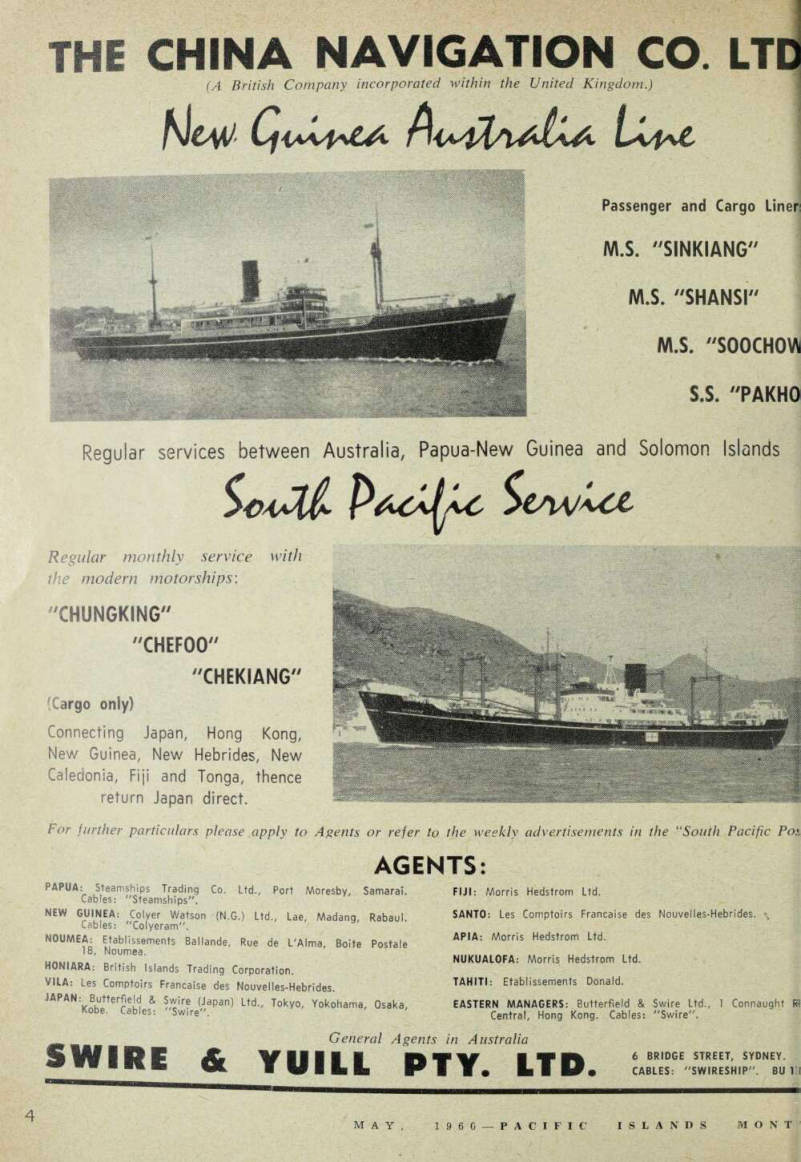 6
6 7
7 8
8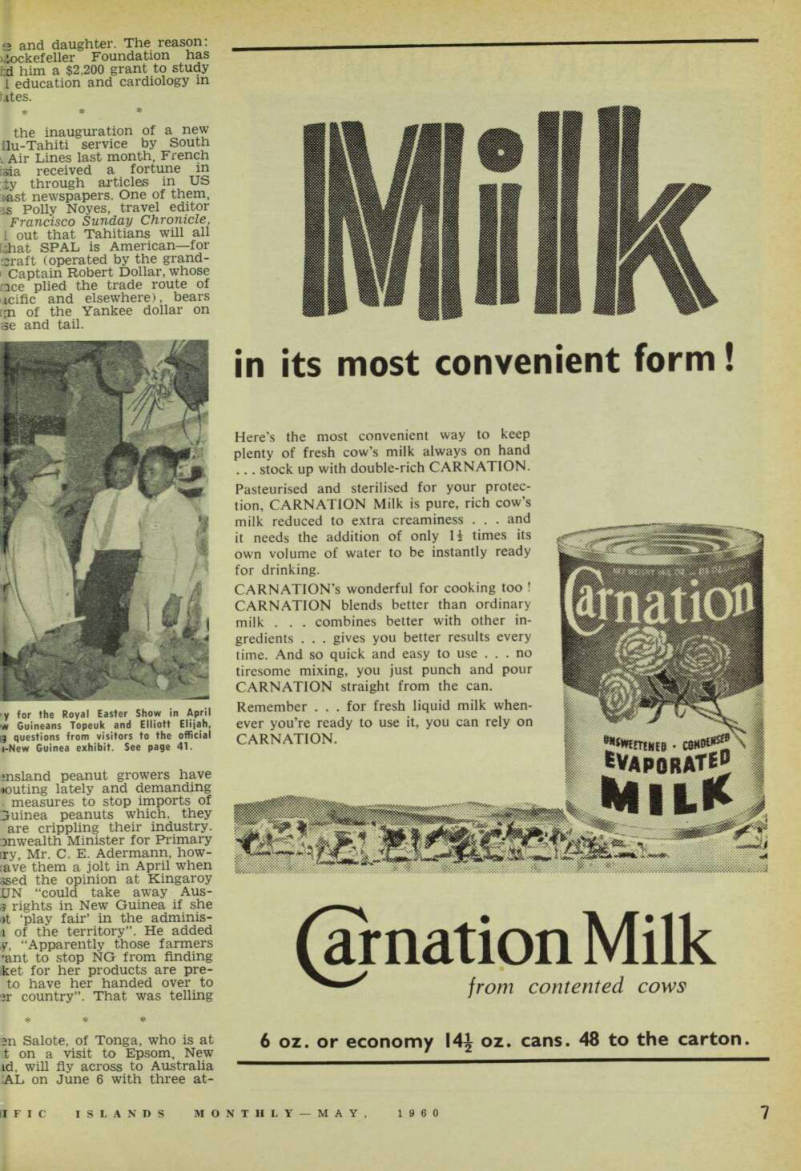 9
9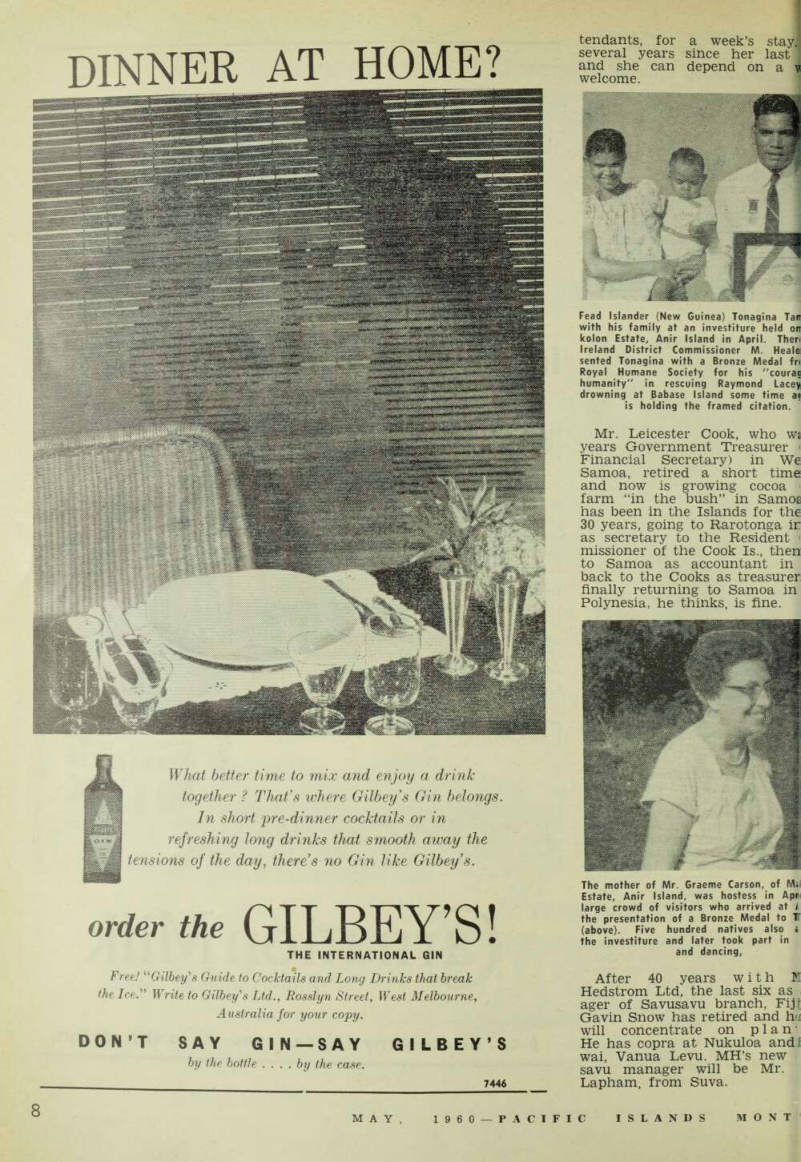 10
10 11
11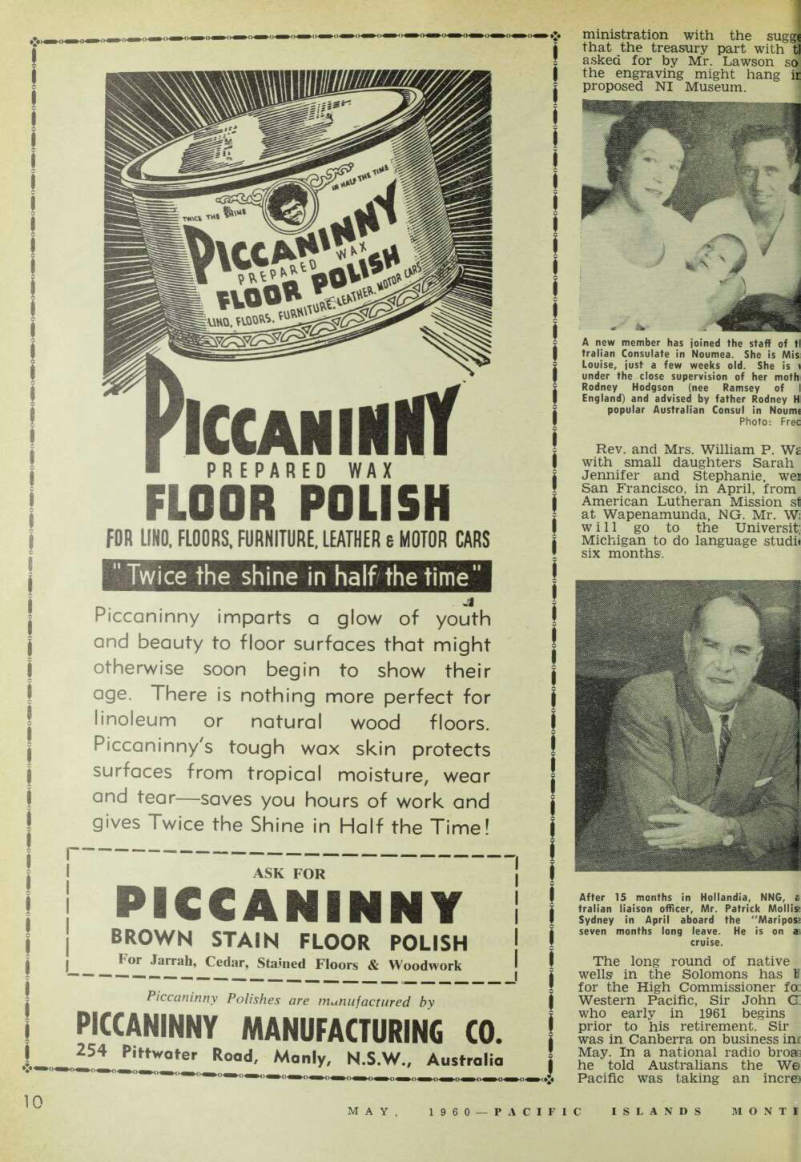 12
12 13
13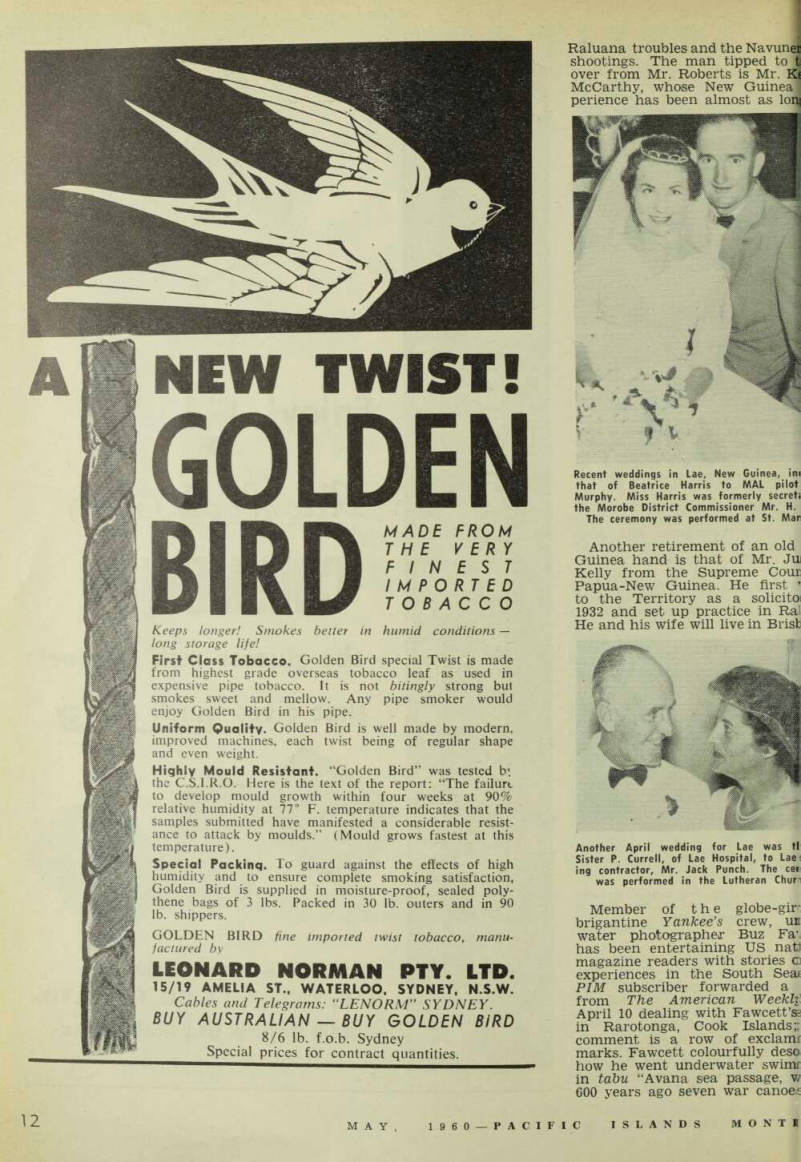 14
14 15
15 16
16 17
17 18
18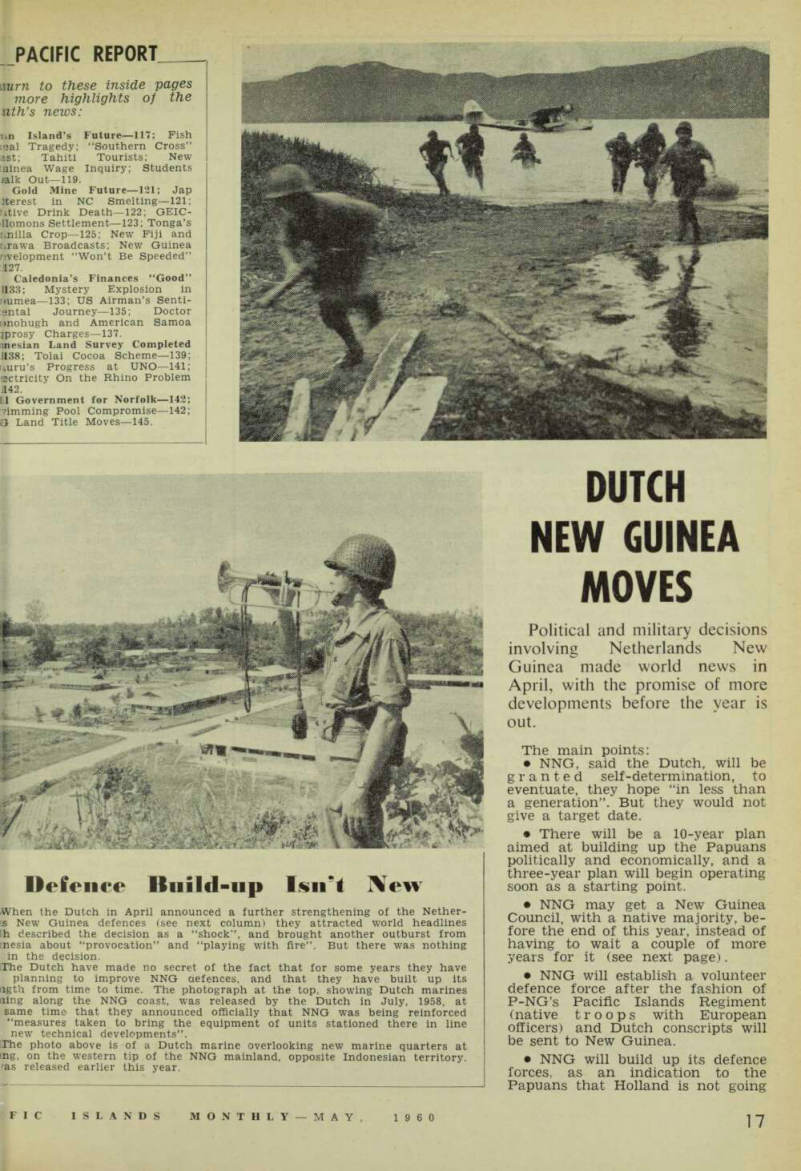 19
19 20
20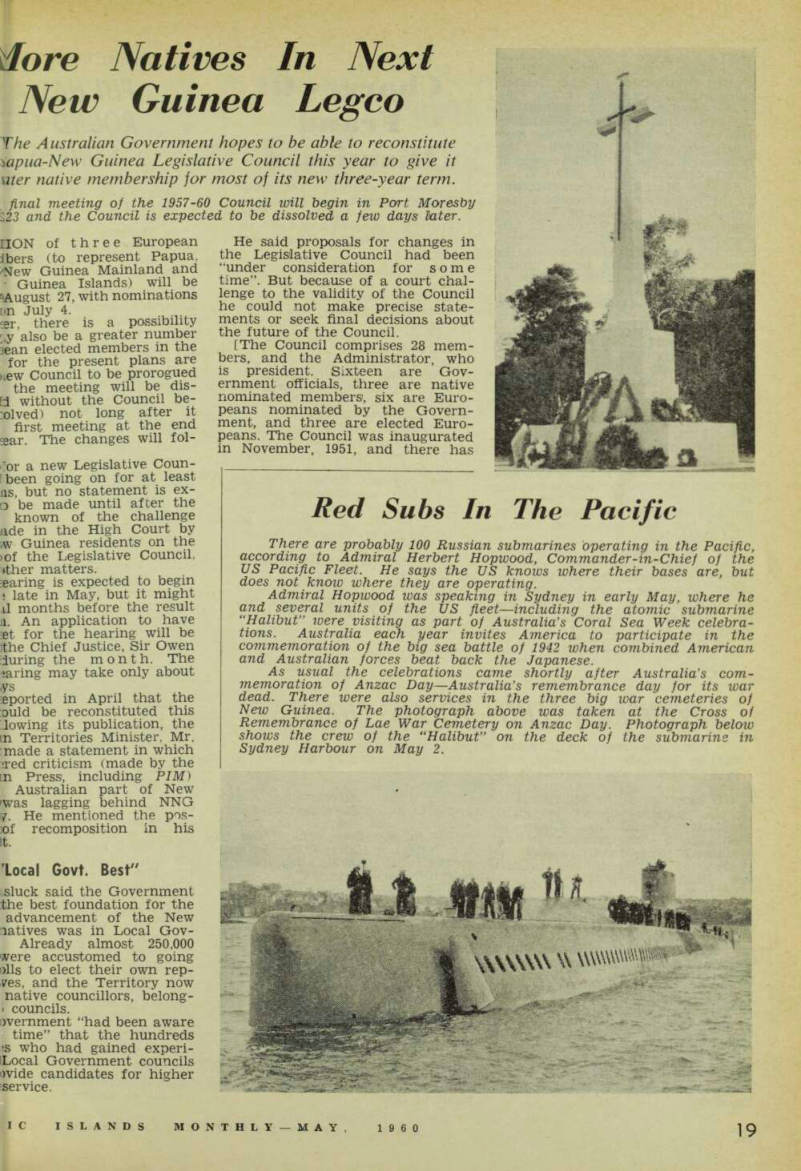 21
21 22
22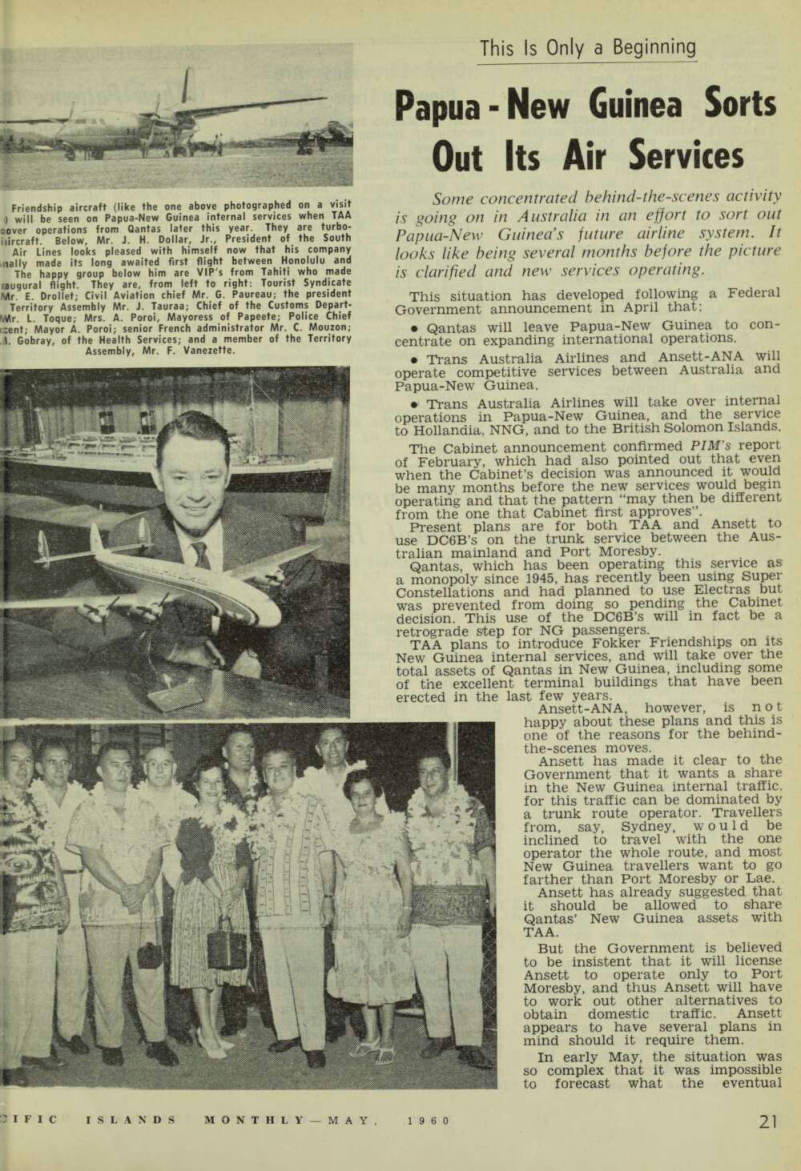 23
23 24
24 25
25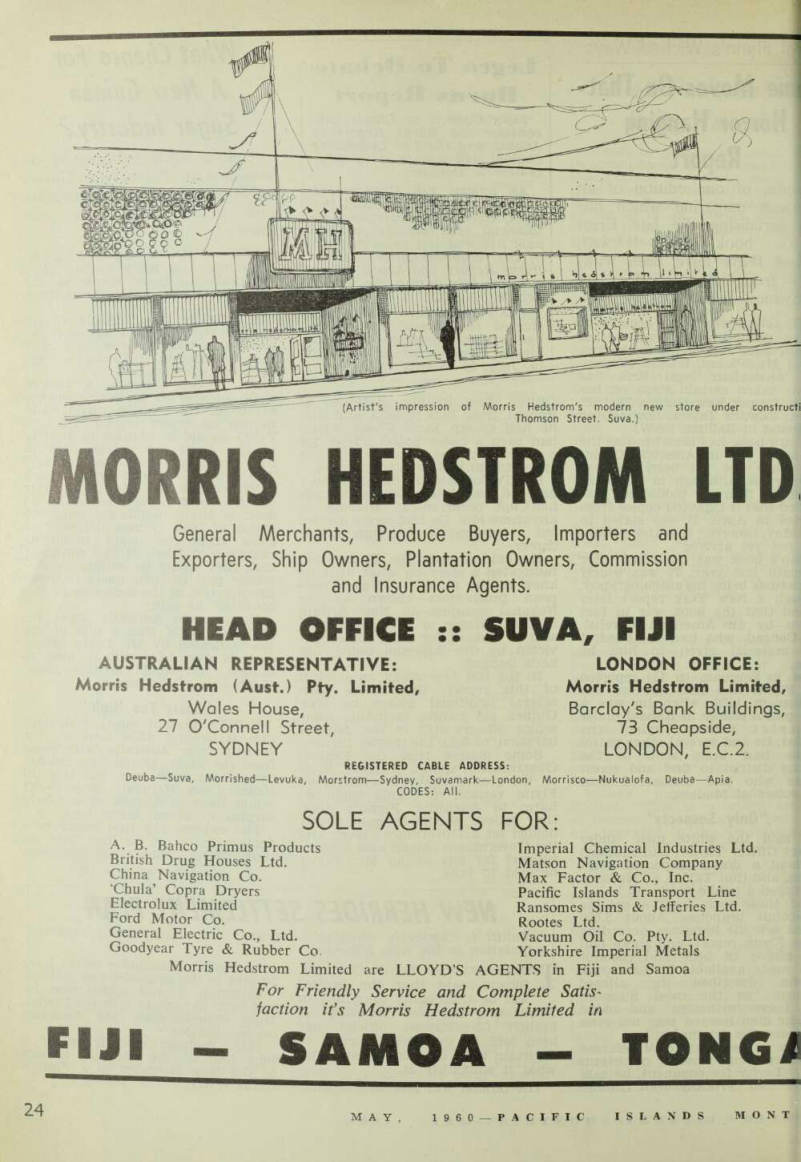 26
26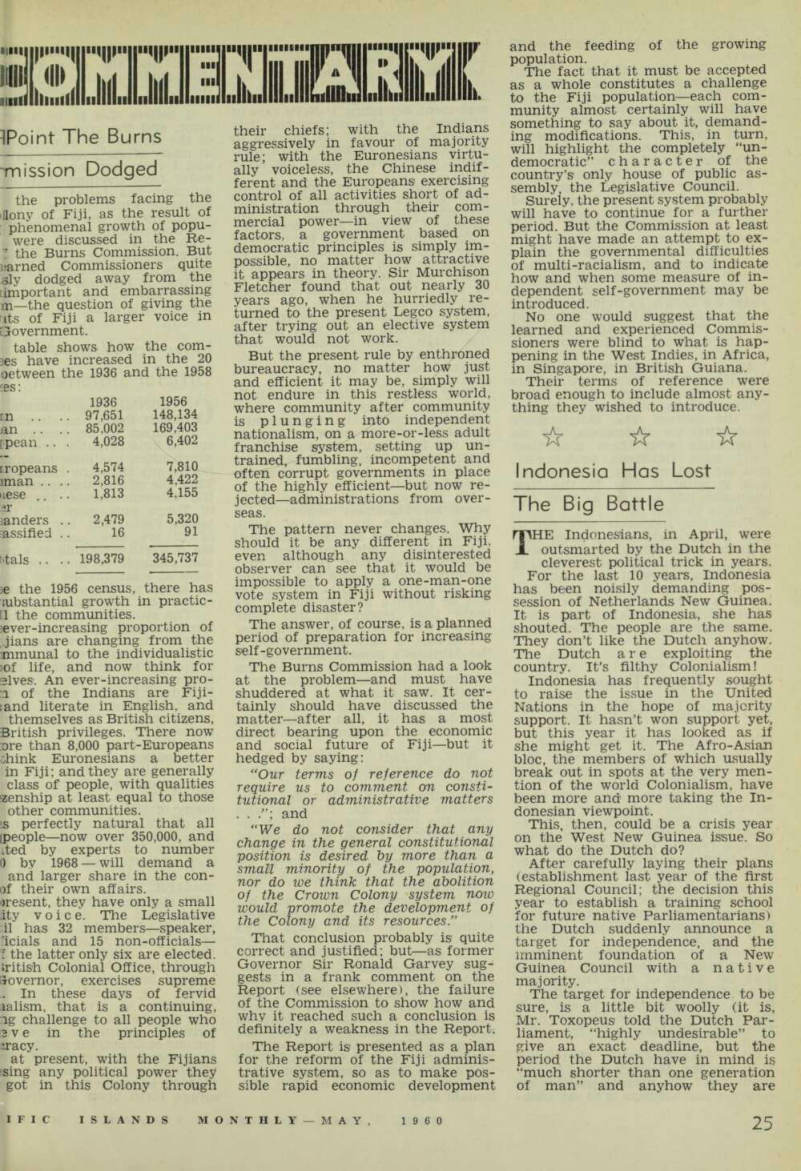 27
27 28
28 29
29 30
30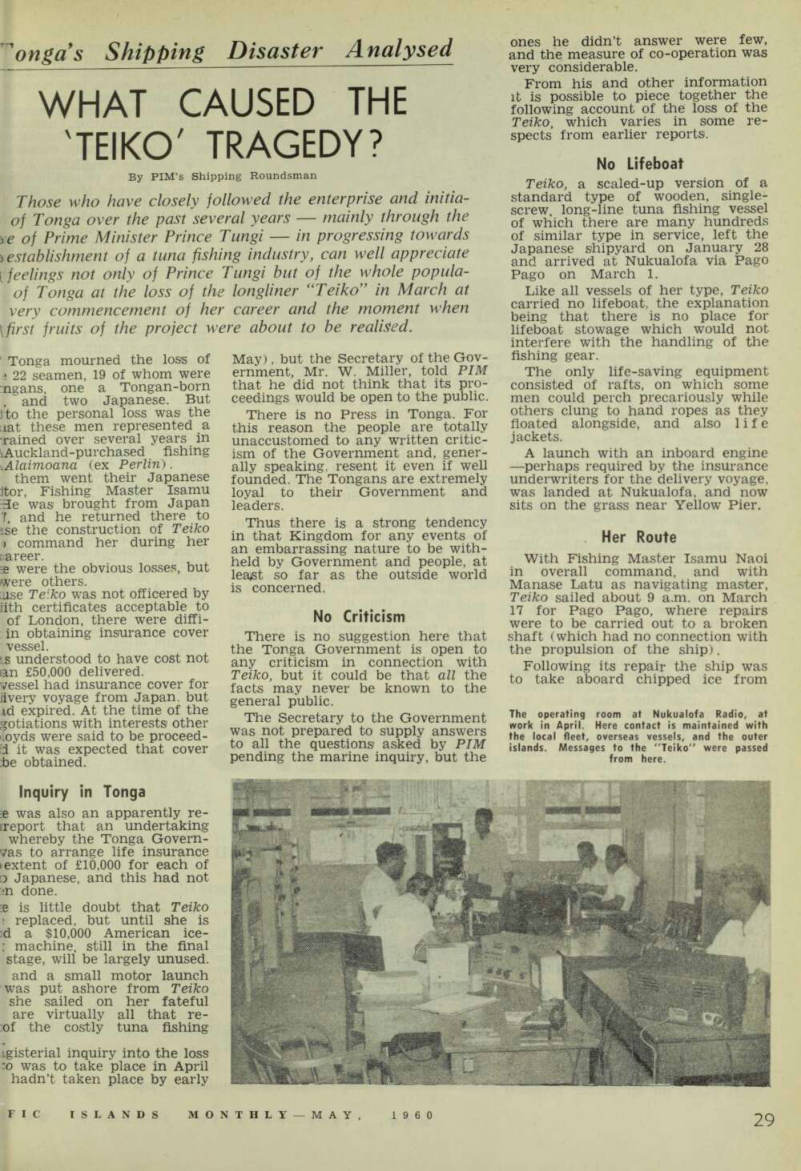 31
31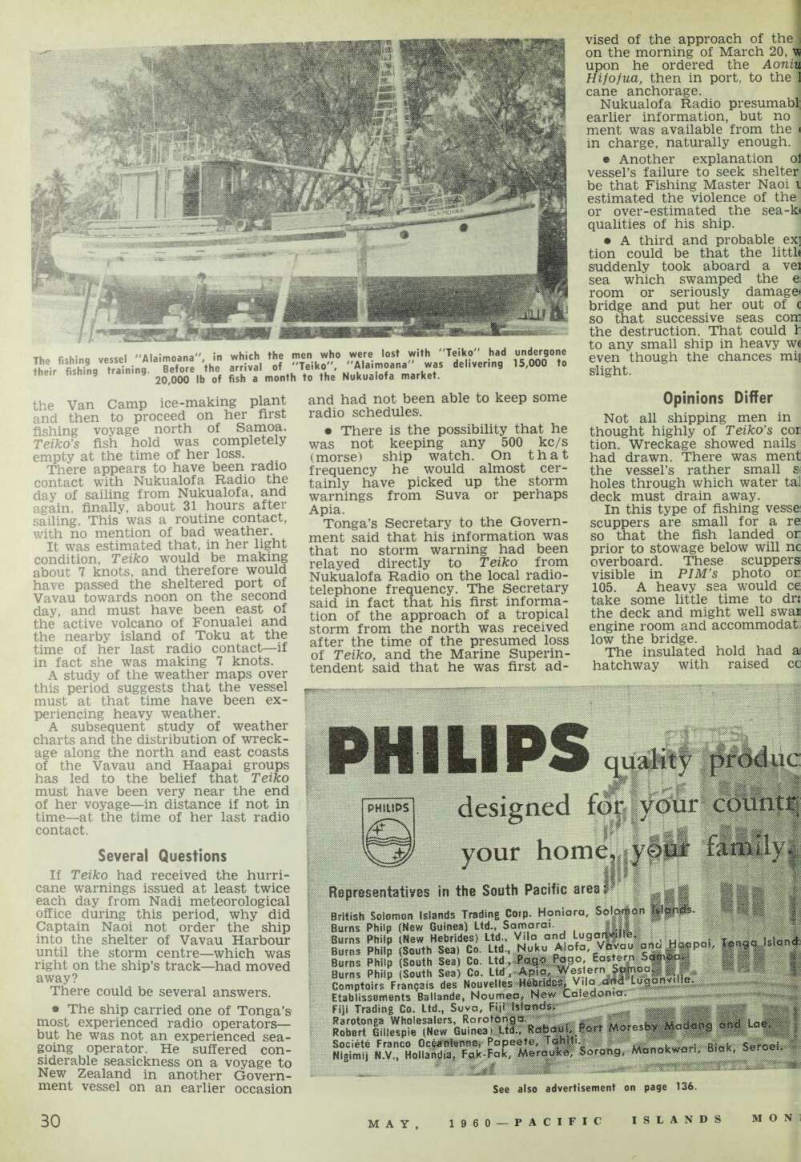 32
32 33
33 34
34 35
35 36
36 37
37 38
38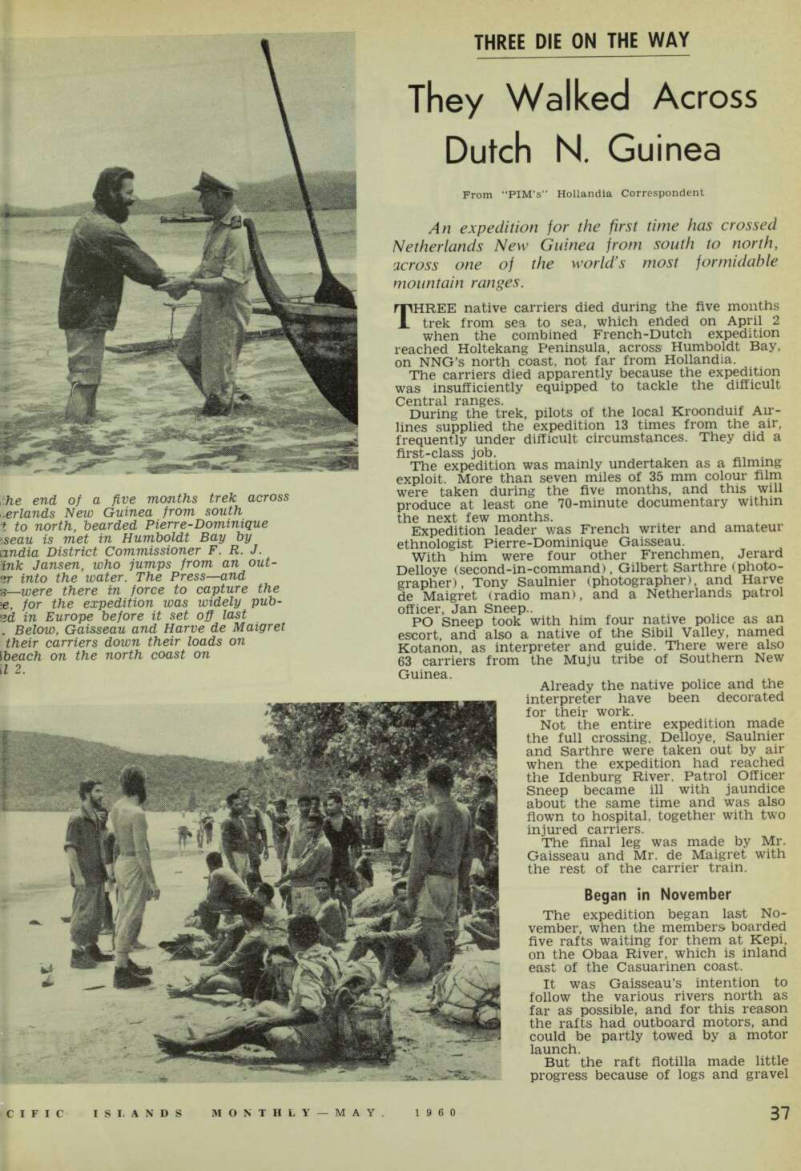 39
39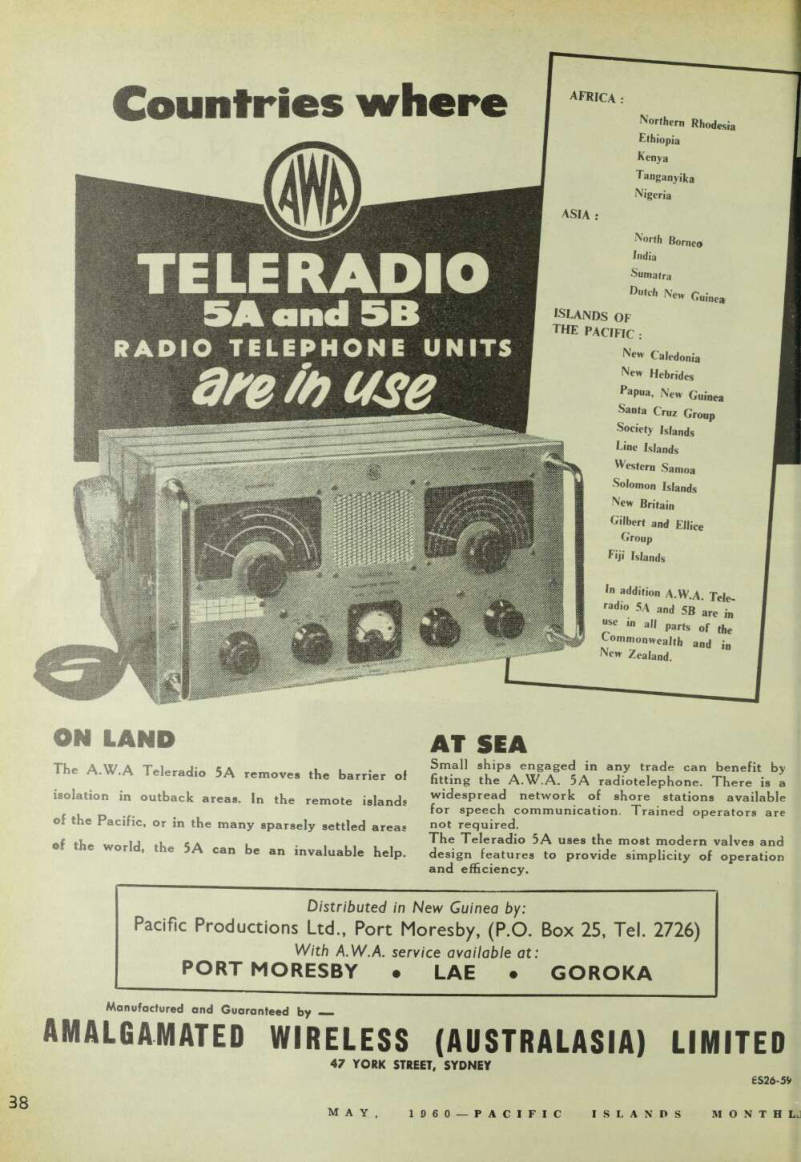 40
40 41
41 42
42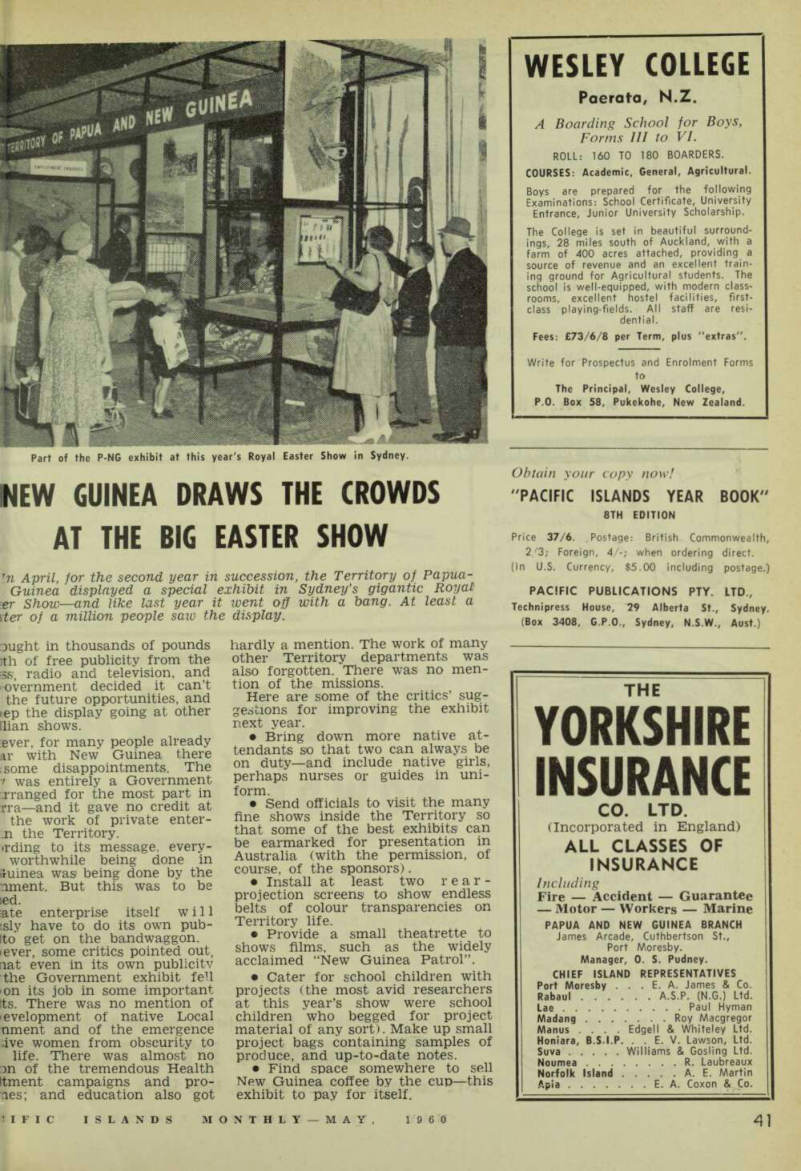 43
43 44
44 45
45 46
46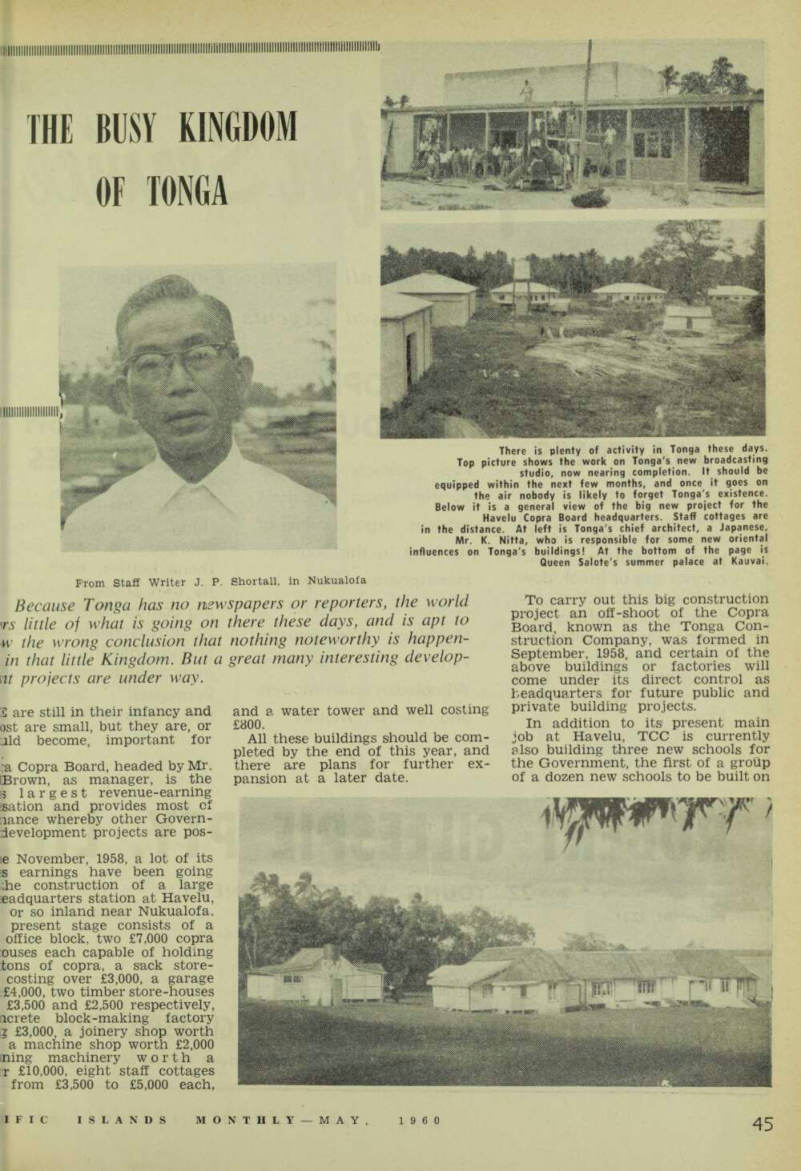 47
47 48
48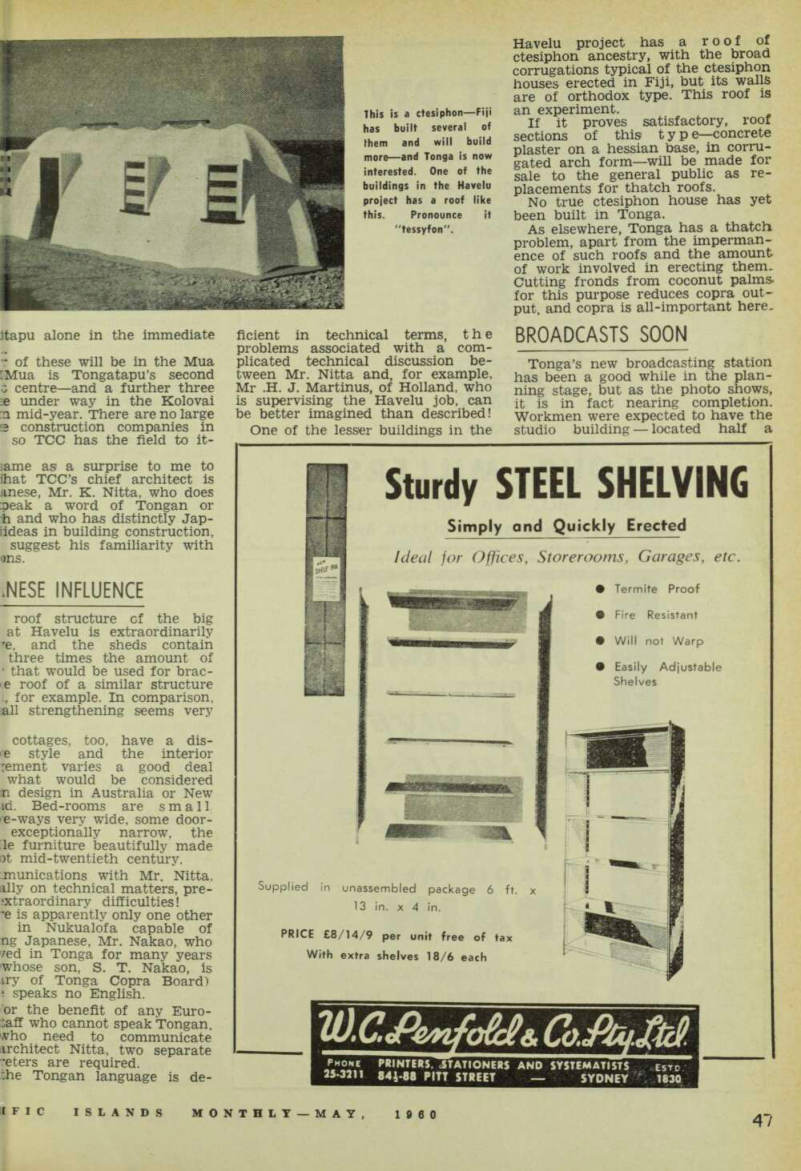 49
49 50
50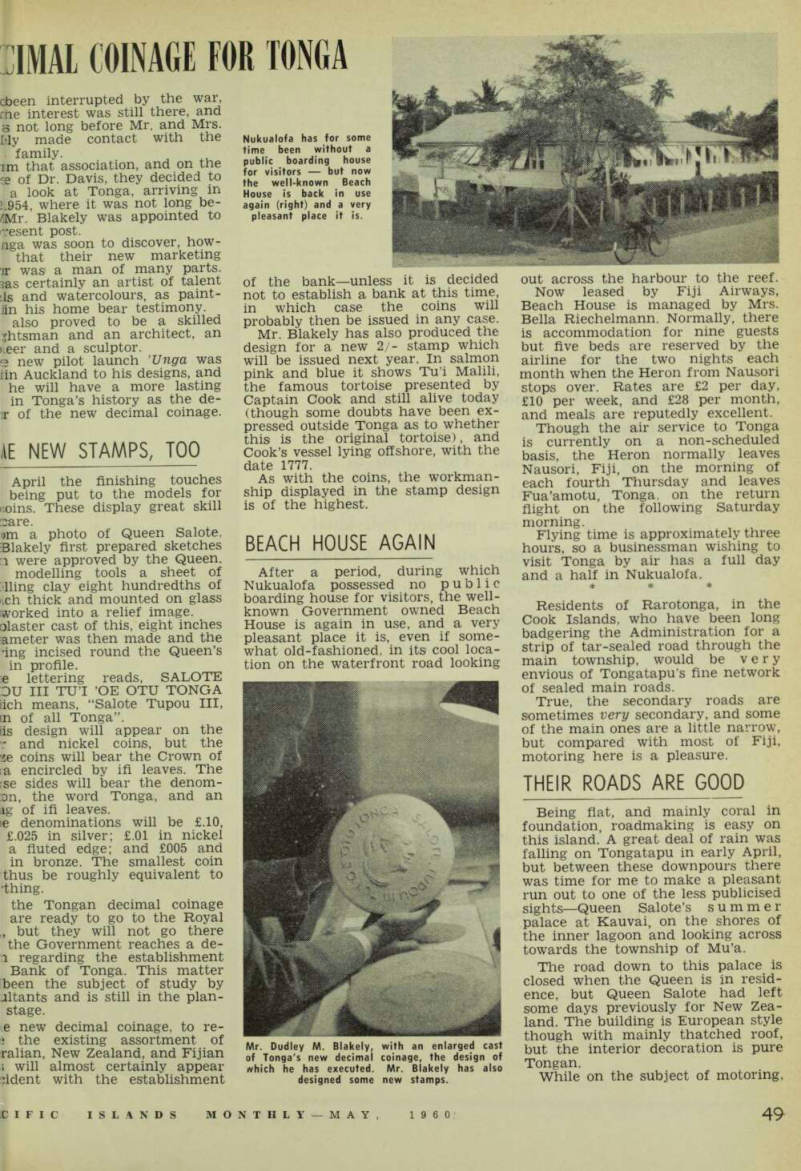 51
51 52
52 53
53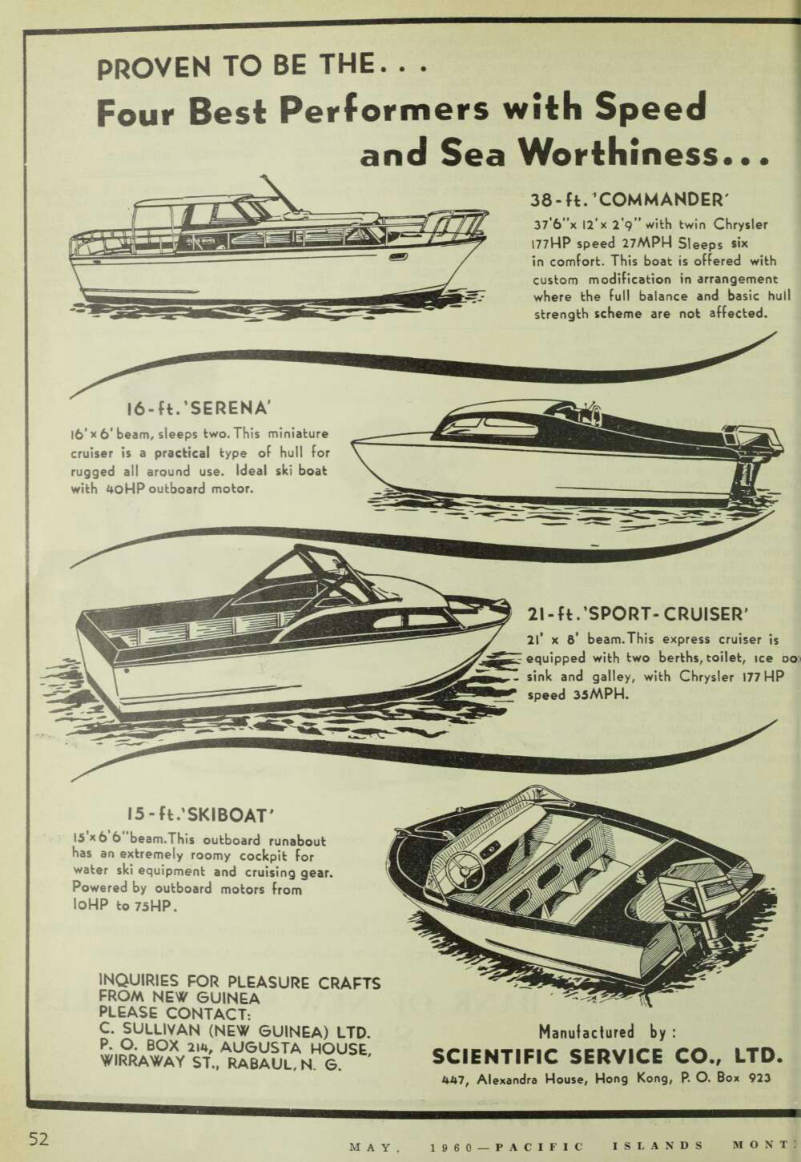 54
54 55
55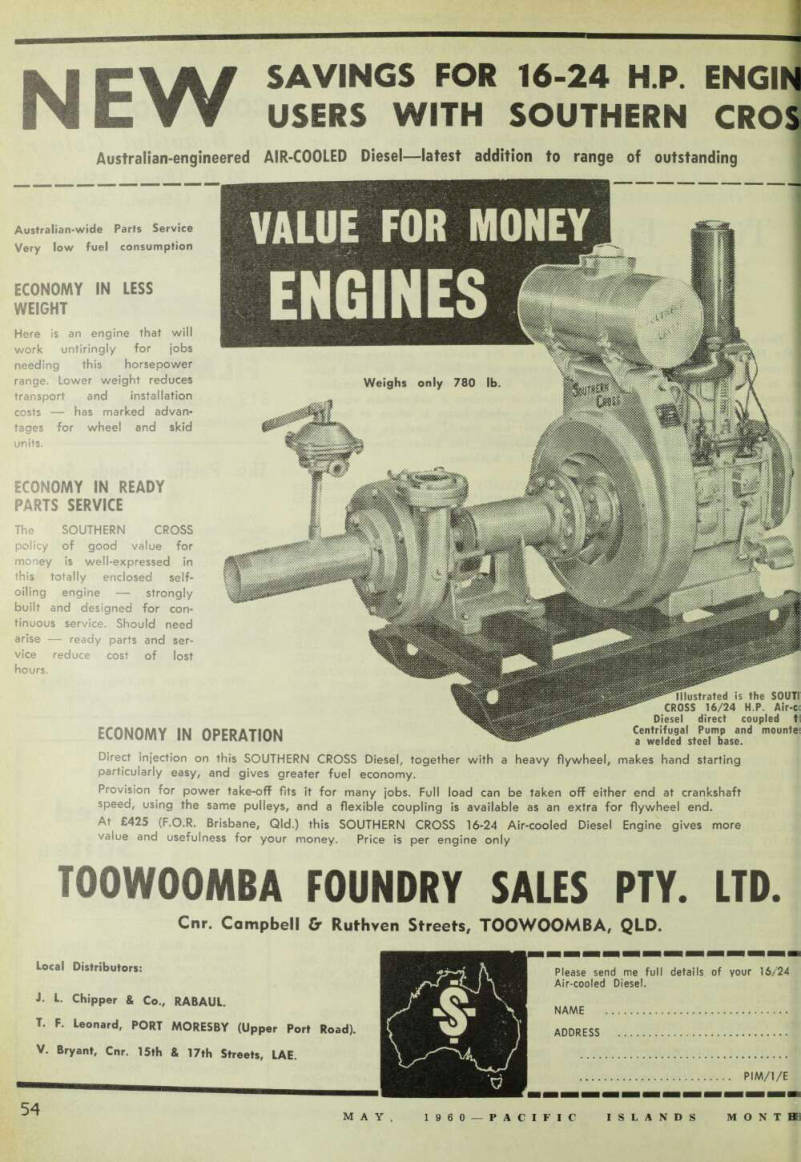 56
56 57
57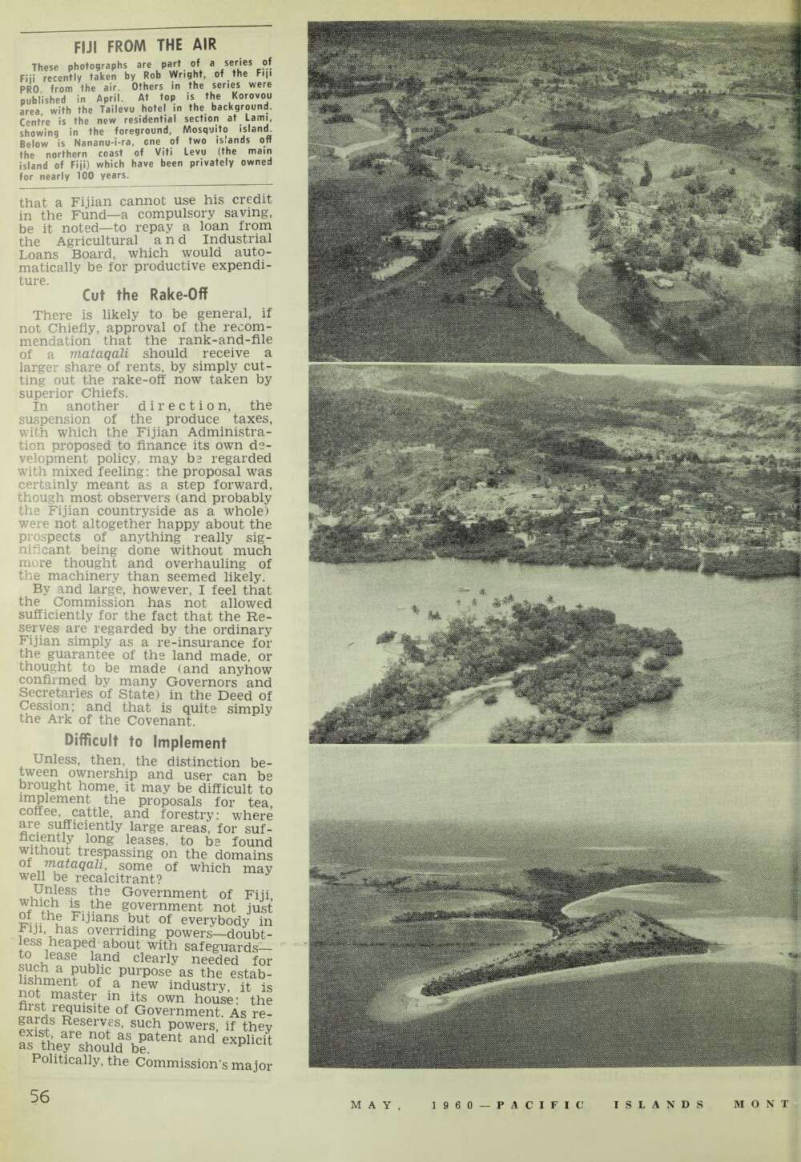 58
58 59
59 60
60 61
61 62
62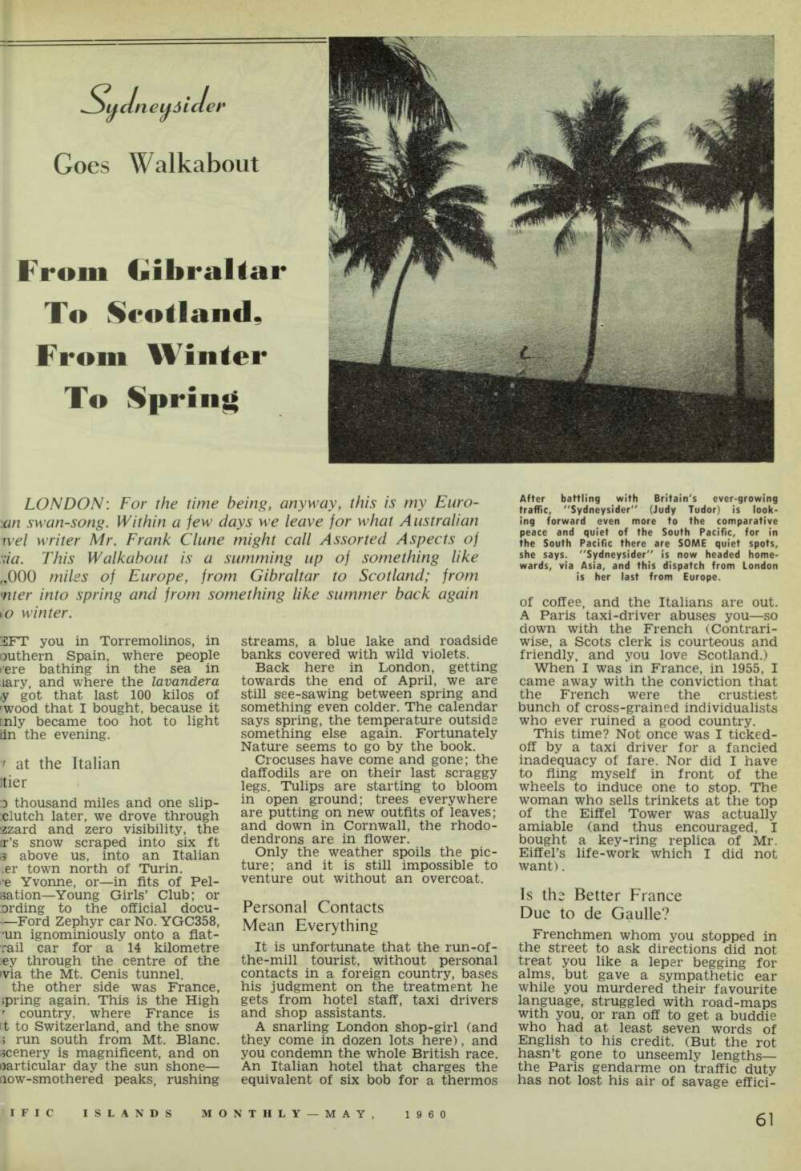 63
63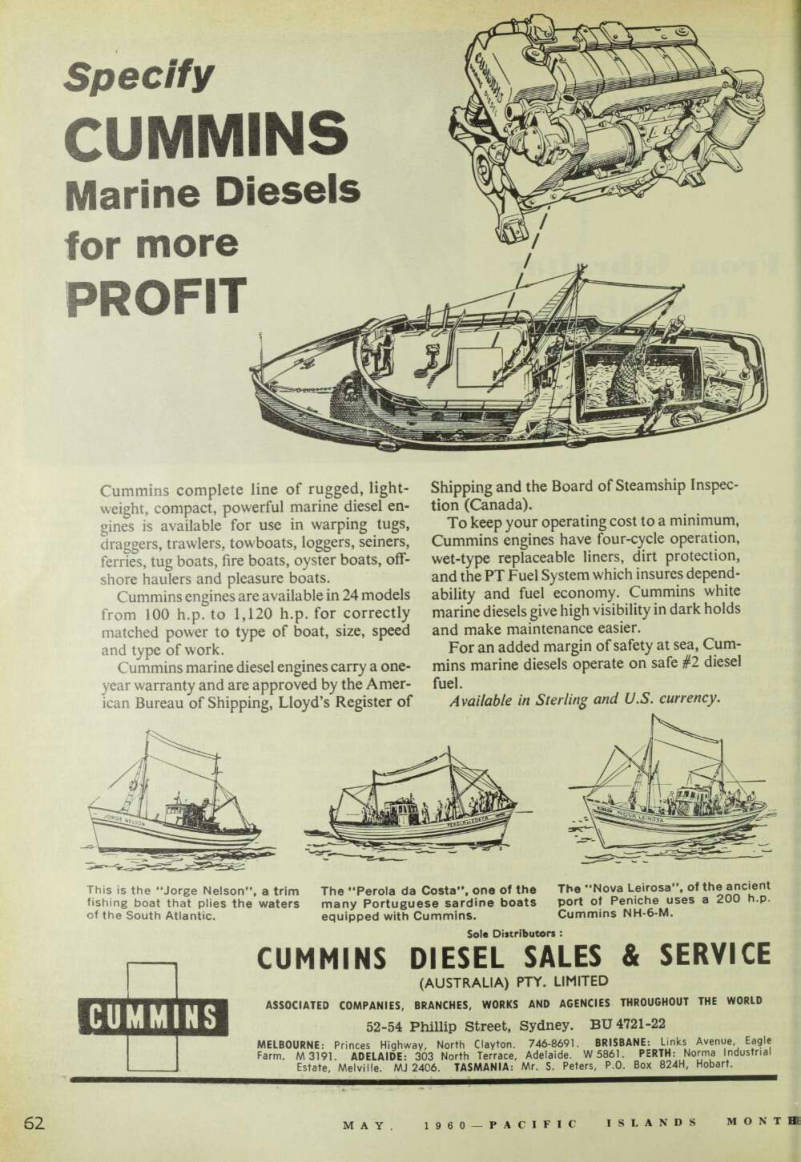 64
64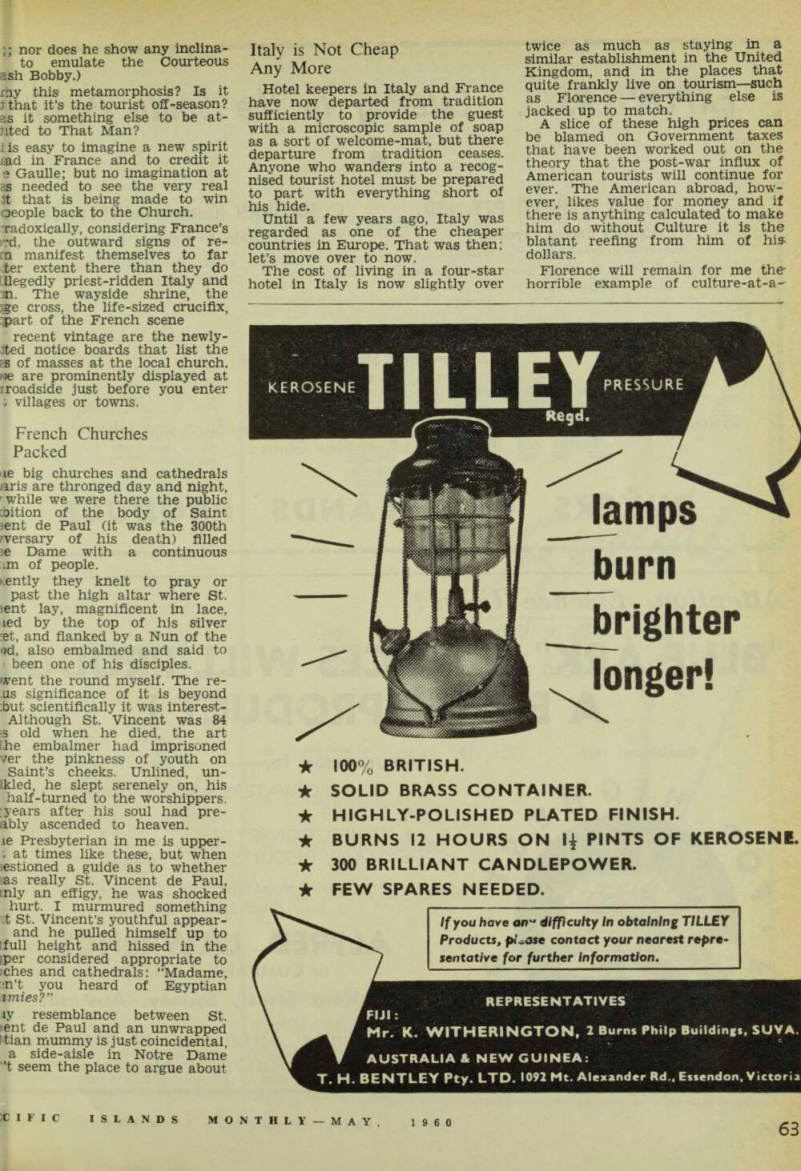 65
65 66
66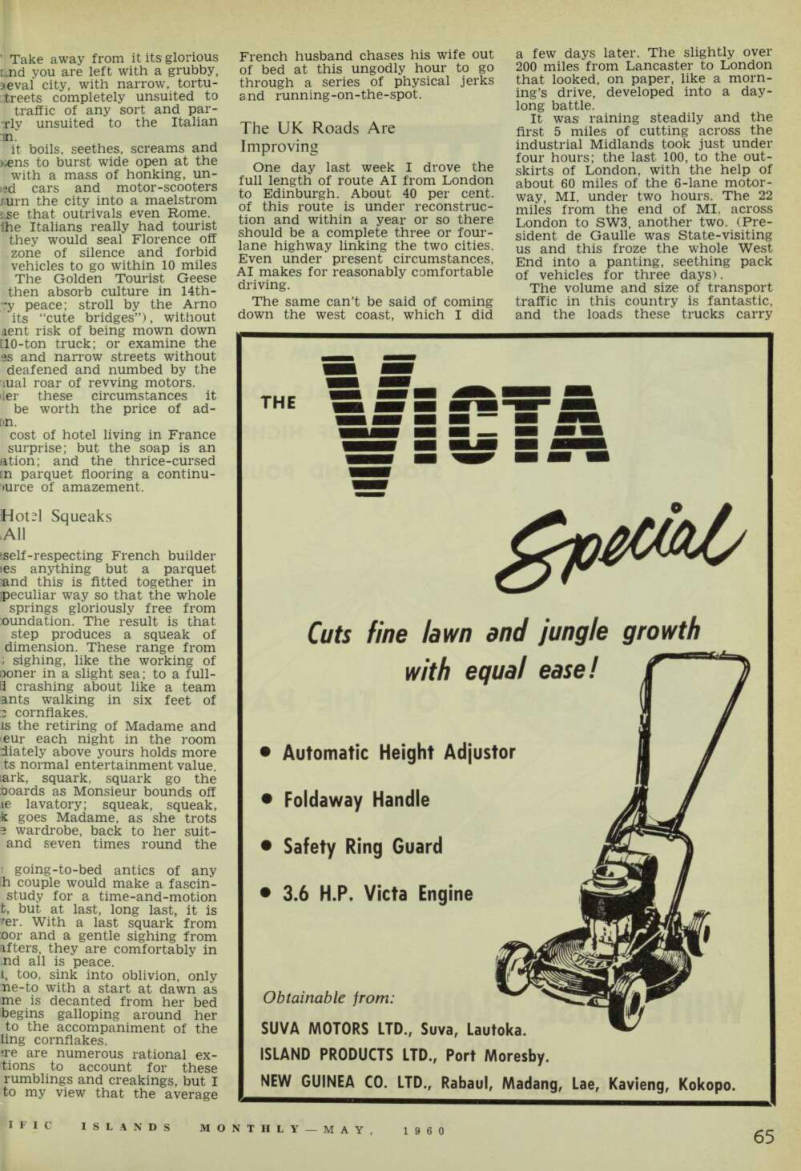 67
67 68
68 69
69 70
70 71
71 72
72 73
73 74
74 75
75 76
76 77
77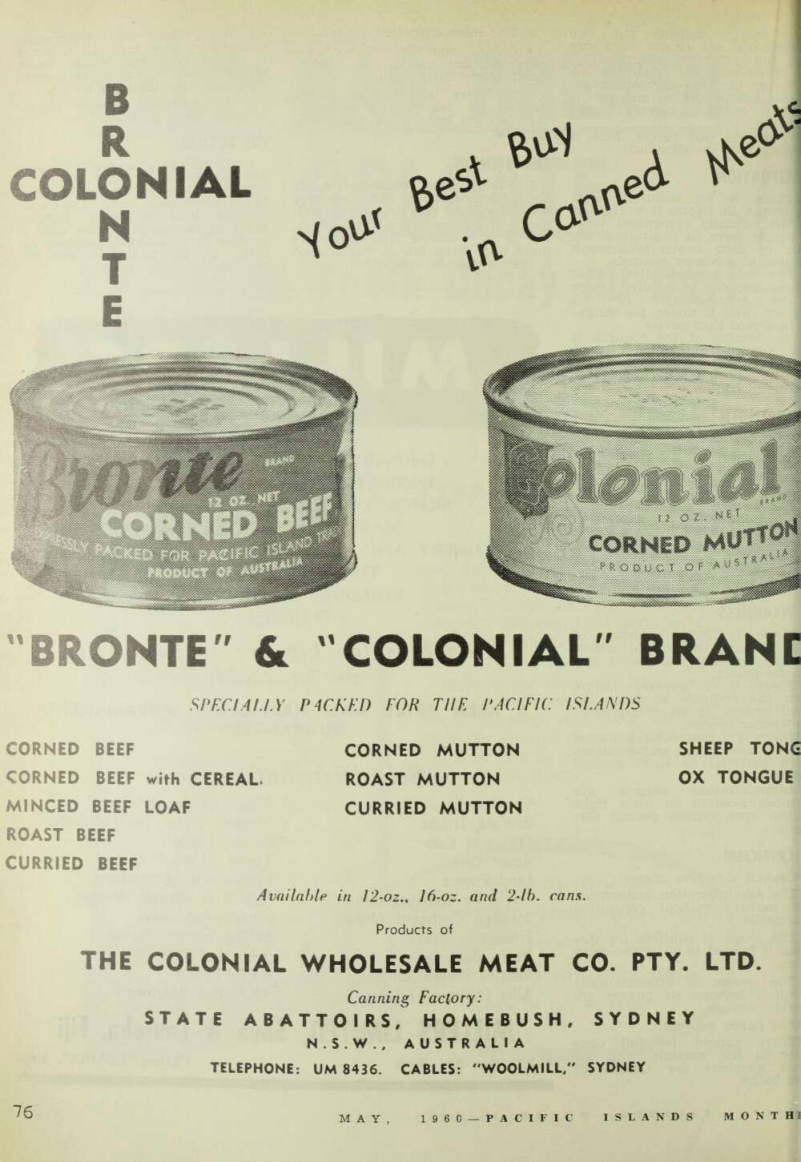 78
78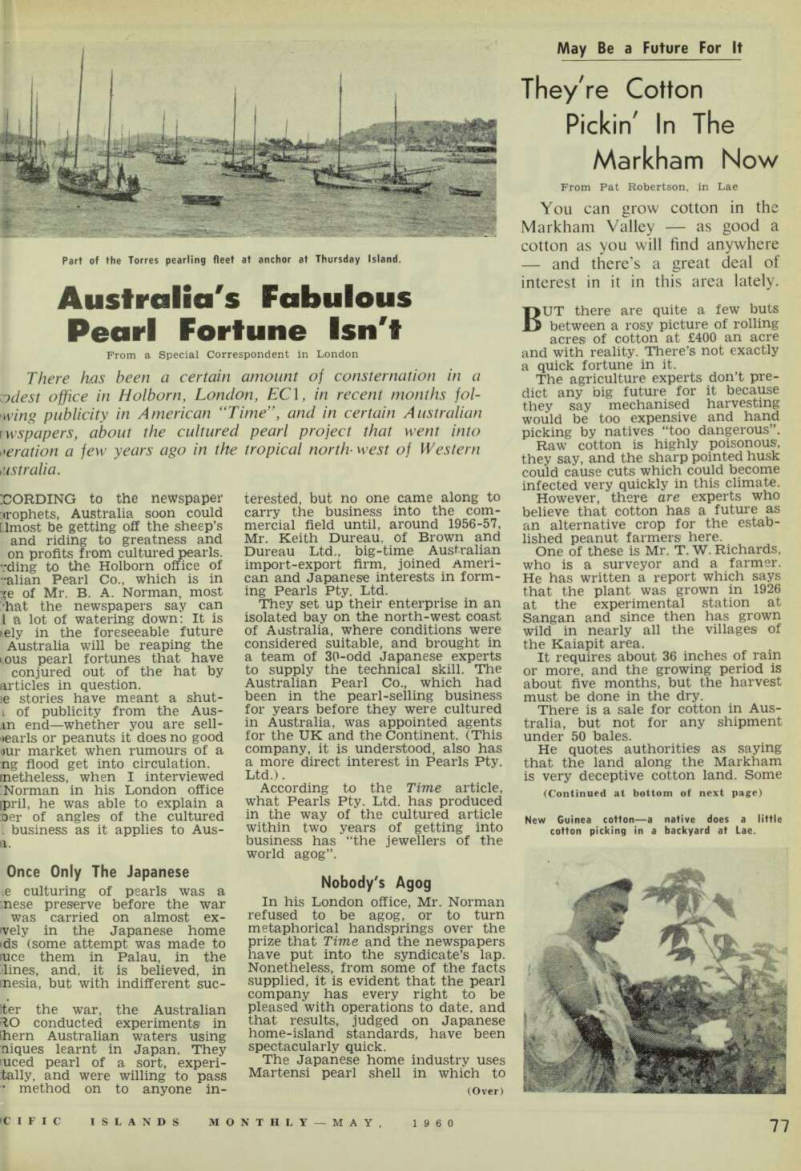 79
79 80
80 81
81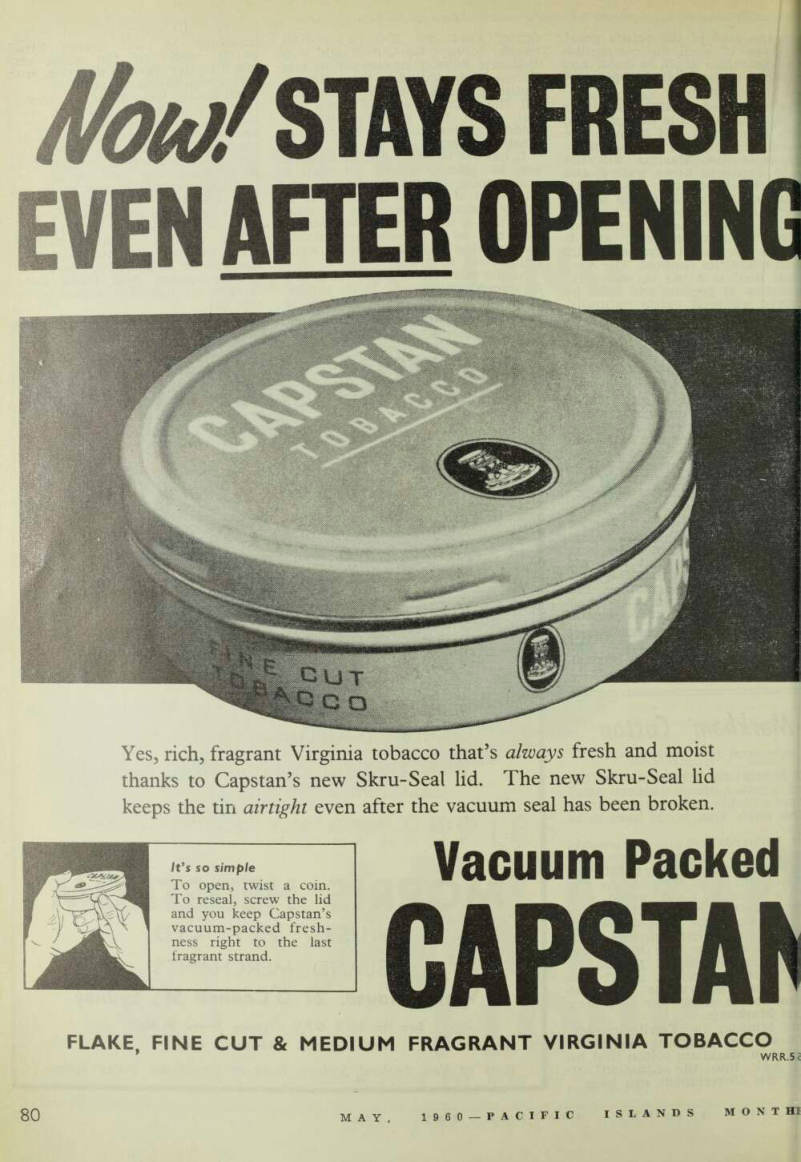 82
82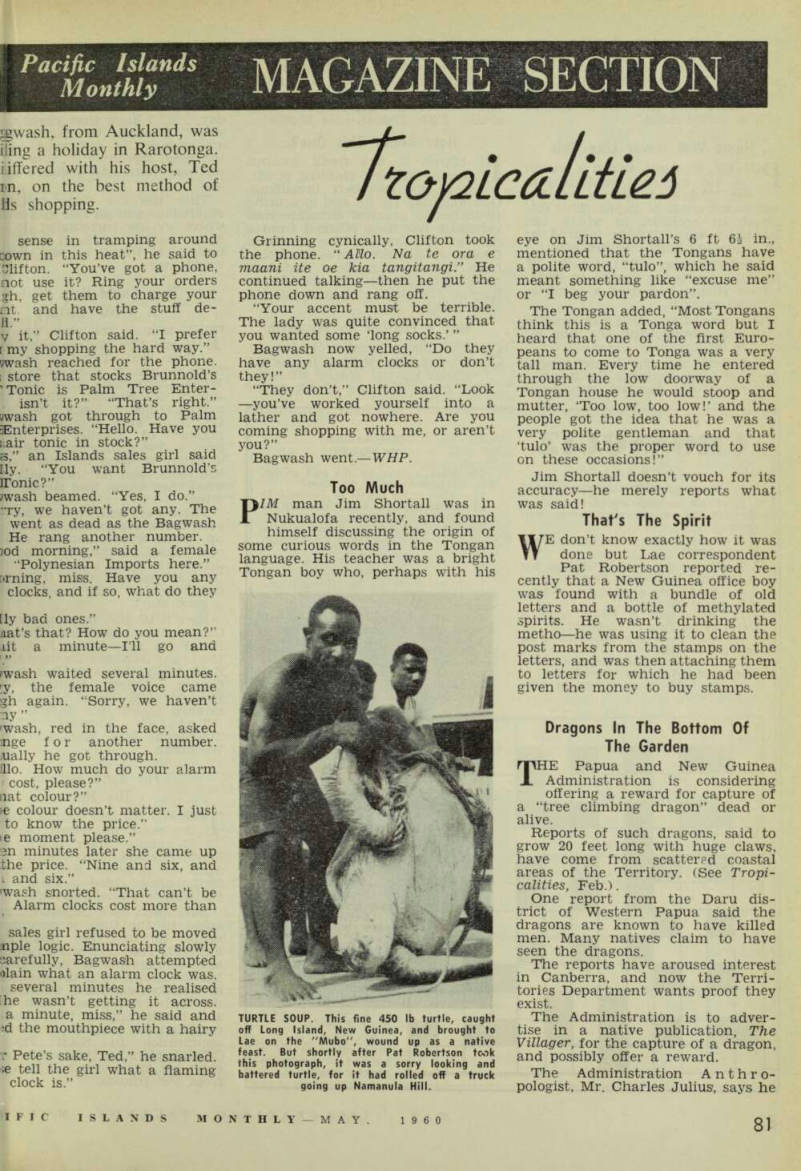 83
83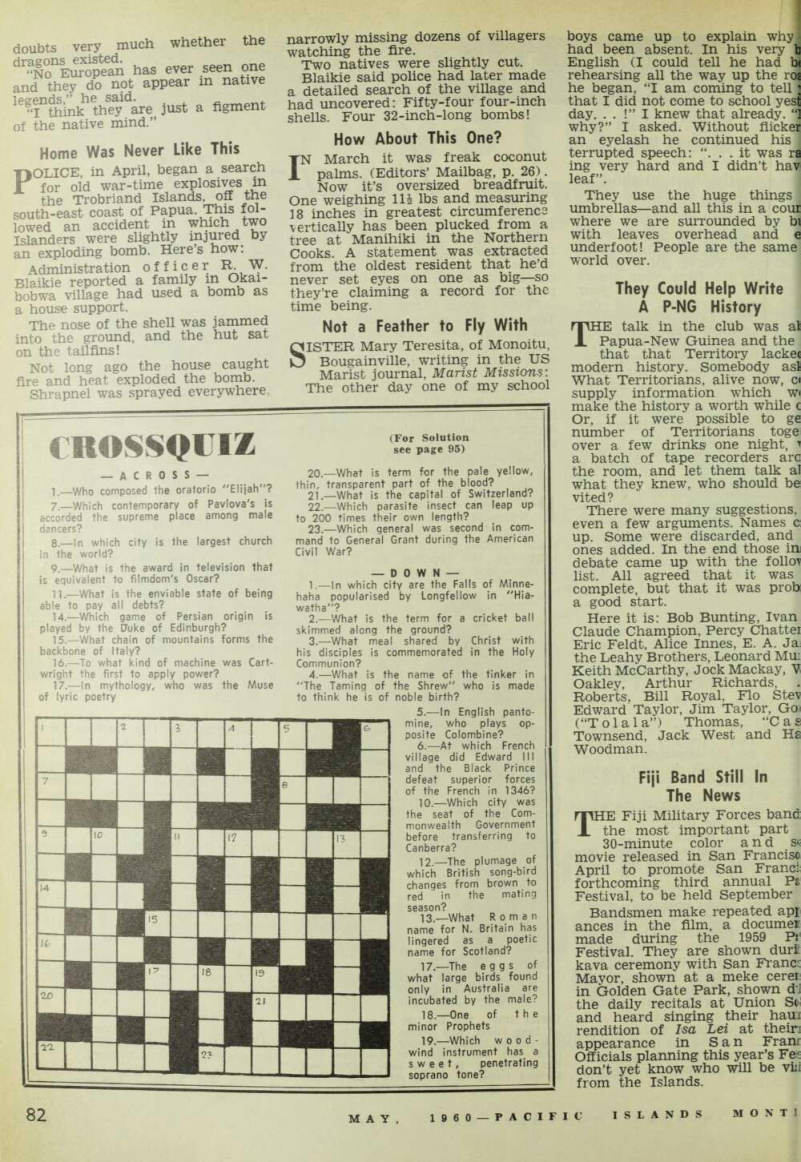 84
84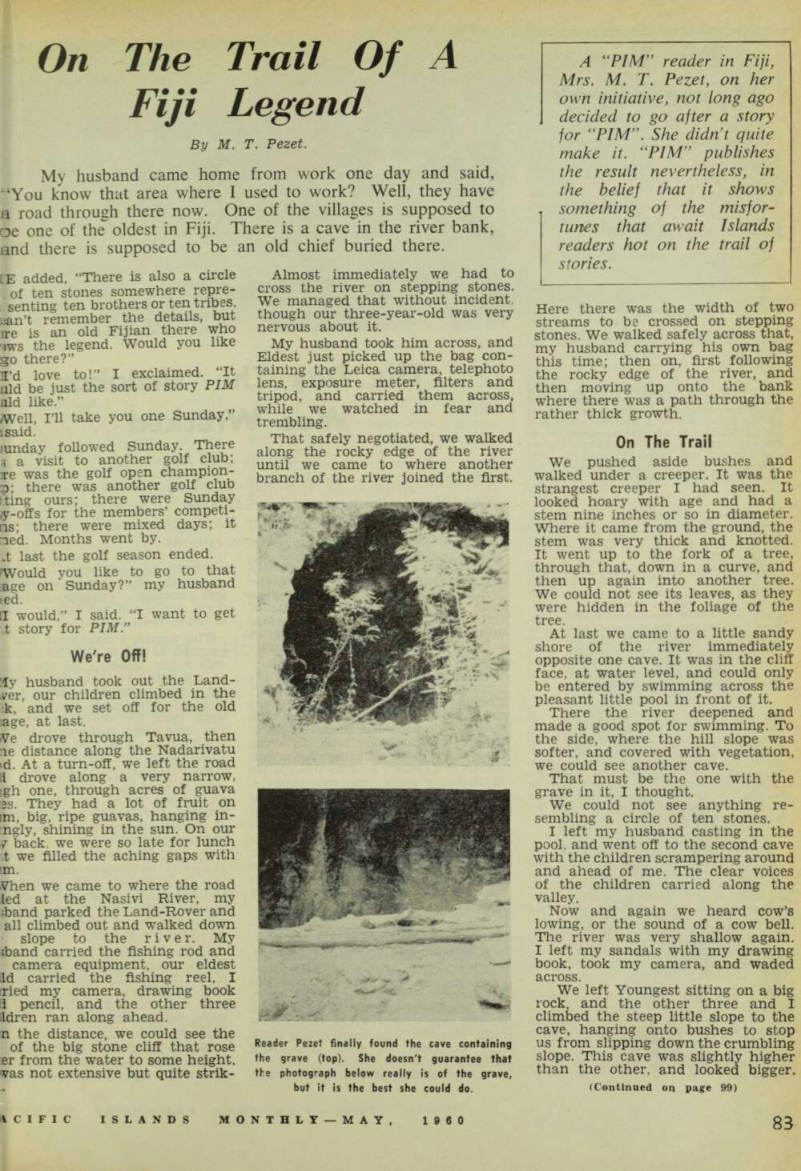 85
85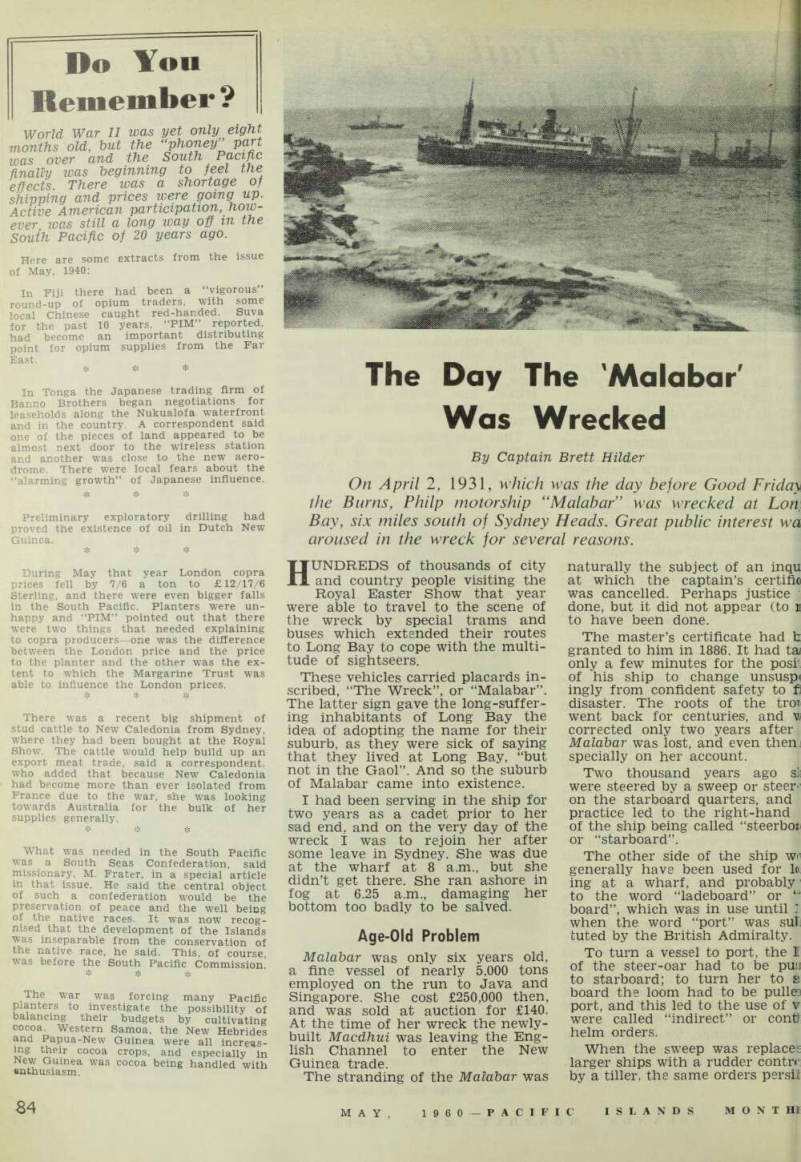 86
86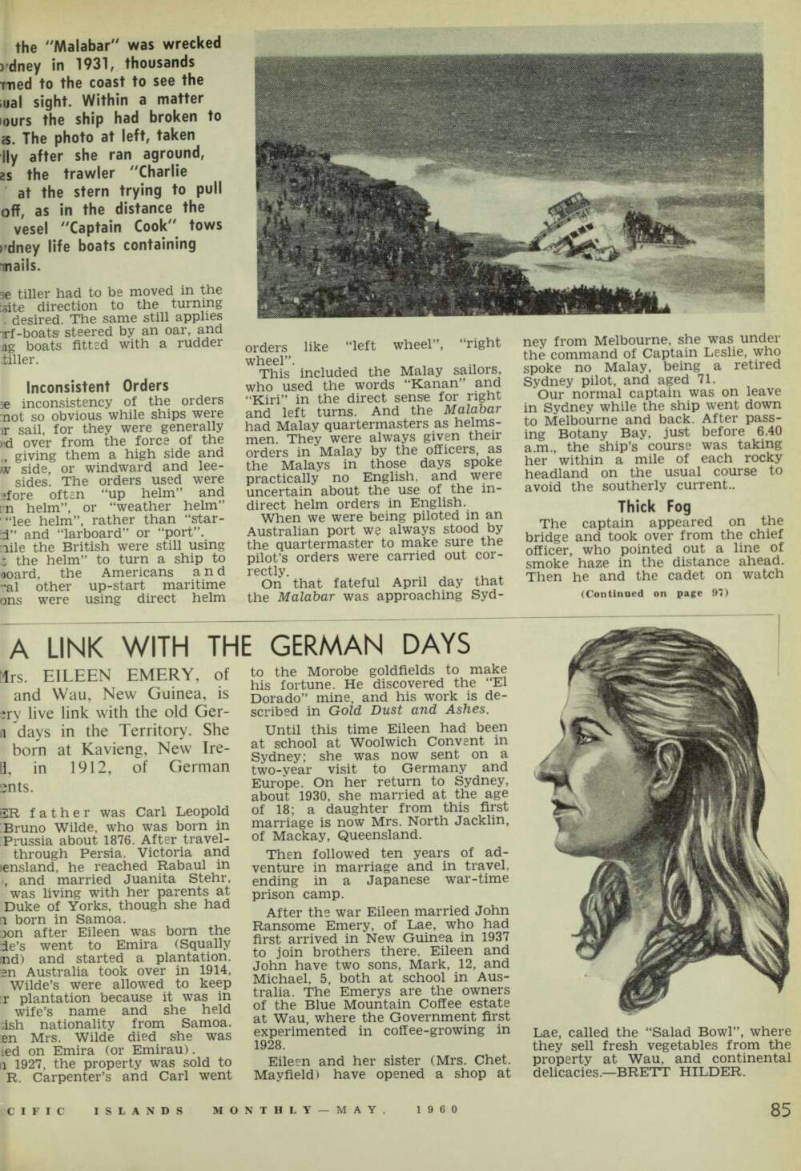 87
87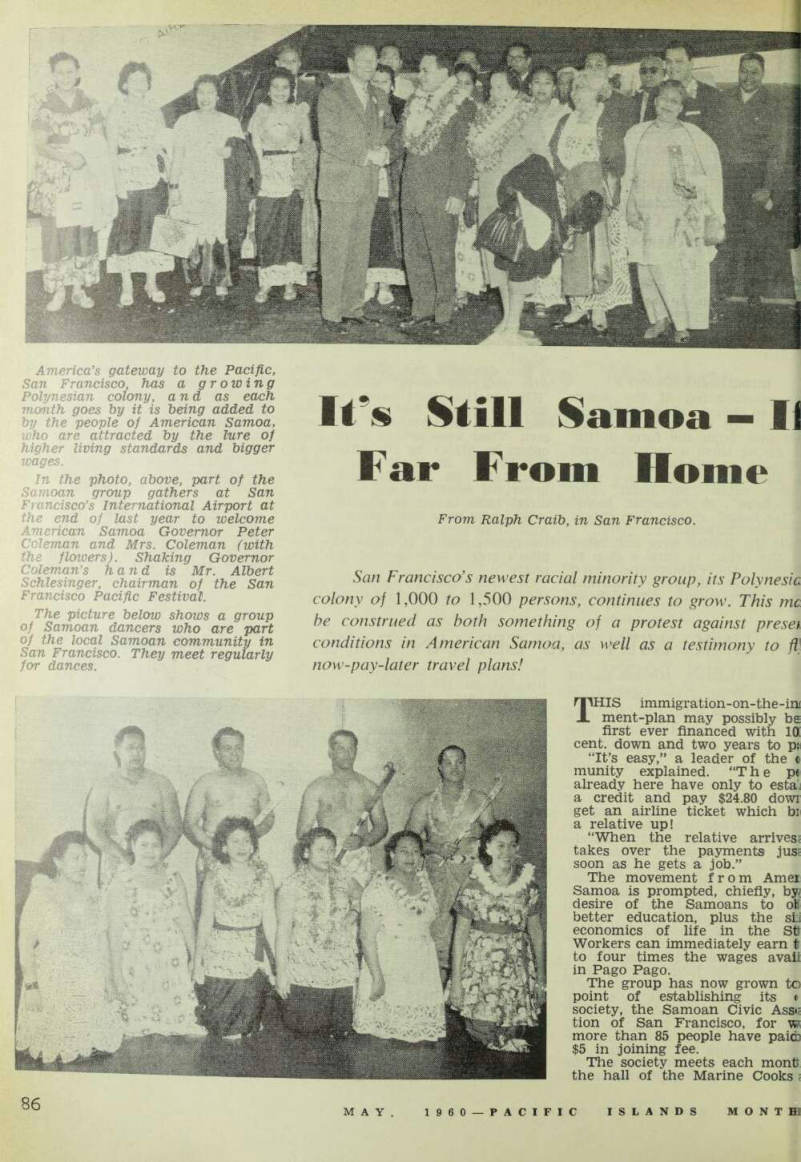 88
88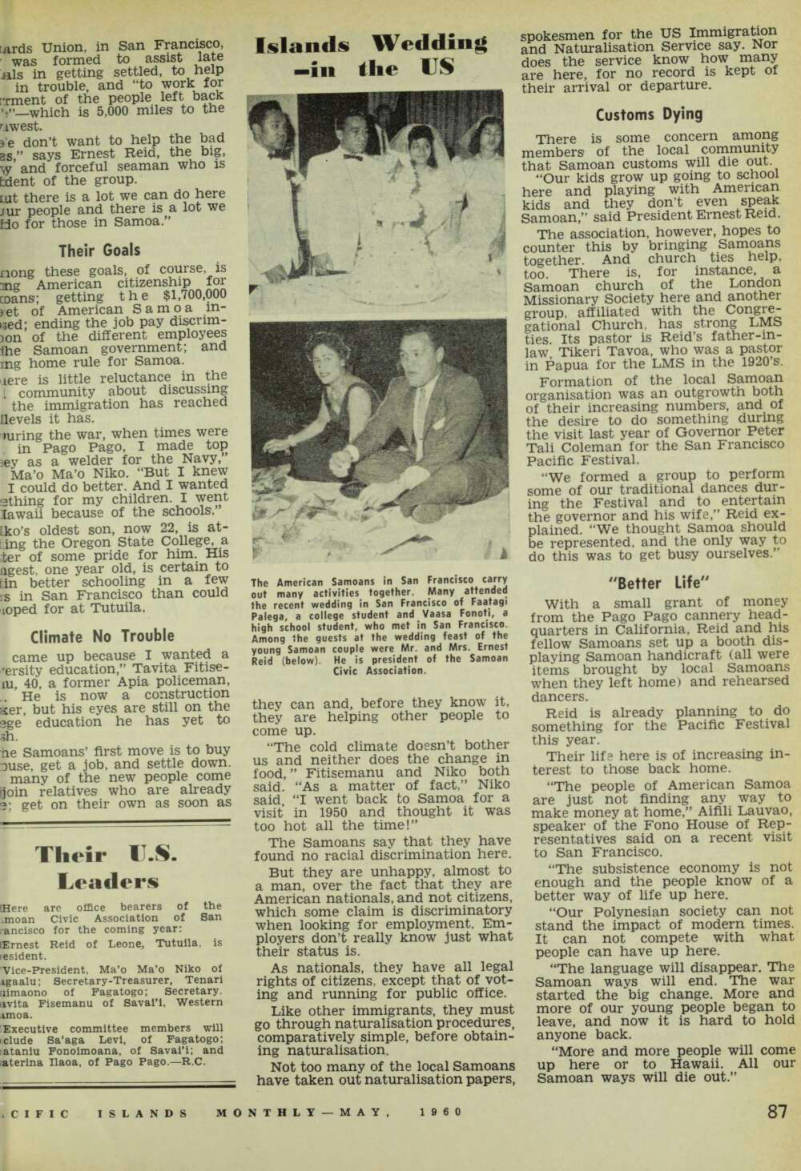 89
89 90
90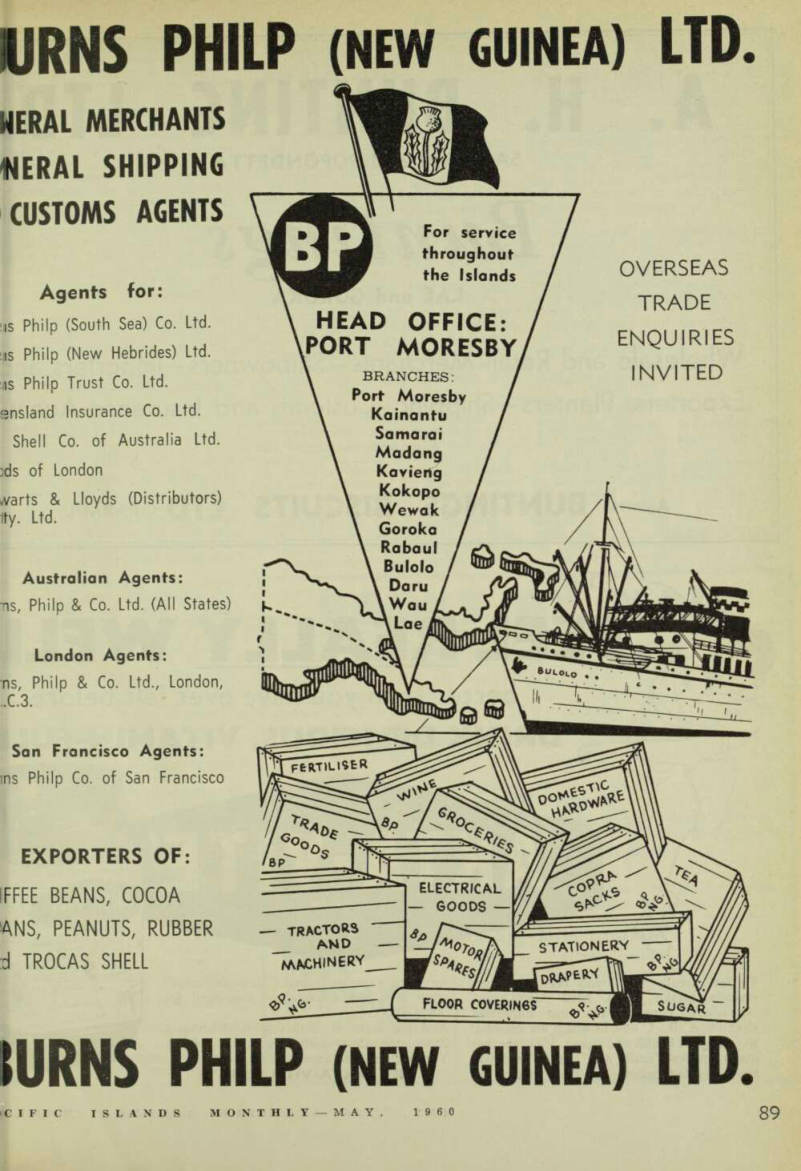 91
91 92
92 93
93 94
94 95
95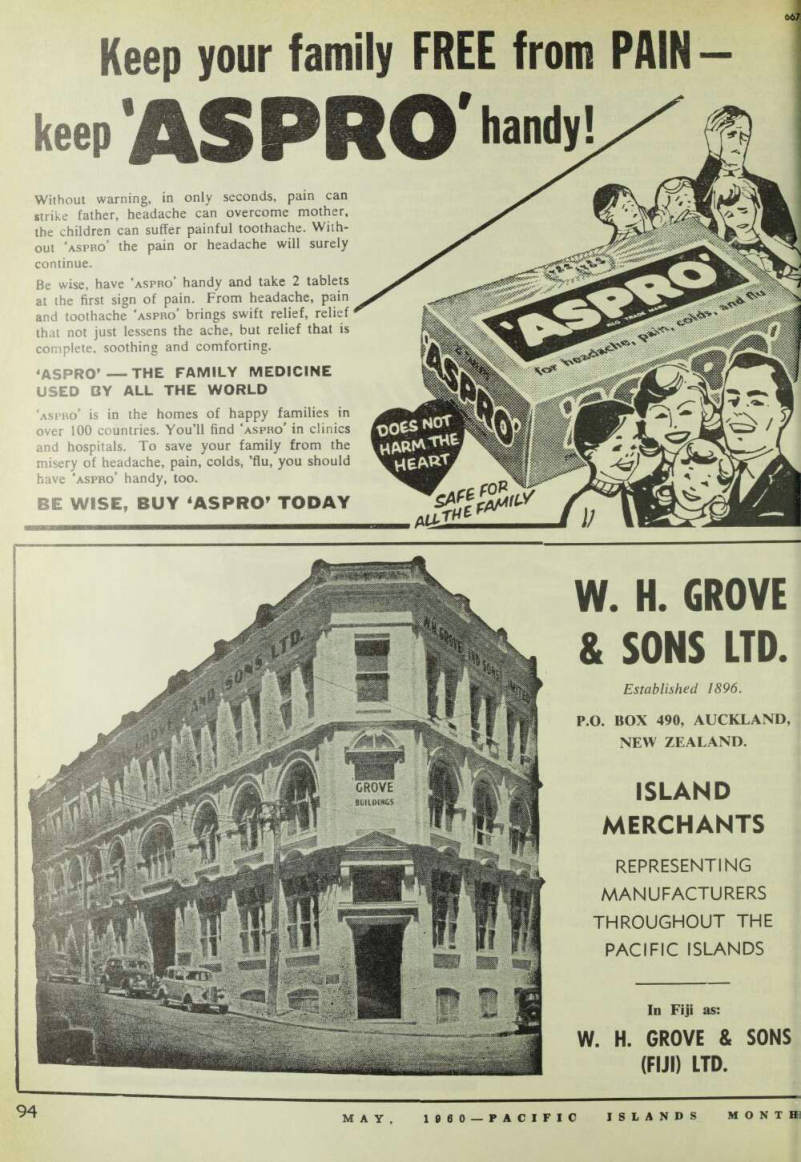 96
96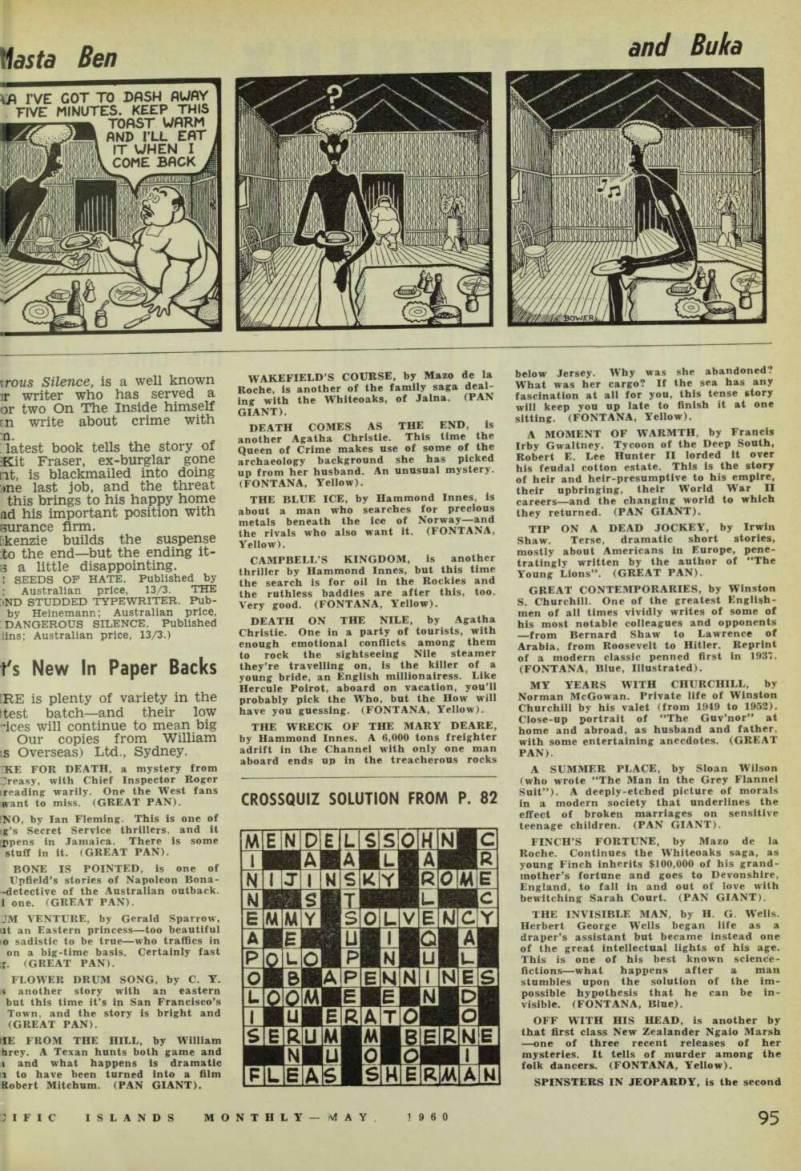 97
97 98
98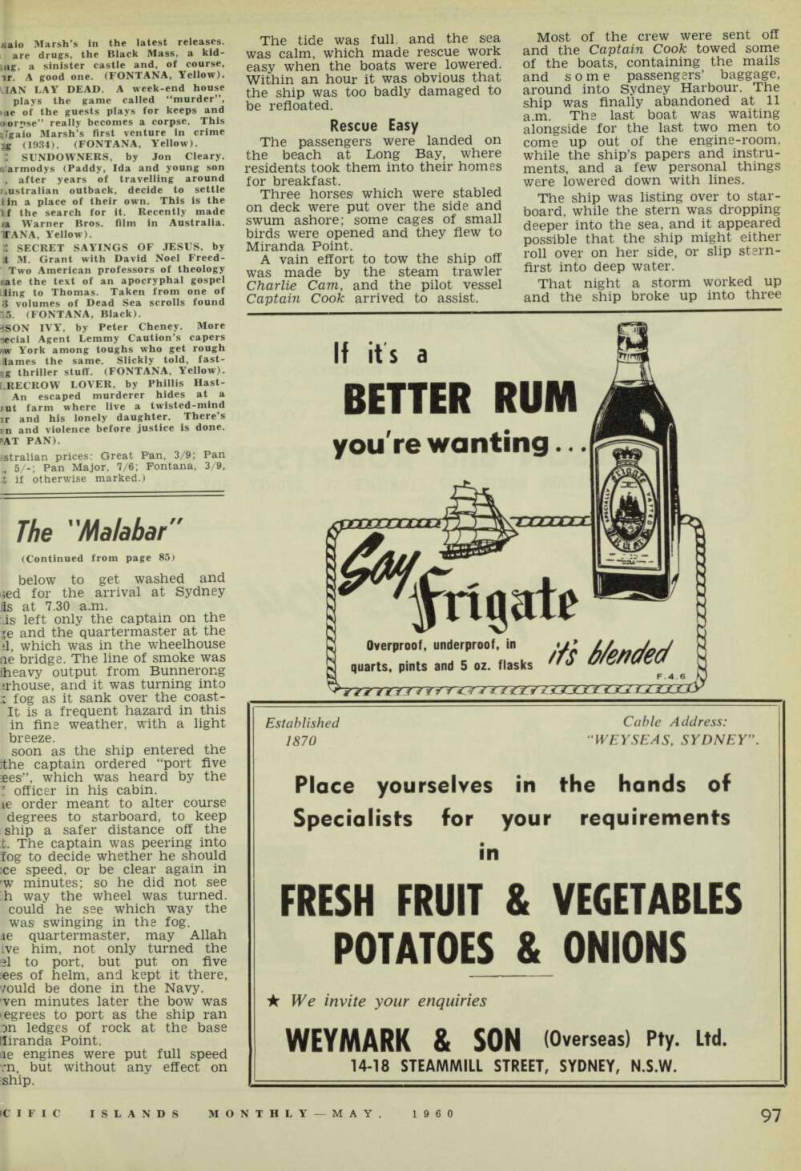 99
99 100
100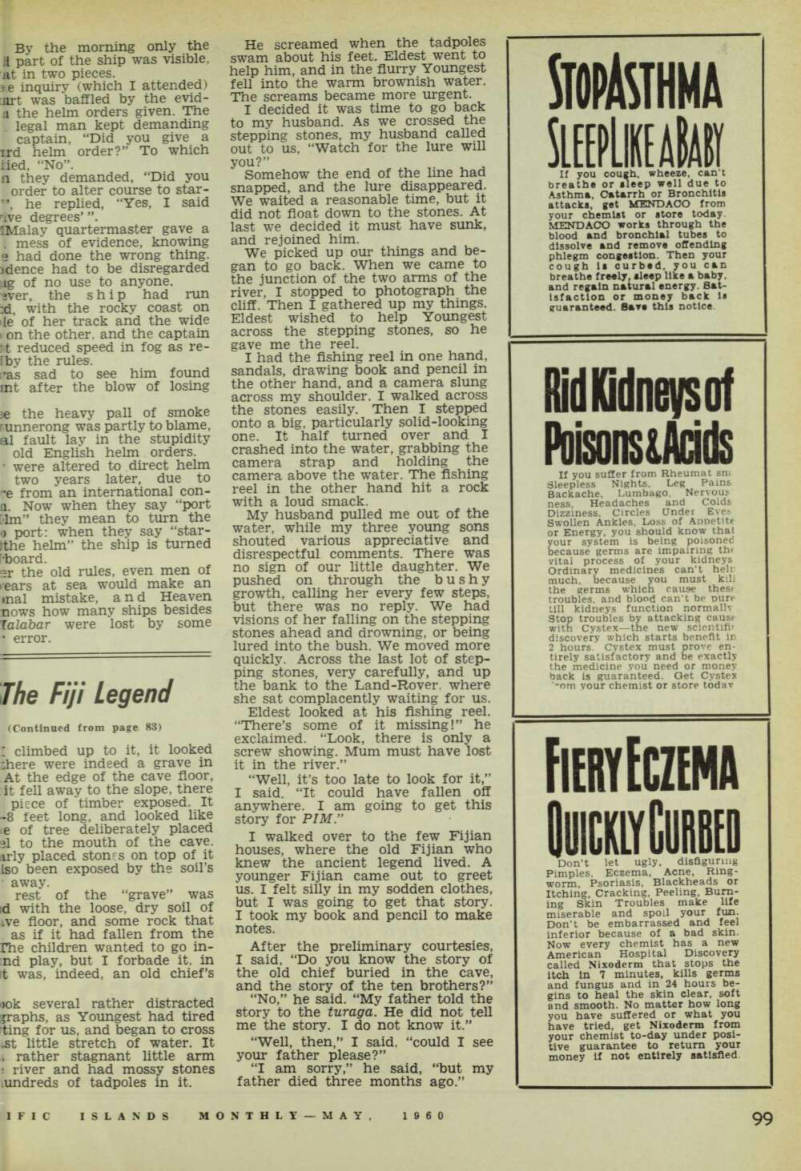 101
101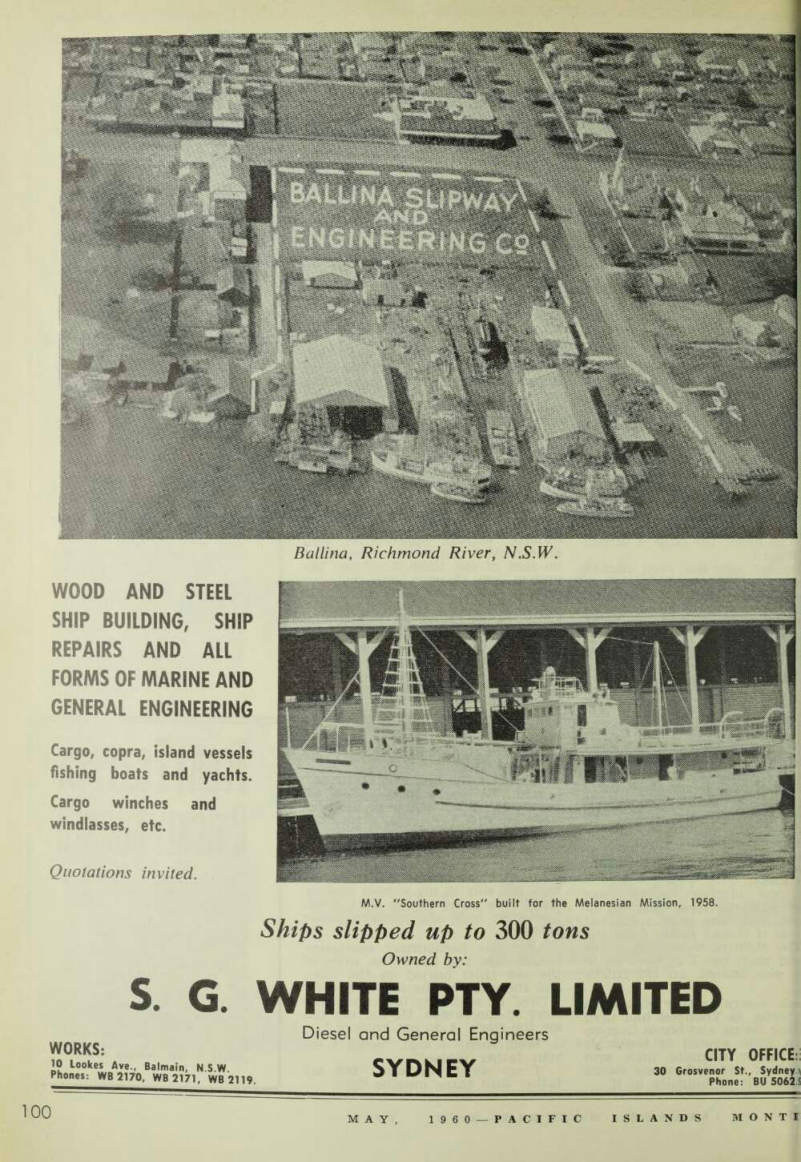 102
102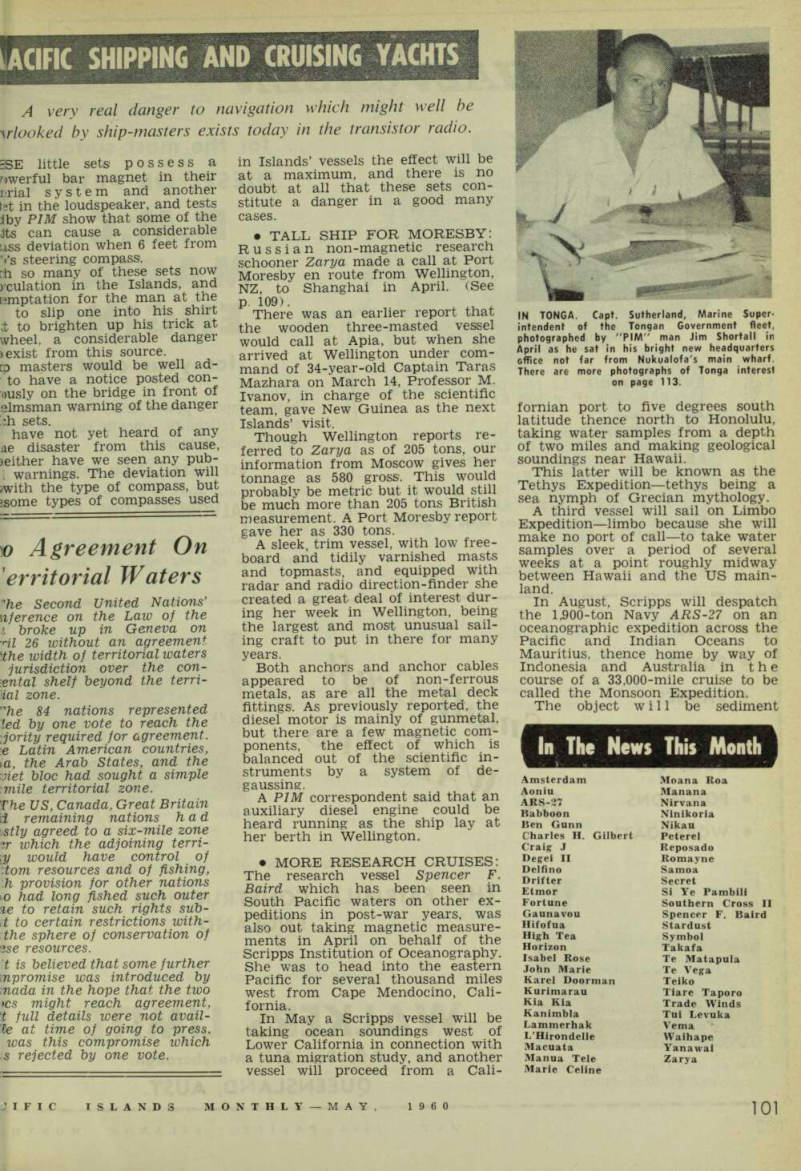 103
103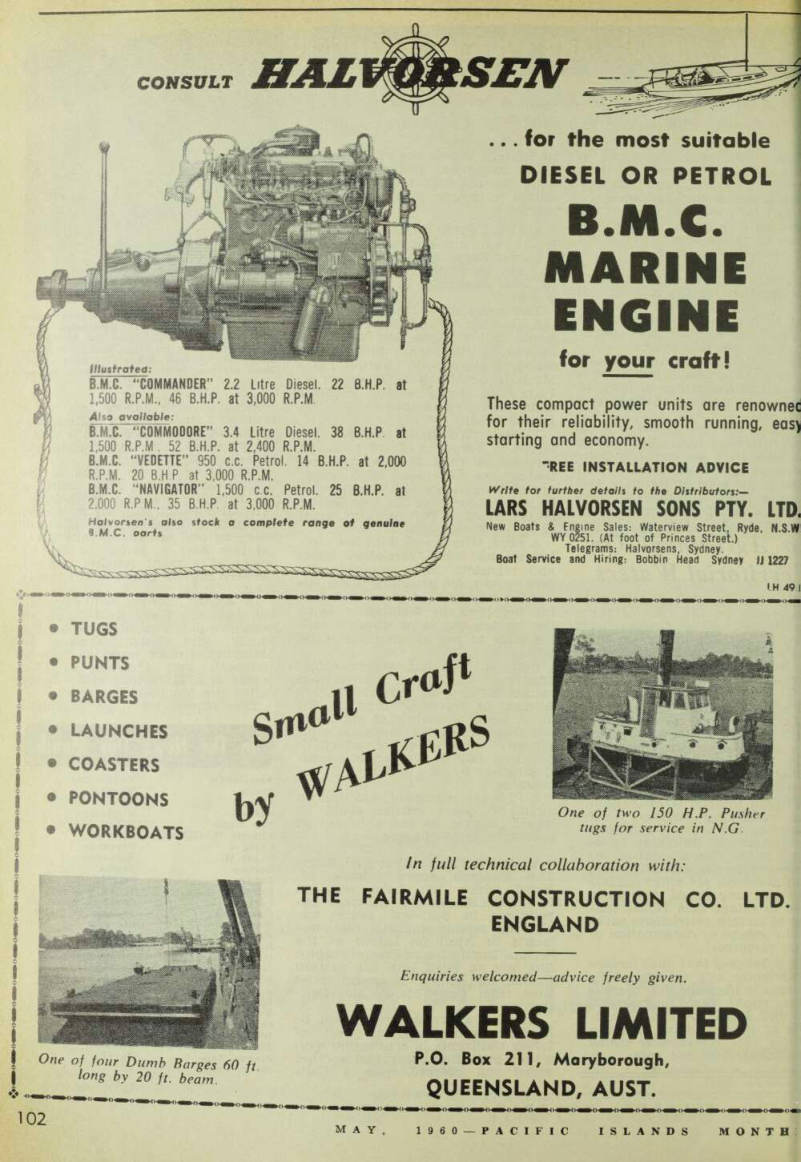 104
104 105
105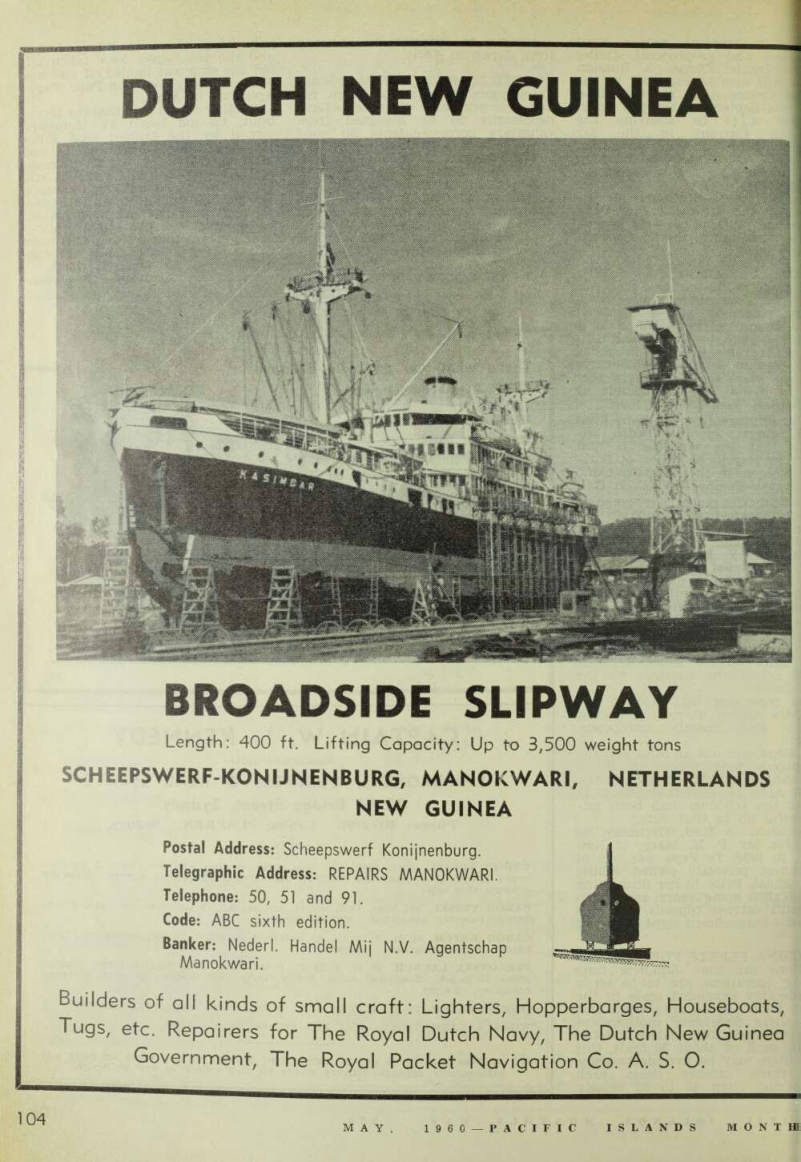 106
106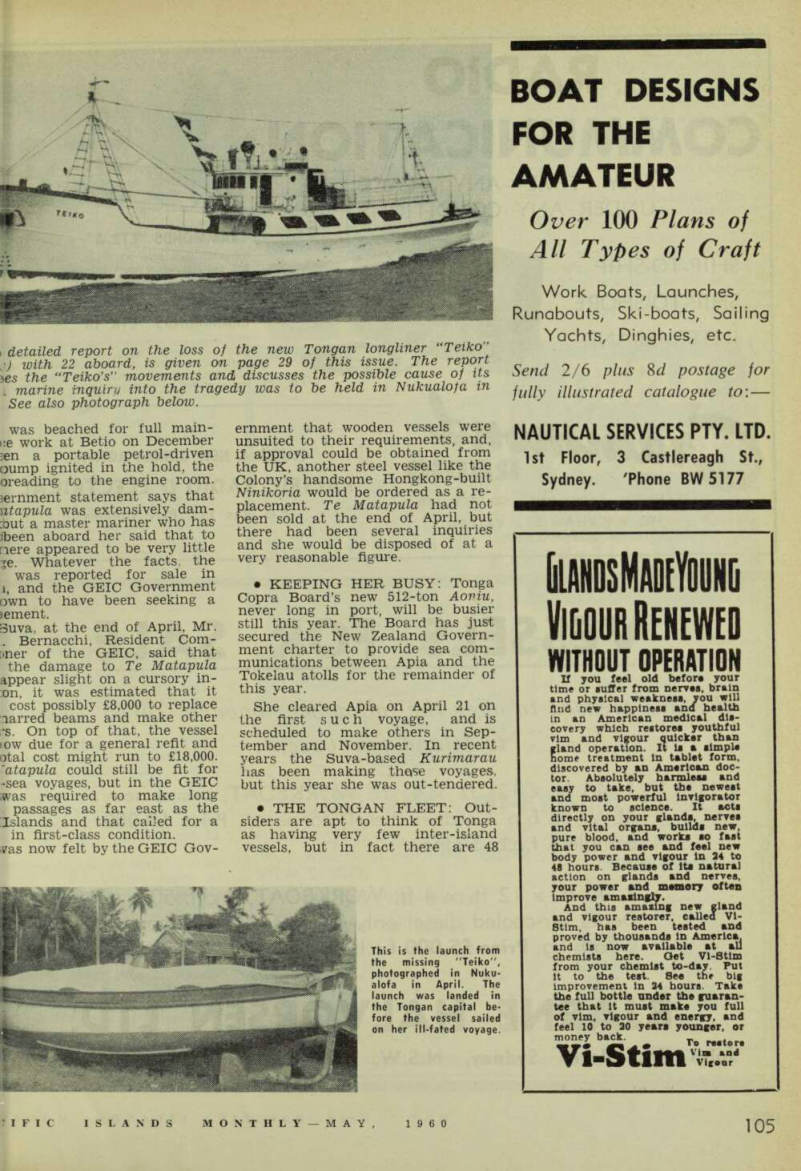 107
107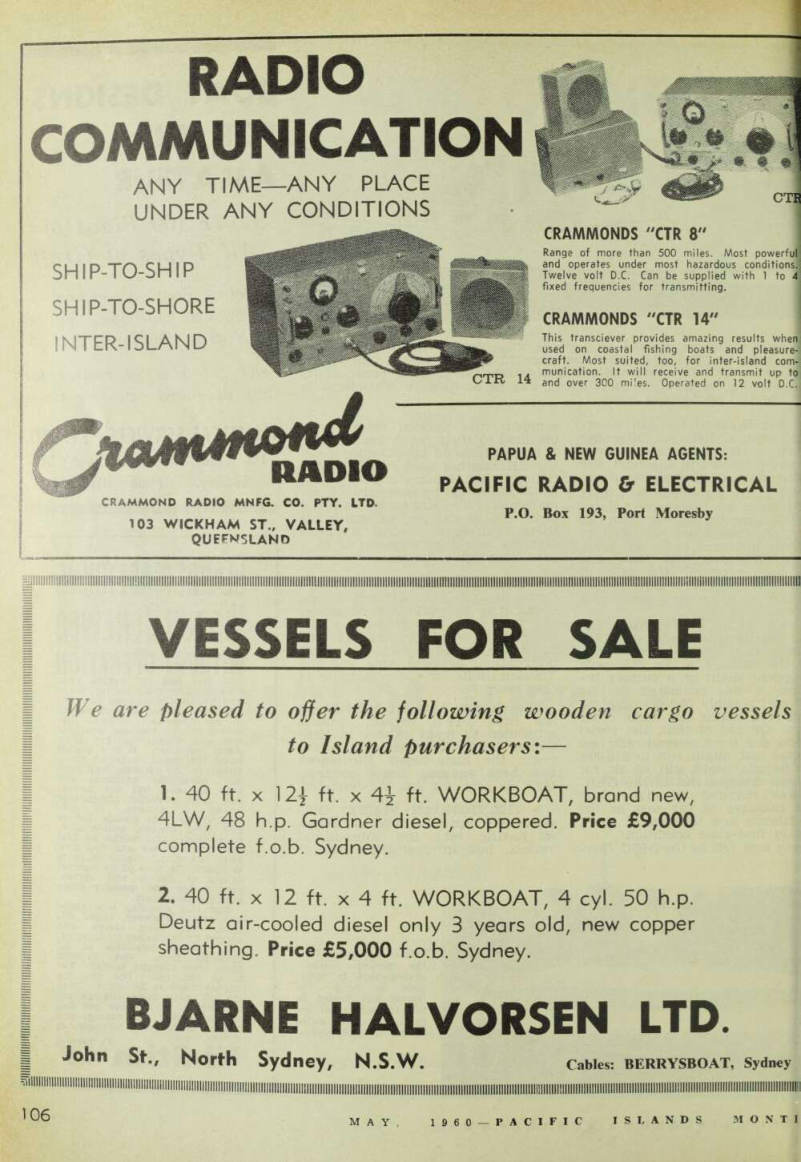 108
108 109
109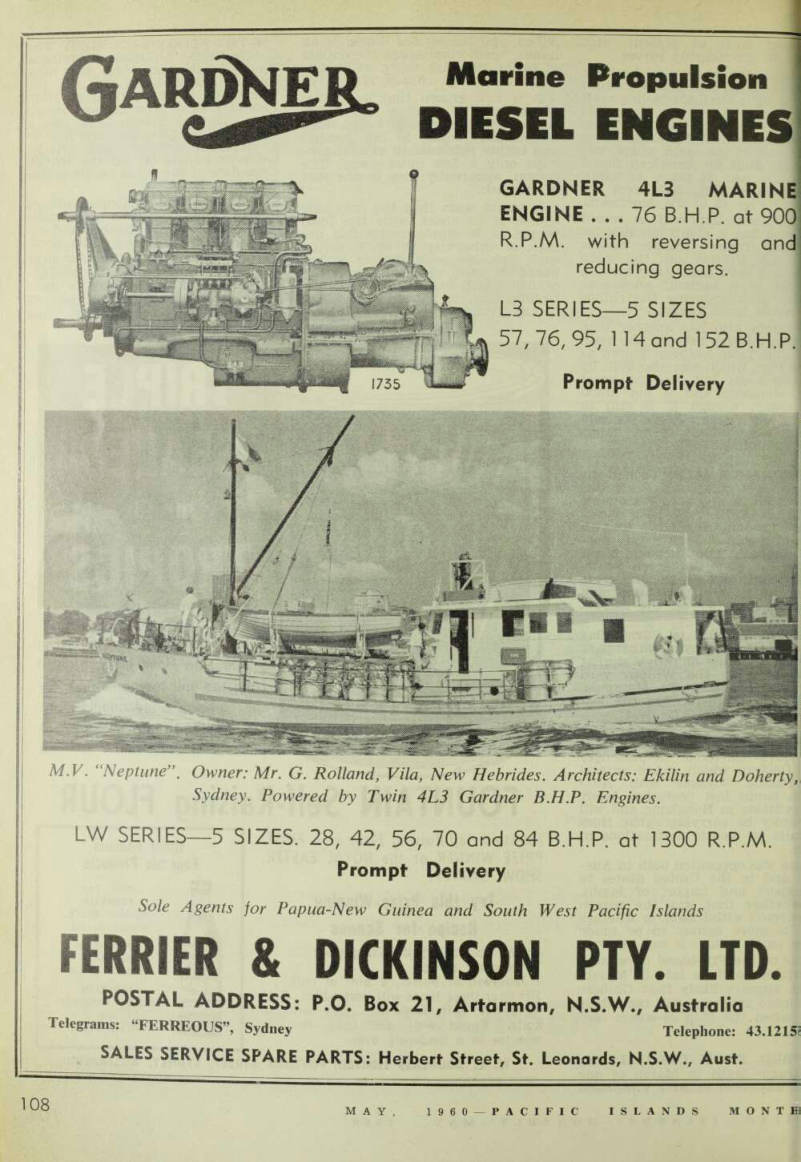 110
110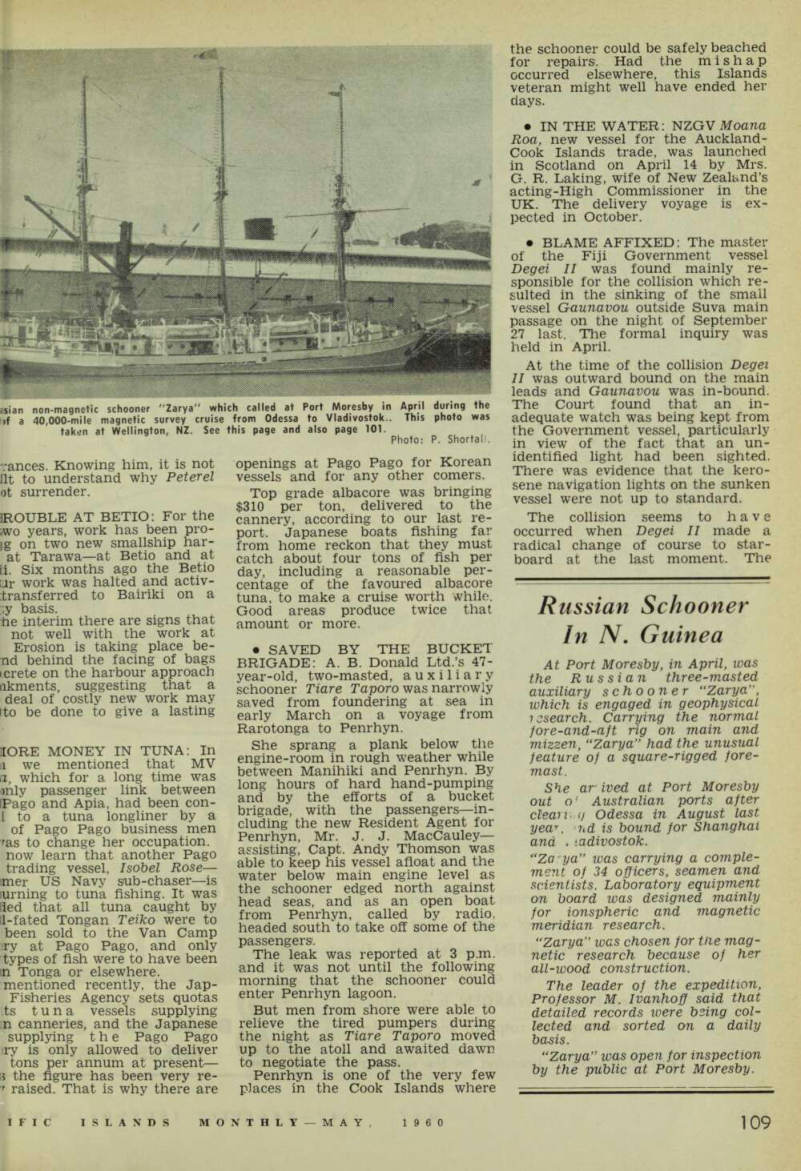 111
111 112
112 113
113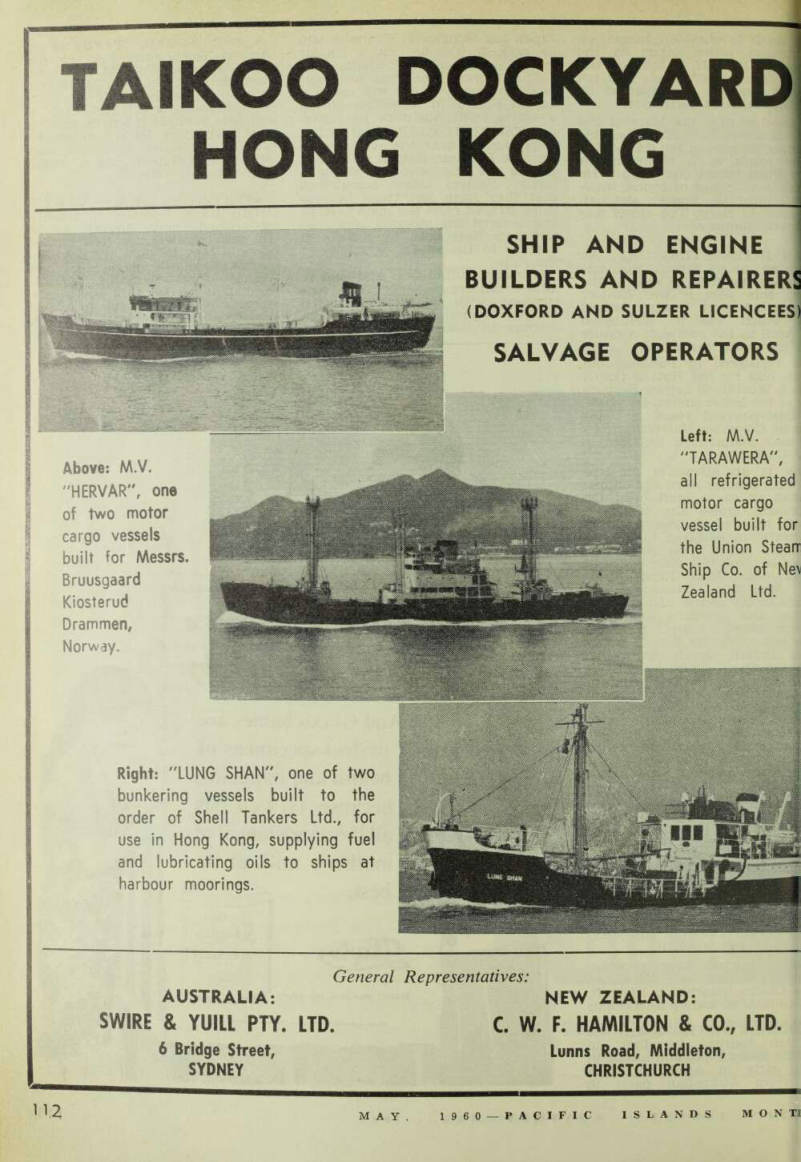 114
114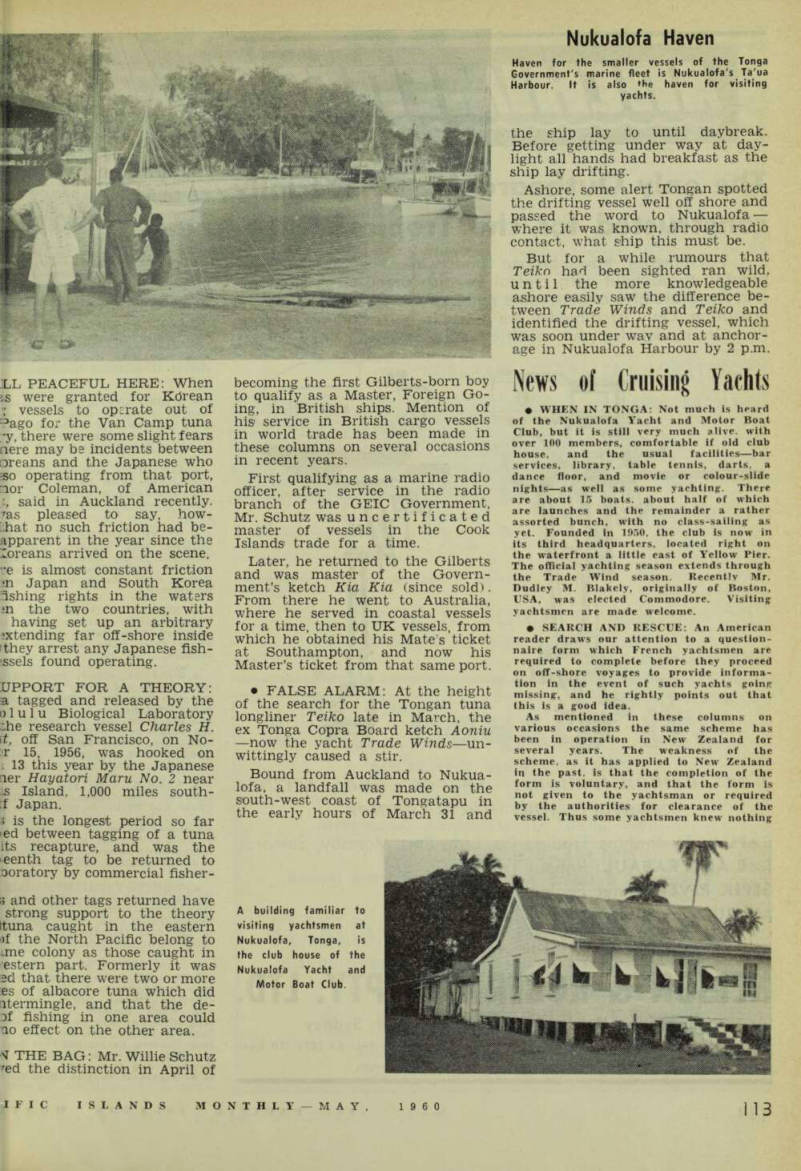 115
115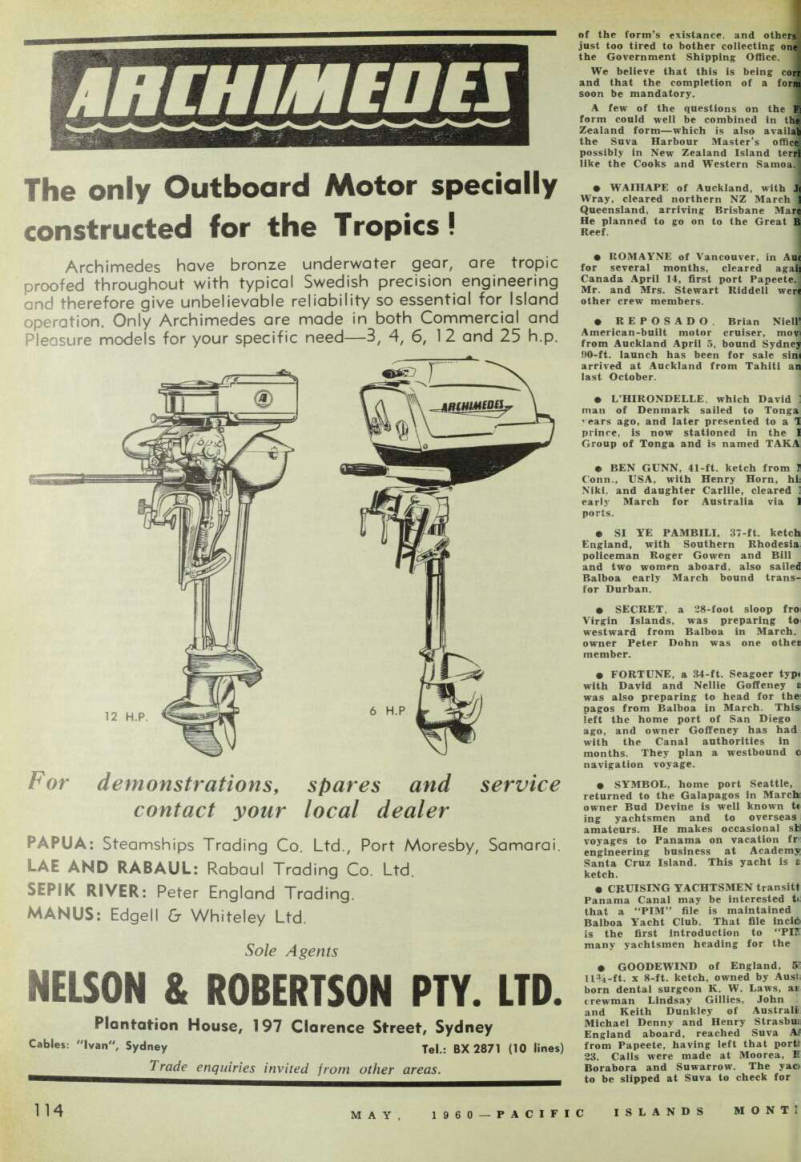 116
116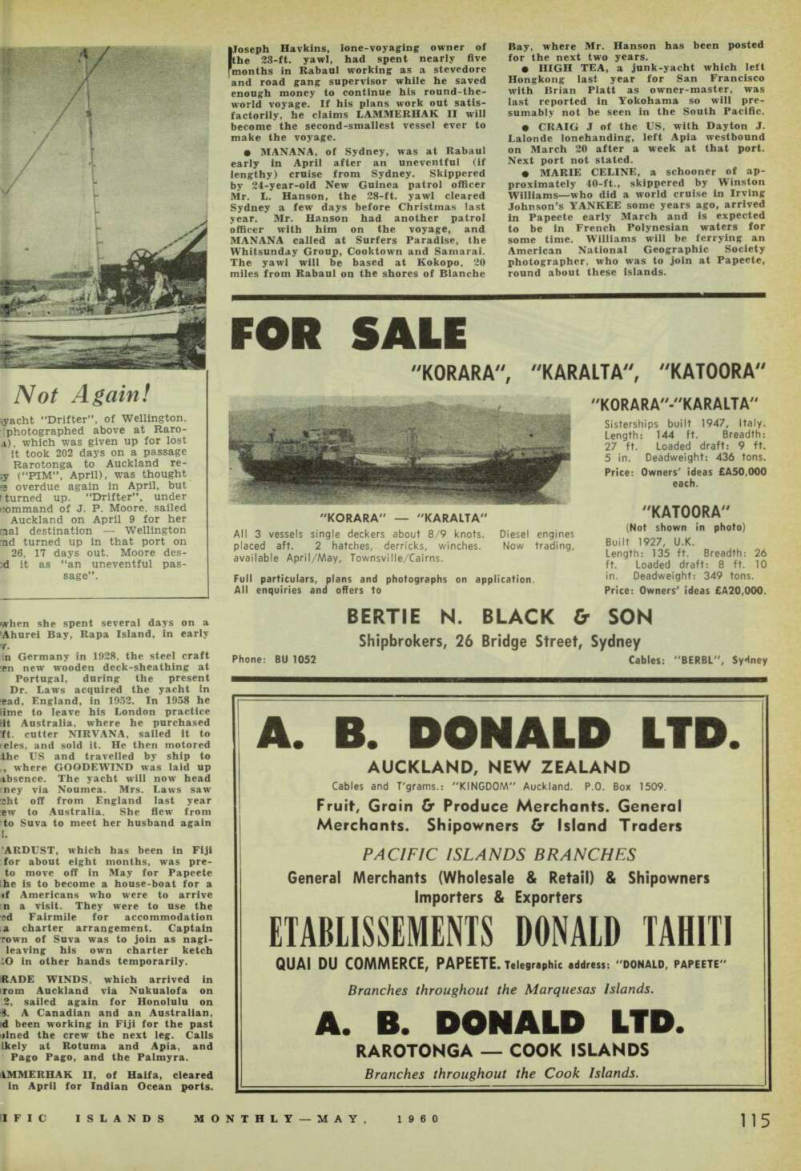 117
117 118
118 119
119 120
120 121
121 122
122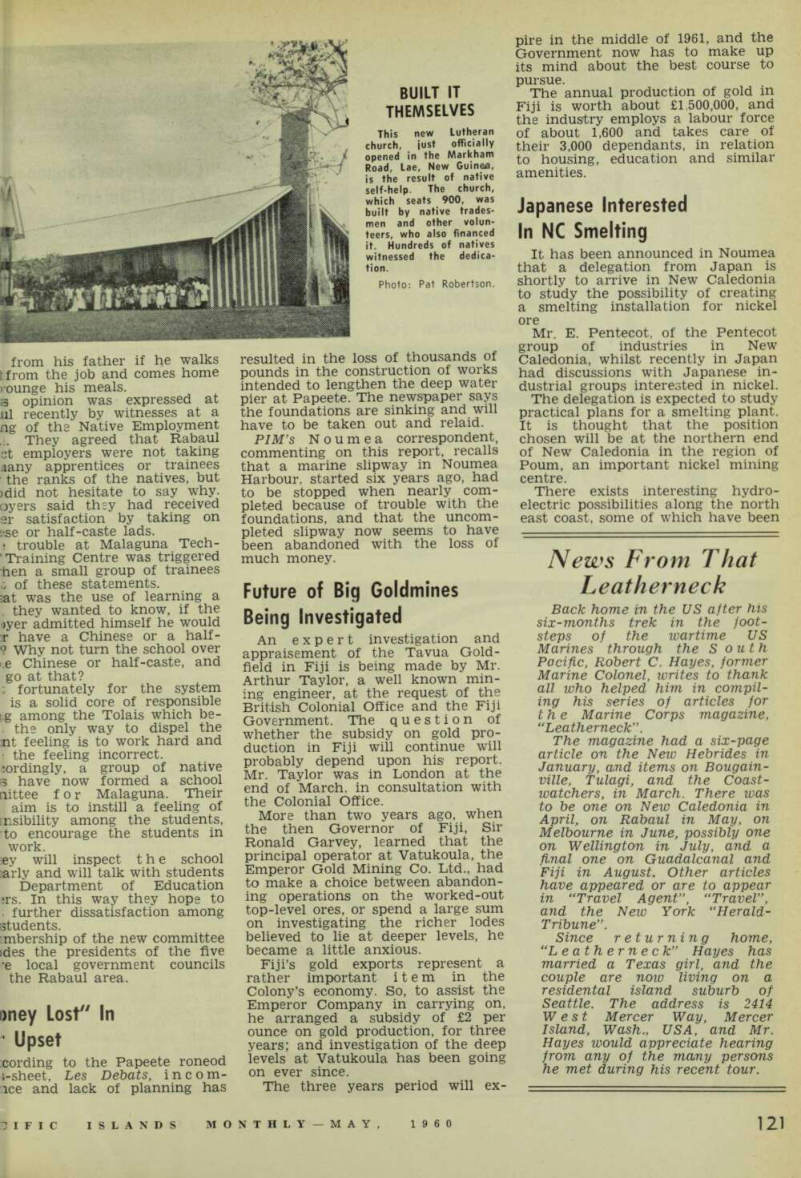 123
123 124
124 125
125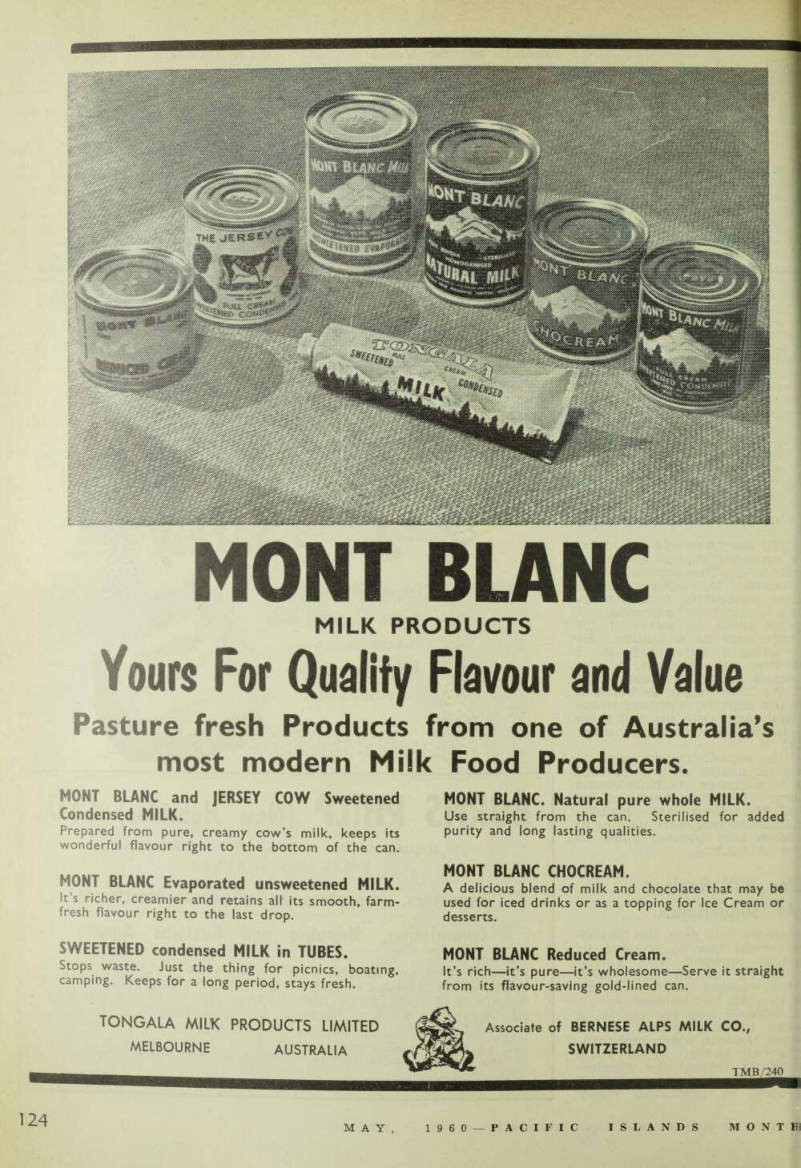 126
126 127
127 128
128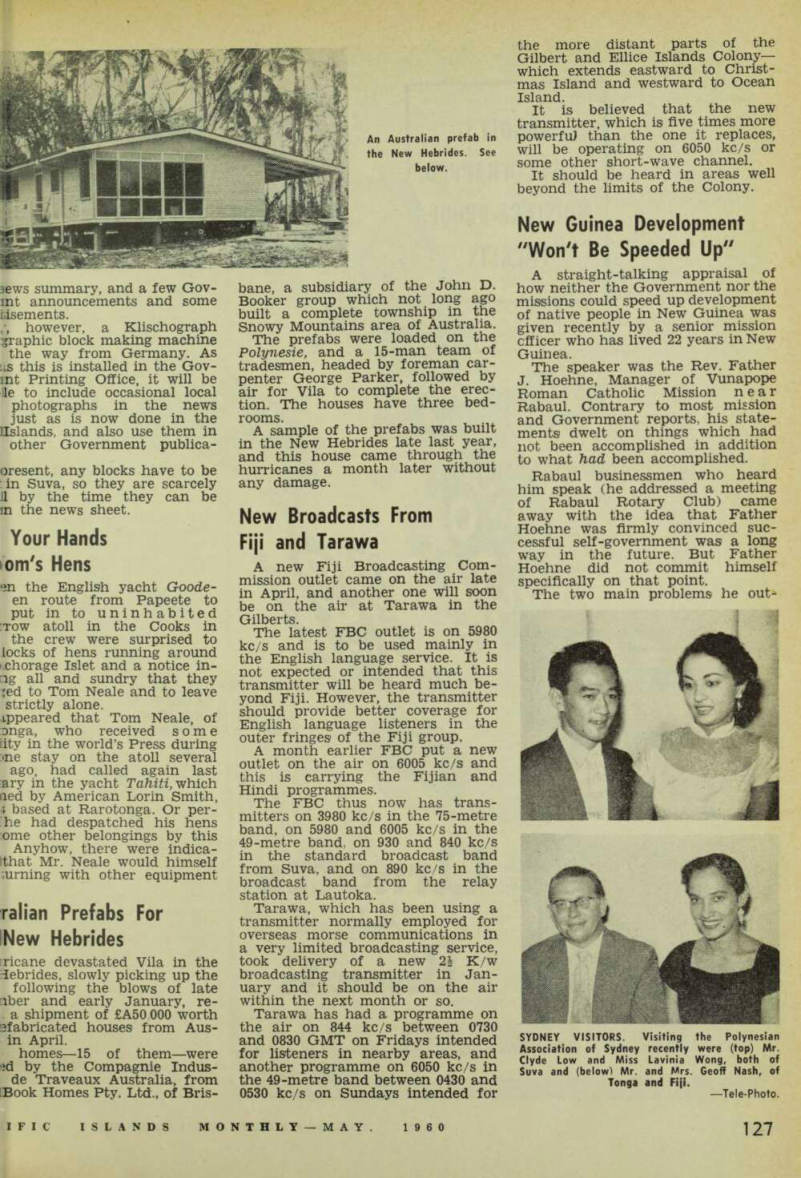 129
129 130
130 131
131 132
132 133
133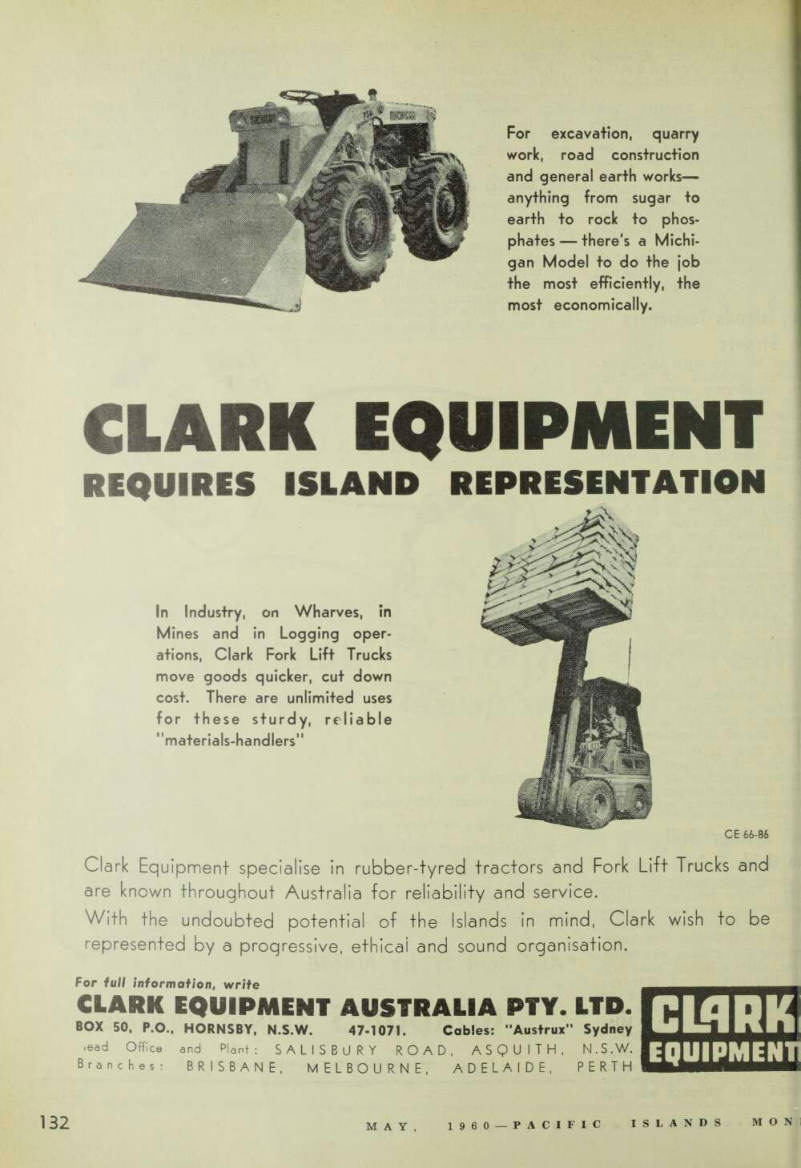 134
134 135
135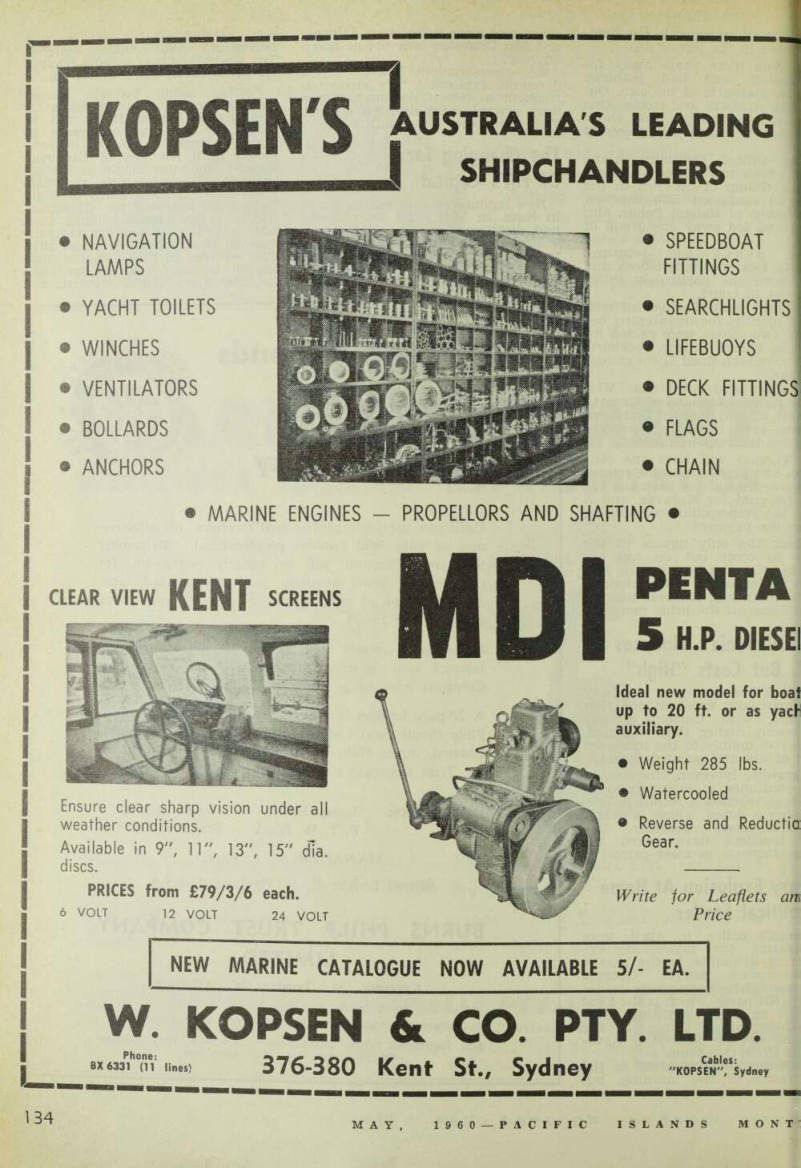 136
136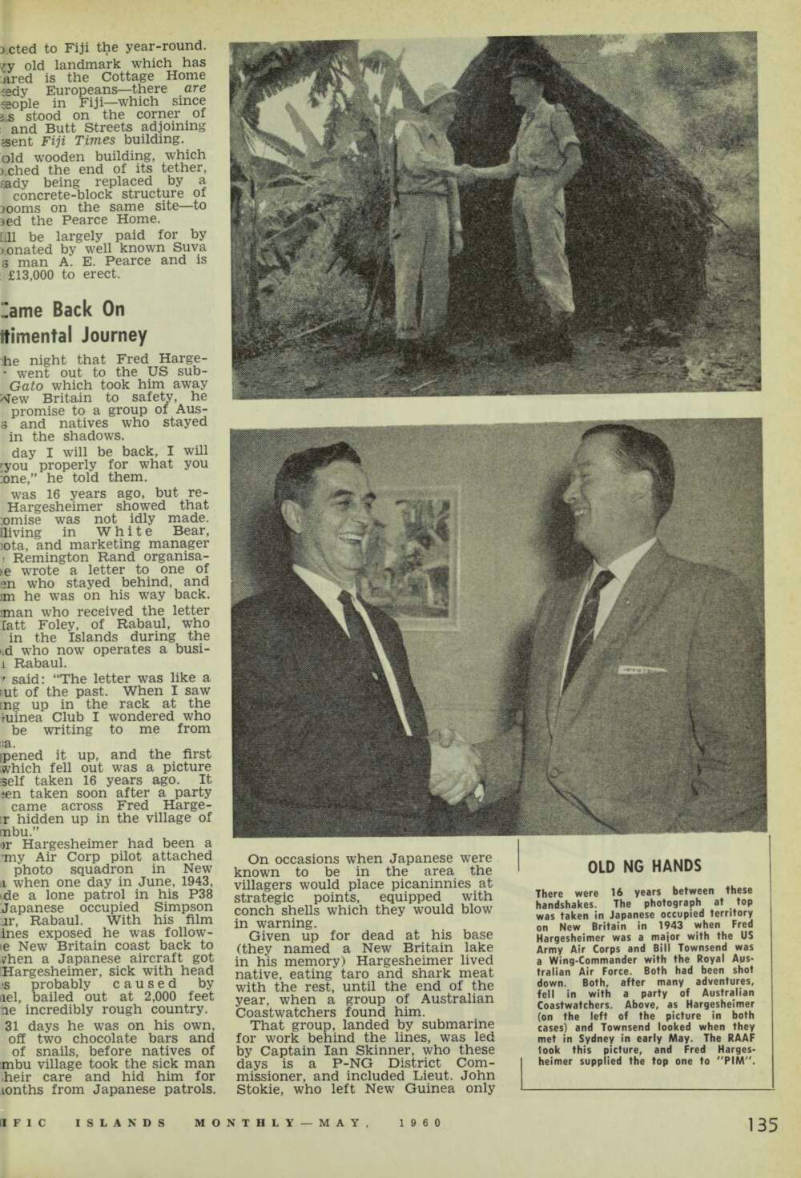 137
137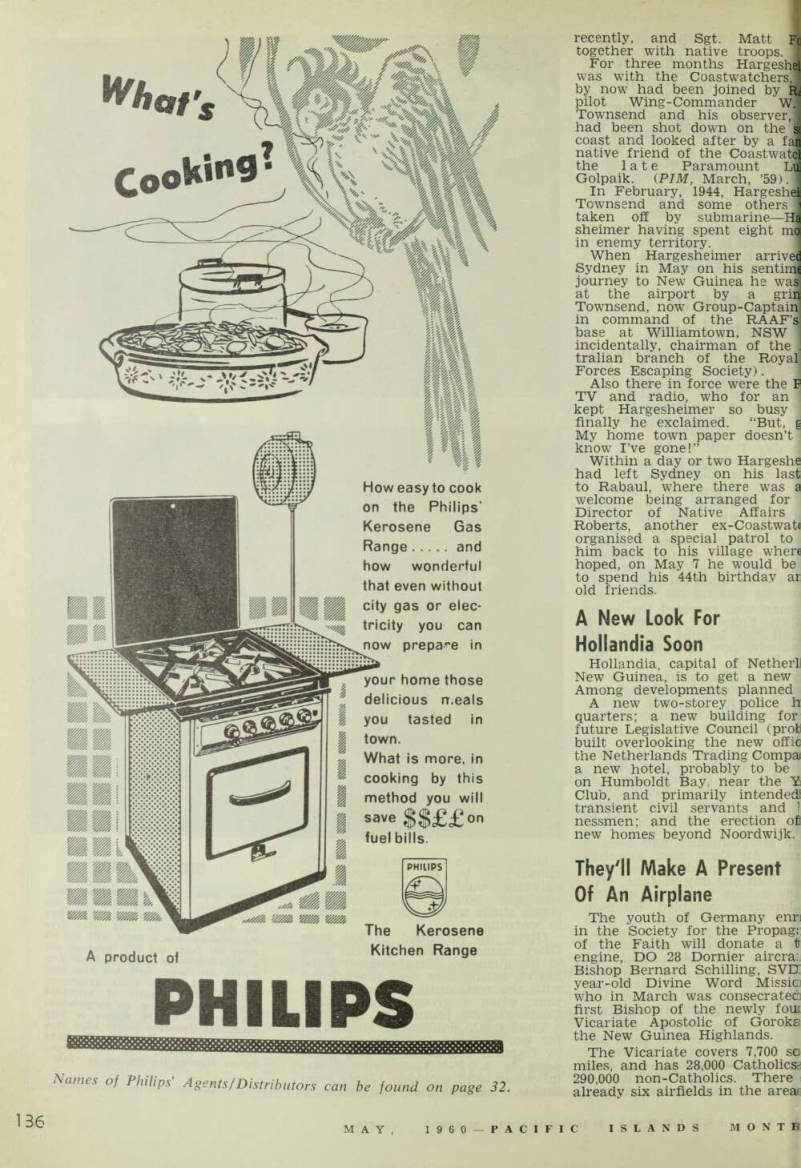 138
138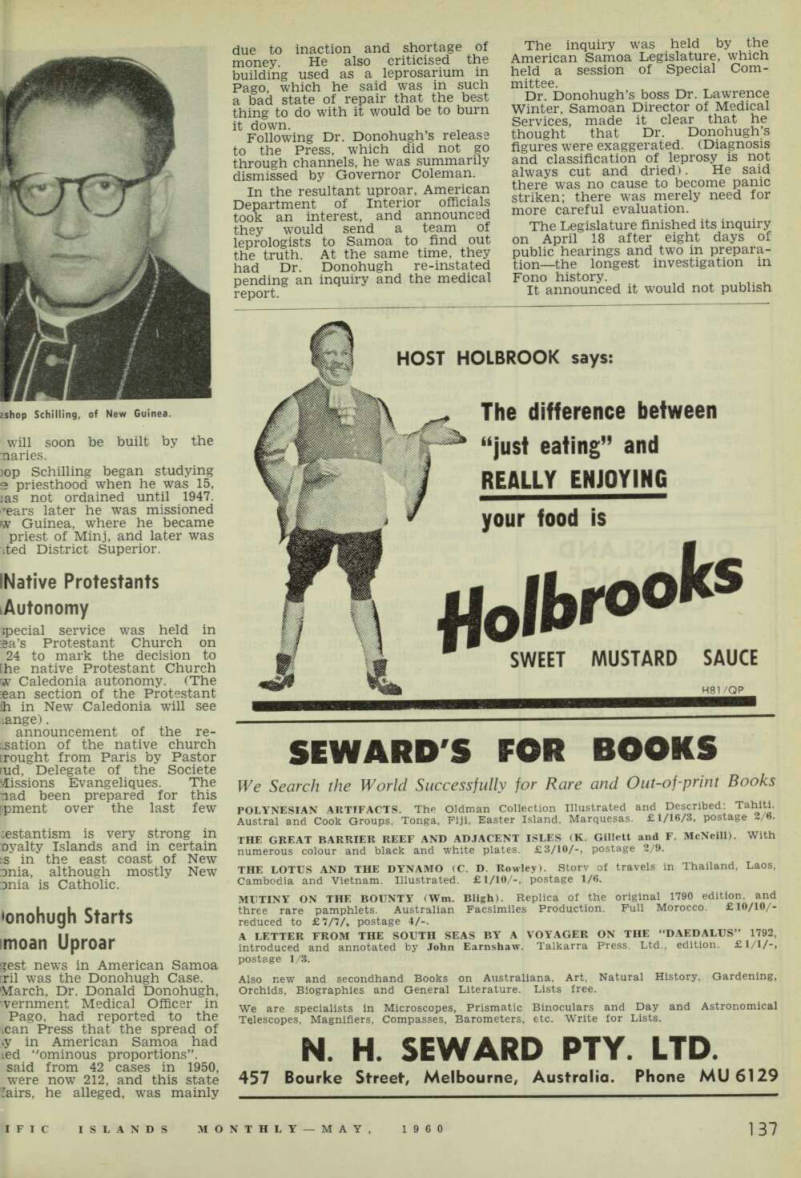 139
139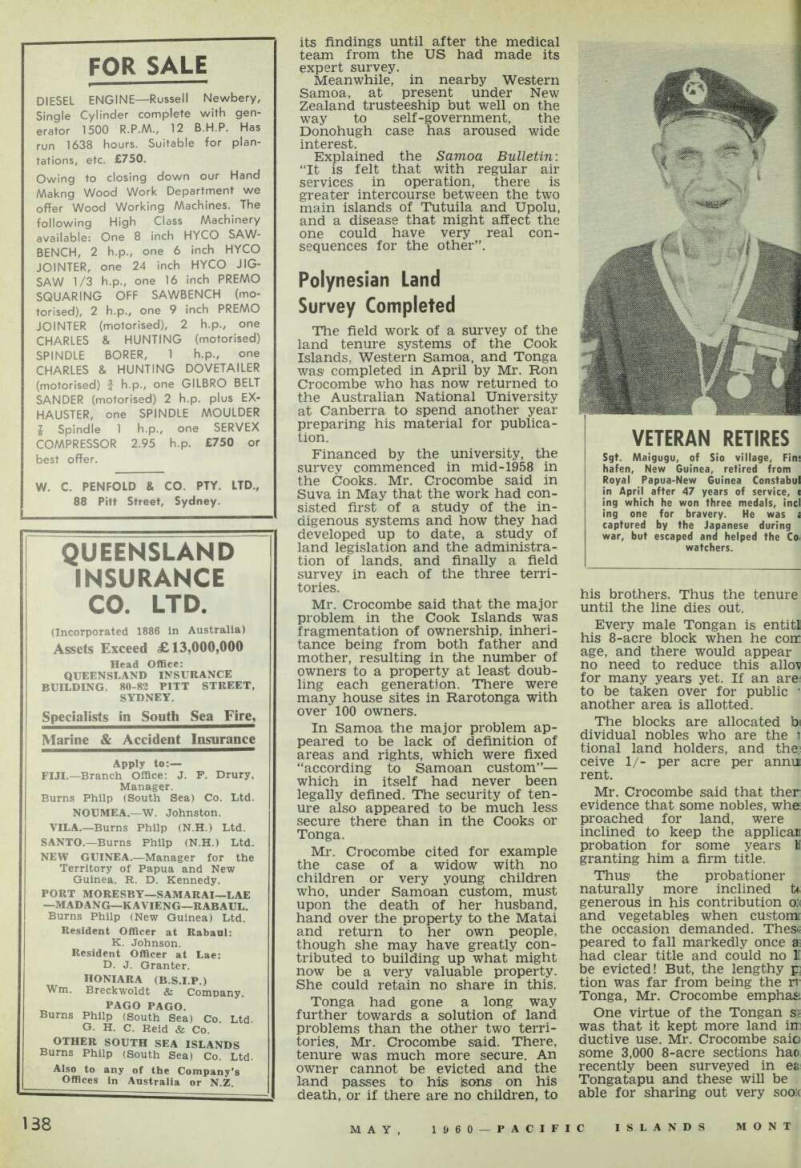 140
140 141
141 142
142 143
143 144
144 145
145 146
146 147
147 148
148 149
149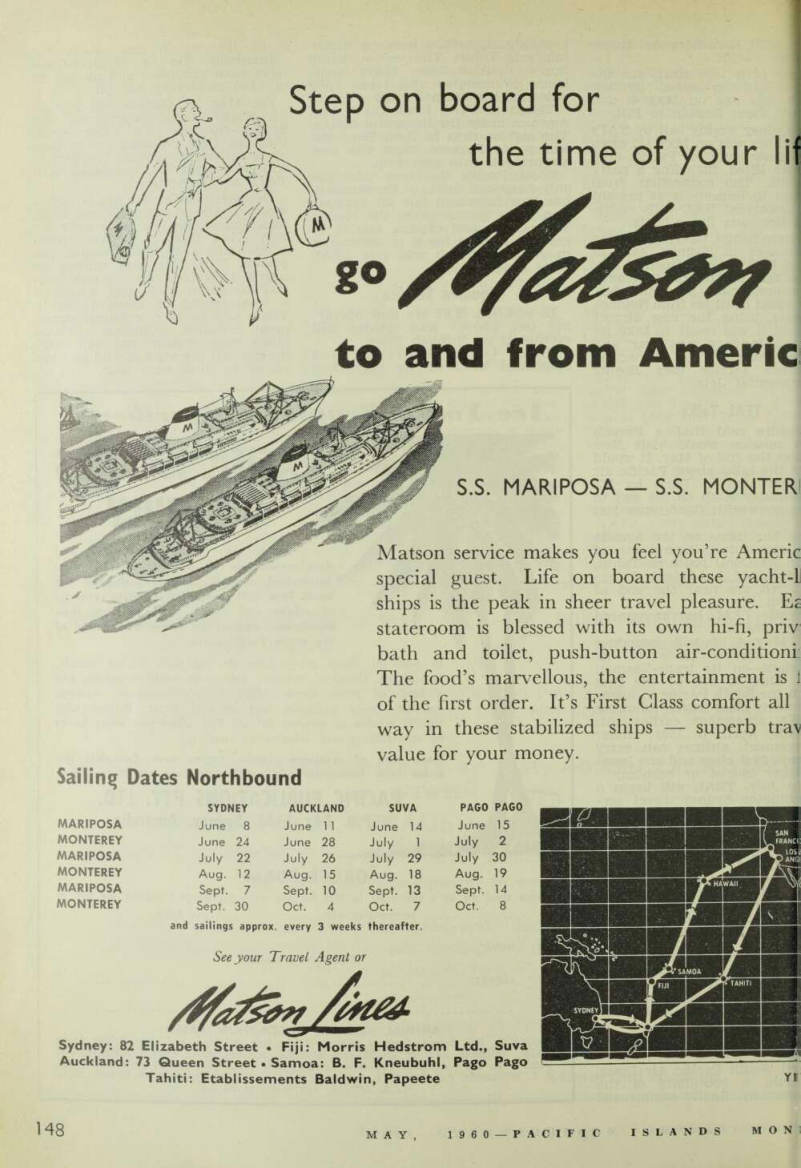 150
150 151
151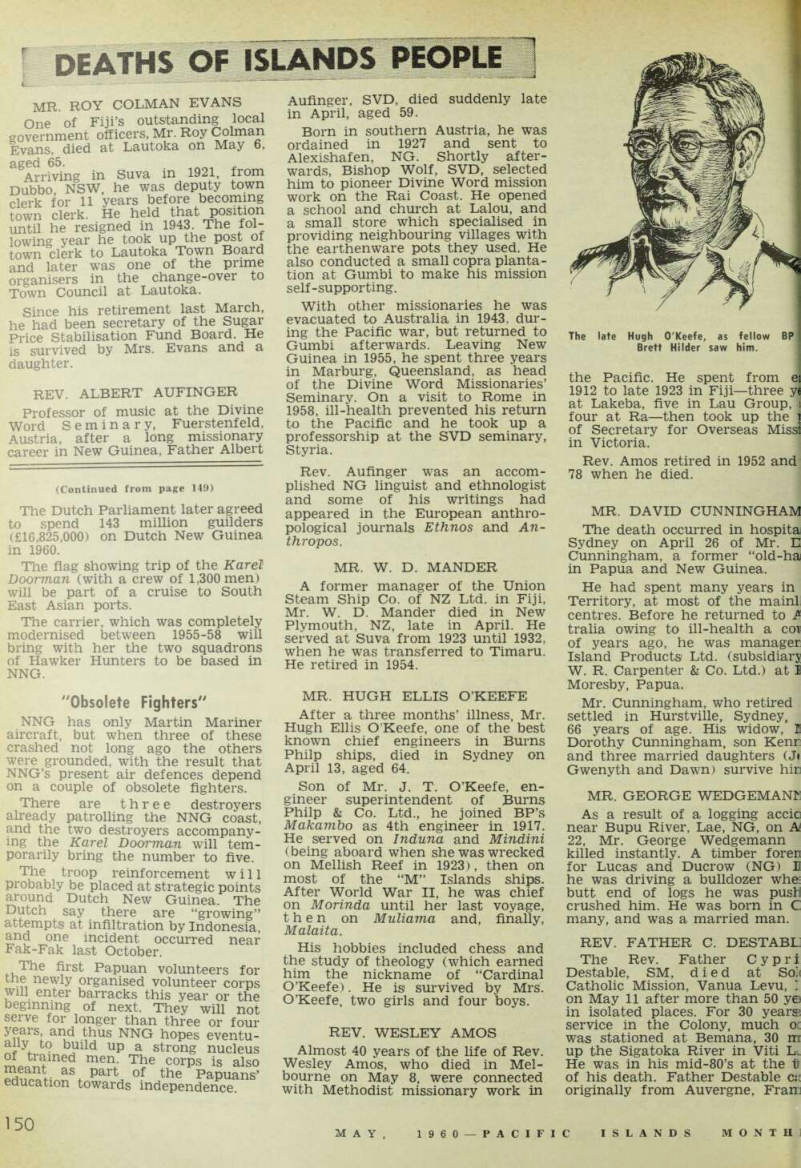 152
152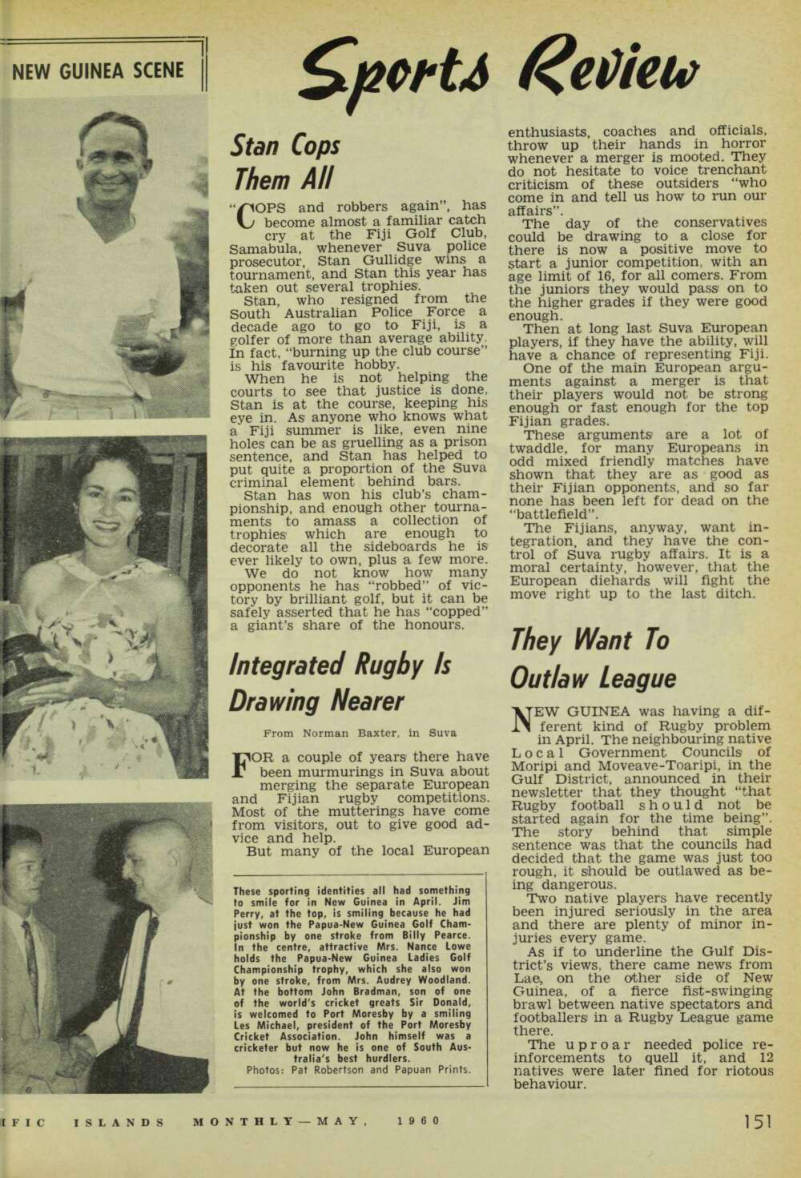 153
153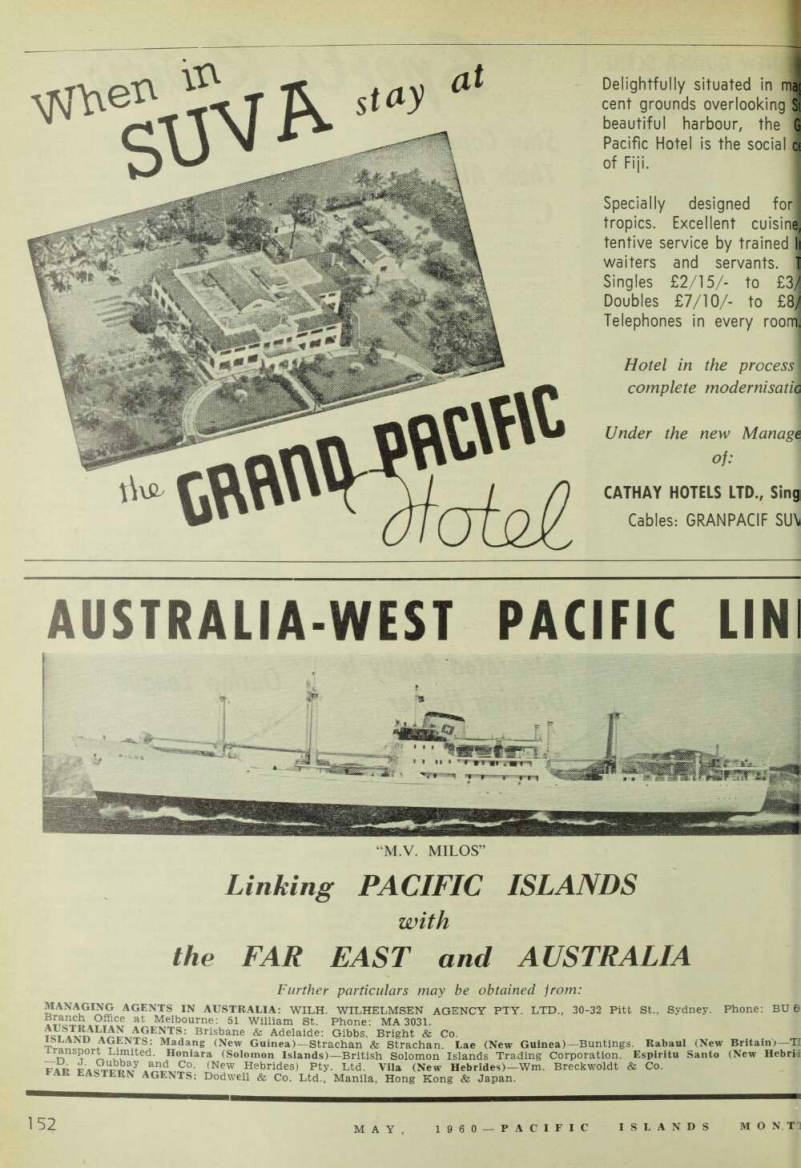 154
154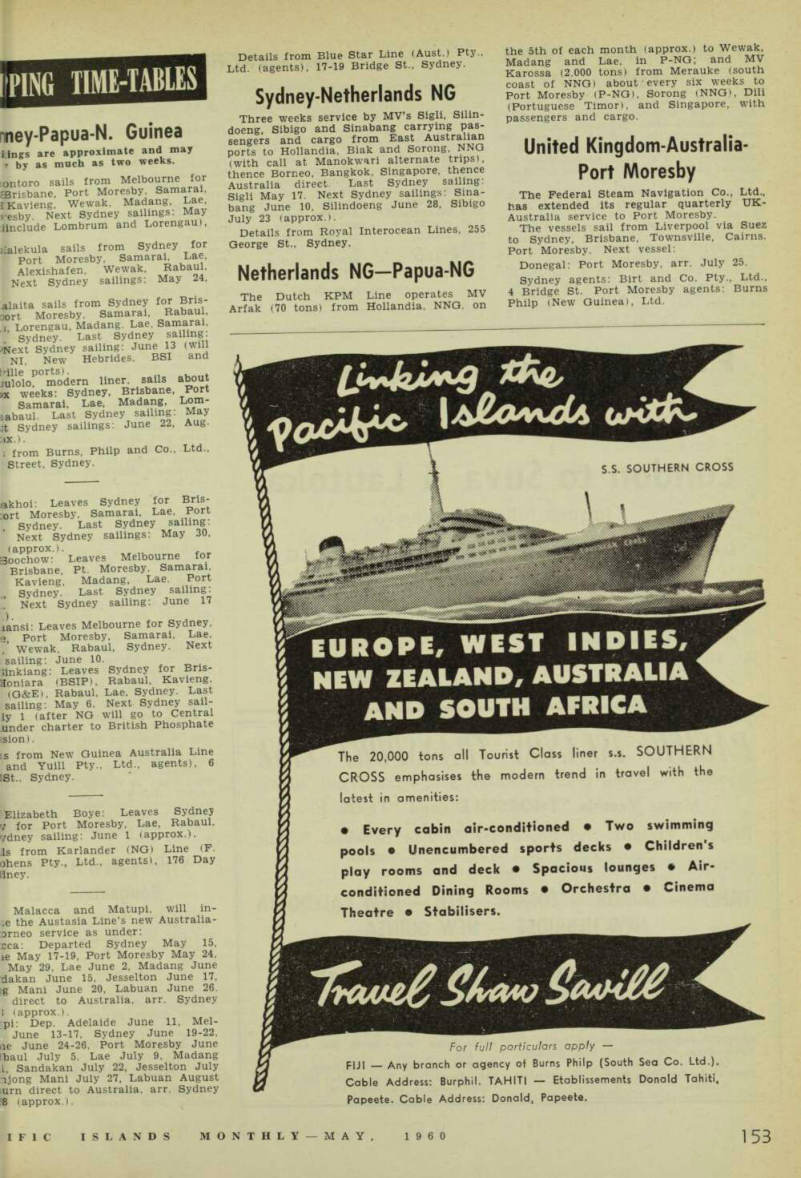 155
155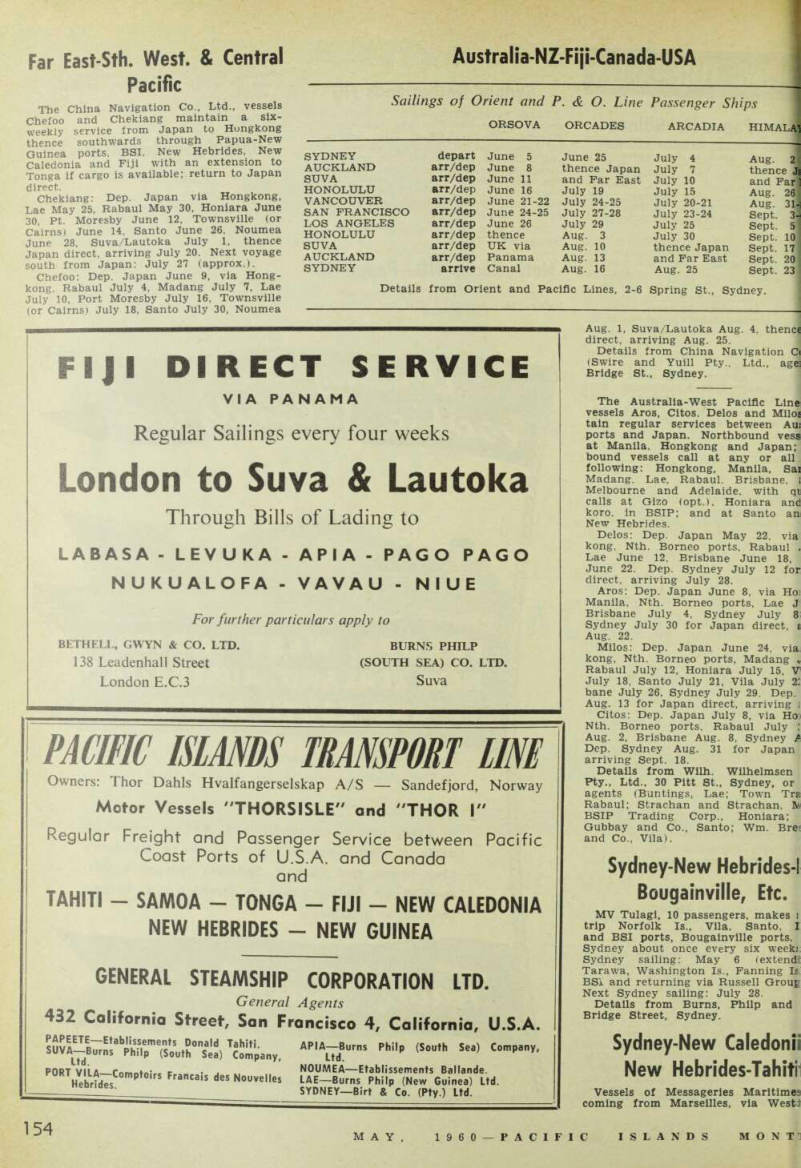 156
156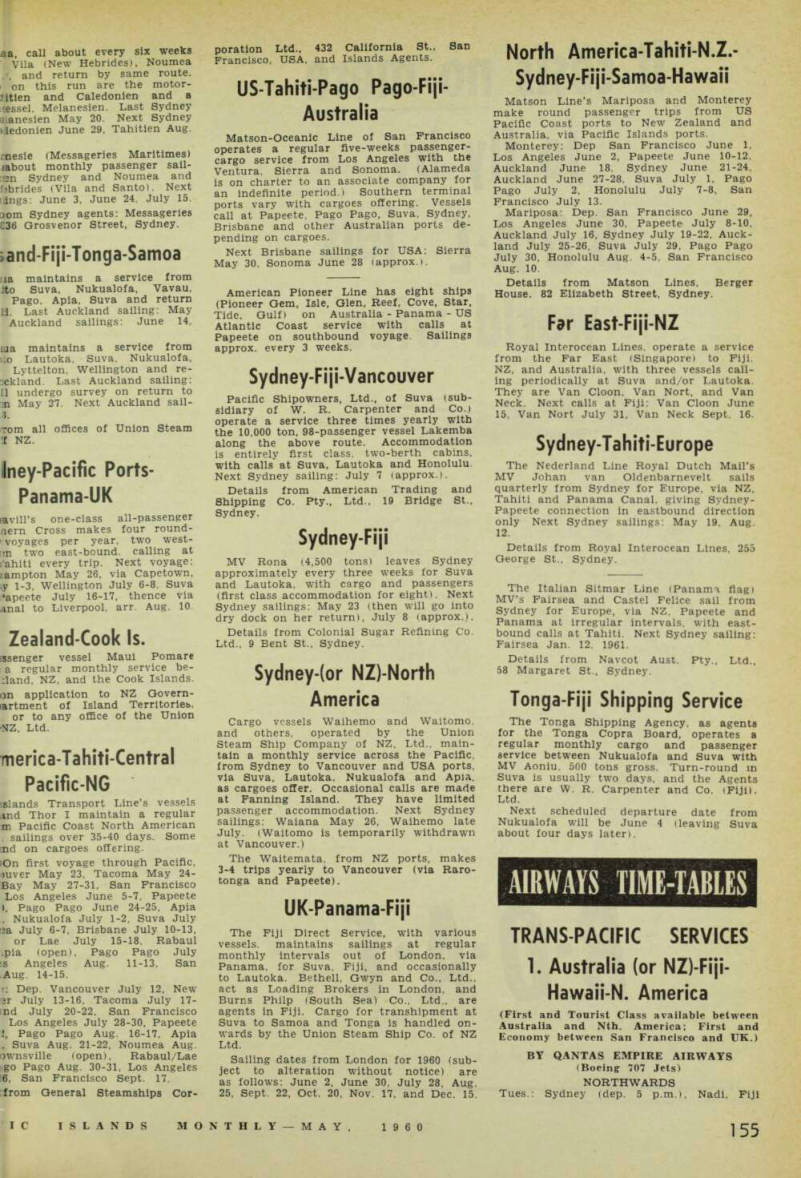 157
157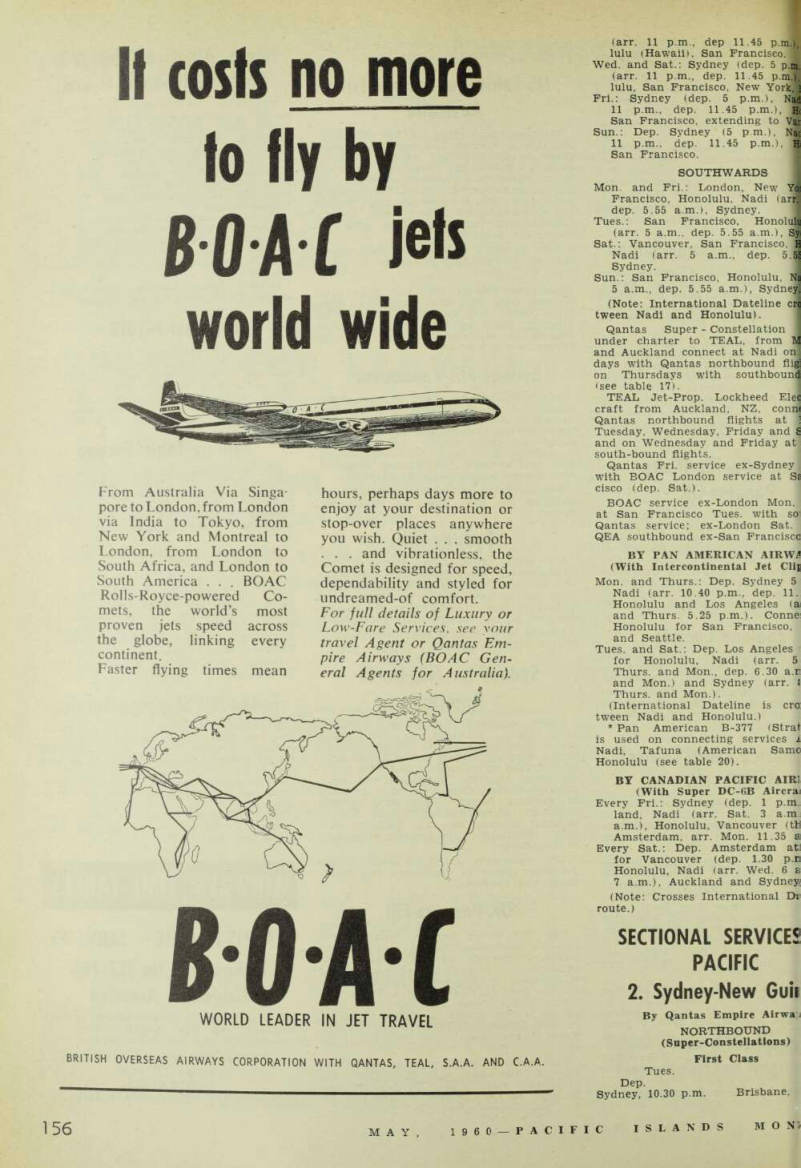 158
158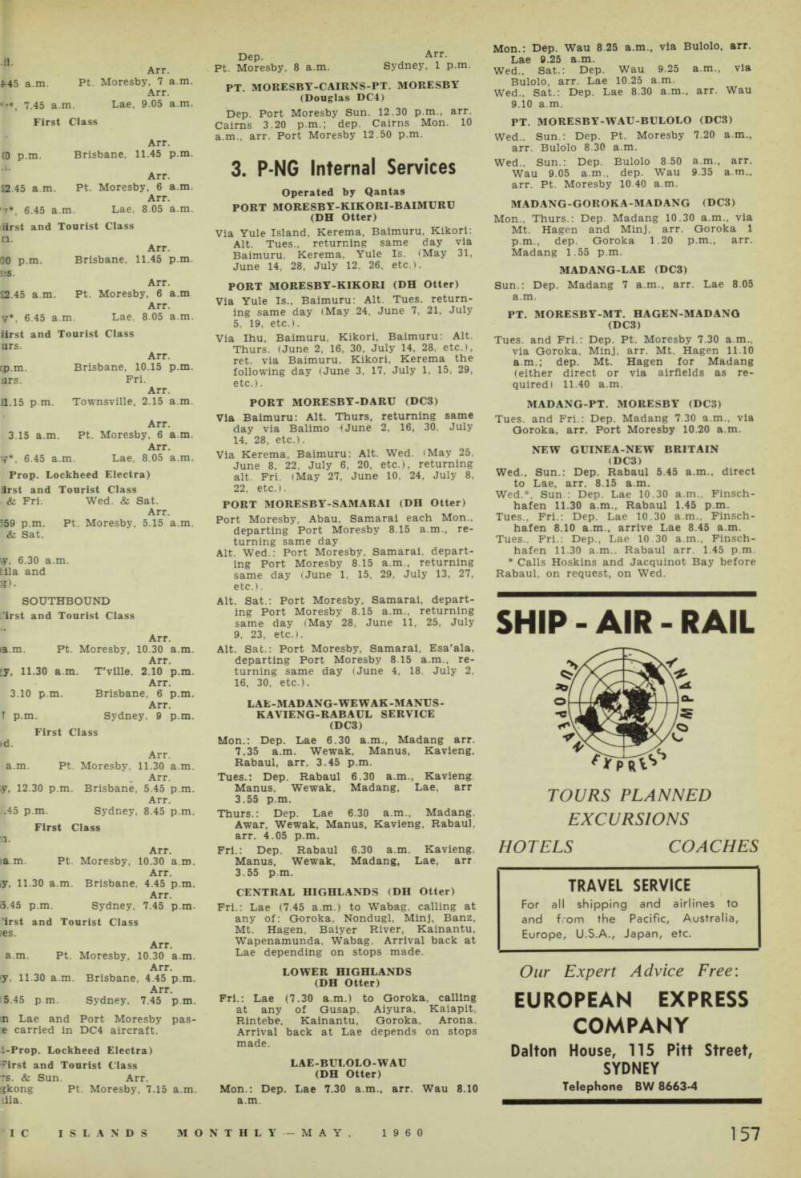 159
159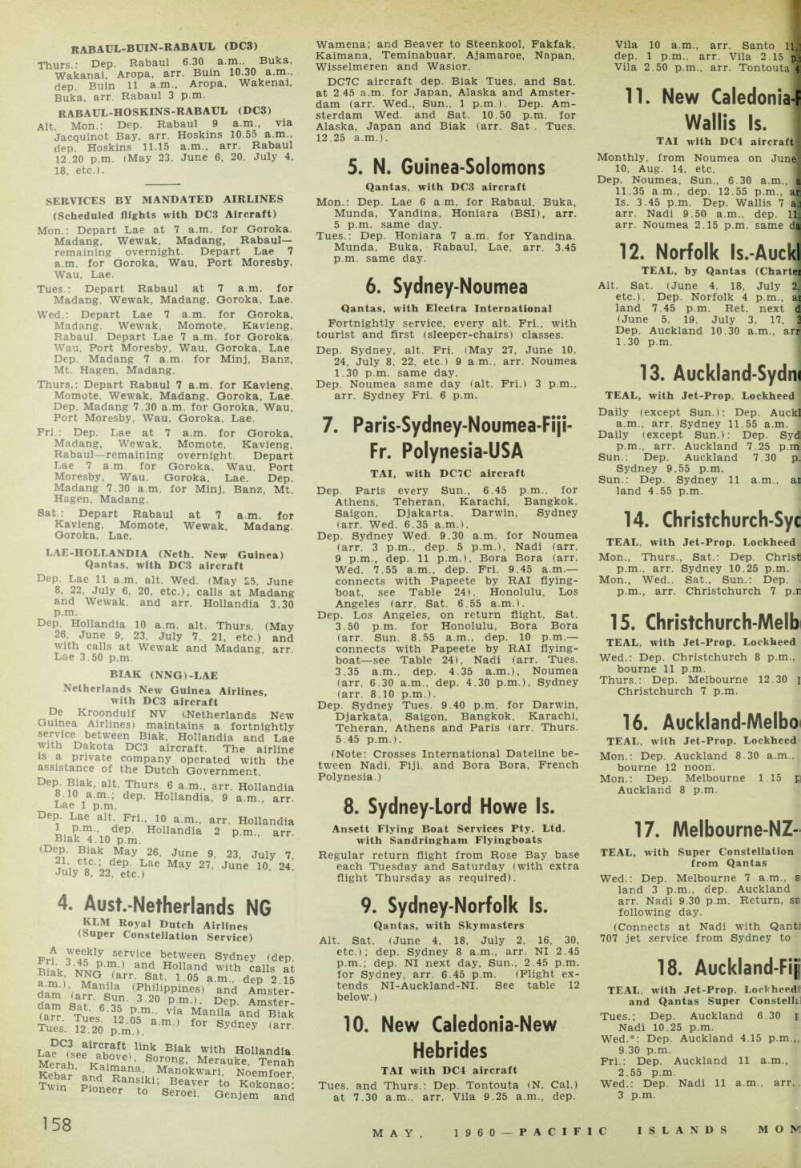 160
160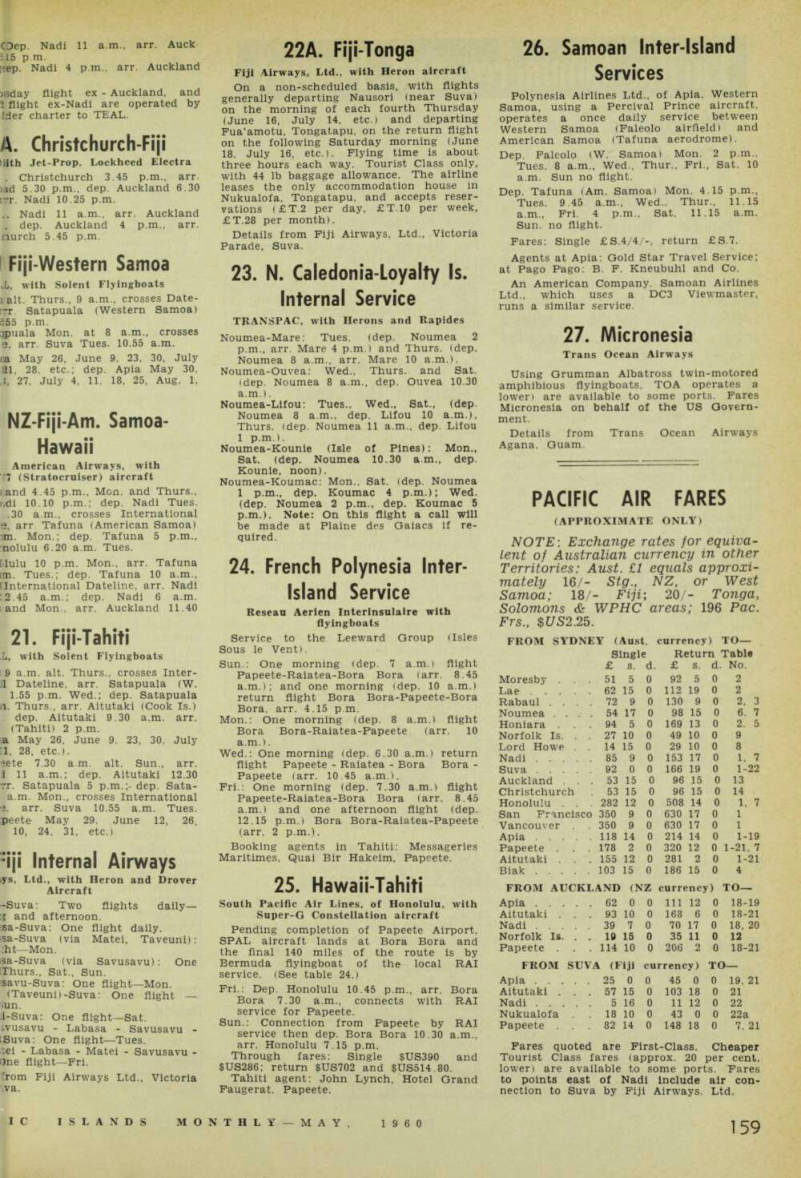 161
161 162
162 163
163 164
164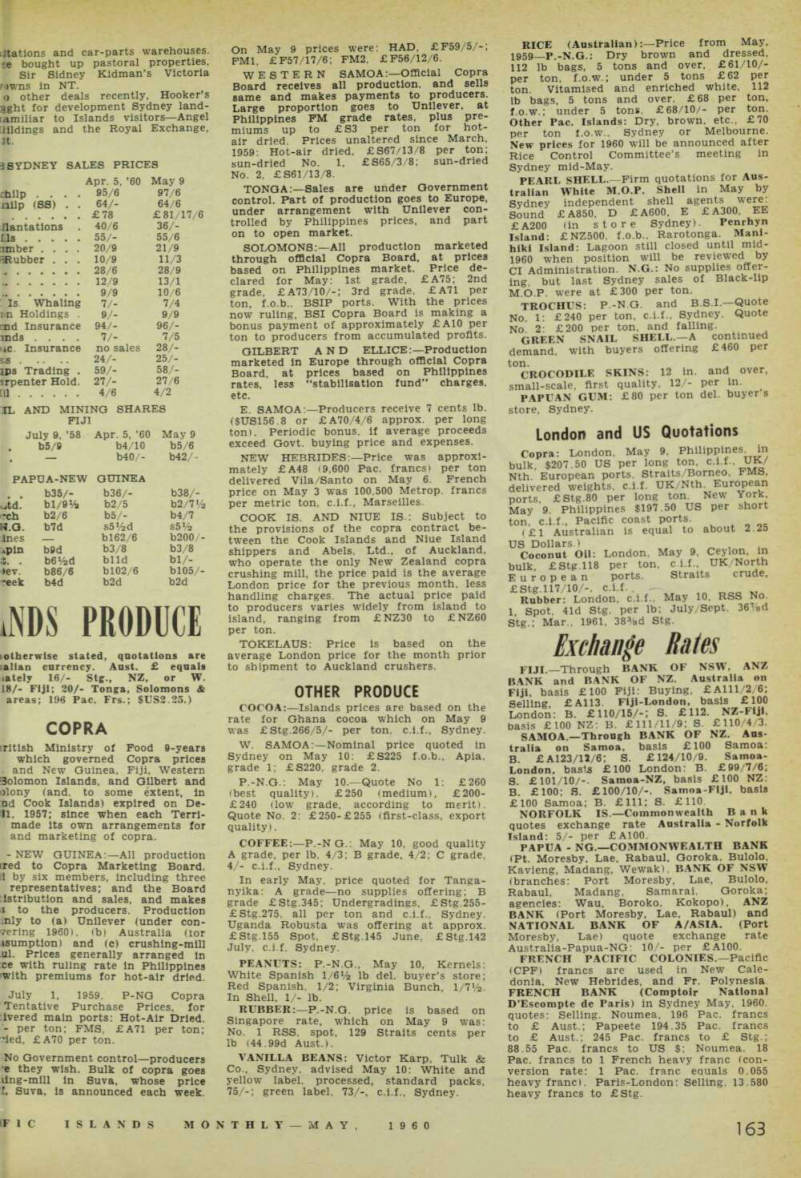 165
165 166
166 167
167 168
168 169
169 170
170 171
171 172
172